目录
C001 Bach-style keyboard tuning
- C001.S001 Bach-style keyboard tuning
- 页码:1-1
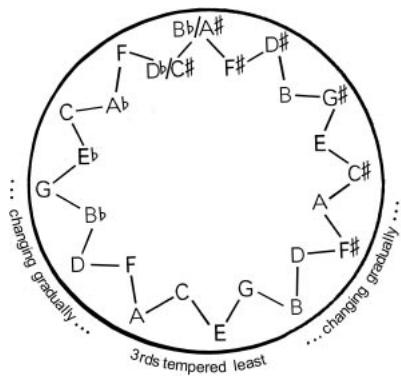
- C001.S002 [描述性拆分] Premises about secret schemes and mathematical invention
- 页码:2-3
- C001.S003 [描述性拆分] Conditions for valid temperament diagrams and Dr Lehman’s scheme
- 页码:4-5
- C001.S004 [描述性拆分] Aesthetic judgments, modern taste, and historical anachronism
- 页码:5-6
- C001.S005 [描述性拆分] Reinterpreting the decorative scroll and Hildebrandt’s tuning
- 页码:7-8
- C001.S006 [描述性拆分] Appendix: alternative readings and a musicianly tuning procedure
- 页码:9-10
- C001.S007 [描述性拆分] Notes and references
- 页码:10-13
C001.S001 Bach-style keyboard tuning
第1段(P0001)
原文复述
Mark Lindley and Ibo Ortgies
中文讲解
本段是文章的作者署名行,由井号(#)起首,说明这两位作者是本篇回应文章的共同执笔人。作者署名置于标题之前,是学术期刊文章常见的版式起点。文中没有其他正文信息,因此讲解仅需说明其版面功能即可。
第2段(P0002)
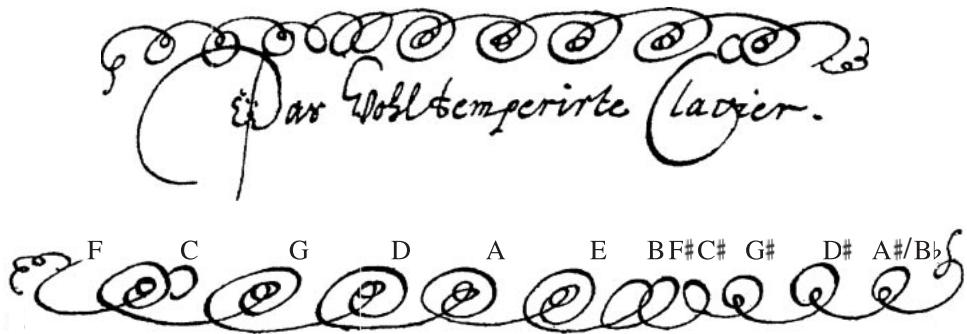
原文复述
Bach-style keyboard tuning
中文讲解
本段是本节的标题,以井号引导,明确本节主题:巴赫风格的键盘调律。所谓“键盘调律”(keyboard tuning)指的是对键盘乐器(羽管键琴、击弦古钢琴、管风琴等)进行音高调整的方案;“巴赫风格”则暗示本节将围绕巴赫时代与作品相关的不平均律(unequal temperament)实践展开讨论。该标题开启了作者对Lehman论文中一系列隐含前提的逐条反驳框架。
第3段(P0003)
原文复述
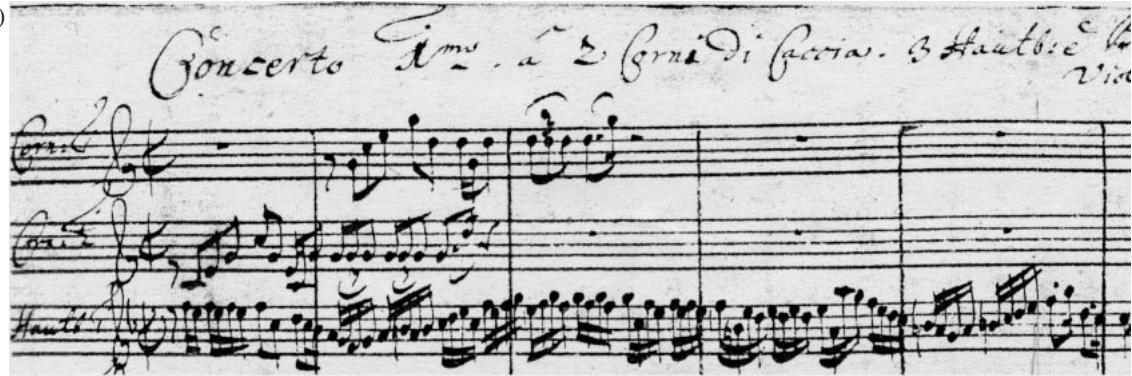
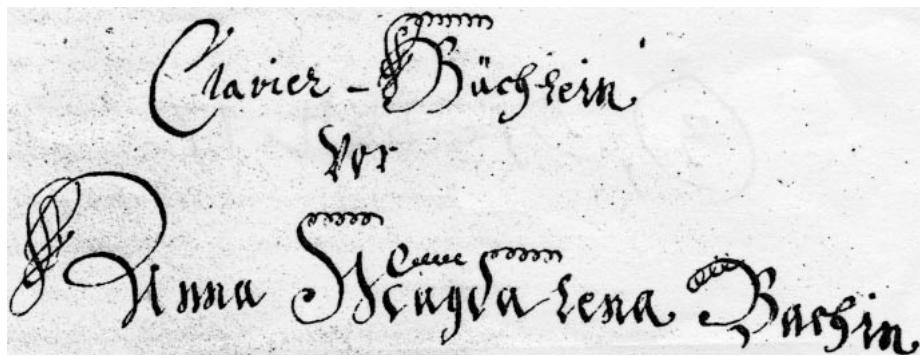
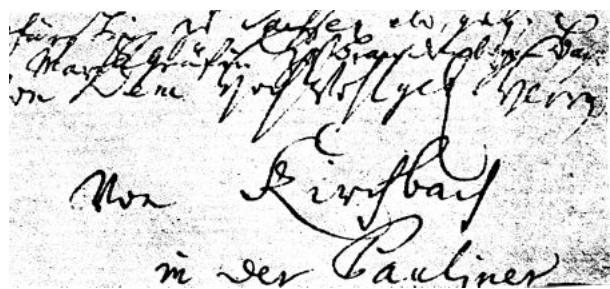
Bradley Lehman’s two-part essay ‘Bach’s Extraordinary [Temperament]’, published in Early Music, XXXIII (2005), was brilliantly written, but we have noticed many weak links in his chain of reasoning. Perhaps the best way to begin to sort them out is to comment on some of his implicit premises (represented here in italics; our comments follow in roman).
中文讲解
本段是全文的导言,交代了写作动机与方法。原文是回应Bradley Lehman发表在《Early Music》2005年第33卷的两部分长文,该文主张巴赫使用的是一种特殊的、被Lehman称为“巴赫非凡调律”的体系。作者一方面肯定该文“写得精彩”(brilliantly written),另一方面指出其推论链条上存在许多薄弱环节(weak links)。作者接着提出自己的处理方式:逐条评论Lehman文章中的隐含前提(implicit premises)。文中用斜体(italics)表示Lehman的原话前提,用正体(roman)跟随作者本人的评论。这一排版约定是理解后续段落的钥匙:每一个斜体句子之后紧随的正体段落就是Lindley与Ortgies的回应。整段奠定了本节“前提—回应”逐条推进的论证结构。
补充说明
原文存在OCR残损(如“Bach’s extralished”与开头的“radley”),根据上下文还原为“Bach’s Extraordinary Temperament”与“Bradley”。此处仅依据本节可定位的信息补足明显讹误,不引入额外事实。
第4段(P0004)
原文复述
Bach’s keyboard compositions were influenced by a style of tuning whereby the 3rds among the naturals (F–A–C–E–G–B–D–F) were tempered less than those involving sharps or flats (but neither F–A nor G–B less than C–E) while the temperings of the other 3rds tended to vary gradually in keeping with their relative places around the circle of 5ths.
中文讲解
这是Lehman的第一条隐含前提:在巴赫风格的调律中,白键之间的三度(F–A、C–E、G–B、D–F)所受到的“温度处理”(tempering,即偏离纯律音程的微小调整)少于含有升号或降号的三度。其中有三个要点需要注意:其一,例外条款——F–A与G–B这两个白键三度,并不比C–E“温度更轻”;其二,其它三度的温度处理沿着五度循环(circle of 5ths)的相对位置渐变,意味着调律并非一刀切,而是依据该三度在五度链上的远近获得或多或少的偏离;其三,这里说的是“影响了巴赫的作品”,也就是说调律被假设为作曲的塑造因素之一。该前提把巴赫的风格与一种特定的不平均律联系起来。
补充说明
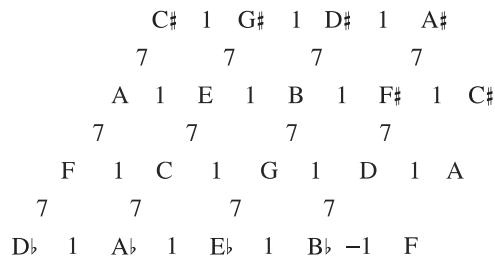
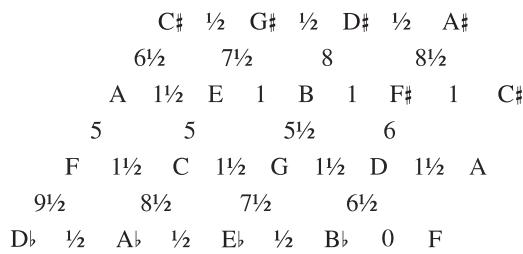
此处“naturals”即白键音,F–A–C–E–G–B–D–F是用五度循环排列的白键序列;“circle of 5ths”即五度循环,指按纯五度关系顺次叠加的音程链。
第5段(P0005)
原文复述
We agree. (See fig.1.)
中文讲解
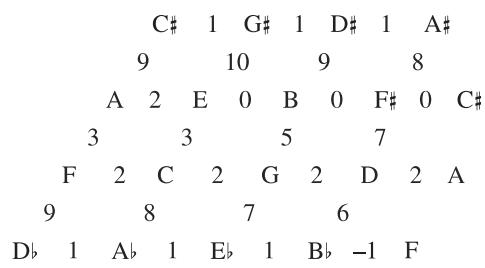
作者以“我们同意”(We agree)三个字简洁作答,确认Lehman的这条前提大体可接受。所谓“大体”可接受,是因为下一段紧接的图1(图注在P0008)将以可视化方式呈现这一三度处理模式,作为双方共识的视觉证据。这一“同意”同时具有策略意义:在进入真正的分歧之前先承认共识,可使后文反驳更具针对性,也避免读者以为作者全面否定Lehman。
补充说明
图1(图注见P0008)的作用即是把这条被双方共同接受的“三度温度模式”以图形方式固定下来。
第6段(P0006)
原文复述
The ‘48’ are presumably the work of an expert and musicianly tuner.
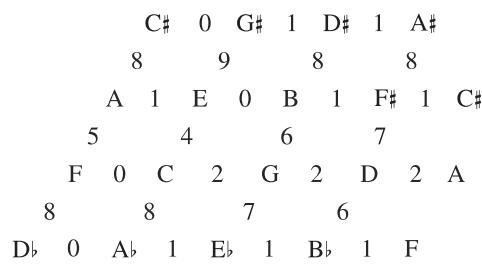
中文讲解
这是Lehman的第二条隐含前提:所谓“‘48’”,指巴赫的《平均律键盘曲集》(The Well-Tempered Clavier,含两卷共48首前奏曲与赋格)这一核心曲目集,应被推定为出自一位既懂音乐、又精于调律的专家之手。换言之,作品内部的和声选择暗含调律者的痕迹,故可从曲谱本身推断调律方案。这条前提把作曲与调律两者并置,预设调律师对作曲家的创作产生了可识别的、专家级别的影响。
补充说明
“‘48’”在本节语境中作为对《平均律键盘曲集》的简称,具体所指需结合本节论及巴赫键盘作品的上下文来理解。
第7段(P0007)
原文复述
We agree.
中文讲解
作者再次以极简的“我们同意”作答。这一简短回应的功能是确立第二个共识点,为后面更尖锐的分歧做好铺垫:作者并非全盘否定Lehman,而是在接受其部分前提的同时,对其他前提进行反驳。读者可由此推测,下一段起将进入真正的争议。
第8段(P0008)
原文复述
中文讲解
本段是图1的图像占位符与图注。原文图注说明该图展示了“巴赫风格不平均律中对三度进行处理的总体模式”。结合P0004—P0005的共识,这张图是把作者双方共同认可的三度温度梯度以视觉化方式固定下来,作为后续讨论的参照点。读者需查看原图以获得具体数轴与数值;本占位符处不能凭推测补写图中不可见的细节。
补充说明
图中具体刻度与音程偏差值在当前task_input中无法定位,故此处不作进一步推测。
第9段(P0009)
原文复述
Bach’s tunings of keyboard instruments were always the same.
中文讲解
这是Lehman的第三条隐含前提:巴赫对键盘乐器的调律方案始终如一,即不论时间、地点或作品情境,他都使用同一种调律。这是一个强假设——它要求巴赫的实践具有跨场合的一致性。这条前提与上一条形成对比:P0006强调调律对作曲的影响,而此条进一步把这种影响固化为单一不变的方案。
第10段(P0010)
原文复述
We think that his skills and tastes probably developed, and that his tunings of stringed keyboard instruments may have been influenced by (a) the musical genre for which he was tuning on this or that occasion¹ and/or (b) the timbre of the particular instrument.
中文讲解
作者对P0009的回应明确表达异议。他们提出两层考量:第一,巴赫的技巧与审美很可能随时间发展(即不同时期偏好不同);第二,巴赫对拨弦键盘乐器(stringed keyboard instruments)的调律可能受到两类外部因素影响——其一,调律时所服务的音乐体裁(musical genre,例如独奏、协奏、宗教或世俗场合);其二,该乐器本身的音色(timbre)。换言之,调律并非与情境无关的固定公式,而可能因场合与乐器而异。这一反驳的逻辑力量在于:即便Lehman观察到巴赫作品中的某些调律特征,也无法推断出“始终如一”的结论。脚注¹指向文末对体裁影响的进一步说明。
补充说明
脚注¹在此处作为标记出现,其具体内容在本节范围内未呈现,作用是提示读者存在关于体裁影响的进一步注释。
第11段(P0011)
原文复述
He tuned certain 5ths pure, tuned others just like in equal temperament, and tempered all the rest—including C–G–D–A–E—exactly twice as much.
中文讲解
这是Lehman的第四条隐含前提:对五度的处理有三种情形——某些五度保持纯正(pure,即严格的3:2频率比);另一些五度的温度与平均律(equal temperament)中的相应五度完全相同;其余五度(包括C–G、D–A、A–E这三个相邻五度,再加上G–D、D–A所连成的链C–G–D–A–E整体)的温度恰好是平均律的两倍。Lehman实际上主张调律方案可由极少数参数唯一确定,呈现一种封闭、可枚举的离散结构。
补充说明
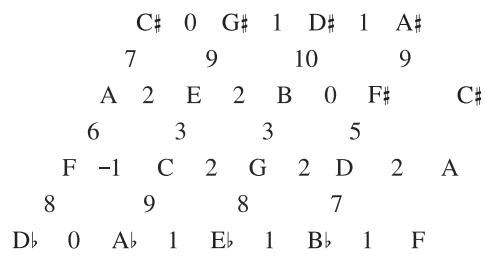
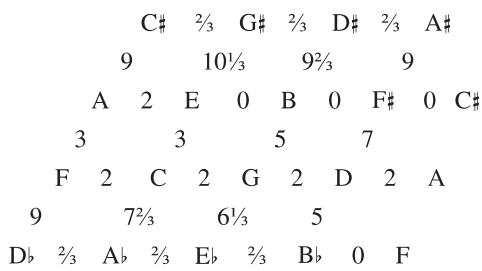
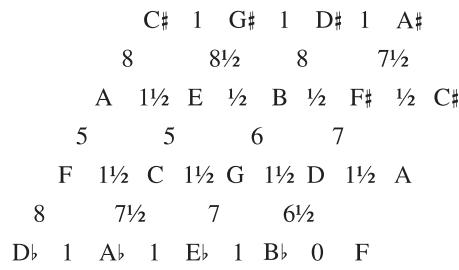
“pure”指严格3:2频率比的纯五度;“equal temperament”指十二平均律,其中每个五度被等量压缩。
第12段(P0012)
原文复述
There is indeed a musical reason to temper C–G–D–A–E alike. If C–E is the smallest major 3rd, then the average amount of tempering in the chain of 5ths C–G–D–A–E has to be higher than in any other such chain, so it is best for none of them to be impure by more than that average. Even when the major 3rds are to be of various sizes (and we have agreed that such nuances influenced Bach as a composer), still the 5ths should be tempered as unobtrusively as possible, because impurity is more obtrusive in a 5th than in a 3rd.
中文讲解
本段是作者对P0011的回应,结构较为复杂,包含两层信息。首先,他们承认Lehman的观察有其音乐合理性:若C–E被设定为最小的纯律大三度(major 3rd),那么C–G–D–A–E这条五度链上的“平均温度量”必然比其他任何五度链更高,因此让该链上每个五度的偏离都不超过这一平均值,是最妥当的安排。这是一个最优化论证:避免单点极端偏向平均。其次,他们进一步主张,即便在“各种大三度大小不一”这一已被双方接受的审美前提下,五度仍应尽可能“不显眼”地偏离纯律(unobtrusively),理由是偏离在不协和音程(如五度)上比在协和音程(如三度)上更为刺耳。这一偏好构成了他们对Lehman方案的局部修正:五度的偏离应最小化,而不一定按Lehman的精确两倍规则行事。
补充说明
本段中“average amount of tempering”的具体数学推导需查看原图,本节未提供,故不作补充推算。
第13段(P0013)
原文复述
But there has never been any musical reason to limit the choice of size for C–E to only two possibilities: the equal-temperament size and the size yielded by tempering C–G–D–A–E twice as much as in equal temperament. Musicians might well prefer an intermediate size.
中文讲解
本段是作者对P0011与P0012的进一步反驳,直指Lehman方案的离散化处理。作者认为,将关键三度C–E的尺寸限定为仅两个选项(即平均律的大小与“链上五度温度为平均律两倍”时导出的大小)缺乏音乐上的依据;调律师完全可以选择介于两者之间的某个中间值。这是一个关于自由度(degrees of freedom)的论证:Lehman的方案过度限制了可行的调律参数,而真实的音乐实践可能在连续区间上选择。本段与P0012合起来,构成了对P0011的完整反驳——接受五度链上温度一致的动机,但拒绝把C–E的选择压缩为两个离散点。
第14段(P0014)
原文复述
He had a secret mathematical scheme which was passed down by word of mouth or by making exact copies of a certain drawing (see below).
中文讲解
这是Lehman的第五条隐含前提,也最具推测性:巴赫掌握某种秘传的数学调律方案,该方案通过口头流传,或者通过精确复制某一特定图纸而代代相传。这一前提引入了一个近乎“秘传知识”的叙述结构,把巴赫的调律实践神秘化、师承化。“see below”暗示文末或后续段落将呈现那张“图纸”作为证据。
第15段(P0015)
原文复述
There is no good evidence for this. Neither Bach nor any of his relatives or friends or enemies are known to have hinted at such a thing.² On the contrary, 18th-century sources inform us that:
中文讲解
本段是作者对P0014最尖锐的反驳,分为两层。第一层是证据层面:他们主张根本不存在支持“秘传方案”的证据,无论是巴赫本人、其亲属、友人还是敌对者,都没有留下暗示此事的只言片语。这一陈述采用了“亲–敌皆未提及”的双重反证——若该秘传真实存在,至少在通信或回忆录中应有蛛丝马迹。第二层转向相反方向的证据:18世纪的同期资料告诉我们的(具体内容见下文,作者以冒号引出)。脚注²作为对该反驳的支持来源出现。本段的论证策略是:以证据缺失先驳倒秘传假说,再以同时期资料为对照,构建反证。这一段标志着本节从“乐理层面的反驳”转入“史学层面的反驳”。
补充说明
脚注²标记了关于“没有证据支持秘传说”的具体引用来源,其完整内容在本节范围内未呈现;冒号之后引出的18世纪资料具体陈述在本节内也未给出,需在后续段落中补足。
第16段(P0016)
原文复述
Early Music, Vol. XXXIV, No. 4 The Author 2006. Published by Oxford University Press. All rights reserved. doi:10.1093/em/cal065 Advance Access Published on October 3, 2006
中文讲解
本段是期刊版面元数据,记录了文章发表于《Early Music》第34卷第4期,由作者于2006年发表,牛津大学出版社出版,DOI为10.1093/em/cal065,开放获取(Advance Access)日期为2006年10月3日。该信息为论文出处的标准化标注,用于学术引用与检索,与本节论证内容无直接关系。
第17段(P0017)
原文复述
Downloaded from https://academic.oup.com/em/article/34/4/613/529543 by Indiana University - Bloomington user on 08 August 2026
中文讲解
本段是文献下载水印,记录该PDF由印第安纳大学伯明顿分校(Indiana University – Bloomington)的用户在2026年8月8日从牛津学术平台下载。该信息表明当前文本为机构下载版,可能与正式印刷版存在细微差异;它属于版权追踪与下载留痕的元数据,与本节正文论证无关。
脚注 / 边栏 / 图表 / 附加信息(如有)
本节内含一处图像占位符(图1,图注见P0008),用于可视化呈现巴赫风格不平均律中三度的总体温度模式;此外有两处脚注标记(脚注¹出现于P0010,脚注²出现于P0015),其完整内容在本节范围内未呈现,需在文末统一查阅。两处脚注均承担“来源/支持性注释”功能,而非补充新主张。
💡 本节核心要点
- 本节采用“前提—回应”的逐条反驳结构:Lehman的隐含前提以斜体呈现,作者的评论以正体紧随其后。
- 作者对Lehman的前提区分对待:完全接受P0004(三度温度模式)与P0006(《48首》出自专家调律师)的合理性。
- 作者反对P0009(巴赫调律始终如一),主张调律受体裁与乐器音色影响,并随时间演变。
- 作者部分修正Lehman关于五度温度的离散规则(P0011):接受五度链上温度一致的乐理动机,但拒绝把C–E大小限定为两个离散值,主张存在中间值(P0012—P0013)。
- 作者对P0014的“秘传数学方案”提出史学层面反驳:缺乏任何当事人证据,且18世纪同期资料指向相反叙述(P0015)。
- 整节的论证从乐理层面逐步过渡到史学层面,对Lehman的论点构成跨学科的双重质疑。
🔑 关键术语
- temperament(调律):指对键盘乐器音高进行调整的方案,本节特指将音程偏离纯律的小幅调整;在平均律中所有五度被等量压缩,在不平均律中各五度被不同程度地压缩。
- naturals(自然音):本节中专指白键上的音,即F–A–C–E–G–B–D–F序列,与含有升号或降号的“变化音”相对。
- 3rd / 5th(三度 / 五度):本节中三度指大三度,五度指纯五度;两者均为调律方案中最常被调整的音程,前者对协和感敏感,后者偏离纯律时尤为刺耳。
- circle of 5ths(五度循环):按纯五度关系顺次叠加的音程链;本节中三度所受温度处理沿该循环相对位置渐变。
- equal temperament(平均律 / 十二平均律):将八度等分为12份的调律方案,使所有半音的频率比相等;本节中作为Lehman方案的参照基线。
- pure(纯正):指音程严格符合简单整数比(如纯五度的3:2);本节中“tune certain 5ths pure”即让某些五度保持严格3:2频率比。
- major 3rd(纯律大三度):频率比5:4的协和音程;在不平均律中各三度被不同程度地偏离此纯律大小,本节C–E的大小是讨论焦点。
- stringed keyboard instruments(拨弦键盘乐器):本节用以指代羽管键琴与击弦古钢琴等通过弦振动发声的键盘乐器,与管风琴一类吹气键盘相对。
- timbre(音色):本节中指乐器的音色特征,被作者列为影响巴赫调律选择的两大情境因素之一。
- musical genre(音乐体裁):本节中指调律所服务的具体作品体裁或场合(如独奏、协奏、宗教、世俗),被作者列为另一可能影响调律选择的情境因素。
C001.S002 [描述性拆分] Premises about secret schemes and mathematical invention
第1段(P0018)
原文复述
Unser seel. Bach ließ sich . . . nicht in tiefe theoretische Betrachtungen der Musik ein, war aber desto stärker in der Ausübung.³
中文讲解
本段是一句德语引文(脚注3标示出处)。“seel.“是德语"selig”(已故、蒙福)的缩写,在追称逝者时使用,相当于英语的"the late”。引文断言:已故的巴赫并不涉足音乐理论的深度玄思,反而在音乐实践上格外强有力。这句话构成本节的第一个前提——巴赫被塑造为一位"实践优先于理论"的人物,是后续讨论"调律秘密方案"与"数学化调律"时的关键背景。句中"…“是原文的省略号,标示原文此处有删节。
补充说明
本段与下一段 P0019 是同一句话的德语原文与英译;脚注3在此处指向该德语引文的出处。
第2段(P0019)
原文复述
Our late [J. S.] Bach did not get involved in deep theoretical treatments of music, but was all the stronger in its practice.
中文讲解
这是 P0018 德语引文的英译,对应"unser seel. Bach"译为"our late [J. S.] Bach”——方括号内的"[J. S.]“为译者或编辑所补,明确所指为约翰·塞巴斯蒂安·巴赫,以与同姓家族成员相区分。整体语义与德语原文一致:巴赫不涉入音乐理论的深度探讨,反而在演奏/作曲实践上更为强劲。
补充说明
方括号”[J. S.]“是翻译者所加的说明性插入,非德语原文所有。
第3段(P0020)
原文复述
—and (more unequivocally to the point):
中文讲解
本段是极短的承接句,作用是导引出下一段更具针对性的引文。“more unequivocally to the point"意味着接下来的一句比前一句更直接、更切中要害,提示读者即将出现的引文是论证的关键性陈述。
第4段(P0021)
原文复述
Selbst der in der Mathematik so gelehrte Johann Sebastian Bach habe sich in diesen Fragen nach der Natur, nicht nach der Regel gerichtet, und die ganze Mathematisiererei habe noch nicht einmal den Erfolg gehabt, die Durchführung einer einwandfreien Temperatur zu gewährleisten.⁴
中文讲解
这是本节第二个、也是更核心的前提。德语"Mathematisiererei"是一个带有贬义色彩的复合名词,意为"过度数学化的行为”,隐含对理论家把音乐强行套入数学框架的批评。引文做了双重断言:(1) 即便巴赫在数学上如此博学,他在这些"音乐理论"问题上也遵从自然,而非理论家所立的规则;(2) 理论家们的全部"数学化"甚至连一次"无可非议的律制"的付诸实施都未曾取得成功。“einwandfreien Temperatur"指可付诸调律实践且无可挑剔的键盘律制。这是为后文质疑"数学化调律理论"和"秘密调律方案"奠定的根本论点。脚注4标示此句出处。
补充说明
本段与下一段 P0022 是同一句话的德语原文与英译;“Temperatur"在此特指键盘乐器的律制/调律方案。
第5段(P0022)
原文复述
Even Johann Sebastian Bach, who was so learned in mathematics, would, in these [music-theory] questions, have complied with Nature, not with the [theorists’] rule[s], and [indeed] all the [theorists’] mathematizing would not ever have led to success in ensuring the execution [by a keyboard tuner] of an unobjectionable temperament.⁴
中文讲解
这是 P0021 德语引文的英译。方括号”[music-theory]”"[theorists’]”"[indeed]""[by a keyboard tuner]“等均为译者补入的限定或说明,用于消除德语原文的歧义并使英语读者准确理解——“diese Fragen”(这些问题)专指音乐理论问题;“nach der Regel”(依规则)指依理论家所立之规则;“Durchführung”(实施、执行)特指由调律师在键盘乐器上付诸实施。“unobjectionable temperament"对应"einwandfreien Temperatur”。这一英译保持了德语原文的双重断言结构。
补充说明
方括号均为译者所加解释,不属于德语原文。
第6段(P0023)
原文复述
The secret is hidden in a decorative scroll of loops on the title-page of an autograph copy of Part 1 of the ‘48’.
中文讲解
本段陈述一种流行的"解密"主张:所谓秘密隐藏在《四十八首前奏曲与赋格》第一部分某份亲笔抄本(autograph,即巴赫本人手书的原稿)扉页上的装饰性卷曲花纹中。"‘48’“是学界对《平均律键盘曲集》(Das Wohltemperierte Klavier)的简称,“Part 1"指1722年的第一册。这句话把读者的注意力导向扉页装饰这一具体物证上,开启本节对"装饰花纹藏秘"主张的反驳。
第7段(P0024)
原文复述
Amateur scholars of 18th-century tuning have been entertaining this idea since 1999,⁵ but we doubt it, because (a) decorations of this kind occur now and then in 18th-century manuscripts and are nothing special, and (b) in no documentary evidence regarding Bach is there any hint of such a special use of decorative loops.
中文讲解
本段引出作者对"装饰藏秘"主张的质疑。自1999年以来业余研究者一直持有这种解读(脚注5标示该年份的依据),但作者提出两点反对理由:(a) 这类装饰花纹在18世纪手稿中时有所见,并无特殊之处——亦即从统计学/惯例角度看它们不足以构成密码;(b) 在所有关于巴赫的文献证据中,没有任何关于"装饰花纹有特殊用途"的暗示。这两点分别从"内部惯例"和"外部证据"两个维度否证该主张。
第8段(P0025)
原文复述
There is only one musically feasible way to interpret this alleged evidence.
中文讲解
本段是另一种流行主张的概述:面对上述装饰物证,存在且仅存在一种在音乐上可行的解读方式。这是"装饰藏秘"主张者常用来加强其论证唯一性的表述——既然证据指向某种乐理结论,而该结论的音乐可行性又是唯一的,那么该解读必然正确。本段以陈述对方立场的方式出现,预示作者将在下一段予以反驳。
第9段(P0026)
原文复述
Several other ways, of similar musical quality, are available on the internet, and they have, as we will show in the appendix, hardly exhausted the musically feasible solutions to the alleged riddle.
中文讲解
这是对 P0025 的反驳。互联网已流传若干在音乐品质上同等可行的其他解读方式,而且正如作者在附录中将展示的,这些方式甚至尚未穷尽所谓"谜题"的所有音乐上可行的解答。这一句做了两件事:(1) 否证"唯一性"断言——至少还有多种替代解读;(2) 进一步指出即便考虑现有替代方案,解答空间仍未封闭。这为后文提供了论证的开放性。
补充说明
“appendix"提示读者:完整论证材料将在附录中展开,本处只是先给出方向性预告。
第10段(P0027)
原文复述
(Dr Lehman calls the decorative loops a ‘Rosetta Stone’, but whereas there was always a consensus as to its significance, and for well over a century there has been a fairly complete consensus as to its meaning, there will be no positive consensus about the loops.)
中文讲解
本段以括号形式插入,对"罗塞塔石碑"比喻进行批判性类比。Lehmann 博士将装饰花纹比作罗塞塔石碑(Rosetta Stone),但作者指出关键差异:真正的罗塞塔石碑——其意义很早就达成共识,对其铭文含义在长达一个多世纪里也有相当完整的共识——而装饰花纹将永远不会有任何积极共识。这条类比既揭示对方论证的修辞策略(借权威文物自抬身价),又指出该比喻在认识论上的根本缺陷:单一权威解读的稳固性并不存在。
补充说明
“Rosetta Stone"原指1799年发现、刻有希腊文、埃及象形文字与世俗体三种文字的石碑,是古埃及文字成功释读的钥匙。括号提示此段为作者旁白/评价,而非被引用的原话。
第11段(P0028)
原文复述
The secret is revealed when one looks at the loops upside down (see illus.1) after having noticed the small letter ‘c’ next to one of the loops.
中文讲解
本段陈述一种具体的"破译步骤”:把卷曲花纹上下颠倒观察(参见图1),并在注意到某一花纹旁的小写字母"c"之后,秘密即显露出来。这把"装饰藏秘"主张的操作方式明确化:方向调整(颠倒)+ 关键标记(小写c)共同构成解读路径。这一步骤是作者接下来 P0029 长段反驳所针对的具体靶子。
第12段(P0029)
原文复述
The alleged small c is a kind of serif applied frequently in Bach’s handwriting to certain capital letters, especially C, S, E, F and sometimes K. A small c in 18th-century German handwriting would look different. It would normally have a horizontal stroke at the top, but sometimes that stroke would be elided into the next letter, or sometimes, because of haste, omitted altogether, in which case the c would look like an undotted i. Let us illustrate with some details from four plates in a standard anthology of facsimiles of pages from original manuscripts of music by Bach. In illus.2a the initial capital C has a serif, and there are three small c’s with top horizontal strokes of various lengths. In illus.2b the capital C in ‘Concertino’ has the serif, and the horizontal strokes of the small c’s are, in each case, elided with the following e. In illus.2c the horizontal stroke of each small c (i.e. in ‘Büchlein’ and in ‘Bachin’) is elided with the following h (and the initial capital C has a different kind of serif). This title has obviously been written with care and therefore slowly; but in illus.2d the small c’s in ‘Kirchbach’ look like undotted i’s, and meanwhile the K has a serif like those which illus.1, 2a and 2b show adorning C.
中文讲解
这是本节的核心反驳段落,针对 P0028 的"小写c"主张从书法学角度予以彻底否定。论证分四步:(1) 提出正面解释——所谓"小写c"实为巴赫手书中常附加于某些大写字母(C、S、E、F、有时K)下方的衬线(serif);(2) 反例排除——18世纪德语手写体的小写c本应有顶部横笔,且形态上与该所谓"c"不同;(3) 形态变体列举——顶部横笔有时与下一字母并合(elided),有时因书写匆忙被省略,省略后形似一个未加点的i;(4) 以四幅图版(illus. 2a-2d,取自杜尔《巴赫手书》影印集)逐一展示:2a 中大写C带衬线且三处小写c横笔长短不一;2b 中"Concertino"的C带衬线,c的横笔并入下一个e;2c 中"Büchlein"和"Bachin"的c横笔并入h(此页显然书写仔细因而缓慢);2d 中"Kirchbach"的c看似未加点的i,而该词的K却带有与图1、2a、2b中C相同的衬线。该段以图版证据证明:作者所看到的"小写c"正是大写字母C(以及S/E/F/K)的衬线,而非独立的小写字母;“秘密"其实是书写惯例的误读。
补充说明
“serif"指字体或手写体中字母末端的小装饰性笔画;“elided"此处意为"并合、连写”;“undotted i"指未带点的i形笔画。
第13段(P0030)
原文复述
中文讲解
本段为图像占位符标记。原标记为"第2页图像或乐谱示例”,其后括号注明"内嵌图像数据已省略;位置与图注保留”,表示原始 PDF/扫描件中此处应有插图,但本解析流程未提取嵌入图像数据。具体图的内容需查看原文方能确认。
补充说明
需查看原始图片以获知具体内容。
第14段(P0031)
原文复述
early music november 2006
中文讲解
本段为期刊版面元素——页眉跑版(running header),标示本文章发表于《Early Music》2006年11月号。这是连续两页都出现的版面信息,无实质论述内容。
第15段(P0032)
原文复述
Downloaded from https://academic.oup.com/em/article/34/4/613/529543 by Indiana University - Bloomington user on 08 August 2026
中文讲解
本段为期刊网站的下载版权/水印脚注,标示该 PDF 由 Oxford University Press 的学术平台 OUP 上由印第安纳大学布卢明顿分校用户于2026年8月8日下载。属于连续两页重复出现的版面信息,不含论证内容。
第16段(P0033)
原文复述
中文讲解
本段为图像占位符,对应图2的子图(a)(即 P0029 中所引 illus. 2a)。具体图示内容需查阅原文。
补充说明
需查看原始图片以获知具体内容。
第17段(P0034)
原文复述

中文讲解
本段为图像占位符,对应图2的子图(b)和(c)(即 P0029 中所引 illus. 2b 与 illus. 2c,二图合并排版)。具体图示内容需查阅原文。
补充说明
需查看原始图片以获知具体内容。
第18段(P0035)
原文复述
中文讲解
本段为图像占位符,对应图2的子图(d)(即 P0029 中所引 illus. 2d)。具体图示内容需查阅原文。
补充说明
需查看原始图片以获知具体内容。
第19段(P0036)
原文复述
中文讲解
本段为图像占位符,提示第3页另有图示,具体内容需查阅原文。
补充说明
需查看原始图片以获知具体内容。
第20段(P0037)
原文复述
2 Details from various plates in Alfred Dürr’s Johann Sebastian Bach: seine Handschrift . . . (Breitkopf & Härtel, 1 8 ): (a) from plate 16 (‘Concerto primo á 2 Corni di Caccia . . .’); (b) from plate 40 (‘Concerto. Violino Concertino.’); (c) from plate 17 (‘Clavier-Büchlein / vor / Anna Magdalena Bachin’); (d) from plate 35 (’. . . Von Kirchbach / in der Pauliner . . .’)
中文讲解
本段为图2的正式图注,标明其四幅子图的来源。整体来源为 Alfred Dürr(阿尔弗雷德·杜尔)所编《Johann Sebastian Bach: seine Handschrift》(《约翰·塞巴斯蒂安·巴赫:他的手书》),由 Breitkopf & Härtel(布莱特科普与哈特尔)出版社出版;出版年份标注因 OCR 或排版问题出现"1 8”,疑为19世纪的某年。子图分别取自该影印集的不同图版:2a 来自图版16(《第一协奏曲,为两支猎号等而作》),2b 来自图版40(《协奏曲,小提琴主奏》),2c 来自图版17(《为安娜·玛格达莱娜·巴赫而作的小键盘曲集》),2d 来自图版35(《……冯·基希巴赫 / 在保琳娜教堂……》)。该图注为 P0029 的书法学论证提供了学术来源——杜尔所编影印集是巴赫手书研究的标准资料集。
补充说明
图注中"1 8"疑为 OCR 残缺或原书字迹不清所致,未能完整识别出版年份;各子图的题名因 OCR 处理保留了德语原文拼写(如 ä、ü 等可能未完全还原)。
第21段(P0038)
原文复述
early music november 2006
中文讲解
本段为期刊版面元素——页眉跑版(running header),与 P0031 相同,标示本文章发表于《Early Music》2006年11月号,属连续出现的版面信息。
第22段(P0039)
原文复述
Downloaded from https://academic.oup.com/em/article/34/4/613/529543 by Indiana University - Bloomington user on 08 August 2026
中文讲解
本段为期刊网站的下载版权/水印脚注,与 P0032 相同,标示该 PDF 由 OUP 平台印第安纳大学布卢明顿分校用户下载。属连续出现的版面信息。
脚注 / 边栏 / 图表 / 附加信息(如有)
本节包含以下附加材料:(1) 三处脚注标记——脚注3见于 P0018(指向"seel. Bach…Ausübung"一句的出处),脚注4见于 P0021/P0022(指向巴赫"遵从自然而非规则、且数学化未能保证良好律制"一句的出处),脚注5见于 P0024(指向业余研究者自1999年起持有"装饰藏秘"主张这一说法的依据)。(2) 多处图像占位符(P0030、P0033、P0034、P0035、P0036)以及相应的图注 P0037,对应于 P0029 中所引的图1与图2(a-d)。(3) 期刊版面元素(P0031、P0032、P0038、P0039)——页眉跑版与 OUP 下载水印,在两页上重复出现。
💡 本节核心要点
- 本节确立两条关键前提:巴赫在音乐上以实践为先、不涉深度理论(P0018/P0019);即便以其数学造诣,他也遵从自然而非理论家规则,且理论家的全部"数学化"甚至未能保证一次无可非议律制的实施(P0021/P0022),其中"Mathematisiererei"一词带明显的贬抑色彩。
- 关于"秘密藏在《平均律键盘曲集》第一部分亲笔抄本扉页装饰花纹中"的主张(P0023),作者提出两项反驳:(a) 这类装饰在18世纪手稿中常见;(b) 关于巴赫的所有文献证据中均无此类特殊用途的暗示(P0024)。
- 作者进一步驳斥"唯一音乐可行解读"的断言:互联网上已存在多种音乐品质相当的替代解读,且附录将展示这些替代方案并未穷尽所有可行解(P0025-P0026)。
- 作者通过"罗塞塔石碑"类比揭示对方论证的认识论缺陷:真正的罗塞塔石碑在学界有长达一个多世纪的共识,而装饰花纹将永远不会有任何积极共识(P0027)。
- 本节的核心技术性反驳在 P0029:所谓"小写c"实为巴赫手书中附加于某些大写字母(C、S、E、F、有时K)下方的衬线;图2的四个子图(a-d)取自杜尔《巴赫手书》影印集,分别展示了衬线在不同书写速度与场合下的形态变异(横笔独立、并入下一字母、因匆忙省略而形似未加点的i),从而在书法学层面彻底瓦解了"c藏秘密"的解读。
- 脚注3、4、5 分别承担来源标注功能,脚注4 的引文尤其支撑本节反对"数学化调律"的核心立场。
🔑 关键术语
- Mathematisiererei:德语贬义复合名词,意为"过度数学化的行为/把音乐硬套入数学框架的做法”。在本节中作为批评对象出现:作者借巴赫之名指出,所有这种数学化甚至未能保证一次"无可非议的律制"的成功实施。
- Temperatur (temperament):德语/英语术语,在本节特指键盘乐器的律制,即通过对纯五度作微小调整以分配各调之间误差的调律方案;“einwandfreien Temperatur”(无可非议的律制)是本节用以衡量调律实践成败的标准。
- ‘48’ / WTC:学界对巴赫《平均律键盘曲集》(Das Wohltemperierte Klavier)的简写;P0023 提到其第一部分(1722年)的某份亲笔抄本,是"装饰藏秘"主张所指向的关键物证。
- autograph:亲笔抄本/手稿,指由作者本人书写的原稿;本节指巴赫本人亲笔所写的《平均律键盘曲集》第一部分抄本,是判定装饰花纹归属性与可比性的关键。
- serif:字体或手写体中字母末端的小装饰性笔画;P0029 的核心反驳正是:所谓"小写c"是巴赫附加于大写字母(C/S/E/F/K)下方的衬线,而非独立的字母。
- Rosetta Stone(罗塞塔石碑):1799年发现的三语对照石碑,借之古埃及象形文字被成功释读;Lehmann 将装饰花纹比作罗塞塔石碑,作者在 P0027 中反驳此比喻——真正的罗塞塔石碑有学界共识,而装饰花纹将永远无法获得共识。
C001.S003 [描述性拆分] Conditions for valid temperament diagrams and Dr Lehman’s scheme
第1段(P0040)
原文复述
Before saying anything further about Dr Lehman’s scheme—apart from noting that in it some 5ths are tempered twice as much as others—the author pauses to recall Dr Lindley’s characteristic way (fig.2) of representing, within a single diagram, the amounts by which the various 5ths, 4ths and major 3rds are detuned from purity in equal temperament: the 5ths are smaller than pure, while the 4ths and the major 3rds are larger. The author clarifies that, when the term ‘5th’ is used to denote a pitch-class interval, the corresponding 4th is meant to be included implicitly. He also reminds the reader that certain German theorists of Bach’s day—most notably Johann Friedrich Neidhardt and Georg Andreas Sorge—had used in their discussions of temperament the very same unit of measure: namely, the amount of impurity which equal temperament imposes on the 5ths and 4ths. As fig.2 indicates, the major 3rds in equal temperament are tempered just about exactly seven times that amount.
中文讲解
本段起到承上启下的作用:在对 Lehman 博士的方案做进一步讨论之前,先借 Lindley 博士的图示(fig.2)统一计量单位,为后文的定量论证铺垫。
关键概念有三点需要把握:
- “纯律减去律制中的偏差"是计量单位:Lindley 的图把 equal temperament 下每一个 5 度(小多少)、4 度(大多少)、大三度(大多少)的偏离量都画在同一张图里。所有的"偏多少"用同一个度量表达(即 equal temperament 强加给 5 度与 4 度的那个微小压缩/扩张量),这使不同音程之间的偏离量可以直接相加、相减。
- “音级音程"与"具体音程"的区分:作者用括号补充——当我们说"5 度"作为 pitch-class interval 时,等价的 4 度(即同一对音名按反方向算)已经被包含在内。这是后文"5 度环"之所以可以"算一圈而不重复算 Db–Ab 与 C#–G#“的逻辑前提。
- 大三度被偏律 7 倍:equal temperament 下,每个 5 度/4 度偏律 1 个单位,每个大三度则偏律约 7 个单位。这意味着后面"列"中三大三度相加的总偏离量必须是 21(=3×7),与第一条件"圆周总和为 12"形成结构性对应。
同时本段把 Neidhardt 与 Sorge 这两位与 Bach 同时代的德国理论家标定为"已经在使用同样度量"的人,为后面与 Lehman 争论时的’同时代文献支持’埋下伏笔。
补充说明
Lehman 方案中"部分 5 度被偏律为其它 5 度的两倍"这一特征在本节 fig.3 处会有图示说明;此处作者先以括注形式提示,不展开。
第2段(P0041)
原文复述
A diagram of this kind has to satisfy three conditions in order to be valid as a representation of what it purports to show.
中文讲解
本段是分项陈述的总起句:作者把"一张偏律图是否站得住脚"归结为三个可核验的算术条件。这是一种形式化论证策略,把后面 Lehman 方案是否"合法"的问题转化为"这三个等式能不能被同时满足”。逻辑上,这为接下来接受 Lehman 的方案做形式层面的背书——因为这三个条件 fig.3 确实都能满足——但接下来又要在’实质性’层面对其内容提出反驳。
第3段(P0042)
原文复述
Condition (1): the total amount of tempering around the complete circle of 5ths/4ths has to come to 12. (In equal temperament this is 12 × 1, with each 5th tempered one unit smaller than pure and each 4th tempered one unit larger than pure.) The author emphasises that one does not count both Db–Ab and C#–G#, nor both Ab–Eb and G#–D#, and so on; each such pair counts as only one step around the circle.
中文讲解
本条说明"圆周条件”。理解要点:
- 圆周总和 = 12:一圈 12 个 5 度/4 度走完,必须恰好把积累的偏律量抵消回同一音名,因此总和是 12 个单位。equal temperament 是最均匀的情形,每个 5 度都恰好多偏 1 单位,所以总和就是 12 × 1。
- 不重复算等音:Db–Ab 与 C#–G# 是同一步(同一组键),所以在"走一圈"时只算一次。这一步在 equal temperament 中看似冗余(因为两者偏律量相等),但在不均匀律(如 Lehman 的方案)中,由于 Db 与 C# 的处理不同,“是否重复算"会直接影响总和数字——这是后文检验任何偏律图是否自洽的关键。
这是一个形式条件,对 equal temperament 和任何其他合法的"5 度循环"都成立。
第4段(P0043)
原文复述
Condition (2): for every chain of four 5ths/4ths together with the major 3rd that closes it, the total has to come to 11. The reason given is that 11 such units of measure are almost exactly the amount by which a pure major 3rd (frequency-ratio 5:4) falls short of the sum of two pure 5ths (3:2) minus two pure 4ths (4:3).
中文讲解
本条说明"链条件”。其数学内涵是:
- 走四个 5 度/4 度,最后兜回来的音与起始音之间会形成一个纯大三度(频率比 5:4);
- 如果中间的 5 度/4 度都按纯律 3:2 或 4:3 计算,那么"两上 5 度再两下 4 度"得到的总比率与真正的纯大三度 5:4 之间会差出一个小量;
- 这个小量恰好约为 11 个 Lindley 单位。
换句话说,“4 个 5 度/4 度 + 闭合形成的大三度"走完一圈后,理论累积偏差必须等于 11 才能自洽。equal temperament 中每个 5 度/4 度偏 1 单位,所以这条"链"贡献 4 单位,再加 7 单位的大三度,恰好 11。
这是任何"5 度环 + 大三度闭合"结构都必须满足的内禀约束。它对应于纯律与平均律之间的一个基本代数差,因此本条规则天然地把"5 度偏律"与"大三度偏律"联系在了一起。
第5段(P0044)
原文复述
Condition (3): for every column of major 3rds, the total has to be 21 units. (In equal temperament this is 3 × 7, with each major 3rd tempered larger than pure. The numerical coincidence on which this rests is that the sum of three pure major 3rds falls short of a pure octave by almost exactly 21/12—the same amount by which a pure octave falls short of the sum of six pure 5ths minus six pure 4ths.) The author gives an example: if C–E is tempered by exactly four units,7 and if either E–G# or else Ab–C is tempered the same as in equal temperament, then the other of those two intervals has to be tempered by ten units, since 4 + 7 + 10 = 21.
中文讲解
本条说明"列条件”,即同一列上三个大三度偏律之和必须等于 21。理解要点:
- 21 是 3 × 7:equal temperament 中每个大三度偏 7 单位,三个相加即 21——这是符合 Lindley 单位的等式。
- 数字巧合的实质:三个纯大三度(频率比 (5:4)³ = 125:64)距纯八度(2:1)差一个小量;同样地,六个纯 5 度减去六个纯 4 度(即三组"两上 5 度、再下 4 度回到八度”)距纯八度也差一个几乎相等的小量,约 21/12 单位。这就是为什么"列总和必须是 21"在数学上必然成立。
- 示例的论证作用:作者给出 4 + 7 + 10 = 21 这个具体算式,意在展示列内三项是相互制约的——只要前两项确定,第三项就被迫确定。在 Lehman 的方案里,这意味着 E–G# 与 Ab–C 必然有一个偏 10 单位(即远大于 equal temperament 的 7 单位)。这一条将成为后文论战的核心数字。
脚注 7 标记的是对"恰好 4 个单位"这一假设的来源说明,但脚注内容未提供。
补充说明
脚注 7 在此段出现,但本输入未提供该脚注的具体内容。
第6段(P0045)
原文复述
The correct way to interpret the loops in such a diagram is the one shown in fig.3.
中文讲解
本段是一个过渡性的指示句,把后续 fig.3 的视觉解读规则确定下来。“正确解读 loops"意味着:图中那些曲绕的连线是某条 5 度/4 度链的图形表示,不能随意挑出某一个节点解释——必须按照图 3 给出的具体路径理解。这一句的潜台词是,Lehman 的解读必须先以 fig.3 的 loops 解释为前提接受下来,作者在这一点上接受其形式合法性。
第7段(P0046)
原文复述
The author points out that in this scheme the major 3rd E–G# is tempered by ten units—more than any other major 3rd in the diagram.
中文讲解
本段挑明 Lehman 方案中最具辨识度的一个特征:E–G# 被偏律整整 10 个单位,超过图中所有其它大三度。结合前文"列总和 = 21"的约束,这意味着只要 C–E 偏 4 单位(见前段示例),且其中一个大三度按 equal temperament 处理(偏 7 单位),那么另一个大三度就必须承担 10 单位的偏律——而 Lehman 把这个"重负"放在了 E–G# 上。这一选择是本节论战的关键焦点:作者后文将用大量 18 世纪文献证明,“E–G# 偏得比 Ab–C 还多"是反常的、违背同时代德国主流做法的。
第8段(P0047)
原文复述
No claim about how Bach tuned keyboard instruments can be accepted as valid unless the result is stylistically akin to some form of temperament that is approved of in contemporary German writings on keyboard tuning.
中文讲解
这是作者提出的方法论门槛:关于 Bach 调律的任何主张,都必须在"风格上"接近当时德国文献所认可的某种律制。这是一个非形式条件——与前面那三条形式算术条件并列——它把"内部自洽"与"外部文献支持"区分开来。
本句的位置很关键:它紧接在 fig.3 的描述之后、Lehman 论点的引出之前,作用是预先设定一套独立于"数字是否算得通"的额外检验标准,为后面的"形式上接受、内容上反驳"作铺垫。
第9段(P0048)
原文复述
The author records agreement.
中文讲解
本段仅一句"我们同意”。它的功能是对前一段所立方法论门槛的明确接纳:作者承认,要讨论 Bach 的调律问题必须先接受 Lehman’s 方案的"形式合法性"与"需要外部文献支持"这一双重检验。这是进入下文具体辩论前的程序性共识。
第10段(P0049)
原文复述
Among eighteenth-century writers on tempered tunings, Sorge was relatively closely associated with Bach.
中文讲解
本段为引入 Sorge 这一证据来源作背景定位:在 18 世纪讨论律制的诸多作者中,Sorge 与 Bach 的关系相对最近。这里的"closely associated"是定性描述,作者没有给出具体交往细节,仅作为权威性铺垫——其潜台词是:当 Sorge 的言论被引用来支持或反对某个律制方案时,其证据权重应高于其他与 Bach 没有直接关联的作者。
本句与下一句一起,为"我们接受这两位作者可以作为外部参照"作前置声明。
第11段(P0050)
原文复述
The author records agreement again. Neidhardt is identified as the other contemporary writer on tempered tuning whose ideas, though for different reasons, may likewise be regarded as in some ways relatively close to Bach’s.8
中文讲解
本段以"我们同意"开启,正式将 Neidhardt 增列为第二位的"可参照的同时代作者”。括注"though for different reasons"暗示:Neidhardt 与 Bach 的"接近"不是基于私人交往,而是基于其律制方案在风格上与 Bach 演奏/创作的需求有契合之处。
至此,作者已经预设了两位"外部证人”——Sorge(与 Bach 关系近)与 Neidhardt(其方案风格上接近 Bach)——下一段开始就引出他们的言论作为支持材料。
脚注 8 出现于句末,但本输入未提供脚注内容。
补充说明
脚注 8 在此段出现,但本输入未提供其具体内容。
第12段(P0051)
原文复述
Meaningful documentary support for the claim that Bach always tempered E–G# by the amount shown in fig.3 is to be found in remarks by Sorge which imply that he regarded the scheme represented in fig.4 as the only form of unequal temperament that really works for tonal music.
中文讲解
本段陈述 Lehman(或其支持者)所主张的"文献支撑”:Sorge 曾经以某种方式表达过 fig.4 所示的律制是"真正适用于调性音乐的唯一不均匀律”——如果 Sorge 真的这样说过,那么 Lehman 的 fig.3 与 fig.4 的接近,便可以借 Sorge 之言作为 Bach 必定如此调律的证据。
本句是"转述对方主张"的引入,作用是先把对方所能引用的最强文献摆在台面上,然后下一段开始拆解其依据。
第13段(P0052)
原文复述
The author records disagreement, on a combination of reasons.
中文讲解
本段是与上一段的转折:从"对方所声称的支持"切换到"我们不认同"。“a combination of reasons"预示接下来要展开四条理由(a、b、c、d),并以编号形式逐条列出。
这一过渡句的功能是修辞上的——它让读者明确,作者并不是否认 Sorge 的相关性,而是要展示:即使把 Sorge 的言论作为最重的砝码放上天平,仍然无法让 Lehman 的主张成立。
第14段(P0053)
原文复述
(a) Sorge did not call this scheme the best or the only good form, but only
中文讲解
本段开启四条理由中的第一条(a):作者指出 Sorge 实际上并未把 fig.4 称为"最好"或"唯一好"的不均匀律,他只说了某句话(下一段原文引用)。这一条的功能是把对方对 Sorge 言论的"强化解读"拉回到 Sorge 原文的真实强度——由"唯一真正适用的"降级为某种更弱的表述。
第15段(P0054)
原文复述
eine der besten ungleichschwebenden Temperaturen . . . welche ich bey einer Chortönigen Orgel vor die beste halte.9
中文讲解
这是 Sorge 原文的德语直引。其字面意思是"诸多最佳不均匀律之一……而我认为它最适合 Chorton 风琴”。关键点:
- eine der besten 是"诸多最佳之一",远弱于"最佳"或"唯一"——这是后面作者反驳的核心词。
- ungleichschwebende Temperaturen 即 unequal temperament,直译"不均匀律"。
- Chortönigen Orgel = 教堂音高(Chorton)下的风琴——即教堂专用的、比一般室内乐器要高的音高标准。
- vor die beste halte = “我认为它最佳”——这是 Sorge 在前一句限定下对自己偏好的陈述。
整段引文的关键限定词是"诸多最佳之一"与"Chorton 风琴",二者共同把适用范围缩到极小。
脚注 9 出现,但本输入未提供其内容。
补充说明
脚注 9 在此段出现,但本输入未提供其具体内容。
第16段(P0055)
原文复述
one of the best unequal temperaments, . . . which I hold to be the best for an organ at Chorton.
中文讲解
本段是上一段德语引文的英文翻译,其作用是让非德语读者也能理解 Sorge 原文的措辞强度——“one of the best”(诸多最佳之一)而非"the best"或"the only good"。这层翻译本身就参与论战:它让读者直接看到 Sorge 用了限定语,从而让 Lehman(一方)所主张的"Sorge 认为这是唯一真正适用于调性音乐的律制"在措辞强度上即站不住脚。
第17段(P0056)
原文复述
The author explains the peculiarity of playing on an organ at Chorton: when accompanying other instrumentalists, the organist had to play in a key different from the one they were playing in. That key of theirs would, except in the case of ’transposing’ instruments, be the one in which the music was written, so the organist had to transpose. Yet Dr Lehman maintains that his scheme was applicable to all kinds of playing on organs or harpsichords.
中文讲解
本段论证 Sorge 的话其实只适用于一种特殊情境:教堂调高(Chorton)下的风琴伴奏。这一限定之所以关键,是因为 Chorton 风琴伴奏需要现场移调(其他乐手按曲目原调演奏,风琴手必须读移调谱),这种"被动移调"环境下对律制的容忍度与一般演奏环境不同。
作者的论证策略是:Sorge 的"这种律制最适合 Chorton 风琴"是有具体语境的,而 Lehman 把它推广为"适用于所有风琴与大键琴演奏的通用律制"——这是把 Sorge 的局部建议过度普遍化。一旦承认这一过度推广,Lehman 的方案就失去了最有力的文献支持。
第18段(P0057)
原文复述
(b) Neither Sorge nor Neidhardt ever countenanced tempering E–G#, for any reason whatever, by as much as Dr Lehman claims Bach always tempered it.
中文讲解
本段开启四条理由中的第二条(b):直接断言两位同时代权威——Sorge 与 Neidhardt——从未在他们的任何律制方案中把 E–G# 偏律到 Lehman 所主张的那种程度。这是对前面形式条件(“E–G# 必须偏 10 单位”)的最直接反驳:你所引以为据的那两位德国理论家,从未提出过如此极端地把 E–G# 偏律的方案。
这一条与(a)相互独立又相互补充:(a)指出 Sorge 的措辞强度被高估了,(b)则指出即使按 Sorge 字面意思理解,他的方案也根本不像 Lehman 所说的那么极端。
第19段(P0058)
原文复述
[Running header: early music november 2006]
中文讲解
本段是期刊版面元素(页眉),仅起版面标识作用——说明本篇文章刊登在 Early Music 2006 年 11 月号上。不承载正文论点。
第20段(P0059)
原文复述
[Source-line footer: Downloaded from https://academic.oup.com/em/article/34/4/613/529543 by Indiana University – Bloomington user on 08 August 2026]
中文讲解
本段是页面下载来源标识(页脚),记录的是本 PDF 被下载的时间与机构(印第安纳大学布卢明顿分校用户,2026 年 8 月 8 日),与正文论证无关。
第21段(P0060)
原文复述
[Image: fig.2 Equal temperament — embedded image data omitted; caption retained.]
中文讲解
本段对应 fig.2 的位置与图注。图本身未在输入中提供,故具体圈线形状、数字标注无法描述。从图注可知:此图示意 equal temperament 的偏律结构——是 Lindley 那种"把所有 5 度、4 度、大三度的偏离量放在同一图里"的标准表示,亦即前面 P0040–P0044 三个形式条件所约束的对象。读者需对照原图查看具体布局。
补充说明
原图未提供,需查看原文 fig.2。
第22段(P0061)
原文复述
[Image: fig.3 Dr Lehman’s scheme — embedded image data omitted; caption retained.]
中文讲解
本段对应 fig.3 的位置与图注。图本身未提供,故具体环路路径与数字标注无法描述。从图注可知:此图即 Lehman 博士所提出的律制方案,亦即本节"形式条件均满足、但 E–G# 偏律达 10 单位"的争议图。读者需对照原图查看具体布局。
补充说明
原图未提供,需查看原文 fig.3。
第23段(P0062)
原文复述
[Image: fig.4 One of Sorge’s several schemes — embedded image data omitted; caption retained.]
中文讲解
本段对应 fig.4 的位置与图注。图本身未提供。从图注可知:此图所示为 Sorge 所提出的若干律制方案中的一个,是 Sorge 评论的对象,也是 Lehman 一方据以援引 Sorge 之言的最直接图面依据。读者需对照原图查看具体布局。
补充说明
原图未提供,需查看原文 fig.4。
第24段(P0063)
原文复述
(c) Neidhardt would never countenance tempering E–G# more than Ab–C.10 This is relevant because Bach’s student and son-in-law Johann Christoph Altnikol stated that Zacharias Hildebrandt—known to have been paid in the 1730s and 40s to tune harpsichords in two churches in Leipzig where Bach was Kapellmeister11—tuned in a Neidhardt-like way (see below). There is good evidence that in late-17th- and early-to-mid-18th-century France the 5ths Eb–Bb–F were tuned larger than pure, which has the consequence that Ab–C is tempered more than E–G#. (This matters because there is good evidence that Bach as a young keyboard performer and composer was influenced by French musicians.12) Furthermore, Ab–C is tempered more than E–G# in the kind of temperament described in 1756 by Wilhelm Friedrich Marpurg—a knowledgeable devotee of Bach’s music who oversaw the first edition of Bach’s Die Kunst der Fuge—as ’the best of the unequal temperaments that are in use’.13 These facts are only some of the ample evidence from eighteenth-century writings weighing against the idea of tempering E–G# more than Ab–C under normal circumstances.14
中文讲解
本段是四条理由中分量最重的(c),由若干独立的 18 世纪文献证据并列构成,共同指向一个结论:在"正常情况下",Ab–C 应该比 E–G# 偏律得更多——这与 Lehman 方案相反。逐项拆解:
- Neidhardt 的明确立场:Neidhardt 从未主张把 E–G# 偏得比 Ab–C 还多。这是直接的"原则性"反证。
- Altnikol 与 Hildebrandt 的中介证据:Bach 的学生兼女婿 Altnikol 说 Hildebrandt——已知 1730 至 40 年代在 Bach 任 Kapellmeister 的莱比锡两座教堂被付费调律的调律师——其调律方式类似 Neidhardt。这条把 Neidhardt 的立场与 Bach 实际可能接触到的调律实践连起来。
- 法国调律传统:17 世纪末到 18 世纪中叶的法国证据表明 Eb–Bb–F 这三个 5 度被调得"比纯律还宽",其代数后果就是 Ab–C 比 E–G# 偏得多。又因有证据显示 Bach 早年受法国音乐家影响——这条把法国传统与 Bach 的早期训练联系起来。
- Marpurg 1756 年的陈述:Marpurg 是 Bach 音乐的资深爱好者,并主编了 Bach《赋格的艺术》第一版,他在 1756 年将某种"Ab–C 偏得比 E–G# 多"的律制描述为"现用不均匀律中最佳者"。这是来自 Bach 圈内的、最接近 Bach 时代后期的权威表述。
四条证据分别覆盖(i)理论原则、(ii)Bach 工作圈内的实际调律师、(iii)法国影响、(iv)Bach 圈内权威后期评价。其整体论证方式是:以多重独立来源共同否认"E–G# 偏得最多"这一假设在 18 世纪德国主流调律实践中成立。
脚注 10、11、12、13、14 均出现于此段,但本输入未提供其内容。
补充说明
脚注 10–14 均出现于本段,但本输入未提供其具体内容。
第25段(P0064)
原文复述
(d) One can readily derive, from the decorative loops, a scheme of temperament in which Ab–C is tempered more than E–G#. The appendix will show this.
中文讲解
本段开启四条理由中的最后一条(d),同时预告附录的论证方向。其核心主张是:Lehman 图中那些"装饰性的 loops"在数学上并非只能解读为"E–G# 偏最多"——它们同样允许推导出"Ab–C 偏得比 E–G# 多"的律制。也就是说,loops 的视觉形式本身并不强制 E–G# = 10 这一选择,Lehman 的解读是诸多可能解读中的一种,而非唯一解读。
这一条的论证价值在于:它把论战从"文献解读"层面拉到"图示形式本身可承载多种律制"层面。即使所有外部文献都为 Lehman 说话(实际并非如此),从 Lehman 自己的图出发,依然可以重建出"Ab–C 偏得更多"的方案——也就是说,Lehman 的解读具有非唯一性。附录将给出具体的代数构造。
脚注 / 边栏 / 图表 / 附加信息(如有)
本节附带的非正文要素:
- 图三幅:fig.2 “Equal temperament”(Lindley 风格的 equal temperament 偏律图,是本节三个形式条件的对象);fig.3 “Dr Lehman’s scheme”(Lehman 的律制方案,其中 E–G# 偏 10 单位);fig.4 “One of Sorge’s several schemes”(Sorge 多个方案之一,也是 Sorge 评论对象)。三幅图的具体环线与数字标注在输入中以"内嵌图像数据已省略"形式呈现,需查阅原文图片。
- 脚注引用:本节引用了脚注 7(P0044)、8(P0050)、9(P0054)、10、11、12、13、14(P0063),但本任务输入未提供这些脚注的具体内容,因此其作用只能定性描述:它们分别支撑数字假设、Neidhardt 与 Bach 的相关性、Sorge 引文出处、Neidhardt 立场、Altnikol–Hildebrandt 关系、法国影响、Marpurg 引文、以及"正常情况下"这一限定。
- 版面元素:页眉"early music november 2006"标示期刊与期号;下载来源行标识 PDF 的下载机构与时间。这些不影响正文论证。
- 多语引用:P0054 保留了 Sorge 的德语原文(“eine der besten ungleichschwebenden Temperaturen . . . welche ich bey einer Chortönigen Orgel vor die beste halte”),P0055 紧接其英文翻译,构成原文-译文的并列结构。
💡 本节核心要点
- 一张合法的偏律图必须同时满足三条算术条件:5 度/4 度圆周总和 = 12;四个 5 度/4 度加大三度闭合的链总和 = 11;同一列三大三度总和 = 21。这三条条件来自纯律比率(5:4、3:2、4:3)之间的代数关系,是任何"循环+闭合"结构都内禀的形式约束。
- Lehman 的方案(fig.3)在形式上满足上述三条,但其辨识性特征是把 E–G# 偏律整整 10 个单位,比图中任何其它大三度都多;按列条件 4+7+10=21 推断,这等价于把 Ab–C 限于 7 单位(即 equal temperament 程度),从而使两者的偏律对比最为悬殊。
- 作者的方法论门槛:关于 Bach 调律的任何主张,除了形式自洽外,还必须在风格上接近 18 世纪德国文献认可的某种律制;Sorge 与 Neidhardt 作为这两条额外的"外部参照"被引入。
- 对 Lehman 所引用的"Sorge 文献支持",作者给出四条逐项反驳:(a)Sorge 原文只把 fig.4 称为"诸多最佳之一、且仅适用于 Chorton 风琴",并未称其为"唯一真正适用的律制";(b)Sorge 与 Neidhardt 任何方案都未把 E–G# 偏得如 Lehman 所言那么多;(c)多重 18 世纪文献——Neidhardt 的原则立场、Altnikol–Hildebrandt 的中介证据、法国调律传统、Marpurg 1756 年的评价——共同表明"Ab–C 偏得比 E–G# 多"才是当时的主流;(d)Lehman 图中的 loops 在代数上同样可解读为"Ab–C 偏得比 E–G# 多"的方案,Lehman 的解读并非唯一。
- 本节论证的逻辑骨架是"先接纳形式合法性、再质疑具体内容选择":三条形式条件是数学必然,可被任何参与讨论者接受;但 E–G# 偏 10 单位的具体配置属于解读选择,既可由文献反驳(a、b、c),又可由图形形式本身反驳(d)。
🔑 关键术语
- equal temperament:等分十二半音律,即把八度分为 12 个等量半音的律制。在本节作为"度量基准":每个 5 度比纯律小 1 个 Lindley 单位,每个大三度大 7 个单位。
- pitch-class interval (5th 包括其对应 4th):音级音程——忽略八度位置、只认音名的抽象音程类。在本节中,作者特意说明:当我们说"5 度"作为音级音程,等价的 4 度(即同一对音名按反方向算)已经被隐含在内。这是"5 度/4 度环"在圆周上不重复计算同一音名对的前提。
- Lindley unit (1 unit):Lindley 图中的基本度量,即 equal temperament 强加给 5 度(小)与 4 度(大)的那一微小偏离量。本节三个形式条件都以该单位计量。
- pure interval (纯律音程):纯律意义上的音程,以 5:4(大三度)、3:2(5 度)、4:3(4 度)等简单整数比为频率比。本节中"偏律多少单位"都以这些纯律比率为比较基准。
- Chorton:教堂音高——德国地区教堂风琴所使用的、比一般室内乐器(Cammerton)更高的音高标准。在本节语境下,Sorge 评论 fig.4 时的限定语"für eine Chortönige Orgel"指的就是这种专用音高下的风琴,与一般室内乐演奏环境不同。
- ungleichschwebende Temperaturen:德语词组,直译"不均匀(不等分)律",即 unequal temperament。出现于 Sorge 原文(脚注 9 段落),是本节论战中被引用术语的核心词之一。
- Kapellmeister:德语词,意指乐长 / 音乐总监。文中用于描述 Bach 在莱比锡两座教堂的职位。
- loops (装饰性环路):本节偏律图中那些曲绕的连线。在 P0045、P0046 与 P0064 中作为论战对象:作者接受 fig.3 对 loops 的特定解读,但在 P0064 主张同样的 loops 也可解读为"Ab–C 偏得更多"的方案,因此 Lehman 的解读不唯一。
C001.S004 [描述性拆分] Aesthetic judgments, modern taste, and historical anachronism
第1段(P0065)
原文复述
The aesthetic judgement of modern listeners can serve as one kind of evidence as to how Bach tuned.
中文讲解
本段是一个开篇断言,主张现代听者的审美判断可以作为推测巴赫调律方式的一种证据。这是一种方法论上的让步:作者承认审美判断不能作为唯一证据,但在缺乏直接文献的情况下,它仍有参考价值。这为下文引出 Ortgies 与 Lindley 在此问题上的分歧做了铺垫。
补充说明
本段是全节论点的起点,与上文关于文献证据的讨论相对照,表明作者愿意将’声音好听与否’作为辅助证据纳入推理。
第2段(P0066)
原文复述
Here we differ from each other in our opinions. Dr Ortgies believes that modern taste cannot be evidence of 18th-century taste about such a subtle thing, whereas Dr Lindley has always hoped that a broad modern consensus could serve as ancillary evidence, and has proposed to Dr Lehman ‘a joint presentation . . . for the purpose of . . . demonstrating aurally to the same people on the same occasion’ their respective musical results. Such a forum might either lift the discussion above the level of De gustibus non disputandum or else leave it there and confirm Marpurg’s prediction (1776) that if equal temperament did not prevail, then ‘from time to time we shall be presented with a new kind of unequal temperament and each [person] will regard his own as the best’.
中文讲解
本段引出两位作者之间在方法论上的分歧:Ortgies 博士认为现代品味不能用来推断 18 世纪品味;Lindley 博士则希望用现代共识作为辅助证据,并曾向 Lehman 提议在同场合向同一批听众分别展示两人各自得出的’听觉结果’,以作直接对照。作者借拉丁谚语 De gustibus non disputandum(品味无争)说明这类比较如果不成功就只能停留在主观偏好层面;并援引 Marpurg 1776 年的预言——若平均律不普及,则人人都会以为自己的不等律最好——以暗示’以个人现代趣味代表历史’的不可靠。
补充说明
De gustibus non disputandum 是拉丁文格言,意为’关于品味无可争辩’。Marpurg(1776)的预言在原文中以斜体引用,呼应 P0074 中再次出现的相同观点。脚注 15、16 为出处标记。
第3段(P0067)
原文复述
Bach’s occult mathematical invention is of such beauty that it suits uniquely well the extant music of Froberger (1616–67) and Frescobaldi (1583–1643).
中文讲解
本段陈述作者(此处暗指 Lehman)的核心主张:巴赫所’发明’的那种数学化的调律体系美到如此程度,以至于它与 Froberger(1616–67)和 Frescobaldi(1583–1643)现存的作品音乐契合无间。这段话把 Lehman 的论点浓缩为一句:巴赫的调律不仅是 18 世纪的产物,也同时适用于更早的作曲家。
补充说明
Lehman 用 ‘occult mathematical invention’(隐秘的数学发明)一词,暗示一种不为当时公开承认、但具有内在数学美感的调律方案。Froberger 与 Frescobaldi 的生卒年与下文对他们所用键盘乐器的讨论直接相关。脚注 17 标记此处的’美’判断。
第4段(P0068)
原文复述
This finding is historically outlandish (and therefore undermines the hope which one might have entertained about the value of Dr Lehman’s aesthetic judgment as ancillary evidence for the taste, in this regard, of musicians in bygone centuries). Many keyboard instruments with 14 notes per octave (and therefore presumably tuned in some form of mean-tone temperament) were routinely available to Frescobaldi and Froberger, and each of them had plenty of access to more elaborate ’enharmonic’ instruments with 19 or even 31 notes per octave.
中文讲解
本段是对 P0067 主张的反驳。作者指出,把巴赫调律说成对 Froberger 与 Frescobaldi 的作品’独特契合’,在历史层面上是荒唐的:这两位作曲家可以轻易接触到 14 键/八度的键盘乐器(通常意味着某种平均律调律),也有充分的途径使用 19 甚至 31 键/八度的’增音’(enharmonic)乐器。既然他们有如此丰富的调律选项,那么以’现代听感优美’来逆推巴赫调律适合他们的音乐,就丧失了历史合理性。作者明确将这一点作为否定 Lehman 审美判断作为辅助证据的理由。
补充说明
‘mean-tone temperament’ 指中全律,一种 14 键/八度常见的调律系统;’enharmonic instruments’(增音乐器)指每个八度具有多于 12 个键、能区分不同升降记号音高的特殊键盘,常见于 16–17 世纪的理论与实验。31 键/八度的代表是 archicembalo,见 P0071。
第5段(P0069)
原文复述
early music november 2006 61_7
中文讲解
本页页眉,标注期刊名 Early Music、出版时间 November 2006,以及页码 61 和第 7 期(或第 7 篇)。属版面信息。
第6段(P0070)
原文复述
Downloaded from https://academic.oup.com/em/article/34/4/613/529543 by Indiana University - Bloomington user on 08 August 2026
中文讲解
下载来源水印,记录读者所属机构(Indiana University - Bloomington)及下载时间(2026 年 8 月 8 日)。属版面元信息。
第7段(P0071)
原文复述
Indeed, Frescobaldi was said to be a virtuoso player of the 31-note archicembalo—and, as for instruments with 12 notes per octave, a very knowledgeable contemporary of his at Rome, Giovanni Battista Doni, published in 1640 an account of Frescobaldi’s having recommended the use of equal temperament on an historically important new organ there. (The recommendation was rejected because Doni opposed it.) Froberger was at that time a pupil of Frescobaldi’s, and later had access to enharmonic instruments at the Habsburg courts in Vienna, Prague and Innsbruck; he is known to have been in touch with a leading theorist (Christiaan Huygens) of a 31-notes-per-octave tuning; and one of his former students (Michael Buliowsky) published several books about it.
中文讲解
本段用具体史实进一步证否 P0067 的主张:Frescobaldi 是 31 键 archicembalo 的名家;他的罗马同代人 Giovanni Battista Doni 于 1640 年记述,Frescobaldi 曾推荐在那架具有历史意义的新管风琴上使用平均律(被 Doni 反对而未被采纳);Froberger 当时是 Frescobaldi 的学生,后来在哈布斯堡宫廷接触到增音乐器,并曾与 31 键调律的代表理论家 Christiaan Huygens 通信,其前学生 Michael Buliowsky 还就此著书。这些事实一方面说明 Frescobaldi 与 Froberger 知道平均律,另一方面说明他们的’所处环境’远比 Lehman 假设的更复杂,因此把巴赫调律回推到他们头上缺乏历史依据。
补充说明
脚注 18 标注 Doni 与 Buliowsky 的文献出处。archicembalo 是 Vicentino 于 16 世纪发明的 31 键/八度复音键盘,用以恢复希腊’增音’体系。
第8段(P0072)
原文复述
A modern harpsichordist’s historical misjudgments are no great moral lapse, however. The music belongs to Dr Lehman just as much as to us and we wish him well in performing it.
中文讲解
本段是作者对批评语气的软化:尽管 Lehman 在历史判断上有误,但作为演奏家,他对那些作品的所有权与演出权利和我们一样,并不构成道德瑕疵。这是论证中的修辞让步,既坚持了前面的反驳,又避免了对 Lehman 的过度人身攻击,使论辩显得公正。
第9段(P0073)
原文复述
In fact it is ideal for all kinds of music by various performer/composers.
中文讲解
本段补充说明 Lehman 主张的调律并非只适用于巴赫一人,而是对各种演奏家/作曲家的多种音乐都’理想’。它隐含的批判是:声称一种调律对所有时代所有键盘音乐都’理想’,本身就违反历史特殊性。
第10段(P0074)
原文复述
Evidence from Sorge, Neidhardt and Marpurg (among others) discredits this idea. Sorge recommended for a limited kind of use the scheme represented in fig.4. Neidhardt recommended different schemes for different social contexts (village, small town, large town, court). Marpurg said that unless equal temperament were adopted everyone would regard his own unequal temperament as the best one.
中文讲解
本段以三位德国理论家 Sorge、Neidhardt、Marpurg 的历史文献,证否’存在一种通用调律’的观念:Sorge 仅将某方案(图 4 所示)用于有限用途;Neidhardt 为不同社会环境(村、小镇、大镇、宫廷)规定不同调律;Marpurg 则主张若不采用平均律,则每个人都会偏爱自己的不等律。三人合起来构成’调律因用途与社会语境而异’的历史事实基础,与 P0066 中 Marpurg 的预言互为呼应。
补充说明
Sorge、Neidhardt、Marpurg 都是 18 世纪德国重要调律理论家。‘fig.4’ 指正文中的图 4,应在原刊中查阅。
第11段(P0075)
原文复述
A significant degree of aesthetic and historical consensus is indicated when the wife of a man who is passionately committed to a certain aesthetic point agrees with him.
中文讲解
本段是一句带有反讽意味的小结:作者以玩笑的口吻说,当某位强烈坚持某种审美立场的人,其妻子也同意他的观点时,便构成一种’显著程度的审美与历史共识’。这显然是对前一段所引权威观点之权威性的戏谑消解,暗示’某人的家人也附和’并非真正的共识证据。
补充说明
此句的讽刺对象可能是作者本人圈内的某位同行,需要参照全文上下文判断;但讽刺结构本身已可独立理解。
第12段(P0076)
原文复述
Caveat lector.
中文讲解
拉丁短语 ‘Caveat lector’,意为’读者当心’。作者借此警告读者:以下内容(包括 P0077 起关于 Lehman 方法的进一步批评)需谨慎对待。这是论述从相对宽松的语气转向更直接批评的过渡标记。脚注 19 即对应此处的提示。
补充说明
Caveat lector 是拉丁文,常见于古典与学术写作,意同 ’let the reader beware’。脚注 19 应给出相关解释或语境。
第13段(P0077)
原文复述
Dr Lehman’s one-size-fits-all approach to 18th-century tuning is not only mistaken but also likely, we think, to distract one from noticing some relevant facts about church organs in those days. They were harder to tune well than harpsichords are, and more so than most modern organs, since the flue pipes had no tuning sleeves and the wind supply was powered by human muscles (not by an electric motor). Sorge said that retuning an organ would take many weeks, and this observation is confirmed by 18th-century church records, which also show that during an organ examination the tuning could sometimes not be assessed on a certain day because of unsuitable weather.
中文讲解
本段开始更正面地指出 Lehman ‘一刀切’做法的双重危害:不仅错,而且会让人忽略关于 18 世纪教堂管风琴的一些关键事实。其一,那时管风琴比古钢琴和现代管风琴更难调准,因为簧管没有调音套筒(tuning sleeves),风源靠人力而非电动马达;其二,Sorge 说重新调音要花许多星期,这一观察被 18 世纪教堂档案所印证;其三,档案显示’管风琴检验’中常因天气不宜而无法在当日评估音准。作者借此说明:管风琴的调律远比我们想象的更受物质条件限制,因此不能简单以现代演奏者听到的’声音’反推历史。
补充说明
tuning sleeves 指管风琴音管上可上下滑动的金属套筒,用于调节音高;18 世纪前未普遍使用。‘organ examination’(管风琴检验)是当时教堂定期请专家检查乐器状态与音准的程序。脚注 20、21、22 对应 Sorge 的观察、教堂档案与检验程序的来源。
第14段(P0078)
原文复述
An extensive survey by Dr Ortgies has shown that, until well after the middle of the 18th century, north German organ-building contracts and organ-examination reports seldom refer to any particular kind of temperament. Usually they just say that the tuning is OK or is passabel (i.e. tolerable but not very good) or that it needs some (unspecified) adjustments—which may well usually mean that a standard style of organ temperament had been more or less successfully achieved. There is no lack of documentary evidence that (a) equal temperament was not yet standard for keyboard instruments, and (b) organs were, as Bach’s son Carl Philipp Emanuel put it in 1753, ‘seldom well tempered’. Instead they were most often in some old-fashioned kind of temperament ill suited to most of his father’s organ compositions. Sorge noted that on two Gottfried Silbermann organs that he had seen, the [thirds] were tempered, all alike, by more than in equal temperament and yet less than enough to yield pure major 3rds. On those organs, he said:
中文讲解
本段汇合 Ortgies 博士的广泛调查与 C.P.E. Bach 1753 年的名言两条证据,论证 18 世纪中叶以前北德管风琴的合同与检验报告极少指定具体调律——通常只说’音准尚可’或 passabel(德语意为’勉强可忍但不太好’),意味着大致做到了某种’标准样式’但并不精细。同时文献明确指出:(a) 平均律尚未成为键盘乐器标准;(b) 用 C.P.E. Bach 的话说,管风琴’少有调律良好’,多用某种老式调律,不适合其父的多数管风琴作品。最后以 Sorge 对两架 Silbermann 风琴的观察作引子:那些琴上的三度都被同样程度地’压抑’,多于平均律但不足以得到纯净的大三度——为下段德文引语作铺垫。
补充说明
passabel 是德语借词,意为’尚可、勉强通过’。Gottfried Silbermann 是 18 世纪著名德国管风琴与古钢琴制造家。脚注 23、24、25、26 对应各处史料与引文。文中 ‘[thirds]’ 由本段英文叙述可还原,原文此词被方括号标示疑为 OCR 还原所致。
第15段(P0079)
原文复述
In den 4. schlimmen Triadibus ist ein rauhes, wildes, oder, wie Herr Capellmeister Bach in Leipzig redet, ein barbarisches Wesen erhalten, welches einem guten Geho¨r unertra¨glich fa¨llt. . . . Wenn . . . mancher Instrument- und Orgelstimmer nur noch so gut stimmete, wie Werckmeister von . Jahre gestimmet hat, so wa¨re es noch gut.
中文讲解
本段是 Sorge 关于那两架 Silbermann 风琴的德文原话。原文意为在四个’恶劣’三和弦中可听到一种粗糙、狂野——按莱比锡的 Bach 乐长(Capellmeister)的话说是’野蛮’——的效果,对健全的耳朵难以忍受;并感叹若当今许多乐器与管风琴调律师还能像 Werckmeister 若干年前那样调律,那已经算好的了。原文以 Capellmeister 指代 J.S. Bach,显示 Sorge 与巴赫的对话语境。
补充说明
Triadibus 为拉丁语 trias(三和弦)的复数与格形式,是 18 世纪德语学术写作中的常见用法。Werckmeister 是 17 世纪末德国著名调律理论家。脚注 27 标注此段出处。
第16段(P0080)
原文复述
In the four bad [major] triads there is a rough, wild, or, as Maestro Bach in Leipzig says, a barbaric result, which is intolerable to a good ear. . . . If many a [keyboard-]instrument- and organ-tuner [today] would tune only as well as Werckmeister tuned years ago, even that would be good [enough].
中文讲解
本段是 P0079 德文原文的英译,对应同一脚注 27。其中插入的方括号(如 [major]、[keyboard-]、[today]、[enough])表示译者为德语词义补充的英文限定,便于现代读者理解。其论证作用同 P0079:Sorge 借 J.S. Bach 之口,把那两架 Silbermann 风琴上四个’恶劣’三和弦的声音形容为’野蛮’,并表达对当时调律师水准的不满。
补充说明
Capellmeister 在英译中处理为 ‘Maestro’,以中性化现代读者对历史职衔的距离感。括号补译是常见学术翻译策略,需与原文并列阅读。
第17段(P0081)
原文复述
No extant documents from Bach’s lifetime say that he (or anyone else) performed on an organ his written keyboard compositions; the reports of his playing refer apparently to improvisation. Maybe all the organs in regard to which first-hand reports of his playing have been preserved (i.e. instruments that he performed on as a visitor but did not use habitually every week) were tuned in a
中文讲解
本段引出一个关键的史学限定:巴赫生前没有任何文献表明他(或他人)曾在管风琴上演奏过他自己谱写的键盘作品;关于他演奏的记录指的似乎是即兴演奏。换言之,我们保留下来的’他实际演奏过的管风琴’可能都是他作为访问者偶尔弹奏、而非每周例行使用的琴。这一限定至关重要:它动摇了’用某架他弹过的琴的调律来推断他写作品时心目中的调律’的常见做法。本段在此处被截断,下文(应为下一页)应继续描述那些琴可能如何被调律。
补充说明
本段在原文中明显未完,最后的 ‘in a’ 后应有续文(如某种调律的描述),但因本节边界所限不在本节范围内。读者需参照下一页正文。
第18段(P0082)
原文复述
Downloaded from https://academic.oup.com/em/article/34/4/613/529543 by Indiana University - Bloomington user on 08 August 2026
中文讲解
下载来源水印,记录读者所属机构(Indiana University - Bloomington)及下载时间(2026 年 8 月 8 日)。属版面元信息。
补充说明
与 P0070 同类页面水印。
第19段(P0083)
原文复述
618 early music november 2006
中文讲解
页脚,标注页码 618 与期刊信息 Early Music November 2006。属版面信息。
脚注 / 边栏 / 图表 / 附加信息(如有)
本节包含三组附加材料:(1) 脚注 15、16、17、18,对应 Ortgies 与 Lindley 观点出处、Marpurg 1776 预言与 Buliowsky 文献;(2) 脚注 20–27,分别对应 Sorge 关于调律耗时的论断、18 世纪教堂档案、organ examination 程序、Ortgies 调查、C.P.E. Bach 1753 引语、Silbermann 风琴的观察、以及 P0079–P0080 德文引语出处;(3) 图 4 在 P0074 中被提及,应在原刊中查阅以了解 Sorge 推荐的调律方案示意图。本节没有图表说明性段落,全部附加信息均以脚注形式出现。
💡 本节核心要点
- 作者承认现代审美判断可作辅助证据,但随即指出 Ortgies 与 Lindley 在此问题上的根本分歧,并暗示 Lehman 借’声音好听’逆推历史调律不可靠。
- 通过 Frescobaldi 与 Froberger 能接触 14 键、19 键乃至 31 键/八度的键盘(包括 archicembalo),以及 Doni 1640 年关于 Frescobaldi 推荐平均律的记述,作者证否’巴赫调律独特地适合他们作品’的历史合理性。
- Sorge、Neidhardt、Marpurg 三位理论家表明 18 世纪调律方案随用途与社会语境而异,不存在 Lehle 意义上的’一刀切’通用方案。
- 作者进一步指出 18 世纪管风琴缺乏调音套筒、风源靠人力等物质限制,使当时管风琴的精细调律远比今日困难。
- Ortgies 的广泛调查显示北德管风琴合同与检验报告极少指定具体调律;C.P.E. Bach 1753 年’少有调律良好’之语与 Sorge 对 Silbermann 风琴’四个恶劣三和弦’的批评相互印证。
- 作者以’没有文献说巴赫在管风琴上演奏过他自己写的作品’作为关键史学限定,为下一节讨论他实际弹过的管风琴调律问题留下伏笔。
🔑 关键术语
- ancillary evidence:辅助证据。在本节中指 Lindley 主张的’现代审美共识’只能作为间接、补充性的证据,而非直接证据。
- De gustibus non disputandum:拉丁谚语,意为’关于品味无可争辩’。作者借此指出’以个人听感替代历史证据’的方法论局限。
- mean-tone temperament:中全律。14 键/八度的键盘常用的调律系统;本节指出 Frescobaldi 与 Froberger 时代这种调律的乐器相当普遍。
- enharmonic instruments / archicembalo:增音乐器,每个八度具有多于 12 键以区分不同升降记号音高的键盘;archicembalo 是 Vicentino 设计的 31 键/八度代表。
- passabel:德语借词,意为’勉强通过、尚可’。在 18 世纪北德管风琴报告中常用来形容调律’不太差但也不好’。
- tuning sleeves:管风琴音管上可滑动的金属套筒,用于微调音高;18 世纪前尚未普遍使用,导致当时管风琴难以调准。
- Capellmeister:德语’乐长’,音乐总监。Sorge 用此头衔指代 J.S. Bach,是 18 世纪德国乐坛对巴赫的标准称谓。
- Caveat lector:拉丁短语,意为’读者当心’,作者用以标志即将进入对 Lehman 方法更直接的批评段落。
C001.S005 [描述性拆分] Reinterpreting the decorative scroll and Hildebrandt’s tuning
第1段(P0084)
原文复述
The decorative scroll (see illus.1) is comprised mainly of three kinds of loops: first, five loops each of which has an elaborate internal squiggle (by ‘internal’, we mean that it is not on either side of the loop); then three simple loops (two of which overlap, but let us ignore that for now); and then three with a simple squiggle on the left side of each. Dr Lehman says that the first kind of loop represents a 5th tempered by exactly two theoretical units. But since there are no numbers in the scroll, and since it is unwarranted (as we have explained) to assume that Bach must have tempered some 5ths exactly twice as much as others, one might instead assume hypothetically that the loops indicate merely a uniform tempering of the ths that D Lehman says they refer to: F–C–G–D–A–E. These 5ths must of course (for those of us who accept the premise embodied in fig.1) be slightly smaller than in equal temperament. He says that the three simpler loops refer to E–B–F#–C# and call for them to be tuned pure, presumably because a simple loop is plainer than one with a squiggle and because he considers pure ths more standard than tempered ones. But those loops might refer instead to another size of 5th which some people already in Bach’s day would consider standard, namely, the average size of the 5ths in any circle of 12 and their actual size in equal temperament (hence, indeed, the German theorists’ unit of measure). This hypothetical interpretation is just as feasible as Dr Lehman’s or anyone else’s. He interprets the three remaining loops as showing that C#–G#–D#–A# were tempered in the same way as F–C–G–D–A–E (i.e. with the 5ths smaller than pure), but exactly half as much. This interpretation ignores the fact that the squiggles here are of quite a different kind from those in the first five loops. A more feasible interpretation would be that these different loops indicate a different kind of relation vis-à-vis the standard type of 5ths represented by the simple loops; these different loops might, that is, indicate 5ths slightly larger than the standard type. In fig.5 this interpretation is reduced to a musically feasible numerical scheme without involving any gradations finer than half of the arbitrary unit. Here the pattern of relative sizes among the 3rds involving chromatic notes conforms, better than in Dr Lehman’s scheme, with the kind of evidence referred to under points (b) and (c) above. With far less trouble, however, one can still get a reading of the tea-leaves that we consider musically better (for Bach’s music) than Dr Lehman’s. To accept nearly all his premises while assuming that the loop touched by the kind of temperament, a regular meantone temperament (albeit perhaps with the major 3rds larger than pure, as on the Silbermann organs criticized by Sorge), that would spoil most of his liturgical keyboard compositions and other organ pieces.28 In this light it is notable that when he composed and compiled Part 1 of the ‘48’ (which he completed in 1722) he was mainly a court musician in Cöthen, not a church musician with responsibilities as an organist. His position as cantor in Leipzig from 1723 on gave him no official responsibility for looking after the organs there, and we have no documentary evidence proving that he was involved in designing a temperament for any organ; but he might of course have given opinions or advice about tuning to some organ builders.
中文讲解
本段是本小节论证的核心段落,逐条重新解读卷首装饰花纹(the decorative scroll),并以Lehman的解读为靶子提出更合理、更音乐化的替代方案。
首先,描述花纹由三种环构成:五个带有"内部"复杂花笔的环、三个简单环(其中两个重叠,暂时忽略)、三个左侧带简单花笔的环。“内部"花笔明确指不在环的任一侧。作者在此处设定的是对比框架。
其次,作者对Lehman的解读逐条质疑:(1)第一类环(五个内部花笔的环)——Lehman称其代表"被恰好缩减两个理论单位的五度”。作者反驳:花纹里根本没有数字,而且前面已论证"Bach必定把某些五度恰好是另一些的两倍"这一前提没有根据。作者提出:这些环可以仅表示对F–C–G–D–A–E这串五度的统一缩减,使其略小于等律五度。(2)第二类环(三个简单环)——Lehman称E–B–F#–C#应当调成纯五度,理由是简单环比带花笔的环朴素、纯五度比变调五度更"标准"。作者反驳:这些简单环完全可能指当时人们已认作标准的另一种五度——任何十二个五度一圈的平均大小,也就是等律五度,这恰恰是德国理论家所用"单位"(unit)的来源。这种解释与Lehman的解释"同样可行"。(3)第三类环(三个左侧花笔的环)——Lehman称C#–G#–D#–A#的缩减方式与F–C–G–D–A–E相同(即小于纯五度),但缩减量恰好是其一半。作者指出这忽略了这里花笔的形态与前五个完全不同,更合理的解读是:这类环指示一种与简单环所代表的"标准五度"不同的关系,即这些五度略大于标准五度。图5把此解读化为一个在音乐上可行的数字方案,且所用的渐变单位不小于"半个任意单位"。在涉及变化音的三度之间相对大小关系上,这一方案比Lehman的方案更契合上文要点(b)(c)所举证据。
接着,作者以更少的代价给出他认为对Bach音乐"音乐性更好"的读解:保留Lehman几乎全部前提,但把花纹所触发的律制定为规则的mean tone temperament(也许大三度比纯大三度略大,类似Sorge批评的Silbermann琴所采用的那种)。但这种律制会破坏Bach大多数礼仪性键盘作品与其它管风琴作品,因此不能接受。脚注28应承载对这一论断的来源/限定支持。
最后,作者把视线从乐谱转回Bach本人的职位:1722年完成《48首》第一卷时,Bach主要在Cöthen任宫廷乐师,并非教堂管风琴师;1723年起在Leipzig任Cantor也无照管管风琴的正式职责;没有文献证据证明他参与过任何管风琴律制设计,但他当然可能向某位制琴师口头表达过意见或建议。本段的论证逻辑是:用花纹去推Bach的律制本身就问题重重——即便接受Lehman的解读框架,其结论也与Bach的实际职位和作品要求相冲突;这就把讨论自然引向下一段——谁可能是Bach咨询的制琴师——即Hildebrandt。
中心主张:装饰花纹不应当被Lehman那样精细地解读为有具体数字含义的律制图;存在更符合Bach作品特性的替代解读,且即便勉强沿用Lehman框架,所得律制也会毁掉Bach的多数管风琴音乐。
补充说明
本段为综合性长段,可与本节前后两个Lehman解读要点(b)(c)互为印证;fig.5是本段提出的替代数字方案;“单位"概念指德国理论家所用的等律单位;Sorge与Silbermann琴的批评属本节上下文已出现过的引用,无须补充外部信息。
第2段(P0085)
原文复述
A prime candidate for such an honour would have been Hildebrandt, who in the 1730s and 40s was a colleague of Bach’s in Leipzig and whom Bach is known to have admired as an organ builder.29 And it was in regard to the tuning of an organ that Altnikol said in 1753 that Hildebrandt in the late 1740s had ‘followed Neidhardt’.30 In Neidhardt’s books of 1706, 1724 and 1732 there is an evident drift from advocating equal temperament (in 1706) as the best kind of tuning to finding it not quite satisfactory (in 1732); but no one can prove for certain which of the following may have been Hildebrandt’s intention:
中文讲解
承接上一段对Bach可能向制琴师提供律制意见的推测,本段把目光聚焦到最佳候选人——Hildebrandt。脚注29支持Bach对其制琴技艺的推崇;脚注30则记录Altnikol在1753年的关键陈述:Hildebrandt在1740年代后期曾"follow Neidhardt”。这一陈述看似确凿,但作者随即把Neidhardt的三本著作(1706、1724、1732)的时间线呈现出来:Neidhardt本人的立场发生了明显漂移——1706年主张等律为最佳,到1732年已不再完全满意。既然源头本身在变化,“Hildebrandt follow了Neidhardt"具体意味着什么便无法确证,由此引出下面三个互斥的可能性。本段的论证功能是把讨论从乐谱花纹层面切换到历史当事人层面:通过史料的关键陈述打开一个不能定论的分支清单,让下三条候选解读各自站位。
补充说明
本段中"such an honour"承接上段末尾Bach向某位制琴师提供意见的假设;Neidhardt三部著作的次序与主张演变是本段提出的关键历史线索。
第3段(P0086)
原文复述
(1) To match exactly one of Neidhardt’s preferred theoretical schemes of unequal temperament. To believe this would entail accepting Dr Lehman’s premise that an expert and musicianly tuner would temper some 5ths exactly twice as much as others (but it would preclude nonetheless the possibility that Hildebrandt tuned in the way that Dr Lehman says Bach did).
中文讲解
这是Altnikol陈述下第一种解读:Hildebrandt精确复制了Neidhardt某个不均匀律制方案。作者立刻点出隐含代价:要接受这一解读,必须同时接受Lehman的前提——即一位有经验、有音乐感的调律师会把某些五度恰好缩减为另一些的两倍。但与此同时,这一解读又排除了另一种可能:Hildebrandt按Lehman所认为Bach的方式调律。换言之,第一种解读等于让Lehman的前提在这里"借尸还魂”,但又使Lehman对Bach本身的判断无效。本条解读内部即存在逻辑张力。
补充说明
本条对应数字(1)的清单项,与下两条互斥但并列。
第4段(P0087)
原文复述
(2) To tune in a style akin to those schemes without matching any one of them. Dr Lindley favours this idea (and imagines that Hildebrandt, after having perhaps cut the Principal pipes to lengths determined by one of Neidhardt’s schemes, would refine the temperament by ear and by using a tuning cone to manipulate the tops of the pipes).
中文讲解
这是第二种解读:Hildebrandt的律制只是风格上接近Neidhardt方案,并不严格照搬。Lindley赞同这一立场,并进一步设想具体的工艺场景:Hildebrandt可能先按Neidhardt方案切割Principal管长,再用调音锥(tuning cone)通过手工操作管口上端,凭耳朵进一步精修律制。这一方案在历史工艺层面是合理的——管风琴律制确实常常是理论草图加上匠人听感微调的混合产物。其论证功能是为本节下文的"专家与音乐性兼备的律制定立步骤"清单(P0097–P0100)埋下方法论伏笔。
补充说明
tuning cone为管风琴调律的实物工具;Principal指管风琴主音管列。
第5段(P0088)
原文复述
(3) To try to tune in equal temperament. Dr Ortgies considers this possibility just as likely as the other two.31
中文讲解
这是第三种解读:Hildebrandt尝试调成等律。Ortgies认为这一可能性与前两种同等可信。脚注31承载这一观点的来源。值得注意的是,作者把等律作为"可能性之一"而非既定结论,与本段开头对Neidhardt立场的刻画形成呼应——Neidhardt本人已对等律产生怀疑,因此等律作为候选方案不能被简单排除。本条结尾以句号干净收束,没有进一步展开,使三种解读并列地悬而未决。
补充说明
脚注31应承载Ortgies观点的来源;此处为本节三种候选解读的最终一种。
第6段(P0089)
原文复述
Appendix
中文讲解
本行为Markdown级别的二级标题,标识从此处进入"附录"部分。结合上下文,本附录应承接正文对花纹、Lehman解读、Hildebrandt律制的论述,补充若干替代性数字方案与一个实操性的律制定立步骤清单。标题本身即开启了从正文论证转向附加材料的新段落群。
第7段(P0090)
原文复述
early music november 2006 619
中文讲解
本行为页脚版心信息,标明刊物为Early Music(2006年11月号)、页码619。其作用仅为版面定位,本节正文论证不依赖此信息。
第8段(P0091)
原文复述
Downloaded from https://academic.oup.com/em/article/34/4/613/529543 by Indiana University - Bloomington user on 08 August 2026
中文讲解
本行为电子版下载水印信息:用户机构为Indiana University - Bloomington,下载日期为2026年8月8日;来源URL指向Oxford Academic上Early Music第34卷第4期第613页起的文章。该信息仅用于期刊电子版权与访问追溯,与本节论证无关。
第9段(P0092)
原文复述
serif refers to C–G rather than to F–C would have the effect of transposing his scheme up a 5th and thereby making the B-major triad, which concludes each part of the ‘48’, the most heavily tempered one whereas the C–major one is still tempered least (fig.6).
中文讲解
本段是个未完句的开头(承接前文未显示的主句),其核心论断是:若把衬线(serif)所指改为C–G而非F–C,则整套律制方案会向上移高一个五度,从而使B大三和弦(结束《48首》每一卷的那一调)成为受缩减最重的一个,而C大三和弦仍然缩减最少,图6展示这一变换。本段的论证作用是:哪怕接受Lehman方案的内部细节,只要换一个起点(serif解释对象),最重缩减的位置就从C大三和弦迁到B大三和弦,从而把《48首》结构上的"调性收束"对应起来。Lehman原方案中C大三和弦缩减最少意味着C调地位特殊,而本段说明这种特殊性其实是任意的,可以移到B调。这一步有力地削弱了Lehman方案中对"C调最少缩减"做音乐学解释的必要性。
补充说明
本段与Lehman原方案的细节及其与fig.6的对照需要参考原图,无法仅凭文字判断具体数字。
第10段(P0093)
原文复述
Two of the several interpretations posted last year on the internet are represented in fig.7. At www.bachcantatas.com/articles/das_wohltemperirte_clavier.htm there is an interpretation based on units of 1/7 and 1/14 of the Pythagorean comma. And so on.32 None of the interpretations that we have seen takes stock of the fact that the letter D in ‘Das’ intersects one of the loops, that the W in ‘Wohltemperirte’ is aligned vertically with the two overlapping loops, that the beginning and end of the scroll of loops are not alike . . . and yet Dr Lehman says that no detail must be left unaccounted for. The whole idea is daft, but if he really wishes to pursue it, let him account for all the details and take into consideration all the ‘hidden’ German letters here and there in the upper part of the title-page that can be detected upon consulting Tafel IV etc. in Grun’s Leseschlüssel33 (if he is not in a position to consult primary sources).
中文讲解
本段批驳把卷首花纹当作律制密码来解读的网络尝试。fig.7代表网上诸解读中的两种,其中bachcantatas.com上的版本基于毕达哥拉斯comma的1/7与1/14单位(脚注32承载更多信息)。作者的关键论点是:所有这些网络解读都没有注意到三组可观察的细节——“Das"中的字母D穿过一个环、“Wohltemperirte"中的W垂直对齐两个重叠环、卷首环的起头与结尾并不对称。Lehman本人却声称"任何细节都不可遗漏”。作者用"daft”(荒唐)一词作定性判断,并把举证责任抛回给Lehman:若真要追这条思路,就必须把标题页上方那些借助Grun的Leseschlüssel(脚注33)里Tafel IV等才能辨认出的"隐藏"德文字母全部纳入考量。换言之,作者主张这些网络解读都不够彻底,唯有把所有可视细节都解释清楚才算完备——而这正是该解读路径所无法承受的负担。本段的论证功能是:把花纹解读法本身的过度推论倾向系统地驳倒,作为本节论证的总结性收束。
补充说明
Leseschlüssel为Grun所著专用于辨识乐谱与文献中"隐藏文字"的参考书;本段对网络解读的总评与fig.7具体内容均需结合原图判断。
第11段(P0094)
原文复述
中文讲解
本行为图位占位符,图题"Fig. An alternative interpretation of the scroll"提示这是花纹的另一种数字解读图。位置紧接P0093对网络解读的批评,应展示作者所主张的替代解读或某种对照方案。具体数字与图示结构因图像被省略,需查看原图。
第12段(P0095)
原文复述
中文讲解
本行为图位占位符,图题"Fig. 6 Another alternative",与P0092末尾所述"将起点从F–C改为C–G、整套方案上移五度"的图6相对应。具体数字布局因图像被省略,需查看原图。
第13段(P0096)
原文复述
中文讲解
本行为图位占位符,配文指向bachtuning.jencka.com上的一篇essay PDF(注意原文写作"bachticka.com",但同段嵌入文字写作"bachtuning.jencka.com",应以后者网址为准)。这是fig.7所代表的网络解读之一的出处。具体图示内容因图像被省略,需查看原图与该网址。
补充说明
网址拼写差异以段内英文"http://bachtuning.jencka.com/essay.pdf"为准。
第14段(P0097)
原文复述
Dr Lindley suggests the following as an expert and musicianly approach to setting a Bach-style unequal temperament on harpsichords (and pianos) at modern pitch:34
中文讲解
本段是Lindley方案的总纲句:把以下三点视为在现代音高下,于羽管键琴(及钢琴)上立Bach风格不均匀律的"专家且具音乐感"的方法。脚注34承载Lindley建议的出处。本句的功能是从否定性批评(驳Lehman方案、网络解读)转入建设性建议——给出可操作的律制定立步骤。下三条按编号列具体步骤。
第15段(P0098)
原文复述
(1) Starting from E, set the major 3rds above and below it. Make tenor C’s low C beat with E at least but less than 3½ times per second. (Exactly what is done here will determine the overall degree of inequality in the temperament.) Make G# beat with tenor’s low E at least 7 but no more than 7½ times per second. (What is done here will determine the balance between the rates at which (a) the successive sharps (F#, C#, G# . . .) and (b) the successive flats (B♭, E♭, A♭ . . .) will make successively smaller diatonic semitones with the naturals.)
中文讲解
步骤(1)——先定大三度。从E出发,分别向上和向下铺设大三度。具体可听判据有二:(a)让tenor区的低音C与E拍频至少高于3次/秒但低于3.5次/秒。作者明确说:这一步的精确做法决定整个律制的不均匀程度;换言之,“E–C大三度拍多快"是总体不均匀度的总开关。(b)让G#与tenor区的低音E拍频至少7次/秒但不超过7.5次/秒。作者明确说:这一步决定升号链(F#、C#、G#……)与降号链(B♭、E♭、A♭……)各自与对应自然音形成"逐次变小的自然半音"时的速率平衡。本步骤的论证功能是:把律制定立从"理论计算"转译为"听感数值”,使任何具备听辨能力的调律师都能照此操作。
补充说明
“beat"指两个接近音高同时发声时产生的拍频;tenor C指音高约在C4附近的中央C区域。
第16段(P0099)
原文复述
(2) Temper the 5ths/4ths C–G–D–A–E all by exactly the same amount (as if beginning to tune a strictly regular temperament with all the major 3rds the same size as C–E; for instance, the As a 5th below and a 5th above middle D should beat half again as fast with that D as that D does with the G the 5th below, and those intervals between A and D should beat ⅔ as fast as the 5th between middle D and middle G).
中文讲解
步骤(2)——统一缩减C–G–D–A–E这条五度/四度链,缩减量彼此相同。这等价于在调一个严格规则的律制:所有大三度都和C–E同样大小。作者给出可听判据:就中央D而言,D–A(D下方五度与D上方五度)应当与D的拍频比D–G(D下方五度)的拍频快一半(即1.5倍);而A与D之间的拍频应当是中央D与中央G之间五度拍频的2/3。这一比例关系确保了C–G–D–A–E五度链具有一致的缩减量。本步骤的论证功能是:在步骤(1)已定下整体不均匀度之后,把五度链作为"骨架"统一安置,使所有相关大三度保持均匀。
补充说明
原文有OCR瑕疵"the As a th below"应为"the A as a 5th below”,“fea sible"等已校正;本步奏内"half again as fast"指1.5倍速率。
第17段(P0100)
原文复述
(3) Temper E–B and F–C rather like each other and a little less than C–G–D–A–E have been tempered, so that F–A and G–B are alike tempered a little more than C–E. Check with some appropriate musical examples (e.g. the first bar of the Goldberg Variations).
中文讲解
步骤(3)——处理E–B与F–C两个五度:让它们的缩减方式彼此相似、且比C–G–D–A–E略小,从而F–A与G–B这两个大三度被缩减的程度都比C–E略大。最后用适当的音乐例句(如《哥德堡变奏曲》第一小节)作听感验证。本步骤的论证功能是:在骨架之外安置两个"特殊"五度,使C小三度区域(涉及F–A、G–B等大三度内的三度)能服务于那些更倚重小调色彩的Bach作品,并以《哥德堡变奏曲》开头作为活生生的检验标本——这一选例本身就暗示作者主张Bach的律制需兼顾大小调,且偏向小调的某些片段需用"略重缩减"来强化其表情色彩。
补充说明
《哥德堡变奏曲》开头的调性与和声性质在此作为律制听感测试用例;本段是Lindley方案的收束步骤。
第18段(P0101)
原文复述
中文讲解
本行为图位占位符,配文包含Thomas Glueck的电子邮箱(glueck10@aon.at)以及图题"Fig. 7 Two more”。这是fig.7所代表的两类网络解读中的另一种,应展示又一个数字方案并附联系方式。具体图示内容因图像被省略,需查看原图。该图与P0093、P0096共同构成对网络解读的并列展示。
补充说明
邮箱归属仅为版面联系信息,与本节论证无关。
第19段(P0102)
原文复述
early music november 2006
中文讲解
本行为页脚版心信息,标明刊物为Early Music 2006年11月号,重复出现于第8页底部。其作用仅为版面定位,本节正文论证不依赖此信息。
第20段(P0103)
原文复述
Downloaded from https://academic.oup.com/em/article/34/4/613/529543 by Indiana University - Bloomington user on 08 August 2026
中文讲解
本行为电子版下载水印信息,与第7页底部那段相同,重复出现于第8页底部。用户机构为Indiana University - Bloomington,下载日期为2026年8月8日;来源URL指向Oxford Academic上Early Music第34卷第4期第613页起的文章。该信息仅用于期刊电子版权与访问追溯,与本节论证无关。
脚注 / 边栏 / 图表 / 附加信息(如有)
本节附录部分的附加材料包括:fig.5(P0084所述替代数字方案)、fig.6(P0092所述起点改为C–G、整套方案上移五度的方案)、fig.7(P0093所述网络解读两种之一,配图见P0094与P0096/P0101)。脚注28(Sorge对Silbermann琴mean tone律制的批评)、脚注29(Bach对Hildebrandt的赏识)、脚注30(Altnikol 1753年关于Hildebrandt"follow Neidhardt"的陈述)、脚注31(Ortgies对等律可能性的判断)、脚注32(对毕达哥拉斯comma 1/7与1/14单位解读的来源)、脚注33(Grun的Leseschlüssel)、脚注34(Lindley方案来源)均为支撑本节论点的关键来源或限定。
💡 本节核心要点
- 装饰花纹不应当被解读为带具体数字含义的律制密码;作者提出至少三种同样可行(且更契合Bach音乐)的替代解读:统一缩减F–C–G–D–A–E五度、简单环指等律大小的五度、不同形态花笔的五度略大于标准五度。
- 即便保留Lehman几乎全部前提,若把花纹律制定为规则mean tone temperament(哪怕大三度略大于纯),也会毁掉Bach的礼仪性键盘作品与多数管风琴作品;故此解读路径在音乐上不可接受。
- Bach的职位(Cöthen宫廷乐师、Leipzig Cantor)不涉及管风琴律制设计的官方职责;他没有文献证据支持其参与律制设计,但可能向制琴师口头表达意见。
- Altnikol 1753年的关键陈述"Hildebrandt在1740年代后期follow了Neidhardt"不能定论,因为Neidhardt本人的立场在1706至1732年间发生漂移。
- 由此衍生三种互斥解读:(1)精确复制Neidhardt某一方案(需借Lehman前提,但否定Lehman对Bach的判断);(2)Lindley方案:风格近似而具体工艺可微调;(3)Ortgies方案:尝试等律。
- 网络解读(fig.7所示两类)虽然声称"不漏细节",却都未注意到D穿过环、W对齐重叠环、卷首起止不对称等可见特征;真正的彻底解读必须把标题页上Grun Leseschlüssel中所载"隐藏"德文字母都纳入。
- Lindley的建设性方案提供了三个可操作步骤:以E–C大三度拍频定总不均匀度与升降号链平衡;以统一缩减的C–G–D–A–E五度为骨架;以略轻缩减的E–B与F–C安置小三度区域,并以《哥德堡变奏曲》开头等音乐例句作听感验证。
🔑 关键术语
- decorative scroll:《平均律键盘曲集》标题页上由若干环与花笔组成的装饰性卷形纹样,本节论证的核心对象之一;作者主张其不应被精细解读为律制数字密码。
- theoretical unit:德国理论家所用律制测量单位,等于等律五度与纯五度之差(即毕达哥拉斯comma的1/12),本节用以衡量五度缩减量。
- regular meantone temperament:规则mean tone律制,所有大三度大小相同且略小于纯大三度;本节用以测试Lehman方案的极端推论:若花纹指向此律制,则会毁掉Bach多数作品。
- Silbermann organs:由Silbermann家族建造的管风琴,其律制被Sorge批评为大三度偏大于纯;本节作为mean tone偏大三度的实例引用。
- Neidhardt:18世纪德国理论家,著有1706、1724、1732三本著作;本节指出其立场从倡导等律漂移到对等律不再完全满意。
- Hildebrandt:Bach在Leipzig的同事兼Bach赏识的制琴师;据Altnikol 1753年陈述其在1740年代后期follow Neidhardt,但其具体律制属本节悬而未决的问题。
- tuning cone:管风琴调律时微调管口上端的实物工具;Lindley方案设想Hildebrandt先按理论方案切割管长再用此工具精修。
- beat (拍频):两个接近音高同时发声时产生的周期性音量起伏;本节Lindley方案以拍频速率(次/秒)作为律制定立的可听判据。
- Pythagorean comma:毕达哥拉斯comma,约等于23.46音分;网络解读以它的1/7、1/14等单位构造律制方案,本节对此路径予以驳斥。
- Leseschlüssel:Grun所著用于辨识乐谱与文献中"隐藏"文字的参考工具书;本节用以说明真正彻底的解读必须纳入其Tafel IV等所示标题页字母。
C001.S006 [描述性拆分] Appendix: alternative readings and a musicianly tuning procedure
第1段(P0104)
原文复述
(4) The rest is a cinch if you can (a) play Bach’s music and (b) make very subtle tuning adjustments. The remaining four pitch classes make two chains of 5ths: B–F#–C#–G# and Ab–Eb–Bb–F. In tuning each of the six 5ths involved, make it pure or temper it less than E–B and F–C, and meanwhile for each of the four pitch-classes be guided by the effect in Bach’s music of both the flat and the sharp (for instance, of both Eb and D#, of both C# and Db) when used in the resulting 3rds, 6ths and semitones.
中文讲解
本段是正文调律流程的第(4)步,承接前文已经把E–B与F–C这两个关键纯五度调好的前提。作者把调律的困难总结为两点能力:会弹巴赫作品,并且能做极细微的音高调整。剩下四个未定的音级分成两条五度链:B–升F–升C–升G,以及降A–降E–降B–F。要求调这六个五度时,要么奏成纯五度,要么比E–B和F–C的温度更小(即比已经被轻度节制的E–B、F–C保留得更纯)。同时,这四个音各自既可作降号名也可作升号名(如降E=升D、降C=升B),调律者应同时关注它们在巴赫作品里作为三度、六度和小二度出现时的听感效果。这反映了作者的核心理念:不能机械套用数值公式,而要靠演奏巴赫作品的耳朵去检验每个音级在不同拼写下的音程质量。
补充说明
此段与上一步骤(已在原文上页)共同构成所谓的“musicianly tuning procedure”。本节标题中的“musicianly”即指这种依赖听觉与曲目(而非纯算术)来决定每个音级温度的方法。
第2段(P0105)
原文复述
Mark Lindley is writing a book on technical aspects of the Tonartencharakteristiken. His J. C. Kumarappa: Mahatma Gandhi’s Economist was recently published in Mumbai. lindley@boun.edu.tr
中文讲解
本段是作者之一Mark Lindley的小传。他正在撰写一本关于《调性特征论》(Tonartencharakteristiken)技术层面的著作;其著作《J. C. Kumarappa:圣雄甘地的经济学家》近期于孟买出版。末尾附邮箱。注意此处提到的Tonartencharakteristiken即本节标题所暗示的核心主题——不同调性有不同性格、因此需要不同于平均律的调律体系。
第3段(P0106)
原文复述
Ibo Ortgies is a post-doctoral research fellow and works as a librarian at the organ research center GOArt at Go¨teborg University. His Ph.D. dissertation (2004) was on 17th- and 18th-century North German organ tunings. ibo.ortgies@hsm.gu.se
中文讲解
本段是作者Ibo Ortgies的小传。他是博士后研究员,并在哥德堡大学的风琴研究中心GOArt担任图书馆员。他2004年的博士论文题目是17、18世纪北德管风琴调律。邮箱附后。该信息说明作者群体具有一手研究18世纪管风琴调律的学术背景,也呼应了文章关于巴赫调律的论题。
第4段(P0107)
原文复述

中文讲解
这是位于第9页的图像或乐谱占位符。由于原图未呈现,从上下文(P0115提到与巴赫印章有关的插图illus.)可推断此处可能涉及巴赫个人印章的图示,印章上有七个点和五条短划线,此图案曾被Kellner等人用作巴赫调律倾向的证据。本占位符仅指示其位置与版式功能,不对其细节作内容补全。
补充说明
请参照原文以确认图像内容,本输入无法提供可见细节。
第5段(P0108)
原文复述
3 Lorenz Mizler, Musikalische Bibliothek, iv (Leipzig 1754), p.173.
中文讲解
本段是脚注3,提供引文出处:Lorenz Mizler 著《Musikalische Bibliothek》第4卷(莱比锡,1754年),第173页。这是Mizler主编的音乐学刊物的引用,常见的18世纪德国音乐理论文献来源。
第6段(P0109)
原文复述
4 Until World War II, Forkel’s lectures of 1 2 existed in autograph (see Bach Dokumente, ii, pp.240–41). Research published before World War II provides us with a pre´cis summarizing Forkel’s comment.
中文讲解
本段是脚注4,说明Forkel的某讲座(年份处原文标记为“1 2”,疑为印刷残留)在二战前以手稿形式存在(参《Bach Dokumente》第2卷,第240–241页)。二战前发表的研究为我们保留了Forkel评论的“précis”(简要摘要)。本脚注支持正文对Forkel早期评论的引用,并暗示原始手稿在战时已佚失。
补充说明
脚注中所用年份标示“1 2”在文献OCR中常见,应为Forkel讲座的发表年份,原文因排版或质量原因留有不完整数值。
第7段(P0110)
原文复述
To discuss this would entail discussing an allegation of plagiarism (or something of the kind) that has been made against Dr Lehman; but to go into all that would be extraneous to our purpose here.
中文讲解
本段是脚注5的延续说明。作者指出,若要讨论该问题,就必须涉及对Lehmann博士抄袭(或类似)的指控;但详谈此事会偏离本文主旨。作者选择不予展开,暗示这只是为文献完整性的附注,主体论述不应被这些争议牵扯。
第8段(P0111)
原文复述
6 See R. Parkinson, Cracking codes: the Rosetta Stone and decipherment (Berkeley, 1999), pp.20, 41–3.
中文讲解
本段是脚注6,给出进一步阅读的参考文献:R. Parkinson著《Cracking codes: the Rosetta Stone and decipherment》(伯克利,1999年),第20页及第41–43页。提示该参考文献与解读巴赫印章等密码式图案的论证思路相关。
第9段(P0112)
原文复述
It is musically infelicitous, in Neidhardt’s and Sorge’s theoretical schemes attributing four units of temperament to C–E, that C–G–D–A–E are not treated all alike. This defect in their theory is due to their unwillingness to deal in fractions of their unit of measure for tempering. That same unwillingness is responsible for Sorge’s incorrect statement (1748) that Michael Praetorius had (in 161 ) called for all the ths in a meantone temperament to be tempered by 3 units. A far more correct reckoning would be 3⁄. Praetorius had (relying on a well-known theoretical scheme first published in 15 1 by Gioseffo Zarlino) assumed that the major rds were to be pure, while the 5ths would be tempered uniformly. In terms of the 18th-century German uni of measure, the amount of tempering for each 5th would thus be 11/4.
中文讲解
本段是脚注7,批评Neidhardt与Sorge的理论方案中存在的一个缺陷:他们把C–E之间设为4个温度单位,却让C–G–D–A–E这一串五度未被同等对待,这在音乐上不妥当。缺陷源于两人不愿使用单位分数。其次,Sorge 1748年错误地声称Praetorius(1619年)要求在中庸全音律中所有五度都作3单位温度;实际更准确的算法应为3⁄[原文因OCR残留未显示完整分母]。Praetorius依据的是Zarlino 1551年首次发表的著名理论方案——大三度要纯,五度均匀地温度化。按18世纪德国量度单位,则每个五度的温度量为11/4个单位。该脚注一方面指出Sorge在引用Praetorius时的算术错误,另一方面揭示Neidhardt与Sorge因拒绝非整数单位而限制了其理论精度。
补充说明
本注中“ths”“rds”“uni”等均为OCR或排版残留,分别还原为“5ths”(五度)、“3rds”(三度)、“unit”(单位)等。Zarlino方案是16世纪意大利音乐理论的核心,五度律的均匀温度化正是其后多种不等律的数学原型。
第10段(P0113)
原文复述
8 Sorge and Bach were admitted in the same year to a ‘Society for Musica Sciences’ founded by a friend of Bach’s, Lorenz Mizler. In the society’s journa Mizler said that Werckmeister’s temperament ‘was the best in its own day, but had been improved since the time of Neidhardt’ (Mizler, Musikalische Bibliothek, i/3, p.55). Bach’s son in-law and former pupil Joseph Christoph Altnikol remarked in 1753 that in Neidhardt’s kind of tempering, ‘One can modulate perfectly well in al keys without giving the ear something crude to hear.’ See U. Da¨hnert, Der Orgel- und Instrument-Bauer
中文讲解
本段是脚注8的开头,补充历史背景:Sorge与巴赫同年被Mizler创立的“音乐学学会”接纳入会。Mizler在该学会刊物中评论Werckmeister律制“在其时代最佳,但自Neidhardt以来已有改进”。巴赫的女婿兼弟子Altnikol于1753年指出,Neidhardt式温度处理下,“在所有调上都能完美转调而不会让耳朵感到粗劣”。该脚注正面支持作者所倾向的Neidhardt式不等律的实用性。末尾给出Dähnert著作的引文,但该句在文献中跨越到P0118。
第11段(P0114)
原文复述
1 We should perhaps mention that neither of us think Bach tuned differently for different keys.
中文讲解
本段是脚注1,作者明确表态:作者两人都不认为巴赫对不同的调使用不同的调律。这条声明极为关键——它与Lehmann等人所持的“为不同调配置不同律制”观点形成对照,奠定了作者立场的独立性。
补充说明
该脚注是一篇重要立场声明,将作者的方法与Kellner、Lehmann等人的主张区别开来。
第12段(P0115)
原文复述
2 Bach put into his son Friedemann’s musical notebook (which contains the oldest extant versions of 11 preludes for Part 1 of the ’ 8’) some fingerings and a table of ornaments, but nothing about tuning. The late Dr Herbert Kellner believed that the design of Bach’s seal, with its seven points and five dashes (see illus. ), proves that Bach tuned seven 5ths pure and tempered the other five, viz. C–G–D–A–E and B–F#. Dr Lindley has remarked that if the design of the seal referred to music, then a more obvious meaning would be that normal keyboards provide five chromatic and seven diatonic notes, whereas if it referred to tempered versus untempered 5ths, an interpretation better suited to 18th-century documentary evidence and to the design of the seal would be that there was an unbroken chain of seven equally tempered ths while the other five were pure. Marpurg in 1 56 described such a scheme (with the pure 5ths being among the chromatic notes and between B b and F) as ’the best of the unequal temperaments that are in use’ (see n.1 below). (These remarks by Lindley led Stanley Sadie to reject an article which Dr Kellner submitted in 1 8 to The musical times.)
中文讲解
本段是脚注2,详细讨论巴赫印章图案的解读争论。巴赫在儿子Friedemann的笔记本中只留了指法和装饰音表,没有调律说明。Kellner博士认为巴赫印章上七点五划的图案证明巴赫把七个五度调纯、温度化另外五个(C–G–D–A–E及B–F#)。Lindley反驳:若印章涉及音乐,更自然的解释是普通键盘上有五个变化音和七个自然音;若涉及温度与否,则更符合18世纪文献与印章设计的解释是连续七个等律五度加其余五个纯五度。Marpurg 1756年正是把这种方案(纯五度在变化音之间,包括降B–F)称为“当前使用的不等律中最佳者”。Lindley的评论导致《音乐时报》主编Sadie退回了Kellner 19[?]年提交的论文。整段表明作者拒绝依赖印章图案作为调律证据。
补充说明
成书演化背景:Kellner学派主张巴赫按Werckmeister III或相近的“可调可不调五度混用”方案调律;Lindley则倾向于Marpurg所支持的“七个等律五度加五个纯五度”方案。两者都依赖图案解读,但作者更看重文献证据。
第13段(P0116)
原文复述
early music november 2006
中文讲解
本段是期刊版面页眉,标明刊物《Early Music》2006年11月。属于版式信息,非正文内容。
第14段(P0117)
原文复述
Downloaded from https://academic.oup.com/em/article/34/4/613/529543 by Indiana University - Bloomington user on 08 August 2026
中文讲解
本段是Oxford Academic的PDF下载水印,注明期刊文章下载来源、卷期号、用户机构(印第安纳大学布卢明顿分校)及下载日期(2026年8月8日)。属于电子版元数据,不构成正文。
第15段(P0118)
原文复述
Zacharias Hildebrandt (Leipzig, 1962), p.115. Another former pupil of Bach’s, Johann Philipp Kirnberger, published in 1 a scheme of temperament with C–E and most of the 5ths pure; but when Sorge and Marpurg published strong criticisms of this idea, Kirnberger acknowledged (to someone else) that his time spent on such matters had been wasted. See M. Lindley, ‘Stimmung und Temperatur’, Ho¨ren, messen und rechnen in der fru¨hen Neuzeit, ed. F. Zaminer, ¼ Geschichte der Musiktheorie, vi (Darmstadt, 1987), pp.109–331, at pp.278–82.
中文讲解
本段承上接续脚注8。该半句补全Dähnert著作《Der Orgel- und Instrument-Bauer Zacharias Hildebrandt》(莱比锡,1962年)第115页的引文。接着叙述巴赫的另一位弟子Kirnberger曾发表一种把C–E和大部分五度调纯的方案,但遭到Sorge和Marpurg的强烈批评,Kirnberger最终承认这类研究的工夫白费了。读者可参Lindley《Stimmung und Temperatur》一文(第278–82页)。
第16段(P0119)
原文复述
9 Sorge, Zuverla¨ssige Anweisung, Claviere und Orgeln beho¨rig zu temperiren und zu stimmen (1758), pp.18–20.
中文讲解
本段是脚注9,给出Sorge作品《可靠指南:正确调律和调音羽管键琴与管风琴》(1758年)第18–20页的引文。这是Sorge调律文献的核心出处。
第17段(P0120)
原文复述
10 Neidhardt recommended, in his various books, five different theoretical schemes (one of which was equal temperament) for use in this or that social context. In terms of 21 indivisible units being distributed among Ab–C–E–G#, he would give Ab–C and E–G# the same amount in equal temperament and in one other scheme where C–E has an odd number of units. In the other three schemes, an even number of units is accorded to C–E, and Ab–C is accorded one more unit than E-G#.
中文讲解
本段是脚注10,给出Neidhardt五种温度方案的算术关系。在将21个不可分割单位分配到降A–C–E–升G这一四音列时:若为平均律或C–E为奇数单位的另一种方案,降A–C与E–升G平分;在其余三种方案(C–E为偶数单位)中,降A–C比E–升G多1个单位。这套算术刻度展示了Neidhardt理论内部的算术规律与不平均特征。
第18段(P0121)
原文复述
11 See Da¨hnert, Der Orgel- und Instrument-Bauer Zacharias Hildebrandt, p.80.
中文讲解
本段是脚注11,引用Dähnert关于Hildebrandt著作的第80页。
第19段(P0122)
原文复述
12 Mizler, Musikalische Bibliothek, p.162.
中文讲解
本段是脚注12,引用Mizler《Musikalische Bibliothek》第162页。
第20段(P0123)
原文复述
13 Marpurg, Principes du clavecin (Berlin, 1 6), p. .
中文讲解
本段是脚注13,引用Marpurg《羽管键琴原理》(柏林,1756年)某一页。原文年份因OCR残留显示为“1 6”,页码空缺。
补充说明
Margurg名著《Principes du clavecin》出版于1756年,是18世纪中叶法国/德语区键盘调律讨论的重要文献。
第21段(P0124)
原文复述
1 Johann Jakob Engel said in 1 80 that the two major keys which unequal temperament rendered the most dissimilar in character were C and A b major; Muzio Clementi was reported in 1784 to have said that E–G# should be tempered ‘very high’, but Ab–C ’even higher’; etc.: see Lindley, ‘Stimmung und Temperatur’, chaps.6–8.
中文讲解
本段是脚注14,列举18世纪关于调性特色的重要言论:Engel 1780年强调C大调与降A大调经不等律处理后性格差异最大;Clementi 1784年则主张E–升G的三度要温度化得“很高”,而降A–C要“更高”。这些言论呼应了“调性特征论”这一中心议题,并可参Lindley《Stimmung und Temperatur》第6–8章。
第22段(P0125)
原文复述
15 Lindley’s hopeful attitude has been due to the consistently warm reception accorded in the last 30 years to his more than 0 public demonstrations of a style of subtly unequal temperament with Ab–C tempered more than E–G#. An equally warm reception accorded consistently for many years to
中文讲解
本段是脚注15的开头,解释Lindley对“有人会接受其论点”保持乐观的原因:在过去30年,他所做的100余次公开示范(演示一种降A–C温度比E–升G更显著的不等律方案)持续受到热烈反响。如果Lehmann博士的调律也能持续多年获得类似热烈反响……
补充说明
原文“more than 0”后留有空缺,结合语境应为“100”之类的数字。
第23段(P0126)
原文复述
Dr Lehman’s tuning would strengthen Dr Ortgies’s doubt that modern taste can supply evidence one way or the other. We may mention on this subject that the distinguished harpsichordist Davitt Moroney remarked last year, after performing an all-Bach recital that Dr Lehman’s temperament would not have been satisfactory for that programme of Inventions, Sinfonias, BWV904 and BWV998.
中文讲解
本段是脚注15的结尾,承接上文:如果Lehmann的调律也持续多年受热捧,就将印证Ortgies博士的怀疑——现代审美无论哪个方向都不能提供有利证据。作者还补充道:著名羽管键琴家Moroney去年在演奏了一场全巴赫曲目(包括Inventions、Sinfonias、BWV904、BWV998)后评论说,Lehmann的律制对那套曲目并不合适。该引述为脚注核心论点提供了来自顶尖演奏家的直接证词,也是对Lehmann方案的隐性批评。
补充说明
BWV904与BWV998为巴赫的《E小调奏鸣曲》及《A小调前奏曲与赋格》(选自《奏鸣曲集》),与Inventions(二部创意曲)和Sinfonias(三部创意曲)同属巴赫“教学性”键盘文献,适合作为检验调律方案合理性的试金石。
脚注 / 边栏 / 图表 / 附加信息(如有)
本节含丰富的脚注(编号1–15),脚注内容涉及:①作者立场声明(不一调一调律);②Kellner对巴赫印章的解读与Lindley的反驳(连带Marpurg及Sadie退稿事件);③Forkel原稿及战前précis;④Sorge错误引用Praetorius;⑤Sorge与巴赫同入Mizler学会及Altnikol关于Neidhardt方案的评论;⑥Kirnberger方案的失败;⑦Neidhardt五方案算术刻度;⑧Engel、Clementi关于调性特征的言论;⑨Moroney对Lehmann律制的批评。第9页含一幅可能涉及巴赫印章的图像占位符(P0107)。页眉《Early Music》2006年11月(P0116),电子版下载水印(P0117)。
💡 本节核心要点
- 本节附录首先给出Lindley式“演奏家调律”方法的第(4)步,强调对剩余六个五度作比E–B、F–C更小的温度处理,并以巴赫曲目中三度、六度和小二度的听感为检验基准。
- 作者明确表态:两人都不认为巴赫对不同调采取不同调律,从而与Kellner、Lehmann等观点划清界限。
- Kellner借巴赫印章“七点五划”论证七纯五度、温度五五度的方案被Lindley反驳;后者指出更符合18世纪文献与印章图案的解释是七等律五度加五纯五度(Marpurg1756年所述)。
- Sorge 1748年对Praetorius的引用犯算术错误(3单位而非3/[分母]),根源在于其不愿使用单位分数;八脚注以Neidhardt方案的合理性背书,巴赫女婿Altnikol即肯定此方案可“在所有调完美转调”。
- 脚注15借演奏家Davitt Moroney的亲身体验,论证Lehmann律制不适用于巴赫的Inventions、Sinfonias、BWV904、BWV998等教学性曲目,由此支持本文所倡导的不等律方案。
🔑 关键术语
- Tonartencharakteristiken:德语术语,意为“调性特征论”,指18世纪盛行的关于不同调具有不同情感和音乐性格的学说;本节附录的多条脚注围绕此议题展开。
- Musikalische Bibliothek:Lorenz Mizler于1736–1754年间编辑出版的德语音乐学刊物,是18世纪中叶德国音乐理论讨论的重要载体,多处脚注引用其页码。
- GOArt:哥德堡大学的风琴(管风琴)研究中心全称,作者Ibo Ortgies在此从事博士后研究并担任图书馆员。
- Stimmung und Temperatur:德语“调律与温度”,Mark Lindley发表的一篇系统讨论相关主题的长文,载于《Geschichte der Musiktheorie》第6卷。
- Kirnberger:Johann Philipp Kirnberger,巴赫的弟子之一,曾提出以C–E、大部分五度为纯的调律方案,遭到Sorge与Marpurg批评。
- Lehmann’s temperament:Lehmann博士提出的调律方案,本文认为其不适用于巴赫的键盘教学曲目,Moroney本人即持此评价。
C001.S007 [描述性拆分] Notes and references
第1段(P0127)
原文复述
16 Marpurg, Versuch u¨ber die musikalische Temperatur (1776), p.194.
中文讲解
这是第16条脚注:引述Marpurg于1776年出版的《论音乐律高》(Versuch u¨ber die musikalische Temperatur)第194页。这是正文讨论律高问题时所参考的一份历史文献。
补充说明
Marpurg的著作是18世纪关于平均律与非平均律的重要德语文献。
第2段(P0128)
原文复述
17 Dr Lehman attributes to the 11 5ths F–C–G–D–A–E–B–F#–C#–G#–D#–A# a total amount of tempering that is more than the Pythagorean comma (i.e. more than the amount by which six pure 5ths minus six pure 4ths exceeds an octave), and he is thereby obliged to infer that Bach tuned Bb–F with the 5th larger than pure and the 4th smaller, contrary to normal 18th-century German practice. (Hence the negative number in fig.3.) His Bb is lower than pure (by one unit) in relation to both E and F. A scheme that was otherwise the same but with Eb–Bb–F pure would be easier to tune; Bb–D would not be (as it is in his scheme) tempered twice as much as F–A; and F#–A# would not be (as it is in his scheme) tempered less than B–D# and even less than A–C#.
中文讲解
第17条脚注针对Dr Lehman提出的推算结果提出批评。作者指出Lehman把11个五度(F–C–G–D–A–E–B–F#–C#–G#–D#–A#)的总体偏差加起来超过了毕达哥拉斯音差(即六个纯五度减去六个纯四度超出八度的量),从而不得不推断巴赫把Bb–F之间的五度调得比纯五度大、四度比纯四度小——这与18世纪德国通行做法相反(于是图3中出现负数)。Lehman的Bb在E和F方面都低于纯律一个单位。作者提出对照方案:若把Eb–Bb–F保持纯律会更易调;Bb–D不会像在Lehman方案中那样被调和两倍于F–A;F#–A#也不会像Lehman方案中那样被调和得比B–D#少、比A–C#更少。
补充说明
Pythagorean comma(毕达哥拉斯音差)是指六个全音(即五个纯五度)超出八度的微小量,在律高设计里是衡量净偏差的关键单位。
第3段(P0129)
原文复述
18 In regard to Frescobaldi’s recommendation of equal temperament, see M. Lindley, ‘Instructions for the clavier diversely tempered’, Early music, v (1977), pp.19–23, and the cover of that issue. For the other facts cited here in regard to Frescobaldi and Froberger, see Dr Ortgies’s postings of 20 March 200[6] at www.HPSCHD-L@listserv.albany.edu.
中文讲解
第18条脚注提供Frescobaldi推荐平均律的文献出处:参见M. Lindley发表于《Early music》第5卷(1977年)第19–23页的论文‘Instructions for the clavier diversely tempered’,并指出该期的封面也涉及此主题。关于Frescobaldi与Froberger的其他事实,则引自Dr Ortgies于2006年3月20日在HPSCHD-L邮件列表上的帖子。
第4段(P0130)
原文复述
19 Dr Lehman sets out additional arguments (of similar value) in his EM article and at www.larips.com and other websites. A recording of a high-quality pipe organ tuned according to his formula is available via www.goshen.edu.
中文讲解
第19条脚注说明:Dr Lehman还在其发表于《Early Music》(EM)的文章中,以及www.larips.com等网站上阐述了更多同类型的论证;并提到通过www.goshen.edu可以获取一架按其律高公式调律的高质量管风琴录音。
第5段(P0131)
原文复述
20 Sorge, Anweisung zur Stimmung und Temperatur sowohl der Orgelwerke als auch anderer Instrumente, sonderlich aber des Claviers (1744), p.22: ‘. . . es verlohnt sich der Mu¨he wohl, und
中文讲解
第20条脚注引用Sorge于1744年出版的《管风琴及其他乐器、特别是键盘乐器调律与律高指南》(Anweisung zur Stimmung und Temperatur sowohl der Orgelwerke als auch anderer Instrumente, sonderlich aber des Claviers)第22页中的德语原文片段:「……es verlohnt sich der Mühe wohl, und」,句子在此处中断,下段继续。
补充说明
原文保持德语,体现18世纪德国音乐理论文献的原始语言。
第6段(P0132)
原文复述
wenn auch einige Wochen dami[t] zubringen solte.
中文讲解
第20条脚注的德语引文续句:「wenn auch einige Wochen damit zubringen solte」,意为「即便要为此花上几个星期」。整句意为这项调律工作是值得花上几星期去做的。
第7段(P0133)
原文复述
21 Church records appear to indicate, for instance, that the retuning of a large organ in the Hanseatic cities (such as Lübeck) would go on for as many as 120 working days. See I. Ortgies, Die Praxis der Orgelstimmung in Norddeutschland im 17. und 18. Jahrhundert und ihr Verhältnis zur zeitgenössischen Musikpraxis (PhD diss., Göteborg U., 2004), chap.5.
中文讲解
第21条脚注指出:教堂档案显示,例如在汉萨同盟城市(如吕贝克)给一架大型管风琴重新调律可能长达120个工作日。文献出处为I. Ortgies在哥德堡大学(2004年)的博士论文《17、18世纪北德意志管风琴调律实践及其与同时代音乐实践的关系》第5章。
第8段(P0134)
原文复述
22 When a pipe organ is built or rebuilt it is customary to have one or more organists examine the instrument and say whether the terms of the contract have been filled satisfactorily. Andrea Werckmeister’s first book, Orgelprobe (1681), was about this kind of work. His comments there on temperament were in effect a suggestion that examiners try to influence builders to adopt a new approach to it. But of course a decision about that would best be taken (in those days when there were no movable ‘sleeves’ at the ends of the flue pipes) when the lengths of the flue-pipes were being determined
中文讲解
第22条脚注解释:管风琴新建或重建时,通常会让一位或多位管风琴家检查乐器是否满足合同条款。Andrea Werckmeister的第一本书《Orgelprobe》(《管风琴检验》,1681年)就涉及此类工作。他在书中对律高的评注实际上是在建议检验者敦促制琴师采纳新的律高思路。但既然当时管风琴音管末端还没有可移动的「套管」(sleeves),关于律高的决定最好在确定音管长度时一并做出(句子在此处延续到下段)。
补充说明
Werckmeister是17世纪末重要的德国管风琴家和音乐理论家,《Orgelprobe》讨论管风琴验收的实际规程。
第9段(P0135)
原文复述
23 Ortgies, Die Praxis der Orgelstimmung.
中文讲解
第23条脚注简略指引读者参阅Ortgies的《管风琴调律实践》(Die Praxis der Orgelstimmung)一书。这是前文讨论中的主要参考来源。
第10段(P0136)
原文复述
24 A relevant document from Leipzig is the letter of 1717 from Bach’s predecessor there, Johann Kuhnau, which was published in 1725 in Part VII of Johann Mattheson’s Critica musica. The discussion of keyboard temperaments on pp.233–6 shows clearly, notwithstanding its prolixity, that Kuhnau had never encountered an organ or harpsichord tuned in equal temperament.
中文讲解
第24条脚注介绍:来自莱比锡的一份相关文献是巴赫前任Johann Kuhnau于1717年写的一封信,这封信于1725年发表在Johann Mattheson《Critica musica》第7部分。其中第233–236页关于键盘律高的讨论篇幅冗长,但清楚地表明Kuhnau从未遇到过按平均律调律的管风琴或大键琴。
补充说明
Kuhnau是巴赫在莱比锡的上一任教堂乐长;这封信是判断当时是否使用平均律的重要证据。
第11段(P0137)
原文复述
25 C. P. E. Bach, Versuch u¨ber die wahre Art das Clavier zu spielen (1[753]), p. 2 : ‘…weil die Orgeln selten gut temperirt sind’. Even as late as 1[78]0 a journalist in Dresden said that whereas ‘old Bach had on one occasion played the Credo in Eb and E minor (rather than in its normal key, D minor) on a certain organ in Altenburg, ‘[O]nly a Bach and [such] an organ [as that one] in Altenburg could do this! Not all of us are or have that!’; see H.-J. Schulze, ‘U¨ ber die ‘‘unvermeidlichen Lücken’’ in Bachs Lebensbeschreibung’, Bericht des Bachfest-Symposiums 1978 der Philipps-Universität Marpurg (Kassel, 1981), pp.32–42.
中文讲解
第25条脚注引用C. P. E. Bach《论键盘乐器演奏的真正艺术》(1753年)第2页的德语原文:「……weil die Orgeln selten gut temperirt sind」(因为管风琴很少调得好律)。并补注即便到1780年,德累斯顿一位记者也曾说,「老巴赫」曾在阿尔滕堡的一架管风琴上用Eb大调和e小调(而非常用的d小调)弹奏《信经》,只有像巴赫这样的演奏者和阿尔滕堡那样的乐器才能做到,凡人并非都能如此。出处见H.-J. Schulze的文章,刊于1981年卡塞尔出版的《马尔堡菲利普斯大学1978年巴赫节研讨会报告集》第32–42页。
补充说明
C. P. E. Bach(约翰·塞巴斯蒂安·巴赫的儿子)这段德语原文印证了当时管风琴律高常不佳的状况。
第12段(P0138)
原文复述
early music november 2006
中文讲解
这是页眉:标注期刊名《Early Music》及期号为2006年11月刊。属于版面信息。
第13段(P0139)
原文复述
Downloaded from https://academic.oup.com/em/article/34/4/613/529543 by Indiana University - Bloomington user on 08 August 2026
中文讲解
这是Oxford Academic平台自动生成的下载水印,记载下载者(印第安纳大学伯明顿分校用户)和下载时间(2026年8月8日)。属于版权追踪版式信息。
第14段(P0140)
原文复述
Facsimiles and new editions of Early Music from Renaissance to Baroque
中文讲解
这是一则广告的标题:宣传自文艺复兴至巴洛克时期早期音乐的影印本与新版乐谱。
第15段(P0141)
原文复述
New editions of keyboard music, chamber music, viola music etc. licensee of MUSEDITA and Oriana Music
中文讲解
广告正文:说明提供键盘乐、室内乐、维奥尔琴乐等的新版乐谱,并为MUSEDITA与Oriana Music的授权方。
第16段(P0142)
原文复述
New: Music for Viola d’amore
中文讲解
广告条目:新增「为柔音维奥尔琴(Viola d’amore)所作的音乐」。
补充说明
Viola d’amore是巴洛克时期常见的七弦带共鸣弦的中音维奥尔琴。
第17段(P0143)
原文复述
Complete editions : Moritz Landgraf von Hessen, Philipp Friedrich Boeddecker, Gallus Guggumos, Petrucci’s Canti C[anti] Many editions of Samuel Capricornus
中文讲解
广告条目:介绍完整版乐谱,包括Moritz Landgraf von Hessen、Philipp Friedrich Boeddecker、Gallus Guggumos、Petrucci的《Canti C[anti]》以及Samuel Capricornus的多部作品。
补充说明
Petrucci是15世纪末威尼斯最早印制乐谱的出版人。
第18段(P0144)
原文复述
CDs of music from Renaissance to 20th century
中文讲解
广告条目:提供自文艺复兴至20世纪音乐的CD。
第19段(P0145)
原文复述
Portative organ (kit)
中文讲解
广告条目:便携式管风琴(Portative organ)套件供应。
补充说明
Portative organ是一种小型便携管风琴,多用于中世纪与文艺复兴。
第20段(P0146)
原文复述
Catalog available
中文讲解
广告条目:可索取目录。
第21段(P0147)
原文复述
中文讲解
这是内嵌图像占位符,出现在第11页上广告区域,原图内容(例如乐谱样本或出版商标识)需查看原版。
第22段(P0148)
原文复述
26 Those two organs were at Greiz (made in 1739) and in the Schloßkapelle at Burgk (made in 1742).
中文讲解
第26条脚注:指出前文提及的那两架管风琴,分别是1739年制造的Greiz管风琴与1742年制造的Burgk城堡礼拜堂管风琴。
补充说明
Greiz与Burgk均在德国图林根州。
第23段(P0149)
原文复述
27 Sorge, Gespräch zwischen einem Musico theoretico und einem Studioso musices von der Praetorischen, Printzischen, Werckmeisterischen, Neidhardischen und Silbermannischen Temperatur (1748), p.28.
中文讲解
第27条脚注引用Sorge于1748年出版的《一位音乐理论家与一位音乐学习者之间关于Praetorius、Printz、Werckmeister、Neidhardt以及Silbermann各律高的对话》第28页。该书通过对话体比较了几种主要的18世纪德国律高体系。
第24段(P0150)
原文复述
28 ‘Organ repertory’ (in the modern sense of a number of compositions liable to be repeated in various performances with virtually no change to each of the compositions) is never mentioned in writings from the 17th century or the first half of the 18th, so it is historically anachronistic to assess organ temperaments on the basis of a modern canon of such repertory, even though many extant non-liturgical keyboard pieces from that era are more idiomatic to the organ than to the harpsichord. The modern concept of repertory has given rise to a correspondingly modern kind of problem when it comes to deciding which kind of temperament to use when restoring an old organ or making a new one for
中文讲解
第28条脚注论证:「管风琴曲目」(即在现代意义上指一系列可以在不同演出中几乎不变地重复演奏的作品)在17世纪至18世纪上半叶的文献中从未被提及,因此按现代曲目正典来评判管风琴律高是历史错位。即便如此,许多非礼仪键盘作品比起大键琴更适合管风琴。「曲目」这一现代概念引出对应的现代问题:在修复旧琴或制造新琴以演奏此曲目时该选何种律高(句子在此处中断并续于P0156)。
第25段(P0151)
原文复述
Paul McNulty
中文讲解
这是一则广告的主标题:制琴师Paul McNulty(专做早期键盘乐器复制与修复)。
第26段(P0152)
原文复述
中文讲解
第11页上的图像占位符,与Paul McNulty广告同框展示(疑为乐器照片),需查看原图。
第27段(P0153)
原文复述
31 In Kuhnau’s remarks of 1717 cited in n.24 above, the phrase ‘Neidhardts Temperatur’ (on p.234, which, however, is misnumbered ‘1[34]’) refers clearly to equal temperament. Ortgies (Die Praxis der Orgelstimmung) suggests that a majority of 18th-century north German writers on organ temperament tended to favour equal temperament more than they did nuanced temperaments such as Dr Lehman and Dr Lindley prefer for Bach’s music.
中文讲解
第31条脚注:注释第24条引用的Kuhnau 1717年文中第234页(页码误标为「1[34]」)的「Neidhardts Temperatur」一词实际指的就是平均律。Ortgies在《管风琴调律实践》中认为,18世纪北德意志多数讨论管风琴律高的作者比Lehman和Lindley更为倾向平均律,二位学者更愿为巴赫音乐选用细致差别的律高。
第28段(P0154)
原文复述
Viennese Fortepianos
中文讲解
广告标题:「维也纳古钢琴」(Viennese Fortepianos)。Paul McNulty工坊的复制品广告。
补充说明
维也纳古钢琴是18世纪末至19世纪初古典时期常见的击弦键盘乐器形制。
第29段(P0155)
原文复述
Dolní Naměstí 128. Divišov 257 26, Czech Republic tel: +420 317 855 286 fax: +420 317 855 035 mobil: +420 737 927 567 www.fortepiano.cz e-mail: paul@fortepiano.cz
中文讲解
广告的详细联系信息:地址为捷克共和国Divišov, Dolní náměstí 128, 邮政编码257 26;附电话、传真、手机、网址与电邮。
第30段(P0156)
原文复述
the performance of this and/or that repertory.
中文讲解
这是第28条脚注的句尾续句:「用于演奏此种或彼种曲目」。完整意思是:在修复旧琴或为演奏某曲目而制作新琴时,选择何种律高成为现代式难题。
第31段(P0157)
原文复述
29 Dähnert, Der Orgel- und Instrument-Bauer Zacharias Hildebrandt, pp.90–91, 114–15; see also p.83.
中文讲解
第29条脚注指引参考Dähnert《管风琴与乐器制造者Zacharias Hildebrandt》一书第90–91、114–115页,并参见第83页。
第32段(P0158)
原文复述
30 The credibility of this remark is supported by independent documentary evidence (see Dähnert, Der Orgel- und Instrument-Bauer Zacharias Hildebrandt, pp.141–2) that when Zacharias Hildebrandt died in 1757 while building an organ (in Neustadt), his son Johann Gottfried completed the work and used a Neidhardt-type temperament.
中文讲解
第30条脚注:以独立文献证据为前一句论断提供支持(见Dähnert书中第141–142页):Zacharias Hildebrandt于1757年在Neustadt建造管风琴时去世,其子Johann Gottfried完成该项工程并采用了Neidhardt式律高。
第33段(P0159)
原文复述
32 See n.5 above.
中文讲解
第32条脚注短注:「参见上面第5条脚注」。
第34段(P0160)
原文复述
33 P. A. Grun, Leseschlüssel zu unserer alten Schrift (Görlitz, 1[8]89, /Limburg an der Lahn, 1984), the table between pp.20 and 21.
中文讲解
第33条脚注指引:P. A. Grun《古文字识读钥》(Leseschluessel zu unserer alten Schrift),原书1889年于Görlitz出版、1984年于Limburg an der Lahn再版,使用其第20与21页之间的对照表。
补充说明
这本书是德文古字体(Kurrentschrift等)识读的实用工具书。
第35段(P0161)
原文复述
34 Some of Lindley’s numerically specified schemes are to be found in the following publications: ‘A quest for Bach’s ideal style of organ temperament’, Stimmungen im 17. und 18. Jahrhundert, Vielfach oder Konfusion? Michaelsteiner Konferenzberichte 52 (Blankenburg, 1997), pp.45–67; Temperaments, a brief survey, Bate Collection Handbook (Oxford, 1[98?]4); ‘Enige herziene neo-barokstemmingen’, Het orgel, xl (1994), p.442; ‘Grosvenor Chapel and the eighteenth-century English organ’, BIOS journal, xv; ‘The new Stanford eclectic tunings’, Performance practice review, iii (1990); and Beethoven’s Variations for Piano, opus 34: genesis, structure, performance (Schott, 2006).
中文讲解
第34条脚注列出Lindley给出具体数值方案的几篇出版物:包括其发表于Blankenburg 1997年版Michaelstein会议报告第52辑中的论文《追寻巴赫理想的管风琴律高》;Bate藏品手册中的《律高概述》;发表于《Het orgel》第40卷(1994)的荷兰语论文;发表于《BIOS Journal》第15期的《Grosvenor Chapel与18世纪英国管风琴》;《Performance Practice Review》第3期(1990)的《斯坦福新折衷调律法》;以及Schott出版社2006年的《贝多芬钢琴变奏曲op.34》。
补充说明
Michaelsteiner Konferenzberichte为德国学界定期出版的古乐器学/律高研究会议论文集。
第36段(P0162)
原文复述
early music november 2006
中文讲解
页眉:期刊名《Early Music》2006年11月号。
第37段(P0163)
原文复述
Downloaded from https://academic.oup.com/em/article/34/4/613/529543 by Indiana University - Bloomington user on 08 August 2026
中文讲解
Oxford Academic下载水印,记载用户与时间。
第38段(P0164)
原文复述
Have you tried?
中文讲解
广告正文起始一句:「您尝试过吗?」
第39段(P0165)
原文复述
We are happy
中文讲解
广告正文续:「我们很乐意」。
第40段(P0166)
原文复述
to introduce
中文讲解
广告正文续:「为您介绍」。
第41段(P0167)
原文复述
our latest flutes
中文讲解
广告正文续:「我们的最新长笛」。
第42段(P0168)
原文复述
after Grenser,
中文讲解
广告正文续:「依照Grenser」。
补充说明
August Grenser与他的家族是德累斯顿18世纪著名的木管乐器制作者。
第43段(P0169)
原文复述
Rottenburgh etc.
中文讲解
广告正文续:「Rottenburgh等」。
补充说明
François Rottenburgh是18世纪布鲁塞尔著名的木管乐器制作者。
第44段(P0170)
原文复述
For further
中文讲解
广告正文续:「如需更详」。
第45段(P0171)
原文复述
information please
中文讲解
广告正文续:「信息请」。
第46段(P0172)
原文复述
request our
中文讲解
广告正文续:「索取我们的」。
第47段(P0173)
原文复述
brochure.
中文讲解
广告正文续句:「产品手册。」
第48段(P0174)
原文复述
(Our Palanca in Grenadilla, copy of a privately owned original in Frankfurt)
中文讲解
广告补充说明:「我们有一款用Grenadilla木制作的Palanca款长笛,原型为法兰克福一件私人收藏品。」
补充说明
Palanca指一种18世纪古长笛款式,常见于西班牙宫廷乐团。Grenadilla(黑檀木)是传统木管乐器用材。
第49段(P0175)
原文复述

中文讲解
第12页上的图像占位符(疑为长笛广告示意图),具体图像需查看原版。
第50段(P0176)
原文复述
FLÖTEN
中文讲解
广告公司名称「FLÖTEN」,德语意为「长笛」。
第51段(P0177)
原文复述
Aluminiumstraße 8 D - 78224 Singen
中文讲解
公司地址:德国78224 Singen, Aluminiumstraße 8号。
第52段(P0178)
原文复述
PHONE: +49 [0] 7731-64 0 85 FAX: +49 [0] 7731-64 0 87
中文讲解
电话与传真号码。
第53段(P0179)
原文复述
office@wennerfloeten.de www.wennerfloeten.de
中文讲解
广告的电邮与网站地址。
第54段(P0180)
原文复述
中文讲解
第12页上的图像占位符,可能为大提琴/低音提琴广告图标,需查看原图。
第55段(P0181)
原文复述
中文讲解
第12页上的另一图像占位符,可能为同一广告栏中的另一图示,需查看原图。
第56段(P0182)
原文复述
Cello, baroque and classical Double bass
中文讲解
广告业务:制造巴洛克与古典时期大提琴、低音提琴弦乐器。
补充说明
Baroque cello与古典大提琴形制、琴弦张力与演奏姿势均有差异。
第57段(P0183)
原文复述
Odijkerweg 4
中文讲解
地址:Odijkerweg 4号。
第58段(P0184)
原文复述
3709 JH Zeist - NL
中文讲解
邮编与城市:3709 JH,荷兰Zeist。
第59段(P0185)
原文复述
中文讲解
电邮联系地址:reneslotboom@planet.nl。
第60段(P0186)
原文复述
TUNING SET
中文讲解
这是另一则广告的标题,介绍一款电子调律仪器「TUNING SET」。
第61段(P0187)
原文复述
• Especially suited for the professional tuning of pianos, harpsichords, organs, etc.
中文讲解
「特别适用于钢琴、大键琴、管风琴等的专业调律。」
第62段(P0188)
原文复述
• 15 historical temperaments
中文讲解
「包含15种历史律高」。
补充说明
设备内置多种历史调律参数。
第63段(P0189)
原文复述
• 5 piano tuning programs
中文讲解
「5种钢琴调律程序」。
第64段(P0190)
原文复述
• Programmable memories
中文讲解
「可编程记忆」。
第65段(P0191)
原文复述
• Pitch between 380 and 470 Hz
中文讲解
「音高范围380至470赫兹」。
补充说明
A=440Hz是现代标准音高,古典时期常用A=415Hz,巴洛克常用A=392Hz。
第66段(P0192)
原文复述
• High precision-absolute reliability in critical cadences and background noises as well
中文讲解
「关键终止式及背景噪音环境下仍保持高精度与绝对可靠性」。
第67段(P0193)
原文复述
• Instructions in English, French, ..
中文讲解
「说明书有英文、法文等语言」。
第68段(P0194)
原文复述
• Attractively priced
中文讲解
「定价具有吸引力」。
第69段(P0195)
原文复述
• No risk: 30 days money-back guarantee if dissatisfied
中文讲解
「无风险:30天不满意退款保证」。
第70段(P0196)
原文复述
中文讲解
第12页上的图像占位符(疑为调律仪器广告图),需查看原图。
第71段(P0197)
原文复述
Marc Vogel
中文讲解
广告署名:「Marc Vogel」。
第72段(P0198)
原文复述
Harpsichord Parts
中文讲解
公司业务之一:提供「大键琴配件」(Harpsichord Parts)。
补充说明
Harpsichord parts指键盘机械部件、琴弦、琴桥、调律销、琴脚等。
第73段(P0199)
原文复述
Tel. +49 7745 9194-30, Fax -36
中文讲解
电话与传真。
第74段(P0200)
原文复述
中文讲解
公司网址。
第75段(P0201)
原文复述
robert V deegan harpsichords
中文讲解
广告标题:「Robert V. Deegan大键琴」。制琴师Robert V. Deegan宣传页。
第76段(P0202)
原文复述
Early keyboard instruments, commissions and restorations Colour brochure on request. Full concert hire service
中文讲解
广告正文:「早期键盘乐器,提供订制与修复。可索取彩色宣传册;提供完整音乐会租赁服务。」
第77段(P0203)
原文复述
中文讲解
第12页图像占位符(疑为大键琴照片),需查看原图。
第78段(P0204)
原文复述
www.deeganharpsichords.com harpsichords@hotmail.com Tel/fax +44 (0) 1524 60186 Tonnage Warehouse St. Georges Quay, Lancaster. UK. LA1 1RB
中文讲解
联系方式:网址、电邮、英国兰开斯特Tonnage Warehouse, St Georges Quay的电话传真号码与地址。
第79段(P0205)
原文复述
中文讲解
第12页图像占位符,可能为Logo,需查看原图。
第80段(P0206)
原文复述
THE UNIVERSITY OF SOUTH DAKOTA
中文讲解
南达科他大学招生宣传标题。
第81段(P0207)
原文复述
offers the Master of Music degree with a concentration in the history of musical instruments, utilizing the staff, collections, and facilities of the National Music Museum & Center for Study of the History of Musical Instruments Enrollment limited to 6 students a year; tuition assistance available; fully accredited.
中文讲解
该校提供音乐硕士学位,专修方向为「乐器史」,依托国家音乐博物馆及其乐器史研究中心的人员、藏品与设施。每年限招6名学生;提供学费资助;项目获完全认证。
补充说明
美国南达科他大学Vermillion校区设National Music Museum,是世界重要乐器收藏之一。
第82段(P0208)
原文复述
For information, write
中文讲解
「如需信息,请写信至」。
第83段(P0209)
原文复述
Dr. André P. Larson, Director
中文讲解
联系人:项目主任Dr. André P. Larson。
第84段(P0210)
原文复述
National Music Museum
中文讲解
联系机构:「国家音乐博物馆」。
第85段(P0211)
原文复述
414 East Clark Street
中文讲解
地址街道:「东克拉克街414号」。
第86段(P0212)
原文复述
Vermillion, SD 57069-2390 USA
中文讲解
地址城市、州、邮编:南达科他州Vermillion市57069-2390,美国。
第87段(P0213)
原文复述
中文讲解
学校该项目相关网址。
第88段(P0214)
原文复述
early music november 2006
中文讲解
页眉:期刊名《Early Music》2006年11月号。
第89段(P0215)
原文复述
Downloaded from https://academic.oup.com/em/article/34.4/613/529543 by Indiana University - Bloomington user on 08 August 2026
中文讲解
Oxford Academic下载水印(此页版式略不同,无斜杠)。记载用户与时间。
第90段(P0216)
原文复述
Johann Christian Bach
中文讲解
第13页广告标题:「Johann Christian Bach」,指明这一则广告系列涉及的是J. C. 巴赫的歌剧与戏剧作品。
补充说明
Johann Christian Bach(J. C. Bach,1735–1782)是J. S. Bach最小的儿子之一,长期在意大利与伦敦活动,是早期古典乐派代表。
第91段(P0217)
原文复述
Operas and Dramatic Works
中文讲解
广告副标题:「歌剧与戏剧作品」,列出J. C. Bach的剧作合集。
第92段(P0218)
原文复述
- Artaserse
中文讲解
作品编号1:《阿尔塔塞尔塞》(Artaserse)。
补充说明
Metastasio的著名抒情悲剧剧目,常被18世纪作曲家谱曲。
第93段(P0219)
原文复述
- Catone in Utica
中文讲解
作品编号2:《尤提卡的卡托》(Catone in Utica)。
补充说明
Metastasio剧目,1760年首演于那不勒斯。
第94段(P0220)
原文复述
- Alessandro nell’Indie
中文讲解
作品编号3:《印度的亚历山大》(Alessandro nell’Indie)。
补充说明
Metastasio剧目,1774年首演于伦敦科文特花园。
第95段(P0221)
原文复述
- Orione, ossia Diana vendicata
中文讲解
作品编号4:《俄里翁,又名狄安娜的复仇》(Orione, ossia Diana vendicata)。
补充说明
1763年首演于那不勒斯。
第96段(P0222)
原文复述
- Zanaida
中文讲解
作品编号5:《扎奈达》(Zanaida)。
补充说明
1765年首演于伦敦。
第97段(P0223)
原文复述
- Adriano in Siria
中文讲解
作品编号6:《叙利亚的阿德里安诺》(Adriano in Siria)。
补充说明
Metastasio剧目,1765年首演于那不勒斯。
第98段(P0224)
原文复述
- Carattaco
中文讲解
作品编号7:《卡拉塔科》(Carattaco)。
补充说明
1767年首演于伦敦。
第99段(P0225)
原文复述
- Endimione
中文讲解
作品编号8:《恩迪米翁》(Endimione)。
补充说明
牧歌剧;J. C. Bach为国王乔治三世婚礼所作曲目,1772年。
第100段(P0226)
原文复述
- Temistocle
中文讲解
作品编号9:《地米斯托克利》(Temistocle)。
补充说明
Metastasio剧目,1772年首演于曼彻斯特。
第101段(P0227)
原文复述
- Amor vincitore
中文讲解
作品编号10:《胜利者爱神》(Amor vincitore)。
补充说明
1774年作品;为国王加冕仪式所作娱乐剧。
第102段(P0228)
原文复述
- Lucio Silla
中文讲解
作品编号11:《卢基乌斯·苏拉》(Lucio Silla)。
补充说明
1774年首演于曼彻斯特。
第103段(P0229)
原文复述
- La clemenza di Scipione
中文讲解
作品编号12:《西庇阿的仁慈》(La clemenza di Scipione)。
补充说明
1778年首演于伦敦。
第104段(P0230)
原文复述
- Amadis de Gaule
中文讲解
作品编号13:《高卢的阿马迪斯》(Amadis de Gaule)。
补充说明
1779年首演于巴黎,是J. C. Bach唯一一部法语歌剧。
第105段(P0231)
原文复述
- Gioas, re di Giuda
中文讲解
作品编号14:《犹大之王约阿斯》(Gioas, re di Giuda)。
补充说明
Metastasio剧目;1770年首演于伦敦。
第106段(P0232)
原文复述
- Cantatas
中文讲解
作品编号15:《康塔塔集》(Cantatas)。
第107段(P0233)
原文复述
- Miscellaneous Arias
中文讲解
作品编号16:《散佚咏叹调集》(Miscellaneous Arias)。
第108段(P0234)
原文复述
Each volume includes a critical report with a brief description and evaluation of the sources used for the edition. An introduction provides background on the opera’s first production, along with a brief summary of its plot, and the opera’s reception to the present day. In addition, a modern version of the Italian or French libretto is included, reflecting the music underlay, as well as an English translation. Each volume is only $75.
中文讲解
广告介绍:每一卷均附学术评述报告,简述并评价所用版本来源;引言部分提供该歌剧首次演出的背景、剧情简介及古今接受史。附有根据音乐底本的现代版意大利语/法语歌词与英文译文。每卷售价75美元。
补充说明
此广告所指的版本由Packard Humanities Institute(PHI)出版,是J. C. Bach研究的重要资料来源。
第109段(P0235)
原文复述
Published by The Packard Humanities Institute jcbach.org
中文讲解
出版方信息:「由Packard Humanities Institute出版」并附网址jcbach.org。
脚注 / 边栏 / 图表 / 附加信息(如有)
本节(Notes and references)跨越第10–13页。内容主要由四部分构成:1)正文各处的编号脚注16–34,集中在第10–11页,对前文关于巴赫律高、Kuhnau、C.P.E. Bach、Hildebrandt、Lindley等学者与文献的来源作进一步注释;2)多次重复出现的版面辅助信息(页眉「Early Music 2006年11月号」、Oxford Academic下载水印);3)广告栏,第11、12页是早期键盘乐器(木制长笛、Paul McNulty维也纳古钢琴、René Slotboom巴洛克/古典大提琴与低音提琴、Marc Vogel大键琴配件、Robert V. Deegan大键琴)以及电子调律设备与乐器史硕士项目的招生宣传;4)第13页Packard Humanities Institute的J. C. Bach歌剧与戏剧作品全集广告。其中第28条脚注与第31条脚注与正文紧密相关,前者讨论「管风琴曲目」的现代概念错位,后者澄清Kuhnau文中「Neidhardts Temperatur」实指平均律。
💡 本节核心要点
- 本节集中提供正文中关键论断的原始文献证据(Marpurg、Sorge、Werckmeister、Kuhnau、C. P. E. Bach等18世纪德语一手资料)。
- 多条脚注专门批评Dr Lehman的律高方案,指出其五度链偏差超出毕达哥拉斯音差,由此推断的Bb–F律高不合18世纪德国惯例。
- 脚注24、31共同利用Kuhnau 1717年信证明当时从未有人使用过平均律,且这一时期多位北德作者都倾向于平均律。
- 脚注28揭示「曲目」这一现代概念在历史语境下不应被作为律高取舍的唯一标准。
- 脚注34列出Lindley给出具体数值方案的全部出处,便于读者复核。
- 第11–13页同时穿插期刊版式信息(页眉、下载水印)及多家早期乐器修造、调律设备、教育项目的广告,反映学术期刊中理论与实务紧密结合。
- 第13页J. C. Bach歌剧全集广告由Packard Humanities Institute出版,对研究18世纪歌剧史者极具价值。
🔑 关键术语
- Pythagorean comma:毕达哥拉斯音差,指六个全音(即五个纯五度连用)超出八度的微小量,是衡量纯律循环圈偏差的关键单位;本节用它比较Lehman方案中十一连五度链总偏差是否超出此量。
- Orgelprobe:Werckmeister1681年著作《管风琴检验》,讨论新建/重建管风琴时由管风琴家依合同逐项检验的规程,其律高评论实质上是建议检验者影响制琴师。
- Neidhardts Temperatur / Neidhardt-type temperament:Neidhardt式律高,18世纪北德一种折衷接近平均律的律高;Kuhnau文中使用此词实际指平均律,Hildebrandt之子在1757年完成Neustadt管风琴时也采用了类似设置。
- Equal temperament:平均律,把八度等分为12个半音的律高系统;本节是判断Kuhnau、Frescobaldi、C. P. E. Bach以及北德作者是否倾向平均律的关键概念。
- Tuning set:电子调律仪器,可载入15种历史律高、5种钢琴调律程序、可设音高范围380–470Hz,便于钢琴、大键琴、管风琴的现代专业调律。