目录
C001 Singing and cultural understanding: A music education perspective
- S001 Singing and cultural understanding: A music education perspective
- 页码:1-2
- S002 Singing, enculturation and socialization
- 页码:2-4
- S003 Singing & the construction of identities
- 页码:4-5
- S004 Cultural understanding
- 页码:5-6
- S005 [描述性拆分] 文化理解四级模型与音乐教育研究
- 页码:7-9
- S006 Singing and cultural understanding: Implications for practice
- 页码:9-10
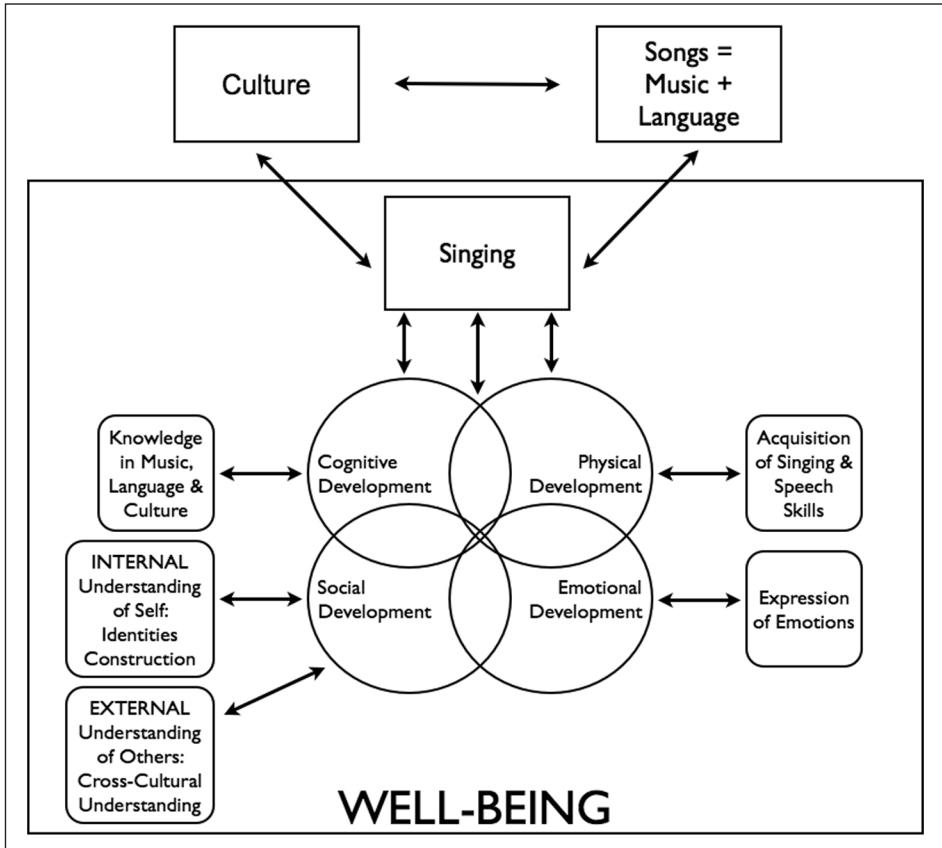
- S007 Repertoires and their practices
- 页码:10-10
- S008 Teaching approaches and student learning
- 页码:10-11
- S009 Concluding thoughts
- 页码:11-12
- S010 References
- 页码:12-14
- S011 Author biographies
- 页码:14-14
- S012 Abstracts
- 页码:14-15
S001 Singing and cultural understanding: A music education perspective
第1段(P0001)
原文复述
Singing and cultural understanding: A music education perspective
中文讲解
这是文章的标题。它由两部分构成:前半部分"Singing and cultural understanding"点明全文的核心议题——歌唱与文化理解之间的关系;后半部分"A music education perspective"限定讨论的视角,即从音乐教育的学科立场出发,而非从声乐表演、音乐人类学或一般社会学的角度切入。标题因此预告了文章将在"音乐教育如何借助歌唱促进文化理解"这一应用性论域中展开论证。
第2段(P0002)
原文复述
Beatriz Ilari University of Southern California, USA
中文讲解
这是第一作者 Beatriz Ilari 的署名及其所属机构:美国南加州大学(University of Southern California)。该条目以两行形式呈现作者姓名与机构归属,用以表明作者身份与学术单位之间的对应关系。在论文署名页中,作者通常按贡献或字母顺序排列,此处 Ilari 排在首位。
第3段(P0003)
原文复述
Lily Chen-Hafteck Kean University, USA
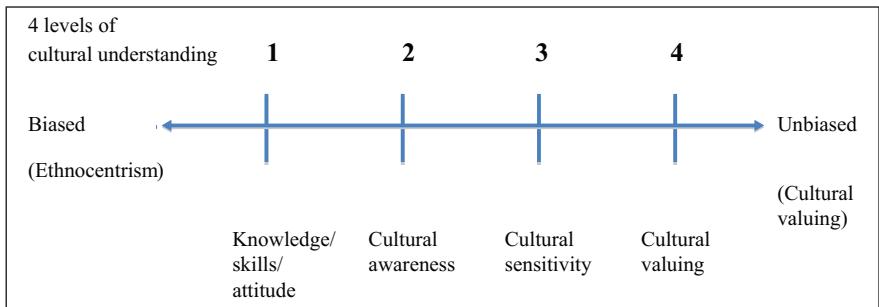
中文讲解
这是第二位作者 Lily Chen-Hafteck 的署名及其所属机构:美国 Kean University。该条目延续了 P0002 的署名排列格式,为合著者信息。两位作者分属不同机构,表明这是一项跨机构的合作研究。
第4段(P0004)
原文复述
Lisa Crawford
中文讲解
这是第三位作者 Lisa Crawford 的署名行。与前两位作者相比,此处只出现了姓名而未在同一行附带机构归属,作者所属机构在下一行单独列出,这是期刊署名页常见的格式安排。
第5段(P0005)
原文复述
University of Southern California, USA
中文讲解
这是 P0004 中提到的 Lisa Crawford 的所属机构:美国南加州大学(University of Southern California)。它与 P0002 中第一作者的机构相同,说明本文的三位作者中有两位来自同一所大学。
第6段(P0006)
原文复述
International Journal of Music Education 31(2) 202–216 © The Author(s) 2013 Reprints and permissions: sagepub.co.uk/journalsPermissions.na DOI: 10.1177/0255761413487281 ijm.sagepub.com SAGE
中文讲解
这是该文的期刊出版元数据,连续承载多项版式信息:刊名《International Journal of Music Education》;卷期号为第 31 卷第 2 期;页码范围 202–216;版权归属作者(© The Author(s)),年份为 2013;转载与许可查询途径指向 sagepub.co.uk 上的期刊权限页;DOI 编号为 10.1177/0255761413487281;线上访问地址为 ijm.sagepub.com;末尾 SAGE 为出版方名称。该条目只起标识与检索作用,不参与正文论证。
第7段(P0007)
原文复述
Abstract
中文讲解
这是摘要部分的二级标题标记,用以引出紧随其后的摘要正文。它本身不包含论证内容,仅起结构标识作用,表明接下来将以浓缩形式呈现文章的核心主张与发现。
第8段(P0008)
原文复述
This article explores the relationship between singing and cultural understanding. Singing emerges in infancy and develops through processes of enculturation and socialization. When we sing songs from diverse cultures, we are granted with opportunities to learn about the cultures of others, and gain a better understanding of our own. Thus, singing songs from different cultures may play important roles in the construction of our identities and in how we perceive and understand others, and ultimately ourselves. Cultural understanding, however, is complex in nature and multi-layered. Even if research findings concerning the relationship between singing and cultural understanding are mixed, we argue that there is value in enhancing students’ cultural understanding through singing multicultural songs. Singing multicultural songs can also promote the well being of students. It is beyond the education of music. It is about a comprehensive education of humans a social beings and music as a human endeavor.
中文讲解
这段摘要以"本文探讨歌唱与文化理解之间的关系"开篇,明确研究主题。摘要依次给出三个层次的论证:(1) 歌唱在婴儿期就已出现,并通过 enculturation(文化濡化)与 socialization(社会化)过程逐步发展;(2) 演唱不同文化的歌曲提供学习他人文化与反观自身文化的机会,因而在身份建构以及对他者与自我的理解上扮演重要角色;(3) 文化理解本身是复杂且多层的,即便已有研究结论并不一致,作者仍主张通过多元文化歌曲提升学生的文化理解具有价值,并进一步指出此类歌唱活动还促进学生的 well-being(福祉)。摘要最后把议题从单纯的音乐教育扩展为"对人——作为社会性存在——的全面教育",强调音乐作为人类活动本身的意义。作者的态度是:尽管实证证据 mixed(混合、参差),文章仍采取一种肯定性的立场(“we argue that there is value”)。注意摘要中保留了原文的排版瑕疵(“a social beings"应为"as social beings”),但本栏目的复述须忠实于原文。
补充说明
摘要中"enculturation"与"socialization"在 P0013 中有进一步解释,可与该段对照阅读以理解这两个术语的展开用法。
第9段(P0009)
原文复述
Keywords
中文讲解
这是关键词部分的二级标题标记,用以引出紧随其后的关键词列表,本身不承担论证功能。
第10段(P0010)
原文复述
cultural understanding, multicultural songs, multiculturalism, singing
中文讲解
本段列出四个关键词,依次为:cultural understanding(文化理解)、multicultural songs(多元文化歌曲)、multiculturalism(多元文化主义)、singing(歌唱)。这四个词既对应摘要的核心议题,也呼应标题中的"singing"与"cultural understanding"。其中 “multicultural songs” 与 “multiculturalism” 的区别在于前者指具体曲目层面的多元文化材料,后者指一种更宏观的对待文化多样性的态度或取向;“cultural understanding” 则界定了歌唱活动所要达成的认知与情感目标。
第11段(P0011)
原文复述
Globalization, technology, and new migration waves are driving forces that are changing the way most of us live, along with the ways we interact with other human beings around the globe (Appadurai, 1993). Compared to previous times, we now have much more access to and interact in multiple ways with people from otherwise unknown cultural and ethnic groups, in everyday life. In education, this translates into an ever growing diversity in classrooms and an increased need to learn about cultures other than our own, to enhance communication and understanding (Jo, 2006). Although these issues are not necessarily new (see Campbell, 2002; Schippers, 2009; Volk, 1998), the need to understand how music education might play a role in promoting cultural awareness and sensitivity to the music and culture of others is more pressing than ever.
中文讲解
这是文章正文的第一段,承担"问题背景"的功能。作者用 globalization(全球化)、technology(技术)、new migration waves(新移民潮)三项驱动力(驱动因素),援引 Appadurai (1993),说明当代人跨文化接触的方式已发生结构性变化。“Compared to previous times"一句强调这一变化的程度——日常中与未知族群接触的机会大幅增加。句末用 “in everyday life” 限定这一变化的生活化、日常化属性。接着,作者用 Jo (2006) 将宏观社会趋势转入教育语境:课堂多样性增长,对其他文化的学习需求也随之上升,目的是 enhance communication and understanding。最后,作者以 “Although these issues are not necessarily new” 进行让步—— Campbell (2002)、Schippers (2009)、Volk (1998) 等文献表明相关讨论早已存在——再用 “more pressing than ever” 转折回到全文的核心主张:理解音乐教育如何促进对他人音乐与文化的觉知与敏感性,正变得空前迫切。这段在整节中的功能是为后文关于歌唱与文化理解的论证提供时代背景与必要性论证。
补充说明
本段中三个并列引证 Campbell (2002)、Schippers (2009)、Volk (1998) 的作用是支撑"issues are not necessarily new"这一让步句;与后文 “more pressing than ever” 构成让步—转折结构。
第12段(P0012)
原文复述
Corresponding author: Beatriz Ilari, Department of Music Education, University of Southern California, Thornton School of Music, Los Angeles, CA 90089-0851, USA. Email: ilari@usc.edu
中文讲解
这是通讯作者信息脚注,注明负责通讯的作者为 Beatriz Ilari,其所属单位为南加州大学音乐教育系(Department of Music Education, University of Southern California),所在学院为 Thornton School of Music,地址为 Los Angeles, CA 90089-0851, USA,并给出联系邮箱 ilari@usc.edu。该条目起联络与版式标识作用,对正文主张无直接贡献。
第13段(P0013)
原文复述
Music and the arts are an integral part of human existence. They have been used by our ancestors and by people in diverse societies including infants and young children before they acquire a significant degree of socialization, or the process of learning to become a member of society (Dissanayake, 2000). Parents and caregivers the world over sing to babies and young children as a way to regulate their emotions, entertain, or relax them (Trehub & Schellenberg, 1995). The characteristics of singing – such as use of the voice and repertoire – expands and changes as a function of children’s development and growth, and as a consequence of their socialization into cultural institutions, not just within their families and communities, but also within their school (see Welch, 2005). For example, school-aged children in different parts of the world play complex hand clapping games that are often accompanied by songs and chants (Marsh, 2009). Yet, as children develop and grow in culture, these singing games often give room to other repertoires. While singing exists in most societies across the world, what, how, when, and where particular songs are used varies immensely (Nettl, 1983). Hence, singing might be an optimal activity to foster cultural understanding because songs offer a means to talk about different peoples.
中文讲解
这段是文章正文的第二段,承担"歌唱的人类学与发展心理学基础"的论证功能。作者以"音乐与艺术是人类存在的组成部分"立论,借助 Dissanayake (2000) 说明音乐艺术甚至在社会化(socialization,即学习成为社会成员的过程)显著发生之前就已存在于人类生活,包括婴儿与幼童的活动中。接着援引 Trehub & Schellenberg (1995),用世界各地父母对婴幼儿唱歌以调节情绪、娱乐或放松的普遍现象作为经验证据,说明歌唱在生命早期即承担社会情感功能。Welch (2005) 则支持歌唱特性(嗓音使用与曲目 repertoire)随儿童发展及其在家庭、社区、学校等文化机构中的社会化而扩展与变化,“not just…but also” 的句式强调学校在社会化中的角色,这一点呼应摘要中的 enculturation 与 socialization 关键词。Marsh (2009) 的拍手游戏例子用以说明学龄儿童歌唱的具体形态,但作者用 “Yet” 转折指出:随着儿童在文化中成长,这些歌唱游戏常让位于其他曲目,暗示歌唱活动的形态会随发展而转换。最后援引 Nettl (1983) 的普遍性论断——歌唱虽普遍存在于多数社会,但"唱什么、如何唱、何时唱、何地唱"差异巨大——为结论句的逻辑前提:正因为歌唱同时具有普遍性与文化差异性,它才可能是促进文化理解的 optimal activity(理想活动),因为歌曲提供了一种谈论不同民族与人群的话语通道。整段从早期经验、发展的视角、跨文化差异三个层次为后文"歌唱促进文化理解"的核心命题建立基础。
补充说明
本段中 “socialization” 一词在此处被作者用括号补充定义为"the process of learning to become a member of society”,与摘要中的另一术语 enculturation 共同构成文章的两个核心过程概念;enculturation 在本节未单独展开解释,需结合读者对文化人类学的一般理解来把握其侧重——通过文化濡化习得本文化的规范与意义。
第14段(P0014)
原文复述
Songs consist of music, language, and cultural knowledge. When we sing, we engage motor skills that are also used in speech. We learn about our own cultures and foreign ones through singing different songs, and while engaged in singing activities, we also express our deepest emotions. Therefore, the potential benefits of singing multicultural songs in music education are multifold. Singing songs from diverse cultures may provide an education in which students (1) deepen their knowledge in music, language, and culture; (2) develop vocal skills in both singing and speech; (3) boost their social skills in a multicultural and global society while developing a strong sense of self-identity and understanding of others (including those from cultures other than their own); and (4) enhance emotional expression. All these elements together are also likely to enhance the well being of students, as seen in Figure 1.
中文讲解
这段是文章正文的第三段,承担"歌曲构成—歌唱机制—多元文化歌曲潜在益处"的层层推演。作者先用一句话定义歌曲的三要素:音乐、语言、文化知识(music, language, and cultural knowledge),从而把歌唱活动从单一的声乐行为扩展为多模态的文化实践。接着指出歌唱所调动的运动技能(motor skills)也用于言语——这一观察建立了歌唱与语言之间的生理性联结,为后文"歌唱促进语言能力"的论点提供机制依据。“We learn about our own cultures and foreign ones through singing different songs” 与 “we also express our deepest emotions” 两句分别从认知(理解自身与他者文化)与情感(表达深层情感)两个维度说明歌唱的功能。由此,作者用 “Therefore” 引出核心结论——多元文化歌曲在音乐教育中的潜在益处是 multifold(多重的)——并以编号列表给出四项具体益处:(1) 加深音乐、语言与文化知识;(2) 发展歌唱与言语两方面的嗓音技能;(3) 在多元文化与全球社会中提升社交能力,同时形成清晰的自我身份认同并理解他人(包括来自其他文化者);(4) 增强情感表达。最后,作者把上述要素整合起来指向学生 well-being(福祉)的提升,并以 “as seen in Figure 1” 引向一张图示(该图未在本节范围内呈现,需查看原文)。本段在整节中的功能是把前两段建立的背景与发展心理学基础转化为具体的、可操作的教育价值清单。
补充说明
本段编号列表中的 (1)–(4) 与摘要末尾"comprehensive education of humans as social beings and music as a human endeavor"形成对应:知识、技能、社交身份、情感四个维度共同支撑"全面的人的教育"这一总论。Figure 1 的具体内容未在本节文字中给出,仅以 “as seen in Figure 1” 引述。
第15段(P0015)
原文复述
The purpose of the present article is to discuss the relationship between singing and cultural understanding. We begin with a discussion on how singing emerges in infancy and develops through processes of enculturation and socialization, followed by a discussion on singing and identity construction. Next, the complexity of cultural understanding and how singing may promote it is articulated. Implications for practice are presented at the end.
中文讲解
这段是文章正文的最后一段,承担全文路线图(roadmap)的功能。作者明确本文目的在于讨论歌唱与文化理解之间的关系,并以四步规划全文结构:(1) 从歌唱在婴儿期的出现及其通过 enculturation(文化濡化)与 socialization(社会化)过程的发展入手;(2) 接着讨论歌唱与身份建构(identity construction)的关系;(3) 然后阐明文化理解的复杂性以及歌唱如何促进这一理解;(4) 文末给出实践启示(implications for practice)。其中"identity construction"作为第二个主题词首次在本节文字中出现,呼应摘要中"the construction of our identities"的核心主张;“complexity of cultural understanding"则对应摘要中"complex in nature and multi-layered"的判断。本段本身不展开任何新论证,而是为读者标示接下来各小节的论题顺序与衔接逻辑。
补充说明
本段中提到的四个论题与本节已展开的内容对应如下:P0013 已覆盖"singing emerges in infancy and develops through processes of enculturation and socialization”;P0014 部分触及"singing and identity construction"(见第 (3) 项中"strong sense of self-identity");“complexity of cultural understanding"将在后续小节展开;“implications for practice"则留待文末处理。
脚注 / 边栏 / 图表 / 附加信息(如有)
本节范围内出现的附加材料包括:(1) P0006 的期刊出版元数据,包含卷期号、页码、版权年份、DOI、SAGE 出版信息,属于版式标识,不参与正文论证;(2) P0012 的通讯作者脚注,标识联系作者 Beatriz Ilari 的单位、地址与邮箱;(3) P0014 末尾提到的 Figure 1 是关于学生 well-being 的图示,但本节文字未给出该图的内容,需查看原文。其余脚注、边栏或图表说明在本节范围内未出现。
💡 本节核心要点
- 文章以"歌唱与文化理解之间的关系"为核心议题,并明确从音乐教育的学科视角切入。
- 摘要主张歌唱在婴儿期即出现,经 enculturation 与 socialization 发展,并在身份建构与理解他者/自我中扮演重要角色;同时承认现有研究结论参差(mixed),但作者仍肯定多元文化歌曲的教育价值。
- 正文第一段(P0011)以全球化、技术与新移民潮为驱动力,结合 Appadurai (1993) 与 Jo (2006),论证当代课堂多样性增长使音乐教育促进文化理解的需求空前迫切,并通过 Campbell (2002)、Schippers (2009)、Volk (1998) 构成"让步—转折"结构。
- 正文第二段(P0013)从人类学与发展心理学出发,结合 Dissanayake (2000)、Trehub & Schellenberg (1995)、Welch (2005)、Marsh (2009)、Nettl (1983),论证歌唱既具普遍性又具文化差异性,因而是促进文化理解的 ideal 活动。
- 正文第三段(P0014)将歌曲分解为音乐、语言、文化知识三要素,并列举多元文化歌曲的四重潜在益处(知识深化、嗓音技能、社交与自我身份、情感表达),最终汇入学生 well-being 的提升,并以 Figure 1 引向可视化呈现。
- 正文末段(P0015)以路线图形式预告全文结构:歌唱的早期发生与发展、歌唱与身份建构、文化理解的复杂性、实践启示,标示各小节之间的承接顺序。
🔑 关键术语
- cultural understanding:文化理解。在本节中指通过歌唱活动对自身文化与他者文化形成的认知与情感层面的认识,作者特别强调其"complex in nature and multi-layered”(本质上复杂且多层次)的特性。
- multicultural songs:多元文化歌曲。指来自不同文化背景的歌曲材料,是本节论证中促进文化理解与学生 well-being 的核心教学媒介。
- multiculturalism:多元文化主义。相较于 multicultural songs 这一具体材料层面,该术语指对待文化多样性的更宏观的态度与取向。
- enculturation:文化濡化。在本节中与 socialization 并列出现,指个体习得本文化规范与意义的过程;本节正文 P0013 主要展开的是 socialization,enculturation 的具体内涵留待后续小节进一步说明。
- socialization:社会化。作者在 P0013 中用括号定义为"the process of learning to become a member of society”(学习成为社会成员的过程),并强调其发生场所不限于家庭与社区,还包括学校。
- singing:歌唱。贯穿全文的核心活动;本节强调歌唱既具普遍性(多数社会都存在),又因曲目、方式、场合差异巨大而具文化差异性,因此成为促进文化理解的"optimal activity"。
S002 Singing, enculturation and socialization
第1段(P0016)
原文复述
Section heading: ‘Singing, enculturation and socialization’. The heading marks the opening of a section that links the practice of singing with two cultural-learning processes—enculturation and socialization—announcing that the section will treat singing not merely as a musical activity but as a vehicle through which individuals acquire culture and absorb social values.
中文讲解
本段为小节标题。标题将三个关键词——singing(歌唱)、enculturation(文化濡化)、socialization(社会化)——并列,预示本节的核心议题:歌唱不仅是音乐活动,更是个体获得文化能力与传递社会价值的途径。标题本身已为读者准备好本节的论证方向:从歌唱实践出发,讨论两条文化学习的并行路径,并在二者之间建立联系。
第2段(P0017)
原文复述
Singing is presented as a natural mode of communication that begins very early in human development. The paragraph cites Trehub (2001) for the claim that babies are born with inherent musical abilities, and Papoušek (1996) for the finding that infants usually pay more attention to sounds possessing greater musical characteristics than to those with fewer. According to Chen-Hafteck (1997), from birth infants’ vocalizations contain musical elements, making it often difficult to distinguish the intonation and melodic contours of their speech from those of their singing. Adults typically respond to such musical vocalizations in musical ways, speaking or singing to their infants. The paragraph therefore concludes that communication between mothers and infants begins in a musical fashion (see Malloch & Trevarthen, 2009).
中文讲解
本段的核心主张是:歌唱是一种自然的交流方式,并且这种交流从人类发展的极早期就已开始。作者通过四条引文逐步建立这一主张——Trehub (2001) 论证婴儿天生具备音乐能力;Papoušek (1996) 指出婴儿通常更注意音乐性更强的声音;Chen-Hafteck (1997) 说明婴儿从出生起其发声就包含音乐元素,以至于其语音与歌唱的音高和旋律轮廓难以区分;最后 Malloch & Trevarthen (2009) 支撑作者得出的总论——母婴之间的交流从一开始就以「音乐方式」展开。这段为本节后续论证奠定「自然主义基础」:既然歌唱/音乐交流是先天的、原始的,那么把歌唱视为文化习得与社会化的途径就是顺理成章的。它也是从生理/发展层面切入、把读者带入「歌唱即文化」主题的入场段。
第3段(P0018)
原文复述
The paragraph claims that singing is not only a powerful means of human communication, but also an expression of lifestyles, values, and belief systems. It cites Nettl (1983) for the empirical observation that songs are found in most societies worldwide, and notes that songs are passed down in order to transmit sociocultural values and customs to new generations. Two examples are offered: learning to sing songs about acceptable or desirable manners in preschool, and singing hymns and chants that strengthen one’s affiliation to a particular religious denomination. The paragraph then quotes Hebert (2010, p. 93), who describes music—and thus songs—as a “form of discourse that enables humans to articulate a sense of self and community”. This, together with Clauss-Ehlers’s (2010) claim that culture derives from and within societies, supports the paragraph’s conclusion that music is an important form of cultural expression.
中文讲解
本段把歌唱从「早期母婴交流」扩展到「人类社会文化载体」。主张包含三个层次:(1) 歌唱是有力的交流手段;(2) 歌唱同时表达生活方式、价值观与信仰;(3) 因此歌唱是重要的文化表达形式。Nettl (1983) 提供「歌曲存在于大多数社会」的实证基础,「代代相传」凸显其文化传递功能。两个例子分别覆盖道德规范(学前班歌曲)与宗教归属(赞美诗/吟唱)。Hebert (2010, p. 93) 的引文把音乐定义为「使人类表达自我与社群感的语言形式」,将歌唱与身份/社群建构相连。Clauss-Ehlers (2010) 的「文化源自并存在于社会之中」为本节把音乐视为文化表达提供理论依据。本段是从「歌唱的生物基础」过渡到「歌唱的文化功能」的关键桥梁。
第4段(P0019)
原文复述
Image placeholder on page 3 with the caption “Figure 1. Schematic representation of the potential of singing multicultural songs in music education”. The embedded image data has been omitted; only the figure’s caption and its position on the page are preserved.
中文讲解
此处为图1的占位符,标题为「歌唱多元文化歌曲在音乐教育中的潜力示意图」,位于第3页,紧接论述「歌唱作为生活方式、价值观、信仰体系之表达」的段落,并位于引入 enculturation 与 socialization 两个概念的段落之前。从其位置与上下文可推断,作者试图将前文关于「歌唱传递文化价值观」的抽象论述可视化,呈现多元文化歌曲在音乐教育中的若干潜在路径或作用机制。由于图像数据已被省略,图中的具体节点、连线方向与文字标注均无法确定,需查阅原文原图以了解细节。
第5段(P0020)
原文复述
The paragraph asserts that how culture affects children’s development and learning is central to music education. It introduces two learning processes commonly associated with culture: enculturation and socialization. Enculturation is defined, citing Campbell (2011, p. 65), as a process whereby “individuals achieve cultural competence by way of osmosis, absorbing the many facets of their home environment, learning by virtue of living within a family, community, or culture.” Socialization is defined, also via Campbell (2011), as the ways through which members of a social group interact with children in order to transmit social beliefs and values. The paragraph notes that enculturation and socialization often overlap in the course of a child’s life, and concludes that it is therefore central to honor all types of musical experiences of children—from informal to formal ones—because they have clear implications for children’s development.
中文讲解
本段正式引入「文化对儿童发展与学习的影响」这一音乐教育的核心议题,并提出两个关键概念:enculturation(文化濡化)与 socialization(社会化)。Campbell (2011, p. 65) 对 enculturation 的定义强调「通过渗透/吸收」获得文化能力,是在家庭、社群或文化中「因生活其中」而学习,这是一种非正式、潜移默化的过程。Campbell (2011) 对 socialization 的定义强调社会群体成员「主动与儿童互动」以传递社会信念与价值观——更具意图性。两者在儿童生活中「经常重叠」,因此作者强调必须 honor(尊重/重视)儿童从非正式到正式的所有音乐体验,因为这些体验对儿童发展有「明确的影响」。本段的论证结构是:给出两个概念→指出重叠→推出实践结论,为后文音乐教育的多元文化取向提供概念基础。
第6段(P0021)
原文复述
The paragraph states that the idea that musical experiences are sociocultural constructions is pervasive. Turino (2006) is cited, defining music as a form of social life with culture playing a major role. Hoffman (1978) is cited, arguing that it is not possible to isolate music from culture, because musical knowledge is also cultural knowledge. From these premises—and the observation that music is so intimately bound to culture—the paragraph concludes, citing Elliott (1990), that instructing students about music from cultures different from their own is likely to cause them to achieve a greater respect for and acceptance of people from those other cultures.
中文讲解
本段主张「音乐体验是社会文化建构的」这一观念具有普遍性,并以此为多元文化音乐教育提供理论依据。Turino (2006) 把音乐定义为「一种社会生活形式」,凸显文化在其中的核心地位;Hoffman (1978) 进一步论证音乐无法脱离文化而存在,因为「音乐知识本身就是文化知识」。由此,Elliott (1990) 得出实践层面的推论:教导学生学习异文化音乐,很可能使他们获得对那些文化中的人的更多「尊重与接纳」。本段的论证链为:音乐≈社会生活→音乐≈文化→教授异文化音乐→尊重/接纳他者。这是为后续将「多元文化音乐教育」作为合理乃至必要的取向提供理论根据。值得提醒的是,作者的推论并不只是教学论层面的,而是把音乐教育与道德/公民教育的目标直接挂钩。
第7段(P0022)
原文复述
The paragraph begins “Thus the significance of the inclusion of cultural perspectives in music education is evident,” and explains that because of the close relationships between music and culture, developing cultural understanding can be an effective outcome of music education. It observes that it seems obvious that singing songs from “our own” culture helps us understand that culture and, ultimately, understand ourselves. However, the paragraph adds, even within our own culture there is much variability and diversity, because culture is not fixed but in a constant state of flux (Clauss-Ehlers, 2010). Culture is further described as a set of individual and shared meanings (Clauss-Ehlers, 2010) and as a very complex construct relating to belief and practice systems of people from different races, ethnic groups, ages, social class, gender, religion, lifestyle, and other exceptionalities (Banks, 2004). The paragraph therefore concludes that cultural understanding relates to the ways we learn about any given culture.
中文讲解
本段以「因此」起笔,正式宣告将文化视角纳入音乐教育具有显著意义,并分四步论证。第一步指出由于两者关系紧密,「发展文化理解」是音乐教育的有效产出。第二步给出一个直觉例子:唱「我们自己」文化的歌曲能帮助我们理解该文化,进而理解我们自己。第三步立即修正直觉——即使在同一文化内部也有大量变异与多样性,因为文化并非固定而是「处于不断变化的状态」(Clauss-Ehlers, 2010)。第四步把文化定义为「个体与共享意义的集合」(Clauss-Ehlers, 2010),一个涉及种族、族群、年龄、社会阶层、性别、宗教、生活方式及其他特殊性的「信仰与实践体系的复杂建构」(Banks, 2004)。结尾得出「文化理解与我们了解任何特定文化的方式相关」。本段为「多元文化音乐教育超出唱本族歌曲」的必要性提供论证——既要覆盖同一文化内部的多元,也要覆盖跨文化的多元。容易误解之处是「我们自己的文化」这一直觉例子:作者并非用它来为本族中心辩护,而是把它作为一个起点,再迅速拆解,引入「文化内部多元」与「跨文化多元」两个层面。
第8段(P0023)
原文复述
The paragraph suggests that we might sing songs about the history and myths of our own culture, or songs from “outside” cultures, and that as we explore and contrast different lyrics and musical systems, a window of learning opportunities opens up. Lyrics from different cultures not only review multiple views of important aspects of daily life, such as religion, nature, and interpersonal relationships, but also show the many ways in which humans are alike. As an example, lullabies may vary considerably in their lyrics while sharing common features across cultures, such as the repetition of syllables and the use of falling melodic contours (Unyk, Trehub, Trainor, & Schellenberg, 1992). Likewise, when we explore musical systems different from our own, we witness how different cultures prioritize certain sonorities over others, arranging them in distinct ways (see Nettl, 1983). The paragraph concludes that such experiences are at the heart of a multicultural music education.
中文讲解
本段展示「歌唱多元文化歌曲」如何打开学习窗口。可以唱本族历史与神话,也可以唱「外部」文化;通过对比不同歌词与音乐系统,「学习机会之窗」被打开。在歌词层面,不同文化的歌词既呈现宗教、自然、人际关系等日常重要方面的多元观点,也呈现人类的相通之处。Lullaby(摇篮曲)的例子具有方法论意义:歌词差异显著,但跨文化共享某些特征——「音节重复」与「下行旋律轮廓」(Unyk, Trehub, Trainor, & Schellenberg, 1992)。这一例子同时证明「差异」与「共通」——在差异中寻找共通,是多元文化音乐教育的核心方法。在音乐系统层面:当探索不同音乐系统时,可以看到不同文化如何「以独特方式优先安排某些音响」(Nettl, 1983)。作者结论:「这些体验处于多元文化音乐教育的核心」。这一段把抽象的「文化理解」转化为具体的「歌唱体验」,为下一段给出本研究的定义做铺垫。值得注意,摇篮曲例子具有双重功能:歌词差异证明「文化差异」,而音乐特征共享证明「人类共通」——作者借此让读者同时看到多元文化音乐教育要追求的两个层面。
第9段(P0024)
原文复述
On that note, the paragraph states that in the present article the authors adopt the definition of multicultural music education proposed by Campbell and Scott-Kassner (2007). They contend that a multicultural/multi-ethnic music education is the intensive study of music from the perspective of more than one cultural/ethnic group. Its aim, they say, is to offer a cultural experience to students through the provision of a variety of musical experiences that may help them understand how music reflects people’s belief systems, values, lifestyles, and ways of thinking across cultural boundaries. The paragraph closes by characterizing this as a socio-cultural approach to learning music, with bearings on identity.
中文讲解
本段是文章的「研究定位」段——承接上文关于歌唱、文化濡化与社会化的全部铺垫,正式宣布本研究采用并改造 Campbell and Scott-Kassner (2007) 的「多元文化音乐教育」定义。作者提出三个主张:(1) 多元文化/多种族音乐教育是从「超过一个」文化或族群视角对音乐的「深入学习」;(2) 其目标是通过提供多种音乐体验,使学生理解音乐如何跨文化边界地反映人们的「信仰体系、价值观、生活方式与思维方式」;(3) 这一取向是「具有身份认同意义的社会文化取向的学音乐方法」。本段把前面的理论铺垫收束为一个可操作的工作定义,并暗示音乐学习不仅关乎技能,更关乎身份建构,为后续文章的实证或理论推进奠定基础。需要提醒读者,作者在此并非简单照搬 Campbell 与 Scott-Kassner 的原定义,而是用「more than one」「across cultural boundaries」「with bearings on identity」等措辞对其进行了改造,使其更明确地承载社会文化与身份认同维度。
脚注 / 边栏 / 图表 / 附加信息(如有)
本节包含一处图占位符(图1,标题为「Singing multicultural songs in music education 潜力示意图」,位于第3页,紧接关于歌唱作为文化表达的段落)。原图内容因数据省略需查阅原文原图。本节无独立脚注或边栏附加内容;段中出现的文献引用均直接嵌入正文(如 Trehub, 2001;Nettl, 1983;Campbell, 2011;Elliott, 1990;Clauss-Ehlers, 2010;Banks, 2004;Campbell and Scott-Kassner, 2007 等)。
💡 本节核心要点
- 歌唱从婴儿期就是人类自然的音乐性交流方式,母婴早期互动已经以音乐方式展开(Malloch & Trevarthen, 2009;Trehub, 2001;Papoušek, 1996;Chen-Hafteck, 1997),这为把歌唱与文化习得相联系提供自然主义基础。
- 歌唱在不同社会中承担传递生活方式、价值观与信仰的功能,是社会身份与文化得以代际延续的重要载体(Nettl, 1983;Hebert, 2010;Clauss-Ehlers, 2010)。
- enculturation(文化濡化)与 socialization(社会化)是文化影响儿童发展的两条重叠路径(Campbell, 2011),二者共同要求音乐教育尊重儿童从非正式到正式的所有音乐体验。
- 音乐与社会文化不可分割(Turino, 2006;Hoffman, 1978),因此教授异文化音乐有助于学生形成对其他文化的尊重与接纳(Elliott, 1990)。
- 文化是流动且由多重群体维度(种族、族群、年龄、社会阶层、性别、宗教、生活方式、特殊性等)建构的复杂概念(Clauss-Ehlers, 2010;Banks, 2004),故「文化理解」必须涵盖同一文化内部的变异与跨文化的多样性。
- 通过对比不同文化的歌词(如不同歌词的摇篮曲仍共享「音节重复」与「下行旋律轮廓」)与音乐系统,可同时揭示人类文化的差异与共通;本研究采用并改造 Campbell 与 Scott-Kassner (2007) 的多元文化音乐教育定义,将其定性为具有身份认同意义的社会文化取向。
🔑 关键术语
- Enculturation(文化濡化/文化习得):本节引用 Campbell (2011, p. 65) 的定义,指个体「通过渗透/吸收」其家庭、社群或文化中的多种因素而获得文化能力的过程,强调「生活于其中而学习」的非正式、潜移默化的获得方式,区别于更主动的社会化传递。
- Socialization(社会化):本节引用 Campbell (2011) 的定义,指社会群体成员通过与儿童互动而传递社会信念与价值观的方式;本节明确 enculturation 与 socialization 在儿童生活中「经常重叠」,故两者在本节中作为一对互补而非互斥的概念使用。
- Multicultural music education(多元文化音乐教育):本节采用并改造 Campbell 与 Scott-Kassner (2007) 的定义,指从超过一个文化或族群视角对音乐的「深入学习」;其目标是通过多元音乐体验帮助学生理解音乐如何反映不同文化的信仰体系、价值观、生活方式与思维方式,并被定性为具有身份认同意义的社会文化取向。
- Socio-cultural construction of musical experience(音乐体验的社会文化建构):本节核心命题之一:音乐体验并非纯粹的审美或技术对象,而是社会与文化的产物;Turino (2006) 把音乐定义为「社会生活形式」,Hoffman (1978) 主张「音乐无法脱离文化」,二者共同支撑此命题,并被作为教授异文化音乐具有道德意义(Elliott, 1990)的理论前提。
- Cultural understanding(文化理解):本节将其界定为「我们了解任何特定文化的方式」,既包括本族文化内部的变异(因文化处于不断变化的状态),也包括跨文化的差异与共通;它是本节对音乐教育核心产出的概括,并指向通过歌唱体验(歌词与音乐系统对比)来具体实现这一产出的方法。
S003 Singing & the construction of identities
第1段(P0025)
原文复述
Singing & the construction of identities
中文讲解
这是本节的标题,用“&”连接两个核心概念:歌唱(singing)与身份建构(the construction of identities)。标题以“construction”(建构)一词暗示作者持有的立场——身份并非天生固定,而是经由社会、文化与个人实践不断被塑造出来的产物;歌唱正是参与这种塑造过程的关键实践之一。该标题为本节设定了议题:歌唱如何与身份建构发生联系,并将依次从个人、社会、文化、政治等层面展开论证。
补充说明
标题层级为二级(##),表明它是文中一个独立小节,而非章节或子标题的细分。
第2段(P0026)
原文复述
Singing can play a significant role in identity construction, including musical, social, ethnic, racial, and cultural identities. In order to realize our inborn musical abilities (Trehub, 2001), we need to establish a strong musical identity that reinforces our belief that we are musical. We can all enjoy music through listening, singing, and moving, regardless if we have had opportunities to take music lessons and learn to play a musical instrument or not.
中文讲解
本段确立全节的总论点:歌唱在身份建构中扮演重要角色,且这种身份涵盖音乐、社会、族群、种族和文化多个层面。
作者提出了一个关键的逻辑链条:人类具备先天的音乐潜能(inborn musical abilities,引用 Trehub, 2001),但这种潜能要被“实现”(realize),需要建立一个稳固的音乐身份(musical identity),而这个身份反过来又强化我们“自己是具有音乐性的人”的信念。换言之,音乐身份既是潜能得以兑现的中介,也是自我音乐信念的支柱。
最后一句的限定非常重要:作者强调,无论是否上过音乐课、是否学过乐器,所有人都可以通过听歌、歌唱和律动来享受音乐。这一限定排除了将音乐活动窄化为专业训练的解读,为后续讨论不同文化中普通人的歌唱经验预留了空间。
补充说明
Trehub (2001) 的引用在本段仅作为支撑“先天音乐能力”主张的来源出现,原文未对其内容作进一步阐述。
第3段(P0027)
原文复述
Singing is both a personal and a social act. We align a view of our musical selves with what our ears hear coming out of our mouths and, based upon our beliefs taken from society, including the community in which we live, work, and learn, we assess ourselves to be good singers or perhaps “not so good.” Cultural associations guide our thinking about what we sound like as a soloist, how we measure up as a singer when singing songs with a group, or chanting, as we go on to undertake daily chores (see Welch, 2005). Whidden (2010), for example, storied the lives of adults who did not identify as singers, even if they had had positive singing experiences earlier in school. Main findings of this study included negative associations with singing in elementary school, negative experiences of singing at home, and a cultural influence of perceptions of what one’s personal definition of being a singer is. That is, depending upon the quality of early歌唱 experiences, which are affected by how people around us view our singing, we may continue singing in life or may even stop (Welch, 2005).
中文讲解
本段将歌唱界定为兼具个人性与社会性的行为,并解释身份判断如何形成。
作者指出一种内在反馈机制:我们把自己对“音乐自我”的看法,与耳朵实际听到的从口中发出的声音相对齐;同时,基于从社会——包括我们所居住、工作和学习的社区——习得的信念,我们对自己做出“唱得好”或者“并不那么好”的评价。这里的“align”一词点明:自我评价不是单纯的技术测量,而是听觉印象与社会观念之间的协商。
接下来,作者援引 Welch (2005) 指出文化联想塑造我们对独唱表现、与他人合唱时的水平、甚至日常劳作中的吟唱(chanting)的理解。Whidden (2010) 的研究被作为例子引入:即使一些人早年在学校有过积极的歌唱经验,他们成年后仍可能不认同自己为“歌手”;研究发现这与小学阶段的负面联想、家庭中的负面歌唱体验,以及文化对“何为歌手”的定义影响有关。这段例子的功能是证明:歌唱身份并非由天赋决定,而是被早期经验和所在文化持续塑造。
段末以 Welch (2005) 收束,归纳出决定性因素——早期歌唱经验的质量(受周围人如何看待我们的歌唱影响),会决定我们终身是否继续歌唱。
补充说明
原文中“how people around us view our singing”与前句“beliefs taken from society”呼应,强调社会评价的内化是身份建构的渠道。Chanting(吟唱)在作者笔下被纳入歌唱范畴,意味着歌唱不只指旋律性演唱,也包括劳作中的口语化歌唱行为。
第4段(P0028)
原文复述
Our own personal observations of diverse musical cultures in various countries around the world provide a glimpse of how musical identity construction is at work under cultural influences. Children growing up in their black townships in South Africa and who have extensive singing experiences in their families, communities, church and schools, will probably continue to fee comfortable singing in public well into adulthood. The same is likely to occur with Fijian children, as documented by Russell (2002). This is in stark contrast to the experiences of many children growing up in specific communities in North America and Europe, where people are often identified as “singers” and “non-singers,” and singing in public is very much a “performance act” for the “talented singer.” These individuals may continue or stop singing in public depending on which categories they have been “assigned” to (for a discussion see Welch, 2005).
中文讲解
本段通过跨文化对比,揭示不同社会如何以截然不同的方式塑造歌唱身份。
前半部分描述两类歌唱被普遍接受的文化:在南非黑人城镇(black townships)成长的儿童,由于家庭、社区、教会和学校中都有大量歌唱经验,他们很可能在成年后仍自在地在公众场合歌唱;Russell (2002) 记录了斐济(Fijian)儿童中存在类似情形。作者用这两例说明:当歌唱被嵌入日常生活的多重场域时,它会成为身份的自然组成部分。
后半部分则呈现强烈对照(stark contrast):北美和欧洲某些社区中,人被划分为“歌手”(singers)与“非歌者”(non-singers),在公众场合歌唱被视为“天才歌手”的“表演行为”(performance act)。这里关键词是“assigned”(被分配/被指派)——身份不是被发现,而是被社会强行分类。作者通过这种对比,意在表明:是否继续歌唱在很大程度上不取决于个人能力,而取决于文化是否将歌唱视为人人可为的活动。
补充说明
原文中“fee comfortable”疑为“feel comfortable”的排印错误,但作者意图清晰。“stark contrast”一词标志本段的论证策略为对照式(cross-cultural contrast),用两类截然不同的文化模式凸显社会分类对歌唱身份的影响。
第5段(P0029)
原文复述
Singing is also a political act that helps develop national and cultural identities. The history of mankind is full of examples of singing acts and songs that marked distinct political eras and ideologies. Protest songs sung during the military rule of Latin America in the 1960’s, the left-wing song “L’Internationale” with lyrics that were translated into more than 40 languages, as well as the “Singing Revolution” of Estonia in the late 1980s are some examples. What we sing, where, and when relates to intrinsic belief systems, ideologies and values that are learned from very early on, in the many contexts in which we navigate: the home, educational contexts, and the community a large (Young & Ilari, 2012). In the United States, developing patriotism is often a school matter, and in many public schools in New Jersey, children are required to sing the national anthem and recite the Pledge of Allegiance daily. In Hong Kong, songs learned in many schools are primarily Western songs with Chinese lyrics, and reflect the mix of diverse cultures that is prominent in that society (Chen-Hafteck, 2013). By contrast, many children growing up in the floodplains of the Brazilian Amazon sing songs about enchanted creatures that are part of Amazonian mythology (Ilari, 2013). Likewise, school-aged children in France are frequently taught to sing more traditional children’s songs in school, illustrating the significance of singing in the transmission of culture and tradition in French schools.
中文讲解
本段将歌唱提升到政治层面,论证歌唱是塑造国家与文化身份的政治行为。
作者首先列举三个跨越国界的标志性案例:1960 年代拉丁美洲军事统治时期的抗议歌曲、被译为超过 40 种语言的左翼歌曲《国际歌》(L’Internationale)、以及 1980 年代末爱沙尼亚的“歌唱革命”(Singing Revolution)。这些例子的共同功能是显示:歌唱曾作为政治动员、意识形态表达与民族觉醒的工具。
随后,作者借助 Young & Ilari (2012) 指出,“唱什么、在哪里唱、何时唱”关联着个人从家庭、教育与社区等众多生活情境中早年习得的内在信念体系、意识形态与价值观。
后半段以四个不同社会的实例具体化上述主张:在美国新泽西的许多公立学校,儿童每日需唱国歌并宣誓效忠,爱国主义借助学校机制通过歌唱培养(Chen-Hafteck, 2013 例香港学校主要学唱带中文歌词的西方歌曲,反映其多元文化交融的特征;Ilari, 2013 描述巴西亚马逊洪泛区儿童歌唱与亚马逊神话中的魔法生物相关的歌曲;法国学龄儿童则在学校学唱更传统的儿童歌曲,体现歌唱在法国学校中承担文化与传统传递的功能)。这四个例子的并列意在说明,歌唱在不同的政治文化语境中分别承担爱国主义建构、多元文化协商、本土神话传承与传统延续等不同任务。
补充说明
原文未展开这些历史案例的细节,作者仅以“some examples”作概括性引用。各项引用的功能是让读者感知歌唱被政治化的具体历史与地理图景。
第6段(P0030)
原文复述
In summary, singing plays an important role in social development as it is linked to identity. As noted, the act of singing carries along with it ways of being in the world, at personal and group levels. Through singing, important work can be done at school from early on in facilitating musical socialization and enculturation, so to enhance children’s integration into their societies. As children develop and construct their identities, mature and grow, they also begin to reach out to wider social realms. This translates into interactions with people from different social and cultural backgrounds, as well as in attempts to interact and understand others. Because identities are “malleable,” students have much to gain from experiences with other ethnicities and cultures (Hebert, 2010).
中文讲解
本段是对全节的总结,强调歌唱与社会发展及身份之间的连结,并提出教育层面的推论。
作者首先用“in summary”明确这一小节的总结位置,并重申歌唱与身份相联,因而对社会发展具有重要性。接着指出歌唱同时携带“个人”和“群体”两个层面的“在世方式”(ways of being in the world)——这是现象学式的表述,意指歌唱不只是一种行为,还塑造了人如何存在于世。
作者将论述落到教育实践:学校从早期开始就可以借助歌唱促进“音乐社会化”(musical socialization)与“文化适应/濡化”(enculturation),从而增强儿童融入社会的能力。
随后,论证向更广的社会维度推进:随着儿童成长并建构身份,他们会向更广阔的社会领域扩展,从而与不同社会文化背景的人互动并尝试理解他人。
最后一句是本段的关键判断:因为身份是“可塑的”(malleable,引用 Hebert, 2010),学生可以从与其他族群和文化的接触中获益良多。这为后一段关于早期跨文化歌唱机会的建议做了铺垫。
补充说明
“enculturation”一词指个体习得本文化规范的过程,与“socialization”并列使用时,作者意在同时强调社会融入与文化传承两个维度。
第7段(P0031)
原文复述
Providing children with ample opportunities to sing songs from their own culture as well as songs from various other cultures, particularly in early and middle-childhood, is important. After all, this is not only a crucial period for identity construction, but also a time when children tend to show much more openness to musical styles than in later years (Hargreaves, 1982). Children’s openness to musical styles might also translate into openness to and understanding of other cultures.
中文讲解
本段由理论层面转入实践建议,主张为儿童提供歌唱本文化及其他文化歌曲的机会,且特别强调“童年早期与中期”(early and middle-childhood)的关键期。
作者给出双重理由:第一,这一时期是身份建构的关键期;第二,引用 Hargreaves (1982) 指出,儿童在此时期对音乐风格表现出比成年后更高的开放性(openness)。这两个理由共同支撑“越早提供跨文化歌唱经验越有价值”的判断。
最后一句隐含一个迁移假设:儿童对音乐风格的开放性,可能转化为对其他文化的开放性与理解。这一推论将“音乐开放”与“文化开放”联系起来,呼应前一段“身份可塑”与“学生可从其他族群文化经验中获益”的论点,使本节在教育意涵上闭合。
补充说明
Hargreaves (1982) 在原文中仅作为“儿童在童年期对音乐风格更具开放性”主张的支撑来源出现,作者未对其研究作具体展开。
脚注 / 边栏 / 图表 / 附加信息(如有)
本节末尾(P0031)未列单独参考文献;正文中以括注形式出现的文献包括 Trehub (2001)、Welch (2005)、Whidden (2010)、Russell (2002)、Young & Ilari (2012)、Chen-Hafteck (2013)、Ilari (2013)、Hebert (2010)、Hargreaves (1982)。这些文献的功能分别为:提供先天音乐能力的证据(Welch、Whidden、Russell 支撑文化与社会影响;Young & Ilari、Chen-Hafteck、Ilari 支撑不同语境中的歌唱实践;Hebert、Hargreaves 支撑身份可塑性与童年开放性的论点。本节无独立图表、边栏或脚注框。
💡 本节核心要点
- 歌唱是身份建构的重要途径之一,涵盖音乐、社会、族群、种族与文化等多重身份维度。
- 歌唱既是个人的也是社会的行为,自我评价由听觉反馈与社会/文化信念协商而成。
- 早期歌唱经验的质量以及周围人对歌唱的态度,会影响个人是否终身继续歌唱。
- 不同文化对歌唱的态度差异显著:有些社会普遍接受人人歌唱,另一些社会则将歌唱窄化为“天才歌手”的表演。
- 歌唱具有政治功能,能够塑造国家与文化身份,作者以拉丁美洲抗议歌曲、《国际歌》、爱沙尼亚“歌唱革命”为例。
- 学校可借助歌唱在早期促进音乐社会化与文化濡化;童年早中期是身份建构与音乐开放性的关键窗口,提供跨文化歌唱机会具有教育价值。
🔑 关键术语
- musical identity (音乐身份):指个人对“自己是具有音乐性的人”的自我认知;它是先天潜能得以实现的中介,也是本节讨论歌唱与身份建构关系的核心概念。
- identity construction (身份建构):本节主张身份并非天生固定,而是被社会、文化与个人实践持续塑造的过程;歌唱被定位为参与这一塑造的关键实践。
- musical socialization (音乐社会化):指个体经由音乐活动习得社会规范、群体行为方式与文化价值的过程;本节强调学校可借助歌唱促进这一过程。
- enculturation (文化濡化):指个体逐步习得本文化知识、规范与价值的过程;在本节中与音乐社会化并提,强调歌唱在文化传承中的作用。
- malleable identities (可塑的身份):作者借用 Hebert (2010) 的表述,强调身份并非一成不变,因此学生可以从跨族群、跨文化的歌唱实践中获益。
S004 Cultural understanding
第1段(P0032)
原文复述
Cultural understanding
中文讲解
这是位于第5页的小节标题“## Cultural understanding(文化理解)”。它标示出本文从此处开始转向一个新的论题:什么是文化理解、文化理解如何形成,以及它在多大程度上能够实现。该标题本身没有主张,仅作为分段标界。
第2段(P0033)
原文复述
Cultural understanding is developed through everyday experiences with individuals and cultural artifacts from diverse cultures. It is closely related to the ways in which individuals perceive themselves and perceive others. Yet, we often wonder to what extent it is possible to understand people from other cultures. While some have argued that it is nearly impossible to understand the culture of others (Walker, 2007), we contend that this can be achieved to some degree, as discussed below.
中文讲解
本段给出本节的核心定义并提出本节的总论题。作者先用“日常经验”把“文化理解”锚定在具体接触上——既包括与不同文化成员的来往,也包括接触各种“文化制品”(cultural artifacts);随后强调,这种理解与“自我感知”和“他者感知”两条线索紧密相连,也就是说,文化理解不仅是对外的认知,也回流到自我定位。作者由此抛出本节的关键问题:跨文化理解究竟能在多大程度上实现?面对Walker(2007)近乎否定性的立场(认为几乎不可能理解他者文化),作者明确表态:“我们主张(we contend)”理解可以达到一定程度(to some degree)——这是一个重要的让步式主张:作者既承认难度,又拒绝完全不可知论。段末“as discussed below”提示读者下文将以递进方式为这一立场提供依据。
第3段(P0034)
原文复述
According to the view of cultural relativism, each culture is unique, and people are often found to have cultural biases that interfere with their understanding of other cultures (Dissanayake, 2000). Some have claimed that it is often difficult to understand the behavior, values, and beliefs of people from a foreign culture unless we are born into it, or have lived for a long period of time in that environment. To understand the musical culture of the Venda in South Africa, ethnomusicologist John Blacking (1967) lived in the community and documented their musical practices. He concluded that:
中文讲解
本段先铺陈跨文化理解的两重障碍,再引入一个具体例证以引出作者的核心引文。第一层障碍来自“文化相对主义”(cultural relativism)立场:每种文化都是独特的,而观察者通常带着“文化偏见”(cultural biases)进入跨文化情境,这构成理解的先天限制。第二层障碍是经验门槛:有人主张,若非生于其文化或长期居住其中,就难以理解外国文化中的行为、价值与信念。随后作者给出典型例证:民族音乐学家John Blacking(1967)为了理解南非Venda族的音乐文化,选择进入该社区生活并记录其音乐实践。这一例子的功能在于:它把抽象的“长期沉浸”论点落实到一个具体的研究个案上,从而为下一段的直接引文提供语境;也使读者看到“理解他者文化”最理想的路径就是“在场体验”(in loco)。
第4段(P0035)
原文复述
“Music can express social attitudes and cognitive processes, but it is useful and effective only when it is heard by the prepared and receptive ears of people who have shared, or can share in some way, the cultura and individual experiences of its creators.” (Blacking, 1973, p. 54)
中文讲解
这是Blacking(1973,p. 54)的直接引文。作者以这段引语作为权威支撑,浓缩其结论:音乐可以表达社会态度与认知过程,但只有当听者具备与创作者“共享——或至少能以某种方式分享——其文化与个人经验”时,音乐才有用且有效。换言之,理解音乐不只是听觉活动,它预设了听者的“文化准备”与“个人经历”。这里要注意原文“prepared and receptive ears”是一个隐喻,指的不是字面的耳朵,而是文化上受过调教、能够接收特定音乐意义的心智状态。引文中“cultura”是原文印刷形式(缺字母l),应原样保留。需要说明的是,这段引语并非中性陈述,而是带有强限定条件的——它正是作者下一段提炼“经验前提”的来源。
补充说明
该段为Blacking(1973,p. 54)的逐字直接引语,在文中承担“证据”作用:它以权威学者的结论支撑作者“理解音乐需要文化经验”的主张。
第5段(P0036)
原文复述
That is, one needs to have adequate experiences of a culture before he/she can understand its musical expression. While most of us cannot easily experience other cultures in loco as Blacking did, there are many ways to access them. As Pascale (2011) argued, technology and globalization have provided us with access to otherwise unknown cultures and cultural groups. These windows into other cultures and cultural groups play important roles in our attempts to learn about and understand others.
中文讲解
本段把Blacking的民族志结论抽象为更一般化的原则:“人们必须先具备足够的文化经验,才能理解其音乐表达。”这是对P0034–P0035的提炼,也是作者论证链的关键桥梁:既然“经验”是理解的前提,那么普通人没有Blacking那样的“在场”机会怎么办?作者在这里引入“替代性通道”:借助Pascale(2011)的论证,作者承认技术与全球化已经为大众打开了原本未知的文化与文化群体。作者用“windows(窗口)”这一比喻传达两层含义——其一,这些渠道是“间接的”而非“在场的”;其二,它们足以扮演“通往他者的入口”。这一段实际上为本节后面转向“教育中的多元文化接触”埋下伏笔:当“在场”难以实现时,技术与全球化所打开的间接经验,正是教育情境下可行的替代。
第6段(P0037)
原文复述
Although it is probably not possible for one to arrive at a level of understanding similar to that of indigenous people, learning the music and culture of others is still worthwhile in educational contexts. According to Nettl (1992), the purpose of a multicultural music education is not to teach the music of other cultures in order for students to fully know them. Rather, we should “teach something about them” so that the students “know they exist and are worthy of attention and respect” (p. 6).
中文讲解
本段是作者对自己立场的关键限定与教育学落地。作者用“probably”承认一个事实:我们几乎不可能达到当地人那种深度的文化理解;这一让步既回应了P0033中“近乎不可能”的极端立场,又没有退回到“完全不可知”。尽管如此,作者明确主张:“在教育情境下,学习他者的音乐与文化仍然是值得的。”这里的关键在于重新定义教育目标:作者援引Nettl(1992,p. 6)的著名表述——多元文化音乐教育的目的不是让学生“完全了解他者文化的音乐”,而是让学生“知道这些文化存在、并值得被关注和尊重”。这段引语承担双重功能——一是把“理解”的可及范围从“完全把握”下移到“知晓与尊重”;二是为下文从“理解”转入“刻板印象”问题提供规范性理由:既然目标是“知道他们存在并值得尊重”,那么教育就需要克服阻碍这种认识的认知偏差。
第7段(P0038)
原文复述
In their attempts to understand others and unfamiliar encounters with cultures and cultural artifacts, children and adults alike often rely on stereotypes. According to Sousa, Neto, and Mulle (2005), stereotypes fulfill both sociological and cognitive functions. On a sociological level, stereotypes can help individuals make sense of the similarities, differences, and inequalities among humans. At the cognitive level, stereotypes can help individuals organize the world around them by “making immediate sense of the many inputs the organism receives from other persons, directly (e.g., by close contact) or indirectly (e.g., through the media)” (Sousa et al., 2005, p. 307). This occurs because stereotypes are cognitive schemas (Shevy, 2008). Listening to specific musical genres may lead to quasi-automatic extra-musical associations. These, in turn, can affect how individuals process subsequent messages (Shevy, 2008). It is important to stress that stereotypes can have different connotations – positive and negative, and at times, be even damaging. This happens because stereotypes often represent fixed attitudes, beliefs and opinion about people from cultures other than one’s own, which are created out of both facts and fiction (Matsumoto, 1994, p. 7).
中文讲解
本段把话题从“文化理解能否实现”转入“理解他者时人们实际上依赖什么”——答案是刻板印象(stereotypes)。作者指出,儿童与成人都会在面对陌生文化与文化制品时启用刻板印象;这一观察同时面向两端,扩大了问题的相关性。作者接着借用Sousa, Neto和Mulle(2005)的双重功能框架:社会学功能上,刻板印象帮助个体把握人类之间的相似、差异与不平等;认知功能上,它让个体对来自他人(直接接触或经由媒体)的海量信息“即时获得意义”(p. 307)。作者进一步援引Shevy(2008),把刻板印象解释为“认知图式”(cognitive schemas),由此把听觉经验纳入分析:聆听特定音乐类型可能引发“准自动的”(quasi-automatic)超音乐联想,进而影响后续信息的处理方式——也就是说,音乐不仅传达其自身内容,还会激活与之绑定的人群刻板印象。本段末尾,作者用Matsumoto(1994,p. 7)做出关键限定:刻板印象既可能正面,也可能负面,甚至具有破坏性,因为它是“由事实与虚构共同构成的、关于他文化的固定态度、信念与意见”。这一限定为下一段讨论“为何刻板印象不可靠”作了过渡。
第8段(P0039)
原文复述
Furthermore, while stereotypes may portray partial pictures of a culture, they can also be inaccurate, outdated or completely wrong. Take for example the negative portrayals of some cultures by the media. Even without being fully aware of this, children and adults, who do not have many first-hand experiences with individuals from these cultures, may rely on stereotypes learned from what they have seen and heard through the media (or from peers) when perceiving and interacting with them in “real life.” Unsurprisingly, awareness of stereotypes increases with age, and children from stigmatized groups are likely to be more aware of stereotypes than their peers from the dominant, non stigmatized culture (McKeown & Weinstein, 2003). Therefore it is important for educators to provide experiences that will help students embrace diversity and move beyond stereotypes.
中文讲解
本段进一步对刻板印象的可靠性做出限定,并由此推出教育含义。作者指出,刻板印象最多呈现一幅“文化局部图景”(partial pictures),更可能“失实、过时甚至完全错误”;这一断言把P0038中保留的“可能正面”这一面压下去,强调刻板印象的根本不可靠性。作者以“媒体对某些文化的负面刻画」为例,说明缺乏直接经验的儿童与成人会不知不觉地把从媒体或同伴处习得的刻板印象带入“现实生活”的感知与互动中——也就是说,刻板印象并非单纯表征问题,而是会反作用于行为。值得注意的是作者援引McKeown & Weinstein(2003)所做的双重观察:对刻板印象的觉察随年龄增长而提高,而来自被污名化群体(stigmatized groups)的儿童比来自主流非污名化群体的同伴更早意识到刻板印象的存在——这一点揭示了刻板印象的伤害并非对称分布。正是基于以上两点,作者在段末提出本节的政策性结论:“教育者应当提供经验,帮助学生拥抱多样性、超越刻板印象。”这一结论同时呼应了P0037关于“教育目标是让学生知道其他文化存在并值得尊重”的目标,也回应了P0033“理解虽可达成但有程度限制”的总论点:教育的任务不是消除所有刻板印象,而是为学生创造经验以走出刻板印象。
脚注 / 边栏 / 图表 / 附加信息(如有)
本小节包含一段直接引语(P0035,引自Blacking, 1973, p. 54)以及若干嵌入式引语(P0037引Nettl, 1992, p. 6;P0038引Sousa, Neto和Mulle, 2005, p. 307及Matsumoto, 1994, p. 7)。这些引语均承担证据功能:Blacking的引语支撑“经验是理解前提”的核心主张;Nettl的引语限定教育目标为“知晓与尊重”而非“完全把握”;Sousa等的引语为刻板印象的双重功能(社会与认知)提供理论框架;Matsumoto的引语则用来限定刻板印象的多重含义(正面、负面、伤害性)。本节没有图表或边栏。
💡 本节核心要点
- 文化理解建立于与不同文化成员及文化制品的日常经验之上,并与自我感知和他者感知紧密关联。
- 面对Walker(2007)等学者“几乎不可能理解他者文化”的立场,作者明确主张理解虽有限度但可以达到一定程度。
- Blacking对南非Venda族的田野研究是本节关键例证:它表明“充分的在地经验”是理解其音乐表达的前提。
- 作者承认多数人难以复制“在场”经验,但借助技术、全球化与“窗口”式接触仍可获得替代性的文化经验。
- 在教育情境下,多元文化音乐教育的目标不是让学生完全了解他者文化,而是让他们“知道这些文化存在并值得尊重”(Nettl, 1992, p. 6)。
- 刻板印象兼具社会学与认知功能,作为认知图式会影响音乐聆听中的超音乐联想;但它们既是片面的也可能完全错误,教育者应提供经验帮助学生超越刻板印象。
🔑 关键术语
- Cultural relativism:文化相对主义。本节援引Dissanayake(2000)说明每种文化是独特的,个体又往往带有文化偏见,这两点共同干扰跨文化理解。
- Cultural understanding:文化理解。本节核心概念,指通过与不同文化成员和文化制品的日常接触所形成的对其他文化的认识,与自我感知与他者感知紧密相关。
- Cognitive schemas:认知图式。Shevy(2008)援引以解释刻板印象如何作为心智结构自动运作,并影响音乐聆听中的超音乐联想与后续信息加工。
- Stereotypes:刻板印象。本节讨论的核心对象,被定义为“由事实与虚构共同构成、关于他文化的固定态度、信念与意见”,同时具有正面、负面乃至破坏性的多重含义。
- Ethnomusicologist (John Blacking):民族音乐学家。本节以Blacking(1967/1973)对南非Venda族的田野研究作为例证,论证“在场经验”对理解他者音乐文化的必要性。
- Multicultural music education:多元文化音乐教育。本节借Nettl(1992, p. 6)界定其目标为让学生“知道其他文化存在并值得尊重”,而非追求对其他文化的完整把握。
S005 [描述性拆分] 文化理解四级模型与音乐教育研究
第1段(P0040)
原文复述
[Figure 2. Schematic representation of Edward’s (1994) model of cultural understanding.] — Embedded image data omitted; figure caption and position retained.
中文讲解
本段是一幅图表占位符。图注为"Figure 2. Schematic representation of Edward’s (1994) model of cultural understanding.",即"图2. Edwards(1994)文化理解模型的示意图"。该图位于第7页,紧接在介绍Edwards四级模型的正文之前,用以可视化呈现文化理解从有偏见到无偏见的连续谱。原文未给出图中的具体文字或箭头细节,因此本图所展示的视觉层次(如四级之间的递进关系)需查阅原图才能确认。
补充说明
图注与正文中提到的"four levels of cultural understanding"以及"refer to figure 2"相互呼应;本段属于图像说明,本身不展开模型内容,相关解释见P0041–P0047。
第2段(P0041)
原文复述
Whereas the existence of stereotypes may suggest that cultural understanding is a “black and white” phenomenon, this is clearly not the case. We may reach different levels of cultural understanding, depending on the quality of the experience we have with a particular culture, and amount of exposure to it. In respect to music, Edwards (1994) proposed four levels of cultural understanding when engaged in multicultural music learning, ranging from a biased view to an unbiased one (refer to figure 2).
中文讲解
本段是引入Edwards(1994)四级模型的总起段。作者先用"black and white"这一比喻反驳了一种朴素直觉——既然存在刻板印象,文化理解似乎就是有/无的二元判断;接着明确指出,文化理解实际上有程度之分,取决于与特定文化接触的质量与数量。最后在音乐语境下引出Edwards(1994)的四级模型,其取值范围从有偏见的观点(biased view)到无偏见的观点(unbiased view),并提示读者参见图2。该段的功能是为小节确立理论框架:先用反例破除二元观,再引入一个连续谱模型,为后续逐级介绍和实证研究铺垫。
补充说明
“black and white"在原文是修辞性比喻,不是字面色彩;continuum与biased/unbiased两个极点将在P0047中正式铺开。
第3段(P0042)
原文复述
The proposed levels of cultural understanding (Edwards, 1994) are:
中文讲解
本段是过渡句,本身不携带实质内容,只起引出作用:紧接在模型介绍之后,正式列出Edwards(1994)所提出的四级名称。它把P0041的概念性引言与P0043–P0046的具体条目连接起来,提示读者即将看到编号(1)–(4)四项。
第4段(P0043)
原文复述
(1) Instructional Knowledge, Skills & Attitudes: children acquire learning of the instructional materials (learning outcomes from the instructions);
中文讲解
本段给出Edwards模型的第(1)级:“教学知识、技能与态度(Instructional Knowledge, Skills & Attitudes)"。其内涵是:儿童从教学材料中习得相应的学习成果(learning outcomes from the instructions)。这是四级中的最底层,聚焦于教学本身可传递的事实性内容与基本技能,而非对其他文化的情感或评价,因此仍可能伴随偏见。学习者在此阶段主要掌握的是"关于某文化的可教内容”。
补充说明
括号中的"learning outcomes from the instructions"是对Instructional Knowledge, Skills & Attitudes的操作化界定,强调该级的判定依据是教学产出,而非态度转变。
第5段(P0044)
原文复述
(2) Cultural Awareness: children become aware of the differences and similarities of various cultures and their views are gradually less biased;
中文讲解
本段给出第(2)级:“文化意识(Cultural Awareness)"。其内涵是:儿童开始意识到不同文化之间的差异与相似之处,其原有观点逐渐变得不那么带有偏见。这是比第(1)级更高一级的认知层次——学习者不再仅停留在教学内容的习得上,而是进入跨文化的比较与识别,但偏见尚未完全消退(用"gradually less biased”,而非"unbiased”)。
补充说明
“gradually less biased"是关键的限定词,提示读者Cultural Awareness仍可能带有残余偏见,与后面更高级别形成对照。
第6段(P0045)
原文复述
(3) Cultural Sensitivity: children’s emotions are involved but are even less biased; and
中文讲解
本段给出第(3)级:“文化敏感性(Cultural Sensitivity)"。其内涵是:儿童的情感(emotions)开始介入对其他文化的理解,并且偏见程度进一步降低。该级的关键标志是情感维度的加入——学习者不仅在认知上识别文化差异,而且在情感上产生共情或反应。作者用"even less biased"明确指出,此级偏见度比第(2)级更低,构成一个逐级弱化的递进关系。
补充说明
“emotions are involved"是Cultural Awareness与Cultural Sensitivity之间的核心区分:前者偏认知比较,后者加入了情感成分。
第7段(P0046)
原文复述
(4) Cultural Valuing: an unbiased view of the value of another culture.
中文讲解
本段给出第(4)级,也是最高级:“文化价值认同(Cultural Valuing)",其内涵是:对另一种文化的价值持有无偏见的看法(an unbiased view of the value of another culture)。这是四级模型的理想终点:学习者不仅在认知上识别、在情感上共情,而且能够在价值层面对另一种文化给予不偏不倚的承认与尊重。作者用"unbiased"取代了前三级的"less biased"或"gradually less biased”,从而闭合了从有偏见到无偏见的连续谱。
第8段(P0047)
原文复述
On one side of the continuum we find ethnocentrism, where one only knows his/her own culture and thinks of it as the model or the “right“ one. On the opposite side is culture valuing where one knows about other cultures and appreciates their values. Ethnocentrism can be viewed as a starting point, or a time when some children possess a biased view of a foreign culture. As we provide children with instruction, they are likely to move to a higher level of cultural understanding (Edwards, 1994).
中文讲解
本段把四级模型进一步嵌入一个连续谱(continuum):一端是民族中心主义(ethnocentrism),指个体只熟悉本族文化并将其视作模式或"正确"的范式;另一端是文化价值认同(culture valuing),指了解其他文化并欣赏其价值。民族中心主义被定位为起点(starting point),即一些儿童对异文化持有偏见的初始状态;通过教学干预,学习者有可能沿此连续谱向更高层次移动。该段为后续实证研究提供了解释基础——各研究的干预效果可被理解为推动学习者沿此连续谱向无偏见一端移动。需注意"starting point"不等于"目标”,它只是描述而非倡导。
补充说明
“Ethnocentrism"和"Culture Valuing"分别是连续谱的两个端点,与图2的视觉化呈现相对应;本段把第(1)–(4)级置于一个动态的、可通过教学推进的轴线上。
第9段(P0048)
原文复述
Singing, music education, and cultural understanding
中文讲解
本段是小节标题:“歌唱、音乐教育与文化理解”。它标志着从理论模型(Edwards的四级模型)转向实证综述——即音乐教育(特别是歌唱)在促进文化理解方面的研究证据。标题明确了本子部分的核心问题:歌唱/音乐教育与文化理解之间存在何种关系。该标题为后续P0049–P0055一系列实证研究的引入提供了主题框架。
第10段(P0049)
原文复述
Studies in music education and music psychology have investigated whether perceptions and stereotypes associated with specific cultural, ethnic and national groups can be changed through musical interventions. Given the historical importance of ethnicity for American society, many studies were conducted in the United States (Hebert, 2010). This does not mean, however, that such studies are not to be found in other parts of the world.
中文讲解
本段是为实证综述设范围的总起句。它点明该领域关心的问题:通过音乐干预(musical interventions),能否改变与特定文化、族群和民族相关的认知与刻板印象。作者交代研究的地域背景:美国因族群议题的历史重要性而成为研究集中地(Hebert, 2010)。同时用"This does not mean, however…“这一转折限定,避免读者误以为研究只在美国——事实上其他地区亦有相关研究。该段的功能是为后面几项研究(包括美国境内的与葡萄牙的)做铺垫。
补充说明
“Hebert, 2010"是支撑"许多研究在美国进行"这一论断的文献线索;本段并未展开具体研究内容,仅作综述预告。
第11段(P0050)
原文复述
Edwards (1998) investigated the impact of four instructional approaches utilizing Native American music on fourth-grade students’ attitude towards Native American culture. Four teaching approaches were used in the study: (1) large-group lessons with authentic instruments, (2) visits by a Native American guest artist, (3) use of authentic instruments in small-group learning centers, and (4) the use of non-authentic instruments in small-group learning centers. A 6-week instructional period that contained 12 lessons was presented to four groups of children based on the four teaching approaches outlined earlier, and a group of control children received no treatment. Significant differences were found between the experimental groups and the control group. Importantly, Edwards showed that children were able to reach all four levels of cultural understanding (see above), and concluded that children can “unlearn“ previously held cultural biases through instruction, as well as develop cultural sensitivities. That is, in-depth multicultural experiences can facilitate learning and understanding about another culture.
中文讲解
本段介绍Edwards(1998)的实证研究。该研究用四种教学法将美国原住民音乐引入四年级课堂,以考察其对学生态度的影响:四种条件分别为(1)使用真实乐器的大班教学;(2)原住民客座艺术家来访;(3)学习中心内使用真实乐器的小组学习;(4)学习中心内使用非真实乐器的小组学习。研究周期为6周共12节课,另设不接受干预的对照组。结果显示实验组与对照组之间存在显著差异;重要的是,儿童能够达成Edwards(1994)模型中的全部四级文化理解。作者由此得出结论:儿童可通过教学"unlearn”(去学习/反学习)先前持有的文化偏见,并发展文化敏感性;也就是说,深度多元文化体验有助于促进对另一文化的学习与理解。该研究是Edwards理论模型在课堂情境中的关键验证。
补充说明
“authentic instruments"与"non-authentic instruments"构成对照,意在考察乐器真实性是否影响教学效果;“unlearn"一词强调对偏见的主动消解,而非单纯的覆盖。
第12段(P0051)
原文复述
Nam (2007) investigated American children’s perceptions of, attitudes towards, and understandings of cultures other than their own, as they encountered music from various cultures in general music classes. Music lessons were observed in two elementary schools during 3 months. One group worked on African drumming whereas the other group worked on listening to music from a variety of cultures. Questionnaires and interviews were administered before and after the observation period. Positive attitudes towards多元文化音乐教学总体上获得了正面态度。在参照Edwards(1994)四级框架时,Nam发现参与儿童展现出文化意识与文化敏感性,但达到文化价值认同层级者寥寥。Nam由此指出,把多元文化音乐嵌入课程的初衷在于减少偏见,但她警示一种"supermarket approach”(超市式做法——同时让孩子接触许多不同文化)反而可能限制文化理解的深度。相应建议是:教师应针对少数文化进行更深入、更具引导性的教学,这更可能有效促进文化理解。该研究的作用是为Edwards模型提供新的实证:并非所有维度都能被同等程度地激活,教学深度比广度更关键。
中文讲解
本段介绍Nam(2007)的研究。她在两所小学的普通音乐课堂中观察美国儿童接触多元文化音乐的过程,历时3个月:实验组分别学习非洲鼓或聆听多种文化的音乐,并通过前后测问卷与访谈评估。结果显示,参与儿童对多元文化音乐教学总体持正面态度;在Edwards(1994)四级框架下,参与儿童展现出文化意识(cultural awareness)与文化敏感性(cultural sensitivity),但达到文化价值认同(cultural valuing)层级者寥寥。Nam由此提出警示:把多元文化音乐嵌入课程的初衷是减少偏见,但若采取"supermarket approach”——即同时让孩子接触许多不同文化——反而可能限制文化理解的深度。她建议教师应对较少的文化进行更深入、更有引导的学习,这更可能促进文化理解。该研究为Edwards模型提供差异化证据:并非所有层级都可被同等程度地激活,教学深度比广度更关键。
补充说明
“supermarket approach"是Nam自创或借鉴的比喻,形容浅尝辄止、种类繁多但每种都不深入的教学取向,与本段推荐的"in-depth and carefully guided study of fewer cultures"形成对照。
第13段(P0052)
原文复述
Through a university-school partnership, Soto, Lum, and Campbell (2009) developed a music program for predominantly Spanish-speaking Mexican-American children and Native-American children, in a rural area of the United States. Undergraduate music education students served as instructors, who shared a wide plethora of musical experiences with the children, including listening, singing, and dancing. Ethnographic tools including interviews, observations, and field notes were used to collect data. Undergraduate student-teachers reported many gains from participation in the program, including the need to know more and understand the children they work with’s culture.
中文讲解
本段介绍Soto、Lum和Campbell(2009)的研究。研究者通过大学-学校合作(university-school partnership),在美国农村地区为以西班牙语为主的墨西哥裔美国儿童与美洲原住民儿童开发了一个音乐项目。承担教学的是音乐教育专业的本科生,他们与儿童共同进行聆听、歌唱、舞蹈等多种音乐体验。研究者采用民族志工具(访谈、观察、田野笔记)收集数据。报告的获益来自本科生教师,他们表示参与该项目后产生了更深入了解所教儿童文化之需求。该研究的特殊价值在于:把视角从儿童转向未来教师,揭示了多元文化音乐项目对师资文化理解的反哺效应。需注意,本研究并未直接测量儿童的文化理解层级。
补充说明
“university-school partnership"是一种将师资培养与一线学校实践连接的合作模式;“Ethnographic tools"在方法论上区别于前两项研究的问卷/前后测设计。
第14段(P0053)
原文复述
While the abovementioned studies considered the non-musical outcomes of general music programs that included playing instruments and listening, another project carried out in Portugal directly examined the influence of singing multicultural songs in the promotion of cultural understanding. Sousa et al. (2005) designed an intervention study to investigate whether Portuguese children would change their attitudes towards Cape-Verdeans after learning the songs from Cape Verde, a former Portuguese colony. Using a pre-post test design, a group of 193 children aged 7–10 years were provided with 18 units of Cape-Verdean song instructions. Results suggested a reduction of stereotyping of Cape Verdeans in the experimental group. Oddly enough, stereotype reduction was found only among the 9–10-year-old children, but not among the 7- and 8-year-olds. These results could be attributed to the non-randomization of the sample or the curriculum. The researchers also questioned as to whether an intervention program would be more efficient for older than younger children.
中文讲解
本段介绍Sousa等(2005)的研究。与前述几项以乐器演奏或聆听为主的研究不同,本项目直接考察歌唱多元文化歌曲在促进文化理解方面的作用。研究在葡萄牙进行,旨在检验葡萄牙儿童学习佛得角(前葡萄牙殖民地)歌曲后,对佛得角人的态度是否改变。采用前后测设计,193名7–10岁儿童接受了18单元的佛得角歌曲教学。结果显示实验组对佛得角人的刻板印象有所减少,但仅在9–10岁年龄段显著,7–8岁儿童未见此效应。作者将这一年龄差异归因于样本未随机化或课程设置,并提出干预可能对年长儿童更有效。该段的功能:把"歌唱"作为独立变量纳入因果性更强的实验设计,检验其直接效果,同时呈现年龄调节因素的初步证据。
补充说明
“Cape Verde, a former Portuguese colony"提供了理解研究情境的历史背景;“non-randomization of the sample"和"curriculum"是该研究作者自己对年龄差异结果的两种解释,提示因果推论需谨慎。
第15段(P0054)
原文复述
Using a different design, Chen-Hafteck (2007a) investigated the effects of an interdisciplinary program on Chinese music and culture, based on a sociocultural approach to multicultural music education. The program, which included singing Chinese songs, was introduced to 250 fifth- and sixth-grade children in three schools in New York, USA. Through a qualitative analysis of the context and effects of the program on each school, Chen-Hafteck observed an increase in cultural and musical knowledge, learning motivation, positive attitudes towards people from other cultures, and self-confidence for students from minority cultural groups. Findings also suggested that while a multicultural music education experience may lead to cultural understanding and positive attitudes towards others, this depends on a number of factors, including teachers’ attitude and teaching approach. According to Chen-Hafteck (2007a), students’ cultural understanding can be enhanced with a flexible, student-centered curriculum framed by a sociocultural approach in multicultural music education. In addition, the ethnic diversity of students’ environment is also an important factor to take into account. Data from this study suggested that a multicultural music program may be a stronger influence on students studying in a multicultural environment than those from more mono-cultural settings. After all, when students are in contact with children from other cultures, they have the chance to apply and relate the cultural information learned to real-life experiences.
中文讲解
本段介绍Chen-Hafteck(2007a)的研究。该研究采用不同设计,基于社会文化取向的多元文化音乐教育框架,考察一个以中国音乐与文化为主题的跨学科项目(包含学唱中国歌曲)对儿童的影响。项目在纽约三所学校面向250名五、六年级儿童实施。通过对各校情境与效果的定性分析,作者观察到儿童的文化与音乐知识、学习动机、对其他文化人群的正面态度以及少数文化群体学生的自信均有所提升。研究还提示:多元文化音乐教育虽可促成文化理解与正面态度,但其效果取决于教师态度、教学法等一系列因素。在社会文化取向的、以学生为中心的灵活课程下,学生文化理解更易得到促进。此外,学生所在环境的族群多样性亦是重要调节因素——身处多元文化环境中的学生受项目影响更大,因为他们在日常生活中就有机会将所学与实际经验相联系。该研究的核心贡献在于揭示了若干调节变量(教师、课程、环境),提示"教学存在"并不自动等同于"理解提升”。
补充说明
“sociocultural approach"是Chen-Hafteck的理论框架,与Edwards的四级模型形成不同的理论透镜;“monocultural settings"与"multicultural environment"的对照凸显了语境因素的作用。
第16段(P0055)
原文复述
Altogether, these studies provide some evidence that learning music, including through the act of singing multicultural songs, may enhance cultural understanding. However, one needs to be cautious in drawing inferences between the two, as the outcomes of studies seem to differ across settings. Teaching approaches (see Abril, 2006), age, and the ethnic makeup of students’ environments, are just some of the factors that may affect the relationship between learning songs from other cultures and cultural understanding. Causal links cannot be established at this time, and more research studies are clearly needed to further examine the complex and multi-layered (Edwards, 1994) nature of cultural understanding as it relates to music education.
中文讲解
本段是本节的总结段。作者承认前述研究整体上为"学习音乐(包括歌唱多元文化歌曲)可促进文化理解"提供了一定证据(some evidence),但随即以"However"作转折,警示读者不应过度推断,因为研究结果在不同情境下存在差异。作者列举影响"学唱他文化歌曲—文化理解"关系的若干因素:教学方法(参见Abril, 2006)、年龄、学生环境的族群构成。基于现有证据,尚无法确立因果关系(causal links cannot be established at this time),需更多研究以继续考察文化理解在音乐教育中的复杂多层(complex and multi-layered)特性。该段既肯定了实证支持的有限存在,又明确了未来研究方向,其调性审慎,与Edwards模型"多层"特征相呼应。
补充说明
“some evidence"与"causal links cannot be established"构成作者审慎立场的两面:既不一概否定,也不夸大成因果定论;“Edwards, 1994"再次被援引以提示文化理解本身的多层性是后续研究必须正视的复杂性。
脚注 / 边栏 / 图表 / 附加信息(如有)
本节含一处图像占位符(P0040,图2:Edwards 1994模型示意图),用以可视化文化理解的连续谱;正文未给出图中细节,需查阅原图。其余均为正文段落,无独立脚注、表格或边栏。
💡 本节核心要点
- Edwards(1994)把文化理解视为连续谱而非二元判断,并提出四级模型:教学知识/技能/态度 → 文化意识 → 文化敏感性 → 文化价值认同。
- 四级从有偏见逐步走向无偏见,关键区分在于是否引入情感维度以及偏见消退程度。
- Edwards(1998)以美国原住民音乐为材料,证实儿童可经教学达到全部四级文化理解,并可"unlearn"原有偏见。
- Nam(2007)证明课堂多元文化音乐教学能提升文化意识与敏感性,但难以普遍达到文化价值认同;并警示"超市式"教学广而不深。
- Sousa等(2005)在葡萄牙以歌唱佛得角歌曲为干预,发现对佛得角人刻板印象的减少仅在9–10岁儿童中出现,提示年龄是调节因素。
- Chen-Hafteck(2007a)显示多元文化音乐项目的效果受教师态度、教学法、学生所在环境族群多样性等多重因素调节,尚不能确立因果关系。
🔑 关键术语
- Edwards(1994)四级文化理解模型:该模型把多元文化音乐学习中的文化理解分为四个递进层级:Instructional Knowledge, Skills & Attitudes(教学知识、技能与态度)、Cultural Awareness(文化意识)、Cultural Sensitivity(文化敏感性)、Cultural Valuing(文化价值认同);从有偏见逐步走向无偏见,情感维度的引入与偏见消退程度是各层的关键区分。
- Ethnocentrism(民族中心主义):在本节中指连续谱的起点,表现为只熟悉本族文化并视其为"正确"范式,对异文化持有偏见。
- Cultural Valuing(文化价值认同):Edwards模型的最高层级,指对另一种文化的价值持有无偏见的看法,是Edwards所定义的理想终点。
- “Supermarket approach”(超市式做法):Nam(2007)使用的概念,指同时让孩子接触许多不同文化但每种都不深入的教学取向;作者认为这种做法反而限制文化理解深度。
- Sociocultural approach(社会文化取向):Chen-Hafteck(2007a)所采用的理论框架,强调文化理解在社会互动与情境中生成,与Edwards的四级认知—情感连续谱构成不同的理论透镜。
- Pre-post test design(前后测设计):Sousa等(2005)所用方法,在干预前后对同一组被试进行测量以评估态度/刻板印象的变化;比单纯的横向比较具备更强的因果推断潜力,但作者指出样本未随机化等问题限制了结论。
S006 Singing and cultural understanding: Implications for practice
第1段(P0056)
原文复述
Singing and cultural understanding: Implications for practice — section heading.
中文讲解
这是小节标题,宣告本节主题:把歌唱与文化理解联系起来,讨论其对教育实践的具体含义。标题中"Implications for practice”(对实践的启示)提示读者,作者即将从研究结论转入实践层面,给教师提供可操作的方向,而不是继续做理论综述。
第2段(P0057)
原文复述
Even if research supports the notion that singing songs from diverse cultures can foster cultural understanding in students, the current state of music education worldwide reflects a number of challenges that may hinder the implementation of multicultural activities and curricula in schools.
中文讲解
本段是一个过渡性让步句,明确了本小节立论的前提与现实之间的张力。“Even if"引出一个让步假设:即便研究支持"唱多元文化歌曲能促进学生文化理解"这一观点,全球音乐教育的现状仍存在诸多挑战,可能阻碍多元文化活动与课程在学校落地。这句话的功能在于:(1)肯定前面小节(关于歌唱促进文化理解)的研究结论,(2)同时把视角转向"现实阻碍”,从而为本节后文讨论实践问题做铺垫。换言之,本段并不是要削弱前文的研究结论,而是提醒读者:研究上可行的事,不等于实践中能轻易做到。
第3段(P0058)
原文复述
Multicultural education is a global phenomenon supported by research studies from different fields (Hebert, 2010), including music education. Even if the rhetoric in music education has shifted in favor of multiculturalism, “most of the practice [teaching Western art music using nineteenth-century European pedagogy] has remained eminently mono-cultural” (Schippers & Campbell, 2012, p. 92). Unfortunately, multiculturalism is not always viewed as a central component of music teacher training curricula. Therefore, many music teachers across the world still feel unprepared to include music from different cultures in their daily work. Consequently, many continue to teach in the same fashion that they were once taught (Hebert, 2010). Some challenges associated with teaching multicultural music include teachers’ fears of being inauthentic, presenting the music out of context, or even being disrespectful to the culture (Schippers & Campbell, 2012). Another challenge relates to a limited understanding of pedagogical processes and the roles of teachers and learners in the transmission of repertoires from particular cultures (Schippers & Campbell, 2012). In addition, schools often lack the necessary resources for teachers to implement strong multicultural music education programs (Schippers & Campbell, 2012).
中文讲解
本段集中列举现实中阻碍多元文化音乐教育的几类挑战,可分为三层:
-
理念与实践的脱节:作者用"rhetoric”(口号/言说)与"practice”(实践)的对照,点明尽管音乐教育话语已经转向多元文化,但实际教学仍以"教授西方艺术音乐并沿用十九世纪欧洲教学法"为主,呈"高度单一文化化(mono-cultural)"。这是引用 Schippers & Campbell(2012)的关键判断。
-
职前培养的薄弱:多元文化在音乐教师培训课程中并不总是核心内容,导致许多教师感到准备不足,于是继续用自己被教的方式来教。这一层逻辑链条是:课程不重视→教师未准备好→沿袭旧教学方式,形成循环。
-
具体教学顾虑与资源不足:作者细分了三类挑战——教师担心自己不够地道(inauthentic)、担心脱离语境呈现音乐、甚至担心冒犯文化本身;对特定文化中师生的教与学过程认识有限;学校缺乏开展多元文化音乐教育的资源。
这三层之间有递进关系:宏观(教育话语与现实)→中观(师资培养)→微观(教师顾虑与学校资源)。作者用"Some challenges… Another challenge… In addition…“把挑战一项一项展开,结构清晰。整段的论证目的是为下一段提出改革建议提供问题清单。
补充说明
源文中"number o challenges"“taugh"“teach ers’““under standing"等属于 OCR 残留,重述时已按原文意图补全为"number of challenges"“taught"“teachers’““understanding”,不影响作者原意。括号中”[teaching Western art music using nineteenth-century European pedagogy]“是 Schippers & Campbell 原文对"practice"一词的具体界定,重述中保留以便读者理解被引用的判断所指。
第4段(P0059)
原文复述
To implement multicultural music education programs with a strong emphasis on singing and cultural understanding, the present challenges need to be overcome. Music teacher education programs worldwide should revise their curricula so as to include courses in multicultural education and music of the worlds’ cultures (for a discussion see Wang & Humphreys, 2009). As classrooms become more culturally diverse (Jo, 2006), there is an urgent need to equip future teachers with knowledge and tools to succeed in their practice. An incursion into the ways in which different cultures transmit and learn music is also useful in accommodating students’ varied learning styles. Teachers often find certain students in the classroom who have difficulties with notation or theory, but excel when improvising or learning by ear (see Schippers & Campbell, 2012). Thus, experiences with music from different cultures offer diverse opportunities which allow students with different learning styles to excel, as they provide windows into diverse ways of experiencing, thinking about, and learning music.
中文讲解
本段与上一段形成"问题—对策"的对应关系,针对 P0058 提出的三类挑战逐一给出回应:
-
针对师资培养薄弱:作者主张全球音乐教师教育项目应当修订课程,加入多元文化教育和世界各文化音乐的课程(援引 Wang & Humphreys, 2009)。援引 Jo(2006)说明课堂文化日益多元,因而迫切需要为未来教师装备知识与工具。
-
针对教学顾虑与文化理解不足:作者建议教师应主动了解不同文化中音乐被传递与学习的方式。“An incursion into…“这一表述语气克制,但隐含的论点是:一旦教师理解各文化自身的教与学逻辑,就能避免"不地道"“脱离语境"的担忧。
-
针对学生学习差异:作者观察到一类常见现象——某些学生在识谱和乐理上有困难,却在即兴或听唱学习中表现出色(引 Schippers & Campbell, 2012)。由此推出关键结论:让学生接触不同文化的音乐,等于打开通往多元音乐经验、思考与学习方式的窗户,从而让不同学习风格的学生都能找到发挥所长之处。这一句呼应本节标题"Singing and cultural understanding”,把多元文化音乐教育的价值从"文化理解"扩展到"包容不同学习方式”,强化了实践改革的合理性。
补充说明
本段将"改革教师培养课程"与"理解不同文化中的教与学方式"作为两条对策,与上一段的三层挑战一一对应:宏观—课程改革;中观—教师知识与工具;微观—对学生学习风格的回应。“music of the worlds’ culture(s)“在原文中疑为单复数混用或 OCR 残留,重述时统一为复数形式 cultures。
第5段(P0060)
原文复述
Following this reasoning, we offer some practical suggestions for educators who wish to include songs from other cultures in their practice, as a way to foster cultural understanding in their students. These key points were grouped into two main areas: (a) repertoire and their practices, and (b) teaching approaches and student learning.
中文讲解
本段是承上启下的过渡段,作用有三:(1)用"Following this reasoning"把前文的问题诊断与对策建议串联起来;(2)宣布下文将给"希望把其他文化的歌曲纳入教学的教师"提供具体建议,目标仍是促进学生文化理解,与本节标题呼应;(3)预告下一阶段的组织结构——把建议归为两大类:(a)曲目及其相关实践,(b)教学方法与学生学习。这种 (a)(b) 的二分逻辑提示读者,下文将先谈"教什么”,再谈"怎么教”,是把抽象建议落到可操作层面的标志。
脚注 / 边栏 / 图表 / 附加信息(如有)
本小节中出现的脚注式引用包括:Hebert (2010)、Schippers & Campbell (2012)、Wang & Humphreys (2009)、Jo (2006)。它们在 P0058–P0059 中分别承担不同功能:Hebert (2010) 用于支持"多元文化教育是跨学科全球现象"以及"教师沿袭旧教学方式"的论断;Schippers & Campbell (2012) 出现频次最高,被用作"实践仍为单一文化"的关键判断、教师三类顾虑、对不同学习风格学生的观察三处证据来源;Wang & Humphreys (2009) 用于支持"教师教育课程应加入多元文化与世界音乐课程"的改革建议;Jo (2006) 用于支持"课堂文化日益多元"的现实判断。文中无图表或乐谱。
💡 本节核心要点
- 研究虽然支持歌唱多元文化歌曲可促进学生文化理解,但全球音乐教育实践仍以单一文化(西方艺术音乐 + 十九世纪欧洲教学法)为主流,理念与现实存在落差。
- 多元文化音乐教育的现实障碍可归纳为三层:师资培训课程未把多元文化作为核心、教师对"地道性"和"文化语境"感到忧虑、学校缺乏资源支持。
- 改革路径应包括修订职前教师教育课程(增设多元文化与世界音乐课程),并让教师理解不同文化中音乐传递与学习的方式。
- 多元文化音乐体验不仅促进文化理解,还为不同学习风格的学生(如擅长即兴、听唱者)提供发挥所长的机会。
- 本节下文将围绕两大方向给出实操建议:(a) 曲目及其相关实践,(b) 教学方法与学生学习。
🔑 关键术语
- Multicultural education:多元文化教育,指在课程与教学中纳入并尊重多种文化背景的内容与视角。本节中作者以此为前提,主张音乐教育应走出单一文化取向。
- Mono-cultural:单一文化的,用以描述实际教学中仍以西方艺术音乐和十九世纪欧洲教学法为主的状态,与"多元文化"形成对照,是本节批判现状的核心词。
- Inauthentic (in teaching multicultural music):教师在教授非自身文化的音乐时,担心自己呈现得不够地道、不够准确的顾虑,是本节列出的具体教学挑战之一。
- Repertoire and their practices:下一节建议的第一大方向,指所要选择的曲目以及与这些曲目相关的演唱/演奏等文化实践,关注的是"教什么”。
- Teaching approaches and student learning:下一节建议的第二大方向,指教学方法与学生学习方式的匹配,关注的是"怎么教"以及如何照顾不同学习风格的学生。
S007 Repertoires and their practices
第1段(P0061)
原文复述
Repertoires and their practices — a section heading that introduces the topic of musical repertoires from different cultures and the classroom practices associated with them.
中文讲解
本行为二级小节标题“Repertoires and their practices”(曲目及其教学实践)。它开启了一个新论题:当教师把世界上不同文化的音乐纳入课堂时,必须同时面对两件事——一是要从庞大的跨文化音乐曲目中选取和获取资源,二是要形成相应的教学处理方式。标题把“repertoires”(曲目资源)与“practices”(教学实践)并列,暗示下文将围绕“教什么”和“怎么教”两条线索展开:一方面谈如何获取和利用多样化的曲目,另一方面谈在涉及不同文化的曲目时如何处理传统、真实性与语境等技术性问题。
第2段(P0062)
原文复述
It is impossible to account for the vast repertoire of music from different cultures of the world. From traditional tunes to current songs, there is much to be explored in the classroom. Songs from different cultures and opportunities to engage with them are closer than most of us appear to believe (Schippers & Campbell, 2012). Apart from searching for songs on the internet or recorded media, teachers can also connect with members of different cultural communities, who are often happy to share their cultural heritage. This includes inviting parents and relatives of students, who come from other cultures, to share their musical experiences and cultural heritage with the class.
中文讲解
本段的核心主张是:世界不同文化的音乐曲目浩繁,课堂上可探索的内容极为丰富,并且这些资源并不像人们以为的那样遥远,关键在于教师是否主动建立获取渠道。作者先承认“完全梳理世界不同文化的音乐曲目是不可能的”,随后立刻把问题从“穷尽曲目”转向“在课堂中可以探索的内容很多”,从而把焦点放在教学操作层面。引用 Schippers & Campbell (2012) 是为了支撑“不同文化的歌曲和接触这些歌曲的机会其实比我们想象中更近”这一判断。在实践层面,作者把获取渠道分为两条:其一是常见的途径——在互联网上搜索或使用录音媒介;其二是作者着重强调的途径——直接联系不同文化社区的成员,因为这些社区成员通常乐于分享自己的文化遗产。这一条途径进一步具体化为邀请来自其他文化的学生家长或亲属到课堂上分享他们的音乐经验与文化遗产,从而把社区资源、家庭资源与课堂教学直接对接起来。整段为本小节定下基调:跨文化音乐教学的资源是丰富的、可及的,关键在于教师是否愿意走出课堂去接触真实的文化持有者。
补充说明
本段中的 Schippers & Campbell (2012) 作为支撑“不同文化的歌曲其实离我们很近”这一观点的来源被引出,为下一段更具体地介绍 Schippers (2009) 的 TCTF 框架做了铺垫;两段之间存在“现象判断—具体工具”的递进关系。
第3段(P0063)
原文复述
Issues of tradition, authenticity and context in songs of different cultures can be dealt with in many ways. Schippers (2009), for example, developed a very comprehensive framework for the understanding of music transmission in culturally diverse contexts, which teachers may find helpful. The Twelve Continuum Transmission Framework (TCTF) helps teachers identify issues related to musical context (e.g., original context or in a different context?), modes of transmission (oral or notated?), interactions (e.g., strongly gendered or gender-neutral?), and an overall approach to cultural diversity (e.g., mono-cultural – trans-cultural?) (Schippers, 2009; Schippers & Campbell, 2012). Following the careful study of a culture and its music, teachers can input information into the user-friendly TCTF, which, in turn, helps with lesson preparation. Although the discussion of the TCTF is beyond the scope of the present article, we strongly recommend that teachers consult this important source.
中文讲解
本段解决上一段提出“如何处理”时绕不开的三个问题:传统(tradition)、真实性(authenticity)与语境(context)。作者主张这些问题有多种处理方式,并随即推出一个具体的、可供教师直接使用的工具——Schippers (2009) 提出的“十二连续体传承框架”(Twelve Continuum Transmission Framework,简称 TCTF)。这个框架的目的,是帮助教师理解“文化多元语境下的音乐传承”。作者把 TCTF 帮助教师识别的议题归纳为四个维度,每个维度都以两个对立端点的连续体形式呈现:① 音乐语境——是作品原有的原始语境,还是已被置于不同的新语境;② 传承方式——是口头的(oral)还是记谱的(notated);③ 互动方式——是强烈受性别区分影响的(strongly gendered),还是性别中立的(gender-neutral);④ 文化多样性的整体取向——是单一文化的(mono-cultural)还是跨文化的(trans-cultural)。这四个维度的共同特征是“不是非此即彼,而是位于连续体上的不同位置”,这与下文未展开的“十二连续体”名称相呼应。作者进一步指出 TCTF 的使用流程:教师在仔细研究某一文化及其音乐之后,把相关信息输入这套用户友好的工具,工具反过来辅助备课。最后,作者明确说明本文不深入讨论 TCTF 的细节,但强烈建议教师直接查阅 Schippers (2009) 这一原始资料。整段的作用是把上一段“接触文化资源”的呼吁,落地为一个可供操作的分析框架,但同时保持谦抑:作者只负责引介,不代替读者做工具的详细解读。
补充说明
段中括号里的 (e.g., original context or in a different context?)、(oral or notated?) 等都是作者为帮助读者直观理解 TCTF 四个维度所给出的具体例子,并非 TCTF 本身的全部条目;TCTF 的具体内涵与十二项连续体的完整内容,作者明确表示需要读者另行查阅 Schippers (2009),本节不予复述或外推。
脚注 / 边栏 / 图表 / 附加信息(如有)
本小节未包含脚注、图表说明或边栏文本。P0063 末尾提到的 TCTF 原始出处(Schippers, 2009)属于作者在正文中以括号方式给出的文献提示,已在 source_restatement 与 chinese_explanation 中如实保留,不计入额外附加材料。
💡 本节核心要点
- 本节标题把“曲目(repertoires)”与“教学实践(practices)”并列,预示下文同时讨论“教什么”和“怎么教”两条线索。
- 世界不同文化的音乐曲目浩繁,但相关资源其实比教师通常以为的更近、更可获取(Schippers & Campbell, 2012)。
- 除互联网和录音媒介之外,教师还可以通过联系文化社区成员、邀请学生家长或亲属到课堂分享,直接获得第一手的文化与音乐经验。
- 不同文化歌曲中的传统、真实性与语境问题需要专门的工具来处理;Schippers (2009) 的“十二连续体传承框架”(TCTF)正是为此设计。
- TCTF 帮助教师识别四个关键维度:音乐语境(原境或异境)、传承方式(口头或记谱)、互动方式(性别区分或性别中立)、文化多样性整体取向(单一文化或跨文化),每个维度都以连续体形式呈现。
- TCTF 的使用流程是:先仔细研究某文化及其音乐,再把信息输入这套用户友好的工具,以辅助备课;本文不深入展开 TCTF 细节,而是建议教师直接查阅 Schippers (2009) 原文。
🔑 关键术语
- Repertoires:指可供教学使用的音乐曲目集合,在本节中特指来自世界不同文化的音乐曲目,强调其数量庞大与文化多样性。
- Practices:指与曲目使用配套的教学实践,包括如何获取资源、如何处理传统与真实性问题、如何在课堂中呈现不同文化的音乐。
- Tradition, authenticity and context:跨文化音乐教学中教师必须面对的三个核心议题:传统(曲目在其原生文化中的传承脉络)、真实性(所呈现的音乐是否被恰当地代表)以及语境(音乐是处于原初语境还是被移入新的教学语境)。
- Twelve Continuum Transmission Framework (TCTF):“十二连续体传承框架”,由 Schippers (2009) 提出的分析工具,用于理解文化多元语境下的音乐传承;本节重点介绍其四个维度——音乐语境、传承方式、互动方式、文化多样性整体取向,每个维度以连续体两端的形式呈现。
- Modes of transmission (oral vs. notated):TCTF 中的传承方式维度,区分口头传承(oral,即依靠记忆与口传)与记谱传承(notated,即依靠书面乐谱)。
- Interactions (gendered vs. gender-neutral):TCTF 中的互动方式维度,关注音乐实践中的性别区分程度:是否强烈受到性别角色影响,还是趋向性别中立。
- Mono-cultural – trans-cultural:TCTF 中文化多样性整体取向维度的两端:单一文化取向(mono-cultural)指以单一文化为参照,跨文化取向(trans-cultural)指跨越多种文化的处理方式。
S008 Teaching approaches and student learning
第1段(P0064)
原文复述
Teaching approaches and student learning
中文讲解
本条是本小节的标题,宣布论题切换:从前面讨论“为什么要在课堂中纳入歌唱与文化理解”的目标,转向“用什么样的方法去教”。它提示读者接下来的段落会以不同的教学路径(socio-cultural / hands-on / interdisciplinary)为支点,逐步界定在音乐课堂中融合歌唱与文化理解的条件和代价。
第2段(P0065)
原文复述
We are strong advocates of the idea that music from other cultures should be taught in connection to its socio-cultural context, through a socio-cultural approach. By doing so, teachers provide students with an in-depth understanding of the music and the culture where it originates, which, in turn, is likely to render the learning experience more interesting, relevant and meaningful (Chen-Hafteck, 2007b). This is also consistent with previous research findings. Abril (2006), for example, found that children perceived themselves as learning more about music when taught in the musical concept-based approach, and learning more about culture when taught in a socio-cultural approach. Thus, if the goal is to promote cultural understanding, then the socio-cultural approach is probably the most appropriate.
中文讲解
本段开门见山地亮出立场:作者主张他文化音乐应通过“socio-cultural approach(社会—文化取向)”来讲授,并将其内涵界定为“与音乐所在的社会—文化语境相连”。作者给出两层支持:Chen-Hafteck (2007b) 的论点——把音乐放回原语境,能让学生对音乐及其文化获得深入理解,并使学习更有趣、相关、有意义;以及 Abril (2006) 的实证发现——儿童自评显示,在 musical concept-based approach(以音乐概念为核心的方法)下学习更多“关于音乐”的内容,而在 socio-cultural approach 下学习更多“关于文化”的内容。作者由此用“if the goal is to promote cultural understanding”这一条件句,把两种路径做了功能上的分工:若目标是促进文化理解,则 socio-cultural approach“最合适”。逻辑上,这一段完成了“目标决定路径”的论证——上一小节确立了文化理解是目标,本段则指定与之匹配的教学取向。
补充说明
“musical concept-based approach”是与“socio-cultural approach”并列的对照路径,强调先学音乐的概念要素;二者不是好坏对立,而是各自擅长不同学习结果。
第3段(P0066)
原文复述
The presentation of multicultural songs can be fun and motivating if teachers make the learning “hands on” and student-centered. Depending on students’ age and musical background, it is possible to assign research projects that they can work on, independently or in groups. For example, teachers can have a group of students find multicultural songs on their own, learn their musical and extra-musical characteristics, rehearse and present them to the class, using the same approach that popular musicians use, that is, learning to play by ear (see Green, 2001). Unsurprisingly, this is how many musical cultures that are outside of the Western European tradition have transmitted (and continue to transmit) their musical heritage to the younger generations.
中文讲解
本段把“socio-cultural approach”落到课堂操作层面,提出一个具体的教学形态:把多元文化歌曲的呈现做成“fun and motivating”的体验,条件是让学习变为“hands on”和“student-centered”的活动。作者建议按学生年龄与音乐背景布置研究项目,可独立或分组进行;并以“学生自行查找多元文化歌曲——学习其音乐与音乐外(extra-musical)特征——排练并向班级呈现”这一示范链,来说明“learning to play by ear(靠耳朵学会演奏)”的方法。引用 Green (2001) 是为了说明这种方法在通俗音乐人中的合理性。作者随后追加一句关键的反向论据:许多西方欧洲传统之外的音乐文化,本来就是以“靠耳朵传习”的方式代际传递音乐的——这意味着让学生用“靠耳朵学歌”来教彼此,并非教师的奇思妙想,而是契合了这些文化自身的传承方式,从而把这种课堂活动与对原文化的尊重联结起来。
补充说明
extra-musical characteristics 指歌曲音乐本身之外的信息,如歌词内容、创作背景、社会语境、仪式用途等;与 P0065 的 socio-cultural context 互为呼应。
第4段(P0067)
原文复述
Singing and cultural understanding can also be taught through an interdisciplinary approach, in collaboration with fellow teachers. As Rosenbloom (2004) has indicated, music and social studies have many direct connections that teachers can use to enhance learning in both subjects. On the one hand, students can experience culture in a lively manner when learning a song from a different culture. On the other hand, investigating social studies topics such as the peoples, geography, language, belief systems, and cultural celebrations through corresponding musical topics allows students to explore social studies in a new and interesting way.
中文讲解
本段引入第三条教学路径——“interdisciplinary approach(跨学科取向)”,并把合作主体从“教师—学生”扩展到“音乐教师—其他科教师”。作者以 Rosenbloom (2004) 为据,指出音乐与社会研究(social studies)之间存在可直接利用的连接,可双向强化两科的学习。段内用“on the one hand / on the other hand”结构分述:一边,学唱他文化歌曲使学生以“lively manner(生动的方式)”体验文化;另一边,研究社会研究主题(民族、地理、语言、信仰体系、文化庆典)若能经由相应的音乐题材切入,就能让学生以新颖有趣的方式探索社会研究。作者借此说明:跨学科并不是把音乐当作社会研究的“配菜”,而是把音乐作为切入社会研究话题的入口,同时也让文化理解因社会研究的知识支撑而加深。这一段为前两段提到的“深入理解”提供了制度层面的支撑:仅靠音乐教师一人难以覆盖所有语境,与其他科教师协作才能把文化语境真正补足。
第5段(P0068)
原文复述
Importantly, combining singing and cultural understanding in the music classroom requires a good deal of effort. As teachers prepare materials to foster cultural understanding in their students, and at the same time develop singing abilities and build group unity, they should pay attention to the conceptual meanings of the songs that derive from the original culture. It is also vital to pay close attention to the deeper aspects of what students are “receiving” along with the experience of well being that they may derive from it. On that note, Boyce-Tillman (2000) urges educators to challenge Western formal music education values systems by discussing student’s needs for access to well being through playfulness, unity through group music making, “. . . a measure of chaos . . .”, and attention to our surroundings in music education. These issues are pressing, especially in our current times of constant migrations and globalization.
中文讲解
本段是本小节的收束,承担“提醒代价、提出价值立场”的双重功能。第一层提醒:把歌唱与文化理解共置课堂“requires a good deal of effort”——教师要同时应对三件事(促进文化理解、培养歌唱能力、建立群体凝聚),因此必须注意原文化赋予歌曲的“conceptual meanings(概念性意涵)”,并仔细辨认学生在“well being(幸福感)”体验之外是否还同时“接收”到更深的层面。第二层立场:作者借 Boyce-Tillman (2000) 的倡议明确表态——应挑战“Western formal music education values systems(西方正式音乐教育的价值体系)”,主张在音乐教育中纳入四项常被忽视的维度:playfulness(通过游戏获得福祉)、unity(通过群体合奏获得凝聚)、a measure of chaos(引入一定程度的“混沌”)、以及 attention to our surroundings(对周围环境的关注)。最后一句把这一切与“constant migrations and globalization(持续迁移与全球化)”的现实联系起来:为什么现在必须把歌唱与文化理解放回音乐课堂,正是因为学生的文化构成和社会语境正在急剧变化。整段在论证链中起收束作用,既提示前面提出的几种教学法并非“轻松选项”,也给出价值层面的规范性依据,并回应全文的现实关怀。
补充说明
Boyce-Tillman 所列四项维度中,“well being”是统摄性概念,其余三项(playfulness、unity through group music making、a measure of chaos、attention to our surroundings)可视为实现 well being 的具体途径;其与西方正式音乐教育价值体系之间的张力,是理解本段呼吁的关键。
脚注 / 边栏 / 图表 / 附加信息(如有)
本小节共 5 个段落,其中 P0064 为小节标题,无脚注、无图表、无边栏;P0065–P0068 引用了 Chen-Hafteck (2007b)、Abril (2006)、Green (2001)、Rosenbloom (2004) 和 Boyce-Tillman (2000) 共五项文献,分别承担“支撑 socio-cultural 路径”“比较概念性 vs 社会—文化路径”“解释 learning by ear”“引入跨学科协作”“提出挑战西方音乐教育价值体系的规范性立场”等不同论证功能。
💡 本节核心要点
- 作者主张以 socio-cultural approach 作为教授他文化音乐的核心理念,若教学目标是促进文化理解,则该取向最匹配(Chen-Hafteck 2007b;Abril 2006)。
- 课堂操作应做到 hands-on、student-centered,可通过分组研究项目和“learning to play by ear”的方式呈现歌曲,这与许多非西方欧洲传统音乐文化自身的传承方式一致(Green 2001)。
- 歌唱与文化理解还可借助 interdisciplinary approach,与社会研究等其他科教师协作,使两科互相增益(Rosenbloom 2004)。
- 在课堂中同时推进歌唱能力、文化理解与群体凝聚三项目标需要付出相当努力,教师须关注原文化赋予歌曲的概念性意涵以及学生在 well being 体验之外所“接收”到的更深层面。
- 作者借用 Boyce-Tillman (2000) 倡议挑战西方正式音乐教育的价值体系,强调 playfulness、unity、a measure of chaos 与 attention to surroundings 四个常被忽视的维度。
- 这一切在当前持续迁移与全球化的语境下尤为迫切。
🔑 关键术语
- socio-cultural approach:本节核心教学取向,主张将他文化音乐与其所在的社会—文化语境一并教学,被作者认为是促进文化理解的最合适路径。
- musical concept-based approach:与 socio-cultural approach 对照的教学路径,以音乐概念要素为教学核心;Abril (2006) 的研究显示它更利于学“关于音乐”的内容。
- learning to play by ear:不依赖乐谱、靠听觉记忆学会演奏歌曲的方式;Green (2001) 将其与通俗音乐人的实践联系,本节中作者用以说明这与非西方欧洲传统的传承方式一致。
- interdisciplinary approach:跨学科取向,指音乐教师与社会研究等学科教师协作,使歌唱/文化理解与社会研究主题互为入口、相互强化(Rosenbloom 2004)。
- extra-musical characteristics:歌曲音乐本体之外的信息(如歌词、创作背景、社会语境、仪式用途),是 student-led 研究项目中与音乐特征并列的学习对象。
- conceptual meanings (of songs from the original culture):原文化赋予歌曲的概念性意涵,作者强调教师在自编材料时必须留意,以免只传授旋律与歌词而遗漏文化语义。
- well being / playfulness / unity / a measure of chaos / attention to our surroundings:Boyce-Tillman (2000) 用以挑战西方正式音乐教育价值体系的五个相关维度:福祉是统摄性目标,后四项是具体实现途径,作者借此为本小节提出规范性立场。
S009 Concluding thoughts
第1段(P0069)
原文复述
Concluding thoughts
中文讲解
这是一个二级小节标题,标志文章进入收束性讨论。“Concluding thoughts”(结语/总结性思考)这一标题本身告诉读者:此后的内容不是新论据的铺陈,而是对前文论点的收束、价值判断和未来方向上的吁求。
第2段(P0070)
原文复述
Although more research concerning singing and cultural understanding is clearly still needed, the justifications to promote multicultural songs are clear. Songs are not neutral, but carry with them multiple meanings associated with histories, belief systems, habits, emotions, and ways of thinking of different peoples. When exploring songs from different cultures, we are given opportunities to navigate into different worlds, as singing and learning are about putting oneself out there – as both receptive and giving. As we gain knowledge, confidence, and understanding, we seek more opportunities. These, in turn, coupled with the feedback received and the attitudes and perceptions of the deliverer and the repertoire, will likely impact our identities. Through multicultural singing we may develop musical abilities, express emotions, and learn about others. Depending on the quality of our experiences, we may also be invited to challenge the cultural and ethnic stereotypes that were previously learned, and ultimately, see changes in ourselves.
中文讲解
本段是全文论证的收束核心,开篇即承认研究尚不充分(“more research…is clearly still needed”),但随即明确表态:在现有证据下,推动多元文化歌曲的理由已经足够清晰(“the justifications…are clear”),这是一种以退为进的修辞策略。
核心论断是"歌曲并非中立”(“Songs are not neutral”):每首歌都携带着特定民族的历史、信仰系统、习惯、情感与思维方式,因此选歌本身就是价值选择。把歌曲当作"中立素材"使用是一种幻觉。
由此推出两层意义:第一,接触异文化歌曲是"进入不同世界的机会”(“opportunities to navigate into different worlds”),作者用"navigate"一词强调这种学习不是被动观赏,而是主动探索;同时用"putting oneself out there – as both receptive and giving"指出歌唱与学习兼具接受与给予的双向性。
第二,作者提出了一个逐步递进的因果链:知识与理解的增加带来更多机会(“we seek more opportunities”);这些机会再叠加反馈、传唱者与曲目本身的态度与感知,会反过来作用于学习者的身份认同(“impact our identities”)。这是一个由外而内、由认知到身份层面的论断。最后,作者用"depending on the quality of our experiences"作出限定,说明对刻板印象的挑战和自我改变并非自动发生,其前提是高质量的体验。
总体上,这一段把"多元文化歌曲"从教学方法问题提升为身份与世界观层面的问题。
补充说明
“deliverer"指歌曲的传唱者或教学中的引介者;“repertoire"指所选用的曲目本身。两者都被作者视为影响学习者身份塑造的中介因素。
第3段(P0071)
原文复述
As a very personal act, singing might be particularly powerful in generating wellbeing in those who sing and also in uniting groups. Through singing, we reveal and experience emotions that may not be easily accessed through speech. When we sing with others – regardless of our musical proficiency – we attempt to create a unity, by synchronizing our voices (and sometimes full bodies) to a common pulse. Due to music’s floating intentionality (Cross, 2005), in collective music making humans are granted the opportunity to express themselves in an emotionally “safe space”, which, in turn, may lead to stronger group ties. That is, singing and dancing with others may satisfy the intrinsic human desire to share emotions, experiences and activities (Kirschner & Tomasello, 2010).
中文讲解
本段聚焦歌唱的两种功能:个体层面的幸福感(wellbeing)以及群体层面的凝聚作用。其论证路径是先从歌唱的"个人性"切入,再过渡到"集体性”。
第一层主张:歌唱是一种"极为个人的行为”(“a very personal act”),它能够唤起言语难以触及的情感。换言之,言语有表达边界,而歌唱能进入言语难以抵达的情感区域,这是其独特力量的来源。
第二层主张转向集体维度:合唱的关键机制在于"同步”——不仅是声音(“voices”),有时是整个身体(“full bodies”)对共同节拍(“a common pulse”)的同步;而且作者特意用"regardless of our musical proficiency"作出限定,意在说明这种团结效应并不依赖于专业水平,从而回应音乐教育中常见的"只有会唱的人才受益"的疑虑。
第三层是本段最具理论含量的部分:作者援引 Cross (2005) 的"floating intentionality”(漂浮意向性)来解释为何音乐集体活动能成为情感上的"safe space”(安全空间)。“漂浮意向性"的意思是,音乐所传递的意义并不像语言那样被明确锁定在某一具体指涉上,因此人们在集体歌唱中既能表达自我,又不至于被意义所"问责”,从而获得一种情绪上的安全感。这种安全感被进一步推定为"更强的群体联结”(“stronger group ties”)的基础。
最后,作者援引 Kirschner & Tomasello (2010) 的观点,把歌唱与舞蹈的意义收束于"人类内在的分享情感、经验和活动的欲望”(“intrinsic human desire to share emotions, experiences and activities”)。这等于把多元文化合唱从教学手段上升为对一种人类基本需要的回应。
补充说明
“floating intentionality”(Cross, 2005)在本段中的作用是机制性解释:它说明音乐为何既能承载情感,又能让表达者免于被语义问责,从而成为"安全空间”。Kirschner & Tomasello (2010) 在本段中被用于把合唱的功能从社会心理层面扩展到人类学层面的"分享欲望”。
第4段(P0072)
原文复述
When we learn about others, we also put things in perspective, and learn a great deal about ourselves. Experiences with songs from other cultures may do just that, by fostering wellbeing and giving us more opportunities to reflect and understand other ways of musicking (Small, 1998) and being in the world. We strongly believe that enhancing cultural understanding of our students through singing multicultural songs is an approach that today’s music educators need to embrace (as we have done it ourselves). It is beyond the education of music. It is about a comprehensive education of humans as social beings and music as a human endeavor.
中文讲解
本段把全文的论点推向规范性结论。开头以"认识他人"与"认识自己"的辩证关系起笔:了解他者本身就是一种视角的位移(“put things in perspective”),由此反观自身。
作者随即把这种认识机制落到多元文化歌曲之上:体验他文化歌曲的过程能够促进幸福感(“fostering wellbeing”),并提供更多反思与理解"其他方式的musicking"的机会。作者援引 Small (1998) 的"musicking"一词,这一概念强调音乐不只是被听的成品,而是一种参与性的活动(动词化的"musicking”),因此"other ways of musicking"指的是不同的音乐实践方式,而非不同的音乐风格。“and being in the world"则把"musicking"扩展为一种在世存在的方式。
关键的措辞出现在"We strongly believe”:作者从分析者切换为倡导者,明确主张当下的音乐教师应当采纳通过多元文化歌曲来增进学生文化理解的路径,并以"as we have done it ourselves"作出个人经验上的背书,使论证带有实践者证言的色彩。
结尾两句是全文最高位的价值判断:“这超越音乐教育本身”(“It is beyond the education of music”);“它关乎把人作为社会存在者的全面教育,以及把音乐作为人类事业的全面理解”。这是一种从手段(音乐教育)向目的(人的全面教育)的提升,旨在为多元文化歌唱教学确立一种超越技术训练的存在论意义。
补充说明
“musicking”(Small, 1998)把"music"从名词性的"音乐作品"转为动词性的"进行音乐活动”,强调参与过程本身;作者借此把多元文化歌曲的价值从"听不同风格的音乐"扩展到"以不同方式参与音乐生活”。
第5段(P0073)
原文复述
Acknowledgements
中文讲解
这是一个二级小节标题,标志着文章由正文论述转入致谢部分。它的功能是预告此后的内容为对机构与个人资助/支持的鸣谢,不构成新的学术主张。
第6段(P0074)
原文复述
We would like to thank our colleagues from the AIRS (Advancing Interdisciplinary Research in Singing) team and the Social Sciences and Humanities Research Council of Canada (SSHRC)/Major Collaborative Research Initiative (MCRI) for their support in the preparation of this work.
中文讲解
本段为正式的致谢内容,复述鸣谢了两个层面的支持:一是 AIRS(Advancing Interdisciplinary Research in Singing,歌唱跨学科研究推进团队)的同事,二是 SSHRC(加拿大社会科学与人文研究委员会)下属的 MCRI(重大合作研究倡议)所代表的研究资助与制度支持。作者用 “in the preparation of this work” 限定了致谢的范围——主要是写作准备阶段的协助,而非对全部研究工作的总括。本段对正文主张无直接影响,但其揭示了文章背后的研究网络与跨学科合作背景。
补充说明
致谢中提到的 AIRS 团队与 SSHRC/MCRI 表明本文属于一个跨机构、跨学科的歌唱研究合作项目,但具体研究内容与项目编号均未在文中给出,不在此推测。
第7段(P0075)
原文复述
Funding
中文讲解
这是一个二级小节标题,开启独立的资金来源披露部分。其功能是按照学术出版规范透明地声明本研究获得的资金支持,与正文论证无直接关系。
第8段(P0076)
原文复述
This work was partially funded by the Social Sciences and Humanities Research Council of Canada (SSHRC), Major Collaborative Research Initiative.
中文讲解
本段为资金声明的正文内容。关键信息有三点:第一,资金来源是 SSHRC(加拿大社会科学与人文研究委员会);第二,资助类型为 MCRI(重大合作研究倡议);第三,作者用 “partially funded”(部分资助)作出限定,说明研究的资金并非全部来自该资助方,还存在其他未在此列出的支持来源。
这一声明与前一段致谢(AIRS 团队及 SSHRC/MCRI)相互呼应,但二者角色不同:致谢指向对个人与团队贡献的感谢,Funding 指向对资金来源的合规披露。两者共同构成文章的元数据性内容,对学术主张本身是支持性的背景说明。
补充说明
“partially funded” 一词的限定作用在于遵守学术出版的财务披露惯例,避免暗示全部研究经费均来自单一来源。
脚注 / 边栏 / 图表 / 附加信息(如有)
本节包含三项附加材料:1) 一处脚注性引文 Cross (2005) 关于 “floating intentionality” 的概念,用于解释音乐集体活动为何能成为情感"安全空间”;2) 引文 Kirschner & Tomasello (2010),用于支持"歌唱与舞蹈满足人类内在的分享欲望"这一主张;3) 引文 Small (1998) 的 “musicking” 概念,把音乐从名词性作品扩展为动词性的参与活动。此外,本节末尾设有 “Acknowledgements”(致谢)和 “Funding”(资金声明)两个独立小节,鸣谢 AIRS(Advancing Interdisciplinary Research in Singing)团队与 SSHRC/MCRI(加拿大社会科学与人文研究委员会 / 重大合作研究倡议)对本研究准备工作的支持,并披露该项工作获得 SSHRC MCRI 的部分资助。这些材料对正文论证起支持与合规披露作用,而非引入新的论点。
💡 本节核心要点
- 歌曲并非中立媒介,而是承载特定民族的历史、信仰、习惯、情感与思维方式,因此选歌本身即是价值选择。
- 多元文化歌曲体验通过"知识—机会—反馈—身份"的递进链条作用于学习者的自我认同,其前提是高质量的体验。
- 歌唱作为一种"极为个人"的行为,能触及言语难以传达的情感,从而生成个体层面的幸福感。
- 合唱的团结机制依赖声音乃至身体对共同节拍的同步,且不依赖于歌唱者的音乐专业水平。
- Cross 的"floating intentionality"解释了集体歌唱为何能成为情感上的"安全空间”,进而促成更强的群体联结。
- 作者从分析者转为倡导者,明确主张音乐教育应通过多元文化歌曲承担起"超越音乐教育"的人的全面教育的责任。
🔑 关键术语
- floating intentionality:Cross (2005) 提出的概念,指音乐的意义不像语言那样被锁定在明确指涉上,因此能在集体歌唱中既承载情感又让表达者免于语义问责,构成情感"安全空间"的机制基础。
- musicking:Small (1998) 的术语,把 music 由名词性的"作品"转为动词性的"参与活动”;作者借此把多元文化歌曲的价值从听不同音乐扩展为以不同方式参与音乐生活。
- multicultural songs:本文核心对象,指源自不同文化的歌曲;作者强调其承载多重意义,既非中立素材,是促进文化理解与身份反思的载体。
- AIRS (Advancing Interdisciplinary Research in Singing):本文致谢中提到的歌唱跨学科研究推进团队,表明本研究属于跨学科合作项目;其具体研究内容文中未详述。
- SSHRC / MCRI:加拿大社会科学与人文研究委员会(SSHRC)下属的重大合作研究倡议(MCRI),是本文的资金来源之一,文章声明受其部分资助。
S010 References
第1段(P0077)
原文复述
References
中文讲解
本条是小节标题,原文写作 ‘## References’(参考文献)。它本身不是论证内容,而是一个版面标记,用来标明从此处起进入参考文献列表部分。该标题开启的论题不是讨论性的,而是为前文正文中出现的所有引用提供出处。它把文献信息作为独立栏目集中列出,方便读者按需核查或延伸阅读。
补充说明
版面属性:小节标题(Markdown 二级标题),位于第 12 页起始位置。
第2段(P0078)
原文复述
Abril, C. R. (2006). Learning outcomes of two approaches to multicultural music education. International Journal of Music Education, 24, 30–42.
中文讲解
这是 Abril 于 2006 年发表的一篇期刊文章,原文题名为 ‘Learning outcomes of two approaches to multicultural music education’(两种多元文化音乐教育方法的学习成果),刊载于《International Journal of Music Education》第 24 卷,第 30–42 页。从题名可知,该文献比较了两种多元文化音乐教育方法所产生的学习成果,属于与本节主题直接对应的实证研究类文献。
补充说明
文献类型:期刊论文。出版信息中仅有卷次与页码,未注明期号。
第3段(P0079)
原文复述
Appadurai, A. (1993). Modernity at large: Cultural dimensions of globalization. Minneapolis: University of Minnesota Press.
中文讲解
这是 Appadurai 于 1993 年出版的专著,原文题名为 ‘Modernity at large: Cultural dimensions of globalization’(大型的现代性:全球化的文化维度),由位于Minneapolis 的 University of Minnesota Press 出版。从书名判断,本书围绕全球化背景下的文化维度展开论述,属于本节讨论多元文化与音乐教育时可能援引的文化研究类著作。
补充说明
文献类型:专著。出版社所在地为 Minneapolis;原文拼写为 ‘Minneapolis’,未提供城市所属州/省。原文将 ‘University of Minnesota Press’ 误排为 ‘University o Minnesota Press’,此处按原文复述。
第4段(P0080)
原文复述
Banks, J. A. (2004). Multicultural education: Historical development, dimensions, and practice. In J. A. Banks & C. A. M. Banks (Eds.), Handbook of research on multicultural education (pp. 3–24). San Francisco, CA: Jossey-Bass.
中文讲解
这是 Banks 于 2004 年发表的文集章节,原文题名为 ‘Multicultural education: Historical development, dimensions, and practice’(多元文化教育:历史发展、维度与实践),收录于 J. A. Banks 与 C. A. M. Banks 主编的《Handbook of research on multicultural education》(多元文化教育研究手册)第 3–24 页,由位于 San Francisco, CA 的 Jossey-Bass 出版。该章节是综述性章节,覆盖多元文化教育的历史发展、维度与实践。
补充说明
文献类型:文集(handbook)中的章节。主编与作者同姓为 Banks, J. A.。
第5段(P0081)
原文复述
Blacking, J. (1973). How musical is man? Seattle: University of Washington Press.
中文讲解
这是 Blacking 于 1973 年出版的专著,原文题名为 ‘How musical is man?’(人的音乐性有多强?),由位于 Seattle 的 University of Washington Press 出版。从书名可知,本书是关于人类音乐性的研究类著作,属于音乐人类学/民族音乐学方向的经典文献。
补充说明
文献类型:专著。出版社所在地为 Seattle。
第6段(P0082)
原文复述
Blacking, J. (1967). Venda children’s songs. Johannesburg, South Africa: Witwatersrand University Press.
中文讲解
这是 Blacking 于 1967 年出版的专著,原文题名为 ‘Venda children’s songs’(文达儿童歌曲),由位于 Johannesburg, South Africa 的 Witwatersrand University Press 出版。从书名可知,本书聚焦南非文达族儿童歌曲的记录与分析,是儿童音乐文化相关的早期专著。
补充说明
文献类型:专著。出版地为南非约翰内斯堡。
第7段(P0083)
原文复述
Boyce-Tillman, J. (2000). Promoting well-being through music education. Philosophy of Music Education Review, 8(2), 89–98.
中文讲解
这是 Boyce-Tillman 于 2000 年发表的期刊文章,原文题名为 ‘Promoting well-being through music education’(通过音乐教育促进福祉),刊载于《Philosophy of Music Education Review》第 8 卷第 2 期,第 89–98 页。从题名可知,该文从哲学视角讨论音乐教育对福祉的促进作用。
补充说明
文献类型:期刊论文。期刊方向为音乐教育哲学。
第8段(P0084)
原文复述
Campbell, P. S. (2002). Songs in their heads. Oxford, UK: Oxford University Press.
中文讲解
这是 Campbell 于 2002 年出版的专著,原文题名为 ‘Songs in their heads’(他们脑海中的歌),由位于 Oxford, UK 的 Oxford University Press 出版。从书名可知,本书关注儿童对歌曲的记忆与内心体验,属于儿童音乐经验类研究著作。
补充说明
文献类型:专著。出版地为英国牛津。
第9段(P0085)
原文复述
Campbell, P. S. (2011). Musical enculturation: Sociocultural influences and meanings of children’s experiences in and through music. In M. S. Barrett (Ed.), A cultural psychology of music education (pp. 61–81). New York, NY: Oxford University Press.
中文讲解
这是 Campbell 于 2011 年发表的文集章节,原文题名为 ‘Musical enculturation: Sociocultural influences and meanings of children’s experiences in and through music’(音乐濡化:儿童在音乐中及通过音乐获得体验的社会文化影响与意义),收录于 M. S. Barrett 主编的《A cultural psychology of music education》第 61–81 页,由 New York, NY 的 Oxford University Press 出版。该章节聚焦儿童的’音乐濡化’过程及其中社会文化因素的影响。
补充说明
文献类型:文集章节。收录书主题为音乐教育的文化心理学。
第10段(P0086)
原文复述
Campbell, P. S., & Scott-Kassner, C. (2007). Music in childhood: from preschool through the elementary grades (3rd ed.). Belmont, CA: Thomson Schirmer.
中文讲解
这是 Campbell 与 Scott-Kassner 于 2007 年出版的教材,原文题名为 ‘Music in childhood: from preschool through the elementary grades’(儿童期的音乐:从学前到小学阶段),第 3 版,由 Belmont, CA 的 Thomson Schirmer 出版。该书为面向学前至小学阶段的音乐教育教材。
补充说明
文献类型:教材类专著(第 3 版)。出版社地点为 Belmont, CA。
第11段(P0087)
原文复述
Chen-Hafteck, L. (1997). Music and language development in early childhood: Integrating past research in the two domains. Early Child Development and Care, 130, 85–97.
中文讲解
这是 Chen-Hafteck 于 1997 年发表的期刊文章,原文题名为 ‘Music and language development in early childhood: Integrating past research in the two domains’(早期儿童期的音乐与语言发展:整合两领域的既有研究),刊载于《Early Child Development and Care》第 130 期,第 85–97 页。从题名可知,该文将音乐发展与语言发展两领域的研究加以整合。
补充说明
文献类型:期刊论文。期刊方向为儿童早期发展与照护。
第12段(P0088)
原文复述
Chen-Hafteck, L. (2007a). Contextual analyses of children’s responses to an integrated Chinese music and culture experience. Music Education Research, 9(3), 337–353.
中文讲解
这是 Chen-Hafteck 于 2007 年发表的期刊文章,原文题名为 ‘Contextual analyses of children’s responses to an integrated Chinese music and culture experience’(儿童对整合性中国音乐与文化体验之反应的语境分析),刊载于《Music Education Research》第 9 卷第 3 期,第 337–353 页。从题名可知,该文对儿童在中国音乐与文化整合性体验中的反应进行语境化分析。
补充说明
文献类型:期刊论文。作者同年另有一篇以 ‘2007b’ 标识的文献(P0089)。
第13段(P0089)
原文复述
Chen-Hafteck, L. (2007b). In search of a motivating multicultural music experience: Lessons learned from the Sounds of Silk project. International Journal of Music Education, 25(3), 223–233.
中文讲解
这是 Chen-Hafteck 于 2007 年发表的另一篇期刊文章(与 P0088 同年,以 ‘2007b’ 区分),原文题名为 ‘In search of a motivating multicultural music experience: Lessons learned from the Sounds of Silk project’(寻找有动机的多元文化音乐体验:来自’Sounds of Silk’项目的经验),刊载于《International Journal of Music Education》第 25 卷第 3 期,第 223–233 页。从题名可知,该文基于 ‘Sounds of Silk’ 项目总结多元文化音乐教学经验。
补充说明
文献类型:期刊论文。题名中所提 ‘Sounds of Silk’ 为项目名。
第14段(P0090)
原文复述
Chen-Hafteck, L. (2013). The musical lives of children in Hong Kong. In P. S. Campbell & T. Wiggins (Eds.), The Oxford handbook of children’s musical cultures (pp. 402–418). New York, NY: Oxford University Press.
中文讲解
这是 Chen-Hafteck 于 2013 年发表的文集章节,原文题名为 ‘The musical lives of children in Hong Kong’(香港儿童的音乐生活),收录于 P. S. Campbell 与 T. Wiggins 主编的《The Oxford handbook of children’s musical cultures》第 402–418 页,由 New York, NY 的 Oxford University Press 出版。该章节聚焦香港地区儿童的音乐生活经验。
补充说明
文献类型:文集(handbook)章节。收录书主题为儿童音乐文化。
第15段(P0091)
原文复述
Clauss-Ehlers, C. S. (Ed.). (2010). Encyclopedia of cross-cultural school psychology. New York, NY: Springer.
中文讲解
这是 Clauss-Ehlers 于 2010 年主编的百科全书类工具书,原文题名为 ‘Encyclopedia of cross-cultural school psychology’(跨文化学校心理学百科全书),由 New York, NY 的 Springer 出版。该书是关于跨文化学校心理学的百科全书。
补充说明
文献类型:百科全书(工具书),由 Clauss-Ehlers 担任主编。
第16段(P0092)
原文复述
Cross, I. (2005). Music and meaning, ambiguity and evolution. In D. Miell, R. MacDonald & D. J. Hargreaves (Eds.), Musical communication (pp. 27–43). Oxford, UK: Oxford University Press.
中文讲解
这是 Cross 于 2005 年发表的文集章节,原文题名为 ‘Music and meaning, ambiguity and evolution’(音乐与意义、模糊性与演化),收录于 D. Miell、R. MacDonald 与 D. J. Hargreaves 主编的《Musical communication》第 27–43 页,由 Oxford, UK 的 Oxford University Press 出版。从题名可知,该章节从模糊性与演化角度讨论音乐的意义与交流。
补充说明
文献类型:文集章节。收录书主题为音乐交流。
第17段(P0093)
原文复述
Dissanayake, E. (2000). Art and intimacy. Seattle: University of Washington Press.
中文讲解
这是 Dissanayake 于 2000 年出版的专著,原文题名为 ‘Art and intimacy’(艺术与亲密感),由 Seattle 的 University of Washington Press 出版。从书名判断,本书围绕艺术与亲密感之间的关系展开论述。
补充说明
文献类型:专著。
第18段(P0094)
原文复述
Edwards, K. L. (1994). North American Indian music instruction: Influences upon attitudes, cultural perceptions, and achievement (Doctoral dissertation). Dissertation Abstracts International, 56, p. 130.
中文讲解
这是 Edwards 于 1994 年完成的博士论文,原文题名为 ‘North American Indian music instruction: Influences upon attitudes, cultural perceptions, and achievement’(北美印第安人音乐教学:对态度、文化知觉与成就的影响),收录于《Dissertation Abstracts International》第 56 卷第 130 页。从题名可知,该博士论文研究北美印第安人音乐教学对学生态度、文化知觉及学习成就的影响。
补充说明
文献类型:博士论文(学位论文)。收录平台为《Dissertation Abstracts International》。
第19段(P0095)
原文复述
Edwards, K. L. (1998). Multicultural music instruction in the elementary school: What can be achieved? Bulletin of the Council for Research in Music Education, 138, 62–82.
中文讲解
这是 Edwards 于 1998 年发表的期刊文章,原文题名为 ‘Multicultural music instruction in the elementary school: What can be achieved?’(小学阶段的多元文化音乐教学:能达成什么?),刊载于《Bulletin of the Council for Research in Music Education》第 138 期,第 62–82 页。从题名可知,该文关注小学阶段多元文化音乐教学所能取得的成效。
补充说明
文献类型:期刊论文。期刊为音乐教育研究委员会通报。
第20段(P0096)
原文复述
Elliott, D. J. (1990). Music as culture: Toward a multicultural concept of arts education. The Journal of Aesthetic Education, 24(1), 147–166.
中文讲解
这是 Elliott 于 1990 年发表的期刊文章,原文题名为 ‘Music as culture: Toward a multicultural concept of arts education’(作为文化的音乐:迈向艺术教育的多元文化概念),刊载于《The Journal of Aesthetic Education》第 24 卷第 1 期,第 147–166 页。从题名可知,该文以’音乐即文化’为基础,倡导艺术教育中的多元文化概念。
补充说明
文献类型:期刊论文。期刊方向为美学教育。
第21段(P0097)
原文复述
Green, L. (2001). How popular musicians learn. Aldershot & Burlington: Ashgate.
中文讲解
这是 Green 于 2001 年出版的专著,原文题名为 ‘How popular musicians learn’(流行音乐人如何学习),由 Aldershot 与 Burlington 的 Ashgate 出版。从书名可知,本书聚焦流行音乐人的学习方式与过程。
补充说明
文献类型:专著。出版地为 Aldershot 与 Burlington 两地。
第22段(P0098)
原文复述
Hargreaves, D. J. (1982). The development of aesthetic reaction to music. Psychology of Music, Special Issue, 51–54.
中文讲解
这是 Hargreaves 于 1982 年发表的期刊文章,原文题名为 ‘The development of aesthetic reaction to music’(音乐审美反应的发展),刊载于《Psychology of Music》特刊,第 51–54 页。从题名可知,该文探讨人对音乐审美反应的发展过程。
补充说明
文献类型:期刊论文,发表于期刊特刊。
第23段(P0099)
原文复述
Hebert, D. (2010). Ethnicity and music education: Sociological perspectives. In R. Wright (Ed.), Sociology and music education (pp. 93–113). Farnham, UK: Ashgate.
中文讲解
这是 Hebert 于 2010 年发表的文集章节,原文题名为 ‘Ethnicity and music education: Sociological perspectives’(族群性与音乐教育:社会学视角),收录于 R. Wright 主编的《Sociology and music education》第 93–113 页,由 Farnham, UK 的 Ashgate 出版。该章节从社会学视角讨论族群性与音乐教育的关系。
补充说明
文献类型:文集章节。收录书主题为社会学与音乐教育。
第24段(P0100)
原文复述
Hoffman, S. B. (1978). Epistemology and music: A perspective from cognitive psychology. Ethnomusicology XXII, 69.
中文讲解
这是 Hoffman 于 1978 年发表的期刊文章,原文题名为 ‘Epistemology and music: A perspective from cognitive psychology’(认识论与音乐:来自认知心理学的视角),刊载于《Ethnomusicology》第 XXII(即 22)卷第 69 页。从题名可知,该文从认知心理学角度审视音乐的认识论问题。
补充说明
文献类型:期刊论文。卷次以罗马数字 ‘XXII’ 标识,对应 22。
第25段(P0101)
原文复述
Ilari, B. (2013). Musical cultures of girls in the Brazilian Amazon. In P. S. Campbell & T. Wiggins (Eds.), The Oxford handbook of children’s musical cultures (pp. 402–418). New York, NY: Oxford University Press.
中文讲解
这是 Ilari 于 2013 年发表的文集章节,原文题名为 ‘Musical cultures of girls in the Brazilian Amazon’(巴西亚马孙地区女孩的音乐文化),收录于 P. S. Campbell 与 T. Wiggins 主编的《The Oxford handbook of children’s musical cultures》第 402–418 页,由 New York, NY 的 Oxford University Press 出版。该章节聚焦巴西亚马孙地区女孩的音乐文化。
补充说明
文献类型:文集(handbook)章节。该章节与 P0090 的页码相同(均为 402–418),原文未给出页码差异。
第26段(P0102)
原文复述
Jo, J. O. (2006). Cross-cultural education. In F. English (Ed.), Online Encyclopedia of educational leadership and administration. Thousand Oaks, CA: SAGE. Available at: http://knowledge.sagepub.com/viewedleadership/n144.xml
中文讲解
这是 Jo 于 2006 年发表的百科全书在线条目,原文题名为 ‘Cross-cultural education’(跨文化教育),收录于 F. English 主编的《Online Encyclopedia of educational leadership and administration》,由 Thousand Oaks, CA 的 SAGE 出版,并提供网址 http://knowledge.sagepub.com/viewedleadership/n144.xml。该条目属于教育领导力与行政百科全书的在线版。
补充说明
文献类型:在线百科全书条目。条目标识符为 ’n144.xml’。
第27段(P0103)
原文复述
Kirschner, S., & Tomasello, M. (2010). Joint music making promotes prosocial behavior in 4-year-old children. Evolution and Human Behavior, 31, 354–364.
中文讲解
这是 Kirschner 与 Tomasello 于 2010 年发表的期刊文章,原文题名为 ‘Joint music making promotes prosocial behavior in 4-year-old children’(共同音乐活动促进 4 岁儿童的亲社会行为),刊载于《Evolution and Human Behavior》第 31 卷,第 354–364 页。从题名可知,该研究关注共同音乐活动对 4 岁儿童亲社会行为的促进作用。
补充说明
文献类型:期刊论文。期刊方向为演化与人类行为。
第28段(P0104)
原文复述
Malloch, S., & Trevarthen, C. (2009). Communicative musicality. Oxford, UK: Oxford University Press.
中文讲解
这是 Malloch 与 Trevarthen 于 2009 年出版的专著,原文题名为 ‘Communicative musicality’(交流性音乐性),由 Oxford, UK 的 Oxford University Press 出版。从书名可知,本书围绕’交流性音乐性’这一概念展开论述。
补充说明
文献类型:专著。
第29段(P0105)
原文复述
Marsh, K. (2009). The musical playground: Global tradition and change in children’s songs and games. Oxford, UK: Oxford University Press.
中文讲解
这是 Marsh 于 2009 年出版的专著,原文题名为 ‘The musical playground: Global tradition and change in children’s songs and games’(音乐游乐场:儿童歌曲与游戏的全球传统与变迁),由 Oxford, UK 的 Oxford University Press 出版。该书聚焦儿童歌曲与游戏的全球传统及其变迁。
补充说明
文献类型:专著。
第30段(P0106)
原文复述
Matsumoto, D. (1994). Cultural influences on research methods and statistics. New York, NY: Brooks/Cole.
中文讲解
这是 Matsumoto 于 1994 年出版的专著,原文题名为 ‘Cultural influences on research methods and statistics’(文化对研究方法与统计的影响),由 New York, NY 的 Brooks/Cole 出版。从书名可知,本书讨论文化因素对研究方法与统计分析的影响。
补充说明
文献类型:专著。
第31段(P0107)
原文复述
McKeown, C., & Weinstein, R. S. (2003). The development and consequences of stereotype consciousness in middle childhood. Child Development, 74(2), 498–515.
中文讲解
这是 McKeown 与 Weinstein 于 2003 年发表的期刊文章,原文题名为 ‘The development and consequences of stereotype consciousness in middle childhood’(童年中期刻板印象意识的发展及其后果),刊载于《Child Development》第 74 卷第 2 期,第 498–515 页。从题名可知,该研究考察童年中期刻板印象意识的发展过程与后果。
补充说明
文献类型:期刊论文。
第32段(P0108)
原文复述
Nam, I. (2007). Children’s perceptions about, attitudes toward, and understandings of multicultural music education (Unpublished doctoral dissertation). Arizona State University, USA. UMI No. 3287989.
中文讲解
这是 Nam 于 2007 年完成的未发表博士论文,原文题名为 ‘Children’s perceptions about, attitudes toward, and understandings of multicultural music education’(儿童对多元文化音乐教育的知觉、态度与理解),由 Arizona State University, USA 授予,UMI 编号为 3287989。从题名可知,该博士论文研究儿童对多元文化音乐教育的感知、态度与理解。
补充说明
文献类型:未发表的博士论文。UMI 编号为 3287989。
第33段(P0109)
原文复述
Nettl, B. (1983). The study of ethnomusicology: Thirty-one issues and concepts. Champaign: University of Illinois Press.
中文讲解
这是 Nettl 于 1983 年出版的专著,原文题名为 ‘The study of ethnomusicology: Thirty-one issues and concepts’(民族音乐学研究:三十一个议题与概念),由 Champaign 的 University of Illinois Press 出版。该书围绕民族音乐学的三十一个议题与概念展开论述。
补充说明
文献类型:专著。
第34段(P0110)
原文复述
Nettl, B. (1992). Ethnomusicology and the teaching of world music. In H. Lees (Ed.), Music education: Sharing musics of the world (pp. 3–6). Christchurch, New Zealand: ISME.
中文讲解
这是 Nettl 于 1992 年发表的文集章节,原文题名为 ‘Ethnomusicology and the teaching of world music’(民族音乐学与世界音乐教学),收录于 H. Lees 主编的《Music education: Sharing musics of the world》第 3–6 页,由位于 Christchurch, New Zealand 的 ISME 出版。该章节讨论民族音乐学与世界音乐教学的关系。
补充说明
文献类型:会议文集章节,出版方为 ISME(国际音乐教育学会)。
第35段(P0111)
原文复述
Pascale, L. M. (2011). Sharing songs: A powerful tool for teaching tolerance and honoring culture. General Music Today, 25(1), 4–7.
中文讲解
这是 Pascale 于 2011 年发表的期刊文章,原文题名为 ‘Sharing songs: A powerful tool for teaching tolerance and honoring culture’(分享歌曲:教学宽容与尊重文化的强有力工具),刊载于《General Music Today》第 25 卷第 1 期,第 4–7 页。从题名可知,该文将分享歌曲视为教授宽容与文化尊重的工具。
补充说明
文献类型:期刊论文。期刊方向为普通音乐教学。
第36段(P0112)
原文复述
Papoušek, H. (1996). Musicality in infancy research: Biological and cultural origins of early musicality. In I. Deliege & J. Sloboda (Eds.), Musical beginnings: origins and development of musical competence (pp. 37–55). Oxford, UK: Oxford University Press.
中文讲解
这是 Papoušek 于 1996 年发表的文集章节,原文题名为 ‘Musicality in infancy research: Biological and cultural origins of early musicality’(婴儿期音乐性研究:早期音乐性的生物与文化起源),收录于 I. Deliege 与 J. Sloboda 主编的《Musical beginnings: origins and development of musical competence》第 37–55 页,由 Oxford, UK 的 Oxford University Press 出版。该章节从生物与文化双重起源讨论早期音乐性。
补充说明
文献类型:文集章节。收录书主题为音乐能力的起源与发展。
第37段(P0113)
原文复述
Rosenbloom, A. F. (2004). High school music studies and social studies: An interdisciplinary approach. Music Educators Journal, 90(3), 41–45.
中文讲解
这是 Rosenbloom 于 2004 年发表的期刊文章,原文题名为 ‘High school music studies and social studies: An interdisciplinary approach’(高中音乐学习与社会研究:一种跨学科方法),刊载于《Music Educators Journal》第 90 卷第 3 期,第 41–45 页。从题名可知,该文提出高中音乐课与社会研究课的跨学科结合方法。
补充说明
文献类型:期刊论文。期刊方向为音乐教师教育。
第38段(P0114)
原文复述
Russell, J. (2002). Sites of learning: Communities of musical practice in Fiji. Electronic proceedings of ISME SAMSPEL, Bergen, Norway.
中文讲解
这是 Russell 于 2002 年发表的会议论文,原文题名为 ‘Sites of learning: Communities of musical practice in Fiji’(学习的场所:斐济的音乐实践共同体),收录于 ISME SAMSPEL 的电子会议论文集,于 Bergen, Norway 举办。从题名可知,该文考察斐济音乐实践共同体的学习场所。
补充说明
文献类型:会议论文(电子论文集),由 ISME SAMSPEL 主办。
第39段(P0115)
原文复述
Schippers, H. (2009). Facing the music: Shaping music education from a global perspective. Oxford, UK: Oxford University Press.
中文讲解
这是 Schippers 于 2009 年出版的专著,原文题名为 ‘Facing the music: Shaping music education from a global perspective’(直面音乐:从全球视角塑造音乐教育),由 Oxford, UK 的 Oxford University Press 出版。该书从全球视角论述音乐教育的塑造。
补充说明
文献类型:专著。
第40段(P0116)
原文复述
Schippers, H., & Campbell, P. S. (2012). Cultural diversity: Beyond “songs from every land”. In G. McPherson & G. Welch (Eds.), Oxford handbook of music education (pp. 87–104). Oxford, UK: Oxford University Press.
中文讲解
这是 Schippers 与 P. S. Campbell 于 2012 年合著的文集章节,原文题名为 ‘Cultural diversity: Beyond “songs from every land”’(文化多样性:超越’来自各国的歌曲’),收录于 G. McPherson 与 G. Welch 主编的《Oxford handbook of music education》第 87–104 页,由 Oxford, UK 的 Oxford University Press 出版。该章节主张文化多样性的讨论应超越’来自各国歌曲’的简单做法。
补充说明
文献类型:文集(handbook)章节。
第41段(P0117)
原文复述
Shevy, M. (2008). Music genre as cognitive schema: Extramusical associations with country and hip-hop music. Psychology of Music, 36(4), 477–498.
中文讲解
这是 Shevy 于 2008 年发表的期刊文章,原文题名为 ‘Music genre as cognitive schema: Extramusical associations with country and hip-hop music’(作为认知图式的音乐流派:与乡村和嘻哈音乐相关的音乐外联想),刊载于《Psychology of Music》第 36 卷第 4 期,第 477–498 页。从题名可知,该文以乡村和嘻哈为例,讨论音乐流派作为认知图式所引发的音乐外联想。
补充说明
文献类型:期刊论文。
第42段(P0118)
原文复述
Small, C. (1998). Musicking: The meanings of performing and listening. Middletown, CT: Wesleyan Press.
中文讲解
这是 Small 于 1998 年出版的专著,原文题名为 ‘Musicking: The meanings of performing and listening’(‘音乐行为’:演奏与聆听的意义),由 Middletown, CT 的 Wesleyan Press 出版。从书名可知,本书围绕 ‘musicking’ 这一概念阐释演奏与聆听的意义。
补充说明
文献类型:专著。‘musicking’ 为书中提出的关键术语。
第43段(P0119)
原文复述
Soto, A., Lum, C. H., & Campbell, P. S. (2009). A university-school partnership for music education majors in a culturally distinctive community. Journal of Research in Music Education, 56(4), 338–356.
中文讲解
这是 Soto、Lum 与 P. S. Campbell 于 2009 年合著的期刊文章,原文题名为 ‘A university-school partnership for music education majors in a culturally distinctive community’(面向音乐教育专业学生的大学—小学合作:文化独特社区中的实践),刊载于《Journal of Research in Music Education》第 56 卷第 4 期,第 338–356 页。从题名可知,该文描述大学与一所位于文化独特社区的小学之间的合作关系。
补充说明
文献类型:期刊论文。
第44段(P0120)
原文复述
Sousa, M. D. R., Neto, F., & Mullet, E. (2005). Can music change ethnic attitudes among children? Psychology of Music, 33(3), 304–316.
中文讲解
这是 Sousa、Neto 与 Mullet 于 2005 年合著的期刊文章,原文题名为 ‘Can music change ethnic attitudes among children?’(音乐能否改变儿童的族群态度?),刊载于《Psychology of Music》第 33 卷第 3 期,第 304–316 页。从题名可知,该研究考察音乐对儿童族群态度的潜在影响。
补充说明
文献类型:期刊论文。
第45段(P0121)
原文复述
Trehub, S. E. (2001). Musical predispositions in infancy. Annals of the New York Academy of Sciences, 930, 1–16.
中文讲解
这是 Trehub 于 2001 年发表的期刊文章,原文题名为 ‘Musical predispositions in infancy’(婴儿期的音乐倾向),刊载于《Annals of the New York Academy of Sciences》第 930 卷,第 1–16 页。从题名可知,该文聚焦婴儿期表现出的音乐倾向。
补充说明
文献类型:期刊论文。
第46段(P0122)
原文复述
Trehub, S. E., & Schellenberg, E. G. (1995). Music: Its relevance to infants. Annals of Child Development, 11(1), 1–24.
中文讲解
这是 Trehub 与 Schellenberg 于 1995 年合著的期刊文章,原文题名为 ‘Music: Its relevance to infants’(音乐:对婴儿的相关性),刊载于《Annals of Child Development》第 11 卷第 1 期,第 1–24 页。从题名可知,该文论述音乐对婴儿群体的相关性。
补充说明
文献类型:期刊论文。
第47段(P0123)
原文复述
Turino, T. (2006). Music as social life: The politics of participation. Chicago, IL: University of Chicago Press.
中文讲解
这是 Turino 于 2006 年出版的专著,原文题名为 ‘Music as social life: The politics of participation’(作为社会生活的音乐:参与的政治),由 Chicago, IL 的 University of Chicago Press 出版。从书名可知,本书围绕音乐作为社会生活及参与政治展开论述。
补充说明
文献类型:专著。
第48段(P0124)
原文复述
Unyk, A. M., Trehub, S. E., Trainor, L. J., & Schellenberg, G. (1992). Lullabies and simplicity: A cross-cultural perspective. Psychology of Music, 20(1), 15–28.
中文讲解
这是 Unyk、Trehub、Trainor 与 Schellenberg 于 1992 年合著的期刊文章,原文题名为 ‘Lullabies and simplicity: A cross-cultural perspective’(摇篮曲与简洁性:跨文化视角),刊载于《Psychology of Music》第 20 卷第 1 期,第 15–28 页。从题名可知,该文从跨文化视角考察摇篮曲的简洁性特征。
补充说明
文献类型:期刊论文。第四位作者 ‘Schellenberg, G.’ 与 P0122 的 ‘Schellenberg, E. G.’ 名字拼写略有差异,原文如此。
第49段(P0125)
原文复述
Volk, T. (1998). Music, education, and multiculturalism: Foundations and principles. New York, NY: Oxford University Press.
中文讲解
这是 Volk 于 1998 年出版的专著,原文题名为 ‘Music, education, and multiculturalism: Foundations and principles’(音乐、教育与多元文化主义:基础与原则),由 New York, NY 的 Oxford University Press 出版。从书名可知,本书围绕音乐、教育与多元文化主义的基础与原则展开论述。
补充说明
文献类型:专著。
第50段(P0126)
原文复述
Walker, R. (2007). Music education: Cultural values, social change and innovation. Springfield, IL: Charles C. Thomas Publishers.
中文讲解
这是 Walker 于 2007 年出版的专著,原文题名为 ‘Music education: Cultural values, social change and innovation’(音乐教育:文化价值、社会变迁与创新),由 Springfield, IL 的 Charles C. Thomas Publishers 出版。该书从文化价值、社会变迁与创新角度讨论音乐教育。
补充说明
文献类型:专著。
第51段(P0127)
原文复述
Wang, J. C., & Humphreys, J. T. (2009). Multicultural and popular music content in an American music teacher education program. International Journal of Music Education, 27(1), 19–36.
中文讲解
这是 Wang 与 Humphreys 于 2009 年合著的期刊文章,原文题名为 ‘Multicultural and popular music content in an American music teacher education program’(美国音乐教师教育项目中的多元文化与流行音乐内容),刊载于《International Journal of Music Education》第 27 卷第 1 期,第 19–36 页。从题名可知,该文考察美国音乐教师培养项目中的多元文化与流行音乐内容。
补充说明
文献类型:期刊论文。
第52段(P0128)
原文复述
Welch, G. (2005). Singing and vocal development. In G. McPherson (Ed.), The child as musician (pp. 312–339). Oxford, UK: Oxford University Press.
中文讲解
这是 Welch 于 2005 年发表的文集章节,原文题名为 ‘Singing and vocal development’(歌唱与嗓音发展),收录于 G. McPherson 主编的《The child as musician》第 312–339 页,由 Oxford, UK 的 Oxford University Press 出版。该章节关注歌唱与儿童嗓音发展。
补充说明
文献类型:文集章节。收录书主题为儿童作为音乐人。
第53段(P0129)
原文复述
Whidden, C. (2010). Hearing the voice of non-singers: Culture, context, and connection. In L. K. Thompson & M. R. Campbell (Eds.), Issues of identity in music education (pp. 83–107). Charlotte, NC: Information Age Publishing, Inc.
中文讲解
这是 Whidden 于 2010 年发表的文集章节,原文题名为 ‘Hearing the voice of non-singers: Culture, context, and connection’(听见非歌唱者的声音:文化、语境与连接),收录于 L. K. Thompson 与 M. R. Campbell 主编的《Issues of identity in music education》第 83–107 页,由 Charlotte, NC 的 Information Age Publishing, Inc. 出版。该章节聚焦于’非歌唱者’的群体及其文化与语境。
补充说明
文献类型:文集章节。收录书主题为音乐教育中的身份认同议题。
第54段(P0130)
原文复述
Young, S., & Ilari, B. (2012). Musical participation from birth to three: Towards a global perspective. In G. McPherson & G. Welch (Eds.), Oxford Handbook of Music Education (pp. 279–295). Oxford and New York: Oxford University Press.
中文讲解
这是 Young 与 Ilari 于 2012 年合著的文集章节,原文题名为 ‘Musical participation from birth to three: Towards a global perspective’(从出生到三岁的音乐参与:迈向全球视角),收录于 G. McPherson 与 G. Welch 主编的《Oxford Handbook of Music Education》第 279–295 页,由 Oxford and New York 的 Oxford University Press 出版。该章节从全球视角考察 0–3 岁婴幼儿的音乐参与。
补充说明
文献类型:文集(handbook)章节。
脚注 / 边栏 / 图表 / 附加信息(如有)
本节为参考文献列表,不含脚注、图表、边栏或附录。所有信息均以独立的文献条目形式呈现,无附加版面材料。
💡 本节核心要点
- 本节是该论文末尾的参考文献列表,按字母顺序(A 到 Y)集中列出正文引用的全部来源。
- 文献涵盖学术专著、期刊文章、文集章节、博士/学位论文、在线百科条目与会议论文等多种类型,时间跨度从 1967 年到 2013 年。
- 所列文献高度集中于多元文化音乐教育、儿童音乐文化、民族音乐学、音乐心理学、音乐社会学以及音乐濡化与音乐能力发展等论题。
- 核心高频作者包括 P. S. Campbell、Chen-Hafteck、Ilari、Schippers、Trehub 等,他们的著作贯穿儿童音乐文化经验、跨文化音乐教育与早期音乐能力发展三条主线。
- 文献地理分布涵盖北美、欧洲、亚洲、非洲、南美、大洋洲等区域,体现作者引用时追求多元文化与全球视角。
🔑 关键术语
- multicultural music education:多元文化音乐教育,是本参考文献列表的主题方向之一,许多文献(Abril 2006;Edwards 1998;Volk 1998;Schippers & Campbell 2012;Nam 2007 等)直接围绕此概念展开。
- enculturation (musical enculturation):濡化(音乐濡化),指个体在特定文化中习得音乐的过程,见 Campbell (2011) 的章节标题。
- ethnomusicology:民族音乐学,研究不同文化中音乐现象的学科,代表性文献为 Nettl (1983) 与 Nettl (1992)。
- musicking:由 Small (1998) 提出的术语,把’做音乐’视为包括演奏、聆听及参与在内的整体行为,本节作为关键词被引用。
- communicative musicality:交流性音乐性,由 Malloch 与 Trevarthen (2009) 提出的概念,描述早期人类通过声音进行交流的音乐性能力。
- lullaby / lullabies:摇篮曲,本节中由 Unyk 等 (1992) 用作跨文化比较的研究对象。
- sounds of silk project:‘Sounds of Silk’ 项目,Chen-Hafteck (2007b) 一文以此项目为基础总结多元文化音乐教学经验。
S011 Author biographies
第1段(P0131)
原文复述
Author biographies
中文讲解
本段是小节标题 “Author biographies”(作者简介)。它标志着本节的功能定位:不再推进章节的学术论点,而是向读者交代三位作者的学术背景、所属机构、研究方向以及她们参与的科研项目。由于本节位于全书末尾,作者通过该标题提示读者:以下内容是学术履历性质的元信息,主要服务于读者评估作者资质和检索合作网络的需要,而非章节论证的延续。
第2段(P0132)
原文复述
Beatriz Ilari was Associate Professor of Music Education at the Federal University of Paraná, Brazil for several years before joining the faculty of the University of Southern California, USA in 2011. Her research focuses on child development and learning, culture and cognition, and has been published in diverse journals including the International Journal of Music Education, Research Studies in Music Education, and the Journal of Research in Music Education. She is currently affiliated with the Advancing Interdisciplinary Research in Singing research team, and with USC’s Brain and Creativity Institute.
中文讲解
本段介绍合著本书的巴西裔学者 Beatriz Ilari 的学术轨迹,传达了四条信息:第一,职业路径——她在巴西帕拉那联邦大学(Federal University of Paraná)担任音乐教育副教授多年,2011 年转赴美国南加州大学(University of Southern California)任教,说明她具有跨国家、跨体制的学术背景;第二,研究主题——聚焦儿童发展与学习、文化与认知(child development and learning, culture and cognition),这与本节所属章节所讨论的早期音乐教育、儿童发展主题在议题上彼此呼应;第三,发表渠道——其成果见于《International Journal of Music Education》《Research Studies in Music Education》《Journal of Research in Music Education》三本国际音乐教育主流期刊,体现出她在该领域已具有稳定的国际发表记录;第四,当前所属机构——她目前参与 Advancing Interdisciplinary Research in Singing(歌唱跨学科研究推进项目)研究团队,并加入 USC 的 Brain and Creativity Institute(大脑与创造力研究所),由此可看出她的研究在音乐认知与神经科学之间形成了跨学科接口。她在 2011 年加入 USC 这一时间节点同时也是界定她当下机构归属的依据。
第3段(P0133)
原文复述
Lily Chen-Hafteck is Associate Professor of Music Education at Kean University, USA. Her research publications focus on early childhood music and multicultural music education. She has served on the editorial board of the International Journal of Music Education, Asia-Pacific Journal for Arts Education, and Music Education Research International, and has held positions of the International Society for Music Education as member of its Board of Directors, chair of its Early Childhood Commission and Young Professionals Focus Group. She is the founder and director of the Educating the Creative Mind project and co-investigator of Advancing Interdisciplinary Research in Singing Project.
中文讲解
本段介绍 Lily Chen-Hafteck 的学术身份与学术服务履历。重点包括:身份——美国 Kean University 音乐教育副教授;研究方向——早期儿童音乐(early childhood music)与多元文化音乐教育(multicultural music education),与本节所属章节的主题直接对应;学术服务——曾任《International Journal of Music Education》《Asia-Pacific Journal for Arts Education》《Music Education Research International》三本期刊的编委,并在国际音乐教育学会(International Society for Music Education, ISME)担任过董事、幼儿委员会主席及青年专业人员焦点小组主席等职务,体现出她在该学术共同体中具有显著的组织影响力;研究项目——她创立并主持 “Educating the Creative Mind”(培养创造性思维)项目,同时担任 Advancing Interdisciplinary Research in Singing(歌唱跨学科研究推进)项目的 co-investigator(合作研究者),与上一段提到的 Beatriz Ilari 在该项目上形成合作。把这些信息综合起来,可以看出她兼具一线学者、期刊编辑与学会领袖的三重角色。
第4段(P0134)
原文复述
Lisa Crawford is an experienced music educator nearing completion of her doctoral studies in music education at University of Southern California. She is a member of the Canadian research initiative, Advancing Interdisciplinary Research in Singing. Other research interests include elderly musical memory and cognition, composing in pre-service teaching and K-12 classrooms, and leadership and evaluation frameworks in music teaching and learning.
中文讲解
本段介绍 Lisa Crawford 的学术身份与正在进行的研究兴趣。她是一名经验丰富的音乐教育工作者,正在南加州大学(University of Southern California)完成音乐教育方向的博士学业,因此与前两位已担任副教授的资深作者相比,处于职业生涯的早期阶段。她是加拿大学术项目 Advancing Interdisciplinary Research in Singing(歌唱跨学科研究推进)的成员,这表明该项目跨北美范围招募研究者,吸收博士阶段成员参与。她的其他研究兴趣包括:老年人的音乐记忆与认知(elderly musical memory and cognition)、职前教师培养以及 K-12 课堂中的作曲教学(composing in pre-service teaching and K-12 classrooms)、以及音乐教学与学习中的领导力与评估框架(leadership and evaluation frameworks)。需要特别说明的是 “K-12” 在原文语境中指从幼儿园到高中阶段的连贯学制,与原文表述完全一致,不作额外扩展。综合来看,三位作者的研究方向从儿童早期音乐、跨文化音乐教育,到歌唱的跨学科研究,再到老年音乐认知,呈现出对"全生命周期音乐学习"的不同侧面覆盖。
脚注 / 边栏 / 图表 / 附加信息(如有)
本节正文不含脚注、图表、边栏或图像占位符,”## Author biographies” 仅作为版面意义上的小节标题存在;三位作者介绍均为纯文字段落,无编号、无项目符号、无附加文献清单,因此 additional_information 一项无额外可汇总内容。
💡 本节核心要点
- 本节是全书末尾的作者简介板块,承担交代作者学术资质的元信息功能,不参与章节论证链的推进。
- 第一位作者 Beatriz Ilari 由巴西帕拉那联邦大学转赴南加州大学,研究方向为儿童发展与学习、文化与认知,并参与歌唱跨学科研究与 USC 大脑与创造力研究所。
- 第二位作者 Lily Chen-Hafteck 为 Kean University 副教授,研究方向为早期儿童音乐与多元文化音乐教育,同时担任多项国际期刊编委与 ISME 学职,并主持 Educating the Creative Mind 项目。
- 第三位作者 Lisa Crawford 处于博士学业完成阶段,是歌唱跨学科研究推进项目的加拿大成员,研究兴趣覆盖老年音乐认知、职前及 K-12 阶段的作曲教学以及音乐教学领导力与评估框架。
- 三位作者在研究覆盖范围上互补,从早期儿童音乐、跨文化音乐教育、歌唱跨学科研究到老年音乐记忆与认知,覆盖音乐学习与发展研究的多条线索。
- Advancing Interdisciplinary Research in Singing 是连接三位作者的核心合作项目,其中 Ilari 为研究团队成员、Chen-Hafteck 为合作研究者、Crawford 为加拿大成员。
🔑 关键术语
- Associate Professor of Music Education:音乐教育副教授,是大学中高于助理教授、低于教授的终身教职系列职级,本节中 Ilari 与 Chen-Hafteck 均持此职称。
- Advancing Interdisciplinary Research in Singing (AIRS):歌唱跨学科研究推进项目,是连接三位作者的核心研究计划,融合音乐教育、发展心理学、神经科学等多学科方法研究歌唱行为与学习。
- Brain and Creativity Institute:南加州大学大脑与创造力研究所,Ilari 的所属机构之一,定位为音乐认知与神经科学研究的跨学科平台。
- Early Childhood Commission:ISME(国际音乐教育学会)下属的幼儿音乐教育委员会,Chen-Hafteck 曾担任其主席,说明她在国际幼儿音乐教育领域具有学术组织影响力。
- K-12:指从幼儿园(Kindergarten)到 12 年级(高三)的连贯北美基础学制,本节中用于界定 Lisa Crawford 研究兴趣所覆盖的教学阶段。
- co-investigator:合作研究者,在科研项目中与首席研究员共同承担研究设计与执行责任的成员身份,本节用于描述 Chen-Hafteck 在 AIRS 项目中的角色。
S012 Abstracts
第1段(P0135)
原文复述
Abstracts
中文讲解
本段是小节标题"Abstracts"(摘要)。它开启的是一个由同一篇文章的三种语言版本(法语、德语、西班牙语)平行组成的摘要集合,作用是让不同语言背景的读者都能迅速把握全文主旨,同时通过三语并列呈现突出该文的跨国与跨文化取向。
第2段(P0136)
原文复述
Le chant, la compréhension culturelle et l’éducation musicale
中文讲解
本段是同一篇文章的法语版本标题,可译为"歌唱、文化理解与音乐教育"。标题中以三个核心概念——le chant(歌唱)、la compréhension culturelle(文化理解)、l’éducation musicale(音乐教育)——并列,直接预示正文将要围绕的三个论题:歌唱行为本身、文化理解的形成过程,以及将歌唱置于音乐教育框架内的学科立场。该标题与紧随其后的德语、西班牙语版本在结构上严格对应。
第3段(P0137)
原文复述
Cet article a pour bout d’élaborer la relation entre le chant et la compréhension culturelle. L capacité de chanter s’installe chez l’enfant lors de ses premiers mois et se développe grâce à l’intégration culturelle et la socialisation de l’enfant. En chantant des chansons d’autres cultures, nous nous les approprions et en même temps nous intégrons davantage dans la nôtre. Cette pratiqu influe ainsi sur la façon dont nous construisons nos identités et la façon dont l’on prend en compte l’autrui et finalement le soi. La compréhension culturelle est néanmoins complexe et s’effectue sur plusieurs niveaux. Bien que les résultats de recherche sur la relation entre le chant la compréhen sion culturelle ne soient pas définitives, nous soutenons l’hypothèse que la compréhension cul turelle et le bien-être s’augmentent chez l’enfant grâce au chant. Les bénéfices du chant débordent donc des apports musicaux et s’étendent sur l’éducation compréhensive des êtres sociaux, établis sant ainsi la musique comme pratique humaniste.
中文讲解
译文:本文旨在阐明歌唱与文化理解之间的关系。歌唱能力在其出生后最初几个月便已形成,并通过儿童的文化整合与社会化得到发展。唱其他文化的歌曲时,我们既将这些歌曲据为己有,同时也更深地融入我们自身的文化。这一行为因此影响我们构建身份的方式,以及我们如何看待他人并最终如何看待自身。文化理解尽管是复杂的,且发生在多个层面上。尽管关于歌唱与文化理解之间关系的研究结论尚无定论,我们仍支持如下假设:通过歌唱,儿童的文化理解与幸福感会得到提升。歌唱的益处由此溢出音乐层面的贡献,延伸至作为社会存在者的理解性教育,从而把音乐确立为一种人文实践。
讲解:本段是法语版本的核心摘要,其论证结构可拆解为五个环节:①歌唱能力的起源(出生后数月);②发展机制(“文化整合+社会化”,即 enculturation 与 socialisation 两个并行过程);③歌唱他者文化的双重效应——既"据为己有"又"更深地融入自身"——点出文化理解既是摄取也是自我更新;④歌唱对身份建构与他者认知的影响,并以"最终是自我"做收束,意味着理解他者最终回返到理解自我;⑤由假设性结论(“研究结果尚无定论”—“我们仍支持假设”)扩展到教育层面的主张:歌唱的效益溢出音乐,延伸至"理解性教育"(éducation compréhensive),并将音乐定位为"人文实践"(pratique humaniste)。需要注意的关键限定:作者承认研究证据尚未穷尽(“ne soient pas définitives”),因此结论以"假设"(hypothèse)形式提出,而"niveaux"(多层面)一词为后文的多维度展开埋下伏笔。
补充说明
原文存在若干 OCR 或换行误分导致的缺字与断词:“a pour bout"应为"a pour but”;“L capacité"应为"La capacité”;“Cette pratiqu"应为"Cette pratique”;“compréhen sion"和"cul turelle"均为换行处误断;“établis sant"亦为换行误分。复述时忠实保留原文形态,以上推断仅供理解之用。
第4段(P0138)
原文复述
Singen und kulturelles Verständnis: Ein musikpädagogischer Blickwinkel
中文讲解
本段是德语版本的文章标题,可译为"歌唱与文化理解:一个音乐教育学视角”。副标题"Ein musikpädagogischer Blickwinkel"明确点出文章的理论立场——从音乐教育学(Blickwinkel = 视角/观察点)切入歌唱与文化理解的关系,而非从美学、心理学或人类学等其他学科切入。该标题与法、西版本结构上平行对应,三语合在一起表明这是面向多语读者群的有意安排。
第5段(P0139)
原文复述
Dieser Artikel erörtert die Beziehungen zwischen dem Singen und dem Verständnis von Kultur Das Singen bildet sich im Kindesalter heraus und es entwickelt sich weiter im Prozess de Enkulturation und Sozialisation. Wenn wir Lieder aus verschiedenen Kulturen singen, gewährt uns das die Möglichkeit, etwas von der Kultur Anderer zu lernen und wir erlangen ein besseres Verständnis unserer selbst. So gesehen kann das Singen von Liedern verschiedener Kulturen eine bedeutende Rolle spielen in der Art, wie wir unsere Identität herausbilden und wie wir Andere wahrnehmen und verstehen - und letztlich uns selbst. Kulturelles Verständnis ist allerdings kom plexer und vielschichtiger Natur. Auch wenn die Forschungsergebnisse bezüglich des Zusammenhangs von Singen und kulturellem Verständnis uneinheitlich sind, können wir doc davon ausgehen, dass das Singen multikultureller Lieder von Nutzen ist für die Verbesserung des kulturellen Verständnisses der Lernenden. Das Singen multikultureller Lieder kann ebenso das Wohlbefinden von Lernenden begünstigen. Das ist etwas, das über die Musikerziehung hinaus geht. Es geht um die umfassende Bildung von Menschen als sozialen Wesen und um Musik als ein menschliches Unterfangen.
中文讲解
译文:本文探讨歌唱与文化理解之间的关系。歌唱在童年期形成,并在文化适应与社会化过程中继续发展。当我们演唱不同文化的歌曲时,这为我们提供机会去学习他者的文化,并获得对自身更深的理解。如此看来,演唱不同文化的歌曲可以在以下方面发挥重要作用:我们如何建构自身的身份,以及我们如何感知与理解他者——最终理解我们自己。然而文化理解本质上复杂而多层面。尽管关于歌唱与文化理解之间关系的研究结果并不一致,我们仍可由此出发假定:演唱多元文化歌曲有益于提升学习者的文化理解。演唱多元文化歌曲同样可以促进学习者的福祉。这一点超出了音乐教育的范畴。它涉及作为社会存在的人的全面教育,以及音乐作为一项人类事业。
讲解:德语摘要与法语版本保持高度同构,但仍有两处可识别的独立表述值得注意。①首次明确把"多文化歌曲”(multikulturelle Lieder)作为变量名提出,使研究对象从"歌唱"进一步聚焦到"演唱多元文化歌曲"这一具体行为。②将"促进学习者福祉"(Wohlbefinden von Lernenden begünstigen)单独成句,使作者的中心主张从"认知—文化层面"扩展到"主观幸福层面",并以此为桥梁过渡到末段的总结。末句"Es geht um die umfassende Bildung von Menschen als sozialen Wesen und um Musik als ein menschliches Unterfangen"(关乎作为社会存在的人的全面教育,以及音乐作为一项人类事业)把"音乐教育"(Musikerziehung)替换为更广阔的"全面教育"(umfassende Bildung),把"音乐"升级为"人类的(人文)事业"(menschliches Unterfangen),与法语版的"pratique humaniste"形成概念呼应。
补充说明
原文中的"im Prozess de Enkulturation"应为"im Prozess der Enkulturation"(der 缺失,疑为 OCR 缺字);“kom plexer"为换行误分;“können wir doc"应为"können wir doch”(doch 被截断)。复述时保留原貌。
第6段(P0140)
原文复述
El canto y la comprensión cultural: Una perspectiva desde la educación musica
中文讲解
本段是西班牙语版本的文章标题,可译为"歌唱与文化理解:一个来自音乐教育的视角”。该标题与法、德版本在结构上完全平行(核心三要素 + 副标题定位视角),形成三语标题家族。需注意原文末尾的"educación musica"疑为"educación musical"被截断或 OCR 缺失所致,标题中要表达的即是"来自音乐教育的视角"。
第7段(P0141)
原文复述
Este artículo explorla la relación entre el canto y la comprensión cultural. El canto surge en la infan cia y se desarrolla a través de procesos de enculturación y socialización. Cuando cantamos can ciones de diversas culturas, se nos ofrecen oportunidades de aprender sobre las culturas de los otros y de ganar una mejor comprensión de la nuestra. Cantar canciones de diferentes culturas puede jugar importantes roles en la construcción de nuestras identidades y en cómo percibimos y entendemos a los otros y, en última instancia, a nosotros mismos. La comprensión cultural, sin embargo, es compleja en su naturaleza, y es polifacética. A partir de resultados de investigación sobre la naturaleza entre el canto y la comprensión cultural, sostenemos que hay un valor en promover la comprensión cultural de los estudiantes mediante el canto de canciones multiculturales. El canto de canciones multiculturales puede también promover el bienestar de los estudiantes. Va más allá de la educación musical. Tiene que ver con una educación comprensiva de los humanos como seres sociales y con la música como empresa humana.
中文讲解
译文:本文探讨歌唱与文化理解之间的关系。歌唱出现于童年,并通过文化适应与社会化过程得到发展。当我们演唱不同文化的歌曲时,便获得了学习他者文化以及更好理解自身文化的机会。演唱不同文化的歌曲可以在以下方面扮演重要角色:我们身份的建构,以及我们如何感知与理解他者——最终是我们自己。然而文化理解在其本性上是复杂的,并且是多面的。基于关于歌唱与文化理解之关系的研究结果,我们主张:通过演唱多元文化歌曲来促进学生的文化理解具有价值。演唱多元文化歌曲同样可以促进学生的福祉。它超越音乐教育的范畴。它关乎作为社会存在的人的全面教育,以及作为人类事业的音乐。
讲解:西班牙语摘要与法、德版本在内容上完全平行,是同一论述的西语转写。其论证结构仍可拆为:起源→机制(enculturación + socialización)→实践(演唱多元文化歌曲)→身份与他者认知→文化理解与福祉→超出音乐教育的人文价值。本段有两个值得注意的概念用法:①"polifacética"(多面性的)一词在西班牙语中常用于形容一个现象具有多重面向,与法语版的"sur plusieurs niveaux"(在多个层面上)和德语版的"vielschichtiger Natur"(多层次的本性)形成概念对应——三个版本用不同的语言却表达同一核心观点:文化理解不是单一维度的认知,而是多层面、多面向的。②"una educación comprensiva de los humanos como seres sociales"(作为社会存在的人之理解性/全面教育)中的"comprensiva"同时具有"包含一切的"与"理解性的"两层含义,正好承载了"全面"与"理解"的双重教育主张。
补充说明
原文中的"explorla"应为"explora"(疑为 OCR 多余字母);“infan cia"和"can ciones"均为换行误分;“perspectiva"应为"perspectiva”(首字母大写且已正确拼写)。复述时忠实保留原文形态。
脚注 / 边栏 / 图表 / 附加信息(如有)
本节为同一篇文章的三语种摘要合集(法、德、西各一版),三个版本在结构、用词、结论上高度同构,属于同一学术文本的平行译写。除此之外,本节无脚注、图表、边栏或其他附加材料。
💡 本节核心要点
- 本节包含同一篇文章的三种语言版本摘要(法语、德语、西班牙语),三版在论证结构、关键术语与结论上严格平行,构成面向多语读者群的有意安排。
- 文章的核心论证链可概括为:歌唱能力自幼形成→通过文化适应(enculturation)与社会化(socialisation)两条路径发展→演唱多元文化歌曲→促进身份建构与他者理解→提升文化理解与主观福祉。
- 作者明确承认关于歌唱与文化理解之间关系的研究证据尚无定论(“研究结果不具有决定性/并不一致”),因此其结论以"假设"或"可从此出发假定"的形式提出,属于有条件的、可修正的主张。
- 歌唱的效益被定位为超出音乐本身的贡献:法语版称之为"理解性教育”(éducation compréhensive)与"人文实践"(pratique humaniste),德语版称之为"作为社会存在的人的全面教育"(umfassende Bildung von Menschen als sozialen Wesen)与"人类的(人文)事业"(menschliches Unterfangen),西语版则以"comprensiva"与"empresa humana"作概念对应。
- 三语版本共同强调文化理解的多层面/多面向属性:法语"sur plusieurs niveaux"、德语"vielschichtiger Natur"、西语"polifacética",表明作者把文化理解视为一个非单一的复合认知过程,而非简单的知识传递。
🔑 关键术语
- 歌唱(chant / Singen / canto):本节核心行为变量,指演唱歌曲的实践。文章把歌唱视为一种自婴儿期即形成、贯穿一生的能力,并将其作为进入文化理解讨论的起点。
- 文化理解(compréhension culturelle / kulturelles Verständnis / comprensión cultural):本节核心结果变量,被作者明确描述为"复杂的"、“多层面的”(法语)/“多层次本性的”(德语)/“多面的”(西语)的非单一认知过程,涵盖对自身文化与他者文化的双重把握。
- 文化适应与社会化(enculturation et socialisation / Enkulturation und Sozialisation / enculturación y socialización):作者用以解释歌唱能力发展的两条并行机制:前者指个体习得并内化其文化的进程,后者指个体在社会互动中形成行为方式与价值的过程。两者在文中并提,构成歌唱由生物潜能转化为文化能力的中介。
- 多元文化歌曲(chansons d’autres cultures / multikulturelle Lieder / canciones multiculturales):三语版本共同聚焦的具体实践对象,即演唱不属于本文化的歌曲。作者主张这一实践是连接歌唱与文化理解的关键变量,并兼具促进学习者福祉的效应。
- 身份建构与他者认知(construction des identités / Identitätsherausbildung / construcción de identidades):歌唱多元文化歌曲所带来的双重效应:一方面塑造自我认同(“最终是我们自己”),另一方面改变对他者的感知与理解;二者构成本节论证中连接音乐实践与社会—文化结果的核心机制。
- 音乐教育与人文实践(éducation musicale / Musikerziehung / educación musical → pratique humaniste / menschliches Unterfangen / empresa humana):文章的学科立场起点(音乐教育)与作者最终提升到的高度(音乐作为人文实践/人类事业)之间的概念跃迁,是本节论证的落脚点:音乐教育不应停留在技术与曲目层面,而应被理解为对作为社会存在的人之全面教育。