目录
C1 Covert Speech in William Byrd’s “Walsingham” Variations
- C1-S1 [描述性拆分] Epigraph: The Arundel Lament on Walsingham
- 页码:1-1
- C1-S2 [描述性拆分] Introduction: Covert Speech and Recusant Reading of Byrd’s “Walsingham”
- 页码:1-1
C2 Critical Appraisal of Byrd’s “Walsingham” Variations
- C2-S1 [描述性拆分] Tomkins’ Virginalist Pantheon and Early-Twentieth-Century Views
- 页码:2-3
- C2-S2 [描述性拆分] Glyn, Fellowes, and Mellers on the Pilgrimage Subtext
- 页码:4-4
- C2-S3 [描述性拆分] Late-Twentieth-Century Setbacks and the Ralegh-Text Assumption
- 页码:5-5
C3 The Shifting Tide of Byrd Scholarship
- C3-S1 [描述性拆分] Kerman, Monson, and Covert Catholic Protest in Vocal Music
- 页码:6-7
- C3-S2 [描述性拆分] Extending the Catholic Reading to Byrd’s Instrumental Music
- 页码:8-8
C4 Technical Artifices as Cues to Catholic Reading of Byrd’s Vocal Works
- C4-S1 [描述性拆分] Byrd’s Covert Technical Devices: Motets, Responses, and Tropes of Lament
- 页码:9-9
C5 The Technical Means Suggesting a Catholic Reading of Byrd’s Walsingham
- C5-S1 [描述性拆分] Topoi of Loss and Duality in the Variations
- 页码:10-10
- C5-S2 [描述性拆分] Choral Response and Alternatim in the Opening Variation
- 页码:11-12
- C5-S3 [描述性拆分] Supplying, Magnificat, and the Pious Cantus Firmus
- 页码:12-13
- C5-S4 [描述性拆分] Plagal Cadences and the Seal of a Sacred Context
- 页码:14-14
- C5-S5 [描述性拆分] Modal Transposition and the G-B-Flat Descending Third Motive
- 页码:15-16
- C5-S6 [描述性拆分] Parallel Laments: “O That Most Rare Breast” and “My Mistress had a Little Dog”
- 页码:17-18
C6 Bibliography
- C6-S1 Bibliography
- 页码:19-19
C1-S1 [描述性拆分] Epigraph: The Arundel Lament on Walsingham
第1段(P0001)
原文复述
‘Bare ruin’d quiers, where late the sweet birds sang’ or ‘Owles do scrike where the sweetest himnes lately were songe’: Covert Speech in William Byrd’s “Walsingham” Variations
中文讲解
这是文章的标题。标题由两部分组成:前一部分用单引号引用了两句诗——一句是英文(‘废墟空荡的唱诗班席位,曾几何时那里有甜美的鸟儿歌唱’),一句是古英文拼写(‘猫头鹰在曾经唱过最甜美赞美诗的地方尖啸’);冒号之后是副标题,点明文章主题:在威廉·伯德(William Byrd)的《沃尔辛厄姆变奏曲》(“Walsingham” Variations)中的隐秘言说(Covert Speech)。两句引诗都出自下文收录的《阿伦德尔哀歌》,标题以并置方式预先让读者体会到这首诗的核心对比——昔日的圣乐与今日的荒凉——同时暗示全文的研究对象是伯德以变奏曲形式对沃尔辛厄姆朝圣传统的隐晦回应。
补充说明
两句引诗在原文中分别对应第9节和第11节,标题将它们并置,预先呈现全诗反复使用的时间对照(曾经/如今)。
第2段(P0002)
原文复述
Bradley Brookshire
中文讲解
作者署名行,使用二级标题标记。本节没有其他版面功能,仅标明文章作者为 Bradley Brookshire。
第3段(P0003)
原文复述
In the wrackes of Walsingam Whom should I chuse But the Queene of Walsingam To be guide to my muse?
中文讲解
第一诗节。诗人在沃尔辛厄姆的残垣断壁(wrackes)之间徘徊,向自己发问:在这样的废墟之中,他该向谁求助?答案落在"沃尔辛厄姆的女王"(the Queene of Walsingam),即圣母玛利亚——沃尔辛厄姆朝圣地所敬奉的主保圣人。诗人请求这位圣女引导他的缪斯(muse),也就是他的诗才与灵感。本节的功能是为整首哀歌设定框架:在物理废墟中向精神守护者求助,将破坏前的虔敬与当下的荒芜并置。
补充说明
“wrackes” 为古英语 wreck(残骸、废墟)的复数形式。“Queene of Walsingam” 指圣母玛利亚,沃尔辛厄姆圣母神龛(The Virgin of Walsingham)的传统称谓。
第4段(P0004)
原文复述
Then, thou Prince of Walsingam Graunt me to frame Bitter plaintes to rewe thy wronge Bitter wo for thy name.
中文讲解
第二诗节承接前节的对圣女求助,转而向"沃尔辛厄姆之主"(Prince of Walsingam)——即基督或神龛所代表的圣婴耶稣——祈求,恳请赐他能力以编织(frame)悲痛的诉苦(plaintes),哀悼(rewe)所受的冤屈(wronge),并为这圣名承受悲苦(wo)。本节在结构上以"Bitter"两字提前预示了后续连用的"Bitter was it"修辞攻势,强调悲情既是诗的形式也是诗的驱动力。
补充说明
“rewe” 为古英语 rue(哀悼、惋惜)的动词形式。“plaintes” 借自法语 plainte(哀诉),是英国都铎时期虔敬文学的常用词。
第5段(P0005)
原文复述
Bitter was it, oh to see The sely sheepe Murdred by the raveninge wolves While the sheepharde did sleep.
中文讲解
第三诗节开始了"Bitter was it"的连续修辞结构。本节以牧羊比喻展开哀歌:无辜的羊(sely sheepe)被贪食的狼(raveninge wolves)屠杀,而牧羊人(sheepharde)却在沉睡。这一意象的来源是英国宗教改革前夕对天主教神职人员的常见指控——即神职人员(牧人)失职,未能保护信徒(羊群)免受异端或掠夺者的伤害。诗人在宗教改革的语境下,将破坏的责任同时指向入侵者(狼)与失职的神职人员(沉睡的牧人)。
补充说明
“sely” 即 silly,古英语中意为"无辜的、无害的",并非现代意义上的"愚蠢"。
第6段(P0006)
原文复述
Bitter was it, oh, to viewe The sacred vyne Whiles the gardiners plaied all close Rooted up by the sac swine.
中文讲解
第四诗节延续同样的"Bitter was it"句式,但把牧羊比喻换成葡萄园比喻:看见神圣的葡萄藤(sacred vyne)被猪(swine)连根拱起(Rooted up),而园丁(gardiners)却躲在暗处(plaied all close)。这呼应《圣经》中猪玷污葡萄园的意象(《以赛亚书》与《马太福音》中的比喻),并以"园丁"指代本应看守教会的宗教人士。诗人在此不只控诉破坏者(猪),更将矛头对准了选择沉默、临阵退缩的宗教领袖(园丁)。
补充说明
注意原文中"garded"的实际拼写为 “sac”(参照顾注);但原文此处作 “the swine”。
(更正:原文末行为 “Rooted up by the swine”,故本节以猪喻破坏者,园丁喻失职的神职人员。)
第7段(P0007)
原文复述
Bitter, bitter oh to behoulde The grasse to growe Where the walles of Walsingam So stately did shewe.
中文讲解
第五诗节把焦点从比喻拉回到沃尔辛厄姆的实体废墟:曾经"庄严矗立"(so stately did shewe)的墙壁之间,如今青草丛生(grasse to growe)。“Bitter, bitter"在此节中重复"Bitter”,是情绪强度的进一步升级。草生于墙间,是中世纪宗教废墟诗中的经典意象——自然收回被神圣建筑占据之地,象征神圣记忆的物理性消逝。
第8段(P0008)
原文复述
Such were the worth of Walsingam While she did stand Such are the wrackes as now do shewe Of that (so) holy lande.
中文讲解
第六诗节以总括性的对句总结:沃尔辛厄姆屹立之时(While she did stand),其价值(worth)何等宏伟;而今这片"如此神圣的土地"(that (so) holy lande)所展示的,只有残骸(wrackes)。“Such were… / Such are…” 的对称句式构成全诗的核心修辞骨架,将"曾经的辉煌"与"如今的荒芜"形成时间上的并列对照。
补充说明
“worth” 在古英语中含有"价值、荣光、庄严"之意,比现代英语的"价值"更具褒义色彩。"(so)" 用括号标注,表示原文如此拼写,但也可读作 “holy”,是中世纪英语常见的拼写变体。
第9段(P0009)
原文复述
Levell, levell with the ground The Towres doe lye Which with their golden, glitt’ring tops Pearsed oute to the skye.
中文讲解
第七诗节聚焦于建筑细节:曾经以"金色、闪亮的塔尖"(golden, glitt’ring tops)刺入天空(pearsed oute to the skye)的塔楼(Towres),如今已"与地面齐平"(Levell, levell with the ground),倾倒在地。“Levell, levell"的重复强调夷平、铲平的彻底性,与"刺入天空"形成垂直方向的极端反差——从天际到地面,从辉煌到废墟。
补充说明
“Pearse” 在古英语中意为"刺穿、贯穿”,与 “pierce” 同根。
第10段(P0010)
原文复述
Where weare gates noe gates are nowe, The waies unknowen, Where the presse of freares did passe While her fame far was blowen.
中文讲解
第八诗节把视线从塔楼转向入口与道路:曾经有门(gates)的地方,如今无门可寻;曾经修道院修士(freares)熙攘穿梭的道路(the presse of freares did passe),如今已无人知晓(the waies unknowen),只在她(沃尔辛厄姆或其圣母)的名声远扬之时(while her fame far was blowen),那些道路才被人知晓。本节以"门"与"路"两个交通意象,象征朝圣活动的彻底中断。
补充说明
“freares” 是 friars(托钵修士)的古英语拼写;“presse” 意为"人群、拥挤",暗示朝圣盛况。
第11段(P0011)
原文复述
Oules do scrike where the sweetest himnes Lately wear songe, Toades and serpents hold their dennes Where the palmers did throng.
中文讲解
第九诗节是标题所引用的两句之一,呈现鸟兽与朝圣者的彻底置换:猫头鹰(Oules)在曾唱过"最甜美赞美诗"(the sweetest himnes)的位置尖啸(scrike);蟾蜍与蛇占据(hold their dennes)朝圣者(palmers)曾聚集之处。本节是全诗最具代表性的对比——圣乐被枭鸣取代,圣徒被爬虫取代,构成了"Covert Speech"研究中反复回响的图像。“palmers"原指曾赴圣地(尤其是耶路撒冷)并带回棕榈枝的朝圣者,此处泛指一般朝圣者。
补充说明
“Oules” = owls(猫头鹰);“scrike” = shriek(尖啸);“hymnes” 的古英语拼写。“Palmers” 是中世纪英语中对朝圣者的专称,因其带回棕榈叶(palm)作为朝圣凭证。
第12段(P0012)
原文复述
Weep, weep O Walsingam, Whose dayes are nightes, Blessings turned to blasphemies, Holy deedes to dispites.
中文讲解
第十诗节直接以命令式呼语(Weep, weep O Walsingam)转向对沃尔辛厄姆本身的哀哭:你的白昼已成黑夜(Whose dayes are nightes),祝福已变为亵渎(Blessings turned to blasphemies),神圣之事已变为恶毒之事(Holy deedes to dispites)。三个"X turned to Y"的对句结构,把宗教改革前后的对照凝缩为概念层面的颠倒,而不再依赖具体意象。
补充说明
“dispites” 即 despite 的古英语拼写,此处意为"恶行、凌辱”。
第13段(P0013)
原文复述
Sinne is where our Ladye sate, Heaven turned is to helle; Sathan sitte where our Lord did swaye, Walsingam, oh, farewell!
中文讲解
第十一诗节是全诗的收束,把前三句的颠倒推到极致:圣母(our Ladye)所坐之处如今是罪(Sinne is);天堂已变为地狱(Heaven turned is to helle);撒旦(Sathan)坐在我主(our Lord)曾统治(swaye)的位置。最后以"沃尔辛厄姆啊,再见"(Walsingam, oh, farewell!)作结,把地理与精神双重意义上的告别合二为一。这与开篇向圣母求助的呼唤形成闭环:圣女现在只能被告别,朝圣之旅已经终结。
补充说明
“swaye” = sway,意为"统治、掌管"。结尾 “farewell” 在字面告别(永别)之外,暗示了一个不可挽回的断裂。
第14段(P0014)
原文复述
— Attributed to Philip Howard, 20th Earl of Arundel (Duke of Norfolk)
中文讲解
诗的署名行,由破折号(—)与归属说明构成:此诗归于菲利普·霍华德(Philip Howard),即第20代阿伦德尔伯爵(Earl of Arundel),并注明其同时具有诺福克公爵(Duke of Norfolk)的头衔。归属前的"Attributed to"(归于)说明这一归属并非定论,而是传统上的署名,本节功能在于标示这首哀歌在历史与文学传统中如何被记忆与传抄。
脚注 / 边栏 / 图表 / 附加信息(如有)
本小节中包含一段非正文图像占位符——原输入未给出任何图像占位符,仅有破折号分隔的归属行(— Attributed to…)。本节内容为题词性质,由论文标题(含两句引诗)、作者署名、十一节诗体哀歌以及归属行组成;不存在脚注、图表、边栏或编号注。
💡 本节核心要点
- 本节是论文题词,由论文标题、作者署名、一首十一节的宗教哀歌与归属行组成。
- 标题预先将两句关键诗句(‘Bare ruin’d quiers…’ 与 ‘Owles do scrike…’)并置,构成全诗"昔盛今衰"对照修辞的预告。
- 哀歌以"沃尔辛厄姆的残垣"为起点,向沃尔辛厄姆圣母求助,并以"沃尔辛厄姆永别"作结,形成闭合的哀悼结构。
- 全诗反复使用"曾经…如今"的时间对位(Such were… / Such are…;the sweetest himnes… Oules do scrike),以破坏前后两种现实的空间并置呈现宗教改革的冲击。
- 诗中以"沉睡的牧羊人"“躲藏的园丁"等隐喻将破坏责任同时指向外来破坏者与失职的神职人员,对应英格兰宗教改革时期天主教虔敬文学的典型笔法。
- 诗的归属注明菲利普·霍华德(第20代阿伦德尔伯爵/诺福克公爵),且使用 “Attributed to”,说明归属为传统说法而非确证。
🔑 关键术语
- Walsingam / Walsingham:英格兰诺福克郡的中世纪朝圣中心,以"沃尔辛厄姆圣母”(Our Lady of Walsingham)神龛闻名;1538年宗教改革期间被亨利八世下令拆毁,是宗教改革最具象征意义的朝圣地毁灭事件之一。
- the Queene of Walsingam:诗中对沃尔辛厄姆圣母玛利亚的传统称谓,源自中世纪英格兰将圣母视为朝圣地之"女王"的虔敬用语。
- Covert Speech:副标题关键词,指威廉·伯德在其《沃尔辛厄姆变奏曲》中以器乐形式隐晦回应天主教虔敬传统的写作策略——在公开遵奉国教的环境中,借音乐语言保存被压抑的宗教记忆。
- palmers:中世纪英语中对朝圣者的专称,特指曾远赴圣地(尤其耶路撒冷)并带回棕榈叶作为朝圣凭证者;诗中用以泛指前往沃尔辛厄姆的朝圣人群。
- sely sheepe:“sely” 在古英语中意为"无辜的、无害的",与现代英语 “silly”(愚蠢)含义不同;此处"sely sheepe"喻指天真无依的信众。
- Attributed to:诗末归属用词,措辞为"归于"而非"由…所作",表明此归属是传统说法、尚未完全坐实,需读者将其作为约定俗成的署名来理解。
C1-S2 [描述性拆分] Introduction: Covert Speech and Recusant Reading of Byrd’s “Walsingham”
第1段(P0015)
原文复述
It may be mere coincidence that one of Shakespeare’s few possible references to the ruins of Walsingham Priory mentions birds, but there seems little doubt that William Byrd (1539[-43]-1623) sang of “bare ruin’d quiers” in his variations on “Have with yow to Walsingame.” A host of esteemed scholars has, over the past forty-six years, revealed Byrd’s masterful use of musical cues directing his audience of fellow recusants to read into his vocal works subversive subtexts contrary to the meaning taken by casual listeners. His adherence to the Old Faith has not had much impact on criticism of his instrumental music, however, much of which is laden with implicit texts. This paper advances the theory that a recusant reading of Byrd’s “Walsingham” variations reveals not only the charred embers of its subtext – leveled by gloss and inattention as surely as Henry VIII laid waste to the shrine – as well as much about the stylistic decisions Byrd made in setting the “Walsingham” tune, and a deeper level of metaphor in which memory of Catholic England’s holiest site and memory of the musical traditions of the Old Religion interrogate one another.
中文讲解
本段是论文引言的核心,承担三重功能:定位研究对象、回顾学术史、宣布本文论点。
首先,作者借莎士比亚《十四行诗》第73首可能涉及沃尔辛汉修道院遗址的诗句与伯德姓氏形成文字游戏(Shakespeare/birds),顺势引入伯德(Walsingham变奏曲)中"bare ruin’d quiers"这一经典诗句,将文学修辞与音乐主题并置。“mere coincidence"与"there seems little doubt"形成对照:前者对莎士比亚的暗示持保留态度,后者则肯定伯德歌唱废墟的事实,为后文展开论证确立可靠起点。
其次,作者回顾过去四十六年(约1970年代以来)的学术成果,指出学界已充分揭示伯德如何在声乐作品中通过"musical cues"引导同为recusant(同信旧教、拒绝参加国教礼拜的天主教徒)的听众,读出与普通听众理解相悖的颠覆性subtext。这一表述既承认既有学术贡献,又为本文的创新留下空间。
关键转折在于"however"一句:伯德对Old Faith(天主教)的信奉虽已影响其声乐作品的批评,但其器乐作品——同样富含implicit texts——却尚未被以此视角充分解读。这一"然而"构成全文论证的逻辑缺口,本文正是要填补它。
最后,作者正式宣布论文论点:recusant式阅读不仅揭示subtext的"charred embers”(被淡忘与粗读所抹平的痕迹,喻体呼应亨利八世摧毁神龛的史实),还能揭示伯德在处理Walsingham曲调时的风格抉择,以及更深层的隐喻——即对天主教英格兰最神圣之地(Walsingham)的记忆与对旧教音乐传统的记忆彼此"interrogate"(相互质询、互相映照)。这是典型的"三位一体"式论点:subtext + style + metaphor。
第2段(P0016)
原文复述
Footnote 1: Sonnet 73, line 4, where the reference is an implicit one, as opposed to the explicit references that he makes in Hamlet.
中文讲解
本条为脚注1,对应正文中莎士比亚"possible references to the ruins of Walsingham Priory"一句。其作用为:限定与辨析。
内容上,脚注指出莎士比亚对沃尔辛汉修道院遗址的指涉出现在《十四行诗》第73首第4行,且为implicit(隐含)而非显性。与之对照的是《哈姆雷特》中所作的explicit references(显性指涉)。这一对照在原文中已由"possible references"一语暗示,脚注则将其坐实。
对本小节的作用:脚注说明正文所谓"mere coincidence"判断的依据——莎士比亚的指涉方式本身含混、间接,故鸟(birds)与伯德(Byrd)之对应只能是巧合。这种限定既保守又严谨,与正文对伯德"there seems little doubt"的肯定语气形成层次区分。
第3段(P0017)
原文复述
Footnote 2: This is the title as it appears in My Lady Nevell’s Book, the only source that provides the entire first line of the ballade as an incipit. See Hilda Andrews, ed., My Ladye Nevells Booke of Virginal Music. New York: Dover Publications, 1969, 173-180. These works are also available in a critical edition, i.e., the two Byrd volumes in Musica Britannica (of which Volume I, pages 29-34, contains Walsingham), although that edition destroys the generic groupings that Byrd may have intended for MLNB. Regarding the difference between Byrd’s title and the Arundel lament cited at the head of this article see Note 12, below.
中文讲解
本条为脚注2,对应正文中"Have with yow to Walsingame"这一标题,作用为版本与文献来源说明。
内容分四层:第一,标题采自My Lady Nevell’s Book(MLNB,娜薇尔夫人维吉那曲集),因为它是唯一提供该ballade整首第一行作为incipit(起始句)的来源。第二,参考文献信息:Hilda Andrews编辑,《My Ladye Nevells Booke of Virginal Music》,纽约Dover Publications,1969年,第173–180页。第三,另有一种critical edition(学术校勘版)即Musica Britannica中的两卷伯德作品集,其中第I卷第29–34页收录Walsingham;但该版本破坏了伯德在MLNB中可能intended的generic groupings(按体裁分组)。第四,关于伯德所用标题与篇首所引Arundel lament的差异,见正文下方Note 12。
对本小节的作用:此脚注确立核心文献基础——标题形式以MLNB为准;同时预告本文将依赖MLNB而非Musica Britannica,因为后者破坏了伯德的体裁编排意图。这暗示作者的recusant式阅读将以MLNB的编次为依据,体裁分组本身可能承载解读线索。“see Note 12, below"提示正文与脚注之间存在跨向索引。
脚注 / 边栏 / 图表 / 附加信息(如有)
本小节包含两条脚注(脚注1、2)。脚注1限定并辨析莎士比亚对沃尔辛汉的隐含指涉方式(implicit vs. explicit),为正文"mere coincidence"判断提供文献依据。脚注2为伯德"Walsingham"变奏曲的标题与版本来源提供详细文献信息,指出MLNB为唯一提供完整incipit的来源,并交代Musica Britannica版本破坏体裁分组的事实,为后文选择MLNB作为分析底本埋下伏笔。两条脚注共同承担学术规范与论证支撑功能。
💡 本节核心要点
- 伯德在声乐作品中通过musical cues引导recusant听众读出颠覆性subtext已成学界共识,过去四十六年已有大量研究。
- 本文的创新在于将此recusant阅读路径扩展至伯德的器乐作品,以"Walsingham"变奏曲为具体对象。
- 论文论点包含三个层面:揭示被忽视的subtext、揭示伯德处理Walsingham曲调的风格抉择、揭示Walsingham圣地记忆与旧教音乐传统的相互质询。
- “charred embers"喻体呼应亨利八世摧毁沃尔辛汉神龛的史实,强化subtext被历史抹平的修辞。
- 标题"Have with yow to Walsingame"以MLNB版本为准,因其是唯一提供完整incipit的来源,亦保留伯德可能的体裁分组意图。
- 莎士比亚的Walsingham指涉为隐含(implicit),区别于《哈姆雷特》中的显性指涉,这一对照支持正文对其"mere coincidence"的保留判断。
🔑 关键术语
- recusant:指16–17世纪英格兰拒绝参加国教礼拜、坚持天主教信仰者。本文中特指伯德的目标听众群体,他们能从声乐与器乐作品中读出旧教subtext。
- Old Faith:在本节中指英格兰改革前的天主教信仰,与国教(Church of England)相对,是伯德身为recusant的精神归属。
- incipit:乐曲起始句或起始主题。MLNB因提供Walsingham变奏曲完整第一行incipit而成为标题采信来源。
- MLNB (My Lady Nevell’s Book):娜薇尔夫人维吉那曲集,1591年前后的手抄本,是本文分析"Walsingham"变奏曲的核心底本,因其保留伯德可能的体裁分组而优于Musica Britannica版本。
- “bare ruin’d quiers”:源自莎士比亚《十四行诗》第73首,描述被毁神龛的空荡唱诗席;本节借以指伯德Walsingham变奏曲所歌唱的天主教废墟意象。
- implicit texts:伯德器乐作品中承载的隐含文本或所指,区别于声乐作品的显性歌词,但同样承载旧教subtext,是本文论证的核心对象。
C2-S1 [描述性拆分] Tomkins’ Virginalist Pantheon and Early-Twentieth-Century Views
第1段(P0018)
原文复述
Critical Appraisal of Byrd’s “Walsingham” Variations
中文讲解
这一标题把本节的论题限定为对伯德《“Walsingham”变奏曲》的评价史:下文先追溯17世纪汤姆金斯如何排列维金纳琴乐派的作品与作曲家,再说明20世纪前半叶的学者如何处理其潜在的宗教含义。
第2段(P0019)
原文复述
Both Byrd and John Bull (1562/3-1628), by common agreement the two greatest composers of the English Virginalist school, wrote expansive variations on the “Walsingham”
中文讲解
本句以“按公认看法”为限定,确立伯德与约翰·布尔是英格兰维金纳琴乐派最伟大的两位作曲家,并把二人共同写有规模宏大的《“Walsingham”变奏曲》作为评价伯德作品的比较背景。输入中的句子在脚注材料之后由下一正文片段的“melody”接续。
第3段(P0020)
原文复述
3 The Act of Uniformity of 1559 was the first in a series of increasingly repressive statutes that Elizabeth I put in place to regulate and punish those who refused to attend services in the Church of England. Members of the Howard family (i.e., the Dukes of Norfolk, which title is also styled the Earl of Arundel) have been among history’s most prominent recusants
中文讲解
脚注3提供的是宗教不从国教者问题的历史背景:它把1559年《宗教统一法》描述为伊丽莎白一世所实施的一系列日益严苛法规中的第一部,用以规管和惩罚拒绝参加英格兰教会礼拜的人;随后又把霍华德家族与拒不服从者联系起来,并说明诺福克公爵头衔也称阿伦德尔伯爵。这里的作用是解释“recusant”一词的制度处境及霍华德家族与阿伦德尔称谓的关系,而不是直接证明伯德变奏曲的创作意图。
第4段(P0021)
原文复述
Some ground has been broken on the relationship between politics and Byrd’s keyboard works, even if the connection with his recusancy is not the main topic. See John Purser, “On the Trail of the Spies,” Scotlands 23 (1998): 23–44 and John Harley, “My Ladye Nevell’ Revealed,” Music and Letters 86 (2005): 1–15.
中文讲解
这是一则文献定位:作者承认政治与伯德键盘作品之间的关系已经得到若干研究,但明确表示,伯德的不从国教者身份并不是本文的主要论题。约翰·珀瑟和约翰·哈利的研究被列出,是为读者提供既有学术路径,而不是由本段为其结论背书。
第5段(P0022)
原文复述
6 Throughout this paper, I make a typographical distinction between Walsingham, the place or surname; “Walsingham,” the tune; and Walsingham, the variation set.
中文讲解
脚注6规定全篇的对象区分:地名或姓氏写作不加引号的Walsingham;曲调写作带引号的“Walsingham”;变奏套曲则写作不加引号的Walsingham。正确理解后文比较的前提,是不能把曲调本身、变奏套曲以及相关地名或家族称谓混为同一对象。
第6段(P0023)
原文复述
7 In 1061, Richeldis de Faverches was spiritually transported to Nazareth, where the Virgin exhorted him to replicate the House of the Annunciation back in England. Subsequently, regular pilgrimages by English Catholics to the site and adoration of the statue of the Virgin took the place of pilgrimage to Rome or Compostella until the shrine’s destruction by Henry VIII in 1538, when its relics and other objects of veneration – including the Virgin – were pitilessly desecrated. Henry VIII made his own pilgrimage to Walsingham Priory in 1513, in which he followed in the footsteps of his predecessors Henry III (in 1241), Edward I (who is reputed to have made eleven pilgrimages to the Shrine), Edward II (in 1315), Richard II (in 1383), Henry VI (in 1455), Edward IV (in 1469), and Henry VII (in 1487, and on other occasions). Erasmus of Rotterdam made his famous pilgrimage there in 1511.
中文讲解
这则历史脚注为Walsingham建立连续的宗教与朝圣背景:它先追溯1061年天使报喜之家在英格兰的建立,又说明英格兰天主教徒对当地圣母像的朝拜曾取代前往罗马或孔波斯特拉的朝圣;1538年亨利八世毁坏圣地时,圣物及其他受崇拜对象也遭毁坏。脚注继而列举从亨利三世到亨利七世的王室朝圣者以及鹿特丹的伊拉斯谟于1511年的访问,借持续的朝圣记录强调该地的长期宗教意义。
第7段(P0024)
原文复述
7 I’m grateful to the Byrd scholars who read early drafts of this paper, offering their generous and helpful commentary, among them Jeremy L. Smith and Kerry McCarthy. My thanks, as well, to Richard Kramer and Allan Atlas (my Doktorvater and Advisor, respectively, at the Graduate Center of the City University of New York), and to Charles Kaufman, Sylvia Kahan, and Gary Waller, whose collective wisdom and stewardship proved invaluable. An early version of this paper appeared in Walsingham in Literature and Culture from the Middle Ages to Modernity, ed. Dominic Janes and Gary Waller. Aldershot and Burlington VT: Ashgate, 2010.
中文讲解
这则文字属于致谢和文献出处说明:它感谢早期草稿的审阅者、在纽约城市大学研究生中心分别担任Doktorvater和Advisor的理查德·克雷默与阿伦·阿特拉斯,以及其他提供意见和支持的人;最后交代论文早期版本曾收入由多米尼克·简斯和加里·沃勒编辑、2010年由Ashgate出版的文集。它提供论文的形成史与版本来源,不承担对伯德作品的实质论证。
第8段(P0025)
原文复述
melody.8 Thomas Tomkins, valedictorian of the English Virginalists, already recognized the significance of the Byrd and Bull Walsingham sets in the mid-seventeenth century. His holograph of ca. 1646-16549 provides two résumés – one of them rather lengthy, the second more select – that can be said to comprise a Virginalist Pantheon. The first (pages ii and iii) contains a list of some fifty-six-odd10 Lessons of worthe. These comprise primarily fantasies, cantus-firmus settings of plainsong, and grounds, i.e., genres in which the allied arts of counterpoint and motivic/thematic development predominate. Consequentially, among these Lessons of worthe, one finds few variation sets or pavane/galliard pairs. The second, more exclusive, listing of Lessons of worthe appears on page 186 of Tomkins’ holograph. It retains the main categories of the first list and provides a more exclusive summation of the best representatives of each genre, eliminating instrumental dances entirely and whittling down the number of variation sets in the Lessons of worthe to just the two settings of “Walsingham” by Bull and Byrd, between which he seems to prefer Byrd’s. Tomkins damns Bull’s Walsingham with faint praise, noting that it “comes not short in value or worth with most of the Best,” while allowing Byrd’s set to stand as a Lesson of worthe without qualification.
中文讲解
这一正文承接P0019尚未结束的句子,说明伯德和布尔确实为“Walsingham”曲调写有变奏套曲。作者把约1646—1654年的汤姆金斯手稿视为早期而重要的评价:其中两份作品清单被他称为“维金纳琴乐派万神殿”,意在建立代表人物与代表作品的经典秩序。第一份清单约有五十六项,偏向幻想曲、圣歌定旋律曲和基曲,因为这些体裁主要体现复调及动机或主题的发展;因此其中很少收录变奏套曲和帕凡舞/加利亚德舞配对。第二份清单保留主要体裁框架,却进一步筛选各类的最佳代表,完全排除器乐舞蹈,并把变奏套曲缩减为布尔和伯德的两套《Walsingham》。这里说的是在这份精选的“Lessons of worthe”中仅保留两套,并非断言二人的作品是当时仅有的变奏套曲。汤姆金斯对布尔仅称其价值不逊于多数最佳作品,使用的是保留性的弱赞;对伯德则不加限定地列为“值得的作品”,两套措辞的差别显出他偏向伯德。
补充说明
“melody”后的脚注8、年代后的脚注9及“fifty-six-odd”后的脚注10,分别在后续材料中补充鲁特琴曲版本、手稿页面的影印本出处和计数不精确的限制。
第9段(P0026)
原文复述
Further significant commentary on Byrd’s “Walsingham” variations would come only in the early-twentieth century, when the greater implications of the “Walsingham” tune divided Byrd scholars as to whether or not it bore any religious implication, much as the earliest editors of Hamlet were divided as to whether Ophelia – who, in her madness, sings a bit of “Walsingham” – met her death “chanting” bits of “old lauds” or merely singing “old songs.”11 The scholarly trend in the first half of the twentieth century was to omit any reference to a possible dual reading, although some admitted that religion might have played a limited role in inspiring Byrd. And none of the early-twentieth century critics seems aware of the Arundel lament, above, instead
中文讲解
本段把汤姆金斯的17世纪判断与20世纪的新一轮解释明确隔开:“直到20世纪初才出现进一步的重要评论”这一说法,突出前一时期评价的延续性。伯德学者面对的问题是,曲调除其音乐内容外是否还具有宗教含义;以《哈姆雷特》中奥菲莉娅唱到“Walsingham”为例,作者指出早期编者同样争论她临死唱的是“旧赞美诗”还是仅仅唱“旧歌”,用来说明文本意义与宗教背景纠缠时会产生解释分歧。20世纪前半叶的主导倾向却是不提可能的双重意义,只有人承认宗教或许有限度地启发了伯德;而且这些评论家似乎都不知道上文提到的阿伦德尔哀歌。随后的脚注11专门处理《哈姆雷特》的版本差异和“lauds”一词的宗教、特别是天主教联想。输入在“instead”处截断,因此不能据此补写未提供的转折。
第10段(P0027)
原文复述
Lute by Francis Cutting, John Dowland, Edward Collard and John Marchant also exist. See Christopher Morrongiello, “Roads to Ralegh’s Walsingham and the Figurative Passages of Edward Collard and Francis Cutting,” Journal of the Lute Society 37 (1997): 17–36.
中文讲解
作为正文中曲调之后的脚注8,这条材料说明除键盘变奏外,弗朗西斯·卡廷、约翰·道兰、爱德华·科勒德和约翰·马钱特也写作过鲁特琴曲。它还指引读者查阅克里斯托弗·莫隆吉耶洛关于拉雷的Walsingham及科勒德、卡廷相关段落的文章,从而为Walsingham曲调的其他存世版本提供文献线索。
第11段(P0028)
原文复述
9 A facsimile of this page appears in “Tomkins: Keyboard Works,” Musica Britannica V (1973), xvii.
中文讲解
承接正文对汤姆金斯手稿第186页第二份清单的提及,脚注9指出该页图像见《Tomkins: Keyboard Works》1973年第5卷第xvii页。它为核对第二份较为精选的“Lessons of worthe”清单提供具体版本位置。
第12段(P0029)
原文复述
10 The general character of Tomkins’ listing is tachygraphic. At one point, he resorts to the phrase “divers Verses of Two parts,” rendering a precise number of the pieces in his list incalculable.
中文讲解
脚注10限定了正文所说“some fifty-six-odd”的可信度。汤姆金斯的清单总体记写得十分简略,甚至用“divers Verses of Two parts”概括一个项目,没有逐件列出;因此,这张表无法被转换成准确的作品总数。
第13段(P0030)
原文复述
11 “The word “lauds” appears only in the Second Quarto (the Folio reads “old tunes”), and as Harold Jenkins, editor of the Arden, notes, some editors have objected to the idea of Ophelia as singing hymns of praise “as incompatible with her earlier love-songs…As Gertrude recounts, Ophelia drowns while “chanting snatches of old lauds / As one incapable of her own distress” (4.7.176-7), and this description suggests that a bygone Catholic form of piety informs her final moments. Although “laud” can be a generic noun denoting any song or hymn of praise, it was typically used in a religious context. Furthermore, it carried specifically Catholic associations.” Alice Chapman, “‘Met I with an old bald Mare’: Lust, Misogyny, and the Early Modern Walsingham Ballads,” in Walsingham in Literature and Culture from the Middle Ages to Modernity, ed. Dominic Janes and Gary Waller. Aldershot and Burlington VT: Ashgate, 2010.
中文讲解
脚注11为“old lauds”与“old songs”的分歧提供文本史和语义背景。第二四开本写作“lauds”,而对开本写作“old tunes”,说明奥菲莉娅所唱的词并非所有版本一致。Arden版编辑哈罗德·詹金斯提到,有些编者反对把“lauds”理解成赞歌,因为那似乎与她先前的情歌不相容;但葛楚德叙述她“吟唱旧赞美诗的片段/像一个不能自持痛苦的人”时死去,文本又呈现一种逝去的天主教虔敬形式。“laud”虽可泛指任何歌曲或赞歌,却通常用于宗教语境,并具有特定的天主教联想。因此,这一材料支持的是“lauds”带有宗教乃至天主教色彩的理解,而不是证明伯德使用曲调时只有唯一、确定的宗教意图;脚注所引论证出自艾丽斯·查普曼。
脚注 / 边栏 / 图表 / 附加信息(如有)
附加材料包括:脚注3说明1559年《宗教统一法》及霍华德家族的不从国教背景;另一则文献提示列出珀瑟和哈利研究政治与伯德键盘作品的出处;脚注6明确Walsingham相关对象的排印区别;编号7的两则材料分别提供Walsingham朝圣史和论文致谢、早期版本出处;脚注8补充四位作曲家的鲁特琴曲及莫隆吉耶洛的文献;脚注9为汤姆金斯手稿页面提供《Tomkins: Keyboard Works》的影印本定位;脚注10说明清单无法精确计数;脚注11则交代《哈姆雷特》的版本差异、“lauds”的词义及其特定天主教联想。这些材料分别承担历史背景、文献导航、文本解释与计数限定等作用;所给段落未含其他图表或边栏正文。
💡 本节核心要点
- 伯德与约翰·布尔按公认看法是英格兰维金纳琴乐派最伟大的两位作曲家,二人都写有规模宏大的《Walsingham》变奏套曲。
- 汤姆金斯约1646—1654年的手稿保存两份作品清单,可被作者视为一个“维金纳琴乐派万神殿”:第一份广泛收录约五十六项作品,第二份则进一步精选各体裁的最佳代表。
- 汤姆金斯的体裁标准偏向复调、动机及主题发展,因此第一份清单很少收录变奏套曲和帕凡舞/加利亚德舞配对;这不是说这些体裁本身不存在。
- 在第二份精选清单中,器乐舞蹈被完全排除,变奏套曲只保留布尔与伯德的两套《Walsingham》;汤姆金斯对布尔作保留性称赞,却让伯德的作品无条件列为“值得的作品”,由此显出偏好。
- 按作者所述,直到20世纪初才出现关于伯德《Walsingham》变奏曲的进一步重要评论,争论集中于该曲调是否具有宗教意义;作者用奥菲莉娅之死的版本争论说明,宗教与非宗教解释可能同时存在。
- 20世纪前半叶的主导学术倾向是不提双重解释,仅允许宗教发挥有限作用;与此同时,这些评论家似乎都不知道阿伦德尔哀歌,而Walsingham的朝圣史及“lauds”的天主教联想则为另一种解释提供背景。
🔑 关键术语
- English Virginalist school:指伯德与布尔所属的英格兰维金纳琴乐传统;本段把二人并称为该传统最伟大的两位作曲家,并以“valedictorian”标示汤姆金斯在这一传统序列中的总结性地位。
- Walsingham:必须依排印区分:地名或姓氏不加引号,曲调写作“Walsingham”,变奏套曲则不加引号;这一区分防止把曲调、变奏作品与地名或姓氏混为一谈。
- Lessons of worthe:汤姆金斯手稿中“值得的作品”之名;第一份清单较广泛,第二份则从中筛选各体裁的最佳代表。
- Virginalist Pantheon:作者对汤姆金斯两份作品清单的比喻性称呼,表示其中汇聚了维金纳琴乐传统中最受重视的人物与代表作品。
- recusancy:指拒绝参加英格兰教会礼拜而受到法规规管和惩罚的态度或身份;脚注3把它与1559年《宗教统一法》及霍华德家族联系起来。
- Arundel lament:本段只指出20世纪初的伯德评论家似乎不知道这一上文中的哀歌;所给材料没有进一步说明其内容或音乐关系。
- tachygraphic:在此指汤姆金斯清单极度简略的记写方式。由于他以“divers Verses of Two parts”等概括语代替逐项列示,作品无法被精确计数。
- old lauds:《哈姆雷特》第二四开本中的措辞,对开本作“old tunes”;“laud”虽可泛指歌曲或赞歌,但通常带宗教含义,并被脚注赋予特定天主教联想。
C2-S2 [描述性拆分] Glyn, Fellowes, and Mellers on the Pilgrimage Subtext
第1段(P0031)
原文复述
Apparently assuming that the popular song-text attributed to Walter Ralegh was the only text in circulation in Byrd’s lifetime.
中文讲解
This is a sentence fragment that closes a clause begun on the preceding page; it refers forward to footnote 12 (P0034). It reports that earlier writers have proceeded as though the well-known text credited to Walter Ralegh were the sole text circulating during Byrd’s lifetime. As footnote 12 will explain, this assumption is itself questionable: Byrd’s title in My Ladye Nevells Booke fits neither the opening of the Ralegh text nor that of the rival Arundel lament, so the assumption is not grounded in Byrd’s own heading, while the climate of the 1559 Act of Uniformity (and its expansions) made the open possession of Catholic materials—including an Arundel-style lament—treasonously risky. Functionally, this fragment links the discussion of alternative texts to the historiographical problem the section is about to document: that earlier commentators have ignored or pre-empted the religious reading that Glyn, Fellowes, and Mellers variously entertained.
补充说明
The footnote marker 12 attached here is unpacked in P0034. The fragment itself stands as the tail of a preceding sentence rather than as a self-contained paragraph; the section writer still gives it a full entry because it carries its own content (the assumption being challenged) and its own anchor.
第2段(P0032)
原文复述
Margaret Glyn brought an important piece of the Walsingham subtext into focus in 1934, when she described Byrd’s setting as “his most serious song-variation,” based on a tune which was “originally a love-song of the road” that “in the hands of both Byrd and Bull takes on the serious religious character of a pilgrimage.” She goes on to relate that, “[i]n the thirteenth century Walsingham Priory, in Norfolk, was known as the ‘English Holy Land,’ and was even more highly esteemed by pilgrims than Canterbury or Glastonbury.” Regrettably, she didn’t pursue the implications set out by that association.
中文讲解
This paragraph introduces the first scholar to articulate the pilgrimage reading of the Walsingham variations. In her 1934 book About Elizabethan Virginal Music and its Composers (citation given in footnote 13, P0035), Glyn makes three claims: (1) Byrd’s setting is his “most serious song-variation”; (2) the underlying tune is “originally a love-song of the road”—that is, a secular traveling-song—which Byrd and John Bull transform into a piece carrying “the serious religious character of a pilgrimage”; and (3) Walsingham Priory in thirteenth-century Norfolk was called the “English Holy Land” and was more highly esteemed by pilgrims than even Canterbury or Glastonbury. The author regrets that Glyn stopped short of drawing out what those associations imply for the variations. In the section’s overall argument, Glyn is presented as the originator of the pilgrimage subtext: she put the key materials on the table—sacred geography, tune provenance, dual character—without synthesizing them.
补充说明
Walsingham Priory was a major English Marian pilgrimage site, the reputed site of a replica of the Holy House of Nazareth. The comparison to Canterbury and Glastonbury places it within the highest rank of medieval English pilgrimage destinations, which is the point Glyn is making.
第3段(P0033)
原文复述
Apparently unimpressed by Glyn’s scholarship, serious musicologists ever since – with the possible exception of the late Wilfrid Mellers, whose view I will discuss later – have passed over her observations. She receives no mention in Edmund Fellowes’ watershed William Byrd of 1936. Fellowes ignores her notion that the “English Bethlehem” need play a role in our understanding of the “Walsingham”-tune variations by Byrd and Bull. In fact, Fellowes treats Byrd’s setting only en passant – strange treatment for his subject’s largest and most elaborate variation set. Playing the revisionist to Glyn’s account, he relegates the “Walsingham” melody to the status of a “well-known tune,” without speculating on any extra-musical meaning associated with it. Echoing Glyn on Byrd’s setting, Wilfrid Mellers came closer to the mark when he asked (of Bull’s variations), “And may we not say that Bull’s choice of this tune is itself significant?” “What could better call forth the quintessence of his genius than a song that can be either a passionately earthy love song or a religious song of pilgrimage or both at the same time?” Nevertheless, like Glyn before him, he failed to pursue the implications lurking there.
中文讲解
This paragraph audits the post-Glyn historiography. It claims that mainstream musicology since 1934 has, with the lone exception of Wilfrid Mellers, ignored Glyn’s pilgrimage reading. Three scholars and their limitations are profiled: (1) Edmund Fellowes, whose 1936 William Byrd is described as the watershed monograph on the composer yet gives Glyn no mention, treats Byrd’s “Walsingham” only en passant despite it being Byrd’s largest and most elaborate variation set, and demotes the tune to a mere “well-known tune”—an explicit revisionist downgrade of Glyn. (2) Wilfrid Mellers, who does pick up the thread by asking rhetorically whether Bull’s very choice of tune is significant and by characterizing the tune as simultaneously a love-song and a pilgrimage-song. (3) Even Mellers, however, fails to push the implications through to their conclusion. The paragraph thus establishes a pattern: each successive scholar acknowledges or re-articulates the dual character of the tune yet stops short of the synthesis the present author intends to perform. The recurring phrase “failed to pursue the implications” links Glyn and Mellers as parallel cases.
补充说明
“En passant” is French for “in passing”; the author uses it to stress the cursory treatment Fellowes gives to Byrd’s most extended set. “Revisionist” here means Fellowes actively moves against Glyn’s interpretation rather than simply overlooking it. The present section foreshadows a fuller treatment of Mellers later (“whose view I will discuss later”).
第4段(P0034)
原文复述
12 The title that Byrd assigned in My Ladye Nevells Booke conforms neither to the opening lines of the Ralegh nor the Arundel text. Therefore, it is not the reason underlying the common assumption of the Ralegh text. But neither does Byrd’s given title contraindicate the Arundel lament. The possession of “Catholic books” became punishable as treasonous under expansions of the 1559 Act of Uniformity that Elizabeth Tudor undertook. A title containing the incipit of the Arundel lament might have subjected its owner, not to mention Byrd, to sanction.
中文讲解
Footnote 12 supports the claim made in P0031. It clarifies that Byrd’s own heading of the piece in My Ladye Nevells Booke (a late-1591 manuscript collection of virginal music) matches neither the famous Ralegh text nor the Arundel lament: so the heading neither causes nor excludes the assumption of the Ralegh text. The footnote then introduces the political motive for any evasion: under Elizabeth I’s expansions of the 1559 Act of Uniformity, owning “Catholic books” was treated as treasonous; a title openly quoting the Arundel lament’s opening could therefore have put both the manuscript’s owner and Byrd himself at legal risk. This explains why later witnesses might have downplayed the Arundel connection and locked in the Ralegh text as the default reading. The footnote therefore bears on the body of the section by clarifying how the Ralegh-text assumption hardened.
补充说明
My Ladye Nevells Booke (British Library, MS Mus. Sch. C.1) was compiled by or for Lady Elizabeth Nevell around 1591. The 1559 Act of Uniformity established the Elizabethan religious settlement; its later expansions increased penalties for Catholic material.
第5段(P0035)
原文复述
13 Margaret H. Glyn, About Elizabethan Virginal Music and its Composers (1934), 70-71.
中文讲解
Footnote 13 is a bibliographic citation for the Glyn quotations in P0032. It gives the author’s full name (Margaret H. Glyn), the work’s title (About Elizabethan Virginal Music and its Composers), the year (1934), and the pages cited (70-71). It documents the source of Glyn’s observations about Byrd’s “Walsingham” variations and about the Walsingham Priory being called the “English Holy Land.”
补充说明
No additional supplement; the footnote is purely bibliographic.
第6段(P0036)
原文复述
14 Edmund H. Fellowes, William Byrd (London: Oxford University Press, 1936; 2nd ed. 1948), p. 190.
中文讲解
Footnote 14 is a bibliographic citation for Fellowes’s treatment of Byrd’s setting. It gives the author’s full name (Edmund H. Fellowes), the work’s title (William Byrd), the place of publication (London), the publisher (Oxford University Press), the first edition year (1936), the second edition year (1948), and the page number (190). It anchors the body’s claim that Fellowes relegates the “Walsingham” melody to a “well-known tune.”
补充说明
The note that a second edition appeared in 1948 indicates that the assessment has been in circulation long enough to require reprinting—relevant to the body’s complaint that the demotion of the tune has become entrenched.
第7段(P0037)
原文复述
15 Published less than a month after the death of George V – whom he served as a Member of the Victorian Order and as a minor canon of St. George’s Chapel, Windsor – Fellowes’ Byrd study treads lightly on the Catholic question. The very title of Fellowes’ chapter on “Byrd’s Association with the Catholics” gives up its author’s objective, which is to place distance between Byrd and any particular degree of Catholic vehemence. As the final lines of the chapter read, “his mind was above controversy. For him the beauty of Christian worship, as adorned with music, knew no limitations as defined by this or that phase of doctrine.” (Fellowes, op. cit, 46) Small wonder, then, that Fellowes avoids engaging the various topoi associated with Walsingham, since they constitute a potential shipwreck for his high-flown ecumenical rhetoric.
中文讲解
Footnote 15 elaborates on why Fellowes avoids the Catholic implications of the Walsingham variations. It situates the book’s publication less than a month after the death of George V, whom Fellowes served as a Member of the Victorian Order and as a minor canon of St. George’s Chapel, Windsor—establishing Fellowes’s own Anglican establishment credentials. It then argues that Fellowes’s Byrd study “treads lightly on the Catholic question” by design: even the title of his chapter on “Byrd’s Association with the Catholics” aims to distance Byrd from Catholic militancy; the chapter concludes that “his mind was above controversy” and that for Byrd the beauty of Christian worship “knew no limitations as defined by this or that phase of doctrine.” The footnote’s punchline is that the Walsingham topoi would shipwreck this ecumenical rhetoric, which is precisely why Fellowes ignores them. The footnote thus converts a stylistic observation (“en passant” treatment) into an ideological one: the avoidance is motivated, not negligent.
补充说明
The Member of the Victorian Order (MVO) is a personal honour within the Royal Victorian Order, bestowed by the sovereign for personal service to the monarch; a “minor canon” of St George’s Chapel, Windsor, is a clerical member of a royal chapel. Both facts situate Fellowes within the Anglican establishment of the late George V era. The footnote cites Fellowes at page 46 for the quoted closing lines.
第8段(P0038)
原文复述
16 Its position in the Fitzwilliam Virginal Book is also significant. Regardless of the debate surrounding the identity of its collator/scribe, the strong Catholic emphasis of the Fitzwilliam Virginal Book is beyond contention. Bull’s “Walsingham” is given pride of place as the first work – implying the status of prima inter pares – in the collection. Whoever collated the book assigned particular significance, arguably Catholic significance, to the “Walsingham” tune.
中文讲解
Footnote 16 returns to Mellers’s question (in P0033) and adds external evidence. It notes that Bull’s “Walsingham” holds the position of first piece in the Fitzwilliam Virginal Book; the footnote concedes that the identity of the collator/scribe is debated, but insists the strong Catholic emphasis of the manuscript is not. From this it argues that the placement of “Walsingham” as opening item—an arrangement the collator chose deliberately—marks the tune as of particular significance, plausibly Catholic significance. The Latin phrase “prima inter pares” (first among equals) qualifies the claim: the tune is given pride of place without necessarily being exalted above all others. This footnote buttresses Mellers’s intuition by supplying a documentary trace of the tune’s Catholic valuation at the level of manuscript organization.
补充说明
The Fitzwilliam Virginal Book (Cambridge, Fitzwilliam Museum, MU MS 168) is the largest surviving collection of English virginal music, compiled in the early seventeenth century. Its Catholic associations have long been noted by editors including Alan Brown and Christopher D.S. Field; the present footnote aligns with that consensus.
脚注 / 边栏 / 图表 / 附加信息(如有)
The section is built largely out of footnotes. Footnotes 12–16 (P0034–P0038) perform most of the substantive work: 12 supplies the legal-religious context (1559 Act of Uniformity) for any reluctance to associate Byrd with the Arundel text; 13 and 14 are pure bibliographic anchors for Glyn (1934) and Fellowes (1936/1948); 15 explains Fellowes’s avoidance of Catholic content by situating him in the Anglican establishment of late-George-V Britain; and 16 offers independent manuscript evidence (the Fitzwilliam Virginal Book’s Catholic emphasis and the first-position placement of Bull’s “Walsingham”) for taking the tune’s religious resonance seriously.
💡 本节核心要点
- Glyn in 1934 was the first scholar to read Byrd’s and Bull’s “Walsingham” variations through a pilgrimage lens, framing the tune as both a love-song of the road and a religious pilgrimage-song tied to Walsingham Priory’s reputation as the “English Holy Land.”
- Glyn’s synthesis was incomplete: she articulated the association but stopped short of its full implications.
- Edmund Fellowes’s 1936 William Byrd actively demoted the tune to a “well-known tune,” ignored Glyn, and treated Byrd’s largest variation set only in passing—a stance the section attributes to Fellowes’s Anglican-establishment position and his desire to keep Byrd ecumenically above doctrinal controversy.
- Wilfrid Mellers recovered the dual character of the tune (love-song and pilgrimage-song simultaneously) and asked whether Bull’s very choice of tune was significant, but still failed to push through to the religious interpretation.
- The pattern is therefore one of three scholars who each touched the pilgrimage subtext yet never consolidated it: Glyn supplied it, Fellowes suppressed it, Mellers approached it.
- Documentary and contextual evidence (Byrd’s neutral title in My Ladye Nevells Booke, the legal risks of Catholic material under expanded 1559 Uniformity legislation, the Catholic emphasis and first-position placement of Bull’s “Walsingham” in the Fitzwilliam Virginal Book) all support taking the religious reading seriously.
🔑 关键术语
- Walsingham subtext:The reading of the “Walsingham” tune-variations as encoding a religious pilgrimage meaning tied to Walsingham Priory, in addition to (or instead of) their surface love-song character; the central concept the section is reconstructing.
- song-variation:A compositional form in which a pre-existing tune (here, “Walsingham”) is the basis for a set of contrasted variations; Byrd’s setting is described by Glyn as his most serious example of this form.
- “English Holy Land” / “English Bethlehem”:Titles attached in the medieval period to Walsingham Priory in Norfolk, comparing it to the Holy Land and to Bethlehem on account of its Marian shrine; Fellowes is faulted for ignoring this topos.
- prima inter pares:Latin for “first among equals”; used here to describe Bull’s “Walsingham” as the opening item of the Fitzwilliam Virginal Book, given pride of place without being placed categorically above other works.
- 1559 Act of Uniformity:The Elizabethan statute establishing the religious settlement; footnote 12 notes that its expansions made possession of “Catholic books” treasonous, providing a motive for any avoidance of explicitly Catholic musical titles.
- My Ladye Nevells Booke:A late-sixteenth-century manuscript collection of virginal music (c. 1591), associated with Lady Elizabeth Nevell; the source of Byrd’s own title for his “Walsingham” variations, which conforms to neither the Ralegh nor the Arundel texts.
- Fitzwilliam Virginal Book:A major early-seventeenth-century manuscript of English virginal music with a recognized Catholic emphasis, in which Bull’s “Walsingham” is the opening piece.
C2-S3 [描述性拆分] Late-Twentieth-Century Setbacks and the Ralegh-Text Assumption
第1段(P0039)
原文复述
Since Mellers’ work on “Walsingham,” the question of the tune’s religious significance to Byrd has disappeared from the radar screen entirely. Oliver Neighbour, writing in the late 1970s, gives an account of Byrd’s “Walsingham” variations that reveals much of value about the structure of the set, which Byrd borrowed from his Browning for viols. But Neighbour says nothing of the religious significance of Walsingham in all its manifestations to Byrd or to his fellow recusants. John Harley, in his William Byrd: Gentleman of the Chapel Royal (1997), reproduces Fellowes’ appraisal: “Walsingham was a well known tune.” In a footnote, Harley wonders if Byrd might have written his “…exceptionally fine and long set of variations… as a tribute to one of the Walsingham family.” This is highly speculative, and probably simply wrong. Byrd – who was protected by the Earl of Worcester, the Petres, père et fils, the Norfolk landowner Edward Paston, Lord Lumley and, on occasion, the Crown itself – had no use for either of the Walsingham patriarchs, both of whom were militant Protestants.
中文讲解
本段聚焦20世纪后期学术研究中对Byrd《Walsingham》变奏曲宗教意义的整体忽视,并对其间一个具代表性的猜测作出反驳。作者指出三点:其一,自Mellers的工作之后,关于该曲调对Byrd之宗教意义的问题几乎从学界视野中消失;其二,1970年代末Neighbour对变奏曲集结构的分析确有价值(指出Byrd承袭了其《Browning for viols》的结构),但对Walsingham在Byrd及其recusant同道身上的宗教意涵完全沉默;其三,Harley 1997年的专著复制了Fellowes"Walsingham was a well known tune"的评语,仅在脚注中猜测Byrd可能将该变奏曲写成"a tribute to one of the Walsingham family”。作者对Harley的这一猜测明确表态——“highly speculative, and probably simply wrong”。其反驳理由是事实层面的:Byrd受到Worcester伯爵、Petre父子、Norfolk地主Edward Paston、Lumley勋爵乃至王室的庇护,而Walsingham家族的两任族长皆为"militant Protestants”,因此Byrd没有任何向其致敬的动机。本段承接上一段Mellers的论述,进一步压缩了20世纪后期严肃讨论宗教意义的空间,为下一段学界"集体默认Ralegh文本"的批判铺垫。
补充说明
“père et fils"为法语"父子”;Walsingham家族族长被定性为"militant Protestants"的具体出处见脚注22(作者感谢Gary Waller就此作出澄清)。本段提到的庇护者名单将在脚注21(Petre父子条目)中得到更详尽的背景补全。
第2段(P0040)
原文复述
Although Glyn and Mellers were willing to admit that the “Walsingham” tune might imply some religious significance, others have detected only the amorous aspects of a popular tune. All seem to have had only the Ralegh text in mind. None of them seems aware of the Arundel lament, or to acknowledge the possibility that it might have been the inspiration for, and key to, Byrd’s Walsingham. Their collective assumption that Ralegh’s text (i.e., the text of the “popular song”) is the one that Byrd wished to imply with his most expansive variation set is odd, indeed. Ralegh’s poem implies anti-Catholic slanders that circulated in his time – that Catholics are hyper-sexual and that the source of their libidinousness is the Old Religion itself – by imparting the tale of a man cuckolded by a woman on a pilgrimage to Walsingham. Such a view – i.e., that Byrd created a lavish musical reliquary for an anti-Catholic song – can only be sustained if one accepts Fellowes’ notion of the “ecumenical” Byrd only casually “associated” with Catholicism, and even then is barely plausible.
中文讲解
本段集中批判学界对Byrd《Walsingham》变奏曲文本来源的"集体默认"。作者先将讨论者分为两群:Glyn和Mellers至少愿意承认此曲调可能蕴含宗教意义;其他人则只看到流行曲调中的爱情层面。关键问题在于——无论哪一群,“All seem to have had only the Ralegh text in mind”,无人知道Arundel lament的存在,更无人考虑它可能是Byrd变奏曲的灵感来源与关键。作者对此集体假设直接判定为"odd, indeed"。作者进一步解释为何此假设难以立足:Ralegh诗中暗含当时流行的反天主教污名化叙事——天主教徒被刻画为纵欲过度(hyper-sexual),而其情欲来源被归结为"the Old Religion"本身;这一指控通过一名男子被去Walsingham朝圣的妻子戴绿帽的故事完成。作者指出,要维持"Byrd为反天主教歌曲制作了奢华的音乐圣物箱"这一观点,必须先接受Fellowes那种将Byrd描绘为"ecumenical"、仅与天主教"casually associated"的弱化形象;但即便接受此前提,该观点也"barely plausible"。本段是上段Mellers-Neighbour-Harley叙事弧线的总结与升级——将学界对宗教意义的集体忽视归结为对Ralegh文本的执念,并为后续段落提出Arundel lament这一替代解读做铺垫。
补充说明
本段的"reliquary"(圣物箱)比喻——把变奏曲集视为安置某物的"奢华容器"——是作者修辞上的核心,意在凸显若以Ralegh文本作为所安置之物,则容器之神圣性与所容内容之攻击性之间的不匹配。Arundel lament作为作者主张的真正文本来源,其具体内容将在后续节段展开。
第3段(P0041)
原文复述
¹⁷ Wilfrid Mellers, “John Bull and English Keyboard Music – II,” The Musical Quarterly 40/4 (1952): 562. ¹⁸ Oliver Neighbour, The Consort and Keyboard Music of William Byrd (Berkeley: University of California Press, 1978): 152.
中文讲解
本段是上方正文所引用的两条文献出处脚注。脚注17指向Wilfrid Mellers的"John Bull and English Keyboard Music – II"一文,载于《The Musical Quarterly》第40卷第4期(1952年)第562页——这正是上文提及的Mellers对"Walsingham"进行研究的源头文献,也是本节论证起点所依赖的学术依据。脚注18指向Oliver Neighbour的《The Consort and Keyboard Music of William Byrd》(Berkeley:University of California Press,1978年)第152页,对应正文提及Neighbour对Byrd《Walsingham》变奏曲结构分析的具体页码。两条脚注的功能均为正文中被点名讨论的学术研究提供权威文献定位,使读者可直接回溯原典。
第4段(P0042)
原文复述
¹⁹ Despite Neighbour’s criticism-friendly preface, and despite his having conceived his volume together with Kerman’s work on Byrd’s Latin motets, the content of Neighbour’s article indicates at least some latent sympathy with the general shift of priorities in late-20th century musicology toward analysis and away from criticism. See Kerman’s “How We Got into Analysis and How to Get Out,” Critical Inquiry 7/2 (1980): 311-331, as well as his Contemplating Music: Challenges to Musicology (Cambridge, MA: Harvard University Press, 1985).
中文讲解
本段为脚注19,对正文中提及Neighbour评价Byrd《Walsingham》变奏曲结构价值的论断作出关键的限定与延伸说明。脚注指出:尽管Neighbour在序言中表现出对批评(criticism)的友好态度,并曾将自己的著作构想与Kerman对比尔·德拉丁文经文歌的研究相配合,但其文章的实际内容仍显示,他至少潜在地同情20世纪后期音乐学界从"批评"向"分析"重心转移的整体趋势——即不再追问文化、宗教、历史语境,而转向纯结构分析。脚注进一步指引读者参考Kerman的两项重要文献:1980年发表于《Critical Inquiry》第7卷第2期的"How We Got into Analysis and How to Get Out"(第311-331页),以及1985年由哈佛大学出版社出版的《Contemplating Music: Challenges to Musicology》。该脚注的功能是为正文中"Neighbour在结构分析上有贡献但不触及宗教意义"的事实提供学界思潮背景:这是整个时代音乐学转向分析、远离批评的一个缩影,与本节论证主轴密切相关。
补充说明
Joseph Kerman是20世纪后期英语学界音乐学方法论反思的核心人物,“How We Got into Analysis and How to Get Out"是该反思的标志性文章。本脚注以Kerman的工作作为参照坐标,使读者理解Neighbour的立场并非孤例,而是时代潮流的一部分。
第5段(P0043)
原文复述
²⁰ John Harley, William Byrd; Gentleman of the Chapel Royal (Aldershot: Scolar Press, 1997): 251, f. 23. Although it makes significant contributions of previously unknown data regarding Byrd’s life, Harley’s book also contains numerous musical and scholarly errors. For two sober evaluations, see David Mateer’s review in Music & Letters 79/1 (1998): 104-108, and the one by Magnus Williamson in Notes, Second Series 55/4 (1999): 901-903.
中文讲解
本段为脚注20,提供John Harley 1997年专著《William Byrd: Gentleman of the Chapel Royal》的完整出版信息(英国Scolar Press出版,第251页脚注23),同时对正文中被引用的Harley观点作出重要的限定与纠偏。脚注一方面承认该书在Byrd生平资料上确有重要贡献(“previously unknown data”),另一方面明确指出书中存在"numerous musical and scholarly errors”。脚注进一步给出两篇"sober evaluations"作为读者参考:David Mateer发表于《Music & Letters》第79卷第1期(1998年)第104-108页的书评,以及Magnus Williamson发表于《Notes》第二系列第55卷第4期(1999年)第901-903页的书评。该脚注的功能是为作者在正文中对Harley猜测所采取的批评态度提供学术支撑:作者并未否定全书价值,但明确警示读者对该书关于"Walsingham家族致敬"的具体猜测保持怀疑。
补充说明
“sober evaluations"指不带偏见的、冷静的书评;本节中Mateer与Williamson的书评被作者作为衡量Harley专著可信度的标尺。
第6段(P0044)
原文复述
²¹ John Petre (1549-1613) was one of Byrd’s principal protectors. His son William (1575-1637), to whom Byrd dedicated his Tenth Pavan and Galliard, played the same role, although his capacity to do so was diminished by the wave of persecution that began in 1625. See Brett, “Prefaces to Gradualia,” William Byrd and His Contemporaries: Essays and a Monograph, ed. Joseph Kerman and Davitt Moroney (Berkeley: University of California Press, 2007): 208-209.
中文讲解
本段为脚注21,提供正文中提到的"Petres, père et fils"的具体历史背景。脚注指出:老John Petre(1549-1613)是Byrd最重要的庇护者之一;其子William Petre(1575-1637)继续扮演同一角色,Byrd曾将《Tenth Pavan and Galliard》(第十帕凡舞曲与加利舞曲)题献给年轻的William Petre。然而1625年开始的迫害浪潮削弱了William Petre庇护Byrd的能力。脚注指引读者参见Brett撰写的"Prefaces to Gradualia"一文,收入Joseph Kerman与Davitt Moroney合编的论文集《William Byrd and His Contemporaries: Essays and a Monograph》(Berkeley:University of California Press,2007年)第208-209页。该脚注的功能是补全正文中Byrd庇护网络的具体历史细节——父辈庇护能力延及1613年,子辈庇护能力受1625年后迫害浪潮的限制——从而强化作者论证"Byrd的庇护体系与身为militant Protestants的Walsingham家族族长立场对立"的力度。
补充说明
《Tenth Pavan and Galliard》是Byrd晚期作品之一,题献关系是判断庇护人身份的重要史料依据。Brett一文收入Kerman与Moroney合编的论文集中,是研究Byrd晚期拉丁文宗教音乐庇护网络的关键二手文献。
第7段(P0045)
原文复述
²² My thanks to Gary Waller for clarifying the militancy of the Walsinghams as I first struggled to make sense of Harley’s speculation.
中文讲解
本段为脚注22,是作者个人致谢:感谢Gary Waller在作者最初试图理解Harley猜测时,对Walsingham家族成员的"militancy”(激进性)作出澄清。该脚注的功能是学术伦理层面的——作者坦承自己在解读Harley观点时借助了他人的帮助,提醒读者关于"militant Protestants"这一关键定性的来源并非凭空而来,而依赖于Waller的专业指点;同时也间接提示读者,Walsingham家族的宗教立场(militancy的具体内涵与程度)是判定Harley"家族致敬"猜测可信度的重要因素,因此需要专门的研究协助才能准确把握。
脚注 / 边栏 / 图表 / 附加信息(如有)
本节包含六个脚注(编号17-22),其功能与正文论证紧密呼应。脚注17-18为正文中被点名讨论的Mellers与Neighbour研究提供完整的文献定位信息;脚注19对Neighbour的结构分析作出重要限定,将其置于20世纪后期音乐学"由批评转向分析"的学界思潮背景中,并指引读者参考Kerman的两部反思性著作;脚注20在给出Harley专著完整出版信息的同时,明确指出该书存在"numerous musical and scholarly errors",并以Mateer与Williamson的两篇冷静书评作为参考坐标,为作者对Harley猜测的批评态度提供学术支撑;脚注21补全Petre父子作为Byrd庇护者的具体生卒年(1549-1613与1575-1637)、庇护时段以及1625年后迫害浪潮对其庇护能力的削弱;脚注22为个人致谢,交代"militant Protestants"这一关键定性来自Gary Waller的指点。这些脚注共同强化本节的核心论证:在20世纪后期音乐学整体淡化宗教语境、转向纯结构分析的学界氛围下,学者们对Byrd《Walsingham》变奏曲的文本来源集体默认为Ralegh的反天主教诗歌,作者对此明确判定为"odd, indeed"且"barely plausible"。
💡 本节核心要点
- 自Mellers之后,Byrd《Walsingham》变奏曲的宗教意义议题在20世纪后期学术研究中整体消失,仅剩Neighbour的结构分析与Harley不具说服力的家族致敬猜测。
- 学界形成集体默认——所有人都只想到Ralegh的反天主教文本,无人知晓Arundel lament这一可能的关键文本来源。
- 作者明确判定Ralegh文本假设"odd, indeed"且"barely plausible":Ralegh诗中暗含的反天主教污名化叙事(天主教徒纵欲、情欲源自the Old Religion)与Byrd身为recusant的天主教身份构成不匹配。
- 维持Ralegh文本假设必须先接受Fellowes把Byrd视为"ecumenical"、与天主教仅"casually associated"的弱化形象,但即便有此前提也仍勉强成立。
- Byrd的庇护网络(Worcester伯爵、Petre父子、Paston、Lumley乃至王室)与身为"militant Protestants"的Walsingham家族族长立场对立,进一步否定Harley家族致敬猜测的合理性。
- 20世纪后期音乐学整体从"批评"向"分析"的重心转移,是宗教意义议题在学界消失的思潮背景,Neighbour与Harley的研究皆为此潮流的一部分。
🔑 关键术语
- Recusants:不遵奉英国国教而坚持天主教信仰的伊丽莎白时代天主教徒。Byrd即为其中一员。理解此身份是把握本节论证张力的关键:作者的核心反驳即在于此身份与Ralegh诗中反天主教内容之间的不匹配。
- “ecumenical” Byrd:Fellowes提出的弱化Byrd宗教立场的概念,把Byrd描绘为超越教派、仅与天主教"casually associated"的温和形象。在本节论证中,作者认为此概念是维持Ralegh文本假设的逻辑前提;但即便接受此前提,假设仍"barely plausible"。
- Arundel lament:一首与Walsingham相关的挽歌体诗作,是本节中作者主张的Ralegh文本之外的另一可能文本来源。学界对此一无所知,是其集体默认Ralegh文本的关键盲点,也是后续节段将展开的替代解读的核心。
- Browning for viols:Byrd为维奥尔琴所写的一套变奏曲(《Browning》),其结构方式被Neighbour的研究指出启发了《Walsingham》变奏曲集。这是本节中Neighbour被肯定的"much of value about the structure"的具体内容。
- “Old Religion”:对天主教的旧称,带有外部视角或贬义色彩。Ralegh诗中将其作为天主教徒纵欲过度之"源头",是反天主教污名化叙事的典型修辞策略,也是本节论证Ralegh文本假设难以成立的关键证据。
C3-S1 [描述性拆分] Kerman, Monson, and Covert Catholic Protest in Vocal Music
第1段(P0046)
原文复述
The Shifting Tide of Byrd Scholarship
中文讲解
本段是小节标题,宣告讨论主题:拜尔德(William Byrd)研究的学术风潮正在发生转变。标题中的"shifting tide"暗示先前由爱德华·约翰·费洛斯(E. H. Fellowes)奠定的解读范式正在被取代,学者们开始从天主教立场重新审视拜尔德的宗教声乐作品。该标题既回顾前一阶段的学术史,又预告接下来要讨论的、以 Kerman 与 Monson 为代表的修正路径。
第2段(P0047)
原文复述
The tide of Byrd scholarship began to turn away from the ecumenicism that Fellowes forced on the composer when, in the late 1970s, Joseph Kerman and Craig Monson began the important task of reframing his sacred vocal music in a Catholic context. Kerman argued that Byrd’s music of the 1580s, in which period the variations on “Walsingham” also likely fall, must be interpreted within the context of Byrd’s recusancy. Speaking of the motets of the 1580s, he noted that
中文讲解
本段指出 1970 年代后期学术风向的转折点:Joseph Kerman 与 Craig Monson 开始把拜尔德的宗教声乐作品放回到天主教语境中重新审视,取代了 Fellowes 强加的"普世主义"(ecumenicism)解读。作者特别强调 Kerman 的主张——1580 年代的拜尔德作品(包括很可能写于这一时期的《Walsingham》变奏曲)必须放在拜尔德的"拒不服从国教"(recusancy)背景下来理解。“recusancy"指伊丽莎白时代天主教徒拒绝参加英国国教礼拜的政治/宗教身份。段末以 Kerman 即将被引述的话作为引文铺垫。
补充说明
Fellowes 是 20 世纪上半叶拜尔德研究的奠基人,其传记虽描述了拜尔德的天主教身份,但倾向于淡化其音乐中的天主教色彩;Kerman 与 Monson 正是要纠正这一倾向。
第3段(P0048)
原文复述
while about half of the texts are guilt-ridden prayers for mercy or at least expressions of personal penitence, most of the others involve laments for the destroyed city, Jerusalem, the Babylonian captivity, discourses on the coming of God, and other themes that are easily interpreted in terms of the contemporary oppression of Catholicism. And indeed it is only in the decade of the 1580s, when the religious issue was forced in Elizabethan England, that Byrd’s engagement with the Catholic cause begins to be heavily documented…Byrd’s impressive, deeply felt motets of the 1580s should be viewed as covert protests, prayers and exhortations voiced on behalf of the beleaguered Catholic minority.
中文讲解
本段是 Kerman 的核心论点,被直接引用:他认为拜尔德 1580 年代的经文歌(motets)从主题上可分为两类——一半是充满负罪感的求怜悯祷文或个人忏悔,其余大多涉及耶路撒冷被毁、巴比伦之囚、上帝降临等圣经主题。Kerman 主张这些看似圣经题材的文本可以、且应该被理解为对当时伊丽莎白时代天主教受压迫现状的隐喻性表达。他进一步指出,正是在 1580 年代(英国宗教问题激化的关键十年),拜尔德与天主教事业的联系才有大量文献可考,因此这些经文歌应被视为"代表受困天主教少数派发出的隐秘抗议、祷告与劝勉”。这段引文是作者整篇文章理论支撑的关键来源。
补充说明
“covert protest”(隐秘抗议)是本节乃至整篇论文的方法论核心概念,指音乐作品通过选材、借代等手法表达反对主流宗教政策的立场,同时利用文本表面无可指摘的圣经出处作为掩护。
第4段(P0049)
原文复述
Some of these “covert protests” were barely shrouded at all. Byrd’s setting of Henry Walpole’s lament on witnessing the brutal execution of Thomas Campion – “Why Do I Use My
中文讲解
本段过渡句,引出下文要讨论的拜尔德声乐作品中"隐秘性"较弱的例子。Kerman 的概念是"covert protest”,但本段作者指出,有些所谓的"隐秘"其实几乎毫无遮掩。引出 Henry Walpole 的悲歌——Walpole 目睹 Thomas Campion 被处决后写下此诗,拜尔德将其谱曲,歌名为"Why Do I Use My Paper, Ink, and Pen?"。段末以连字符断句,明显是因跨页或排版需要而中断,下一段应以歌曲名补全。
补充说明
Henry Walpole 是一位耶稣会士,因目睹 Thomas Campion(亦为耶稣会士)1581 年被处决而皈依天主教并最终殉道;他的悲歌是英国天主教文学中的重要文本。
第5段(P0050)
原文复述
23 Joseph Kerman, “Byrd’s Settings of the Ordinary of the Mass,” Journal of the American Musicological Society 32/3 (1979): 408-439. Craig Monson “Byrd and the 1575 Cantiones Sacrae,” Musical Times 116 (1975): 1089-1091, and 117 (1976): 65-67.
中文讲解
本段是脚注 23,列出正文提到的两篇关键文献来源:Joseph Kerman 1979 年发表于《美国音乐学学会杂志》的"Byrd’s Settings of the Ordinary of the Mass"(拜尔德弥撒常文谱曲),页码 408-439;以及 Craig Monson 关于 1575 年《Cantiones Sacrae》(《神圣歌曲集》)的两篇文章,发表于 1975 与 1976 年《Musical Times》。这些文献在学术史上具有定位作用,标志着把拜尔德宗教声乐作品放回天主教语境进行系统讨论的开端。
补充说明
《Cantiones Sacrae》(两卷,分别出版于 1575 与 1589 年)是拜尔德与 Thomas Tallis 合作的拉丁文经文歌集;Monson 的早期文章即聚焦于第一卷。
第6段(P0051)
原文复述
24 The earliest dated source in which Byrd’s “Walsingham” variations appear is My Ladye Nevell’s Book. Its copyist, John Baldwin, dated the completion of that book to 1591, providing a terminus ante quem to the variations’ composition. This is, in truth, all that can be said with confidence at present on the question of dating Walsingham. However, see Oliver Neighbour, The Consort and Keyboard Music of William Byrd (Berkeley: University of California Press, 1978): 154, where Neighbour posits, on the basis of stylistic affiliation with Byrd’s consort Browning, that Walsingham was completed “towards the end of the 1570s.” Given the present widespread skepticism of dating on the basis of stylistic evidence that have appeared since Neighbour first published his Byrd study (e.g., the widespread repudiation of Einstein’s speculations on Mozart’s undated works, to cite but the most well-known example), it now seems less likely that Neighbour would advance such an argument, or with such relative certainty.
中文讲解
本段是脚注 24,专门处理《Walsingham》变奏曲的断代问题。脚注先给出可靠结论:《My Ladye Nevell’s Book》是该曲最早的有日期手稿,其抄写者 John Baldwin 完成全书的日期为 1591 年,因此构成作曲的"最晚可能时间"(terminus ante quem)。但脚注作者认为,“这就是目前能自信说出的全部”。随后引述 Oliver Neighbour 1978 年的观点——他基于《Walsingham》与拜尔德合奏《Browning》在风格上的关联,主张该曲完成于"1570 年代末"。脚注作者对此持保留态度:自 Neighbour 出版其研究以来,学界普遍对以风格证据断代的方法持怀疑态度(最著名的例子是学界曾广泛驳斥 Einstein 对莫扎特无日期作品的推测),因此现在看来 Neighbour 当时不太可能再以如此确信的态度提出类似论证。这实质上削弱了把《Walsingham》严格定位在 1580 年代的依据。
补充说明
“terminus ante quem”(最晚可能时间)是文献断代术语,指作品不可能晚于该时间完成;与"terminus post quem"(最早可能时间)相对。
第7段(P0052)
原文复述
25 Joseph Kerman, “Byrd’s Settings of the Ordinary of the Mass,” Journal of the American Musicological Society 32/3 (1979): 408.
中文讲解
本段是脚注 25,为前文 Kerman 引述中的"they are easily interpreted in terms of the contemporary oppression of Catholicism"等具体观点标明出处页码——Kerman 1979 年发表于《美国音乐学学会杂志》的文章第 408 页。这是作者严谨引用学术文献的体现,确保读者可以追溯核心引文的原始语境。
第8段(P0053)
原文复述
Paper, Ink, and Pen?" – was a brazen (if unpublished) act of defiance, uncharacteristic of Byrd for its lack of plausible deniability. More typical was Byrd’s setting of Psalm 79 (“Facti sumus opprobrium”), which – as Kerman has pointed out – touches on all the topoi of Walpole’s lament: “the unburied bodies nailed to the gate, the blood that spurted on Walpole, the protests from ‘our neighbors’ abroad, and even an allusion to Campion’s speech from the scaffold…” By bringing together verses from various canonical biblical sources, Byrd could cover any accusation of subversion that might be directed against him. Byrd could never be called to task for the text, which was unimpeachable, yet could rest assured that a reading taken in the proper context would convey his intended, covert meaning.
中文讲解
本段接续 P0049 跨页中断的歌名(Paper, Ink, and Pen?),并对比两类不同的"隐秘"程度。首先,《Why Do I Use My Paper, Ink, and Pen?》是相对张扬的反抗——虽然未出版,但文本直白地哀悼 Campion 之死,作者称之为"大胆(brazen)的反抗之举",因为缺乏"合理的可否认性"(plausible deniability),不符合拜尔德通常的风格。相比之下,拜尔德对《诗篇》79 篇(“Facti sumus opprobrium”,“我们成为邻国的羞辱”)的谱曲更具代表性。该诗篇触及 Walpole 悲歌中的所有主题:钉在城门上无人掩埋的尸体、溅在 Walpole 身上的血、海外"邻人"的抗议、甚至暗指 Campion 在刑台上的演讲。拜尔德通过把多个圣经正典文本的诗句编织在一起,使任何指控颠覆的企图都无法成立——文本本身无可挑剔(unimpeachable),但在合适的语境中阅读,知情者可以领会其隐秘含义。这段是 Kerman “covert protest” 理论的具体例证。
补充说明
“plausible deniability”(合理的可否认性)在政治/宗教压迫语境下指行为人能够否认其真实意图,从而避免惩罚;拜尔德多数作品依赖圣经文本的表面合法掩护来获得这种可否认性。
第9段(P0054)
原文复述
Notwithstanding the importance of Kerman and Monson’s contribution, and that of those that followed them, the late Philip Brett staked out the position that “[t]he work of…revealing Byrd’s music as a kind of counterdiscourse has largely been done, and done powerfully and well. It is perhaps time to move on to consider other issues that might move us closer to a more complex understanding of Byrd’s position and its ramifications.” This seems a hasty, and perhaps counter-productive, dismissal. Brett’s eagerness to move on may have reflected his assumption that only the texted Byrd works need reinterpretation, an assumption that I think is hasty. I would also argue against his assertion that investigation of the relationship between
中文讲解
本段引入对 Philip Brett 立场的批评。Brett 已故(the late),他认为把拜尔德音乐揭示为一种"反话语"(counterdiscourse)的工作"已基本完成,且完成得有力而优秀",因此主张学界应转向其他议题。作者用"Notwithstanding"(尽管)转折,承认 Kerman 与 Monson 及其追随者的贡献,但明确表态:Brett 的"搁置"看似急功近利,甚至适得其反(counter-productive)。作者分析 Brett 急于转向的原因,可能是其默认只有带歌词的拜尔德作品才需要重新解读——而作者认为这一假设本身也是仓促的。段末以"investigation of the relationship between"戛然而止,下一段(脚注 26)应在逻辑上承接此处讨论的两种立场。
补充说明
“counterdiscourse”(反话语)指相对于主流话语的对抗性言说,在拜尔德研究语境中特指以隐蔽方式对抗英国国教官方宗教话语的作品。
第10段(P0055)
原文复述
26 “…the last verse [of the Psalm] being in Latin, “Facti sumus opprobrium vicinis nostris,” and I do not think it can be a coincidence that this comes so close to Campion’s “Spectaculum facti sumus Deo, angelis, et hominibus.” Joseph Kerman, “Byrd and Elizabethan Catholicism,” Write All These Down: Essays on Music (Berkeley: University of California Press, 1994), 80. The article originally appeared as the 1978 Faculty Research Lecture at the University of California at Berkeley (“William Byrd at Fifty”), New York Review of Books (May, 1979), 32-36.
中文讲解
本段是脚注 26,补充支撑 P0053 中关于《诗篇》79 篇与 Campion 临终演讲之间呼应关系的具体引文。Kerman 指出,《诗篇》79 篇最后一节的拉丁文"Facti sumus opprobrium vicinis nostris”(“我们成为邻人的羞辱”)与 Campion 在刑台上的拉丁文遗言"Spectaculum facti sumus Deo, angelis, et hominibus"(“我们在上帝、天使与人面前成为 spectacle/奇观”)在措辞上惊人接近,Kerman 认为这绝非偶然。脚注同时交代该文出处:1994 年由加州大学出版社出版的《Write All These Down: Essays on Music》第 80 页,并指出文章最初是 Kerman 1978 年加州大学伯克利分校"Faculty Research Lecture"(题为"William Byrd at Fifty"),后发表于 1979 年 5 月《纽约书评》第 32-36 页。这条脚注揭示了拜尔德通过精准的拉丁文措辞选择来暗示具体历史事件的作曲手法。
补充说明
“Spectaculum”(奇观/供观览之物)在拉丁古典文本中本指罗马角斗场的供人观览者;Campion 在刑台上引用该词,自视为为信仰而被展示的殉道者。
第11段(P0056)
原文复述
27 A host of younger scholars, among them David Trendell, Kerry McCarthy, and Rebecca Redman, have contributed to the advancement of the desideratum that Kerman and Monson set forth. See David Trendell, “Byrd’s Musical Recusancy: A Discussion of the Cantiones Sacrae of 1589” (paper presented at the Portland William Byrd Festival, August 23, 2003); David Trendell, “Aspects of William Byrd’s Musical Recusancy,” Musical Times 148 (2007): 27-50; David Trendell “‘Why Do I Use My Paper, Ink and Pen?’: Context & Meaning in William Byrd’s Consort Songs” (paper presented at the Portland William Byrd Festival, August 19, 2002). See also Kerry McCarthy, Liturgy and Contemplation in Byrd’s Gradualia (New York: Routledge, 2007); Kerry McCarthy, “‘Notes as a garland’: chronology and narrative of Byrd’s Gradualia.” Early Music History 24 (2004): 49-84. As well, Richard Turbet and David Mateer have corrected several long-standing errors in Fellowes’ account of Byrd’s recusancy. See Richard Turbet “Byrd’s Recusancy Reconsidered,” Music & Letters 66/1 (1985): 51-52, and David Mateer, “William Byrd’s Middlesex Recusancy,” Music & Letters 78/1 (1997): 1-14. Kerman and Monson have continued to work at interpreting Byrd’s vocal repertory in light of his recusancy. See Joseph Kerman, “On William Byrd’s Emedemus in Melius,” in Hearing the Motet, ed. Dolores Pesce (New York: Oxford University Press, 1996): 329-347. See also Craig Monson, “Byrd, the Catholics, and the Motet: the Hearing Reopened,” ibid: 348-374.
中文讲解
本段是脚注 27,系统列举 Kerman 与 Monson 之后继承并推进其"recusancy 解读路径"的学者群。第一组(年轻学者)包括 David Trendell(关于 1589 年《Cantiones Sacrae》及《Why Do I Use My Paper, Ink and Pen?》的会议论文与期刊文章)、Kerry McCarthy(2007 年专著《Liturgy and Contemplation in Byrd’s Gradualia》及 2004 年关于 Gradualia 编年与叙事的文章)。第二组是历史修正者:Richard Turbet 与 David Mateer 分别纠正 Fellowes 关于拜尔德 recusancy 的多处长期错误。第三组是 Kerman 与 Monson 本人的延续工作——Kerman 在《Hearing the Motet》(Pesce 编,1996)中讨论拜尔德的"Emedemus in Melius",Monson 在同书中回应并重开相关讨论。脚注旨在表明天主教语境解读路径并非昙花一现,而是有持续、多代学者的共同努力。
补充说明
“desideratum”(学术用语)指尚未实现但学界公认应予以追求的研究目标或缺失的成果;此处指 Kerman/Monson 提出的解读议程。
第12段(P0057)
原文复述
28 Philip Brett, “William Byrd: New Reflections,” William Byrd and His Contemporaries: Essays and a Monograph, ed. Joseph Kerman and Davitt Moroney (Berkeley: University of California Press, 2007): 124-125.
中文讲解
本段是脚注 28,为前文直接引用的 Brett 立场标注出处。Brett 的文章"William Byrd: New Reflections"收录于 Kerman 与 Davitt Moroney 主编的《William Byrd and His Contemporaries: Essays and a Monograph》(2007 年加州大学出版社出版),位于第 124-125 页。脚注出处本身具有讽刺意味:正是由 Kerman 主编的论文集中收录了 Brett 主张"应超越反话语解读"的论文,凸显出拜尔德研究内部围绕 recusancy 议程是否已经"完成"而展开的争论。
脚注 / 边栏 / 图表 / 附加信息(如有)
本小节包含四个脚注(编号 23、24、25、26 在第 6 页;编号 27、28 在第 7 页),承担以下功能:脚注 23 提供 Kerman/Monson 关键文献的完整书目信息;脚注 24 处理《Walsingham》断代这一与本节论证直接挂钩的关键证据问题(因为 Kerman 论证依赖把《Walsingham》置于 1580 年代);脚注 25 为 Kerman 引文标明页码;脚注 26 进一步提供《诗篇》79 篇拉丁文与 Campion 临终拉丁遗言之间的精确文本对照,强化"covert protest"理论;脚注 27 列举后续多代学者的成果,确立天主教语境解读路径的学术延续性;脚注 28 标注 Brett 立场的精确出处。本小节无图表或乐谱占位符,但 P0049–P0053 因歌名跨页而存在排版断句,需按跨段拼合理解。
💡 本节核心要点
- 1970 年代后期 Joseph Kerman 与 Craig Monson 开启了把拜尔德宗教声乐作品放回天主教语境重新解读的学术范式,取代了 Fellowes 的"普世主义"解读。
- Kerman 主张拜尔德 1580 年代的经文歌应被视为代表受困天主教少数派发出的"隐秘抗议"(covert protest),其文本表面上无可指摘,但可在合适语境中传达反国教含义。
- 拜尔德利用圣经正典文本的合法性作为掩护(如《诗篇》79 篇"Facti sumus opprobrium"),通过拉丁文措辞与同时代天主教事件(如 Campion 殉道)形成精准呼应,但又保持"合理的可否认性"。
- 作者承认 Kerman–Monson 路径的贡献,但反对 Philip Brett “反话语解读工作已基本完成"的判断,认为该判断过于仓促,且隐含"仅带歌词作品需重读"的偏狭假设——这正是本文进一步扩展 recusancy 解读至纯器乐作品的动机。
- 脚注 24 显示《Walsingham》变奏曲的可靠断代证据仅支持 1591 年之前的最晚期限,Neighbour 关于其属于 1580 年代的风格断代在学理上已遭广泛怀疑,这一点对作者把《Walsingham》纳入 recusancy 解读的合法性构成潜在挑战。
🔑 关键术语
- recusancy:伊丽莎白时代拒绝遵奉英国国教的天主教徒身份及其相关行为;在本节中构成理解拜尔德宗教音乐的核心历史背景,决定了作曲家的政治/宗教立场与作曲策略。
- covert protest:隐秘抗议,Kerman 提出的概念,指拜尔德经文歌通过选用圣经题材并暗示当代天主教受压迫现状的方式表达反国教立场,同时维持文本表面的无可指摘。
- counterdiscourse:反话语,相对于主流宗教话语的替代性言说;Brett 用以总结 Kerman–Monson 路径的成就,并主张该议程已基本完成。
- plausible deniability:合理的可否认性,指行为人因缺乏明显意图证据而可否认其真实目的;在拜尔德语境中指利用圣经文本的合法性作为掩护,使外界难以指控其颠覆意图。
- terminus ante quem:最晚可能时间,文献断代术语,指作品不可能晚于该时间完成;用于界定《Walsingham》变奏曲的下限为 1591 年。
- Cantiones Sacrae:拜尔德与 Thomas Tallis 合作的两卷拉丁文经文歌集(分别于 1575、1589 年出版),是 Kerman/Monson 解读路径重点关注的文本。
- Facti sumus opprobrium:《诗篇》79 篇最后一句拉丁文(“我们成为邻人的羞辱”),拜尔德的谱曲与 Campion 殉道遗言在措辞上构成精准呼应,被 Kerman 视为 covert protest 的典型例证。
C3-S2 [描述性拆分] Extending the Catholic Reading to Byrd’s Instrumental Music
第1段(P0058)
原文复述
Byrd’s Catholicism as it relates to his vocal music is described as a “tapped-out vein,” because serious scholarly contributions on that topic continue to appear.
中文讲解
本段以一个采矿业的隐喻开场——“tapped-out vein”(已被采尽的矿脉)——意思是这个话题已经被充分研究。
作者承认:关于拜尔德天主教信仰与其声乐作品的研究,已经是一个相对成熟的领域,持续有严肃的学术成果产出。这句话实际上是为下一段做铺垫:当作者声称要把天主教解读延伸到拜尔德的器乐作品时,必须先解释为什么器乐领域尚有开拓空间——因为声乐部分已被反复开采过了。
“Tapped-out vein"这个比喻既肯定了前人成果,也含蓄地解释了本书转向器乐领域寻找新切入点的合理性。换言之,作者承认声乐—天主教主题仍是活跃学术领域的同时,暗示本书的贡献在于开辟一个尚未被"开采"的方向。
补充说明
“tapped-out vein"为采矿隐喻,在本节中用来形容一个研究方向已被前人反复发掘、几近见底。此处并非否定其价值,而是用来说明本书的创新方向不在于此。
第2段(P0059)
原文复述
As yet, no substantial line of inquiry aimed at understanding Catholic subtexts in Byrd’s instrumental music has emerged, despite Kerman’s clear prodding that, because Byrd “was the first major composer to devote a substantial effort to music without words…[g]etting Byrd’s Latin sacred music into correct focus – a Catholic focus – will allow a clearer view of another body of his music which is equally great.” Kerman’s encouragements notwithstanding, most writers on Byrd’s instrumental works appear to remain unreceptive to the possibility that implicit texts could be Trojan Horses for subversive subtexts just as readily in the instrumental as in the vocal repertory. Others have retreated from criticism altogether into analysis. Still others have declared the search for Catholic meanings imbedded in Byrd’s works to have run its course. As a result, conventional glosses of the subtext and context of the “Walsingham” variations – i.e., that they comprise an ordinary set of variations on “a popular song” – have remained standing.
中文讲解
本段是本节的核心问题陈述,列出了器乐天主教解读所面临的学术现状。
首先,作者指出尽管Kerman(当代重要的拜尔德学者)早在之前就明确呼吁把拜尔德的拉丁语圣乐放在"天主教焦点"下审视,并预言这将有助于"同样伟大"的另一类音乐——即器乐——获得更清晰的视角,但迄今为止,尚无任何实质性的研究路线专门探索拜尔德器乐作品中的天主教潜文本。
接下来作者描绘了三种学术态度:
- 大多数研究拜尔德器乐的学者对"潜文本可能像特洛伊木马一样在器乐曲库中藏匿颠覆性潜文本"这一可能性仍然不予接受;
- 另一些人则从批评全面转向纯音乐分析;
- 还有人宣布在拜尔德作品中寻找天主教含义的尝试已经走完了它的历程。
这三种态度的结果是:关于"Walsingham”(沃尔辛厄姆)变奏曲的传统注疏——即把它们当作对"一首流行歌曲"的普通变奏集——仍然屹立不动、未受挑战。
作者在本段中既陈述了学术现状的不充分,也隐含地为自己的研究辩护:本研究的价值正是在于打破这种停滞的学术共识。脚注29和30分别指向Kerman的原文和Waller对新教学术霸权的评论,为本段陈述提供来源支撑。
补充说明
“Trojan Horses"这一比喻将潜文本比作藏匿颠覆性内容的特洛伊木马,强调器乐曲库中可能存在表面无害但实则承载隐秘信息的作品。Walsingham变奏曲的具体所指在此段仅作为例子引入,详细的天主教解读将在后续展开。
第3段(P0060)
原文复述
The failure to see a Catholic subtext lurking behind the overt, Protestant interpretation of Walsingham is, to some extent, understandable. Partially, at least, it stems from the covert nature of Byrd’s appeal to fellow Catholics. Plausible deniability would have been crucial to anyone who, like Byrd, balanced status as an insider to English politics and power with the outsider status accorded him by his recusancy. The crux of the matter lies with the assumption – common to Protestants of Byrd’s time and, apparently, to critics of every period since then – that “Walsingham” was a song with a more-or-less fixed text, i.e., the “majority” text attributed to Ralegh. But the other, older “Walsingham” ballad in circulation since Byrd’s youth – i.e., the Arundel lament – provided Byrd with an opportunity to express Catholic indignation under cover of a Protestant mask, just as he took advantage of similar ambiguities in the texts of so many of his vocal works of the 1580s. In addition, although the idea that Byrd’s Walsingham was conceived as an overt tribute to the Walsingham family is implausible – especially in the period immediately following the martyrdom of so many Catholics, most notably of the poet-musician Edmund Campion – Byrd might indeed have appreciated the additional cover provided by the Walsingham family name.
中文讲解
本段为之前提出的"为何学者未能看见Walsingham变奏曲中的天主教潜文本"提供解释,并初步勾勒作者自己的解读路径。
第一层:失败可以理解。 作者首先承认这一学术盲点是情有可原的。它部分源于拜尔德向其天主教同胞发出呼吁时所采取的隐蔽性。“Plausible deniability”(可信的否认能力)——即让作品在受到质疑时仍可被合理否认其天主教内涵——对于像拜尔德这样的人至关重要:他一方面作为英国政治与权力圈子的内部人士享有地位,另一方面又因recusancy(拒不参加英国国教礼拜,即"拒不服从者"身份)而被视为局外人。
第二层:问题的关键所在。 作者指出,关键在于一个假设——这个假设在拜尔德时代的新教徒中很常见,并在之后每个时代的批评家中延续——即"Walsingham"是一首有大致固定歌词的歌,也就是归于Ralegh(雷利)名下的"主流"文本。
第三层:作者的突破口。 然而,自拜尔德青年时代起便流传的另一首更古老的"Walsingham"谣曲——即Arundel悲歌——为拜尔德提供了在"新教面具"掩护下表达天主教义愤的机会,正如他在1580年代许多声乐作品的歌词中利用了类似的歧义一样。
第四层:双重掩护。 此外,虽然把拜尔德的Walsingham视为对沃尔辛纳家族的公开致敬这一想法是不成立的——尤其在许多天主教徒(最显著的是诗人—音乐家Edmund Campion)殉道后的那段时期——但拜尔德确实可能欣赏沃尔辛纳家族姓氏所提供的额外掩护。
本段的结构逻辑是"承认盲点→解释原因→提出突破→强化隐蔽性”,为后续详细论证两首歌词传统的并存以及Campion殉道的语境意义奠基。Edmund Campion的殉道时间(1581年12月)在1580年代声乐作品创作之前,其时代背景至关重要。
补充说明
“Plausible deniability"是政治学/法学概念,指行动者能够使自己的真实意图在被追究时仍可被否认,从而使追究落空。“Recusancy"特指16—17世纪英格兰拒不参加国教礼拜的天主教徒身份。Arundel悲歌与Ralegh文本的并存是本节论证的核心前提之一。
第4段(P0061)
原文复述
29 Joseph Kerman, “Byrd and Elizabethan Catholicism,” 78.
中文讲解
这是脚注29,引用Joseph Kerman的文章《Byrd and Elizabethan Catholicism》(《拜尔德与伊丽莎白时代的天主教》),第78页。该脚注为正文段落P0059中Kerman关于把拜尔德拉丁语圣乐与器乐置于"天主教焦点"下审视的呼吁提供出处,属于支持性引用,作用是让读者能够回溯到Kerman原文以验证引文。
第5段(P0062)
原文复述
30 Gary Waller suggests “this is a notable instance of how a Protestant scholarly hegemony has dominated musical, as well as literary and historical, scholarship on the early modern period.” See Gary Waller, “The Other Virgin: Walsingham and Robert Sidney’s Sixth Song,” Sidney Journal 25 (2007): 96.
中文讲解
这是脚注30,引用Gary Waller的文章《The Other Virgin: Walsingham and Robert Sidney’s Sixth Song》(《另一位圣母:沃尔辛纳与罗伯特·锡德尼的第六首歌》),发表于Sidney Journal第25卷(2007年),第96页。Waller在此指出新教学术霸权如何统治了早期现代时期的音乐、文学和历史研究。
该脚注为正文段落P0059中关于"Walsingham变奏曲的传统注疏仍然屹立不动"的判断提供旁证——Waller从更宏观的角度支持了作者的论点:这不是音乐学界个例,而是新教学术范式整体性偏见的体现。该引用既强化了"传统解读需要被挑战"的论证,也为后续可能引用Waller关于Walsingham的具体论述埋下伏笔。
补充说明
Gary Waller的引用为作者对新教学术霸权的批评提供外部支持,属于佐证性质的旁注。其文章标题中的"The Other Virgin"暗示一种替代性的天主教圣母叙事,与本节的天主教解读视角呼应。
脚注 / 边栏 / 图表 / 附加信息(如有)
本节包含两条脚注:脚注29(Joseph Kerman, “Byrd and Elizabethan Catholicism,” p. 78)支撑P0059中关于Kerman呼吁审视拜尔德拉丁语圣乐与器乐的来源;脚注30(Gary Waller, “The Other Virgin,” Sidney Journal 25 [2007]: 96)则从学术霸权的宏观角度为P0059中"传统注疏仍然屹立"提供外部旁证。这两条脚注共同强化了作者关于新教学术范式偏见的论点。
💡 本节核心要点
- 拜尔德的声乐作品与天主教主题已被充分研究(“tapped-out vein”),但其器乐作品中的天主教潜文本尚未得到实质性探索。
- 尽管Kerman早有呼吁,当代拜尔德器乐研究仍存在三种回避态度:拒绝接受潜文本假说、退缩到纯分析、宣告天主教解读已终结。
- Walsingham变奏曲作为典型案例,其"流行歌曲变奏集"的传统注疏至今未受挑战。
- 学界未能识别天主教潜文本,部分原因是拜尔德的recusancy处境要求其作品必须保持"plausible deniability”(可信的否认能力)。
- 学界盲点的关键在于假设Walsingham只有Ralegh一首固定歌词的"主流"文本,而忽略了更古老的Arundel悲歌谣曲传统——后者为天主教表达提供了新教面具下的掩护。
- Walsingham家族姓氏本身在Campion等天主教徒殉道后也为作品提供了额外伪装层。
🔑 关键术语
- tapped-out vein:采矿隐喻,意指一个研究方向已被前人反复开采、几近见底;用于形容拜尔德声乐—天主教主题的学术现状,承认该方向的重要性和成熟度,同时引出作者对器乐领域的拓展。
- Trojan Horses (for subversive subtexts):指器乐作品中表面无害、实则藏匿颠覆性天主教潜文本的可能性;用于批评大多数器乐研究者对此假说的抗拒态度。
- plausible deniability:政治学/法学概念,指行动者能够使自己的真实意图在被追究时仍可被合理地否认;用于解释拜尔德作为recusant必须在作品中保持的隐蔽性策略。
- recusancy:16—17世纪英格兰拒不参加国教礼拜的天主教徒身份;拜尔德的双重身份(政治内部人士 + recusant局外人)使其作品必须保持表面上的新教可读性。
- Arundel lament:在拜尔德青年时代便流传的更古老的Walsingham谣曲;与归于Ralegh的"主流"文本并存,为天主教表达提供了"新教面具"下的替代歌词传统。
- Walsingham variations:拜尔德的Walsingham变奏曲;本节将其作为典型案例,论证传统注疏(视其为流行歌曲变奏集)忽视了天主教潜文本。
C4-S1 [描述性拆分] Byrd’s Covert Technical Devices: Motets, Responses, and Tropes of Lament
第1段(P0063)
原文复述
“A song that is well and artificially made…” – Technical Artifices as Cues to Catholic Reading of Byrd’s Vocal Works
中文讲解
这是本小节的标题。前半段以省略号收尾的引文出自 Byrd 本人之口(见本段引用的脚注 32,原出 1611 年《Psalmes, Songs, and Sonnets》序言),暗示 Byrd 自己对"人工巧妙之作"的态度;破折号之后是分析性主题陈述,宣告本节要论证的是:Byrd 在声乐作品中所用的"技术性技巧”(technical artifices)正是天主教解读的线索。标题的功能是同时给出 Byrd 的自陈语料与分析框架,预示下两段将先提出"细微音乐线索+颠覆意图"的总论点(P0064),再以 Kerman 与 Monson 的具体发现为例(P0065)。
补充说明
标题本身已点明本节的两条支柱:一是 Byrd 的"artificially made”(人工/技巧性),二是这些技巧如何转化为"cues”(线索)以承载 Catholic reading。
第2段(P0064)
原文复述
Byrd’s habit – richly documented over the course of the last four decades – was to provide subtle musical clues that reinforced his subversive intent. The technical artifices that supported “Byrd’s covert use of Latin motets for personal or political statements,” are crucial to the topic at hand, since such artifices translate beyond the realm of vocal music into that of the instrumental. That the technical devices with which Byrd does his signaling are not obvious to the casual listener in no way invalidates the argument that they are central to understanding Byrd’s intent. The alert listener availed of repeated hearings was Byrd’s intended recipient, as he made clear, later in life: “A song that is well and artificially made cannot be well perceiued nor understood at the first hearing, but the oftener you shall heare it, the better cause of liking you will discover.”
中文讲解
本段铺陈本节的总论点,分四层推进。
第一层陈述 Byrd 的"习惯":他持续提供细微的音乐线索以强化其颠覆性(天主教)意图;“richly documented over the last four decades"这一插入语把论断置于既有研究之上(暗指从 Kerman 1963 年起的学术传统)。
第二层把论域从声乐延伸到器乐:支持"Byrd 将拉丁经文歌用于个人或政治表达"的技术性技巧是本节的关键所在,因为这些技巧"translate beyond the realm of vocal music into that of the instrumental”——也就是说,对 Byrd 声乐作品的技术分析可迁移到器乐作品的解读,这正是后续章节展开器乐讨论的合法依据。
第三层预先反驳可能的质疑:技术性信号对 casual listener 不明显,但这并不削弱其在 Byrd 解释中的中心地位。
第四层以 Byrd 自陈作为作者性凭据(authorial warrant):他在 1611 年序言中明确说,“well and artificially made"的歌曲第一次听无法充分理解,需要反复聆听、才会"discover"更多的喜欢。Byrd 本人即已规定其预期听众是"the alert listener availed of repeated hearings”——警觉且反复聆听的听者。这段引文同时呼应本节标题。
补充说明
脚注 31 附于 “subversive intent”,指向 Kerman 的研究;脚注 32 附于 Byrd 引文,标明出处为 1611 年《Psalmes, Songs, and Sonnets》序言。这两条脚注分别提供学术传承与作者自陈两种凭据。
第3段(P0065)
原文复述
Kerman and Monson have unearthed a treasure trove of technical devices behind Byrd’s signification. Monson sees in Byrd’s use of “a rare triple point, with three separate subjects treated together” in Psalm 79 the commemoration of the martyrdom of Campion and his two compatriots at Tyburn. Interpreting Byrd’s motet “Quomodo cantabimus canticum Domini” as a direct response to Philippe de Monte’s motet ending with precisely the same text (i.e., Monte’s “Super flumina Babilonis” of 1583), Kerman points up the significance of Byrd’s contrapuntal display (a three-part canon by inversion) in setting the words “Si oblitus fuero tui, Ierusalem, oblivoni detur dextra mea” (i.e., “If I forget thee O Jerusalem, let my right hand forget her cunning”), which he sees as a clear demonstration that Byrd “had not hung up his harp, that his faith was firm, and that his hand had lost none of its cunning.” Monson sees Byrd’s “Circumspice, Ierusalem” as a celebration of the 1586 arrival in England of the Jesuit missionaries Henry Garnet and Robert Southwell, in which the two outer voices – “nonoverlapping paired entries of the point in augmentation” – “stand out amidst the flurry of livelier entries in the other voices in diminution” in a “solemnly portentous turn to the minor.”
中文讲解
本段以三个具体案例落实 P0064 的总论点,每个案例都是"技术手段 ↔ 天主教/历史所指"的对应关系,构成 P0064 所称"treasure trove"的实质内容。
案例一(Monson,Psalm 79):罕见的三重定旋律(triple point,即同时处理三个独立主题)被读作对 Campion 及其两位同伴在 Tyburn 殉道的纪念。技术上的"罕见"与其所纪念事件的特殊性形成同构。
案例二(Kerman,“Quomodo cantabimus canticum Domini”):Kerman 将 Byrd 的这首经文歌解读为对 Philippe de Monte 1583 年《Super flumina Babilonis》的直接回应——两者以同一文本(《诗篇》136/137 篇的尾句)结束。Byrd 在 “Si oblitus fuero tui, Ierusalem, oblivoni detur dextra mea”(“我若忘记你,耶路撒冷,情愿我的右手忘记技巧”)处展示三声部反向卡农(canon by inversion)。Kerman 认为这正是 Byrd 在音乐上"表演"字面意思——他没有"挂起竖琴"、信仰坚定、“右手未失其技”。技术与文本形成 meta-level 的同义复沓:歌词说"右手莫忘技巧",作曲则以最精巧的对位证明他"未曾忘记"。
案例三(Monson,“Circumspice, Ierusalem”):为庆祝 1586 年耶稣会士 Henry Garnet 与 Robert Southwell 抵达英国,两个外声部以"nonoverlapping paired entries of the point in augmentation"(不重叠的成对增值进入)出现,“立"于其他声部"flurry of livelier entries in the other voices in diminution”(减值进入的更活泼流动)之中,并以"solemnly portentous turn to the minor"(庄重而预兆式地转入小调)作结。声部织体的对比——外声部庄严、内声部活泼——本身即"以音乐结构庆祝"事件。
全段作用:把 P0064 抽象的"subtle musical clues"具象化为可分析、可引证的三个对位事件,并预先建立"技术即修辞"的解读范式,为后续器乐章节的同类分析提供模板。
补充说明
“Triple point"指同时处理三个独立主题的对位手法;“canon by inversion"指跟随声部以反向音程模仿前导声部;“augmentation"与"diminution"分别为时值的加倍与减半;“point"指用作模仿的主题。这些术语正是本节标题"Technical Artifices"所指的"artifices"本身。
第4段(P0066)
原文复述
Kerman, op. cit., 83. For more recent confirmation of a line of reasoning that Kerman began in 1963 see also Joseph Kerman, “Music and Politics: The Case of William Byrd,” Proceedings of the American Philosophical Society 144 (2000): 275-87.
中文讲解
这是脚注 31。它为 P0064 中"Byrd’s covert use of Latin motets for personal or political statements"这一短语提供出处:Kerman 著作(同前引)第 83 页,并补充指引读者到 Kerman 2000 年发表于《Proceedings of the American Philosophical Society》第 144 卷第 275–287 页的文章《Music and Politics: The Case of William Byrd》,作为对 Kerman 自 1963 年开启之论证思路的"较新佐证”。该脚注既为 P0064 的总论点确立学术来源,也表明作者继承的是 Kerman 自 1963 年起的连续学术传统。
补充说明
op. cit. 指向前面已引过的同一作者/著作,此处即指 P0064 论断所依凭的 Kerman 论著。
第5段(P0067)
原文复述
Byrd, Preface to Psalmes, Songs, and Sonnets, 1611.
中文讲解
这是脚注 32,标明 P0064 所引 Byrd 自陈(“A song that is well and artificially made…“那段话)的原始出处:Byrd 1611 年出版的《Psalmes, Songs, and Sonnets》序言。它提供作者性凭据(authorial warrant)——“必须反复聆听"这一论断并非现代学者的推测,而是 Byrd 本人亲笔。
第6段(P0068)
原文复述
Monson, “Byrd, the Catholics, and the Motet,” 358.
中文讲解
这是脚注 33,为 P0065 中 Monson 对《诗篇》79 中"三重定旋律"与 Campion 在 Tyburn 殉道之纪念意义的解读提供出处:Monson《Byrd, the Catholics, and the Motet》一文第 358 页。
第7段(P0069)
原文复述
Kerman, ibid.
中文讲解
这是脚注 34,为 P0065 中 Kerman 对"Quomodo cantabimus canticum Domini"作为对 Monte 之回应的解读提供出处。“ibid.“意为"in the same place”(同前),指向上文已引的同一 Kerman 来源(即脚注 31 所指的 Kerman 同部著作第 83 页附近)。
第8段(P0070)
原文复述
Craig Monson, “Byrd, the Catholics, and the Motet: The Hearing Reopened,” Hearing the Motet, Dolores Pesce, editor (Oxford: Oxford University Press, 1997), 349-350.
中文讲解
这是脚注 35,为 P0065 中 Monson 对"Circumspice, Ierusalem"的解读提供完整书目信息:Monson 的文章题为《Byrd, the Catholics, and the Motet: The Hearing Reopened》,收录于 Dolores Pesce 主编的论文集《Hearing the Motet》(牛津大学出版社,1997 年),第 349–350 页。标题中的"The Hearing Reopened"在法律/文化意义上"重开审理”,并以双关呼应脚注 32 中 Byrd 对"hearing”(聆听)的强调——这是 Byrd 经文歌"听证"的学术重审。
脚注 / 边栏 / 图表 / 附加信息(如有)
本小节不含图表、插图或乐谱占位符,仅由标题(P0063)、两个论证段(P0064–P0065)和五条脚注(P0066–P0070,对应脚注编号 31–35)构成。脚注 31、32 附于 P0064,分别提供总论点的学术出处(Kerman)与 Byrd 自陈的原文出处(1611 年序言);脚注 33、34、35 附于 P0065,分别为 Psalm 79 之解读(Campion 殉道纪念)、“Quomodo cantabimus"之解读(对 Monte 的回应)以及"Circumspice, Ierusalem"之解读(1586 年 Garnet 与 Southwell 抵英)提供来源。脚注 35 的完整书目信息由本节给出,这是首次在正文中出现的完整文献条目。
💡 本节核心要点
- 本节的核心命题是:Byrd 在其声乐作品中持续嵌入"细微音乐线索"以承载颠覆性(天主教/政治)意图;这些技术性技巧不仅适用于声乐领域,而且可"translate"到器乐领域,为后续章节的器乐分析提供方法论合法性。
- 作者预先反驳可能的反对意见:技术性信号对 casual listener 不明显,并不削弱其在 Byrd 解释中的中心地位;Byrd 本人在 1611 年序言中已明确,其预期听众是"警觉且能反复聆听者”。
- Kerman 与 Monson 已发掘出 Byrd 技术性"signification"的宝库:罕见的三重定旋律(Psalm 79)、三声部反向卡农(“Si oblitus fuero tui, Ierusalem"处的反向卡农以对位"证明"右手未曾忘记技巧)、以及增值/减值声部对比配以小调转调(“Circumspice, Ierusalem”),分别对应 Campion 在 Tyburn 的殉道、Byrd 对 Monte 的回应与自身信仰的坚挺、以及 1586 年耶稣会士 Garnet 与 Southwell 抵英。
- 每个案例的论证结构相同:技术手段 ↔ 天主教/历史所指,技术上的"罕见/精巧"与所纪念事件的特殊性形成同构,文本与对位之间甚至出现 meta-level 的同义复沓(如"右手莫忘技巧"由反向卡农在音乐上"完成”)。
- 本节奠定了"技术即修辞"的解读范式,标题引自 Byrd 自陈,把 artificiality(人工/技巧性)本身确立为 Catholic reading 的载体。
- 脚注网显示论点的学术谱系:Kerman 自 1963 年起的连续研究、其 2000 年《Proceedings of the American Philosophical Society》文章,以及 Monson 1997 年收于 Pesce 主编《Hearing the Motet》中的《The Hearing Reopened》一文。
🔑 关键术语
- triple point:同时处理三个独立主题的对位手法。本节中 Monson 将 Byrd《诗篇》79 中的罕见三重定旋律读作对 Campion 及其两位同伴在 Tyburn 殉道的纪念。
- canon by inversion:跟随声部以反向音程模仿前导声部的对位形式。本节中 Kerman 指出 Byrd 在"Si oblitus fuero tui, Ierusalem, oblivoni detur dextra mea”(“我若忘记你,耶路撒冷,情愿我的右手忘记技巧”)处使用三声部反向卡农,以技术上的精巧在音乐上"证明"信仰坚定、右手未失其技。
- augmentation / diminution:augmentation 为时值加倍,diminution 为时值减半。本节 Monson 指出在"Circumspice, Ierusalem"中,外声部以不重叠的成对增值进入(augmentation)“立"于其他声部减值进入(diminution)的更活泼流动之中,构成庄重/活泼的对比。
- point:用作模仿的主题。本节"the point in augmentation"即"以增值时值呈现的同一主题”。
- subversive intent:作者用以指称 Byrd 通过细微音乐线索承载的天主教/政治性隐蔽意图,是本节"technical artifices as cues"所服务的核心目标。
- triple point / triple point with three separate subjects treated together:Monson 对 Psalm 79 中 Byrd 对位手法的描述,同时展开三个独立主题;在技术上属"罕见"手法,作者借此将其与所纪念事件(Campion 等三人殉道)的特殊性挂钩。
C5-S1 [描述性拆分] Topoi of Loss and Duality in the Variations
第1段(P0071)
原文复述
The Technical Means Suggesting a Catholic Reading of Byrd’s Walsingham
中文讲解
这是一个二级小节标题(markdown 写法为 ##),其原文为 “The Technical Means Suggesting a Catholic Reading of Byrd’s Walsingham”。它本身不是论证段落,而是用以开启下文分析方向的小节名。它把读者的注意力从上一节(推测 Byrd 为哪些听众、为何写作 Walsingham 变奏集)转移到本节要回答的核心问题:曲谱内部有哪些具体的技术手段可以支持一种天主教式的解读。标题中 “Technical Means”(技术手段)一词提示作者将采用一种以可观察、可描述的音乐技法(而非纯文学或传记背景)为证据的论证路径。整段功能是承上启下:承接前文对"听众圈"的设定,开启对"音乐证据"的逐项检视。
第2段(P0072)
原文复述
Given a little cueing, the Arundel lament would suggest itself in place of the Ralegh text to any English Catholic of a certain degree of musical training, among whom should be counted the group of Norfolk recusants with whom Byrd had close contact, including Henry Carvell, “a well-to-do recusant who had been repeatedly fined for his recusancy;” Byrd’s patron, the abovementioned amateur poet and musician, Edward Paston; and the group of recusants that gathered around Paston at his Norfolkshire estate, Appleton Hall. What cues, then, did Byrd provide his fellow Catholics that the “Walsingham” variations ought to be interpreted as a covert protest on behalf of the Catholic minority? Analysis suggests two, interrelated topoi in the “Walsingham” variations: one of the Church and its loss (musically-encoded symbols of Catholic veneration and lament), and one of duality (musical elements organized into pairs, possibly intended to refer to dual religions; dual cultures; public necessities vs. private sincerities; and acceptable, overt formulaic speech vs. seditious, covert speech). If Byrd intended a Catholic, subversive reading of his Walsingham, one would therefore expect to find contained there technical devices supportive of the various topoi of the Arundel Lament – i.e., a pious setting, Marianism, lament, martyrdom, and inversion of Heaven and Hell – and not those suggestive of the Ralegh text – i.e., feints and deceptions, bawdy sexuality, and a mocking tone taken towards Catholic rites and veneration.
中文讲解
本段是整个小节的方法论核心。作者首先把读者锚定在具体的"解读社群"上:只要稍有音乐训练,诺福克地区的几位 recusant(拒不遵奉国教的天主教徒)——Henry Carvell、Edward Paston 以及聚集在 Appleton Hall 的那批人——都会把 Arundel 哀歌而非 Ralegh 的文本投射到 Walsingham 上。这一社群事实为后文的"天主教解读"提供了社会-历史条件。接下来作者抛出本节主问题:Byrd 给他的天主教同侪留下了哪些线索,使变奏集应被读作"为天主教少数派所做的隐蔽抗议”?答复以"两个相互关联的 topoi"形式给出——(1)教会及其丧失:通过音乐编码的天主教尊崇与哀悼符号;(2)二元性:音乐元素成对组织,可能指向宗教对立、文化对立、公私对立、明面合规言辞与暗中煽动言辞的对立。“二元性"特别重要,因为它直接为 recusant 必需的"双重话语"提供结构基础。段末以一个可证伪的预期收尾:若天主教-颠覆式解读成立,则谱面上应能找到支持 Arundel 哀歌 topoi 的技法(虔敬的设置、Marianism、哀悼、殉道、天堂与地狱的颠倒),而不应出现支持 Ralegh 文本 topoi 的技法(佯攻与欺骗、淫秽性、对天主教仪式的嘲弄)。这是一种反设条件的论证组织方式:先列条件,再交由后续段落(P0073 起)逐一验证。
补充说明
“topos”(主题位 / 论题惯例)一词在本节承担解释框架的功能:它把外部文本(Arundel 哀歌 / Ralegh 文本)所关联的主题群,预先映射到一组可在乐谱中寻找的音乐技法上。读者理解本段的关键在于把"两个 topoi"理解为"两个检验清单”。
第3段(P0073)
原文复述
Byrd appears to have larded Walsingham with meaningful musical allusions and technical borrowings. He begins his signaling with the very first notes of Walsingham. Several of Byrd’s variation sets – The Carmans Whistle, The Maidens Song, and Walsingham – open with a monophonic statement of the tune or its incipit. However, Walsingham seems to stand apart from the other two, neither of whose openings appears to refer to any genre external to secular instrumental music. Byrd’s “Walsingham” variations open with a clear emulation of a choral response. The first two bars are for one voice alone, in the manner of a cantus firmus incipit. To this a tutti responds – the so-called cantus firmus moving up the octave, subsequently cadencing on B-flat major. The second half of the first variation proceeds likewise; the cantus firmus voice returns – although, this time accompanied – in bars 5 and 6, and is answered by the tutti with its corresponding registral shift, which again cadences, this time on G-major (Ex. 1).
中文讲解
本段以具体乐谱事实落实 P0072 所立的方法论预期。作者先用比较法确立反例:The Carmans Whistle、The Maidens Song、Walsingham 三套变奏虽然都以单声部起首,但前两者的开篇并未指向"世俗器乐"之外的任何体裁;只有 Walsingham 的开篇被明确描述为对**合唱应答(choral response)**的模拟。这一体裁判断是后文论证的关键支点——因为合唱应答属于礼拜仪式语境,它把全曲的阅读框架从"器乐变奏"拉回到"礼仪歌调”。随后的具体描述:第 1–2 小节为单声部,呈定旋律起首式(cantus firmus incipit);随即 tutti 应答,定旋律上移八度并终止于降 B 大调。第一变奏后半(第 5–6 小节)重复同样程序,但定旋律此次带伴奏,由 tutti 以对应音区移位应答,终止于 G 大调。这套结构包含的"成对"特征至少有三层:solo / tutti 的轮替、八度位移、两个不同主音上的终止——它们正是 P0072 中"二元性 topos"的第一批具体音乐证据。段末"Ex. 1"提示此处原书配有谱例,本讲解不臆测谱面细节。
补充说明
“cantus firmus”(定旋律)指借用一条既存旋律作为多声部结构骨架;此处单声部声部即承担此功能。“tutti”(全奏)相对 solo 而立,指全部声部同时发声。“incipit”(起首)指一首作品的起首段落。“registral shift”(音区移位)指应答声部以不同八度位置进入。三个比较对象(Carmans Whistle, Maidens Song, Walsingham)共享"单声部起首"这一表面特征,但只有 Walsingham 的起首被指认为指向外部体裁——这一差别是作者论证的真正起点。
第4段(P0074)
原文复述
Jeremy L. Smith, “A Newly Discovered Edition of William Byrd’s Psalmes, Sonets & Songs: Provenance and Significance,” Notes 62/2 (2005): 293.
中文讲解
本条为脚注 36,是对正文中对 Henry Carvell 的描述(“a well-to-do recusant who had been repeatedly fined for his recusancy”)的外部文献出处。它指向 Jeremy L. Smith 在期刊 Notes 第 62 卷第 2 期(2005 年)第 293 页发表的关于 Byrd《Psalmes, Sonets & Songs》一个新发现版本的专文。该脚注的功能是来源(source)支持:为"Carvell 是因拒不遵奉国教而屡被罚款的富裕 recusant"这一身份描述提供可追溯的学术依据,从而加固 P0072 中"解读社群"的可信度。
补充说明
本脚注只覆盖 Carvell 一人的事实认定,与 Paston / Appleton Hall 群体的来源另见脚注 37(P0075)。
第5段(P0075)
原文复述
The presence of many works by Byrd in Paston’s musical manuscripts indicates that Byrd was regarded more or less as the honorary composer of Appleton Hall, although it seems unlikely that he ever took up residence there. See Philip Brett, “Edward Paston (1550–1630): A Norfolk Gentleman and His Musical Collection,” Transactions of the Cambridge Bibliographical Society 4 (1964–68): 51–69. See also John Fendley, “The Pastons of Horton and the Horton Court Library,” Recusant History 22 (1995): 501–28. I question whether Byrd was a participant in the crosstalk of allied figurations that the settings by Bull, Cutting, Dowland, Edward Collard and John Marchant share. See Morrongiello, “Roads to Ralegh’s Walsingham,” 26. Although he seems to show that Collard knew and imitated Byrd’s setting, I would question Morrongiello’s implication that Byrd “shared [Collard’s] enthusiasm for integrating figures rich in association,” a rather contingent statement in any case. He presents the year in which the copying of My Lady Nevell’s Book came to an end (1591) without further elaboration, leading the unwary reader, perhaps, to conclude that Byrd’s setting necessarily came after that of Collard, something that seems unlikely. More likely is that Byrd’s set was the source of some of the figures found in other sets, which would remove him from the group of composers involved in paying homage to one another, a practice I would hesitate to ascribe to Byrd, who seems to have reserved his allusions for rather more substantial matters than collegial obsequies.
中文讲解
本条合并了脚注 37 与脚注 38,承担两种不同功能。
脚注 37(前半):为 P0072 中 Byrd 与 Paston / Appleton Hall 圈子的关系提供文献支撑——Paston 手稿中 Byrd 作品的出现频率显示 Byrd 实际上被视为 Appleton Hall 的"名誉作曲家”,但他很可能从未在那里定居。所引两篇文献分别为 Philip Brett 在《Cambridge Bibliographical Society Transactions》(1964–68)关于 Paston 音乐收藏的研究,以及 John Fendley 在《Recusant History》(1995)关于 Paston 家族及 Horton Court Library 的研究。功能是来源支持,加固 P0072 所立之听众社群。
脚注 38(后半):是本节一处重要的方法论声明。作者明确与 Morrongiello 的解读划界:Morrongiello 在《Roads to Ralegh’s Walsingham》第 26 页把 Byrd 读作参与 Bull、Cutting、Dowland、Collard、Marchant 之间"同业 figurations 互文"的一员。作者承认 Morrongiello 已展示 Collard 知晓并模仿 Byrd 的设置,但反对其反向推论——即 Byrd “与 Collard 共享整合富含联想的 figurations 的热情”。作者指出 1591 年(《My Lady Nevell’s Book》抄写完成之年)本身不能确立 Byrd 与 Collard 设置的先后;更可能是 Byrd 的设置是其他设置中某些 figurations 的源头,从而把 Byrd 移出"互相致敬"的作曲家群体。作者明确表态:把 Byrd 的引用(allusions)解读为"同业间的致敬"是他不愿意采取的做法,因为 Byrd 似乎把这类引用留给"远比同行致敬更为实质性的事情”。这一声明的方法论意义在于:它为后文把 Byrd 的音乐"借用"读作宗教-政治隐喻(而非同业互文)预先扫清了竞争性解释。
补充说明
脚注 38 是本节理解作者立场最关键的一段辅助文字:它不是脚注事实补充,而是作者主动与既有学术解读(Morrongiello)划界的声明。读者在进入下一节具体技法分析前,应意识到作者预设 Byrd 的"allusions"具有超乎同业礼仪的实质含义。
脚注 / 边栏 / 图表 / 附加信息(如有)
本小节包含两个脚注(编号 36、37/38)以及一个乐谱占位符 Ex. 1。
- Ex. 1:出现在 P0073 段末,所引为第一变奏的局部谱例,用以展示 solo / tutti 呼应、八度位移、以及 B♭ 大调与 G 大调两处终止的具体形态;本讲解未对谱面作进一步推测。
- 脚注 36(P0074):Smith 2005 一文,作为 Carvell 之 recusant 身份的来源。
- 脚注 37(P0075 前半):Brett 1964–68 与 Fendley 1995,作为 Paston–Appleton Hall 圈子的来源。
- 脚注 38(P00775 后半):作者对 Morrongiello 解读的方法论否定,兼具有关 Byrd 引用之性质的总体表态。
💡 本节核心要点
- 作者提出两个相互关联的 topoi 作为本节乃至后续小节的论证框架:教会与丧失(loss)、二元性(duality)。
- 论证策略采取"可证伪的预期":若天主教-颠覆式解读成立,则谱面应支持 Arundel 哀歌 topoi(pious setting, Marianism, lament, martyrdom, Heaven/Hell inversion),而不应支持 Ralegh 文本 topoi(feints, bawdy sexuality, mocking tone)。
- 具体的音乐证据从变奏集开篇入手:Walsingham 与 The Carmans Whistle、The Maidens Song 同样以单声部起首,但只有 Walsingham 的开篇明确指向外部体裁——choral response。
- 开篇结构(solo/tutti 轮替、八度位移、两处不同主音上的终止)以三层"成对"特征落实 P0072 所宣的 duality topos,是本节首批具体证据。
- 解读社群(Carvell、Paston、Appleton Hall 圈子)为 Catholic reading 提供了社会-历史条件,与音乐-技术证据形成双重支持。
- 脚注 38 的方法论意义:作者主动将 Byrd 排除在 Morrongiello 所论"同业 figurations 互文"之外,并把 Byrd 的 allusions 保留给"远比同行致敬更为实质性的事情"——这为后续把音乐借用读作宗教-政治隐喻扫清了竞争性解释。
🔑 关键术语
- topos:主题位 / 论题惯例。在本节中指把外部文本(Arundel 哀歌 / Ralegh 文本)所关联的主题群映射为可在乐谱中寻找的音乐技法清单。本节提出两个 topoi:loss(教会与丧失)与 duality(二元性),作为后续分析的检验框架。
- Arundel Lament:指与 Arundel 家族相关的天主教哀悼文本传统;本节将其作为天主教 topoi 的来源,与 Ralegh 文本(被读作新教/反天主教)形成对照。
- recusant:英格兰宗教改革后拒绝遵奉国教(Anglicanism)的天主教徒。Carvell、Paston、Appleton Hall 圈子即此类人;正是他们构成 Byrd Walsingham 变奏集被读作"隐蔽抗议"的潜在受众。
- cantus firmus:定旋律,借用既存旋律作为多声部结构骨架。P0073 中 solo 声部在第 1–2 小节承担此功能,构成 choral response 模拟的基础。
- choral response:合唱应答体裁,属于礼拜仪式语境。Walsingham 开篇对它的模拟是把全曲从"世俗器乐变奏"拉回"礼仪歌调"解读的关键体裁判断。
- tutti:全奏,与 solo 相对。在 P0073 中作为应答声部出现,并以八度位移与 solo 形成"二元"关系。
- Marianism:对圣母马利亚的尊崇,天主教特征。在本节作为 Arundel 哀歌 topos 的一项预期技术内容出现,与"lament, martyrdom, Heaven/Hell inversion"并列。
- My Lady Nevell’s Book:1591 年誊抄完成的 Byrd 键盘作品手抄本。在脚注 38 中被讨论:Morrongiello 把该年作为 Byrd 与 Collard 设置年代关系的依据,作者则指出仅凭该年不能确立先后。
C5-S2 [描述性拆分] Choral Response and Alternatim in the Opening Variation
第1段(P0076)
原文复述
[Image/musical example placeholder on page 11; embedded image data omitted; position and caption retained.]

中文讲解
本段为第11页的图像或乐谱占位符,原书此处嵌有一幅图(具体图像数据在脚本读取时已被省略,仅保留位置与图注标记)。由于实际图像内容不可见,无法对其内部细节作出推断;讲解时应如实提示读者需查看原图,以核对它在正文论证中(例如与 alternatim 程序的对应关系)所承担的功能。
补充说明
无额外补充(图像内容不可见)。
第2段(P0077)
原文复述
This procedure has clear antecedents in the alternatim performance of plainchant (sung by a choir) widespread in 16th-century England. Such alternatim procedure, sometimes involving rather short segments of chant, was an altogether common technique in the Tudor and Elizabethan sacred vocal music – be it Catholic or Anglican – of such composers as Taverner, Tye, Tallis, Shepherd and Byrd. Among Byrd’s works with which the Walsingham opening could be compared are: the First and Second Preces (Ex. 2) and the Preces and Responses of his Anglican service music; the choral response Precamur, sancte Domine to the hymn Christe qui lux; the Laetania and the motet Psallite domino, qui ascendit from the Gradualia.
中文讲解
本段将前文提出的做法(指 Walsingham 变奏曲开篇那种合唱应和式写法)追溯到 16 世纪英格兰礼拜音乐中的一种成熟传统——alternatim(交替式)素歌演唱:素歌由合唱团唱出,并以与之对应的复调段落交替进行。作者指出,这种 alternatim 程式在都铎与伊丽莎白时期的天主教与圣公宗圣乐中都非常普遍,举出 Taverner、Tye、Tallis、Shepherd 与 Byrd 五位作曲家作为代表;并强调其片段常相当短小。接下来,作者把目光收回 Byrd 本人,列出一组可与 Walsingham 开篇相比拟的具体作品:圣公宗仪式音乐中的《前祷》(First and Second Preces,见例 2)以及《前祷与应和》(Preces and Responses);对圣咏《Christe qui lux》所作的合唱应和《Precamur, sancte Domine》;《Laetania》;以及《Gradualia》中的经文歌《Psallite domino, qui ascendit》。这一清单兼具功能(礼拜应和体裁)和风格(短促片断、合唱与复调交织)两方面的可比性,为前一句“这种程式在 Byrd 作品中绝非孤例”提供具体坐标。
补充说明
本节标题为“Choral Response and Alternatim in the Opening Variation”,故“this procedure”回指前一段对小节主题的展开;作者在列举 Byrd 同类作品时,将它们作为论证 Walsingham 开篇并非特例的依据。
第3段(P0078)
原文复述
For a similar argument in a different context, although unknown to me at the time of writing, see Jeremy L. Smith, “William Byrd’s Fall from Grace and his First Solo Publication of 1588: A Shostakovian Response to ‘Just Criticism?’” Music and Politics 1 (2007).
中文讲解
这是一条作者加注的参考文献指引:作者建议读者查阅 Jeremy L. Smith 在《Music and Politics》2007 年第 1 期的文章《William Byrd’s Fall from Grace and his First Solo Publication of 1588: A Shostakovian Response to ‘Just Criticism?’》。作者承认,撰写本文时并不知晓该项研究,但指出 Smith 在“不同的语境”下提出了类似的论点。这意味着虽然本文的论证路线独立形成,但已有人在另一学术场景中得出了可比结论,作者以诚实态度提醒读者对照参考,避免重复发明同一论点的归属问题。
补充说明
脚注形式出现的跨文献指引;本任务输入未提供该论文具体论点,故不应在此补充其内容。
第4段(P0079)
原文复述
40 Here it seems important not to confuse cantus firmus variation technique, in which one voice bears the melody in long, even note values, and the alternatim performance of segments of cantus firmus with polyphonic responses.
中文讲解
这是第 40 号脚注,承担关键的术语澄清功能:作者警告不要把两种不同的手法混淆——一是“cantus firmus 变奏技法”,即让一个声部以长而均匀的时值承担旋律线,其余声部在其上作变奏;二是“将 cantus firmus 短片断以 alternatim 方式演唱,并在其间插入复调应和”,即合唱与复调段落交替进行的礼拜程式。前者是一种作曲技术上的对位—变奏关系,后者则是一种表演—礼拜结构上的交替关系。两者表面上都涉及“一条固定旋律+围绕它的其他素材”,但层级不同:前者是写作上的“固定旋律变奏”,后者是演出上的“交替进行+复调应和”。作者在此立下这一界限,是为了保证前文把 Walsingham 开篇归入 alternatim 合唱应和传统的论证不被读者误读为是在说它属于 cantus firmus 变奏体裁。
补充说明
脚注编号 40 的全部信息已复述;其作用是对正文论证边界作出限定,防止范畴混淆。
第5段(P0080)
原文复述
[Example 2 – Byrd, First Preces, opening. Embedded image data omitted; position and caption retained.]
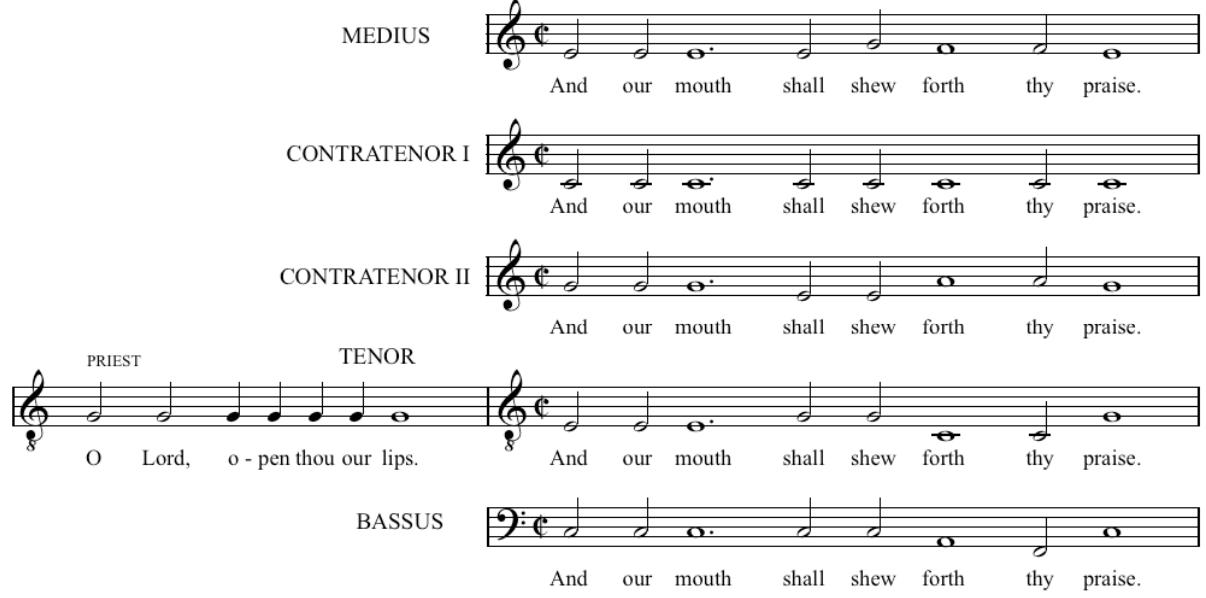
中文讲解
本段为图注占位符:原书在此处提供“例 2——Byrd《First Preces》开篇”,对应一段乐谱图像。图像内容在脚本读取阶段已被省略,仅保留位置与图注标记。该例的功能是 P0077 文本中所列“可比较作品”清单的第一项之具体音乐证据,让读者得以核对 Byrd 在圣公宗《Preces》中所采用的合唱应和式起首写法,从而印证其与 Walsingham 开篇手法的亲缘关系。由于图像不可见,需查看原书乐谱方可进行节奏、对位、起首声部配置等细节分析。
补充说明
无额外补充(图像内容不可见)。
第6段(P0081)
原文复述
[Image/musical example placeholder on page 12; embedded image data omitted; position and caption retained.]
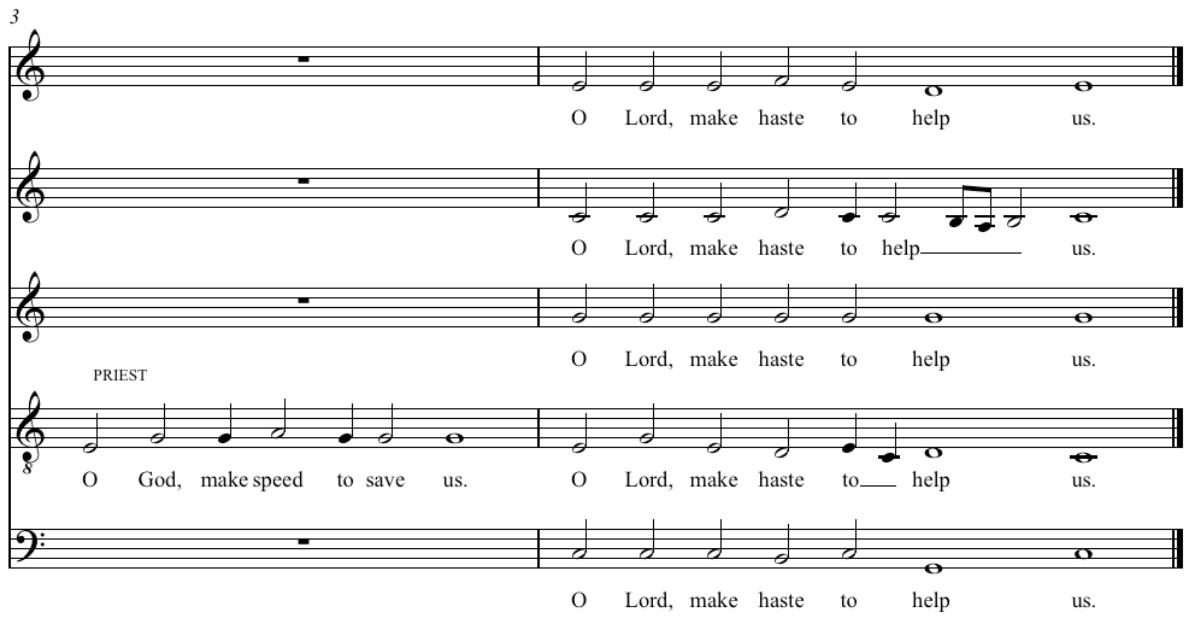
中文讲解
本段为第 12 页的图像或乐谱占位符,原书此处嵌有一幅图(具体图像数据已被省略,仅保留位置与图注标记)。由于图像内容不可见,仅能据其在版面中的位置推测其与本节末尾的论证收束或下节衔接相关;具体所承载的图像类型(乐谱、表格、图示等)须查看原书方可确认。讲解时应避免对不可见细节作出推断,仅如实标注其版面属性。
补充说明
无额外补充(图像内容不可见)。
脚注 / 边栏 / 图表 / 附加信息(如有)
本小节包含两条脚注式条目:P0078 为作者对他人在不同语境下提出类似论点的文献指引(Jeremy L. Smith, Music and Politics 1, 2007),起到交叉印证与学术诚实声明的作用;P0079 为第 40 号脚注,承担术语澄清功能,将“cantus firmus 变奏”与“cantus firmus 片断之 alternatim 演出+复调应和”两种手法严格区分,以防读者把前文对 Walsingham 开篇的归类误读为体裁归属。小节中另有三处图像占位符(P0076、P0080、P0081),其中 P0080 为“例 2——Byrd《First Preces》开篇”,是 P0077 所列可比作品的音乐实证,其余两处图像内容均不可见。
💡 本节核心要点
- Walsingham 变奏曲开篇的合唱应和写法可追溯至 16 世纪英格兰礼拜音乐中盛行的 alternatim(交替式)素歌演唱传统。
- alternatim 在都铎与伊丽莎白时期的天主教与圣公宗圣乐中普遍存在,Taverner、Tye、Tallis、Shepherd、Byrd 等作曲家均有此类作品。
- Byrd 本人可与 Walsingham 开篇相比拟的作品涵盖圣公宗《Preces》与《Responses》、对《Christe qui lux》的合唱应和《Precamur, sancte Domine》、《Laetania》以及《Gradualia》中的《Psallite domino》等。
- 作者明确区分“cantus firmus 变奏技法”(一个声部以长而均匀时值承担旋律)与“cantus firmus 片断的 alternatim 演出+复调应和”(表演—礼拜层面的交替结构),以防止范畴混淆。
- P0078 提示 Smith(2007)在不同语境下提出过类似论点,作者声明撰写时并不知晓该文献,体现学术诚实。
- 例 2(Byd《First Preces》开篇)为本节论证提供具体乐谱证据,使抽象的“合唱应和”传统可被读者直观核对。
🔑 关键术语
- alternatim:拉丁语,意为“交替地”。在本节中指礼拜音乐中的一种演唱程式:素歌(或 cantus firmus 片断)与复调应和段落交替进行,由合唱团执行;其片段常相当短促,在 16 世纪英格兰天主教与圣公宗圣乐中均甚为普遍。
- cantus firmus:拉丁语,意为“固定旋律”。在本节中需要按第 40 号脚注的区分来理解:既可指“变奏体裁中由一个声部以长而均匀时值承担的旋律”,也可指“被拆成短片断以 alternatim 方式演唱、并配以复调应和的旋律”——作者强调不可把二者混淆。
- Preces and Responses:圣公宗晨祷或晚祷仪式中的“前祷与应和”体裁,由领唱者(牧师或领唱员)诵念的短祷文与合唱团所唱之固定应和句交替组成;Byrd 的《First Preces》《Second Preces》《Preces and Responses》即此类作品。
- Gradualia:Byd 的天主教礼仪复调音乐集名,其中收录有对应教会日历中特定节日的经文歌(如本节提到的《Psallite domino, qui ascendit》);在此作为 Byrd 在天主教语境下写作合唱应和体裁作品的代表列入比较清单。
- Laetania:连祷(Litany)体裁的礼拜音乐形式;本节将其列入 Byrd 与 Walsingham 开篇可比拟的合唱应和式作品之一。
C5-S3 [描述性拆分] Supplying, Magnificat, and the Pious Cantus Firmus
第1段(P0082)
原文复述
Another allusion to alternatim practice contained in Byrd’s Walsingham relates to the 16th-century-English practice – known as supplying – of providing sung hymns and psalms with interstitial, polyphonic organ versets. The number of variations in Byrd’s Walsingham is twenty-two, i.e. exactly twice the number of verses in either of the ballad texts. A performance of
中文讲解
本段引入了第二种与alternatim(交替演奏)相关的暗示:16世纪英语世界一种叫做“supplying”的实践——即在咏唱赞美诗和诗篇的段落之间,用键盘乐器演奏复调性的“verset”(短小插段)。作者指出Byrd的Walsingham变奏曲共有22段,而两首候选叙事诗各自的诗节数都是11,因此22正好是诗节数的两倍。句尾“A performance of”在原版跨段接续P0084,构成一个完整的假设句。理解这一段的关键在于:作者并非只是陈述数字巧合,而是用“supplying”中的“插段—诗节—插段”结构来比附Byrd的变奏结构,为下一段的论断做铺垫。
补充说明
段落末尾被截断,逻辑上接续P0084;本段中的脚注上标41指向Miller关于十六世纪英国faburden键盘文献的研究,其引文出处将在P0083给出。
第2段(P0083)
原文复述
41 Hugh M. Miller, “Sixteenth-Century English Faburden Compositions for Keyboard,” The Musical Quarterly 26/1 (1940): 50.
中文讲解
这是P0082中“supplying”概念所附的脚注。条目信息显示,作者援引Miller 1940年发表在The Musical Quarterly上的文章作为16世纪英语键盘复调实践(faburden写作)的文献来源。脚注以单页码50结尾,说明该论点可能引自该文章第50页的论述。
补充说明
脚注作用:来源性——为P0082中“supplying”这一16世纪英语实践提供学术出处;属于支持性引用。
第3段(P0084)
原文复述
Walsingham in the manner of a hymn, psalm, or other sacred vocal work therefore would yield twenty-two repetitions of the “Walsingham” tune, a correspondence with Byrd’s variations that hardly seems coincidental. This is supported by the version that Baldwin (most likely, under Byrd’s supervision) copied into My Ladye Nevells Book, in which the double bar normally appearing between variations is suppressed in several variations in favor of a single bar line, as well as several cases of adjoining variations sharing material or being elided into one another by the absence of any bar line at all.
中文讲解
本段承接P0082被截断的句子,给出了完整的假设:如果把Walsingham当作赞美诗、诗篇或其它圣咏体裁来演奏,那么一首乐曲会反复奏出22次“Walsingham”调,这一对应关系与Byrd的22段变奏“几乎不可能是巧合”(hardly seems coincidental)。接下来,作者用抄本证据来支撑此论:Baldwin(很可能在Byrd本人监督下)抄入《My Ladye Nevells Book》的版本中,原本分隔变奏的双纵线在多处被单纵线替代,还有一些相邻变奏互相借用材料,甚至在没有任何小节线的情况下彼此直接衔接。这样的版式暗示这些变奏本应被视为一个连续体的不同段落,而不是彼此独立的“变奏”,进一步支持“颂歌—插段—颂歌”的supplying结构假说。理解本段须注意:Baldwin抄本中的小节线缺失并非随意的抄写习惯,而是有意味的——它恰恰暴露了演奏实践的本来面貌。
补充说明
My Ladye Nevells Book是16世纪末最重要的英国键盘音乐抄本之一,作者推测Baldwin的抄写受到Byrd本人监督,这一点为抄本作为“作曲家意图”证据提供了合理性。
第4段(P0085)
原文复述
The allusion to alternatim and supplying practices appears to frame the “Walsingham” tune in a pious context. From the opening, we are not to understand the “Walsingham” melody in Byrd’s setting as merely “a well-known tune,” but, instead, as a sacred cantus firmus. Further, the confluence of Walsingham’s opening and the work’s additional connection to the practice of supplying, itself a kind of alternatim procedure, suggest an allusion to another sacred genre strongly associated with alternatim performance: the Magnificat, of which the setting by John Taverner (1490-1545) is perhaps the most important English example. Byrd, who quoted Taverner’s sacred music in his own Catholic service music, would almost certainly have known the elder composer’s alternatim Magnificat well. The Marian associations of the Magnificat – to Byrd and other recusants – would have resonated strongly with the Marian topos of Walsingham in all its various manifestations, ranging from the eleventh-century visitation through defilement and destruction of the Marian statue.
中文讲解
本段是本节论证的核心主张所在。作者把前文对alternatim与supplying的暗示收束为一个判断:这些暗示把“Walsingham”调置于一个“虔敬语境”(pious context)之中。具体而言,读者不该只把Byrd笔下的这首旋律视作“一首广为流传的曲调”(a well-known tune),而应视作一条“圣性定旋律”(sacred cantus firmus)。随后,作者进一步把supplying本身视作alternatim的一种特殊形式,由此引出另一种与alternatim紧密相关的圣性体裁——Magnificat(圣母尊主颂)。作者指出Taverner(1490–1545)的Magnificat或许是最重要的英语范本;由于Byrd在自己的天主教礼仪音乐中引用过Taverner的圣乐(见脚注42),他几乎必然熟知这位前辈的alternatim Magnificat。最后,作者揭示两层Marian(圣母性)涵义的叠加——Magnificat文本本身就是圣母玛利亚的颂歌,而Walsingham朝圣地从11世纪的“圣母显灵”(visitation)到后来圣像被亵渎与毁坏的一系列历史都是围绕圣母展开的——这两层涵义对Byrd和其他“拒不遵奉国教者”(recusants)而言会产生强烈共振。本段的关键逻辑链是:交替演奏实践 → 虔敬语境 → 定旋律的圣性化 → Magnificat体裁 → 圣母主题的呼应。
补充说明
“recusants”指16世纪末英格兰那些拒绝参加国教礼拜、坚持天主教信仰的人;他们与天主教传统的连续性是本节论断Byrd意图的历史前提。“cantus firmus”在Byrd时代通常指一条预先存在、用作复调对位骨架的定旋律,作者在此用其“圣咏化”的语义。
第5段(P0086)
原文复述
Some years ago, Davitt Moroney studied the compasses of Byrd’s keyboard works, pointing out the steady expansion in Walsingham’s compass, the bass and treble reaching new limits as the variations progress. This, too, may provide a key to understanding which of the two texts Byrd had in mind. Byrd’s last two variations are rife with high, blockish chords in the right hand, matched by the growling of open fifths low in the left. Byrd combines this texture with a rather different harmonization that – in contrast to some of the earlier variations, which play ambiguously with G minor versus B-flat major – strike a rather more grim tone, hovering predominantly around G minor and C minor triads. These last variations would correspond to verse 11 of either of the two possible texts. A side-by-side comparison of them reveals that, although the setting of Ralegh’s words to this music would be incongruous, setting Arundel’s to it seems apt, indeed.
中文讲解
本段引入Davitt Moroney关于Byrd键盘作品音域(compass)扩张趋势的研究:低音与高音随变奏推进而不断触及新的极限。作者认为这种音域扩张同样有助于判断Byrd心里究竟是哪一首文本。接着聚焦最后两段变奏:右手高声部布满高位的“块状”柱式和弦(blockish chords),左手低声部则是低沉的空五度(open fifths)咆哮声;和声上与早期在g小调与降B大调之间摇摆的暧昧处理不同,最后两段以g小调和c小调三和弦为主,呈现出更加阴沉的色调。这最后两段在两首候选诗中各自对应第11节。通过并置比较可以发现:用Ralegh的歌词配此音乐会显得不相称(incongruous),而用Arundel的歌词则显得妥帖(apt)。本段论证逻辑属于“体裁—音乐特征—文本契合度”三重匹配:黯淡和声+扩张音域→更契合Arundel版本的氛围与结构。理解时须注意:本段没有直接否定Ralegh版本的存在,而是用音乐—文本契合度这一指标来弱化其可能性。
补充说明
“compass”在此指键盘乐器的音域;Moroney的研究为整个Byrd键盘作品范围的全景考察,文中以Walsingham为典型案例之一。
第6段(P0087)
原文复述
42 See Philip Brett, “Homage to Taverner in Byrd’s Masses,” Early Music 9/2 (1981): 169-176. John Harper, in his review of Brett’s Byrd Edition in Music & Letters 64/3-4 (1983): 293-295, goes so far as to call Brett’s acknowledgement of such homage as an “irrefutable thesis.”
中文讲解
这是P0085中Byrd引用Taverner圣乐所附的脚注。条目给出两篇文献:Philip Brett 1981年发表在Early Music上的文章《Homage to Taverner in Byrd’s Masses》(页169–176)系统论证了Byrd在其弥撒曲中对Taverner的致敬;以及John Harper 1983年在Music & Letters上对Brett所编Byrd作品的评论(页293–295),其中Harper将Brett关于此类致敬的论断称为“无可辩驳的论题”(irrefutable thesis)。
补充说明
脚注作用:支持性——为P0085中“Byrd引用过Taverner的圣乐”这一断言提供学术来源;第二条引文以权威性更强的评论(Harper的“irrefutable thesis”)来强化Brett原论的可靠性。
第7段(P0088)
原文复述
43 Davitt Moroney, “‘Bounds and Compasses’: the Range of Byrd’s Keyboards,” Banks (1993) 67-88.
中文讲解
这是P0086中Moroney研究所附的脚注。条目信息为Davitt Moroney的论文《‘Bounds and Compasses’: the Range of Byrd’s Keyboards》,收录于Banks主编的某论文集中(1993年,第67–88页)。
补充说明
脚注作用:来源性——为P0086中Moroney关于Byrd键盘作品音域扩张趋势的论断提供文献出处。
脚注 / 边栏 / 图表 / 附加信息(如有)
本节包含三条脚注(41、42、43):脚注41为P0082中supplying实践的来源(Miller 1940);脚注42为P0085中Byrd援引Taverner的来源(Brett 1981,并附Harper 1983的评论作为佐证);脚注43为P0086中Moroney音域研究的来源(Moroney 1993)。三条脚注均承担来源/支持性引用功能,强化本节论证的学术基础。本节无图谱、表格或边栏内容。
💡 本节核心要点
- Byrd的Walsingham变奏共有22段,正好是两首候选叙事诗各自11节的双倍,从而在数字上与16世纪英语的supplying实践(咏唱诗节之间插入键盘verset)形成结构对应。
- Baldwin抄入《My Ladye Nevells Book》的版本通过削弱或取消变奏之间的小节线,提示这些变奏本应作为连续体而非独立段落来演奏,与supplying/alternatim的语境相符。
- 作者主张应将“Walsingham”调视为一条圣性定旋律(sacred cantus firmus),而非仅仅是一首著名旋律,由此把乐曲置于虔敬语境中。
- 进一步,作者将supplying视作alternatim的子类型,由此引出另一圣性体裁——Taverner的alternatim Magnificat;Byrd既熟知此作,又因自己的天主教(recusant)身份与圣母主题的双重共鸣,使Marian意涵与Walsingham的圣母朝圣传统相互呼应。
- Moroney关于键盘音域扩张的研究为推断Byrd的文本意图提供线索:最后两段变奏以扩张的音域、块状和弦与空五度低音声部、以及g小调/c小调的阴郁和声为特征,更契合Arundel版本的第11节而非Ralegh版本。
🔑 关键术语
- alternatim:一种交替演奏的实践,常指合唱与器乐(或两个器乐声部)轮流演奏圣咏的不同诗节;在16世纪英语语境下也扩展到咏唱赞美诗与键盘verset之间的交替。
- supplying:16世纪英语特有的实践,指在咏唱的赞美诗或诗篇各诗节之间,由键盘乐器演奏复调verset;本节把Byrd的Walsingham变奏比附为这种结构。
- cantus firmus:用作复调对位骨架的预先存在的旋律;本节强调Byrd笔下的“Walsingham”调应被理解为圣性定旋律,而不仅是一首知名曲调。
- Magnificat:圣母玛利亚的尊主颂(《路加福音》1:46–55),常作为天主教晚祷的核心圣咏;在16世纪英国常以alternatim方式由唱诗班与管风琴交替演奏。
- compass:键盘乐器的音域范围;Moroney的研究指出Byrd的Walsingham变奏随进程逐步扩展低音与高音的边界。
- recusants:16世纪末英格兰拒绝参加国教礼拜、坚持天主教信仰的信徒;本节用以解释Byrd与Magnificat圣母主题之间产生共鸣的历史身份前提。
- faburden:16世纪英语特有的键盘复调写法,与欧洲大陆的fauxbourdon有渊源;脚注41的来源文献专门讨论此类作品的键盘改编。
C5-S4 [描述性拆分] Plagal Cadences and the Seal of a Sacred Context
第1段(P0089)
原文复述
The language of cadence-types also plays a role in directing listeners to place Byrd’s Walsingham in a sacred context. The plagal cadence took on special meaning during Byrd’s lifetime, a clearly serious one whose significance William Palmer sums up well:
中文讲解
这一段是本小节的总纲句。作者提出,终止式的"语言"(即不同终止式的类型与风格)本身具有引导听众的修辞作用——它告诉听众应当把 Byrd 的《Walsingham》放在一个"神圣"的语境中来听。紧接着,作者点出在 Byrd 在世时期,plagal cadence(变格终止,即 IV–I 的进行)获得了一种特别严肃的含义,并由 William Palmer 的引文加以具体化。“the language of cadence-types"这一措辞是关键:作者把终止式视作一种"语言”,暗示它像修辞一样承载意义,而不是纯粹的和声现象,从而为本节从和声角度论证作品的"神圣性"埋下伏笔。
第2段(P0090)
原文复述
“The writing of elaborate and beautiful Amens to various motets, anthems and liturgical settings seems to have been a favourite practice with our Church composers of Byrd’s day… A lead in the direction of expanded Amens was given by Tallis in his Latin works, though earlier examples are not scarce. Byrd and his contemporaries – Weelkes, Morley, Tomkins, Batten and others – developed the trend to the full, and Gibbons rounded it off with some superlatively fine settings. 44”
中文讲解
本段是作者引用的 William Palmer 原话,描述 Byrd 时代英国教堂作曲家一种流行的实践:为经文歌(motets)、圣歌(anthems)和礼仪音乐谱写精雕细琢的 “Amen” 段落。Palmer 给出一条简要的传承线索:Tallis 在其拉丁文作品中率先将 “Amen” 扩写,更早的例子虽然稀少但已存在;Byrd 与同时代的 Weelkes、Morley、Tomkins、Batten 等人将这一潮流发展到极致;最后由 Gibbons 写出"极为精美的"(superlatively fine)终章作为总结。这条历史线索服务于作者的论点——plagal cadence 与 “Amen” 在 Elizabethan 教堂音乐传统中已形成高度绑定,从而为后文 Byrd “以终止式封缄神圣语境"的判断提供惯例性背景。
补充说明
引文末尾的 “44” 对应正下方的脚注 44(即 P0092),引文的完整出处信息详见该脚注。
第3段(P0091)
原文复述
Table 1, below, shows plagal cadences in number and length in Byrd’s Walsingham. The true significance of any such tabulation lies not with having counted “Amen” cadences that arise out of the harmonic implications of the given tune, since numerous Elizabethan melodies imply the progression IV-I, but instead with counting those plagal cadences which could be termed gratuitous or ancillary. Their very non-necessity highlights their significance. This applies, in fact, to every one of the Walsingham plagal cadences, none of which arises out of harmonizing the tune. As Table 1 shows, frequency and duration of plagal cadences in Byrd’s Walsingham are striking. No other of Byrd’s variation sets even approaches Walsingham in this regard. Since the implication of the plagal cadence in Byrd’s time was clear, it is likely that Byrd intended to seal the sacred context of his “Walsingham” variations and to provide his audience with yet another audible clue leading to the Arundel lament.
中文讲解
这是本节的核心论证段落,包含三个层次的推理。第一,方法论上的关键区分:作者承认许多 Elizabethan 旋律本身就暗示 IV–I 的进行,因此单纯数出多少 “Amen 终止” 是没有意义的;真正有意义的是那些"额外的”(gratuitous)或"辅助性的"(ancillary)、并非由旋律和声化所必需的 plagal cadence。第二,事实判断:Byrd 在 Walsingham 中的每一个 plagal cadence 都不来自和声化旋律的必然结果,因此每一个都是作曲者有意的标记;再加上这种终止式在该曲中的频度(frequency)和长度(duration)都异常显著,超过 Byrd 其他任何变奏曲集——这一"超出常规"的密度构成数量级证据。第三,结论性推断:基于上述两点,作者推断 Byrd 是有意用 plagal cadence “封缄”(seal)作品的"神圣"语境,并向听众提供一个指向 Arundel lament 的听觉线索(audible clue)。整段论证链可概括为:惯例关联(plagal ≈ Amen)+ 作曲家可控选择(gratuitous)+ 异常频度 ⇒ 有意的修辞标记。
补充说明
本段提及的 Table 1(表 1)展示 Walsingham 中 plagal cadence 的具体次数与时值跨度,但表格本身的数字未出现在本节文本中,读者若要核实"频率与长度均极为显著"这一判断,需对照原书表格。
第4段(P0092)
原文复述
44 William Palmer, “Byrd and Amen,” Music & Letters 34/2 (1953): 140. See also Joseph Kerman, “On William Byrd’s Emendemus in Melius,” The Musical Quarterly 49/4 (1963): 431-449. Not to belabor the obvious, the plagal cadence was then, as it is now, the cadence commonly associated with the Amen. Although not every cadence in an Amen need be plagal, the great majority of them were so.
中文讲解
这是正文 P0090 引文所附的脚注 44,内容包含两层。第一层是文献出处:给出 William Palmer 文章《Byrd and Amen》的完整出版信息(Music & Letters 第 34 卷第 2 期,1953 年,第 140 页),并补充 Joseph Kerman 关于 Byrd《Emendemus in Melius》的研究(The Musical Quarterly 第 49 卷第 4 期,1963 年,第 431–449 页)作为旁证(See also)。第二层是补充性说明:作者认为无需赘言(Not to belabor the obvious),在 Byrd 时代 plagal cadence 是与 “Amen” 最常关联的终止式——尽管 “Amen” 内部的终止不必然全部是 plagal,但绝大多数都是。这条说明对正文 P0091 中"plagal cadence 在 Byrd 时代含义明确"的判断既是来源(Palmer),也是限定(“绝大多数"而非"全部”),以避免过度推论。
补充说明
脚注 44 在 Palmer 1953 年文之外另列出 Kerman 1963 年文,二者构成本节论证的支持性文献组合;本脚注本身既是出处也是论证的一环。
脚注 / 边栏 / 图表 / 附加信息(如有)
本节附加材料包括两项。一是脚注 44(位于 P0092),作用是为正文引文提供 Palmer 1953 年文的完整出处,并以 Kerman 1963 年关于《Emendemus in Melius》的研究作为旁证,同时在脚注内补充"plagal cadence 当时与 Amen 高度关联"的一般性观察,对正文论证形成来源 + 限定的双重支持。二是 P0091 中提及的 Table 1,用以呈现 Walsingham 中 plagal cadence 的次数与长度,但表格本身不在本节文本内,作用是为"频度与长度均异常显著"的判断提供量化支撑。
💡 本节核心要点
- 终止式的"语言"具有修辞功能:plagal cadence 在 Byrd 时代与 “Amen” 高度绑定,可在音乐中作为"神圣"的符号使用。
- 方法论上的关键区分:必须区分"旋律隐含的 IV–I"与"作曲家额外加入的 plagal cadence",否则计数无意义;正是"非必要性"凸显了符号性。
- Walsingham 中每一个 plagal cadence 都是"额外的",且其频度与长度均异常,超出 Byrd 其他任何变奏曲集。
- 作者据此推断 Byrd 有意以 plagal cadence “封缄"作品的"神圣"语境,并向听众提供指向 Arundel lament 的听觉线索。
- Palmer 的引文勾勒出 Elizabethan “Amen 扩写"实践的传承:Tallis 起步—Byrd 一代发展—Gibbons 收束,构成支持 plagal–Amen 关联的历史脉络。
- 脚注 44 同时承担出处(Palmer 1953)、旁证(Kerman 1963)与论证补充(“绝大多数 Amen 终止为 plagal”)三重功能。
🔑 关键术语
- plagal cadence:变格终止,即 IV–I 的和声进行;本节论证其与 “Amen” 在 Byrd 时代形成的强关联,因而在《Walsingham》中具有"神圣"符号意义。
- Amen cadence:“阿门"终止,指礼拜音乐中作为唱和 “Amen” 之用的终止段落;Elizabethan 教堂作曲家往往将其扩写成独立乐段,且其中绝大多数终止为 plagal cadence。
- gratuitous / ancillary cadence:“额外的"或"辅助性的"终止,并非由旋律自身的和声化必然产生,而是作曲家主动加入;本节论证的真正计数对象即此类终止。
- variation set (variations / variation sets):变奏曲集,即以同一旋律为基础写作的一系列变奏;本节以 Byrd 其他变奏曲集作为参照,凸显《Walsingham》中 plagal cadence 密度的异常。
- Arundel lament:阿伦德尔悲歌;本节指出 Walsingham 变奏通过 plagal cadence 的反复出现,向听众提供一个指向该悲歌的"听觉线索”。
- William Palmer / Joseph Kerman:Palmer 为本节核心引文作者(《Byrd and Amen》,Music & Letters, 1953),Kerman 的《On William Byrd’s Emendemus in Melius》(The Musical Quarterly, 1963)由脚注 44 列为旁证文献。
C5-S5 [描述性拆分] Modal Transposition and the G-B-Flat Descending Third Motive
第1段(P0093)
原文复述
Two modal/tonal choices behind his Walsingham seem significant, as well. First, that Byrd has transposed the “Walsingham” melody from the natural hexachord (with no key signature) – the standard setting, used in all the other variation sets, including those by Cutting, Bull, et alia – to the two-flat hexachord, which was the modal/hexachordal setting normal to Byrd’s elegies and laments. Second, that G and B-flat – as pitch classes and as tonal centers – figure prominently in Byrd’s “Walsingham” variations, and seem to bear relationship to at least two other of Byrd’s works bearing covert, Catholic subtexts. Each of the “Walsingham” variations features two perfect-authentic cadences, the first on B-flat, in the fourth measure of each stanza, the second on G, in the eighth. The virtually constant undulation between these two tonal centers draws our attention. Taken alone, the alternation of G and B-flat might be seen merely as a consequence of the harmonization of the tune. But, perhaps significantly, a motive formed by these two pitches appears in measures 2 and 4 of each variation, both of which measures open with the B-flat–G descending third (Ex. 1, above). Byrd, in addition, manipulated the original tune in such a way that it concludes with a final iteration of the descending-third gesture in which the B-flat has been replaced by B-natural, setting up a constantly reiterated conflict between B-flat and B-natural. Byrd used the B-flat–G point and the B-flat–B-natural conflict in conjunction with one another on at least two occasions as an emblem of lament: in “O
中文讲解
本段是本小节的核心论证段,提出两个关于Byrd《Walsingham》变奏曲的"调式/调性选择"的论点,并由此引出"哀悼标志”(emblem of lament)的论证。
第一个论点:Byrd把《Walsingham》旋律从无升降号的自然六声音阶(自然hexachord,即其他所有变奏套曲——包括Cutting、Bull等人——所使用的标准设置)移到了两个降号的六声音阶。作者指出两个降号的六声音阶恰好是Byrd挽歌和哀歌惯用的调式设置,这一事实本身就携带了体裁(genre)暗示:把一首原本属于其他体裁的旋律放入"哀悼"的调式语境中,等于给作品重新着色。
第二个论点:G和降B两个音级同时作为调性中心在变奏曲中反复出现。作者先用结构证据支持——每段变奏都包含两个完全终止(perfect-authentic cadence),第四小节终止在降B,第八小节终止在G——再指出这两调的"几乎持续摆动”(virtually constant undulation)值得注意。作者还承认一种保守解释:这种G–降B交替可能仅是和声配置的副产品。但随即引入更具体的形态证据:每段变奏的第2和第4小节开头都出现由这两个音构成的"降B–G下行三度"动机。最后,作者揭示出Byrd对原始旋律的一个关键改动——终止处的下行三度中,降B被还原为B自然音,从而在B-flat与B-natural之间建立"持续重述的冲突”(constantly reiterated conflict)。
这一改动至关重要:B-flat与B-natural的冲突在调性层面意味着"降号六声音阶"与"自然六声音阶"两种调式背景的并存——也就是说,变奏曲的开头是"两个降号"的世界(哀悼调式),结尾却悄悄"拉回"了无升降号的世界。这一冲突被作者识别为Byrd的"哀悼标志”,并将此与至少两部其他作品联系起来(本段最后一句把线索引向下一段即将讨论的《O That Most Rare Breast》与《My Mistress had a Little Dog》)。
本段的论证策略是层层递进:先陈述宏观调式选择(移调),再陈述音级/调性中心选择(G与降B),接着用终止式证据支持"摆动",再引入动机证据,最后揭示B-flat/B-natural冲突作为关键符号——从而把"调式转位"提升为"天主教潜文本"的编码手段。
第2段(P0094)
原文复述
45 A few examples of works set by Byrd in two flats that revolve around the topoi of loss and regret would include “Behold, O God, the Sad and Heavy Case,” “Come, Help, O God,” “Alack, When I Look Back,” “Emendemus in melius,” and “Tribulationes civitatum.”
中文讲解
这是正文中关于"两个降号六声音阶 = 挽歌/哀歌惯例"这一论断的脚注45。它列举了Byrd以两个降号写成、且围绕"失落"(loss)与"遗憾"(regret)这两大主题(topoi,复数)展开的作品名单,包括《Behold, O God, the Sad and Heavy Case》《Come, Help, O God》《Alack, When I Look Back》《Emendemus in melius》以及《Tribulationes civitatum》。
脚注的功能是"例证":为正文那句概括性判断——“两个降号的六声音阶是Byrd挽歌和哀歌惯用的调式设置”——提供具体作品清单作为佐证。读者由此可以看到,作者并非只把《Walsingham》当作孤证,而是把它嵌入一个更大的"两个降号 = 哀悼体裁"的Byrd作品族群之中。这一脚注同时也暗中支持了后面关于"两个降号 + G/降B摆动 + B-flat/B-natural冲突 = 哀悼标志"的论证:因为同一体裁标志已在多部作品中反复出现,所以它在《Walsingham》中的出现就不再是巧合,而是体裁惯例的延续。
第3段(P0095)
原文复述
That Most Rare Breast," from Psalmes, Sonets, & Songs of 1588 and in the song “My Mistress had a Little Dog.” In “O That Most Rare Breast,” both elements attend the dolorous sentiment “O heavy time” (Ex. 3).
中文讲解
本段承接P0093末尾被截断的句子,补全了Byrd把"降B–G点"和"降B–B自然冲突"作为"哀悼标志"使用的两部具体作品:《O That Most Rare Breast》(出自1588年的《Psalmes, Sonets, & Songs》)以及《My Mistress had a Little Dog》。
第二句进一步指出,在《O That Most Rare Breast》中,“降B–G点"与"降B–B自然冲突"这两大要素"伴随着”(attend)一句哀伤歌词"O heavy time"(“啊,沉重的时间”),并以谱例3为佐证。作者用"attend"一词暗示这两个要素并非只是装饰性的音乐结构,而是作为"哀悼标记"——情感内涵的直接承担者——出现在"沉重的时间"这一关键诗句之下。
本段的作用是为前面提出的"哀悼标志"假说提供具体例证。它使论证从《Walsingham》内部的形态分析,转向跨作品的体裁/语义比较:作者要让读者看到,《Walsingham》中观察到的降B–G动机与B-flat/B-natural冲突,并非偶然的音级安排,而是Byrd在多部作品中一贯使用的"哀悼密码"。这种跨文本的"出现一致性"(consistency of occurrence)正是下一段即将展开的"主题一致性"(topical consistency)论证的基础。
第4段(P0096)
原文复述
In addition to this consistency of mood, there appears to be topical consistency relating to a Catholic subtext to this song, albeit a complex one. Ostensibly, the song reads as a Protestant lament for Philip Sidney, “whose posthumous reputation as the exemplary Protestant military hero was already turning into a legend by 1588.” But there is, as with Walsingham, also a Catholic, subversive reading to this lament. Jeremy Smith describes the circumstances it behind best:
中文讲解
本段把论证从"音乐-情感一致性"推进到"主题一致性"(topical consistency)。逻辑推进路径如下:
首先,作者承认上一段已经建立了"情感一致性"(consistency of mood)——即同样的哀悼情感贯穿多部作品;在此基础上,作者主张还存在"主题一致性",即这些作品在内容主题上也具有一致性。
其次,作者对《O That Most Rare Breast》进行了双重读解。表面(ostensibly)层面,这首歌读作"对Philip Sidney的新教式挽歌"——Sidney在1588年前后,其身后名声正在从"模范新教军事英雄"(the exemplary Protestant military hero)升华为传奇人物。然而,作者随即指出,正如《Walsingham》一样,这首挽歌也存在一个"天主教颠覆式阅读"(Catholic, subversive reading)。也就是说,作者把双重读解模式从《Walsingham》扩展到《O That Most Rare Breast》:表层是新教忠诚,底层是天主教暗流。
本段最后一句"Jeremy Smith describes the circumstances it behind best"引出下一段Smith的引文,作为解释Sidney身上"新教/天主教双重性"的历史背景。需注意此句末尾"it"是"behind"的宾语,原句结构略松散,但意思完整:Smith最能说明此种双重读解背后的历史情境。
本段的功能是把单纯的"音乐符号"论证转化为"音乐+历史"的复合论证:仅凭降B–G动机和B-flat/B-natural冲突不足以确立"天主教潜文本",还需要历史情境——即Sidney本人与天主教圈子的联系——作为支撑。
第5段(P0097)
原文复述
The recusant’s interest in elegies for Sidney…[is] difficult to explain, especially as both Sidney and [Robert Devereux, the 2nd Earl of] Essex were so prominently tied to Protestant causes. But Sidney himself had special relations with [Edmund] Campion near the end of his life that, rightly or wrongly, were promulgated as a motivating force for Catholics.
中文讲解
本段是Jeremy Smith关于Elizabeth朝代晚期天主教徒(recusants)为何会为新教英雄Sidney写作挽歌的引文。引文分两层:
第一层是"困难"的揭示:既然Sidney和Essex(即第二代Essex伯爵Robert Devereux)都明确与新教事业紧密相关,那么天主教徒(recusant)为什么会对他们的挽歌感兴趣,这在历史逻辑上"难以解释"。这一"难解"本身就是论证的起点——因为只有读者意识到这种"表层不合逻辑",才能理解接下来作者要揭示的"深层逻辑"。
第二层是"解释"的提供:Sidney本人在生命晚期与Edmund Campion(伊丽莎白时代著名的耶稣会士,后因"Campion事件"被处决,成为天主教殉道者形象)有"特殊关系"(special relations)。这种关系"对错不论"(rightly or wrongly),但在天主教圈子中被宣传(promulgated)为对天主教徒的一种激励力量。换言之,在天主教叙事中,Sidney并非纯粹的新教对立面,而是"临终前与天主教精神人物有特殊关联"的复杂人物。
引文对本节论证的作用是"历史补全":作者前面论证的"音乐哀悼标志 + 表层新教挽歌 + 底层天主教颠覆"这一三重结构,需要历史依据来支撑。Smith的引文恰好提供了这一历史依据——Sidney本人与Campion的"特殊关系"使"为Sidney写挽歌"在天主教语境中变得可理解、甚至是值得的。这就把音乐分析与历史情境嫁接起来:Byrd作为一位著名的recusant作曲家,借用"新教英雄Sidney"这一表面无害的对象,实际编码的是对天主教殉道/受难群体的哀悼。
第6段(P0098)
原文复述
46 See Denise Pelusch, “William Byrd’s codes in his elegies and lament songs,” XVI Congresso da Associação Nacional de Pesquisa e Pós-graduação em Música (ANPPOM), Brasília – 2006. Stable URL: http://www.anppom.com.br/anais/anaiscongresso_anppom_2006/CDROM/COM/04_Com_Musicologia/sessao02/04COM_MusHist_0201-238.pdf
中文讲解
本段是脚注46的开头部分,提供Denise Pelusch论文的完整书目信息:作者Denise Pelusch,论文标题"William Byrd’s codes in his elegies and lament songs"(《Byrd挽歌与哀歌中的密码》),发表于2006年在巴西利亚(Brasília)举行的ANPPOM(Associação Nacional de Pesquisa e Pós-graduação em Música,巴西全国音乐研究与研究生协会)第十六届大会,并附有稳定URL。
此脚注对应正文P0095关于"O That Most Rare Breast"和"My Mistress had a Little Dog"的论断,作为支持"Byrd在多部哀悼作品中反复使用相同编码(降B–G动机+B-flat/B-natural冲突)“这一论点的文献来源。Pelusch的论文标题本身即点明了Byrd在挽歌/哀歌中使用"密码”(codes)这一核心主张,与本节论证方向一致。
第7段(P0099)
原文复述
The errors of diction, syntax and spelling contained in this article may be the result of its hasty translation from Portuguese into English. See also Jeremy L. Smith, “Music and Late Elizabethan Politics: The Identities of Oriana and Diana,” Journal of the American Musicological Society 58 (2005): 507-58, whose arguments provided the foundation for the Pelusch paper.
中文讲解
本段延续脚注46,添加两条信息:
第一条是关于Pelusch论文语言的提示性说明:该论文可能原本以葡萄牙语撰写,后被仓促翻译为英文,因此文中存在的用词、句法和拼写错误可能是翻译过程的产物。这是一条学术诚信性的提示,告诉读者引用Pelusch时需注意其英文文本可能不完全准确。
第二条是"参见"(See also)交叉引用,指向Jeremy L. Smith的另一篇重要论文:“Music and Late Elizabethan Politics: The Identities of Oriana and Diana”(《音乐与晚伊丽莎白政治:Oriana与Diana的身份》),发表于《美国音乐学协会杂志》(Journal of the American Musicological Society)第58卷(2005年),第507–58页。作者进一步说明,Smith这篇文章的论点为Pelusch的论文提供了"基础"(foundation)。
本段的功能是"文献关系梳理":它揭示Pelusch的论文并非孤立的二手研究,而是建立在Smith 2005年JAMS论文之上的延伸工作;同时提醒读者Pelusch的英文文本需要谨慎对待。这一脚注体现了学术严谨性——为读者使用Pelusch的论点划定了可靠性边界。
第8段(P0100)
原文复述
47 Smith, “A Newly Discovered Edition,” 296.
中文讲解
本段是脚注47,极简,仅引用Smith的另一篇论文"A Newly Discovered Edition"(《一个新发现的版本》),第296页。此脚注对应正文P0097中Jeremy Smith关于recusant对Sidney挽歌兴趣的引文出处,作为该引文的直接文献来源。
此脚注的简短格式表明该论文在前文中已被多次引用,读者应能从上下文辨识出完整书目信息;此处仅需提供页码定位。
脚注 / 边栏 / 图表 / 附加信息(如有)
本小节包含两个脚注:脚注45(P0094)列举Byrd以两个降号写成、围绕"失落"与"遗憾"主题的作品,作为正文"两个降号=挽歌/哀歌惯例"的例证;脚注46(P0098+P0099合并)提供Denise Pelusch 2006年ANPPOM论文的完整书目信息并交叉引用Jeremy L. Smith 2005年JAMS论文,同时提示该论文存在葡萄牙语译为英文的仓促性问题;脚注47(P0100)为Smith引文提供页码出处。本小节还引用了两个谱例:Ex. 1(在P0093中提到"above",即位于前页)和Ex. 3(在P0095中提到),分别展示降B–G下行三度动机和"O heavy time"处的哀悼标志片段。
💡 本节核心要点
- Byrd把《Walsingham》旋律从无升降号自然六声音阶(其他变奏套曲的标准设置)转移到两个降号六声音阶——后者是其挽歌/哀歌体裁的惯例调式,构成体裁性暗示。
- 每段《Walsingham》变奏都包含两个完全终止:第4小节终止于降B,第8小节终止于G,这种持续摆动超出和声配置的必然性,构成结构异常。
- 每段变奏第2和第4小节开头出现降B–G下行三度动机;Byrd在变奏结尾将该动机的降B替换为B自然音,建立B-flat与B-natural之间的持续冲突。
- 降B–G点 + 降B–B自然冲突是Byrd在其他哀悼作品(特别是《O That Most Rare Breast》与《My Mistress had a Little Dog》)中反复使用的"哀悼标志",构成跨作品的体裁密码。
- 《O That Most Rare Breast》表面读作对Philip Sidney的新教式挽歌,但底层存在天主教颠覆式阅读;这一双重读解模式与《Walsingham》相同。
- Sidney本人在生命晚期与耶稣会士Edmund Campion的"特殊关系"(被天主教圈宣传为激励力量),为recusant作曲家Byrd"以新教英雄为题编码天主教哀悼"提供了历史合理性。
🔑 关键术语
- natural hexachord / two-flat hexachord:自然六声音阶(无升降号)与两个降号六声音阶。指《Walsingham》旋律的两种调式/调性设置;前者为变奏套曲通用,后者为Byrd挽歌/哀歌惯例。
- perfect-authentic cadence (PAC):完全终止(V–I属主进行且根音旋律位置正确)。本节中用以指称每段变奏第4小节落在降B、第8小节落在G的两个终止,构成G与降B调性摆动的结构基础。
- descending third motive (B-flat–G):下行三度动机。本节特指降B下行到G的两音音程型,作为哀悼标志在每段变奏的第2、4小节开头出现。
- B-flat / B-natural conflict:降B与B自然音之间的冲突。指变奏结尾处下行三度中降B被替换为B自然音,从而在两个降号调式与自然调式之间建立的持续冲突,被作者识别为Byrd的哀悼编码手段。
- topoi (singular: topos):主题/惯例。修辞与音乐理论术语,指某一类题材或情感所对应的常规化表现方式,如"哀悼"“失落"“遗憾"等topoi。本节指Byrd挽歌/哀歌体裁的惯例化表现。
- recusant:天主教拒誓者。指伊丽莎白时代拒绝参加英国国教礼拜、效忠罗马天主教廷的英格兰臣民。Byrd本人即为recusant。
- emblem of lament:哀悼标志/徽记。作者的专门术语,指降B–G下行三度动机与降B–B自然冲突的组合,作为Byrd在多部哀悼作品中反复使用的跨作品密码。
- Philip Sidney / Edmund Campion:Philip Sidney(1554–1586),伊丽莎白时代诗人和士兵,身后被塑造为新教军事英雄;Edmund Campion(1540–1581),耶稣会士,因天主教信仰被处决,后被视为天主教殉道者。本节中两人之间的"特殊关系"是recusant为Sidney写作挽歌的历史依据。
C5-S6 [描述性拆分] Parallel Laments: “O That Most Rare Breast” and “My Mistress had a Little Dog”
第1段(P0101)
原文复述
Byrd used the G–B-flat motive, set against the tension between B-flat and B-natural, on yet another occasion, this time in ‘My Mistress had a Little Dog,’ which Philip Brett dated to sometime after 1596. Within that song the motive underpins the words ‘But out alas’ (in the passage beginning at m. 19), at the point where the sentiment turns to lamentation of the dog ‘Pretty Royal.’ As Lawrence Dreyfus had suggested some two decades earlier, Pretty Royal was likely intended as a metaphorical stand-in for Devereux.
中文讲解
本段把前文已经讨论过的 G–B–♭ 动机延伸到第二首作品。原文开头 ‘on another occasion’ 明确暗示此动机在前面的章节已经出现过,因此作者不再赘述动机的音程结构,而直接指出它在《My Mistress had a Little Dog》中的又一次现身。两个时间与定位信息须留意:其一,Philip Brett 把此曲断代为 1596 年之后;其二,动机作用于 ‘But out alas’ 一句,起始于第 19 小节,正好是情绪从陈述转入哀悼的转折位置。Dreyfus 的释读——‘Pretty Royal’ 是 Devereux 的隐喻替代物——是本段最核心的解释主张:表层是哀悼一条狗,深层是悼念 Devereux。此一隐喻为后文将要展开的多重阅读埋下伏笔。读者若不熟悉 Byrd 的 recusant 立场,很容易停留在’悼狗’的表层读法上,从而错失 Byrd 真正的情感指向。
补充说明
原文用 ‘on another occasion’,提示 G–B–♭ 动机在前文已被分析;本段的功能是把它的再次现身摆出来,并指出 Dreyfus 的提示为 ’two decades ago’(相对于本书而言约二十年前),以引导读者判断其权威性与时效性。
第2段(P0102)
原文复述
Decoding the song’s sentiments is, again, complex. Although, as Smith’s précis above noted, Devereux was a prominent Protestant partisan, Byrd’s lament in ‘My mistress had a little dog’ does not mourn the passing of Devereux-cum-Protestant-hero. Rather, it eulogizes Devereux as a would-be revolutionary who famously—and fatally—built a faction against Elizabeth Tudor. The song furnishes yet another demonstration—even if one were not needed—of Byrd’s skill at attaching himself cannily to metaphors that admit alternate readings.
中文讲解
本段在隐喻识别之后,进一步澄清《My Mistress had a Little Dog》的真实情感指向,必须把握两层冲突:其一,Smith 在前文摘要(‘Smith’s précis above’)中把 Devereux 定位为 ‘a noted Protestant partisan’,因此读者很容易假设 Byrd 是在悼念一位新教英雄的消逝;其二,作者明确否定这一读法,强调本曲哀悼的是 Devereux 作为 ‘would-be revolutionary’ 的身份——他密谋反对伊丽莎白一世,最终事败身亡(famously – and fatally – hatched a faction against Elizabeth Tudor)。作者由此把 Devereux 从新教英雄重构为某种反建制的悲情人物,从而与 recusant 群体的悲悼叙事相契合。段末 ‘Byrd’s penchant for attaching himself cannily to metaphors subject to alternate readings’ 一句起到收束作用:把本曲纳入前文已述的 Byrd 创作倾向之中——选择那些’可双读’的隐喻,既能在新教—宫廷语境下安全过关,又暗中面向 recusant 群体。‘if any were needed’(即使并不需要再多举一例)这一插入语表明作者认为双读模式在 Byrd 作品中已是反复出现的常态。
补充说明
本段依赖前文已建立的 ‘Smith’s précis above’ 与 ‘Devereux’ 人物形象;其论证逻辑是 ‘否定旧读法 → 确立新读法 → 收回 Byrd 的整体创作倾向’。
第3段(P0103)
原文复述
These three works—‘O That Most Rare Breast,’ ‘My Mistress had a Little Dog,’ and ‘Walsingham’—all employ the same musical device to portray one and the same sentiment: the recusants’ lament framing the loss of objects of Catholic veneration (Sidney, Devereux, and the Walsingham Shrine). The three are also alike in their covert character. Just as Byrd chose the ‘Walsingham’ tune as the subject of an imposing set of variations, his settings of the two vocal laments are open to dual readings, one acceptable in Protestant circles and at Court, the other—intended as subversive—perhaps perceptible only to recusants who knew enough about Byrd’s personality…
中文讲解
本段是本小节最关键的归纳段,把三首作品——‘O That Most Rare Breast’、《My Mistress had a Little Dog》与《Walsingham》——并置,提炼出两个并行论点。第一,三首作品共享同一音乐手法(已在前面小节中确立为 G–B–♭ 动机),传达同一情感:recusant 群体悼念其天主教’敬奉之物’(objects of Catholic veneration)的失落。注意作者对’敬奉之物’的清单——Sidney、Devereux、Walsingham 圣所——并非简单列举天主教圣徒,而是把通常被视为新教英雄的 Sidney 与被视为新教—宫廷人物的 Devereux 一并归入’天主教敬奉对象’,这正是双读结构最精微之处。第二,三首作品同样具备隐蔽性。作者以 Byrd 选用 ‘Walsingham’ 曲调作为庄严变奏曲主题(’the subject for an imposing set of variations’)作为类比,指出两首声乐哀歌亦可被双读:一读为新教—宫廷可接受,另一读——即作者意指的颠覆性读法——只为部分 recusant 所能洞察。本段以 ‘knew enough about Byrd’s personality’ 收尾,明示该句将在 P0105 中续完。
补充说明
本段以 ‘These three works’ 起首,依赖前文对 ‘O That Most Rare Breast’ 与 ‘Walsingham’ 的分析,因此其性质是全章论证的高潮归纳,而非新材料铺陈。
第4段(P0104)
原文复述
Footnote 48: Laurence Dreyfus, program notes for the recording Byrd Song, Simax Classics PSC 1191 (1988), compact disc.
中文讲解
这是对 P0101 中 Dreyfus 主张的脚注出处说明,编号 48,对应 Laurence Dreyfus 为 Simax Classics PSC 1191 号 CD(1988 年发行,专辑名为 Byrd Song)撰写的唱片说明书(program notes)。其作用是支撑 P0101 中 ‘Pretty Royal 是 Devereux 的隐喻替代物’ 这一解释,并提示读者该观点发表于约二十年前(相对于本书撰写时间而言),以便读者评估其权威性与时效性。
第5段(P0105)
原文复述
…and beliefs to look behind the Protestant mask, and who were musically sophisticated enough to recognize Byrd’s musical code. A Catholic reading of ‘Walsingham’ that takes a recusant’s point of view is not essential to any musical enjoyment of the piece. Nevertheless, a non-contextual hearing remains superficial by comparison. Looking ahead, we shall only be able to regain a deep understanding of how music and meaning interrogate one another in Byrd’s other instrumental works if we will extend, at long last, Kerman and Monson’s insights to criticism of his ostensibly untexted music—music that, in Byrd’s well-known dictum, is ‘framed to the life of the words’ even if those words are only implicit.
中文讲解
本段承接 P0103 的句子,补全双读解读所需的两项条件:(a) 听者要熟悉 Byrd 的 personality and beliefs,能看穿 Protestant mask;(b) 听者要 musically sophisticated,能识别 Byrd 的 musical code。两个条件分别对应社会身份(recusant 内部人)与音乐训练两个层面,缺一不可。接下去作者做出一处方法论上的让步:取 recusant 立场的 Catholic reading 并非欣赏《Walsingham》的必要条件(’not essential to any musical enjoyment’);但随即转折——忽视语境的聆听 ‘remains superficial by comparison’,即只有表层而缺乏深度。最后一段是全小节乃至全章的方法论展望:作者呼吁将 Kerman 与 Monson 的洞见(‘Kerman and Monson’s insights’,其具体所指依赖前文已交代的学者及其著作)扩展到 Byrd 表面上’无词’(ostensibly untexted)的器乐作品上,并以 Byrd 名言——‘framed to the life of the words’——作为理论锚点。该名言意指 Byrd 的音乐即便没有明示歌词,也是按歌词的精神刻画的(’even if those words are only implicit’)。这就把本节具体作品的解码经验,推广为 Byrd 全部作品(器乐与声乐)的一般解读范式——音乐与意义始终在互相诘问(‘interrogate one another’)。
补充说明
Kerman 与 Monson 的具体著作在本节内未出现,故其 ‘insights’ 的确切内涵须以前文语境为准,本段不另行补写。
脚注 / 边栏 / 图表 / 附加信息(如有)
本节含一处脚注(P0104,脚注 48),其作用是为 P0101 中 Dreyfus 关于 Pretty Royal = Devereux 隐喻的主张提供文献出处。除此之外,本节不含图表、乐谱或边栏内容。
💡 本节核心要点
- 三首 Byrd 作品(‘O That Most Rare Breast’、《My Mistress had a Little Dog》、《Walsingham》)共享同一 G–B–♭ 动机,用于表达 recusant 群体对天主教’敬奉之物’——Sidney、Devereux、Walsingham 圣所——失落的哀悼
- 《My Mistress had a Little Dog》通过被悼念的狗 Pretty Royal 把 Devereux 隐喻化;Byrd 的悲歌所哀悼的不是新教英雄,而是反对伊丽莎白一世而败亡的反叛者
- 三首作品共同具备双读结构:表层为新教—宫廷可接受的读法,深层为只有熟悉 Byrd 反叛天主教身份(personality and beliefs)且具音乐素养的 recusant 才能识别的颠覆性读法
- Catholic/recusant 视角并非欣赏《Walsingham》的必要条件,但不参考语境的聆听’依然肤浅’(superficial)
- 作者主张把 Kerman 与 Monson 的洞见扩展到 Byrd 表面’无词’的器乐作品,因为 Byrd 名言’framed to the life of the words’暗示其即便没有明示歌词,也是按词的精神刻画的——这一方法论立场把本节对声乐作品的双读经验推广为 Byrd 全部作品的一般解读范式
🔑 关键术语
- G–B-flat motive:Byrd 反复使用的一个音乐动机,关联 G 音与降 B 音的张力以及降 B 与还原 B 之间的冲突;本节中此动机被解读为 recusant/天主教与新教之间张力之音乐化体现,三首作品都借助它。
- recusants:在本节中指熟悉 Byrd 反叛天主教信仰(personality and beliefs)、并具备音乐素养(musically sophisticated)、足以识别其音乐代码的那部分听众;他们能在 Protestant mask 之下看到 Byrd 的真实宗教立场。
- objects of Catholic veneration:作者在本节用来重新框定 Sidney、Devereux 与 Walsingham 圣所:即把它们作为天主教群体所’敬奉’的对象,而非常规意义的天主教圣徒,从而把通常被视为新教英雄的人物也纳入 recusant 的哀悼范围。
- Protestant mask:作者用此概念指 Byrd 作品表面的新教/宫廷可接受读法;它遮蔽了只有 recusant 才能识别的天主教颠覆性内涵,与 Byrd ‘attach himself cannily to metaphors subject to alternate readings’ 的创作策略相互印证。
- “Walsingham”:在本节具有双重所指:其一是被 Byrd 选作庄严变奏曲主题的曲调(’the “Walsingham” tune as the subject for an imposing set of variations’),其二是指 Walsingham 圣所——天主教朝圣地,作者把它列为’objects of Catholic veneration’之一。
- “framed to the life of the words”:作者归于 Byrd 的箴言,意指音乐须按歌词的精神来刻画;本节作者借此名言主张 Byrd 即便在表面’无词’的器乐中,仍按’隐性之词’的精神创作,从而为把他的双读解读法扩展到器乐批评提供理论支点。
C6-S1 Bibliography
第1段(P0106)
原文复述
Bibliography
中文讲解
本段是小节标题,原文为 “## Bibliography”,对应Markdown中的二级标题,标识其后内容为参考文献目录。它作为本小节的起点,宣告下文将按作者姓氏排列列出作者所引用的全部文献,不再包含正文论述。
第2段(P0107)
原文复述
Brett, Philip. “William Byrd: New Reflections,” William Byrd and His Contemporaries: Essays and a Monograph, ed. Joseph Kerman and Davitt Moroney. Berkeley: University of California Press, 2007.
中文讲解
该条为Philip Brett撰写的论文引文,题为《William Byrd: New Reflections》,收录于由Joseph Kerman与Davitt Moroney共同主编、文集与专著合一的著作《William Byrd and His Contemporaries》中,2007年由加州大学出版社(伯克利)出版。从格式可知这是一篇以William Byrd及其同时代作曲家为主题的评论性论文。
第3段(P0108)
原文复述
Fellowes, Edmund H. William Byrd. London: Oxford University Press, 1936; 2nd ed. 1948.
中文讲解
该条是Edmund H. Fellowes所著专著《William Byrd》的引文,初版于1936年由牛津大学出版社(伦敦)出版,第二版(2nd ed.)于1948年发行。从出版年代与机构可知,这是一本较早的William Byrd专题研究专著,属于该领域的经典文献。
补充说明
原文中的 “2nd ed.” 为HTML上标格式,意为第二版(second edition),在书目中常用于标记同书不同版本的再版信息。
第4段(P0109)
原文复述
Glyn, Margaret H. About Elizabethan Virginal Music and its Composers. London: William Reeves, 1934.
中文讲解
该条为Margaret H. Glyn所著《About Elizabethan Virginal Music and its Composers》,1934年由William Reeves出版社(伦敦)出版。从标题判断这是一部讨论伊丽莎白时期维金纳琴音乐及其作曲家的研究著作。
第5段(P0110)
原文复述
Harley, John. William Byrd: Gentleman of the Chapel Royal. Aldershot: Scolar Press, 1997.
中文讲解
该条为John Harley所著专著《William Byrd: Gentleman of the Chapel Royal》,1997年由Scolar Press(奥尔德肖特)出版。书名将William Byrd定位为"皇家礼拜堂的绅士”,表明其研究切入角度与Byrd的宫廷宗教音乐家身份相关。
第6段(P0111)
原文复述
Irving, John. “Byrd and Tomkins: the instrumental music,” In Byrd Studies, ed. Alan Brown and Richard Turbet. Cambridge: Cambridge University Press, 1992.
中文讲解
该条为John Irving撰写的论文引文,题为《Byrd and Tomkins: the instrumental music》,收录于由Alan Brown与Richard Turbet主编的《Byrd Studies》一书中,1992年由剑桥大学出版社出版。论文聚焦于William Byrd与Thomas Tomkins两人的器乐作品对比研究。
第7段(P0112)
原文复述
Kerman, Joseph. “Byrd’s Settings of the Ordinary of the Mass,” Journal of the American Musicological Society 32/3 (1979): 408-439.
中文讲解
该条为Joseph Kerman所撰论文《Byrd’s Settings of the Ordinary of the Mass》的引文,发表于《Journal of the American Musicological Society》(美国音乐学会期刊)第32卷第3期(1979年),页码408至439。论文聚焦Byrd为弥撒常用经文(Ordinary of the Mass)所创作的音乐设置。
补充说明
“Ordinary of the Mass” 是天主教弥撒中固定不变的经文部分(如Kyrie、Gloria、Credo、Sanctus、Agnus Dei),与可随节期变化的Proprium相对。
第8段(P0113)
原文复述
Mellers, Wilfrid. “John Bull and English Keyboard Music – II.” The Musical Quarterly 40/4 (1952): 548-571.
中文讲解
该条为Wilfrid Mellers所撰论文《John Bull and English Keyboard Music – II.》,发表于《The Musical Quarterly》(音乐季刊)第40卷第4期(1952年),页码548至571。"– II.” 表明这是系列文章的第二部分,研究对象为英国键盘音乐作曲家John Bull。
第9段(P0114)
原文复述
Miller, Hugh M. “Sixteenth-Century English Faburden Compositions for Keyboard.” The Musical Quarterly 26/1 (1940): 50-64.
中文讲解
该条为Hugh M. Miller所撰论文《Sixteenth-Century English Faburden Compositions for Keyboard》,发表于《The Musical Quarterly》第26卷第1期(1940年),页码50至64。论文研究对象为16世纪英国用于键盘乐器的法布尔顿(faburden)作曲技法。
补充说明
“Faburden”(法布尔顿)是一种16世纪英国音乐中常见的低声部对位技巧,指在主旋律下方加六度平行声部并填入四度的复调处理方式。
第10段(P0115)
原文复述
Neighbour, Oliver. The Consort and Keyboard Music of William Byrd. Berkeley: University of California Press, 1978.
中文讲解
该条为Oliver Neighbour所著专著《The Consort and Keyboard Music of William Byrd》,1978年由加州大学出版社(伯克利)出版。书名聚焦William Byrd的两种主要器乐体裁:合奏乐(Consort)与键盘乐。
第11段(P0116)
原文复述
Palmer, William. “Byrd and Amen,” Music & Letters 34/ 2 (1953): 140-143.
中文讲解
该条为William Palmer所撰短文《Byrd and Amen》,发表于《Music & Letters》(音乐与文学)第34卷第2期(1953年),页码140至143。论文聚焦Byrd作品中的"阿门"(Amen)相关主题,体量较小(仅4页)。
第12段(P0117)
原文复述
Smith, Jeremy L. “A Newly Discovered Edition of William Byrd’s Psalmes, Sonets & Songs: Provenance and Significance.” Notes 62/2 (2005): 273-298.
中文讲解
该条为Jeremy L. Smith所撰论文《A Newly Discovered Edition of William Byrd’s Psalmes, Sonets & Songs: Provenance and Significance》,发表于《Notes》第62卷第2期(2005年),页码273至298。论文聚焦一部新发现的William Byrd《Psalmes, Sonets & Songs》(诗篇、十四行诗与歌曲)版本的来源与意义,属于文献学/版本研究范畴。
第13段(P0118)
原文复述
Tuttle, Stephen D., editor. “Tomkins: Keyboard Works,” Musica Britannica V. London: Stainer & Bell, Ltd., 1973.
中文讲解
该条为Stephen D. Tuttle编辑的《Tomkins: Keyboard Works》,收录于《Musica Britannica》系列第V卷,1973年由Stainer & Bell出版公司(伦敦)发行。“editor” 表明这是由Tuttle担任编订者的Thomas Tomkins键盘作品乐谱版本,而非一般意义上的论著。
补充说明
“Musica Britannica” 是英国国家音乐版本系列,主要刊布英国作曲家作品的现代学术编辑版(critical edition),卷号用罗马数字标注,“V” 即第五卷。
脚注 / 边栏 / 图表 / 附加信息(如有)
无额外附加材料。本小节为参考文献清单,不含脚注、图表、边栏或图像占位符。
💡 本节核心要点
- 本节是该文章末尾的参考文献目录(Bibliography),按作者姓氏英文字母顺序排列。
- 所列文献出版年代跨越1934年至2007年,反映该主题研究的不同历史阶段。
- 文献类型多样:包含专题专著(如Fellowes、Neighbour、Harley)、编辑文集中的论文(如Brett、Irving)、期刊论文(如Kerman、Mellers、Miller、Palmer、Smith)以及乐谱版本(如Tuttle)。
- 核心研究对象集中于William Byrd,并延伸至其同时代作曲家(如Tomkins、John Bull)以及伊丽莎白时期英国键盘音乐与合奏乐。
- 引用形式遵循学术规范:专著含出版地、出版社与年份;期刊文章含卷号、期号、年份与页码;论文集条目含编者、书名、出版地、出版社与年份。
🔑 关键术语
- Bibliography:参考文献目录,指本文末尾按作者姓氏字母顺序排列的全部引文清单。
- ed.:editor / edited 的缩写,在书目中用于标记编者或编辑版本。本节中既出现在文集中的"ed."(编者),也出现在Fellowes条目的"2nd ed."(第二版)。
- Monograph:专题专著,指针对单一主题进行系统研究的学术著作。本节Brett条目所收书名即包含"Essays and a Monograph"。
- Ordinary of the Mass:弥撒常用经文,指天主教弥撒仪式中固定不变的五段经文(Kyrie、Gloria、Credo、Sanctus、Agnus Dei),是作曲家创作弥撒音乐的主要文本框架。
- Faburden:法布尔顿,16世纪英国音乐中一种在主旋律下方加六度平行声部、再填入四度的低声部对位处理方式,常用于键盘乐改编。
- Musica Britannica:英国国家音乐版本系列,以学术编辑版(critical edition)形式刊布英国作曲家作品,本节Tuttle条目所收即属此系列第五卷。