目录
C001 The Uses and Limits of Performance Practice in François Couperin’s Huitième Ordre
- S0001 The Uses and Limits of Performance Practice in François Couperin’s Huitième Ordre
- 页码:1-1
- S0002 [描述性拆分] Introduction: Couperin’s Eighth Ordre and the Limits of Historical Evidence
- 页码:2-2
- S0003 [描述性拆分] The Wealth of Historical Evidence on the Outer Shell of Style
- 页码:2-4
- S0004 [描述性拆分] Beyond the Surface: Form, Unity, and the Architecture of the Ordre
- 页码:4-5
- S0005 [描述性拆分] The Passacaille as Microcosm of the Ordre
- 页码:6-7
- S0006 [描述性拆分] Repeats and the Discipline of Exterior Form
- 页码:7-8
- S0007 [描述性拆分] Registration as a Problem Beyond Historical Sources
- 页码:8-10
- S0008 [描述性拆分] Tempo Relationships Between Movements
- 页码:10-11
- S0009 [描述性拆分] Exceptional Cases in ‘La Raphaèle’: Dual Character and Inequality
- 页码:12-12
- S0010 [描述性拆分] The Port de Voix in ‘La Raphaèle’ and the Limits of Historical Ornamentation
- 页码:13-15
- S0011 5
- 页码:15-16
- S0012 Notes
- 页码:17-19
S0001 The Uses and Limits of Performance Practice in François Couperin’s Huitième Ordre
第1段(P0001)
原文复述
The Uses and Limits of Performance Practice in François Couperin’s Huitième Ordre
中文讲解
本段是文章的总标题。它把两个并列的主题——历史演奏实践研究(performance practice)的"用途"与"局限"——同时提出来,并将讨论对象限定在法国巴洛克作曲家弗朗索瓦·库普兰(François Couperin)第八组曲(Ordres)的演奏语境之中。标题用"Uses and Limits"的对偶结构提示读者:作者既不打算单纯颂扬史证对演奏的贡献,也不打算否定史证,而是同时考察它能做什么和不能做什么。后文将围绕库普兰《第八组曲》中某首具体曲目展开,这种具体到一部作品的写法也暗示作者会以"个案解剖"的方式来讨论一般性的方法论问题。
第2段(P0002)
原文复述
Kevin Bazzana
中文讲解
本段是作者署名 Kevin Bazzana。该署名表明后文论述将以一位音乐学者的口吻展开,他所强调的"演奏是批评的功能"以及他对历史演奏方法论的反思,皆出自这一署名之下所代表的研究立场。
第3段(P0003)
原文复述
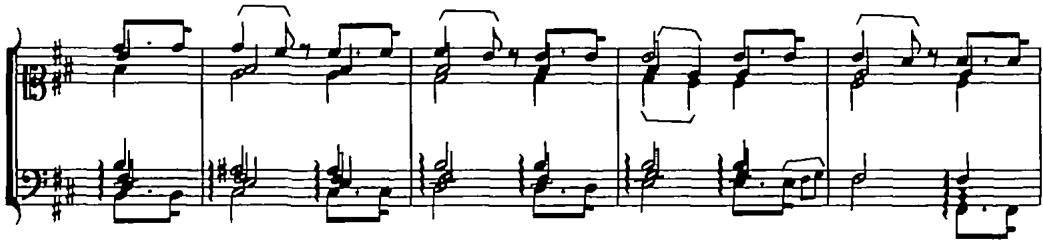
Only the most dogmatic historical performer can fail to be humbled by the task of making music out of the mute and patchy products of verifiable research: balancing musical intelligence and historical credibility is always a challenge. Inevitably, conflicts arise, to be resolved through the arbitration of musical analysis and creativity. Historical sources on performance practice may be often absent or aloof, but musicianship must be flexible and accommodating. (The truth is, much of what is best in historical performance today is pure invention, even if this is not admitted in front of the children.) Even where historical foundations are valid and sure, any performance must ultimately stand or fall on purely musical merits. A good performance can be intelligent and unhistorical, but not historical and unintelligent. Performance is a function of criticism, and, as Samuel Beckett once said, criticism is not bookkeeping.
中文讲解
本段是全文开篇的核心立论。其中心主张是:历史演奏实践研究提供的史料是"沉默而零散"(mute and patchy)的成果,要将其化为活的音乐,演奏者必须在"音乐智慧"(musical intelligence)与"历史可信度"(historical credibility)之间不断权衡,并且当二者冲突时,须借助音乐分析与创造力来仲裁。
几个关键表述需要拆开讲:
- “the most dogmatic historical performer"指的是死守"必须严格按史实演奏"教条的那一类演奏者,作者用反讽说就连这种人面对史料也应当感到谦卑。
- “mute and patchy products of verifiable research"形象地刻画史证本身不会发声、且常常残缺不全。
- 括号中的"much of what is best in historical performance today is pure invention, even if this is not admitted in front of the children"是一句近乎自白的调侃:今日历史演奏中最精彩之处很多其实是演奏者"纯粹的发明”,只不过业内不愿在听众面前承认。这里的"children"是比喻用法,指外行听众或天真观众,并非字面意义上的儿童。
- 末尾三句构成递进断言:即便历史根据坚实可靠,演奏最终仍只能靠"纯粹的音乐价值”(purely musical merits)来评判;宁可"聪明但不符合历史",不可"符合历史却不聪明";演奏本质上是批评(criticism)的功能;并援引Samuel Beckett的话"批评不是簿记"(criticism is not bookkeeping),意思是说批评不是核对数字般的机械工作,而是带有判断力与诠释的实践。
这一段为全文奠定基调:作者从一开始就把"史证不足"与"演奏者必须做出判断"这对张力摆上桌面,为下文切入库普兰《第八组曲》的具体演奏难题做了铺垫。
补充说明
Samuel Beckett(1906–1989)是爱尔兰裔法国作家,本段所引"criticism is not bookkeeping"为对其观点的转述(依据仅为段中措辞)。
第4段(P0004)
原文复述
The accountability of historicism to musicianship should, I hasten to add, be celebrated. To reverse the relationship is to adhere to a positivistic program in which only verifiable, inductively derived evidence is permitted to influence interpretation. It is a serious mistake to believe that removing the performer’s creative participation in the act of interpretation will let the music itself speak. The performer does not get in the way. The performer is the way.
中文讲解
本段用"I hasten to add"插入一段格言式的宣言,承接P0003的方向,但语气更为坚决。
要点:
- 主张"历史主义应受音乐能力约束"(The accountability of historicism to musicianship)。这是本段的立场——历史不能凌驾于音乐之上;反过来才是合理的。
- 指出颠倒这种关系就等于信奉一种"实证主义纲领"(positivistic program):只允许通过归纳法得到的可验证史证影响诠释。作者把这视为需要警惕的极端。
- 反驳一种流行的误解:以为把演奏者的创造参与从诠释中"剥离",音乐就能"自己说话"(let the music itself speak)。作者认为这是严重错误。
- 末三句是节奏紧凑的断言:“演奏者不是挡在路上的,演奏者就是路”——演奏者不是史证的被动执行者,而是音乐意义得以显现的途径。
逻辑上,这一段把P0003的"演奏是批评的功能"推进一步,确立了一个原则:演奏者的音乐判断优先于僵化的史证忠实。
第5段(P0005)
原文复述
In any case, creativity is necessary in historical performance, given the enormous lacunae in the extant evidence. Indeed, in many of these gaps lie the interpretive problems that are most crucial and whose solutions demand the most imagination from the performer. For this reason, the study of performance practice can be most fascinating where it is most frustrating, and studying the limits of performance practice can be as rewarding as documenting its benefits.
中文讲解
本段以"In any case"作转折,回到更为务实的论证:因为现存证据(extant evidence)存在巨大的空缺(enormous lacunae),所以历史演奏中创造力是必要的。
关键翻转:作者进一步指出,许多关键性的诠释问题恰恰藏在这些证据空缺之中——要解决它们最需要演奏者的想象力。换言之,史证的"不足"并不是简单的缺陷,反而是演奏创造力的用武之地。
由此推出方法论原则:研究演奏实践"在最令人沮丧的地方往往最迷人",而研究其"局限"(limits)与记录其"益处"(benefits)同样有收获。这一句直接呼应标题中的"Uses and Limits"对偶,把"局限"重新框架为值得探究的迷人之处。
承接作用:本段是从原则表态走向具体案例的桥梁。作者承认了史证的局限之后,下一步自然就是用一个具体作品来展示这些局限如何体现、以及演奏者如何应对。
第6段(P0006)
原文复述
This article examines the relationship between revelation and reticence in historical sources on performance practice in the context of the practical problems raised in performing one particular and very sophisticated piece of early music.
中文讲解
本段是文章目的陈述,交代作者接下来要做什么。
要点:
- “revelation and reticence”——史料既"显白"又"沉默"的双重性格。作者将考察史料在"该说什么"与"不说"之间的张力。
- “one particular and very sophisticated piece of early music”——指下文要分析的具体作品,也就是库普兰《第八组曲》中的某首曲子(后文将给出曲名)。“particular"与"very sophisticated"的修饰语暗示该作品史证状况复杂、演奏技术难度高,足以承载作者的方法论讨论。
功能:作为论文引言的末段,本句从抽象的方法论原则(P0003–P0005)过渡到具体的案例分析,是典型的"现在让我告诉你本文将做什么"的功能句。
第7段(P0007)
原文复述
Downloaded from https://academic.oup.com/mq/article/75/1/12/1062714 by Indiana University - Bloomington user on 06 August 2026
中文讲解
本段是页面底部的下载来源标识(footer),仅作为电子访问的元数据,本身不构成正文论述。
可从该行直接读出的信息:
- 期刊平台为 Oxford Academic,期刊缩写为 mq,指《Musical Quarterly》(《音乐季刊》)。
- URL 中的路径显示卷次为 vol. 75,期次为 issue 1,文章起始页为 12,文章 ID 为 1062714。
- 下载用户所属机构为 Indiana University - Bloomington(印第安纳大学伯明顿分校)。
- 下载时间为 2026 年 8 月 6 日。
脚注 / 边栏 / 图表 / 附加信息(如有)
本小节唯一的非正文附加材料为页脚下载来源标识(P0007),它给出期刊平台(《Musical Quarterly》/Oxford Academic,vol. 75, no. 1, p. 12 起,文章 ID 1062714)、下载机构(Indiana University - Bloomington)和下载时间(2026 年 8 月 6 日)。该行仅作为电子访问元数据,不参与正文论证。
💡 本节核心要点
- 作者开篇即提出核心张力:历史演奏实践研究的史证是"沉默而零散"的,演奏者必须在音乐智慧与历史可信度之间做平衡,冲突须由音乐分析与创造力仲裁。
- 作者立场是"历史主义应受音乐能力约束”,反对那种把演奏者剥离后让"音乐自己说话"的实证主义幻想,强调演奏者不是史证的执行者,而是音乐意义得以显现的途径。
- 现存史料的巨大空缺(lacunae)既是历史演奏的难题,也是创造力的用武之地;研究演奏实践"在最令人沮丧之处最迷人",研究其局限与记录其益处同样有收获。
- 本节用三组对偶结构铺陈论点:uses and limits(标题)、revelation and reticence(史证双重性)、intelligent and unhistorical vs historical and unintelligent(演奏评价标准),层层把论证推到"音乐判断优先于僵化史证"的位置。
- 作者以引言末段预告:下文将围绕库普兰《第八组曲》中"某一部特别复杂的早期音乐作品"所引发的具体演奏问题,展开史证"启示与沉默"关系的个案解剖。
🔑 关键术语
- Historical performance practice(历史演奏实践):在本节中指依据可考证的历史史料来指导演奏的实践方式;作者认为它提供的产出"mute and patchy"——沉默且零散,因此必须经由演奏者的音乐判断加以活化。
- Historicism / positivistic program(历史主义 / 实证主义纲领):在本节中指那种只允许可验证、归纳式史证影响诠释的严格立场;作者认为将这种立场凌驾于音乐能力之上是错误的,历史主义应反过来对 musicianship 负责。
- Musicianship(音乐能力 / 音乐判断力):在本节中指演奏者综合的诠释与判断能力,与"historical credibility"对置;作者把音乐能力视为最终评判演奏的尺子——演奏最终只能靠"纯粹的音乐价值"决定。
- François Couperin’s Huitième Ordre(库普兰《第八组曲》):在本节中指库普兰(依据任务输入中标题的限定)第八组古钢琴作品;后文将分析其中"某一部特别复杂"的具体作品所引发的演奏问题。
- Revelation and reticence(启示与沉默):在本节中用来描述历史史料的双重性格:它们既有披露的部分(revelation),又有留白或拒答的部分(reticence);作者认为这两者之间的关系正是本文考察的核心。
- Criticism is not bookkeeping(批评不是簿记):本节中作者援引 Samuel Beckett 的转述,用来表明演奏/批评本质上是有判断力的诠释实践,而非机械核对史证的账目工作。
S0002 [描述性拆分] Introduction: Couperin’s Eighth Ordre and the Limits of Historical Evidence
第1段(P0008)
原文复述
The work being discussed is the Huitième Ordre in B Minor, drawn from the Second Livre (Paris, 1717), one of the four books of Pièces de Clavecin by François Couperin le Grand (1668–1733). In the author’s view, this piece is, in every respect—expressive, psychological, technical, and formal—a profound work of the very first rank. He regards it as easily the finest French baroque clavecin suite, rivaled only by Bach’s suites and partitas. Wilfrid Mellers, in his seminal book on Couperin’s life, work, and aesthetic, reserves his highest praise for this very ordre. Mellers writes that the piece is “almost uniformly serious, even tragic, in style,” and, while acknowledging that the second book as a whole cannot compare with the fourth in maturity, maintains that “a good case can be made out for the eighth as the greatest individual ordre.” Mellers further characterizes the Passacaille—the longest and most complex of the suite’s ten dance movements—as “unquestionably the greatest single piece in Couperin’s clavecin music and one of the greatest keyboard pieces ever written.“¹ ²
中文讲解
本段为整个研究的开篇定调,向读者交代研究对象:库普兰(François Couperin le Grand, 1668–1733)四卷《羽管键琴曲集》(Pièces de Clavecin)中第二卷(1717年于巴黎出版)里的《第八组曲》(Huitième Ordre),B小调。作者用了四个维度——表情性、心理性、技术性、形式性——来肯定其地位,并将其与巴赫的组曲与帕蒂塔并列,暗示这是法国巴洛克键盘音乐的最高成就。
作者还引用了音乐学家 Wilfrid Mellers 的两段评价作为权威背书:第一段强调《第八组曲》整体风格严肃甚至悲剧性,并主张它在单部组曲中胜过第四卷(虽然第二卷在整体成熟度上不及第四卷);第二段把组曲中最长、最复杂的《帕萨卡利亚》(Passacaille)——十个舞曲乐章之一——称为库普兰羽管键琴音乐中“最伟大的单首作品”。这两段引文的功能不仅是抬高研究对象的地位,更是在暗示:正因为这部作品分量极重,演奏中出现的诠释问题才格外值得严肃讨论。两个脚注标记(¹、²)表明这些引文都来自 Mellers 的著作,但具体书目信息本段未给出。
补充说明
本段末尾的脚注标记 ¹ 和 ² 对应 Mellers 著作中的两处引用,但本段未列出书目细节;这些信息需查阅本节之外的内容方可核实。
第2段(P0009)
原文复述
The author urges the reader to bear in mind that the work under consideration here is of the highest intrinsic musical value. It belongs to a repertoire—French baroque clavecin music—about which a substantial body of historical sources on performance practice survives. Nevertheless, a completely successful interpretation of this piece still demands a creative attitude on the performer’s part toward the many significant gaps present in those sources. Precisely because the piece is of this caliber, solutions to problems of performance practice—problems for which the historical sources offer little or no guidance—are the most crucial. The responsible performer of this ordre, the author concludes, thereby receives a valuable lesson in the art of balancing musical and historical evidence.
中文讲解
本段在 P0008 抬高研究对象地位之后,紧接着提出研究的方法论前提。其推理链条有三层:
- 既然这部作品本身具有极高的内在音乐价值,那么对它的诠释问题就不是小事;
- 法国巴洛克羽管键琴音乐的演奏史料虽丰富,但远未完备——存在大量“重要空白”(significant gaps);
- 因此,要完成一次真正成功的诠释,演奏者必须对史料空白采取“创造性”态度,不能只做文献的搬运工。
关键词是“balancing musical and historical evidence”(在音乐自身逻辑与历史证据之间求平衡)。作者在此处其实预告了整篇文章的核心矛盾:一方面要尊重史料(特别是 17–18 世纪的演奏论著),另一方面又不能被史料束缚,因为史料在许多关键问题上保持沉默。这一段的作用是为后面将逐一讨论的“具体演奏问题”(指法、装饰音、力度、连线等)做方法论上的铺垫。
读者应注意:本段明确指出,对于“史料提供极少或没有指导”的问题(problems for which the historical sources offer little or no guidance),其解决方案最为关键——这等于在说,文章将重点讨论的恰恰是那些史料最薄弱的地方。
补充说明
本段的功能是方法论陈述;它内部并未引用具体史料,但为后续段落(特别是 P0011、P0012 所引的乐器规范史料)预设了如何被使用的框架。
第3段(P0010)
原文复述
[Chapter heading: 1]
中文讲解
本段是 Markdown 形式标记的章节标题,内容仅为数字“1”,表示正文章节第 1 章由此开始。该标题在版面上是一个标题区块,本身没有论述文字。它开启的论题是:进入具体的演奏实践问题讨论——在第 1 章中,作者将首先从乐器形制(即演奏者所用的乐器本身)切入,这是讨论所有具体演奏手法之前必须先确立的物质前提。
补充说明
本段为分章标题,不含正文;其标记形式(## 1)属于排版要素。
第4段(P0011)
原文复述
A large number of theoretical treatises and other writings on music from the seventeenth and eighteenth centuries survive, and scholars are quite well informed about many aspects of the performance of French baroque clavecin music. For example, it is known that, whenever possible, sophisticated clavecin music in early eighteenth-century France was played on a full-sized harpsichord whose lower manual controlled two sets of strings (8’ + 4’) and whose upper manual controlled a second 8’ set. A buff stop was a likely feature on the lower 8’. The two manuals could be played separately or coupled, and the various sets of strings could be engaged and combined by means of hand-, knee-, or, only rarely, foot-levers. The compass of large harpsichords in France at that time was generally GG-c’’ (GG to c’’), either fully chromatic or with a split lower octave.³ The Huitième Ordre in fact has precisely this range: GG is called for twice, in the Seconde Courante at measures 1 and 7; c’’ is touched once, in measure 15 of “La Raphaèle.”
中文讲解
本段是 P0009 所预告的“具体史料”部分的开始,专门讨论乐器形制。作者先给出总体判断:17–18 世纪关于音乐的论著数量很多,因此我们对法国巴洛克羽管键琴音乐的演奏所知相当丰富。
接下来给出一个具体的乐器“标准像”——这正是 P0009 所说的“史料丰富”这一论断的例证:
- 满尺寸(full-sized)的羽管键琴;
- 下键盘控制两套弦(8’ + 4’),上键盘控制另一套 8’;
- 下键盘 8’ 上大概率装有 buff stop(拨弦止音器,能让音色变得更柔和、近似楔槌键琴);
- 两个键盘既可单独使用,也可耦合(coupled,即同时拉动时两层键盘发声);
- 弦组的启闭通过手操纵杆、膝操纵杆,罕见地用脚操纵杆;
- 音域一般为 GG 到 c’’,要么全半音齐全,要么最低八度为分裂键(split lower octave,避免在最低几个音上装极粗的弦)。
这里的“8’”和“4’”是古典管风琴和羽管键琴的“音高规格”——8’为标准八度音高,4’为高八度;通过叠加不同音高的弦组,演奏者可以获得明暗不同的音色层次,是巴洛克羽管键琴演奏的重要表现手段。
作者随即将这一“标准像”落到《第八组曲》本身上:其音域正好是 GG–c’’,并且具体例子给出了——GG 在《第二库朗特》(Seconde Courante)第 1 和第 7 小节各出现一次,最高音 c’’ 在《拉斐尔》(“La Raphaèle”)第 15 小节出现一次。这意味着:演奏此曲所需的乐器,恰好与当时法国满尺寸羽管键琴的常规规格完全吻合。换言之,《第八组曲》是为这种“标准乐器”量身定做的。脚注 ³ 为乐器规格史料的具体出处。
本段在本小节中的作用:建立“物质基础”,告诉演奏者——你面对的这首曲子假设的乐器是什么样子;后续讨论指法、装饰音等具体问题时,都要以这种乐器为前提。
补充说明
脚注 ³ 位于“compass of large harpsichords… was generally GG-c’’”之后,应为该乐器规格史料的出处,但本段未列书目。“split lower octave”指最低八度采用分裂黑白键的做法(如 G♯/A♭ 分置两侧),是当时常见的折中设计;这一信息来自本段原文。
第5段(P0012)
原文复述
Couperin’s own musical and written evidence confirms that this instrument was the assumed norm.⁴ Les bagatelles (Second Livre, Dixième Ordre) is one of several Couperin pieces for mains croisées, a technique requiring one hand on each of the two manuals so that the fingers do not become entangled. Couperin’s instructions to the player of Les bagatelles assume two manuals and three stops (8’ + 8’ + 4’). In the Préface to his Troisième Livre (Paris, 1722), Couperin again explains how to play a “Pièce-croisée,” calling for the same-sized instrument.⁶
中文讲解
本段紧接 P0011,把“标准乐器像”从一般史料层面的共识,推到作曲家本人留下的证据,使论证更加牢固。
作者给出了两类库普兰本人留下的证据:
- 作品层面——《小玩意》(Les bagatelles,第二卷《第十组曲》)是库普兰为“交叉手”(mains croisées)而写的若干作品之一。所谓 mains croisées,是指两只手分别在上下两层键盘上演奏,从而避免手指相互缠绕;这种写法只有在两层键盘的乐器上才有可能。库普兰为演奏者所写的指示,明确预设了“两层键盘 + 三组音栓(8’+8’+4’)”的配置。
- 文字层面——在第三卷(Troisième Livre, 1722年于巴黎出版)的《前言》(Préface)中,库普兰再次说明如何演奏“交叉曲”(“Pièce-croisée”),所要求的乐器与上面相同。
术语解释:
- mains croisées:交叉手技术,两只手分别置于上下键盘,常用于避免低音声部被高音声部遮挡,或用于“交叉曲”这种声部跨越两手的写法;
- “Pièce-croisée”:库普兰自创的术语,专指需要交叉手演奏的作品类别;
- 8’+8’+4’:与 P0011 的“下键盘 8’+4’、上键盘 8’”完全一致,合计三组音栓。
由此作者论证:库普兰自己既在作品中预设了这种乐器,又在文字指示中明确要求这种乐器,因此 P0011 所描绘的“法国满尺寸羽管键琴”不仅是当时的一般规范,更是演奏库普兰作品时被作曲家本人所“假定”(assumed)的乐器。脚注 ⁴、⁶ 对应这些证据的具体出处(其中脚注 ⁵ 应在原文相邻位置提及《小玩意》的三音栓配置,但本节未显示其内容)。
本段在本小节中的作用:完成从“一般史料”到“作曲家本人证据”的升级,为下一章将要讨论的具体演奏问题(指法、装饰音、连线、节奏等)打下不可动摇的物质基础。
补充说明
脚注 ⁴ 紧随“assumed norm”之后,脚注 ⁶ 紧随“same-sized instrument”之后;脚注 ⁵ 在本节文本中虽未显示编号标记,但应与《小玩意》的三音栓配置相关——这些脚注的具体书目细节均不在本节之内,需要查阅其他材料。
脚注 / 边栏 / 图表 / 附加信息(如有)
本小节涉及两处外部引用:脚注 ¹、²(Mellers 关于库普兰《第八组曲》和《帕萨卡利亚》的两段评价)出现在 P0008;脚注 ³(法国羽管键琴音域 GG-c’’ 的史料出处)出现在 P0011;脚注 ⁴、⁶(库普兰本人关于标准乐器的证据出处)出现在 P0012,脚注 ⁵ 在本节中未显示编号。这些脚注均未在本节内给出完整书目细节,仅起标明文献来源的作用。P0010 为章节标题“1”的 Markdown 标记,不含正文。
💡 本节核心要点
- 研究对象是库普兰《大键琴曲集》第二卷(1717,巴黎)中的《第八组曲》B小调,作者与 Wilfrid Mellers 都认为它在分量上可比肩巴赫的组曲与帕蒂塔。
- 文章的方法论前提:法国巴洛克羽管键琴音乐虽有较丰富的演奏史料,但存在大量空白;最高水平的作品恰恰需要演奏者以创造性态度填补史料空白,在“音乐本身的逻辑”与“历史证据”之间求平衡。
- 17–18 世纪史料显示,法国巴洛克羽管键琴的标准配置为:满尺寸、两层键盘、下键盘 8’+4’、上键盘 8’、下键盘 8’ 带 buff stop、音栓切换用手/膝操纵杆、音域 GG-c’’。
- 《第八组曲》的实际音域(GG 在《第二库朗特》第 1、7 小节;c’’ 在《拉斐尔》第 15 小节)正好落在这套标准乐器的音域范围内,因此是为“标准乐器”量身定做的。
- 库普兰本人通过两类证据确认了这一乐器为“假定规范”:作品层面——《小玩意》等 mains croisées(交叉手)作品预设两层键盘与三音栓(8’+8’+4’);文字层面——第三卷《前言》再次说明 “Pièce-croisée”(交叉曲)所需的乐器规格。
- 本小节整体论证逻辑:先抬高对象地位 → 提出“史料有空白需创造性诠释”的方法论 → 用一般史料确定乐器规格 → 用作曲家本人证据加固这一规格,为后续具体演奏问题的讨论奠基。
🔑 关键术语
- Huitième Ordre:库普兰《大键琴曲集》第二卷(1717,巴黎)中的《第八组曲》,B小调;本研究的全部讨论对象。
- Pièces de Clavecin:库普兰《大键琴曲集》的法文原名,共四卷,1713–1730 年间出版于巴黎;本节所讨论的《第八组曲》出自第二卷(1717)。
- clavecin:法语“羽管键琴”;本节中指 17–18 世纪法国巴洛克时期的羽管键琴乐器及其演奏传统。
- Passacaille:《第八组曲》中最长、最复杂的乐章;Mellers 称之为库普兰大键琴音乐“最伟大的单首作品”。属于固定低音变奏形式的舞曲。
- 8’ / 4’:羽管键琴(及管风琴)的音栓音高规格:8’ 为标准八度,4’ 为高八度;本节所讨论的标准乐器组合为下键盘 8’+4’,上键盘 8’,合计 8’+8’+4’ 三音栓。
- buff stop:装于下键盘 8’ 弦组上的止音/拨弦装置,开启时使弦的振动被阻尼,音色变得柔和、近似楔槌键琴;本节所述标准法国羽管键琴“可能”装有此装置(a likely feature)。
- GG-c’’:本节所述标准乐器的音域:自大字组 G(最低音)至小字三组 c(最高音),共约五组;可为全半音齐全或最低八度为分裂键。
- mains croisées:“交叉手”演奏技术,两只手分别置于上下两层键盘;库普兰以此为基础创作了一类需如此演奏的作品。
- Pièce-croisée:库普兰在第三卷《前言》中使用的术语,指需要交叉手演奏的乐曲类别;库普兰本人为此类作品专门说明所需乐器规格。
- Les bagatelles:库普兰《大键琴曲集》第二卷《第十组曲》中的一首;库普兰为演奏者所写的指示预设了两层键盘与三音栓(8’+8’+4’)。
- Troisième Livre (Préface):库普兰《大键琴曲集》第三卷(1722,巴黎)的《前言》,其中再次解释 “Pièce-croisée” 的演奏方式,所要求的乐器与本节所述标准乐器相同。
S0003 [描述性拆分] The Wealth of Historical Evidence on the Outer Shell of Style
第1段(P0013)
原文复述
Downloaded from https://academic.oup.com/mq/article/75/1/12/1062714 by Indiana University - Bloomington user on 06 August 2026
中文讲解
这是该文章页面的下载来源水印行,标明文章出自 Oxford Academic 期刊 Music Quarterly 第75卷第1期第12页,由印第安纳大学伯明顿分校的用户于2026年8月6日下载。它属于版面元数据,不承载学术内容,仅说明电子访问的来源与时间。
第2段(P0014)
原文复述
Not only do we know the historically correct instrument—I believe that it is also, on purely musical grounds, the best instrument for Couperin’s very idiomatic music—but we know a good deal about how it should, as a general rule, be played. Couperin’s own little treatise L’Art de Toucher le Clavecin (Paris, 1716; rev. ed. 1717), like many other French baroque treatises, deals with such matters as touch, articulation, and digital technique, while both L’Art and many of the pieces in the four books provide considerable evidence as to appropriate fingerings. There is also a large body of historical evidence on tuning and temperament, enough to support Mellers’s conclusion that some variety of mean-tone tuning—with all the special qualities and tonal anomalies of such keys as F minor and F-sharp minor—was Couperin’s preference. $^{7}$
中文讲解
本段在论证演奏库普兰作品的乐器与基本演奏规范在历史上有据可依。核心主张有两个层面:一是历史正确的乐器(指羽管键琴/harpsichord)同时在纯粹的音乐理由上也是最契合库普兰高度个人化语汇的选择;二是演奏方式也有充分史料支撑。
作者引出三组证据来源:库普兰本人的小册子《触键的艺术》(L’Art de Toucher le Clavecin,1716年巴黎初版,1717年修订版),与同时代其他法国巴洛克论著一样讨论触键、咬字(articulation)与指法技术;该书与四卷曲集中的许多作品都包含指法方面的显著证据;以及大量关于调律与调性的历史资料,足以支持Mellers的结论——库普兰偏好某种中全音律(mean-tone temperament),这种调律下F小调与升F小调等调性会带有其特殊的音色品质与异常音响。
作者把"乐器正确"与"音乐上最佳"双重肯定地结合起来,是为后续演奏建议建立合法性的基础;脚注7提示本段对Mellers的引用将进一步展开。
补充说明
中全音律(mean-tone temperament)是巴洛克时期常用的调律体系,它在C大调附近的纯五度非常纯净,但使远关系调(如升F小调)出现明显的拍音与色彩变化,这正是作者所说的"特殊品质与音色异常”。脚注7指向Mellers的相关论述。
第3段(P0015)
原文复述
Turning to the general affections and characters of the dance movements, we are again well informed by French baroque theorists, lexicographers, and composers and supported by consistent internal musical evidence. In the case of the Huitième Ordre, the character of each movement is clear, as is the likely relationship of dance type and meter signature to appropriate tempo. (To eliminate ambiguities as to tempo, Couperin provides time or character words for five of the ten movements; the others are self-evident.) And the dance types as Couperin has rendered them in this ordre are entirely consistent with the bulk of contemporary written descriptions.
中文讲解
本段将论证焦点从乐器与基本演奏规范转向舞曲乐章的"情感与性格”(affections and characters)层面。主张是:对于舞曲乐章的情感性格与速度,史料同样充分,且库普兰《第八组曲》(Huitième Ordre)内部音乐证据与外界文献彼此一致。
具体支撑包括三方面:法国巴洛克时期的理论家、词典编纂者与作曲家构成了丰富的外部资料来源;第八组曲中每个乐章的性格都清晰可辨,舞曲类型与拍号之间的合理速度关系可以判定;库普兰为十首中的五首提供了标明速度或性格的提示词(time or character words),其余几首自明,作者因此认为速度上的歧义基本被消除。
作者反复使用"我们再次被充分告知"“完全一致"等措辞,意在层层累积"史料充裕"的印象,为后文主张演奏者有坚实依据进行铺垫。“time or character words"指库普兰曲谱中以法语标注的速度或表情提示,如"gracieusement”(优雅地)等。
补充说明
“Huitième Ordre"即库普兰《羽管键琴曲集》第二卷(1717)中的第八组曲,由十首乐章组成。affections一词在巴洛克修辞中指音乐所应唤起或表现的特定情感状态,理论家通常将其与具体调性、节拍、舞曲类型绑定。
第4段(P0016)
原文复述
On two other crucial matters of the performance of French baroque music, James R. Anthony writes, “Although it is quite possible to insist energetically that the most critical problems of ornamentation and rhythmic alteration arise in the music of the grand siècle, it is equally true that this music offers the greatest latitude of any for stylistically valid alternatives in performance.” $^{8}$ Ornamentation was discussed in exhaustive detail by baroque theorists and composers long before the massive and valuable syntheses of this century (Aldrich, Neumann, et al.). Contradictions between and even within the ornamental practices of individual theorists and composers are, admittedly, common, and there is continuing debate on the interpretation of ornaments. But the historical and modern literature is so vast that one cannot pretend to want for guidance in rendering most baroque ornaments. This is especially true for Couperin, who so carefully explained most of his notations in L’Art and in an appendix at the end of his Premier Livre (Paris, 1713). There are certainly lacunae: for example, Couperin nowhere explains one of his most characteristic ornaments, the combined turn-trill, and he does not provide a realization for the very common port de voix coulé in the 1713 appendix. But between historical documentation and bon goût, the proliferation of ornaments in the Huitième Ordre, and in all of Couperin’s music, need not intimidate the performer. Couperin even frees us from the need to be creative by demanding strict adherence to his careful notation. In the Préface to his Troisième Livre, he writes:
中文讲解
本段处理法国巴洛克音乐演奏中另外两个关键问题:装饰音(ornamentation)与节奏变化(rhythmic alteration)。作者先引述James R. Anthony脚注8中的判断:装饰与节奏问题在大世纪(grand siècle)的音乐中最为关键,但这种音乐在演奏风格合法替代方案上也提供了最大空间。这句话既承认问题棘手,又肯定了演奏自由度。
随后作者从史料丰富性上作出主张:装饰音的讨论在巴洛克时期即被理论家与作曲家穷尽地展开,远早于Aldrich、Neumann等本世纪的综合性研究;不同理论家之间甚至同一人内部的矛盾虽常见,对装饰解释的争论也持续存在,但古今文献的体量之大使演奏者在大多装饰音的处理上并不匮乏。库普兰本人尤其如此,他在《触键的艺术》与《第一卷》(Premier Livre,1713年巴黎)末尾的附录中仔细解释了大部分记号。
作者也承认有空白:例如库普兰未解释其最具特色的装饰之一——回音与颤音的结合(combined turn-trill),也没有在1713年附录中给出极常见的port de voix coulé(带连音的上倚音)的实现方案。但结论是:凭借历史文献与良好趣味(bon goût),库普兰音乐(包括第八组曲)中繁多的装饰音不应令演奏者望而却步;库普兰甚至通过要求演奏者严格遵循其仔细标注的记号,把演奏者从"必须即兴发挥"的负担中解放出来。该段最后以库普兰《第三卷》序言中的引文作为直接证据,引文见下一段(P0018)。
论证上,本段以"承认空白→但文献丰沛→库普兰本人又提供了明确指示"的逻辑,把装饰音演奏的不确定性转化为可控且有据可依的任务。
补充说明
“grand siècle"一般指法国路易十四时代(约1643—1715),是法国巴洛克文化的鼎盛期。“bon goût"是法国古典美学中的核心概念,指训练有素的良好审美判断。脚注8指向James R. Anthony的论述。
第5段(P0017)
原文复述
Downloaded from https://academic.oup.com/mq/article/75/1/12/1062714 by Indiana University - Bloomington user on 06 August 2026
中文讲解
这是又一条期刊下载来源水印行,与P0013属同类版面元数据,无学术内容。
第6段(P0018)
原文复述
Je suis toujours surpris (apres les soins que je me suis donné pour marquer les agrémens qui conviennent à mes Pièces) . . . d’entendre des personnes qui les ont aprises sans s’y assujétir. C’est une négligence qui n’est pas pardonnable, d’autant qu’il n’est point arbitraire d’y mettre tels agrémens qu’on veut. Je déclare donc que mes pièces doivent être exécutées comme je les ay marquées: et qu’elle ne feront jamais une certaine impression sur les personnes qui ont le goût vray, tant qu’on n’observera pas à la lettre, tout ce que j’y ay marqué, sans augmentation ni diminution. $^{9}$
中文讲解
本段是库普兰《第三卷》序言的法语原引文(脚注9)。逐句对译与释义如下:
“Je suis toujours surpris … d’entendre des personnes qui les ont aprises sans s’y assujétir."——“我总是感到惊讶……听到有些人在学会我的作品之后却不去严格遵循我的标记。”"(apres les soins que je me suis donné pour marquer les agrémens qui conviennent à mes Pièces)“为插入语,意为"在我已经费心为每首作品标出恰当的装饰之后”。
“C’est une négligence qui n’est pas pardonnable, d’autant qu’il n’est point arbitraire d’y mettre tels agrémens qu’on veut."——“这种疏忽是不可原谅的,因为在这些装饰上添加什么并不是可以随个人意愿而定的事。”
“Je déclare donc que mes pièces doivent être exécutées comme je les ay marquées …"——“因此我声明:我的作品必须按我所标记的方式来演奏……”
“… et qu’elle ne feront jamais une certaine impression sur les personnes qui ont le goût vray, tant qu’on n’observera pas à la lettre, tout ce que j’y ay marqué, sans augmentation ni diminution."——"……并且只要不严格按字面遵守我所标记的一切(既不增添也不删减),它们就永远不会对具有真正趣味的人产生应有的印象。”
此引文是P0016末句主张的实证支撑:库普兰本人在序言中明确要求演奏者按其标注严格执行装饰,从而把"忠实记号"由历史惯例上升为作曲家本人的明文要求。引文在论证链上的作用是:让"严格遵循库普兰的装饰记号"具有权威性,而非仅仅是现代学者的诠释。
补充说明
agrémens在18世纪法国音乐语境中指装饰、加花的统称;“goût vray"即"真正的/纯正的趣味”。脚注9指向库普兰《第三卷》序言的出处。
第7段(P0019)
原文复述
On the French baroque penchant for subtle rhythmic alterations of notated scores—that is, notes inégales—there are dozens of treatises from the period 1650–1800, on which we can draw for guidance. Couperin himself writes, in L’Art:
中文讲解
本段作为过渡,把话题从装饰音引到法国巴洛克演奏中另一个典型做法——对乐谱进行微妙的节奏变动,即"不规则音”(notes inégales)。作者指出,从1650至1800年间有几十部论著可资借鉴,库普兰本人在《触键的艺术》中也曾论及,下一段即给出原文。
notes inégales指将写为等时值的连续音符在演奏中按一定规则处理为长短交替(通常是把成对或成组的八分音符/十六分音符奏成长-短或短-长),这是法国巴洛克音乐演奏传统的核心特征之一。“subtle"一词强调这种节奏变化是有节制的、风格化的,而非随意更改。
第8段(P0020)
原文复述
C’est que nous écrivons diffèremment de ce que nous exécutons: ce qui fait que les étrangers jouent notre musique moins bien que nous ne fesons la leur. . . . Par exemple, nous pointons plusieurs croches de suites par degrés = conjoints; Et cependant nous les marquons ègales. $^{10}$
中文讲解
本段是库普兰在《触键的艺术》中的法语原引文(脚注10),可对译为:“我们写下来的与实际演奏的不同:这就使外国人演奏我们的音乐不如我们演奏他们的好。……例如,我们把许多按级进进行的连续八分音符奏成附点节奏;然而我们在乐谱上却把它们标成等时值。”
“pointons"动词原形为pointer,意为"奏成附点”,即将原本等时值的音符处理为长短不等的附点型节奏;“croches"为八分音符;“degrés conjoints"即级进(音阶式的相邻音);“marquons ègales"则指乐谱上写成等时值。
此引文在论证上极为关键:它由库普兰本人确认了法国音乐中"书写与演奏不一致"的传统,正是notes inégales的核心机制,并解释了为何外国演奏者难以凭谱面忠实地再现法国风格。它与P0018的装饰音引文形成呼应,二者共同构成库普兰亲自表态的文献支撑。
补充说明
引文中出现的拼写"fesons"为17—18世纪法语中faisons的旧式拼法;同样"diffèremment"带尖音符的拼法也属旧式正字法,提示该引文保留了原版印刷形态。脚注10指向《触键的艺术》的出处。
第9段(P0021)
原文复述
The practice had many subtleties, and the sources sometimes disagree, but a convincing rhythmic interpretation is never out of reach, certainly not in the Huitième Ordre.
中文讲解
本段是对P0019—P0020关于notes inégales论证的简短收束。作者承认这一传统内部细节繁多、史料之间偶有分歧,但结论是肯定的:一种令人信服的节奏诠释始终是可达成的,对《第八组曲》而言尤其如此。
此句在段落功能上是先承认问题(“许多微妙之处"“文献偶有矛盾”)再给出积极结论(“总能做到”),延续了P0016对装饰音处理所用的相同逻辑:承认复杂性,但以史料丰沛为由肯定其可行性。这种"承认—再肯定"的句式贯穿整个小节,形成作者评价的一致基调。
第10段(P0022)
原文复述
At this point in the investigation of the problems of performing Couperin’s Huitième Ordre, we stand in good stead. There is a wealth of historical evidence on such important matters as the instrument itself and its technique and tuning, the affections, characters, and tempi of the dance movements, and the rendering of ornaments and notes inégales. The sources allow us to make informed decisions, yet allow us to retain real creative options. We might even imagine that the interpreter’s work is done—that by assimilating this evidence with stylishness and bon goût, the Huitième Ordre all but plays itself.
中文讲解
本段是小节的总括句,呼应小节标题"风格外壳上的历史证据之丰”。它把前文分述的四类证据(乐器及其技术与调律;舞曲乐章的情感、性格与速度;装饰音的呈现;不规则音)汇成一句总体判断:演奏者在此问题上处境良好(“stand in good stead”),史料之丰足以支持有依据的判断,同时又留给演奏者真正的创造空间。
末句的修辞值得注意:“we might even imagine that the interpreter’s work is done—that by assimilating this evidence with stylishness and bon goût, the Huitième Ordre all but plays itself”。作者用"我们甚至可以想象……几乎自己会演奏出来"这一夸张表达,暗示"史料齐备"的论断几乎走到了尽头;这种语气在英语学术写作中常以"to the point that…““one might even imagine…“等虚拟/让步结构呈现,为后文即将出现的转折(但演奏者的工作远未完成)作铺垫。
本段在本小节中起承上启下的作用:既收束"史料丰沛"的分论,又为下一节(很可能是关于演奏者仍需做出的判断、诠释或创造力)打开入口。
补充说明
“stand in good stead"为英语习语,意为"处于有利地位”。“stylishness"与"bon goût"并置,强调审美判断不仅是技术问题,也是文化与趣味的体现。
第11段(P0023)
原文复述
2
中文讲解
这是论文第二节的编号标题(”## 2”),在Markdown渲染中通常对应加粗或居中的"2”,作为下一节的起始标志。版面功能上,它提示读者:作者即将进入文章的第二节,议题将从本节(演奏《第八组曲》的历史证据丰沛)转向其他主题(按原文脉络,很可能是演奏者仍需面对的诠释问题或演奏建议)。
脚注 / 边栏 / 图表 / 附加信息(如有)
本小节包含三处脚注引用:脚注7(P0014)指向Mellers关于库普兰使用中全音律的论述;脚注8(P0016)引自James R. Anthony关于法国大世纪音乐中装饰与节奏问题的判断;脚注9(P0018)和脚注10(P0020)分别引自库普兰《第三卷》序言与《触键的艺术》中关于装饰严格执行与不规则音演奏的法语原文。P0013与P0017为OUP期刊下载水印行(页面元数据),P0023为第二节编号标题(版面标记)。小节中两段法语长引文(库普兰自述)是本节论证的关键文献支撑:前者确立装饰记号须严格遵守的权威,后者揭示"书写与演奏不一致"的法国传统本身。
💡 本节核心要点
- 作者主张演奏库普兰《第八组曲》的几项基本条件——乐器、演奏技法与调律、舞曲乐章的性格与速度、装饰音与不规则音——都有丰沛的史料支撑。
- 库普兰本人的两部文献《触键的艺术》(1716/1717)和《第一卷》(1713)附录,连同《第三卷》序言,构成了最直接的内部证据。
- 外部文献来源包括同时代的法国巴洛克理论家、词典编纂者、作曲家以及本世纪Aldrich、Neumann等的综合研究,文献量之大使演奏者并不匮乏指导。
- 作者对装饰音和节奏两议题采用"承认复杂性—再以史料丰沛肯定可行性"的相同论证结构,并在库普兰法语原文中得到直接佐证。
- 小节结尾以让步/虚拟语气(“we might even imagine that the interpreter’s work is done”)作收,暗示史料虽然充裕,但演奏者的工作并未真正结束,为下一节留下入口。
- 核心术语bon goût(良好趣味)与stylishness(风格感)反复出现,表明作者把演奏视为兼具历史依据与审美判断的活动。
🔑 关键术语
- L’Art de Toucher le Clavecin:库普兰于1716年在巴黎出版的羽管键琴演奏教本,1717年修订,是本节论证乐器与基本演奏规范的核心一手文献。
- mean-tone temperament(中全音律):巴洛克时期常用的调律体系,使C大调附近五度极纯,但远关系调如F小调、升F小调带有特殊的拍音与色彩,被Mellers认为系库普兰所偏好。
- notes inégales(不规则音):法国巴洛克音乐演奏传统中将写为等时值的连续音符按规则奏成长短交替的节奏处理,是本节论证中仅次于装饰音的演奏特征。
- agrémens:18世纪法国音乐语汇中指装饰、加花的统称,对应库普兰《第三卷》序言所要求的"按标记严格执行"的对象。
- port de voix coulé:库普兰作品中一种极常见的装饰音类型(带连音的上倚音),作者指其在1713年附录中未给出实现方案,属于史料中的明显空白。
- bon goût:法国古典美学中的"良好趣味”,作者把它与史料并置,强调演奏库普兰既需依据又需审美判断。
- Huitième Ordre(第八组曲):库普兰《羽管键琴曲集》第二卷中的第八组曲,由十首乐章组成,是本节所有演奏讨论的具体对象。
- grand siècle(大世纪):一般指法国路易十四时期(约1643—1715),是法国巴洛克文化的鼎盛期,在Anthony的引文中被用来指代法国巴洛克音乐的核心时期。
S0004 [描述性拆分] Beyond the Surface: Form, Unity, and the Architecture of the Ordre
第1段(P0024)
原文复述
But obviously, this is far from true. The aspects of interpretation just reviewed amount only to the outer shell of French baroque clavecin style, yielding only the superficial soundscape of the period. Missing from this list, of course, are the particular values that characterize and distinguish the Huitième Ordre in particular, and missing from the historical sources are precisely the methodologies that would help us to recognize, interpret, and communicate these values. Any hypothetical performance that was concerned only with the aspects already discussed would reveal merely a tasteful potpourri of somber, antiquated dances. But there is much more to this ordre than that, and to express what is most distinctive in it we must supplement—and sometimes openly contradict—the historical sources. The most basic issue here is the articulation of musical form, and more particu-
中文讲解
本段是承上启下的过渡段:作者明确否定前文所列诠释要素的充分性,将它们比作法国巴洛克大键琴风格的"外壳”,只能呈现其表层声响。前文梳理的种种要素——记谱规则、装饰音、风格惯例等——只构成乐曲的"声响外壳”(superficial soundscape),并未触及第八组曲(Huitième Ordre)真正区别于其他作品的内在价值。
作者由此提出双重缺失:第一,缺失第八组曲独有的特征性价值;第二,缺失能够识别、诠释并传达这些价值的方法论。这两个缺失是相连的:正因为方法论不足,演奏者即便掌握了所有历史规范,也可能只在重复一种泛化的"法国巴洛克大键琴味”。作者以一个反事实假设作警示——若演奏只关注已被讨论的方面,演出将沦为"一组忧郁、古旧舞曲的雅致拼盘”(a tasteful potpourri of somber, antiquated dances)。
由此作者亮出全文的方法论立场:为了表达第八组曲最独特之处,必须补充历史资料,必要时甚至公开地与之矛盾。这里的"补充"与"矛盾"是双向操作——历史规范提供必要背景,但当它们遮蔽了作品内在的逻辑与价值时,应当被突破。
段末引出本节核心议题:音乐形式的articulation(articulation 在此兼具"结构陈述"与"清晰呈现"之意),特别强调三个落点——反复的处理、registre(音色组合/音栓配置)以及乐章之间的速度关系。句子在"particu-“处被切断,与下段首词"larly"构成跨段连字符续接。
补充说明
“Ordre"在库普兰的用法中特指他在四卷大键琴曲集( Livres de clavecin)中以组曲编号命名的大键琴组曲,与通常英文所用的"suite"含义近似但更强调其作为编号单位的整体性,作者后文用"ordre"与"suite"并置即出于此。“potpourri"原指杂烩曲,此处借指缺乏内在统一性的曲目拼凑。
第2段(P0025)
原文复述
Downloaded from https://academic.oup.com/mq/article/75/1/12/1062714 by Indiana University - Bloomington user on 06 August 2026
中文讲解
本段为页面底部的下载来源水印,注明该文出自《Musical Quarterly》第75卷第1期第12页起的文章,下载来源为牛津学术出版社(Oxford University Press)平台,由印第安纳大学伯明顿分校用户于2026年8月6日下载。它属于版面包络信息,不承载文章论点。
第3段(P0026)
原文复述
larly, the treatment of repeats, tempo relationships between movements. In the case of so deep and complex a work as the Huitième Ordre, the communication of form is crucial.
中文讲解
本段延续前段被跨页切断的句子,先收束"the most basic issue is the articulation of musical form, and more particularly"的列举——即反复(repeats)的处理、registre(音色组合),以及乐章间的速度关系。这三项共同指向对音乐形式的清晰传达:反复涉及段落结构、registre影响音色与情感色彩、速度关系牵动乐章的相对张力与连贯性。
句末以单独一句强调:对于第八组曲这样"深邃而复杂的作品”(so deep and complex a work),形式的传达尤为关键。这句既是对前段三要点的收束,也预告本节后文将围绕"如何让聆听者感知到这部组曲的形式逻辑"展开。它从抽象的方法论宣告,过渡到对第八组曲具体形式的分析。
补充说明
“repeats"在巴洛克组曲中常指带反复记号的段落,回旋结构或反复演奏同一乐段的处理方式,演奏者通常需对反复段落作变奏或即兴装饰以避免单调——本句将其与registre、tempo并列为形式表达的关键维度。
第4段(P0027)
原文复述
This ordre is less a potpourri than any other suite by Couperin or his French contemporaries and predecessors. The internal musical evidence points to an intended unified whole; $^{11}$ it does not require historical corroboration, although at least one compelling piece of extant evidence shows clearly (as Mellers and others agree $^{12}$ ) that Couperin was indeed concerned with the formal integrity of his ordres. In the Avis that precedes the Quatrième Livre (Paris, 1730), Couperin explains the unusual tonal design of the Vingt-Cinquième Ordre.
中文讲解
本段正式为第八组曲的"内在统一性"立论,开门见山:以"拼盘程度”(potpourri)作为衡量尺度,第八组曲是库普兰本人及其法国同侪与前辈所有组曲中"最不像拼盘"的一组。
论证分两层推进。第一层是音乐本体证据——乐谱内部的音乐语言已指向一个被作者意图所统摄的整体(即"a unified whole”,unified whole在此强调作品各部分共同服务于一个统一构思)。作者明确指出这一判断不依赖历史佐证,括号脚注11承载此音乐本体论据。第二层是历史佐证:Mellers与其他学者所援引的现存文献同样表明库普兰本人关心其组曲的形式完整性(formal integrity,形式完整),脚注12指向相关二手文献。
两层证据之间的关系耐人寻味——作者强调音乐本体的证据具有独立性与优先性,历史证据只是补充。这一立场呼应前段"必要时公开地与历史资料矛盾"的方法论宣告。
段末引出具体的历史文献:《第四卷大键琴曲集》(Quatrième Livre,1730年巴黎版)所附的"Avis”(即作者告读者书/序言)解释了第25组曲(Vingt-Cinquième Ordre)反常的调性设计。这为下段整段引用库普兰原话作铺垫。
值得注意的是,本段是一处关键转折:作者由方法论宣告转入实证论证,材料以两层证据——音乐本体+历史文献——支撑其核心命题。
补充说明
“Avis"为库普兰置于其大键琴曲集各卷之前的"告读者书”,兼具序言与演奏说明的功能,常包含对装饰音、演奏法以及具体作品创作背景的解释,是研究库普兰演奏实践与创作意图的一手文献。“Quatrième Livre"即1730年出版的库普兰第四卷大键琴曲集。
第5段(P0028)
原文复述
Mon premier dessein en Commencant L’Ordre 25e. de ce Livre, étoit qu’il fut en Ut-Mineur, et Majeur; mais après la première pièce en Ut-Mineur, Il me vint dans l’idée d’en faire une en Mi-bemol naturel, quit fût relative au dit Ordre d’Ut-Mineur (et cela pour raison;) La première pièce, et la troisième, s’étant toutes deux trouvées, égarées, on à donné cet Ordre, commè on a pû, n’ayant pas jugé a propos dans le fort de mon incommodité de m’apliquer a la conduite de cet Ouvrage. Si dans la Suitte on retrouve ces deux pièces, j’y remédieray—moy-même; ou du moins je conduiray ceux qui y remédieront. $^{13}$
中文讲解
本段为库普兰亲笔所写的法语原文(脚注13),出自1730年《第四卷》前的Avis,应原样保留法语。中文释义与教学说明如下:
内容大意:库普兰说明第25组曲的创作始末——他最初的设想是以c小调为主导、并涉及C大调的组曲;但在第一首以c小调写就之后,他临时起意在降E自然大调(mi-bémol naturel,“自然"指大调本位的降E大调而非降E小调或类似近关系调)上作一首与c小调构成近关系(relative)的作品(括号中"et cela pour raison”——即"这样做自有其理由”,具体理由未在此明说)。
然而第一首与第三首两首乐谱均已遗失(“se sont trouvées égarées”),库普兰彼时正受疾病困扰(“incommodité”,身体不适),不愿勉强接手调整这一作品的全局结构(“la conduite de cet Ouvrage”,此处的"conduite"指对作品整体走向与形式的掌控),故只能照现状出版。若日后寻回这两首,他本人会亲自补救;最不济,他也会指导他人去补救。
这段引文的作用有三:第一,作为历史佐证,证明库普兰本人对组曲调性布局与形式完整确有意识(前段已预告);第二,揭示库普兰也承认存在组曲"未完成"或被迫让步的实例,这恰为下段作者以"内部音乐证据"作为更可靠判断的论点作铺垫;第三,暴露库普兰对自身作品高度负责的作者姿态,间接支持了"他对每一部ordre的形式都有构想"的论断。
注:原文拼写保留了18世纪法语古体特征(如"étoit"为"était"古体、“apliquer"拼写、专有名词首字母大写等),体现了原始文献面貌,引用者未作规范化处理。
补充说明
“Mi-bemol naturel"中的"naturel"在18世纪法国音乐术语中常用来指明大调的本位形式,以区别于同名小调——这反映了当时调性命名仍依赖调号体系(ut-mi-bemol指降E音)而非绝对音高记号。“la conduite de cet Ouvrage"中的"conduite"一词可对照现代意义上的"通篇结构掌控"或"整体布局”,是当时音乐修辞中的常见概念。
第6段(P0029)
原文复述
Internal musical evidence tells a more complete story. Those ordres that do suggest a potpourri—for example, the sprawling first and second, or the episodic twenty-second—are the exceptions that only confirm that the vast majority are structured with great subtlety and care. Disregard for large-scale design in the suites (presumably because of scant historical evidence) is not justified by the music. Couperin’s ordres are much more sophisticated than earlier clavecin suites in many ways but especially in form, and in fact there is a real development in this regard through the four books.
中文讲解
本段回到音乐本体论据,并以"内部音乐证据讲述了一个更完整的故事"一句与上段历史文献证据形成对照——尽管上段引述了库普兰亲笔Avis,但作者真正倚重的判断依据是乐谱本身。
论证策略上采用了"以例外反证通则"的方法:承认第1、第2、第22组曲确有"拼盘"倾向——分别以"sprawling”(铺张蔓延)与"episodic”(零散片段化)刻画其结构松散——但这恰恰是反例,其存在反衬绝大多数组曲是被精心、有微妙构思地建构起来的。这里作者运用了统计学意义上的逻辑:少数例外只能强化主流规律,绝不可拿来否定整体趋势。
随后作者解释了一种可能的误读来源——既往学界之所以忽视组曲的"大尺度设计”(large-scale design),大概是因为历史证据稀缺;然而这种忽视在音乐本体上并无根据。换言之,“史料缺乏"并不等于"作品缺乏形式”,史料空白处恰恰应让位于音乐自身的证据。
末句将视野从单部组曲扩展到库普兰的整体成就与历史定位:他的组曲在多个层面——尤其在形式上——远胜早期大键琴组曲(earlier clavecin suites,呼应更早的英国维吉那琴、法国吕利之前的传统),并且在四卷曲集之间存在着真实的演进过程(a real development),这意味着第八组曲作为最后一卷中的作品,可能代表作者形式思维的最高点。
此段为下段聚焦第八组曲形式结构作好铺垫:从"绝大多数组曲都有形式"到"第八组曲是最严谨的一部”,逻辑链条完整。
第7段(P0030)
原文复述
The Huitième Ordre is the most rigorously organized of all. To understand the nature and extent of its formal discipline, we do well to work backward from its most climactic movement, the immense Passacaille. That this is the climax of the ordre is unmistakable; dimensions alone ensure it. The Passacaille is the most intense of the three movements central to the ordre, the others being “La Raphaèle,” which opens the suite, and the central sarabande, “L’Unique.” By their duration, their imposing gravity, and their anguished textures, these three movements establish themselves as both the pillars of the form and the tragic utterances that define the character of the ordre. The lesser intensity of the other movements places them as orbital to these main movements.
中文讲解
本段切入正题,对第八组曲的形式结构作具体分析。第一句即亮出全节核心论断:第八组曲是库普兰所有组曲中形式最严谨(the most rigorously organized of all)的一部。
随后作者提出一个反直觉的方法——“倒着听”(work backward):要理解这部组曲形式纪律的本质与程度,最有效的起点是其最戏剧性的乐章——篇幅巨大的"Passacaille”(帕萨卡利亚,变奏型慢板舞曲)。作者断言Passacaille是全组曲的高潮是无可争议的(unmistakable),其篇幅体量(dimensions)本身就足以保证这一点。这里"dimensions"既指物理时长,也含体量所暗示的份量感与心理重量。
Passacaille与另外两首共同构成全组曲的"三柱”:开篇的"La Raphaèle"和居中的萨拉班德舞曲"L’Unique”。三首乐章凭藉其——篇幅(duration)、庄严凝重的气质(imposing gravity)以及充满痛苦的织体(anguished textures)——同时承担形式支柱(pillars of the form)与奠定组曲悲剧性品格(tragic utterances that define the character)的双重功能。“pillars"与"tragic utterances"两个比喻把形式结构与情感表达紧密绑在一起:这三个乐章不仅是结构承重点,也是情感锚点。
末句以"轨道”(orbital)一词形象说明其余乐章的相对地位——它们是环绕这三大核心乐章运行的次要乐章,因此可视为"非高潮区”,起过渡、对比或陪衬作用。
此段的论证逻辑:由最易识别的Passacaille高潮入手,向上、向前追溯其形式支撑点,将整部组曲重构为一个以三核心乐章为支柱、其余乐章为轨道的结构。
补充说明
“Passacaille”(帕萨卡利亚)为17—18世纪常见的固定低音变奏舞曲,通常为小调、3拍子、低音线条固定,结构允许多次变奏延伸至相当篇幅,本段以"immense"形容其规模之大。“Sarabande”(萨拉班德)为巴洛克组曲中的核心慢板舞曲,常为3拍子第二拍带附点节奏的庄重曲调。三首核心乐章"La Raphaèle"(开场)、“L’Unique”(中段)、Passacaille(终段前的巨大高潮)的命名均为法语标题,“L’Unique"意为"唯一者/独一无二者”,与本段强调其中心地位呼应。
第8段(P0031)
原文复述
Intensity mounts throughout the ordre and culminates in the Passacaille. Harmonic analysis provides a partial explanation. This is one of a handful of ordres in which every movement is in the same key and mode. Relief comes only in the form of fleeting references to the relative major, D. (The Courante and the sarabande close on D at the double bar; the Rondeau and the Passacaille feature temporary closes on D.) But the main impression is of unrelieved B-minor tension, and of an especially chromatic bent. Mellers reminds us that “Charpentier had called B minor ‘solitaire et mélan-cholique’; for Bach and Couperin it was a key of purgatorial suffering. . . . Couperin’s B minor mood, at least in this crucial eighth ordre, offers no possibility of dreamful evasion.“14 Three large tragic movements, then, anchor a structure that describes a growing tension that reaches a climax in the Passacaille.
中文讲解
本段从和声分析的角度为前段形式论断提供具体证据,进一步深化"三柱—高潮"结构图式。
作者提出全组曲张力的运动轨迹:强度自始至终持续上升,至Passacaille到达顶点(culminates)。这一戏剧化曲线为前段"三核心乐章为支柱、Passacaille为高潮"的判断提供了情感维度的支撑。
随后作者切入和声证据:第八组曲是库普兰少数几部全曲保持同一调性与调式(every movement is in the same key and mode)的组曲之一——此处的"key and mode"指主调B小调贯穿全体乐章。唯一的缓解来自对关系大调D大调(relative major)的短暂参照。括号内的具体证据值得细致解读:Courante与sarabande(“L’Unique”)在双纵线(double bar,即反复记号处的终止线)处以D大调收束;Rondeau与Passacaille则临时性地落在D大调。这些D大调的出现只是转瞬即逝的喘息,“the main impression is of unrelieved B-minor tension”——整体听感是一种毫无缓解的B小调张力(unrelieved字面意为"无缓解的”,un-加强否定),并带有格外突出的半音化倾向(chromatic bent)。
接着作者援引Mellers(脚注14)所引Charpentier对B小调的著名评价——“solitaire et mélancolique”(孤独而忧郁)——并将之与巴赫、库普兰的B小调音乐观并置:对他们而言,B小调是"炼狱式受难”(purgatorial suffering)的调性。最后以Mellers的判断收束:在这部关键的第八组曲中,库普兰的B小调情绪不容许任何"梦境般的逃逸"(dreamful evasion)。
末句用"then"作出总结:三首大型悲剧性乐章锚定了一种描述"不断增长之张力"的结构,而该张力在Passacaille中达到顶点。此句将本段和声分析与前段形式分析汇合:形式上的三柱+情感上的增长曲线+和声上的B小调统一+调性上的"不容许逃逸",四重证据共同将Passacaille确认为全组曲不可避免的悲剧性顶点。
补充说明
Charpentier(Marc-Antoine Charpentier,约1643—1704)为法国巴洛克作曲家,其作品中的调性性格论(doctrine of tonal affect)是18世纪调性象征理论的代表。Mellers此处为Wilfrid Mellers(1914—2008),英国音乐学家与作曲家,其著作《Couperin》(1968)为英语世界研究库普兰的重要文献。Mellers的引文中"solitaire et mélancolique"原为Charpentier的评语,被Mellers转引于其著作中,作者再从Mellers处转引,故属"二手转引"。“double bar"指乐谱中表示段落反复的终止双线,是巴洛克音乐形式分析中的关键参照点。
第9段(P0032)
原文复述
Downloaded from https://academic.oup.com/mq/article/75/1/12/1062714 by Indiana University - Bloomington user on 06 August 2026
中文讲解
本段与P0025相同,为页面下载来源水印,注明该文章出自《Musical Quarterly》第75卷第1期第12页起的文章,由牛津学术出版社平台提供、印第安纳大学伯明顿分校用户于2026年8月6日下载。属于版面包络信息,不承载文章论点。
脚注 / 边栏 / 图表 / 附加信息(如有)
本小节包含两处页面水印(P0025、P0032),均出自同一文献的OUP下载页脚,注明来源期刊为《Musical Quarterly》、第75卷第1期第12页起、下载时间为2026年8月6日。本小节涉及4处脚注引用(标注为脚注11—14),分别承担以下功能:脚注11承载"内部音乐证据指向统一整体"的论据(具体内容未在原文展开);脚注12指向Mellers等人关于库普兰形式完整性的论述;脚注13为P0028所引库普兰1730年Avis法文原文的出处;脚注14为P0031所引Mellers关于B小调"孤独而忧郁"评语的出处(实质上为Charpentier原话经Mellers转引)。本小节未涉及图表或乐谱例示。
💡 本节核心要点
- 作者开宗明义:前文所列的诠释要素(记谱、装饰音、风格惯例等)只是法国巴洛克大键琴风格的"外壳”,尚不足以传达第八组曲最独特的价值;为了表达这些价值,必须补充、并在必要时公开地矛盾历史资料。
- 本节核心方法论是"音乐本体证据优先"——作者明确主张,第八组曲的内在统一性可由乐谱内部证据独立支持,历史文献(特别是库普兰1730年Avis中对第25组曲调性设计的解释)只是辅证。
- 作者以"拼盘程度"作为判断标准,第八组曲是库普兰及其同代与前辈所有组曲中最不"拼盘"的一部;少数例外(第1、2、22组曲)反衬出绝大多数组曲都具有精心设计的统一形式。
- 第八组曲内部呈现以三首大型悲剧性乐章(开篇"La Raphaèle"、中央萨拉班德"L’Unique"、终段前的Passacaille)为"形式支柱"与"情感锚点"的结构,其余乐章作为"轨道"环绕这三柱运行。
- 第八组曲内部张力的运动轨迹是不断上升至Passacaille顶点;和声上以B小调贯穿全组曲(属少数几个全曲同调之例),仅以对关系大调D大调的短暂参照作为转瞬即逝的缓解,整体听感是"毫无缓解的B小调张力",具有"炼狱式受难"的性格,不容许梦境般的逃逸。
🔑 关键术语
- ordre:库普兰对大键琴组曲的特有称呼,与英文"suite"含义近似但更强调编号单位的整体性。作者后文在强调第八组曲形式统一时使用此词,以体现其作为一部完整作品的属性。
- Huitième Ordre:库普兰《第二卷大键琴曲集》(1716—1717)中的第八组曲,是本节与整篇论文的核心研究对象,作者认为它是库普兰所有组曲中形式最严谨的一部。
- Passacaille:巴洛克时期的固定低音变奏舞曲,3拍子、慢速、低音线条重复,本节所指第八组曲的终段大型变奏乐章以体量巨大、悲剧性强而成为全组曲的高潮顶点。
- Passacaille / Sarabande / Courante / Rondeau:均为巴洛克大键琴组曲的常见舞曲体裁:Passacaille为固定低音变奏慢板舞曲;Sarabande为3拍子庄重慢板;Courante为3拍子快速舞曲;Rondeau为回旋曲式乐章。第八组曲中La Raphaèle、Sarabande “L’Unique"与Passacaille被作者判定为三首核心乐章。
- potpourri:原指杂烩曲,本节借指缺乏内在统一性的曲目拼凑;第八组曲被作者论证为库普兰所有组曲中"最不像potpourri"的一部,以此强调其形式统一性。
- registre / registration:大键琴演奏中音色组合(音栓配置)的选择与切换;本节将其与反复处理、乐章间速度关系并列为形式表达的关键维度之一。
- relative major / D (大调):B小调的关系大调为D大调,本节指第八组曲中偶尔出现的短暂D大调终止/半终止,作为B小调持续张力的短暂缓解。
- B minor (B小调):第八组曲的统调性,被Charpentier形容为"solitaire et mélancolique”(孤独而忧郁),Mellers在巴赫与库普兰的语境中将其关联为"炼狱式受难"(purgatorial suffering)。
- Avis:库普兰置于各卷大键琴曲集前的"告读者书",兼具序言与演奏说明功能,本节所引1730年《第四卷》的Avis解释了第25组曲调性设计的创作始末,是研究库普兰演奏实践与创作意图的一手文献。
- Quatrième Livre (第四卷):库普兰1730年出版的《第四卷大键琴曲集》,含第25组曲;其前的Avis是本节所引关键历史文献的载体。
- Vingt-Cinquième Ordre (第25组曲):库普兰《第四卷》中的第25组曲,因两首乐章遗失而被迫以"现状"出版,库普兰本人在Avis中详述其反常的调性设计与创作原意,是本节用以证明库普兰形式意识的历史佐证案例。
- formal integrity (形式完整):指组曲作为整体在结构与调性上的统一与完整,本节以"formal integrity"作为第八组曲区别于"potpourri"的关键属性加以论证。
- chromatic bent (半音化倾向):本节用以形容第八组曲B小调听感的核心特征之一,指频繁使用半音进行、和声模糊化的写法,与"unrelieved tension"共同构成全组曲压抑、悲剧性的听感基础。
S0005 [描述性拆分] The Passacaille as Microcosm of the Ordre
第1段(P0033)
原文复述
The Passacaille itself strongly supports this interpretation, for this movement—a formal stroke of remarkable genius—functions as a microcosm of the ordre as a whole. At the climactic point in the ordre, Couperin steps back and reviews it in miniature.
中文讲解
本段是本小节的总论断:帕萨卡耶(Passacaille)本身强烈支持前文提出的解释,因为这个乐章——堪称天才般的形式构思——发挥着整部ordre(库普兰组曲)之缩影的功能。在ordre的高潮时刻,库普兰退后一步,以微缩方式回顾整部作品。这里需要把握两个要点:一是"microcosm"(缩影/微观宇宙)这一比喻意味着帕萨卡耶并非独立的炫技段落,而是以小见大地映射整部组曲的内在逻辑;二是"steps back and reviews it in miniature"揭示了库普兰的创作自觉——他故意把全曲的结构与情感张力浓缩在一个内部乐章里,让听者通过这个乐章重新理解整部作品。这是作者论证的关键支点:从前文的ordre整体结构分析,过渡到对单个乐章的深入解剖。
补充说明
本段中的"this interpretation"回指上一节(S0004)所确立的关于该ordre整体结构与情感平衡的论点;“microcosm"一词在本节将反复回响,是理解作者方法论的核心比喻。
第2段(P0034)
原文复述
The structural similarities between this movement and the whole suite are revealing. Both reach a “shattering climax” (to use Mellers’s phrase 15) in their penultimate section: the Passacaille is the climax of the ordre, while the seventh of its eight couplets, with its fierce discordant arpeggios, is the climax of the Passacaille. Both conclude, surprisingly, not with climactic statements, but with a light denouement: compare the skittish eighth couplet of the Passacaille with the last movement of the ordre, a quick Italianate gigue, “La Morinéte.” 16 And couplets one through six of the Passacaille mimic the mounting intensity of the first eight movements of the ordre.
中文讲解
本段以三组平行的结构对应,证明帕萨卡耶确实是整部ordre的缩影。
第一组对应——都把"shattering climax”(震撼的高潮)放在倒数第二节,而非末尾。具体而言,帕萨卡耶是ordre的高潮,而帕萨卡耶自身的第七个变奏(八个之中)以"fierce discordant arpeggios"(凶猛的不协和琶音)成为该乐章的高潮。“倒数"这一位置选择说明作者认为高潮并非总是收束于结尾,而常常出现在倒数位置以制造张力的悬置。
第二组对应——两者都以出人意料的"light denouement”(轻盈的收场)结束,而非以高潮性的陈述收束。作者将帕萨卡耶活泼戏谑的第八变奏,与ordre的最后一个乐章——快速的意大利风格吉格舞曲《La Morinéte》——并列对照。这种"以轻收重"的手法体现了17世纪末法国音乐美学的一个特征:在重大情感宣泄之后,让听者回到日常与社交的轻松基调。
第三组对应——帕萨卡耶的前六个变奏模仿ordre前八个乐章"逐步升级的张力"(mounting intensity)。也就是说,前六个变奏是一个渐强的弧线,为第七变奏的爆发性高潮做准备,正如ordre前八个乐章也是为帕萨卡耶的高潮地位作铺垫。
三组对应共同说明:帕萨卡耶内部的结构逻辑,几乎是ordre整体结构逻辑的复刻。脚注15引用Mellers的用语,脚注16标识《La Morinéte》。
补充说明
脚注15和16在原文中分别承载Mellers用语出处与曲名《La Morinéte》(意为"小莫林",一种意大利风格舞曲体裁)的说明;本段所建立的"双层倒二高潮+轻收尾+递增前段"结构图式,是本节论证的骨架。
第3段(P0035)
原文复述
The Passacaille is the most highly disciplined movement. It is one of two examples in Couperin’s clavecin music of the chaconne-rondeau technique. 17 This technique piles rigor upon rigor: each couplet is based on the ground bass of the theme, which itself returns unadorned between the variations. In fact, the rondeau theme itself is rigorous, consisting of the same four-measure phrase twice repeated; we have heard it eighteen times by the end of the piece.
中文讲解
本段转向讨论帕萨卡耶的"纪律性"(discipline)。作者先给出限定:该乐章是库普兰羽管键琴音乐中仅有的两例"chaconne-rondeau technique"(恰空-回旋曲技法)之一(脚注17为出处)。这种技法之所以"piles rigor upon rigor"(将严格性层层叠加),原因有三:
- 每个变奏(couplet)必须基于主题的固定低音(ground bass);
- 这个固定低音本身在变奏之间以未经装饰的形式原样回归——这意味着听者不断被强制回到那个基础低音,强化结构的可识别性;
- 回旋曲主题自身也是严格的,由同一个四小节乐句重复两次构成。
“我们到乐章结束时已经听过它十八次"这一数字很关键:它把抽象的"严格性"转化为可量化的听感体验——同一主题及其低音的反复出现构成全曲的骨架,提供了帕萨卡耶作为缩影所需的"秩序"维度。这种层层叠加的限制,是理解库普兰如何在极端约束下释放极端情感的前提。
补充说明
chaconne-rondeau technique是一种将恰空(chaconne,基于固定低音的变奏形式)与回旋曲(rondeau,主题反复回归的结构)合二为一的形式,意味着既有低音变奏又有主题回归的双重约束;ground bass指整个变奏群所基于的反复低音线条。
第4段(P0036)
原文复述
But while the form is strict, the emotional content of the Passacaille is extremely intense, and the variation technique is surprisingly free. Notably, the ground bass itself is not the cliched descending tetrachord 18 but a chromatic rising fifth, B–f-sharp. The sharpened, upward-winding quality of this ground bass creates extreme tension. The couplets are esoteric; their explorations of the ground bass are very allusive and imaginative and sometimes only tenuously related to it. Only the climactic seventh couplet is based closely on the original rising fifth, and it—climactically, we might say—finally “completes” this fifth with a further chromatic ascent (displaced an octave lower) F-sharp–B. (See Ex. 1.)
中文讲解
本段与上一段构成对照:上一段强调形式的严格,本段则揭示其内部的情感强度与变奏手法的出人意料的自由。
关键的音乐学观察:库普兰没有使用当时常见的"cliched descending tetrachord”(陈腐的下行四音列)作为固定低音,而是采用了一条"chromatic rising fifth"(半音上行五度)B–升f。这一选择的意义有两层:
- 升f的尖锐、上行缠绕(upward-winding)特性本身就制造了极端的紧张感;
- 半音进行在17世纪末的调性体系中远比自然音进行更不稳定,因而更具情感冲击力。
接下来是本节最难理解的一段分析:变奏(couplets)是"esoteric"(深奥隐晦)的,对固定低音的探索是"allusive and imaginative"(暗示性、想象性的),有时与低音只有"tenuously"(极为松散)的关系。也就是说,前六个变奏并非规规矩矩地演绎低音,而是自由发挥,仅以暗示方式与低音关联。
只有第七个高潮变奏紧密基于原始的上行五度,并且它"climactically"(以高潮的方式)通过一个"further chromatic ascent"(进一步的半音上行)——被移低八度的升F到B——“completes”(完成)了这条五度。换言之,原始低音是B到升f(不完整的上行五度,缺中间环节),第七变奏以升F到B(继续上行,最终到达升f所在的B音完成全音程)补全了这条半音五度线。
“See Ex. 1"提示读者查阅第7页的谱例1,即第七变奏的乐谱。
补充说明
B–f-sharp中的f-sharp在此应理解为升F(f-sharp),因原文用短横线连接;脚注18对应"cliched descending tetrachord"这一传统低音模式的说明;“completes"这一动作以"高音完成低音所暗示"的方式呼应了本节高潮在倒数位置出现的整体构思。
第5段(P0037)
原文复述
The remarkable Passacaille amounts to a summary of the whole ordre. Its balance of formal rigor (the chaconne-rondeau technique, the structure of the rondeau theme) with passion and freedom (anguished affect, allusive ground-bass variations) says much about the balance of unity and diversity, order and emotion, in the ordre—and in Couperin’s whole style. Mellers likens this suite to the formalist but intensely emotional plays of Racine; he sees reflected in this balance the very nature of the society that Couperin and Racine shared:
中文讲解
本段是对前几段论证的总结与提升。“amounts to a summary of the whole ordre"呼应开篇的microcosm论断,明确把帕萨卡耶定性为整个ordre的"概要”。
作者提炼出帕萨卡耶中两组对应的张力,它们正是整个ordre乃至库普兰全部风格的缩影:
- 形式严谨性(formal rigor)——通过恰空-回旋曲技法与回旋曲主题结构体现;
- 情感强度与自由(passion and freedom)——通过"anguished affect”(痛苦的情感特质)与"allusive ground-bass variations”(暗示性的固定低音变奏)体现。
这两者的并存不仅是帕萨卡耶的特征,更映射出更大尺度的对立统一:
- 在该ordre中:unity(统一)与diversity(多样);
- 在库普兰整体风格中:order(秩序)与emotion(情感)。
随后,作者引入Mellers的跨艺术比较:把这套组曲比作拉辛(Racine)那些"形式严谨却情感炽烈"的戏剧;Mellers认为在这种平衡中反映出库普兰与拉辛共同生活的那个社会的本质。冒号提示下句将是Mellers的具体引文,把这种社会-美学比较展开。
本段的功能是把音乐分析提升到社会-美学层面,预告下一段(P0041)将出现的Mellers长引文。
补充说明
Racine(1639–1699)是法国古典主义悲剧的代表剧作家,以严格的亚历山大格式诗行与激烈的情感冲突并存而著称;Mellers即音乐学家Wilfrid Mellers,本节多处以他的分析为骨架。
第6段(P0038)
原文复述
Downloaded from https://academic.oup.com/mq/article/75/1/12/1062714 by Indiana University - Bloomington user on 06 August 2026
中文讲解
本段是Oxford Academic(牛津学术)平台对该PDF的下载来源与时间标注:表明该文由印第安纳大学伯明顿分校的某位用户在2026年8月6日下载自《Musical Quarterly》第75卷第1期第12页起的文章。
作为版面元素,它标识了文献的学术出处与获取渠道,不承载作者对音乐的分析或主张。它出现在P0037(分析段落)与P0039(图像占位符)之间,版面位置上属于第6页底部的页脚或下载说明区。
第7段(P0039)
原文复述
中文讲解
本段是第7页的图像或乐谱占位符。原文标注为"第7页图像或乐谱示例",且注明"[内嵌图像数据已省略;位置与图注保留]"——这意味着该图虽存在于原文版面中,但本任务输入仅保留其位置与图注说明,未包含实际的图像内容。
根据上下文(P0036中"See Ex. 1"的指引,以及紧随其后的P0040图注),此占位符对应的是"Example 1",即库普兰《第八ordre》中帕萨卡耶第七变奏的乐谱示例。具体内容(谱表、调号、音符走向、和声进行)需查看原图方可得知;从P0036的描述可知,该乐谱展示了第七变奏如何"紧密基于原始上行五度"并通过"进一步半音上行(移低八度)升F–B"完成这一五度。
补充说明
占位符保留了版面位置,但不携带可读取的图像细节;任何对该谱例具体记谱细节的论述都属于推测,不得补入正文。
第8段(P0040)
原文复述
中文讲解
本段是"Example 1"的图注:标题为"弗朗索瓦·库普兰,《第八Ordre》,帕萨卡耶,第七变奏"。其作用是给P0039所标识的图像或乐谱提供正式说明,使读者明白接下来看到的是该作品中最具结构性意义的那段变奏。
结合P0036的分析可知,第七变奏之所以被单列为谱例,是因为它在以下意义上"承担"了整部帕萨卡耶的高潮功能:
- 它紧密回归了帕萨卡耶的固定低音——B到升f的半音上行五度;
- 它又通过进一步半音上行(移低八度的升F到B),“完成"了这条五度的音程逻辑;
- 它是P0034所说的"shattering climax”(震撼的高潮)的具体载体。
谱例的图像数据已省略,故本任务输入只能确认标题、曲名与位置信息,具体记谱细节需参阅原图。
补充说明
Huitième Ordre即库普兰羽管键琴组曲集中的第八套;该谱例在原文中的位置是紧接Mellers引文(P0041)之前的版面引用准备,提示读者在阅读那段比较文字时可以参照第七变奏的音乐实际形态。
第9段(P0041)
原文复述
Certainly there is no music which has a more profoundly Racinian quality than this Passacaille, in which the rigidity of a social and technical convention (having reference to accepted standards in social intercourse), only just succeeds in holding in check a passion so violent that it threatens to engulf both the personality and the civilization of which that personality is a part. Just as we are conscious of Racine’s alexandrine holding in control the wayward passion of Phèdre’s rhythms and metaphors, so we are aware of the severe chaconne-rondeau form damming the flood of Couperin’s chromaticism and dissonance. 19
中文讲解
本段是Mellers的核心引文(脚注19标识),是本节的高潮性论述。它把帕萨卡耶与拉辛的《菲德拉》(Phèdre)作直接类比,论证了两层平行的"严苛规则—激烈情感"关系:
第一层(帕萨卡耶自身):社会的与技术的双重惯例(“social and technical convention”,括号内补充说明该惯例暗指社会交往中被普遍接受的规范标准)“just succeeds in holding in check”(勉强成功遏止)一种如此暴烈的情感,以至于这种情感威胁要同时吞噬"the personality"(个体人格)与"the civilization of which that personality is a part"(该个体人格所属的整个文明)。
第二层(与拉辛的类比):正如我们在拉辛的亚历山大格式(alexandrine)诗句中能感受到它对《菲德拉》节奏与隐喻中"wayward passion"(任性反叛的情感)的约束,我们同样能在库普兰的帕萨卡耶中意识到那严苛的恰空-回旋曲形式如何"damming"(筑堤阻挡)库普兰的半音化与不协和洪流。
“damming the flood”(筑堤拦截洪水)是这一类比最关键的意象:库普兰以形式的堤坝约束情感的洪流,正像拉辛以诗律的堤坝约束戏剧的激情。这种"勉强维系"(only just succeeds)暗示形式与情感之间的平衡极其脆弱,几乎随时可能被情感冲破——这正是17世纪末法国古典主义美学的核心张力:高度规范化的形式与高度爆发性的情感如何并存。
这是本节最浓缩的论点,把帕萨卡耶从一个音乐分析对象,提升为路易十四时代法国社会-文化心态的缩影。
补充说明
Phèdre是拉辛1677年的五幕悲剧,主人公菲德拉对继子希波吕托斯的禁忌之爱是该剧情感核心;alexandrine(亚历山大格式)是法国古典戏剧的十二音节标准诗行,以严格的韵律与停顿著称;脚注19承担Mellers这段引文的出处功能。
第10段(P0042)
原文复述
This perception of the ordre is analytically sound, as I have shown. But it raises interpretive problems. Elements essential to communicating form in performance—repeats, registration, tempo relationships—are treated superficially or ignored outright in the historical sources. To accommodate our formal insights into the Huitième Ordre in performance, we must rely on other criteria.
中文讲解
本段是本节(P0041结尾的社会-美学类比)与下一节之间的过渡段落,作者在此转向"分析—演奏"的衔接问题。
作者承认前文所做的"帕萨卡耶作为缩影"的分析"analytically sound"(在分析层面是站得住脚的),但立刻指出它"raises interpretive problems"(带来了诠释层面的问题)。问题在于:在演奏中传达结构的关键要素——反复(repeats)、音栓(registration)、速度关系(tempo relationships)——在历史源材料中要么被浅尝辄止地提及,要么被完全忽略。也就是说,库普兰时代的演奏惯例记述,并不能直接告诉我们该如何在演奏中体现这些被发现的结构。
因此作者提出方法论调整:“To accommodate our formal insights into the Huitième Ordre in performance, we must rely on other criteria”(要把我们对该《第八Ordre》的形式洞见落实到演奏中,我们必须借助其他标准)。
这一句是本节的关键转折:前文是对作品本身的音乐学分析,本段承认这种分析虽然在学术上成立,却无法自动转化为演奏实践,从而为下一节(应在S0006中)讨论演奏诠释准则留下空间。
这是学术论文中常见的"分析—诠释—演奏"三段式论证中的中间桥梁:分析解释了作品是什么,演奏实践需要回答的是"我们今天该如何演奏它",二者的鸿沟需要新标准来填补。
补充说明
registration(音栓选择或音色分配)是羽管键琴特有的演奏参数,与现代钢琴的音色均质化不同;repeats指反复记号的实际处理;tempo relationships指乐章之间的速度比例关系——三者在18世纪演奏传统记述中常常付之阙如,这是历史表演实践研究中的常见难题。
第11段(P0043)
原文复述
3
中文讲解
本段是章节标题占位符:"## 3"表明这是一级或二级标题"3"。在该论文的章节体系中,前两节(约对应S0003、S0004的内容)已完成对ordre整体结构与帕萨卡耶缩影功能的分析,本标题预示下一节将开启一个新的论证单元——根据P0042末尾的过渡句判断,下一节很可能是"演奏诠释准则"或其他与演奏实践相关的主题。
“3"这一编号本身暗示该论文至少包含三节以上的章节结构,本节(标题编号与作者自述章节划分需结合原文核对)则作为分节标记,单独占据一个段落。
补充说明
原文中”## 3"是Markdown语法的二级标题标记,渲染后显示为加粗或加大的"3"字;具体的章节标题文字在当前任务输入中未给出,需查阅原文页面确认。
脚注 / 边栏 / 图表 / 附加信息(如有)
本小节涉及两处脚注信息——脚注15(Mellers"shattering climax"用语出处)、脚注16(曲名《La Morinéte》的说明)、脚注17(chaconne-rondeau技法的出处)、脚注18(“cliched descending tetrachord"传统低音模式的说明)、脚注19(Mellers关于拉辛式音乐品质的长引文出处)。此外,本节包含一个图像占位符(P0039)与一个正式图注(P0040),即"Example 1:François Couperin, Huitième Ordre, Passacaille, seventh couplet”,用以展示第七变奏如何回归并完成固定低音的半音上行五度。还有一处下载来源标注(P0038),属版面信息,不承载内容主张。
💡 本节核心要点
- 帕萨卡耶是整部《第八Ordre》的microcosm(缩影):其内部结构逻辑——前段渐强、倒数第二乐段高潮、轻盈收尾——复刻了ordre整体的结构逻辑。
- 帕萨卡耶通过chaconne-rondeau技法实现"层层叠加的严格性":固定低音在变奏之间原样回归、回旋曲主题为四小节乐句的两次重复、乐章结束时主题已出现十八次。
- 固定低音并非传统的下行四音列,而是半音上行五度B–升f,这一上行尖锐特性本身就制造了内在的极端紧张感;第七变奏再以移低八度的升F–B"完成"这条五度,是形式与情感双重意义上的高潮。
- 前六个变奏与固定低音的关系是"allusive and imaginative"(暗示性、想象性)的,“tenuously related”(关联松散),与第七变奏的紧密回归形成对比,体现严格形式下的自由变奏。
- 帕萨卡耶中"形式严谨"与"情感炽烈"的并存,映射了库普兰与拉辛共同生活的路易十四时代法国社会的美学与文化张力:严苛规则勉强遏止住威胁文明的激越情感。
- 本节的分析虽在学理上成立,但演奏中传达形式所需的要素(反复、音栓、速度关系)在历史源材料中付之阙如,因此需要借助其他标准来完成从分析到演奏的过渡——这是下一节将展开的问题。
🔑 关键术语
- microcosm:本节核心比喻,指帕萨卡耶以单一乐章的形式复刻整部ordre的结构、情感与美学逻辑,作为后者的缩影;中文含义为"缩影、微观宇宙",在本节中作者用以论证帕萨卡耶不是独立的炫技段落,而是ordre整体设计的有机浓缩。
- chaconne-rondeau technique:恰空-回旋曲技法,将恰空(基于固定低音的变奏)与回旋曲(主题反复回归)合二为一的双重约束形式;本节用以说明帕萨卡耶如何在两条线索上"层层叠加严格性"。
- ground bass:固定低音,整个变奏群所基于的反复低音线条;本节强调库普兰的帕萨卡耶使用了非常规的半音上行五度B–升f而非常见的下行四音列,这一选择本身即承载情感张力。
- couplet:变奏或对句段,本节指帕萨卡耶中基于回旋主题与固定低音展开的八段变奏,其中第七段为高潮、第八段为轻盈收尾。
- alexandrine:法国古典戏剧的十二音节标准诗行;本节在Mellers引文中被用以与恰空-回旋曲形式并列,象征"以严格的诗律堤坝约束戏剧激情"。
- descending tetrachord:下行四音列,一种在巴洛克固定低音中常见的音型;本节用以反衬库普兰使用"半音上行五度"作为帕萨卡耶固定低音的非常规与原创性。
- La Morinéte:《第八Ordre》的最后一个乐章,一首快速的意大利风格吉格舞曲;本节将其与帕萨卡耶的第八变奏并置,论证两者共同构成各自结构的"轻盈收尾"。
- Mellers:音乐学家Wilfrid Mellers,本节对其分析与比较的多次引用构成核心论据,尤其是将帕萨卡耶比作拉辛戏剧的那段长引文。
S0006 [描述性拆分] Repeats and the Discipline of Exterior Form
第1段(P0044)
原文复述
The question of how to treat repeats in Couperin is influenced by factors as much social as musical. In his music, so closely allied with the zeitgeist of his time, external standards of formal discipline directly affect the musical structure. The performer of the Huitième Ordre must be sensitive to its formal strictness, which is intended to balance the extreme emotions it expresses. To this end, all the repeats in the ordre should be played. Couperin himself carefully indicates in the score that both reprises in the binary-form move-
中文讲解
本段是这一小节的开篇,先把"如何处理库普兰作品中的反复"这个问题放进一个更大的框架里。作者主张,处理反复不是单纯依靠听觉判断的内部音乐问题,而是同时受到外部社会文化规范的影响——库普兰的音乐与当时的精神气候(zeitgeist)紧密交织,外在的形式纪律直接作用于内在的音乐结构。接下来的两句把这个抽象命题落到本文的具体对象上:《第八组曲》(Huitième Ordre)具有一种形式上的严格性,而这种严格性的功能不是压制情感,而是与作品所表达的极端情绪形成平衡。最后一句由此推出演奏上的实践准则:ordre 里的所有反复都应该被完整演奏。段尾的句子在"binary-form move-“处被截断,关于具体哪些乐章被标记反复的内容留到下一段。因此本段在本节中的功能是确立论点(社会规范的形式纪律 + 形式与情感的平衡 = 应演奏所有反复),并预告下面的具体证据。
补充说明
“Huitième Ordre"和"ordre"指的是库普兰的键盘组曲(第八组即第八套);“zeitgeist"为德文词,作者保留原文未译,意指"时代精神”。这些信息均可直接从本段定位,无外部补写。
第2段(P0045)
原文复述
Downloaded from https://academic.oup.com/mq/article/75/1/12/1062714 by Indiana University - Bloomington user on 06 August 2026
中文讲解
本段不是正文,而是期刊电子版的下载来源水印。它交代了文章出处(《Musical Quarterly》,卷75,第1期,第12页)、访问机构(印第安纳大学伯明顿分校)以及访问日期(2026年8月6日)。它不承载任何论证内容,仅用于学术引用归属。由于版面的原因,这个水印夹在 P0044(结尾被截断)和 P0046(承接"binary-form movements"的论述)之间,并不影响作者论证的连贯性——读者只需把它当作页眉/页脚性质的元数据即可。
第3段(P0046)
原文复述
ments are to be repeated (rondeau couplets, of course, are not repeated); he also asks for petite reprises in the Gavotte and the closing gigue. (It is worthwhile to remind ourselves that he was an especially fussy composer when it came to making explicit his intentions in such matters.) One could, perhaps, find some cases in which repeats might be dropped for musical reasons: for example, in the sarabande, the strange Vivement interruptions make for a striking second and closing strain, so much so, perhaps, that to repeat this strain would be anticlimactic; in the Rondeau, one feels that the repeat of the sixteen-measure theme should not be taken every time it is replayed, though Couperin’s notation suggests that this was intended. 20 In neither case, I think, is the musical reason strong enough. Couperin’s proportions here depend crucially on the inexorability of exterior form. Further, the “timeless, implacably fateful quality” 21 that Mellers identifies in the Passacaille applies throughout the ordre, and playing all the repeats underscores the cumulative dramatic power. On the question of repeats, then, the strictness demanded by the context and character of the music itself is the decisive factor.
中文讲解
本段承接 P0044 末尾被截断的句子,先给出"反复应当被演奏"这一原则的具体乐谱证据:库普兰在乐谱中明确标出,二段体乐章两边的反复都应被重复,但回旋曲的 couplets(叠句段落)当然不在此列;此外,他在 Gavotte 和终曲 gigue 中还要求 petite reprises(短小反复)。括号里那句提醒读者注意库普兰在标注演奏意图上的"特别讲究”,是关键的铺垫性前提——也就是说,他标出的反复并非随意,而是深思熟虑后的明确指示。
接着,作者"先退一步”,设想可以从音乐自身出发找到省去反复的合理理由:其一,在 sarabande 中,突兀的 Vivement 段落已经构成了一段强烈且收束性的第二部分与终段,如果再重复反而显得反高潮(anticlimactic);其二,在 Rondeau 中,那段十六小节的主题每次再现时如果都重复,听感上显得过长,尽管库普兰的乐谱标注似乎确实要求每次都重复。
然而作者随即否定了这两种音乐理由,理由分两层。第一层是结构性的:库普兰在这一组曲中的整体比例关系依赖于"外部形式的不可抗拒性(inexorability of exterior form)"——也就是说,反复不是装饰性的,而是整体架构的承重柱,去掉它就破坏了比例。第二层是表现性的:Mellers 在 Passacaille 中识别出的那种"永恒的、不可抗拒的宿命感"(脚注21引用)贯穿整个 ordre;完整演奏所有反复能强化这种"累积的戏剧力量(cumulative dramatic power)"。
最后一句是本节的小结:关于反复这一议题,最终起决定作用的不是演奏家的个人趣味,而是音乐自身的语境与性格所要求的严格性。脚注标号 20 和 21 是两处引文出处。
补充说明
Vivement 是法语速度/表情术语,意为"轻快地、生动地",在本段中用来称呼 sarabande 中打断正常流动的段落;petite reprise 指乐章内部较短小的反复(通常几小节),要求演奏者仅作一次短停顿后再以装饰形式回归;Mellers 是被脚注21引用的作者(Wilfrid Mellers),“timeless, implacably fateful quality"是他形容库普兰 Passacaille 的原话。这些说明都限于本段及其直接脚注所能定位的内容。
脚注 / 边栏 / 图表 / 附加信息(如有)
本小节跨越第7页与第8页。P0044 在第7页末尾被截断(单词"move-“处),P0045 是夹在两页之间的一行电子版下载水印(来源 URL、访问机构、访问日期),P0046 在第8页顶承接 P0044 的句子并完成本节的论证。P0046 包含两个上标脚注编号 20 和 21,分别对应"库普兰 Rondeau 标注"的出处和 Mellers 形容 Passacaille"timeless, implacably fateful quality"的出处,脚注原文未在本段中给出。
💡 本节核心要点
- 处理库普兰《第八组曲》中的反复问题,既是音乐问题,也是社会—文化问题:当时精神气候所确立的形式纪律直接塑造了作品的内部结构。
- 形式上的严格性在功能上是与极端情感相平衡,而非压制情感;由此推出实践准则——ordre 中的所有反复都应被演奏。
- 乐谱证据:库普兰标出二段体两边的反复都应被重复(回旋曲 couplets 除外),并在 Gavotte 与终曲 gigue 中另标 petite reprises;他在标注演奏意图上尤其讲究。
- 作者先退一步承认省去反复的音乐理由(sarabande 的 Vivement 段落已是收束性高潮;Rondeau 十六小节主题每次都重复过长),但最终否定两者。
- 否定理由有二:库普兰的整体比例依赖外部形式的不可抗拒性;完整反复强化了贯穿全 ordre 的"永恒宿命感"与累积的戏剧力量。
- 本节结论:在反复问题上起决定作用的是音乐自身语境与性格所要求的严格性,而非演奏家的自由裁量。
🔑 关键术语
- Huitième Ordre:库普兰的第八组键盘组曲,本文讨论的具体对象;功能上等同于一套键盘组曲(keyboard suite)。
- Ordre:库普兰对键盘组曲的称呼,相对自由灵活,区别于更严格的巴洛克组曲(suite)。
- Reprise:乐章某一段落的重复,特指二段体中两边的反复(||: A :||: B :||)。
- Petite reprise:短小的内部反复,仅需一次短停顿并以装饰形式回归;库普兰在 Gavotte 与终曲 gigue 中另作要求。
- Binary form:二段体形式,巴洛克舞曲乐章的典型结构,本节中"两边的反复"即指其 A 段与 B 段的反复。
- Rondeau couplet:回旋曲中的叠句段落;库普兰在乐谱中明确将 couplets 排除在反复之外。
- Vivement:法语速度/表情术语,意为"轻快地”;本节中用来称呼 sarabande 中打断正常流动的插入性段落。
- Sarabande:缓慢、庄重、三拍子的巴洛克舞曲;本节中作为"省去反复"的候选对象被讨论。
- Passacaille:在固定低音之上作变奏的形式;库普兰用其作为本 ordre 的终乐章,并被 Mellers 形容为具有"永恒的、不可抗拒的宿命感”。
- Zeitgeist:德文词"时代精神",作者保留原文未译,用以说明库普兰音乐与所处时代文化气质的紧密关联。
S0007 [描述性拆分] Registration as a Problem Beyond Historical Sources
第1段(P0047)
原文复述
Harpsichord registration is a still more difficult issue, and we must also rely on criteria that are not historical. David Fuller, in his article in the New Grove, summarizes the frustrating state of the historical evidence.
中文讲解
本段是本小节的论点序言:作者先把大键琴的"音栓配置(registration)“定性为比前文讨论的断奏(articulation)还要棘手的难题,并坦白历史依据不足以解决问题,必须采用非历史的评判标准。点名引用 David Fuller 在《新格罗夫音乐与音乐家辞典》中的文章,是为了借权威综述引出下文那段令人沮丧的史料评估。“Frustrating"一词既预告了史料的不充分,也暗示作者随后将不得不亲自动手建构一套配置方案。
补充说明
本段承接前文关于断奏问题的讨论,将议题扩展到演奏者必须做出的另一项诠释决定——音栓配置。
第2段(P0048)
原文复述
“There is an extraordinary disparity between the possibilities for harpsichord registration in early music and the evidence for its use. . . . Documents of every kind, particularly advertisements and inventors’ proposals, extol variety of colour and ease in obtaining it as desirable features of harpsichords. And yet, in an age when rules governed so many aspects of music, no conventions of harpsichord registration developed, even in countries where the instrument was relatively standardized. In 18th-century Paris, for example, where a two-manual harpsichord nearly always had I: 8’, 4’; II: 8’; coupler, composers who wrote for both instruments [i.e., including organ] and gave detailed instructions for organ registration in their prefaces and in the titles of their pieces were silent on the subject of harpsichord registration.” 22
中文讲解
本段完整转引 David Fuller 的核心论点:早期音乐理论中存在一个反常的鸿沟——一方面,大键琴音色变化的潜力被乐 器和发明家们大肆宣传;另一方面,那个凡事讲规矩的年代,却没有为大键琴音栓配置发展出任何约定俗成的惯例,即使在乐器形制相对统一的地方也是如此。巴黎的例子极具说明力:18 世纪巴黎的双层大键琴几乎一律采用上层 8’+4’、下层 8’ 加联动(coupler)的配置;那些同时为管风琴写作并在序言和作品标题中详尽指定管风琴音栓的作曲家,对大键琴却完全保持沉默。这一对照揭示出"可能性"与"规范"之间的断裂,也是作者论证大键琴史缺乏配置依据的关键证据。脚注 22 标明这段引文的出处。
补充说明
8’ 与 4’ 是指管弦长度(foot),分别代表八英尺音栓(标准音高)和四英尺音栓(高八度);coupler 是连接上下层键盘的联动装置。这是 Fuller 描述的 18 世纪巴黎双层大键琴的标准规格。
第3段(P0049)
原文复述
This situation is indeed curious, particularly with a composer like Couperin, who, as I said, attended to details in his scores down to the direction of stems and arpeggio signs, and who, in the Préface to his third book, demanded strict adherence to his notation. The want of historical guidance in registration is surprising, too, considering the almost universal seventeenth- and eighteenth-century view of the harpsichord as lacking in expressive potential. Theorists and composers throughout Europe bemoaned the inability of the harpsichord to produce the subtle expressive effects of the lute or clavichord. 23 Couperin was aware enough of the harpsichord’s limitations to make a special plea, in the Préface to his first book, for sensitivity in performance: “Le Clavecin est parfait quant à son etendüe, et brillans par luy-même; mais comme on ne peut enfler, ny diminuer ses sons, je sçauray toujours gré à ceux qui par un art infini, soutenu par le goût, pourons ariver à rendre cet instrument susceptible d’expression.” 24
中文讲解
本段进一步强化"史料缺失"这一判断,并以库普兰(Couperin)为典型反例展开两层论证。第一层是"细节反差”:库普兰在其第三册序言中严格要求演奏者遵从他的记谱,连符干方向和琶音记号都不放过,却偏偏在音栓配置上保持沉默,这与他对细枝末节的执着形成强烈反差。第二层是"表现力反差”:17、18 世纪欧洲理论家和作曲家普遍认为大键琴缺乏表现力,无法制造鲁特琴和古钢琴那种微妙的力度变化;库普兰本人在第一册序言中也特别呼吁演奏者的敏感——法文原文的意思是"大键琴就音域和固有亮度而言是完美的,但因为无法渐强渐弱,我将永远感谢那些以无限技艺辅以良好品味,使这件乐器变得富于表情的人"。引文既保留了库普兰的原文措辞(包括古法语拼写 entandüe、brillans、sçauray、ariver、pourons),也凸显了"表达力缺口"被演奏者的良好品味(goût)所填补这一论点,为作者下文主张"配置须由演奏者的 bon goût 决定"埋下伏笔。脚注 23、24 分别注明史料来源和库普兰原文出处。
补充说明
“Le Clavecin est parfait . . .“这段引文出自库普兰 1713 年第一册《羽管键琴曲集》(Pièces de clavecin, Livre I)的序言,文中"ne peut enfler, ny diminuer ses sons"即"无法渐强也无法渐弱”,是关于大键琴表现力局限的经典陈述。
第4段(P0050)
原文复述
Downloaded from https://academic.oup.com/mq/article/75/11/2/1062714 by Indiana University - Bloomington user on 06 August 2026
中文讲解
此条为期刊数据库 Oxford Academic 的下载来源水印,注明读者通过 OUP 平台获取此文献并标明下载时间。它是版面信息,并非作者正文内容,对论证无贡献。
第5段(P0051)
原文复述
Yet Couperin made no greater effort than his contemporaries to specify registrations, even though he took for granted a standard size and configuration of harpsichord. Only a handful of authentic baroque harpsichord registrations have survived (Fuller’s article lists a few), and they refer to specific pieces, from which general principles should not be drawn. Fuller tentatively, even reluctantly, concludes, “Coarse and insensitive though it may seem, nearly all the evidence derived from the music itself points to the conclusion that the usual way to begin any Baroque piece was on all the registers together, and that changes during the course of the piece were confined to changes of manual, though even these were rare.“25 But this conclusion is hasty, based, as it is, only on negative evidence; Fuller himself admits that “evidence derived from the instruments refutes this conclusion.“26 And this solution is not responsive to the demands of a sophisticated multimovement work. Clearly, we are on our own here; the meaning of the negative evidence must be that registration is a matter to be determined solely by the bon goût of the performer, on the basis of analysis of the music.
中文讲解
本段是全小节的论证枢纽:作者先承认库普兰并未比同时代作曲家更主动指定音栓,即便他默认了乐器的标准规格;又指出目前仅存极少数真实的巴洛克大键琴音栓记录,且都针对个别作品,无法从中归纳普遍原则。接着,作者转述 Fuller 的两点结论并加以反驳:其一,“惯常以全部音栓齐奏开始,仅以键盘切换作变化"的总结虽然是 Fuller 勉强给出的,但作者认为它基于负面证据而显得草率,且 Fuller 自己承认乐器实物证据反而反驳这一结论;其二,这种"千篇一律"的方案不能满足一首结构复杂的组曲对表现力的需求。由此作者推出自己的方法论立场:负面的史料空白本身就意味着音栓配置必须完全交由演奏者依据对音乐的分析,凭 bon goût(良好趣味/良好品味)来决定。这是从"史料困境"过渡到"演奏者诠释责任"的关键转折。脚注 25、26 标注 Fuller 引文出处。
补充说明
“bon goût"是法语"良好品味"之意,在 17、18 世纪法国美学话语中常与"判断力"“得体"相连,是库普兰及其同代人对演奏诠释的最高要求之一。
第6段(P0052)
原文复述
In the case of the Huitième Ordre, we produce convincing results by using registration to communicate our discoveries about the formal design of the ordre. Assuming the standard 8’ + 8’ + 4’, with coupler, it is possible to respect the expressive and coloristic demands of the individual movements, while still shaping and directing the dramatic structure of the whole.
中文讲解
本段宣告作者的实证方案:以库普兰《羽管键琴曲集》第八组曲(Huitième Ordre)作为案例,用音栓配置来"传达"作者此前对全曲形式结构的发现。方法论上的关键是:预设标准配置 8’+8’+4’ 加联动,并以之同时满足两个层面的需求——单乐章的表情与色彩,以及整套组曲的戏剧性结构。这一句把抽象方法论落到了具体曲目上,预示下文将逐一展示音栓方案如何映射曲式设计。
补充说明
Huitième Ordre(第八组曲)出自库普兰 1717 年出版的第三册《羽管键琴曲集》(Troisième Livre de Pièces de Clavecin),包含约二十首风格化舞曲。ordre 是库普兰对自己作品集中各组曲的称谓,意为"组”。
第7段(P0053)
原文复述
We may begin, again, with the Passacaille and work backward. I observed that this movement was the climax of the ordre, and that its seventh couplet was, in turn, its climax, so this couplet can be considered the “climax of the climax,” the high point of intensity in the ordre. We make a telling structural point by reserving for this couplet, alone in the suite, the full resources (i.e., 8’ + 8’ + 4’) of the instrument. In this way, the “shattering climax” is underscored. We might then wish to make audible the relationship of the eighth couplet to the closing gigue with like registrations: for example, lower 8’ alone, to capture the light, lively quality of each and to maximize contrast with the seventh couplet.
中文讲解
本段把方法论落实到一个具体乐章——帕萨卡利亚舞曲(Passacaille)。作者沿用"逆推"策略,从此前已论证的全曲高潮出发:帕萨卡利亚是整部组曲的高潮,其第七变奏(couplet)又是该乐章的高潮,因此构成"高潮中的高潮”。作者主张把全曲唯一一次动用全部音栓(8’+8’+4’)的资源留给第七变奏单独使用,使"震撼性高潮"得到听觉强化。紧接着以对称的逻辑处理第八变奏和终曲吉格:两者都用下层 8’ 单独奏出,以体现轻盈活泼的音质并与第七变奏形成最大反差。“单独留给一处使用全部音栓"与"对称使用单层 8’“这两个相反的动作,把曲式高潮的逻辑翻译成了音色对比的逻辑。
补充说明
Passacaille(帕萨卡利亚)是 17、18 世纪法国的一种固定低音变奏曲,常置于组曲末段以承担戏剧性高潮的功能;其结构由反复陈述的主题(chaconne 的固定低音式主题)和若干 couplets(变奏)构成。
第8段(P0054)
原文复述
Registering the rest of the Passacaille, we should keep in mind its microcosmic relationship to the ordre as a whole. We want to underscore the dual structure of mounting intensity in the couplets alongside fateful repetitions of the rondeau theme. This emphasis can be accomplished by gradually adding stops in couplets one through seven, while returning always to the restrained upper 8’ alone for the introspective rondeau. We can then analogously register the other movements. The orbital dances can mimic the mounting intensity of the Passacaille’s couplets, and we should supplement this idea for the special structural and affective roles of the opening “La Raphaèle” and the sarabande “L’Unique.” The former demands strength of gesture (perhaps 8’ + 8’), the latter a quiet, brooding quality (again, upper 8’ alone, to relate it to the Passacaille theme). If we choose to interpret the Vivement sections of the sarabande as sudden interjections of a completely new affection, we can register them appropriately, moving temporarily to a sparkling lower 8’ + 4’, for example. Around the three tragic formal pillars, the other movements should grow in intensity: single 8’ stops for the second allemande, the two courantes, and the Gavotte (the latter could also be played an octave lower on the lower 4’ alone; this sonority marvelously captures the Tendrement quality Couperin asks for); upper 8’ coupled with lower 4’ for the gay Rondeau; and 8’ + 8’ for the imposing 6/4 Gigue (which is really a loure).
中文讲解
本段是本小节最长也最具技术含量的段落,作者把音栓配置方案系统地扩展到整部第八组曲,思路分三层:第一层处理帕萨卡利亚剩余部分——将"渐增的强度"与"回旋主题的宿命式反复"这一双重结构翻译为音色操作:第一至第七变奏逐渐叠加音栓,回旋主题始终回到克制的上层 8’ 单独奏出,由此使微观结构与宏观结构同构。第二层处理开篇的"La Raphaèle"和萨拉班德"L’Unique"这两个具特殊结构和情感角色的乐章——前者要求"姿态有力”,用 8’+8’;后者要求"静默而阴郁”,用上层 8’ 单栓,与帕萨卡利亚主题在音色上呼应;若将萨拉班德中的 Vivement 段落诠释为情感突转,则临时使用下层 8’+4’ 制造明亮对比。第三层处理环绕三大"悲剧性形式支柱"的"轨道性舞曲”(orbital dances),按强度递增配栓:第二阿勒芒德、两首库朗特、加沃特用单层 8’(加沃特亦可改用下层 4’ 低八度以契合库普兰标注的 Tendrement);回旋曲用上层 8’ 联动下层 4’;6/4 拍吉格(实际为卢尔舞 loure)则用 8’+8’ 以呈现其庄重。整段论证把曲式、表情和音色三者编织成一个可操作的诠释系统。
补充说明
“upper 8’“指上层键盘 8 英尺音栓;“lower 8’“指下层键盘 8 英尺音栓;“lower 4’“指下层键盘 4 英尺音栓(高八度)。Loure(卢尔舞曲)是 17、18 世纪法国的一种 6/4 或 3/4 拍舞曲,节奏庄重,常与吉格相混。Tendrement(温柔地)是库普兰在乐章开头常见的情感指示用语。
第9段(P0055)
原文复述
Downloaded from https://academic.oup.com/mq/article/75/1/12/1062714 by Indiana University - Bloomington user on 06 August 2026
中文讲解
此条同样为 OUP 期刊数据库的下载来源水印,仅标示文章被印第安纳大学布鲁明顿分校用户于 2026 年 8 月 6 日下载。它是版面元数据,不参与正文论证,与 P0050 在性质上完全一致。
第10段(P0056)
原文复述
From these registrations we get a clear sense of a dramatic structure: a powerful opening gesture is followed by a gradual intensification toward the Gigue (with a pause for sober reflection in the sarabande), at which point the drama is replayed in miniature in the Passacaille—the couplets build on the brooding rondeau theme toward a searing climax in the seventh, only to drop off into the facile eighth and the closing gigue. Naturally, neither this structural interpretation nor the related registrations exhaust the implications of this complex ordre, but they are at least musically defensible. One thing is absolutely true: the performer must take responsibility for registrations; even to try to ignore the problem is to make an interpretive decision. In light of the almost complete absence of historical guidance, our interpretive methodology must rely on the kinds of structural and expressive criteria I have just discussed.
中文讲解
本段是全小节的收束与升华,分三步推进:第一步把前述具体音栓方案抽象为一个戏剧性结构——“有力的开篇姿态 → 渐次增强至吉格 → 在萨拉班德处静思停顿 → 在帕萨卡利亚中以缩影方式重演全部戏剧张力(变奏在阴郁的回旋主题上累积至第七变奏的炽烈高潮,再骤然滑入第八变奏的轻巧和终曲吉格)"。第二步诚实承认这种诠释与配置并不穷尽整部组曲的全部内涵,但"至少在音乐上站得住脚”。第三步以一个不可回避的断言收尾:在史料几乎完全缺失的前提下,演奏者必须为音栓配置承担责任——甚至"试图忽视问题"本身也是一种诠释决定,因此作者的方法论必须建立在曲式与表情这两类结构-表现性标准之上。这一收束把"史学局限"转化为"诠释伦理”,并为后续的方法论讨论提供正当性。
脚注 / 边栏 / 图表 / 附加信息(如有)
本小节包含两处学术脚注(22、23-26 区间),分别用于标注 Fuller 的引文、库普兰序言出处以及 Fuller 关于"乐曲本身证据"与"乐器实物证据"相互矛盾的论断。脚注 22 标记 P0048 中 Fuller 关于"鸿沟"论的核心段落;脚注 23 与 24 分别对应 P0049 中关于 17、18 世纪大键琴表现力局限的总体评价以及库普兰第一册序言法文原文的出处;脚注 25、26 对应 P0051 中 Fuller 关于"全部音栓齐奏作为起点"的结论及其自承被乐器实物证据反驳的承认。此外,本小节页面上出现两次 Oxford Academic 期刊数据库的下载来源水印(P0050、P0055),属于版面元数据,不影响正文论证。
💡 本节核心要点
- 大键琴音栓配置比断奏更依赖非历史标准:David Fuller 在《新格罗夫》中明确指出,早期音乐中大键琴音色变化的潜力与现存证据之间存在"非凡的鸿沟”,即便在乐器形制相对统一(如 18 世纪巴黎双层大键琴上层 8’+4’、下层 8’ 加联动)的地区,也从未发展出音栓配置的成文惯例。
- 作曲家对大键琴与管风琴的指示详略悬殊:同时为两件乐器写作并详尽指定管风琴音栓的作曲家,对大键琴却一律沉默;库普兰更是典型——他对记谱细枝末节(符干方向、琶音记号)要求严格,却未对音栓多置一词。
- 史料的负面证据反而蕴含正面方法论:在历史指南几乎完全缺失的前提下,演奏者必须承担诠释责任,音栓配置只能由演奏者的 bon goût(良好品味)依据对音乐的分析来决定;甚至"忽视问题"本身也是一种诠释决定。
- 对第八组曲的实证方案:以标准配置 8’+8’+4’ 加联动为前提,将音栓操作作为曲式分析的"翻译”——为帕萨卡利亚第七变奏单独保留全部音栓以凸显"高潮中的高潮”,第八变奏与终曲吉格共用下层 8’ 单栓以营造轻盈反差;其他乐章按强度递增配栓,使音色安排与戏剧结构同构。
- 曲目内部的微观-宏观同构:帕萨卡利亚自身"渐增强度 + 宿命式主题反复"的双重结构,被翻译为"变奏处逐次叠加音栓、回旋主题始终回到上层 8’ 单栓”;这一原则又被类推到环绕三大悲剧性形式支柱(吉格、萨拉班德、帕萨卡利亚)的"轨道性舞曲”,形成统一的诠释系统。
🔑 关键术语
- registration:音栓配置:指大键琴(或管风琴)演奏者在演奏前或演奏中选择开启哪些音栓(8’、4’ 等)及键盘层次的安排。本节围绕其在大键琴音乐中"无历史惯例可循"这一核心难题展开讨论。
- bon goût:法语"良好品味”,17、18 世纪法国美学中的核心概念,指演奏与诠释中的得体判断力。作者主张,在缺乏历史配置依据时,音栓配置应由演奏者的 bon goût 依据音乐分析决定。
- Huitième Ordre:库普兰《羽管键琴曲集》第三册中的第八组曲,是本节用以实证音栓配置方法的具体曲目对象。
- Ordre:库普兰对自己作品集中各组曲的称谓,相当于"组”,每组通常包含若干首风格化舞曲。
- Passacaille:17、18 世纪法国组曲末段常见的固定低音变奏曲,常承担戏剧性高潮功能;本节中以第八组曲的帕萨卡利亚为例,逐变奏地设计音栓方案。
- couplet:帕萨卡利亚等固定低音变奏曲中的"变奏段”;本节中第七 couplet 被作者视为"高潮中的高潮”,独占全部音栓。
- 8’ / 4’:大键琴音栓的英尺规格:8’ 为标准八度音高,4’ 为高八度。本节所有音栓方案均以此为基础描述。
- coupler:联动装置,连接双层大键琴上下层键盘,使下层键盘触发上层琴弦;本节方案中假设联动可被使用。
- loure:17、18 世纪法国一种 6/4 或 3/4 拍的舞曲,节奏庄重;本节中作者指出第八组曲中的 6/4 拍吉格实际是 loure。
- Tendrement:“温柔地”,库普兰常用的情感/演奏指示;本节中加沃特舞曲被作者安排在下层 4’ 低八度演奏,以契合此指示。
S0008 [描述性拆分] Tempo Relationships Between Movements
第1段(P0057)
原文复述
Form has a third and final domain to interpret: tempo. The contemporary evidence bearing on individual tempi—whether for specific time words, for dance types, or for meter signs—is both abundant and wildly contradictory (footnote 27). Still, there exists a possibility nowhere proposed in the historical sources yet capable of shedding considerable light on this tightly constructed ordre: that the movements stand in precise proportional relationships of tempo to one another. Such relationships serve to bind the suite tightly and to heighten its dramatic urgency. Strict tempo relationships are wholly consistent with the character of this ordre and lend further emphasis to the formal relationships among its movements.
中文讲解
本段宣布本节将讨论的第三个也是最后一个形式领域:速度。原文坦率承认,关于各个独立乐章的速度,无论是针对具体的时间用语、舞曲类型还是拍号标记,当时可查的证据不仅数量众多,而且互相冲突得相当厉害。因此作者面对的是一个史料本身无法直接给出统一答案的局面。作者随即提出一个并非源自史料、却能解释该套曲整体紧密结构的设想:各乐章之间存在精确的速度比例关系。本节的核心主张由此确立——速度比例既把整套曲(suite)在结构上紧密捆束,又强化了它在戏剧表现上的紧迫感,并且这种严格的速度关系与ordre本身的内在性质完全协调一致,并再次突出其形式关系。需注意:作者并未宣称这是考据结论,而是把它作为一个解释性假说,承认史料中没有先例,但主张它能解释一套形式上精心构造的作品。这意味着本节的论证策略是:先承认史料矛盾,再引入一个能统合材料的新解释模型。
补充说明
本段脚注 27 指向关于速度的史料矛盾的来源,文中以右上方数字标注但脚注内容未出现在本节输入范围之内;脚注本身的解释功能只能推测为补充速度史料相互矛盾的出处。无额外补充。
第2段(P0058)
原文复述
Each movement of the Huitième Ordre can be tied to one common basic pulse without distorting the character of any individual movement and without contradicting what the historical evidence says about the nature of the dances. Table 1 lists, for each movement, the note value that corresponds to a pulse of approximately MM = 45. On paper alone, such a scheme can seem contrived and appears to privilege an abstract view of the suite detached from the dance origins of its individual movements. Yet it is striking how consistently the resulting tempi, however mathematically derived, agree with the proper character of the dances.
中文讲解
本段是整套论证的关键一步:作者为各乐章指定一个统一的“基本脉搏”(MM ≈ 45,每分钟约45拍,Mälzel节拍器标记),并声称这种统合既不扭曲每个乐章的个性,也不违背关于舞曲性质的史料。Table 1(表1,原书第10页的表格)列出了每个乐章在这一基本脉搏下所对应的音符时值——即每个节拍单位由哪种音符承担。原文作者预先承认反对意见:仅就描述而言,这种方案可能显得做作,似乎是把套曲从其舞曲出身中抽象出来。然而,论证的真正支点在于结果:尽管这套方案是数学化的(依比例关系推导),但所得出的速度却与各舞曲应有的特性惊人地吻合。这是一种“先让步、再反攻”的修辞策略:先承认表面看似不自然,再以经验验证(结果与舞曲性质相符)来反驳。本段的隐性主张是——统一基本脉搏并非作者的武断,而是因为舞曲本身在历史实践中的速度差异遵循某种数学比例结构,能够被MM=45这一基准点所统摄。
补充说明
Table 1 的具体内容未包含在本节输入文本之内,其作用如文中所述是为每个乐章提供在 MM≈45 下的对应音符时值。无额外补充。
第3段(P0059)
原文复述
Consider, for example, the contemporary written descriptions of the various dances found in Sébastien de Brossard’s Dictionnaire de Musique (2nd edition, Paris, 1705) and in Jean Jacques Rousseau’s Dictionnaire de Musique (Paris, 1768). These sources consistently support the tempi that the scheme in Table 1 produces. For the courante, Brossard offers no tempo indication, but Rousseau writes that “Cet Air est ordinairement d’une Mesure à trois Tems graves” (136). Brossard describes the sarabande’s tempo as “grave, lent, serieux, &c.” (300); Rousseau, too, calls it a “Danse grave” (423). Brossard writes that the loure is to be played “lentement ou [continues on next page]”
中文讲解
本段开始进入经验性论证:作者征引18世纪两位重要的法语音乐辞典编者——Brossard(1705年第2版)与 Rousseau(1768年)——的原文,来为前一节提出的“统一基本脉搏”方案提供史料支撑。作者先以courante(库朗特)为例:Brossard 未给出速度指示,Rousseau 则说“这种旋律通常以三拍子的缓慢时值来衡量”(Mesure à trois Tems graves)。再以sarabande(萨拉班德)为例:两位编者均强调其“grave”(庄重、徐缓、严肃)的特性。最后引介loure(卢尔舞曲)的Brossard原文,但句子在该页底部被截断,由下一段接续。这一段的功能是:作者在逐一核对各舞曲类型时,证明统一脉搏所推出的速度与权威辞典的描述相符。需要特别注意的措辞细节是“Cet Air est ordinairement d’une Mesure à trois Tems graves”——其中“ordinairement”(通常)是限定副词,意味着“一般情况下”,并非绝对规定,这与作者“并非机械执行”的观点(P0062)相符。
补充说明
Brossard(1655–1730)与 Rousseau(1712–1778)均为18世纪法语音乐辞典传统中的权威编者;他们在courante、sarabande、loure上的描述被作者用作对照点,以验证 Table 1 方案与历史语境一致。无额外补充。
第4段(P0060)
原文复述
Downloaded from https://academic.oup.com/mq/article/75/1/12/1062714 by Indiana University - Bloomington user on 06 August 2026
中文讲解
本条为页面页脚/版权访问信息,记录本文下载自 Oxford Academic(academic.oup.com)的《音乐季刊》(Musical Quarterly)第75卷第1期第12页,由印第安纳大学布鲁明顿分校用户于2026年8月6日下载。它不属于正文内容,仅是图书馆电子资源系统的自动水印。
补充说明
本条为版面元信息,不含可纳入论证的实质内容。无额外补充。
第5段(P0061)
原文复述
“lentement ou gravement” (274); Rousseau calls it a “Sorte de Danse dont l’Air est assez lent & se marque ordinairement par la mesure à 6/4” (267). Both theorists point out that the passacaille is a slower and more expressive—usually minor-mode—version of the chaconne (see Brossard, 72, and Rousseau, 366). In each of these cases, a pulse of approximately 45 agrees both with the written descriptions and with the internal musical evidence. Throughout the ordre, the scheme of tempo relationships permits historically acceptable interpretations of the dance types (footnote 28).
中文讲解
本段承接P0059被截断的loure引文,并补全其速度描述:loure 应被演奏得“lentement ou gravement”(缓慢或庄重,缓慢地或庄严地,Brossard, 274);Rousseau 则称其为“一种通常以6/4拍来标记、旋律相当缓慢的舞蹈”(267)。在此基础上,作者进一步引入passacaille(帕萨卡利亚)与chaconne(恰空)的关系:两位辞典编者一致指出,passacaille 是 chaconne 更慢、更具表现力(通常是小调)的版本(Brossard 第72页,Rousseau 第366页)。作者由此收束论证:MM≈45的统一脉搏,与各舞曲类型的书面描述以及乐谱内部证据皆相吻合。整段的功能是完成经验性验证——为每一个被讨论的舞曲类型都找出史料依据,使“统一基本脉搏”方案不仅在数学上自洽,且在历史惯例中站得住脚。句末脚注28再次提示该方案贯穿整套曲均能给出“史学上可接受的舞曲解释”。需注意作者反复使用“ordinairement”(通常)、“assez lent”(相当缓慢)等带程度限定的副词与形容词——这与本节最终P0062中“不机械执行”的立场互为呼应。
补充说明
Rousseau 关于 passacaille 与 chaconne 关系的原文(366页)与 Brossard(72页)相互印证;脚注28的完整内容未在本节输入之内出现,仅作为对正文主张的限定标记。无额外补充。
第6段(P0062)
原文复述
Of course, such a scheme is not meant to be played mechanically; the exact tempi actually used will fall on one side or the other of the basic pulse, as the expressive demands of each movement warrant. Nevertheless, performers can convey the impression of precise tempo relationships, especially at the joints between movements. The amount of silence between movements also helps communicate the form. For instance, longer pauses before and after the sarabande and Passacaille, and after “La Raphaéle,” would set off the pieces that I interpret as pillars of the form. In other cases, one might proceed directly from one movement into the next with no break in pulse, or with only a short pause evenly divisible in terms of the pulse. By paying careful attention to the joints between movements, the performer makes explicit the intended tempo relationships and the sense of overall continuity, and is thereby freed to take greater expressive liberties within the individual movements.
中文讲解
本段是本节乃至全篇方法论的关键收束。作者先设置边界——“统一基本脉搏”方案绝非机械执行;具体速度会根据每个乐章的表情需要而落在基本脉搏的左右两侧。这是为前面的数学方案加上一层“人文化”限定,避免读者将其误解为僵死的节拍器记号。接着,作者把视线从乐章内部转向乐章之间的接合处(joints between movements):他认为,精确的速度比例尤其应在乐章衔接处被清楚地听见。乐章之间的静默长度本身也是形式语言的一部分。作者据此提出两种对照策略:其一是“在萨拉班德与帕萨卡利亚前后,以及在《La Raphaéle》之后留出较长停顿”,以强调这些被作者视为“形式支柱”(pillars of the form)的乐章;其二是“某些情况下可以无缝衔接,或以能被脉搏整除的短停顿过渡”,用以传达连续感。本段最后一句是全文论点的高潮:通过对乐章接合处的精心处理,表演者一方面把“速度比例关系”和“整体连续性”外显化,另一方面反过来获得了在单个乐章内部更大的表现自由。这是一个典型的“先约束、后释放”的艺术辩证法:结构上的严谨不是自由的敌人,反而是自由的保证。读者不应把这一段读成“操作建议”,而应读成作者对“形式如何被表演所传达”的总体美学宣言。
补充说明
“La Raphaéle” 是 Couperin《第八套曲》(Huitième Ordre)中具体一首作品的标题(标题中的 é 带锐音符),作者将其与 sarabande、Passacaille 并列为“形式支柱”。本段未引入新史料,仅就 P0058 提出的方案给出表演层面的执行策略。无额外补充。
第7段(P0063)
原文复述
Downloaded from https://academic.oup.com/mq/article/75/1/12/1062714 by Indiana University - Bloomington user on 06 August 2026
中文讲解
本条为第11页重复出现的页脚/下载水印,记录本文下载自 Oxford Academic《音乐季刊》第75卷第1期第12页,由印第安纳大学布鲁明顿分校用户于2026年8月6日下载,属版面元信息,不含论证内容。
补充说明
本条为版面元信息,与 P0060 同类。无额外补充。
💡 本节核心要点
🔑 关键术语
S0009 [描述性拆分] Exceptional Cases in ‘La Raphaèle’: Dual Character and Inequality
第1段(P0064)
原文复述
Historical evidence leads us only to an understanding of the stylish surface of the Huitième Ordre; to realize its more individual qualities, we must turn to other musical criteria. My examination of repeats, registration, and tempo relationships suggests an interpretation of the work as a unique formal whole. Both surface and substructure, however, are essential to a satisfying interpretation, so a balance of historical scholarship and musical analysis is needed. Yet I think that balance is not entirely even: the scales tip toward analysis as the final arbiter in all conflicts between the bare score and the norms of historical performance practice. Positivistic verifiability should never have the last word, because historical evidence can never apply to all individual cases. (Composers are always more interesting than theorists!) There are conspicuous places in the Huitième Ordre where one is advised, on musical grounds, to depart from common historical practice, and these exceptions demonstrate the importance of creative musicianship even to the most historically minded performer. I will examine a few such exceptions drawn from “La Raphaèle.”
中文讲解
本段先规定全节采用的分析方法,而不是立即评判某个具体演奏处理。“stylish surface”指历史证据较容易说明的、符合时代惯例的外部风格;“substructure”则是重复、段落布局、配器或音响配置以及速度关系所显示的作品内部组织。作者并未否定历史研究,因为表层与内部结构都不可缺少;但当两者冲突时,他明确让音乐分析拥有最终裁决权。这里的“final arbiter”并非以分析取代历史,而是说,在历史规范具有概括性、作品内部证据能够直接说明个别段落意图的情况下,具体乐谱证据应优先约束演奏。括号中的“作曲家总是比理论家有趣”是带有讽刺意味的修辞,强调抽象规则不能穷尽作曲家在具体作品中的创造性。由此,考察“La Raphaèle”对历史惯例的偏离,就成为检验这一方法论原则的案例。
补充说明
“bare score”指作品实际写出的音符与结构,“norms of historical performance practice”指从历史材料概括出的常规演奏规范;二者发生冲突时,作者主张以具体作品中的音乐关系作最终判断。
第2段(P0065)
原文复述
I said that the characterization of the dance movements in this ordre is straightforward, but in fact, “La Raphaéle” is not so simply pinned down. Mellers calls it “a magnificent allemande,” with footnote 29, and so it certainly is. But, uncharacteristically, Couperin does not label it an allemande, perhaps because it is intended to have a dual character, for there are striking similarities to a French overture, as noted in footnote 30. The movement is imbued with the pomp and gravity, the sharp rhythms and tirades, of the overture. Yet the flowing sixteenth notes of the allemande are also present. The two styles are sometimes laid one atop the other, as in mm. 2–5; see Ex. 2. In fact, in the opening of the second strain, mm. 12–15, Couperin even mimics the fugal entries that characterize the second half of the overture, returning to the grander texture in m. 18; see Ex. 3.
中文讲解
本段要解决的不是“它究竟属于哪一首舞曲”这种简单分类问题,而是说明它为何不能被单一标签限定。Mellers称其为“magnifique allemande”,支持它具有典型阿勒芒德的一面;作者也接受这一判断。但库普兰没有像通常情况那样直接标注为allemande,且作品同时呈现法国序曲的庄严、强烈节奏和连续音流,因此所谓“双重性格”不是身份含混,而是两种可辨认的体裁特征同时存在。第2—5小节体现两种风格叠加,第12—15小节模仿序曲后半部常见的赋格进入,而第18小节恢复更为宏大的织体。这三个定位把体裁判断落实到了具体小节、织体和段落过程,也说明第二段并非普通的阿勒芒德展开,而是主动调用序曲的结构资源。
补充说明
本段使用“La Raphaéle”的拼写,而本节其他段落及小节标题主要使用“La Raphaèle”;这是输入文本内部可见的拼写差异,不宜在复述中擅自统一。脚注标记29附在Mellers的allemande判断后,标记30附在法国序曲相似性之后;本任务未提供脚注正文。例2和例3分别定位第2—5小节的风格叠加、第12—18小节的赋格进入与织体返回;图本体未包含在输入中。
第3段(P0066)
原文复述
What we have in this movement is, in fact, a fusion of allemande and overture, as indicated by footnote 31. No historical source will tell us how to deal with such a creature, though deal with it we must. First, we should slow the tempo enough to accommodate the dense ornamental texture and to give the movement a suitable gravity; Table 1 suggests circa 45 to the quarter note. The sharp overture rhythms should be as sharp as possible, though not overdotted, while the flowing allemande figurations should remain smooth. Registration could adapt to mimic the overture textures: after a majestic opening using (8′+8′), the second reprise could begin on the upper 8′ alone, just as the second reprise of an overture opens with a thinner, quieter texture of fugal entries. With the return to the opening grave texture in m. 18, the two 8′ stops would again be used.
中文讲解
作者从“双重性格”进一步推出演奏处理:既然作品是allemande与序曲的融合,历史资料就不可能直接提供唯一答案,演奏者必须让同一套材料同时服务两种节奏性格。速度约以四分音符为单位取45,既要容纳密集装饰音,又要维持序曲所需的庄重;阿勒芒德式流动音型仍须连贯,而序曲式节奏则要尽可能鲜明,但“鲜明”不能变成过分切断或过度附点。配器配置也承担形式提示功能:开头使用两个8英尺音栓,第二再现段只保留较高的8英尺音栓,以对应较薄、较静的赋格进入,第18小节回到开场织体时再使用两个8英尺音栓。这些建议不是套用某条历史规则,而是用速度、发音与音响层次共同把作品内部的双重结构变得可听。
补充说明
表1在正文中用于支持“circa 45 to the quarter note”的速度建议,但表本体未包含在输入中。脚注31紧接allemande与序曲“fusion”的判断。公式“8′+8′”表示开头同时使用两个8英尺音栓;后文分别要求单独使用较高的8英尺音栓和再次使用两个8英尺音栓。
第4段(P0067)
原文复述
“La Raphaèle” also provides intrinsic musical evidence that might lead us to question the appropriateness of inequality. Most French baroque theorists held that movements not in French style, such as allemande and giga, were not appropriate vehicles for inequality, although there was certainly no agreement on the matter. Couperin did not address this problem, but there is compelling internal evidence that unnotated inequality is misplaced in his allemandes. If this movement were to include inequality, it would be at the level of the sixteenth note, as noted in footnote 32. Yet in mm. 5, 6, and 31, and elsewhere, Couperin has written in a sharpening of the sixteenth-note rhythm where he desires it; see Ex. 4. Inequality elsewhere in the movement would undercut the rhythmic distinction Couperin obviously intended in these passages. Elsewhere in the four books, we find evidence that Couperin intended his allemandes to be played as notated: the opening allemandes in the Premier and Vingt-Septième Ordres contain some written-out inequalities at the sixteenth-note level, as in “La Raphaéle,” suggesting that the plain sixteenths in the same movements are to be played straight; the opening allemande of the Second Ordre comes with the instruction, “les doubles croches un tant-soit peu pointées”; and the allemande “L’Ausoniéne” that follows “La Raphaéle” instructs us to play “marqué,” an indication that forbids inequality. Given Couperin’s insistence in these examples on specifying if and to what degree inequality is to be absent or present, we should think twice before applying inequality to his other half-dozen keyboard allemandes with no special markings. The music itself says more than the historical documentation in this case.
中文讲解
本段先交代一般理论背景:许多法国巴洛克理论家认为,allemande、giga等非法国风格体裁不宜使用不等奏,但作者同时强调理论家并无一致意见。因此,不能仅凭“理论通常如此”替作品作决定。作品内部提供了更具体的证据:若确有不等奏,层级应是在十六分音符;但第5、6、31小节等处已经由库普兰明确写出十六分音符节奏的锐化。如果演奏者再对其他未标明的十六分音符普遍施加不等奏,就会削弱这些被特意写明之处与普通音符之间的对比。跨作品的记谱实例又提供了旁证:有些不等奏被完整写出,有些双簧音符被要求略带切分,而“marqué”明确排除不等奏。因而作者的结论是一种审慎的警告,而不是宣称库普兰的一切allemande绝对禁止不等奏:遇到没有特殊标记的其余约六首键盘allemande时,应先尊重作品本身的节奏设计,而不能自动套用历史惯例。
补充说明
“inequality”在本段指正谱未具体写出的音符长短变化;与之相对的是完整写出的不等奏和按记谱演奏的普通十六分音符。例4被正文用于定位第5、6、31小节等明确写出的节奏锐化,但图本体未提供。“les doubles croches un tant-soit peu pointées”意为将双簧音符演奏得略带切分;“marqué”在正文中被明确解释为禁止不等奏。脚注32位于十六分音符层级判断之后,脚注正文未包含在本任务中。
第5段(P0068)
原文复述
Downloaded from https://academic.oup.com/mq/article/75/1/12/1062714 by Indiana University - Bloomington user on 06 August 2026.
中文讲解
这是页面上的下载来源与访问信息,不是音乐论证书写。它只标明文章页面的网址、下载者所属机构及用户和日期,不参与本小节关于双重性格、配器配置或不等奏的论证。
脚注 / 边栏 / 图表 / 附加信息(如有)
正文出现脚注标记29、30、31、32:29附在Mellers称该曲为“a magnificent allemande”之后,30附在它与法国序曲相似的判断之后,31附在allemande与序曲“fusion”的结论之后,32附在不等奏应作用于十六分音符层级的判断之后。任务输入未包含这些脚注的正文,因而无法进一步确认其具体来源或补充内容。表1为约每四分音符45的速度建议提供依据;例2展示第2—5小节中两种风格的叠加,例3展示第12—18小节的赋格进入与织体返回,例4展示第5、6、31小节等处明确写出的十六分音符节奏锐化。表和示例图本体均未包含在当前输入中,相关视觉细节需查看原页。
💡 本节核心要点
- 历史材料能够说明Huitième Ordre的时代风格表层,但重复、配器配置和速度关系所揭示的内部结构,才能呈现作品更独特的性质。
- 历史研究与音乐分析都不可缺;一旦二者冲突,作者主张由具体乐谱中的音乐证据作最终裁决,因为概括性的历史规范不能自动适用于所有个别作品。
- “La Raphaèle”同时具有流动十六分音符所代表的allemande性格,以及庄严、强烈节奏、tirades和赋格进入所代表的法国序曲性格,因而是两种体裁特征的融合。
- 这种融合要求演奏在速度、发音与配器配置上同时容纳两种性格:速度要庄重而容得下密集装饰,节奏要鲜明但不过度附点,流动音型仍须连贯,音响层次则随第二再现段和第18小节的织体变化而调整。
- 关于不等奏,理论界并无一致意见;本曲已有若干明确写出的十六分音符节奏锐化,其他地方的普遍不等奏会削弱这些被刻意区分的节奏。
- 其他作品中完整写出的不等奏、略带切分的双簧音符以及“marqué”说明库普兰会主动说明不等奏是否存在及其程度,因此面对无特殊标记的allemande时,应优先相信作品内部的记谱与节奏逻辑。
🔑 关键术语
- Huitième Ordre:本节研究对象的作品标题。作者认为,仅靠历史证据只能理解其风格表层,还须通过重复、配器配置和速度关系分析其内部结构。
- stylish surface / substructure:作者的方法论区分:“stylish surface”是历史材料较容易说明的时代风格表层,“substructure”是乐谱内部的结构关系;二者都需要,但发生冲突时作者更重视后者。
- dual character / fusion:指“La Raphaèle”同时具有allemande与法国序曲的特征,而非只能归属于其中一种体裁;这一融合也是后文提出特殊演奏处理的依据。
- allemande:一种舞曲体裁,本段主要以流动的十六分音符图式识别其特征;Mellers据此称该曲为“a magnificent allemande”,但库普兰没有在作品中直接标出这一名称。
- French overture:本段用来与allemande构成双重性格的另一种风格模型,其可确认特征包括pomp and gravity、sharp rhythms、tirades,以及第二部分中的fugal entries。
- registration:选择不同音栓以形成音响层次的手段。作者建议开场使用两个8英尺音栓,第二再现段改用单独的高位8英尺音栓,并在第18小节恢复两个8英尺音栓。
- inequality:通过改变正谱中同值音符的实际长短来形成节奏差异的演奏方式。作者指出,若本曲使用不等奏,其层级应是十六分音符,并认为未标明处的不等奏会削弱作曲家明确写出的节奏对比。
- marqué:库普兰用于“L’Ausoniéne”的演奏指示;正文明确说明这一指示禁止不等奏,因而可作为理解库普兰会明确标注节奏处理方式的实例。
S0010 [描述性拆分] The Port de Voix in ‘La Raphaèle’ and the Limits of Historical Ornamentation
第1段(P0069)
原文复述
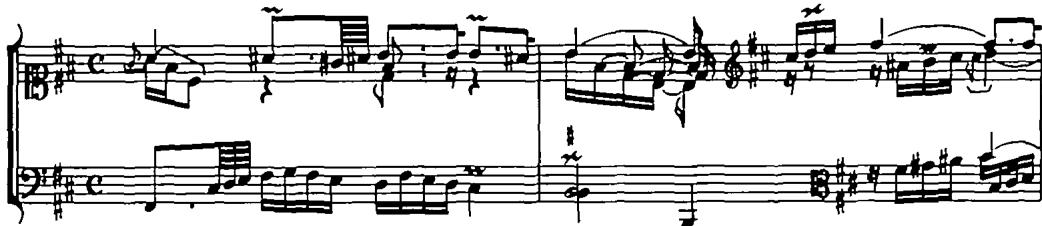
中文讲解
此条为第13页的一处图像或乐谱占位符。原始的内嵌图像数据已被省略,仅保留其版式位置与图注。由于正文P0075中明确提到了"see Ex. 5”(参见例5),此处及其后续P0070–P0073很可能对应文中所引用的库普兰《第八组曲》(Huitième Ordre)中《拉斐尔》“La Raphaèle"前几小节的原始版面,用于展示库普兰精细的符杆分组(stemming)与连线(bracketing)记谱。读者需查看原图方可确认具体细节;本文不复述其无法读取的图像内容。
第2段(P0070)
原文复述
Example 2. Huitième Ordre, “La Raphaèle,” mm. 2–5
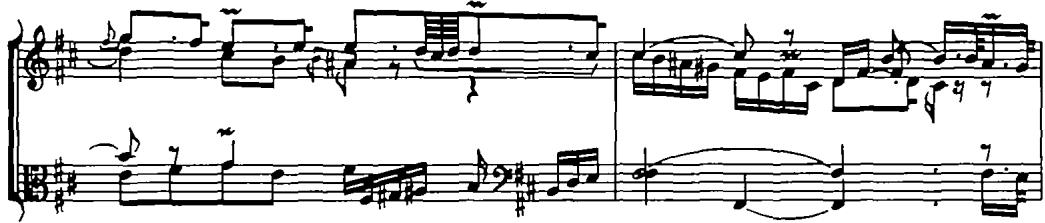
中文讲解
这是第13页例2(Example 2)的图注:库普兰《第八组曲》中《拉斐尔》“La Raphaèle"第2–5小节的乐谱。图像本身已被省略,需查看原图。例2位于本节论证的乐谱链中,其在正文中的具体功能——是展示原始记谱还是展示某种演奏诠释——需要结合正文中对例5、例6、例7a、例7b的引用来确定。
第3段(P0071)
原文复述
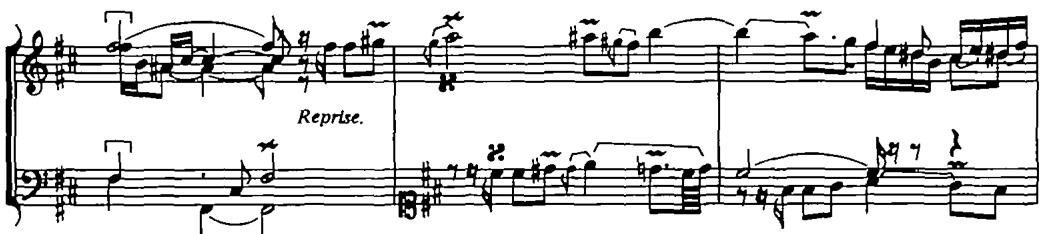
中文讲解
第13页的另一处图像或乐谱占位符,内嵌图像数据已省略,仅保留位置与图注信息。其在论证链中的具体对应关系需参看原文方能确认,正文P0075未直接引用此图,因此其作用可能是辅助展示《拉斐尔》前段乐谱的上下文。
第4段(P0072)
原文复述
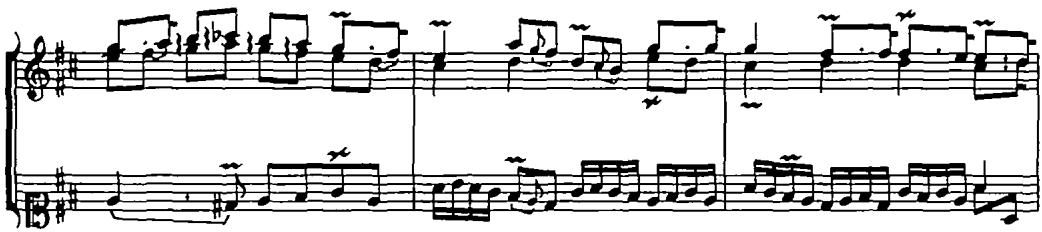
中文讲解
第13页又一处图像或乐谱占位符,图像数据已省略。需查看原图方可确认其内容;正文P0075亦未直接引用本图。
第5段(P0073)
原文复述
Example 3. Huitième Ordre, “La Raphaèle,” mm. 11-17
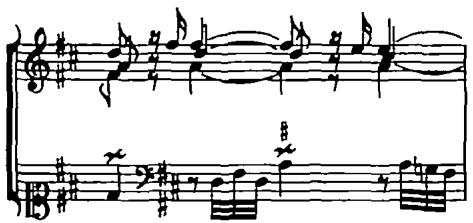
中文讲解
这是第13页例3(Example 3)的图注:库普兰《第八组曲》中《拉斐尔》“La Raphaèle"第11–17小节的乐谱。图像本身被省略,需查看原图。从小节号(11–17)可推断,这是《拉斐尔》起始乐思的延伸片段,可能用于展示第9小节的类似装饰音处理(正文中提及"Analogous ornaments are asked for in m. 9”),从而与第2小节的装饰音分析形成对照。
第6段(P0074)
原文复述
Downloaded from https://academic.oup.com/mq/article/75/1/12/1062714 by Indiana University - Bloomington user on 06 August 2026
中文讲解
此条为期刊网站自动生成的水印式页脚,注明本文从牛津学术出版社(Oxford Academic)网址下载,机构用户为印第安纳大学伯明顿分校(Indiana University - Bloomington),下载时间为2026年8月6日。它仅是版面元数据,不参与正文论证。
第7段(P0075)
原文复述
Ornamentation, too, needs to be adapted from historical orthodoxy on occasion, as “La Raphaële” demonstrates. On the downbeat of m. 2, the port de voix g-sharp’ seems simple enough: an appoggiatura resolving to a’. Yet Couperin’s extremely careful stemming and bracketing in the original edition (see Ex. 5) make it clear that two things are involved here: a soprano voice a’ to which the ornament belongs, and an alto voice a’ that is part of a descending progression a’-f-sharp’-c-sharp’. Both of these voices demand to be treated with separate integrity for structural reasons. The soprano voice’s-port de voix g-sharp’ must surely be taken on the beat. 33 Couperin himself is quite clear on the matter in L’Art: “Il faut que la petite note perduë d’un port=de=voix, ou d’un coulé, frape avec L’harmonie! c’est à dire dans le tems qu’on devroit toucher la note de valeur qui la suit.” 34 Frederick Neumann uses this very appoggiatura from “La Raphaële” as an example of an exception in which the ornament must be taken before the beat, yet he says that “the downbeat rule is most likely to apply to such coulés and ports de voix that are in the upper voice or voices, that strike a dissonance against the bass, and that do so on the heavy metrical beats.” 35 The soprano voice in m. 2 meets all of these criteria. The dissonant g-sharp’ should strike against the F-sharp bass, on the beat, then resolve to a’. However, the bracketed alto voice’s rhythmic and motivic integrity (as Neumann rightly argues 36 ) must also be respected because it must be related to the analogous anapestic alto figure in m. 1. Couperin’s very precise notation points to a simultaneous striking of g-sharp’ and a’ on the beat in m. 2, with the alto figure played exactly as notated and the g-sharp’ resolving upward to a second a’, this one the written main note of the soprano melody (see Ex. 6). Only this interpretation is fully consistent with the theoretical evidence and the notation. Neumann’s suggestion (see Ex. 7a) departs from clear historical practice in the soprano voice; the common-practice interpretation shown in Example 7b destroys the integrity of the alto motive—giving to both voices the ornament of one. Musically, the interpretation in Example 6 has much to offer. The painful acciaccatura crunch is consistent with the tense chromatic character of this movement and this ordre—indeed, it is a beautifully appropriate gesture for the opening measures. Analogous ornaments are asked for in m. 9, and also in mm. 8 and 12 of the sarabande. Interpretations that are literally true to Couperin’s notation yield surprising but telling dissonances that the usual readings of historical sources would not entertain.
中文讲解
本段是本节论证的核心段落,集中讨论《拉斐尔》“La Raphaèle"第2小节上拍的 port de voix(倚音式装饰音)应该如何演奏。其主张与论证结构如下:
一、核心主张:装饰音的演奏不能机械套用"历史正典”(historical orthodoxy),而需要根据库普兰原始记谱的细节加以调整。
二、问题的提出:第2小节上拍的升g小音符看起来简单——作为倚音解决到a’。但若仔细看库普兰原始版(例5),可以发现精确的符干分组(stemming)与连线(bracketing)暗示这里实际包含两个声部:一个是属于装饰音的高音声部a’,另一个是属于下行级进(a’-升f’-升c’)的中音声部a’。这两个声部各自具有结构上的独立完整性,必须分别处理。
三、库普兰本人的权威说法:高音声部的 port de voix 升g’必须在拍点上弹出。脚注34引用库普兰《演奏的艺术》(L’Art de toucher le clavecin)中的法文原话:“Il faut que la petite note perduë d’un port=de=voix, ou d’un coulé, frape avec L’harmonie! c’est à dire dans le tems qu’on devroit toucher la note de valeur qui la suit.” 意思是:port de voix 或 coulé 的"迷失的小音符"必须与和声同时发声,即在应弹本应跟随的价值音符的那个时点上弹出。这明确支持"拍点上弹"的做法。
四、与纽曼(Frederick Neumann)观点的对话:纽曼虽然在别处把此处的倚音作为"在拍前弹"的例外,但他本人也承认一般的"重拍规则"适用于:1)位于上方声部;2)与低音构成不协和;3)落在强重拍上的 coulé 与 port de voix。第2小节的高音声部完全符合这三个条件,因此不协和的升g’应当与低音升F在拍点上一同击响,然后解决到a’。
五、双声部独立性的协调:然而中音声部的节奏与动机完整性也必须得到尊重(纽曼本人的论证,脚注36),因为它需要与第1小节中类似的"短短长”(anapestic)节奏型相呼应。库普兰精细的记谱实际指向的是:第2小节拍点上同时击响升g’与a’,中音声部按原谱弹奏,升g’上行解决到第二个a’——即高声旋律谱面所写的主音(例6)。
六、对其他诠释的否定:只有例6这种解读同时与理论证据和记谱相一致。纽曼建议的版本(例7a)偏离了高声部清晰的历史实践;通行的"一般做法"解读(例7b)则破坏了中声部动机的完整性,把本只属于一个声部的装饰音分给了两个声部。
七、音乐表现力上的支撑:例6的诠释在音乐上也富有表现力——那种"痛苦的"acciaccatura(碎奏)挤压感,与本乐章及整部组曲紧张、半音化的性格高度契合,对开篇几小节而言是"恰到好处的姿态”。类似的装饰问题也出现在第9小节,以及萨拉班德舞曲的第8与第12小节。
八、结论性陈述:严格忠于库普兰记谱的解读会产生令人惊讶但极有意味的不协和,这是按通行历史文献通常不会允许的。
九、本段作用:它通过一个具体小节(m. 2)的详细分析,示范了如何用库普兰原谱与库普兰本人的理论著作来约束演奏诠释,同时批评了两种主流读法(纽曼的例7a与通行的例7b),从而证明"历史正典"本身需要被精确记谱所修正。
补充说明
本段涉及的几个关键概念关系:port de voix(一种由上方小音符经级进下行到主音的倚音式装饰);appoggiatura(倚音,本段用作 port de voix 的同义解释);acciaccatura(碎奏,本段将例6听感描述为"painful acciaccatura crunch",意指在拍点上同时击响两个音形成的挤压感);anapestic figure(短短长节奏型,本段指第1小节中声部的节奏原型)。库普兰《演奏的艺术》(L’Art de toucher le clavecin)是他本人关于键盘演奏装饰音法的权威论著。纽曼(Frederick Neumann)是20世纪著名音乐学者,以研究巴洛克与古典装饰音演奏实践著称。
第8段(P0076)
原文复述
Downloaded from https://academic.oup.com/mq/article/75/1/12/1062714 by Indiana University - Bloomington user on 06 August 2026
中文讲解
此条为期刊网站的水印式页脚,注明本文下载自牛津学术出版社网址,由印第安纳大学伯明顿分校用户于2026年8月6日下载。与第13页的同一水印重复出现,属版面元数据,不参与论证。
第9段(P0077)
原文复述
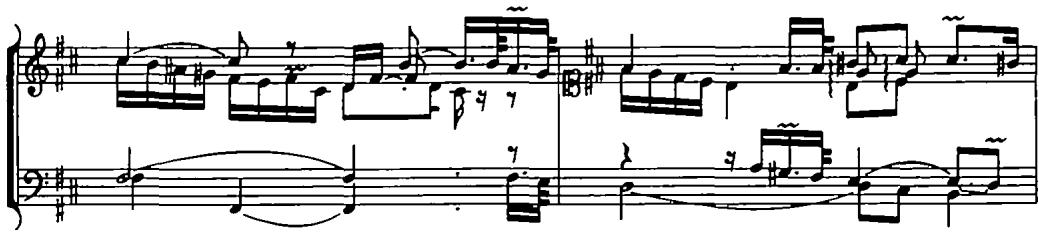
中文讲解
此条为第15页的一处图像或乐谱占位符,内嵌图像数据已省略,仅保留位置与图注。需查看原图方可确认其内容;正文P0075未直接引用此图,故其作用可能是辅助展示《拉斐尔》后段(如第30小节)的乐谱上下文。
第10段(P0078)
原文复述
Example 4. Huitième Ordre, “La Raphaèle,” mm. 5, 6, and 30
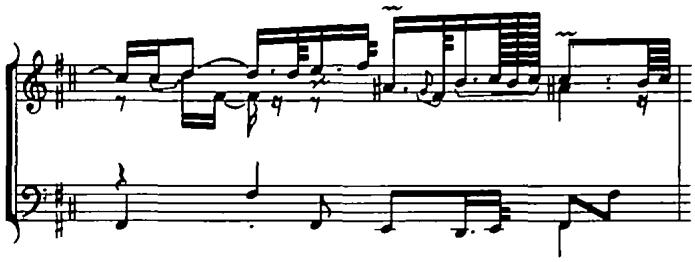
中文讲解
这是第15页例4(Example 4)的图注:库普兰《第八组曲》中《拉斐尔》“La Raphaèle"第5、6与第30小节的乐谱。图像本身被省略,需查看原图。从小节号(第5、6小节紧接前文所论第2小节;第30小节则远在乐章后段)可推断,此例用于同时展示开篇装饰音处理的延伸(第5、6小节)以及乐章后段(第30小节)可能出现的类似问题,从而把本节对第2小节的诠释扩展到更大的结构范围。
脚注 / 边栏 / 图表 / 附加信息(如有)
本节包含的附加材料均为图像/乐谱占位符与期刊水印页脚:第13页有若干未标号图像占位符(P0069、P0071、P0072),并附例2(P0070,第2–5小节)与例3(P0073,第11–17小节)的图注;正文P0075实际讨论并引用了例5、例6、例7a、例7b(这些图注未出现在本节提供的段落范围内,应位于后续页面)。第14、15页的P0074、P0076为同一OUP下载水印的重复出现。第15页有未标号图像占位符(P0077)并附例4(P0078,第5、6、30小节)的图注。所有图像数据均被省略,需查阅原刊方可确认乐谱细节;P0075正文中引用库普兰《演奏的艺术》的法文原话(脚注34)以"Il faut que la petite note perduë d’un port=de=voix, ou d’un coulé, frape avec L’harmonie! c’est à dire dans le tems qu’on devroit toucher la note de valeur qui la suit.“形式出现,作为支持"拍点上弹"的原始理论依据。
💡 本节核心要点
- 装饰音的演奏不能机械照搬’历史正典’,而须以库普兰原谱的符干与连线记谱为准:第2小节上拍同时存在两个独立声部(高声部a’承载装饰音,中声部a’属于下行级进 a’-f-sharp’-c-sharp’)。
- 库普兰《演奏的艺术》明确指出 port de voix 的小音符应在’拍点上与和声同击’,这与高声部升g’倚音必须落在拍点上的判断一致。
- 纽曼虽然把此处的 appoggiatura 当作’拍前弹’的例外,但他自己给出的’重拍规则’三条件(上方声部、与低音构成不协和、落在强重拍)在此完全满足,故其自身的标准其实支持拍点上弹。
- 两个声部的独立完整性必须同时兼顾:中声部节奏动机需与第1小节的短短长(anapestic)原型呼应,因此中声部应严格按原谱弹奏;高声部则在拍点上同时击响升g’与a’,升g’上行解决到谱面所写的主音a’。
- 现有两种流行解读各有缺陷:纽曼建议的读法(例7a)违反高声部的历史实践;通行的一般做法(例7b)则把本只属一个声部的装饰音错分给两个声部,破坏中声部动机。
- 严格忠于库普兰记谱的读法在音乐表现力上同样成立:拍点上的不协和挤压与本乐章及整部组曲的紧张半音化性格高度契合;同类装饰问题还出现在第9小节以及萨拉班德的第8、第12小节,证明该解读可推广而非孤例。
🔑 关键术语
- port de voix:库普兰与法国巴洛克键盘传统中的一种装饰音,由一个上方小音符级进下行到本音。在本节中作为讨论对象,其演奏时值(拍前 vs 拍点)是核心争议。
- appoggiatura:倚音;本段用作 port de voix 的同义解释,指’倚向’主音的小音符。它在这里同时涉及与低音形成不协和的张力。
- acciaccatura:碎奏;本段把第2小节按例6读法产生的听感形容为’painful acciaccatura crunch’(痛苦的碎奏挤压感),强调拍点上两音同击所产生的尖锐不协和。
- anapestic figure:短短长节奏型;本节指第1小节中声部的节奏原型,作者主张第2小节的中声部必须保留与之一致的节奏形态,以维持动机完整性。
- stemming and bracketing:符干分组与连线;库普兰原版中用来标示声部独立性的记谱手段,本节以此为证据,论证第2小节实际上包含两个各自独立的声部。
- L’Art de toucher le clavecin:库普兰本人所著《古钢琴演奏艺术》,是讨论其装饰音演奏实践的一手理论文献;本节引用其中关于 port de voix 小音符’与和声同击’的法文原话作为关键证据。
- historical orthodoxy:‘历史正典’;本节指依据后世通行演奏实践(如纽曼式或一般’common-practice’式)形成的对库普兰装饰音的标准化读法,作者主张这种正典需要被原谱细节所修正。
S0011 5
第1段(P0079)
原文复述
5
中文讲解
本段仅为阿拉伯数字"5”,是文章中的章节编号标题。在正文的上下文里,该编号开启本节——从对库普兰《第八秩序》(Huitième Ordre)中"La Raphaële"一曲的逐处分析,过渡到由此提炼出的一般性演奏原则。该标题本身只承担版面导航功能,并不包含具体论断。
第2段(P0080)
原文复述
This discussion of exceptional cases in “La Raphaële” (and there are many more in the whole ordre) leads to the conclusion that the musical analysis invoked in areas of performance not supported by historical evidence should mediate even where such evidence exists. This is no mere platitude. Rules inferred from historical sources should constantly be questioned and subjected to new scrutiny, never accepted solely on the basis of their supposed authority. This principle seems obvious enough, and yet it is certainly true that many historical performers limit their own creative options or accept dubious musical results rather than temper their positivistic zeal. (Witness the perpetuation of the ridiculous excesses of overdotting.) Musical analysis, I stress again, must be the final arbiter between scores and treatises.
中文讲解
本段是承接前文对"La Raphaële"中若干例外装饰(exceptional cases)的讨论而给出的方法论结论。其中心主张是:音乐分析在表演问题中扮演的居中裁定角色,并不会因为该处已有历史文献支持而失效——即使有史料可援,分析仍然应是最终的仲裁者。作者强调,这并非老生常谈(“no mere platitude”),因为许多号称"历史演奏"的乐人表现出一种被他称作"positivistic zeal”(实证主义热忱)的倾向:他们宁可压缩自己的艺术选择,宁可接受可疑的演奏结果,也不肯削弱对历史规则的笃信。括号中举出的"overdotting"(过度加点)正是这种倾向的典型——对法国巴洛克节奏记号机械地追加附点,本是未经审视的积习,却被当作权威代代相传。作者在段末用"I stress again"的口吻再次强调:当乐谱(scores)与历史论著(treatises)发生冲突时,音乐分析必须居于终审地位。
这一段在整体论证中起承上启下作用:把对单首作品的局部观察上升为一套适用于整个历史演奏领域的元原则,从而为下文两条更具规范性的结论作铺垫。
补充说明
“positivistic zeal"与"overdotting"在文中各只出现一次,前者指对历史证据不加反思的依赖,后者指法国巴洛克演奏中对附点的过度添加;本说明仅作术语澄清,不引入文本外的事实背景。
第3段(P0081)
原文复述
Downloaded from https://academic.oup.com/mq/article/75/1/12/1062714 by Indiana University - Bloomington user on 06 August 2026
中文讲解
本段是期刊页面底部由出版平台自动生成的水印式下载信息:注明文章来自牛津大学出版社学术平台 academic.oup.com 上《Music Quarterly》第75卷第1期第12页的链接,由印第安纳大学伯明顿分校用户于2026年8月6日下载。该行仅承担来源标识与版权追踪功能,与正文论证无关。
第4段(P0082)
原文复述
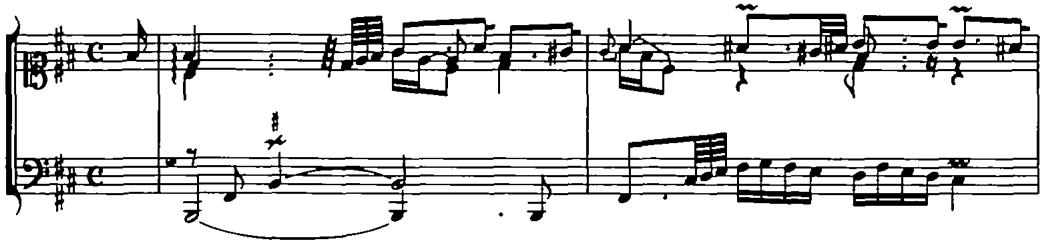
中文讲解
图例5的位置占位符,原图内容(库普兰《第八秩序》中"La Raphaële"一曲第1—2小节的乐谱)在当前文本中以省略形式呈现,仅保留图注文字。从图注可知,谱例5是本节论证所依据的原始乐谱片段,也是后文图例6、7中所讨论的三种"port de voix”(一种法国巴洛克装饰音)诠释方案的共同出发点。读者须参考原文中的实际谱面以核实细节;本讲解不对图中不可见的音符作猜测。
第5段(P0083)
原文复述
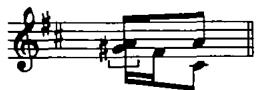
中文讲解
图例6的位置占位符,原图内容(作者本人在谱例5第2小节处对"port de voix"装饰的诠释方案)在当前文本中以省略形式呈现。从图注可知,本谱例对应的是作者本人所主张的演奏处理,与下一图例(Neumann 的方案与"common practice"通行做法)形成对照,是后文主张"形式优先于表面细节"、“音乐分析居中裁定"这两条原则的具体证据之一。读者须查看原图以核实其音符细节。
补充说明
“port de voix"在文中指法国巴洛克键盘音乐中一种常见的装饰音形式;其在该段乐句中的具体记写方式存在不同解读,是本节论证音乐分析须居中裁定的核心实例。仅作术语层面澄清,不引入文本外知识。
第6段(P0084)
原文复述

中文讲解
图例7的位置占位符,原图内容(在谱例5第2小节处对"port de voix"装饰的另外两种诠释方案:7a 为 Neumann 的方案,7b 为通行做法)在当前文本中以省略形式呈现。它与图例6 共同构成三种演奏选择的对照材料:作者主张自己方案在"形式"上更贴合原曲的整体结构,因此以这一组对照来支撑"形式优先于表面细节"与"传达作品的个体性而非通泛性"这两条结论。读者须查看原图方可核实各方案的音符细节。
补充说明
“Neumann"作为人名在图注中出现,指对"port de voix"提出与作者不同诠释方案的具体学者;“common practice"指当时业界较为通行的演奏处理。仅就图注信息作出澄清,不引入文本外事实。
第7段(P0085)
原文复述
Two important conclusions can be drawn: first, form should take precedence over surface details; second, one should try to communicate what is individual in a work, not what is generic. These conclusions are closely related, and forgetting both is a surprisingly common sin. Concentrating on verifiable evidence, which almost exclusively deals with the musical surface, many historical performers underplay the unique and crucial demands of inner form, thereby promoting generic interpretations in which all music of a period is of a piece. They belittle great music especially, by whittling it down to the lowest common denominator of period style. (They “say Bach, [but] mean Telemann,” as Adorno put it. 37) Superficial period stylishness—pulling out the French baroque stop—can give charm to a banal trio sonata, but it can only make a museum piece out of a Couperin. The Huitième Ordre is not great because of those noises by which we identify its period and place; it is great because of its profundity and expressiveness and because of its powerful and individual musical architecture. To communicate these aspects of the ordre requires the presence of musicianship that is primarily analytical, critical, and creative, and only secondarily archival. Surely no performer would disagree with Charles Rosen on one basic premise of musical interpretation: “A performance is not an archaeological dig.” 38
中文讲解
本段是本节的核心结论段,作者首先提出两条相互关联的原则:(一)形式(form)应优先于表面细节(surface details);(二)演奏的目标是传达作品中"个体化”(individual)的东西,而非"通泛”(generic)的东西。两条之所以密切相关,是因为只盯着"可考证的证据”——而这类证据几乎只触及音乐的表层——的历史演奏者,往往会忽略作品对内在形式(inner form)的独特而关键的要求,结果是把同一时期的所有音乐讲成同一个样子,即一种"通泛诠释”。
这种倾向尤其不利于伟大的作品:它把杰作削平到"时代风格的最小公倍数"(lowest common denominator of period style)。作者借用阿多诺(Adorno,注37)的讽刺——这些演奏者"嘴上说的是巴赫,心里弹的其实是泰勒曼"——来说明:在"历史正确"的演奏里,形式感越弱、风格越泛的作曲家反而越容易幸存,而真正的杰作反而被矮化。“pulling out the French baroque stop”(拉开法国巴洛克音色栓)这一比喻把那种纯粹外表的风格化姿态形象化:它也许能让一首平庸的三重奏奏鸣曲显得有味道,却只会把库普兰变成博物馆标本。
在正面立场上,作者强调《第八秩序》之所以伟大,并非因为那些标志其时代与地域的声响(“those noises by which we identify its period and place”),而在于它的深刻、表情以及富有个性的音乐架构。要传达这些维度,所需的"音乐性"(musicianship)应当首先是分析的、批判的与创造的(analytical, critical, creative),其次才是档案式的(archival)。段末援引 Charles Rosen(注38):“演奏不是考古发掘”——任何演奏者都不应在这一点上与他意见相左。
在整节论证中,本段把从"La Raphaële"单首作品抽出的方法论(音乐分析作为最终仲裁者),扩展为对整个历史演奏领域普遍适用的两条演奏伦理,并以两位外部权威(Adorno、Rosen)的引语作为背书。
补充说明
段落中引用的脚注 37 与 38 在当前小节范围内仅以编号形式出现,脚注正文未提供,无法在本节内进一步定位其具体出处;本节亦未出现其他图表说明文字,故此处不作超出文本范围的补充。
第8段(P0086)
原文复述
Downloaded from https://academic.oup.com/mq/article/75/1/12/1062714 by Indiana University - Bloomington user on 06 August 2026
中文讲解
本段是第16页页脚,与 P0081 内容相同:自动生成的下载来源与时间水印(牛津大学出版社学术平台、《Music Quarterly》第75卷第1期第12页、印第安纳大学伯明顿分校用户、2026年8月6日)。仅承担来源追踪功能,与正文论证无关。
脚注 / 边栏 / 图表 / 附加信息(如有)
本节正文出现两处学术引文:注37 对应 Adorno 的"say Bach, [but] mean Telemann",注38 对应 Charles Rosen 的"A performance is not an archaeological dig";两处脚注正文在本节范围内均未提供,无法进一步定位其原始出处。
本节附有三处乐谱占位符:图例5 为库普兰《第八秩序》中"La Raphaële"第1—2小节的原始乐谱;图例6 为作者本人在第2小节对"port de voix"装饰的诠释方案;图例7 为另外两种替代诠释(7a Neumann、7b 通行做法)。三者共同构成作者论证"形式优先于表面细节"与"音乐分析居中裁定"的具体例证;图像的音符细节在当前文本中以省略形式呈现,需查阅原文方可核实。
💡 本节核心要点
- 本节是全文方法论结论部分:从对单首作品(“La Raphaële”)的细节分析,升格为通用于历史演奏实践的两条原则——音乐分析在历史证据存在或缺失时都应居于最终仲裁地位;演奏应传达作品的内在形式与个体性,而非表面细节与时代通泛特征。
- 作者批判所谓"实证主义热忱"(positivistic zeal):历史演奏者因过度信赖史料,反而抑制艺术判断,甚至延续未经审视的积习(如法国巴洛克音乐中的"过度加点"做法)。
- 两条核心方法论彼此关联——“形式优先于表面细节"与"独特优先于通泛”,后者是前者在诠释目标上的具体体现;只关注可考证的表层证据,必然会把同一时期音乐讲成同一个样子。
- 作者区分了表面风格化与真正伟大作品之间的关系:时代风格标签或许能装点平庸之作,却只会把库普兰这样的杰作变成博物馆标本;《第八秩序》的伟大来自其深刻、表情与个体化的音乐架构,而非时代标志。
- 作者对历史演奏所要求的"音乐性"作出排序:分析性、批判性与创造性优先,档案性次之;并借 Rosen 之语强调演奏不是考古发掘。
- 本节以"La Raphaële"第2小节处三种"port de voix"诠释方案(图例5、6、7)作为具体落点,使抽象原则与具体演奏选择直接挂钩。
🔑 关键术语
- port de voix:法国巴洛克键盘音乐中一种常见的装饰音形式;本节在"La Raphaële"第2小节处出现三种诠释方案(作者本人、Neumann、通行做法),是论证"音乐分析居中裁定"与"形式优先于表面细节"的关键实例。
- positivistic zeal:作者用以形容历史演奏者不加反思地依赖史料的态度;这种态度使演奏者宁愿压缩艺术选择、容忍可疑结果,也不肯触动历史规则。
- overdotting:对法国巴洛克节奏记号过度加点的演奏习惯,被作者当作"positivistic zeal"在实践层面的具体例证。
- form / surface details:作者在本节中确立的对照:“形式"指作品的内在结构与个体化逻辑,“表面细节"指可由史料直接验证的音符、装饰与风格记号;本节主张前者优先于后者。
- individual / generic:作者用以区分演奏目标的两组概念:“个体化"指作品本身独特的艺术逻辑,“通泛化"指被削平为同一时代风格最小公倍数的诠释;本节主张演奏应追求前者。
- French baroque stop:作者用管风琴"音色栓"作比喻,指那种只在外表上调用法国巴洛克风格的姿态;它对平庸作品或许能增色,对库普兰这样的杰作却只会使其变成博物馆标本。
S0012 Notes
第1段(P0087)
原文复述
Notes
中文讲解
这是本节的总标题,表明以下内容是文章的注释(Notes),即正文中的引用、补充说明与延伸讨论的出处。位于第17页,标志着从正文进入注释部分。
第2段(P0088)
原文复述
I am very grateful to Dr. Erich Schwandt (University of Victoria) and Dr. George Houle (Stanford University) for advice and encouragement at all stages of work on this article.
中文讲解
作者在此向两位学者致谢:加拿大维多利亚大学的 Erich Schwandt 博士和斯坦福大学的 George Houle 博士,感谢他们在本文写作全过程中给予的建议与鼓励。这一段虽置于注释部分的前端,但属于学术文章的致谢内容(acknowledgments),并非真正编号的注释,用以说明作者受益于这两个古乐研究与库普兰研究领域专家的指导。
第3段(P0089)
原文复述
- Wilfrid Mellers, François Couperin and the French Classical Tradition, new version (London: Faber and Faber, 1987), 192.
中文讲解
注释1:引用 Wilfrid Mellers 所著《François Couperin and the French Classical Tradition》(《库普兰与法国古典传统》)的1987年新版(伦敦:Faber and Faber 出版社),第192页。Mellers 是20世纪研究库普兰的重要学者,该书是英语世界库普兰研究的经典文献之一。此处只引用第192页一个具体位置,对应正文中的某一句具体论述。
第4段(P0090)
原文复述
- Mellers, 192.
中文讲解
注释2:再次引用 Mellers 同书第192页。说明正文连续引用同一文献的同一位置,呈现出对 Mellers 论点的密集援引。
第5段(P0091)
原文复述
- Frank Hubbard, in his standard reference book Three Centuries of Harpsichord Making (Cambridge: Harvard University Press, 1965), 84–132, provides a wealth of evidence to support these general conclusions, drawing from French makers, performers, writers, and observers of Couperin’s time. See also James R. Anthony, French Baroque Music from Beaujoyeulx to Rameau, rev. ed. (New York: W. W. Norton & Co. 1978), 245–46.
中文讲解
注释3:作者援引 Frank Hubbard 的权威参考书《Three Centuries of Harpsichord Making》(《三百年间的羽管键琴制造》,剑桥:哈佛大学出版社,1965年)第84–132页,指出该书汇集了库普兰时代法国制造者、演奏家、作家和观察者的大量证据,以支持正文提出的一般性结论。并补充建议参阅 James R. Anthony 的《French Baroque Music from Beaujoyeulx to Rameau》(《从博约厄到拉摩的法国巴洛克音乐》)修订版(纽约:W. W. Norton & Co., 1978年)第245–46页。这条注释为正文关于羽管键琴构造与演奏惯例的论述提供了文献支撑。
第6段(P0092)
原文复述
- There is also some evidence from Couperin’s contemporaries. See Hubbard, chap. 3, and also David Fuller’s article on harpsichord registration in The New Grove Dictionary of Music and Musicians, vol. 15, 689–91. For an example of a contemporary source assuming a standard full-sized harpsichord, see the Préface to Jean-François Dandrieu’s Premier Livre de Pièces de Clavecin (Paris, 1724).
中文讲解
注释4:补充说明库普兰同时代人也提供了一些相关证据。具体来源包括 Hubbard 同书第3章,以及 David Fuller 在《The New Grove Dictionary of Music and Musicians》(《新格罗夫音乐与音乐家辞典》)第15卷第689–91页撰写的羽管键琴音栓(registration)条目。还举出一个同时代文献作为典型例证:Jean-François Dandrieu《Premier Livre de Pièces de Clavecin》(《第一卷羽管键琴曲集》,巴黎,1724年)的序言,其中隐含了标准全尺寸羽管键琴的预设。
第7段(P0093)
原文复述
- Couperin’s instructions read: “Pour toucher cette piece, il faut repousser un des Claviers du Clavecin, ôter la petite Octave, poser la main droite sur le Clavier d’en haut, et poser la gauche sur celui d’enbas.” (“To play this piece, one must push back one of the manuals of the harpsichord [i.e., uncouple it], remove the 4’ stop, place the right hand on the upper manual, and place the left on the lower one.”)
中文讲解
注释5:引用库普兰的一段演奏指示原文(法语)并附英文翻译与括注。原文意为:要演奏此曲,需将羽管键琴的一层键盘推开(即取消与琴弦的耦合)、撤去4英尺音栓(la petite Octave,即高音一英尺的副键盘)、右手置于上层键盘、左手置于下层键盘。括号内的英文译注解释了"repousser un des Claviers"就是uncouple one manual(断开键盘耦合),说明这段指示具体到键盘分层与音栓操作,证明库普兰对演奏配置有明确而具体的设想。
第8段(P0094)
原文复述
- He writes that cross-hand pieces “devront être jouées sur deux Claviers, dont l’un soit repoussé, ou retire” (“should be played on two manuals, one of which is pushed back, or retired [i.e., uncoupled]”).
中文讲解
注释6:库普兰论及"cross-hand pieces”(双手交叉曲目)时的演奏建议:此类曲目"应在两层键盘上演奏,其中一层推开或退回(即断开耦合)"。此条进一步坐实库普兰对双键盘分工演奏的明确意识,为正文中关于双手交叉演奏惯例的论述提供依据。
第9段(P0095)
原文复述
- Mellers, 336–38.
中文讲解
注释7:再次引用 Mellers 同书第336–338页。较短,主要起到指示正文引用来源的作用。
第10段(P0096)
原文复述
- Anthony, 375.
中文讲解
注释8:引用 Anthony《French Baroque Music》第375页。简短指向正文中具体观点的来源。
第11段(P0097)
原文复述
- “After taking such care to mark the ornaments suitable for my pieces . . . I am always surprised to hear of those who have learned them with no heed to my instructions. This is unpardonable negligence, the more so as it is no arbitrary matter to put in any ornament that one may wish. I declare, therefore, that my pieces must be executed as I have marked them, and that they will never make an impression on those persons of real taste unless one observes to the letter all that I have marked without any additions or deletions.” This translation in Anthony, 261.
中文讲解
注释9:引用库普兰关于装饰音(ornaments)的著名声明。库普兰抱怨:尽管他已仔细标出适合其作品的装饰音,却总听到有人无视其指示地学习这些作品——这种疏忽不可原谅,因为随意添加装饰并非随心所欲的事。他宣称自己的作品必须按他所标记的那样被演奏,而且若不严格遵循他所标记的一切(不加不减),就永远不会打动真正有品味的人。该英译出自 Anthony 第261页。这条注释凸显了库普兰对装饰音执行的高度严肃性,是正文讨论装饰音演奏权威性的关键证据。
第12段(P0098)
原文复述
- “We write differently from the way we play, which is why foreigners play our music less well than we play theirs. . . . For example, we dot several eighth notes in succession [that move] by conjunct degrees; however, we notate them equal” (39).
中文讲解
注释10:引用库普兰关于"写法与奏法不同"的论述:法国人书写与演奏方式不同,这正是外国人演奏法国音乐不如法国人演奏外国音乐之所在。例如,法国人会在若干连续级进的八分音符上点以附点(即在演奏中加以非均衡化),但记谱上却写成相等的八分音符。括号中的"39"为原文页码。这条注释揭示了库普兰已自觉意识到记谱与实际演奏之间的"失真"或风格化差异,是关于 inégal(不均衡演奏)传统的重要文献佐证。
第13段(P0099)
原文复述
- Robert Donington, The Interpretation of Early Music (London: Faber and Faber, 1963), 314, errs, I think, in crediting Couperin with the same kind of casualness about the formal integrity of his ordres as other French baroque composers. Donington quotes from the Préface to Couperin’s Concerts Royaux (published as the Suplement to the Troisième Livre) in which Couperin relates that he wrote these pieces for Louis XIV’s chamber concerts and arranges them here by key. This does not necessarily
中文讲解
注释11(前半段):作者明确表态——Robert Donington 在《The Interpretation of Early Music》(伦敦:Faber and Faber, 1963)第314页中,将库普兰对其 ordre(组曲)形式完整性的态度与其他法国巴洛克作曲家一样视为随意,作者认为这是错误的。Donington 引用库普兰《Concerts Royaux》(《皇家音乐会》集)序言(作为《Troisième Livre》第三卷的附录发表),其中库普兰说自己为路易十四的室内音乐会写作这些作品,并在此按调性加以安排。但这并不一定(句子于此中断)。
补充说明
P0099末尾的"This does not necessarily"在原文中跨页延续至P0101,应合并阅读。
第14段(P0100)
原文复述
Downloaded from https://academic.oup.com/mq/article/75/1/12/1062714 by Indiana University - Bloomington user on 06 August 2026
中文讲解
这是Oxford Academic平台的下载水印信息,标明文章下载来源 URL(来自 academic.oup.com/mq/article/75/1/12/1062714),下载者为印第安纳大学伯明顿分校用户,下载日期为2026年8月6日。属于版面元数据,不含正文内容。
第15段(P0101)
原文复述
imply that he “merely” arranged the Concerts by key. Anyway, this quote is far from sufficient evidence that Couperin did not consider his ordres to be unified wholes, in most cases.
中文讲解
注释11(后半段,承接P0099):作者继续论证——即使按调性安排并不暗示库普兰只是"机械地"按调编排了《Concerts Royaux》。无论如何,这段引文远不足以证明库普兰在大多数情况下不把其 ordre 视为统一的整体。阐明作者对 Donington 论点的反驳:库普兰对组曲统一性的考量不能被一段简单的序言所否定。
第16段(P0102)
原文复述
- Mellers, 338. Philippe Beaussant, in his book François Couperin (Paris: Fayard, 1980), writes: “Ce préambule est bien étrange . . . [mais il] nous informe au moins sur l’importance que Couperin attachait à la composition d’ensemble d’un Ordre” (485). (“This preamble is very strange . . . [but it] at least informs us of the importance that Couperin attached to the overall composition of an ordre.”) See also Shlomo Hofman, L’Oeuvre de clavecin de François Couperin le Grand: étude stylistique (Paris: Editions A. & J. Picard & Cie., 1961), 39–40.
中文讲解
注释12:先引 Mellers 第338页,再引 Philippe Beaussant《François Couperin》(巴黎:Fayard, 1980)第485页——“这个序言颇为奇异……但它至少告诉我们库普兰对 ordre 整体构成之重视”。并补充建议参阅 Shlomo Hofman《L’Oeuvre de clavecin de François Couperin le Grand: étude stylistique》(《大库普兰羽管键琴作品:风格研究》,巴黎:A. & J. Picard & Cie., 1961)第39–40页。这条注释呼应注释11的反驳立场,援引多家学者共同支持"库普兰重视组的整体性"这一观点。
第17段(P0103)
原文复述
- “My first intention when beginning the twenty-fifth ordre of this book was that it be in c minor and major; but after the first piece in C minor, the idea came to me of doing one in E-flat major, which was the relative of the said ordre in c minor (and for that reason). The first piece, and the third, being both finished [and then] lost, I have put forth this ordre as best I could, not having thought it right, given the extent of my inconvenience, to apply myself to the completion of this work. If, subsequently, these two pieces are found again, I will remedy it, myself—or at least, I will direct those who will remedy it.”
中文讲解
注释13:长段引用库普兰本人关于第25 ordre(组曲)的自述。库普兰说:他最初打算让第25组曲在C小调与C大调上;写完C小调第一首后,他想到加入一首降E大调——那是该C小调 ordre 的关系大调(出于此原因)。然而第一首与第三首都已写完却遗失,他只好尽量按能力发表此 ordre,不认为自己应克服如此不便去完成它。倘若日后这两首找回,他自己会补救,或至少指导他人补救。这条注释作为第一手文献证据,揭示库普兰对组曲结构、调性布局及缺憾的坦率态度,正文可能借此论证库普兰对组的统一性。
第18段(P0104)
原文复述
- Mellers, 403.
中文讲解
注释14:简短引用 Mellers 同书第403页。指示正文某具体观点的来源。
第19段(P0105)
原文复述
- Mellers, 192.
中文讲解
注释15:再次引用 Mellers 第192页。显示正文反复参考该页内容。
第20段(P0106)
原文复述
- What Mellers writes of “La Morinéte,” 193, could also apply to the eighth couplet: “as though Couperin wished to reassert the validity of social elegance after his incursion into the merciless psychological and spiritual terrors that surround our waking lives.”
中文讲解
注释16:作者将 Mellers 对《La Morinéte》(《摩林奈舞》)的评论——“仿佛库普兰在短暂涉入环绕我们清醒生活的残酷心理与精神恐惧之后,希望重新确认社交优雅的有效性”——同样适用于第八 couplet(对句/副段)。这是对 Mellers 论点的一种迁移性引用:作者认为该评论在解释其他段落的结构与心理转折时同样贴切。
第21段(P0107)
原文复述
- By an interesting coincidence, the other chaconne-rondeau, “La Favorite,” from the Troisième Ordre, in C major/minor (Premier Livre), also stands in microcosmic relation to its suite.
中文讲解
注释17:作者点出另一首 chaconne-rondeau(恰空—回旋曲)——出自《第一卷》(Premier Livre)第三 ordre 的《La Favorite》(《宠儿》),在 C 大调/小调上——与所在组曲亦构成"微观宇宙"式的呼应关系。注释指出这是一种"有趣的巧合”,揭示库普兰在两个不同 ordre 中都用恰空—回旋曲承担组曲整体象征的角色。
第22段(P0108)
原文复述
- “La Favorite” is based on a chromatic descending tetrachord.
中文讲解
注释18:指出《La Favorite》的低音主题基于一个半音下行的四音列(chromatic descending tetrachord)。这是音乐主题分析中常见的概念:四音列即四音音列,半音下行意味着相邻音皆为半音关系(如 C-B-Bb-A)。该注释为《La Favorite》的主题材料提供具体音乐分析。
第23段(P0109)
原文复述
- Mellers, 193.
中文讲解
注释19:引用 Mellers 第193页。简短指示正文来源。
第24段(P0110)
原文复述
- There is one possible exception. Couperin’s instruction after the last couplet—“Rondeau jus qu’au mot Fin”—probably means that the final return of the theme should be without the repeat.
中文讲解
注释20:作者指出一个可能的例外:库普兰在最后一个 couplet 后的指示"Rondeau jusqu’au mot Fin”(回旋曲至 Fin 一词止),其含义可能是主旋律最后一次再现时不再重复(without the repeat)。这条注释既展示库普兰对回旋曲再现结构的精确控制,也说明作者对演奏指示作具体解读时的谨慎态度。
第25段(P0111)
原文复述
- Mellers, 193.
中文讲解
注释21:再次引用 Mellers 第193页,简短指明来源。
第26段(P0112)
原文复述
- Fuller, 689.
中文讲解
注释22:引用 Fuller(David Fuller)羽管键琴音栓条目第689页。简要指示来源。
第27段(P0113)
原文复述
- See, for example, quotations from Mersenne and others in David Ledbetter, Harpsichord and Lute Music in 17th-Century France (London: Macmillan Press, 1987), 26–27.
中文讲解
注释23:建议参阅 David Ledbetter《Harpsichord and Lute Music in 17th-Century France》(《17世纪法国的羽管键琴与鲁特琴音乐》,伦敦:Macmillan Press, 1987)第26–27页,其中引述 Mersenne(马兰·梅森,17世纪法国数学家、哲学家及音乐理论家)与其他人的相关言论。作为支持正文论述的进一步文献来源。
第28段(P0114)
原文复述
- “The harpsichord is perfect with regard to range, and brilliant of itself; but as one can neither swell nor diminish its sounds, I will always be pleased by those who, by an infinite art, sustained by taste, succeed in rendering this instrument capable of expression.”
中文讲解
注释24:引用库普兰关于羽管键琴本身局限性的著名表述:羽管键琴在音域上完美,本就音色明亮;但因其音量不能渐强或渐弱,作者将由衷赞赏那些以无穷技艺与品味支撑、使此乐器具备表达力的人。这条注释揭示库普兰对羽管键琴表现力局限的清醒认识,以及对演奏艺术弥补该局限的推崇。
第29段(P0115)
原文复述
- Fuller, 690.
中文讲解
注释25:引用 Fuller 第690页。简短指示来源。
第30段(P0116)
原文复述
- Fuller, 690.
中文讲解
注释26:再次引用 Fuller 第690页。
第31段(P0117)
原文复述
Downloaded from https://academic.oup.com/mq/article/75/1/12/1062714 by Indiana University - Bloomington user on 06 August 2026
中文讲解
Oxford Academic 平台下载水印,表明文献下载来源与用户信息(印第安纳大学伯明顿分校,2026年8月6日)。属于版面元数据。
第32段(P0118)
原文复述
- George Houle sorts out much of the confusing seventeenth- and eighteenth-century evidence on meter and tempo in his book Meter in Music, 1600–1800: Performance, Perception, Notation (Bloomington: Indiana University Press, 1987).
中文讲解
注释27:作者援引 George Houle 的《Meter in Music, 1600–1800: Performance, Perception, Notation》(《1600–1800年音乐中的节拍:演奏、感知与记谱》,布卢明顿:印第安纳大学出版社,1987年),指出该书厘清了许多17、18世纪关于节拍与速度的混乱证据。Houle 是节拍—速度研究领域的权威,作者倚重其结论。
第33段(P0119)
原文复述
- Table 1 does, however, run afoul of received accounts of various historical metronome markings (L’Affillard, Lachapelle, Onzembry, Choquel, Quantz, etc.). As Donington warns, such tempo markings must be taken with a grain of salt (338). Some were intended for mechanical instruments, and the process of interpreting and translating them into Maezel’s metronome markings is controversial. As one can easily see by looking at the various movements of the Hutanème Ordre, the historical tempo indications are often absurd and even physically impossible to play. (A sample absurdity: the Passacaille played at L’Affillard’s romping 106 to the quarter note; a sample impossibility: the Gavotte, with its many expressive appoggiaturas in adjacent voices, played at L’Affillard’s 120 to the half note.) Many of these tempo markings are also inconsistent with the descriptions of Brossard and Rousseau, whose dictionaries I take as a more reliable guide to the viability of Table 1.
中文讲解
注释28:长段注释,对正文表1(Table 1)所列速度标记的可靠性的自我反思与限定。作者承认:表1确实与历来流传的多种历史节拍器标记(L’Affillard、Lachapelle、Onzembry、Choquel、Quantz 等人)相左。正如 Donington 提醒的(第338页),这些速度标记须谨慎对待——部分原本针对机械乐器,且将其解读、换算为 Maezel 节拍器标记的过程本身有争议。通过查看《Hutanème Ordre》(疑即《Huitième Ordre》,第八组曲)各乐章可知,历史速度指示常显得荒谬甚至在物理上无法演奏。例如:按 L’Affillard 的标记,把 Passacaille 弹到每拍106(四分音符),跳跃之极;把富有装饰音的 Gavotte 弹到每半音符120,则物理上不可能。许多历史速度标记亦与 Brossard( Sébastien de Brossard,17世纪末法国音乐辞典编纂者)和 Rousseau(Jean-Jacques Rousseau,瑞士—法国思想家与音乐辞典作者)辞典中的描述不合;作者将这两部辞典视为评判表1可行性更可靠的指南。这条注释体现作者的方法论自觉:承认自身结论与传统数据存在张力,并交代取舍依据。
第34段(P0120)
原文复述
29. Mellers, 192.
中文讲解
注释29:再次引用 Mellers 第192页。简短指明来源。
第35段(P0121)
原文复述
- Beaussant concurs: “Il y a dans la démarche de cette Allemande (qui n’en porte pas le titre, mais qui en est une assurément) quelque chose d’une ouverture lulliste” (391). (“There is in the gait of this allemande (which does not carry the title of one, but which assuredly is one) something of a Lully overture.”)
中文讲解
注释30:Beaussant 表示赞同:“这支 allemande(虽不冠以此名,但显然就是一例)的步态中有某种 Lully 式序曲(ouverture lulliste)的东西”(391页)。说明 Beaussant 也认为该曲虽未标"allemande"之名,却实为一首 allemande,且其进行带有 Lully 法国序曲的庄重节奏特征。这是跨学者的共识引用。
第36段(P0122)
原文复述
- Couperin seems to have invented this form in the opening movement of the Troisième Ordre. He uses it only in these two movements in his keyboard works.
中文讲解
注释31:作者指出,库普兰似乎在《Troisième Ordre》(第三 ordre)开篇乐章首创了这种形式(指上一注释所述的"allemande 形态的 Lully 式序曲”),而在他全部键盘作品中仅在这两首乐章中使用。这一断言属作者的音乐史考据。
第37段(P0123)
原文复述
- This is the consensus of the historical evidence. See Mellers, 276–79.
中文讲解
注释32:作者指出某项演奏惯例是历史证据的共识,并指向 Mellers 第276–279页。简短指明来源。
第38段(P0124)
原文复述
- This is Putnam Aldrich’s recommendation based on a synthesis of historical sources in “The Principle Agréments of the Seventeenth and Eighteenth Centuries: A Study in Musical Ornamentation” (Ph.D. diss., Harvard University, 1942), 7–39.
中文讲解
注释33:作者指出某项建议来自 Putnam Aldrich 的哈佛大学博士论文《The Principle Agréments of the Seventeenth and Eighteenth Centuries: A Study in Musical Ornamentation》(《17、18世纪主要装饰音:一项音乐装饰研究》,1942年)第7–39页,基于对历史文献的综合。是装饰音演奏实践的权威二手研究。
第39段(P0125)
原文复述
- “The little ’lost’ [i.e., grace] note of a port de voix, or of a coulé, must be struck with the harmony!—that is to say, in the time value of the note that follows it” (22).
中文讲解
注释34:引用关于 port de voix(“声音传递"装饰)与 coulé(“滑奏"装饰)的小"丢失"音符(即倚音/装饰音)的演奏原则:它必须与和声同时被奏出——也就是在随后音符的时值之内。“lost"加了引号并括注"grace”,说明作者将"lost note"译为 graceful grace note(装饰音)。这是装饰音时值处理规则的具体文献证据。
第40段(P0126)
原文复述
- Frederick Neumann, “Couperin and the Downbeat Doctrine for Appoggiaturas,” Acta Musicologica 41 (1969): 83.
中文讲解
注释35:引用 Frederick Neumann 的论文《Couperin and the Downbeat Doctrine for Appoggiaturas》(《库普兰与倚音的强拍原则》),发表于《Acta Musicologica》第41卷(1969年)第83页。Neumann 是装饰音研究领域的权威学者,“downbeat doctrine"指倚音应在其解决音的强拍上奏出的原则。
第41段(P0127)
原文复述
- Neumann, 82.
中文讲解
注释36:再次引用 Neumann 同一论文第82页。简短指明来源。
第42段(P0128)
原文复述
- Theodor W. Adorno, “Bach Defended Against his Devotees,” Prisms, trans. Samuel and Shierry Weber (Cambridge: MIT Press, 1981), 145.
中文讲解
注释37:引用德国哲学家与音乐社会学家 Theodor W. Adorno(阿多诺)的《Bach Defended Against his Devotees》(《为巴赫辩护——抵御其崇拜者》),收于《Prisms》(《棱镜》),由 Samuel 和 Shierry Weber 译,剑桥:MIT 出版社,1981年,第145页。引文可能为正文中关于结构、诠释或审美判断的旁证,引入哲学—美学视角。
第43段(P0129)
原文复述
- Charles Rosen, The Classical Style: Haydn, Mozart, Beethoven (New York: W. W. Norton & Co., 1972), 107.
中文讲解
注释38:引用钢琴家与音乐学家 Charles Rosen 的名著《The Classical Style: Haydn, Mozart, Beethoven》(《古典风格:海顿、莫扎特、贝多芬》,纽约:W. W. Norton & Co., 1972)第107页。Rosen 是古典时期音乐分析大家,此处可能为正文关涉结构、形式或风格判断的旁证。
第44段(P0130)
原文复述
Downloaded from https://academic.oup.com/mq/article/75/1/12/1062714 by Indiana University - Bloomington user on 06 August 2026
中文讲解
Oxford Academic 平台的下载水印信息,标明文献下载来源 URL 与用户(印第安纳大学伯明顿分校,2026年8月6日)。属于版面元数据,标注本节末尾。
脚注 / 边栏 / 图表 / 附加信息(如有)
本节为论文《Musical Quarterly》第75卷第1期第12页起文章(关于库普兰 harpsichord 演奏与诠释)的注释部分(页码17–19),共包含38条编号注释、1段致谢、3处期刊下载水印以及1个"Notes"小节标题。注释类型涵盖:
- 文献引用(对 Mellers、Anthony、Beaussant、Fuller、Houle、Adorno、Rosen、Neumann、Hubbard、Ledbetter、Hofman、Aldrich 等多家学者论著的引用);
- 库普兰原文引文(含法语原文与英译,集中在演奏指示、装饰音声明、组曲整体性论述、allemande 风格论述);
- 方法论限定(注释28关于表1速度标记的局限、注释11对 Donington 论点的反驳);
- 跨学者共识(注释30引用 Beaussant 与 Mellers 的呼应)。 这些注释贯穿论证链,既支持正文的具体事实性陈述(羽管键琴构造、键盘分工、装饰音时值等),也支持正文的解释性判断(库普兰对组曲整体统一性的重视、对装饰音的严肃态度)。水印行为表明文献来自 Oxford Academic 平台,下载者为印第安纳大学伯明顿分校用户。
💡 本节核心要点
- 本节为论文注释部分,38条编号注释密集支撑正文关于库普兰羽管键琴作品演奏与诠释的多层次论述。
- 作者倚重 Mellers 的《库普兰与法国古典传统》为最反复被引用的文献(第192页出现多次),并辅以 Anthony、Beaussant、Fuller、Houle 等多家学者形成互证。
- 库普兰原文的直接引用(法语+英语译注)集中在四个方面:双键盘演奏指示(注释5、6)、装饰音执行的严肃声明(注释9)、记谱与演奏的差异(注释10)、组曲整体性的自述(注释13)。
- 作者对 Donington 关于"库普兰对组曲整体性随意"的论点进行了明确反驳(注释11–12),并以库普兰遗失乐章的自述(注释13)作为关键的反证。
- 注释28体现出作者的方法论自觉:承认表1与历史速度标记的差异,并交代依据 Brossard 与 Rousseau 辞典重新评估可行性的理据。
- 装饰音时值处理(注释33–36)援引 Aldrich、Neumann 等研究,构成演奏诠释的技术细节支撑;Adorno 与 Rosen 的引用(注释37、38)则将乐旨分析延伸至更宏观的美学/结构判断。
🔑 关键术语
- ordre:库普兰羽管键琴作品集的基本结构单位,相当于组曲(suite)。每一 ordre 由若干首在调性、性格上有内在联系的乐曲组成,正文与注释的核心争论之一即库普兰是否将其视为"统一的整体”(unified whole)。
- Mellers:Wilfrid Mellers,英国音乐学者,著有《François Couperin and the French Classical Tradition》(1987年新版),英文学界库普兰研究的奠基性著作;本文注释中最频繁被引用的文献来源。
- Chaconne-rondeau:恰空—回旋曲,将恰空(chaconne,变奏类,低音主题固定)与回旋曲(rondeau,主旋律反复出现)两种结构原则结合的混合形式。文中以《La Favorite》与第八 ordre 为例说明其"微观宇宙"地位。
- Cross-hand pieces:双手交叉演奏的曲目(cross-hand pieces),即同一手须越过另一手音域弹奏。库普兰明示此类曲目应在两层键盘上演奏,其中一层须断开耦合,以利音色或声部区分。
- port de voix / coulé:17–18世纪法国键盘音乐中的两种装饰音类型。port de voix(“声音传递”)与 coulé(“滑奏”)均含小"丢失"音符(倚音),按本文引用的规则须与随后的音符同时奏出,即"在解决音的时值内"发声。
- Allemande:库普兰组曲中常见的舞曲类型之一,通常为四拍子的中等速度德式舞曲。注释30指出该处未标 allemands 之名却实为一首 allemande,且带有 Lully 式序曲的步态特征。
- inégal / 不均衡演奏:法国巴洛克音乐中特有的演奏惯例——将记谱上相等的音符在演奏中以不等时值奏出(通常长—短—长—短)。注释10以库普兰的话显示他本人已意识到这种写与奏的差异。
- Appoggiatura / 倚音:装饰音的一种,演奏时值从主音"借用”。注释34–36讨论其时值与节拍位置(特别是 Neuman 的"downbeat doctrine"强拍原则)。