目录
CH14 Fiori musicali and the Aggiunta to Toccate I
- S14.1 [描述性拆分] Ostinato techniques in the ricercars
- 页码:1-1
- S14.2 [描述性拆分] Liturgical context and the Elevation toccatas
- 页码:1-2
- S14.3 [描述性拆分] Closing capriccios on the Bergamasca and Girolmeta
- 页码:2-3
- S14.4 [描述性拆分] The Aggiunta to Toccate I (1637)
- 页码:4-5
- S14.5 [描述性拆分] Genesis of the continuous ostinato variation, 1627–1630
- 页码:5-7
- S14.6 [描述性拆分] The Cento partite and triple mensurations
- 页码:7-8
- S14.7 [描述性拆分] Mensural practice in the Cento partite
- 页码:9-11
- S14.8 [描述性拆分] Tonal structure, invention, and conclusion of the Cento partite
- 页码:11-12
CH15 The Performance of Frescobaldi’s Keyboard Music
- S15.1 [描述性拆分] Stylistic milieu and sources for performance
- 页码:14-15
- S15.2 [描述性拆分] Tempo and Rhythm: genre norms and sectional tempo
- 页码:16-18
- S15.3 [描述性拆分] Tempo and Rhythm: cadences, mensurations, and two-against-three
- 页码:18-20
- S15.4 [描述性拆分] Rhythmic alteration and the direction of musical energy
- 页码:20-24
- S15.5 [描述性拆分] Fingering and Articulation: posture, touch, and good/bad notes
- 页码:24-26
- S15.6 [描述性拆分] Articulation: beaming, musical relationships, and decay
- 页码:27-30
- S15.7 [描述性拆分] Ornaments and Ornamentation: history and repertory
- 页码:31-36
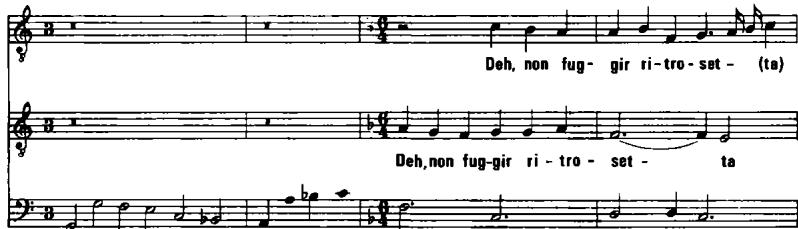
- S15.8 [描述性拆分] Ornaments: keyboard practice, signs, and performance
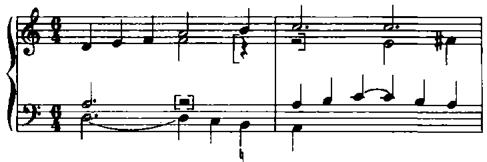
- 页码:36-43
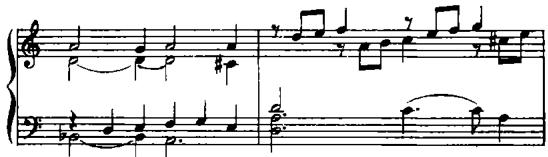
APP1 Appendix I: Other Keyboard Works Attributed to Frescobaldi
- A1.1 [描述性拆分] A. The Canzoni of 1645
- 页码:45-47
- A1.2 [描述性拆分] B. Manuscript Works: sources and criteria
- 页码:47-49
- A1.3 [描述性拆分] B. Manuscript Works: assessment of attributions
- 页码:50-50
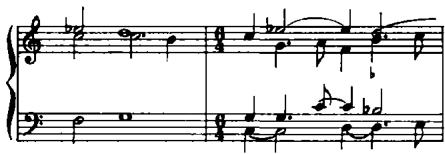
S14.1 [描述性拆分] Ostinato techniques in the ricercars
第1段(P0001)
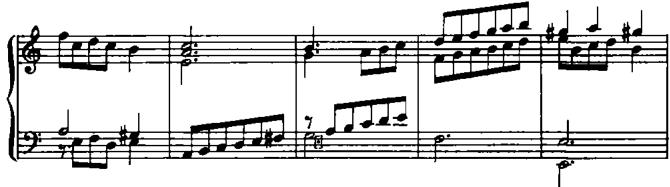
原文复述
ostinato techniques. The ricercar after the Creed in the Lady-mass has no designated ostinato, but its two sections are dominated by a single subject. In the first section, except for the cadence some portion of the subject appears in all but one of the twenty-four measures; in the second section it appears in augmentation in all four voices, unmistakable in its poignant opening leap and chromatic ascent (Ex. 14.4).
中文讲解
本段是本小节的开篇,描述的是Lady-mass中Creed之后的那首ricercar。作者的论点是:这首曲子表面上没有被正式指定任何ostinato,但实质上整个作品的统一性是靠一个反复出现的单一主题来维持的——也就是说,ostinato在这里以“准固定反复”的方式隐性运作。具体的证据有两个层次:第一,在第一部分(24小节)中,除了一个终止式所在的局部之外,主题在几乎每一小节中都以某种形式出现,呈现极高的贯穿密度;第二,在第二部分中,主题以augmentation(扩大时值、节奏拉长)的形式同时出现在全部四个声部中,并且凭借其“poignant opening leap”(尖锐的开头大跳)和“chromatic ascent”(半音上行)而极易辨认(参看谱例Ex. 14.4)。这段文字的功能是为后面两段建立参照:接下来要讨论的两个ricercar则分别具有明确指定的ostinato,从而与本段形成“没有ostinato之名却有ostinato之实”的对照,帮助读者把ostinato看作一个连续谱——从隐性主题反复,到显性低音obligo,再到口唱的第五声部。
补充说明
谱例Ex. 14.4在所提供的source_paragraphs中仅有引用而未含谱面文本;其音乐内容(augmentation写法、四声部并置、半音上行的具体音程)需参照原谱例才能核实,本段复述仅复述作者文字描述的内容。
第2段(P0002)
原文复述
The third ricercar in the mass of the Apostles defines its ostinato as the “obligo of the Bass as it appears.” The subject—a five-note motto—is employed motivically in the upper parts, but its appearances in the bass chart the tonal course of the work. It first outlines a circle of fifths (statements on C, G, D, A, E/ D, G), then, returning to C, a circle of fourths (F, B-flat, E-flat/ F, C). The procedure recalls that of an English hexachord fantasy, and this harmonic freedom is underscored by the fact that Frescobaldi—like the English—exceeds the bounds of the meantone keyboard.
中文讲解
本段把目光转向Apostles之mass中的第三首ricercar。这里的ostinato有了明确的官方身份——“obligo of the Bass as it appears”(按原样出现的低音obligo),即把低声部本身规定为必须承担的固定素材。值得注意的是,作者揭示这个五音motto身兼两职:在上方声部中,它以motivic方式被使用(即被拆解、变形为旋律素材);但在低声部中,它的每次出现却承担着勾勒全曲调性路线(tonal course)的功能。作者随后把这条路线具体化:先是五度圈(C–G–D–A–E / D–G),回到C之后再走四度圈(F–B♭–E♭ / F–C)。括号里的“/”表示在同一和声跨度内出现两次主题陈述(例如“statements on C, G, D, A, E/ D, G”可读作:先C、再G、再D、再A、再E,紧接着在同一和声区再出现D和G的陈述)。作者由此提出一个比较学判断:这种调性展开方式让人联想到英国的hexachord fantasy(以六声音列为核心的英国键盘即兴体裁),并且这一“和声自由度”还有一个物质层面的支撑——Frescobaldi像英国作曲家那样,愿意让键盘演奏突破meantone temperament(中庸全音律)所能容纳的调性边界。这一句的论证价值在于:它不仅描述了写作手法,还把手法与具体的键盘调律实践联系起来,提示读者:和声上的大胆不完全是抽象构思,而是与乐器物理性能相互配合的结果。
补充说明
本段中的“circle of fifths”与“circle of fourths”是功能性的调性走向描述,并非音高上的字面循环;括号内的“/”记号(如“E/ D, G”、“E-flat/ F, C”)按上下文应理解为在同一调性板块内出现两次主题陈述。Meantone temperament一词在本段中只用作“被突破的边界”这一比较参照,其具体律学细节未在source_paragraphs中展开。
第3段(P0003)
原文复述
In the second ricercar of the Messa della Madonna, Girolamo repeats the flashiest of his inventions in the Capricci, the “obligo of singing the fifth part without playing it.” As in the capriccio, the quinta parte not only serves as ostinato but also generates the motivic material of the four written voices. Frescobaldi carries his original conceit a step further here: the first appearance of the subject in the soprano is accompanied by a quotation from Petrarch, “Intendomi chi può che m’intend’io” (Understand me who can for I understand myself), ^3 indicating that the player is not given cues for the entrances of the quinta parte, as in the capriccio, but must seek them out himself.
中文讲解
本段讨论Messa della Madonna的第二首ricercar,并把分析的焦点从“写出来的低音”转向“没有被写出来的第五声部”。Girolamo(Frescobaldi)在此重用了Capricci中最引人注目的发明——“obligo of singing the fifth part without playing it”:演奏者在键盘上弹奏四个声部的同时,还必须用嘴唱出第五条旋律线,这就是quinta parte(第五声部)。这一设计的双重作用被作者明确点出:quinta parte既是ostinato(结构性反复线),又是四个书面声部所用motivic material的来源——它同时提供框架与素材。与capriccio原作相比,此处的关键推进是:高声部第一次出现主题时,被配以彼特拉克(Petrarch)的一句诗“Intendomi chi può che m’intend’io”(“能懂的人就懂吧,我自懂我”),由此暗示演奏者不再像在capriccio中那样获得quinta parte入唱点的提示,而必须靠自己去寻找声部进入的时机。换言之,作曲者把capriccio中由作曲家书面设定的“隐藏任务”,在此处升级为演奏者自行解读音乐与诗文的双重任务。引用彼特拉克这一动作本身也就成为乐曲结构的一部分:诗句的不可译尽性(“谁能懂”)与第五声部的不可见性彼此呼应。
补充说明
段落中的上标^3指向一个脚注,但该脚注的正文未包含在本次提供的source_paragraphs中;因此脚注所提供的具体出处、释义或扩展论证无法在本节复述范围内落实,讲解中只采用正文内可直接定位的语义信息。Petrarch引文按原文保留意大利语形式,未做翻译改写。
脚注 / 边栏 / 图表 / 附加信息(如有)
本节内部引用的两类附加材料需特别说明:(1) 谱例Ex. 14.4在source_paragraphs中仅有指引性提及(“参见Ex. 14.4”),而未含谱面文本;其实际音乐形象——即Lady-mass第二段中主题以augmentation形态在四声部中的具体音程与节奏安排——须结合原书谱例才能完整呈现。(2) P0003中出现的脚注标记^3对应的脚注正文未出现在所提供的source_paragraphs中,故其具体内容(可能涉及Petrarch引文出处、与capriccio版本的比对等)不在本节可复述范围内,本节处理仅基于正文本身可定位的语义。
💡 本节核心要点
- 本节通过三首ricercar呈现了一个ostinato技法的谱系:从没有显式标记、靠单一主题反复隐性维持统一的Lady-mass ricercar,到把低声部明文规定为obligo的Apostles第三首ricercar,再到把未写出的第五声部(quinta parte)作为obligo的Messa della Madonna第二首ricercar。
- Lady-mass ricercar中,ostinato以两种方式呈现:第一部分中主题在24小节里几乎贯穿;第二部分中主题以augmentation同时出现在全部四个声部中,并由“poignant opening leap”和chromatic ascent保证可辨识度。
- Apostles第三首ricercar以一个五音motto为ostinato:它在高声部作为motivic素材被使用,在低声部则勾勒出全曲的调性路线——先走五度圈(C, G, D, A, E/ D, G),回到C后再走四度圈(F, B♭, E♭/ F, C)。
- 作者把Apostles ricercar的调性展开方式与English hexachord fantasy类比,并指出Frescobaldi和英国作曲家一样,愿意让键盘音乐超越meantone temperament所能容纳的调性边界,从而在物质层面支撑了这种和声自由。
- Messa della Madonna第二首ricercar重用了Capricci中的“obligo of singing the fifth part without playing it”:quinta parte既是ostinato,又生成四个书面声部的motivic material。
- 相较于capriccio原作,此处的关键升级在于:第一次主题出现被配以彼特拉克的诗句“Intendomi chi può che m’intend’io”,由此暗示演奏者不再被告知第五声部的入唱点,而须自行从音乐(与诗句)中寻找——把作曲家的“隐藏任务”转化为演奏者的解读任务。
🔑 关键术语
- ostinato:本节用以指代“持续反复出现的音乐素材”的统称;在三首ricercar中分别表现为隐性主题反复、被明文规定的低音obligo、以及未书写的第五声部。
- ricercar:本节所讨论的体裁:晚文艺复兴至早期巴洛克时期的复调器乐曲,三首都嵌在不同mass的特定仪式位置之后。
- obligo (obbligo):本节用以指被规定为“必须执行”的音乐要素:在Apostles ricercar中指作为ostinato的低音线,在Messa della Madonna ricercar中指必须被唱出但不被弹出的quinta parte。
- augmentation:本节Lady-mass ricercar第二部分中所用手法:主题以拉长的时值在四个声部中同时呈现,由此放大主题的可辨认度与结构性分量。
- quinta parte:“第五声部”。在Messa della Madonna ricercar中指未被写出、必须由演奏者在弹奏四个书面声部的同时口唱的旋律线;既是ostinato也是motivic素材的来源。
- circle of fifths / circle of fourths:本节Apostles ricercar中,低音上主题出现的顺序所勾勒出的调性走向:先为五度圈(C, G, D, A, E/ D, G),回到C后再走四度圈(F, B♭, E♭/ F, C)。
- English hexachord fantasy:本节作者用以类比Apostles ricercar调性展开方式的英国键盘即兴体裁;其特点是围绕六声音列进行自由的调性流动。
- meantone keyboard (meantone temperament):本节作为参照物出现的键盘律制;作者指出Frescobaldi与英国作曲家一样愿意超出其调性边界,从而为大胆的和声运动提供物质条件。
- Petrarch quotation (“Intendomi chi può che m’intend’io”):在Messa della Madonna ricercar中高声部第一次出现主题时被配以的彼特拉克诗句;本节将其功能解读为信号:演奏者须自行寻找quinta parte的入唱点,而非由乐谱提示。
S14.2 [描述性拆分] Liturgical context and the Elevation toccatas
第1段(P0004)
原文复述
The canzonas, performed at the Gradual and the Post-Communion, are the lightest in style of the contents of the Fiori. The ricercars for the Offertory, the beginning of the sacrificial portion of the liturgy, are more solemn in character. With the toccatas for the Elevation of the Host, we reach, both liturgically and musically, the center of gravity of the mass. The Elevations of the Fiori are shorter than the two Elevation toccatas of the 1627 volume and lack their almost hallucinatory timelessness, but they display the chromaticism, expressive figuration and vocal inflection, and dramatic and declamatory rhythmic character of their predecessors. The Elevations from the masses of the Apostles and of the Madonna show this derivation most clearly, including the extent to which they too resist description and analysis. As in the earlier Elevations, a steady half-note pulse anchors the nervous and irregular rhythmic surface of the works to the basic rate of harmonic change. Internal cadences are generally avoided, and sequence is also employed as a unifying factor—sometimes unsystematically, as in the way the Lombard rhythm spreads through the texture in the closing section of the Madonna Elevation.
中文讲解
本段的核心主张是:通过将《Fiori musicali》中的canzona、ricercar和toccata三类体裁分别对应于弥撒礼仪的不同位置(升阶经/领圣体后经、奉献经、举扬圣体),作者勾勒出一条“由轻到重”的礼仪—风格曲线,并以“中心(center of gravity)”一词把举扬圣体的toccata同时确立为礼仪和精神双重意义上的高潮。
第一层论证靠礼仪结构本身:奉献经被定性为“sacrificial portion of the liturgy”的起点,因此其ricercar必须比canzona“more solemn”;而举扬圣体(Elevatio Hostiae)正是弥撒礼仪中最神圣、最静默的时刻,于是与之配对的toccata自动获得最重的风格地位。
第二层论证靠风格史的对比:《Fiori》中的Elevation toccata被明确放在1627年那两首Elevation toccata的延长线上。作者承认新版本更短、并缺少那种“几乎具有幻觉性的超时间感(almost hallucinatory timelessness)”,但保留了三大可识别的家族特征——半音化(chromaticism)、表情性音型与人声化的旋律弯折(expressive figuration and vocal inflection)、以及戏剧性、宣叙性的节奏性格(dramatic and declamatory rhythmic character)。这种写法不是平行罗列,而是用“保留但减弱”的句式说明:作者认为1627年版本是源头,《Fiori》是其风格基因的传承。
第三层论证进一步落到具体的作曲技术:稳定的半音符脉动(half-note pulse)作为“锚”,把表面神经质、不规则的节奏固定在和声变化的基本速率上;内部终止(internal cadences)普遍被回避;序列(sequence)作为统一因素被使用,但作者特意指出它有时缺乏系统,例如圣母弥撒Elevation结尾段落中Lombard rhythm在织体中弥散的方式,就属于“非系统性序列”带来的统一效果。
“resist description and analysis”是本段最容易被忽略、但却最关键的判断:它承认《Fiori》中的Elevation像其前辈一样,已经超出了普通分析语言的覆盖范围。这其实是在为后文承认分析局限、转向直觉描述埋下伏笔。
补充说明
“Lombard rhythm”在本段中特指一种短—长或短—短—长的切分音型,常以“diminution”或“broken rhythm”形式出现在17世纪键盘音乐中;其在圣母弥撒Elevation尾段“spreads through the texture”的现象,是用来佐证“序列在此并非被系统组织”的具体例证。段中“vocal inflection”指键盘织体中对声乐旋律起伏(尤其是十六、十七世纪教堂声乐中的表情性音程走向)的模仿,是当时“stylus phantasticus”与教堂体裁之间的桥梁。
第2段(P0005)
原文复述

中文讲解
此条并非正文段落,而是图注与图像占位符。它指示了一个被标记为“Example 14.4”的乐谱片段,作品为《Messa della Madonna》中的“Recercar dopo il Credo”,截取范围为小节24至28。位置在P0004所讨论的礼仪—风格曲线之后、P0006转向周日弥撒Elevation之前,可以推断此例的功能是用具体乐谱直观展示前一段所述的某些写作特征(如和声变换速率、内部终止的回避,或Lombard节奏的扩散方式)。由于图像数据本身在输入中被省略,本节讲解无法对其内部细节作任何具体描述,相关视觉信息须查阅原书图例。
补充说明
图注中“Recercar dopo il Credo”说明该recercar在礼仪中位于信经(Credo)之后,而信经正处于“成圣体/献祭段落”之内,因此其风格定位重于canzona、轻于Elevation toccata,与P0004所建立的礼仪级别排序一致。
第3段(P0006)
原文复述
The Elevation from the Sunday mass, written—like the other two Elevations—in the traditional E mode, has as its analogue not the 1627 Elevations but the toccata “di durezze e ligature” of the same collection. Like its predecessor, the present work is based on a chromatic subject and eschewes internal cadences and figural breaking of the basic half-note pulse. Formally, the work consists of a chordal introduction (headed “adasio”—the only case in the Fiori in which this indication seems to govern an entire work) whose highly inflected chromaticism prepares the descending chromatic lines that dominate the succeeding imitative texture.
中文讲解
本段把焦点从“家族共性”转向“个别作品的体裁谱系”。周日弥撒的Elevation与另外两首Elevation一样建立在传统E调式(traditional E mode)之上,但作者特别指出:它的真正前身并非1627年那两首Elevation,而是同一1627年选集中的toccata“di durezze e ligature”(“关于硬音与连奏的toccata”)。这一判断本身就在修正读者可能产生的“所有Elevation都源自1627 Elevation”的简化印象——同一作曲家笔下的体裁谱系并非单一链条,而是多个分支并行。
在作曲技术层面,作者从三个维度刻画其与“di durezze e ligature”的承袭关系:(1)主题素材上是“chromatic subject”,即建立在半音化主题之上;(2)结构上回避内部终止;(3)节奏上避免对基本半音符脉动作装饰性的拆分(figural breaking)。这三点与P0004所述“家族特征”相互印证,但在此处被更精确地定位到一首前作上。
形式上,本曲由一个标记为“adasio”(adagio的拼写变体)的和弦式引子开始,这是《Fiori》中唯一一处该速度指示被理解为“统辖全曲”的例子——在其他场合,“adagio”之类标记通常只控制局部段落。引子内部“高度揉捏的半音化(highly inflected chromaticism)”在功能上是“预备性”的:它用密集的半音运动铺设下行半音线条,使随后进入的模仿织体在听感上获得一条清晰可辨的半音主题轴。
因此本段在论证链上承担两个任务:一是修正P0004中“Elevations—1627 Elevations”这一简化链条,把谱系精确化;二是通过分析周日弥撒Elevation的内部结构,演示“半音化—无内部终止—稳定半音符脉动”这组特征如何被实际织入一首作品之中。
补充说明
“di durezze e ligature”是1627年《Toccate e partite … Libro primo》中一首toccata的标题;“durezze”在当时键盘音乐术语中指“硬音”或不协和音程的撞击,“ligature”则指连奏式的连音写法;二者并列提示该曲在触键/和声张力与连音之间有意制造对比,这正与本段所说“基于半音主题、避免内部终止”相吻合。调式方面,“E mode”在此应理解为church mode语境下的E音为中心音的模式(具体为Phrygian或Aeolian视作品而定),而非现代意义上的E大/小调。
脚注 / 边栏 / 图表 / 附加信息(如有)
本节除正文段落P0004与P0006外,还包含一段图像占位符P0005,对应Example 14.4(Messa della Madonna, Recercar dopo il Credo, mm. 24–28),其作用是以具体乐谱支持P0004关于礼仪级别与和声/节奏处理的论述。无脚注。
💡 本节核心要点
- 《Fiori musicali》中的canzona(升阶经/领圣体后经)、ricercar(奉献经)、Elevation toccata(举扬圣体)形成一条由轻到重的礼仪—风格曲线,Elevation toccata同时是礼仪与音乐的双重中心。
- 《Fiori》的Elevation toccata被视为1627年同名体裁的延续:篇幅较短并缺少“超时间感”,但保留半音化、人声化旋律弯折、戏剧宣叙性节奏这三大家族特征。
- 作曲技术上,三首Elevation共享“半音符稳定脉动+回避内部终止+序列式统一”的处理策略;序列的统一作用有时并不系统,例如圣母弥撒Elevation结尾段Lombard节奏的扩散。
- 周日弥撒Elevation的真正前身并非1627年两首Elevation,而是同选集中的toccata“di durezze e ligature”,这说明体裁谱系是多分支并行而非单一线性。
- 周日弥撒Elevation在E调式上以半音主题为基础,结构上是“adagio和弦引子+模仿织体主部”,其中引子的半音化预备了下行半音线条在模仿段落中的主导地位。
- “resist description and analysis”这一限定承认《Fiori》的Elevation延续了1627年作品的不可穷尽性,为分析语言设下边界。
🔑 关键术语
- Gradual / Post-Communion:弥撒礼仪中的升阶经与领圣体后经;在《Fiori》中由canzona承担,体裁最轻,承担过渡与礼仪填充功能。
- Offertory:奉献经,位于弥撒“献祭段落”之始;在《Fiori》中由ricercar承担,因此风格比canzona更庄严。
- Elevation of the Host:举扬圣体,弥撒礼仪中神学意义最重的时刻;在《Fiori》中由toccata承担,构成礼仪与音乐的双重“重心”。
- chromaticism / chromatic subject:半音化或半音主题;本节Elevation toccata的核心素材特征,也是其与1627年“di durezze e ligature”共享的家族标志。
- half-note pulse:半音符层次的稳定脉动;在Elevation中作为节奏“锚”,把表面不规则的活动统一到和声变化的基本速率上。
- internal cadence:结构内部的收束终止;本节Elevation普遍回避之,以保持作品的连续性与超时间感。
- sequence (musical):音乐中的序列手法,即同一动机在不同音高上的重复;在本节被用作统一因素,但有时缺乏系统(如Lombard节奏的扩散)。
- Lombard rhythm:17世纪常见的短—长或短—短—长切分型;在本节作为“非系统性序列统一”的具体实例出现于圣母弥撒Elevation结尾。
- vocal inflection:对声乐旋律弯折的模仿;本节用于解释《Fiori》Elevation的“表情性音型”是如何从声乐语汇进入键盘织体的。
- toccata “di durezze e ligature”:1627年选集中的一首toccata;本节将其定为周日弥撒Elevation的真正前身,而非1627年那两首Elevation,由此修正体裁谱系为多分支结构。
- adagio (本节拼作 adasio):慢速指示;本节特别指出,《Fiori》中只有周日弥撒Elevation的“adasio”被理解为统辖全曲的速度标记。
- traditional E mode:以E为中心音的传统教会调式;本节三首Elevation均使用此调式,但需在church mode语境下理解,而非现代大/小调。
S14.3 [描述性拆分] Closing capriccios on the Bergamasca and Girolmeta
第1段(P0007)
原文复述
Instead of the ricercar and canzonas that close the first two masses, the Messa della Madonna ends with two capriccios technically inadmissible for liturgical use as defined by the Council of Trent, since both are based on secular tunes, the Bergamasca and the Girolmeta (although Bonini complained of organists who play ariette “similar to the spagnoletta, or the Romanesca”).⁴ And indeed their texts, as quoted in the Mazzocchi-Marazzoli Chi soffre speri presented in Carnival of 1639 by Cardinal Francesco Barberini, are hardly elevating: “Franceschina pleases me” and “Who made you the fine shoes that suit you so well, Girometta?” The Bergamasca was set by Farnaby, Scheidt, Sweelinck, Salomone Rossi, and Viadana, and Floriano Canale’s canzona “La Stella” seems to quote the Girolmeta, but Frescobaldi’s settings are apparently the first Italian keyboard versions of both tunes.⁵
中文讲解
这段提出本节的核心悖论:一部用于礼拜的弥撒,却以两首基于世俗旋律的 capriccio 收束。关键点逐条解释如下。第一,按文本所引 Council of Trent 的标准,凡以世俗旋律为基础的器乐曲,技术上不合礼仪用途;Bergamasca 与 Girolmeta 即属此类。第二,Bonini 对管风琴家在礼拜中弹奏 “similar to the spagnoletta, or the Romanesca” 这类 ariette 的抱怨,说明此类"违规"并非 Frescobaldi 独然,作者借此为后文辩护埋伏笔。第三,所引两段歌词——“Franceschina pleases me” 与 “Who made you the fine shoes that suit you so well, Girometta?"——出自 Mazzocchi-Marazzoli 在 Carnival of 1639 为 Cardinal Francesco Barberini 演出的 Chi soffre speri,作者特别挑出以证明素材"hardly elevating”。第四,在欧洲范围内,Bergamasca 已被英国 Farnaby、德国 Scheidt、Sweelinck、意大利 Rossi 与 Viadana 谱曲;Canale 的 “La Stella” 则似乎引用了 Girolmeta;文本据此把 Frescobaldi 的设置定位为"apparently the first Italian keyboard versions of both tunes",强调首创性。结构上,本段先承认素材低俗,再为后文抬高其艺术价值做铺垫。
补充说明
本段含两个脚注(⁴ 与 ⁵),分别支撑"礼仪上不合用"与"意大利键盘首见"两项主张,正文中已标明其作用,无需额外补充。
第2段(P0008)
原文复述
Despite their unprepossessing sources, these two capriccios are among the most extended and masterful items in the Fiori musicali, confirming Girolamo’s assertion, “Chi questa Bergamasca sonara, non pocho Imparera” (Who will play this Bergamasca, will learn not a little). Like the 1624 capriccios, these works comprise a number of sections all treating the original subject but contrasting in meter, texture, figuration, and occasionally cadence:
中文讲解
这段是与 P0007 的转折:作者用"Despite their unprepossessing sources"立刻把读者从"低俗素材"拉到"艺术高度"。“among the most extended and masterful items in the Fiori musicali”——这两首 capriccio 被评价为整部集子中篇幅最长、最精湛的篇章。引文 “Chi questa Bergamasca sonara, non pocho Imparera” 是 Frescobaldi 本人(Girolamo)的话,意即"凡弹此 Bergamasca 者将所学匪浅",作者以此权威之言印证自己的评价。其后,“Like the 1624 capriccios, these works comprise a number of sections all treating the original subject but contrasting in meter, texture, figuration, and occasionally cadence” 既是对前作(1624 capricci 集)的延续性声明,又是接下来两表(P0009、P0010)的导言:多段结构、主题贯穿、靠拍号/织体/装饰/终止制造对比。段末冒号标示结构表即将展开。论证功能:从此段开始,文章进入技术分析层。
补充说明
句中"1624 capriccios"指 Frescobaldi 1624 年出版的《Capricci》,用以建立与本节两首 capriccio 的体裁连续性。
第3段(P0009)
原文复述
Bergamasca — Section I: mm. 1–17, meter C, cadence on G; Section II: mm. 18–40, 6/4, D; Section III: mm. 41–53, C, D; Section IV: mm. 54–86, C3, G; Section V: mm. 87–100, C, G; Section VI: mm. 101–107, C (with triplets), G; Section VII: mm. 108–123, (C), G.
中文讲解
这是 Bergamasca 的结构表,分七段,每段给出小节范围、拍号与终止音。逐段解读:I 段(mm. 1–17)拍号 C(common time,即 4/4),终止于 G——这说明全曲并非大调 G,而是建立在 G 上的调式(结合后续终止于 D 的段落,更接近利底亚调式)。II 段(18–40)拍号 6/4,终止于 D,造成属音开放感。III 段(41–53)回到拍号 C,终止于 D。IV 段(54–86)拍号 C3(三拍子记号),终止于 G。V 段(87–100)拍号 C,终止于 G。VI 段(101–107)拍号 C(注明 with triplets——带三连音),终止于 G。VII 段(108–123)拍号 (C)(括号表示此处拍号不严格或有变),终止于 G。整体看,七段中有六段终止于 G,仅 II、III 段终止于 D,形成"主调-属调"两组对比;拍号则在 C 与 6/4 之间切换。原文将七段按两列排版以方便对比终止音分布,段落实际演奏顺序应为 I→II→III→IV→V→VI→VII。
第4段(P0010)
原文复述
Girolmeta — Section I: mm. 1–33, C, G; Section II: mm. 33–49, 6/4, G; Section III: mm. 50–71, C, C; Section IV (Alio modo): mm. 72–95, (C), G.
中文讲解
这是 Girolmeta 的结构表,共四段。逐段解读:I 段(mm. 1–33)拍号 C,终止于 G。II 段(33–49)拍号 6/4,终止于 G。III 段(50–71)拍号 C,终止于 C——这是异常终止,下一段 P0011 将专门讨论。IV 段标注 “Alio modo”(拉丁文"以另一种方式"),mm. 72–95,拍号 (C),终止于 G。与 Bergamasca 的七段相比,Girolmeta 段落更少但每段更长(最长达 33 小节)。从结构上看,III 段终止在 C 而非主音 G,正是 P0011 论证"alio modo 在此为必要而非可选"的关键事实。
第5段(P0011)
原文复述
(The fact that the third section of the Girolmeta cadences on C rather than on G, the tonic of the rest of the piece, implies that at least here the ensuing “alio modo” is not an alternative but a necessity.)
中文讲解
这是一个括号内的结构注释,需要仔细解读。在 Frescobaldi 的常规用法中,“alio modo” 通常提供给演奏者一个可选的替代方案(alternative)——同一段主题用不同方式呈现,演奏者可选其一。然而,本段论证指出:Girolmeta III 段终止于 C,而全曲其余段落均终止于 G(主音)。这种终止音的不一致在听觉上造成未解决的悬置(半终止或下属终止),由此推断这里的 alio modo 不再是"也可用别的方式弹"的备选,而是"必须以另一种方式继续才能完成终止"的强制段。这是音乐修辞学意义上的精细判断:作曲家通过一个非常规终止来迫使后段出场,从而把"自由选项"转化为"结构必需"。括号形式表明这是对 P0010 表格的补充限定,而非正文叙述的一部分。
第6段(P0012)
原文复述
Frescobaldi here displays with joyful abandon all the resources of his art. The dazzling cadence in the second section of the Girolmeta and the brilliant triplets in the sixth part of the Bergamasca recall the pyrotechnics of the “non senza fatiga” toccata (Ex. 14.5). Frescobaldi’s resource in inventing countersubjects to the two tunes ranges from the deliberately neutral figures in the last section of the Bergamasca and in the alio modo of the Girolmeta to the serpentine chromaticism of sections V and III in the sister works. And it is precisely the everyday character of the two themes that prompts this show of virtuosity, a delight in the transfiguration of the banal that finds its ultimate expression the Quodlibet of J. S. Bach’s Goldberg Variations.
中文讲解
这是本节的高潮句,主题是"以炫技回应平凡"。逐层解释如下。“joyful abandon”——作者形容 Frescobaldi 的创作态度为带解放感的喜悦,而非冷峻炫技。两个具体例证被点名:Girolmeta II 段的"dazzling cadence"(眩目终止)、Bergamasca VI 段的三连音——后者正对应 P0009 表中"C (with triplets)“的标注。作者把这两处与"non senza fatiga"托卡塔(“不无辛劳”,Ex. 14.5)相提并论,建立曲式间的互文。在对位素材(countersubjects)的光谱上,作者给出两个极端:Bergamasca 末段与 Girolmeta 的 alio modo 故意"中性”(deliberately neutral),而两曲的 V 段与 III 段则使用"serpentine chromaticism"(蛇形半音进行)。最关键的修辞判断在句末:“the everyday character of the two themes that prompts this show of virtuosity”——是日常性激发了炫技的展示;“transfiguration of the banal”(平凡的变形)成为本段核心短语,并被作者远推到 J. S. Bach 的 Goldberg Variations 末曲 Quodlibet,作为这一美学的"ultimate expression"。这是为 P0013 的巴赫类比铺路。
补充说明
Ex. 14.5 的具体图像见 P0014 的占位符;本段中的"the sixth part"即对应 Bergamasca VI 段(mm. 101–107)。
第7段(P0013)
原文复述
Indeed, in considering Girolamo’s last keyboard collection it is difficult to resist the obvious parallels with Bach’s final works. Not even the most prejudiced enthusiast would contend that the Fiori musicali matches the scope of the Clavierübung, but the two collections share an avowed didactic aim and a valedictory summation of previous work in a variety of genres. The German “Organ Mass” in Part III of the Clavierübung is the Protestant counterpart of the liturgical cycles in the Fiori musicali, and the quotation of the Bergamasca as “Kraut und Rüben” in the Goldberg Quodlibet is, as it were, a blossom plucked from the Fiori. The deepest relations between the two collections, however, are those of analogy rather than those of imitation. In both we find a mastery of technique so complete that the conflicting demands of concision and expression are reciprocally satisfied, and the commonplace becomes the touchstone for the transmuting power of the composer’s art.
中文讲解
这是本节的结论段,把 Frescobaldi 的《Fiori musicali》与 J. S. Bach 的《Clavierübung》进行远距离比较。作者主动设防:“Not even the most prejudiced enthusiast would contend”,承认规模上 Fiori musicali 不及 Clavierübung 之宏大,但仍提出三项共同点:(1)公开宣称的教学目的(didactic aim);(2)告别式总结(valedictory summation)——把以前的作品体裁囊括进来;(3)将日常旋律作为艺术转化力的试金石。具体对应:Clavierübung 第三部的"Organ Mass"是新教对应物,对应 Fiori musicali 的礼仪循环;Goldberg Quodlibet 把 Bergamasca 引作 “Kraut und Rüben”,被作者喻为"a blossom plucked from the Fiori"。但作者随即指出最深的关联不是"imitation"(模仿)而是"analogy"(类比),这是论证的关键转向。终极命题:“the commonplace becomes the touchstone for the transmuting power of the composer’s art”——平凡素材成为作曲家艺术转化力的试金石;此句呼应 P0012 的"transfiguration of the banal",把 Bergamasca/Girolmeta 与 Bach Goldberg 的 Quodlibet 串成"以俗为雅"的传统。
第8段(P0014)
原文复述
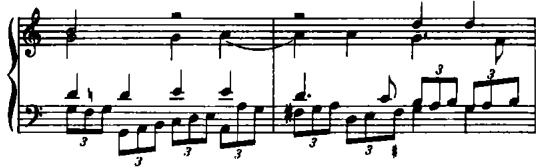
中文讲解
这是 P0012 中所引 Ex. 14.5 的图像占位符,对应 Bergamasca 第 VI 段(mm. 101–107)末段的 mm. 105–106,正是 P0012 描述为"brilliant triplets in the sixth part of the Bergamasca"的所在位置。图注仅标示曲名与起止小节,具体乐谱细节须查阅原图,本处不臆测。功能上,这一谱例是 P0012 论点"Frescobaldi 的炫技令人想起 ’non senza fatiga’ 托卡塔"的视觉证据。
脚注 / 边栏 / 图表 / 附加信息(如有)
本节内有两项附加材料:(1)P0007 含两个脚注(⁴ 与 ⁵),分别支撑"礼仪上不合用"与"意大利键盘首见"两项主张,正文中已标明其作用;(2)P0014 为乐谱占位符 Ex. 14.5(Bergamasca mm. 105–106),作为 P0012 论点的视觉证据,需查看原图。
💡 本节核心要点
- Messa della Madonna 以两首基于世俗旋律(Bergamasca、Girolmeta)的 capriccio 收束,按特伦特大公会议标准本不应在礼仪中使用,作者却以此开篇以造成反讽张力。
- 尽管素材俚俗(歌词如 “Franceschina pleases me”),Frescobaldi 自己的话 “Chi questa Bergamasca sonara, non pocho Imparera” 印证这两首仍是 Fiori musicali 中篇幅最长、最精湛的篇章。
- Bergamasca 七段、Girolmeta 四段(含 alio modo),结构上共享"主题贯穿而靠拍号/织体/装饰/终止对比"的写法,这是 Frescobaldi 1624 capricci 体裁的延续。
- Girolmeta III 段终止于 C 而非主音 G,迫使后随的 alio modo 从常规意义上的"可选替代"转为"必要的结构解决",作者借此对术语作出限定。
- Frescobaldi 在两曲中展示出从"deliberately neutral"到"serpentine chromaticism"的对位光谱,并以炫技回应主题的日常性——作者将这一美学概括为 “transfiguration of the banal”。
- 作者把这一"以俗为雅"的美学远推到 J. S. Bach 的 Goldberg Variations Quodlibet(其中 Bergamasca 被引为 “Kraut und Rüben”),但强调两者关系是 analogy(类比)而非 imitation(模仿),最终命题是"the commonplace becomes the touchstone for the transmuting power of the composer’s art"。
🔑 关键术语
- Bergamasca:16-17 世纪意大利世俗曲调,曾被 Farnaby、Scheidt、Sweelinck、Rossi、Viadana 等欧洲作曲家谱曲;本节称 Frescobaldi 的设置为意大利键盘乐曲中的首见。
- Girolmeta:与 Bergamasca 同类的意大利世俗旋律;Canale 的 canzona “La Stella” 据本节称曾引用之,Frescobaldi 的设置同样为意大利键盘首见。
- capriccio:Frescobaldi 常用的多段式键盘曲式,主题贯穿而各段在拍号、织体、装饰、终止音上形成对比;本节两首即此体裁的成熟形态。
- ricercar / canzona:前两部弥撒收束所用的严肃对位体裁,作者以之作为本节"以世俗旋律收束"的对照基准。
- alio modo:拉丁语 “以另一种方式”,Frescobaldi 作品中通常指演奏者可选的替代版本;本节指出在 Girolmeta 中并非可选而是必要结构解决。
- Quodlibet:巴洛克后期将多条已知旋律同时叠合的曲式;本节引为 Bach Goldberg Variations 末曲,是 “transfiguration of the banal” 的极致表达。
- Council of Trent:本节据以判定 Bergamasca 与 Girolmeta 不合礼仪用途的教会会议权威。
- Fiori musicali:Frescobaldi 的键盘作品集;本节所论两首 capriccio 出自其中,被作者称为该集最精的篇章之一。
- Clavierübung:J. S. Bach 后期键盘作品集;作者用以与 Fiori musicali 进行体裁类比,但先承认规模不对等。
S14.4 [描述性拆分] The Aggiunta to Toccate I (1637)
第1段(P0015)
原文复述
The reedition of Frescobaldi’s first book of toccatas published in 1637 under the patronage of Cardinal Francesco Barberini added to the original an Aggiunta containing nine new works, the last to be printed during Girolamo’s lifetime: three balletti; the Cento partite sopra passacagli, which superseded the variations on the ciaccona and the passacagli in Toccate II; a variation-capriccio on the Ruggiero; a capriccio on la Battaglia; two dance pairs, a balletto and ciaccona and a corrente and ciaccona; and a “Capriccio pastorale” for organ with pedals.
中文讲解
本段概述了1637年再版《托卡塔第一集》在原书之外所附Aggiunta(增补部分)的总体面貌。需注意以下几个要点:(1)再版的赞助人是枢机主教Francesco Barberini,这把Frescobaldi的出版行为置于Barberini家族的文化赞助网络之中;(2)这九首作品是Girolamo生前出版的最后一批作品,因此在曲目构成上是具有遗嘱性质的收束;(3)作品类型呈现出高度的多样性:三首balletti(小型舞曲组曲)、Cento partite sopra passacagli(取代了《托卡塔第二集》中的ciaccona与passacagli变奏)、《Ruggiero》变奏随想曲、《Battaglia》(战斗)随想曲、两组舞蹈对(一组为balletto与ciaccona,另一组为corrente与ciaccona)、以及一首带踏 pedal的管风琴《Capriccio pastorale》。作者在此只是先罗列曲目名单,并不对每首做评价,这为下一段对每首作品优劣的逐一评估做了铺垫。
补充说明
Aggiunta意为"增补",在此指1637年再版本附加于1615年初版之后的作品集合。Cardinal Francesco Barberini是教皇Urban VIII的侄子,Barberini家族是17世纪罗马最重要的艺术赞助人之一,统摄该家族的赞助语境是理解这些出版物语境的必要背景,但仅以本节提供的信息为限。
第2段(P0016)
原文复述
The quality of these last works is uneven. The Pastorale is interesting chiefly as an early example of the pastoral in which pedal-points imitate the sound of bagpipes, a genre that may have originated in Naples, the land of the Christmas presepio, or in Rome, where pifferari and zampognari still come down from the Abruzzi to serenade the Madonna and Child. The Battaglia (qualified as “navale” in one copy), except for its exploitation of harpsichord sound-effects, is without doubt the weakest piece of music Girolamo ever published. The Ruggiero, with its sly quotation of the tune “Fra Jacopino” which harks back to the sixth ricercar of the 1615 collection, is a charming example of Frescobaldi’s small variation-sets. The remaining works exemplify in one way or another Girolamo’s increased interest in the continuous ostinato variation, an interest perhaps stimulated by his own public improvisations and by the employment of improvised passacaglias in the Barberini operas of the 1630s.
中文讲解
本段是对Aggiunta九首作品的逐项评价,作者明确指出这批作品的质量参差不齐(uneven)。其中四点值得特别留意:(1)《Pastorale》的意义不在其音乐本身,而在它是早期"pastoral"类型的例证——通过持续低音(pedal-points)模拟风笛音效。该类型可能起源于那不勒斯(圣诞节耶稣诞生场景的故乡)或者罗马(pifferari与zampognari从Abruzzi下山向圣母圣婴奏乐的习俗之地)。作者在这里把音乐风格与具体的民间礼仪场景相连,使读者理解该作品的文化语境。(2)《Battaglia》一本抄本中注明"navale"(海战),但除了一些羽管键琴的特殊音效之外,被作者毫不含糊地判定为Girolamo生前出版作品中最弱的一首。(3)《Ruggiero》变奏随想曲通过插入曲调"Fra Jacopino"与1615年曲集中第六首ricercar形成呼应,体现了Frescobaldi小型变奏套曲的精巧——作者用"sly quotation"(狡黠的引用)一词,凸显这种跨作品材料援引的趣味。(4)其余作品共同展示了Frescobaldi对"连续固定低音变奏"(continuous ostinato variation)日益浓厚的兴趣,作者推测这种兴趣可能受到两方面刺激:他自己的公开即兴演奏,以及1630年代Barberini家族赞助的歌剧中使用即兴passacaglia的做法。作者通过这一段把音乐作品、个人即兴实践与赞助人的剧目实践三者联系起来,构建了一个比单首作品评价更宽的解释框架。
补充说明
脚注6、7分别支持pastoral类型起源的两种猜测(那不勒斯或罗马)以及Barberini歌剧中即兴passacaglia的史实,作者以脚注承认其推测性,因此这些背景虽具启发性但在文本中并未当作确定结论。“Fra Jacopino"的具体出处与1615年第六首ricercar之间的关系,是Frescobaldi横跨二十余年出版生涯中自我引用网络的实例。
第3段(P0017)
原文复述
The three balletti are miniature dance-suites, each opening with a two-part balletto in duple meter followed by a two-part corrente (thematically related to the balletto in the first two sets) in compound meter and concluding—in sets one and three—with passacagli. The same bass underlies both passacagli sections, stated in the minor on E in the first and both in the major, on B-flat, and in the minor, on G, in the second (Ex. 14.6). The other combinations of dance and ostinato do not shed much additional light on the distinction between passacagli and ciaccona, since the bass of the first ciaccona, in major, is closely related to the passacagli, and the second is little more than a modulating cadential progression (Ex. 14.7).
中文讲解
本段将焦点从整批作品的概述收窄到三首balletti的内部结构与音乐材料的对应关系。关键内容有四层:(1)每首balletto都是一套"微型舞曲组曲”,结构为二段式balletto(二拍子)—二段式corrente(复拍子,在第一、二首中与balletto有主题关联)—passacagli(仅在第一、三组曲中出现)。(2)两组passacagli的固定低音"实为同一条"——第一组的passacagli以E小调陈述低音,第二组的passacagli同时呈现两个版本:大调在降B、小调在G。这一"同一低音的多调性陈述"在示例14.6中显示。(3)作者随后论及"舞蹈—固定低音"的其它组合(应当指P0015中提到的balletto+ciaccona、corrente+ciaccona两组)并未能为passacagli与ciaccona之间的体裁区分提供更多澄清,原因是第一首ciaccona(大调)的低音与passacagli关系密切,第二首ciaccona仅仅是一个转调的收束进行(见示例14.7)。(4)本段的论证意义在于:通过揭示passacagli与ciaccona在Frescobaldi手中共享低音材料、彼此界限模糊,作者实际上是在质疑一种过于清晰的体裁分类,并指出17世纪的体裁边界远比后世理论描述更具弹性。
补充说明
示例14.6专门展示passacagli低音的同条低音多调性排列;示例14.7则展示两组ciaccona低音的对比,是作者"区分未能厘清"这一判断的依据。minor on E即"以E为根音的小调",major on B-flat即"以降B为根音的大调"。
第4段(P0018)
原文复述

中文讲解
本段为示例14.6的图题占位符,标题为"Passacagli basses",与前文P0017所述"示例14.6展示同一bass在E小调、降B大调、G小调上的陈述"相对应。由于内嵌图像数据被省略,实际谱例内容无法在文本形式下复述,需查阅原书方能确认各调版本低音线的细节及其调性关系。
补充说明
本图在原书中应与P0017的论述同时阅读,用以支持"同条passacagli bass以多调性陈述"这一关键观察。
第5段(P0019)
原文复述
In all these works the dance movements display the straightforward vigor and metrical subtlety we have come to expect from Frescobaldi’s dance writing. The ostinato movements—especially the passacaglias of the balletti—have a new quicksilver variety of constantly changing register, chromatic inflection, and play with symmetry and asymmetry so idiomatic to the keyboard that they seem written-out improvisations. Indeed, two seventeenth-century manuscripts of keyboard music that present passacaglias in every possible key, including the equivalents of E-flat major and c minor, f minor, A major, and E major, seem to provide models for such improvisation, but it is impossible to decide whether they foreshadow or reflect Frescobaldi’s own performances and publications.
中文讲解
本段为本节的收束段落,对Aggiunta的所有作品做出风格层面的综合判断,并尝试把Frescobaldi的作品放回更宽的17世纪键盘音乐传承中加以定位。要点有三:(1)舞蹈段落保持着Frescobaldi一贯的特点:“质朴有力的力度感”(straightforward vigor)与"节拍的微妙处理"(metrical subtlety),作者用"we have come to expect"暗示读者在前文章节中已对这一风格熟悉。(2)固定低音段落(尤其是balletti中的passacaglia)则呈现一种新的特征——“水银般的多变”(quicksilver variety),涉及不断变换的音区、半音的色彩性变化、对称与不对称的交替;作者认为这种写法如此契合键盘乐器的特性,以至于"看起来像是把即兴演奏落到了纸面"(written-out improvisations)。(3)作者提到两部17世纪的键盘乐抄本,其中收入几乎所有调性的passacaglia(包括降E大调与c小调的等音调关系、f小调、A大调、E大调等),认为这些抄本"似乎为这种即兴提供了范本",但严肃地承认无法判断它们究竟在Frescobaldi的演出与出版之先(foreshadow)还是之后(reflect)。这一不可判定的态度十分重要:本节的主线叙述到此以"史料因果方向的不确定性"作结,既保留了一种严谨的史学立场,也提示读者:本节的Aggiunta研究只是更大即兴—出版互动关系网络中的一部分。
补充说明
脚注8支持"两部17世纪抄本提供调性完备的passacaglia范本"这一说法,作者之所以不将这种关系坐实为影响/被影响,是因为抄本与Frescobaldi作品的具体编年时间关系尚未在文本中被确定。written-out improvisation(即把即兴落于谱面)的概念是17世纪键盘音乐研究的关键术语,提示乐谱与即兴之间的辩证关系。
脚注 / 边栏 / 图表 / 附加信息(如有)
本节涉及的附加材料:脚注6支持pastoral类型的地域起源猜测(那不勒斯或罗马),属于来源/旁证性质;脚注7支持Barberini歌剧使用即兴passacaglia这一史实,为解释Frescobaldi兴趣来源提供社会音乐学背景;脚注8支撑P0019关于17世纪抄本与Frescobaldi passacaglia之间可能的范式关系的论述,但作者不将其中的因果方向坐实。示例14.6(Passacagli basses)以谱例形式直接支持P0017关于"同一bass的多调性陈述"的核心观察;示例14.7(两组ciaccona低音)则支撑P0017末尾"passacagli与ciaccona界限不清"的判断。两幅谱例的位置均紧扣前后论述段落。
💡 本节核心要点
- 1637年Aggiunta是Frescobaldi生前出版的最后一批作品,共九首,体裁多样,由枢机主教Francesco Barberini赞助出版。
- 这批作品整体质量参差不齐:《Pastorale》以模拟风笛见长,《Battaglia》是其生前出版的最弱作品,《Ruggiero》通过跨作品的曲调援引呈现精巧变奏思维。
- Aggiunta的多数作品呈现出对"连续固定低音变奏"的强烈兴趣,这一兴趣可能与Frescobaldi自身的公开即兴以及Barberini家族1630年代歌剧中的即兴passacaglia实践相关。
- 三首balletti是balletto—corrente—passacagli结构的微型组曲;其passacagli共享同一条bass低音,以多调性陈述,这模糊了passacagli与ciaccona的体裁边界。
- Frescobaldi的舞蹈段落保持一贯的"质朴有力"与节拍微妙感,而固定低音段落则以"即兴落于纸面"式的快速音区变换、半音色彩与对称/不对称游戏为特征。
- 两部17世纪调性完备的passacaglia抄本可能为这种即兴提供范本,但其与Frescobaldi之间是影响还是被反映,作者明确表示无法判定。
🔑 关键术语
- Aggiunta:意大利语"增补"。在本节中指1637年再版Frescobaldi第一集托卡塔时附于原1615年版之后的九首新作品集合,是其生前出版的最后一批作品。
- passacagli / ciaccona:17世纪键盘音乐中以固定低音(ostinato bass)为基础的两种变奏体裁。Frescobaldi的实践中两者在bass材料、调性与终止处理上常常彼此交融,本节显示这两者的体裁界限在他手中并非泾渭分明。
- ostinato variation:“固定低音变奏”,即以一条反复出现的bass线为骨架进行上声部与和声变奏的写作方式。本节将Aggiunta多数作品的共同特征归于Frescobaldi对这一写法的日益浓厚的兴趣。
- balletto / corrente:17世纪常见的两种舞曲:balletto为二拍子的轻快舞曲,corrente为复拍子(三拍子复合)的流动舞曲。本节中两者在balletti组曲里以两段式结构出现,且前两首中corrente与balletto存在主题关联。
- Ricercar:16—17世纪以复调对位为主的键盘体裁。本节中提及《Fra Jacopino》曲调的引用"回溯到1615年曲集的第六首ricercar",显示Frescobaldi在二十余年间存在跨出版物的材料引用网络。
- Capriccio pastorale:“田园随想曲”。本节中的《Capriccio pastorale》为带踏 pedal的管风琴作品,是早期pastoral类型的代表,通过持续音模拟风笛之声,可能与那不勒斯的圣诞耶稣诞生场景或罗马Abruzzi山区乐手的朝拜传统相关。
- written-out improvisation:“落于纸面的即兴”,指乐谱虽以书面形式保存,却保留了即兴演奏常见的快速音区变换、半音色彩、即兴对位等特征。本节以此概念描述Frescobaldi passacaglia段落那种"水银般多变"的键盘化写法。
- pifferari / zampognari:意大利民间乐手群体,分别吹奏小风笛(piffero)与大风笛(zampogna)。本节中说明:在罗马,他们每年仍从Abruzzi山区下山,向圣母圣婴奏乐,这一习俗被用来为pastoral类型的罗马起源说提供文化语境。
S14.5 [描述性拆分] Genesis of the continuous ostinato variation, 1627–1630
第1段(P0020)
原文复述
Girolamo’s new command over continuous keyboard textures in the decade between 1627 and 1637 was hard-won. The Ciaccona and Passacagli variations from the 1627 book are surprisingly limited when measured against the rich variety of their companion toccatas. In both sets of variations the two-measure module of the original is rigidly maintained, and because both patterns begin on I and end on V, every new variation opens with a monotonously predictable tonic cadence on the downbeat. The texture of the Ciaccona in particular underlines this, since almost invariably figuration in one hand is accompanied by chords in the other, and the variations tend to be paired, with one hand taking up the figural material of the other from the previous variation. Among the most obvious features of the Ciaccona set that pass over into later works are the frequent addition of 4 to V⁵ chords, the minor inflection of the third, and a sense of contrasting textures (Ex. 14.8).
中文讲解
本段是这一小节的总判断:为吉罗拉莫(Girolamo Frescobaldi)后来在 1627–1637 年间对持续性键盘织体的“新掌握”作铺垫,强调这种掌握来之不易,起点其实非常有限。
- 与同册的托卡塔相比,1627 年谱集中的《恰空》(Ciaccona)与《帕萨卡利亚》(Passacagli)变奏“出奇地有限”——这是一个反讽式的开场,意在让读者意识到 1627 年版并非该体裁的成熟形态,而是发展链上较为原始的一环。
- “有限”体现在三个方面: a. 形式层面:两小节模块被僵硬地维持不变,变奏的篇幅与节奏骨架被锁死在原本的两小节框架内。 b. 和声层面:两个固定低音模式都以 I 开始、以 V 结束,因此每一段新变奏必然以下拍上的主音终止式开场,形成单调可预测的下行式(实际上是 I→V)收束。 c. 织体层面:《恰空》尤其典型——一只手承担花奏,另一只手伴奏以和弦;变奏两两成对,后段变奏中的“花奏手”会接续上一段另一只手的材料,形成链式呼应,强化了循环感。
- 但作者并不否认 1627 年版已经孕育了若干“可被后来继承”的特征:频繁向 V⁵ 和弦加 4 音、三音的小调化(minor inflection of the third,即在大调语境中加入小三度造成色彩对比)、以及不同织体之间的对比感。这三点(举例 14.8 引为佐证)成为后来更自由的变奏写作的种子。
- 在论证结构上,本段的功能是“设定低起点”——把读者带入一种“看似丰富、其实僵硬”的印象,从而让下一段(P0021,论《帕萨卡利亚》的长度与组合意识)以及 P0027(论 1630 年的突破)显示出真正的发展幅度。
易误读处:作者说“surprising limited”并非贬低作品,而是为整节的发展论铺设落差;“hard-won”提示“成熟”要经过几次蜕变,不能直接从 1627 年版跳到 1637 年的代表作。
补充说明
P0020 中提到的“Ex. 14.8”对应下方 P0023 与 P0025 的图例(14.8a 与 14.8b),展示 1627《恰空》第 20–22 与 25–26 小节,作者用以印证本段提到的“加 4 音”、“三音小调化”与“织体对比”。“V⁵”指的是属五六和弦(属七和弦的转位形式,即在属音上加三度与七度),这里再额外加上一个 4 音以制造不协和色彩。
第2段(P0021)
原文复述
The Passacagli variations, twice the length of the Ciaccona variations (a phenomenon also visible in guitar variations), display a greater awareness of keyboard space and an attempt to link single variations into larger groupings (Ex. 14.9). Among the other devices retained in later treatments of the same material are the pedal-point trill and an alio modo section, here realized as a change of meter rather than of tonic.
中文讲解
本段在“1627 年版看似有限”的前提下,针对《帕萨卡利亚》单独说明它的相对进步,并列举若干被继承到后期作品的写作手法。
- 长度差异:1627《帕萨卡利亚》变奏篇幅是《恰空》的两倍。作者特别补注“这种现象在吉他变奏中也可见”,说明此长度比例并非孤例,而是当时此类固定低音变奏的常见体量选择。
- 空间意识:篇幅扩大使作者得以展现“键盘空间感”(greater awareness of keyboard space),即声部在键盘高低音区间的分配与呼应更为从容。
- 组合意识:变奏不再只是逐条并列,作者尝试把若干变奏连缀为更大的组合(larger groupings),这是向“整体化变奏结构”迈出的第一步,与 P0020 所说“变奏两两成对”的简单循环相比是更高层级的组织。
- 被继承的两种手法: a. 持续音颤音(pedal-point trill)——在持续低音上方作颤音,是一种将低音“延长”与高音“装饰”结合的手法; b. alio modo(拉丁语,“以另一种方式”)段落——这里特别指出,此处的 alio modo 不是常见的“换调”,而是“换拍”。这个限定很重要:通常 alio modo 指变换主音形成对比段,但在 1627《帕萨卡利亚》中则以节拍变化来达成对比。
- 论证作用:本段与 P0020 共同勾画了 1627 年版内部的层次——《恰空》最为僵化,《帕萨卡利亚》已显示出向“组群化”与“对比段”的初步发展。这些萌芽为 P0027 中 1630 年声乐作品的彻底突破埋下伏笔。
易误读处:不要把“alio modo = 换调”当成通用定义套用到此处;作者已限定此处为换拍。
补充说明
P0021 提到的“Ex. 14.9”对应下方 P0026 的图例,展示 1627《帕萨卡利亚》第 1–11 小节,作为本段论述的乐谱佐证。“alio modo”为拉丁短语,意为“以另一种方式”,在变奏曲中常指一个对比性的段落,通常通过调性或节拍变化来实现;作者特别说明此处是节拍变化。
第3段(P0022)
原文复述
[Figure placeholder: EXAMPLE 14.7 — Ciaccona basses; image data omitted; caption and position preserved]

中文讲解
本页出现的图例占位符,标记为“EXAMPLE 14.7 — Ciaccona basses”(《恰空》固定低音)。内嵌图像数据在本任务输入中已被省略,无法从文本中读取具体的音高与节奏细节;该图在原文中应位于 P0020–P0021 论述之后,作为 1627《恰空》固定低音形态的谱例佐证。读者需查阅原书以获取实际谱面信息。
第4段(P0023)
原文复述
[Figure placeholder: EXAMPLE 14.8a — Partite sopra ciaccona (1627), measures 20–22; image data omitted; caption and position preserved]

中文讲解
图例占位符,标记为“EXAMPLE 14.8a — Partite sopra ciaccona (1627), measures 20–22”(1627《恰空变奏曲》第 20–22 小节)。图像数据已省略。该图是 P0020 中“Ex. 14.8”所指乐谱的前半部分,用以印证作者在该段提到的“加 4 音于 V⁵”、“三音小调化”与“织体对比”等特征。实际谱面需查阅原书。
第5段(P0024)
原文复述
[Figure placeholder: page-6 image or musical example; image data omitted; caption and position preserved]
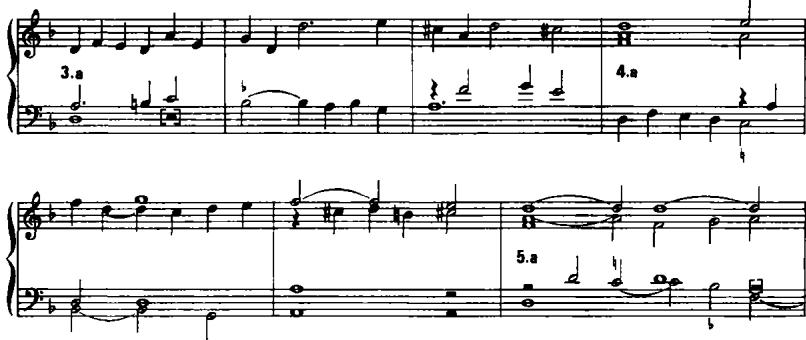
中文讲解
第 6 页出现的图例占位符。在任务输入中该图的具体图注文字未被完整识别(仅显示为“第 6 页图像或乐谱示例”),故具体内容(如是否为某例的整页图、是否为独立插图)须查阅原书以确认。从版面位置推断,它应处于 P0023(图 14.8a)与 P0025(图 14.8b)之间,承接页内排版。
第6段(P0025)
原文复述
[Figure placeholder: EXAMPLE 14.8b — measures 25–26; image data omitted; caption and position preserved]
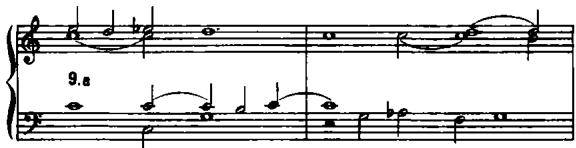
中文讲解
图例占位符,标记为“EXAMPLE 14.8b — measures 25–26”(第 25–26 小节)。图像数据已省略。该图是 P0020 中“Ex. 14.8”所指乐谱的后半部分(接续 P0023 中的 14.8a),与前者共同构成对该《恰空》片段的完整谱例展示。实际谱面需查阅原书。
第7段(P0026)
原文复述
[Figure placeholder: EXAMPLE 14.9 — Partite sopra passacagli (1627), measures 1–11; image data omitted; caption and position preserved]

中文讲解
图例占位符,标记为“EXAMPLE 14.9 — Partite sopra passacagli (1627), measures 1–11”(1627《帕萨卡利亚变奏曲》第 1–11 小节)。图像数据已省略。该图对应 P0021 中提到的“Ex. 14.9”,作为该段论述“键盘空间感”、“变奏组合意识”以及“pedal-point trill”、“alio modo(换拍)”等特征的谱例佐证。实际谱面需查阅原书。
第8段(P0027)
原文复述
The next stage in Girolamo’s development of these two patterns appears in the Arie musicali of 1630 in the form of an Aria di Passacaglia, “Cosi me disprezzate,” and a Ceccona, “Deh, vien da me.” Here Frescobaldi avoids the rigid sectionalization of the 1627 keyboard variations by alternating sections in free recitative style and duple meter with triple-meter sections based on the ostinati. Moreover, the ostinati themselves are treated with greater freedom. The Passacaglia outlines a descending tetrachord and can be realized in a variety of figurations, sometimes with extensive substitutions (Ex. 14.10). The Ciaccona is again a cadential figure (Ex. 14.11). Most importantly, both patterns are now permitted to modulate, and this combines with the overlapping of bass phrases by the vocal lines to break up completely the static periodicity of the 1627 keyboard settings. The result is a new freedom and flexibility, both tonally and texturally.
中文讲解
本段是全小节论证的关键转折:从 1627 年的“僵化起点”跃迁到 1630 年的“突破”。作者用三个层次的对比来支撑“新的自由与灵活”:
- 宏观结构层面:1630 年的《音乐咏叹调》(Arie musicali)中收录了《帕萨卡利亚咏叹调》“Cosi me disprezzate”与《恰空》“Deh, vien da me”两首作品。它们打破了 1627 年键盘变奏的“僵硬分段”——通过在“宣叙风格、二拍子段落”与“基于固定低音的三拍子段落”之间交替出现,使整首作品不再是一连串同质化的两小节循环,而是不同性格、不同节拍、不同织体的板块相互穿插。
- 固定低音本身层面:不仅外部结构更自由,固定低音自身也获得了更灵活的处理。1630《帕萨卡利亚》勾画出一个下行四音列(descending tetrachord)作为低音骨架,并允许以多种花奏来实现,有时甚至做大幅度的替代音(extensive substitutions),如 P0028 中“Ex. 14.10a”所示。1630《恰空》则再次以一个收束式音型(cadential figure)出现,如“Ex. 14.11”所示(虽本节输入未直接包含该图例编号,但在 P0027 文本中已被点名引用)。
- 和声—声部层面(作者标以“Most important”):两个固定低音如今都被允许转调(modulate),再叠加上声部的旋律线对低音短句的“跨句重叠”(overlapping of bass phrases),结果彻底瓦解了 1627 年版那种静态的周期性重复。
综合效果:作者用“新的自由与灵活”(new freedom and flexibility)作为本段的总结判断,分别从调性(tonally)与织体(texturally)两个维度加以落实。这与开篇 P0020 中“hard-won”与“surprisingly limited”的判断形成首尾呼应——艰难的成长至此完成了一次可辨认的跃升。
易误读处:
- 不要将 1630 这两首作品与 1627 年的纯键盘变奏等同视之;它们是带声乐线的作品,体裁上属于声乐咏叹调 / 咏叙调,其中的固定低音只是低声部组织手段之一。
- 作者特别标注“Most important”于“转调”一点,意在告诉读者:突破的本质不在于节拍交替或花奏多样化,而在于固定低音获得了脱离 I–V 框架、走向其他调区的能力,这是与 1627 年版“开始于 I、结束于 V”的根本差别。
- “Ceccona”是“Ciaccona”的另一拼写,指同一固定低音形式。
补充说明
本段提及的两首作品《Aria di Passacaglia, “Cosi me disprezzate”》与《Ceccona, “Deh, vien da me”》均为 1630 年《音乐咏叹调》中的声乐作品;“Ceccona”即“Ciaccona”的同义异体拼写。所提到的两个图例编号“Ex. 14.10”与“Ex. 14.11”分别对应后续谱例;本任务输入中包含 P0028 的 14.10a,14.11 的具体内容须查阅原书。
第9段(P0028)
原文复述
[Figure placeholder: EXAMPLE 14.10a — Aria di passacaglia, measures 1–3; image data omitted; caption and position preserved]
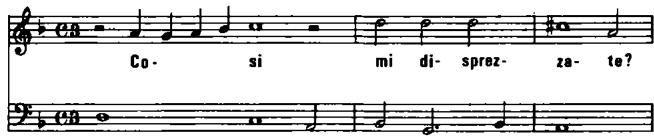
中文讲解
图例占位符,标记为“EXAMPLE 14.10a — Aria di passacaglia, measures 1–3”(《帕萨卡利亚咏叹调》第 1–3 小节)。图像数据已省略。该图是 P0027 中“Ex. 14.10”的前半部分,用以印证作者所述“下行四音列”低音骨架及其“可多种花奏化、可做替代音”的特征。实际谱面需查阅原书。
脚注 / 边栏 / 图表 / 附加信息(如有)
本小节附有图例 14.7 至 14.11(部分图例仅有 a 段)。其中:
- 14.7 “Ciaccona basses”(P0022):与 P0020 论述配合,呈现 1627《恰空》的固定低音形态。
- 14.8a(P0023)与 14.8b(P0025):1627《恰空变奏曲》第 20–22 与 25–26 小节,佐证 P0020 中所提的加 4 音、三音小调化与织体对比。
- 14.9(P0026):1627《帕萨卡利亚变奏曲》第 1–11 小节,佐证 P0021 中所提的长度、空间感、组合意识、pedal-point trill 与 alio modo(换拍)等特征。
- 14.10a(P0028):1630《帕萨卡利亚咏叹调》第 1–3 小节,佐证 P0027 中所述下行四音列与花奏自由;14.10b 与 14.11 在当前输入中未给出(14.11 在 P0027 文本中被点名引用为《恰空》的收束式音型佐证)。
- P0024 的图例位于第 6 页中段,因其图注在输入中未被完整识别,仅能确认其版面位置。 图例群在本节中作为论证辅证贯穿始终,按 1627 键盘变奏 → 1630 声乐作品的顺序展开,与正文叙述同步推进。
💡 本节核心要点
- 1627 年《恰空》与《帕萨卡利亚》变奏与同册托卡塔相比“出奇地有限”:两小节模块僵化保留、两模式均起于 I 止于 V,因而每段新变奏皆以下拍上的主音终止式开场;《恰空》尤以一手花奏—另一手和弦的两两配对形态为典型。
- 尽管有限,1627 年版已包含若干可被继承的特征:频繁向 V⁵ 加 4 音、三音的小调化、织体对比感、持续音颤音(pedal-point trill)、以及 alio modo 段落(此处以换拍而非换调实现)。
- 1627《帕萨卡利亚》的篇幅为《恰空》的两倍(亦见于同时期吉他变奏),并初步显示出对键盘空间的把握与把单条变奏连缀为更大组合的意识,标志着 1627 年版内部的层次分化。
- 1630 年《音乐咏叹调》中的《帕萨卡利亚咏叹调》“Cosi me disprezzate”与《恰空》“Deh, vien da me”代表发展链上的下一阶段:通过宣叙风格、二拍子段落与三拍子固定低音段落的交替,化解了 1627 年版的僵硬分段。
- 在 1630 作品中,固定低音自身也被赋予更高自由度:《帕萨卡利亚》以“下行四音列”为骨架,可作多种花奏甚至大幅替代音;《恰空》则再次以收束式音型出现。
- 最关键的突破在于“转调”被允许进入两个固定低音;叠加上声部旋律对低音短句的跨句重叠,1627 年版的静态周期性被彻底打破,最终带来作者所总结的、在调性与织体两个维度上“新的自由与灵活”。
🔑 关键术语
- Ciaccona(Ceccona):意大利语“恰空”及其异体拼写,一种以短小固定低音为基础的变奏形式;1627 年版中僵化为两小节模块的循环,1630 年版则被处理为收束式音型并允许转调。
- Passacagli(Passacaglia):意大利语“帕萨卡利亚”,一种以反复固定低音(通常四或八小节)为基础的变奏形式;1627 年版的篇幅为同时期《恰空》的两倍,1630 年版则演变为以“下行四音列”为骨架、可多种花奏化的低音公式。
- ostinato:“固定低音/固定音型”,指在变奏过程中被反复出现的低音或音型;本节中指《恰空》与《帕萨卡利亚》各自的低音模式。
- alio modo:拉丁短语,意为“以另一种方式”,在变奏集中通常指一个对比性段落;在本节 1627《帕萨卡利亚》中以“换拍”而非通常的“换调”形式出现,作者对此作了专门限定。
- pedal-point trill:在持续低音(pedal point)上方所作的颤音,将低音的延长与高声部的装饰结合;作者指其为 1627《帕萨卡利亚》中被保留到后期作品的手法之一。
- V⁵(属七和弦):即属五六和弦,此处再额外加上一个 4 音以制造不协和色彩,是 1627《恰空》中频繁出现并被继承至后期作品的和声手法。
- descending tetrachord:“下行四音列”,一个由四个音组成的下行音阶片段;在 1630《帕萨卡利亚》中作为低音骨架,并允许以多种花奏实现及替代音处理。
- free recitative(recitative style):“宣叙风格”,一种接近语言节奏的声乐朗诵风格;1630 作品中以宣叙风格、二拍子的段落与基于固定低音的三拍子段落交替出现,化解了 1627 年版的僵硬分段。
- modulation:“转调”,即音乐从一调进行至另一调;作者标注“Most important”于本节,说明 1630 作品中两个固定低音“被允许转调”是突破 1627 年版静态周期性的核心机制。
- static periodicity:“静态的周期性”,指 1627 年版那种以两小节模块反复循环、和声在 I 与 V 之间来回、缺乏真正变化的循环状态;本节以此概念反衬 1630 年版的“新的自由与灵活”。
S14.6 [描述性拆分] The Cento partite and triple mensurations
第1段(P0029)
原文复述
The passacagli, ciaccona, and dance attain their apotheosis in the Cento partite sopra passacagli. The problems posed by this work begin with the title. Typographically, the “Cento” appears to be an afterthought, and in fact there are seventy-seven variations on the Passacagli, plus forty-one more on the Ciaccona. The index of the volume compounds the confusion by ending the Cento partite at the Corrente and listing the remainder of the work as Corrente e passachagli and Ciaccone e passachagli. This suggestion of a complex evolution for the work is confirmed by the alteration of page numbers on the original plates. 9 Frescobaldi’s note added in 1637 to the 1616 preface states that “the Passacagli can be played separately, as one prefers, with the adjustment of the tempo of one part and another; so with the Ciaccone.” One glance at the music, which employs seven different triple mensurations and sixteen changes of mensuration, raises the question of what role these symbols play in “the adjustment of the tempo of one part and another.”
中文讲解
本段围绕弗雷斯科巴尔迪的《Cento partite sopra passacagli》(《一百首帕萨卡利亚变奏曲》)提出全小节的核心问题。先给出作品的总体定位:帕萨卡利亚、恰空与舞曲三种体裁在这部作品中达到“apotheosis”(最高典范)。随后紧接三层证据,暗示该作品并非一次写成,而是经历了复杂的演变:(1)标题层面,“Cento”(一百)在排版上像是后加的;(2)数量层面,实际包含77首帕萨卡利亚变奏加上41首恰空变奏;(3)目录层面,印本目录在Corrente处就把Cento partite截断,其余被另列为“Corrente e passachagli”和“Ciaccone e passachagli”;(4)物理层面,原版铜版的页码本身被改动过。因此全曲不是一个单一的、匀质的变奏集,而是经历了汇编与重组。作者进一步引用弗雷斯科巴尔迪1637年补加在1616年前言中的那段话:“Passacagli可以单独演奏,按个人意愿调整各部分的速度;Ciaccone亦然。”这句话表面上是授权演奏者自由处理速度,但实际上却很吊诡——因为乐谱里竟有七种不同的三拍子记号,并出现十六次拍号转换。那么问题就自然落到:这些记号究竟只是“分组(grouping)”的提示,还是承担了真正的“速度比例(proportional tempo)”功能?这正是本段抛出的、未解决的总问题,下文P0030、P0031将围绕它展开证据搜寻。
补充说明
脚注9的实质内容未在本段文字中展开,按上下文应是对原版页码改动现象的来源或细节说明(如编订史、版本学引文),它在此处的作用是为“复杂的演变过程”这一推论提供实物佐证,而非仅限一个旁注。另注意文中将作品由两个标题性体裁(Passacagli与Ciaccona)拼合而成,标题中的“Corrente”是第三个舞曲体裁,与目录中的截断现象相互印证。
第2段(P0030)
原文复述
The materials for an answer should first be sought in an examination of Frescobaldi’s use of triple mensurations. (The only variation in his employment of duple meter is the occasional replacement of C by C, which probably indicated a faster tempo; see Chapter 15.) Unfortunately, a survey of triple mensurations in Frescobaldi’s work does not seem to reveal either a consistent doctrine or even a consistent evolution, particularly in regard to proportional relationships. The only unequivocal proportional signs indicate relationships between duple and triple meters, not between two triple mensurations. These unequivocal indications are 12/8, canceled by 8/12, and (except at the beginning of a work) 6/4 canceled by 4/6 or, in later works, by C. Outside of the Aggiunta two triple signs in succession virtually never occur, which casts further doubt on their proportional interpretation in the Aggiunta. The greatest variety of triple signs appears—not surprisingly—in the mixed contents of Toccate II and in the other genres that employ contrasting triple sections: capriccios and canzonas. In addition, single collections seem to display common notational features. The more archaic signs—those involving O or O and black notation—tend to disappear from later works, but the 1634 Canzoni are a striking exception. The most common ternary sign in the instrumental works is C3 (but C3/2 in the 1634 Canzoni), which does not appear at all in the near-contemporary Arie. There the sign (C)3 appears to indicate a reduction in note-values. In the madrigal “Bella tiranna,” for example, the same material is presented as C3, 6/4, and 3. (This example also shows that an indication such as C added to another sign—in this case 3—at the beginning of a work is a general indication concerning perfection and imperfection; the 3 that appears later on has the same meaning as the opening C3.) Similarly, the sign C3/2 in the Canzoni governs both 3/2–6/4 and 3/1–6/2 passages, the latter perhaps also reduced in performance. Finally, in his later works Frescobaldi occasionally used signs (3/2, 6/4) in their modern signification of groupings rather than as proportions; the most obvious case is 6/4 placed at the beginning of a work, where it cannot refer to a preceding C.
中文讲解
本段是证据搜集与排除环节,先圈定讨论范围:只考察弗雷斯科巴尔迪对三拍子记号的使用,并在括号内事先声明二拍子的唯一变化是C被C取代、可能表示更快(详见第15章),因此不需把C→C纳入此处论证。接着给出关键的反面结论:全面观察后发现,弗雷斯科巴尔迪在使用三拍子记号时,“既没有一致的学说,也没有一致的演变”,特别是比例关系上不统一。真正“毫无歧义地指示比例”的记号只有两类——二拍子与三拍子之间的关系,即12/8被8/12抵消、6/4(在作品开头除外)被4/6或后来的C抵消;这意味着三拍子与三拍子之间的比例关系并不存在可靠记号。作者用Aggiunta(即补编)中几乎从不见两枚三拍子记号前后相继这一事实,进一步质疑补编中那些疑似比例记号的真伪。在体裁分布上,三拍子记号最丰富的恰恰出现在混合内容的Toccate II,以及使用对比三拍子段的capriccios和canzonas——这是符合体裁逻辑的,因为这些体裁本来就需要在三拍子段之间对比。单部曲集中常共享相同的记号惯例。更古老的记号(带O或O加黑色音符的)趋于消失,但1634年的Canzoni是显著例外。最常见的三拍记号是C3(在1634 Canzoni里却是C3/2),而近年的Arie里完全没有C3;Arie里的(C)3看起来指音符时值的减半。作者用牧歌“Bella tiranna”证明:同一段材料可分别写成C3、6/4和3三种记号,这就意味着这些记号未必带速度含义。同时这段例子还顺便说明:在作品开头的C附加于另一记号(这里是3)之上,是“完美/非完美”的总体指示;后面出现的那个单独的3与开头的C3含义相同。Canzoni里的C3/2同时管着3/2–6/4和3/1–6/2两种段落,后者演奏时音符时值或许也被减半。最后在后期作品中,弗雷斯科巴尔迪开始把3/2、6/4这些记号当作现代意义上的“节拍分组”来用,而非比例关系——最明显的证据是6/4出现在作品开头,因为没有更早的C可作参照。从整体论证看,本段一步步抽掉了“三拍子记号=速度比例”的简单假设:先是排除三拍与三拍之间的比例、再指出C3不一定都指示减半、再指出(Bella tiranna)中不同记号下材料相同,最后承认后期确有“现代分组读法”出现。
补充说明
括号内“P章”提示对C→C的详细论述在第15章,本处只作提示而不展开。(C)3表示音符时值减半(reduction in note-values),与下文P0031的“reduction of 3 to 3/2”是同一思路,但需注意:P0030这里的减半是相对于未明的某个更大单位,而P0031是在C与3之间建立比例。文中出现的“perfection and imperfection”是中世纪以来mensural notation中关于音符完整与不完整的术语,作者在此强调“开头的C+记号”只是一般性提示,并不必然等于速度比例。
第3段(P0031)
原文复述
The mensural indications in the predecessors of the Cento partite scarcely foreshadow the intricacy of the later work. The 1627 Ciaccona is notated throughout in ℂ3, barred as 3/2 and 6/2. The Passacagli set is similar until the alio modo, where ℂ3 (= 3/2) is replaced by ℂ6/4 apparently indicating a different grouping of the same note-values. (The procedure is reversed in the Passacagli of the third balletto from the Aggiunta, where 6/4 becomes ℂ = 3/2.) In the Aria di Passacaglia from the Arie, the passacaglia sections are written in ℂ3 (afterward 3) = 3/1 - 6/2 or 3/2. Allowing for some freedom in the recitative sections (in ℂ) and the reduction of 3 to 3/2, the piece supports a proportional interpretation in which o. in 3 equals ♩ in C. In the Ceccona, the ciaccona sections are notated C3, 3, and 6/4. (The intervening recitatives are all in C.) Although the change from 3 to 6/4 is inexplicable musically, at any rate it leaves no doubt as to the reduction of 3 (Ex. 14.12). Here again, a proportional relation between triple and duple sections makes musical sense.
中文讲解
本段回到历史顺序,逐一审视《Cento partite》之前的几部作品,作为下一节讨论其极端复杂的拍号运用的对照基础。整体结论是:这些前辈作品的拍号安排“几乎预示不了”后来《Cento partite》的复杂程度。逐案看:(1)1627年的Ciaccona通篇用ℂ3记谱,按3/2和6/2小节划分;(2)同期的Passacagli集基本类似,但在alio modo(“另一种方式”)中ℂ3(=3/2)被ℂ6/4取代,作者认为这指示的是同一组音符的不同分组方式——即同一音符值换了一种组织方式,而非改变速度;(3)在Aggiunta第三首balletto的Passacagli中正好反过来,原本的6/4变成ℂ=3/2,再次呈现6/4与3/2可以互换的现象;(4)在Arie中的Aria di Passacaglia,帕萨卡利亚段落记为ℂ3(其后为3)=3/1-6/2或3/2;考虑到宣叙调段落(用ℂ)的速度可以自由处理,以及“3被减半为3/2”这一规则,该曲支持一种比例性解读:3中的全音符(o.)等于C中的二分音符(♩);(5)Ceccona中恰空段以C3、3、6/4记谱(中间的宣叙调一律用C),虽然“3到6/4”的变更在音乐上无明显道理可言(作者明言“inexplicable musically”),但至少再次确认了“3被减半”(Ex. 14.12为这一处提供谱例)这一事实。整段的论证功能是:在《Cento partite》之前,能用以支持“比例速度”解读的实例都是“二拍子与三拍子之间”的关系(如C与3的关系),三拍子之间的比例则并不存在;同时用Aria di Passacaglia、Ceccona等具体作品的记号实践,为“音符时值在比例上被减半”的观点累积个案。这就把读者的注意力引向《Cento partite》中出现的七种三拍记号和十六次拍号变化——这是一个在已有惯例中无直接先例的现象。
补充说明
“alio modo”(另一种方式)是变奏集中的惯用术语,表示同一基础和声进行以新的处理方式重复出现,本段中它也恰好是记号从ℂ3变为ℂ6/4的转折点。Ex. 14.12作为本段的唯一谱例仅提到“reduction of 3”,其谱面细节(如记号并置、具体小节)在文本中未给出,故此处不宜补写。Arie中的recitative sections按本段措辞“allow for some freedom”,是说宣叙调本身允许速度弹性,因此记号上不必严格比例化,这与正文Ceccona中“The intervening recitatives are all in C”相互呼应。
脚注 / 边栏 / 图表 / 附加信息(如有)
本节三段文字均无独立的脚注、图表或边栏信息;仅有P0029中提到的脚注9,以及P0031中提到的谱例Ex. 14.12,二者均嵌于正文叙述之中,作用分别为:脚注9支持“作品经历复杂演变”的实物证据,Ex. 14.12为“3被减半”这一规则提供谱面佐证。
💡 本节核心要点
- 《Cento partite sopra passacagli》是一部经历了复杂汇编与重组的作品,标题排版、变奏数量(77+41)、目录截断与原版页码改动共同证明了这一点。
- 弗雷斯科巴尔迪在1637年补注中允许演奏者“调整各部分的速度”,但乐谱使用了七种三拍记号与十六次拍号变化,因此“速度调整”究竟由记号决定还是由演奏者决定,本身就是开放的问题。
- 考察三拍记号可得:弗雷斯科巴尔迪不存在统一的三拍记号学说或演变路径;唯一可靠的比例记号只存在于二拍子与三拍子之间(12/8-8/12、6/4-4/6/C),三拍子之间并无公认的比例关系。
- 在三拍记号的功能上存在多种解读并存:同一材料可记为C3、6/4、3(如“Bella tiranna”所示),后期作品中6/4在作品开头出现已退化为现代意义上的“节拍分组”而非比例。
- 《Cento partite》之前的作品(1627 Ciaccona、Passacagli、Arie之Aria di Passacaglia、Ceccona等)支持“二拍子-三拍子之间”的比例关系(如3中的全音符=C中的二分音符),但三拍子记号的多样性远不及《Cento partite》本身,因此该作品的复杂拍号体系在本节材料中尚无现成先例。
🔑 关键术语
- Cento partite sopra passacagli:弗雷斯科巴尔迪的大型变奏集,本节讨论的核心作品;标题中的“Cento”(一百)在排版上像后加,实际包含77首帕萨卡利亚变奏与41首恰空变奏,且被目录与原版页码改动进一步提示为多次汇编的产物。
- Passacagli / Ciaccona:两种低音变奏体裁,本节中作为《Cento partite》的两个组成部分;据弗雷斯科巴尔迪1637年补注,二者可单独演奏、速度可由演奏者调整。
- Triple mensurations / mensural signs:三拍子的拍号/记谱符号(如C3、C3/2、3、6/4、12/8等);本节论证其使用缺乏一致学说,且唯一确凿的比例关系仅存在于二拍子与三拍子之间。
- Proportional interpretation:把不同拍号解读为不同速度比例的解读方式;本节指出在弗雷斯科巴尔迪笔下,三拍子之间的比例解读证据薄弱,而二拍-三拍之间的比例解读(如3中全音符=C中二分音符)较有支撑。
- Reduction of note-values / reduction of 3 to 3/2:在比例解读下,三拍子记号所指示的音符时值是二拍子记号下的一半(如3=3/2);这是本节为《Cento partite》之前的几部作品提供的最有共识的具体比例规则。
- Grouping (modern signification):把拍号仅理解为音符的分组方式而非速度比例的现代用法;本节指出弗雷斯科巴尔迪在后期作品中已偶用此读法,最明显证据是6/4出现在作品开头(无更早的C可参照)。
- Alio modo:变奏集中“另一种方式”的段落标记,本节中此术语恰好出现在记号从ℂ3变为ℂ6/4的转折位置,用以提示同一基础材料被重新组织而非改变速度。
- Aggiunta:弗雷斯科巴尔迪曲集的“补编”部分;本节指出除Aggiunta外三拍记号前后相继几乎不出现,因而对Aggiunta内疑似比例记号的解读持保留。
S14.7 [描述性拆分] Mensural practice in the Cento partite
第1段(P0032)
原文复述
With these observations in mind we may turn to the Cento partite (see Table 13). It opens in 6/4 (the C preceding the 6/4 merely indicates that the rules of perfection and imperfection do not apply; it disappears in the subsequent recurrences of 6/4), and the sign thus indicates not a proportion but a grouping. As employed here, its distinguishing feature is its rhythmic flexibility: not only 3×2 or 2×3, but also 12/8 (4×3), as in Toccate II/9. In fact, 6/4 still obtains in the following corrente, so the changed designation 3/2 probably reflects the new title, although 3 is more frequently used in Girolamo’s other correnti. The sign 3/2 appears relatively late in Frescobaldi’s works and, as in its other appearances in the Cento partite, may govern either 3/2 or 6/4 groupings. Both C3/2 and C3/2, on the other hand, show only 3/2 patterns. In at least one case it is clear that C3/2 and 6/4 measures differ only in their grouping of notes, and that 6/4 groupings can vary down to the eighth note (Ex. 14.13). The same appears to be true of the relation between 3 and 6/4 (Ex. 14.14).
中文讲解
本段承接上一小节建立的基本立场,转入对Cento partite具体谱号实践的观察,主张此处的谱号不应被理解为"比例"(proportion),而应被理解为"分组"(grouping)。作者开门见山地指出,Cento partite以6/4起首,其前的C只起一项礼仪性作用——宣告"完美"与"不完美"这两条古老的规则在此不适用,且在后续6/4出现时该C已被省略。这意味着我们不应把6/4当作某项等价的拍号变化去运算。6/4在本作品中的实际特征是"节奏上的弹性":它既可被读作3×2,也可被读作2×3,甚至在Toccate II/9中可展开为12/8(即4×3)的复合分组。作者随后处理下一首corrente表面上换成3/2的问题:尽管6/4的分组方式仍可成立,但3/2的标记更契合新标题,且Girolamo其他correnti也惯用3。这个细节揭示出,换号未必带来节拍转换,而可能是"标签跟随体裁"的惯例。3/2这一记号在Frescobaldi作品中出现较晚,且在Cento partite中既能统辖3/2也能统辖6/4分组;相比之下,C3/2与C3/2都只对应3/2型态。最后,作者用Ex. 14.13和Ex. 14.14两例展示:谱号之间的差别只是"音符分组方式"之别,6/4的内部组合甚至可以细分到八分音符层级——这是把谱号当作"分组记号"而非"比例记号"的最直接证据。
第2段(P0033)
原文复述
中文讲解
本条为Example 14.12的图注占位符,原始谱例未在本任务输入中提供。该例位于Ceccona a due tenori第26–29小节,以"原始记谱"呈现;其功能是直观展示上一段关于"谱号=分组"的解释,并让读者对照印刷谱面审视节拍的实际排布。需查看原图方可核对细节。
第3段(P0034)
原文复述
中文讲解
本条为Example 14.13a的图注占位符,原始谱例未在任务输入中提供。该例取自Cento partite第89–90小节,与第32段相呼应,用以证明C3/2与6/4拍号之间只有"分组方式"的差别,而6/4内部组合可下探至八分音符层级。需查看原图以核对音值组合与节拍位置。
第4段(P0035)
原文复述
中文讲解
本条为Example 14.13b的图注占位符,原始谱例未在任务输入中提供。该例取自Cento partite第96–97小节,紧承P0034同一编号例的b部分;它与14.13a并列,用于继续展示C3/2与6/4之间在分组层面的等价关系。需查看原图核对细节。
第5段(P0036)
原文复述
THE MUSIC
中文讲解
本条为版面上的栏目标题(running header)“THE MUSIC”,即"音乐",不属于正文论证。它表明本小节出现在原书划分出的"THE MUSIC"(作品本体讨论)栏目下,仅作为版面标记。
第6段(P0037)
原文复述
Of the other mensurations in the Partite, 3 indicates variously 3/2, bars of mixed 6/4 and 3/4 (measures 284, 290), or 3/4 alone (measure 268). The sign C3, which governs a passage alternating between 3/2 and 6/4 groupings at measure 140 and sections in unequivocal 3/2 (or 3/2 × 2) at measures 198 and 315, probably has its original meaning of a ternary division at one level and a binary division at another. In most other music of this period, the mensuration O3 = 3/1, which occurs at the first ciacona, would imply a proportional reduction. However, this is explicitly contradicted by Frescobaldi’s preface to the Capricci.
中文讲解
本段是上一段分析的延伸,把视野扩展到Cento partite中其他几类记号:3、C3、O3。作者枚举了三件事:其一,单独的"3"含义游移——它既能指3/2,也能指6/4与3/4混合的小节(如第284、290小节),还能单独指3/4(如第268小节)。其二,C3在第140小节处统辖3/2与6/4的交替,在第198、315小节则是明确的3/2(或3/2×2);作者倾向于把它读作"一个层级为三分、另一层级为二分"——这保留了C3在传统理论中"一层三、一层二"的原始含义。其三,O3=3/1出现在首首ciacona,按照当时大多数音乐的惯例本应意味着"按比例缩减"(即把tactus相应缩短),但Frescobaldi在Capricci的前言中已明确否认了这一比例读法,这就把对该谱号的解读拉回到"分组/层级"的框架内。整段的逻辑是:所有这些谱号在Cento partite中的实际功能,都不支持把它们视为对恒定tactus的比例运算,而更接近"层级划分"的标记。
第7段(P0038)
原文复述
There seems no direct evidence, therefore, for a solution of the mensural problems of the Cento partite by treating the changing signatures as proportional manipulations of a constant tactus, but there is a certain amount of evidence for considering them as appropriate groupings and subdivisions of a constant semiminim beat and therefore a flexible tactus—in effect, no tactus at all. ¹⁰ This interpretation is at least consistent with Frescobaldi’s few remarks on the subject and tends to be confirmed by his notational practice in other late works. Finally, it produces a performance that can be made to yield musical sense. This may leave Girolamo’s direction to adjust the tempos of sections to each other still unexplained, but it is worth noting that he makes it in the context of excerpting the passacagli or the ciaccone for performance separately, not for the performance of the entire piece.
中文讲解
本段是本小节的总结性收束。作者用一个对称结构给出核心结论:一方面,没有直接证据支持把不断变换的谱号读作"对恒定tactus的比例操控";另一方面,存在一定证据支持把它们读作"对恒定semiminim拍(即一个固定的快拍单元)的适当分组与细分"——这等同于"tactus是弹性的,事实上等于没有tactus"。这一解读至少与Frescobaldi本人零星的文字说明一致,也与他晚期作品中的记谱实践相符,并且能够产生"在音乐上有意义"的演奏。值得注意的是,作者并未试图完全解释Girolamo关于"使各段落速度彼此协调"的指示;她/他只是指出,这条指示出现于"将passacagli或ciaccone抽出单独演奏"的语境中,而非针对整首作品一起演奏。这一限定很重要:它把Girolamo那段话的解释范围收窄,从而保护了"无tactus"这一总读法的完整性。换言之,整篇论述的最终落点是:Cento partite的节拍问题无法通过"比例换算"来求解,而应通过"分层级、可变形的拍点划分"来求解。
补充说明
本段含一条脚注编号¹⁰,正文中未给出其内容;按规则不补写其具体文字,仅在此提示其存在。
脚注 / 边栏 / 图表 / 附加信息(如有)
本小节包含三项谱例条目(Ex. 14.12、Ex. 14.13a、Ex. 14.13b),但任务输入中仅提供图注占位符,原谱例未内嵌,故具体音符分布需查阅原书。第P0036条"THE MUSIC"为版面栏目标题,不构成论证内容。P0038含一条脚注(编号¹⁰),正文未给出其具体内容,需查原书脚注方可获知。
💡 本节核心要点
- 本节的核心论点是:Cento partite中变换的谱号不应被理解为对恒定tactus的比例换算,而应被理解为对一个恒定的semiminim拍点的分组与细分,由此形成"弹性tactus"——事实上等于无tactus。
- 6/4在Cento partite中是分组记号而非比例记号,C只用于宣告"完美/不完美"规则不适用;该记号具有节奏弹性,可实现3×2、2×3乃至12/8(4×3)等多种分组。
- 3/2常作为"标签跟随体裁"而出现,并不必然意味着实际节拍由6/4变成3/2;与之对照,C3/2与C3/2只对应3/2型态。
- 其他记号——3、C3、O3——的实例同样支持"分组/层级"的解读,并受到Frescobaldi在Capricci前言中明确否认比例缩减立场的约束。
- 作者承认Girolamo关于"各段落速度彼此协调"的指示尚无法用本框架完全解释,但指出该指示的语境是抽选段落单独演奏,而非整首作品一次演奏。
- 本解读与Frescobaldi本人零星的文字说明及其晚期作品的记谱实践相符,并能使演奏获得音乐上的意义。
🔑 关键术语
- mensuration:“节拍记号"或"拍号”;在本节中指Cento partite乐谱前出现的C、6/4、3/2、3、C3、O3等符号。作者主张其功能是"分组"而非"比例"。
- tactus:“拍”——早期音乐理论中作为节拍基本单位的固定时间量。作者论证Cento partite中并不存在恒定的tactus,故不同谱号下的拍点只能按弹性方式理解。
- semiminim:十六分音符时值的古老名称;本节中作为"恒定的快拍单元",是作者提出的统一节拍基础。
- perfection / imperfection:“完美/不完美”——传统定量记谱法中关于音符时值是三等分还是二等分的规则。作者指出Cento partite开头的C仅宣告这些规则不适用。
- proportional reduction:“比例缩减”——按拍号之间的比例关系使tactus相应缩短或拉伸的解读方式;本节论证这一解读在Cento partite中没有直接证据。
- grouping:“分组”——作者主张的解读:将拍号视为把固定快拍切分为不同层级单元的方式,而非对tactus做比例运算。
- Ciaccona / Passacagli:Cento partite内部的具体曲式段落名称;Girolamo关于"调整段落速度"的指示针对的是将它们抽出单独演奏的场合,而非整首合奏。
S14.8 [描述性拆分] Tonal structure, invention, and conclusion of the Cento partite
第1段(P0039)
原文复述
The basic material of the Cento partite is the same as that of the earlier sets: a descending tetrachord for the passacagli and a cadential I–V–vi–I³–IV–V progression for the ciaccona. The tonal freedom first essayed in the Arie settings is here expanded to stable tonal areas on d, F, c/C, a, and an eventual close in e. These modulations are accomplished by two cadential relations: a rise of a minor third, from minor to relative major, or the reverse; and a rise of a fifth by what we would describe as a V of V progression. The lowered third and V₄⁵ chords of the 1627 passacagli are now employed dynamically as agents of these modulations (Ex. 14.15).
中文讲解
本段是 S14.8 小节关于 Cento partite 的技术性论述,集中在两件事上:基本材料的一致性与调性组织的逻辑。
第一层:基本材料。作者指出 Cento partite 与早期组曲(earlier sets)共享同一套材料——passacagli 用下行四音列(descending tetrachord),ciaccona 用收束式和声进行 I–V–vi–I³–IV–V。这里要注意 “I³” 是带三度延伸的 I 和弦,而 “IV–V” 紧随其后形成典型的终止前推动。这两个和声公式是 Frescobaldi 变奏传统的骨架,Cento partite 沿用之而非另起炉灶。
第二层:调性布局。从 Arie 设定(Arie settings)中初次试验的"调性自由"(tonal freedom),在 Cento partite 中扩展为"稳定的调性区域"(stable tonal areas),分别落在 d、F、c/C、a,最后终止于 e。注意 c/C 的大小写区分暗示同主音大小调的对照。
第三层:转换机制。这套调性区域的连接靠两条"收束关系"(cadential relations)完成:(1)小三度上行——小调与其相对大调之间的转换,或反向;(2)纯五度上行——即作者所称的 V of V 进行(V/V)。这两条规则实际上就是功能和声中属方向转移(modulation by dominant)的两种最常见形式。
第四层:与 1627 年作品的衔接。作者指出,1627 年 passacagli 中作为色彩元素的"降三级"(lowered third)和 V₄⁵ 和弦,在 Cento partite 中被赋予新的功能角色——动态地推动调性转换(agents of these modulations),即由装饰性手段上升为结构性手段。例 14.15(见 P0043)即展示这一功能的实例。
补充说明
本段建立的"五度上行即 V/V"与"小三度上行即小调↔相对大调"两条规则,是后文例 14.15 的解释依据;段落末尾对 Ex. 14.15 的指引,与 P0043 的图注对应,读者需将两者合读才能看到作者所说的"降三级与 V₄⁵ 作为调转换动力"在谱面上的具体呈现。
第2段(P0040)
原文复述
The richness of Frescobaldi’s invention seems inexhaustible. The con-
中文讲解
本条在原文处理上是一个被强制截断的跨段残句:以连字符 “con-” 结尾,表明单词 “contrasts” 将在下一段(P0041)开头继续。因此本段的实质语义只有一句——“Frescobaldi 的创意似乎无穷无尽”——并以此句作为引领,引出后文对 Cento partite 中各种表现手段的逐一列举。
讲解价值在于:读者必须理解这段并非独立论断,而是一句主题句的"上句";它的全部论证功能在于宣告——接下来要描述的不是材料,而是材料之上的装饰与结构设计。如果没有意识到连字符断词的事实,可能误以为这是一段孤立的评价。
补充说明
无额外补充;本段仅因排版断行而独立成段,需与 P0041 合并阅读方可完整理解 “contrasts of texture, chromatic decoration, internal trills…” 的列举结构。
第3段(P0041)
原文复述
contrasts of texture, chromatic decoration, internal trills, sudden bursts of rhythmic activity and moments of repose, and chains of brilliant figuration produce a constantly varied surface. But these do not occur at random, as in the 1627 sets (which are perhaps closer to actual improvisation). Rather, they are placed so as to define the larger structures of the work and create its moments of greatest intensity, the last of which traverses a space of three and a half octaves in as many measures (Ex. 14.16). The work concludes in a manner that recalls the last variations of the Romanesca set. The range gradually telescopes, the saraband rhythms of the passacaglia dissolve into even quarters under a series of languorous descending pedal-points, and like a slowly rotating crystal the work circles to a halt (Ex. 14.17). As much as anything in his production, Girolamo’s last great creation leaves us with a sense of both wonder and fulfillment: “Intendomi chi può che m’intend’io.”
中文讲解
本段是 S14.8 的核心论证段落,功能是给出"装饰性表面与深层结构关系"的整体判断,可分三层读。
第一层:列举表现手段。作者在承接 P0040 的 “The con-” 之后,连续列出六种表面变化——织体对比(contrasts of texture)、半音化装饰(chromatic decoration)、内部颤音(internal trills)、节奏爆发(sudden bursts of rhythmic activity)、静默(moments of repose)、华彩音型链(chains of brilliant figuration)。这些元素共同制造出"不断变化的表层"(constantly varied surface)。
第二层:与 1627 组曲的关键区分。作者用 But 转折,明确这些变化并非随机发生——这一点 1627 年的组曲更接近即兴(perhaps closer to actual improvisation)。Cento partite 的不同在于:变化是被布局的(placed),其作用是定义大结构并塑造强度峰值。其中最后一个强度峰跨越三个半八度,仅用三个半小节完成(参 Ex. 14.16)。这是全节中最具戏剧性的技术断言——意味着作曲家在高强度段用极度的音域压缩/扩展换取瞬间张力。
第三层:终止方式与总体评价。结尾段被比作"罗马内斯卡组曲最后变奏"的回响:音域逐渐收拢(telescopes),萨拉班德节奏在持续下行的持续音(descending pedal-points)下化解为均匀的四分音符,“像缓缓旋转的水晶"最终停转(Ex. 14.17)。最后的意大利文引语 “Intendomi chi può che m’intend’io”(大意:能懂我者便懂我吧)既是作者自况,也是对这部"最后杰作"在作曲家全部创作中地位的定性:惊奇与完满兼具。
易误解之处:不能把"无随机"理解为"无即兴”——作者强调的是表面变化的组织性,而非否定即兴因素;1627 与 Cento 的差异在于组织程度,不在于材料来源。
补充说明
句首 “contrasts” 与 P0040 末尾的 “con-” 构成同一单词的跨段延续;引文 “Intendomi chi può che m’intend’io” 是 Frescobaldi 自己的座右铭式短语,本节将其作为 Girolamo 最后杰作的总结性引语使用,不需补充外部词源。Ex. 14.16 与 Ex. 14.17 分别对应 P0044 与 P0045 的图注。
第4段(P0042)
原文复述
中文讲解
本条为第 11 页上的图像或乐谱占位符,原文标注其在第 11 页位置。由于内嵌数据已省略,仅能依据上下文判断其与 P0039 末尾 “Ex. 14.15”、以及本节核心论证段落 P0041 相关,但本占位符本身未标明示例编号,因此应视为与 P0043 所示的 Ex. 14.15 不同的另一视觉材料,可能是文本框或版面装饰性图示。需查看原图方可判断。
补充说明
无额外补充;内嵌图像数据已省略,无法据当前输入确认其内容或功能。
第5段(P0043)
原文复述

中文讲解
本条为第 12 页上示例 14.15 的图注,标题指明谱例出自 Cento partite 第 107 至 111 小节。这一谱例与 P0039 末尾的指引直接对应:作者正是要借这五小节说明"降三级与 V₄⁵ 和弦作为调性转换动力"的实例。读者将图注所指的小节与 P0039 的论述合读,可验证作者所谓"动态地推动调性转换"在谱面上的具体呈现。谱例本体未提供,需查看原图。
补充说明
无额外补充;图例小节号 107–111 直接对应 P0039 所述 Ex. 14.15 的位置。
第6段(P0044)
原文复述
中文讲解
本条为第 12 页上示例 14.16 的图注,标题指明谱例出自 Cento partite 第 301 至 305 小节。此谱例与 P0041 中所述"最后一个强度峰跨越三个半八度,仅用三个半小节完成"直接对应——301–305 小节恰好是"三个半小节",可视为该断言的谱面证据。需查看原图方可看到具体的音域跨越幅度。
补充说明
无额外补充;图例小节号 301–305 即 P0041 中"as many measures"的具体所指。
第7段(P0045)
原文复述

中文讲解
本条为第 12 页上示例 14.17 的图注,标题指明谱例出自 Cento partite 第 315 至 326 小节。此谱例对应 P0041 末尾的终止段描述:萨拉班德节奏化解为均匀四分音符、持续下行持续音、音域逐渐收拢、“像缓缓旋转的水晶"最终停转。这十二小节集中展示了作者所概括的整套收束手法。需查看原图方可印证"音域收拢(telescopes)“与"持续下行持续音"在谱面上的形态。
补充说明
无额外补充;图例小节号 315–326 即 P0041 中 Ex. 14.17 的具体所指。
第8段(P0046)
原文复述

中文讲解
本条为第 12 页上的图像或乐谱占位符,原文标注其在第 12 页位置。标题未给出示例编号,故不可与 Ex. 14.15、14.16、14.17 中的任何一个直接对应;可能为页面底部的版面图示或附加谱例。需查看原图方可判断其内容与功能。
补充说明
无额外补充;该占位符未在正文段中被指引引用,作用不明,需查看原图。
第9段(P0047)
原文复述

中文讲解
本条为第 12 页上另一图像或乐谱占位符,原文标注其在第 12 页位置。标题未给出示例编号,亦未在正文段中被指引引用;可能与 P0046 同属页面底部装饰或附加视觉材料。需查看原图方可判断其内容与功能。
补充说明
无额外补充;该占位符未在正文段中被指引引用,作用不明,需查看原图。
脚注 / 边栏 / 图表 / 附加信息(如有)
S14.8 小节共含 3 处已编号的谱例图注(Ex. 14.15、14.16、14.17),分别位于第 12 页,标注的乐曲小节号为 107–111、301–305、315–326。Ex. 14.15 配合 P0039 中关于"降三级与 V₄⁵ 和弦作为调性转换动力"的论述;Ex. 14.16 配合 P0041 中"三个半八度/三个半小节"的强度峰断言;Ex. 14.17 配合 P0041 末尾关于终止段萨拉班德化解与音域收拢的描述。此外第 11 页与第 12 页另有若干未编号的图像或乐谱占位符(P0042、P0046、P0047),其内嵌数据已省略,未被正文指引引用,内容与功能均需查看原图方可确认。P0040 与 P0041 之间存在连字符断词(“con-” / “contrasts”),是跨段残句,合并阅读方可完整理解论证。
💡 本节核心要点
- Cento partite 的基本材料与早期组曲一致:passacagli 用下行四音列,ciaccona 用 I–V–vi–I³–IV–V 的收束和声进行。
- 调性布局从 Arie 中的"调性自由"扩展为落在 d、F、c/C、a 与终止 e 的稳定调性区域,区域之间的连接依靠小三度上行(小调↔相对大调)与五度上行(V/V)两条规则。
- 1627 年作品中作为色彩手段的降三级与 V₄⁵ 和弦,在 Cento partite 中被升格为调性转换的动力性手段(Ex. 14.15)。
- 全曲的装饰性表面(织体对比、半音装饰、内部颤音、节奏爆发、静默、华彩音型链)并非随机发生,而是被布局用以定义大结构与强度峰值,最末强度峰跨越三个半八度仅用三个半小节(Ex. 14.16)。
- 终止段被比作"缓缓旋转的水晶”:音域收拢、萨拉班德节奏化解为均匀四分音符、持续下行持续音(Ex. 14.17)。
- 全节以 Frescobaldi 的自况引语 “Intendomi chi può che m’intend’io” 收束,将 Cento partite 定位为作曲家全部创作中"惊奇与完满兼具"的最后杰作。
🔑 关键术语
- descending tetrachord:下行四音列。Cento partite 中 passacagli 的基础材料,与早期组曲共享;其典型的四音下行骨架被用作变奏低音的来源。
- cadential I–V–vi–I³–IV–V progression:ciaccona 的终止式和声进行。带三度延伸的 I 和弦后接 vi、再经 IV–V 推动,是 Frescobaldi 终止段的公式化骨架。
- stable tonal areas:稳定调性区域。指 Cento partite 中作曲家有意识地建立的若干稳定调中心(d、F、c/C、a、终止 e),区别于 Arie 设定中较为自由的调性探索。
- V of V progression (V/V):五度上行的属方向转移。作者将之概括为 Cento partite 中调性区域之间除小三度关系外的第二条连接规则,等同于功能和声中属调关系。
- lowered third / V₄⁵ chords:降三级和弦与 V₄⁵ 和弦。在 1627 年作品中主要作为色彩元素,在 Cento partite 中被重新用作调性转换的动力(即 V/V 的具体实现)。
- internal trills:内部颤音。Cento partite 表面装饰手段之一,与织体对比、半音化装饰等并列为作者列举的六种变化元素。
- pedal-points:持续音。终止段中"languorous descending pedal-points”——缓慢下行的持续音,是音域收拢与节奏化解同步发生的基础。
- Romanesca set:罗马内斯卡组曲。Cento partite 的终止被作者明确比作对该组曲最后变奏的回响,是 S14.8 中跨组曲比较的关键参照。
- Intendomi chi può che m’intend’io:意大利文短语,意为"能懂我者便懂我吧",作为 Frescobaldi 自况之语,被本节引为 Cento partite——Girolamo 最后杰作——之总结语。
S15.1 [描述性拆分] Stylistic milieu and sources for performance
第1段(P0048)
原文复述
The Performance of Frescobaldi’s Keyboard Music
中文讲解
P0048 是本节的总标题,原文以一级标题形式给出:「# The Performance of Frescobaldi’s Keyboard Music」(弗雷斯科巴尔迪键盘音乐的演奏)。它开启的论题是:把弗雷斯科巴尔迪的键盘作品作为「需要被演奏」的对象来研究,关注其风格来源、演奏语境与诠释问题。副标题「[描述性拆分] Stylistic milieu and sources for performance」则提示本节聚焦于「演奏」这一研究角度之下的风格环境与文献来源,为后续逐项讨论作铺垫。
第2段(P0049)
原文复述
Frescobaldi may have been as Doni depicted him, an unlettered and uncultivated craftsman, skilled only in the composition and performance of keyboard music. Nonetheless, Girolamo’s fugitive observations on his own works echo the language and reflect the criteria of his more sophisticated contemporaries in poetry and the visual arts. The qualities of maniera (“style” in the abstract), novità (freshness or innovation), and meraviglia (surprise and delight without violence to tradition) mark Frescobaldi’s music and his statements about it as deeply as they mark the poetry of Marino, the architecture of Borromini, or anything from the hand of Bernini. Novelty of artifice, variety, grace, elegance, virtuoso display—and what terms could better describe the art of seventeenth-century Rome?—were cited explicitly by Frescobaldi as the hallmarks of the style he created and bequeathed as a model to his successors.
中文讲解
本段先承认一种可能:弗雷斯科巴尔迪也许真如多尼(Doni)所描绘的那样,只是一位未受良好教育、缺乏文化修养的工匠,仅精于键盘音乐的写作与演奏。但作者立即用「Nonetheless」转折:弗雷斯科巴尔迪在自身作品中零散的自我评论,却呼应了同时代诗人和视觉艺术家所使用的那套更高水准的语言与标准。作者借此把弗雷斯科巴尔迪从「单纯的键盘匠人」重新拉回到十七世纪罗马美学的主流语境中。
作者点出三个核心美学范畴:maniera(抽象意义上的「风格」)、novità(新鲜或创新)、meraviglia(在不违背传统的前提下制造的惊奇与愉悦)。它们不仅贯穿于弗雷斯科巴尔迪的创作与自评,也同样贯穿于马里诺(Marino)的诗歌、波罗米尼(Borromini)的建筑以及贝尼尼(Bernini)的任何作品。末尾总结:工艺的新奇性、变化、优雅、秀美、炫技性展示——还有什么词汇能比这些更准确地描述十七世纪罗马的艺术呢?这些品质是弗雷斯科巴尔迪自己明确提出的,标志着一种他创立并留给后学的风格范式。
本段的功能是为整节定调:研究弗雷斯科巴尔迪的演奏,不能只把他当作孤立的技术家,而要放在罗马巴洛克整体美学的话语体系中理解。
补充说明
maniera、novità、meraviglia 三个意大利术语在段中由作者直接以括注给出英文释义,本节内的理解应严格依据作者提供的这层含义,避免外延到其他时期的美学定义。
第3段(P0050)
原文复述
Girolamo’s art was “at the ends of his fingers” at least in the sense that his style was as much one of execution as of composition. Traditionally, such personal styles had been transmitted in the contact between teacher and pupil. Where music that depended on its manner of execution for its full effect was addressed to performers outside the immediate circle of the composer, some description of this style was necessary. Giulio Caccini, for example, felt his method of singing important enough to the understanding of his music to preface the Nuove musiche with an extensive introduction on performance, and Frescobaldi was the first keyboard composer to follow suit in his own publications. The examination of Girolamo’s prefaces and their meaning, then, is a completion of the performing text, only a portion of which is provided by the note-picture. Little serious attention has been paid Frescobaldi’s directions for performance. $^{1}$ They have been cited frequently, but generally out of context and often with fundamental flaws in translation and interpretation. In any case, they must be considered not in isolation but in the larger framework of musical practice in late sixteenth- and seventeenth-century Italy.
中文讲解
本段承接 P0049 的论点,进一步说明弗雷斯科巴尔迪的「风格」为何与演奏密不可分。短语「at the ends of his fingers」表面是「在指尖」,实质是说他的风格既属于作曲也属于演奏执行,二者不可分割。
传统上,这种带有强烈个人烙印的风格依靠师徒之间的直接接触来传递。一旦作曲家需要面向圈子之外、并不熟悉其演奏习惯的演奏者,就必须把这种风格以文字方式描述出来。作者举出先例:朱利奥·卡契尼(Giulio Caccini)认为其歌唱方法对理解其音乐至关重要,因此在《新音乐》(Nuove musiche)前面附上一篇关于演奏的长篇导言;而弗雷斯科巴尔迪是第一位在自己的出版物中效仿这一做法的键盘作曲家。
由此推出一个方法论命题:考察弗雷斯科巴尔迪各版「前言」及其含义,等于是对「演奏文本」的补全——而记谱所提供的只是演奏文本的一部分。作者承认过去学界对这些演奏指示「认真关注不足」,虽然常被引用,却大多脱离语境,并在翻译与诠释上存在根本性缺陷。最后强调:这些指示不应孤立地看待,而必须置于十六世纪末至十七世纪意大利更宏大的音乐实践框架中加以考察。
本段的功能是为下一段将要列举的四部带前言的键盘曲集作铺垫,并预先交代研究方法:前言必须放在意大利音乐实践的整体语境中阅读。
补充说明
段尾上标「1」对应一段脚注。原文未给出脚注正文,但根据本节末尾「additional_information」的位置,这段脚注应在 S15.1 的范围之外或在后续小节出现;本段讲解中提到的脚注内容按本段所提供的信息处理即可。
第4段(P0051)
原文复述
Frescobaldi presented indications for performance in the prefatory material to four keyboard collections: the two versions of the first book of toccatas (1615, 1616), the Capricci (1624), and the Fiori musicali (1635). For the purposes of this discussion it will be assumed that these are expressions—admittedly fragmentary and sometimes erratic—of a single coherent conception of performance, and that where seeming contradictions occur they are the products of differing contexts or interpretations: no one familiar with Girolamo’s letters could claim that he was an impeccable prose stylist.
中文讲解
本段具体落实 P0050 的方法论:弗雷斯科巴尔迪的演奏指示并非散见各处,而是集中出现在四部键盘曲集的序言或前言材料中——分别是《托卡塔集第一卷》的两个版次(1615 年与 1616 年)、《随想曲》(Capricci,1624 年)以及《音乐鲜花》(Fiori musicali,1635 年)。
作者在此为讨论设定一个工作假设(working assumption):尽管这些前言零碎、时而显得不一致,但仍可视为对同一种「演奏观念」的不同表达;表面上的矛盾,应归因于上下文或诠释角度的不同,而非作曲家本人立场自相矛盾。括号里的补充承认:任何熟悉弗雷斯科巴尔迪书信的人都不会认为他是一位文笔无可挑剔的散文家——也就是说,他在文字表达上的「不完美」是文本呈现参差的一个来源。
本段的功能是划定本书将要分析的核心原始文献集合,并预先排除一种可能的反驳——即「前言彼此矛盾所以无法作为一致体系来读」——为后续逐条解读提供正当性。
补充说明
本段提到的四部曲集构成本节随后解读演奏指示的核心对象;具体出版年份已由作者明确给出,无需补充推断。
第5段(P0052)
原文复述
For an understanding of the musical milieu in which Frescobaldi’s style developed there is a rich variety of sources. The treatises of Diruta and Banchieri elucidate the basic principles of Italian keyboard technique, and further technical and interpretive information is scattered in the writings and music of Girolamo’s contemporaries, notably Antegnati, Trabaci, Mayone, Bottazzi, Grassi, Maugars, Fasolo, Scipione Giovanni, and Bonini. The background and context of solo keyboard music are illuminated by accounts of continuo practice (Viadana, Agazzari, Cavalieri), instrumental tutors, vocal and instrumental ornamentation treatises, and the writings of the Florentine monodists. Ancillary evidence from outside Italy is provided in Thomás de Sancta Maria’s discussions of keyboard fingering, rhythm, and ornamentation, and in Michael Praetorius’ encyclopedic account of instruments and performance practice.
中文讲解
本段是 P0050 末句「更大框架」承诺的兑现:弗雷斯科巴尔迪风格得以孕育的音乐环境,可由三类来源加以重建。
第一类是意大利键盘技术与诠释的直接文献:迪鲁塔(Diruta)与班基耶里(Banchieri)的论著阐明了意大利键盘技法的基本原则;同时代人的著作与音乐中也散布着技术与诠释信息,其中作者点名了安泰尼亚蒂(Antegnati)、特拉巴基(Trabaci)、马约内(Mayone)、博塔齐(Bottazzi)、格拉西(Grassi)、莫加尔(Maugars)、法索洛(Fasolo)、西皮奥内·乔瓦尼(Scipione Giovanni)以及博尼尼(Bonini)。
第二类为独奏键盘音乐提供背景与语境:通奏低音实践的记述(维亚达纳 Viadana、阿加扎里 Agazzari、卡瓦列里 Cavalieri)、乐器教科书、声乐与器乐装饰音论著,以及佛罗伦萨单声部歌剧作家(Florentine monodists)的著述。
第三类是来自意大利之外的辅助证据:托马·德·圣塔·玛丽亚(Thomás de Sancta Maria)关于指法、节奏与装饰音的论述,以及米夏埃尔·普雷托里乌斯(Michael Praetorius)涵盖乐器与演奏实践的百科全书式记述。
本段的功能是把四部前言文本放进一张由「核心文献—同时代人—域外旁证」构成的源流地图,避免只读前言而失去语境。
补充说明
本段列出的人名均按作者原文顺序保留;其中 Scipione Giovanni 与 Bonini 在本节任务输入中只作为同时代人物出现,不补充其生平与作品信息。
第6段(P0053)
原文复述
This whole body of material must be brought to bear in examining the two kinds of questions that are the legitimate concerns of the study of performance. The first category is that of Aufführungspraxis in the strict sense: matters such as text and notation, instrumentation, and methods and conventions of performance, which can be examined on the basis of historical evidence. The second surveys the broader field of interpretation and is concerned with such things as articulation, tempo, form, and expressive content. Contrary to the prevailing assumption, answers to questions in the first category cannot be accepted as solutions to problems in the second; but the consideration of specific areas of performance practice can lead to more general observations about interpretation.
中文讲解
本段是本节的方法论收束:所有上述文献材料都要用来回答两类性质不同、却都属于「演奏研究」正当范畴的问题。
第一类是严格意义上的「演奏实践」(Aufführungspraxis):包括文本与记谱、乐器配置、演奏方法与惯例,这些是可以借助历史证据加以考察的对象。
第二类是更宽泛的「诠释」领域:关注发音法(articulation)、速度、形式以及表情内容等。
作者随后提出一个反主流的限定:「Contrary to the prevailing assumption」——许多学者默认前者的答案可以充当后者的解,但作者明确反对这种等同。演奏实践层面的发现不能直接套用为诠释层面的结论。不过反过来,对演奏实践具体领域的考察,则可以引向关于诠释的一般性观察。
理解这段的关键在于区分两类问题的认识论地位:Aufführungspraxis 是基于历史证据的「事实」层面问题;interpretation 是带有判断与选择意味的「诠释」层面问题。作者既反对把后者化约为前者,也肯定从前者向上攀升到后者的可能性。
本段的功能是为整节,乃至后续对四部前言的解读,确立一个清晰的双层研究框架。
补充说明
Aufführungspraxis 是德文术语,作者在文中以斜体出现并直接与「in the strict sense」这一短语搭配,提示读者注意其严格定义与一般用法之间的差别。
脚注 / 边栏 / 图表 / 附加信息(如有)
P0050 段尾带有上标脚注编号「1」,但本节任务输入(page 14–15,paragraph P0048–P0053)未包含该脚注的正文条目;脚注的具体内容应在 S15.1 之外或后续小节中呈现,本节不做推断。P0048 为一级章节标题,提示本节主题为「弗雷斯科巴尔迪键盘音乐的演奏」,并开启对演奏风格与文献来源的讨论。
💡 本节核心要点
- 弗雷斯科巴尔迪的风格属于十七世纪罗马的总体美学语境,与马里诺、波罗米尼、贝尼尼共享 maniera、novità、meraviglia 等范畴。
- 弗雷斯科巴尔迪的风格同时是「作曲」与「演奏」两件事,因此需要以演奏前言补全「演奏文本」。
- 演奏指示集中在四部曲集的前言材料中:《托卡塔集第一卷》两个版次(1615、1616)、《随想曲》(1624)、《音乐鲜花》(1635),可视为同一演奏观念的不同表达。
- 研究这些指示必须参照一个由意大利键盘论著、通奏低音文献、装饰音文献以及域外论著共同构成的更大音乐实践框架。
- 演奏研究应分为两类:Aufführungspraxis(文本、记谱、乐器配置、演奏惯例等可由历史证据考察的层面)与 interpretation(发音、速度、形式、表情等诠释层面),二者不可互相替代。
🔑 关键术语
- maniera:作者括注为「抽象意义上的 style(风格)」;在本节中用于标示弗雷斯科巴尔迪所处的十七世纪罗马美学对抽象风格范畴的关注。
- novità:作者括注为「新鲜或创新」;在本节中指弗雷斯科巴尔迪音乐与罗马巴洛克艺术共通的「新奇性」追求。
- meraviglia:作者括注为「在不违背传统的前提下制造的惊奇与愉悦」;在本节中指十七世纪罗马艺术中一种有节制的炫技效果。
- Aufführungspraxis:作者使用德文术语并以「in the strict sense」加以限定;在本节中专指可由历史证据考察的演奏实践层面,如文本、记谱、乐器配置、演奏方法与惯例,与更宽泛的「诠释」相区分。
- Nuove musiche(前言及卡契尼先例):在本节中作为先例被引用:卡契尼在此曲集前附关于歌唱方法的长篇导言,弗雷斯科巴尔迪是首位在自己的键盘出版物中效仿此举的作曲家。
S15.2 [描述性拆分] Tempo and Rhythm: genre norms and sectional tempo
第1段(P0054)
原文复述
Section heading rendered as ‘## Tempo and Rhythm’. The heading functions as a topical marker, opening a section dedicated to questions of tempo and rhythm in Frescobaldi’s keyboard works and in the performing practice of his time.
中文讲解
本段为第15章第2节的小节标题"Tempo and Rhythm(速度与节奏)",作为版面标记提示本节正式进入对Frescobaldi作品的速度与节奏问题的讨论。标题本身不给出论点,只界定主题域;其下P0055起即给出Frescobaldi序言对此问题的核心定位。
第2段(P0055)
原文复述
In each of Frescobaldi’s four prefatory statements, questions of tempo and rhythm take precedence, ‘since the perfection of playing consists principally in understanding the tempi’ (1615). Girolamo did not introduce explicit tempo indications into his instrumental works until relatively late in his career; the first such markings, ‘adagio’ and ‘alegro,’ appear in the 1628 ensemble canzonas and the Fiori musicali. As with their infrequent appearance elsewhere in the music of this period, these terms appear to mark deviations from a normal moderate tempo. That normal moderate tempo is in fact a survival of the Renaissance tactus, although a proportional interpretation of Frescobaldi’s notation can only be argued in very strictly defined cases (see the discussion of the Cento partite in Chapter 14).
中文讲解
本段为全节定调,明确两件事:第一,Frescobaldi四篇序言都将速度与节奏置于首位,1615年序言以"演奏的完美主要在于理解各种tempo"作为基本信条;第二,明确的tempo标记在其器乐作品中直至1628年的合奏canzona与Fiori musicali才出现,且在这些词当时罕见的使用语境中,似乎只用于指示偏离"正常适中速度"。作者进一步说明,这一正常适中的中位速度源自文艺复兴的tactus概念,但比例性(proportional)解读只能在严格界定的条件下才可成立,故指引读者参看第14章Cento partite的讨论。该段同时为下文两条论证线索——同代人的体裁速度惯例(P0056)与Frescobaldi自身的分段处理(P0057起)——做铺垫。
补充说明
末句把比例性解读问题明确引向第14章Cento partite的讨论,是本章与该章之间的衔接指引。
第3段(P0056)
原文复述
The testimony of Girolamo’s contemporaries shows that there was some shared opinion about the performing tempos appropriate to particular genres. Canzonas were taken at a lively pace—‘in haste,’ in Antegnati’s phrase—so as to project the ‘vivacity and motivi allegri’ that Grassi identified in Frescobaldi’s canzonas (footnote 2). Ricercars were played more slowly, as Banchieri implies when, in front of a collection of canzoni alla francese (Moderna armonia, 1612), he places the directive that repeated sections ‘must be played adagio the first time as a ricercar, and in the repeat quickly’ (footnote 3). Fasolo (1645) specifies that canzonas are to be played with flexible tempos over a basic moderate beat, the subject being articulated so that it stands out; ricercars begin slowly but speed up somewhat if contrasting sections appear. Within liturgical organ music, masses were to be played gravely, hymns gravely but with spirit, and Elevations very gravely, with suspensions sustained beyond their written value (footnote 4). According to Michele Pesenti and Frescobaldi’s emulator Scipione Giovanni, balli, correnti, ciaccone, and passacaglias were all taken allegro (footnote 5).
中文讲解
由于Frescobaldi本人对基本速度的指示较为克制,本段转向同代人的观察,重建当时的体裁速度惯例。具体可分三类:canzona要快(Antegnati的"in haste"、Grassi的"vivacity and motivi allegri"都指向此意);ricercar要慢(Banchieri在Moderna armonia 1612中规定反复段落"首次如ricercar般adagio,反复时再快速";Fasolo 1645指出ricercar起慢,遇对比段落则稍加速,而canzona可在基本适中拍内作灵活的rubato并使主题突出);礼仪性管风琴音乐中,弥撒庄重、赞美诗庄重而有精神、举扬圣体极庄重且需把挂留延长至记谱时值之外(脚注4)。Pesenti与Scipione Giovanni则一致把balli、correnti、ciaccone、passacaglias四类舞曲体裁归入allegro。本段的论证功能是为Frescobaldi的速度实践提供一个同时代的参照系,凸显Frescobaldi本人前言重点的不同——即下一段转入的"分段清晰界定"。
补充说明
本段出现脚注2至脚注5,分别支撑Grassi对Frescobaldi canzona的评语、Banchieri的Moderna armonia 1612、Fasolo 1645对canzona与ricercar的指示,以及Pesenti、Scipione Giovanni对舞曲体裁的陈述。
第4段(P0057)
原文复述
Frescobaldi’s own prefaces are less occupied with these basic tempos than with the clear definition of the individual sections that make up toccatas, variations, capriccios, and much of the contents of the Fiori. These sections are generally marked off by a minim chord in both hands, and they are sufficiently independent that they may close a toccata (1616), capriccio (1624), or canzona or ricercar (1635), provided the final chord is in the correct key (1624, 1635).
中文讲解
本段揭示Frescobaldi本人前言真正关心的核心:分段的清晰界定,而不是基本速度。段落切分通常依靠双手同时奏出的minim chord(短二分音符和弦)作为界标;这种分段具有足够的独立性,可以在终和弦处于正确调性的前提下,让一个段落直接结束整首作品——toccata(1616)、capriccio(1624)、canzona或ricercar(1635)。这一观察把Frescobaldi的结构思维从"全曲一统"转向"段落自治",由此奠定下文介绍affetti与effetti的概念基础:既然段落是自治的,每段就需要自己的表达内涵与速度判断依据。
第5段(P0058)
原文复述
Two terms are essential to Frescobaldi’s own conception of these sections: affetti and effetti. Although his usage of them sometimes appears idiosyncratic and inconsistent, it in fact follows the practice of his contemporaries, notably Caccini in the preface to the Nuove musiche (footnote 6). The primary meaning of affetto was a passion of the soul, which for Frescobaldi is the essential expressive meaning of a section: ‘In those things that do not seem governed by contrapuntal practice one must first seek the affetto of that passage and the goal of the Author for the delight of the ear and the way it is sought in playing’ (1624). The affetti of instrumental music are analogous to the words of a madrigal text: ‘This manner of playing must not be subject to a beat, as we see practiced in modern madrigals, which however difficult are facilitated by means of the beat, conducting it now slow, now rapid, and even [etiandio] suspending it in the air, according to their affetti, or sense of the words’ (1616). They are nevertheless not simple instrumental equivalents of verbal expression. For one thing, they are to be discovered only in performance, by working the music ‘well in practice on the instrument, where the affetto it must have will with study be known’ (1624). Rather, Frescobaldi has created a parallel world of affetti, of gesture and rhetoric conceived in specifically musical terms, in which his characters declaim in a manner at once unequivocal and untranslatable.
中文讲解
本段引入理解Frescobaldi分段思想的两组核心术语:affetti与effetti。作者先澄清一个易误读之处——Frescobaldi的用法看似个人化甚至不一致,实则与同时代作曲家(尤其Caccini《Nuove musiche》序言)的用法一致。affetto的本义是"灵魂之情",对Frescobaldi而言即一个段落所应具有的本质性表达内涵:1624年引文要求演奏者首先寻求该段落的affetto与作者意图。第二段引文(1616)将器乐affetti比作牧歌歌词:演奏不应受固定节拍束缚,时而慢时而快,甚至可把节拍"悬于空中",依affetti即词意而行。然而作者强调,器乐affetti并非言语表达的简单等价:它只能在演奏中被发现(须把音乐"在乐器上好好实践"),并属于Frescobaldi以纯音乐方式构想的一套"平行世界"的姿势与修辞——人物在其中以既明确又不可翻译的方式朗诵。该段为本节速度学说提供概念框架:速度选择须以affetto为依据,而affetto又通过其effetti来呈现(见P0060)。
补充说明
末句的"parallel world of affetti"指出Frescobaldi的修辞世界与语言表达之间是同构而非翻译关系,是理解其toccata、capriccio演奏指示的关键立场。
第6段(P0059)
原文复述
The effetti, on the other hand, are the individual rhetorical devices of this musical declamation, such as ornaments—’trills and other effetti’—‘which appear by playing’ (1615). Like Caccini and other contemporaries, Frescobaldi at times designates these same things as affetti—‘songlike affetti and diversity of passages’ (1616) (footnote 7). (Indeed, in string music the indication affetti signified the improvisation of effetti.) (footnote 8)
中文讲解
本段补充界定effetti:它是上述音乐朗诵中的具体修辞手段,例子即装饰音——所谓"颤音与其他effetti",是"在演奏中浮现"之物(1615)。但术语上需注意:Caccini等同时代人(包括Frescobaldi本人)有时把同一事物也称作affetti,如1616年引文中的"如歌的affetti与段落的多种变化"。在弦乐文献中,affetti这一指示甚至专门指effetti的即兴发挥。两词在不同语境中的混用是阅读Frescobaldi序言时容易引起困惑之处,本段给出了术语层面的说明。
补充说明
脚注7与脚注8指向弦乐文献对affetti一词的不同用法,说明Frescobaldi的术语并非孤立的个人发明。
第7段(P0060)
原文复述
All the prefaces agree that toccatas and capriccios should begin slowly, with the long opening chords of the toccatas arpeggiated on the harpsichord—‘with gravity and without passaggi, but not without affetti,’ as Durante puts it (footnote 9). After this initial free tempo, within a single partita or a section of a larger work, Frescobaldi counsels a basic tempo chosen according to the affetto of the section as expressed in its effetti:
中文讲解
本段把所有前言的共识集中到一点:toccata与capriccio都应以慢速开始;toccata开头的长和弦在harpsichord上须以arpeggio方式奏出,Durante形容为"庄重而没有passaggi,但不能没有affetti"。在这段开头的自由速度之后,进入单一partita或大型作品的一个段落时,Frescobaldi建议依照该段的affetto(通过其effetti来体现)选择基本速度。本段本身给出原则,下三段(P0061、P0062、P0063)以三段序言引文将该原则具体化。本句末尾的冒号引出这些引文。
第8段(P0061)
原文复述
‘In the partite let a just tempo be taken, and in proportion, and because in some there are rapid sections begin with a comfortable beat, since it is not suitable to begin rapidly and continue slowly; but they want to be taken entire with the same tempo.’ (1615)
中文讲解
本段是Frescobaldi 1615年序言的引文(中译大意):在partite中应采取一个公正、合于比例的速度;因为其中一些含快速部分,所以应从一个舒适合拍的拍子开始——不宜开始快而继续慢,而应以同一速度贯穿全曲。本句的关键在于"以同一速度贯穿"这一表述——这是后文P0064所要限定与修正的核心;许多读者把这一句误解为"整个变奏组曲保持恒定tactus",作者随即予以纠正。
第9段(P0062)
原文复述
‘In the Partite when passaggi will be found, and affetti it will be well to take a broad tempo; which will also be observed in the toccatas. The other ones without passaggi can be played somewhat allegro as to beat, referring the conduct of the tempo to the good taste and fine judgment of the player.’ (1616)
中文讲解
本段是1616年序言的引文(中译大意):在Partite中遇到passaggi(快速走句)与affetti时,宜采取宽缓的速度;该原则同样适用于toccata。其余没有passaggi的段落可按节拍稍allegro演奏,具体的速度处理则交由演奏者的良好趣味与判断。本句将"宽缓"与"稍allegro"两种速度对应于不同的音乐内容,使affetti再次成为速度判断的依据;同时把"无passaggi"段落的速度裁量权明确授予演奏者。
第10段(P0063)
原文复述
‘In the Kyries some can be played with a rapid beat, and others with a slow one.’ (1635)
中文讲解
本段是1635年序言的引文(中译大意):在Kyrie中,有些段落可用快速节拍演奏,有些可用慢速节拍演奏。这是Frescobaldi在晚年序言中以最简短的形式重申"按段落内容选择速度"的原则——与1624年capriccio序言中的精神相一致。
第11段(P0064)
原文复述
Frescobaldi does not advocate taking an entire variation-set at a constant tactus. This frequent misinterpretation of his first statement would contravene his doctrine of flexibility according to the affetti; it is the single variation that is to be taken at a consistent tempo throughout.
中文讲解
本段对前文(尤其P0061的1615年引文)作关键限定:Frescobaldi并非主张把整部变奏组曲置于同一个恒定tactus之下——这是对其第一段引言的常见误读,会与他按affetti灵活处理速度的整体学说相冲突。真正应在整个过程中保持恒定速度的,是单一的一段变奏(single variation)。这一澄清把"贯穿一致"的范围从全曲收窄到单段,是阅读Frescobaldi序言时不可绕过的解读要点;它也使前述1616与1635年的引文与affetti灵活学说在逻辑上完全协调。
补充说明
本段明确针对P0061引文的常见误读进行校正。
脚注 / 边栏 / 图表 / 附加信息(如有)
本节涉及脚注2至脚注9,集中于P0056至P0060:脚注2支撑Grassi关于Frescobaldi canzona中"vivacity and motivi allegri"的判断;脚注3引Banchieri《Moderna armonia》1612年序言对canzoni alla francese反复段落的指示;脚注4支持礼仪管风琴音乐中弥撒、赞美诗、举扬圣体的速度与延长挂留的陈述;脚注5引Pesenti与Scipione Giovanni对balli、correnti、ciaccone、passacaglias四类舞曲体裁allegro速度的说明;脚注6指向Caccini《Nuove musiche》序言,作为Frescobaldi术语使用的当代参照;脚注7、8说明弦乐文献中affetti一词在指示"即兴发挥effetti"时的特殊用法;脚注9引Durante对toccata开头"庄重而没有passaggi,但不能没有affetti"的描述。这些脚注整体上为本节关于体裁速度惯例的论证和Frescobaldi术语来源的判定提供了主要文献支撑。本节正文中P0055末句另指明一处章节间互引——第14章关于Cento partite的讨论是比例性解读问题的展开场所。
💡 本节核心要点
- Frescobaldi的四篇序言都将速度与节奏置于首位(1615序言:’the perfection of playing consists principally in understanding the tempi’),明确的adagio/allego标记至1628年才出现于其器乐作品,且这些词在当时罕见的使用语境中似乎只用于指示偏离"正常适中速度"——这一中位速度被视为文艺复兴tactus的延续。
- 同代人的观察确立了按体裁区分的速度惯例:canzona轻快(‘in haste’、‘vivacity and motivi allegri’),ricercar较慢(首次如ricercar般adagio、反复时快速、遇对比段落可稍加速),舞曲体裁(balli、correnti、ciaccone、passacaglias)一律allegro,礼仪管风琴音乐中弥撒庄重、赞美诗庄重而有精神、举扬圣体极庄重且需把挂留延长至记谱时值之外。
- Frescobaldi本人前言的重点不是基本速度,而是分段的清晰界定:分段由双手minim chord标记,具有足够的独立性,可直接结束toccata(1616)、capriccio(1624)、canzona或ricercar(1635),前提是终和弦处于正确调性。
- affetto指段落的本质表达内涵(“灵魂之情”),effetto是实现这一内涵的具体修辞手段(如装饰音、颤音等"在演奏中浮现"之物),二者并非言语表达的简单等价,而是Frescobaldi以纯音乐方式构建的"平行世界"中的姿势与修辞——affetti只能在演奏中被发现,与Caccini《Nuove musiche》序言中的用法一致。
- 所有序言一致规定toccata与capriccio应以慢速、arpeggiated长和弦开头(Durante:‘with gravity and without passaggi, but not without affetti’),随后在单一段落内按affetto选择基本速度:含passaggi与affetti者宜宽缓(1616),无passaggi者可稍allegro并交由演奏者裁量;Kyrie段落可分别用快速或慢速节拍(1635)。
- 恒定tactus原则适用于单一变奏(single variation),不适用于整个变奏组曲——这是对1615年第一段引文的常见误读的纠正,与按affetti灵活处理速度的整体学说并行不悖。
🔑 关键术语
- Tactus:文艺复兴时期指称基本节拍或拍速的术语。本节中Frescobaldi的"正常适中速度"被视为文艺复兴tactus的延续,恒定tactus原则在本节中只适用于单一变奏而非整个变奏组曲。
- Affetto (affetti):本义为"灵魂之情"。Frescobaldi用以指称一个音乐段落所应具有的本质性表达内涵,是选择基本速度的依据;它只能在演奏中被发现,并构成Frescobaldi以纯音乐方式构想的"平行修辞世界",而非言语表达的简单等价。
- Effetto (effetti):affetto的具体修辞实现手段,如装饰音(颤音)等"在演奏中浮现"之物。Frescobaldi与同时代人偶尔把同一事物也称为affetti,术语在Frescobaldi序言与弦乐文献中存在混用。
- Passaggio (passaggi):快速走句或乐句,指段落中具有快速运行性质的器乐片段。1616年序言规定含passaggi与affetti的段落宜用宽缓速度,无passaggi的段落可稍allegro,是本节中判断段落速度的关键内容指标。
- Minim chord:短二分音符构成的和弦,Frescobaldi用作分段结束的界标。段落之间通常以双手同时奏出的minim chord分隔,在终和弦为正确调性的前提下,分段可直接终止全曲(toccata、capriccio、canzona或ricercar)。
- Canzona, Ricercar, Toccata, Capriccio, Partita (partite):本节讨论所涉体裁:canzona与ricercar为对位性器乐曲(前者轻快、后者较慢);toccata与capriccio为带自由开头的键盘独奏体裁(须慢速、长和弦arpeggiated开头);partita为变奏组曲,本节三段序言引文主要针对其速度处理。
- Caccini, Nuove musiche:Giulio Caccini于1602年前后发表的声乐作品集及其序言。本节中该序言被作为Frescobaldi affetti与effetti术语用法的当代主要参照,尤其体现在"演奏不应受固定节拍束缚"等表述与Frescobaldi序言的呼应上。
S15.3 [描述性拆分] Tempo and Rhythm: cadences, mensurations, and two-against-three
第1段(P0065)
原文复述
Structural cadences, no matter what values are employed to notate them, are to be held, and the tempo is gradually slowed in approaching the end of passaggi or cadences (1615, 1616). (This was presumably general practice, since Trabaci also recommended broadening the tempo at cadences.) In the same way, it is appropriate to stop on the last note of a trill or other effetti such as passaggi in leaps or stepwise motion (1615, 1616). The 1615 preface says of double passages (ones with sixteenths in both hands) that they be taken adagio, the last note before a falling leap being “resolute and fast,” which seems explained by the 1616 direction to stop at the note preceding the passage even if it is short and then to proceed resolutely, the better to show off the agility of the hand.
中文讲解
本段集中说明 Frescobaldi 在终止式与装饰性段落(passaggi)处的速度处理原则。核心主张有三条:其一,无论用什么音符时值记谱,结构性终止式都要被"延长"(held),并在接近 passaggi 或终止的末尾时逐渐放慢;其二,trill(颤音)以及其他 effetti(效果段落),包括跳进或级进的 passaggi,最后一个音都应当停下来停顿;其三,双手都有十六分音符的"双经过句"(double passages)应按 adagio 弹奏,在下行跳进前的那个音要奏得"果决而快速"(resolute and fast)。最后一点,作者用 1616 年前言里的另一条指示来解释:即使准备音很短,演奏者也应在那里停顿,然后果决地进入后面的快速段落——这样反而更能凸显手的灵巧。这里的逻辑是:速度放慢与果决起音形成对比,使紧随其后的快速炫技显得更加惊人。脚注 10 进一步指出,Trabaci 在 1615 年《Ricercate》中也建议在终止处放宽速度,因此这并非 Frescobaldi 个人的孤立做法,而很可能是当时的通行实践。本段是本小节"Tempo"主题的第一条规则陈述,为后续关于拍号、比例记谱的讨论奠定基本语境。
补充说明
本段脚注 10 提到 Trabaci 的同名做法,作为 Frescobaldi 终止延长做法的旁证;这与正文括号内的说明对应。“Effetti"在本章语境中泛指具有表现目的的装饰或炫技段落,包括颤音和 passaggi;脚注编号 10、11、12、13 分别出现在 P0065、P0067、P0068、P0070,应在 additional_information 中统一列出。
第2段(P0066)
原文复述
Frescobaldi’s repertory of mensurations contains C, Φ, and a wide variety of triple measures (see Table 13 in Chapter 14). The symbol C is Frescobaldi’s usual indication of duple meter. (Like his contemporaries, he also employed it for the ternary groupings of the Romanesca.) At this period the sign Φ, tempus imperfectum diminutum, could denote its original proportional meaning of twice the speed of a preceding C, an undefined acceleration (in his Ricercate of 1615 Trabaci indicated “battuta stretta” for both Φ and Ø), or no change in tempo at all. Since Frescobaldi replaced the previous C indication of the Romanesca variations with the sign Φ for a section without passaggi, for him this probably signified the second alternative, “somewhat allegro as to beat.”
中文讲解
本段转入 Frescobaldi 实际使用的拍号(mensurations)清单及其含义歧义。他使用的拍号包括 C(duple meter 的常规符号)、Φ,以及多种三拍子。C 既是二拍子记号,也和同时代人一样被用于 Romanesca(罗马内斯卡舞曲)内部的二分性分组——这一点在理解 Frescobaldi 的符号用法时至关重要。Φ 在当时有三种可能的含义:一是其原初的"比例"含义,即相对于前面的 C 速度加倍;二是"未定义的加快”,作者以 Trabaci 1615 年《Ricercate》中对 Φ 和 Ø 都标注 battuta stretta(紧凑的击拍)为例证;三是速度完全不变。Frescobaldi 用 Φ 替换原本表示 Romanesca 变奏段的 C 记号,且该段不含 passaggi,作者由此推断,对 Frescobaldi 而言 Φ 更可能意味着第二种解读——“在击拍上略快”(somewhat allegro as to beat)。这一推断的关键在于:含炫技段落的变奏通常需要更宽裕的拍速,而非炫技段落才可能用 Φ 来表示一种较快的拍速。读者应注意:本段的功能不是给出确定结论,而是展示 Frescobaldi 在使用 Φ 时的语义滑动——同一符号在不同语境下指向不同速度含义。
补充说明
“Battuta stretta"为意大利语术语,意为紧凑/收窄的击拍;“tempus imperfectum diminutum"为中世纪/文艺复兴后期完整拍号体系下的术语,特指 Φ 所代表的"不完全时值的减半”。Romanesca 是 16、17 世纪常见的固定低音舞曲模式,本段提到 Frescobaldi 用 C 来记写其内部的二分性分组,以及用 Φ 替换原 C 记号的两处具体记谱做法。
第3段(P0067)
原文复述
Girolamo’s employment of unequivocal proportions is sparing. The notational evidence of his music leaves no doubt that 6/4 (canceled by 4/6) and 12/8 (canceled by 8/12) are proportional equivalents to a preceding or simultaneous C, and in some instances 3/2 also seems to be proportional. Yet he himself says only that in 6/4 the tempo “be given making the beat move rapidly” (1624) and does not mention the other proportions.
中文讲解
本段讨论 Frescobaldi 明确比例记谱的稀缺性,以及他亲口陈述与谱面证据之间的落差。“Unequivocal proportions"指的是拍号之间的速度关系在记谱上一目了然、无歧义的情况。谱面证据显示:6/4(由 4/6 取消)和 12/8(由 8/12 取消)相对于前面或同时的 C 都是"比例等值”,即按 C 的比例计算;某些情况下 3/2 看起来也具有比例含义(脚注 11)。然而 Frescobaldi 本人在 1624 年的前言中只明确谈及 6/4,要求其"以拍子快速移动的方式给出”,对其余比例记号未置一词。这里需要把握的论证重点是:即便记谱表面看起来遵循了文艺复兴的比例规则,Frescobaldi 自己在文字上也是高度节制的;这与他接下来在 P0068 中对三拍子的态度形成对照——他更愿意用文字主动纠正通行做法,而对二拍子比例记号则保持沉默。
补充说明
脚注 11 对应 P0067 中"in some instances 3/2 also seems to be proportional"的来源说明;4/6 与 8/12 是文艺复兴"比例取消"记谱法(proportional cancel)的标准写法,即用分母与分子互换的方式表示比例翻转。
第4段(P0068)
原文复述
In the preface to the Capricci Frescobaldi flatly contradicted his contemporaries’ proportional understanding of triple mensurations, where notation in breves, semibreves, and minims indicated a rapid tempo. “In the triplas, or sesquialteras, if they are major [for example, 3-1] let them be played slowly, if minor [3-1] somewhat more rapidly, if of three semiminims, [3-1] more rapidly” (1624). He did, however, occasionally retain the convention of perfection in notating such triple meters (as in the opening of Iste Confessor); otherwise he added dots.
中文讲解
本段是本小节的核心文本之一:Frescobaldi 在 1624 年《Capricci》前言中直接反驳了同时代人对三拍子"比例"含义的理解。文艺复兴的标准观念是:以全音符、二分音符、四分音符记写的三拍子(即 tripla 或 sesquialtera)意味着一种快速的速度。但 Frescobaldi 在前言中给出完全不同的速度分级:“大三对二”(major,例如全音符/二分音符级别,3:1)要慢;“小三对二”(minor,例如二分音符/四分音符级别,3:1)略快;“三个半短音符”(three semiminims,即四分音符/八分音符级别,3:1)更快。这里关键在于:单位音符越小,速度就越快。这与"三对二本身等于快"的传统观念形成断裂。值得注意的是 Frescobaldi 自己的记谱并不彻底——他偶尔仍保留"完整拍"(perfection)的传统做法,例如 Iste Confessor 的开头;其余情况下则通过加附点(dots)来消除歧义。也就是说,他的文字陈述是清晰的,但他本人的谱面实践仍有混合痕迹,这正是下文中关于"文艺复兴记谱原则正在崩解"判断的具体表现。脚注 12 即对应这条 1624 年的引文。
补充说明
“Perfection”(完整拍)是文艺复兴拍号体系中二分(imperfection)与三分(perfection)的核心术语:在完美时态中二分音符可被时值扩大为三分对位。本段未给出 Iste Confessor 的出处细节,读者应只把它理解为 Frescobaldi 偶尔保留传统做法的具体例子。
第5段(P0069)
原文复述
He applied coloration not only to sesquialtera, but also to major and minor hemiola: —— and ——. Reverse hemiola (white notation) also occurs, as in Canzona II of Toccate II.
中文讲解
本段补充 Frescobaldi 对"加色"(coloration)这一文艺复兴记谱手段的使用范围。Coloration 是指通过将音符涂黑或涂红等色彩手段来改变其时值或重音归属的记谱手法。作者指出:Frescobaldi 不仅把它用于 sesquialtera(3:2 或 2:3 比例),还用于大 hemiola(major)和小 hemiola(minor);反向 hemiola(reverse hemiola,即通过"白记谱"使原本三拍子的分组被读作二拍子)也同样出现,例如《Toccate II》的 Canzona II。这段的功能是进一步例示 Frescobaldi 在比例记谱与色彩记谱上的混合使用,为下文中"其记谱实践反映文艺复兴原则崩解"的判断积累具体证据。读者只需记住:加色与反向 hemiola 都是 Frescobaldi 用来同时制造二拍子与三拍子对位冲突的工具。
补充说明
原文中两处"——“为占位符,分别表示 major hemiola 与 minor hemiola 的具体记谱图示。Reverse hemiola 即通过"白色”(不加色)记谱来逆转三拍子与二拍子的分组关系。
第6段(P0070)
原文复述
In its untidy assimilation of certain proportional devices and its general repudiation of proportional tempo relationships Frescobaldi’s practice reflects the contemporary breakdown of Renaissance notational principles. The features he did retain, however, are employed to create one of his most dramatic effects, the clash of two against three. It has been asserted that all such passages must be “assimilated,” that is, that the duple divisions must be rewritten to conform to the prevailing triple subdivision. As the preface to the Capricci demonstrates, reference to general practice is no sure guide to laying down rules for the performance of Frescobaldi’s music. Beyond that, the doctrine of assimilation ignores historical, notational, and musical evidence. Renaissance notation abounded in devices for producing simultaneous congruent duple and triple subdivisions, and a glance at the enchained mensurations of Toccate II/9 will show that Frescobaldi was fully aware of such possibilities. The doctrine is somewhat strained by measures 11–13 of that work, where the same dotted figure has to be assimilated both to a single sixteenth sextuplet and to a triplet eighth (Ex. 15.1). It fails completely in Toccate II/11, where the dotted figure is counted out over eight bars as a measured sixteenth (Ex. 15.2). Two bars later it must suddenly assimilate itself as an eighth-note triplet (Ex. 15.3). The fact is that Frescobaldi possessed the equipment to notate assimilation, when he wanted it, he did so (Ex. 15.4).
中文讲解
本段是本小节论证的高潮,提出全文一个重要的反主流观点:所谓"同化"(assimilation)学说不能用来解释 Frescobaldi 的二对三。论证分四步推进。第一步陈述立场:Frescobaldi 的实践既"不整齐地吸收"某些比例记号,又整体拒斥比例速度关系,这正反映了文艺复兴记谱原则在当时的崩解;但他保留的那些记谱手段,被刻意用来制造他最具戏剧性的效果——二对三的冲突。第二步攻击通行学说:有人主张所有这类段落都必须被"同化",即把二分子节奏改写为符合所在三拍子的细分。第三步给出三重反驳理由:历史层面(《Capricci》前言证明 Frescobaldi 反对通行做法);记谱层面(文艺复兴本身就有大量同时制造二分与三分细分的手段);音乐层面(《Toccate II/9》链式拍号表明 Frescobaldi 完全清楚这些可能性)。第四步以具体作品证伪:Ex. 15.1 中,同一附点音型在 Toccate II/9 的第 11–13 小节里,必须同时被同化为十六分音符六连音和八分音符三连音——这已经使同化学说陷入窘境;而在 Toccate II/11 中,同样的附点音型先以"计量的十六分音符"方式在八小节内均匀铺开(Ex. 15.2),两小节后又必须突然变成"八分音符三连音"(Ex. 15.3),同化彻底失效。最后作者给出根本性理由:Frescobaldi 完全具备记谱"同化"的能力,当他真要同化时,他就明确地记了下来(Ex. 15.4)。因此,未明确记写同化的地方,就不应被同化。脚注 13 即对应"all such passages must be assimilated"这一断言的来源。
补充说明
“Assimilation”(同化)在节奏学语境中指把二分子节奏改写或理解为所属三拍子细分的一部分;本段以四个谱例(Ex. 15.1–15.4)系统反驳此学说,原文未给出谱例细节,应提示读者参考原图。“Enchained mensurations"指一连串相互衔接、彼此作用的拍号变换。
第7段(P0071)
原文复述
Similarly, where he wanted rhythmic alteration of the printed text, Frescobaldi specified it in his prefatory material (see also the discussion of fingering). Two effetti are described as demanding such alteration. Where
中文讲解
本段承上启下:与上一段关于"同化"的拒绝一脉相承,作者指出 Frescobaldi 凡是想让演奏者改动印刷谱面的节奏,他都会在前言里明确说明(并参见关于指法的讨论)。同时,作者预告将介绍两种需要节奏改动(rhythmic alteration)的 effetti。本段输入的文本在此处戛然而止,结尾"Where"后内容缺失,因此本节后面的具体两种 effetti 与其在 P0071 中本应展开的论证并未在本小节范围内出现。读者应只把本段理解为作者立场的重申与下文展开的预告,不要把后续内容补进 P0071。
补充说明
无额外补充;本段文本在 task_input 中不完整,结尾的"Where"之后应为被截断的内容,不应据本任务输入之外的信息予以补全。
第8段(P0072)
原文复述
EXAMPLE 15.1 Toccate II/9, measures 11–13
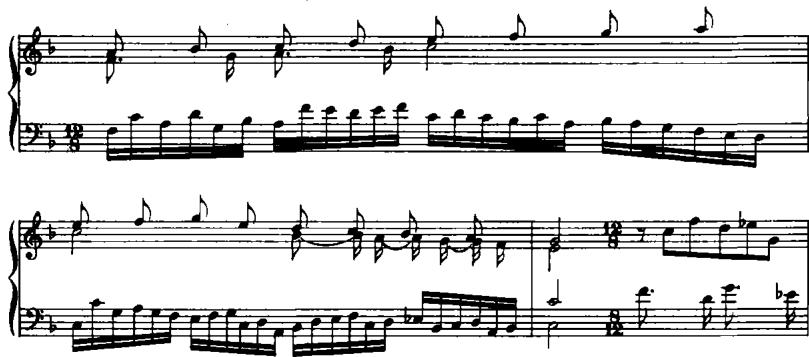
中文讲解
本条目为 P0070 中所引第一个谱例(Ex. 15.1)的图注位置标记。原书图注指出谱例内容取自 Frescobaldi《Toccate》第二卷第九首(Toccate II/9)的第 11–13 小节,其谱面证据已在 P0070 中被作者用于说明:同一附点音型在该处必须同时被"同化"为十六分音符六连音和八分音符三连音,从而暴露出"同化"学说的内在矛盾。由于内嵌图像数据在当前输入中被省略,读者应查阅原书以获得准确的音型与节拍细节;本文不据外部信息推测谱面形态。
补充说明
无额外补充;图注中 Toccate II/9 与第 11–13 小节的位置信息已与 P0070 正文呼应。
第9段(P0073)
原文复述
EXAMPLE 15.2 Toccate II/11, measures 51–59
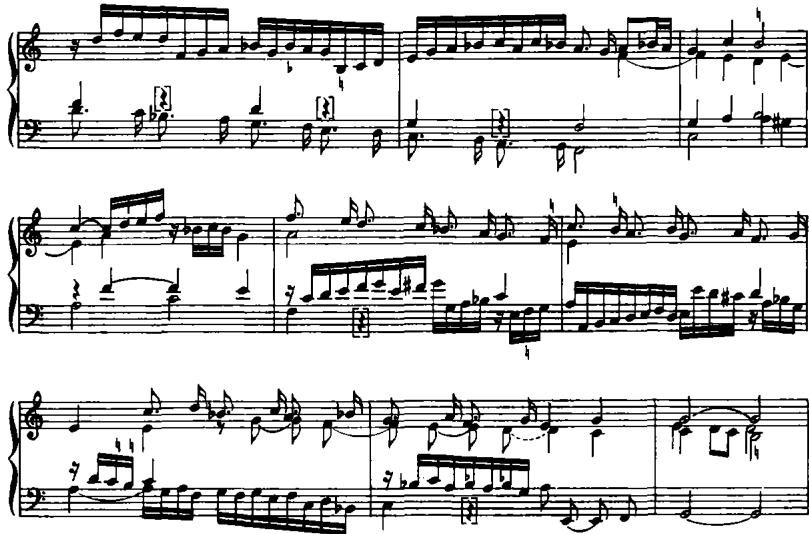
中文讲解
本条目为 P0070 中所引第二个谱例(Ex. 15.2)的图注位置标记。原书图注指出谱例内容取自《Toccate II/11》的第 51–59 小节,作者用它在 P0070 中证明:附点音型在这八小节内以"计量的十六分音符"方式被均匀铺开,从而根本性地动摇了把该音型简单"同化"为三连音的做法。同样地,由于内嵌图像数据被省略,具体音型与拍号细节需查原书核对,本文不作外部推测。
补充说明
无额外补充;图注中 Toccate II/11 与第 51–59 小节的位置与 P0070 的论证相对应。
第10段(P0074)
原文复述
EXAMPLE 15.3 Toccate II/11, measure 60
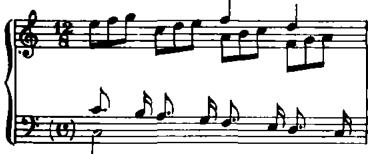
中文讲解
本条目为 P0070 中所引第三个谱例(Ex. 15.3)的图注位置标记。原书图注指出谱例内容取自《Toccate II/11》的第 60 小节。该谱例紧接 Ex. 15.2(第 51–59 小节)的八小节"计量十六分音符"之后,用以说明同一首作品中仅仅两小节之隔,同样的附点音型却必须突然被理解为八分音符三连音——从而证明"同化"学说在该作品中彻底失效。图像数据已省略,需查原书。
补充说明
无额外补充;Ex. 15.3 的位置(第 60 小节)与 Ex. 15.2(第 51–59 小节)形成"同曲内前后不一致"的论证对比,应与 P0070 的论证一并阅读。
第11段(P0075)
原文复述
EXAMPLE 15.4 Toccate II/11, measure 22
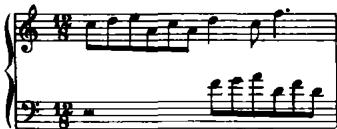
中文讲解
本条目为 P0070 中所引第四个谱例(Ex. 15.4)的图注位置标记。原书图注指出谱例内容取自《Toccate II/11》的第 22 小节。该谱例在 P0070 论证中扮演"正面证据"的角色:作者指出 Frescobaldi 完全具备明确记写"同化"节奏的能力,当他真正想要同化效果时,他会以规范的记谱方式直接写出。因此,未出现这种明确记谱之处,就不应被同化处理。这构成 P0070 反对"同化"学说的最终落脚点。图像数据已省略,需查原书。
补充说明
无额外补充;Ex. 15.4 在 P0070 论证中起正面立证作用,与 Ex. 15.1–15.3 的反面证伪相配合。
脚注 / 边栏 / 图表 / 附加信息(如有)
本小节共涉及四处脚注(按出现顺序):脚注 10 对应 P0065 中关于 Trabaci 在终止处放宽速度的旁证;脚注 11 对应 P0067 中"3/2 在某些情况下也具有比例含义"的来源;脚注 12 对应 P0068 中 1624 年《Capricci》前言关于 triplas/sesquialteras 速度分级的原文引文;脚注 13 对应 P0070 中"所有这类段落都必须被同化"这一学说的出处。此外,P0072–P0075 为四个图例(Ex. 15.1–15.4)的图注位置标记,原书应配有相应谱例图示,因内嵌图像数据被省略,本文不复述谱面细节。P0071 文本在 task_input 中以"Where"截断,本小节中该段未给出完整论证,后续关于两种需要节奏改动的 effetti 在本节输入范围内未展开。
💡 本节核心要点
- Frescobaldi 终止式与 passaggi 的速度规则:结构终止要延长,临近终止逐渐放慢,最后一音应停顿;双经过句 adagio 演奏,下行跳进前的音"果决而快速”,以对比凸显灵巧。
- Frescobaldi 对拍号符号的态度是混合且游移的:C 既可表二拍子也可用于 Romanesca 的二分性分组;Φ 在他手中很可能意指"击拍上略快",而非严格的速度加倍;他对明确的比例记谱使用克制,亲口说明仅及 6/4。
- 在 1624 年《Capricci》前言中,Frescobaldi 明确反驳文艺复兴关于三拍子的通行比例速度观念:单位音符越小,速度越快(major sesquialtera 慢,minor 略快,三个 semiminims 更快)。
- Frescobaldi 同时使用 coloration、hemiola、reverse hemiola 等文艺复兴手段,使其记谱实践"不整齐",反映出文艺复兴记谱原则在当时的崩解,而他所保留的记号被刻意用于制造二对三的戏剧性冲突。
- “同化”(assimilation)学说不能用来解释 Frescobaldi:Ex. 15.1 使之陷入两难,Ex. 15.2–15.3 使之彻底失效,而 Ex. 15.4 则正面证明 Frescobaldi 在需要时本会明确记出同化节奏。
- 本节的总体判断:Frescobaldi 反对通行实践,自己具备记谱工具,其作品中未明示的"同化"应保持原貌,二对三的冲突本身即其戏剧效果所在。
🔑 关键术语
- Passaggi:意大利语术语,指键盘音乐中快速的装饰性走句或经过句;本节中 Frescobaldi 要求在 passaggi 末尾与终止处逐渐放慢并停顿最后一个音。
- Mensuration:拍号或度量符号系统;本节讨论 Frescobaldi 实际使用的 C、Φ 与多种三拍子记号及其语义滑动。
- Φ (tempus imperfectum diminutum):文艺复兴拍号体系中的"不完全时值的减半"符号;在 Frescobaldi 手中可能指速度加倍、未定义的加快,或"击拍上略快"。
- Proportion / proportional mensuration:比例记谱法,通过拍号之间的比例关系指示速度变化;本节指出 Frescobaldi 对明确比例记谱使用克制,并反对比例速度的通行理解。
- Tripla / sesquialtera:三拍子及三对二的比例关系;Frescobaldi 1624 年前言按单位音符大小重新分级速度(major 慢、minor 略快、三个 semiminims 更快),与通行观念相左。
- Hemiola (major / minor / reverse):通过加色(coloration)或反向"白色"记谱,使原本的二拍子或三拍子分组被临时读作另一种分组;Frescobaldi 同时使用 major、minor 与 reverse hemiola 制造二对三冲突。
- Coloration:通过将音符涂黑或涂红等色彩手段改变时值或重音归属的记谱手法;Frescobaldi 将其用于 sesquialtera 与各类 hemiola。
- Assimilation:节奏学中的"同化"概念,将二分子节奏改写为所属三拍子的细分;本节论证此学说既不符合 Frescobaldi 的文字陈述,也不符合其谱面证据。
- Romanesca:16、17 世纪常见的固定低音舞曲模式;Frescobaldi 用 C 记写其内部二分性分组,并将原本的 C 替换为 Φ 以表示不含 passaggi 段的较快步速。
- Effetti:意大利语术语,泛指具有特定表现目的的演奏效果或装饰段落(如 trill、passaggi);Frescobaldi 在前言中针对具体 effetti 指定停顿、节奏改动或速度处理。
- Battuta stretta:意大利语术语,意为"紧凑的击拍";Trabaci 1615 年《Ricercate》中以此标注 Φ 与 Ø,代表当时"未定义的加快"。
S15.4 [描述性拆分] Rhythmic alteration and the direction of musical energy
第1段(P0076)
原文复述
When a (written-out) trill in one hand occurs against a passaggio in the other, the two are not to be divided note for note; rather, the trill is to be played rapidly while the passaggio is taken more slowly and affettuoso (1616). In the toccatas of the Fiori, “trills, or affettuoso passages” are to be played more adagio, “slowing the beat.” When both hands have passaggi in which eighths and sixteenths occur together, the tempo should not be taken too fast, and sixteenths written as even should be played in Lombard rhythm, with every second one dotted (1616). Thus a passage notated as in Ex. 15.5a should be played as in Ex. 15.5b. (Fasolo recommended playing eighths and sixteenths “as if they were half dotted” in allegro movements).
中文讲解
本段的核心主张是:早期键盘音乐中同一织体内并存的快速装饰(如颤音)和较慢的炫技段落(passaggio)必须分别对待,不能逐音平均分配。左手或右手的颤音要弹得更快,而对面的 passaggio 要更慢并带 affettuoso(带感情)的意味。其理论来源被归于 1616 年的文献(Fiori 的托卡塔集),主张把这类"颤音或带感情的乐句"弹得更 adagio,也就是"放慢节拍"。
更具体地说,当双手同时跑十六分音符和八分音符时,整体速度不能太快;同时,原本记谱为均匀十六分音符的段落,要按"伦巴第节奏"演奏,也就是每两个十六分音符中的第二个加附点变长。Ex. 15.5a 是记谱的样子,Ex. 15.5b 是实际演奏的样子,两者的差异正是把均匀十六分音符解释为长短交替。括号里补充说 Fasolo 建议在快板乐章中把八分和十六分音符"当成半附点"来弹,可见这一原则不仅限于某一作曲家,而是 17 世纪早期键盘演奏法的共识。
理解本段要注意:作者强调的不是单纯的节奏型变体,而是不同声部之间的速度与情感对比,这呼应了本小节关于"节奏改造与音乐能量方向"的总论题。
补充说明
Lombard rhythm(伦巴第节奏)在现代语境中常称"附点节奏"或"碎奏",但作者用此 17 世纪术语强调它是一种演奏惯例而非谱面要求。“half dotted"指把两个音符的组合演奏成像附点八分加十六分那样长短分明。affettuoso 在此处作为演奏指示,意指富有表情的歌唱性,与现代"柔板"并不等价。
第2段(P0077)
原文复述
EXAMPLE 15.5 Toccate I/5, measure 33
中文讲解
这是图例 15.5 的标题行,对应 P0076 所引用的示范,曲目来源是《Toccate》第一册第 5 首第 33 小节。
这一标题的作用是为下面 a(按记谱)和 b(按演奏)两幅谱例提供乐曲定位,让读者能把抽象的节奏改造规则与具体作品对应起来。
第3段(P0078)
原文复述
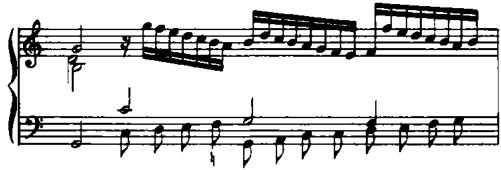
中文讲解
此处是 Example 15.5a 的乐谱图像,标注为"a. as written”(按原谱的样子),对应 P0076 所说"a passage notated as in Ex. 15.5a"。
因原图未嵌入,本段只是指出其在文中的位置与图注功能:它展示一段均匀的十六分音符(按谱面读是没有附点的连续快速音符)。需要查看原图才能知道具体音高、时值与调号。
补充说明
无额外补充;谱面细节需参考原书图 15.5a。
第4段(P0079)
原文复述
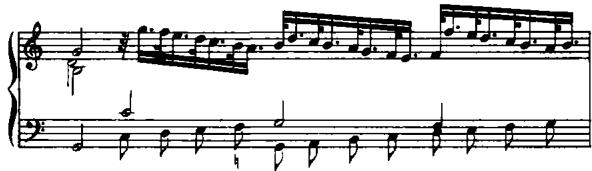
中文讲解
此处是 Example 15.5b 的乐谱图像,标注为"b. as played"(按实际演奏的样子),与 P0078 的 a 形成对照。
它要说明的演奏改造是:原本均匀的十六分音符被处理成每第二个音符加附点,即 P0076 所说的伦巴第节奏。读者需对照 a 与 b 才能直观看到谱面与演奏效果之间的差距。
补充说明
无额外补充;具体音符对照需参见原图。
第5段(P0080)
原文复述
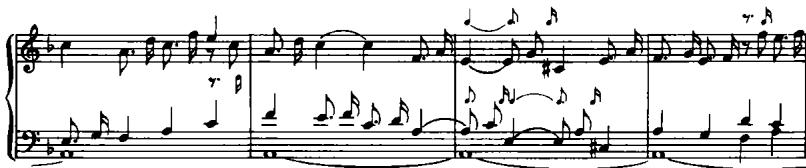
中文讲解
此处是 Example 15.6 的乐谱图像,曲目出处为《Toccate》第二册第 6 首第 65–68 小节,对应 P0082 中关于"在没有双附点的情况下仍延续附点节奏"的论述。
其功能是以具体乐段证明:当作曲家认为听众已经熟悉了前面确立的附点节奏模式时,即使后续谱面无法用双附点记谱,他仍会按惯例继续按附点节奏演奏;图像缺位并不影响这一论点的成立,但读者需翻原书核对具体谱例。
补充说明
无额外补充;乐谱细节需参考原图。
第6段(P0081)
原文复述
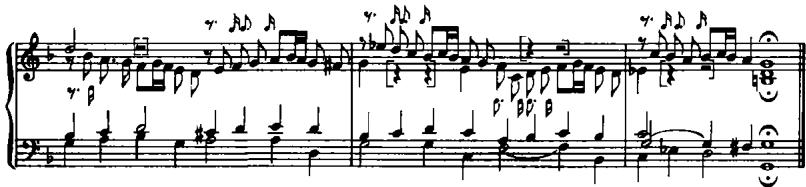
中文讲解
此处是 Example 15.7 的乐谱图像,曲目出处为《Partite sopra la monica》第 11 变奏第 4–6 小节,对应 P0082 中关于"偶尔添加延音线"以延续附点节奏的论述。
它要说明:附点节奏的延续不仅靠记谱惯例,还可能通过补充的延音线在谱面上明确表达;这进一步印证了 P0082 关于 Girolamo 节奏记谱并不总是一致、演奏者需根据上下文判断的论点。
补充说明
无额外补充;具体记谱对照需参见原图。
第7段(P0082)
原文复述
A few rhythmic alterations depended on convention. A dotted pattern beginning with a rest and a note of equal value was played in conformity with the pattern (see Ex. 13.5b). Dotted figures were also continued in contexts where the absence of double dots made their notation impossible (Ex. 15.6). Frescobaldi and his contemporaries did not always notate dotted rhythms consistently after their first appearance, and there are places in Girolamo’s music where logic suggests the continuation of a dotted figure; the same is true of the occasional addition of ties (Ex. 15.7).
中文讲解
本段承接 P0076 关于演奏惯例造成节奏改造的论述,进入"另一类依赖惯例的节奏变化"。其中心主张是:17 世纪早期键盘音乐中,部分节奏改造并非作曲家在谱面上写明的,而是演奏者必须依据既有惯例来还原。
具体规则有三层。第一,“以休止符起首、附点加等值音符"的模式要按整体模式来演奏(参见 Ex. 13.5b),也就是休止符后的短音符不能因谱面小节重音而被错误强调,而应延续整段附点律动。第三,附点节奏在第一次出现后往往被延续,即便谱面因不能使用双附点而改为均匀记谱(参见 Ex. 15.6)。
第二层论述尤其关键:Frescobaldi 及其同时代人在首次写出附点节奏之后,并未在每一次后续出现时都保持一致的记谱,于是谱面会出现"中断”,但音乐逻辑表明本应延续;同理,作曲家偶尔会以添加延音线(ties)来代替双附点记谱(参见 Ex. 15.7)。因此演奏者的任务之一,是判断"原本的附点节奏是否应在此处继续"。
本段在小节论证中的作用是引出更深一层的问题:节奏改造不仅是演奏细节,更是体现音乐方向感(哪里积蓄能量、哪里释放能量)的前提。
补充说明
“double dots"指当时并不普遍的双附点记谱符号,因此作曲家在谱面无法精确表达时会退而采用均匀记号加演奏惯例。Ex. 13.5b 是前文已出现的范例,提示该规则并非首次提出。
第8段(P0083)
原文复述
Frescobaldi’s most idiomatic keyboard writing is animated by a seemingly endless variety of rhythmic invention. The two-against-three patterns of Toccate II/9, for example, occur in a dazzling succession of per-
中文讲解
本段开篇的判断是:Frescobaldi 最具键盘音乐特征的作品之所以生动,是因为其节奏创意看似无穷无尽。
随后他以《Toccate》第二册第 9 首的二对三节奏型为例,但句子在此处中断(per-),语义在 P0089 继续。因此本段独立来看,承担的是承上启下的功能:它从前一段关于"演奏惯例的节奏改造"过渡到对 Frescobaldi 节奏语言整体特征的概括,并以二对三为引子引出后续具体的织体与韵律分析。
理解本段时要意识到,作者不是在做背景介绍,而是在为下文列举 Ex. 15.8(一组变体)做铺垫。
第9段(P0084)
原文复述
EXAMPLE 15.8 a. Toccate II/9, measure 29
中文讲解
这是 Example 15.8a 的小节标题,曲目出处为《Toccate》第二册第 9 首第 29 小节,与 P0083 的论述相呼应。
它的作用是把 P0083 关于二对三节奏型的概括具体化为可查的乐段;图像(见 P0085–P0088)由多个分图组成,分别取自不同小节,以呈现"变体与重复"的织体特征。
第10段(P0085)
原文复述
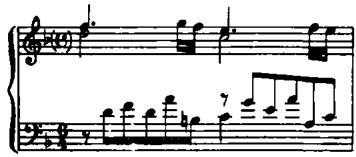
中文讲解
此处是 Example 15.8 中 d 与 b 两个分图的图像,分别来自《Toccate II/9》第 65 小节和第 32 小节,标题以"d. measure 65;b. measure 32"标注。
图像缺位,但读者可从段落上下文推断:它们与 a、c 一同构成一组例证,用以说明 P0083 和 P0089 中所谓"令人目眩的连续变体”。具体织体细节需参考原图。
补充说明
无额外补充;乐谱细节需参考原图。
第11段(P0086)
原文复述
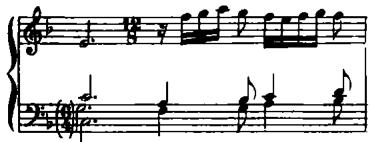
中文讲解
此处是第 22 页上一幅未带乐句标题的图像或乐谱占位符,根据周围图例结构来看,应属于 Example 15.8 集合中的某一分图(如第 22 页示例图像之一)。
由于 OCR 文本未给出具体小节定位,需查原书才能确定其对应《Toccate II/9》中的哪一小节;在本节论证脉络中,它的作用是延续 P0083 所提"二对三模式的多种变体"的视觉例证。
补充说明
无额外补充;具体对应小节需参照原书。
第12段(P0087)
原文复述
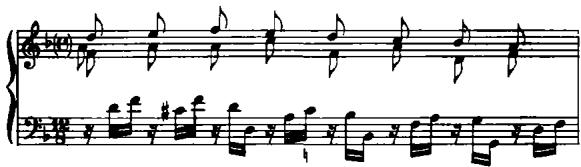
中文讲解
此处是第 22 页另一幅图像或乐谱占位符,与 P0086 同样属于 Example 15.8 集合,但无单独的小节标注。
两幅并置的占位符共同支撑作者关于"织体密度变化与反复"的论述;具体乐谱内容因图像缺位而不可读,需翻原书方能核对。
第13段(P0088)
原文复述
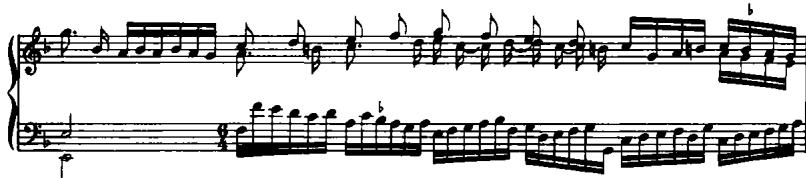
中文讲解
此处是 Example 15.8c 的乐谱图像,标注为"c. measure 50",即《Toccate II/9》第 50 小节,与 a(第 29 小节)、b(第 32 小节)、d(第 65 小节)共同构成一组多小节选段。
选择这四个小节的目的,是要在同一作品中展示"二对三"织体的不同变体与重复模式,呼应 P0089 中"changing or recurrent densities of texture both vary and unite the work"的论断。
补充说明
无额外补充;具体音符对比需参见原图。
第14段(P0089)
原文复述
mutations whose changing or recurrent densities of texture both vary and unite the work (Ex. 15.8). Another of Girolamo’s effects is the placement of rhythmic phrases so that they overlap changes of hand position or other types of physical articulation, and the challenge to the performer is to prepare the phrase so that it moves over, and not between the physical obstacles (Ex. 15.9). Excitement may also be generated by the combination of a number of rhythmic units having nonsimultaneous downbeats, ranging from meteor-showers of tiny imitations to the convoluted cross-accents of passi doppi (Ex. 15.10).
中文讲解
本段是 P0083 在版面中断处的延续,列出 Frescobaldi 节奏语言的三大特征。其中心主张是:节奏的生动并不只来自音符本身,更来自织体密度的变化、句法与身体动作的关系,以及多个节奏单位的相互错位。
第一类效果是织体密度的"变与不变"。作者指出,《Toccate II/9》中那些令人目眩的二对三变体,时而改变、时而又回到相近密度,既使作品丰富,又使它统一(参 Ex. 15.8)。这里的"unite"指在变化中维持整体感,与简单的"统一主题"不同。
第二类效果是节奏句法与身体动作的错位。作者指出 Frescobaldi 常把节奏短语安排在换手位或其他身体节点之上,因此演奏者的挑战不在于逐拍数拍,而在于预先准备好它,使整个短语能"滑过"这些身体障碍,而非在每个障碍之间被截断(参 Ex. 15.9)。这是非常实际的演奏建议:能量要被预先蓄积到一个能跨越换位动作的下拍。
第三类效果来自多个节奏单位的非同步下拍。作者用"meteor-showers of tiny imitations"形容细密模仿所形成的闪烁感,又用"convoluted cross-accents of passi doppi"形容复合节奏造成的交叉重音(参 Ex. 15.10)。passi doppi(双重步伐/复杂步伐)是一种特定的炫技段落模式。
本段在小节论证中的作用是把"节奏"从单纯的时值问题提升到"能量方向"与"演奏身体"的层面,为 P0090 的总论铺垫。
补充说明
“permutations”(变体/排列)与"recurrent densities"指同一节奏型在不同小节以不同织体密度呈现。passi doppi 是 17 世纪键盘音乐中一种以密集十六分音符对位为特征的炫技段落。
第15段(P0090)
原文复述
In his treatment of Frescobaldi’s rhythms the performer cannot content himself with reproducing their notational outline; he must first understand the sources and direction of their energy. Unfortunately, the whole concept of a rhythmic phrase, a unit accumulating intensity toward a functional downbeat or dissipating energy from it, is too often replaced by regular stressed downbeats as indicated by barlines. (It is perhaps unnecessary to point out that downbeats are as perceptible on “nonaccentual” instruments such as the harpsichord and organ as they are on ones capable of dynamic contrast.) What appear at first to be technical problems in Frescobaldi (and elsewhere) are often musical ones, and frequently spring from faulty perception of the functional downbeat of a phrase in terms of what prepares and follows it, or from the attempt to jam more than one downbeat into a single phrase. How many performances of galliards are hamstrung by the player’s inability to perceive that the first measure is an upbeat, and that no downbeat occurs until the second bar of the phrase (an observation confirmed by seventeenth-century choreography and vocal settings).
中文讲解
本段是本节核心段落,集中论述"节奏的能量方向"。其中心主张是:演奏 Frescobaldi 的节奏,不能只复制谱面的轮廓,必须先理解其能量的来源与走向;一个节奏短句应当被理解为"向功能性下拍积蓄强度"或"从下拍释放能量"的单位。
作者随即诊断了一个普遍错误:很多演奏者把"节奏短句"这个概念替换为"按小节线规律强调下拍",于是下拍变得机械而缺乏方向感。作者特意补充说,即便在 harpsichord 或 organ 这种通常被认为"不能做出力度对比"的乐器上,下拍同样要被清楚地听见——这否定了以乐器特性为借口回避节奏塑形的做法。
接着,作者从认识论角度把许多初看像"技术问题"的现象归为音乐问题:错误往往源于演奏者没有正确感知功能性下拍,忽略了它的准备与延续,或试图在一个短句里塞进两个下拍。
最有说服力的例子是 galliard(加利亚舞曲):作者指出,许多加利亚演奏之所以失败,是因为演奏者把第一小节听成下拍,而事实上第一小节是上拍,真正的下拍要到第二小节才出现。这一观察得到 17 世纪舞蹈编排和声乐版本的佐证,因为舞蹈的脚步动作正与这一节奏方向一致。
本段的作用是把分散的节奏改造规则(P0076、P0082)以及织体与身体动作的论述(P0089)统一到"能量方向"的总论题之下,并给出了可验证的实证依据(17 世纪的舞蹈与声乐实践)。
补充说明
“functional downbeat"是与音乐结构相关、承载句法重量的下拍,与谱面小节线上的"机械下拍"形成对比。galliard 是文艺复兴与巴洛克早期流行的三拍子舞曲,第一拍常为重音,但本研究强调其句法上的实际下拍位置与小节标记不同步。
第16段(P0091)
原文复述
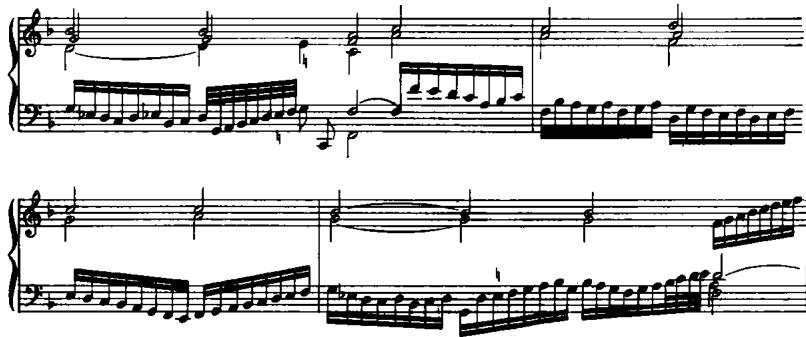
中文讲解
此处是 Example 15.9 的乐谱图像,曲目出处为《Romanesca》第 11 变奏第 2–4 小节,对应 P0089 关于"节奏短语跨越换手位与身体动作"的论述。
其功能是用具体乐段证明:当节奏句法与身体动作冲突时,演奏者需把整段节奏塑造成"越过障碍"的连贯短语;具体音符与连线需参见原图。
补充说明
Romanesca 是 16–17 世纪常用的固定低音与变奏主题,本变奏段落是 Frescobaldi 写作的实例。
第17段(P0092)
原文复述

中文讲解
此处是 Example 15.10 的乐谱图像,曲目出处为《Toccate》第二册第 7 首第 36–39 小节,对应 P0089 中关于"多个节奏单位非同步下拍"的论述。
其功能是为"meteor-showers of tiny imitations"到"passi doppi 的交叉重音"提供具体乐段;图像缺位,但作者意图明确:让读者看到下拍错位的复杂效果。
补充说明
无额外补充;具体记谱需参照原图。
第18段(P0093)
原文复述
Frescobaldi gave to the formulas of his predecessors a new rhetorical, expressive content, to which an understanding of rhythmic direction is essential. The combined trill and turn which is the most annoying keyboard cliché of Andrea Gabrieli and Merulo achieves an expressive urgency when conceived as the gradual accumulation of energy to explode in a downbeat and performed as an acceleration (Ex. 15.11). Unfortunately, this intensity is often vitiated by the performer’s insensitivity to the declamatory possibilities of the figure (Ex. 15.12). These may seem small and relatively trivial details, but it is the essence of a rhetorical style
中文讲解
本段把节奏方向问题拉到"修辞风格"的高度。其中心主张是:Frescobaldi 给前辈(Andrea Gabrieli 与 Merulo 等)的固定音型(formulas)注入了新的修辞性与表情内涵,而理解节奏方向是这种诠释的关键。
具体例证是颤音加回音(trill/turn)这一组合:在 Andrea Gabrieli 与 Merulo 手中它是最令人厌烦的键盘俗套,而在 Frescobaldi 笔下,当它被理解为"向某个下拍逐步积蓄能量"并按加速演奏时,便获得了表情上的爆发力(参 Ex. 15.11)。反之,演奏者若对这一公式的"朗诵性”(declamatory)潜力不敏感,这种强度就会被削弱(参 Ex. 15.12)。
作者承认这些细节看似微小、相对琐碎,但他随即在 P0094 转入一个更大的判断:在修辞风格里,没有任何姿态是无足轻重、随意或无意义的。换言之,本段是过渡——从小节技术细节转向对整个修辞风格观的总结。
理解本段要注意"formulas"与"rhetorical content"的关系:音型本身没有变,变化的是演奏者赋予它的方向感与力度分布。
补充说明
“trill and turn"在 16 世纪威尼斯乐派(如 Gabrieli、Merulo)的终止式中是常见装饰。“declamatory"意为朗诵式的、有语气起伏的,借自修辞学传统。Ex. 15.12 应是反例或对比性段落,提示演奏失败的版本。
第19段(P0094)
原文复述
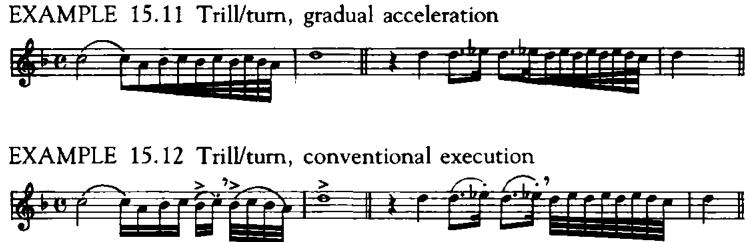
中文讲解
此处是 P0093 末尾句子的延续,文本内容为"in any of the arts that no gesture be unimportant, haphazard, or meaningless.",但被记录为图像占位符,意指这一行在原书中可能以装饰性排版或边栏图示呈现。
其作用是给出本节的总论点:在任何修辞性的艺术里,没有任何姿态是无足轻重、随意或无意义的。这句话把 Frescobaldi 节奏塑形的细节从音乐扩展到一般修辞艺术,呼应文艺复兴至巴洛克早期将音乐视为修辞的观念。
由于格式上与图像占位符合并,复述已按其文字内容如实保留。
第20段(P0095)
原文复述
EXAMPLE 15.11 Trill/turn, gradual acceleration
中文讲解
此处是 Example 15.11 的小节标题,对应 P0093 中关于颤音加回音被演奏为"逐渐加速、向某下拍爆发"的论述。
标题中的"gradual acceleration"即是 P0093 所说"performed as an acceleration"的直观说明;它把抽象的修辞效果与具体的演奏手法对应起来,让读者能在谱例中寻找加速记号或倚音密度的递增。
脚注 / 边栏 / 图表 / 附加信息(如有)
本节包含多处图像/乐谱占位符(对应 Examples 15.5、15.6、15.7、15.8 的四个分图、15.9、15.10、15.11、15.12),其中部分占位符未含具体小节定位(如 P0086、P0087),需查阅原书方可核对谱面细节。两个脚注(标记为 14 与 15)在 P0076 和 P0090 中出现,但脚注内容未在 source_paragraphs 中给出,因此本节讲解未对其加以引用,仅在正文中以尾标形式记录其位置。P0094 在 OCR 中呈现为图像占位符,但其文字内容已被如实保留作为复述。
💡 本节核心要点
- 早期键盘演奏中,左右手之间的颤音与 passaggio 必须区别对待,整体速度受较慢的炫技段落牵制,而十六分音符段常以伦巴第节奏演奏(每第二个音符加附点)。
- 部分节奏改造依赖惯例而非谱面:作曲家在不能使用双附点记谱时仍按附点节奏延续,偶尔以延音线代替双附点,演奏者需依音乐逻辑判断。
- Frescobaldi 节奏语言的生动来自三方面:织体密度的变化与回归、节奏短语跨越换手位与身体障碍、多重节奏单位的非同步下拍。
- 演奏的核心不是复制谱面轮廓,而是理解节奏短句的能量来源与方向——它应被理解为向功能性下拍积蓄强度或从下拍释放能量的单位。
- 功能性下拍在 harpsichord 与 organ 上同样要被听见;按小节线机械打拍是常见的理解错误。
- 加利亚舞曲第一小节实为上拍、下拍在第二小节,这一点得到 17 世纪舞蹈与声乐版本的佐证。
- 前辈的音型(如颤音加回音)在 Frescobaldi 手中获得新的修辞性内涵,关键在于把音型塑造成向某下拍积蓄能量并按加速演奏。
- 在修辞风格中,没有任何姿态是无足轻重、随意或无意义的——这是本节对节奏细节的最终修辞性提升。
🔑 关键术语
- passaggio:17 世纪键盘音乐中的炫技走句,常以快速的十六分音符运行;在本节中与颤音并置时需放慢并带 affettuoso 意味演奏。
- Lombard rhythm:一种把均匀十六分音符演奏成每第二个音符带附点的节奏型,又称附点节奏;Fasolo 在快板中以"half dotted"形容其效果。
- functional downbeat:与音乐结构相关、承载句法重量的下拍,可与谱面小节线上的机械下拍不同步,是本节"能量方向"论述的核心概念。
- passi doppi:17 世纪键盘音乐中以密集十六分音符对位为特征的复杂炫技段落,能形成所谓"convoluted cross-accents”。
- galliard:16–17 世纪流行的三拍子舞曲;作者强调其第一小节实为上拍,下拍要到第二小节才出现,舞蹈与声乐版本可佐证。
- trill and turn:颤音加回音的组合装饰;在 Gabrieli 与 Merulo 笔下被视为陈腐俗套,在 Frescobaldi 手中被赋予向某下拍积蓄能量并加速演奏的修辞效果。
- Romanesca:16–17 世纪常用的固定低音与变奏主题,Frescobaldi 在其变奏中安排节奏短语跨越换手位以考验演奏者的能量准备。
S15.5 [描述性拆分] Fingering and Articulation: posture, touch, and good/bad notes
第1段(P0096)
原文复述
Fingering and Articulation
中文讲解
这是一节的小标题,作用是开启一个新的论域:在 17 世纪意大利键盘演奏传统(以 Frescobaldi 为焦点)的语境下讨论"指法与奏法”。它提示读者即将出现的内容分为几个层面:先讲身体姿态、按键方式与连音理想(P0097),再讲羽管键琴特有的击弦触感与舞曲中的断奏处理(P0098),随后进入"好音/坏音"的指法理论体系(P0099–P0100),最后以对历史演奏实践研究中某种教条化倾向的反思作结(P0101)。
第2段(P0097)
原文复述
Despite Libanori’s assertion that Frescobaldi sight-read the most difficult works with his hands reversed, “that is, with the palms turned upwards”—a party-trick that is still with us—we may assume that Girolamo usually followed more conventional habits of keyboard playing as transmitted by Diruta and Banchieri. The player is to sit at the middle of the keyboard, to keep his head and body erect and quiet, to let the arm guide the hand, and to keep the hand aligned with the arm both vertically and horizontally. The fingers are to lie in line with the keyboard, slightly curved, and the cupped hand is to rest lightly on the keys for agility and ease. Sixteenth-century Italian portraits show that the placement of the thumb and fifth finger determined the position of the hand, with the longer fingers curved to accommodate them. The fingers should press the keys rather than strike them and are raised as the keys rise. For Diruta the norm of organ playing was a legato style, and he ridiculed organists who “take their hands off the keyboard so that they make the Organ remain without sound for the space of half a beat, and often a whole beat, which seems that they are playing plucked instruments.” Frescobaldi’s one reference to fingering suggests that he shared something of this legato ideal: “In the Canti fermi although they are tied[,] in order not to impede the hands they can be untied for greater convenience” (1635). (In fact, the only long ties in the Kyries are not in the chants themselves but in pedal-points, which therefore would sometimes necessitate finger substitutions in order to be performed legato as written.)
中文讲解
本段提出 Frescobaldi 在常规演奏中所遵循的"通行规范"——即 Diruta 与 Banchieri 所传承的键盘演奏习惯。首先排除 Libanori 关于 Frescobaldi 双手翻转视奏的说法,将之归为"宴会杂耍";随后勾勒一整套身体姿态:坐于键盘中央、头与躯干端正而静止、以手臂引领手腕、手与臂在垂直与水平两向均保持对齐;手指顺键盘方向自然排列、轻度弯曲、形成"杯状",轻搭于键面以利敏捷。16 世纪意大利肖像画佐证了拇指与小指的位置决定整只手的位置,其余手指弯曲以协调之。触键方式应为"按"而非"打",键回弹时手指随之抬起。Diruta 把"legato(连奏)“作为管风琴演奏的规范,嘲笑那些抬手使管风琴断出半拍乃至整拍空白的琴家,认为那像在弹拨弦乐器。Frescobaldi 在 1635 年文献中关于"定旋律虽已连写,为不阻手可以解开以求便利"的指示,被作者读作他同样倾向连奏理想的一项证据。括号内的补注指出,Frescobaldi《Kyrie》中真正存在的长连音并不在定旋律本身,而在持续低音——因此若要严格照谱连奏,常需换指来达成。
补充说明
括号中关于 Kyries 长连音的说明是本段内部的一个自我限定:它把 Frescobaldi 文字"可以解开以求便利"与乐谱实际形态对接起来,避免读者把"解开"误解为对连奏理想的否定。本节其余段落将围绕此处的连奏理想,进一步展开键盘触键与指法的细节。
第3段(P0098)
原文复述
A percussive touch is appropriate to the harpsichord “by reason of the jacks, and the plectra that they may play better,” and in dance music Diruta allows a detached style, “leaping with the hand to give grace, and air to their dances.“¹⁶ A certain amount of common sense is required in the interpretation of this passage. The resistance of harpsichord action, unlike that of the piano or the clavichord, is greatest in the middle of the stroke, at the point where the plectrum passes the string; beyond that, no more weight is required than what is necessary to hold the key down. Diruta presupposes a strongly quilled instrument playing dance music, in which the maintenance of rhythmic vitality is the primary consideration—indeed, an occasional thump or two is sometimes an aid to dancers. To extrapolate from his sensible suggestion a general harpsichord technique in which unnecessary weight is slammed to the bottom of the key dip is unwarranted by the historical evidence and condemned by the musical results.
中文讲解
本段处理羽管键琴特有的击弦触感。起点是 Diruta 允许在舞曲中采用断奏(“以手跳跃,使舞蹈获得优雅与生气”),同时承认羽管键琴因有"击弦机与拨子"而先天适合较重的触键方式。作者的论证分两步:第一步用琴体物理说明羽管键琴的阻力在击键行程的中段最大(即拨子过弦那一刻),此后只需保持键按下即可,无须额外施压;第二步指出 Diruta 这一建议预设了强拨弦、节奏活力为首要考虑的舞曲语境,因此"一两下重击"在舞曲中反而有助于舞者。作者随即对一种常见的演绎倾向提出批评:把 Diruta 这条"针对舞曲的合理建议"外推为一般性的羽管键琴技术规范——即把不必要的重量"砸"到键程底部——既无史料支持,也产生恶劣的音响效果。这段的关键不是否定重触键的存在,而是把它严格限制在特定体裁与物理语境之内。
补充说明
本段的论证逻辑可与 P0097 形成对比:管风琴语境中追求的是连奏理想,羽管键琴语境中允许在舞曲中使用断奏或重触键,但两者都不可被泛化为绝对规则。脚注 16 应指向 Diruta 论断奏舞曲的原始出处;具体文献未在本节文本中给出。
第4段(P0099)
原文复述
Fundamental to seventeenth-century Italian descriptions of keyboard fingering is the concept of “good” (buone) and “bad” (cattive) notes—that is, notes falling on strong or weak beats or subdivisions (a distinction paralleled by the placement of up- and down-bows in seventeenth-century string playing). For Diruta, who furnishes detailed examples, in passages of notes in equal value the notes begin with a good one and alternate regularly with bad ones; an initial rest (of the same value as the notes) or a dot on the first note does not affect the succession. Where the initial rest or note is twice the value of the notes in the remainder of the passage it counts as both a good and a bad note, and the succession continues with a good one. In general (see the section on ornamentation for exceptional fingerings), the good and bad notes are assigned to good and bad fingers; in both hands the bad fingers are 1, 3, and 5, the good, 2 and 4. A good finger may be repeated on two successive good notes. Diruta’s scale-fingerings bear out his observations that 2, 3, and 4 do the work in passaggi (note negre, not to be confused with tasti negri or black keys), and that 3 is pivotal.¹⁷ Diruta admits that “many worthy men” employ another fingering for scales in the left hand—2, 1 ascending, 3, 4 descending—but contends that this has the disadvantages of landing the thumb on a black key when the signature has a B-flat and of placing undue stress on the weak fourth finger of the left hand.¹⁸ Banchieri contents himself with fingerings for right- and left-hand scales that seem to follow more general practice (confirmed by Lorenzo Penna in Li primi albori musicali of 1672 and Bartolomeo BisMantova, Compendio musicale, 1677) in treating 3 as the principal good finger in both hands (Ex. 15.13).¹⁹
中文讲解
本段引入 17 世纪意大利指法理论的基石概念:“好音”(buone)与"坏音”(cattive),分别对应强拍/弱拍(或细分层面上的强弱位)。作者指出这与同时期弦乐"上弓/下弓"的分配逻辑平行,是节律—指法耦合的普遍原则。Diruta 给出的具体规则包括:(1)等时值音列起于好音,随后好坏交替;(2)等时值的起始休止符或第一音上的附点不改变这一交替序列;(3)若起始休止或音的时值为其余音符的两倍,则自身同时算作好音与坏音,后续仍以好音开始。一般情况下,好音配好指,坏音配坏指:两手均为坏指 1、3、5,好指 2、4;同一好指可在连续两个好音上重复。Diruta 的音阶指法印证了"2、3、4 承担跑动(passaggi)的主要工作,3 居于枢纽地位”。作者随即处理一个例外:左手音阶中"上行 2、1,下行 3、4"的指法也获得部分名家采用,Diruta 却指出其在带降 B 调号时拇指会落在黑键、并使左手弱小的第四指负担过重。Banchieri 的音阶指法(左右手均以 3 为主要好指)被视为更普遍的实践,得到 Penna(1672)与 BisMantova(1677)的呼应(Ex. 15.13)。
补充说明
“note negre"是意大利术语,意为"黑音符/黑色音符”,在此上下文中指跑动段落中"暗色"的、用于指法分配考虑的音符,绝不能与"tasti negri(黑键)“混淆——这一术语辨析是读者理解 Diruta 跑动指法所必需的。脚注 17、18、19 分别对应 Diruta 音阶指法的论据、左手指法例外、以及 Banchieri/Penna/BisMantova 的佐证;具体文献未在本节文本中出现。
第5段(P0100)
原文复述
A salto cattivo is a leap after a good note, a salto buono a leap after a bad one. The fingerings given by Banchieri and Diruta for intervals show that 1 and 5 were used where appropriate (Ex. 15.14).²⁰ The principal distinction between these systems and modern fingering is of course the practice of passing a long finger over a short one (or even the reverse, as in Diruta’s left-hand scale), as opposed to the modern system of passing the thumb under. Since the publication in 1915 of Arnold Dolmetsch’s The Interpretation of the Music of the XVIIth and XVIIIth Centuries the study of early fingerings has tended to emphasize the long-over-short pattern and to draw from it a doctrine of pervasive long-short, two-note slurs. This overlooks the distinction between abstract and expressive fingerings (the treatises provide only the former) and is contradicted by the very sources of these fingerings. As early as 1565 Thomás de Sancta Maria provided a variety of highly sophisticated fingerings and possible unequal realizations of equal notes: not only long-short, but short-long, and short-short-short-long. He stated, however, that in touching the keys of the clavichord “the finger which touches the first is always lifted before the one that immediately follows it is touched.“²¹ Diruta himself noted that in playing diminutions “the next key is not struck until the finger is removed from the first.“²²
中文讲解
本段定义两个与"好坏音"体系配套的术语:“坏跳”(salto cattivo)是好音之后的跳进,“好跳”(salto buono)是坏音之后的跳进。Banchieri 与 Diruta 的跳进指法在合适位置使用 1 指与 5 指(Ex. 15.14)。由此进入本段的核心论证:与近现代指法(以拇指下穿为主)相比,17 世纪体系的关键特征是"长指越过短指”(甚至在 Diruta 左手音阶中反过来——短指越过长指)。作者对学界既有研究提出批评:自 1915 年 Dolmetsch《17 与 18 世纪音乐的诠释》出版以来,研究早期指法的人倾向于把"长越短"模式绝对化,并由此推导出"无处不在的长短两音连音线"学说。这一推论的问题有二——其一,它混淆了"抽象指法”(理论教材所给出的指法方案)与"表现性指法”(实际演奏中的指法选择),而教材只提供前者;其二,它甚至被这些教材自身的论述所反驳。证据之一是 1565 年的 Thomás de Sancta Maria,他已经提供了多样化的高度精细化指法以及等音的非等时处理方案:不仅有"长—短”,还有"短—长"以及"短短短—长”。然而他仍明确指出,在击古钢琴键时"触及第一个键的手指总在下一个手指触及下一键之前先抬起”。Diruta 本人在谈到 diminutions 时也指出"第一指尚未离开键,下一音不会被击下"。这两条证据直接否定了"长—短"必然对应一弓连音或一组圆滑线的设想。
补充说明
术语 salto cattivo / salto buono 在本节语境中与前一段的 buone/cattive notes 形成对应:所谓"好坏"是依节律强弱位而言,跳进的"好坏"则指它发生在强位还是弱位之后。脚注 20、21、22 分别对应 Banchieri/Diruta 跳进指法、Thomás de Sancta Maria 关于古钢琴触键的论述、以及 Diruta 关于 diminutions 的论述;这些原始引文的详细上下文未在本节文本中给出。
第6段(P0101)
原文复述
Early fingerings do not therefore demand slurs corresponding to successive pairs of fingers. A skilled keyboard player with experience in early fingerings can learn to play as rapidly, as brilliantly, and as evenly with them as with present-day fingerings, and presumably the great virtuosi of the seventeenth century were no less capable. Evenness and fineness of execution were no less prized then than now, and the mechanical grouping of scale-figures in pairs would have seemed as insensitive as does the undifferentiated clatter of modern fingerings. The investigation of historical performance practice is worse than useless if it is employed not to enlarge technical capability and musical sensitivity but to confirm technical failings by canonizing them as “authentic.” Perhaps the last word should be left to Girolamo’s contemporary, Michael Praetorius: “Some persons get special notions about such things, and wish to despise Organists who are not accustomed to this or that fingering. But this, it seems to me, is not worth discussing. Let one run up or down [the keyboard] with the first, middle, or last finger, and even with his nose if it helps, for as long as what he plays sounds fine and pure, and is correct and pleasant to the ear, it is not very important how one accomplishes it.“²³
中文讲解
本段是本小节的总结与方法论收束。前四段建立了一个内部层层推进的论证:姿态与连奏理想 → 羽管键琴触键的体裁限定 → 好坏音与指法体系 → 长越短指法并不必然意味着"两音一弓"的连音线。本段则把这一论证提升为对历史演奏实践研究的告诫。它先给出正面陈述:早期指法并不要求与每一对相邻手指相对应的连音线;熟练的早期指法演奏者能够用之与现代指法一样快、一样辉煌、一样均匀,17 世纪的大师自不例外。“均匀与精致"在当时与今日同样被珍视;把音阶分组机械地两两成对的处理,在当时看来与"现代指法那种无差别的杂乱敲击"一样粗糙——作者刻意把两种"教条化"对称起来,互相抵消其权威性。作者随后亮出最严厉的判断:历史演奏实践的研究若不是用来拓展技术与音乐感受力,而是用来把技术缺陷冠以"本真"之名加以固化,则"比无用更糟”。最后以 Praetorius 的当代箴言作为"定论”:他嘲讽那些鄙视不同指法习惯的人,主张只要演奏听起来"纯净、正确、悦耳”,用什么手指、甚至用鼻子都无关紧要。
补充说明
本段的 Praetorius 引文与 P0097 中对 Frescobaldi 双手翻转"杂耍"的轻描淡写形成呼应:两者都把"指法习惯的差异"相对化,把它置于"音乐结果"之下。脚注 23 应指向 Praetorius 著作中这一段引文的原始出处;具体文献细节未在本节文本中给出。
脚注 / 边栏 / 图表 / 附加信息(如有)
本小节涉及若干图表与脚注,但具体引文与图例正文未在 task_input 中给出,因此仅能汇总其在本节论证中所起的功能:
- Ex. 15.13(P0099 末):Banchieri 左右手音阶指法图例,用以佐证"3 为主要好指"的普遍实践。
- Ex. 15.14(P0100):Banchieri 与 Diruta 跳进指法图例,显示 1、5 指在合适位置的使用。
- 脚注 16(P0098):Diruta 关于舞曲中跳跃式断奏出处的注释。
- 脚注 17(P0099):Diruta 音阶指法与 passaggi 论断的出处。
- 脚注 18(P0099):Diruta 对左手"2、1 上行/3、4 下行"指法的批评出处。
- 脚注 19(P0099):对 Banchieri、Penna(1672《Li primi albori musicali》)与 BisMantova(1677《Compendio musicale》)音阶指法实践的注。
- 脚注 20(P0100):Banchieri 与 Diruta 跳进指法的出处。
- 脚注 21(P0100):Thomás de Sancta Maria 1565 年关于古钢琴触键先后次序的论述出处。
- 脚注 22(P0100):Diruta 关于 diminutions 中手指离键再击下一音的论述出处。
- 脚注 23(P0101):Praetorius 关于指法应让位于音响效果那段箴言的出处。
💡 本节核心要点
- 本节以 Diruta 与 Banchieri 所传的"常规"键盘演奏规范为基线刻画 Frescobaldi:姿态端正、触键轻按、原则上追求连奏理想,连奏的局限在需要时通过换指(尤其在持续低音处)解决。
- 羽管键琴的"重触键"并非普遍规范,而是 Diruta 在舞曲体裁、强拨弦与节奏活力语境下的特定许可;将其外推为一般性的"砸到底"奏法既无史料依据,也损害音乐效果。
- “好音/坏音"体系是好坏拍位与好坏指(坏指 1、3、5;好指 2、4;3 为枢纽)的耦合,是 17 世纪意大利键盘指法的核心规则;“坏跳/好跳"以及 1、5 指在跳进中的使用是其延伸。
- 早期指法的关键特征是"长指越过短指”(甚至在 Diruta 左手中反向),与近现代"拇指下穿"体系形成根本区别;但这一长越短模式并不蕴含"两音一连"的圆滑线学说——1565 年 Thomás de Sancta Maria 与 Diruta 本人都明确指出触键的先后次序并不等同于音响上的连断。
- 本节的方法论收束在于:历史指法研究若被用来固化技术缺陷、冠以"本真"之名,反而比无用更糟;最终以 Praetorius 的箴言为基调——只要音响纯净正确、令人愉悦,具体的指法选择(包括极端比喻中的"用鼻子”)都不应被教条化地贬低。
🔑 关键术语
- buone / cattive notes(好音 / 坏音):17 世纪意大利键盘指法理论的核心概念。“好音"对应强拍或强细分位,“坏音"对应弱拍或弱细分位;二者决定指法选择(好音配好指,坏音配坏指),并与同时期弦乐"上弓/下弓"的分配逻辑平行。
- salto cattivo / salto buono(坏跳 / 好跳):“好坏音"体系在跳进上的延伸。“坏跳"是好音之后的跳进,“好跳"是坏音之后的跳进;Banchieri 与 Diruta 在跳进指法中相应地使用 1、5 指(见 Ex. 15.14)。
- passaggi(跑动段落):17 世纪键盘音乐中由等时值音符构成的快速走句。Diruta 观察到 2、3、4 指承担跑动的主要工作,3 指居枢纽地位。
- note negre(黑音符):意大利术语,在此上下文中指"用于指法分配考虑的、跑动段落里的"暗色"音符”,必须与 tasti negri(黑键)严格区分——后者指键盘上黑色的键。
- legato(连奏):Diruta 视为管风琴演奏的规范:手指不应离开键面以至于出现半拍或整拍的空白;Frescobaldi 在 1635 年关于定旋律"可解开以求便利"的指示被解读为分享这一连奏理想(参 P0097)。
- long-over-short(长指越短指):早期指法与近现代指法的关键区别。早期体系以长指越过短指来衔接(甚至偶有反向,如 Diruta 左手音阶);近现代体系则以拇指下穿为主。Dolmetsch 之后学界倾向把"长越短"绝对化为"两音一连"圆滑线学说——而本节认为此学说既混淆抽象与表现性指法,也被原始教材所反驳(参 P0100、P0101)。
- plectrum / plectra(拨子):羽管键琴击弦机上挑动琴弦的小片。Diruta 以之论证羽管键琴适合较重触键;但作者强调羽管键琴阻力在拨子过弦时最大,此后无需额外施压,重触键仅限于舞曲等特定语境(参 P0098)。
- Canti fermi(定旋律):Frescobaldi 1635 年文献中所提到的、原本写作连音但允许"为不阻手"解开的旋律声部。本节指出 Frescobaldi《Kyrie》中的真正长连音其实出现在持续低音上,因此要按谱面实现连奏,常需换指(参 P0097)。
S15.6 [描述性拆分] Articulation: beaming, musical relationships, and decay
第1段(P0102)
原文复述
The real value of earlier fingerings lies in another direction. Since they are less capable of unlimited extension—or at least less concerned with it—they force the performer to consider smaller units of meaning and their relation one to another. The study of seventeenth-century fingerings is thus perhaps the simplest (but by no means the only) way to bring the keyboard player up against the question of articulation, which his instrument poses only indirectly. The instrumental and vocal tutors of the sixteenth and seventeenth centuries demonstrate the central importance of articulation by their extended considerations of breathing, tonguing, fingering, and bowing. Serious organists and harpsichordists may profit by their example to move beyond the nineteenth-century concept of “touch” as a blanket articulation—legato, staccato, half-staccato—applied to a given passage like paint from a roller. Not only are the spaces between the notes in a sense as important as the notes themselves, but the variety and richness in the articulation of those spaces possible on historical instruments and the best modern reproductions are still incompletely explored.
中文讲解
本段承接前文对早期指法的讨论,把焦点从"指法本身"转向"指法如何迫使演奏者思考小单位及其关系”。作者认为十七世纪指法的真正价值在于它们限制了无限制的延伸,由此迫使演奏者去思考更小的意义单元及其相互关系——这是研究十七世纪指法引导键盘演奏者面对"articulation(触键/句法/音的衔接)“问题的最直接(但绝非唯一)方式。接着作者论证articulation的重要性:十六、十七世纪器乐和声乐教程通过详细讨论呼吸、吐字、指法和运弓,已经证明了articulation的核心地位。作者批评十九世纪将"触键"简化为legato、staccato、half-staccato这几种套用标签的观念(比喻为"像滚筒刷油漆一样刷到一个段落上”),并提出新的视角:音符之间的"空间"某种意义上和音符本身同样重要,而历史乐器和最好的现代复制品在这些空间所能实现的articulation的多样性和丰富性,尚未被充分探索。
补充说明
本段是本节的入口段落,把"articulation"确立为本节的核心议题,并以对十九世纪触键观念的批评作为讨论的起点。它为后续讨论具体的articulation标记(连尾线/beam)和声音衰减现象提供概念框架。
第2段(P0103)
原文复述
One external key to the articulation of Frescobaldi’s two books of toccatas has been proposed, the notation of the original engraved editions.²⁴ That is, the beaming of notes in the original would indicate groupings conceived and to be executed as a unit, and division of notes that might be beamed would show that they are to be separated. The engraving of the two books is certainly of a precision capable of such distinctions, extending even to precise alignment in the two-against-three passages of Toccate II/9. But the proposal raises a number of questions. First, if the beaming was intended as a guide to articulation, why does Frescobaldi not point this out, as Grassi called attention to the care he had taken in aligning the voices in the Canzoni score. Second, the idea was suggested by a similar practice in late eighteenth- and nineteenth-century
中文讲解
本段引出一种外部线索:通过原版印刷谱面上的beam(连尾线/连音符)来推断Frescobaldi两册托卡塔的articulation。也就是说,原版中被连尾线连在一起的音符代表应当作为一个整体来构思和演奏的单位,原本可连却未被连的音符则应被分开。作者承认,两册曲谱的雕版印刷确实精确到足以支持这种区分(甚至精确到Toccate II/9中二三对位的对齐)。然而作者随即提出质疑:第一,如果beam是用来指示articulation的,为什么Frescobaldi自己没有指出这一点——而他对Canzoni乐谱中对齐各声部的工作却通过Grassi等人明确说明?第二,这一想法的来源是十八世纪末至十九世纪德语音乐印刷中的类似做法。作者在此段末尾留有未完成的句子,把第二个问题的下文延至下一段。
补充说明
本段开启了对"印刷谱面beam作为articulation依据"这一假说的介绍,并立刻铺垫对它的三层质疑。这是本节方法论的关键转折:作者不盲从表面证据,而是要求证据经得起作者本人同时代人的直接背书。
第3段(P0104)
原文复述
German music printing; but St. Lambert, a source nearer Frescobaldi in time if not in place, specifically denied such an interpretation of printed texts.²⁵ Finally, there are passages in which such a reading seems contrary to musical logic (Ex. 15.15). In any case, this notational convention—if it existed—is valid as an indication of articulation only at the primary level of groupings; it cannot indicate relations within a unit or between larger units, for which it is necessary to consider the nature of articulation.
中文讲解
本段继续上段对beam假说的质疑,提出第二和第三个反驳。第二个反驳:在时间上比十八世纪德语印刷更接近Frescobaldi的St. Lambert,明确否认过印刷谱面可以有此类articulation的解读。第三个反驳:在某些段落中,按照beam来读会与音乐逻辑相悖(参例15.15)。最后作者作出有限度的让步:即使这种记谱惯例存在,它作为articulation指示也只在最基础的分组层面有效;它既不能指示一个单位内部的articulation关系,也不能指示更大单位之间的关系——要解决这些层面的articulation问题,必须回到articulation的本性本身去讨论。这一句是关键的承上启下:从"外部记谱证据"过渡到"articulation本性的音乐学讨论”。
补充说明
作者在排除了"beam是直接指示"这一简化假说之后,把讨论拉回到music本身——这是本节论证策略的核心:记谱证据只是最表层,必须从音乐结构出发理解articulation。
第4段(P0105)
原文复述
Any musical composition is a constantly shifting web of relationships—formal, tonal, melodic, harmonic, motivic—and articulation, the movement from one note to the next in a specific context, is a response to all of these factors. Keyed instruments, especially the harpsichord, have always evoked experiences whose physical reality is beyond the capacities of performer and instrument: the human voice, other instruments, the dance. Keyboard articulation has as its source vocal inflection both in its delineation of melody and in the wide spectrum of vowel and consonant color and definition, enriched by the analogues of breathing and bowing in instrumental music. Beyond this, the player must also bring to bear, in dealing with Frescobaldi, an awareness of the elements that formed his keyboard style: the contrapuntal tradition of the late Renaissance, the resources of affective declamation, and the continuo player’s sense of underlying harmonic structure and inflection.
中文讲解
本段给出articulation的总体定义:任何音乐作品都是形式、调性、旋律、和声、动机等多重关系的不断变化的网,而articulation——即在特定上下文中从一个音到下一个音的运动——是对所有这些关系的回应。键盘乐器(尤其是大键琴)一直唤起一种超出演奏者和乐器物理能力的体验:人声、其他乐器、舞蹈。键盘articulation的源头是声乐的inflection(抑扬变化),既体现在旋律轮廓上,也体现在元音、辅音的音色和清晰度的宽广谱系中,并通过器乐中呼吸和运弓的类比得以丰富。除此之外,演奏Frescobaldi还必须结合塑造其键盘风格的元素:晚期文艺复兴的对位传统、情感化朗诵(declamation)的资源,以及通奏低音演奏者对潜在和声结构与inflection的感觉。
补充说明
本段是本节最重要的概念定义段落。它把articulation从"触键技术"提升为"对所有音乐关系的回应”,并强调键盘演奏者必须内化声乐传统和通奏低音思维,这是理解Frescobaldi键盘作品articulation的认知前提。
第5段(P0106)
原文复述
In some cases, as in Frescobaldi’s variation-sets, a clear and repeated harmonic structure is the given of the work, which becomes an interplay between a constantly varied figural surface and a clearly articulated harmonic armature. In other instances a work may seem to evolve so organically that its structural coherence is apparent only in retrospect. Yet beneath the surface of even the most arbitrary succession of musical events in Frescobaldi there is a logic that serves to guide the articulation of notes within the musical结构. Especially in the preceding analysis of the toccatas we have seen the role played by significant detail, the raw material of articulation, in such evolutions, where a pebble dislodged at the beginning of a work precipitates an avalanche further on. Let us take as a case in point the opening of the ubiquitous ninth toccata from Book II (see Ex.
中文讲解
本段区分Frescobaldi作品articulation的两种典型情境:在变奏曲集中,和声结构清晰且重复,作为既定前提存在,整个作品变为不断变化的装饰性表层与清晰articulation出来的和声骨架之间的互动;在另一些作品中,作品的展开似乎浑然天成,其结构连贯性只能事后回望才能辨认。然而即便在最任意的音乐事件流之下,仍有一种逻辑在引导着音符在结构中的articulation。特别是在前面对托卡塔的分析中,已经看到那些"有意义的细节”——即articulation的原材料——所起的作用:一颗在作品开头松动的小石,会在后面触发雪崩。本段最后一句引出实例——第二册第九首托卡塔的开头(参例15.15)——作为后续具体分析的样本。
补充说明
原文中"结构"二字以英文"musical结构"形式出现,应理解为musical structure(音乐结构)的拼写变体或编辑遗留,本释义以"音乐结构"取代。比喻"a pebble dislodged … precipitates an avalanche"(小石松动→雪崩)是作者用来概括早期动机细节对全曲articulation产生累积效应的一个中心意象。
第6段(P0107)
原文复述
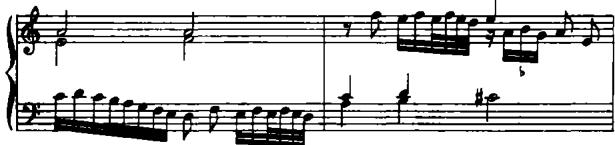
中文讲解
本段为图注占位符:EXAMPLE 15.15,标题为"Ancidetemi pur",第81–82小节。其原文位置紧接在作者对"用beam读法会在某些段落中违背音乐逻辑"的质疑之后,用以具体支持这一质疑——但此处图像数据缺失,实际乐谱内容需查阅原图。
补充说明
占位符提示该例是文本论据的具体载体。原文称此例"与音乐逻辑相悖",但具体如何相悖,依赖谱例中音符的实际连线情况,本节文字未给出,故不可推测。
第7段(P0108)
原文复述
12.7). Although virtually every rhythmic and harmonic destination in the excerpt is reached by the same cadential figure, in each context it acquires a different meaning. The soprano D in measure 1 is the first departure from the F triad; the alto A in the same measure is an indecisive confirmation of the triad; and the jagged descending bass entrance in measures 1–2 sets the whole harmonic fabric in motion. The high F at the end of the third measure juxtaposed with the low F in the bass outlines the range that dominates the remainder of the toccata.
中文讲解
本段回到上段末尾悬置的引文,标号"12.7"指向前一节(第12章)对该例的分析。具体分析该例:尽管片段中几乎每一个节奏和和声目的都是通过同一个终止式到达的,但在每个不同上下文中它都获得不同的意义。第1小节高声部的D是F三和弦的首次偏离;同小节中声部的A是对该三和弦不明确的肯定;第1–2小节锯齿状的下行低声部进入让整个和声结构开始运动。第3小节末尾的高音F与低声部的低F并置,勾画出整首托卡塔余下部分的主导音域。这一段在论证articulation的具体含义:相同的材料在不同的和声、旋律和结构上下文中必须被articulated得不同。
补充说明
“锯齿状的下行低音”(jagged descending bass)一语点明本段分析的关键不是表面的音型,而是音型在启动和声运动中所起的因果作用——这是上段"小石松动→雪崩"比喻的具体化。
第8段(P0109)
原文复述
The communication of these musical facts in performance is dependent on the articulation of the notes—their preparation and spacing, guided by vocal and harmonic feeling in terms of their contexts. Clearly the E-flat in measure 5, the pivot away from F major, demands a preparation different form the assertive F-major triad that precedes it, just as the comparative rhythmic regularity of measure 7 and its upbeat requires an articulation that outlines the basic interval of each figure. Measures 20–24 make these points even more clearly (see Ex. 12.8, 12.9). Measure 20 and mm. 21–22 are related in their presentation of rising figures against a pedal-point and in their rhythmic sequences, but every unit of each passage and both as a whole are differentiated by varying degrees of melodic and harmonic stability. No musical repetition can ever be exact; even if the context remains unchanged, every repeat is either an intensification or a relaxation of the original. Thus the appoggiatura ostinato in measure 20 must be articulated differently in each new harmonic context.
中文讲解
本段把上段对音乐事实的分析落到演奏articulation上:这些音乐事实在演奏中的传达依赖于音符的articulation——它们的准备(preparation)和间距(spacing),而这两者由对上下文的声乐感和和声感所引导。第5小节的降E作为离开F大调的轴心,要求的准备显然不同于它前面那个果断的F大三和弦;同样,第7小节及其上拍相对规整的节奏要求一种勾画出每个音型基本音程的articulation。第20–24小节更清楚地说明这些要点(参例12.8、12.9):第20小节与第21–22小节在以持续音为背景的上行音型和节奏序列上相关,但两段中的每一个单位以及两段整体都在旋律与和声的稳定程度上被区分开。没有任何音乐的重复是完全相同的;即使上下文不变,每一次重复要么是原始的强化,要么是松弛。因此第20小节那个appoggiatura ostinato(倚音固定反复)在每一个新的和声上下文中都必须被articulated得不同。
补充说明
原文中"different form"应是"different from"的拼写错误,本释义按"不同于"理解。“preparation"和"spacing"是本节articulation的两个核心操作词:前者指一个音到达前的准备动作(典型如解决倚音的准备),后者指音与音之间的间隔安排(断开或连接的程度)。
第9段(P0110)
原文复述
Measure 23 epitomizes one of the most difficult tasks in performing these works: the perception and communication of simultaneous rhythmic motion on levels ranging from that of the fundamental harmonic movement to that of the most intimate details of its superficial ornamentation. Functionally, the measure is merely a prolongation of the dominant pedal at the end of measure 22, but it moves harmonically at the levels of the whole note, quarter, and eighth, melodically at the level of the sixteenth note, and rhythmically at all of these in addition to the unmeasured pedal-point trill. Further, such passages must be played in relation to notes that are decaying, have ceased to sound, or may not have been stated explicitly at all (see the implied pedal-point on A in measure 23).
中文讲解
本段把讨论推到一个极端困难的位置:第23小节集中体现了演奏Frescobaldi作品最难的任务之一——同时感知并传达多个层面的节奏运动,这些层面从根本的和声运动一直延伸到最细致的表面装饰。在功能上,这一小节仅仅是第22小节末尾属持续音的延长,但它的和声在全音符、四分音符和八分音符层面运动,旋律在十六分音符层面运动,节奏则在上述所有层面加上"未计量的持续音颤音"运动。更进一步,这样的段落必须在与"正在衰减的、已经停止发音的、或甚至从未被明确陈述出来的音符"的关系中被演奏(参第23小节中隐含的A持续音)。这一段首次引入"decay(声音衰减)“概念——它是下一段的关键衔接点。
补充说明
“simultaneous rhythmic motion on levels”(多层次同时节奏运动)是本节最复杂的articulation对象:演奏者必须同时让听者感知到和声、旋律、节奏多个时间尺度的存在。这与单纯"弹出对的音"是完全不同的任务。
第10段(P0111)
原文复述
The phenomenon of decay is particularly characteristic of Italian harpsichords and both demands and facilitates a wide vocabulary of arpeggiations. In the arpeggiated openings of Frescobaldi’s toccatas the varied speed and patterns of the arpeggios can reveal the relations of harmonic intensity between the chords or botte ferme, as in Louis Couperin’s prelude in imitation of the first toccata of Froberger, with its rich arpeggiation, interpolated passing-tones and ornaments (Ex. 15.16). Seventeenth-century Italian performers made a habit of dwelling on the expressive dissonance of suspensions.²⁶ Frescobaldi recommended arpeggiating “sus-pensions, or dissonances, as also in the middle of the work they will be struck together, so as not to leave the Instrument empty, which striking will be repeated at the pleasure of the player” (1616). It is appropriate “in certain dissonances to stop, arpeggiating them, so that the following section comes out more spirited” (1624).
中文讲解
本段把"decay"这一现象与意大利大键琴的具体特性绑定起来:声音衰减是意大利大键琴的特别特征,它既要求又便利了一种丰富的琶音词汇。在Frescobaldi托卡塔的琶音式开头,琶音的速度与模式变化能揭示和声之间的强度关系(在与botte ferme即"停止的稳定和弦"对照时),正如Louis Couperin模仿Froberger第一首托卡塔的前奏曲那样——它有丰富的琶音、插入的经过音和装饰(参例15.16)。十七世纪意大利演奏者有"停留于挂留的不协和音响"之习惯。Frescobaldi在1616年的前言中建议把"挂留或不协和"琶音化,“在作品中间也可以同时齐奏,让乐器不留空,这种敲击可按演奏者的喜好重复”;在1624年则进一步指出"在某些不协和上停下来琶音化它们,使下一段落出来更精神"是合适的。本段功能:把声音衰减现象转化为可操作的演奏技法(琶音化),并以Frescobaldi本人的话语作为权威背书。
补充说明
“botte ferme"是法语大键琴术语,意指"停在稳定和弦上的、休止般的和声节点”——本节提到它是为了对比琶音(不断运动)与静止(和弦块)之间的articulation差异。1616年和1624年是Frescobaldi两册托卡塔集的前言年份,被作者直接引用以支撑他对挂留和不协和琶音化的建议。
第11段(P0112)
原文复述
The injunction “not to leave the Instrument empty,” which was repeated by Frescobaldi’s successors,²⁷ has wider applications than arpeggiation or repetition of chords. Otherwise well-intentioned performances of Girolamo’s works are often marred by miscalculations of timing and ugly breaks in the line, the result of insensitivity to the decay of harpsichord sound. The harpsichord, in general, has a curious power of projection, of shouting on the housetops what is whispered in the ear. Unfortunately, what it projects most clearly is the performer’s failure to conceive and prepare a passage adequately. One way around the emptiness of cadences on an Italian harpsichord is the shaping of what precedes the cadence so that, even if it is a full chord after an open texture, its arrival is perceived as a point of repose. As a physical analogy, one might suggest
中文讲解
本段扩展"不让乐器留空"这一训诫的应用范围——它比琶音化或重复和弦有更广的含义。很多本意良好的Girolamo演奏常因时机的错算和线条中的丑陋断裂而受损,根源是对大键琴声音衰减的不敏感。大键琴一般有一种奇特的投射力——“在屋顶上喊出那些在耳边低语的东西”——而不幸的是,它投射得最清楚的正是演奏者构思和准备段落不足之处。解决意大利大键琴终止式"空"的一个方法是塑造终止式之前的内容,使得即使它是一个开放织体之后的完整和弦,它的到来也被感知为静息的支点。本段末尾留下"as a physical analogy, one might suggest"未完成的句子,承接到下一段。
补充说明
“shouting on the housetops what is whispered in the ear”(屋顶喊出耳语)是一个反讽比喻:大键琴的投射力放大了一切——包括演奏者不愿被听到的瑕疵。这一表述强调articulation在键盘乐器上的"暴露性”,与声乐或弦乐的容错度形成对比。
第12段(P0113)
原文复述
EXAMPLE 15.16 a. J. J. Froberger, Toccata I, measures 1–3 a dance phrase ended on the toes, with the head erect, as opposed to a round-shouldered, flat-heeled thump (accompanied by an almost audible sigh of relief).
中文讲解
本段实际上是"物理类比"的具体化:它把上段末尾的"as a physical analogy"接续下去,描述一个舞蹈姿态的对比——“一个舞蹈乐句收在脚尖上,头部昂起”,相对于"一个圆肩、平跟、咚的一声落地(伴随着几乎能听见的释然叹息)"。这一对比对应到音乐上的articulation:前者是"轻盈而体面地落到支点”,后者是"在支点上砸出一声空洞"。它与上段"塑造终止式之前的内容使终止被感知为静息"的演奏建议直接对应:终止式的"空"或"满"取决于它之前怎么走过来。
补充说明
本段在原文中是"EXAMPLE 15.16"图例标题文字与上段"physical analogy"比喻句的衔接段,因此它兼具图例说明与论说延续两重功能;其后是真正的谱例占位符(P0114–P0116)。
第13段(P0114)
原文复述
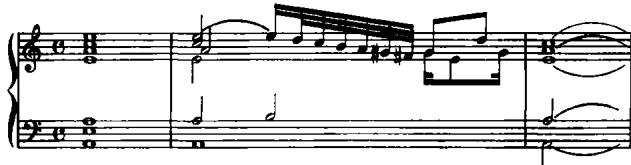
中文讲解
本段是图像/乐谱占位符,位于第30页。结合上下文(前一段提到EXAMPLE 15.16 a. J. J. Froberger, Toccata I, measures 1–3),它应当是该例的图示区域,但其实际图像数据缺失,故乐谱细节无法确定,需查看原图。
补充说明
占位符位置确认其为Froberger Toccata I第1–3小节的谱例图;具体音型、和声细节不可推测。
第14段(P0115)
原文复述

中文讲解
本段是图像/乐谱占位符,对应EXAMPLE 15.16的b部分:Louis Couperin的"Prelude à l’imitation de Mr. de Froberger"。这一例在本节论证中作为"通过丰富的琶音、插入的经过音和装饰来揭示和声强度关系"的实例,但具体音型细节需查阅原图。
补充说明
占位符与P0114共同构成本节引用的EXAMPLE 15.16的两部分(a为Froberger,b为Louis Couperin的模仿作品),用以对照"原作的简单开头"与"后人通过琶音丰富化揭示articulation"两种处理。
第15段(P0116)
原文复述

中文讲解
本段是图像/乐谱占位符,位于第30页。结合上下文(紧接P0115的Louis Couperin Prelude示例),它应当是同一示例的延续部分(可能是示例的b部分之后的延续或图说文字),但具体图像数据缺失,需查阅原图。
补充说明
占位符的版面位置与EXAMPLE 15.16整体结构关联;不能确认其承载的谱例内容。
脚注 / 边栏 / 图表 / 附加信息(如有)
本节涉及的脚注标记包括²⁴(关于原版印刷谱面作为articulation外部线索的提议)、²⁵(关于St. Lambert明确否认印刷谱面有articulation解读意义的陈述)、²⁶(关于十七世纪意大利演奏者停留于挂留不协和之习惯的来源)和²⁷(关于Frescobaldi后继者们重复"不让乐器留空"训诫的来源)。这些脚注在正文论证中分别承担"假说来源"、“反证来源”、“实践传统证据"和"训诫传播证据"四种角色,但脚注具体内容本文未给出。本节含有图例占位符共四处:EXAMPLE 15.15(“Ancidetemi pur"第81–82小节,用于支撑"按beam读法与音乐逻辑相悖"的具体段落),以及EXAMPLE 15.16(a. Froberger Toccata I第1–3小节;b. Louis Couperin的Prelude à l’imitation de Mr. de Froberger),后者用以展示"通过丰富琶音、插入经过音和装饰揭示和声强度关系"的实例。P0114、P0116两个占位符标注为"第30页图像或乐谱示例”,应是EXAMPLE 15.16谱例图(含a、b两段)的实际图像位置。原文P0113段落是EXAMPLE 15.16图例标题文字与正文"physical analogy"比喻句之间的衔接段,承担双重功能。
💡 本节核心要点
- 十七世纪指法的真正价值在于限制无限制的延伸,从而迫使演奏者思考小单位及其相互关系——这是引导键盘演奏者面对articulation问题的最直接路径;作者并批评十九世纪将"触键"简化为legato/staccato/half-staccato套用标签的观念。
- 原版印刷谱面beam作为articulation指示的假说经不起三层质疑:Frescobaldi本人未作说明、与Frescobaldi时代更近的St. Lambert明确否认此读法、某些段落按beam读法与音乐逻辑相悖;即使该记谱惯例存在,也只在最基础分组层面有效,无法指示单位内或单位间的关系。
- articulation被定义为"在特定上下文中从一个音到下一个音的运动”,是对形式、调性、旋律、和声、动机等多重关系网络的回应;键盘articulation以声乐inflection为源头,并需结合晚期文艺复兴对位、情感化朗诵、通奏低音思维。
- 相同的articulation材料在不同上下文中必须被articulated得不同:第9首托卡塔开头的每一个终止式在不同位置获得不同意义;appoggiatura ostinato在每个新和声上下文中必须被articulated得不同——“没有完全相同的音乐重复”。
- 声音衰减是意大利大键琴的核心特征,它要求并便利了丰富的琶音词汇;琶音化的速度与模式可揭示和声之间的强度关系,Frescobaldi本人1616年和1624年前言分别给出"琶音化挂留/不协和"和"在某些不协和上停下来琶音化使下一段更精神"的建议。
- “不让乐器留空"的训诫有比琶音和重复和弦更广的含义:解决意大利大键琴终止式"空"的方法是塑造终止式之前的内容,使终止被感知为静息支点;大键琴"在屋顶喊出耳语"的投射力也使得articulation的瑕疵无处可藏。
🔑 关键术语
- articulation:本节核心概念,指在特定上下文中从一个音到下一个音的运动,是演奏者对作品形式、调性、旋律、和声、动机等多重关系的回应;作者批评将其简化为legato、staccato、half-staccato等套用标签。
- beam(连尾线/连音符):原版印刷谱面上将多个音符用横线连起来的记号。本节讨论一种假说:beam代表应作为一个单位构思和演奏的音符分组,不被beam连起的音符应被分开;但作者质疑该假说并指出其局限。
- inflection:声乐术语,指抑扬变化、音调起伏。本节中键盘articulation的源头是声乐的inflection,既体现在旋律轮廓上,也体现在元音、辅音的音色和清晰度的宽广谱系中。
- botte ferme:法语大键琴术语,指"停在稳定和弦上的、休止般的和声节点”,与琶音式的运动形成对比;本节用其说明琶音可揭示botte ferme之间的和声强度关系。
- arpeggiation(琶音化):在本节特指将和弦分解为按顺序发音的弹奏方式。它既是应对意大利大键琴声音衰减的演奏技法,又是Frescobaldi本人在1616年和1624年前言中明确建议用于挂留和不协和的articulation手段。
- decay(声音衰减):大键琴发音后音量随时间自然衰减直至消失的现象。本节指出这是意大利大键琴的特别特征,它既要求演奏者丰富articulation手段(琶音化、塑形终止前的内容等),又使articulation的瑕疵被投射放大。
S15.7 [描述性拆分] Ornaments and Ornamentation: history and repertory
第1段(P0117)
原文复述
Ornaments and Ornamentation
中文讲解
这是本节的主标题,正式标题为「Ornaments and Ornamentation」(装饰与装饰法)。它开启的论题是:16至17世纪欧洲音乐中装饰演奏的历史脉络与具体曲目清单,并将讨论延伸到与Frescobaldi键盘音乐相关的装饰实践。
第2段(P0118)
原文复述
The continuing controversies about the minutiae of ornamentation have tended to obscure its essential character in the sixteenth and seventeenth centuries. It was not a cerebral attempt to realize a historical imperative but a natural expression of technical skill and musical imagination grounded in the conviction that any precious object, whether a piece of music, a jewel, or an ancient building, could be rendered more beautiful by embellishment. In practice, ornamentation was neither a totally free improvisation nor the laborious recombination of textbook formulas, but rather an individual response, conditioned by training and experience, to certain conventional stimuli.
中文讲解
本段提出本节的核心立场:对装饰细节的无休止争论反而遮蔽了装饰活动在16、17世纪的本来面目。作者强调三点:第一,装饰并不是为了完成某种「历史使命」的智识工程,而是技术能力与音乐想象力的自然流露;第二,其美学根据源自当时一种普遍信念——任何珍贵之物(音乐、珠宝、古建筑)都可通过雕饰变得更美;第三,装饰实践既非纯粹即兴,也不是机械套用课本公式,而是演奏者基于训练与经验,对若干常规刺激所作的个体化回应。
补充说明
「minutiae of ornamentation」指关于装饰细节的细碎争议;「conventional stimuli」指乐谱或语境中提示装饰的常规符号或情境。
第3段(P0119)
原文复述
The literature on the practice of ornamentation relevant to Frescobaldi’s keyboard music covers over a century, from Thomás de Sancta Maria’s Arte de tañer fantasia of 1565 to Bartolomeo BisMantova’s Compendio musicale of 1677, and embraces encyclopedic works, diminution treatises, instrumental tutors, and collections of music. The performing media encompass voice, keyboard, and wind and string instruments. $^{28}$ The size of this body of information should not blind us to the fact that, in the last analysis, it is all a commentary on existing, audible musical practice, irretrievably lost to us. If one imagines trying to reconstruct the style of Art Tatum from reviews, a jazz textbook, a collection of finger exercises, and the sheet music for “Sweet Georgia Brown,” that will give a fair idea of the difficulties involved in recreating an Arcadelt madrigal as embellished by a virtuoso around 1600.
中文讲解
本段勾勒与Frescobaldi键盘音乐相关的装饰文献图景:从1565年Thomás de Sancta Maria的《Arte de tañer fantasia》到1677年Bartolomeo BisMantova的《Compendio musicale》,跨度数十年,涵盖百科类著作、减值法(diminution)专论、乐器教本以及乐曲集;涉及的表演媒介包括人声、键盘以及管弦乐器。作者随后提醒:尽管文献浩繁,但归根到底它们只是对已经消逝的、可听见的音乐实践的评注,难以据此完全复原。为了让读者体会这种难度,作者用了一个类比——试着仅凭乐评、爵士教材、练习曲集和《Sweet Georgia Brown》的乐谱去重建Art Tatum的风格,就能大致体会1600年前后复原Arcadelt牧歌被某位名家装饰演绎之难度。
补充说明
脚注28在此为文献综述提供进一步出处。Arcadelt(约1505–1568)为法国/意大利牧歌作曲家;Art Tatum为20世纪爵士钢琴家。作者通过这一类比把抽象的「历史重建难题」落到读者熟悉的近现代经验上,强化论证。
第4段(P0120)
原文复述
Late Renaissance embellishment moved in a more or less continuous spectrum from simple conventionalized ornaments through more elaborate and extended decoration to diminutions of a preexisting model, such as the quinta voz settings of Diego Ortiz, which were in effect new works. Such embellishments were to be added in performance, either worked out beforehand (especially in ensemble music) or improvised. Such improvisations were not completely free, however, since the literature provided the musician with literally hundreds of formulas for each musical situation, which were employed as modules, and models for their combination in more extended diminution. The prevalence of intabulations, performed at the tempos of their undecorated models, shows that late Renaissance embellishment was above all light, brilliant, and decorative in intention.
中文讲解
本段描绘晚期文艺复兴装饰活动的连续光谱:从程式化的小装饰,到较为繁复的展开式装饰,再到对既有模型进行减值(diminution)——例如Diego Ortiz所作的quinta voz设定,实际上已成为新作品。这些装饰既可事先写定(尤其在合奏音乐中),也可在演出中即兴加入。但即兴并非完全自由:文献为每种音乐情境提供了成百上千的公式,演奏者将其作为模块,或作为更长的减值组合模型。intavolatura(拨弦键琴改编曲)的普遍存在、按其未装饰原速演奏这一事实表明,晚期文艺复兴装饰在总体意图上是轻盈、明亮、装饰性的。
补充说明
「quinta voz」指在原有四声部基础上添加的第五声部,往往通过对位与减值加工而成。「diminution」即把长音符拆解为短时值快速音符群的技法。「intabulations」是将声乐曲或合奏曲改编为键盘或琉特琴演奏形式的乐谱。
第5段(P0121)
原文复述
The primary innovators of the early seventeenth century, the composers of the Florentine Camerata, did not so much invent new forms of embellishment as change the spirit in which it was employed. Many of their ornaments were in fact taken over from Renaissance practice, but they were now intended for expression as well as for decoration, to enhance the affective, rhetorical style of Florentine monody. Their employment at the pleasure of the performer was also considerably curtailed.
中文讲解
本段将视角转入17世纪初佛罗伦萨卡梅拉塔(Florentine Camerata)的作曲家。作者指出,他们并未真正发明新型装饰,而是改变了装饰被使用的精神——许多装饰形式其实承袭自文艺复兴实践,但现在它们的目的不再仅为美化,还要「表达」,以增强佛罗伦萨单声部歌曲(monody)那种强调情感修辞的风格。同时,演奏者按自己意愿自由添加装饰的权限也被大幅削减。
补充说明
本段是从「装饰的形式演变」过渡到「装饰的意图与控制权变化」的转折段,为下文键盘音乐吸收新风格埋下伏笔。
第6段(P0122)
原文复述
Keyboard music, true to its homogeneous background, both cultivated its own repertory of ornaments and drew upon the resources of vocal and instrumental embellishments. The influence of Florentine expressive ornamentation can be traced in such works as the second part of Diruta’s Transilvano, and in Frescobaldi’s reference to “modern madrigals” (which doubtless included the solo settings Caccini published with that designation) as models for the performance of his toccatas.
中文讲解
本段把焦点拉回键盘音乐。由于其同质化的传统,键盘音乐一方面发展出自己独有的装饰曲目,另一方面也借鉴声乐与器乐的装饰资源。佛罗伦萨表达性装饰的影响可在具体作品中追溯,例如Diruta《Transilvano》第二部分,以及Frescobaldi在toccata演奏建议中以「现代牧歌」(modern madrigals)为参照的做法——这些「现代牧歌」很可能就包括Caccini以该名称出版的独唱曲集。
补充说明
「Transilvano」是Diruta的键盘演奏论著(1593/1609),分两部分。「modern madrigals」在17世纪初特指佛罗伦萨风格的独唱牧歌,与传统多声部牧歌相区别。
第7段(P0123)
原文复述
The Repertory of Ornaments
中文讲解
这是本节的小标题「The Repertory of Ornaments」(装饰曲目),开启了论题的第二个层面:把前文历史脉络具体化为可分类的装饰清单,按形状与功能对16世纪末至17世纪的装饰进行系统整理。
第8段(P0124)
原文复述
Italian practice distinguished two types of ornament, the smaller localized decoration (effetto, accento) and the extended virtuoso passaggio or gorgia, applied in varying degrees to both vocal and instrumental music. Effetti could be written out, indicated by a conventional sign, or added freely by the performer; passaggi, except at cadences, were provided most often by the composer.
中文讲解
本段确立意大利装饰的两大类型:较小的、局部性的装饰称为effetto或accento;展开性的炫技段落称为passaggio或gorgia,二者不同程度地适用于声乐与器乐。effetti可以用乐谱完整写出、可以用惯用符号标示、也可以由演奏者自由添加;而passaggi除终止式(cadences)外,大多由作曲家亲自写在谱面上。
补充说明
「effetto/accento」可译作「效果/重音式装饰」;「passaggio/gorgia」可译作「经过段/花唱段」,两者常被视为同义或近义的炫技装饰。
第9段(P0125)
原文复述
For convenience, the general repertory of late sixteenth- and seventeenth-century ornaments can be organized by a combination of shape and function into melodic, repercussive, and compound (usually cadential) ornaments. The simplest melodic ornaments decorated single intervals, both ascending and descending, in a wide variety of rhythmic patterns that included both on-beat and pre-beat forms (Ex. 15.17). These could also be applied on a wider scale (Ex. 15.18). Repercussive orna-
中文讲解
本段提出一个分类框架:为方便起见,把16世纪末至17世纪装饰曲目按「形状」与「功能」两个维度分为三类:旋律型(melodic)、反复型(repercussive)和复合型(compound,通常出现在终止式)。最简单的旋律型装饰修饰单个音程(上行或下行),节奏形态多样,包括正拍(on-beat)与前拍(pre-beat)两种形式,举例见Ex. 15.17;这些手法也可扩展应用到更大范围的音程装饰,举例见Ex. 15.18。本段行文在「Repercussive orna-」处被例示打断,词语跨段延续至P0155。
补充说明
on-beat即装饰起始音落在正拍;pre-beat即装饰音在正拍前先出现。
第10段(P0126)
原文复述
EXAMPLE 15.17 a. Zacconi (1592), fol. 56: ornament and pre-beat interpretation
中文讲解
这是例15.17的图注(a部分):Zacconi 1592年著作第56页,展示装饰及其前拍(pre-beat)诠释。例15.17整体用于支撑P0125关于旋律型装饰既可正拍亦可前拍出现的论述。需查看原图才能看到具体谱例。
补充说明
Zacconi为16世纪末意大利音乐理论家。
第11段(P0127)
原文复述

中文讲解
此为Ex. 15.17a对应的乐谱/插图占位符,位于第32页,对应P0126所示Zacconi的装饰谱例。具体音符形态需查看原图。
第12段(P0128)
原文复述

中文讲解
这是Ex. 15.17的(b)部分图注:Bovicelli 1594年著作第17–19页,展示正拍与前拍装饰。与P0126的Zacconi例并置,呈现同一时期不同理论家对前拍/正拍装饰的并立记录。具体谱例需查看原图。
补充说明
Bovicelli为16世纪末意大利声乐减值与装饰实践的撰述者。
第13段(P0129)
原文复述

中文讲解
Ex. 15.17b对应谱例的图像占位符,位于第33页。需查看原图。
第14段(P0130)
原文复述
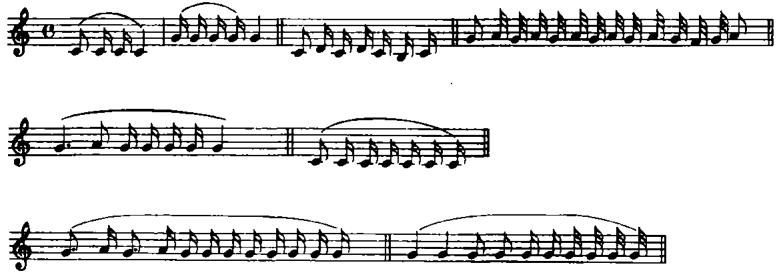
中文讲解
第33页上的另一图像占位符,属于Ex. 15.17序列的延续或附加图示。需查看原图。
第15段(P0131)
原文复述
c. Banchieri, Cartella (1601), p. 50: accenti
中文讲解
Ex. 15.17(c)部分图注:Banchieri《Cartella》(1601)第50页所示的accenti(重音式装饰)。这一例用于支撑P0124对effetto/accento作为局部小装饰的分类讨论。具体谱例需查看原图。
补充说明
Banchieri《Cartella》是一部同时涉及乐理与装饰实践的教学手册。
第16段(P0132)
原文复述

中文讲解
Ex. 15.17c对应Banchieri accenti的谱例占位符。需查看原图。
第17段(P0133)
原文复述
d. Rognoni (1620), fol. 1: “beginning under the note”
中文讲解
Ex. 15.17(d)部分图注:Rognoni 1620年著作第1页所示「beginning under the note」(从音符下方起奏)的装饰写法。该描述与P0125中「前拍装饰」的概念相互呼应,揭示当时有专门术语描述「音前装饰」。需查看原图。
补充说明
Rognoni家族为米兰的演奏与写作世家,1620年的著作继续整理16世纪以来的装饰传统。
第18段(P0134)
原文复述

中文讲解
Ex. 15.17d对应Rognoni「beginning under the note」谱例的占位符。需查看原图。
第19段(P0135)
原文复述
e. Rognoni, accenti
中文讲解
Ex. 15.17(e)部分图注:Rognoni所示的accenti(重音式装饰)谱例。需查看原图。
第20段(P0136)
原文复述

中文讲解
Ex. 15.17e对应Rognoni accenti的谱例占位符。需查看原图。
第21段(P0137)
原文复述
EXAMPLE 15.18 Rogniono (1592), interval-decorations
中文讲解
这是Ex. 15.18的图注:Rogniono 1592年著作所示的「音程装饰」(interval-decorations)。该例与P0125末句「these could also be applied on a wider scale」相对应,展示旋律型装饰从小音程扩展到较大音程的形态。需查看原图。
补充说明
作者拼写Rogniono,与后来的Rognoni可能同属一个家族或同名人物;此处标注年代为1592年。
第22段(P0138)
原文复述

中文讲解
Ex. 15.18对应Rogniono「音程装饰」谱例的占位符。需查看原图。
第23段(P0139)
原文复述
EXAMPLE 15.19 a. Cavalieri (1600): monachina; trillo; zimbelo
中文讲解
Ex. 15.19(a)部分图注:Cavalieri 1600年著作所示的monachina、trillo、zimbelo三种装饰。这是P0155中将讨论的「反复型装饰」(repercussive ornaments)最早的谱例来源。需查看原图。
补充说明
monachina、trillo、zimbelo均为反复型颤音类装饰的不同名称或变体。
第24段(P0140)
原文复述
The image contains musical notation and no legible text. According to the guidelines, non-textual or low-resolution characters must be ignored. Therefore, the correct OCR output is an empty string.
[Empty string]
中文讲解
这是对应Ex. 15.19(a) 谱例的图像位置说明:原图仅含乐谱、无可辨识文字,故OCR结果为空字符串。该段是版面/技术注释性质的内容,对正文论点的直接贡献有限,仅说明此处谱例无法通过文字转录还原。
第25段(P0141)
原文复述
b. Caccini (1602): trillo; ribattuta di gola
中文讲解
Ex. 15.19(b)部分图注:Caccini 1602年著作所示trillo与ribattuta di gola。这是佛罗伦萨新一代理论文献中对反复型装饰的记述,与P0121关于卡梅拉塔作曲家改变装饰精神的论述相呼应。需查看原图。
补充说明
ribattuta di gola是Caccini专门命名的喉部反复音型装饰。
第26段(P0142)
原文复述

中文讲解
Ex. 15.19b对应Caccini trillo与ribattuta di gola谱例的占位符。需查看原图。
第27段(P0143)
原文复述
c. Praetorius, Syntagma III (1619), p. 237: trillo
中文讲解
Ex. 15.19(c)部分图注:Praetorius《Syntagma III》(1619)第237页所示trillo。该例说明此装饰已被纳入德国综合性音乐论著,体现其传播范围。需查看原图。
补充说明
《Syntagma Musicum》是Praetorius的鸿篇巨著,卷三涉及乐器与演奏实践。
第28段(P0144)
原文复述
d. Rognoni (1620), fol. 1: tremolo in due modi; gruppo semplice; gruppo doppio; tremolo alle note di semibreve; trillo sopra la minima; trillo sopra la semibreve primo modo; secondo modo
中文讲解
Ex. 15.19(d)部分图注:Rognoni 1620年著作第1页集中列出多种反复型装饰,包括tremolo in due modi、gruppo semplice、gruppo doppio、tremolo alle note di semibreve、trillo sopra la minima、trillo sopra la semibreve primo modo以及secondo modo。本图注相当于一个目录性清单,揭示当时反复型装饰在记谱上已有细分体系。需查看原图。
补充说明
这些名称体现了同一装饰概念在不同音符时值(semibreve、minima等)下被赋予不同名称的命名传统。
第29段(P0145)
原文复述

中文讲解
Ex. 15.19(e)部分图注:J. H. Kapsberger 1640年所示trillo谱例。Kapsberger是当时重要的琉特琴与作曲人物,其记谱反映该装饰在器乐实践中的延续。需查看原图。
第30段(P0146)
原文复述
EXAMPLE 15.20 Bovicelli (1594), p. 13: accenti sopra le minime ( $^{^}$ = tremolo formato); accenti sopra alle semiminime ( $^{^}$ = tremolo non formato)
中文讲解
Ex. 15.20图注:Bovicelli 1594年著作第13页所示的「minima上的accenti」(符号^表示tremolo formato)与「semiminima上的accenti」(^表示tremolo non formato)。此例位于P0155主旨句「Repercussive ornaments…were also employed to enliven more extensive embellishments」之后不久,用以说明反复型装饰也用于活跃较大规模的装饰段落。需查看原图。
补充说明
tremolo formato与tremolo non formato的区分暗示了不同形态的反复音型。
第31段(P0147)
原文复述
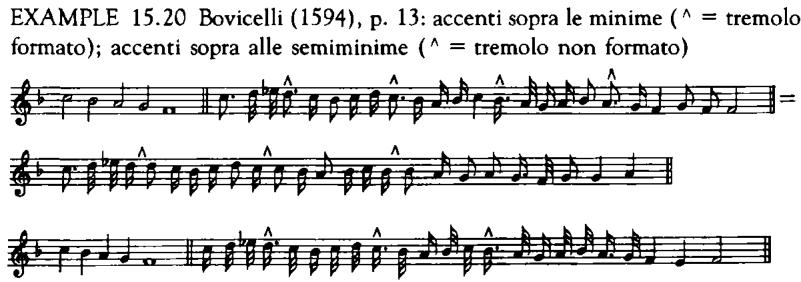
中文讲解
Ex. 15.20对应Bovicelli谱例的占位符,位于第34页。需查看原图。
第32段(P0148)
原文复述

中文讲解
Ex. 15.21(a)部分图注:Dalla Casa 1584年著作第5页所示「全音符上的tremolo groppizzato」、第6页所示「minima上的tremolo groppizzato」。该图注同时出现为图像占位符。需查看原图。
补充说明
tremolo groppizzato可视为反复型装饰与回旋型装饰的复合形态。
第33段(P0149)
原文复述
b. Dalla Casa: gruppo battuto de semibreve; gruppo battuto de minima
中文讲解
Ex. 15.21(b)部分图注:Dalla Casa所示「全音符上的gruppo battuto」与「minima上的gruppo battuto」,与(a)部分并列,展示同一作者对不同装饰命名的处理。需查看原图。
补充说明
gruppo battuto是带有「击奏」特征的复合装饰术语。
第34段(P0150)
原文复述
c. Zacconi (1592), fol 61v: cadenza
中文讲解
Ex. 15.21(c)部分图注:Zacconi 1592年著作第61v页所示「cadenza」(终止式装饰)。该例与本节后半段关于复合型/终止式装饰的讨论直接对应。需查看原图。
补充说明
cadenza在此并非后世协奏曲中的「华彩乐段」之意,而更接近旋律性收束装饰。
第35段(P0151)
原文复述

中文讲解
Ex. 15.21c对应Zacconi终止式装饰谱例的占位符。需查看原图。
第36段(P0152)
原文复述
d. Conforti, p. 25: gruppo di sopra; mezzo gruppo; trillo
中文讲解
Ex. 15.21(d)部分图注:Conforti著作第25页所示gruppo di sopra、mezzo gruppo、trillo三种装饰并列,体现终止式装饰集合内多种成分并存的特征。需查看原图。
补充说明
Conforti为17世纪初声乐装饰与教学传统的撰述者。
第37段(P0153)
原文复述

中文讲解
Ex. 15.21d对应Conforti谱例的占位符之一。需查看原图。
第38段(P0154)
原文复述

中文讲解
Ex. 15.21d的另一个相关谱例占位符,位于第34页。需查看原图。
第39段(P0155)
原文复述
ments, either alone or combined with turns, are found in both vocal and instrumental sources, either as repeated notes or as oscillations between the main note and upper or—more rarely—lower auxiliary (Ex. 15.19). Repercussive ornaments were also employed to enliven more extensive embellishments (Ex. 15.20). It is not always possible to distinguish between purely repercussive and repercussive-cadential figures, since cadences were more complex in construction, drew upon a variety of patterns, and often tended toward the more extended passaggio (Ex. 15.21).
中文讲解
本段接续P0125末句被截断的论述「Repercussive orna-ments」,系统展开反复型与复合型装饰的特征。其要点包括:第一,反复型装饰(单独出现或与回音结合)在声乐与器乐文献中皆可见,形态为重复主音或主音与上/下辅助音的快速交替(较少使用下辅助音,举例Ex. 15.19);第二,反复型装饰也用于使更大型的装饰段落显得更有活力(举例Ex. 15.20);第三,纯反复型与反复-终止型之间往往难以截然区分,因为终止式构造更复杂、汇聚多种图式,并时常趋向更长的passaggio(举例Ex. 15.21)。
补充说明
「turns」即回音;「auxiliary」指主音上下的辅助音;「repercussive-cadential」为反复型与终止型混合的装饰。
第40段(P0156)
原文复述
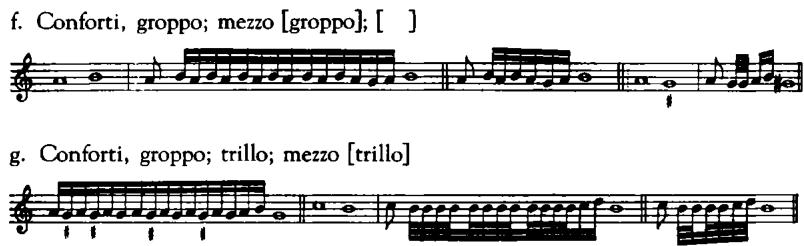
中文讲解
Ex. 15.21后续谱例之一的占位符,位于第35页,对应Conforti等作者终止式装饰的延续例示。需查看原图。
第41段(P0157)
原文复述
f. Conforti, groppo; mezzo [groppo]; [ ]
中文讲解
Ex. 15.21(f)部分图注:Conforti所示groppo、mezzo [groppo]以及第三个名称残缺(用方括号表示)。该例继续展示终止式装饰的命名变体。需查看原图。
补充说明
方括号表示原图注此处字符残缺或不清晰。
第42段(P0158)
原文复述
g. Conforti, groppo; trillo; mezzo [trillo]
中文讲解
Ex. 15.21(g)部分图注:Conforti所示groppo、trillo与mezzo [trillo],延续(f)的命名对照,展示同一作者对反复/终止型装饰的多重命名。需查看原图。
第43段(P0159)
原文复述
h. Bovicelli, p. 12: groppetti
中文讲解
Ex. 15.21(h)部分图注:Bovicelli著作第12页所示groppetti(groppo的复数形式)。需查看原图。
补充说明
groppetti/groppo属同类装饰的复数与单数形态。
第44段(P0160)
原文复述
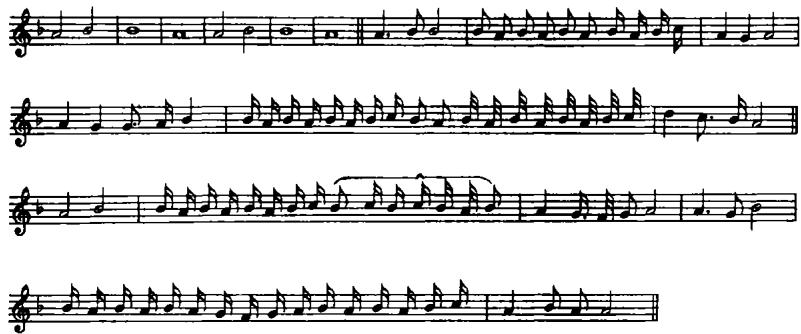
中文讲解
Ex. 15.21h对应Bovicelli groppetti谱例的占位符。需查看原图。
第45段(P0161)
原文复述
i. Cavalieri, groppolo
中文讲解
Ex. 15.21(i)部分图注:Cavalieri所示groppolo。Cavalieri在1600年代表作中提供groppolo,与本节其他终止式装饰名称共同构成命名谱系。需查看原图。
补充说明
groppolo是groppo的指小词。
第46段(P0162)
原文复述
j. Virgiliano (ca. 1600), p. [34]: cadences
中文讲解
Ex. 15.21(j)部分图注:Virgiliano约1600年手稿第[34]页所示终止式装饰。需查看原图。
补充说明
Virgiliano的手稿《Il Dolcimelo》保存了多种装饰与终止式谱例。
第47段(P0163)
原文复述
k. Banchieri (1601), p. 50: fioretti
中文讲解
Ex. 15.21(k)部分图注:Banchieri《Cartella》1601年第50页所示fioretti(小花饰)。fioretti是装饰性小花饰的统称,常出现在终止式或经过句中。需查看原图。
补充说明
fioretti与本文讨论的复合型终止式装饰属同类范畴。
第48段(P0164)
原文复述
l. Banchieri, bass cadences
中文讲解
Ex. 15.21(l)部分图注:Banchieri所示低音终止式装饰,与(k)并列,体现同一作者在不同声部层级上对终止式装饰的处理。需查看原图。
第49段(P0165)
原文复述
m. Caccini, gruppo; cascata doppia n. Praetorius, pp. 238–239: trilli, accenti, gruppi
中文讲解
Ex. 15.21(m)部分图注:Caccini所示gruppo、cascata doppia,以及Praetorius第238–239页所示trilli、accenti、gruppi的汇总。本图注跨越两位作者,提供终止式装饰名称的多源对照。需查看原图。
补充说明
cascata doppia可理解为「双重下泻式」装饰,与groppo/trillo属同一终止式装饰家族。
第50段(P0166)
原文复述
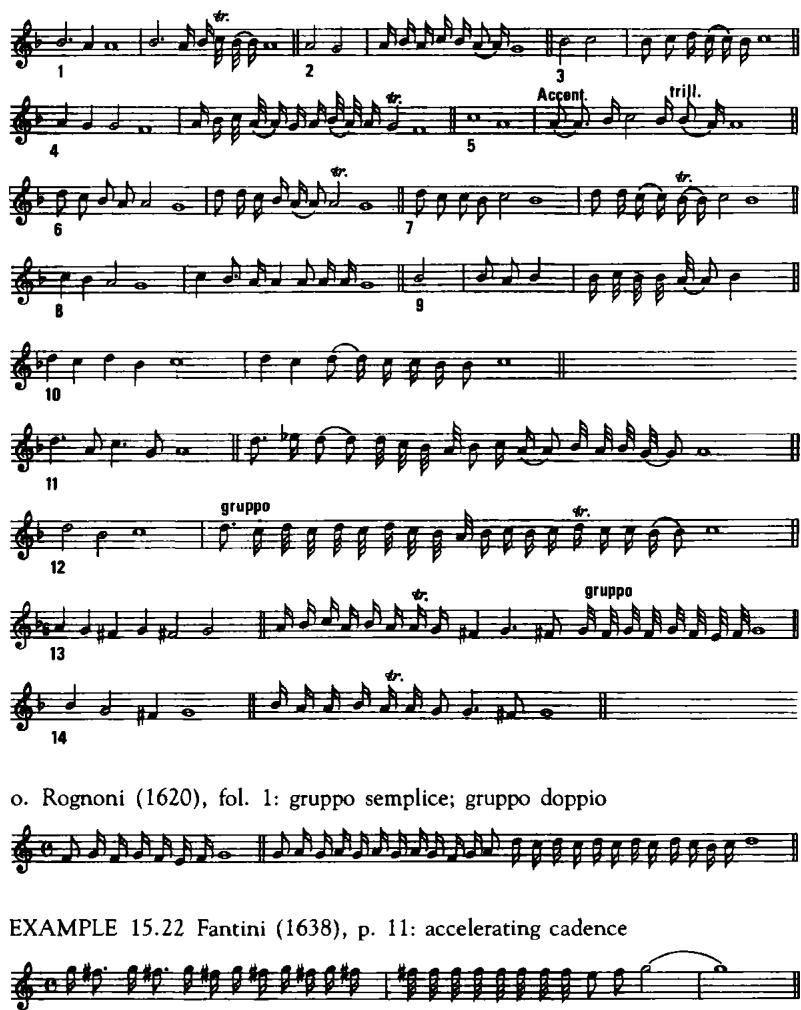
中文讲解
Ex. 15.21m对应Praetorius终止式装饰谱例的占位符,位于第36页。需查看原图。
第51段(P0167)
原文复述
Some notational evidence suggests that these cadential ornaments were not taken in strict tempo but accelerated gradually (Ex. 15.22).
中文讲解
本段为本节收束句:某些记谱证据显示,这些终止式装饰并非按严格节拍演奏,而是在结尾逐渐加速。这是把上一段关于复合型终止式装饰的讨论推向表演实践层面的关键结论——它强调终止式装饰不仅是符号,更是一种具有速度渐变(accelerando)特征的听觉现象。
补充说明
本节至此结束对16世纪末至17世纪装饰曲目及历史脉络的概述,并以Ex. 15.22提示加速特征作为下一节的可能过渡。
脚注 / 边栏 / 图表 / 附加信息(如有)
本节主体由两大子节构成:「Ornaments and Ornamentation」(P0117–P0122)与「The Repertory of Ornaments」(P0123–P0167)。第一子节以散文论述装饰的本质、文献范围、历史演变与佛罗伦萨影响;第二子节通过一组编号图例(Ex. 15.17–15.22)按形状与功能分类呈现装饰清单。脚注28出现在P0119末尾,为装饰文献综述提供补充出处,作用是支撑P0119的论断而非引入新主张。多个图例条目由「图注+图像占位符」组成,图像内容为乐谱或表格,原文以图注传达作者意图,因此本节中的图像占位符仅承担版面定位作用,需对照原图方可获得具体音符信息。
💡 本节核心要点
- 装饰在16、17世纪并非机械套用公式或纯粹即兴,而是基于训练与经验的个体化回应;其美学根基在于「珍贵之物应被雕饰」的普遍信念。
- 与Frescobaldi键盘音乐相关的装饰文献横跨1565至1677年,涵盖百科论著、减值专论、乐器教本与乐曲集;但它们都是对已消逝实践的评注,重建难度极大。
- 晚期文艺复兴装饰呈连续光谱(从程式化小装饰到减值新作),以轻盈、明亮、装饰性为总体意图;17世纪初佛罗伦萨卡梅拉塔改变了装饰的精神——从纯装饰转为「表达性」,并收窄了演奏者的自由添加权。
- 意大利实践区分effetto/accento(局部小装饰)与passaggio/gorgia(展开炫技段),二者归属与谱面提供者不同。
- 作者以形状与功能为标准,把装饰曲目分为旋律型、反复型、复合型(多出现于终止式),并指出纯反复型与反复-终止型难以截然区分。
- 终止式装饰在记谱与表演上常带有渐快(accelerando)的特征,是装饰作为「听觉现象」的体现。
🔑 关键术语
- ornamentation/embellishment:装饰/美化,即在既有旋律或结构上添加的修饰音、装饰句或减值段落;本节把它视为受训练与经验约束的个体化回应,而非纯粹即兴或公式拼贴。
- diminution:减值法,将长音符拆解为短时值快速音符群的技法;晚期文艺复兴装饰光谱的顶端即对既有模型进行减值,使其实际上成为新作。
- effetto/accento:意大利实践中两类局部小装饰的术语;可被完整写出、符号标示或由演奏者自由添加。
- passaggio/gorgia:展开型炫技装饰段;除终止式外,大多由作曲家在谱面直接提供。
- repercussive ornament:反复型装饰,包括重复主音或主音与上下辅助音的快速交替;可单独或与回音结合,并可用于活跃较大规模装饰。
- compound (cadential) ornament:复合型(终止式)装饰;构造复杂、融合多种图式,常向更长passaggio靠拢,并可带渐快特征。
- intabulation:将声乐曲或合奏曲改编为键盘或琉特琴演奏形式的乐谱;本节以之为例,说明晚期文艺复兴装饰以原速、装饰性演奏为常态。
- Florentine Camerata:佛罗伦萨卡梅拉塔,16世纪末至17世纪初聚集于佛罗伦萨的诗人、作曲家与理论家圈子,他们发展了强调情感修辞的单声部歌曲(monody),并改变了装饰的「精神」。
- monody:单声部歌曲体裁,伴随通奏低音,强调歌词与情感表达;本节中卡梅拉塔的装饰转向以服务于monody的「表达」为目的。
- cadenza:此处用作终止式装饰之意,并非后世协奏曲华彩乐段;常以复合形态出现并带有渐快演奏习惯。
S15.8 [描述性拆分] Ornaments: keyboard practice, signs, and performance
第1段(P0168)
原文复述
These same general types can be distinguished in the ornaments described in keyboard treatises. Stepwise melodic embellishments were employed both before and on the beat to decorate single notes or intervals (Ex. 15.23). From the mid-sixteenth century, keyboard repercussive ornaments had employed the lower as well as the upper auxiliary (Ex. 15.24), although the upper was regarded as preferable. The main-note trill seems
中文讲解
本段开启本节对键盘装饰音实践的论述,承接前文对装饰音的总体分类(应该指的是前文已建立的旋律性装饰、重复音装饰、复合终止装饰等类型)。作者指出:键盘教程中所讨论的装饰音同样可以归入这些一般类型;阶进式旋律装饰可用于装饰单个音或音程,既可出现在节拍前也可出现在拍上(例15.23);自16世纪中期起,键盘的重复音装饰已使用下方与上方两种辅助音,但上方辅助音被视为更佳。本段在原文行文中并未结束(句末中断于’The main-note trill seems’),完整意思由下一段续接。其论证作用是把前节建立的人声装饰音分类框架推广到键盘文献,从而提示该分类框架的跨乐种适用性。
补充说明
本段引用的Ex. 15.23、Ex. 15.24均为本节后续出现的乐谱示例编号;‘before and on the beat’指装饰音相对基本拍的位置——‘节拍前’与’拍上’;‘upper auxiliary’与’lower auxiliary’指主音上下方相邻的辅助音。
第2段(P0169)
原文复述
EXAMPLE 15.23 a. Diruta (1609), I, p. 13: clamationi b. accenti
中文讲解
这是图例15.23的标题文字。该图例引用Diruta 1609年著作第I卷第13页中的两类装饰:‘clamationi’与’accenti’。这正是P0168所提到的’阶进式旋律装饰’在拍上与节拍前的实例化,分别作为标题缩写延续前段论述。
补充说明
原文中’a.‘与’b.‘两个字母标签分别对应标题中所示的两个分类;该图例位于第37页。
第3段(P0170)
原文复述

中文讲解
此处为图例15.23的乐谱图像占位符,位置在第37页,原图细节未在文本中保留,需要查阅原图才能获得音符内容。
第4段(P0171)
原文复述
c. Praetorius, p. 236: tirata (“faster and sharper . . . each note clear”)
中文讲解
图例15.23的第三项,引用Praetorius第236页的’tirata’装饰,括号内为作者给出的演奏提示——‘更快、更尖锐……每个音都要清晰’。tirata属于阶进式装饰之列,与前两例(clamationi、accenti)共同构成对单音或音程的装饰。
第5段(P0172)
原文复述
EXAMPLE 15.24 a. Sancta Maria (1565), fol. 47: senzillos: r.h. 343, 323; quiebro: r.h. 23, 34; redoble: r.h. 3234; l.h. 21; l.h. 3432
中文讲解
图例15.24(重复音装饰的键盘实例)的第一项,引用Sancta Maria 1565年第47页。标题列出三种西班牙术语装饰及其右/左手(r.h./l.h.)的具体指法:senzillos(r.h. 343, 323)、quiebro(r.h. 23, 34)、redoble(r.h. 3234;l.h. 21;l.h. 3432)。这正是P0168所述’自16世纪中期起键盘重复音装饰使用下方辅助音’的实例。
补充说明
标题中’r.h.‘与’l.h.‘分别代表右手(right hand)与左手(left hand),数字序列指示所用指法;这些装饰名称(senzillos、quiebro、redoble)均为西班牙语术语。
第6段(P0173)
原文复述
b. Diruta (1593), fol. 10: tremolo: r.h. 23, 34 l.h. 32, 21
中文讲解
图例15.24的第二项,引用Diruta 1593年第10页。Diruta的术语’tremolo’在此给出的左右手指法分别为r.h. 23, 34与l.h. 32, 21,进一步证实16世纪末键盘重复音装饰在意大利文献中的指法规范。
第7段(P0174)
原文复述
[NO TEXT]
中文讲解
该段在原文中标注为’[NO TEXT]’,属于图例15.24区域内的版面空段,无文字内容。
第8段(P0175)
原文复述
c. Diruta, fol. 10v: tremolo sopra le minime
中文讲解
图例15.24的第三项,引用Diruta第10v页(verso页,即左页)的’tremolo sopra le minime’——指在小二分音符时值上的tremolo装饰,与前述短音符上的tremolo形成时值对比。
补充说明
‘sopra le minime’为意大利语,意为’在小二分音符上’;‘10v’指folio 10的verso(背面)页。
第9段(P0176)
原文复述
d. Diruta, fol. 11: tremolo sopra le semiminime
中文讲解
图例15.24的第四项,引用Diruta第11页的’tremolo sopra le semiminime’——指在更短时值(四分音符或更小)上的tremolo装饰,与前例的’二分音符时值’对比。
补充说明
‘sopra le semiminime’为意大利语,意为’在半二分音符上’(即更短音符时值)。
第10段(P0177)
原文复述
e. Diruta, fols. 9v–10: groppi
中文讲解
图例15.24的第五项,引用Diruta第9v至10页的’groppi’——一种在键盘装饰中常见的复合型装饰(接近回音或带回音的颤音),后文还将多次讨论。
第11段(P0178)
原文复述
The image contains musical notation with treble clef, time signature, and a sequence of notes. According to the instructions, non-textual or typographic characters must be ignored. Therefore, the correct OCR output is empty.
(No text to output)
中文讲解
该段内容为对第37页图像的OCR处理说明,指出图像仅含高音谱号、拍号与音符序列等非文本字符,故正确OCR输出为空。该说明本身是OCR工作流的产物,并非正文论述内容。
第12段(P0179)
原文复述
[NO TEXT]
中文讲解
该段在原文中标注为’[NO TEXT]’,属于第37页图例区域的版面空段。
第13段(P0180)
原文复述
The image contains musical notation and no textual content. It is a standard musical score with a treble clef, which is not a standard string. Therefore, the output is empty.
中文讲解
该段为对第37页另一图像的OCR处理说明,指出图像仅含高音谱号的标准乐谱,无文本内容,因此输出为空。这是OCR流程说明,并非正文论述。
第14段(P0181)
原文复述
to have taken on some of the expressive rhythmic character of Florentine vocal ornamentation (Ex. 15.25). As in general practice, keyboard compound-cadential ornaments were more extended in length and included trill-plus-turn patterns beginning both on the main note and on the upper auxiliary (Ex. 15.26). Some were performed in strict rhythm, others were accelerated gradually (Ex. 15.27). Although the repeated-note trill does not seem to have been a staple of keyboard embellishment, it appears in at least one late source as part of a cadential ornament (Ex. 15.28).
中文讲解
本段是P0168中断句子的续接。主旨在于:主音颤音(main-note trill)似乎吸收了佛罗伦萨人声装饰音的某些节奏性表现特征(例15.25);键盘的复合终止装饰普遍更长,包含颤音加回音的组合,可从主音或上方辅助音起奏(例15.26);其中一些按严格节奏演奏,另一些则逐渐加速(例15.27);同音重复式颤音似乎并非键盘装饰的主流,但至少在一份较晚的文献中作为终止装饰出现(例15.28)。本段在小节论证中的作用是勾勒主音颤音的来源(人声影响)、复合终止装饰的形态与节奏变化、以及同音重复颤音的边缘地位,为后文Ornamental Signs与Performance两小节做铺垫。
补充说明
原段开头以’[NO TEXT] to have taken on some…‘出现,提示前文(书页排版)位置存在图例占位,本段紧接其后的论述性文字;‘Florentine vocal ornamentation’指源自佛罗伦萨的歌唱装饰风格。
第15段(P0182)
原文复述
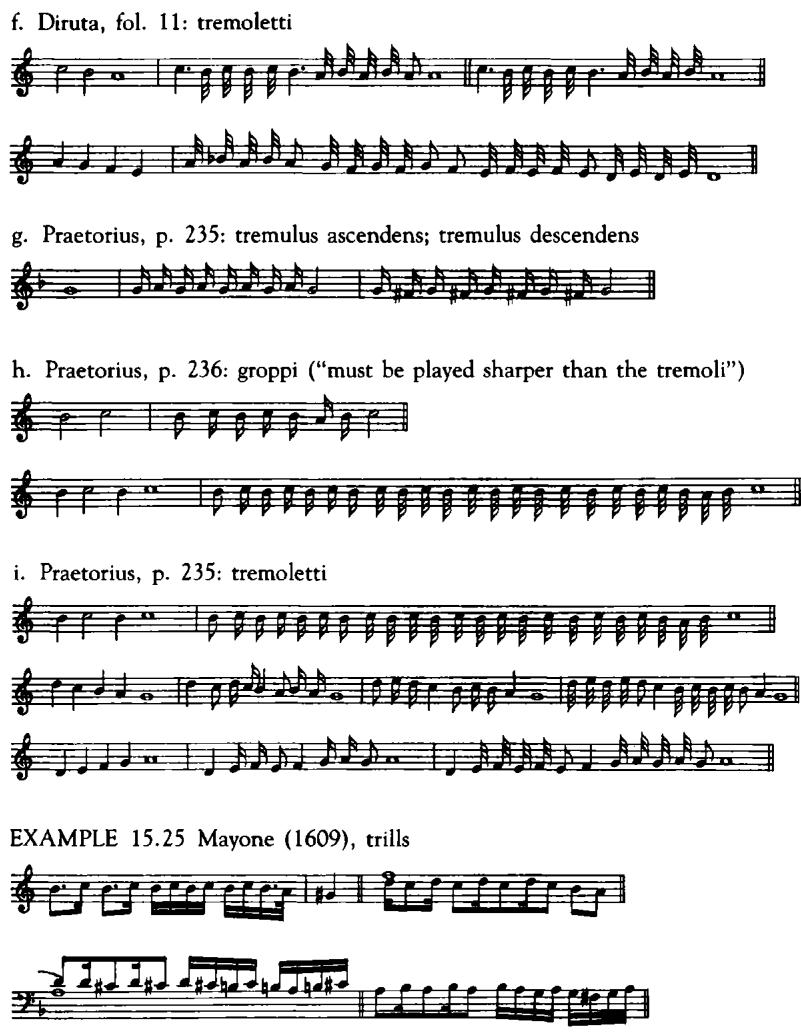
中文讲解
此处为第38页的乐谱图像占位符,对应P0181所述例15.25或附近的图像内容,原图细节未在文本中保留,需查阅原图。
第16段(P0183)
原文复述
EXAMPLE 15.26 a. Diruta (1593), fols. 9v–10: groppi in accidentia: r.h. 43 l.h. 23, 12
中文讲解
图例15.26(键盘复合终止装饰)的第一项,引用Diruta 1593年第9v至10页的’groppi in accidentia’,并附左右手指法:r.h. 43、l.h. 23, 12。‘groppi in accidentia’即’在变化音处的groppi’,与P0181所提到的’复合终止装饰’相印证。
补充说明
‘in accidentia’为意大利语,指’在变化音处’或’在偶然/装饰音处’,与终止处的和弦外装饰相关。
第17段(P0184)
原文复述
b. Macque, Capriccio sopra re fa mi sol, measure 60
中文讲解
图例15.26的第二项,引用Macque的《Capriccio sopra re fa mi sol》第60小节。这是一首以四音列’re, fa, mi, sol’为主题的随想曲,第60小节展示了复合终止装饰在具体作品中的实际呈现。
第18段(P0185)
原文复述

中文讲解
此处为第39页乐谱图像占位符,对应P0183或P0184所指内容,原图细节未在文本中保留。
第19段(P0186)
原文复述
c. Diruta (1609), I, p. 13: groppi sopra l’accadenze
中文讲解
图例15.26的第三项,引用Diruta 1609年第I卷第13页的’groppi sopra l’accadenze’——‘在终止式上的groppi’,与前两例同属终止处的复合装饰,进一步强化P0181所论复合终止装饰的普遍性。
补充说明
‘sopra l’accadenze’为意大利语,意为’在终止式之上/处’。
第20段(P0187)
原文复述

中文讲解
此处为第39页另一乐谱图像占位符,原图细节未在文本中保留。
第21段(P0188)
原文复述

中文讲解
此处为第39页又一乐谱图像占位符,原图细节未在文本中保留。
第22段(P0189)
原文复述
EXAMPLE 15.27 Mayone (1609), Canzona francese terza, measures 87–88
中文讲解
图例15.27的标题,引用Mayone 1609年《Canzona francese terza》(第三首法国式坎佐纳)第87至88小节,对应P0181所述’一些按严格节奏演奏、另一些逐渐加速’的终止装饰实例。
第23段(P0190)
原文复述

中文讲解
此处为第40页乐谱图像占位符,对应图例15.27的具体音符内容,原图细节未在文本中保留。
第24段(P0191)
原文复述
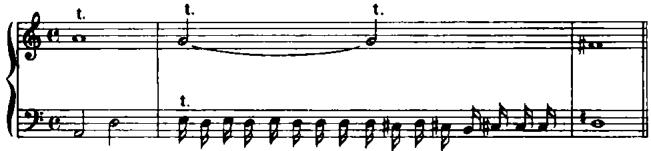
中文讲解
此处为图例15.28第一项(a)的图像占位符,引用Penna 1672年第152页’prattica con la sinistra’(左手练习)。该例用于支持P0181所述’同音重复式颤音至少在一份较晚文献的终止装饰中出现’的论断。
补充说明
‘prattica con la sinistra’为意大利语,意为’左手练习’。
第25段(P0192)
原文复述
b. Penna, prattica con la destra
中文讲解
图例15.28的第二项(b),同样引用Penna,标题为’prattica con la destra’(右手练习),与a项形成左右手对照。
补充说明
‘prattica con la destra’为意大利语,意为’右手练习’。
第26段(P0193)
原文复述

中文讲解
此处为第40页另一乐谱图像占位符,对应图例15.28b的具体音符内容,原图细节未在文本中保留。
第27段(P0194)
原文复述

中文讲解
此处为图例15.29的图像占位符,引用Trabaci 1615年第126页的’trillo doppio’(双颤音)。该例与P0196将讨论的’T+‘符号(终止颤音trillo doppio)直接对应,是从符号到具体装饰形态的视觉示例。
补充说明
’trillo doppio’为意大利语,意为’双颤音’。
第28段(P0195)
原文复述
Ornamental Signs
中文讲解
这是本节的子标题,开启了对装饰音标记(ornamental signs)的讨论。本节前段讨论的是教程与具体装饰形态,此后转向印刷乐谱中实际使用的装饰音符号约定——特别是Frescobaldi印刷键盘作品中唯一的常规符号’t’。子标题表明本小节将围绕符号惯例而非装饰类型展开论述。
第29段(P0196)
原文复述
The one conventional sign that appears in Frescobaldi’s printed keyboard works is the letter “t.” As an indication of an unspecified ornament it had been employed in Italian keyboard music as early as 1576, in the Intavolatura de cimbalo of Antonio Valente. Diruta interpreted “t” as tremolo, Cavalieri as trillo. For both it denoted a trill beginning on the main note, alternating with the upper auxiliary, and occupying half the value of the principal note (assuming that a tie is to be added to Cavalieri’s example); Diruta andPraetorius, however, confirm that keyboard players also interpreted the sign as a mordent or lower-note trill. Trabaci (1603) employed “T.” to mean trillo, but from the context it appears that he intended a cadential trill with some kind of turn, alternating with the upper auxiliary and beginning on either the main or upper note (Neapolitan practice seems to have been flexible on this point), the groppo/groppolo of Diruta and Cavalieri. Durante (1608) indicated by “t” a trill that could be added to a written-out trill or groppetto. In his collection of 1615 Trabaci introduced the sign “T+” for a cadential trill (trillo doppio) beginning on the lower third (Ex. 15.29).
中文讲解
本段是Ornamental Signs小节的核心论述。主旨在于追溯’t’符号在意大利键盘音乐中的历史与含义:Frescobaldi印刷键盘作品中唯一出现的常规装饰音符号就是字母’t’;该符号最早可追溯到1576年Valente的《Intavolatura de cimbalo》作为未指明的装饰音标志;Diruta将’t’解释为tremolo、Cavalieri解释为trillo,二者均指从主音起、与上方辅助音交替、占主音时值一半的颤音(对Cavalieri的例需假设加上连线);但Diruta和Praetorius也证实键盘演奏者将该符号理解为mordent或下助音颤音;Trabaci 1603年用大写’T.‘表示trillo,但语境显示他意指带某种回音的终止颤音,与上方辅助音交替,从主音或上方音起奏均可(那不勒斯实践在此点上较为灵活),即Diruta与Cavalieri所谓的groppo/groppolo;Durante 1608年用’t’表示可附加于已写明的颤音或groppetto之上的颤音;Trabaci 1615年引入’T+‘符号表示从下方三度起奏的终止颤音(trillo doppio,例15.29)。本段在小节论证中的作用是建立Frescobaldi所用’t’符号的传统背景,提示其同时存在多种解释传统,从而为后文判断Frescobaldi的实际做法提供对照。
补充说明
本段提及的人名与著作均在原文给定范围内:Diruta(意大利键盘理论家)、Cavalieri、Valente(Antonio Valente,1576年《Intavolatura de cimbalo》作者)、Trabaci、Durante、Praetorius;’lower third’指从主音向下的三度音程起点;‘Neapolitan practice’指那不勒斯乐派的实践传统。
第30段(P0197)
原文复述
Diminution treatises and written-out examples show cadential trills beginning on the upper note, but Diruta’s preference for interpreting “t” as a main-note trill rather than a mordent is confirmed in the teaching of Bottazzi (1614), Penna (1672), who also gives trills beginning on the upper note, and BisMantova (1677). Frescobaldi’s employment of the “t” sign is consistent with this tradition. When he wrote out the ornament—which he called trillo—he interpreted it as Diruta’s tremolo, a trill beginning on the principal note and alternating with the upper auxiliary (Ex. 15.30). Frescobaldi’s cadential groppi, the most frequent written-out ornament in his keyboard works, begin on the lower note except for an occasional suspension. His employment of the ribattuta di gola or zimbelo shows the influence of vocal ornamentation.
中文讲解
本段延续Ornamental Signs小节,进一步收束至对Frescobaldi本人实践的判断。主旨在于:尽管减法(diminution)教程与写明的范例显示终止颤音可从上方音起奏,但Diruta将’t’解释为主音颤音而非mordent的偏好得到Bottazzi(1614)、Penna(1672,兼有从上方音起的颤音)与BisMantova(1677)教学的印证;Frescobaldi对’t’符号的使用与这一传统一致——当他将该装饰音写明(称为trillo)时,其解释等同于Diruta的tremolo,即从主音起、与上方辅助音交替(例15.30);Frescobaldi的终止groppi是其键盘作品中最频繁出现的写明装饰,除偶尔的延留外,均从下方音起奏;他使用ribattuta di gola或zimbelo则显示出受歌唱装饰影响的痕迹。本段的小节论证作用是确立Frescobaldi的装饰音实践位于意大利键盘理论主流传统(主音起颤音)之中,同时通过groppi的下方起奏、ribattuta di gola等显示人声装饰影响的并存,呈现其装饰实践的复合性。
补充说明
本段提及的人物(Bottazzi、Penna、BisMantova)均为意大利键盘或装饰音教学传统的代表人物;‘ribattuta di gola’与’zimbelo’为歌唱装饰术语。
第31段(P0198)
原文复述
The Performance of Ornaments
中文讲解
这是本节第二个子标题,开启对’装饰音的演奏实践’的讨论。前两小节(Ornamental Signs之前的论述、Ornamental Signs)侧重装饰音的类型、形态与符号约定,本子标题下的内容则转入演奏层面——即在实际音乐中装饰音如何被使用、受何因素制约。
第32段(P0199)
原文复述
The history of embellishment practice in seventeenth-century Italy indicates that the kind and degree of improvised ornament varied with time, place, medium, and genre, and that Roman keyboard music of Frescobaldi’s time was inherently conservative in this respect, unlike Roman sacred vocal music. In no genre does the addition of improvised passaggi seem to have been contemplated, except perhaps at otherwise undecorated cadences. On the evidence of Frescobaldi’s own embellished corrente in Toccate II and a manuscript variation of one of his balletti, dances were the keyboard genre most appropriate for decoration. The ornamentation of contrapuntal genres, on the other hand, was restricted. Zacconi stipulated that embellishments were to be omitted entirely when singing “any sort of imitations, or fantasie.” $^{29}$ Although Diruta observed that the tremolo was to be employed “at the beginning of a Ricercare, or
中文讲解
本段是Performance of Ornaments子标题下的首段,开启对装饰音演奏实践的总体论述。核心主张:17世纪意大利装饰音实践的历史显示,即兴装饰的种类与程度随时间、地点、媒介与体裁而变化;Frescobaldi时代罗马的键盘音乐在这一方面本质上较为保守,与同时期的罗马宗教声乐形成对比;任何键盘体裁中似乎都未曾考虑加入即兴的passaggi(快速跑句),或许在原本未被装饰的终止式处为例外;根据Frescobaldi本人在《Toccate II》中装饰过的corrente以及一份balletto手稿变体的证据,舞曲是键盘中最适合装饰的体裁;对位性体裁(contrapuntal genres)的装饰则受到限制——Zacconi规定在演唱’任何形式的模仿或幻想曲’时必须完全省略装饰;Diruta则观察到tremolo应用于’一首Ricercare的开头……’(引文在原段中被截断,下一段续接)。本段的小节论证作用是先建立’保守性 + 体裁差异’的总框架,再以Zacconi与Diruta的规则性引文支持对位体裁装饰受限的论断。
补充说明
本段末尾出现的脚注标记’$^{29}$‘指向本节脚注29;原文引文’at the beginning of a Ricercare, or’在原书行文中被截断,续接见下段;‘passaggi’(复数)为意大利语,指歌唱或器乐中的快速跑句装饰;‘corrente’与’balletto’为意大利舞曲体裁。
第33段(P0200)
原文复述
EXAMPLE 15.30 a. Cento partite, measure 39
中文讲解
图例15.30第一项的标题,引用《Cento partite》第39小节。该图例用于支持P0197所述Frescobaldi将’t’写明为trillo时即从主音起、与上方辅助音交替的实践。
补充说明
‘Cento partite’(《百首变奏曲》)是Frescobaldi的键盘作品集;此处’a’标签表示该图例有多个子项。
第34段(P0201)
原文复述
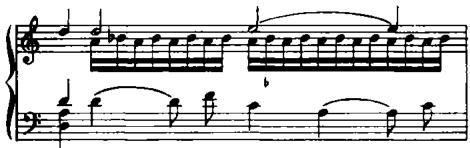
中文讲解
此处为第41页乐谱图像占位符,对应图例15.30a的具体音符内容,原图细节未在文本中保留。
第35段(P0202)
原文复述
b. measures 252–253
中文讲解
图例15.30第二项的标题,引用《Cento partite》第252至253小节,与a项同属Frescobaldi对trillo写明的实践例证。
第36段(P0203)
原文复述
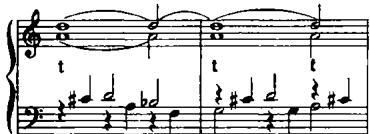
中文讲解
此处为第41页另一乐谱图像占位符,对应图例15.30b的具体音符内容,原图细节未在文本中保留。
第37段(P0204)
原文复述
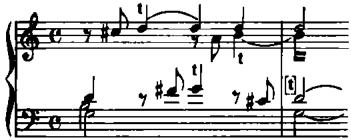
中文讲解
此处为图例15.31的图像占位符,引用《Toccate II》第11首(II/11)第1至2小节。该图例对应P0206所述该作品开头颤音可被演奏者解释为下助音颤音以’尖锐化其和声效果’的论断。
第38段(P0205)
原文复述
Canzone, or any other composition and again when one hand plays several parts and the other only one,” he later stated that in canzonas with small note-values and strict imitations only tremoli and groppi could be added. $^{30}$ For Bottazzi, trills were to be played “at the beginning of any sonata, and when it will seem expedient to the Organist, but the aforesaid trill must be done with grace, so that the harmony is lively, and gay.” $^{31}$
中文讲解
本段续接P0199末句Diruta引文,并完成对P0199论点的论据支撑。Diruta完整观点为:tremolo应用于’Canzone或其他任何作品的开头,以及一手演奏多声部而另一手仅演奏一声部之时’;他后来又指出,在音符时值较小且模仿严格的canzona中只能加入tremoli和groppi(脚注30);Bottazzi则规定颤音应’在任意sonata的开头以及管风琴家认为合宜之处演奏,但该颤音必须奏得优雅,使和声活泼而欢快’(脚注31)。本段的论证作用是双重印证’对位体裁装饰受限’这一总论点:Diruta规定canzona只能用有限几类装饰;Bottazzi则将sonata的颤音使用限定在开头与演奏家判断之时,强调’优雅、活泼、欢快’等审美限定。三位理论家(Zacconi、Diruta、Bottazzi)的引文形成对位体裁装饰规则的层层递进。
补充说明
本段末尾出现脚注标记’$^{30}$‘与’$^{31}$’,对应本节脚注30与脚注31;原文中’prattica’原文为’prattica’,本段转录中’prattica’在印刷上出现的细微差异不影响理解;本段中引文均直接引自Zacconi、Diruta与Bottazzi原书,括号内斜杠为作者编辑添加。
第39段(P0206)
原文复述
Frescobaldi’s incorporation of embellishments into his keyboard style is evident in his expressive use of ornamental figures in the Florentine tradition, his extravagant pedal-point trills, and in passages such as the opening trills of Toccate II/11, which tempt the player to sharpen their harmonic bite by interpreting them as lower-note ornaments (Ex. 15.31; this excerpt also suggests the addition of ornaments by analogy).
中文讲解
本段从前文对一般规则的论述转入对Frescobaldi本人风格的总结:他把装饰音融入其键盘风格的证据包括——对佛罗伦萨传统装饰音形的表现性使用、华丽的持续音颤音、以及《Toccate II》第11首开头那样的颤音片段(其诱使演奏者将其解释为下助音装饰以’尖锐化其和声效果’,例15.31;该片段也暗示可通过类比方式添加装饰)。本段的小节论证作用是从’规则’过渡到’风格’——装饰音不仅是规则问题,更是Frescobaldi键盘语言的有机组成部分;‘analogically’(类比)的提法暗示演奏者在面对类似结构时可以即兴扩展装饰。
第40段(P0207)
原文复述
The manuscript Vatican Mus. 559 contains two pieces that demonstrate how Frescobaldi’s music was embellished by a contemporary and colleague, Giovanni Battista Ferrini, who played second harpsichord with Girolamo at the Oratorio del Crocifisso. The original version of the balletto from the Aggiunta to Toccate I is decorated with a number of trills, usually underlining a rhythmic stress, and a modest cadential ornament. The written-out variation confines its embellishment to the soprano part except where it dialogues with the bass and employs filled intervals, afterbeats, and the generally more continuous rhythmic surface of Frescobaldi’s own varied corrente (Ex. 15.32).
中文讲解
本段引入具体的同代人装饰实践作为佐证。手稿编号Vatican Mus. 559包含两首乐曲,展示了Frescobaldi的音乐如何被其同时代人兼同事Giovanni Battista Ferrini装饰;Ferrini曾在Oratorio del Crocifisso与Girolamo合奏第二羽管键琴。《Toccate I》附录(Aggiunta)中balletto的原版被饰以若干颤音(通常强调节奏重音)以及一个适度的终止装饰;写明的变体则将装饰限定在高声部——除在与低声部形成对答之处外——并采用填充音程、后拍节奏以及与Frescobaldi本人装饰过的corrente相似、更具连续性的节奏表面(例15.32)。本段的论证作用是以具体手稿实例佐证P0199总论点(舞曲最适合装饰),同时展示同代人对位体裁以外装饰实践的实证。需注意:原文P0207明确给出该手稿编号为’Vatican Mus. 559’,与下一段图例15.32(P0209)中提到的’Vat. mus. 569’编号不同;原文并未将两者合一处理。
补充说明
‘Vatican Mus. 559’为梵蒂冈宗座图书馆手稿编号;‘Aggiunta’为意大利语’附录’;‘Oratorio del Crocifisso’为罗马的一所祈祷所,是Frescobaldi与Ferrini的合作场所;‘afterbeats’指落于强拍之后弱位上的节奏装饰。
第41段(P0208)
原文复述
This chapter is in no sense a blueprint for the interpretation of Frescobaldi’s keyboard music; rather, it is a collection of information and observations that may enable a performer to encounter Girolamo’s work sufficiently prepared to employ his own musical resources efficiently and imaginatively. After the player has tried to comprehend both physically and intellectually the musical organism confronting him, his final task—beyond any verbal or musical analysis—is to embody this understanding in a performance where, if he is fortunate, the heavenly lightning will kindle the tinder he has patiently assembled, and we will experience in all their pristine freshness and delight Frescobaldi’s “illogic sorceries of logic floral fire.”
中文讲解
本段是本章的收束段落,明确本章的方法论立场与对演奏者的期望。本章绝非要成为Frescobaldi键盘音乐诠释的蓝图,而是一系列信息与观察的集合,可使演奏者在接触Girolamo的作品时具备足够的准备,从而高效而富有想象力地运用自身的音乐资源。演奏者在从身体与理智两方面试图理解面前这部’musical organism’之后,其最终任务——超越任何语言或音乐分析——是在演奏中将这种理解具体化;如果幸运的话,‘天上的闪电’将点燃他耐心汇集的’火绒’,我们将以纯真的新鲜与欢愉体验Frescobaldi那’逻辑之花的非逻辑巫术’。本段作为全章结尾,作用是将前文大量历史与技术信息提升为对演奏者的整体召唤——所有信息最终须服务于演奏那一刻的创造性实现。引文本身的出处或所属风格,原文未作任何说明。
补充说明
原段以比喻性语言作结,‘heavenly lightning’与’tinder’对应中文可理解为’天降灵感’与’耐心积累的素材’;引号内的英文短语(‘illogic sorceries of logic floral fire’)为该段引文部分,原文未标明其出处或作者。
第42段(P0209)
原文复述
EXAMPLE 15.32 Frescobaldi, Balletto; G. B. Ferrini Balletto 2.0 (Rome, Biblioteca Apostolica Vaticana, Vat. mus. 569, fols. 18–19v)
中文讲解
图例15.32的标题,列出两首balletto:Frescobaldi的《Balletto》与G. B. Ferrini的《Balletto 2.0》。后者藏于罗马梵蒂冈宗座图书馆,编号Vat. mus. 569(即’梵蒂冈音乐手稿569号’),位于第18至19v页。需注意:此处编号'569’与P0207正文所述手稿编号’Vatican Mus. 559’在原文中为不同编号,原文并未将其视为同一文献。
补充说明
‘Biblioteca Apostolica Vaticana’为梵蒂冈宗座图书馆;‘fols. 18–19v’指folio 18至19v(verso背面)页;‘Balletto 2.0’中'2.0’为Ferrini手稿中的具体标记或变体编号。
第43段(P0210)
原文复述
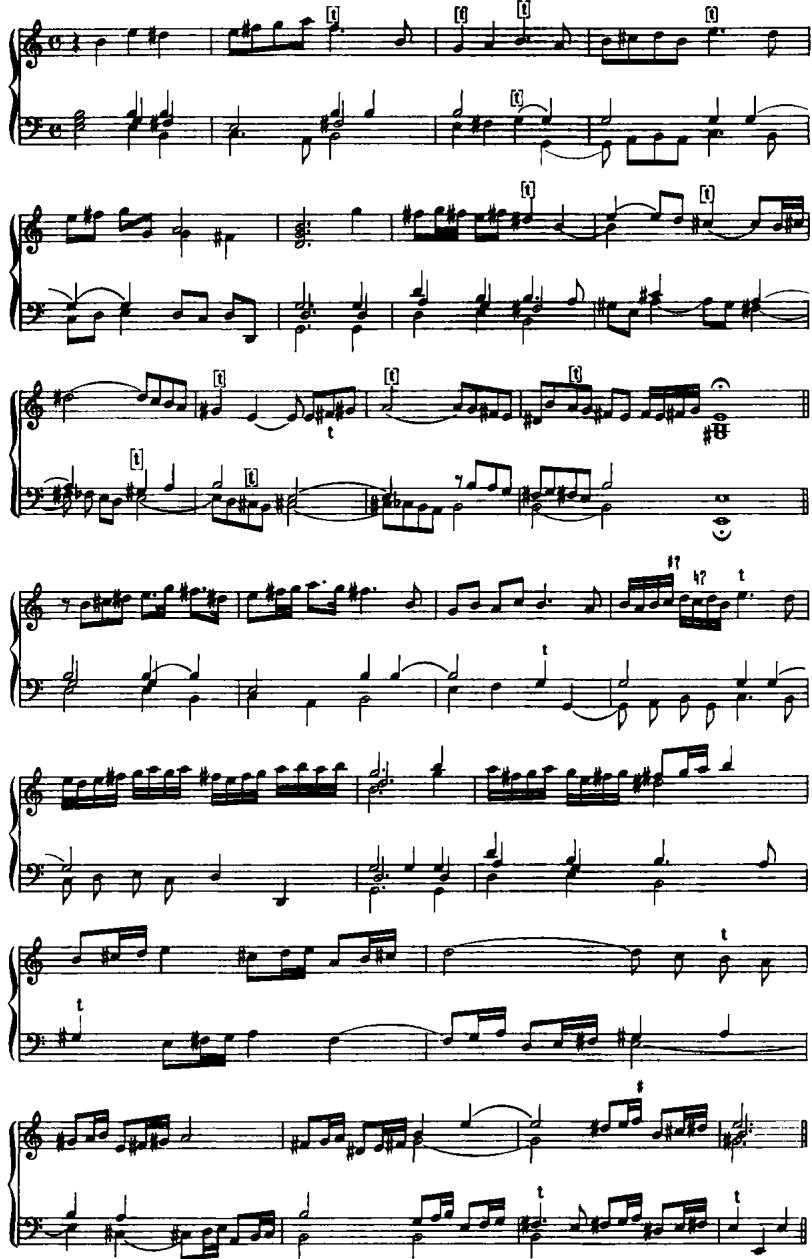
中文讲解
此处为第43页乐谱图像占位符,对应图例15.32的具体音符内容(Frescobaldi原版balletto与Ferrini变体的对照),原图细节未在文本中保留,需查阅原图。
脚注 / 边栏 / 图表 / 附加信息(如有)
本节包含两个脚注标记(段落P0199末的脚注29、段落P0205末的脚注30与脚注31),但其具体内容未在当前task_input的可见段落中给出,故仅以编号形式记录于相关段落处,待原文脚注区查阅。节内另含大量乐谱图例(Ex. 15.23至Ex. 15.32,共十个图例),其中部分图例包含多个子项(如Ex. 15.23的a/b/c、Ex. 15.24的a/b/c/d/e、Ex. 15.26的a/b/c、Ex. 15.28的a/b、Ex. 15.30的a/b)。图像占位符共计十五处(P0170、P0182、P0185、P0187、P0188、P0190、P0191、P0193、P0194、P0201、P0203、P0204、P0210,以及P0191与P0194将图例标题嵌入图像占位符内),其具体音符细节均需查阅原图。
💡 本节核心要点
- 本节将前文已建立的装饰音分类框架(阶进式旋律装饰、重复音装饰、复合终止装饰等)推广至键盘文献,证明该分类具有跨乐种的一般适用性。
- 主音颤音在键盘实践中吸收了佛罗伦萨人声装饰音的节奏表现特征;复合终止装饰普遍更长、包含颤音加回音组合并可从主音或上方辅助音起奏;同音重复式颤音则处于键盘装饰的边缘。
- ’t’符号自1576年Valente以来在意大利键盘音乐中作为未指明的装饰音标记使用;Diruta、Cavalieri、Trabaci、Durante、Penna、Bottazzi、BisMantova等人在主音起颤音或下助音颤音(mordent)之间存在解释传统的多样性。
- Frescobaldi对’t’符号的使用与Diruta以来的主音起颤音传统一致;其写明的终止groppi多从下方音起奏;ribattuta di gola/zimbelo等术语显示出其受歌唱装饰影响。
- 17世纪意大利装饰实践具有时间、地点、媒介与体裁的差异性;罗马键盘音乐相对保守,体裁差异明显——舞曲最适宜装饰,对位体裁则受规则严格限制(Zacconi、Diruta、Bottazzi的引文为证)。
- Frescobaldi本人的装饰实例(《Toccate II》中的装饰性corrente、《Toccate II/11》开头颤音)与同代人Ferrini的手稿装饰(梵蒂冈Mus. 559与Vat. mus. 569两编号在原文中分别出现)相互印证了舞曲装饰的可行性;本章结语强调所有信息最终须服务于演奏者的创造性实现。
🔑 关键术语
- tremolo:Diruta所用术语,指键盘上从主音起、与上方辅助音交替的颤音,与现代含义(重复同音的震音)不同;在本节中Frescobaldi的trillo写明装饰等同于Diruta的tremolo。
- trillo / trillo doppio:Cavalieri与Trabaci所用术语,指颤音;trillo doppio为Trabaci 1615年’T+‘符号所指的终止颤音,起点为下方三度。
- groppo / groppolo / groppetto:意大利术语,指带回音性质的复合装饰,常见于终止式;Frescobaldi键盘作品中最频繁出现的写明装饰形式。
- main-note trill vs. upper-auxiliary trill:主音起颤音与上方辅助音起颤音的区分;本节讨论的核心区分依据,影响’t’符号的解释与具体装饰的形态。
- passaggi:意大利语,指歌唱或器乐中的快速跑句式即兴装饰;本节明确指出除原本未被装饰的终止式外,键盘体裁中并不普遍容许加入即兴passaggi。
- ribattuta di gola / zimbelo:意大利歌唱装饰术语(前者指喉部重复击音、后者为类似颤音的歌唱装饰);Frescobaldi键盘作品中的使用显示出对声乐装饰传统的借鉴。
- Intavolatura:意大利语,指键盘或其他弹拨乐器的记谱与改编曲集;本节中特指Antonio Valente 1576年的《Intavolatura de cimbalo》——’t’符号使用的最早例证之一。
- Ricercare / Canzone / Sonata / Toccata / Balletto / Corrente / Canzona francese / Capriccio:本节涉及的多种体裁名称,区分对位体裁(Ricercare、Canzone、Canzona francese、Capriccio)与舞曲体裁(Balletto、Corrente),及混合体裁(Toccata、Sonata);本节指出对位体裁装饰受限,舞曲体裁最适宜装饰。
A1.1 [描述性拆分] A. The Canzoni of 1645
第1段(P0211)
原文复述
Appendix I
中文讲解
这是附录I的标题,标志着一个新附录部分的开始。该标题本身只是一个版式标识,下面的P0212才说明附录的主题范围。
第2段(P0212)
原文复述
Other Keyboard Works Attributed to Frescobaldi
中文讲解
这是附录I的主标题,明确说明本附录要讨论的对象——被归于Frescobaldi名下的其他键盘作品。也就是说,本附录处理的是归属存疑或归属待澄清的键盘曲目,而非其正藏中的定本。
第3段(P0213)
原文复述
A. THE CANZONI OF 1645
中文讲解
这是附录I下的小节标题,标出第一个具体论题——1645年出版的Canzoni合集。这一节将围绕该合集的真伪问题、风格特征和归属判断展开论证。
第4段(P0214)
原文复述
In 1645 Alessandro Vincenti, Girolamo’s Venetian printer, issued a volume of eleven canzoni alla francese as “libro quarto,” the fourth volume of Frescobaldi’s works to come from his presses (if the 1626 Capricci and its 1642 reprint are considered a single opus). In a dedicatory letter dated 15 December 1644 Vincenti described the canzonas as “jewels already issued forth from the quarries of the lively talent of the most celebrated Frescobaldi, and reaching me now only after his death.” Even if Vincenti received them directly from Frescobaldi’s heirs, the canzonas hardly exhausted the mass of unprinted material still in Domenico Frescobaldi’s hands in the 1660s. Indeed, the authenticity of the entire collection has been questioned, and certainly the titles attached to the canzonas, which refer to Vincenti himself (Canzona VIII, “detta la Vincenti”), composers in his catalogue, and other Venetian figures, have no connection with Girolamo, who never followed the northern Italian practice of naming canzonas.¹ On the other hand, it is unlikely that an important publisher like Vincenti would issue a fraudulent collection under the name of one of his principal composers so soon after the putative author’s death—all the more so if there were a corpus of authentic works prepared for publication. Nor does the assumption of sharp practice square with what is known of Vincenti’s character as a publisher. In 1650 he himself edited a posthumous collection by an even more famous composer, Claudio Monteverdi. Vincenti’s attributions of these items have never been questioned, and the work he included that was not by Monteverdi, a Cavalli Magnificat, was labeled as such.
中文讲解
本段为1645年Canzoni合集的真伪问题搭建整体框架,逐层摆出支持归属与怀疑归属的两类证据。
第一层介绍出版事实:1645年由Girolamo Frescobaldi的威尼斯出版商Alessandro Vincenti推出,作为Vincenti印行的Frescobaldi第四部作品(libro quarto);这里的计数前提是1626年《Capricci》与其1642年重印本被视为同一部作品。
第二层给出出版商本人的证词:在1644年12月15日的献词中,Vincenti称这些曲子为"出自声名显赫的Frescobaldi的活泼天才之矿、现在才在其身后抵达我手中的宝石"。这句话一方面提供了归属的直接证据,另一方面也透露这些作品是身后才交付给出版商的——这一点是后面讨论归属问题时的关键时间节点。
第三层引入怀疑的理由:即便作品真由Frescobaldi的继承人转交Vincenti,这十一首也远未耗尽Frescobaldi家族手中保留的未印材料;整部合集的真实归属都曾遭到过质疑;尤其是曲目加上的标题,明显与Frescobaldi无关——例如第八首被题作"detta la Vincenti"(“称为《Vincenti》"),其他标题指向目录中的其他作曲家以及威尼斯人物——而Girolamo从不采用北意大利为canzona命名的惯例。脚注1就标在这一句之后,对"北意大利命名canzona的惯例"作进一步补充说明。
第四层用出版商信誉为归属辩护:Vincenti这样一位重要出版商不太可能在作者身后如此短时间内、在明知尚有真实作品库存的情况下,公然以一位主要作曲家的名义发行一部赝品;他对欺诈的假设也不符合他作为出版商的为人。最有力的旁证来自1650年Vincenti编辑的Monteverdi身后曲集:他归给Monteverdi的作品从未被怀疑过,其中一首非Monteverdi所作的Cavalli《Magnificat》也被明确标出——这说明Vincenti至少在这次编辑中是诚实、有辨别力的,并非一味冒名顶替。
整段通过"署名可疑 + 标题可疑 + 时间节点"提出怀疑,又通过"出版商动机 + Monteverdi案例对照"为归属做辩护,为下一段进入曲式与对位层面的风格证据作了铺垫。
补充说明
本段末尾标有上标1,对应原书脚注。由于该脚注不在source_paragraphs中给出,应在additional_information中单独说明:原文在提到Girolamo从不遵循北意大利为canzona命名的惯例之后,附有脚注1,本节评注内容未在此段文本中给出,参见additional_information条目。
第5段(P0215)
原文复述
Nothing in the 1645 Canzoni absolutely precludes its ascription to Frescobaldi, and the presentation of the canzonas in keyboard partitura perhaps argues for it. The repertory of triple mensurations employed is consistent with Girolamo’s usage (C 3/2 = 3/2; 3 = 6/2; 3 = 3/2, and 6/4; black 3 = 6/4; 6/4 = C, not 4/6)(although O3 and C 3/2 do not occur). The absence of tempus perfectum and the cancellation of 6/4 by C rather than 4/6 follows Girolamo’s practice in the keyboard publications after Toccate II.
中文讲解
本段从节奏记号(mensurations)的层面给出归属的正面证据。
首先总括一句:1645年合集中没有任何东西绝对排斥其归属Frescobaldi,而且以键盘总谱(keyboard partitura,即将多声部纵向叠写于一个谱表上)的形式呈现canzona,反而可能支持归属。
进入具体证据——三拍类节拍记号的使用:1645合集所用的三拍类记号清单(C 3/2 = 3/2;3 = 6/2;3 = 3/2,以及6/4;方块3 = 6/4;6/4 = C而非4/6)与Girolamo的用法吻合,只是O3和C 3/2这两种记号未在1645合集中出现。
再看惯例层面:1645合集中完全没有tempus perfectum(全拍号,以完整小节计量的"完全拍”),并且将6/4消除(cancel)时记作C而非4/6,这两点都符合Girolamo在《Toccate II》之后的键盘作品中所确立的用法。
因此本段提供的都是"惯例性"证据——不是某种独有的指纹,而是一组可同时在Girolamo晚期作品里见到的一致做法。这种一致并不能单独证真,但与上一段的怀疑理由合在一起,能起到平衡的作用:怀疑理由之外,风格惯例本身并未与归属相矛盾。
第6段(P0216)
原文复述
The 1645 canzonas display a number of features in common. All eleven are variation-canzonas and have strongly profiled subjects—a descending fifth in numbers I, VII, VIII; an ascending fourth in II, IV, V, IX, and XI; a descending fourth in X; and an ascending third in III and VI. Their range in variety and complexity of texture is considerable. Canzona III, for example, has no internal divisions, treats its subject unaltered throughout, and employs no passage-work or regular figuration smaller than the eighth-note. Canzona X has a concluding toccata-like passaggio, while Canzonas V, VII, and XI balance their lack of passaggi by contrasting sections in triple meter. The remaining canzonas—I, II, IV, VI, VIII, and IX—employ both sections in triple meter and florid cadential figuration.
中文讲解
本段归纳1645年十一首canzona的共性与差异,是为后续与Frescobaldi其他藏曲比较奠定描述基础。
第一个共性是体裁:全部十一首都属变奏canzona(variation-canzona,即以主题反复并加以变奏而展开的canzona类型),并都具有轮廓鲜明的"主题"(subject)。主题按音程轮廓分类:下行五度出现于第I、VII、VIII首;上行四度出现于第II、IV、V、IX、XI首;下行四度出现于第X首;上行三度出现于第III、VI首。这说明合集并非七拼八凑,而是建立在少量主题音程之上的整体设计。
差异则体现在织体的多样与复杂程度上。作者列举几首作为代表:第III首无内部段落划分,主题自始至终不变,所用经过句或常规走句的最小音符不小于八分音符——可说是合集中最朴素的一首;第X首则有一段近似托卡塔式的尾部经过句(passaggio);第V、VII、XI首不靠passaggi,而是以三拍子段落与对位段落作对比来增加变化;其余第I、II、IV、VI、VIII、IX首则兼具三拍子段落与花饰性的终止走句(florid cadential figuration)。
这种从极简到繁复的跨度是后面将1645合集与Frescobaldi其他键盘作品做比较时的重要参照:作者要说明1645合集尽管风格多样,但内部风格光谱仍能与Frescobaldi的创作兼容。
第7段(P0217)
原文复述
The closest parallel to Vincenti’s canzonas is the group of six canzonas published in Toccate II. The 1615 canzonas already display the interest in variation procedures characteristic of Frescobaldi’s later handling of the form, but they still employ tempus perfectum indications and their contrapuntal texture is rather stiff, owing to the general absence of free figural passaggi. All five canzonas of the 1635 Fiori musicali are variation-canzonas but are more epigrammatic in their development of material and more flexible in their rhythmic patterns, so that passaggi are largely unnecessary. Their repertory of triple signs also differs from that of other collections in several instances.
中文讲解
本段开始把1645合集与Frescobaldi已知作品做三类对比,先讨论与1645合集最接近的对照对象——《Toccate II》中的六首canzona。
第一类是1615年的六首canzona(即《Toccate II》中的那一组)。它们已经展示出后来Frescobaldi处理canzona时所特有的变奏兴趣,这是与1645合集一致之处;但它们仍使用tempus perfectum记号,对位织体也偏生硬,因为缺少自由的装饰性经过句(free figural passaggi)。换言之,1615的作品在主题变奏倾向上像1645合集,但在节拍记号和经过句使用上不如1645合集成熟。
第二类是1635年《Fiori musicali》中的五首canzona。它们都是变奏canzona,但材料展开更"警句化"(epigrammatic,即凝练、点到为止),节奏模式更灵活,因此大体不需要passaggi。这与1645合集那种依赖经过句与三拍子段落形成对比的风格有明显距离。同时,《Fiori musicali》的三拍记号谱系在若干情况下也与其他藏曲不同,这又形成另一处风格差异。
作者写出这两类参照的目的,是先确认:1645合集并非与Frescobaldi的所有键盘作品都吻合;它最贴合的反而是1615年《Toccate II》中的那一组canzona。下面一段就将对1627与1645两组canzona作直接比较。
第8段(P0218)
原文复述
Of the six 1627 canzonas, the last two are entirely in triple meters and thus inappropriate for purposes of comparison. Both the 1627 and 1645 canzonas frequently employ passages in free figuration (indeed, the fourth canzona of Toccate II seems almost like a toccata in its figural texture). Except for the triple-meter canzonas of Toccate II, neither set uses tempus perfectum. With the exception of the chromatic subject in the third canzona from the Toccate, both collections show a preference for strongly intervallic subjects. The general proportions of the overall works and of their component sections are commensurate in the 1627 and 1645 canzonas. Finally, the four canzonas of the Toccate, like the contents of the 1645 sets, are variation-canzonas, although the later publication treats the device in a more straightforward and perhaps less imaginative fashion.
中文讲解
本段对1627年与1645年两组canzona作直接比较,是归属论证中证据最密集的部分。
首先限定比较范围:1627年《Toccate II》中六首canzona的最后两首是全三拍子,因此不适于与1645合集作风格对比——这是处理对照组时常见的"先排除异常样本"。
接下来逐项列举两组的共性:
-
自由走句(free figuration)的使用频率:两组都常用自由走句;作者还进一步举例——1615年《Toccate II》中的第四首canzona在装饰走句的织体上几乎像一首托卡塔。这是两组在通过走句营造对比这一手段上的共同倾向。
-
记号惯例:除《Toccate II》中的两首纯三拍子canzona外,两组都不用tempus perfectum——这与P0215中所述1645合集的节拍惯例彼此呼应。
-
主题音程轮廓:除1615年《Toccate II》中第三首那例以半音进行(chromatic subject)为主题外,两组都偏好轮廓清晰的音程化主题(strongly intervallic subjects)。这里的逻辑是:特殊例外的存在(半音主题)并不会推翻共性偏好,而1645合集中也没有类似的"半音主题"怪例,因此在主题选择惯例上,1645合集与1627作品能相互印证。
-
整体与各段的比例:两组合集在作品的总体规模以及各段落的篇幅比例上是相称的。这一条是结构性证据——不仅看局部用句,也看宏观布局。
-
体裁性质的最终确认:《Toccate II》中的四首可比较canzona与1645合集中的所有作品一样,都是变奏canzona;但作者用"more straightforward and perhaps less imaginative"作出内部分级——1645合集将变奏手法处理得"更直白,或许想象力稍逊"。这是承认差异,但仍是"程度"而非"性质"层面的差异。
整段以五条证据把1645合集放进与1627作品的"光谱"中:在每一条上两者都落在同一侧或相邻位置,没有出现性质上的落差。这就为下一段讨论"异常点"之前,先把整体风格相符的基调确立下来。
第9段(P0219)
原文复述
There are, however, some anomalies in the 1645 Canzoni. Although the tonalities—transposed Dorian, F, A, G—are unexceptionable, one of the canzonas on F is written without B-flat, a situation that does not occur in the 1627 book except in the explicitly modal context of the Magnificat Primi Toni. Exceptionally, the fourth of the 1645 canzonas, which is nearly twenty measures longer than any of the 1627 works, is written on F but cadences finally on C. The third canzona is in fact a monothematic ricercar with no ornamental figuration, no full internal cadences, and a considerable degree of chromatic inflection. Perhaps owing to their score format, the 1645 canzonas do not lie as easily under the hand as the 1627 works and present instances of awkward voice-crossings and difficult extensions. Only one manuscript concordance with this collection is given by Silbiger (Verona MCXXIX, dated 1703), unlike the numerous manuscript concordances with all of Frescobaldi’s keyboard prints after the Fantasie.
中文讲解
本段是从"相符"转向"异常"的一节,承担着让归属论证保持诚实与可信的功能——作者既要承认1645合集与Frescobaldi风格相符(P0215–P0218),也要逐一交代它不符合的部分。
第一项,调性与记谱:所选调性——移调多利亚、F、A、G——本身没有可议;可在F调作品中有一首没有用降B,而1627年曲集中不使用降B仅限于明确属于调式语境的《Magnificat Primi Toni》。换言之,在常规canzona体裁里,用F调却不带降B是个孤立现象。
第二项,第四首的异常体量与终止:第四首canzona比1627合集中任何一首都长出近二十小节;它以F起写,最终却落在C的终止上。这是一种在1627合集中没有先例的规模与调式运动。
第三项,第三首的体裁定性:第三首实际上是一首单主题的利切卡尔(monothematic ricercar)——只有单一主题贯穿,没有装饰走句,没有完整的内部终止,半音进行相当显著。这与"canzona"的常规期待形成强烈反差,几乎可视为体裁本身被改写;“considerable degree of chromatic inflection"也提示出半音化倾向,与1627作品中以跳进主题为主的偏好构成对比。
第四项,演奏与谱面:由于总谱写法(score format)的缘故,1645合集中的canzona不如1627作品那样"顺手”,并出现声部交叉与延伸音程不便于演奏的实例。这与P0215中将"键盘总谱呈现"当作支持归属的论据稍带张力——同一特征既是支持,又带来演奏上的不便利。
第五项,手稿传播:Silbiger所记录的、与本合集相符的手抄本只有一件——Verona MCXXIX,年代为1703年;与Frescobaldi《Fantasie》之后所有印本作品的"众多"手抄相传本形成鲜明对比。作品流传的稀见,既可被视为"真迹罕传",也可被视为"本来就不曾广泛被视为真迹",这是一个开放性证据,作者不替读者下结论。
整段的功能因此是平衡论述:把可能的疑点摆全,避免归属论证成为一面之词;同时也为下一段"谨慎肯定其归属"留下余地。
第10段(P0220)
原文复述
There thus seems nothing in the 1645 Canzoni to which one can point as conclusive evidence of misattribution, and there are many characteristically Frescobaldian points. Certainly there is little of the stylistic incompatibility with Girolamo’s authentic works that leaps to the ear and eye from most of the works attributed to him in manuscript. This, coupled with the evidence of Vincenti, which certainly cannot be ignored, suggests a cautious confirmation of the authenticity of the 1645 Canzoni, albeit with editorial interference in the addition of titles and perhaps other细节. They may be best considered Apocrypha in the Frescobaldian canon, to be read for instruction but not applied “to establish any doctrine.”
中文讲解
本段是本小节的收束,综合双方证据作出审慎的结论。
结论的正面表述是:在1645年Canzoni中找不到可以指认的、决定性的误归证据;同时却有许多标志性的Frescobaldi式特征;与大多数归于Frescobaldi名下的手抄本作品相比,本合集与Girolamo真实作品之间几乎没有让耳朵或眼睛立刻感到"风格不合"的成分。
加上不可忽视的Vincenti出版证据,作者主张对归属作"谨慎的肯定"(cautious confirmation),同时承认标题(可能还有其他细节)是后人编辑所加。这意味着:基本乐曲材料可视作Frescobaldi所为,但外部附着的标题等不可一并视为作曲家本人的原意。
最后一句给出这些曲子在Frescobaldi曲目中的定位:本合集最好被视为正藏之下的"Apocrypha"(次经/有疑典籍)——值得为获得教益而研读,但不足以"据以立任何教条"(to establish any doctrine,引自一种英语习语,大意为不能拿来作为权威依据)。这是一种知识论层面的精确表态:作者既不把1645合集与Frescobaldi亲笔定本等量齐观,也不将其一棍子打入伪作;它处于归属光谱的中间地带,需要附带保留条件来引用。
这一表态与本节开篇(P0214)所提"整部合集都曾被质疑"形成了完整呼应——从怀疑出发,经节奏惯例、共性特征、多组合并比较、异常点的诚实列举,最终落在"谨慎肯定 + 编辑性介入 + 次经典定位"的复合判断上。这一结论也提示读者在引用1645合集时,所能依赖的是其音乐特征本身,而非署名或流传规模。
脚注 / 边栏 / 图表 / 附加信息(如有)
P0214末尾的脚注1标注在"Girolamo从未遵循北意大利为canzona命名的惯例"一句之后,源段文本以"Girolamo, who never followed the northern Italian practice of naming canzonas.¹"的形式出现。该上标对应的脚注正文未包含在source_paragraphs中,无法在此转写或补写,仅在此说明其位置与原文措辞。原文中无图表、谱例或边栏,本节为纯文字论证段落。
💡 本节核心要点
- 1645年Canzoni合集由Alessandro Vincenti以"libro quarto"的名义付印,Vincenti的1644年献词以"其身后才抵达的宝石"形容这些作品,既被视作归属的直接证据,也暴露出作品是身后才到手的这一时间节点,对归属真伪构成长期疑点。
- 怀疑归属的主要依据有三:一是合集远未耗尽Frescobaldi家族手中保留的未印材料;二是标题里点名Vincenti本人、目录中其他作曲家及威尼斯人物,而Girolamo从不遵循北意大利为canzona命名的惯例;三是作品身后短期内即由重要出版商推出,与可能存在的真实曲库存并列,动机可疑。
- 为归属辩护的主要依据来自出版商信誉:1650年Vincenti编辑Monteverdi身后曲集时,对非Monteverdi所作的Cavalli《Magnificat》明确标示为他人作品,可证其并非一味冒名顶替;因此冒名欺诈的假设与其为人记录不符。
- 在记号与风格惯例上,1645合集没有绝对排斥Frescobaldi归属的地方:三拍类记号清单吻合他在《Toccate II》之后的用法;无tempus perfectum;6/4被C而非4/6消除;以键盘总谱呈现canzona也符合其出版惯例。
- 1645合集全部十一首皆为变奏canzona,主题具有清晰的音程轮廓;与《Toccate II》中的canzona在变奏倾向、节拍惯例、主题音程偏好、整体比例诸方面高度接近;但1645合集在变奏手法的运用上被作者判定为"更直白、或许想象力稍逊"。
- 本合集也存在若干可议之处:一首F调canzona未用降B;第四首比1627作品长出近二十小节却以F写就却最终落在C;第三首实为单主题利切卡尔,半音化显著而无装饰走句;总谱写法令演奏稍欠顺手;手抄本流传极少。
- 综合双方证据,作者不将1645合集与Frescobaldi定本等量齐观,但也未将其归入伪作,而是定为"谨慎肯定归属 + 标题等可能为编辑性添加",并把整部合集放入"次经典(Apocrypha)“的范畴:可读可研,但不可据以立权威论断。
🔑 关键术语
- libro quarto:意大利语"第四卷”。在本节特指Vincenti印行的Frescobaldi第四部作品,计数前提是1626年《Capricci》与其1642年重印本被视为同一部作品。
- canzona alla francese:“法国式canzona”,一种以法国轮唱曲为基础演化而来的器乐形式,常具有鲜明的主题与变奏结构。本节讨论的1645合集正是该体裁的合集。
- variation-canzona:变奏式canzona,以一个轮廓鲜明的主题反复出现并配以变奏手法展开。本节指出1645合集全部十一首都属于这一类型。
- keyboard partitura:键盘总谱写法,将多个声部纵向叠写于一个谱表上。1645合集采用此呈现方式,被作者视为支持归属的旁证,但也带来演奏不便利、声部交叉等问题。
- mensuration:节拍记号体系,规定小节内音符的时值与比例。本节所述C 3/2、3、6/4、方块3(black 3)等记号及tempus perfectum皆属此类。
- tempus perfectum:“完全拍"记号,以完整小节计量音符的节拍体系。本节指出1645合集未使用该记号,符合Frescobaldi《Toccate II》之后的惯例。
- passaggio:经过句,指canzona等器乐曲中以走句式快速音群串接段落的段落。本节用来区分不同canzona在结构变化手段上的差异。
- monothematic ricercar:单主题利切卡尔,全曲以单一主题贯穿的严格对位体裁。本节指出1645合集中第三首实际上属于这一体裁,与canzona的常规期待形成反差。
- Apocrypha:此处借宗教用语"次经"“有疑典籍”,指归属并不完全确定、可读可研但不应作为权威依据来立论的作品。1645合集在Frescobaldi曲目中的位置正属此类。
A1.2 [描述性拆分] B. Manuscript Works: sources and criteria
第1段(P0221)
原文复述
B. MANUSCRIPT WORKS
中文讲解
本行为小节标题,开启本节论题。作者在此将进入对手稿来源(manuscript sources)的研究:与下一节将要讨论的印刷来源(printed sources)相对照,重点考察归属给 Frescobaldi 的键盘作品的抄本传统、来源可信度以及曲目真伪问题。
第2段(P0222)
原文复述
Keyboard works are attributed to Frescobaldi in a wide variety of manuscript sources of both Italian and foreign provenance, and these attributions have generally been accepted at face value. Since Alexander Silbiger’s notable study of Italian manuscript sources of seventeenth-century keyboard music, however, such a position is no longer tenable. Silbiger makes a fundamental distinction in pointing out from a thorough survey of both printed and manuscript sources that the manuscript tradition is not a continuation of the printed materials but a complement to them. The printed collections—surprisingly few of which appear to have been lost—in general present highly finished productions by professional composers for accomplished performers, but the manuscript volumes are usually didactic in purpose and often amateurish both in the general musical level of their contents and in their technical requirements.
中文讲解
本段提出本节论证的总前提:归属给 Frescobaldi 的键盘作品散见于大量手稿(兼有意大利与外国来源),传统上人们对其归属往往照单全收;然而 Silbiger 的研究使这种态度不再可取。Silbiger 的核心区分是——基于对印刷与手稿两类来源的全面调查——手稿传统并非印刷材料的延续,而是对印刷材料的补充。这一区分之所以具有根本性,是因为它揭示了两种载体的功能差异:印刷谱集(且令人意外的是,其中真正失传的极少)总体上是专业作曲家为成熟演奏者撰写的精雕细琢之作;手稿卷册则通常具有教学目的,其内容的整体音乐水准与技术要求往往偏向业余。作者在此借助 Silbiger 的工作把读者引向一个方法论问题:评估归属真伪时不能只看名字,必须区分材料的生产语境。
补充说明
Silbiger 是研究 17 世纪意大利键盘手稿的关键学者;本节随后多处援引其结论与具体观察。
第3段(P0223)
原文复述
Frescobaldi dominated Italian keyboard composition and performance during his lifetime, and his influence continued well after his death. His name was thus a focus for the attribution of anonymous works or works by less celebrated authors. Subjecting these attributions to stringent criteria for credibility of transmission and stylistic congruity, Silbiger comes to the conclusion that few of the manuscript works are acceptable on historical grounds, and of those works that might conceivably be authentic a number show significant stylistic divergences from Girolamo’s known productions. Of the manuscript repertory as a whole, he concludes that “there is not a single work in it whose association with the composer can be established beyond a reasonable doubt.“2
中文讲解
本段承接 P0222 提出的方法论区分,进一步给出 Silbiger 批判性结论的来源解释:Frescobaldi 在世时主导意大利键盘领域,去世后其影响力延续,于是其名字自然成为无名作品或次要作者作品的归附对象。Silbiger 以两条严格标准——传承可信度(credibility of transmission)与风格契合度(stylistic congruity)——检验这些归属,结论是手稿作品中几乎没有能在历史基础上被接受者,而在那些“或许可能”真实的作品中,又有相当一部分与 Girolamo 已知作品存在显著的风格差异。最后,作者援引 Silbiger 对整部手稿曲目的总判语:“其中没有一部作品与作曲家的关联能在合理怀疑之外被确立”。读者应注意:本节接下来并非否定手稿传统本身,而是要带着这条总判语去审视具体手稿并寻找例外。
补充说明
脚注 2:Silbiger 的总判语出处,标示其论断的学术权威来源。
第4段(P0224)
原文复述
Nonetheless, in the manuscript corpus described by Grassi and still in the possession of Domenico Frescobaldi in the 1660s we have a repertory with a past but no ascertained future, while the present manuscripts generally lack a documented provenance; the temptation to relate the two is obvious. Grassi’s remarks, however, imply a body of work substantially prepared for printing, which would fit few of the doubtful keyboard works except the 1645 canzonas and the nine toccatas of the Foà manuscript. On the other hand, the manuscript works cannot be rejected solely on the grounds of quality, as opposed to demonstrable stylistic inconsistency. The three additional pieces that Grassi added to his edition of the Canzoni of 1628 come from Girolamo’s immediate circle, and the two capriccios of the 1637 Aggiunta have an unimpeachable pedigree, but none of them rises above the mediocre. The manuscript collection was clearly a cherished possession of Domenico Frescobaldi, although it does not appear in his hastily drawn-up will of 1688. Perhaps the attic of some Roman palazzo still guards a repertory of unknown Frescobaldi works in Girolamo’s own hand. 3
中文讲解
本段针对一种常见诱惑——把现存的归属手稿与 Grassi 描述的、Domenico Frescobaldi(Girolamo 的亲属)1660 年代仍持有的那份手稿曲目联系起来——提出制约。作者指出 Grassi 的评语暗示那批曲目是“为付印而大体准备好的”,因此除 1645 年的 canzonas 与 Foà 手稿中九首托卡塔外,鲜少能匹配那些归属可疑的键盘作品。接着,作者通过三组具体例子说明“质量”本身不能成为否定手稿的单一理由:Grassi 在 1628 年 Canzoni 版中加入的三首作品出自 Girolamo 直接圈层,1637 年 Aggiunta 中的两首 capriccio 谱系无可指摘,但它们在艺术上都未超出平庸。末句通过一个修辞性想象——“或许某座罗马宫殿的阁楼仍保存着 Girolamo 亲笔的未知作品”——既承认手稿作为家族珍藏物的情感价值,又提示现存的传承链存在断裂(该曲目未见于 1688 年匆匆拟定的遗嘱中)。本段在论证上的作用是:在 Silbiger 的总判语与具体手稿之间插入一层“不能仅凭质量否决”的方法论缓冲。
补充说明
脚注 3:对 Grassi 所描述的手稿曲目、Domenico Frescobaldi 持有情况以及 1688 年遗嘱的文献来源说明。
第5段(P0225)
原文复述
The manuscripts containing works attributed to Frescobaldi differ widely in date, contents, and reliability. (For the individual manuscripts and their contents, see the Catalogue I.B, which summarizes the findings of Silbiger and other scholars.) Since that is the case, it is possible only to consider a few of the most important sources here. Perhaps the earliest of these is the manuscript Ravenna, Classense 545, which Silbiger dates in the late 1620s or 1630s. Contrary to his assertion, however, there is a link between Frescobaldi and Ravenna, in the person of Girolamo’s patron Cardinal Pietro Aldobrandini, who was Archbishop of the city. The works attributed to Frescobaldi in this manuscript—two capriccios (in fact, variation-canzonas) and a verso—display a number of features, enumerated by Silbiger, that belie their ascription to Girolamo.
中文讲解
本段开启具体手稿的逐一审视。鉴于归属手稿在年代、内容与可靠性上差异极大,作者只能挑选少数最重要的来源讨论。第一例是现存最早的手稿之一:拉文纳的 Classense 545 号,Silbiger 定年为 1620 年代末至 1630 年代。作者在此对 Silbiger 作出一处修正:Silbiger 否认 Frescobaldi 与拉文纳之间存在联系,但作者指出二人之间确有连接——Girolamo 的赞助人、枢机主教 Pietro Aldobrandini 正是该城的大主教。然而这条人物链条并不能挽救归属:手稿中归于 Frescobaldi 的作品(两首 capriccio——实为变奏-can zona——以及一首 verso)展现出 Silbiger 所列举的多项特征,这些特征使其归于 Girolamo 的说法难以成立。本段的论证意义在于示范——即便存在地理与赞助人层面的合理联系,仍需以音乐本身风格特征来检验归属。
补充说明
脚注 4:列举 Silbiger 关于这些作品风格特征使其难以归于 Girolamo 的具体证据。
第6段(P0226)
原文复述
A manuscript now in the Bodmer collection in Geneva has twice been reproduced as an autograph of Frescobaldi—along with Haberl’s lost manuscript of the In Te Domine Speravi, the only source for which that distinction has been claimed. This contains Toccate II minus the liturgical works, two toccatas from Toccate I, and four additional works designated as toccatas, of which the last two are canzonas (and the second canzona is designated “Piua”). Darbellay’s careful examination of the manuscript shows that it was in fact copied ca. 1670 from printed sources of the authentic works, and that the attribution of the additional works to Frescobaldi is unreliable.
中文讲解
本段考察日内瓦 Bodmer 馆藏手稿——一份曾两次被当作 Frescobaldi 真迹复制件出版的手稿,与已遗失的 Haberl 所藏《In Te Domine Speravi》手稿并列为仅有两份曾被声称为作曲家亲笔的乐谱。其内容包括《Toccate II》(除去礼拜作品)、两首选自《Toccate I》的托卡塔、以及另四首标记为托卡塔的作品(其中最后两首实为 canzona,第二首还标作“Piua”——很可能为“Piva”之误或异体)。Darbellay 的细致考察表明,该手稿实为约 1670 年从已印刷的真作谱本誊抄而来,而那些“附加作品”归于 Frescobaldi 的说法并不可靠。本段的论证功能是揭示一种典型的归属错觉:当一部手稿誊抄了真实作品后,誊抄者或编者往往把同一卷中的其它作品也顺势归于原作者,从而造成假象。
补充说明
脚注 5:Darbellay 关于该手稿誊抄时间(约 1670 年)与归属不可靠结论的出处。
第7段(P0227)
原文复述
The most important collection of manuscripts containing works ascribed to Frescobaldi forms part of the Chigi collection in the Biblioteca Apostolica Vaticana. Chigi Q.IV.24, 25, and 27 are keyboard manuscripts in Italian format, while Chigi Q.IV.205–206 are miscellaneous collections. The keyboard volumes appear to have been compiled ca. 1630–1650 and apparently originated in the Chigi circle. Silbiger suggests that they may have been the property of Virginia Chigi-Borghese, who studied with Alessandro Costantini, Frescobaldi’s predecessor and successor at St. Peter’s.6 Chigi Q.IV.24 assigns to “Fr” or “G . . .” a canzona, a fuga (a term never employed in Frescobaldi’s authentic works), and a toccata. The flyleaf of Chigi Q.IV.25 contains an inscription in a different hand, but apparently roughly contemporary with the manuscript, that names Frescobaldi as the composer of the entire volume. The contents comprise three partitas on the Aria di Fiorenza; two pedal toccatas, each followed by a contrapuntal work (canzona or capriccio); two capriccios, one a toccata followed by a kind of variation-canzona and the other on the cuckoo call; two toccatas, one for organ without pedal; a canzona and two ricercars, one of them chromatic; and a set of three toccatas numbered separately. In addition to dances copied from Toccate II, Chigi Q.IV.27 contains a toccata that quotes two passages from Toccate I/5 and a corrente, both attributed to Frescobaldi, and sets of anonymous variations on bass patterns, of which those on a descending tetrachord are often related to passages in the Cento partite.7 In a closely reasoned analysis of the genesis of the Cento partite Darbellay has argued that the parallels between Chigi Q.IV.27 and the Partite suggest a dating of 1627–1637 for the manuscript (see Chapter 14, n.9). Chigi Q.IV.205–206 includes Toccate II/1, 5, 6, and a portion of 9; Pasagalli which contain material from the Cento partite; and a toccata, Ruggiero, and four hymns otherwise unknown.
中文讲解
本段集中处理最重要的一批手稿——梵蒂冈教廷图书馆 Chigi 收藏中的键盘手稿与杂集。Q.IV.24、25、27 是意大利规格的键盘手稿,Q.IV.205–206 则是杂集;键盘卷大致编订于 1630–1650 年间,可能源自 Chigi 圈子,Silbiger 推测其或属 Virginia Chigi-Borghese 所有——她是 Alessandro Costantini 的学生,而 Costantini 恰好是 Frescobaldi 在圣彼得大教堂的前任与继任。接着作者逐一描述:Q.IV.24 把一首 canzona、一首 fuga(注意:fuga 一词在 Frescobaldi 真作中从未使用)与一首托卡塔归于“Fr”或“G…”;Q.IV.25 的扉页上有另一笔迹、大致与手稿同期的题记,把整卷归于 Frescobaldi,内容包括三首《Aria di Fiorenza》上的 partita、两首带踏板托卡塔(各接一首对位作品)、两首 capriccio、一首无踏板风琴托卡塔、一首 canzona、两首 ricercar(其一为半音化)以及一组三首独立编号的托卡塔。Q.IV.27 除从《Toccate II》抄入的舞曲外,还含一首引用《Toccate I/5》两段素材的托卡塔与一首 corrente,以及若干匿名低音变奏,其中下行的四音列变奏常与《Cento partite》段落相关;Darbellay 据此将 Q.IV.27 定年为 1627–1637。Q.IV.205–206 则包括《Toccate II》第 1、5、6 首与第 9 首的一段、含有《Cento partite》素材的 Pasagalli,以及一首托卡塔、一首 Ruggiero 和四首其它来源未见的赞美诗。读者应抓住两个细节性证据点:其一,fuga 一词不见于 Frescobaldi 真作,因此 Q.IV.24 中的归属值得怀疑;其二,Chigi 卷对《Cento partite》与《Toccate》素材的引用网络,使其在年代与归属研究中地位特殊。
补充说明
脚注 6:关于 Virginia Chigi-Borghese 与 Costantini 师承关系的来源说明。脚注 7:关于 Q.IV.27 与《Cento partite》段落关联、Darbellay 对《Cento partite》成书过程的论证(参第 14 章注 9)。
脚注 / 边栏 / 图表 / 附加信息(如有)
本节脚注 2–7 分别支持以下主张:脚注 2 标引 Silbiger 关于“手稿曲集中无一部作品归属能在合理怀疑之外被确立”的总判语;脚注 3 标注 Grassi 描述的手稿曲目与 Domenico Frescobaldi 持有情况的文献依据;脚注 4 列举 Silbiger 关于拉文纳 Classense 545 中各作品风格特征使其难以归于 Girolamo 的具体证据;脚注 5 出处为 Darbellay 关于 Bodmer 手稿系 1670 年前后从印刷谱本誊抄、附加作品归属不可靠的考察;脚注 6 说明 Virginia Chigi-Borghese 与 Costantini 的师承;脚注 7 指向 Darbellay 关于《Cento partite》成书的细致论证(参第 14 章注 9)。图表方面,本节正文本身不含图表,但提示读者参看 Catalogue I.B(其中汇总了 Silbiger 等学者对各手稿及其内容的研究成果)。
💡 本节核心要点
- Silbiger 的根本区分——手稿传统不是印刷传统的延续,而是补充;前者多为业余、教学性,后者多为专业、精修——奠定了评估归属的方法论基础。
- Silbiger 对归属手稿的总判语非常严厉:整部手稿曲集中没有任何一部作品与 Frescobaldi 的关联能在合理怀疑之外被确立。
- 不能仅凭作品质量否定归属真伪:Grassi 1628 年 Canzoni 版所增三首出自 Girolamo 直接圈层,1637 年 Aggiunta 的两首 capriccio 谱系无可指摘,但艺术水平平庸。
- 对具体手稿的逐一审视显示,归属常常依托偶然的人物或地理联系(如拉文纳与 Aldobrandini),而风格特征本身才是检验归属的关键。
- 部分曾被视为真迹的手稿(如 Bodmer 馆藏品)实为约 1670 年从印刷真作誊抄而来,附加作品的归属不可靠;誊抄过程中产生的归属错觉是常见陷阱。
- Chigi 收藏(Q.IV.24、25、27 与 205–206)是最重要的归属手稿群,其与《Cento partite》及《Toccate》的素材交叉网络为手稿定年(如 Q.IV.27 的 1627–1637)提供了内部证据。
🔑 关键术语
- manuscript tradition:手稿传统。指以抄写形式流传的乐谱传统,本节中特指与 Frescobaldi 键盘作品归属相关的各类手稿;Silbiger 认为它不是印刷传统的延续,而是功能上互补的另一类载体。
- credibility of transmission:传承可信度。Silbiger 用于检验归属真伪的标准之一,涉及抄写链条、断代、来源文件证据等可追溯的历史依据。
- stylistic congruity:风格契合度。Silbiger 检验归属的另一标准,指被归属作品在音乐语言上与作曲家已知真作的契合程度;契合度不足即提示归属可疑。
- autograph:亲笔稿。作曲家本人亲手书写的乐谱;本节提到 Bodmer 手稿曾两次被当作 Frescobaldi 亲笔复制件出版,后被证伪。
- capriccio (variation-canzona):本节中两首被归为 capriccio 的拉文纳手稿作品,实为变奏-can zona 体裁,说明表层曲目标签与实际体裁可能不一致。
- fuga:赋格。该术语在 Frescobaldi 真作中从未使用,因此 Chigi Q.IV.24 中以 fuga 为标签的归属作品归属可疑,成为否定该卷整体归属的关键词之一。
- Chigi collection:梵蒂冈教廷图书馆中的 Chigi 收藏,本节考察的最重要归属手稿群,源于约 1630–1650 年的 Chigi 圈子,可能与 Virginia Chigi-Borghese 相关。
A1.3 [描述性拆分] B. Manuscript Works: assessment of attributions
第1段(P0228)
原文复述
APPENDIX I
中文讲解
这是一个二级标题"APPENDIX I”(附录 I)。它标识着论著进入了新的附录单元,承担结构性分界功能:从该标题开始的内容属于附录体例的补充材料,而非正文论证的延续。标题所在位置暗示其后将围绕某项特定专题展开评估与举证。结合节段标题"B. Manuscript Works: assessment of attributions"可知,本附录将对手稿作品(特别是 Chigi 系列手稿)是否应归于 Frescobaldi 名下进行逐项审定。
第2段(P0229)
原文复述
Several factors seem to militate against the blanket attribution of the most important of these volumes, Chigi Q.IV.25, to Frescobaldi. The variations on the Aria di Firenze with which it opens present a tune that was widely associated with Frescobaldi, but never in a source of unimpeachable authority. The pairing in this manuscript of a toccata with a contrapuntal work—a procedure that occurs only three times in Girolamo’s authentic works—and a fortiori the confusion of the two styles in the capriccio on fol. 19 contradict the evidence of the printed collections. Much of the writing in the opening toccatas of the manuscripts proceeds in parallel sixths and tenths rather than in the dense rhythmic polyphony of the authentic pedal toccatas. The harmonic schemes of these toccatas, as indicated by their pedal-points, lack the clear definition of the two pedal works in Toccate II. The set of three toccatas is of such higher quality than the remainder of the collection that they have been ascribed to another hand. Unfortunately, this is probably not Frescobaldi’s. The signature 6/4 for passages in 12/8, which occurs in the first and third toccatas of the set, is found only in the Cento partite in Frescobaldi’s authentic work. Twice-transposed Dorian, with a signature of B-flat and recurrent E-, A-, and D-flats, in which the third toccata of the set is written, never occurs in Girolamo’s printed corpus, although it is suggested in two variations of the Cento partite, whose influence is apparent in many of the Chigi manuscript works.
A comparison between the manuscript and printed capriccios on the cuckoo call highlights the difference between dubious and authentic Frescobaldi. The Chigi capriccio is built in closed parti like a variation-set, each ending with a full cadence or at most eliding a V into the I of the following section. The sections are of roughly equivalent lengths, and the harmonic vocabulary submits to the V-I progression underlying the ostinato. In the printed capriccio Girolamo writes sections of widely varying lengths, elides them in a variety of ways (including deceptive cadences under the ostinato), provides a wide range of figuration, and adds free non-ostinato passages.
Two of the four sets of hymn-versets in Chigi Q.IV.205 employ chants also set by Frescobaldi in Toccate II: Lucis Creator, the hymn for Sundays, and Exsultet Celum, the hymn for the Apostles. All four settings are of a poverty incompatible with the rich compression of Frescobaldi’s own works. Even where these seem to have provided a model, as in the opening verset of the Sunday hymn, the manuscript version is a pale reflection of its original. Not surprisingly, the triple sections that vary the mood of Girolamo’s versets are not even attempted here.
中文讲解
本段的中心主张是:把 Chigi Q.IV.25(手稿集中最重要的一卷)整体归到 Frescobaldi 名下的做法缺乏依据。作者并非否认手稿与 Frescobaldi 之间存在联系,而是通过多个独立证据维度——开篇变奏曲的旋律权威性、体裁并置方式、织体、和声、记谱、调式——系统地说明这些作品呈现出与 Frescobaldi 真实作品显著不同的特征。
证据一:开篇变奏曲与体例。作者指出,Aria di Firenze 这一旋律虽然"广泛被认为"与 Frescobaldi 有关,但从未出现在"无可置疑的权威来源"中——也就是说,相关性仅靠联想与口耳相传,没有文献硬证。在体例层面,手稿把托卡塔与对位作品并列,而这一程序在 Girolamo(Frescobaldi 的名字,此处直呼其名 Girolamo 作为亲切称谓)的真迹中仅出现三次;更关键的是,fol. 19 上的随想曲把两种风格混在一起,这直接与已印版本的体例相悖——手稿作者在体裁区分上缺乏 Girolamo 的自觉。
证据二:织体与和声。手稿开篇托卡塔多以平行六度、十度进行,而 Frescobaldi 真正的踏板托卡塔则是"密集的节奏化复调”——这两种织体属于完全不同的写作思维。和声方面,手稿托卡塔的踏板音标示出来的和声方案,缺乏 Toccate II 中两首踏板作品那种清晰度——意味着手稿作者在长线踏板和声规划上不及 Girolamo。
证据三:质量分布与归属难题。集中三首托卡塔质量明显高于其余部分,曾被推测出自另一人之手;但作者判断"大概不是 Frescobaldi”——这暗示三首并非 Frescobaldi 偶尔的"高峰",而是另一个作者的作品;与此同时,剩下的低质量部分更不可能是 Frescobaldi。整卷由此形成"既不全属 Frescobaldi,高质量部分也不属 Frescobaldi"的双重困境。
证据四:记谱与调式两项"指纹"。12/8 拍段落使用 6/4 拍号这种记谱法,在 Frescobaldi 真迹中仅见于 Cento partite;“两次转位的多利亚调式”(降 B 调号,常出现降 E、降 A、降 D)在 Girolamo 已印作品中从不出现,仅在 Cento partite 的两段变奏中可见到暗示——而 Cento partite 对多首 Chigi 手稿作品"明显有影响"。这两条线索指向同一结论:手稿作者熟读过 Cento partite 并部分模仿其特征,但其调式语汇的整体规模远不及 Girolamo。
证据五(独立段落):cuckoo call 随想曲的对比。这是本段最具方法论意义的比较——同一题材、同一手法(变奏式的固定低音写作)在手稿与已印版本中呈现出截然不同的面貌:手稿版本段落封闭、长度相当、以完全终止或 V-I 滑入收束、和声严格服从 V-I;已印版本段落长度悬殊、衔接方式多样(包括固定低音之下的阻碍终止)、装饰化形态丰富、并加入自由的非固定低音段落。这一对比的实质是"封闭/规整"对"开放/灵活"——手稿模仿者虽懂得表面形式(变奏 + 固定低音),却缺乏 Girolamo 对结构自由度、终止逻辑、和声张力的整体掌控。
证据六(独立段落):Chigi Q.IV.205 中的赞美诗诗节设置。四组中的两组使用了 Frescobaldi 在 Toccate II 中也用过的圣咏:Lucis Creator(主日赞美诗)与 Exsultet Celum(使徒赞美诗),表面看应最贴近 Girolamo 的真迹。但四首作品呈现一种"贫乏"(poverty),与 Frescobaldi 自身作品的"丰富压缩"(rich compression)不相容;即使在周日赞美诗开篇诗节这种看似有模型可循之处,手稿版本仍只是原作的"苍白反射";Girolamo 诗节设置中用以变换情绪的三拍子段落(triple sections),手稿作者甚至没有尝试——说明其能力范围有限,并非偶然失手。
本段在论证链中的作用:前文已完成对 Frescobaldi 已印作品(特别是 Toccate II 与 Cento partite)的风格分析,本段则把这些分析结果反过来用作"基准",系统衡量手稿与真迹之间的距离。每条证据都对应真迹中的一项特征(织体、和声、调式、记谱、变奏手法、诗节设置),用以揭示手稿的偏离。
易误解之处:作者并非全盘否认手稿与 Frescobaldi 的关联——他承认 Cento partite 的影响是"明显的"。他否定的只是"一刀切式地把整卷归于 Frescobaldi"这一简化结论,并暗示手稿可能出自一位受过 Frescobaldi 影响但能力与语汇规模都较有限的另一位作曲家。
补充说明
本段由三块独立的论证段落组成(以空行分隔):第一块针对 Chigi Q.IV.25 的归属问题,第二块通过 cuckoo call 随想曲的对比确立"可疑 Frescobaldi"与"真实 Frescobaldi"的差异,第三块针对 Chigi Q.IV.205 中的赞美诗诗节设置。文中作为对比基准的已印作品仅出现两部:Toccate II(含两首踏板托卡塔与两首赞美诗诗节)与 Cento partite。文中"Girolamo"即 Girolamo Frescobaldi 的名字简称,用作对作曲家本人的亲切指代。
脚注 / 边栏 / 图表 / 附加信息(如有)
本节内未出现脚注、图表或边栏内容;段落文本中提到的具体曲名(如 Aria di Firenze、cuckoo call capriccio)、调式(twice-transposed Dorian)、拍号(6/4 与 12/8)、赞美诗名(Lucis Creator、Exsultet Celum)以及手稿编号(Chigi Q.IV.25、Chigi Q.IV.205)均为正文论据的组成部分,未单列附加材料。
💡 本节核心要点
- 中心立场:不能把 Chigi Q.IV.25 这一关键手稿整体归于 Frescobaldi,作者用多个独立证据维度(旋律权威性、体裁并置、织体、和声、记谱、调式)系统反驳"一刀切式"的归属。
- Aria di Firenze 的归属依据仅为联想而非文献证据;手稿在托卡塔—对位并列、织体(平行六度/十度 vs. 密集节奏化复调)和踏板和声清晰度三方面均与 Frescobaldi 真迹明显不同。
- 手稿中三首高质量托卡塔已被另判他手,但作者进一步指出"大概不是 Frescobaldi",由此整卷陷入"高质量部分与低质量部分均非 Frescobaldi"的双重归属困境。
- 6/4 拍号记 12/8 与两次转位多利亚调式两项"指纹"仅在 Cento partite 中可见到暗示,而 Cento partite 对多首 Chigi 手稿作品影响明显——暗示手稿作者熟读 Cento partite 但调式语汇规模远不及 Girolamo。
- cuckoo call 随想曲的对比凸显方法论:手稿版本段落封闭、长度相当、V-I 严格;已印版本段落悬殊、衔接多样(含阻碍终止)、加入自由非固定低音段落——揭示模仿者具形式感但缺乏结构自由度。
- Chigi Q.IV.205 的赞美诗诗节设置即便使用了与 Toccate II 相同的圣咏,仍呈现"贫乏"质感,无法企及 Frescobaldi 自身的"丰富压缩";三拍子变换段落的缺失表明这并非偶然,而是能力范围的体现。
🔑 关键术语
- Chigi Q.IV.25 / Chigi Q.IV.205:Chigi 收藏中的手稿编号(library shelfmark / sigla),是本节评估归属问题的核心对象;前者是托卡塔—变奏—随想曲合集,后者专收赞美诗诗节设置。
- Aria di Firenze:一种与佛罗伦萨相关的旋律;在 Chigi Q.IV.25 开篇以变奏形式出现,但从未出现在 Frescobaldi 任何"无可置疑的权威"来源中,因此其归属只能基于联想而非文献证据。
- pedal toccata:以持续低音(pedal point)为结构基础的托卡塔;Frescobaldi 的真迹代表作(如 Toccate II 中的两首)以织体密集、节奏化复调、和声方案清晰著称,是衡量手稿归属的基准。
- twice-transposed Dorian:两次转位的多利亚调式,特征为降 B 调号并常出现降 E、降 A、降 D;这种调式布局在 Frescobaldi 的已印作品中从不出现,仅在 Cento partite 的两段变奏中可见到暗示。
- cuckoo call capriccio:以杜鹃啼声为固定低音/动机材料的随想曲;本段通过对比手稿版与已印版的同题材作品,凸显"可疑 Frescobaldi"与"真实 Frescobaldi"在结构自由度、和声张力上的差距。
- ostinato / closed parti:固定低音与封闭段落:手稿版 capriccio 的写作方式——每段以完全终止或 V-I 滑入收束,段落长度相当,和声服从 V-I 进行;与已印版"段落悬殊、含阻碍终止、加入自由非固定低音段"形成对照。
- deceptive cadence:阻碍终止,即 V 解决到 vi 而非 I;只见于已印版的 capriccio,是 Frescobaldi 灵活终止逻辑的标志之一,手稿版未出现此类处理。
- hymn-verset(赞美诗诗节设置):为赞美诗的一个诗节所作的器乐设置;本节评估 Chigi Q.IV.205 中的四组此类作品,重点考察其与 Frescobaldi Toccate II 中两首真迹的差距。
- Lucis Creator / Exsultet Celum:两首拉丁赞美诗名:前者用于主日(Sunday),后者用于使徒(Apostles);它们既出现在 Frescobaldi Toccate II 的真迹中,也出现在 Chigi Q.IV.205 的两组手稿诗节中,构成同一旋律不同处理的对照。
- rich compression vs. poverty:Frescobaldi 真迹的写作特征被作者概括为"丰富压缩",与之对照,手稿诗节设置呈现的则是"贫乏"——这一对术语承载本节对两套作品质量差距的核心评价。
- Toccate II / Cento partite:Frescobaldi 已印作品中的两部,前者含两首踏板托卡塔与两首赞美诗诗节,后者为大型变奏套曲;本节以这两部作为衡量手稿归属的基准文献。