目录
ch2 Rhythmic Structure
- 2.0 Introduction to Rhythmic Structure
- 页码:1-1
- 2.1 [描述性拆分] 2.1 Grouping Structure
- 页码:2-6
- 2.1a Kinds of Accent
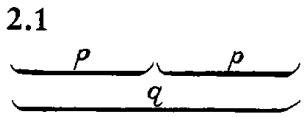
- 页码:6-6
- 2.2 [描述性拆分] 2.2 Metrical Structure
- 页码:6-7
- 2.2a The Metrical Hierarchy
- 页码:7-10
- 2.2b Problems of Large-Scale Metrical Structure
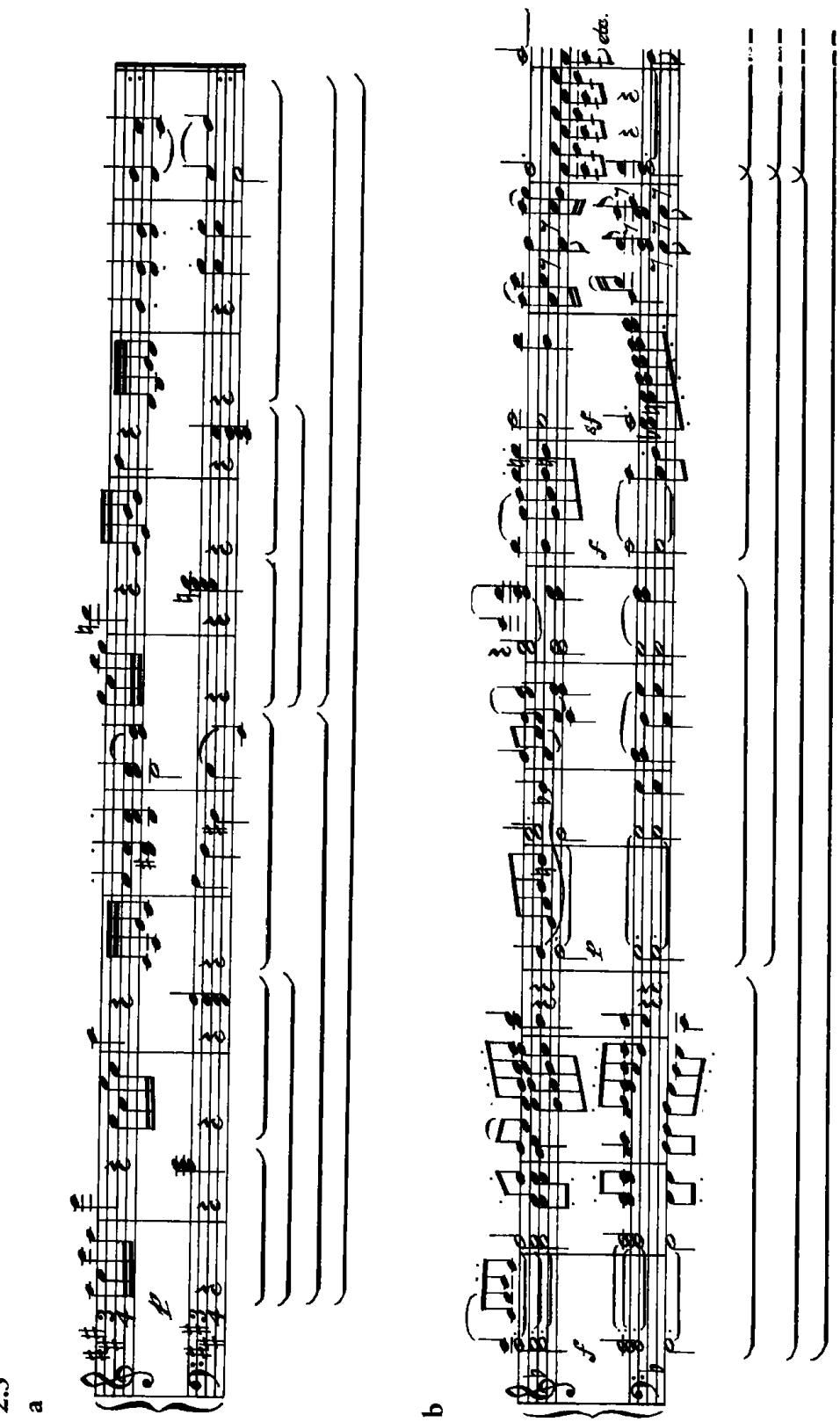
- 页码:10-14
- 2.2c [描述性拆分] Separating the Properties of Grouping and Meter
- 页码:14-14
- 2.3 [描述性拆分] 2.3 The Interaction of Grouping and Meter
- 页码:15-16
- 2.3a [描述性拆分] Beats and Upbeats/Afterbeats: The Interaction in Cadences
- 页码:16-18
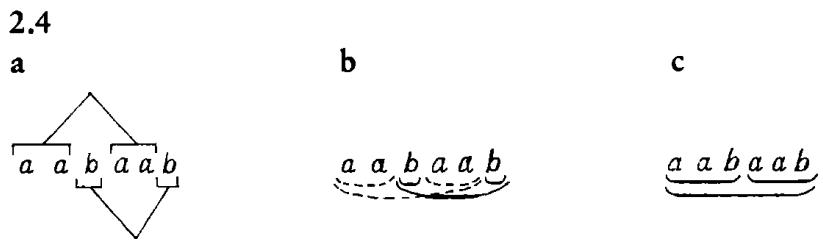
- 2.3b [描述性拆分] Time-Spans and Phase Relations Between Grouping and Meter
- 页码:18-19
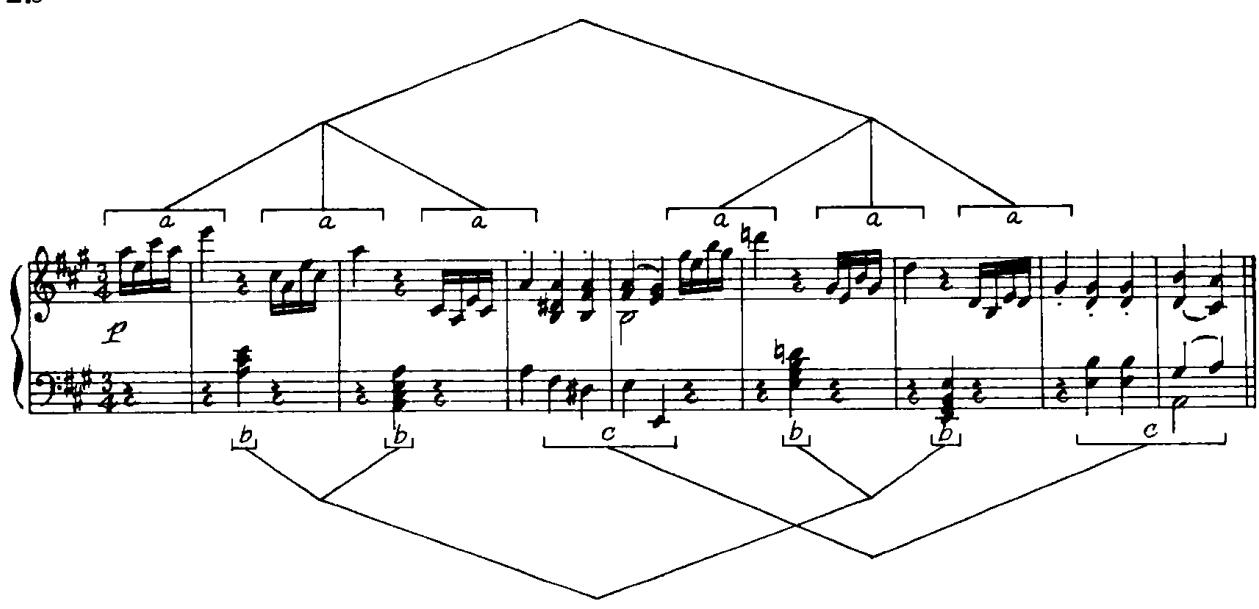
- 2.4 [描述性拆分] The Relation of Structural Accent to Grouping and Meter
- 页码:19-21
- 2.4a [描述性拆分] Structural Anacrusis and Structural Downbeat at Global Levels
- 页码:21-24
2.0 Introduction to Rhythmic Structure
第1段(P0001)
原文复述
Introduction to Rhythmic Structure
中文讲解
这是本章的标题。作者用“Rhythmic Structure(节奏结构)”作为标题,宣告本章将要讨论的核心议题:节奏的结构如何被听者感知,并如何在分析中被拆解、命名与建模。这一标题本身界定了本章的研究对象——是听者“推断出来”的节奏组织,而不是发声机制或演奏物理层面的节奏。
补充说明
作为小节标题,其功能是开启全章的论题,而非陈述命题,因此只需说明其开启的论题即可。
第2段(P0002)
原文复述
This chapter introduces those aspects of rhythmic structure inferred by the listener that do not directly involve pitch. A guiding principle throughout will be that rhythmic intuition must not be oversimplified. In our view, an adequate account of rhythm first of all requires the accurate identification of individual rhythmic dimensions. The richness of rhythm can then be seen as the product of their interaction.
中文讲解
本段为全章定调,包含三层主张。第一层划定范围:本章只处理听者从音乐中“推断”出来的、且不直接涉及音高的节奏结构(pitch-related 的节奏问题留到后续章节)。第二层提出方法论原则:节奏直觉不可被过度简化——也就是说,不能用某个单一概念(例如只讲拍子,或只讲小节)来代替真实的听感复杂性。第三层给出研究路径:先逐一准确地辨识出独立的“节奏维度”,再去看这些维度如何相互作用,从而涌现出节奏的丰富性。换言之,本章的分析顺序是“先拆解,再综合”。
补充说明
段中反复出现的“rhythmic dimensions(节奏维度)”是本章的关键技术词,指的是像 grouping、meter、structural accent 等可被单独描述、单独标注的独立层面。它们彼此独立,但相互作用,这正是后续各节展开的骨架。
第3段(P0003)
原文复述
The first rhythmic distinction that must be made is between grouping and meter. When hearing a piece, the listener naturally organizes the sound signals into units such as motives, themes, phrases, periods, theme-groups, sections, and the piece itself. Performers try to breathe (or phrase) between rather than within units. Our generic term for these units is group. At the same time, the listener instinctively infers a regular pattern of strong and weak beats to which he relates the actual musical sounds. The conductor waves his baton and the conductor waves his baton and the listener taps his foot at a particular level of beats. Generalizing conventional usage, our term for these patterns of beats is meter.
中文讲解
本段提出本章第一个、也是最基础的二分:“grouping(组群)”与“meter(节拍/拍子)”。两者在听感中是同时发生、却性质不同的两种组织。
• Grouping(组群):听者会把连续的声音信号自动切分成层级化的“单位”,从最小的动机(motive)一直到乐句(phrase)、乐段(period)、主题群(theme-group)、乐章段落(section)、整首作品(piece)。作者用一个表演上的证据来佐证——演奏者倾向于在单位之间而非单位内部呼吸或分句。这个证据说明:组群不仅是分析者的划分,而是被演奏实践内化了的听感现实。作者用“group”作为这些单位的通称。
• Meter(节拍):与组群并行,听者还会本能地推断出一套“强弱拍交替的规则模式”,并把所有实际声音对应到这套模式之上。指挥挥棒、听者用脚打拍子,都是这一推断的外在表现。作者将常规用法加以推广,用“meter”作为这类节拍模式的通称。
关键在于:作者把“group”和“meter”作为各自独立的“节奏维度”,分别承担“如何切分”与“如何打拍子”这两种不同的认知任务,这就回应了上一段“先分别辨识各个维度”的要求。
补充说明
段中列举的层级——motive / theme / phrase / period / theme-group / section / piece——是组群层级(grouping hierarchy)的标准序列,本书 2.1 节会给出专门的图示与分析标记。需注意作者此处只“宣称”group 与 meter 是独立的两种组织,并未举例证明它们如何冲突或叠加;这种相互作用要到 2.3 节才展开。
第4段(P0004)
原文复述
Sections 2.1 and 2.2 present grouping structure and metrical structure as independent components of rhythmic organization and develop their analytic notations. Section 2.3 sketches how these two components interrelate. Section 2.4 discusses the notion of “structural accent” and shows how it interacts with grouping and meter. Aspects of rhythm directly involving pitch structure will be dealt with in the chapters on time-span and prolongational reduction.
中文讲解
本段是全章的路线图,把上段提出的两个维度具体分配到各小节:2.1 讲 grouping structure(组群结构)并发展其分析标记;2.2 讲 metrical structure(节拍结构)并发展其分析标记。两节并行处理,与 P0002 中“先分别辨识各个维度”的方法论一致。
2.3 的功能是“sketch(勾勒)”——只描绘出两个维度如何相互作用,不做穷尽性的论述,因此它的篇幅与地位都弱于 2.1 与 2.2。2.4 引入第三个概念:“structural accent(结构重音)”,并展示它如何同时与 grouping 和 meter 发生作用。这样一来,全章的分析对象由两个扩展到三个,且第三个被定位为“作用在前两个之上”的概念。
最后一句划清范围:直接涉及音高结构的节奏问题(time-span reduction 与 prolongational reduction)不在本章内,留给后续章节。这与 P0002 的范围限定相呼应。
补充说明
“structural accent”在本段首次出现,但并未给出定义。它的完整定义与典型例子要到 2.4 节本身才展开;本段只是预告它在体系中的位置——一个与 grouping、meter 都发生交互的第三维度。
第5段(P0005)
原文复述
Whatever intrinsic interest our formulations of grouping and meter may have, they are not merely ends in themselves. We originally developed these formulations because no principled account of pitch reduction was possible without them. In this sense the purely rhythmic part of this book (chapters 2–4) is an extended preliminary to the reductional part (chapters 5–9).
中文讲解
本段解释本书为何要把节奏部分讲得如此充分。作者承认 grouping 与 meter 的形式化本身确有“intrinsic interest(内在旨趣)”,但强调它们“not merely ends in themselves(并非仅仅以自身为目的)”。真正驱动这些形式化的工作动机是:没有清晰的节奏结构,就不可能对音高做出“principled(有原则的)”reduction(简化/缩减)。换句话说,节奏结构是音高简化的必要前提,而不是平行的姊妹话题。
由此作者点明全书两大部分的关系:chapters 2–4 是“purely rhythmic(纯节奏)”部分,chapters 5–9 是“reductional(简化)”部分;前者是后者的“extended preliminary(延长的预备)”。这一句既回应了读者可能的疑问(“为什么要用这么多篇幅讲节奏?”),也为后续章节的出场提供了合法性。
补充说明
本段揭示了全书“节奏先于简化”的总体结构。它与 P0002 中“pitch 不直接涉及”的范围限定并不矛盾——本章虽然不直接处理音高,但其形式化成果正是为了让后续章节能够“有原则地”处理音高。
脚注 / 边栏 / 图表 / 附加信息(如有)
本节中无脚注、无图、无表格,也无单独的小节标题以外的分级标题需要汇总。所有信息均包含在 P0001–P0005 五段正文之中。唯一需读者留意的是:P0004 中预告的 2.1–2.4 各小节以及 P0005 中预告的 chapters 5–9 的具体内容,需通过后续章节阅读才能获得,本节本身不展开。
💡 本节核心要点
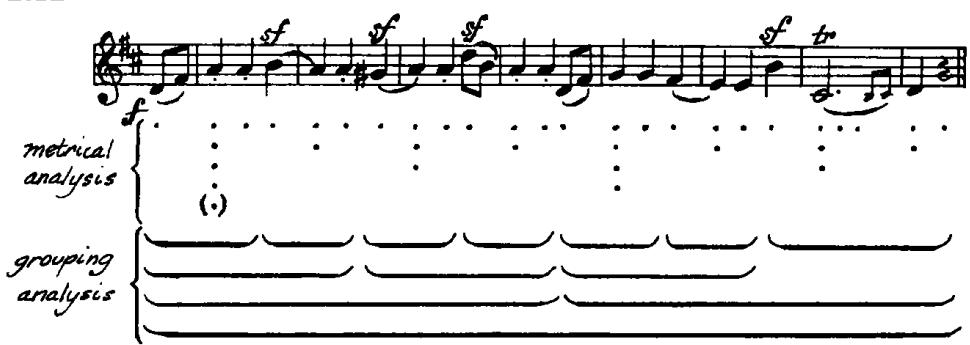
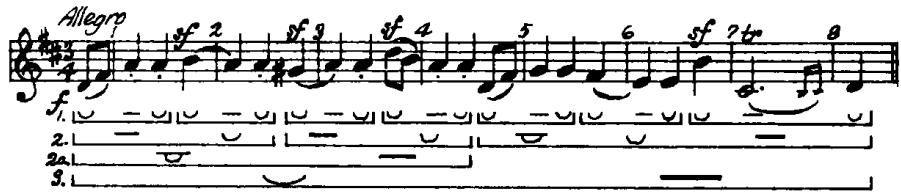
- 本章只讨论听者从音乐中“推断”出来、且不直接涉及音高的节奏结构;音高相关的节奏问题留到 time-span reduction 与 prolongational reduction 的章节。
- 全章的方法论原则是:节奏直觉不可被过度简化;必须先逐一准确地辨识出独立的节奏维度,再考察它们如何相互作用。
- 本章第一项基础区分是 grouping(组群)与 meter(节拍):前者是听者把声音切分为动机、乐句、乐段、作品等层级单位的方式(演奏者倾向于在单位之间呼吸/分句),后者是听者推断出的强弱拍交替规则模式(指挥挥棒、听者打拍子都是其外在表现)。
- 章节结构上,2.1 与 2.2 分别建立 grouping 与 meter 的独立分析与标记,2.3 勾勒二者的相互作用,2.4 引入第三个维度“structural accent(结构重音)”并展示它与前两者的交互。
- 作者明确本书的写作动机:节奏部分(chapters 2–4)虽具内在旨趣,但其真正目的是为音高简化部分(chapters 5–9)提供“有原则的”前提,因此节奏部分是简化部分的延长的预备。
🔑 关键术语
- grouping / group:指听者将连续的声音信号切分为层级化单位的方式,单位从 motive(动机)一直到整个 piece(作品)。作者用 group 作为这些单位的通称,并以演奏者在单位之间而非内部呼吸/分句作为听感真实性的佐证。
- meter:指听者本能推断出的强弱拍交替规则模式,并据此把实际声音对应到这套模式之上;外在表现为指挥挥棒、听者打拍子。作者将常规用法加以推广,用 meter 作为这类拍子模式的通称。
- rhythmic dimensions(节奏维度):本章的方法论概念,指可被单独辨识、单独描述的节奏层面,例如 grouping、meter、structural accent。章节先分别处理每个维度,再讨论它们如何相互作用,从而解释节奏的丰富性。
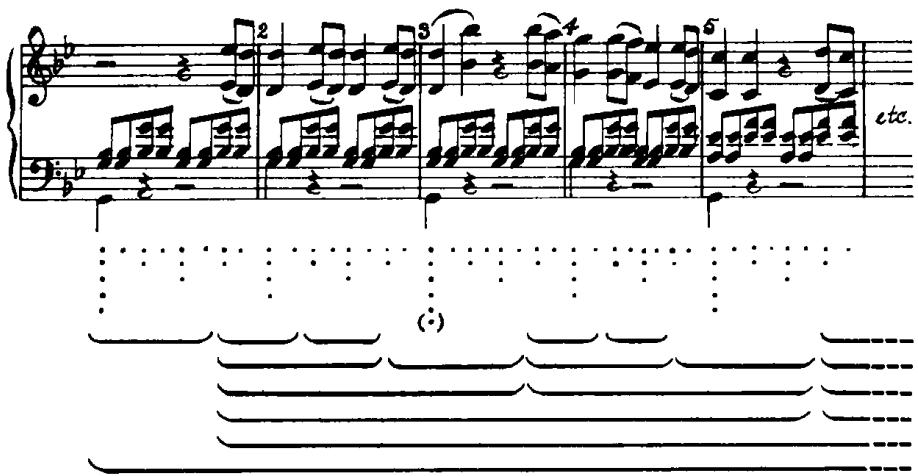
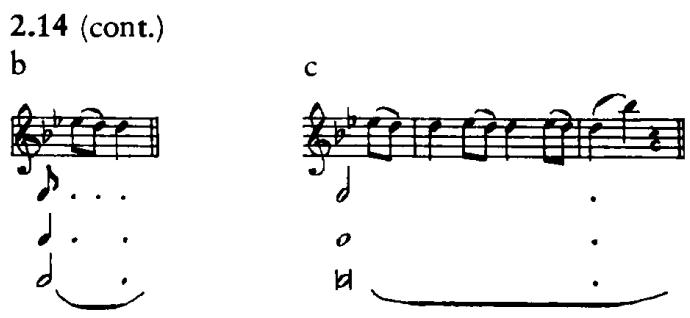
- structural accent(结构重音):本章 2.4 节将要正式讨论的第三维度;在本节中尚未给出定义,仅预告它会同时与 grouping 和 meter 发生交互。
- pitch reduction(音高简化):作者对音高层级结构进行有原则的缩减/约简的分析操作,构成本书 chapters 5–9 的主题。本章的节奏形式化正是为它提供必要前提。
2.1 [描述性拆分] 2.1 Grouping Structure
第1段(P0006)
原文复述
The process of grouping is common to many areas of human cognition. If confronted with a series of elements or a sequence of events, a person spontaneously segments or “chunks” the elements or events into groups of some kind. The ease or difficulty with which he performs this operation depends on how well the intrinsic organization of the input matches his internal, unconscious principles for constructing groupings. For music the input is the raw sequences of pitches, attack points, durations, dynamics, and timbres in a heard piece. When a listener has construed a grouping structure for a piece, he has gone a long way toward “making sense” of the piece: he knows what the units are, and which units belong together and which do not. This knowledge in turn becomes an important input for his constructing other, more complicated kinds of musical structure. Thus grouping can be viewed as the most basic component of musical understanding.
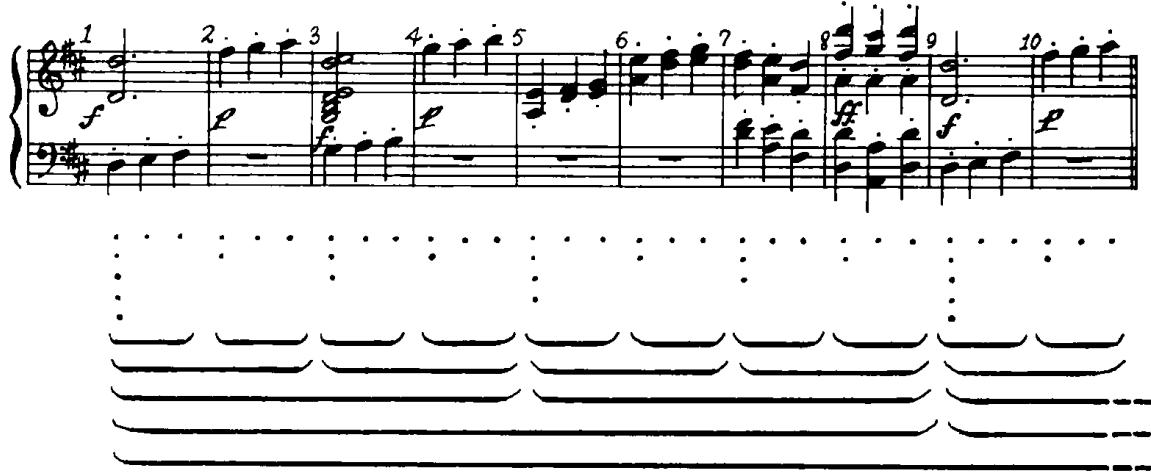
中文讲解
本段确立了分组(grouping)在音乐认知中的基础地位。三个核心论点需要把握:
- 分组的普遍性:把连续元素"切块"(chunk)是人类认知的普遍机制,不独音乐所有。
- 分组的输入与匹配:在音乐中,听者面对的原始素材是音高序列、起音点、时值、力度和音色这五维信息的连续流;听者能否顺畅分组,取决于输入的内在组织与他无意识的内部分组原则之间是否匹配——这是一个双向契合的问题。
- 分组的基础地位:一旦听者建构出一套分组结构,他就识别出了"什么是什么"以及"哪些单元属于一起、哪些不属于",这相当于理解了作品的"构件"。这个构件级别的知识又作为更高阶结构(如句法、调性)的输入,因此分组被定性为最基础的理解层面。
这一段在论证上完成了从"普遍认知现象"到"音乐具体应用"再到"理论定位"的三级推论,为后文给出分组的严格形式刻画做了铺垫。
第2段(P0007)
原文复述
The most fundamental characteristic of musical groups is that they are heard in a hierarchical fashion. A motive is heard as part of a theme, a theme as part of a theme-group, and a section as part of a piece. To reflect these perceived hierarchies we represent groups by slurs placed beneath the musical notation. A slur enclosed within a slur signifies that a group is heard as part of a larger group. For example, in 2.1 the groups marked p are heard as part of the larger group marked q.
中文讲解
本段提出音乐分组的一个最根本特征——它是层级性的(hierarchical)。层级性的含义立刻用一系列听感例子说明:动机属于主题,主题属于主题群,段落属于全曲。
作者引入一种记谱惯例:用乐谱下方的连线(slur) 来表示分组。连线嵌套(一个连线被另一个连线包围)直接对应听感上的从属关系——被包含的分组属于包含它的更大分组。图2.1中的 p 和 q 就是这一记谱法与听感关系的具体演示。
需注意,这里的"slur"不是演奏意义上的"圆滑线/连奏线",而是GTTM理论专用的分组记号。两者的术语重合是初读时容易混淆之处。
补充说明
在GTTM中,分组记号用的连线仅作为视觉符号,与演奏连奏线功能不同;阅读时务必按理论标记理解。
第3段(P0008)
原文复述
中文讲解
这是第2页的一个图像或乐谱占位符,对应正文提到的示例2.1,用以展示"p 内嵌于 q"的连线嵌套示例。其内容需查看原图方可确认。
补充说明
无额外补充(原图未提供)。
第4段(P0009)
原文复述
The concept hierarchy must be examined with some precision. A hierarchical structure, in the sense used in this theory, is an organization composed of discrete elements or regions related in such a way that one element or region subsumes or contains other elements or regions. A subsumed or contained element or region can be said to be subordinate to the element or region that subsumes or contains it; the latter can be said to dominate, or be superordinate to, the former. In principle this process of subordination (or domination) can continue indefinitely. Thus all elements or regions in a hierarchy except those at the very top and bottom of the structure are subordinate in one direction and dominating in the other. Elements or regions that are about equally subordinate within the entire hierarchy can be thought of as being at a particular hierarchical level. A particular level can be spoken of as small-scale or large-scale, depending on the size of its constituent elements or regions.
中文讲解
本段要给"层级性"下精确定义,因为这个词在日常语境中常被泛用,作者必须把它箍紧。
关键定义链:
- 层级结构:由离散元素或区域构成,其中一个元素/区域**subsumes(包含 / 囊括)**其他元素/区域。
- subordinate(从属) 与 superordinate(统属):被包含者从属于包含者;包含者统属或支配被包含者。两词一组,互为镜像。
- 可无限延伸:从属—统属关系原则上可以无限递归下去。
- 双向性:除了最顶层和最底层,结构中所有元素既是下方的统属者,也是上方的从属者——这一双向性是层级结构区别于扁平枚举的核心。
- 层级水平(level):在同一层级结构中"被统属程度大致相当"的元素被归为同一水平;其规模决定了"小尺度 vs. 大尺度"(例如动机属于小尺度,段落属于大尺度)。
这一段做了术语扫尾工作:上一段引入了直觉例子,本段则把直觉转化为可被形式规则操作的概念体系,下一段就要在这些概念上施加"互不重叠"的形式约束。
第5段(P0010)
原文复述
In a strictly hierarchical organization, a dominating region contains subordinate regions but cannot partially overlap with those regions. Hence the grouping structure in 2.2a represents a possible organization, but the grouping structure in 2.2b represents an impossible organization: at i two regions overlap at both levels 1 and 2, at j two regions overlap each other at level 2 and completely overlap a region at level 1, and at k a boundary at level 3 overlaps a region at level 2.
中文讲解
本段进入形式约束:严格层级组织要求统属区域不可与其下属区域发生部分重叠。这是一个"非重叠条件(nonoverlapping condition)“的初版表达。
作者用图2.2做正反对照:2.2a是可能(合规)的组织,2.2b是不可能(违规)的组织。违规由三处标注 i、j、k 体现:
- i:在层级1和层级2上各有一对区域部分重叠;
- j:层级2上的两个区域相互部分重叠,并且完全遮盖了层级1上的一个区域;
- k:层级3上的一个边界与层级2上的一个区域相交。
这三处并不平行而是层层递进:i 是各层级分别重叠、j 是跨层级覆盖、k 是边界与区域错位。作者通过把它们汇聚于同一张"不合格"图示中,让"互不重叠"作为一个统一的形式约束可视化。
但要注意——本节稍后会立刻限定:音乐中的分组并非严格符合这个"互不重叠"条件,所以这里的"严格层级"是为下一段留出豁口的口袋。
第6段(P0011)
原文复述
2.1 Grouping Structure
中文讲解
这是节标题"2.1 Grouping Structure”,开启本章对分组结构的论述。其论题范围由后续段落界定:从听感层级性出发,给出层级性的精确定义、非重叠条件、递归性、相邻性规则,以及与联想结构的区分,最终在结尾段以四条性质总结。
补充说明
无额外补充(版面标题)。
第7段(P0012)
原文复述
Rhythmic Structure
中文讲解
这是页眉/页眉栏"Rhythmic Structure",属于章节运行标题(running header),标识当前章节名。它不带新论述内容,仅为版面定位。
补充说明
无额外补充(版面元素)。
第8段(P0013)
原文复述

中文讲解
这是第3页的图示占位符,结合后文判断为图2.2(互不重叠条件正反示例),即对应正文讨论的2.2a合规分组与2.2b违规分组(含 i、j、k 三处标注)。其具体图样需查看原图。
补充说明
无额外补充(原图未提供)。
第9段(P0014)
原文复述
Whereas k never happens in music, j is at least conceivable, and i occurs commonly (in the form of grouping overlaps and elisions). Thus musical grouping is not strictly hierarchical in the sense just described. However, the conditions under which overlaps and elisions are perceived are highly constrained. These cases require special处理. For now we merely acknowledge their existence and notate them as at i where appropriate. $^{1}$ We will return to them in section 3.4.
中文讲解
本段对上段提到的三类违规做经验性筛选:
- k(边界与区域错位):在音乐中从不出现——这是音乐分组的硬性禁区;
- j(跨层级完全覆盖):至少可以想象,但仍属罕见;
- i(部分重叠 / 交叠):常见,表现为"分组重叠(overlaps)“和"交叠(elisions)"。
由此作者得出一个对前段的修正:音乐分组不是严格层级的。但重叠和交叠的被感知条件受到严格约束,需要专门处理;眼下只承认其存在并仿照 i 的方式标记,并在3.4节再回来细论。
脚注1在这里被插入引用,是关于i类情形标记惯例的补充说明(见下方脚注占位符相关条目)。
这一段在论证结构上至关重要:它承认了理论的经验局限性,把严格层级性看作"理想模型 + 受控例外"的组合,而非描述绝对规则。这种"先形式、后放宽"的写法贯穿GTTM全章。
补充说明
脚注1位于本段末尾,对应P0014文末上标引用。此脚注正文中未复述内容,仅作为对"i 处所示标记方式"的来源/说明性引用保留;需查阅原始页面脚注区方能确认其具体陈述。下文3.4节将专论分组重叠与交叠。
第10段(P0015)
原文复述
Hierarchically correct grouping structures are illustrated in 2.3. The beginning of the scherzo of Beethoven’s Sonata op. 2, no. 2 (2.3a) shows a typical, regular kind of grouping structure in classical music: a 4-bar antecedent phrase is balanced by a 4-bar consequent phrase; both phrases divide internally into 1+1+2 bars, and, at the next larger level, into 2+2 bars. By contrast, the opening of Beethoven’s Eighth Symphony (2.3b) is an instance of a less symmetrical, more complex grouping structure: although there are regular 4-bar groups at the smallest level indicated, measures 5–12 group together (because of thematic parallelism) at the next larger level to counterbalance measures 1–4, and to produce at the still next larger level a 12-bar phrase. And there is a legitimate, indeed prototypical case of grouping overlap at measure 12 in 2.3b: the event at the downbeat of measure 12 simultaneously cadences one group (or set of groups) and begins another group (or set of groups).
中文讲解
本段用两组实例把"合规层级分组"具体化,正反两案并置:
例2.3a——贝多芬《第二钢琴奏鸣曲》op. 2 no. 2 谐谑曲开头:
- 4小节前句 + 4小节后句 = 8小节乐段(典型对称);
- 内部又分 1+1+2 小节(小尺度),4小节内部也可读作 2+2(中尺度)。 这是一种规则而均衡的经典分组。
例2.3b——贝多芬《第八交响曲》开头:
- 最小层级仍是规则的4小节一组;
- 但由于主题平行(thematic parallelism),第5–12小节联合起来,与第1–4小节构成更大一层的对照;
- 再向上一层形成12小节的乐句。 这是一种不对称、更复杂的分组。
更关键的是2.3b在第12小节存在一个典型的合规重叠:第12小节的强拍事件同时收束一组(集)并开启另一组(集)。这就是上一段所谓"i 类重叠"在真实音乐中的具体化身——作者特意用"legitimate, indeed prototypical"两个递进的形容词强调:这种重叠不是异常,反而是分组结构的标准形态之一,与"破坏层级"的错误重叠截然不同。
教学要点:图2.3不仅给出"什么是合规”,还演示了不同复杂程度、以及"合规的例外"如何内嵌于层级体系。
第11段(P0016)
原文复述
Two further general points about musical groups are already implicit in this discussion of hierarchical organization. The first concerns the relation among subordinate and dominating groups. This relation does not differ from level to level or change in some substantive way at any particular level, but is essentially the same at all levels of musical structure. For example, it never happens that one kind of overlap is allowed at one level but disallowed at another. Or, to put the matter rather differently, any abstract grouping pattern could stand equally for local or global levels of musical structure. Thus the abstract grouping in 2.1—two groups enclosed within a larger one—occurs at three pairs of levels in 2.3a: at the 1- and 2-bar levels at the beginning of each phrase $(1+1=2)$ , at the 2- and 4-bar levels within each phrase $(2+2=4)$ , and at the 4- and 8-bar levels within the passage as a whole $(4+4=8)$ . Because of this uniformity from level to level, we can assert that grouping structure is recursive; that is, it can be elaborated indefinitely by the same rules.
中文讲解
本段提出关于分组的第二与第三条一般性观点,并引入GTTM的理论关键词——递归性(recursive)。
核心主张:从属—统属关系在不同层级之间完全同构,不因所在层级(小尺度或大尺度)而改变。具体含义:
- 没有任何一类重叠只在某一层级被允许,而在另一层级被禁止;
- 任何抽象的分组图式,都可同时代表局部或全局的音乐结构。
实例演示:以2.3a为对象,“两组包含在一组内”(即2.1所示图式)同一抽象样式在三个层级对中重复出现:
- 1+1=2(小节对乐句内短结构);
- 2+2=4(中尺度);
- 4+4=8(全段尺度)。
理论命名:基于这种跨层级一致性,作者断言分组结构是递归的,即它可以用同一套规则无限制地逐层扩展。
递属性是GTTM"生成性"(generative)的支柱——它意味着我们可以用极少的形式规则产生出高度复杂的层级结构,而不是为每个尺度单独设计规则。这是后文"四条组成理论"能够成立的关键先决条件之一(贯穿节末段)。
第12段(P0017)
原文复述
Chapter 2
中文讲解
这是页眉"Chapter 2",属于章运行标题(running header),版面属性,不带新论述。
补充说明
无额外补充(版面元素)。
第13段(P0018)
原文复述
中文讲解
第4页的图示占位符。结合上下文,应为图2.3(贝多芬作品的分组分析),对应正文P0015所讨论的2.3a与2.3b两组分组结构实例。其具体谱面需查看原图方可读出。
补充说明
无额外补充(原图未提供)。
第14段(P0019)
原文复述
Rhythmic Structure
中文讲解
页眉"Rhythmic Structure",章节运行标题,版面定位,不带新论述。
补充说明
无额外补充(版面元素)。
第15段(P0020)
原文复述
The second point follows from the nonoverlapping condition for hierarchical structures: nonadjacent units cannot group together at any particular level of analysis. To see what this means, consider the sequence in 2.4. On the basis of identity, one might wish to group all the as together and all the bs together (2.4a). Although such a grouping is conceivable in principle, it is not the kind of grouping structure intended here. Translated into the slur notation, 2.4a would yield the impermissible overlaps in 2.4b (in which, as a visual convenience, the as are grouped by dashed slurs and the bs by solid slurs). Then correct grouping analysis of this sequence is instead 2.4c, which captures the larger repetition of the aab pattern.
中文讲解
本段引入第二条因"非重叠条件"而生的推论——相邻性规则:在同一分析层级上,不相邻单元不能组合。
反例演示(图2.4):给出一串 a、b 元素交替的序列。
- 2.4a(直觉上诱人):把所有 a 归一组,所有 b 归一组——这是基于"同一性(identity)“产生的自然联想;
- 2.4b(理论拒绝):把这种"同类相聚"的分组翻译成连线后,会出现禁止性的重叠(a 用虚线、b 用实线表示以示区分);
- 2.4c(理论接受):正确的分组抓取的是aab 这种大尺度的重复模式,而不是逐个元素的同质归类。
教学要点:“分组的非重叠条件"不仅是抽象的几何约束——它还实际地排除了基于纯同一性的元素归类。换言之,分组结构关心的是相邻单元如何在时间上毗邻构成整体,而不是把所有同属一类的元素合并。这是把"分组结构"与下文要提到的"联想结构"区分开的关键一步。
第16段(P0021)
原文复述
中文讲解
第5页第一个图示占位符。结合上下文,应为图2.4,即文中a、b元素序列及三种分组图示(2.4a、2.4b、2.4c)所在的实例图。其具体内容需查看原图。
补充说明
无额外补充(原图未提供)。
第17段(P0022)
原文复述
The Beethoven scherzo of 2.3 (repeated in 2.5) provides an approximate analog to 2.4 if we consider it (plausibly enough) to consist of three motivic cells: the 16th-note arpeggio (a), the single chord (b), and the cadential figure (c). Linking these cells together produces some structure such as that indicated in 2.5. Although the listener undoubtedly makes such associations, they are not the grouping structure that he hears. Rather he hears the grouping in 2.3a, in which the motivic cells are related to their surrounding contexts and parallel motivic cells form parallel parts of groups.
中文讲解
本段把"相邻性规则"落到真实音乐上做一次检验。
设置:把贝多芬谐谑曲(已在2.3出现,2.5中重复)按三种动机细胞重写:a = 十六分音符琶音、b = 单和弦、c = 收束式。如果按"同种动机聚一类"组织(如把全部 a 连起来、所有 b 连起来、所有 c 连起来),得到的是2.5所示的结构——这与图2.4的2.4a/b完全同型,只是材质更具体。
结论:
- 听者当然会形成这种动机联想(不容否认),但这种联想不是分组结构。
- 听者实际听到的分组是2.3a那种——动机细胞属于它们所处的上下文,而不是被抽出来与同类并列;平行的动机细胞则以平行的身份作为更大分组的组成部分。
这是GTTM一处非常微妙的区分:动机的联想关系是真实存在的听感事实,但它不属于“分组结构"这个特殊维度。把联想误当作分组,会再次违反"非重叠"与"相邻"条件。本段实际上为下一段正式立论做铺垫——将"联想结构"作为另一维度与分组结构明确分离。
第18段(P0023)
原文复述
中文讲解
第5页第二个图示占位符。结合上下文,对应图2.5,即将贝多芬谐谑曲按a/b/c三动机细胞重新连接的示意,演示"同种动机相连"所产生的非合规重叠结构。其具体谱面需查看原图。
补充说明
无额外补充(原图未提供)。
第19段(P0024)
原文复述
2.5
中文讲解
图编号"2.5”,作为图2.5的标签出现于第5页,对应P0022讨论的按动机细胞重连示意。属版面元素,无独立论述。
补充说明
无额外补充(版面元素)。
第20段(P0025)
原文复述
More generally, the web of motivic associations (and of textural and timbral associations as well)—let us call it associational structure—is a highly important dimension in the understanding of a piece. But this web is not hierarchical in the restricted sense described above, and it must not be confused with grouping structure. It is a different dimension of musical structure, one that interacts with grouping structure. Because associational structure is not hierarchical, however, our theory at present has little to say about it. (See further remarks in section 11.4.)
中文讲解
本段正式提出一个与分组结构并列但本质不同的范畴——联想结构(associational structure)。
核心要点:
- 动机联想的网(以及织体、音色联想的网)构成一个重要的理解维度;
- 但这张网不符合前文所述的严格层级性——它呈网状(web)而非树状,因此不能与分组结构混为一谈;
- 它是音乐结构中另一个维度,与分组结构相互作用(互动而非同物);
- 既然联想结构不是层级的,当下这套理论对它几乎无话可说——作者坦承此处为理论的暂时边界。
末尾的括号指引读者去第11.4节找补充说明。这是GTTM"自知边界"式写作的典型:作者不停留在"我们能解释一切"的姿态,而是显式标注哪些维度当下暂不处理、去哪里再讨论。
教学要点:分组结构和联想结构这对区分,是GTTM方法论上的关键——它把"音乐理解"拆分为若干正交维度,避免了用一个维度(如联想)去解释另一个维度(如分组)所导致的混淆。这也为后文"四种组分(grouping, metrical, timescale, prolongational)“的模块化设计埋下伏笔。
第21段(P0026)
原文复述
To sum up: Grouping structure is hierarchical in a nonoverlapping fashion (with the one exception mentioned above), it is recursive, and each group must be composed of contiguous elements. These conditions constitute a strong hypothesis about the nature of musical cognition with respect to grouping. As will be seen, they are all the more significant in that they also pertain to the other three components of the theory.
中文讲解
本段是2.1节的收束段,以四条命题浓缩本节全部论证:
- 非重叠的层级性(hierarchical in a nonoverlapping fashion)——允许前述"i类重叠"这一受控例外;
- 递归性(recursive)——同一规则可无限延展;
- 相邻性(each group must be composed of contiguous elements)——由非重叠条件推出;
- 整体定性——上述条件合起来是对"音乐认知中分组本性"的一个强假设,不是观察的松散总结。
作者特意把最后一句设为本节通向全章的钩子:这些性质同样适用于该理论的其他三个组成部分——即节拍(metrical)、时值比例(timescale)、延伸(prolongational)结构。这意味着2.1节并不是孤立讨论分组,而是在为整个四组分理论提炼一组共同的形式骨架。
写作上,这一段把分散于P0007–P0025的若干论点收拢为四条可索引的命题,是教科书式"先散后收"的标准章节结尾。
脚注 / 边栏 / 图表 / 附加信息(如有)
本节包含一项图像/乐谱占位符群:P0008、P0013、P0018、P0021、P0023分别对应第2–5页的图2.1(p被含于q的嵌套示例)、图2.2(互不重叠条件正反例)、图2.3(贝多芬作品的分组实例)、图2.4(a/b序列分组分析与2.4a/b/c三组图示)、图2.5(按动机细胞重连示意)。所有图均需查看原图以确认细节,且图2.3在第5页作为"2.5"被重引以支持P0022的论证。此外,节末P0014末尾标有脚注上标"1”,对应脚注1为关于图i处标记惯例的来源性说明(正文未复述具体内容,需查阅原书脚注区)。版面元素包括节标题"2.1 Grouping Structure”(P0011)、章运行标题"Chapter 2”(P0017)和节运行标题"Rhythmic Structure"(P0012, P0019)以及图编号"2.5"(P0024),均为定位/标识用途,无独立论述。
💡 本节核心要点
- 分组(grouping)是把音乐要素序列切块成有意义单元的认知操作,被定位为音乐理解的"最基础组分",它所产生的构件知识是高阶结构(句法、调性等)的输入。
- 音乐分组的最根本特征是层级性——动机属主题、主题属主题群、段落属全曲;这一层级用乐谱下方的嵌套连线(理论专用slur)来表示。
- 层级性的严格定义要求:离散元素/区域之间存在"统属—从属"关系,且原则上可无限延续;除顶层与底层外,所有单元同时具有向上统属和向下从属的双向身份。
- 严格层级组织还要求"互不重叠",即统属区域不能与其下属区域发生部分重叠;音乐的实际情况是这类重叠(特别是 i 类重叠——overlap 与 elision)有受控出现,构成对严格规则的有界放宽。
- 分组结构具有递归性:从属—统属关系在不同尺度(小节—乐句—乐段—全曲)上同构而非分殊,因此同一套规则可以无限扩展,这是GTTM"生成性"的基础。
- 分组结构还要求"相邻性"——同一层级上不相邻单元不能成组,这从根本上把分组结构与基于同一性的"联想结构(associational structure)“区分开来;后者呈网状而非层级,是另一个与分组结构互动但不被当前理论处理的重要维度。
🔑 关键术语
- Grouping structure(分组结构):本节核心对象:听者对音乐要素序列进行切块后形成的层级结构。在GTTM中是音乐理解的第一组分,规则集包括层级性、非重叠(含受控例外)、递归性、相邻性四条。
- Hierarchy / hierarchical(层级 / 层级的):在本节严格意义下,指由离散元素或区域构成、其中一方"包含(subsume)“另一方的组织;其形式标志是从属—统属关系的无限可延伸性,以及除首尾两层外的双向从属—统属性。
- Subsume / subordinate / superordinate(包含 / 从属 / 统属):一组层级结构中的关系动词:包含者subsumes被包含者;被包含者为subordinate(从属),包含者为superordinate(统属)。两者互为镜像,是P0009定义层级的核心术语对。
- Nonoverlapping condition(非重叠条件):严格层级组织要求统属区域不可与其下属区域部分重叠;这一条件排除了把同种元素到处相聚的分组(详见P0020的a/b示例)。
- Overlap and elision(重叠与交叠):允许出现的"i类"分组现象:一个事件同时结束一组并开始另一组。在音乐中是合规且典型的层级内嵌方式,详见贝多芬第八交响曲第12小节例(P0015)。
- Recursive / recursiveness(递归的 / 递归性):P0016提出的性质:分组结构在不同尺度上同构,可以用同一规则无限延展。是GTTM"生成性"的方法论支柱。
- Slur(理论连线):GTTM专用于表示分组的视觉符号,置于乐谱下方;嵌套的连线直观对应"被包含"的层级关系。注意区别于演奏意义上的圆滑线。
- Associational structure(联想结构):由动机、织体、音色等同一性所形成的"网状"听感维度。呈非层级性,因此与"分组结构"分离,是GTTM另一维度但当前理论暂不处理(P0025)。
2.1a Kinds of Accent
第1段(P0027)
原文复述
Kinds of Accent
中文讲解
这是第2.1小节的标题“Kinds of Accent(重音的种类)”。它在本节中起到纲领作用,预告作者将在进入节拍结构(metrical structure)的讨论之前,先对“重音(accent)”这一术语进行分类澄清,区分现象重音、结构重音和节拍重音三种含义。
第2段(P0028)
原文复述
Before discussing metrical structure (the regular, hierarchical pattern of beats to which the listener relates musical events), we must clarify the concept of accent. Vague use of this term, often in connection with meter, has caused much confusion. In our judgment it is essential to distinguish three kinds of accent: phenomenal, structural, and metrical. By phenomenal accent we mean any event at the musical surface that gives emphasis or stress to a moment in the musical flow. Included in this category are attack points of pitch-events, local stresses such as sforzandi, sudden changes in dynamics or timbre, long notes, leaps to relatively high or low notes, harmonic changes, and so forth. By structural accent we mean an accent caused by the melodic/harmonic points of gravity in a phrase or section—especially by the cadence, the goal of tonal motion. By metrical accent we mean any beat that is relatively strong in its metrical context. ²
中文讲解
本段是本节的核心定义段,中心主张是:在讨论节拍结构之前,必须先把“重音”这一术语切分为三种独立但相关的概念,因为该词在使用中常含混不清。作者给出的三个定义彼此层次不同:
-
Phenomenal accent(现象重音):指音乐表层(musical surface)上任何能对某一时刻施加强调或重音的事件。它是一个可观测的、局部的范畴,包括音高事件的起奏点(attack points)、sforzandi 等局部重音、力度或音色的突然变化、长音、跳进到相对极高或极低的音、和声变化等。这些都属于听者直接从声学信号中接收到的“突显事件”。
-
Structural accent(结构重音):指由乐句或段落中旋律/和声上的引力点(points of gravity)所产生的重音,尤其是终止式(cadence)——即调性运动的终点。它比现象重音更为抽象,因为它依赖的是调性逻辑而非表层事件。
-
Metrical accent(节拍重音):指在节拍语境中相对较强的拍。它属于节拍系统的内在属性,与具体声音事件无关。
作者强调这一区分的必要性,是因为以往讨论节拍时常把三种重音混为一谈,造成大量混乱。本段的论证策略是先给出节拍结构的简短工作定义(即“听者将音乐事件与之对应的、有规律的等级化拍子模式”),然后声明在进入正式讨论前必须先厘清术语,这是为后续分析铺垫概念基础。末尾的上标“2”指向上标脚注,表明节拍重音的定义有附加说明。
补充说明
本段中“metrical structure”被作者以括注方式预先定义为“the regular, hierarchical pattern of beats to which the listener relates musical events”,这一工作定义本身已经包含“规律性”和“等级化”两个关键属性,读者可在后续章节中对照此定义观察作者如何展开。末尾上标“²”对应正文之外的脚注信息,需在脚注区域查阅具体内容。
第3段(P0029)
原文复述
Phenomenal, structural, and metrical accents relate in various ways. Section 2.4 deals with the interaction of structural and metrical accents, and chapter 4 is concerned in detail with the relation of phenomenal accent to metrical accent. Nonetheless, a general characterization of the latter relation is now in order, if only because it will help locate the conception of metrical structure in concrete experience.
中文讲解
本段的功能是衔接与预告。中心主张是:三种重音之间存在多种互动关系,但本节不会全面展开,而是先对其中一种关系——现象重音与节拍重音的关系——给出一个总体刻画。
作者明确指出:
- 结构重音与节拍重音的互动将在 §2.4 详细讨论;
- 现象重音与节拍重音的互动将在第4章集中讨论;
- 但本节此刻先概述后者关系,理由是:只有先让读者把握现象重音如何“喂养”节拍重音的知觉,才能把抽象的节拍结构概念锚定在具体听感经验上。
也就是说,本段在论证链上的作用是“收缩范围”:从三种重音的整体关系网中,挑出与本节后续讨论直接相关的那一条线索(现象→节拍),并说明这样做的教学与论证价值——避免概念悬空。
补充说明
段中提及的“Section 2.4”和“chapter 4”均为本节之外的预设章节引用,提示读者本节的论述是全书论证的一个前导部分,而非孤立定义。
第4段(P0030)
原文复述
Phenomenal accent functions as a perceptual input to metrical accent—that is, the moments of musical stress in the raw signal serve as “cues” from which the listener attempts to extrapolate a regular pattern of metrical accents. If there is little regularity to these cues, or if they conflict, the sense of metrical accent becomes attenuated or ambiguous. If on the other hand the cues are regular and mutually supporting, the sense of metrical accent becomes definite and multileveled. Once a clear metrical pattern has been established, the listener renounces it only in the face of strongly contradicting evidence. Syncopation takes place where cues are strongly contradictory yet not strong enough, or regular enough, to override the inferred pattern. In sum, the listener’s cognitive task is to match the given pattern of phenomenal accentuation as closely as possible to a permissible pattern of metrical accentuation; where the two patterns diverge, the result is syncopation, ambiguity, or some other kind of rhythmic complexity.
中文讲解
本段是本节的高潮,中心主张是:现象重音与节拍重音之间是一种“自下而上的知觉建构”关系——听者从表层重音线索(cues)中推导出背后的节拍重音模式。
作者用几个递进条件把这一过程讲清楚:
- 线索稀疏或互相冲突 → 节拍感会变弱或变得模糊(attenuated or ambiguous)。
- 线索规则且互相支持 → 节拍感变得明确并呈现多层次(definite and multileveled)。所谓“多层次”,暗示节拍可以同时存在强弱不同的层级(如强拍、次强拍、弱拍),而现象重音为这种层级提供原料。
- 节拍模式一旦确立便具有惯性 → 听者只在遇到强力反证时才放弃既有模式。这一陈述解释了为什么弱拍上的重音往往不被感知为强拍重置。
- 切分音(syncopation)的产生条件 → 当线索与既有节拍模式强烈矛盾,但又不够强或不够规律到推翻该模式时,就会出现切分。也就是说,切分是现象重音“挑战”但未能“战胜”既有节拍模式的中间状态。
段末的总结把上述机制压缩为一句话:听者的认知任务是让“给定的现象重音模式”与“某个许可的节拍重音模式”尽可能匹配;两者分歧时,便产生切分、模糊或其他节奏复杂性。
这段话在论证链上的作用是为后续关于节拍结构的具体讨论提供动力学模型——节拍不是物理性地“摆在”音乐里,而是从听者的知觉归纳中“浮现出来”的。这是全书理论的关键支柱之一。
补充说明
本段中“multileveled”一词与 P0028 中对节拍结构的括注定义“regular, hierarchical pattern of beats”中的“hierarchical”形成呼应,提示读者:节拍的多层次结构正是由多重、规则的现象重音线索支撑而成的。
脚注 / 边栏 / 图表 / 附加信息(如有)
P0028 末尾的上标“²”指向本节之外的脚注,需参照原书脚注区域查阅其具体内容;本节正文未包含其他图表、谱例或边栏。
💡 本节核心要点
- 作者把“重音”明确划分为三种独立概念:现象重音(音乐表层突显事件)、结构重音(旋律与和声引力点,尤其是终止式)与节拍重音(节拍系统中相对较强的拍)。
- 这一术语澄清是必要的,因为此前含混使用“重音”一词已经造成大量混乱,尤其在与节拍(meter)相关的讨论中。
- 三种重音彼此关联:结构重音与节拍重音的互动在 §2.4 处理,现象重音与节拍重音的互动在第4章详细展开。
- 现象重音是节拍重音的知觉输入:听者从表层重音线索中归纳出有规律的节拍重音模式;线索规则且互相支持时,节拍感变得明确且多层次;线索稀疏或冲突时,节拍感变得模糊。
- 节拍模式一旦建立便具有知觉惯性,听者只在面对强力反证时才放弃;切分(syncopation)正是现象线索与既有节拍模式强烈矛盾但又不足以推翻该模式时产生的中间状态。
- 本节的功能是为后续节拍结构分析提供概念基础与动力学模型:节拍并非物理性地预设于音乐中,而是从听者对现象重音的认知归纳中浮现出来的。
🔑 关键术语
- Phenomenal accent(现象重音):音乐表层上任何能对某一时刻施加强调或重音的事件,包括起奏点、局部重音(如 sforzandi)、力度或音色突变、长音、大跳音程、和声变化等,是听者可直接从声学信号中接收到的突显事件。
- Structural accent(结构重音):由乐句或段落中旋律/和声的引力点(尤其是终止式、调性运动的终点)所造成的重音,是一种由调性逻辑决定的、较为抽象的重音。
- Metrical accent(节拍重音):在节拍语境中相对较强的拍,属于节拍系统本身的内在属性,不依赖于具体的声音事件。
- Metrical structure(节拍结构):作者在 P0028 中预先给出的工作定义:“the regular, hierarchical pattern of beats to which the listener relates musical events”,即听者将音乐事件与之对应的、有规律的等级化拍子模式。
- Syncopation(切分):在 P0030 中被定义为现象重音线索与既有节拍模式强烈矛盾,但又不至于推翻该模式时所产生的结果;本质上是知觉归纳与表层事件之间的一种张力状态。
- Cues(线索):P0030 中用来描述现象重音作为节拍重音知觉输入的术语,指听者从中推导出节拍模式的表层突显事件。
2.2 [描述性拆分] 2.2 Metrical Structure
第1段(P0031)
原文复述
Section heading: 2.2 Metrical Structure.
中文讲解
这是第二章的第二个小节标题,标题为“Metrical Structure”(节拍结构 / 拍子结构)。它承接着前文对节拍重音(metrical accent)的初步讨论,正式宣告本小节的核心议题:分析音乐表面之下的节拍组织。需要注意的是,这里的“structure”一词指的不是某一首具体作品的局部形态,而是一种可适用于许多作品、具有规则性的层级系统。
第2段(P0032)
原文复述
Subsection heading: Rhythmic Structure.
中文讲解
这是 2.2 下的二级小节标题“Rhythmic Structure”(节奏结构)。它与上级标题“Metrical Structure”形成配合:上一级指节拍这一相对抽象的层级系统,本级则把焦点收回到“节奏”这一更贴近实际听感的层面。读者由此可预期,下文将围绕如何把节拍层级与音乐表面的节奏现象联系起来展开。
第3段(P0033)
原文复述
Metrical accent, then, is a mental construct, inferred from but not identical to the patterns of accentuation at the musical surface. Our concern now is to characterize this construct. However, because “metrical accent” is nothing but a relative term applied to beats within a regular metrical hierarchy, we can instead describe what constitutes a metrical pattern. Specifically, we need to investigate the notions of “beat,” “periodicity,” and “metrical hierarchy.” In the course of this discussion we will develop an analytic notation for metrical structure and outline the range of permissible metrical patterns.
中文讲解
本段是 2.2 节核心立场的开篇陈述,作用是为后续分析定义研究对象并预告方法。
第一,它对“节拍重音”(metrical accent)作出关键性质判断:它是“心智中的建构”(a mental construct),是从音乐表层的重音格局推断(inferred)而来,但并不等同于表层重音本身。换言之,听到的强弱并不是节拍重音的全部内容;节拍重音存在于听者对规则脉动的预期之中。
第二,因为“节拍重音”仅仅是一个“相对术语”(a relative term),只在一个规则的节拍层级(a regular metrical hierarchy)内部用来区分拍点的强弱,作者主张不必再孤立地定义它,转而去描述构成一个节拍模式(metrical pattern)的整体条件。这一策略转向意义重大:分析重心从“单个重音”移向“整个层级系统”。
第三,作者明确预告本节将要研究的三组核心概念——“beat”(拍)、“periodicity”(周期性 / 循环往复)、“metrical hierarchy”(节拍层级)。这三者构成节拍模式的必要维度:拍是最小的时间单位,周期性是其重复方式,层级则是强弱关系的纵向组织。
第四,作者交代方法论产物:将在讨论过程中发展出一套用于描写节拍结构的“分析符号”(analytic notation),并勾勒出“允许出现的节拍模式”(permissible metrical patterns)的范围。这暗示作者预设了节拍模式并非任意,而是受规则约束的——这是节拍理论相对音乐表面现象的重要理论承诺。
补充说明
“mental construct”与“inferred from but not identical to”的措辞共同表明,作者采用了认知/心理层面的节拍观,即节拍属于听者建构的产物而非物理事实;这一点为后续把节拍视为可分析、可符号化的层级系统提供了哲学基础。
第4段(P0034)
原文复述
Before proceeding, we should note that the principles of grouping structure are more universal than those of metrical structure. In fact, though all music groups into units of various kinds, some music does not have metrical structure at all, in the specific sense that the listener is unable to extrapolate from the musical signal a hierarchy of beats. Examples that come immediately to mind are Gregorian chant, the alap (opening section) of a North Indian raga, and much contemporary music (regardless of whether the notation is “spatial” or conventional). At the opposite extreme, the music of many cultures has a more complicated metrical organization than that of tonal music. As will emerge, the rhythmic complexities of tonal music arise from the interaction of a comparatively simple metrical organization with grouping structure, and, above all, from the interaction of both components with a very rich pitch structure.
中文讲解
本段为后续节拍分析加上一道“适用边界”与“成因说明”,兼具理论定位与方法论预告的功能。
第一,作者给出范围判断:“分组结构”(grouping structure)的原理比“节拍结构”(metrical structure)的原理更具普遍性。意思是,几乎所有音乐都会把事件归入某种分组单位,但并非所有音乐都存在节拍。
第二,对“没有节拍结构”给出操作性定义:当且仅当听者“无法从音乐信号中推导出(extrapolate)一组层级化的拍”时,该音乐即无节拍结构。定义的关键不在于“没有重音”,而在于“没有可被反复投射的层级脉动”。
第三,作者立刻给出三类典型例证:格里高利圣咏(Gregorian chant)、北印度拉格的开篇段 alap、以及“许多当代音乐”(无论其记谱是“空间型”还是常规型)。这三例覆盖了西方传统、亚洲传统与二十世纪专业音乐三个领域,意在表明“无节拍”是跨文化的普遍现象,而非某一传统的孤例。
第四,与之对照,“另一极端”是许多文化的音乐拥有比大小调音乐(tonal music)更为复杂的节拍组织——这是为后续讨论设下的反例空间,提醒读者本书所建的模型并不能穷尽世界音乐中的节拍现象。
第五,也是最关键的论断:大小调音乐的节奏复杂性“并非来自”节拍本身,而来自三层交互作用——相对简单的节拍组织 × 分组结构 × “尤为丰富的”(a very rich)音高结构。这一句把节奏复杂性的因果链明确画出来:节拍只是底座,复杂节奏是底座与分组、和声共同作用的结果。这也为读者解释了为什么一本研究大小调音乐的著作需要同时讨论分组与节拍。
补充说明
作者用“extrapolate”一词强调节拍是一种“推论”或“外推”而非直接听见的属性,这与 P0033 中“mental construct”的立场保持一致;二者前后呼应,共同支撑“节拍属于认知建构”这一基本预设。
脚注 / 边栏 / 图表 / 附加信息(如有)
本小节范围内未出现脚注、图示、表格或边栏注释,因此无附加材料需要汇总。
💡 本节核心要点
- 节拍重音是听者从表层重音推断出来的心智建构,与音乐表面的重音格局并不等同。
- 由于节拍重音只是层级内的相对术语,分析重心应放在整体节拍模式上,特别是拍、周期性、节拍层级这三个概念。
- 本节承诺发展一套分析节拍结构的符号系统,并勾画出“允许出现”的节拍模式范围,节拍因此被理论化为受规则约束的对象。
- 分组结构的普遍性大于节拍结构——所有音乐都分组,但并非所有音乐都具有节拍。
- 判断“无节拍”的标准是:听者能否从音乐信号中推导出层级的拍;格里高利圣咏、北印度拉格的 alap 段以及大量当代音乐是典型反例。
- 大小调音乐的节奏复杂性并不源于节拍本身的复杂,而源于简单节拍与分组结构、以及两者与丰富音高结构之间的交互作用。
🔑 关键术语
- Metrical accent(节拍重音):指节拍层级内部拍点之间的相对强弱关系;本节强调它是听者推论出来的心智建构,不能等同于音乐表面的实际重音格局。
- Beat(拍):节拍结构中的基本时间单位,是建立周期性概念与层级概念的前提。
- Periodicity(周期性):节拍单位按一定时间间隔反复出现的规律,是听者得以“推论”层级的关键依据。
- Metrical hierarchy(节拍层级):由不同层级的拍相互嵌套而形成的强弱纵深结构;节拍重音只能在这一层级内部被相对地定义。
- Grouping structure(分组结构):把音乐事件组织为更高层级的语义单位;其普遍性高于节拍结构,本节用它与节拍结构的交互来解释大小调音乐的节奏复杂性。
- Gregorian chant(格里高利圣咏):作者列举的“无节拍结构”音乐例证之一,用以说明并非所有音乐都能让听者推导出层级化的拍。
- alap(北印度拉格的开篇段):作者用以说明节拍结构具有文化特异性的另一例证;在该段落中听者难以建立稳定的节拍层级。
- Pitch structure(音高结构):与节拍、分组并列为节奏复杂性的第三大成因;作者强调大小调音乐拥有尤为丰富的音高结构,正是它与前两者交互产生节奏张力的关键。
2.2a The Metrical Hierarchy
第1段(P0035)
原文复述
The Metrical Hierarchy
中文讲解
本句是 2.2a 小节的标题。标题“节拍层级”提示本节要讨论的核心问题:拍子(beats)如何被组织成多层结构,以及不同层级之间的关系。它预示了接下来作者将从最基础的概念(拍、时值)出发,逐步引入层级、规整性、记谱法等议题。
第2段(P0036)
原文复述
The elements that make up a metrical pattern are beats. It must be emphasized at the outset that beats, as such, do not have duration. Players respond to a hypothetically infinitesimal point in the conductor’s beat; a metronome gives clicks, not sustained sounds. Beats are idealizations, utilized by the performer and inferred by the listener from the musical signal. To use a spatial analogy: beats correspond to geometric points rather than to the lines drawn between them. But, of course, beats occur in time; therefore an interval of time—a duration—takes place between successive beats. For such intervals we use the term time-span. In the spatial analogy, time-spans correspond to the spaces between geometric points. Time-spans have duration, then, and beats do not. $^{3}$
中文讲解
本段建立两个最基础且容易混淆的概念——拍(beat)与时值(time-span)。作者强调:
- 拍本身没有持续时间。指挥手势的瞬间、节拍器的“咔哒”声,这些都是“没有长度”的事件点;演奏者在想象中响应一个无穷短的时间点,听众也是从音乐信号中“推断”出这些理想化的点。
- 用空间类比来说明:拍像几何中的“点”,而点本身是没有长度的;连接点与点之间的“线段”才具有长度。
- 拍与拍之间的间隔才是有长度的,作者专门为之创造术语“时值(time-span)”。也就是说,时值才对应持续时间。
这是为后续讨论“节拍层级”打下形式基础——节拍体系由无数无长度的“点”串接起来,而点与点之间的可度量间隔才是时间性的来源。这一区分对后面理解“等距”与“多级层级”非常关键:层级之间的对比和组合,归根结底是对“时值”长度的对比,而不是“拍”本身的对比。末尾的上标 3 表示该段附有脚注(脚注内容未在本次输入中给出)。
补充说明
本段末尾出现脚注标记 $^{3}$。脚注的正文未包含在当前 source_paragraphs 中,因此其具体内容无法在本节内确认;该脚注应是对“拍无持续时间”这一观点的来源、限定或例证性补充,需查阅原书第 7 页脚注。
第3段(P0037)
原文复述
Because beats are analogous to points, it is convenient to represent them by dots. The sequences of dots in 2.6 stand for sequences of beats.
中文讲解
本段很短,作用是引入记号约定:因为上一段已经把拍类比为“点”,所以用圆点(dots)来表示拍是最自然的。文中提到的“图 2.6”给出了两串圆点的序列,用来代表两串拍。这一约定看似简单,但贯穿本节全部论证——之后所有的层级关系、节拍对比都依赖这套点记号,因此作者在此先行说明。
补充说明
图 2.6 的具体内容未在本次输入的段落中给出,需要查看原书图示才能确认两串点的排列细节。
第4段(P0038)
原文复述
Chapter 2
中文讲解
这是版心处的页眉,标识当前章节为第 2 章,本身不包含论述内容。
第5段(P0039)
原文复述
The two sequences differ, however, in a crucial respect: the dots in the first sequence are equidistant, but not those in the second. In other words, the time-spans between successive beats are equal in 2.6a but unequal in 2.6b. Though a structure like 2.6b is conceivable in principle, it is not what one thinks of as metrical; indeed, it would not be heard as such. The term meter, after all, implies measuring—and it is difficult to measure something without a fixed interval or distance of measurement. Meter provides the means of such measurement for music; its function is to mark off the musical flow, insofar as possible, into equal time-spans. In short, metrical structure is inherently periodic. We therefore assert, as a first approximation, that beats must be equally spaced. This disqualifies the pattern of beats in 2.6b from being called metrical.
中文讲解
本段对图 2.6 中的两串点作出关键区分:2.6a 中点与点之间的距离相等(equidistant),2.6b 中则不等。由此引出节拍(meter)的第一个必要条件:
- 周期性(periodicity)。作者从词源上解释:meter 一词本身就含有“测量”的意思,没有固定间隔就无法进行测量。
- 因此,作者把“相邻拍之间的时值相等”作为“第一近似”下的必要条件。
- 不等距的 2.6b 被明确排除在“节拍”范畴之外。
值得注意的是作者用了“as a first approximation”(作为第一近似)这个限定语,暗示“等距”虽然必要但并非充分——这一点恰好为下一段埋下伏笔。
第6段(P0040)
原文复述
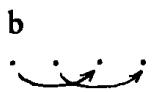
Curiously, neither is the pattern of beats in 2.6a metrical in any strict sense. Fundamental to the idea of meter is the notion of periodic alternation of strong and weak beats; in 2.6a no such distinction exists. For beats to be strong or weak there must exist a metrical hierarchy—two or more levels of beats. $^{4}$ The relationship of “strong beat” to “metrical level” is simply that, if a beat is felt to be strong at a particular level, it is also a beat at the next larger level. In 4/4 meter, for example, the first and third beats are felt to be stronger than the second and fourth beats, and are beats at the next larger level; the first beat is felt to be stronger than the third beat, and is a beat at the next larger level; and so forth. Translated into the dot notation, these relationships appear as the structure in 2.7a. At the smallest level of dots the first, second, third, and fourth beats are all beats; at the intermediate level there are beats under numbers 1 and 3; and at the largest level there are beats only under number 1.
中文讲解
本段揭示节拍的第二个必要条件:仅仅“等距”还不够,还必须有层级结构。
- 作者出人意料地指出:2.6a(仅有等距而无强弱之分)严格说来也不算节拍。强弱交替(strong/weak beats)是节拍概念的核心。
- 强弱必须依赖至少两层节拍——“节拍层级(metrical hierarchy)”。规则是:如果某拍在某层被感觉为“强”,它同时也作为下一更大层的“拍”。
- 以 4/4 拍为例:
- 最小层(四个十六分音符或四分音符的层):1、2、3、4 全部是拍;
- 中间层:第 1、3 拍是拍(因为它们相对于 2、4 更强);
- 最大层:只有第 1 拍是拍(因为它比第 3 拍更强)。
- 这三层关系用点记号表示即为图 2.7a。
这里的关键概念是“嵌套”:更大层的拍必然落在一串更小拍中的某个拍上,从而形成“强拍同时也是某层的拍”这一递归关系。这个思想既来自节拍感知的心理学(参见末尾脚注 4),又是后文“规整性限制”和“recursion”原则的源头。末尾的上标 4 表示附有脚注(具体内容不在本次输入中)。
补充说明
本段末尾的脚注标记 $^{4}$ 对应原书第 8 页脚注。该脚注的正文未在 source_paragraphs 中给出,无法在本节内确认;通常此类脚注会提供关于“节拍层级”概念的文献依据或心理学说明。
第7段(P0041)
原文复述
The pattern of metrical relations shown in 2.7a can also be represented by “poetic” accents, as shown in 2.7b (“−” means “strong” and “−” means “weak”); but this traditional prosodic notation is inferior to the dot notation in three respects. First, it does not treat beats as points in time. Second, the distinction between strong and weak beats is expressed by two intrinsically unrelated signs rather than by patterns made up of one sign. Third, by including strong and weak markings at each “level” (that is, by turning two levels into one), the prosodic notation obscures the true relationship between metrical level and strength of beat.
中文讲解
本段比较两种记谱法——作者提出的点记号(2.7a)与传统的“诗体重音”记号(2.7b,源自诗歌韵律学,用 “−” 表示强,“−” 表示弱)。作者列出点记号在三个方面的优势:
- 点记号体现“拍 = 时间中的点”这一核心观念,重音记号做不到。
- 重音记号需要两种本质上互不相关的符号(强 / 弱),而点记号只用一个符号(点),靠点的“是否存在”或“是否与更大点对齐”来表达强弱关系。
- 重音记号把“层”和“强弱”混在一起:每写一个重音或弱音符号,都同时声明了所在层级,等于把两层信息压缩到一层,因此抹杀了“层”与“强弱”之间的真实关系。
作者以此铺垫:他接下来将坚持使用点记号,因为它能让“层级”与“强弱”分别、独立地呈现。
第8段(P0042)
原文复述
Rhythmic Structure
中文讲解
这是页眉另一侧的内容,标明本章(也是本书)的标题为《Rhythmic Structure》(节奏结构)。它属于版面信息,不构成论述。
第9段(P0043)
原文复述
中文讲解
本条是图示占位符,原书第 9 页的图(应为图 2.7、图 2.8 或图 2.9 之一,或与之相关的视觉示例)未在文本中提供具体图形数据。该图出现在 P0043 与 P0044 之间,正对应作者刚刚结束对“点记号表示强弱层级”的讨论,并即将引入“节拍栅格”的概念,因此可推测它要么展示了图 2.7 的点记号方案,要么展示了用音符时值标注层级的方式。需查看原图方可确认。
补充说明
原图内容无法核实;不要凭推测描述图中细节。
第10段(P0044)
原文复述
Observe that the beats in 2.7a are equally spaced not only at the smallest level but at larger levels as well. This, the norm in tonal music, provides what might be called a “metrical grid” in which the periodicity of beats is reinforced from level to level. Because of the equal spacing between beats at any level, it is convenient to refer to a given level by the length of its time-spans—for example, the “quarter-note level” and the “dotted-half-note level.” As in 2.8, we indicate this labeling of metrical levels by showing the appropriate time-span note value to the left of each level.
中文讲解
本段把“层级”思想进一步形式化,提出“节拍栅格(metrical grid)”:
- 在图 2.7a 中,无论最小层、中间层还是最大层,相邻拍之间的间距都是相等的。这是调性音乐中的常态。
- 因为任何一层都是等距的,所以可以用“该层时值的长度”来命名这一层,例如“四分音符层(quarter-note level)”和“附点二分音符层(dotted-half-note level)”。
- 作者介绍一个可视化约定(参图 2.8):在每一层点记号的左侧写出对应的时值音符记号,让读者一眼看出“该层的时值是多长”。
这里的关键洞见是:节拍层级不仅“在”,而且“被强化”——每一层都各自由自己的周期性支撑,于是形成一套相互嵌套的栅格。这与上一节的“点-线”类比再次呼应:栅格是几何意义上的多级刻度。
第11段(P0045)
原文复述
$$ \begin{array}{l l} {2. 8} \ {\mathrm{a}} \ {\text { ♩ }} & {(1 2 3 1 2 3 1)} \ {\text { ♩ }} & {. \dots .} \ {\text { ♩ }} & {. \dots .} \ {\text { ♩ }} & {. \dots .} \ {\text { ♩ }.} & {.} \end{array} \qquad \begin{array}{l l} {\mathrm{b}} \ {\text { ♩ }} & {(1 2 3 4 5 6 1 2 3 4 5 6 1)} \ {\text { ♩ }.} & {. \dots .} \ {\text { ♩ }.} & {. \dots .} \ {\text { ♩ }.} & {. \dots .} \ {\text { ♩ }.} & {. \dots .} \end{array} $$
中文讲解
本段是图 2.8 的数学 / 记谱排版,给出两个实例的层级结构。
- 左侧 2.8a:顶端标有“♩”(四分音符),下面是“1 2 3 1 2 3 1”的节拍编号;其下若干行用“.”和“\dots”分别代表两层更小的节拍点行;最底层为单独的“.”,并以“♩.”(附点四分音符)标注在左侧。整体对应 3/4 拍。
- 右侧 2.8b:顶端为“♩”加“1 2 3 4 5 6 1 2 3 4 5 6 1”的编号,下方四行均用“♩.”(附点四分音符)标注,并用“.”和“\dots”显示四个更小层级的点。整体对应 6/8 拍。
通过这两个例子,作者给出“如何把层用音符时值命名”的可视化规范,并预备在下一段说明层与层之间的乘法规则。
补充说明
原文中以 LaTeX 数组展示图 2.8 的层级与音符标注;具体符号(♩、♩.、.、\dots)表示节拍点和对应时值长度,需对照原书图示理解。
第12段(P0046)
原文复述
An important limitation on metrical grids for classical Western tonal music is that the time-spans between beats at any given level must be either two or three times longer than the time-spans between beats at the next smaller level. For example, in 4/4 (2.7a) the lengths of time-spans multiply consistently by 2 from level to level; in 3/4 (2.8a) they multiply by 2 and then by 3; in 6/8 (2.8b) they multiply by 3 and then by 2.
中文讲解
本段是对“节拍栅格”最重要的形式限制之一:
- 对古典西方调性音乐而言,任意相邻两层的时值之比只能是 2 或 3(即所谓“二分 / 三分”关系)。
- 作者给出三种典型实例:
- 4/4 拍(图 2.7a):从最小层到最大层,每一层时值都是下一层的 2 倍;
- 3/4 拍(图 2.8a):从最小层经中间层再到大层,乘以 2 再乘以 3(也就是 2×3=6 倍);
- 6/8 拍(图 2.8b):反过来,先乘以 3,再乘以 2(同样 3×2=6 倍)。
这一规则解释了为什么曲谱上的拍号往往取 2 和 3 的组合:节拍层级只允许这种倍率延伸,超出(譬如 5 倍率)的层级不会出现在传统调性音乐的栅格中。这是后文分析分组(grouping)层级和拍号时所依赖的形式约束。
第13段(P0047)
原文复述
It is interesting to see how the three restrictions on grouping hierarchies—nonoverlapping, adjacency, and recursion—transfer to the very different formalism of metrical structure. The principle of nonoverlapping prohibits situations such as 2.9a, in which the time-spans from beat to beat at one level overlap the time-spans from beat to beat at another level. Rather, a beat at a larger level must also be a beat at all smaller levels; this is the sense in which meter is hierarchical.
中文讲解
本段把前文关于分组层级(grouping hierarchy)的三条限制——“不重叠(nonoverlapping)、相邻(adjacency)、递归(recursion)”——迁移到节拍层级上。本段集中处理第一条——不重叠。
- 不重叠原则禁止出现图 2.9a 所示的情况:一层的拍到拍的时值跨度,与另一层的时值跨度发生交错、重合。
- 正确的层级关系应是:任何更大层的拍,必然同时也是所有更小层的拍——也就是“更大层的拍嵌套在更小层的一串拍之中”。
- 这正是“meter is hierarchical(节拍是层级的)”一语的精确含义:层级之间不允许错位,必须是嵌套结构。
作者借此把前面分组理论中的形式条件,重述为节拍理论中对应的形式条件,使两套体系相互呼应。
第14段(P0048)
原文复述
The principle of adjacency means that beats do not relate in some such fashion as suggested by the arrows in 2.9b; rather, they relate successively at any given metrical level. The principle of recursion says that the elements of metrical structure are essentially the same whether at the level of the smallest note value or at a hypermeasure level (a level larger than the notated measure). Thus the pattern in 2.7a not only expresses 4/4 meter, but could apply equally to a sequence of 16th notes or a sequence of downbeats of successive measures. Typically there are at least five or six metrical levels in a piece. The notated meter is usually a metrical level intermediate between the smallest and largest levels applicable to the piece.
中文讲解
本段处理分组三原则中的后两条——相邻与递归,并把它们应用到节拍上:
- 相邻原则:禁止像图 2.9b 中箭头所示的“跨级跳跃”关系;在任何一层上,拍与拍之间的关系必须是“相邻接续”的(即 A 拍之后紧接 B 拍,再紧接 C 拍,依此类推),不允许跳过中间拍。
- 递归原则:节拍结构在最小音值(如十六分音符)和“超小节(hypermeasure)”层上具有相同的结构形式。图 2.7a 既可以描述 4/4 拍,也可以等效地描述一串十六分音符,或一连串小节的下拍(downbeats)。这意味着节拍的概念在不同时间尺度上是自相似的。
- 一般而言,一首乐曲通常至少有五到六个节拍层级;乐谱上标示的拍号(meter)一般处于这些层级的中间位置。
这两条原则为后续讨论“tactus”层级及其上下延伸的感知限度埋下伏笔。
第15段(P0049)
原文复述
Chapter 2
中文讲解
这是版心处的页眉,标识当前仍处于第 2 章;与 P0038 重复,属于版面信息。
第16段(P0050)
原文复述
However, not all these levels of metrical structure are heard as equally prominent. The listener tends to focus primarily on one (or two) intermediate level(s) in which the beats pass by at a moderate rate. This is the level at which the conductor waves his baton, the listener taps his foot, and the dancer completes a shift in weight (see Singer 1974, p. 391). Adapting the Renaissance term, we call such a level the tactus. The regularities of metrical structure are most stringent at this level. As the listener progresses away by level from the tactus in either direction, the acuity of his metrical perception gradually fades; correspondingly, greater liberty in metrical structure becomes possible without disrupting his sense of musical flow. Thus at small levels triplets and duplets can easily alternate or superimpose, and at very small levels—imagine, say, a cascade of 32nd notes—metrical distinctions become academic. At large levels the patterns of phenomenal accentuation tend to become less distinctive, blurring any potentially extrapolated metrical pattern. At very large levels metrical structure is heard in the context of grouping structure, which is rarely regular at such levels; without regularity, the sense of meter is greatly weakened. Hence the listener’s ability to hear global metrical distinctions tapers and finally dies out. Even though the dots in a metrical analysis could theoretically be built up to the level of a whole piece, such an exercise becomes perceptually irrelevant except for short pieces. Metrical structure is a relatively local phenomenon.
中文讲解
本段是 2.2a 小节的收束,引入一个关键术语——tactus(拍感),并对节拍层级的感知限度作出总结。
- 听觉并不把每个节拍层同等对待。听者往往聚焦于“一层(或最多两层)”中等速度的拍——指挥挥拍、听众脚打拍子、舞者重心转换都发生在这一层。
- 作者借用文艺复兴时期的术语“tactus”命名这一层。
- 在 tactus 层上,节拍的规整性最强(most stringent)。
- 离开 tactus 层向更小或更大两端延伸时,听觉对节拍的敏感度逐渐下降,于是可以有更多自由而不会破坏音乐流动感:
- 在小层上:三连音与二连音可以交替或叠置;在很小的层(如一串三十二分音符)上,节拍区分在感知上几乎无意义(“academic”)。
- 在大层上:重音模式趋于模糊,无法可靠地推断节拍;
- 在超大层上:节拍结构融入分组结构,而分组在如此大的尺度上往往不规则,从而节拍感被严重削弱,最终消失。
- 因此,节拍结构虽然在理论上可被点记号延伸到全曲层级,但实际感知上只在较短时间内有效——节拍是一种“相对局部”的现象。
这一段把前面的形式条件(等距、层级、2/3 倍率、不重叠、相邻、递归)与心理感知(tactus、注意力的局限)连起来,是理解全书节奏分析的关键。文中引用 Singer 1974, p. 391,为 tactus 概念提供心理学 / 音乐学文献依据。
补充说明
本段引用的 Singer 1974, p. 391 是关于 tactus 与感知的研究文献,文中以括号形式直接给出,作为 tactus 概念的经验支撑。本节未提供该文献的全文内容,但其作用是支持“tactus 层是听者最敏感的中等速度层”这一经验性结论。
💡 本节核心要点
🔑 关键术语
2.2b Problems of Large-Scale Metrical Structure
第1段(P0051)
原文复述
Problems of Large-Scale Metrical Structure
中文讲解
这是本节的小节标题,以英文原样保留。该标题点明本节所要讨论的核心问题:把节拍结构(metrical structure)的分析扩展到乐曲的大尺度层面时会遇到何种困难。该小节在第2章的整体论证中起到承上启下的作用——它从对节拍结构的一般论述,转入对其在大型曲式层面适用边界的具体检视。
第2段(P0052)
原文复述
It may be objected that the listener measures and marks off a piece at all levels, and that metrical structure therefore exists at all levels of a piece. For example, the listener marks off a sonata movement into three parts; the time-spans created by these divisions form the piece’s basic proportions. In reply, we of course acknowledge such divisions and proportions; the question is whether these divisions are metrical, that is, whether the listener senses a regular alternation of strong and weak beats at these levels. Does he really hear the downbeat beginning a recapitulation as metrically stronger than the downbeat beginning the development, but metrically weaker than the downbeat beginning the exposition? We argue that he does not, and that what he hears instead at these levels is grouping structure together with patterns of thematic parallelism, cadential structure, and harmonic prolongation. As will be seen, all these factors find their proper place in our theory as a whole, and together account for the sense of proportion and the perception of relative large-scale “arrival” in a piece. $^{5}$
中文讲解
本段提出本节的中心论点。作者预想了一个可能的反对意见:听者会在乐曲的各个层级上进行划分与标记,因此节拍结构存在于乐曲的各个层级。例如,听者会把一个奏鸣曲乐章划分为呈示部、展开部、再现部三部分,这些划分所产生的时间跨度构成了乐曲的基本比例关系。作者承认这些划分与比例的存在,但问题的关键在于:这些划分是否属于节拍意义上的划分?也就是说,听者是否在这些层级上感受到规则的强弱拍交替?作者用一个反问来检验这一设想:听者真的会把再现部起点的 downbeat(强拍)听成既比展开部起点的 downbeat 强,又比呈示部起点的 downbeat 弱吗?作者的回答是否定的。作者主张,在这些大型层级上,听者实际感知到的并非规则的强弱交替,而是 grouping structure(分组结构)、thematic parallelism(主题平行关系)、cadential structure(终止结构)以及 harmonic prolongation(和声延留)这四种因素的综合作用。作者随后预告:所有这些因素都会在作者的整体理论中找到其位置,并共同解释乐曲大尺度上的比例感和相对“到达”(arrival)的听感。这是本节乃至整章立论的关键转折——它把“大型节拍结构”这一直觉与节拍结构的严格定义区分开来。
第3段(P0053)
原文复述
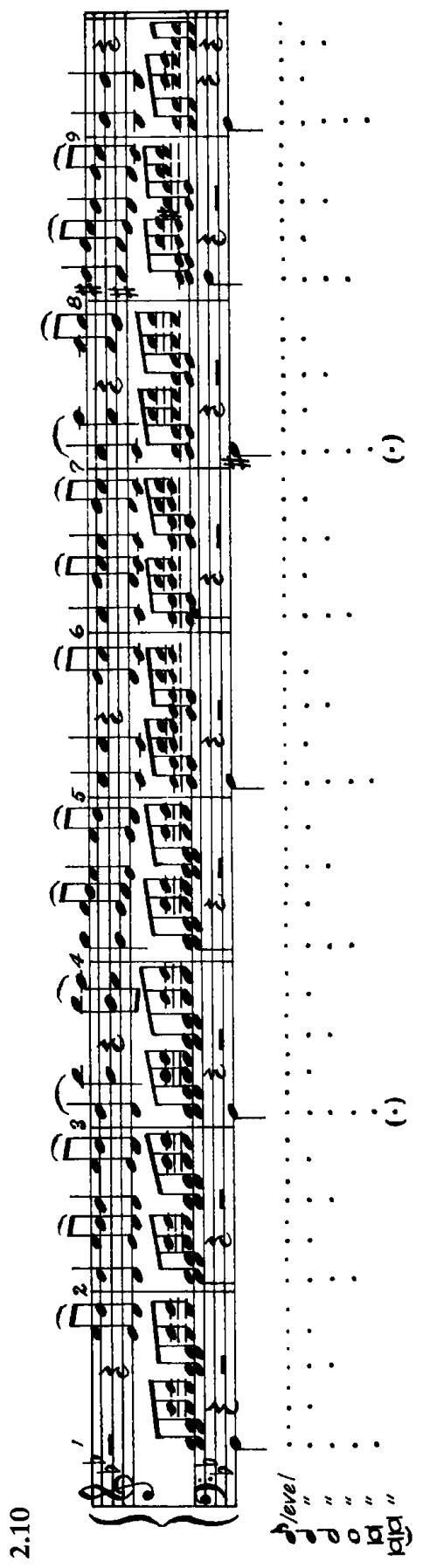
To illustrate the difficulties involved in large-scale metrical analysis, let us see how far we can carry the intuition of metrical structure in a not untypically complex passage: the beginning of Mozart’s G Minor Symphony. The metrical analysis of the first nine bars appears in 2.10.
中文讲解
本段引出贯穿本节的音乐实例:莫扎特 G 小调交响曲的开头部分。作者特意以 “not untypically complex”(并非异常复杂)形容此例,意在说明此处所暴露的问题并非来自特别反常的音乐,而是具有典型性,从而强化论点。图2.10展示了前九小节的节拍分析结果(具体内容未在文本中提供,需查看原书)。
补充说明
图2.10未在输入文本中出现,其内容需查看原书。
第4段(P0054)
原文复述
Rhythmic Structure
中文讲解
页眉/章节标识“Rhythmic Structure”,提示当前章节的标题(应为第2章《Rhythmic Structure》)。
第5段(P0055)
原文复述
The cues in the music from the 8th-note level to the 2-bar level unambiguously support the analysis given. For example, at the 2-bar level, the introductory bar, the down-up pattern of the bass notes, the motivic structure of the melody, and the harmonic rhythm all conspire to produce strong beats at the beginnings of odd-numbered bars. (Chapter 4 will develop this analysis in detail.) The case is quite otherwise at the next larger level, the 4-bar level. Should the beats at this level be placed at the beginnings of measures 1, 5, and 9, or at those of measures 3 and 7? The cues in the music conflict. The harmonic rhythm supports the first interpretation, yet it seems inappropriate to hear the strongest beats in each 4-bar theme-group (measure 2–5, 6–9) as occurring at the very end of those groups (the downbeats of measures 5 and 9). Rather, the opening motive seems to drive toward strong beats at the beginnings of measures 3 and 7. We incline toward this second interpretation—this is the reason for the dots in parentheses at measures 3 and 7 in 2.10. But the real point is that this large level of metrical analysis is open to interpretation, whereas smaller levels are not.
中文讲解
本段展示了作者分析方法的内在逻辑:通过罗列多重独立线索来检验一个节拍解读是否站得住脚。在八分音符至两小节的层级上,所有线索——引子小节、低声部的 down-up 模式、旋律的动机结构、和声节奏——共同指向同一个结论,即奇数小节起点的强拍地位。这是多种因素“conspire”(合力)的结果,构成了无歧义的分析。然而,进入4小节层级后,线索之间出现冲突。一种解读把强拍放在第1、5、9小节起点(由和声节奏支持);另一种解读把强拍放在第3、7小节起点(由动机驱动力暗示)。作者倾向于第二种解读——这也正是图2.10中第3、7小节上方的括号点所表示的不确定位置——但本段的真正落点不是选择哪种解读,而是揭示一个方法论命题:小尺度节拍分析是确定的,大尺度节拍分析则处于开放、可争议的状态。这是从无歧义到有歧义的临界点,正是本节所要考察的对象。
补充说明
图2.10中第3、7小节上的括号点表示作者对该处的节拍地位持保留态度。
第6段(P0056)
原文复述
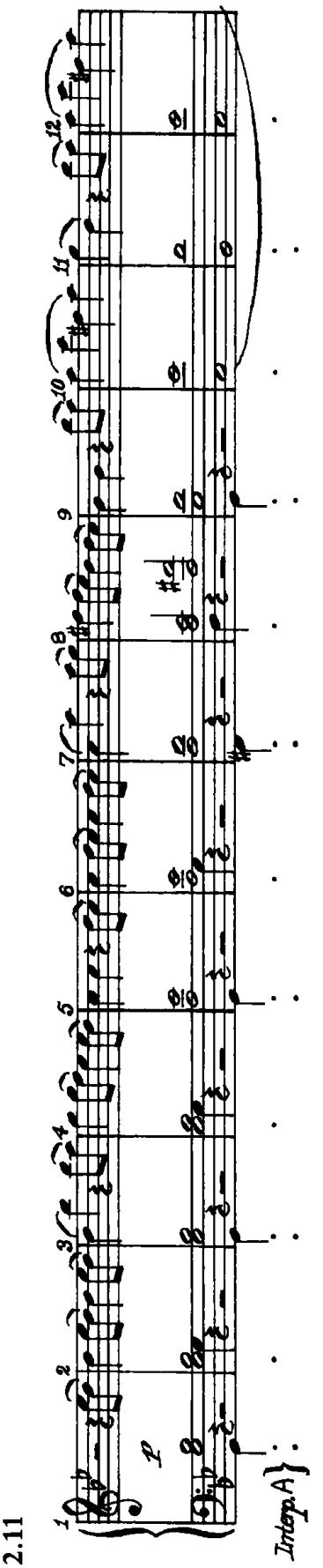
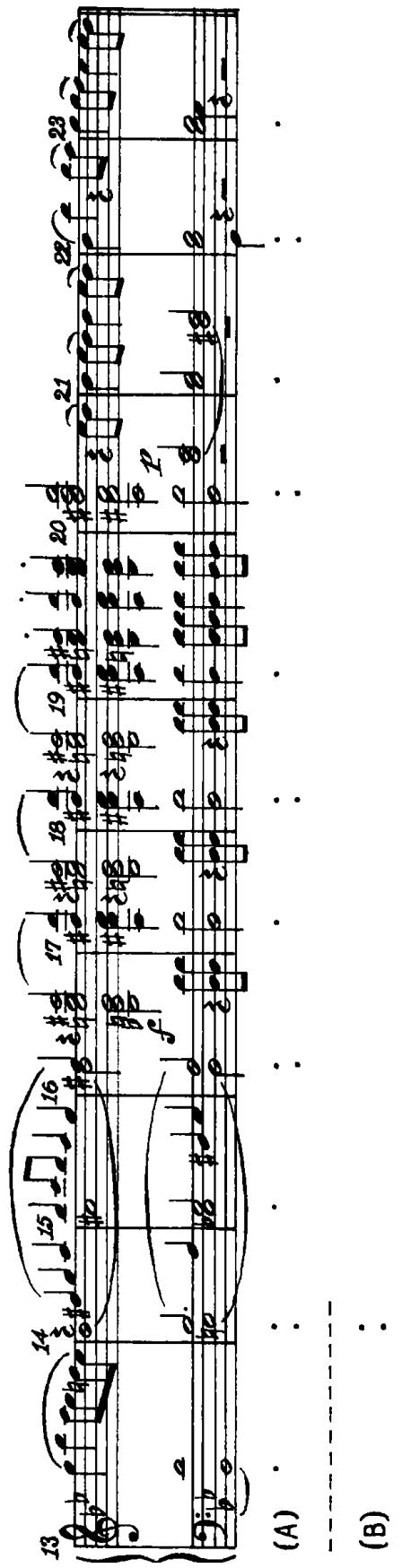
The problems of large-scale metrical analysis become more acute if we consider 2.11, a simplified version of the first 23 bars of Mozart’s G Minor Symphony.
中文讲解
本段将分析问题推向更广的范围,引出图2.11——前23小节的简化版本(具体内容未在文本中给出)。这一简化的目的是剥去表层细节,凸显其中节拍与和声的深层结构问题。短语 “become more acute”(变得更加尖锐)提示前段在9小节范围内所遇到的困难,在扩展至23小节后将被进一步放大。
补充说明
图2.11未在输入文本中出现,其内容需查看原书。
第7段(P0057)
原文复述
First, observe that since measures 21–23 are parallel to measures 2–4, it is impossible even at the measure level to maintain a regular alternation of strong and weak beats; the strong beats at odd-numbered bars must at some point give way to strong beats at even-numbered bars. Let us investigate where this point might be.
中文讲解
本段隔离出本节论证的核心谜题。由于第21–23小节在音乐上与第2–4小节构成平行关系,因此开头的节拍模式(奇数小节为强拍)不可能原样延续到主题再现。如果再现要被感知为与开头平行,那么在到达再现之前,强拍必须转移到偶数小节上。随后的段落正是要考察这个转移究竟发生在何处。本段以 “Let us investigate” 框定后续分析为一次定位式的探查。
第8段(P0058)
原文复述
In 2.11 we have indicated only two metrical levels, the measure level and the 2-measure level. The analysis of the first eight bars duplicates the analysis in 2.10, where the downbeats of the odd-numbered bars were stronger than those of the even-numbered bars. Whatever the case may be in measures 9–13, however, it is clear that the downbeats of measures 14 and 16 are strong in relation to the downbeat of measure 15. The reasons for this are that the melody forms what is felt to be an appoggiatura on D in measure 14, which resolves to C# in measure 15, and that the harmonic rhythm moves decisively from measure 14 to measure 16. Once this new pattern of strong beats on the downbeats of even-numbered bars has been established, it continues without serious complication to the restatement of the theme at measures 21 ff. Where in measures 9–13, then, has the metrical shift taken place?
中文讲解
本段将分析层级收窄至两个——小节层级与两小节层级——并逐步追溯节拍模式的走向。前8小节与图2.10一致,奇数小节 downbeat 较强。关键的新模式在第14小节起稳固确立:第14与第16小节的 downbeat 相对第15小节为强。证据有两条:第一,旋律层面——第14小节形成 D 上的倚音(appoggiatura),下行解决到第15小节的 C#,使第15小节处于弱解决的位置,从而让第16小节恢复强拍地位;第二,和声层面——和声节奏从第14小节果断地推进到第16小节。一旦“偶数小节为强”的新模式在第14小节确立,便不再受严重干扰地延续至第21小节的主题再现。本段因此把分析难题压缩到一个区间内:第9–13小节之间的某处,听者完成了这一节拍转移。
第9段(P0059)
原文复述
Imbrie 1973 makes a useful distinction between “conservative” and “radical” hearings of shifting metrical structures. In a conservative hearing the listener seeks to retain the previous pattern as long as possible against conflicting new evidence; in a radical hearing he immediately readjusts according to new evidence. Applied to measures 9–13, interpretation A in 2.11 represents a conservative hearing. It retains the previous pattern until it is forced to relinquish the downbeats of measures 13 and 15 in favor of the downbeats of measures 14 and 16 as strong. This hearing has the advantage of giving the thematic structure in measures 10–11 the same metrical structure that it had in measures 2–3, 4–5, 6–7, and 8–9, and it lends significance to the motivically unique thematic extension in measure 13—that is, the extension is not merely thematic, but serves as well to bring about the metrical shift from the downbeat of measure 13 to the downbeat of measure 14 as strong. Interpretation B, on the other hand, represents a radical hearing: it immediately reinterprets the harmonies in measures 10 and 12 as hypermetrical “appoggiatura chords,” thus setting up a parallelism with the ensuing measure 14. We will refrain from choosing between these competing alternatives; suffice it to say that in such ambiguous cases the performer’s choice, communicated by a slightly extra stress (in this case, at the downbeat of either measure 10 or measure 11), can tip the balance one way or the other for the listener. $^{6}$
中文讲解
本段引入 Imbrie 1973 对节拍结构转移所做的“保守型”vs“激进型”听法的区分。保守型听法尽量维持既有模式,直至新证据迫使其放弃;激进型听法则立即按新证据重组。图2.11中的解读A代表保守型听法:第10–11小节保留与第2–3、4–5、6–7、8–9小节相同的节拍地位,而第13小节作为一个动机上独特的扩展,除了主题功能之外,还承担了把强拍从第13小节转移到第14小节的功能。解读B代表激进型听法:它把第10与第12小节的和声直接重释为“超小节层级的倚音和弦”(hypermetrical “appoggiatura chords”),从而提前与第14小节形成平行。作者明确表示不在这两种方案之间做取舍,而是指出在这种含糊的情形下,演奏者通过一个略加重音(在第10小节或第11小节 downbeat 处的细微重音)所传达的选择,可以让听者的判断倒向某一边。这是一个重要的理论姿态:作者承认大尺度节拍解读在乐谱层面可能是不确定的,并交由表演的实际决定来塑造听者的感知。
补充说明
Imbrie 1973 是脚注6所标注的文献来源,作者在正文中以其作为既有概念区分的引用。
第10段(P0060)
原文复述
Chapter 2
中文讲解
页眉/章节标识“Chapter 2”,提示当前为第2章。
第11段(P0061)
原文复述
中文讲解
第12页的图像或乐谱示例占位符。具体内容未在输入文本中给出,需查看原书。从上下文判断,此处应为支撑本节论证的图示或谱例之一。
第12段(P0062)
原文复述
Rhythmic Structure
中文讲解
页眉/章节标识“Rhythmic Structure”。
第13段(P0063)
原文复述
中文讲解
第13页的图像或乐谱示例占位符。具体内容未在输入文本中给出,需查看原书。
第14段(P0064)
原文复述
中文讲解
第13页的另一图像或乐谱示例占位符。具体内容未在输入文本中给出,需查看原书。
第15段(P0065)
原文复述
Chapter 2
中文讲解
页眉/章节标识“Chapter 2”。
第16段(P0066)
原文复述
But if the 2-bar metrical level has proved so troublesome, what is one to do with the 4-bar level? If the downbeats of measures 3 and 7 are beats at this level, then the downbeats of measures 11, 16, and 20 appear to follow (allowing for a 5-bar time-span somewhere in the vicinity of measures 9–16 because of the adjustment at the 2-bar level). But it seems implausible to give such a metrical accent to the downbeat of measure 11; and two bars are unhappily left over between measure 20 and measure 22. If, on the other hand, the downbeats of measures 5 and 9 are beats at this level, then the downbeats of measures 14, 18, and 22 apparently follow. But it stretches matters to hear a metrical accent at the downbeat of measure 18, placed as it is in the middle of the dominant pedal in measures 16–20. Neither alternative is satisfactory.
中文讲解
本段把分析难度推进到更大的尺度:若两小节层级已经如此不确定,那么四小节层级又会如何?作者逐一检验两种主要解读。第一种解读以第3、7小节为四小节层级的强拍点,其后第11、16、20小节依次跟随(考虑到两小节层级的调整,需容许第9–16小节附近存在一个5小节的时间跨度)。但这一解读的弱点是:第11小节的 downbeat 听起来并不足以承担节拍重音,且在第20与第22小节之间会不自然地多出两小节。第二种解读以第5、9小节为强拍点,其后第14、18、22小节依次跟随。但这里的弱点是:第18小节的 downbeat 落在第16–20小节的持续属音踏板(dominant pedal)正中央,听出这里有节拍重音显得勉强。两种解读都不能令人满意。本段的修辞效果是穷尽明显的方案,为下一段的第三种替代方案铺垫。
第17段(P0067)
原文复述
There is a third alternative: to posit a regular, more “normal” version of these measures—a “model”—and derive the actual music from that. $^{7}$ But it is extremely difficult to know which model to construct, other than somehow to make the downbeats of measures 16 and 22—the major points of harmonic arrival—strong beats at this level. In other respects this exercise is so hypothetical that it would seem wise to give up the attempt altogether. The 4-bar metrical level (not to mention larger levels) simply does not have much meaning for this passage.
中文讲解
本段提出第三种理论上的替代方案:假设一个规则的、更“正常”的版本作为“模型”(model),再从中推导出实际音乐。这一策略在原理上与生成式或深层结构式分析类似。但作者承认两点困难:第一,除了某种含糊地让第16与第22小节——主要和声到达点——成为四小节层级强拍之外,几乎无法确定应当构造何种模型;第二,这一操作在其他方面都过于假设性,明智的做法是放弃这一尝试。最终结论被明确地、本节最强有力地表述出来:四小节层级的节拍(更不必说更大的层级)对这段音乐“simply does not have much meaning”。这是本节立论的落脚点——大尺度节拍结构作为一种分析构念,对本例的大部分音乐并不具备实质的解释力。
脚注 / 边栏 / 图表 / 附加信息(如有)
本节共引用三处脚注(标号5、6、7),分别出现在P0052、P0059、P0067末尾,但脚注本身的具体内容未在本次输入的源段落中给出,故其完整信息需查原书。P0052处的脚注5与本节所提出的反例论证相关;P0059处的脚注6指向Imbrie 1973这一文献来源;P0067处的脚注7与“模型”(model)这一替代方案的进一步讨论相关。本节还反复引用两幅图示——图2.10(前九小节的节拍分析)和图2.11(前23小节的简化版本)——但这两幅图的具体内容未包含在本次输入中,需查原书以核对谱例细节。此外,P0061、P0063、P0064三处为图像/乐谱占位符,位置分别处于第12页与第13页,作用应是与正文论证并置的谱例,但具体内容不在文本输入中。
💡 本节核心要点
- 作者把“节拍结构”(metrical structure)与一般的“大尺度划分”严格区分:前者要求规则的强弱拍交替,后者则属于 grouping structure、thematic parallelism、cadential structure 与 harmonic prolongation 这四种非节拍因素的合力。
- 在小尺度层级(八分音符至两小节),多重独立线索(引子小节、低声部模式、动机、和声节奏)共同指向唯一无歧义的节拍解读;进入四小节层级后,线索之间发生冲突,分析因而进入开放、可争议的状态。
- 在莫扎特 G 小调交响曲前23小节中,由于第21–23小节与第2–4小节构成主题平行,强拍模式必须从“奇数小节为强”转移为“偶数小节为强”,这一转移在第14小节由倚音解决与和声节奏的合力而稳定确立。
- 第9–13小节之间的转移方式可由 Imbrie 1973 的“保守型”vs“激进型”听法分别刻画:保守型听法把第13小节视为既承担主题扩展又承担节拍转移的双重功能;激进型听法则把第10、12小节的和声直接重释为超小节层级的倚音和弦。作者不在这两者之间取舍,而是把判断权交给演奏者在第10或第11小节 downbeat 上的细微重音。
- 四小节层级的两种最直接解读——以第3、7小节为强拍、或以第5、9小节为强拍——都迫使节拍重音落在音乐上难以承担的位置(第11小节、第18小节),两种方案均不令人满意。
- 作为理论上的最后方案,作者承认可以假设一个“模型”从中推导出实际音乐,但承认其假设性过强,最终结论是:四小节及更大尺度的节拍层级对本段音乐并不具备有意义的分析效力。
🔑 关键术语
- metrical structure:节拍结构。指乐曲中强弱拍按规则交替的层级结构,在本节中作者将其严格界定为“规则的强弱拍交替”,以区别于一般的层级划分。
- grouping structure:分组结构。指听者把音乐感知为一系列有边界的小组(theme-group、phrase 等)的结构。在本节中被作者提出为承担“大尺度比例感”的非节拍因素之一。
- thematic parallelism:主题平行关系。指不同主题段之间在材料、和声或结构位置上的对应关系。在本节中与 grouping、cadence、harmonic prolongation 一并被列为大尺度“arrival”听感的来源。
- cadential structure:终止结构。指终止式所形成的到达点。本节中作者把它作为大尺度层级上听者感知“到达”的非节拍因素之一。
- harmonic prolongation:和声延留。指一个和声在时间上的延续与推迟解决(如 dominant pedal)。本节中作者把它列入大尺度层级的非节拍解释因素。
- downbeat:强拍/小节首拍。指小节或更大单位的起始强拍位置。本节多处用 downbeat 来定位节拍层级上的强拍点。
- exposition / development / recapitulation:奏鸣曲式中的呈示部/展开部/再现部。本节在P0052中以奏鸣曲式三层划分作为“大尺度划分”的典型例子,并以此提出反问:听者是否真的把再现部起点听成在三者中处于中等的节拍强拍?
- hypermeter / hypermetrical:超小节层级节拍/超小节层级的。指高于单小节层级的节拍组织。本节中P0059“hypermetrical appoggiatura chords”指在超小节层级上承担倚音功能的和弦。
- conservative hearing:保守型听法。据Imbrie 1973,指听者在面对冲突线索时尽量维持既有节拍模式,直到新证据迫使其放弃。本节中解读A是其在第9–13小节的体现。
- radical hearing:激进型听法。据Imbrie 1973,指听者在面对冲突线索时立即按新证据重组。本节中解读B是其在第9–13小节的体现。
- appoggiatura:倚音。一个非和弦音在强拍上出现并下行(或上行)解决到和弦音。本节P0058用此术语描述第14小节 D 上行解决到第15小节 C# 的现象;P0059则将其比喻扩展到“hypermetrical appoggiatura chords”(超小节层级的倚音和弦)。
- theme-group:主题组。本节中指由若干小节构成的主题单位(例:第2–5、6–9小节),用来讨论四小节层级强拍应落在组内何处。
- dominant pedal:持续属音。指一个属音(或属和弦)在低音声部或整体和声上的持续。本节P0066中“measures 16–20的dominant pedal”指属音踏板持续的五小节区间。
- time-span:时间跨度。本节中指听者所划分出的两段时间片段之间的长度(如5小节的时间跨度),用以描述大尺度层级上的间隔。
- model:模型。本节P0067中作为第三种替代方案被提出:指假设的、规则的“正常”版本,用以从中推导出实际音乐。
- arrival:到达感。指听者在音乐结构点上感知到的相对重心或落定感。本节把它作为大尺度层级的非节拍听感之一,并由分组结构、主题平行、终止结构、和声延留四者共同解释。
2.2c [描述性拆分] Separating the Properties of Grouping and Meter
第1段(P0068)
原文复述
We have established that the basic elements of grouping and of meter are fundamentally different: grouping structure consists of units organized hierarchically; metrical structure consists of beats organized hierarchically. As we turn to the interaction of these two musical dimensions, it is essential not to confuse their respective properties. This admonition is all the more important because much recent theoretical writing has confused their properties in one way or another. Two points in particular need to be emphasized: groups do not receive metrical accent, and beats do not possess any inherent grouping. Let us amplify these points in turn.
中文讲解
本段是进入下一节之前的概念性过渡与提醒,兼具总结和预警双重功能。
首先,作者归纳前文结论:分组(grouping)与节拍(meter)虽然都以层级方式组织,但基本元素不同——分组结构由"单位”(units)构成,节拍结构由"拍点”(beats)构成。这一区分是作者先前论证的成果,本段以一句话重述,作为读者的概念坐标。
其次,作者提出方法论警示:在接下来讨论两个维度如何相互作用时,绝不可混淆二者各自的属性。这不仅是技术性提醒,更是对理论界的明确批评——作者指出"大量近年来的理论写作"已经以某种方式混淆了二者的属性。这意味着作者把自己定位为澄清者,本节及后续小节将被用来纠正既有文献中的混淆。
第三,作者预先点出两个需要强调的具体区分:(1) 分组不接收节拍重音——分组所产生的重音与节拍所产生的重音是不同性质的,不能把分组重音当作节拍重音来处理;(2) 拍点本身并不天然携带分组——节拍结构的存在并不自动产生分组结构,分组是独立于节拍的另一套组织。这两点将在随后的论述中被逐一展开(“Let us amplify these points in turn”)。
理解本段的关键在于:它既是收束(重述前文),也是开篇(为后续小节定调)。读者应带着"二者虽相关但不可混同"这一前提进入下一节。
补充说明
本段结尾的"Let us amplify these points in turn"预示接下来的小节会分别详细论证"分组不接收节拍重音"与"拍点不携带固有分组"这两点命题。“much recent theoretical writing"的批评针对的是当代音乐节奏理论中将分组重音与节拍重音混为一谈、或将节拍结构视为分组结构之来源的倾向,但本任务输入未指明具体被批评的文献,此处不做外部追溯。
第2段(P0069)
原文复述
2.3 The Interaction of Grouping and Meter
中文讲解
这是第 2.3 节的标题,标题为"分组与节拍的相互作用”(The Interaction of Grouping and Meter)。
该标题标志着论述从第二章前两节对分组与节拍的分别描述性分析,过渡到对二者如何相互作用的综合讨论。上一段(P0068)正是为这一过渡准备的"概念预防针"——提醒读者在考察相互作用时仍要保留二者的概念独立性,不要让"相互作用"的讨论反过来消解二者的区分。
第3段(P0070)
原文复述
Rhythmic Structure
中文讲解
这是页眉/版心标题(running header),标识书名为《Rhythmic Structure》(《节奏结构》)。它属于版面标识元素,不承载论证内容,仅在每一页顶端重复出现以标识当前所属著作。
脚注 / 边栏 / 图表 / 附加信息(如有)
无(本小节范围内无脚注、图表、边栏或特殊附加材料)。
💡 本节核心要点
- 分组结构由"单位"层级化构成,节拍结构由"拍点"层级化构成——二者基本元素不同,但都遵循层级组织原则。
- 在分析分组与节拍的相互作用时,必须严格保持二者属性的区分,不可将其中一方的属性错归于另一方。
- 作者明确批评"大量近年来的理论写作"混淆了分组与节拍的属性,本节意在纠正这类混淆。
- 核心区分一:分组本身不接收节拍重音;分组重音与节拍重音是两种性质不同的重音。
- 核心区分二:拍点本身不携带固有分组;节拍结构的存在并不自动产生或等同于分组结构。
- 本段是描述性分析向相互作用分析的过渡,预先为后续小节确立概念前提与方法论立场。
🔑 关键术语
- grouping structure(分组结构):由"单位"(units)层级化组织而成的音乐结构维度;单位之间的等级关系决定分组边界。
- metrical structure(节拍结构):由"拍点"(beats)层级化组织而成的音乐结构维度;不同层级的拍点形成强弱关系,构成节拍重音系统。
- hierarchical organization(层级组织):本节中分组与节拍共有的形式特征:二者都由小元素递归组合为更大的元素,形成多层级的等级结构。
- metrical accent(节拍重音):由节拍结构内部层级关系所决定的重音;强弱差异来自拍点在节拍层级中的位置(如强拍相对于弱拍)。作者强调,这种重音不能被错加于分组之上。
- grouping accent(分组重音):由分组结构所产生的重音,与节拍重音性质不同;本节明确指出,分组不接收(receive)节拍重音,意味着二者在重音来源上互不归属。
- inherent grouping(固有分组):作者用"inherent"(固有的、内在的)一词强调:拍点本身并不内在地携带分组属性,分组是独立于节拍的结构维度,不能由节拍结构自动推导而出。
2.3 [描述性拆分] 2.3 The Interaction of Grouping and Meter
第1段(P0071)
原文复述
The claim that groups do not themselves receive metrical accent will be demonstrated by setting side by side two rhythmic analyses of the opening of the minuet of Haydn’s Symphony no. 104. The first analysis, labeled 2.12, applies the notational conventions proposed earlier in this chapter; the second analysis, labeled 2.13, is reproduced from Cooper and Meyer 1960 (p. 140).
中文讲解
本段是本节论证的入口。作者要在本节论证的核心主张是:分组(grouping)本身并不携带节拍重音(metrical accent)。为让读者直观看到这一点,作者并不只在抽象理论上争辩,而是选择了具体作品进行对照分析:同一段音乐(海顿第104交响曲小步舞曲开头)用两种不同的记谱方式各分析一遍。例2.12采用本章自身提出的记谱,例2.13直接引自Cooper和Meyer 1960年的著作第140页。这一对照安排让后面的批评具有可验证性——读者既能看到作者自己的方案,也能看到被批评的方案原貌。
补充说明
Cooper and Meyer 1960指1960年出版的《Rhythmic Structure of Music》中译通常作《音乐的节奏结构》,是西方音乐理论中讨论节奏重音与分组关系的经典著作。本节对该书的具体引用页码为第140页。
第2段(P0072)
原文复述
2.12
中文讲解
这是乐谱示例编号2.12的标题标记,表明下面将要呈现的是本节第一种分析(采用本章记谱方案)的图示。
第3段(P0073)
原文复述
[Image / musical-score example on page 15; embedded image data omitted. Position and figure caption are retained.]
中文讲解
此处为内嵌图示(乐谱及分析图示)的占位符,对应本节示例2.12。该图示应同时呈现海顿第104交响曲小步舞曲开头的小节记谱及其下方的分组结构(grouping structure)与节拍结构(metrical structure)两层独立的标注。具体标注细节需参阅原书原图,本占位符不能凭空推测。
第4段(P0074)
原文复述
2.13
中文讲解
这是乐谱示例编号2.13的标题标记,表明下面将要呈现的是Cooper和Meyer 1960年著作中的同段音乐分析图。
第5段(P0075)
原文复述
[Image / musical-score example on page 15; embedded image data omitted. Position and figure caption are retained.]
中文讲解
此处为内嵌图示(乐谱及分析图示)的占位符,对应本节示例2.13。该图示呈现的是Cooper与Meyer原书第140页对同一段音乐的节奏分析,其中重音(用类似“>”或强弱符号)被同时叠加在节拍位与分组单位之上。具体符号细节需查阅原书原图。
第6段(P0076)
原文复述
Beneath the music of example 2.12 are shown the grouping structure and the metrical structure as the listener perceives them. Considered in isolation, each of these two structures is intuitively straightforward and requires no further justification here. What must be emphasized, however, is that although the two structures clearly interact with one another, neither is intrinsically implicated in the other; that is, they are formally (and visually) separate. By contrast, Cooper and Meyer (1960) are concerned from the very beginning with patterns of accentuation both within groups and across groups. Although this concern is in itself admirable, it leads them to assign accent to groups as such. And, since groups possess duration, the apparent consequence is that beats themselves are given duration. In example 2.13 these difficulties do not become apparent at level 1, which—apart from notational differences—corresponds closely (up through measure 7) to the smaller levels of grouping and metrical analysis shown in example 2.12. But at level 2 in example 2.13, every group at level 1 is marked as a whole either strong or weak. If metrical accent is what is being indicated (and it evidently was intended at level 1), then this result is plainly incorrect, because the second and third beats of each measure must all be equally weak regardless of any metrical distinctions present on the first beats. What is really meant, the authors believe, is not that one entire group is stronger or weaker than another entire group, but rather that the strongest beat within a given group is stronger or weaker than the strongest beat within another group. These relationships, they hold, are represented accurately in example 2.12.
中文讲解
本段是本节论证的主干,需要逐层讲解。
第一层:作者先描述自己方案(例2.12)的特征——分组结构和节拍结构同时呈现,但二者是形式上和视觉上分离的两层独立记谱。它们虽然相互作用,但各自具有独立的存在形式(formally separate),任何一层都不能从另一层推出。
第二层:作者再指出Cooper和Meyer方案的根本差异——后者从一开始就把“强调模式”(patterns of accentuation)作为分析焦点。这种关注方向本身是值得肯定的(laudable),但它导致了一个关键错误:把重音赋给整个分组单位(group as such)。因为分组单位本身是有时长的(have duration),结果看起来就像是节拍本身也被赋予了时长(beats are given duration)——而节拍重音本应是无时长的事件性标记。
第三层:在例2.13中,这一矛盾在第1层尚不明显,因为该层的小节结构(直到第7小节)和例2.12基本一致。但进入第2层时,每个第1层分组被整体标为“强”或“弱”。如果这表示的是节拍重音,那就明显错误——因为每小节的第二、第三拍必然等弱,与第一拍内部的节拍强弱差别无关。作者由此推断Cooper和Meyer真正想表达的,并不是“一个分组整体比另一个分组整体更强或更弱”,而是“某分组中最强的拍点比另一分组中最强的拍点更强或更弱”。这种关系在例2.12的记谱里得到了准确表达。
这一段是本节论证的关键转折:通过把被批评方案的“意图”与“记谱呈现”区分开来,作者既肯定了对方关注节拍模式的合理性,又指出了其记谱方式在概念层面把分组和节拍相互纠缠(interweave)的根本问题。
补充说明
本段中“level 1”和“level 2”指Cooper和Meyer体系中的层次:在他们的多层分析中,level 1对应小节内部最强的重音位(即通常意义的强拍),level 2对应更高一层的结构重音。本段末句“these relationships are represented accurately in 2.12”是对前文诊断的回应:例2.12通过分别标注分组边界与节拍层级,能够精确表现“某分组的节拍最高峰与其他分组的节拍最高峰之间的关系”。
第7段(P0077)
原文复述
Chapter 2
中文讲解
这是页面版心外的页眉/页码区标记,仅指示当前章节为第2章,无独立论述内容。
第8段(P0078)
原文复述
If level 2 in example 2.13 was already problematic, level 3 is doubly so. At level 3 the ‘accent’ is drawn across measures 5 through 8, presumably because of the ‘cadential weight’ located at measure 8. Consequently, the same sign ‘−’, which at level 1 functioned as a metrical accent, is now being used to denote a structural accent. Whether or not such a structural accent should in fact coincide with a large-scale metrical accent (the authors themselves think not, for reasons they will give in the next section), it is in any case evident that the structural accent cannot spread over the entire 4-bar group in the way that the notation suggests.
中文讲解
本段把对例2.13的批评推进到level 3。关键问题有两个层面:
一是符号的多义性。同一个“−”符号在level 1指节拍重音,到level 3却指结构重音;同形符号承担了两种不同性质的重音概念,记谱上没有任何区分。这是记谱层面把不同事物混淆的典型表现。
二是范围的不合理。作者认为level 3所标记的“强调”之所以跨第5—8小节,是因为第8小节具有“终止性分量”(cadential weight)。这种终止性分量是结构重音(structural accent),而不是节拍重音。即使退一步承认结构重音应该与大规模节拍重音重合(作者明确不同意),这个重音也只能落在第8小节内的某一点上,绝不可能“铺满”整个4小节分组。Cooper和Meyer的记谱却把整个4小节都画在同一条强调线下,这是把分组(即4小节作为一个整体)误认为重音载体。
本段因此把第2层提出的“分组不能承担节拍重音”这一原则,进一步应用于更高层级的情形,使论证更具一般性。
补充说明
“cadential weight”是传统音乐分析术语,指终止式所带来的结构上的强调或完结感。本段最后一句提到的“reasons discussed in the next section”指向本节之后的下一节(即2.4节关于结构重音与节拍重音是否应重合的讨论)。
第9段(P0079)
原文复述
These (and similar) difficulties in example 2.13 all derive from a common source. The methodology of Cooper and Meyer—an adaptation from traditional prosody—requires that any group contain exactly one strong accent together with one or two weak accents, and that any group at a higher level must complete its accentual pattern by means of accents standing for exactly two or three groups at the next-smaller level. As a consequence, only two levels of metrical structure (represented by ‘−’ and ‘−’) can be encoded within any group, regardless of what the actual metrical situation might be. Far more serious, however, is the fact that this procedure thoroughly interweaves the properties of grouping and meter with the analysis of grouping and meter. Once these two components are disentangled and analyzed separately, as is done in example 2.12, all of these difficulties disappear. ⁸
中文讲解
本段揭示了Cooper和Meyer体系产生前两段所列困难的共同根源,必须把方法的内在约束和它的分析后果分开讲。
第一,关于方法来源:Cooper和Meyer的节拍重音分析实际上是从传统诗律学(traditional prosody)改造而来。传统诗律学中,轻重音模式(抑扬格、扬抑格等)以固定的数量关系组织音步。作者把这一原则移植到了音乐节奏分析中。
第二,关于方法本身的硬性约束:任何分组必须恰好包含一个强重音和一至两个弱重音;任何更高层的分组,必须用恰好代表两个或三个下层分组的重音来“填满”自己的重音模式。这意味着,无论实际音乐中的节拍层级有多复杂,在该体系内任何一个分组内部都只能容纳两层节拍结构(用“−”和“−”两种符号表示)。这显然与现实中可能出现的更精细节拍层级不符。
第三,也是更严重的问题:这一方法不仅限制了记谱的层数,更从根本上把“分组”和“节拍”这两类不同事物的属性及其分析程序相互缠绕在一起(thoroughly interweaves)。当这两类事物一旦被分开、各自独立分析(即例2.12的做法),前述所有困难便自动消失。
结尾的上标“⁸”指示此段附有脚注8,是本段主张的外部支持或限定来源。
补充说明
本段中“−”与“−”的不同记号,根据前后文应理解为Cooper和Meyer体系中用来区分强弱重音等级的两种标记。本段末尾的上标“⁸”对应原书第8号脚注;脚注内容用以支持本段“分组与节拍应分开分析”这一主张,其具体内容需查原书。
第10段(P0080)
原文复述
In order briefly to illustrate the kind of analytic insight that can emerge from the notation proposed in this chapter for grouping and meter, let us look again at the opening of Mozart’s G Minor Symphony (example 2.14a), this time with both the grouping structure and the metrical structure indicated. Examples 2.14b and 2.14c isolate fragments of the full analysis for purposes of comparison. It is a significant feature of this passage that the metrical structure of the first two-measure group (example 2.14c) is identical with the metrical structure of the initial motive (example 2.14b), but at larger metrical levels. There is no doubt that the theme as a whole sounds richer and more ’logical’ precisely because of this rhythmic relationship.
中文讲解
本段是本节的正面例证,目的是展示作者提出的双重记谱方案能带来何种分析洞察,而这是Cooper和Meyer的混合方案无法做到的。
作者选择再次分析莫扎特g小调交响曲开头的动机,但这一次把分组结构和节拍结构同时标注出来(例2.14a)。为便于比较,又把分析的两个片段分开呈现:例2.14b抽出最初的短小动机,例2.14c抽出第一个两小节分组。
这一对照揭示了一个重要事实:在节拍结构上,第一个两小节分组(2.14c)所呈现的层级关系,与动机内部(2.14b)所呈现的层级关系是同构的(identical),只不过前者处于更大的节拍层级。也就是说,动机内部的节拍关系在更高一层被“复制”了一次。
作者由此推断:正是这种节拍上的自相似性(rhythmic relationship),让整个主题听感上更丰富、更有逻辑性。换言之,本节主张的记谱方式不仅能避免Cooper和Meyer体系的概念混淆,还能揭示出音乐内部不同尺度之间的结构同构——而这正是节拍与分组相互作用所能产生的深层听觉效果之一。
这一段同时承担了结尾的功能:从批评Cooper和Meyer,转向展示本章自身方案所能给出的正向分析价值。
补充说明
Mozart’s G Minor Symphony指莫扎特第40交响曲(K. 550),因第一乐章著名主题常被作为分析案例。例2.14b与2.14c的对比是“动机—分组”之间的层级同构,是Lerdahl–Jackendoff体系下分组与节拍相互作用的代表性例证。
脚注 / 边栏 / 图表 / 附加信息(如有)
本节包含两处主要的非正文附加材料:
- 例2.12和例2.13(第15页):分别是按本章作者方案记谱的海顿第104交响曲小步舞曲开头分析,以及Cooper和Meyer 1960年第140页原书的同段分析。两个示例并置是本节论证的视觉核心,作者借二者差异说明分组与节拍应分开记谱的必要性。
- 第16页例2.14a、2.14b、2.14c:是莫扎特g小调交响曲开头主题的双重结构分析及其片段抽取,用于展示作者方案能够揭示的节拍层级同构关系。
- 第8号脚注(出现在P0079末):用于支持“分组与节拍应分别分析”的主张,是本节结论的关键外部依据;具体脚注内容需查阅原书。 此外,P0077“Chapter 2”是版面页眉,仅标示章节,不构成论述内容。
💡 本节核心要点
- 本节的核心主张是:音乐中的分组(grouping)和节拍(meter)是两套形式上独立的结构,它们虽相互作用,但任一层都不应被归入另一层。
- 通过并置例2.12(本章方案)与例2.13(Cooper和Meyer方案)对海顿第104交响曲小步舞曲开头的分析,作者直观演示了后一方案将分组整体赋予重音、把节拍与分组概念相互纠缠所带来的问题。
- 在Cooper和Meyer体系中,同一个重音符号(“−”)在level 1指节拍重音,到level 3却被用来表示结构重音,导致同一符号承担两种不同性质的概念,且level 3的重音被不合理地铺满整个4小节分组。
- 这些困难的共同根源是Cooper和Meyer从传统诗律学借用的方法约束:任何分组必须恰好含一强一至二弱,且下层分组必须以二或三的固定比例聚合,从而限制节拍层级数并从根本上混淆分组与节拍两类对象。
- 将分组与节拍分别独立分析(例2.12的做法)即可消除上述所有困难,这是本节得出的方法论结论。
- 例2.14(莫扎特g小调交响曲)展示了本章方案的正面价值:动机内部的节拍结构与第一个两小节分组的节拍结构在更大层级上同构,这种节拍自相似性是主题听感更丰富、更有逻辑性的内在原因。
🔑 关键术语
- grouping(分组):指听众在听音乐时感知到的层级性结构单位(如动机、乐句等),其本质是“听觉边界”与“等级嵌套”,在本节中被强调为与节拍形式上独立的一层结构。
- meter / metrical accent(节拍 / 节拍重音):指周期性的强弱拍点层级结构;节拍重音本身是无时长的事件性强调,而非落在某一整段分组之上。在本节中,节拍重音不等同于分组整体的重感。
- structural accent(结构重音):指由终止式、主题结构等带来的非周期性强音点(如第8小节的cadential weight)。在本节中作者指出,结构重音不应被等同于大规模节拍重音,也不应被铺满整个分组。
- Cooper and Meyer 1960:指Grosvenor Cooper与Leonard Meyer合著的《Rhythmic Structure of Music》(1960)。本节将该书第140页的节奏分析方法作为对照批评对象。
- traditional prosody(传统诗律学):本节指出Cooper和Meyer的节奏分析方法移植自传统诗律学中以固定数量(强-弱、扬抑格等)组织音步的模式;这种模式被作者批评为不适用于音乐节拍层级的多样性。
- metrical levels(节拍层级):指节拍结构内部由小到大、由细到粗的强弱层级关系。在本节中,作者方案允许任何分组内部呈现多个节拍层级,而Cooper和Meyer方案在每个分组内部只能表示两级。
2.3a [描述性拆分] Beats and Upbeats/Afterbeats: The Interaction in Cadences
第1段(P0081)
原文复述
2.14
中文讲解
原文是一行以两个井号开头的层级标题编号,写作"## 2.14"。在本书的排版惯例中,这种带前导井号的行是结构化文档中的二级标题标记,对应编号为 2.14 的小节标题。它本身只是章节编号,并不包含命题文字,因此其作用是为紧随其后的标题文字提供层级与位置坐标。
第2段(P0082)
原文复述
中文讲解
这是位于第 16 页的图像或乐谱占位符,原图的数据已省略,只保留了位置和图注信息。它出现在 2.14 节标题与"Rhythmic Structure"标题之间,从版面位置可推断属于该小节开头的视觉材料,可能与节标题或第一个例子相对应。具体内容需查看原图,本占位符内无法核验。
补充说明
占位符文本明确说明图像数据已省略,“位置与图注保留"仅指版面信息;不要据此推断图像的具体谱例内容。
第3段(P0083)
原文复述
Rhythmic Structure
中文讲解
原文为短语"Rhythmic Structure”,可译为"节奏结构"。它是 2.14 节的小节标题,开启本节关于节奏结构的论述。结合随后段落的内容可知,本节的核心议题是拍点本身并不携带固有的分组倾向,而是通过节拍结构与分组结构的交互产生 upbeat(弱拍向后的倾向)与 afterbeat(弱拍向前的倾向),并由此解释终止式的差别。因此这一标题提示读者:下面将讨论节奏结构层面上的若干根本特征。
补充说明
本节标题与正文之间夹有一处第 17 页的图像占位符(P0084),它在原书版面中位于标题"Rhythmic Structure"之后、正文开始之前。
第4段(P0084)
原文复述
中文讲解
这是位于第 17 页的图像或乐谱占位符,原图数据已省略。它出现在"Rhythmic Structure"标题与正文之间,作用是与后续正文讨论的拍点分组例证(如 2.12 海顿小步舞曲与 2.15 贝多芬第二交响曲谐谑曲)配套呈现。具体谱例内容需查看原图。
补充说明
占位符位置紧随小节标题,且本节正文首先引用的例子编号为 2.12,因此该图像与 P0082 处的图像可能分别对应不同的谱例;具体对应关系需结合原图核对。
第5段(P0085)
原文复述
Now consider the proposition that beats do not possess inherent grouping. This means that a beat as such does not somehow belong more to the previous beat or more to the following beat; for instance, in 4/4 the fourth beat belongs no more to the third beat than to the following first beat. In metrical structure, purely considered, a beat does not “belong” at all—rather, it is part of a pattern. A metrical pattern can begin anywhere and end anywhere, like wallpaper.
中文讲解
本段提出一个核心前提:拍点本身不具有内在的分组倾向。作者用一个具体场景来说明:在 4/4 拍中,第四拍既不天然地"属于"第三拍,也不天然地"属于"下一小节的第一拍——它对两者的归属是对称的。接着作者把这个观察抽象为一般原则:在纯粹的节拍结构(即"metrical structure",仅就其自身来考虑)中,拍点根本不存在"属于谁"的问题,它只是节拍模式中的一个位置。句末的比喻"节拍模式像壁纸一样,可以在任何地方开始、在任何地方结束",强调的是节拍循环的均匀可重复性——它并不自带断句或句法,因此也就无从判断哪里是头、哪里是尾。这一段是后续论证的逻辑前提:如果节拍结构本身不能决定拍点的归属,那么任何关于"哪一拍弱、哪一拍向哪里靠拢"的判断都必须借助节拍结构以外的力量(即下文将引入的分组结构)。
补充说明
比喻"像壁纸一样"(like wallpaper)针对的是节拍模式的循环性与无起始性,意在把节拍结构和具有起止的句法结构区分开;本段为下一段引入"分组结构"作铺垫。
第6段(P0086)
原文复述
But once metrical structure interacts with grouping structure, beats do group one way or the other. If a weak beat groups with the following stronger beat it is an upbeat; if a weak beat groups with the previous stronger beat it is an afterbeat. In the Haydn minuet (2.12) the third beat is consistently heard as an upbeat because of the presence of a grouping boundary before it, whereas in the scherzo of Beethoven’s Second Symphony (2.15) the third beat is consistently heard as an afterbeat because of the presence of a grouping boundary after it. This difference between the two passages is all the more salient because in other respects their grouping and metrical structures are almost identical. $^{9}$
中文讲解
本段把上段的抽象命题推进到可听辨的具体层面。一旦节拍结构与"分组结构"(grouping structure)发生交互,拍点就会获得确定的归属方向:弱拍若倾向于紧随其后的更强拍,便成为"upbeat"(弱起/上拍,即从弱拍向前一较强拍的方向涌去);弱拍若倾向于紧邻的较强拍,则成为"afterbeat"(弱拍作为前一较强拍的回响或下拍)。作者用两个具体例子加以对照:海顿小步舞曲(例 2.12)中的第三拍,由于在该拍之前存在一个分组边界(grouping boundary),因此被一致听成 upbeat;贝多芬《第二交响曲》谐谑曲(例 2.15)中的第三拍,由于在该拍之后才出现分组边界,因此被一致听成 afterbeat。作者特意强调:这两段音乐在节拍与分组的其他方面几乎完全相同,正是这种"其他维度相同、唯独边界位置不同"的对照,使得第三拍在听感上的 upbeat / afterbeat 之别格外突出。这一对比承担着论证功能——它证明了第三拍的归属并非来自节拍本身,而完全取决于分组边界落在该拍之前还是之后。文末上标的 9 是脚注引用标记,指向本节附注中关于该对照例的补充说明(脚注具体内容见 additional_information)。
补充说明
upbeat 与 afterbeat 的差异完全取决于分组边界相对于该弱拍的位置:边界在前则成 upbeat,边界在后则成 afterbeat;这正是作者用以证明"节拍结构本身无固有分组"的关键论据。
第7段(P0087)
原文复述
中文讲解
这是带有编号"2.15"的乐谱占位符,对应正文刚刚提到的贝多芬《第二交响曲》谐谑曲例 2.15。它出现在引用该例之后、讨论 V-I 终止式之前,作用是让读者直接看到对应于"第三拍作为 afterbeat"的谱例。由于内嵌数据已省略,具体音符、和声与节拍细节需查看原图。
补充说明
该占位符文本保留了图号 2.15,与正文中对例 2.15 的描述相对应;不应据此推断未在原文中出现的小节或声部细节。
第8段(P0088)
原文复述
Another example of how grouping and meter interact emerges if we consider a simple V-I progression. If it occurs at the beginning or in the middle of a group it is not heard as a cadence, since a cadence by definition articulates the end of a group. If the progression occurs at the end of a group it is heard as a full cadence—either “feminine” or “masculine,” depending on whether the V or the I is metrically more accented. If a grouping boundary intervenes between the two和弦, the V does not resolve into the I; instead the V ends a group and is heard as a half cadence, and the I is heard as launching a new phrase. Metrical structure alone cannot account for these discriminations, precisely because it has no inherent grouping. Both components are needed.
中文讲解
本段以一个最简单的和声进行 V-I(属—主)为例,展示分组结构与节拍结构的交互如何决定我们对终止式(cadence)的听感。作者分三层阐明:第一,V-I 若发生在一组的开头或中间,则不能被听成终止式,因为"终止式"在定义上就是"标记一组之末"的事件——可见终止式的识别完全依赖于分组位置。第二,V-I 若发生在一组之末,则被听作完全终止(full cadence),其中又根据 V 与 I 哪一个在节拍上更被强调,分为"阴性终止"(feminine cadence,即弱拍落 I)与"阳性终止"(masculine cadence,即强拍落 I)——这里第一次显示出节拍结构(即"metrically more accented")参与终止式听感的判定。第三,也是最关键的一种情形:若在 V 与 I 之间插入了一个分组边界,则 V 就不再"解决"到 I——V 自身成为一组之末而成为半终止(half cadence),I 则被听作新短句的起点。这第三种情形揭示了一个反直觉的现象:相同的两个和弦,仅仅因为边界落在 V 之后还是之前,就被听成完全不同的句法关系。作者据此得出本节结论:节拍结构单独无法解释这些区分,因为它本身不携带固有分组;必须同时使用分组结构与节拍结构这两个分量。这一句既是对本段的总结,也是对全章前两节基本主张的回应。
补充说明
“feminine"与"masculine"分别对应阴性终止与阳性终止;前者指终止落在弱拍上,后者指终止落在强拍上。V 与 I 之间有无分组边界,决定了"解决"是否被听到——这是本段论证的核心。
第9段(P0089)
原文复述
Chapter 2
中文讲解
原文为单词"Chapter 2”。这是第 17 页上的页眉(或偶数页章名标记),用以标识当前内容属于第 2 章。它属于版面信息,不承载命题。
第10段(P0090)
原文复述
This completes our argument that the properties of grouping and meter must be kept separate. En route we have also shown that some fundamental rhythmic features—patterns of metrical accentuation in grouping, upbeats and afterbeats, aspects of cadences—emerge in a direct and natural way when the components interact. Now we need to generalize their interaction in terms of time-span structure.
中文讲解
本段是本章一个阶段的收束句。它先回顾本章至此完成的工作:论证了"分组"与"节拍"这两套性质必须分离开来讨论;并指出,沿途已经自然地展示出几项基本节奏特征——分组内的节拍重音模式、upbeat 与 afterbeat、以及终止式的若干方面——都是这两套分量在交互中涌现出来的产物。最后一句"现在我们需要用 time-span structure(时值层级结构/时距结构)来概括它们的交互",是向本章下一阶段的过渡:把成对的局部交互推广为更一般的层级化时值结构模型。这里的"emerges in a direct and natural way"是关键措辞——它暗示作者认为这些节奏现象不应被当作独立的规则罗列,而应被看作两个独立分量相互作用的自然结果。
补充说明
time-span structure 是作者下一节将引入的更一般化框架;本段只是预告,并未在本节内展开其定义。
脚注 / 边栏 / 图表 / 附加信息(如有)
脚注 9 出现在 P0086(关于海顿小步舞曲 2.12 与贝多芬第二交响曲谐谑曲 2.15 的对照)末尾,原文仅以角标 9 标示,其脚注正文未出现在本小节输入范围内;根据上下文可合理推断该脚注属于对两例在分组与节拍方面"几乎完全相同"这一判断的旁证或补充说明,但具体内容需查看原书脚注区。乐谱占位符 P0082、P0084、P0087 处的图像数据均被省略,原文仅保留位置与图注;正文中明确引用的谱例编号包括 2.12(海顿小步舞曲)与 2.15(贝多芬第二交响曲谐谑曲)。
💡 本节核心要点
- 节拍结构本身不携带固有分组:单个拍点对前后的归属是对称的,节拍模式像壁纸一样可以在任何位置开始或结束。
- 拍点最终朝向哪一边(upbeat 或 afterbeat)取决于分组边界相对于该弱拍的位置:边界在前则成 upbeat,边界在后则成 afterbeat。
- 海顿例 2.12 与贝多芬例 2.15 在其他维度几乎相同,仅因第三拍前后的分组边界位置不同,便产生截然相反的听感——这是论证"节拍结构无固有分组"的关键证据。
- V-I 进行的听感取决于其在分组中的位置:在一组之末被听为完全终止(阴性/阳性由节拍重音决定),在一组中部则不构成终止;V 与 I 之间若夹入分组边界,则 V 成为半终止,I 启动新句。
- 终止式的判定必须同时依赖分组结构与节拍结构,单凭节拍无法解释这些区分——这印证了"两个分量必须分开"这一章旨。
- 本章至此完成了对"分组与节拍性质分离"的论证,并预告将以 time-span structure 进一步概括两者的交互。
🔑 关键术语
- upbeat:在节拍结构与分组结构交互后产生的拍点朝向:弱拍若与其后的较强拍组合(分组边界落在该弱拍之前),则该弱拍被听为 upbeat,即向前一强拍涌去。文中以海顿小步舞曲(例 2.12)第三拍为例。
- afterbeat:在节拍结构与分组结构交互后产生的拍点朝向:弱拍若与其前的较强拍组合(分组边界落在该弱拍之后),则该弱拍被听为 afterbeat,即作为前一强拍的下拍或回响。文中以贝多芬《第二交响曲》谐谑曲(例 2.15)第三拍为例。
- grouping boundary:分组边界,由分组结构决定的事件边界。本节论证的关键在于:upbeat 与 afterbeat 的差异完全取决于该边界落在某弱拍之前还是之后,节拍结构本身对此不提供任何倾向。
- grouping structure:分组结构,与节拍结构并列的节奏分量;它引入边界、断句与归属倾向,使原本无方向的拍点被组织成具有起止的组。终止式的成立与否取决于 V-I 是否落在该结构的边界位置上。
- metrical structure:节拍结构,本节中被界定为"自身不携带固有分组"的分量;其模式可任意起止,作者以"壁纸"比喻。节拍结构提供重音层级,但并不提供哪些拍"属于"前一组或后一组的归属判断。
- full cadence / half cadence:完全终止与半终止:当 V-I 在一组之末被听到时为完全终止(其下又按 V/I 哪个在节拍上更被强调分为阴性 feminine 与阳性 masculine);若 V 与 I 之间插入分组边界,则 V 自身结束一组而成为半终止,I 启动新的短句。
- time-span structure:时距/时值层级结构,作者在 P0090 中预告将在本章下一阶段用以概括分组与节拍交互的更一般化框架;本节未给出其定义。
2.3b [描述性拆分] Time-Spans and Phase Relations Between Grouping and Meter
第1段(P0091)
原文复述
Although time-spans can be drawn from any beat to any other beat, the only time-spans that have relevance to perceived metrical structure are those drawn between successive beats at the same metrical level; these spans reflect the periodicity inherent in metrical structure. The hierarchy of such spans can be represented by brackets as shown in 2.16, where a bracket begins on a given beat and extends up to (but does not include) the next beat at that level.
中文讲解
本段为整小节设定了一个关键前提:节拍时间跨度(metrical time-span)不是任意两个拍点之间的间距,而是“同一节拍层级上相邻两个拍点”之间的跨度。这种限定之所以重要,是因为节拍结构的本质是周期性(periodicity),只有同级相邻拍点之间的距离才能体现节拍内在的等距重复属性。括号从某一拍点开始、延伸至同层级的下一拍点但不包含它(即左闭右开),这样就能用括号层层叠套的方式把不同层级(节拍、半小节、小节等)的周期可视化。换言之,2.16 并不是任意连接拍点,而是专门刻画“同级相邻”关系——这是后续讨论“group 与 meter 是否同相”的形式基础。
第2段(P0092)
原文复述
2.16
中文讲解
这是图 2.16 的标题标记,提示其后紧跟的是用于展示节拍时间跨度层级括号的示意图。
第3段(P0093)
原文复述
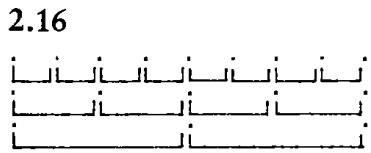
中文讲解
这是图 2.16 的图像占位符,位于第 18 页,用以配合 P0091 描述的节拍时间跨度括号层级结构。需查看原图以确认具体的层级与括号起止位置。
第4段(P0094)
原文复述
Groups, of course, also take place over spans of time. But in this case, even though a group begins on a given beat and extends up to another beat (the norm in tonal music, in which even the smallest detail is almost always given a metrical position), there is no prior restriction that the group extend between beats at the same metrical level. A group can have any arbitrary length. If, however, a group does extend between beats at the same metrical level, and if the first beat in the group is its strongest beat, then the span produced by the group coincides with a metrical time-span. An instance of this common phenomenon appears in 2.17a, where the span for the third level of dots is coextensive with the smallest grouping span.
中文讲解
本段把节拍时间跨度的规则与 group(组群)的特性进行对比,明确两者的不对称:节拍时间跨度必须落在“同级相邻拍点”之间,而组群跨度没有这一形式限制,可以是任意长度。作者补充了一个限定:在调性音乐中,组群通常以拍点为起点并延伸到另一个拍点(因为即使最细微的细节也几乎都会被赋予一个节拍位置),所以“组群=节拍时间跨度”只在两种条件同时成立时才会出现——(1)组群延伸于同级相邻拍点之间,(2)组群的第一个拍点恰好是该组最强的拍点。当这两条都满足时,组群跨度与节拍时间跨度重合(coextensive),2.17a 即是这一常见现象的实例,其中第三层点(对应小节层级)的跨度与最小一级的组群跨度重合。这一步建立了后面讨论“同相/异相”的关键前提。
第5段(P0095)
原文复述
2.17
中文讲解
图 2.17 的标题标记,后面紧跟其示意图,用以展示组群跨度与节拍时间跨度“重合”与“错位”两种情形(即 2.17a 与 2.17b)。
第6段(P0096)
原文复述
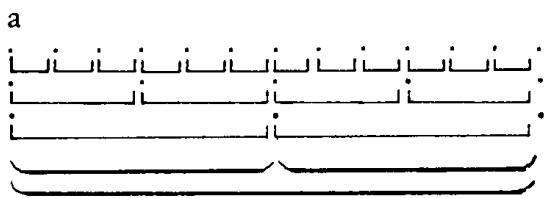
中文讲解
图 2.17 的图像占位符,位于第 18 页,需对照原图以确认 2.17a(组群跨度与节拍时间跨度重合)与 2.17b(组群边界横切节拍网格)的具体形态。
第7段(P0097)
原文复述
Rhythmic Structure
中文讲解
这是书中第 18 页的页眉/页脚(章节标志),并非正文。
第8段(P0098)
原文复述
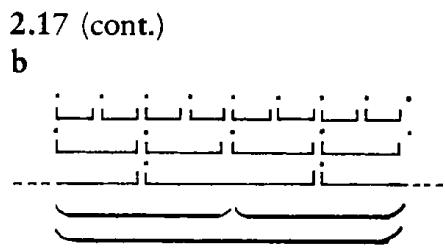
中文讲解
第 19 页的图像占位符,需对照原图才能判断其具体内容;就本小节文字而言,它出现在 P0099 之前,用于配合“同相/异相”讨论。
第9段(P0099)
原文复述
In such cases we can speak of the grouping and metrical structures as in phase. An example is the Beethoven scherzo in 2.15. However, if a group begins on a beat weaker than the strongest beat in the group (that is, if it begins on an upbeat), then the grouping and metrical structures are out of phase—that is, the grouping boundaries cut across the periodicity of the metrical grid, as in 2.17b.
中文讲解
本段在前文“组群跨度与节拍时间跨度重合”这一前提之上,给出了相位关系(phase relation)的定义:两者重合时称为“同相”(in phase),贝多芬谐谑曲(例 2.15)即为同相的例子;反之,若组群从比其最强拍更弱的拍点开始(即以弱拍/上拍 upbeat 起始),则组群结构与节拍结构处于“异相”(out of phase),此时组群边界会横切节拍网格的周期性,如 2.17b 所示。这一步把前段的“跨度重合”升华为更具分析力的概念——相位关系,从而为下一段进一步量化“异相程度”奠定基础。
第10段(P0100)
原文复述
Grouping and meter can be in or out of phase in varying degrees. To clarify this point, we define anacrusis as the span from the beginning of a group to the strongest beat in the group. (The term upbeat will not do here, since beats do not have duration; an anacrusis can include many upbeats at various levels.) If the anacrusis is brief, as in the Haydn minuet (2.12), grouping and meter are only slightly out of phase. On the other hand, if the anacrusis takes up a major portion of the relevant group, as in the theme of the G Minor Symphony (2.14), grouping and meter are acutely out of phase. Acutely out-of-phase passages are more complicated for the listener to process because the recurrent patterns in the two components conflict rather than reinforce one another. Generally, the degree to which grouping and meter are in or out of phase is a highly important rhythmic feature of a musical passage.
中文讲解
本段进一步推进论证:同相/异相不是二元判断,而是一个程度问题。为此作者引入“anacrusis(弱起/导音)”这一精确定义——它指组群起点到该组最强拍之间的跨度,并特意说明不能简单等同于 upbeat,因为拍点本身没有时值,而 anacrusis 是一个有长度的时段,可以涵盖多个层级的弱拍。作者以两首作品作为对照:海顿小步舞曲(例 2.12)的 anacrusis 很短,组群与节拍只是“轻度异相”;g 小调交响曲主题(例 2.14)的 anacrusis 占到组群的较大部分,因而呈“尖锐异相”(acutely out of phase)。作者进一步指出尖锐异相的认知代价:当节拍与组群的周期性模式彼此冲突而非相互强化时,听者加工的复杂度显著上升。最后总结,相位关系程度本身就是作品重要的节奏特征。本段的理论贡献是:(1)为相位关系提供了可量化指标(anacrusis 长度占组群的比例);(2)将其与听感复杂度联系起来,使其从纯形式描述升级为具有音乐美学意义的概念。
💡 本节核心要点
🔑 关键术语
2.4 [描述性拆分] The Relation of Structural Accent to Grouping and Meter
第1段(P0101)
原文复述
Unlike metrical structure, pitch structure is a powerful organizing force at global levels of musical structure. The launching of a section, the return of a tonal region, or the articulation of a cadence can all have large-scale reverberations. Pitch-events functioning at such levels cause “structural accents” because they are the pillars of tonal organization, its “points of gravity.” In Cone’s simile (1968, pp. 26–27), a ball is thrown, soars through the air, and is caught; likewise, events causing structural accents initiate and terminate arcs of tonal motion. The initiating event can be called a structural beginning, and the terminating event a structural ending or cadence. (Chapter 6 will show how these events emerge from time-span reduction.)
中文讲解
本段在节拍结构与音高结构之间作对照:节拍结构只在局部起作用,而音高结构在音乐的全局层次上是一种强大的组织力量。所谓"结构重音",指那些作为调性组织支柱、即所谓"重力点"的音高事件——乐段的开始、调性区的回归、终止式的呈现等都属于此类。Cone的抛球比喻(球被抛出、飞过空中、被接住)形象地说明:引发结构重音的事件既是某条调性运动弧线的起点,也是其终点。起点事件被称为"结构开始"(structural beginning),终点事件则称为"结构结尾"或"终止式"(cadence)。括号中提示:第6章将进一步通过"时值缩减"理论说明这些事件如何产生。本段为本节定下概念基础——“b"与"c"两个符号将贯穿整节,分别指代结构开始与终止式。
补充说明
b代表structural beginning,c代表cadence/structural ending;这两个符号是本节反复使用的简记。Cone(1968)的出处标注为第26-27页,本段以括号形式给出脚注式参考。
第2段(P0102)
原文复述
The relation of structural accent to grouping is easily disposed of: Structural accents articulate the boundaries of groups at the phrase level and all larger grouping levels. To be sure, a structural beginning may occur shortly after the onset of a group, especially if there is an anacrusis; more rarely, an extension after a cadence may cause a group to stretch beyond the cadence proper. In general, however, these events form an arc of tonal motion over the duration of the group. The points of structural accent occur precisely at the attack points of the structural beginning and cadence; if the cadence has two members (as in a full cadence), the terminating structural accent takes place at the moment of resolution, the attack point of the second member of the cadence. Thus, even without a postcadential extension, there is a short time-span—the duration of the (second) cadential event—between the terminating structural accent and the end of the group. These remarks are summarized in figure 2.18, with b signifying “structural beginning” and c signifying “cadence.”
中文讲解
本段简洁地处理"结构重音—分组"这一关系:核心命题是结构重音刻画了乐句及更大分组层级的边界。作者坦承两种例外——其一,结构开始可能因"弱起”(anacrusis)而稍后于分组起点出现;其二,“终止后延伸"会令分组跨越终止式继续延展。但一般情况下,结构开始与终止式之间构成一条完整的调性运动弧线,因此两个重音点严格落在各自的"进入点”(attack point)上。对于由两个和弦构成的"完全终止式",终止重音发生在第二个和弦即解决和弦的进入瞬间,而非第一成员。因此,即便没有终止后延伸,终止重音与分组结尾之间也存在一个极短的时值(第二个终止事件的持续时长)。整段内容由图2.18示意。
补充说明
本段中"attack point"指和弦或音的开始点,区别于"持续时长";此处强调结构重音发生于和弦的起音瞬间而非持续期。
第3段(P0103)
原文复述
The Relation of Structural Accent to Grouping and Meter
中文讲解
这是第2.4节的小节标题。它宣告本节双重主题:结构重音与"分组"的关系,以及结构重音与"节拍"的关系。前者在第2段已被简要处理,后者将占据本节后半部分。
第4段(P0104)
原文复述
Chapter 2
中文讲解
这是页眉的版面标识,提示当前页面属于本书的第2章。
第5段(P0105)
原文复述
[第20页图像或乐谱占位符;位置与图注保留,原内嵌图像数据已省略]
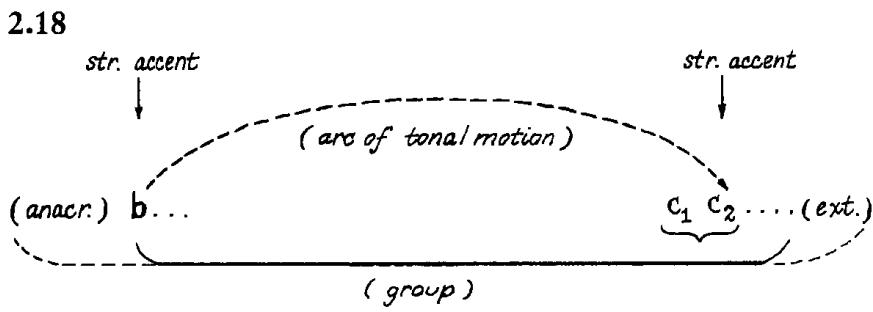
中文讲解
第20页包含一个图像或乐谱占位符。从上下文判断此处对应图2.18的位置(结构重音与分组关系示意),具体图形细节需查看原图。
补充说明
图2.18的图形内容未在输入中给出文本描述,需查阅原书。
第6段(P0106)
原文复述
The relation of structural accent to meter requires lengthier discussion, because recently there have been several attempts to equate structural accents with strong metrical accents. We will argue against such a view and hold instead that the two are interactive accentual principles that sometimes coincide and sometimes do not.
中文讲解
进入本节第二主题——结构重音与节拍的关系。作者预告:近期学界有人试图把"结构重音"直接等同于"强节拍重音",作者明确反对这一立场,提出替代主张:两者是"互动性的重音原则"(interactive accentual principles),有时重合,有时分离。本段为后文图2.19的三种假说与Mozart、Beethoven实例的论证作铺垫。
第7段(P0107)
原文复述
Before proceeding to the details, let us observe in passing that the proposed equation of structural and metrical accents would mean giving up the traditional distinction between cadences that resolve at weak metrical points and cadences that resolve at strong metrical points. Thus there would be no distinction between “feminine” and “masculine” cadences, or between metrically unaccented large-scale arrivals and large-scale structural downbeats. In our view this would be an unacceptable impoverishment of rhythmic intuition.
中文讲解
作者从理论后果角度反驳"结构重音=节拍重音"的等式。如果两者等同,多组传统区分将不复存在:在弱节拍点上解决的终止式与在强节拍点上解决的终止式将无差别;“阴性终止式”(feminine cadences,落于弱拍)与"阳性终止式"(masculine cadences,落于强拍)的区分将失效;非重音的大规模到达与结构上的重音下拍也将无法辨别。作者认为这种处理会"不可接受地贫乏化"节奏直觉。本段为后续具体论证提供了价值判断上的依据——这一立场表明,作者并非仅在讨论形式逻辑,而是在捍卫一种对节奏的审美-分析直觉。
补充说明
“feminine cadence"与"masculine cadence"是音乐分析中关于终止式节奏位置的区分术语,对应落点分别为弱节拍与强节拍。
第8段(P0108)
原文复述
Taking a closer view, we can schematize the issue as follows. Figure 2.19 represents a normal 4-bar phrase (it could just as well be an 8-bar phrase), with the b (most likely a tonic chord in root position) at the left group boundary on the downbeat of the first bar and the c (either a half or a full cadence) on the downbeat of the fourth bar. For present purposes only two levels of metrical structure need to be indicated: the measure level and the 2-measure level. Typically, the downbeats of successive measures are in a regular alternation of strong and weak metrical accent. Thus either the downbeats of measures 1 and 3 or the downbeats of measures 2 and 4 are relatively strong. But since the structural accents occur on the downbeats of measures 1 and 4, there is a conflict: either the c occurs at a relatively weak metrical point, as in hypothesis A, or the b occurs at a relatively weak metrical point, as in hypothesis B. The only way out of this apparent conundrum is to place strong beats both on bs and on cs, as in hypothesis C. But this solution is not feasible if one is to keep the notion of equidistant beats as a defining condition for meter; for when the next phrase starts, its b is closer to the previous c than each b is to the c within its own phrase, with the result that the dots at the larger metrical level are not equally spaced. In sum, hypotheses A and B do not satisfy the equation of structural and metrical accents, and hypothesis C does not satisfy the formal or intuitive requirements for metrical structure. (Footnote 10)
中文讲解
本段是本节论证最关键的一环——通过图2.19的图示建立三种互斥假说。一个标准的4小节(也可以是8小节)乐句:b落在第1小节正拍,c落在第4小节正拍;b最可能为根位置主和弦,c为半终止或完全终止。节拍结构在小节层与2-小节层两层次上呈现强弱交替——因此要么第1、3小节为强,要么第2、4小节为强。由于b与c同时落在第1、4小节正拍,便出现冲突:
- 假说A:若视第1、3小节为强,则c(终止)落在第4小节弱拍。
- 假说B:若视第2、4小节为强,则b(开始)落在第1小节弱拍。
- 假说C:让b和c同时为强节拍。 但假说C不可行,因为它违反"等距节拍”(equidistant beats)这一节拍定义条件——下一乐句的b与上一乐句的c距离,会比同一乐句中b到c的距离更近,导致大层次节拍点不等距。 最终结论:A与B都不满足"结构重音=节拍重音"的等式,C则不满足节拍结构的形式与直觉要求。脚注10提示此处存在进一步限定或来源。
补充说明
“b"多指根位置主和弦作为结构性开始,“c"指终止式。脚注10的具体内容未在本输入中给出,需查阅原书了解其指向。
第9段(P0109)
原文复述
Rhythmic Structure
中文讲解
这是页眉,标识当前页属于《Rhythmic Structure》(本书书名)一书。
第10段(P0110)
原文复述
2.19
中文讲解
这是图2.19的图号标记,配合紧随的图例与分析标签,构成一个示意小节,展示三种假说下节拍分组与结构重音的位置关系。
第11段(P0111)
原文复述
Structural accents: ⓑ
中文讲解
这是图2.19的图例标识,用”ⓑ“指代结构重音在示意图中的位置,与本节前文P0102图2.18中"b"的用法保持一致。
第12段(P0112)
原文复述
Measure
中文讲解
这是图2.19中"小节"层级节拍结构的标签,指代以小节为单位展示的节拍重音层级。
第13段(P0113)
原文复述
Metrical analysis
中文讲解
这是图2.19中"节拍分析"部分的标签,与下一条"分组分析"形成对照。
第14段(P0114)
原文复述
Grouping analysis :
中文讲解
这是图2.19中"分组分析"部分的标签,与节拍分析并列展示,呈现分组结构与节拍结构在同一乐句中的不同划分方式。
第15段(P0115)
原文复述
[第21页图像或乐谱占位符;位置与图注保留,原内嵌图像数据已省略]
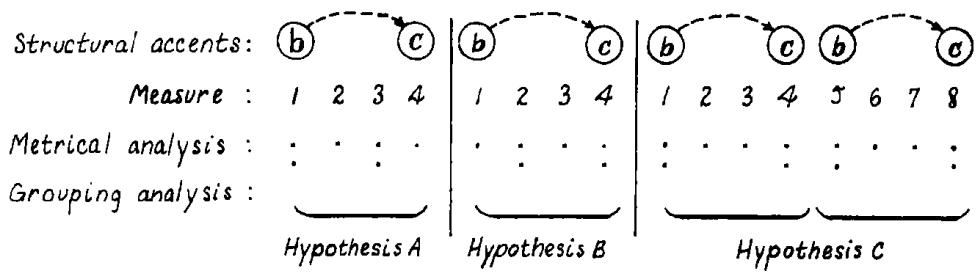
中文讲解
第21页包含图2.19的占位符,呈现假说A/B/C下节拍分组与结构重音关系的三种对比方案,具体图形细节需查看原图。
补充说明
图2.19的具体点位图示未在文本中给出,需查阅原书。
第16段(P0116)
原文复述
Hypothesis C becomes all the more untenable if, as often happens, the terminating structural accent takes place later in the fourth bar than its first beat. The opening of Mozart’s Sonata K. 331 provides a characteristic instance; if hypothesis C is followed, the resulting “metrical” structure becomes the pattern shown in 2.20.
中文讲解
作者进一步推进论证:当终止式结构重音c常常落在第四小节中部而非正拍上时,假说C更加站不住脚。Mozart钢琴奏鸣曲K.331的开头提供了典型例证——若遵循假说C将c也设为强拍,所推得的"节拍"结构会变得如图2.20所示。这是从理论模型过渡到具体乐谱实例的关键桥梁:图2.19的抽象冲突被实际音乐片段进一步放大。
补充说明
Mozart K.331开头终止式落在第四小节中段而非正拍,构成对假说C最严峻的考验。
第17段(P0117)
原文复述
2.20
中文讲解
这是图2.20的图号标记,展示Mozart K.331开头在假说C下被重塑出的"节拍"结构图示。
第18段(P0118)
原文复述
[第21页图像或乐谱占位符;位置与图注保留,原内嵌图像数据已省略]
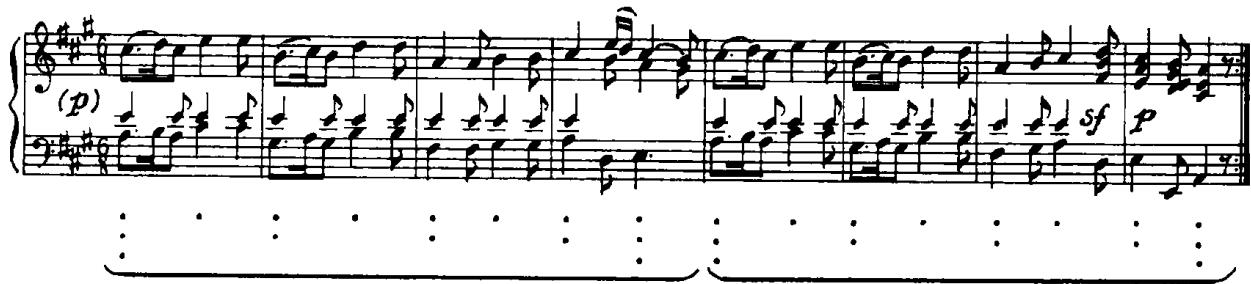
中文讲解
第21页包含图2.20的占位符,展示Mozart K.331开头被假说C重塑后出现的"节拍"点位图示。具体图形细节需查看原图。
补充说明
图2.20的具体内容未在文本中给出,需查阅原书。
第19段(P0119)
原文复述
Here the two smaller levels follow conventional metrical accentuation, and the third level of dots represents the initial and cadential structural accents. This third level not only is wildly irregular in the spacing between beats, unlike the two smaller levels, but also makes the second beats of measures 4 and 8 stronger than their first beats. Surely this cannot be true; it creates havoc with the notion of meter. Hypothesis C—the equation of structural and metrical accents—must be rejected.
中文讲解
在图2.20中,前两个节拍层次遵循常规强弱交替;第三个层次的节拍点(代表开始与终止的结构重音)则不然——节拍间距严重不均,且让第4、8小节的第二拍比第一拍更强(也就是说,让落在第四小节中段的c成为"强节拍”)。这显然与节拍的核心直觉冲突,“给节拍观念带来浩劫”。由此作者宣告:必须彻底拒绝假说C,结构重音不能等同于节拍重音。本段是从Mozart实例中得出结论的论证收束,从而把整节前半部的"结构重音—分组"和"结构重音—节拍"两条主线推向最终立场。
补充说明
“havoc with the notion of meter"形象地表达:让c成为强拍会让小节层次颠倒、违反节拍最根本的等距与正拍概念。
第20段(P0120)
原文复述
This leaves hypotheses A and B. In both, structural accent can be regarded as a force independent of meter, expressing the rhythmic energy of pitch structure across grouping structure. A dogmatic preference for either hypothesis would distort the flexible nature of the situation; one or the other—or perhaps something more complicated—pertains in a given instance. In a broad sense, in-phase passages usually yield hypothesis A and out-of-phase passages usually yield hypothesis B. The K. 331 passage (2.21a) is an instance of the former and the opening of the third movement of Beethoven’s Fifth Symphony (2.21b) an example of the latter.
中文讲解
排除假说C之后,留下A与B两条路径。两种路径下,结构重音都被视为独立于节拍的力量——它表达的是音高结构穿越分组结构时所释放的节奏能量。作者告诫:不应教条地偏爱其中之一——具体作品适用A、适用B,或适用更为复杂的情形;总体上,“同相”(in-phase)段落倾向假说A,“异相”(out-of-phase)段落倾向假说B。Mozart K.331开头(2.21a)是同相例证;Beethoven第五交响曲第三乐章开头(2.21b)则是异相例证。本段为本节"结构重音—节拍"主题作收尾,承认两者关系在具体作品中既独立又互动的多样性。
补充说明
文末提到的图2.21a与2.21b在当前输入中未提供文本描述,需查阅原书了解具体节拍分组图示。“in-phase"指结构性重音与节拍强拍同位;“out-of-phase"指结构性重音落在节拍弱拍上。
脚注 / 边栏 / 图表 / 附加信息(如有)
本节涉及的图表:图2.18(结构重音与分组关系示意)、图2.19(4小节乐句下三种假说A/B/C的节拍分组对比)、图2.20(Mozart K.331开头在假说C下推出的"节拍"结构图)、图2.21a与2.21b(同相与异相实例)。脚注10与P0108关联,原输入未给出脚注内容。Cone(1968)的页码为26-27,仅在P0101以括号形式给出参考信息。
💡 本节核心要点
- 音高结构在全局层次上是强大的组织力量;结构重音是调性组织的"重力点”,即结构性开始与终止式两端的事件。
- 结构重音刻画乐句及更大分组层级的边界,例外包括弱起与终止后延伸;完全终止的终止重音发生在解决和弦的进入瞬间。
- 作者反对"结构重音=节拍重音"的等式,因为这会消解阴性/阳性终止等传统区分,贫乏化节奏直觉。
- 通过图2.19的图示:假说A、B违反等式,假说C违反节拍"等距"的定义性条件——三者皆不可接受。
- Mozart K.331开头实例表明:若强行将结构性c设为强节拍,会导致节拍间距严重不均与"第二拍强于第一拍"的悖论,必须彻底拒绝假说C。
- 剩下的A与B分别对应同相与异相段落,体现结构重音与节拍之间既独立又互动的灵活关系。
🔑 关键术语
- structural accent:结构重音——由调性组织的支柱性音高事件(结构性开始与终止式)所产生的具有全局意义的重音。
- structural beginning (b):结构性开始——发起一条调性运动弧线的事件,常对应根位置主和弦的进入点。
- structural ending / cadence (c):结构性结尾或终止式——终止一条调性运动弧线的事件,半终止或完全终止均属此类。
- anacrusis:弱起——结构性开始稍后于分组起点出现的情形,造成分组起点与结构开始不重合。
- postcadential extension:终止后延伸——分组在终止式之后继续延展的情形。
- attack point:进入点——和弦或音的开始瞬间,结构重音严格发生在此处而非持续期中。
- feminine / masculine cadences:阴性/阳性终止式——分别指落在弱节拍与强节拍上的终止式,是节奏位置的区分术语。
- metrical accent:节拍重音——由节拍结构(小节与2-小节层)产生的强弱交替重音。
- interactive accentual principles:互动性的重音原则——作者主张结构重音与节拍重音是相互独立但有时重合的两套重音系统。
- equidistant beats:等距节拍——节拍结构的形式定义条件:相邻强拍之间的距离相等。
- in-phase / out-of-phase:同相/异相——结构性重音与节拍强拍同位称同相(如Mozart K.331),落在节拍弱拍称异相(如Beethoven第五交响曲第三乐章开头)。
- grouping structure:分组结构——由乐句及以上层级边界所体现的层级划分,与节拍结构并行存在。
- time-span reduction:时值缩减——第6章将展示的衍生结构重音事件的分析方法,本节仅以括号形式预告。
2.4a [描述性拆分] Structural Anacrusis and Structural Downbeat at Global Levels
第1段(P0121)
原文复述
Chapter 2
中文讲解
这是第22页的版面页眉,仅标识当前所在为“第2章”,并不展开论述。结合章节标题可知,本章围绕Rhythmic Structure(节奏结构)展开,作者在后续段落中提出结构性弱起与结构性重拍这两个更大时间尺度的概念。
补充说明
页眉属版面信息;本小节的实质内容从第22页正文段落(P0124)开始。
第2段(P0122)
原文复述
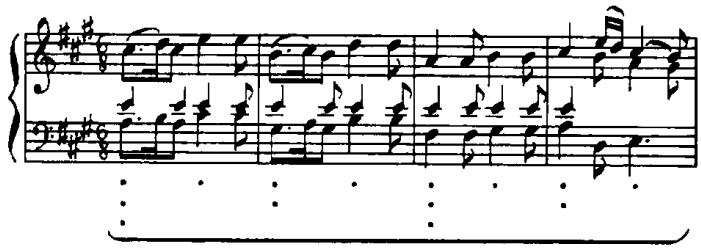
中文讲解
这是第22页上方一幅图像或乐谱示例的占位符,原图内容已省略,仅保留位置信息。结合下文P0125提及“图2.22对这一情形进行了图示”,可推断此处的图与figure 2.22相邻出现,用以辅助说明结构性重拍在三种参数上的汇聚。需要查看原图以确认具体谱例内容。
补充说明
本页还存在另一个标记为“b”的图像占位符(P0123),它们均位于结构性重拍论述的同一页面。
第3段(P0123)
原文复述
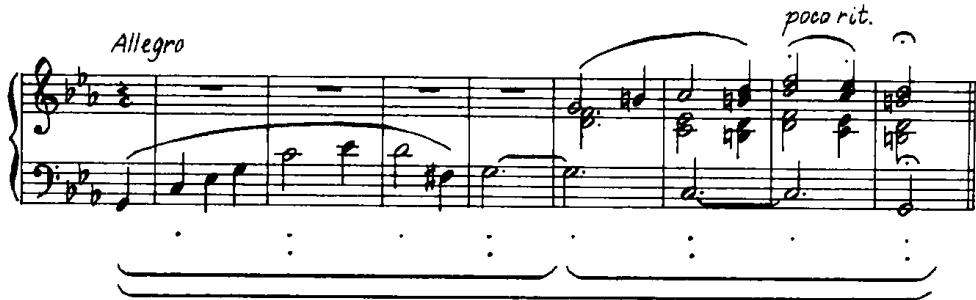
中文讲解
这是第22页上一幅带“b”标签的子图或子谱例占位符。从其紧邻figure 2.22的版面位置判断,它很可能是figure 2.22中的某个子面板(标号b)。原图内容已省略,需查看原图才能确认其所绘的分层图式、对齐方式或重叠关系;此处不应猜测不可见细节。
补充说明
P0125提到“this situation is diagrammed in figure 2.22”,因此本占位符可能与图2.22的b子图对应。
第4段(P0124)
原文复述
The case for the separation of metrical and structural accent can be supported at more global levels by a consideration of the notions of structural anacrusis and structural downbeat. A structural anacrusis is like a local anacrusis except that it spans not just a beat or two but a whole passage or section—for example, the transition to the finale of Beethoven’s Fifth Symphony, or the introduction to Beethoven’s First Symphony (analyzed in section 7.4), or measures 1–20 of Beethoven’s “Tempest” Sonata (analyzed in section 10.2). In such cases a large-scale group closes on a harmonic arrival (typically through an overlap or an elision) in a strong metrical position. The effect is one of prolonged tension followed by instantaneous release. In analytic terms, significant articulations in three different musical parameters—grouping structure, metrical structure, and harmonic structure—converge at a single moment, producing a structural downbeat. Thus there is an asymmetry between structural anacrusis and structural downbeat: the former stretches over a long time-span, and the latter coincides with a beat.
中文讲解
本段是本小节的核心立论。作者的论证目的是把“节拍重音(metrical accent)”与“结构重音(structural accent)”的分离,从局部层面(hypotheses A、B已在前文讨论)推广到全局层面。所用的两个新概念是:
-
结构性弱起(structural anacrusis):形似局部弱起,但跨越的不是一两拍,而是整个段落或乐段;作者给出三个实例——贝多芬《第五交响曲》终曲的过渡、《第一交响曲》的引子(详见7.4节)以及《“暴风雨”奏鸣曲》的第1—20小节(详见10.2节)。
-
结构性重拍(structural downbeat):当一个大规模乐思群组以和声到达(harmonic arrival)结束,且该到达通过“重叠(overlap)”或“缩减叠合(elision)”落在一个节拍强位时,三种结构参数——分组结构(grouping)、节拍结构(metrical)、和声结构(harmonic)——的重要切分在同一时刻汇聚,造成“长时间紧张——瞬间释放”的效果。
-
不对称性(asymmetry):结构性弱起占据长时段,结构性重拍只是落在节拍上的一个瞬间。作者用这一不对称来强调两者是不同时间尺度的现象,必须分别理解,不能混为一谈。
承接关系上,本段把第2章前几节建立的“节拍/分组相分离”命题,放大到大型曲式层面;通过引入结构性弱起与结构性重拍,作者既解释了大型乐段为何具有强烈动力,又说明了这种动力在分析上需要三参数共同表达。
补充说明
本段提到三处例证将分别在7.4节与10.2节展开分析,故此处仅作预告。Overlap与elision是分组结构中两种常见的衔接方式:前者指新群组在旧群组结束前开始,后者指两者共享同一事件。
第5段(P0125)
原文复述
Viewed purely as a structural accent, a structural downbeat is so powerful because it combines the accentual possibilities of hypotheses A and B: the structural anacrusis drives to its cadence (as in hypothesis B), which simultaneously, by means of a grouping overlap, initiates a new impulse forward at the beginning of the following section (as in hypothesis A). This situation is diagrammed in figure 2.22.
中文讲解
本段接续P0124,从“结构性重音(structural accent)”的视角解释结构性重拍为何特别强大。其推理链是:
- 它同时包含了hypothesis A与hypothesis B两方面的重音潜能。
- hypothesis B:结构性弱起像一根长弓一样积蓄张力,最终驱动到终止式(cadence)。
- hypothesis A:通过分组重叠(grouping overlap),旧段落的终止与新段落向前的推动同时发生在下一段的开头。
因此结构性重拍兼具“被推向终点”与“从起点重新出发”两种动力,作者称其为这两种假设的重合点。这一情形以图2.22(figure 2.22)作图示化呈现。
本段的作用是把前面分散讨论的hypothesis A/B与本节新引入的结构性弱起/结构性重拍对接起来,使读者看到后两者并不是新发明的术语,而是前几节逻辑在更大尺度上的必然推论。
补充说明
图2.22的具体图示内容已省略,需查看原图才能确认其分层的标签与对齐方式;本段说明该图描绘的正是“弱起推进—终止—重叠开启新段”三要素同时发生的瞬间。
第6段(P0126)
原文复述
Rhythmic Structure
中文讲解
这是第23页的版面栏头(running header),仅标识本章节的主题“Rhythmic Structure(节奏结构)”。它本身没有论述功能,仅用于版面定位,表明第23页内容仍属第2章节奏结构部分。
第7段(P0127)
原文复述
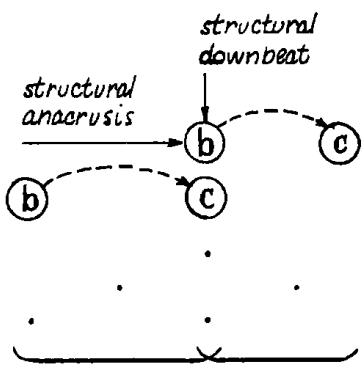
中文讲解
这是第23页上一幅图像或乐谱示例的占位符。结合下文P0129提到“measures 5–17 of the first movement of Beethoven’s ‘Hammerklavier’ Sonata (2.23)”,可推断本占位符所对应的就是figure 2.23,即“槌子键琴”奏鸣曲第一乐章第5—17小节的谱例或图示。该谱例用于展示一个同时含有“弱位终止”与“强位终止(带重叠)”两种情形的小型段落;具体谱面细节因原图省略而无法在此确认,需查看原图。
补充说明
figure 2.23在本段中用方括号编号“(2.23)”直接引用,故可确认本占位符位置与该例证对应。
第8段(P0128)
原文复述
If all large-scale harmonic arrivals were metrically strong, there would be nothing special about structural downbeats. Yet it is undeniably significant to the rhythmic flow of a piece whether its cadences articulate phrases or sections on weak beats before the next phrases or sections begin (as in a Schubert waltz or a Chopin mazurka), or whether its cadences arrive on strong beats in an overlapping fashion with ensuing phrases or sections (as in the Beethoven examples cited above). The former case produces formal “rhyme” and balance; the latter is dynamically charged. The difference is theoretically expressible only if metrical and structural accents are seen as independent but interacting phenomena.
中文讲解
本段从反面进一步论证节拍重音与结构重音必须分立。推理步骤为:
- 反设:如果所有大型和声到达都正好落在节拍强位,那么结构性重拍就毫无特别之处。
- 实然:实际作品中存在两类不同的处理——
- 终止式落在弱位,下一段随后才重新开始:舒伯特圆舞曲、肖邦玛祖卡属此类。
- 终止式落在强位并与下一段重叠:贝多芬前文所举的例证属此类。
- 风格效果:前者带来“韵律与平衡”(formal rhyme and balance),后者带来“动力性紧张”(dynamically charged)。
- 理论结论:这种差异只有在节拍重音与结构重音被视为“相互独立但相互作用”的现象时,才能被理论表达出来。
承接关系上,本段把“为什么不能把两者等同”的论证从逻辑层面推进到风格/效果层面:正是节拍与结构的相对独立,才让作曲家能够在同一首作品里制造截然不同的节奏感。
补充说明
舒伯特圆舞曲与肖邦玛祖卡是本段给出的对照性体裁例子,作者借此说明不同体裁中弱位终止的普遍存在。
第9段(P0129)
原文复述
Measures 5–17 of the first movement of Beethoven’s “Hammerklavier” Sonata (2.23) illustrate both possibilities nicely. The antecedent phrase (measures 5–8) cadences in a metrically weak position (marked p in 2.23), but the consequent phrase is extended in a metrically periodic fashion so that its cadence (marked q) arrives on a strong hypermetrical beat and overlaps with the succeeding phrase. In other words, the local anacrusis immediately after p begins a structural anacrusis that tenses and resolves on a structural downbeat at q.
中文讲解
本段以贝多芬“槌子键琴”奏鸣曲第一乐章第5—17小节(figure 2.23)作为具体例证,同时呈现P0128所区分的两种情形。其结构拆解为:
- 前句(antecedent,第5—8小节):终止式落在节拍弱位,谱例中以“p”标记。
- 后句(consequent):通过节拍周期性的延伸(metrically periodic extension),使自身的终止式“q”落在强超节拍位(strong hypermetrical beat),并与紧接其后的乐句形成重叠。
- 总体动力:p之后立即出现的局部弱起,既是局部层面的弱起,又是更大尺度结构性弱起的起点;该结构性弱起积蓄张力,最终在q处得到解决,构成一个结构性重拍。
例子所证:在一段紧凑的乐句序列内,可以先出现“弱位终止”(p,属前一种风格效果),再出现“强位终止+重叠”(q,属后一种动力效果),从而在同一段落中印证节拍重音与结构重音的独立性。作者选此例是为了在一个最小语境中同时展示两种相反配置,以避免读者把它们当作彼此排斥的体裁现象。
补充说明
Hypermetrical beat(超节拍位)指超出单拍层次的、更大时间尺度的节拍强位,例如小节群组中重小节的位置。P0129中的p与q标记对应figure 2.23中两个关键终止点。
第10段(P0130)
原文复述
These various discriminations would not be possible if structural and metrical accents were equated. Perhaps attempts have been made to equate them because the profound distinction between grouping and meter has not been appreciated. In any case, structural accents articulate grouping structure, not metrical structure. Groups and their structural accents stand with respect to meter in a counterpoint of structures that underlies much of the rhythmic richness of tonal music. $^{11}$
中文讲解
本段是本小节的收束性结论,可拆为三层:
- 不可替代性论断:若把结构重音与节拍重音等同,前面所做的所有区分(局部vs全局、终止在弱位vs强位、韵律vs动力)都将无法做出。
- 学术史判断:作者推测,之所以有人试图把两者等同,可能是因为学界尚未充分理解“分组(grouping)”与“节拍(meter)”之间的深刻区别;这是作者对该领域既有讨论的一种间接批评。
- 理论结论:结构重音刻画的是分组结构,而不是节拍结构;分组及其结构重音相对于节拍形成一种“结构对位(counterpoint of structures)”,正是这种对位赋予调性音乐绝大部分节奏上的丰富性。
承接关系上,本段把P0124—P0129的论证汇拢成一句形而上式的命题:节奏的丰富性来自两种独立结构的对位,而不是单一重音系统的内部变化。本段的尾注 $^{11}$ 表示该结论附有学术注释(注释具体内容未在本输入中出现),需查阅原书脚注方能确认其指向。
补充说明
尾注 $^{11}$ 的内容未在当前输入中给出,按规则不应补写。Counterpoint of structures(结构对位)在本节被作为总结性术语使用,强调分组重音与节拍重音在不同尺度上各自独立、又彼此交织。
第11段(P0131)
原文复述
Chapter 2
中文讲解
这是第24页的版面页眉,标识当前页仍属“第2章”。不展开论述,仅作版面定位。
第12段(P0132)
原文复述
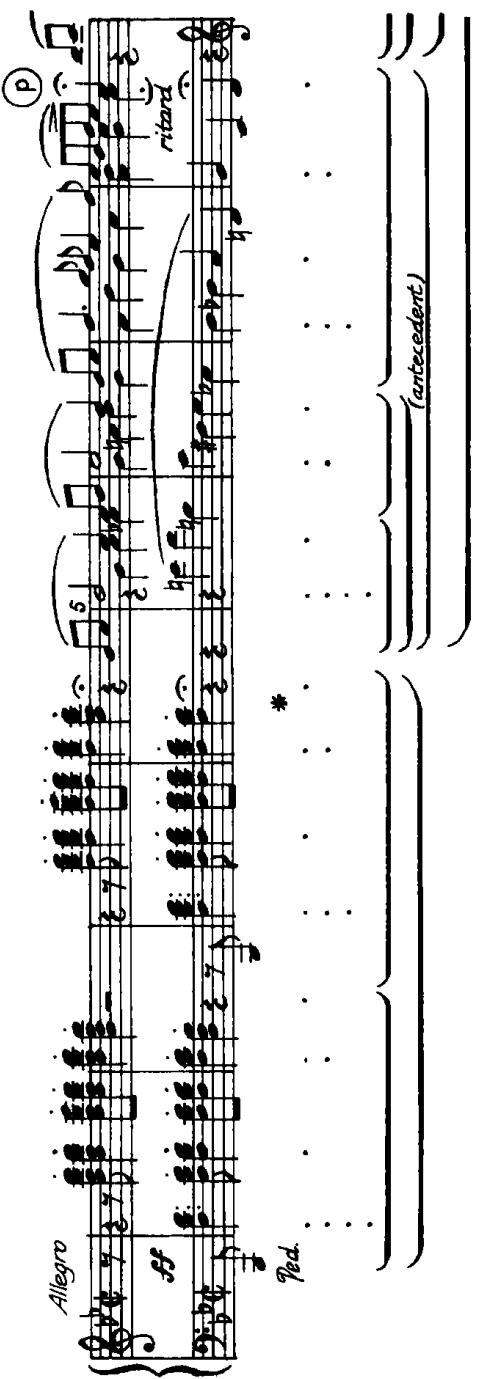
中文讲解
这是第24页上一幅图像或乐谱示例的占位符。结合上下文,本页紧接P0134“Rhythmic Structure”栏头,可推断此处图像与本章节奏结构主题相关,但因输入未给出图题或编号,故不能确认它对应figure 2.2x中的具体哪一幅。需要查看原图以了解内容。
第13段(P0133)
原文复述
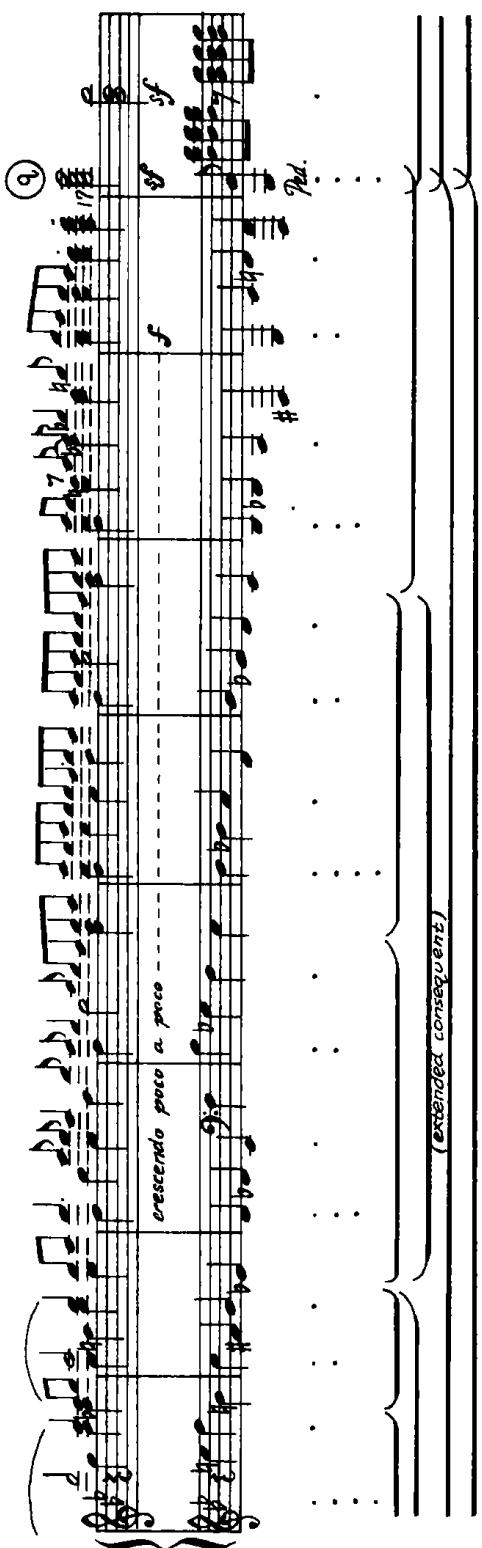
中文讲解
这是第24页上另一幅图像或乐谱示例的占位符,与P0132并列出现于同一版面区域。在缺少图注的情况下不应猜测其具体内容;它可能与figure 2.22、figure 2.23或其他节奏结构示意图有关,需查看原图以确认。
第14段(P0134)
原文复述
Rhythmic Structure
中文讲解
这是第24页的版面栏头(running header),再次标识本章节主题“Rhythmic Structure(节奏结构)”。它仅作为版面标识,不含独立论述。
脚注 / 边栏 / 图表 / 附加信息(如有)
本小节包含一处带编号的脚注标记(出现在P0130尾部的 $^{11}$),但该脚注的具体内容在当前输入中未给出;按规则不补写其指向的文献或论述。本小节版面中出现的图像/乐谱占位符共五个:P0122、P0123位于第22页(紧邻figure 2.22引用),P0127位于第23页(对应figure 2.23,Hammerklavier奏鸣曲第5—17小节),P0132、P0133位于第24页(在缺少图注的情况下无法确认各自归属)。P0121、P0126、P0131、P0134为版面页眉与栏头(Chapter 2 / Rhythmic Structure),仅用于版面定位,不含论述。
💡 本节核心要点
- 作者在更大时间尺度上提出两个相互依存的概念:结构性弱起(跨越乐段)和结构性重拍(三参数汇聚的瞬间),两者在时间维度上呈不对称关系。
- 结构性重拍之所以强大,在于它同时实现了hypothesis A(通过分组重叠开启新段)与hypothesis B(通过结构性弱起驱动到终止)的双重动力,并以figure 2.22图示化。
- 若所有大型和声到达都恰好落在节拍强位,结构性重拍将无特别之处;正因为终止可发生在弱位(舒伯特圆舞曲、肖邦玛祖卡)或与下一段重叠地发生在强位(贝多芬例证),节奏风格才出现“韵律/平衡”与“动力性紧张”之分。
- Hammerklavier奏鸣曲第一乐章第5—17小节(figure 2.23)以p(弱位终止)与q(强位重叠终止)两种情形在同一段落内并置,作为节拍重音与结构重音独立可辨的最小实例。
- 本节最终结论:结构重音刻画的是分组结构而非节拍结构;分组重音与节拍之间形成“结构对位(counterpoint of structures)”,这正是调性音乐节奏丰富性的来源。
🔑 关键术语
- structural anacrusis:跨越整个段落或乐段而非一两拍的弱起;它在长时间内积蓄张力,驱动乐思向终止式推进。本节给出的例证包括贝多芬《第五交响曲》终曲过渡、《第一交响曲》引子以及《“暴风雨”奏鸣曲》第1—20小节。
- structural downbeat:由分组结构、节拍结构、和声结构三种参数的重要切分在同一时刻汇聚而产生的瞬间重拍;通常伴随大型和声到达,并借分组重叠或缩减叠合落在节拍强位,造成“长时间紧张——瞬间释放”的效果。
- grouping overlap / elision:分组结构中两种衔接方式:overlap指新群组在旧群组结束前开始,elision指两者共享同一事件;两者都是结构性重拍中分组与节拍参数汇聚的机制。
- hypotheses A and B:前文已建立的两种关于重音/弱起的假设——hypothesis A涉分组重叠开启新推动,hypothesis B涉弱起向终止的驱动;本节结构性重拍被认为是二者同时成立的点。
- hypermetrical beat:超出单拍层次的更大时间尺度的节拍强位,例如小节群组中的重小节;P0129中q标记的终止即落在此类强超节拍位上。
- counterpoint of structures:P0130提出的总结性术语,指分组重音与节拍重音作为相互独立又彼此交织的两层结构同时作用;本节认为这种“结构对位”构成调性音乐节奏丰富性的来源。