目录
ch01 The Ideal Ritornello
- ch01_s01 [描述性拆分] Chapter overview and the problem of identifying ritornellos
- 页码:1-1
- ch01_s02 [描述性拆分] Tonal closure as the defining feature of Bach’s ritornellos
- 页码:2-2
- ch01_s03 [描述性拆分] Fischer’s three-segment model (Vordersatz, Fortspinnung, Epilog)
- 页码:3-3
- ch01_s04 [描述性拆分] Distinguishing the three segments by harmonic function
- 页码:4-5
- ch01_s05 [描述性拆分] Solo episodes as structurally unmarked with respect to ritornello functions
- 页码:5-7
- ch01_s06 [描述性拆分] Cantata 35 Sinfonia: grammar, semantics, and segment subdivisions
- 页码:8-8
- ch01_s07 [描述性拆分] Grammar, semantics, and transformation rules in segmentation
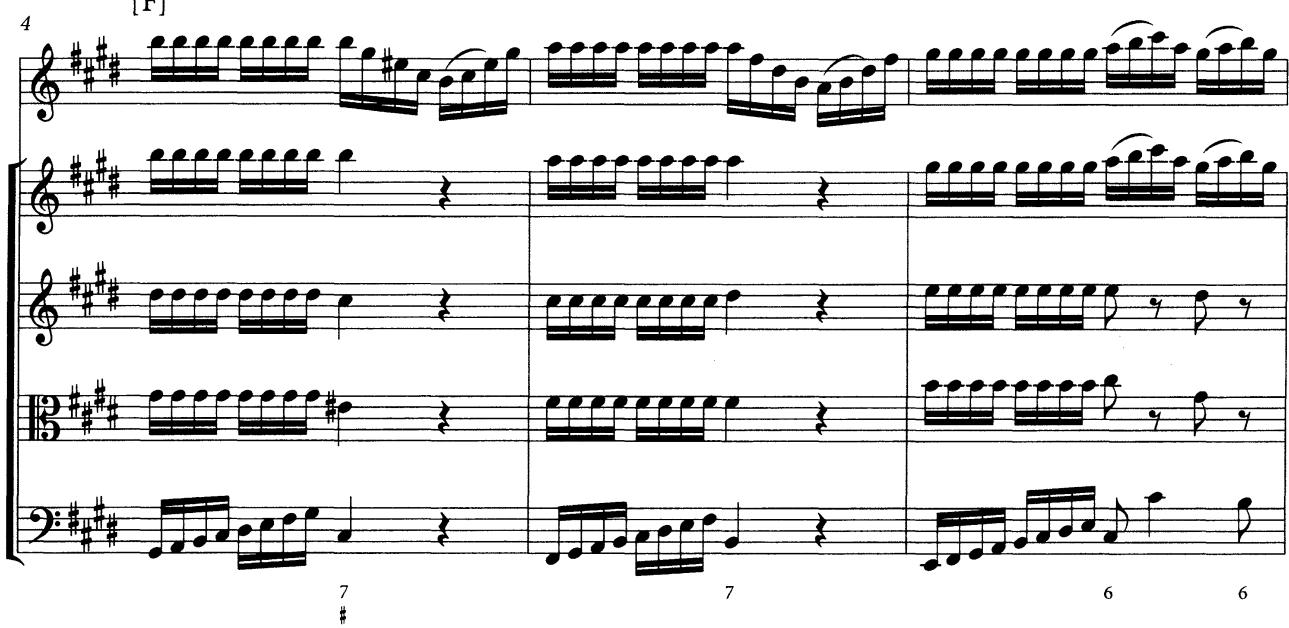
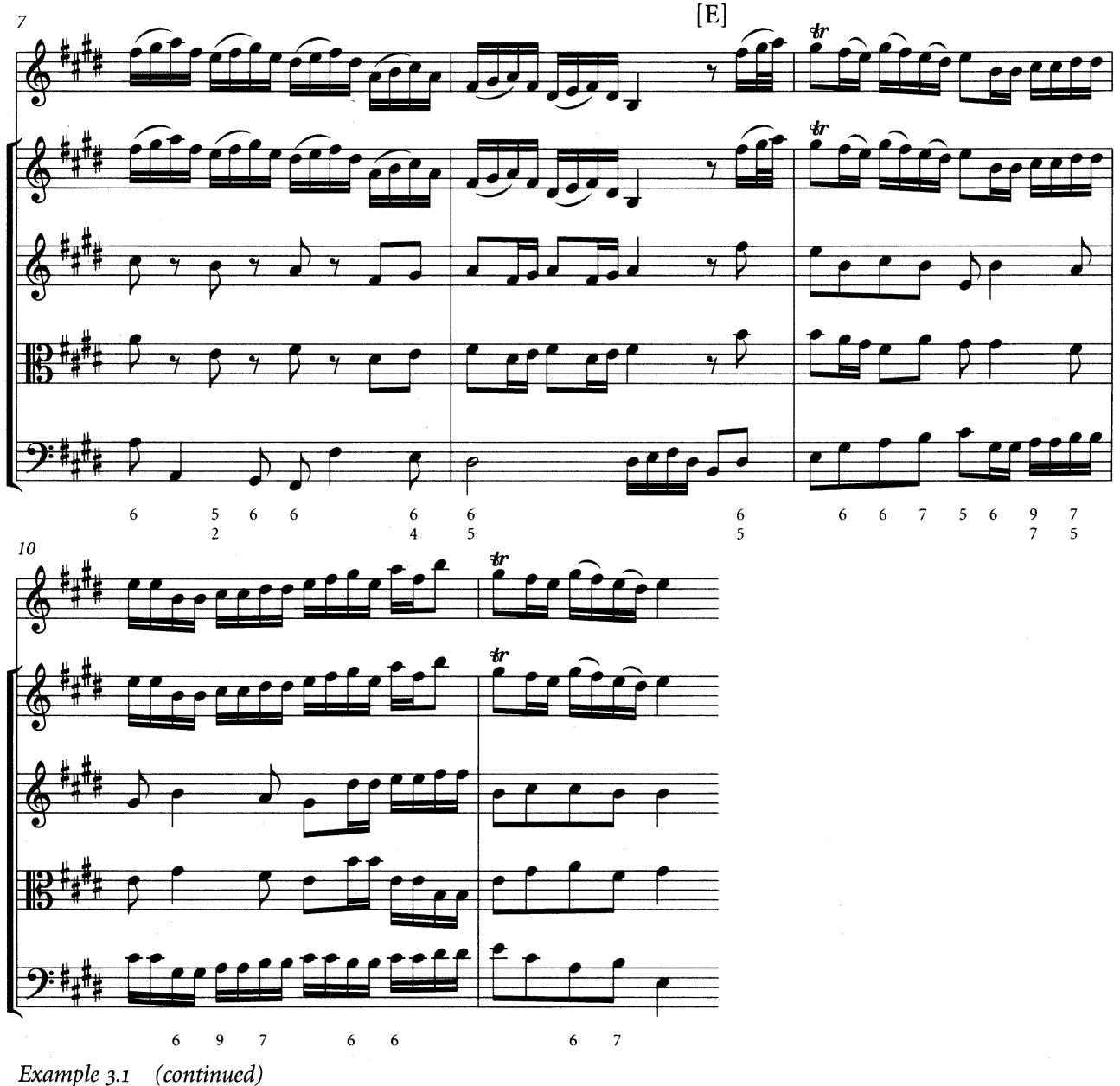
- 页码:9-10
- ch01_s08 [描述性拆分] Examines and DECORATE in BWV 35
- 页码:11-12
- ch01_s09 [描述性拆分] ORCHESTRATE and the tension between surface and syntax
- 页码:13-14
- ch01_s10 [描述性拆分] The MODESWITCH operation in BWV 35
- 页码:14-15
- ch01_s11 [描述性拆分] Non-occurrence and consequences for major-mode ritornellos
- 页码:16-17
- ch01_s12 [描述性拆分] The ideal ritornello and Vivaldi’s op. 3 no. 10
- 页码:18-20
- ch01_s13 [描述性拆分] Restrained praise and critique of Vivaldi’s ritornello procedures
- 页码:21-22
- ch01_s14 [描述性拆分] Complementary defects in BWV 1047’s opening and later ritornellos
- 页码:23-24
- ch01_s15 [描述性拆分] The unrecoverable question of origins in BWV 1047
- 页码:25-25
- ch01_s16 [描述性拆分] Sections 14–16 continued; lead into BWV 1061
- 页码:25-29
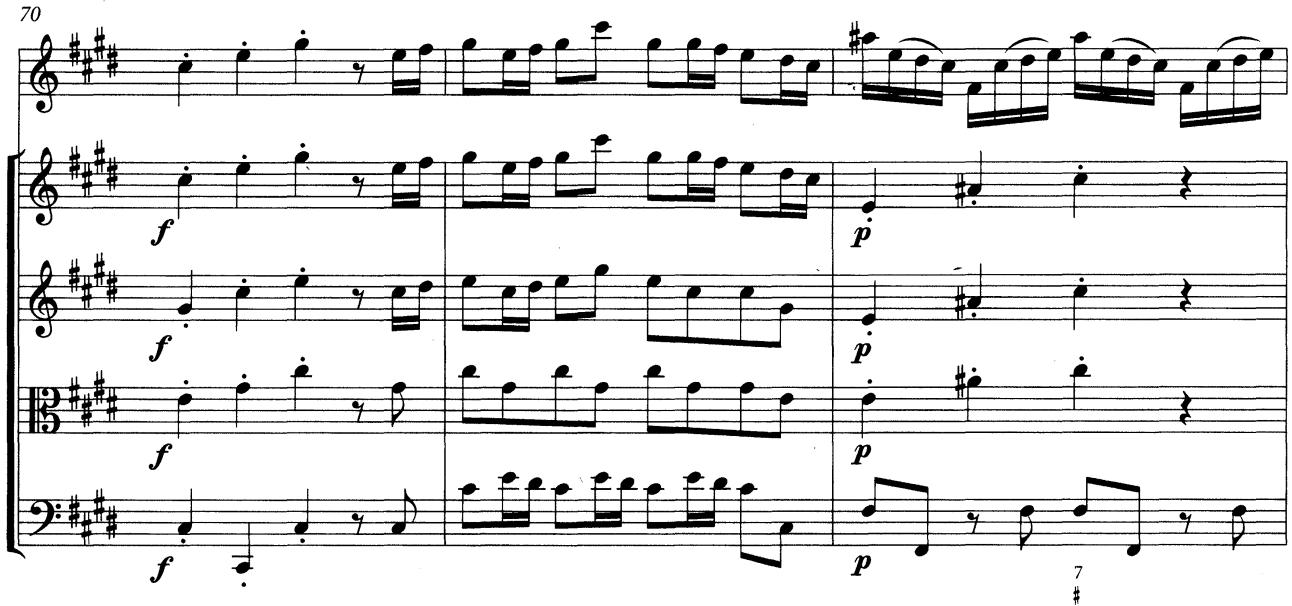
- ch01_s17 [描述性拆分] Voice-leading reduction and the role of episodes in BWV 1061
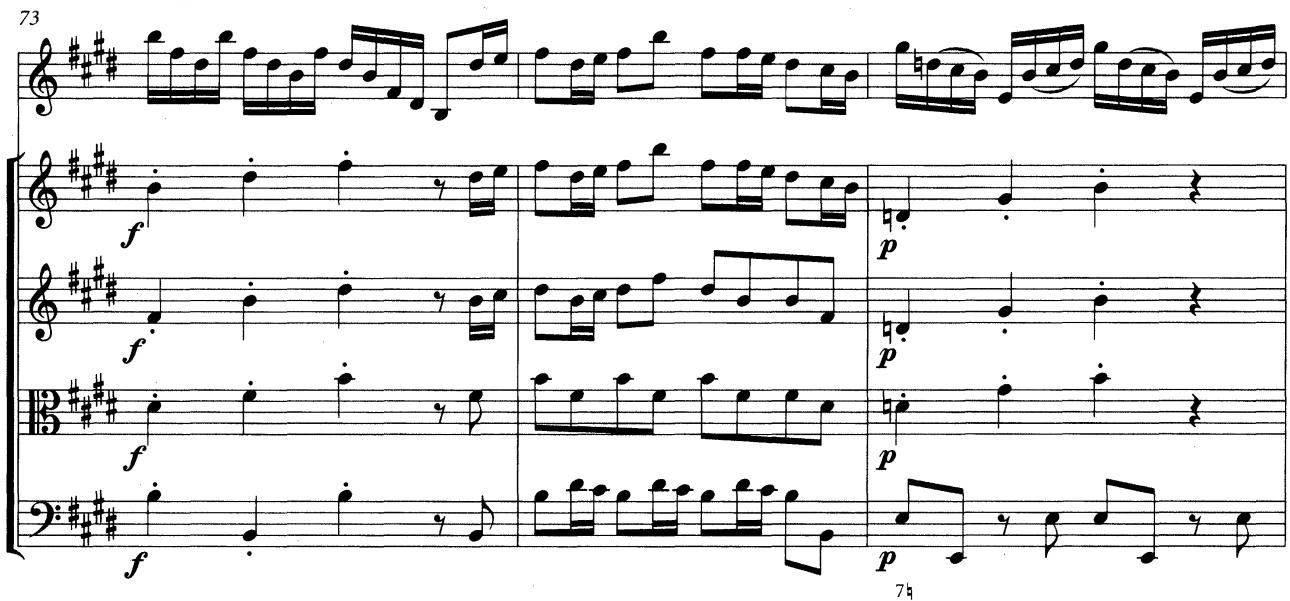
- 页码:30-30
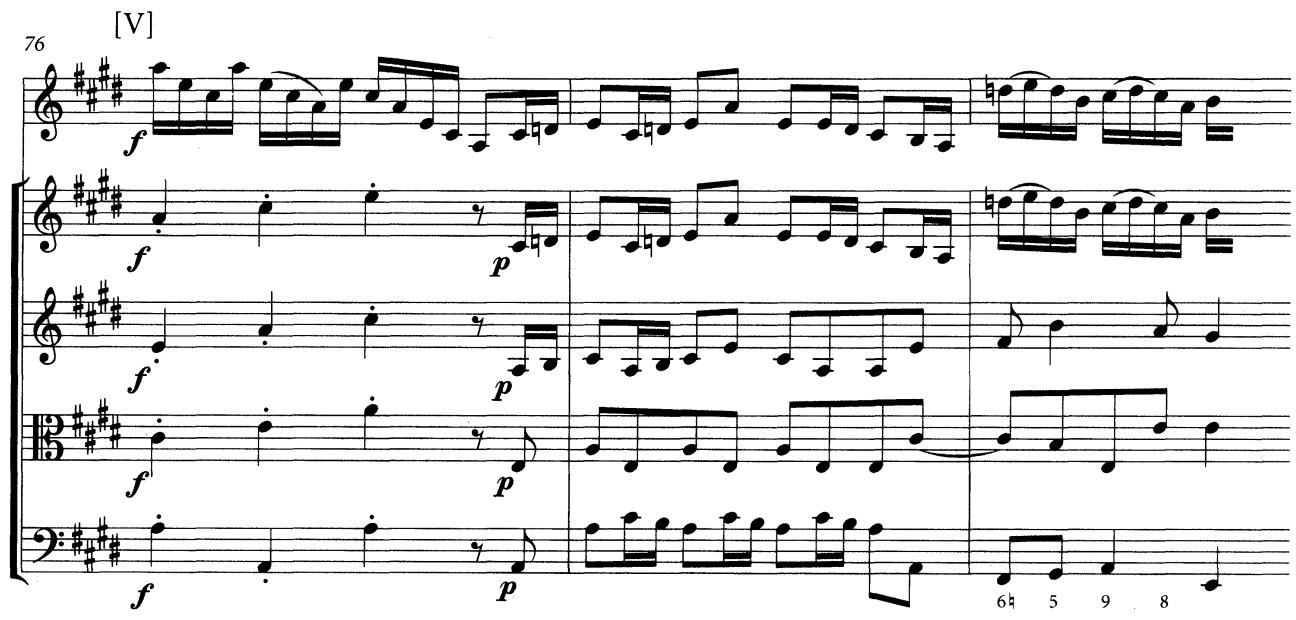
- ch01_s18 [描述性拆分] Episodes as quasi-inventions: MODESWITCH, ROTATE, and cadential distribution
- 页码:31-32
- ch01_s19 [描述性拆分] Canonic Fortspinnung and canonic sleight of hand in BWV 1061
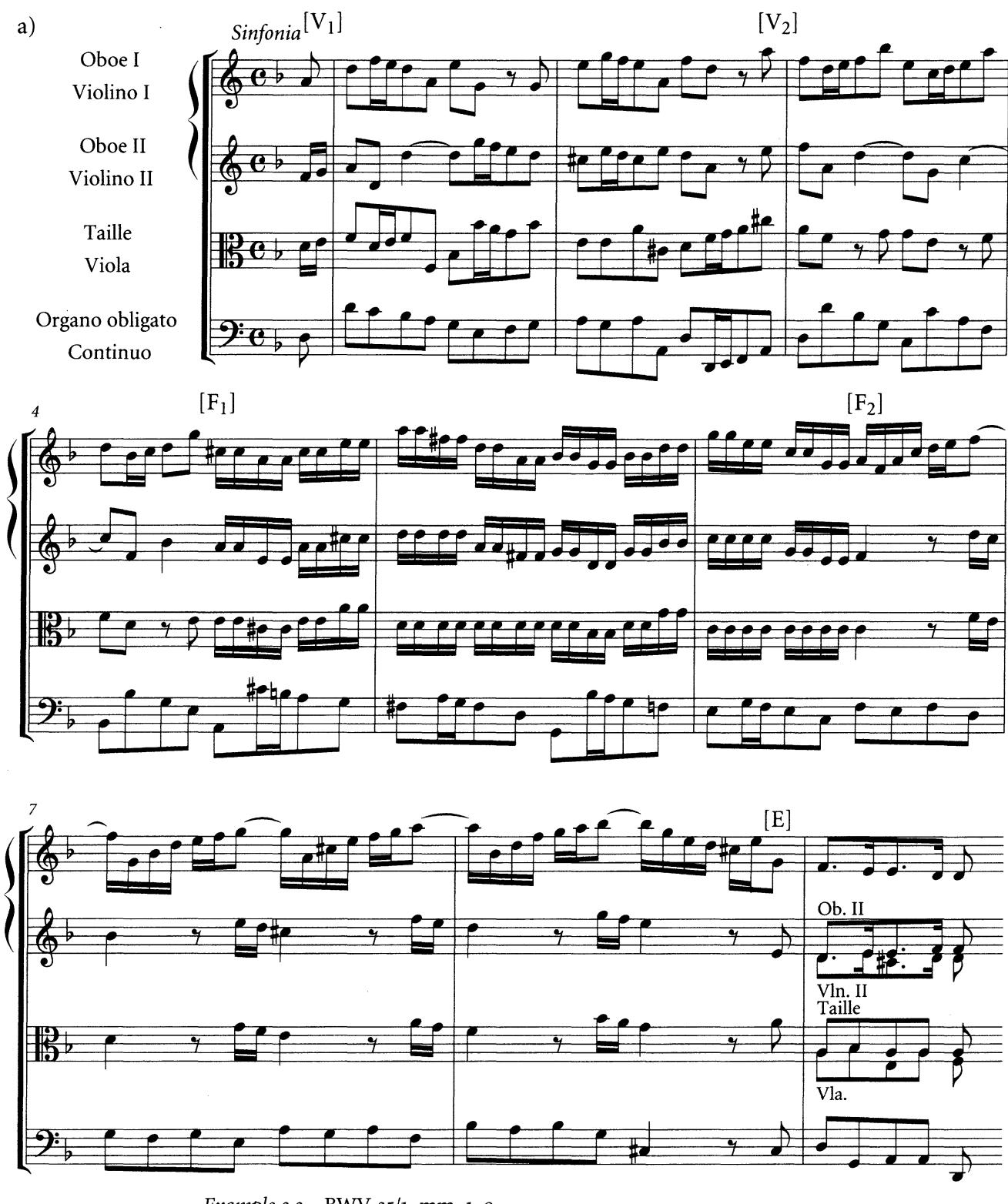
- 页码:33-33
- ch01_s20 [描述性拆分] RESEARCH and the superimposition of [F1] segments
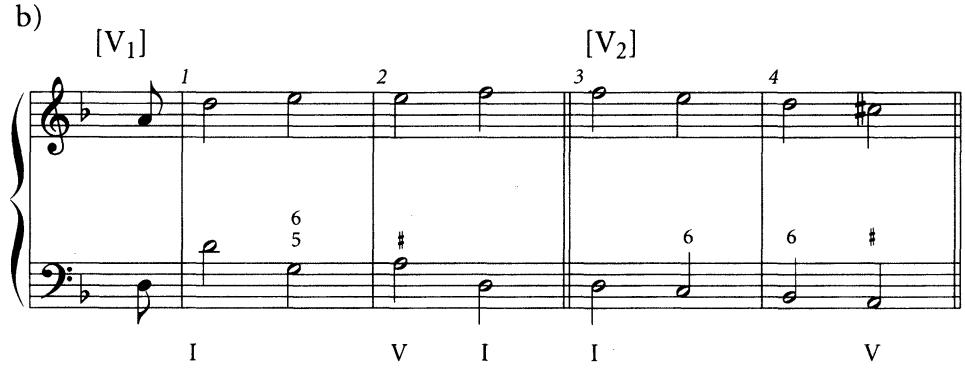
- 页码:34-35
- ch01_s21 [描述性拆分] The inconclusive Adagio ending of BWV 1061 as pseudo-Epilog
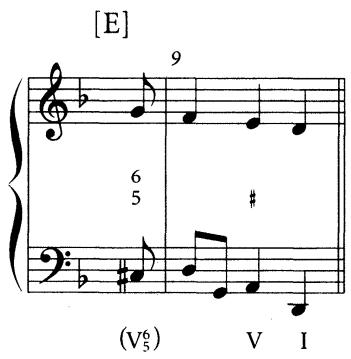
- 页码:36-36
- ch01_s22 [描述性拆分] From instrumental invention to texted genres: “Eilt, ihr angefochten Seelen”
- 页码:37-37
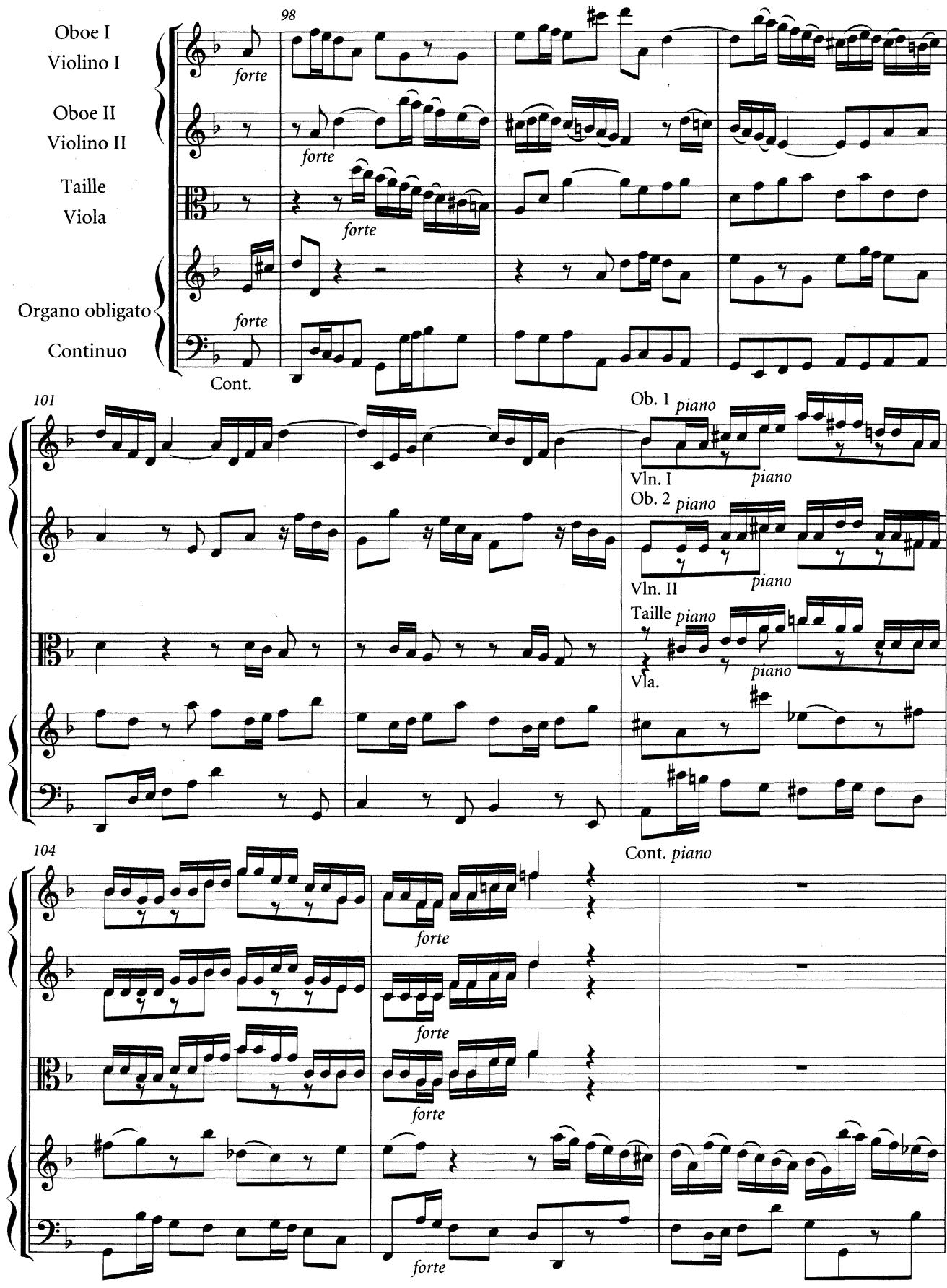
- ch01_s23 [描述性拆分] The aria’s text and dialogue structure
- 页码:37-37
- ch01_s24 [描述性拆分] Ex. 3.14, illustrating the aria’s dialogue ritornello
- 页码:37-40
- ch01_s25 [描述性拆分] Repetition, paradigm versus syntagm, and Mattheson on recurrence
- 页码:41-41
- ch01_s26 [描述性拆分] Contemplative time, conclusion of the aria, and reflection on invention
- 页码:42-43
- ch01_s27 [描述性拆分] Wider reflections on invention and metaphor
- 页码:43-44
ch02 The Status of a Genre
- ch02_s01 [描述性拆分] Two linguistic tropes in Bach scholarship
- 页码:45-45
ch01_s01 [描述性拆分] Chapter overview and the problem of identifying ritornellos
第1段(P0001)
原文复述
The Ideal Ritornello — the chapter title, rendered as a level-one heading in the source markup, opening Chapter 1.
中文讲解
这是第一章的标题「The Ideal Ritornello」(理想的回归段/利都奈罗)。标题中「Ideal」(理想的)一词承载双重意味:一方面暗示作者将回归段视为一种被提纯、规范化到极致的结构原则——也就是后文所谓的「理想机器」(ideal machine);另一方面也暗示 Bach 把回归段形式「理想化」的处理。标题同时宣告了本章的核心议题:考察回归段这一形式原则在 Bach 协奏曲中的运作方式。
第2段(P0002)
原文复述
In this chapter I take a closer look at the Vivaldian concerto ritornello in order to demonstrate the extreme lengths to which Bach took this invention. In particular I am interested to show how, in sum, Bach’s ritornello procedures can be understood as constructing an “ideal machine,” a set of compositional strategies that guarantee and regulate the crafting of a large-scale movement of a concerto. It is easy to see why the notion of invention is congenial to an analysis of concertos. Taken metaphorically as a passage from some initial idea to the subsequent work, “invention” seems an especially revealing way to characterize the processes of the ritornello principle, in which the initial idea plays a conspicuous role in the elaboration of the work as a whole. My focus will be those allegro movements that contain ritornellos modeled on prominent works from Antonio Vivaldi’s concertos, opus 3, particularly those pieces with “segmentable” ritornellos, out of which Bach fashioned a systematic approach to opening and closing movements. While the chapter sketches out a basic theory of segmentable ritornello procedures in Bach’s concertos, I also seek to clarify certain logical properties of invention while denying that there are inductive rules that ever ensure its discovery. I argue that the analysis of invention needs to encompass a wide range of specifiable musical procedures and operations if it is not to misrepresent the innovative play of identities that distinguishes Bach’s concerto principle.
中文讲解
本段是全章的纲领,集中交代三件事:研究对象、研究路径、方法论立场。
第一,研究对象是「维瓦尔第式的协奏曲回归段」(the Vivaldian concerto ritornello),但作者的目的不是描述维瓦尔第本人,而是要说明 Bach 把这一体裁「推到了极端」(the extreme lengths to which Bach took this invention)。
第二,研究路径——「理想机器」(ideal machine)。作者把 Bach 的回归段程序理解为一套「保证并规整」(guarantee and regulate)大型协奏曲乐章写作的作曲策略。这是一种隐喻式的理论框架:回归段不是单一主题,而是产生整个乐章的形式引擎。
第三,「invention」(发明/创意)这一概念的引入。作者借用「从初始观念到达成之作」(passage from some initial idea to the subsequent work)这层隐喻来说明回归段原理——初始观念在整体展开中扮演显著角色,与「invention」的语义高度契合。
第四,研究范围被严格限定:聚焦于「快板乐章」(allegro movements)中含有「可切分回归段」(segmentable ritornellos)的作品,其原型来自「维瓦尔第的协奏曲作品第3号」(Antonio Vivaldi’s concertos, opus 3)中的著名作品,尤其被 Bach 用来系统化地处理协奏曲的开篇与结尾乐章。
第五,方法论立场:作者一方面勾勒「可切分回归段程序」的基本理论,另一方面澄清「发明」的逻辑属性,同时否认存在任何「归纳规则」(inductive rules)能够保证发明的「被发现」(discovery)。换言之,分析必须涵盖广泛而可指认的音乐程序与操作,否则将误现 Bach 协奏曲原则中那种「同一性之创新性游戏」(the innovative play of identities)的特质。
本段的作用是为整章设立问题域与分析范式:既要在「可切分回归段」层面给出可操作的程序理论,又要在「发明」的概念层面揭示其不可被还原为机械归纳规则的特性。
补充说明
「Vivaldi’s concertos, opus 3」即维瓦尔第的协奏曲作品第3号;本段将其标明为 Bach 所模仿回归段的原型来源。
「segmentable ritornellos」(可切分的回归段)是作者自创的分析术语,指那些能被拆分为若干独立动机/片段,并在乐章不同位置以不同组合方式重新拼合的回归段;与作为整块连续材料反复出现的回归段相对。该术语在本节被引出,后文将逐步界定。
第3段(P0003)
原文复述
The generally operative principle of Bach’s concertos is that the ritornello played by the orchestral tutti “returns” throughout the movement in different keys and alternates with episodes dominated by the soloists. Less clear is how one identifies later occurrences of the ritornello. Are they the same as each passage played by the “tutti”? Are all fragments derived from the opening statement to be understood as reiterations of the ritornello? Are opening motives subsequently played by the soloist excluded from ritornello statements? The more closely one looks at Bach concerto movements, the more difficult it becomes to answer these questions according to the received wisdom. Many writers try to circumvent this impasse by describing the ritornello chiefly as a succession of melodic motives. They commonly label the motives and phrases in alphabetic sequence and then detail when (and on which harmonic degree) they occur later in the movement. But this arbitrary assignment of symbols ignores function and misses the fact that the segmented units vary in their content from piece to piece. Moreover, the subtle differences in meaning sensed at subsequent ritornello statements are lost when an analysis is regimented into a string of empty symbols in which one motive signifies much the same thing as another.
中文讲解
本段是问题诊断段,揭示既有研究的盲点,为后文的方法论铺路。
首先给出通行定义:Bach 协奏曲的基本运作原则是——乐队全奏(tutti)演奏的回归段「反复」(“returns”)出现于不同调性,与独奏主导的插段(episodes)交替。
接着抛出一组棘手的辨识问题: (1)所有由「tutti」演奏的段落都算作回归段吗? (2)任何源自开篇陈述的片段,即便分散使用,都应理解为回归段的重申吗? (3)开篇动机后来由独奏乐器奏出时,是否被排除在回归段陈述之外?
作者断言:越仔细审视 Bach 的协奏曲乐章,就越难依据「既有成说」(received wisdom)回答这些问题——回归段的辨识并非表层技术问题,而是涉及功能判定。
然后展开对主流做法的批评。许多学者试图通过把回归段主要描述为「一系列旋律动机」(a succession of melodic motives)来绕过这一僵局:以字母序列(a、b、c……)标注动机与乐句,再注明它们后来在何时、落于哪个和声级数(harmonic degree)上出现。
但这一做法有三个根本缺陷: (a)「任意指派符号」(arbitrary assignment of symbols)忽视了功能——同一字母在不同曲、不同位置承担的功能可能截然不同; (b)它错过了「被切分单位的内容因曲而异」(the segmented units vary in their content from piece to piece)这一事实; (c)更严重的是,当分析被规整为一串「空洞符号」(a string of empty symbols)时,后续回归段陈述之间「意义上的微妙差异」(the subtle differences in meaning)便告丢失——一个动机与另一个动机在分析中等价,但其实际音乐涵义并不相同。
本段在论证链中的作用是为作者自己后续提出的「可切分回归段」分析法清场:只有先揭示既有动机标签法的功能盲区与意义抹平,才能为新的程序理论确立合法性。
补充说明
「tutti」与「solo episodes」之别来自本段正文,是 Bach 协奏曲体裁中两种基本结构的对置:tutti 指乐队全奏,solo episodes 指独奏(或独奏组)主导的段落。「received wisdom」(既有成说)即未经反思但被广泛沿用的分析共识,本段用它指代关于回归段辨识的通行做法。
第4段(P0004)
原文复述
Dreyfus, Laurence. Bach and the Patterns of Invention. E-book, Cambridge, Mass.: Harvard University Press, 1996, https://hdl.handle.net/2027/heb05561.0001.001. Downloaded on behalf of Indiana University, Bloomington — running-page header / bibliographic imprint identifying the source as the Harvard University Press e-book edition of Dreyfus’s study, accessed via HathiTrust and downloaded on behalf of Indiana University, Bloomington.
中文讲解
此段为页眉/书目出处信息(running-page header),并非正文。其作用是标明本电子书的来源:作者 Laurence Dreyfus,书名 Bach and the Patterns of Invention,出版机构 Harvard University Press(麻省剑桥),电子版下载通道为 HathiTrust,并由 Indiana University, Bloomington 代为下载。它为后续引文与脚注提供文献溯源依据。
补充说明
此条目为版式元信息(页眉/水印性质的版权与下载声明),不属于正文论证;本节范围内 P0002 末尾的 ¹ 与 P0003 中段的 ² 两条脚注的实际文本未出现在所提供的 source_paragraphs 中,故脚注内容不予猜测。
脚注 / 边栏 / 图表 / 附加信息(如有)
本节范围内可见两条脚注编号标记——P0002 末尾的 ¹ 与 P0003 中段的 ²——但脚注本身的文本未包含在所提供的 source_paragraphs 中,因此脚注内容不予猜测。P0004 为电子书页眉/版权下载声明,属于版式元信息而非正文。其余内容均为正文与标题,无图表、谱例或边栏。
💡 本节核心要点
- 本章研究对象是 Bach 对维瓦尔第式协奏曲回归段所作的极端化、系统化处理,并以「理想机器」(ideal machine)这一隐喻刻画其作为形式引擎的运作方式。
- 作者引入「invention」(发明)作为分析概念,强调回归段原理契合「从初始观念到达成之作」的隐喻——初始观念在整体展开中扮演显著角色,但不存在能保证其「被发现」的归纳规则。
- 分析聚焦于模仿维瓦尔第作品第3号(opus 3)的快板乐章,尤其聚焦于 Bach 用来处理开篇与结尾乐章的「可切分回归段」(segmentable ritornellos)。
- 作者质疑既有研究的辨识方式:通行做法以字母序列标注动机与和声位置,既「任意」又抹平功能差异,更丢失了后续回归段陈述之间的「微妙意义差别」。
- 本章的方法论承诺是:分析必须涵盖广泛、可指认的音乐程序与操作,以忠实再现 Bach 协奏曲原则中「同一性之创新性游戏」(the innovative play of identities)。
🔑 关键术语
- Ritornello:回归段。巴罗克协奏曲中由乐队全奏(tutti)陈述、在乐章不同位置以不同调性反复出现并与独奏插段交替的核心形式单位。本节进一步将其界定为「维瓦尔第式回归段」与「可切分回归段」。
- Vivaldian concerto ritornello:维瓦尔第式协奏曲回归段。本节指 Bach 所模仿的、源自维瓦尔第作品第3号(opus 3)的回归段形式原型;作者的研究对象实为 Bach 对该原型的极端化再加工。
- Ideal machine:「理想机器」。作者用以刻画 Bach 回归段程序的理论隐喻,指一套「保证并规整」大型协奏曲乐章写作的作曲策略;意指回归段不是单一主题,而是产生整个乐章结构的形式引擎。
- Invention:「发明/创意」。本节中作为分析概念使用,借「从初始观念到达成之作」之隐喻来刻画回归段原理;作者强调其不可被还原为任何保证「发现」的归纳规则。
- Segmentable ritornello:「可切分的回归段」。作者自创术语,指可拆分为若干独立动机/片段并在乐章不同位置以不同方式重新拼合的回归段;与作为整块连续材料反复出现的回归段相对,是本节分析的关键对象。
- Tutti / solo episode:「全奏/独奏插段」。本节用以对照界定回归段位置的两类结构:tutti 指乐队全奏段落,solo episode 指独奏乐器主导的段落;二者构成回归段形式的基本交替框架。
- The innovative play of identities:「同一性之创新性游戏」。作者用以概括 Bach 协奏曲中回归段材料反复出现时所展现的同一与差异之辩证关系;分析若不能涵盖可指认的程序与操作,便无法呈现这一特质。
ch01_s02 [描述性拆分] Tonal closure as the defining feature of Bach’s ritornellos
第1段(P0005)
原文复述
What many commentators tend to slight is that Bach’s concerto ritornellos are, nearly without exception, tonally closed. (Those few instances in which the opening ritornellos are not closed usually presume a tonally closed ritornello that will play a determining role later in the piece.) Tonal closure, as an underlying constant of Bach’s ritornellos in Vivaldian style, articulates the identity of the ritornello more succinctly than any other feature. As Michael Talbot has put it regarding Vivaldi: “Vivaldi’s great innovation was to make every other period as a rule ‘closed,’ i.e. cadencing in its original key. It then became possible (even if not always desirable) to reproduce the entire opening period substantially unaltered in any of the related keys to which the alternating ‘open’ periods modulated. This is the secret of the ritornello principle.“3
中文讲解
本段提出本章的核心主张:Bach的协奏利都奈罗(concerto ritornello)几乎无一例外地都在原调上作终止——即所谓的"调性闭合”(tonally closed)。所谓"闭合"指乐段在原始调性上终止(cadencing in its original key),与之相对的"开放"则是转入他调后再回转。即便在少数开篇利都奈罗尚未闭合的特例中,作者也指出,那通常意味着乐曲预设了另一个将在原调闭合的利都奈罗,并在后段承担决定性功能。因此,调性闭合在本节被视为贯穿Bach维瓦尔第式(Vivaldian)利都奈罗的潜在常量,比旋律轮廓、动机特征等任何其他要素都更能概括利都奈罗的本质。
Michael Talbot关于Vivaldi的引言进一步说明闭合惯例带来的实操效果:每隔一个乐句倾向于闭合(即回原调),于是那些"开放"的乐句就可以转到属调或下属调等关系调,而整个开篇段落则能够在这些相关调上原样或几乎原样地再现。Talbot将这种交替安排称为"利都奈罗原则的秘密”——正是因为开篇乐句先以闭合形式确立在主调上,后面的转调再现才有了一个稳固的、和声上可辨识的参照。这一洞见是本节论证的根基,也是作者后面分析Bach利都奈罗手法的出发点。
补充说明
脚注3为Michael Talbot关于Vivaldi的引文出处。术语上,“closed period"与"open period"在分析中相对:前者于原调终止,后者转调后再回归。
第2段(P0006)
原文复述
Eighteenth-century writers also seemed to recognize this property of tonal closure in concerto ritornellos even if they did not spell it out exactly in these terms. One could cite Quantz’s description that concerto themes are more harmonic than melodic, or Scheibe who states outright that the soloist enters only after the first cadence. Johann Gottfried Walther, Bach’s Weimar cousin, hints at the predominantly harmonic orientation of the even earlier aria ritornello in his Praecepta der musicalischen Composition (1708). First defining a cadence as synonymous with a “clausula,” he notes that a ritornello “is a repetition” or “even more briefly, a clausula, consisting of a few measures, which appears several times in a musical piece.“4 Clausula—the rhetorical term for conclusion or ending—has shed its medieval meaning of section or clause and therefore figures as an intriguing definition for a ritornello, since the idea of repetition is thereby associated directly with the important ending function of a ritornello.
中文讲解
本段从18世纪理论文献的角度为前段论断提供历史佐证:当时的作家们其实已经意识到协奏利都奈罗的调性闭合倾向,只是没有用这一现代术语。Quantz描述协奏曲主题"更偏和声性而非旋律性”;Scheibe则径直指出独奏者只在"第一终止之后"才进入——这一表述本身就预设了一个在原调稳定终止的开篇段落的存在。Walther是Bach在魏玛的表亲,他在1708年的《Praecepta der musicalischen Composition》中将更早的咏叹调利都奈罗界定为一种"重复”,并以"clausula”(由几小节构成、在乐曲中多次出现的clausula)作为更简短的定义。
作者特别聚焦"clausula"一词的语义转变:作为修辞学概念,它意指"结束"或"终止",已不再承袭中世纪"段落/乐句"的含义。正因如此,将利都奈罗定义为clausula才显得耐人寻味——它把"重复"这一动作直接系于利都奈罗的"结束"功能之上。换言之,利都奈罗不只是某种主题材料的反复出现,而是每次出现都执行"结束"的任务。这与前段Talbot所说的"在原调终止"形成概念呼应:闭合之所以成立,正因为每一次再现都在功能上扮演着终止的角色。
补充说明
脚注4为Walther在1708年著作中的引文出处。三位作家(Quantz、Scheibe、Walther)分别从主题性质、协奏进入方式、利都奈罗定义三个侧面间接佐证调性闭合这一现象,构成本节的历史层论据。
第3段(P0007)
原文复述
The concerto ritornello, of course, consists of more than a prolonged cadence. Indeed, as Wilhelm Fischer shrewdly noted many years ago, the organization of Baroque melodic syntax often falls into three sections. Following Fischer, these segments have come to be called the Vordersatz, the Fortspinnung, and the Epilog—an initial statement, a “spinning out,” and an ending phrase.5 (I retain the German terms because of their currency in the literature and also because the English translations might easily be confused with the terminology of the Classical sonata form.) Although some scholars have disputed the appropriateness of the individual terms, they undoubtedly describe a common sequence of events in one type of Vivaldian ritornello. Fischer, a pupil of Guido Adler, happened upon the terminology while seeking the origins of Viennese Classicism in Baroque music; from this perspective, he could interpret what he called the Fortspinnungstypus as the key to the history of eighteenth-century music. He understandably emphasized the surface melodic process in order to link it to motivic development in Haydn and Mozart. Since this sort of historiography is no longer fashionable, it is all the more curious that motivic interpretations of Vivaldian concertos have continued to hold sway. In contrast, as long as one understands the harmonic process within the ritornello to be subservient to its motivic organization, the analysis of Bach concertos remains somewhat haphazard. By transforming the Vordersatz, the Fortspinnung, and the Epilog from discrete sets of motives into harmonic functions clothed in thematic identities, we can not only clarify the scope of Bach’s ritornello procedures but also identify the conceptual core of the concerto’s invention.
中文讲解
本段承接前两段关于"调性闭合"的论述,进一步深入利都奈罗的内部构造。作者先做一必要限定:利都奈罗不只是一个被拉长的终止,它本身有结构。接着引入Wilhelm Fischer提出的巴洛克旋律三段模型——Vordersatz(陈述段)、Fortspinnung(“展开/延展"段)、Epilog(结尾段)。作者刻意保留德文术语,既因其在文献中已成惯例,也因英译(initial statement、spinning out、ending phrase)容易与古典奏鸣曲式中的同名概念相混。
随后,作者交代该术语的历史背景与局限:Fischer作为Adler的学生,本来是带着追溯维也纳古典主义起源的目的进入巴洛克音乐的,并据此将Fortspinnungstypus(“展开型”)视为理解整个18世纪音乐史的关键,因此不可避免地强调旋律表面的展开过程,以期把它与Haydn、Mozart的主题动机发展相勾连。然而,这种历史叙述方式已不再流行;吊诡的是,以动机分析为主导的维瓦尔第协奏曲解读却仍然占据学界主流。作者由此提出诊断与处方:只要研究者仍把和声过程视为动机展开的附属物,对Bach协奏曲的分析就只能是"东拼西凑”(haphazard)。
本段的方法论提议——把Vordersatz、Fortspinnung、Epilog从"离散的动机集合"重新理解为"披着主题外衣的和声功能"(harmonic functions clothed in thematic identities)——是全书分析纲领的首次清晰表述。它既呼应了P0005对调性闭合的强调(利都奈罗的和声骨架是其结构核心),又对接了Fischer三段模型(以和声功能而非动机轮廓来界定每一段的任务),从而为后续具体分析Bach的利都奈罗手法与协奏曲构思的核心做好了铺垫。
补充说明
脚注5为Wilhelm Fischer三段模型的原始出处。Fortspinnungstypus是Fischer理论中用以贯穿18世纪音乐史的中介概念,是其追溯维也纳古典主义起源的关键工具。
第4段(P0008)
原文复述
Bach and the Patterns of Invention
中文讲解
此处为版面中的章节/书名标题,标示出本书(或紧随其后的下一节)名为"Bach and the Patterns of Invention"(《Bach与发明模式》)。作为标题,它把全书研究范围明确指向Bach的"发明"——即利都奈罗构思的内在逻辑与构造模式,与本节所论证的"调性闭合作为Bach利都奈罗的标志性特征"在主题上一脉相承。
第5段(P0009)
原文复述
Dreyfus, Laurence. Bach and the Patterns of Invention. E-book, Cambridge, Mass.: Harvard University Press, 1996, https://hdl.handle.net/2027/heb05561.0001.001. Downloaded on behalf of Indiana University, Bloomington
中文讲解
此处为电子书的来源/版权下载脚注,说明本书作者为Laurence Dreyfus,书名为Bach and the Patterns of Invention,由哈佛大学出版社于1996年出版(电子书版本),下载来源为印第安纳大学伯明顿分校,并附有Handle系统链接。该信息仅用于文献来源说明,与正文论证无直接内容关联,但表明本节文字出自该电子版第2页。
脚注 / 边栏 / 图表 / 附加信息(如有)
本节包含三个编号脚注(3、4、5),分别对应Michael Talbot论Vivaldi调性闭合的引文、Walther《Praecepta der musicalischen Composition》(1708)中对ritornello/clausula的定义、以及Wilhelm Fischer的Vordersatz–Fortspinnung–Epilog巴洛克旋律三段模型。脚注3、4为支持本节关于"调性闭合是Bach利都奈罗首要特征"这一主论点的历史文献佐证;脚注5则为引入本书分析工具(Fischer三段模型)的原始依据。此外含有一处版面中的书名/章节标题"Bach and the Patterns of Invention"以及一处电子书来源的下载版权脚注,均属版面属性而非正文论证内容。
💡 本节核心要点
- Bach的协奏利都奈罗几乎总在原调上终止(tonally closed),这是其区别于其他结构特征的首要标志;少数开篇未闭合的利都奈罗预设了后续在原调闭合的利都奈罗承担决定性功能。
- 调性闭合使得原主题能够在各关系调上原样或几乎原样地再现——Talbot称此为"利都奈罗原则的秘密",它把"重复"与"结束"在功能上直接联系起来。
- 18世纪作家(Quantz、Scheibe、Walther)虽未使用"调性闭合"一词,但其论述——主题偏和声性、独奏在第一终止后进入、利都奈罗即clausula——从不同侧面证实了同一现象。
- Walther将ritornello定义为clausula(结束),让"重复"这一概念直接对应于利都奈罗的"结尾/终止"功能,赋予该词以耐人寻味的修辞张力。
- Fischer的Vordersatz–Fortspinnung–Epilog三段模型提供了剖析利都奈罗内部结构的形式工具,但作者批评把和声过程视为动机展开之附属的通行解读,主张将三段重新理解为"披着主题外衣的和声功能"。
- 作者由此提出本书的方法论纲领:通过和声功能的视角改写Fischer三段结构,既能厘清Bach利都奈罗手法的全貌,也能识别协奏曲构思的概念核心。
🔑 关键术语
- ritornello:利都奈罗,协奏曲或咏叹调中反复再现的主题段落;本节论证的核心对象,其调性闭合是区别于其他特征的首要标志。
- tonal closure:调性闭合,指乐段在原调上作终止的属性;本节将其确立为Bach维瓦尔第式利都奈罗最具识别性的潜在常量。
- clausula:修辞学术语,意为"结束/终止";Walther用以定义利都奈罗,使"重复"动作与利都奈罗的"结尾"功能在概念上合而为一(已脱离中世纪"段落"的含义)。
- Vordersatz / Fortspinnung / Epilog:Fischer提出的巴洛克旋律三段模型,分别指"陈述段—展开段—结尾段";作者保留德文以避免与古典奏鸣曲式同名术语混淆。
- Fortspinnungstypus:“展开型”,Fischer理论中用于追溯18世纪音乐史、连接巴洛克与维也纳古典主义的关键中介概念。
- Vivaldian ritornello:维瓦尔第式利都奈罗,指承袭Vivaldi协奏曲惯例的利都奈罗类型,是本节分析对象的范围界定。
- Praecepta der musicalischen Composition:Walther 1708年的作曲理论著作,本节中作为佐证18世纪理论家已意识到调性闭合现象的早期文献。
ch01_s03 [描述性拆分] Fischer’s three-segment model (Vordersatz, Fortspinnung, Epilog)
第1段(P0010)
原文复述
Rather than accepting the commonplace claim that Bach’s concertos were merely influenced by those of Vivaldi—a formulation cast in the passive voice that conceals who actually did what—it is more revealing to consider, as I indicated in Chapter 2, how Bach elaborated certain of Vivaldi’s ritornello procedures into a rigorous system. Indeed, Bach’s ritornellos resemble in important ways his own work on fugue, which also tends to construct a genre out of an informal set of opening moves. However, to call Bach’s ritornello procedures systematic does not mean that he arranged his concerto movements in a “narrative” sequence whose order of events follows a predictable pattern. Instead, Bach’s idea of a segmentable ritornello rests on the formulation of an ideal grammatical “invention,” which, when altered, expanded, transposed, or omitted, casts its identity in ever-changing guises.
中文讲解
本段是本小节的开篇,提出作者的方法论立场:他反对把 Bach 的协奏受 Vivaldi 影响这一被动说法当作不证自明的常识(truism),因为被动语态掩盖了 Bach 作为主动学习者与改造者的角色。作者主张一个更具揭示性的视角:Bach 不是被动地受影响,而是把 Vivaldi 的某些回归段(ritornello)程序改造为一个严格的体系(a rigorous system),呼应第 2 章已给出的提示。
作者接着用一个类比来固定这套程序的认识论位置:Bach 的 ritornello 与他自己的赋格(fugue)写作方式在重要方面相似——两者都倾向于把一组原本非正式的“开场动作”塑造成一个体裁(genre)。这里的关键词是“倾向于”,作者强调这是 Bach 处理材料的共通倾向,而非某种死规则。
接下来是关键限定:把 Bach 的 ritornello 程序称为“系统性的”,绝不等于他在按可预测的线性叙事顺序排列事件。作者明确划出这一界线,是为了避免读者把“系统”等同于“模板化”或“叙事化”。真正的“系统性”落在所谓“语法层面的理想 invention”上:这是一段可被改变(altered)、扩展(expanded)、移调(transposed)或省略(omitted)的基础材料,它每次以新的面貌出现,却始终保有同一个身份。
从论证结构看,本段为整节定下基调——后面 P0011(功能视角而非经验归纳)和 P0012(三段的和声功能定义)都是在为这个“理想语法发明”提供具体内容。
补充说明
术语说明:ritornello 在本节专指 Bach 协奏快板乐章中反复出现的回归段;invention 此处不是指 Bach 的《二部/三部创意曲》作品,而是分析术语,指可辨认的、构成体裁语法单位的基础乐思。
第2段(P0011)
原文复述
Fischer’s terms therefore remain useful if one thinks of them not so much as static empirical melodic objects but as functional parts of a complex mechanism which produce the central inventions of a complete movement. In other words, the ritornello is characterized by the significant functions it contains—that is, by the presence (and corresponding absence) of specifiable musical values. To identify a ritornello segment therefore means to highlight its underlying harmonic function, and only thereafter to hear its specific voice-leading foreground. While the harmonic “value” of a segment is a formal feature of the genre, the local voice-leading will vary from movement to movement. Note that this approach differs from a radically empiricist one that would describe ritornello segments by generalizing from all available ritornellos, separating out the variant from the typical. Instead, the meaning and functioning of Bach’s ritornellos depend on the systemic regulation of these segmented values.
中文讲解
本段解决一个方法论问题:Fischer 提出的 Vordersatz / Fortspinnung / Epilog 三段术语还能不能用?作者的回答是——可以,但必须改变理解它的方式。不要把它们当作凝固的、经验上可观测的旋律对象(static empirical melodic objects),而要把它们看作一个复杂机制中负责产生“中心 invention”的功能性部件(functional parts of a complex mechanism)。
由此推出本节的核心定义:ritornello 由它所包含的“显著功能”(significant functions)来刻画,也就是说,由“可指明的音乐价值”的在场与不在场来刻画——某个功能出现还是缺席,决定了一个段的身份,而不是某段具体旋律的形状决定它的身份。
识别一个 ritornello 段的操作顺序也随之确定:先抓住它底层的和声功能(harmonic function),再去听它局部的声部进行(voice-leading foreground)。这是有意识的方法论选择:和声“价值”是体裁层面的形式特征(formal feature of the genre),是跨乐章共享的;声部进行则在不同乐章之间变化,是局部的、外表的。
本段还特意划清了与另一种思路的界线:“彻底经验主义”(radically empiricist)的做法是把所有能找到的 ritornello 拢在一起,从中抽出“典型”并把剩下的当成“变体”。作者明确拒绝这条路——它会把分析降格为统计归纳。Bach 的 ritornello 的意义与运作依赖的是这些分段“价值”的系统性调控(systemic regulation),而非样本归纳出的高频特征。
承上启下:P0010 提出了“理想语法 invention”,本段给出了认识这个 invention 的方法——先看和声功能再看声部进行;P0012 紧接着就给出三段各自和声功能的精确定义。
第3段(P0012)
原文复述
The three segments in a concerto ritornello display complementary tonal features. The Vordersatz ([V]) defines the tonic chord by reference to its dominant. How it accomplishes this—broken arpeggios, scale figures, a succession of short motives—is therefore less important than whether it does so by clearly evident triads in root position moving from the tonic to the dominant. The Fortspinnung ([F]), on the other hand, is founded on the absence of either a defined tonic (or, for that matter, any other defined chord) or an authentic cadence resolving the tonic. It therefore displays either conventional voice-leading sequences (such as 10–7–10–7, 5–6–5–6, or 10–10–10) or more random contrapuntal motion but delays, through linear means, any strong tonal articulation. The sign of the Epilog ([E]), on the other hand, is the formal cadence in the tonic closing on the first scale step in the upper voice. While the end of the Epilog is therefore clearly indicated, its beginning point depends on the end of the Fortspinnung. In other words, the Epilog can be said to begin as soon as the Fortspinnung transgresses, as it were, onto foreign territory. This occurs, for example, when the Fortspinnung commonly arrives on the dominant, setting up a resolution in the tonic.
中文讲解
本段是本小节的核心技术内容,把上一段的方法论落到三段各自的和声功能定义上,并以“互补的和声特征”(complementary tonal features)这一总纲统摄三者——读者应当意识到:三者不是各自独立,而是在“是否给出明确调性”这一维度上互相补足。
Vordersatz([V],前置句/前导段)的功能是:通过属和弦来界定主和弦。换言之,它要让听者明确听到从主到属的根音位置三和弦进行(clearly evident triads in root position moving from the tonic to the dominant)。作者特意把“怎么实现”放低:分解琶音(broken arpeggios)、音阶式进行(scale figures)、短动机连缀(succession of short motives)都可以——只要确实完成了主→属的清晰陈述即可。这里“how…less important than whether”的措辞要记住,它是贯穿本节的功能优先于表象这一原则的具体体现。
Fortspinnung([F],展开段)的功能与 V 互补:它建立在“没有明确主和弦,也没有解决到主调的正格终止”(absence of either a defined tonic or an authentic cadence resolving the tonic)之上。正因为它不承担明确调性陈述,作者说它会显示为两类表层动作之一——常规的声部进行序列(10–7–10–7、5–6–5–6、10–10–10 都是典型的对斜/邻音运动模型),或者更随机的对位运动;无论哪种,作用都是通过线性手段延迟(delay)任何强烈的调性确立。
Epilog([E],收束段)的标志(sign)是:在主调上以正格终止收束,上方声部结束在主音(首音级,first scale step)。作者用“sign”这个词是刻意的:Epilog 不是靠旋律轮廓被识别,而是靠终止式这一形式事件被识别。其结束点因此非常清楚;起点则由 Fortspinnung 的结尾决定——也就是说,一旦 F“踏入”不属于自己领域的和声“外国领土”(foreign territory),例如到达属和弦从而为主调终止做准备,Epilog 就此开始。
由此可见,三段在和声功能上构成一个完整循环:V(陈述主→属)→ F(避开明确调性)→ E(在主调上终止)。这是后面分析具体乐章时的基本度量单位。
补充说明
数字 10–7–10–7、5–6–5–6、10–10–10 是简化的声部进行模型:10 表示十度(属音与主音之间的十度音程),7 表示七度,5 表示五度,6 表示六度——它们都是巴洛克声部进行中典型的下行/上行邻音或跳进模式,本身并不构成明确终止。
第4段(P0013)
原文复述
Dreyfus, Laurence. Bach and the Patterns of Invention. E-book, Cambridge, Mass.: Harvard University Press, 1996, https://hdl.handle.net/2027/heb05561.0001.001. Downloaded on behalf of Indiana University, Bloomington
中文讲解
这是页面下方的引用/出处信息脚注:作者为 Laurence Dreyfus,书名为《Bach and the Patterns of Invention》,电子版由哈佛大学出版社(Harvard University Press, 剑桥,马萨诸塞州)1996 年出版,提供 hdl.handle.net 永久链接,下载机构为印第安纳大学伯明顿分校(Indiana University, Bloomington)。它表明本节的分析建立在 Dreyfus 的同名研究之上,属于来源标注而非论证段落。
第5段(P0014)
原文复述
The Ideal Ritornello
中文讲解
这是下一节的小节标题“The Ideal Ritornello”(理想回归段),起到分节功能,开启一个将本节定义的三段功能体系应用于“理想化”模板的论题。它本身不展开论证,仅标示论证进入新阶段:从“分段的和声功能定义”过渡到“理想 ritornello 模板如何作为语法规则运作”。
脚注 / 边栏 / 图表 / 附加信息(如有)
本节包含一处书目脚注(P0013):Laurence Dreyfus, Bach and the Patterns of Invention, Harvard University Press, 1996 年电子版(hdl.handle.net/2027/heb05561.0001.001),由印第安纳大学伯明顿分校下载。该脚注标明了本章分析所依托的核心研究著作,属于来源出处,对正文 P0010–P0012 的概念框架起支撑作用。本节无插图或乐谱占位符,无边栏材料。
💡 本节核心要点
- 作者拒斥“被动影响”这一常识性叙事,主张 Bach 主动把 Vivaldi 的 ritornello 程序改造为一个严格的体系,这与 Bach 在赋格中把非正式开场动作塑造成体裁的做法同构。
- “系统性”并不意味着事件按可预测的叙事顺序发生;它意味着存在一个可被改变、扩展、移调或省略的“理想语法 invention”,在各种变形中保持身份。
- 分析 ritornello 段时必须先识别其和声功能(体裁层面的形式特征),再听其声部进行(局部可变的前景);这与把所有 ritornello 拿来归纳典型/变体的彻底经验主义路线截然不同。
- Vordersatz([V])通过主→属的根音位置三和弦进行来界定主和弦;实现手段(琶音、音阶、短动机)不重要,是否完成该和声陈述才重要。
- Fortspinnung([F])以“缺席”为定义:没有明确主和弦或解决到主的正格终止,通过声部进行序列(10–7–10–7、5–6–5–6、10–10–10 等)或对位运动延迟任何强烈的调性确立。
- Epilog([E])的标志是主调上的形式终止、上方声部落在主音;其结束点明确,起点则取决于 Fortspinnung 何时“踏入”属和弦等异质领域,从而为终止做准备——三段在调性维度上互补构成一个完整循环。
🔑 关键术语
- ritornello:在本节专指巴洛克协奏快板乐章中反复出现的回归段;其身份由所包含的和声功能(V、F、E 的在场/缺席)决定,而不是由某段具体旋律决定。
- invention(语法意义上的 invention):此处不是 Bach 的《二部/三部创意曲》作品,而是分析术语,指 ritornello 中可被改变、扩展、移调或省略却仍保持同一身份的基础乐思单位,构成“理想语法”层面上的发明。
- Vordersatz([V]):三段结构中的第一段,功能为通过属和弦界定主和弦;以根音位置主→属三和弦进行为标志,具体实现手段(琶音、音阶、短动机)次要。
- Fortspinnung([F]):三段结构中的第二段,功能为避开明确调性陈述;缺少明确主和弦与解决到主的正格终止,常以 10–7–10–7、5–6–5–6、10–10–10 等声部进行或更随机的对位运动延迟调性确立。
- Epilog([E]):三段结构中的第三段,功能为主调上的形式终止,上方声部结束在主音;结束点明确,起点由 Fortspinnung 进入属和弦等“外国领域”时界定。
- systemic regulation(系统性调控):本节作者用来区分其方法与“彻底经验主义”的关键词:ritornello 的意义与运作由这三类分段“价值”的相互调控决定,而非由样本归纳出的高频特征决定。
ch01_s04 [描述性拆分] Distinguishing the three segments by harmonic function
第1段(P0015)
原文复述
These ritornello functions are easily distinguished. Consider in Ex. 3.1 the ritornello to the opening movement of Bach’s E major Violin Concerto, BWV 1042. In the Vordersatz, notice that, despite the changes in motivic direction, the dominant is not reached until the end of the second phrase. It therefore forms an indivisible unit. The Fortspinnung consists of two sequences of voice-leading—first a 10–7–10–7 progression followed by a pattern of falling sixth chords. The Epilog likewise consists of two subsections: the first leads to a deceptive cadence, while the second closes authentically. Another straightforward example of this kind of segmentation is found in the third movement of the First Brandenburg Concerto, BWV 1046/3: there the Vordersatz, mm. 1–4, is demarcated by the arrival on the dominant; the Fortspinnung moves by two sets of tenths, arriving pointedly on the dominant (m. 12); after which the Epilog concludes with two closed segments (mm. 12–15, mm. 15–17) which are harmonically equivalent.
中文讲解
本段以两个具体作品为证据,回应小节标题的主旨:维奥尔/利都乃罗的三个功能性段落(Vordersatz、Fortspinnung、Epilog)凭借其和声行为彼此区分,关键在于"在何处到达什么调",而不是动机轮廓如何变化。
在第一个例子(BWV 1042 第一乐章,例 3.1)中,作者引导读者注意三点:其一,Vordersatz 尽管动机方向有变化,但因为属和弦直到第二乐句末尾才到达,所以它必须作为一个不可分割的单元来理解——这暗示 Vordersatz 的功能标志就是"延迟到达属音"。其二,Fortspinnung 包含两段不同的声部进行——先是 10–7–10–7 的下七度跳进模式,再接一组下行六和弦序列——说明它由具体的声部运动模式构成,而非由独立的主题陈述构成。其三,Epilog 包含两个子段,第一个导向假终止,第二个以正格终止收束,因此 Epilog 的内部也由终止行为分形。
第二个例子(BWV 1046/3 第三乐章)以小节编号进一步落实同一逻辑:mm. 1–4 的 Vordersatz 终止于属音,Fortspinnung 通过两组十度进行于 m. 12 “尖锐地"抵达属音,而 Epilog 由 mm. 12–15、mm. 15–17 两段在和声上等价的封闭乐段组成。
两个例子互相印证:Vordersatz = 抵达属音作为分界;Fortspinnung = 一段声部进行(此处为十度序列)指向属音;Epilog = 由终止化收束构成。两个例子都未依靠主题或动机的鲜明对比来切分段落,而是依靠"在哪里到达什么和声"这一功能性指标。
补充说明
关于术语对应:BWV 1042 为 Bach 的 E 大调小提琴协奏曲第一乐章,BWV 1046/3 为第一首勃兰登堡协奏曲第三乐章;这些作品编号、协和关系与本段小节数都来自本节原文,而非补写。所谓"10–7–10–7"指的是声部间音程的下七度模式,“两组十度"为声部间十度音程的两次连续进行,二者都是 18 世纪声部写作的常见模式,与本节关于 Fortspinnung 由声部进行定义的论述呼应。
第2段(P0016)
原文复述
Because one identifies the three segments by their function rather than by their melodic contour—that is, by what they do rather than how they do it—they do not require distinct signals denoting beginnings and ends. And although melodic caesuras often coincide with harmonic distinctions, adjoining ritornello segments often have melodic notes and chords in common, since they are generated by the underlying processes of voice-leading. Table 3.1 depicts the syntactic logic underlying this idea of segmentation within a binary matrix. As the disposition of plus and minus signs makes clear, each segment reveals a contrasting profile of features. Moreover, not all absences are equally significant. To introduce a useful distinction from linguistic theory, we may consider contrasting items “marked” and “unmarked” to the extent that they represent a positive value versus the negation of that value. Thus, with respect to Tonic Definition only the [V] and [F] represent the binary pair of marked and unmarked items respectively. Similarly, with respect to Tonic Resolution, only the [E] and [F] represent the binary pair of marked and unmarked items. That is, the absences both of Tonic Definition in [E] and of Tonic Resolution in [V] are not significant.
中文讲解
本段承接 P0015 的具体例证,作出一个原理性陈述:三个段落的身份不是由旋律轮廓规定的,而是由它们在和声逻辑中所做的"工作"规定的,因此段落之间不需要额外的旋律信号来标记起止。
作者随后给出一个方法论的关键补充:旋律的休止(caesura)虽然常常碰巧落在和声分界上,但相邻的利都乃罗段落常常共享旋律音与和弦,因为它们都由同一套下层声部进行所生成。这一句承接本节前文对 Fortspinnung 由 10–7、十度进行等声部运动构成的论述——段落切分不是因为作曲家在段落之间写过新的旋律材料,而是因为和声角色发生了变化。
接着,本段介绍表 3.1:它用二元矩阵(+/- 矩阵)呈现本节段落切分思路的句法逻辑,每个段落因此呈现一组独特的特征组合。这里出现一个关键限定:“并非所有缺失都具有同等意义”。作者从语言学引入"有标记/无标记”(marked/unmarked)这对概念,指具有正面值的项目为有标记,否定/缺失该值的项目为无标记。
最后,作者将这对概念落实回矩阵:就 Tonic Definition(主音定义)而言,只有 [V] 是有标记、[F] 是无标记;就 Tonic Resolution(主音解决)而言,只有 [E] 是有标记、[F] 是无标记。其余两个看似"缺失"的格子——[E] 不定义主音、[V] 不解决到主音——都不是真正需要解释的缺失。换言之,作者用三个段落在两项指标上的"标记组合"来确认本节标题所说的"按功能区分"是可行的、可形式化的。
补充说明
“有标记/无标记"这一对比来自语言学(特鲁别茨柯依、雅柯布森传统),本段原文只说"来自语言学理论的有用区分”,未指明具体来源,故补充说明保持在该范围内。术语 Tonic Definition 与 Tonic Resolution 是本节三段功能性论述的对应指标:前者用于区分是否"宣告主音”,后者用于区分是否"回到主音";两者的英文表达因系 Dreyfus 自家术语,应直接保留。“Syntactic logic"一词在本节中指和声—句法逻辑,并非一般意义上的语言句法。
第3段(P0017)
原文复述
62 Bach and the Patterns of Invention Dreyfus, Laurence. Bach and the Patterns of Invention. E-book, Cambridge, Mass.: Harvard University Press, 1996, https://hdl.handle.net/2027/heb05561.0001.001. Downloaded on behalf of Indiana University, Bloomington
中文讲解
本页正文开头插入的这两块内容属版面元素,不是论证段落。
第一行"62 Bach and the Patterns of Invention"是页眉,其中的数字 62 为该页在原书中的页码,伴随书名。其后"Dreyfus, Laurence. Bach and the Patterns of Invention. E-book, Cambridge, Mass.: Harvard University Press, 1996, https://hdl.handle.net/2027/heb05561.0001.001. Downloaded on behalf of Indiana University, Bloomington"是出版社/电子书平台的版权与下载来源说明:注明作者 Laurence Dreyfus、书名、哈佛大学出版社 1996 年电子版、Handle 标识符以及下载机构(印第安纳大学伯明顿分校)。它属于电子版图书馆在页面上自动叠加的 citation 提示,对正文论证不直接贡献新主张,仅供用户核对引用来源。
按规则,这两个版面元素仍需完整复述,并指出其作用为:标注页码/书名(页眉),以及便于读者索引电子版出处(citation block)。
第4段(P0018)
原文复述
To put this all more colloquially, one could say that each ritornello segment has a distinct role to play and that the identity of each one complements the identities of the other two. What is truly striking about a Vordersatz segment is how, on any degree of the scale, it will provide a secure point of harmonic articulation, a sense both of beginning and of a fresh start. The Epilog will likewise furnish a strong sense of ending, not only at the close of the opening ritornello and at the end of the movement, but also whenever Bach decides to round off a particular section during the course of the movement. The Fortspinnung is a more amorphous entity, since it lacks a beginning as well as an end: as a “middling” segment it has the wondrous capacity to refer not merely to peripatetic wandering, but to a purposive process that points obliquely to the memory of a decisive beginning as well as toward the desire for an unequivocal conclusion. And since all three segments recall the original presence of the other two, each has the uncanny ability to refer to the others even when one or the other is absent, a really remarkable tool in movements that will distinguish material from the ritornello from the far less systematic material of the intervening episodes.
中文讲解
本段用更口语化的方式把 P0015–P0016 的功能性分类再表述一遍,同时提升到一个更高的概括层次:每个段落都有一个独特"角色”,三者互为补充。
第一,Vordersatz 的真正价值在于"在任何音级上都能提供稳固的和声切入",也就是不仅在主调上、即使在属调或关系调上也可以给出"开头感/重新开始感"。这是把 P0016 关于 Tonic Definition 的论述向下落地为听感体验。第二,Epilog 不仅在开篇利都乃罗末或乐章末封闭段落,它还可以在乐章进行中的任何"段落感"收束处发挥作用。这是把 P0015 第一个例子里假终止—正格终止的内部结构放大为通用能力。
第三,Fortspinnung 是"中间"段,没有明确的起也没有明确的终,因此它不像 V 与 E 那样由固定的角色压住;它有"远足式漫游"与"目的性"两种意象,作者更强调后者——它斜向地唤起对"决断性开端"的记忆、并指向"明确终止"的欲望。这正是 P0016 中"声部进行由同一套下层逻辑生成"的具体听感写照:Fortspinnung 由它前后的 V 与 E 共同定义自身。
第四,作者引入一个具有方法论分量的论断:因为三段都"记得"另两段的存在,所以每一段即便实际缺失(无论是在某次出现中省略了 V 或 E)也都具有指涉另两段的能力。这正是利都乃罗之所以能区别于"独奏插段中较无系统的材料"的关键工具——作者在此为后面章节中将独奏插段视为"对利都乃罗的偏离"埋下伏笔。
综上,本段将上一段的二元矩阵(Tonic Definition / Tonic Resolution)翻译为三种具身听感角色(开端—中间—结束),并预告三段互相指涉的能力是 Bach 利都乃罗能"系统性地"控制整部协奏曲乐章的根本机制。
补充说明
“在任何音级上提供稳固的和声切入"呼应 P0016 中 Vordersatz 是有"Tonic Definition"的标记段,但作者在此把这一标记能力从主音本身扩展到任意音级上的"开端感”,并不新增来自外部的事实。“独奏插段较无系统”(far less systematic material of the intervening episodes)是本节首次明确点出利都乃罗与插段之间的功能性对比,承接术语表中的 episode 概念。
第5段(P0019)
原文复述
All this means that the notion of “invention” in the ritornello depends directly on the logic of eighteenth-century harmony. Indeed, the truly striking feature about the Bachian ritornello is its ability to distill, rationalize, and contain the essential properties of the harmonic system in a vivid microcosm, a miniature tonal world that reflects a consciously ordered language rich in semantic values. I stress semantic values over merely syntactic ones because of the power of musical “syntax” to “spill over” into the realm of the meaningful: we understand the definition of the tonic and its resolution as generic opening and closing moves, respectively, much as we understand a prolongation of a chord as a temporizing gesture, a sense of “staying put” or sometimes even a refusal to move on. Because of this tonal autonomy, it is important to see that the sense of a concerto-allegro movement does not lie in the number of ritornellos nor the ordering of key relationships nor its overall balance of parts. These so-called “facts” of “ritornello form” are anachronistically imposed by formal models derived from later eighteenth-century music and are epiphenomenal to the invention of a concerto movement. Instead, its sense proceeds primarily from the discernible relations between the ritornellos and secondarily from their absence during solo episodes. No other feature of the genre—neither the tutti-solo contrast nor the virtuosic displays of the soloists—can really compete with the operations of the ritornello in compositional depth and systematic logic. To express this in another way: Bach’s ritornello movements are more important as paradigms than as syntagms. That is, they present less a linear, or syntagmatic, narration of events than a conceptual, paradigmatic working-out of an invention in the “top-to-bottom” manner that I described in Chapter 1.
中文讲解
本段是小节的收束性段落,承担两个论证任务:一是把整章关于利都乃罗"按功能区分"的方法论提升到关于"invention"本质的高度;二是回击 19 世纪以来以"利都乃罗形式"(ritornello form)模板去解释 Bach 的做法。
第一层论证:所谓"invention"依赖的不是作曲家的修辞或个人奇想,而是 18 世纪和声逻辑本身。Bach 利都乃罗的真正惊人之处在于它能把整个调性系统的本质属性蒸馏、合理化、并包含于一个微型的调性世界之中——这一微型世界是一个"有意识、有秩序、富含语义值的语言"。值得注意的是,作者特别强调"语义值"高于纯粹的"句法值",理由是:音乐的"句法"有"溢出到意义域"的能力。我们之所以把"主音的定义"理解为"一般的开场动作"、把"主音的解决"理解为"一般的收场动作",把"和弦延长"理解为"拖延/暂留"或"拒绝前进"的姿态,正是因为句法关系已经承担了语义角色——这是把前几段关于 V/F/E 和声角色的话语整体升格为"意义"。
第二层论证:因为利都乃罗具有这种"调性自主性"(tonal autonomy),所以一部快板乐章的"意义"不在于利都乃罗出现的次数、调性布局的顺序,或整体各部分的平衡这些后来被形式分析当作"事实"的项目。作者正面指控这些所谓"利都乃罗形式"的事实由 19 世纪后期形式模型反推,强加于 Bach,是时代倒错(anachronistic)的、并只是现象层面(epiphenomenal)的,并不能真正解释 Bach 利都乃罗的"invention"。真正生成意义的是两层关系:先是利都乃罗之间的关系(primary),再是它们在独奏插段中"缺席"的方式(secondary)。
第三层论证:作者给出比较修辞——协奏体裁中的其他特征(全奏与独奏的对比、独奏家的炫技)在"作曲深度与系统逻辑"上都不可能与利都乃罗的操作竞争。这是宣告利都乃罗是 Bach 协奏快板乐章的最高组织原则。
最后,作者用索绪尔的纵聚合/横组合(paradigm/syntagm)这对术语收束:Bach 利都乃罗乐章更像纵聚合而非横组合——它不是一个线性的、横组合式的事件叙述,而是一个概念性的、自上而下的"invention 推演"。“自上而下"呼应本书第一章描述过的工作方式,把利都乃罗连接到 Dreyfus 早期所立论的"invention"定义。
本段因此把小节"按功能区分"的方法论结论,转化为关于整个研究范式的宣言:分析 Bach 协奏快板乐章的单位不是利都乃罗出现的次数或调性顺序,而是利都乃罗内部与缺席时所共同构成的"调性意义世界”。
脚注 / 边栏 / 图表 / 附加信息(如有)
本节(第 1 章第 4 节"按和声功能区分三段")主要附加材料为:(1)表 3.1——本节以此名称引用了一个二元 +/- 矩阵,用来呈现利都乃罗 V/F/E 三段在 Tonic Definition、Tonic Resolution 等指标上的分布(详见 P0016)。本小节正文并未显示该矩阵本身,但作者明确告知读者"the disposition of plus and minus signs makes clear, each segment reveals a contrasting profile of features",因此读者需参照原书方能查看具体分布。(2)脚注 6——P0016 中以"^6"标记的脚注,内容是关于语言学"marked/unmarked"对比的来源说明。原书该脚注即为本格中的索引依据,本小节正文未直接显示其完整内容,故此处仅记其存在。(3)页眉/引用块 P0017——内容为页码"62"、书名"Bach and the Patterns of Invention",以及 Laurence Dreyfus 该书的电子版 citation block(含哈佛大学出版社 1996 年电子版、Handle 链接、印第安纳大学伯明顿分校下载),均属电子版图书馆在页面上叠加的版面元素,对本节论证不贡献新主张。(4)P0019 的"top-to-bottom manner that I described in Chapter 1"——这是回指本书第一章中对"自上而下"发明方式的描述,作为本节论证与全书结构的纽带,本身并不提供新内容。
💡 本节核心要点
- 利都乃罗三段(Vordersatz、Fortspinnung、Epilog)的身份由其在和声系统中所做的"工作"决定——具体表现为:在何处到达属音(Vodersatz)、以何种声部进行抵达属音(Fortspinnung)、以何种终止方式收束(Epilog);旋律轮廓并非切分依据。
- 段落身份的二元形式化:表 3.1 用 +/- 矩阵让每个段落呈现一组独特的特征组合,借助语言学的"有标记/无标记"概念,让"缺席"中真正具有解释力的只剩 [E] 在 Tonic Definition 上的缺席和 [V] 在 Tonic Resolution 上的缺席。
- 相邻段落常常共享旋律音与和弦,因其由相同的下层声部进行生成,故段落切分不必依靠外加的旋律信号,由此推论 Bach 的利都乃罗是一个以和声为自洽单位的体系。
- 三段在听感上互为补充:Vordersatz 提供"开端/重新开始感",Epilog 提供"收束感",Fortspinnung 作为"中间"段既向后唤起开端又向前渴望终止;因而即使某段在某次出现中被省略,三段仍相互指涉,构成利都乃罗区别于独奏插段的系统性工具。
- 本节据此把 Bach 利都乃罗的"invention"定位于 18 世纪和声逻辑之内:其语义值高于纯句法值,乐章意义不在利都乃罗次数或调性顺序,而在利都乃罗之间的关系及其在插段中的缺席。
- 作者用索绪尔式的 paradigm/syntagm 对比收束:Bach 利都乃罗不是线性、横组合的事件叙述,而是一个自上而下、纵聚合的概念推演,因此传统的"利都乃罗形式"分析只是派生现象,不能替代真正解释其"invention"的单位。
🔑 关键术语
- Vordersatz:利都乃罗的第一段,按和声功能定义为"宣告主音"的有标记段;本节证据为 BWV 1042 第一乐章前两乐句在结尾抵达属和弦,整个段落因此组成一个不可分割的开端单元。
- Fortspinnung:利都乃罗的中间段,由声部进行(如 10–7–10–7 下七度模式、连续十度进行)抵达属音为标志;它没有固定的开端或终止,因此是 P0018 所说的"更无定形"的"中间"段,但其声部运动由同一套和声逻辑承担,所以仍受功能约束。
- Epilog:利都乃罗的收尾段,由终止行为界定的有标记段:内部可由假终止后接正格终止构成,如 BWV 1042 第一乐章例所示;除开篇与全乐章末外,也可在乐章内部任何"段落收束处"发挥作用。
- Tonic Definition:作者为本节三段功能性切分设定的一项关键指标,意为"是否宣告主音";依本节原文,仅 V 为有标记、F 为无标记,E 在此项上的"缺席"并不具显著意义。
- Tonic Resolution:作者的另外一项关键指标,意为"是否解决到主音";依本节原文,仅 E 为有标记、F 为无标记,V 在此项上的"缺席"并不具显著意义。
- Marked vs. Unmarked(有标记/无标记):本节从语言学借用的区分方式:具有正面值的项目为有标记,否定或缺失该值的项目为无标记;本节用此二分来解释表 3.1 中并非所有"-“都具有同等解释力。
- Epiphenomenal(派生现象):本节用以描述那些由更深层结构派生出来的、仅作表层计数的属性,例如利都乃罗出现次数、调性顺序、各部分平衡;作者主张这些只是后来形式模型反推的"事实”,不是 Bach 利都乃罗"invention"的真正解释单元。
- Paradigm / Syntagm(纵聚合/横组合):本节借自索绪尔语言学的一对术语;本节用以宣称 Bach 利都乃罗乐章更像纵聚合——一个概念性、自上而下的"invention"推演——而不是一个线性、横组合的事件叙述。
ch01_s05 [描述性拆分] Solo episodes as structurally unmarked with respect to ritornello functions
第1段(P0020)
原文复述
Ebook header/citation block reproducing publication metadata: ‘Dreyfus, Laurence. Bach and the Patterns of Invention. E-book, Cambridge, Mass.: Harvard University Press, 1996, https://hdl.handle.net/2027/heb05561.0001.001. Downloaded on behalf of Indiana University, Bloomington.’ It gives the author, book title, format (E-book), place and publisher, year, persistent URL/handle, and the institutional proxy under which the file was downloaded.
中文讲解
这是电子书阅读平台自动在每页叠加的题名页式信息块(header/citation),并非 Dreyfus 正文。它包含三层内容:作者与书名(Laurence Dreyfus《Bach and the Patterns of Invention》)、出版信息(Cambridge, Mass.: Harvard University Press, 1996)、以及访问信息(HathiTrust 句柄与印第安纳大学布卢明顿分校代为下载的机构记录)。读者不应把它当作作者自撰的脚注或注释,而应理解为版式元数据;正文中若需依据版本进行核查可回到此处。
补充说明
此 header 在 P0025、P0028 重复出现,源自电子书页面渲染机制,并非段落级内容。
第2段(P0021)
原文复述
Section heading: ‘The Ideal Ritornello.’
中文讲解
这是原书第 3 章(按上下文推断)内的小节标题 ‘The Ideal Ritornello’(理想回归段/标准回归段)。它开启了关于’理想型’回归段结构的论述,为随后把独奏段落定义为’相对于回归段功能未标记(unmarked)‘提供对照基线。注意:此标题与本 task 的 section_title(描述性拆分说明)并不一致,section_title 是脚本层面的概括,而 P0021 与 P0029 重复出现的 ‘The Ideal Ritornello’ 才是书中的实际节标题。
第3段(P0022)
原文复述
Embedded image placeholder: a figure marker labelled ‘F’, accompanied by a parenthetical note that the image data has been omitted from the script (’[内嵌图像数据已省略;位置与图注保留]’).
中文讲解
这是图像占位符:原书此处应有一张图(编号为 ‘F’,按习惯可能表示 Figure F 或插图编号 F),但脚本只保留了位置与图注位置说明,图像本体被略去。在没有图的情况下,P0024 中提到的’考虑 BWV 1042 中的某个 solo episode’所对应的视觉参照无法直接核对,需要回到原书查看原图才能定位作者指向的具体谱面。
第4段(P0023)
原文复述
Embedded image placeholder for Example 3.1, captioned ‘Example 3.1 BWV 1042/1, mm. 1–11’, with image data omitted but caption and position preserved (’[内嵌图像数据已省略;位置与图注保留]’).
中文讲解
这是谱例 Example 3.1(BWV 1042 第一乐章第 1–11 小节)的占位符。BWV 1042 即巴赫的 E 大调小提琴协奏曲,‘BWV 1042/1’按学术惯例指该作品的第一乐章。该例截取头 11 小节,对应 P0024 中即将讨论的’ritornello theme’主题原型:从中可见 Vordersatz、Zwischensatz 等次级段落如何在协奏段落开端被完整陈述。缺少原谱时,具体的音高、织体走向、力度与配器需查阅原书以核对。
第5段(P0024)
原文复述
This paragraph explains why it is revealing to consider solo episodes ‘unmarked’ with respect to ritornello functions. Contrary to many accounts, they are not necessarily structured by the presence of contrasting ’themes.’ Rather, their chief distinctive feature is the absence of complete ritornello segments or their significant subdivisions; this is much the same as saying that episodes, by definition, lack the signs of harmonic closure. (An advantage of this view is that it embraces both episodes which ‘spin off’ the opening of the ritornello theme and those which embark on new paths, either through a melody that is noticeably contrasting or through passage work unrelated to the ritornello material.) Consider the solo episode preceding a ritornello statement from the E major Violin [text continues to the next paragraph].
中文讲解
本段是整节论证的核心定义性段落,其中心主张是:与其用’包含对比主题’来正面描述独奏段(solo episode),不如用’在回归段功能上未被标记(unmarked)‘这一否定性、基于结构功能的说法来界定它。其逻辑链为:① 回归段(ritornello)由若干具有特定和声收束倾向的次级段落(segments)构成;② 独奏段之所以独成一类,恰恰是因为它缺少完整的回归段段落或其关键次级结构;③ 这等同于说独奏段缺少标志和声闭合的信号。括号中关于’优势’的说明把这种否定式界定的解释力交代清楚——它能同时容纳两类表面上很不一样的材料:一类是从回归段主题’派生(spin off)‘出来的开头材料,另一类则是另起新路(包括明显对比的旋律、或与回归段材料无关的过渡性段落)。这种宽覆盖正是它胜过正面罗列’对比主题’之处。最后 ‘Consider the solo episode preceding a ritornello statement from the E major Violin’ 是对 P0027 的预告:作者接下来将以 BWV 1042 紧接回归段陈述之前的独奏段作为例子来印证。
补充说明
‘unmarked’ 借自结构主义语言学:‘有标记(marked)‘指具备某类正面特征、‘无标记(unmarked)‘指缺乏该类正面特征。把’独奏段’视为对’回归段功能无标记’,意味着它的成员资格不是由’它有什么’而是由’它缺少什么’(完整的回归段段落或标志性的和声闭合)来界定。
第6段(P0025)
原文复述
Running footer with page number ‘64’ on the left, alongside the same ebook citation block as in P0020 on the right: ‘Bach and the Patterns of Invention. Dreyfus, Laurence. Bach and the Patterns of Invention. E-book, Cambridge, Mass.: Harvard University Press, 1996, https://hdl.handle.net/2027/heb05561.0001.001. Downloaded on behalf of Indiana University, Bloomington.’
中文讲解
这是第 64 页的页脚:左侧给出页码 ‘64’,右侧再次拼接与 P0020、P0028 完全相同的电子书题名页信息。它不是正文,而是电子书页面渲染时自动叠加的版式信息,用以标记当前所在页。
第7段(P0026)
原文复述
Embedded image placeholder for the continuation of Example 3.1, captioned ‘Example 3.1 (continued)’, with image data omitted but caption and position preserved.
中文讲解
这是 Example 3.1 的续页占位符。意思是该谱例跨页:在 P0023(mm. 1–11)之后,Example 3.1 在本页继续呈现,必须与 P0023 拼接起来才能看到完整谱面;缺少原谱时无法直接核对后续小节的实际音高与进行。
第8段(P0027)
原文复述
Continuing the discussion of BWV 1042, the E major Violin Concerto, shown in Ex. 3.2. The author notes that here fragments—as opposed to segments—derived from the Vordersatz appear twice without the crucial move to the dominant that establishes the new key area. Only when Bach reaches the statement in the major—here in IV—does he present a complete Vordersatz. But, significantly, he ‘covers his tracks’ precisely at this point by a change of register and dynamics midway into the actual ritornello statement. The pleasure in this musical moment lies in the recognition that the return to an opening move has been hidden by the playful exchange between the tutti and the soloist. (Later I show how this playful exterior actually proceeds from a process of invention, since the Vordersatz of this movement is ungrammatical when played in the minor.) The point of return can only be identified retroactively by stripping away the pretenses of the surface. What follows from this fundamental distinction between marked ritornello sections and unmarked solo episodes is that Bach is able to effect a dazzling display in changing identities.
中文讲解
这一段把 P0024 的定义性主张落到 BWV 1042 第一乐章(例 3.2)上,论证可拆为五步:① 区分 ‘fragments’(片段)与 ‘segments’(完整段落):前者只取 Vordersatz 开头的材料轮廓,但缺少把调性推到属方向、建立新调区的那次关键转调,因此前两次对 Vordersatz 的’回忆’停留在片段级别,尚不构成真正的回归段陈述;② 真正完整的 Vordersatz 只出现在大调陈述——此处为 IV,即 E 大调中的 A 大调(属调)——的那次回归段中;③ 但 Bach 在此关键回归段中恰恰’掩盖痕迹(covers his tracks)’,通过在 ritornello 陈述的中途改变音区与力度,使听者难以直觉地锁定’材料又回到了开头’;④ 这种掩盖带来审美快感:表面是乐队与独奏之间的嬉戏式呼应,背后却是’回归到开头’这一根本性结构事件,括号中的提示则预告,作者稍后会论证:这种表层嬉戏之所以可能,根源在于该乐章的 Vordersatz 在小调上’句法不合(ungrammatical)’,因而只能在大调上以完整形式出现——把’装饰性’与’作曲发明过程’勾连起来;⑤ 方法论总结:真正的回归点(point of return)只能事后(retroactively)通过剥离表层伪装去识别,从而在’有标记的回归段’与’无标记的独奏段’这一根本区分之下,Bach 可以借助变换的’身份(changing identities)‘制造炫技效果。本段把 P0024 的命题由’消极定义’推进到’作品机制’:从’独奏段缺少完整的 ritornello 段落’升级为’回归点只能事后才被辨认’。
补充说明
‘ungrammatical’ 在此并非指一般意义上的语法错误,而是 Dreyfus 用语言学类比:把 Vordersatz 视作一句’句子’,在小调上并置会出现类似’句子不合句法’的属性(如调性逻辑无法闭合),因此小调处只能呈现片段、完整’句子’只能出现在大调——作者预告将在后文展开这一论证。
第9段(P0028)
原文复述
Running header repeating the ebook citation block: ‘Dreyfus, Laurence. Bach and the Patterns of Invention. E-book, Cambridge, Mass.: Harvard University Press, 1996, https://hdl.handle.net/2027/heb05561.0001.001. Downloaded on behalf of Indiana University, Bloomington.’
中文讲解
与 P0020、P0025 完全相同的电子书题名页 header,作为第 7 页页眉/页脚自动叠加出现;非正文内容。
第10段(P0029)
原文复述
Running header (folio header) repeating the section title: ‘The Ideal Ritornello.’
中文讲解
本页(页码 7)的栏外页眉,再次打印本节标题 ‘The Ideal Ritornello’。它与 P0021 同名,作为栏外章节标记重复出现,便于翻阅时定位到 ‘The Ideal Ritornello’ 这一小节。
脚注 / 边栏 / 图表 / 附加信息(如有)
本节非正文元素共包括:① P0020、P0025、P0028 重复出现的电子书题名页式 header(含作者、书名、出版者、年份、HathiTrust 句柄及下载机构),由电子书平台自动叠加,并非 Dreyfus 正文;② P0021 与 P0029 重复出现的小节标题 ‘The Ideal Ritornello’——P0021 是节内正式标题、P0029 是页眉回声;③ 三处谱例/图像占位符——P0022(Figure F)、P0023(Example 3.1 BWV 1042/1, mm. 1–11)、P0026(Example 3.1 continued)以及 P0027 行内提及但未以占位符显式给出的 Example 3.2(BWV 1042 E 大调第一乐章)。这些图例的图像数据均被脚本省略,仅保留位置与图注,读者需查阅原书以核对谱面细节。这些附加元素共同服务于本节的核心论证:以’有标记 / 无标记’取代’主题对比’作为独奏段与回归段之间的基本分类,并以 BWV 1042 第一乐章为例加以印证。
💡 本节核心要点
- 独奏段(solo episode)的本质特征应被理解为对回归段功能’无标记(unmarked)’:它缺少完整的回归段段落或显著次级结构,因而缺少标志性的和声闭合。
- ‘无标记’定义比正面列举’对比主题’更具解释力:它能同时覆盖’自回归段主题派生(spin off)‘与’另起新路(对比旋律或无关过渡)‘两类表面上极不相同的独奏段。
- 作者以 BWV 1042(E 大调小提琴协奏曲)第一乐章为例,区分 Vordersatz 的’片段(fragments)‘与’完整段落(segments)’——关键差别在于是否完成到属方向的转调进行。
- 完整 Vordersatz 仅在大调陈述(此处为 IV / A 大调)处出现,但 Bach 在此’掩盖痕迹’——以音区与力度的中途变化使回归点的辨认只能事后(retroactively)通过剥离表层伪装完成。
- ‘被掩盖的回归’带来审美快感——乐队与独奏之间的嬉戏式呼应、不断变换的’身份(changing identities)’;作者预告这背后将被联系到 Vordersatz 在小调上的’不合句法(ungrammatical)‘这一作曲发明过程。
- 方法论上,本节以’有标记 / 无标记’作为基本分类工具替代传统的’主题对比’框架,从而打开 Bach 协奏曲中体裁性炫技与深层结构之间的新解释通道。
🔑 关键术语
- Ritornello:指巴赫协奏曲中由乐队(tutti)反复陈述的回归性段落,由若干具有特定和声与调性功能的次级段落(如 Vordersatz、Zwischensatz 等 segments)构成;与独奏段(solo episode)相对,共同构成一个回合。本节是界定与划分独奏段的参照基线。
- Solo episode:指 ritornello 之间由独奏乐器主导的段落。本节主张用’对 ritornello 功能无标记(unmarked)‘来界定它,即缺少完整的回归段段落、缺乏标志性的和声闭合,从而可容纳派生型与对比型等多种材料来源。
- Marked / unmarked(有标记 / 无标记):来自结构主义语言学的区分。本节借以说明:与其正面罗列独奏段’有什么主题特征’,不如用’它缺少对 ritornello 的标志性闭合’来界定其成员资格——这是一种基于结构性功能的否定式定义,也是本节取代’主题对比’框架的关键工具。
- Vordersatz:回归段开头的次级段落(segment),常以向属方向的转调进行建立新调区。本节进一步区分它的’片段(fragment)‘与’完整段落(full segment)’,并指出后者只在特定调性下(大调、此处为 IV)才能成立。
- Fragment vs. segment:本节作出的关键区分:‘fragment’ 只保留 Vordersatz 开头材料轮廓但缺少转调到属方向的进行;‘segment’ 才是完成新调区建立的完整段落。该尺度被用于判断某段材料是否真正构成回归段陈述,也是 P0027 中 BWV 1042 分析的核心标尺。
- ‘Covers his tracks’ / point of return(追溯性回归点):本节提出:在 Bach 的协奏曲中,回归点的识别往往要’事后(retroactively)‘才能完成,需剥离音区、力度等表面伪装。这一概念支撑了’有标记 / 无标记’框架的解释力,并把表层嬉戏对应于深层的作曲发明。
- ‘Ungrammatical’(句法不合):Dreyfus 用语言学类比描述 Vordersatz 在小调上的属性:把它视为一句’句子’的话,在小调并置会显得’句法不合’。因此完整 Vordersatz 只能在大调上呈现——这是本节关于’掩盖痕迹’背后深层根据的关键提示,作者预告稍后会展开论证。
ch01_s06 [描述性拆分] Cantata 35 Sinfonia: grammar, semantics, and segment subdivisions
第1段(P0030)
原文复述
The first movement of the opening Sinfonia of Cantata 35 (scored for organ and orchestra) functions as an emblematic Bach ritornello movement, in which the processes under discussion can be observed at work. Example 3.3a presents the opening ritornello (R₁) in full score, while Example 3.3b provides a harmonic reduction representing the syntax of the three segments. Table 3.2 catalogs the ritornello formations throughout the movement together with their key relations and the various segmentations applied to them. The opening ritornello is “marked” by the conventional ordering of the three fundamental segments, of which both the Vordersatz and the Fortspinnung admit subdivision into two smaller units. Each such unit is sufficient on its own to refer to the tonal function of its parent segment, and—as the table shows—Bach has detached these units from one another on at least one occasion in the course of the movement. (The author stresses the need to differentiate this procedure, formalized as the function SEGMENT, from the mere fragmenting of the ritornello: SEGMENTATION preserves the function of a particular ritornello segment, such as tonic definition or closure, whereas fragmentation does not.) Even though [V₁] and [V₂] might appear motivically “unified,” each independently confirms the tonic (D minor). The two segments, however, are not interchangeable: [V₂] could not have opened the piece, whereas [V₁] emerges as the dominating segment, since it juxtaposes dominant and tonic in m. 2 and opens melodically on scale-degree 1.
中文讲解
本段提出了具体的分析案例——康塔塔35第一乐章开头的Sinfonia——用以展示前文抽象论述中的若干过程如何在实际作品中运作。
核心信息可分三层。第一层是分析材料:作者提示读者查看三个并列材料——Ex. 3.3a(开场合奏回旋曲R₁的总谱)、Ex. 3.3b(表现三段体句法的和声缩谱)、以及Table 3.2(贯穿全乐章的回旋曲构成、属调关系与各种分段方案)。三者功能不同:总谱显示实际音响与对位;缩谱显示和声-句法骨架;表格提供全乐章的分段全景。
第二层是分段原理。开场回旋曲由三个"基本段"——Vordersatz(呈示段[V])、Fortspinnung(展开段[F])和Epilog(收束段[E])——按常规顺序组成。其中[V]与[F]各可再分为两个更小的单位([V₁]、[V₂]与[F₁]、[F₂])。每个亚单位自身足以指向其母段的调性功能,且至少有一次Bach把它们彼此拆开使用。
第三层是术语辨析。作者在此插入一个关键区分:SEGMENT(分段)vs. fragmentation(碎片化)。两者外观相似但本质不同——SEGMENTATION保留原段的功能(如主音定义、收束),碎片化则不保留任何功能。这意味着"分段"不是任意切割,而是按和声-调性边界切开,每块仍能独立行使母段的句法职责。
最后作者强调,[V₁]与[V₂]虽动机上"统一",二者都独立确认D小调主音,但不可互换:[V₂]不能放在开头,因为只有[V₁]在第2小节把属和弦与主和弦并置、并在旋律上以1级音起音,从而承担"支配段"的角色。这一对比为下一段引入[F₁]、[F₂]的类似分析铺垫。
补充说明
本段术语对应关系:[V]=Vordersatz=[V₁]+[V₂];[F]=Fortspinnung=[F₁]+[F₂]([F]的细分在下一段展开);[E]=Epilog。SEGMENT与fragmentation的对照贯穿本章,用以衡量Bach对回旋曲句法的"功能性切割"与单纯的"装饰性切割"之间的差别。D minor(D小调)为该Sinfonia的主调,m. 2 = 第二小节,scale-degree 1 = 调式第一级音。
第2段(P0031)
原文复述
By concluding on the dominant chord (as is typical for many of Bach’s Vordersätze), [V₂] leads directly into the voice-leading pattern of the Fortspinnung. The first segment of the Fortspinnung, [F₁], unfolds through a 5–6–5–6 sequence reaching the major III chord in m. 6. There the second [F]-segment, [F₂], takes over, rising by means of suspensions until the end of m. 8, where the next segment is signaled by a diminished seventh chord that substitutes for the subsequent arrival on V₅⁶ over c#. The Epilog need only punctuate the ritornello with a closing cadence. As with the two [V]-segments, the two [F]-segments enjoy an equivalent grammatical status but are not identical in meaning: both avoid confirming D minor, yet [F₁] taken alone points toward the relative major, while [F₂] implies a resolution in the tonic. [OCR-damaged sentence, reproduced as printed: “By grammar or syntax I rative) alteration.”] In contrast, calling two segments such as [V₁] and [V₂] syntactically equivalent means that both fulfill the same marked function, though not in identical fashion. The subdivision of segments, moreover, can be understood as derived from the underlying harmonic structure of the ritornello’s syntax. However, the rules for transforming fundamental functions into the individual units inhabiting a particular movement vary from segment to segment. All subdivisions of [V], for example, require a duplication of Tonic Definition, whereas [F]—lacking any significant tonal articulation—is not divided according to any exact formula. Segments belonging to [E] are more flexible: while the final segment must contain the strong authentic cadence, those preceding it either admit a duplication of function or at minimum present a clear index (a strong untonicized dominant chord) that points toward the tonic resolution.
中文讲解
本段由和声进行、[F]段细分、以及"语法vs句法"的术语区分三部分构成。
首先看衔接。[V₂]结束于属和弦——这是Bach大多数Vordersatz的典型做法——由此直接滑入Fortspinnung的声部进行模式。[F₁]用5–6–5–6的固定音型推进到m. 6的III级大三和弦(注意:原文写"major III",因D小调的相对大调为F大调,所以此处III级和弦实为F大调);其后[F₂]接过,以一系列延留音(suspensions)上行至m. 8末。下一段(即Epilog)的入口由一个减七和弦标记——它替代了本应到达的c♯上的V₅⁶。换言之,原应清晰呈现的属和弦被替换和弦暂时遮挡,制造出到达Epilog前的延宕。Epilog本身只需以终止式"点句"收束整段回旋曲。
然后是[F₁]与[F₂]的对比,与[V₁]/[V₂]平行:语法地位等同,但调性含义不同——二者都回避对D小调的确认,但[F₁]独立来看导向相对大调(F大调),[F₂]则在主调内暗含解决。作者借此显示:即使亚单位在功能上同属一段,其调性"语义"仍可分化。
中段有一句原文出现OCR残缺(“By grammar or syntax I rative) alteration."),从上下文可推断作者本欲区分"语法/句法层面的转换"与"叙事性(narrative)的变奏”,但原文这一行文字残损,确切措辞不可考。
最后是各段细分规则的总结: • [V]的所有细分必须重复"主音定义"功能——因为[V]本身就以确认主音为任务,其内部亚单位各自仍需能独立确认主音; • [F]因缺乏显著调性指称,无法套用固定公式来细分; • [E]最为灵活——末段必须包含强的正格终止(authentic cadence),其前面的段落则或可重复前段功能,或至少呈现一个清晰的"索引"(一个未被调性化的强属和弦),用以指向主调的最终解决。
本段由此完成了对三类基本段细分规则的归纳。
补充说明
和声细节对应:5–6–5–6序列指低音保持、上方声部交替出现5度与6度的固定进行;V₅⁶即属七和弦的第一转位;c♯(升c)即D小调属音;major III指D小调的III级大三和弦(F大调和弦);减七和弦作为V₅⁶的替代和弦,体现了Bach用"半音化减七"模糊属功能到达的常见手法。OCR残缺句位于"grammar/syntax"与"narrative alteration"之间,参照上下文最可能的完整含义是:作者用"grammar"或"syntax"指称的功能性转换有别于(叙事的、旋律-主题层面的)变奏。
第3段(P0032)
原文复述
Bach and the Patterns of Invention
中文讲解
此为该页(p. 8)的页眉(running header),标示当前章节所属的著作标题。它本身不承载论证内容,仅作为版面导航;承前启后无实质语义。
补充说明
页眉在每一页重复出现,作为读者定位当前所属章节的标识,本身不进入论证。
第4段(P0033)
原文复述
Dreyfus, Laurence. Bach and the Patterns of Invention. E-book, Cambridge, Mass.: Harvard University Press, 1996, https://hdl.handle.net/2027/heb05561.0001.001. Downloaded on behalf of Indiana University, Bloomington.
中文讲解
此段为该电子书的版本出处说明(脚注式版面信息),指出本书作者为Laurence Dreyfus,由哈佛大学出版社于1996年出版,电子版由密歇根大学托管(handle URL),由印第安纳大学布卢明顿分校代为下载。它标识了所引用文本的物质载体,对正文论证无直接限制或补充作用,仅说明读者所读版本。
补充说明
无额外补充。该段属于学术引用层面的版本信息,标明电子书的获取渠道与下载方。
💡 本节核心要点
🔑 关键术语
- Ritornello (R₁):回旋曲式的循环段,R₁特指康塔塔35 Sinfonia第一乐章的开场合奏回旋曲段;它是与独奏/全奏乐段交替出现的固定主题-和声骨架。
- Vordersatz ([V]):开场陈述段,呈示主调;本曲中分为[V₁]与[V₂]两个亚单位,每个亚单位都独立承担主音定义功能。
- Fortspinnung ([F]):展开/发展段,从主调向其他调性区域游移;本曲中分为[F₁](导向相对大调)与[F₂](暗示主调解决),内部无强主音定义。
- Epilog ([E]):收束段,以终止式点句结束回旋曲;本段中其末段须含强正格终止,前段可重复功能或仅以未调性化属和弦"索引"指向解决。
- SEGMENT vs. fragmentation:本章关键区分:SEGMENT(分段)按和声-调性边界切割,亚单位仍保留母段的句法功能(如主音定义、收束);fragmentation(碎片化)只切割不保留功能。本段只允许前者。
- Tonic Definition(主音定义):一个段落的句法功能,即清晰地确认/定义主调;在[V]中此功能被复制到所有亚单位。
- 5–6–5–6 序列:巴洛克常见的低音固定音型,上方声部在5度与6度之间交替推进;本段[F₁]借此推向m. 6的III级大调和弦。
- V⁶:属七和弦的第一转位,根音在五音上方作六度;本段由减七和弦替代之,形成对属功能到达的延迟。
- 强正格终止(strong authentic cadence):主-属-主的完整收束,强调主音的最终到达;[E]末段必须包含此终止。
- 索引(index):本章用语,指未调性化的强属和弦——它虽不属主调体系,却足以"指向"随后的主音解决;在[E]前段允许以这种标记代替完整的功能重复。
ch01_s07 [描述性拆分] Grammar, semantics, and transformation rules in segmentation
第1段(P0034)
原文复述
[Image/score placeholder on page 9. The embedded image data has been omitted; only the position and caption marker are retained.]
中文讲解
这是一处页 9 上的图像/乐谱占位符,原书此处嵌入了图像,相关数据已被省略,仅保留位置标记。由于缺少可读文字,本段在正文中主要承担版面与图示位置的功能,具体谱例内容需查阅原书图像;不能依据此处信息推断其表达内容。
第2段(P0035)
原文复述
[Image/score placeholder on page 9. The embedded image data has been omitted; only the position and caption marker are retained.]
中文讲解
这是页 9 上的第二处图像/乐谱占位符,原文此处嵌入有图像,相关数据已省略,仅保留位置标记。它与 P0034 同处于一版内,属于书中例证/谱例的连续呈现之一;具体内容需查阅原书图像。
第3段(P0036)
原文复述
[Image/score placeholder on page 9. The embedded image data has been omitted; only the position and caption marker are retained.]
中文讲解
这是页 9 上的第三处图像/乐谱占位符,原文此处嵌入有图像,相关数据已省略,仅保留位置标记。连续三个占位符说明作者在此区域集中放置了若干谱例或图示,用于支撑相邻文字段落(尤其是讨论 ritornello 与 segmentation 的部分)的论证,但本段本身不包含可解析的文字主张。
第4段(P0037)
原文复述
Dreyfus, Laurence. Bach and the Patterns of Invention. E-book, Cambridge, Mass.: Harvard University Press, 1996, https://hdl.handle.net/2027/heb05561.0001.001. Downloaded on behalf of Indiana University, Bloomington.
中文讲解
这是电子书平台(这里是 HathiTrust 数字图书馆)在每次下载页面上自动添加的访问说明,并非作者正文。它交代了三项信息:著作责任人为 Laurence Dreyfus,书名为 Bach and the Patterns of Invention,出版地为 Cambridge, Mass.,出版社为 Harvard University Press,出版年 1996;资源以 E-book 形式提供,标识符为 Handle 链接 https://hdl.handle.net/2027/heb05561.0001.001;并说明本次下载是为 Indiana University, Bloomington 的用户代为执行。它不是论证的一部分,而是文献来源与获取方式的旁证。
补充说明
本段与 P0040 内容重复(页脚处再次出现同样的电子版访问信息),属于同一电子版下载页面的页眉/页脚说明。
第5段(P0038)
原文复述
The Ideal Ritornello
中文讲解
这是一个居中的小节标题,原文为英文,意为“理想化的里托奈洛(ritornello)”。它标志着作者从前文对分段(segmentation)形式层面的讨论,过渡到以里托奈洛这种典型曲式为具体对象展开分析。标题中“理想化”(Ideal)一词提示:作者将先抽离出里托奈洛的某种本质结构或规范形态,再以此为基准与实际作品对照。该标题开启了本节(ch01_s07)后半段的论题,即把语法/语义/转换规则应用到里托奈洛的分段问题上。
补充说明
“ritornello”在巴赫器乐研究中通常指协奏曲或大型器乐段落开头反复出现的器乐段落,该术语在本节中作为分析对象的最小单位使用。
第6段(P0039)
原文复述
…mean the essential structure of the segmentation, while semantics indicates the “performance” of surface operations. To say that two forms of a segment are grammatically identical means that a “competent” listener would intuitively hear no functional alteration in meaning if one were substituted for the other. The difference between the two utterances is therefore a matter of surface (or deco-
中文讲解
这是一段延续自前页(中途起句,因此开头省略号代表承接前文)的英文正文,末尾以“deco-”未完成单词被截断,留待下页续完。
内容上,作者在此给出三组关键定义:(1) “语法”(grammar)指分段的本质结构(essential structure of the segmentation);(2) “语义”(semantics)指表层操作(surface operations)的“实施/执行”(performance)——这里 semantics 被赋予了乔姆斯基生成语法中的“performance”含义,用以与“competence”对照;(3) 当一个段落的两种形态(forms)在语法上等同(grammatically identical)时,意味着一位“合格的”(competent)听者凭直觉会在其中之一被替换为另一之时,听不出任何功能意义上的变化。
由此可推出作者的判断:两种“发音”(utterances,亦即表层呈现)之间的差异,归属于表层(surface)层面——也就是 “deco-ration”(装饰)层面——而深层结构保持不变。
本段的功能是为后续里托奈洛的分段分析提供理论标尺:通过区分“语法(本质结构)”与“语义(表层操作)”,作者能把“装饰性表面变化”与“结构性的功能差异”剥离开来,从而判定什么变化改变了分段的功能、什么变化只是装饰。
补充说明
句中“competent listener”以及“competence / performance”的对照,是乔姆斯基语言学概念在音乐分析中的迁移,作者用其说明“语法等价”不依赖听觉训练或专业训练,而是一种理想化听者的结构性直觉;该段末尾被截断的“deco-”应在下一句中续为 “decoration” 或类似词,与“surface”并列,进一步限定非结构性的表层差异。
第7段(P0040)
原文复述
68 Bach and the Patterns of Invention Dreyfus, Laurence. Bach and the Patterns of Invention. E-book, Cambridge, Mass.: Harvard University Press, 1996, https://hdl.handle.net/2027/heb05561.0001.001. Downloaded on behalf of Indiana University, Bloomington.
中文讲解
本段是页 10 的页眉与电子版访问说明复合体。上半部分“68 Bach and the Patterns of Invention”是页眉,68 为页码,“Bach and the Patterns of Invention”为书名。下半部分与 P0037 完全一致,是 HathiTrust 在每一页底部重复显示的电子书访问信息:作者 Laurence Dreyfus,书名 Bach and the Patterns of Invention,电子书由 Harvard University Press 于 1996 年于 Cambridge, Mass. 出版,Handle 链接 https://hdl.handle.net/2027/heb05561.0001.001,本次下载为 Indiana University, Bloomington 用户代理执行。它们属于版面元信息,不参与论证。
补充说明
页眉与 P0037 的电子版访问信息在本节中重复出现,是电子书页面的固定特征,不构成新的论据。
脚注 / 边栏 / 图表 / 附加信息(如有)
本小节在源文本范围内未出现传统意义上的脚注;P0037 与 P0040 内含的电子版下载说明(HathiTrust 提供的作者、书名、出版社、出版地、年份、Handle 链接、下载代执行机构 Indiana University, Bloomington)属于电子书元信息,作用是标识文献来源与下载路径,并非论证性脚注。页 9 上连续三处图像/乐谱占位符(P0034–P0036)以及页 10 上下文中的图像占位符(嵌入于 P0039)共同表明,本节主要借助谱例来支撑对 ritornello 与 segmentation 的论述;本任务输入未提供图注或谱例内容,故具体谱例主张需查阅原书。
💡 本节核心要点
- 本小节由小节标题 “The Ideal Ritornello”(P0038)开启,标志着作者从前文对分段(segmentation)的形式讨论过渡到以里托奈洛为具体对象的分析。
- 页 9 上的三处图像/乐谱占位符(P0034–P0036)以及 P0039 中嵌入的图像占位符,共同提示本节以谱例为主要论证媒介,但可解析内容需查阅原书图像。
- P0039 是本节唯一的正文段落,给出三组核心定义:grammar = 分段的本质结构;semantics = 表层操作的 performance(执行);grammatically identical = 理想化的“合格”听者凭直觉听不出功能差异。
- 作者借助乔姆斯基 competence / performance 的对照,把“表层装饰(surface / decoration)”与“结构性功能变化”严格区分,为判定分段变化是否触及功能提供判据。
- P0037 与 P0040 是电子书访问元信息(重复出现),不参与论证,仅标识 Laurence Dreyfus、Bach and the Patterns of Invention(Harvard University Press, 1996)的电子版来源与下载代理。
- P0039 在 “deco-” 处被截断,留待下页续接,本节讲解因此止于“表层差异属装饰”这一未完成的论断之上。
🔑 关键术语
- grammar (语法):在本节中指分段的本质结构(essential structure of the segmentation)。两个分段形态若在语法上等同,则在理想化听者听来功能意义不变;这是判定“是否为同一分段”的结构层面标准。
- semantics (语义):在本节中指表层操作(surface operations)的“performance”(实施),即分段在听觉表层上呈现出的具体运作方式,与本体的语法结构形成对照。
- competent listener (合格的听者):作者借自乔姆斯基“competence”概念的理想化听者,凭结构性直觉判断两个分段是否在功能上等同;并非指受专业训练的音乐学家,而是分析中用于检验“语法等价”的理论装置。
- segmentation (分段):本节乃至全书的核心分析对象,指把音乐流切分为具有结构功能的段落;本节区分其本质结构(语法)与表层实施(语义)。
- ritornello (里托奈洛):巴赫器乐曲式(尤其是协奏曲)中反复出现的器乐段落,本节小标题以其为分析对象,探讨其“理想化”形态与实际作品中的分段方式之间的关系。
- surface / decoration (表层 / 装饰):在 P0039 中被并列使用,指不改变分段功能的表层差异;两个分段的差别若仅止于此,则它们在语法上仍然等同。本词在 P0039 末尾以 “deco-” 形式被截断。
ch01_s08 [描述性拆分] Examines and DECORATE in BWV 35
第1段(P0041)
原文复述
Page 11 contains an inline image placeholder whose embedded image data has been omitted; only the position and the caption fragment “b)” are preserved on the page.
中文讲解
本段为页 11 上的一个内嵌图像占位符,仅保留了位置信息与图注残片 “b)"。该图注末尾的 “b)” 表明它是某张图(很可能是 Example 3.3 或相邻示例,承接 P0043 中"Example 3.3 (continued)“的标注)的第二个分栏或子图。图像实际内容已被省略,因此谱例细节、和声走向、织体写法均须查看原版乐谱方可确认。
第2段(P0042)
原文复述
Page 11 contains an inline image placeholder whose embedded image data has been omitted; only the position and the caption “[F2]” are preserved.
中文讲解
本段为页 11 上的另一个内嵌图像占位符,保留的图注为 “[F2]"。方括号内的大写 F 是本书对特定音乐段落的标记符号(与正文中提到的 R 标记利都奈罗、V 标记其变体形成对应体系);此处 F2 应指代某一独奏段落或衍生段。由于实际乐谱数据已省略,需查看原书以确认其小节位置、音高材料与配器细节。
第3段(P0043)
原文复述
Page 11 contains an inline image placeholder whose embedded image data has been omitted; only the position and the caption “Example 3.3 (continued)” are preserved.
中文讲解
本段为页 11 上的谱例占位符,图注明确写作 “Example 3.3 (continued)",说明它延续前页开始的 Example 3.3。“continued” 一词表明前页已经出现过该示例的开头部分,因此这一组图像很可能跨越第 10–11 页的版面,呈现 BWV 35 第一乐章某个利都奈罗段落或其变体的完整乐谱。
第4段(P0044)
原文复述
Once Bach gives his ritornellos a grammatical structure, he no longer needs to observe the convention that the orchestra must play them. Indeed, the hallmark of a Bach concerto movement is the composer’s evident delight in blurring the old solo-tutti distinction. Bach excludes the Vivaldian distinction not only from the invention of the ritornello but also, significantly, from the disposition of the later ritornello segments. The tutti-solo contrast—as with the entire question of the orchestration—no longer determines the shape of the movement but becomes part of the decoration. Who is playing rarely matters in a Bach concerto; the important issue is whether a ritornello segment is present or absent.
中文讲解
本段是本节论证的核心命题,承接前文关于"利都奈罗获得了语法结构"的论点(Dreyfus 所谓 grammatical structure),并由此推出一个戏剧性的结论:一旦利都奈罗在和声—对位上具备了独立句法,是否"由乐队全奏"就不再是结构上的硬性规定。作者进一步把这一观察升格为风格判断:巴赫协奏曲乐章的标志性特征,正是作曲家"乐于模糊"独奏与全奏之分。他不仅在"利都奈罗的诞生(即主题材料如何被发明出来)“这一层面排斥维瓦尔第式的独奏—全奏分野,而且在"利都奈罗段落在曲式中的分布(disposition)“这一层面同样排除之——这两个层面的并置是作者特意强调的,因为前者涉及旋律—和声素材,后者涉及曲式骨架。于是,传统的独奏—全奏对比,连同整个配器问题在内,都不再决定乐章的整体形状,而沦为"装饰(decoration)“的一部分。最后一句是关键的方法论断言:在巴赫的协奏曲中,谁在演奏几乎不重要;真正重要的是某个利都奈罗片段的"在"与"不在”(presence vs. absence)。换言之,分析的单位从"演奏者身份的切换"转向"片段的存现”。段末标有脚注 7,但本节输入中并未收录该脚注正文。
第5段(P0045)
原文复述
Dreyfus, Laurence. Bach and the Patterns of Invention. E-book, Cambridge, Mass.: Harvard University Press, 1996, https://hdl.handle.net/2027/heb05561.0001.001. Downloaded on behalf of Indiana University, Bloomington
中文讲解
本段并非正文,而是版本/出处脚注——它是哈佛大学出版社 1996 年出版的 Laurence Dreyfus《Bach and the Patterns of Invention》电子书的版本说明,注明由密歇根大学(应为 HathiTrust 共享)托管,并由印第安纳大学布卢明顿分校代为下载。该段作为电子书的运行性页脚(running footer)出现在每一偶数页底,主要起版权与来源标注之用,与本节正文论证无直接关联。
第6段(P0046)
原文复述
In this light consider R8 in Ex. 3.4. From its disposition in Table 3.2, R8 appears as simply one of the four final ritornellos in the tonic. Yet it forces a new view of the ritornello by specifically decorating its surface. First, it expands and varies [V1] while maintaining its contrapuntal and harmonic syntax. [V2] is varied by diminutions in inessential voices, although its length remains unaltered. The important feature is that the organ plays the ritornello theme as if the solo instrument “controlled” the ritornello itself. The function DECORATE is used to signify changes in meaning which leave the syntactic structure intact.
中文讲解
本段是上段抽象论点的实证展开。作者请读者在新的视角下重读 Example 3.4 中的 R8:从 Table 3.2 所示的分布看,R8 表面上只是四个终止于主调的末尾利都奈罗之一,看似平淡无奇。然而 R8 实际上对利都奈罗进行了"表层装饰(decorating its surface)"——它把作为语法基础的 [V1] 加以扩展与变奏,同时保持其对位与和声句法不动;[V2] 则通过在"非必要声部(inessential voices)“上做细分节奏(diminutions)来变化,时值长度保持不变。这一对照很关键:扩展发生在主旋律—和声骨架层面,细分则只发生在次要声部,因此骨架不动而织体改。最值得注意的特征是配器:管风琴(organ)奏出利都奈罗主题,效果上却好像是独奏乐器在"控制"利都奈罗本身——这正是上一段所断言的"谁是演奏者无关紧要"的具象化体现。最后一句给出方法论定义:分析功能 DECORATE 专门用来指称那些"改变音乐意义但保留句法结构"的变化;与上一段呼应,装饰作用于表层(meaning / surface),而语法(syntax)保持原状。
第7段(P0047)
原文复述
Such DECORATIONS can assume many substantive forms. Consider [F1] (mm. 103–105), which is marked piano and has a bit of solo counterpoint woven into it. Traditionally, these markers should indicate a move from the ritornello into a solo section. But here, the removal of the tutti merely turns the old notion of competing forces into a struggle involving the more abstract principle of presence versus absence. Accordingly, piano indications do not mark solo sections.
中文讲解
本段把上一段关于 R8 的具体观察拓展为一般规则:DECORATE 可以呈现为多种实质形态,作者以 [F1](小节 103–105)为例。该片段在力度上标作 piano,并织入一小段独奏对位声部;按维瓦尔第以来的常规,这些信号本应表明此处从利都奈罗转入独奏段落。然而在巴赫这里,全奏(tutti)的撤出并不真正切换至独奏段落,它只是把旧式"相互对抗的力量"改写为更抽象的"在场 vs. 缺席"之张力。因此,作者得出方法论结论:在巴赫的协奏曲语境中,piano 记号不再等同于独奏段落的标志。这一论断与 P0044 末尾"何人演奏不重要,利都奈罗片段的在场与否才重要"形成完整闭环——piano 的作用不是划分段落边界,而是引出 R 与 R 之间某一片段的"缺席”,从而在抽象层面上维持或打破张力。
第8段(P0048)
原文复述
70 Bach and the Patterns of Invention Dreyfus, Laurence. Bach and the Patterns of Invention. E-book, Cambridge, Mass.: Harvard University Press, 1996, https://hdl.handle.net/2027/heb05561.0001.001. Downloaded on behalf of Indiana University, Bloomington
中文讲解
本段为页 12 上的版面元素:第一行 “70 Bach and the Patterns of Invention” 是页码与书名构成的运行页眉;第二行及以下是该电子书的版本出处说明,重复了 P0045 的版权与下载方信息。其功能纯属版面/版权属性,与本节正文论证无直接关联。
脚注 / 边栏 / 图表 / 附加信息(如有)
本节范围内有三处非正文元素需要汇总:① P0041–P0043 为三幅内嵌图像占位符,图注分别为 “b)"、"[F2]” 与 “Example 3.3 (continued)",其中 P0041 与 P0043 很可能共同构成跨越页 10–11 的 Example 3.3 的不同栏,P0042 独立呈现 [F2] 段落;实际乐谱数据被省略,分析其织体与和声时须查看原版谱例。② P0044 句末附有脚注编号 7,但本节输入中并未收录该脚注正文,故其具体内容无法在此核实。③ P0045 与 P0048 分别为页 11 与页 12 上的电子书运行性页脚/页眉,重复出现 Laurence Dreyfus 著作的版本、出版社、URL 与下载机构信息,属于电子书的版权与获取来源标注。
💡 本节核心要点
- 一旦利都奈罗具备语法结构,巴赫便无须再遵守"必须由乐队齐奏"的旧规。
- 巴赫协奏曲乐章的标志性特征是主动模糊独奏—全奏之分;这种模糊同时作用于利都奈罗的"发明"与"分布"两个层面。
- 传统的独奏—全奏对比连同整个配器问题都从结构决定性因素降格为"装饰(decoration)"。
- 分析的关注点从"谁在演奏"转向"利都奈罗片段的在场与缺席”。
- R8(Ex. 3.4)通过扩展/变奏 [V1] 并对 [V2] 做非必要声部的细分节奏,演示了装饰表层而保留句法的做法;管风琴奏出主题,让独奏乐器看似"控制"利都奈罗。
- 分析功能 DECORATE 被专门用来指称改变意义却不动句法的变化;piano 标记也因此不再等同于独奏段落的标志。
🔑 关键术语
- ritornello(利都奈罗):本节反复出现的核心对象,指协奏曲乐章中反复出现的、类似副歌的主题性段落;本节论证的焦点是:它在巴赫手中获得了语法结构,从而挣脱了维瓦尔第式的"必须全奏"限制。
- Vivaldian distinction(维瓦尔第式的独奏—全奏分野):指维瓦尔第以来协奏曲体裁中以独奏与全奏之对比驱动曲式进程的传统做法;本节主张巴赫同时在"发明"与"分布"两个层面排除该分野。
- tutti–solo contrast(独奏—全奏对比):在传统协奏曲中标识曲式段落的关键维度;本节论证它在巴赫手里从结构性变量下降为装饰性维度。
- presence versus absence(在场 vs. 缺席):本节最终提出的抽象分析原则:判断巴赫利都奈罗段落的真正坐标不是演奏者身份,而是该段落是否出现——这是从"配器"到"曲式骨架"的分析重心迁移。
- [V1], [V2](方括号标识的利都奈罗变体):作者分析体系中以 V 标注的利都奈罗变体,分别对应 R8 中被扩展/变奏与被细分的两段,作者通过它们论证句法骨架不变而装饰表层可变。
- [F1], [F2](方括号标识的片段):以 F 标注的音乐片段(如 mm. 103–105 的 [F1]),与 V/R 共同构成作者对全乐章材料的标签体系;本节中 [F1] 被用作 piano 与独奏对位进入的实例。
- diminutions(细分节奏 / 节奏细分装饰):将基本节奏时值切分为更短音符的装饰手法;在本节中它被定位为作用于"非必要声部"的表层装饰,因而不会改变句法长度。
- DECORATE(分析功能):作者在本节中明确界定的分析功能,用以标记那些改变表层意义、配器或织体,却保持对位—和声句法原封不动的变化。
ch01_s09 [描述性拆分] ORCHESTRATE and the tension between surface and syntax
第1段(P0049)
原文复述
中文讲解
本段为第13页上的一张图像或乐谱占位符,原始的内嵌图像数据已省略,仅保留了位置标记和图注信息。该图位于第13页,应与正文讨论的里托奈罗(ritornello)与独奏段落的对照内容相关。由于图本身数据不可见,无法判断其具体内容(是否为乐谱片段、表格或示意图)。
补充说明
需查看原图以确认其与"理想里托奈罗"主题的对应关系;本节正文中提到的"第105小节的forte"等具体乐谱位置应能在该图中得到直观呈现。
第2段(P0050)
原文复述
Dreyfus, Laurence. Bach and the Patterns of Invention. E-book, Cambridge, Mass.: Harvard University Press, 1996, https://hdl.handle.net/2027/heb05561.0001.001. Downloaded on behalf of Indiana University, Bloomington
中文讲解
本段为参考文献条目(脚注或版权/来源说明),完整信息为:Dreyfus, Laurence 著《Bach and the Patterns of Invention》(《巴赫与发明模式》),哈佛大学出版社1996年出版,电子书版本,下载地址为 https://hdl.handle.net/2027/heb05561.0001.001,由印第安纳大学伯明顿分校代为下载。该条目的功能是标识本节所引用的主要文献来源,为后文关于巴赫协奏曲惯例的讨论提供学术依据。
第3段(P0051)
原文复述
The Ideal Ritornello
中文讲解
本段为小节标题——“The Ideal Ritornello”(理想里托奈罗)。标题点明了本节所聚焦的论题:在巴赫的协奏曲写作中,存在一个被作者视为"理想型"的里托奈罗概念。里托奈罗是巴洛克协奏曲中由全体合奏演奏的反复出现的主题材料,此标题暗示作者将以此为参照,揭示实际作品中表层装饰与深层句法之间的张力。
第4段(P0052)
原文复述
And in a similar vein, forte indications need not guarantee a ritornello: for example, the forte in measure 105 suggests that the ritornello was absent during the previous two measures. In fact, this is a playful deception: the ritornello was present. The semantic richness of the passage stems from that variety of the function DECORATE I call ORCHESTRATE; in a simple reversal of roles the ritornello (or marked material) is indicated by a piano while the solo (or unmarked episode) is forte. The complex “meaning” results from a rather literal “covering up” of the syntax, reversing its usual semantic associations.
中文讲解
本段的核心主张是:力度标记(forte/piano)并不能机械地等同于里托奈罗是否出现的标志。作者以第105小节的forte为例论证:表面上,这个forte似乎暗示前两小节没有里托奈罗(因为通常forte与合奏段落、即"标记材料"相联系),但实际上里托奈罗一直存在——这是一种"俏皮的欺骗”(playful deception)。作者由此引入一个关键概念:ORCHESTRATE(这是他对DECORATE这一装饰功能的一种变体类型的命名)。ORCHESTRATE的特征是角色倒转——里托奈罗(通常应被"标记"的合奏材料)被标为piano,而独奏段落(通常未被标记的插部)却是forte。这种"掩盖句法"的做法产生了复杂的语义:表层力度记号所暗示的曲式结构,与深层真实的句法结构之间形成反差。
本段承接前文对DECORATE功能的讨论,将其中一类特殊变体命名为ORCHESTRATE,并展示其修辞效果:通过颠覆力度与句法角色的常规对应,制造出表层与深层的张力,从而丰富了段落的"语义”。作者用"covering up”(掩盖)一词形象地说明,这种装饰并不是增饰,而是有意地遮蔽句法真相。
补充说明
“marked material"指被标记(通常以forte或全奏呈现)的合奏段落,即里托奈罗;“unmarked episode"指未被标记的独奏插部。两者之间的常规对应在ORCHESTRATE中被颠倒——这种颠倒正是"表层与句法之间张力"的具体来源。
第5段(P0053)
原文复述
Nevertheless, this decoration takes place only if both the “original” and transformed ritornellos are syntactically identical. One can in fact test for this underlying identity by substituting the corresponding segments of $R_{1}$ for $R_{8}$. To do this, imagine the analogous passages from $R_{1}$ in place of $R_{8}$. The seamlessness of the substitution demonstrates the underlying syntactic identity, while the contextual “performance” of $R_{8}$ constitutes a subtle semantic shift. A great deal of the unrecognized drama of Bach’s concerto practice derives from this very opposition between surface features and the deeper harmonic order.
中文讲解
本段对前文提出的ORCHESTRATE机制附加了一个关键限定条件:装饰(即表面变形)只有在"原始"里托奈罗与变形后的里托奈罗句法上完全相同时才成立。作者给出了检验这一深层同一性的方法——将$R_{1}$中对应的段落替换$R_{8}$:如果在想象中用$R_{1}$的相应乐句取代$R_{8}$,替换过程的无缝衔接(seamlessness)就证明了二者共享同一个底层句法结构;而$R_{8}$在具体语境中的"演出"则构成了细微的语义偏移(semantic shift)。
段末将这一观察上升到更宏观的论断:巴赫协奏曲实践中许多未被识别的戏剧性(unrecognized drama)正源于表层特征与深层和声秩序之间的这种对立。这意味着,作者认为分析巴赫不应只看表面记号或表层结构,而要深入到句法/和声层面去辨认同一性,然后才能识别那些通过装饰制造出的微妙语义变化。
逻辑上,本段将前一段提出的"角色倒转"从一种修辞现象,转化为一种可以被严格检验的句法操作:装饰的前提是句法恒定,装饰的效果是语义偏移。这是本节论证的关键支撑。
补充说明
$R_{1}$与$R_{8}$分别代表作品开头第一次出现的里托奈罗与第八次出现的里托奈罗(标号依据原文惯例),二者表面上可能因装饰而呈现差异,但底层句法保持同一。“seamlessness of the substitution”(替换的无缝性)是指用$R_{1}$的乐句取代$R_{8}$时,听感或结构上不会产生断裂,由此可证二者句法同构。
脚注 / 边栏 / 图表 / 附加信息(如有)
本小节包含一项图像占位符(P0049,位于第13页),可能对应正文讨论的第105小节附近的乐谱示例;一项文献来源说明(P0050),标识本节所引用的Dreyfus《Bach and the Patterns of Invention》(哈佛大学出版社1996年)电子版,下载机构为印第安纳大学伯明顿分校;一个小节标题"The Ideal Ritornello”(P0051),点明论题。
💡 本节核心要点
- ORCHESTRATE是作者对DECORATE功能中一类特殊变体的命名,其核心特征是力度角色与句法角色的倒转:里托奈罗(通常标记材料)被标为piano,独奏插部(通常未标记)却是forte。
- 力度标记(forte/piano)并非里托奈罗是否出现的可靠标志——第105小节的forte看似暗示前两小节缺席里托奈罗,实则里托奈罗始终在场,构成一种"俏皮的欺骗”。
- ORCHESTRATE能够成立的前提是"原始"里托奈罗与变形里托奈罗在句法上完全相同;可以通过用$R_{1}$对应段落替换$R_{8}$并观察替换的无缝性来检验这一深层同一性。
- 表层特征(如力度记号、配器)与深层和声/句法秩序之间的张力,是巴赫协奏曲中大量未被识别戏剧性的来源。
- 分析巴赫的装饰实践需要双重视角:先辨认底层句法恒定性,再识别表面变形所制造的细微语义偏移。
🔑 关键术语
- ORCHESTRATE:作者对DECORATE装饰功能中一种变体类型的命名,指通过颠倒力度与句法角色的常规对应(里托奈罗标piano、独奏标forte)来"覆盖"句法真实,制造复杂语义效果的装饰手法。
- ritornello(里托奈罗):巴洛克协奏曲中由全体合奏演奏、反复出现的主题材料;本节中通常被视为"被标记的"合奏段落。
- DECORATE:作者框架中的一个分析功能类别,指对原有音乐材料的装饰性变换;ORCHESTRATE是其中的一个子类型。
- syntactic identity(句法同一性):指不同乐段在底层和声/句法结构上的等同关系;ORCHESTRATE的操作前提是表层变形下句法保持不变。
- $R_{1}$ / $R_{8}$:文中用以指代第1次与第8次出现的里托奈罗实例,作者提议通过将$R_{1}$的段落替换到$R_{8}$位置并观察无缝性来检验二者的句法同一。
ch01_s10 [描述性拆分] The MODESWITCH operation in BWV 35
第1段(P0054)
原文复述
Another crucial operation of the ritornello principle consists in what I have called (in Chapter 1) a MODESWITCH, that is, when a ritornello in a minor mode is transposed to the major mode or vice versa. It has often been noted that the so-called key schemes within concerto movements include conventional moves to related keys in the opposite mode. Yet it has escaped notice that only rarely can all three segments of a ritornello be “translated” into the opposite mode without incurring at least some errors of voice-leading or some other unacceptable semantic shift. It is almost an invariable “law” of Bach’s inventive practice that if some segments have been converted to the opposite mode by a MODESWITCH, others were hypothetically “switched” and then rejected for easily explicable reasons. The “invention” of a ritornello thus mirrors the major-minor system at the same time that it isolates and refines its otherwise hidden properties.
中文讲解
本段提出"调式转换”(MODESWITCH)这一关键操作,将其定义为把一个里托奈罗从大调移置到小调、或者从小调移置到大调的过程。前面已经讨论了里托奈罗原则的若干操作,这里是又一种"关键"操作。作者先承认一个常见观察:协奏曲乐章的调性布局确实包含"向关系调的对调"这种惯例。但作者的独特洞察在于:里托奈罗的三个段落([V₁]、[V₂]、[F])很少能在不产生声部进行错误或其它不可接受的语义偏移的情况下全部"翻译"到对调。也就是说,完整的对调翻译在技术上几乎不可能。作者进一步提出一条近乎铁律的规律:如果某些段落确实被MODESWITCH成功转换,那么另一些段落就是被"假想地切换过”,但因为容易解释的原因被拒绝了。也就是说,未被采用的翻译版本(即不合理的版本)和被采用的翻译版本同时存在于作曲家的创作过程中。“发明”(invention)一词在巴赫语境中既是修辞,也是创作过程的写照:里托奈罗的"发明"既反映大小调体系,又把这个体系通常隐藏的属性分离出来、加以提炼。这一段为后文用BWV 35做实例分析奠定了理论基础。
补充说明
术语"MODESWITCH"用全大写字母强调其作为本书专用分析概念的地位。“invention"一词在巴洛克音乐中既指一种曲式体裁(Invention),也指作曲过程中的"创意"或"构思”,作者在此处利用了双重含义。“ritornello"指协奏曲中反复出现的回归段落,由三个段落([V₁]、[V₂]、[F])构成。
第2段(P0055)
原文复述
Ex. 3.5 attempts such a hypothetical translation of the ritornello in BWV 35/1. In Ex. 3.5a, $[V_{1}]$ is nearly equivalent and requires no alterations. On the other hand, $[V_{2}]$ does not survive the MODESWITCH intact. First, as Ex. 3.5b shows, a ♭ must substitute for a ♮ in the penultimate chord in order to retain the semblance of equivalence. This is so because the progression in minor, which harmonizes a descending tetrachord from the tonic down to the dominant, functions as a strong “half cadence” and has no exact equivalent in major. Yet another voice-leading error occurs in $[V_{2}]$, shown in the four-part reduction in Example 3.5c, where an improperly prepared diminished fifth appears between the bass and tenor. In $R_{3}$, Bach circumvented these syntactic errors in the relative major by reducing the number of inner parts. (In Table 3.2, $[V_{2}]$ is correspondingly marked with an asterisk to show that it has been altered.) However, the incongruity in the transposed Fortspinnung, shown in Ex. 3.5d, presented insurmountable obstacles. Here, the translation of $[F_{1}]$ resulted in a harmonically unacceptable shift, since the progression marked at the asterisk loses the direction previously supplied by the interim movement to the relative major.
中文讲解
这一段是对上一段理论的实证分析,检验BWV 35/1这个里托奈罗如果整体从小调翻译到对大调会发生什么。分析按三个段落逐一展开。
[V₁](例3.5a):几乎对等,翻译时无需改动——这是MODESWITCH成功的段落。
[V₂]:翻译无法保持原样,出了问题。两个问题:第一,例3.5b显示倒数第二个和弦必须用一个降号代替还原号(即原本小调中的自然音在译为大调时需要降低半音),才能维持表面的对等。原因是小调中从主音向下到属音的"下导四音列”(descending tetrachord)构成一个强有力的"半终止"(half cadence),而这个和声进行在大调中没有精确的对等物。第二,例3.5c的四部和声缩谱中,低音和次中音之间出现了未充分准备的减五度(diminished fifth),这是声部进行错误。巴赫在R₃(关系大调中的里托奈罗)中通过减少内部声部数量绕过了这些"句法错误"。表格3.2用星号标记[V₂]表示它被改动过。
[F₁](例3.5d的Fortspinnung段落):翻译造成了不可克服的障碍——星号标记处的和声进行失去了原本由临时转到关系大调所提供的方向感,所以产生了不可接受的偏移。
这一段通过具体例子证明P0054的论断:MODESWITCH只能在部分段落成功,其余段落必须放弃或修改。
补充说明
“descending tetrachord”(下行四音列)指小调中从主音下行到属音的四个音(如e-d-c-b),在巴洛克音乐中常构成半终止结构。“half cadence”(半终止)以属和弦结束,构成开放性的终止。“diminished fifth”(减五度)是三全音关系,需要特殊准备和解决。“Fortspinnung"是德语术语,指音乐主题通过展开、派生进行的段落,在本书中对应[F]段。“asterisk”(星号)标记用于提示读者注意此处段落与原型的差异。
第3段(P0056)
原文复述
Bach and the Patterns of Invention
中文讲解
这是页眉,标明了所引用的著作书名《巴赫与发明模式》(Bach and the Patterns of Invention)。它出现在页面顶部,作为版式标记,本身不承载论点信息,但说明本节内容出自该书。
第4段(P0057)
原文复述
Dreyfus, Laurence. Bach and the Patterns of Invention. E-book, Cambridge, Mass.: Harvard University Press, 1996, https://hdl.handle.net/2027/heb05561.0001.001. Downloaded on behalf of Indiana University, Bloomington
中文讲解
这是电子书版的引用信息脚注,包含作者姓名(Laurence Dreyfus)、书名、出版形式(电子书)、出版地(马萨诸塞州剑桥)、出版社(哈佛大学出版社)、出版年份(1996)、电子资源的永久链接,以及下载机构(印第安纳大学伯明顿分校)的声明。这一脚注提供本节内容的版本来源信息,属于引用脚注而非论证脚注,不对正文主张构成支持或限定。
第5段(P0058)
原文复述
As operations inseparable from the “invention” of the ritornello, the modal translations set the idiosyncrasies of the major-minor system into bold relief. Further, the resulting ungrammatical configurations that linguists call “non-occurrent”—because they do not occur in ordinary speech—actually determine a wide variety of musical processes by the alternatives they inspire. Since the voice-leading generating $[F_{1}]$ and $[F_{2}]$, for example, cannot recur in major even with alteration, neither $R_{3}$ nor $R_{6}$—the two ritornellos in major—consequently include any $[F]$-segments. On the other hand, the absence of the non-occurrent segments gives rise to much of what is traditionally considered “motivic development.” We found this, for example, in the solo episode of the E major Violin Concerto shown earlier in Ex. 3.2. There, the Vordersatz happens to be non-ocurrent in minor, since a MODESWITCH forces the bass line on the imaginary m. 3 of the ritornello either to choose between an improper augmented second—moving awkwardly from c to d# in e minor—or an unacceptable cross-relation between c# in the bass and c#² in the treble. What appears as episodic play is therefore an example of Bach making the best of his inventive work that produced unacceptable results. In the Sinfonia to Cantata 35, $R_{6}$ and the subsequent solo episode at mm. 82–88 exemplify the consequences of non-occurrence in which the ritornello in major breaks off after $[V_{1}]$ and proceeds into the episode by working out motives derived from, but not harmonically equivalent to, subsequent ritornello material. Usually this would be explained as the composer’s admirable mastery of motivic economy. In fact, Bach writes the passage this way because he cannot continue with the Fortspinnung. Although this type of solo episode aspires to the status of a ritornello, it postures instead, filling in a space left vacant by a rejected translation.
中文讲解
本段是MODESWITCH操作的理论升华,作者从语言学借用了"非现成的”(non-occurrent)这一概念,将其应用于音乐语法。
核心论证链条如下:
- 调式翻译作为里托奈罗"发明"不可分离的操作,把大小调体系的独特性"凸显"出来。
- 翻译产生的"不符合语法"的结构(即非现成结构)虽然自身不存在,却通过它们所"激发"的替代方案决定了大量音乐过程。这是一种反推逻辑:不是"存在的"决定音乐,而是"被拒绝的"决定了音乐走向。
- 具体推论:生成[F₁]和[F₂]的声部进行即使经过改动也不能在大调中重现,因此两个大调里的里托奈罗(R₃和R₆)都不包含任何[F]段。
- 反过来,“非现成段落"的缺失催生了传统上被称为"动机发展"的内容。E大调小提琴协奏曲的独奏段落(例3.2)就是例子:其前句(Vordersatz)恰好在小调中是非现成的——MODESWITCH迫使想象中的里托奈尔第3小节的低音线要么选择不恰当的增二度(e小调中从c到d#),要么选择低音c#与高音c#²之间不可接受的交错关系(cross-relation)。换言之,表面上"即兴展开"的现象,其实是巴赫对MODESWITCH不可行结果的"善后处理”。
- 在康塔塔35的Sinfonia中,R₆和随后的mm. 82–88独奏段落展现了"非现成性"的后果:大调里托奈尔在[V₁]之后就中断,进入独奏段落去"展开"动机,但这些动机来源自后续里托奈尔材料却与它们并不和声对等。
- 作者批判了一个常见的审美解释——把这种情况归为"作曲家对动机经济的巧妙掌控"。作者认为,巴赫这样写是因为他在Fortspinnung上"走不下去",并非主动的"经济"。这种独奏段落虽然"摆出"里托奈尔的姿态,实际上是在填补一个被拒绝的翻译所留下的空位。
这一段的革命性在于:把"空缺"和"被拒绝的方案"从创作的副产品重新定义为创作的发动机。
补充说明
“non-occurrent"是生成语言学的术语,指语法上规则但现实中不出现的句子结构,此处被借用来描述"理论上可以翻译但在实际音乐语法中无法成立"的和声/声部进行结构。“Vordersatz"是德语术语,指主题陈述的前句或前导部分。“cross-relation”(交错关系)指相邻声部中同一音名的临时记号冲突(如c#与c#)。“postures"一词在本节中带有修辞色彩,指独奏段落表面模仿里托奈尔的姿态但功能并不相同。
第6段(P0059)
原文复述
Thus far, the ritornellos examined have coincided with the opening ritornello in the movement. In other words, the logical—or what I call the ideal—ritornello of any particular concerto movement is the same as the ritornello that occurs at the beginning of the piece. However, this need not always be the case. Consider the following ritornello (shown in Ex. 3.6) from Vivaldi’s Concerto for Four Violins in B minor (op. 3, no. 10), which Bach transcribed and arranged for four harpsichords (BWV 1065). Given any familiarity with the movement, this ritornello seems quite conventional and displays the usual harmonic patterns. However, if one consults Table 3.3, it becomes clear that this ritornello occurs nowhere in the piece at all. Yet it is a plausible ritornello, as “well-formed” as any other. I would therefore like to suggest that, in some way, it already existed before it was concocted as it appears in Ex. 3.6. Or better: Bach saw that beneath its surface appearance lay a grammatical formulation that was to some extent independent of its realization in the piece. To posit the ideal ritornello depicted in Figure 3.1 as the starting point of the work is to imagine how Bach construed the development of possibilities in Vivaldi’s model. To put it differently: Bach’s notion of “invention” in such a movement depends on an ideal ritornello which precedes the work but need not be identified with its opening gesture.
中文讲解
本段转入"理想里托奈罗”(ideal ritornello)这一新的理论概念。作者先回顾此前讨论:迄今为止所分析的里托奈罗都与乐章开头的那个里托奈罗一致,也就是说,一个具体协奏曲乐章的"逻辑里托奈罗"等同于开头出现的那个里托奈罗。但作者马上指出"不一定如此”。
他用维瓦尔第《b小调四把小提琴协奏曲》(op. 3, no. 10)的例子——巴赫曾改编为BWV 1065——来证明。例3.6给出的里托奈罗表面上完全常规,符合惯常和声模式,对熟悉这部作品的人而言毫不奇怪。但是查表3.3就会发现:这个里托奈罗在作品中实际上从未出现过!它却是一个合理的、“良构"的里托奈罗。
由此作者提出核心论断:这个里托奈罗在某种意义上"先于"其作为例3.6所呈现的具体形态而存在。更准确地说,巴赫看到,在表面外观之下存在一种语法形式(grammatical formulation),它在某种程度上独立于作品中的具体实现。把图3.1所示的"理想里托奈罗"视为创作的起点,就是想象巴赫如何在维瓦尔第的模型中构建可能性的展开。换言之:巴赫的"发明"概念依赖于一个先于作品存在的"理想里托奈罗”,但这个理想里托奈罗不必与作品开头的那个具体陈述相等同。
这一段完成了从MODESWITCH(关于段落如何在大调/小调之间被翻译、接受或拒绝)到"理想里托奈罗”(关于整体原型如何先于具体实现)的理论跃迁:作曲家的真正创造单位不是"乐章开头那个具体的段落",而是"潜藏在所有可能段落背后的语法结构"。
补充说明
“well-formed”(良构)借自语言学/形式语法,指符合语法规则的结构。“ideal ritornello”(理想里托奈罗)是本书的核心分析概念,指作为语法原型而存在的里托奈罗形式,不一定与作品中任何一个具体出现的里托奈罗完全吻合。BWV 1065是巴赫对维瓦尔第op. 3, no. 10的改编,将四把独奏小提琴改为四架羽管键琴。
第7段(P0060)
原文复述
Dreyfus, Laurence. Bach and the Patterns of Invention. E-book, Cambridge, Mass.: Harvard University Press, 1996, https://hdl.handle.net/2027/heb05561.0001.001. Downloaded on behalf of Indiana University, Bloomington
中文讲解
这是页面下方的引用脚注,内容与P0057完全相同,提供电子书版本的来源信息。它标识了本节文本出自Laurence Dreyfus的著作,并说明下载机构与版本链接。属于版本来源脚注,不对正文论点构成支持或限定。
第8段(P0061)
原文复述
The Ideal Ritornello
中文讲解
这是下一节(或本节末尾标示的)小节标题"理想里托奈罗"。作为节标题,它开启一个新的理论主题:里托奈罗作为先于具体作品而存在的"语法原型"。这与前一段所论证的内容正好衔接。
脚注 / 边栏 / 图表 / 附加信息(如有)
本节包含两个页眉(书名页眉,出现在P0056)和两个引用脚注(电子书版本信息,分别出现在P0057和P0060)。一个核心图例是例3.5(包含3.5a–d四个子例),展示了BWV 35/1里托奈罗在MODESWITCH下的具体翻译尝试及其失败之处;另一个核心图例是例3.6,展示了维瓦尔第作品中一个"从未实际出现但语法上合理"的里托奈罗。表格3.2用星号标记被改动过的段落;表格3.3展示了该里托奈罗在作品中的缺席。图3.1作为"理想里托奈罗"的图示,承接P0059的论证。这些图表和脚注都服务于作者对"发明"作为语法性创作的论证。
💡 本节核心要点
- MODESWITCH是里托奈罗原则的又一关键操作,指里托奈罗从一种调式整体翻译到对调。
- 里托奈罗的三个段落([V₁]、[V₂]、[F])很少能在不出现声部进行错误或语义偏移的情况下全部翻译成功。
- BWV 35/1的实例分析显示:[V₁]翻译基本无损,[V₂]必须改动,[F₁]则因方向感丢失而无法翻译。
- 语言学概念"非现成的"(non-occurrent)被借用:理论上可能但实际不可接受的翻译版本(即被拒绝的方案)反向决定了作品的实际走向。
- 被拒绝的MODESWITCH翻译留下的"空位"催生了传统上所谓"动机发展",巴赫并非主动"经济",而是不得不如此。
- 理想里托奈罗(ideal ritornello)作为先于具体作品存在的语法原型,可以与作品开头出现的里托奈罗并不相同,BWV 1065即为例证。
🔑 关键术语
- MODESWITCH:作者自创的全大写术语,指里托奈罗从一个调式(小调或大调)整体翻译到对调的操作,是里托奈罗"发明"过程中的一种关键操作。
- non-occurrent:从生成语言学借用,指"语法上规则但现实中不出现"的结构。此处指MODESWITCH中理论上可能但因声部进行、和声方向等原因在音乐实践中被拒绝的翻译版本。
- ideal ritornello(理想里托奈罗):作者提出的核心分析概念,指先于具体作品而存在、作为语法原型的里托奈罗形式。它可以与作品中任何具体出现的里托奈罗不完全相同,但决定着巴赫对可能性展开的构建。
- Vordersatz:德语术语,指主题陈述中的前句或前导部分。
- Fortspinnung:德语术语,指音乐主题通过展开、派生进行的段落;在本书的里托奈罗分析中对应[F]段,是MODESWITCH中经常无法翻译的关键段落。
- descending tetrachord(下行四音列):小调中从主音下行到属音的四个音的进行(如e-d-c-b),常构成强有力的半终止,在大调中没有精确的对应物,是MODESWITCH翻译中产生障碍的常见来源。
ch01_s11 [描述性拆分] Non-occurrence and consequences for major-mode ritornellos
第1段(P0062)
原文复述
It must be emphasized that the idea of an “ideal ritornello” was Bach’s invention, one built upon a structural possibility that Vivaldi himself only rarely brought to light. To illustrate, the author points to the third movement of that same Vivaldi concerto: judged by the standards Bach set for his own inventive practice, the Venetian composer falls well short of a desirable Bachian rigor — even though the piece may be displaying Vivaldian invention at perhaps its most compelling. (See Table 3.4.) Despite Vivaldi’s indifference to “thinking through” the implications of his ritornello in any systematic way, the movement nonetheless shows a variety of attractive compositional strengths. The movement opens with a lengthy ritornello that is never repeated. The Vordersatz, in a manner un-Bachian, essentially spells out the tonic triad without any reference to its dominant. Following this comes a protracted but exciting succession of relatively brief phrases that the author has labeled, for the sake of comparison, Fortspinnung-segments, all of which — with the sole exception of the first — appear to hover around the dominant chord. The ritornello closes with the memorable thrill of a [sentence continues on the following page].
中文讲解
本段承担开宗明义的功能:‘理想回归曲’(ideal ritornello)并非韦瓦尔第既有的实践,而是巴赫在韦瓦尔第偶尔显露的结构可能性之上所进行的再发明。作者随即以韦瓦尔第同一首协奏曲的第三乐章作为反例——若以巴赫自身那套’发明程序’的标准去衡量,这位威尼斯作曲家远未达到巴赫式的严谨,尽管该乐章可能恰恰是韦瓦尔第式发明最具说服力的展示之一(参见表3.4)。段中按回归曲内部结构依次呈现韦瓦尔第的得失:开场回归曲篇幅冗长却’从未被原样重复’(这正是本小节标题中’未发生’一词的首个具体所指);前句(Vordersatz)以一种’反巴赫’的姿态仅展开主三和弦而不触及属和弦;继之而来的是一长串相对短小的乐节,作者为便于比较称之为’展开型乐节’(Fortspinnung-segments),除第一个之外皆围绕属和弦盘旋;该回归曲最终以众人齐奏十六分音符的终止句这一令人难忘的兴奋感收束(句子跨页,下段续完)。本段的论证策略是先用一句话声明’理想回归曲是巴赫的发明’这一核心命题,再以韦瓦尔第第三乐章同时具备’可取之处’与’系统缺失’作为对照样本,为本小节后续逐一剖析’未发生’与’后果’做好准备。
补充说明
‘同一首协奏曲’(the very same concerto)回指前文已讨论过的某首韦瓦尔第协奏曲,本节未给出其作品编号。‘前句’(Vordersatz)、‘展开型乐节’(Fortspinnung-segments)、‘尾声’(Epilog)是作者分析回归曲内部结构时使用的分段术语,在本节后文会反复出现。
第2段(P0063)
原文复述
Page header: “74 Bach and the Patterns of Invention.” Citation block: “Dreyfus, Laurence. Bach and the Patterns of Invention. E-book, Cambridge, Mass.: Harvard University Press, 1996, https://hdl.handle.net/2027/heb05561.0001.001. Downloaded on behalf of Indiana University, Bloomington.”
中文讲解
本页页眉与电子书平台自动叠加的出处信息块:标注页码74、书名《Bach and the Patterns of Invention》、作者 Laurence Dreyfus、电子版出版信息(哈佛大学出版社,1996年,HathiTrust 永久链接),以及下载机构(印第安纳大学布卢明顿分校)。这是电子书阅读器自动生成的版式元素,并非正文论述。
第3段(P0064)
原文复述
Image placeholder: “![Example 3.5 (continued); c)]” — embedded image data omitted; position and caption retained.
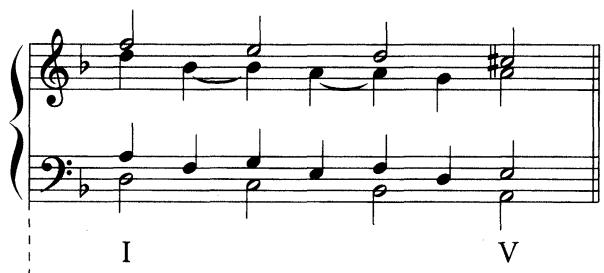
中文讲解
图像占位符:图注标注为 Example 3.5(续)c)——即第三章例3.5的后续部分;按字面提示这是该图例的延续片段,可能与本节对韦瓦尔第第三乐章的乐谱分析直接对应。内嵌图像数据已省略,仅保留图注与位置信息,需查阅原书方能看到谱面。
补充说明
图注中’continued’一词提示这是 Example 3.5 在跨页后接续呈现的图块(按编号推断前一页已出现过 a)、b) 等部分)。
第4段(P0065)
原文复述
Image placeholder: page-17 embedded image or musical-score example, data omitted; position and caption retained.
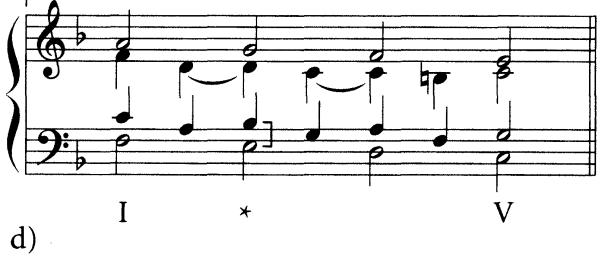
中文讲解
第17页的图像或乐谱示例占位符,内嵌图像数据已省略,仅保留位置与图注;具体内容需查阅原书第17页的对应版面。
第5段(P0066)
原文复述
Image placeholder: page-17 embedded image or musical-score example, data omitted; position and caption retained.
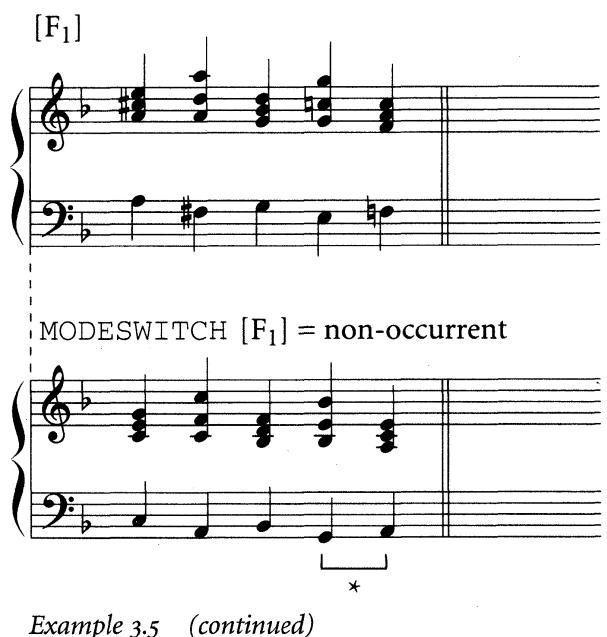
中文讲解
第17页的图像或乐谱示例占位符,内嵌图像数据已省略,仅保留位置与图注;具体内容需查阅原书第17页的对应版面。
第6段(P0067)
原文复述
…cadential passage played by everyone in sixteenth notes. To some degree, Vivaldi engages in a clever play with his ritornello segments by isolating six of them within the subsequent ritornellos, and by “juggling” one of them — R₃ — in a particular way: beginning with [F₆], playing through the cadence in the Epilog, and then recapitulating the Vordersatz without a pause. One especially ingenious stroke is the close juxtaposition of R₃ and R₄, which actually lie on different scale degrees (V and II) but which fit together flawlessly, endowing the passage at mm. 57–61 with a surprising new impetus and drive. All these features supply compositional models that Bach would certainly have wished to emulate.
中文讲解
本段承接P0062被截断的句子:‘回归曲以众人齐奏十六分音符的终止句这一令人难忘的兴奋感收束’。随即展开作者对韦瓦尔第技术强项的具体列举。其一,韦瓦尔第在后续回归曲中有选择地抽出起始回归曲中的六个段落加以运用;其二,他对R₃做了极富巧思的’杂耍式’重组——从[F₆](展开型乐节6)起,接尾声中的终止句,再不间断地回顾前句,打破了回归曲内部段落原本的线性顺序;其三,R₃与R₄相邻并置,分属V级与II级两个不同音级,衔接却天衣无缝,为第57—61小节注入出乎意料的冲劲与动力。段末的判断具有小结性质:所有这些特征都是巴赫’必定希望效法’的作曲模型——表面是赞美,实则暗含’但巴赫会做得更系统’的伏笔。本段列举的三种’杂耍’手法,连同下段即将出现的[F₄ₐ]一次性插入,共同构成小节’未发生’与’后果’命题的具体证据:未发生的是段落本应有的系统再现,发生的是局部令人惊艳的偶然成就。
补充说明
方括号中的标签含义:[F] 代表 Fortspinnung-segments(展开型乐节),[E] 代表 Epilog(尾声),[R] 代表 ritornello 段;下标数字为该段在回归曲内部的出现次序。‘众人齐奏’(played by everyone)指全乐队齐奏(tutti)。mm. 57–61 为小节编号。
第7段(P0068)
原文复述
On the other hand, Vivaldi’s ritornello procedures also display some sloppiness, or at least what Bach would have regarded as an irresponsible laxity in exploiting his own inventions. For instance, Vivaldi shows no interest in the MODESWITCH, even though several segments — namely [F₃], [F₅], [F₆], and [E] — could successfully have undergone transformations and thus have suggested new tonal areas to explore; one could imagine, for example, a move to the relative major that would have drawn on these latent possibilities. The final ritornello, by contrast, suffers from the opposite “fault”: here Vivaldi develops and inserts new inventions without the movement as a whole being able to benefit from these recent discoveries. [F₄ₐ], for instance (mm. 118–120), appears nowhere else in the piece — which, from a Bachian point of view, is a great pity, since it takes the chromaticized ascending tetrachord heard in [F₄] and extends it brilliantly upward by yet another chromaticized tetrachord in order to arrive at the tonic, at which point the passage connects seamlessly with the Epilog. Though this insertion in the closing bars of the piece is undeniably exciting, a systematic thinker like Bach would have been far too [sentence continues on the next page].
中文讲解
本段承接前段的赞美,转入对韦瓦尔第’懒散’或’失职’一面的集中指控,而后者正是本小节’后果’一词的核心。第一项指控:‘调式切换’(MODESWITCH)的缺席。即便[F₃]、[F₅]、[F₆]与[E]等多个段落都已具备变换的基础(例如想象移向关系大调),韦瓦尔第仍不去做相应的转调,白白放过潜在的调性拓展空间——这是一种’未发生’(调式转换未实现)。第二项指控与第一项方向相反:末次回归曲中他反而塞入全新材料,结果却是整首乐章无法从中获益。[F₄ₐ](第118—120小节)在全曲中仅此一次出现:它将[F₄]中已有的’半音化上行四音列’再向上扩展一组四音列,到达主音后与尾声无缝衔接,效果虽惊艳,却因只发生一次而无法成为贯穿全曲的’发明’——这是另一种’未发生’(段落未再循环)。段末以’巴赫这样一位系统性的思考者会……‘截断,留待下页续完。从对照角度看,前段强调的是韦瓦尔第’可效法’之处,本段则集中呈现他的’懒散’与由此带来的’后果’:调性空间未拓展、发明未被利用、精彩笔触沦为孤例。
补充说明
MODESWITCH:大小调之间的转换(如从小调段落改写为其关系大调)。半音化上行四音列(chromaticized ascending tetrachord):每音皆升高半音的四个音的上行模进片段;‘再向上扩展一组四音列’指连续两次四音列叠加以延长半音化上行。‘关系大调’(relative major):小调的关系大调位于其上方小三度(如 a 小调 → C 大调)。
第8段(P0069)
原文复述
Repeated page header / citation block: “Dreyfus, Laurence. Bach and the Patterns of Invention. E-book, Cambridge, Mass.: Harvard University Press, 1996, https://hdl.handle.net/2027/heb05561.0001.001. Downloaded on behalf of Indiana University, Bloomington.”
中文讲解
第17页再次出现的电子书出处信息块:作者、书名、电子版出版信息、HathiTrust 链接、下载机构均与P0063相同,属于电子版阅读器自动叠加的版式标识,并非正文。
第9段(P0070)
原文复述
Section heading: “The Ideal Ritornello”
中文讲解
本小节末的小节标题’The Ideal Ritornello’(理想回归曲)。它既标示下一节即将开始,也与本节开篇的判断形成呼应:前文已将’理想回归曲’明确归于巴赫的发明,并以韦瓦尔第三乐章作为’未达此理想’的对照样本;本标题宣告论述即将从’韦瓦尔第的实例’转向’巴赫自身对理想回归曲的系统建构’,因而具备承上(与开篇判断呼应)与启下(引出下一节)的双重功能。
脚注 / 边栏 / 图表 / 附加信息(如有)
本小节范围内的非正文要素包括:(1) P0063与P0069两次出现的电子书版式信息块(页码74、书名《Bach and the Patterns of Invention》、作者 Laurence Dreyfus、哈佛大学出版社1996年电子版、HathiTrust 链接、印第安纳大学布卢明顿分校下载声明);(2) P0064的图注’Example 3.5 (continued) c)’,提示该图为第三章例3.5乐谱示例的延续部分;(3) P0065、P0066的两个第17页图像/乐谱占位符,内嵌数据均已省略;(4) P0070的小节标题’The Ideal Ritornello’。这些材料共同支撑P0062—P0068对韦瓦尔第三乐章的分析,但因内嵌图与谱例被省略,具体谱面细节需查阅原书。
💡 本节核心要点
- 作者开宗明义:‘理想回归曲’是巴赫的发明,韦瓦尔第仅偶尔展现其底层结构可能性;韦瓦尔第三乐章虽为’韦氏式发明’的精彩示范,却不符合巴赫式的系统性严谨。
- ‘未发生’之一:开场回归曲本身篇幅冗长却从未被原样重复;其前句仅展开主三和弦而不触及属和弦,被作者称为’反巴赫’的姿态。
- ‘未发生’之二:韦瓦尔第对MODESWITCH(调式切换)毫无兴趣,[F₃]、[F₅]、[F₆]与[E]本可朝向关系大调进行变换,却未被利用。
- ‘未发生’之三:末次回归曲中插入的[F₄ₐ](第118—120小节)将[F₄]的半音化上行四音列再向上扩展一组后抵达主音,效果虽惊艳,却仅出现一次,未被整首乐章消化吸收。
- 与之相对,韦瓦尔第的强项亦被逐一标举:六个起始段落被抽出供后续回归曲使用;R₃以’从[F₆]起,经Epilog终止句,不间断回顾Vordersatz’的方式被杂耍式重组;R₃与R₄虽分属V级与II级两个不同音级,却在第57—61小节无缝衔接。
- 作者对韦瓦尔第的总体评价保持双面性:‘可效法’的作曲模型与’失职’的懒散并存;本节以’The Ideal Ritornello’为标题收束,宣告论述即将转入巴赫对理想回归曲的系统建构。
🔑 关键术语
- Ritornello(回归曲):巴洛克协奏曲中由全体乐队(tutti)演奏的反复出现的主题段落;本节特指作为乐章骨架的主要回归曲整体及其内部可拆分的段落。
- Ideal ritornello(理想回归曲):作者明确归于巴赫发明的一种回归曲构想:以系统性、变换性与贯穿性为标准,将起始回归曲的各段落转化为整首乐章的结构资源。
- Vordersatz(前句):回归曲开头的’前句’段落,理论上应为后续属调呼应埋下伏笔;本节中韦瓦尔第的前句未触及属和弦,被作者称为’反巴赫’。
- Epilog(尾声):回归曲内部的收束段落,本节中韦瓦尔第R₃段’杂耍式重组’即借用Epilog中的终止句作为衔接。
- Fortspinnung-segments(展开型乐节):作者为本节分析所设的术语,指韦瓦尔第回归曲内部那些较短、围绕属和弦盘旋的发展型乐节,与德语’Fortspinnung’(‘展开出去’)的传统意涵呼应。
- MODESWITCH(调式切换):段落从大调切换到小调或从小调切换到其关系大调的转调操作;本节指出韦瓦尔第对其冷淡,错失潜在调性拓展。
- Tetrachord / chromaticized ascending tetrachord(四音列 / 半音化上行四音列):四音一组的音阶片段;‘半音化上行’指每音皆上行半音;[F₄ₐ]将[F₄]已有的半音化上行四音列再向上扩展一组,形成连续两层半音化上行。
- Relative major(关系大调):小调的关系大调位于其上方小三度(如 a 小调 → C 大调);本节设想韦瓦尔第本可借此MODESWITCH拓展调性空间。
- Scale degrees V and II(V级与II级):属音与上主音;本节指出R₃、R₄虽属不同音级却能无缝衔接,是韦瓦尔第处理回归曲段落的精彩之处。
ch01_s12 [描述性拆分] The ideal ritornello and Vivaldi’s op. 3 no. 10
第1段(P0071)
原文复述
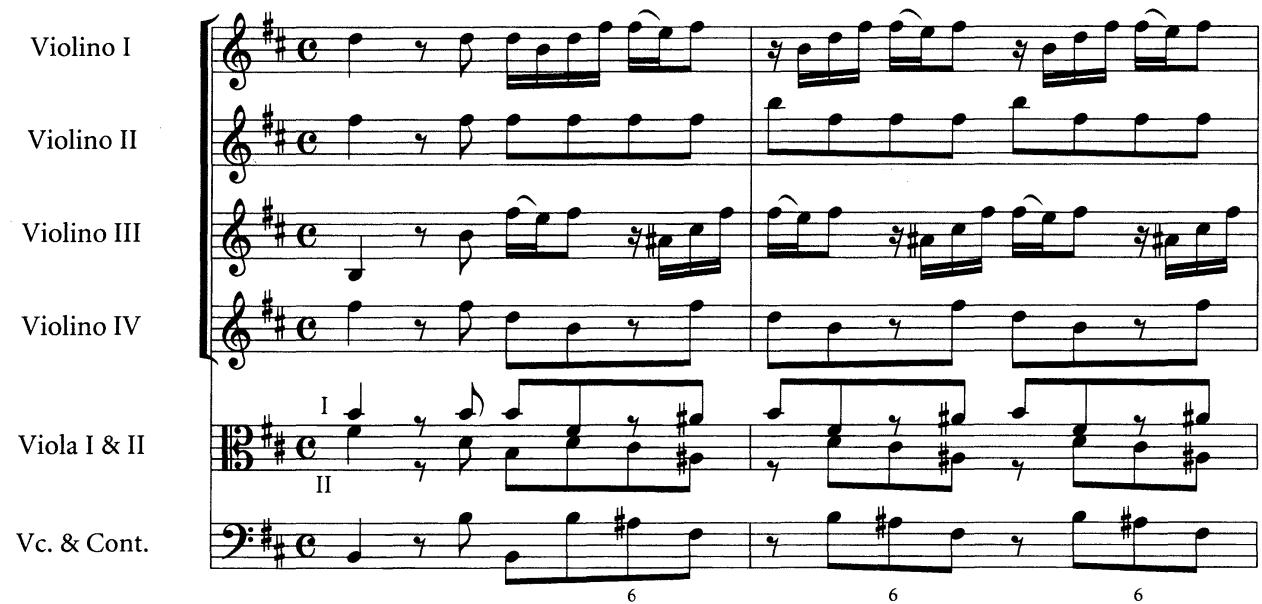
中文讲解
该段是第18页上的图像或乐谱示例占位符,原书此处为可视化材料,但任务输入中只保留了位置与图注说明,具体的图形或谱例内容已省略,因此无法从文字中确认其细节。本节主题为"理想里托奈罗",该占位符所在页面应承载与此主题相关的谱例(参见紧接其后的 P0072 中 Example 3.6 的图题)。讲解时应仅指出它在版面中的存在与作用,避免推测图像内容。
第2段(P0072)
原文复述
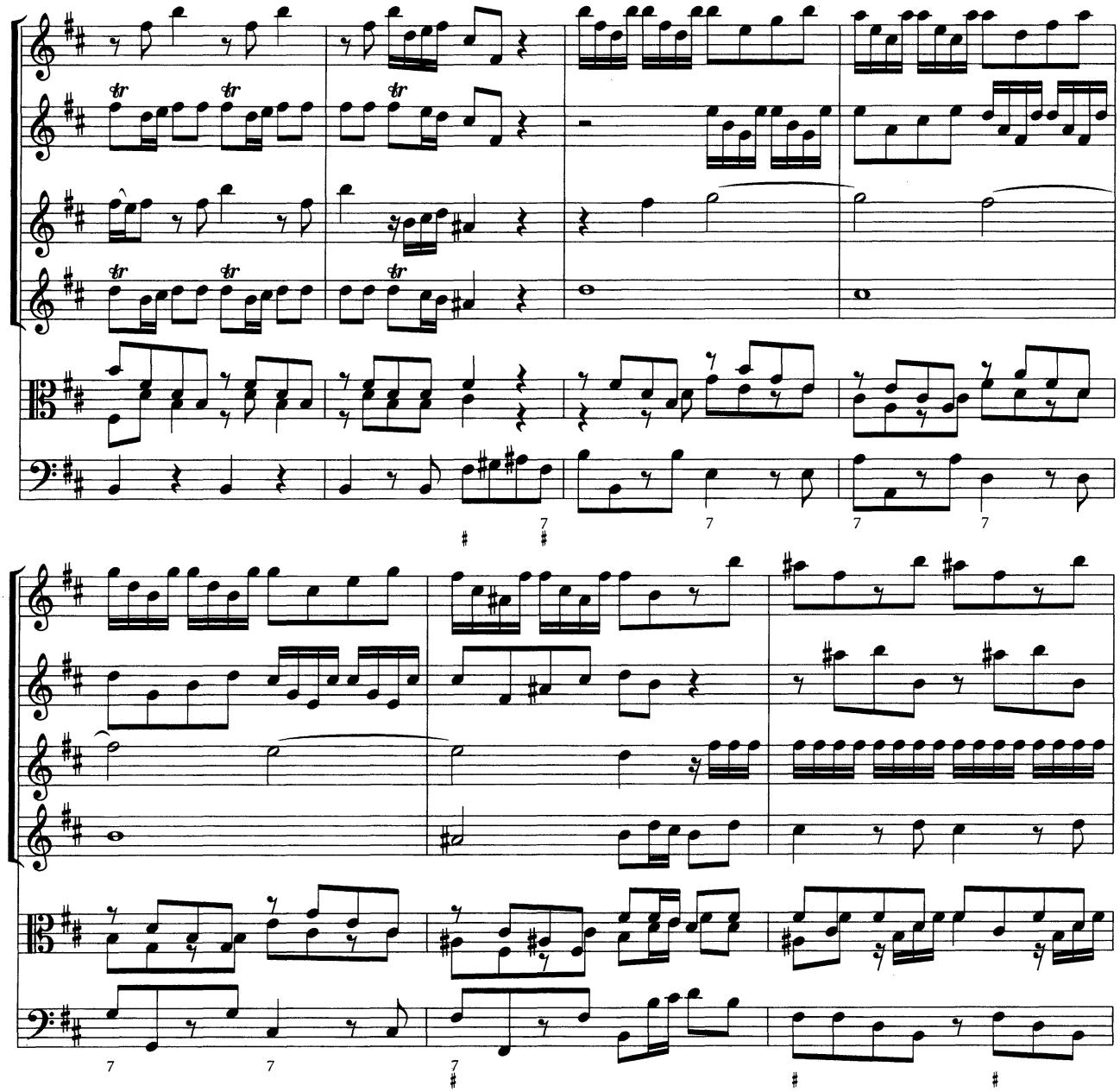
中文讲解
该段是 Example 3.6 的图题:维瓦尔第《b小调四把小提琴协奏曲》作品3之10第一乐章的里托奈罗片段。占位符说明此处的乐谱影像未保留,仅图题可见。Example 3.6 在本节论证中是核心实物证据,作者引用此曲作为对照,以说明在引入"理想里托奈罗"概念前,先以维瓦尔第这首协奏曲提供一个具体的里托奈罗样本供读者审视。讲解时需指出:图题本身界定了作品(op. 3, no. 10/1)、体裁(协奏曲第一乐章)与所考察对象(ritornello)三项关键信息。
补充说明
图题中 “/1” 表示第一乐章;op. 3 为维瓦尔第《和声与创意的尝试》(L’Estro armonico)。
第3段(P0073)
原文复述
76 Bach and the Patterns of Invention Dreyfus, Laurence. Bach and the Patterns of Invention. E-book, Cambridge, Mass.: Harvard University Press, 1996, https://hdl.handle.net/2027/heb05561.0001.001. Downloaded on behalf of Indiana University, Bloomington
中文讲解
该段是第76页的页眉与版权页脚信息:上面一行标明页码与书名《Bach and the Patterns of Invention》;下面三行给出作者(Laurence Dreyfus)、版本(电子版)、出版地(马萨诸塞州剑桥)、出版社(哈佛大学出版社)、出版年(1996)、永久标识符URL以及下载机构(印第安纳大学伯明顿分校)。这是电子书档案的常规页眉/页脚,属于版面元信息,不构成正文主张。其作用是声明引用此书的版本来源,便于学术查证。
第4段(P0074)
原文复述
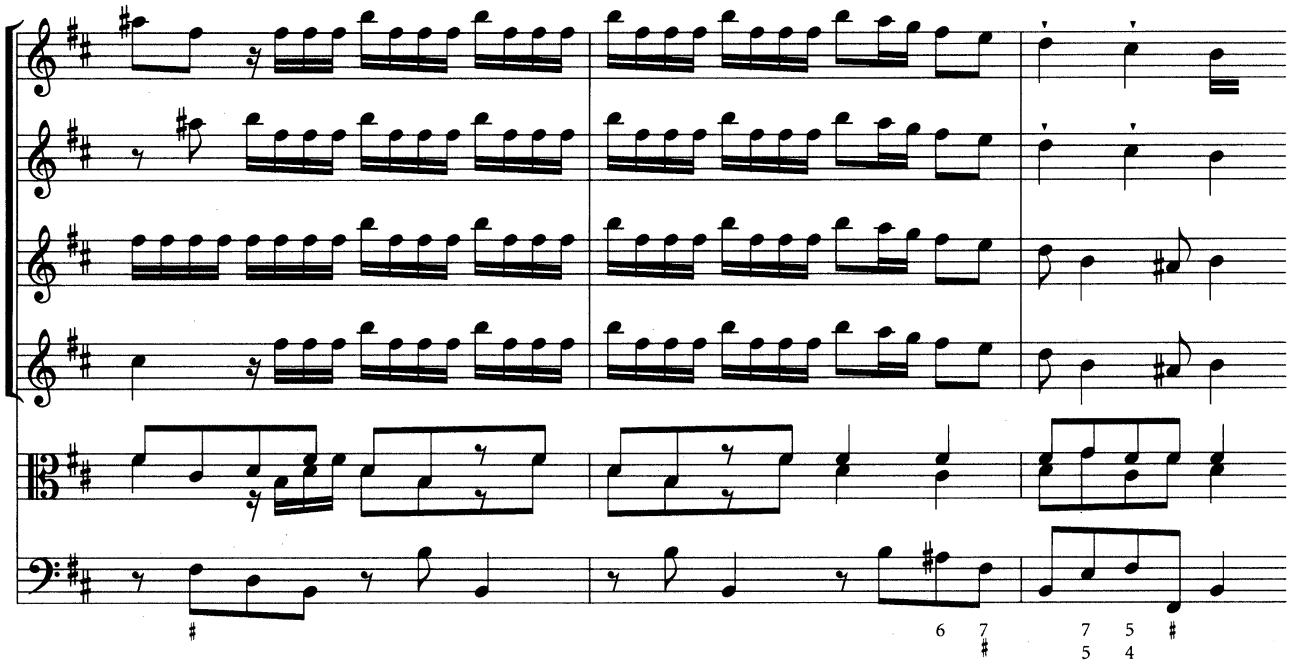
中文讲解
该段是 Example 3.6 的续页占位符(位于第19页),延续上一页的维瓦尔第里托奈罗乐谱影像,仅图注可读,谱例内容未保留。它在版面中起承接作用,让谱例跨页展示完整;讲解时应说明它属于 Example 3.6 的延续部分,谱例细节不可见。
第5段(P0075)
原文复述
Dreyfus, Laurence. Bach and the Patterns of Invention. E-book, Cambridge, Mass.: Harvard University Press, 1996, https://hdl.handle.net/2027/heb05561.0001.001. Downloaded on behalf of Indiana University, Bloomington
中文讲解
该段是第19页的页脚版权信息,与 P0073 内容相同,重复声明作者 Laurence Dreyfus 的电子版书《Bach and the Patterns of Invention》(哈佛大学出版社,1996)的来源元数据。这是电子书档案每页都会重复出现的版权标记,不承担论证功能。
第6段(P0076)
原文复述
The Ideal Ritornello
中文讲解
该段是本节的小节标题"The Ideal Ritornello"(理想里托奈罗)。它标志作者从前面以维瓦尔第 op. 3 no. 10 为例的铺垫中,正式切入"理想里托奈罗"的概念建构。标题的关键词是"理想",暗示作者接下来要给出一种规范化的里托奈罗结构范式,并以此作为衡量巴赫里托奈罗写作的标尺。该标题开启的论题是:何谓里托奈罗的"理想"形态,以及巴赫如何在实践中逼近或偏离此理想。
第7段(P0077)
原文复述
$$ \mathrm{R} _ {\text { ideal }} = [ \mathrm{V} ] \longrightarrow [ \mathrm{F} ] \longrightarrow [ \mathrm{E} _ {1 - 2 } ] $$
中文讲解
该段是一个数学/结构公式,表述"理想里托奈罗"的形式构造:R_ideal(理想里托奈罗)由三个连续的功能段落组成,依次为 [V] → [F] → [E_{1-2}]。其中:[V] 指 Vordersatz(呈示部开端短语/前句),负责主题素材的最初陈述;[F] 指 Fortspinnung(展开式续写/即兴展开段落),对 [V] 的素材进行分裂、模进、变奏等发展;[E_{1-2}] 表示一个两小节的结束段(Epilog),用以收束并为主调作准备。箭头 → 表示这三段在时间与功能上的顺序衔接。作者用一个高度抽象的符号公式把所有里托奈罗共同遵守的语法压缩为最小化的骨架,便于后续用以评判具体作品的里托奈罗是否完整、对称、理想。该公式的关键教学意义在于:它把"理想"具象化为 [V]、[F]、[E] 三大功能块的依次出现与可识别性。
补充说明
公式中的下标 1-2 暗示 [E] 段的长度规格为两小节;整式呈现的是一种最小化的"骨架"而非完整主题素材。
第8段(P0078)
原文复述
Figure 3.1 The “ideal” ritornello for Vivaldi’s Concerto for Four Violins in B minor, mvt. 1 (op. 3, no. 10)
中文讲解
该段是 Figure 3.1 的图题,标题为:维瓦尔第《b小调四把小提琴协奏曲》第一乐章(op. 3, no. 10)的"理想"里托奈罗。题目中的"ideal"加引号,提示读者这是一种分析性建构(idealization),即作者从该作品的开篇里托奈罗中提取出的、符合上一公式 R_ideal = [V]→[F]→[E_{1-2}] 三段结构的范式形态。该图题把抽象公式与具体作品绑定起来:读者可以对照 Example 3.6 的实际谱例,去辨认 [V]、[F]、[E_{1-2}] 各自对应的乐句与位置。讲解时应指出"加引号"的修辞用意——它提醒我们这是分析者的理想化抽取,而非作曲家预先声明的形式模板。
第9段(P0079)
原文复述
greedy to confine this chromatic span of a seventh to a moment of surprise near the end of the movement and would have placed it at the beginning to show—in a somewhat more cerebral way, to be sure—that it could be split into two parts, each of which could be used separately. Bach’s ritornello procedures, then, display a veritable compulsion to make good, if not multiple, use of every aspect of the invention and reveal a corresponding anxiety that an invention could be misconstrued as mere chance association. The notion of a ritornello’s ideality therefore requires far more than attention to mere syntax. Instead, it makes a well-constructed ritornello equivalent, as it were, to a text of metaphysical stature that claims to say something both cogent and complete. 8
中文讲解
该段承接上一页关于一个"七度半音跨度"主题素材的讨论,说明巴赫不愿把它只用作末尾的惊喜,而倾向于把它放到开头,并展示它能被拆成两个独立使用的部分——这是巴赫对主题素材全方位开发的典型策略。作者由此作出一个概括性论断:巴赫的里托奈罗写作程序表现出一种"强迫"式的倾向,要把发明的每一个侧面都派上用场(哪怕只用一次),并且显露出对"发明被误读为偶然拼贴"的焦虑。这种焦虑使里托奈罗的"理想性"远远不只是句法层面(各部分是否齐备),而是要让一个构造良好的里托奈罗在隐喻意义上"等同于一段形而上学级别的文本",宣称自己说出了既严密又完整的东西。末尾的上标"8"指向一个脚注(脚注内容未出现在本节输入中)。该段的教学要点有三:其一,巴赫把主题素材当作可拆解、可重组的资源,而非一次性装饰;其二,“理想里托奈罗"的评判标准是语义层面的充实性而非句法层面的齐备;其三,作者借"形而上学"的比喻抬高里托奈罗的修辞地位,呼应前文"理想"公式的深层用意。
补充说明
段末上标 8 表明本段引述背后有一个脚注,但该脚注文本未包含在本节输入中。
第10段(P0080)
原文复述
In order to illustrate how far Bach could press this notion of an ideal ritornello, I turn to the first movement of the Second Brandenburg Concerto (BWV 1047). Although its opening ritornello (shown in Ex. 3.7) seems, through its familiarity, to epitomize Bach’s concertos, there is really something peculiar about it. If we divide up the opening eight measures in traditional terms of phrase structure, it is easy to isolate the four “balanced” phrases that constitute the ritornello. Although grammatical enough in tonal terms, this ritornello clearly ignores the code that characterizes other concerto-ritornello movements. The first two measures— [V_a] —embellish the tonic but lack a confirming dominant chord. To function as a complete Vordersatz they therefore require [V_b] in mm. 3–4. The following bars contain nothing resembling a Fortspinnung, for immediately at measure 5, the ritornello returns to the tonic and sets up the cadence in m. 8. What is striking, however, is the use to which Bach puts the opening two measures. The entrance of the four solo instruments immediately after the opening ritornello is punctuated by isolated statements of this [V_a] fragment. As a consequence, Bach manages to
中文讲解
该段以第二勃兰登堡协奏曲(BWV 1047)第一乐章为案例,演示巴赫如何把"理想里托奈罗"的理念推向极致。作者首先指出这部作品的开篇里托奈罗(见 Example 3.7)表面上因广为人知而像是巴赫协奏曲的典范,但实际上颇为反常:从传统的乐句结构看,开头八小节的确可以切成四个"平衡"的乐段,但这些乐段并不是那种在别处能真正驱动整首里托奈罗乐章的"鲜明陈述”。具体分析:前两小节 [V_a] 只是装饰主和弦,却没有出现肯定的属和弦,因此要构成一个完整的前句(Vordersatz)就必须依赖第3—4小节的 [V_b] 来补足;其后的小节并不像 Fortspinnung(展开续写),因为第5小节立即回到主和弦并在第8小节导向终止——尽管在调性上还算合乎语法,这段里托奈罗却显然违背了其他协奏曲里托奈罗乐章所遵循的规范代码。真正值得注意的,是巴赫如何运用开头这两小节:开篇里托奈罗结束后,四件独奏乐器立即登场,其入口被 [V_a] 这个片段的孤立反复所分隔与强调。作者由此论证:巴赫借此把一个本不"理想"的里托奈罗变成了意义深长的文本。该段末尾以"As a consequence, Bach manages to"悬停,预示下一页将完成这一论证(“Bach manages to…")。讲解时应强调:这是本节"理想里托奈罗"理论的具体应用案例,作者用 BWV 1047 来说明即使表面"破规"的开篇也能通过后续对 [V_a] 片段的反复点戳而获得形而上学的完整性。
补充说明
本段使用了一组对仗术语:[V_a] 与 [V_b] 表示一个 Vordersatz 内部的两个互补子句;mm. 是 measures(小节)的缩写;调性与和声分析中"肯定的属和弦"指传统前句结束时应出现的属和声功能。
第11段(P0081)
原文复述
78 Bach and the Patterns of Invention Dreyfus, Laurence. Bach and the Patterns of Invention. E-book, Cambridge, Mass.: Harvard University Press, 1996, https://hdl.handle.net/2027/heb05561.0001.001. Downloaded on behalf of Indiana University, Bloomington
中文讲解
该段是第78页的页眉与版权页脚信息,与 P0073、P0075 内容相同,重复声明 Laurence Dreyfus《Bach and the Patterns of Invention》电子版(哈佛大学出版社,1996)的来源元数据及下载机构。该段属版面元信息,不承担论证功能,讲解时仅指出其版面属性。
脚注 / 边栏 / 图表 / 附加信息(如有)
本节包含以下非正文附加材料:(1) Example 3.6(第18—19页),图题为维瓦尔第《b小调四把小提琴协奏曲》op. 3 no. 10 第一乐章的里托奈罗谱例,跨页呈现,是作者抽取"理想里托奈罗"骨架的实证样本;(2) Figure 3.1(第20页),图题为同一作品第一乐章的"理想"里托奈罗示意,对应公式 R_ideal = [V]→[F]→[E_{1-2}];(3) 页眉/页脚版权信息(P0073、P0075、P0081),重复声明电子书档案的版本来源;(4) P0079 段末上标"8"对应一个脚注,但脚注正文未包含在本节输入中;(5) P0080 提到 Example 3.7(BWV 1047 第一乐章开篇里托奈罗谱例),该谱例本身不在本节段落输入内,仅以提及方式出现。
💡 本节核心要点
- 本节给出"理想里托奈罗"的形式公式 R_ideal = [V] → [F] → [E_{1-2}],把理想性具象化为前句、展开续写、两小节收束段三块功能依次出现的最小骨架。
- 作者通过维瓦尔第 op. 3 no. 10 的 Example 3.6 谱例与 Figure 3.1 的标注,把抽象公式与具体作品绑定,使读者可以验证 [V]、[F]、[E_{1-2}] 在真实里托奈罗中的对应位置。
- 理想性的真正标准不在句法齐备,而在语义充实:巴赫的里托奈罗程序被描述为对发明素材每一个侧面的强迫式开发,并伴以避免被误读为偶然拼贴的焦虑。
- 作者把一段构造良好的里托奈罗比作"形而上学级别的文本”,宣称它说出既严密又完整的东西,从而把里托奈罗从结构问题提升为修辞与意义问题。
- 以第二勃兰登堡协奏曲 BWV 1047 第一乐章为案例,开篇里托奈罗表面"破规"(前句需 [V_a]+[V_b] 才完整、缺少典型的 Fortspinnung),却通过对 [V_a] 片段在独奏乐器入场处的反复点戳而获得完整性。
- 案例与公式之间的关系是:巴赫并不机械套用 [V]→[F]→[E] 三段式,而是把任一功能块当作可独立调用的资源,靠反复强调与跨段落呼应来兑现"理想性"的要求。
🔑 关键术语
- Ritornello:原意为"返回",指巴洛克协奏曲中反复出现的全奏段落与其后独奏段落交替的整体框架;本节中特指开篇由全奏乐队陈述的主题段落,即里托奈罗主题。
- R_ideal / “ideal” ritornello:作者用以指称"理想里托奈罗"的简称,加引号的"ideal"表示这是一种分析性建构而非作曲家自陈的范式;其形式由 [V]→[F]→[E_{1-2}] 三段构成。
- [V] / Vordersatz:德语"前句",指里托奈罗开头陈述主题素材的乐句,传统上需要明确调性(尤其是属和弦的肯定)才能独立成立;本节在 BWV 1047 案例中拆分为 [V_a] 与 [V_b] 两个互补子句。
- [F] / Fortspinnung:德语"展开续写",指紧接 [V] 之后对主题素材进行模进、拆解、变奏的发展性段落;本节在 BWV 1047 案例中用以指认该作品里托奈罗缺失此功能。
- [E_{1-2}] / Epilog:两小节长度的收束段落,作用是为回归主调作准备并结束里托奈罗的陈述;公式中的下标"1-2"即指其长度规格为两小节。
- op. 3, no. 10 / Vivaldi’s Concerto for Four Violins in B minor:维瓦尔第《b小调四把小提琴协奏曲》,作品3之10,本节用以承载"理想里托奈罗"概念的首个具体样本,其里托奈罗见 Example 3.6 与 Figure 3.1。
- BWV 1047 / Second Brandenburg Concerto:巴赫《第二勃兰登堡协奏曲》,本节以此第一乐章为例,演示巴赫如何在"破规"的开篇里托奈罗中通过对 [V_a] 片段的反复点戳而把里托奈罗推向"理想"的语义完整性。
- Example 3.7:本节正文中提及但谱例未含于本节输入内的图例,对应 BWV 1047 第一乐章开篇里托奈罗;作用是让读者对照 P0080 的逐小节分析。
- Fortspinnung:见 [F];德语"spinning out",指主题素材在里托奈罗中段的展开式续写,是与"前句"配合的标准功能段落之一。
ch01_s13 [描述性拆分] Restrained praise and critique of Vivaldi’s ritornello procedures
第1段(P0082)
原文复述
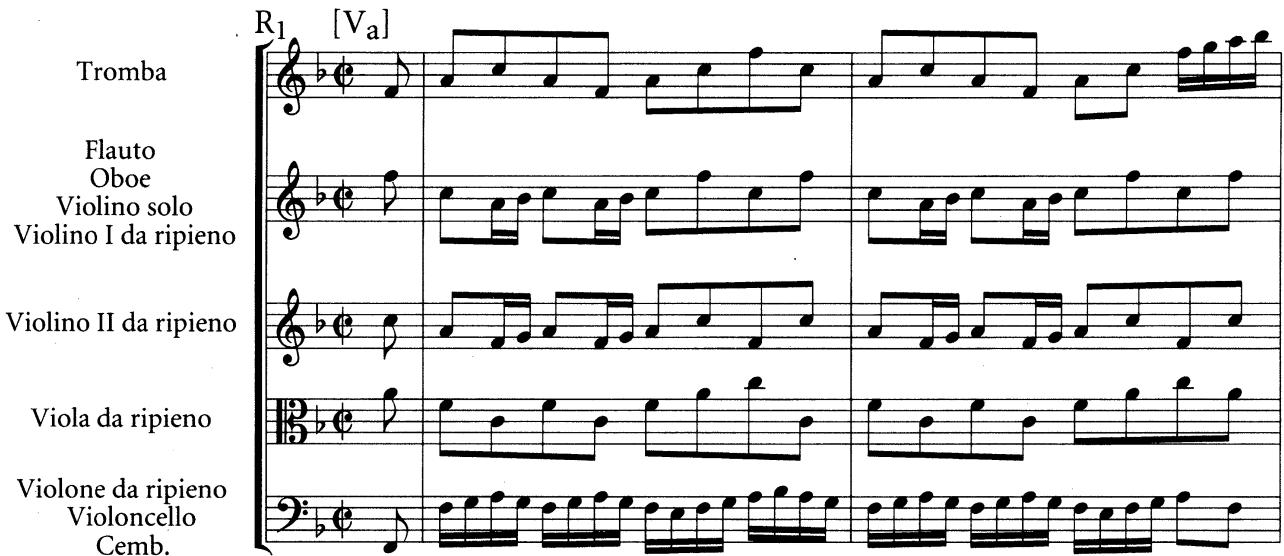
中文讲解
本段是第21页上的图像或乐谱占位符,原文仅保留了位置标记与图注占位说明,实际图像内容未在文本中呈现。就本段而言,讲解所能确认的只有:它处于第21页,处于本节范围之内;其内容属于视觉材料(图像或乐谱),需查看原书或原页面才能获知。不得据本占位符推测其描绘的主题、谱例内容或与维瓦尔第利都奈罗程序的对应关系。
补充说明
本段无独立可读文字,仅为图像占位信息。
第2段(P0083)
原文复述
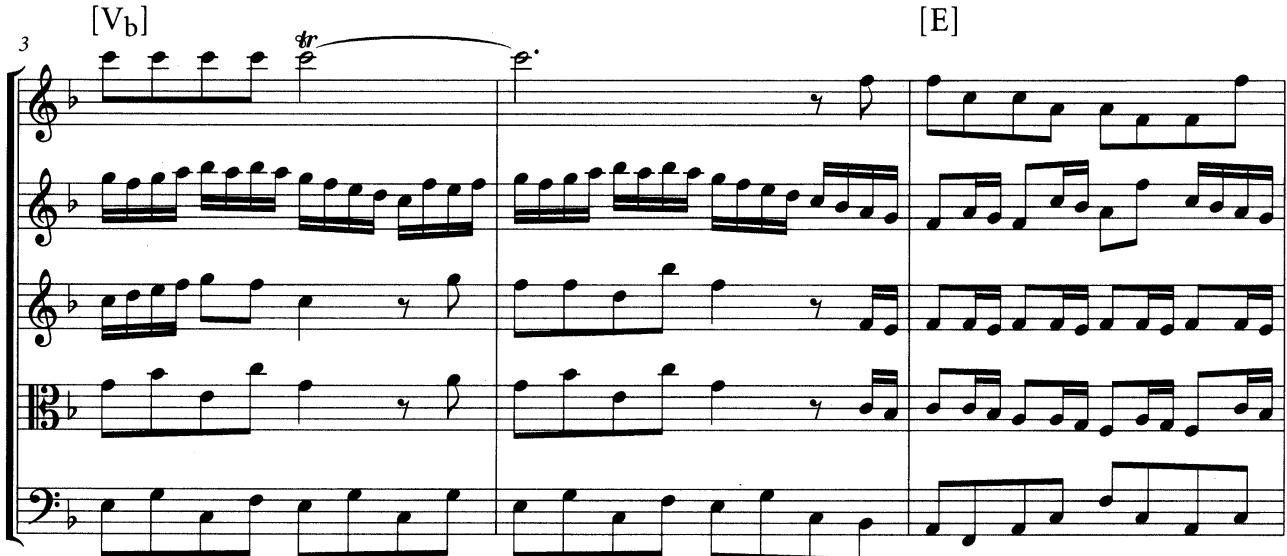
中文讲解
本段同样是第21页上的图像或乐谱占位符,原文未提供可读文字或图注内容。讲解只能指出:它位于第21页,与P0082同处一页,性质同为视觉材料占位符;其具体内容、与正文论点的关联需借助原书图像查看,本节文本本身无法确认。
第3段(P0084)
原文复述
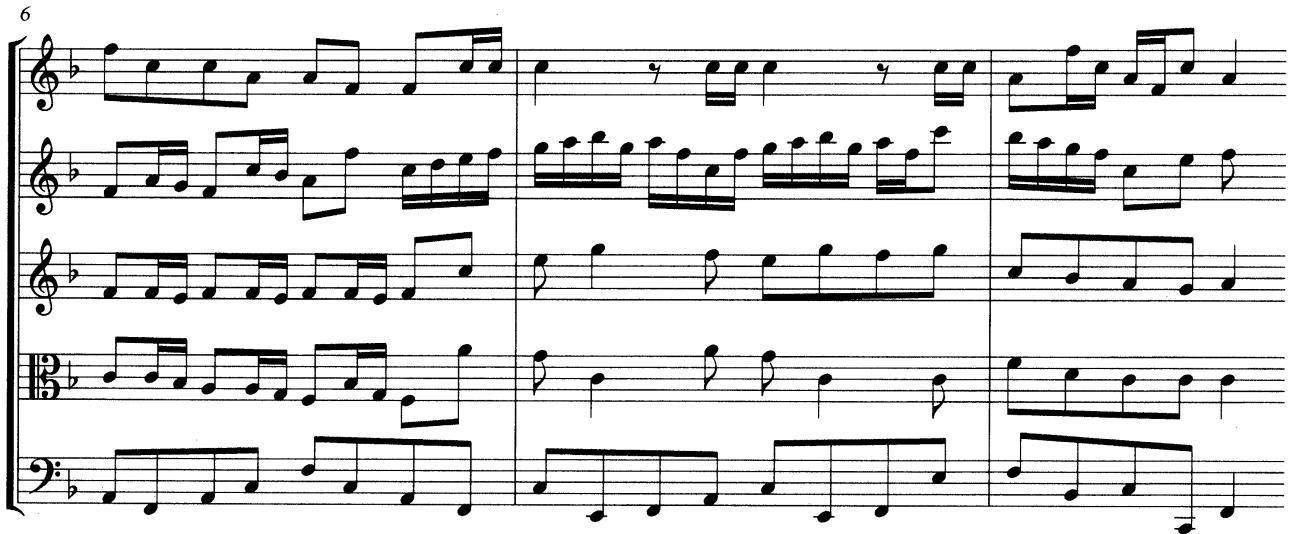
中文讲解
本段为第21页上的第三个图像或乐谱占位符,原文同样未给出图注或说明文字。讲解仅可确认其版面位置(第21页)与材料类型(视觉材料占位)。在没有原图的情况下,不能对其题材、所引作品或与维瓦尔第利都奈罗的对应关系作任何具体陈述。
第4段(P0085)
原文复述
Dreyfus, Laurence. Bach and the Patterns of Invention. E-book, Cambridge, Mass.: Harvard University Press, 1996, https://hdl.handle.net/2027/heb05561.0001.001. Downloaded on behalf of Indiana University, Bloomington
中文讲解
本段并非正文段落,而是电子书版权与下载来源声明行。原文依次给出:作者名(Laurence Dreyfus)、书名(Bach and the Patterns of Invention)、版本形态(E-book)、出版地(Cambridge, Mass.)、出版社(Harvard University Press)、出版年(1996)、电子资源标识符(hdl.handle.net/2027/heb05561.0001.001)以及代理下载机构(Indiana University, Bloomington)。这一行的作用是说明读者所看到的电子文本由哪一机构代为下载、依据哪一出版社的电子版本,并不构成作者观点或论证的一部分。
补充说明
此行与P0088重复出现于电子书页面底部,是数字图书馆的自动加注,不影响正文阅读。
第5段(P0086)
原文复述
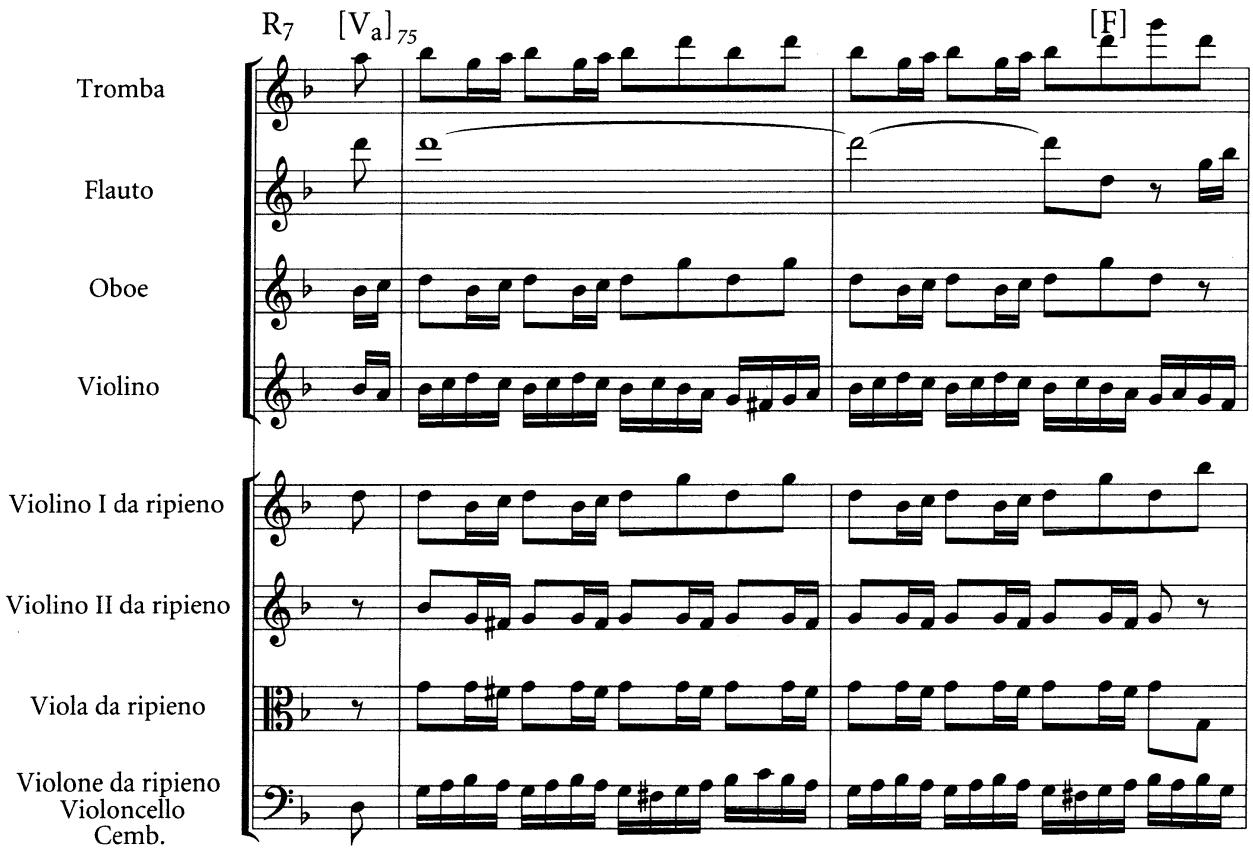
中文讲解
本段为第22页上的图像或乐谱占位符,原文未提供文字说明或图注。讲解只能确认其版面位置在第22页,属于视觉材料占位;在没有原图的情况下,不能对其题材、乐谱片段或论证功能作任何具体描述。
第6段(P0087)
原文复述
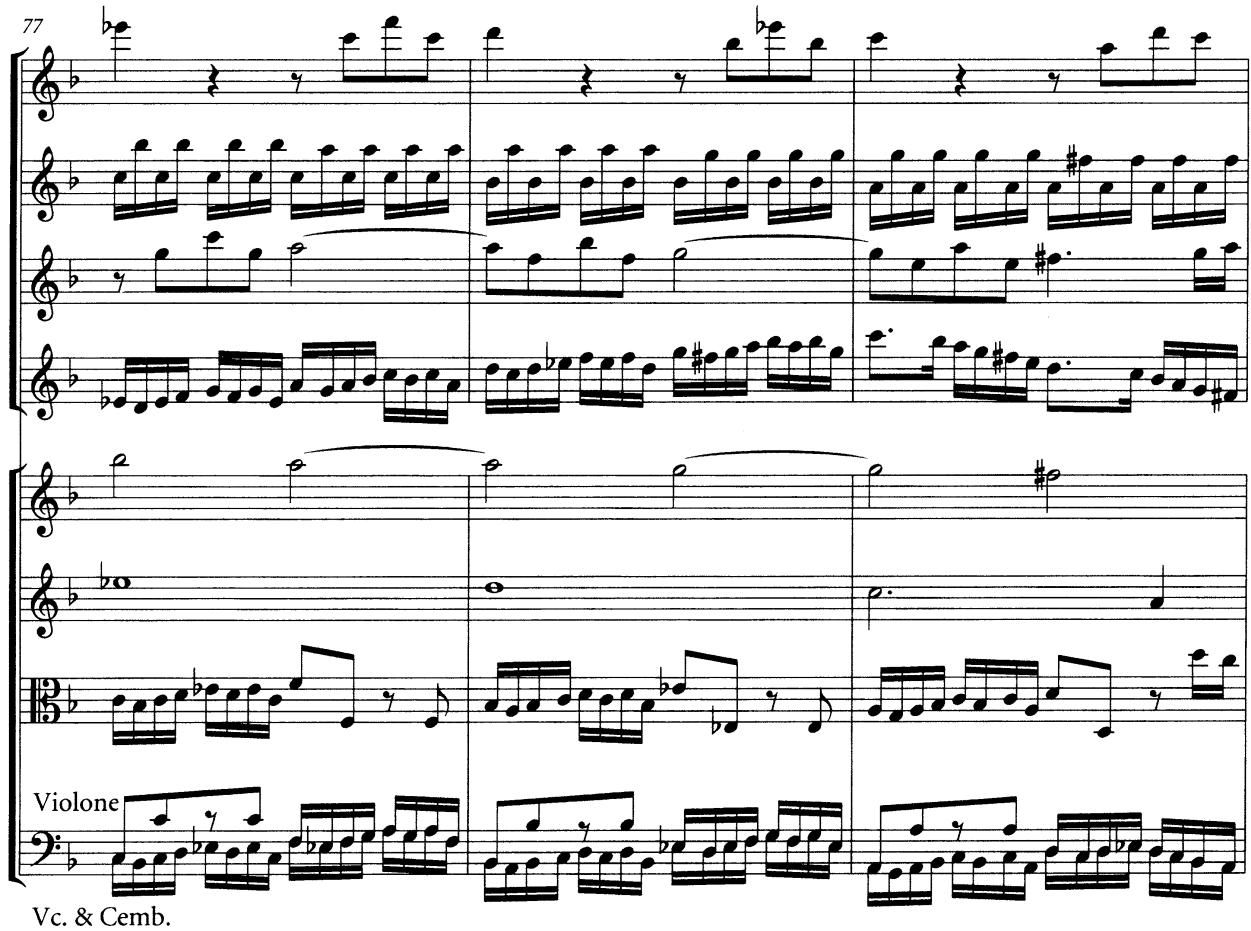
中文讲解
本段是第22页上带有图注的图像或乐谱占位符,原文给出的可读信息仅为图注:“Example 3.8 BWV 1047/1, mm. 75–83”。这意味着:它是书中的"例3.8",对应标识为BWV 1047/1,乐谱片段截取自第75至第83小节。其余信息(具体作品名称、该片段在乐章中的结构位置、是否对应利都奈罗回归或总结性陈述等)在原文中均未出现,故不在本节讲解范围内作推断。需查看原图方可获得更多内容。
补充说明
图注中标识符"BWV 1047/1"与"mm. 75–83"按原文照录,不作扩展释义。
第7段(P0088)
原文复述
80 Bach and the Patterns of Invention Dreyfus, Laurence. Bach and the Patterns of Invention. E-book, Cambridge, Mass.: Harvard University Press, 1996, https://hdl.handle.net/2027/heb05561.0001.001. Downloaded on behalf of Indiana University, Bloomington
中文讲解
本段是第22页的页眉与电子版下载声明组合。页眉一行显示"80 Bach and the Patterns of Invention",即页码"80"与书名"Bach and the Patterns of Invention"。其下与P0085相同的数行是电子书来源声明(哈佛大学出版社1996年电子版、密歇根大学托管标识符、由印第安纳大学伯明顿分校代为下载)。其作用是版面标识与电子资源出处,不构成正文论证;至于"80"对应原书的章节归属,原文本身并未提供,不能据此推断。
补充说明
此行与P0085为同一来源声明的重复出现;本段不提供章节范围信息。
脚注 / 边栏 / 图表 / 附加信息(如有)
本节范围内可见的非正文材料包括:第21页与第22页上的若干图像或乐谱占位符(其中仅P0087保留了可读图注"Example 3.8 BWV 1047/1, mm. 75–83"),以及电子书页面底部重复出现的作者、书名、出版社、出版年、Handle标识符与下载机构声明(P0085与P0088)。这些附加材料均不构成作者论证,仅起版面与电子资源标识作用;具体谱例内容需查看原书图像。
💡 本节核心要点
- 本节段落主要由图像或乐谱占位符、电子书来源声明与页眉组成,缺乏可独立解读的正文文字。
- P0085与P0088是同一电子书版权与下载声明的两次出现,说明文本由哈佛大学出版社1996年电子版提供、由印第安纳大学伯明顿分校代为下载。
- P0087的图注明确显示该乐谱片段的标识为"Example 3.8 BWV 1047/1, mm. 75–83",仅此可作为本节唯一可定位的谱例信息。
- 页眉"80 Bach and the Patterns of Invention"仅提供页码80与书名,原文未给出该页所属章节的任何依据。
- 小节标题所暗示的"对维瓦尔第利都奈罗程序的克制赞誉与批评"在本次所取段落范围内没有对应正文文字支撑,相关讨论内容不在本节段落覆盖之内。
🔑 关键术语
- BWV 1047/1:图注中出现的标识符,原文以"BWV 1047/1"形式照录,用以指代书中例3.8所引作品的某一编号片段;其编号体系与具体作品归属,原文未在本节段落中提供,故不作扩展。
- Example 3.8:书中谱例编号,原文图注中以"Example 3.8"形式出现,表示该乐谱片段在原书中为第3章附近的第8个示例(仅为编号标记,原文未给出章节范围证据)。
- mm. 75–83:乐谱片段的小节区间标注,原文图注中以"mm. 75–83"形式出现,表示谱例截取自第75至第83小节;该区间在乐章中的结构功能,原文未提供。
ch01_s14 [描述性拆分] Complementary defects in BWV 1047’s opening and later ritornellos
第1段(P0089)
原文复述
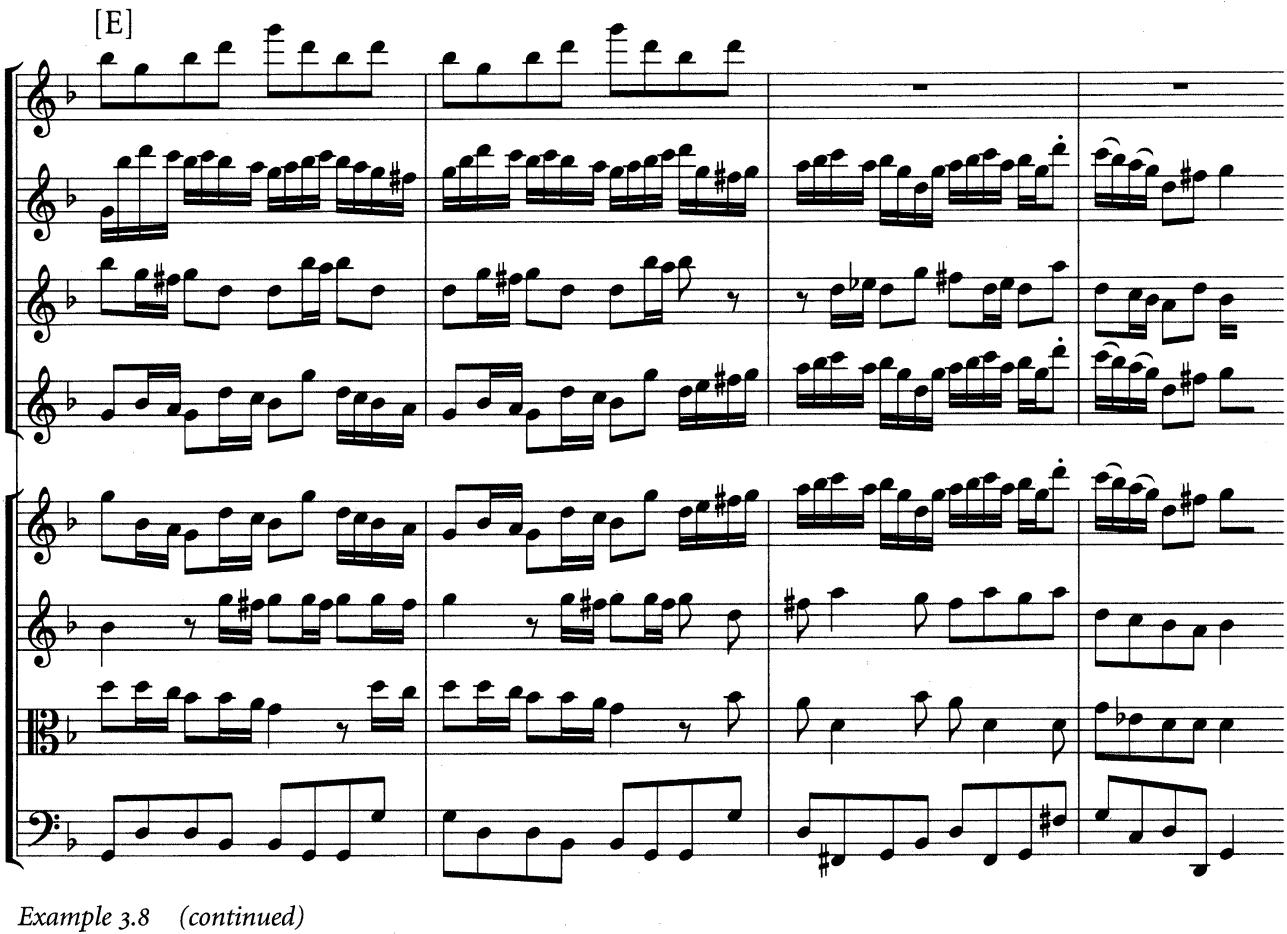
中文讲解
这是第23页上的一个图像或乐谱占位符,原始内嵌数据在抓取时被省略,仅保留其版面位置与图注标识。该占位符与P0090紧邻,属于上一段或下一段论述的配图(具体类型与图号需查阅原图)。
第2段(P0090)
原文复述
avoid the typically Vivaldian tonal redundancy so near the beginning of the piece.
中文讲解
这句话是上一段论述的尾句片段,主语承前省略(应为Bach/作者设计ritornello的目的)。其含义是:Bach为了避免在乐曲开头处出现典型的维瓦尔第式的调性冗余(即反复确认主调,使开篇缺乏张力),有意让开场ritornello的开头部分保持在非主调语境中。这与P0091即将讨论的开场ritornello“缺陷”形成因果勾连——正是为了规避这种维瓦尔第式的调性冗余,Bach才让R₁的开头省略了对主调的确认。
补充说明
本句是跨页延续的句子片段,完整主语与动词需结合前一页正文理解。
第3段(P0091)
原文复述
Nonetheless, as Table 3.5 shows, the opening ritornello, $R_{1}$ , never again appears intact anywhere in the movement. On the contrary, Bach employs what seems to be a competing and more conventional ritornello configuration on three separate occasions. (One of these— $R_{7}$ —is given in Ex. 3.8.) Here a clearly demarcated Fortspinnung substitutes for the fragment $[V_{b}]$ . Even without an intimate acquaintance with this Brandenburg Concerto, one would probably agree that this ritornello, like the “ideal” ritornello in the Vivaldi example, better approximates the conventional segmentation than does the opening ritornello. One interesting corollary of this later ritornello is that the Epilog—identical in both versions—only now makes good sense. Its emphasis on the tonic occurs after the withdrawal of the tonal center during the $[F]$ -segment, whereas previously it had sounded curiously redundant. On the other hand, this later ritornello has a defective Vordersatz. For by omitting the fragment $[V_{b}]$ , it is never able to confirm the tonic. To sum up: neither ritornello formation is complete, although both exhibit complementary defects.
中文讲解
本段是本小节的核心论证段落,包含三层信息:
-
现象陈述:开场ritornello R₁在整个乐章中再也没有完整出现过;相反,Bach在三个地方(R₇为其中一例,见例3.8)使用了另一种更接近常规的ritornello配置,其中以一段清晰划分的Fortspinnung(展开段/主题继续发展段)替代了开场中的[V_b]片段。
-
与Vivaldi范例的对比:即便不熟悉本首勃兰登堡协奏曲,也能看出后一种ritornello比开场ritornello更接近上文讨论的“理想型”分段。作者借此把评判标准从“这首曲子本身”扩展到“维瓦尔第式惯例”,从而强化论证。
-
两类缺陷互补的归纳:
- 后出现的ritornello之Epilog(收束段)在两个版本中完全相同,但只有在这种后出现的配置中才“有道理”——因为[F]段落退出了主调,Epilog此刻回归主调才显得必要;而在开场ritornello中,[F]未退调,Epilog强调主调就显得“奇怪地冗余”。
- 但后出现的ritornello有缺陷:它省略了[V_b],导致Vordersatz(呈示段/前段)始终无法确认主调。
- 因此开场ritornello与后出现ritornello各自都有残缺,且缺陷类型互补——一个无法引出有效的Epilog,另一个无法确认主调,二者合并才接近完整。
论证逻辑要点:作者先用表3.5与例3.8作为证据,再以“维瓦尔第理想型”作为外部参照,最后通过Epilog在两个版本中同一却效果不同的细节,把两类ritornello的缺陷锁定为互补关系,从而为下一段(R₁为何只能写在大调、而Fortspinnung只能出现在小调)埋下伏笔。
补充说明
本段出现的符号系统延续前文:R₁指开场ritornello,R₇指第七次出现的ritornello;[V_b]、[F]是ritornello内部的分段标签,分别指Vordersatz中的子片段与Fortspinnung段;例3.8、表3.5的具体内容需查原书图示。
第4段(P0092)
原文复述
Dreyfus, Laurence. Bach and the Patterns of Invention. E-book, Cambridge, Mass.: Harvard University Press, 1996, https://hdl.handle.net/2027/heb05561.0001.001. Downloaded on behalf of Indiana University, Bloomington
中文讲解
这是电子书页面的运行页眉/出处信息,标明本书作者为Laurence Dreyfus,书名为Bach and the Patterns of Invention,由哈佛大学出版社于1996年出版(电子版),并注明该电子版由印第安纳大学布卢明顿分校的用户下载。属于版式信息,与正文论述无直接逻辑关系。
第5段(P0093)
原文复述
中文讲解
这是第24页例3.9的图注占位符。原图描述为:BWV 1047第一乐章中[F]段的调式转换(MODESWITCH)。此例与正文P0094紧密对应——正文正是借助这个乐谱示例说明:若把后出现的ritornello中那段Fortspinnung(即[F])从小调切换到大调,会造成导音和弦根音被加倍、以及旋律前三、八分音符之间出现不可接受的增四度跳跃。需查阅原图以确认具体音高与记谱细节。
第6段(P0094)
原文复述
This relation surfaces in yet another way, since Bach sets the opening ritornello in major while he casts all the later ritornellos containing the Fortspinnung in minor. Table 3.6 tries to account for this intriguing enigma. As is apparent, every segment translates into both the major and minor modes except for the Fortspinnung. Ex. 3.9 indicates how a MODESWITCH of the Fortspinnung into the major would have doubled the root of the leading-tone chord and made for a treble line that jumped an impermissible tritone between the first, second, and third eighth notes of the melody ( $\gamma\sigma\sigma\sigma\sigma\sigma$ ). Indeed, Bach already exploits all possible permutations of the ritornello’s SEGMENTATION here except this impermissible one, going so far as to translate even $[V_{b}]$ into the minor in $R_{6}$ . But he cannot have it both ways. For the inventive ideas that spark the movement refuse to congeal into a coherent mechanism. Given the systematic constraints which his own ideas accept, Bach cannot write a grammatical ritornello in major because it will lack a Fortspinnung as in Ritornello ${x}$ . (See the bottom part of Figure 3.2.) But neither can he write a grammatical one in minor because the Vordersatz never establishes the tonic, as in Ritornello ${y}$ .
中文讲解
本段揭示本小节最重要的“谜题”:为什么开场ritornello用大调,而所有包含Fortspinnung的后续ritornello用小调?
-
表3.6的观察:ritornello中的各段落(segment)几乎都可以在大小调之间互相转换,唯独Fortspinnung不行。
-
例3.9所揭示的具体限制:若把Fortspinnung由小调改写为大调,会同时出现两个技术性灾难——
- 导音和弦的根音被重复/加倍(属到主的进行中根音冲突),
- 高声部旋律的第二个八分音符相对第一个、第三个八分音符之间跳进一个不可接受的增四度(三全音)。 这意味着此处的调式并非可任意选择,而是被旋律本身的音程逻辑锁死。
-
Bach的穷尽尝试:Bach已经把除这一“不可”之外的几乎所有段落组合都尝试过了——例如在R₆中连[V_b]也用小调呈现。但正因如此,作者强调“he cannot have it both ways”:发明性构思与系统化机制不能两全。
-
两难结论的正式化(图3.2下方):
- Ritornello_x(参照图3.2):若坚持大调,无法写出Fortspinnung;
- Ritornello_y:若坚持小调(含Fortspinnung),Vordersatz因省去[V_b]而始终不能确立主调。 两类ritornello都不“合语法”(grammatical),但缺陷方向相反。
本段因此把P0091提出的“互补缺陷”从段落层面扩展到调式层面:发明材料与调式逻辑的双重约束,使得Bach无法写出一个完整的ritornello,而必须通过大小调分工+R₁仅出现一次的方式,让两类残缺形式并存于同一乐章中。
补充说明
本段涉及的希腊字母记号(γσσσσσσ等)应为乐谱上方标记旋律音位置的占位字符,原图未抓取时残留于文本中;具体音高需查阅例3.9原图。
第7段(P0095)
原文复述
82 Bach and the Patterns of Invention Dreyfus, Laurence. Bach and the Patterns of Invention. E-book, Cambridge, Mass.: Harvard University Press, 1996, https://hdl.handle.net/2027/heb05561.0001.001. Downloaded on behalf of Indiana University, Bloomington
中文讲解
这是电子书第82页的页脚区域信息,包含页码(82)、书名(Bach and the Patterns of Invention)、作者(Laurence Dreyfus)、出版社与版本信息(哈佛大学出版社1996年电子版)以及下载方信息(印第安纳大学布卢明顿分校)。属于版式性内容,与正文论证无直接关联。
脚注 / 边栏 / 图表 / 附加信息(如有)
本小节包含两处图像/乐谱占位符(P0089的页23插图、P0093的例3.9 MODESWITCH of [F] in BWV 1047/1),以及两处电子书的运行页眉/页脚出处信息(P0092、P0095)。例3.9是本小节分析调式限制的核心证据,需查看原图以确认具体音高;表3.5、表3.6、图3.2下方说明以及例3.8作为支撑材料分别在P0091、P0094中被引用,但其内容需查阅原书。
💡 本节核心要点
- 开场ritornello R₁在整个乐章中仅以不完整的形式出现,从未原样重现。
- Bach在三个后续ritornello(R₇等)中用清晰划分的Fortspinnung替代了开场中的[V_b]片段,从而得到更接近“维瓦尔第理想型”的配置。
- 开场ritornello与后出现ritornello呈现互补缺陷:前者因[F]未退出主调而使Epilog显得冗余,后者的Vordersatz因省去[V_b]而无法确认主调。
- ritornello中几乎所有段落都可以在大小调之间互换,唯独Fortspinnung不能——若将其改写为大调,将造成导音和弦根音被加倍和高声部出现不可接受的增四度跳跃(见例3.9)。
- Bach在大调与含Fortspinnung的小调之间无法两全:大调ritornello缺乏Fortspinnung(如图3.2中的Ritornello_x),含Fortspinnung的小调ritornello则无法确立主调(Ritornello_y),两类不完整形式以互补方式并存于乐章之中。
🔑 关键术语
- ritornello:本节讨论的核心曲式单位,专指BWV 1047第一乐章中反复出现的器乐合奏段落;本节将其内部进一步切分为Vordersatz(呈示段)、Fortspinnung(展开/继续段)、Epilog(收束段)等segment。
- Fortspinnung:德语术语,指ritornello中段对主题材料进行展开性继续的部分;在BWV 1047中只在小调配置下出现,调式不可转换至大调。
- Vordersatz:德语术语,指ritornello开头呈示主题的段落;在含Fortspinnung的小调ritornello中,由于省略了[V_b]片段,Vordersatz始终不能确认主调。
- Epilog:ritornello的收束/结束段;本节强调其在两种ritornello中音高相同,但只有在后出现的(先退调后回归主调的)版本中才显得功能合理。
- [V_b] 与 [F]:ritornello内部的分段标签,[V_b]为Vordersatz中的子片段(用于确认主调),[F]为Fortspinnung段;省略或保留它们直接决定ritornello是否“合语法”。
- MODESWITCH:作者用以指称某段落在大调/小调之间转换的分析操作;本节用MODESWITCH of [F]来说明Fortspinnung不能从小调转入大调。
- complementary defects(互补缺陷):本节的核心论点术语,描述R₁(开场ritornello)与R₇一类后出现ritornello各自残缺、且缺陷方向互补,因此两者的存在彼此依赖,缺一不可。
ch01_s15 [描述性拆分] The unrecoverable question of origins in BWV 1047
第1段(P0096)
原文复述
We may then want to ponder an unanswerable question: which came first? If, for instance, Bach first thought of the opening Vordersatz, this would explain how he uses the initial fragment to introduce the soloists. However, this means that there was no way for him to conceive of a grammatical Fortspinnung and Epilog connected to the Vordersatz, which is, after all, what the invention of a Vordersatz automatically entails. Let us imagine, on the other hand, that Bach conceived the first Vordersatz fragment together with the two grammatical segments that follow. This would, to be sure, explain the raison d’être of the Epilog, which seems to follow naturally on the heels of a Fortspinnung. But then Bach would have had to conceive the piece in minor—a scarcely imaginable possibility. Moreover, the incomplete Vordersatz in minor still lacks a stable tonic and can hardly have served as an initial ritornello. The diagram schematizes the logical yet contradictory process I have been describing in which Bach imagines what is musically unrealizable.
中文讲解
这一段集中呈现了作者关于 BWV 1047 第一乐章创作过程的一次“不可回答”的思想实验。其论证结构如下:
- 提出悖论:作者先抛出问题——巴赫究竟先想到什么?接着给出两种相互排斥的设想。
- 设想一:先有 Vordersatz(呈示句)。这能解释独奏声部如何被引入(因为开头片段本身就适合作为引子),但问题在于,一旦只有 Vordersatz,作者就认为不可能同时产生“语法上必然后续”的 Fortspinnung(展开)和 Epilog(尾声)——因为这两段正是 Vordersatz 出现后自动要求的后续结构。
- 设想二:Vordersatz 与随后的 Fortspinnung、Epilog 同时构思。这能合理解释 Epilog 的存在合理性(它看起来是“自然地接在”Fortspinnung 之后),但代价是:巴赫必须在小调中构思整首曲子,作者称这为“几乎难以想象”的可能。
- 进一步限定:即便设想二成立,那个处于小调中的不完整 Vordersatz 缺少稳定的属—主关系(stable tonic),因此不可能充当乐章开头的利都奈罗(ritornello)。
- 收束于一个悖论性的判断:作者用一个示意图表(diagram)来图解他所描述的“合乎逻辑却自相矛盾”的过程,并指出巴赫所“想象”的,恰恰是“音乐上不可实现”(musically unrealizable)的东西。
因此,本段的关键不在于“复原创作顺序”,而在于揭示:BWV 1047 第一乐章之所以在起源问题上不可复原,并非我们知识不足,而是巴赫的发明逻辑本身就建立在“嵌入一个不稳定元素(在小调大调之间的 Vordersatz)”之上,使得任何线性的起源叙述都会自我矛盾。
补充说明
本段末句“The diagram schematizes…”中的图解即下文 P0098 的 Figure 3.2,其内容与本段的两种设想直接对应,需结合原图查看。
第2段(P0097)
原文复述
The first movement of the C major Concerto for two harpsichords, BWV 1061, offers yet another striking example of how, by embedding an intentionally unstable element in his invention, Bach is able to design a mechanism that delights in addressing the volatile consequences of an imbalance in his inventive structures. 9 (The opening ritornello of this movement—identical to the ideal form—is given in Ex. 3.10. Table 3.7 details the ritornello formations first to help identify the specific locations of each segment. A simple voice-leading reduction of the entire ritornello is given in Ex. 3.11.)
中文讲解
这一段的功能是过渡与推广。前一段以 BWV 1047 为例说明了“嵌入不稳定元素”这一发明机制,本段则将同样的观察扩展到另一部作品——C 大调双羽管键琴协奏曲 BWV 1061 的第一乐章。
- 推广作用:“yet another striking example”表明作者并非就个案立论,而是在建立一个更普遍的命题:巴赫有意在发明中嵌入不稳定元素,并由此“设计出一种机制”,其乐趣恰恰在于应对这种不平衡所产生的“难以预料的后果”。
- 转折意义:括号中的信息显示出 BWV 1061 与 BWV 1047 的对比性——前者的开篇利都奈罗“identical to the ideal form”,即等同于规范、理想的利都奈罗模板;而 BWV 1047 的开篇则是不完整的、嵌入小调片段的“被问题化”的利都奈罗。这意味着 BWV 1061 是一个参照点:它展示了“理想形态”,从而让 BWV 1047 的“不稳定嵌入”显得更加反常和刻意。
- 配套材料的功能:本段同时预告了三件分析辅助——Ex. 3.10(呈示理想形态的利都奈罗原谱)、Table 3.7(用于定位各段在利都奈罗中的具体位置)、Ex. 3.11(整个利都奈罗的简化和声进行 / voice-leading reduction)。读者随后将依据这些材料进入细致的分析。
补充说明
本段中标注的脚注 9 的具体内容不在本节提供的输入范围内,无法在此处展开说明其指向。
第3段(P0098)
原文复述
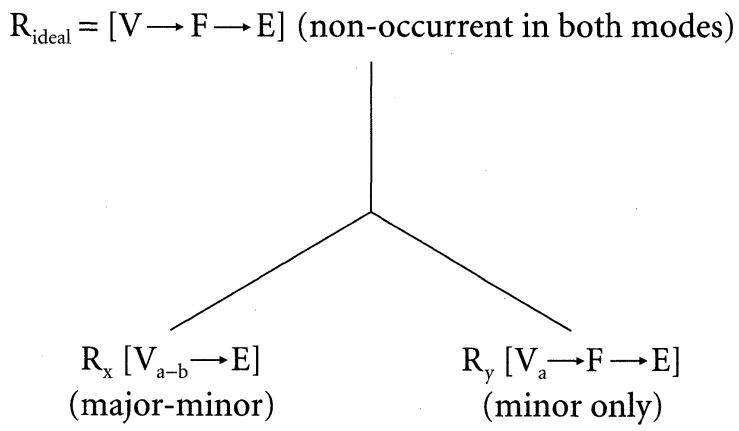
中文讲解
本条是图 3.2 的图注与图像占位符。图注文字为“Figure 3.2 The invention of BWV 1047/1”,即“图 3.2: BWV 1047 第一乐章的发明过程”。该图正是 P0096 末句“The diagram schematizes…”所指的那个示意图表,用于以可视化方式呈现作者所描述的“逻辑上成立却自相矛盾”的两种起源设想:先有 Vordersatz 而后无法补足 Fortspinnung 与 Epilog,或三者同想却需要想象全曲始于小调。
由于本节提供的输入中只保留了图注与位置标记,原始图形的具体形状、箭头或文字内容需查阅原书图 3.2。
补充说明
无额外补充;图像细节需查原图。
第4段(P0099)
原文复述
Dreyfus, Laurence. Bach and the Patterns of Invention. E-book, Cambridge, Mass.: Harvard University Press, 1996, https://hdl.handle.net/2027/heb05561.0001.001. Downloaded on behalf of Indiana University, Bloomington
中文讲解
本条是页脚性的书目与访问来源信息,说明本节正文出自 Laurence Dreyfus(劳伦斯·德赖弗斯)所著《Bach and the Patterns of Invention》(《巴赫与发明模式》),1996 年由哈佛大学出版社(Harvard University Press)以电子图书形式出版于马萨诸塞州剑桥,资料由印第安纳大学布鲁斯福尼亚分校(Indiana University, Bloomington)代理下载。该 URL(hdl.handle.net/2027/heb05561.0001.001)显示资源托管于 HathiTrust 数字图书馆平台。该条目对正文主张起来源 / 版本标识作用,而非论证内容。
补充说明
URL 中的 2027/heb05561.0001.001 是 HathiTrust 平台对这本电子书的标识号,可用于直接定位该资源。
脚注 / 边栏 / 图表 / 附加信息(如有)
- 图 3.2(P0098):图注“Figure 3.2 The invention of BWV 1047/1”,即“图 3.2:BWV 1047 第一乐章的发明过程”。它对应 P0096 末句提到的示意图表,用来直观呈现作者所描述的“逻辑上成立却自相矛盾”的两种起源设想;由于嵌入图像数据被省略,具体图形细节需查阅原书。
- 脚注 9 标记(P0097):本段正文右上角的脚注 9 仅出现标记,本节提供的输入中并未给出该脚注的内容,因此其具体所指与功能无法在本节内判定。
- 来源与版本标识(P0099):本节正文出自 Laurence Dreyfus, Bach and the Patterns of Invention, Harvard University Press, 1996, 经 HathiTrust 电子书平台由印第安纳大学布鲁斯福尼亚分校下载;此条目提供书目 / 平台来源信息,本身不参与本节的音乐分析论证。
💡 本节核心要点
- BWV 1047 第一乐章的起源之所以不可复原,是因为任何线性的创作顺序设想都会引出内部矛盾,而不是因为我们掌握的资料不足。
- 若巴赫先想到 Vordersatz,则能解释独奏声部如何被引入,但这种设想排除了与之语法上必然后续的 Fortspinnung 与 Epilog 的同时生成。
- 若巴赫同时构思 Vordersatz 与随后的 Fortspinnung、Epilog,则能解释 Epilog 的存在理由,但代价是必须想象整曲起于小调——作者称之为“几乎难以想象”的可能。
- 即便设想成立,处于小调中的不完整 Vordersatz 缺乏稳定的主音,因此难以承担开头利都奈罗的功能。
- 图 3.2 把上述“逻辑却自相矛盾”的过程视觉化;巴赫所想象的,正是“音乐上不可实现”(musically unrealizable)的方案。
- 本节随后以 BWV 1061/1 作为“又一显著例子”,其开篇利都奈罗被作者描述为等同“理想形态”(identical to the ideal form),借此凸显 BWV 1047 那种有意嵌入不稳定元素的反常与刻意。
- 配套分析材料(Ex. 3.10 的开篇利都奈罗、Table 3.7 的段落定位表、Ex. 3.11 的简化声部进行)预告了对 BWV 1061 利都奈罗展开分析的工具。
🔑 关键术语
- Vordersatz:德语术语,字面意为“前句 / 呈示句”,在本节中指 BWV 1047 第一乐章开头那个较短、嵌入小调且并不完整的呈示片段;它是巴赫式“发明”的初始主题元素,但因本节所述情形,它本身不能稳定地充当开篇利都奈罗。
- Fortspinnung:德语术语,字面意为“继续纺线 / 展开”,指对 Vordersatz 动机进行延续性、模仿性、展开性处理的段落;本节中作为 Vordersatz 在语法上必然后续的第一段。
- Epilog:在本节中指 Fortspinnung 之后自然收束发展材料的结束性段落,是 Vordersatz—Fortspinnung—Epilog 三段式语法中的末段;其“raison d’être”(存在理由)依赖 Fortspinnung 的存在。
- ritornello:利都奈罗,协奏曲乐章中循环出现的全奏(tutti)段落。本节中,“initial ritornello”指乐章开头由全体合奏奏出的呈示段落,需具备稳定的主音与终止式;这正是处于小调且不完整的 Vordersatz 无法充当的角色。
- ideal form:“理想形态”,本节用于刻画 BWV 1061 第一乐章的开篇利都奈罗——它与某种规范性的、完整的利都奈罗模板完全一致;这一对照凸显 BWV 1047 开篇的偏离与刻意不稳定。
- voice-leading reduction:“声部进行简化”,一种把多声部织体压缩为体现基本和声骨架与旋律线关系的简化谱面,便于揭示作品深层和声逻辑的分析手段;本节预告将在 Ex. 3.11 中以之呈现 BWV 1061 开篇利都奈罗的整体进行。
ch01_s16 [描述性拆分] Sections 14–16 continued; lead into BWV 1061
第1段(P0100)
原文复述
The Ideal Ritornello
中文讲解
This is a subsection heading rather than a body paragraph. It announces that the following discussion will focus on what the author terms the “ideal ritornello” — the normative structural model against which Bach’s actual ritornello constructions in this piece are being measured. The heading functions as a thematic marker, telling the reader that what follows will contrast an ideal/grammatical template with the particular, functionally compromised opening gestures found in the movement under analysis.
第2段(P0101)
原文复述
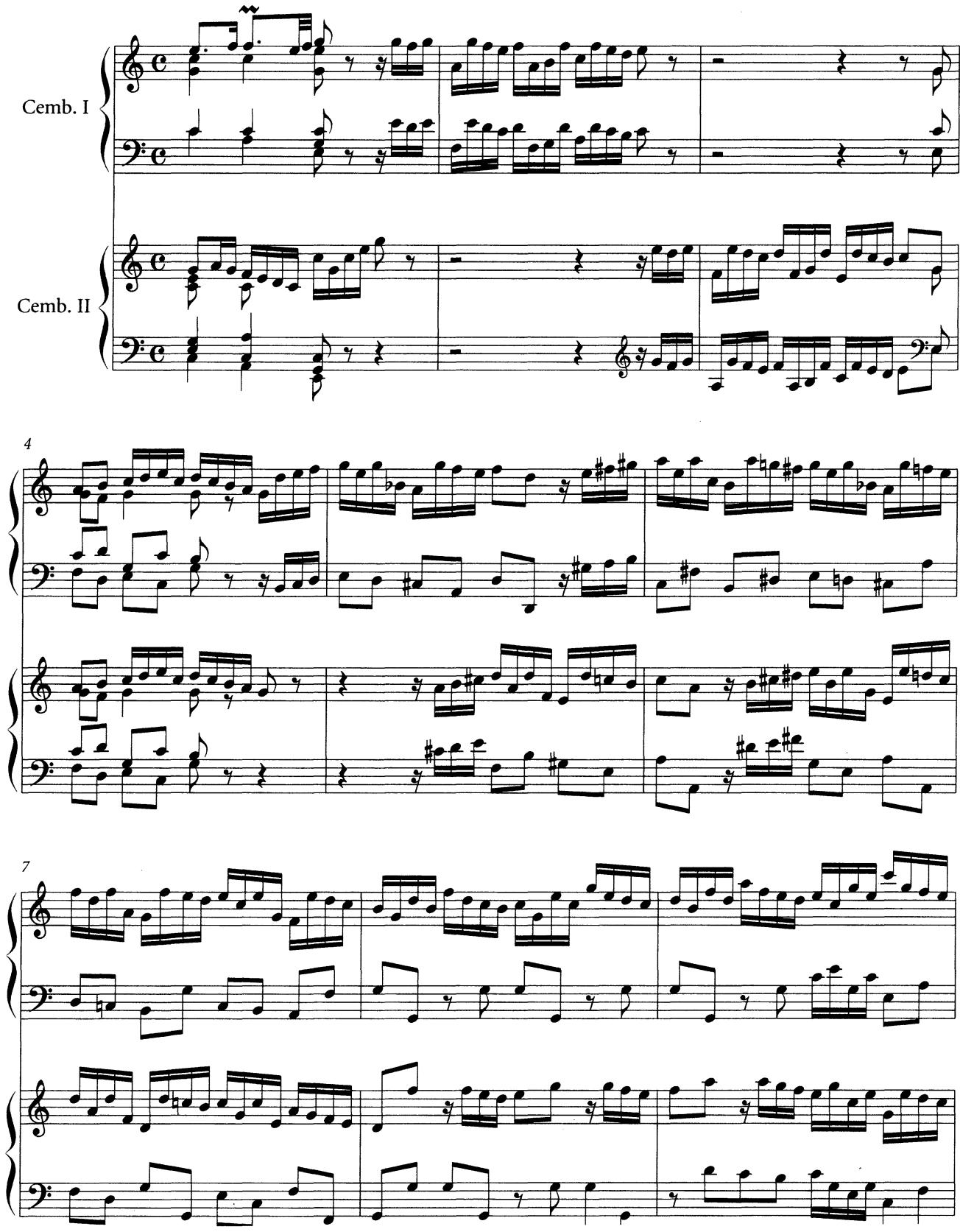
中文讲解
这是一个图像或乐谱占位符,位于第26页。该位置承接上一节末尾的图表说明传统,结合后文对 Vordersatz、Epilog 等ritornello 组成部分以及"理想回归段"的讨论,此处插入的应为与ritornello 结构或某具体乐谱片段相关的图示或谱例。原文未给出图注或编号(编号信息不可见),故仅能确认其作为视觉/谱例材料在版面中的存在;其具体内容需查看原图方可确认。
第3段(P0102)
原文复述
84 Bach and the Patterns of Invention Dreyfus, Laurence. Bach and the Patterns of Invention. E-book, Cambridge, Mass.: Harvard University Press, 1996, https://hdl.handle.net/2027/heb05561.0001.001. Downloaded on behalf of Indiana University, Bloomington
中文讲解
此为页眉性质的版权/来源标注,标明页码84、书名《Bach and the Patterns of Invention》、作者 Laurence Dreyfus、出版信息(哈佛大学出版社1996年电子版)、持久标识符 URL,以及下载方(印第安纳大学布卢明顿分校)。它对正文论点不构成支持或限定,而是电子版数据库自动添加的来源水印,用以标识版权与获取渠道。
第4段(P0103)
原文复述
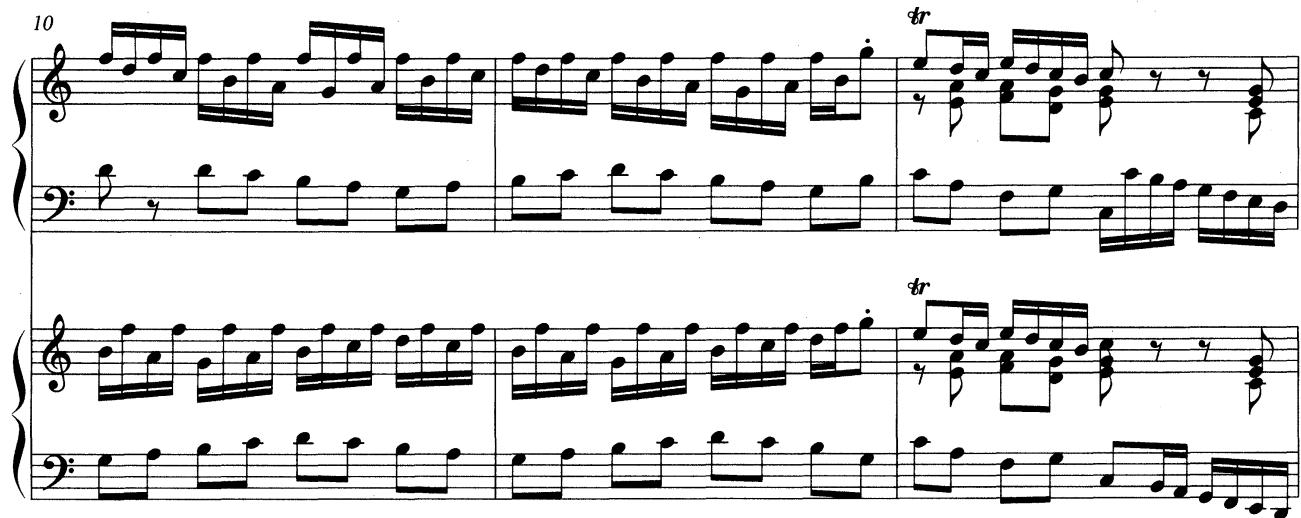
中文讲解
第27页上的图像或乐谱占位符。位置处于连续出现的四个同类占位符之首,结合本节主题(“The Ideal Ritornello”),此处可能对应与回归段结构相关的图示或乐谱片段。编号与图注不可见,需查看原图才能确认具体内容。
第5段(P0104)
原文复述
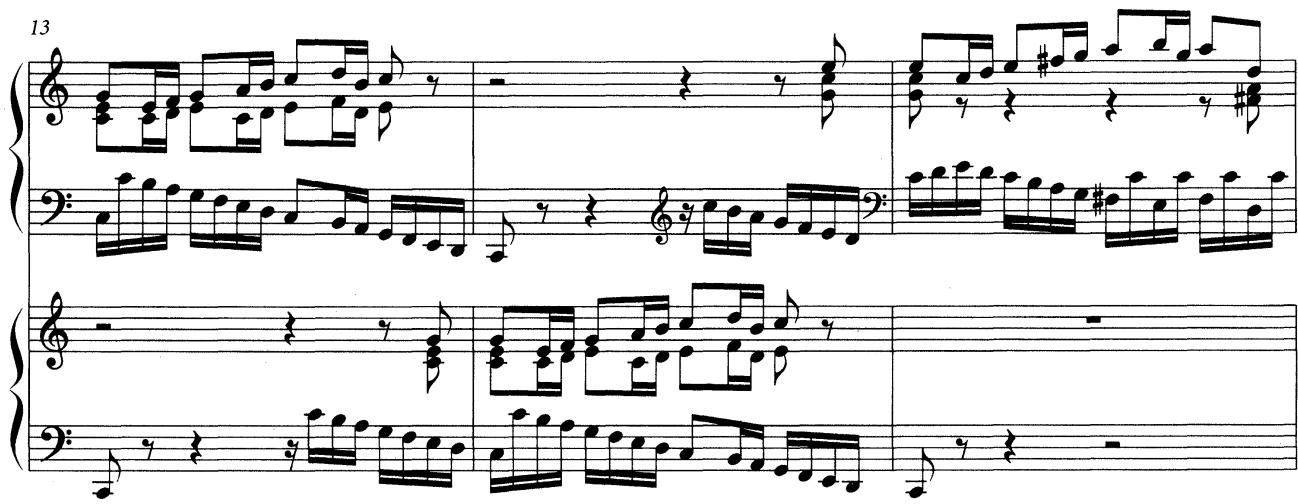
中文讲解
第27页上的图像或乐谱占位符,为该页连续四幅图示/谱例中的第二个。与 P0103 同样属于"理想回归段"相关视觉材料;具体内容须参阅原图。
第6段(P0105)
原文复述
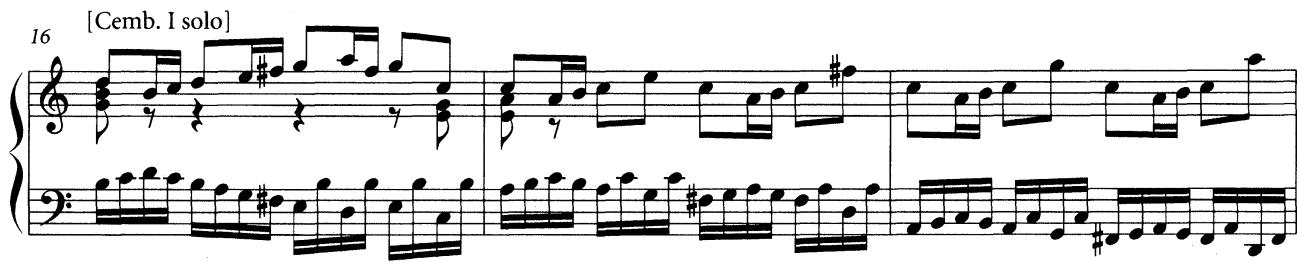
中文讲解
第27页上的图像或乐谱占位符,为该页连续四幅图示/谱例中的第三个。配合前后文对 [V_a]、[V_b]、[V_gram] 等片段的论述,此处极可能展示回归段各组成部分的实际谱例或结构示意;但具体编号与图注不可见,需查看原图确认。
第7段(P0106)
原文复述

中文讲解
第27页上的图像或乐谱占位符,为该页连续四幅图示/谱例中的第四个。在本节关于"理想回归段"的讨论中充当收尾性的视觉材料;其具体内容需查看原图方可确定。
第8段(P0107)
原文复述
Dreyfus, Laurence. Bach and the Patterns of Invention. E-book, Cambridge, Mass.: Harvard University Press, 1996, https://hdl.handle.net/2027/heb05561.0001.001. Downloaded on behalf of Indiana University, Bloomington
中文讲解
此为重复出现的版权/来源水印(无页码标识),与 P0102 内容一致,标明电子书的作者、出版社、出版年、URL 与下载机构。它不是正文,不对任何音乐分析主张提供证据,仅表明该页内容来源于哈佛大学出版社1996年电子版、由印第安纳大学布卢明顿分校下载。
第9段(P0108)
原文复述
86 Bach and the Patterns of Invention Dreyfus, Laurence. Bach and the Patterns of Invention. E-book, Cambridge, Mass.: Harvard University Press, 1996, https://hdl.handle.net/2027/heb05561.0001.001. Downloaded on behalf of Indiana University, Bloomington
中文讲解
页眉性质的来源标注,标注第86页及完整书目与下载信息。与 P0102、P0107 性质相同,是电子书数据库自动附加的版权水印,对正文论点无支持或限定作用。
第10段(P0109)
原文复述
Of the three ritornello functions, only that of the Epilog is straightforward. The Vordersatz begins with two segments (labeled $[V_{a}]$ and $[V_{b}]$ as in the Second Brandenburg Concerto) which both fail to move to the dominant: they therefore require the linkage to the grammatical Vordersatz (beginning with the upbeat to m. 4 and labeled $[V_{gram}]$ in Table 3.7) in order to signal a proper opening. As the reduction makes clear, the insufficiencies of the first three bars mean that, taken alone, these deficient segments will be unable to establish or define a key. Bach particularly exploits the absence of “tonic definition” in the opening gesture (with its declamatory rise from scale degree $\hat{3}$ to $\hat{4}$ to $\hat{5}$) by elaborating it as a harmonically quizzical episode rather than as a forceful statement of fact. Therefore $[V_{a}]$ figures subsequently as a problematic interrogative, as it were, rather than as an opening declaration. Later, in mm. 28–32, for example, Harpsichord I begins as if it were announcing a ritornello. (See Ex. 3.12.) But instead of solidifying the tonal space, the utterances of the two harpsichords use the dynamic contrasts to pit motivic statements against one another in a contest that allows no winners.
中文讲解
本段的核心主张是:回归段三种功能(Epilog 尾句、Vordersatz 前句、以及未明说的第三种)中,只有 Epilog 是功能明确、自足的;Vordersatz 由 [V_a]、[V_b] 两个起始片段和 [V_gram](语法性的、从小节4弱拍开始的真正"前句")组成,而 [V_a]、[V_b] 都没有走向属调,因此必须依附于 [V_gram] 才能完成"恰当的开场"。这一论点的关键在于:前三小节单独来看"定义不了调性"——所谓"tonic definition"(主音确立)的缺失使开场手势呈现为音阶三级→四级→五级的宣叙式上升,而非一个果断的主调陈述。作者把 [V_a] 解释为一种"有问题的疑问",而不是开场宣言;它随后在第28—32小节被两架羽管键琴以力度对比彼此对抗,重新出现时依然无法巩固调性空间——形成一场"没有赢家的比赛"。需要把握的概念区分是:(1) “fragment”(片段)与"grammatical segment"(语法片段)的差别——前者残缺、后者完整;(2) “deficient"与"functioning"的功能对照;(3) “declamatory”(宣叙性的、言语式的)开场所暗含的修辞姿态,它让音乐听起来更像提问而非断言。理解本段的关键是抓住:开场的"调性含糊"并非缺陷,而是被巴赫刻意开发为戏剧性手段。
补充说明
本段中 [V_a]、[V_b]、[V_gram] 的标签体系与之前讨论过的《第二勃兰登堡协奏曲》形成参照;Table 3.7 与 Ex. 3.12 为后文标记,须在原图(原书表3.7与谱例3.12)中查阅具体内容。‘port de voix’ 与 ‘cadence liée’ 属法国装饰音与连奏术语,将在 P0110 中再次出现。
第11段(P0110)
原文复述
The functional inadequacy of $[V_{a}]$ suggests to Bach a competing fragment—not part of the ritornello—which, oddly enough, does precisely what $[V_{a}]$ fails to do: define a key. One can see this fragment at the beginning of m. 28 in the orchestra: I shall call it $[pseudo-V_{a}]$. Note how this motive proudly moves from I to V to I in the harmony and rises from $\hat{1}$ to $\hat{2}$ to $\hat{3}$ in its treble melody. There is, however, a certain irony in Bach’s fashioning of this “pretender to the throne.” For while $[pseudo-V_{a}]$ remedies the blemish of $[V_{a}]$, it can only masquerade as a Vordersatz segment since, significantly, Bach ensures that it cannot couple with the ritornello proper and is therefore destined to boast about its harmonic credentials without actually being able to deliver the melodic goods. For in a Bach concerto, it is not enough to display the signs of beginning or closure as a fractured entity: a segment only has a purpose when it is secured to the microcosmic linkage of the ideal ritornello. The functional peculiarity of the opening gesture therefore produces a movement in which much of the episodic work revolves around dramatically declaimed false beginnings. The elevated diction of the opening—with its high-style French port de voix and cadence liée—ensures, on the other hand, that the movement depicts a decidedly noble quest for an authentic point of origin that will never be found.
中文讲解
本段承接 P0109 对 [V_a] 功能不足的揭示,提出一个"竞争性片段”——作者命名为 [pseudo-V_a],出现在第28小节开头管乐声部。它的音响特征恰好弥补 [V_a] 的缺陷:和声上做 I–V–I,主旋律自 $\hat{1}$ 升至 $\hat{2}$、$\hat{3}$,即明确建立起调中心。理解本段的关键在于把握"反讽"二字:[pseudo-V_a] 虽然能"定义调性",但巴赫有意使它无法与真正的回归段对接,因此它的"调性资本"永远无法兑现为真正的开场合拢——它只是"觊觎王位者"。这里隐含的方法论原则是:在巴赫协奏曲中,片段本身不具备独立目的;只有嵌入"理想回归段的微观连环"中才有功能意义。由此推出整段(乃至整乐章)的总体特征:插部大量围绕"戏剧化的虚假开端"展开,而开篇以高雅的法语 port de voix(倚音装饰)与 cadence liée(连奏式收束)所营造的"高贵辞藻",使整首乐曲成为一场对"永远不会找到的原点"的崇高追寻——这一意象把功能性缺陷提升为修辞与叙事层面的贵族式探索。容易误解之处在于:不要把 [pseudo-V_a] 看作"主题"或"第二主题",它是结构上注定失败的"伪装者",其戏剧意义恰恰来自无法兑现的承诺。
补充说明
port de voix 与 cadence liée 在本节中作为"高风格法语装饰/连奏"的代表,用来标示开场辞藻的贵族气质;它们与 [V_a] 自身的"宣叙性上升"共同构成"高贵语域"的标志。本段是 P0109 的逻辑延伸:先指出 [V_a] 的功能缺失,再以 [pseudo-V_a] 的反讽性"补偿失败"展开整乐章的戏剧主旨。
第12段(P0111)
原文复述
To claim, as I did earlier, that the solo episodes in a concerto are not central to the invention does not, however, minimize their importance in the disposition of the work as a whole. Indeed, a central difference between the elaboration in small genres, such as the C major Praeambulum discussed in Chapter 1, and in large-scale works such as concerto movements is that the elaborations function as far more than links between inventions, but must display sufficient thematic
中文讲解
本段是作者对自己先前立场的限定与修正:之前曾说协奏曲中的独奏插部不是"发明"(invention)的核心,但这并不意味着它们在全曲布局中不重要。作者随即提出一个体裁对比——小体裁(如第1章讨论过的 C 大调 Praeambulum)中,“展开/润色”(elaboration)只是连接各项"发明"的纽带;到了协奏曲乐章这种大型体裁,elaboration 不再仅是连接件,而必须展现足够的"主题性"(thematic)——句子在此被截断,意味着下文将承接展开"足够的主题性"究竟意味着什么,以及它如何与回归段的"理想结构"相对照。理解本段的要点有三:(1) 区分"发明层面上的核心"与"整体布局中的重要性",二者并不矛盾;(2) 小体裁与协奏曲的体裁差异体现在 elaboration 的功能升格——从"连接"到"主题承担者";(3) 段落末尾的截断预示着下一节将正面界定独奏插部在大协奏曲整体布局中的角色,并为引出 BWV 1061 做铺垫。
补充说明
Praeambulum 一词在原书第1章已被讨论;此处只是作为体裁对比的参照,并不要求本节内展开其内容。“invention"与"elaboration"在本节论述框架内构成一对关键概念:前者指主题性发明材料,后者指对材料的展开/润色。
第13段(P0112)
原文复述
Dreyfus, Laurence. Bach and the Patterns of Invention. E-book, Cambridge, Mass.: Harvard University Press, 1996, https://hdl.handle.net/2027/heb05561.0001.001. Downloaded on behalf of Indiana University, Bloomington
中文讲解
页眉性质的版权/来源水印,与本节中 P0102、P0107、P0108 完全一致,标明作者 Laurence Dreyfus、书名、哈佛大学出版社1996年电子版、URL 与印第安纳大学布卢明顿分校下载信息。它不构成正文论点的一部分,仅为电子版自动附加的来源标识。
脚注 / 边栏 / 图表 / 附加信息(如有)
本节含有大量页面级图像/乐谱占位符(P0101、P0103、P0104、P0105、P0106)以及重复出现的版权/来源水印(P0102、P0107、P0108、P0112)。这些占位符因嵌入数据被省略而无法在文字层还原,但根据上下文(P0109 引述 Table 3.7 与 Ex. 3.12;P0109–P0110 讨论 [V_a]、[V_b]、[V_gram]、[pseudo-V_a] 等片段),第26–27页的图示/谱例应与回归段结构分析直接相关。Table 3.7 提供了各片段的标签化结构图,Ex. 3.12 则对应第28–32小节两架羽管键琴的虚假开场片段。原文中提到的 ‘port de voix’ 与 ‘cadence liée’ 既是装饰音/连奏术语,也承担"高贵法语辞藻"的修辞功能。
💡 本节核心要点
- 回归段三种功能中只有 Epilog 明确自足;Vordersatz 由 [V_a]、[V_b] 与 [V_gram] 组成,前两者功能不足,必须依附 [V_gram] 才能完成开场。
- 开场手势的关键缺陷是缺少 ’tonic definition’(主音确立):音阶三级→四级→五级的宣叙式上升使其成为"有问题的疑问"而非果断的开场宣言。
- [pseudo-V_a] 作为反讽性的"伪装者”:表面弥补了 [V_a] 的调性缺失,却因无法与真正的回归段对接而注定无法兑现其和声承诺。
- 巴赫协奏曲中的结构原则:片段本身不具独立目的,只有嵌入"理想回归段的微观连环"才有功能意义。
- 由此推出的整体美学:全乐章围绕"戏剧化的虚假开端"展开,开场的高雅法语辞藻(port de voix、cadence liée)将功能缺陷升格为对"永远找不到的原点"的崇高追寻。
- 独奏插部虽非"发明"核心,却在整体布局中至关重要;与小体裁 Praeambulum 不同,协奏曲中的 elaboration 须超越"连接件"功能,承担足够的主题性。
🔑 关键术语
- ritornello:回归段,协奏曲中反复出现的全奏主题材料;本节将其区分为具有不同结构功能(Epilog、Vordersatz 等)的若干组成部分。
- Vordersatz:“前句”,回归段中承担开场功能的部分;在本节分析中由 [V_a]、[V_b] 与 [V_gram] 三个片段构成,其中前两者功能不足,须依附 [V_gram]。
- Epilog:“尾句”,回归段中用于收束的功能片段;本节明确指出它是三种 ritornello 功能中唯一明确自足者。
- [V_a] / [V_b] / [V_gram]:回归段前句的标签化片段;[V_a]、[V_b] 缺少属调进行,功能不足,[V_gram] 为从小节4弱拍开始的语法性片段,是真正完成开场的部分。
- tonic definition:主音确立,即在开场中明确建立调中心;本节论证的核心是 [V_a] 恰恰缺失这种确立,从而被巴赫转化为戏剧性手段。
- [pseudo-V_a]:“伪前句片段”,出现在第28小节管乐声部,表面上弥补 [V_a] 的调性缺失,但因无法与回归段本体对接而只能"自夸"。
- port de voix:法语倚音/延音装饰;本节作为"高风格法语辞藻"的代表,标识开场的高雅语域。
- cadence liée:法语"连奏式收束";与 port de voix 一同构成开场"高贵语域"的标记。
- elaboration:“展开/润色”,本节区分了小体裁中作为连接件与协奏曲中作为主题承担者两种不同功能。
ch01_s17 [描述性拆分] Voice-leading reduction and the role of episodes in BWV 1061
第1段(P0113)
原文复述
[Image placeholder on page 30 — embedded image data omitted; position and figure annotation retained.]
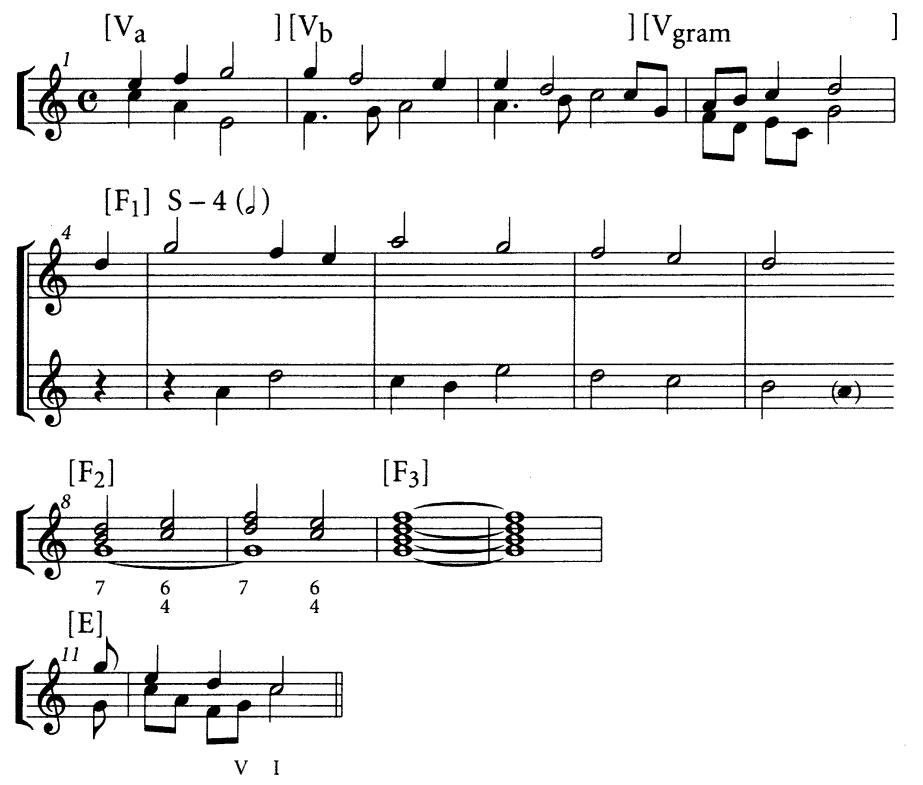
中文讲解
本条是页面中的图像/乐谱占位符,位于第30页,原始嵌入图像数据在当前提取中被省略,需查阅原书图例。与后续条目同属例3.11(Example 3.11)所示的 BWV 1061/1 利都奈罗声部进行缩谱图组的一部分。讲解本段不应揣测图中具体音符、和声标注或谱例细节,仅指出其出现位置与版面功能。
第2段(P0114)
原文复述
[Image placeholder on page 30 — embedded image data omitted; position and figure annotation retained.]

中文讲解
与 P0113 同性质的图示/乐谱占位符,处于例3.11所在的第30页版面,可能是缩谱图组的另一分段或附属示意。其内容(具体音符、连线)不可见,需查看原图方可判断;本栏目不据不可见内容进行推断。
第3段(P0115)
原文复述
[Image placeholder on page 30 — embedded image data omitted; position and figure annotation retained.]
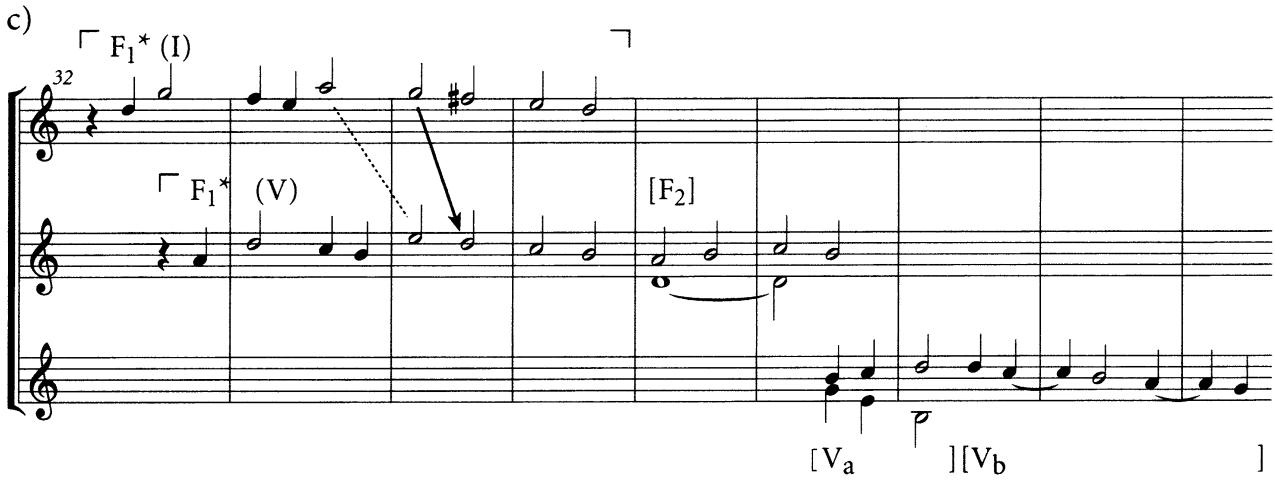
中文讲解
同样为第30页上的图示/乐谱占位符,与 P0113、P0114 一同构成例3.11的缩谱实例。在缺少可见图像的前提下,本段不承担可独立陈述的论述功能;其作用是承载后续正文对声部进行与和声强弱的讨论。
第4段(P0116)
原文复述
Dotted line shows paradigmatic alignment.
中文讲解
这是一条图例式注记(caption / legend note),紧贴例3.11的缩谱说明虚线(dotted line)的读图规则:虚线表示“聚合关系对齐”(paradigmatic alignment),即把不同利都奈罗片段中承担相似结构功能的声部在范式(深层结构)层面上的对应点连接起来。这与斯洛尼姆斯基(Schenker-style)声部进行缩谱中以虚线标记远距离呼应或层级对应的惯用法有关;虚线并非旋律线条本身,而是作者用以揭示片段之间深层结构同一性的辅助记号。
第5段(P0117)
原文复述
Arrow shows moment where harmonic control shifts to V.
中文讲解
这也是一条图例注记,规定箭头(arrow)所指出的位置在缩谱中表示“和声控制在此刻移交到属功能 V”。也就是说,箭头标记的是和声主导权(harmonic control)从主功能区域向属功能区域转换的关键转折点。这一标记方式使读者能在缩谱中跟踪和声张力的推移,理解各利都奈罗片段如何在深层结构上以属和弦为枢纽承担延伸与回归。
第6段(P0118)
原文复述
Example 3.11 BWV 1061/1, voice-leading of ritornello segments and harmonic strengths to bear a substantial amount of repetition during the course of a movement. The solo episodes therefore take on a property of inventions in general, that is, they will often occur more than once in the course of a composition. But since they are not ultimately freed from the conventions of tonal closure found in the invention of segmentable ritornellos, their elaboration occurs in far more informal guises.
中文讲解
本段由例3.11的图题和紧随其后的论证正文拼接而成。例3.11图题指出展示的是 BWV 1061 第一乐章(快板协奏曲)利都奈罗片段的声部进行及其和声强度的分布。论证部分主张:第一,独奏段落(solo episodes)能够“在乐章进行过程中承受大量重复”,换言之,素材上的高度可复用性使同一段落可在乐章中多次出现,这正是所谓“发明”(invention)的通性。第二,正因为它们仍然受到“可分割的利都奈罗所固有的调性收束惯例”的约束——也就是说,独奏段落并未真正摆脱利都奈罗片段的调性闭合惯例——所以它们的展开往往采取“远比正式形态更不正式(far more informal guises)”的方式出现。结合上一段对虚线、箭头所示缩谱的说明,本段推进了一步:从“如何把利都奈罗片段聚合到同一深层结构”转到“独奏片段如何在可重复的同时仍受调性约束,从而以非正式变体面目在乐章中反复出现”。
第7段(P0119)
原文复述
88 Bach and the Patterns of Invention. Dreyfus, Laurence. Bach and the Patterns of Invention. E-book, Cambridge, Mass.: Harvard University Press, 1996, https://hdl.handle.net/2027/heb05561.0001.001. Downloaded on behalf of Indiana University, Bloomington.
中文讲解
本段是第30页的页脚/引文版本说明:左侧“88”是对正文页码的标示(说明页面位于书的第88页),右侧是劳伦斯·德雷福斯(Laurence Dreyfus)1996年由哈佛大学出版社出版的《Bach and the Patterns of Invention》的电子版引文信息,注明下载来源机构为印第安纳大学布卢明顿分校,并附 Handle Net 永久链接。它是版本/版权性质的脚注,对正文论述不构成论证支持或限定,仅作为引文出处。
补充说明
此条为版本来源说明,对正文主张无直接的论证作用。
脚注 / 边栏 / 图表 / 附加信息(如有)
本小节无独立脚注或边栏材料。P0113–P0115 为同一例3.11(BWV 1061/1 利都奈罗声部进行缩谱)相关图像/乐谱占位符,需查阅原书方可辨认谱例细节;P0116、P0117 为图例注记(虚线表示范式聚合对齐,箭头表示和声控制移交至 V);P0119 为第30页页脚的版本引文信息(Dreyfus, 1996, Harvard University Press 电子版,印第安纳大学布卢明顿分校下载),属版权/出处说明而非论证材料。
💡 本节核心要点
- 例3.11展示的是 BWV 1061 第一乐章利都奈罗片段的声部进行及其和声强度分布。
- 图中虚线表示不同利都奈罗片段在深层结构层面上的范式对齐,箭头标记和声控制权向属功能(V)移交的转折点。
- 独奏段落能够承受乐章中的大量重复,是所谓“发明”(invention)的一般属性。
- 独奏段落虽可在乐章中反复出现,却并未真正摆脱可分割利都奈罗固有的调性闭合惯例。
- 因此,独奏段落的展开常以远较利都奈罗片段本身更不正式(informal)的变体面目出现。
🔑 关键术语
- Voice-leading reduction:声部进行缩谱:在斯洛尼姆斯基传统的深层结构分析中,将复杂对位的表面纹理压缩为可读的几根骨干线条,并用和声功能性符号标注和声强度与控制点的记谱方法。本节中用于把 BWV 1061/1 的多个利都奈罗片段压缩在同一缩谱中以揭示其范式关系。
- Ritornello segments and harmonic strengths:利都奈罗片段及其和声强度:利都奈罗(ritornello)是巴洛克协奏曲中由全体乐队演奏、反复出现的器乐段落;本节所谓“和声强度”指各片段在缩谱层面所携带的和声功能份量(以 I、V 等功能性记号标示),用以衡量其在乐章结构中的稳定与不稳定作用。
- Paradigmatic alignment:范式聚合对齐:在缩谱中用虚线把不同表层片段中占据同一深层结构位置的声部连接起来,以显示它们之间的同一性或可替换关系,是揭示“可分割段落如何在深层上同源”的关键记号。
- V (dominant):属功能和声:在和声进行中代表不稳定、倾向于回到主功能的区域;本节中箭头专门标记“和声控制在此刻向 V 移交”,即音乐张力开始在属功能上聚焦的时刻。
- Solo episodes / invention:独奏段落/发明性的写法:独奏段落指协奏曲中由独奏乐器主导、介于利都奈罗之间的段落;“发明”一词在此节中特指那种可以被重复使用、结构上保持同一深层模式的可变型材料。
- Tonal closure (in segmentable ritornellos):可分割利都奈罗的调性闭合惯例:在协奏曲里,利都奈罗的各个片段倾向于各自携带明显的调性闭合(如在主或属上收束),形成可被独立切分并重组的清晰单位;这一惯例对独奏段落的展开方式形成持续约束。
ch01_s18 [描述性拆分] Episodes as quasi-inventions: MODESWITCH, ROTATE, and cadential distribution
第1段(P0120)
原文复述
Nonetheless the essential informality of episodes does not prevent Bach from occasionally treating them as quasi-inventions in their own right. Consider, for example, the first episode (given in Ex. 3.10 in mm. 13–21), whose first two phrases assign a distinct voice to each soloist (mimicking a kind of weak Vordersatz) and which then allow the first harpsichordist an extended sequence modulating to the dominant, a passage that will be subjected to a variety of inventive operations. As Table 3.8 makes clear, this modulatory passage is subjected to the inventive operations of MODESWITCH and ROTATE during some six reiterations of the episode. But whereas the operations are sometimes carried out strictly, at other times the elaboration is more haphazard, since the episodes are not accountable to the nearly self-regulating mechanisms of the ritornello. Having designed even the more formally structured passages as opportunities to display a greater sense of local ingenuity and free play, Bach does not expect to draw any specific consequences from, for example, the kinds of loosely canonic passage work that show up in the episodes as well (see mm. 99–108).
中文讲解
本段的核心主张是:间插段(episodes)虽然在本质上是非正式的、缺乏严密结构的,但巴赫偶尔仍会将其当作“准独立的对位发明”来处理。本段承接前文对间插段“informality”的讨论,把注意力转向这些段落中所蕴含的创造性操作。
举例方面,作者以第一间插段(Ex. 3.10,mm. 13–21)为样本。它的前两乐句让两位独奏者各承担一条独立的声部,作者称之为“模仿一种弱化的 Vordersatz(呈示句式)”;之后则让第一羽管键琴手展开一段向属调(dominant)转调的较长模进序列。这一序列正是后续要被“对位操作”反复加工的对象。Table 3.8 显示,在该间插段大约六次的反复中,这一转调段落不断受到 MODESWITCH(调式切换)与 ROTATE(旋转换位)这两种操作的影响。
作者特别强调这些操作“有时严格、有时随意”(sometimes strictly, at other times more haphazard),并解释其原因:间插段并不像里托奈罗(ritornello)那样受到近乎自洽的结构机制约束。正因为巴赫把这些“结构较清晰的段落”也设计成展示局部巧思和自由发挥的场所,他便不期望从中引出严格的结构性后果,例如此类段落中偶尔出现的“松散卡农”段落(mm. 99–108)就无须被赋予特别的功能性意义。
本段在小节论证中的功能:它先把间插段定位为“有发明含量但非严格对位”的地带,与前一节关于 ritornello 高度自洽的发明机制形成对照;并通过 MODESWITCH/ROTATE 等具体操作,指出间插段中的“准发明”属性既是里托奈罗发明系统的延伸,又带有即兴性质。
第2段(P0121)
原文复述
The episodes also play a role in the large-scale disposition by sharing a number of points of cadential articulation along with the Epilog-segments from the ritornello. That is to say, the issue of cadences does not belong only to the Epilog: its charge is rather to preside over the closure of the ritornello itself, and also, rightly, to provide an ending to the movement as a whole. As Table 3.9 shows, the large-scale disposition of the piece depends on points of cadential articulation that are relatively independent of the inventive work of the ritornello. The cadences—by which I have counted only fully authentic ones—are located on the predictable scale degrees of I, III, and V (though V in minor is somewhat unusual in a concerto movement in major), but even so, the episodes cannot themselves compete with the highly inventive work that the ritornello displays.
中文讲解
本段转向全曲宏观布局(large-scale disposition),指出间插段在这一层级中承担了与里托奈罗的 Epilog(尾声段)共同分配终止式(cadential articulation)位置的功能。作者在此澄清一个关键的概念分工:终止问题并不专属 Epilog;Epilog 的真正职责是统辖里托奈罗本身的闭合,并在更宏观意义上为整首乐章收束。
Table 3.9 表明,整首乐曲的宏观布局依赖于若干终止点,而这些终止点与里托奈罗的“对位发明工作”(inventive work)相对独立。作者只统计了“完全正格终止”(fully authentic cadences),它们落在 I、III、V 这三个“可预期的音级”上。作者特意标注:在小调中的 V 终止,对于一首大调协奏曲乐章而言“有些不太寻常”(somewhat unusual),但即便如此,这些终止也不能反过来使间插段获得里托奈罗那种高度对位化的发明地位。
本段在小节论证中的作用:一方面把终止式视为“全曲宏观骨架”,与里托奈罗的内部对位机制分离开来;另一方面再次巩固一个层级关系——间插段虽可在终止层面与 Epilog 共同支撑布局,但在“创造性密度”维度上仍不能与 ritornello 抗衡。这种“结构性参与但创造性次要”的双重定位,是本段留给读者的关键认识。
第3段(P0122)
原文复述
Dreyfus, Laurence. Bach and the Patterns of Invention. E-book, Cambridge, Mass.: Harvard University Press, 1996, https://hdl.handle.net/2027/heb05561.0001.001. Downloaded on behalf of Indiana University, Bloomington
中文讲解
此段为电子书平台自动添加的页眉/出处信息,标注本书作者为 Laurence Dreyfus,书名为 Bach and the Patterns of Invention,1996 年由哈佛大学出版社(Harvard University Press)以电子版形式发行,并附有 HathiTrust 数字图书馆的访问链接(hdl.handle.net/2027/heb05561.0001.001),使用者为印第安纳大学伯明顿分校(Indiana University, Bloomington)。这是电子书阅读器中重复出现的版式元素,并非正文内容,亦不对正文主张起到论证、限定或来源支持作用,仅用于标明文献归属与下载背景。
第4段(P0123)
原文复述
The real work of this movement—aside from the usual separate displays of the segmentation and the maximizing of the reversal of mode—is, however, found in the first Fortspinnung segment (starting with the upbeat to m. 5), which seems to present a dense pair of imitative entries shared among the four hands of the harpsichordists. In fact, what structures the invention of this segment is a strict canon between the two treble voices. The reduction in Ex. 3.11 shows a simple version of the canon, in which the canonic voice (in Harpsichord II) enters at the lower fourth after the duration of a half note. To anticipate a topic that will arise in conjunction with fugue in Chapter 5, I denote this function with the formula: S - 4 (𝅗𝅥), where “S” stands for the “Subject,” the “-4” for the lower diatonic fourth, and the half-note value in parentheses for the duration of the canonic voice’s entry with the identical part. Bach’s importation of this strict device into the concerto follows from his elevated notion of a double concerto: that it is not merely a subgenre that plays on the process of concerted dialogue or struggle but also appeals to other lofty inventions that involve pairs of voices. One of these is canon and another is invertible counterpoint. A simple exchange of voices occurs in R9 in mm. 118–120, labeled ROTATE in Table 3.7. Both are, moreover, combined in mm. 90–99 when Bach shows that his canon is itself invertible at the octave. I have labeled this S + 5 (𝅗𝅥) in Table 3.7.
中文讲解
本段把小节焦点由“间插段”转回到“里托奈罗内真正的对位工作”,并明确把功劳归于第一段 Fortspinnung(展开段;起始于 m. 5 的弱起)。作者首先排除两项“常规展示”:分段(segmentation)的展示和调式反转(reversal of mode)的最大化展示,从而将本段的注意力集中在一处更深的结构上。
作者观察到,初看之下这一段在四位羽管键琴手之间呈现出“密集的成对模仿进入”,但其真正的结构性骨架是两位高声部之间的“严格卡农”(strict canon)。Ex. 3.11 的简化谱例展示了这一卡农的基本形态:答题声部(在 Harpsichord II 中)以一个二分音符(half note)的时值延迟进入,并以下方四度(lower fourth)开始。为了便于跨章节追踪,作者引入了在 Chapter 5 关于赋格时才会再次用到的公式标记 S − 4 (𝅗𝅥):其中 S 代表 Subject(主题),−4 代表下方自然四度的音程关系,括号中的二分音符代表答题声部在多长时间后以相同旋律进入。
接着,作者解释了巴赫为何要将这种严格的卡农手法“移植”到协奏曲中:他对“双重协奏曲”(double concerto)持有一种更高的理解——它不只是以“合奏对话或竞奏”为程式的子体裁,更应调用其他涉及成对声部的“高雅发明”(lofty inventions)。作者列举两种这样的发明:卡农(canon)与可转位对位(invertible counterpoint)。R9 段落(mm. 118–120)展示了简单的声部交换,即 Table 3.7 中所标注的 ROTATE 操作;而 mm. 90–99 则将两者结合——卡农自身在八度上可转位,因此被作者在 Table 3.7 中标记为 S + 5 (𝅗𝅥)。
本段在小节论证中的作用:把“双重协奏曲”从形式上的“多声部合奏”提升为“调动高阶对位手法的载体”,并通过具体的符号标记体系为读者在后续章节继续追踪卡农与可转位对位留下路标。
第5段(P0124)
原文复述
The most spectacular feat that Bach achieves with his canonic Fortspinnung is concerned more with the invention of procedures proper to the concerto and is found in the passage in mm. 32–43. In this passage the promise of a ritornello in the dominant (announced prematurely by [pseudo-Va] in m. 21 and m. 28) is finally fulfilled. To be sure, Bach shows off a new permutational pattern for the ordering of R3 with the sequence [F1-F2-Va-Vb-Vgram-F3-E] instead of the ideal order. But what is far more astounding, he arrives at the new tonal station with an unprecedented and surreptitious canonic sleight of hand. As can be seen from comparing Table 3.7 with Ex. 3.12, m. 32 opens with the canon in the tonic, but by shifting gears midway into the segment and allowing the canonic voice to complete its exact imitation, Bach ends the passage in the dominant. That is, by permitting the second or canonic voice to move the span of a fifth from e¹ to a, Bach is quietly able to divert harmonic control to the lower voice within the contrapuntal maelstrom of m. 34 so that he lands in [F2] (he notes parenthetically that this follows from his discovery that [F3] in the subdominant creates a compelling link with [F1] in the tonic.)
中文讲解
本段将整节推向一个“炫技性高点”,指出巴赫在卡农化的 Fortspinnung 中最惊人的成就位于 mm. 32–43,且这一成就“更关乎协奏曲自身应有的程序发明”。其戏剧性在于:早在 m. 21 与 m. 28,假性 Va(pseudo-Va)已经过早预告了“在属调上出现里托奈罗”的承诺;而 mm. 32–43 正是该承诺最终兑现之处。
兑现承诺的方式包含两个层次。表层层面:巴赫对 R3 段内部模块的排列顺序展示了一种新的置换模式 [F1−F2−Va−Vb−Vgram−F3−E],这与该段的“理想顺序”不同,体现了一种允许偏离却仍能保持结构的灵活性。深层层面(更令人惊叹之处):巴赫通过一种“前所未有且不露痕迹的卡农戏法”(unprecedented and surreptitious canonic sleight of hand)抵达新的调性站点。
通过对比 Table 3.7 与 Ex. 3.12 可以看到:m. 32 以主调卡农开始,但巴赫在段落中途“换挡”(shifting gears midway),让答题声部完成其精确的模仿后,整段结束在属调上。具体机制是:第二声部(答题声部)被允许从一个纯五度的跨度 e¹ → a 进行,从而在 m. 34 那片对位漩涡(contrapuntal maelstrom)之中悄然把和声控制权让渡给低声部(lower voice),最终落在 [F2]。作者以括号补注:这一安排源自他发现 [F3] 在下属调能与 [F1] 在主调形成“引人入胜的连接”。
本段在小节论证中的作用:它把前面论及的“卡农 + 可转位对位”等手法集中引爆到一处“程序发明”,既兑现先前多次铺垫的属调承诺,又示范了巴赫如何以纯粹对位手段实现调性转移而不露痕迹。它因此成为本节关于“协奏曲专属发明程序”论证的核心证据。
第6段(P0125)
原文复述
Dreyfus, Laurence. Bach and the Patterns of Invention. E-book, Cambridge, Mass.: Harvard University Press, 1996, https://hdl.handle.net/2027/heb05561.0001.001. Downloaded on behalf of Indiana University, Bloomington
中文讲解
此段与 P0122 内容完全相同,为电子书平台在页面上重复出现的文献来源页眉/出处标识,包含作者 Laurence Dreyfus、书名 Bach and the Patterns of Invention、1996 年哈佛大学出版社电子版、HathiTrust 访问 URL 及印第安纳大学伯明顿分校的下载背景信息。该信息在版面上属于自动添加的元数据,不构成正文论点,亦不对前文主张提供支持、限定或来源论证,仅标明文献归属。
脚注 / 边栏 / 图表 / 附加信息(如有)
本小节涉及的辅助材料包括:Ex. 3.10(mm. 13–21,第一间插段谱例)、Ex. 3.11(Fortspinnung 卡农简化谱例)、Ex. 3.12(mm. 32–43 卡农戏法相关谱例)、Table 3.7(里托奈罗各模块的卡农与可转位对位操作标记,含 ROTATE 及 S + 5 (𝅗𝅥))、Table 3.8(间插段 MODESWITCH 与 ROTATE 操作一览)、Table 3.9(全曲宏观终止点分布)。P0122 与 P0125 是电子书页面重复出现的文献来源页眉,并非脚注,不参与正文论证。
💡 本节核心要点
- 间插段虽本质上非正式,但巴赫偶尔会将其当作“准独立的对位发明”加以处理,MODESWITCH 与 ROTATE 是其中可识别的两类操作。
- 间插段并不像里托奈罗那样受到近乎自洽的结构机制约束,因此其中的对位操作时严时松,巴赫亦不要求从中推导出严格的结构性后果。
- 间插段与 Epilog 段共同承担全曲宏观终止布局;终止层级与里托奈罗内部的对位发明层级相对独立,作者仅统计“完全正格终止”,落点为 I、III、V。
- 本乐章真正的对位工作集中在第一段 Fortspinnung(自 m. 5 弱起起),其骨架是两位高声部之间的严格卡农,作者以 S − 4 (𝅗𝅥) 公式标记。
- 巴赫对“双重协奏曲”持更高位的理解,将其视为可调用卡农与可转位对位等“高雅发明”的载体;这两种手法在 mm. 90–99 被同时调动,标记为 S + 5 (𝅗𝅥)。
- mm. 32–43 是本节论证的高点:通过让答题声部从 e¹ 走到 a(一个纯五度跨度),巴赫在主调卡农中途悄然把和声控制权交予低声部,兑现了先前由假性 Va 多次预告的“在属调出现里托奈罗”的承诺。
🔑 关键术语
- episode / 间插段:协奏曲中位于里托奈罗各次出现之间的连接性段落;本节强调其在巴赫笔下“本质上非正式”,但仍可被当作准独立的对位发明来操作。
- ritornello / 里托奈罗:全曲反复出现的核心段落;本节将其刻画为拥有“近乎自洽的对位机制”,与间插段形成对照。
- Epilog / 尾声段:里托奈罗内部负责收束的段落;其职责被本节明确为统辖里托奈罗自身的闭合以及全乐章的终止。
- Fortspinnung / 展开段:对主题材料加以展开延伸的段落类型;本节把第一段 Fortspinnung 视为本乐章真正的对位工作所在。
- Vordersatz / 呈示句式:德国传统曲式分析术语,指主题呈示阶段的初始句式;本节用以描述第一间插段前两乐句模仿弱化 Vordersatz 的写法。
- MODESWITCH / ROTATE:作者用以标记对同一段落所做的两种“对位操作”:调式切换(MODESWITCH)与旋转换位(ROTATE);两者在间插段的六次反复中作用于转调段落。
- canon / 卡农:一音对另一音在严格间隔后做精确模仿的技法;本节将其作为 Fortspinnung 的结构性骨架,并指出巴赫在 mm. 32–43 中通过卡农实现主—属调性转移。
- S − 4 (𝅗𝅥) 与 S + 5 (𝅗𝅥):作者为卡农结构设定的符号标记:S 代表主题声部,数字(含正负号)代表答题声部相对主题的音程关系(−4 为下方自然四度,+5 为上方纯五度),括号中的二分音符时值代表答题声部延迟进入的时长。
- invertible counterpoint / 可转位对位:通过音程上下颠倒仍能保持和声与对位结构的对位手法;本节将其列为“双重协奏曲”所调用的“高雅发明”之一,并与卡农在 mm. 90–99 结合。
- pseudo-Va / 假性 Va:作者标记的“看似 Va 但实则未真正兑现调性承诺”的模块;m. 21 与 m. 28 的两次出现构成对“属调里托奈罗”的提前预告,mm. 32–43 才兑现。
- cadential articulation / 终止式划分点:全曲宏观布局中作为结构锚点的终止位置;本节通过 Table 3.9 表明这些终止点(落在 I、III、V)独立于里托奈罗内部的对位发明工作。
ch01_s19 [描述性拆分] Canonic Fortspinnung and canonic sleight of hand in BWV 1061
第1段(P0126)
原文复述
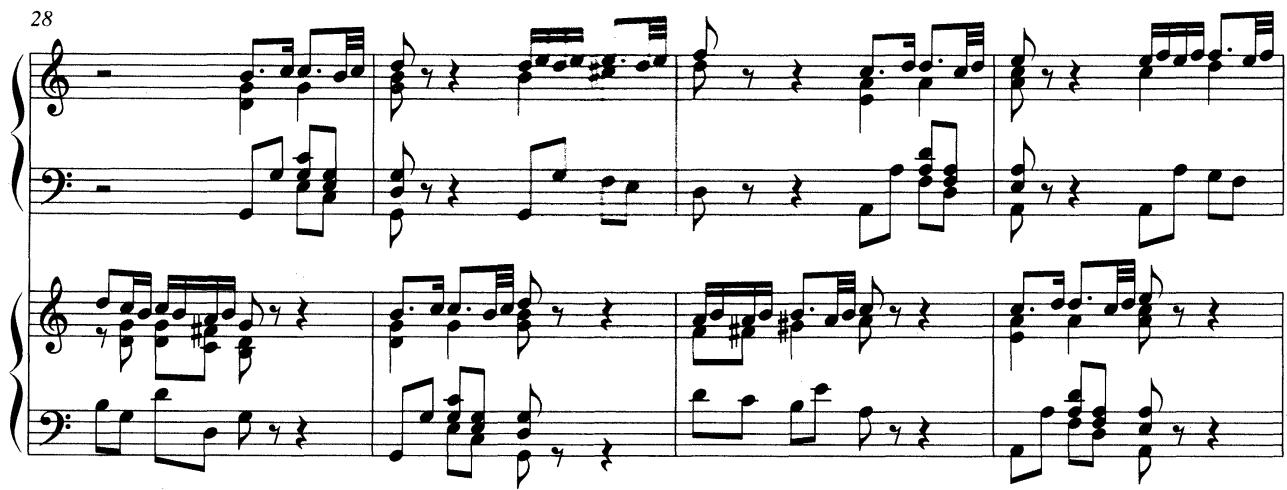
中文讲解
这是一处第33页的图像或乐谱占位符。原文仅给出了图像的位置标记和图注保留信息,并未提供可读的具体内容(例如谱例编号、谱面细节或图内文字)。由于内嵌数据已省略,本段无法判断它究竟是手稿照片、谱例截图还是分析图示,只能确认它在第33页版面中占据了一段连续的位置。从章节标题「Canonic Fortspinnung and canonic sleight of hand in BWV 1061」与下一条占位符的并列出现来看,这两幅图像很可能共同构成一组配图,用来在文字讨论之前或之中展示作者对BWV 1061第一乐章某一片段的谱面分析。具体谱例内容需查看原书第33页方能确认。
补充说明
此占位符紧邻章节标题且与下一占位符相邻,符合原书中谱例图组常以连续占位符呈现的排版惯例;具体谱例编号与乐句范围信息见P0128。
第2段(P0127)
原文复述
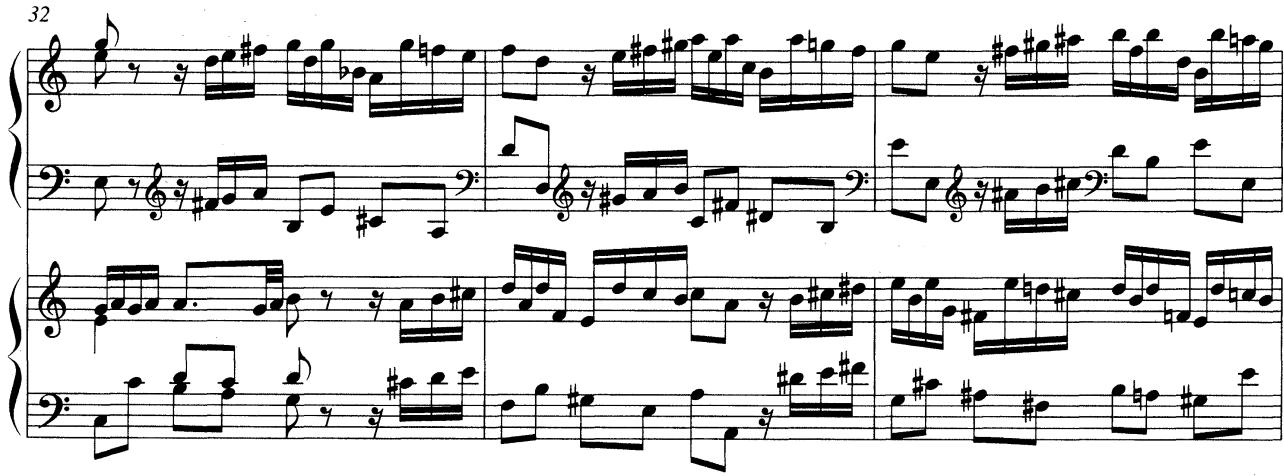
中文讲解
这是紧随P0126之后的第二处第33页图像或乐谱占位符,与前者性质相同:原数据中只保留了位置与图注的占位信息,谱面或图像的具体内容无法从这里直接读出。两处占位符连排,说明原书第33页上至少以两幅并置的图像支撑作者关于BWV 1061「卡农式展开与卡农式障眼法」的论述,作者很可能借助谱例让读者直观看到主题通过卡农手法衍生、变形或隐藏的过程。鉴于信息有限,不应推测两图之间是上下排列还是左右对照,需参照原书版面。
第3段(P0128)
原文复述
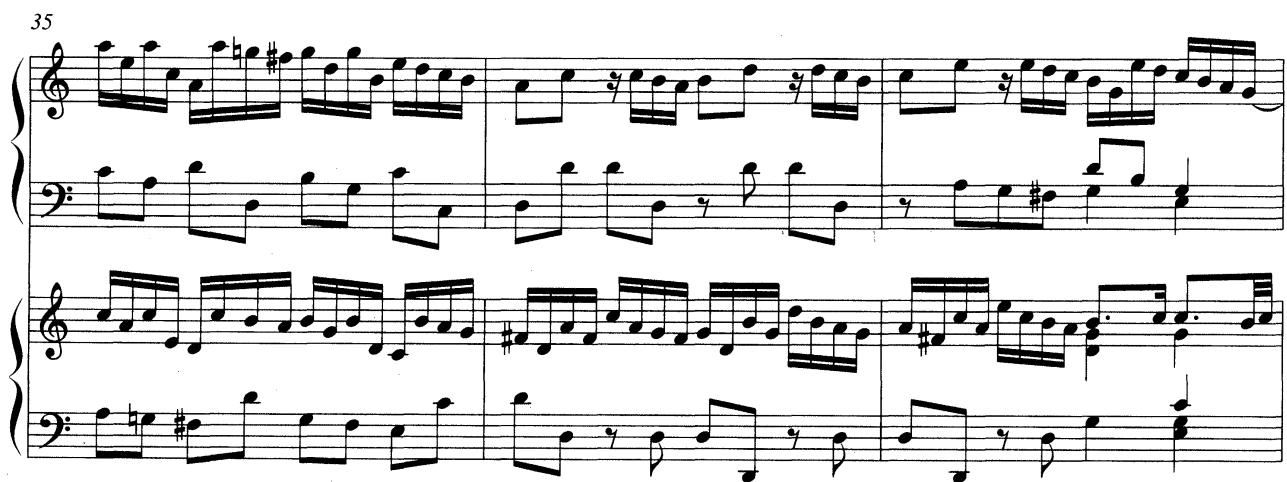
中文讲解
这是第33页谱例3.12的图注说明:作品为BWV 1061(按通行BWV编号体系,BWV 1061为J. S. Bach的《D大调三首双小提琴协奏曲》中的第一首),其第一乐章(BWV 1061/1),所引用的乐句范围为第28至第43小节。图注明确告诉我们:本谱例聚焦的是该协奏曲第一乐章中段(第28–43小节)共16小节的内容。结合本节标题中「卡农式展开(canonic Fortspinnung)」与「卡农式障眼法(canonic sleight of hand)」的提法,这段乐句正是作者用来展示作曲家如何在展开段落中以卡农手法衍生新材料、又通过声部配置或对位关系使听者不易察觉其卡农来源的关键例证。谱例的具体音高、节奏与对位线条需对照原书图像。
补充说明
BWV 1061/1中的Fortspinnung段落是该乐章结构分析中常被关注的部位;第28–43小节恰好落在独奏陈述与发展转换区域,是检验卡农展开与回归ritornello之间张力的典型位置(此判断仅基于本节标题与图注范围,不引入原书未在此段给出的细节)。
第4段(P0129)
原文复述
Dreyfus, Laurence. Bach and the Patterns of Invention. E-book, Cambridge, Mass.: Harvard University Press, 1996, https://hdl.handle.net/2027/heb05561.0001.001. Downloaded on behalf of Indiana University, Bloomington
中文讲解
这是第33页的一条文献脚注,出处为Laurence Dreyfus所著《Bach and the Patterns of Invention》(《巴赫与发明模式》),1996年由哈佛大学出版社(Harvard University Press)在马萨诸塞州剑桥出版,电子版可由网址https://hdl.handle.net/2027/heb05561.0001.001获取;脚注末尾注明该电子版是代表印第安纳大学布卢明顿分校(Indiana University, Bloomington)下载的。从脚注的体例和位置推断,它所支撑的是作者在正文中关于BWV 1061卡农展开与ritornello关系的具体论断——Dreyfus这部著作是英语学界研究巴赫器乐发明性写作的重要参考之一,常被引用以讨论主题衍生、对位技术与曲式结构之间的关系。该脚注因此属于来源引证型脚注,为作者对BWV 1061的分析提供学术支撑与可追溯的文献依据。
补充说明
脚注中出现的Handle URL(hdl.handle.net/2027/…)属于HathiTrust等数字典藏库对哈佛版电子书的稳定标识方式;「Downloaded on behalf of Indiana University, Bloomington」表明该电子副本是为印第安纳大学布卢明顿分校的授权用户下载的,属于学术使用合规记录的一部分。
第5段(P0130)
原文复述
The Ideal Ritornello
中文讲解
「The Ideal Ritornello」(「理想的回归段/理想化的利托奈罗」)是出现在第33页末尾的一个小节标题。它由德语词Ritornello(回归段,源自意大利语,指巴洛克协奏曲中反复出现的全奏段落)与定冠词The和形容词Ideal构成,字面意思是作者要构造一个典范性的、理想形态的ritornello作为讨论的标杆。从本节整体语境看,前文刚刚以BWV 1061第一乐章第28–43小节为实例剖析了卡农展开与卡农障眼法,紧接着便开启「The Ideal Ritornello」这一标题,意味着作者的论证将从具体的个案分析过渡到一个更理论化、规范化层面:先勾勒出一个理想的ritornello模型,再回头用它衡量BWV 1061等实例在多大程度上符合或偏离这一模型。该标题因此承担着「由个案上升到类型化标准」的承转功能。
补充说明
小节标题出现在第33页页底,结合页码与上方脚注的位置关系来看,「The Ideal Ritornello」属于下一小节而非当前小节的收尾,它标志着作者论证的转折——从对BWV 1061具体谱例的描述性拆分,进入对ritornello理想类型的规范性讨论。
脚注 / 边栏 / 图表 / 附加信息(如有)
本小节范围内的附加材料包括:① 两处未带图注的图像/乐谱占位符(P0126、P0127),与③谱例3.12(BWV 1061/1,第28–43小节)的图注(P0128)共同构成第33页的图像群组,用于支撑作者关于卡农式展开与卡农式障眼法的论述;② 一条引用Dreyfus《Bach and the Patterns of Invention》(哈佛大学出版社,1996年)的脚注(P0129),属来源引证型脚注,为本节分析提供学术依据;④ 一个位于页底的新小节标题「The Ideal Ritornello」(P0130),预告下一节将从个案描述转向理想化类型建构。
💡 本节核心要点
- 本节位于第33页,标题为「Canonic Fortspinnung and canonic sleight of hand in BWV 1061」,聚焦BWV 1061第一乐章中的卡农式展开手法及其声部伪装效果。
- 页面以谱例3.12(BWV 1061/1,第28–43小节)为核心视觉证据,辅以两幅未标注编号的图像占位符共同构成图示群组,但内嵌数据已被省略,需查阅原书方能获知谱面细节。
- 脚注引用了Laurence Dreyfus 1996年的《Bach and the Patterns of Invention》,作为作者论述卡农展开与ritornello关系的学术来源。
- 小节末尾出现新标题「The Ideal Ritornello」,表明论证即将从对BWV 1061具体段落的描述性分析过渡到对ritornello理想类型的规范性讨论。
- 由于本节几乎全部内容为图像占位符、图注、脚注与新章节标题,文字性论述的主体应在前后页衔接处,本节的独立教学价值主要在于呈现材料与论证转折的位置标记。
🔑 关键术语
- Canonic Fortspinnung:「卡农式展开」,指巴洛克器乐中以卡农手法(一个声部模仿另一声部的旋律)作为发展与衍生新材料的主要技术,属于Fortspinnung(展开性段落)的一种特殊形态;在本节中它专指BWV 1061第一乐章第28–43小节附近的展开方式。
- Canonic sleight of hand:「卡农式障眼法」,指作曲家通过声部编排、音区安排或对位层次,使听者不易察觉某段音乐其实建立在卡农模仿之上的写作技巧;本节用它来描述BWV 1061展开段中卡农关系被「隐藏」的效果。
- BWV 1061/1:BWV 1061指J. S. Bach的《D大调双小提琴协奏曲》,「/1」表示该作品的第一乐章;本节谱例3.12所引即此乐章第28–43小节。
- Ritornello:「回归段」,源自意大利语,指巴洛克协奏曲中在全奏(tutti)部分反复出现的主题段落,用以框定独奏段落并维系曲式整体;本节末尾的「The Ideal Ritornello」预告作者将在下一节构建一个理想化的ritornello模型。
- Example 3.12:原书第33页上的第三个谱例组第12项,图注标明其内容为BWV 1061第一乐章第28–43小节;本节以此为视觉核心来支撑卡农展开与卡农障眼法的论述。
ch01_s20 [描述性拆分] RESEARCH and the superimposition of [F1] segments
第1段(P0131)
原文复述
[Image or musical example on page 34. The embedded image data has been omitted; the position and any figure caption are preserved.]
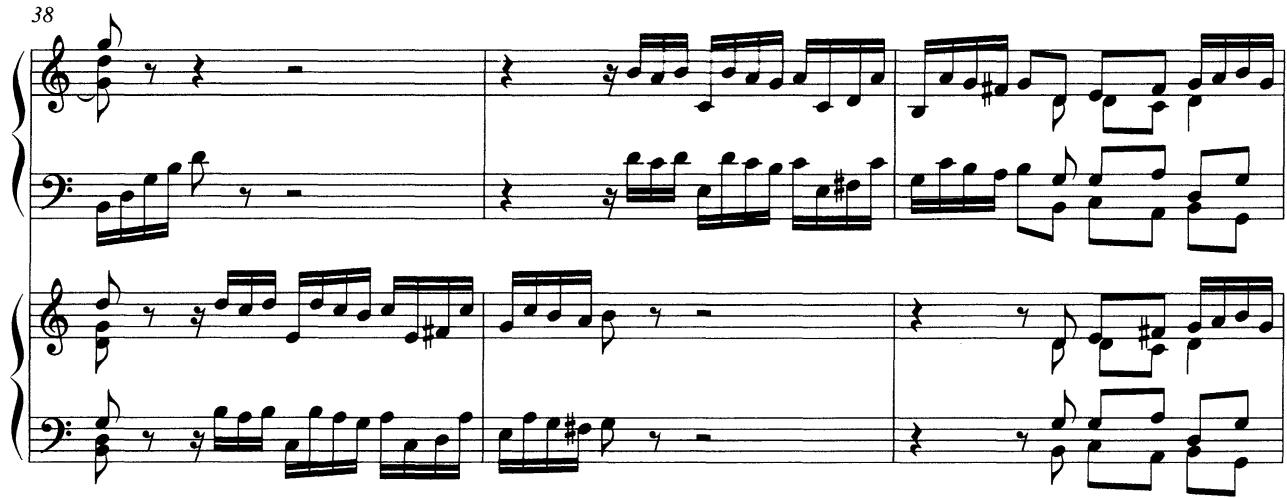
中文讲解
这是第34页上方一幅图像或乐谱示例的占位符,原书的内嵌图像数据未被提供。从上下文看,该图位于第33—34页论述的延续处,紧接前段对例3.11a/b的讨论,因此极可能是与本段文字共同分析同一段音乐的图示(可能即下文提到的例3.11c),用以揭示[F1]段叠置时的对位细节。由于原图缺失,具体谱例内容须查阅原书。
第2段(P0132)
原文复述
in the dominant. This means that two forms of the $[F_{1}]$-segment—one in the tonic and one in the dominant—are superimposed over each other at the distance of a half note so as to arrive at the dominant statement of the ritornello without anyone having noticed. $^{10}$ Bach has therefore taken advantage of the peculiarities of canon to effect a move usually reserved for the more informal episodic function of modulation, a stunning example of invention infringing on the domain of elaboration. Ex. 3.11c attempts to disclose the essential contrapuntal maneuvers of this intriguing feat, which can be experienced, perhaps, as a richly dense web of harmony, but whose inventive workings are scarcely imaginable, deftly negotiated as they are beneath the musical surface. (Another facet of Bach’s invention is his RESEARCH into felicitous juxtapositions between segments played out of order. By RESEARCH I formalize a function which describes how Bach seeks out possible links in the voice-leading to connect non-adjacent ritornello segments. The unusual move in $R_{11}$ to scale degree IV is a result of his
中文讲解
本段承接上一段尾,阐述如何“在属调上”抵达回归段的呈现,并由此引入两个关键概念——叠置(superimposition)与RESEARCH。
第一层论述关于[F1]段。作者指出:主调中的[F1]与属调中的[F1]两个形态被叠置在一起,二者相差半音(the distance of a half note),从而在听者毫无察觉的情况下完成向属调的转调。这里的“half note”是从一个[F1]段的开头到另一个[F1]段开头的时间距离,即半个二全音符(half note/minim)的间隔,而非泛指“二分音符”节奏值;叠置的结果是原本需要通过较为自由的插段式(episodic)转调才能完成的调性迁移,被压缩在一个卡农式的隐蔽操作中。
第二层是理论层面的判断。作者宣称巴赫利用卡农的特殊机制,完成了一次本该属于“展开(elaboration)”领域的“创作(invention)”行为,即所谓“invention infringing on the domain of elaboration”。例3.11c旨在揭示这次技巧背后核心的对位动作;从听感上,它呈现为“和声上密集交织的网络(a richly dense web of harmony)”,但其创作逻辑被巧妙地隐藏在音乐表层之下,几乎不可想象(scarcely imaginable)。也就是说,作者认为巴赫并非炫技式地暴露手法,而是让手法消失在听感之中——这正是其高超之处。
第三层则正式定义RESEARCH。作者把它视为巴赫创作中的另一面:通过寻找声部进行中可能的连接,把本不相邻的回归段(ritornello segments)以不同顺序拼接起来。文中明确“plays out of order”——即打破回归段的常规出现顺序——正是RESEARCH所做的事。作者随后给出具体例证:R11中向IV级(下属)的意外进行,正是RESEARCH的产物,但该例证的完整说明跨越了此段的页末断句。
整段在论证链上扮演双重角色:一方面解释巴赫如何在R11前后的[F1]段处理上完成隐蔽转调;另一方面为后文正式提出RESEARCH这一概念铺垫,同时提示读者,作者将用形式化的方式来刻画巴赫对回归段顺序的自由调度。
补充说明
关于脚注10:本段正文中出现上标10,但脚注内容未在本小节内出现,其作用应为对“未被人察觉地抵达属调”这一隐蔽叠置手法的佐证或来源说明。关于half note:在此语境下指两个[F1]段进入点之间的时间间隔,对应一个全音符之半的二全音符时值,不可误读为单纯的二分音符节奏。关于R11:应为第11个回归段(Ritornello 11)的简称,向IV级(下属)的非常规进行正是RESEARCH机制下的产物。
第3段(P0133)
原文复述
Bach and the Patterns of Invention
中文讲解
此为版心页眉(running header),标明当前章节归属——Laurence Dreyfus所著《Bach and the Patterns of Invention》。其功能仅为版面标识,并非正文论据。
第4段(P0134)
原文复述
Dreyfus, Laurence. Bach and the Patterns of Invention. E-book, Cambridge, Mass.: Harvard University Press, 1996, https://hdl.handle.net/2027/heb05561.0001.001. Downloaded on behalf of Indiana University, Bloomington
中文讲解
此为电子书版权与下载来源信息,包含作者全名、书名、出版机构(哈佛大学出版社)、出版地(马萨诸塞州剑桥市)、出版年份(1996)、永久链接,以及由印第安纳大学伯明顿分校代理下载的说明。其作用是标识电子文本的来源与版权归属,不构成正文论证。
第5段(P0135)
原文复述
[Image or musical example on page 35. The embedded image data has been omitted; the position and any figure caption are preserved.]
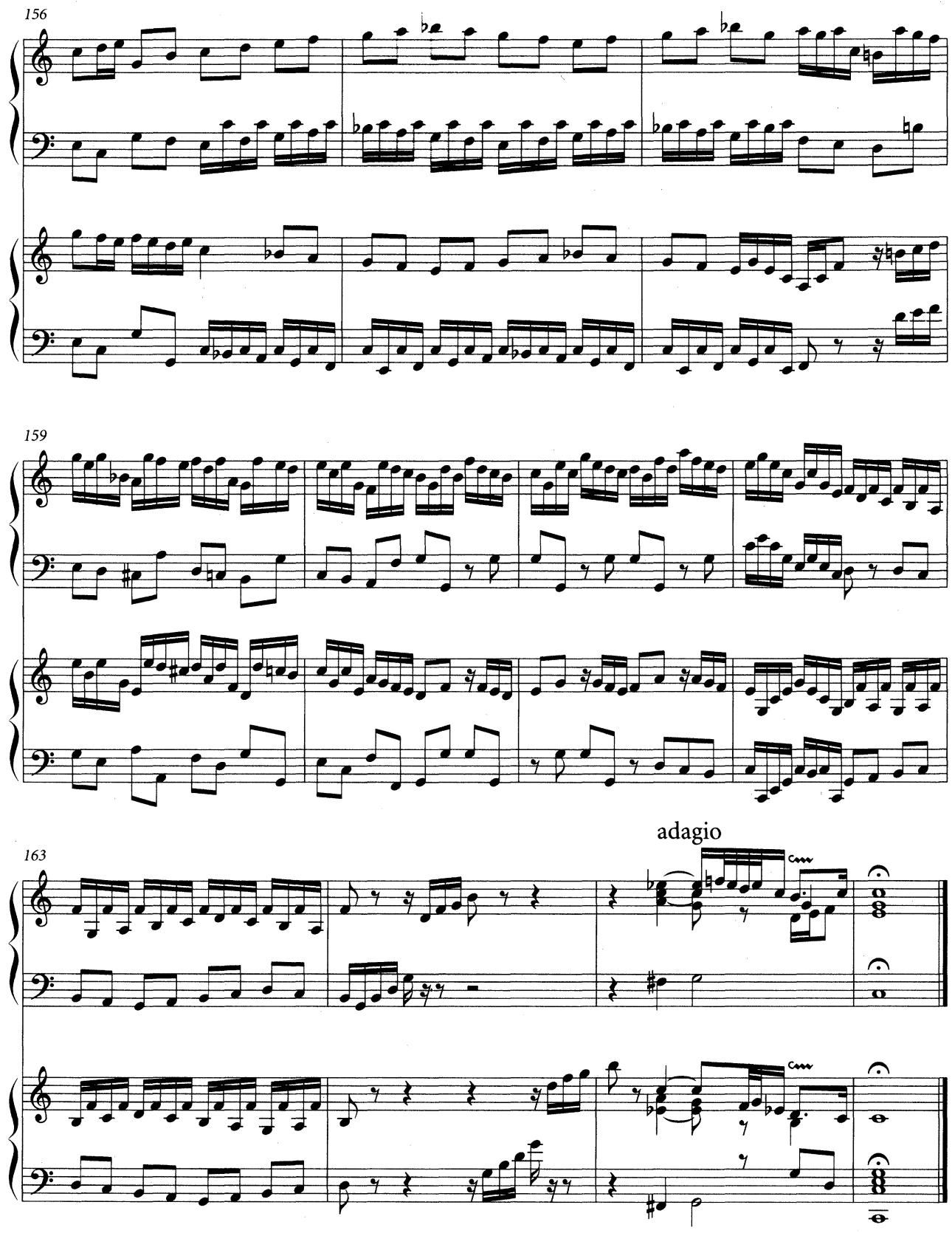
中文讲解
此为第35页一幅图像或乐谱示例的占位符,原书内嵌图像数据未被提供。结合上下文(前文提及例3.11c,本段紧邻“RESEARCH”定义的展开处),此图极可能用于展示R11及RESEARCH机制下的声部进行示例,使读者直观看到非相邻回归段被重新拼接后的效果。具体谱例须查阅原书。
第6段(P0136)
原文复述
Dreyfus, Laurence. Bach and the Patterns of Invention. E-book, Cambridge, Mass.: Harvard University Press, 1996, https://hdl.handle.net/2027/heb05561.0001.001. Downloaded on behalf of Indiana University, Bloomington
中文讲解
此为第35页重复出现的电子书版权与下载来源信息,与第34页版本一致,仅作为版心/页脚标识。其功能为标注电子文本的出版与下载出处,非正文论据。
第7段(P0137)
原文复述
The Ideal Ritornello
中文讲解
此为下一小节的标题(chapter/section heading)——“The Ideal Ritornello”(《理想的回归段》)。它预示着下文将正式定义并讨论作者所构建的“理想回归段”模型,与本节已引入的RESEARCH概念相对:前者关注巴赫如何通过顺序调度、自由拼接实际创作中的回归段,后者则提供一个规范化、可作参照的“理想形态”框架。
脚注 / 边栏 / 图表 / 附加信息(如有)
本小节正文段落(P0132)中包含一个上标脚注10的引用,但脚注本体未出现在当前7段范围内;其作用应为对“未被人察觉地抵达属调”这一隐蔽叠置技巧的文献佐证或进一步说明,建议查阅原书第34页对应脚注。
💡 本节核心要点
- 巴赫在R11前后的处理中,将主调[F1]与属调[F1]两种形态以半音(二全音符)时距叠置,在听者未察觉的情况下完成向属调的转调。
- 作者将此判定为“invention(创作)侵入elaboration(展开)领域”的精彩案例:卡农手法承担了通常由较为自由的插段式转调所完成的功能。
- 例3.11c揭示了对位细节:听感上呈现为“和声密集的网络”,但其创作逻辑被巧妙隐藏在音乐表层之下,几乎不可想象。
- 作者正式提出RESEARCH概念,将其定义为巴赫寻找声部进行中可能连接、把本不相邻的回归段以新顺序拼接的创作机制(plays out of order)。
- R11向IV级(下属)的非常规进行是RESEARCH的具体表现,跨越本段断句,将在下一段继续说明。
- 本节末尾以“The Ideal Ritornello”作下一节标题,预示作者将以“理想回归段”作为规范模型,对照巴赫在RESEARCH机制下的实际自由处理。
🔑 关键术语
- [F1]-segment:F标记的功能性分段,[F1]为回归段(ritornello)中的一个特定子段,本节讨论其在主调与属调两种形态下的叠置与转调功能。
- superimposition:叠置。本节特指主调[F1]与属调[F1]在时间上以半音距离前后重合,从而产生隐蔽的调性迁移效果。
- episodic function of modulation:通常由较为自由的插段式段落承担的转调功能;本节指出巴赫用卡农机制越界承担了本属此处的功能。
- invention / elaboration:本书中一对核心概念对照:invention指作曲家主动的创作构想与生成过程;elaboration指对既有材料的展开处理;本节主张巴赫以创作手段侵入了通常属于展开的领域。
- RESEARCH:作者为巴赫创作机制所设的形式化函数,刻画其在声部进行中寻找连接、将本不相邻的回归段以新顺序拼接的能力,是本节提出的关键理论概念。
- scale degree IV:音阶第四级,即下属音方向;本节提到R11意外向IV级进行,正是RESEARCH机制下的产物。
ch01_s21 [描述性拆分] The inconclusive Adagio ending of BWV 1061 as pseudo-Epilog
第1段(P0138)
原文复述
In this movement, the futile search for origins encounters a compensatory gesture in its arresting closing bars (shown in Example 3.13), which brings the action to a halt through a grandiloquent and transgressive minor cadence marked “adagio,” although the final chord bears a Picardian major third. This bold gesture similarly calls into question whether the ritornello can guarantee an authentic conclusion. The question is illusory, since the ritornello already contained a perfectly adequate Epilog that could easily have provided a satisfying close to the entire movement. At first glance, despite its undeniable drama, this ending appears calculating and unmotivated—perhaps a pursuit of variety at the cost of invention. On the other hand, because the opening of the ritornello posed a tonal problem that the episodes tried (in vain) to resolve, the minor-mode ending can also be read as the consequence of a failed inventive process. While $[V_{a}]$, $[V_{b}]$, and $[F_{3}]$ all underwent the MODESWITCH successfully, the Epilog could not. The reason is not especially grammatical but rather that the IV$^{7}$ chord is unidiomatic in the minor mode and is commonly replaced by a diminished-seventh chord built on the raised fourth scale degree. Although the ideal Epilog could not have functioned with any diminished-seventh chord, the Adagio features one prominently. The closing can therefore best be heard as a pseudo-Epilog that stands in for the rejected “translation”—a loose reworking of the pitch content and thoroughbass of the ideal Epilog. The passage contrasts instructively with the superfluous Fortspinnung segment (discussed earlier) that Vivaldi appended to the end of the third movement of op. 3, no. 10. While Vivaldi’s late addition bore no relation to the procedures already manifested by his ritornello formations, Bach’s concluding peroration definitively answers the question of beginnings and endings with which the movement was preoccupied.
中文讲解
本段是本小节论证的高潮,完成对 BWV 1061 末乐章(由本小节标题可定位)利都奈罗收束方式的诊断。它的推理必须分层交代。
(1) 中心主张:Adagio 终止并非开创新局,而是一个"伪 Epilog"(pseudo-Epilog)。所谓"伪",在于它只是对理想 Epilog 的"松散改写"(loose retooling):保留了原 Epilog 的音高与数字低音轮廓,但因不得不迁就小调语汇而在节拍、和声姿态上做了替换,并不能算严格的同义翻译。
(2) 与前文逻辑的衔接:作者并非突然引入 Adagio——前文已论证利都奈罗开端提出一个"调性谜题"(tonal problem),插入段尝试解决却失败;本段指出,小调化的末尾正是这种"失败的发明过程"的后果。开头与结尾因此被同一调性困境锁死,正呼应文末"definitively answers the question of beginnings and endings"。
(3) MODESWITCH 的成败分布:[Va]、[Vb]、[F3] 三处成功,Epilog 失败。作者给出的并非"语法"层面的理由,而是和声语汇层面的理由:小调中 IV$^{7}$ 不地道,通常被建立在升 IV 级之上的减七和弦所替代;但理想 Epilog 的数字低音框架又无法兼容任何减七和弦,所以在必须替换时整个 Epilog 便只能被另起炉灶,这便是"被拒绝的翻译"(rejected translation)之含义。
(4) Adagio 终结用法的反讽功能:它既无法替代 IV$^{7}$,又显眼地(Vor allen prominent,原文 “features one prominently”)摆出减七,从而把原 Epilog 的"不可译"显形化——Adagio 同时承担"替代"与"暴露"两个功能,所以它不平凡,是结构性事件。
(5) Vivaldi 对照的功能:op. 3 no. 10 第三乐章末的 Fortspinnung 是无内在动力的后缀;Bach 之 Adagio 则相反——它接管、闭合并正面回答乐章已萦绕于心的"首尾问题"。因此表面的"算计算量、缺乏动机"只是第一印象,实质上承担了内部辩证的答句职能。
(6) 容易误读之处:读者会把"伪 Epilog"误读为贬义;实际上它是一种功能性命名,指向一种"在原 Epilog 无法成立时为利都奈罗补上收束位置"的具体操作,而非对 Bach 创意的攻击。
补充说明
由本小节标题可定位,本段所谓 “this movement” 即 BWV 1061 之末乐章;文中谱例 Ex. 3.13 与 P0138 同处第 36 页,展示终止处的实际进行。本段所引用的 MODESWITCH、[Va]、[Vb]、[F3]、“translation” 等术语在原文中已经被此前的分析段落建立,本段仅作调用而未重新定义;“translation” 在此特指从一种调式到另一种调式的同义改写,即 MODESWITCH 操作的预期产物。
第2段(P0139)
原文复述
Bach’s ritornello principles also exert a remarkable effect on genres with verbal texts, and it is easy to imagine that the kind of internal analysis of materials in which such inventions engage will be particularly suited to the kind of exegesis of poetry characteristic of concerted arias and choruses. The subject of musical invention tied to poetic texts is a vast one, and the present treatment only wants to touch on it briefly, to suggest how the ritornello principle operates not so much as a dramatic device but as an ideal interpretive mechanism which delights in circumnavigating a textual idea until it can be understood from a variety of musical vantage points. To illustrate this, a text has been chosen in which time plays an explicit role, so as to emphasize how Bach’s manner of musical invention—and hence his global meaning—both supersedes and overwhelms the signs of temporality indicated by the poetry. The example is taken from the St. John Passion: the bass aria “Eilt, ihr angefochten Seelen,” which, on account of its dialogue with the chorus, can be thought of as a kind of mini-operative scene, albeit within the framework of Christian allegory and hermeneutics.
中文讲解
本段在本小节中扮演"过渡"角色——它把刚刚完成的器乐曲利都奈罗分析向带歌词的体裁延伸,但同时坦白说此话题宏大,此处仅点到为止。
(1) 中心主张:利都奈罗原理在声乐体裁中不是"戏剧化装置"(dramatic device),而是"理想化的诠释机制"(ideal interpretive mechanism)。这一对立的措辞承担很大权重:前者会推动叙事冲突、与文字的脉络对齐;后者不断绕行(circumnavigates)一个文本观念,直到它从多个音乐视角被理解——后者不与文学时间赛跑,而是把文学命题转为音乐可盘旋之对象。
(2) 例子选择的用意:作者特意挑选一首以"时间"为显性主题的歌词,目的恰恰不是顺从诗中的时间标志,而是要展示 Bach 的发明——以及由此产生的全局意义——如何"超越并压倒"(supersedes and overwhelms)这些时间标志。也就是说,这是一例"用最不利条件证明论点"式的例子:诗中的时间性越强,音乐越能证明自己能在更高层级统摄它。
(3) 所选作品《约翰受难曲》男低音咏叹调"Eilt, ihr angefochten Seelen"与合唱的对话,使其具有"小型歌剧场景"(mini-operative scene)的张力,但这一歌剧化片段仍须在"基督教寓意—释义学"(Christian allegory and hermeneutics)的框架内被听——这是转向具体例子之前必须先竖起的边界,提醒读者勿以纯世俗歌剧逻辑类比。
(4) 本段在本小节整体结构中的功能:它是承上启下的声明——封住了上一议题(伪 Epilog),打开下一议题(声乐诠释应用),本身不增加新的材料证据,只声明下一步的方法论前提。
第3段(P0140)
原文复述
94 Bach and the Patterns of Invention. Dreyfus, Laurence. Bach and the Patterns of Invention. E-book, Cambridge, Mass.: Harvard University Press, 1996, https://hdl.handle.net/2027/heb05561.0001.001. Downloaded on behalf of Indiana University, Bloomington.
中文讲解
本段非正文,而是当页的版式信息,共两项。其一为书眉/页码:“94 Bach and the Patterns of Invention”,即本书主标题与页码;其二为电子书出处声明:Laurence Dreyfus《Bach and the Patterns of Invention》1996 年由 Harvard University Press 出版的电子版,标识符 https://hdl.handle.net/2027/heb05561.0001.001,取阅机构为 Indiana University, Bloomington。它仅起资料来源凭证的作用,不向本小节的论证贡献新主张。
脚注 / 边栏 / 图表 / 附加信息(如有)
本小节仅有一项非正文附加材料,即 P0140 所载之书眉(页码 94、主标题 “Bach and the Patterns of Invention”)及电子书出处声明:Laurence Dreyfus, Bach and the Patterns of Invention, E-book, Cambridge, Mass.: Harvard University Press, 1996, https://hdl.handle.net/2027/heb05561.0001.001(Indiana University, Bloomington 取阅)。该信息仅作版面与文献凭证,不对论证施加补充。原页(第 36 页)上仅有一个谱例 Ex. 3.13(末乐章 Adagio 终止),已在 P0138 的正文中引用;本小节并无独立边栏、脚注或其他独立图示。
💡 本节核心要点
- Adagio 终止是利都奈罗无法正常收束时所作的"补偿动作":它在表面上求变,在结构上替代了被拒绝的理想 Epilog。
- 本节把它读作"伪 Epilog":在节拍、终止姿态上略作松散改写,继承了原 Epilog 的音高与数字低音轮廓,而非逐项重译。
- MODESWITCH 操作在 [Va]、[Vb]、[F3] 处成功,在 Epilog 处失败——失败由 IV$^{7}$ 的小调不地所导致,而非纯语法原因。
- 小调中 IV$^{7}$ 通常被升 IV 级上的减七和弦替代;理想 Epilog 的数字低音无法兼容任何减七,因此翻译被放弃,Adagio 不得不另立门户。
- Adagio 突出使用减七,既暴露原 Epilog 的"不可译",又完成结构性填空——这正是"伪 Epilog"兼负"替代"与"显形"两个功能的辨证所在。
- 与 Vivaldi 在 op. 3 no. 10 第三乐章末的"赘余 Fortspinnung"对照:Vivaldi 的增加游离于既有利都奈罗过程之外,Bach 之 Adagio 则正面回答"开头—结尾"之关系,完成内部闭环。
- 本节由此宣告:利都奈罗原则不只属于器乐曲内部,它还能迁移至带词文学,下节将以《约翰受难曲》男低音咏叹调"Eilt, ihr angefochten Seelen"加以示范。
🔑 关键术语
- pseudo-Epilog:在本节指取代理想 Epilog 的替代性终止——小调化的 Adagio 片段,继承了原 Epilog 的音高与数字低音轮廓,但因 IV$^{7}$ 无法在小调沿用而被松散改写。在论证中它承担"代替原 Epilog"的位置,而非贬义标签。
- Picardy third / Picardian major third:在本节特指 Adagio 终止时小调进程中以大三级关闭的"反差"手法,与前文所谓"转调的、违规的"小调终止的张力来源正相关:大调的尾音与小调的前行形成对冲,使终止同时承载"违规"与"和解"。
- MODESWITCH:在本节以已建立的技术术语出现,指利都奈罗不同部件之间实施"调式 / 调性切换"的操作。本节指出其在 [Va]、[Vb]、[F3] 处可行,在 Epilog 处因小调 IV$^{7}$ 与其减七替代互不兼容而失败。
- thoroughbass / 数字低音:在本节特指 Epilog 的低音及其上数字标记所决定的和声序列。理想 Epilog 的数字低音无法兼容任何小调减七替代,因此只能被"松散改写"——这是 Adagio 成为"伪 Epilog"的和声依据。
- Fortspinnung:在本节出现于对 Vivaldi 的对照中,特指 Vivaldi 在 op. 3 no. 10 第三乐章末尾附加的发展性乐段。该处被作者定性为"无内在承当"的装饰性增补,与 Bach Adagio 的内部闭环性质形成对立。
- concerted arias and choruses:在本节特指"协奏型咏叹调与合唱",即下一节将承接的分析对象。作者以这一术语标识利都奈罗原则下一应用领域,并强调其诠释功能是"环绕文本观念",而非"戏剧装置"。
- Christian allegory and hermeneutics:在本节与所选《约翰受难曲》咏叹调直接挂钩,作为其"歌剧化"色彩必须被纳入的解释框架,提醒读者勿以纯世俗歌剧逻辑类比 Bach 之声乐处理。
ch01_s22 [描述性拆分] From instrumental invention to texted genres: “Eilt, ihr angefochten Seelen”
第1段(P0141)
原文复述
The aria occurs just after Pilate has ordered Jesus’ crucifixion. The Evangelist reports that Jesus has borne his cross to a “place of skulls” called Golgatha in Hebrew. Thereupon begins the ritornello, followed by the singer’s first run through the opening lines and then a second pass through the same lines of text, this time with the chorus’s desperately interspersed questions interpolated dramatically against the beat. (See Ex. 3.14, mm. 1–23, 59–65.) The speaker exhorts the penitent sinners as follows:
中文讲解
本段为后续歌词与分析提供戏剧与音乐结构的双重语境。其要点包括四层:
第一,剧情定位:这首咏叹调出现在彼拉多下令钉十字架之后,使整首作品带有紧迫的救赎意味,而歌词文本中所指的"髑髅地"(Golgatha)正是耶稣背负十字架所到之处。
第二,叙事与音乐的关系:福音传教士的圣经叙述(“背着十字架到了那称为髑髅地的地方”)为音乐进入提供触发点;紧接着利都奈罗(ritornello)奏响,形成器乐前导。
第三,咏叹调本身的结构:歌手先完整演唱歌词开头数句,再以"第二遍"重复同一段歌词文本,但在重复过程中合唱以"绝望式插入"的方式提出质问,从节拍上对独唱者构成戏剧性打断。这种"先呈示后对话"的设计使歌词的呼吁性与合唱的诘问性形成张力。
第四,作者提示读者参考 Ex. 3.14 中的第 1–23 和 59–65 小节,前者对应初次呈示,后者对应合唱插入的段落,是后文分析 ritornello 预示功能的具体乐谱依据。
最后一句"说话者如此劝勉悔罪者"引出 P0142–P0150 的歌词本体。
第2段(P0142)
原文复述
Hasten, hasten, you beleaguered souls,
中文讲解
这是咏叹调第一句的英文译本,对应德文原文"Eilt, ihr angefochten Seelen"(见小节标题)。“Eilt"为命令式"快来/赶快”,“ihr angefochten Seelen"直译为"你们这些受困/被围困的灵魂”,“beleaguered"一词保留了围攻、围困的军事意象,与德文"angefochten”(遭攻击、受试炼)的含义相呼应。重复的"Hasten, hasten"对应德文"Eilt, eilt"的双重命令式,强化了紧迫感。作者用"you beleaguered souls"作第二人称复数称呼,表明说话者(独唱者)面对的是所有悔罪的信徒。
第3段(P0143)
原文复述
Whither? Whither?
中文讲解
这是合唱在独唱者两次重复歌词之间插入的第一个诘问,原文为德文"Wohin? Wohin?"(“去往何处?去往何处?")。在音乐上,这一问句按 P0141 的描述是"against the beat”(逆节拍地)插入的,与独唱者正在进行的演唱形成节拍错位,制造出呼喊、紧迫、混乱的戏剧效果。它与 P0144 的回答"To Golgatha!“构成一组问答单元,并在 P0148 处重复出现,作为歌词对称结构中的呼应点。
第4段(P0144)
原文复述
To Golgatha!
中文讲解
对 P0143 诘问的直接回答,原文为"Nach Golgatha!"。这句极短的惊呼式回答点明了全曲的核心目的地——髑髅地。它与前面彼拉多下令钉十字架、耶稣背十字架前往髑髅地的叙述脉络直接相连,使咏叹调不仅是抽象劝勉,更将悔罪者引向基督受难的具体地点。感叹号式的简短句式也便于在音乐上做强烈的节奏强调。
第5段(P0145)
原文复述
Quit your dens of torment!
中文讲解
原文为"Verlasst die Marterhöhlen”(直译:离开/放弃刑讯的巢穴)。“Marterhöhlen"指施行酷刑的洞窟或窝穴,引申为罪恶、痛苦、忏悔所聚集的内心幽暗处。“Quit”(离开)是一个祈使命令,与开篇"Hasten"共同构成劝勉的连续动词链:从"快来"到"去哪里"到"离开痛苦”。在神学语境中,“dens of torment"呼应了罪人受良心折磨的意象,劝勉者要求他们从这种自我折磨中走出来。
第6段(P0146)
原文复述
Take to the wings of faith!
中文讲解
原文为"Nehmt Fluchels des Glaubens Schwingen”(直译:取信心的羽翼作为翅膀)。这是一句充满圣经意象的劝勉——以"信心的翅膀"为比喻,呼应旧约与诗篇中以鹰翅、羽翼象征神庇护的传统(如诗篇 17:8、91:4)。它在歌词结构上与 P0145 形成"先离开旧地、再依靠新力量"的递进关系:从脱离痛苦(quit your dens)到依靠信心(wings of faith),为下一句"Fly!“提供动力基础。
第7段(P0147)
原文复述
Fly!
中文讲解
原文为"Fliegt!"(飞吧!),是 P0145–P0146 整个劝勉链条的总结性单字命令。从"快来"到"离开"到"取翅膀"再到"飞”,动词链由抽象命令逐层具体化,“Fly!“以最简短的呼喊把信仰行动推向极致。这一字单独成行,在歌词排版与音乐节奏处理上都具有突出的强调地位。
第8段(P0148)
原文复述
Whither? Whither?
中文讲解
合唱诘问的第二次出现,与 P0143 完全一致。这种重复形成了歌词的拱形对称结构(A–B–A):第一次诘问在劝勉开始后立即出现,引导出"去髑髅地"的目的地;第二次诘问在"飞"之后出现,承上启下地指向下一站——“十架山”。在音乐上,这两次诘问以"against the beat"的逆节拍插入方式再现,强化了合唱作为戏剧性旁观者的角色。
第9段(P0149)
原文复述
To the mount of the cross,
中文讲解
对 P0148 诘问的回答,原文为"Zum Kreuzesberge hin”(直译:到十字架之山去)。与 P0144 的"Nach Golgatha!“相比,这里的措辞更加具体:髑髅地(Golgatha)是地名,“十字架之山"则是神学化的诠释,把受难地点转化为信仰登临的高山。这一意象与"髑髅地"呼应但层次更高——目的不只是地理上的目的地,而是灵性上与基督同受苦难、同得救赎的高峰。
第10段(P0150)
原文复述
Your welfare doth flourish there!
中文讲解
原文为"Wo euer Heil wird blühen!"(直译:你们的救恩/福祉将在那里绽放)。“Heil"在德文中兼具"救恩”(salvation)与"福祉/健康”(welfare)双重含义,作者选择"welfare"翻译保留了这种世俗/宗教双义性,也契合 applicatio 的双重维度。“blühen”(绽放、开花)一词把救恩描绘成一种有机生长的过程——它在十架山上破土、开放。“doth"的古英语形式保留了 18 世纪宗教散文的庄重感,呼应歌词的圣咏风格。
第11段(P0151)
原文复述
It is well known that concerted Passions written in this style represent far more than a simple narration of events leading to the Crucifixion. For in addition to the Evangelist’s setting of the biblical verse, there are the crucial attestations of Lutheran belief in the form of the four-part chorales as well as poetic ruminations reflecting on aspects of the Passion story. Implied here are already three temporal dimensions: the historical past of the Gospels, the historical past of the early days of the Lutheran interpretations, and the present vantage point which makes the older texts relevant to the contemporary believer—the Latin term from the hermeneutic literature for this last interpretive moment is applicatio. The music also falls into this same applicative mode of hermeneutics by casting the texts in three contemporary idioms—Bach’s modern chromatic idiom for the chorale tunes, operatic recitatives for the biblical narratives, and concerted arias with ritornellos for the madrigalian poetry.
中文讲解
本段是全节最具理论密度的一段,作者提出了一个三层分析框架,需要逐层拆解:
第一层:协奏型受难乐远超事件叙述。作者首先纠正常见误解——协奏型(concerted)受难乐不只是按时间顺序叙述耶稣受难经过。除福音传教士对圣经经文的"配乐朗诵"外,还有两个同等重要的元素:一是四声部圣咏(four-part chorales),它承载路德宗信仰的核心见证;二是"诗意的沉思”(poetic ruminations),即对受难故事某些侧面的反思性诗作。
第二层:三个时间维度与 applicatio。作者指出这类作品隐含三个时间层:(1) 福音书的历史过去;(2) 早期路德释经的历史过去;(3) 当下的解读视角——使古老文本对当代信徒仍具相关性。第三层被赋予拉丁术语 applicatio(应用/应用化),这是源自释经学的关键概念,意为将古老文本应用到当下的信仰生活中。这个术语的引入把音乐分析拉入神学释经学传统,提示读者聆听受难乐时不应仅关注叙事或审美,而要识别其将圣经文本"应用"于当下信徒的修辞。
第三层:音乐即 applicatio 的执行机制。作者认为音乐也以同样的 applicatio 方式运作,通过将不同文本置于三种"当代风格”(contemporary idioms)中来实现文本与当代听众的连接:(a) 圣咏旋律用巴赫的现代半音化风格(chromatic idiom);(b) 圣经叙事用意大利式的歌剧宣叙调(operatic recitatives);(c) 牧歌体诗歌用协奏型咏叹调配 ritornellos。这一对应关系——文本类型与音乐体裁——是本节最核心的论断,因为它建立了"体裁选择本身即 applicatio 之工具"的解释模型。三种体裁在 18 世纪都是"当代的”,因此即使圣经与早期路德文本诞生于古代,通过把它们穿入当代音乐语汇,作品就完成了从古到今的时间桥接。
最后一句"concerto with ritornello for the madrigalian poetry"正是把读者带回当下讨论的咏叹调——“Eilt, ihr angefochten Seelen"即属于第三类,它以协奏型咏叹调形式承载一段牧歌体反思性诗歌,是 applicatio 音乐机制的具体体现。
第12段(P0152)
原文复述
The ritornello in “Eilt, ihr angefochten Seelen” anticipates the representation of certain phrases of the text. Working backward from the later vocal settings, it is clear that the ritornello adumbrates in nuce the opening line conceived as a dialogue (see Ex. 3.14):
中文讲解
本段引出对 ritornello 预示功能的具体分析,并提出一个关键的分析方法论:“Working backward from the later vocal settings”(从后置的人声设置反推器乐前导)。这个反向分析方法的合理性在于:器乐 ritornello 在人声进入前已经奏出,所以"预期"必须能从后来的歌词与音乐发展中找到印证——若能找到呼应,则 ritornello 的"预示"就不仅是可能性,而是被后文证明的"设计性”。
“adumbrates in nuce"是一个重要的拉丁化术语组合:“adumbrate"意为"勾勒轮廓、预示”,“in nuce”(拉丁语)意为"in a nutshell”(概括地、浓缩地)。合起来即"以浓缩形式勾勒出"——作者声称 ritornello 在微小体积内已经预先包含了歌词第一句作为"对话"(dialogue)的核心结构。结合 P0141 的描述(歌手陈述+合唱诘问+歌手回答构成对话),ritornello 实际上以器乐方式预告了这种对话式音乐修辞。
段末再次提示参考 Ex. 3.14,作为该论证的乐谱依据;冒号提示后文将直接给出歌词,使读者在音乐分析与文本阅读之间来回穿梭。
补充说明
本段中的"anticipates"(预期/预示)和"adumbrates in nuce"(以浓缩形式勾勒)是分析器乐与声乐关系时的关键术语,二者均暗示 ritornello 不是被动的引子,而是主动的音乐—修辞预告。
脚注 / 边栏 / 图表 / 附加信息(如有)
本节无脚注、无独立图表说明(仅提示 Ex. 3.14 的两个小节段:mm. 1–23 和 59–65),无小节内边栏内容。所有附加材料均已并入正文段落处理。
💡 本节核心要点
- 协奏型受难乐不只是受难事件的线性叙述,它同时承载路德圣咏(信仰见证)与牧歌体反思诗(神学沉思)两类文本。
- 这类作品隐含三层时间维度:福音书的历史过去、早期路德释经的历史过去、当下视角;后者在释经学中以拉丁术语 applicatio(应用)命名。
- 音乐通过把不同文本置于三种"当代风格"中执行 applicatio:圣咏配巴赫半音化风格、圣经叙事配歌剧宣叙调、牧歌体诗配协奏型咏叹调加 ritornello。
- “Eilt, ihr angefochten Seelen"属第三类——以协奏型咏叹调承载牧歌体反思性诗歌,其结构中独唱与合唱的对话即 applicatio 的微观体现。
- 咏叹调采用"先陈述、后对话"的双重呈示:歌手先唱出劝勉句,再于重复时由合唱以逆节拍方式插入"Whither? Whither?“诘问,制造出节拍错位的戏剧张力。
- ritornello 通过"反向分析"可被识别为对歌词对话结构的器乐浓缩预示(adumbrates in nuce),即器乐前导在最小体积内预先勾勒了后置的独唱—合唱对话修辞。
🔑 关键术语
- ritornello:源自意大利语的器乐段落,在咏叹调中起前导与再现作用。在本节中,“Eilt, ihr angefochten Seelen"的 ritornello 不仅是引子,更被作者论证为以浓缩形式预示歌词对话结构的修辞性前导。
- concerted Passion:协奏型受难乐,18 世纪以多种器乐与人声交织方式呈现的受难曲类型。它不只是叙事,还包含圣咏与反思诗等多层文本,本节以此为讨论对象。
- applicatio:拉丁语释经学术语,指将古老文本应用到当下信徒的解读时刻。本节以此术语指明协奏型受难乐第三时间维度(当下视角),并认为音乐通过三种当代风格本身就是 applicatio 的执行机制。
- Evangelist:福音传教士角色,在受难乐中承担圣经经文的宣叙性叙述。本节中"Eilt, ihr angefochten Seelen"前由 Evangelist 报告耶稣背负十字架前往 Golgatha 之事。
- Golgatha / place of skulls:髑髅地,耶稣受难的具体地点。Golgatha 为希伯来语名称,本节出现于 Evangelist 叙述与歌词回答(“To Golgatha!")中。
- chorale (four-part chorales):四声部圣咏,路德宗会众歌唱的传统赞美诗形式。本节将其列为协奏型受难乐三大文本支柱之一,并指出巴赫以现代半音化风格处理其旋律。
- madrigalian poetry:牧歌体诗歌,协奏型受难乐中的反思性诗作文本类型。本节讨论的咏叹调即以此类诗歌为词,配以协奏型咏叹调与 ritornello 的音乐体裁。
- operatic recitatives:歌剧宣叙调,本节作为三大"当代风格"之一,用于呈现圣经叙事文本。其使用使圣经叙事获得 18 世纪听众熟悉的意大利歌剧语汇。
- chromatic idiom:半音化风格,本节指巴赫用以处理圣咏旋律的现代音乐语汇,与歌剧宣叙调、协奏型咏叹调共同构成 applicatio 的三种音乐通道。
- adumbrates in nuce:“以浓缩形式勾勒"之意,作者用以描述 ritornello 在最小体积内预先包含歌词对话结构的功能,是反向分析器乐预示性的关键术语。
ch01_s23 [描述性拆分] The aria’s text and dialogue structure
第1段(P0153)
原文复述
The Pastor: “Hasten, you beleaguered souls!”
中文讲解
这段是宣叙调或类似说白段落中由“牧师”(The Pastor)角色说出的一句台词:催促“被围困的灵魂”(beleaguered souls)赶快行动。“Hasten"是一个命令式动词,传达急迫感;“beleaguered"意为被围困、被围追堵截,暗示听者陷入困境急需救援。整句语气强烈、富有号召力,为接下来会众的回应设下了紧迫的基调。
第2段(P0154)
原文复述
Congregation: “Where?”
中文讲解
这段是会众(Congregation)用一个词“Where?”作出的回应,形式上是疑问,但语气上是绝望的追问——他们不是真的不知道要去哪里,而是急切地想知道目的地在哪里。一个单词的短句在戏剧上制造了悬念与张力:牧师的催促与呼喊立刻被会众的反诘打断,暴露出灵魂处境的慌乱无助,也为下一句回答做了铺垫。
第3段(P0155)
原文复述
The Pastor: To Golgotha!
中文讲解
这段是牧师给出的答复:“到各各他去!”(To Golgotha!)Golgotha(各各他)是《新约》中耶稣被钉十字架的地点,位于耶路撒冷城外的一座小丘上,名称本身含有“骷髅地”之意。回答用感叹号收尾,语气坚定明确,与上一句的迷茫追问形成鲜明对比,既是对会众疑问的解答,也赋予匆忙的催促一个明确的神学终点——赴往基督受难之地的旅程才是灵魂获救之道。
补充说明
本节中Golgotha指向耶稣受难地,其神学含义对理解整段合唱/宣叙调至关重要:催促的灵魂并非任意奔向某处,而是奔向十字架的救赎之地。
第4段(P0156)
原文复述
Bach represents the command “hasten” by the rushing ascent up to the hilltop in rising sixteenth notes, the sinners’ desperate interrogative by the declamatory figures in suspiratio (“Whither?”), and the answer (“to Golgotha”), somewhat more obliquely but nonetheless definitively, by the closing gesture of the cadence.
中文讲解
这段是作者对巴赫如何用音乐刻画上述三句歌词的分析,是本小节的核心论点,可拆解为三条对应的“词—乐”映射:第一,“hasten”(赶快)这一命令被处理为"向上急速攀升至山顶的连续十六分音符上行”——急促密集的十六分音符塑造奔跑的速度感,旋律线不断上行的走向本身就在“画”出爬山直至山顶的图像,音乐与歌词的语义方向高度一致。第二,会众绝望的追问(“Whither?” 即"去哪里?")则由"suspiratio 中的朗诵式音型"来表现——suspirano(叹息)是一种典型的器乐/声乐修辞手法,常见为下二度或下小三度的叹息式下行音调,作者用“declamatory”(朗诵性、宣叙性的)形容其近似说话的自然语调,强调这种旋律音型不是歌唱性的炫技,而是贴合人声念白的跌宕,借此传达灵魂的惊恐与喘息。第三,对回答“to Golgotha”(到各各他去)的音乐处理则"不那么直白,但同样具有终结性”——巴赫没有像前两句那样用图像化的旋律去"翻译"歌词,而是把答案的意义交给"终止式的收束姿态"来承担,也就是由和声上明确终止(cadence)所形成的结束感来宣告这句台词在结构上的完结与释义上的确定。换言之,前两句靠旋律线条说话,最后一句靠和声终止说话,作者用“obliquely”(间接、曲折)一词承认第三种处理不如前两种那样“绘声绘色”,但用“nonetheless definitively”(同样地确定不移)强调它在修辞上同样有效。三句歌词、三种音乐手段,体现了巴赫根据语义与情感需要灵活调用不同作曲技法(如动机象征、朗诵音型、和声收束)的深厚功力。
补充说明
本节中suspirano(suspiratio)作为巴洛克时期常见的“音乐修辞”(musical rhetoric)格套,与第十七节已讨论过的anabasis(上行)、catabasis(下行)属同一类概念家族;cadence(终止式)则是和声结构上的收束手段。两条术语在本段被并列使用,分别对应“旋律线条”和“和声结构”两个层面。
脚注 / 边栏 / 图表 / 附加信息(如有)
本小节没有独立的脚注、图表或边栏;P0153–P0155 的对话原文与 P0156 的分析段落共同构成了“文本—对话结构—音乐对应”的完整讨论单元。
💡 本节核心要点
- 本小节呈现的是一组三句体的对话:牧师的催促、会众的追问、牧师的回答,形成问—答闭环。
- 回答的目的地 Golgotha(各各他)赋予整段催促以神学含义:灵魂奔赴的方向是基督受难之地。
- 巴赫对三句歌词使用了三种不同的音乐表现策略:上行十六分音符描绘“急速登山”,suspirano 叹息音型刻画“绝望追问”,终止式收束宣告“回答的确定性”。
- 作者通过“rushing ascent”“desperate interrogative”“obliquely but nonetheless definitively”等措辞,区分三种处理在直接性与修辞强度上的差异。
- 小节核心论点:巴赫让歌词的语义、情感与音乐手法(动机/音型/和声)逐句匹配,体现了巴洛克音乐修辞与戏剧结构的紧密结合。
🔑 关键术语
- Golgotha:希伯来/亚兰语地名,指耶路撒冷城外耶稣受难的小丘,又译各各他、髑髅地。在本节中作为灵魂奔往的目的地,赋予催促台词以十字架救赎的神学指向。
- suspirano / suspiratio:巴洛克音乐修辞中表示“叹息”的音型,典型表现为下二度或小三度的下行叹息式进行。在本节中用于刻画会众“去哪里?”的绝望追问,体现朗诵化、近似说话的语气跌宕。
- sixteenth notes:十六分音符,时值较短的音符,密集连续时产生急促、奔跑的速度感。本节中巴赫以“rushing ascent up to the hilltop”的连续上行十六分音符来刻画“hasten”的命令与登山动作。
- cadence:终止式,乐句或段落结束时通过和声进行形成的收束。本节中巴赫以终止式的收束姿态宣告“to Golgotha”这一回答在结构与意义上同时终结。
- declamatory:朗诵性的、宣叙性的。本节中形容会众追问所用的音乐音型近似人声念白,而非流畅歌唱,强调台词的自然语势与情感强度。
ch01_s24 [描述性拆分] Ex. 3.14, illustrating the aria’s dialogue ritornello
第1段(P0157)
原文复述
Dreyfus, Laurence. Bach and the Patterns of Invention. E-book, Cambridge, Mass.: Harvard University Press, 1996, https://hdl.handle.net/2027/heb05561.0001.001. Downloaded on behalf of Indiana University, Bloomington
中文讲解
这是电子书页面顶部的图书馆访问信息(running header / 版面属性),并非正文段落。它标明本书作者 Laurence Dreyfus、书名 Bach and the Patterns of Invention、出版社 Harvard University Press、出版年份 1996,以及电子书下载来源(密歇根大学托管 handle,由印第安纳大学布卢明顿分校代为下载)。在小节层面,它仅起到版权与出处标识作用,与本节论证内容无直接关系。
第2段(P0158)
原文复述
The Ideal Ritornello
中文讲解
这是第 38 页上的小节标题 “The Ideal Ritornello”(理想回归段/理想利都奈罗)。标题用 “Ideal”(理想的、规范性的)一词提示:作者将在此先勾勒一个规范化的回归段模型,作为后续讨论 Ex. 3.14(该咏叹调的对白式回归段)的参照坐标。标题本身即宣告:本节将先给出"理想型”,再以具体乐例加以展示与说明。
第3段(P0159)
原文复述
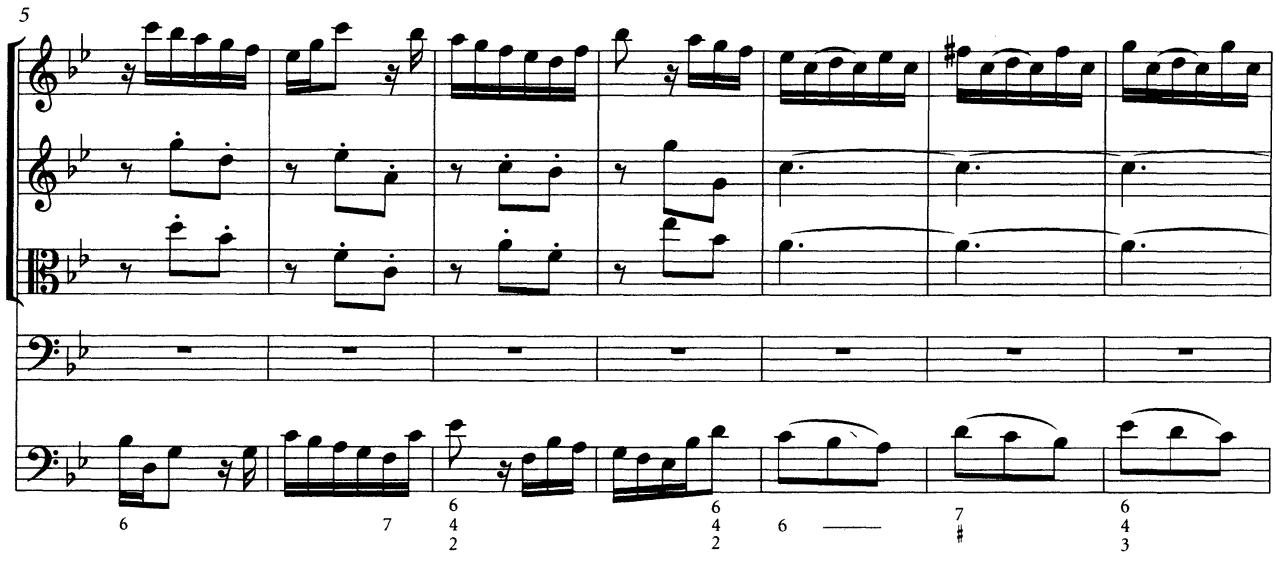
中文讲解
这是第 38 页上的一个图像或乐谱占位符,原始内嵌数据已被省略,需查看原图。仅依据上下文(P0158 的 “The Ideal Ritornello” 标题以及 P0167 中对回归段"开场旋律"的描述),可推断此处为该"理想回归段"的音乐谱例或与之对应的图表,具体细节需参阅原书第 38 页。
第4段(P0160)
原文复述
Dreyfus, Laurence. Bach and the Patterns of Invention. E-book, Cambridge, Mass.: Harvard University Press, 1996, https://hdl.handle.net/2027/heb05561.0001.001. Downloaded on behalf of Indiana University, Bloomington
中文讲解
与 P0157 相同的电子书图书馆访问信息,作为第 38 页的页眉重复出现。仅起到版权标识与出处提示作用,不构成正文论据。
第5段(P0161)
原文复述
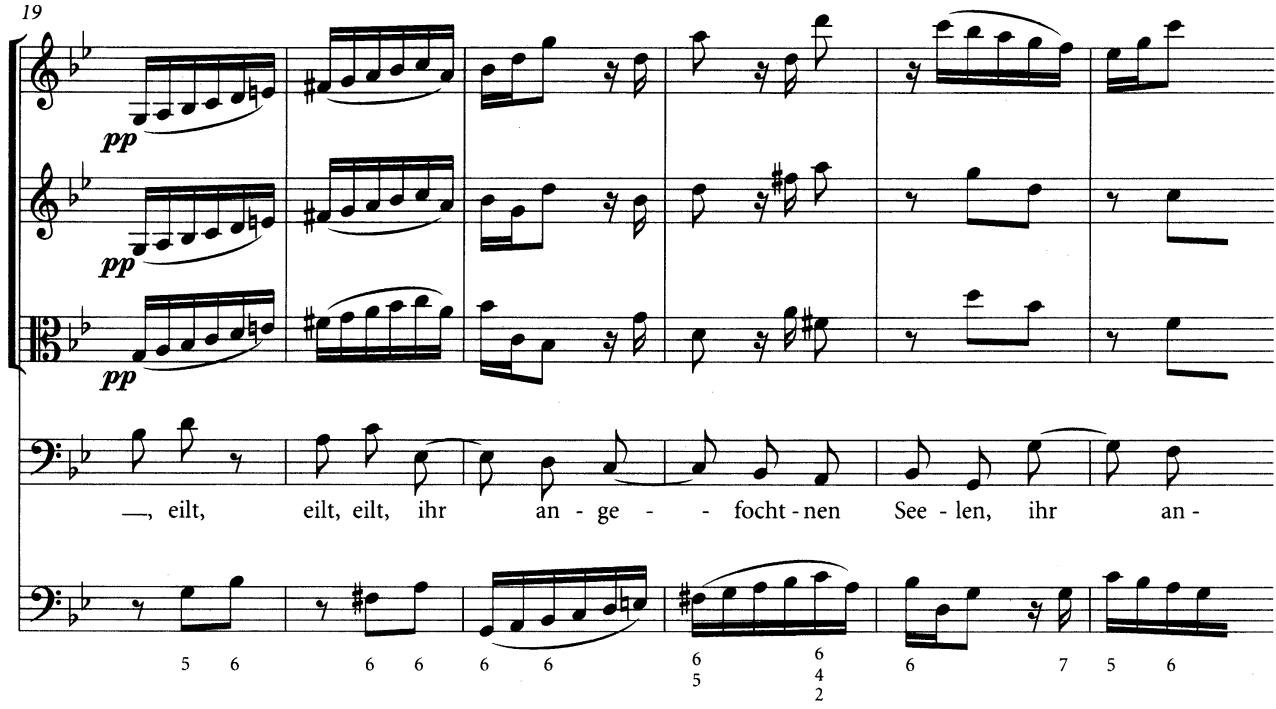
中文讲解
第 39 页上的第一个图像或乐谱占位符,原始内嵌数据已被省略,需查看原图。结合紧随其后的 P0162(同页第二个占位符)以及 P0164 重复出现的 “The Ideal Ritornello” 标题,可推断第 39 页用于集中展示该回归段的乐谱或分析图。
第6段(P0162)
原文复述
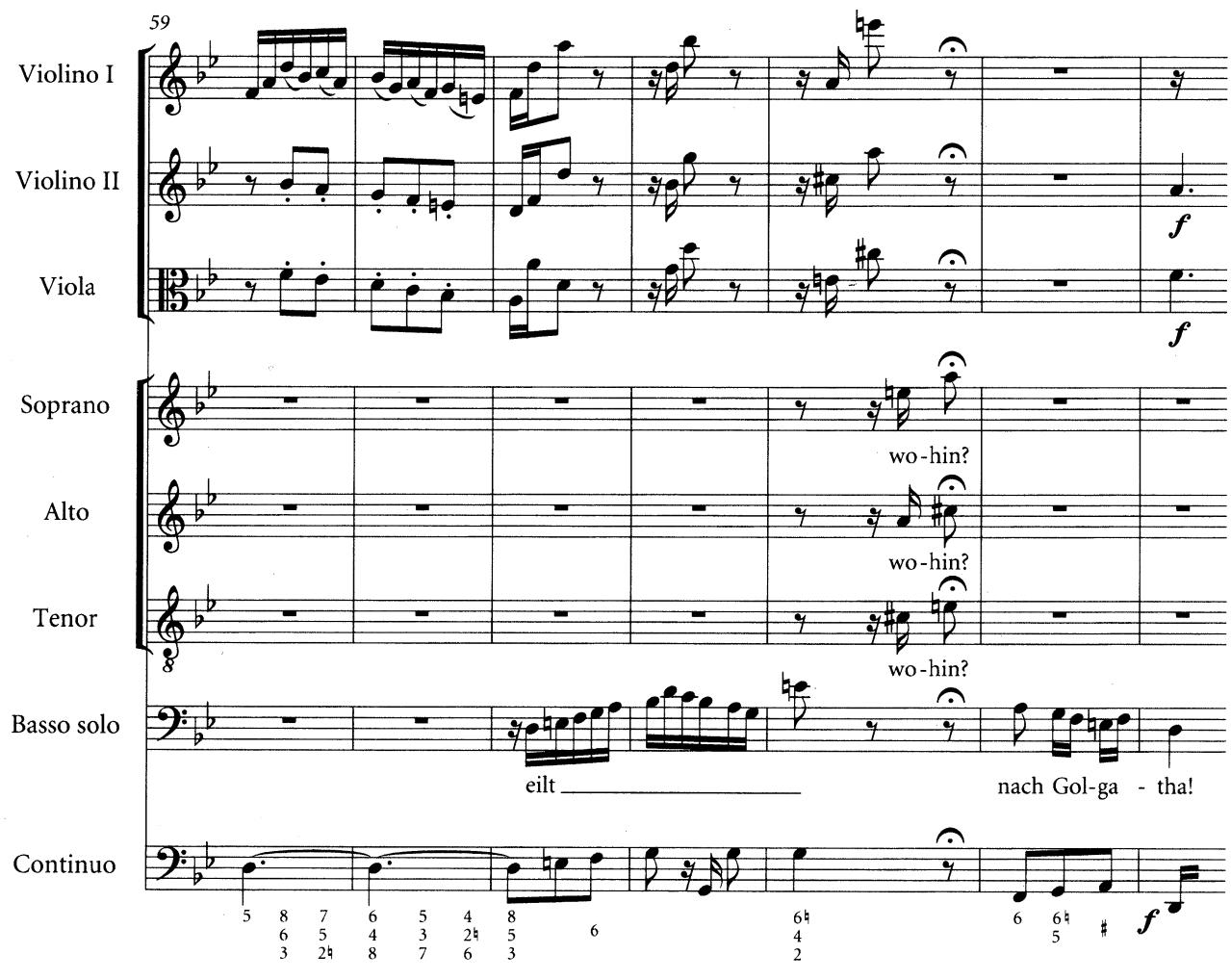
中文讲解
第 39 页上的第二个图像或乐谱占位符,原始内嵌数据已被省略,需查看原图。它与 P0161 共同构成第 39 页的谱例呈现,具体内容(乐谱行数、分析标记、图注等)须查阅原书第 39 页方能确定。
第7段(P0163)
原文复述
Dreyfus, Laurence. Bach and the Patterns of Invention. E-book, Cambridge, Mass.: Harvard University Press, 1996, https://hdl.handle.net/2027/heb05561.0001.001. Downloaded on behalf of Indiana University, Bloomington
中文讲解
重复出现的电子书图书馆访问页眉,作为第 39 页的页面标识,仅有版面意义,与论证无关。
第8段(P0164)
原文复述
The Ideal Ritornello
中文讲解
标题 “The Ideal Ritornello” 在第 39 页再次出现,承接第 38 页同名标题(P0158)。它的功能是再次锚定论题:本页谱例(P0161、P0162)以及随后第 40 页的内容,都属于对这一"理想回归段"模型的呈现与解读,标题本身不引入新主张。
第9段(P0165)
原文复述
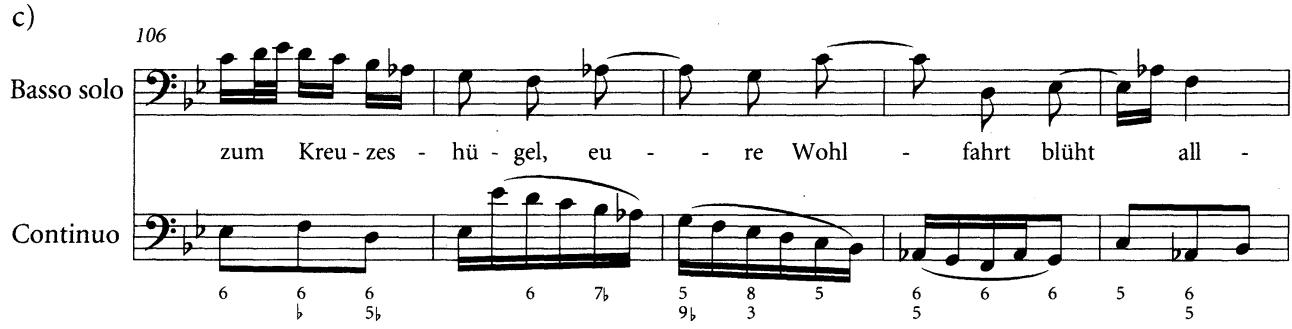
中文讲解
第 40 页上的第一个图像或乐谱占位符,原始内嵌数据已被省略,需查看原图。它位于正文段落(P0167、P0168)之前,承接第 39 页的乐谱与分析图,构成 Ex. 3.14 在第 40 页的延续或收束性呈现。
第10段(P0166)
原文复述
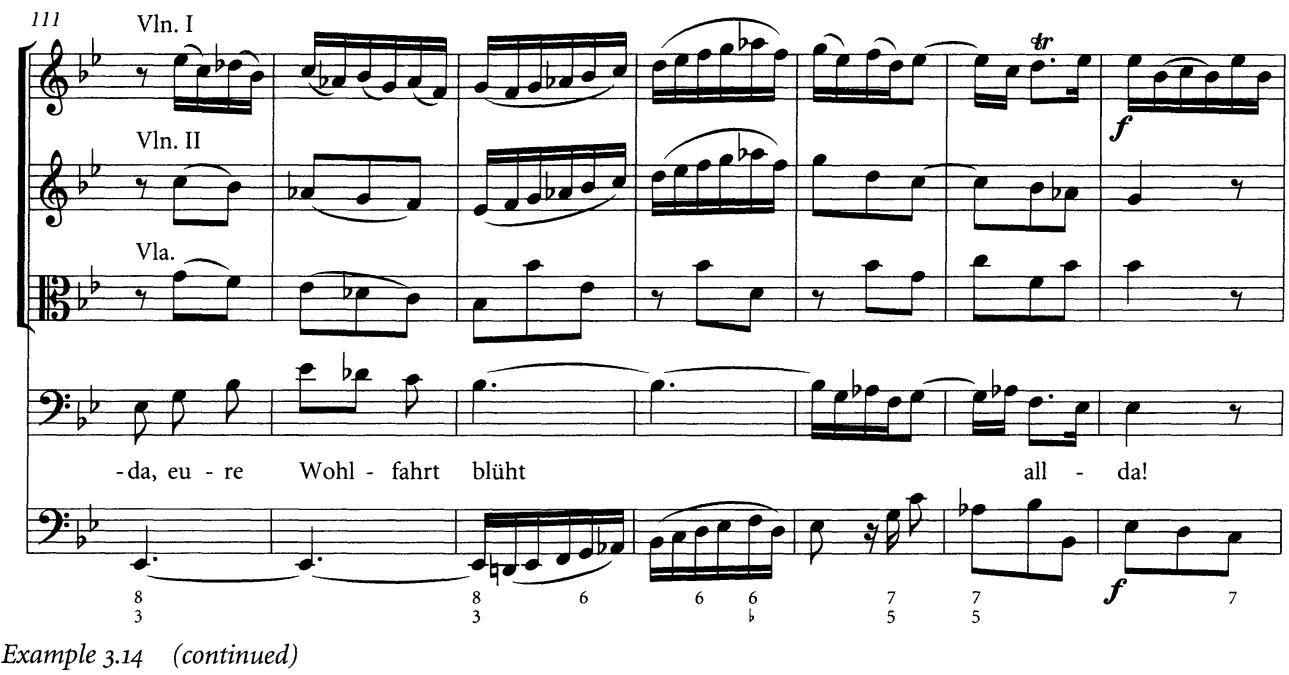
中文讲解
第 40 页上的第二个图像或乐谱占位符,原始内嵌数据已被省略,需查看原图。与 P0165 共同出现在正文段落之前,提示读者在阅读 P0167、P0168 的解释性文字前先参看相关谱例。
第11段(P0167)
原文复述
In practice, the correct “reading” of the ritornello occurs only during the course of listening to the piece: the singer sings “Eilt” (“Hasten”) to the opening melody, which then creates the association between musical sign and verbal referent. But the rhetoric of the opening ritornello here is directed not to the naive listener, who would find its vagaries and contrasts puzzling, but to the object itself: the text as allegorical reading of the revealed Word. The role of the music is first to approximate the theological meaning as well as to offer another deeper layer of allegorical interpretation. Only once the words become known, however, will the rhetoric of persuasion become operative: the primary devices will be repetition and elegant variation, at which music in all styles naturally excels.
中文讲解
本段围绕回归段(ritornello)应当如何被"正确阅读"展开论证,包含三层递进主张:
-
“正确的阅读"在听的过程中才发生:作者指出,回归段的意义并非静态地写在谱面上,而是随聆听展开。歌手将 “Eilt”(“Hasten”,意为"催促”)这一德语歌词贴附于开场的器乐旋律,由此在"音乐符号"与"语言所指"之间建立起临时但关键的联想。这一句同时解释了 Ex. 3.14 中歌词与回归段旋律的对位关系——歌词并非独立于音乐,而是为既有旋律赋予语义。
-
回归段的修辞对象并非听众:作者用 “But” 转入限定,开场回归段的修辞并非朝向"朴素的听众”(naive listener)——后者会被其"变化莫测与对比”(vagaries and contrasts)所困扰。其真正指向的对象是文本本身——即作为"被启示之话语的寓义式阅读”(allegorical reading of the revealed Word)。这里的 “the revealed Word” 是神学术语,指上帝的启示之言;“allegorical reading” 暗示歌词本身是对经文的寓义式诠释。音乐的功能首先在于"逼近神学含义”(approximate the theological meaning),并提供更深一层的寓义式解释。
-
说服性修辞以歌词被理解为前提:作者用 “Only once…however” 强调时间顺序——只有当歌词被人听到并被理解之后,“说服性的修辞”(rhetoric of persuasion)才开始发挥作用;其主要手段是"重复"与"优雅变奏"(elegant variation),而这正是音乐在各风格中都天然擅长的领域。
综合来看,本段为本节论证的关键:它把回归段从单纯的器乐形式问题转化为一种"聆听的修辞学",并通过 Ex. 3.14 中 “Eilt” 一词的实例,把器乐主题与神学文本的寓义解读连接起来。
补充说明
“Eilt”(Hasten)出现在 Ex. 3.14 歌词中,是本段用以说明"音乐符号—语言所指"联想机制的具体例子;它把第 40 页乐例中回归段开场旋律的紧迫感与歌词的字面义直接挂钩,是本段唯一在原文中点名的乐例证据。
第12段(P0168)
原文复述
This rhetoric differs greatly from the mood-setting Vorspiel to a romantic Lied or a motive of presentiment from a Wagner opera. Take Elsa’s entrance in Act I of Lohengrin, for example. The innocence motive is heard, with all its pained modulatory twists and naive signs of closure, in order to reveal Elsa’s character to the audience. $^{11}$ The operatic listener is supposed to invoke the interpretive code so as to arrive at the correct reading of the moment: Elsa is both pure and innocent and cannot possibly be guilty of the grave deed of which she stands accused. Bach’s ritornellos, on the other hand, do not intentionally exclude an audience, but neither do they go out of their way to reach it in a simplistic way. The primary auditor here is of course the Almighty, whose glory occasions the music in the first instance. And cosmic time is in no hurry, as attested by the opening words of Bach’s Actus tragicus, Cantata 106: “Gottes Zeit ist die allerbeste Zeit” (God’s time is the very best time).
中文讲解
本段通过与浪漫主义艺术音乐的对立来界定巴赫回归段的独特修辞,分两段推进:
第一层:与浪漫主义对比。作者指出,本节所论回归段的修辞与"浪漫艺术歌曲的"Vorspiel"(前奏)“或"瓦格纳歌剧中预示性动机”(motive of presentiment)有本质差异。以《罗恩格林》第一幕艾尔莎的出场为例:“无辜动机”(innocence motive)以其"痛苦的转调曲折"(pained modulatory twists)与"朴素的终止迹象"(naive signs of closure)被有意呈现,目的是向听众揭示艾尔莎的性格——她既纯洁又无辜,不可能犯下被指控的重罪。歌剧听众被预设会去调用一套"释义码"(interpretive code),从而得出关于当下情境的"正确阅读"。此处的脚注 11 提示该处有引文或更详细的解释(脚注正文未出现在本节输入段落中)。
第二层:界定巴赫回归段的修辞归属。作者用 “on the other hand” 完成对照:巴赫的回归段既非有意排斥听众,也不刻意以简单方式迁就听众。这里的"首要聆听者"(primary auditor)是"全能者"(the Almighty),其荣耀(glory)才是触发音乐的最初因。最后以康塔塔 106《上帝的时间》(Actus tragicus)开场歌词 “Gottes Zeit ist die allerbeste Zeit”(“上帝的时间乃一切最佳之时”)收束全段,意在以"宇宙时间不急于赶路"(cosmic time is in no hurry)为神学节奏辩护——音乐的展开并非为了在限定时间内塑造戏剧性角色,而是与上帝的时间观相称。
本段与 P0167 共同构成本节的核心论断:巴赫回归段的修辞既不同于浪漫主义艺术音乐中"塑造听众心理情境"的做法,也不同于歌剧中"以动机直接定义人物"的修辞;它面向神学文本与神学聆听者,因此其展开节奏是神学节奏而非戏剧节奏。
补充说明
“Actus tragicus” 是巴赫康塔塔 BWV 106《上帝的时间》的常用别名;本段以它开场歌词 “Gottes Zeit ist die allerbeste Zeit” 印证"宇宙时间不急"之说,是 P0168 中作者自引的第二个具体例证。“Vorspiel”(前奏)、“Lied”(艺术歌曲)、《罗恩格林》艾尔莎动机则是作者援引的浪漫主义对照例证。脚注 11 的正文未出现在本节输入段落中。
第13段(P0169)
原文复述
98 Bach and the Patterns of Invention Dreyfus, Laurence. Bach and the Patterns of Invention. E-book, Cambridge, Mass.: Harvard University Press, 1996, https://hdl.handle.net/2027/heb05561.0001.001. Downloaded on behalf of Indiana University, Bloomington
中文讲解
第 40 页底部的页脚,由三部分组成:页码 “98”、书名 “Bach and the Patterns of Invention”,以及与前文相同的电子书图书馆访问信息。属于纯版面元素,无独立论证内容。
脚注 / 边栏 / 图表 / 附加信息(如有)
- 本节正文段落 P0168 中出现脚注标记 ¹¹,但其正文未包含在本节 source_paragraphs 之中(输入段落仅到 P0169 的页脚),因此该脚注的具体内容、来源或限定说明无法在本节内定位,复述中按原样保留上标。
- 本节包含 8 处图像/乐谱占位符(P0159、P0161、P0162、P0165、P0166 等),原始内嵌数据已被省略;其中至少两处(P0161、P0162 位于第 39 页;P0165、P0166 位于第 40 页)通过与 “The Ideal Ritornello” 标题(P0158、P0164)以及正文段落(P0167、P0168)的位置关系,可确认属于 Ex. 3.14 “理想回归段” 的谱例与分析图,但具体乐谱细节需查阅原书第 38–40 页。
- 4 处 Dreyfus 书目信息(P0157、P0160、P0163、P0169)均为电子书页面顶部/底部的图书馆访问水印,属于版面元素而非正文论据。
💡 本节核心要点
- 回归段的"正确阅读"在聆听过程中生成:Ex. 3.14 中,歌手将 “Eilt”(“Hasten”)歌词贴附于开场旋律,由此在音乐符号与语言所指之间建立联想。
- 开场回归段的修辞并非指向朴素听众,而是指向文本自身——即作为"被启示之话语的寓义式阅读";音乐的功能是逼近神学含义并提供更深的寓义层。
- 只有当歌词被听者获得后,“说服性修辞"才以重复与优雅变奏为手段发挥作用,而后者正是音乐各风格都天然擅长的领域。
- 巴赫回归段的修辞与浪漫主义艺术歌曲的 “Vorspiel”、瓦格纳歌剧中的"预示性动机"截然不同:后者以塑造听众心理与人物形象为目的,巴赫则面向文本与神学聆听者。
- 通过《罗恩格林》第一幕艾尔莎的对照,作者表明歌剧听众需调用"释义码"以确认人物性格,而巴赫的回归段既不刻意排斥也不刻意迁就听众。
- 首要聆听者是"全能者”,音乐源于其荣耀;康塔塔 BWV 106《上帝的时间》开场词 “Gottes Zeit ist die allerbeste Zeit” 被援引为佐证——巴赫回归段遵循的是不急不徐的"宇宙时间"。
🔑 关键术语
- Ritornello(回归段/利都奈罗):本节核心对象,指巴赫协唱曲/咏叹调中反复出现并被独唱段插入分隔的器乐段落;本节聚焦其"对话式"开场形态及其修辞归属。
- Allegorical reading(寓义式阅读):出自 P0167,指把歌词视为对"被启示之话语"(the revealed Word)的寓义性诠释;它界定了开场回归段修辞所指向的真正对象是文本而非听众。
- Eilt / “Hasten”(催促):P0167 中点名的具体歌词实例,用以说明"音乐符号—语言所指"联想如何在聆听中建立,把 Ex. 3.14 开场旋律的紧迫感与字面语义挂钩。
- Vorspiel / Lied(浪漫艺术歌曲前奏与歌曲体裁):P0168 中的对照项之一:浪漫艺术歌曲的 “Vorspiel” 用于"营造情绪"(mood-setting),与巴赫回归段指向神学文本的修辞形成对照。
- Motive of presentiment(预示性动机):P0168 中用以指瓦格纳歌剧中揭示人物性格与命运的短小主题;艾尔莎的"无辜动机"即其典型,被作者用来说明浪漫主义歌剧以动机直接塑造听众阅读的修辞策略。
- Actus tragicus / Cantata 106(康塔塔 BWV 106):P0168 援引的巴赫康塔塔,又称《上帝的时间》;其开场词 “Gottes Zeit ist die allerbeste Zeit” 在本节被作者用作"宇宙时间不急"的神学节奏佐证。
- “The Ideal Ritornello”(理想回归段):P0158、P0164 重复出现的小节标题,标示本节所讨论的规范化模型,用作 Ex. 3.14 实际乐例的参照坐标。
ch01_s25 [描述性拆分] Repetition, paradigm versus syntagm, and Mattheson on recurrence
第1段(P0170)
原文复述
In any event, there is plenty of time to persuade the unconvinced sinners to hurry to Golgatha: the rising figure will occur repeatedly in the music (both in the ritornello and in episodic variations motivically related to it), and the word Eilt (“Hasten”) will be repeated even more insistently in the text. 12 The central point here is that this repetition is not structured by the passage of time: it is rather a constant reinterpretation of the same idea over and over again. If we view this process as a paradigm rather than a syntagm, it becomes easy to see how the phenomenal experience of the music is both recursive and rhetorical at the same time.
中文讲解
无论如何,都有充裕的时间去说服那些尚未信服的罪人赶往各各他:上升音型将在音乐中反复出现(既出现在利都奈罗中,也出现在与之动机相关的插段变奏中),而歌词中"Eilt"(“赶快”)一词在文本中的反复更为执着。本段的核心论点在于:这种重复并非由时间的流逝所组织——它毋宁是对同一观念的不断重新诠释。若我们把这一过程视作范式(paradigm)而非句段(syntagm),则音乐的现象性体验如何能够同时既是回溯性的(recursive)、又是修辞性的(rhetorical)便一目了然。
讲解:本段提出本节最核心的命题——把巴赫音乐中的重复从"时间序列"重新定位为"同一观念的不断重新诠释"。作者借用了语言学中的一对术语:paradigm(范式)指的是在联想轴上可以相互替换的相似项集合,syntagm(句段)指的是在组合轴上按时间顺序线性展开的链条。借此二分,作者主张本段所讨论的音乐重复不属于后者(即不是"先发生A、再发生B、再发生C"那样的线性推进),而属于前者(每一次重复都是同一观念的另一种变体形态)。这一区分具有重要的听感后果:正因为重复发生在范式维度而非句段维度上,听者既感到音乐在"不断回头"(recursive),又同时感到它在"劝说"(rhetorical)。从音乐修辞层面看,“rising figure”(上升音型)与歌词"Eilt"(赶快)一词的双重重复相互配合,构成了对罪人发出紧迫催促的修辞手段。
补充说明
本段末尾标有脚注记号12,但source_paragraphs中未提供该脚注的正文,故其具体内容只能留待查阅原书。“Golgatha"是亚兰文/希腊文对希伯来语各各他(Golgotha)的转写,本段歌词语境中指罪人应赶往的受难之地(结合同段及后段"to witness the Crucifixion"可推知其指称对象)。
第2段(P0171)
原文复述
Johann Mattheson addresses the issue of musical recurrences perceptively when he writes that “repetitions in [music] are not to be judged according to common standards of speech . . . but simply with regard to melody, which dons an almost new garb with each emphatic repetition . . . be it through transformed pitches . . . through decoration, embellishment, ornamentation, etc.” 13 The key phrase here is “don[ning] an almost new garb,” which clearly indicates that repetition in music is a matter of elaboration, though in Bach’s case one expects this elaboration to be intimately linked with the invention of the central ideas which are made rich enough in content and pliable enough to bear varied forms of recurrence. In Bach’s choral aria “Eilt, ihr angefochten Seelen,” the transformations of the ritornello—its individually segmented sections, its alterations in mode, its shifts between orchestral and vocal pronouncements—serve to create a musical tableau in which, miraculously, the transhistorical sinners are admonished to witness the Crucifixion so as to bring their suffering to an end.
中文讲解
Johann Mattheson在讨论音乐反复的问题时颇具洞察力,他写道:"[音乐中的]重复不应按照言语的一般标准来判断……而应仅就旋律而论,旋律在每一次强调性的重复时几乎都会披上一件近乎全新的外衣……无论是通过变换的音高……还是通过装饰、润饰、装饰音等等。“这里的关键词是"披上一件近乎全新的外衣”(“don[ning] an almost new garb”),它清楚地表明音乐中的重复实为一种展开(elaboration);不过在巴赫的语境中,这种展开理应与中心观念的发明紧密相连——这些观念必须内容上足够丰富、形式上足够柔韧,方能承受各种变体反复。在巴赫的合唱咏叹调"Eilt, ihr angefochten Seelen"中,利都奈罗的种种变形——其分段各异的部分、调式的变更、管乐与声乐陈述之间的交替——共同营造出一幅"音乐图景”(musical tableau):奇迹般地,跨越时空的罪人们被劝诫去目睹受难,以终结自身的苦难。
讲解:作者征引Mattheson的论述,为自己"重复即展开"的核心命题提供理论史的支撑。“新外衣”(almost new garb)这一比喻暗示:音乐中的重复并不是相同材料的简单复现,而是同一旋律在音高变换、装饰、润饰、装饰音等手段下呈现出的不同面貌。然而作者并未停留在Mattheson的层面,而是将这一观念嫁接到巴赫身上并加了一个限定:在巴赫笔下,“展开"不能仅是表面的装饰性变奏,而必须建立在"中心观念的发明"之上——主题本身必须在内涵上足够充实、在结构上足够灵活,方能支撑各种变体反复。换言之,Mattheson允许"装饰外衣"可以独立成立,但巴赫的重复要求"内里"也随之丰富。本节最后一句把利都奈罗的具体变形(分段、调式转换、管乐/声乐交替)解释为一种修辞功能:它们共同构筑出"音乐图景”,使"跨越历史的罪人"(transhistorical sinners)被劝诫去目睹受难,从而把形式分析与神学—修辞解读缝合在一起。
补充说明
本段末尾标有脚注记号13,但source_paragraphs中未提供该脚注的正文。Mattheson在原文中以"Johann Mattheson"之名出现,本节正文未给出其生卒年、国籍或具体著作信息。
第3段(P0172)
原文复述
It is useful to connect this allegorical image contained in the first seventeen measures of the aria with the analytic workings of concerted ritornello procedures, as shown graphically in Table 3.10. The workings of this invention are rigorous indeed for an aria, displaying a highly analytical approach to SEGMENTATION, to the MODESWITCH of the four grammatically possible translations, and to the tonal ARRAY of six distinct harmonic stations. (The function ARRAY refers to the tendency of Bach’s dispositions to transpose segments of a ritornello onto a number of diatonic scale degrees from I through VII.) The pseudo-canonic imitation of the Vordersatz segments, moreover, which graphically display the commanded fuga or flight of the sinners (as in the first line of the second strophe of text), also allows Bach to insert an exciting anticipatory imitation of the bass soloist singing the word Eilt (“Hasten”) in $R_{2}$ which reveals the musical gloss on the first line of text. Bach also uses the MODESWITCH of the Epilog segments in $R_{7}$ (mm. 111–116) to set the line of text “Eure Wohlfahrt blüht allda!” (Your welfare doth flourish there!) in a brief but affecting moment of hopefulness. (See mm. 111–116 in Ex. 3.14c. Note how the previous MODESWITCH in $R_{3}$ in mm. 31–34, still connected with “Hasten, you beleaguered souls,” is denied an optimistic reading by the introduction of the ab in m. 34 and the diminished seventh chords that follow.) But by far the most revealing interrelation between music and text is that Bach invariably places the cadence answering the choral question outside the framework of the ritornello and its “tutti” orchestral players. That is, when the bass soloist, underscored by an authentic cadence, twice states the definitive answer to the chorus—“nach Golgatha!” (mm. 64–65 and mm. 175–176)—he does so within the context of an episodic cadential substitution for the Epilog, rather than singing along with $[E_{2}]$ itself, as he might well have done. These weighty vocal pronouncements highlight the fractured forms of $R_{4}$ and $R_{11}$ broken off as they are in midstream, and suggest that the realization of the command hastening the sinners to Golgatha is achieved not by the choral sinners nor even by the authorial voice invested in the soloist, but only by the disembodied and metaphysical orchestra, who “knows the ending” to the complete Epilog.
中文讲解
把咏叹调前十七小节中所包含的这一寓言性意象与协奏型利都奈罗程序的解析性运作联系起来是有益的,这一点在表3.10中以图示方式呈现。这首作品——作为一首咏叹调而言——的运作确实严谨有度,展现出对SEGMENTATION(分段)、MODESWITCH(调式转换)的四种语法上可能的转译、以及ARRAY(阵列)的六个不同和声站的高度分析性处理。(ARRAY这一功能指的是巴赫的布局倾向于把利都奈罗的片段转调到从I到VII的若干自然音阶级上。)此外,Vordersatz(“前句”)片段的伪卡农式模仿——它以图形化的方式呈现被命令的fuga或逃亡(正如歌词第二段第一行所示)——还使巴赫得以在$R_{2}$中插入一段令人激动的、对低音独唱者演唱"Eilt"(“赶快”)一词的预先式模仿,由此揭示对歌词第一行的音乐注脚。巴赫还在$R_{7}$(第111–116小节)中使用Epilog(“尾声”)片段的MODESWITCH来为歌词"Eure Wohlfahrt blüht allda!"(“你们的福祉在那里绽放!")配置一段简短却动人的希望时刻。(参见Ex. 3.14c中第111–116小节。注意此前在$R_{3}$第31–34小节中的MODESWITCH——仍然与"Hasten, you beleaguered souls”(“赶快,你们这些被围困的灵魂”)相关——如何因第34小节降a音的引入以及随后的减七和弦而被剥夺了乐观的读解。)但迄今为止最具揭示性的音乐与文本的相互关联乃是:巴赫无一例外地把应答合唱提问的终止式置于利都奈罗及其"全奏"管乐队的框架之外。也就是说,当低音独唱者在正格终止的支撑下两次陈述对合唱的最终答案——“nach Golgatha!"(“往各各他!")(第64–65小节与第175–176小节)——他并不是如本可以做到的那样与$[E_{2}]$本身一同唱出,而是出现在对Epilog的插段性终止替代的语境之中。这些沉甸甸的声乐陈述凸显了$R_{4}$与$R_{11}$在行进中被截断的断裂形式,并暗示:促使罪人赶往各各他的命令之实现,并非由合唱中的罪人达成,亦非由寄托在独唱者身上的作者之声达成,而只由那"脱离肉身、形而上的"管弦乐队——它"知道"完整Epilog的"结局”——所完成。
讲解:这是本节最具技术密度的一段,逐一交代三个分析维度:SEGMENTATION(段落切分)、MODESWITCH(四种调式之间的转译)、ARRAY(六个和声站)。ARRAY的功能被作者在段内明确定义——这是巴赫利都奈罗布局的典型倾向,即把片段转调到自然音阶I–VII级上。在此分析框架下,作者举出三个具体例证以说明形式选择如何承载神学—修辞含义:
(1)Vordersatz片段的伪卡农式模仿同时具备双重含义——既图示"fuga/逃亡”(“fuga"在音乐术语中本指赋格,在本段歌词语境中又作"逃跑"解,作者借此双关),又预先暗示$R_{2}$中低音独唱对"Eilt"一词的预先式模仿;
(2)调式转换承载相反的情感走向——$R_{3}$第31–34小节虽与"赶快,你们被围困的灵魂"相关,但因第34小节降a音与随后的减七和弦而被否定了乐观解读;而$R_{7}$第111–116小节中Epilog的MODESWITCH则支撑"你们的福祉在那里绽放"的希望时刻,二者形成同一手法承载相反情感走向的对照;
(3)最具揭示性的论点——低音独唱者对"nach Golgatha!“的回答被刻意放到利都奈罗框架之外,以Epilog的插段性终止替代来实现,使$R_{4}$与$R_{11}$在形式上呈现"中途截断”。其修辞意义是:催促罪人前往各各他的命令,最终不能由合唱中的罪人完成,也不能由作者化的独唱者声音完成,而只能由"脱肉身、形而上的"管弦乐队——那个知晓完整Epilog"结局"的乐队——来执行。这是一个把形式选择读作神学陈述的关键段落:“知道结局"的乐队承担了形而上层面的执行权,而人声(无论是合唱还是独唱)则被降格为受命者与见证者。
阅读提示:段落中出现的$V_{…}$、$R_{2}$、$R_{3}$、$R_{4}$、$R_{7}$、$R_{11}$、$[E_{2}]$等是原书图表的内部编号标记,表3.10与Ex. 3.14c的具体图面与谱例须查阅原书方可核对。
补充说明
本段密集交叉引用表3.10(Table 3.10)与谱例3.14c(Ex. 3.14c),其具体图面与谱面细节须查阅原书;$R_{2}$、$R_{3}$、$R_{4}$、$R_{7}$、$R_{11}$、$[E_{2}]$等标记属于原书图表的内部编号系统,本节未提供图例。“fuga"一词在原文中兼指"逃跑"与"赋格"两种含义,是本段论证的关键双关。
第4段(P0173)
原文复述
Dreyfus, Laurence. Bach and the Patterns of Invention. E-book, Cambridge, Mass.: Harvard University Press, 1996, https://hdl.handle.net/2027/heb05561.0001.001. Downloaded on behalf of Indiana University, Bloomington
中文讲解
这是一段电子书的页面/版权来源信息行,标明本电子书版本的书目出处与下载来源:作者Dreyfus, Laurence,书名Bach and the Patterns of Invention,电子书形式,出版地为马萨诸塞州剑桥的哈佛大学出版社,出版年1996年;附有Handle.Net的电子资源链接;并注明该书由印第安纳大学伯明顿分校(Indiana University, Bloomington)代为下载。
补充说明
这是电子书页面中的版权/下载说明行,属于版面属性信息,不承担正文论证功能。
第5段(P0174)
原文复述
The Ideal Ritornello
中文讲解
“The Ideal Ritornello”(“理想的利都奈罗”)——这是紧随本节之后的下一个小节标题,开启关于"理想型利都奈罗"的新论题。本节(P0170–P0172)所讨论的重复作为范式而非句段、展开作为中心观念的灵活延伸等命题,为下一节对"理想型"利都奈罗的界定提供概念基础。
补充说明
本段在原文中独立成行,属于小节标题而非正文段落。
脚注 / 边栏 / 图表 / 附加信息(如有)
本节正文中出现了两处脚注标记——分别位于P0170末尾的"12"与P0171末尾的"13”——但source_paragraphs中并未提供这两个脚注的正文内容,其具体出处与文字须查阅原书方可获知。本节还密集交叉引用了表3.10(Table 3.10)与谱例3.14c(Ex. 3.14c),并使用了一套利都奈罗各段落的内部编号标记(如$R_{2}$、$R_{3}$、$R_{4}$、$R_{7}$、$R_{11}$、$[E_{2}]$、Vordersatz、Epilog等),其图例与具体谱面信息须查阅原书图表才能完整核对。P0173为电子书页面/版权来源信息行,P0174为下一小节标题,均不承担论证功能。
💡 本节核心要点
- 本节主张巴赫音乐中的重复并非按时间线性展开的句段(syntagm)过程,而是同一观念的不断重新诠释——即范式(paradigm)维度的反复,因此听感上既是回溯性的、又是修辞性的。
- 作者援引Mattheson关于旋律"每经强调性重复便披上近乎全新外衣"的论述,把音乐重复界定为"展开”(elaboration),并进一步限定:在巴赫笔下,这种展开必须建立在内容足够丰富、形式足够灵活的中心观念之上。
- 本节将前十七小节的寓言性意象(催促罪人赶往各各他)与协奏型利都奈罗的程序挂钩,指出该作品在SEGMENTATION、四种MODESWITCH与六站调性ARRAY三个维度上展现出高度分析性的处理。
- 作者通过若干具体例证(如Vordersatz的伪卡农式模仿兼具"fuga/逃亡"双关、$R_{3}$与$R_{7}$中调式转换承载相反的情感走向)说明形式选择如何承载神学—修辞含义。
- 本节最具揭示性的论点是:低音独唱者对"nach Golgatha!“的回答被刻意置于利都奈罗框架之外(以Epilog的插段性终止替代),从而使$R_{4}$与$R_{11}$呈现"中途截断"的断裂形式;催促命令的最终实现被归于那"脱肉身、形而上的”、知晓完整Epilog结局的管弦乐队。
- 本节为下一小节"The Ideal Ritornello"提供概念前提:重复作为范式而非句段、展开作为核心观念的灵活延伸,二者共同奠定"理想型"利都奈罗讨论的基底。
🔑 关键术语
- paradigm versus syntagm(范式与句段):本节引入的语言学区分:范式指可在联想轴上相互替换的相似项集合,句段指在组合轴上按时间顺序线性展开的链条。作者借此把巴赫音乐中的重复从"时间序列"重新定位为"同一观念的不断重新诠释”。
- ritornello(利都奈罗):本节核心分析对象,指巴洛克协奏体裁中由全体乐队反复演奏的器乐段落;本节关注其段落切分、调式转换与转调布局等程序。
- Johann Mattheson:本节以其名引用其论述的理论家,原文称他对音乐反复问题"颇具洞察力",并引用其"旋律每经强调性重复便披上近乎全新外衣"的命题;本节正文未给出其生卒年、国籍或具体著作信息。
- SEGMENTATION(段落切分):本节作为分析维度之一,指对利都奈罗各片段进行切分处理的方式,与MODESWITCH、ARRAY并列为三个分析参数。
- MODESWITCH(调式转换):本节作为分析维度之一,指同一旋律材料在四种"语法上可能的转译"之间的调式切换;本节举$R_{3}$(第31–34小节)与$R_{7}$(第111–116小节)两例——前者因降a音与减七和弦被否定乐观读解,后者承载"福祉绽放"的希望——以示同一手法可承载相反情感走向。
- ARRAY(阵列):本节作为分析维度之一,指巴赫利都奈罗布局中把片段转调到自然音阶I–VII级上的倾向;本节中该作品共有六个不同和声站。
- Vordersatz(前句):本节提到的利都奈罗片段名称;其伪卡农式模仿同时图示"fuga/逃亡"的双关语义,并在$R_{2}$中预先暗示低音独唱的"Eilt"。
- Epilog(尾声):本节提到的利都奈罗片段名称;该作品在$R_{4}$与$R_{11}$中对Epilog进行插段性终止替代,使结构"中途截断"。
- Golgatha(各各他):本节歌词中罪人应赶往的目的地,对应耶稣受难的髑髅地;本节语境中由"to witness the Crucifixion"及歌词"nach Golgatha!"(“往各各他!")可推知。
- Eilt(“赶快”):歌词中反复出现的德文命令式动词,与音乐中"上升音型"相呼应,是本节论证"重复即修辞劝说"的关键文本—音乐对应点。
ch01_s26 [描述性拆分] Contemplative time, conclusion of the aria, and reflection on invention
第1段(P0175)
原文复述
By the end of the aria, then, when the ideal ritornello is repeated verbatim, it is important to realize that nothing of any dramatic value has changed. The sinners have not yet reached Golgatha: they merely know the importance of getting there. Change, in the sense of a sequence of events leading to an altered outcome, was an item in which the musical agenda did not show the slightest interest. The goal, rather, was contemplative understanding, which entails of course its own, more subtle form of changes. This understanding naturally contains important temporal elements, not the least of which is a musically instigated drive to reach the end of the ritornello. But to speak of the perception of the entire aria as a primarily temporal event, a movement from point A to point B on a temporal axis, trivializes the experience: for considering the brevity of an allegorical message so lacking in consequences, there are surely better ways to spend one’s time.
中文讲解
本段的核心主张是:在这首咏叹调结束时,理想回归曲原样再现,但音乐并未带来任何戏剧意义上的变化;它追求的是一种“沉思性的理解”(contemplative understanding),而不是从A点到B点的叙事推进。
承接关系:这是对前文已经建立起来的“回归曲原则”的总结性判断。作者用一个宗教意象——罪人尚未到达各各他(Golgatha,基督受难地),只是知道必须到达那里——来对应音乐上“回归曲原样重复”这一现象。各各他不是音乐的内部术语,而是借来的比喻:罪人知道救赎的终点重要,但终点本身尚未在音乐上“发生”;同理,回归曲的再现并不意味着音乐走到了某个新阶段。
关键概念的辨析:作者区分了两种“变化”。一种是戏剧式、叙事式、结果性的变化(sequence of events leading to an altered outcome);另一种是沉思式变化,主体在领会过程中发生的微妙深化。后者并不因为表面上“什么都没发生”就缺少意义,反而是本段要捍卫的咏叹调真正在做的事情。
为什么举“各各他”这个例子:它把一首音乐作品和一个宗教伦理情境绑定在一起,使读者直观地看到,“知道目的地”和“抵达目的地”是两种截然不同的认知状态。音乐的回归曲再现相当于“知道”,而非“抵达”;因此用“没有任何戏剧价值的东西改变了”来评价它,其实是错位提问。
容易误读之处:读者可能以为作者在为“这首咏叹调里什么都没发生”辩护,或批评该作品平淡。作者实际的意思是:以戏剧叙事为标尺去衡量本身就是范畴错误——一段简短、无外在后果的寓言式信息,本来就不打算充当戏剧;而以时间轴上从A到B的运动来描述整首咏叹调,则把这种沉思性体验贬低为单纯的线性流动。末尾那句“对于如此简短、如此缺乏后果的寓言信息,无疑有更值得花时间的方式”,是作者反诘那种戏剧化阅读的有力一笔:你若要的是后果与情节,根本不该来看这段音乐。
补充说明
Golgatha(各各他)是耶稣受难之地,文中以这一宗教意象对应“回归曲的重复再现”,意在说明两者都呈现“知道终点但尚未抵达”的状态。该比喻仅出现于本段,未在输入其他段落中出现其他出处。
第2段(P0176)
原文复述
100 Bach and the Patterns of Invention Dreyfus, Laurence. Bach and the Patterns of Invention. E-book, Cambridge, Mass.: Harvard University Press, 1996, https://hdl.handle.net/2027/heb05561.0001.001. Downloaded on behalf of Indiana University, Bloomington
中文讲解
这一段不是正文,而是页面顶端和底端的版式信息:上端是页眉,含页码“100”与书名“Bach and the Patterns of Invention”;下端是该电子书版本的完整引用,包括作者 Laurence Dreyfus、哈佛大学出版社1996年出版、Handle.Net 永久链接,以及下载主体为印第安纳大学伯明顿分校。
它在版式上的功能是标识当前页所在的著作与电子版来源,便于读者在脱离纸质本的情况下定位上下文。
补充说明
本段在原文顺序中夹在两段正文之间,属于该电子书版本自动生成的页眉与引用脚注;其内容不构成论证。
第3段(P0177)
原文复述
Given, then, the imaginative vagaries that underlie Bach’s ritornello principle, it is important to expand the notion of invention beyond the appearance of its opening theme. In Bach’s concertos and in works structured in a concerto-like mode, it is scarcely possible to distinguish neatly between the invention of an “ideal ritornello” and its disposition or elaboration, because the discovery of the former already included the latter as integral parts of its purpose and design. To understand invention in this way is to assert that composition—or, for that matter, analysis or criticism—cannot rely on a verifiable starting point. If Bach’s thinking did not always depart from an identifiable starting point, why then do analysis and criticism so often insist on one? One reason is that we easily fall prey to the metaphors of organicism. How glorious it would be if the beginning of the musical work—like one of God’s creations—bore the germ from which the whole work emanated! We also frequently construe musical composition as a story. Accordingly, we have the composer first invent an idea and then work it out. In this way we can write about a work as if it were a sequential narrative. And who can deny that even analysts like to tell stories? These metaphors appear as natural to us as “time flying.”
中文讲解
本段推进了上一段的论证:从“回归曲没有带来戏剧性变化”进一步推及到“invention(创意/发明)本身就不是一个可以孤立指认的起点”。中心主张是:在巴赫的协奏曲及类协奏曲式作品中,“理想回归曲”的发明(inventio)与其布局(dispositio)、展开(elaboratio)难以干净地分开,因为前者从被发现的那一刻起就已经把后两者纳入其目的与设计之中。
承接关系:上一段说音乐不追求叙事式变化;本段把这个观察往作曲与诠释的本体层面推一步——既然变化不是从A到B的,那“创意”也不可能被还原为一个可验证的起点。
关键概念的通俗含义:作者把invention从“作曲家先想出一个主题”这个最朴素的日常理解扩展开来,认为在巴赫那里,invention本身已经包含了材料如何被安排、如何被展开。因此追问“真正的第一句是哪一句”在巴赫的回归曲世界里既无必要,也不准确。
为什么批评两类隐喻:作者点出分析界之所以仍然坚持“可验证的起点”,是因为我们容易沦为两类隐喻的俘虏: 1)有机论隐喻(organicism)——把作品开头比作上帝造物中的“胚芽/种籽”,整部作品从这一胚芽生长出来; 2)叙事隐喻——作曲家先发明一个想法,再把它“展开”,于是分析像讲故事一样按顺序叙述作品。 作者对两者的态度带有温和的反讽:承认它们看起来多么诱人(“多么辉煌”),也承认连分析师自己都喜欢讲故事,但又指出这两类隐喻在我们看来如此自然,正像“时间飞逝”这种说法一样自然得让人忘记它也是隐喻。
容易误读之处:不要把这一段当成作者主张“根本没有发明这件事”。作者不是取消invention,而是主张invention不能被压缩为单一可指认的“第一念头”;发明是一个更大、包含布局与展开的设计行为。
补充说明
inventio、dispositio、elaboratio在本段以英文形式出现(the invention / its disposition or elaboration),作者明确指出在巴赫协奏曲式作品中这三者之间难以干净区分。inventio、dispositio 是拉丁语词汇,本节内仅出现于此段落并被并列使用。
第4段(P0178)
原文复述
The point, however, is not to resist the metaphors and retreat to an imagined descriptive language that feigns pure objectivity. Metaphors, after all, are rather like filters, which permit certain rays of light to pass through them while blocking others. This seems to be merely in the nature of human understanding. On the other hand, it is equally important to consider what each metaphor excludes. We might, for example, have halted our investigation at the first cadence of the Second Brandenburg Concerto and molded the reading of the piece rigidly from the vantage point of the “seed that bears fruit.” Or we might have pursued the notion of concerto as competing forces by anchoring our analysis firmly to the tutti and solo markings in BWV 35. Instead, we approached a moment when the distinctions between inventio, dispositio, and elaboratio begin to unravel, a moment when the powerful metaphor of “music as rhetoric” began to teeter uncomfortably on the brink of unintelligibility. However, to cast in doubt the idea that musical invention pursues a clear path of discovery does not suggest that eliminating metaphors of invention would prove a more attractive alternative. For if we could never distinguish a musical thought from its elaboration, Bach’s concertos might appear as the random “development” of themes which their surface displays. What we would then fail to glimpse is the richer experience that attends the works of an extraordinary mind devising extraordinary inventions.
中文讲解
本段是作者方法论的自我定位:既不抛弃隐喻,也不假装客观,而是要求看到每一隐喻所“挡住”的光线。
核心主张:作者用一个光学隐喻——隐喻像滤镜,让某些光线通过、阻挡另一些——把上一段的批判翻转成建设性的立场:隐喻无法被取消,因为人类理解本身就以隐喻运作;但对每一个隐喻,我们必须追问它排除了什么。
承接关系:上一段指出了分析界为什么偏爱“种子—生长”与“叙事—展开”两类隐喻;本段用反事实例子把它们具体化—— 1)如果作者在第二勃兰登堡协奏曲的第一次终止处就停下来,并从“种籽结果实”的角度强行塑造整首作品的读解; 2)或者把“协奏曲=对立力量的竞争”这一观念固定在BWV 35的全奏(tutti)与独奏(solo)标记上。
作者通过这两个“如果”展示:任一种隐喻一旦被刚性执行,都会把其他可能性遮蔽掉。所以作者选择走向另一处——inventio、dispositio、elaboratio 三者的区分开始瓦解的瞬间,同时“音乐即修辞”(music as rhetoric)这一强大隐喻也开始在不可理解的边缘摇晃。这是方法论的坦白:本书不是在追求“正确”的隐喻,而是要在隐喻失效的临界点上工作。
容易误读之处:不要把这一段读成作者主张放弃所有隐喻。作者在最后两句话明确否定了这种解读——如果我们永远无法区分音乐念头与它的展开,巴赫的协奏曲就会被看成主题的随机“发展”,而我们就看不到一个非凡心灵设计非凡发明时那种更丰富的体验。换言之,作者的立场是:保持隐喻,但承认它的过滤性;既不假装透明,也不抛弃滤镜。
论证作用:这一段在整节里承担“结论—方法论自觉”的功能,把前文关于invention 的正面讨论,与对分析实践背后隐喻机制的批判,汇合成一个可被后续章节继承的写作姿态。
补充说明
本段引用的两个反事实案例——第二勃兰登堡协奏曲停在第一次终止处读作“种籽—果实”、BWV 35 读作“竞争力量”——在原文中作为“如果我们这样做了”的假设出现,并未进入实际分析;其作用是借由具体作品对照来呈现不同隐喻各自的遮蔽面。
脚注 / 边栏 / 图表 / 附加信息(如有)
本节包含一处版式信息(P0176):页面顶端印有页码“100”和书名“Bach and the Patterns of Invention”,页面底端为电子版完整引用——作者 Laurence Dreyfus,Harvard University Press, 1996,Handle.Net 链接 https://hdl.handle.net/2027/heb05561.0001.001,下载主体为 Indiana University, Bloomington。该信息仅用于标识书目出处与电子版来源,不构成正文论证。
💡 本节核心要点
- 回归曲咏叹调的真正目标不是戏剧性的结果,而是沉思性的理解;原样重复的回归曲本身不是“失败”,而是这一沉思结构的体现。
- 在巴赫的协奏曲及类协奏曲式作品中,invention(inventio)从一开始就把其布局(dispositio)与展开(elaboratio)作为目的的一部分纳入,因此不存在一个干净、可指认的“创意起点”。
- 分析界之所以持续坚持可验证的起点,是因为深受两种隐喻的支配:有机论隐喻(胚芽/种籽生长)与叙事隐喻(先有想法,再展开故事);两者看似自然,但本身就是被我们当作常识的构造。
- 作者的方法论立场是:隐喻像滤镜,无法也不应被完全取消,但每个隐喻都遮蔽了某些东西;本书选择在 inventio/dispositio/elaboratio 区分开始瓦解的瞬间、以及“音乐即修辞”这一隐喻在不可理解边缘摇晃处展开论述。
- 结尾再次划界:质疑“音乐发明走清晰发现之路”并不等于抛弃发明隐喻;若彻底放弃,连巴赫作品中“非凡心灵设计非凡发明”的更丰富经验都会被遮蔽。
🔑 关键术语
- ritornello:回归曲;在本节中指反复出现的器乐段落,其在咏叹调末尾原样重复,被作者用作“沉思性理解而非戏剧性变化”的核心例证。
- ideal ritornello:理想回归曲;在巴赫协奏曲思维中作为完整设计目标而存在的回归曲,其 invention 自始便包含自身的布局与展开,无法还原为单一主题。
- Golgatha:各各他;耶稣受难之地,本段中作为比喻出现,对应“知道救赎终点之重要,但尚未抵达”的状态,借以说明回归曲再现时所发生的是“知道”而非“抵达”。
- contemplative understanding:沉思性的理解;本节用以替代“叙事性/戏剧性变化”的概念,指主体在领会过程中发生的微妙深化,其“变化”不体现为外在情节推进。
- inventio / dispositio / elaboratio:发明、布局、展开;本节中以英文(invention / disposition / elaboration)与拉丁文并列出现,作者用其说明在巴赫协奏曲式写作中这三者的区分开始瓦解,不可作为分析的可验证起点。
- organicism:有机论隐喻;本节中指把音乐作品的开头比作胚芽或种籽、整部作品自此生长出来的解释模型,作者将其与分析界“坚持可验证起点”的倾向相联系并加以质疑。
- music as rhetoric:“音乐即修辞”隐喻;本节中作为一项强大但有边界的隐喻出现,作者指明它在 inventio/dispositio/elaboratio 区分瓦解之处开始在不可理解的边缘摇晃。
- Second Brandenburg Concerto:第二勃兰登堡协奏曲;本节作为反事实案例出现——若分析在第一次终止处即按“种籽结果实”角度固定读解,会遮蔽其他可能性。
- BWV 35:本节作为反事实案例出现的巴赫作品编号;若分析把“协奏曲=对立力量竞争”固定在 tutti 与 solo 标记上,同样会排除其他解读。
ch01_s27 [描述性拆分] Wider reflections on invention and metaphor
第1段(P0179)
原文复述
Dreyfus, Laurence. Bach and the Patterns of Invention. E-book, Cambridge, Mass.: Harvard University Press, 1996, https://hdl.handle.net/2027/heb05561.0001.001. Downloaded on behalf of Indiana University, Bloomington
中文讲解
本段不是正文论述,而是页面顶部的电子版来源标识行(页眉/版本信息)。它完整列出了被引用电子书的书目信息:作者为 Laurence Dreyfus,书名为《Bach and the Patterns of Invention》,出版地为马萨诸塞州剑桥,出版机构为 Harvard University Press,年份为 1996,并附有 HathiTrust 数字图书馆的永久链接(hdl.handle.net/2027/heb05561.0001.001),最后说明该电子版由印第安纳大学伯明顿分校(Indiana University, Bloomington)所属用户下载。在学术电子书中,这类信息通常由分发平台自动插入每一页,用以标识版权与下载来源;它对本节论证没有直接内容贡献,但确认了全书出处,便于读者进一步查阅 Dreyfus 的原著。
第2段(P0180)
原文复述
The Ideal Ritornello
中文讲解
本段是小节或章节标题,原文为英文 “The Ideal Ritornello”(直译为"理想的回归段”)。其中 ritornello 是巴洛克器乐,尤其是巴赫协奏曲与独奏作品中的核心结构概念,指反复出现的全奏段落(通常由全体乐队演奏的回归主题);标题中的 “Ideal”(理想的/典范的)暗示作者将在此节讨论 ritornello 的某种典范形态或理想类型。该标题出现在前一页眉版本信息之后,标志着一个新的论述单元的开始:从更宽泛的"发明与隐喻"反思转入对 ritornello 这一具体体裁形式的专题讨论。标题本身不包含论证内容,但起到界定本节论题范围的作用。
第3段(P0181)
原文复述
102 Bach and the Patterns of Invention Dreyfus, Laurence. Bach and the Patterns of Invention. E-book, Cambridge, Mass.: Harvard University Press, 1996, https://hdl.handle.net/2027/heb05561.0001.001. Downloaded on behalf of Indiana University, Bloomington
中文讲解
本段同样是页面底部的版式信息,而非正文段落。第一行 “102 Bach and the Patterns of Invention” 是页码(102)与书名的组合,表明当前位于该电子书第 102 页;其后的多行内容与 P0179 几乎完全一致,重复列出作者 Laurence Dreyfus、书名《Bach and the Patterns of Invention》、Harvard University Press 1996 年出版、HathiTrust 链接,以及印第安纳大学伯明顿分校的下载说明。电子书分发平台会在每一页重复这些版权与下载来源信息,以便任何一页被单独引用时都能追溯出处;因此它与 P0179 在功能上完全对应,只是出现的页面(44 页对应原书 102 页)不同。该段对本节论证没有任何实质内容贡献。
脚注 / 边栏 / 图表 / 附加信息(如有)
本节全部三个段落均为非正文版面元素:P0179 与 P0181 是电子书平台在每页自动插入的书目/下载来源标识(页眉与页脚),信息完全一致,均指向 Dreyfus《Bach and the Patterns of Invention》(Harvard University Press, 1996)的 HathiTrust 数字版;P0180 是小节或章节标题"The Ideal Ritornello"。三者均不承担论证功能,但确认了全书出处并标示新论述单元的开始。
💡 本节核心要点
- 本节范围内没有作者本人的论证文字,所有内容均为版式元素
- P0179 与 P0181 是电子书分发平台自动生成的书目/下载来源行,提供 Laurence Dreyfus《Bach and the Patterns of Invention》的完整出版信息与 HathiTrust 链接
- P0180"The Ideal Ritornello"是一个小节标题,标志论述从"发明与隐喻"的宽泛反思转入对 ritornello(回归段)这一具体巴洛克形式的专题讨论
- 标题中的"ideal"暗示作者将探讨 ritornello 的某种典范或理想化形态
- 页码 102(对应原书 44 页)说明这一标题开启的新小节从本书中部偏后开始
- 对本节而言,关键信息不在段落内容,而在于它标示的论题转向——从一般性的隐喻与发明反思,过渡到对具体体裁形式的分析
🔑 关键术语
- ritornello:巴洛克协奏曲与独奏作品中的回归段,指反复出现的全奏段落,是巴赫器乐结构的核心概念之一;标题"The Ideal Ritornello"预示作者将在该小节讨论 ritornello 的某种理想化或典范形态。
- 页眉/页脚标识行 (running header/footer):电子书平台在每一页自动插入的版权与下载来源信息,包含作者、书名、出版者、年份、永久链接和下载机构;其作用是让任何单页被独立引用时都可追溯出处,本身不参与论证。
ch02_s01 [描述性拆分] Two linguistic tropes in Bach scholarship
第1段(P0182)
原文复述
The Status of a Genre
中文讲解
这是本章(或本小节)的标题,原文以井号标记表示章节级标题,标题为“The Status of a Genre”(一个体裁的地位)。标题本身并不是叙述句,而是标定接下来要讨论的论题:作者将要审视某一音乐体裁——具体而言是赋格——在巴赫研究以及更广义的西方音乐史论述中所占据的位置。通过“Status of a Genre”这种措辞,作者暗示体裁不是中性的容器,而是一个被各种论述传统赋予意义、加以定位的概念对象,从而为下文批评两种语言套路(trope)提供切入点。
第2段(P0183)
原文复述
In reading about J. S. Bach in the literature of music history, one is struck by two recurring linguistic tropes. The first is cast largely in the heroic mold and sees Bach as a godlike creator. Here Bach’s miraculous works resound in a beatific harmony and an air of mystery suffuses the objects of description. This manner recalls Philipp Spitta’s Bach, who served to regenerate the spirit of the German nation. The second trope, more common today, is proud of its circumspection. Although prepared to sprinkle occasional doses of reverence, it chafes at metaphysics in its daily work. This trope is quite happy to draw on the language of chemistry. Hence its penchant for properties, elements, analysis, synthesis, and balance—terms that pervade the study of style in contemporary musicology.
中文讲解
本段是作者对巴赫研究中两种反复出现的“语言套路”(linguistic tropes)的并列式定性。第一种是英雄式(heroic)的套路:它把巴赫塑造为神一般的创造者,描述其作品时弥漫着“天赐般的和谐”(beatific harmony)与神秘气息(air of mystery)。作者点名 Philipp Spitta 作为这种描述传统的代表,并以“再生德意志精神”(regenerate the spirit of the German nation)概括 Spitta 笔下巴赫承担的文化功能。
第二种套路在作者看来更为常见(more common today),它自矜于“审慎”(circumspection),日常工作中对形而上学感到不耐烦(chafes at metaphysics),但仍不排斥偶发的敬意。这种套路借用化学的语言——properties(属性)、elements(元素)、analysis(分析)、synthesis(综合)、balance(平衡)——这些术语几乎覆盖了当代音乐学全部“风格研究”的词汇表。
作者的策略是先以平行的方式让两种套路的修辞面貌同时浮现:第一种以宗教—民族主义的赞美包裹巴赫,第二种以准科学的中性术语拆解巴赫。由此引出下文对两者各自得失的评价。值得注意的是,作者以 “trope” 这一文学修辞学术语指称这些表达方式,本身已经预设了它们并非中立的描述,而是带有立场的塑造。
补充说明
Philipp Spitta(1841–1894)是德国音乐学家,以两卷本巴赫传记(1873、1880)奠定现代巴赫研究基础,被视为19世纪德意志民族复兴话语中巴赫形象的主要塑造者。本段对他的指认是为了举例说明“英雄式套路”,属上下文可确认信息。
第3段(P0184)
原文复述
Today the first trope appears excessively metaphorical. Yet to its credit, it projects Bach as an active persona hovering above his contemporaries. To accomplish this, however, Bach is divorced from his time and is seen instead to anticipate Beethoven and Brahms. The second trope feels embarrassed by this aesthetic arrogance, so it tends to stress the similarities between the composer and his musical environment. Accordingly, neatly ordered elements “outside” Bach’s works—French style, ritornello form, the style galant, Lutheran theology—are isolated and tagged “inside.” One then concludes—most often in the passive voice—that Bach was influenced by Vivaldi, by the chorale tradition, by Lutheran beliefs, and so on. But by reducing the interpretive profile to a bundle of influences, contemporary criticism runs the risk of ignoring what Bach has done with them.
中文讲解
本段接续上一段的并置,转入对两种套路的优缺点进行明确评判,是全小节论证的转折点。
对第一种套路,作者先承认其价值:它把巴赫呈现为一个凌驾于同代人之上的主动主体(active persona hovering above his contemporaries),从而保住了巴赫作为创造者的能动性。其代价则是历史层面的断裂——巴赫被从自己的时代抽离出来,反而被改写为预示贝多芬与勃拉姆斯的人物。
对第二种套路,作者指出它的反应带有“美学谦逊”色彩:它对英雄式套路的傲慢感到难堪(embarrassed),转而强调巴赫与其音乐环境的相似性。其操作是把外部世界整齐排列的元素(French style、ritornello form、style galant、Lutheran theology)“贴”到巴赫作品内部,由此得出以被动语态表达的结论——巴赫被维瓦尔第影响、被圣咏传统影响、被路德神学影响,等等。
作者在此埋下关键一击:把诠释轮廓缩减为一束影响(a bundle of influences)的做法,会遮蔽巴赫本人对这些影响“做了什么”(what Bach has done with them)。这一警告为下一段提出“双重挽救”的方案做铺垫:既要保住“主动创造”这一关键瞬间,又要记下作品承载的历史事件。
理解本段时需要注意“outside / inside”的引号:作者借用第二种套路自身的标签逻辑——把外部元素“贴”上“inside”标签——同时又以引号对它进行距离化处理,表明他并不接受该逻辑为完备的诠释方式。
补充说明
ritornello form(利都奈罗形式)与 style galant(华丽风格)都是18世纪音乐中的常见体裁/风格词汇,作者将其与 French style、Lutheran theology 并列,目的在于列举典型的“外部”参照系——这些概念本身在本节中仅作为第二种套路的标签出现。
第4段(P0185)
原文复述
It seems desirable to salvage the moment of activity in the traditional mode of interpretation while also recording the historical event embodied in a piece of music. To achieve this, the individual work and its underlying inventions must be understood within a historically viable set of values. Far from some theoretical abstraction, this set of values manifests itself concretely as soon as one consid-
中文讲解
本段是作者在批评两种套路之后所提出的替代方案的开端,并在句末被截断(“as soon as one consid-”),明显续接到下一页。
核心主张可拆为三层。其一,目标:从传统诠释方式中抢救出“活动的瞬间”(the moment of activity)——也就是上一段被第一种套路夸大、被第二种套路抹消的巴赫作为能动创造者的维度——同时记下“音乐作品所蕴含的历史事件”(the historical event embodied in a piece of music)。这同时回应了两种套路的弱点:英雄式套路保有主动维度却切断历史,化学式套路保有历史维度却取消主动维度。
其二,方法:要把单个作品及其底层的“inventions”(按上下文应理解为音乐中的发明性构思、主题—对位材料等)放进“一套历史地可行的价值”(a historically viable set of values)之中理解。换言之,价值体系不是先验的,必须经得起历史检验。
其三,定位:作者预先否认这是一种“理论抽象”(theoretical abstraction)。这套价值并非悬浮的形而上学框架,而是具体显现的——只是本段在此被印刷边界打断,具体显现的方式留到下文展开。
读者需注意:因为段落被截断,“consid-”很可能接续为 “considers” 或 “considers the work itself”,从而引出对该价值体系如何具体运作的说明。
第5段(P0186)
原文复述
Dreyfus, Laurence. Bach and the Patterns of Invention. E-book, Cambridge, Mass.: Harvard University Press, 1996, https://hdl.handle.net/2027/heb05561.0001.001. Downloaded on behalf of Indiana University, Bloomington
中文讲解
这是本电子书的页脚/出处信息,标明:作者为 Laurence Dreyfus,书名为 Bach and the Patterns of Invention,载体形式为电子版(E-book),出版地为 Cambridge, Massachusetts,出版社为 Harvard University Press,出版年为 1996;附有 HathiTrust 等数字资源平台上可定位的持名柄链接 https://hdl.handle.net/2027/heb05561.0001.001;末行说明下载系代 Indiana University, Bloomington 之名进行。该信息用于版本与出处核对,本身不参与正文论证,但提供了文本所依据的具体版本,故对其完整复述有利于引证。
脚注 / 边栏 / 图表 / 附加信息(如有)
本节除正文论述外,仅在文末出现 P0186 版本的电子版出处信息(作者、书名、出版项、URL、下载说明)。该信息为版权与版本标识,不属于论证内容,仅供核对来源,无须另行概括。
💡 本节核心要点
- 作者在本节划分出两种描述巴赫的“语言套路”:英雄式套路(以 Spitta 为代表,把巴赫塑造为神一般的能动创造者)和化学式套路(借用属性、元素、分析、合成、平衡等术语,强调巴赫受外部影响)。
- 两种套路各有得失:前者保住了巴赫的能动性却抽离其历史语境,后者保住了历史关联却把巴赫缩减为一束被动接受的影响,遮蔽了巴赫本人对这些影响的加工。
- 作者提出的替代目标是“双重挽救”:既要抢救“活动的瞬间”,又要记录作品所蕴含的“历史事件”,并要求在“一套历史地可行的价值”之内理解具体作品及其 invention。
- value”并非形而上的理论抽象,而是当研究真正面对作品时会具体显现的——本句在排印边界处被截断,具体展开留至下文。
🔑 关键术语
- linguistic trope:本节中指巴赫研究文献中反复出现的两类修辞模式:英雄赞美式和化学/分析式。作者借这一文学批评术语标明它们并非中立描述,而是带有立场的塑造方式。
- heroic mold / godlike creator:指把巴赫描绘为神一般的创造者,伴随“天赐般的和谐”与神秘气息;Spitta 的巴赫形象是典型代表,其文化功能是“再生德意志精神”。
- chemical language / properties, elements, analysis, synthesis, balance:作者对当代风格研究中借用化学隐术语汇的概括;这套词汇将作品拆解为可被分析、可被归因于外部影响的组成元素。
- moment of activity:指巴赫作为能动创造者与其传统进行加工的关键瞬间,是第一种套路唯一保留下、却被第二种套路抹消的维度。
- the historical event embodied in a piece of music:指音乐作品承载的历史性内容,是第二种套路试图抓住却因被动视角而失真的维度。
- historically viable set of values:本节提出的诠释立场必须依托的价值体系,作者强调它不是先验的形而上学,而是面对具体作品时会具体显现的(句末被截断,具体方式待下文展开)。