目录
ch1 The Status of a Genre
- 1.1 [描述性拆分] Two Tropes of Bach Interpretation
- 页码:1-1
- 1.2 [描述性拆分] Spitta’s Heroic Reading and the Genetic-Reductionist Counter
- 页码:2-2
- 1.3 [描述性拆分] Scheibe’s Sonate auf Concertenart
- 页码:3-3
- 1.4 [描述性拆分] The Opening Ritornello and Its Concerto Credentials
- 页码:4-4
- 1.5 [描述性拆分] Measures 9–10 and the Signification of Two Soloists
- 页码:5-5
- 1.6 [描述性拆分] Table 4.1: A Concerto Reading Reconsidered
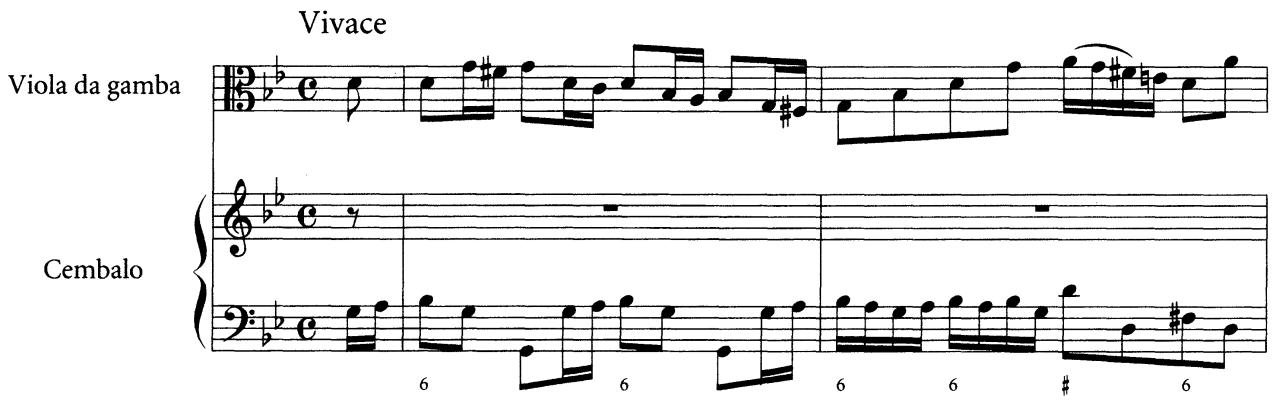
- 页码:6-7
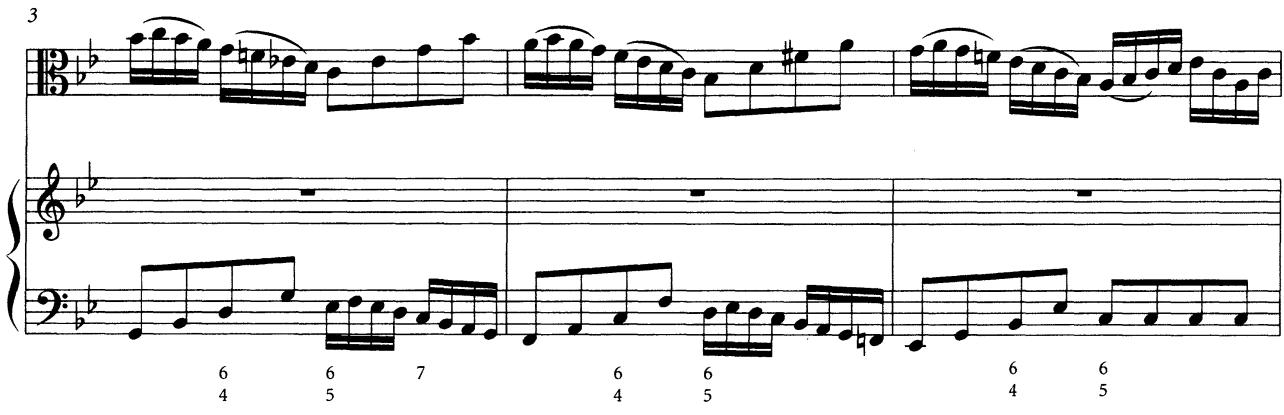
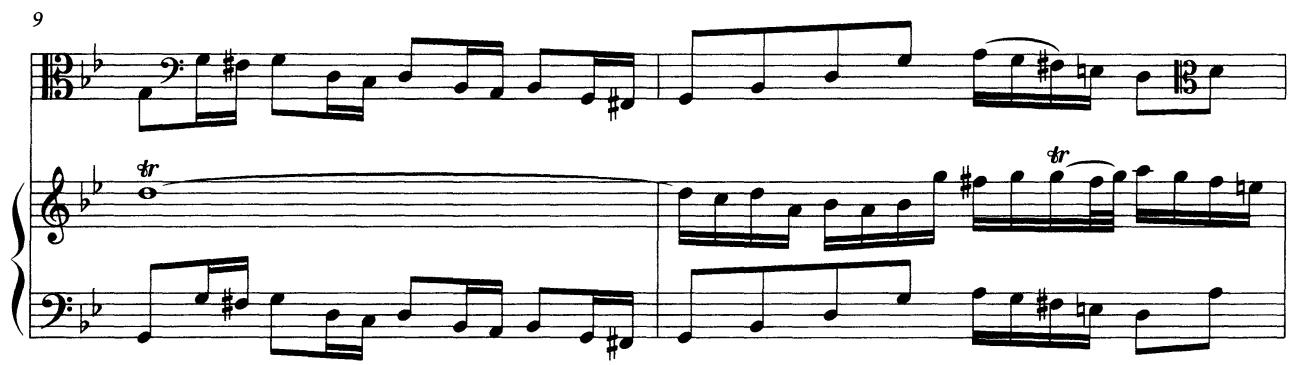
- 1.7 [描述性拆分] The Late Unison Ritornello and the Limits of the Conceit
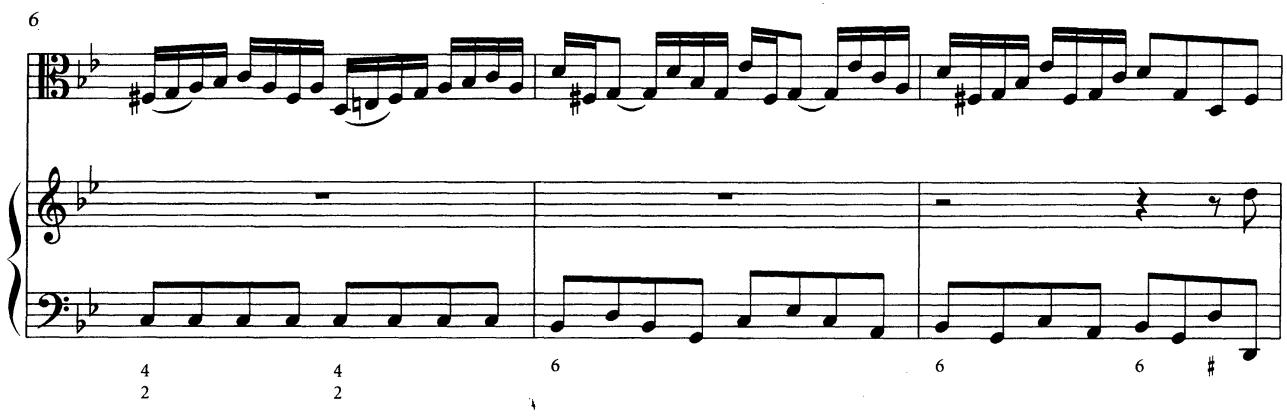
- 页码:8-9
- 1.8 [描述性拆分] The Doubly Concerted Sonata as Critique of Genre Hierarchy
- 页码:10-10
- 1.9 [描述性拆分] Telemann’s Concerto No. 5 as Contrast
- 页码:11-11
- 1.10 [描述性拆分] Table 4.2 and the Middling Style of Telemann
- 页码:11-13
- 1.11 [描述性拆分] The Second Movement as Cultural Vacuum
- 页码:14-14
- 1.12 [描述性拆分] Table 4.3: French Sarabande and Italian Adagio Interwoven
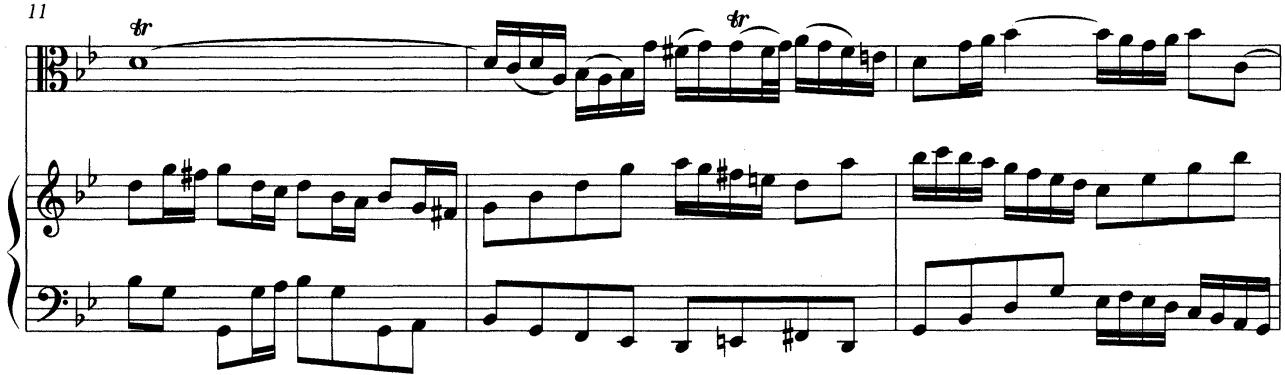
- 页码:15-16
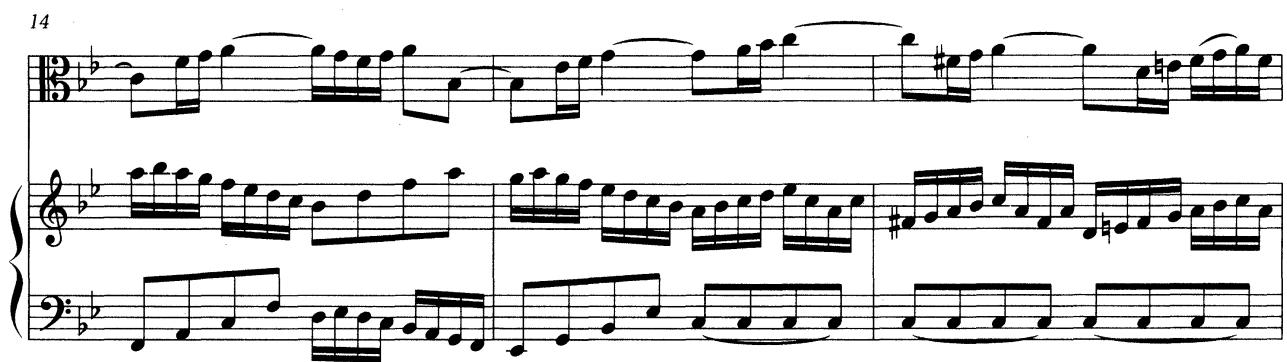
- 1.13 [描述性拆分] Couperin’s Goûts Réünis and Fux’s Superimposed Trio
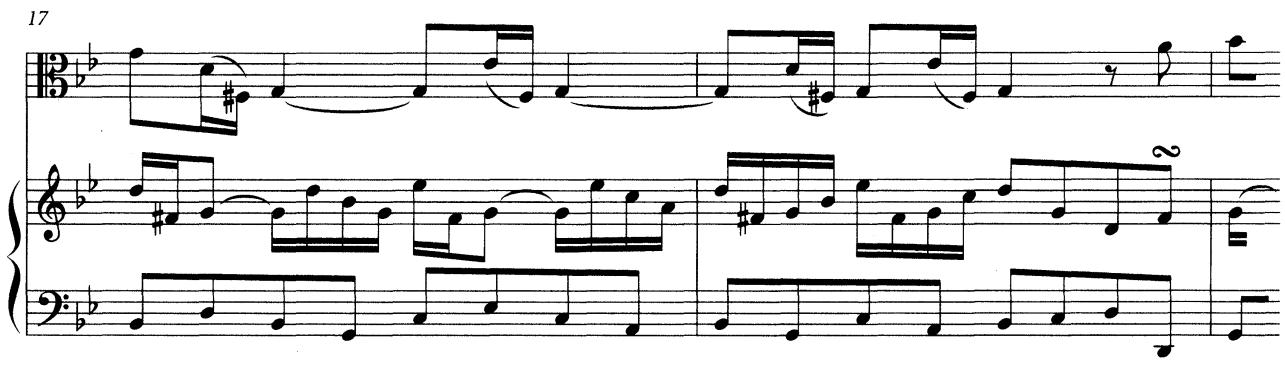
- 页码:17-18
- 1.14 [描述性拆分] Bach’s Cancellation of Style Through Style
- 页码:19-20
- 1.15 [描述性拆分] The Third Movement: Fugal Opening and Cantabile Episode
- 页码:20-21
- 1.16 [描述性拆分] Concerto Markers in Fugal Final Movements
- 页码:22-22
- 1.17 [描述性拆分] The Cantabile versus the Brandenburg V Model
- 页码:23-23
- 1.18 [描述性拆分] Reversal of Affects and the Obscured Tonic Return
- 页码:24-25
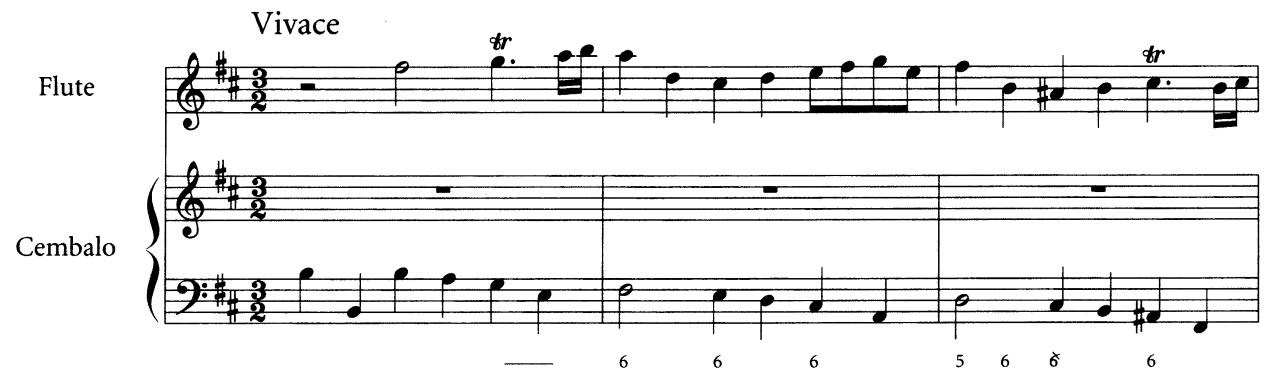
- 1.19 [描述性拆分] Limits of a Fugal Concerto for One Instrument
- 页码:25-27
- 1.20 [描述性拆分] A Pseudo-Fugal Solution in BWV 808
- 页码:28-29
- 1.21 [描述性拆分] The Sonata as Example Rather Than Exemplar
- 页码:29-29
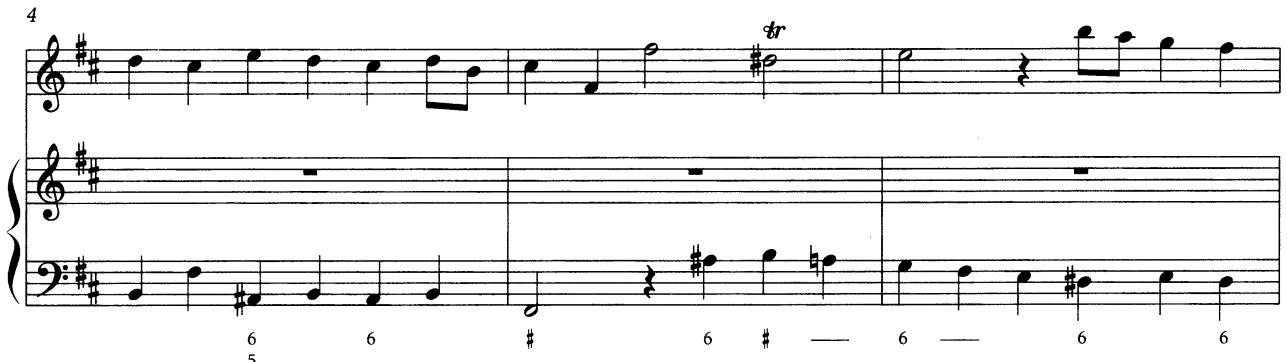
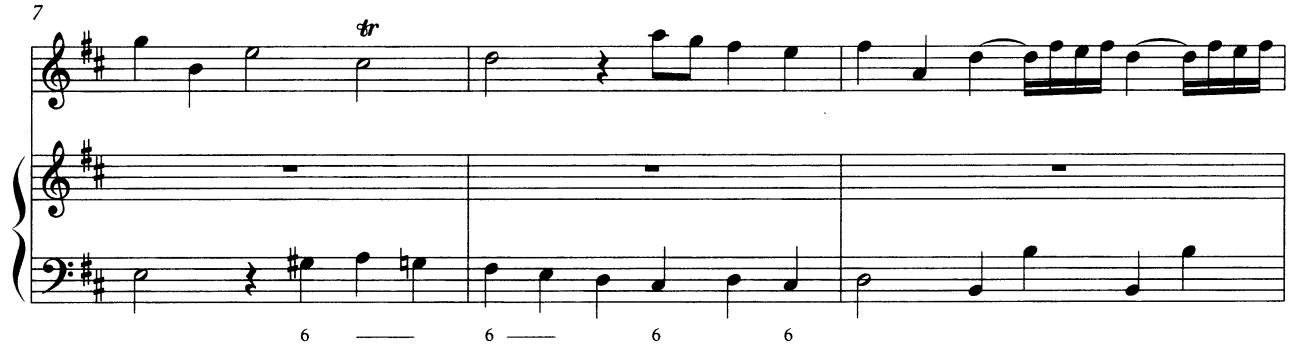
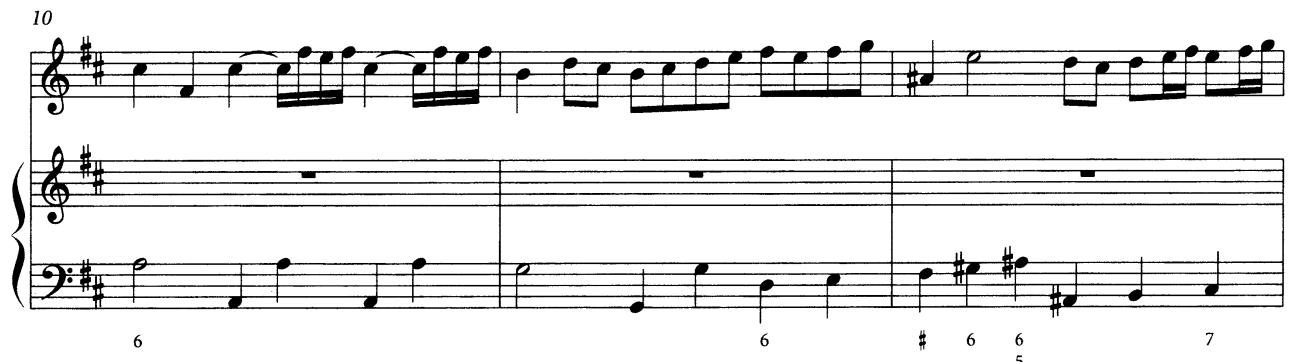
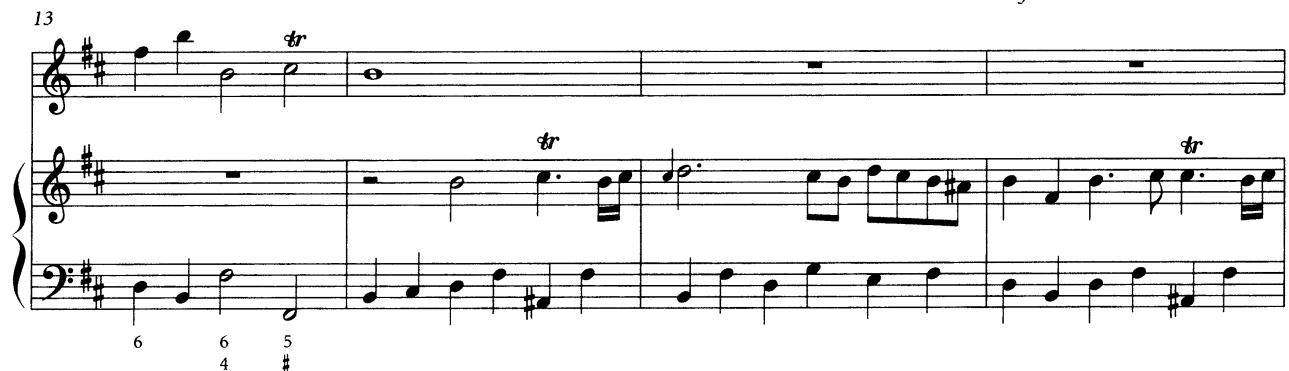
- 1.22 [描述性拆分] Clarity and Mixed Style in Scheibe
- 页码:30-30
- 1.23 [描述性拆分] Hermeneutic versus Scientific Understanding
- 页码:31-31
- 1.24 [描述性拆分] Conclusion: Salvaging Both Tropes
- 页码:32-32
ch2 Matters of Kind
- 2.1 [描述性拆分] Fugue as Genre Rather Than Form
- 页码:33-33
1.1 [描述性拆分] Two Tropes of Bach Interpretation
第1段(P0001)
原文复述
Chapter heading: “The Status of a Genre.” This title marks the opening of Chapter 1 and announces its governing topic: the standing, category, or condition of genre as a concept relevant to Bach’s works.
中文讲解
P0001 是全书第一章的标题"The Status of a Genre"(体裁的地位)。它不是正文段落,而是一个章节级标题,提示本章的核心议题:体裁(genre)这一概念在解读巴赫作品时处于什么样的地位、发挥什么样的作用。读者由此预期本章将围绕体裁观念的现状、问题与作者自己的立场展开论证,而不是介绍巴赫生平或具体作品分析。标题中的 “status” 一词暗示体裁并非一个不言自明的分类标签,而是一个值得追问其权威与功能的概念,这是后续段落(特别是 P0004 中关于 “the status” 的明确回收)的伏笔。
补充说明
本段作为章节标题,本身没有补充论证材料;但它与 P0004 末句中 “determines, as it were, its status” 形成首尾呼应——标题中的 “status” 一词将在 P0004 的论证结论处被回收指涉。
第2段(P0002)
原文复述
When one reads about J. S. Bach in the music-historical literature, two recurring linguistic tropes are striking. The first trope is largely cast in a heroic mold and portrays Bach as a godlike creator. Bach’s miraculous works resound in a beatific harmony, and an air of mystery suffuses the objects of description. This manner recalls Philipp Spitta’s Bach, who served to regenerate the spirit of the German nation. The second trope, which is more common today, is proud of its circumspection. Although prepared to sprinkle occasional doses of reverence, it chafes at metaphysics in its daily work. This trope is quite happy to draw on the language of chemistry. Hence its penchant for properties, elements, analysis, synthesis, and balance—terms that pervade the study of style in contemporary musicology.
中文讲解
本段是第一章的开篇陈述,提出音乐史学文献中关于巴赫的两种反复出现的语言模式(linguistic tropes)。第一种是"英雄式"(heroic mold)的塑造,把巴赫呈现为神一般的造物主:他的作品"在至福的和声中回响"(resound in a beatific harmony),描述对象笼罩在神秘氛围中。作者以 Philipp Spitta 的巴赫形象作为这一模式的代表——Spitta 的巴赫被用来振兴德意志民族精神。这一定位把巴赫抬高到民族精神救世主的层面。第一种模式因此带有强烈的形而上学与神秘化色彩。第二种模式在今天更常见,它以谨慎自许(proud of its circumspection),虽然偶尔仍会撒一些崇敬之辞,但在日常学术工作中对形而上学感到不耐烦(chafes at metaphysics)。它偏好借用化学的词汇:properties(属性)、elements(元素)、analysis(分析)、synthesis(综合)、balance(平衡)——这些术语弥漫于当代音乐学的风格研究中。
作者在这里用了 “two recurring linguistic tropes” 这样的措辞,关键词是 linguistic——他指的不是两种"解读方法",而是两种"话语方式"或"语言习惯"。这一区分对后续论证至关重要:作者要追问的不仅是研究者做了什么,更是他们如何说话、用了什么样的隐喻结构来组织对巴赫的描述。读者需要理解,作者并不是在做简单的优劣评判,而是在为后文铺垫:他既要指出这两种话语各自的得失,又要提出第三条路径。
补充说明
Philipp Spitta(1841–1894)是19世纪德国音乐学家,其巨著《J. S. Bach》(1873–1880)与 Brahms 编辑的巴赫全集齐名,共同推动了"巴赫复兴运动"。本段以 Spitta 作为英雄式话语的代表人物,但本节正文未交代其生卒年与全集出版背景,这些信息属于外部知识,不在此补充。
“beatific harmony” 字面意为"至福的和谐",是带有宗教色彩的用词;“circumspection” 指谨慎、小心——两者一褒一贬,但作者用它们时都带有距离感,预示后文将对两种模式都做出批评。
第3段(P0003)
原文复述
Today the first trope appears excessively metaphorical. Yet to its credit, it projects Bach as an active persona hovering above his contemporaries. To accomplish this, however, Bach is divorced from his time and is seen instead to anticipate Beethoven and Brahms. The second trope feels embarrassed by this aesthetic arrogance, so it tends to stress the similarities between the composer and his musical environment. Accordingly, neatly ordered elements “outside” Bach’s works—French style, ritornello form, the style galant, Lutheran theology—are isolated and tagged “inside.” One then concludes—most often in the passive voice—that Bach was influenced by Vivaldi, by the chorale tradition, by Lutheran beliefs, and so on. But by reducing the interpretive profile to a bundle of influences, contemporary criticism runs the risk of ignoring what Bach has done with them.
中文讲解
本段对 P0002 提出的两种 trope 逐一进行评估,并揭示它们各自的代价。
对第一种(英雄式)trope:作者承认它今天看来"过度隐喻化"(excessively metaphorical),但仍肯定其长处——它把巴赫塑造为一个"悬于同时代人之上、具有主动性的角色"(active persona hovering above his contemporaries)。问题在于,要达到这种效果,巴赫必须被从其时代中抽离(divorced from his time),转而被看作贝多芬和勃拉姆斯的先驱。这是一种时代倒置(anachronism):把后来的音乐史观投射到巴赫身上。
对第二种(化学/分析式)trope:它因第一种的美学傲慢而感到尴尬(feels embarrassed),于是倾向于强调作曲家与其音乐环境的相似性。其做法是把"外部"于巴赫作品的整齐要素——法国风格、ritornello 形式、风格华丽(style galant)、路德宗神学——隔离出来,再贴上"内部"的标签。然后,结论通常以被动语态出现:巴赫"被"维瓦尔第影响、“被"圣咏传统影响、“被"路德宗信仰影响,等等。
作者最尖锐的批评落在最后一句:当代批评把巴赫的解读形象缩减为一束影响(a bundle of influences),却忽略了巴赫拿这些影响做了什么(what Bach has done with them)。这是全章论证的关键转折——它揭示出两种 trope 共同的盲点:都未能把握巴赫作品的"主动性"与"具体处理方式”。第一种做到了前者却失去了历史;第二种做到了后者却失去了主体。
读者需特别注意 “most often in the passive voice” 这一细节:作者把被动语态作为症候来读,被动句"X 影响了巴赫"在语法上就预设了影响是单向的、外加的,从而取消了巴赫作为接受者与转化者的能动性。
补充说明
“ritornello form”(利都奈罗形式)是巴洛克器乐中返折反复出现的乐段结构,常与独奏协奏曲相关;“style galant”(华丽风格)是18世纪中叶追求优雅、简洁、可听性的风格潮流;“chorale tradition” 指新教圣咏传统。这些术语在本节中作为"外部要素"的代表被列举,其具体技术内涵本节未展开,不在此补充。
“active persona”(主动人格)与 P0004 中的 “the moment of activity” 形成呼应:前者是第一种 trope 的优点,后者是作者试图挽救的核心。
第4段(P0004)
原文复述
It seems desirable to salvage the moment of activity in the traditional mode of interpretation while also recording the historical event embodied in a piece of music. To achieve this, the individual work and its underlying inventions must be understood within a historically viable set of values. Far from some theoretical abstraction, this set of values manifests itself concretely as soon as one considers—at any historical juncture—the repertoire of the various genres and their affective relations. The interpretation of the work thereby shuttles between the work’s coherence and its dynamic response to expectations surrounding it. Among Bach’s works, the Sonata for viola da gamba and harpsichord in G minor (BWV 1029) presents a composition whose hybrid genre has sparked considerable interest. As such, it seems an excellent foil against which to sketch out some aspects of Bach’s notion of genre. Relying on an interpretive language somewhat distant from the two traditional “tropes,” I argue that an individual work—and, by extension, the composer’s entire output—converses with a tacit code of genres that both enables its unique articulation and determines, as it were, its status.
中文讲解
本段是全章的论证纲领,提出作者的立场与研究方案。
论证结构可分为四层:
第一层(救取主动性的瞬间):作者宣告,理想的做法是既挽救(salvage)传统解读中"主动性的瞬间”(the moment of activity),又忠实记录一部乐曲所承载的历史事件(the historical event embodied in a piece of music)。“salvage” 一词带有从沉船中打捞遗物的意味,提示他要做的不是彻底否定第一种 trope,而是从中打捞其合理的内核。
第二层(提供历史可行的价值观):要同时做到这两点,单部作品及其下层发明(underlying inventions)必须被置于一组"历史可行的价值观"(a historically viable set of values)之中理解。这组价值观并非抽象理论,而是一旦考察任何历史节点的"体裁曲目"(the repertoire of the various genres)及其"情感关系"(affective relations)就具体显现出来。“affective relations” 在18世纪音乐修辞中有专门含义,指体裁与情感之间被听众与作曲家共享的期待关联。
第三层(解释在两端之间往返):作品解读于是要在两端之间往返穿梭(shuttles between)——一端是作品的内在连贯性(the work’s coherence),另一端是它对环绕于它的期待的动态回应(its dynamic response to expectations surrounding it)。这个"往返"正是作者第三条路径的实质:既不把巴赫抬升为超越时代的英雄,也不把他消解为一束外部影响的汇合点,而是关注作品如何在历史期待中获得其独特形态。
第四层(确定研究对象与论点):作者宣布把 G 小调为维奥尔琴和羽管键琴而作的奏鸣曲 BWV 1029 作为案例——因为它的"混合体裁"(hybrid genre)已经引起广泛兴趣,是勾勒巴赫体裁观念某些面向的绝佳试金石(an excellent foil)。最后一句是全章论点的浓缩:单部作品乃至作曲家全部作品,与一套"默会的体裁密码"(a tacit code of genres)进行对话;这套密码既使作品的独特表达成为可能,又(在某种意义上)决定了作品"的地位"(its status)——回应了章节标题。
读者最易忽略的关键概念是 “tacit code of genres”。“Tacit” 强调这套密码不被言明、不可见但却被默认遵循;作者认为体裁不是事后贴上的标签,而是作品在创作与接受过程中被默认参照的隐形规范。这一概念是整本书的方法论基石。
补充说明
BWV 1029 在本节中作为案例被引入,但其体裁的"hybrid"性质究竟涉及哪些具体张力,本节未交代(属后续小节内容)。
“foil” 在此为比喻用法,意为"用以衬托或检验某物的对照物",而非"金属箔"或"叶形装饰"。
“underlying inventions” 指作品内部具体的作曲手法或主题发明,与"underlying"对应的本体论承诺在本节未展开。
第5段(P0005)
原文复述
Citation footer: Dreyfus, Laurence. Bach and the Patterns of Invention. E-book, Cambridge, Mass.: Harvard University Press, 1996, https://hdl.handle.net/2027/heb05561.0001.001. Downloaded on behalf of Indiana University, Bloomington.
中文讲解
P0005 是页脚来源说明,标明本文节文字出自 Laurence Dreyfus 的著作《Bach and the Patterns of Invention》(哈佛大学出版社,1996年)的电子版,由密歇根大学 HathiTrust 数字图书馆托管,下载使用方为印第安纳大学伯明顿分校。它不属于正文论证,仅作为版本来源标识,便于读者核对原文。它的存在本身不参与作者对两种 trope 的批评,也不影响 BWV 1029 案例的引入;它只是学术电子书的版权与下载元数据。
脚注 / 边栏 / 图表 / 附加信息(如有)
本小节无脚注、图表或边栏。唯一的非正文附加材料是 P0005 的电子版来源与下载方声明,属于学术电子书常见的版权页脚,不构成论证内容。
💡 本节核心要点
- 音乐史学中存在两种反复出现的解读巴赫的话语模式(linguistic tropes):英雄式(以 Spitta 为代表,把巴赫塑造为神一般的造物主)与化学/分析式(强调属性、元素、分析、综合、平衡,借化学词汇研究风格)。
- 第一种 trope 的优点是把巴赫呈现为具有主动性的人格(active persona),代价是把他从其时代抽离并倒置为贝多芬、勃拉姆斯的先驱;第二种 trope 因反感美学傲慢而强调环境相似性,代价是把巴赫缩减为一束外部影响(a bundle of influences),忽略他对这些影响做了什么。
- 当代批评频繁使用被动语态的"X 影响了巴赫"句式,在语法上即取消了巴赫作为接受者与转化者的能动性,是话语症候。
- 作者的第三条路径是:既挽救传统解读中的"主动性的瞬间",又忠实记录乐曲所承载的历史事件,把单部作品置于"历史可行的价值观"——具体表现为任何历史节点上各体裁的曲目及其情感关系(affective relations)——之中加以理解。
- 作品解读在"内在连贯性"与"对环绕期待的动态回应"之间往返穿梭,构成作者的方法论核心。
- 案例选择 G 小调维奥尔琴与羽管键琴奏鸣曲 BWV 1029,因其混合体裁(hybrid genre);全章论点是:单部作品乃至作曲家全部作品,与一套默会的体裁密码(a tacit code of genres)对话,这套密码既使作品的独特表达成为可能,又决定了作品"的地位"——直接回收章节标题。
🔑 关键术语
- linguistic tropes:反复出现的语言模式或话语习惯。作者强调他指的不是两种研究方法,而是两种组织描述巴赫的隐喻与词汇结构。
- heroic mold:英雄式的塑造方式,把巴赫呈现为神一般的造物主,代表人物为 Philipp Spitta,其笔下的巴赫承担德意志民族精神再生的功能。
- circumspection:谨慎、小心。指第二种 trope 以谨慎自许,对形而上学不耐烦,偏好化学式的属性分析词汇。
- ritornello form / style galant / chorale tradition:在本节中作为"外部于巴赫作品的整齐要素"的代表被列举:利都奈罗形式、华丽风格、路德圣咏传统——用以说明第二种 trope 的工作方式。
- affective relations:各体裁与特定情感之间的历史性期待关联。在 18 世纪音乐修辞中,体裁的归属直接影响作品被期待唤起的情感范围。
- tacit code of genres:默会的体裁密码。指作品在创作与接受过程中被默认参照、却不被明言的体裁规范,是作者方法论的基石:体裁不是事后标签,而是作品得以独特表达并获得"地位"的隐形条件。
- the moment of activity:主动性的瞬间,指传统英雄式解读中巴赫作为主动人格悬于同时代人之上所体现的创造力维度,是作者希望挽救的第一种 trope 的合理内核。
1.2 [描述性拆分] Spitta’s Heroic Reading and the Genetic-Reductionist Counter
第1段(P0006)
原文复述
The first movement of the G minor sonata begins with a robustly concerto-like theme, an event unusual enough to have sparked a variety of critical responses. Philipp Spitta, surveying the work in his biography (1873), calls this piece “a work of the highest beauty and the most striking originality,” and notes how it begins in the manner of a sonata although the economy of thematic material is “quite in the style of a concerto.” This “wealth of imagination” takes on a “characteristic picturesqueness.” At this point, Spitta leaps into allegory: “Here we have a composition in Magyar style: a rushing as of wild and fiery steeds across an open space; the impetuous tributary themes sound like strokes of a whip; sometimes the figures fall confusedly into the discord of the diminished seventh . . .; sometimes they unite in the main subject in heavy unison—an effect seldom found in this master—beneath its tread the very earth groans.” Accustomed to a more cautious critical style, the twentieth-century historian or analyst will be unable to suppress a moan at this figurative cavalcade. Yet it is worth noting how Spitta centers on the work itself—here representing its Erlebnis or inner experience. And while seemingly irresponsible, indeed, ahistorical, this move to fanciful imagery faithfully records the story of a sonata movement that behaves out of character, music that appears to struggle beyond its ordinary bounds. At the very least, Spitta’s excitement can be seen as an insightful response to a real paradox of genre, one which he does not erase by a reduction to outside influences.
中文讲解
本段的核心主张是:Spitta 表面近乎荒唐的寓言化解读,实际上捕捉到了这部 G 小调奏鸣曲第一乐章中那个真实的曲式悖论——它在奏鸣曲外观之下藏了协奏曲式的开头与简省的主题材料;本节由此树立第一极立场。
开头一句 “concerto-like theme” 就点明了焦点:这部作品的第一乐章不像奏鸣曲,倒像协奏曲——一桩"不寻常"的曲式事件,足以引发截然不同的批评反应。Spitta 的处理由此而出。
Spitta 原文的两条判断:(1) 该曲"开篇像奏鸣曲,但主题的简省法却是协奏曲式的";(2) 这种"想象的丰富"伴随"独特的画面感"。这两句显示,Spitta 出场并非单靠修辞夸张,而是先作了曲式判断,随后才进入寓言段落;接着的 Magyar 寓言(“野马奔过旷野"“鞭声般的副主题"“减七和弦的乱入"“大地在下面呻吟”)才是其方法学特点——用戏剧化的隐喻把握运动内部的张力。
关键概念: ·Erlebnis:德语"亲历/体验"之意;本段中作者随即译为 inner experience(内在经验),指 Spitta 通过寓言尝试把握的作品当下体验。 ·Magyar style:在 19 世纪语境中,Magyar(马扎尔/匈牙利)容易引发与匈牙利吉普赛-马术-奔放舞蹈风格相关的浪漫联想;Spitta 借此喻体强化猛烈与画面感。 ·diminished seventh(减七和弦):四个小三度堆叠出的极不协和和声,常用来标志动荡时刻;Spitta 用它来对应作品里"乱入的瞬间”。
本段为什么使用这个例子:Spitta 越"诗意”,20 世纪学院派就越易回避他的方法;作者并非为修辞辩护,而是想指出——Spitta 的解读守护了一个核心,曲式悖论不能靠"还原到外部"而消解。这正是下一段批评语文学派所要做的反方铺垫。
容易误解之处:不能把 Spitta 的寓言看作单纯的"浪漫派惯性"而轻视它。本段的反驳句是——它"如实记录了一段在自身边界上挣扎的奏鸣曲运动”;Spitta 的"激动"被定位为对该曲式悖论的洞察性回应,而非放任情绪。
补充说明
本段中 Spitta 以全名首次出场,并被定位为"在 1873 年传记中论述该作品"的研究者——下一段才引入 Siegele、Eppstein、Williams 三位当代学者与之对照。
第2段(P0007)
原文复述
By contrast, Ulrich Siegele, Hans Eppstein, and Peter Williams, authors who have treated the same movement more recently, seem less troubled by the sonata’s formal ambiguity. Instead, they want to dispose of it. With a descriptive method that is careful to avoid metaphorical fancy, the focus shifts from the work to its genesis. In this way, all three writers can explain away the paradoxical relation between sonata and concerto by reducing the work to its supposed origins: since the sonata movement has a ritornello-like subject that returns in predictable keys, a lost concerto must be lurking in the background, of which the sonata is merely a later arrangement. Although such speculation on lost compositional exemplars is often illuminating, it is worth noting how the methodological move from immanent structure to putative origins often discourages criticism of the work at hand. Philological speculation on how the sonata was hatched, moreover, even if compelling, cannot replace an interpretation of its present state: to believe so is to fall prey to a naive genetic fallacy, mistaking process for product. More perniciously, the sort of blow-by-blow description—a musical Baedeker guide—that ultimately substitutes for interpretation tends to stifle the very insights which Spitta had at least clothed in language generating real critical excitement. With the philologists proclaiming an actual concerto preceding BWV 1029, one no longer need fuss over the tensions between sonata and concerto that manage to coexist. But these, it will be argued, constitute what is truly individual in the work and hence of musical import and historical interest.
中文讲解
本段的中心主张是:Siegele、Eppstein、Williams 三位近世学人看似比 Spitta 更冷静、克制,但在方法论起点上回避了"奏鸣曲/协奏曲形式张力"这一作品当下的核心议题——这正是本节要建立的第二极(反方),用以推进全节论辩。
他们具体如何回避:把焦点从"作品现时形态"撤回到"作品的孕育",由此推定这首奏鸣曲源自一首已失传的协奏曲——关键证据是主题按"里托奈罗式"(即可预判的若干调序列)反复回归。表面上看,这种"语文学-考据"路径比 Spitta 的寓言更规范、更易于被现代学术体制接纳;但作者把它定性为"基因还原"。
关键概念: ·ritornello-like subject:里托奈罗式主题——巴罗克协奏曲中在全曲不同(可预判的)调上反复呈示的固定主题段;该段中将之作为推断 BWV 1029 源自失传协奏曲的关键形式证据。 ·genetic fallacy(基因谬误):诠释学概念,指把起源直接等同于意义。本段把它落到 “mistaking process for product”(混淆作品的孕育过程与作品当下的成品)之上,用以定性 Siegele 等人的"以起源解释作品"路径。 ·musical Baedeker guide:本段借 19 世纪著名旅行指南品牌作比——Baedeker 专长于详尽罗列景点而不做美学判断,作者用此指称"逐节描述取代真正诠释"的做法。 ·BWV 1029:定位本段所讨论奏鸣曲的编号。
论证推进:上一段对 Spitta 的肯定定性为"贴近作品内在",本段则把起源解释反面化、定罪化为"基因谬误"。段末以 “it will be argued” 给后续章节留下伏笔——奏鸣曲与协奏曲张力的并存才是作品"真正的个体性所在",具有音乐学与历史学双重意义。
易误读之处:本段并非否定考据本身,而是反对"以考据取代批评"的方法学垄断。批评立足点是——即便一首实际存在的协奏曲先于 BWV 1029 存在,那也不意味着这部奏鸣曲的当下张力可以被"已经追溯到起源"一句话轻轻抹去。
补充说明
本段末尾的 “it will be argued” 明确预告作者将在下文中为"奏鸣曲-协奏曲张力的并存 = 作品的个体性"这一核心论点继续辩护;这是本节进入后续章节的关键衔接口。
第3段(P0008)
原文复述
Page header reads “104 Bach and the Patterns of Invention” (no trailing period). Beneath appears a citation entry: Dreyfus, Laurence. Bach and the Patterns of Invention. E-book, Cambridge, Mass.: Harvard University Press, 1996, https://hdl.handle.net/2027/heb05561.0001.001. Downloaded on behalf of Indiana University, Bloomington.
中文讲解
本段为版式材料:上行是页眉,标明当前页码 104 与书名 “Bach and the Patterns of Invention”;其下是一条书目引用条目,说明本书作者为 Laurence Dreyfus、由 Harvard University Press 于 1996 年以电子版形式出版(附 Handle 永久链接),下载者为印第安纳大学布卢明顿分校的授权账户。
其在本节中的功能:仅作为出版与版本来源的旁证说明;与本节讨论的 Spitta—当代学者论争无直接论证推进。
脚注 / 边栏 / 图表 / 附加信息(如有)
P0006 与 P0007 正文中的上标编号 “¹”、“²”、“³” 在当前输入中未配套展开为脚注条目,故本节范围内只有正文上标标记可见,相应脚注正文需在后续段核对。P0008 之外的字符流里没有出现图表编号或边栏材料。
💡 本节核心要点
- Spitta 1873 年传记中对 BWV 1029 第一乐章的"寓言化"解读——尽管以 Magyar(马扎尔)风格的狂野比喻与减七和弦等修辞出场——其焦点始终在作品自身(其 Erlebnis/内在经验),捕捉到了奏鸣曲形式与协奏曲风格并存这一真实的曲式悖论。
- Spitta 的修辞看似非历史、不负责任,实则如实记录了一段表现得超出自身性格、在形式边界上挣扎的奏鸣曲运动;其激动应被视为对该曲式悖论的洞察性回应,不能靠把作品还原到外部影响而被消解。
- 与之对照,Siegele、Eppstein、Williams 三位近世学者采用回避隐喻的描述法,把焦点从作品现时形态转向作品起源,由此推定 BWV 1029 改编自一首失传的协奏曲——证据是其主题按可预判调序列反复回归(即 ritornello-like subject)。
- “由内在结构转向推定起源"这一方法学移动产生两项后果:一是把音乐史的语文学考据(“作品如何孵出”)置于作品当下的批评之上,二是以逐节描述(被作者比喻为"音乐版 Baedeker 指南”)替代了真正的诠释。
- 作者据此把这种做法定性为 “naive genetic fallacy”——把生成过程(process)混同于成品(product)的逻辑错误。
- 本节末尾以 “it will be argued” 留下核心伏笔:奏鸣曲与协奏曲两种形式之间的张力共存本身构成作品的"个体性",才是值得进一步历史化诠释的对象。
🔑 关键术语
- Erlebnis:德语术语,本段中由作者随文译为 inner experience(内在经验);指 Spitta 通过寓言尝试把握的作品当下体验——它在本节中作为"Spitta 贴近作品"方法的语义锚点出现。
- Magyar style:19 世纪修辞中可激发出与匈牙利吉普赛-马术-奔放舞蹈相关的浪漫联想的语词;Spitta 借此喻体强化作品的猛烈与画面感。
- ritornello-like subject:里托奈罗式主题——巴罗克协奏曲中在全曲不同(可预判的)调上反复呈示的固定主题段;本段中作为 Siegele 等学者推断 BWV 1029 源自失传协奏曲的关键形式证据。
- genetic fallacy:“基因谬误”,将起源等同于意义的逻辑错误;本段中作者把它落实为 “mistaking process for product”(混淆作品孕育过程与作品当下的成品),用以定性 Siegele 等人的方法学路径。
- philological / philologists:本段中指以考据起源为主的文本批评路径与该路径的研究者——即 Siegele、Eppstein、Williams 所代表的从作品来路解释作品的方法。
- musical Baedeker guide:作者借 19 世纪著名旅行指南品牌作比,特指那种逐节罗列代替真正诠释的做法——详尽却不作出美学判断。
- BWV 1029:巴赫作品目录中对所讨论奏鸣曲的编号;在本段中是当代学者的固定指称,作为推断"该曲源自失传协奏曲"这一论证的支点之一出现。
1.3 [描述性拆分] Scheibe’s Sonate auf Concertenart
第1段(P0009)
原文复述
Not only is a secret concerto hypothesis diversionary; it is also unnecessary. The G minor gamba sonata, it turns out, can be assigned to a perfectly coherent genre which Johann Adolph Scheibe called the Sonate auf Concertenart—a sonata in the concerted manner. To put it this way is not at all a semantic sleight of hand, but rather the beginning point for a critical reading. In the first place, as Scheibe describes one version of this genre called the trio concertante, one expects the ritornello (or Hauptsatz) to be treated in invertible counterpoint, which need not occur in an actual concerto. Moreover, a composer needs some special way of distinguishing ordinary sonatas from those in the concerto-like mode of this genre. While Scheibe hints at this necessity only obliquely in his discussion of concerted trios, he spells it out explicitly in his glowing review (1739) of J. S. Bach’s Italian Concerto, which he assigns to a similar neighboring genre called the einstimmiges Concert, or the concerto for one instrument. Here Scheibe writes:
中文讲解
本段是Dreyfus论证的关键转折:他明确否定了前文提到的"隐秘协奏假设"(secret concerto hypothesis),主张这种假设不仅会误导研究方向,而且是多余的。在他看来,BWV 1029(G小调维奥尔琴奏鸣曲)完全应当归入一个Scheibe本人已经命名并描述过的体裁——Sonate auf Concertenart(协奏风格的奏鸣曲),这种归类并非文字游戏,而是进行严肃批评阅读的出发点。作者在此处特意说明"这不是语义障眼法",是为了预先防御读者可能的质疑:把一首奏鸣曲说成具有协奏性质,是否只是术语的偷换?Dreyfus的回应是:这恰恰是体裁批评的起点。作者进而指出Scheibe对这一体裁的两种变体——trio concertante(三重协奏型奏鸣)和einstimmiges Concert(单声部协奏曲)——的具体规则。trio concertante的核心特征是ritornello(或Hauptsatz,即"主句")应当以可转位对位(invertible counterpoint)处理,这一点未必出现在真正的协奏曲中。这一规则为BWV 1029的键盘与维奥尔琴之间的高度对位化写作提供了体裁依据。最后,作者强调Scheibe在1739年评论巴赫《意大利协奏曲》时把这种区分(普通奏鸣曲与协奏风格奏鸣曲之间的区别)讲得非常清楚,这一段引用(P0010)将作为后面分析的关键文本依据。整段的功能是:确立体裁框架,引入Scheibe的权威文本,为后续用Scheibe的描述来"对照阅读"巴赫作品铺平道路。
补充说明
术语说明:ritornello原指巴罗克协奏曲中反复出现的全奏段主题;Hauptsatz(德语"主句")是Scheibe使用的同义术语。trio concertante按字面是"三重协奏型",einstimmiges Concert按字面是"单声部协奏曲",指为单件独奏乐器写作的协奏风格作品。Scheibe的1739年评论是Critischer Musikus中的重要文献,文中评价的是巴赫BWV 971《意大利协奏曲》。本段末尾的"Here Scheibe writes:“是为P0010的长引用作引语标记,没有标点结束该句,是直接引语的标准格式。
第2段(P0010)
原文复述
In such pieces the basic structure is kept the same as in concertos for many instruments. The bass and middle voices, which are added now and then to fill out the texture, must represent the subordinate parts. And those passages that above all form the essence of the concerto [emphasis added] must be most clearly differentiated from the rest. This can very well be done if, after the principal idea of a . . . movement has concluded with a cadence, new and distinct ideas enter, and these in turn give way to the principal idea in varying keys. By such means, a piece of this sort for one instrument becomes quite similar to one for many instruments.
中文讲解
本段是Scheibe在1739年评论巴赫《意大利协奏曲》时写下的一段关键文字,Dreyfus在书中加粗标注了"the essence of the concerto”(协奏曲的精髓)这一短语,使其成为后文讨论的核心概念。Scheibe的论述分为三层:其一,体裁框架上,为单件乐器写作的协奏风格作品与为多件乐器写作的协奏曲在"基本结构"(basic structure)上保持一致。其二,配器逻辑上,作品中偶尔加入的低音声部和中音声部只是用来"填充织体"(fill out the texture),因此必须明确处于从属地位(represent the subordinate parts)。其三,也是最关键的——构成"协奏曲精髓"的段落必须与其他段落有最清晰的区别(most clearly differentiated from the rest)。Scheibe随即给出了实现这种区别的具体手法:在主句以终止式结束后,新而独立的乐思进入,而这些新乐思又在不同的调性上让位于主句的回归。换言之,“协奏曲精髓"在单声部作品中的具体实现方式就是:主句(ritornello)在调性闭合中确立身份,新材料在新调中插入,主句又回到不同调性中再现。Dreyfus选择引用Scheibe本人的话而不是自己转述,是为了给后文对BWV 1029的体裁分析提供一份由18世纪权威理论家签署的体裁规则文本,其权威性远超现代学者的二手转述。引用末尾的句号标志着Scheibe的直接引语结束,下一段(P0011)将回到Dreyfus的议论。
补充说明
“the essence of the concerto"是原文中由Dreyfus特别加粗的短语(emphasis added),这一标记本身提示读者这是Dreyfus在引语中特别关注的概念,也是P0011讨论的核心对象。Scheibe此处描述的具体手法(主句—新材料—主句回归,伴随调性转换)正是后世所说的"利都奈罗形式”(ritornello form)的核心结构特征,但本段并未使用该现代术语。“cadence"在18世纪语境中通常指终止式或乐段结束点,与后世用法一致。
第3段(P0011)
原文复述
Scheibe’s description certainly coincides with several important features of BWV 1029 and provides a useful guide against which to read Bach’s work. One interesting aspect of Scheibe’s text is his definition of the “essence of the concerto.” Earlier in the Critischer Musikus when discussing the concerto proper, he had identified the essence of the concerto in the traditional manner by naming its competing membership groups—the concertino and the ripieno. Here, however, he locates the essence of the concerto in its chief melodic identity—the ritornello delimited by tonal closure. Accordingly, the Sonate auf Concertenart approximates the concerto by distinguishing sections in which material from the ritornello is either present or absent. This distinction makes good sense, since the sonata cannot so easily indicate the alternation of texture between the “tutti” and the “solo” which characterizes the real concerto grosso. In the case of Bach’s full-fledged concertos, as we saw in Chapters 2 and 3, the composer had already made this theoretically advanced move (from competing empirical groups to the presence or absence of a significant invention) from the time of the composer’s earliest reception of Vivaldi’s concertos.
中文讲解
本段是Dreyfus对Scheibe文本的批评性消化,也是本小节论证链的核心环节。他从P0010的引语中提取出最关键的概念——“协奏曲的精髓”,并揭示Scheibe在这个问题上的一个重要转向。在Critischer Musikus讨论concerto proper(大协奏曲本体)时,Scheibe沿用传统说法,把"精髓"定义为两个相互竞争的乐器组——concertino(小合奏组)和ripieno(全员合奏组)——之间的对立。但在本段引用的对einstimmiges Concert的评论中,Scheibe却把"精髓"重新定位为ritornello(主句)这一"首要旋律身份”(chief melodic identity),其标志是调性闭合(tonal closure,即主句以终止式或稳定的调性框架确立其完整性)。Dreyfus指出,这一概念上的转移意义重大:Sonate auf Concertenart之所以能"近似"协奏曲,正是通过区分ritornello材料出现与不出现的段落来实现的。这种区分是合理的逻辑选择,因为奏鸣曲这种体裁不像真正的大协奏曲那样天然具备tutti(全奏)与solo(独奏)之间织体交替的对比手段;奏鸣曲必须通过其他方式——即ritornello材料的在场与缺席——来标记协奏特征。最后Dreyfus把这一概念史与本书第2、3章已论述的巴赫本人的发展史并置:巴赫在全面创作的协奏曲中,从接触维瓦尔第协奏曲的最初时期起,就已经在理论上走过了同样的一步——从依赖"竞争性的经验性乐器组合"转向"重要主题材料是否在场"这一更抽象的结构原则。这一跨章衔接为读者理解巴赫的协奏思维演变提供了纵向坐标。
补充说明
concertino与ripieno是巴罗克大协奏曲(concerto grosso)中的两组演奏力量:前者是少数独奏乐器,后者是全体乐队;二者交替出现构成大协奏曲的核心对比。concerto proper在此指大协奏曲本身(区别于独奏协奏曲)。“competing empirical groups"与"presence or absence of a significant invention"是Dreyfus对Scheibe两种"精髓"定义的高度概括:前者是具体的、可观察的乐器组合对立,后者是抽象的、可主题化判定的结构属性。这一对比是Dreyfus全章分析的概念骨架。“Chapters 2 and 3"指Dreyfus原书较早章节,本节假定读者已熟悉该背景。”
第4段(P0012)
原文复述
Dreyfus, Laurence. Bach and the Patterns of Invention. E-book, Cambridge, Mass.: Harvard University Press, 1996, https://hdl.handle.net/2027/heb05561.0001.001. Downloaded on behalf of Indiana University, Bloomington
中文讲解
本段是该电子书的版本与下载来源信息,属于书页的版权/版本说明(bibliographic notice),而非正文论述。内容包含作者全名(Laurence Dreyfus)、书名(Bach and the Patterns of Invention,《巴赫与发明模式》)、出版地(马萨诸塞州剑桥)、出版社(哈佛大学出版社)、出版年份(1996)、电子版访问标识符(HathiTrust数字图书馆句柄https://hdl.handle.net/2027/heb05561.0001.001),以及下载代理方(印第安纳大学布卢明顿分校)。这段信息对正文论证无直接影响,其功能是标明本节引用的所有页码内容所出自的电子版本,提示读者引文页码与印刷版一致,并说明研究者在学术机构授权下获取该资源。它同时确认了本节文本的版本来源:哈佛大学出版社1996年出版的Laurence Dreyfus专著。
脚注 / 边栏 / 图表 / 附加信息(如有)
本小节涉及的附加材料包括:Scheibe对BWV 1029体裁归属的命名(Sonate auf Concertenart及其变体trio concertante、einstimmiges Concert)、Scheibe的Critischer Musikus中1739年评论巴赫《意大利协奏曲》BWV 971的原始引文(P0010)、以及Dreyfus对Scheibe两种"协奏曲精髓"定义的概念比较。Scheibe的原话是本节的核心证据文本,Dreyfus的引用方式(保留加粗标记emphasis added)提示读者关注"the essence of the concerto"这一概念。此外,书页底部(P0012)提供了电子书版本出处和下载机构信息,属于版本学脚注而非论证材料。
💡 本节核心要点
- Dreyfus明确否定"隐秘协奏假设”,主张BWV 1029应归入Scheibe已命名的体裁Sonate auf Concertenart,作为体裁批评的起点而非文字游戏。
- Scheibe对einstimmiges Concert的描述规定了协奏风格单声部作品的三条规则:基本结构同于多乐器协奏曲、附属声部处于从属地位、协奏曲精髓段落必须被最清晰地与其他段落区别开。
- Scheibe的"协奏曲精髓"从传统定义(concertino与ripieno的乐器组竞争)转向新的定义(ritornello这一首要旋律身份在调性闭合中的在场与缺席),这一概念转移是理解Sonate auf Concertenart如何近似协奏曲的关键。
- Sonate auf Concertenart的体裁策略——通过ritornello材料的在场/缺席来分段——是对奏鸣曲体裁局限的合理补偿,因为奏鸣曲缺乏大协奏曲中tutti与solo天然织体交替的对比手段。
- Dreyfus将Scheibe的概念史与巴赫本人的发展史并置:巴赫在全面创作的协奏曲中,从接触维瓦尔第协奏曲之初即完成了同样的概念性跃迁(从竞争性的经验性乐器组到重要主题材料的是否在场)。
- 本节建立了后续分析的方法论:Scheibe的18世纪体裁规则文本被用作"对照阅读"BWV 1029的批评指南,以此检验巴赫作品是否符合18世纪理论家所描述的协奏风格奏鸣曲特征。
🔑 关键术语
- Sonate auf Concertenart:德语术语,字面意为"协奏风格的奏鸣曲”,Scheibe在Critischer Musikus中用以指代具有协奏曲结构特征但为奏鸣曲体裁写作的作品;本节中作为BWV 1029的体裁归属名称。
- trio concertante:Scheibe在Sonate auf Concertenart下区分的子体裁,按字面为"三重协奏型",其规则要求ritornello(即Hauptsatz)以可转位对位处理,是Scheibe对协奏风格奏鸣曲的一种版本描述。
- einstimmiges Concert:德语术语,字面意为"单声部协奏曲",指为单件独奏乐器写作的协奏风格作品;Scheibe在1739年评论巴赫《意大利协奏曲》BWV 971时使用此名。
- ritornello / Hauptsatz:ritornello是巴罗克协奏曲中反复出现的全奏段主题,Hauptsatz是Scheibe使用的德语同义词(“主句”);在Scheibe对einstimmiges Concert的描述中,ritornello被定义为通过调性闭合确立的"首要旋律身份",是"协奏曲精髓"的载体。
- concertino与ripieno:大协奏曲(concerto grosso)中的两组演奏力量:concertino为少数独奏乐器组,ripieno为全体乐队;Scheibe在Critischer Musikus中以此二者作为"协奏曲精髓"的传统定义。
- Critischer Musikus:Scheibe于1737–1740年间在德国出版的批评性音乐期刊,刊载其音乐批评文章,是18世纪上半叶德语区重要的音乐理论来源;本节所引Scheibe关于协奏风格奏鸣曲与《意大利协奏曲》的评论均出自该刊。
1.4 [描述性拆分] The Opening Ritornello and Its Concerto Credentials
第1段(P0013)
原文复述
Examined against Scheibe’s generic grid, the first movement of Bach’s gamba sonata reveals several points of interest. First, with regard to the identity of the opening subject, Bach not only presents a subject that cadences in the tonic but goes out of his way to establish the concerto-like credentials of his theme. (See Ex. 4.1.) Some have noted the resemblance of the opening material to the Third Brandenburg Concerto with its alternating Vivaldian motivic cells.⁷ But what is more important, this ritornello also presents a “textbook” example of the demarcated harmonic functions of a basic Vivaldi-derived model. Note that the gamba plays this chief idea with only continuo support. Bach therefore signifies “concerto” by reproducing the melodic and harmonic content of a ritornello theme without, however, alluding to the orchestral tutti in which it is conventionally clothed.
中文讲解
本段将巴赫gamba奏鸣曲第一乐章的开场置于谢贝(Scheibe)所归纳的体裁框架中加以检验,指出其开场主题具有明显的协奏曲属性。核心论点有三:第一,主题不仅在主音上完满终止(cadences in the tonic),而且其旋律—和声构造明显模仿一个从维瓦尔第(Vivaldi)衍生出来的标准ritornello模型——谢贝正是用这一模型来定义协奏—奏鸣曲的体裁规范;第二,gamba在呈现这一主部主题时仅由通奏低音(continuo)伴奏,而不像典型协奏曲那样由完整的乐队tutti铺陈,因此巴赫必须通过旋律与和声本身来"指称"协奏曲,而不是借助于管弦乐编制;第三,作者承认学界已注意到这一开场材料与《第三勃兰登堡协奏曲》中"交替出现的维瓦尔第式动机单元"存在相似性,但作者强调这并非关键,关键在于该ritornello是"教科书式"地展示了基础维瓦尔第模型中各和声功能的明确分区(demarcated harmonic functions)。
承接上文:前文已确立谢贝体裁规范是分析的参照系,本段的任务是检验该奏鸣曲究竟在多大程度上"符合"这一规范。本段给出的第一层答案是——至少在开场主题的层面,巴赫刻意向协奏曲靠拢:主题本身已是一种"具备协奏曲资格"(concerto-like credentials)的陈述。值得特别注意的修辞是,作者用"goes out of his way"(特意地、不厌其烦地)来形容巴赫的用心,暗示这种协奏曲信号的建立并非偶然,而是巴赫在室内乐编制限制下的有意选择。音乐例4.1(Ex. 4.1)即是该开场主题的乐谱示例,脚注7则关联到《第三勃兰登堡协奏曲》的比较。
补充说明
脚注7(未在本段中展开)指向关于开场材料与《第三勃兰登堡协奏曲》相似性的既有评论。本段引用Ex. 4.1来支撑主题结构分析,但该乐谱不在文本范围内,故具体音高与节奏细节无法从本段定位。术语"continuo"指巴洛克时期的通奏低音伴奏,由低音旋律乐器加和声填充乐器(此处为gamba加上harpsichord的通奏低音实现)构成;“tutti"指协奏曲中全体乐队齐奏的段落。
第2段(P0014)
原文复述
What happens thereafter, however, breaks sharply with Scheibe’s model. First, in m. 9, an opening ritornello segment migrates to the bass for two measures. Then the entire ritornello duplicates itself (beginning in m. 11) in the right hand of the harpsichord against a new countersubject in the gamba line. Since a corollary of Scheibe’s miniaturized sonata-concerto presumes the absence of the ritornello just after the cadence, the piece becomes confused in its designation of the genre when it restates the ritornello immediately after its initial presentation: by m. 11 the process evokes the quasi-fugal entrance of the two upper parts in a trio sonata Allegro, except that the second subject is not stated a fifth above but remains in the tonic. Only after the cadence at m. 19 does the contrast between ritornello and solo episode and hence the sense of concerto again become intelligible. (As a general rule of the genre, Bach’s concertos refrain from repeating the opening Vordersatz just after the first tonic cadence in order to avoid harmonic redundancy. If the first solo entrance alludes to the ritornello, it mostly does so either by withholding the crucial end of the Vordersatz, namely an emphasized dominant chord confirming the tonic (as in BWV 1041), or (in earlier works) by varying the thematic content (Brandenburg VI/3 and Brandenburg I/1). In fact, for Bach, this restriction constitutes a crucial difference between the concerto and the aria, in which ritornello procedures are more lax. Vivaldi’s own concertos held no such scruples regarding redundancy. In the opening movement of opus 3, no. 6, for example, the soloist repeats the entire Vordersatz directly after the tonic cadence of the opening ritornello. There is no such parallel in any concerto movement by Bach.)
中文讲解
本段是本小节论证的转折点:上一段说明开场主题符合谢贝的协奏曲模型,本段随即指出主题之后的发展却与该模型"急剧背离”(breaks sharply)。背离体现为两处具体的小节位置:第9小节,ritornello的片段迁移到低音声部并停留两小节;第11小节开始,整个ritornello在harpsichord右手声部被完整复制,与此同时gamba声部引入一条新的对题(countersubject)。
作者的推理链如下:谢贝模型作为"小型化的协奏—奏鸣曲"(miniaturized sonata-concerto),其推论之一是主调终止之后ritornello应立即"缺席"——因为继续重复会造成和声冗余;而本曲恰恰在首次陈述之后立即复述ritornello,这就使作品的体裁归属变得模糊(“becomes confused in its designation of the genre”)。作者接着给出一个替代的体裁参照:第11小节的过程让人联想到三重奏鸣曲(trio sonata)快板乐章中两个上声部的准赋格进入——只不过按惯例第二个主题应在属调上方五度出现,而此处第二主题仍停留在主调。这一比较之所以重要,是因为它提示我们巴赫的写法同时调动了两种体裁的资源,而不是单纯地偏离一种、符合另一种。
第19小节之后,ritornello与独奏插段(solo episode)的对比重新建立起来,协奏曲的体裁感重新变得可读。括号中的大段补充是本段论证的关键支撑:作者为巴赫确立了一条"体裁通则"——巴赫的协奏曲刻意避免在首次主调终止后立即复述开场Vordersatz,以避免和声冗余;若独奏段确实要影射ritornello,通常采取两种变通:其一,省略Vordersatz最关键的尾部(即那个本应确认主调的强调属和弦——以BWV 1041为例);其二(更早期的作品,如Brandenburg VI/3与Brandenburg I/1),通过改变主题内容来实现影射。这条通则随后被提升为巴赫协奏曲与咏叹调(aria)的根本区别之一,因为咏叹调的ritornello程序更为宽松(more lax)。作为反例,作者援引维瓦尔第Op. 3 No. 6:在该曲开场乐章中,独奏家恰恰在开场ritornello的主调终止之后立即重复整个Vordersatz——而巴赫的任何协奏曲乐章都没有这种先例。
本段的功能在于:它不是简单批评巴赫"违反规则",而是同时做两件事——既揭示本曲在第11小节造成了体裁混淆,又引入一个解释性的体裁参照(三重奏鸣曲的赋格式进入),为下一段"协奏+奏鸣综合"的解读铺垫。
补充说明
本段涉及的几个具体作品标识需说明其在论证中的角色:BWV 1041是巴赫的《D大调小提琴协奏曲》;Brandenburg VI/3与Brandenburg I/1分别指《第六勃兰登堡协奏曲》第三乐章与《第一勃兰登堡协奏曲》第一乐章;Op. 3 No. 6是维瓦尔第的协奏曲集《和声与创意的尝试》中的第六首。Vordersatz是德文术语,指协奏曲中开场ritornello陈述的主要主题材料。术语"countersubject"在此处指在ritornello复述时gamba所演奏的对比性旋律线。括号中关于维瓦尔第与巴赫对比的内容虽然独立成段,但仍是P0014论述整体的一部分——它通过反例加固了"巴赫的协奏曲通则"这一论断。
第3段(P0015)
原文复述
It might be best, then, to construe the opening eighteen bars of the gamba sonata as a synthesis of concerto and sonata principles. In this way the second statement of the ritornello in m. 11 set against a countersubject could be taken as sonata-like, while the tonal closure and the melodic content of the ritornello point to concerto. But granting this point means that there is no explanation for mm. 9 and 10, which thus far elude analysis. These two bars, in fact, appear superfluous, since they present only the Vordersatz in the bass before restating the complete ritornello in the harpsichord’s upper part. From the vantage point of general harmonic and melodic conventions, one can easily dispense with these two bars. One has only to imagine the opening nineteen measures of the movement, skipping from the end of m. 8 directly to the beginning of m. 11: if a classical balance between two eight-bar phrases had been Bach’s aim, it would be achieved only by omitting mm. 9 and 10.
中文讲解
本段是本小节论证的高潮与暂时性的"暂停"。承接上一段揭示的体裁混淆,作者在此提出一个折中性解读:开场18小节(实为该乐章的呈示段落)最好被视为协奏曲原则与奏鸣曲原则的"综合"(synthesis)。具体而言——第11小节ritornello的第二次陈述叠加上对题,可读作奏鸣曲式中的主题再现与对位化处理;而ritornello自身的调性封闭(tonal closure,即在主调上完满终止)与旋律内容仍指向协奏曲体裁。换言之,巴赫不是"违反了体裁",而是把两种体裁的语法叠合在同一段落里。
然而作者立即自我设限:接受这种综合解读意味着第9和第10小节在此框架下完全无法得到解释——它们"逃避了分析"(elude analysis)。这两小节的功能仅是将Vordersatz置于低音声部演奏一次,然后紧接着才由harpsichord上声部完整复述ritornello。从一般和声与旋律惯例的角度看,这两小节显得"多余"(superfluous):若把它们略去,从第8小节末尾直接跳到第11小节开头,音乐同样成立;而且,如果巴赫追求的是古典风格常见的两个八小节乐句之间的平衡(classical balance between two eight-bar phrases),那么只有去掉第9—10小节才能获得这种平衡(因为这样一来乐句就是两个八小节)。
本段论证的功能在于:它既给出本节目前能做出的最合理的体裁归类(综合说),又诚实地暴露了该归类在结构上的盲点(第9—10小节)。这正是分析的诚实之处——作者没有为了维持综合说的完整性而强行解释那两小节,而是把"解释力的不足"本身作为进一步思考的起点。容易误解之处在于:作者并非断言巴赫"写错了"或"多了两小节",而是说,在现有的体裁框架内,无法为这两小节的存在找到功能性说明。这是一个"未决问题"的标志,而非定论。
补充说明
本段中的"tonal closure"与上段的"cadences in the tonic"呼应,均指ritornello在主调上的完满终止;“classical balance between two eight-bar phrases"是18世纪盛期器乐风格中常见的对称性结构范式,作者用它作为检验巴赫此处是否"有意识地追求古典对称"的反事实参照。“opening eighteen bars"与"opening nineteen measures"的措辞差异暗示作者将第9—10小节视为可剥离的"插入段”,而非乐句整体的一部分。
第4段(P0016)
原文复述
106 Bach and the Patterns of Invention Dreyfus, Laurence. Bach and the Patterns of Invention. E-book, Cambridge, Mass.: Harvard University Press, 1996, https://hdl.handle.net/2027/heb05561.0001.001. Downloaded on behalf of Indiana University, Bloomington
中文讲解
本段由两个版面元素组成:一是页眉(“106 Bach and the Patterns of Invention”),标明当前页码为106、所属著作为《Bach and the Patterns of Invention》;二是该电子书版本的引用信息,说明作者为Laurence Dreyfus,出版方为Harvard University Press,1996年出版,载体形式为E-book,永久链接为https://hdl.handle.net/2027/heb05561.0001.001,并注明此副本由Indiana University, Bloomington下载使用。这些信息构成所引用文本的版本与出处依据,本身不参与正文的音乐学论证,但在引用规范层面是必要的来源说明。
补充说明
该引用信息表明本节正文出自Dreyfus《Bach and the Patterns of Invention》1996年哈佛大学出版社电子版第106页。该电子版是本节作者赖以征引的版本,其页码体系与印刷版一致。
脚注 / 边栏 / 图表 / 附加信息(如有)
本节中的脚注内容(P0013脚注7)未在本节文本内展开,仅作为对《第三勃兰登堡协奏曲》相似性论述的来源提示出现。P0014括号内的大段补充虽独立成块,但应理解为该段论证的有机组成部分——它通过引入BWV 1041、Brandenburg VI/3、Brandenburg I/1、维瓦尔第Op. 3 No. 6等作品作为对比案例,支撑"巴赫协奏曲避免在首次主调终止后立即复述Vordersatz"这一通则。乐谱示例Ex. 4.1见P0013所述,承载开场ritornello主题的具体呈现,但本节文本未提供该乐谱本身。本节正文范围内的图表仅为Ex. 4.1一处。
💡 本节核心要点
- 本节将巴赫gamba奏鸣曲第一乐章的开场ritornello置于谢贝所归纳的协奏—奏鸣曲体裁框架中加以检验,开场主题本身具有"教科书式"的维瓦尔第式和声功能分区,从而在旋律—和声层面取得协奏曲资格。
- 该开场主题在gamba独奏加通奏低音的编制下呈现,巴赫刻意通过内容而非编制来"指称"协奏曲,绕过了室内乐无法呈现管弦乐tutti的限制。
- 第9小节ritornello片段迁移到低音声部、第11小节ritornello完整复述于harpsichord右手并伴以gamba对题——这两处处理都偏离了谢贝模型所预期的"主调终止后ritornello缺席"的推论,导致体裁归属暂时模糊。
- 第11小节的复述更接近三重奏鸣曲快板乐章中两个上声部的准赋格式进入,作者借此提示巴赫同时调用了奏鸣曲与协奏曲两种体裁资源。
- 第19小节之后协奏曲的对比关系才重新建立;作者将"避免在首次主调终止后立即复述Vordersatz"确立为巴赫协奏曲的体裁通则,并以BWV 1041、Brandenburg VI/3、Brandenburg I/1为例区分了"省略尾部"与"变化内容"两种变通方式。
- 对维瓦尔第Op. 3 No. 6的反例援引凸显了巴赫与维瓦尔第在ritornello重复策略上的根本差异,并将这一限制进一步定性为巴赫协奏曲与咏叹调体裁分野的关键标志。
- 作者最终提出"协奏与奏鸣综合"的解读以容纳第11小节起的复述,但同时坦承这一框架无法解释第9—10小节的结构功能——它们在常规和声—旋律惯例下显得多余,去掉它们反而能获得古典式的两句八小节平衡。
🔑 关键术语
- Scheibe’s generic grid:谢贝所归纳的协奏—奏鸣曲体裁规范框架,本节将其作为检验巴赫gamba奏鸣曲开场是否符合协奏曲体裁的参照系。
- ritornello:巴洛克协奏曲中由乐队反复陈述的核心主题段落,通常出现在乐章开头及调性回归处;本节讨论的开场ritornello即该乐章首次出现的主部主题。
- Vordersatz:德文术语,指开场ritornello所陈述的主要主题材料;本节围绕它在首次主调终止后是否被立即复述展开巴赫与维瓦尔第的对比。
- Vivaldian motivic cells / Vivaldi-derived model:源自维瓦尔第协奏曲写作传统的动机构造与和声功能分区模式,本节将其视为可识别的"协奏曲身份标记”,巴赫的开场主题被指认为对该模型的"教科书式"复现。
- continuo / continuo support:通奏低音伴奏,本节指出巴赫gamba奏鸣曲的开场主题仅由通奏低音支持、缺乏管弦乐tutti,因此巴赫只能以内容而非编制来指称协奏曲。
- countersubject:在ritornello复述时由gamba声部演奏的对比性旋律线,本节将其视为奏鸣曲式对位化思维的体现,与ritornello的复述共同构成"协奏—奏鸣综合"的一部分。
- tonal closure (cadences in the tonic):主调上的完满终止,本节既作为ritornello具备协奏曲资格的标志,也作为第19小节后协奏曲体裁感重新建立的关键点。
- miniaturized sonata-concerto:谢贝模型中体量压缩后的协奏—奏鸣曲式,其推论之一是主调终止后ritornello应缺席;本曲在第11小节的复述正违反了这一推论。
- harmonic redundancy:本节中巴赫刻意避免的和声重复现象,尤其指首次主调终止后立即复述Vordersatz所造成的主调过度确认;作者将其升格为巴赫协奏曲与咏叹调的体裁分野标志。
- Ex. 4.1:本节所引乐谱示例的编号,对应gamba奏鸣曲第一乐章开场ritornello主题的具体呈现;具体音高与节奏细节需查阅原书该例。
1.5 [描述性拆分] Measures 9–10 and the Signification of Two Soloists
第1段(P0017)
原文复述
A characterization of how Bach intends the genre of the movement to be understood therefore hinges on a reading of mm. 9 and 10. Consider first the status of the long trilled d² in the right hand of the harpsichord in m. 9 and its counterpart in the gamba line in m. 11. As a sign of virtuosity placed just after the close of a ritornello, the sustained trill itself signifies a new but not unexpected message: a soloist, or, in this case, two soloists are present. (One might compare these trills with the trill in Brandenburg Concerto I/3, mm. 35–40, where the trill coinciding with the transposed ritornello segment announces the presence of the violino piccolo leading to a solo episode.) That is, the pattern of two trills at precisely this juncture can only indicate the conventions of two solo instruments in a double concerto. Note therefore that Bach does not allude to concerto within the sonata by way of the melodic-harmonic code articulating the opening (that is, with a “solo theme” or with new motivic configurations) but, instead, through a distinct code that distinguishes the style of a musical figure belonging to a concertist from that belonging to a ripienist. The work thus alludes to concerto even though it countermands Scheibe’s sensible suggestion that ritornello material be absent just after the first tonic cadence.
中文讲解
本段是作者论证的转折点:理解本曲的体裁归属,关键不在开头的旋律—和声特征,而在第9–10小节处。作者提出,巴赫发出’协奏曲’暗示时,并未依赖我们通常期待的’独奏主题’或新动机组合——即通常用以将独奏段落从里托奈罗中标识出来的旋律—和声代码,而是借助一套’角色代码’:羽管键琴右手长颤音(d²)与古大提琴声部在m. 11的对应颤音形成并置,向听者宣告两位独奏家的存在。作者援引《勃兰登堡协奏曲》第一号第三乐章第35–40小节作为平行案例——颤音恰好出现在里托奈罗片段的转位陈述处,用以宣告高音小提琴独奏家登场并引出独奏段落。由此作者断言:此刻两处长颤音的并置,只可能意味着双重协奏曲(double concerto)中两件独奏乐器的惯例。巴赫由此违反沙伊贝(J. A. Scheibe)那条看似合理的建议——即里托奈罗材料在第一次主音收束之后应停止出现——但正因保留了里托奈罗,并在其中安置颤音,协奏曲的体裁暗示才能以’独奏家风格 vs. 全奏成员风格’的区分方式完成。教学要点:①作者把’tutti–solo’信号分解为两套代码——旋律—和声代码(通过主题对比)与角色代码(通过演奏身份的标识),并主张本曲属于后者;②长颤音在此被读作类似戏剧中演员首次登台的固定程式,是一种已成惯例的符号;③巴赫对沙伊贝建议的’违背’并非失误,而是更精细的修辞策略:通过保留里托奈罗,使协奏性暗示寄居于’谁在演奏’的差异之中。
补充说明
‘concertist’指协奏曲中的独奏家演奏角色,‘ripienist’指协奏曲全奏(tutti)中作为补齐成员的演奏者角色;二者在此处的区分不是音量或人数,而是’音乐陈述所归属的角色身份’。作者把’code’(代码)一词用作符号学术语:颤音被视作一套已成惯例的信号系统,而非孤立的装饰音。括号中的勃兰登堡协奏曲类比,作用在于为’颤音=独奏家宣告’这一解读提供独立例证。
第2段(P0018)
原文复述
Now consider mm. 9 and 10 more closely. Have the “two soloists” actually initiated a solo episode? Curiously enough, they have not. After announcing their presence—indeed midway into the second solo entrance at m. 11—Bach demotes the paired contestants to rather more genteel interlocutors in a trio sonata. Instead of the expected departure from the ritornello material in the tonic, there follows an uncharacteristic repetition of the opening head-motive, although it is enriched by new counterpoint. This repetition proves very baffling indeed. For at the very moment in which Bach signals the most traditional feature of the concerto genre—the tutti-solo contrast—he subverts the same signal by treating the concerto-laden ritornello beginning in m. 11 as if it were merely a trio sonata subject elaborated by a countersubject. (A similar kind of ambiguity, though not as pronounced, characterizes Bach’s A major flute sonata, BWV 1032/1, also a sonata in the concerted manner. While the statement of the Vordersatz in the tonic at m. 11 following two measures of a solo episode is not unusual for a concerto, its combination with a counterpoint in the flute part tends to downplay the dominating character of the ritornello: at that moment, the parity between the two upper voices alludes to the sonata rather than to the concerto. One possibility, in fact, is that an unsuccessful “struggle” between the genres in BWV 1032 accounts for Bach’s decision to excise some forty-six measures at the end of the movement and rewrite them in a form that no longer survives.) $^{8}$
中文讲解
本段把上一段的论断收紧到一个反讽式的悖论:巴赫明明用颤音宣告了’两位独奏家’,但这’两位独奏家’并未真正启动一段独奏段落。在m. 11第二个独奏入口的中段,巴赫把原应构成’竞赛’的一对独奏者,降格为三重奏鸣曲中更为文雅的对答者。本应出现的’主调上里托奈罗材料的离题’并未发生,取而代之的是对开头头部动机(head-motive)的非常规重复——只是以新的对位加以丰富。作者坦言这一重复’的确令人困惑’:协奏曲体裁最具标志性的特征(全奏—独奏对比)被发出的同时,巴赫又把充满协奏意味的里托奈罗当作三重奏鸣曲中由对句(countersubject)所展开的主句(subject)来对待,从而颠覆了该信号本身。作者随即以BWV 1032/1(A大调长笛奏鸣曲第一乐章,亦为’协奏风格奏鸣曲’)作为较不激烈的同类案例:m. 11在两小节独奏段落之后回到主调陈述’前句’(Vordersatz),这在协奏曲中本不罕见,但长笛声部同时承担对位声部,遂削弱了里托奈罗的支配地位——两支高声部之间的平等对位指向奏鸣曲而非协奏曲。最后作者提出一种推测:BWV 1032末段被删削约四十六小节并被重写(重写版本未能留存至今),其动因可能就是这种协奏—奏鸣体裁之争未能调和(unsuccessful ‘struggle’)。教学要点:①’头部动机的重复’并非简单再现——它用三重奏鸣曲的对位逻辑改写了里托奈罗,使本应’起飞’的协奏独奏段落被拉回到对位化的奏鸣曲陈述;②与BWV 1032/1的并置表明,巴赫在’协奏风格奏鸣曲’中反复进行体裁平衡实验;③’unsuccessful struggle’一语暗示,巴赫对体裁混融的最终决定并非总能成功,该短语的提出本身就是一种分析性假设而非定论。
补充说明
括号中的BWV 1032/1指的是A大调长笛奏鸣曲第一乐章,巴赫本人曾对其末段进行大幅删改与重写,目前学界可见的版本仅为后期重写后的面貌,原稿未存——这是巴赫器乐作品中体例不完整的一例。本段末尾的上标'8’是原书的脚注标记,脚注的具体内容不在当前节段范围内,需另见原书该页脚注区。‘Vordersatz’是18世纪德国Galant风格术语,指奏鸣曲式或前奏曲式呈示段中的第一部分(即’前句’),通常在主调上呈现;‘head-motive’指作品起始处最具识别性的动机片段,本曲中即第1小节起首的器乐动机。
第3段(P0019)
原文复述
Dreyfus, Laurence. Bach and the Patterns of Invention. E-book, Cambridge, Mass.: Harvard University Press, 1996, https://hdl.handle.net/2027/heb05561.0001.001. Downloaded on behalf of Indiana University, Bloomington
中文讲解
本段是电子书版的来源/版权页脚,作用在于标明本节论证所出自的学术著作——劳伦斯·德雷福斯(Laurence Dreyfus)的《巴赫与发明的范式》(Bach and the Patterns of Invention),由哈佛大学出版社1996年出版;电子版通过HathiTrust数字图书馆(链接heb05561.0001.001)获取,由印第安纳大学布卢明顿分校的用户下载。该信息提示读者:本节所用术语(如concertist/ripienist、head-motive、Vordersatz)、谱例编号(BWV 1039第9–10小节、BWV 1032/1)以及与《勃兰登堡协奏曲》第一号的比较,均出自德雷福斯此书的章节框架。教学要点:①这是版本与版权的元数据,并非论证主体;②它确认所引段落及分析框架归属于德雷福斯此书;③’HathiTrust’与下载机构信息为电子资源访问留痕,并非与本节音乐分析直接相关。
补充说明
该页脚对本节论证不增加新的观点,但作为引用追溯的起点:读者若需复核所引巴赫作品片段及《勃兰登堡协奏曲》第一号第三乐章的对照,应回溯到此专著相关章节。
脚注 / 边栏 / 图表 / 附加信息(如有)
本节(P0017–P0019)中除正文论证外,另涉及一处脚注标记——位于P0018末尾的上标'8’,其具体脚注内容未在当前段落范围内呈现,需另见原书该页的脚注区。P0019本身为电子书版权/下载元数据页脚,并非论证性段落。文中以类比形式提及《勃兰登堡协奏曲》第一号第三乐章mm. 35–40与BWV 1032/1作为类比案例,是本节论证赖以成立的旁证材料。
💡 本节核心要点
- 本曲的体裁身份(协奏风格奏鸣曲)由mm. 9–10处两位独奏家的’登场信号’(双重颤音)所确立,而非由开头主题的旋律—和声代码所确立。
- 颤音在协奏曲写作中扮演’角色宣告’的符号功能,与《勃兰登堡协奏曲》第一号第三乐章mm. 35–40的用法形成类比。
- 巴赫违反了沙伊贝关于’主音收束后不应保留里托奈罗材料’的建议,但正是这种保留使协奏性暗示以’独奏家身份代码’而非’独奏主题代码’的方式得以成立。
- 在’宣告两位独奏家’之后,巴赫并未真正启动独奏段落,反而将里托奈罗当作三重奏鸣曲的’主句+对句’来对位化处理,构成’宣告即颠覆’的反讽。
- 与BWV 1032/1(A大调长笛奏鸣曲第一乐章)的并置显示,巴赫在’协奏风格奏鸣曲’中反复进行体裁平衡实验;该作品末段被删削重写或为这种体裁之争未获调和的产物。
- 对’头部动机’(head-motive)的非常规重复配合新对位,是本节用以揭示巴赫以奏鸣曲逻辑改写协奏曲期待的关键现象。
🔑 关键术语
- ritornello:协奏曲体裁中由全奏乐队反复呈现的固定材料段落。本节中用以指代开头处的全奏陈述以及m. 11起的转位里托奈罗。
- concertist / ripienist:前者指协奏曲中的独奏家演奏角色,后者指全奏(tutti)中作为补齐成员的演奏者角色。本节强调巴赫通过区分这两种’角色风格’来暗示协奏曲体裁,而非通过主题对比。
- double concerto(双重协奏曲):协奏曲体裁下的子类,以两件独奏乐器并置为标志。本节指出,两位独奏家在同一位置各自做出颤音,是双重协奏曲的惯例信号。
- head-motive:作品起始处最具识别性的动机片段。本节中特指本曲第1小节起首的器乐动机;其在m. 11–12的非常规重复是体裁分析的关键现象。
- Vordersatz:18世纪德国Galant风格术语,指奏鸣曲式或前奏曲式呈示段中的’前句’,通常在主调上呈现。本节中用以指代BWV 1032/1在m. 11回到主调的那一声部陈述。
- sonata in the concerted manner(协奏风格奏鸣曲):兼具奏鸣曲对位逻辑与协奏曲角色对比特征的混合体裁。本曲及BWV 1032/1均属此类,其内部常出现协奏—奏鸣两种体裁信号的拉锯。
- tutti–solo contrast:协奏曲体裁最核心的修辞——全奏段落与独奏段落的并置对比。本节指出巴赫在发出该对比信号的同时立即以三重奏鸣曲逻辑加以颠覆。
1.6 [描述性拆分] Table 4.1: A Concerto Reading Reconsidered
第1段(P0020)
原文复述
中文讲解
这是第6页上方的一个图像/乐谱占位符。内嵌的图像数据已经按输入规则被省略,仅保留其位置标记和图注位置。这类占位符通常对应正文所引用的图表或谱例——就本节而言,极可能是表4.1或其说明性的乐谱摘录。无法仅凭占位符文字判断画面内容,需回到原书第6页查阅。
第2段(P0021)
原文复述
中文讲解
这是第6页上的第二个图像/乐谱占位符,与上一条性质相同:图像本体省略,仅保留位置标定。从它在输入中紧邻其他占位符这点来看,应属于表4.1整体视觉布局的一部分,需要在原书中阅读以确认其具体内容(乐谱段、表格单元或其他示意)。
第3段(P0022)
原文复述
中文讲解
第6页上的第三个图像/乐谱占位符。功能同前两条:标记一段被调取的视觉材料,但内容因图像数据省略而不可见。结合下文P0028中密集提到的R1、R2、R3、[V]、[F1]、[F2]、[E1]等节段标记,可推断这些占位符很可能包含对应的回归段结构示意图或Table 4.1中的各次回归段陈述。
第4段(P0023)
原文复述
中文讲解
第6页上的第四个图像/乐谱占位符。仍属表4.1或上下文配套图示的一部分。文本层面的精确分节、ritornello位次与调性站点等内容需在原图(书页)中核对。
第5段(P0024)
原文复述
108 Bach and the Patterns of Invention Dreyfus, Laurence. Bach and the Patterns of Invention. E-book, Cambridge, Mass.: Harvard University Press, 1996, https://hdl.handle.net/2027/heb05561.0001.001. Downloaded on behalf of Indiana University, Bloomington
中文讲解
这是第6页的页眉/页脚信息。内容包括三层:(1)页码108;(2)当前页所在书的运行书名"Bach and the Patterns of Invention";(3)完整的书目引用——作者Laurence Dreyfus、哈佛大学出版社1996年电子版、该电子版的HathiTrust永久标识符URL,以及下载方为印第安纳大学伯明顿分校。作为版式元数据,它确认本节所用的版本是1996年哈佛大学出版社的e-book,并未推进本节关于Table 4.1的实质性论证。
补充说明
URL https://hdl.handle.net/2027/heb05561.0001.001 即 HathiTrust 上此1996年哈佛电子版的稳定访问标识。
第6段(P0025)
原文复述
中文讲解
第7页上的第一个图像/乐谱占位符。结合P0028在第7页对m. 11前后读法、mm. 44–47平行段落以及R7所对应位置的讨论,这个占位符极可能对应Table 4.1下半部分或第7页中的具体谱例摘录。图像本体不可见,须回到原书第7页确认。
第7段(P0026)
原文复述
中文讲解
第7页上的第二个图像/乐谱占位符。与前一条性质相同,仅保留位置信息;正文P0028围绕ritornello陈述与soloist/tutti读法的悖论展开讨论,相关视觉依据应在原书第7页上检索。
第8段(P0027)
原文复述
中文讲解
第7页上的第三个图像/乐谱占位符。在输入的页内排序中接近P0028的开始;它在原书中应该紧邻那段关于Table 4.1协奏风格判读的实际论述,但图像内容因数据省略无法判断。
第9段(P0028)
原文复述
Another way of looking at this puzzle is to view the ritornello statements as if the piece were a concerto movement plain and simple. Table 4.1 shows what is conventional about the movement qua concerto as well as what is unusual and problematic. Conventional Bachian features include an ideal ritornello that appears nowhere in the movement intact, a particularly involved SEGMENTATION of the ritornello into nearly every conceivable divisible unit with some fifteen statements of ritornello segments and few repetitions of the identical SEGMENTATIONS, a MODESWITCH of the three segments that can convert into the major, an ARRAY of five distinct tonal stations, two RESEARCHED links between non-adjacent segments (between $[F_{2}]$ in VII and [V] in IV and between $[F_{2}]$ and [V] in VI), and a stunning DECORATION of the voice-leading in the $[F_{1}]$-segment of the final ritornello, all of which demonstrate how very serious a movement this is. A close look at Table 4.1 also reveals what is unconventional: namely that $R_{3}$ is functionally equivalent to $R_{1}$ , and inexplicably—for a concerto—repeats the complete opening ritornello before any episodic material has intervened. $R_{2}$ , on the other hand, might have made sense in the context of a Vivaldian solo concerto where the orchestra then entered with the Fortspinnung, or could perhaps have resembled the third movement of the First Brandenburg Concerto (BWV 1046/3) in which the first solo utterance replicates the harmony (though not the melody) of the ritornello’s Vordersatz. But it certainly makes no sense attached to a complete statement $[V] - [F_{1}] - [F_{2}] - [E_{1}]$ as found in $R_{3}$ , which is tonally superfluous in a manner uncharacteristic of Bach. One hypothetical reason for the link between $R_{2}$ and $R_{3}$ is therefore that it allowed Bach to indicate the fictive entrance of the two soloists. This entrance of the soloists is persuasive even though Soloist 1 subsequently vanishes in m. 11 the moment Soloist 2 appears, when the ripieno strings ring in with the ritornello Vordersatz. One is forced into imagining Soloist 1’s disappearing act, for if he himself had played the Vordersatz theme in mm. 11–12, then Bach has failed to indicate in any palpable way the entry of the “orchestra” in m. 13. In fact the composer has had it both ways—soloist entries in m. 9 and m. 11, as well as a phantom tutti entrance in m. 11 understood as such only retrospectively when one realizes that the entire opening ritornello is being repeated. This extraordinary feat is peculiar to say the least, and is obviously a trick Bach could not have managed in a “real” concerto, since the two readings at m. 11 mutually contradict each other: the treble in the harpsichord part is representing either the orchestra or Soloist 1, but certainly not both simultaneously. $^{9}$ At mm. 44–47, where the parallel passage occurs, Bach is nearly able to get away with the same trick: since in the ritornello segment that precedes it (R $_{7}$ ) one is unable to determine who is playing which part, the material once again points unmistakably to the two fictive soloists.
中文讲解
本段是这一小节的核心论证,承担"把乐章当作协奏曲来读"这一关键转换。作者开篇先交代方法论:这是看待上文所谓"puzzle"(前文所遇之难题)的另一种角度——把ritornello各次陈述放到plain and simple的协奏曲框架下来读。第4.1表据此列出哪些特点是合常规的(conventional)、哪些是反常规的(unusual and problematic),因此本段本质上是一个"双面清单+一次性反例解读"的结构。
“合常规"侧共举出六项Bach式常见手法,借以反衬出此乐章绝非随意拼凑: 1)一个"理想的"ritornello原型在整段乐章中从未完整出现——这是Bach常用的解构原则,把原型撕成碎片交由各次陈述拼贴; 2)ritornello被极其细致地SEGMENTATION(切分)成"几乎所有可想象的小单元”,约15次节段陈述中几乎找不到完全相同的两次; 3)MODESWITCH(调式转换)——三个节段能向大调方向转换; 4)ARRAY(阵列)——存在五个不同的调性站点,意味着调性布局复杂; 5)两个RESEARCHED links——在非相邻节段之间审慎策划出的联系:一是R7中的[F2]与R4中的[V],二是R6中的[F2]与[V],这说明远距呼应并非偶然; 6)最后ritornello中[F1]段对声部进行的DECORATION(装饰化处理)尤其精彩。 作者由此强调"how very serious a movement this is"——这不是草率的练习,而是严肃的创作。
“反常规"侧只举出一个异常点,但论证份量极重:R3在功能上等价于R1,并且在任何episodic material(插段性材料)出现之前就完整重复了开头的ritornello。对协奏曲而言这是说不通的——通常tutti的反复陈述之间必须被独奏插段隔开。
于是作者分两步讨论R2与R3:如果把R2放在Vivaldi式独奏协奏曲语境里,独奏陈述后由乐队接续Fortspinnung是合理的;又或参照BWV 1046/3(第一勃兰登堡协奏曲第三乐章)——那里第一次独奏陈述重复的是ritornello Vordersatz的和声而非旋律,这两种情境下R2尚可成立。但R3不行:它所附丽的是一段完整的[V]-[F1]-[F2]-[E1]即一个完整的ritornello结构,在调性上是"superfluous”(多余)的,而这种多余恰恰不符合Bach的惯例。
由此作者提出一个hypothetical(假设性)的统一解释:R2与R3之间的联系,可能是Bach想借以指示两位独奏者的"fictive(虚构性的)“入场。但该假设立刻撞上一处作曲法上的悖论——Soloist 1在第11小节当Soloist 2出现之时消失,而同时ripieno(全奏)弦乐以ritornello Vordersatz的方式"ring in”(接入)。换言之,若Soloist 1真的在11–12小节演奏了Vordersatz主题,那么Bach在第13小节就没有任何显著手段让听者感知"orchestra"的进入。
于是作者逼近本段最关键的双读重叠:Bach同时要了两件事——m. 9与m. 11各安排独奏者"入场",而m. 11还存在一段幽灵般的"phantom tutti entrance"(假想的乐队全员入场),只是这种全员入场是在事后才被听者识别出来的,因为全段开头的ritornello其实是在被重复。
这就是"绝技"所在:真正的协奏曲不允许这种操作,因为m. 11的两套读法互相矛盾——大键琴声部的高音声部要么代表乐队,要么代表Soloist 1,二者必居其一,不可能同时承担两种身份(脚注9即本段对此反常性的进一步论据,脚注文本未见于本节输入)。
最后,作者以m. 44–47的平行段落作小结:在此处Bach几乎又能用同样的手法脱身,因为紧邻的R7中已经无法判断哪个声部由谁演奏,所以材料再次明确指向两位fictive soloists。
本段在章节中的作用是为读者完成视角切换——把一个本来以器乐或赋格逻辑度过的乐章,重新放进协奏语境,从而让R2–R3结构异常获得"虚构独奏者"这个解释学层面的统一说明。它对前文的puzzle并不宣称给出终极定论,但把这一解读路径的边界与代价讲得极其清楚。
补充说明
本段上标9指向一个未在本节输入中出现正文段落内的脚注——其文本内容待原书第7页脚注栏查阅;现有输入仅显示该脚注与m. 11两套读法的互斥性有关,可能进一步给出谱面证据,但本节无法据本输入确认其细节。
第10段(P0029)
原文复述
The Status of a Genre Dreyfus, Laurence. Bach and the Patterns of Invention. E-book, Cambridge, Mass.: Harvard University Press, 1996, https://hdl.handle.net/2027/heb05561.0001.001. Downloaded on behalf of Indiana University, Bloomington
中文讲解
第7页页脚由两段元数据组成。第一行"The Status of a Genre"看起来是下一节的小标题,预示着在Table 4.1的协奏视角讨论结束之后,作者将转入一个关于体裁身份归属的关题。第二段是重复的书目引用,与P0024的作用完全一致,仅是版式元数据。作为页脚元素,这一组合起到的是过渡标记:将上一节关于回归段协奏式读法的论证收束,并将讨论引向另一组关于体裁属性的追问。
脚注 / 边栏 / 图表 / 附加信息(如有)
本节范围内的附加材料主要由两类组成:其一,第6页的四个与第7页的三个图像/乐谱占位符共同构成Table 4.1及配套谱例的视觉呈现,但各占位符的图像数据在输入中已被省略,因此只能在原书第6–7页上检视;其二,第6页与第7页各自出现的同一段哈佛大学出版社1996年版电子书书目引用(含HathiTrust永久URL与印第安纳大学伯明顿分校下载说明),它们是版式层面的元数据,不参与实质论证。本节正文段落P0028末处附有上标9指向的脚注,但脚注正文未出现于本节输入之内的任何paragraph中,故其内容只能以原书脚注栏为准;本节不能据本输入对脚注9内容做出任何具体引用。
💡 本节核心要点
- 本小节以一种新的诠释框架——把乐章当作协奏曲来读——审视前文所述的ritornello谜题,并由Table 4.1同时呈现此框架下"合乎Bach常规"与"反常"的两个面。
- 作者列出共六项合常规特征:原型ritornello从不完整呈现、极其细碎的segmentation、modesswitch、五站调性阵列、两处非相邻节段的远距呼应、以及最后ritornello [F1]段对声部进行的装饰处理;这些均证明此乐章并非随手拼凑之作。
- 唯一的反常点却极具破坏力:R3在功能上等同于R1,并在任何插段性材料出现之前完整重复开头ritornello,这在协奏曲结构上是不合逻辑的;相比之下R2只在Vivaldian solo concerto与BWV 1046/3等特定情境下方可成立。
- 作者提出一个虚构性假说——R2–R3之间的连接是为了指示两位fictive soloists的入场——但立即撞上m. 11的双读悖论:Bach同时暗示独奏者进入(m. 9、m. 11)与乐队全奏的"幽灵式"全员进入(m. 11),而大键琴声部高音声部无法同时代表二者。
- 在m. 44–47的平行段落中,由于前接的R7本身就模糊了演奏者身份,同样的"两全"手法得以大致过关,最终材料再次指向那两位虚构独奏者——以此呼应、并将"虚构独奏者"假说推至本节的逻辑末端。
🔑 关键术语
- ritornello:协奏曲/回归曲体裁中由乐队反复演奏的主题段落;本节以此为本乐章分析的基本单位,并讨论其在乐章中从不完整呈现、反复被切分至不可识别的现象。
- SEGMENTATION(节段化):本节列为"合常规特征"的Bach式手法:将ritornello切分成几乎所有可想象的更小单元,造成约15次节段陈述之间少有完全相同的重复。
- MODESWITCH(调式转换):“合常规特征"之一,特点是三个节段具备向大调方向转换的能力,体现Bach在大小调之间的灵活处理。
- ARRAY(调性阵列):“合常规特征"之一,指乐章中存在五个不同的调性站点;本节借此证明此乐章在调性布局上是经过严密设计的。
- RESEARCHED links(审慎策划的联系):“合常规特征"之一,指在非相邻节段(如R7中的[F2]与R4中的[V]、以及R6中的[F2]与[V])之间建立的远距音乐呼应,强调这种呼应非出于偶然。
- DECORATION(装饰化处理):“合常规特征"之一,特指最后ritornello中[F1]段对声部进行的精微装饰,被作者形容为"stunning”(惊艳)。
- Fortspinnung:“自由展开/旋律跑动”,源自音乐修辞学;在协奏曲语境下指独奏陈述之后乐队以展开性旋律材料接续的段落。本节以Vivaldi式独奏协奏曲作为R2可成立的参照情境之一。
- Vordersatz:ritornello结构中位于Fortspinnung之前的引子句;本节提及BWV 1046/3首段独奏陈述复现的是Vordersatz的和声而非旋律,作为R2之协奏类比的依据。
- ripieno:意大利语,指协奏曲中由全体或多数乐器演奏的全奏段落;本节在m. 11附近出现,意指弦乐全奏以Vordersatz方式"接入”。
- tutti:与ripieno近义,指协奏曲中乐队全员齐奏的段落;本节所谓m. 11的"phantom tutti entrance”(幽灵式全员进入)即只有在事后才被识别的全奏读法。
- fictive soloists(虚构独奏者):本段用以解释R2–R3链接的假设性概念:两位"想象式入场"的独奏者并非真正自始至终在演奏,而是Bach用以指示cooperative soloistic texture的虚构性角色;其行踪在m. 11立即消失,使m. 11成为不可同解为soloist+tutti的矛盾位点。
1.7 [描述性拆分] The Late Unison Ritornello and the Limits of the Conceit
第1段(P0030)
原文复述
Electronic-book imprint line: a running header that pairs the book’s internal page number ‘110’ with the title ‘Bach and the Patterns of Invention’, followed by the bibliographic citation ‘Dreyfus, Laurence. Bach and the Patterns of Invention. E-book, Cambridge, Mass.: Harvard University Press, 1996, https://hdl.handle.net/2027/heb05561.0001.001. Downloaded on behalf of Indiana University, Bloomington.’
中文讲解
本段并非章节正文,而是电子图书阅览平台在每次页面渲染时自动叠加的运行页眉与下载声明。‘110’ 是原著(哈佛大学出版社 1996 年版)的内文页码,与本节输入所标注的 PDF 第 8 页相对应;其下方依次列示作者署名(Dreyfus, Laurence——依原文拼写形式保留)、出版社信息、HathiTrust 数字资源的永久标识符 URL,以及 ‘Downloaded on behalf of Indiana University, Bloomington’ 这一下载使用记录。该页眉对本节论点不构成任何实质性贡献,仅作为文本来源标识予以保留。
第2段(P0031)
原文复述
That Bach continues to play with the question of identities emerges from the later statements of ritornello segments. In m. 95, for example, he restates the Vordersatz in the tonic and presents it in a brazen threefold octave setting, labeled UNISON in Table 4.1. Because this statement of the opening segment coincides with the return to the tonic, it cannot help signifying the tutti rendition of the concerto ritornello itself. Indeed, it seems to recall a proud enunciation of the thematic material in its pristine state, in which the competing forces proclaim their unanimity to signal a temporary cessation of the concerted struggle. Of course, there was no such unison Vivaldian opening at the beginning of the gamba sonata, where Bach had avoided signifying just such a tutti by setting the ritornello in a sonata texture, and indeed, as Jeanne Swack has pointed out, this unisono statement of a late ritornello became a stock feature of the sonata in the concerted manner as found in Bach’s contemporaries.
中文讲解
本段以 m. 95 为实例,挑明巴赫对’身份’问题的持续追问可以从 ritornello 段落的晚期再陈述中看出,论证分四步走。第一步点出分析对象:巴赫在主调上再次陈述开篇的 Vordersatz,并以’放肆的三层八度叠加’(brazen threefold octave setting)加以呈现,在 Table 4.1 中被标记为 UNISON。第二步解释其修辞功能:这次陈述恰逢主调回归,因此不可能不让人联想到协奏曲中托蒂(tutti)段落的全体齐奏声明,主题在’原本状态’(pristine state)下被宣示重临,各竞争力量以一致姿态宣告’协奏博弈’暂时停火(a temporary cessation of the concerted struggle)。第三步用’开篇 vs. 末尾’的对照强化论点——乐章开头本没有同度式开场(unisono/Vivaldian opening),巴赫在那里刻意以奏鸣曲织体(sonata texture)回避这一托蒂意味;故 m. 95 是’事后补叙’式地做到了开篇未做的托蒂声明。第四步援引 Jeanne Swack 的同时代观察:这种’晚期 ritornello 的同度陈述’在协奏风格奏鸣曲中已成为通行手法(stock feature),巴赫的写法并非孤立发明,而是嵌入同时代人的体裁惯例之中。对本节整体论证的作用:本段以一个具体的晚期同度 ritornello 实例为经验基线,奠定接下来 P0032 将展开的’虚构独奏者修辞之极限’的对照——巴赫能够在末尾补做托蒂声明,但他无法做到的,是让’独奏者’的虚构在场感贯穿整乐章。
补充说明
原文末尾的上标数字 10 指向脚注 10,所引文献为 Jeanne Swack 关于’协奏风格奏鸣曲中晚期同度 ritornello 已成为通行手法’的论断,但该脚注的正文文本并未出现在本节输入范围之内。Table 4.1 在本段中被援引作为段落标签(如 UNISON)与和声位置的核对依据,其完整内容同样不在本节输入中提供。
第3段(P0032)
原文复述
The aim here, however, tallies with what appears to be Bach’s intention: to write a Sonate auf Concertenart in which the point of reference was not the usual solo concerto but a fictive double concerto with two soloists. As Bach well knew, this task was doomed to fail from the outset. Although he could (and did) indicate points of entry for the imaginary soloists, he could not maintain the illusion of their fictional presence throughout the movement. Even if he had composed episodic material for the ‘soloists’ that was clearly differentiated from the ritornello (in accordance with Scheibe’s idea of ’new and distinct ideas’), his own notion of invention and elaboration within the concerto went far beyond merely ‘giv[ing] way to the principal idea in varying keys.’ That is, he could never have applied his own complex procedures of orchestration in which the tutti play episodes and the soloists participate in the ritornello. The reason for this impasse was simple: given the three-part texture of the trio sonata (the viola da gamba line and the two lines in the harpsichord part), all the usual Bachian plays on identity would be transparent to the listener. Though he could have written a ‘doubly concerted sonata’ according to Scheibe’s standards, he could not have done so according to his own. The solution he settled on was therefore all the more ingenious, since by crafting soloists’ entries in invertible counterpoint to the Vordersatz, he was able to have it both ways: to highlight the soloists and then wish them away with a wave of the hand when their presence in a trio sonata became inconvenient. The fertile resource of Bach’s ritornello principles remained intact (as the table shows) to shape a dynamic invention, as did the conceit of a new hybrid genre that was ingenious in conception but fatally flawed in practice.
中文讲解
本段是全节的’理论转折’,从实际所做的事转入原本想做却做不到的事之局限,论证分三层递进。第一层交代作者所理解的巴赫真实意图:这首作品的真正参照并非通常的独奏协奏曲,而是德文所谓 Sonate auf Concertenart(‘协奏风格奏鸣曲’),其潜在模板是带两位虚构独奏者的双协奏曲(fictive double concerto with two soloists)——本节标题中的’Conceit’即指这一虚构体裁修辞。第二层解释为何这一修辞从一开始就注定失败(doomed to fail from the outset):(a) 形式层面,巴赫虽能标出’想象独奏者’(imaginary soloists)的进入点(and did),却无力让他们的虚构在场感(fictional presence)贯穿整个乐章;(b) 创作观层面,即便为这些’独奏者’写出与 ritornello 明显不同的插部材料(对应 Scheibe 所论’new and distinct ideas’的标准),巴赫自己的’发明与展开’(invention and elaboration)观却远超’让位于不同调上的主要乐思’(giv[ing] way to the principal idea in varying keys);(c) 运作层面尤为致命——他惯常的精细写法本应做到’全奏段落奏出插部、独奏段落参与 ritornello’(tutti play episodes and the soloists participate in the ritornello),但在三声部透明织体(gamba 一线 + 古钢琴两线)之下,所有’身份博弈’都会当场被听众识破。结果:他可以满足 Scheibe 形式上的’双重协奏奏鸣曲’标准,却永远满足不了自己的内部标准。第三层指出他实际采用的巧妙解法——用可逆对位(invertible counterpoint)撰写’独奏者’的进入,使其与 Vordersatz 互为可换,从而’双管齐下’(have it both ways):既能适时突出独奏者,又能在三声部奏鸣曲织体不允许时随手让他们消失(wish them away with a wave of the hand)。全段收尾即本节乃至本章的核心判断:ritornello 原则作为’动态发明’的肥沃资源完整保留(参 Table 4.1),他所提出的’新颖混合体裁’则’观念上精妙、实践上注定失败’(ingenious in conception but fatally flawed in practice)——这正是小节标题’Limits of the Conceit’的字面所指。
补充说明
本段反复援引 Table 4.1 作为支持论点,但其完整内容不在本节输入范围之内。Scheibe 关于’new and distinct ideas’的原文出处、Vordersatz 与可逆对位等术语在本章早段已建立上下文,本段对它们的复指即建立在此前分析之上。
第4段(P0033)
原文复述
Electronic-book imprint line: a running header that pairs the book’s internal page number ‘110’ with the title ‘Bach and the Patterns of Invention’, followed by the bibliographic citation ‘Dreyfus, Laurence. Bach and the Patterns of Invention. E-book, Cambridge, Mass.: Harvard University Press, 1996, https://hdl.handle.net/2027/heb05561.0001.001. Downloaded on behalf of Indiana University, Bloomington.’
中文讲解
本段与 P0030 同属电子图书阅览平台在每次页面渲染时自动叠加的运行页眉与下载声明,内容、版式与 P0030 完全相同——‘110’ 为原著内文页码(对应本节 PDF 第 9 页),其下方依次列示作者署名、出版社信息、HathiTrust 永久标识符 URL 以及印第安纳大学伯明顿分校用户的使用记录。属于反复出现的版式材料,对本节论点无实质性贡献。
脚注 / 边栏 / 图表 / 附加信息(如有)
本节正文(P0031)末尾的上标 10 指向脚注 10,用以支撑 Jeanne Swack 关于’协奏风格奏鸣曲中晚期同度 ritornello 是通行手法(stock feature)‘的论断,但该脚注的正文未包含在本节输入范围之内。此外,P0031 与 P0032 都反复援引 Table 4.1 作为段落标签(如 UNISON)和声位置与对应套曲段的核对依据(参 P0032 末句’as the table shows’),但 Table 4.1 本身的完整内容不在本节范围内提供。除运行页眉(P0030、P0033)与上述脚注、表格援引外,本节无其他附录、图表或边栏材料。
💡 本节核心要点
- m. 95 处的 UNISON 段落(即 Vordersatz 在主调上的三层八度再次陈述)事后承担起协奏曲中托蒂声明的功能,而这一托蒂恰在乐章开头被刻意回避——这是巴赫对’身份’问题持续追问的晚出实例。
- Jeanne Swack 提示:‘晚期 ritornello 的同度陈述’(unisono statement of a late ritornello)在协奏风格奏鸣曲中已成为同时代人的通行手法(stock feature),巴赫的写法并非孤立发明。
- 巴赫的真实意图是把作品构造成 Sonate auf Concertenart,其潜在参照并非通常的独奏协奏曲,而是带两位虚构独奏者的双协奏曲(fictive double concerto with two soloists)——这一修辞前提决定其必然失败。
- 失败由三重原因叠加:只能标出独奏者进入点而无法维持其虚构在场感;巴赫的’发明与展开’观超过 Scheibe 形式上’让位于不同调上的主要乐思’的标准;三声部透明织体让所有身份博弈当场被识破。
- 巴赫的高明解法:用可逆对位法(invertible counterpoint)撰写独奏者进入,使其与 Vordersatz 互为可替换——既能突出独奏者,又能在三声部奏鸣曲织体不允许时随手取消他们的在场。
- 综合评价:ritornello 原则作为’动态发明’的肥沃资源完整保留(参 Table 4.1),但他提出的’新颖混合体裁’修辞则是’观念上精妙、实践上注定失败’(ingenious in conception but fatally flawed in practice)——即小节标题’Limits of the Conceit’的核心判断。
🔑 关键术语
- Vordersatz:德文术语,指协奏曲中位于第一全奏段之前的起始主题陈述;本节中作为被反复变奏、并最终于 m. 95 以 UNISON 形式重述的开篇 ritornello 段落。
- UNISON:作者在 Table 4.1 中用来标注 m. 95 同度齐奏段落(Vordersatz 在主调上以三层八度再次陈述)的分析标签,因其承担了协奏曲中托蒂声明的修辞功能而得名。
- Sonate auf Concertenart:德文短语,‘协奏风格奏鸣曲’,作者用以标注本作品的体裁意图——其潜在参照并非通常的独奏协奏曲,而是虚构的双协奏曲(double concerto with two soloists),即小节标题中’Conceit’的所指。
- Invertible counterpoint:可逆对位法,使任意两个声部可相互交换位置而不破坏和声规则;本节中巴赫借此撰写独奏者进入段落,使其能与 Vordersatz 互换,从而’按需’在三声部奏鸣曲织体中显隐。
- Sonata in the concerted manner:18 世纪初兼采协奏曲原则与奏鸣曲形式的混合体裁;本节援引 Jeanne Swack,将’晚期同度 ritornello’确立为此体裁通行做法 (stock feature),使巴赫写法嵌入体裁惯例。
1.8 [描述性拆分] The Doubly Concerted Sonata as Critique of Genre Hierarchy
第1段(P0034)
原文复述
The result was also a composition that cast doubt on contemporary notions of genre predicated on a common-sense pecking order by encouraging the momentary belief that a mere sonata could assimilate the entire range of devices proper to the concerto grosso. Whereas Scheibe had proposed that a reduction of the concerto to a sonata was plausible given certain accommodations, Bach’s doubly concerted sonata questions the logic of constraints per se. In so doing, he proposes a formal solution that expands the horizons of both concerto and sonata while endowing the new genre with a special, if inimitable, identity. That is, the work cannot really stand as a model for future prescription and tasteful imitation precisely because its formal scheme is peculiar to its own material. Far from providing a mere synthetic addition, Bach has disposed of the empirical hierarchy which prescribed, according to Scheibe, Mattheson, and other contemporary thinkers, that concertos were more substantial works than sonatas because, as it were, “bigger is better.”
中文讲解
本段是本小节的核心论断,揭示“双重协奏风格奏鸣曲”真正的意义不在于技法炫示,而在于对体裁等级的批判。
作者首先用“common-sense pecking order”(常识性的等级排序)点明当时体裁观的前提:协奏曲被认为比奏鸣曲“更大、更重、更复杂”,因而天然地位更高。Scheibe 此前允许的是一条单向收窄的路——把协奏曲压缩成奏鸣曲,只要满足某些条件即可——这条思路承认了等级秩序本身,只是降低上级的体量。而 Bach 的做法反过来:让一架“mere sonata”(区区奏鸣曲)在听感上吞并了 concerto grosso 几乎全部的写法资源,从而暂时颠覆了听者的体裁预期。
其次,作者强调 Bach 不是在逻辑内部讨价还价,而是在“质疑约束本身的逻辑”(questions the logic of constraints per se)。也就是说,被打破的不是某一条具体规则,而是“奏鸣曲必须有奏鸣曲的写法、协奏曲必须有协奏曲的写法”这种体裁必须各守边界的预设。其结果是双向扩展:协奏曲的边界被撑开,奏鸣曲的边界也被撑开,两者融合出一种新的、独特的体裁身份。
第三层是关于这种新体裁的可模仿性。作者用“special, if inimitable”来限定:它有独到之处,但也恰恰因为这种独到,它不能成为可被后人照搬的范本(cannot really stand as a model for future prescription and tasteful imitation),因为它的形式方案是为自己的材料量身定做的(peculiar to its own material)。这一句实际上把 Bach 这件作品从“典范”降为“个案”,同时反过来抬升了它的独特性——不可复制本身就是体裁突破的代价与标记。
最后一句明确收束:所谓“disposed of the empirical hierarchy”是指 Bach 并没有做简单的“加法”(mere synthetic addition),而是废除了协奏曲大于奏鸣曲、“bigger is better”的经验性等级。Scheibe、Mattheson 等同代理论家共享的体裁价值观在这里被作品本身所解构。
本段在小节论证链中的作用是确立理论立场:先给出本节要解构的靶子(体裁等级观),再指出 Bach 的作品如何以形式手段对其实施批判,为下一段引入与同时代人(Telemann 等)的比较提供出发点。
补充说明
本段中 Scheibe 与 Mattheson 的名字直接承自本节前文的体裁讨论;他们代表的是 18 世纪中期德国音乐理论中将协奏曲置于奏鸣曲之上的主流立场。所谓 “bigger is better” 是作者对这种经验性体裁等级观的概括性比喻,并非 Scheibe 或 Mattheson 的原话。
第2段(P0035)
原文复述
Bach was certainly not alone in cultivating the Sonate auf Concertenart, and as Jeanne Swack has shown, a great number of German composers, basing themselves most likely on Vivaldi’s chamber concertos or concerte da camera, composed works that are called either Sonata or Concerto and are essentially identifiable as a Sonate auf Concertenart as described by Scheibe. The list includes Telemann, Zelenka, Quantz, Heinichen, Förster, J. G. Graun, and Bodinus. $^{11}$ It is therefore worth pursuing how Bach’s procedures in the first movement of the G minor gamba sonata compare with those of his contemporaries. A movement from Telemann’s Concerto No. 5 in B minor (from the Six Concerts et Six Suites) will serve well to show how a relatively well-wrought piece by Bach’s friend in Hamburg displays none of the pretensions in which Bach routinely engages, and helps us, in fact, to highlight what is so distinctive in Bach’s own approach. $^{12}$ This stylistic criticism is not meant as a dismissal of Telemann but rather as an attempt to read his work from a Bachian perspective. While this reading is surely unfair as a historical exercise—since Telemann did not set out to write a Bachian composition—it is useful to pinpoint areas of common concern in which radically different solutions are developed.
中文讲解
本段的功能是把 Bach 的“双重协奏风格奏鸣曲”放回历史语境中,通过同时代人的对比来突出其独特性,并预先为方法论上的限度做出辩护。
第一层是历史定位。Sonate auf Concertenart(按协奏风格写作的奏鸣曲)不是 Bach 一个人的发明,而是 18 世纪德国相当普遍的实践。Swack 的研究表明,Telemann、Zelenka、Quantz、Heinichen、Förster、J. G. Graun、Bodinus 等人都写过这类作品,其源头多半可追溯到 Vivaldi 的室内协奏曲(concerte da camera)。也就是说,Bach 选择以奏鸣曲形式吸收协奏写法,处于一个共享的体裁实验潮流之中——这是与上一段“Bach 解构体裁等级”之间的重要校准:他有同行者,但他做的事情与同行者并不相同。
第二层是对比方法的引入。作者把分析对象锁定在 G 小调古大提琴奏鸣曲第一乐章,并选择 Telemann《六首协奏与六首组曲》中的 b 小调第五协奏曲的一个乐章作为对照。原因有二:一是 Telemann 是 Bach 的好友,作品水准足以代表当时较高水平的协奏写作(relatively well-wrought piece);二是它“displays none of the pretensions in which Bach routinely engages”,即它没有 Bach 那样的体裁野心,因而恰好可以作为镜子,反衬 Bach 究竟在哪些维度上走了更远。
第三层是方法论的自我设防。作者坦率承认,这种以 Bach 的标准去读 Telemann 的做法作为历史研究是不公平的(surely unfair as a historical exercise)——Telemann 本人并不是要写一首“Bach 式”的作品。其正当性在于分析目的:把两人放在一起,不是为了贬低 Telemann,而是为了在共同关切(areas of common concern)之中,标定出双方给出的“radically different solutions”。这是一种以对比来揭示差异的分析策略,而非价值评判。
这一段在小节中的作用是从“理论批判”过渡到“具体对比”:上一段提出 Bach 解构了体裁等级,这一段说明 Bach 处于一个多数作曲家都在做类似事情的语境中,并预告了通过 Telemann 来让 Bach 的独特性变得可被分析的下一步。
补充说明
本段中两处脚注标记(脚注 11、12)未给出脚注内容,仅起到标注作用:脚注 11 大概率对应 Swack 关于 Sonate auf Concertenart 的研究及其所列作曲家清单,脚注 12 则与 Telemann 选曲的版本或出处有关;具体内容不在本节正文可见范围内。
第3段(P0036)
原文复述
While Telemann’s lively opening ritornello displays the threefold functions, its invention, when compared to Bach’s standards, is relatively impoverished. As
中文讲解
本段极短,仅一句完整论断加一个未完成的连接词 “As”,明显在页底被截断,下文应延续到下一页。
就这一句本身而言,作者开始进入具体的音乐分析:通过对比来定性 Telemann 的开头 ritornello(利都奈罗)。作者承认它具备 “threefold functions”(三重功能——即利都奈罗 通常承担的开场陈述、收束与再现这三类结构职能),因此在形式层面是合格甚至生动的(lively)。但紧接的限定——“when compared to Bach’s standards”——把判断标准切换到了 Bach 的尺度上,结果是 “relatively impoverished”(相对贫乏)。这里的 “invention” 指的是音乐素材的构思密度、主题展开的深度与对位复杂度,而非表面上的活跃程度。
这段在小节中的作用是正式开启 Bach 与 Telemann 的对照分析:用一句反差极大的判断把两人的风格距离锚定下来,为后续从句(以 “As” 起头)的具体展开留出空间。由于本段在原书中显然跨页,行文中断并不影响其论断本身的完整性。
补充说明
本段结尾的 “As” 是一个未完成从句的引导词,正文内容应在下一页继续,因此本节范围内只包含这半句话所承载的判断。
第4段(P0037)
原文复述
112 Bach and the Patterns of Invention Dreyfus, Laurence. Bach and the Patterns of Invention. E-book, Cambridge, Mass.: Harvard University Press, 1996, https://hdl.handle.net/2027/heb05561.0001.001. Downloaded on behalf of Indiana University, Bloomington
中文讲解
本段并非正文,而是版心页眉与电子版出处的拼合:上半部分是页码 “112” 与书名 “Bach and the Patterns of Invention”(即 Dreyfus 本人这部著作的标题),下半部分是电子书版本的完整书目信息——作者 Laurence Dreyfus、哈佛大学出版社 1996 年出版,并附有 HathiTrust 数字图书馆的标识符链接 https://hdl.handle.net/2027/heb05561.0001.001,末行说明此电子版系由 Indiana University, Bloomington 的授权用户下载。
它对本节论证没有直接内容贡献,仅起到标识文献来源与电子版来源的作用,便于读者检索与引用。
脚注 / 边栏 / 图表 / 附加信息(如有)
本小节范围内可见两处脚注引用标记(脚注 11 与脚注 12,分别出现在 P0035 中),但脚注本体不在本节正文中,故无法进一步展开其内容。P0037 为电子书版的页眉与出处信息块(含哈佛大学出版社 1996 年版书目记录与 HathiTrust 链接),不属于论证性内容,仅用于文献溯源。
💡 本节核心要点
- Bach 的“双重协奏风格奏鸣曲”通过对“mere sonata”施加整套 concerto grosso 写法,暂时制造出奏鸣曲吞并协奏曲的听感,从而颠覆同时代体裁之间固有的等级预设。
- 该作品所反对的不是 Scheibe 式的“协奏曲可向奏鸣曲收缩”这种局部妥协,而是“体裁各有边界”这一约束逻辑本身(the logic of constraints per se)。
- 这种形式突破赋予作品一种独到而不可复制的体裁身份:正因为其形式方案是为自身材料量身定制,它无法成为后世可模仿的范本。
- Sonate auf Concertenart 在 18 世纪德国是普遍实践,Telemann、Zelenka、Quantz 等多位作曲家都参与其中,源头多与 Vivaldi 的室内协奏曲相关,Bach 处于这一共享潮流之中但走了不同的路。
- 选择 Telemann b 小调第五协奏曲作为对照,是因为它在高水平协奏写作中“displays none of the pretensions in which Bach routinely engages”,从而可以反衬 Bach 解构体裁等级的独特姿态。
- 作者主动声明以 Bach 标准读 Telemann 在历史意义上不公平,但作为分析手段,它有助于在“共同关切”中凸显“截然不同的解决方案”——这是一种以对比揭示差异的方法论,而非对 Telemann 的价值贬低。
🔑 关键术语
- doubly concerted sonata:本节讨论的核心对象:指 Bach 的奏鸣曲作品,其写法同时从两端吸收 concerto grosso 的资源,由此既不是单纯的奏鸣曲,也不是单纯的协奏曲,构成对当时体裁等级的批判。
- common-sense pecking order:作者对 18 世纪体裁观的形象概括:指协奏曲被默认为“更大、更重、更高级”,奏鸣曲次之的常识性等级排序;Bach 的作品正是要动摇这一排序。
- the logic of constraints per se:指“体裁必须各自遵守自身边界”这种约束规则本身的逻辑;Bach 的做法不是与某条具体规则讨价还价,而是质疑规则赖以成立的前提。
- Sonate auf Concertenart:德文术语,指“按协奏风格写作的奏鸣曲”;Scheibe 提出的体裁范畴,Swack 的研究以及 Telemann 等同代人的作品均以此概念加以归类。
- ritornello:协奏曲中反复出现的全奏段落,承担开场陈述、结构收束与再现等职能;本节中作者用 “threefold functions” 概括其结构性作用,并以 Telemann 的开篇 ritornello 与 Bach 的写作密度作对比。
- threefold functions:作者对 ritornello 在协奏写作中所承担的三重结构功能的概括,即呈示、终止与再现;用于承认 Telemann 写作在结构层面的合格,但随即用 “when compared to Bach’s standards” 切换尺度以凸显 invent 层面的落差。
1.9 [描述性拆分] Telemann’s Concerto No. 5 as Contrast
第1段(P0038)
原文复述
Example 4.2 shows that the opening draws on a dance-like and Frenchified theme in an elegant move from I to V, followed by an airy sequence that constitutes the first Fortspinnung. The second Fortspinnung, labeled [F2], is somewhat more daring in its interesting sixteenth-note figurations, beneath which one hears the descending minor tetrachord. This [F2] segment, however, moves from I to V in the manner of a secondary Vordersatz (to be compared with [V2] in BWV 35/1), so that its tonal emphasis seems a bit misplaced. Moreover, its link to the preceding sequential Fortspinnung-segment is not at all compelling. [F1] had ended weakly on the relative major in m. 9, and Telemann supplies no motivation for the abrupt return to the tonic—a return that shares two common tones with the VI chord; indeed, the offbeat a¹ in the flute part in m. 9 calls attention to the unconvincing voice-leading in which the move from A to B is continued awkwardly in the bass register. Because the two passages are so arbitrarily patched together, it is difficult to admire their segmentation later in the piece: only ritornellos written with seamless links deserve such admiration.
中文讲解
本段对Telemann这首协奏曲第五号的开头部分进行了细致的对位/曲式批评,其核心主张是:[F1]与[F2]两段Fortspinnung(展开段)之间的衔接缺乏内在逻辑。
首先,作者用Ex. 4.2向读者呈现开头素材:舞曲化、法兰西化的主题从I走向V,紧接着是第一段轻巧的展开[F1]。第二段展开[F2]更具冒险性——使用了有趣的十六分音符音型,其下隐藏着下行小调四音音列(descending minor tetrachord,即常见的la-sol-fa-mi下行)。但问题在于[F2]的和声走向也是从I到V,功能上像个次级Vordersatz(前句),作者特别提示读者可将其与BWV 35/1中的[V2]对照。
真正的批评落点在连接上:[F1]在第9小节已经软弱地结束在关系大调上,Telemann却没有给出任何动机来促成这次突兀的回归主调。这种回归与VI和弦还共享两个共同音,使声部进行显得不够说服力。笛声在第9小节切分位置上的a¹音被特别指出,因为它暴露出从A到B的声部进行在低音区延续得很别扭。
这段论证的功能是为后面整段对Telemann的批评定下基调:当展开段之间被如此武断地拼贴在一起时,整套里托奈罗(ritornello)布局中那些需要对位技巧精心打磨的环节便失去了说服力。作者由此引出一条普遍准则——只有衔接无缝的里托奈罗才配得上后来对其分段(segmentation)的赞赏。这一准则反过来也预设了对Bach(在前几节已分析过的对象)的肯定。
补充说明
本段涉及的术语关系:BWV 35/1来自Bach作品,作者引导读者将Telemann的[F2]与之并置比较,意在凸显两者在Vordersatz功能定位上的可比性而非褒贬对等;[F1]、[F2]、[E]、[V2]等标签均承袭前文使用的同一套段标系统。descending minor tetrachord在本段特指旋律线中la-sol-fa-mi式的小调四音下行,常见于巴洛克展开材料。
第2段(P0039)
原文复述
The identities of Telemann’s ritornellos and episodes are also uncomfortably close, because he composes both with identical melodic and rhythmic contours. While the strength of the [V] in the ritornello lies in its intriguing opening gesture of 5̂–6̂–7̂, the episodic theme (embellishing 1̂–2̂–3̂) devolves into banality through its tediously “balanced” twofold repetition that hovers closely around the harmonic confines of 1̂ (mm. 14–18). This tonal emphasis would be less debilitating, perhaps, if the movement were not designed as a gentle power-play between ritornello and episode, with the solo episode “standing in” for the ritornello following several cadences later in the movement. The ambiguity here has no real musical consequence: either will do equally well, the piece seems to suggest. Next, Telemann gives away the game by furnishing the listener with an easily audible clue: only the flute plays the real Vordersatz. This is why it is difficult to feel that much is at stake when the episode substitutes for the Vordersatz: because the composer does not demand that an uncertainty be resolved, no great importance can be assigned to the alternating claims of ritornello and episode. Instead, the piece gets precisely the reception it deserves: it is, after all, a sonata for flute and harpsichord that takes pleasure in gently evoking more imposing works for a greater number of parts and for different instruments, but without pretending to equal their intensity and excitement.
中文讲解
本段将批评视角从段间衔接推进到整首乐章中两大结构角色——里托奈罗(ritornello)与插段(episode)——之间的辨识度问题。核心主张是:Telemann笔下两者过于相似,以至于本应承担结构张力的"代换"现象失去了戏剧意义。
具体而言,作者观察到里托奈罗的[V](前句)以5̂–6̂–7̂这个迷人起势见长,而插段主题则围绕1̂–2̂–3̂展开,但通过机械的"平衡的"两次重复在1̂的领域内盘旋,因此沦为平庸。作者随即承认:若本乐章不是有意在里托奈罗与插段之间安排一场"温和的权力博弈”(即让独奏插段在数个终止之后"代行"里托奈罗的职能),那么1̂上的这种调性强调还不至于如此致命。
问题在于,这种"代换"本可成为揭示音乐张力的关键事件,但Telemann却"自曝天机"——只有长笛奏出真正的Vordersatz,这一听觉线索过于明显,使听者无法体会到不确定性、不必等待解决。因此插段替代Vordersatz时并无真正戏剧性后果。
本段末句以让步的方式表达全篇对Telemann的最终态度:这首作品值得它所受到的待遇——它毕竟是一首长笛与羽管键琴奏鸣曲,乐于轻盈地暗示那些为更多声部、更多乐器而作的更宏大作品,却不假装拥有它们那种强度与激动。这种评价既是否定的(认为它缺乏深度),又是同情的(认为它并未自命不凡),为整节关于Telemann的"中等风格"论述作了收束。
补充说明
本段术语上的关键提示:[V]在ritornello中指Vordersatz(前句),是德语分析术语;文中以数字上加尖号(5̂、6̂等)表示调式音级;episodic theme对1̂–2̂–3̂的装饰、加上"tediously balanced twofold repetition"是作者批评展开段(Fortspinnung)落入机械化的具体表现。“gentle power-play between ritornello and episode"是本段的核心修辞,把音乐结构竞争戏剧化。
第3段(P0040)
原文复述
The main indicator of the “middling” style of the movement—which amounts to Telemann’s disinclination to invest deeper thought in the movement—is the absence of harmonic invention in the application of the ritornello principle. Rather, as Table 4.2 shows, the composer seems satisfied to detach each segment once, to exploit the solo episodes that refer to Vivaldian virtuosity, and then to call it quits.
中文讲解
本段是承上启下的过渡性短段,作用是把前两段对局部细节(段间衔接、角色代换)的批评上升为对整首乐章"中等风格”(“middling” style)的整体定性。
作者明确指出,判断"中等风格"的最主要标志,是在运用里托奈罗原则时缺乏和声上的发明(absence of harmonic invention)。换言之,Telemann并不是因为技术不足,而是因为不愿投入更深思虑,才写成这个样子。Table 4.2被引为佐证——通过该表可以看到作曲家仅仅满足于:把每一段拆出一次、用独奏插段套用维瓦尔第式的炫技乐思、然后就宣告结束(“call it quits”)。
本段的论证功能是为下一段(P0041)展开的负面分析提供逻辑前提:既然整体上缺乏和声发明,那么接下来讨论的调性漫游缺失、无动机变奏等问题就有了统摄性的解释框架。“middling style"是本节的核心评价标签之一,作者在此首次正面命名它。
补充说明
Table 4.2虽未在文本中展开,但依据上下文可定位于本章对里托奈罗各段在乐章中出现的顺序、和声位置与调性布局的统计性呈现,是作者量化批评Telemann的依据。Vivaldian virtuosity指独奏插段中模仿维瓦尔第协奏曲炫技风格的处理方式。
第4段(P0041)
原文复述
The ritornello, as can be seen, makes no forays into the major mode, nor for that matter into any other key apart from a brief sojourn in IV.¹³ And after a lengthy episode (ending in mm. 78), Telemann invokes some of Vivaldi’s tricks, which alter the ritornello for no apparent reason other than the urge for unmotivated variation—a tendency that dominates the end of this movement. So at mm. 102–105, a new progression with a melodic figure sounding very much like [F2] intervenes between [F1] and [E], and the [E]-segment itself is interrupted (rather than segmented) with a diversionary but effective prolongation of 5̂ until the final cadence picks up the last notes of the Epilog’s concluding gesture. Charming as this piece undoubtedly is, there is no evidence that Telemann made any great demands on its invention. Rather he seems content to have demonstrated how a composer could expediently write such a piece, which avoids taxing his players and listeners beyond their capabilities.
中文讲解
本段是对Telemann这首协奏曲第五号乐章末段的批评分析,将整节论证推向结论。
核心观察有两条:其一,里托奈罗在调性上极为保守——除短暂停留在IV级之外,几乎不出入任何其他调,尤其从不走向大调;其二是后段(自第78小节结束的漫长插段之后)充斥着维瓦尔第式的炫技变奏,但这些变化缺乏内在动机,仅仅出于对"无动机变奏”(unmotivated variation)的冲动。
作者举出具体例子:在第102–105小节,一段新的进行,其旋律音型很像[F2],插入到[F1]与[E]之间;更引人注目的是[E]段本身被打断(而非按正常方式分段segmented)——插入了一个虽有效但属"岔开"性质的5̂持续延长,直到最终终止才接上Epilog收束手势的最后几个音。
结尾两句是整节总结性的定调:Telemann并未对这部作品的发明性提出高要求,而只是示范了一种作曲家可以"便宜行事"地写出此类作品的途径——既不苛求演奏者,也不苛求听者超越其能力。这呼应了P0039末句"it gets the reception it deserves"的态度,并落实了"中等风格"这一评价标签。脚注13应说明与IV级短暂离调的来源问题。
段中"interrupted rather than segmented"的对立是作者批评术语中的关键区分:被打断是强行楔入新素材,而分段是按乐句结构自然切分;Telemann此处的做法属于前者,因此被批评为结构上不负责任。
补充说明
Epilog(尾声)作为里托奈罗原则下的收束段,承袭前文段标体系;文中把"interrupted"与"segmented"对照使用,意在区分主动结构划分与被动楔入。脚注13标记于"a brief sojourn in IV"处,是P0042中Dreyfus著作引用的来源注释,对正文IV级短暂离调的描述提供文献支持。
第5段(P0042)
原文复述
Dreyfus, Laurence. Bach and the Patterns of Invention. E-book, Cambridge, Mass.: Harvard University Press, 1996, https://hdl.handle.net/2027/heb05561.0001.001. Downloaded on behalf of Indiana University, Bloomington.
中文讲解
本段不是正文段落,而是页脚/参考文献条目,标明正文中第13号脚注的来源。具体信息包括:作者Laurence Dreyfus;著作标题Bach and the Patterns of Invention;版本形式为E-book;出版地Cambridge, Massachusetts;出版社Harvard University Press;出版年1996;网络链接https://hdl.handle.net/2027/heb05561.0001.001;下载主体Indiana University, Bloomington。
其功能是为P0041中关于IV级短暂离调的描述提供学术引用支撑,同时也暗示Dreyfus是分析Bach与同时代(包括Telemann)里托奈罗写作惯例的重要参照。脚注位置和内容表明它属于"来源"型而非"限定"型脚注。
💡 本节核心要点
🔑 关键术语
1.10 [描述性拆分] Table 4.2 and the Middling Style of Telemann
第1段(P0043)
原文复述
The Status of a Genre
中文讲解
本段是一处节标题(section heading),标题为「The Status of a Genre」(一个体裁的地位)。它出现在第11页,作为本节讨论的引出点,提示读者接下来将考察某一音乐体裁在 18 世纪语境中的地位问题。结合本节标题「Table 4.2 and the Middling Style of Telemann」可知,此处所说的体裁即是泰勒曼(Telemann)所代表的那种处于巴洛克主流风格与所谓「中庸风格」(middling style)之间的器乐体裁。标题的功能是标明讨论对象,而非陈述论点。
第2段(P0044)
原文复述
中文讲解
本段为第12页上的一个图像或乐谱占位符,原文只保留了位置与图注信息,具体图像内容因内嵌数据已省略而不可见。读者需要查看原书第12页的对应图片才能获得实际内容。仅从本节标题判断,这很可能与 Table 4.2 或泰勒曼某一作品的乐谱示例相关,但本段文字本身并未提供可独立确认的信息。
补充说明
图像内容缺失,需查阅原书第12页。
第3段(P0045)
原文复述
中文讲解
本段同样是第12页上的图像或乐谱占位符,原文未保留实际图像数据。其版面位置与 P0044 连续,表明第12页存在一组连续的图示(可能是表格、谱例或插图)。由于本段文字信息为零,无法对图像主题进行独立判断。
补充说明
图像内容缺失,需查阅原书第12页。
第4段(P0046)
原文复述
中文讲解
本段是第12页上的又一个图像或乐谱占位符,原文仅保留位置与图注标签。从位置上判断,它仍属于第12页那一组图示的组成部分,但本段文字本身未提供任何可供讲解的内容。
补充说明
图像内容缺失,需查阅原书第12页。
第5段(P0047)
原文复述
中文讲解
本段继续是第12页上的图像或乐谱占位符,原文未保留实际内容。从 P0044 到 P0047 这四个占位符连续出现在第12页,说明该页密集排布了若干视觉材料,但本段文字本身不提供独立信息。
补充说明
图像内容缺失,需查阅原书第12页。
第6段(P0048)
原文复述
中文讲解
本段是带有明确图注的乐谱占位符。图注为「Example 4.2 Telemann, Six Concerts et Six Suites, Concerto No. 5, mvt. 2, mm. 1–25」,说明此处展示的是泰勒曼《六首协奏曲与六首组曲》(Six Concerts et Six Suites)中第五协奏曲第二乐章第1至25小节的乐谱,作为全书编号为 4.2 的谱例。其作用是为作者关于泰勒曼「中庸风格」的论述提供具体音乐证据。读者应查看原书第12页的谱例以了解作者所引用的实际旋律、和声或织体特征。
补充说明
图注编号为 Example 4.2,作者引用泰勒曼作品的特定段落以支持其风格判断。
第7段(P0049)
原文复述
Bach and the Patterns of Invention
中文讲解
本段是书名(或作为引用标题使用),全称为「Bach and the Patterns of Invention」,作者为 Laurence Dreyfus。该书是一本关于巴赫创意曲(invention)写作模式研究的学术著作。书名在此单独出现,可能作为后续引文或参考的简短标记,也可能是在版面上出现的书影或引文出处标识。
补充说明
书名与 P0050 中的完整书目信息对应。
第8段(P0050)
原文复述
Dreyfus, Laurence. Bach and the Patterns of Invention. E-book, Cambridge, Mass.: Harvard University Press, 1996, https://hdl.handle.net/2027/heb05561.0001.001. Downloaded on behalf of Indiana University, Bloomington
中文讲解
本段是完整的书目信息(bibliographic citation):作者 Laurence Dreyfus,书名《Bach and the Patterns of Invention》,版本形式为电子书(E-book),出版地为美国马萨诸塞州剑桥(Cambridge, Mass.),出版社为 Harvard University Press,出版年份为 1996 年,并附有 Handle 系统的永久链接 https://hdl.handle.net/2027/heb05561.0001.001,最后注明该电子书由印第安纳大学布卢明顿分校(Indiana University, Bloomington)代为下载。这是一则文献出处信息,用于支撑本节中关于泰勒曼风格或巴赫创意曲模式的论述,本身并不陈述论点。
补充说明
此为脚注或参考条目体例,Handle 链接指向 HathiTrust 等数字典藏平台。
第9段(P0051)
原文复述
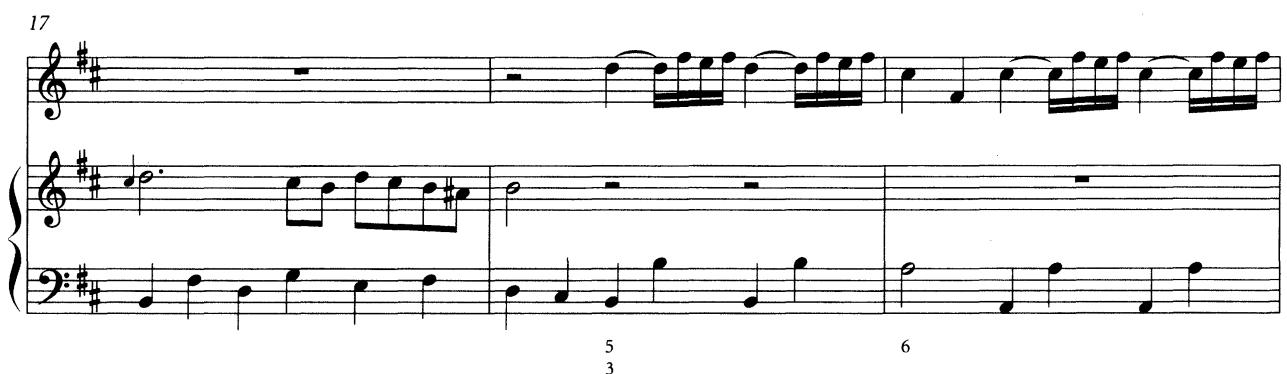
中文讲解
本段是第13页上的图像或乐谱占位符,原文未保留实际内容,仅保留位置与图注信息。从页码判断,它属于本节后半部分的视觉材料,但本段文字本身不提供可独立确认的信息。
补充说明
图像内容缺失,需查阅原书第13页。
第10段(P0052)
原文复述
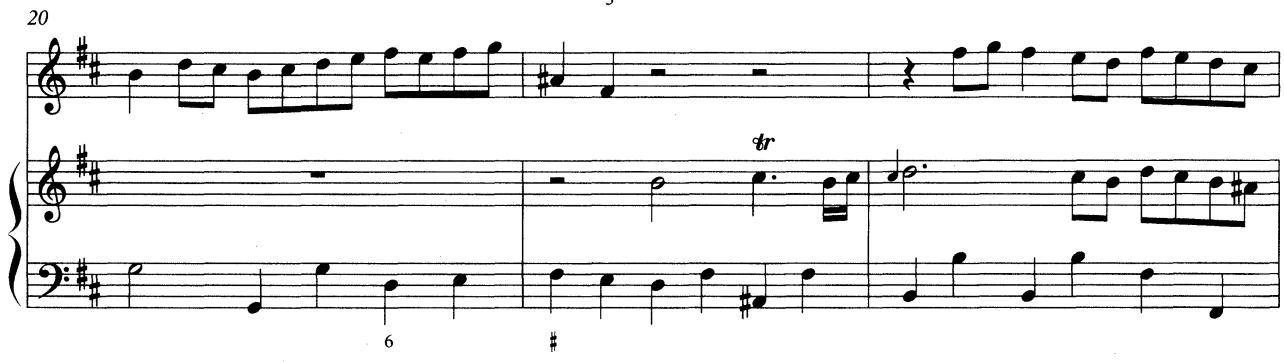
中文讲解
本段继续是第13页上的图像或乐谱占位符,与 P0051 连续出现,说明第13页亦排布了一组视觉材料。由于原文未提供任何文字说明,本段无法给出独立讲解。
补充说明
图像内容缺失,需查阅原书第13页。
第11段(P0053)
原文复述
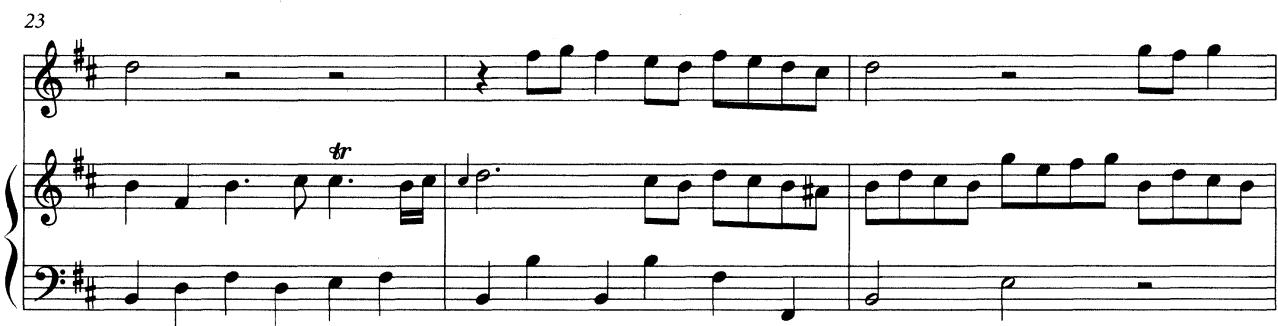
中文讲解
本段是第13页上连续的第三个图像或乐谱占位符,原文未保留实际内容。本段文字为零,因此讲解无法超出对其版面位置的描述。
补充说明
图像内容缺失,需查阅原书第13页。
第12段(P0054)
原文复述
Dreyfus, Laurence. Bach and the Patterns of Invention. E-book, Cambridge, Mass.: Harvard University Press, 1996, https://hdl.handle.net/2027/heb05561.0001.001. Downloaded on behalf of Indiana University, Bloomington
中文讲解
本段与 P0050 内容完全一致,再次列出 Laurence Dreyfus《Bach and the Patterns of Invention》的书目信息:电子书版本,1996 年由 Harvard University Press 出版,附 HathiTrust 永久链接,并由印第安纳大学布卢明顿分校下载。其重复出现表明这一书目信息被用于支撑第13页上某一处或几处引用,其功能是为后续论述提供来源支持,本身不构成独立论点。
补充说明
与 P0050 为同一文献的重复引用条目。
第13段(P0055)
原文复述
The Status of a Genre
中文讲解
本段再次出现节标题「The Status of a Genre」,位置在第13页。它与 P0043 相同的标题在版面中重复出现,往往意味着这是一处跨页的节标题(running head)或指示下一节讨论的起始。结合本节标题「Table 4.2 and the Middling Style of Telemann」的整体框架,此处重复出现的标题提示读者:本节对泰勒曼「中庸风格」的讨论即将进入或继续围绕「一个体裁的地位」这一核心问题展开。
补充说明
与 P0043 同名,可能为跨页版面重复的节标题。
脚注 / 边栏 / 图表 / 附加信息(如有)
本节(section 1.10)页面材料以视觉材料为主:第12页包含四个未标注图注的图像/乐谱占位符(P0044–P0047)以及一个带图注的谱例(P0048,Example 4.2:泰勒曼《六首协奏曲与六首组曲》第五协奏曲第二乐章第1–25小节);第13页包含三个未标注图注的图像/乐谱占位符(P0051–P0053)。书目信息(Laurence Dreyfus, Bach and the Patterns of Invention, Harvard University Press, 1996)在 P0050 与 P0054 两次出现,且两次均通过 HathiTrust 链接并由 Indiana University, Bloomington 代为下载电子版,提示这两条引用对应两次不同的引用脚注,分别支撑第12页与第13页上的相关论述。节标题「The Status of a Genre」在 P0043 与 P0055 重复出现,跨越第11–13页,可能是跨页的 running head 或指示下一节的开始。
💡 本节核心要点
- 本节聚焦于泰勒曼(Telemann)作品的「中庸风格」(middling style)与其在巴洛克语境中所代表的体裁地位问题。
- 第12页提供的核心音乐证据是 Example 4.2,即泰勒曼《六首协奏曲与六首组曲》第五协奏曲第二乐章第1–25小节。
- 本节所引用的主要学术文献为 Laurence Dreyfus 的《Bach and the Patterns of Invention》(Harvard University Press, 1996),分别用于支撑第12页与第13页的论述。
- 第12页与第13页密集排布了多个图像/乐谱占位符,提示作者通过大量谱例与图表(包括 Table 4.2)来论证其风格判断。
- 节标题「The Status of a Genre」反复出现,表明作者将泰勒曼的「中庸风格」置于更宏观的「体裁地位」问题之中加以讨论。
- 由于大量图像与乐谱占位符未保留实际数据,本节具体论证细节需借助原书页面方可核实。
🔑 关键术语
- Middling Style(中庸风格):本节用以描述泰勒曼作品的风格特征,指介于巴洛克主流风格与极端风格之间的中间地带,区别于更高规格或更低规格的器乐写作实践。
- Table 4.2(表 4.2):本节标题中提到的编号表格(出现在第12页附近的视觉材料中),用以支持作者关于泰勒曼中庸风格的统计分析或样式归纳,具体内容需查阅原书。
- Example 4.2(谱例 4.2):即泰勒曼《六首协奏曲与六首组曲》第五协奏曲第二乐章第1–25小节的乐谱,作为本节音乐论证的核心实例。
- The Status of a Genre(一个体裁的地位):本节及前后页反复出现的节标题,用以引导作者考察某一体裁(如协奏曲或组曲)在18世纪音乐文化语境中的地位、功能与评价。
- Bach and the Patterns of Invention:Laurence Dreyfus 于1996年由 Harvard University Press 出版的关于巴赫创意曲写作模式的学术著作,本节以电子书版本(HathiTrust 链接)作为参考文献。
1.11 [描述性拆分] The Second Movement as Cultural Vacuum
第1段(P0056)
原文复述
The author argues that, whereas Bach loaded the opening movement of his gamba sonata with an excess of conflicting signs, the second movement appears to have been constructed within what the author terms a ‘cultural vacuum.’ The first half of this second movement is reproduced in Example 4.3. The author nevertheless concedes that the curious juxtaposition of apparently unending sustained notes with freely ornamented melodic lines, anchored above a particularly sluggish bass line, does produce an unmistakably Bachian impression, and that the music’s compositional architecture can in fact be described without great difficulty. At the same time, the movement’s genre and style are, the author insists, undeniably mysterious.
中文讲解
这一段在结构上与前文第一乐章的分析形成强烈对比:第一乐章被作者描述为充满“过剩的矛盾符号”(surplus of contradictory signs),而第二乐章则被刻画成仿佛在“文化真空”(cultural vacuum)中写成。这一对比本身就是本节的核心论题——作者要追问:当一位作曲家明显属于某一文化传统、其笔法又如此“巴赫式”时,为什么这一乐章却让人感觉脱离了一切可识别的体裁(genre)与风格(style)?作者并未否认该乐章具有典型的巴赫特征:绵长的持续音、随性的装饰旋律、迟缓的低音线,以及可清晰描述的作曲结构。但“巴赫式”(Bachian)这一印象与“可归类的体裁/风格”之间出现了裂痕——前者是作曲家个人语汇的辨识度,后者是十八世纪文化语境中的归类框架。作者把这种裂痕命名为“cultural vacuum”,正是要解释:为什么巴赫会写出一段连他自己惯常的体裁/风格标签都无法安放的音乐。读者在此应理解“文化真空”并非指巴赫脱离了文化,而是指音乐表面缺乏任何清晰指向某一文化-体裁传统的标记。
补充说明
本段提到的 Ex. 4.3 是书中的谱例,作者在此尚未对它作具体分析,只是把它作为读者可以参照的乐谱依据提出,以便后续讨论“上半部分”所呈现的现象。
第2段(P0057)
原文复述
Spitta, recognizing that the movement is unusual, bypasses formal questions and immediately adopts a rhapsodic tone, describing the Adagio as a ‘devotional and earnest strain’ whose opening ‘is a clear foreshadowing of Beethoven’ (footnote 14). Hans Eppstein likewise regards the work as unparalleled, but restricts himself to dispassionate analytical language: a four-bar ostinato figure in the bass, an overall absence of imitation, a peculiar swapping of the upper parts between the two binary sections, and an effort to create the impression of improvisation. To account for these peculiarities, Eppstein invokes an anachronistic concept of ‘integration,’ which he defines as a principle that not only brings the individual elements of a movement closer to one another but frequently causes them to permeate each other reciprocally (footnote 15). The author then poses the central question: what is it about the Adagio that leads one historian to invoke Beethoven and another to objectify processes alien to any contemporary genre? How, indeed, can an eighteenth-century sonata movement sustain such a suspension of time and place? The author proposes one approach: to take the absence of clear genre or style signs as itself a significant omission — that is, to interpret the act of failing to clarify the Schreibart, the German Enlightenment term that simultaneously denotes style and genre.
中文讲解
这一段把两种历史学反应并置,作为本节论证的起点。Spitta 的反应是“修辞性的”:他跳过形式分析,直接以近乎浪漫派赞美诗的语言将其与贝多芬相提并论——这是一种把巴赫“前瞻化”的修辞策略。Eppstein 的反应是“分析性的”:他止步于描述表层结构(四小节固定低音 ostinato、缺乏模仿、两个二段结构间上声部的奇特互换、营造即兴感),并援引一个他自己也承认是“时代错置”(anachronistic)的“融合”(integration)概念来解释这些现象。作者引入这两种反应,是要凸显同一段音乐对不同方法论所提出的共同挑战:它们都不能回答“这究竟是哪种体裁/风格”这个问题。
作者的真正推进在于提出一个反直觉的研究策略:不要把“缺乏清晰的体裁/风格标记”当作分析的失败,而要把它本身视为一个“显著的缺席”(significant omission)。这就把研究对象从“它属于什么”转向了“它为什么拒绝被归类”。最后一句引入核心术语 Schreibart——这是德意志启蒙时期的概念,含义同时涵盖 style(风格)与 genre(体裁),其含义比英语中的任一单义词都更厚。因此,作者的论点是:第二乐章的“文化真空”本质上是 Schreibart 的悬置——巴赫在此有意识地未澄清这一概念。
本段中的两个脚注(14、15)将分别在 additional_information 中汇总,但其功能已可在此看出:14 为 Spitta 言论的出处,15 为 Eppstein “integration” 定义的具体出处。
补充说明
脚注 14 与 15 在本段中分别承担“来源支持”与“术语来源”的功能;Spitta 与 Eppstein 两人立场的并置也暗中区分了十九世纪修辞性音乐学与二十世纪中叶技术性音乐分析这两种传统的不同回应方式。Schreibart 一词在本节将作为贯穿始终的分析性概念被反复使用。
第3段(P0058)
原文复述
As Eppstein observed, Bach avoids imitation in structuring the relationship between the two upper parts; instead, midway through the movement he exchanges the two voices’ identities. Neither voice, moreover, can be said to dominate the other; each melodic and rhythmic profile defines itself in relation to its counterpart. Yet, although the parts are equal, they are not equivalent: what divides them greatly outweighs what unites them. A closer examination of each upper voice reveals the hidden invention that underlies the movement, for Bach has done no less than conceal, beneath the surface, two contrasting genres in divergent styles: the French Sarabande and the Italian Adagio. In Table 4.3, the author attempts to summarize the distinctive features of these two Schreibarten as they appear in the two contrasting parts.
中文讲解
这一段是本节论证的关键转折:从“音乐表面缺乏体裁标记”推进到“表面之下其实隐藏着两种体裁的对照”。Eppstein 只能描述表层(缺乏模仿、声部互换、平等但不均衡),而作者要揭示的是:表层的中立性恰恰来自于底层两种异质传统的并置。
关键论证逻辑有四步:第一步,否定模仿作为组织手段——这与第一乐章那种“过剩的符号”截然相反;第二步,引入“声部身份在中段互换”(exchanges the two identities)这一具体作曲手段——这既呼应了 Eppstein 的观察,也正是“表层看似不偏不倚”的结构基础;第三步,区分“平等”(equal)与“等价”(equivalent)——两个上声部在对话中是平等的对话者,但它们所承载的音乐传统、所遵循的句法逻辑却判然有别;第四步,点明真正的“隐藏发明”(hidden invention):在萨拉班德与意大利风格柔板这两个十八世纪常见的体裁-风格对偶之间,巴赫没有让其中任何一方压倒另一方。
作者用“conceal”(隐藏)一词极具分量:它意味着巴赫的作曲行为本身是一种刻意的“不揭示”,而这恰恰是“文化真空”之所以形成的真正机制——不是文化缺席,而是文化对位被主动隐藏。Table 4.3 在此是论证的辅助图表,作者以表格形式把两个上声部分别对应的萨拉班德特征与意大利柔板特征逐项并列,以视觉化方式支撑“两种 Schreibarten 共存于同一运动之中”的主张。
补充说明
French Sarabande 与 Italian Adagio 作为十八世纪常见的体裁对照,是本节具体展开 Schreibart 概念的两个抓手;其各自特征将在 Table 4.3 中以列表形式给出,本段不展开。该段中“equal but not equivalent”的措辞值得特别注意——它与后面将要发展的“声部间对话但非融合”的论点直接相连。
第4段(P0059)
原文复述
Page header and bibliographic footer: the running head ‘116 Bach and the Patterns of Invention’ indicates the page number 116 and the book title. The footer identifies the work as Laurence Dreyfus, Bach and the Patterns of Invention, an e-book published by Harvard University Press, Cambridge, Massachusetts, in 1996, accessed via the HathiTrust handle https://hdl.handle.net/2027/heb05561.0001.001, and downloaded on behalf of Indiana University, Bloomington.
中文讲解
本段是电子书页面的页眉与书目信息底注:页眉标示页码 116 与书名《Bach and the Patterns of Invention》;底注给出完整书目著录(作者 Laurence Dreyfus;哈佛大学出版社 1996 年电子版;HathiTrust 数字图书馆的 URL),并说明该电子版是为印第安纳大学伯明顿分校的用户下载的。这些信息属于版本与来源说明,对正文论证无直接贡献,但为引用 Spitta、Eppstein 与后续 Schreibart 讨论的读者提供版本依据。
脚注 / 边栏 / 图表 / 附加信息(如有)
本小节中包含两个正文脚注(14 与 15),均出现于 P0057:脚注 14 为 Spitta 关于“开篇预示贝多芬”之语的出处,属于引用来源类脚注;脚注 15 为 Eppstein 给“integration”所下定义的出处,属于术语界定类脚注。两者均起支持/限定作者转述的作用,而非独立的论证材料。P0059 的内容为电子书页眉(页码 116 与书名)与书目底注(作者、出版社、年代、获取 URL、下载主体),属于版本信息,无独立论证功能。Ex. 4.3 在 P0056 中被提示为第二乐章前一半的谱例,Table 4.3 在 P0058 中被提示为概括两声部所对应 Schreibarten 特征的表格——两者均为本节论证的视觉/谱例支撑,本身不构成独立论证环节。
💡 本节核心要点
- 与第一乐章“符号过剩”形成对比,第二乐章在表面上呈现为一种“文化真空”:缺乏可识别的体裁与风格标记。
- Spitta 与 Eppstein 的反应代表了两种历史学路径——修辞性预言(指向贝多芬)与表层结构描述——两者都无法解释体裁/风格的悬置。
- 作者提出方法论转向:把“缺乏 Schreibart 标记”本身视为一个有意义的“缺席”,即巴赫有意识地未澄清其风格-体裁归属。
- 在表层之下,巴赫实际上在两个上声部中并置了两种异质的体裁-风格传统:法国萨拉班德与意大利柔板,二者地位平等但彼此并不等同。
- 声部身份的互换、模仿的缺失以及“平等而非等价”的关系,共同构成了这种“文化真空”的作曲机制:不是没有文化,而是文化对位被主动隐藏。
- Schreibart 作为德意志启蒙时期同时涵盖 style 与 genre 的术语,是贯穿本节、连接“表面缺席”与“底层并置”的关键分析概念。
🔑 关键术语
- cultural vacuum:作者用以描述第二乐章表面缺乏可识别体裁/风格标记状态的术语;并非指巴赫脱离文化,而是指音乐表面拒绝归类到任何既定的体裁-风格传统。
- Schreibart:德意志启蒙时期的概念,同时涵盖 style(风格)与 genre(体裁),含义比英语中任一单义词都更厚;本节把它作为分析第二乐章“表面缺席、底层并置”这一现象的核心术语。
- French Sarabande:十八世纪常见的法国体裁;本节中作为第二乐章两个上声部之一所对应的 Schreibart,承担论证中“被隐藏的体裁-风格传统”之一。
- Italian Adagio:十八世纪常见的意大利风格柔板;本节中作为第二乐章两个上声部中另一上声部所对应的 Schreibart,与法国萨拉班德形成对照。
- integration (Eppstein):Eppstein 用来解释第二乐章表层特殊性的“融合”概念;作者认为该概念是“时代错置”(anachronistic)的,不足以替代 Schreibart 的分析。
1.12 [描述性拆分] Table 4.3: French Sarabande and Italian Adagio Interwoven
第1段(P0060)
原文复述
中文讲解
该条目为第15页的图像或乐谱占位符,原文中具体的图形或谱例数据已被省略,仅保留了其在版面中的位置标记。读者需查阅原书第15页以确认该图的内容及其与例4.3(BWV 1029/2第1–12小节)之间的具体关系;从本小节的上下文判断,这些图示很可能与巴赫《g小调奏鸣曲》BWV 1029第二乐章的整体谱例、或者用于对比的萨拉班德与柔板素材片段有关,但具体对应关系须以原书为准。
补充说明
本段仅为占位说明,不含可独立讲解的实质内容;具体谱例信息需结合P0063所标出的例4.3标题(Example 4.3 BWV 1029/2, mm. 1–12)来理解其在分析中的功能。
第2段(P0061)
原文复述
中文讲解
与P0060相同,这是第15页另一处图像或乐谱占位符。文字内容仅为位置标记,原始图形信息不可见。读者应回到原书查看此图,以便理解作者在分析BWV 1029/2第一乐章时,是如何借助乐谱示例呈现"法国萨拉班德"与"意大利柔板"两种风格在大键琴与古大提琴声部之间的交织。
第3段(P0062)
原文复述
中文讲解
第15页的第三处图像或乐谱占位符,性质与前两条相同,原文内嵌的视觉数据已被省略,仅保留版面位置标记。在德雷福斯(Dreyfus)讨论《Bach and the Patterns of Invention》第4章时,作者通常会在主谱例旁附以简化或"翻译"后的版本以便读者把握其风格来源,这些图示很可能承担此类对照功能,但具体内容须查原书。
第4段(P0063)
原文复述
[Music example placeholder — page 15]: 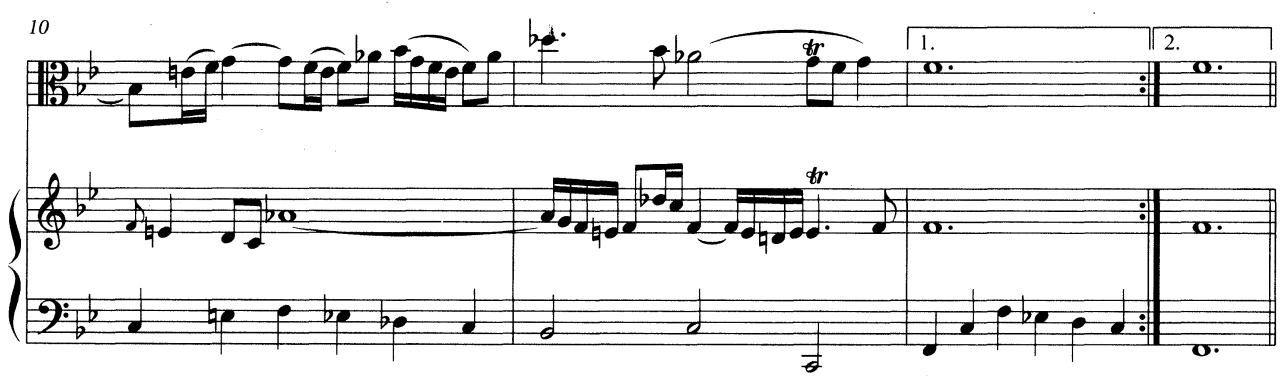
中文讲解
这是本节的核心谱例占位符,其图注标明"Example 4.3 BWV 1029/2, mm. 1–12",即巴赫《g小调奏鸣曲》BWV 1029第二乐章的前12小节。该例的作用是为作者后续的逐层分析提供原始材料——读者据此可以看到大键琴演奏"法国声部"(萨拉班德特征)与古大提琴演奏"意大利声部"(柔板/即兴装饰特征)在同一织体中的并置。由于图谱数据不可见,需查阅原书以确认具体的音高、节奏与谱面布局。
补充说明
BWV 1029为巴赫为羽管键琴与古大提琴所作的三首奏鸣曲之一(BWV 1027–1029);本例取其第二乐章,该乐章常被认为具有萨拉班德特征并暗含意大利风格素材(仅基于本段上下文可见的内容,具体出处需见原书)。
第5段(P0064)
原文复述
Dreyfus, Laurence. Bach and the Patterns of Invention. E-book, Cambridge, Mass.: Harvard University Press, 1996, https://hdl.handle.net/2027/heb05561.0001.001. Downloaded on behalf of Indiana University, Bloomington.
中文讲解
这是一条引文/来源脚注,说明本节所讨论的内容出自劳伦斯·德雷福斯(Laurence Dreyfus)所著《Bach and the Patterns of Invention》(《巴赫与发明模式》),由哈佛大学出版社于1996年出版。本电子版由密歇根大学(University of Michigan)托管(handle.net 链接),并代表印第安纳大学伯明顿分校(Indiana University, Bloomington)下载。该信息表明当前段落及谱例的版权与下载来源,用以说明引用的合法性。
补充说明
无额外补充;本段为书目/来源脚注,不是分析性论述。
第6段(P0065)
原文复述
The Status of a Genre
中文讲解
这是一个小节标题,原文为英文"The Status of a Genre",可译为"一种体裁的(风格)地位"。该标题开启了一个新的论证单元:在前一节通过例4.3铺陈了BWV 1029/2中法国萨拉班德与意大利柔板交织的谱面事实之后,作者将在此进入对萨拉班德这一体裁在18世纪音乐语境中"地位"的探讨——即它究竟是严格意义上的舞曲体裁,还是可作为风格标签被作曲家吸收进其他体裁(如意大利式柔板)之中。从后文P0066的具体分析来看,标题提示读者:作者关注的是体裁作为风格资源的"地位",而非作为固定曲式的定义。
补充说明
从标题与下文的关系看,“Status"在此带有"身份/地位/被赋予的方式"之意;本节将围绕萨拉班德体裁在巴赫笔下如何被吸收、改写与重塑来展开。
第7段(P0066)
原文复述
In the first half of the movement, the harpsichord plays the French voice while the gamba plays the Italian. Notice how the harpsichord line in the first section falls into the neat four-bar phrases of the Sarabande, how it contains mostly the essential ornaments (Quantz’s wesentliche Manieren) such as obligatory trills and ports de voix of mm. 2, 4, and 5. The Sarabande rhythm in the harpsichord melody typically stresses second beats, prepares the cadence with a hemiola in mm. 10 and 11, and marks feminine endings with a conventional dotted figure as in mm. 4 and 8. The prevailing melodic motion here is by step with embellished passages idiomatic to the Sarabande double, as for example is found in the A minor English Suite, BWV 807. Ex. 4.4 suggests the flavor of the underlying Sarabande (and Bach’s daring reception of it) by translating the rarefied francophone essence “back” into a nearly conventional shape evoking the French composers that Bach knew and respected.
中文讲解
本段是本节的分析核心。作者开门见山地指出:在该乐章的前半段,大键琴承担"法国声部”,古大提琴承担"意大利声部",两种风格被分别指派给不同乐器,形成风格上的对比与对话。
随后,作者逐项列举大键琴声部中可被识别为萨拉班德特征的要素:1)规整的4小节乐句结构;2)装饰音以"本质性装饰"(Quantz德文术语 wesentliche Manieren,即"必要的装饰")为主,如第2、4、5小节中"必须"出现的颤音(trills)和"先现音"(ports de voix,即上辅助音式倚音装饰);3)典型的萨拉班德节奏——重音落在第二拍;4)旋律运动以级进为主,并伴有萨拉班德"变体"(Sarabande double,即在萨拉班德主题之后以同主题为骨架的装饰性变奏)中常见的装饰化乐段——作者以A小调《英国组曲》BWV 807中的同类做法作为旁证。
接着,作者点出节奏层面的萨拉班德惯例:在第10–11小节通过赫米奥拉(hemiola,即6/4与3/4交叉的节奏手法)为终止做预备;在第4、8小节以"阴性结尾"(feminine endings,即弱拍起、时值较短的收束方式,配合附点节奏)标记乐句的结束。
最后,作者预告例4.4的功能:它将萨拉班德那种被高度纯化(rarefied)的"法国本质"(francophone essence)“翻译"回一种近乎常规的形态,借以唤起巴赫所熟识并敬重的法国作曲家们的笔法。作者用"daring reception”(大胆的接受/接纳)一词,暗示巴赫对萨拉班德传统的吸收并非简单模仿,而是带有改写与重塑。
本段在论证链中的位置:它承接小节标题"The Status of a Genre",用具体谱例证据证明——萨拉班德作为一种"体裁身份",在BWV 1029/2中已不再以完整舞曲形式独立存在,而是被拆解为节奏重音、装饰惯例、赫米奥拉预备、阴性结尾等"风格要素",分配给特定乐器声部,从而获得新的体裁地位。
补充说明
Quantz的 wesentliche Manieren 与 willkürliche Veränderungen(见P0067)是一对核心术语:前者指作曲家必须写出、演奏者必须使用的"本质装饰",后者指演奏者可在记谱之外自由添加的"任意变奏/即兴装饰"。两者的区分是本段判断"法国"与"意大利"声部风格归属的关键依据。
第8段(P0067)
原文复述
In the Italianate gamba line, on the other hand, the ornamental style is that of the arbitrary embellishments (Quantz’s willkürliche Veränderungen)—the ar-
中文讲解
本段在原书中被截断(文本以"the ar-“结尾,明显跨页中断),但未截断的部分已经给出了关键对比:与上一段大键琴声部中的"本质装饰”(wesentliche Manieren)相对,古大提琴声部采用的是Quantz所谓"任意变奏/即兴装饰"(willkürliche Veränderungen)。这种装饰类型属于演奏者可自由发挥、即兴添加的范畴,而非作曲家规定必须出现的装饰。
作者用"In the Italianate gamba line, on the other hand"这一转折句式,明确把"法国/意大利"两种风格分别对应到两种装饰传统:前者是作曲家预先规定、本质性的;后者是演奏者任意、即兴性的。这一对照为标题"The Status of a Genre"中的"体裁地位"提供了装饰层面的证据:萨拉班德作为一种体裁,其"法国性"体现在作曲家写定的本质装饰上;而意大利柔板的"意大利性"则体现在演奏者的即兴自由上。
由于本段在原书此处被截断,具体的装饰现象(如"the ar-“所提示的"arpeggio"碎奏或类似术语)将在下一节中继续展开。
补充说明
“willkürliche Veränderungen"在Quantz的《Versuch einer Anweisung die Flöte traversiere zu spielen》中是相对于"wesentliche Manieren"提出的范畴;本段借助该二分法将乐器—装饰—国别风格三者绑定,是18世纪器乐风格分析中常见的做法。
第9段(P0068)
原文复述
118 Bach and the Patterns of Invention Dreyfus, Laurence. Bach and the Patterns of Invention. E-book, Cambridge, Mass.: Harvard University Press, 1996, https://hdl.handle.net/2027/heb05561.0001.001. Downloaded on behalf of Indiana University, Bloomington.
中文讲解
这是第16页的页眉与来源标注组合。上一行"118 Bach and the Patterns of Invention"为页眉,标明本书当前位于第118页,并提示书名;下方一行重复了德雷福斯著作的电子版出处(哈佛大学出版社1996年电子版,handle.net 链接,由印第安纳大学伯明顿分校下载),属于每页固定出现的版权/来源标记。它不对正文论述做出贡献,仅承担版面与版权信息的功能。
💡 本节核心要点
🔑 关键术语
1.13 [描述性拆分] Couperin’s Goûts Réünis and Fux’s Superimposed Trio
第1段(P0069)
原文复述
[Image/score placeholder] A placeholder on page 17 indicating an embedded image or musical example whose data has been omitted; the position and any accompanying caption are preserved here for reference.

中文讲解
这是第17页中的一处图像或乐谱占位符。原文中的具体图样、谱例或表格数据被省略,只保留其位置信息以便读者对照原书查阅。在第17页的开篇处连续出现两幅此类占位符,应与紧随其后的示例说明(P0071)和正文段落(P0072)配合,共同呈现作者对BWV 1029/2中段“法国线条”所作的分析。
第2段(P0070)
原文复述
[Image/score placeholder] A second placeholder on page 17, immediately following the first, again marking an embedded image or musical example whose data has been omitted; position and caption are preserved.

中文讲解
这是第17页中紧随前一幅之后的又一处图像或乐谱占位符,作用与P0069相同——其下方的图注(很可能与BWV 1029/2的乐谱片段有关)需查阅原书方可看到。由于本节随后立即出现“Example 4.4”的图注(P0071),这两幅占位符很可能是同一示例的不同部分或两段并置的乐谱,用以直观比较“法国线条”的处理方式。
第3段(P0071)
原文复述
Example 4.4 An attempted ’translation’ of the ‘French line’ in BWV 1029/2
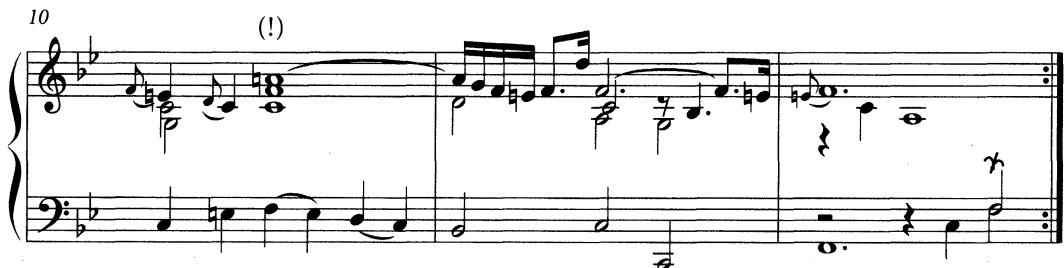
中文讲解
这是示例4.4的标题:作者尝试对BWV 1029/2(中段)中的“法国线条”(French line)进行一种“翻译”。所谓“翻译”,并非语言上的翻译,而是把法国式的旋律装饰风格在分析或谱面呈现中转化出来;标题中的引号暗示这是一次带有学术保留甚至略带反讽意味的尝试。
补充说明
此图注直接对应上一节对BWV 1029/2中段“法国线条”的讨论;与P0072中提到的“peggiated and scalar flourishes decorate a simple melody”是同一对象的不同表述维度。
第4段(P0072)
原文复述
peggiated and scalar flourishes decorate a simple melody. The phrase organization elides precisely over those four-bar markers in the contrasting part while the voice refers rhythmically to the Adagio by its long sustained notes tied over the bar line to running figures beginning off the beat, just as in, for example, the opening Adagio of Bach’s G minor solo violin sonata, BWV 1001. (See Ex. 4.5.)
中文讲解
本段继续对BWV 1029/2中段的织体作技术描述。作者指出两点关键特征:其一,简单的旋律之上叠加了“钉状”(peggiated,类断奏)与级进式(scalar)的装饰走句;其二,旋律的分句组织在“对置段落”(contrasting part)的四小节标记处恰好交叠、模糊化(elides),同时其节奏通过“跨小节的延音—从弱拍起跑的快速走句”这一模式回指意大利式的Adagio,并明确以巴赫G小调无伴奏小提琴奏鸣曲BWV 1001的开篇Adagio作为类比(参见示例4.5)。作者借这段描写来刻画法国线条的“装饰—延音—走句”节奏基因,并暗示它在表面之下仍与意大利慢板传统相通,为下文引入“风格融合”话题铺垫。
补充说明
BWV 1001为巴赫G小调无伴奏小提琴奏鸣曲第一首,其开篇Adagio以持续低音上的延音线条与分解走句著称,是意大利慢板风格中“歌唱性”与“装饰性”结合的典型范例;引用它旨在提供一个众所周知的对照,使读者更易理解BWV 1029/2中段对意大利Adagio节奏特征的隐性引用。
第5段(P0073)
原文复述
It is useful to consider Bach’s amalgam in the light of François Couperin’s celebrated notion of the ‘united tastes’ or goûts réünis, which also attempted a reconciliation of the two leading national styles. Written precisely to celebrate the fusion of united tastes, Couperin’s own works in this style, such as his Apotheosis of Lully, lead to a mythic peace of Parnassus in which Lully and Corelli, the two great representatives of their nations, cooperate in a sublime duet. But what kind of reconciliation is this? One in which the French elements vanquish the Italian. When one looks closely at this work, it becomes clear that the stylistic blend pays no more than superficial lip service to the idea of unification. For example, Couperin will ironically Frenchify the title to a work, calling it ‘Sonade en trio.’ Or he will write an Italian treble clef for Corelli and a French violin clef for Lully. Or he will wittily distinguish between the two methods of notating ornaments. The piece itself, on the other hand, remains in the mode of a French Allemande, with the absence of a clearly marked reprise (or ‘B-section’) the only concession to Italy. No matter how sincerely Couperin intended the union of the two ’tastes,’ we are not intended to mistake one for the other.
中文讲解
本段把巴赫的“融合体”(amalgam)放到库普兰“合并品味”(goûts réünis)的语境中加以衡量。作者先交代背景:库普兰的同名理念同样试图调和法、意两大主导民族风格,诸如《阿波罗之光荣颂》(Apotheosis of Lully)等作品更以神话化的帕纳苏斯和平成全两位民族代表(Lully与Corelli)的合作。然而作者的真正判断紧跟其后:这种“和解”其实是法国因素压倒意大利因素。文中列举三个反讽细节——将作品标题法语化为“Sonade en trio”;为Corelli用意大利高音谱号、为Lully用法国小提琴谱号;巧妙地区分两国装饰音记谱方式——说明所谓“融合”仅停留在戏谑与表层。乐章本体仍是法国Allemande模式,唯一向意大利让步的只有缺失明确的反复段(B段)。作者由此提醒:无论库普兰主观意愿如何真诚,作品绝不让人把两种风格混为一谈。这一对照为接下来讨论巴赫“如何不同地融合两种风格”建立了参照系。
补充说明
《阿波罗之光荣颂》(Apotheosis de Lully)是库普兰1725年发表的“光荣颂”系列之一,以神话叙事将Lully与Corelli同置于帕纳苏斯之上,构成法国音乐民族论述中关于“品味合并”的标志性文本。
第6段(P0074)
原文复述
Dreyfus, Laurence. Bach and the Patterns of Invention. E-book, Cambridge, Mass.: Harvard University Press, 1996, https://hdl.handle.net/2027/heb05561.0001.001. Downloaded on behalf of Indiana University, Bloomington
中文讲解
本段为电子书版权/出处页脚:作者为Laurence Dreyfus,书名为《Bach and the Patterns of Invention》,由哈佛大学出版社1996年出版,附有Handle.net链接及下载机构信息(印第安纳大学布卢明顿分校)。这并非正文论点,仅作为版本来源的元数据。
第7段(P0075)
原文复述
The Status of a Genre
中文讲解
这是本节的小标题,预示接下来的论证转向“体裁(genre)的地位”问题:在风格混合的作品中,体裁身份究竟是被保留、被掩盖,还是被重新定义?这也是本节的核心论题:通过对库普兰、Fux与巴赫三种“融合”策略的对比,回答体裁在混合语境中的存续方式。
第8段(P0076)
原文复述
[Image/score placeholder] A placeholder on page 18 marking an embedded image or musical example whose data has been omitted; position and caption are preserved.
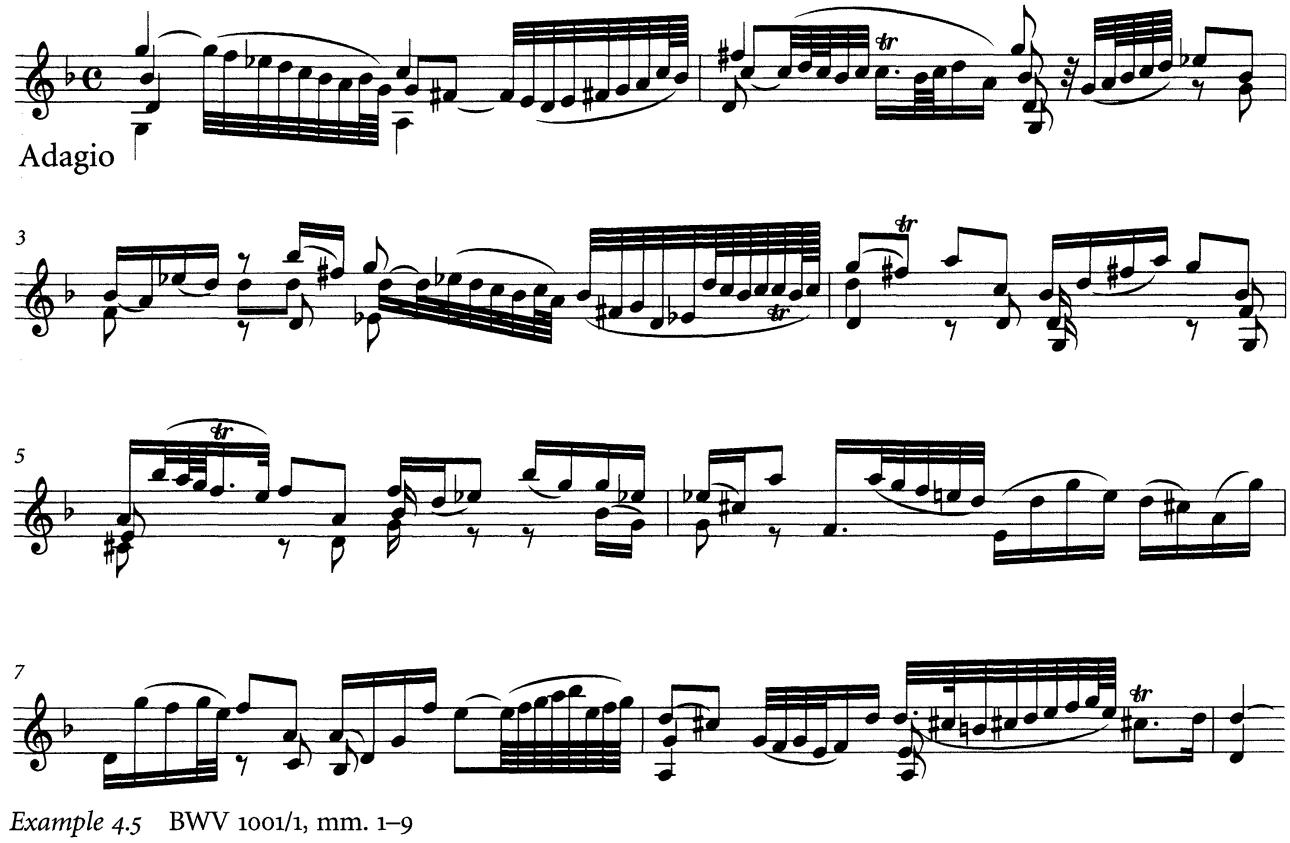
中文讲解
这是第18页中的图像或乐谱占位符。结合紧随其后的正文(P0077明确提及“参见示例4.6”)可推知,它对应的正是Fux《Concentus musico-instrumentalis》(1701)中那首三重奏的乐谱示例,具体内容须查阅原书。
第9段(P0077)
原文复述
The idea of stylistic mixture can also be traced to German-speaking circles, as in Fux’s trio from his Concentus musico-instrumentalis (1701). (See Ex. 4.6.) Here the genres of the Italian giga and the French entrée are brutally superimposed over each other, and the interaction is forced and harsh: each voice proceeds as if oblivious to the presence of the other and either voice could be played alone with the bass or together. The piece in fact depends on a clear separation of identities: otherwise the combination, designed as a clever trick, would fail. What is truly synthetic about this stylistic coupling is that the original genres remain palpably intact. $^{16}$
中文讲解
本段把“风格混合”的传统追溯到德语区圈子的实践,举出Fux 1701年《Concentus musico-instrumentalis》中的三重奏为例(参见示例4.6)。作者用“brutally superimposed”(粗暴叠加)形容其手法:意大利giga与法国entrée两类体裁被强行叠置,两条声部仿佛彼此“视而不见”,任一声部既可单独与数字低音同奏,也可与其他声部同奏。作品的成功恰恰依赖于身份的清晰分离——若失去这种分离,那“巧计式”的并置便会失败。作者由此点出这种“综合”的本质:原始体裁“完好无损”(palpably intact)。末尾的脚注16应为对Fux三重奏或“综合”概念之来源的进一步学术说明。
补充说明
Fux的《Concentus musico-instrumentalis》于1701年在奥格斯堡出版,包含七首器乐组曲;其中被作者点名的这首三重奏以giga与entrée叠置闻名,是18世纪初德语区学者对法、意风格并置的代表性实验。脚注16的具体内容须查阅原书,此处不补写。
第10段(P0078)
原文复述
Returning now to the center movement of the gamba sonata, the contrast between these hybrids and Bach’s own could not be more striking. For the identities of French Sarabande and Italian solo Adagio do not inhabit the surface of the work; on the contrary, they hibernate in a structure guaranteed to cover them up. In one sense, Bach’s reconciliation of French and Italian styles tends to cancel their individual identities. One could even argue that Bach has articulated the signs of style and genre so as to be inaudible. One thing is sure: each style adversely affects the other. The walking quarter-note motion of the ostinato bass, although a plausible accompaniment to an Adagio, compromises the identity of the Sarabande, premised on a measure of three pulses that shuns rhythmic subdivision. The Sarabande, in turn, prevents the Italian voice from appearing to improvise since the melodic ornamentation is confined within a rigid metrical frame. The Sarabande itself cannot be heard, because the tempo needed in mm. 4 and 8 to allow the Adagio voice to sound like an expressive flourish is too slow to dance even a grandiloquent Sarabande grave. Finally, Bach eclipses the French-Italian antinomy starting in m. 21 when the final phrase expands to six bars and all three voices begin to converse with imitative entries, overlaying yet another code—that of the severe style—onto the already burgeoning artifice.
中文讲解
本段是本节最核心的对比分析。作者先回扣古低音提琴奏鸣曲的中段(BWV 1029/2),指出巴赫的“混合体”与库普兰、Fux那些表面叠加的混合体形成鲜明反差:在巴赫笔下,法国萨拉班德与意大利独奏Adagio的体裁身份并不出现在作品的“表面”,而是“蛰伏”(hibernate)于一个注定要将其掩盖的结构之下。作者甚至认为巴赫将风格与体裁的“符号”处理得不可闻(inaudible);可以肯定的是,两种风格互相损害——四分音符持续行进的固定低音(ostinato bass)虽适合作为Adagio伴奏,却损害了萨拉班德那种以三拍子为前提、避免节奏细分的身份;反过来,萨拉班德的刚性节拍框架又阻碍意大利声部呈现出即兴感,因为旋律装饰被严格约束在固定小节内;萨拉班德本身也无法被听见,因为要在第4、8小节让Adagio声部听起来像是“表情走句”所需的速度,慢到连庄严的Sarabande grave都难以起舞。最后,从第21小节起,最后一个乐句扩展为六小节,三个声部以模仿进入开始“对话”,于是又一层“严肃风格”(severe style)的符码被叠加在已经繁复的技法之上,作者由此宣告巴赫最终“遮蔽”了法—意对立本身。这一段是整节的论证顶点:库普兰以法国压倒意大利,Fux以叠加保全身份,巴赫则以取消身份的方式实现真正的融合。
补充说明
“严肃风格”(severe style / stilus gravis)指以严密对位与卡农式模仿为代表的“学术化”复调写作传统,与“华丽风格”(stylus luxurians)相对。作者借此术语提示巴赫在BWV 1029/2中段末尾又叠加了第三种风格符码。
第11段(P0079)
原文复述
Bach and the Patterns of Invention
中文讲解
这是第18页的页眉,重复书名《Bach and the Patterns of Invention》,属版面元素,不构成正文论点。
第12段(P0080)
原文复述
Dreyfus, Laurence. Bach and the Patterns of Invention. E-book, Cambridge, Mass.: Harvard University Press, 1996, https://hdl.handle.net/2027/heb05561.0001.001. Downloaded on behalf of Indiana University, Bloomington
中文讲解
本段再次出现与P0074完全相同的电子书版权/出处页脚,仅作为版本来源信息,不构成正文论点。
脚注 / 边栏 / 图表 / 附加信息(如有)
本节涉及的附加材料主要有:两幅位于第17页的图像/乐谱占位符(P0069、P0070),其图注对应“Example 4.4 An attempted ’translation’ of the ‘French line’ in BWV 1029/2”(P0071);第18页的一处图像/乐谱占位符(P0076),对应正文中提及的“Ex. 4.6”Fux《Concentus musico-instrumentalis》(1701)三重奏乐谱;正文中带有脚注标记(标号16,P0077),脚注内容须查阅原书;以及反复出现的电子书版权页脚(P0074、P0080)与书名页眉(P0079)。这些材料共同支撑本节“体裁在风格融合中如何被处理”的论证。
💡 本节核心要点
- 本节以“体裁在混合作品中的地位”为论题,对比三种法国/意大利风格融合策略:库普兰(goûts réünis)、Fux(giga与entrée粗暴叠加)、巴赫(BWV 1029/2中段)。
- 在库普兰笔下,所谓“合并品味”实为法国压倒意大利——《阿波罗之光荣颂》虽以神话和平成全Lully与Corelli,但仅以戏谑的标题法语化、谱号差异与装饰音记法区分作为表层致敬,作品本体仍是法国Allemande,唯一让步是缺失明确的B段反复。
- 在Fux 1701年《Concentus musico-instrumentalis》的三重奏中,意大利giga与法国entrée被粗暴叠加:声部彼此“视而不见”,作品的成功依赖于身份清晰分离;其“综合”恰恰建立在原始体裁完好无损之上。
- 在巴赫的BWV 1029/2中段,法国Sarabande与意大利独奏Adagio的身份并不出现在表面,而是“蛰伏”于一个注定将其掩盖的结构之下;巴赫将风格与体裁符号处理得“不可闻”,两种风格互相损害——固定低音损害Sarabande的节奏纯净,Sarabande的刚性节拍框阻止意大利声部的即兴感。
- 从第21小节起,乐句扩展为六小节,三个声部以模仿进入开始对话,巴赫又叠加了第三种符码——“严肃风格”(severe style / stilus gravis),由此最终遮蔽了法—意对立本身,展示了与库普兰、Fux截然不同的“取消身份式”融合策略。
🔑 关键术语
- goûts réünis:库普兰提出的“合并品味”理念,主张调和法国与意大利两大主导民族风格;本节指出其实践实为法国因素压倒意大利的表面致敬。
- Apotheosis of Lully / Apothéose de Lully:库普兰1725年发表的“光荣颂”系列之一,以神话叙事将Lully与Corelli同置于帕纳苏斯之上,是“goûts réünis”理念的标志性文本。
- Allemande:17—18世纪法国组曲中常见的开篇舞曲,本节指出库普兰《阿波罗之光荣颂》本体即停留于法国Allemande模式,仅以缺失B段作为对意大利的唯一让步。
- ostinato bass:持续反复的固定低音模式;本节指出其在BWV 1029/2中段虽宜作Adagio伴奏,却破坏了Sarabande本应避免节奏细分的三拍子身份。
- Sarabande / Sarabande grave:17—18世纪法国组曲中缓慢庄严的三拍子舞曲;本节用以衡量BWV 1029/2中段所需速度已慢到无法起舞,说明Sarabande身份被遮蔽。
- severe style / stilus gravis:以严密对位、卡农式模仿为代表的“学术化”复调传统,与“华丽风格”相对;本节指出巴赫在BWV 1029/2中段末(第21小节起)又叠加了这种第三风格符码。
- Concentus musico-instrumentalis (1701):Fux于1701年在奥格斯堡出版的器乐组曲集(含七首作品),其中一首三重奏以意大利giga与法国entrée的粗暴叠置著称,是本节比较的第二个“风格混合”参照案例。
1.14 [描述性拆分] Bach’s Cancellation of Style Through Style
第1段(P0081)
原文复述
[Image or musical-score placeholder on page 19; the embedded image data has been omitted, but the location and any figure caption are retained.]
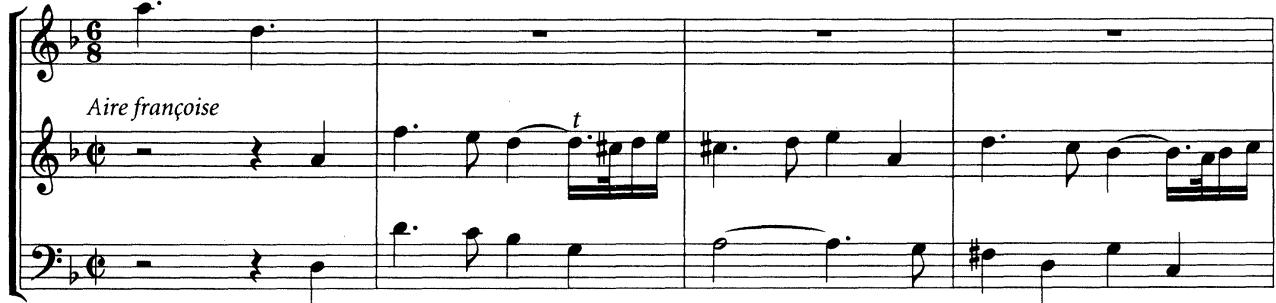
中文讲解
该条目在原书中是一处图示或乐谱占位符,原始的嵌入图像数据已被省略,仅保留其在版面上的位置。由于图像内容不可见,无法判断它所承载的具体谱例或图示信息;需要查阅原书第19页才能确认。
补充说明
无额外补充(图像内容不可见)。
第2段(P0082)
原文复述
[Image or musical-score placeholder on page 19; the embedded image data has been omitted, but the location and any figure caption are retained.]
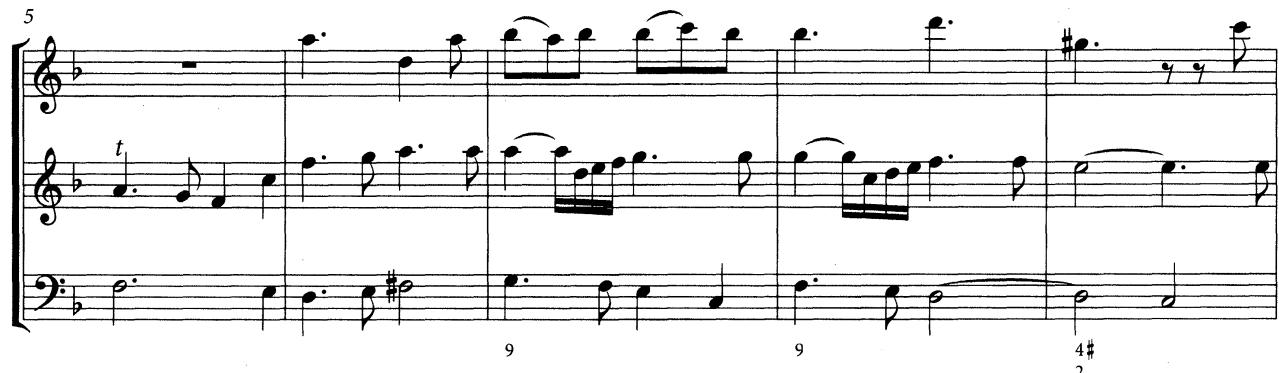
中文讲解
这是第19页上的第二处图示或乐谱占位符,原始嵌入图像数据已被省略,仅保留位置信息。其具体内容(谱例、图示或其他视觉材料)需通过原书第19页查阅才能确认。
补充说明
无额外补充(图像内容不可见)。
第3段(P0083)
原文复述
[Image or musical-score placeholder on page 19; the embedded image data has been omitted, but the location and any figure caption are retained.]
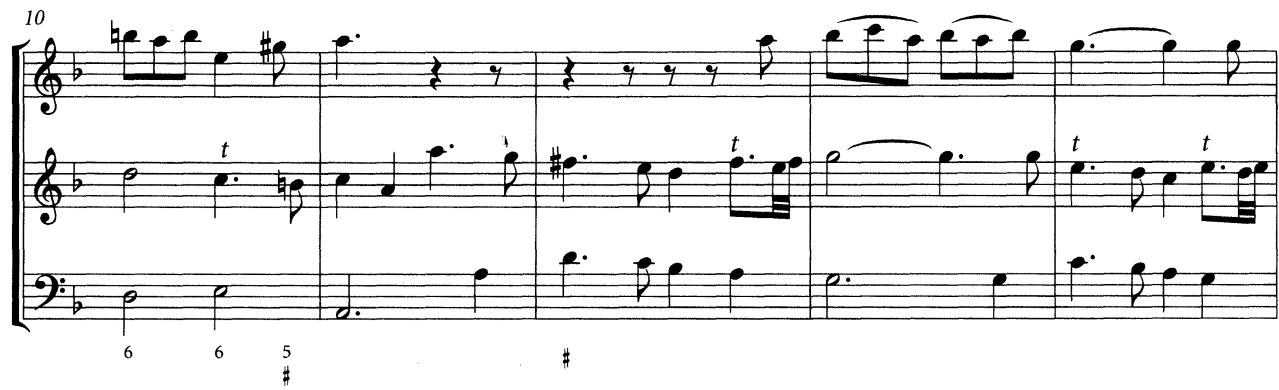
中文讲解
这是第19页上的第三处图示或乐谱占位符,原始嵌入图像数据已被省略,仅保留位置信息。其具体内容需要查阅原书第19页才能确认。
补充说明
无额外补充(图像内容不可见)。
第4段(P0084)
原文复述
![Example 4.6 J. J. Fux, Trio from Concentus musico-instrumentalis (1701)] ([Embedded image data omitted; position and caption retained])
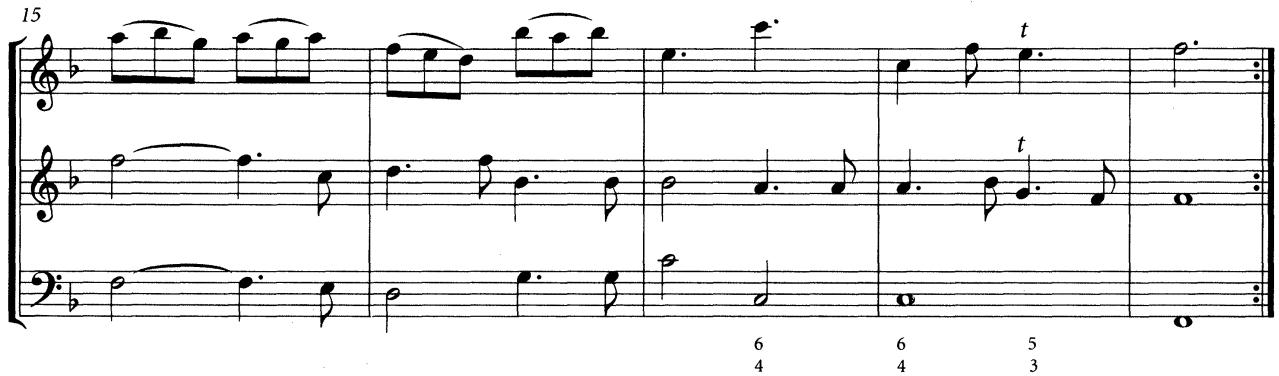
中文讲解
这是一则谱例标题(Example 4.6),标明谱例选自 J. J. Fux(约翰·约瑟夫·富克斯)1701年的《Concentus musico-instrumentalis》中的 Trio(三重奏)。它在版面中以图示占位符形式出现,原始谱例数据已被省略。富克斯是巴洛克晚期重要的对位法理论家,他的这部作品集包含多首室内乐合奏曲;这里引用的Trio很可能是用于与巴赫的Sarabande/Adagio风格对比的参照谱例。
补充说明
该谱例标题提示它属于’Example 4.6’这一编号系统,表明前面已出现过多个编号谱例;本节在风格对比中可能援引此例,但具体对照内容需查看原谱。
第5段(P0085)
原文复述
Dreyfus, Laurence. Bach and the Patterns of Invention. The Status of a Genre E-book, Cambridge, Mass.: Harvard University Press, 1996, https://hdl.handle.net/2027/heb05561.0001.001. Downloaded on behalf of Indiana University, Bloomington
中文讲解
这是本段所在图书的版本与来源信息(页眉/页脚性质的内容),标明作者为 Laurence Dreyfus,书名为《Bach and the Patterns of Invention》,副标题相关栏目为《The Status of a Genre》,由 Harvard University Press 于1996年出版,格式为E-book,附有HathiTrust数字图书馆的稳定标识符(handle)链接;下载方为 Indiana University, Bloomington。这是出版与获取信息,本身不参与论证。
补充说明
无额外补充(属于版式信息)。
第6段(P0086)
原文复述
These musical processes of invention converge in the realm of affect. For Sarabandes and Adagios are far from value-free items in a stylistic storehouse. Indeed, they are both charged with meaning. The formal gravity of the Sarabande, to paraphrase eighteenth-century authors, expresses ambition, grandeur, and dignity. As Christoph Nichelmann (1755) put it, “the character of a sarabande obliges the composer to effect a connection of the various sonorities that can elevate the soul [das Gemüth] to a special greatness, arouse it to wonder, and move it to admiration.“¹⁷ The improvised Italian style, on the other hand, evokes the passions of fantasy, spontaneity, and astonishment. As Mattheson describes it:
中文讲解
本段是本小节论证的关键枢纽,明确提出’两种音乐发明过程在意情(affect)领域合流’的中心主张。作者强调,Sarabande与Adagio并非风格库中价值中立的素材,而各自承载特定含义:Sarabande的’形式庄重’表达野心、宏大与尊严;即兴的意大利风格则唤起幻想、自发与惊奇。为了支撑前者,作者援引 Christoph Nichelmann 1755年的论述——萨拉班德迫使作曲家在音响之间建立联系,以使灵魂(德文 das Gemüth)获得特殊的伟大、惊奇与敬佩;为了引出后者,作者预告将引述 Mattheson 的描述。理解本段须注意三点:其一,作者用’charged with meaning’这一表述,表明风格并非中性的容器,而是带有十八世纪审美的固有内涵;其二,Nichelmann 引文中的 das Gemüth 不仅指’灵魂’,更包含情感、心境、感受力的含义;其三,‘paraphrase eighteenth-century authors’暗示萨拉班德的庄重属性是当时普遍的共识,并非作者独家发明。本段为下一段(Mattheson 详述意大利即兴风格)和结论段(巴赫如何’抵消’这两种情感指涉)搭建了对照框架。
补充说明
脚注 17 在原文此处提供 Nichelmann 引文的出处与定位信息;本段中’charged with meaning’是作者立论的关键短语,需结合十八世纪修辞学中的’passions’/‘affects’传统理解。
第7段(P0087)
原文复述
This style is the freest and least restricted style which one can devise for composing, singing, and playing, since one sometimes uses one idea and sometimes another, since one is restricted by neither words nor melody but only by harmony, so that the singer’s or player’s skill can be revealed; since all sorts of otherwise unusual passages, obscure ornaments, ingenious turns and embellishments are produced without close observation of the beat and pitch, though these do occur on paper; without a regular principal motif and melody, without theme and subject which would be performed; sometimes fast sometimes slow . . . yet not without a view to please, to dazzle, and to astonish.¹⁸
中文讲解
本段是 Mattheson 对意大利即兴风格的详细描述,构成上一段所预告的’另一极’。其论证要点可分三层:第一层(自由性)——这种风格是作曲、歌唱、演奏中’最自由、最不受限制’的,因为演奏者可以自由切换念头,仅受和声约束而不受歌词与旋律约束,由此可以展现技巧;第二层(手段)——它容许各种不寻常的段落、隐晦的装饰、巧妙的转折与润色,不严格遵守拍子与音高(虽然谱面上仍记出),没有规整的主导动机或主题,有时快有时慢;第三层(目的)——但这一切并非漫无目的,其美学指向是’取悦、炫技、令人惊叹’(please, to dazzle, and to astonish)。这段引文的关键作用是与上一段 Nichelmann 笔下的萨拉班德形成对照:一边是庄严的灵魂提升(grandeur, admiration),一边是炫目的即兴惊奇(fantasy, astonishment)。两段合起来为下一段’巴赫如何同时取消这两种情感指涉’的结论提供论据。
补充说明
脚注 18 在原文此处提供 Mattheson 引文的出处与定位;引文中’though these do occur on paper’是十八世纪即兴演奏传统的重要细节——即兴并不否定谱面记写,而是一种在谱面框架内的自由发挥。
第8段(P0088)
原文复述
Bach has therefore canceled out these two sets of affective referents the moment they coincide simultaneously. Perhaps this explains the otherworldly speculation and petrified improvisation that characterize this movement. As soon as the dancers are concealed, the Sarabande, shorn of its courtly pomposity, leaves only a residue of grandeur. And once the flamboyant Italian virtuoso is viewed apart from his excited listeners, the Adagio emits only a weak echo of spontaneity. The movement depends on what might be called a negative geography, a locus on an inscrutable map defined only by its distance from familiar points.
中文讲解
本段是本小节的结论性段落,提出核心命题:‘巴赫在两种情感指涉同时重合的瞬间将它们一并抵消’(canceled out these two sets of affective referents)。作者用三个相互呼应的意象完成论证:其一,‘超凡的玄思’(otherworldly speculation)与’石化的即兴’(petrified improvisation)——这是对前述风格合体所产生的听觉效果的命名,既保留了庄严又保留了即兴,但二者都失去了原本的语境动力;其二,‘一旦舞者隐去,萨拉班德剥离了宫廷的浮华,只剩下宏伟的残迹’——这是对 Nichelmann 萨拉班德’庄重’属性的解构:形式尚存,但唤起宫廷礼仪的功能语境已经不在;其三,‘一旦炫技的意大利 virtuoso 与他激动的听众相分离,慢板只发出自发性的微弱回响’——这是对 Mattheson 即兴风格的解构:技巧与装饰仍在,但’取悦—炫技—惊叹’的交流场景不复存在。本段最值得深入理解的术语是’否定地理学’(negative geography):它意指该乐章的意义不由其本身是什么构成,而由它’不是什么’——不是宫廷萨拉班德、不是真正即兴的炫技——所界定。这是典型的’通过风格取消风格’的悖论美学,也是本小节标题所提示的中心论点。
补充说明
‘petrified improvisation’(石化的即兴)是作者自创的关键短语,呼应前文 Mattheson 描述的活态即兴;’negative geography’是本小节核心概念,仅在本段出现,应作为理解巴赫如何处理风格重叠的关键钥匙。
脚注 / 边栏 / 图表 / 附加信息(如有)
本小节涉及的附加材料包括:第19页的三处图示或乐谱占位符(P0081–P0083)、编号谱例 Example 4.6 J. J. Fux 1701年 Trio 的标题(P0084),以及书页来源与下载信息(P0085,版式页眉/页脚性质)。引文部分包含两处脚注:脚注 17 标注 Christoph Nichelmann 1755年论述的出处,脚注 18 标注 Mattheson 论述的出处;两段引文共同构成 P0086 与 P0087 中两种风格(萨拉班德庄重 vs. 意大利即兴)的对照证据,最终在 P0088 中被作者收束为’风格取消’的核心论点。
💡 本节核心要点
- 本小节论证的中心是:巴赫通过让萨拉班德与意大利即兴风格在同一乐章内同时重合,使两者的情感指涉互相抵消,从而形成一种’通过风格取消风格’的悖论效果。
- 萨拉班德并非中性素材,而是承载着 Nichelmann 等十八世纪作者所描述的’庄严、伟大、敬佩’等情感内涵;意大利即兴风格则承载着 Mattheson 所描述的’幻想、自发、惊叹’。
- 当这两种情感指涉被同时调用又同时悬置时,乐章呈现出’超凡的玄思’与’石化的即兴’这一双重特征——形式在,但语境动力消失了。
- 作者提出’否定地理学’(negative geography)作为对该乐章美学定位的命名:其意义不由自身是什么构成,而由它远离熟悉的风格坐标所界定。
- 本小节通过 Nichelmann 与 Mattheson 两段十八世纪引文形成对照框架,最终把音乐分析转化为关于风格、语境与情感指涉之间关系的美学论证。
🔑 关键术语
- affect (意情/情感指涉):在本节中指十八世纪音乐修辞学中风格或体裁所承载的情感内涵;作者强调萨拉班德与意大利即兴风格各自’charged with meaning’,并非价值中立的素材。
- Sarabande (萨拉班德):一种源自西班牙、盛行于巴洛克宫廷的舞曲,节奏庄重,常与尊严、野心、宏大等情感相联;本节援引 Nichelmann 1755年论述其’提升灵魂至伟大’的功能。
- Italian improvised style (意大利即兴风格):本节借 Mattheson 描述,指十八世纪以炫技、即兴、幻想性装饰为特征的风格;其美学目的是’取悦、炫技、令人惊叹’。
- cancel out (抵消/取消):本节核心动词,指当两种风格的情感指涉同时在场时相互抵消,使各自的语境动力失效;这是巴赫’通过风格取消风格’机制的关键。
- negative geography (否定地理学):作者在本节末段提出的概念,指该乐章的意义不由自身构成,而由其与熟悉风格坐标之间的距离所界定;是理解本小节悖论美学的钥匙。
- das Gemüth (灵魂/心境):Nichelmann 引文中的德文术语,指人的情感与精神整体,兼含’灵魂’与’心境’之意;与巴洛克’情感的提升’传统密切相关。
1.15 [描述性拆分] The Third Movement: Fugal Opening and Cantabile Episode
第1段(P0089)
原文复述
Readings of the gamba sonata’s third movement continue to display an emblematic contrast. Spitta, invoking our first trope, remarks that the movement ‘achieves the most extraordinary procreation of new thoughts in and out of the given materials.’ So prodigiously does this movement display Bach’s ‘absolute reign’ over ’the motivic art’ that it again recalls Beethoven: ‘Thus a flower shoots forth from the stem of the theme in a manner remarkable not only for its time: even in the Beethovenian epoch, which—due to the changed instrumental style—devoted itself more to motivic than to thematic work, one will scarcely be able to demonstrate anything more full in spirit or rich in invention.’ ¹⁹ This counts as hyperbole even for Philipp Spitta. Yet he is right to point out the special variety of thematic subjects—‘a cornucopia of beautiful melodies,’ as he calls it—and to note the skillful manner in which disparate elements are brought into intimate connection with one another. Of particular note is the stark dissimilarity between the fugal beginning in three parts and the contrasting section at m. 19, which Bach marks ‘cantabile.’ (See Ex. 4.7 and Ex. 4.8.) Writers as early as Wilhelm Fischer (1915) detected in the ornamentation and accompaniment an unmistakable sign of modernity, ²⁰ although the passage must rather be heard as a reference to a striking pastoral episode in the third movement of Vivaldi’s Concerto, op. 3, no. 8, marked cantabile solo e forte.
中文讲解
本段是第三乐章分析的开篇,沿用前文已界定的"标志性对比"修辞策略,把对这一乐章的解读传统组织成两极:Spitta 的颂扬式夸张,与作者本人接下来要推进的来源—结构性观察。Spitta 把这一乐章盛赞为"既定材料内外新思想的最非凡增殖”,并以 Beethoven 时代器乐风格向动机展开倾斜为参照,断言 Bach 在动机艺术上已展现出"绝对的统治”。作者承认这在 Spitta 已属罕见之夸张,但承认其下两项观察仍有价值:主题材料的多样性(“丰饶角般的旋律”)以及异质因素之间被精巧连接的特性。本段重心随后转向乐章内部的真实对比:三声部赋格开头与第 19 小节起 Bach 亲笔标"cantabile"的段落,二者在体裁、织体、性格上都判然不同,并通过指示读者参看 Ex. 4.7 与 Ex. 4.8 把这种对比落到谱面。Fischer(1915)已经在此段装饰音与伴奏里听出"现代性"征兆,但作者不赞同这一前瞻式读法,而是把它重新安放在一个具体的来源脉络中:Vivaldi 的 Concerto op. 3, no. 8 第三乐章中那处标注为 cantabile solo e forte 的牧歌式段落。Bach 的 cantabile 不是超前于自己时代,而是对一个既有意大利范型的有意指涉——这一纠偏正是作者本节要建立的来源批判主张。
补充说明
P0089 提到"我们第一个修辞”(invoking our first trope),提示该修辞在前文已建立,本节把它延续到第三乐章。文中指引读者参看 Ex. 4.7 与 Ex. 4.8;本输入范围内只保留 Ex. 4.7 的图位占位符(P0092),Ex. 4.8 的具体位置与内容在本节未出现。脚注 19 与 20 由正文上标编号标出,但本节正文未带入其内容,需查原页脚注。
第2段(P0090)
原文复述
122 Bach and the Patterns of Invention Dreyfus, Laurence. Bach and the Patterns of Invention. E-book, Cambridge, Mass.: Harvard University Press, 1996, https://hdl.handle.net/2027/heb05561.0001.001. Downloaded on behalf of Indiana University, Bloomington
中文讲解
P0090 是页面顶部的版心信息:第一行显示页码 122 与书名 Bach and the Patterns of Invention(即页眉),其后是该电子书的标准访问 / 出处说明(Harvard University Press, 1996;HathiTrust 标识;下载机构为印第安纳大学伯明顿分校)。它不携带新的论述内容,仅为排版与版权信息。
第3段(P0091)
原文复述
How do our contemporaries deal with this movement? The emphasis once again moves away from critique to genetic reduction. Williams, for example, defends a reconstruction of the movement in the manner of the Sixth Brandenburg Concerto, while Siegele sees ‘sufficient signs to indicate . . . an arrangement
中文讲解
这一段把视角从历史评价(Spitta、Fischer)转入当代学界对同一乐章的处理方式。作者用"再一次"暗示这一向来源 / 改写方向偏移的取向在前文已经讨论过,本段则是把它具体落在第三乐章上,并以"发生学还原”(genetic reduction)概括之:不再把乐章当作独立作品来评判,而是追问它从何处来、如何被改写。Williams 以第六勃兰登堡协奏曲的样式来重构该乐章,意味着他把三乐章视为按某一既有协奏曲体裁重塑的作品;Siegele 则在其中辨认出"足以指明……某一改编"的迹象,倾向于把它读成改编而非原创作品。两条路径都属于来源批判,但结论方向不同:一为接受既有协奏曲模型,一为辨认出改写过程。本段在所提供文本中以"an arrangement"一句中断,截断后的进一步展开需查原书才能见到。
补充说明
本段在源文本中半句截断(止于 “an arrangement”),故 source_restatement 据实保留此截断状态;Siegele 论点的完整内容与作者评价需对照原书后续段落。
第4段(P0092)
原文复述
Example 4.7 BWV 1029/3, mm. 1–7
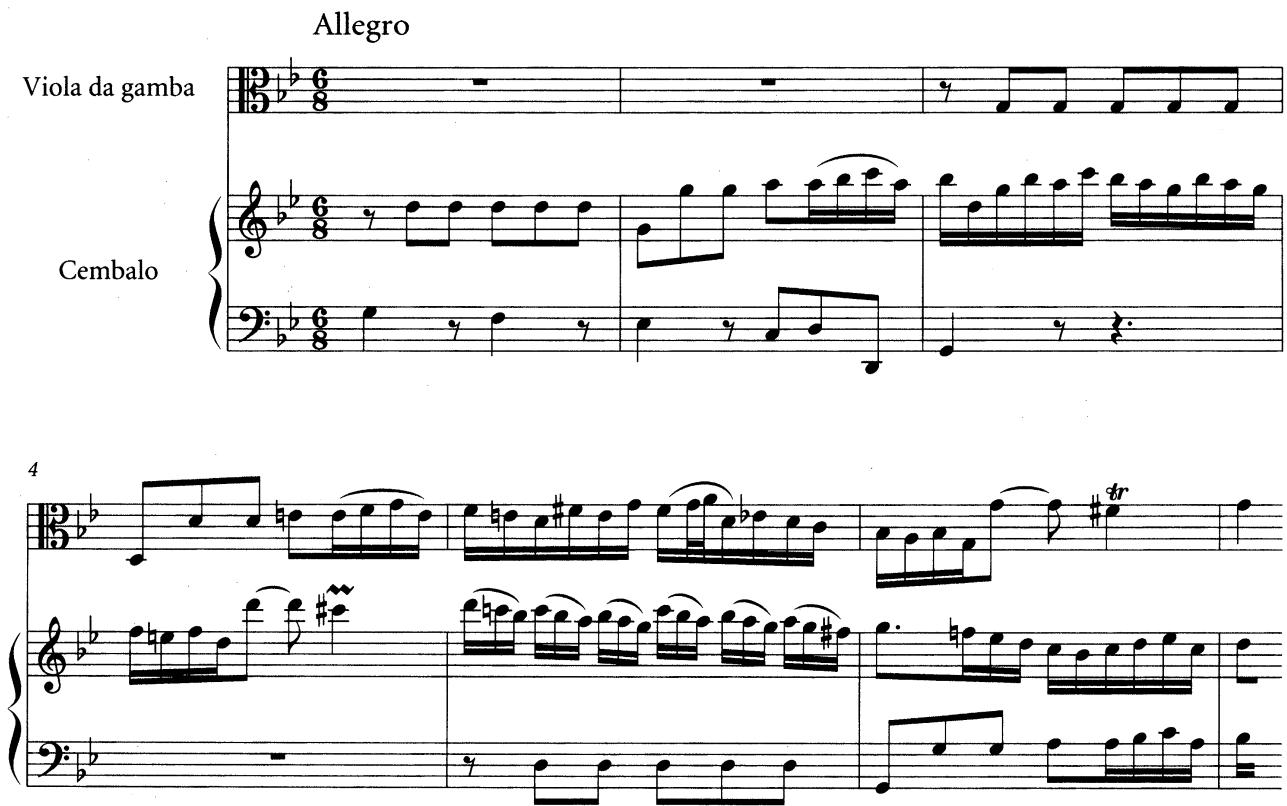
中文讲解
P0092 是谱例 4.7 的位置占位符,图题为 Example 4.7 BWV 1029/3, mm. 1–7,即 Gamba 奏鸣曲(BWV 1029)第三乐章第 1 至 7 小节的乐谱。该图与 P0089 中所述"fugal beginning in three parts"相对应:前 7 小节正是赋格开头的呈示段,用以和后续第 19 小节起的 cantabile 段落(Ex. 4.8)作对比。本占位符处实际乐谱内容已省略,需查看原图以核对织体、声部进入以及主题形态;本节正文未在文本中给出可读到的谱面细节。
第5段(P0093)
原文复述
Dreyfus, Laurence. Bach and the Patterns of Invention. E-book, Cambridge, Mass.: Harvard University Press, 1996, https://hdl.handle.net/2027/heb05561.0001.001. Downloaded on behalf of Indiana University, Bloomington
中文讲解
P0093 是页面下方的电子书访问 / 出处说明,与 P0090 中的同一段几乎完全相同,仅此处未带页眉与页码。其版面性质为重复出现的版权信息,不引入新论述。
脚注 / 边栏 / 图表 / 附加信息(如有)
本节附带材料主要包括:(1) 两处上标脚注编号(19 与 20),正文 P0089 提示其存在但未在本输入范围内提供脚注内容,需查阅原书对应页脚。(2) 两幅谱例的指引(Ex. 4.7 与 Ex. 4.8),其中 Ex. 4.7 的图位占位符出现在 P0092,Ex. 4.8 的具体位置与内容本节未出现。(3) 两处版心信息(P0090、P0093),为同一电子书的页眉 / 出处说明重复出现,不携带新论述。
💡 本节核心要点
- 本节沿用前文"标志性对比"的第一修辞策略,把对 Gamba 奏鸣曲(BWV 1029)第三乐章的解读纳入对比框架:颂扬性评价 vs. 来源 / 结构性观察。
- Spitta 关于该乐章"主题思想增殖"与"动机艺术绝对统治"的赞美虽属夸张,仍点明了主题材料的多样性(“丰饶角般的旋律”)以及异质元素的精巧连接。
- 全章论证的关键结构对比落于三声部赋格开头与 m. 19 处 Bach 亲笔标注 cantabile 的段落之间,文中以 Ex. 4.7 与 Ex. 4.8 作为读者直观的对照。
- 在装饰音与伴奏中听出"现代性"(Fischer, 1915)的解读被作者修正:该段应被读作对 Vivaldi Concerto op. 3, no. 8 第三乐章中 cantabile solo e forte 牧歌式段落的指涉,而非巴赫超前于自己时代的风格标记。
- 当代学者(Williams、Siegele)的研究取向已从纯评论转入作者所谓的"发生学还原":前者以第六勃兰登堡协奏曲样式重塑该乐章,后者视其中有改编迹象。
- P0091 在源文本中以半句截断,Siegele 论点的进一步阐发与作者对两种当代路径的评估,需对照原书后续段落。
🔑 关键术语
- Emblematic contrast(标志性对比):本节反复援用的第一种分析修辞:将不同取向(赞颂性评价 vs. 来源 / 结构观察)的解读并置,作者以此框架把 Spitta 的夸张修辞与更精确的来源批判形成对照。
- Motivic art / motivic work(动机艺术 / 动机式工作):Spitta 用以称 Bach 在单一动机材料上的高度组织能力;并以 Beethoven 时代器乐风格向动机展开倾斜为参照系,本节借此把第三乐章与更晚的动机展开传统挂接。
- Cantabile:演奏指示"如歌地"。Bach 在 BWV 1029 第三乐章 m. 19 处亲笔标此术语,用以与开头的赋格段构成体裁—织体上的对比,作者认为其真正所指是 Vivaldi 同类标注的范型。
- Genetic reduction(发生学还原):作者对当代 Bach 研究取向的概括:不再就作品自身作评论,而是把它还原为来源、改编关系或既有模型;本节中 Williams 的第六勃兰登堡式重构与 Siegele 的"改编"猜测都属于这一路径。
- Pastoral episode(牧歌式段落):Vivaldi Concerto op. 3, no. 8 第三乐章中由 cantabile solo e forte 标出的一处意境性段落;作者主张 Bach 在 BWV 1029/3 的 m. 19 起段落正是对它的有意指涉,因此应以范型来源而非"现代性"来理解。
1.16 [描述性拆分] Concerto Markers in Fugal Final Movements
第1段(P0094)
原文复述
[Image or score placeholder on page 22. The original placeholder text reads: 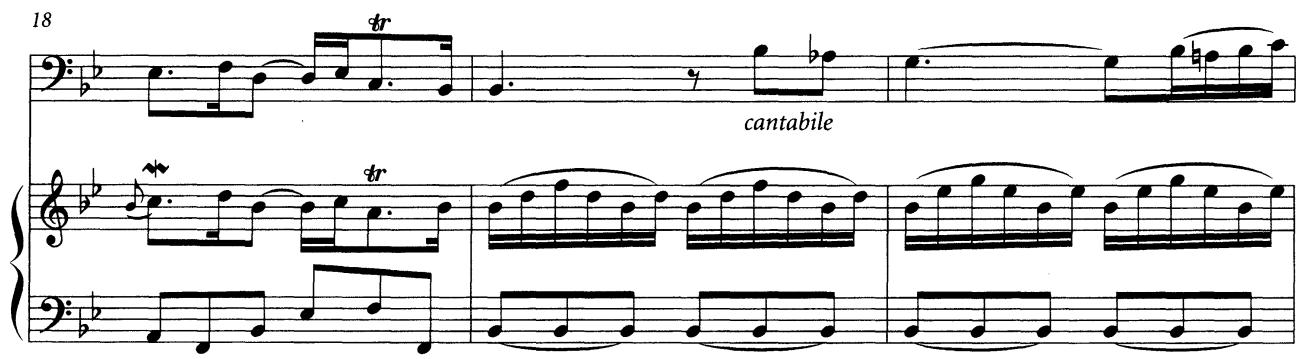 ]
中文讲解
这是一个页面图像或乐谱的占位符,原文为中文标记,提示第22页存在一处图像或乐谱示例,嵌入数据被省略,仅保留其位置与图注说明。由于实际图样不在文本范围内,需查看原书第22页以确认其内容。
第2段(P0095)
原文复述
[Image or score placeholder on page 22. The original placeholder text reads: 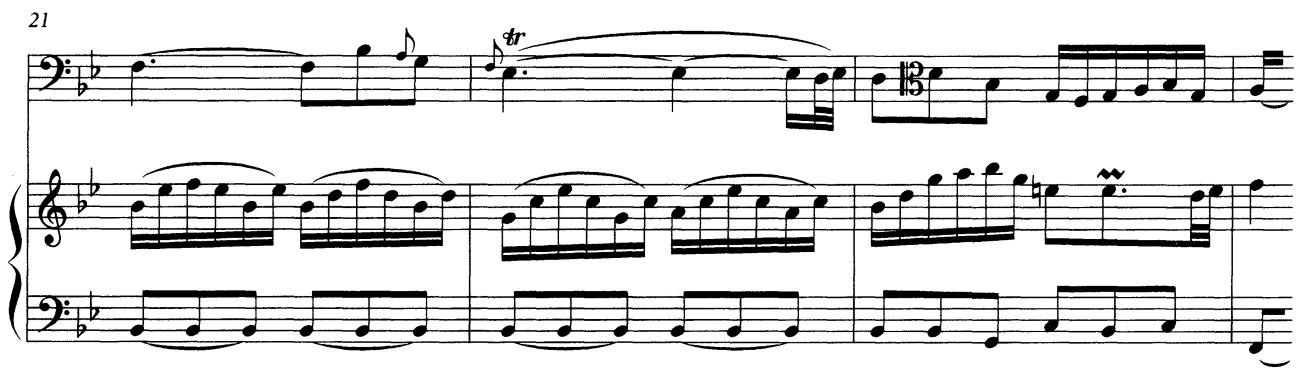 ]
中文讲解
这是谱例4.8的占位符,对应作品BWV 1029/3(Bach g小调奏鸣曲 BWV 1029 的第三乐章)第18至24小节。该谱例在原文中紧接其后文字的论点,应当作为音乐例证展示赋格式协奏曲乐章中主题进入与终止停顿(cadential caesura)的具体形态。需查看原书第22页以获取实际乐谱内容。
补充说明
BWV 1029 是 Bach 的 g 小调奏鸣曲,为双簧管与通奏低音而作(亦有羽管键琴改编版);此处出现于第22页的“第3乐章”。此信息仅作谱例标识之用,不涉及超出本段范围的背景。
第3段(P0096)
原文复述
of a concerto movement. But while it is true that Bach’s concerto movements based on fugal organization do not exhibit the palpable concertato writing found in pieces crafted on the ritornello principle, they usually display one structural feature that identifies them as concerto movements: initial sections that are tonally closed and marked with cadential caesuras. Unlike fugues in the typical Allegro of a trio sonata, the closing fugal movements in the Fourth and Fifth Brandenburg Concertos present a clear cadential caesura in the tonic at the end of the first fugal tutti. (Other fugal concerto movements do likewise. See, for example, BWV 1061/3, BWV 1064/3, and BWV 1041/3.) Last movements organized as gigues with two reprises, such as that in the Third Brandenburg, are exempt from this immediate tonal closure which is delayed until the double bars (although a conventional ritornello rather than a fugal device underlies that movement). The tonally closed fugal exposition also structures smaller-scale works that are trying to evoke the notion of concerto. See, for example, the prelude to the English suite in E minor (BWV 810/1) or the lengthy fugue in the solo violin sonata in C major (BWV 1005/1). Only where the tutti–solo play is an entirely negligible feature of the movement, as in the final movement of the Second Brandenburg Concerto—with its four timbrally contrasted fugal voices—does Bach permit himself to dispense with internally closed tonal sections, a feature that would surely be required of a sonata movement in concerted style if it is to be distinguished from any ordinary fugal sonata movement.
中文讲解
本段承接上文(脚注21处的引文延续),从否定面进入肯定面,揭示赋格式协奏曲乐章区别于普通赋格的关键标志。
一、核心主张。作者承认:以赋格构思写作的协奏曲乐章,表面上看并不具备典型ritornello(利都奈罗)协奏曲那种显性的全奏/独奏交替(concertato writing)。然而,它们通常仍具备一项结构性特征来标明其“协奏曲”身份:开头段落具有调性上的闭合性,并以终止停顿(cadential caesura)来标记。也就是说,调性闭合与终止停顿成为 Bach 用来“标记”赋格乐章为协奏性质的形式标志。
二、与普通三重奏鸣曲赋格的对照。作者明确把“协奏性赋格”与“三重奏鸣曲快板乐章中的赋格”区分开来:后者不必在主调上形成清晰的终止停顿;而第二、第五勃兰登堡协奏曲的终乐章则在第一段全奏(fugal tutti)结束时在主调上出现明确的终止停顿,使“第一段落调性闭合”成为该段落结束的听觉信号。括号中补充:其他赋格式协奏曲乐章(BWV 1061/3、C大调双羽管键琴协奏曲第三乐章;BWV 1064/3、D大调协奏曲第三乐章;BWV 1041/3、a小调小提琴协奏曲第三乐章)也是如此。
三、例外与免责。两种例外被提出:(1)以两段式gigue(吉格)组织的终乐章,如第三勃兰登堡协奏曲的终乐章,可以豁免这一即时调性闭合——其闭合延迟至double bars(双纵线/反复记号处)才完成;作者同时指出该乐章其实由常规ritornello支撑而非赋格机制。(2)当全奏-独奏交替在乐章中完全无足轻重时,Bach允许自己省去内部的调性闭合段落。第二勃兰登堡协奏曲的终乐章即为此例——它以四种音色对比的赋格声部构成,全奏-独奏对话被音色对比所替代,因此不需要闭合段作为协奏性的形式标记。
四、外延至小尺度作品。作者进一步指出,“主调闭合的赋格呈示部”这一形式也用于规模较小、但同样在“唤起协奏曲概念”的作品,例如E小调英国组曲前奏曲(BWV 810/1)与C大调无伴奏小提琴奏鸣曲的第一乐章赋格(BWV 1005/1)。这表明 Bach 把调性闭合作为可移植的“协奏性暗示”手法,而不局限于真正的协奏曲体裁。
五、论证意义。本段的论证功能在于:为前文“赋格乐章同样可以呈现协奏曲标志”这一观点给出明确的可操作定义——cadential caesura + 调性闭合。紧接着的两个例外又限定了规则的适用边界,从而既不让“协奏性”沦为空洞标签,也不让它过分严苛地把所有赋格乐章都纳入协奏范式。
容易误解之处:作者并非说赋格乐章必须具备显性的tutti–solo交替;而是说赋格式协奏曲乐章通常以“调性闭合+终止停顿”这种较隐蔽的结构信号来标识其协奏身份。第二勃兰登堡的例子最易被误读为“赋格乐章永远不需要协奏性标记”,应理解为其乐章内部已以音色对比取代tutti–solo结构,故该规则在该例中不适用。
补充说明
本段内部多次使用“fugal tutti”一词,指赋格式写作的第一段落(全呈示段)中各声部依次进入、形成完整调性闭合的整体段落;此处作为与“concerted tutti(协奏性全奏)”相对的术语使用。BWV 编号均依据本段所列,与原书一致,无外部补充信息。
第4段(P0097)
原文复述
124 Bach and the Patterns of Invention Dreyfus, Laurence. Bach and the Patterns of Invention. E-book, Cambridge, Mass.: Harvard University Press, 1996, https://hdl.handle.net/2027/heb05561.0002.001. Downloaded on behalf of Indiana University, Bloomington
中文讲解
这是页脚/版本信息,属于第22页末尾的版式内容。首行“124 Bach and the Patterns of Invention”指示当前处于全书第124页(依Harvard University Press电子版编号体系)并提示书名。其余行提供书目著录:作者Laurence Dreyfus,作品Bach and the Patterns of Invention,Harvard University Press(剑桥,马萨诸塞州)1996年出版;给出了HathiTrust数字图书馆的电子版链接(heb05561.0002.001,对应第2节/卷),以及下载机构信息(印第安纳大学伯明顿分校)。该段对正文论点的支持方式为“来源与版本标识”,即标明引文的版本来源,便于读者核对。
补充说明
页码编号“124”采用的是电子书的内部页码,与第22页的纸质原书页码属于不同体系;这仅由本段本身显示,未超出原书之外的信息。
脚注 / 边栏 / 图表 / 附加信息(如有)
本节(1.16 “Concerto Markers in Fugal Final Movements”)范围内的附加材料包括:(1)第22页的一处图像/乐谱占位符(P0094),位于本节正文段落之前,应与紧接其后的Example 4.8(BWV 1029/3, mm. 18–24, P0095)共同构成图例群;(2)Example 4.8本身作为音乐例证,对应P0096文字中关于赋格式协奏曲乐章在第一全奏结束处出现调性闭合与终止停顿这一论点的具体谱例支撑;(3)页脚(P0097)提供全书书目与电子版来源标识,标明所引内容的版本出处,便于核对。脚注21与脚注22在本段文字中以数字标记形式出现(21在段首承接处,22位于BWV 1005/1之后),但其脚注正文不在本节source_paragraphs范围内,因此本节不展开。
💡 本节核心要点
- Bach 的赋格式协奏曲乐章虽不具备ritornello协奏曲那种显性的concertato写作,但仍以“调性闭合+终止停顿(cadential caesura)”这一结构信号标识其协奏身份。
- 第二、第五勃兰登堡协奏曲终乐章是其典型例证:赋格式第一全奏(fugal tutti)在主调上以明确的终止停顿收束;该特征亦见于 BWV 1061/3、BWV 1064/3 与 BWV 1041/3。
- 例外一:以两段式gigue组织的终乐章(如第三勃兰登堡协奏曲终乐章)延迟至双纵线处才完成调性闭合,且其底层是ritornello而非赋格机制。
- 例外二:当tutti–solo交替在乐章中完全无足轻重时(如第二勃兰登堡协奏曲终乐章以四种音色对比的赋格声部替代),Bach允许省去内部调性闭合段。
- “调性闭合的赋格呈示部”亦是 Bach 用以在小尺度作品中唤起协奏性暗示的可移植手法,例证包括 BWV 810/1 与 BWV 1005/1。
- 本段的论证功能在于为“协奏性”提出一个可操作的结构定义,并以双重例外界定其适用边界,从而避免“协奏性”这一术语的滥用。
🔑 关键术语
- cadential caesura:终止停顿,指乐段或段落结束时通过一个明显的终止式(通常落在主调)所形成的听觉与结构断裂,在本节中作为赋格式协奏曲乐章标志其“协奏身份”的关键信号。
- fugal tutti:赋格式的全奏段落,指赋格呈示部中各声部依次进入、最终在主调上完成调性闭合的整体段落;在本节中是与“协奏性全奏(concerted tutti)”相对的术语。
- ritornello:利都奈罗,意大利语原意为“小回旋”,指协奏曲中反复出现的全奏主题段落;在本节中作为对照概念——以ritornello原则写作的协奏曲乐章具备显性的concertato写作,而以赋格原则写作的乐章则需借助其他结构信号标识协奏性。
- concertato / concerted style:协奏风格,指由全奏与独奏(或多组对比乐器)交替、对置所产生的对比性写作;本节用以界定何为“可被识别为协奏乐章”的对照标准。
- gigue (with two reprises):吉格舞曲,此处特指以两段反复结构(两段reprise)组织的终乐章形式;第三勃兰登堡协奏曲终乐章即为此类,被本节作为“即时调性闭合”规则的豁免例。
- double bars:双纵线,乐谱中标记段落反复或乐章终止的版式符号;在第三勃兰登堡协奏曲终乐章中,调性闭合被延迟至双纵线处才完成。
- tonally closed (section):调性闭合的段落,指在主调上完成终止、形成明确段落收束的乐段;本节将其与cadential caesura并列为赋格式协奏曲乐章的结构标志。
1.17 [描述性拆分] The Cantabile versus the Brandenburg V Model
第1段(P0098)
原文复述
There is in fact a certain resemblance between the cantabile theme in the gamba sonata and a theme with the same marking in the last movement of the Fifth Brandenburg Concerto, which also summons forth the identical reference to Vivaldi. (See Ex. 4.9.) But appearances can deceive. In the concerto, the cantabile theme is audibly derived from the fugue subject, even to the extent of maintaining the pitch and rhythmic content of the subject. It is therefore intended to be heard as a derivative theme within a harmonically unstable “solo episode.” Formally, this resembles a typical rhetorical process in solo concertos, in which the soloist decorates a given “invention” by taking it in a new direction. The gamba sonata, on the contrary, has not closed a fugal exposition in the tonic before it introduces the cantabile theme. Not only does this lyrical subject in the relative major contrast sharply with the pitch content of the fugue subject, but its rhythmic profile is distinctly different. On the one hand, the fugal material takes Vivaldian repeated-note figures and superimposes over them the rhythmic values wavering between the sprightly 6/8 of the gigue and the displaced agogics of the courante, presenting a fractured yet vivid set of referents. The cantabile section also has a unique identity. With its modish ports de voix, the second theme manages to allude to a soloistic but more old-fashioned Vivaldian gesture via the style galant at the same time that its placid arpeggiated figures and static harmonic motion allude to the realm of the pastoral.
中文讲解
本段开启全节的核心比较:在表面相似与深层差异之间揭示两部作品的真正分界。作者首先点明,gamba奏鸣曲中的cantabile主题与《勃兰登堡第五协奏曲》末乐章中同名标记的主题确有相似之处,并都召唤出对维瓦尔第的指涉(参例4.9)。但作者立刻警告“外表可能骗人”。
接下来作者展开两类比较:(1) 在协奏曲里,cantabile主题是清晰可闻地从赋格主题衍生而来的——它保持着赋格主题的音高与节奏内容,因此应在“独奏插段”那种和声不稳定的情境中被听成衍生主题;这种做法在形式上对应独奏协奏曲中典型的修辞程序,即独奏者用“新的方向”去装饰一个既定的“发明”(invention)。换言之,协奏曲中的cantabile是赋格主题的变体,二者共享同一身份内核。(2) 在gamba奏鸣曲中情况截然不同:引入cantabile主题之前,赋格呈示部尚未在主音上完结;而且这个建立在关系大调上的抒情主题,其音高内容与赋格主题构成强烈反差,节奏型态也明显不同。
作者进一步刻画两套材料的“身份”。赋格材料把维瓦尔第式的重复音音型,与介于吉格活泼的6/8拍与库朗特错位agogics之间的节奏叠加在一起,呈现“一组破碎却生动的指涉”。而cantabile段落则以时髦的ports de voix(先现音/倚音式装饰)经由风格华丽(style galant)唤起一种更老派的维瓦尔第独奏姿态;与此同时,平缓的琶音与静止的和声进行又指向田园(pastoral)的领域。
本段在全节中的作用:先建立表面相似,再通过“衍生 vs 独立”、“关系大调 vs 主调”、“破碎指涉 vs 鲜明风格”等多重对照,确立两部作品在身份建构上的根本差异,为下一段讨论Bach如何“颠覆”这种身份张力埋下伏笔。读者需要警惕的常见误读是:把cantabile简单理解为“抒情对比段”——在gamba奏鸣曲中,它并非赋格材料的简单变体,而是拥有自身独立指涉系统的第二主题。
补充说明
页内脚注23、24被提及但未在此段落展开内容;例4.9(Ex. 4.9)作为参引谱例需要查阅原书图示以核实作者所指的旋律轮廓。ports de voix、style galant、agogics等术语在本段中的具体运用,须结合谱例才能充分理解其装饰形态与节奏特征。
第2段(P0099)
原文复述
Bach plays the courtier, however, only for a short time and can be seen to dissent from this galant sensibility as soon as he begins to merge the very identities he has named. For, by m. 44, the cantabile subject loses its easy lyricism when the harmonic motion beneath it accelerates and when more somber forces—in the form of the diminished seventh chord—are unleashed (m. 48). Thereafter, it becomes intriguingly difficult to hear whether material stems from one complex of themes or the other. Especially in the absence of tonally stable sections, the rapid succession, juxtaposition, and modulation of once distinct elements poison the elegant contrast on which the piece seemed to be founded. In other words, the movement denies the galant and pastoral elements of divertissement, according to which the listener leisurely samples a variety of culinary pleasures. On the contrary, to transform one affect into its opposite gives us some idea of Bach’s approximate attitude toward the galant, an attitude which prevents the dainty, lyrical, and charming affects from existing apart from darker, more troubling forces with which they must contend.
中文讲解
本段揭示Bach对待galant风格的真实立场:他只是短暂扮演“廷臣”角色,随即开始把前段刻意区分的两套主题身份加以融合。作者用“玩弄廷臣(plays the courtier)”这一措辞,把galant/pastoral的甜美外观比作宫廷社交中的礼节性姿态,并暗示这种姿态很快被打破。
具体的转折点出现在m. 44:cantabile主题在下方和声运动加速时失去了原本的悠闲抒情性;m. 48的减七和弦释放出“更阴暗的”力量。这里的减七并非偶然的色彩装饰,而是作者所指的“颠覆力”——它把和声从静态推向不稳定,并把cantabile从田园/galant的语义场中拉出来。
之后出现一个关键的听觉后果:随着材料快速更替、并置与转调,主题间的界限变得难以辨认;尤其在没有调性稳定段的情况下,原本构成基础的那种“高雅对比”(elegant contrast)被“毒化”了。
作者由此推出一个具有美学立场的判断:本乐章拒绝了galant与pastoral的divertissement(消遣、娱乐)逻辑——即让听者悠闲品尝各种“美食”的程式;与之相反,把一种affect转化为其对立面,恰恰透露出Bach对galant的近似态度:纤巧、抒情、迷人的情感不能脱离与之角力的黑暗、令人不安的力量而独立存在。
本段在全节中的作用是从“表面相似”转向“实质颠覆”,为下一段具体分析mm. 90–95处的“身份倒置”作铺垫。读者需要把握的关键是:作者并非简单否定galant,而是主张Bach让galant与对立的affect同时在场,从而改造而非复制协奏曲模型。
补充说明
本段提及的m. 44与m. 48两个具体小节,需要参照原谱或例4.9/4.10的上下文来定位作者的减七与和声加速描述。diminished seventh chord、divertissement、affect等术语的使用应严格限于本节语境内的含义解释。
第3段(P0100)
原文复述
Nowhere is this reversal of identities more pronounced than at mm. 90–95. (See Ex. 4.10.) Notice how the moment of return to the tonic (in the second half of m. 93) is delayed and hence does not coincide with the return of the fugal subject. As a result, the urgent move to the cadence (in fact, a vintage concerto Epilog) in mm. 90–93, “sung” by the former galant subject, overlaps the reprise in a manner suggesting, but not constituting, a fugal stretto. But the elision between cadence and fugal beginning crushes any further hope that the movement will duplicate features of the concerto. For the very code at which Vivaldi excelled—astonishing both Bach and his contemporaries—was the sharp and articulate definition of beginnings. If he had wanted to refer unambiguously to concerto, even in a movement based on the concertante fugue, Bach would have highlighted—and not intentionally obscured—the return of the opening material. (It is easy to imagine such an alternative, if only Bach had delayed the fugal subject until m. 94. The last three bass notes in m. 93 would simply prolong the dominant chord until the first beat of m. 94.) That is, the most elemental function of the concerto is compromised just when its intelligibility seemed most promising. This is not to say that Bach did not equip himself with the necessary materials for a concerto movement; only that he decided not to write one. (The end of the last movement actually reveals enough material suitable for the grammatical invention of a fugal-ritornello movement. The introduction of the subjects—functionally equivalent to a Vordersatz—could proceed as in mm. 1–6; mm. 95–98 would constitute the Fortspinnung with its characteristic linear succession of tenths; and mm. 104–109 or through to m. 111 would constitute the Epilog. But then one would have a piece quite different from the one Bach composed. None of this requires much alchemy: one can easily construct similar ideal ritornellos from any number of arias or choral movements in which the concerto principle remains latent.)
中文讲解
本段把前两段建立的“身份融合”命题落到一个最戏剧化的具体段落mm. 90–95(参例4.10),并从此处出发对“协奏曲模型”作出最终裁决。
作者的论证分四步。第一步指出,在m. 93后半拍回到主音的时刻被有意延迟,因此它与赋格主题的回归并不重合。第二步揭示后果:mm. 90–93这段由原属galant的主题“唱出”的、冲向终止式的紧迫运动(作者称之为“地道的协奏曲Epilog”),与赋格再现发生了重叠,造成一种貌似但并非真正赋格stretto(紧接模仿)的听感。
第三步做出关键判断:终止式与赋格起首的“吞并/省略(elision)”压碎了“复制协奏曲特征”的最后可能。原因是维瓦尔第最擅长的、令Bach及其同时代人惊叹的“法度”,恰恰是对“开端”的清晰、明晰的界定。倘若Bach真想毫不含糊地指涉协奏曲——即便在以协奏赋格为基础的乐章里——他应当突出而非刻意模糊开篇材料的回归。作者甚至设想了一种替代可能:只要把赋格主题延后到m. 94,把m. 93最后三个低音延展属七和弦直到m. 94第一拍即可。
第四步是对全节核心论点的总括:协奏曲最基本的功能在最显豁的时刻被牺牲——也就是说,Bach并非缺乏写出协奏曲乐章的材料,而是有意选择不写。作者以括号中的“反事实”分析佐证:末乐章末尾其实蕴含足够材料,可用mm. 1–6作为Vordersatz(前句)、mm. 95–98作为Fortspinnung(展开段,以十度线性进行为特征)、mm. 104–109乃至m. 111作为Epilog,从而“语法性地发明”出一首fugal-ritornello乐章。然而,这样得到的将是“另一首曲子”,而非Bach所写下的这首。作者进一步指出,在任何咏叹调或合唱乐章中都可以用类似炼金术构筑理想的ritornello,因为协奏曲原则常常潜伏其间。
本段在全节中的作用是给出最具决定性的反证:表面材料足够、形式语法可重构,但Bach拒绝执行;正是在他“不写”的地方,gamba奏鸣曲与《勃兰登堡第五》才彻底分道扬镳。读者需注意,作者的“反事实”段落并非主张这些材料应被这样使用,而是借此凸显Bach的克制与选择。
补充说明
本段涉及大量形式分析术语(Epilog、Vordersatz、Fortspinnung、ritornello、stretto)与具体小节编号(mm. 1–6, 90–95, 95–98, 104–109/111),须配合原谱与例4.10来核验其论证。作者的括号性“反事实”构造是修辞策略,意在以“如果这样就能写成协奏曲”反证Bach“不这样写”的选择意义,不可误读为对作品形式的实质重构。
第4段(P0101)
原文复述
Dreyfus, Laurence. Bach and the Patterns of Invention. E-book, Cambridge, Mass.: Harvard University Press, 1996, https://hdl.handle.net/2027/heb05561.0001.001. Downloaded on behalf of Indiana University, Bloomington
中文讲解
本段为该页的来源/版权页脚信息,标示文本出自Laurence Dreyfus所著《Bach and the Patterns of Invention》一书的电子版(哈佛大学出版社1996年版),并说明该电子版由密歇根大学的服务代印第安纳大学布卢明顿分校下载。该信息对正文主张起到来源定位的作用——本页的分析属于该书论证脉络的一部分,本身不承载音乐分析论点。
脚注 / 边栏 / 图表 / 附加信息(如有)
本节涉及两处页内脚注(脚注23位于P0098末尾、紧接Ex. 4.9的指引之后;脚注24位于P0098段末)以及两个谱例指引(Ex. 4.9与Ex. 4.10),但其具体内容未在所提供段落中给出。脚注与谱例均起到佐证或具象化作者论点的功能:脚注23关联Vivaldi指涉的来源说明,脚注24关联第二主题的galant/pastoral风格来源;Ex. 4.9承担“协奏曲与gamba奏鸣曲的表面相似”对照任务,Ex. 4.10承担mm. 90–95身份倒置的实证任务。P0101为版权/出处信息脚注,标示本节文本的来源电子版由哈佛大学出版社1996年出版。
💡 本节核心要点
- gamba奏鸣曲的cantabile主题与《勃兰登堡第五》末乐章同名主题仅在表面相似:前者是独立的第二主题(建立在关系大调、与赋格主题音高/节奏对比鲜明),后者是赋格主题的衍生变体,在独奏插段中作为“装饰性发明”出现。
- 赋格材料以维瓦尔第式重复音为骨架,叠加吉格6/8与库朗特错位agogics的节奏层;cantabile则以时髦的ports de voix与平缓琶音/静止和声,分别指向galant独奏姿态与田园语义,二者形成两套独立的“身份”。
- Bach仅短暂扮演galant“廷臣”角色;自m. 44起,和声加速与m. 48的减七和弦释放使cantabile失去抒情性,主题身份被融合、被“毒化”,拒绝divertisement式的优雅对比。
- mm. 90–95是身份倒置的最戏剧化节点:m. 93回到主音被延迟,原属galant的主题唱出“协奏曲式Epilog”,与赋格再现形成看似stretto实则非stretto的重叠;终止式与赋格起首的elision压碎了对协奏曲模型的复制。
- 维瓦尔第的核心“法度”——对开端的清晰界定——在此被刻意模糊;这并非Bach缺乏材料,而是有意的选择:协奏曲最基本的功能在最显豁时刻被牺牲,以构造一首非协奏曲的乐章。
- 作者以括号中的“反事实”分析(用mm. 1–6作Vordersatz、mm. 95–98作Fortspinnung、mm. 104–109/111作Epilog可重组为fugal-ritornello乐章)反证Bach的克制:表面材料足够,但Bach选择不写,从而让gamba奏鸣曲摆脱协奏曲模型的束缚。
🔑 关键术语
- cantabile theme:本节核心主题之一,指gamba奏鸣曲与《勃兰登堡第五》中均以“cantabile”标记的主题。在协奏曲中它是赋格主题的衍生变体;在gamba奏鸣曲中它是独立的第二主题,建立在关系大调,与赋格主题构成音高/节奏的强烈对比。
- fortspinnung / Vordersatz / Epilog:源自十八世纪曲式分析的德语术语,作者用以描述反事实地重构fugal-ritornello乐章的功能段落:Vordersatz(前句)= 主题引入;Fortspinnung(展开段)= 以十度线性进行为特征的发展;Epilog(尾段)= 收束性的终止段落。
- style galant / galant sensibility:十八世纪中期的“华丽风格”,强调轻盈、优雅、清晰的主题对比与娱乐性的affect,作者在本节中将其与宫廷“廷臣”姿态并置,并指出Bach仅短暂采用旋即颠覆之。
- ports de voix:装饰音/倚音型手法,作者将其与“时髦”联系起来,认为是cantabile主题唤起更老派维瓦尔第独奏姿态的装饰特征。
- ritornello / fugal-ritornello:反复回归的主部段落结构,源自巴洛克协奏曲的核心形式。作者以“fugal-ritornello”指称融合赋格逻辑与ritornello逻辑的乐章类型,并借此反证Bach有意不写出协奏曲乐章。
- stretto:赋格中主题以紧密间距叠入的技法;本节mm. 90–93出现的“重叠”仅“貌似”而非“构成”真正的stretto,是作者论证身份倒置的关键听觉判据。
- diminished seventh chord:减七和弦,本节中作为m. 48的“阴暗力量”,标志着galant/pastoral语义的破裂与和声走向不稳定,是作者刻画Bach“颠覆”分界点的关键和声事件。
- divertissement:娱乐/消遣程式,本节中作者将其作为galant与pastoral元素的逻辑背景加以否定:即“悠闲品尝多种滋味”的听法被Bach有意拒绝。
1.18 [描述性拆分] Reversal of Affects and the Obscured Tonic Return
第1段(P0102)
原文复述
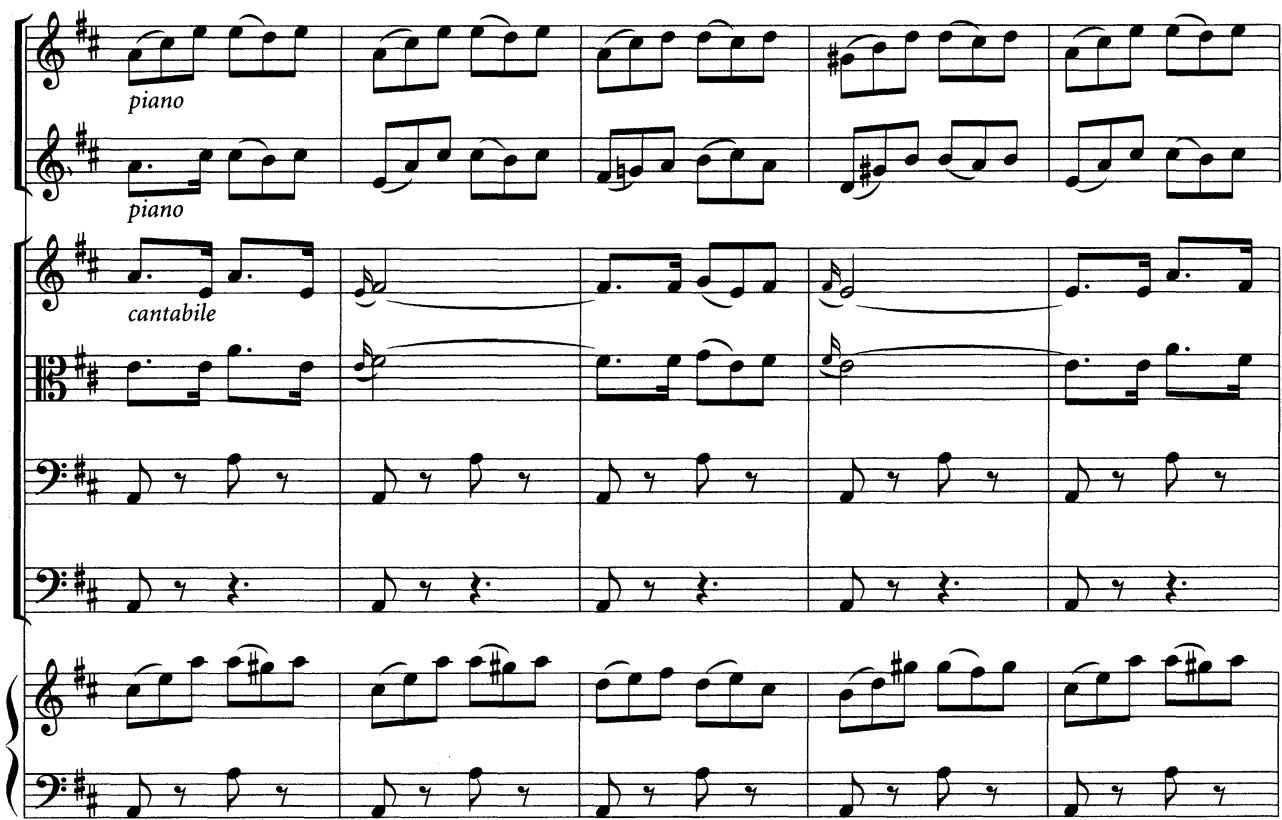
中文讲解
该条目为第24页的图像或乐谱占位符,原文图像数据已被省略,仅保留位置与图注标记。该占位符的位置正好是第24页起始段,其具体内容(是否为乐谱示例、分析图表或正文插图)以及它与前后正文段的关系,仅能通过原书第24页的版式来确认。讲解者无法在此凭文字推断其视觉内容,需查看原图。
第2段(P0103)
原文复述
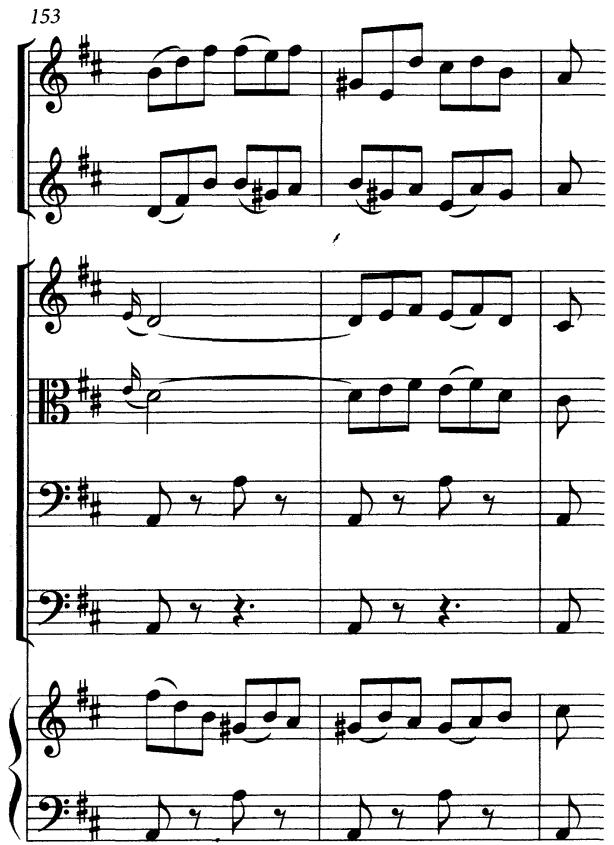
中文讲解
该条目为第24页上紧随P0102之后的第二个图像或乐谱占位符,原文图像数据已被省略。该占位符与P0102在同页连续排列,其具体内容、与P0102是否构成同一谱例的拆分显示,以及它在版面分析中的作用,均需通过原书第24页的版式来确认,本占位符不能仅凭文字替换为具体描述。
第3段(P0104)
原文复述
126 Bach and the Patterns of Invention Dreyfus, Laurence. Bach and the Patterns of Invention. E-book, Cambridge, Mass.: Harvard University Press, 1996, https://hdl.handle.net/2027/heb05561.0001.001. Downloaded on behalf of Indiana University, Bloomington
中文讲解
这是第24页的页眉及电子版引用信息。首行“126 Bach and the Patterns of Invention”同时标示当前页码(第126页)与书名《Bach and the Patterns of Invention》,属于电子版扫描页的常规页眉形式。其下三行是该电子版的版权与获取来源说明:作者为Laurence Dreyfus,出版地为马萨诸塞州剑桥,出版机构为Harvard University Press,出版年份1996;并标明通过hdl.handle.net/2027/heb05561.0001.001这一永久链接取得,由印第安纳大学伯明顿分校(Indiana University, Bloomington)代为下载。这些信息提示读者所阅读的为该书电子版,并交代其学术来源与下载主体,对正文主张本身无直接影响,仅是书目层面的来源限定。
补充说明
该段不是作者论证的一部分,而是电子版附带的技术性元数据;其作用仅限于标明文本出处与下载来源,不得作为正文论点引用。
第4段(P0105)
原文复述
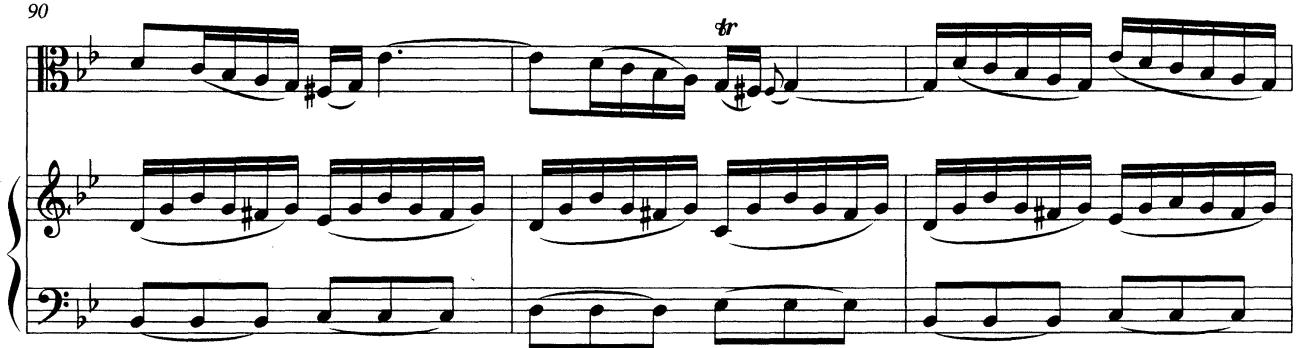
中文讲解
该条目为第25页起始处的图像或乐谱占位符,原文图像数据已被省略,仅保留位置与图注标记。从位置看,它紧接在第24页内容之后开启第25页,其后紧跟Example 4.10图注(P0106)及正文段落(P0107)。该占位符可能承担正文中所提到的乐谱引用的图像角色,但其具体谱面内容、谱号、调号或奏法标记均不可见,需查看原图才能确认。
第5段(P0106)
原文复述
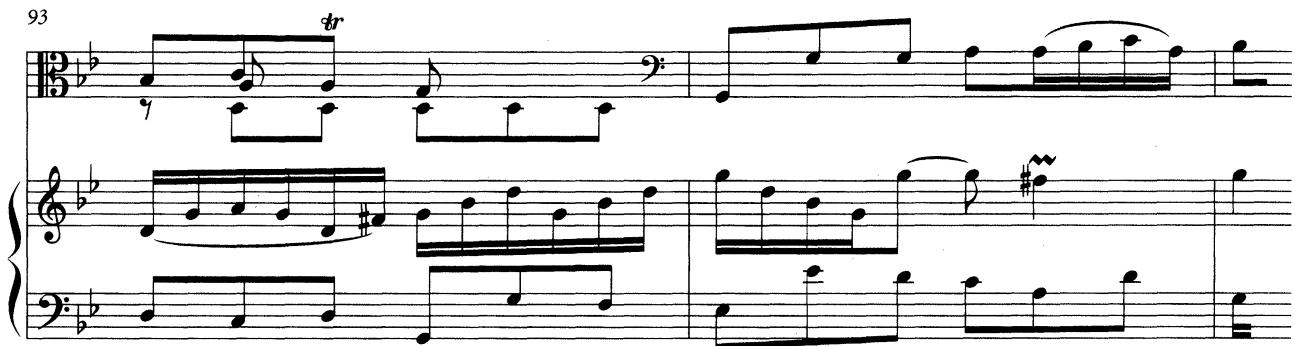
中文讲解
该条目为Example 4.10的图注占位符,原文图像数据已被省略,仅保留图注信息。依据图注可知,该示例取自巴赫作品BWV 1029第3乐章的小节90至95。结合下一段正文(P0107)的论题——讨论“协奏曲风格奏鸣曲”(Sonate auf Concertenart)中真实声部数量有限、难以容纳协奏性赋格运动以及难以引出真正的双协奏——这一谱例的具体谱面细节(旋律走向、和声布局、对位声部数等)需通过原图查看才能与正文论点精确对应;图注本身已锁定引用范围(第3乐章mm. 90–95),为读者查阅谱例提供坐标。
补充说明
图注中BWV编号1029/3指向巴赫的g小调奏鸣曲(BWV 1029)第三乐章;该编号信息仅作引用定位之用,具体作品背景本段未展开讨论。
第6段(P0107)
原文复述
In fact, the limited number of real voices in the Sonate auf Concertenart made it poorly equipped to be able to accommodate a concerted fugal movement, just as it was inadequately outfitted to evoke a proper double concerto. Since the ritornello in such “real” concerto movements consists of no more than a fugal exposition, how would a composer be able to signal when the orchestral tutti arrives, a tutti that is either furnishing merely harmonic support for fugal themes or is itself enunciating the themes? One solution to this problem was that instead of announcing the arrival of the orchestra, the composer could at least indicate its departure with a cadence followed by a reduction in the polyphonic texture, a poor substitute by any account. One can observe this procedure, for example, in the fugue from the solo violin sonata in C major where, following chordal sections alluding to three and four voices, Bach cadences in the tonic before initiating episodic sections of passage work unrelated to the fugal subjects. As a result of the thinned-out texture in the episodes, the allusion to the concerto soloist is made palpable. (See Ex. 4.11.)
中文讲解
本段围绕“协奏曲风格奏鸣曲”(Sonate auf Concertenart)体裁的一个结构性悖论展开论述。其中心主张是:由于该体裁所能承载的“真实声部”(real voices)数量有限,它既无法真正容纳协奏性的赋格乐章,也不足以唤起典型的双协奏(double concerto)效果。作者由此追问一个具体的形式问题:当此类“真实”协奏乐章中的利都奈罗(ritornello)仅仅等同于一段赋格呈示部时,作曲家如何标记乐队全奏(tutti)的到来——而这支乐队全奏要么只是为赋格主题提供和声支撑,要么自身就在陈述这些主题?
作者给出的“解决方案”具有明显的妥协意味:既然难以宣告乐队的进入,作曲家退而求其次,改以“离去”为标记——先在主调上作终止式(cadence),再让对位织体(polyphonic texture)逐渐稀薄化。作者直言这是一种“any account之下都不算高明的替代”(a poor substitute by any account)。这说明本段不只是在描述一种作曲技法,而是在评价体裁本身的局限。
随后作者以C大调独奏小提琴奏鸣曲的赋格乐章为例加以说明:在若干段暗示三声部与四声部的和声性段落之后,巴赫先在主调上作出终止,再引入与赋格主题无关的经过性段落(passage work)。正是由于这些插段(episodes)织体被刻意削薄,“协奏独奏者”的暗示才变得可感(palpable)。作者用“made palpable”这一表述,强调效果是经由织体对比间接实现的,而非由真正的大型乐队全奏完成。
理解本段时需注意几点:其一,作者使用的是“真实声部”这一术语,指实际独立运动的声部线条,而非仅指参与对位的总声部数;其二,“利都奈罗”在此处被作者专门加引号并限定为“真实协奏曲乐章”中的形态,其实质只是赋格呈示部,与意大利协奏曲中反复出现的全奏段并非同义;其三,作者的论证暗含一种层级判断——“真实”的协奏与双协奏高于本段所讨论的“暗示性”协奏,引用Example 4.11是为了把这一隐性等级判断落到具体谱例上。
本段在该小节论证链中的作用,是把前文对体裁局限的论述转化为一种具体的作曲反应:通过终止+织体稀薄来“宣告离去”,从而以减法的方式制造协奏独奏的暗示;它推进而非重复前文,并指向Example 4.11作为实物证据。
补充说明
段落末尾提示See Ex. 4.11,与同页P0106的Ex. 4.10不同——Ex. 4.11在此段正文中被指名引用,但本任务输入范围内未出现该图注的占位符,说明Ex. 4.11位于本节边界之外或本批段落未被收录,需注意区分。
脚注 / 边栏 / 图表 / 附加信息(如有)
本小节范围内的非正文材料包括:第24页两处图像/乐谱占位符(P0102、P0103)、第24页页眉与电子版引用元数据(P0104)、第25页起始处图像/乐谱占位符(P0105)、Example 4.10图注(P0106,指向BWV 1029/3第90–95小节)。其中P0104标明本书为Laurence Dreyfus所著、Bach and the Patterns of Invention的Harvard University Press 1996年电子版,由Indiana University, Bloomington下载,属于书目与版本信息,不参与正文论证;P0106锁定谱例坐标,为正文论点提供实物参照。文中末尾提到的Example 4.11虽被正文指名引用,但本节输入范围内未包含其图注占位符,需注意其位于本批段落之外。
💡 本节核心要点
- 协奏曲风格奏鸣曲(Sonate auf Concertenart)受限于真实声部数量,既难以容纳协奏性赋格乐章,也难以真正唤起双协奏效果。
- 此类体裁中的利都奈罗仅相当于一段赋格呈示部,因此乐队全奏的进入缺少明确的体裁信号。
- 作曲家退而采用一种消极标记——以主调终止加上对位织体的稀薄化来“宣告乐队的离去”,作者本人评价此法为“不高明的替代”。
- 在C大调独奏小提琴奏鸣曲赋格中,巴赫在暗示三、四声部的和声段落之后,以主调终止切入与赋格主题无关的经过性插段,借稀薄织体暗示协奏独奏者的存在。
- 本段核心机制是通过“减法”(织体削薄)而非“加法”(真正全奏)制造协奏暗示,体现体裁与表现需求之间的结构性张力。
🔑 关键术语
- Sonate auf Concertenart:德语术语,指“协奏曲风格奏鸣曲”,是巴赫器乐体裁中的一种特殊形态;本节以此为讨论对象,论证其因真实声部数量有限而难以承载真正的协奏性赋格与双协奏效果。
- real voices:“真实声部”,指实际独立运动的对位声部线条,而非仅在和声意义上的总声部数;本节用它来衡量体裁承载多声部对位与乐队全奏的内在能力。
- ritornello:利都奈罗,原为意大利协奏曲中反复出现的乐队全奏段落;在本节语境下被作者加引号并限定为“真实”协奏乐章中的形态,实际仅等同于一段赋格呈示部,因而失去了标志乐队全奏进入的常规功能。
- tutti:全奏,协奏曲体裁中乐队整体演奏的段落;本节指出在本类体裁中其进入缺少明确信号,并讨论作曲家改以“离去”为标记的替代策略。
- double concerto:双协奏曲,以两位独奏者与乐队竞奏为特征的协奏体裁;本节用来说明本节所讨论的奏鸣曲体裁“不足以唤起”的更高一级的协奏效果。
- polyphonic texture:对位织体,本节特指由多声部独立运动形成的织体密度;作者以“reduction in the polyphonic texture”(对位织体的稀薄化)来标记乐队从全奏中“退去”,并制造独奏者凸显的暗示。
- passage work:经过性段落,指并不引申或展开主题材料的过渡性乐段;本节指出C大调独奏小提琴奏鸣曲赋格中的episodes即属此类,其与赋格主题无关,却因织体稀薄而承担暗示协奏独奏者的功能。
1.19 [描述性拆分] Limits of a Fugal Concerto for One Instrument
第1段(P0108)
原文复述
Running header (top of page 25) giving full source citation: Dreyfus, Laurence. Bach and the Patterns of Invention. E-book, Cambridge, Mass.: Harvard University Press, 1996, https://hdl.handle.net/2027/heb05561.0001.001. Downloaded on behalf of Indiana University, Bloomington.
中文讲解
这是第25页顶部的运行式页眉(running header),仅承担书目引用与电子版下载来源的标识功能,不包含正文论证。它标明本书作者为 Laurence Dreyfus,标题为 Bach and the Patterns of Invention,由 Harvard University Press 于 1996 年出版电子版,下载方为 Indiana University, Bloomington,本卷后文每一页都会重复类似信息。讲解正文时无需对此条做内容层面的展开。
第2段(P0109)
原文复述
The closest Bach ever came, perhaps, to toying with the possibilities of a concerted fugue occurs in the Prelude to the G minor English Suite, BWV 808, whose pseudo-fugal opening, shown in Ex. 4.12, actually forms part of an entirely conventional three-part ritornello, as the accompanying Table 4.4 makes clear.
中文讲解
本段是这一小节的核心论点句。作者指出,Bach 最接近“协奏性赋格”(concerted fugue)这一构想的实例,也许出现在 G 小调英国组曲 BWV 808 的前奏曲中;其开头看起来像赋格(pseudo-fugal opening),由 Ex. 4.12 展示。然而紧随其后的限定极为关键:这段所谓“赋格式”开篇实际上只是一个完全常规的三段式利都奈罗(three-part ritornello)的一部分,这一点由同页的 Table 4.4 加以澄清。
理解本段需抓住三处转折:第一,措辞“the closest Bach ever came, perhaps, to toying with”用“perhaps”与“toying with”双重弱化,说明作者并不认为这是真正的协奏性赋格,仅是擦边尝试;第二,“pseudo-fugal”明确指出表面相似但实质不同——听觉上像赋格,结构上却不是;第三,“entirely conventional”与“as Table 4.4 makes clear”把真正的结论托付给表格,即:在独奏键盘作品中,赋格思维始终被利都奈罗框架吸收,无法真正发展成多声部协奏的赋格。
因此本句同时承担两重功能:先以 BWV 808 前奏曲作为“最接近的案例”抛出讨论,再借“actually”反转,将读者引向“独奏乐器下协奏性赋格的极限”这一小节主题,为后续分析(无伴奏小提琴、大提琴组曲等为何无法构成协奏性赋格)提供切入点。
补充说明
BWV 808 的“前奏曲”通常指 G 小调英国组曲第一乐章;文中所谓“pseudo-fugal opening”指其开篇由单一主题以模仿方式展开、看似赋格写作的部分;Table 4.4 在本节中提供三段式 ritornello 的小节对照,作用是把听感上的赋格错觉还原为回旋曲式骨架,佐证本段的结论。
第3段(P0110)
原文复述
Image placeholder: ![Example 4.11 BWV 1005/2, mm. 48–74] (embedded image data omitted; caption and position retained).
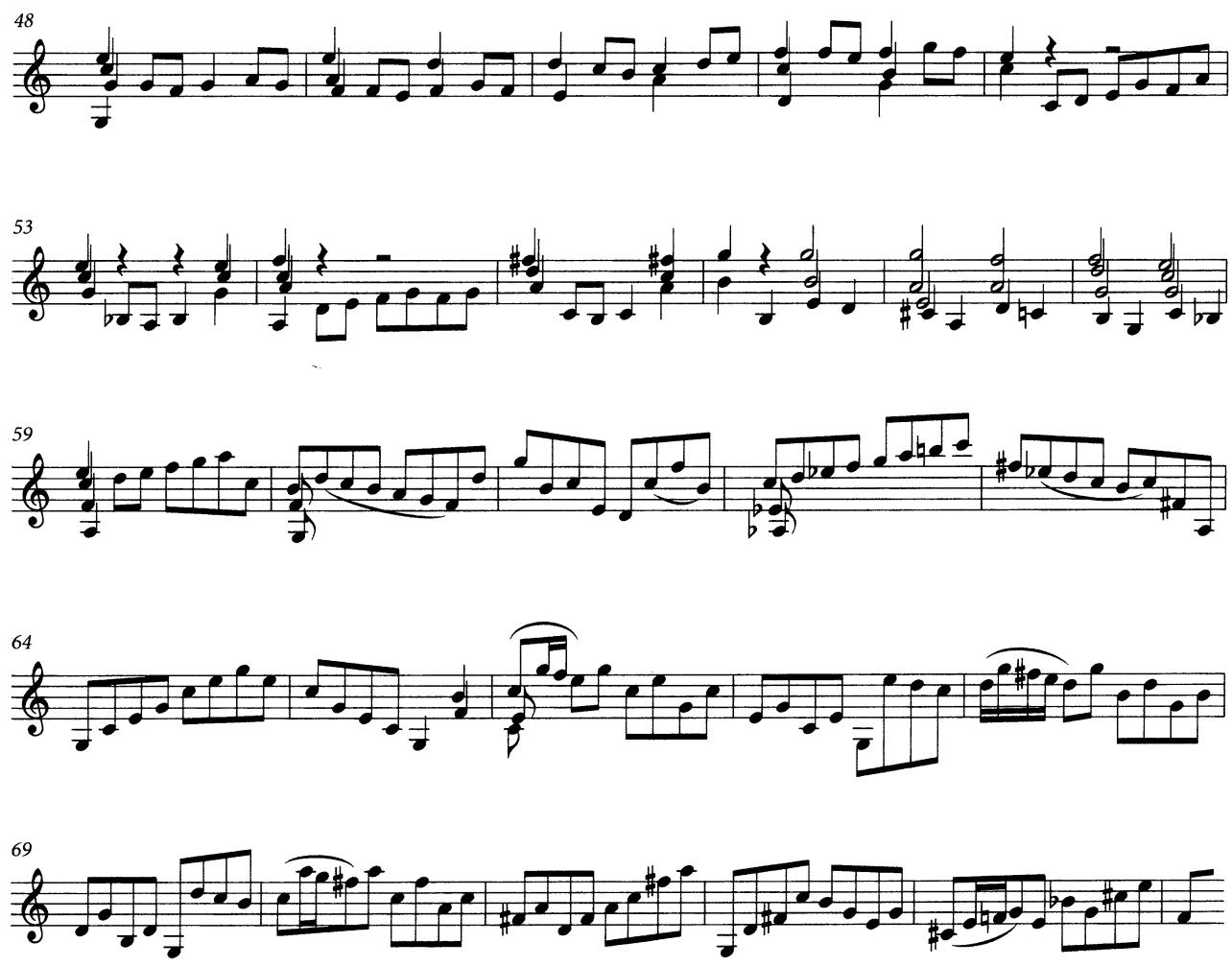
中文讲解
这是 Ex. 4.11 的图注/占位符,标注其内容为 BWV 1005/2 第 48–74 小节。BWV 1005 是巴赫无伴奏小提琴第三奏鸣曲(a 小调),其第二乐章为赋格;引用此处片段的作用是延续 P0109 关于“独奏乐器能否承载赋格式展开”的讨论,呈现 Bach 在无伴奏小提琴作品中处理类似段落的实际谱面。由于内嵌图像数据已被省略,具体音高、对位线条与和声布局需查阅原书图像。
补充说明
Ex. 4.11 与 P0109 中的 Ex. 4.12 形成对照:前者聚焦独奏小提琴(BWV 1005/2),后者聚焦键盘(BWV 808 前奏曲),二者共同支撑“独奏乐器中协奏性赋格的极限”这一论题。
第4段(P0111)
原文复述
Page header (page 26) showing running title “128 Bach and the Patterns of Invention” and the full source citation: Dreyfus, Laurence. Bach and the Patterns of Invention. E-book, Cambridge, Mass.: Harvard University Press, 1996, https://hdl.handle.net/2027/heb05561.0001.001. Downloaded on behalf of Indiana University, Bloomington.
中文讲解
此为第 26 页的页眉/页脚区:左上方数字 128 为本书内部页码(与原文 PDF 页码 26 不同),随后重复书名 Bach and the Patterns of Invention;其下三行是电子版引用信息(作者、出版地、出版社、年份、Handle 链接及下载机构)。其功能纯属版面对位与学术引用标识,不参与本节论证。
第5段(P0112)
原文复述
Image placeholder: ![第27页图像或乐谱示例] (embedded image data omitted; caption and position retained).
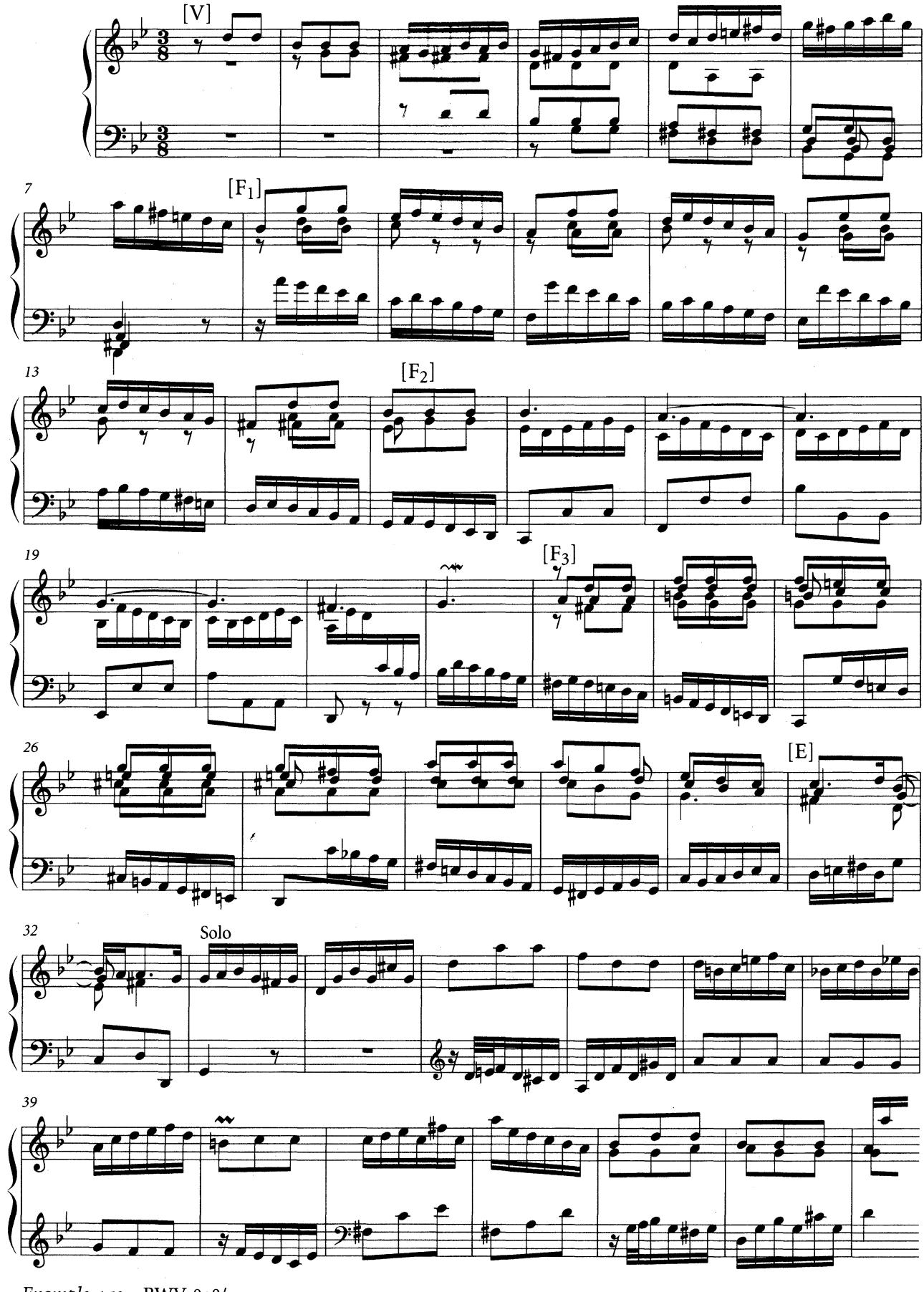
中文讲解
这是第 27 页上的图/谱例占位符,原文图像数据已被省略,仅保留位置与图注占位。在 P0109 已引用 Ex. 4.12 与 Table 4.4 之后,此处出现的图示很可能承接同一案例(BWV 808 前奏曲)或 Ex. 4.11(BWV 1005/2)中的材料,用以视觉化展示“伪赋格开篇”如何被纳入常规三段式 ritornello 的结构。由于图像不可见,具体细节需查阅原书第 27 页。
补充说明
此占位符与 P0110(Ex. 4.11)一起构成本小节主要的图示支撑,但因图像被省略,本讲解无法对其内部要素逐项核实。
第6段(P0113)
原文复述
Running header (page 27) giving source citation with chapter title inserted: Dreyfus, Laurence. Bach and the Patterns of Invention. The Status of a Genre. E-book, Cambridge, Mass.: Harvard University Press, 1996, https://hdl.handle.net/2027/heb05561.0001.001. Downloaded on behalf of Indiana University, Bloomington.
中文讲解
此为第 27 页的运行式页眉。与第 25、26 页的页眉相比,多出了章节标题 The Status of a Genre,说明本节所在的第 4 章(或某一层级的小节)即以“一种体裁的身份/地位”为题。其余书目与下载信息与前两页完全一致。功能仍为版面对位与引用识别,不包含正文论述。
值得注意的是章节名 The Status of a Genre 暗示本书关注的是“体裁”而非个别作品本身:作者不止分析某首前奏曲或赋格的形式,更在追问在巴赫的独奏键盘/弦乐语境中,“协奏性赋格”作为一种体裁是否真正存在、其界限在哪里——这正是 1.19 小节标题 “Limits of a Fugal Concerto for One Instrument” 所呼应的核心议题。
补充说明
The Status of a Genre 是页面页眉中透出的章节/小节名称,与本小节标题 “Limits of a Fugal Concerto for One Instrument” 共同表明:作者在体裁层面而非作品层面提问,即独奏乐器的赋格写法是否能够承载“协奏性”所要求的声部对比与竞奏结构。
脚注 / 边栏 / 图表 / 附加信息(如有)
本小节范围内的附加材料包括:① 表格 Table 4.4(位于第 26 页,与 P0109 同页),作用是把 BWV 808 前奏曲的“伪赋格开篇”还原为常规三段式 ritornello 的小节结构对照,从而为“独奏乐器下协奏性赋格不可达”这一论点提供形式证据;② 图示 Ex. 4.11(BWV 1005/2 第 48–74 小节,对应 P0110),功能在于将独奏小提琴的赋格展开与 P0109 中键盘的“伪赋格”并置比较;③ 推测与 Ex. 4.12 相关的图/谱例占位符(对应 P0112),用于视觉化呈现 BWV 808 前奏曲开头与 ritornello 框架的对应关系。上述图像/谱例的内嵌数据均被省略,分析时需查阅原书相应页面。
💡 本节核心要点
- 本小节的核心论点是:在独奏乐器的写作中,赋格思维始终被利都奈罗(ritornello)框架吸收,因此“协奏性赋格”(concerted fugue)作为一种真正的体裁无法在独奏语境中实现。
- BWV 808《G 小调英国组曲》前奏曲是 Bach 最接近“协奏性赋格”的案例,但其开篇的赋格外观(pseudo-fugal opening)实际上只是一个常规三段式 ritornello 的一部分,这一点由 Table 4.4 明确揭示。
- 作者使用“perhaps”“toying with”“pseudo-fugal”等弱化与限定语,表明此处只是“最接近的尝试”,并非真正的协奏性赋格,体现了对结论的克制表述。
- Ex. 4.11(BWV 1005/2 第 48–74 小节)与 BWV 808 前奏曲形成跨乐器对照,共同论证独奏小提琴与键盘同样无法承载真正的多声部协奏性赋格。
- 本小节隶属章节 The Status of a Genre,因此其论证从“体裁是否成立”的角度展开,而非对个别作品的形式分析。
- 本小节页眉与书目信息重复三次(P0108、P0111、P0113),属电子书版面对位元素,不参与论证。
🔑 关键术语
- concerted fugue:协奏性赋格。在本节中指具有多声部对比与竞奏关系的赋格写作,通常依赖合奏编制;本节要论证的是:这种体裁在独奏乐器写作中无法真正实现。
- pseudo-fugal opening:伪赋格开篇。指作品开头在听觉上模仿赋格的模仿式主题展开,但在结构上并不构成真正的赋格段;BWV 808 前奏曲开头即被作者归入此类。
- ritornello:利都奈罗/回旋曲式中的反复段落。在本节中用以指称 BWV 808 前奏曲中吸收了“赋格式”开篇的三段式常规框架,是本节反驳“协奏性赋格”成立的关键参照。
- three-part ritornello:三段式利都奈罗。在本节指 BWV 808 前奏曲的整体结构划分,对应 Table 4.4 的小节对照,用以证明所谓赋格开篇仅是这一常规结构的一个组成部分。
- The Status of a Genre:章节标题,意为“一种体裁的身份/地位”。它表明作者在体裁层面而非单部作品层面提问,与本小节标题“独奏乐器下协奏性赋格的极限”相互呼应。
1.20 [描述性拆分] A Pseudo-Fugal Solution in BWV 808
第1段(P0114)
原文复述
This concerted prelude, with its fiery runs and exciting piling-up of fictive voices, appears to offer at least one interesting solution to the problem of writing a concerted fugal movement for a single instrument: namely, to stay within the dynamic harmonic invention supplied by the Sonate auf Concertenart and the einstimmiges Concert, and to point toward the genre of fugue only through the slimmest of signifying threads. As the example shows, the Vordersatz pretends to simulate a striking fugal stretto of roughly five voices that have entered by the downbeat of m. 7. After that, no further pretense of “fugue” is made; the Fortspinnung segments take on a more ripieno-like accompanying role for the inner voices (in mm. 8, 10, 12, and so on), and by [F3] the “violins and violas” can be heard furiously scrubbing above a torrent of brilliance from the continuo group. The pseudo-fugal opening nonetheless remains in Bach’s mind; by the third statement of the Vordersatz, the endings of the solo episodes engage in a bold Vorimitation or “anticipatory imitation” which, because of the registral leaps, makes it seem as if even more players were competing for thematic supremacy. By LEFTBRANCHING his Vordersatz two measures, as the fourth statement of the ritornello in Ex. 4.13 shows, Bach creates the vivid illusion of some seven players entering onto one another’s territory in what sounds like a truly fugal flight. (By LEFTBRANCHING I mean a function applied to a Vordersatz in which the beginning of the segment is extended incrementally “to the left” while preserving the tonal function of the segment.) The accomplishment of gesturing toward fugue in a concerted movement without the presence of an orchestra is all the more revealing when one notes that the allusion to polyphonic independence comes entirely at the cost of fugue as a genre, which is otherwise nowhere in evidence. This reasoning may explain why Bach composed no fugally concerted movements among the “concerted” works for flute or gamba with obbligato harpsichord, and why he confined himself to a few ingenious reworkings of the ritornello principle to illuminate his grasp of the Sonate auf Concertenart.
中文讲解
本段是全节的核心论点段,集中回答一个前文累积下来的难题:没有乐队协奏织体作支撑,单一键盘乐器如何承载一首“协奏风格(concerted)的赋格”?作者给出的回答是——巴赫在此曲中既不全盘放弃协奏体的动力化和声写法(继承自 Sonate auf Concertenart 与 einstimmiges Concert 的传统),也不真正展开赋格的独立对位逻辑,而是仅以“极细的暗示线索(the slenderest of signifying threads)”去指向赋格这一体裁。这一句是把握全段的关键:作者把“协奏体”和“赋格”视为两种不同的写作逻辑,二者在同一首作品中只能有限共存。
围绕上述方案,作者从音乐表层逐层揭示“赋格如何被模拟”:开头 Vordersatz(小前句)在 m. 7 拍点上制造出“五声部紧接对位(stretto)”的表面效果——但作者用了“pretends to simulate”这一措辞,提醒读者这只是外观上的赝品;其后 Fortspinnung 段不再维持任何赋格幻象,转而像协奏体里的 ripieno(全奏)那样做伴奏支撑,到了 [F3] 段落,所谓的“violins and violas”被想象成在高音区急速刷奏,下方则是通奏低音倾泻而出的炫目音流——作者明确把虚构声部以乐队名词指称,是因为在协奏体的语汇里,单件乐器需要被想象成整支乐队。
作者随后论证“伪赋格”并非一次性的修辞,而是延续到第三次 Vordersatz 出现时:solo 乐段的尾部反而以 Vorimitation(先行模仿 / “anticipatory imitation”)彼此重叠,因大幅度的音区跳跃(registral jumps)让人感觉有更多“演奏者”在争夺主题的控制权。最关键的技术是 LEFTBRANCHING——作者亲自定义,将 Vordersatz 的起始端向左(提前)增量延伸,同时保留其原本的和声功能;Ex. 4.13 显示的第四次 ritornello 呈现即是巴赫借此手段制造“七名演奏者抢占同一片音域”的惊人错觉,并被形容为 a truly fugal flight,但作者始终没有忘记这其实是“幻象(illusion)”。
结尾两层意思需要分清:第一,没有乐队时仍要“指向赋格”,代价恰恰是把赋格作为完整体裁牺牲掉——赋格本身在此曲中其实是缺席的;第二,由此可以推断出巴赫并不为长笛或维奥尔琴与数字低音的“协奏”作品谱写真正赋格式的运动,而宁愿通过对利都奈罗原则(ritornello principle)的多种巧思改编来展现他对协奏风格的掌握。这是用本例反推全集创作取舍的关键论据。
容易误读之处:作者并非说 BWV 808 的开头真是一段五声部赋格,而是强调其外观上的模拟策略;LEFTBRANCHING 是 Dreyfus 自创的术语,仅在本节有明确形式定义,不可凭字面自由联想;Vorimitation 不要与“模仿答题(fugal answer)”混为一谈,它只出现在 solo 段的尾部而非开头,亦不构成真正的赋格答题关系。
补充说明
本段所引用的两个德文术语 Sonate auf Concertenart 与 einstimmiges Concert 来自本书前文已建立的体裁谱系:前者指“协奏风格奏鸣曲”,即键盘在乐队协奏缺席情况下模拟协奏动力化和声的做法;后者指“单声部协奏曲(无乐队伴奏的键盘协奏)”,是 BWV 808 一类作品得以成立的体裁前提。两词共同界定出本曲写作的“动力化和声发明(dynamic harmonic invention)”资源库。Vordersatz 与 Fortspinnung 是作者用以分析利都奈罗内部结构的小句法标签,本段同时把它们与 ripieno、continuo 等协奏体术语交错使用,目的是让单一键盘乐器在分析中保持“虚拟协奏”的双重身份。LEFTBRANCHING 与 Vorimitation 均为本书为本研究特别提出的分析操作,二者在本段的上下文定义之外不要扩展其字面含义。
第2段(P0115)
原文复述
130 Bach and the Patterns of Invention. Dreyfus, Laurence. Bach and the Patterns of Invention. E-book, Cambridge, Mass.: Harvard University Press, 1996, https://hdl.handle.net/2027/heb05561.0001.001. Downloaded on behalf of Indiana University, Bloomington.
中文讲解
此段为版心页眉与版本引文信息,标注该电子版第 130 页,出自哈佛大学出版社 1996 年 Laurence Dreyfus 著《Bach and the Patterns of Invention》,并说明下载者为印第安纳大学伯明顿分校。它对本节正文论点不起直接论证作用,仅作为版本与版权归属的版式元素出现。
第3段(P0116)
原文复述
[第29页图像或乐谱示例占位符:原书内嵌图像数据已被省略,仅保留位置与图注说明。需查看原书图版以核对其谱面内容。]
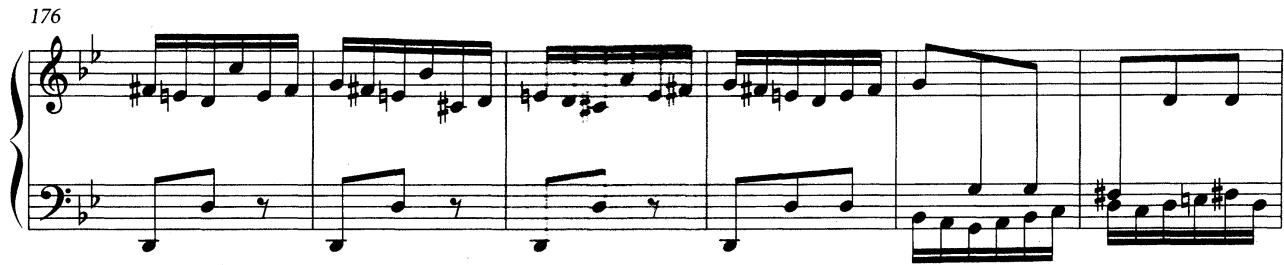
中文讲解
这是第 29 页上的一处图像占位符,按照段落顺序应与正文例示材料相配合,但从当前输入无法辨识具体的谱例编号或具体谱面音型;它对应 P0114 中所讨论的 Vordersatz、Fortspinnung 或其后的某个具体谱例段落之一。需查阅原书图版以确认其与正文中 m. 7 起点的五声部紧接模拟、ripieno-like 伴奏段或 Vorimitation 段落的对应关系。
补充说明
本占位符的具体谱面内容无法从输入文本中定位,故无法进一步对应到正文某一具体小节;此为版式元素,讲解以“需查看原图”为限。
第4段(P0117)
原文复述
[第29页图像或乐谱示例占位符:原书内嵌图像数据已被省略,仅保留位置与图注说明。需查看原书图版以核对其谱面内容。]
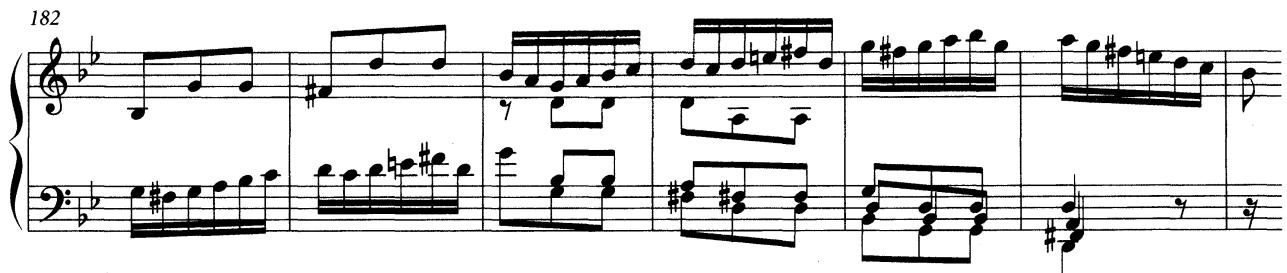
中文讲解
这是第 29 页上的又一处图像占位符,位置紧邻前一占位符(P0116),同样属于本节示例系统的组成部分,可能与 P0114 提到的 Ex. 4.13 或 Vorimitation / LEFTBRANCHING 第四次 ritornello 陈述中的某一谱例对应。具体所指需查阅原书图版以确认;本节讲解层面已完整,正文不再设独立段落,因此该图版在教学意义上的核心作用是“让前文的技法论述获得谱面实证”。
补充说明
无额外补充;具体谱例号与小节位置需以原书图版核验。
脚注 / 边栏 / 图表 / 附加信息(如有)
本小节附加材料仅含 P0115 版心信息(页码 130、书名、作者、出版信息、下载单位)以及 P0116、P0117 两个位于第 29 页的图像/谱例占位符。前者起版本与版权标识作用,对正文论证无直接影响;后者作为谱例系统的视觉支撑,承担对 P0114 中所讨论的 Vordersatz、Fortspinnung、Vorimitation 及 LEFTBRANCHING 等技法的实证功能,但因图像数据在输入中省略,其具体谱面编号与对应小节需以原书图版核对。
💡 本节核心要点
- 本节提出并解决一个体裁难题:在没有乐队协奏的情况下,如何为一架键盘乐器写作兼具协奏动力与赋格暗示的乐章?
- 巴赫的应对策略是保留协奏风格的动态和声发明(Sonate auf Concertenart 与 einstimmiges Concert 传统),而仅以“极细的暗示线索”指向赋格体裁。
- 开头 Vordersatz 在 m. 7 上模拟五声部紧接对位,但作者用“pretends to simulate”明确指出这只是外观上的赝品,赋格随后便不再以真正的对位独立姿态展开。
- Fortspinnung 段在 mm. 8、10、12 等处转入 ripieno-like 的伴奏功能,[F3] 段落里“violins and violas”配合通奏低音倾泻,构成由键盘想象出来的整支乐队幻象。
- LEFTBRANCHING(向左增量延伸 Vordersatz 起始端)配合 Vorimitation(solo 段尾部的先行模仿)使第四次 ritornello 出现“七名演奏者争主题”的赋格式错觉,但作者强调这是 illusion。
- 全段的推论落点:在缺少乐队的协奏作品中维持赋格暗示,代价是把赋格作为完整体裁牺牲掉;这解释了为何巴赫不为长笛或维奥尔琴与数字低音作品写出真正赋格式的协奏乐章,而以利都奈罗原则的精巧改写代替。
🔑 关键术语
- Sonate auf Concertenart(协奏风格奏鸣曲):本节用以界定 BWV 808 所继承的体裁资源——即在没有乐队的情况下,键盘作品通过动态和声模仿协奏动力化进行的写作传统,是本曲“虚拟协奏”得以成立的核心来源之一。
- einstimmiges Concert(单声部协奏曲):与 Sonate auf Concertenart 并列的另一协奏体裁来源,指由单一键盘乐器在无乐队协奏情境下承担整部协奏曲角色的写作传统,为本节所称 dynamic harmonic invention 提供体裁前提。
- Vordersatz / Fortspinnung:本节分析利都奈罗内部结构的两个组件:Vordersatz 为开场陈述的小前句,Fortspinnung 为紧随其后作展开延展的中段;本节分别讨论它们如何被巴赫用于“模拟赋格—转入全奏伴奏”的双重功能。
- Vorimitation / anticipatory imitation(先行模仿):出现在 solo 段尾部的模仿手法,与赋格答题不同:本节强调它并不构成真正的赋格进入关系,而只是通过主题轮廓预示的技巧来强化“多名演奏者争夺主题”的幻象。
- LEFTBRANCHING:作者为本研究专门定义的分析操作,即将 Vordersatz 的起始端向左(提前若干小节)增量延伸,同时保持其原本的调性功能;本节以 Ex. 4.13 中第四次 ritornello 陈述为例,演示其制造“七声部赋格式错觉”的效果。
- ripieno / continuo:本节用以标识 solo 与伴奏两类织体功能:ripieno-like 指协奏体中全奏式的密集伴奏层,continuo 指通奏低音及其衍生支持声部;两者共同支撑起“键盘虚构整支乐队”的听感。
- ritornello principle(利都奈罗原则):贯穿全书的协奏体结构原则,本节以此概括巴赫在没有真正协奏赋格的情况下用以“彰显其协奏思维”的替代手段,并指出 Bach 对该原则的若干精妙改写是其写作取舍的最终落脚点。
- BWV 808:本节分析的具体对象,在正文语境中被描述为“this concerted prelude”,其开头由 Vordersatz 做出五声部伪赋格紧接模拟,且全文通过 LEFTBRANCHING 等手法协奏体与赋格暗示的并置。
1.21 [描述性拆分] The Sonata as Example Rather Than Exemplar
第1段(P0118)
原文复述
To say that the G minor gamba sonata resists tasteful imitation means not only that its process is unique to its own material, but also that its genre obscures a sequence of “clear and distinct” ideas. To be sure, the piece discloses a great deal about the genre called the Sonate auf Concertenart—or better, Bach’s understanding of it. Yet there is precious little that instructs the avid amateur in a genre of musical composition: the sonata lacks concrete musical events to be copied for edification and profit. It may serve, then, as an example but not as an exemplar. The entire work, it seems, rejects precisely that concept of clarity which came to predominate musical thinking about progress and good taste. Mattheson echoes this sentiment when he writes that “one must have a secure, clear and pure concept of each main style, according to the cited principles, maintain good order therein, not improperly mix impression and expression with one another nor place his troops under a foreign banner.” $^{25}$
中文讲解
本段是本小节的核心论点所在,作者在此对标题中的“example 与 exemplar”这对区分作出了正面界定。
首先,作者将前文关于 G 小调古大提琴奏鸣曲“抵制雅致模仿”(tasteful imitation)的判断一分为二:一是该作品的过程仅属于其自身的材料(unique to its own material),二是其体裁本身遮蔽了一系列“清晰而明确的”(clear and distinct)观念。这意味着读者无法把它当作任何通用规范的演示样本。
其次,作者给出一个让步(To be sure):作品确实透露了关于“协奏体奏鸣曲”(Sonate auf Concertenart)这一体裁——更准确地说,是巴赫对这一体裁的理解——的大量信息。然而,它却几乎没有给热切的业余学习者提供可供复制以获得教益和收益的具体音乐事件(concrete musical events to be copied)。这正是“example(作为个例)”与“exemplar(作为范本)”之分的关键:个例可以展示某一现象,但并不提供可被仿效的清晰模式。
由此作者推出第三层判断:整部作品拒绝的,正是那种在关于进步与良好趣味的音乐思考中逐渐占据主导的“清晰性”(clarity)观念。他引证 Mattheson 的论述——必须对每一种主要风格拥有稳固、清晰、纯粹的概念,不混淆印象与表达、不让部队悬挂异邦旗帜——来印证这一古典主义式的风格纯洁论。
这段话的论证策略是:先由个案(奏鸣曲本身)出发引出 example/exemplar 的区分,再用 Mattheson 的理论话语为“清晰性”这一审美理想做外部佐证,从而把巴赫的这部作品定位为一种对主流“清晰性”理想的反例。读者应特别注意的是:作者并非简单否定巴赫作品的价值,而是说它拒绝被作为“教学样本”使用,其价值在于作为独一无二的例证,而非可模仿的范式。
补充说明
本段中“example 而非 exemplar”的区分是本小节标题的直接展开:example 指独一无二的实例,exemplar 指可作范本的典型。Sonate auf Concertenart 与“impression / expression”的措辞源自 18 世纪德语音乐修辞传统,Mattheson 引文中的“foreign banner”意象延续了上文的军事比喻,与“troops”一词呼应。脚注 25 标记的 Mattheson 引文出处将在 additional_information 中注明其作用。
第2段(P0119)
原文复述
It is true, of course, that stylistic compounds, with their ostensible disregard for distinct categories, were found on the very same aesthetic agenda. Here one could as easily cite Couperin’s goûts réünis as Heinichen’s glückliche Mélange—even the Sonate auf Concertenart itself. But although it may not seem so at first glance, the contemporary demand for clarity functioned in tandem with an equally strong recommendation favoring the so-called mixed style. This becomes evident when one considers a seeming contradiction in Scheibe’s Compendium musices (ca. 1730). Scheibe first connects clarity to stylistic purity in a statement common to most classicizing aesthetics. “With respect to the music itself,” he writes, “one must take care, whether working in French, Italian or German style, not to mix one with the other, for the clarity of the styles must be observed as much as the expression of the object itself.“26 Yet only a few pages later, Scheibe notes:
中文讲解
本段推进论证,从“风格纯洁论”转向看似与之矛盾的“混合风格”推荐。
第一层让步:作者承认,表面上忽视范畴分界的“风格化合物”(stylistic compounds)其实就出现在同一份审美议程上。他并列三例以说明混合现象的普遍性:库普兰的 goûts réünis(“融合趣味”)、海尼兴的 glückliche Mélange(“幸运的混合”),甚至包括 Sonate auf Concertenart 本身——这就把前一节已经讨论过的巴赫作品再度拉回到论证中。
第二层转折:尽管初看之下似乎矛盾,但作者指出,所谓“清晰性”的诉求与提倡所谓“混合风格”的建议在那个时代其实是并行运作、彼此配合的(in tandem)。这是本段的关键判断:风格纯洁与风格混合并非水火不容,而是同一审美框架的两面。
第三层例证:作者从 Scheibe 的《音乐纲要》(Compendium musices,约 1730 年)中拈出一个“表面的矛盾”作为佐证。Scheibe 先是在一段典型的古典主义美学话语中将“清晰性”与“风格纯洁”挂钩:无论使用法国、意大利还是德国风格,都不应相互混淆,对风格清晰性的维护与对表现对象的尊重同等重要。这是与 Mattheson 引文相呼应的一面。
最后一句以“Yet only a few pages later, Scheibe notes:”戛然而止,将 Scheibe 数页之后的第二段话悬置,引向下一节。它在结构上是一个延宕的反转伏笔:从“禁止混合”到“提倡混合”,读者将看到 Scheibe 在同一本书中给出看似自相矛盾、实则互补的两条主张。
理解本段的关键在于:作者不是在削弱前一段关于“清晰性”的论点,而是要把它放回到一个更大的框架中——清晰性并不必然排斥混合,混合恰恰是清晰性主张的另一副面孔。
补充说明
Couperin 的 goûts réünis、Heinichen 的 glückliche Mélange 是 18 世纪初德、法地区“混合风格”写作的代表实例,与巴赫的 Sonate auf Concertenart 并列出现,表明作者有意把巴赫的这一体裁放置于更广泛的欧洲混合风格实践之中。Scheibe 引文脚注 26 与前段脚注 25 一同在 additional_information 中说明其作为同时代理论旁证的功能。本段末尾的悬置句预期在下一节(1.22)得到接续。
第3段(P0120)
原文复述
Dreyfus, Laurence. Bach and the Patterns of Invention. E-book, Cambridge, Mass.: Harvard University Press, 1996, https://hdl.handle.net/2027/heb05561.0001.001. Downloaded on behalf of Indiana University, Bloomington
中文讲解
本段并非正文,而是电子书版本所附的版权/来源说明(citation line),位于页脚位置。其作用是标示本节所属著作的版本信息:作者为 Laurence Dreyfus,书名为 Bach and the Patterns of Invention,由哈佛大学出版社于 1996 年出版,本电子文本系应印第安纳大学布卢明顿分校之请下载,URL 指向 HathiTrust 数字图书馆的同一资源。
对正文阅读而言,此行仅具有版本标识功能,不引入新的论证或材料,因此不构成对本节论证链的推进。
补充说明
本段为电子书来源说明行,属版面元数据;其 URL 与下载机构信息不影响本节正文的理解。
脚注 / 边栏 / 图表 / 附加信息(如有)
本小节包含两处脚注标记(25、26),分别落在 P0118 末尾的 Mattheson 引文与 P0119 中部 Scheibe 的引文之上。两段引文在脚注中应注明各自出处,作用一致——为作者关于“清晰性”与“风格纯洁”主导 18 世纪音乐审美的判断提供同时代理论文献的旁证,使 Mattheson 与 Scheibe 的话语与巴赫作品的个案分析相互印证。Scheibe 在《Compendium musices》中的引文在本段末尾被有意截断,伏笔留给下一节(1.22)继续完成其“看似矛盾、实则互补”的对照。P0120 为电子书来源/版权标识行,属于页脚版面元数据,不参与本节论证。
💡 本节核心要点
- G 小调古大提琴奏鸣曲的过程独一无二且其体裁遮蔽了“清晰而明确”的观念序列,因此可作 example(独一无二的实例)而不可作 exemplar(可模仿的范本)。
- 该作品的价值在于揭示巴赫对 Sonate auf Concertenart 体裁的理解,而非提供可供业余学习者复制以获教益的具体音乐事件。
- 整部作品拒绝了在“进步与良好趣味”话语中占据主导的“清晰性”观念,Mattheson 关于风格纯粹与良好秩序的论述为这一审美理想提供了同时代的理论背书。
- “风格化合物”(如 Couperin 的 goûts réünis、Heinichen 的 glückliche Mélange 与 Sonate auf Concertenart 本身)表面上忽视风格范畴,实际上仍处于同一审美议程之内。
- 对“清晰性”的诉求与对“混合风格”的推荐在 18 世纪的语境中是并行运作的(in tandem),Scheibe《Compendium musices》中的“表面矛盾”即为佐证。
- Scheibe 先把清晰性与风格纯洁挂钩(不可混用法、意、德风格),却在数页之后又提示混合风格的价值,构成了作者用来揭示古典主义美学双重性的关键证据。
🔑 关键术语
- example vs. exemplar:本小节的核心区分:example 指独一无二的实例,仅展示现象;exemplar 指可作教学与模仿范本的典型。作者以此说明巴赫这部奏鸣曲拒绝被作为可复制的范本使用。
- Sonate auf Concertenart:“协奏体奏鸣曲”,一种把协奏曲写法融入独奏奏鸣曲的混合体裁,在本节中既是巴赫作品所处的体裁,也是与 Couperin、Heinichen 的混合风格实践并置讨论的对象。
- clarity (Klarheit):18 世纪德语音乐美学中的核心范畴,指音乐风格与表达对象的清晰可辨。它与“风格纯洁”紧密相关,并在关于“进步与良好趣味”的话语中占据主导地位,作者认为巴赫这部作品恰恰对这一观念构成反例。
- stylistic compounds / mixed style:指有意混合多种民族风格(法、意、德)或多种体裁元素的写作方式;表面上与“清晰性”主张矛盾,但在作者看来二者在当时的审美议程中实为并行不悖的两面。
- goûts réünis / glückliche Mélange:分别指 Couperin 提倡的“融合趣味”与 Heinichen 主张的“幸运的混合”,是 18 世纪初混合风格写作的代表性理论与实践,与巴赫的协奏体奏鸣曲并列出现。
- Scheibe, Compendium musices (ca. 1730):Johann Adolf Scheibe 的《音乐纲要》,作者从中摘录两段看似矛盾、实则互补的话语,用以证明同一思想家在同一著作中既主张风格纯洁、又认可混合风格。
1.22 [描述性拆分] Clarity and Mixed Style in Scheibe
第1段(P0121)
原文复述
One might raise the question whether it would not be possible to combine the most beautiful [qualities] of these three nations and apply them in a single piece. Following the example of several masters, the author answers that this is indeed possible. The Italian, he says, sets great store by the agreeableness and sensual elaboration of melody (and consequently also by “taste”); the Frenchman loves a sprightly and piercing free spirit; the German is particular about good and thorough workmanship and harmony. Whoever therefore unites these three pieces with one another must produce a perfectly beautiful work.
中文讲解
这段是Scheibe原话的转述(出自脚注27所指的文献):面对一个非常自然的设问——能否把三个欧洲音乐民族最美好的特质融于同一首作品——他以若干大师的实际先例给出肯定回答,并随即为三种民族风格各自开列一份“优点清单”:意大利派重旋律的悦人感与感官性的精雕细琢(连带所谓“趣味”/taste),法国派重活泼而具穿透力的自由精神,德国派重做工扎实、处理彻底的工匠式手法与和声。三者合一即可造就“完美美的作品”。在本小节的论证脉络里,这段引文是Scheibe立场中“组合”一面:他承认民族风格可以各取所长而熔于一炉。后续段落(P0122)正是要把这层“组合”论与他在别处对风格混杂的反对并置比较,从而揭示两者其实共享同一个底层美学标准。读者需要注意的是:这里的“完美美的作品”并非指把三种风格随意搅拌,而是Scheibe对“最佳成分”进行选择性抽取后所作的价值判断。
补充说明
脚注27指向Scheibe原典,本段即是该脚注所引内容,因此本段带有引文性质:保留方括号[qualities]表示原文此处有可补字,正文里出现的“taste”加了引号,提示它是一个被理论化的范畴而非日常义。
第2段(P0122)
原文复述
Although Scheibe’s two statements may seem difficult to reconcile, both display a subservience to a strict notion of clarity. What Scheibe opposes in the first case is the obscurity of a “mixing-up” of styles (Vermischung), while in the second he favors their selective agreement (Vereinbarung). The fashionable galant aesthetic promoted a compositional attitude aimed at naturalness and clarity in all styles. With regard to the national styles, this aesthetic self-consciously sought to choose and combine the best features of each. The union of tastes was never to be construed as a random pastiche of musical conventions, but as a logical choice of superior items drawn from each national style. Rather than speaking in a polyglot, the new music was to enunciate a universal, supra-national diction whose benchmark was clarity. Moreover, composers who favored the mixed taste shared the view that styles were not only empirically definable but also unchanging and real. This is why the writers who conceptualized the mixture—Heinichen, Mattheson, and Scheibe—could think as synthetically as composers such as Fux, Telemann, and Couperin.
中文讲解
本段是全节论证的枢纽:作者把Scheibe表面上互相矛盾的两段话统一在同一个美学原则之下——清晰(clarity)。关键在于区分两个德文术语:Scheibe在第一种语境中反对的是Vermischung(风格的“混杂”),在第二种语境中提倡的是Vereinbarung(风格的“选择性协和”);前者导致晦暗不明,后者仍然通向可辨别的清晰。这一区分让“混合风格”在Scheibe这里并不是放纵地乱炖,而是被规范为一种“合乎理性的最佳选择”。本段进而将这种态度归入当时流行的galant(优雅/合宜)美学:后者要求自然与清晰,因此对民族风格要做的是“挑选最佳成分”而非“随便拼贴”。作者用“说多国语言”(polyglot)与“说出一种超民族的普世语言”(supra-national diction)的对比,形象化地呈现了这一立场——混合不是为了杂多,而是为了更高的可识别性。最后,本段还指出一条重要的理论预设:相信“混合趣味”的作曲家与理论家都把风格视为经验上可定义、且固定、实在的对象。正是这一预设,使Heinichen、Mattheson、Scheibe这些理论家能像Fux、Telemann、Couperin这些作曲家那样进行“综合性的”思考。换言之,分类学的稳定性是“混合趣味”得以成形的认识论前提。
补充说明
Vermischung与Vereinbarung在德语中分别含有“混杂无序”与“可被约定的协和”之意;galant在十八世纪初指一种强调自然、清晰、合宜趣味的美学取向,与法国宫廷趣味紧密相关;“超民族语言”(supra-national diction)的比喻延续自前段“说多国语言”之喻,提示作者主张新音乐追求的是一种可被普遍理解的表达秩序。
第3段(P0123)
原文复述
The matter of combining styles veered so dangerously toward the obscure that Mattheson himself—who had Horace’s motto of discordia concors engraved on the title page of the Capellmeister—conceded: “I am a little worried, namely, that as time goes by only a few or even perhaps not a single one of these styles and their genres might remain unadulterated and with distinguishing characteristics. For there is already such a mishmash to be found in the styles of many self-instructed composers, as if everything were deteriorating into a formless mass. And I believe one could find a number of them who, when asked in which style this or the other piece were set, would be embarrassed for an answer.” Mattheson therefore attaches great discomfort to pieces that the critic cannot easily categorize. Confounding the stylistic categories until they become unrecognizable threatens the very progress of music itself. This is why Bach’s notions of style and genre—especially as exemplified in the gamba sonata—appear so willfully opposed to the basis on which the new musical aesthetic was erected. Among his contemporaries, only Bach seems to have resisted the efforts of the early German Enlightenment to isolate, catalogue, and even proscribe the various Schreibarten. For this reason one cannot construe Bach’s compositional method as yet another realization of the “united tastes.” Instead, he seems to have interpreted the given categories of composition without treating them as natural objects possessing fixed properties amenable to empirical description and rational ordering—a property already seen as vital to his patterns of invention. For him, this scientific premise may have constituted not so much progress as pedantry.
中文讲解
本段先以Mattheson本人的忧虑为引子(脚注28),揭示“混合风格”这一思路的内在风险:即便是将其《Capellmeister》题词置于贺拉斯“discordia concors”(“和而不同”)箴言之下的Mattheson本人,也承认时风正使各类风格体裁趋同而失去区分度,自学而成的作曲家作品已成“大杂烩”,甚至无法说明自己写的是哪种风格。由此作者得出Mattheson的理论立场:让批评家无法轻易归类的作品令他深感不安;混淆乃至消解风格范畴,会危及音乐自身的进步。承接这一判断,本段把Bach引入对比:Bach的风格与体裁观念(尤以gamba奏鸣曲为代表)似乎是有意与新美学的认识论根基作对——在同时代人中,唯独Bach抗拒早期德国启蒙运动对各种Schreibarten(写作方式/风格)所作的“孤立—编目—甚或禁绝”之处理。因此,Bach的作曲方法不能被解读为又一种“趣味合一”的实现:他似乎在使用既有的作曲范畴的同时,并不把它们当作具有固定属性、可以用经验描述与理性秩序加以归置的“自然物”。这一态度在前文讨论其“发明模式”时已经显出关键作用。最后一句是极具立场色彩的论断:在Bach看来,那种把风格当作自然科学对象加以分类的“科学前提”,与其说是进步,不如说是学究气(pedantry)。本段的论证功能是为Bach的风格行为提供一个反衬背景:不是Bach不懂风格范畴,而是他拒绝把范畴当作固定实在来对待。
补充说明
Horace的discordia concors意为“差异中的和谐”,Mattheson将其题于《Capellmeister》页以申明自己主张风格多样性下统一秩序;但本段引文表明他对自己所推动的“混合”事业已产生自我警惕。Schreibarten(复数)指十八世纪德国音乐理论中关于不同“写作方式”或风格类别的术语体系,启蒙运动中的分类冲动正是要对它进行系统编目。
第4段(P0124)
原文复述
[Page header/footer:] 132 Bach and the Patterns of Invention. [Citation:] Dreyfus, Laurence. Bach and the Patterns of Invention. E-book, Cambridge, Mass.: Harvard University Press, 1996, https://hdl.handle.net/2027/heb05561.0001.001. Downloaded on behalf of Indiana University, Bloomington.
中文讲解
本段不是正文,而是该电子书的页眉页脚与文献引用信息:上方为书名页眉“132 Bach and the Patterns of Invention”,其中132为页码;下方为出版与下载说明,标明本电子书由Harvard University Press于1996年出版,本副本系为印第安纳大学伯明顿分校(Indiana University, Bloomington)下载所得。其版面作用仅在于标识章节位置与文献来源,与本节论证无直接内容关联,但提示读者本节出自Laurence Dreyfus所著《Bach and the Patterns of Invention》一书的第132页附近。
脚注 / 边栏 / 图表 / 附加信息(如有)
本节附有两处脚注标记:脚注27对应P0121中Scheibe关于“综合三国风格”的原典引文;脚注28对应P0123中Mattheson关于风格混杂可能沦为“大杂烩”的自述引文。两段引文共同支撑本节“清晰—混合—分类学”这一论证链:脚注27展示“混合”被作为正面理想,脚注28则展示同一理想被其倡导者自己察觉到的风险。除脚注外,本节范围内未出现图表、乐谱或边栏等附加材料。
💡 本节核心要点
- Scheibe关于民族风格可被组合的论断,与他在别处反对风格混杂的论断,看似矛盾实则共享同一美学基准——清晰(clarity)。
- 关键区分在于Vermischung(风格的混杂)与Vereinbarung(风格的选择性协和):前者导致晦暗,后者通向清晰,二者效果截然相反。
- galant美学要求作曲家从各民族风格中“挑选最佳成分”,其目标不是多语杂陈,而是锻造一种可被普遍理解的超民族音乐语言。
- Mattheson作为“混合趣味”的倡导者,本人已对风格趋同、不可辨认的危险发出警告,提示“混合”内含自我瓦解的风险。
- Bach的特殊性在于:他并未把既有的体裁与风格范畴当作具有固定属性的自然对象加以处理,因而难以被归入“趣味合一”的实现范例。
- 新美学的认识论前提是把风格视为经验上可定义、固定、实在的对象;Bach的拒绝使该“科学前提”在他那里不再呈现为进步,而呈现为学究气(pedantry)。
🔑 关键术语
- Vermischung:德语,意为“混杂、搅在一起”,在本节中特指Scheibe所反对的那种让风格失去可识别性的随意混合,是导致晦暗的负面范畴。
- Vereinbarung:德语,意为“可被约定的协和、商定”,在本节中指Scheibe所提倡的对各民族风格最佳成分所作的有选择、可辨认的协调,对应清晰这一正面美学目标。
- galant (aesthetic):十八世纪初流行的一种美学取向,强调自然、清晰、合宜的趣味,提倡作曲家从各风格中精选最佳成分而非任意拼贴。
- Schreibarten:德语复数,意为“写作方式/诸种风格类别”,是十八世纪德国音乐理论中被启蒙运动加以孤立、编目甚至禁绝处理的分类对象。
- discordia concors:拉丁语,出自古罗马诗人贺拉斯,意为“差异中的和谐”,Mattheson将其题于《Capellmeister》扉页以申明其美学理想,本节引用此典故是为了引出他对该理想自我瓦解风险的忧虑。
- supra-national diction:作者用来说明“混合趣味”目标的比喻:新的音乐不是用多国语言七嘴八舌,而是锻造一种高于单一民族、可被普遍理解的发声方式,其衡量基准是清晰。
1.23 [描述性拆分] Hermeneutic versus Scientific Understanding
第1段(P0125)
原文复述
To what can one attribute Bach’s rejection of the most advanced thought of his day? In this connection, it is useful to consider a central distinction between traditional theology and the German Enlightenment with regard to the notion of understanding. In the more traditional mode, understanding is directed toward interpreting Scripture, as when one writes a sermon. Its model is therefore hermeneutic and stresses the “subtilitas applicandi” (as the Pietist J. J. Rambach put it in 1723)—that is, the talent to apply the text to the present situation of the interpreter. In the epistemology of the early German Enlightenment, on the other hand, understanding means classifying and describing an object: its model is therefore scientific. The interpreter thus devises a method that separates “intellection” from “explanation” and suspects “application” as prejudicial to truth. The gamba sonata seems to suggest a view of genre and style in which one cannot discern Bach’s initial view apart from his interpretation of them. From this perspective, the act of understanding already constitutes an interpretation. Indeed, for Bach, the practice of musical composition seems much more akin to a sermon, a mode of understanding that results in something new by attempting to explain the old.
中文讲解
本段提出了全节的核心理论框架:传统神学与早期德国启蒙运动在“理解”概念上的根本对立。
第一种——传统神学的“诠释学式理解”:以解读《圣经》、撰写讲道(sermon)为典型任务,其模型因此是诠释学的;它强调 subtitlitas applicandi——“应用的精妙技艺”,这是虔信派神学家 J. J. Rambach 在 1723 年提出的术语,指把文本应用到诠释者当下处境的才能。换言之,理解不是中立地描述文本,而是让古老文本对当下听众/读者产生意义。
第二种——早期德国启蒙的“科学式理解”:理解变成对对象的分类与描述。诠释者由此发展出一种方法,把“领会”(intellection)与“解释”(explanation)分开,并把“应用”视为损害真理的成见。
Dreyfus 用 G 小调 gamba 奏鸣曲把这一框架落到巴赫身上:这首作品暗示巴赫对体裁与风格的一种看法——巴赫的“初始看法”无法与他对它们的“解释”剥离开来;理解本身就已经是解释。在他看来,巴赫的作曲实践更接近于写讲道——一种通过解释“旧”而产出“新”的理解模式。
这一段为前文关于“两个巴赫诠释比喻”(永恒创造者 vs. 历史化巴赫)的讨论提供了理论落点:与其用启蒙主义的科学模型去分类巴赫,不如承认巴赫的创作本身就处在诠释学传统之中。
补充说明
原文对 J. J. Rambach 的说明仅限于括号内信息:他被称作“Pietist”(虔信派),1723 年使用过 subtitlitas applicandi 一词,且该词在本节中的释义即“将文本应用到诠释者当下处境的才能”。除此之外,原文并未给出 Rambach 的具体著作、所处学科或原句内容,因此本节不宜补充这些外部细节。
注脚 29 对应本段末句“suspects ‘application’ as prejudicial to truth”,原文未展开该注注内容,故此处不补写。
第2段(P0126)
原文复述
Returning, finally, to the two tropes of Bach interpretation, it seems preferable neither to choose between them nor to reject them. Rather, we might best explore the merits of each. The message of “Bach the timeless creator”—as in the first trope—may have outlived its usefulness, but as a method capturing intuition by an honest use of metaphor, it still has much to commend it: hearing a Bach work as Beethovenian meditation at least inspires thought. On the other hand, as the second trope rightly recognizes, Bach seen as Beethoven masks the properly historical question: how and why, in eighteenth-century Leipzig, did Bach compose music this way? To provide a historical answer undoubtedly entails a thorough examination of sources and origins. However, the search itself can never amount to a historical judgment. Indeed, as seen in the case of the G minor gamba sonata, the search for an antecedent concerto tends to vacate, rather than approach, the work at hand. This is one reason why twentieth-century studies of Bach’s music have not yet replaced Spitta. Instead, it would be better to confront our own figurative language in order to rescue what is valuable in it as well as to invent new metaphors that will enrich our understanding of Bach’s imaginative approach to invention.
中文讲解
本段是全节的小结段落,Dreyfus 回到开篇的“两个巴赫诠释比喻”,提出一种辩证的处置方式:既不在二者之间择一,也不全盘否定,而是分别考察其价值。
第一种比喻——“作为永恒创造者的巴赫”:作为关于巴赫的“信息”已过时,但作为诚实运用隐喻去捕捉直觉的方法仍值得肯定——把一部巴赫作品听成“贝多芬式冥想”至少能激发思考。
第二种比喻——历史化的巴赫:它正确地指出,把巴赫看作贝多芬会遮蔽真正的历史问题——十八世纪莱比锡的巴赫为何、以何种方式这样作曲?给出历史答案当然要彻底考察来源与起源,但“寻找”本身永远不能等同于“历史判断”。以 G 小调 gamba 奏鸣曲为例,对其前身影晌曲(antecedent concerto)的追索往往绕开而非接近作品本身。这也是二十世纪巴赫研究尚未取代 Spitta 的原因之一。
结论:与其回避隐喻,不如直面我们自己的比喻语言,既抢救其中有价值的部分,又发明新隐喻来丰富对巴赫“想象性的发明方式”的理解。
这一段把 P0125 建立的“诠释学—科学”对立与开篇的两种比喻合拢:科学模型不能取代隐喻,隐喻也不能不面对历史追问;真正的工作是用新隐喻去匹配巴赫自己的“想象性发明”逻辑。
补充说明
本段关于 Spitta 的措辞仅有一句——“二十世纪的巴赫研究尚未取代 Spitta”。原文未给出 Spitta 的生卒年代、其具体著作名称或其学术地位评估,因此本节不宜补写这些外部事实。
本段提及“两个巴赫诠释比喻”,但其完整内涵(何为第一/第二比喻、彼此关系)需回到前文方可充分展开;本节内部只明确:第一比喻以“Bach the timeless creator”为核心、并以“贝多芬式冥想”的听法为代表;第二比喻把“历史化问题”摆上台面。
第3段(P0127)
原文复述
Dreyfus, Laurence. Bach and the Patterns of Invention. E-book, Cambridge, Mass.: Harvard University Press, 1996, https://hdl.handle.net/2027/heb05561.0001.001. Downloaded on behalf of Indiana University, Bloomington
中文讲解
这是该 E-book 版本的页脚/版心引用信息,标明:作者 Laurence Dreyfus,书名 Bach and the Patterns of Invention,哈佛大学出版社 1996 年出版,E-book 格式,附 Handle 系统永久链接,并注明由印第安纳大学布卢明顿分校的用户下载。
作为版面元素,它不属于正文论证,对本节内容的理解没有直接贡献;其功能是学术引用与电子出版物的来源标注。
脚注 / 边栏 / 图表 / 附加信息(如有)
本节附有注脚 29,位于 P0125 末句“suspects ‘application’ as prejudicial to truth”之后,原文未给出该注脚的展开内容;其具体出处需查阅原书,本节不予补充。
P0127 为该页电子版的页脚引用信息:作者 Laurence Dreyfus、书名 Bach and the Patterns of Invention、哈佛大学出版社 1996 年 E-book 版、Handle 永久链接,以及下载主体印第安纳大学布卢明顿分校。该信息为版本/出处标注,不参与本节论证。
💡 本节核心要点
- 传统神学的“理解”是诠释学的:以解经—讲道为模型,强调 subtitlitas applicandi,即把文本应用到诠释者当下处境的能力(Rambach,1723,虔信派)。
- 早期德国启蒙的“理解”是科学的:对对象分类、描述,并把 intellection 与 explanation 分开,将 application 视为损害真理的成见。
- G 小调 gamba 奏鸣曲显示巴赫的体裁观与风格观中,“初始看法”与“解释”不可分离——理解本身就已经是解释。
- 巴赫的作曲实践近似于讲道:通过解释“旧”产出“新”,这与启蒙主义的科学描述模型在根本上不属一类。
- Dreyfus 不主张在“永恒创造者”与“历史化巴赫”两种比喻之间二选一:前者作为隐喻方法仍可激发思考,后者正确提出历史问题,但来源考据本身不能等同于历史判断(如 gamba 奏鸣曲前身影晌曲的追索往往绕开而非接近作品)。
- 结论性主张:直面并检视我们已有的比喻语言,抢救其中有价值者,并发明新隐喻以匹配巴赫“想象性的发明方式”。
🔑 关键术语
- subtilitas applicandi:拉丁术语,意为“应用的精妙技艺”。本节据 P0125 引自虔信派神学家 J. J. Rambach 1723 年的用法,指诠释者把文本应用到自身当下处境的才能,是传统诠释学—讲道式理解的标志。
- hermeneutic understanding(诠释学式理解):本节定义为以解读《圣经》、撰写讲道为模型的“理解”,强调文本向当下情境的展开与应用,与早期德国启蒙的科学式理解相对立。
- scientific understanding(科学式理解):本节定义为早期德国启蒙的认识论模式:把对象分类、描述,并把“领会”与“解释”分开,怀疑“应用”会损害真理。
- intellection / explanation:本节据 P0125 是早期德国启蒙方法论中被区分的两个层次:intellection 为内部领会,explanation 为外部解释;二者分离的目的在于排除被怀疑为带成见的 application 环节。
- Spitta:本节据 P0126 仅作为巴赫学术史的一个标志——二十世纪的巴赫研究“尚未取代”Spitta,原文未给出其生平年代或著作细节。
- two tropes of Bach interpretation(巴赫诠释的两个比喻):本节 P0126 回溯的开篇议题:第一比喻把巴赫塑造为“永恒创造者”,常以贝多芬式冥想的方式去听;第二比喻则把巴赫历史化,追问十八世纪莱比锡语境中他的创作方式。
1.24 [描述性拆分] Conclusion: Salvaging Both Tropes
第1段(P0128)
原文复述
BLANK PAGE
中文讲解
这是版面上的一个占位文字,表明该页为空白页。它出现在印刷稿或电子书的物理页面之间,提示读者这一页没有正文内容,仅作为排版分隔存在;就内容而言,它不承载任何论断、证据或论证步骤。
第2段(P0129)
原文复述
Dreyfus, Laurence. Bach and the Patterns of Invention. E-book, Cambridge, Mass.: Harvard University Press, 1996, https://hdl.handle.net/2027/heb05561.0001.001. Downloaded on behalf of Indiana University, Bloomington
中文讲解
这段内容是出版来源/版权说明,标识本文所用 Laurence Dreyfus《Bach and the Patterns of Invention》一书的版本与获取信息:电子版(E-book),由位于马萨诸塞州剑桥市的 Harvard University Press 于 1996 年出版;其后给出 HathiTrust 等数字图书馆的持久标识符 URL(https://hdl.handle.net/2027/heb05561.0001.001),并注明该电子版是为印第安纳大学布鲁明顿分校(Indiana University, Bloomington)的授权用户下载的。在学术著作中,这类说明通常出现在章末、书末或电子版扉页附近,作用是标明材料来源、版本类型、出版机构与访问权限,而非参与正文论证;读者可由此追溯引文的原始载体,并核对引用是否与所据版本一致。
补充说明
该条目属于来源/出处元信息(source/citation notice),其作用是提供版本与获取凭证,而非补充论点;与正文 P0128 的空白页一起,构成本节末尾的版面收束。
脚注 / 边栏 / 图表 / 附加信息(如有)
本节末尾除正文段落外,仅含一处版面白页标记(P0128)和一段出版来源说明(P0129),二者均为非正文版面/元信息,不参与论证。
💡 本节核心要点
- 本节正文论述止于前文,此处进入版面的收束区域。
- P0128 为空白页占位,表明该页无正文内容。
- P0129 为所引文献 Laurence Dreyfus《Bach and the Patterns of Invention》的电子版出处说明,包含出版机构、出版年份、URL 与授权下载机构。
- 该来源说明的功能是版本与获取凭证的标注,不承担论证任务。
🔑 关键术语
- BLANK PAGE:版面上的空白页标识,用于在排版中分隔章节或装订区段,本身不承载论证内容。
- E-book:电子版图书版本标识,说明此处引用的不是纸质印刷版,而是数字版本。
- Harvard University Press:出版机构名称,此处标明该书由哈佛大学出版社于 1996 年出版。
- hdl.handle.net URL:HathiTrust 数字图书馆等系统使用的持久标识符链接,用于稳定定位该电子版的数字副本。
- Downloaded on behalf of Indiana University, Bloomington:访问授权说明,表明该电子版是基于印第安纳大学布鲁明顿分校的机构订阅而被下载的。
2.1 [描述性拆分] Fugue as Genre Rather Than Form
第1段(P0130)
原文复述
Matters of Kind
中文讲解
这是一个小节标题,原文仅写作”# Matters of Kind”(关于“种类”的讨论)。它开启本小节的论题:作者要把注意力从“形式(form)”转向“种类/体裁(kind/genre)”,为随后主张“赋格是一种体裁而非形式”提供语义入口。
第2段(P0131)
原文复述
It has become commonplace to state that, unlike a minuet or a sonata, a fugue is not a form. Instead, it is something else: a style, a texture, or perhaps only a technique. In this chapter, I argue that a fugue is a genre, which means that, to understand a fugue by Bach, one must know what kind of fugue it is. This formulation may seem confusing, since the word “form” often serves as a synonym for “genre” or “kind.” In fact, “form” is more properly understood as a metaphor for genre. That is, since the time of the Greeks, people have drawn on the more concrete concept of form or shape to characterize the somewhat more abstract distinctions in kind. Thus it seems entirely natural to talk about the “forms of Baroque dance music” in order to signify genres such as the allemande, the courante, and the gigue. In this usage, “form” implies nothing about the length or external plan of these kinds of music. It is a harmless metaphor, though a metaphor with striking implications for the analysis of music.
中文讲解
本段提出本章的核心主张:与小步舞曲或奏鸣曲不同,赋格不是“形式(form)”,而是一种“体裁(genre)”。作者承认这是常见说法的对立面——通常人们更愿把赋格归为风格、织体或手法,但他坚持要把它界定为体裁,理由是:要理解巴赫的某首赋格,必须先知道它“属于哪种”赋格。
作者预料读者会困惑,因为在日常用法中“form”一词常被当作“genre”或“kind”的同义词。他随即澄清:所谓“form”其实只是一个隐喻——自从古希腊时期起,人们借用较为具体的“形状/形式”这一概念,去指称那些相对抽象的体裁划分。说“巴洛克舞曲的形式”其实指的就是阿勒芒德、库朗特、吉格等体裁本身;在这种用法下,“form”并不暗含长度或外部结构计划。
关键在于句末的反转:这一隐喻虽然看似无害,却对音乐分析具有“惊人的含义(striking implications)”。也就是说,作者将在后面揭示:把“form”误读为外在图式,已经误导了人们对体裁的理解,本段因此充当整章论证的纲领与导火索。
补充说明
本段中作者将“genre”与“kind”互换使用,二者在本节中均指“体裁/种类”,与后面要批判的“形式(form)”概念形成对照。
第3段(P0132)
原文复述
The relation between “genre” and “form” changed radically during the nineteenth century. Under the influence of new ideas about large-scale musical structure, especially in the writings of Adolph Bernhard Marx, “form” became especially identified with the idea of an external plan. And perhaps because the metaphor of “genre as form” was already so rooted in conventional language, pedagogues and listeners—even some composers—became easily convinced that the essence of a musical genre lay in its abstract schematic arrangement, its “form.” What no one seems to have noticed is that this semantic shift turned traditional genre theory on its head. Instead of considering the schematic layout as one feature of a kind of music, writers on music began to view musical kinds as ancillary manifestations of larger forms. Instead of two distinct genres such as allemandes and courantes sharing the feature of two repeated sections, as in the traditional view, both genres now merely illustrated examples of binary form (or “the two-part Liedform,” as Marx dubbed it). The same shift in meaning
中文讲解
本段追溯一段语义史:19世纪,“体裁”与“形式”之间的关系发生了根本转变。作者把这一转变归因于阿道夫·伯恩哈德·马克思(Adolph Bernhard Marx)关于大型曲式结构的写作——在马克思的影响下,“form”被特别等同于“外部结构计划”。由于上一段提到的隐喻(以“形”喻“类”)早已根植于日常语言,教师、听众乃至部分作曲家便轻易接受了一个观点:体裁的本质就在于其抽象的图式化安排,即“形式”。
作者随后点出这个转变的关键后果:传统体裁理论被倒置。此前人们认为“图式布局”只是某类音乐的诸多特征之一;但在此后,写作者们开始反过来,把各种音乐种类看作更大形式的附属显现。换言之,阿勒芒德与库朗特原本是各自独立的体裁,它们共同享有“两段重复”这一特征;按新观点,两种体裁都被降格为“二部形式(binary form)”——即马克思所谓“两段式 Liedform”——的实例。
本段最后一句“The same shift in meaning”在所提供的文本中未完,下一句将出现在下一页,因此读者应将其视为跨页衔接的开头。该段的作用是为后文批判19世纪以来的“形式”观提供历史根据,也为重提“赋格作为体裁”作铺垫。
补充说明
本段提及的人名 Adolph Bernhard Marx 是19世纪德国音乐理论家,文中以"他"代称;其著作中将“二部曲式”称为“the two-part Liedform”。这些信息仅用于解释本段论点的来龙去脉,原文并未提供更多生平背景。
第4段(P0133)
原文复述
Dreyfus, Laurence. Bach and the Patterns of Invention. E-book, Cambridge, Mass.: Harvard University Press, 1996, https://hdl.handle.net/2027/heb05561.0001.001. Downloaded on behalf of Indiana University, Bloomington
中文讲解
这是一条文献来源/版权脚注,并非正文段落。它标明本章出自 Laurence Dreyfus 所著《Bach and the Patterns of Invention》(哈佛大学出版社1996年电子版),并注明由印第安纳大学布卢明顿分校的用户下载。它对正文论点的关系是来源说明,而非论证内容;因此本段在论证链上不提供新主张,只交代章节出处。
💡 本节核心要点
🔑 关键术语
- genre / kind:作者用以指“体裁/种类”,与“form(形式)”相对;本节中两者互换使用,强调赋格首先是一种类别,而非一套外部图式。
- form:在本节中被重新界定为体裁的隐喻,但在19世纪后被等同于“外部结构计划”,作者认为这一等同是导致体裁理论倒置的根源。
- Liedform (two-part / binary):Marx 提出的“二部式 Liedform”,即本节中所谓的 binary form;本节用其作为“形式吞并体裁”的典型例证。
- Adolph Bernhard Marx:19世纪音乐理论家,作者认为其著作是促使“form”含义从体裁隐喻转为外部图式的关键推动者。