目录
ch6 Figments of the Organicist Imagination
- 6.1 [描述性拆分] Chapter Introduction: Competing Ideas of Form and Invention
- 页码:1-1
- 6.2 [描述性拆分] Schenker’s Foothold in Anglo-American Analysis
- 页码:2-2
- 6.3 [描述性拆分] Intentionalism as Antidote and the Intentional Fallacy
- 页码:3-3
- 6.4 [描述性拆分] The Organic Metaphor and the Ursatz as Generative Law
- 页码:4-5
- 6.5 [描述性拆分] Schenker’s Urlinie-Tafel and the Three Descents
- 页码:5-5
- 6.6 [描述性拆分] Mapping Schenker’s Pitches onto the Score (Ex. 6.1)
- 页码:6-7
- 6.7 [描述性拆分] Fugal Complexes and Invertible Counterpoint vs. Large-Scale Voice-Leading
- 页码:7-9
- 6.8 [描述性拆分] Defense of Schenker’s Surface Treatment and the Organicist Bach
- 页码:10-10
- 6.9 [描述性拆分] Schenker’s Generative Techniques and the Derivation of the Subject
- 页码:10-12
- 6.10 [描述性拆分] The ‘Seek and Ye Shall Find’ Method: Second Countersubject and Forbidden Octaves
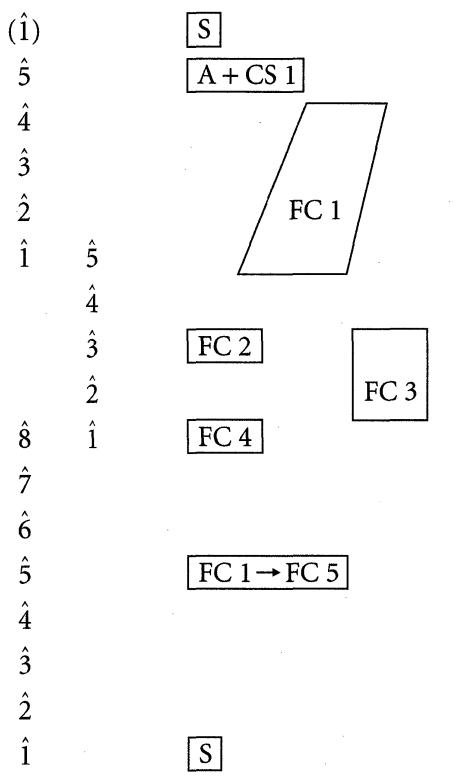
- 页码:13-13
- 6.11 [描述性拆分] Mechanist Arguments: The MODESWITCH and Paradigm Inflection
- 页码:14-14
- 6.12 [描述性拆分] The Order of Permutations and the ‘Laws of Life’
- 页码:15-15
- 6.13 [描述性拆分] The Missing Sixth Permutation and Why Bach Rejected It
- 页码:16-17
- 6.14 [描述性拆分] Toward a Mechanist Analysis: Hierarchies of Invention
- 页码:18-18
- 6.15 [描述性拆分] Schenkerian Limits in Contrapuntal Music and the Rhetoric of Reduction
- 页码:18-20
ch7 On Bach’s Style
- 7.1 [描述性拆分] The Ubiquity and Vagueness of ‘Style’
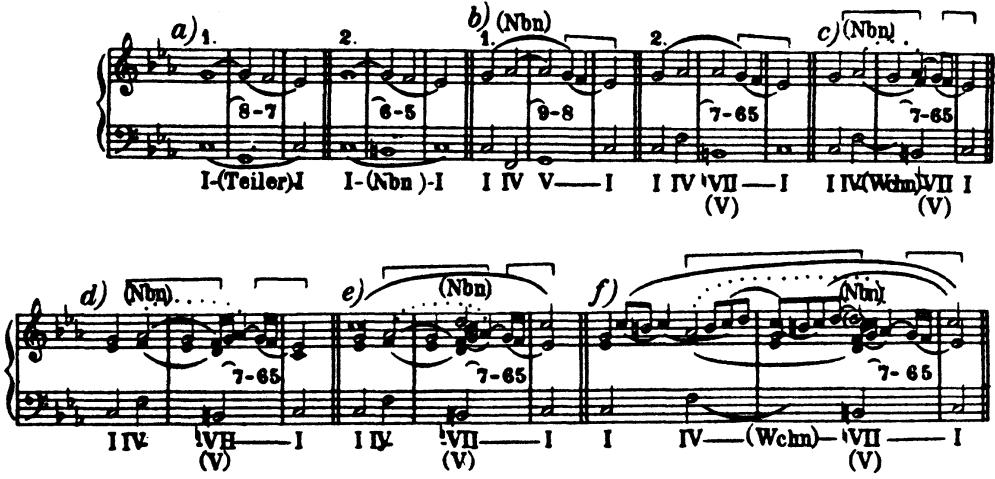
- 页码:21-21
6.1 [描述性拆分] Chapter Introduction: Competing Ideas of Form and Invention
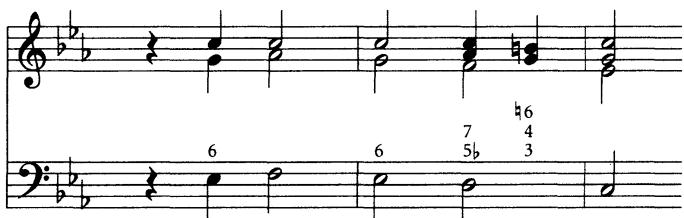
第1段(P0001)
原文复述
Figments of the Organicist Imagination
中文讲解
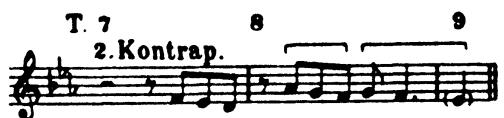
本句是该章的标题/分节标题,原文形式以“#”标示层级。标题中的关键词“Figments”(虚构之物、幻象)与“Organicist Imagination”(有机主义者的想象)共同点出本章的总论域:Dreyfus将要审视的,正是Schenker等人“有机主义”思路(将音乐作品视为有内在生命力、自我展开的整体)所投射出来的、看似深刻但可能只是想象产物的形式理论。标题既非纯描述,也带有反讽与质疑的立场,预示作者在本章中将以一种带批判距离的视角来检视Schenker对赋格曲的形式说明。
第2段(P0002)
原文复述
In this chapter, I focus on competing ideas relating form and invention by investigating Heinrich Schenker’s analysis of the C minor fugue from the Well-Tempered Clavier, Book 1 (BWV 847). My aim here is to pursue the question of a composer’s intentions and actions within the analysis of invention: what are the ramifications of an analysis that formulates propositions that plausibly represent thoughts and actions of the composer? Although Schenkerian analysis is predicated on such organicist terms as the Tonwille or Lebensgesetze, which effectively dismiss concerns for intentionality as irrelevant, Schenker’s reading of the C minor fugue makes both congruent and conflicting analytic claims, some of which only make sense as Bach’s intentional actions while others are either historically or logically problematic.
中文讲解
本段交代本章的研究对象与核心问题。
研究对象:作者以Schenker(申克尔)对《平均律键盘曲集》第一册C小调赋格(BWV 847)的分析为切入点,考察“形式”(form)与“发明/创意”(invention)之间的关系中相互竞争的各种观念。
核心问题:当分析提出可以“合理再现”作曲家思想与行为的命题时,其后果(ramifications)究竟是什么?也就是说,分析在多大程度上应当或能够替作曲家“说话”,去陈述他做了什么、为什么这样做?
关键概念说明:
- 有机主义(organicism):把音乐作品视为像生物体一样具有内在生长力与统一结构的理论立场;其代表概念在Schenker体系中即 Tonwille(音之意志)与 Lebensgesetze(生命的法则 / 普遍法则)。Dreyfus指出,这种框架从根本上(effectively)把“作曲家是否有意为之”这样的“意向性”问题判定为不相干,因而拒绝对作曲家的具体意图进行讨论。
- 理论与解读的张力:尽管Schenker的分析以这种看似“非意向性”的理论为前提,他对BWV 847的具体分析中却同时做出了两类判断:(a)只有把它们读作Bach有意采取的动作(intentional actions)才能说得通;(b)另一些则在历史事实或逻辑上站不住脚(historically or logically problematic)。
本段在整章中的作用:是“问题意识”的开篇。作者用一个具体曲目(Schenker对BWV 847的分析)作为试验场,引出“有机主义大叙事 vs. 作曲家实际创作动作”这一根本张力,并预告本章将围绕这一张力展开批判性阅读。
第3段(P0003)
原文复述
Since, in trying to reconstruct Bach’s operating assumptions about harmony, counterpoint, and form, one should not confine his thought to ideas found in contemporary treatises, but rather should allow for insights that superseded the music theory of his day, it is worthwhile exploring the status of Schenker’s general laws to which Bach’s music supposedly submits. In particular I focus on the generative properties of Schenker’s Ursatz which spin out the “middle-ground” or harmonic scaffolding onto which are mapped the foreground processes of the fugue proper. Since Schenker is sensitive to the foreground manipulations of invertible counterpoint, I try to read his analysis as if it made “intentionalist” statements about “what Bach did.” The resulting propositions make the composer seem either exceedingly arbitrary or superhuman in his abilities. If large-scale form (in the Schenkerian sense) really generates the working out of inventions located right on the musical surface, then one needs plausible evidence of this. In the absence of such evidence, the reverse position—following Occam’s razor—is more compelling: that Bach first worked out his inventions—his three themes which he ordered in five permutational arrangements—and then “disposed” them in a conventional scheme of key relations. I then offer a competing reading of the fugue that tries to account for its inventive processes as well as its dispositional layout.
中文讲解
本段是作者论证路径与方法论的详细展开。
第一层前提:方法上的开放性。Dreyfus声明,重建Bach关于和声、对位与形式的“操作前提(operating assumptions)”时,不应只用同时代音乐理论著作里能找到的观念去框定他,而应容许Bach的洞见超越其时代的理论。这一立场本身就构成对Schenker“普遍法则(general laws)”的质疑——既然Schenker要Bach“服从(submits to)”这些法则,就需要考察这些法则本身的地位是否站得住。
第二层聚焦:Schenker的 Ursatz(基础结构/原始线)。作者特别关注其“生成性(generative properties)”:Ursatz从中景(middle-ground,即和声支架 harmonic scaffolding)向后展开,再将前景(foreground,即赋格曲曲面过程)映射回这一支架。作者要检验的正是这种“自上而下生成前景细节”的机制是否有充分证据。
第三层方法:意向主义化阅读(intentionalist reading)。由于Schenker本人对前景的可逆对位(invertible counterpoint)操作是敏感的,Dreyfus尝试把Schenker的分析当作“关于Bach做了什么”的“意向性陈述”来阅读。
第四层检验结果:这样读出来,Schenker的分析若被严肃当作Bach的真实创作动作,要么让Bach显得“任意武断(exceedingly arbitrary)”,要么显得“超人般全能(superhuman in his abilities)”。这是一个诊断:如果一项理论的结论要求作曲家不是武断就是超人,那这项理论本身就很可疑。
第五层论证核心:奥卡姆剃刀(Occam’s razor)。作者据此主张:若无充分证据表明“大形式生成前景细节”,则反方向假设更具说服力——即Bach先想出他的“三条主题(three themes)”,并将它们安排在“五种排列组合(five permutational arrangements)”之中(即“发明”过程),然后再把这些发明“安置(disposed)”在常规的调性关系方案(即“布局”过程)里。
第六层宣告:作者将给出“另一种(competing)”读法,同时兼顾赋格的“发明过程(inventive processes)”与“布局方案(dispositional layout)”,以替代或修正Schenker那种从Ursatz出发的单向生成叙事。
本段在整章中的作用:它把P0002提出的抽象问题落到具体方法上——既给出诊断(大形式→前景细节缺乏证据、推论出任意或超人的Bach),又给出替代假说(先有发明、后有调性布局),并预告将提出新读法。
补充说明
无额外补充(关于BWV 847具体调性布局、五种排列组合等内容需查阅后续段落才能进一步定位,本节内不补写外部事实)。
第4段(P0004)
原文复述
Dreyfus, Laurence. Bach and the Patterns of Invention. E-book, Cambridge, Mass.: Harvard University Press, 1996, https://hdl.handle.net/2027/heb05561.0001.001. Downloaded on behalf of Indiana University, Bloomington.
中文讲解
这是本段所在的电子版书籍的来源/版本说明(脚注/版权页性质)。它明确指出:
- 作者:Laurence Dreyfus(劳伦斯·德赖弗斯)
- 书名:Bach and the Patterns of Invention(《巴赫与发明模式》)
- 版本形式:E-book(电子版)
- 出版地与出版者:Cambridge, Mass.(马萨诸塞州剑桥市),Harvard University Press(哈佛大学出版社)
- 出版年份:1996
- 永久链接/数字资源地址:https://hdl.handle.net/2027/heb05561.0001.001
- 访问来源备注:由 Indiana University, Bloomington(印第安纳大学布卢明顿分校)代为下载
该条目对正文论述而言并非支持某项主张,而是提供文本的版本与可追溯来源:确认本章中Dreyfus讨论的材料出自1996年哈佛大学出版社电子版。属于“来源/出处(source)”性质的旁证,不是论证性内容。
脚注 / 边栏 / 图表 / 附加信息(如有)
本节附加材料仅有一项:P0004为该书电子版的引用/来源说明,给出作者、书名、电子版形式、出版者、年份、永久链接及下载机构。其作用是为正文论述提供版本出处与可追溯线索,而非支持某项具体主张。本节内没有图、谱例、脚注式解释或边栏。
💡 本节核心要点
- 本章以Schenker对BWV 847(C小调赋格,《平均律键盘曲集》第一册)的分析为具体对象,检视“形式”与“发明”之间相互竞争的各种观念。
- 核心张力在于:Schenker的有机体理论(Tonwille、Lebensgesetze)宣称意向性不相关,但其具体分析中又夹杂着只有当作Bach有意为之才能解读的命题,逻辑上并不一致。
- 作者采取的方法:把Schenker的分析当作“关于Bach做了什么”的意向性陈述来读,据此诊断——若大形式真的生成前景细节,则该结论要么令Bach显得任意武断,要么显得超人般全能。
- 依据奥卡姆剃刀,作者提出更可信的反向假说:Bach先完成三条主题与五种排列组合(即“发明”),再将之“安置”于常规调性关系方案(即“布局”)。
- 作者预告将给出兼顾“发明过程”与“布局方案”的竞争性读法,以替代或修正Schenker从Ursatz到前景的单向生成叙事。
🔑 关键术语
- Schenkerian analysis / Schenker analysis:Heinrich Schenker所提出的分析体系。本节中以有机主义概念(Tonwille、Lebensgesetze)为基础,宣称意向性分析无关紧要,却在实际分析Bach作品时做出需要作曲家有意动作才能成立的论断——Dreyfus正在揭示其内部矛盾。
- Tonwille / Lebensgesetze:Schenker理论中的有机主义术语:Dreyfus说它们的存在让Schenker体系“effectively dismiss concerns for intentionality as irrelevant”,即将作曲家的创作意图问题判为不相干。本节不展开词源,仅说明它们在本节论证中的功能。
- Ursatz:Schenker体系中“基础结构/原始线”。在本节中,Dreyfus关注其“生成性”:从中景(middle-ground,和声支架)向后展开,再映射到前景(foreground)的赋格曲过程。
- Middle-ground / harmonic scaffolding:Schenker层次中的中景层,被刻画为和声支架;从这里既向上支撑前景,又向下源自Ursatz。Dreyfus以此作为Schenker“生成”机制的核心环节加以质疑。
- Foreground / invertible counterpoint:Schenker层次中的前景层;Schenker被认为对前景中的可逆对位(invertible counterpoint,即可在不同音程约束下互换声部位置的对位手法)操作敏感。这使Dreyfus得以把Schenker的分析转译为“关于Bach做了什么”的意向性陈述。
- Intentionalist reading:“意向主义读法”。本节指Dreyfus采取的解释策略:把Schenker的分析当作陈述Bach有意做了什么的命题来读,目的是暴露其在历史或逻辑上的问题。
- Occam’s razor:奥卡姆剃刀。Dreyfus在本节中用它来支持反向假说:若无证据表明大形式生成前景细节,则“先有发明、再安置到常规调性方案”这一更简洁的假设更具说服力。
- Inventions / three themes / five permutational arrangements:Dreyfus对Bach创作过程的反向刻画:三条主题,并以五种排列组合方式加以安排,构成所谓“发明”阶段;其后才被安置在调性关系的“布局”之中。这是本章即将提出的替代解释的核心假设。
6.2 [描述性拆分] Schenker’s Foothold in Anglo-American Analysis
第1段(P0005)
原文复述
It might well seem curious to pay special attention to an Austrian music theorist writing some seventy years ago if it were not for the fact that Heinrich Schenker’s ideas have gained a remarkable and unprecedented foothold in the world of Anglo-American musical analysis. Not since the textbooks of Adolph Bernhard Marx and Hugo Riemann has any theory acquired such a patina of self-evident respectability, even when the reception of its ideas within the mainstream musicological world has failed to attract many adherents. Even traditional music historians, though, might subscribe to the idea that Schenkerian analysis is the preferred theory of tonal music par excellence. Since so many self-proclaimed theorists and analysts “do Schenker,” the argument runs, why question this leading paradigm of analytic thought? The result is that many detailed and ingenious analytic discussions of Bach’s music often inhabit the hermetic space of Schenkerian theory, as if highly theoretical objects such as the bass-arpeggiation, the descent of the fundamental line, the laws of obligatory register, or the identification of the head-tone were in fact well-established and historically grounded ideas that can be taught and understood as universal properties of tonal music. In fact, these ideas are highly specific to a classically organicist and generative theory of music dependent on a metaphysics that is both extremely dated and in many important respects uncongenial to a late-twentieth-century view of music and culture.
中文讲解
本段是整个小节的总论,承担着为后续批判铺垫的功能。作者开宗明义地指出了一个吊诡的现象:申克尔(Heinker Schenker)作为七十年前的奥地利理论家,本不该受到如此关注,但他的理论却在英美音乐分析界获得了空前的、几乎无可比拟的地位——自从 Marx 和 Riemann 的教科书以来,还没有哪种理论获得过这种"不言自明的权威性"光泽。
需要特别留意的是,作者对这一现象的描述带有强烈限定:他承认申克尔在主流音乐学界内部并没有获得大量追随者(“failed to attract many adherents”),但即便如此,连传统音乐史学家也会默认把申克尔式分析视为调性音乐的典范理论(“par excellence”)。换言之,问题不在于申克尔学派内部有多少信徒,而在于整个学界已经把申克尔当作了无须质疑的范式——作者用"why question this leading paradigm"这种反讽句式揭示了这一逻辑的荒谬性。
作者随即点出这种范式化的实际后果:许多关于巴赫音乐的分析虽然精巧,却封闭在申克尔理论的密闭空间里,把低音声部的琶音化(bass-arpeggiation)、基础线(fundamental line)的下行、必然音区法则(laws of obligatory register)、起始音(head-tone)的辨认等高度理论化的对象,当作可以教、可以学、可以作为调性音乐普遍性质来理解的"已被证实且历史有据"的概念。作者最后一句话是整段的重心:这些概念实际上属于一种"经典有机主义"(classically organicist)且"生成性"(generative)的音乐理论,它依赖的形而上学(metaphysics)不仅极为过时,而且在许多重要方面与二十世纪末对音乐与文化的看法格格不入。
这一段的功能是为后续的小节确立基调:作者既承认申克尔在英美的支配地位这一事实,又预告了他将以认识论与历史性视角去质询这些"不言自明"的概念。读者应把本段理解为对范式正当性的质疑,而不是对申克尔具体分析技术的全面否定。
补充说明
本段中提到的几个申克尔核心术语(bass-arpepgiation、fundamental line、obligatory register、head-tone)将在本小节内逐步出现并在后续段落中作为认识论批判的对象,因此先在此处被集中列举,作者借此暗示整章将围绕这些看似"自然"的概念重新审视。Marx 与 Riemann 作为参照对象,意在强调申克尔的权威性达到了十九世纪末以来理论史的顶峰。
第2段(P0006)
原文复述
While critiques of Schenker have often centered on his underlying analytic principles, my aim in this chapter is to work outward from a concrete piece of writing by Schenker himself, an exemplary essay on J. S. Bach’s C minor fugue from the first book of the Well-Tempered Clavier, which Schenker published in the 1926 issue of his yearbook Das Meisterwerk in der Musik. The essay in question is entitled “Das Organische der Fuge” and has the special advantage of including not only Urlinie graphs but a discursive and polemical text which clarifies both analytic decisions and metatheoretical positions. Since Schenker’s analysis of the C minor fugue was published in 1926 and thus precedes the full flowering of his ideas in Der freie Satz, it may not, for Schenkerians, count as a proper, fully fleshed-out example of his thought. There are nonetheless enough of the Schenkerian rudiments in evidence here to raise the most essential epistemological questions as well as focus on the notion of compositional intention and its relation to analysis. I must stress that this will not be the place to engage with Schenkerian theory tout court. Rather I am interested in evaluating and testing a few basic analytic propositions regarding Bach in light of the readings advocated thus far by my analysis of invention.
中文讲解
本段交代作者的方法论与研究对象,作用是把抽象的范式批判落到了具体文本上。
第一句首先把自己与既有研究做了切割:以往的申克尔批判往往集中在抽象的分析原则上(“underlying analytic principles”),而作者选择反向操作——从申克尔本人一篇具体文章出发,向外辐射去检视整个理论体系。这种"由个例到原则"的方法本身就具有反思意味,因为它用同一作者的具体写作来检验其普遍化的理论宣示。
作者选择的文本是申克尔1926年发表在年刊《Das Meisterwerk in der Musik》(《音乐杰作》)上的《“赋格的有机性”》(“Das Organische der Fuge”),分析对象是巴赫《平均律键盘曲集》第一册中的 c 小调赋格。作者强调这一选择的特殊价值:这篇文章不仅包含 Urlinie(基础线)图示,还附有申克尔自己的论辩性文字,能同时呈现"分析决策"与"元理论立场"(metatheoretical positions)。换言之,作者要利用的正是那些通常被忽略的申克尔本人论辩语言,因为这些语言最能暴露其理论的概念预设。
接下来一句处理了一个棘手的方法论问题:因为这篇文章写于1926年,早于申克尔理论完全成熟的《Der freie Satz》(《自由作曲》),所以严格的申克尔主义者可能不承认它是其思想的充分范例(“a proper, fully fleshed-out example”)。作者对此做出让步,但立刻指出这篇文章里已经包含了足够的申克尔核心要素(“Schenkerian rudiments”),足以提出认识论问题,特别是关于"作曲意图"(compositional intention)及其与分析之关系的问题。
末句再次限定范围:本章不会全面讨论申克尔理论本身(“tout court”),而是要在前文对"发明曲"(invention)所作分析所倡导的阅读方式框架下,检验少数几条关于巴赫的基本分析命题。这就把本节嵌入了全书的整体论证中:作者是用自己已建立的分析框架去测试申克尔的命题,而非反过来。
读者应特别留意"compositional intention"这个关键词——它是后续认识论批判的入口:申克尔式分析隐含着将分析结果等同于作曲家意图的设定,而作者即将对此提出质疑。
补充说明
本段提到的三件作品——巴赫《平均律》第一册 c 小调赋格、申克尔《Das Organische der Fuge》、以及申克尔的成熟之作《Der freie Satz》——在本小节内将构成时间序列的参照:1926年文章的"未成熟"状态本身就是作者利用的对象。《Das Meisterwerk in der Musik》是申克尔1925–1930年间自办的三卷年刊,是申克尔学派自我推广的核心阵地。
第3段(P0007)
原文复述
Though one often encounters the view (stemming from the late Five Graphic Analyses) that a well-executed graph is superior to verbal elucidation—music as metalanguage, in the words of Allan R. Keiler—it is easy to show, though I will not pursue the matter here, how verbal discourse, indeed, even figurative language, is embedded in every little beam and slur of even the most protracted “Schenkergram.” Music theories, in short, depend on words and concepts to make even the simplest analytical claim. A Schenkerian analysis of a fugue is of particular interest because the fugue, with its self-conscious manipulations of counterpoint, might not seem an obvious candidate for an approach oriented toward long-range voice-leading. Schenker himself was of course aware of this problem, since he makes a point of advertising that his analysis will “convince the reader that even the fugue possesses laws of life.” How then, if Bach is so preoccupied with local invertible counterpoint, will he be able to answer to the far more global Schenkerian imperatives?
中文讲解
本段提出两个互相支撑的论点,分别处理"图示的权威性"与"赋格体裁的适配性"。
第一个论点针对申克尔学派内部的一种自我神话:来自晚期《五篇图示分析》(Five Graphic Analyses)的传统认为,一幅做得好的图示优于文字阐释。Allan R. Keiler 将其概括为"音乐作为元语言"(music as metalanguage)。作者用一个让步结构承认这种说法流行,但随即用一个"it is easy to show"的反转——虽然没有在本节展开,但只要稍微思考就会发现:即便是最冗长的"申克尔图"(Schenkergram),其每一根连线、每一个弧线(“beam and slur”)中都嵌入了文字话语,甚至隐喻性的语言(figurative language)。因此作者给出总结句:“音乐理论,简言之,依赖词语与概念来提出哪怕最简单的分析主张。“这是一个方法论上的根本立场:申克尔图并不是中立的、超越语言的视觉工具,它本身就是语言与概念建构的产物。这一论点直接挑战了申克尔派所宣称的"图比文字更直接"的认识论基础。
第二个论点切入文本对象本身的特殊性。作者指出,赋格(fugue)由于其自觉的对位操控(“self-conscious manipulations of counterpoint”),似乎并不是那种以"长距离声部进行”(long-range voice-leading)为目标的方法的天然候选对象。这里隐含的张力是:申克尔理论偏好大规模、贯穿全曲的结构弧线,而赋格的核心魅力在于局部的可逆对位(invertible counterpoint),后者与申克尔的全局性要求在直觉上彼此抵牾。
关键的转折出现在段末:作者承认申克尔本人完全意识到了这一问题,并主动宣告他的分析将"说服读者,连赋格也拥有生命的法则”(“laws of life”)——这个用词呼应了申克尔理论的有机主义隐喻。末句以反诘形式收束:既然巴赫如此执着于局部的可逆对位,他又如何能回应远为全局性的申克尔式要求(“global Schenkerian imperatives”)?这是一个修辞性的问题,预告了后续章节将如何通过具体文本细读来检验申克尔所声称的解决是否真正成立。
对本节而言,本段同时承担两个任务:一方面动摇申克尔图示的客观性神话,另一方面揭示赋格与申克尔理论之间的体裁张力,为后续具体阅读提供论证入口。
补充说明
本段提到的 Keiler(Allan R. Keiler)是申克尔研究的重要学者,他对"音乐作为元语言"的表述是申克尔派自我理解的一个经典立场。“Five Graphic Analyses"指申克尔晚期以图示为主的五篇作品,与早期带大量文字论辩的文章形成对照——这一对照正好解释了作者为何选择 1926 年的文章作为切入点:早期文章里的文字与图示并置,最能暴露图示背后的语言预设。“laws of life”(生命法则)一语出自申克尔本人,是其有机主义核心隐喻,在本书中将被反复引用并质疑。
第4段(P0008)
原文复述
170 Bach and the Patterns of Invention Dreyfus, Laurence. Bach and the Patterns of Invention. E-book, Cambridge, Mass.: Harvard University Press, 1996, https://hdl.handle.net/2027/heb05561.0001.001. Downloaded on behalf of Indiana University, Bloomington
中文讲解
本段不是正文,而是页面顶端的版式元素与底部的电子文献访问信息。“170"是该页的页码;“Bach and the Patterns of Invention"以斜体出现,是书名(同时也是所在章的标题)作为页眉重复出现。下方是电子书版本的完整引用:作者 Laurence Dreyfus,书名《Bach and the Patterns of Invention》,载体为 E-book,出版地 Cambridge, Mass.(马萨诸塞州剑桥),出版社 Harvard University Press,出版年 1996,电子资源链接 https://hdl.handle.net/2027/heb05561.0001.001,访问机构为 Indiana University, Bloomington(印第安纳大学伯明顿分校)。
对读者而言,这些信息的用途有二:一是确认文本出处与版本,二是确认本节所在的页码区间(170 页)以及电子访问来源。它不对正文论证做补充,但具有版本与学术规范上的标识意义。
脚注 / 边栏 / 图表 / 附加信息(如有)
本小节未包含独立的脚注、图表、谱例或边栏。唯一的非正文材料是 P0008 中的页码 170、章名页眉以及电子书的版本引用信息,其作用是标识学术出处与电子访问来源,不构成本节论证的组成部分。
💡 本节核心要点
- 申克尔的理论在英美分析界获得了自 Marx 与 Riemann 以来前所未有的"不言自明"的权威性,但其形而上学基础是过时的有机主义,与二十世纪末的音乐文化观格格不入。
- 作者不进行抽象的元理论批判,而是选取申克尔 1926 年的具体文章《Das Organische der Fuge》作为切入,通过同一作者的具体写作来检验其普遍化命题。
- 申克尔图并非超越语言的中立视觉工具:即便是 Schenkergram 的每一根连线与弧线,都内嵌了文字话语与隐喻性语言——这一立场动摇了"音乐作为元语言"的申克尔派自我神话。
- 赋格体裁的对位本性与申克尔理论的长距离声部进行取向之间存在张力,申克尔本人以"赋格也拥有生命法则"的宣言作出回应,其有效性是后续分析的关键检验点。
- 本节聚焦的核心认识论问题是"作曲意图"及其与分析的关系,而非对申克尔理论进行全面评价;研究框架由作者先前对"发明曲"的分析所奠定。
🔑 关键术语
- Schenkerian analysis:以奥地利音乐理论家 Heinrich Schenker 命名的调性音乐分析方法体系,核心概念包括 Urlinie(基础线)、Bassbrechung(低音声部琶音化)、obligatory register(必然音区)、Kopfton(起始音)等;本节中作者既承认其在英美的支配地位,又指出其依赖过时的有机主义形而上学。
- Das Meisterwerk in der Musik:申克尔 1925–1930 年间自办的三卷年刊,是申克尔学派自我推广的核心阵地;本节所分析的《Das Organische der Fuge》即发表于其 1926 年卷。
- Das Organische der Fuge:申克尔 1926 年发表的分析文章,主题是巴赫《平均律键盘曲集》第一册的 c 小调赋格;作者选此文作为分析对象,原因在于它同时包含 Urlinie 图示与申克尔本人的论辩性文字,能暴露其分析决策与元理论立场。
- Der freie Satz:申克尔生前最后一部、也被视为其理论最成熟表述的著作(1935 年出版,1956 年英译);由于本节所选文章写于 1926 年,早于该书,故严格的申克尔主义者可能不视其为充分成熟的范例。
- Schenkergram:申克尔式分析图示,以多层结构展示 Urlinie、Bassbrechung 等概念;本节指出即便是 Schenkergram 中最细微的连线与弧线(beam and slur),也都嵌入了文字话语与隐喻性语言,并非超越语言的中立视觉工具。
- music as metalanguage:Allan R. Keiler 对申克尔图示权威性的概括,意指图示本身被认为比文字阐释更直接、更接近音乐本体;本节对此提出根本性质疑。
- compositional intention:作曲意图;本节指出申克尔式分析隐含着将分析结果等同于作曲家意图的认识论预设,作者将以"作曲意图及其与分析之关系"作为本章的关键认识论问题。
- invertible counterpoint:可逆对位,对位法中互换声部后仍保持和声有效的技术;本节指出巴赫赋格对可逆对位的自觉运用与申克尔理论的全局性声部进行取向之间存在体裁层面的张力。
6.3 [描述性拆分] Intentionalism as Antidote and the Intentional Fallacy
第1段(P0009)
原文复述
The author states that his reading of Schenker rests on an agenda he loosely terms “intentionalism.” He defines this not so much as a coherent philosophical position, but as a kind of antidote to hermetic analytic approaches that treat musical works as organic matter—in short, like vegetables—rather than as products of thinking people. Ideally, this means encouraging analytic results that might have pleased composers if they were told about them. The author clarifies that, by focusing on intentions as antidotes, he does not mean to suggest that analysis ignoring human intentions is mindless and metaphysical, nor does he mean to reject or exclude notions about composers’ intuitions or their unconscious thoughts and actions. Instead, this intentionalism is meant as a heuristic device that asks that one at least pose the question: what might a composer have thought about a composition and its sense? In a parenthetical the author notes that it has become common practice for musicologists to invoke the warning of the Intentional Fallacy as if it were an Aristotelian law of informal logic accepted by everyone; in fact, the entire hermeneutic tradition stands theoretically opposed to this doctrinaire apologia for New Criticism, so that merely calling the quest for the intentions structuring a work of art a victim to a fallacy does not simply make it so. Those who cite Wimsatt and Beardsley so readily might also do well to go read these authors, who argue that “the intention of the author is neither available nor desirable as a standard for judging the success of a work of literary art.” This is rather different from claiming that the historical search for authorial intention is doomed to failure. Their point is about critical judgment, not historical sense or meaning, and even their premise regarding the unavailability of authorial intention is arguable.
中文讲解
本段承担双重任务:先正面界定作者自己的方法论术语"意向主义(intentionalism)",再预先驳斥音乐学界把"意图谬误(Intentional Fallacy)“当作通行禁令的流行做法。
第一部分的修辞策略是降低哲学野心——作者明确说这不是一个连贯的哲学立场,而是一种"解毒剂”,针对的是那种把音乐作品视为有机物(organic matter)的分析态度。“像蔬菜(like vegetables)“这个比喻并非玩笑,而是揭示了他所反对的思维模式:作品像植物一样自行生长,而不是思考中的人所造。解毒剂的正面含义是可检验的——分析的结论若能被作曲家本人欣然接受,那便是好的分析;这一标准隐含着对作品如何被"想出来"这一问题的尊重。
关键的边界陈述:作者并不主张把作曲家无意识、直觉、潜意识的维度排除掉,也不会指控那些忽略意向的分析是"无意义的、玄学的”。他把自己定位在使用一个启发性提问的人——“作曲家可能怎样想过这部作品以及它的意义?"——而不是在立教条。
括号里的内容是论辩性的预设反驳,可拆成三层:(a)音乐学者已将Wimsatt与Beardsley的告诫抬升为"亚里士多德式的逻辑律”,即一种普遍公理;(b)实际上整个诠释学传统(hermeneutic tradition)在理论上与这种为新批评(New Criticism)辩护的立场相对立,光是贴一个"谬误"的标签并不能取消追寻作品意向的努力;(c)即使回到Wimsatt和Beardsley本人的原文,他们的命题是"作者的意向既不可得也不应被作为评判文学艺术作品成败的标准”,这话针对的是文学批评(critical judgment),并非历史意义上的探索,就连他们关于意向"不可得"的前提也是可以争论的。这一括注的目的,是为后续整节清除一个常见的程式化反对。
第2段(P0010)
原文复述
The author states that in reading Schenker’s essay he asks: can Schenker’s analysis be reconciled with a sense of how one imagines that Bach composed and thought about the piece? He admits that this question goes very much against the Schenkerian grain, for, given concepts such as the will of the tones or the laws of life, there can be little patience with mere conscious intent (footnote 2). Yet even Schenker sometimes slips into imputing certain motives to Bach, though these asides usually amount to Bach being clever enough to obey a Schenker-formulated rule. More typically, Schenker disparages any regard for conscious intent, as in the pronouncement: “Just as this fugue is unique, so is the law which is the law of its life equally unique: the fugue itself gave rise to this law, not Bach—with the power of genius he merely recognized it and submitted to it.” This position does not change into the period of Der freie Satz, where, for example, Schenker writes: “Yet I reiterate that the way in which the composer arrives at his initial inspiration—whether he derives it from an earlier or from a later level, perhaps even from the foreground—is one of the unfathomable secrets of creativity. This in no way affects the logical sequence of the levels, but rather gives evidence of a veritable clairvoyance which envisions a more distant level before the nearer one is clear in the consciousness. Only a genius can command such far-reaching forward and backward perception.” Nonetheless, the author concludes, if musical analysis is to make some claim about the act of composition, then it is surely a desirable, even ethically attractive, position to want to reconstruct as best one can Bach’s musical sense of the C minor fugue. Though this intentionalist objective is naturally unattainable in any absolute sense, its effect on analytic theory, borne in mind as a regulative goal, might well be salutary.
中文讲解
本段是P0009所定义的方法论在Schenker文本中的具体落地。作者抛出一个核心问题:Schenker的分析是否能与"我们想象中的Bach构思这部作品的方式"相调和?他随即承认这个问题本身就违背Schenker的精神——“音调的意志(Willen der Töne)"、“生命的法则(laws of life)“这一类概念在设计上就是反意向的,预设了音乐以自律的力量运行,凡人的有意识意图不在其视野之中。
两段Schenker引文是本段的论证支柱,必须细读。第一段出自一篇赋格讨论,把生成性的力量归于赋格自身——“赋格本身生成了这条法则,而不是Bach——Bach只是凭天才之力识别了它并服从它。“Bach的角色被压缩为"认出"和"服从”,这是极端的有机论立场。第二段出自Schenker晚期的《Der freie Satz》,虽然承认作曲家如何"获得最初灵感"是"创造力中不可测的奥秘”,但随即把这种认知成就指认为"远见(clairvoyance)“和"前后贯通的感知(far-reaching forward and backward perception)"——仍是天才式的、非意向可触及的玄奇能力,并不是普通的、有意识的构思。值得注意的是,作者加了一个轻巧的观察:Schenker自己也会"滑入"把动机归于Bach的情形,但这些题外的归因几乎都变成了"Bach聪明到遵守了一条由Schenker拟定的规则”——也就是说,Schenker所归给Bach的"意图"其实是按Schenker自己的理论塑造的。这两个引文共同表明,Schenker的有机论内部是自洽的,但提前关闭了"Bach可能怎样想过"这一提问。
结尾回到作者的正面立场。两个限定词至关重要:“desirable, even ethically attractive"把追寻Bach的"音乐感(musical sense)“放在伦理层面而非仅仅是方法层面;“naturally unattainable in any absolute sense"承认完全重建Bach的意识是不可达的,于是把意向主义重新安置为康德意义上的"调节性理念(regulative idea)"——一个无法彻底实现却可以引导探究的理想。“salutary"一词暗示,即便不能完全抵达,对这一问题的持续关注本身就能矫正分析实践。
补充说明
段中脚注上标²和³分别引向页脚的脚注区,指向Schenker相关论述的原始出处;脚注正文不在本节范围内,作者也未对其内容展开。
第3段(P0011)
原文复述
The first line of this block, “Figments of the Organicist Imagination,” is the running header for the chapter. Beneath it appears a source and access statement: Laurence Dreyfus, Bach and the Patterns of Invention, E-book, Cambridge, Mass.: Harvard University Press, 1996, available via HathiTrust at https://hdl.handle.net/2027/heb05561.0001.001, downloaded on behalf of Indiana University, Bloomington.
中文讲解
本段并非论证性正文,而是版式信息。第一行"Figments of the Organicist Imagination"是该章节的运行页眉(running header),即本章的总标题,用于标识读者在书中所处的位置;它与本节所讨论的"反对有机论、提倡意向主义"的立场形成对照——章名恰恰是"有机论想象的虚构物”,可视为对后续章节意图的一种讽刺性预告。
第二部分是版本与访问来源说明:作者为Laurence Dreyfus(劳伦斯·德雷福斯),书名为《Bach and the Patterns of Invention》,哈佛大学出版社1996年出版,本电子版通过HathiTrust数字图书馆下载(链接见原文),下载用户为印第安纳大学伯明顿分校。这表明此页面除了引用Schenker之外,还在表明德雷福斯这本书本身是电子文本的来源。
两段均为纯元数据,不推进本节的论证,但与节标题"Intentionalism as Antidote"形成连贯:作者接下来将基于这本电子版中的Schenker论述展开对有机论的批判。
脚注 / 边栏 / 图表 / 附加信息(如有)
本节两段正文中各有脚注上标(²对应赋格段引文,³对应《Der freie Satz》中的引文),用于指出Schenker原文的具体出处,脚注正文位于页面下方的脚注区,未在本节边界内,故不作内容讲解。P0011段落的"Figments of the Organicist Imagination"为运行页眉,《Bach and the Patterns of Invention》及HathiTrust下载信息为该电子书的来源与下载方元数据,两者均为版式与书目信息,不构成论证推进。
💡 本节核心要点
- 作者把"意向主义"自我定位为一种低哲学野心的启发性提问装置(heuristic device),用以对抗那种把作品当作自生自长的有机物来分析的态度,而非提供一个完整的哲学体系。
- 作者细致地区分了三个常被混淆的层面:一是忽略意向的分析是否等于玄学,二是作曲家的无意识/直觉维度是否被排除,三是意向能否进入历史性理解。他只想保留第三层面作为追问的入口,前两层则不否定。
- 针对学界对"意图谬误"的程式化援引,作者通过Wimsatt与Beardsley原文指出:该原则处理的是文学批评意义上的评判(critical judgment),而非历史意义上的意义寻求;而且其"意向不可得"的前提本身仍有讨论空间。
- 在Schenker的具体文本中,作者通过两段Schenker原话(赋格论述中的"服从"以及《Der freie Satz》中的"远见”)显示,Schenker的有机论在根本上让"Bach可能怎样想过这部作品"这一问题无法被提出;同时注意到Schenker本人偶尔仍会归给Bach意图,只是按Schenker自家理论包装。
- 最终,作者把意向主义安置为康德意义上的"调节性理念(regulative goal)"——一个绝对意义上不可达却可在伦理与方法层面起矫正作用的目标,它指引着对C小调赋格的阅读。
🔑 关键术语
- 意向主义(intentionalism):作者给自己的释读立场起的名称,核心要求是向分析者提出"作曲家可能怎样想过这部作品及其意义"的提问;它在本节中不是哲学教条,而是一种对抗有机论分析的启发性解毒剂。
- 意图谬误(Intentional Fallacy):常被附会到Wimsatt与Beardsley名下的禁忌;在本节中作者主张它原本针对的是文学作品的批评评判,而非作品的历史意义追问,因此不应被当作一般性禁令来封堵对作曲家意向的探讨。
- 有机论/封闭式的分析路径(hermetic analytic approaches / organicist analysis):作者所反对的立场:把音乐作品当作有机物(像蔬菜一样)自行生长,而不是由有意识的人所生产;在本节中它被视为意向主义的对立面。
- 音调的意志与生命的法则(Willen der Töne / laws of life):Schenker理论中的核心概念,用以解释音乐进行;它们在结构上预设了音乐凭借自身规律运动,从而排除对作曲家有意识意图的关心。
- 《Der freie Satz》:Schenker晚期理论著作的名称,是本节第二段引文的来源;引文中Schenker以"远见的知觉(clairvoyance)“形容作曲家对结构层次的把握,与本节反意向主义讨论直接相关。
- 调节性目标(regulative goal):康德式用语,指一个在绝对意义上不可达到、却仍应被放在心里作为引导的理想;作者把意向主义定位为这种调节性目标,借此既肯定其方向性,又不承诺其完美实现。
6.4 [描述性拆分] The Organic Metaphor and the Ursatz as Generative Law
第1段(P0012)
原文复述
Like all theorists, Schenker relies on metaphor both to give shape to his ideas and to enhance the way they are received. The leading metaphor giving sustenance to most of Schenker’s ideas is the organic metaphor: that a “musical masterpiece is an organism.” The early nineteenth-century provenance of this powerful trope is well documented, and Schenker subscribes wholly to this traditional view when he tries to establish “a connection of the whole across all sections,” a proposition that is fundamentally unobjectionable. The specific entailments and practical ramifications of Schenker’s organic metaphor, on the other hand, are perhaps less well understood. By far the most critical entailment is that Schenker’s organic artworks are generated from a single seed according to quasi-biological laws that move hierarchically from the simple to the complex. As a result, speaking practically now, the organic metaphor enables the familiar roles of the bass-arpeggiation and the descent of the Urlinie. And given the generative nature of this Ursatz or fundamental structure, Schenker asks that we hear “a whole piece of music” as if it were a predetermined “progression of voice-leading writ large.” It is important to realize that no one before Schenker had conceived this possibility as a general law which, as I have suggested, is only imaginable via metaphor. (It does not lie in the nature of a musical work to manifest a single voice-leading progression, but rather it takes someone’s consciousness to come along and imagine that a piece of music can be understood in this way.) When Friedrich Erhard Niedt came to exemplify how to write dance movements by expanding a single thoroughbass progression, he was not claiming that every dance piece was always to be generated in this way, nor that his thoroughbass progression had been generated from one preternaturally valid harmonic-contrapuntal progression. In Schenker’s own terminology, by contrast—and this is his great innovation—“free composition is (to be heard as) strict composition.” Free composition is therefore amenable to an analysis predicated on the inevitabilities of strict composition: as surely as an organism will mature and die, so too will an Urlinie find its final resting place on the first melodic scale degree.
中文讲解
这是本节的核心段落,阐明了有机隐喻如何成为申克整个理论的“生成性发动机”。
第一层:申克与所有理论家一样依靠隐喻来构造与传达思想,而他最核心的隐喻就是“音乐杰作即有机体”。这个比喻虽源自19世纪初,但他完全接受它,并用它去追求“贯通全曲各部分的整体联系”——这一点本身无可非议。
第二层(关键):有机隐喻带来的真正“推论”才是争议焦点——有机艺术品被视为由“一粒种子”按照“准生物学法则”自简单向复杂等级式生成。这一前提直接落到实践层面:它使得“低音琶音化”与“Urlinie(基础线)的下行”获得了它们之所以熟悉的理论地位;也使得将“整首音乐作品”听作一个被预定好了的“放大的声部进行”,成为合理的要求。
第三层(方法论自省):作者强调,把“一首作品可被理解为单一声部进行”这种可能性提升为“普遍法则”,并非音乐本身的属性——而是必须由某位理论家的意识去“想象”出来;没有有机隐喻,这种想象是不可设想的。这里作者已经在批评:所谓“普遍性”其实是隐喻制造的产物。
第四层(对比与定位):作者用Niedt作为反例。Niedt展示过如何从单一通奏低音进行展开舞曲段落,但他并未主张所有舞曲都如此生成,也未声称自己的通奏低音源自某种先验有效的和声—对位进行。Niedt的写法只是示范,不是“普遍法则”。
第五层(申克的真正创新):与之相对,申克的术语是“自由作曲=(应被听作)严格作曲”。自由作曲因此可按“严格作曲的必然性”来分析——正如有机体注定要成熟与死亡,Urlinie也注定要在主音上找到“最终归宿”。作者用“organism will mature and die / Urlinie will find its final resting place on the first melodic scale degree”这一类比,既展示了有机隐喻的分析力,也暗示了这种必然性其实是隐喻强加的。
本段在论证链中的作用:把有机隐喻从“听起来合理的整体观”推进到它最具技术后果的承诺——把“自由作曲”归约为“严格作曲”的必然过程,从而为下一段对申克方法论局限的批评铺好靶子。
补充说明
本段内出现的脚注标号4指向本节后续或脚注层的引用,由本书渲染脚注承担。本节论证链的逻辑层次是:①有机隐喻的“整体联系”命题(无害)→ ②其“由单一种子准生物学生成”的关键推论(争议所在)→ ③与Niedt的对比用以划定“普遍法则”属于申克的独有主张→ ④“自由作曲=严格作曲”作为该主张的浓缩表达。无额外补充超出当前段落范围之外的事实。
第2段(P0013)
原文复述
172 Bach and the Patterns of Invention Dreyfus, Laurence. Bach and the Patterns of Invention. E-book, Cambridge, Mass.: Harvard University Press, 1996, https://hdl.handle.net/2027/heb05561.0001.001. Downloaded on behalf of Indiana University, Bloomington.
中文讲解
该段是版式层面的“页眉+书目引用块”:第一行“172 Bach and the Patterns of Invention”是书内章节页眉(位于第4页内偶现的版式余项,提示当前章节的标题与页码位置);其后的“Dreyfus, Laurence… Harvard University Press, 1996… Downloaded on behalf of Indiana University, Bloomington”是该书电子版的来源信息(出版地、出版社、年份、HathiTrust等托管平台句柄,以及下载代理机构)。它不参与作者论证,仅作为电子版来源标识。
补充说明
无额外补充。该段为版式与出版来源信息,不承载论点。
第3段(P0014)
原文复述
Now metaphor is an indispensable tool of human understanding, and I am far from denying Schenker’s right to reap the fruits of figurative language. The point, though, is that metaphors by definition conceal as much as they reveal. One result of Schenker’s organicism is his suppression of human agency in composing music and his corresponding disregard for historically demonstrable ideas that a composer can be shown to have held. Schenker was apparently somewhat touchy about this point—as well he should have been—for he goes out of his way to cite historical chapter and verse whenever it suits his purposes: his treatment of Emanuel Bach’s ideas on diminution is emblematic here, as is his invocation of species counterpoint and thoroughbass, albeit read in highly selective ways. His appeals to history are therefore disingenuous, because only with Schenkerian hindsight can one praise a particular historical idea as a brilliant foreshadowing of Schenker or reject it out of hand as mechanist drivel.
中文讲解
本段是上一段论证的“批评落点”,开始把有机隐喻的代价显性化。
第一句先做让步:作者承认隐喻是人类理解不可缺的工具,也无意剥夺申克使用比喻的权利——这是必要的方法论自卫,避免读者把后续批评误读为“反对用隐喻”。
第二句随即翻转:隐喻“按定义”既揭示也同等程度地遮蔽。这是全段命题的核心——申克理论中被遮蔽的部分,正是要被揭出的对象。
第三层(要害):有机主义的一个直接后果,是“压制了作曲中人的能动性”,并“漠视可被历史证明作曲家确曾持有的思想”。这正是上段“自由作曲=严格作曲”必然代价的具体化:作曲家不再被视为对其作品有意识、可考据的能动者,而沦为有机体的“传声筒”。
第四层(自相矛盾):作者指出申克本人对这一点“心虚”——“well he should have been”是反讽——于是每当对他有利,他就刻意摆出史料来背书(“historical chapter and verse”)。具体例子有二:①Emanuel Bach关于“diminution(缩减)”的思想被申克征引;②“species counterpoint(对位法范式)”与“thoroughbass(通奏低音)”的征引——但都被“高度选择性”地读解。
第五层(结论性判定):这种对历史的征引是“不真诚的”(disingenuous)。因为只有带着申克式的后见之明,人们才会把某一历史思想赞为申克的伟大先兆,或干脆斥为“机械论的废话”(mechanist drivel)。换言之,是申克的理论框架先决定了历史素材该被如何安置,而后才去征引——这与“真凭历史证据说话”正好相反。
本段在论证中的作用:将上段“在隐喻层面理解申克”的认识论批判落到“史实与能动性”层面,正式把申克定位为“理论优先于史料”的体系化作者,为本节进一步审视其分析实践提供了方向。
补充说明
本段中的脚注标号5指向本书该章脚注层的引用,与上一段脚注4同属申克讨论中的文献索引,由脚注层负责。无额外补充超出本段范围之外的事实。
脚注 / 边栏 / 图表 / 附加信息(如有)
本节含有两处脚注锚点(段内上标4与5),用于在脚注层提供申克相关文献索引;P0013为电子版书的引用信息块(含HathiTrust句柄与代下载机构),属版式标识,不承载论点。其余附加材料无。
💡 本节核心要点
- 申克将“音乐杰作为有机体”作为支撑其理论的最重要隐喻,并据此追求全曲贯通。
- 该隐喻的关键推论是:有机作品由“单一种子”按准生物学法则自简单向复杂等级式生成。
- 这一生成观使低音琶音化与Urlinie下行获得熟悉地位,并要求把整首作品听作“放大的声部进行”。
- 把“单一声部进行”作为“普遍法则”并非音乐自身的属性,而是有机隐喻所“想象”出的产物;与Niedt的局部示范形成对照。
- 申克的根本创新在于“自由作曲=(应被听作)严格作曲”,从而使自由作曲可按严格作曲的必然性来分析。
- 隐喻同时遮蔽与揭示:有机主义压制了作曲中的人的能动性,并漠视可由历史证实的作曲意图。
- 申克对历史的征引(Emanuel Bach的diminution、species counterpoint、thoroughbass)是高度选择性的,其判定本质上由申克式的后见之明先行决定,故是不真诚的。
🔑 关键术语
- organic metaphor(有机隐喻):本节的核心隐喻,指“音乐杰作即有机体”,源自19世纪初;申克据以论证“全曲贯通”与“由单一种子等级式生成”,并为低音琶音化与Urlinie下行的理论地位提供根本支撑。
- Ursatz:申克术语,“基础结构”,指由Urlinie(基础线)与Bass-Brechung(基础低音)共同构成的、贯穿全曲的最深层的和声—声部进行框架。
- Urlinie:指上声部从某一起始音级(如3、5、2或其他级)按音阶逐级下行至主音的基础旋律线;本节中其“最终归宿于主音”被作者类比为有机体的“成熟与死亡”。
- bass-arpeggiation(低音琶音化):指基础低音以分解和弦的方式在和声进行中铺展,它在本节被明确为有机隐喻实践层面所“使能”的一个熟悉角色。
- voice-leading(声部进行):指各声部音与音之间的连线逻辑;本节申克希望把整首作品听作“放大的声部进行”,即把单首作品视作一个统一的长程进行。
- thoroughbass(通奏低音):巴洛克键盘即兴与作曲体系中以数字低音标示和声并展开声部的方法;作者以Niedt为例,说明其作为局部示范与申克的“普遍法则”主张在范围上根本不同。
- species counterpoint(对位法范式):Fux体系中按五种“对位范式”(第一至第五范式)训练严格对位的方法;本节指出申克对它的征引是“高度选择性”的。
- free composition / strict composition(自由作曲 / 严格作曲):申克术语对:“自由作曲”被要求听作“严格作曲”,从而使其可按严格作曲的不可能性—必然性加以分析——这是本节作者认定的“申克的伟大创新”。
- diminution(缩减 / 细化展开):此指Emanuel Bach关于把一个简洁动机通过细化手法扩展为较长乐段的思想;作者以之为申克“选择性”征引史例的代表性场合。
- mechanist drivel(机械论的废话):本节作者对申克在不征引那些不符合自身框架的历史思想时所用轻蔑判定的概括——只有站在“申克的后见之明”中,某一历史思想才被判定为“伟大先兆”或贬为“机械论的废话”。
6.5 [描述性拆分] Schenker’s Urlinie-Tafel and the Three Descents
第1段(P0015)
原文复述
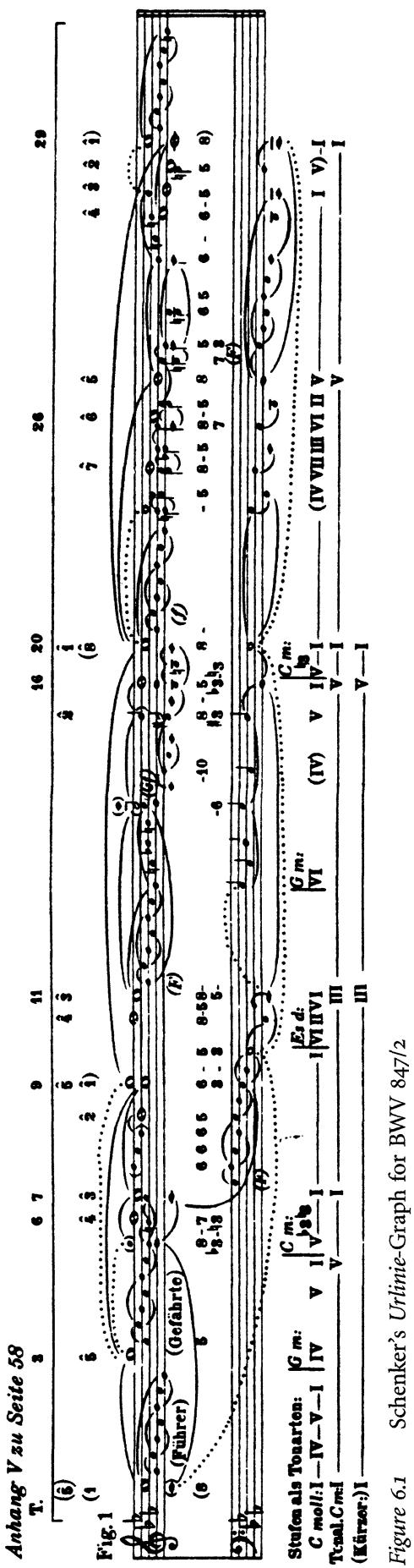
The centerpiece of Schenker’s essay on the C minor fugue is of course the Urlinie-Tafel, or graph of the fundamental structure, shown in Figure 6.1. Although the essay lacks distinctly coordinated graphs for the various layers (or Schichten) moving in quasi-generative fashion from background to foreground as in the later so-called mature analyses, the essential Schenkerian ingredients are all here: one can observe the bass arpeggiation of the tonic triad C-E♭-G-C across the span of the piece (notated here in whole notes on the bottom staff), and the descents of the fundamental line notated on the treble staff both with whole notes and with the melodic scale degrees identified by careted Arabic numerals. Measure numbers appear printed on the very top of the graph parallel to the abbreviation “T.”, standing for Takte. Notice here that there are three descents of the Urlinie: two from the fifth scale degree (5) and one from the upper octave (8). True to Schenker’s organicist hierarchies, however, the three descents are not equally valued. The outer two descents, as can be seen, are enclosed in parentheses while only the central descent from 5, placed slightly higher than the other two, is supported by the pitches of the bass-arpeggiation, and is hence considered the germinating seed of the piece. (One might also note that the Bass-Brechung is somewhat deceptive in the graph, since the important articulation of the tonic C in Schenker’s m. 20 actually does not occur until m. 22, a fact he only observes in a more detailed foreground-oriented graph later on. He therefore ought really to have placed this C in brackets or at least delayed its placement in the graph.)
中文讲解
本段聚焦于申克分析图本身,是全节的视觉与结构性核心。
中心信息:Dreyfus 指出 Schenker 关于 c 小调赋格那篇文章的压卷之物是图 6.1 所示的 Urlinie-Tafel(基本结构图);虽然此文尚不具备后期"成熟分析"那种把多个层次(Schichten)从背景到前景逐层展开的协调图示,但所有核心 Schenkerian 要素已经齐备——底部谱表以全音符标出主三和弦 C-E♭-G-C 的低音琶音贯穿全曲,上方谱表既用全音符又用冠以音帽的阿拉伯数字标出基本线的下行级数;小节号印在图最上方,旁标 “T."(Takte,小节)。
关键论证:三段下行(two from 5, one from 8)数量上并列,但在 Schenker 的有机等级中并非等值。外侧两次下行被括入圆括号,仅有中间那次从 5 级的下行被抬高一格书写,并且由低音琶音的音直接支撑——因此它被视为整首曲子的"萌发种子”(germinating seed)。括号位置、视觉高度与低音支撑三个标记手段共同构筑等级差异,这是 Schenker 通过排版传达分析判断的典型手法。
尾括号内的补充是关键的"自我拆台”:Dreyfus 提醒读者,Schenker 图中的 Bass-Brechung(低音分解)具有一定误导性——图中标记在第 20 小节出现的那个主音 C,其在乐谱上的实际发音延后到第 22 小节,这一事实 Schenker 只是在后来更细的前景图中才予以承认。因此严格来说,这个 C 应当加方括号或推迟其在图中的标示。Dreyfus 此处用括号内承认的口吻,既未推翻 Schenker 的整体结论,也暴露了基本结构图与实际作品之间存在音位上的微小裂缝。
承接关系:本段呼应小节标题,把焦点从对 Schenker 理论的总体批评,转到具体的图示证据;它为下一段把这些要素"映射到乐谱上"做了视觉前提准备。
补充说明
术语补充(仅依本段可定位的信息):
- Urlinie-Tafel = 基本线图表;
- Schichten = Schenker 所谓层次;
- Bass-Brechung = 低音分解(此处指主三和弦音在低音线上的琶音式分解);
- 图中音上方的小帽子(caret)用以将旋律音级写成 ^3、^2 等形式以与常规阿拉伯数字区分。 本段已包含这些术语的解释,因此此栏仅做交叉确认,不引入段外知识。
第2段(P0016)
原文复述
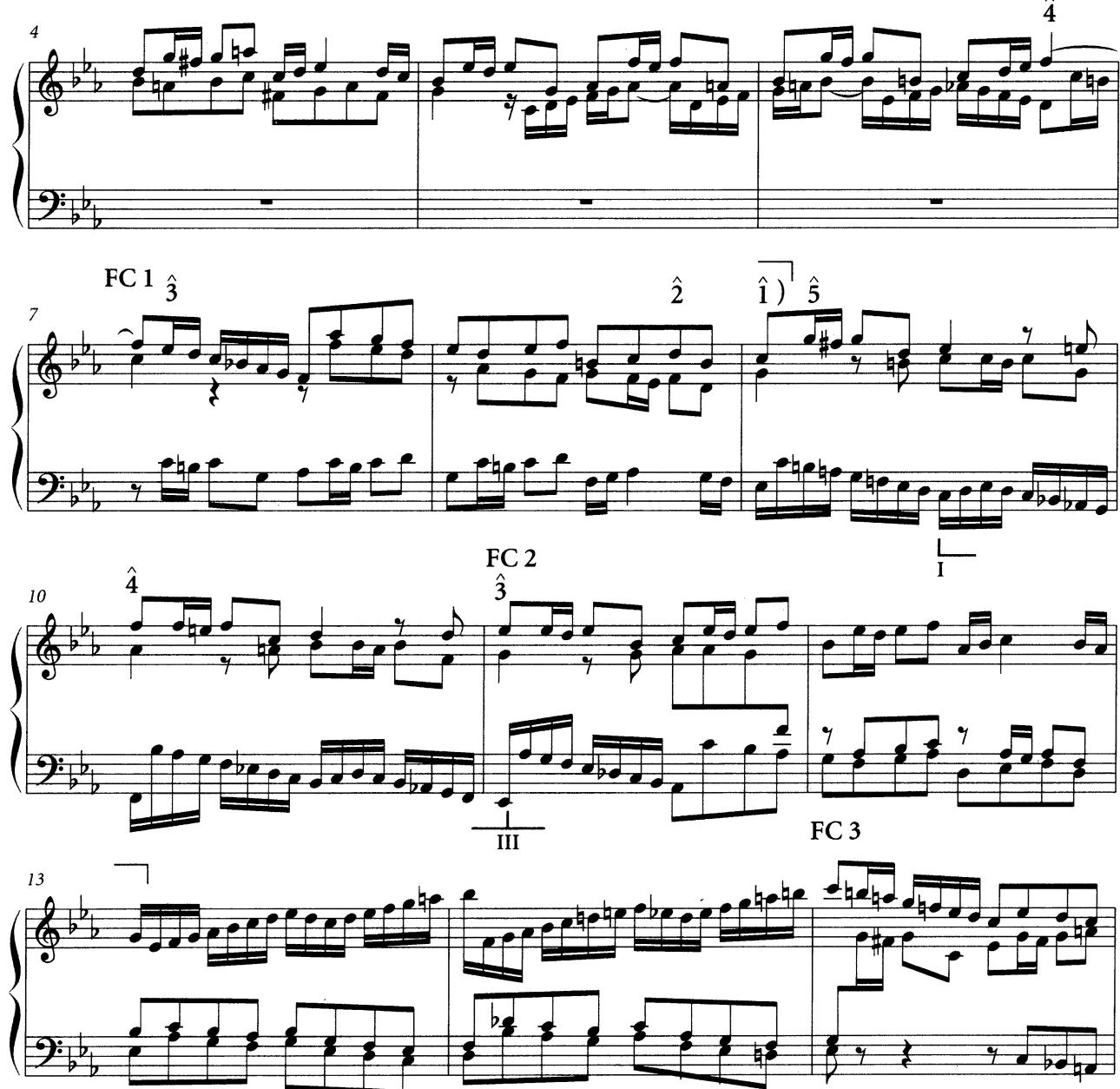
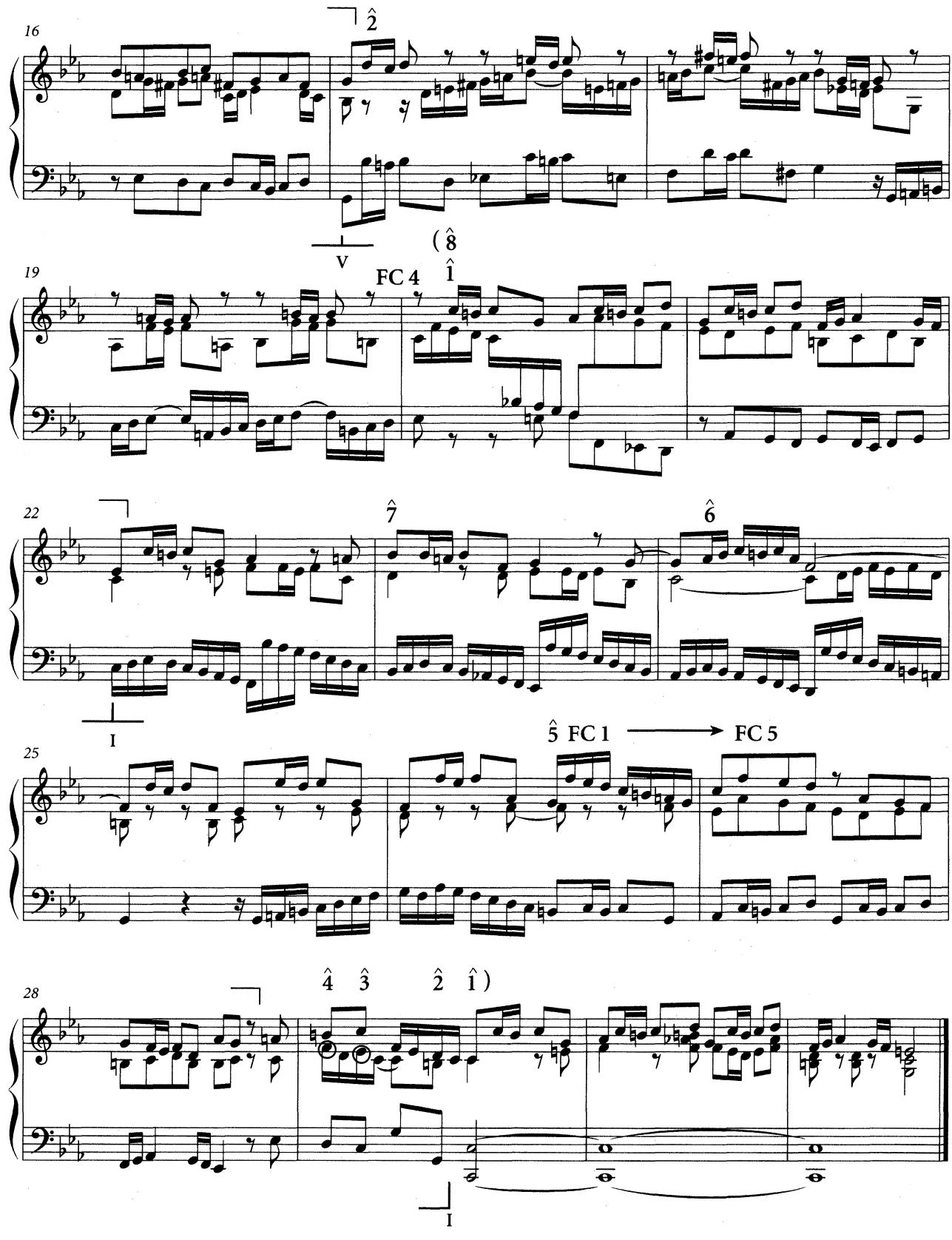
It is always useful to map Schenker’s essential pitches onto the score of the actual piece, which Schenker symptomatically refers to as the Ausführung or realization of the deeper structure. In Ex. 6.1, the piece is so marked. Notice how the first descent carries through to the end of the opening exposition of the piece on the downbeat of m. 9, which simultaneously begins the most important descent extending until m. 20. Thereupon begins the last Urlinie, which in typical Schenkerian fashion concludes with an accelerated flourish in m. 29, though, disappointingly, without the fourth and third scale degrees located in the uppermost voice. (Whereas someone uninitiated into Schenkerian lore might suppose it more persuasive to locate the final descent on the second beat of m. 29, Schenker himself cannot do so, since notes of the Urlinie require independent bass support. Even though the theory of descents must originally have been culled from some such events clearly delineated in the foreground, Schenker never bothers to explain, or, in true organicist fashion, never needs to state how he actually discovered this law. In fact, the descent, along with several other vital Schenkerian concepts, is utterly hermetic to the theory, and has never been observed by any other theorist working in another tradition.)
中文讲解
本段在图 6.1 之上引入例 6.1,把抽象的基本结构图投射回作品实际谱面,并借此机会对 Schenker 体系发起最尖锐的一次理论质疑。
第一层信息:例 6.1 把 Schenker 的关键音按照 Schenker 自己的术语 Ausführung(具体实现、具体展现)叠印在乐谱上。三段下行的实际落脚点被逐一交代——第一次下行贯通至 m. 9 正拍的开头呈示段结束,第二次(也是"最重要"的一段)从 m. 9 起一直延伸到 m. 20,最后一段下行则在 m. 29 以"加快的收束花彩”(accelerated flourish)作结,但令人失望的是其最高声部中漏掉了 4 级和 3 级这两个必要的音级。
第二层信息(括号内),即本段真正的论辩核心:Dreyfus 设想了一个反事实——一个不熟悉 Schenker 的人很可能会觉得把最后一次下行定位在 m. 29 第二拍更合乎谱面直觉,但 Schenker 不能这样做,因为基本线的每个音都必须有独立的低音支撑。这暴露出一个不可验证的判据:下行理论的来源很可能是从某些前景中清晰可辨的事件中归纳出来的,但 Schenker 从未解释、也根据其有机主义立场根本不需要解释他究竟是怎样"发现"这条规律的。Dreyfus 进一步断言:下行概念连同其他若干 Schenkerian 关键概念,“对理论本身是彻底封闭的(utterly hermetic to the theory)",从未被任何其他传统的理论家独立观察到。
例证的功能:m. 29 的具体案例不是单纯举例,而是论证工具——它同时展示 Schenker 方法的两面:一方面,没有低音支撑就不能算下行,体现了 Schenker 体系内在的逻辑自洽;另一方面,这种不可外推、不可由他人独立复现的封闭性,恰好被 Dreyfus 当作 Schenker 理论"非科学"或至少"非可证伪"的证据。
论证作用:本段上承 P0015 对图示形态的分析(中间下行由低音琶音支撑),下启 P0017 的图题与书目信息——而图题 “Figments of the Organicist Imagination”(有机主义想象的虚构物)正是本段对 Schenker 下行理论整体定性的凝缩。
补充说明
“symptomatically” 一词在本段不是中性 “典型地” 用法,而是 Dreyfus 借用精神分析的 symptom 概念暗示:Schenker 用 Ausführung 一词把乐谱贬低为"更深结构的派生物"这件事,本身就是有机主义思想病症的征候。该理解来自本段最后一句对有机主义的批评语境,无需外部材料支撑。
第3段(P0017)
原文复述
Figments of the Organicist Imagination
Dreyfus, Laurence. Bach and the Patterns of Invention. E-book, Cambridge, Mass.: Harvard University Press, 1996, https://hdl.handle.net/2027/heb05561.0001.001. Downloaded on behalf of Indiana University, Bloomington
中文讲解
本段在结构上并不是正文段落,而是图 6.1 的图题与本书电子版的版本/版权信息。
图题 “Figments of the Organicist Imagination”(有机主义想象的虚构物)以尖刻的口吻为整幅 Urlinie-Tafel 定调:它并非 Schenker 在作品中发现的一个客观结构,而是有机主义想象所构造的"虚构物”。这一标题正好收束前述 P0015–P0016 对 Schenker 下行理论的批判——理论的核心概念不可由他人独立观察、其源头不可由 Schenker 自己交代、谱面与图示之间存在微小裂缝,这些都佐证了 “figment” 这一断语。
第二至第四行是标准的电子版书目信息:作者 Dreyfus, Laurence;书名 Bach and the Patterns of Invention;版本形式 E-book;出版地 Cambridge, Mass.;出版社 Harvard University Press;出版年 1996;Handle 链接 https://hdl.handle.net/2027/heb05561.0001.001;下载主体 Indiana University, Bloomington。该信息用于版本溯源,不参与论证。
在论证链中的作用:图题把本节对 Schenker 的批评浓缩为一句标签,提示读者上述三段文字应被读作对"基本结构图是有机主义想象产物"的论证。
脚注 / 边栏 / 图表 / 附加信息(如有)
本节附加材料仅含图 6.1(Urlinie-Tafel)与例 6.1(作品谱面叠印 Schenker 关键音)两个图例,并附图题 “Figments of the Organicist Imagination” 以及电子版书目与下载主体信息。无页脚脚注、无其他边栏文本;图题本身兼具批判性论点的作用,承载了本节对 Schenker 下行理论的最终定性。
💡 本节核心要点
- Urlinie-Tafel 集中呈现了 Schenker 的核心要素:贯穿全曲的低音主三和弦琶音 C-E♭-G-C,以及上方标有冠帽阿拉伯数字的基本线下行;小节号以 “T."(Takte)标注于图顶。
- 图中共出现三段基本线下行(两次从 5 级,一次从 8 级),但只有中间那次从 5 级的下行被提升书写、由低音琶音直接支撑,因而被视为全曲的"萌发种子”;外侧两次被括入圆括号以示次要等级。
- Bass-Brechung 在基本结构图中的位置具有一定误导性——图中 m. 20 的主音 C 实际要到 m. 22 才发声,Schenker 仅在更细的前景图中才承认这一点。
- 在例 6.1 中把基本结构音投射回谱面后可见:第一次下行延至 m. 9,第二次最重要下行延至 m. 20,最后一段下行在 m. 29 以加速花彩结束,但最高声部缺少 4 级与 3 级。
- Dreyfus 的核心批评:下行理论的基本规则——音必须有独立低音支撑——既不可由他人从前景独立观察到,也未由 Schenker 自己交代过其发现过程;该概念对理论本身是"彻底封闭"的。
- 图题 “Figments of the Organicist Imagination” 把上述论证浓缩为对 Schenker 基本结构图的总体定性:是"有机主义想象"的产物,而非作品自身中可验证的客观结构。
🔑 关键术语
- Urlinie-Tafel:基本线图表,Schenker 用以呈现作品基本结构的图示。
- Schichten:Schenker 所谓层次。本段指出该文尚无成熟分析中那种从背景到前景逐层展开的协调图示。
- Bass-Brechung:低音分解(主三和弦在低音线上的琶音式分解)。本段指出图中此分解的标记位置略有误导性,m. 20 的 C 实际在 m. 22 才出现。
- Urlinie:基本线,最高层旋律的结构性下行。本段指出图中共有三段 Urlinie 下行,其中只有中段从 5 级开始的下行被视作核心。
- Ausführung:Schenker 用来指称实际乐谱的术语,本段指出 Schenker 借此将谱面定位为更深结构的"实现/具体展现”,Dreyfus 认为此用词本身即有机主义思想之征候。
- Takte (T.):德语"小节”,图中作为小节号的缩写标注于图的最上方。
- germinating seed:“萌发种子”。本段中指被低音琶音支撑、视觉上被抬高书写的中央那段从 5 级开始的下行,被 Schenker 视为全曲结构的核心。
- organicist hierarchies:有机主义等级。Schenker 通过视觉手段(括号、高度、低音支撑的有无)把图中的三次下行处理为不平等的等级。
- hermetic to the theory:“对理论本身封闭”。本段中 Dreyfus 用以形容 Urlinie 等核心概念:不可由外部独立观察、不可由 Schenker 自己交代其来源。
6.6 [描述性拆分] Mapping Schenker’s Pitches onto the Score (Ex. 6.1)
第1段(P0018)
原文复述
中文讲解
本段是一个图像或乐谱的占位标记,出现在第6页上。从其位置和后续段落 P0020 的论述(提到 Ex. 6.1 与 Ex. 6.2,以及 Schenker 对作品的宏观阅读)推断,这个占位符对应书中例 6.1 或其周边版面元素,用于把 Schenker 图示中的音级投射到实际乐谱上。由于 OCR 文本中没有保留可读的图片内容或图题文字,具体图形细节需查看原图。
补充说明
占位符的文本本身没有提供额外信息;其用途只能根据它在第6页的位置与相邻段落(P0020 对 Ex. 6.1、Ex. 6.2 的提及)来合理推测,不作进一步猜测。
第2段(P0019)
原文复述
174 Bach and the Patterns of Invention Dreyfus, Laurence. Bach and the Patterns of Invention. E-book, Cambridge, Mass.: Harvard University Press, 1996, https://hdl.handle.net/2027/heb05561.0001.001. Downloaded on behalf of Indiana University, Bloomington
中文讲解
本段是电子书页眉与版本/出处信息的合集:第一行 “174 Bach and the Patterns of Invention” 是第174页的页眉,标明页码与书名;第二至四行是该书的电子版本引用,注明作者 Laurence Dreyfus、出版社 Harvard University Press、出版地 Cambridge, Mass.、出版年 1996、永久链接以及代下载单位 Indiana University, Bloomington。这类信息属于电子书数据库的元数据脚注,并非作者 Dreyfus 本人的论述,但对核实文本来源与版本至关重要。
补充说明
本段不包含 Dreyfus 在正文中的论点,仅用于标注电子书的版本、获取渠道与代下载机构;阅读小节论证时可忽略其内容,但在引用书时需保留出处信息。
第3段(P0020)
原文复述
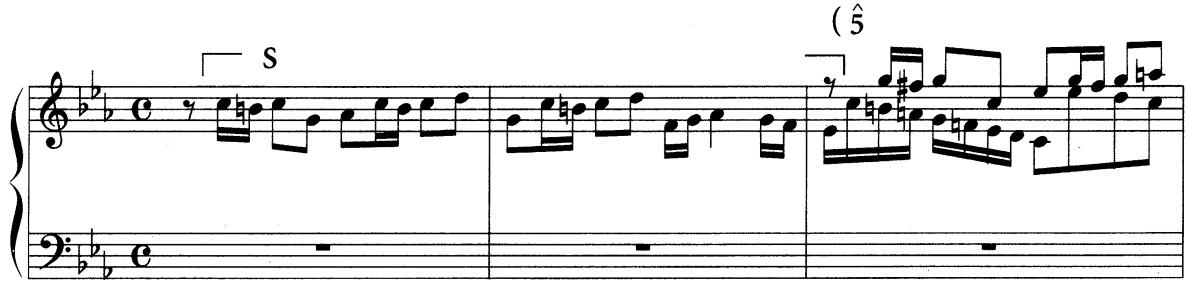
One overriding problem that the graph cannot conceal is the relationship between Schenker’s large-scale reading of the piece and the obvious demands of foreground invertible counterpoint. The piece is a double fugue with three themes, that is, a subject and two countersubjects, as shown in Ex. 6.2. I have called each triply invertible group a fugal complex (or FC), and in this piece Bach presents the three themes together for a total of five times, exploiting five out of the six possible permutations. Anyone who has tried to write invertible counterpoint will know that this takes some work: first, to devise counterpoint which, when inverted, will not cause forbidden parallels or unacceptable dissonances, and second, to produce pleasing themes. So in reading Schenker, one must imagine an empirical Bach not merely as a great local contrapuntist but also as a genial globalist, for amidst his travails in constructing the three themes he was also plotting a course for the tonal will in such a way that either these fugal complexes or the intervening episodes function as diminutions of the fundamental structure, an amazing undertaking by any account.
中文讲解
本段是小节的核心论断,集中讨论 Schenker 的图示与作品前景对位法之间的张力。作者首先指出图示无法掩盖的一个根本问题:Schenker 对作品宏观结构的阅读,必须与前景中显而易见的可逆对位(invertible counterpoint)需求相协调。接着交代作品的形式身份——它是一首具有三个主题的双重赋格(一个主题 + 两个对题),例 6.2 展示了这些主题。作者自创术语 “fugal complex”(FC,赋格复合体)来指称每个三主题的可逆组合,并指出 Bach 在这首作品中让三个主题共同呈现了五次,利用了六种可能排列中的五种。这一统计数字很关键:它意味着 Bach 几乎穷尽了主题组合的可能性,而每一次组合都必须满足可逆对位的规则。
随后作者解释了可逆对位写作的两重难度:一是当对位被倒置时不能产生禁止的平行五八度或不可接受的不协和音;二是主题本身必须动听、有表现力。这两点共同构成写作的技术门槛。
最后,作者在解读 Schenker 的图示时提出一个新的 Bach 形象——不只是杰出的"局部对位家”(local contrapuntist),更是"全局规划者”(globalist):Bach 在锻造三个主题的艰辛过程中,同时在规划"调性意志”(tonal will)的走向,使得这些赋格复合体或插入的间插段(intervening episodes)都能充当基本结构(fundamental structure)的缩减(diminutions)。换言之,每一个局部事件都被组织成深层的宏观结构的一部分。
本段在本节论证中的作用:它把 Schenker 单一的结构图示与 Bach 实际的对位工艺对接起来,揭示 Schenker 图示所暗示的"统一性"必须由作曲者在前景工艺中真实地实现出来,从而为阅读 Schenker 的图示提供一种既看局部又看全局的方法论。
补充说明
术语 “tonal will”(调性意志)与 “fundamental structure”(基本结构)来自 Schenker 的理论体系,作者在此把它们与赋格工艺的具体事实(FC、五种排列、对位规则)并置,使读者看到理论抽象与作曲实践之间的落差;术语 “diminution”(缩减)在 Schenker 体系中指把深层结构在前景层面以更密节奏呈现的层级关系,作者用它来说明 FC 与间插段在宏观结构中的功能角色。
脚注 / 边栏 / 图表 / 附加信息(如有)
P0018 为图像/乐谱占位符,对应原书第6页的例示,文本中无可读图题,需查原图。P0019 是电子书页眉与版本/出处脚注(页码、书名、作者、出版社、年份、URL、代下载机构),属元数据,不参与小节论证。
💡 本节核心要点
- Schenker 的图示无法回避前景可逆对位的实际工艺,两者必须相互协调
- 作品是含三个主题(主题 + 两个对题)的双重赋格,三主题共同出现五次,使用了六种可能排列中的五种
- 作者用 “fugal complex (FC)” 命名每个三主题可逆组合,量化其写作难度
- 可逆对位写作需同时满足两项条件:避免倒置后的禁止平行与不协和音,并保持主题本身的音乐品质
- 解读 Schenker 时需把 Bach 视为兼具局部对位家与全局规划者双重身份的作曲家
- Bach 在构造主题的同时规划调性走向,使赋格复合体或间插段充当基本结构的缩减
🔑 关键术语
- invertible counterpoint:可逆对位;指对位线条在倒置(音程上下翻转)后仍能保持和声与线条规则的对位写法;本节中指前景赋格主题与对题之间的可互换关系。
- double fugue with three themes:含三个主题的双重赋格;即一个主题(subject)与两个对题(countersubjects)共同进入并可相互对位组合。
- fugal complex (FC):赋格复合体;作者 Dreyfus 自创术语,指三个主题作为一个整体可逆单元同时呈现一次;本节用它统计主题组合的出现次数。
- diminution:缩减;在 Schenker 体系中指把背景或中景结构在前景层面以更小音值、更密节奏呈现的层级化处理;本节中 FC 与间插段被看作基本结构的缩减。
- tonal will:调性意志;Schenker 理论中乐曲向终止式推进的深层方向感;本节中 Bach 被认为在主题工艺中同时规划这一走向。
- fundamental structure:基本结构;Schenker 体系中乐曲最深层的和声—线性骨架(Urlinie–Bassbrechung);本节中 FC 与间插段被视为它的前景呈现。
6.7 [描述性拆分] Fugal Complexes and Invertible Counterpoint vs. Large-Scale Voice-Leading
第1段(P0021)
原文复述
Now consider Figure 6.2, which plots out the tonal space occupied by the five fugal complexes relative to Schenker’s three descents. As the figure makes clear, each fugal complex plays a vastly different role from the others. FC 1, for example, emphasizes scale degrees $\hat{4}$ through $\hat{1}$ in mm. 7–9, while others emphasize only two scale degrees or even one scale degree. And when FC 1 appears again in the middle of m. 26, its $f^{2}$ and $e$ are no longer significant but now only the $g^{1}$ on the third beat is deemed a structural tone. (It is common in Schenker that parallel passages are treated differently depending on their placement in the formal design.) Having worked out the three themes so that they would invert at the octave, could Bach also have given thought to how, in varied tonal contexts throughout the work, each fugal complex would be deployed within a long-range structure of voice-leading? What would it have meant, moreover, for him to have done so? Now non-Schenkerians, when trying to make sense of a voice-leading graph, will often have simplistic knee-jerk reactions dismissive of the whole exercise as soon as they compare graph with score. They will say: “Look at this pitch (or chord or event) here. Schenker awards it far too much (or far too little)
中文讲解
本段是本节论证的关键转折点,由三个层次组成。
第一层是图6.2的功能说明。该图把五个赋格复合体(fugal complex, FC)在调性空间中的分布与申克的三次下行(Schenker’s three descents, 即贯穿全曲的三条Urlinie级别的长线条)叠放在一起对比。结论很明确:五个FC的"调性贡献"极不均衡——FC1在小节7–9中支撑了从$\hat{4}$到$\hat{1}$的整整一段音阶功能,而其他FC只承担两度甚至一度的功能。这说明在前文讨论的可逆对位(invertible counterpoint)框架之外,还需要一个"宏观调性布局"的视角来解释为什么FC1被赋予这么大的结构重量,而其他FC相对轻。
第二层用FC1在m.26中再次出现时的不同处理,印证申克分析的一个方法论原则:同一段平行段落(parallel passage),因其在曲式结构中的位置不同,被赋予的结构地位也不同。这里第一次出现时$f^{2}$和$e$都是结构音,但第二次回到该片段时,分析者只把第三拍的$g^{1}$视为结构音,其余都被视为装饰或非结构成分。括号里的提示是申克式分析的常识:曲式位置决定结构功能,而非乐谱外观的相似性。
第三层是设问与反驳的引子。作者连续抛出两个反问:既然巴赫已经为三个主题设计好可在八度上对位互换,那他是否同时考虑过这些FC在长程声部导引(long-range voice-leading)中的部署?如果考虑过,这又意味着什么?接着预告对非申克派读者的反驳:他们一对照图与谱,就用"申克给这个音太高(或太低)的权重"这样的简单化理由否定整个图示。作者在此为下一段(或后续段落)的反批评铺垫立场。
因此本段的中心主张是:要理解WTC I/2中FC的不同调性贡献,仅靠可逆对位不够,必须引入一个"长程声部导引的部署逻辑”;而FC1之所以结构上突出,正是这一逻辑的结果。
补充说明
段落中$\hat{4}$、$\hat{1}$等带帽数字为申克式分析中常用的"音阶级数"记法(scale-degree caret notation),表示调式中的音级。$f^{2}$、$g^{1}$中的上标数字为该音所在八度的音区标记(Helmholtz pitch notation),上标越大音越高。“Schenker’s three descents"指申克体系中曲式范围内三条Urlinie级别的深层线性下行,本节以此作为衡量FC调性贡献的参考框架。
第2段(P0022)
原文复述
Dreyfus, Laurence. Bach and the Patterns of Invention. Figments of the Organicist Imagination E-book, Cambridge, Mass.: Harvard University Press, 1996, https://hdl.handle.net/2027/heb05561.0001.001. Downloaded on behalf of Indiana University, Bloomington
中文讲解
这是第7页的页眉/版本说明区,包含作者、书名、副标题、出版信息、电子书URL(Handle.Net托管于密歇根大学,用于机构访问)以及下载来源(印第安纳大学伯明顿分校)。它属于版式元数据,不参与正文论证。
第3段(P0023)
原文复述
中文讲解
第8页上的一处图像/乐谱占位符。原文OCR未给出图像数据,仅保留其位置与图注框架。从本节上下文(紧接P0021对Figure 6.2的讨论以及随后出现的Example 6.1图注)可推断,这很可能是Figure 6.2本身或其组成部分——一张把五个FC的调性空间与申克三次下行叠加的图示。该图在本节论证中的具体视觉细节需查看原书第8页图6.2才能确认。
补充说明
原文图注缺失,故此处仅能依据位置与相邻段落的上下文作最小推断,不补充图的具体内容。
第4段(P0024)
原文复述
中文讲解
第8页上的乐谱示例图注:“Example 6.1 Fugue in C minor, WTC I/2, BWV 847/2”,即《平均律键盘曲集》第一册第2首C小调赋格(BWV 847/2)的示例6.1。原文标记为图像占位符,实际谱例内容需查看原书。本例为本节乃至整章的核心分析对象——前述关于FC1、FC1在m.26的再现、可逆对位等问题都以该赋格为依据。
补充说明
BWV 847/2为巴赫《平均律键盘曲集》第一册第2首C小调前奏曲与赋格中的赋格部分的巴赫作品目录编号,是音乐学界引用此曲的标准编号。
第5段(P0025)
原文复述
176 Bach and the Patterns of Invention Dreyfus, Laurence. Bach and the Patterns of Invention. Figments of the Organicist Imagination E-book, Cambridge, Mass.: Harvard University Press, 1996, https://hdl.handle.net/2027/heb05561.0001.001. Downloaded on behalf of Indiana University, Bloomington
中文讲解
第8页的页脚/页眉版式区:第一行为页码176及书名缩写,下方重复本电子书的完整版本说明(作者、书名、副标题、出版社、出版年、电子书URL、下载来源)。仅版式信息,无论证内容。
第6段(P0026)
原文复述
中文讲解
第9页上的图像/乐谱占位符。从节末位置判断,它可能延续第8页开始的图6.2或Example 6.1的视觉材料,也可能是补充的图表或谱例片段;原文OCR未给出图注或描述,具体内容与功能需查看原书第9页。
第7段(P0027)
原文复述
Dreyfus, Laurence. Bach and the Patterns of Invention. Figments of the Organicist Imagination E-book, Cambridge, Mass.: Harvard University Press, 1996, https://hdl.handle.net/2027/heb05561.0001.001. Downloaded on behalf of Indiana University, Bloomington
中文讲解
第9页的页脚/版本说明区,内容与P0022、P0025相同,重复本书电子版的元数据。属版式信息,不参与论证。
脚注 / 边栏 / 图表 / 附加信息(如有)
本节正文段落(P0021)实际只占一段,其余P0022–P0027均为第7–9页的版式元素与图像/谱例占位符。关键附加材料有两处:第8页的图6.2(按P0021的描述,应为一张把五个FC在调性空间中的分布与申克三次下行叠加的图,原文OCR仅保留占位符,需查原图)和第8页的Example 6.1(BWV 847/2的局部谱例,原文OCR仅保留图注,谱面内容需查原图)。这两份视觉材料支撑着P0021所讨论的"FC调性贡献不均"与"m.7–9和m.26处FC1的结构地位差异"两大论点。P0022、P0025、P0027为本电子版(哈佛大学出版社1996年版,经Handle.Net由印第安纳大学伯明顿分校下载)的版本与下载来源说明,反复出现以满足机构访问要求。
💡 本节核心要点
- 本节的核心问题是:除了主题间的可逆对位(invertible counterpoint at the octave)之外,巴赫是否/如何在整首赋格的宏观声部导引中有意识地部署每个赋格复合体(FC)。
- 图6.2揭示五个FC在调性空间中的贡献极不均衡:FC1承担从$\hat{4}$到$\hat{1}$的整段音阶功能(mm.7–9),而其他FC仅承担一至两个音级的功能。
- 申克式分析的方法论原则:同一段平行材料在不同曲式位置被赋予不同的结构地位——例如FC1再现于m.26时,只有第三拍的$g^{1}$被视为结构音,$f^{2}$与$e$不再有结构意义。
- 作者对"非申克派"读者的简单化反驳做了预告:当读者把图示与谱面对照后用"权重过高或过低"的理由否定整张图时,这种反应本身是knee-jerk式的,需要被回应。
- 由此推出本节的总命题:在赋格写作中,长程声部导引的部署与可逆对位是两个层次不同但互相耦合的设计维度,不能仅用其中之一解释FC的功能差异。
🔑 关键术语
- fugal complex (FC):赋格复合体,在本节中指赋格内部由主题、对题与对位材料组织成的较大结构单元;本节分析的对象是BWV 847/2中的五个FC。
- Schenker’s three descents:申克理论中跨越曲式范围的三条Urlinie级深层线性下行;本节以它为参照框架,衡量各FC在长程声部导引中的调性贡献。
- invertible counterpoint at the octave:八度上的可逆对位,即主题与对题可在八度关系中互换上下位置而仍保持声部良好进行;这是BWV 847/2主题写作的设计前提。
- long-range voice-leading:长程声部导引,指跨越整个乐章尺度的深层线性进行与和声布局;本节把它与可逆对位并置,用以揭示FC部署的宏观逻辑。
- scale-degree caret notation (e.g. $\hat{4}$, $\hat{1}$):带帽数字表示的音级记法,本节中用来指明FC1在mm.7–9覆盖的功能范围。
- structural tone:结构音,申克分析中隶属于Urlinie或Bassbrechung等深层线性层级的音;FC1在m.26再现时只有$g^{1}$被承认为结构音,其余均被视为非结构性材料。
6.8 [描述性拆分] Defense of Schenker’s Surface Treatment and the Organicist Bach
第1段(P0028)
原文复述
…importance. I hear it differently. Schoenberg, upon seeing Schenker’s diagram of the Eroica, for example, is said to have exclaimed: “Where are my favorite passages? Ah, there they are, in those tiny notes.“⁶ But this attitude misses Schenker’s point, for as much as some want to reduce his ideas to commonsense reductive procedures, Schenker is not a man fetishized by the mere musical surface. The surface, rather, decorates the background, and decorations can of course accentuate as well as hide structural pillars. So it will not do, for example, to question the f² suspended at the end of m. 6 as a structural tone, or in m. 17 to be dissatisfied with the trivial d² as the penultimate dominant articulation of the Urlinie approaching the tonic scale degree in m. 20. Rather, given the theory that fundamental lines exist and that they descend, one must account for the deeper processes on the surface.
中文讲解
本段要反驳的是一种常见的对申克的误读——以为申克只看重音乐表面那些“好听”的段落。作者借勋伯格(Arnold Schoenberg)看到申克《英雄交响曲》图式后的一句轶事:“我喜欢的段落在哪里?啊,原来只是那些小音符”,来说明这种反应恰恰“misses Schenker’s point”。申克并不是被表面所迷惑的人;在他那里,表面(surface)只是对背景(background)的“装饰”(decorations),而装饰既能凸显(accentuate)结构支柱,也可能遮蔽(hide)结构支柱。基于这个立场,作者用Bach WTC I/2中的两个具体音来展开论证:第6小节末尾挂留的f²作为结构音、第17小节中看似微不足道(trivial)的d²作为Urlinie到达第20小节主音(tonic)之前的属音阐明(penultimate dominant articulation)。作者的关键逻辑是:一旦你接受了“基础线存在并下行”这一理论前提(given the theory that fundamental lines exist and that they descend),你就必须为表面发生的深层过程负责——不能因为一个音在表面上“琐碎”就否认其结构地位。换句话说,论证的链条是“前提→责任”:接受前提者没有权利只挑表面的刺。
补充说明
本段开头的“importance.”是承接前一段(未在本次输入中)的尾词,应理解为作者回应“有人认为这些表面片段很重要”这一立场后说“我听得不同”。“Urlinie”即申克理论的“基础线/主长音”,是Urlinie的英文写法。脚注⁶指向Schoenberg关于申克《英雄》图式的著名轶事,作为旁证。
第2段(P0029)
原文复述
But imagine now our organicist composer working through the embellishment of the central descent beginning in m. 11. First he announces, as an opening gesture, not a fugal exposition but an episode moving downward by steps. Then he sets his first primordial fugal exposition in m. 11 on the relative major to articulate the third scale degree. Then he temporizes, first with an episodic modulation back to c minor in mm. 13–14 and then by an exposition on the dominant that itself can only imply but cannot produce the necessary pitch of d². (This pitch is parenthetical in Schenker’s graph. The actual d² must await the beginning of the next episode in m. 17.) Finally he allows the Urlinie to complete its work by a move to the first scale degree (c²) which, oddly, serves as an ending even though it is unsupported by a root position chord until m. 22. Now some people may find this narrative compelling as an abstract account of structure, but is it really plausible that Bach conceived of his piece in this way? I would wager to say that he did not primarily because the articulated, so-called formal events are arbitrary and totally at odds with what we know about contemporary notions of disposition. It also seems counterintuitive to imagine that the work that went into the invertible permutations was not a primary motor behind the deepest structure of the piece. But here we stumble willy-nilly upon the great phenomenological dividing line between Schenker and his opponents. Schenker does not ask what Bach may have thought about his piece, but rather is concerned about the elegance and musicality of the analysis—a form of phenomenological virginity, according to Stephen Hinton.⁷ Anti-Schenkerians, on the other hand, are obsessed by what Bach may have thought and often lack the patience to pursue the details of Schenker’s structural model any further.
中文讲解
本段是第6.8小节的论证高潮。作者用“想象(imagine)一位有机论(organicist)作曲家”的修辞手法,逐拍走查Bach WTC I/2第11小节开始的“中心下行(central descent)”是如何被装饰完成的,并有意把这一走查安排得像申克图式的时间线: (1)开篇姿态——不是赋格呈示,而是一个下行级进的“插段”(episode); (2)第11小节在相对大调上布置“原始赋格呈示”(primordial fugal exposition),用以阐明第三音级; (3)通过两次“拖延”(temporizes)来推迟第三音级到第一音级的真正解决——先是在第13-14小节用插段转调回c小调,再是在属调上的呈示,但只能暗示d²而不能产生它(这个d²在申克图中以括号表示,真正的d²要等到第17小节下一个插段开始才出现); (4)Urlinie终于在第17小节下行到第一音级c²,作为“结束”,但这一结束却没有原位主和弦支撑(要等到第22小节才出现)。 作者接着承认:作为抽象结构叙述,这个叙述或许有说服力(compelling as an abstract account),但Bach真的可能这样构思吗?他下注说(Bach)不会,理由有二:第一,那些被特意点出的“形式事件”(formal events)显得武断(arbitrary),与当时关于disposition(布局)的常识格格不入;第二,作品在“可逆对位变换”(invertible permutations)上耗费的心血,看起来更像是深层结构的首要驱动力,被忽视不合常理。 由此作者引出本节的核心对峙——“现象学分界线”(phenomenological dividing line):申克不追问Bach“可能怎么想”,而只关心分析本身的优雅与音乐性;Stephen Hinton把这叫做“现象学童贞”(phenomenological virginity,即分析不为作曲家意图所污染)。反申克派(Anti-Schenkerians)则反其道——执着于Bach的可能意图,并且往往缺乏耐心深入申克模型的技术细节。 此段的功能是把“捍卫申克”与“承认其代价”并置:表面上是替申克辩护,实际上也把申克立场的“反历史”性亮了出来,为下一节(6.9)的转向批判铺路。
补充说明
- “primordial fugal exposition"指深层结构层面对应Urlinie第三音级支撑的赋格呈示,是申克图式中的术语。
- “parenthetical”(括号)在申克图式中表示该音虽可在结构上推得,但在和声上并未真正呈现;这是申克记谱法的标准约定。
- “disposition"在巴洛克作曲法中指乐曲整体章法/布局的惯常安排,作者暗示申克图式与这种惯常做法相冲突。
- “invertible permutations"指可逆对位中主题与对题在不同声部间的交换/调换,是Bach赋格写作的常见技术。
- “phenomenological virginity”(现象学童贞)为Stephen Hinton的术语,脚注⁷给出出处,作者以此概括申克立场。
- “willy-nilly"与"stumble upon"渲染了作者在指认这条分界线时的修辞姿态——仿佛“无意间”撞上了。
第3段(P0030)
原文复述
[Example 6.2 — Fugal complex 1 (FC 1) in WTC I/2. The embedded image data has been omitted; the caption and position are preserved.]
中文讲解
本条为图像占位符,对应原书的“例6.2”——J.S. Bach《平均律键盘曲集》第一卷第2首(c小调,BWV 847)中的“赋格复合体1”(Fugal Complex 1, FC 1)。该图位于第10页,应是申克式的图式化分析,用以呈现P0029文字所讨论的第11小节起中心下行(central descent)的结构过程。由于内嵌图像数据已省略,需查看原书原图才能确认具体的音高、连线、括号音与层级标注等细节。该图作为文字走查的视觉对应物,是本节论证中“中心下行装饰过程”的关键图示证据。
补充说明
无额外补充(仅根据当前task_input可见信息)。
脚注 / 边栏 / 图表 / 附加信息(如有)
本节包含两个脚注标记:P0028中的脚注⁶(指向Schoenberg对申克《英雄交响曲》图式的著名反应“Where are my favorite passages? Ah, there they are, in those tiny notes.”)作为旁证轶事,用以支持作者关于“申克并非表面主义者”的判断;P0029中的脚注⁷(指向Stephen Hinton的术语“phenomenological virginity”)作为术语来源,用以概括申克派与反申克派之间的现象学分野。P0030为图像占位符(图注“Example 6.2 Fugal complex 1 [FC 1] in WTC I/2”),是P0029文字走查的视觉对应图。
💡 本节核心要点
- 申克不是“音乐表面的崇拜者”;表面只是对背景的装饰,既能凸显也能掩盖结构支柱。
- 对表面音的“琐碎性”质疑(如第6小节f²、第17小节d²)不能动摇其结构地位,因为接受“基础线存在并下行”这一前提者必须为表面上的深层过程负责。
- 作者借“想象有机论作曲家”之笔,把第11小节起中心下行分解为四步装饰:开篇下行的插段→相对大调上的原始赋格呈示→两次拖延(转调回c小调、属调呈示暗示d²)→第17小节Urlinie完成到c²。
- 作者同时承认:作为抽象叙述这段走查或许有说服力,但其“形式事件”与巴洛克disposition常识相悖,且低估了invertible permutations作为结构驱动力的地位。
- 本节核心对峙被概括为“现象学分界线”:申克关心分析本身的优雅与音乐性(“phenomenological virginity”),反申克派则执着于作曲家的可能意图并缺乏深入模型细节的耐心。
- 本节功能是双重的——既为申克立场辩护,又把其“反历史/反直觉”的代价亮出来,为后续6.9的批判性转向铺垫。
🔑 关键术语
- Schenker (Heinrich Schenker):申克(1868–1935),奥地利音乐理论家,申克分析(Schenkerian analysis)的创始人。本节中被讨论与捍卫的核心对象。
- Urlinie / 基础线:申克理论中从第三音级(或更高音级)逐级下行至主音的结构旋律线;本节中第11小节起的“中心下行”即指此线在Bach WTC I/2中的具体实现。
- Surface vs. Background(表面与背景):申克理论中音乐作品的两个层级:表层为可听到的旋律、和声进行等具体音响(surface),深层为由Urlinie、Bassbrechung等构成的结构骨架(background);表面装饰背景,装饰可凸显亦可遮蔽结构支柱。
- Fugal Complex (FC, 赋格复合体):申克图式术语,指多个赋格呈示与插段共同整合为一个深层结构过程(通常对应一条完整的Urlinie)的单位;本节图例即FC 1。
- Primordial fugal exposition:深层结构层面对应Urlinie第三音级支撑的赋格呈示;是申克图式中用以阐明第三音级的原始事件。
- Invertible permutations:可逆对位变换,指主题与对题在不同声部间的交换/调换;是Bach赋格写作中常见的对位技术,作者认为它更可能是Bach作品的“首要结构驱动力”。
- Disposition:巴洛克作曲法中关于乐曲整体布局/章法的惯常安排原则;作者以此指称Bach时代作曲家的构思常识,并暗示申克图式与之冲突。
- Phenomenological virginity:Stephen Hinton提出的术语,意指分析不为作曲家的传记性意图所“污染”,仅以分析本身的优雅与音乐性为旨归;本节用以概括申克的核心立场。
6.9 [描述性拆分] Schenker’s Generative Techniques and the Derivation of the Subject
第1段(P0031)
原文复述
178 Bach and the Patterns of Invention Dreyfus, Laurence. Bach and the Patterns of Invention. E-book, Cambridge, Mass.: Harvard University Press, 1996, https://hdl.handle.net/2027/heb05561.0001.001. Downloaded on behalf of Indiana University, Bloomington
中文讲解
这是一段版面页眉/版权下载说明,出现在原书第178页顶部。内容包括页码、书名(带连字符格式的标题)、作者署名、电子书出版信息(哈佛大学出版社1996年版)、Handle URL,以及由印第安纳大学布卢明顿分校用户下载的声明。此处不承载论证,只提供版权与来源元数据。
第2段(P0032)
原文复述
中文讲解
这是图6.2的占位符与图题,图题为“申克分析中的Urlinie下行与赋格复合体的对照”。原书在该位置嵌入了图像,本任务无法显示其细节;可见信息仅限于图题。结合上下文,这张图的功能是把申克派分析所得的Urlinie(基础线性进行)下行与赋格中多个声部/主题的复合排列并列对比,用以视觉化展示申克如何把赋格主题还原到上层结构。
补充说明
原图细节无法在文本中复现,需查看原书图6.2。
第3段(P0033)
原文复述
Given this initial difficulty in reconciling Schenker with an empirically imaginable Bach, it is at least clear why it is theoretically convenient for Schenker to postulate a Bach who “merely . . . submits [to the law].” For is it not easier to remain a mystical organicist allowing Bach his little plays in surface counterpoint but in the grand scheme of things imputing agency not to him but to the laws of life? One reason, therefore, why Schenker begs the question of intentions is not simply his distaste for empiricism, but rather his inability to explain how a composer even as great as Bach can manage the complex juggling act required of him by the demands of both the genre and the will of the tones. Later I shall suggest ways in which the composing of the piece was actually easier for Bach than Schenker claims.
中文讲解
本段是论证的枢纽段落。作者先把前面遇到的困难重述一遍:将“经验上可以想象的巴赫”与“申克式分析”协调并不容易。接着转向正面解释:正因为如此,申克才选择了一种理论上有利的做法——设定巴赫仅仅是“服从法则”的对象。接着用一个反问句挑明申克立场背后的思维姿态:作为神秘的有机论者,表面上允许巴赫在表层对位中自得其乐,但在宏大格局中却把能动性归给“生命法则”而非巴赫本人。最后一句话点出本节真正的核心论点:申克回避“意图”问题的原因,并不仅仅是反经验主义,而是他根本无法解释巴赫如何在“体裁的要求”和“音的意志”的双重压力下完成如此复杂的协调动作。本段的结尾为下文“巴赫的实际写作比申克所说更易”埋下伏笔,提示作者将在后文给出替代解释。
补充说明
“the law”“the will of the tones”是申克术语,前者指贯穿作品的有机生成法则,后者指每个音凭其结构地位而具有的走向倾向;“organicist”指把音乐作品视作有机生命体而非人工制品的分析流派。
第4段(P0034)
原文复述
The beginning of the Urlinie graph also highlights some revealing idiosyncrasies of Schenker’s generative techniques. The opening figure analyzing the Führer or dux depends on two adjacent Terzzüge or third-spans (a b, g, f and g, f, e b). Comparing these to Bach’s theme, one cannot help reacting to Schenker’s quirky interpretation. Without any particular agenda, most musicians would be far more likely to focus on the falling tetrachord from a b to e b as a significant line, since each pitch falls so predictably on a stressed beat. But Schenker has a different agenda in mind, one that could not care less about working from foreground to background. He is seeking a derivation—not a reduction—that will tally with certain general principles of harmony. Consider Figure 6.3. “The descending third-span” in the progression labeled (a), he writes, “is determinative of this subject,” a subject that must be understood in a crucial two-voice harmonic framework embodying in miniature the workings of the Ursatz. There are obviously no discovery procedures (to borrow a term from linguistics) that would result in Schenker’s reading. Rather, he wants to convince the reader by the strength of the generative derivation how powerful an explanation of the foreground he has provided. Naturally how one accepts the derivation depends on whether one accepts his starting point as valid. But even more crucial is one’s willingness to entertain the progression in Figure 6.3f as a structural guide to the theme.
中文讲解
本段进入本节最具技术性的论证,直指申克的“生成性技术”的奇怪之处。第一层:Urlinie图的起点依赖于对Führer(亦称dux,即赋格的开端主题)所作的分析,其核心是两条相邻的Terzzüge/三度音程级进(a♭–g–f 和 g–f–e♭),这就是申克对主题的基本结构假设。第二层:作者指出,这种解读与大多数音乐家的直觉相悖——一般人更可能把“a♭下行到e♭的减四音列”视作核心线条,因为其中每一个音都稳定地落在强拍上。第三层:作者给出方法论判断——申克追求的不是从表层向背景“还原”,而是“推演”(derivation),即从一组预设的和声原则倒推出主题的成因;这是关键的方法论转向。第四层:作者引述申克原话——在标为(a)的进行中,“下行三度音程级进对主题内容具有决定性”,并强调申克要求读者在“二声部微型Ursatz框架”下理解主题。最后一层:作者借语言学的术语“发现程序”(discovery procedures)说明,申克的读法并不是某种机械算法可以达成的;它本质上是修辞性的论证,依赖读者是否接受其起点以及是否愿意把图6.3f 的进行作为主题的结构向导。本段整体上承担了从“批评申克回避意图”这一外围论点,进入具体技术批评的桥梁功能。
补充说明
“discovery procedures”借自语言学,指能够机械地、程序化地从数据中得出语法结构的规则;作者以此说明申克的分析并不存在可复现的客观程序,因而其说服力最终依赖读者预设。“derivation vs. reduction”的对比在本段首次明确:前者从原则倒推现象,后者从现象归纳出原则;申克选择了前者。
第5段(P0035)
原文复述
Dreyfus, Laurence. Bach and the Patterns of Invention. Figments of the Organicist Imagination E-book, Cambridge, Mass.: Harvard University Press, 1996, https://hdl.handle.net/2027/heb05561.0001.001. Downloaded on behalf of Indiana University, Bloomington
中文讲解
这是出现在第179页前后的运行页眉。完整内容包括作者署名、书名、小节名“Figments of the Organicist Imagination”(《有机论者的想象之产物》)、电子书出版信息、URL及印第安纳大学布卢明顿分校的下载声明。该小节标题点明了本章的总论旨:申克的有机论本身是被其想象构造出来的“虚构产物”,为下文对申克的批评提示了论旨。
补充说明
小节标题“Figments of the Organicist Imagination”暗示作者全章立场——所谓申克发现的“有机结构”,其实是分析家想象出的建构。
第6段(P0036)
原文复述
Certainly this guide is full of interest. Schenker has accounted for every note in Bach’s subject, subordinated each to a hierarchy, and even prepared his reading of the countersubjects, which reveal further diminutions of this structure. On the other hand, he is forced to read the final sixteenth-note gesture in the subject as a structural component of the theme—an unpleasant bit of pedantry—since it is the only remnant of the original third-span, g –f –e $^{b}$ . The working organicist axiom here asserts the inevitability of each note: Bach’s subject goes this way and can go no other. So if one compares Schenker’s arcane derivation to the far more relaxed reduction offered in Ex. 6.3, my reading will no doubt appear somewhat impoverished. Here I make no attempt to derive every pitch in the subject, but rather try to analyze the implications of counterpoint and thoroughbass. (That my reduction begins with a sixth chord is not especially troubling when it is realized that the reduction is not intended as a generative seed for the piece, but as a working model of Bach’s invention. Each of Bach’s fugues is characterized by an opening that is, almost by definition, tonally ambiguous until a contrapuntal environment is provided.) I allow the diminutions in “free composition” to remain liberally unfettered, provided of course they stay within the limits of acceptable counterpoint. Like Schenker’s derivation, my reduction accounts for the harmony underlying the subject and countersubjects but, unlike Schenker, and like Bach’s themes, the reduction is triply invertible and can be used each time the three themes are heard simultaneously. $^{8}$ Thus, if one does not subscribe to Schenker’s conceptual metaphor that “free composition is (actually) strict composition,” it is hard to see why much more background is necessary or desirable. It is not as though the subject of Bach’s fugue presents us with harmonic and contrapuntal riddles that require fancy tricks in order to explain them. Only for Schenker’s hierarchical organicism based on one tonal model does all free composition present problems to be solved through the revelation of a secret biological process.
中文讲解
本段是本节论证的重心,作出三件事。首先,作者肯定申克导引的“有趣之处”:申克确实用层级结构解释了主题中每一个音,并为对位主题作了预备解读,使它们呈现为同一结构的进一步缩减。然而,作者紧接指出代价——为了让g–f–e♭三度音程级进贯穿到底,申克被迫把主题末端的十六分音符动作也解释为结构成分,作者称之为“迂腐之举”,并指出这背后是“音的必然性”这一有机论公理:主题只能这样走,别无他途。其次,作者亮出自己作为对照的替代读法——例6.3中远为放松的“还原”。他承认自己的版本在解释范围上“略显贫乏”,但阐明其方法论定位:不试图推导主题的每一个音,只分析对位与通奏低音的内涵。作者特别为此种还原以六和弦开头作辩护,强调它不是作品的“生成种子”,而是巴赫“创意”过程的工作模型;他还指明巴赫赋格的特征:开头在调性上本来就模糊,直至对位环境提供以后才被确立。再次,作者允许“自由作曲”部分在可接受的对位范围内不受约束地缩减。最后,作者用自己的还原与申克的推演进行关键性对比:两者都覆盖了主对题的和声,但作者的版本三重可逆(即可在主题、对题任意声部组合中复用),正与巴赫主题本身的特征一致;并以脚注8标注。随后作者挑明整节的结论隐喻:申克的核心隐喻是“自由作曲其实等于严格作曲”,不接受这一隐喻,就看不出为何需要更多背景层;巴赫赋格主题并非充满需用花招解释的谜题,只有申克那种基于单一调性模型的分层有机论才会让“自由作曲”成为必须用“隐秘生命过程”揭示的难题。
补充说明
“triply invertible”指该和声进行可在三个不同声部位置使用,从而支持巴赫主题、对题以及三主题叠加时的不同组合;作者以此证明自己的还原模式与巴赫的实际写作惯例吻合。“diminutions”指对一基本结构的细分装饰;“free composition”在申克体系中指作品相对非严格对位的段落,与“strict composition”相对;“countersubjects”指赋格中固定伴随主题的对题材料。
第7段(P0037)
原文复述
中文讲解
这是图6.3的占位符与图题,图题为“申克对赋格主题的推演”。前文P0034中提到的图6.3a与6.3f均出自这张图,前者是“决定主题内容”的下行三度音程级进,后者是作者要求读者愿意作为主题“结构向导”的进行。本图用以视觉化呈现申克如何用两到三行的Ursatz-微型框架逐步生成主题中的每一个音,从而支撑其“derivation”论证。
补充说明
原图细节无法在文本中复现,需查看原书图6.3。
第8段(P0038)
原文复述
中文讲解
这是例6.3的占位符与例注,例题为《平均律键盘曲集》第一卷第二首赋格的通奏低音式开头。本例是作者自己的对照读法,以放松的六和弦起手,作为上文P0036所述工作模型的具体呈现。
补充说明
“WTC I/2”指巴赫《平均律键盘曲集》第一卷第二首。本例细节需查看原书以确认具体音型。
第9段(P0039)
原文复述
180 Bach and the Patterns of Invention Dreyfus, Laurence. Bach and the Patterns of Invention. E-book, Cambridge, Mass.: Harvard University Press, 1996, https://hdl.handle.net/2027/heb05561.0001.001. Downloaded on behalf of Indiana University, Bloomington
中文讲解
这是出现在第180页前后的运行页眉/版权下载说明,与P0031在版式上同质,承载页码、书名、作者、电子书出版信息、URL及印第安纳大学布卢明顿分校的下载声明。
💡 本节核心要点
🔑 关键术语
6.10 [描述性拆分] The ‘Seek and Ye Shall Find’ Method: Second Countersubject and Forbidden Octaves
第1段(P0040)
原文复述
中文讲解
此条目并非正文段落,而是图6.4的图像占位符,图注为“Schenker’s reading of the second countersubject”(申克对第二对题的读解)。在P0041的论证中,作者正是以这张图为切入点展开批判:图中显示了主题的两个三音音程段落(third-spans)如何在第二对题中被重新呈现。由于图像数据已省略,读者须查阅原书以确认申克图示中具体的声部走向、音高位置以及与主题的对照方式;本段文字论证的有效性依赖于读者对照该图进行审视。
补充说明
无额外补充;所有图像细节需回到原书第13页图6.4核对。
第2段(P0041)
原文复述
Organicism, owing to its very hunger for establishing connections, seems predestined to encourage the method of “seek and ye shall find” of which Schenker is a particular master. Consider next Figure 6.4, his reading of the second countersubject, in which, as can be seen, the two third-spans of the subject are once again displayed. Schenker calls this the “true structure” of the second counterpoint and writes: “The four-voiced passage achieved [in the derivation of the subject] is basically exhausted; nothing essentially new can be brought to it any more. Hence, the art of the master is to be valued all the more; he was not only able to pave the way for the second counterpoint as a whole, but was able to give it significant meaning beyond all that was required to maintain the organic relationship.” ⁹ Note here that Schenker credits Bach with this bit of invention, yet Bach is the one person who could not, in good faith, have authored it. The reason is simple: Schenker’s crucial third-span (g – f – e♭) forms forbidden parallel octaves with the subject. The one note the counterpoint cannot end on is e♭. Schenker of course knows this—the e♭ is in parentheses—but his explanation for the “alteration” of the third-span is disingenuous. “The main third-span of the subject in the lower voice,” he writes, “also leads to this very same note [e♭] . . . Therefore Bach makes way for a g¹, to which he gives special emphasis on the downbeat by the jump of the fourth from d¹ to g¹.” ¹⁰ Now this is not really an explanation at all, but it is all the more interesting for Schenker’s implied narrative of intentions: Bach composes a subject and countersubject in a defined harmonic environment, creates a deep structure for the second counterpoint mirroring the structure of the theme, and then conveniently forgets that this mirror creates parallel octaves with the subject. Although the proposition seems absurd formulated in this way, it should cause us to reflect on the lengths to which an organicist is prepared to go to link parts and whole, and the distortions this method will countenance. (This raises an interesting point about reduction in general: that sometimes even the attempt to reduce slightly beneath the surface makes for contrapuntal nonsense. One needs a reason to hear beneath the surface: in the case of CS 2, it may not even have a deep structure if its invention perhaps came, as one might suspect because of its melodic deficiencies, late in the game.) Now there is nothing in the least objectionable in observing motivic correspondences; indeed, both the descending thirds that Schenker highlights as well as the ascending thirds offer a brilliant example of Bach’s inventive art and are surely clear constituents of all three themes. One needs, though, to bear in mind that motivic identities are molded within a harmonic and contrapuntal environment so as not to confuse contrapuntal meat and potatoes with embellished icing on the cake. Schenker sometimes seems to hold this view, but only when it serves his large-scale voice-leading and the general laws of structure upon which his analytic work is based.
中文讲解
本段是本小节的核心论证,可分为四个层次理解。
第一层,提出批判的总框架:作者把有机主义(organicism)那种热衷于在乐思之间建立联系的倾向概括为“寻必得之法”(seek and ye shall find),并指出申克是这种方法的大师。本段的目的是借第二对题这一具体案例,揭示这种方法在何种条件下会把分析者引向失实。
第二层,进入申克对第二对题的分析本身。图6.4显示主题的两个三音音程段落(third-spans,即连续三音构成的乐思片段)在第二对题中再次呈现;申克称之为第二对题的“真实结构”(true structure)。引文中申克极力赞美巴赫能在“对位法所必需的有机关系”之外赋予第二对题“更重大的意义”,即通过镜像主题结构来扩展对位空间。
第三层,是论证最尖锐的转折:作者指出一个尖锐矛盾——申克将此发明归功于巴赫,但巴赫作为实际写作的人“出于良心”根本不可能这样写。理由是技术性的:申克标出的关键三音音程 g – f – e♭ 与主题构成禁止的平行八度(forbidden parallel octaves,即两声部以同样方向、同样音程距离移动时产生的连续八度,在严格对位中属于错误),而对题“绝不能结束在 e♭”这个音上。申克当然知道这一点(括号中的 e♭ 即为标记),但他为这次“改动”(alteration)所作的解释——主题的低音第三音程也导向 e♭,因此巴赫“让位”给 g¹,并用 d¹ 至 g¹ 的四度跳进来强调重拍——在作者看来并不是真正的解释,而是不老实的(disingenuous)。作者特别揭示出申克所未明言的叙事:巴赫先在一个明确的和声环境中写出主题和对题,又为第二对题造出一个镜像主题的深层结构,然后“忘记”这个镜像与主题之间产生了平行八度。这种叙事看似荒诞,但它正迫使读者反思:有机主义为达到“部分与整体相联系”这一目标愿意走多远,以及它会容忍怎样的扭曲。
第四层,作者转向更一般的总结。括注中提出一个关于“还原”(reduction,即透过表层寻找深层结构的分析操作)的普遍观察:即便只是稍稍下探表层也会产生对位上的乱象;要“听”到表层之下,需要一个理由,而对第二对题而言,它很可能根本就没有深层结构——鉴于其旋律上的薄弱之处,它的发明也许出现得相当晚。接下来,作者作出重要的区分:观察动机对应关系(motivic correspondences)本身无可非议,下行三度与上行三度的确贯穿三主题,是巴赫创造力的精彩例证;但动机一致性是处在和声与对位的环境之中被塑造的,不能把对位中的“主菜肉和土豆”(counterpal meat and potatoes,即真正的对位骨干)同表层的装饰性“糖霜”(embellished icing on the cake)混为一谈。作者最后指出,申克有时也持此观点,但仅限于这一立场能服务于其大规模声部进行(large-scale voice-leading)和结构普遍法则时。
综上,本段的结构是:树靶(点明有机主义“寻必得”倾向)→ 示靶(引述申克对第二对题的分析与赞美)→ 反靶(揭示平行八度违规并揭露其解释的不实)→ 引申(推广到还原方法的一般问题与动机对应关系的合理边界)。它承接前文对申克方法的批判,并将之具体化为一个可验证的对位错误,使读者无法以“申克只是视角不同”为由回避。
补充说明
段落内已自行解释了 counterpoint meat and potatoes 与 embellished icing on the cake 两个比喻,无须另补。文中脚注 9、10 对应申克原著作(见 P0042 的书源),用以标示所引申克话语的来源,正文中已通过上标指明引用位置。
第3段(P0042)
原文复述
Dreyfus, Laurence. Bach and the Patterns of Invention. Figments of the Organicist Imagination E-book, Cambridge, Mass.: Harvard University Press, 1996, https://hdl.handle.net/2027/heb05561.0001.001. Downloaded on behalf of Indiana University, Bloomington
中文讲解
此条目并非正文,而是第13页底部的文献引注及电子书下载声明版面元素。它提供本书的完整书目信息:作者为 Laurence Dreyfus,书名为《Bach and the Patterns of Invention》,副标题相关线索为“Figments of the Organicist Imagination”(有机主义想象之虚构物),由哈佛大学出版社于1996年以电子版形式出版,下载行为代表印第安纳大学布卢明顿分校。其作用为确认本书的版本来源及学术机构,并为本页所引述的申克原话(脚注9、10对应文献)提供整体书系背景。
补充说明
本条目属于页面脚注/版权说明性质的版面元素。其书目信息中的副标题章节线索“Figments of the Organicist Imagination”实际上正是本书副题,揭示了全书围绕“有机构想之虚构物”展开批判的总体立意,这一定位与P0041中对有机主义的批判方向完全一致。
脚注 / 边栏 / 图表 / 附加信息(如有)
本小节包含一处图像占位符(图6.4,申克对第二对题的读解),正文P0041明确以引文方式引用申克两段话,分别标注脚注9与脚注10,详见P0042所列本书版本信息。图像为关键论据,须对照原书查阅。
💡 本节核心要点
- 作者把有机主义对联系的热衷刻画为“寻必得之法”,并以申克为该方法的代表。
- 申克将第二对题读解为对主题结构的镜像,并通过两个三音音程段落的再现声称其为“真实结构”。
- 关键事实被揭示:申克所标 g – f – e♭ 与主题形成禁止的平行八度,对题不能结束在 e♭ 上,而申克对这次改动的解释是不老实的。
- 由此推及一般结论:还原并非无害,只是稍下探表层也会制造对位乱象;动机对应关系需在对位与和声环境中考量。
- 作者区分“合法的动机观察”与“对位骨干”:申克并非否认动机一致性,只是当其大规模声部进行理论需要时,便会暂时略去对位环境的约束。
🔑 关键术语
- Organicism(有机主义):本节论证的核心对象。指把音乐作品视为如生物般各部分有机联系、内在统一的理论立场;其优点是强调部分与整体的贯通,但其“寻必得”倾向可能导致分析者在缺乏依据时仍强行建立联系。
- Seek and ye shall find(寻必得之法):作者对有机主义分析路径的讽刺性概括,意指分析者事先预设“有联系”,于是无论材料是否支持都能“找到”联系。在本节中此标签紧扣申克的第二对题分析。
- Second countersubject / CS 2(第二对题):赋格中紧随主题第二次进入的对题声部。本节集中讨论申克对第二对题与主题之间结构镜像关系的读解,指出该镜像关系在声部进行上并不成立。
- Third-span(三音音程段落):由三个音组成的乐思片段。在本节中申克强调主题中的两个下行三音音程段落也出现在第二对题中,并以此作为“真实结构”论据;作者则指出此第三音程 g – f – e♭ 与主题构成禁止的平行八度。
- Forbidden parallel octaves(禁止平行八度):严格对位中的基本禁忌之一,指两条声部以相同的方向和相同的音程度数连续进行产生八度音程。本节中 g – f – e♭ 与主题某一音层的平行移动构成此错误,是反驳申克“真实结构”论的关键技术证据。
- Reduction(还原):申克式分析中“透过表层找出深层结构”的操作。作者括注指出,有时即使只是稍稍下探表层,也会产生对位上的乱象,因此下探必须有充分理由,而第二对题可能根本没有深层结构。
- Motivic correspondence(动机对应关系):指不同主题段落之间共享的音程或音型特征(如本节中三度上下行)。作者承认这一观察本身合理,但强调动机一致性必须放在和声与对位环境中理解,不能把对位骨干与表层装饰混淆。
6.11 [描述性拆分] Mechanist Arguments: The MODESWITCH and Paradigm Inflection
第1段(P0043)
原文复述
To look at the brighter side of the essay on “the organic in fugue,” one can point out how Schenker sometimes makes excellent mechanist arguments amidst an otherwise flawed organicist discourse. A mechanist argument might typically run as follows:
中文讲解
本段是这一小节的开场过渡句,作用是在前文对Schenker有机主义论述的批评之后,转入对其方法论中可取部分的肯定。作者承认Schenker的总体话语以“有机”(organicist)为主导且存在缺陷,但在其中仍能辨识出一些出色的“机械论”(mechanist)论证。本段同时预告了下文将给出的论证模板——即机械论论证的典型结构,由接下来编号的三条组成。这里的“brighter side”并非赞赏Schenker的整体立场,而是为后续对modest contrapuntal adjustments的剖析提供一种正面的切入点。
补充说明
需要注意区分organicist(将作品视为生命体生长的有机整体,强调Ursatz之类深层结构的统摄作用)与mechanist(关注作曲家的具体局部操作及其直接技术动因)。本节论证的立场偏向后者。
第2段(P0044)
原文复述
- Given certain materials, Bach attempted a definable operation.
中文讲解
机械论论证模板的第一条:给定某些材料,Bach尝试了一个可界定的操作。这条确立了论证的前提——存在一组清楚的起始材料与一次有明确范围可描述的音乐操作(而非笼统的“灵感”或“生命力”驱动)。它在为整个模板设置经验性出发点,只有先承认这种可识别的“操作”,后面的“成功有限”和“修补结果”才有意义。
补充说明
“definable operation”意味着该操作在技法或对位上是可以被界定、被描述的,这正是机械论立场的核心——拒绝以无形的“意志”来解释作曲行为。
第3段(P0045)
原文复述
- The operation was only a limited success.
中文讲解
模板第二条:该操作只有有限的成功。这一步限定了前提条件与最终结果之间的关系——操作没有完美达成目标,从而为下一步的“修补”创造必要性。“only a limited success”是论证中的关键枢纽:正是因为存在失败/不完美的部分,才需要作曲家介入调整;这也是机械论解释得以展开的触发点。
补充说明
“limited success”这种措辞保持了描述性而非评价性:作者并未断言Bach“失败”,而是说在所定义的操作上其结果受到限制,这符合机械论对作曲家具体决策的敏感度。
第4段(P0046)
原文复述
- Bach tinkered with the results to make them work.
中文讲解
模板第三条:Bach对结果进行了修补(tinkered)以使其生效。本句是机械论立场的最终落点——作曲行为的出现被归结为对具体技术问题的局部调整,而不是某种深层结构或生命意志的展开。“tinkered”一词特意使用日常而非宏大的表述,呼应mechanist一脉对“具体操作经验性核查”的强调。此三条合在一起构成了下文例子所使用的解释骨架。
补充说明
“tinkered”(修补、小修小补)刻意避免使用transformation、generation等更具系统论色彩的词汇,作者借此把Bach的创作行为描述为工程性的微调,而非有机生长。
第5段(P0047)
原文复述
Consider in this regard Figure 6.5. Here Schenker produces a MODESWITCH of the fugal complex, in this case translated from the minor into the major. By comparing the version in Figure 6.5 with mm. 11–12 in the piece, one can see precisely what Bach has altered. Schenker rightly identifies the two trouble-spots with asterisks, though he formulates the reasons for these problems in terms of the Auskomponierung or the composing-out of the fundamental structure. He is of course referring to the path of the Urlinie, which has driven toward the third scale degree in E-flat, though nothing in this method suggests why a fugal exposition must be inserted here. (The 5 at m. 9, for instance, did without an exposition.) But where Schenker uses the term “composing-out,” I would substitute the term “paradigm inflection” to signify a concrete operation performed on a fixed contrapuntal unit which underlies the invention of this piece. By preserving mode rather than interval in this inflection—a distinction Schenker does not seem to recognize—the diminished seventh chord with appoggiatura in the prime form converts into a diatonic seventh chord (II 7 ) which in the major mode loses its function as a stepwise neighboring chord which it plays so forcefully in the minor. As a result, Bach eliminates the contrary motion between the two countersubjects. And on the third beat of m. 12, however—against what Schenker says—the b ♭ would have converted flawlessly in the MODESWITCH. The problem resulted rather from the new voice-leading, which would have caused all three voices to leap downward, approaching a dissonance in awkward parallel motion. Another simple mechanical adjustment indifferent to considerations of the Ursatz concerns the local voice-leading in the fugal complex: both times that CS 2 is presented in the bass (in mm. 16–17 and in mm. 21–22), Bach alters the endings so as to avoid arriving on a 6/4 chord on a downbeat. Notice how the explanations for these passages require no willful Urlinie nor any hocus-pocus at all. And whereas mechanist arguments of this kind do not provide proof of Bach’s intentions, they are nevertheless preferable to organicist arguments to the extent that they provide at least an empirical check on their plausibility. They are also more powerful arguments because of their economy: if one can show the proximate cause for a contrapuntal alteration, then there is little reason to invoke abstract tonal wills and the laws of life.
中文讲解
本段是小节的核心论证段落,分多个层次展开:
-
引出具体例子:以图6.5为入口。Schenker在此对该赋格片段做了一个“MODESWITCH”(调式切换)操作,从小调转译为大调。通过将该图与作品第11–12小节对照,可以精确看到Bach实际改动了哪些地方。
-
同意与异议并存:Schenker用星号标出两处问题位置,这是正确的;但他用Auskomponierung(展开/作曲化)以及Urlinie(基本线)走向降E大调三级音来解释其原因,作者指出此方法本身并不说明“为何此处必须插入赋格呈示段”——第9小节的5就没有呈示段,因此用Ursatz解释此处嵌入动机不足。
-
术语的取代:作者主张用paradigm inflection(范式屈折)取代composing-out,特指在一个固定对位单元上所做的具体转调操作。关键区分是paradigm inflection“保留调式而非保留音程”——这一点Schenker并未识别。在这个变换中,原型里的减七和弦加上倚音在大调中变为II7(七级自然音七和弦),失去在小调中作为级进邻音和弦的功能。其结果之一是Bach消除了两对题(countersubjects)之间的反向进行。
-
对Schenker具体论断的反驳:在第12小节第三拍上——与Schenker说法相反——b♭其实可以在MODESWITCH里顺利转换;真正的问题来自新的声部进行(voice-leading),如果照原转换会令三个声部全部下跳,并在尴尬的平行进行中接近一个不协和音。
-
再举一例:第二个机械式调整涉及赋格片段中的局部声部进行——CS2两次以低音出现(第16–17小节、第21–22小节),Bach都修改了结尾,以避免在小节强拍上落到6/4和弦。
-
方法论结论:作者强调这些段落无需诉诸“任性的Urlinie”或任何神秘化的解释;机械论论证虽不能证明Bach的创作意图,但它至少提供了一种对其合理性的经验核查,具有更强的经济性——只要能展示对位修改的近因,就几乎没有理由再援引抽象的“调性意志”或“生命的法则”。
本段在前三条模板之后展示了mechanist论证如何具体运行,并顺便以refutation方式暴露了organicist解释(尤其是以Urlinie术语硬套)的局限,论证层次最为丰富。
补充说明
几个术语在本段内的功能澄清: • MODESWITCH:作者用大写刻意突出这是一种“操作”而非“过程”,是把一组和声/对位材料从一种调式直接“切换”到另一种调式的对比示图,并非作品实际发生的转调。 • Urlinie:Schenker理论中的基本线,决定一首作品深层的线性逻辑;本段论点正是该概念在此例中并不能说明问题。 • Auskomponierung:把基础结构“铺陈、延长”出来。 • paradigm inflection:作者自创术语,强调一种保留调式转调效果的特殊操作。 • 6/4 on a downbeat:在小节强拍出现6/4和弦在常规终止进行中意味着暂停甚至半终止,Bach特意避开,可能为保持进行感。 • “hocus-pocus”:明显带有作者的反神秘化立场,对Schenker有机主义修辞的轻蔑式概括。
第6段(P0048)
原文复述
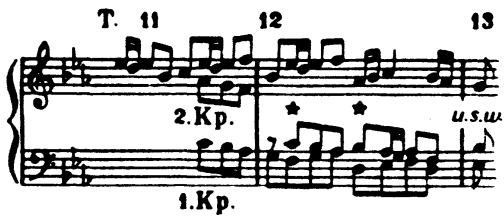
中文讲解
本条是对图6.5的占位记录。图注为“Figure 6.5 Schenker’s MODESWITCH”,表明此图为Schenker所作的调式切换(从小调转译为大调)的示意图,用于上段中的对位材料改造讨论。原图的谱例内容、版式与具体音高需查阅原图。
补充说明
由于图谱数据在输入中省略,本节读者应结合上文P0047关于“将图6.5与第11–12小节对照”以及“星号标出问题位置”等描述,将图理解为一个以小调原型的减七和弦+倚音为起点、转译为大调对应片段的对照图示。其余不可见细节(音位置、和弦具体音)不应在此推断。
第7段(P0049)
原文复述
182 Bach and the Patterns of Invention Dreyfus, Laurence. Bach and the Patterns of Invention. E-book, Cambridge, Mass.: Harvard University Press, 1996, https://hdl.handle.net/2027/heb05561.0001.001. Downloaded on behalf of Indiana University, Bloomington
中文讲解
本条是第14页下半部分的页眉与电子版版权/出处信息。前者给出页码“182”与书名“Bach and the Patterns of Invention”;后者完整列出引用:本电子版由Harvard University Press于1996年出版,作者Laurence Dreyfus,访问URL为hdl.handle.net/2027/heb05561.0001.001,并注明下载主体为Indiana University, Bloomington。该信息仅用于版本定位与学术引用核对。
补充说明
“Downloaded on behalf of Indiana University, Bloomington”指出该电子书的访问来源,与Indiana University的订阅数据库有关;这是电子版特有的版权/访问提示,不构成本节论证的一部分。
脚注 / 边栏 / 图表 / 附加信息(如有)
本节包含一项图示材料(Figure 6.5),其图注为“Schenker’s MODESWITCH”,用以支持P0047中对Schenker调式切换示意图的讨论;图像具体内容在输入中省略,需查阅原版。脚注方面,页脚仅包含出版与下载信息(Harvard University Press, 1996; URL; Indiana University, Bloomington下载方),属于电子版引用核对信息,不影响正文论证。
💡 本节核心要点
- 作者将本节论证建立在mechanist而非organicist的解释取向之上,前者要求具体的可描述作曲操作,后者则以Ursatz/生命力统摄作品。
- Schenker的方法虽以有机主义话语主导,但在modest局部解释中仍包含可借鉴的机械论论证,文中给出三步模板:限定操作→操作有限成功→修补结果。
- 核心案例中,作者用paradigm inflection取代Schenker的composing-out,强调该操作的关键特征是保留调式而非音程。
- 在第12小节第三拍上,作者反驳了Schenker的解释:b♭在MODESWITCH中转换并不困难,真正难题在于声部进行导致的并行/下跳冲突。
- 第二个机械式调整(mm.16–17与mm.21–22中CS2的低音出现)说明局部声部进行问题完全可以脱离Ursatz得到解释。
- 方法论层面,作者承认mechanist论证不能直接证明Bach的意图,但其作为“经验核查”与“经济性论证”仍优于organicist论证,并排斥对“调性意志”和“生命法则”等抽象概念的援引。
🔑 关键术语
- MODESWITCH:Schenker(在本节中由作者引述)使用的一种示意图式:在不改变基本对位骨架的前提下,将一组和声/对位材料从小调切换为大调(或反向),用以测试作曲家在转调中可能遇到的冲突;本节中作者将其作为mechanist论证的对象物。
- paradigm inflection:作者对Schenker的“composing-out”提出的替代术语,用来刻画对“固定对位单元”所做的具体转调操作;其核心是“保留调式而非保留音程”,从而凸显Schenker未辨识的一层结构差异。
- Auskomponierung:Schenker术语,将Urlinie/基础结构在表面铺陈出来、延展为作品长度的过程;在本段中Schenker用此概念解释为何原型在作品中需要展开,作者则批评其无法解释赋格呈示段的嵌入与否。
- Urlinie / Ursatz:Schenker理论中的基本线(Urlinie)与由其与Bassbrechung构成的基础结构(Ursatz);在本节中作者用以代表organicist的深层解释模式,并指出它对许多局部对位调整缺乏解释力。
- mechanist argument:本节立场所赞同的音乐分析进路:把作品行为还原为作曲家的具体技法操作与近因,避免使用“意志”、“生命力”等抽象能动者。本节的三步模板与两例具体调整都属此类。
- organicist discourse:与mechanist相对,把作品视为有机体的论述方式,常借助Ursatz/生命力等概念统摄作品全局;本节把Schenker的总体话语归入此类,但同时承认其中仍含有mechanist要素。
6.12 [描述性拆分] The Order of Permutations and the ‘Laws of Life’
第1段(P0050)
原文复述
Another concrete mechanism discovered by Schenker concerns the order of the permutations in each successive fugal complex. Given that three themes can be permuted in six forms, it is not at all clear in what order these should occur. For instance, one could imagine a simple function that would place the bottom theme on the top to produce two further permutations. There is, however, no historical model for that kind of arithmetic operation. In Bach’s permutation fugues first found in his early keyboard fugues, for example, Bach follows the example of Johann Adam Reinken in presenting four themes successively in the same part; in the case of some vocal works from Mühlhausen and Weimar where Bach applied this same technique, the choir members could all learn a set of difficult fugal passages together by memorizing the same four-part phrase which was then placed in its canonic context. In the kind of double fugue presented in the Well-Tempered Clavier, however, the fugal complexes do not occur successively throughout the piece. Consider Figure 6.6. Here Schenker presents a matrix of vocal entrances, even though each is separated from the others except for the first two statements of the subject and answer. The pattern is not a classic permutation, since Bach does not present Subject 3 (= CS 1) after Subject 2 (= CS 1) in the treble voice. What motor underlies this disposition, or as Schenker puts it, the “unique laws of life of this fugue”? The rule, Schenker states, is that Subject 2 (= CS 1) always begins in the voice which presented Subject 1 (= S) in the previous fugal complex. This observation is clever and not at all obvious either from the surface of the piece or from the Urlinie graph. Only by abstracting the fugal complexes from the completed work and from the organicist nexus—as Bach must surely have done—does the pattern of invention emerge with some regularity. The pattern also has an intrinsically musical resonance, as Schenker makes clear, in that it recalls the adjacent placement of the first fugal pile-up in m. 3. (How the permutations figure in the generative composing-out of the fundamental structure is, however, never addressed.)
中文讲解
本段把分析焦点从"主题如何被置换"推进到"置换按什么顺序出现”,揭示申克所发现的一个具体的、有规律的非算术机制。开头先提出一个看似简单的问题:三个主题可以形成六种排列,但按何种顺序排列这些排列本身并不自明。作者随即设想一种"简单函数”——把最底部的主题移到顶部以生成两个新排列——但立刻指出历史上没有此类算术操作可援引的先例。
随后引入历史参照来界定巴赫的实践。在早期键盘赋格中发现的巴赫"置换赋格”,沿袭赖因肯(Reinken)的先例,将四个主题在同一声部内依次呈现;在Mühlhausen与Weimar的声乐作品中,同样的技术被用于教学目的——唱诗班成员通过记忆同一段困难的四声部乐句来共同学习,再将其放入卡农式的上下文中。这里作者特别强调这种做法的实用性:可记忆的固定片段加上卡农化的上下文。
但《平均律键盘曲集》中的双重赋格情况不同:各赋格复合体(fugal complex)并非在全曲中前后相继出现,而是分散在不同位置,这正是图6.6必须以"矩阵"形式呈现声部进入顺序的原因。作者随即指出该模式并非"经典"置换——因为巴赫并未在高音声部中按Subject 2(=CS 1)之后紧接Subject 3(=CS 1),若按纯算术逻辑本应如此。
本段的核心是申克提出的"规律”:Subject 2(=CS 1)总是出现在前一个赋格复合体中陈述Subject 1(=S)的那个声部里。这就是申克用诗化语言所说的"此赋格独特的生命法则”(unique laws of life)。作者进一步做了两点重要评论:第一,这一观察极为机敏,从作品表层或Urlinie图表中都无从看出,唯有将赋格复合体从完成的作品中、从有机论的脉络中抽象出来——巴赫本人必然也曾如此——发明模式才会显现出规律性;第二,这一模式还具有内在的音乐呼应意义,因为它让人联想到第3小节中第一次赋格叠置(fugalpile-up)的相邻排列方式,从而在作品中建立了结构性呼应。
段末括注提示了一个重要的分析盲点:申克从未解释这些置换如何参与到基本结构(fundamental structure)的生成性展开(generative composing-out)之中,这是其分析的一个显著缺口。
补充说明
文中出现的S与CS是申克分析术语:S指Subject(主题),CS指Counter-Subject(对题);括号中"Subject 2(=CS 1)“的等号表示该曲中第二主题同时承担第一对题的功能,这一声部身份的双重性是本段规则能够成立的前提。第3小节第一次"赋格叠置"的具体音高内容在本段中并未复述,需要回溯前文才能确认;图6.6的视觉内容仅在文字中以"声部进入矩阵"的方式提及。
第2段(P0051)
原文复述
Dreyfus, Laurence. Bach and the Patterns of Invention. Figments of the Organicist Imagination. E-book, Cambridge, Mass.: Harvard University Press, 1996, https://hdl.handle.net/2027/heb05561.0001.001. Downloaded on behalf of Indiana University, Bloomington.
中文讲解
此段为来源与访问信息,并非论述性文字。它标明本次阅读所依据的文献为Laurence Dreyfus所著《Bach and the Patterns of Invention》,副标题《Figments of the Organicist Imagination》暗示作者对有机论式巴赫解读持批判态度。电子版由哈佛大学出版社1996年出版,经密歇根大学(handle前缀"heb”)托管,下载账户归属于印第安纳大学布卢明顿分校。
脚注 / 边栏 / 图表 / 附加信息(如有)
本节涉及一处图表引用(图6.6)与一处脚注标记(脚注11),但二者均未在所提供的输入中包含具体内容;脚注11锚定在P0050关于Mühlhausen与Weimar声乐作品的句子之后,其内容超出本节输入范围,故无法在additional_information中转述。P0051为引用页脚,仅起版本与下载元数据的作用。
💡 本节核心要点
- 申克在《平均律键盘曲集》双重赋格中发现一个具体的顺序规律:每一个新主题都出现在前一个赋格复合体中陈述上一主题的那个声部里。
- 这一规律并非纯算术操作——巴赫并未在高音声部中按Subject 2后紧接Subject 3,因此该模式不算"经典置换”。
- 该规律从作品表层甚至从Urlinie图表中都不可见,唯有将赋格复合体从完成作品中抽象出来、并置于有机论脉络中观察,才显现出规律性。
- 历史参照(赖因肯先例、Mühlhausen/Weimar声乐作品的教学用途)与WTC双重赋格形成对比:前者将多个主题紧凑地连续置入同一片段,后者则将赋格复合体分散在全曲各处。
- 该模式具有内在音乐呼应意义——它呼应了第3小节第一次赋格叠置的相邻排列方式。
- 申克从未说明这些置换如何参与基本结构的生成性展开(Ausarbeitung),这是一个被作者点明的分析缺口。
🔑 关键术语
- Permutation fugue / 置换赋格:指在多个主题的依次呈现中系统性地改变其组合顺序的赋格类型;本节指出巴赫的早期键盘实例遵循赖因肯的模式,将四个主题连续置于同一声部内。
- Fugal complex / 赋格复合体:由主题与对题等组合构成的完整对位单元,构成赋格的一个"层”;本节论证的关键是各复合体在WTC中并非前后相接出现,故需以矩阵方式呈现声部进入顺序。
- Urlinie / 基本线:申克理论中自背景结构贯穿至表层的主干旋律线;本节指出置换顺序的规律无法仅从Urlinie图表中读出。
- Organicist nexus / 有机论脉络:将艺术品视为有生命、有机体般发展的整体观,是申克分析的基本前提;本节中抽象赋格复合体的操作必须在这一框架内才有意义。
- Generative composing-out / 生成性展开:申克用语,指背景结构如何展开为表层的过程;本节末尾指出申克未说明置换如何参与此一过程,是其分析的一个缺口。
6.13 [描述性拆分] The Missing Sixth Permutation and Why Bach Rejected It
第1段(P0052)
原文复述
[Image placeholder: Figure 6.6 Schenker’s Stimmen-Tafel, retained with caption only]
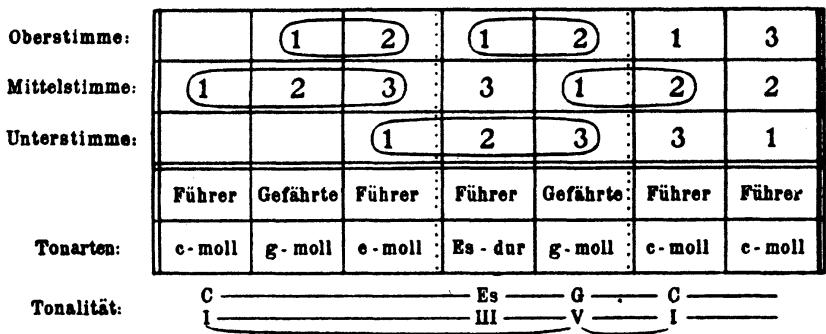
中文讲解
这是一处图像占位符,附带图注「Stimmen · Tafel;Figure 6.6 Schenker’s Stimmen-Tafel」。该图对应 Schenker 为本曲所绘的「声部谱表」,用来说明各主题 1、2、3 在对位声部中出现的位置与排列。该图出现在第 16 页,用以支撑下一段对 Schenker 记谱是否准确的讨论;具体图面细节需对照原书扫描页查看,本段为图位标记,不展开内容。
补充说明
图像内容不可见,但其作用可由下文(P0053)直接锁定:讨论 Schenker 在上方声部中对主题 1 与主题 2 相邻放置的标记是否准确。
第2段(P0053)
原文复述
In fact, the pattern is even more regular than Schenker’s diagram lets on. The final fugal complex in the middle of m. 26 does not begin with the arrangement 3–2–1 counting from the top but rather 2–3–1, labeled FC 1 in Ex. 6.1. Except for the octave transposition in the bass, it begins just as FC 1 did back in m. 7. Only after the downbeat of m. 27 do the two upper voices exchange parts and present the complex 3–2–1 (FC 5), the first and only time this complex is presented. Thus the circles enclosing the adjacent placement of themes 1 and 2 in Schenker’s upper voice are actually more consistent than he indicates.
中文讲解
本段主张:本小节的排列规律实际上比 Schenker 在 Stimmen-Tafel 图中所揭示的还要整齐。作者通过 m. 26 末段的具体对位事实对 Schenker 的记谱进行修正:
- 中心主张:m. 26 中段结束的赋格组合并非从顶部按 3–2–1 排起,而是以 2–3–1 开始,即 Ex. 6.1 中的 FC 1。
- 与 m. 7 的呼应:除低声部作了八度移位外,这次进入与 m. 7 中的 FC 1 在结构上完全一致,亦即作者强调「机制论」模型能精确捕捉两个相隔 19 小节的进入。
- 关键转折:只有等 m. 27 正拍之后,两个上声部才互换了位置,呈现 3–2–1(即 FC 5)。而 FC 5 在全曲中是第一次也是唯一一次出现。
- 对 Schenker 图的修正:Schenker 在上方声部中以圆圈标记主题 1 与主题 2 的相邻安置,作者认为实际情形比他画的更整齐、更一致——亦即 Schenker 把同一规则「画松了」。
这一段作用:在「机械论 vs. 有机论」的辩论中,先用一条更精确的对应(m. 7 与 m. 26)稳住机制论模型的解释力,为下一段「缺失的第六次排列」铺好台阶。
补充说明
FC 是 fugal complex(赋格组合)的缩写。Ex. 6.1 出自本书前一节,列出本曲可能出现的五种赋格组合。Schenker 在《Masterwork in Music》中对 WTC I/2 的 Stimmen-Tafel 记谱是其有机论分析的代表性视觉工具,本段是对该记谱的一次点对点修订。
第3段(P0054)
原文复述
But observing Bach’s permutations with this mechanist model, one can go a step further, dealing not so much with what is present in the piece but with what is absent: namely, the sixth permutation that Bach did not use. Schenker mentions that the arrangement 3–1–2 is missing but uses this fact merely to support his organicist edifice, asserting that “no textbook rules of any kind influence the direction [of the piece’s content], but rather, beyond all structure, it is the requirements of the Auskomponierung process of a single chord across the whole which alone are decisive, or what amounts to the same thing: it is the necessary fulfillment of the Urlinie, for the desire of a fundamental chord to live its own life in a horizontal direction, which constitute the decisive factors.” The organicist rhapsody again obscures an intention better grasped by mechanism.
中文讲解
本段是本节的论证枢纽,提出核心问题:与其纠缠于 Bach 用了什么,不如追问 Bach 没有用什么——即六个可能排列中缺失的那一个(3–1–2,FC 6)。
- 中心主张:利用机制论模型不仅能解释「在场的」,更能识别「缺席的」——缺席本身是 Bach 主动选择的结果,不是有机的宿命。
- Schenker 的处理被批评:Schenker 虽然也注意到 3–1–2 缺位,却只用这一缺位去佐证其有机论结构(organicist edifice)。他引文中强调:没有任何教科书规则能支配乐曲走向,唯一的决定因素是「整段单一和弦的展开过程」(Auskomponierung),或换言之,是 Urlinie 的必然实现——即根和弦「沿水平方向活出自己的生命」。
- 作者的反驳:这段带有强烈形而上学色彩的话被作者称作「有机论者的狂想曲」(organicist rhapsody),其作用只是把一个可以由排列规则精确解释的选择,掩盖成不可名状的「生命冲动」。
- 论证意义:本段把方法论争点摆到台面——「缺位」不该被吸入有机论美学,而应交由机制论模型来说明。这是为接下来讨论 FC 6 的具体声部问题(P0055)做铺垫。
补充说明
Auskomponierung 与 Urlinie 是 Schenker 理论的两个关键概念:前者指把一个和弦横向铺展为整段的过程,后者指由 3-line 或 5-line 构成的旋律线根音骨架。两者在 Schenker 体系中共同保证乐曲的「有机统一」。本段对二者的引用应理解为 Schenker 立场的概括,而非 Schenker 原文逐字翻译。Lebensgesetz(生命法则)在本段未出现,但在 P0058 末尾作为论辩对象再次登场。
第4段(P0055)
原文复述
First consider Ex. 6.4, which presents two possible versions of FC 6 which do not appear in the piece. Why did Bach not use this fugal complex? One problem revolves around the voicing of the three parts: they are either too far apart as in Ex. 6.4a, which makes for awkward keyboard writing, or too close together as in Ex. 6.4b, which causes forbidden fifths between the last two sonorities. In any event there is something ungainly about this complex, perhaps the way it unidiomatically emphasizes the fifth scale degree in the treble while resolving a tritone in the lower two voices, as in Ex. 6.4c. As an intermediate bit of voice-leading, this is all well and good, but as a progression moving from a weak to a strong beat, it is extremely lame. (In discussing the Art of Fugue, Donald Francis Tovey points out that he knows “of no case [in Bach’s works] where Bach uses all the six [combinations in triple counterpoint]. There are three reasons for this: first, that five may take up quite enough room; secondly, that Bach does not think himself forbidden to repeat a combination—which leaves him with less room for the others; and thirdly, that with the sixth combination all three themes will have appeared twice in the treble and twice in the bass; so that five or six combinations do not contain appreciably more variety than three or four.”) $^{12}$
中文讲解
本段把抽象的「缺位问题」落到了对位写作的具体瑕疵上:
- 中心主张:Ex. 6.4 给出 FC 6 的两种可能写法,都没出现在 WTC I/2 中——Bach 故意舍弃它,是因为无论怎么排声部都不理想。
- 关键概念辨析:
- Ex. 6.4a:三声部之间间距过大,导致键盘演奏不舒服——这是器乐写作(keyboard writing)的实际问题,不是抽象规则。
- Ex. 6.4b:三声部挨得太近,末两个和声之间出现禁五度(forbidden fifths / 平行五度)——这是对位法的硬性禁忌。
- Ex. 6.4c:这一组合最难看之处是高音声部不当地强调五音(第五级),同时下方两声部去解决一个三全音(tritone);作为和声之间的「过渡」或可接受,但从弱拍走向强拍时显得「瘸腿」(extremely lame)。
- 作者用「lame」一词把美学判断(不优雅)与对位功能性判断(弱到强的进行缺乏动力)合在一起。
- Tovey 引文:作为脚注 12 的内容,Tovey 在讨论《赋格的艺术》时表示自己「在 Bach 作品中找不到 Bach 用尽全部六种三声部对位组合的实例」,并列出三点原因:(a)用五种已经够长;(b)Bach 允许自己重复某一组合,使其他组合空间被压缩;(c)一旦用上第六种组合,三个主题在高、低声部就各出现两次,因此五种和六种之间的差异并不比三种和四种之间更大。
- 论证作用:这是从「为什么本曲不用 FC 6」延展到「Bach 一贯倾向于不用尽六种组合」的归纳支持,Tovey 的观察为作者的机制论分析提供了独立旁证。
补充说明
三声部对位(triple counterpoint)中六种三声部排列可视为三个主题位置的全排列 3! = 6,但并非每种排列都同样可写。Tovey 的三点原因是 Bach 学界讨论对位组合选择时的经典解释,与本段的声部拥挤/禁五度论证互为表里:前者是统计性归纳,后者是单点深析。脚注号 12 在源段末尾以 $^{12}$ 形式标注。
第5段(P0056)
原文复述
Dreyfus, Laurence. Bach and the Patterns of Invention. E-book, Cambridge, Mass.: Harvard University Press, 1996, https://hdl.handle.net/2027/heb05561.0001.001. Downloaded on behalf of Indiana University, Bloomington
中文讲解
这是出现在第 16 页底部的书目/出处信息,并非正文段落。条目内容为:作者 Laurence Dreyfus,书名 Bach and the Patterns of Invention,Cambridge, Mass.: Harvard University Press 出版的电子版,1996 年,附有 HathiTrust 永久链接 handle,并由印第安纳大学布卢明顿分校代理下载。此条目是本书研究的方法论背景文献——Dreyfus 是 Bach 机械论、组合式作曲思维的代表人物之一,作者在论证机制论解释时与其立场一致。
补充说明
本条目按版式判断为页面脚注/版权下载说明,对正文论述起旁证作用而非直接支撑。它重复出现在第 17 页底部(见 P0059),是该电子书按页眉/页脚栏重复的常规设置。
第6段(P0057)
原文复述
[Image placeholder: Example 6.4 Two alternative versions of FC 6 that do not appear in WTC I/2, retained with caption only]
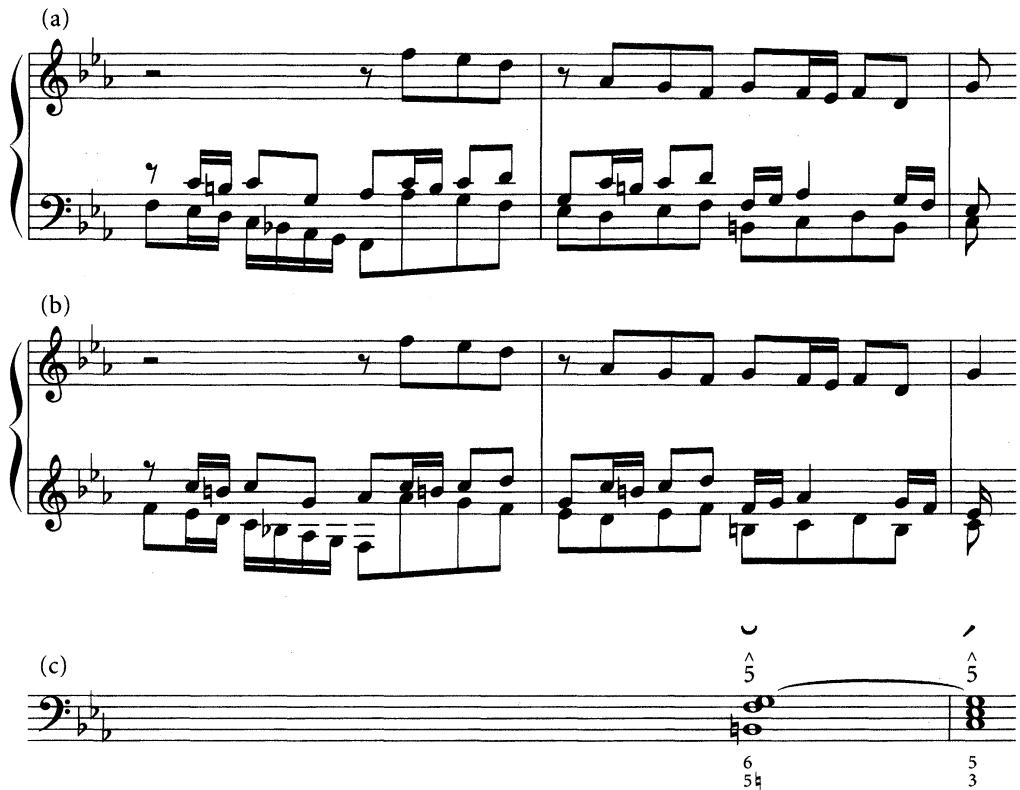
中文讲解
这是 Ex. 6.4 的图像占位符,图注为「Two alternative versions of FC 6 that do not appear in WTC I/2」。它把上一段(P0055)所讨论的两种 FC 6 写法(4a 间距过大、4b 出现禁五度、4c 强调五音并解决三全音)以谱例形式呈现于第 17 页,是 P0055 论证不可或缺的视觉佐证。具体谱面细节需对照原书扫描页查看,本段不展开。
补充说明
WTC I/2 是《平均律钢琴曲集》第一册第二首(C 小调 BWV 847),即本节讨论的曲目。Ex. 6.4 用三幅谱例(4a、4b、4c)说明同一组合在不同音域/声部排列下的对位后果,是本书「一例三态」的典型呈现方式。
第7段(P0058)
原文复述
For whatever reason, the missing fugal complex is conspicuously absent, especially when Bach has apparently gone out of his way to show off the other five permutations within the piece. In the entry corresponding to mm. 11, FC 6 [3-1-2] should have occurred according to the permutational plan, but was rejected; here Bach kept Subject 2 in the bass, but was forced to reverse the upper two parts. The entry in m. 15 proceeds according to the original loop, stumbling only at m. 20 to present FC 4 [1–2–3] which, given the break in the permutational chain, would never have occurred without intervention. The permutational pattern, therefore, is not allied with any Lebensgesetz, but is an invention that helps the composer produce the piece. It figures also, therefore, as an element of analytic understanding, since the omitted fugal complex challenges the myth of organic perfection by highlighting the composer’s struggle with his material. It also teaches a lesson about contrapuntal propriety, a lesson which presumably Bach conveyed to his pupils.
中文讲解
本段是对全节论证的收束与升华,提出三层主张:
- 缺位的显著性:Bach 在曲中明显「刻意展示」了其余五种排列,让缺的第六种愈发显眼——这不是顺手遗漏,而是被检视过的拒绝。
- 三个具体证据:
- 在对应 m. 11 的进入处,按机制论排列计划本应出现 FC 6 [3-1-2],却遭到了拒绝;Bach 让主题 2 留在低音,但被迫把上方两个声部的次序颠倒。
- m. 15 的进入仍按原循环推进,说明 Bach 并未放弃整体计划。
- m. 20 出现 FC 4 [1-2-3],但这一组合的「出现」恰恰是因为排列链已经在 m. 11 处断裂,需要人为介入才补出——也就是说,链断之后,Bach 用替代品而非真正回到 FC 6。
- 方法论结论:这种排列模式与所谓的 Lebensgesetz(生命法则)无关;它是 Bach 帮助自己作曲的「发明」(invention),而非先验的生命冲动。由此它也反过来是分析理解的工具:缺位挑战「有机完美」神话,使作曲家的挣扎可见,也教给学习者一条对位得当(contrapuntal propriety)的准绳——而这正是 Bach 大概会希望学生学到的东西。
- 论证意义:作者用一段话同时否定了有机论的解释框架,并把缺位重新定义为具有方法论价值的对象——既是作曲技术的反映,也是教学意图的载体。
补充说明
Lebensgesetz 直译为「生命法则」,是 19 世纪有机论美学常用的术语,意指艺术作品中某种内在的、自发生长的支配规律,本书作者以此作为论辩的靶子。Invention 一词在本段被赋予双重含义:既指 Bach 借排列规则来「发明」自己的作品,也呼应 Bach 的《二部/三部创意曲集》(Inventions)。contrapuntal propriety 指对位写作中的「合宜性」或「适切性」,是 Baroque 对位教学的核心品质之一。
第8段(P0059)
原文复述
Dreyfus, Laurence. Bach and the Patterns of Invention. Figments of the Organicist Imagination E-book, Cambridge, Mass.: Harvard University Press, 1996, https://hdl.handle.net/2027/heb05541.0001.001. Downloaded on behalf of Indiana University, Bloomington
中文讲解
这是第 17 页底部再次出现的书目/下载出处信息。除一处外,其内容与 P0056 相同:此页另增一行小标题「Figments of the Organicist Imagination」(有机论者的想象之产物)。它体现了本书的小节标题与页面尾部信息之间的呼应——本节正是以「缺位」来反驳有机论美学,因此页脚再次点出该立场的题旨。它对正文起旁证与定位作用。
补充说明
P0059 与 P0056 的链接 handle 编号末段略有不同(…05561.0001.001 vs …05541.0001.001),此处仅按源段所给形式如实复述,不作校正。这两段按版式判断是同一电子书版的两条按页出现的版权/下载说明。
脚注 / 边栏 / 图表 / 附加信息(如有)
本小节正文中除段落 P0052、P0057 为图像占位符(分别对应 Figure 6.6 Schenker’s Stimmen-Tafel 与 Example 6.4 的两种 FC 6 写法)外,还在 P0055 末尾出现脚注编号 $^{12}$,其内容即为同段括注内的 Tovey 引文。页面底部的书目信息 P0056 和 P0059 指向 Dreyfus, Bach and the Patterns of Invention (1996),并在 P0059 加上小标题「Figments of the Organicist Imagination」与本节论辩立场形成呼应。三条附加材料共同服务于「机制论 vs. 有机论」的方法论之争。
💡 本节核心要点
-
- 该段在 WTC I/2 m. 26 的进入比 Schenker 的 Stimmen-Tafel 所暗示的更整齐——它从 FC 1(2-3-1)开始,严格对应 m. 7 中的 FC 1,FC 5(3-2-1)则在 m. 27 正拍后才首次出现。
-
- 真正的论证焦点不在「在场」的五种排列,而在 Bach 主动舍弃的第六种(FC 6, 3-1-2)——这一缺位是机制论能精确解释、却被 Schenker 的有机论美化为 Auskomponierung/Urlinie 之必然。
-
- FC 6 被弃的具体原因在对位与器乐细节:声部间距过宽难弹、过窄出现禁五度,且高音声部不适当地强调五音、下两声部解决三全音,使得弱拍到强拍的进行「瘸腿」。
-
- Tovey 援引《赋格的艺术》旁证:Bach 几乎从不用尽六种三声部对位组合,原因在于五已足够、可允许重复组合、第六组合并未显著增加主题分布的多样性。
-
- m. 11、m. 15、m. 20 的进入序列显示:Bach 在 m. 11 处被迫修改了原排列循环,未回到 FC 6,最终以 FC 4 代偿——证明排列计划是被作曲过程「中断并修补」的,而非有机生成的 Lebensgesetz。
-
- 本节的方法论结论是:缺位暴露了作曲家的挣扎,否定了「有机完美」神话,并把这一选择转化为可学习的对位合宜性原则,传承给 Bach 的学生。
🔑 关键术语
- fugal complex (FC):赋格组合:本曲中三个主题(Subject 1/2/3)在三声部对位下的具体声部位置组合,本节提及 FC 1、FC 4、FC 5、FC 6,即不同排列编号。
- Auskomponierung:「展开铺陈」:Schenker 理论中把单一和弦的水平向铺展过程,本节中被作者当作有机论美化的代表术语使用。
- Urlinie:「根音线」:Schenker 体系中由 3-line 或 5-line 构成的旋律骨架,本节中与 Auskomponierung 并列出现,构成 Schenker 的决定论解释。
- Lebensgesetz:「生命法则」:19 世纪有机论美学概念,指艺术品内部自发的支配性规律,本节中作者明确否认排列模式属于此类。
- forbidden fifths:禁五度(平行五度):传统严格对位禁止的声部进行,本节 Ex. 6.4b 中三声部挨得太近时出现,被列为拒绝 FC 6 的直接原因。
- tritone:三全音:四个半音构成的音程,本节 Ex. 6.4c 描述 FC 6 在下方两声部中解决三全音,被认为从弱拍走向强拍时显得「瘸腿」。
- contrapuntal propriety:对位合宜性:Baroque 对位教学中的核心品质,本节末尾被列为 Bach 借缺失的 FC 6 所传授给学生的「功课」。
- triple counterpoint:三声部对位:主题位置可互换的对位类型,理论上有 6 (=3!) 种组合,本节围绕 Bach 是否用尽这六种展开讨论。
6.14 [描述性拆分] Toward a Mechanist Analysis: Hierarchies of Invention
第1段(P0060)
原文复述
How might a mechanist analysis take further stock of this piece, preserving at the same time the sense of wonder and amazement that is surely due this fugue? Hierarchically, one would begin not with the theme itself, but with the invention of the fugal complexes, the rejection of the one bad apple, the retooling of one complex through the MODESWITCH, and the adjustments to the complexes ending naturally on 6/4 chords. The claim here is that the piece is quintessentially about what happens to these processes. One might recall in this regard the anecdote told by Emanuel Bach (quoted in Chapter 5), who relates that his father could tell which devices were proper to any fugue subject and, in hearing a fugue, “would joyfully nudge me when his expectations were fulfilled.” 13 Another related story appears in an account by August Kollmann in which Emanuel Bach shows his father a subject for a fugue together with the variations he thought it would offer, and asks if there were more variations contained in it. “The father then . . . looked at the subject but a little while and returned it, saying ‘No more.’” 14 Note also how these attitudes differ from the more surface-oriented traditional view of fugal form, which, like Schenker, idealizes every note on the musical page, but sticks predominantly to blow-by-blow accounts of formal events, as if nominal order were more critical than the quality and depth of the most challenging musical ideas.
中文讲解
本段开篇以设问方式提出核心方法论主张:机械论式的分析如何在对作品保持敬畏的同时推进解释?作者给出的答案是层次化的——分析不应从主题本身起步,而应从更高一层的"过程"起步,具体包括四件在前文已经做过的事情:(1) 各个赋格复合体(fugal complexes)的发明;(2) 对"一只坏苹果”(前文已鉴别的失败片段)的剔除;(3) 通过 MODESWITCH 对某一复合体的改造;(4) 使各复合体自然地结束于 6/4 和弦的调整。换言之,全曲的精髓不在主题表面,而在这些过程如何被发明、挑选、改造与收束的过程之中。
随后作者援引两则轶事作为方法论上的旁证:一是 Emanuel Bach 转述的其父 J. S. Bach 在聆听赋格时能预判哪些对位装置"恰当”,并在被验证时"愉快地轻推"一下他(脚注 13);二是 Kollmann 记载的另一则故事:Emanuel 把主题连同他所能想到的变化一起拿给父亲看,问是否还有更多,J. S. Bach 略一过目便说"没有了"(脚注 14)。这两则轶事并非单纯的逸闻,它们一同勾勒出一种作曲观:真正的赋格创作围绕着从主题中"穷尽"地展开恰当的装置与变化,而不是围绕主题的表层展开。
段末将这种态度与传统赋格形式观、以及 Schenker 的立场对立起来:后者虽然也"理想化"乐谱上的每一个音,却主要停留在对形式事件的逐拍叙述(blow-by-blow accounts of formal events)层面,仿佛事件的名称与顺序比最具挑战性的音乐构思之质量与深度更重要。作者借此为前文已建立的方法——以"过程"而非"主题表层"为分析起点——做历史与风格上的辩护。
补充说明
P0060 中的 MODESWITCH、“fugal complexes”、“the one bad apple”、以及 6/4 和弦结尾,均为前文已经确立的概念;本段的功能是将它们重新组织为一个层次序列,作为机械论分析的程序起点。两则脚注(13、14)在本段中是平行证据,用来说明巴赫本人对赋格主题所蕴含之变化与装置的判断方式,与作者主张的"从过程入手"相互呼应。
第2段(P0061)
原文复述
The disposition of a fugue—form in Schenker’s sense—can therefore be thought of as a far more ancillary matter than has become common since Adolph Bernhard Marx or even since Marpurg. In the C minor fugue, in fact, the layout of the fugal expositions was exceptionally conventional, not because they are all separated by episodes—this feature was actually unusual—but rather because of the scale degrees on which they are placed. One simply does not need Schenker’s Bass-Brechung when one can invoke the recommended Baroque cadence schemes described by J. G. Walther, J. A. Scheibe, and Nichelmann in which keys and types of cadences proper to beginnings, middles, and ends are discussed. 15 (In minor, for example, “the third and fifth of the key” are strong points of articulation between tonic statements near the beginning and end.) This notion of tonal stations or tonal ARRAY is far looser than Schenker’s tonal path and is not a primary compositional concern, which is why, for example, Bach was not especially bothered to place FC 4 and FC 5 both on the first scale degree starting as early as in m. 20.
中文讲解
本段的核心是降低"布局"(disposition,即 Schenker 意义上的 form)的理论权重。作者认为,自 A. B. Marx 甚至 Marpurg 以来,赋格布局被赋予过高的解释地位;而在 C 小调赋格中,各呈示段(expositions)的安排"非常常规",其常规之处并不在于它们之间都由插段隔开(这一特征其实反而不寻常),而在于各呈示段所在的音级位置。换言之,真正决定布局的是调性落点,而非段落之间的形式间隔。
由此引出一个理论替代方案:作者主张,与其借助于 Schenker 的 Bass-Brechung(基础低音的分解),不如援引巴洛克时期 Walther、Scheibe、Nichelmann 等人所记述的、推荐用于不同位置(开始、中段、结束)的调性与终止式方案(脚注 15)。例如在小调中,“主音的三级音与五级音"是接近曲首与曲尾的主调陈述之间具有强切分力的音。作者借这一历史资源说明:巴洛克自身已经具备一套关于"何处在调性上应当到达何处"的约定,这些约定足以替代 Schenker 那种以单一基础低音贯穿全曲的方案。
由此衍生出两个关键概念——“调性站点”(tonal stations)与"调性阵列”(tonal ARRAY)。作者明确指出这两个概念比 Schenker 的"调性路径"(tonal path)松散得多,且不是首要的作曲关切。本段的实证例证是:C 小调赋格早在第 20 小节就让 FC 4 与 FC 5 都从一级音开始,这在一个把布局视为首要关切的理论框架下会被视为问题,但在一个以"调性站点"为基本图像的框架下则完全无伤大雅。本段实际上是为作者自己的分析框架划定边界:布局仍然存在,但只承担辅助性的角色。
补充说明
脚注 15 指向 Walther、Scheibe、Nichelmann 等人对巴洛克终止式方案的论述,作者将其作为"历史资源"的来源,与后文对 Schenker 全曲贯通式声部进行结构的批评形成对照。FC 4 与 FC 5 均为前文已定义的"fugal complex"实例,在本段中作为"调性阵列"概念的具体证据。
第3段(P0062)
原文复述
In elaborating the piece—more play than work—one can easily imagine Bach taking the terminal points between expositions ARRAYED according to the key scheme of the disposition and linking them with voice-leading patterns that were embellished by motives proper to the fugal themes, much as I postulated the elaborative links between inventive segments in the C major Praeambulum in Chapter 1. For the conclusion of the work, Bach appended a cadential segment at m. 29, being sure to drop the register away from c² in order to highlight a final pedal exposing new and free counterpoint that brings the fugue to a close. Each stage of the composition within this analytic mode is far from preordained but rather is witness to the remarkable genius for invention and elaboration that we encounter in the unmistakably human form of J. S. Bach. This notion of an ancillary elaboration is not meant to suggest that, when connecting up the fugal complexes, “anything goes.” Far from it. As we have seen elsewhere, the elaboration is always a delicate matter of voice-leading that borders very much on invention itself. What is, however, unnecessary—not to mention logically and historically unjustified—is to maintain that the entire work of the fugue rests upon a coherent large-scale voice-leading structure, as Schenker wants to claim. Naturally, given the highly restricted vocabulary of the tonal system, it will always be easy to concoct such a voice-leading structure, especially when one insists on finding it. And since all masterworks are said to contain such structures, it is no coincidence that Schenkerian readings routinely locate them. The absence of any kind of possible falsification of this method, which gives rise to the most intricate and elegant set of ad hoc adjustments known to music theory, ought to be a matter of grave methodological concern.
中文讲解
本段将分析视角从"布局"进一步推进到"展开"(elaboration)层面,并同时完成对 Schenker 方法论的系统性反驳。
第一层展开论。作者以"more play than work"(更像游戏而非劳作)形容巴赫展开作品的方式:巴赫据称是从各呈示段之间、由布局调性方案所 ARRAYED 出来的终止点出发,再用动机装饰过的声部进行模式把它们连接起来。这一步骤与第一章中作者对 C 大调 Praeambulum 之"展开性连接"的设想同构。结尾处巴赫在第 29 小节附加一个终止段落,并刻意把音区从 c² 下移以突出一个终止主持续音,让新的、自由的对位收束全曲。每一步都不是预先决定的,而是巴赫发明与展开天才的见证——作者刻意强调"unmistakably human form",以此表明作品是人之所为,而非某种深层结构的必然结果。
第二层方法论防御。作者预见到一种可能的误读:既然布局与展开都被说成是辅助性的,是不是连接各复合体时"怎么都行"?他立即否定:展开本身就是一项贴近发明(borders very much on invention itself)的精细声部进行工作,绝非任意。
第三层对 Schenker 的正面批评。作者所要否定的并不是局部声部进行的存在,而是 Schenker 的那个强主张——“整首赋格建立在一个贯通全曲的声部进行结构之上”。作者给出的理由分为三点:(a) 调性系统的词汇本身就极其有限,因此任何作品都可以被临时拼凑出某种贯通式声部进行结构;(b) 由于 Schenker 派分析总是预设杰作包含这种结构,其"总是找到"便不具有证伪能力;(c) 这种不可证伪性,连同为维持结构而进行的"最为繁复优雅的特设调整"(the most intricate and elegant set of ad hoc adjustments),应当被视为音乐理论中"grave methodological concern"(严重的方法论忧虑)。
本段是本小节的收束与高潮:前两段为分析框架做层次界定,本段则在给出积极描述的同时,完成对其最强竞争对手——Schenker 的全曲声部进行理论——的批评,并为该批评奠定方法论基础(可证伪性 / falsifiability)。
补充说明
“Ad hoc adjustments”、“voice-leading patterns embellished by motives”、“new and free counterpoint” 均为本段内部自洽的术语使用;“falsifiability” 的概念在本段中以"absence of any kind of possible falsification"形式出现,是作者借自科学哲学语汇对 Schenker 方法提出的方法论质疑,而非对 Schenker 本人理论的史实性叙述。第 29 小节的终止段落与 c² 音区的下移是作者给出的具体曲例佐证。
脚注 / 边栏 / 图表 / 附加信息(如有)
本小节包含三处脚注引用(13、14、15),但本任务输入仅给出引用标记而未提供脚注正文内容,因此在复述中只能保留其引用编号与上下文功能。具体而言:脚注 13、14 分别支撑 P0060 中 Emanuel Bach 转述的两则轶事;脚注 15 支撑 P0061 中对 Walther、Scheibe、Nichelmann 所述巴洛克终止式方案的援引。本小节无独立图示或表格。
💡 本节核心要点
- 机械论分析应以"过程"为层次起点,而非以主题表层为起点:具体包括各赋格复合体的发明、剔除失败片段、经由 MODESWITCH 的改造,以及使各复合体收束于 6/4 和弦的调整。
- 赋格的"布局"(disposition)应被视为辅助性事项;C 小调赋格的非常规之处在于音级落点而非段落之间的形式间隔,因此可用巴洛克自身关于终止式与调性站点的约定替代 Schenker 的 Bass-Brechung。
- 作品的展开是"更近于游戏"的过程:巴赫在调性阵列所决定的端点之间,用主题动机装饰的声部进行模式进行连接,并在第 29 小节以音区下移与终止主持续音完成收束。
- 辅助性展开并不意味着"怎么都行":展开本身是贴近发明的精细声部进行工作。
- 对 Schenker 的批评集中在两点:调性词汇的有限性使任何作品都能被临时拼凑出贯通式声部进行;该方法在原则上不可证伪,只能依靠特设调整维持其结构,因此构成严重的方法论问题。
🔑 关键术语
- mechanist analysis:本节主张的分析模式:以可识别的作曲过程(如复合体的发明、剔除、改造、收束)作为分析的层次起点,而非以主题表层或全曲贯通式声部进行结构为起点。
- fugal complexes (FCs):本节(前文已定义)中作为分析单位使用的概念,指赋格内部由若干呈示段及相关过程组成的复合体;FC 4 与 FC 5 是该曲中两个具体复合体实例。
- MODESWITCH:本节(前文已定义)所指对某一赋格复合体进行的改造手段,属于机械论分析层次序列中的一环。
- disposition:在本节中等同于 Schenker 意义上的 form,即全曲的形式布局;作者主张其性质为"辅助性",远不如自 Marx 与 Marpurg 以来所被赋予的那般重要。
- tonal ARRAY / tonal stations:作者用以替代 Schenker 调性路径的概念,指各赋格呈示段在音级或调性上的落点;其约束力比 Schenker 的"调性路径"松散得多。
- Bass-Brechung:Schenker 理论中用以建立全曲贯通式声部进行结构的基础低音分解手法;本节主张可由巴洛克自身的终止式与调性站点方案替代。
- ancillary elaboration:作者对作品展开环节的定性:相对于核心的发明过程,展开属于辅助性工作,但其本身仍是贴近发明的精细声部进行,并非"怎么都行"。
- falsifiability:本节末尾用以质疑 Schenker 方法的概念工具:当一个方法原则上无法被证伪、只能依靠特设调整维持其结论时,其方法论地位应被视为严重问题。
6.15 [描述性拆分] Schenkerian Limits in Contrapuntal Music and the Rhetoric of Reduction
第1段(P0063)
原文复述
Running header for page 186, giving the page number and the book title “Bach and the Patterns of Invention,” followed by the citation block for the e-book edition: author Laurence Dreyfus; e-book, Cambridge, Mass.: Harvard University Press, 1996; the HathiTrust handle URL https://hdl.handle.net/2027/heb05561.0001.001; and the access line “Downloaded on behalf of Indiana University, Bloomington.”
中文讲解
这是第186页的版心页眉,属于劳伦斯·德雷福斯《Bach and the Patterns of Invention》电子版的连续版式信息:先标页码和书名,再附出版社(Harvard University Press, 1996, Cambridge, Mass.)、HathiTrust永久链接以及下载单位(Indiana University, Bloomington)。它本身不参与论证,只是告诉读者当前所在页码和所引用的版本来源,为后续引用页码提供版本依据。
补充说明
该段落属于页眉/版本信息页脚,每页重复出现,仅起定位作用。
第2段(P0064)
原文复述
Even orthodox Schenkerians will at times admit that Schenker does not “work well” in explicitly contrapuntal music such as fugues. The author finds this attitude troubling: if Schenker’s self-referential ideas can only be called into question when so-called surface voice-leading phenomena like imitation and double counterpoint get in the way, then what guarantees that Schenker has not deceived his readers when he analyzes Beethoven symphonies? Part of the problem, in his view, lies in the rhetorical force of a good voice-leading reduction. There is an unmistakable aesthetic pleasure that only a trained musician can draw from a beautifully drawn reduction, which seems to put the whole harmonic edifice in order, give it a formal shape, and separate structure from ornament. It might be more accurate to treat voice-leading reductions themselves as akin to metaphors: they simultaneously impose a shape on an experience, permit comprehension, and, as earlier noted, shut out a host of competing meanings. Without a sweeping theory such as Schenker’s that makes large claims about how raw musical materials are generated, there is no dependable way of reducing from surface even to a modest background. Every reduction, therefore, serves an interpretive point, and, as in all interpretive activity, some views are more persuasive than others. Schenker’s Urlinie descents, for instance, are convincing to the degree that they recall perceived surface events, especially at cadences. The concept wins assent through metaphor, and musical experience subordinates itself to this understanding. Yet, given that certain descents can be readily observed in music, it does not follow that descents in general are the unique guiding principle of all tonal music. In particular, the associated ideas that a primary melodic line is carried in a treble voice and that all harmony is consistently two-voiced are, in the author’s words, totalitarian notions that in the end imprison rather than liberate hearing. Isolating these metaphorical operations and observing how they structure both listening and understanding is perhaps the first step toward opening the analysis of tonal music to a new period of fresh inquiry and investigation.
中文讲解
本段集中反思申克分析方法对复调音乐(特别是赋格)的适用性,并由此质疑整套理论的普遍效力。作者从一个令人不安的观察切入:连正统申克学派自己也承认,申克在面对明确的复调作品(如赋格)时“效果不佳”。真正的麻烦在于一个反问——如果只有当表层对位(如模仿与二重对位)出现时,申克的思路才会受到挑战,那么他在分析贝多芬交响曲时凭什么没有“欺骗”读者?这个反问将矛头从复调特例扩展到全部作品,暗示问题不在具体体裁,而在方法本身。
作者把问题归因于“声部进行简化”(voice-leading reduction)的修辞力量。一张漂亮的简化图能带给受过训练的听者独特的审美快感:它让整个和声结构看上去秩序井然、形式清晰、结构与装饰被干净地分开。但这种秩序感是修辞制造的效果,因此作者提出应把声部进行简化视为“隐喻”——隐喻同时做三件事:把某种经验强行塑形、让我们得以理解、又排除大量与之竞争的意义。换言之,简化既是理解工具,也是限制装置。
由此推出一个方法论后果:没有像申克那样宏大、自洽的生成理论,就不存在从表层可靠地走向任何背景层的统一方法;每一次简化都为某个解释目的服务,而解释之间只有说服力的差别,没有绝对的优劣。Urlinie(基础线性进行)之所以令人信服,是因为它呼应了听者能够感知的表层事件,尤其是终止式——它通过隐喻让人认同,再反过来让音乐体验服从于这种理解。但这只是一个经验性观察,不能推出“一切调性音乐都只有一个统辖原则”。特别是“主旋律只在上方声部”以及“所有和声本质上都是二声部”这两条派生主张,被作者称为“极权式”概念——它们最终禁锢而非解放听觉。
最后,作者建议把这类隐喻性操作单独识别出来,观察它们如何同时塑造听与理解,这或许是把调性音乐分析带入新一轮探索的起点。本段是整个小节论证的心脏:从质疑申克的适用边界出发,把简化图视为隐喻,进而把对Urlinie和二声部和声观的批评从“局部不适用”提升到“方法论上可疑”,最终指向一种更具自觉性的分析态度。
补充说明
本段中“Urlinie”一词在申克理论中特指贯穿全曲的基础线性下行(通常是3̂–2̂–1̂),此处作者讨论的就是这一概念的说服力来源;“voice-leading reduction”指申克式的声部进行简化图;“double counterpoint”指两声部旋律可以按特定音程互换的对位技法。这些术语在本节中都是讨论对象,理解时不必深入申克系统的内部规则,只需知道它们是申克用以解释调性音乐结构的工具。
第3段(P0065)
原文复述
Running header showing the subsection/chapter title “Figments of the Organicist Imagination,” followed by the standard e-book citation block: Dreyfus, Laurence. Bach and the Patterns of Invention. E-book, Cambridge, Mass.: Harvard University Press, 1996, https://hdl.handle.net/2027/heb05561.0001.001, and the line “Downloaded on behalf of Indiana University, Bloomington.”
中文讲解
这里的“Figments of the Organicist Imagination”(有机主义想象的虚构物)是小节或章节标题,引出下一段对申克“有机体主义”(organicism)意识形态色彩的集中批判。紧随其后的仍是与P0063相同的电子版引用与下载信息。标题本身已经预告了作者立场:申克的“有机体”叙述并非自然事实,而是被构造出来的想象之物。
补充说明
该段落由小节标题加页眉引用信息组成,仅起结构与定位作用。
第4段(P0066)
原文复述
Heinrich Schenker’s organicism is a belligerent one: it denounces opponents such as Marpurg for handling mechanical rules in fugue writing, while praising superficial statements on fugue by Robert Schumann on account of their organicist “language of flowers.” Schenker’s rhetoric can be separated to some degree from his analytic content, although one may wonder whether Schenkerian analysis would have so many adherents if students were taught from the original Schenkerian texts rather than from later writings that clean up his tendentious opinions, or from scholarly editions—such as the translation of Der freie Satz—that relegate some particularly embarrassing metaphysics to the back of the book. For Schenker, mechanism signals an absence of true understanding: cold rules in place of the life-blood of the tonal will. But his organicist understanding comes at a cost. The first loss is, as suggested earlier, the composer as a human being—someone who thinks and feels, and whose struggles with the materiality of composition leave a residue in the work itself. Yet organicist understanding can also weaken analysts, who employ their critical intelligence to construct pleasing intellectual artifacts instead of confronting both the supremely lofty and the crassly mundane ideas. Great works of art are, after all, built on both extremes—on inspiration and on detritus—and there is a certain comfort in knowing that they will withstand even the most unflattering scrutiny. Passing on this lesson through musical analysis is, the author concludes, to pass on one of the most precious insights disclosed by great music and its composers.
中文讲解
本段把焦点从“分析方法的适用性”转向“申克的有机主义意识形态本身”,揭示其修辞立场与所谓“分析内容”之间的关系。
首先,作者给出一个具体对比:申克激烈抨击Marpurg在赋格写作中只讲机械规则,却对Robert Schumann那些其实相当表面的赋格评论大加赞赏,理由仅是其“花的语言”符合有机主义叙事。这一对比揭露了申克取舍的双重标准:内容是否正确不是首要标准,是否贴合有机主义修辞才是。这与上一段“简化图=隐喻”的论断彼此呼应——申克的方法不只是分析,更是一套价值立场。
接着,作者指出申克的修辞与其分析内容在一定程度上可以分开,但又提出一个反事实的追问:如果学生直接读申克原著(而非后世去政治化的读物,或像《Der freie Satz》译本那样把尴尬的形而上学移到书末),申克分析还会有这么多追随者吗?这个追问本身暗示:今天流行的申克分析是被“清洗”过的版本。
随后,作者解释代价。对申克而言,“机械”即真正理解的缺席:冰冷的规则取代了调性意志的“生命之血”。但这种有机主义叙事有两层损失。第一层在前文已经铺垫:作曲家作为有思想、有感受、会与作曲的物质性搏斗的人消失了——作品不再被理解为人的努力的痕迹。第二层是针对分析者本身:有机主义使分析者倾向于制造“好看的智识工艺品”,回避对“崇高”和“平庸”两类观念的同时直面。
最后,作者提出一种更诚实的分析伦理:伟大的艺术作品本就同时建立于“灵感”与“瓦砾”之上,知道它们能经得起最不讨好的审视,本身就是一种安慰;通过分析把这种认识传递给学生,也就是传递伟大音乐与作曲家所揭示的最珍贵洞见之一。
本段与P0064合在一起构成对申克分析的双层批判:方法论层面(简化图作为隐喻,Urlinie并非普遍原则)与意识形态层面(有机主义排斥机械、排斥作曲家作为人),并以“直面崇高与平庸”作为出路。
补充说明
本段提到Marpurg与Schumann、Marpurg是18世纪德国音乐理论家,以赋格规则写作闻名;Schumann的评论虽被申克赞许,在作者看来其实流于表面;Der freie Satz是申克晚期的理论著作。这些信息仅作为申克取舍标准的具体例证出现,理解本段论证不依赖其作品细节。
第5段(P0067)
原文复述
Running header for page 188, repeating the book title “Bach and the Patterns of Invention” and the standard e-book citation: Dreyfus, Laurence. Bach and the Patterns of Invention. E-book, Cambridge, Mass.: Harvard University Press, 1996, https://hdl.handle.net/2027/heb05561.0001.001, “Downloaded on behalf of Indiana University, Bloomington.”
中文讲解
这是第188页的版心页眉,与P0063、P0065结构一致:先标页码与书名,再附出版社、HathiTrust链接和下载单位信息。它标记本段论证所在的页码位置,本身不承载实质内容。
补充说明
该段落为页眉/版本信息页脚,仅起定位作用。
脚注 / 边栏 / 图表 / 附加信息(如有)
本节跨第18–20页(电子版页码186–188),由两段实质论述夹以三组页眉/标题信息组成。P0063与P0067为同一书目的连续版心页眉与电子版引用说明;P0065中“Figments of the Organicist Imagination”作为小节标题出现,预告接下来对申克有机主义意识形态层面的批判。三组页眉/标题皆不参与论证,只承担版式定位和小节分界功能。本节无脚注、图表、谱例或边栏。
💡 本节核心要点
- 正统申克学派自己也承认其方法在明确复调音乐(尤其是赋格)中效果不佳,这暴露出方法论上的内在张力——如果表层对位能让申克失效,那么他在非复调作品中的分析凭什么可信。
- 声部进行简化图之所以具有说服力,关键在其修辞效果:它带来一种“把和声整体安排妥当”的审美快感,应被视为一种隐喻——同时塑形、便于理解、并排除其他可能的意义。
- 每一次简化都服务于某个解释目的,没有客观中立的还原方法;Urlinie之所以令人信服,主要因为它在终止式等位置呼应了听者能感知的表层事件,但个别可观察的下行不能推出“一切调性音乐都以单一原则统辖”。
- 申克的有机主义是一种“交战性”立场:斥责以Marpurg为代表的机械规则叙事,却欣赏Schumann表面化的“花的语言”;其取舍标准是有机主义修辞本身,而非分析的准确性。
- 当代申克分析的流行,部分依赖对申克原著中“尴尬形而上学”的清洗(如《Der freie Satz》译本将相关内容移至书末),这种修辞过滤掩盖了其意识形态色彩。
- 有机主义理解的代价是双重的:作曲家作为有思想、有情感、会与作曲物质性搏斗的“人”被抹去,分析者也被诱导去制造好听的智识工艺品;伟大作品本就同时由“灵感与瓦砾”构成,分析的诚实态度应当直面崇高与平庸两端。
🔑 关键术语
- Schenkerian analysis:申克式分析,以Heinrich Schenker的理论为基础、用层次化的声部进行简化图(尤其是Urlinie和Bassbrechung)解释调性音乐结构的方法。本节将其视为受修辞与意识形态塑造的特定解释路径,而非中立的还原程序。
- Voice-leading reduction(声部进行简化):申克分析的核心可视化手段:把作品中各声部逐层压缩,凸显结构骨架与装饰。在本节中作者指出,这种图具有强烈的修辞效果,应被视为一种“隐喻”而非透明还原。
- Urlinie(基础线性进行):申克理论中贯穿全曲的基础线性下行(通常为3̂–2̂–1̂)。作者在本节中强调,Urlinie的说服力来自它在终止式等位置对表层听觉事件的呼应,是一种隐喻性共识,而非“一切调性音乐”的唯一统辖原则。
- Surface voice-leading(表层声部进行):指作品听感层面的声部进行现象,如模仿与二重对位。作者借“表层对位让申克失效”的现象,反向质疑申克在贝多芬交响曲等“非复调”作品中的可信度。
- Organicism(有机主义):把音乐作品视为如同生物体般自内生长、整体连贯的美学/哲学立场。作者指出申克的有机主义是“交战性的”——排斥机械规则叙事,赞许贴合其语言的修辞,而其代价是抹去作曲家作为人的维度。
- Mechanism(机械论):在申克语境中指以可拆解、可教授的规则解释作曲(如Marpurg的赋格规则写作)。申克视其为“真正理解的缺席”,作者则把它作为有机主义对立面加以引用,以揭示申克取舍的双重标准。
- Der freie Satz:申克晚期理论著作,本节中作为例子说明:申克的后世接受版本(包括该书的英译)会把“尤其尴尬的形而上学”移到书末,从而软化其意识形态色彩。
- Metaphor(隐喻):本节用以描述声部进行简化图性质的关键词。简化像隐喻一样“同时塑形、允许理解、排除其他意义”,作者借此把简化从“揭示结构”重新定位为“施加理解”,从而为批判其普遍有效性打开空间。
7.1 [描述性拆分] The Ubiquity and Vagueness of ‘Style’
第1段(P0068)
原文复述
Section heading: ‘On Bach’s Style’ (the source marks it with a markdown-style ‘#’ introducing a heading level). The heading opens a section whose explicit subject is Bach’s musical style; by its phrasing, it also signals that the author will examine the notion of style itself before applying it to Bach.
中文讲解
本段是该节的标题(‘论巴赫的风格’)。标题本身没有论证内容,但通过’On Bach’s Style’这一表述,已经预告接下来工作的重心——作者并非直接描写巴赫的风格特征,而是先对’style(风格)‘这一概念本身进行考察。换言之,标题本身就是一个论题信号:本节是’对风格一词的反思’先于’对巴赫风格的描述’。这对理解后续两段极为关键:P0069 的’意义过度延伸’和 P0070 的’历史—当代语义滑移’共同构成这一反思的两条论线。
第2段(P0069)
原文复述
Although the term ‘style’ pervades discussions of a composer’s music, it is rarely examined on its own. If ‘Bach’s style’ is to mean nothing more than the way Bach composed, what in his music could possibly fail to count as stylistic? The author treats this question as far from frivolous: were ‘style’ to become a synonym for ‘music’ itself, its capacity to express anything musically specific would be, at best, dubious. He then surveys the many domains the word covers — the styles of genres, of epochs, of textures, of nations, institutions, instruments, and performance practices — all of which feed into the styles of individual composers. Well-worn musicological labels come easily to mind: the sonata style, the Baroque style, the homophonic style, the French style, the church style, the organ style, the authentic style — quite apart from Telemann’s, Handel’s, or Bach’s style. Yet if one incorporates into an individual composer’s style every conceivable component of composition, the sense of the term threatens to crumble before our very eyes: used to indicate everything and exclude nothing, style becomes too broad to explain very much at all.
中文讲解
本段是把’style’逼向语义极限、揭示其在当代音乐学中’解释力丧失’危险的核心段落。
论证分四步推进:(1)开篇点出’style’在讨论作曲家时无处不在、却鲜被审视——这是作者可以借此反思的契机;(2)通过反问’若巴赫的风格仅指他谱曲的方式,那么他音乐中有什么不是风格性的’,把定义推到极限:若风格等同于音乐本身,它就再也说不出’区别于音乐’的任何东西,故其解释力’at best, dubious’(至多可疑);(3)随即铺陈’style’所覆盖的众多层级——体裁、时代、织体、民族、机构、乐器、演奏实践——并列举音乐学中常见的具体用法(奏鸣曲风格、巴洛克风格、主调风格、法国风格、教堂风格、管风琴风格、原真风格),紧随其后用一句带轻讽意味的’quite apart from Telemann’s, Handel’s, or Bach’s style’,意指除这些冠名风格之外,前述体系化的标签才是音乐学存货;(4)结论——若把一切可想象的构成要素都并入某位作曲家的风格,‘style’之意’threatens to crumble before our very eyes’(在眼前瓦解):它用于指涉一切却排除不了任何事物,过于宽泛而无法解释具体现象。
关键概念’stylistic(风格性的)‘与’style(风格)‘之间的关系值得理解:当音乐细节都被算作’风格’时,‘风格性’就不再是限定词,反而沦为冗余描述——这正是’用于指涉一切’的反讽所在。修辞上,’threatens to crumble’陈述意义即将崩塌的视觉效果,‘Used to indicate everything and exclude nothing’陈述其原因,二者构成显明的因果结构。该段为本节后半段(历史—当代语义比较)做铺垫:只有在’style’已被过度延伸时,才需要追溯它在巴赫时代的本来含义。
补充说明
本段的列举并不是简单的举例装饰,而是功能性展示同一术语在音乐学传统中已被分配到体裁、时代、织体、民族、机构、乐器、演奏实践等多种语境,这正是作者预设的’语义过度延伸’现象的核心证据。读者可注意:所列各项中只有最后三项(Telemann、Handel、Bach)属’个人风格’,其余均属’类别风格’,这一对照已隐含在排比结构中。
第3段(P0070)
原文复述
In Bach’s day the term ‘style’ likewise carried a wide variety of meanings, including both an individual composer’s style and the style of an age. Bach himself used this latter meaning in the 1730 Memorandum (cited in Chapter 2), where he alludes to the ‘former style of music’ that ’no longer seems to please our ears.’ Nevertheless, the author insists, a subtle but crucial difference separates historical from contemporary usage. Whereas style was traditionally understood as a weighted and evaluative manner in which subjects and genres were expressed, style in musicology has come to indicate a descriptive and ‘objective’ composite of all possible musical details. To put this another way: whereas traditional critical theory assigned styles a relative value — high, middle, low; proper, improper; good, bad; bombastic, natural — twentieth-century musical scholarship imagines them to be value-free. This shift of meaning, the author observes, parallels that of ‘form,’ and has made it difficult to see that a musical kind
中文讲解
本段把论域从’用法过度延伸’推进到’历史—当代语义断裂’,与 P0069 构成对偶:上段指出当代问题,本段追溯历史本来面目并比较差异。
论证分三层:(1)先承认历史维度的复杂性——巴赫时代’style’本就承载多种含义,包括个人风格和时代风格,并以巴赫本人在 1730 年《备忘录》(本书第 2 章已引)中的 ‘former style of music’/’no longer seems to please our ears’ 作为’时代风格’含义的一手史料;(2)随即进入核心对比:传统用法把风格理解为’带分量的、带评价意味的’(weighted and evaluative)‘主题与体裁表达方式’,而现代音乐学把风格理解为对’所有可能的音乐细节’的描述性、‘客观的’组合;(3)作者用一组对照词(高/中/低、合式/不合式、好/坏、夸张/自然)凸显传统评价体系的多维层次,与 20 世纪音乐学’价值中立’预设形成强烈反差——这里并非褒贬,只是揭示两种话语对同一词所承担的语义负担不同。
作者最后指出,这种意义转换与’form(形式)‘一词的转换’类似’(’like that of form’),其遮蔽性后果是让人’难以看出 a musical kind(某种音乐种类)的……’。句末戛然而止于’a musical kind’,并以分号省略预期的宾语内容——这提示本段并非自足论述,而是下一句/段的引子,下文将进一步处理’musical kind’如何被当代’style’与’form’观念遮蔽。
正确理解本段须抓住三组对照:‘weighted and evaluative vs. descriptive and objective’、‘传统批评的相对赋值 vs. 现代音乐学的价值中立预设’、以及’style 与 form 的语义转换平行’。三者从语言学、批评史和学科认识论三个角度共同支撑一个核心论断——本节正是为进入’真正的风格问题’做语义清理。
补充说明
‘1730 Memorandum’指巴赫 1730 年撰写、涉及莱比锡教堂音乐职位申辩的备忘录,原文已在本书第 2 章引用。在本段功能上,它既是巴赫本人用’style’指’时代风格’的一手史料,也提示作者反复回溯’巴赫所处时代的术语用法’这一写作惯例。‘bombastic’(夸张/浮夸)与’natural’(自然)作为对照词对,揭示传统批评不仅判断好坏,还分辨修辞姿态——这是一种本节需要读者记住的关键反义词对。
第4段(P0071)
原文复述
Page footer / source-attribution block: ‘Dreyfus, Laurence. Bach and the Patterns of Invention. E-book, Cambridge, Mass.: Harvard University Press, 1996, https://hdl.handle.net/2027/heb05561.0001.001. Downloaded on behalf of Indiana University, Bloomington.’ The block identifies the cited author and title, the e-book publisher, place, and year, the digital repository handle (HathiTrust), and the institution on whose behalf the file was downloaded.
中文讲解
这是该书电子版的来源与下载归属页脚,集中提供五条信息:(1)作者——Laurence Dreyfus;(2)书名——Bach and the Patterns of Invention(《巴赫与发明模式》);(3)出版信息——电子版,出版地马萨诸塞州剑桥,出版社 Harvard University Press,年份 1996;(4)数字资源链接——HathiTrust 编号 https://hdl.handle.net/2027/heb05561.0001.001;(5)下载归属——为 Indiana University, Bloomington 用户代为下载。
作为版面元素,它属于学术引用的来源页脚,对正文论证不构成内容补充,但可帮助读者快速定位该书电子版在 HathiTrust 中的资源编号,也是判断本页(第 21 页)出自电子版的依据。
脚注 / 边栏 / 图表 / 附加信息(如有)
本小节无脚注、边栏或图表说明。末段 P0071 为电子书来源与下载归属页脚,由作者署名、出版信息和 HathiTrust 资源链接构成,对正文论证无内容补充,仅起到版本与归属标识作用。
💡 本节核心要点
- ‘Style’ 一词在音乐学讨论中无处不在却鲜被审视,本节把它本身作为反思起点,并把这种反思置于’论巴赫的风格’这一标题之下,预示’先清理术语、再描述作曲家’的写作策略。
- 如果把’风格’等同于’作曲家谱曲的方式’以至’音乐本身’,它便与对象重合、失去区分能力——作者以反问揭示出’style’在定义上被迫向极限延伸时便会丧失解释力。
- ‘Style’ 在音乐学传统中已被分配到体裁、时代、织体、民族、机构、乐器、演奏实践等多个层级,并被细分为奏鸣曲风格、巴洛克风格、主调风格、教堂风格、管风琴风格、原真风格等具体标签,使该词几乎覆盖一切音乐属性。
- 巴赫时代’style’本已承载包括个人风格和时代风格在内的多种含义;巴赫自己在 1730 年《备忘录》中关于’前代音乐风格’/‘不再悦耳’的表述,是其用作’时代风格’含义的一手史料。
- 传统批评把’style’视为’weighted and evaluative’的表达方式,并通过高/中/低、合式/不合式、好/坏、夸张/自然等对照词构建评价体系;20 世纪音乐学则倾向把它视为价值中立、描述性的’所有音乐细节’的客观聚合——这一转向与’form(形式)‘的语义滑移并行。
- 本节在 ‘a musical kind’ 处戛然而止,预示’style’与’form’的语义转换已遮蔽了人们对’musical kind(音乐种类)‘的认识,并将作为接下来论证的引子。
🔑 关键术语
- style(风格):本节核心反思对象。在当代音乐学中它已过度延伸为’几乎所有音乐属性’的代名词,濒临与’music(音乐)‘同义化;历史上它则是带评价、辨高/中/低、合式/不合式、夸张/自然等多重价值的表达方式。本节功能:揭示当代用法的问题,并把’style’与’musical kind’的认识论遮蔽关联起来。
- 1730 Memorandum(1730 年备忘录):巴赫 1730 年所撰、涉及莱比锡教堂音乐职位申辩的文件,已在本书第 2 章引用。在本节中它作为巴赫本人用’style’指’时代风格’含义(‘former style of music’/’no longer seems to please our ears’)的一手史料。功能:为’巴赫时代术语生态’提供文本证据,支撑’历史用法的丰富性’。
- form(形式):原指带评价意味的’结构/体裁’范畴,与’style’平行经历了从评价性范畴到描述性分析对象的语义滑移。本节功能:作为对照案例指出’style’的语义问题并非孤立现象,而是 20 世纪音乐学整体认识论转向的一部分,并预示’style/形式’的共同遮蔽使人们难以看清’musical kind’。
- musical kind(音乐种类):与’style/形式’同被遮蔽的范畴。本节中以未完成句’a musical kind’出现,预告后续将专门讨论它如何被当代’style/形式’观念所掩盖。功能:作为本节向下一页/段论证过渡的引子。
- bombastic / natural(夸张 vs. 自然):传统修辞批评用以判别音乐表达’姿态’的对照词对,揭示传统’style’评价不仅判断好坏(好/坏、合式/不合式),还分辨修辞属性(夸张/自然)。本节功能:凸显传统’style’的多维价值结构,与现代音乐学’价值中立’预设形成鲜明对照。