目录
ch_1 11 Bachian invention and its mechanisms
- 1.1 [描述性拆分] Musical analysis, plausibility and the case for intentionalist ‘decomposition’
- 页码:1-2
- 1.2 [描述性拆分] Bach’s music, repetition, variation and the notion of compositional mechanisms
- 页码:2-3
- 1.3 [描述性拆分] Scope of the essay: BWV 1027/2 and BWV 78/1
- 页码:4-4
- 1.4 [描述性拆分] BWV 1027/2: genre, fugal expectations and the three-dimensional puzzle
- 页码:4-4
- 1.5 [描述性拆分] Opening signs of genre and the equality of the two upper parts
- 页码:5-5
- 1.6 [描述性拆分] Core fugal inventions: invertible counterpoint, stretto, modeswitch and inversions
- 页码:6-7
- 1.7 [描述性拆分] Extensions and repetitive episodes: cadential modification, S and the ‘continuity section’*
- 页码:8-10
- 1.8 [描述性拆分] Researched relations: the seamless S/CS join as syntagmatic invention
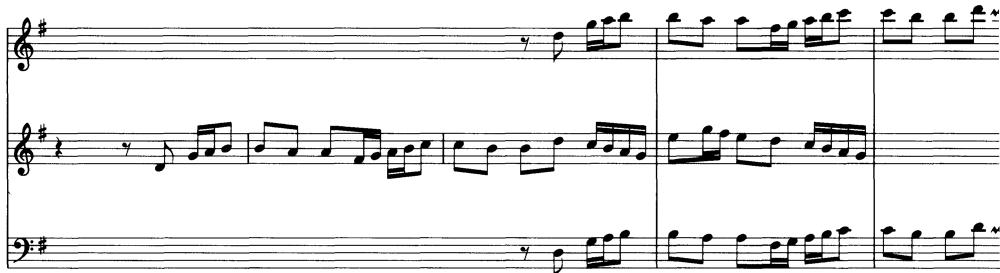
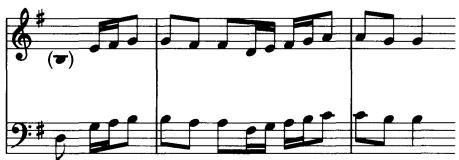
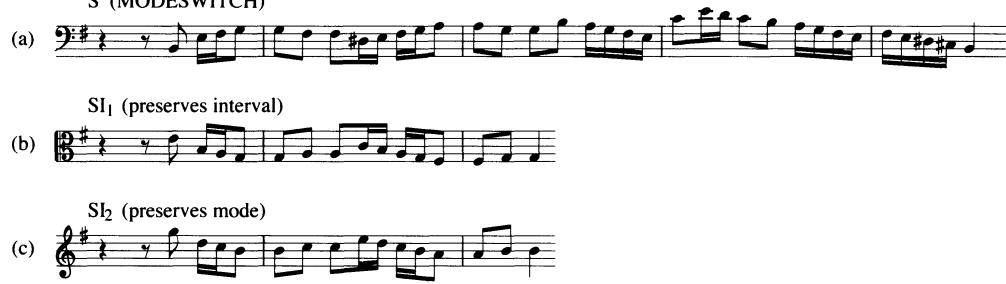
- 页码:10-10
- 1.9 [描述性拆分] Bachian invention and its mechanisms
- 页码:11-11
- 1.10 [描述性拆分] Figure 11.1 legend and the informal ordering of inventions
- 页码:12-12
- 1.11 [描述性拆分] Final display of invention, ‘one-off’ episodes and the genius behind the machine
- 页码:13-13
- 1.12 [描述性拆分] Transition to BWV 78/1: chorale text, invention and theological meaning
- 页码:14-14
- 1.13 [描述性拆分] Chorale cantata text (Rist) and the pre-compositional status of the chorale melody
- 页码:14-14
- 1.14 [描述性拆分] Main invention of BWV 78/1: chorale strains combined over the lamento bass
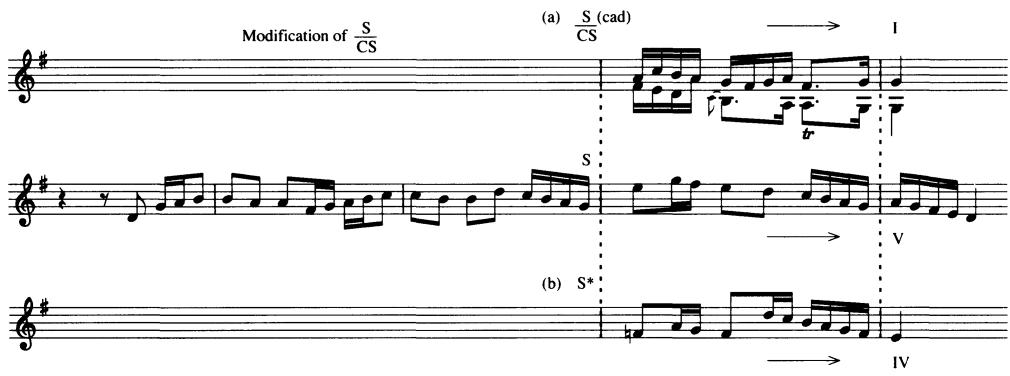
- 页码:15-16
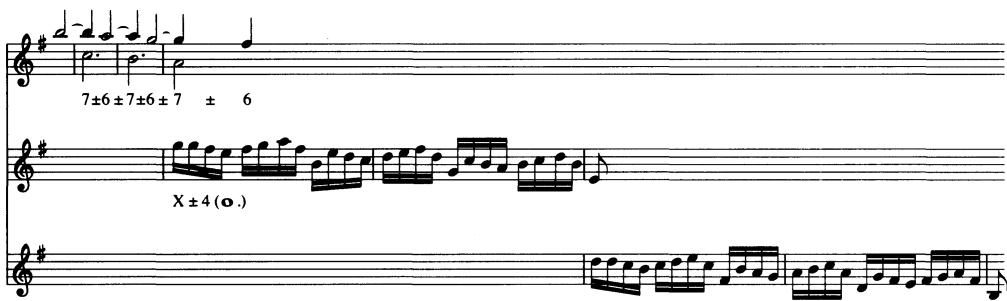
- 1.15 [描述性拆分] Modeswitch of the chaconne and the subsidiary canonic and fugal devices
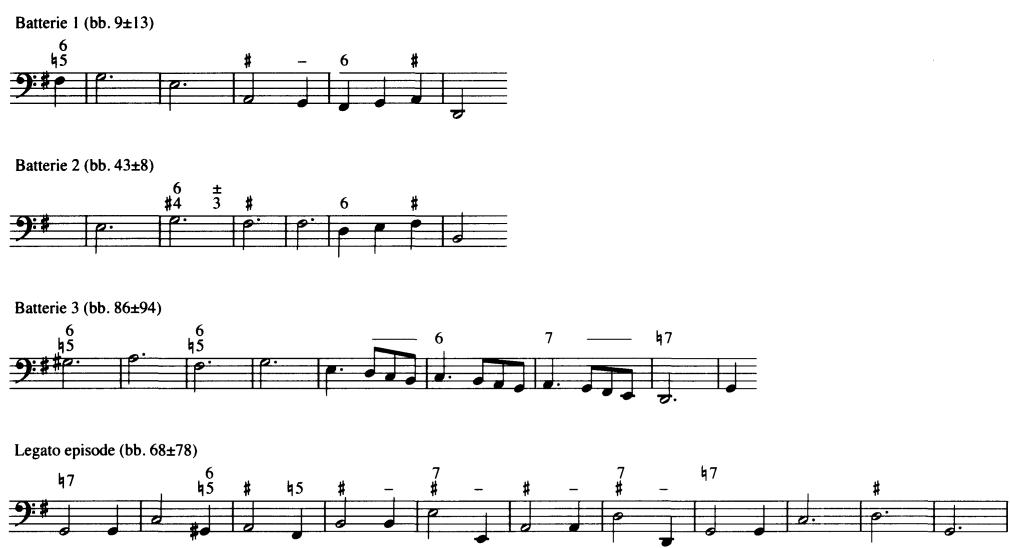
- 页码:17-17
- 1.16 [描述性拆分] Example 11.8 legends and tonal array across scale degrees
- 页码:18-18
- 1.17 [描述性拆分] Episodes, local symmetries and the limits of geometric form
- 页码:19-19
- 1.18 [描述性拆分] Architectonic analogy, strict invention vs. ornament, and the chaconne/lamento conflict
- 页码:20-20
- 1.19 [描述性拆分] Invention as metaphysical interpretation and temporal enactment
- 页码:21-22
1.1 [描述性拆分] Musical analysis, plausibility and the case for intentionalist ‘decomposition’
第1段(P0001)
原文复述
11 Bachian invention and its mechanisms
中文讲解
这是该章(第11章)的标题行。“Bachian invention"指与巴赫有关的"创意曲”(Invention)体裁,尤指巴赫《二声部与三声部创意曲集》BWV 772–801;“mechanisms"暗示作者关注的并非作品的风格描述,而是这些作品得以生成与运作的创作—技术机制。标题以”# 11"标号,表明这是该论文集中编号为11的章节,开启了围绕巴赫创意曲及其内在运作方式的论题。
补充说明
原文以"# 11"格式书写,符合 Markdown 章节标题标记;这是该章正式标题,非段落正文。
第2段(P0002)
原文复述
Laurence Dreyfus
中文讲解
这是作者署名行,位于章节标题之下,表明本节(及本章)由 Laurence Dreyfus 撰写。其在本节内的功能仅在于标示作者身份,不承载论证内容;关于作者学术背景等信息超出本节输入范围,无法在原文内直接定位。
第3段(P0003)
原文复述
Since the nineteenth century, the analysis of music has aimed to give accounts of musical structure by explaining those musical events and patterns that lend coherence to an individual work as well as contributing to its beauty and meaning. Drawing on a variety of musical building blocks—whether harmonic, contrapuntal, melodic, rhythmic or sectional—analysts of various theoretical persuasions have asked their readers to set aside their first impressions in order to attend to the way a piece of music works through the details of its ‘facture’. The ’truth-value’ of such interpretations cannot, of course, be separated from the analyst’s ideas about musical structure, since these notions or ’theories’ largely determine which musical parameters count as structurally significant. Nevertheless, in the realm of musical analysis—very different from, say, mathematics or physics—what has attracted adherents has rarely been the elegance or grandiosity of a structural theory. Successful analyses have always appealed instead to an inherently musical plausibility, fuzzy though such a concept must ultimately remain. For this reason the seemingly circular interpretation endemic to musical analysis will appear less troubling, especially when one recognises that analysts, if they are to succeed, must persuade a community of musicians that it is possible to hear a piece as proceeding ‘so and not otherwise’—to borrow a phrase of Theodor W. Adorno. And contrary to some popular perceptions, musicians are a famously hard-nosed lot when it comes to being told how to hear a piece with which they are intimate.
中文讲解
本段为全章的方法论铺垫,功能是为后续讨论音乐分析的"可接受性标准"与"分解性(intentionalist ‘decomposition’)“主张清理地基。Dreyfus 依次交代了三点:第一,自十九世纪以来音乐分析的任务在于用音乐事件与模式来解释一部作品如何获得结构上的连贯性、意义与美;分析者所依靠的"构件"包括和声、对位、旋律、节奏与曲式段落等多个层面,而"facture"一词暗示对作品制作细节(类似画家笔触意义上的"手法”)的细致考察。第二,任何解释的"真值"都无法与分析家先在的结构观念剥离——理论预设决定了哪些参数被视为结构上重要;因此分析判断无法像数学或物理学那样靠"理论本身的宏伟或优雅"取胜。第三,真正能说服听众的是"musical plausibility"(音乐可信性),一个虽然模糊但具有内在性的标准;这种"看似循环"的解释之所以可以接受,是因为分析家必须让一个有判断力的音乐家群体相信作品是"如此而非别样"地展开的——Dreyfus 借用了 Adorno 的措辞。最后一句以"音乐家对被告知如何听他们熟稔的作品出了名的硬骨头"作结,既为分析设立了听众方的高门槛,也为下一段把分析进一步等同于"对作曲家行动的重建"作了修辞上的引子。换言之,本段并未给出关于巴赫的实质论点,而是在划定:分析若要站得住脚,必须经受住严苛的"音乐内在可信性"检验,而不是仅靠理论外衣。
补充说明
Adorno 的短语"so and not otherwise"在本节中作为分析说服力的标杆被反复回响;关于"facture"和"musical plausibility"两个关键术语的具体内涵,请参见本节末尾 terms 栏。
第4段(P0004)
原文复述
The issue of musical plausibility in an analysis can be taken a step further if one asserts that accounts of musical structure are really no more than reconstructions of a set of actions taken by a composer. Analysis in this sense is tantamount to a kind of de-composition—that is, taking apart what was once put together. How, one may ask, could it be otherwise, unless the composer is some kind of idiot savant taking dictation from an inaccessible muse? A discussion of this issue has been side-tracked for a long time by fears that analytical statements might be taken to be identical to the verbal statements composers (though they rarely do) might make about how they composed a piece of music. In the case of composers from the past, moreover, it has also seemed arrogant to claim that an analyst represents the sense of compositional acts, since the (usually) dead composer, conveniently absent, is unavailable to provide a definitive refutation. Still other analysts, tacitly echoing the announced ‘death of the author’ in the 1960s, have renounced the notion of compositional intentions and sought to reinforce the idea that analysis is not a form of ‘de-composition’ at all, but rather a discipline concerned with the perception of listeners. This approach seems safely empirical, but, Dreyfus argues, it prematurely concedes an intellectual defeat to ‘cognitive science’: for what brought traditional analysts to masterworks of the European tradition in the first place was not a theory of psychology but rather the recognition of aesthetic meaning and value which demanded to be decoded.
中文讲解
本段是论证的转折点:Dreyfus 把"音乐可信性"再推一步,主张对音乐结构的说明本质上就是对作曲家一系列动作的重建——分析即"分解(de-composition)"。他通过一个反问修辞来锁定反对立场:如果分析不指向作曲家的行动,那除非把作曲家设想成"从不可亲近的缪斯那里听写的白痴天才(idiot savant)",否则就难以自圆其说。接着他清点了三种长期阻碍这一议题展开的阻力:(1) 把"分析陈述"等同于"作曲家本人关于如何作曲的口头陈述"的担忧——作者随即用括号中的"though they rarely do"限定,指出作曲家其实很少作此类自述;(2) 对已故作曲家主张其"作曲意图"的"傲慢"感,因为死者无法反驳;(3) 一些分析家默许了1960年代宣告的"作者之死"(罗兰·巴特意义上的口号),放弃意图性,把分析改写为对听者感知的研究。Dreyfus 对第三种立场作了正面反驳:看似经验主义,实则过早向"认知科学"让出地盘——传统分析家走向欧洲经典之作的最初动力并不是心理学理论,而是对"有待解码"的审美意义与价值的体认。换言之,放弃"分解"等于放弃了分析最原初的人文学理由。本段功能是为下一段 Dreyfus 自己亮出"意向论(intentionalist)分析"立场扫清障碍。
补充说明
“death of the author"与"cognitive science"两处加引号,提示它们是被引用的术语或流行口号,而非作者自己的范畴;
第5段(P0005)
原文复述
https://doi.org/10.1017/CCOL9780521587808.019 Published online by Cambridge University Press
中文讲解
这是该章首页的出版元数据行:DOI 链接指向 Cambridge University Press 在线出版的该章节(本卷号为 CCOL9780521587808,章节编号 .019),并标明"由剑桥大学出版社在线出版”。它属于版面元素,不承载论证内容,但提示读者此文收入 Cambridge Companions 系列。
补充说明
DOI 后缀 .019 通常对应卷内第 19 章;此处与标题"# 11"编号并存,提示该卷章节编号与 DOI 编号并不一定一一对应,但具体卷次对应关系本节输入内无法直接核实。
第6段(P0006)
原文复述
The approach I take in the present essay is not especially bothered by these objections to ‘intentionalist’ analysis. Instead, I suspect very much to the contrary that analysts’ only hope of contributing to humanistic knowledge is to embrace the idea that they are in fact ‘decomposing’ the work of a primarily sentient and thinking composer. For if analysis makes claims about an art work that are only incidental to human action and agency—whether or not this agency is explicit and conscious or more subliminal and inchoate—who should possibly be interested in them? It is disingenuous, moreover, to sever the link between an analyst’s readings and a composer’s actions, for two reasons: (1) most musical composition is a highly conscious affair, and there is every reason to think that analytical attempts to grasp a composer’s working methods will actually yield insights into a high proportion of intentionally crafted musical events; and (2) analysts routinely cite any evidence of a composer’s intentions that confirms analytical findings whenever this is available (as in compositional sketches, documented statements, letters, or contemporaneous theoretical constructs), thus demonstrating that they are happy to succumb to a ‘crypto-intentionalism’ when it suits their purposes. Analysts ought therefore to come clean and acknowledge that they are keenly interested in a composer’s idea of the work and might as well incorporate this explicit interest into their own methods and writing. $^{1}$
中文讲解
本段是本节立场的正面宣告。Dreyfus 开篇即宣称自己对前述三种反对"意向论分析"的意见"并不特别在意",并提出相反主张:分析家若想对人文学知识有所贡献,其唯一的希望恰恰在于承认自己所做的就是"分解"一位"主要是具身且有意识的作曲家"之作品。其论证由两层组成:第一层是目的论式反诘——如果分析所声称的只是与人的行动、agency 无关(无论这种行动是显白的、有意识的,还是潜意识的、尚未成形的)偶然巧合,那谁还会对此感兴趣?这一句把"意向论"从形而上学的命题改写为人文学价值承担的前提。第二层是经验性指控:Dreyfus 给出了两条理由来证明"切断分析者—作曲家联系"是不诚实的——(1) 多数作曲是有高度意识的活动,因此分析作曲家的"工作方法"完全有可能揭示出大量有意为之(intentionally crafted)的音乐事件;(2) 分析家在材料允许时(sketches、文献化的陈述、信件、当世的理论建构等)实际上会援引作曲家的意图来佐证分析发现,这正是他所说的"隐性意向论(crypto-intentionalism)"——一旦承认这种做法存在,再否认意向论便显得口是心非。由此他呼吁分析家应当"坦白"地把对作曲家"作品理念"的兴趣明文写入自己的方法论与写作之中。文末以脚注上标 “$^{1}$” 指向补充注释,本节正文未给出该脚注的具体内容。从小节结构看,本段把 P0003(分析须有音乐内在可信性)与 P0004(把分析重写为对作曲家行动的重建)两步合并推到结论:任何对分析作为人文学事业的辩护,实质上都要求一种分解式—意向论的姿态。
补充说明
本段末尾上标"1"是脚注引用,本节输入未提供该脚注的具体文本,故其内容须查阅原书脚注才能定位;
💡 本节核心要点
🔑 关键术语
- facture:作者用以指作品制作细节(类似画家笔触意义上的"手法")的术语;分析要求读者搁置第一印象,转而关注作品如何通过其 facture 运作。
- musical plausibility:“音乐可信性”。作者认为,衡量分析成功的标准并非理论本身的宏伟或优雅,而是其内在的音乐可信性;该标准虽模糊,却要求分析说服音乐家群体相信作品是"如此而非别样"地展开的。
- de-composition / decomposition:作者对分析的核心界定:把作品当作一次"被组合之物"来拆解,意即重建作曲家为生成该作品所采取的一系列动作;与作曲(composition)构成镜像。
- intentionalism:“意向论”。指承认作曲家意图在分析中具有方法论地位的分析立场;P0004–P0006 围绕是否接受这一立场展开辩论。
- death of the author:“作者之死”。P0004 中作为 1960 年代(暗指罗兰·巴特)宣告的口号被引用,Dreyfus 批评一些分析家借此放弃意图性,把分析改写为对听者感知的研究。
- crypto-intentionalism:“隐性意向论”。Dreyfus 用以描述分析家在材料可得时援引作曲家意图(sketches、信件、自述、当世理论)以佐证分析发现这一暗中做法;他主张既然这种做法已存在,分析家就应当坦白地把对作曲家意图的兴趣写入自己的方法论。
- agency / sentient and thinking composer:P0006 中用以刻画作曲家的关键范畴——分析的对象是一位"具身的、有意识的、且在思考的作曲家";无论其行动是显白—有意识的还是潜意识—尚未成形的,都属于人的行动与能动性。
1.2 [描述性拆分] Bach’s music, repetition, variation and the notion of compositional mechanisms
第1段(P0007)
原文复述
The music of J. S. Bach has provided a fertile field for analysis ever since early Enlightenment authors such as Kirnberger and Marpurg began to treat Bach as a special fount of harmonic wisdom. Indeed, one of the pleasures in studying Bach’s music is to grasp the complex construction so closely connected with its depth and beauty. On the other hand, the famous complexity of so much of Bach’s music becomes remarkably transparent as soon as one discovers the relevant building blocks on which a particular genre of music is erected. Many kinds of Bach works – such as fugues, arias, choruses, concerto movements and so on – involve the crafting of musical ideas which are repeated and varied in relatively disciplined ways throughout an entire movement and it is the nature of this ‘discipline’ on which my attention is focused in this essay. While an exact repetition only duplicates a musical thought, the variation of an idea alters and inflects it so as to say something new. It is useful, moreover, to distinguish between two kinds of variation: (1) a decoration of the idea, in which the original meaning remains essentially intact beneath a mere embellishment, and (2) an inflection of the idea which alters its meaning, a meaning that could not be predicted without some serious mental effort.
中文讲解
本段是整章的总论铺垫,提出三件关键事。第一,欣赏与研究巴赫自启蒙时期以来就形成传统,作者举出 Kirnberger 与 Marpurg 两位早期理论家,把巴赫视为和声智慧的源头,这暗示巴赫作品不仅作为艺术对象,也作为分析对象长期受到关注。第二,作者用“复杂的构造与深度美感紧密相连,但一旦找到建筑构件就会变得透明”这一对照,奠定本章的分析逻辑:先拆解、再理解。本章要处理的不是作曲家的传记或灵感,而是作品内部可识别的“构件”及其组织方式。第三,也是最核心的概念铺垫:巴赫的诸多体裁——赋格、咏叹调、合唱、协奏曲乐章等——都建立在“重复与变化”这一相对受规训的工艺之上;作者的注意力正集中在这种“规训”的性质上。
在定义层面,作者明确划分三种动作:①完全重复(仅复制原思想,本身不增加新意);②装饰性变化(外壳变化但原义基本不变);③屈折性变化(实质改变意义,需要“认真的心智努力”才能预判)。第二与第三的差别是本章后面分析的关键:装饰性变化在分析时可以暂时“减去”,屈折性变化则揭示真正的作曲逻辑。
因此 P0007 在小节中起到三重作用:确立分析传统、把“透明度”作为研究目标,并把“重复/装饰变化/屈折变化”三层次作为后续讨论的术语骨架。
第2段(P0008)
原文复述
https://doi.org/10.1017/CCOL9780521587608.913 Published Online by Cambridge University Press
中文讲解
本段为剑桥大学出版社在线出版的 DOI 标识与版权元数据,并非正文论点。其版面功能是声明该章节由剑桥大学出版社正式线上发布,并提供 DOI 以便引用与定位。读者无需据此推论任何分析主张;本栏在教学中亦无需进一步展开。
第3段(P0009)
原文复述
Given this notion of repetition and variation, it makes sense – as a first analytical step – to dissolve a piece of music into its underlying ‘common denominators’ by bracketing all its exact repetitions and decorative variations, so to isolate its set of core ideas. In the case of most Bachian genres, the set of significant ideas will be relatively small, which is to say that many related musical passages are best understood as inflected variations of one another. With Bach, moreover, one can go a step further in asserting that the composer’s manipulation of musical ideas is less a matter of artful variation than an often coercive filtering of musical ideas through a grid of relatively mechanical procedures which comprise Bach’s primary toolbox. It is these sets of procedures which ‘operate’ on the core ideas, thereby ‘producing’ the new, variant forms. Rather than adopt a lax attitude of tasteful association (common among his contemporaries) which produces elegant variations, Bach’s compositional procedures often amount to an obsessive search for congruent musical relations. This quest for invention continually seeks to mechanise the compositional process and accounts for the fundamental complexity of Bach’s textures at the same time that it makes his music especially susceptible to a structured analysis based on comparison and contrast. For this reason, I have used the term ‘compositional mechanisms’ rather than the more common early twentieth-century notion of organic connections in talking about congruent musical relations. The distinction between these two realms is not a binary one but rather constitutes a field within which I try to privilege conscious actions which the composer must have taken over purely analytical constructs which ignore human agency or elevate it to impossible superhuman heights.
中文讲解
本段把 P0007 所建立的三层次操作转译为具体方法论。第一步是“括号法”:把完全重复与装饰性变化放在括号里暂置一旁,让核心乐思凸显。这种思路类似还原法,先剥离次要现象,再观察“公分母”。第二,针对多数巴赫体裁,核心乐思数量较少,这意味着表面看似不同的段落实际上是“屈折性变体”,分析工作的真正任务就在于辨识这些变体背后的同一原型。第三,也是本段最具方法论意味的一步:巴赫对乐思的操控与其说是“艺术性的变化”,不如说是把乐思“强制过滤”进一套相对机械的程序网格中。这些程序“操作”核心乐思,“产出”新的变体。
这一论断把巴赫与同时代人区分开来:同代人常用“品味联想”的松弛态度去处理变奏,追求优雅的变体;巴赫则是“强迫式地”寻找合乎规则的同构关系(congruent musical relations),这种追求反过来既解释了巴赫织体的根本复杂性,也使他的作品特别适合通过“比较与对照”来进行结构化分析。这是一种解释上的双向关系:复杂性既来自这种机械化倾向,又使作品可以被机械方式分析。
最后,本段交代术语选择的理由:作者刻意使用“作曲机制”(compositional mechanisms)而非二十世纪初常见的“有机联系”(organic connections)。关键在于,“有机”暗示一种自然生长的、无须意识参与的隐喻;而“机制”则把作曲行为视为可识别的、由作曲家主动施加的程序组合。作者同时强调两者不是二元对立,而是一个连续场域:他在此场域中偏向“作曲家实际采取的有意识动作”,反对两种极端——一是抹去人的主体性的纯分析构造,二是把作曲家神化为超人天才。
因此 P0009 在小节中是术语与方法论的转折点:从“重复/变化”转向“机制/同构关系”,并把这一框架放到与有机论、品味联想、超人论的多重对立中加以定位。
补充说明
本段中“congruent musical relations”(同构/吻合的音乐关系)是作者后续讨论巴赫对位与和声处理时的核心概念;“organic connections”(有机联系)指十九世纪末至二十世纪初音乐学界借用生物学有机体隐喻来描述主题发展的常见做法,作者并未否定该传统,而是声明自己另立坐标。
第4段(P0010)
原文复述
For Bach and his German contemporaries, the act of thinking through the fundamental musical building blocks of a composition fell under the rhetorical rubric of inventio, which since ancient times had been concerned with the discovery of ideas. Invention is naturally tied to concrete genres of music – such as minuets, fugues, concertos, arias and so on – which themselves are ordered on a stylistic hierarchy according to the degree of artifice which they contain. The genres, in turn, are distinguished not only by the styles in which they are clothed, but also by the formal schemes, which, in the rhetorical language commonly found in German music theory of this period, were understood as the ’elaboration’ or ‘arrangement’ of the composition. (Some authors, such as Johann Mattheson, go a step further to distinguish between the ’elaboration’ of musical ideas and their actual ‘disposition’ within the form of a musical composition.) It is particularly advantageous to separate out ‘inventions’ from their ‘arrangement’ since the convention of ‘musical form’ for most large-scale genres remains a remarkably relaxed affair for this historical period: only in small-scale genres such as dances can the ‘form’ of a movement – in particular, the restricted length of its sections – be considered, as it were, a topic of invention. In fugues, concertos, arias and other related pieces, on the other hand, the conventions of form – topics of disposition in the language of rhetoric – usually shape only the beginnings and ends of movements, and have relatively little to say about what happens in which order in between. For this reason, it makes sense to allow the inventa, or the discovered ideas, a kind of priority in understanding a large-scale movement no matter where they are found and to observe how the Bachian mechanisms of invention structure both their various forms and the moments of their presentation in the piece as a whole.
中文讲解
本段把“作曲机制”的讨论嵌入到 18 世纪德国音乐修辞学传统之中,赋予概念以历史合法性。
首先,作者指出对巴赫及德国同代人而言,思考音乐“构件”的行为属于修辞学传统中的 inventio(构思/发明)范畴,自古以来就关心“思想的发现”。这意味着巴赫的“核心乐思”并非现代分析学凭空发明,而是与作曲家自身所接受的修辞学训练相一致。
其次,invention 与具体体裁绑定:小步舞曲、赋格、协奏曲、咏叹调等体裁内部存在一个依“人工程度”(artifice)排列的风格等级。体裁之间的差别不只在风格,还在于形式方案(formal schemes);这些形式方案在当时德国音乐理论中以修辞学术语称作“elaboration”或“arrangement”(展开/安排)。括注中提及 Mattheson 进一步区分“展开”(对乐思本身的发展)与“配置”(乐思在曲式中的实际安排),表明作者采纳了精细化的修辞术语体系。
再次,本段做出关键的体裁区分:①小规模体裁(如舞曲)的“曲式”——尤其是乐章段落的受限长度——本身即可视为 inventio 的对象;②大规模体裁(赋格、协奏曲、咏叹调等)的曲式惯例只决定乐章的开头与结尾,对中间发生的事“几乎不置一词”,因此这些曲式属于“disposition”(配置)的范畴。
最后得出方法论上的推论:既然大规模体裁的曲式惯例作用有限,那么在分析中应当赋予 inventa(被发现的乐思)某种优先地位,无论它们出现在乐章的哪个位置;分析者的任务是观察巴赫式的发明机制如何在整首作品中既塑造乐思的多种形态,又安排它们呈现的时机。
本段在小节中的功能是为“作曲机制”提供历史语境,并解释为什么作者选择从“乐思”而非从“曲式”切入大型作品——因为巴赫所处时代的曲式概念本身就对大型体裁“松散”,无法单独承担解释重任。
补充说明
“inventio / inventio / inventa”在原文中以三种形态出现:inventio 为基本拉丁文概念;inventa 为复数(或拉丁化名词)形式,特指“被发现的乐思”,二者语义一致,只是强调对象不同;Johann Mattheson(1681–1764)为德国同时代重要的音乐理论家,其著作中将音乐修辞过程系统化,是作者术语选择的历史根据之一。括号中的“elaboration”与“disposition”均沿用 Mattheson 等人的德文—拉丁文术语,作者仅作英文转写。
第5段(P0011)
原文复述
https://doi.org/10.1017/CCOL9780521587808.019 Published online by Cambridge University Press
中文讲解
本段是另一条剑桥大学出版社的在线出版 DOI 与版权元数据,与 P0008 同样属于版面标识而非正文论点。其功能仅是声明本节由剑桥大学出版社线上发布并提供持久标识符,不引入任何分析主张。
💡 本节核心要点
🔑 关键术语
- decorative variation / 装饰性变化:P0007 提出的两类变化之一,指对原乐思加以表面修饰但保留原义;在分析时可被“括号法”搁置,不构成核心乐思的实质更新。
- inflection / 屈折性变化:P0007 提出的第二类变化,指真正改变乐思意义的变化;其结果需要认真的心智努力才能预判,是巴赫式作曲机制发挥作用的层面。
- compositional mechanisms / 作曲机制:作者在 P0009 中专门采用的术语,取代“有机联系”,强调作曲家通过可识别的、相对机械的程序网格“操作”核心乐思以生成变体,是本节分析框架的核心概念。
- congruent musical relations / 同构音乐关系:P0009 提出,指作曲家在乐思之间寻找合乎规则、可被结构化识别的对应关系,是巴赫强迫式搜索的目标,也是其作品复杂性与可分析性的共同来源。
- inventio / inventa / 构思(或“被发现的乐思”):源自修辞学传统,在 18 世纪德国音乐语境中指对乐曲核心建筑构件的发现;P0010 将其与具体体裁(小步舞曲、赋格、协奏曲、咏叹调等)相联系,并赋予分析上的优先地位。
- elaboration vs disposition / 展开与配置:P0010 借助 Mattheson 等人的区分,指对乐思本身的发展(elaboration)与把乐思安置到曲式中的实际安排(disposition);二者并立是本节术语体系的精细化标志。
1.3 [描述性拆分] Scope of the essay: BWV 1027/2 and BWV 78/1
第1段(P0012)
原文复述
The author declares that this essay will examine two pieces of music — the fugal Allegro that opens the G major viola da gamba sonata BWV 1027 (movement 2), and the opening chorus of Cantata 78, Jesu, der du meine Seele — from the perspective of compositional mechanisms. Through this examination the author hopes to propose methods of paradigmatic analysis that can be applied to a wide variety of Bach’s works whose procedures are loosely organized around the principles of fugue and concerto. The author further notes, in parentheses, that it will be useful for the reader to have scores of BWV 1027/2 and BWV 78/1 at hand while reading the analyses that follow; a footnote marker (²) is attached to this advisory sentence.
中文讲解
本段是典型的"研究范围与方法声明"段落,承担为整篇论文设定边界与立场的功能,需要从以下几个层面理解:
-
研究对象的双重选取及其共同点。作者挑选的两部作品体裁迥异:BWV 1027/2 是一首器乐曲——G大调古提琴(gamba)奏鸣曲的第二乐章,一首以赋格手法写成的快板;BWV 78/1 则是一部声乐体裁——康塔塔《Jesu, der du meine Seele》(《耶稣,我灵魂之主》)的开篇合唱。两者之所以被并置,是因为它们都受两种核心结构原则的"松散统摄"——一是赋格原则,二是协奏曲原则。这一并置已经暗示作者的分析将不依赖体裁分类,而依赖作曲逻辑的共通性。
-
方法论立场:作曲机制而非风格描述。“Compositional mechanisms”(作曲机制)一词指音乐材料生成、变形、组合、展开的具体技术手段——例如主题呈示、模仿进入、对位处理、织体切换等,而非泛泛的风格印象或情感刻画。这表明后续分析将高度技术化、谱例化。
-
真正的雄心:方法论的提炼。作者用"thereby hope to suggest"这一含蓄措辞指出:分析两部作品本身不是终点,“提出可推广的范式分析方法"才是。这是一种"以案例推方法"的研究路径。“Paradigmatic analysis”(范式分析)借自语言学中的"范式轴/组合轴"区分,强调把音乐视为在结构位置上可替换、可关联的单元集合,关注垂直维度的关系而非单纯的线性展开。这是后文所有技术讨论的理论预设。
-
括号内的阅读提示。作者建议读者备好 BWV 1027/2 与 BWV 78/1 的乐谱,与前述脚注标记呼应,提示后续讨论将大量依赖谱面对照。
-
本段在全文论证链中的作用。它承接前言的引论,把研究的焦点从巴赫作品的广阔领域收缩到两首具体作品;同时宣告分析视角(作曲机制)与最终目标(范式分析方法的提炼)。它既限定了讨论范围,又声明了方法的可推广性,为后续每一节的技术分析提供了合法性与方向感。
容易误解之处:若仅把本段读为"作者要分析两首作品”,会完全错失其方法论野心——两首作品只是检验方法的案例,方法本身才是论文真正的产出。
补充说明
段落末尾附有脚注标记 ²,但脚注正文未包含在本节输入内容中,故无法在此判定其性质(是否为参考书目、补充说明或乐器编制说明等)。不进行推测。
脚注 / 边栏 / 图表 / 附加信息(如有)
本段末尾含一处脚注引用标记 ²,附着于"建议读者手边备有乐谱"的括号语句之后。该脚注的具体内容未出现在本节所提供的输入中,因此仅记录其存在与所附位置,不补写其文本。
💡 本节核心要点
- 全文分析两部具体作品:BWV 1027/2(G大调古提琴奏鸣曲第二乐章,赋格风格快板)与 BWV 78/1(康塔塔《Jesu, der du meine Seele》开篇合唱)。
- 分析视角为"作曲机制",即聚焦于音乐材料生成、变形与展开的具体技术手段,而非风格或情感层面的描述。
- 两部作品虽分属器乐与声乐体裁,但都被纳入"赋格原则与协奏曲原则"的共同框架,提示分析将跨体裁进行。
- 论文真正目标是通过这两个案例提炼出可推广的"范式分析方法",适用于所有大致围绕赋格与协奏曲原则建构的巴赫作品。
- 作者建议读者在阅读后续分析时备好相应乐谱,提示后续讨论将是高度技术化、依赖谱例的。
- 本段构成全文的"范围与方法声明",为后续每一节的技术分析预设边界、视角与目标。
🔑 关键术语
- BWV 1027/2:Bach-Werke-Verzeichnis 目录编号 1027 的第二乐章,即 G大调为古提琴(viola da gamba)与羽管键琴所作奏鸣曲中的第一首赋格风格快板,是本文两大分析对象之一。
- BWV 78/1:康塔塔 BWV 78《Jesu, der du meine Seele》(《耶稣,我灵魂之主》)的第一乐章,即其开篇合唱,为本文另一大分析对象。
- 赋格原则(fugue):以单一主题(subject)在不同声部依次进入并通过模仿、对位加以展开为核心逻辑的写作结构,本文中作为统摄两部作品的共同结构原则之一。
- 协奏曲原则(concerto):在巴赫语境中指独奏/全奏组群之间的对比、交替与回归所形成的展开逻辑,本文将其与赋格原则并列为分析两部作品的共同参照框架。
- 范式分析(paradigmatic analysis):借自语言学中"范式轴"概念的分析方法,强调把音乐视为可在同一结构位置相互替换或关联的单元集合,关注垂直维度上的关系结构而非单纯横向进行。
- 作曲机制(compositional mechanisms):音乐作品中具体的技术生成与展开手段,如主题变形、模仿进入、对位安排、织体切换等;本文将其作为分析视角,与风格描述或情感解读相区别。
1.4 [描述性拆分] BWV 1027/2: genre, fugal expectations and the three-dimensional puzzle
第1段(P0013)
原文复述
It is revealing to focus first on BWV 1027/2, a trio sonata movement in Corellian style which Bach arranged (probably no earlier than the 1730s) for viola da gamba and obbligato harpsichord. The analysis of such sonata movements proves somewhat frustrating for most conventional methods, since apart from the opening fugal gestures of subject and answer (dux and comes) in the principal melodic voices, there are no known rules for how such movements should be conceived or how their principal ideas ought to be organised. Naturally there were conventional ideas of harmony that ensured that a movement began and ended in the same key, but apart from predictable modulations to closely related scale degrees, and an exclusion of certain cadences perched on remote scale degrees, there was no prescribed way in which the disposition or ‘form’ of such a movement could be conceived ahead of time. (It hardly needs mentioning that such unpredictability is at a great remove from the more strictly conceived set of tonal conventions that prevailed in later eighteenth-century music organised around the ‘sonata principle’, in which the invention of ideas was inextricably linked to their location within a schematic whole.) Given a fugal preoccupation with thematic subjects (and in this instance countersubjects), one also expects to find other fugal devices such as invertible counterpoint and perhaps even melodic inversion as well as passages of lesser importance in which the themes are absent, traditionally called episodes. In addition, because this is a fugal sonata movement rather than a fugue proper one expects to find the composer treating incremental musical ideas or inventions that are not part of the fugal ideas ’exposed’ at the beginning of the movement, especially as sonata movements often tend to be longer and hence more discursive than fugues proper. The main point to stress here is that a recognition of the genre of the movement – a fugal allegro in a trio sonata – reveals very little about the nature of the compositional invention or the overall plan of the movement. Indeed, considered as a whole, the formal aesthetic of such a movement is guided not so much by the metaphor of drama as by the metaphor of invention or discovery itself: rather than imagine a piece as shaped by the twists and turns of fate, leading relentlessly towards a comic resolution or a tragic catharsis, one is challenged to make sense of a musical puzzle, whose entire solution cannot be really glimpsed until all the pieces have been assembled. Unlike a puzzle, however, in which all the pieces fit together in some contiguous juxtaposition on a two-dimensional plane, the Bachian puzzle works far more within a three-dimensional space in which individual pieces (that is, musical passages or inventions) are joined both above and below as well as next to one another, as both paradigms and syntagms. The result is that the phenomenal order of the piece as played or heard in performance is but a pleasing, if also privileged, way to encounter the puzzle. To come to grasp the sense and meaning of the puzzle entails, however, another project, that of reconstructing an ideal mental disposition whose object is the depth and subtlety of musical thought itself.
中文讲解
本段围绕 BWV 1027/2 的体裁定位与随之而来的分析困境展开,可分四层理解。
第一层:研究对象的体裁定锚。 作者首先将目光集中在 BWV 1027/2 上,并给出三个关键属性:它是一首科雷利风格的三重奏鸣曲乐章;Bach 大约在 1730 年代以后将其改编为维奥尔琴与通奏低音羽管键琴的组合;它的分析价值具有揭示性(“revealing to focus first on…")。这意味着该乐章将充当作者整套论证的切入点。
第二层:为何常规分析方法在此失灵。 作者指出,对于此类奏鸣曲乐章,常规分析方法令人沮丧,原因在于:除了开头主旋律声部中以 dux(主题)与 comes(答题)形式出现的赋格姿态外,人们并不知道应如何构思这类乐章、如何组织其主要乐思。当然存在一些和声惯例(保证起讫调性一致、可预测地向近关系调转调、避免落在远关系调上的终止),但除此之外,乐章的布局或"形式"事先并无规定。这与十八世纪后期以"奏鸣原则(sonata principle)“组织起来的、更为严格的调性惯例形成鲜明对比——在那种惯例中,乐思的发明与其在图式化整体中的位置密不可分。换言之,BWV 1027/2 这种体裁并不具备预先规定好的结构性骨架,分析者无法从体裁标签直接推导出作品的曲式蓝图。
第三层:赋格性的期待与体裁差异。 由于该乐章带有赋格性,作者期待在其中看到对位主题(与对题 countersubject)、可转位对位(invertible counterpoint),甚至旋律倒影(melodic inversion),以及传统上称为插段(episodes)的主题缺席段落。但同时它不是一首纯赋曲,而是一首赋格性的奏鸣曲乐章,因此作曲家还会处理那些不属于开头"展示(exposed)“出来的赋格乐思的渐进式音乐乐思或发明——这与奏鸣曲乐章往往更长、更具铺陈性的特征一致。
第四层:核心论断——从戏剧到发明的隐喻转换,以及"三维拼图”。 作者强调,识别出"三重奏鸣曲中的赋格快板"这一体裁,对理解作品的作曲发明性质或整体布局几乎毫无助益。整首作品的审美由"发明/发现的隐喻"而非"戏剧的隐喻"所引导:不要把它想象成由命运转折塑造、奔向喜剧解决或悲剧净化的戏剧,而是要把它当作一个音乐拼图来理解——其完整解答只有在所有"碎片"都被拼合之后才能显现。然而,Bach 的拼图并非普通意义上的二维平面拼图,而是三维空间的拼图:各音乐段落或发明既彼此并置(next to one another),又相互上下叠合(above and below),同时充当着范式(paradigms)与组合体(syntagms)。因此,演奏或聆听中感知到的现象学顺序(phenomenal order),只是遭遇这一拼图的一种愉快却也带有特权的途径;要真正把握拼图的意义,还需另一项工程:重构一种理想的心智布局(ideal mental disposition),其对象是音乐思维本身的深度与精微。
段落功能: 这是 1.4 节的方法论宣言——它通过对一个具体作品的体裁定性,揭示出传统奏鸣曲式分析框架与赋格分析框架都不能单独胜任,进而提出作者自己的分析隐喻(发明/发现、三维拼图、理想心智布局),为后文具体分析 BWV 1027/2 铺路。
补充说明
段内"paradigms 与 syntagms"的对照直接来自作者本段给出的空间定义:并置关系(next to one another)对应组合体(syntagms)即横向的时间序列拼接关系;上下叠合(above and below)对应范式(paradigms)即纵向的可替换、相似或联想关系。作者用这一对术语强调 Bach 的乐思组织同时具有时间序列的拼接性与联想网络的叠加性,超出普通二维拼图所能容纳的范围。“phenomenal order”(现象学顺序)在此指演奏/聆听中实际展开的时间顺序,与作者倡导重构的"ideal mental disposition”(理想心智布局)相对:前者是时间中的线性呈现,后者是分析者重构的、能够同时容纳范式与组合体关系的心智空间。段中的 “dux 与 comes"是赋格写作中的拉丁术语,分别指主题与答题,是本节最基础的对位词汇。
第2段(P0014)
原文复述
https://doi.org/10.1017/CCOL9780521587608.015 Published Online by Cambridge University Press, 2011
中文讲解
此为该页的出版元数据脚注,说明本章归属于剑桥大学出版社出版的某一文集(DOI 标识 CCOL9780521587608.015),并注明其在线出版时间为 2011 年。它对正文论述无直接内容贡献,仅供读者定位原始出版来源。
脚注 / 边栏 / 图表 / 附加信息(如有)
本小节正文(P0013)之后附有一条 DOI 出版元数据(P0014),提示本章隶属剑桥大学出版社的某部文集(编号 CCOL9780521587608.015),并于 2011 年实现在线出版。该信息仅起出处标识作用,不参与本节论证。
💡 本节核心要点
- BWV 1027/2 被作者选作分析的切入对象,因为它是一首科雷利风格的三重奏鸣曲乐章(可能不早于 1730 年代由 Bach 改编为维奥尔琴与通奏低音羽管键琴组合),体裁定性清晰但又对常规分析方法提出挑战。
- 此类赋格性奏鸣曲乐章缺乏关于乐思组织与形式布局的成文规则,仅有少量和声与转调惯例可用;这与十八世纪后期以"奏鸣原则"组织的、图式化的调性体系形成对照。
- 作者期待作品中存在赋格性要素(对题、可转位对位、旋律倒影、插段),同时承认其作为奏鸣曲乐章较长、更具铺陈性,会引入非赋格核心的渐进式乐思。
- 本节核心论断:识别体裁几乎无助于理解作品的作曲发明与整体计划;理解它的恰当隐喻不是戏剧,而是发明/发现。
- 作者提出"三维拼图"作为分析方法论:音乐碎片既在时间中并置(组合体 syntagms),又在联想网络中上下叠合(范式 paradigms),演奏/聆听所呈现的现象学顺序仅是接近该拼图的一种途径。
- 真正理解作品的最后一步,是重构一种"理想的心智布局”,其对象是音乐思维本身的深度与精微——这预示了后文将展开的具体分析方法。
🔑 关键术语
- dux 与 comes:赋格写作中的拉丁术语,分别指主题及其在另一声部以属调进入的答题;本节以此标记 BWV 1027/2 开头出现的赋格姿态。
- sonata principle(奏鸣原则):作者用来指十八世纪后期较为严格的调性—曲式惯例,其中乐思的发明与其在图式化整体中的位置密不可分;本节以此作为参照系,反衬 BWV 1027/2 缺乏预定形式的特征。
- invertible counterpoint(可转位对位):两条旋律线互换上下位置后仍能保持和声与对位合理的对位技法;本节将其列为赋格性奏鸣曲乐章中可期待出现的对位装置之一。
- episodes(插段):主题缺席的过渡性段落,赋格写作中用以连接主题的多次陈述;本节将其列入对 BWV 1027/2 的赋格性期待之中。
- paradigms 与 syntagms(范式与组合体):本段中作者借以描述 Bach 乐思组织双重维度的术语:范式指可替换、可联想的纵向关系(above/below),组合体指在时间中并置的横向序列关系(next to one another)。
- phenomenal order(现象学顺序):指演奏或聆听中实际展开的时间顺序;本节把它界定为遭遇"三维拼图"的一种带有特权的途径,但不是理解作品意义的全部。
- ideal mental disposition(理想心智布局):作者提出的分析目标:通过重构使作品的范式与组合体关系同时显现的心智空间,以把握音乐思维的深度与精微;这是本节方法论宣言的最终落脚点。
1.5 [描述性拆分] Opening signs of genre and the equality of the two upper parts
第1段(P0015)
原文复述
What signs of genre in the opening bars of the gamba sonata movement disclose the kinds of inventions we might expect to find in this work? Here the two fugal parts over a continuo bass signal the model of the Corellian Allegro taken from a four-movement sonata da chiesa (or trio sonata). Since the theme in the harpsichord treble is answered at the lower fourth by the gamba in b. 5, we are dealing with something related to fugue. But since the bass part does not participate in the fugal statements and answers – at least not at the outset – it is clear that this is not a fugue proper (as in a keyboard fugue) but rather a more informal sonata movement that will draw on aspects of fugue. Given this genre designation, we will therefore expect that relatively strict imitative manipulations of musical material will mingle freely with far less formal spinnings-out of melodic themes in a more expansive and relaxed environment than would be typical of a conventional fugue. An explicit equality of the two upper parts, moreover, ensures that thematic material will be balanced over the course of the movement: as soon as a particular exposition of thematic materials occurs in one of the two upper voices (here in the gamba part and in the right hand of the harpsichord part) one can be sure that the same material will occur in the other part as well.
中文讲解
本段是这一小节的核心论证段落,作者围绕一个具体问题展开:在古提琴奏鸣曲乐章的开头几小节里,有哪些体裁(genre)信号可以提示我们预期其中的音乐处理方式?
作者的论证分四步推进:
第一步,识别体裁信号。作者指出,开头呈现的「两个对位声部加上一个通奏低音」这一织体格局,对应的是取自四乐章教堂奏鸣曲(即三重奏鸣曲)中的「科雷利式快板(Corellian Allegro)」。所谓「科雷利式」,指的是科雷利(Corelli)所代表的意大利巴洛克晚期教堂奏鸣曲中那种以模仿对位开启、内部夹杂自由段落的标准样式。「三重奏鸣曲」的编制本身就是两件独奏乐器(或人声)加通奏低音,因此这种由「两上声部 + 持续低音」构成的织体,是这一体裁的直接标志。
第二步,论证它「与赋格相关」但不「等同赋格」。作者指出:第 5 小节处,羽管键琴高声部的主题被古提琴在「下四度」上接应(answered at the lower fourth),这是一种典型的赋格式应答手法(答题常以属调对主题进行模仿)。因此「we are dealing with something related to fugue」——它在本质上是模仿性的,靠近赋格。然而,作者接着做了关键的限定:通奏低音并不参与这种主题—答题的对话,至少在乐章开头是这样。这意味着三个声部中只有两个进入模仿关系,因此这不是「真正意义上的赋格(fugue proper)」,例如键盘赋格那样四声部全部卷入、严格交替主题与答题的写法;而是一种更松散的、以赋格某些要素为资源、但本质上属于「奏鸣曲乐章」的体裁。
第三步,由此推导出对全乐章的写作预期。既然体裁属于「借鉴赋格的奏鸣曲乐章」,那么就不应该期待严格的键盘赋格那种逐层叠加、严密发展的模式;取而代之的,是「相当严格的模仿处理」与「远为松散自由的主题展开(spinnings-out of melodic themes)」这两类笔法在同一乐章内并存,且后者所处的空间比常规赋格中要更宽广、更放松。
第四步,作者再补充一条结构性原则:两个上声部「明确的平等关系」。这是一条关乎两声部分工的规则——它意味着,当某一主题材料出现在两个上声部中的任意一个(这里分别是古提琴声部和羽管键琴右手声部)时,几乎可以肯定同样的材料也会出现在另一个声部中。这一原则保证了两件上声部乐器在主题承载上的对等性,而不是让其中之一沦为单纯的伴奏或陪衬。
综上,本段其实做了两件事:一是给这段音乐贴上体裁标签(科雷利式教堂奏鸣曲快板乐章),二是从体裁标签直接派生出两条写作预期——模仿与自由展开并存,以及两上声部主题材料上的对称分配。这两条预期会成为接下来分析具体小节时的「检验清单」。
补充说明
本段中出现的关键写作要点之间的逻辑链条:体裁识别(两个对位声部 + 通奏低音 → 科雷利式教堂奏鸣曲)→ 模仿的局部呈现(第 5 小节的下四度答题)→ 通奏低音不参与模仿 → 排除「严格赋格」 → 落定为「借用赋格的奏鸣曲乐章」 → 由此推出模仿与自由展开并存的预期,以及两上声部材料对等的预期。其中「科雷利式快板」「教堂奏鸣曲 / 三重奏鸣曲」「下四度答题」等术语均在本段原文中出现,仅在此串接其在本段内部的前后照应关系,未补充外部史料。
第2段(P0016)
原文复述
[Page footer / publication metadata line]: “https://doi.org/10.1017/CCOL9780521587608.015 Published Online by Cambridge University Press, 2011.”
中文讲解
这是一行出现在该页页脚的出版元数据信息,包含一个数字对象标识符(DOI)链接,以及由剑桥大学出版社于 2011 年在线发表的说明。它不属于正文的论证内容,仅起到版本与出处标识的作用,方便读者通过 DOI 定位到该章节的数字版本。
补充说明
该行为版面属性元素,不参与本小节的论证;其作用限于指示本页内容的数字出版信息。
脚注 / 边栏 / 图表 / 附加信息(如有)
本小节仅包含一条非正文附加材料,即 P0016 处的 DOI 与在线出版说明,作为页脚出现,作用是标识本章的数字出版信息,不影响对正文论证的阅读。
💡 本节核心要点
- 开头几小节的「两个对位声部 + 通奏低音」织体,指向科雷利式教堂奏鸣曲(三重奏鸣曲)中的快板乐章模型。
- 第 5 小节羽管键琴高声部主题被古提琴在下四度上接应,说明乐章具备赋格式的模仿特征,但通奏低音不参与这种模仿,因此它不是「真正的赋格」,而是借用赋格要素的奏鸣曲乐章。
- 由上述体裁判定可推出:该乐章会在同一作品内并用「相对严格的模仿处理」与「远为松散的主题自由展开」,且后者的空间比常规赋格更宽广。
- 两上声部之间存在「明确的平等」关系:任一上声部出现的主题材料,几乎必然也会出现在另一上声部,从而保证主题分布的对称与平衡。
- 本段的实质是为后续逐小节分析提供两条体裁层面的「检验清单」:模仿与自由展开并存;两上声部主题对等。
🔑 关键术语
- Corellian Allegro:本段中指科雷利所代表的意大利晚期巴洛克教堂奏鸣曲快板乐章样式;在本节中作为该古提琴奏鸣曲乐章的体裁参照模型。
- sonata da chiesa / trio sonata:教堂奏鸣曲 / 三重奏鸣曲,巴洛克时期由两件高声部乐器(通常再加通奏低音)演奏的多乐章器乐体裁;本节据此说明开头织体与体裁的对应。
- fugue proper:本段用以指严格的键盘赋格式写法,即所有声部按主题与答题严格交替进入;本节用来对照说明该乐章只是「与赋格相关」,而非此种严格意义上的赋格。
- answered at the lower fourth:模仿中的答题以主题下方四度的音程关系出现;本节以此具体证据说明第 5 小节古提琴对羽管键琴高声部的接应具有赋格式模仿性质。
- continuo bass:通奏低音;本节指出它在本乐章开头并不参与主题与答题的对话,这是排除「真正赋格」、落定为奏鸣曲乐章的关键依据之一。
- equality of the two upper parts:本节对两件上声部乐器(古提琴与羽管键琴右手)主题材料分配对等性的概括;其直接推论是:某一主题只要出现在一个上声部,就会同样出现在另一上声部。
1.6 [描述性拆分] Core fugal inventions: invertible counterpoint, stretto, modeswitch and inversions
第1段(P0017)
原文复述
If we nonetheless explore the specifically fugal aspects of the movement, we arrive at a set of core inventions that provide a clear overview of the kind of pre-compositional thinking in which Bach must have engaged as well as a heuristic beginning point for an analysis attuned to inflections of the basic paradigms. Examples 11.1, 11.2 and 11.3 display these inventions, which summarise the basic kinds of paces through which Bach puts his subject (labelled S). As can be seen, Example 11.1 traffics in doubly invertible counterpoint with a countersubject; given that voice-exchange is a sine qua non for a fugal trio sonata movement, we must consider this invention the primary motor behind the movement. Examples 11.2–11.3 depict inventions that show how very seriously Bach understood the possibilities of a fugal Corellian Allegro. He has imported two sets of arcane fugal devices that are usually foreign to the genre. In Example 11.2, he deals with two canons (or strettos), the first invertible at the upper and lower octave after a time interval of a dotted semibreve – represented as S + 8 (o·) and S − 8 (o·) – and the theme played against itself at the upper sixth simultaneously, represented as S + 6 (simul). Although the overlap between canonic voices in Example 11.2a extends only to the length of five crotchets and does not include the entire subject, it is worth considering this invention nearly on a par with the invertible counterpoint found in Example 11.1. This is so because Bach’s work on the stretto, considered at an early enough stage in the overall invention, may well have influenced the form of the subject itself, especially when one considers the pronounced contrary motion that characterises the overlapping portions in the stretto. Example 11.3 focuses on the kinds of melodic invention found in counterfugues by displaying both a transposition of the subject into the minor mode – which I call a ‘modeswitch’ – and the two varieties of melodic inversion of the subject, that which preserves the exact intervals of the subject in a mirror image, labelled SI₁, and that which reverses the melodic direction but preserves the mode of the subject, here labelled SI₂.
中文讲解
本段是这一节的开篇综述,统领随后三个谱例(Example 11.1、11.2、11.3)所要展示的"核心构思”(core inventions)。讲解要点如下:
-
段落的功能定位:所谓"inventions"在此并非巴赫的标题乐种,而是作者概念上重构出的"前置组合图"——即若把 BWV 1027/2 第二乐章纯粹当作赋格来看,巴赫必须在动笔前先行设计的几种基本对位框架。作者强调这些构造既是对巴赫思维方式的回溯,也是分析时的一套启发性脚手架,可以让分析者由此观察实际作品中这些基本范式的各种微变(inflections)。
-
“paces"一词的含义:作者用 paces(步幅/节奏)形容巴赫对主题 S 所施加的几种基本位移方式——倒影、移位、上行/下行八度对置等。S 是主题(subject)的标签。
-
Example 11.1 的论断:双可逆对位搭配对副题(countersubject),声部互换(voice-exchange)被视为赋格风格的三重奏鸣曲乐章不可或缺的条件(sine qua non)。因此作者把这一逆行构思视为整个乐章的"主要发动机”(primary motor)。“Doubly invertible"指不仅主题可与其对题互换位置,而且上下两声部亦可相互对调,由此构成三声部对位中最严密的可逆框架。
-
Examples 11.2–11.3 的论断:这两个例子说明巴赫把通常"不属于该体裁”(foreign to the genre)的两套冷僻赋格技法引入了一首原本近似科雷利式快板(Corellian Allegro)的乐章,体现出他对该体裁可能性的严肃挖掘。
-
Example 11.2 的内部结构与限定:包含两条卡农/紧接(stretto)。第一条以附点全音符(dotted semibreve)为时间间距,在上、下八度上可逆对主题,分别记作 S + 8 (o·) 与 S − 8 (o·);第二条则是主题与其自身在上六度上同时叠置,记作 S + 6 (simul)。作者特别提示一道限定:Example 11.2a 中对位声部的重叠只持续五个四分音符的长度,并未覆盖整个主题,因此严格意义上是"部分紧接"而非完整紧接。
-
为何仍要把 11.2 与 11.1 等量齐观:作者提出一个推断——若巴赫的紧接处理在前置构思阶段就已完成,那么紧接中重叠片段所呈现的"强烈反向进行"(pronounced contrary motion),反过来影响了主题本身的写法。也就是说,紧接不仅是事后叠加的技法,还塑造了主题的轮廓。这是一个论证上的关键转折点。
-
Example 11.3 的术语:集中展示反向赋格(counterfugue)中的几种旋律化构思。
- “Modeswitch"(调式切换):主题移调到同名小调;
- SI₁:严格倒影,按音程精确映射主题旋律的镜像;
- SI₂:调式倒影,只反转旋律方向而保持调式(即大小调属性不变)。三者常以 SI₁(保持音程)/ SI₂(保持调式)这一对照方式出现,是巴赫对位技术词典中的标准区分。
补充说明
本段是后续三个谱例(Example 11.1、11.2、11.3)共用的导论。“sine qua non”(不可或缺的条件)这一短语界定了 Example 11.1 在整章中的优先地位。术语 S / SI₁ / SI₂ 与随后 P0024–P0026 的图像标签直接对应,三种同主音大小调与两种倒影对位的实际谱面呈现需通过这些图像核实。”
第2段(P0018)
原文复述
https://doi.org/10.1017/CCOL9780521587608.015 Published Online by Cambridge University Press, 2011
中文讲解
这是剑桥大学出版社 2011 年在线出版的页面标识,标明了本节所在章节的数字对象标识符(DOI),属于页脚性质的版权与来源说明,不承载论述信息。
补充说明
该 DOI 出现在第 6 页底部,是页脚版面的常规信息。
第3段(P0019)
原文复述
(a) S ± 8 · (o.)
中文讲解
这是 Example 11.2 的子题(a):表示在示例 11.2a 中,主题 S 在上八度与下八度上以一附点全音符 (o·) 为时间间距进行紧接对位。S ± 8 意味着上八度(S + 8)与下八度(S − 8)皆可,体现出该紧接"可逆"(invertible)的特征。该条记号是与 P0017 末尾对 Example 11.2a 文字描述严格对位的谱面摘要。
补充说明
格式 (o·) 即 1.5 个全音符(一个附点全音符)的时值,是 P0017 中提到"time interval of a dotted semibreve"的紧凑写法。
第4段(P0020)
原文复述

中文讲解
此为 Example 11.1 的谱例占位符,标题暗示其内容是"BWV 1027/2 中的主要构思"。该图呈现了 P0017 所讨论的双可逆对位加对副题的核心框架(声部互换),原图为具体音符排列,须查看原谱才能还原。
补充说明
原图数据已被省略,仅可由图注"Main inventions in BWV 1027/2"确认其在谱例序列中的位置(11.1)与主题指向(1027/2 第二乐章)。
第5段(P0021)
原文复述

中文讲解
此为第 7 页上某处嵌入的图像或乐谱占位符,从上下文判断很可能是与 Example 11.1 同一页的另一局部片段,但因原图省略、缺少明确图注,无法从文本确认其具体内容。
补充说明
无明确图注,仅根据页码位置推测其属于第 7 页谱例布局的一部分,需查原图核对。
第6段(P0022)
原文复述
中文讲解
此为 Example 11.2 的谱例占位符,对应 P0017 中讨论的两条卡农/紧接:S ± 8 (o·) 与 S + 6 (simul)。原图呈现实际音符排列,需查阅原谱才能获知具体声部交错关系。
补充说明
Example 11.2 在 P0017 中又被分为 11.2a 与 11.2b 两小项,分别对应 P0019 与 P0023 中的标签。
第7段(P0023)
原文复述
中文讲解
此占位符同时承载两项信息:(b) S + 6 (simul) 是 Example 11.2 的第二子项——主题与其自身在上六度上同时叠置的对位;其后紧接的是 Example 11.3 的完整谱例,展示 modeswitch、SI₁ 与 SI₂ 三种主题变形。原图数据已省略,需查原图核对音符细节。
补充说明
该条目把 Example 11.2b 的小标签与 Example 11.3 的图例合并在同一个图像占位符中,可能是版面压缩安排。
第8段(P0024)
原文复述
S (MODESWITCH)
中文讲解
这是 Example 11.3 谱例中的首个标签,提示此处呈现的是主题 S 经过"调式切换"(modeswitch)后的形态——即把原本的大调主题移调到同名小调(或反之)。它对应 P0017 对 modeswitch 的定义。
补充说明
“Modeswitch"是作者为本分析专门设定的术语,特指同名大小调之间的主题移调,区别于单纯的转调。
第9段(P0025)
原文复述
SI₁ (preserves interval)
中文讲解
这是 Example 11.3 谱例中的第二个标签。SI 表示 subject inversion(主题倒影),下标 1 标记这是第一种倒影类型——以严格镜像方式保留主题的全部音程(preserves interval),旋律方向上下颠倒但音程数值不变。
补充说明
本标签与 P0017 中"that which preserves the exact intervals of the subject in a mirror image, labelled SI₁"完全对应。
第10段(P0026)
原文复述
SI₂ (preserves mode)
中文讲解
这是 Example 11.3 谱例中的第三个标签。SI₂ 是第二种倒影类型——仅反转旋律的上下行方向(reverses melodic direction),但保持主题原调式属性(preserves mode),因此音程性质会随方向反转而改变。
补充说明
本标签与 P0017 中"reverses the melodic direction but preserves the mode of the subject, here labelled SI₂"对应。SI₁ 与 SI₂ 的对照是巴赫对位技术词典中的标准区分。
第11段(P0027)
原文复述
中文讲解
此为第 7 页上另一处嵌入的图像或乐谱占位符,缺少明确图注。结合版面推测可能是补充说明 modeswitch、SI₁、SI₂ 之间相互关系的局部谱例,但无文字证据表明其具体内容。
补充说明
由于图注缺失且上下文未明确说明该图像所呈现的要素,需查看原图以确认。
第12段(P0028)
原文复述
https://doi.org/10.1017/CCOL9780521587608.019 Published Online by Cambridge University Press, 2011
中文讲解
这是本页底部剑桥大学出版社在线出版的版权与来源标识,与 P0018 性质相同,仅表明本节(11)的数字对象标识符,不含论述信息。
补充说明
该 DOI 与 P0018 在末尾编号上有别(015 vs 019),表明第 7 页属于章节内另一文献片段的版块分隔。
脚注 / 边栏 / 图表 / 附加信息(如有)
本节的附加材料主要包括:(1) 末尾出现的两段 Cambridge University Press 在线出版的 DOI 与版权标记(P0018、P0028),仅作来源说明;(2) 多处嵌入的图像或乐谱占位符(P0020、P0021、P0022、P0023、P0027),原图数据已省略,需查阅原书第 7 页方能确认谱面细节;(3) Example 11.2 的子项标签 P0019 和 Example 11.3 的三个主题变体标签(P0024、P0025、P0026),它们共同把 P0017 的文字论述固定到具体的谱面位置,是该节论证得以成立的视觉索引。
💡 本节核心要点
- 本节提出"核心构思”(core inventions)作为分析 BWV 1027/2 第二乐章的启发性框架,并非历史文献意义上的草稿,而是对巴赫前置对位思维的回溯。
- Example 11.1 被界定为整章的"主要发动机":其双可逆对位配合声部互换,构成赋格风格三重奏鸣曲乐章不可或缺的基础。
- Examples 11.2–11.3 显示巴赫把通常不属该体裁的紧接/卡农与倒影技法引入了科雷利风格的快板,扩展了体裁的边界。
- Example 11.2 的紧接虽仅覆盖主题片段而非全部,但因其前置构思阶段可能反向塑造了主题本身(尤其是重叠片段的反向进行),其地位与 11.1 几乎等同。
- Example 11.3 引入作者专属术语"modeswitch"(调式切换),并以 SI₁(保留音程)与 SI₂(保留调式)区分两种主题倒影,构成巴赫反向赋格语汇的标准词汇。
🔑 关键术语
- Core inventions:作者所设的分析性术语,指作者为巴赫赋格思维重构出的几套核心对位框架(11.1–11.3),既是前置组合图,也是分析乐的启发起点。
- Doubly invertible counterpoint:双可逆对位:不仅主题可与其对题互换位置,上下两声部也可互换,构成对位结构中可逆性最高的框架。
- Voice-exchange:声部互换:两声部互相交换旋律材料,是赋格风格三重奏鸣曲乐章不可或缺的结构条件。
- Stretto / Canon:紧接/卡农:主题在尚未结束前由另一声部提前进入而形成的对位结构;P0017 用 stretto 与 canon 并称,对应 S ± 8 (o·) 与 S + 6 (simul) 两种时距。
- Dotted semibreve (o·):附点全音符,此处作为紧接的时间间距度量,等于 1.5 个全音符的时值,是 P0019 谱面标签的来源。
- Modeswitch:作者自创术语,指主题在同名大小调之间的移调,是 Example 11.3 中所列的第一种主题变形。
- SI₁(subject inversion, type 1):第一种主题倒影:旋律方向上下颠倒,但所有音程数值与原主题精确对应(preserves interval)。
- SI₂(subject inversion, type 2):第二种主题倒影:仅反转旋律上下行方向,但保持主题的调式属性(preserves mode),音程性质因方向反转而改变。
1.7 [描述性拆分] Extensions and repetitive episodes: cadential modification, S* and the ‘continuity section’
第1段(P0029)
原文复述
Figure placeholder for Example 11.4, titled ‘Main inventions in BWV 1027/2’; embedded image data omitted, caption and position retained.
中文讲解
这是 Example 11.4 的图位占位符,标题为「Main inventions in BWV 1027/2」(BWV 1027/2 中的主要动机)。该乐谱插图配合 P0035 的论述,集中展示 BWV 1027/2 第二乐章的三种主题形态——原形 S、可作卡农倒影的收束式 S(cad)/CS,以及变体 S*。需要查看原图才能获得音符细节,本讲解仅基于正文确认的位置和用途进行说明。
补充说明
在 P0035 中,Example 11.4 被进一步拆分为 11.4a(S(cad)/CS)与 11.4b(S*),用以说明两种主题扩展方式。
第2段(P0030)
原文复述
Figure placeholder for Example 11.5, titled ‘Continuity section’; embedded image data omitted, caption and position retained.
中文讲解
这是 Example 11.5 的图位占位符,标题为「‘Continuity section’」(「延续段」)。乐谱插图展示 P0036 与 P0038 中所讨论的「延续段」声部进行缩简图,包含 7–6 进行的序列、模拟卡农的乐句 X–4(o·),以及为主题再现所做的准备。需要查看原图才能获得音符细节,本讲解仅基于正文确认的位置和用途进行说明。
补充说明
在 P0038 中,Example 11.5 与正文中跨越 bb. 21–8、52–9、99–106 的三次「延续段」并置讨论。
第3段(P0031)
原文复述
Figure placeholder for Example 11.6, titled ‘Harmonic progressions found in one-off episodes’; embedded image data omitted, caption and position retained.
中文讲解
这是 Example 11.6 的图位占位符,标题为「Harmonic progressions found in ‘one-off’ episodes」(「一次性」插段中的和声进行)。该图用于呈现与「延续段」不同的、属于后期润色阶段的一次性插段材料。需要查看原图才能获得音符细节;本节正文未对该例作进一步分析,只在 P0034 提到一次性插段属于「a later stage of the composition’s elaboration」,并指向 p. 183。
补充说明
P0034 中提及「see p. 183 below」应指向本图所在的页面。
第4段(P0032)
原文复述
Page-level publication metadata: ‘https://doi.org/10.1017/CCOL9780521587608.019 Published Online by Cambridge University Press, 2011’.
中文讲解
本页脚注式的出版元数据,给出该章节的 DOI 链接与剑桥大学出版社 2011 年在线出版的说明。它仅是版式信息,不参与论证。
第5段(P0033)
原文复述
The ‘modeswitch’ works flawlessly on the entire subject, and hence was probably considered in an early stage of the invention of the subject itself, since not every theme – especially such a lengthy one – makes musical sense when its intervallic structure is so altered. The brevity of the melodic inversions, on the other hand, suggests that either they are less important in the overall inventive process or else they survive from a stage of invention in which the subject was only to have lasted the length of two bars. (If Bach had meant the melodic inversions to be more important, he would have devised themes that were completely invertible melodically, as he did in the counterfugues found in the Well-tempered Clavier, for example.)
中文讲解
本段论证主题上两种倒影/转换手法在构思阶段所处的不同地位。其推理链是:(1)「调式转换」(modeswitch) 在整个主题上完全适用,这意味着作者一开始就把它纳入主题设计——因为并非每个主题(尤其是这种长度较大的主题)在音程结构被如此改动后仍能保持音乐意义;(2) 与之形成对比的是旋律倒影(melodic inversions) 都很短,要么在整体构思中不那么重要,要么是主题原本只设计为两小节时留下的痕迹;(3) 反证:若巴赫想让旋律倒影更重要,就会像《平均律键盘曲集》中的逆行赋格那样设计为「完全旋律可逆」的主题。这里,作者通过对两种对位手法在主题上的覆盖程度,反推它们在作曲过程中被引入的先后。本段承接前文对 modeswitch 与 inversion 的讨论,为下文讨论主题扩展与插段做铺垫。
补充说明
「Well-tempered Clavier」即《平均律键盘曲集》,作者用它作为「完全旋律可逆」主题的对照范例,但本段未对其作进一步展开。
第6段(P0034)
原文复述
As the raw materials for a hybrid double counterfugue the set of inventions contained in Examples 11.1, 11.2 and 11.3 might well have sufficed, although a more active and integrated imitative bass part would have been necessary as well as the usual episodes to link the disposition of the various inventions. For the purposes of a sonata movement, however, Bach imagined a somewhat more expansive texture, and, as a result, required various extensions of his inventions as well as episodic building blocks that could be repeated within the course of the composition. Over and above these repeatable episodes, one still expects to find ‘one-off’ episodic links that were part of a later stage of the composition’s elaboration (see p. 183 below).
中文讲解
本段搭建本小节剩余部分的论证框架。作者先把 Example 11.1–11.3 中的动机材料放在「混合型双重逆行赋格」的尺度上评估——理论上够用,但还缺一个更活跃、整体化的模仿性低音和若干连接性插段;接着指出,巴赫真正要写的是「奏鸣曲式乐章」,因此需要更宽阔的织体,这就引出两类材料:(1) 对原有动机的「扩展」(extensions);(2) 可在曲中重复出现的「积木式插段」(episodic building blocks)。在此之上,还存在「一次性插段」(one-off episodic links),属于「后期润色阶段」(a later stage of the composition’s elaboration) 的产物。作者通过这一分层(动机→扩展→可重复插段→一次性插段)预告了后面要分别讨论的内容。
补充说明
「hybrid double counterfugue」即混合型双重逆行赋格,作者此处用它作为奏鸣曲式乐章的对照参照;「see p. 183 below」指 Example 11.6 所在的页面。
第7段(P0035)
原文复述
As for the expansions to the invention these were of two kinds, as shown in Example 11.4. In Example 11.4a, Bach crafted an invertible cadential modification of the primary fugal complex which permits a cadence in the local tonic, a feature of closure that would not be permitted in a normal keyboard fugue. (This cadential complex is labelled S(cad)/CS and is also invertible.) In Example 11.4b, Bach provides another reading of the first invention (labelled S*) which allows the harmony to modulate to the upper fourth scale degree. Notice here how the two alternatives in b. 4 are similar enough in melodic contour to permit Bach to draw on the two forms nearly interchangeably. As the directional arrows and roman numerals in Example 11.4 show, moreover, the three forms of the subject encourage contrasting tonal progressions by moving to the dominant, to the local subdominant or towards closure in the local tonic.
中文讲解
本段紧扣 P0034 的「动机扩展」分支,逐一说明 Example 11.4 中的两类扩展。第一种是 11.4a 的「可逆卡农式收束变形」(S(cad)/CS):它为主复调综合体加上了可倒影的收束写法,使其能在「本调主音」(local tonic) 上做收束——而这一点在常规键盘赋格中是被禁止的,否则全曲会过早结束。第二种是 11.4b 的「第一种动机的另一读法」(S*),允许和声向上四度音级转调。第 4 小节的两个版本在旋律轮廓上足够接近,巴赫几乎可以互换使用——这是该扩展能够「无缝嵌入」的关键。结合 Example 11.4 中的方向箭头与罗马数字,作者总结出:原形 S、S(cad)/CS、S* 三种主题形态分别导向不同的调性走向——属调、本调下属与本调主音收束。换言之,扩展不仅在「主题材料」层面,也在「调性规划」层面为乐章提供灵活性。
补充说明
「upper fourth scale degree」在本节语境中应理解为上方四度音级(典型为 IV 或 IV 关系区域);罗马数字 I 与 V 分别表示主音与属音;「local tonic」与「local subdominant」都是相对于当前调性区域而言。
第8段(P0036)
原文复述
As for repeated episodes, one can turn to a longish passage that I term the ‘continuity section’ which occurs three times within the movement (bb. 21–8, 52–9 and 99–106). This passage is so highly structured that it must be seen as related closely to the primary invention of the composition, rather than to the elaboration, out of which such episodic material usually stems. A voice-leading reduction of the passage, given in
中文讲解
本段从「动机扩展」转向「可重复插段」(repeated episodes) 的讨论,并提出本节的关键分析对象——「延续段」(continuity section)。作者交代其三次出现位置(bb. 21–8、52–9、99–106),并做出一个具有分析分量的判断:这段插段结构如此严密,以至于应当把它与「主要动机」相关联,而不是与一般插段所来源的「润色阶段」(elaboration) 关联。换言之,按通常的作曲分工,插段属于后期润色,可这里作者把它提升到与主要动机平级的位置。句子在「given in」处被图位和分页打断,实际内容在 P0038 续写(指向 Example 11.5 的声部进行缩简)。
补充说明
本段在句法上未完成,「given in」之后的内容通过图位 Example 11.5、P0037 出版信息和 P0038 共同补全。
第9段(P0037)
原文复述
Page-level publication metadata: ‘https://doi.org/10.1017/CCOL9780521587808.019 Published online by Cambridge University Press, 2011’.
中文讲解
本页脚注式的出版元数据,给出该章节的 DOI 链接与剑桥大学出版社 2011 年在线出版的说明。它仅是版式信息,不参与论证。
补充说明
本行的 DOI 与 P0032 略有差异(末四位 7608 vs 7808,Online / online 大小写不同),可能对应不同页面的页眉/页脚。
第10段(P0038)
原文复述
Example 11.5, begins with a sequence of 7–6 progressions, proceeds to a patch of imitation that aspires to be canonic – labelled X – 4 (o·) – and concludes each time by preparing a new reiteration of the primary subject (either in I or in V) that leads to a cadence. The structured aspect of the ‘continuity section’ lies in its ability not only to create a relatively stable section in which the subject is absent, but also to mimic the paradigmatic functions of the primary inventions themselves by displaying distinctly different invertible combinations at each occurrence. Indeed, Bach alludes to a triply invertible complex in the sequential opening of the three occurrences of the ‘continuity section’ when he arranges the permutations of the voices (including the bass line) in the order a/b/c, b/a/c and, finally, a/c/b. It is this depth of thought applied systematically to that which composers ordinarily considered the ornamental aspect of musical composition that largely distinguishes Bach from his contemporaries.
中文讲解
本段接续 P0036 被打断的句子,对 Example 11.5 的声部进行缩简进行描述,并给出全节核心结论。延续段的内部结构是三段式:(1) 由一连串 7–6 进行(属七和弦解决到六和弦的连续进行)开头;(2) 进入一段「力图成为卡农」的模仿乐句,标记为 X–4(o·);(3) 收束处为「主要动机」的新一次再现做准备(落在 I 或 V 上),随即引向一个终止。作者进一步提炼延续段的「结构性」双重含义:其一,在主题缺席的段落中提供一个相对稳定的区域;其二,模拟主要动机的「范式功能」(paradigmatic functions),即在每一次出现时呈现不同的可逆组合。具体的例证是:在三次出现的序列式开头,巴赫对声部(含低音)做了 a/b/c、b/a/c、a/c/b 的排列组合,由此暗指一个「三重可逆综合体」(triply invertible complex)。作者最后把这种系统性深度放到历史比较之中:当代作曲家把这类段落视作装饰性的润色,而巴赫却以构思动机的严谨态度处理它们——这是巴赫与同时代人的关键区别。
补充说明
「X – 4 (o·)」是乐谱中对该模仿/卡农片段的标记,具体含义需结合 Example 11.5 原图;「I」与「V」分别指主音与属音;「triply invertible complex」指可对三个声部同时作多重倒影的综合体。
脚注 / 边栏 / 图表 / 附加信息(如有)
本小节共含三幅乐谱插图(Example 11.4「Main inventions in BWV 1027/2」、Example 11.5「‘Continuity section’」、Example 11.6「Harmonic progressions found in ‘one-off’ episodes」)以及两条 DOI/出版元数据页脚。Example 11.4 是 P0035 中两类主题扩展(S(cad)/CS 与 S*)的乐谱依据;Example 11.5 是 P0036 与 P0038 中「延续段」声部进行缩简的乐谱依据;Example 11.6 仅在 P0034 中以「see p. 183 below」的形式预告,本小节正文未对其作进一步分析。三幅插图的图像数据均被省略,需查看原书。
💡 本节核心要点
- 「调式转换」(modeswitch) 在整个主题上完全成立,提示它在主题构思之初就被纳入;而旋律倒影(melodic inversions) 简短,提示它们要么在构思中次要,要么是主题原仅两小节时留下的遗存。
- 为支撑奏鸣曲式乐章所需的宽阔织体,巴赫同时需要两类材料:对原有动机的「扩展」(extensions),以及可在曲中重复的「积木式插段」(episodic building blocks);后者之上还叠加了后期润色阶段的「一次性插段」(one-off episodes)。
- 主题的两类扩展各司其职:S(cad)/CS 允许在「本调主音」上收束(常规键盘赋格所不允许),S* 允许向「上方四度音级」转调;两者在第 4 小节的旋律轮廓接近,因而可被巴赫近乎互换使用。
- 原形 S、S(cad)/CS 与 S* 三种主题形态分别对应不同的调性走向——属调、本调下属与本调主音收束——从而在「主题材料」与「调性规划」两个层面同时提供灵活性。
- 「延续段」(continuity section) 在 bb. 21–8、52–9、99–106 三次出现;作者主张它因结构过于严密而应被视为与「主要动机」同源,而非来自通常承载插段的「润色阶段」。
- 延续段内部呈三段式(7–6 进行序列 → 力图卡农的模仿 X–4(o·) → 为主要动机的新一次再现做准备),并在三次出现的序列开头对声部做 a/b/c、b/a/c、a/c/b 的排列,暗指一个「三重可逆综合体」;作者由此论证巴赫把本属「装饰性」的段落也以构思动机的严谨处理,从而与同时代人区分开来。
🔑 关键术语
- modeswitch:本节指巴赫在主题上设计的「调式转换」对位手法;在整个主题上完全适用,被作者用作主题构思较早阶段的标志。
- melodic inversion / invertible counterpoint:旋律倒影 / 可逆对位。本节指把主题旋律作音程倒影后形成的对位声部;其简短被作者用来反推它在构思中并非首要。
- S(cad)/CS:本节对「主要复调综合体」的可逆卡农式收束变形的标记,使乐章能够在「本调主音」上做收束。
- S*:本节对第一种动机的另一种读法的标记,用以让和声向上四度音级转调;与 S(cad)/CS 在第 4 小节旋律轮廓相近,可近乎互换使用。
- hybrid double counterfugue:混合型双重逆行赋格。本节作为奏鸣曲式乐章的对照参照,用以衡量 Example 11.1–11.3 在「更紧凑形式」下是否够用。
- continuity section:「延续段」。本节对其的定义是:在乐章中重复出现三次(bb. 21–8、52–9、99–106)、结构严密的较长插段,被作者视为与主要动机同源而非来自润色阶段。
- one-off episodes:「一次性插段」。与可重复的延续段相对,指在乐章后期润色阶段加入、只出现一次的连接性段落。
- triply invertible complex:「三重可逆综合体」。本节指延续段三次出现的序列开头对声部(含低音)做 a/b/c、b/a/c、a/c/b 的排列,从而暗指可对三个声部同时做多重倒影的综合体。
- voice-leading reduction:「声部进行缩简」。本节中用以呈现延续段整体和声—旋律骨架的分析图示,见 Example 11.5。
- 7–6 progression:「7–6 进行」。延续段的开头由一连串属七和弦解决到六和弦的进行构成,是其序列式开端的标志。
1.8 [描述性拆分] Researched relations: the seamless S/CS join as syntagmatic invention
第1段(P0039)
原文复述
The final invention that requires an explanation is an elegant ‘researched’ relation between the subject and the countersubject itself, indicated by the arrow between the two voices found in Example 11.1a. By ‘research’ I mean the furthest extreme of invention, that aspect which seeks out the most subtle and arcane combinations extending far beyond a mere variation or inflection of a musical idea. ‘Research’ is an attempt to seek out relationships between subjects or segments of a subject in a way inexplicable by mechanism. That is, the human inventor of the machine toys around with the inventions to arrive at a particularly dazzling coincidental relationship that can only result from an intelligence and musicality attuned to the most extraordinary possibilities. In this example the researched relation occurs as a result of a seemingly trivial connection between the subject and countersubject. By substituting an f# for the g in the countersubject at the point indicated by the arrow, Bach is able to produce a completely seamless musical ‘join’ between the two voices (see bb. 106–11). This seemingly trivial alteration creates yet another possibility for inventive display in which the subject – already immodest in length – is miraculously heard to continue without needing to catch its breath. Thus subject and countersubject work together in a syntagmatic relation (i.e. linked in succession) as well as in the more usual paradigmatic relation (i.e. in various simultaneous combinations). I intentionally call this relation ‘researched’, since the term evokes the imposing historical genre of the ricercar (which Bach himself refers to in his Musical Offering), a work designed to display the results of research into musical ideas in an especially dignified setting. Seeking out such relations is of course part of the delight Bach takes in researching his material but his elevated approach to invention is evident even within relatively unpretentious genres such as the ‘mere’ trio sonata.
中文讲解
本段阐述全书讨论的最后一类也是最极端的“发明”——所谓“研究型”(researched)关系,其核心是主题与对题之间那处箭头所指示的衔接。
首先,作者界定“研究”这一概念:它不是对乐思的简单变奏或延伸,而是“发明”这一范畴的最远端——主动去探寻乐思之间最隐晦、最不寻常的组合方式,且这种关系“无法被机械程序解释”。这里有一个关键的二元对照:上一小节已经在“机器”层面分析了主题如何机械化地衍生对题,而本段转向“人”的层面,强调那些只能由具备高度音乐直觉的头脑“把玩”各种发明后偶然撞上的惊人巧合。换言之,作者用“机器”喻常规机制,用“人”喻超出机制的天才直觉,二者形成互补。
接着落到具体乐例:作者用“看似微不足道”的改动——把对题中箭头所指处的 g 替换为 f#——就让两个声部之间出现一个“无缝的衔接”(seamless join,参见小节 106–11)。作者特意强调这个改动的夸张效果:主题本身已经“长度不小”(immodest in length),却奇迹般地听起来“不需要喘气地延续下去”。也就是说,一个音符的置换不仅没有破坏对题的功能,反而把主题与对题在时序上连成一个看似不间断的整体。这正是“研究”的典型产物:一个表面琐碎的改动,却产生了难以从逻辑上推导的炫目效果。
在此基础上,作者引入语言学借喻来描述这种衔接的性质:主题与对题不仅以“paradigmatic”(聚合关系——各种同时性的叠加组合,这是常规做法)合作,还以“syntagmatic”(组合关系——前后相继的链接)合作。也就是说,对题不再仅作为一条与主题同时运行的独立旋律线,而是在尾部与主题无缝焊接,承担起“让主题不间断地延伸”这一额外角色。这是对题功能的一次扩展性发明。
最后,作者解释为何刻意选用“researched”这一术语:它呼应了 ricercar(利切卡尔)这一历史体裁的传统——一种庄严地“展示对音乐观念的研究成果”的体裁,并指出巴赫本人在《音乐的奉献》(Musical Offering)中即以此自况。作者由此收束:巴赫对材料的“研究乐趣”并不只属于那些堂皇体裁,即便是表面上平淡的“三重奏奏鸣曲”(trio sonata),其发明层面也透露出同等高度的智识追求。
补充说明
原文中的“机器/发明人”之喻与本小节紧邻的前文形成对照:前文在“机制”层面解释了主题如何自动衍生出对题,而本段则把“研究者”——即巴赫本人——置于机械之外,强调那些只能由具备音乐性头脑“偶然把玩”才能浮现的衔接。同时,本段在术语上将语言学的纵轴(syntagmatic)与横轴(paradigmatic)借用来刻画音乐关系的两个维度,是作者贯穿本章的固定概念框架。
第2段(P0040)
原文复述
https://doi.org/10.1017/CCOL9780521587608.913 Published online by Cambridge University Press
中文讲解
这是 Cambridge University Press 在线出版的 DOI 元数据行,属于页面页脚/版权标识信息,并非正文论述。
脚注 / 边栏 / 图表 / 附加信息(如有)
本节唯一的非正文元素是 P0040 中的 DOI 与出版方标识(Cambridge University Press),属于章节末页脚,与正文论述无直接关联,无需进一步解释。
💡 本节核心要点
- 作者把“研究”(research)界定为发明的最极端形态:超越简单变奏或机械延伸,主动探寻乐思之间最隐晦且无法被机制解释的关系。
- 机制层面(机器)与直觉层面(人)形成互补:作者强调某些惊人巧合只能出自具备高度音乐性的头脑“把玩”各种发明后的偶然发现。
- 乐例核心:在对题箭头处把 g 替换为 f#,即可在小节 106–11 处让主题与对题实现“无缝衔接”,一个表面微不足道的改动却产生了戏剧性效果。
- 主题与对题的关系由此扩展:除了常规的 paradigmatic 关系(同时性叠加组合),还获得了 syntagmatic 关系(前后相继链接),对题承担起让主题不间断延伸的额外功能。
- “researched”一词的选择有意呼应 ricercar(利切卡尔)这一历史体裁,并关联巴赫《音乐的奉献》中对自身创作的自况。
- 巴赫的“研究乐趣”并不局限于堂皇体裁,即便在表面平淡的“mere”三重奏奏鸣曲中,发明层面同样透露出极高的智识追求。
🔑 关键术语
- researched relation:作者自创的术语,指主题与对题之间那种最隐晦、最精巧且无法由机械程序解释的关系,是“发明”这一范畴最极端的形态,呼应利切卡尔传统的“研究成果展示”。
- syntagmatic relation:语言学术语在本节中的音乐化用法,指元素之间“前后相继地链接”的关系;本段特指主题与对题在尾部无缝衔接、让主题听上去不间断地延续。
- paradigmatic relation:与 syntagmatic 对应,指元素之间“同时性叠加组合”的关系,本段中指主题与对题常规的同步对位结合方式。
- ricercar:本节用以说明“researched”一词来源的历史体裁,一种庄严地展示对音乐观念进行系统研究的乐曲形式;巴赫在《音乐的奉献》中曾以此自况。
1.9 [描述性拆分] Bachian invention and its mechanisms
第1段(P0041)
原文复述
181 Bachian invention and its mechanisms
中文讲解
本条原文仅为小节标题:“181 Bachian invention and its mechanisms”(181 巴赫式的"发明"及其机制)。其中"181"为该书内部的小节编号,“Bachian invention"是作者用以指称巴赫处理主题(subject)时所依赖的那套预先设定的作曲机制,而"its mechanisms"则提示下文将逐一拆解这些机制如何运作。整节的功能,是把前文已经罗列出的各项作曲过程(倒影、转位、模进、卡农、batterie 等)重新整合,从"局部机制"转入"整体布局"的视角,引出 disposition(布局/曲式)这一层新的论题。
补充说明
无额外补充。标题本身只是开启论题,无需补充外部背景。
第2段(P0042)
原文复述
Although it is doubtful to suppose that all the processes I have detailed were explicitly pre-compositional – that is, that Bach thought of his inventions utterly apart from their ultimate placement within the disposition of the movement as a whole – it has been useful to detail their structure and mechanisms apart from the layout of the movement so as to observe the really remarkable depth of thought that is brought to bear on such a relatively small set of raw materials. This insight is easily captured statistically: the length of the movement is 113 bars and, without yet mentioning the ‘one-off’ episodes, we have already accounted for some 85 bars of music. This calculation suggests that, in a movement of this kind, the issue of disposition or form (1) cannot be detached from the specific discoveries of invention and (2) is ultimately concerned with a rational and pleasing ordering of the inventa.
中文讲解
本段承上启下。作者先用 although 让一步:并不主张巴赫是在写曲之前就把所有过程先验地、无视最终布局地单独想清楚的;但紧接着用 it has been useful 表明,把结构与机制从整体布局中暂时剥离出来单独审视,仍是有意义的——因为这样能凸显巴赫在相当有限的原材料(a relatively small set of raw materials)上所投入的惊人思维深度。随后作者给出量化证据:乐章总长 113 小节,尚未计一次性(‘one-off’)的插段,已能解释约 85 小节,意味着绝大多数材料都被某种"发明—对位—处理"机制覆盖。这个 113 与 85 的对比,正是作者用以说服读者的"统计一击”。最后作者由此推出本节的两个核心命题:(1) disposition/曲式问题不能与 invention 的具体发现相脱离;(2) disposition 本质上是对 inventa(已被发明出来的主题材料)的合乎理性且令人愉悦的排序。教学要点:要区分 invention(发明过程)与 disposition(布局/排序),二者不可还原为同一物,但前者制约后者;inventa(复数/集体名词)指那些已经被"发明"出来、可供排序的对象。
补充说明
本段中出现的 ‘one-off’ episodes 与前面几节讨论过的各种 invention 类型相对应:‘one-off’ 暗示它们是仅此一次的、不能用通用机制概括的小段落。‘113 bars’ 与 ‘85 bars’ 的数字均直接来自本段原文,未做推算。‘inventa’ 在本段作为拉丁语集体名词使用,指已被发明、可供布局的全部主题材料。
第3段(P0043)
原文复述
Figure 11.1 depicts how this process of disposition might best be understood. Across the page following the directional arrows is the syntagmatic ordering of musical events with bar numbers above each event signifying the beginning of each invention or episode. Down the page are three columns which, in paradigmatic fashion, represent parallel kinds of musical events: column A contains the basic display of the main inventions, column B the elaborative episodes and column C the larger blocks all initiated by the ‘continuity section’ which lead to the main cadential articulations.
中文讲解
本段解释图 11.1 的阅读方式,是本节方法论最关键的一段。作者借用了语言学的两个术语:syntagmatic(横组合/句段关系,指按时间顺序串接起来的事件链)和 paradigmatic(纵聚合/范式关系,指可在同一位置相互替换、属于同一类的元素)。具体而言:横向(across the page)顺着箭头,是 syntagmatic 的音乐事件时序排列,每个事件上方标有起始小节号,标记每个 invention 或 episode 的开始位置;纵向(down the page)则是三列 paradigmatic 分类——A 列:主要 invention 的基本展示;B 列:展开性的 episodes;C 列:由 continuity section(连贯段)开启、导向主要终止(cadential articulations)的大型板块。这套图示把乐章同时呈现为"时间—种类"两个维度的网格:横向读是音乐史,纵向读是事件类别。教学要点:理解本图须把握"横看是顺序、竖看是类别"这一双重读法,这正是 disposition 把"何时出现"与"出现何种事件"叠合的关键。
补充说明
图 11.1 本身是视觉化呈现,原输入未提供图像细节,因此仅能根据本段文字复述其结构。图中的"directional arrows"、“bar numbers above each event"以及三列的标签均为本段直接给出的信息。“continuity section"在此处被描述为引领通向主要终止的大型板块——这是 continuity section 在本章内的一个特定用法。
第4段(P0044)
原文复述
It is important to distinguish the Bachian logic of invention – which relies on predetermined compositional mechanisms that seek out possible treatments of the subject – from that of disposition, which is both more informal an arrangement and less demanding a compositional skill. For example, column A shows how Bach displayed inventions in three similar groupings: (1) the primary and the modulating fugal complex, (2) the two inversions and modal transposition of the subject and (3) the canonic devices. It should be pointed out that none of this ordering is remotely permutational or mathematical in any way. Neither a meaningful number of bars in each section nor any predetermined ordering for any one group of similar inventions is intended here. Consider, for example, the passage beginning in b. 33 which displays the melodic operations performed on the theme. It begins with SI₂ in the harpsichord treble ‘answered’ by SI₁ in the gamba and pursued wittily by the complete statement of S in the minor heard (this time) surprisingly in the bass line. Following a non-thematic cadence in VI and several bars of what I call a ‘batterie episode’ (which derives from the free voice in the gamba part in bb. 39–40 accompanying the ‘continuo solo’) Bach reintroduces SI₂ twice in a miniature exposition of the inversion (preserving mode), but this time fails to mention the inversion preserving interval ( SI₁ ) before
中文讲解
本段从概念区分转入具体例证,对 P0042 的抽象命题做实证支撑。作者先把 Bachian invention 的逻辑(依赖预先设定的作曲机制,主动寻找主题的所有可能处理方式)与 disposition 的逻辑(更随意、作曲难度较低,仅是安排与排序)明确剥离。然后以图 11.1 的 A 列为例,说明巴赫把发明陈列成三组相似类别:(1) 原始主题及其转调的赋格综合体,(2) 主题的两种倒影与调式移位,(3) 卡农手法。作者特别强调:这三组排列绝非可换位(permutational)的或数学性的——既没有给小节数强加意义,也不预先规定同类发明内部的次序。这一限定非常重要,它防止读者把 Bachian disposition 误读为某种形式主义算式。随后作者以 b. 33 起的段落作微观样本:先是大键琴高音部的 SI₂(主题的倒影形态 2)被维奥尔琴"答以” SI₁(倒影形态 1),再以完整的 S(小调主题)出人意料地出现在低音线;接着是 VI 级上的非主题性收束,再接几小节源自维奥尔琴 bb. 39–40 处自由声部(伴随 continuo solo)的 “batterie episode”;其后巴赫以 SI₂ 的两次再现构成倒影的微缩展示(保持调式),却在此处省略了保留音程的倒影 SI₁——句子在此处被截断(before…),可见分析在下一句将继续展开。教学要点:‘inversion preserving mode’ 与 ‘inversion preserving interval’ 是本节两个关键区分,前者保留调式,后者保留音程结构;SI₁ 与 SI₂ 是主题倒影的两个变体,S 是主题原型;‘batterie episode’ 是作者在本节提出的术语,特指源自某声部自由声部(在 bb. 39–40 维奥尔琴部分)的音型化片段。
补充说明
本段中 “S” 指主题(subject),“SI₁” 与 “SI₂” 指主题的两种倒影形式(subject inversion 1 与 2),均依据上下文推断为本节内部的术语使用;“VI” 指调内的下中音级(submediant),用于标记非主题性收束的和声位置。b. 33、bb. 39–40 均为原文直接给出的小节号。段落末尾 “before” 处明显截断,下一句将延续对该 b. 33 起段落的分析,但原文未在此处保留。
第5段(P0045)
原文复述
https://doi.org/10.1017/CCOL978052158708.015 Published Online by Cambridge University Press, 2011
中文讲解
本条是页脚/版本元数据,不是正文论述。内容包括:(1) 数字对象标识符 DOI 链接 https://doi.org/10.1017/CCOL978052158708.015;(2) 出版信息——由 Cambridge University Press 于 2011 年在线出版。其版面属性为:每一正文的左下或右下角印有该 DOI 及出版信息,用以标识本章所属的电子出版物(Cambridge Companions Online 平台,编号含 “CCOL”)及正式上线年份;对正文主张既不构成支持也不构成限定,仅作学术来源标识之用。
补充说明
DOI 中 “CCOL978052158708” 对应 Cambridge Companions Online 系列中 ISBN 978052158708 的章节(.015 为章节序号),但此对应关系属于 DOI 编码的可直接读取结构,并非外部补充知识。
脚注 / 边栏 / 图表 / 附加信息(如有)
本节涉及的附加材料:图 11.1(Figure 11.1),作者用它把 disposition 过程可视化为"横向—纵向"网格,横向为 syntagmatic 时序排列并标小节号,纵向为三列 paradigmatic 分类(A:主要 invention 的基本展示;B:展开性 episodes;C:由 continuity section 引领、导向主要终止的大型板块)。该图是本节论证的关键可视化工具,使"发明—布局"两层关系得以同图呈现。页脚为 DOI 元数据(CCOL978052158708.015,Cambridge University Press 2011 年在线出版),仅作版本标识之用,无正文功能。
💡 本节核心要点
- 本节核心区分:invention(依赖预先设定作曲机制、对主题作系统处理)与 disposition(更随意的布局安排)不可混为一谈。
- 量化证据:乐章 113 小节中已有约 85 小节可由"发明—对位"机制覆盖,说明原材料虽有限而思维密度极高。
- disposition 的两个性质:(1) 与 invention 的具体发现不可剥离;(2) 本质是对 inventa 的合乎理性且令人愉悦的排序。
- 图 11.1 的双重读法:横向 syntagmatic(时序+小节号),纵向 paradigmatic(A 主发明、B 展开 episodes、C 由 continuity section 导向终止的大型板块)。
- A 列三组排列(原始及转调赋格综合体 / 两种倒影与调式移位 / 卡农手法)证明 disposition 绝非 permutational 或数学性的,既不强加每段小节数也不预设同类内的次序。
- b. 33 起段落作为微观样本展示了 SI₂、SI₁、S、batterie episode、再现 SI₂ 等机制如何在真实时间中交织,且在末尾提示对 SI₁ 的省略——这是分析展开的入口。
🔑 关键术语
- invention (Bachian):在本节中专指巴赫式的一组预先设定的作曲机制,主动寻找对主题的可能处理方式(倒影、转位、模进、卡农等),是有规则、有结构的过程。
- disposition:在本节中指乐章整体的事件布局/曲式安排,相对 invention 而言更随意、作曲难度较低,作用是把 inventa 进行合理的时序编排。
- inventa:原文使用的拉丁语复数形式,指已被"发明"出来、可供布局的全部主题材料;其单数 inventa 在本节语境下指一件具体的主题材料。
- syntagmatic ordering:借自语言学,指按时间先后串接起来的横向序列;图 11.1 中以横向箭头与小节号呈现。
- paradigmatic (columns A/B/C):借自语言学,指可在同一位置相互替换的纵向类别;图 11.1 中以 A 主发明 / B 展开 episodes / C 由 continuity section 导向终止的大型板块 三列呈现。
- continuity section:本节术语,指开启、引领通向主要终止(cadential articulations)的大型板块的段落,在图 11.1 中对应 C 列。
- batterie episode:本节术语,指源自某声部自由声部(此处特指维奥尔琴 bb. 39–40 处、伴随 continuo solo)的音型化片段;作者称之为"batterie episode”。
- S / SI₁ / SI₂:本节内部符号:S 指主题原型;SI₁ 与 SI₂ 指主题的两种倒影形式(subject inversions),分别有"保留音程"与"保留调式"等不同属性。
- VI:调式内的下中音级(submediant),本节中用于标记 b. 33 起段落中非主题性收束的和声位置。
1.10 [描述性拆分] Figure 11.1 legend and the informal ordering of inventions
第1段(P0046)
原文复述
Image placeholder: 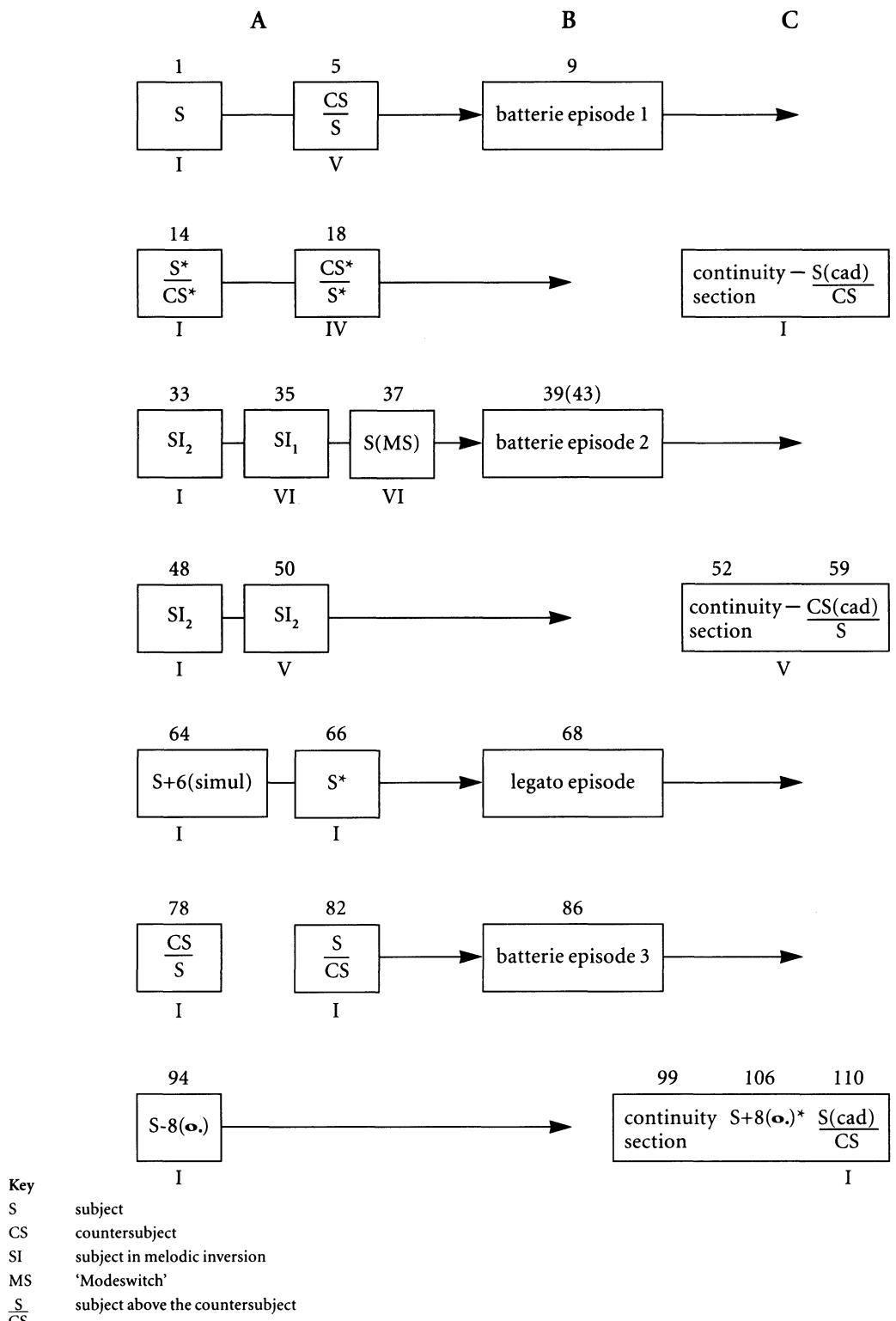 .
中文讲解
这是一个图像占位符,标题为"Figure 11.1 BWV 1027/2, paradigmatic map",即"图11.1 BWV 1027/第二乐章,范式映射图"。括号内的中文备注说明嵌入的图像数据已省略,但保留了图像在版面中的位置以及图题信息。该图位于第12页,紧接其后的P0047—P0051构成该图的图例(legend)部分,因此本条目的作用是提示读者此处原书有一幅示意性的范式映射图,需查阅原书图像以确认具体内容(例如主题、对题、倒影主题、模式切换等图形如何排布)。
补充说明
BWV 1027 是约翰·塞巴斯蒂安·巴赫为 viola da gamba 与羽管键琴所作的 g 小调奏鸣曲;第二乐章是其中的一首赋格(或类赋格的乐章),本节正是围绕该乐章的图示分析展开。但此信息仅由标题文字定位,未在当前小节正文中详述。
第2段(P0047)
原文复述
S subject
中文讲解
这是图11.1的图例条目之一:缩写"S"表示"subject"(主题)。在赋格或对位分析图中,“S"通常代表乐曲最先出现、最具识别性的旋律线条,后面的对位材料都围绕它而生成。这一条目定义了图例中"S"的含义,供读者在查阅图11.1时进行对照。
第3段(P0048)
原文复述
CS countersubject
中文讲解
图例条目:缩写"CS"代表"countersubject”(对题)。在赋格分析中,countersubject 指的是与主题同时进行、形成对位关系的那条次要声部旋律,通常在主题第二次进入后由低音声部或另一声部呈现。本条目界定了图11.1中"CS"标记所指的对象。
第4段(P0049)
原文复述
SI subject in melodic inversion
中文讲解
图例条目:缩写"SI"代表"subject in melodic inversion",即"旋律倒影形态的主题"。这是指主题旋律在音高上被上下翻转(倒影对位)后形成的版本,是对位法中变换主题的常见手法之一。本条目说明图11.1中若出现"SI"标记,指的应是主题以倒影形式出现的声部或片段。
第5段(P0050)
原文复述
MS ‘Modeswitch’
中文讲解
图例条目:缩写"MS"代表"Modeswitch"(模式切换)。‘Modeswitch’带有单引号,提示该术语是作者为本次分析所造的专用词,并非赋格或对位法的传统标准术语。其字面含义为"模式/调式之间的转换",可理解为乐曲进行中主题或对位材料在某种结构模式、调性或织体形态之间发生的切换。该条目界定了图11.1中"MS"标记所指的现象。
第6段(P0051)
原文复述
$\frac{S}{CS}$ subject above the countersubject
中文讲解
图例条目:以分数形式书写为 S 在上、CS 在下(即 S 除以 CS 的分数排版),其文字说明为"subject above the countersubject"(主题在对题之上)。该条目界定了图11.1中分数式标记的用法:当两声部在垂直方向上同时出现时,位置靠上的标记表示上声部是主题(S),下方的标记表示下声部是对题(CS)。读者据此可以解读范式图中纵向堆叠的两个标签。
第7段(P0052)
原文复述
$S+8(\mathbf{o.})$ subject in canon at the time interval of a dotted semibreve moving into the ‘continuity section’. A very pleasant arrangement to be sure, thematically as well as harmonically, but hardly an architectonic wonder. Similarly, the longish section involving the canonic devices at bb. 64 and 94 also takes time to recapitulate themes from the opening (at bb. 66ff., 78ff. and 82ff.), but not in any systematic fashion. This is not to say that Bach was never interested in symmetrical arrangements or numerically conceived dispositions, but that these were matters that only rarely infringed on the more intrinsically musical challenges of invention and its mechanisms. $^{3}$
中文讲解
本段由两件事构成:一是给出图例最后一条目,二是对巴赫的对称安排做出整体判断。第一句定义了标记 S+8(o.):它指主题以一个附点全音符(dotted semibreve)的时间间隔作卡农模仿,并进入所谓的’continuity section’(承接段/延续段);o. 即 semibreve 的缩写,dotted semibreve 约等于现代记谱中的附点全音符。第二句开始进入作者的评价:作者承认这种安排"确实令人愉悦,无论在主题层面还是和声层面",但紧接着用转折连词 but 将其评价拉低——“算不上建筑学意义上的奇迹”(hardly an architectonic wonder),即这种布局虽好听,却缺乏宏大的结构巧思。
第三句继续推进:乐曲中较长的、涉及 b. 64 与 b. 94 处卡农手法的段落,同样花时间回顾开头的主题(分别在 b. 66 及以下、b. 78 及以下、b. 82 及以下出现),但这种回顾"并非以系统化方式"(not in any systematic fashion)进行。也就是说,作者承认卡农与主题再现的存在,但否认其遵循任何对位法教科书式的对称布局。
第四句是关键的限定性论述:作者以"This is not to say that… but that…“句式明确划界——并非说巴赫从未关注过对称安排或按数字设计的构思(symmetrical arrangements or numerically conceived dispositions),而是这些只是巴赫很少介入的事情,它们仅偶尔触及(only rarely infringed on)那些更具内在音乐性的挑战——即"发明”(invention)本身的机制。句末的脚注 3 提示读者此处有进一步的注释性资料。
整段在本小节中的功能:作为图例的收束,作者顺势借此切入对巴赫创作思维的判断——形式上的对称并非巴赫核心关切,发明机制本身的内在音乐性才是。这与节标题所暗示的"非正式(informal)排序"立场一致。
补充说明
本段中提到的 b. 64、b. 94、b. 66、b. 78、b. 82 等小节编号都来自 BWV 1027 第二乐章的总谱,由原文直接给出,作者在此用以佐证"主题再现并非系统化"的判断;这些编号未在图例其他条目中出现,仅作为正文论据使用。脚注 3 的具体内容需查阅原书第 12 页的脚注区。
第8段(P0053)
原文复述
https://doi.org/10.1017/CCOL9780521587608.019 Published Online by Cambridge University Press
中文讲解
这是一条出版元数据行,包含数字对象标识符(DOI)链接以及线上出版方信息:经由剑桥大学出版社在线出版(Published Online by Cambridge University Press)。它属于版面上的版权/来源标识,并非正文论述,本条目的作用是标明本章的正式出版渠道与可解析的 DOI。
脚注 / 边栏 / 图表 / 附加信息(如有)
本小节包含三类附加材料:(1) 一幅图像占位符——图11.1(BWV 1027/2 范式映射图),其完整图形需查阅原书,原始图像数据在当前文本中不可见;(2) 一条脚注引用标记——P0052 末尾的上标 3,指向原书第 12 页的脚注,用以支撑作者关于巴赫对称安排判断的旁证;(3) 出版元数据——P0053 给出 DOI 链接与剑桥大学出版社线上出版声明。这些附加材料不参与图例定义,但为图例所支撑的论点提供来源与可追溯信息。
💡 本节核心要点
- 图11.1是一幅关于BWV 1027第二乐章的范式映射图,其图例由六条标记定义构成:S(主题)、CS(对题)、SI(旋律倒影的主题)、MS(模式切换,作者自造术语)、S/CS(主题在上、对题在下的纵向叠置)以及 S+8(o.)(主题以一个附点全音符为时间间隔作卡农)。
- 图例条目不仅是符号说明,作者借此将读者引向对巴赫作曲策略的整体判断。
- 作者承认 BWV 1027/2 中的卡农模仿与主题再现安排在主题与和声上都令人愉悦,但否认这些安排构成系统化、对称化的建筑式布局。
- b. 64、b. 94 等处的卡农段落在 b. 66、b. 78、b. 82 等处回顾开头主题,但这种回顾并未以规则化方式进行。
- 作者以限定句式(This is not to say… but that…)划清立场:对称或按数字设计的构思并非巴赫的关切重心,更具内在音乐性的"发明"机制本身才是。
- 由此引出节标题暗示的"非正式排序"立场:图例所揭示的并非严格的形式对称图式,而是发明机制自然展开的过程。
🔑 关键术语
- S (subject):赋格或对位分析中的主题,即最先出现、最具识别性的旋律线条;图11.1中以 S 标记。
- CS (countersubject):对题,与主题同时进行、构成对位关系的次要声部旋律;图11.1中以 CS 标记。
- SI (subject in melodic inversion):旋律倒影形态的主题,即主题在音高上被上下翻转后的版本;图11.1中以 SI 标记。
- MS (‘Modeswitch’):“模式切换”,作者为本次分析所造的专用术语(带单引号),指主题或对位材料在结构模式或调式间发生的转换;图11.1中以 MS 标记。
- S+8(o.) (subject in canon at the time interval of a dotted semibreve):主题以一个附点全音符(dotted semibreve,缩写 o.)的时间间隔作卡农模仿的形态,并由此进入"承接段"(continuity section);图11.1中以 S+8(o.) 标记。
- continuity section:承接段/延续段,指乐曲中由卡农等模仿手法转入主题继续展开的那一段落,文中与 S+8(o.) 同时出现。
- architectonic wonder:“建筑学意义上的奇迹”,作者用以评价对称布局结构巧思的比喻性说法;本节中用以否定 BWV 1027/2 的安排具有此种宏大对称性。
- symmetrical arrangements / numerically conceived dispositions:对称安排与按数字(数字象征、数理比例)设计的构思;作者承认巴赫偶有使用,但强调它们极少干预更本质的音乐构思。
1.11 [描述性拆分] Final display of invention, ‘one-off’ episodes and the genius behind the machine
第1段(P0054)
原文复述
Any element of drama tied to the form of the piece, the author argues, is bound up with the appearance of a further invention whose presence could not have been foreseen. He points to the final bars of the piece, where a listener would normally expect the ‘continuity section’ to lead the music back to the primary invertible complex. Instead of this expected return, Bach introduces the remaining canonic inversion of the subject, playing it against itself, and then — in what the author calls a true tour de force — transforms one contrapuntal device into another so seamlessly that at the downbeat of b. 110 the canonic device S + 8 (o·) silently turns into CS/S, without any warning that this sleight-of-hand has occurred. The breathless and playful quality of this satisfying ending is therefore to be ascribed to a final display of inventive wit whose artifice is almost entirely concealed.
中文讲解
本段是全章音乐分析的收束,集中说明作品尾声的"戏剧性"究竟来自何处。作者认为,这种戏剧性并非来自常规曲式预期,而是来自一个未被预见的"新发明"在最后时刻突然出现:通常听者会预期"持续段"将引回"主要可逆对位复合体",但巴赫并未如此,而是先引入尚未出现的主题卡农倒影(让主题自相对置),随后在小节110的强拍上,毫无过渡地把S+8(o·)这种卡农手法转化为CS/S,像变戏法一样悄然切换。要点包括:1. “sleight-of-hand”(障眼法/戏法)一词点明巴赫的高明不在于让人听见技术,而在于让人浑然不觉;2. 这与前文所讨论的"系统化、可机理解释"的对位机器形成对照——分析中看似机械,听感上却流畅且富于游戏感;3. b. 110的"无预警"是论证关键:作者强调没有任何准备告诉听者这一转变已经发生;4. 这也是"invention"在作品中的最后一次展示,与本节标题"final display of invention"直接呼应。
补充说明
本段中"S + 8 (o·)“和"CS/S"是本乐章前几节分析中已经建立起来的具体卡农手法缩写;“主要可逆对位复合体”(primary invertible complex)也是前文已说明的概念。b. 110是论证的具体定位锚点。
第2段(P0055)
原文复述
The author then turns briefly to the ‘one-off’ episodes listed in column B of Figure 11.1. Three of them exploit the idiomatic string-crossing technique called batterie already mentioned above and are labelled as such; the fourth takes a long legato figure as its ‘subject’, moves towards E minor, and then sequences by descending step to a cadence on I. However effective and expressive these individual passages may be, the author contends that the compositional effort expended on them was minimal, more akin to play than to work. Beneath their melodic surface, where certain details resemble one another, the underlying harmonic structure differs in each case, as Example 11.6 shows. For this reason the author proposes that such episodes be understood as late accretions to the compositional process — elaboration rather than invention.
中文讲解
本段处理的是图11.1中B栏所列、且在前文已提及的"one-off”(一次性)插段,作者将其与前文讨论的"系统化发明"过程明确区分。四个插段中三个建立在batterie(跨弦奏法)这一典型弦乐手法之上,第四个则以一个长连线乐思为"主题",向e小调方向进行,再通过下行级进模进在主和弦上收束。论证的核心在于:1. 这些段落虽然好听、富有表现力,但作者认为作曲工作量极小——“more like play than work”(更像玩耍而非劳作);2. 关键证据是Example 11.6所示:尽管表面旋律细节彼此有相似之处,每个插段底层的和声结构都各不相同;3. 因此这些段落应被理解为作曲过程的"晚期附加"(late accretions),是"elaboration rather than invention"(润色而非发明);4. 这一区分对于理解巴赫此处的创作逻辑至关重要——核心发明是严密系统化的,而这些插段则属于后期润饰。
补充说明
本段明确指称"Figure 11.1"(前部图示)的B栏位置与"Example 11.6"(前部谱例)。batterie作为"idiomatic technique of string-crossing"在前文中已提及,本段只是再次调用。
第3段(P0056)
原文复述
Viewing the movement as a whole, the author finds it striking that the playful character of the subject and the modest pretensions of the genre are grounded in a logic notable for its depth and rigour. To speak of the procedures of invention as mechanistic, however, is not to downplay the genius at work, since what captures our musical interest is precisely the composer’s engagement with the machine and the consequences he draws from that engagement. It is Bach — and not an inanimate object — who not only selects the raw material to be fed into the compositional machines but also takes great care in choosing the proper tools for the task at hand. All of this demands a kind of ingenuity that resists easy replication, particularly when the products of invention bear so markedly personal a stamp. The musical result does indeed exude a miraculous quality, which the author suggests is one reason why analyses modelled on the ideology of organicism have at times produced particularly interesting insights.
中文讲解
本段是全章乃至全小节的总结性反思,将具体的对位分析与对"作曲机器—作曲家"关系的元层面思考结合起来。关键论点:1. 整段乐章在表面"活泼、谦逊"的性格之下,潜藏着"深度与严密"的逻辑——这是对前文系统化分析的呼应;2. “mechanistic”(机械式的)是本段的核心修辞,但作者明确反对把它读作贬低:真正的音乐兴趣来自"the man with the machine"(人与机器的互动);3. 巴赫的天才体现在两个层面——其一为选择喂入机器的"原材料",其二为手头任务选择合适的"工具",这是不可复制的"ingenuity"(巧思/独创性);4. “personal stamp”(个人印记)一词强调发明的产物带有强烈的巴赫风格特征;5. 最后一句将"奇迹般的品质"与"有机论"(organicism)这一分析框架的洞察力相联系——有机论之所以有时能产生有趣结论,正是因为它能捕捉本乐章那种仿佛由内在生命生长出来的特质。这一段也可视为全章分析风格的自我辩护:在看似纯技术、机械的层层剖析之后,作者重新把"人"的因素拉回中心。
补充说明
“organicism”(有机论)作为分析意识形态在本段被援引,作者用以解释某些分析路径为何能捕捉本乐章的"奇迹般"特质。该词仅在本段首次出现于当前输入。
第4段(P0057)
原文复述
Publication metadata printed at the foot of the page: the DOI link https://doi.org/10.1017/CCOL978052158708.015 and the statement that the chapter was published online by Cambridge University Press in 2011.
中文讲解
本条为页面底部的出版元数据,仅标明该章节的数字对象标识符(DOI)以及由剑桥大学出版社于2011年在线出版的来源信息,不构成分析内容。
脚注 / 边栏 / 图表 / 附加信息(如有)
本节涉及两处图表材料:Figure 11.1(本节P0055提到其B栏列出"one-off"插段的位置)以及Example 11.6(用以展示四个一次性插段彼此不同的底层和声结构,是作者论证其为"晚期附加"而非发明的关键证据)。页脚处另附本章节的DOI与剑桥大学出版社2011年的在线出版信息。
💡 本节核心要点
- 作品尾声的"戏剧性"并非来自常规曲式预期,而是来自巴赫在b. 110无声地将S+8(o·)卡农转化为CS/S这一未被预告的"绝技",其技术戏法几乎完全被掩盖,使听感既"屏息"又"活泼"。
- 图11.1 B栏所列的"一次性"插段与前文讨论的系统化发明过程不同——尽管旋律表面有相似之处,底层和声结构各异;作者据此将其归类为作曲过程的"晚期附加",是润色而非发明。
- 将发明程序描述为"机械式的"并不等于否认巴赫的天才;天才体现在巴赫主动选择"原材料"和为手头任务选择"工具"这两个能动层面。
- 真正的音乐兴趣来自"人与机器的互动":是巴赫(而非无生命的机制)选择原材料与工具,这种创造力带有强烈的"个人印记",难以复制。
- 全章乐章的总体特征是表面活泼谦逊、内里深度严密,这种"奇迹般的品质"也是有机论分析有时能产生洞察的原因。
🔑 关键术语
- continuity section:持续段:本乐章结构中介于系统化卡农段之间的过渡性段落,本段预期它将引回主要可逆对位复合体,但巴赫并未如此处理。
- primary invertible complex:主要可逆对位复合体:本乐章核心的系统化对位结构,本应在尾声由持续段引回,构成全曲的收束点。
- S + 8 (o·):本乐章中建立起来的一种卡农手法缩写,意为某声部相对另一声部延迟八度进入;本段论证其在b. 110被无声转化为CS/S。
- CS/S:本乐章分析中建立的另一种卡农手法缩写,指采用紧缩/扩张(compression/stretching)关系的卡农。S+8于b. 110被转化为CS/S是本段的关键事件。
- canonic inversion:卡农倒影:本段指主题的剩余卡农倒影形态,由巴赫在尾声引入并令主题自相对置。
- tour de force:绝技:本段形容巴赫在b. 110将一种卡农手法暗中转换为另一种的高超技艺。
- batterie:跨弦奏法:弦乐演奏中的跳弦/拨弦技巧,本节四个"一次性"插段中有三个以此为基础。
- one-off episodes:一次性插段:图11.1 B栏所列、只出现一次而非被系统化复用的过渡段落,作者认为它们是作曲过程的"晚期附加"。
- late accretions:晚期附加:本节术语,指相对核心作曲过程后加上去的润色段落,作者用以说明"一次性"插段的地位。
- mechanistic procedures:机械式程序:本节作者以"机器"为喻描述巴赫系统化的对位发明方法,强调其流程的严密性,但并不因此贬低作曲家的能动性。
- organicism:有机论:一种音乐分析意识形态,强调作品仿佛由内在生命生长而成;本节以此解释为何部分分析能捕捉本乐章"奇迹般"的特质。
1.12 [描述性拆分] Transition to BWV 78/1: chorale text, invention and theological meaning
第1段(P0058)
原文复述
In what follows, the author turns to a choral concerto movement from Cantata 78 in order to present another kind of analysis, one that exemplifies procedures of invention which begin with a pre-existent musical object — in this case the Lutheran chorale text together with its accompanying melody (footnote 4). The interpretive tools employed here depend not only on genre conventions but also bring into play a domain of concepts and meanings signified by divinely inspired words. The reader is asked to keep one question in mind: whether Bach’s music figures only in a supporting role to the words — which is its function according to all Christian theology — or whether Bachian processes of musical invention are capable of interpreting the sense behind the words in ways that both complement and eclipse the sense of the verbal text.
中文讲解
这一段是承上启下的过渡段,作者在此宣告分析对象和分析方法的转换,需要讲清三件事。
第一,分析对象的转换。前文作者用的分析范式是某种以音乐自身运作(“纯器乐”或纯结构层面)为主的方法;现在他要切入的是康塔塔 BWV 78 的“众赞歌协奏风格乐章”(choral concerto movement),其特殊性在于作曲家的工作不是从零写起,而是从一个“先在的音乐对象”(pre-existent musical object)出发——此处即路德宗的众赞歌文本及其配套旋律。这一术语选择意味着分析的起点已经被锁定:词与旋律都是巴赫必须“处理”的给定素材,而非由他自由生发。
第二,分析工具的双重性。作者明确指出,此处的诠释工具不仅依赖“体裁惯例”(genre conventions),还必须进入“由神启话语所指涉的概念与意义领域”(a realm of concepts and meanings signified by divinely inspired words)。换言之,分析者既要懂巴赫所处体裁的程式化手法,又要能解读歌词承载的神学含义,两套知识共同决定解释是否成立。
第三,作者抛出的核心方法论问题。段末的对立结构——“音乐仅为歌词服务”(按基督教神学的功能观)vs. “巴赫式的音乐‘发明’过程能解读歌词背后的意蕴,乃至既能补充又能在意义上超越(complement and eclipse)文字”——是整段乃至后面分析的总问题。eclipse 一词尤其关键:它意味着作者愿意严肃考虑音乐可能做得比文字更多,而非仅仅装饰文字。作者用 to bear in mind 提醒读者带着这个问题阅读后面的分析,因此这是本段真正的“承前启后”功能:把读者从纯音乐分析框架带入神学—修辞双重解读框架。
综上,这一段不展开论证,而是为接下来的乐章分析铺设问题域、确定起点(众赞歌文本与旋律)、并预演一个比一般“音乐服从神学”更强的假设。
补充说明
段中上标 4 对应一个脚注;由于本节输入仅含该段正文,脚注的具体内容未在本任务范围内出现,因此其论证功能(如是否为“先在音乐对象”这一概念提供文献出处、是否为众赞歌体裁给出神学—音乐学背景)无法在此核实。分析中提到的 choral concerto 与 Bachian processes of musical invention 的具体所指,也需结合后续段落及脚注 4 才能完全锁定。
脚注 / 边栏 / 图表 / 附加信息(如有)
本小节仅含一段正文,但其中带有一个上标脚注编号 4($ ^{4} $),属于指向正文的脚注引用。由于 source_paragraphs 未提供脚注 4 的正文,该脚注的具体内容、来源和功能无法在本节内独立确认;按本任务范围,仅可注明此处存在一个待查的脚注引用,它很可能为“先在音乐对象”(pre-existent musical object)这一概念或路德宗众赞歌文本/旋律的引用提供来源或定义性说明。除此之外,本节无图表、谱例或边栏内容。
💡 本节核心要点
- 本段是方法论转折的过渡段:从此前以音乐自身结构为主的分析,转向以“先在音乐对象”(路德宗众赞歌文本与旋律)为起点的分析范式。
- 分析对象为康塔塔 BWV 78 的一首众赞歌协奏风格乐章,作者以此例示“发明”(invention)如何在既定素材上展开。
- 诠释工具具有双重性:一方面依赖体裁惯例,另一方面必须进入“神启话语”所指涉的神学—语义领域。
- 作者提出核心对立问题:音乐仅服务于歌词(按基督教神学的功能定位),还是巴赫式的音乐发明能解读、补充甚至在意义上超越(eclipse)文字文本。
- “eclipse”一词标志着作者的分析预设:音乐过程在意义层面并不必然低于或服从于文字,而是可能与之平等乃至凌驾其上。
- 段中上标 4 引向一个未在本节中给出的脚注,提示后续论证带有外部文献支撑。
🔑 关键术语
- choral concerto movement:康塔塔中以众赞歌为基础的合唱乐章,是巴赫作品中的一类体裁,其特征是以预成的众赞歌文本与旋律为结构与素材起点。
- pre-existent musical object:“先在的音乐对象”,指作曲家动笔前已存在的音乐素材,此处特指路德宗众赞歌文本及其配套旋律;它界定了“发明”过程的起点。
- Lutheran chorale:路德宗众赞歌,作为礼拜核心歌曲传统而存在,其文本被视为“神启话语”,旋律则为作曲家处理的对象。
- invention (procedures of invention):此处“发明”不是巴赫《二部/三部创意曲》意义上的体裁名,而是指作曲者在既定素材上进行加工、变形、生成新音乐的处理过程与方法。
- Bachian processes of musical invention:“巴赫式的音乐发明过程”,强调巴赫处理众赞歌素材所特有的作曲手法;本段以此与“音乐仅为歌词服务”的功能观形成对照。
- genre conventions:“体裁惯例”,指某种体裁(如众赞歌协奏乐章)在历史传统中形成的程式化写作规范,分析须以这些惯例作为参照。
- divinely inspired words:“神启的话语”,指众赞歌歌词在神学层面所具有的受启示而来的权威与意义,是分析中不可绕过的语义层。
- eclipse:“超越、凌驾”;在本段中指音乐过程在意义上可能不仅补充而且凌驾于文字文本,标志作者的分析预设比“音乐服从神学”更强。
1.13 [描述性拆分] Chorale cantata text (Rist) and the pre-compositional status of the chorale melody
第1段(P0059)
原文复述
The first movement of this so-called chorale cantata from Trinity 1724 sets the opening eight-line strophe of Johann Rist’s chorale text (1641), which is labelled alphabetically according to the distinct musical strains which set each line.
中文讲解
这一段为整节定下分析框架。作者开门见山指出:所讨论的对象是 1724 年圣三一节的一首“众赞歌康塔塔”(chorale cantata),即 BWV 78 之类以众赞歌旋律为核心、每乐章吟诵众赞歌一节的体裁。其文本出自约翰内斯·里斯特(Johann Rist)1641 年的诗作,本节所引用的即其第一首八行诗节(strophe)。这里特别重要的是“以字母标注每一行对应的不同音乐乐句(musical strain)”:所谓 strain 是指众赞歌旋律中可独立成段的小乐句,作者用 A、B、C、D、E、F 标明其交错与重复关系(A 与 B 在前八行中交替出现两次,C/D/E/F 各自独立),这正是为后面的逐句音乐分析建立索引。文中“so-called chorale cantata”的措辞也提示“chorale cantata”这一术语本身在学术上属于约定俗成的归类。
补充说明
需要进入 Cambridge Core 平台查看“Trinity 1724”指代的具体作品编号;此处原文未给出 BWV 号,不宜凭外部知识补写。
第2段(P0060)
原文复述
A Jesu, der du meine Seele Jesus, you who have taken my soul
中文讲解
本行标注为乐句 A,文字为德文歌词与英文译文的并列展示。“Jesu, der du meine Seele”直译为“耶稣啊,你曾取走我的灵魂”,其中“取走/拽出”这一动作词(参见后文 herausgerissen)暗示“将我灵魂从地狱中救拔”的神学主题。A 乐句在整段八行诗节中起到开场与回归的双重作用——它既是全诗首句,又在后半段再次出现(P0062),形成 ABA′ 的拱形结构。
第3段(P0061)
原文复述
B hast durch deinen bittern Tod Through your bitter death
中文讲解
本行为 B 乐句,承接 A 句点出的“耶稣取走我的灵魂”,进一步说明方式:“藉着你那苦涩之死”。这里的“bittern/bitter”提示基督受难之苦,是路德宗神学中救赎论的核心意象。B 乐句与 A 乐句在旋律上构成对比,但在文本上则共同回答“谁”与“如何”两个问题。
第4段(P0062)
原文复述
A aus des Teufels finstern Höhle From the devil’s dark den
中文讲解
再次出现 A 乐句,标志着旋律上的“回归”。文本上从“如何救我”转向“从何处救我”:原文“des Teufels finstern Höhle”意为“魔鬼的幽暗洞穴/窟穴”,与下文“地狱/阴间”的常见意象相呼应。文本中灵魂被拯救的“起点”——从黑暗中被拖出——在此被明确点出。A 乐句的重复具有修辞功能:它让听众在听觉上确认“同一旋律承载不同的叙事坐标”。
第5段(P0063)
原文复述
B und der schweren Seelennoth And from the great agony of the soul
中文讲解
B 乐句再次出现,进一步补全“被拯救的处境”:“以及灵魂巨大的痛苦/煎熬”。“Seelennoth”(灵魂之困厄)是宗教诗歌中的固定用语,与前句“bittern Tod”(苦涩之死)共同构成救赎前后对比的两极:罪与苦 vs. 救赎与释放。文本上,B 句的重复把“基督的受死”这一客观事件与“灵魂的苦难”这一主观体验并置。
第6段(P0064)
原文复述
C kräftiglich herausgerissen
中文讲解
本行为 C 乐句,仅给出德文歌词,未附英译。动词“herausgerissen”(herausreißen 的过去分词)意为“被强行拽出/撕裂出来”,副词“kräftiglich”则强调这一动作的“强而有力”。这是整段诗节神学核心的瞬间:基督以强力将灵魂从魔鬼洞穴与灵魂苦难中“撕扯”出来。该动词的回响性使得 C 乐句在音乐上往往被作曲家作为动力性高点来设计。
补充说明
对应英译在 P0065 给出,需将两段合读。
第7段(P0065)
原文复述
Have wrested it forcibly,
中文讲解
这是 P0064 的英文译文。该译法“wrest … forcibly”精确传达了“kräftiglich herausreißen”那种“强力扭夺”的力度感,同时保留了不定式的进行时意味,从而把拯救行为聚焦于一个动态动作——不是“拯救”而是“用强力夺出”。这与作者在 P0071 中所主张的“作曲家应当首先考察旋律本身可能蕴含的和声与对位资源”之间形成有趣呼应:动词本身的力度为后续音乐上“强劲有力的”对位展开埋下文本暗示。
第8段(P0066)
原文复述
D und mich solches lassen wissen
中文讲解
本行为 D 乐句,德文歌词意为“并让我知晓此事”。“solches”指向上文所描述的救赎事件本身,即“让我知道:基督已把我从死亡与苦难中救出”。“lassen wissen”(使我得以知晓)暗示“通过某种媒介”——下文 E 句立刻说明这媒介是“恩慰之言”。D 句的功能是过渡:从“事件”转向“事件之传达”。
补充说明
对应英译在 P0071 中给出,需将两段合读。
第9段(P0067)
原文复述
And have let me know this much
中文讲解
这是 P0066 的英文译文,逐字对应德文“und mich solches lassen wissen”。“this much”(如此之多/这么多事)体现出英语译文略去的德文语气,反而以英文中的“多”强调“知晓”之内容的丰富与重量。这一句在整段诗节中起衔接作用:把前四行的客观救赎事件,转接到后四行主体“信心得以建立”的主观经验。
第10段(P0068)
原文复述
E durch dein angenehmes Wort,
中文讲解
本行为 E 乐句,德文意为“藉着你那恩慰/可亲的话语”。“angenehm”在宗教诗中并非单纯的“悦耳”,而是带有“蒙恩、和蔼、令人安慰”的意味,指福音之话(das Wort)能带来慰藉。这一句回答 D 句“通过什么让我知晓”:通过基督恩慰的话语。E 乐句在音乐结构上是六句中较独立、较舒展的乐句,因为其文本语义指向“话语/言语”——这本身就是一个语言学层面的暗示。
补充说明
对应英译在 P0071 给出。
第11段(P0069)
原文复述
Through your soothing words:
中文讲解
这是 P0068 的英文译文,“soothing”传达了“angenehm”的慰藉义。冒号提示这一句为后续祷告(F 句)作铺垫:从“话语”的内容转向“因这话语而发出的祈求”。这里的“words”(复数)也契合 E 乐句在音乐上常以较平均、较“言说性”节奏呈现的特点。
第12段(P0070)
原文复述
F sei doch itzt, o Gott, mein Hort! Be now, O God, my rock!
中文讲解
本行为末句 F 乐句,德文与英文并列。“sei doch itzt”意为“愿你此刻就是了/但愿你此刻就是我的”。“Hort”在中古高地德语及路德宗诗咏中意为“避难所/磐石/依靠”,英译以 rock 对应。“doch”与“itzt(今/此刻)”两个语气副词让这一句成为整段诗节的恳求高潮:从前述的叙事陈述,骤然转入祈求。F 乐句在旋律上一般作为整首众赞歌的尾句与全诗节结束式,往往伴随着和声上最稳定的收束。
第13段(P0071)
原文复述
Since the chorale tune is pre-existent, it is important to begin the analysis not at the beginning of the piece but rather with the chorale melody itself and the harmonic and contrapuntal possibilities it presented to the composer. It is obvious that Bach’s conception for the work must have begun by taking stock of how, in the opening movement, the chorale tune was usable as a cantus firmus, a compositional procedure to which he devoted himself during his second Leipzig cantata cycle (1724–5). This particular movement, surely one of the best known and loved opening movements among the sacred vocal works, is indeed remarkable for its integration of cantus firmus, ritornello and fugal points of imitation. Thinking through a cantus firmus piece, after all, need not give rise to such an integrated perspective, since one can imagine a far less formal arrangement between the long notes and internal fugal tricks.
中文讲解
这是本节的核心分析主张。作者提出了一个方法论转向:由于众赞歌旋律在巴赫之前早已存在(即“pre-existent”),因此分析不应从乐谱上的“作品开头”开始,而应先回到这条旋律本身,去考察它为作曲家提供的和声与对位可能性。换言之,分析顺序应当是:旋律 → 作曲家所能看到/听到的资源 → 实际作品布局。作者进一步指出,这首开场合唱确为“众赞歌康塔塔”中最广为人知与最受人喜爱的开场乐章之一,其特别之处在于同时实现了三种原本可以分离的结构要素的有机整合:(1)cantus firmus(定旋律,即众赞歌长音符作为固定声部);(2)ritornello(利都奈罗,即器乐反复段回归);(3)fugal points of imitation(赋格式模仿对位)。最后一句是关键的“反向反设”:作者提醒读者,使用定旋律并不意味着必然产生如此高度整合的布局;完全可以设想一种“长音符+内部赋格小花招”的较松散安排。这种“可设想的较差情况”的对照,恰恰反衬出此曲中三种要素相互渗透的精妙。
补充说明
作者点出的“作曲家在动笔之前先审视旋律本身”这一创作观念,是该小节乃至更宏观分析的方法论核心;本节随后应当对 A–F 各乐句逐一进行音乐细节分析。
第14段(P0072)
原文复述
https://doi.org/10.1017/CCOL9780521587608.913 Published Online by Cambridge University Press
中文讲解
这是页面底部的出版信息与 DOI 标识,仅起版本与来源说明作用,对正文论述不增加新主张。
脚注 / 边栏 / 图表 / 附加信息(如有)
本节末尾附 Cambridge University Press 的在线出版 DOI(10.1017/CCOL9780521587608.913),仅作出版溯源之用,不参与正文论证。
💡 本节核心要点
- 本节分析的对象是 1724 年圣三一节康塔塔的第一乐章,其文本为 Johann Rist 1641 年众赞歌诗作的第一首八行诗节。
- 诗节以 A B A B C D E F 的字母体系标注旋律乐句(strain),其中 A 与 B 两次交替回归,构成 ABA′B′ 的拱形结构,C–F 为四句独立乐句。
- 文本内容呈现明确的神学叙事弧:从“基督以受死强力将灵魂从魔鬼洞穴与灵魂苦难中救拔”→“藉恩慰之话告知信徒”→“信徒以祷告祈求神成为其磐石”。
- 作者提出方法论转向:因旋律先于作品存在,分析应先回到旋律本身,考察其蕴含的和声与对位资源,再讨论巴赫的实际处理。
- 该乐章的特别之处在于同时整合了 cantus firmus(定旋律)、ritornello(利都奈罗)与 fugal points of imitation(赋格式模仿)三种本可分离的结构要素,这是巴赫在 1724–25 莱比锡第二康塔塔周期中致力发展的手法。
- 作者强调“使用定旋律并不必然带来高度整合”,借此反衬此曲在统一性上的非凡成就。
🔑 关键术语
- chorale cantata:众赞歌康塔塔,指每乐章或主要段落以一首众赞歌(及其调)为核心展开的康塔塔体裁,巴赫在莱比锡第二、第三周期大量使用。
- strain (musical strain):众赞歌旋律中可独立成段的小乐句;本节以 A–F 六个字母标记诗节第一行至第八行各对应的不同乐句及其重复。
- strophe:诗歌的分节;本节处理的是 Rist 1641 年众赞歌诗作的第一首八行诗节。
- cantus firmus:定旋律,一种以一条预存旋律(多为众赞歌)作为固定声部置于其他声部之上的作曲手法,是本乐章的结构基础之一。
- ritornello:利都奈罗,器乐反复段,常以全奏形式多次回归以构建大型曲式结构;与定旋律及赋格并列为本乐章三大整合要素之一。
- points of imitation (fugal points of imitation):赋格式模仿对位,指一个短旋律动机在各声部依次进入并相互模仿的手法;本乐章将其与定旋律、利都奈罗相互交织。
- pre-existent (tune):预先存在,指该众赞歌旋律在巴赫创作之前已为会众所熟知,因而构成作曲家“可用资源”而非“待发明素材”,这是本节方法论转向的依据。
- Bach’s second Leipzig cantata cycle (1724–5):巴赫 1724 年 6 月至 1725 年 6 月在莱比锡的第二轮康塔塔创作周期,以众赞歌康塔塔为体裁核心。
1.14 [描述性拆分] Main invention of BWV 78/1: chorale strains combined over the lamento bass
第1段(P0073)
原文复述
[Figure placeholder: Example 11.7 — Main inventions in BWV 78/1; embedded image data omitted, caption and position retained.] In the case of BWV 78/1, the invention underlying the movement proceeded from Bach’s initial discovery that each of the six musical strains of the chorale tune could be combined contrapuntally over forms of a chromatic chaconne bass representing the falling fourth of the traditional lamento (G–F#–F#–E–E#–D). The author calls this a staggering and none-too-obvious discovery, since the melodic character of strain A implied closure in the tonic whilst strain B concludes on an implied half cadence on the dominant. In the first place, as Example 11.7 shows, although the triple metre offered convenient ways to prepare and resolve chromatic dissonances, in fact only two musical strains — A and B — worked flawlessly over the prime form of the lamento, and in the case of strain F, the melody […]
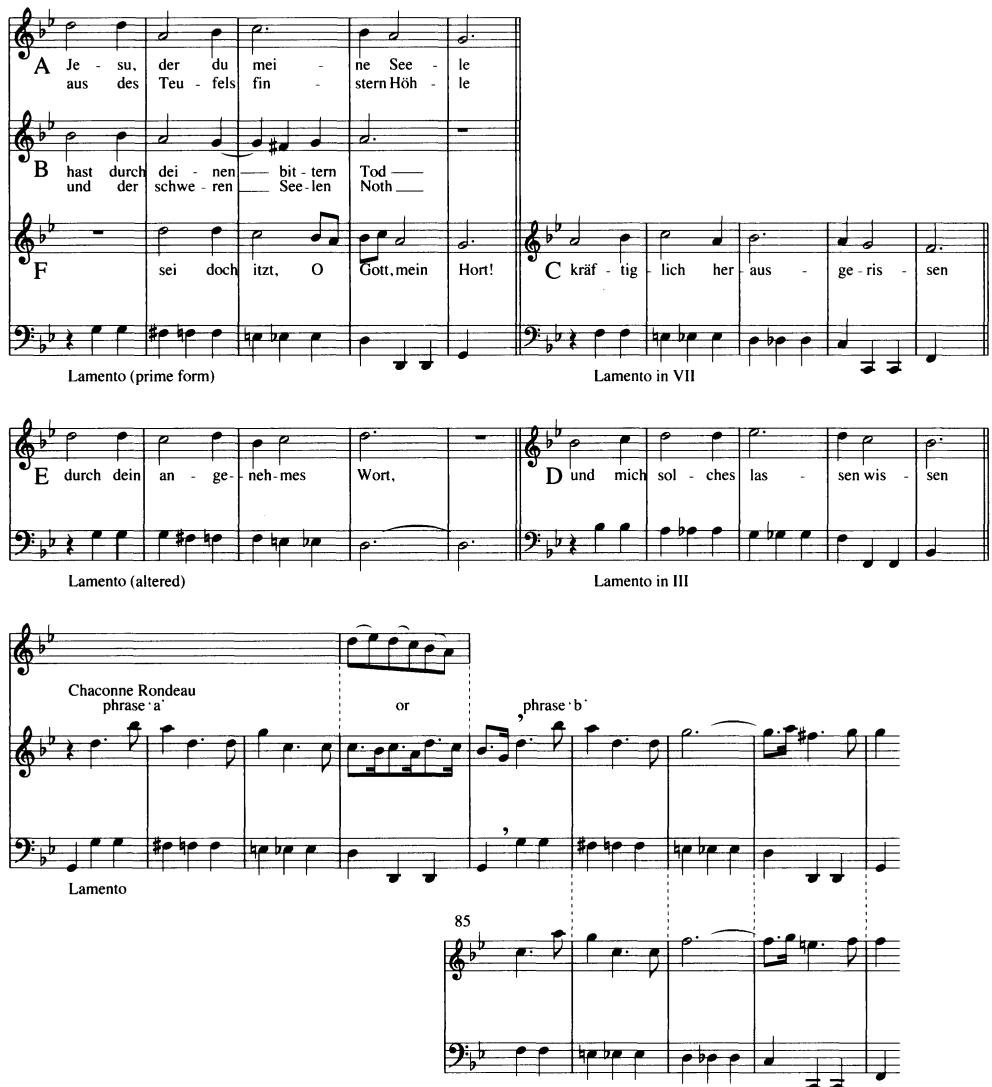
中文讲解
本段提出BWV 78/1乐章的中心发明:巴赫发现赞美诗六个乐句分别都可与一条半音化恰空低音做对位结合,而这条低音呈现的正是传统哀歌(lamento)典型的下行四度音型 G–F♯–F–E–E♯–D。作者强调这是一个惊人的、并非显而易见的发现,因为乐句A的旋律趋向主音终止(tonic closure),而乐句B在半终止上落在属音,两者的终止倾向互相对立,与同一条低音组合时协调难度极高。六个乐句中只有A、B在原型哀歌低音上完美吻合;至于乐句F,已需要做出调整(具体细节在下段继续)。三拍子在作者看来为准备和解决半音化不协和音提供了结构上的便利。整体而言,本段为本节建立了基本张力:原型低音只能容纳部分乐句,迫使巴赫对剩余乐句采用转位、调式切换或节奏调整。
补充说明
本段提到「Example 11.7」为图示,但据任务输入,图片内嵌数据已被省略,仅保留图题《Main inventions in BWV 78/1》及其在原版中的位置。
第2段(P0074)
原文复述
https://doi.org/10.1017/CCOL9780521587808.019 Published Online by Cambridge University Press
中文讲解
此条为页面脚注式URL元数据,标注了该章节在Cambridge University Press在线出版平台上的DOI链接,属于版面信息,不构成正文论述。
第3段(P0075)
原文复述
[Continuing from the previous paragraph:] the melody of strain F had to begin a full bar later and needed to be embellished at bb. 3–4 to fit the bass line. Perhaps Bach’s most brilliant observation was that strains C and D could be made to work together with transposed versions of the chaconne bass if the lamento underwent a ‘modeswitch’ into the major and was ‘arrayed’ (or transposed) onto scale degrees VII and III. Strain E, on the other hand, presented an initial fly in the ointment: although it could be matched with the pitch content of the lamento bass in G minor, the actual placing of the notes in the bass would have to be altered. (The original placing would have led to accented unprepared dissonances on the downbeats of the second and third bars of the bass line.) Given a rich enough contrapuntal fabric, however, this small adjustment would not be all that noticeable.
中文讲解
本段是对乐句逐一与哀歌低音配合情况的延续讨论。乐句F无法与原型低音逐小节对齐,必须延后一小节进入,并在第3–4拍上做装饰音以贴合低音线。作者认为巴赫更精彩的处理是让C、D两个乐句通过哀歌低音的转位相配合:将低音调式从g小调暂时「切换」(mode-switch)到大调,并「排列」(arrayed,即转位)至音阶的VII级和III级。乐句E则最为棘手——其音高集合虽仍属g小调哀歌低音的音高材料,但在低音中的具体落位必须改变,否则会在第二、第三小节的强拍上制造未被准备的、带重音的不协和音。作者给出的解决方案是用足够厚的对位织体掩盖这一微调,反映了巴赫在结构小瑕疵与织体丰盈之间的实用权衡。整段论证机制是:单个乐句的不同终止倾向分别要求不同的低音处理手法(节位延后/调式切换/音高落位调整),最终都在更厚的对位语境中被吸收。
第4段(P0076)
原文复述
Of course the existence of two contrapuntal lines implied certain harmonic directions and, if one compares the differing sets of basso continuo figures, Bach went out of his way to chart a slightly different course in the thorough bass underlying each statement of the chorale tune. Naturally this consideration of harmony went hand in hand with creating a melody for the ritornello. From the small number of concordances between the prime form of the ritornello theme and the cantus firmus and the relative lack of strictness in the way Bach deploys the ritornello, it is reasonable to infer that the invention of the opening chaconne rondeau – with its grandiose and tragic associations with French courtly dance – occurred at a later stage, though perhaps prior to the setting of strain F whose pitch content, as mentioned, needed to be embellished in any case so as to match bb. 3–4 of the lamento bass.
中文讲解
两条对位声部的存在必然暗示和声走向;通过比较各次陈述赞美诗时所配的通奏低音数字低音,巴赫明显有意识地为每次陈述绘制略有差异的和声路径。这种和声考量与回旋(ritornello)主题旋律的创作是同步进行的。作者依据两点证据——回旋主题原型与定旋律(cantus firmus)之间音高吻合点稀少,以及巴赫对回旋主题的运用相对自由——推断开头恰空回旋(chaconne rondeau)的发明时间较晚,可能在乐句F的布局之前。该恰空回旋带有法国宫廷舞蹈的宏伟与悲剧色彩。整段是一次重构创作顺序的推断:从主题材料的契合度推断其生成次序,是音乐分析中常见的「动机整合度即生成时间」的方法。
第5段(P0077)
原文复述
If one had begun the analysis at the beginning of the piece with the chaconne itself, that is, taking the harmony and voice-leading of the opening as itself a primary determining structure, the analytic results would appear somewhat more haphazard, since the precise melodic shape of the theme is not maintained regularly throughout the movement. Indeed the chaconne theme is altered in ways only explicable when it is realised that the chaconne phrase as a whole (comprising its two parts labelled ‘a’ and ‘b’ in Example 11.7) is itself not an autonomous invention but rather was determined by its ability to combine with the lamento bass and with two strains of the cantus firmus chorale tune, A and F. (One can see, for example, how the phrase ‘a’ of the chaconne would have created parallel octaves with the melody of chorale strain B, and the lack of a good fit with other strains probably caused Bach to turn to contrasting elaborations in setting the remaining chorale strains.) The germ of the invention of the chaconne theme can perhaps best be gleaned from bb. 21–5, the first statement of strain A over the lamento bass. Here one comes closest to a three-fold juxtaposition of the three inventive elements, although a comparison of b. 24 with b. 4 reveals that Bach was also willing to take a few liberties with the chaconne theme so as to give it a compelling independent shape at the beginning of the movement, the only moment within the movement when the ‘a’ phrase is heard on its own. The other statements of the chaconne are all clearly subsidiary to the chorale and the lamento, as for example at bb. 118–21 in the setting of strain E. A mechanical feature of Bach’s invention, therefore, is that he takes his compositional hierarchies seriously, and, given the more subsidiary role of the chaconne theme, he will treat it more casually so as not to alter the more fundamental elements of structure: the chorale tune and the lamento bass.
中文讲解
本段是一个反直觉的方法论警告:若把分析起点放在恰空本身(即把开头的和声与声部进行视为首要决定结构),分析结果将显得杂乱,因为恰空主题的精确旋律轮廓并未在全乐章中保持规则不变。事实上,恰空主题的种种变形只有在一个前提下才可解释——恰空乐句(在例11.7中标为’a’和’b’两部分)并非独立发明,而是由其能否与哀歌低音以及赞美诗定旋律中的A、F两个乐句成功配合所决定。作者举出一个具体证据:原型’a’句若与赞美诗B句旋律并置,将产生平行八度;它与其他乐句配合度差,这促使巴赫在处理剩余赞美诗乐句时采用对比性的展开手法。恰空主题发明的「胚芽」最清楚地出现在第21–25小节——乐句A在哀歌低音之上的首次陈述,三种发明元素在此最接近三足鼎立式的并置。但把第24小节与第4小节对比可看出,巴赫在乐章开头对恰空主题做了自由处理,赋予它独立的鲜明造型,那是全曲中’a’句唯一单独出现的时刻。其余恰空陈述(例如第118–21小节配乐句E处)都明显从属于赞美诗与哀歌。作者由此归纳出一个「机械特征」:巴赫认真对待其作曲层级,恰空主题处于更从属的位置,因此被更随意地处理,以避免触动更根本的结构要素——赞美诗旋律与哀歌低音。
补充说明
本段继续引用「Example 11.7」中的’a’句与’b’句标签,但该图在任务输入中并未提供可见数据;提及的’b. 24 与 b. 4’指乐章内的具体小节序号,属原文保留的定位信息。
第6段(P0078)
原文复述
https://doi.org/10.1017/CCOL9780521587608.913 Published Online by Cambridge University Press
中文讲解
此条为页面脚注式URL元数据,标注章节在Cambridge University Press在线出版平台上的DOI链接,属于版面信息,不构成正文论述。
脚注 / 边栏 / 图表 / 附加信息(如有)
本节在第15页引入了图示「Example 11.7 — Main inventions in BWV 78/1」,原文明确将其插在第一段之中;按任务输入该图的内嵌图像数据已省略,仅保留其图题与在原文版面上的位置。该图在P0073与P0077中被两次用于论证:一次用于展示六个赞美诗乐句与哀歌低音搭配的可行性差异(其中’a’句与’b’句两个标签在P0077中再次被引用)。此外,本节首尾各有一条Cambridge University Press在线出版页脚(P0074、P0078),提供对应章节的DOI链接,仅具版面定位功能,无实质论述内容。
💡 本节核心要点
- BWV 78/1的核心发明是巴赫发现赞美诗六个乐句都可与一条半音化恰空低音(哀歌音型G–F♯–F–E–E♯–D)作对位结合;但只有A、B与原型低音完美吻合,其余四个乐句各需特定处理。
- 乐句F需延后一小节进入并在第3–4拍装饰;C、D通过把哀歌切换为大调并转位至VII级和III级来实现配合;乐句E的音高可用,但落位必须调整,以避免重拍上的不准备不协和音。
- 本节论证恰空回旋(ritornello/rondeau)的发明时间晚于哀歌低音与赞美诗布局,证据是其主题原型与定旋律音高吻合点稀少、且运用方式较为自由;它承担法国宫廷舞蹈的宏伟与悲剧色彩。
- 恰空主题并非自主发明,而是从属于哀歌低音与赞美诗A、F两个乐句;其旋律轮廓的变形只能用这三者的结合条件解释。
- 方法论上,若以恰空自身为起点会得到杂乱的分析结果;正确的层级顺序是赞美诗与哀歌低音决定结构,恰空主题可在不破坏根本结构的前提下被更随意地重塑。
- 乐章开头第4小节是’a’句唯一单独出现的时刻,巴赫在此为恰空主题赋予了独立于配合约束的鲜明造型,体现其对作曲层级的自觉控制。
🔑 关键术语
- lamento bass(哀歌低音):传统上用于表达悲恸的下行四度半音音型,在本乐章中由恰空低音承担,其原型为G–F♯–F–E–E♯–D,是整个对位结构的核心低音骨架。
- chorale strains(赞美诗乐句):赞美诗旋律被切分的若干乐句(A–F共六个),每个乐句有不同的终止倾向(A趋向主音终止,B趋向半终止于属音),并各自对低音与恰空主题提出不同的对位约束。
- chaconne(恰空):一种基于低音反复的变奏形式;本乐章中恰空低音本身即承载哀歌音型,而上方对位的’恰空主题’(a、b两段)则从属于这一低音与赞美诗旋律。
- mode-switch / arrayed(调式切换/排列):作者用以描述把哀歌低音从g小调切换到大调并转位至音阶VII级、III级的操作,使乐句C、D能够在新的调式与音级位置上与低音配合。
- ritornello / chaconne rondeau(回旋/恰空回旋):反复出现的器乐段材料,在本乐章中即由恰空主题承担;其原型与定旋律吻合度低、用法自由,是推断其发明时间较晚的关键证据。
- cantus firmus(定旋律):作为整首作品结构骨架的预成旋律,此处指赞美诗;它是不可变动的最高层级结构,恰空主题的所有变形都以不破坏该旋律为前提。
1.15 [描述性拆分] Modeswitch of the chaconne and the subsidiary canonic and fugal devices
第1段(P0079)
原文复述
Interestingly, when the chorale tune is absent, Bach takes the opportunity to elevate the ‘b’ phrase of the chaconne to the realm of invention by transposing it to the major mode in b. 85, as shown in the example. (A related ‘modeswitch’ occurs at bb. 99ff.) Here the ‘modeswitch’ follows directly upon a statement of the chorale tune strain in which the chaconne melody could not have been heard because of the poor counterpoint that would have resulted on the third beat in b. 81 and in b. 84. It is almost as if one is returned to the site of composition where an unusually obsessive composer routinely (and in this case vainly) tries to fit each of his musical discoveries into ever new moulds.
中文讲解
本段是1.15小节的开篇段落,核心论点是:在恰空乐章(chaconne)中,当圣咏旋律(chorale tune)暂时缺席时,巴赫便利用这一空间对恰空自身材料进行加工;具体做法是在b. 85处把恰空的b句(‘b’ phrase)转调至大调(major mode),将其提升到’发明’(invention)的层次,这正是作者所讨论的’调式转换’(modeswitch)现象。括号内补充说明还有一次相关的modeswitch发生在bb. 99ff.(小节99及之后),亦即大调化的同一类动作在乐章后段再次出现。
本段还交代了b. 85这次modeswitch的直接语境:它紧接在一次圣咏乐句陈述之后,而在该陈述所在的b. 81与小节84的第三拍上,原本若同时叠入恰空旋律会产生糟糕的对位(poor counterpoint),导致恰空旋律在听感上无法被听到;正是在这一空当,巴赫把那听不见的恰空b句转调到大调并独立呈现。
作者以富有想象力的笔法把这种状况比喻为’回到作曲的现场’(site of composition),看到一位异常执着(unusually obsessive)的作曲家例行公事般地——而在本例中则是徒劳地(vainly)——试图把他一个个音乐发现都嵌进新的模子(ever new moulds)。其中obsessively与vainly形成的反讽值得注意:作者暗示巴赫本人也清楚,这次嵌入并不成功,恰空旋律在b. 81/84的位置因对位冲突而实际被圣咏所掩盖。
补充说明
本段中’modeswitch’是本节的分析技术术语,特指恰空b句从其原有调式色彩转入大调(major mode)的动作,与整章对调式与对位关系的关注相呼应。文中提到的example指本章例11系列(Example 11)的相关图例,b. 85处的具体谱面形象需查原书图例。
第2段(P0080)
原文复述
The remaining inventive work of the movement can be expressed in a series of canonic and fugal devices which treat the lamento bass individually and perform various operations on it to produce new points of imitation. As is usual with this aspect of Bach’s workshop, the devices display Bach’s further ‘research’ on his materials, and some operations are bound to be more successful than others. The first device, as shown in Example 11.8a, appears at bb. 9ff. and 13ff. and represents the invention of a countersubject in invertible counterpoint that can be rotated against the lamento. The other three devices, shown in Examples 11.8b, c, d and e, are canonic rather than fugal: (11.8b) in bb. 17ff., Bach attempts a canon at the lower fourth at the distance of a dotted minim (CANONIC LAMENT L - 4 (d.)), which is aborted midstream to favour the entrance of the chorale strain A; (8c) in bb. 25ff., he melodically inverts the lament and plays this in a canon at the lower fifth (INVERTED CANONIC LAMENT L(inv) - 5 (d.)); and (8d) in bb. 107–25, he is able to produce a brilliantly extended and recurrent point of imitation by altering the end of the lamento to create a perpetual canon alternating between the upper fourth and the lower fifth at the distance of a dotted semibreve (PERPETUAL CANONIC LAMENT* L + 4 (o·) and L - 5 (o·)), and concluding with a new canonic device, L* + 5 (d.).
中文讲解
本段聚焦乐章除去modeswitch之外的’发明性’工作,作者将其概述为一系列卡农式与赋格式(canonic and fugal)的对位技法,它们分别处理悲歌低音(lamento bass),并对其施以多种加工,产出新的模仿起句(points of imitation)。作者使用’工坊’(workshop)这一方法论比喻,把这些技法定位为巴赫对自己旋律材料的进一步’研究’(research),并提醒读者效果参差——有的成功,有的不尽人意。
具体四个设备(device),按出现顺序:
- 例11.8a(bb. 9ff.及13ff.):赋格式而非卡农式。作者在可转位对位(invertible counterpoint)的框架内发明一个对题(countersubject),它可以相对悲歌低音上下翻转旋转。
- 例11.8b(bb. 17ff.):卡农式。巴赫尝试在下四度(lower fourth)以附点二分音符(dotted minim)为间距作卡农,作者命名为CANONIC LAMENT L − 4 (d.)。但该卡农中途被中止(aborted midstream),以便让位于圣咏乐句A(chorale strain A)的进入。
- 例11.8c(bb. 25ff.):卡农式。巴赫先把悲歌旋律作旋律倒影(melodic inversion),再以同样的下五度(lower fifth)作卡农,命名为INVERTED CANONIC LAMENT L(inv) − 5 (d.)。
- 例11.8d(bb. 107–25):卡农式,也是本节规模最大、效果最辉煌的一次。作者改造悲歌旋律的尾部使其能够循环衔接,制造出一段’辉煌而持续的模仿起句’(brilliantly extended and recurrent point of imitation),即无穷动卡农(perpetual canon),在上四度(upper fourth)与下五度(lower fifth)之间交替进行,间距为附点全音符(dotted semibreve),标记为PERPETUAL CANONIC LAMENT* L + 4 (o·) 与 L − 5 (o·);此段最后以新的卡农设备L* + 5 (d.)收束。
值得注意的论证层次有三:第一,作者采用带星号、附(inv)的自定义代号,使读者能在谱例11.8中精确对应四个设备;第二,11.8b的中止本身就是作品结构逻辑的反映——当圣咏旋律需要进入时,巴赫宁可中断卡农也不让对位冲突破坏圣咏陈述;第三,11.8d是整节最成功的’研究’成果:通过把悲歌末尾改造为可循环的形式,作者一举解决了持续卡农的衔接问题,并用perpetual canon提供了长达近二十小节的对位延伸。
补充说明
本段引用的Examples 11.8a–e属配套谱例(需查原书图例)。文中括注的代号为作者为本节建立的分析符号体系:L代表悲歌低音主题;’−4’/’−5’代表下四度/下五度入口,’+4’/’+5’代表上四度/上五度入口;’(d.)‘为附点二分音符,’(o·)‘为附点全音符;’(inv)‘指倒影变形;LAMENT后的星号与L后的星号分别代表被改写过尾部从而可循环的悲歌主题及其变体——这两种星号均加在首次正式叙述的perpetual canon处。
第3段(P0081)
原文复述
While elaborating and disposing these subsidiary inventions, Bach also makes a point of expanding the harmonic field of the movement by
中文讲解
本段仅由一个未完成句构成:以’While elaborating and disposing these subsidiary inventions’开头的从属从句,其主句以介词’by’结束,其后应当跟上的宾语(用以具体说明通过何种手段扩张乐章和声领域)并未出现在本节中。亦即,原文在此处戛然而止(sentence runs off the page/section),续写的内容属于下一节的开头,作者在本节中并未交代扩张手段本身。
因此讲解必须如实指出此句的截断性质:根据上下文可以合理推测作者原想列举某种或某几种具体方式(例如通过离调、关系调转调或和声外音)来扩张乐章和声空间,但原文本身没有写出,讲解不应自行补全为完整意图描述。从功能上看,本句在原文中的实际作用只是一个承上启下的桥梁句(过渡句),把读者从讨论卡农/赋格设备的注意力转移到和声层面的扩张上。
第4段(P0082)
原文复述
https://doi.org/10.1017/CCOL9780521587608.015 Published Online by Cambridge University Press, 2011
中文讲解
本行为该页底部的DOI与线上出版页脚信息:标注本章节所在的Cambridge Companions Online系列(系列DOI)的数字对象标识符,并说明该章由剑桥大学出版社(Cambridge University Press)于2011年实现线上出版(Published Online)。这是一条版面包装信息(page furniture),不参与本节论证,亦不承担分析功能。
脚注 / 边栏 / 图表 / 附加信息(如有)
本节无独立的脚注、边栏文字或图表说明文字。文中反复引用的Example 11.8a–e以及一个标识b. 85处modeswitch的谱例均属原书配套的音乐示例,需查阅原书才能取得具体谱面细节;本节文本本身只列出了其位置标签与分析代号。P0082为该页底部的DOI与线上出版元数据,属版面信息。
💡 本节核心要点
- b. 85处,恰空b句(‘b’ phrase)在圣咏旋律缺席时被转调至大调(major mode)以提升至’发明’(invention)层次;bb. 99ff.出现另一次位置明确、性质相关的modeswitch。
- 两次modeswitch都紧接在b. 81与b. 84的圣咏乐句陈述之后;在那些小节的第三拍上若同时出现恰空旋律会产生糟糕对位(poor counterpoint),所以恰空旋律听不见——这正是巴赫需要把恰空材料改写进新模子的直接语境。
- 作者以’回到作曲现场’、‘执着而徒劳地把每个音乐发现嵌入新模子’的形象化语言,把这一加工解读为巴赫’研究素材’的工坊行为(workshop ‘research’)的缩影。
- 乐章其余的发明性工作被分解为四种卡农/赋格式设备(device),它们都从lamento bass派生:例11.8a(bb. 9ff.与13ff.)是赋格式,发明了可在可转位对位中旋转的对题。
- 例11.8b(bb. 17ff.)的下四度附点二分音符卡农(CANONIC LAMENT L − 4 (d.))被中途中止,让位于圣咏乐句A的进入;例11.8c(bb. 25ff.)以旋律倒影版lamento(INVERTED CANONIC LAMENT L(inv) − 5 (d.))在下五度作卡农——这些都属于’参差’的实验。
- 例11.8d(bb. 107–25)是本节最辉煌的卡农实践:通过改造lamento尾部实现的perpetual canon(PERPETUAL CANONIC LAMENT* L + 4 (o·) 与 L − 5 (o·)),上四度与下五度以附点全音符距离交替进行,最终以新的卡农设备L* + 5 (d.)收束。
- P0081只是一个被截断的过渡句(以’by’结尾),其宾语——用何种具体方式扩张乐章和声领域——在原书中由下一节承接,本节不补全其意图。
🔑 关键术语
- Modeswitch(调式转换):本节特指把恰空b句从其原有调式色彩转入大调(major mode)的动作;作者用以指认巴赫在b. 85及bb. 99ff.处所作的调式更替。
- Chaconne(恰空):以固定低音或固定和声进行为基础的变奏曲体裁;本节讨论的b句即此体裁中的一个主题短句。
- Chorale tune / chorale strain(圣咏旋律/乐句):路德宗众赞歌旋律;本乐章中它与恰空主题以对位方式并存,并决定了恰空材料何时能被听到、何时需被改写或转入大调。
- Lamento bass(悲歌低音):贯穿全乐章的一条低音线条,本节把它视为四种卡农/赋格设备的母题(parent subject)。
- Invertible counterpoint(可转位对位):上下两声部可互换位置而不损害和声效果的对位类型;本节例11.8a中的对题(countersubject)即在此框架中发明。
- Point of imitation(模仿起句):一个主题短句在多个声部以错开的间距依次进入所形成的对位段落;本节所有卡农设备都意在产生新的模仿起句。
- Perpetual canon(无穷动卡农):通过改造主题尾部使卡农可循环衔接而持续进行的卡农;本节例11.8d即此类,长达bb. 107–25,并在上四度与下五度之间交替。
- CANONIC LAMENT / INVERTED CANONIC LAMENT / PERPETUAL CANONIC LAMENT(卡农式悲歌 / 倒影卡农式悲歌 / 无穷动卡农式悲歌):作者为本节四种设备自定义的分析代号:分别对应未变形卡农、倒影变形卡农,以及以改造尾部实现的循环卡农;代号中L后的数值与附注代表进入声部相对主题的音程与节奏距离(如’L − 4 (d.)‘为下四度附点二分音符入口)。
1.16 [描述性拆分] Example 11.8 legends and tonal array across scale degrees
第1段(P0083)
原文复述
Example 11.8 Other inventions in BWV 78/1; (a) Lament with rotated countersubject.
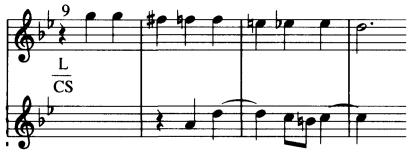
中文讲解
这是例 11.8 的图题与第一张谱例的副标题:它标明了该例所讨论的曲目范围——巴赫康塔塔 BWV 78 第一乐章中的若干"发明(invention)“写法,并指出子项 (a) 是带有旋转对题(rotated countersubject)的悲歌动机(lament)。这段文字本身不是正文论述,而是为整组谱例建立索引,使读者明白随后出现的几幅谱例都属于例 11.8,且按 (a)、(c)、(e) 等字母顺序编排。
补充说明
标题中的 “invention” 在本节语境中并非巴赫《二部/三部创意曲集》意义上的标准体裁,而是指对某一主题材料所做的写作变体处理;“rotated countersubject” 指对题相对于原主题在节拍或音程位置上的旋转移位。
第2段(P0084)
原文复述
[第18页图像或乐谱示例(内嵌图像数据已省略;位置与图注保留)]
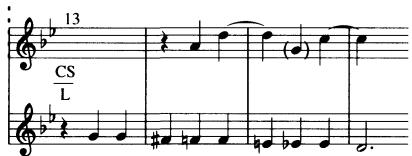
中文讲解
这是位于 P0083 图题之下、P0085 之上的一幅乐谱或图示占位符,原文标注为"第18页图像或乐谱示例”。按照 P0083 的图题,此处对应的应是例 11.8 中 (a) Lament with rotated countersubject 的实际谱例,展示悲歌动机及其旋转后的对题形式。由于内嵌图像数据已省略,具体音符、对题旋转方向与节拍位移需要查阅原书图 11.8(a)。
补充说明
本条作为图像占位符,仅保留其在版面上的相对位置;不能据占位符文字推断具体音高或节奏内容。
第3段(P0085)
原文复述
[第18页图像或乐谱示例(内嵌图像数据已省略;位置与图注保留)]
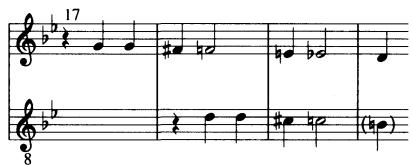
中文讲解
这是紧接 P0084 之后的又一幅图像/乐谱占位符。它属于例 11.8 内部、位于子项 (a) 与子项 (c) 之间的过渡性谱例,可能是 (a) 的延续或 (b)(若存在)的内容;具体内容需对照原图。从 P0086 的图题结构推断,此处仍属 (a) 或其后续小节的展示。
第4段(P0086)
原文复述
(c) Inverted canonic lament L (Inv) - 5 (∂).
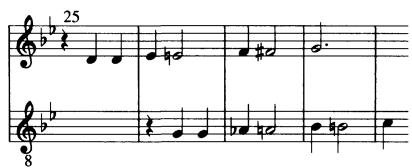
中文讲解
这是例 11.8 子项 (c) 的图题:“Inverted canonic lament L (Inv) - 5”,表示将悲歌动机 L 倒影(Inverted)形式以五度卡农方式呈现,并以 ∂ 作为附注或段落标记。这条图题承担的功能与 P0083 相同——为紧随其后的谱例提供索引,使读者知道接下来看到的是倒影卡农版的悲歌。
补充说明
“L (Inv) - 5” 中的 “L” 指 lament 主题,“Inv” 指 Inversion(倒影/倒行),“5” 表示卡农所基于的音程或模仿距离为五度;∂ 在原版式中可能表示某个小节或片段的标注符号。
第5段(P0087)
原文复述
[第18页图像或乐谱示例(内嵌图像数据已省略;位置与图注保留)]
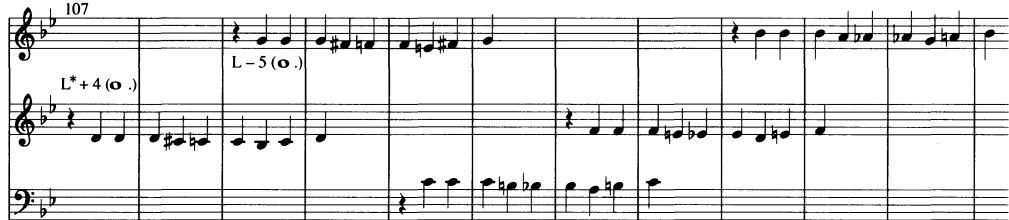
中文讲解
这是子项 (c) 之下的乐谱或图示占位符,对应 P0086 图题所标的"倒影卡农悲歌"。其乐谱内容展示了 L 主题的倒影如何在五度音程上以卡农方式追迹自身;具体音高走向、节奏对位与进入时点需要查阅原书图 11.8(c)。
第6段(P0088)
原文复述
(e) Canonic lament *
中文讲解
这是例 11.8 子项 (e) 的小标题:“Canonic lament”(卡农式悲歌),后接星号 * 作为脚注或附加标记的指针。该小标题表明紧随的 P0089 谱例展示的是悲歌动机的卡农形式,且形式不同于 (c) 的倒影卡农——此处很可能是一段正规(非倒影)卡农。星号通常指向页脚或图注中需要单独说明的条目。
第7段(P0089)
原文复述
[第18页图像或乐谱示例(内嵌图像数据已省略;位置与图注保留)]
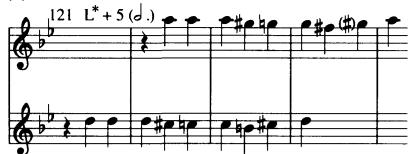
中文讲解
这是子项 (e) 之下的乐谱或图示占位符,对应 P0088 小标题"卡农式悲歌"。其展示的应是悲歌动机的卡农化写作,但具体是何种模仿方式(紧接/间隔、上方声部/下方声部、是否倒影)需要查阅原书图 11.8(e)。
第8段(P0090)
原文复述
focusing on the tonal array of scale degrees, so that across the movement as a whole, the lamento appears on five of the seven diatonic scale degrees: I, III, IV, V and VII. This interest in the array of tonal stations covered by inventions is not so much a matter of ingenuity (although it may have provided an impetus for the invention of the perpetual canon) but rather of disposition and form and is fundamental to the way in which Bach apparently thought through large-scale designs. To ensure that an invention is heard on a variety of scale degrees means not only that a large-scale movement occupies an appropriately broad tonal space but that the composer is actively seeking out forms of variation that are far less a matter of facile contrasts than integrated interpretations of a few well-chosen and well-designed discoveries.
中文讲解
这一段是本节乃至整章方法论的核心论述之一,需要逐层拆解。第一句"focusing on the tonal array of scale degrees"指出此处的观察角度是音级(scale degree)在调性上的铺陈——即把目光从单一声部的对位手法,转向各声部在不同音级位置上呈现悲歌动机的整体分布。第二句给出关键事实:在这首乐章(movement)中,悲歌动机出现在七个自然音级中的五个之上——I、III、IV、V 与 VII。这是一个精确的统计性陈述,意味着作者对 BWV 78/1 的调性布局作了系统清点,并发现悲歌并未覆盖 II 与 VI 两个音级。
第三句开始转向解释性论述。作者明确否认这种"铺满多个音级"的现象源于作曲家的巧妙卖弄(ingenuity),但承认它可能为"无穷卡农(perpetual canon)“的发明提供了推动力;真正的成因在于"布局与形式(disposition and form)",并认为这关乎巴赫构思大型作品整体设计的基本思维方式。这里"disposition"是关键词,它指的是材料在时间与调性轴上的预先筹划,而非临场的灵感挥洒。
最后一句给出方法论层面的结论:让一个动机出现在多个音级上,不仅意味着乐章在调性空间上铺展得足够宽,更意味着作曲家主动追求的是"变化形式(forms of variation)"——而这些变化不是靠肤浅的对比(facile contrasts)达成,而是通过对少数精心选择与精心设计的"发现(discoveries)“做出整合性的诠释(integrated interpretations)。换言之,巴赫不是用堆砌对比来填满空间,而是让同一动机在多个音级上反复"被听见”,并以对位方式(如倒影、卡农、旋转对题等)使每次出现都成为一次新的诠释。
因此本段一方面给出具体的音级覆盖事实(I/III/IV/V/VII),另一方面把这种事实提升为对巴赫创作思维方式的整体判断:巴赫以少数精心设计的"发现"为种子,通过音级铺陈与对位变体来实现大型作品的统一与广度。
补充说明
“perpetual canon” 在巴赫研究中通常指声部进入后持续贯穿全曲、层层叠加的卡农写法,与此处"音级铺陈"的论述形成因果呼应——后者为前者的构思提供了动机。“facile contrasts” 一词带有作者评价色彩,意在区分"廉价/表面的对比"与"内在整合的诠释”,反映出作者对巴赫对位艺术的审美判断。
第9段(P0091)
原文复述
https://doi.org/10.1017/CCOL9780521587808.019 Published Online by Cambridge University Press
中文讲解
这是该章节在线出版的 DOI(数字对象标识符)及出版方说明:链接指向剑桥大学出版社出版的在线版本(DOI 前缀 10.1017/COL 表示 Cambridge Core Online,CCOL9780521587808.019 为该章节的特定编号)。它属于页面底部的元数据行,而非正文论述;对正文主张既无支持也无限定作用,仅用于文献检索与版权确认。
脚注 / 边栏 / 图表 / 附加信息(如有)
本节由一系列乐谱/图示占位符(P0084、P0085、P0087、P0089)与图题/小标题(P0083、P0086、P0088)交织构成,图像数据均已省略,需查阅原书例 11.8 (a)、(c)、(e) 才能看到实际谱例;唯一具有论述内容的段落是 P0090,它是 P0090 之前若干图题与谱例所展示的"各种 invention 变体"所引出的总结性观察。页脚 P0091 仅提供 DOI 与出版方信息,不参与论证。
💡 本节核心要点
- 例 11.8 围绕 BWV 78/1 中的"悲歌动机"展示了多种 invention 变体:(a) 带旋转对题的悲歌、(c) 倒影卡农悲歌、(e) 卡农式悲歌(具体谱面需查原图)。
- P0090 给出一个精确的统计性事实:悲歌动机在该乐章中出现在七个自然音级中的五个——I、III、IV、V、VII,未覆盖 II 与 VI。
- 作者强调这种音级铺陈并非炫技之作(ingenuity),而是布局与形式(disposition and form)的体现,并认为它反映出巴赫构思大型作品的基本思维方式。
- 让同一动机在多个音级上出现,本质上是追求"整合性的诠释",而非依靠表面对比(facile contrasts)来获得变化——变化来自少数精心设计的"发现"的对位变体。
- 本节论证链:先以多组谱例展示悲歌动机的不同 invention 写法 → 再以音级覆盖统计揭示其分布广度 → 最后将这种广度上升为对巴赫整体创作方法论的判断。
🔑 关键术语
- invention:在本节中指对同一悲歌动机所做的对位变体写作(旋转、倒影、卡农等),而非巴赫《创意曲集》意义上的标准体裁。
- rotated countersubject:旋转对题,即对题相对于原主题在节拍位置或音程位移上发生旋转,使原主题的轮廓以新的时间关系出现。
- lamento / lament:悲歌动机,巴洛克时期典型的下四度音程叹息音型;本节指 BWV 78/1 中作为统一主题材料的核心动机。
- canonic lament / Inverted canonic lament:将悲歌动机以卡农形式追迹自身的写法;“Inverted”(倒影)版本还同时把音高方向反转。
- tonal array of scale degrees:音级的调性铺陈数组,即把动机出现时所对应的各级自然音级作为整体观察对象,看其分布广度与布局意图。
- perpetual canon:无穷卡农,声部进入后持续贯穿全曲并不断有新声部叠加的卡农写作方式。
- disposition and form:作者用以概括巴赫大型作品构思方式的核心概念:材料在调性与时间上的预先筹划与整体布局,而非临场即兴。
- facile contrasts vs. integrated interpretations:作者对两类变化方式的区分:表面、肤浅的对比 vs. 对少数精心设计"发现"的整合性诠释;后者被视为巴赫式变化的本质。
1.17 [描述性拆分] Episodes, local symmetries and the limits of geometric form
第1段(P0092)
原文复述
The resulting saturation of this movement with inventions also means that there is precious little room for episodic work. Episodes occur only towards the end of the movement in three isolated passages (bb. 89–94, bb. 103–7 and bb. 125–36). In the first, having exhausted his musical invention, Bach turns to a more direct representation of the text in the highly declamatory motet style setting the line: ‘und mich solches lassen wissen’. (The sequential harmonic structure of the passage, however, is not new and is taken from the continuo line in bb. 73ff. which therefore binds the setting of strains C and D together in an especially compelling way.) One can also observe Bach’s decorative attempt to play with motivic resemblances in the episodes (the fifths in bb. 89ff., or the melodic contours of bb. 125ff., both derived from the chaconne melody), which have to be heard as the elegant and stylish play of decoration rather than the more severe work of compositional inventions.
中文讲解
本段聚焦乐章末段的"插段(episodes)“现象,论证两层意思:第一,整首乐章被密集的"创作性构思(inventions)“所饱和,几乎没有空间留给插段性质的段落,插段仅在末尾以三处孤立片段(bb. 89–94、103–7、125–36)出现;第二,这些插段的性质并非新的作曲材料,而是对已有材料的"装饰性"运作。
第一处插段(bb. 89–94)所唱的歌词为"und mich solches lassen wissen”,作者指出这是巴赫在音乐发明用尽之后,转向以高度朗诵性的经文歌风格直接呈现歌词的结果。这是一个值得注意的判断:朗诵性风格(declamatory motet style)在这里不是作曲创造力的表现,而是文本表达压力下的回归选择。括号内的补充又立刻修正了这种"用尽"印象——该段落的和声进行并非新材料,而是取自 bb. 73ff. 通奏低音的连续和声结构。由此作者强调,C 段与 D 段的处理被这种和声借用"以一种格外令人信服的方式绑定在一起”,也就是说巴赫在放弃新创的同时,仍然通过和声记忆维持了段落的统一。
第二层观察更具方法论意义:bb. 89ff. 的五度音程进行和 bb. 125ff. 的旋律轮廓都来自恰空主题本身。作者把这种对主题动机的呼应定性为"装饰性游戏(elegant and stylish play of decoration)",与严肃的"作曲性发明(compositional inventions)“严格区分。这一区分对理解本节标题"geometric form 的局限"至关重要——当巴赫动用动机相似性时,他只是把已有材料装饰性地再现,而非为整体几何结构增加新的结构性模块。
补充说明
本段内"strains C and D"指的是恰空乐章内部的歌词分句(与作者所用的 strain 划分方案对应);bb. 73ff. 即上一节已分析的 dactylic 朗诵段落的开端。括注中和声来源的解释,与作者之前讨论 C/D 段时的论述形成跨段呼应,但所有信息均来自本段,未引入外部文献。
第2段(P0093)
原文复述
Examining the movement as a whole, one might easily imagine – given the linked eight-bar structures of the chaconne phrases – that Bach could have crafted various symmetrical architectonic structures and hierarchies to give the piece a definitive shape. There is, however, no compelling evidence of an interest in this sort of architecture, with the exception of some important local forms of structural repetition. Consider the first seventy-two bars of the piece, which conclude with a modulation to the dominant. At the beginning, Bach is grouping the eight-bar phrases into periods of sixteen bars, setting up a large-scale formal pattern in the form of an ABAC structure 5 (although already within this opening section the chorale strains, for example, occur both at the beginning (b. 33) and in the middle (b. 21) of the eight-bar ‘periods’). The passage at bb. 33–48, for example, is meant to be heard as structurally parallel to the passage at bb. 1–16, while bb. 49–64 are parallel to bb. 17–32. This bit of symmetry is hardly surprising in light of the conventional repetition of the Stollen (i.e. the As in an AAB form) in the chorale itself. But, with the setting of the line ‘und der schweren Seelennoth’ heard in the cantus firmus at b. 64, Bach pulls the rug from beneath his symmetrical design by adding an ungainly extra eight bars which prevent the lamento from returning to the tonic and, for the first time in the piece, moves to a dominant pedal which leads to the roving tonality of the next section. Whilst this break in the pattern creates an awkward asymmetry from a geometric standpoint, it produces excellent music, in that there is an immediate drive away from the formal courtly gestures of the sixteen-bar period towards the dramatic flight of the dactylic (♩♩♩ ♩♩♩ ♩♩♩) setting of the line ‘kräftiglich herausgerissen’ in bb. 73ff. While the impulse to design some aspects of the disposition according to simple geometric algorithms can therefore provide a useful component in the disposition of a work, it is rarely allowed to gain the upper hand. This becomes especially evident in the final section of the movement (from bb. 89ff.), where even the eight-bar structures are eclipsed by phrases of anomalous lengths: 10 bars + 4 bars + 4 bars + 11 bars + 7 bars + 4 bars and so on until the closing eight-bar phrase in b. 136.
中文讲解
本段是整节的核心论证,作者用"先立后破"的策略处理"几何形式(geometric form)“这一假设。
立的部分:鉴于恰空主题由连锁的八小节乐句构成,读者很容易推测巴赫会构建对称的拱形结构。然而作者明确否定这种推测——除了若干"局部结构重复(local forms of structural repetition)“外,找不到巴赫有意追求宏观对称的证据。具体来说,前 72 小节(以向属调转调结束)将八小节乐句两两合并为十六小节乐段,呈现 ABAC 的大结构:bb. 33–48 与 bb. 1–16 形成结构平行,bb. 49–64 与 bb. 17–32 形成结构平行。作者提醒这种平行并非巴赫独创,它源自圣咏自身 AAB 形式中 Stollen(即两个 A)的常规重复。括号内对 b. 33 与 b. 21 的注释则暴露出这种十六小节周期的脆弱性——歌词分句的位置与乐段边界并不对齐,提示读者对称只是近似而非严格。
破的部分:在 b. 64 的固定旋律唱出"und der schweren Seelennoth"时,巴赫"抽掉对称的地毯(pulls the rug from beneath his symmetrical design)"——加入八小节的额外段落,使得这首悲歌(lamento)无法回到主调,而是首次引向属持续音,进入下一段的游移调性。这一笔触产生了几何上的"笨拙不对称(awkward asymmetry)",但在音乐上却是极为成功的,因为它把听觉从十六小节周期所代表的宫廷式礼数(courtly gestures)中猛然推开,直奔 bb. 73ff. 的扬抑抑格(dactylic,♩♩♩ ♪♪♪ ♪♪♪)朗诵——“kräftiglich herausgerissen”(“被强力撕裂出来”)。注意这里的论证逻辑:作者并不否认几何算法"有用(a useful component)",但断言它"很少被允许占据主导(rarely allowed to gain the upper hand)"。
最后的证据来自乐章末段(bb. 89ff.):八小节结构本身被长度异常的乐句序列所取代——10 + 4 + 4 + 11 + 7 + 4 小节——直至 b. 136 处才出现一个收束性的八小节乐句。这串数字本身即是一种修辞:用列举异常数值的方式让读者直观感受到几何对称的失效。整段的关键判断因此可以概括为:巴赫在结构上会启用对称与周期性,但当文本戏剧性或音乐表达需求与对称冲突时,他毫不犹豫地打破对称。
补充说明
本段出现的上标 “5”(ABAC structure 5)是对应脚注的索引标记;脚注内容需查看原书页面,此处仅作标记转写,不补写外部内容。Stollen、AAB 形式、Stollen 的重复等术语来自德语圣咏体裁(Bar form),作者在括号中已给出等同于"AAB 中的两个 A"的定义,本节 terms 栏将沿用此定义。扬抑抑格(dactylic)的节奏符号 ♩♩♩ ♩♩♩ ♩♩♩ 由作者直接给出,对应"kräftiglich herausgerissen"的歌词重音分布。
第3段(P0094)
原文复述
https://doi.org/10.1017/CCOL9780521587608.913 Published online by Cambridge University Press
中文讲解
此条并非正文段落,而是剑桥大学出版社为该章节在线发布的 DOI 链接与出版平台标识。它的版面属性属于页眉/页脚类的元数据:表明本节内容出自 Cambridge Companions Online(CCOL)系列中 ISBN/标识为 9780521587608.913 的章节,由 Cambridge University Press 在线出版。对于读者而言,这一行的意义仅在于提供该章节的数字对象唯一标识符与正式电子出处,与本节关于"episodes、local symmetries 与几何形式局限"的论证无直接内容关联。
脚注 / 边栏 / 图表 / 附加信息(如有)
本节附注:本节正文 P0093 中出现的上标 “5” 对应一个脚注(ABAC structure 5),脚注内容需查阅原书页面方可确认;本节输入中未包含该脚注的展开文字,因此不在此补写。P0094 为 DOI 与出版平台信息,属于版面元数据,非论证内容。除上标 “5” 的脚注外,本节未引用其他图表、乐谱或边栏材料。
💡 本节核心要点
- 乐章整体被密集的"作曲性发明"所饱和,真正的插段(episodic material)只在末尾 bb. 89–94、103–7、125–36 三处出现,且性质上是装饰性的动机游戏而非新的作曲材料。
- 前 72 小节表面上构成 ABAC 的对称十六小节周期(bb. 1–16 ∥ 33–48;bb. 17–32 ∥ 49–64),但这种对称源自圣咏 Stollen 的常规重复,并非巴赫独立的几何设计。
- b. 64 处"und der schweren Seelennoth"触发对对称的破坏:额外八小节阻止回归主调,首次引入属持续音,将乐句推向 bb. 73ff. 的扬抑抑格朗诵"kräftiglich herausgerissen”。
- 几何算法的角色被作者限定为"有用的组成部分"而非主导原则;几何形式从未被允许压倒文本戏剧性与音乐表达需要。
- 乐章末段(bb. 89ff.)以 10 + 4 + 4 + 11 + 7 + 4 等异常长度的乐句序列取代了八小节周期性,直至 b. 136 才出现一个收束性的八小节乐句,作为对称原则失效的最后证据。
🔑 关键术语
- episode (插段):本节特指恰空乐章末尾出现的、非严格源自恰空主题连续变奏的离散段落;作者将其与贯穿乐章的"作曲性发明"对置,强调插段的装饰性、引用性而非结构生成性。
- chaconne phrases / eight-bar structures (恰空乐句 / 八小节结构):指恰空主题自身的八小节单位及其在变奏中的链式延续;本节把它视为可能诱发对称建筑结构的最小单元,但作者论证巴赫并未系统地利用它构建宏观对称。
- ABAC structure:作者对前 72 小节十六小节周期嵌套关系的形式命名;BB 与 AC 的内部八小节构成局部平行,ABAC 仅在比例层面成立,歌词分句并不严格对齐周期边界。
- Stollen (AAB 中的 A):德语圣咏 Bar form 的术语,指 AAB 结构中被重复的前段;作者用此解释恰空前 72 小节的"对称感"其实来自圣咏体裁自身的惯例,而非巴赫的原创几何设计。
- dactylic (扬抑抑格):三个音节中重音落在第一音节的节奏型;作者给出节奏符号 ♩♩♩ ♩♩♩ ♩♩♩ 并将其与"kräftiglich herausgerissen”(强力撕裂)对应,用以标识打破对称之后出现的戏剧性朗诵风格。
- dominant pedal (属持续音):本节特指 b. 64 之后首次出现的持续音技法;作者将其功能描述为阻止 lamento 回到主调、并将调性推向下一段"游移调性(roving tonality)“的枢纽性手段。
1.18 [描述性拆分] Architectonic analogy, strict invention vs. ornament, and the chaconne/lamento conflict
第1段(P0095)
原文复述
By analogy with the music–rhetoric comparison, which the author treats as understood more metaphorically than literally, any analogy that maps musical form or disposition onto architecture or mathematics can only be understood as partial and incomplete. Consequently, it is hard to see how architectonic considerations of large-scale form, taken alone, could yield any deep understanding of how Bach’s music actually works. Bits of musical symmetry are indeed plentiful in Bach’s works, but they have more to do with his fondness for contrapuntal rotations and textural voice-exchanges—linked to the mechanical manipulation of invented ideas—than with the overall ‘form’ of a composition. This kind of routine elaboration is easy to grasp by setting parallel passages side by side, such as bb. 17–24 and bb. 49–56, in which the strings and oboes exchange parts.
中文讲解
【中文翻译】正如音乐—修辞类比被理解为隐喻而非字面那样,任何把音乐形式或布局类比为建筑或数学的做法,都只能被理解为部分且不完全的。因此,单凭建筑学式的大尺度形式考量,难以让人深入理解巴赫音乐的实际运作方式。巴赫作品中的对称片段的确俯拾皆是,但它们更多源自他对对位轮转和织体声部交换的偏爱——也就是对"已被发明之乐思"进行机械式操作——而非源自整首作品的"形式”。这种常规展开,通过比较 bb. 17–24 与 bb. 49–56 这两段平行段落即可一目了然:其中弦乐与双簧管互换角色。
【教学性讲解】
本段在小节论证链中的位置是"清场”:为后续关于"严格发明 vs. 装饰"和"chaconne/lamento 冲突"的精细分析扫除一个潜在干扰——读者可能因全书语境而倾向于把巴赫视为"音乐建筑师",把他的作品当作建筑蓝图来读;作者要先把这种类比贬为"部分且不完全"的隐喻。
关键术语澄清:
- “architectonic considerations of large-scale form” 指把一首作品视为建筑那样去看总体布局、比例、对称。它在本节中被明确否定为深入解释巴赫的唯一(乃至主要)视角。
- “contrapuntal rotations” 指主题或对题在不同声部间的旋转、倒影、模进等对位操作,是巴赫作品"内部对称感"的真实来源之一。
- “textural voice-exchanges” 指相同素材在不同乐器组/声部之间的对调——这是巴赫织体处理的核心技术之一,与上一术语共同构成"机械式操作已发明乐思"的两个具体面相。
例子功能:bb. 17–24 与 bb. 49–56 是同一作品中两段间隔较大但结构上平行的段落。作者以此作为"声部交换"的实例,说明所谓"对称"实际上发生在段落级、织体级的局部,而非整首作品的建筑式框架。如果读者只采用"总谱—平面图"式的形式分析,就会漏掉这种技术细节。
与本节其他段的衔接:本段的"invented ideas"直接为下一段(P0096)的"core inventions"和"strict compositional elements"作概念铺垫——前者是个别动机层面的"发明",后者是把这些发明组织成整体作品时的"严格作曲要素"。
补充说明
bb. 17–24 与 bb. 49–56 是同一被分析作品中两段相隔较远但可比较的乐段,作者借此说明"对称"是局部、段落级的声部交换,而非整首作品的建筑式框架。原文中未指明该作品具体名称。
第2段(P0096)
原文复述
The remarkable density and integration of the movement can thus be more precisely defined by separating out the relatively strict compositional elements from those that are more ornamental. In the realm of affect, the movement is profound precisely because of the emotional associations and meanings carried by the wealth of core inventions and especially by their own elaboration. The lamento bass is not some static sign of grieving but graphically depicts a recurring state of pathos and mourning through its varied repetitions of painful chromatic descents in equal pulses of crotchets. The repetitions are not so much literary (tied to the actual words) as gestural, in the sense that they are experienced in combination with the most extended dance of French court ballet, the grand chaconne, which so often appears in Lullian lyric tragedy as a highly artificial choreography of summation and apotheosis. The rhythmic and metric impulse of this dance—with its unpredictable and heavily stressed binary subdivisions of a ternary bar (♩♩) or (♩♩)—projects no particular desire for closure beyond the eight-bar phrase and is, on the contrary, always rushing headlong into the new ‘couplet’. Although the coincidence of lament and chaconne may seem eminently appropriate, the two musical elements are actually in conflict: the equally measured pulses and chromaticism of Bach’s lament adversely affect the sweeping lilt of the chaconne phrases, rendering them ponderous, even morose. The special affect of the piece stems therefore not so much from synthesis as from creative solecisms and improprieties.
中文讲解
【中文翻译】这部乐章惊人的密度与整合性,因而可以通过把相对严格的作曲要素与较具装饰性的要素分离开来,得到更精确的刻画。在情感层面,乐章之所以深邃,恰恰是因为大量核心发明及其自身的展开所承载的情感联想与意义。lamento 低音并非某种静止的哀悼符号,而是通过在四分音符等距脉动中的痛苦半音下行的多次变化,形象地描绘出一种反复出现的悲怆与哀悼状态。这些重复在性质上不是文学性的(即与具体歌词绑定),而是姿态性的——因为它们是同宫廷芭蕾中最长大的舞蹈 grand chaconne 共同被经验的;grand chaconne 在吕利式抒情悲剧中常常作为高度人工化的"总结与神化"编排出现。这一舞蹈的节奏与节拍冲力——以三拍子小节作不可预测的、强烈重音的二等分(♩♩)或(♩♩)——在八小节乐句之外并不追求任何收束感,反倒总是冒进地冲向下一个 couplet。虽然悲悼与 chaconne 的合在一起看似再合适不过,这两个音乐要素其实处于冲突之中:巴赫悲悼的等距脉动与半音化反向作用于 chaconne 乐句的轻盈流动,使其变得沉重乃至阴郁。这部作品的特殊情感,因而并非来自综合,而是来自创造性的"语法错误"与不当。
【教学性讲解】
本段承担两项工作:方法论上的"分离"操作,以及关于"lamento 与 chaconne 之冲突"的核心美学主张。它是本节论证的高潮。
-
方法论主张——区分"严格"与"装饰":作者主张要更精确地刻画这部作品的"密度与整合",必须先把"相对严格的作曲要素"(即动机、对位结构本身)与"较具装饰性的要素"(外部修饰)分离开来。这一区分为后续审视 lamento 与 chaconne 是否相容提供分析前提。
-
lamento bass 的重新解读:作者把它从"哀悼符号"重新解读为"动态描绘悲怆的过程":通过等距四分音符脉动中"痛苦半音下行"的多次变化反复出现,刻画出"反复出现的悲怆状态"。这种把固定低音视为"过程"而非"符号"的解读,体现了把体裁惯例当作可分析对象而非装饰背景的处理方式。
-
“gestural” vs “literary” 的关键术语:作者明确说这些重复不是"文学性的"(即紧扣歌词字面),而是"姿态性的"——意义不在于对应某个具体歌词,而在于身体可感的"姿态"。这一区分打破了 18 世纪音乐修辞学中"字—音对应"的旧思维,与本节标题中"strict invention"形成呼应:严格的"发明"承载意义,装饰性的重复只承担姿态功能。
-
grand chaconne 的体裁与节拍特征:
- 它是法国宫廷芭蕾中最长大的舞蹈;在吕利式抒情悲剧中常作为"总结与神化"(summation and apotheosis)的高度人工化舞蹈编排出现——即剧终时把全剧情感凝缩成舞蹈形式的"封顶"段落。
- 节拍核心特征:对三拍子小节作"不可预测的、强烈重音的二等分",即(♩♩)或(♩♩)。这两种重音切分把三拍子解读为"1+2 重音"或"2+3 重音"的二元结构,破坏了原本的圆舞曲轻盈,使音乐在八小节乐句之外不寻求收束,而是不断"冲向"下一个变奏段 couplet。这是 chaconne 体裁一种内生的、向前冲的倾向。
- 核心论点——冲突而非综合:
- 表象:lamento 与 chaconne 的结合"再合适不过"(eminently appropriate)。
- 实质:二者其实相互冲突。lamento 的等距脉动与半音化"反向作用"于 chaconne 乐句的"轻盈流动"(sweeping lilt),使其变得"沉重"(ponderous)、“阴郁”(morose)。
- 结论:本作品独特情感的来源不是"综合"(synthesis),而是"创造性的语法错误/不当"(creative solecisms and improprieties)。这是全段乃至本节最具理论分量的主张:深刻的情感效果诞生于不兼容要素之间的张力,而非其和谐融合。
容易误解之处:
- 不要把 “solecism” 理解为"作曲失败"或"瑕疵";在作者修辞里,它指的是有意的、富有创造性的"违规"——通过让两个不协调的要素彼此碰撞而产生独特的情感强度。
- 不要把"综合 vs. 冲突"的对照浪漫化为"巴赫晚期作品其实并不完美";作者的真正意思是,深刻的情感效果需要不兼容要素之间的张力,单一的和谐统一反而不足以承载这种情感。
- 不要把"gestural"等同于"舞步性"(虽然该词在英语里也指舞蹈动作);本段中它更接近"姿态性的、身体可感的",相对于"文字描绘性的"(literary)而言。
与前段的衔接:本段的"core inventions"承接 P0095 的"invented ideas",完成从"个别乐思"到"严格作曲要素"的概念升级,使两段构成一个连贯的"区分—深化"论证链。
补充说明
- “Lullian lyric tragedy” 与 “grand chaconne” 在本段中互为语境:前者是后者的典型戏剧体裁背景,后者是前者常用的结尾性舞蹈。
- “couplet” 在 chaconne 体裁中指基本八小节句之后的变奏段,与基本句构成"句—变奏"循环。
- “♩♩” 与 “♩♩” 的区别在于重音位置不同,但都体现"在三拍子里强行插入二元重音"的节拍张力。
- “core inventions” 与 P0095 的 “invented ideas” 用法一致,都指巴赫式的主题材料。
第3段(P0097)
原文复述
https://doi.org/10.1017/CCOL9780521587608.015 Published Online by Cambridge University Press, 2011
中文讲解
【说明】这是一行页脚式的出版元数据,包含 DOI 链接与剑桥大学出版社 2011 年在线出版信息,不含正文内容,在本节论证中不承担实质性论述功能。
【中文翻译】https://doi.org/10.1017/CCOL9780521587608.015 由剑桥大学出版社于 2011 年在线出版。
补充说明
DOI 字符串中的 “CCOL9780521587608.015” 为剑桥大学出版社某卷章节标识,“015” 在 URL 路径中对应章节序号,但具体卷名与作者信息本段未提供。
脚注 / 边栏 / 图表 / 附加信息(如有)
本节末尾 (P0097) 是一行出版元数据:DOI 链接 (https://doi.org/10.1017/CCOL9780521587608.015) 与剑桥大学出版社 2011 年在线出版的版权/出版溯源信息。该行不属于正文论述,在本小节中仅起版本与出处标注作用。本节内部未出现图表、脚注或边栏。
💡 本节核心要点
- 建筑/数学类比只能作为"部分且不完全"的隐喻来理解,不能作为巴赫大尺度形式分析的主导框架。
- 巴赫作品中的对称感主要来自对位轮转与织体声部交换(即对"已发明乐思"的机械式操作),而非来自总体形式的建筑式对称;典型例证是弦乐与双簧管在 bb. 17–24 与 bb. 49–56 两段平行段落中的声部交换。
- 为精确刻画作品的"密度与整合",作者提出应区分"严格作曲要素"与"装饰性要素"——前者是核心发明及其展开,后者是外部修饰;这一区分是分析 lamento 与 chaconne 是否相容的前提。
- lamento bass 不是静态的哀悼符号,而是通过等距四分音符脉动中痛苦半音下行的反复出现,“动态地描绘"反复出现的悲怆状态;其重复属"姿态性"而非"文学性”。
- grand chaconne 在吕利式抒情悲剧中作为"总结与神化"的高度人工化舞蹈,其核心节拍特征是对三拍子小节作不可预测的二元重音切分((♩♩) 或 (♩♩)),破坏收束感、不断冲向下一个 couplet。
- 本作品独特情感的来源不是 lamento 与 chaconne 的"综合",而是二者的冲突——lamento 的等距脉动与半音化反向作用于 chaconne 的轻盈流动,使其变得"沉重乃至阴郁";作者将这种不兼容要素之间的张力称为"创造性的语法错误/不当"。
🔑 关键术语
- architectonic analogy (建筑式类比):把音乐形式或布局类比为建筑或数学结构的做法;作者在本节明确指出它只能作为"部分且不完全"的隐喻来理解,不足以深入解释巴赫音乐的实际运作。
- contrapuntal rotations (对位轮转):巴赫将主题或对题在不同声部间做旋转、倒影、模进等对位操作的手法;本节视为巴赫作品"内部对称感"的真正来源之一,与"建筑式总体对称"形成对照。
- textural voice-exchanges (织体声部交换):不同乐器组或声部之间交换相同素材的织体手法;本节以弦乐与双簧管在两段平行段落中的互换为具体例子,与对位轮转共同构成"机械式操作已发明乐思"的两个面相。
- invention / core invention (发明 / 核心发明):巴赫意义上的核心主题材料及其内在动机;本节将其与"装饰性要素"区分,作为分析作品"密度与整合"时的"严格作曲要素"一极。
- lamento bass (悲歌低音):以痛苦半音下行与等距四分音符脉动为特征的固定低音;本节将其从"哀悼符号"重新解读为"动态描绘悲怆的过程"。
- grand chaconne (大型恰空):法国宫廷芭蕾中最长大的舞蹈,在吕利式抒情悲剧中常作为"总结与神化"的高度人工化舞蹈编排;其核心节拍特征是对三拍子作不可预测的二元重音切分。
- Lullian lyric tragedy (吕利式抒情悲剧):本节中作为 grand chaconne 的典型戏剧体裁语境出现;chaconne 在其中常承担剧终凝缩与封顶的功能。
- binary subdivisions of a ternary bar (三拍子小节的二元重音切分):把三拍子小节重新解读为重音落在"1+2"或"2+3"位置的二元结构;产生节拍张力,使音乐不寻求收束,而是冲向下一个 couplet。
- couplet (恰空变奏段):在 chaconne 体裁中指基本八小节句之后的变奏段;本节中作为节奏不断冲向的下一个单元,与基本句构成"句—变奏"循环。
- solecism / impropriety (创造性语法错误 / 不当):本节作者修辞中并非指"瑕疵",而是"有意的违和"——通过让不兼容要素(lamento 与 chaconne)相互碰撞而产生独特的情感强度,是本作品特殊情感的来源。
1.19 [描述性拆分] Invention as metaphysical interpretation and temporal enactment
第1段(P0098)
原文复述
The deep thought with which Bach endows this movement cannot be limited merely to some rhetorical representation of individual lines of the chorale text; rather, it goes much further. It offers an unexpected musical gloss on the theological and poetic ideas that surface later in the cantata — for instance, the unbearable burden of the pain of sin articulated in the tenor recitative — and at the same time provides a unique gestural tableau (in a choreographic sense) through which the music simultaneously depicts and enacts the ideas bound up with the inventions. The inventions, then, lend interpretative shape to three domains: notions of empathy and suffering (the lamento with its melodic and contrapuntal permutations); ideas of tragedy and the enactment of gestures associated with les grands sentiments (the chaconne); and the assertion of faith and the hope for redemption (the chorale tune). They do so in two ways: through the simultaneous projection of signs, in which music — of all the arts — excels, and through the prolongation and analysis of experience, something elaborated across the time of the piece as a whole. This twofold approach to musical invention — metaphysical interpretation and temporal enactment — might even be understood as the ultimate ambition of the Bachian project itself.
中文讲解
本段是本章的归纳性段落之一,对前文所讨论的 invention(三类材料构成的"发明"单元)作出总体定性。中心主张有四层:
-
否定单纯的"修辞性"解读。Bach 赋予此乐章的"深层思想"不能被还原为对圣咏(chorale)歌词逐句的修辞性图解,而是更进一步——它对全曲之后才出现的神学与诗意观念作出"音乐的注解"。作者给出的具体例子是男高音声乐宣叙调(tenor recitative)中"罪痛之沉重不堪承受"(the unbearable burden of the pain of sin)。换言之,开场的 invention 提前对后文作出诠释。
-
同时它又构成一个"姿态性的画面"(gestural tableau)。作者用括号明确限定这是"舞蹈编排意义上的"(in a choreographic sense)——即并非视觉性的舞台场景,而是音乐在音响时间中构建的姿态集合。这里至关重要的一对动词是 depicts(描写)与 enacts(实施):音乐既再现观念,又在过程中实际"做出"那些姿态本身。
-
invention 分别承载三类观念:同情与受难由 lamento(哀歌)及其旋律、对位的多种 permutation 承载;悲剧与"伟大情感"(les grands sentiments)的姿态展开由 chaconne(恰空)承载;信仰的宣告与救赎之望由 chorale tune(圣咏旋律)承载。这三者在前面各节应已分别讨论过。
-
双重路径:其一是"同时性符号投射"(simultaneous projection of signs),作者认为这正是"音乐在所有艺术中最为擅长的"——在和声织体中多重符号可同时并存、相互映照;其二是"体验的延展与分析"(prolongation and analysis of the experience),在全曲时间中把这些体验拉开、展开、分析。
最后,作者把这两条路径归结为对 Bach “invention” 的双重定性:“形而上学诠释 + 时间性展开”(metaphysical interpretation and temporal enactment),并称之为"巴赫工程(the Bachian project)本身的终极志向"。这是本章与全篇最重要的总结命题之一。
容易误读处:作者并未把 invention 等同于"歌词图解",而是把它放在更广的神学—诗意结构里看;enact 一词不可译为简单的"表现",它强调音乐在过程中实际做出该姿态,而不是仅仅指涉它。
补充说明
本段中"Bachian project"一词首次被提升为对 Bach 整体作曲志向的总称,而非某一具体作品的标题;它将本节结论与作者对 Bach 创作人格的总览性主张(在 P0099 中展开)连接起来。les grands sentiments 是法语术语"伟大的情感",作者用以指涉悲剧/激情范畴的姿态语汇传统,提示 chaconne 所承接的是 17—18 世纪悲剧美学与宫廷礼仪的姿态语库。
第2段(P0099)
原文复述
Returning to the questions raised at the opening of this essay, one can see that the mechanisms of Bachian invention are not soulless, dry artifices opposed to musical expression; rather, they constitute an attempt to make music think about itself so that it may become genuinely expressive — a method that treats musical materials with the utmost seriousness in order to say something both novel and true. Although it is fascinating to glimpse Bach’s phenomenal mastery of craft, none of his technical manipulations would matter in the slightest if they did not reflect a living and breathing composer whose works are still saying remarkable things a quarter of a millennium after his death. Of course the particular analytical readings I have offered are open to question, revision and refutation. One might even suggest that their interest lies less in their methodological novelty — which is, naturally, indebted to time-honoured forms of musical analysis — than in the kinds of interpretative claims which they end up supporting about a very special composer writing very particular pieces of music. In the end, one wishes to make claims about the nature of Bach’s compositional personality as a totality: its exploitation of raw materials, its obsession with rigorous mechanisms, its exaggerated respect for processes of strict counterpoint, its interest in unusual metaphors and gestures, and — perhaps surprisingly — its lack of deep interest in geometry and symmetrical designs. The analyses also reveal, I hope, the pleasure that accompanies the close examination of Bach’s works, through which one aspires to glimpse the composer’s dependence on talent and feeling no less than on arduous work and hard-won struggle. Far from an untouchable canonic icon of greatness, the image of Bach that emerges from the close examination of his compositional actions is a very human one, and for that reason alone perhaps paints a more poignant portrait than do analyses accustomed to seeing only perfection and unity. The ‘miracle’ of the Bachian experience, finally, is not that music can evoke divine perfection, but rather that one confronts a composer who is aware of the fallibility of his art and of the unusual power of his music to shape aesthetic experience in ways that forever alter one’s sense of being alive.
中文讲解
本段是整篇论文的总收束,与开篇形成首尾呼应,论证链可分为七层:
-
回应开篇的质疑:开篇曾把 Bach 的技法机制与"无灵魂、与表现对立的枯燥人工"(soulless and dry artifices opposed to musical expression)相联系。本段明确否定此一对立:那些机制其实是让音乐"对自身进行反思"(make music think about itself)的尝试,从而获得真正的表现力;它是严肃对待音乐材料、目的是说出"既新颖又真实"(both novel and true)之物的方法。
-
为什么技法仍值得讨论:揭示 Bach 对技艺的惊人掌控(phenomenal mastery of craft)固然迷人,但所有技术操作本身若不源自一位"活生生的、正在呼吸的作曲家"便毫无意义;其作品在身后约 250 年(a quarter of a millennium)仍在"说出非凡的事物"。这是把"技法"重新放回"人"之中。
-
分析解读的认识论谦抑:作者预先承认自己提出的具体分析读法"可质疑、可修正、可反驳"(open to question, revision and refutation)。这是诚实的学术表态,也避免读者把自己的结论当成权威定论。
-
方法论定位:作者认为这些解读的价值"与其说在于方法新颖——方法本身自然受惠于历史悠久的音乐分析传统——不如说在于它们最终所支撑的那种关于一位非常特殊的作曲家所写的非常特殊的作品的诠释性主张"。换言之,作者不主张方法革新,而主张诠释性主张本身的份量。
-
对 Bach “作曲人格"的总览性主张——五项特征并列:
- 对原材料的开发(exploitation of raw materials);
- 对严密机制的痴迷(obsession with rigorous mechanisms);
- 对严格对位程序的过度尊重(exaggerated respect for processes of strict counterpoint);
- 对非常规隐喻与姿态的兴趣(interest in unusual metaphors and gestures);
- “出人意料地”,对几何与对称设计缺乏深层兴趣(lack of deep interest in geometry and symmetrical designs)。 最后一项尤其值得注意:它表明在作者眼中,Bach 的最高美学律令并非"对称/几何结构”,而是"对位 / 机制 / 隐喻 / 姿态"。这与许多以对称/几何为骨架的形式分析传统形成对照,构成作者的方法论坐标。
-
分析的"乐趣"与"挣扎"维度:作者希望分析透出细致考察 Bach 作品所带来的愉悦(the pleasure that attends the close examination of Bach’s works),让人既看到他对才华与情感(talent and feeling)的依赖,也看到他背后"勤奋工作与艰难挣扎"(arduous work and hard-won struggle)。分析由此不再是冰冷的解剖,而是带有人文温度的实践。
-
反偶像化的人性肖像与"奇迹"的重定义:作者有意把 Bach 从"不可触碰的经典偶像"(untouchable canonic icon of greatness)中拉下来;从作曲行动看,浮现的是一个"非常人性的"(very human)形象,因此比那些只看到"完美与统一"的常规分析"更为动人"(more poignant)。最后的落点是"奇迹"(miracle)的重定义:所谓巴赫经验之奇迹,不在于音乐能唤起神性的完美,而在于人面对的是一位"深知自己艺术之可错性"(aware of the fallibility of his art)的作曲家,他却又拥有以音乐塑造审美经验、“永久改变人’活着之感’"(forever alter one’s sense of being alive)的非凡力量。“forever alter one’s sense of being alive” 是全篇的落点:音乐不是通往神性的梯子,而是改变"何以为人"的力量。
容易误读处:
- “fallibility of his art” 指 Bach 自觉其艺术的局限,而非 Bach 作品本身有缺陷;
- “lack of deep interest in geometry and symmetrical designs” 是相对而言——并非 Bach 全然不用,而是相对于对位/隐喻/机制而言不是最高美学律令;
- “methodological novelty” 不被作者否定——它仍受惠于传统,只是诠释性主张才是兴趣核心。
补充说明
本段中"a quarter of a millennium” 是原文给出的时间限定(≈250 年),文本并未给出 Bach 去世的确切年份,因此本段讲解不应引入具体年份作外部补充。“canonic icon of greatness” 一语暗示作者反对的是把 Bach 神圣化、不可分析化的"经典崇拜"倾向,呼应开篇所讨论的"与表现对立的枯燥人工"这一对立项的预设前提——两者其实同源于把 Bach 视为超验偶像。
第3段(P0100)
原文复述
https://doi.org/10.1017/CCOL9780521587608.913 Published Online by Cambridge University Press
中文讲解
此为页面元数据:剑桥大学出版社(Cambridge University Press)线上出版的数字对象标识符(DOI),链接指向本章节的电子版本。无正文论述功能。
第4段(P0101)
原文复述
https://doi.org/10.1017/CCOL9780521587808.015 Published Online by Cambridge University Press
中文讲解
此为页面元数据:另一条剑桥大学出版社线上出版的 DOI 标识符。无正文论述功能。
脚注 / 边栏 / 图表 / 附加信息(如有)
本小节末尾两段(P0100、P0101)为页面底部的出版元数据,分别给出两条 DOI 链接(10.1017/CCOL9780521587608.913 与 10.1017/CCOL9780521587808.015),均为 Cambridge University Press 线上出版的版本标识,无正文论述功能,可视为版式信息而非内容论述。
💡 本节核心要点
- Bach 的 invention 不能被还原为对圣咏歌词逐句的修辞性图解;它同时是对全曲后部神学—诗意观念的"音乐注解",并构成舞蹈编排意义上的"姿态性画面",音乐在此既描写(depicts)又实施(enacts)所承载的观念。
- Invention 分别承载三类观念:同情与受难由 lamento 及其旋律/对位 permutation 承担;悲剧与"伟大情感"姿态的展开由 chaconne 承担;信仰与救赎之望由 chorale tune 承担。
- Invention 通过双重路径实现其诠释功能:一是音乐所擅长的"同时性符号投射";二是"体验的延展与分析",在全曲时间内展开。这两条路径共同构成作者所谓"形而上学诠释 + 时间性展开",并被作者定性为"巴赫工程(the Bachian project)本身的终极志向"。
- Bach 的技法机制不是与表现对立的"无灵魂的枯燥人工",而是让音乐"对自身进行反思"以获得真正表现力的方法;离开一位"活生生的作曲家",所有技术操作都将毫无意义。
- 作者对 Bach 作曲人格作五项总览性主张:原材料开发、严密机制的痴迷、对严格对位的过度尊重、对非常规隐喻与姿态的兴趣,以及"出人意料地"对几何与对称设计缺乏深层兴趣——后者将 Bach 与以对称/几何为最高律令的形式分析传统作了明确区分。
- 本段以"奇迹"的重定义收束全篇:巴赫经验之奇迹不在于音乐能唤起神性完美,而在于人面对的是一位自知艺术之可错性的作曲家,却又拥有以音乐塑造审美经验、“永久改变人活着之感"的非凡力量。
🔑 关键术语
- invention:本节特指 Bach 通过 lamento、chaconne、chorale 三类材料构成的技法—诠释单元;它既描写观念又实施(enact)观念,而非泛指音乐动机或主题。
- metaphysical interpretation:“形而上学诠释”,作者用其指 invention 对神学与诗意观念的超越修辞层面的深层注释。
- temporal enactment:“时间性展开/实施”,强调音乐在乐曲时间内实际做出(enact)姿态,而不仅再现姿态。
- lamento:“哀歌”,本节中作为承载同情与受难观念的 invention 材料,伴随旋律与对位的多种 permutation。
- chaconne:“恰空”,本节中作为承载悲剧与"伟大情感”(les grands sentiments)姿态展开的 invention 材料。
- chorale tune:“圣咏旋律”,本节中作为承载信仰宣告与救赎之望的 invention 材料。
- les grands sentiments:法语"伟大的情感",作者用以指涉悲剧/激情范畴的姿态语汇传统,提示 chaconne 所承接的 17—18 世纪悲剧美学与宫廷礼仪的姿态语库。
- Bachian project:“巴赫工程”,本节被提升为对 Bach 整体作曲志向的总称,而非某一具体作品。
- gestural tableau:“姿态性画面”,作者明确为"舞蹈编排意义上的(choreographic sense)“音乐性构成,不是舞台视觉图像。
- fallibility of his art:“其艺术之可错性”,指 Bach 自觉其艺术的局限,而非 Bach 作品本身存在缺陷。
- canonic icon of greatness:“不可触碰的经典偶像”,作者用以描述那种把 Bach 神性化、不可分析化的倾向,并刻意与之拉开距离。