目录
C1 Front Matter and Article Introduction
- S1.1 [描述性拆分] Article Metadata and Author Affiliations
- 页码:1-1
- S1.2 [描述性拆分] Background and Vygotskian Roots of Scaffolding
- 页码:1-1
- S1.3 [描述性拆分] Theoretical Refinements and the Goal of the Review
- 页码:2-2
C2 Method, Roadmap, and Results Overview
- S2.1 [描述性拆分] Roadmap of the Review
- 页码:3-3
- S2.2 Method
- 页码:3-3
- S2.3 Results
- 页码:3-3
- S2.4 Profile of the Research
- 页码:3-4
C3 Characterizations of Scaffolding
- S3.1 Characterizations of Scaffolding
- 页码:4-4
- S3.2 [描述性拆分] Conceptual Model and the Three Key Characteristics
- 页码:4-5
- S3.3 [描述性拆分] Underlying Processes and the Success Criterion
- 页码:5-6
C4 Towards a Framework for the Analysis of Scaffolding
- S4.1 Towards a Framework for the Analysis of Scaffolding
- 页码:6-6
- S4.2 [描述性拆分] Five Scaffolding Intentions
- 页码:6-6
- S4.3 [描述性拆分] Six Scaffolding Means and Their Combinations
- 页码:7-7
C5 Outcomes of Descriptive Studies
- S5.1 Outcomes of Descriptive Studies
- 页码:7-8
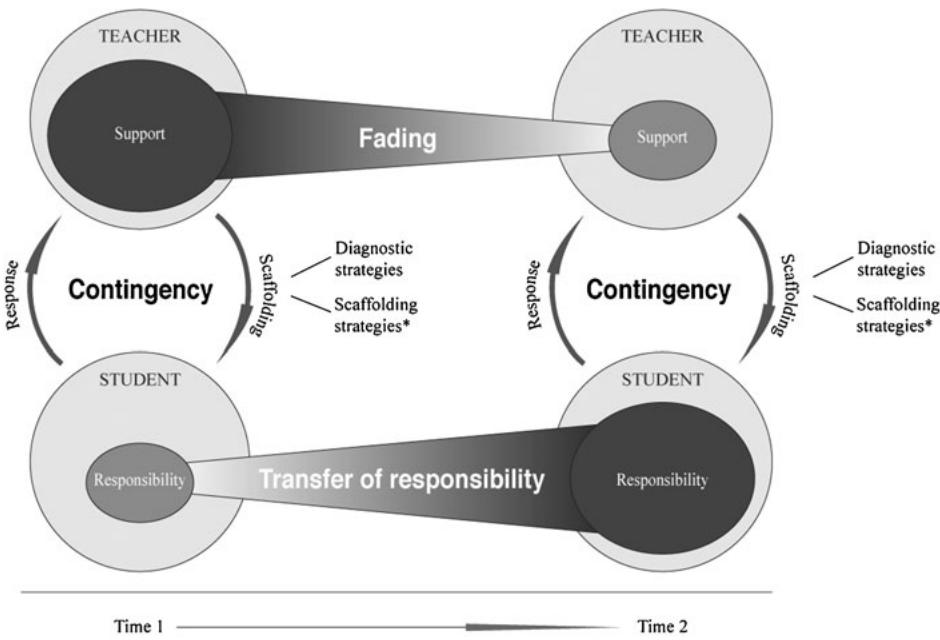
- S5.2 [描述性拆分] Operationalizing Contingency, Fading, and Transfer of Responsibility
- 页码:9-9
C6 Effectiveness of Scaffolding
- S6.1 Effectiveness of Scaffolding
- 页码:9-9
- S6.2 [描述性拆分] Effectiveness for Metacognitive Activities
- 页码:10-10
- S6.3 [描述性拆分] Effectiveness for Cognitive Activities
- 页码:11-12
- S6.4 [描述性拆分] Effectiveness for Student Affect and Overall Summary
- 页码:12-13
C7 The Measurement of Scaffolding
- S7.1 The Measurement of Scaffolding
- 页码:13-13
- S7.2 [描述性拆分] Units of Analysis and Operationalizations
- 页码:14-14
- S7.3 [描述性拆分] Contingency Scales, Teacher–Student Codes, and Data Sources
- 页码:15-15
C8 Conclusions and Discussion
- S8.1 Conclusions and Discussion
- 页码:15-16
- S8.2 [描述性拆分] Methodological Recommendations and Remaining Challenges
- 页码:16-16
- S8.3 [描述性拆分] Interwoven Key Characteristics and Directions for Future Research
- 页码:17-17
- S8.4 [描述性拆分] Acknowledgments and Licensing
- 页码:17-17
C9 References
- S9.1 [描述性拆分] Appendix Tables and Reference List
- 页码:18-26
S1.1 [描述性拆分] Article Metadata and Author Affiliations
第1段(P0001)
原文复述
Article-type label: REVIEW ARTICLE.
中文讲解
这是一个文章类别标签,标明本篇文章在期刊中的定位为"综述文章"(review article)。综述文章不同于原创实证研究,其主要目的不是提出新数据,而是系统梳理已有文献、提炼共识与争议、指出研究空白。本标签为读者预先设定了阅读期待:后面将看到的是一份对某一领域文献的回顾与整合,而非单一实验或案例的呈现。在本小节所覆盖的元数据中,这一标签是最先出现的位置提示。
第2段(P0002)
原文复述
Title: Scaffolding in Teacher–Student Interaction: A Decade of Research.
中文讲解
这是文章的主标题:“教师—学生互动中的支架:一项十年研究综述”。标题中包含三个关键限定:第一,研究对象是"支架"(scaffolding),这是本领域的核心概念;第二,研究情境限定在"教师—学生互动"中,排除了同伴支架、同伴学习或机器辅导等其它情境;第三,时间跨度被限定为"十年"(a decade),暗示作者将截取一段特定时间窗口内的研究文献进行回顾,而非追溯整个概念史。副标题虽未单独列出,但"A Decade of Research"本身具有回顾性质的提示作用,与文章被标注为"综述"形成呼应。
补充说明
原文中"Teacher–Student Interaction"使用连字符而非破折号,本节复述保留此书写形式,以避免改变原标点。
第3段(P0003)
原文复述
Listed authors: Janneke van de Pol, Monique Volman, and Jos Beishuizen.
中文讲解
作者署名行列出三位作者:Janneke van de Pol、Monique Volman、Jos Beishuizen。署名行在学术规范中通常按贡献或字母顺序排列,但仅凭本段信息无法判断本篇文章采用何种作者排序方式,三人的具体所属机构、所在国家及各自贡献分工也未在署名行中给出。文中并未提供脚注式作者信息,因此本节无法进一步展开作者背景。需要注意的是,本节标题虽提及"作者机构"(Author Affiliations),但所给出的原文段落中并不包含任何机构信息——仅有人名本身。
补充说明
本节输入范围内不包含三位作者的所属机构、ORCID、通信地址等信息,无法在本节中复述这些内容。
第4段(P0004)
原文复述
Online publication date: 29 April 2010.
中文讲解
出版信息行:在线发表日期为 2010 年 4 月 29 日。“Published online"专指文章在网络平台正式上线的时间,而非纸质期刊的发行日期;二者可能在同一篇综述文章中不同。这条信息有助于读者判断"近十年研究"中"十年"这一窗口的实际起点:摘要所说的"the last decade’s scaffolding literature"是以 2010 年为终点向前回溯,因此大致覆盖的是 2000 年前后至 2010 年这一阶段的文献。
补充说明
原文段落中并未同时给出收稿日期、修订日期或最终刊号;这些信息若存在,将出现在期刊首页其它版位,不在本节范围内。
第5段(P0005)
原文复述
Copyright notice: # The Author(s) 2010. This article is published with open access at Springerlink.com.
中文讲解
版权与开放获取声明:版权归作者本人所有,2010 年;本文章以开放获取(open access)方式发表于 Springerlink.com。“The Author(s)“的写法表明版权由作者而非出版商持有,是开放获取期刊的典型署名方式。“open access"意味着读者可免费阅读全文,但通常仍受特定许可协议(如 Creative Commons)的约束;摘要中对许可类型未作进一步说明。Springerlink.com 是出版商 Springer 提供的在线出版平台,说明本文章发表于 Springer 旗下的某本期刊。
补充说明
原文使用符号”#“代替 © 符号(OCR 后的占位结果),但根据开放获取期刊惯例可推断其为版权符号;本节中按常见学术规范以"Copyright"复述其语义。
第6段(P0006)
原文复述
Although scaffolding is an important and frequently studied concept, much discussion exists with regard to its conceptualizations, appearances, and effectiveness. Departing from the last decade’s scaffolding literature, this review scrutinizes these three areas of scaffolding. First, contingency, fading, and transfer of responsibility are discerned in this review as the three key characteristics of scaffolding. Second, an overview is presented of the numerous descriptive studies that provided narratives on the appearances of scaffolding and classifications of scaffolding strategies. These strategies are synthesized into a framework for analysis, distinguishing between scaffolding means and intentions. Third, the small number of effectiveness studies available is discussed and the results suggest that scaffolding is effective. However, more research is needed. The main challenge in scaffolding research appears to be its measurement. Based on the encountered and described measurement problems, suggestions for future research are made.
中文讲解
这是本篇文章的摘要,也是读者最先用以判断文章价值的实质内容。摘要的论证结构非常清晰,可以拆为四层:
第一层,问题背景。摘要开头以"although"转折承认支架虽是一个重要且被频繁研究的概念,但在三个层面仍存在大量讨论:概念化方式(conceptualizations)、外在表现形态(appearances)、以及实际效果(effectiveness)。这三个维度即下文综述的三大板块。
第二层,研究范围。“Departing from the last decade’s scaffolding literature"明确划定了文献的时间窗口——以 2010 年发表日为终点向前回溯约十年。该句还点明本综述对这三个领域进行"scrutinize”(仔细审视),比一般综述更具批判性。
第三层,三大板块的具体内容。“First"对应概念化:摘要将"应变性(contingency)、渐隐(fading)、责任转移(transfer of responsibility)“提炼为支架的三大关键特征——这三者构成了支架区别于一般教学辅助的本质属性。“Second"对应外在表现:摘要描述型研究数量众多,它们记录了支架的实际表现形式并对策略进行分类,作者把这些策略综合成一个分析框架,区分"支架手段(means)“与"支架意图(intentions)"。这一区分是作者对既有描述型研究的整合性贡献:手段指教师实际使用的具体做法(如提示、示范、追问),意图指这些做法背后欲达成的目标(如激活先备知识、引导概念建构)。“Third"对应有效性:摘要承认现有有效性研究数量有限,但现有结果倾向于支持支架的有效性;同时以"However"指出仍需更多研究。
第四层,结论与展望。“The main challenge…appears to be its measurement"是摘要中分量最重的一句:作者将测量问题定位为支架研究领域的核心挑战,而非个别研究的瑕疵。摘要以"Based on the encountered and described measurement problems"引出对未来研究的具体建议。
阅读这份摘要时应特别注意其用词克制:作者并未声称"支架已被证明有效”,而是说"现有结果提示其有效”(suggest);并未声称"测量问题已被解决”,而是把它作为开放性挑战留待未来研究处理。这种限定语气提示后文将涉及大量方法论反思。
补充说明
摘要中"contingency”、“fading”、“transfer of responsibility"是支架理论中的标准术语,三者之间存在时序关系:教师先通过即时回应学生当下需求的应变性提供支持,再逐步撤除这种支持(渐隐),最终把学习的责任交还给学生(责任转移)。该关系在本节范围内由摘要原文暗示,但完整论述需进入正文。
第7段(P0007)
原文复述
Keywords: Scaffolding . Teacher–student interaction . Review . Primary and secondary education.
中文讲解
关键词行:Scaffolding(支架)、Teacher–student interaction(师生互动)、Review(综述)、Primary and secondary education(中小学教育)。关键词可视为标题与摘要的索引化浓缩:第一词"Scaffolding"是研究的核心对象;第二词"Teacher–student interaction"复现标题中的情境限定;第三词"Review"明确文章类型,方便数据库按文献类型筛选;第四词"Primary and secondary education"限定研究适用的教育阶段为中小学,暗示本综述将高等教育、成人教育或早期儿童教育排除在主线之外,读者据此可预期后文所引文献的样本学段分布。四个关键词以” . “分隔,这是 Springer 期刊常见的关键词书写格式。
补充说明
原文中"Teacher–student"与第二段标题写法一致使用连字符;关键词行中"Scaffolding"以单数形式出现,复述保持原样。
💡 本节核心要点
🔑 关键术语
- Scaffolding:支架;本节中指教师在师生互动过程中为学生提供的临时性教学支持,是文章的核心研究对象,也是摘要三大争议(概念化、外在表现、有效性)所围绕的中心概念。
- Teacher–student interaction:师生互动;本节中作为研究情境的限定词,将支架研究限定在教师与学生之间的互动,排除同伴支架、机器支架等其他形态。
- Contingency:应变性;摘要中提及的支架三大关键特征之一,指支架应针对学习者当下的具体表现即时调整,而非按固定脚本进行。
- Fading:渐隐;摘要中提及的支架三大关键特征之一,指随着学习者能力提升,教师逐步撤除所提供的支持。
- Transfer of responsibility:责任转移;摘要中提及的支架三大关键特征之一,指学习的责任最终由教师转移至学生,是支架过程的最终目标。
- Scaffolding means vs. scaffolding intentions:支架手段与支架意图;摘要中提出的分析框架区分两个层次:手段指教师实际使用的具体做法,意图指这些做法所服务的教学目的,是作者对描述型研究的整合工具。
S1.2 [描述性拆分] Background and Vygotskian Roots of Scaffolding
第1段(P0008)
原文复述
Over the past few decades, the concept of scaffolding has attracted a great deal of attention in educational research, and as a consequence an abundance of research on scaffolding in different contexts has emerged. Scaffolding highlights one of the key aspects of children’s learning, namely that it is frequently ‘guided by others’ (Stone 1998a, p. 351).
中文讲解
这段是本节的开篇导入,主要完成两件事:第一,陈述scaffolding(脚手架)这一概念在教育研究中的地位——近几十年来受到大量关注,因而产出了许多跨情境的研究;第二,提取scaffolding所凸显的学习本质特征,即儿童的学习常常是"由他人引导的”(guided by others),并以Stone (1998a, p. 351)作为引文支撑。它承接的是整篇综述的总论位置——为后文追溯理论根源、梳理研究脉络做铺垫,因此重在确立"scaffolding关注的是被引导的学习"这一核心命题,而不是定义细节。读者在这里应理解为:作者把scaffolding定位为一个高产量但内涵需要厘清的研究主题,并把"他人引导"作为它区别于其他学习描述的关键。
补充说明
本段中Stone (1998a, p. 351)用以支撑"guided by others"这一表述,是对后续P0009中scaffolding经典定义的先行点题;引文页码351是作者原文标注,读者理解scaffolding概念时可将其作为代表性二手出处之一。
第2段(P0009)
原文复述
Scaffolding is typically associated with Vygotsky’s socio-cultural theory. Wood et al. (1976) adopted the scaffolding metaphor to describe the role that adults can play in joint problem-solving activities with children. Borrowed from the field of construction—where a scaffold is a temporary structure erected to aid the building or modification of another structure—scaffolding as a metaphor within the domain of learning denotes the temporary support provided for the completion of a task that learners might otherwise be unable to complete. This support can be delivered in various ways, including modeling and the posing of questions, and applies across different subjects (e.g., science, social studies) and age groups.
中文讲解
这段是本小节的理论核心,承担三重任务。第一,给出scaffolding的学派归属:通常与Vygotsky的社会文化理论(socio-cultural theory)相关联。第二,交代术语的来源:Wood等人(1976)把建筑领域的"脚手架"概念隐喻性地借用过来,用以解释成人在与儿童的联合问题解决活动中所能扮演的角色。第三,从建筑隐喻反推学习隐喻:建筑脚手架是临时性的辅助结构,对应到学习领域,scaffolding就是为完成任务而提供的"临时支持”,使学习者完成其原本无法独立完成的任务;这种支持形式多样,例如示范(modeling)和提问,可用于不同学科(如科学、社会研究)和不同年龄。承接上段"guided by others"的命题,本段把这种"被引导"具体化为"临时性、有针对性、可拆除的支持”,从而为本节标题中的"Vygotskian Roots"提供经典文献依据(Wood et al., 1976)。需要注意的是,“temporary"和"might not otherwise be able to"是定义的关键限定——前者暗示支持会随学习者能力提升而撤除,后者暗示支持是补足能力缺口而非替代学习。
补充说明
无额外补充;段内已通过"construction"比喻的两次映射(建筑→学习)把定义本身讲清,不必引入额外信息。
第3段(P0010)
原文复述
J. van de Pol (*) · M. Volman
中文讲解
这是页面上半部分作者署名行,列出了本章/本章内容的两名作者J. van de Pol与M. Volman,其中J. van de Pol名字后带星号(*)作为脚注标记,对应通信作者说明。"·“为分隔符,仅作版面排版用途。作为非正文元数据,它不参与论证。
第4段(P0011)
原文复述
Research Institute of Child Development and Education, University of Amsterdam, Nieuwe Prinsengracht 130, 1018 VZ Amsterdam, The Netherlands e-mail: j.e.vandepol@uva.nl
中文讲解
这是J. van de Pol的机构署名与联系信息块:所在单位为阿姆斯特丹大学儿童发展与教育研究所(Research Institute of Child Development and Education),地址为阿姆斯特丹Nieuwe Prinsengracht 130, 1018 VZ,附电子邮箱j.e.vandepol@uva.nl。结合上一行的星号标记可知这是通信作者(corresponding author)的完整信息。该段为非正文元数据,不参与论证。
第5段(P0012)
原文复述
M. Volman e-mail: m.l.l.volman@uva.n
中文讲解
这是第二作者M. Volman的邮箱信息,原文末尾写作"m.l.l.volman@uva.n”,看起来存在印刷缺失(域名未完整呈现"nl”),但复述须忠实于原文,不作纠正。该段为非正文元数据,与P0010、P0011共同构成作者署名区。
补充说明
原文邮箱末尾”@uva.n"可能为版式截断或印刷缺失,但任务要求复述须忠于原文,故如实保留。
第6段(P0013)
原文复述
J. Beishuizen Centre for Educational Training, Assessment and Research, VU University Amsterdam, De Boelelaan 1105, 1081 HV Amsterdam, The Netherlands
中文讲解
这是第三作者J. Beishuizen的机构署名信息:所在单位为阿姆斯特丹自由大学(VU University Amsterdam)的教育、培训、评估与研究中心(Centre for Educational Training, Assessment and Research),地址为De Boelelaan 1105, 1081 HV Amsterdam, The Netherlands。该段为非正文元数据,补充说明合著者来自与前两位作者不同的研究机构。
第7段(P0014)
原文复述
Springer
中文讲解
这是页面底部的出版社标识"Springer”,属版面署名性质的版权/出版方标记,不承载学术内容。
脚注 / 边栏 / 图表 / 附加信息(如有)
本节正文段落(P0008、P0009)之外,其余条目(P0010–P0014)均为该章首页的作者署名与出版社元数据块:P0010为作者署名行(含通信作者星号标记),P0011为通信作者J. van de Pol的完整地址与邮箱,P0012为第二作者M. Volman的邮箱(原文末尾似有印刷缺失),P0013为第三作者J. Beishuizen的机构与地址,P0014为出版社标识Springer。这些条目共同承担"作者—机构—出版"信息确认的功能,不参与学术论证。
💡 本节核心要点
- 近几十年来scaffolding在教育研究中受到广泛关注,产生了大量跨情境的研究成果。
- Scaffolding的核心特征是儿童的学习常处于"被他人引导"的状态(Stone, 1998a, p. 351)。
- Scaffolding概念通常被追溯至Vygotsky的社会文化理论,并由Wood等人(1976)从建筑领域借用为学习隐喻。
- 在建筑隐喻中,脚手架是临时性的辅助结构;对应到学习,scaffolding指为完成任务而提供的、临时性的支持。
- 这种支持具有补足性——使学习者能够完成其原本无法独立完成的任务——并可采取示范、提问等多种形式,适用于不同学科与年龄段。
- 该定义中的"temporary"与"otherwise not able to"是理解后续一切关于撤除时机、程度与效果讨论的关键限定。
🔑 关键术语
- scaffolding:本节中指一种为学习者完成任务而提供的临时性外部支持,源自Wood et al. (1976)对建筑脚手架的隐喻借用,强调"被他人引导"与"否则无法完成"两层含义。
- socio-cultural theory:Vygotsky的社会文化理论,是scaffolding在学派上最常被关联的理论框架,强调学习发生在社会互动之中。
- guided by others:Stone (1998a, p. 351)用以概括儿童学习特征的说法,指学习常由他人(成人、同伴或更有能力的他人)所引导,是scaffolding关注的核心现象。
- joint problem-solving:Wood et al. (1976)使用scaffolding隐喻时所描述的情境,即成人与儿童共同参与解决问题的活动,scaffolding即发生于此互动之中。
- temporary support:scaffolding定义中的关键限定,指支持是临时的、有时效的,会随学习者能力提升而调整或撤除。
- modeling:本节中作为scaffolding支持形式的例子之一,指通过示范让学习者观察并模仿如何执行任务。
S1.3 [描述性拆分] Theoretical Refinements and the Goal of the Review
第1段(P0015)
原文复述
Stone (1993) described a Vygotskian-inspired analysis of scaffolding. According to Vygotsky, learning first takes place on a social (intermental) level before it takes place on an individual (intramental) level. In Stone’s view, the student is not a passive participant in teacher–student interaction; rather, scaffolding is seen as a fluid, interpersonal process in which both participants are active participants. Both participants actively build common understanding, or intersubjectivity, through communicative exchanges in which the student learns from the perspective of the more knowledgeable other.
中文讲解
本段以Stone (1993)的Vygotsky式分析开启对脚手架的理论精炼。要点如下:
- Vygotsky的学习发生顺序:学习先发生在社会层面(intermental,人际/互心智),再内化为个体层面(intramental,个体内/心智间)。这一顺序是理解后续所有讨论的隐性前提——脚手架之所以可能,正因为存在一个社会中介的过渡阶段。
- Stone对师生关系的修正:学生不是被动接收者;脚手架被界定为流动的(fluid)、人际的过程,师生双方都是主动参与者。这一表述纠正了把脚手架等同于"教师帮助学生"的单向理解。
- 核心机制——intersubjectivity(互为主观性/共同理解):师生通过沟通交流(communicative exchanges)共同建构意义;学生从"更有知识的他人”(more knowledgeable other, MKO)的视角学习。这里隐含了一个关键转换:脚手架不只是知识传递,更是视角的临时性借用。
- 论证作用:本段为整节奠定基调——脚手架本质上是社会性、双向性、动态的过程。P0016关于"动态介入"的论述、P0018中Stone对学生主动性的辩护,都直接回扣到本段的双向互动立场。
- 易误解处:不要把"more knowledgeable other"误读为"教师”;在Vygotsky理论中,MKO可以是同伴、更熟练的他人,甚至是更先进的工具与符号系统。
补充说明
“more knowledgeable other”(MKO)在维果茨基理论中是一个功能性概念,指在任何特定任务中相对于学习者具备更高能力者,而非固定角色;此点在本节反复出现,但本段语境已给出充分说明,无需外部补充。
第2段(P0016)
原文复述
Because scaffolding is such a dynamic intervention finely tuned to the learner’s ongoing progress, the support given by the teacher during scaffolding strongly depends upon the characteristics of the situation, such as the type of task (e.g., well-structured versus ill-structured) and the responses of the student. Therefore, scaffolding does never look the same in different situations and it is not a technique that can be applied in every situation in the same way.
中文讲解
本段紧接P0015,从"动态性"(dynamic)出发推导出脚手架的情境依赖性。推理链条清晰:
- 前提:脚手架是紧贴学习者实时进展的动态介入(finely tuned to ongoing progress)。“finely tuned"一词暗示教师反应必须精确、即时、连续,而非预设方案。
- 中介因素:教师支持取决于两类情境变量——任务类型(结构良好 vs 结构不良)与学生的反应。注意作者用了"strongly depends upon”,强调依赖程度之高。
- 结论:脚手架在不同情境中形态各异(never looks the same),不是可统一套用的技术(technique)。
- 论证作用:本段为P0018中Stone的批判做铺垫——正因为脚手架本质上是情境化的,把它固化为标准化的"教师指令性策略"恰恰违背其原始内涵。
- 教学含义:研究者在测量或评估脚手架时,不能期待统一的可观察行为模式;必须捕捉师生互动中的微观调适过程。
- 易误解处:“well-structured"与"ill-structured"任务之分不是简单的好任务与坏任务,而是解题路径、答案标准与所需推理类型上的差异。
补充说明
“well-structured versus ill-structured tasks"指任务是否具有明确解决路径、清晰步骤与唯一标准答案;这一区分影响脚手架的形态与强度,是脚手架研究中常见的任务分类维度,但本节仅作为情境变量的例证出现,未作深入展开。
第3段(P0017)
原文复述
Cazden (1979) related Vygotsky’s Zone of Proximal Development (ZPD) early on to scaffolding and suggested that the metaphor be expanded from the domain of parent–child interactions to teacher–student interactions. The ZPD is characterized by Vygotsky (1978) as: “the distance between the actual developmental level as determined by independent problem solving and the level of potential development as determined through problem solving under adult guidance or in collaboration with more capable peers” (p. 86).
中文讲解
本段引入ZPD作为脚手架的核心理论锚点,完成从"动态互动”(P0016)到"发展区间"的过渡。
- Cazden (1979)的桥接贡献:将ZPD与脚手架概念正式关联,并把隐喻从亲子互动扩展到师生互动。这一扩展使脚手架概念得以进入课堂研究语境。
- ZPD的Vygotsky (1978, p. 86)原始定义:实际发展水平(独立解决问题所决定)与潜在发展水平(在成人指导或与更有能力的同伴协作下解决问题所决定)之间的距离。
- 概念分解:ZPD不是一个固定数值,而是一个区间——它存在于"独自会"与"协助下会"之间的差距里。脚手架正是填补这一区间的辅助手段;一旦学习者能够独立达到潜在水平,脚手架即应撤离(这是常被忽略的"渐撤"含义)。
- 与前文的呼应:P0015中的"more knowledgeable other"在ZPD框架内被具体化为"成人指导或更有能力的同伴”,把抽象的关系落实为可操作的角色。
- 易误解处:不要把ZPD理解为简单的"难度梯度"或"最近学什么";它强调的是社会中介(social mediation)所创造的发展空间,而非个体能力的自然成熟。
补充说明
ZPD与脚手架是"理论描述"与"实践隐喻"的关系:ZPD描绘发展区间的结构,脚手架描述跨越该区间的过程,二者共同构成Vygotsky学派在教育心理学中的核心论述框架。
第4段(P0018)
原文复述
More recently, some authors have argued that the concept of scaffolding has been applied too broadly in educational and psychological research. Pea (2004) even claimed that “the concept of scaffolding has become so broad in its meanings in the field of educational research and the learning sciences that it has become unclear in its significance.” Puntambekar and Hübscher (2005) similarly contend that “the scaffolding construct is increasingly being used synonymously with support” (p. 1). In the frequently cited work of Stone (1998a, b), the utility of the scaffolding metaphor is critically considered. Stone concludes that, in many studies, the metaphor has been removed from its original theoretical context and that this has led to the use of scaffolding as a teacher-initiated, directive instructional strategy that is actually in conflict with the more responsive socio-historical background for the metaphor. Nevertheless, Stone argues in favor of salvaging the scaffolding metaphor without losing sight of its theoretical background in which the student is seen as an active participant. To stay close to this idea of scaffolding, the focus of this review lies on scaffolding in face-to-face interactions (and in particular teacher–student interactions).
中文讲解
本段是本小节论证的核心转折——从理论建构走向对概念被滥用的批判,并据此收紧综述的研究范围。论证层层递进:
- Pea (2004)的批评:脚手架在教育研究与学习科学中含义过广,意义变得模糊不清(unclear in its significance)。
- Puntambekar & Hübscher (2005, p. 1)的平行批评:脚手架正被等同于一般的"支持"(support),失去了概念特异性。这两条引语形成"过宽化"与"同义化"两层诊断。
- Stone (1998a, b)的批判性综合:脚手架隐喻被从其原始理论语境剥离,变成了教师发起、指令性的(directive)教学策略,与该隐喻所承载的响应性(responsive)社会历史背景相冲突。“directive vs responsive"是本段最关键的一组对立:前者意味着教师单向控制、预设方案;后者强调根据学生反应实时调整——直接呼应P0016的"finely tuned”。
- Stone的建设性立场:尽管有上述批评,Stone主张挽救脚手架隐喻,但前提是不丢失学生作为主动参与者的理论初衷(呼应P0015)。
- 本综述的范围宣告:聚焦面对面(face-to-face)互动,尤其是师生互动中的脚手架。这是对概念过载问题的方法学回应——通过范围限定保持概念纯度。
- 论证作用:这一段把前文的理论精炼(P0015–P0017)与后文的研究空白(P0019)连接起来;既解释了为何必须做综述,也解释了为何只能做这样一类综述。
补充说明
“socio-historical background”(社会历史背景)指Vygotsky理论所属的社会历史文化学派传统,强调高级心理机能起源于社会互动;这正是"responsive"(响应性)的理论根源,与P0016中"finely tuned to ongoing progress"形成概念上的纵深呼应。
第5段(P0019)
原文复述
Stone (1998a) discussed several studies on scaffolding in teacher–child interactions in which scaffolding was found to be effective. However, these studies were largely observational (e.g., Cazden 1979; Langer and Applebee 1986; Englert 1992; Fleer 1992). Virtually no (quasi-)experimental studies were found, and different definitions of scaffolding were used across the several studies. An exception is the work of Palincsar and Brown (1984) and Palincsar (1986, 1991) in which scaffolding is systematically examined via both single-subject and comparative group designs and found to be effective in the context of Reciprocal Teaching. Although scaffolding has continued to be a frequently studied concept since 1998, no systematic review of the literature on scaffolding in teacher–student interaction has been performed since then. The goal of this review is therefore to provide an overview of research on scaffolding in the classroom of the last decade, particularly with regard to its conceptualization, appearances, and effectiveness.
中文讲解
本段是综述动机的集中阐发,完成"理论精炼→批评审视→研究空白→本综述定位"的完整闭环。
- 已有证据基础(Stone 1998a综述时):证明脚手架在师生互动中有效的研究大多为观察性研究(Cazden 1979; Langer and Applebee 1986; Englert 1992; Fleer 1992),几乎不存在(准)实验研究,且各研究对脚手架的定义不一致。“virtually no"这一强限定语强调空白之大。
- 唯一系统例外:Palincsar与Brown (1984)和Palincsar (1986, 1991)的工作——在Reciprocal Teaching(互惠教学)情境下,通过单被试设计(single-subject design)与对比组设计(comparative group design)系统检验脚手架的有效性。这是脚手架研究方法论的标杆案例。
- 1998年以来的空白:尽管脚手架持续是研究热点,但师生互动中脚手架的系统综述始终缺位。“since then"指代明确,“no systematic review"是本综述存在的最直接合法性来源。
- 本综述的目标陈述:综述过去十年课堂中脚手架的研究,特别是概念化(conceptualization)、表现形式(appearances)和有效性(effectiveness)三个维度。
- 论证作用:三个关键词预告了综述的整体结构——先厘清概念,再描述其在课堂中的具体形态,最后评估效果。这与P0018中"概念过载"的诊断形成对应:本综述正是用结构化的方式回应概念混乱。
补充说明
Reciprocal Teaching(互惠教学)由Palincsar与Brown提出,是一种阅读理解教学法,包含预测、提问、澄清、总结四种策略,师生轮流担任"教学者"角色;它是脚手架研究中少数兼具理论清晰度与方法严谨性的经典范例。“single-subject design”(单被试设计)通过同一被试在不同条件下的反复测量来检验干预效果,适合个体差异显著的课堂教学研究。
第6段(P0020)
原文复述
Springer
中文讲解
本段为页面底部的出版商标识(running footer),表明该文献由Springer出版。属于版面信息,不承载论证内容,故其他栏目保持简短。
脚注 / 边栏 / 图表 / 附加信息(如有)
本节无脚注、图表或边栏。P0020(“Springer”)为页面底部的出版商运行页脚,仅作版面标识,不参与论证。其余附加材料:原文中P0017、P0018、P0019各包含直接引语(P0017引Vygotsky 1978, p. 86;P0018引Pea 2004与Puntambekar & Hübscher 2005, p. 1),这些引语在文中均承担定义锚定或立场对比的功能,已在相应段落的chinese_explanation中说明。
💡 本节核心要点
- 脚手架的理论根基是Vygotsky的ZPD与社会中介观:学习先发生在intermental(人际)层面,再内化为intramental(个体内)层面,师生通过沟通交流共同建构intersubjectivity,学生从more knowledgeable other的视角学习。
- 脚手架本质上是动态、情境化的:它紧贴学习者实时进展,强烈依赖任务特征(结构良好vs结构不良)与学生反应,因此在不同情境中形态各异,不是可统一套用的教学技术。
- 近年研究存在"概念过载"问题:Pea (2004)指出脚手架含义过广,Puntambekar & Hübscher (2005)指出其与"支持"被混用;Stone (1998a, b)进一步批评脚手架被剥离原始理论语境,沦为指令性教学策略,与响应性社会历史背景冲突。
- Stone主张挽救脚手架隐喻,前提是保留学生作为主动参与者的理论初衷;本综述据此将研究范围收紧至面对面(尤其师生)互动中的脚手架。
- 研究空白与综述合法性:1998年之前关于师生互动中脚手架的研究多为观察性、定义不一致;Palincsar与Brown的Reciprocal Teaching是少数系统例外;1998年以来尚无系统的师生互动脚手架综述。
- 本综述目标明确——综述近十年课堂中脚手架的研究,围绕概念化(conceptualization)、表现形式(appearances)与有效性(effectiveness)三个维度展开。
🔑 关键术语
- intermental / intramental:维果茨基理论中区分的两个学习发生层面:intermental指人际/社会层面,intramental指个体内/心智层面;脚手架正是跨越两者的中介过程。
- intersubjectivity:互为主观性/共同理解,指师生在沟通交流中共同建构的意义状态;是脚手架过程的产物,也是其得以发生的条件。
- more knowledgeable other (MKO):更有知识的他人,指在特定任务中相对于学习者具备更高能力者;不限于教师,可包括同伴或更先进的工具与符号系统。
- Zone of Proximal Development (ZPD):最近发展区,Vygotsky (1978, p. 86)定义为独立解决问题所达到的实际发展水平与在成人指导/更有能力同伴协作下所能达到的潜在发展水平之间的距离;是脚手架理论的操作化锚点。
- scaffolding:脚手架,本节中指动态、响应性、师生共建的辅助过程,而非可标准化的教学技术;这是Stone (1998a, b)批评与挽救的核心对象。
- well-structured vs ill-structured tasks:结构良好与结构不良任务的区分;前者有明确解决路径与标准答案,后者路径开放、答案多元;两类任务所需的脚手架形态不同。
- directive vs responsive:指令性与响应性的对照:前者指教师单向预设的控制式策略,后者指根据学生反应实时调整的互动方式;Stone以此对照批评脚手架被滥用为前者。
- Reciprocal Teaching:互惠教学,Palincsar与Brown提出的阅读理解教学法,包含预测、提问、澄清、总结四种策略;是脚手架研究中兼具理论清晰度与方法严谨性的经典范例。
S2.1 [描述性拆分] Roadmap of the Review
第1段(P0021)
原文复述
Following the characterization of the concept of scaffolding and its various appearances, the review will present a guiding framework that serves a dual purpose: providing a tool for analyzing scaffolding while also functioning as an organizing device for the remainder of the review. Thereafter, the descriptive studies will be described, because they constitute the majority of the studies encountered in the literature. Next, studies examining the effectiveness of scaffolding will be examined. Finally, the major problem associated with scaffolding research—namely, its measurement—will be explored, and suggestions will be offered for future scaffolding research.
中文讲解
这段是本节小节的导览性文字,预告了整篇综述接下来五步的行进顺序。第一步是"刻画scaffolding(支架/脚手架)这一概念及其不同表现形式”,属于概念层面的奠基。第二步是提出一个"指导框架(guiding framework)",作者特别强调它具有双重功能:既是分析scaffolding的工具,也是组织后文结构的装置——换言之,后文的小节安排会依照这个框架展开,因此读者可以把该框架当作目录索引来读。第三步转向"描述性研究”,作者明确给出排序理由:因为在所检索到的文献中,描述性研究占多数,所以放在前面反映文献的实际构成。第四步是"scaffolding有效性研究”,即考察scaffolding是否真正起作用的实验或准实验类研究。第五步也就是最后一步,作者用破折号把"测量(measurement)“单独标注为scaffolding研究中的"主要问题”,并由此延伸到对未来研究的建议。从论证逻辑上看,这个序列遵循"概念界定→分析工具→文献盘点(按数量多寡)→效果检验→指出方法论缺陷并给出展望"的递进思路,每一步都建立在前一步之上:先有概念和分析框架,才能盘点文献;盘点文献后,自然需要评估其结论是否成立;而所有前述环节的可靠性,最终都受制于"测量"这一基础问题,因此把它放在最后并作为对未来的呼吁,是逻辑上的合理收束。
补充说明
无额外补充。本段仅为路线图预告,未引入新的术语或案例,所有关键概念(scaffolding、guiding framework、descriptive studies、effectiveness、measurement)的具体定义和解释均留待后续小节展开。
脚注 / 边栏 / 图表 / 附加信息(如有)
无。该小节仅含一段路线图文字,未出现脚注、图表、边栏或图片占位符。
💡 本节核心要点
- 本节是整篇综述的路线图,预告了五个依次递进的研究步骤。
- 作者提出的"指导框架"承担双重功能:既是分析scaffolding的工具,也是组织后文的结构装置。
- 描述性研究被置于有效性研究之前,理由是它在所收集文献中占多数,反映文献的实际构成。
- 作者明确把"测量"问题(用破折号突出)作为scaffolding研究的主要方法论局限。
- 综述以"对未来研究的建议"收尾,体现从概念界定到方法论批评再到研究展望的完整论证链。
🔑 关键术语
- scaffolding:本节中作为核心研究对象出现,作者将其拆解为概念、各种表现形式、描述性研究、有效性研究与测量问题五个层面,但本节未给出定义,需结合后续小节理解。
- guiding framework:作者自创的分析支架,承担双重作用:既是分析scaffolding现象的概念工具,也是组织后文小节顺序的编排装置。
- descriptive studies:指对scaffolding现象进行描述、归类与刻画的研究类型,本节中以"占文献多数"为由被安排在有效性研究之前。
- effectiveness studies:指考察scaffolding是否真正起作用、以效果检验为目的的研究类型,紧随描述性研究之后。
- measurement:作者用破折号特别强调的scaffolding研究中的主要方法论问题,是本综述最终落脚的批判点与未来研究方向。
S2.2 Method
第1段(P0022)
原文复述
Section heading (level 2): “## Method”.
中文讲解
本段是二级章节标题"Method(方法)"。它标志着文献综述从前文的引言/背景部分转入方法学部分,提示读者接下来将看到作者如何系统地搜索、筛选并分析 scaffolding(脚手架)相关文献的程序性细节。
第2段(P0023)
原文复述
The literature search for the present review was performed in October 2009. The following databases were searched: Social Sciences Citation Index (SSCI), Educational Resources Information Centre, and PsycINFO. Articles were included when they were (a) SSCI listed; (b) written in English; (c) published between 1998 and 2009; (d) provided a definition or description of scaffolding in the theoretical, methodological, or results sections of the article or refers to Wood et al. (1976); (e) concerned primary or secondary education; and (f) concerned ‘human’ scaffolding in face-to-face contact. “Scaffold*” was the main search term, and all articles that were found to include this term in the title or in the abstract and met the aforementioned criteria were selected for inclusion in the review. That is, what the authors of the reviewed articles considered scaffolding was used for the conduct of the search and inclusion in the present review and not the characterizations presented later in this article. The articles were analyzed using the following categories: domain, measurement of scaffolding, the dependent variable (only for the effectiveness studies), the type of task, and the goals and means of scaffolding studied. Because scaffolding is so situation specific, the context of each empirical study (i.e., the descriptive and effectiveness studies that use empirical data) in this review will be made explicit by summarizing the aforementioned information in the appendices.
中文讲解
本段是整篇综述的方法学核心,系统交代了文献检索与纳入流程。可从以下几个层面理解:
-
时间锚点。检索于 2009 年 10 月进行,配合纳入标准的 1998–2009 时间窗,覆盖了 scaffolding 在教育研究领域大约十年的发展期。这使综述带有明确的时效边界。
-
数据库选择的学科覆盖面。SSCI(社会科学引文索引)覆盖广义社会科学,Educational Resources Information Centre 是教育学专门数据库,PsycINFO 是心理学专门数据库。三个库组合可同时捕获教育、心理和社会科学视角下的 scaffolding 研究。
-
六条纳入标准(a–f)的过滤逻辑。SSCI 收录保证期刊质量(a),英文写作确保语言可处理(b),1998–2009 划定时间窗(c),标准(d)要求文章在理论、方法或结果部分给出 scaffolding 的定义/描述,或引用 Wood et al. (1976)——后者是 tutoring 与 scaffolding 概念被正式提出的经典文献,因此这一条实际上保证了所纳入文章与该概念谱系有直接关联;标准(e)把范围限制在中小学教育;标准(f)排除计算机中介或非面对面的"脚手架",仅保留人际面对面情境中的 scaffolding。
-
检索词"Scaffold*"。星号是截词符,可同时匹配 scaffold、scaffolding、scaffolded 等词形。
-
重要的方法学自我说明。作者明确指出:纳入与否取决于被综述文章作者自己如何界定 scaffolding,而非本文作者后文给出的 characterization。这一声明是方法学透明性的关键——它避免作者用自己后来的定义去事后过滤文献,从而保留文献原貌。
-
五类分析范畴:领域(domain)、scaffolding 的测量方式、对效果研究而言的因变量、任务类型、所研究的 scaffolding 的目标与手段。这些范畴决定了后续数据抽取与编码的维度。
-
对情境特异性的处理。由于 scaffolding 高度依赖情境,作者无法在正文一一交代每项实证研究的背景,于是把这类信息集中放入附录。这是把正文篇幅限制在综述层面、把细节留给附录的方法学选择。
补充说明
无额外补充。Wood et al. (1976) 在本段中仅作为引用条件出现,其内容未在本段展开,故不补充该文献的具体内容。
第3段(P0024)
原文复述
This search resulted in 66 articles of which 27 were theoretical, 26 descriptive, eight effectiveness studies, four editorial introductions of thematic issues, and one metaanalytical. The vast interest in scaffolding in educational research in the last decade is clearly indicated by the finding of four thematic issues on scaffolding: Journal of the Learning Disabilities, 31(4), 1998; Journal of the Learning Sciences, 13(3), 2004; Instructional Science, 33(5/6) 2005; and New Ideas in Psychology, 23(3), 2005.
中文讲解
本段报告检索产出,并对研究领域的成熟度做出推断。
-
文献量与构成。共 66 篇被纳入综述。按类型分布为:理论性文章 27 篇、描述性文章 26 篇、效果研究 8 篇、专题特刊的编者导言 4 篇、元分析 1 篇。这一分布透露两个信号:其一,理论与描述性文章合计 53 篇,占绝大多数,说明该领域以概念讨论和情境描述为主;其二,效果研究只有 8 篇,元分析仅 1 篇,意味着关于"scaffolding 是否有效"的因果证据相对稀缺,这是后续综述分析需要直面的格局。
-
专题特刊作为领域成熟度的证据。作者列出四个以 scaffolding 为主题的特刊:Journal of the Learning Disabilities 31(4) 1998;Journal of the Learning Sciences 13(3) 2004;Instructional Science 33(5/6) 2005;New Ideas in Psychology 23(3) 2005。这四种期刊分别代表学习障碍、学习科学、教学科学与心理学四个不同领域;时间跨度从 1998 到 2005 共七年。一个主题能在不同学科的多份重要期刊上以整期专题形式出现,作者据此判断该研究在近十年间引起了"广泛兴趣",这是用文献计量证据支撑论断的写法。
-
论证功能。本段与上一段共同构成方法学闭环:上段给出"怎么做"(检索与筛选),本段给出"做出来什么"(66 篇文献及其类型构成)以及"为什么值得做"(领域已有专题特刊级别的关注度)。
脚注 / 边栏 / 图表 / 附加信息(如有)
本节末尾以一句话指向附录(appendices):由于 scaffolding 高度情境特异,每项实证研究(即描述性与效果研究)的领域、测量方式、因变量、任务类型、目标与手段等信息将在附录中逐项列出,正文不再一一展开。此外,本节正文中没有图表,但 P0024 列出的四个专题特刊以完整期刊文献格式给出,可视为附加参考文献信息。
💡 本节核心要点
- 综述采用系统检索方法,于 2009 年 10 月在 SSCI、Educational Resources Information Centre 与 PsycINFO 三个数据库中以"Scaffold*“为关键词进行检索,构建可复现的文献库。
- 纳入标准同时充当质量与范围过滤器:SSCI 收录、英文、1998–2009 年间、对 scaffolding 给出定义/描述或引用 Wood et al. (1976)、聚焦中小学教育、限于面对面的人际 scaffolding。
- 作者在方法学上明确声明:纳入与否以被综述文章作者本人对 scaffolding 的界定为准,而非作者后文提出的 characterization,以保证综述的客观性。
- 分析采用五类编码范畴:领域、scaffolding 的测量方式、因变量(仅适用于效果研究)、任务类型、scaffolding 的目标与手段,并因情境特异性而将实证研究的具体背景信息汇总于附录。
- 检索最终得到 66 篇文献,类型分布以理论性(27)与描述性(26)为主,效果研究(8)、专题导言(4)与元分析(1)相对稀少。
- 1998–2005 年间出现四个不同学科期刊的 scaffolding 专题特刊,作者据此论证该领域在近十年内已积累了显著的学术关注。
🔑 关键术语
- Scaffolding(脚手架):源自维果茨基学习理论的概念,指更有知识者向学习者提供的、用以帮助其完成处于最近发展区内任务的临时性支持;在本综述中被限定为中小学教育中面对面的、人类提供的 scaffolding。
- SSCI (Social Sciences Citation Index):社会科学引文索引,是涵盖主要社会科学期刊的引文数据库;在本综述中既作为检索来源,也作为纳入筛选条件之一(要求被纳入文章须被 SSCI 收录)。
- PsycINFO:由美国心理学会维护的心理学文献摘要数据库,是本综述检索心理学领域 scaffolding 文献的来源。
- Educational Resources Information Centre (ERIC):教育领域的在线文献数据库,是本综述检索教育学 scaffolding 文献的来源。
- Wood et al. (1976):被广泛视为 scaffolding 概念在教育研究中正式提出的经典 tutoring 研究文献;本综述将其作为纳入筛选的判据之一,即文章要么对 scaffolding 给出定义/描述,要么引用该文献。
- Effectiveness study(效果研究):在本综述中指检验 scaffolding 是否产生可测量结果(具有因变量)的实证研究,与仅描述过程的描述性研究相区别。
- Descriptive study(描述性研究):在本综述中指描述 scaffolding 实际如何发生、但不必然检验其效果的实证研究。
- Meta-analysis(元分析):对多项研究结果进行统计合成的量化综述方法;本综述最终仅纳入 1 篇此类研究。
- Thematic issue(专题特刊):期刊围绕单一主题组织的整期专辑,通常由编者导言开篇;本综述列出四份以 scaffolding 为专题的特刊作为领域关注度的证据。
S2.3 Results
第1段(P0025)
原文复述
Results
中文讲解
本段是一个 Markdown 二级标题(##),原文文本为 “Results”,中文对应为“结果”。在小节边界信息(page_range 第 3 页,estimated_words 1,estimated_paragraphs 1)中,本段仅作为标题出现,本身不承载论证内容。在学术论文的标准结构中,“Results” 通常是位于 Introduction 与 Discussion 之间的主章节之一,其功能是报告作者基于前述方法所收集到的实证数据、统计指标、可视化结果或案例观察,而不展开解释或评价。这一处单独的标题表明本小节开启的是论文的"结果呈现"阶段,作者随后将列出研究发现;但因为本任务输入只覆盖到该标题本身,正文中具体发现了什么、用了哪些指标或图表,均需在后续小节(S2.4 或更后)中读取。需要注意的是:标题本身不是论点,它的教学意义在于告诉读者"从此处起,叙述模式由背景/方法切换为发现”,因此本段在解读时应被视为结构性标记,而不是实质信息。
补充说明
本段仅为标题,原文中没有可供内部参照的术语、例子或数字需要进一步澄清,故无额外补充。
脚注 / 边栏 / 图表 / 附加信息(如有)
无(本段仅为二级标题 “## Results”,未附带脚注、图表说明、边栏或图像占位符。)
💡 本节核心要点
- 本段 “## Results” 是 Markdown 二级标题,文本仅有 “Results” 一词,并不构成完整段落。
- 该标题开启的是学术论文的"结果"主章节,在结构上通常承接前文的研究设计,转入对研究发现本身的呈现。
- 从功能上看,Results 章节一般只陈述数据与观察,而不进行解释或评价;其解释与意义讨论通常留给后续 Discussion。
- 由于本任务输入仅包含该标题,正文层面的实质性发现(指标、表格、图表、案例观察等)需要等后续小节内容才能读到,不应在本节内补写。
- 对教学读者而言,应把这一小节理解为"论文结构位置标记",而非可提取论点的正文段落。
🔑 关键术语
- Results:学术论文中位于 Introduction/Methods 与 Discussion 之间的标准章节;在本小节中它仅作为标题出现,表示论文从此处开始呈现研究发现,本身不包含数据或结论。
S2.4 Profile of the Research
第1段(P0026)
原文复述
Profile of the research
中文讲解
这是第2.4节的标题,主题为"研究概况"。作为分析类小节的标题,它向读者预告:下文将对该领域的已有研究进行总体描绘,通常会指出研究主题、方法、对象分布上的倾向与不足,为后续章节(如研究空白、文献综述结论或本研究的设计动机)提供铺垫。
补充说明
本标题在原文中采用二级Markdown标记(##),表明在文档层级中属于一个小节标题,而非章级或三级小节。
第2段(P0027)
原文复述
The majority of the theoretical studies focuses on the conceptualization or the metaphor of scaffolding. Scaffolding appears to be most fully developed in the field of literacy (Clark and Graves 2005; Pardo 2004; Smith 2006). Clark and Graves (2005) provide an overview of several instructional frameworks on literacy (text comprehension) that includes the idea of scaffolding such as Reciprocal Teaching, the Scaffolded Reading Experience, and Direct Explanation of Comprehension Strategies. Clark and Graves (2005) and Pardo (2004) also implemented the useful Gradual Release of Responsibility Model (Pearson and Gallagher 1983) that involves three phases, namely: (1) teacher responsibility, (2) joint responsibility, and (3) student responsibility. Some authors describe the application of the concept of scaffolding to other areas such as moral development education (Turner and Berkowitz 2005) and the value aspects of motivation in education (Brophy 1999).
中文讲解
本段描绘的是已有研究中"理论层面"的整体面貌。核心主张是:理论上多数研究集中在对scaffolding(脚手架)这一概念或隐喻的阐释上,而该概念在literacy(识字/读写素养)领域最为成熟。
作者的论证方式是将文献归类推进:首先以Clark and Graves (2005)、Pardo (2004)、Smith (2006)为代表,说明literacy构成了scaffolding理论研究的核心场域;接着具体说明Clark and Graves (2005)对几个含有scaffold理念的识字教学框架进行了概述——包括Reciprocal Teaching(互惠教学)、Scaffolded Reading Experience(脚手架式阅读体验)以及Direct Explanation of Comprehension Strategies(阅读理解策略的直接讲解),这些框架共同指向文本理解(text comprehension)这一目标功能。
进一步,段中提到Clark and Graves (2005)和Pardo (2004)都采用了Pearson and Gallagher (1983)提出的Gradual Release of Responsibility Model(责任逐步释放模型),这一模型包含三个阶段:(1)教师承担全部责任,(2)师生共同承担,(3)学生承担全部责任。这一模型的教学直观意义是:教师的支持逐步递减,学生的独立能力逐步增长,正好形象对应"搭建—拆除脚手架"的比喻,因此被作者称作useful(有用的)。
最后,段尾指出scaffolding概念也被部分作者扩展到moral development education(道德发展教育,Turner and Berkowitz 2005)和motivation(动机,侧重其价值层面,Brophy 1999),借此说明scaffolding的应用面比literacy更广,但literecy仍是其理论发展的主要根据地。
整段在本节中的论证作用是:先勾勒"理论研究的密集区"——集中在读写领域,并配以代表性框架与模型——为下一段(P0029)转向"实证研究的概貌"形成对照,从而完整地呈现研究现状的’理论vs实证’双重面貌。
补充说明
本段涉及多个术语首次在文档中出现,如Reciprocal Teaching、Scaffolded Reading Experience、Gradual Release of Responsibility Model等具体教学框架;它们之间的关系是:前两个是识字教学的具体设计,第三个是支撑多个具体设计的总体责任转移模型。
第3段(P0028)
原文复述
Springer
中文讲解
此处的"Springer"位于页脚位置,是出版商名称的水印/标记。它只具有版面属性,并非正文论述内容,因此讲解应保持简短。
第4段(P0029)
原文复述
Most empirical studies are small-scaled, descriptive studies with or without an intervention. The majority of these studies focus again on literacy, followed by math and science. One-to-one interactions are studied the least, whole-class and small-group interactions to a greater but similar extent. A small amount of studies investigate the effectiveness of scaffolding.
中文讲解
本段描绘的是研究概况中"实证层面"的整体面貌,与前一段(理论层面)形成对照。
核心主张由三个特征组成:(1)实证研究在规模和方法上多为小规模的描述性研究,可能包含或不包含干预(intervention);(2)在主题分布上,literacy仍是多数,再次之后是数学(math)和科学(science);(3)在互动单元(interaction)层面,一对一(one-to-one)互动研究最少,whole-class(全班)和small-group(小组)互动的研究数量较大但彼此相当。
作者的论证意义在于勾画实证研究的方法学特征与对象分布,并指出"测试scaffolding有效性的研究数量很少",这是一个隐含的研究空白提示——即该领域尚缺乏足够的大规模、有效性检验类研究。
这一段对本节的作用是:与P0027(理论层面)一起,构成"研究概况"的完整画像:理论集中在识字领域的概念建构;实证则在小规模、描述性的识字/数学/科学课堂互动中展开,但对scaffolding本身的effectiveness(有效性)研究仍然不足。这种对照为本研究后续动机的论证(如为何需要进行特定领域、规模或设计的实证检验)奠定基础。
补充说明
本段中"with or without an intervention"说明description性研究并不严格等同于干预研究,存在纯观察类描述;“effectiveness of scaffolding"则把scaffolding这一抽象概念与可测量的教学结果联系起来,预示后续可能需要操作性定义与评估指标。
脚注 / 边栏 / 图表 / 附加信息(如有)
P0028"Springer"是页面底部的出版商名称水印/页脚标记,属于版面元素而非正文论述内容。除此之外本小节没有图表、脚注或边栏材料。
💡 本节核心要点
- 理论研究的密集区集中在scaffolding的概念化与隐喻,其中literacy领域最为成熟,并形成了包括Reciprocal Teaching、Scaffolded Reading Experience、Direct Explanation of Comprehension Strategies以及Gradual Release of Responsibility Model在内的多个教学框架。
- Gradual Release of Responsibility Model(Pearson and Gallagher 1983)包含教师负责—师生共同负责—学生负责三个阶段,直观对应’搭建并拆除脚手架’的过程,是scaffolding概念在教学设计中的典型应用。
- scaffolding概念在道德发展教育(Turner and Berkowitz 2005)和动机层面(Brophy 1999)也得到应用,但相对literacy仍是支线。
- 实证研究总体上以小规模、描述性研究为主(可有或无干预),主题集中在literacy,其次是数学与科学。
- 在互动类型上,one-to-one互动研究最少,whole-class与small-group互动研究相对更多且程度相当。
- 对scaffolding本身有效性的实证检验仍较少,构成一个明显的研究空白。
🔑 关键术语
- scaffolding:本节讨论的核心概念;本节指出其理论研究主要发生在literacy领域,其直观含义是教师提供逐步撤除的支持,对应Gradual Release of Responsibility Model中的三阶段责任转移。
- literacy:本节中scaffolding理论最成熟、实证研究最集中的领域;具体指向文本理解(text comprehension)等读写能力。
- Gradual Release of Responsibility Model:Pearson and Gallagher (1983)提出的三阶段责任转移模型:(1)教师责任,(2)共同责任,(3)学生责任;被Clark and Graves (2005)和Pardo (2004)用于实施scaffolding,是本节中理论框架的典型代表。
- Reciprocal Teaching:含scaffold理念的识字教学框架之一,由Clark and Graves (2005)概述。
- Scaffolded Reading Experience:含scaffold理念的识字教学框架之一,由Clark and Graves (2005)概述。
- Direct Explanation of Comprehension Strategies:含scaffold理念、面向文本理解策略直接讲解的教学框架,由Clark and Graves (2005)概述。
- empirical studies:本节中与theoretical studies对照的实证研究类别;本节将其特征概括为small-scaled、descriptive,且针对scaffolding effectiveness的研究较少。
- whole-class / small-group / one-to-one interactions:本节对实证研究按互动单元进行的分类;one-to-one最少,whole-class和small-group研究数量较多且彼此相当。
S3.1 Characterizations of Scaffolding
第1段(P0030)
原文复述
“Characterizations of scaffolding” is a level-2 section heading that opens the discussion of how the concept of scaffolding has been defined and characterized in the existing literature.
中文讲解
这是一个二级小节标题,宣告本节将讨论"脚手架的特征刻画"这一议题。它表明:作者并不打算直接给出一个唯一定义,而是先承认概念分歧,再尝试从已有定义中归纳共同特征。该标题本身并不陈述实质主张,其作用是设定本节的问题域。
第2段(P0031)
原文复述
No consensus exists with respect to the definition of scaffolding, and some authors even criticize the metaphor of scaffolding as a whole (e.g., Aukerman 2007; Butler 1998; Donahue and Lopez-Reyna 1998; Scruggs and Mastropieri 1998). These authors contend that the metaphor implies a predefined building, and a more student-centered perspective on learning was then pleaded for: each student’s “building” is different. Following Stone (1998a, b), scaffolding is viewed in this review as an interactive process that occurs between teacher and student, both of whom must participate actively in the process.
中文讲解
本段承担两个功能:一是交代"脚手架"概念在学界并无统一定义,并指出部分作者(如Aukerman 2007; Butler 1998; Donahue and Lopez-Reyna 1998; Scruggs and Mastropieri 1998)甚至反对这一建筑学比喻本身;二是为本综述确立一个明确的工作定义。第一层意思解释了为什么后文不能只给一个标准定义——因为文献本身就处于争议状态。批评者的核心理由是:建筑比喻隐含着"最终要建成的建筑物是预定的"这一前提,从而忽略了学生之间的个体差异,因此学界转而呼吁一种"以学生为中心"的学习观。第二层意思则以Stone (1998a, b) 为依据,把脚手架定义为师生之间发生的互动过程,并强调教师与学生都必须主动参与——这与单向的"给予-接受"式支持观形成区别。理解这段的关键在于:作者并未声称Stone的定义是唯一正确的,而是为本综述选择一个工作起点(working definition),以便后文能够在此基础上抽取共性特征。
补充说明
本段为全文确立了综述的工作定义(working definition),即"师生双向主动参与的互动过程”。理解这一点有助于读者把握后文所有"共性特征"的讨论都建立在这一立场之上,而非中立的文献综述。
第3段(P0032)
原文复述
Despite the many different definitions of scaffolding encountered, some clearly common characteristics can be distinguished, as summarized below. These common characteristics are summarized in a conceptual model depicted in Fig. 1. In general, scaffolding is construed as support given by a teacher to a student when performing a task that the student might otherwise not be able to accomplish.
中文讲解
本段是承上启下的过渡段,针对前一段"定义混乱"的局面,作者提出一种处理策略:不再纠缠于定义的差别,而是转向寻找定义之间的共同特征。这些共性被概括在一张概念模型图(Fig. 1)中,作者随即给出了一个总体定义:脚手架被理解为教师在学生执行某项任务时提供的支持,其前提是若没有这种支持,学生将无法独立完成任务。这一总体定义包含三个关键限定——(1)支持的发出者是教师,(2)支持发生的场景是任务执行中,(3)支持的必要性在于"无支持则不能完成"。它实质上划定了脚手架的边界:普通反馈或一般性讲解并不必然构成脚手架,必须满足"否则无法完成"这一门槛条件。
补充说明
段落引用了Fig. 1,但本输入未提供该图的具体内容,因此仅能确认其在文中起"把多条共性特征可视化整合"的作用。
第4段(P0033)
原文复述
The first common characteristic in the various definitions of scaffolding is contingency, often referred to as responsiveness, tailored, adjusted, differentiated, titrated, or calibrated support. The teacher’s support must be adapted to the current level of the student’s performance and should be at the same or a slightly higher level. A teacher acts contingently when he or she adapts the support in one way or another to a (group of) student(s). A tool for contingency is diagnostic strategies. To provide contingent support—that is, to make the support contingent—one must first determine the student’s current level of competence. Only with such knowledge can the support be adapted to the student’s level of learning. Many authors have acknowledged the importance of diagnosis in relation to scaffolding, using terms such as dynamic assessment (Lajoie 2005; Macrine and Sabbatino 2008; Pea 2004; Swanson and Lussier 2001), formative assessment (Shepard 2005), online diagnosis (Palincsar and Brown 1984), or monitoring and checking students’ understanding (Garza 2009).
中文讲解
本段详细阐述了脚手架众多定义中第一条共性特征:contingency(调适性/情境性)。作者先列出多个同义词——responsiveness(响应性)、tailored(量身定制)、adjusted(调整过的)、differentiated(分层)、titrated(滴定式的,剂量精确的)、calibrated(校准过的)——这些词虽然来源不同,但都指向同一个核心:教师支持必须随学生当下表现水平而调整,不能采用"一刀切"的方式。作者进一步给出调整的方向:教师支持应处在与学生当前水平相同或略高的位置。这里"略高"非常关键,它隐含了最近发展区的思想——支持不是替代学生完成任务,也不是远远超越其能力,而是刚好把学生推向一个稍微够得着的水平。实现contingency的工具是诊断策略(diagnostic strategies):教师必须先识别出学生的现有能力水平,然后才能据此调整支持。最后,作者展示了文献中多种指代该诊断过程的术语——dynamic assessment、formative assessment、online diagnosis、monitoring and checking——说明不同学派虽然命名不同,但都承认诊断在脚手架中的核心地位。理解本段的关键在于:contingency并不是"差异化教学"的同义词,它有更强的"实时、逐次"含义——支持要根据当下的、每一次的学生表现而调整。
补充说明
本段是"共性特征"系列论述的第一条,contingency在其中承担奠基性角色:没有准确的诊断,contingency就无从实现;而contingency又是后续可能出现的其他共性(如渐撤支持、互动等)的前提。
脚注 / 边栏 / 图表 / 附加信息(如有)
本节正文明确提及一张概念模型图(Fig. 1),用于把脚手架的多条共性特征整合呈现,但本任务输入未提供该图的具体内容,仅能确认其位置与功能。段落中密集引用了多位作者(Aukerman、Butler、Donahue and Lopez-Reyna、Scruggs and Mastropieri、Stone、Palincsar and Brown、Shepard、Lajoie、Macrine and Sabbatino、Pea、Swanson and Lussier、Garza 等),但正文并未展开这些文献的具体观点,仅作为支持性或并列性引用出现。
💡 本节核心要点
- 脚手架概念在学界缺乏统一定义,且部分作者批评建筑学比喻本身预设有固定"成品",忽视学生个体差异
- 本综述以Stone (1998a, b) 为基础,将脚手架界定为师生双方都主动参与的互动过程,而非单向给予
- 面对定义分歧,本综述采取"提取共性特征"的策略,并把共性整合进Fig. 1的概念模型
- 脚手架的总体定义是:教师在学生执行任务时提供的、缺失则学生无法独立完成的支持
- 第一条共性特征是contingency(调适性),指教师支持必须随学生当下表现水平调整,落在同等或略高水平
- contingency的实现依赖诊断策略,文献中以动态评估、形成性评估、在线诊断、监测理解等多种术语指代该诊断过程
🔑 关键术语
- contingency:本节第一条共性特征,强调教师支持必须依学生当前水平而调整。其同义词包括responsiveness、tailored、adjusted、differentiated、titrated、calibrated。通俗含义是"因人而异、因时而异"。
- scaffolding(脚手架):本综述将其界定为师生双方都主动参与的互动过程,总体上指"无支持则学生无法完成任务"时教师所提供的支持。
- diagnostic strategies(诊断策略):实现contingency的关键工具,指教师识别学生当前水平的方法,是后续调整支持的依据。
- dynamic assessment:诊断策略在文献中的一种命名方式(Lajoie 2005; Macrine and Sabbatino 2008; Pea 2004; Swanson and Lussier 2001)。
- formative assessment:诊断策略在文献中的另一种命名(Shepard 2005),与脚手架中的"调适性支持"相联系。
- online diagnosis:Palincsar and Brown (1984) 使用的术语,指在互动过程中实时进行的诊断。
- monitoring and checking students’ understanding:Garza (2009) 使用的术语,指教师在教学过程中监测并检验学生理解程度。
S3.2 [描述性拆分] Conceptual Model and the Three Key Characteristics
第1段(P0034)
原文复述
Figure caption text: “* See Table 1 for a framework for analyses of these strategies; Fig. 1 Conceptual model of scaffolding.” The paragraph is accompanied by an in-line image placeholder indicating that the embedded image data has been omitted, while the caption text and its position in the layout are preserved.
中文讲解
本段并不是正文段落,而是一处图注(figure caption)加上一个被省略的图像占位符。作者把 Figure 1 标注为 “Conceptual model of scaffolding”(脚手架的概念模型),并在脚注式的星号说明中提示读者:关于这些教学策略的分析框架,见 Table 1。由于输入中图像本身已被省略,这里只能确认图像的标题与所在版面位置,无法看到模型的具体视觉细节(节点、箭头、文字框等)。需要理解的是:这张图位于本小节,是为后文要讨论的脚手架的三个关键特征提供一张可视化的总览图,因此 P0039 中才会以 “as is depicted in Fig. 1” 回指它。
补充说明
图注中的星号 ("*") 通常对应一个跨页或跨节的注脚,把 Figure 1 与 Table 1 的分析框架联系起来;这说明 Figure 1 与 Table 1 在原文中是配套使用的。
第2段(P0035)
原文复述
Springer
中文讲解
本段在原文版面中只是 “Springer” 一个单词,属于出版社署名/水印性质的版面标识(running header 或 footer),并非正文内容。它说明该文出版自 Springer 出版社,但对论证没有内容上的推进作用。
第3段(P0036)
原文复述
The second common characteristic is fading or the gradual withdrawal of the scaffolding. The rate of fading depends upon the child’s level of development and competence. A teacher is fading when the level and/or the amount of support is decreased over time.
中文讲解
本段正式提出脚手架的第二个共同特征——fading(渐撤/逐步撤离)。作者把 fading 定义为"逐步撤除脚手架"的过程,并强调两个限定条件:第一,渐撤的速率取决于儿童的发展水平和能力水平;第二,判断教师是否在"渐撤"的客观标志,是支持的层级和/或支持的量随时间递减。这就把 fading 从"模糊感觉"变成了一个可观察、可度量的行为标准:当支持强度或数量随时间下降时,fading 才发生。作者通过把 fading 与儿童的发展水平绑定,也暗示了脚手架不是一个一刀切的程序,而必须配合个体差异进行调整。
补充说明
“level of support” 与 “amount of support” 是两个不同的维度:level 指支持的抽象程度/复杂程度(例如从具体示范到抽象提示),amount 指支持的数量/密度(例如提示的次数、解释的篇幅)。作者用 “and/or” 说明二者任一变化都构成 fading。
第4段(P0037)
原文复述
Fading of the scaffolding is strongly related to the third common characteristic, namely the transfer of responsibility. Via contingent fading, that is, responsibility for the performance of a task is gradually transferred to the learner. Responsibility is interpreted in this review in a broad sense: it can refer to students’ cognitive or metacognitive activities or to students’ affect. The responsibility for learning is transferred when a student takes increasing learner control.
中文讲解
本段把第二个特征(fading)与第三个特征(transfer of responsibility,责任转移)连在一起讲,关键词是 “contingent fading”(权变式渐撤)。作者主张:任务执行的责任通过权变式的渐撤,一步一步地转交给学习者。这里有两个值得注意的限定。第一,作者明确把 “responsibility” 作了广义解释:它既可以指学生认知或元认知层面的活动(如思考、监控自己的理解),也可以指学生情感层面的状态(affect,如动机、兴趣、自我效能)。第二,作者给出责任转移的可观察判据——学习者获得了越来越多的 “learner control”(学习者控制),即学生主动接管学习过程的程度越来越高。这样,作者就再次把一个抽象概念落到了可观察的行为变化上。
补充说明
“contingent fading” 是将 P0036 的 fading 与 P0038 即将谈到的 contingency 串起来的桥梁术语:渐撤不是机械地按时间表撤,而是要根据学生反应(contingent)来决定撤多少、撤多快。
第5段(P0038)
原文复述
Thus, in contrast to some authors (e.g., Valsiner and van der Veer 1993) who criticize the scaffolding metaphor for focusing only on completing the task, we think of scaffolding as a teaching method that can focus on the development of the child in all its different facets. If a student, for example, works on a series of tasks and the teacher adapts the support responsively to the understanding of the student, the teacher is teaching contingently. If the student gains understanding, the teacher can fade the support over time. While fading the support, the teacher can also transfer the responsibility to the student so that the learner will take more and more control over his/her learning.
中文讲解
本段承担三个功能:定位自己的立场、用例子演示三个特征如何串成链条、回应既有批评。
第一,作者明确表态,与 Valsiner 和 van der Veer (1993) 等批评者不同——后者认为脚手架隐喻只关注"完成任务"——作者把脚手架视作一种可以促进儿童多方面发展的教学方法(“in all its different facets”)。这等于回应了对该隐喻的狭隘化批评。
第二,作者给出一个连续例子,把三个特征连成一个时间序列:教师根据学生的理解情况调整支持(contingency,权变)→ 学生获得理解后教师逐步减弱支持(fading,渐撤)→ 在渐撤过程中把责任交给学生,使其逐渐掌控自己的学习(transfer of responsibility)。这个例子的论证价值在于:它把抽象定义还原为一个可观察的师生互动序列,让三个特征不再是并列名词,而是一个连贯的过程。
第三,“responsively”(应声而动地)与 “contingently” 同义,作者借此把权变性(contingency)落实到教师对"学生当下理解状态"的实时回应上。
补充说明
Valsiner 与 van der Veer (1993) 是发展心理学/文化心理学取向的学者,他们对脚手架隐喻的批评常被引用为"该隐喻把学习窄化为任务完成"。作者在这里只点了立场,没有展开论辩。
第6段(P0039)
原文复述
Many of the reviewed articles propose specific scaffolding means such as modeling or questioning. However, the use of such strategies does not automatically imply the occurrence of scaffolding, since an interaction in which one of the aforementioned strategies occurs can only be considered scaffolding when the interaction is also characterized by the three key characteristics of scaffolding, namely: contingency, fading, and transfer of responsibility. That is, for scaffolding to occur, the teacher must apply scaffolding strategies that are clearly contingent (i.e., based upon student responses). This support must be faded over time with, as a result, increased student responsibility for the task at hand, as is depicted in Fig. 1.
中文讲解
本段是这一小节的总结性收束,包含两层意思。
第一层,澄清一个常见误解:很多文献罗列具体的脚手架手段(means / strategies),例如 modeling(示范)或 questioning(提问)。作者明确指出,仅使用这些策略并不自动构成 scaffolding;一个互动只有同时具备三个关键特征——contingency(权变性)、fading(渐撤)、transfer of responsibility(责任转移)——才能被称为 scaffolding。这等于给脚手架下了一个操作性定义,把"是不是脚手架"变成可判定的标准。
第二层,作者用括号把 contingency 进一步具体化为 “based upon student responses”(以学生的反应为基础),再次强调支持的依据是学生的实时回应,而非教师预设的固定程序。最后以 “as is depicted in Fig. 1” 回指本节开头的概念模型图,把文字定义与图示绑定起来,让读者知道这张图正是这三个特征的可视化。
综合来看,本段把本小节前半段的三个特征重新整合为一个判定标准,避免读者把"使用某种教学策略"等同于"进行了脚手架教学"。
补充说明
“modeling” 与 “questioning” 在原文中只是举例(“such as”),并非穷尽性列举;作者的重点不在于列举手段,而在于强调手段不等于脚手架。
脚注 / 边栏 / 图表 / 附加信息(如有)
本节附有图注 P0034,提示 Figure 1 为"Conceptual model of scaffolding",并在星号说明中把 Figure 1 与 Table 1 的分析框架相联系。Table 1 的具体内容不在本节范围内,仅可确认它是后文要使用的一个分析框架。Springer 出版社署名(P0035)为版面标识,不承担论证功能。文中引用了 Valsiner and van der Veer (1993) 作为批评脚手架隐喻的代表,作者仅作立场对照,未展开论辩细节。
💡 本节核心要点
- 脚手架的三个关键特征是:contingency(权变性)、fading(渐撤)、transfer of responsibility(责任转移),三者共同构成判定一个互动是否属于 scaffolding 的操作性标准。
- fading 指支持的层级和/或数量随时间递减,其速率取决于儿童的发展水平与能力。
- responsibility 在本综述中作广义解释,涵盖学生的认知、元认知与情感(affect)层面;其转移的可观察标志是学习者逐步获得 learner control。
- contingent fading 把权变性与渐撤联结起来:支持必须根据学生的实时反应来调整与撤除。
- 使用 modeling、questioning 等具体教学策略并不自动构成 scaffolding;只有同时具备上述三个特征的互动才被算作 scaffolding。
- 作者与 Valsiner 和 van der Veer (1993) 的批评立场划清界限,主张脚手架关注的是儿童多方面的整体发展,而非仅完成任务。
🔑 关键术语
- fading:脚手架的第二个关键特征,指教师随时间降低支持的层级和/或数量;其速率取决于学生的发展水平与能力,是一种可观察的行为标准,而非教师的主观意图。
- transfer of responsibility:脚手架的第三个关键特征,指通过权变式渐撤把任务执行的责任逐步转交给学习者;本综述把责任作广义解释,包括认知、元认知与情感层面,可观察标志是学习者获得越来越多的 learner control。
- contingency:脚手架的第一个关键特征,指教师的支持必须以学生的实时反应为基础(based upon student responses);它使 fading 与 transfer of responsibility 区别于按固定时间表执行的程序。
- contingent fading:把 fading 与 contingency 结合的术语,强调支持不是机械撤除,而是根据学生当下的理解与反应来决定撤多少、撤多快。
- learner control:学习者对自己学习过程的主动掌控程度,是作者用来判断"责任转移是否发生"的可观察指标。
- responsibility (broad sense):本综述中作广义使用的责任概念,涵盖学生认知、元认知层面的活动以及情感(affect)层面的状态,用以反对把脚手架窄化为"完成任务"。
S3.3 [描述性拆分] Underlying Processes and the Success Criterion
第1段(P0040)
原文复述
While Stone (1998a) has noted that little attention has been paid to the processes by which scaffolding works, quite some authors focused on this subject in the last decade. Certain authors have suggested, for example, that the learner’s cognitive load is reduced with the aid of scaffolding and that this thus allows the learner to perform parts of a task that he or she would otherwise not be able to perform (e.g., Myhill and Warren 2005; Turner et al. 1998; Van Merriënboer et al. 2003). According to Goodwin (2001; cited in Myhill & Warren, p. 68), teachers “lend their mental capacities to learners in order to support and shape learning.”
中文讲解
本段为小节S3.3开篇,承接上一节对脚手架概念和分类的梳理,转向讨论"脚手架为什么起作用"这一过程层面的问题。
核心主张有两层:
- 文献状态:Stone (1998a) 曾指出学界对脚手架起作用的过程关注不足,但近十年来已有相当数量的作者填补这一空白。
- 主流解释之一:脚手架通过"减轻认知负荷"使学习者得以完成其原本无法独立完成的任务。这一解释的代表作者包括 Myhill & Warren (2005)、Turner et al. (1998)、Van Merriënboer et al. (2003) 等。
“认知负荷”(cognitive load)在此指学习者工作记忆所承受的信息加工负担。当教师提供结构化提示、示范或分解步骤时,外部支持替学习者承担了部分加工任务,从而腾出工作记忆容量用于更高层次的理解与推理——这就是为什么学习者能"做到"原本做不到的事。
最后 Goodwin (2001) 的引文"教师将自己的心智能力借给学习者,以支持和塑造学习"是对这一机制的隐喻式总结:脚手架本质上是教师心智资源在互动中的临时让渡,而非学习者自身的内部能力。该引言为本段认知负荷的解释提供了一个直观的类比,也为下一段将要讨论的"内化"过程埋下伏笔——既然能力是"借来"的,那么最终能否被学习者真正据为己有,就成了过程研究的关键问题。
补充说明
本段在论证上承担"承上启下"的功能:承认过程研究的不足是为了引出下面几种主要过程模型(认知负荷减轻、内化、主体间性),并以 Goodwin 的隐喻为桥梁把"外部支持"和"内部获得"两端连起来。
第2段(P0041)
原文复述
Another scaffolding process, which is sometimes mentioned, is internalization of the support provided (e.g., Stone 1998a). The learner internalizes the support structure associated with the scaffolding and, in the end, teacher scaffolding is no longer needed as the learner can the learner can provide his or her own support. According to Stone (1998a), the learner does not literally internalize a support structure or scaffolding interchange but, rather, appropriates the essence of a support structure or scaffolding interchange. While van Geert and Steenbeek (2005) espoused an internalization viewpoint that they refer to as interiorization, they also called for a more detailed model of the relevant processes. Other authors emphasized the importance of a common understanding or so-called intersubjectivity (e.g., Biemiller and Meichenbaum 1998; Granott 2005; Mascolo 2005; Palincsar 1998; Puntambekar and Hübscher 2005; Rasmussen 2001; Vacca 2008) or shared meaning (Tabak and Baumgartner 2004).
中文讲解
本段列举脚手架起作用的三种过程性解释,承接 P0040 中关于"教师心智让渡"的隐喻,进一步追问这种外部支持如何转化为学习者自己的能力。
第一种过程——内化(internalization)。Stone (1998a) 提出:学习者把脚手架所提供的支持结构逐步内化,最终达到可以自己提供同样支持的状态,教师脚手架因此不再必要。Stone 特别澄清,学习者并不是字面意义上"把脚手架搬进脑子里",而是"挪用/据为己有"(appropriate)支持结构或脚手架互动的本质(essence)。这一区分很重要:它防止把内化误读为机械复制教师做法,而应理解为对支持结构中可迁移原则的吸收。
van Geert 与 Steenbeek (2005) 使用了"interiorization"一词来表达类似的立场,但他们同时指出,相关过程仍缺乏精细的过程模型,呼吁进一步研究——这表明内化路径在学界虽有共识,但在机制层面尚未成熟。
第二种过程——主体间性(intersubjectivity)以及共享意义(shared meaning)。该立场认为脚手架的关键不在于减轻负荷或内化结构,而在于师生之间建立共同理解:Biemiller & Meichenbaum (1998)、Granott (2005)、Mascolo (2005)、Palincsar (1998)、Puntambekar & Hübscher (2005)、Rasmussen (2001)、Vacca (2008) 等强调"共同理解";Tabak & Baumgartner (2004) 使用了"共享意义"。其潜在含义是:没有共识,就不存在真正的支持;脚手架是一种社会—认知协调活动,而非单纯的认知工程。
综合来看,本段呈现的是三种并行而非互斥的过程视角——认知资源视角、个体发展视角、社会互动视角——它们共同构成小节标题中"underlying processes"(潜在过程)的实质内容。
补充说明
“internalization"与"interiorization"在文中分别由 Stone (1998a) 与 van Geert & Steenbeek (2005) 使用,指代相近但不完全相同的理论传统:前者更靠近 Vygotsky 的内化学说,后者强调动态系统视角下的渐进内化过程。两者在本节中被并置,用以说明"内化"思路在学界有共识但缺乏统一定义。
第3段(P0042)
原文复述
Springer
中文讲解
该段位于页眉位置,仅包含出版商名称 “Springer”,属于期刊/出版物的版面标记,并非正文内容。结合其所在页码(第 5 页中部、紧接正文段落之后)判断,这是 Springer 出版集团常见的水印式页眉/页脚标识,用以标示文章来源与版权归属。读者在阅读电子版时往往会在每页的页眉或页脚看到这一水印,但在正式阅读流中它不承载论证信息。
就本节论证链而言,此处出现 Springer 水印并不影响语义连贯性——它只是页码切换或版面分页处的视觉元素。
第4段(P0043)
原文复述
Finally, Mertzman (2008), Oh (2005), Meskill (2005), and Reigosa and Jimenez-Aleixandre (2007) included the successfulness of scaffolding in their definition of scaffolding, that is, scaffolding that does not work cannot—according to these authors—be termed scaffolding.
中文讲解
本段是小节 S3.3 的收束,引入"成功准则”(success criterion)作为脚手架定义的必要组成部分,与小节标题 “Underlying Processes and the Success Criterion” 的后半部分直接对应。
核心主张:Mertzman (2008)、Oh (2005)、Meskill (2005) 与 Reigosa & Jimenez-Aleixandre (2007) 等作者把"成功性"(successfulness)写进了脚手架的定义本身。其逻辑后果是——一旦支持没有产生效果,就不能称其为脚手架。
这一立场具有重要的理论后果:
- 它把"结果"嵌入"定义",使脚手架成为一个带规范性的概念(normative concept),而不仅仅是描述性概念。
- 它与本节前文讨论的"过程"形成互补——过程描述脚手架如何运作,而成功准则规定脚手架必须达到何种效果才算成立。
- 它给实证研究划定了边界:研究者不能仅凭"教师提供了支持"就断言脚手架发生了,还必须验证学习者的实际进步。
需要注意作者用语上的限定:作者并未说"所有研究脚手架的人都同意这一点",而是具体归到上述四位/组作者。因此,这是一种有代表性的立场,而非共识性结论。读者在引用时不应把它泛化为整个领域的共识。
补充说明
“successfulness” 是名词形式,作者特意用其抽象形式以强调这是一种"属性"而非偶发结果。“scaffolding that does not work cannot … be termed scaffolding” 的措辞构成一个定义性命题,把效果作为分类标准。
脚注 / 边栏 / 图表 / 附加信息(如有)
本节范围内没有出现脚注、图表、边栏或附录等附加材料。页面中出现的 “Springer”(P0042)为出版商水印式页眉/页脚标识,属于版面元素而非正文内容。
💡 本节核心要点
- S3.3 关注两类问题:脚手架通过什么过程起作用(underlying processes),以及什么样的支持才算真正构成脚手架(success criterion)。
- 过程视角一:脚手架通过减轻学习者的认知负荷,使学习者能够完成原本独立完成不了的任务(Myhill & Warren 2005;Turner et al. 1998;Van Merriënboer et al. 2003),可用 Goodwin (2001) 的"教师心智让渡"隐喻概括。
- 过程视角二:学习者将外部支持结构内化(Stone 1998a)/ interiorization(van Geert & Steenbeek 2005),从依赖教师支持过渡到自我支持;不过这种内化是"挪用本质"而非字面复制,相关过程模型仍待精细化。
- 过程视角三:脚手架的关键在于师生之间建立共同理解(intersubjectivity)或共享意义(shared meaning),把脚手架视为社会—认知协调活动(Biemiller & Meichenbaum 1998;Granott 2005;Mascolo 2005;Palincsar 1998;Puntambekar & Hübscher 2005;Rasmussen 2001;Vacca 2008;Tabak & Baumgartner 2004)。
- 成功准则:部分作者(Mertzman 2008;Oh 2005;Meskill 2005;Reigosa & Jimenez-Aleixandre 2007)将"成功性"纳入脚手架定义本身,主张不起作用的支撑不能被称为脚手架,从而把效果作为脚手架概念的必要条件。
- 本节整体上呈现多种并行的过程解释,并未给出统一的过程模型;同时把"成功性"作为脚手架定义的内置条件提出,反映出该概念兼具描述性与规范性。
🔑 关键术语
- scaffolding(脚手架):本节核心概念,指教师(或其他更有能力者)向学习者提供的临时性、结构化支持,使其能够进入并完成最近发展区内的任务;本节强调其"过程"和"成功性"两个维度。
- cognitive load(认知负荷):学习者工作记忆在处理任务时所承受的信息加工负担。本节中作者把它视为脚手架作用的一种机制——脚手架通过承担部分加工任务来降低学习者的负荷,从而释放资源用于更高层次的认知活动。
- internalization / interiorization(内化):本节讨论的第二种过程。Stone (1998a) 强调学习者并非字面复制支持结构,而是挪用其本质;van Geert & Steenbeek (2005) 以"interiorization"一词表达类似立场,并呼吁建立更精细的过程模型。
- intersubjectivity / shared meaning(主体间性 / 共享意义):本节讨论的第三种过程视角,认为脚手架的关键不在于减负或内化,而在于师生建立共同理解或共享意义,将脚手架视为社会—认知协调活动。
- successfulness / success criterion(成功性 / 成功准则):本节末段引入的限定。指部分作者把"是否真正促成学习"写进脚手架定义本身,主张无效的支撑不能被称为脚手架,使该概念同时具有规范性含义。
S4.1 Towards a Framework for the Analysis of Scaffolding
第1段(P0044)
原文复述
Towards a framework for the analysis of scaffolding
中文讲解
本段是二级章节标题,原文为「Towards a framework for the analysis of scaffolding」(走向脚手架分析的框架)。从标题功能看,它标志着本节论题的转向:从对既有脚手架策略与分类的回顾,进入到作者如何把这些零散成果整合为一个可操作的分析框架。该标题在结构上承前启后——上承前文对循环式脚手架过程(cyclic scaffolding process)及相关策略的综述,下启后文对框架构建依据(Tharp & Gallimore 1988、Wood et al. 1976 的分类以及"手段/意图"区分)和框架具体内容(五种意图与六种手段)的具体展开。
补充说明
本段为章节标题,无额外补充。
第2段(P0045)
原文复述
While scaffolding strategies constitute only a part of the wider cyclic scaffolding process—as illustrated in Fig. 1—much of the existing literature in fact focuses on these strategies. Although scholarly interest in scaffolding strategies is widespread (in contrast to, for instance, diagnostic strategies), and although many valuable classifications have been produced over the last decade, no generally accepted framework for the analysis of these strategies is yet available. To get a grip on the forms that scaffolding has taken in recent decades’ research and to attempt to organize those forms, the authors decided to develop such a framework for analyzing scaffolding strategies, one that synthesizes the existing strategies and classifications (see Table 1).
中文讲解
虽然脚手架策略(scaffolding strategies)只是更宏观的循环式脚手架过程(cyclic scaffolding process)的一部分——这一点由图 1 呈现——但既有文献的关注焦点恰恰落在这类策略上。尽管学界对脚手架策略的关注远胜于例如诊断策略(diagnostic strategies),且过去十年间已涌现出许多有价值的分类,目前仍然没有一个被普遍接受的分析框架。为了把握近几十年来研究中脚手架所呈现的种种形态并尝试加以组织,作者决定构建这样一个分析脚手架策略的框架,把既有的策略与分类加以综合(见表 1)。
本段承担着为本节定调的功能,包含三层逻辑动作:第一,澄清"脚手架策略"与"循环式脚手架过程"的包含关系——前者只是后者的一部分,作者也坦白承认既有研究存在关注偏向(重策略、轻诊断);第二,肯定过去十年分类工作的丰富,同时点出"没有统一框架"这一文献缺口;第三,明确本节的总任务——通过综合既有成果来填补缺口,并将成果落在表 1 之中。读者由此可知:本节的核心产出是一个"综合性分析框架",它既要组织本综述的论述,又要供后续研究者使用。
补充说明
本段提到的图 1 在原文前文已出现过,用于呈现循环式脚手架过程;表 1 则承载本节所提出的综合框架(六种手段与五种意图),但二者的具体内容均不在本节输入之内。文中"脚手架策略相对于诊断策略"的对照,仅用于说明文献兴趣的分布偏向,并不构成本节的主题。
第3段(P0046)
原文复述
Two important scaffolding classifications were taken as the starting point for the framework, namely those of Tharp and Gallimore (1988) and Wood et al. (1976). Tharp and Gallimore speak of six means of ‘assisting performance’: modeling, contingency management, feeding back, instructing, questioning, and cognitive structuring. Wood et al. speak of six scaffolding functions: recruitment, reduction of degrees of freedom, direction maintenance, marking critical features, frustration control, and demonstration. Over the last decade, some authors have come to see the value of a further distinction in scaffolding strategies—the distinction between tools or means for scaffolding (how scaffolding takes place) and goals or intentions of scaffolding (what is scaffolded) (e.g., Many 2002; Silliman et al. 2000). This means/intentions distinction makes it possible to look more precisely at interactions and to produce more nuanced descriptions of teacher–student interactions.
中文讲解
作者把两份重要的脚手架分类作为新框架的起点,分别是 Tharp 与 Gallimore(1988)和 Wood 等人(1976)。Tharp 与 Gallimore 提出六种"辅助表现"(assisting performance)的手段:示范(modeling)、应变管理(contingency management)、反馈(feeding back)、指导(instructing)、提问(questioning)以及认知结构化(cognitive structuring)。Wood 等人提出六种脚手架功能:吸引参与(recruitment)、降低自由度(reduction of degrees of freedom)、方向维持(direction maintenance)、标记关键特征(marking critical features)、挫折控制(frustration control)以及演示(demonstration)。在过去十年里,一些学者(例如 Many 2002;Silliman 等 2000)开始认识到在脚手架策略内部进一步区分的价值——即区分"脚手架的工具或手段"(how,脚手架如何发生)与"脚手架的目标或意图"(what,被脚手架的对象)。这一手段—意图的区分有助于更精确地考察互动,并产生更细致的师生互动描述。
本段铺垫了新框架的两类思想资源:一是两份各含六项的经典清单,二是近十年才被强化的元区分——“如何脚手架"与"脚手架什么”。读者需注意:Tharp 与 Gallimore 关心的是更熟练他人(more knowledgeable other)通过何种手段来辅助学习者的表现,其清单本质上是"行为层面的手段";Wood 等人关心的是脚手架在互动中所承担的功能,其清单里既有行为层面(demonstration、direction maintenance),也有认知/情感层面(marking critical features、frustration control、reduction of degrees of freedom)以及参与层面(recruitment)。二者表面都列了六条,实则从不同侧面刻画同一现象,这恰恰是"手段—意图"这一更高阶区分能把它们对接起来的根本原因。“reduction of degrees of freedom”(降低自由度)一词借自控制论/工程学语境,指的是通过简化任务、减少学习者同时需要处理的变量数目来降低其认知负荷。
补充说明
Tharp 与 Gallimore 的"means of assisting performance"与 Wood 等人的"scaffolding functions"虽都为六项,但其分类逻辑不同:前者是"做了什么",后者是"起了什么作用"。文中引用 Many(2002)和 Silliman 等(2000)仅作为支持"手段—意图"区分的代表,并不在本节中详述其具体论述。
第4段(P0047)
原文复述
Both the valuable classifications of Wood et al. (1976) and Tharp and Gallimore (1988), together with the means/intentions distinction, are espoused to arrive at an integrative framework for the analysis of scaffolding strategies that distinguishes five scaffolding intentions and six scaffolding means. This framework is useful both for organizing this review and for the future analysis of scaffolding strategies. For all empirical studies discussed in this review, the intentions (metacognitive, cognitive, or affect) and the means (feeding back, hints, instructing, explaining, modeling, and questioning) that are studied are presented in the appendices.
中文讲解
作者既采纳了 Wood 等人(1976)与 Tharp 与 Gallimore(1988)这两份有价值的分类,又纳入了手段—意图的区分,由此得到一个用于分析脚手架策略的综合框架,该框架区分出五种脚手架意图(intentions)与六种脚手架手段(means)。这一框架同时服务于两个目的:组织本综述,以及供未来分析脚手架策略使用。本综述所讨论的全部实证研究,其所考察的意图(元认知 metacognitive、认知 cognitive 或情感 affect)以及手段(反馈 feeding back、提示 hints、指导 instructing、解释 explaining、示范 modeling 和提问 questioning)均在附录中列出。
本段把前两段铺设的素材收束为最终的框架结构。读者需要把握三点:第一,“五种意图"与"六种手段"是本框架的核心产出,作者并未简单照搬两份经典分类——例如本框架的六种手段(feeding back、hints、instructing、explaining、modeling、questioning)与 Tharp 与 Gallimore 原来的六种手段相比,明显以 “hints” 和 “explaining” 替换了 “contingency management” 与 “cognitive structuring”,可见这是一个经过重新整理的清单;第二,作者在此处只把意图概括为"元认知、认知、情感"三类,但具体细分到五种则在附录中给出,本节输入未列示这五项的全部名称;第三,附录承担了一项重要职能——把每一项实证研究按本框架进行系统标注,因此框架不仅是论述工具,也是研究索引。
补充说明
文中括号内列出的三种意图类型(metacognitive、cognitive、affect)与"五种意图"之间的关系在本节输入中并未进一步明示,具体五种意图的名称应查阅附录。文中所列六种手段与 Tharp 与 Gallimore 原六种手段的差异属于本节输入可推断的信息。
脚注 / 边栏 / 图表 / 附加信息(如有)
本节在论述中引用了两项图表:图 1(Fig. 1)位于原文前文,用于呈现循环式脚手架过程,仅在本节作为脚手架策略所属的更大过程的指代出现;表 1(Table 1)承载作者综合 Tharp 与 Gallimore(1988)、Wood 等人(1976)及"手段—意图"区分后所提出的分析框架(五种意图 × 六种手段)。此外,作者在文末指出本综述讨论的全部实证研究,其所考察的意图(metacognitive、cognitive、affect 等)和手段(feeding back、hints、instructing、explaining、modeling、questioning)均会在附录(appendices)中逐项呈现。脚注或边栏形式的附加材料在本节输入内未出现。
💡 本节核心要点
- 脚手架策略只是循环式脚手架过程的一部分,但既有研究过度聚焦于策略本身,作者承认这一关注偏向。
- 过去十年虽出现了许多有价值的脚手架分类,但学界仍缺乏一个被普遍接受的分析框架;本节的目的就是填补这一缺口。
- 作者把 Tharp 与 Gallimore(1988)的六种"辅助表现手段"与 Wood 等人(1976)的六种"脚手架功能"作为新框架的两大起点。
- 作者进一步引入近十年由 Many(2002)、Silliman 等(2000)等学者强化的元区分——脚手架的"手段”(how)与"意图"(what),以更精确地刻画师生互动。
- 综合上述三类思想资源,本节最终提出一个区分五种意图与六种手段的分析框架。
- 这一框架具有双重功能:组织本综述的论述,并为后续研究者提供分析工具;附录按此框架逐项标注本综述所讨论的实证研究。
🔑 关键术语
- Scaffolding strategies(脚手架策略):在循环式脚手架过程中由更熟练他人所使用的具体手段或动作,是本节新分析框架的主要分析对象。
- Cyclic scaffolding process(循环式脚手架过程):由图 1 呈现的更宏观的过程;脚手架策略只是其中的一个组成部分,作者承认既有研究过度聚焦于这一部分。
- Means of ‘assisting performance’(Tharp & Gallimore 1988 的六种辅助表现手段):modeling、contingency management、feeding back、instructing、questioning、cognitive structuring;刻画的是更熟练他人用以辅助学习者表现的行动层面手段。
- Scaffolding functions(Wood et al. 1976 的六种脚手架功能):recruitment、reduction of degrees of freedom、direction maintenance、marking critical features、frustration control、demonstration;刻画的是脚手架在互动中所承担的功能。
- Means vs. intentions(手段—意图区分):将"脚手架的工具或手段(how)“与"脚手架的目标或意图(what)“分开,作为一种更高阶的分类原则;据此可以更细致地描述师生互动。
- Reduction of degrees of freedom(降低自由度):Wood 等人六种脚手架功能之一,指通过简化任务、减少学习者同时需要处理的变量数目来降低其认知负荷。
- Five intentions and six means(五种意图与六种手段):本节综合框架的核心结构:意图涵盖元认知、认知、情感三类(具体五种在附录中给出),手段为 feeding back、hints、instructing、explaining、modeling、questioning。
S4.2 [描述性拆分] Five Scaffolding Intentions
第1段(P0048)
原文复述
Six scaffolding intentions are distinguished. Direction maintenance (A) refers to keeping the learning on target and maintaining the learner’s pursuit of a particular objective. This intention is of a largely metacognitive nature. When the scaffolding intention is cognitive structuring (B), the teacher provides “explanatory and belief structures that organize and justify” (Tharp and Gallimore 1988, p. 63). Reduction of the degrees of freedom (C) entails taking over those parts of a task that the student is not yet able to perform and thereby simplification of the task for the student. Cognitive structuring and reduction of the degrees of freedom are mainly undertaken to aid the cognitive activities of learners. Finally, two scaffolding intentions concerned with learner affect can be distinguished: recruitment and contingency management/frustration control. Recruitment (D) refers to getting students interested in a task and helping them adhere to the requirements of the task. Contingency management/frustration control (E) concerns the facilitation of student performance via a system of rewards and punishments as well as keeping students motivated via the prevention or minimalization of frustration.
中文讲解
本段是本小节的核心内容,提出一个支架意图(scaffolding intentions)的分类表。需要先提醒读者注意一个文本内部的细节:开篇说区分出"六种"支架意图,但下文实际只列出了 A 到 E 五项,这属于原文自身的不一致,读者应留意而不应自行补出第六项。
作者把五种支架意图按其服务的学习者内部过程分为三层:
-
元认知层(metacognitive)——方向维持(Direction maintenance, A):教师并不直接讲授知识,而是让学习者的注意力与努力始终朝向既定目标。元认知指的是学习者对自己认知过程的觉察与调控,因此 A 关心的是"学什么、为何学"的层面,而不是具体内容本身。
-
认知层(cognitive)——包括 B 认知结构化(Cognitive structuring)与 C 自由度缩减(Reduction of the degrees of freedom)。两者目标一致——减轻学习者的认知负荷——但机制不同:B 由教师提供"组织与正当化的解释性/信念性结构”(引自 Tharp & Gallimore 1988, p. 63),相当于把复杂内容预先整理成可理解的框架交给学生;C 则是由教师直接代劳学生目前还无力完成的任务环节,从而简化任务本身。B 给学生的是"理解脚手架”,C 给学生的是"操作脚手架"。
-
情感层(affective)——包括 D 招募(Recruitment)与 E 权变管理/挫折控制(Contingency management/frustration control)。D 处理"愿不愿意做",通过唤起兴趣、协助学生遵守任务要求,使学习者投入到任务中;E 处理"做得下去不下去",借助奖惩系统促进表现,并通过预防或最小化挫折来维持动机。B、C 关心"会不会",D、E 关心"肯不肯、撑不撑得住"。
这种三层分类(metacognitive / cognitive / affective)让作者能说明:支架并非单一现象,它在不同层面服务于不同的学习机制,是后续讨论各种支架方式(scaffolding means)的前提。
补充说明
原文中开篇句的"Six"与实际列出的五项(A–E)之间存在数量不一致,这是文本本身的问题,不属于外部补充信息;小节标题虽写"Five Scaffolding Intentions",但正文以"Six"开头,复述时按原文忠实保留。Tharp and Gallimore 1988, p. 63 的引文是段中唯一一处文献出处,用于界定"认知结构化"的操作含义。
第2段(P0049)
原文复述
Springer
中文讲解
此条目是出版商名称"Springer",属于该页的页眉或页脚版面元素,并非正文段落。其作用仅是标明出版来源,无新的论证内容。
脚注 / 边栏 / 图表 / 附加信息(如有)
本小节无脚注、表格、图表或边栏。唯一具有来源性质的标识是段内的 Tharp and Gallimore 1988, p. 63 引文,作者借助该引文为"认知结构化"给出操作性定义。此外,段尾的"Springer"为出版商印在版心的运行文字(页眉/页脚),不属于论证内容。
💡 本节核心要点
- 作者提出一个支架意图的分类框架,但开篇声称"六种"而实际只列出 A–E 五种,原文自身存在数量不一致,需忠实呈现而不擅自补全。
- 五种支架意图按其服务的学习者内部过程分为三层:元认知层(A 方向维持)、认知层(B 认知结构化、C 自由度缩减)、情感层(D 招募、E 权变管理/挫折控制)。
- A 方向维持属于元认知性质,关心的是学习者对目标的觉察与追求的保持,而不是具体知识内容本身。
- B 与 C 都服务于学习者的认知活动,但路径不同:B 提供组织与正当化的解释/信念框架,C 则通过代劳学生无力完成的环节来简化任务。
- D 与 E 都属于情感层面:D 处理兴趣与投入,E 通过奖惩系统与挫折预防来维持动机与表现。
- 这一三层分类为后续讨论具体的支架方式(scaffolding means)提供了功能层面的分类基础。
🔑 关键术语
- scaffolding intentions(支架意图):指教师实施支架时所指向的目的或功能类别,是本小节提出的分类对象,用以说明支架在不同层面(目标、认知、情感)服务于学习的不同机制。
- direction maintenance(方向维持):类别 A;属于元认知层面的支架意图,指教师使学习保持在既定目标上并维持学习者对目标的追求。
- metacognitive(元认知):本节中用于刻画 A 方向维持的性质,指对自身认知过程的觉察与调控,而非具体的认知内容本身。
- cognitive structuring(认知结构化):类别 B;教师向学习者提供"组织与正当化的解释性与信念性结构"(Tharp and Gallimore 1988, p. 63),用以帮助学习者理解与组织任务内容。
- reduction of the degrees of freedom(自由度缩减):类别 C;教师代劳学习者当前尚不能完成的任务部分,从而简化任务、降低学习者需要同时处理的变量数量。
- recruitment(招募/唤起):类别 D;属于情感层面的支架意图,指唤起学习者对任务的兴趣并协助其遵守任务要求。
- contingency management/frustration control(权变管理/挫折控制):类别 E;属于情感层面的支架意图,指通过奖惩系统促进学习者表现,并通过预防或最小化挫折来维持其学习动机。
- learner affect(学习者情感):本节中用于概括 D、E 两类支架意图所属的功能领域,与认知、元认知相对应,关心学习者的动机、兴趣与情绪调节。
S4.3 [描述性拆分] Six Scaffolding Means and Their Combinations
第1段(P0050)
原文复述
This paragraph distinguishes six scaffolding means used to support students’ learning activities. (1) Feeding back refers to providing the student with information about his or her own performance. (2) The giving of hints means the teacher supplies clues or suggestions that help the student move forward; the teacher deliberately withholds the full solution or detailed instructions in such circumstances. (3) Instructing means the teacher tells students what to do, or explains how something is to be done and why. (4) Explaining refers to the teacher’s provision of more detailed information or clarification. (5) Modeling — which corresponds to Wood et al.’s (1976) demonstration category — is defined by Tharp and Gallimore (1988, p. 47) as ’the process of offering behavior for imitation’ and may include demonstrating particular skills. (6) Finally, questioning involves asking students questions that demand an active linguistic and cognitive answer. The paragraph closes by stating that whether a teaching strategy qualifies as scaffolding generally depends on its actual enactment in practice, and more specifically on whether the strategy is applied contingently and is part of a process of fading and transfer of responsibility.
中文讲解
本段的中心主张有两层。第一层是操作性地界定六种脚手架手段(feeding back、giving hints、instructing、explaining、modeling、questioning),即教师在脚手架活动中可以采取的具体行为类别;第二层,也是更关键的一层,是明确指出仅有这些手段本身并不足以构成脚手架——scaffolding 的判定必须回到"手段如何在实践中被使用"这一执行性问题上。
逐项来看:feeding back 关注学生对自己表现的元认知信息;giving of hints 与 instructing 的差别在于,前者只提供线索、保留部分答案让学习者继续推理,后者则直接给出操作指令或理由;explaining 提供更详细的信息或澄清,与 instructing 的边界较细;modeling 在此处被锚定到 Wood et al.(1976)原始脚手架理论中的 demonstration 类别,并由 Tharp and Gallimore(1988)定义为"提供可模仿的行为",可以包含具体技能演示;questioning 强调问题的回答必须是主动的语言与认知活动,而非被动的接收。
本段最后一句限定极其关键:作者提醒读者,这张手段清单不能被读成"脚手架行为的清单",而要看 contingent application(回应依赖性应用)、fading(逐步撤除)与 transfer of responsibility(责任转移)三个特征是否同时具备。这是上一节所确立的脚手架判定标准在本节的再次落地,也是本段论证的真正落点:六种手段是描述性框架,scaffolding 的认定则需透过这三个执行性特征才能完成。
补充说明
段落中(1)–(6)的编号在原文中按顺序出现,对应六种手段;Modeling 的定义直接引自 Tharp and Gallimore(1988, p. 47),并被显式标注为对接 Wood et al.(1976)的 demonstration 类别。
第2段(P0051)
原文复述
The paragraph claims that any pairing of a scaffolding means with a scaffolding intention can be treated as a scaffolding strategy. Because the reviewed literature mentions an extremely large number of such strategies — too many to summarize in full — the author offers illustrative examples instead. Modeling is among the most frequently mentioned means (citing, among others, Hmelo-Silver et al. 2007; Hung 1999; Lee 2001; Silliman et al. 2000; Smith 2006; Yelland and Masters 2007). Citing Brophy (1999), the paragraph lays out three modeling-based strategies: (i) modeling of strategies for learning key ideas, which scaffolds students’ metacognitive activities together with the intention of direction maintenance; (ii) modeling of key ideas themselves, which scaffolds cognitive activities together with the intentions of cognitive structuring or reduction of the degrees of freedom; and (iii) modeling or presentation of the reasons why something is worth learning, which scaffolds student affect together with the intentions of recruitment or frustration control. The closing sentence states explicitly that the same scaffolding means can be used to support different scaffolding intentions.
中文讲解
本段的中心主张是把 means(手段)与 intentions(意图)视作两个独立维度,二者的组合即 scaffolding strategy。这种组合视角意味着:作者并不认为手段和意图之间存在固定的对应关系——手段回答"教师做什么",意图回答"为了支持学生哪一方面",二者可以自由配对。
由于文献中提及的组合数量巨大,作者以 modeling 为典型例子展开。选择 modeling 的原因有二:第一,它在文献中频繁出现(段中列出了 Hmelo-Silver et al. 2007、Hung 1999、Lee 2001、Silliman et al. 2000、Smith 2006、Yelland and Masters 2007 六项研究),具有代表性;第二,modeling 的不同用法可以同时覆盖 metacognitive、cognitive、affective 三个意图层级,便于展示"同一个手段、多重意图"这一核心论点。
Brophy(1999)的三个例子实际上构成一个三维映射:(i) 示范"如何学习关键观念"的策略 → 意图为 direction maintenance(保持学习方向)→ 支持 metacognitive 活动;(ii) 示范关键观念本身 → 意图为 cognitive structuring 或 reduction of the degrees of freedom(缩减自由度)→ 支持 cognitive 活动;(iii) 示范或呈现"为什么值得学"的理由 → 意图为 recruitment(动机调动)或 frustration control(挫折控制)→ 支持 affective 活动。最后一句是本段论证的总结:means 与 intentions 之间是多对多的关系,手段不唯一决定意图。
与上一段的关系:上一段静态地定义了六种手段,本段则把手段放入动态的组合框架,并展示其多意图承载能力。
补充说明
本段中关于 modeling 的六项引用按字母顺序排列;Brophy(1999)的三个例子在结构上平行——每条都包含 modeling 对象、所支持的意图、所属层级三个要素,便于读者把握"手段—意图—层级"的三维对应。
第3段(P0052)
原文复述
The paragraph warns that the classification of a teacher’s strategy under a particular set of circumstances depends largely on the responses of the students, as also depicted in the conceptual model of scaffolding shown in Fig. 1. A question, the author illustrates, can only be regarded as a question when the student responds to it as such.
中文讲解
本段的中心主张是:scaffolding 的策略归类不是单向的教师行为标注,而是师生互动过程的产物。具体到本节,这意味着上一段所列的六种手段必须经过"学生如何回应"这面镜子,才能最终确定其分类。
“一个问题只有被学生当作问题回应时才是问题"这一例子体现了回应依赖性(contingency)的具体内涵:教师口头上的提问形式并不自动构成 questioning 这一脚手架手段;只有当学生把它理解、接受并以主动的语言与认知行为回应时,它才真正起到 questioning 的作用。换言之,同一个教师行为在不同的学生回应下可能归入不同类别,甚至不构成 scaffolding。
本段还显式照应了 Fig. 1 中的概念模型——该模型把学生回应作为教师策略分类的依据。本段的作用是:在给出六种手段的清单与组合示例之后,及时刹车提醒读者不要把手段标签机械化地贴到教师行为上,必须保留"由师生共同决定"这一交互视角。这也使得 P0050 中的 contingency 限定再次从抽象陈述落到了具体场景。
补充说明
本段是 P0050 中 contingent application 的具体化示例:contingency 不仅要求教师回应学生,也意味着同一行为是否构成 scaffolding 取决于学生的实际接收与回应。
第4段(P0053)
原文复述
The paragraph announces that both the conceptual model of scaffolding and the framework for analyzing scaffolding strategies (Fig. 1 and Table 1) can be used to study scaffolding in future research. When discussing descriptive and effectiveness studies in turn, the discussion will refer to the three key characteristics of scaffolding — contingency, fading, and transfer of responsibility — as well as to the different means and intentions studied at a general level: metacognitive, cognitive, and affective.
中文讲解
本段是本节的过渡与预告段落:作者把 Fig. 1 的概念模型与 Table 1 的分析框架并列为后续研究可复用的两类工具,并预告后续讨论将围绕三个关键特征(contingency、fading、transfer of responsibility)以及 means 与 intentions 展开。
“一般层面"上的三类(metacognitive、cognitive、affective)是承接前文意图层级的简化提法——前文在 P0051 的 Brophy 例子中已经具体展示了 metacognitive(direction maintenance)、cognitive(cognitive structuring / reduction of the degrees of freedom)、affective(recruitment / frustration control)三类的内容,本段则把它们合并为讨论 scaffolding 时的一般性层级标签。
描述性研究(descriptive studies)与有效性研究(effectiveness studies)作为后续讨论的两条线索被提前点明;两者会以三个关键特征和三类一般层级为切入点来展开。这一段虽然短,但为后续章节的论证路线提供了明确的坐标:本节已经确立的"手段—意图—执行特征"三轴,将被带入两类研究中去检验。
补充说明
Fig. 1 与 Table 1 在本段中被同时点名,二者承担不同功能——Fig. 1 提供概念模型(过程层面的整体视图),Table 1 提供分析框架(对策略的描述性分类)。两者是本节后文持续被参照的工具。
脚注 / 边栏 / 图表 / 附加信息(如有)
本节中明确被点名的附加材料包括 Fig. 1(conceptual model of scaffolding)与 Table 1(framework for the analysis of scaffolding strategies),分别在 P0052 与 P0053 中被引用,作为分析工具。Fig. 1 用于支持"教师策略归类依赖学生回应"这一主张;Table 1 与 Fig. 1 一起被列为后续研究可用的分析框架。脚注方面:本节正文中未出现独立脚注,但行文中嵌入了多处文献引用——Wood et al. (1976)、Tharp and Gallimore (1988)、Hmelo-Silver et al. (2007)、Hung (1999)、Lee (2001)、Silliman et al. (2000)、Smith (2006)、Yelland and Masters (2007)、Brophy (1999)——这些引用为六种手段的定义(特别是 Modeling)以及 modeling 的具体用法提供了来源。
💡 本节核心要点
- 六种 scaffolding means(feeding back、giving hints、instructing、explaining、modeling、questioning)是教师在脚手架活动中可采取的具体行为类别,但它们本身并不自动等同于 scaffolding——scaffolding 的判定必须由 contingent application、fading 与 transfer of responsibility 三个执行特征共同决定。
- Modeling 在 Wood et al.(1976)的 demonstration 类别与 Tharp and Gallimore(1988)‘offering behavior for imitation’ 的定义中获得了操作性锚定,是六种手段中唯一被赋予经典文献脚注定义的。
- Scaffolding strategy 是 scaffolding means 与 scaffolding intention 的组合;means 与 intentions 之间是多对多关系,同一手段可以承载不同意图。
- Brophy(1999)的三个 modeling 例子分别对应 metacognitive(direction maintenance)、cognitive(cognitive structuring / reduction of the degrees of freedom)、affective(recruitment / frustration control)三类意图,展示了手段—意图—层级之间的多维映射。
- Scaffolding 的策略归类不是单向的教师行为标注,而是由师生互动过程共同决定——同一个教师提问只有被学生以主动的语言与认知回应时,才能真正被归为 questioning 手段。
- Fig. 1 与 Table 1 被作者并列为后续 scaffolding 研究的分析工具,后续讨论将围绕三个关键特征(contingency、fading、transfer of responsibility)和三类一般层级(metacognitive、cognitive、affective)展开。
🔑 关键术语
- Scaffolding means:脚手架手段,指教师在脚手架活动中可采取的具体行为类别。本节列出六种:feeding back、giving hints、instructing、explaining、modeling、questioning。
- Contingency / Contingent application:回应依赖性,指脚手架手段必须根据学生的当下回应而调整应用。本节在 P0050 与 P0052 中以"学生如何回应决定教师行为如何被归类"反复体现。
- Fading:逐步撤除,指教师随着学生能力提升而逐步减少支持的过程,是 scaffolding 的三大关键特征之一。
- Transfer of responsibility:责任转移,指学习责任从教师向学生逐步转移的过程,与 fading 共同构成 scaffolding 的关键执行特征。
- Modeling:示范,本节定义为 Tharp and Gallimore(1988)的’offering behavior for imitation’,对应 Wood et al.(1976)的 demonstration 类别,可用于支持 metacognitive、cognitive、affective 三类意图。
- Scaffolding intentions:脚手架意图,指教师使用某手段所希望支持的学生方面。本节在一般层级上分为 metacognitive、cognitive、affective 三类,具体意图名包括 direction maintenance、cognitive structuring、reduction of degrees of freedom、recruitment、frustration control。
- Direction maintenance:方向维持,属于 metacognitive 意图,指保持学生在学习任务上的方向感。
- Reduction of degrees of freedom:自由度缩减,属于 cognitive 意图,指通过限制选择或简化任务结构来降低学习复杂度。
- Recruitment / Frustration control:学习动机调动 / 挫折控制,属于 affective 意图,指维持或恢复学生在学习活动中的情感投入。
S5.1 Outcomes of Descriptive Studies
第1段(P0054)
原文复述
Section heading: “Outcomes of descriptive studies.” This heading introduces the part of the systematic review that reports what the included descriptive studies produced as findings.
中文讲解
这是一个二级小节标题,开启本节所要讨论的主题:综述所纳入的描述性研究究竟产出了哪些结果。标题的功能是声明论题而非提供论证,因此本条在原文中没有任何论述性内容,只起导航作用。读者由此可以预期后续段落会回答"描述性研究做完了什么、给出了什么”。
第2段(P0055)
原文复述
The goal of most of the descriptive studies was to explore, describe, examine, analyze, and identify types of, or develop an understanding of scaffolding, mainly in the domain of literacy (e.g., Cole 2006; Lee 2001; McIntyre 2007; Meskill 2005). Though most studies focused on subject-matter learning, some studies focused on other matters such as engagement (Lutz et al. 2006) or identity formation (Tabak and Baumgarter 2004). In Appendix 1, more detailed information on the characteristics of the empirical descriptive studies discussed in this section (domain, measurement of scaffolding, the type of task, and the intentions and means studied as derived from Table 1) can be found. Most studies used a Grounded Theory approach (Glaser and Strauss 1967) to analyze the data and resulted in numerous rich descriptions of scaffolding in the classroom (e.g., Garza 2009; Rueda et al. 2004). Sometimes, scaffolding was described within a broader framework such as Reciprocal Teaching (Hacker and Tenent 2002).
中文讲解
本段集中交代了描述性研究的总体目标、研究对象分布与方法学取向。其中心主张有四层:第一,研究目标集中在"探索、描述、检验、分析、识别类型或建立理解"这类基础性认识活动上,而不是检验既有假设;第二,学科分布明显偏向 literacy(读写/识字),同时承认也有少数研究关注 engagement(参与)和 identity formation(身份建构)等非学科主题;第三,方法上以 Grounded Theory(扎根理论,Glaser and Strauss 1967)为主,因此产出是"丰富的课堂描述"而非可量化验证的模型;第四,有时把脚手架放进更宏观的教学框架(如 Reciprocal Teaching 互惠教学)中进行描述。
需要警惕的限定词是"most"和"mainly”:作者并不是说全部研究都聚焦学科学习,也不是说所有研究都使用扎根理论——这些限定提示读者后面会有例外(如下一段将转向策略清单的归纳)。附录 1 的指引也提示读者:本段是概括性陈述,更详细的特征表(领域、测量、任务类型、意图与手段)须到附录查阅。
补充说明
无额外补充;附录 1 与表 1 的细节本段未给出,但位置已明确。
第3段(P0056)
原文复述
Springer.
中文讲解
这是出版商名称(Springer),出现在版面中属于页眉/页脚的版面标记,并非论述内容,不参与本节论证。
第4段(P0057)
原文复述
Besides rich descriptions of scaffolding in the classroom, lists of scaffolding strategies or techniques that were used by ‘ordinary’ teachers (e.g., Mertzman 2008), or ’effective’ or ‘high scope’ teachers (Pressley et al. 2001; Wharton-McDonald et al. 1998), were another common result of the descriptive studies. Mertzman (2008), for example, examined the ways in which four elementary school teachers scaffolded the literacy of their pupils (5–8 years old) and reported the following scaffolding techniques: modeling, scolds, praise, repetition, explanations of the answer, convergent questions, focus on meaning, and focus on word recognition and phonics. As mentioned in the previous section, some other authors discerned explicitly or implicitly between the focus of scaffolding; what is scaffolded and the means or tools for scaffolding; how scaffolding is performed (e.g., Maloch 2002; Many 2002; Postholm 2006; Rodgers 2004; Silliman et al. 2000; Wu and Krajcik 2006; Yelland and Masters 2007). Many (2002), for example, described what was scaffolded by two literacy teachers in third, fourth, and fifth grade (conceptual understanding and strategy use) and how it was scaffolded (e.g., modeling, supplying information, clarifying, assisting, questioning, prompting).
中文讲解
本段把描述性研究的产出从"课堂叙述"扩展到"策略清单",并引入一个贯穿后文的分析维度——“被脚手架的对象(what)“与"实施脚手架的手段(how)“的区分。中心主张有三:
- 描述性研究的常见结果除了上一段提到的"课堂叙述"外,还有一类——教师实际使用的脚手架策略/技术清单。这些清单又按教师类型被进一步区分:‘ordinary’ teachers(如 Mertzman 2008)与 ’effective’/‘high scope’ teachers(如 Pressley et al. 2001; Wharton-McDonald et al. 1998)。这种区分暗示作者已经留意到教师效能可能与策略选择有关。
- Mertzman(2008)的案例展示了清单的颗粒度:研究者通过对 4 位 5–8 岁小学教师 literacy 教学的观察,归纳出 modeling(示范)、scolds(责备)、praise(表扬)、repetition(重复)、explanations of the answer(解释答案)、convergent questions(趋同性提问)、focus on meaning(关注意义)、focus on word recognition and phonics(关注认字与拼读)八类技术。该例子的论证意义不在于"教师用了这些技术”,而在于它显示出描述性研究能多细地捕捉课堂互动。
- Many(2002)的例子被作者用来支撑一个理论性的二分法:what is scaffolded(被脚手架的对象,如概念性理解、策略使用)与 how it is scaffolded(如何实施,如示范、提供信息、澄清、协助、提问、提示)。这个 what/how 二分法是本节提炼出的第一个结构性分析维度,作者用"explicitly or implicitly"说明并非所有作者都明确做出了这一区分,但都隐含了类似思路。
容易误解之处:读者可能把"effective teachers"理解为"效果更好”,但此处只是文献中的标签,并不意味着这些教师已经过严格的成效比较。
补充说明
无额外补充;‘ordinary’ 与 ’effective’/‘high scope’ 的具体判定标准在 Mertzman (2008) 与 Pressley et al. (2001) 原文中给出,本段未展开。
第5段(P0058)
原文复述
Scaffolding researchers in the last decade mainly sought to observe and describe the classroom practices of teachers in order to get a grip on the process and appearances of scaffolding. This frequent use of such a bottom-up approach, which is most common in the scaffolding research of the last decade, indicates that this descriptive stage is the current stage of scaffolding research. Because of the many useful descriptions and classifications, we now have come to a point that we can study scaffolding in a more top-down manner by using the existing scaffolding literature.
中文讲解
本段在前面"研究做了什么"的基础上,跳到方法论层面的归纳,并预示研究阶段的转向。中心主张是:过去十年脚手架研究的主导取向是 bottom-up(自下而上)——研究者先观察、记录,再从数据中归纳,而不是先用理论框架去检验;而这种主导取向本身就是一个信号,说明该领域仍处在"描述阶段”。作者用 “current stage” 把当前定位为描述阶段,再以 “because of the many useful descriptions and classifications” 作为逻辑桥梁,得出关键推论:本领域现在已经积累了足够多的描述与分类,使得 top-down(自上而下)的研究——即基于既有文献提出假设再去检验——变得可行。
这段在论证链上的作用是"过渡与方向预告":它一方面解释了为什么前几段呈现的研究如此同质(都用扎根理论、都偏向描述),另一方面也暗示综述后续可能进入下一阶段的整合。读者需要把 “bottom-up” 与 “top-down” 视作一组互补的方法论取向:前者由数据驱动生成概念,后者由既有概念驱动检验假设。
补充说明
无额外补充;本段提出的 “bottom-up → top-down” 转向逻辑为本节关键论点,应与下一段的 Meyer and Turner (2002) 例对照阅读。
第6段(P0059)
原文复述
An example of one of the few studies that has used a predefined coding scheme to analyze scaffolding is the study of Meyer and Turner (2002). They discerned between scaffolding and non-scaffolding and within scaffolding between supportive/non-supportive. Although the teachers taught the same lessons, very dissimilar patterns in the teaching of the nine elementary school math teachers were found ranging from many supportive and few non-supportive patterns to almost as many supportive as non-supportive patterns. The fact that not so many authors have used a predefined coding scheme seems to indicate that researchers were mainly searching to observe and describe the classroom practices in order to get a grip on the process and appearance of scaffolding.
中文讲解
本段用一个反例支撑前段的判断:predefined coding scheme(预定义编码方案)在脚手架研究中并不常见,而 Meyer and Turner(2002)正好是少数例外。其编码包含两层——scaffolding vs. non-scaffolding(脚手架 vs. 非脚手架),以及 scaffolding 内部的 supportive vs. non-supportive(支持性 vs. 非支持性)。研究对象是 9 位小学数学教师,虽然他们上的是同一节课,但教学行为模式差异极大:从"大量支持、少量非支持"到"支持与非支持几乎各半",教师间存在显著异质性。
这段例子承担了双重论证功能:第一,它展示了使用预定义编码方案能得到什么——可以量化比较不同教师在同一课堂中的脚手架分布;第二,也借此凸显使用预定义编码方案的研究之稀少,从而反推"研究者主要还在摸索观察与描述"这一论断。结尾句以 “seems to indicate” 这一谨慎措辞再次强调:使用预定义编码方案的稀少只是"似乎可以说明"研究仍处于描述阶段,并非严格因果推断。
容易误解之处:读者可能把 supportive 等同于"好的"、non-supportive 等同于"坏的",但原文只给出了标签,并未在本段中给出价值判断。
补充说明
无额外补充;Meyer and Turner (2002) 的具体教学情境细节未在本段给出。
第7段(P0060)
原文复述
Springer.
中文讲解
这是出版商名称(Springer),属于页眉/页脚的版面标记,并非论述内容,不参与本节论证。
脚注 / 边栏 / 图表 / 附加信息(如有)
本节在版面上出现两次 “Springer” 字样(P0056 与 P0060),均为出版商标记,分布于第 7 页末尾与第 8 页末尾,属于版面元素而非论证内容;本节正文还指引读者参见 Appendix 1,以获取各描述性研究的领域、测量、任务类型、意图与手段等更详细特征,该指引已在 P0055 中明示,但附录本身的细节未在本节展开。
💡 本节核心要点
- 描述性研究的总体目标是探索、描述、识别类型并建立对脚手架的理解,主要集中在 literacy 领域,方法上以 Grounded Theory 为主,因此产出是大量丰富的课堂叙述,而非可检验的模型。
- 描述性研究的另一类常见产出是教师实际使用的脚手架策略/技术清单;这些清单被进一步按教师类型分为 ‘ordinary’ 与 ’effective’/‘high scope’ 两类。
- 本节提炼出一个贯穿性的分析维度:“被脚手架的对象(what)“与"实施脚手架的手段(how)“的区分,部分作者明确做出这一区分,另一些作者则隐含类似思路。
- 过去十年脚手架研究以 bottom-up(自下而上)观察与描述为主流,这种方法学同质性本身就是"该领域仍处在描述阶段"的标志。
- 由于累积了大量描述与分类,本领域已具备条件转向 top-down(自上而下)的假设检验式研究,但目前使用 predefined coding scheme 的研究仍属少数。
- Meyer and Turner(2002)作为少数例外,通过 supportive vs. non-supportive 的预定义编码发现:即便同一节课,9 位数学教师的脚手架行为模式仍高度异质,说明即便有预定义框架,教师行为差异仍是显著的研究对象。
🔑 关键术语
- Grounded Theory:Glaser and Strauss (1967) 提出的质性分析方法,主张从数据中自下而上归纳概念而非用预设理论去套数据;本节指出大多数脚手架描述性研究采用此法,因此产出是"丰富的课堂描述”。
- Bottom-up approach:自下而上的研究路径,即先观察记录课堂实践,再从数据中归纳出脚手架的类型与过程;作者认为这是过去十年脚手架研究的主导取向,也是判断该领域仍处于描述阶段的依据。
- Top-down approach:自上而下的研究路径,即基于既有脚手架文献提出预设编码或假设,再到课堂中检验;作者认为由于累积的描述与分类已经足够,该领域现在具备转向此类研究的条件。
- Reciprocal Teaching:一种较宏观的教学框架(互惠教学),本节中作为脚手架描述被嵌入的更广框架出现(Hacker and Tenent 2002),意指部分研究并非孤立描述脚手架,而是把它放在既有的教学法结构中考察。
- What is scaffolded vs. how it is scaffolded:本节提炼出的核心分析二分法:前者指脚手架所作用的对象(如概念性理解、策略使用),后者指实施脚手架所使用的手段(如示范、提示、提问、澄清);部分作者明确做出此区分,另一些则隐含其中。
- Predefined coding scheme:研究者事先定义好类目(如 supportive vs. non-supportive)再去编码课堂行为的方案;本节指出此类研究在脚手架领域尚属少数,Meyer and Turner (2002) 是被引用的代表。
- Supportive vs. non-supportive scaffolding:Meyer and Turner (2002) 在 scaffolding 内部做出的二级区分;该研究显示同一节课内 9 位小学数学教师的教学行为在这两类之间分布差异极大。
S5.2 [描述性拆分] Operationalizing Contingency, Fading, and Transfer of Responsibility
第1段(P0061)
原文复述
Although scaffolding was in many studies equated with (almost) any kind of support offered by the teacher, the key characteristics of scaffolding are now beginning to receive more emphasis in scaffolding research. The first key characteristic—contingency—was operationalized by, for example, Maloch (2008), Myhill and Warren (2005), Nathan and Kim (2009), Oh (2005), and Rodgers (2004). These researchers concentrated on the way the teacher’s support is adapted to (a group of) student(s). Oh, for instance, employed the relatively strict definition of scaffolding taken from Maybin et al. (1992) in order to focus specifically on contingency. This definition explicitly determined which interactions counted as scaffolding and which did not: there had to be evidence that the mentor’s support was tuned to the learner’s present state of understanding, that the learner completed the task with the mentor’s situated help, and that the learner performed the task independently. Nathan and Kim (2009) found that the teacher did not adjust the cognitive complexity level of his elicitations to match the nature of the students’ answers (whether correct, incorrect, or partially correct). In both Oh and Myhill and Warren, scaffolding proved to be scarce. Myhill and Warren point out that teaching in a contingent manner is so demanding because a teacher must attend to thirty pupils at the same time.
中文讲解
本段开启本小节对三个关键特征的可操作化讨论,首先集中论述 contingency(应答性 / 即时调适)。其核心主张是:早期研究常把教师提供的任何支持都笼统等同于 scaffolding,但学界正逐步转向依据关键特征来识别真正的 scaffolding。本段具有双重推进作用——既呼应前文对“scaffolding 不是任意帮助”的隐含界定,又通过列举具体研究和严苛标准,为下文讨论 fading 与 transfer of responsibility 设定参照系。
作者特意点名 Oh(2005),因为她借用了 Maybin et al.(1992)相当严格的定义。该定义包含三项条件且必须同时满足:① 教师的帮助是“调谐于”学习者当下理解状态的;② 学习者在教师的情境化帮助下完成了任务;③ 学习者最终能够独立完成任务。三者合起来把 scaffolding 限定为一种“先协助、后撤离”的特定互动模式,而非任何形式的提示或讲解。这样严格的判据是本段的论证支点——它为后续研究中 scaffolding 出现频率低这一发现提供了清晰的判定基础。
Nathan and Kim(2009)的实证结论从反面验证了严苛标准的诊断力:教师并未根据学生答案的正确、错误或部分正确状态调整其提问的认知复杂度,因此按该标准未被认定为 scaffolding。这种“反例”式呈现让读者看到:所谓 scaffolding 稀缺,未必意味着教师没在支持学生,而是反映了真正符合 contingency 的支持本就不容易达成。
Myhill and Warren 的解释点明了 contingency 在课堂中稀缺的现实原因:教师要同时照顾约 30 名学生,几乎不可能对每个学生的“当下理解状态”做出精细调谐。这一句把抽象的方法学结论与教师工作负荷的常识联系起来,解释了为何实证研究中 scaffolding 如此稀少,避免读者误以为这是教师能力不足。
本段在本节中的作用:它完成从“scaffolding = 任何教师帮助”到“scaffolding = 满足严格应答性条件”的概念收窄,并预告后两段将以同样的方式分别处理 fading 与 transfer of responsibility。
补充说明
本段中 contingency 的操作性定义(Maybin et al., 1992 版)与前文 S5.1 对 scaffolding 的理论描述直接呼应——读者可以将“三项必要条件”对应回理论中“调谐—协助—撤除”的三阶段模型。后文 P0063 提到的“autonomous competence level”与本段“performed the task independently”在判定精神上一致,可作为对照。
第2段(P0062)
原文复述
The second key characteristic of scaffolding, namely fading, was operationalized by, for example, Maloch (2002). She examined the role of the teacher in literature discussions and discovered that a gradual handover of responsibility was one of the features of scaffolding. This gradual handover refers both to fading and to transfer of responsibility.
中文讲解
本段简短地引出第二个关键特征 fading(逐步撤除帮助)的可操作化研究。逻辑上承接 P0061 的句式(“The [n]th key characteristic…was operationalized by…She…found that…”),形成平行的论证结构,使读者意识到本节将依次处理三个特征。
核心信息是 Maloch(2002)对文学讨论课中教师角色的考察,她把“责任逐步移交”作为 scaffolding 的特征之一。该术语之所以重要,在于它是一个连接概念:作者明确指出,这一“责任移交”同时涵盖了 fading 与 transfer of responsibility 两个特征。这意味着二者在 Maloch 的研究中并未被截然区分开来——fade out(教师帮助的撤除)和 transfer(责任向学习者的转移)在课堂的渐进式交接过程中是同步发生的。
这一段也提示读者:虽然理论文献常把 fading 和 transfer of responsibility 列为两个独立特征,但在课堂实践中它们可能共同体现在同一行为的不同侧面。下一段 P0063 将把 transfer of responsibility 单列出来,使读者看到两个特征如何在被分别操作化时呈现出不同的研究关注点。
要注意的是,本段信息密度虽低,但在小节论证链中承担“过渡与连接”职能,不能因为短小而忽略其术语衔接作用。
补充说明
“Gradual handover of responsibility”在本节内部同时关联 P0062 的 fading 与 P0063 的 transfer of responsibility,理解这一术语的双重指涉是把握两段关系的关键。
第3段(P0063)
原文复述
The third key characteristic of scaffolding—transfer of responsibility—was operationalized, for example, by Reigosa and Jimenez-Aleixandre (2007). They focused on transfer of responsibility in small-group science work at the 10th-grade level. The level of autonomous competence determined whether scaffolding took place or not: the students had to be capable of progressing independently after being supported by the teacher. This situation hardly occurred, owing to excessive task difficulty, a school culture that was unrelated to scaffolding, and small-group communication difficulties. Some studies, such as Aukerman (2007), provided a more descriptive account of this aspect of scaffolding.
中文讲解
本段完成对第三个关键特征 transfer of responsibility(责任转移)的可操作化讨论。研究情境被明确设定为十年级的科学小组合作学习,由 Reigosa and Jimenez-Aleixandre(2007)开展。
其操作性判据与 P0061 严苛定义中的第三条呼应:仅当学生被教师支持之后能够独立推进,才能认定 scaffolding 真正发生。作者用“level of autonomous competence”来命名这个判定标准——即学生已有或将获得的自主胜任水平。它与 P0061 中“performed the task independently”属同一判定家族的延伸,但被用于小组情境而非个体互动,因此加入了“小组内部能否持续推进”这一新维度。
作者坦承,该判据在他们的课堂中几乎从未被满足,并列出三类原因:① 任务难度过高,使学生无法独立推进;② 学校文化与 scaffolding 并不契合(暗示日常教学惯习不支持逐步移交责任);③ 小组沟通本身存在困难。三者按“任务—文化—小组”的层级组织,说明 transfer of responsibility 的失败不是单一原因,而是结构性的。
关于 Aukerman(2007)的简短一句承担了过渡功能:在严苛可操作化研究之外,也有更具描述性、叙事性的研究关注同一特征。这一句与下一段 P0064 形成衔接——后者将对描述性研究做总体评价,并宣告方法学转向(引入实验与相关研究)。
本段在小节中的作用:它与 P0061 形成方法学上的对称(都以严苛判据检验真实 scaffolding 是否发生),同时贡献了与 P0061 不同的研究发现(前者指出教师应答缺失,后者指出学生难以独立推进),从而把 scaffolding 在课堂中稀缺的多重原因系统地呈现出来。
补充说明
“School culture that was not related to scaffolding”这一表述可与 P0061 中 Myhill and Warren 提到的“30 pupils at the same time”并列阅读,两者都是结构性而非个人性的限制因素;但前者强调学校层面惯习,后者强调教师即时注意力负荷。
第4段(P0064)
原文复述
The variety of descriptive studies provides rich narratives of scaffolding in the classroom. They show the forms that scaffolding can take across many different contexts and inform us about the many strategies that can be used. Contingency of support has been operationalized relatively often compared with fading and transfer of responsibility. Some studies have found indications of the effectiveness of scaffolding in specific contexts, but in order to learn more about the effectiveness of scaffolding, (quasi-)experimental studies and correlational studies are considered in the next section.
中文讲解
本段是整个小节的收束句,承担双重功能:① 对前文三类描述性研究做总体评价;② 预告方法学上的下一步。
第一部分的肯定句点明了描述性研究的真实贡献——其优势不在判定严格、统计稳健,而在于提供“丰富的叙事”,呈现 scaffolding 在不同课堂情境下可能呈现的形态与可使用的多种策略。这一肯定与前文反复出现的“scaffolding was scarce”形成必要平衡,避免读者误以为这些研究只是“失败案例的集合”。
第二句做出研究覆盖的不平衡陈述:在三个关键特征中,contingency 被相对频繁地可操作化,而 fading 与 transfer of responsibility 的可操作化研究较少。这一观察为读者解释了为何前文各段篇幅与详略不一,也提示这三个特征在学界关注度上并不均等。
最后一句是真正的方法学转向。作者承认现有研究只能给出“特定情境下有效性的某些迹象”(indications),不足以支撑关于 effectiveness 的更强结论,因此将在下一节引入(准)实验研究与相关研究。承上启下:上承本节用严苛判据导致“scaffolding 稀少”的事实,下启对 effectiveness 的证据等级提升的需求。
本段看似简短,实则是连接描述性研究取向与下一节因果/相关研究取向的桥梁,理解它才能体会为何本节以“描述性可操作化”而不是“效果评估”为题。
补充说明
“(Quasi-)experimental studies and correlational studies”在原文括号中连写,表示两者被并列为下一节的方法学选项,读者可以把它们视作对前文描述性研究的证据等级升级,而无须视为互斥的两条路线。
脚注 / 边栏 / 图表 / 附加信息(如有)
本小节正文未含脚注、图表或边栏材料。所有引用的研究(Maloch 2002/2008, Myhill and Warren 2005, Nathan and Kim 2009, Oh 2005, Rodgers 2004, Maybin et al. 1992, Reigosa and Jimenez-Aleixandre 2007, Aukerman 2007)均以正文行内引用的形式出现,未附带额外的脚注信息或补充说明。
💡 本节核心要点
- 本节将 scaffolding 的识别从“教师提供的任何支持”收窄为基于三个关键特征——contingency、fading、transfer of responsibility——的可操作化判定。
- contingency 被相对充分地可操作化(Maloch 2008, Myhill & Warren 2005, Nathan & Kim 2009, Oh 2005, Rodgers 2004),其中 Oh 借用了 Maybin et al. (1992) 的严苛定义,要求支持必须调谐于学习者当下理解、协助其完成任务、并最终使学习者能独立执行。
- fading 与 transfer of responsibility 在 Maloch (2002) 中以“gradual handover of responsibility”这一复合术语被合并处理,而在 Reigosa & Jimenez-Aleixandre (2007) 中则被作为独立判据(学生被支持后能否独立推进)加以检验。
- 在严苛判定下,scaffolding 在课堂中普遍稀缺,且稀缺原因呈多层次结构:教师注意力负荷(30 人)、任务难度过高、学校文化不契合、小组沟通困难等。
- 三个关键特征在学界关注度上不均衡——contingency 操作化最多,fading 与 transfer of responsibility 操作化研究较少。
- 本节定位为“描述性可操作化”:提供丰富叙事和策略图景,但只给出 effectiveness 的若干迹象;下一节将通过(准)实验和相关研究提升关于效果的证据等级。
🔑 关键术语
- contingency:本节第一个关键特征,指教师的支持是否即时调适于(a group of) student(s) 的当下理解状态;操作性判据要求支持“调谐于”学习者当下理解、协助其完成任务、并使其最终能独立完成任务。
- fading:本节第二个关键特征,指教师帮助的逐步撤除;在 Maloch (2002) 中它与 transfer of responsibility 共同体现为“gradual handover of responsibility”。
- transfer of responsibility:本节第三个关键特征,指责任从教师向学习者的转移;操作性判据要求学生在教师支持后能够独立推进;Reigosa & Jimenez-Aleixandre (2007) 用“level of autonomous competence”命名这一判定标准。
- operationalize / operationalization:本节核心方法学动作,指把理论特征转化为可观察、可判定的研究判据;在本节中表现为 Maybin et al. (1992) 的严苛三条件定义及后续各研究的具体应用。
- autonomous competence:Reigosa & Jimenez-Aleixandre (2007) 使用的术语,指学生在被教师支持后独立推进的能力水平;它是判定 transfer of responsibility 是否真正发生的关键阈值。
- gradual handover of responsibility:Maloch (2002) 提出的描述性术语,在本节内部同时涵盖 fading 与 transfer of responsibility 两个特征,提示二者在课堂实践中并非截然分离。
- (quasi-)experimental studies and correlational studies:本节末尾预告的下一节方法学选项,表示用更高证据等级的设计来评估 scaffolding 的 effectiveness,区别于本节所采用的描述性、可操作化研究路径。
S6.1 Effectiveness of Scaffolding
第1段(P0065)
原文复述
Effectiveness of scaffolding
中文讲解
本条目是二级小节的标题,原文以Markdown的”##“标记显示为"Effectiveness of scaffolding”(脚手架的有效性)。它开启了一个新的论题:从实证研究的角度讨论脚手架是否有效、效果如何衡量,以及哪些类型的证据可以支撑因果性结论。小节标题用"Effectiveness"一词预先限定了讨论目标——不再是脚手架"是什么"或"如何运作”,而是聚焦于它是否产生了预期结果,以及在什么条件下可以做出这种判断。
补充说明
本标题以二级标题形式出现,表明它是手册或综述类文献中的一个独立小节,承接前文关于脚手架概念与特征(Fig. 1所列contingency、fading、transfer of responsibility等关键特征)的讨论,转向有效性证据的评估。
第2段(P0066)
原文复述
Scaffolding is often presented as an effective instructional method (e.g., Cole 2006; Hogan and Pressley 1997; Pawan 2008). In this section, those studies that took up the challenge of studying the effectiveness of scaffolding, will be discussed. In Appendix 2, information on several characteristics of the studies (domain, measurement of scaffolding, the dependent variable, type of task, and the intentions and means studied as derived from Table 1) can be found. Following Shavelson and Towne (2002), experimental (random assignment to conditions, all but the independent variables are kept equal between conditions), quasiexperimental (when no random assignment is possible, all but the independent variables are kept equal between conditions), and certain correlational studies (regressions) are included here in this discussion on effectiveness because these allow for causal conclusions. Although other types of studies such as descriptive studies can inform us very well on the processes of scaffolding, they do not allow for causal conclusions. To evaluate the effectiveness of scaffolding, the focus should obviously be upon student outcomes. Nonetheless, just how the effectiveness of scaffolding is evaluated also depends upon—among other things—the objectives set by the authors. These objectives mainly relate to the metacognitive or cognitive activities of students or their affect, as also distinguished in Table 1. In discussing the studies, the scaffolding strategies (Table 1) and the key characteristics of scaffolding, i.e., contingency, fading, and transfer of responsibility (Fig. 1), will be referred to if examined.
中文讲解
本段是S6.1小节的方法学导言,承担三重功能:交代本节讨论范围、说明文献筛选标准、以及预告后续分析的分析维度。
第一句以"经常被呈现为一种有效的教学方法(Cole 2006; Hogan and Pressley 1997; Pawan 2008)“开局,作者随即指出本节要讨论的是"承担起研究脚手架有效性这一挑战的"那些研究——这是一种常见的学术策略:先承认流行观点,再把问题从"是否有效"推进到"如何用严格证据检验有效性”。
第二层引出Appendix 2,列出研究者从中提取的若干研究特征:领域(domain)、脚手架的测量方式(measurement of scaffolding)、因变量(dependent variable)、任务类型(type of task),以及从Table 1衍生出的"意图和手段"(intentions and means)。这些维度构成了后续编码研究的类目体系。
第三层是本段最关键的方法学决策。作者引用Shavelson和Towne(2002),将纳入本节讨论的研究限定为三类:实验研究(对受试进行随机分组,除自变量外在各组间保持等同)、准实验研究(在不可能进行随机分组的情况下,除自变量外保持其他条件等同),以及某些相关研究(具体指回归分析regressions)。作者明确给出选择依据:这三类研究"allow for causal conclusions"(能够支持因果性结论)。紧接着用"Although"转折指出,描述性研究虽然能很好地揭示脚手架的运作过程(processes),但不允许做出因果推断。这一取舍表明,本节关心的有效性是因果意义上的"是否真的起作用",而非"发生时呈现什么样子"。
第四层界定因变量方向:评估有效性时焦点显然是"student outcomes"(学生结果)。但作者用"Nonetheless"转折补上一层限制——评估方式还取决于作者设定的目标(objectives),而这些目标主要落在三类学生层面:元认知活动(metacognitive)、认知活动(cognitive)或情感(affect)。这一三分法与Table 1中的分类保持一致。
末句预告:本节在讨论各项研究时,凡涉及到的,将参照Table 1中的脚手架策略(scaffolding strategies)以及Fig. 1中脚手架的三个关键特征——contingency(应变性/调适性)、fading(逐步撤除)、transfer of responsibility(责任转移)。
综上,本段是一份典型的"研究综述方法声明":通过明确纳入/排除标准(因果证据)、指明信息源(Appendix 2、Table 1、Fig. 1)、以及界定分析维度(策略与关键特征),为读者建立评估后续研究讨论的可信框架。
补充说明
文中提到的具体研究(Cole 2006; Hogan and Pressley 1997; Pawan 2008)以及方法学引文(Shavelson and Towne 2002)均为本节依据的文献来源;Table 1与Fig. 1是本文的分类与概念图;Appendix 2则承载本节所综述研究的特征编码表。contingency、fading、transfer of responsibility作为Fig. 1中提炼的脚手架核心特征,在后续研究中作为分析脚手架"是否被真正实施"的判别标准。
第3段(P0067)
原文复述
Springer
中文讲解
本条目仅为出版商名称"Springer",属于版心下方的页脚标记,表明本书/本文由Springer出版。其版面属性为出版商标识,不承载学术主张,仅用于版本溯源。
补充说明
Springer是国际知名的学术出版集团,此处作为页脚出现,用以标识本研究的出版来源;它不影响正文论证。
脚注 / 边栏 / 图表 / 附加信息(如有)
本小节包含的附加材料指引:1)Appendix 2——提供被纳入有效性讨论的各研究的特征信息(领域、脚手架测量、因变量、任务类型,以及引自Table 1的意图与手段);2)Table 1——提供脚手架策略以及学生层面的目标分类(元认知/认知/情感);3)Fig. 1——展示脚手架的三个关键特征:contingency(调适性)、fading(逐步撤除)、transfer of responsibility(责任转移)。方法学依据引自Shavelson and Towne (2002)。本页脚处另标有Springer出版商标识。
💡 本节核心要点
- 本节专门讨论脚手架有效性的实证研究,焦点是能否做出因果性结论,而非过程描述。
- 纳入讨论的研究类型被严格限定为实验、准实验及某些相关研究(回归分析),因为这三类允许因果推断;描述性研究虽能揭示过程但不纳入。
- 评估有效性的核心因变量是学生结果(student outcomes),但具体衡量方式取决于原作者设定的目标,主要涉及元认知、认知或情感三类学生层面指标。
- 本节对研究的编码维度来源于Table 1(策略、意图、手段、学生层面目标)和Fig. 1(contingency、fading、transfer of responsibility三项关键特征),并由Appendix 2提供各研究特征概览。
- 作者承认脚手架常被宣称有效(Cole 2006; Hogan and Pressley 1997; Pawan 2008),但本节的任务是从严格证据出发检验这种宣称。
🔑 关键术语
- scaffolding:脚手架;本节指一种教学方法,其有效性为本节的核心论题。
- effectiveness:有效性;本节特指可由因果性研究设计支持的学生层面结果改善,而非过程描述。
- experimental / quasiexperimental / correlational studies:实验研究/准实验研究/相关研究;按Shavelson and Towne (2002) 的分类,本节仅纳入这三类中可支持因果推断的研究(实验:随机分组;准实验:无法随机分组但其他条件等同;相关研究:回归分析)。
- contingency:调适性/应变性;Fig. 1所列脚手架的关键特征之一,指支持应随学习者当前状态进行调整。
- fading:逐步撤除;Fig. 1所列关键特征之一,指支持随学习者能力提升而逐步减少。
- transfer of responsibility:责任转移;Fig. 1所列关键特征之一,指学习责任由支持者逐步转移给学习者本人。
- student outcomes:学生结果;评估脚手架有效性时的核心因变量,涵盖元认知活动、认知活动或情感三类指标。
S6.2 [描述性拆分] Effectiveness for Metacognitive Activities
第1段(P0068)
原文复述
Mercer et al. (2004) showed the effectiveness of the ‘Thinking Together’ programme, in which teachers promote ‘Exploratory Talk’ during teacher-led and group-based interactions in science class. Within this programme, students learned strategies for reasoning together in small groups, including that all relevant information should be shared and everyone should make his/her opinion clear. Teachers scaffolded the students by asking constructive questions and modelling problem-solving skills across 12 lessons, each lesson containing a specific talk skill and targeting a specific science concept (e.g., light and sound). Students in the experimental condition (N=109), in which teachers had been trained to use the programme, were better able to use talk for reasoning — as measured by coding the transcripts of group work — than students in the control condition (N=121), in which teachers received no such training. Furthermore, students in the experimental condition made greater gains than students in the control condition on both group and individual measurements, with individual non-verbal reasoning measured by the Raven Progressive Matrices.
中文讲解
本段报告了 Mercer 等人(2004)关于’思维共聚’(Thinking Together)项目的实证研究,是本小节论证的第一块基石。其中心主张是:当教师经过专门训练、在课堂中显式地引导’探究性谈话’(Exploratory Talk)时,学生的群体推理质量以及个体非言语推理能力都会显著提升。关键概念中,‘Thinking Together’是一项教师培训与课程干预方案,‘Exploratory Talk’是与’争议式谈话’‘累积式谈话’相对的特定对话模式,要求全员共享相关信息并明确表达观点——这是一种典型的元认知层面的对话规范。研究采用准实验设计:实验组(N=109)教师接受项目训练,控制组(N=121)教师未受训,差异因变量在两个层面被测量——过程层面用群体互动转录的编码评分,个体层面用 Raven 渐进矩阵测得的非言语推理。本段在小节中的作用是建立’教师中介式支架能够改善元认知对话、并迁移至个体推理’这一正向证据,为后续两段(关于自适应支架与认知学徒制)提供参照基线。
补充说明
原文仅提及’探究性谈话’与’思维共聚’作为 Mercer 等人的干预标签;并未在本段中复述其与’争议式/累积式’谈话的完整三分法。Raven 渐进矩阵仅被界定为非言语推理的测量工具,不再展开。
第2段(P0069)
原文复述
Azevedo et al. (2005) found that the learning activities of seventh- and 10th-grade students who received adaptive human scaffolding (N=38) — consisting of support for the self-regulated learning of the student — were associated significantly more with shifts in their mental models than the learning activities of students who received fixed scaffolding (10 domain-specific written questions; N=34) or no scaffolding (only a learning goal and instructions; N=37), while working individually in a hypermedia learning environment on the circulatory system. Especially the students in the adaptive scaffolding condition (in which students had access to a human tutor who provided support) showed self-regulating behaviours, as concluded from coded think-aloud data. Students who received either adaptive scaffolding or fixed scaffolding had significantly greater gains in their knowledge of the human circulatory system — measured with a matching-of-definitions-to-descriptions task, a labelling-of-parts-of-the-circulatory-system task, and an essay task — than students who received no scaffolding.
中文讲解
本段报告 Azevedo 等人(2005)在超媒体学习环境中比较三种支架强度的研究,是本小节论证的第二块基石。其中心主张有两层:其一,元认知层面的支架必须具备自适应性,方能促进学生心理模型的根本转变;其二,固定的内容性支架足以提升陈述性知识,但对自我调节行为没有作用。换言之,支架类型与学习成果之间存在一种’梯度匹配’——过程性自我调节需要自适应支架,结果性知识掌握只需固定支架。关键概念中,‘自适应人类支架’指由人类导师根据学习者当下状态动态调整的提示,‘固定支架’指预设的领域书面问题,‘心理模型的转变’则被作为深层概念性学习的指标。测量上,研究实现了过程与结果的双重三角验证:思维口语数据用于编码自我调节行为,定义匹配、部位标注与短文任务用于评估知识收益。论证作用在于:它把支架的有效性问题从’是否有用’推进到’何种支架对何种成果有用’,从而使本节的论断更精细。
补充说明
原文将’超媒体学习环境’(hypermedia learning environment)描述为学生独立学习循环系统的场景,未给出技术细节。‘心理模型’在本段被当作转变的对象使用,未作进一步界定。
第3段(P0070)
原文复述
The cognitive apprenticeship model was used in Lajoie et al. (2001) when they exploratively compared the effects of scaffolding by a teacher (directive style), a researcher (coaching style), and no guidance on students’ performances while working in an online hospital simulation called ‘BioWorld’. Grade 9 students worked in pairs on several cases in which they had to collect evidence to confirm or reject their hypotheses about patients’ problems related to the digestive system. Each condition included two pairs of students (so total N=9). The teacher and the researcher predominantly scaffolded the students’ metacognitive activities, such as search strategies, by modelling what to look for in the assignments. No differences in the performance measurements (such as frequency of symptoms collected, evidence collected, diagnostic accuracy, and final arguments) between the groups were found, possibly due to the small sample size. However, the authors argue that differences in the way students acquire their knowledge are possible and should be explored in future work.
中文讲解
本段介绍了 Lajoie 等人(2001)在’BioWorld’在线医院模拟中运用认知学徒制所做的探索性研究,与前两段构成必要的方法论对照。其中心主张较前两段更为审慎:在样本量极小(N=9)的前提下,干预组与对照组在表现层面未呈现显著差异,作者由此并不否定元认知支架的作用,而是将问题保留给未来研究。关键概念中,‘认知学徒制’把教师/研究者置于’专家示范思维’的位置;‘指令式风格’(directive)指直接告诉学习者做什么,‘教练式风格’(coaching)指通过提示而不下达指令,二者都通过示范’在作业中应寻找什么’来支架学生的元认知活动(此处具体表现为检索策略)。论证作用有二:一是为前两段过于乐观的结论提供小样本空结果的反例,从而提醒读者勿过度推断;二是保留’支架可能影响知识获取方式’这一假设,为后续研究指明方向。从小节结构看,它使本节论述在’有效’与’待证实’之间形成必要张力。
补充说明
本段给出的样本结构(每条件两对学生,合计 N=9)即小样本空结果的内部原因。‘BioWorld’与’认知学徒制模型’在原文段落中仅被提及,未作进一步展开。
第4段(P0071)
原文复述
‘Springer’ — a single-word element appearing at the end of the page, functioning as a publisher imprint or running-header marker rather than as part of the argument.
中文讲解
该段仅含一个单词’Springer’,属于版面元素,应理解为期刊/章节出版方的署名或页眉/页脚标记,不承担本小节的论证内容,因此不需进行实质性讲解。
脚注 / 边栏 / 图表 / 附加信息(如有)
本小节段落范围内未出现脚注、图表或边栏;P0071 仅含出版方署名 ‘Springer’,属于版式元素而非论证内容。
💡 本节核心要点
- 本小节通过三项实证研究论证’针对元认知活动的支架是有效的’这一主张,三者形成正面证据—正面证据—空结果的方法论对照结构。
- Mercer 等人(2004)证明,受过训练的教师在课堂中引导’探究性谈话’,可同时提升学生群体推理编码分数与个体非言语推理(Raven 渐进矩阵)成绩。
- Azevedo 等人(2005)区分了支架的过程效应与结果效应:自适应人类支架独特地促进自我调节行为与心理模型转变,而固定书面问题支架足以提升陈述性知识。
- Lajoie 等人(2001)在 BioWorld 在线模拟中以认知学徒制做小样本(N=9)探索性研究,未发现表现差异,作者将此归因于样本量并保留假设给未来研究。
- 三项研究中所支架的元认知活动分别指向:对话性推理(群体互动)、自我调节(思维口语)与检索策略(信息收集)。
- 本节的累积含义是:元认知支架的有效性既取决于支架设计(自适应 vs. 固定、对话式 vs. 指令式),也取决于研究本身的统计检验力。
🔑 关键术语
- Thinking Together:Mercer 等人(2004)开发的教师培训与课堂干预项目,在本节中作为第一例实证依据,论证受过训练的教师可在课堂中促进’探究性谈话’并提升学生的群体与个体推理。
- Exploratory Talk:Mercer 等人框架中的一种特定对话模式,要求群体共享所有相关信息并使每位成员的观点清晰;本节把它界定为本研究所支架的元认知对话规范。
- Raven Progressive Matrices:在 Mercer 等人(2004)研究中作为个体层面非言语推理的测量工具;本节援引它是为了说明支架效应可迁移至超出科学学科内容本身的推理能力。
- Adaptive human scaffolding:Azevedo 等人(2005)研究中由人类导师提供的、依据学习者状态动态调整的支架;在本节中它被界定为唯一能同时促进自我调节行为与心理模型转变的支架形式。
- Fixed scaffolding:Azevedo 等人研究中由 10 道领域书面问题构成的静态支架;在本节中它被界定为可提升陈述性知识、但不能引发自我调节行为的支架形式。
- Hypermedia learning environment:Azevedo 等人(2005)研究中七年级与十年级学生独立学习循环系统所用的交互式多媒体环境;本节援引它是为了表明支架效果可发生在超媒体自主学习情境中。
- Mental models:Azevedo 等人研究中作为深层学习指标使用的概念性表征;本节将’心理模型的转变’作为自适应支架独有的过程性收益来引用。
- Cognitive apprenticeship:Lajoie 等人(2001)研究采用的支架模型,强调专家通过示范其思维过程来中介新手;在本节中它与 BioWorld 模拟结合,呈现认知学徒制在诊断类任务中的应用。
- Directive style vs. coaching style:Lajoie 等人研究中两种支架风格的对比:指令式风格直接告诉学习者做什么,教练式风格则通过提示引导而不下达指令;本节把二者都作为对元认知活动(尤其是检索策略)的示范性支架。
- BioWorld:Lajoie 等人(2001)研究中九年级学生以两人一组在消化系统病人情境下收集证据并检验假设的在线医院模拟程序;在本节中它是元认知支架发生的情境载体。
S6.3 [描述性拆分] Effectiveness for Cognitive Activities
第1段(P0072)
原文复述
Effectiveness with respect to cognitive activities of students. In a meta-analysis of 30 studies, Swanson and Lussier (2001) evaluated the effectiveness of three types of dynamic assessment which strongly relates to contingency: scaffolding (testing the limits; scaffolding via prompting and verbal mediation steps), coaching (training and intervening), and strategy training (modeling and general feedback) for all ages and many different tasks (categorized as visual–spatial or verbal tasks). The effect sizes were found to be higher for studies on strategy training, followed by those on scaffolding, followed by those on coaching. The results of this meta-analysis thus showed that scaffolding was not the most effective method of dynamic assessment but also not the least effective method. Although inherent to a meta-analysis, only limited descriptions of the different methods were provided. This hampers the insight into the operationalizations of scaffolding.
中文讲解
本段作为该小节的总论,介绍了一项关于动态评估(dynamic assessment)效果的元分析。Swanson 和 Lussier(2001)整合了 30 项研究,比较了三种与"应变性(contingency)“高度相关的动态评估方法:脚手架(scaffolding,即通过提示和言语中介步骤来测试极限)、教练(coaching,即训练和介入)和策略训练(strategy training,即示范和一般性反馈),涵盖所有年龄段以及视觉-空间和言语两类任务。
关键结果以效应量排序:策略训练 > 脚手架 > 教练。作者由此得出一个"居中"的判断——脚手架既不是最有效的方法,也不是最无效的方法。这一"既非最好也非最差"的表述很重要,因为它校正了学界对脚手架可能存在的过度乐观印象。
但作者同时指出该元分析的固有局限:只对各类方法提供了有限的描述。这使得读者难以看清"脚手架"在各个原始研究中究竟是如何被操作的(operationalized),从而限制了对脚手架机制的理解。这是一种方法论上的自我克制,为下文逐一讨论具体研究留下了空间。
补充说明
本段为小节开篇,承担"全景—定位"功能:先用一项元分析给出脚手架效果的总体参照,再在下一段转入四个具体效果研究的逐项评述。“testing the limits”(测试极限)是脚手架操作的典型策略之一,意指在学生接近能力上限时仍提供支持以探查潜能。
第2段(P0073)
原文复述
Four effectiveness studies investigated the effect of teacher scaffolding on the cognitive activities of students. Both Murphy and Messer (2000) and Pratt and Savoy-Levine (1998) studied the effectiveness of scaffolding using the methodology of Wood et al. (1978). In this methodology, the degree of control is contingently adapted to the level of the learner in a one-to-one tutoring situation and in keeping with the contingent-shift principle: The tutor increases support to the extent that the learner fails and decreases support to the extent that the child succeeds. Therefore, the key characteristics of contingency and fading are included in these studies.
中文讲解
本段引出"四个效果研究"这一整体框架,并率先说明其中两项研究(Murphy & Messer, 2000;Pratt & Savoy-Levine, 1998)共同采用了 Wood 等人(1978)所提出的方法论。
该方法论的核心是"contingent-shift principle(应变性转移原则)":教师在一对一辅导中根据学生水平实时调整控制程度——学生失败时增加支持,学生成功时减少支持。这恰好把"应变性(contingency)“和"渐隐(fading)“这两个脚手架的关键特征都纳入了研究操作。
因此,本段实际上是为后两段的具体实验做方法论上的"对位说明”:当读者看到 Murphy 和 Pratt 的实验细节时,可据此理解它们为什么能被称为"脚手架"研究。也提示读者,这两项研究将"应变性"与"渐隐"落实得较为严格,与后文 Chiu 和 Chi 等更具复合性的研究形成对比。
补充说明
“contingent-shift principle"是 Wood 等人(1978)提出的术语,强调支架的升降要随学生表现"实时漂移”,是脚手架从描述性概念走向可操作研究的关键一步。
第3段(P0074)
原文复述
Murphy and Messer (2000) studied the effects of scaffolding on the performance of students aged 5 to 7 years on a balance scale test using a pre–posttest design. The children either received scaffolding in a one-to-one situation (N=41), worked in small groups without scaffolding (N=40), or worked alone without scaffolding (N=41). All children first had to balance several beams on the fulcrum, as a posttest, the children had to balance several familiar objects (such as a pen) on the fulcrum to measure the gains and the degree of transfer. The scaffolding means consisted of, among other things, the provision of explanations, instruction, modeling, hints, and questions contingent upon the level of the individual children. Overall, more children in the scaffolding condition advanced in level of representation than children working either collaboratively or alone. However, only the difference between the scaffolding condition and the small-group condition was significant. The requirement that the scaffolding supports the child with the performance of a task that he or she would otherwise not be able to perform was operationalized explicitly in this study, which meant that the tutor let the child work alone on the task for a while in order to see whether the child could perform the task alone or not. If not, the observations were used to determine the level of the child and the level of contingent support to be provided.
中文讲解
本段详细呈现 Murphy 和 Messer(2000)的实验,是小节中第一项具体研究。实验设计是前测-后测,针对 5–7 岁儿童在天平秤任务上的表现,分三组:一对一有脚手架(N=41)、无脚手架的小组协作(N=40)、无脚手架的独自操作(N=41)。前测为平衡横木,后测为平衡日常物品(如笔),由此测量进步程度和迁移程度。
脚手架手段具体包括解释、教导、示范、提示和问题,且都根据每个儿童的水平应变性地提供。
结果是脚手架组在表征水平(level of representation)上进步更大,超过了协作组和独自组。但有一个重要限定:脚手架组仅在与协作组的对比中达到显著差异,与独自组的差异并不显著。换言之,相对于独自完成,脚手架的优势并未在统计上被证实。作者并未回避这个负面结果。
另一个值得注意的操作化细节:本研究显式地操作了"脚手架只针对儿童本来无法独立完成的任务"这一要求——教师先让儿童独自尝试,若做不到,再据此确定所需的支持等级。这使得"是否真正需要支架"得到了控制,增强了"脚手架"这一变量的内部效度。
补充说明
“level of representation"指儿童在天平任务中从具体感知向抽象规则(如力矩原则)过渡的认知表征阶段;后测要求平衡"熟悉的物品"是为了检验从横木到新对象的迁移。
第4段(P0075)
原文复述
Pratt and Savoy-Levine (1998) compared the pretest and posttest math performances on four long-division problems of fourth and fifth grade students directly, 1 week later, and 1 month after receiving in a one-to-one setting either fully contingent support (N=8), moderate support (N=8), high support (N=8), partly contingent support (N=8), or no support (N=8). Nine levels of support were identified and the conditions differed with regard to the levels that could be used. In the fully contingent support condition, for example, all levels of support could be used as long as it was responsive to the student, whereas in the moderate support condition, only certain levels of support could be used. In the no-support condition, students did not receive any sessions between pre- and posttest. The students in the experimental conditions participated in a tutoring session in which several long-division problems were solved. Students receiving contingent support (mainly modeling and hints) were able to solve significantly more long-division problems than all of the students in the other conditions both at direct and follow-up measurement. This was one of the few studies in which the implementation of the intervention was checked. In this case, this meant that the audio-taped sessions were coded with regard to actual support provided.
中文讲解
本段介绍 Pratt 和 Savoy-Levine(1998)针对四、五年级学生的长除法(long-division)问题所设计的五组对比实验。其特征是把"应变性"当作可被操控的连续变量,分出完全应变支持、中等支持、高度支持、部分应变支持和无支持五种条件,每组仅 8 人,是一项样本较小但条件精细的研究。
作者事先识别出九个层级的支持,五组条件之间的差异就体现在"允许使用哪些层级”。例如:完全应变支持组可以使用所有层级,只要对学生的反应是敏感的;中等支持组则只允许使用某些层级;无支持组在前测和后测之间完全没有任何教学环节。
结果是显著的:接受应变性支持(主要是示范和提示)的学生在直接测量、1 周后和 1 个月后均显著优于其他所有条件。这一发现支持了"应变性本身就是有效成分"的论点——它的效果优于中等、高度和部分应变等较弱的变体。
方法论上,本段还强调了一个不寻常之处:它是少数检查了干预实施情况的研究之一。研究人员把辅导录音加以编码,以核实教师实际提供的支持是否符合条件设定。这一细节使得该研究在内部效度上比同类研究更可靠,也回应了上一段 P0072 提到的元分析中"操作描述不足"的问题。
补充说明
该研究的"九层级支持"是一种把脚手架"颗粒化"的操作策略,使得完全应变 vs 中等/高度/部分应变这一连续变量可以被精确区分。“audio-taped sessions were coded"指的是对录音进行编码以核对教师实际行为,是干预忠实度(intervention fidelity)检查的常见手段。
第5段(P0076)
原文复述
Springer
中文讲解
本条原文仅一个词"Springer”,是出版机构名(Springer 出版社),出现在页面顶部或底部,属于版式层面的页眉/运行标题(running header),并非正文论述。其作用是标识出版来源与当前页面所属图书。
补充说明
无需补充。
第6段(P0077)
原文复述
The so-called cognitive apprenticeship model of Collins et al. (1989) includes scaffolding as an important component. Chiu et al. (2002) investigated the effectiveness of a cognitive apprenticeship (CA) learning context for the promotion of conceptual change with regard to the notion of chemical equilibrium. The mental models used by 10th grade high school students at pretest and posttest were coded. All students performed a series of hands-on experiments while tutored in a one-to-one setting. The students in the experimental condition were tutored by the researcher according to CA principles (such as scaffolding, coaching, modeling, etc.) and the students in the non-CA condition learned from a tutor (their teacher) without CA support. The students in the experimental condition (N=20) were better capable of constructing the mental models of chemical equilibrium than the students in the control condition (N=10). The effectiveness of the CA approach cannot be entirely attributed to the use of scaffolding as scaffolding was only one aspect of the CA.
中文讲解
本段介绍 Chiu 等人(2002)的研究,该研究把脚手架放入更宏观的"认知学徒制(cognitive apprenticeship, CA)“模型中加以考察。CA 模型由 Collins 等人(1989)提出,脚手架只是其中一个组成成分(与教练、示范等并列)。
研究关注 10 年级学生在"化学平衡(chemical equilibrium)“概念上的概念转变(conceptual change),通过前后测中对心智模型(mental models)的编码来衡量。所有学生均在一对一辅导下完成一系列动手实验;实验组(N=20)由研究者按 CA 原则(包括脚手架、教练、示范等)辅导,对照组(N=10)则由他们的常规教师按非 CA 方式辅导。
结果是实验组构建化学平衡心智模型的能力更强。但作者明确指出一个重要的因果限定:CA 的整体效果不能完全归因于脚手架,因为脚手架只是 CA 的多个方面之一。这一限定提示读者:当脚手架与其它支持手段捆绑出现时,研究无法分离出脚手架的"纯效应”。
该段的作用是显示"复合干预"研究在论证脚手架效力时的固有局限,与前两段那种把脚手架单独操作化的研究形成对比。
补充说明
“conceptual change”(概念转变)指学习者从日常/前概念向科学概念转变的过程,常用于科学教育研究;“mental models"指学生在头脑中组织概念的方式。
第7段(P0078)
原文复述
The last of the four effectiveness studies on students’ cognitive activities used a within-subjects design to compare the use of different teaching styles by the same teacher over time. Chi et al. (2001) examined the tutoring provided by inexperienced tutors (N=11) for eighth grade students in a one-to-one learning situation concerned with the human circulatory system. Thereafter, the tutors were instructed to adopt a more interactive or contingent tutoring style, which involved more questioning and provision of hints for the same students with avoidance of more non-interactive means of scaffolding as explaining and feeding back (N=11). A greater number of scaffolding episodes were subsequently observed in a check of intervention fidelity. The students in both situations learned just as effectively, but the students in the interactive tutoring sessions were more constructive. The interactive tutoring elicited more information of the students’ understanding, which allowed the tutors to diagnose the student level of ability more accurately. The students in the interactive tutoring sessions also took greater responsibility for their learning as reflected by the greater frequency of reading aloud observed for this group and significantly higher performance on transfer questions (i.e., questions regarding issues not mentioned anywhere in the tutoring session).
中文讲解
本段介绍四项效果研究中的最后一项——Chi 等人(2001)的研究,其方法学特点是采用被试内设计(within-subjects design),由同一批教师在不同阶段先后使用两种教学风格,以减少教师个体差异带来的混淆。
研究对象是 11 名缺乏经验的辅导员与 11 名八年级学生,一对一学习主题为人体循环系统。先采用较常规的方式辅导,随后要求同一批辅导员对相同学生改用更"互动"或"应变性"的风格——多用提问和提示,而少用解释、反馈等较被动的支架方式。通过干预忠实度检查,发现支架片段(scaffolding episodes)的确在第二阶段明显增多。
关键结果有两层,且带有重要限定:
- 两种风格下学生的学习效果"同样有效”——并未因风格切换而获得更多知识收益;
- 但互动/应变性风格下的学生表现出更高的"建构性(constructive)"——他们读出声音的频率更高,在迁移题(即辅导中完全未涉及的问题)上的成绩也显著更高。
作者由此得出一个有节制的结论:互动式支架未必提升"学到了什么”,但能促进"如何学"以及在新情境中的迁移。这一结论的意义在于把脚手架的"有效性"从单纯的成绩维度扩展到了学习过程的品质维度(建构性、责任感、迁移)。
该段同时呼应了前两段的核心主题——“应变性"是脚手架机制的灵魂——并以"负面影响为零、正面影响在迁移层面"的细致结果收束本小节,避免了简单的"脚手架总是有效"的结论。
补充说明
“within-subjects design"意味着同一批学生先后经历两种条件,可控制学生能力差异;“intervention fidelity"指干预是否被忠实执行,本研究通过检查"scaffolding episodes"数量加以验证。“transfer questions”(迁移题)指未在辅导中出现过的新问题,用于测量学习在新情境中的可迁移性。
脚注 / 边栏 / 图表 / 附加信息(如有)
P0076 “Springer” 为页面运行标题(running header),标识出版机构,不承载正文信息。除此之外,本小节没有脚注、图表或边栏等其他附加材料。
💡 本节核心要点
- 小节以 Swanson 和 Lussier(2001)的 30 项元分析开篇,确认"应变性"是动态评估的共同关键,但发现脚手架的效果介于策略训练与教练之间,既非最佳也非最差。
- 四项效果研究中,Murphy & Messer(2000)与 Pratt & Savoy-Levine(1998)严格基于 Wood 等人(1978)的 contingent-shift 原则操作脚手架,分别针对天平任务和长除法,样本与方法精细度都较高。
- Murphy & Messer(2000)的结果显示脚手架组在表征水平上进步更大,但仅在与小组协作组的对比中达到显著,与独自组的差异不显著——作者并未掩盖负面结果。
- Pratt & Savoy-Levine(1998)通过九层级支持、五种条件对比,证实完全应变性支持显著优于中等、高度、部分应变及无支持条件,且通过录音编码对干预忠实度进行了核查。
- Chiu 等(2002)将脚手架嵌入认知学徒制(CA)整体模型中发现效果,但作者明确指出脚手架只是 CA 的多个成分之一,无法单独归因。
- Chi 等(2001)的被试内设计显示,互动/应变性脚手架并不必然提升知识习得量,但能显著提升学习建构性、学生责任感与迁移题表现——即有效性体现在"如何学"而非"学多少”。
🔑 关键术语
- contingency(应变性):脚手架的核心特征之一,指教师的支持要随学生表现实时调整;本节多项研究都以应变性作为脚手架操作化的核心维度。
- fading(渐隐):脚手架的另一关键特征,指随学生能力提升逐步减少支持;Pratt & Savoy-Levine 的九层级支持设计即体现了可控的渐隐操作。
- contingent-shift principle(应变性转移原则):Wood 等人(1978)提出,指教师根据学生成功/失败实时增加或减少支持;本节中 Murphy & Messer 与 Pratt & Savoy-Levine 的研究均以此方法论为基础。
- dynamic assessment(动态评估):通过介入和支持评估学习者潜能的评估取向;元分析中三类方法(脚手架、教练、策略训练)都属于动态评估。
- cognitive apprenticeship(认知学徒制):Collins 等(1989)提出的教学模型,脚手架只是其多种支持手段之一;Chiu 等(2002)的研究即以此整体模型为干预框架。
- transfer questions(迁移题):辅导过程中完全未涉及、用于测量学习在新情境中可迁移性的问题;Chi 等(2001)将其作为衡量"建构性学习"的关键指标。
- intervention fidelity(干预忠实度):干预是否被按设计实际执行的程度;本节中 Pratt & Savoy-Levine 通过录音编码、Chi 等通过比较支架片段数量来核实忠实度。
S6.4 [描述性拆分] Effectiveness for Student Affect and Overall Summary
第1段(P0079)
原文复述
Effectiveness with respect to student affect. Among others, Rosiek (2003) has noted that research on the scaffolding of student emotions or affect is scarce. Two studies on the effectiveness of scaffolding that met the review criteria were encountered: one correlational study and one quasi-experimental study. In a correlational study, Turner et al. (1998) investigated the whole-class scaffolding of the involvement of fifth and sixth grade students (N = 42) by seven teachers. A total of 34 mathematics lessons were observed. Students’ involvement in mathematics was measured with a self-report scale. Teacher utterances were coded, and a discourse coding category that reflected the use of whole-class scaffolding strategies to promote student motivation and emotion (i.e., affect) was specifically included. So-called intrinsic support means—that is, scaffolding intended to support learning goals, evoke student interest/curiosity, and/or mediate frustration through questioning and feeding back—together with the transfer of responsibility were found to be present more often in the high student-involvement classes than in the low student-involvement classes. A clear relation between the use of particular scaffolding strategies and the degree of student involvement was thus found.
中文讲解
本段开启了小节关于“scaffolding(支架)对学习者情感/情绪(affect)效果”的专题讨论。作者首先援引 Rosiek (2003) 的判断作为立论起点:针对学生情感展开的支架研究本身就很少,因此本小节所依据的证据基础注定是稀薄的。在符合其综述筛选标准的两项研究中,本段先介绍第一项——Turner 等人 (1998) 的相关性研究。研究者观察的是“全班层面的支架”,而非个别辅导:样本是 7 位教师所教的 5、6 年级学生共 42 人,覆盖 34 节数学课。学生参与度采用自陈量表测量;教师话语经过编码分析,且编码体系中专门加入了一个用于识别“促进学生动机与情感(即 affect)”的支架策略类别。该研究的关键发现是,所谓“内在支持手段”(intrinsic support means)——即通过提问和反馈来支持学习目标、唤起兴趣/好奇心、调节挫败感的支架——以及“责任转移”(transfer of responsibility),在高参与度班级中出现的频率显著高于低参与度班级。也就是说,使用特定支架策略与学生投入程度之间存在明确的相关关系。要正确理解这一发现,需注意三点:其一,相关性研究不能证明因果;其二,所谓的“支架”在这里被操作化为教师话语中的若干策略类别,含义已经比 Vygotsky 原始意义更为狭窄和具体;其三,作者特意点出“affect”与认知类结果不同,它是通过学生的自我报告来度量的,因此结论带有主观报告的固有局限。
补充说明
本段提到的“intrinsic support means”与“transfer of responsibility”将在本节乃至后文中反复出现,是该综述对支架进行操作性分类的关键术语。两者并非互斥:内在支持往往与责任转移同步发生——教师通过提问与反馈维持学习目标、调节情绪的同时,逐步把完成任务的控制权交还给学生。
第2段(P0080)
原文复述
Only one quasi-experimental study measuring the effect of scaffolding on student affect was encountered. Pratt and Savoy-Levine (1998) measured not only learning outcomes, as described above, but also the enjoyment of the students under the conditions of contingent support, moderate support, high support, partly contingent support, and no support. Enjoyment was measured with a student questionnaire (six items) utilizing a five-point rating scale.
中文讲解
本段过渡到第二项、也是唯一一项符合筛选标准的关于情感效果的准实验研究:Pratt 和 Savoy-Levine (1998)。作者提醒读者,这项研究不仅测了学习结果(如前文所述),还测了学生在不同支架条件下的“享受感”(enjoyment)。所设置的五种实验条件与该研究此前出现过的认知结果部分完全一致:contingent support,按需提供的支架;moderate support,中等程度支架;high support,高强度支架;partly contingent support,部分按需支架;以及 no support,对照组不接受支架。这种“同一研究、两种结果”的安排,使我们可以在同一实验框架内同时评估支架对认知学习和情感体验的影响,但在解读时也意味着享受感数据与认知数据受同一实验设计的优劣制约——这将在 P0082 中立即显现。享受感的测量工具是学生问卷,6 个项目,5 点李克特式评分。该段尚未给出实验结果,留待下段。
第3段(P0081)
原文复述
Springer
中文讲解
此条目为版面上的出版商标识(Springer),属于页眉/页脚性质的版面元素,并非正文段落。它提示该文收录于 Springer 出版的文献中,但不承载论证信息。
第4段(P0082)
原文复述
Nothing is known though about the validity and reliability of this scale. No differences were found in the degree of enjoyment experienced by the students in the different experimental conditions. However, the students in the control condition with no support scored significantly lower on the affect/enjoyment questionnaire than the students in the other conditions.
中文讲解
本段揭示了 Pratt 和 Savoy-Levine (1998) 关于享受感的具体结果,并夹带一条关键的方法论保留意见。首先作者指出,对那份 6 项、5 点评分的学生问卷,其信度与效度“无人知晓”——也就是说,作者并未为该测量工具背书,读者应当带着保留态度去理解接下来的数字。核心结果呈现出一种“否定差异 + 肯定对照组”的双重格局:在四种提供支架的条件之间,学生享受感并无显著差异;但将“没有支架”的对照组与所有“有支架”条件合在一起比较时,对照组学生在情感/享受感问卷上的得分显著更低。换言之,支架是否介入比支架以何种方式介入,对学生情感体验的影响更为关键。这一发现也提示,所谓“支架强度”或“支架匹配度”的精细差异,在情感层面未必能稳定地反映出来——这与认知层面的结果并不完全一致。整体上,作者通过保留测量工具效度信息、并精准描述“有 vs. 无”的对比结构,让读者既看到结论,也看到结论的边界。
补充说明
对照 P0080 的条件设置,本段的“没有差异”是指 contingent / moderate / high / partly contingent 四组之间没有差异;“显著较低”仅出现在 no support 组与其他组合并比较时。这是解读该研究结论时必须区分的两层结果。
第5段(P0083)
原文复述
In sum. Despite the complexity of performing an effectiveness study on scaffolding, some authors took up this challenge and provided useful findings. The results of studies on students’ metacognitive and cognitive activities indicate that scaffolding is effective. The results of studies on students’ affect diverge a bit. With this somewhat limited body of effectiveness research on mainly one-to-one tutoring situations with mostly simple and straightforward tasks, future research might start to focus on more naturalistic classroom situations with all sorts of tasks.
中文讲解
本段是“效果研究”这一大节的总结段落(In sum),承担收束与前瞻两重功能。收束方面,作者承认开展支架效果研究本身极其复杂,但仍肯定已有作者克服困难并产出了有用发现:在元认知与认知活动维度上,支架被证明是有效的;在情感维度上,结果“有些分歧”(diverge a bit)——这正是对前两段(Turner 等人发现相关关系、Pratt 与 Savoy-Levine 发现“有无支架”差异但“有支架组之间无差异”)的精炼概括。前瞻方面,作者坦率指出现有证据基础的局限:现有效果研究主要集中在一对一辅导情境,且任务多为“简单、直白”类型,因此对真实课堂的多样化任务缺乏外部效度。由此作者呼吁未来研究转向“更具自然性的课堂情境(more naturalistic classroom situations)”与“各类任务(all sorts of tasks)”。该段对小节的作用相当于一份“成绩单 + 改进意见”:既给出结论,又限定结论的适用范围,并把研究议程的拓展方向明确托付给下一阶段。
补充说明
本段中“diverge a bit”是理解情感维度结论的关键措辞。它并非“无效”,而是“方向不完全一致”:Turner 等人找到的是支架策略与参与度之间的相关,Pratt 与 Savoy-Levine 找到的是“有 vs. 无”支架的差异但未找到支架类型之间的差异——两类结果并不矛盾,但显然不能合并为单一结论。
第6段(P0084)
原文复述
One might wonder why this type of research is relatively scarce. Performing effectiveness studies in educational science is a complicated, time- and money-consuming endeavor. In addition, studying scaffolding in a rigorous and systematic way appears to be especially complex, probably because of the complexity of a dynamic concept such as scaffolding. This also applies to the descriptive studies. Therefore, issues related to the complexity of measuring scaffolding will be explored in the next section.
中文讲解
本段为效果研究乃至更广义的支架研究之“稀缺”给出一个解释框架,并预告下一节主题。作者以反问起笔——为什么这类研究本身就少?两层原因被依次提出:第一层是教育科学的普遍困难,开展效果研究本身复杂、耗时、耗资;第二层是支架研究特有的困难,由于“scaffolding 是一个动态概念(dynamic concept)”,对其进行严格、系统的研究格外困难。作者强调,这一复杂性不仅适用于效果研究,同样适用于描述性研究——因此稀缺并非研究者偷懒,而是研究对象的本性与学科方法的限制双重叠加的结果。最后,作者用一句话宣告本节结束、下节开启:下一节将专门探讨“测量支架的复杂性(the complexity of measuring scaffolding)”相关议题。整体上,本段将本节从“实证结果汇总”平稳过渡到“方法论反思”,为读者理解后续关于测量难题的讨论做好铺垫。
补充说明
“dynamic concept”一词是把握本节向下一节过渡的核心:作者用“动态”提示读者,支架不是一个可被一次性定义并稳定测量的静态结构,而是一个随师生互动、任务进程而不断变化的过程性现象,这正是后续测量困难的根本来源。
脚注 / 边栏 / 图表 / 附加信息(如有)
本小节内未出现脚注、图表或边栏。P0081 仅出现出版商标识“Springler”(疑为 Springer 之 OCR 误植或残形),属于页眉/页脚性质的版面元素,不承载论证信息。小节末尾的展望引出下一节主题,即支架测量中的复杂性问题。
💡 本节核心要点
- 支架对学生情感/情绪(affect)影响的研究本就稀少,本节仅依托两项符合标准的研究展开讨论:Turner 等人 (1998) 的相关性研究,以及 Pratt 与 Savoy-Levine (1998) 的准实验研究。
- Turner 等人 (1998) 在 5、6 年级 42 名学生、34 节数学课的观察中发现,“内在支持手段”(支持学习目标、唤起兴趣/好奇心、调节挫败感)与“责任转移”在高参与度班级中出现频率更高,建立起特定支架策略与学生投入程度之间的相关关系。
- Pratt 与 Savoy-Levine (1998) 在五种支架条件下测量学生享受感,发现四种“有支架”条件之间无显著差异,但“无支架”对照组在情感/享受感上显著低于所有“有支架”条件,提示“是否有支架”比“支架以何种方式提供”对学生情感的影响更显著;且该研究使用的问卷信度与效度未经验证。
- 综合判断上,支架对元认知与认知活动维度被证明有效,对情感维度的结果则“有些分歧”,现有证据基础主要来自一对一辅导情境下的简单任务,外部效度有限。
- 作者将研究稀缺归因于两类困难叠加:教育科学开展效果研究的普遍复杂性(耗时、耗资),以及支架作为动态概念难以被严格、系统地测量;这一困难同样适用于描述性研究。
- 本节以对“支架测量复杂性”的前瞻收束,明确把方法论反思托付给下一节。
🔑 关键术语
- affect (student affect):指学生在学习过程中的情感、情绪与动机层面的体验,是本节区别于认知与元认知结果的专门维度;本节通过 Turner 等人的自陈参与度量表与 Pratt 与 Savoy-Levine 的享受感问卷加以操作化。
- intrinsic support means:Turner 等人 (1998) 所定义的支架子类,指通过提问与反馈来支持学习目标、唤起兴趣/好奇心、调节挫败感的支架策略;与“外在支持”相对,强调从学习者内在动机与情绪入手。
- transfer of responsibility:支架研究中的经典概念,指随着教学互动推进,教师逐步把任务完成与思维控制的权力交还给学生;在 Turner 等人研究中与内在支持手段一起作为高参与度班级的特征出现。
- contingent support / moderate support / high support / partly contingent support / no support:Pratt 与 Savoy-Levine (1998) 所设置的五种实验条件,分别指按需支架、中等支架、高强度支架、部分按需支架与无支架对照;用于在同一实验框架下比较支架强度与匹配度对学生结果的影响。
- dynamic concept:作者用以描述支架本质的核心定性,指支架并非静态、可一次性定义的结构,而是随师生互动与任务进程而不断变化的过程性现象;这是支架研究在方法论上格外困难的根本原因,也是本节末尾向“测量复杂性”议题过渡的桥梁。
S7.1 The Measurement of Scaffolding
第1段(P0085)
原文复述
The measurement of scaffolding
中文讲解
本小节标题“支架的测量”明确了接下来的论述对象:作者关注的不是支架是否有效或如何实施,而是如何可靠地测量这一动态而复杂的过程。标题由此界定了本节的核心问题及其在章节中的位置。
第2段(P0086)
原文复述
Scaffolding is difficult to measure because of its dynamic nature and complexity (Davis and Miyake 2004; Granott 2005; Renninger and Granott 2005; Renninger et al. 2005). This means that scaffolding involves dynamic interaction between people functioning over time. The same measurement problem is also relevant in the dynamic assessment literature. In that strand of research, scaffolding is often mentioned as an instructional form that can be used during the intervention phase of dynamic assessment (e.g., Grigorenko 2009). As early as 1998, Wong suggested that, because scaffolding occurs in a complex setting, measuring it might require more than a unidimensional coding scheme (Wong 1998). More recently, Valsiner (2005) went so far as to argue that rating scales are inappropriate for measuring scaffolding because rating scales concern static states, whereas scaffolding is a dynamic process. Presumably because measuring scaffolding is so complex, most of the studies in the authors’ review were small-scale; many were case studies or exploratory studies. The present section will consider several difficulties in measuring scaffolding that, in the authors’ view, impede research on scaffolding.
中文讲解
本段首先给出测量困难的本体论原因:支架不是一种静止、可直接评分的状态,而是不同的人在一段时间内持续发生的动态互动。因此,单一时刻的观察或简单评分很难完整呈现支架如何展开。作者随后把这一问题放入动态评估文献中考察,因为支架在该研究传统中被视为动态评估干预阶段可以使用的一种教学形式。
两位研究者的观点构成了逐步加强的论证:Wong认为,鉴于支架所处情境复杂,其测量可能需要超出单维编码方案;Valsiner则进一步主张,评分量表根本不合适,因为量表对应静态状态,而支架是动态过程。这里的重点不只是编码维度多寡,而是测量工具的时间结构能否与被测过程相匹配。
作者还以“可能”“推测”等限定语气把测量复杂性与研究规模联系起来:其综述中的研究多为小规模研究,其中许多是个案研究或探索性研究。但这种联系只是作者提出的推测,并非本段已经证明的直接因果关系。最后一句预告本节将逐一讨论这些妨碍支架研究的测量困难。
补充说明
Wong使用了“可能需要”而非断言必须采用多维编码;Valsiner则作出了更强的批评,认为评分量表并不适合测量动态过程。两者体现的是从“多于单维方案的可能性”到“量表可能不适当”的论证推进。文中“Probably”同样表明,小规模研究与测量复杂性之间的关联是推测性的。
第3段(P0087)
原文复述
Scaffolding as an intervention. In all the quasi-experimental studies discussed in the earlier section on the effectiveness of scaffolding strategies, scaffolding was an independent variable. In the studies by Murphy and Messer (2000), Pratt and Savoy-Levine (1998), Chiu et al. (2002), and Chi et al. (2001), teachers or tutors were instructed to apply particular scaffolding techniques or ideas. To ensure that an intervention has been adequately implemented and that the effects of the intervention—in this case, scaffolding—can be investigated, the teacher’s or tutor’s behavior should be measured. This requires a manipulation check to determine the fidelity of intervention implementation. Pratt and Savoy-Levine and Chi et al. reported conducting this kind of measurement. Pratt and Savoy-Levine coded audio-taped sessions from the different conditions to check whether the tutor applied the contingent-shift principle, whereas Chi et al. used an elaborate coding system to examine the tutor’s scaffolding behavior.
中文讲解
本段把测量困难具体化为干预实施是否忠实于研究设计的问题。在上述所有关于支架策略有效性的准实验研究中,支架都被当作自变量,这意味着研究者试图操纵或引入支架,并考察其效果。但这并不自动保证参与者实际上按要求实施了支架。
因此,仅让教师或导师接受使用某种支架技术或理念的指示还不够;研究还必须测量他们的实际行为。这样的“操纵核查”用于判断干预是否得到充分实施,也就是实施忠实度。之所以需要核查,是因为研究结论若涉及干预效果,首先必须能够区分“设计中的干预”与“研究中实际发生的干预”。
各研究采用了不同层级的检查。Pratt和Savoy-Levine对不同条件下的录音进行编码,核实导师是否运用了contingent-shift principle;Chi等人则使用更精细的编码系统检查导师的支架行为。这两个例子共同说明,研究者可以通过有针对性的行为编码来确认干预的实际落实情况。
补充说明
本段明确说Pratt和Savoy-Levine以及Chi等人报告了这种测量;文中没有说Murphy和Messer或Chiu等人没有进行实施核查。contingent-shift principle的具体内容未在本节中说明,因此只能确认它是Pratt和Savoy-Levine检查导师是否加以应用的对象。
第4段(P0088)
原文复述
Springer
中文讲解
“Springer”是页面中的版面标识,不承担本节关于支架测量的论证内容;阅读此处时应将其与正文区分。
补充说明
无额外补充;需结合原页面版式查看其具体位置。
脚注 / 边栏 / 图表 / 附加信息(如有)
P0088中的“Springer”为页面版面标识。本节没有脚注、图表、边栏或其他附加材料。
💡 本节核心要点
- 支架的核心特征是不同人之间随时间展开的动态互动,这一特征使静态、单维的测量方式难以完整捕捉其过程。
- 动态评估研究常把支架用作干预阶段的一种教学形式,因此同样面临如何测量支架的问题。
- Wong提出复杂情境中的支架测量可能需要多于一维的编码方案,Valsiner则进一步认为评分量表与支架的动态性质不相匹配。
- 在准实验研究中,支架作为自变量时,研究者需要通过操纵核查和实施忠实度判断教师或导师是否真正按设计实施干预。
- 现有研究之所以多为小规模个案或探索性研究,作者推测可能与支架的测量复杂性有关,但这一联系仍是推测性的。
🔑 关键术语
- Scaffolding(支架):本节将其界定为不同的人在一段时间内发生的动态互动;在所讨论的准实验研究中,支架还被作为自变量加以操纵和测量。
- Dynamic assessment(动态评估):本节提到的一条研究传统;支架在其中被作为一种可在干预阶段使用的教学形式,因此也会面对动态过程难以测量的问题。
- Unidimensional coding scheme(单维编码方案):按照单一维度对支架进行编码的方案。Wong认为,面对支架发生的复杂情境,测量可能需要不止一个维度。
- Rating scales(评分量表):用于表示等级或状态的测量工具。Valsiner认为此类量表对应静态状态,因而不适合测量动态的支架过程。
- Manipulation check(操纵核查):通过测量教师或导师的行为,检查干预是否得到充分实施,进而为考察干预效果提供实施方面的依据。
- Fidelity of intervention implementation(干预实施忠实度):实际实施是否遵循研究设计中对干预的要求;本节指出,需要通过测量教师或导师的行为并实施操纵核查来判断。
- Contingent-shift principle:Pratt和Savoy-Levine在录音编码中检查导师是否应用的原则。本节未进一步说明该原则的具体内容。
S7.2 [描述性拆分] Units of Analysis and Operationalizations
第1段(P0089)
原文复述
The unit of analysis. In reviewing the methods of measuring scaffolding, many different units of analysis were encountered. Almost all of the studies had a focus on dialogue although some authors emphasized that non-verbal behavior and gestures should also be taken into account (Miller 2005). Some studies focused on teacher utterances or, alternatively, teacher interruptions (Mertzman 2008). Other studies focused more on the ongoing interaction and thus entailed the coding of teacher utterances in relation to student utterances (e.g., Lee 2001; Rodgers 2004; Pratt and Savoy-Levine 1998; Wu and Krajcik 2006). Lutz et al. (2006) undertook detailed analyses by coding both teacher and student utterances and behavior at 30-s intervals. In many of the studies examined within the context of this review and the more qualitative studies in particular, the unit of analysis was not clearly stipulated. Qualitative descriptions of the characteristics of the scaffolding used in the study were frequently presented (e.g., Hacker and Tenent 2002; McIntyre 2007).
中文讲解
本段是对所综述文献中"分析单位”(unit of analysis)这一方法学选择的总览式描述。其中心主张是:当前脚手架(scaffolding)研究中,分析单位高度多样化,缺乏统一标准。
具体来看,作者把文献中的分析单位梳理成若干层次与类型:(1) 以言语对话为主,但 Miller (2005) 等作者主张应同时纳入非言语行为和手势;(2) 仅以教师话语或教师打断行为为单位(Mertzman 2008),这是最粗的颗粒——只看教师一侧;(3) 以"教师话语与学生话语的关系"为单位(Lee 2001、Rodgers 2004、Pratt and Savoy-Levine 1998、Wu and Krajcik 2006),颗粒更细,进入了互动结构层面;(4) Lutz et al. (2006) 在固定的 30 秒时间窗内同时编码教师和学生的话语与行为,这属于按时间切片的固定时间抽样法;(5) 多数定性研究并未明确陈述分析单位,而是直接给出脚手架特征的质性描述(Hacker and Tenent 2002;McIntyre 2007)。
这段在本节论证中的作用是"铺陈现状”:它通过罗列文献中从粗到细的多种分析单位,揭示出该领域在方法学上的异质性,并为下一段(P0090)提出"分析单位会影响研究结论"的判断做好铺垫。需要注意的是,作者在这里并未做任何优劣评价,只是如实呈现差异。
补充说明
本段中提到的各项文献引证(Miller 2005、Mertzman 2008、Lee 2001、Rodgers 2004、Pratt and Savoy-Levine 1998、Wu and Krajcik 2006、Lutz et al. 2006、Hacker and Tenent 2002、McIntyre 2007)只是作为"采用过该分析单位"的代表性例证出现,原文未提供这些研究的具体设计、对象或结论,故本段无需对这些文献做进一步说明。
第2段(P0090)
原文复述
The unit of analysis used in a study may influence the study outcomes. The unit of analysis can certainly differ depending on the characteristics of scaffolding being considered and thus for contingency versus fading versus transfer of responsibility. This distinction will require analysis on different grain sizes. As already mentioned, predefined coding schemes were used only to a certain extent because of the current stance of the research field. The elaborate coding scheme used by Chi et al. (2001), which contains several units of analysis and different grain sizes, serves as a good example for the analysis of scaffolding. To start with, both teacher and student statements were coded in order to characterize the interactive versus non-interactive nature of the dialogue between the two. Second, the teacher–student interactions were coded at the level of the conversational turn in order to establish the function of a statement in the interaction. Finally, the episodes or scaffolding dialogues were analyzed as a whole because coding at the level of the statement or the interaction might, in fact, miss the essence of the scaffolding.
中文讲解
本段是本节论证的关键推进:作者明确提出一个方法学主张——“分析单位的选择会影响研究结论”,并据此推出三个关键特征(contingency 即适时调整、fading 即逐步撤除支架、transfer of responsibility 即责任转移)各自需要不同的颗粒度(grain sizes)。
为了证明"用多层分析单位是可行的”,作者举出 Chi et al. (2001) 作为范例性编码方案,逐层说明其三级颗粒:(1) 编码教师与学生的"陈述(statement)",用以判定对话是交互性还是非交互性的;(2) 在"话轮(conversational turn)“层面编码师生互动,以确定某一陈述在交互中的功能;(3) 把整段"脚手架对话(scaffolding dialogue)/片段(episode)“作为一个整体来分析,因为如果只在陈述或话轮层面编码,反而可能错失脚手架的本质。
这一举例的论证意义在于回应上一段所揭示的方法学异质性:作者不是要"统一所有研究都用同一种分析单位”,而是示范一种"多颗粒、嵌套式"的编码路径。陈述层面的编码捕捉局部特征,话轮层面捕捉互动功能,片段层面捕捉整体意义——三者结合才能覆盖脚手架的复杂内涵。同时,作者也借此澄清"grain sizes"的具体含义:在本节中它指的是分析层级的大小差异,而非视觉意义上的颗粒。
需要注意的是,本段以"分析单位的选择会影响研究结论"为论断核心,但并未给出实证证据,只是提出方法学原则;这与上一节综述性结论的写作风格一致。
补充说明
本段承接前文 S7.1 中关于编码方案使用有限的讨论(“As already mentioned”),并为后文 P0091 关于"三种关键特征需要不同颗粒"的简短陈述提供具体例证;Chi et al. (2001) 在本节中以"良好范例"的身份出现,原文未给出其完整编码清单,故对其内部细节不做扩展。
第3段(P0091)
原文复述
Measuring all key characteristics of scaffolding, i.e., contingency, fading, and transfer of responsibility, requires an analysis that makes a systematic distinction between these features. Such an analysis requires different units of analysis of different grain sizes.
中文讲解
这是一段过渡性的总结陈述,独立成段,作用是把前两段(P0089、P0090)的方法学讨论凝缩为一条方法学要求:要把脚手架的三大关键特征——contingency(适时性)、fading(渐撤性)、transfer of responsibility(责任转移)——同时纳入测量,研究者必须在分析中"系统地区分"三者,并且使用"不同颗粒度的多种分析单位”。
它的论证作用相当于一个承上启下的枢纽句:上承 Chi et al. (2001) 的多层编码范例,下启"操作化(operationalization)“这一新议题(P0092)。值得注意的是,原文用"requires”(需要)而非"is"或"should”,是把这一要求作为方法学必要条件提出,而非可选项;同时它也暗含对当前研究现状的批评——即大多数既有研究并未同时满足这两个条件。
由于本段信息密度较低、几乎完全重复 P0090 的核心结论,作者在此并未引入新例证或新概念,因此讲解的重点应放在"它为什么值得单独成段"这一结构功能上。
第4段(P0092)
原文复述
Operationalization of scaffolding. Because there is no consensus with regard to the conceptualization of scaffolding, the results of the different studies are difficult to compare. How the concept is operationalized depends obviously on the characterization that is used. Due to the many different characterizations of scaffolding, many different operationalizations were found and will be explored into greater detail here. The focus will lie on the extent to which the three key characteristics of scaffolding—namely contingency, fading, and transfer of responsibility—are included in these operationalizations. The emphasis in the empirical articles to be considered in this section was either on the behavior and performance of students, the scaffolding provided by the teacher, or sometimes both.
中文讲解
本段是小节次主题"操作化(operationalization)“的开篇,作用是从"分析单位"过渡到"概念如何被转译为可测量的变量”。作者在这一段中确立了三件事:
第一,确立本节的逻辑起点——“没有共识”。由于学界对脚手架的概念化本身缺乏共识,所以不同研究的结论难以直接比较;这是整个小节的方法学批判基调。
第二,确立本节的聚焦问题——“概念如何被操作化取决于使用哪种特征化(characterization)"。也就是说,操作化不是中性的技术选择,而是概念定义的延伸:定义指向何种特征,操作化就测量什么。这一判断为后文评价各项研究提供了尺度。
第三,确立本节的评价标准——“是否以及如何在操作化中纳入三个关键特征(contingency、fading、transfer of responsibility)"。同时指出本节所综述的实证文献,其重点要么落在学生行为/表现,要么落在教师提供的脚手架,要么兼顾二者。
因此本段的论证意义在于:它把"分析单位是否合适"这一方法学议题(P0089–P0091)推进到了"概念定义是否在测量中得到体现"这一更深层次的方法学议题。可以理解为"分析单位"是测量的"结构容器”,而"操作化"则是测量的"内容物”。
补充说明
本段开头的小标题"Operationalization of scaffolding"以独立段呈现,起到次主题切分的作用,与上一组以"The unit of analysis"为开头的小节形成结构上的对照。
第5段(P0093)
原文复述
Some studies focused on the behavior of the teacher. In some cases, teacher behavior was coded using a predefined coding scheme or a coding scheme specifically developed for this purpose during data analysis (e.g., Maloch 2002, 2008; Rueda et al. 2004). The behaviors of the teachers were categorized as reflecting many different scaffolding strategies. The six scaffolding means of Tharp and Gallimore (1988) are, for example, distinguished in the study of Postholm (2006). However, no information is provided on the three key characteristics of scaffolding. Additional or alternative analyses in which these key characteristics are considered could be the next step in future scaffolding research. In a considerable number of the definitions of scaffolding presented in the articles, one or more of the key characteristics of scaffolding are mentioned but many of these same studies do not go on to include the key characteristics in the actual measurement of scaffolding, probably because all three key characteristics are so complex to measure.
中文讲解
本段是"操作化"小节中第一类实证取向的展开——“聚焦教师行为"的研究。它揭示了一个本节最重要的方法学批评:定义与测量之间存在系统性脱节。
具体而言,作者分两层论述:(1) 操作化方式上,这些研究要么使用预先定义好的编码方案,要么在数据分析过程中为该研究专门开发一套编码方案(Maloch 2002, 2008;Rueda et al. 2004),并把教师行为分类为多种脚手架策略,例如 Postholm (2006) 中采用了 Tharp and Gallimore (1988) 的"六种脚手架手段”;(2) 关键缺陷上,这些研究"没有提供关于脚手架三个关键特征的信息",即 contingency、fading、transfer of responsibility 都没有被纳入测量。
更尖锐的批评在最后一句:不少文章在"定义"脚手架时会提及一个或多个关键特征,但在"实际测量"中却未将其纳入。作者推测其原因——“三个关键特征都极为复杂,难以测量”。这一推测既是对现状的解释性归因,也是对未来研究方向的暗示:“将关键特征纳入分析"应当是后续研究的关键步骤。
需要避免的误读是:作者并非否定这些研究的价值,而是指出它们在"是否真正测量到了脚手架这一构念的核心内涵"这一更高标准下存在缺口。Tharp and Gallimore (1988) 在此仅作为"分类框架被借用"的例证出现,作者并未评价其优劣。
补充说明
本段所举文献(Maloch 2002, 2008;Rueda et al. 2004;Postholm 2006;Tharp and Gallimore 1988)在原文中仅以"使用了何种编码框架"或"区分了哪些策略"的身份被引用,作者未提供这些研究的样本、学科背景或具体结论,故不再展开。
第6段(P0094)
原文复述
Springer
中文讲解
“Springer"是该页的出版商标识(页眉/页脚性质),并非正文内容。它表明该书或该章节由 Springer 出版,但对本节论证不产生任何实质性影响。
脚注 / 边栏 / 图表 / 附加信息(如有)
本节中可识别的附加材料只有一处:P0094 的 “Springer” 为出版商标识,性质属于页眉/页脚(running header/footer),不参与正文论证。本节内未出现脚注、图表、表格或边栏。
💡 本节核心要点
- 脚手架研究中"分析单位"高度多样化:从教师话语/打断、师生话语对、30 秒时间切片,到整段脚手架对话;多数定性研究甚至未明确陈述分析单位,这反映出该领域方法学上的异质性。
- 分析单位的选择会影响研究结论:contingency、fading、transfer of responsibility 三大特征各自需要不同的颗粒度,因此有效的脚手架测量应当采用"多颗粒、嵌套式"的编码路径。
- Chi et al. (2001) 作为良好范例,演示了三级颗粒的协同使用:陈述层(判定交互/非交互性质)、话轮层(确定陈述在交互中的功能)、片段层(把握脚手架的整体本质)——只在一个层面编码会遗漏其他层面的意义。
- 从"分析单位"过渡到"操作化"揭示出更深层的方法学问题:脚手架概念定义缺乏共识,导致各研究的操作化方式不可直接比较;本节评价各项操作化的标准是"是否将三大关键特征纳入测量”。
- 本节最重要的方法学批评:很多聚焦教师行为的研究虽然在定义中提及 contingency、fading、transfer of responsibility,但在实际测量中并未将其纳入;这一定义—测量之间的脱节,是未来研究需要填补的关键缺口,作者将其归因于三大特征的测量复杂性。
🔑 关键术语
- Unit of analysis:分析单位。在本节中指研究中对课堂互动进行编码时所选定的"切分对象”,可以是单个陈述、一段话轮、一段时间窗或整段脚手架对话。它决定研究者能观察到何种层面的脚手架特征。
- Scaffolding:脚手架。本节中沿用前文定义,指教学中教师提供的、随学生能力提升而渐撤并最终把责任转移给学生的临时性支持;其三大关键特征为 contingency、fading、transfer of responsibility。
- Contingency:适时性。指脚手架应当根据学生的当前反应进行即时调整,本节把它作为需要通过特定分析单位才能刻画的关键特征之一。
- Fading:渐撤性。指随着学生能力增强,教师逐步减少支架的过程,是本节评价各项操作化时重点考察的三大特征之一。
- Transfer of responsibility:责任转移。指学习过程中把完成任务的责任从教师逐步交还给学生;与 contingency、fading 并列为本节三大关键特征。
- Grain size:颗粒度。本节中指分析单位的层级大小——陈述(细)→话轮(中)→片段(粗)。作者认为单一颗粒不足以捕捉脚手架的全部内涵,需要在不同颗粒上分别编码。
- Coding scheme:编码方案。研究中用于把课堂互动数据分类的规则集合;本节区分了"预先定义"的编码方案与"在数据分析中专门开发"的编码方案,并指出本领域对前者的使用仍有限。
- Operationalization:操作化。把抽象概念(如"脚手架")转译为可观察、可测量的具体变量的过程。本节认为,操作化取决于研究者对概念的特征化方式,因此不同研究的操作化难以直接比较。
- Conversational turn:话轮。会话分析中的一个基本单位,指一方说话者从开始到结束的连续话语及其与对方的交替。在 Chi et al. (2001) 的编码方案中处于中间颗粒,用于判定陈述在互动中的功能。
- Scaffolding dialogue / episode:脚手架对话 / 片段。在 Chi et al. (2001) 中指师生围绕一个完整脚手架事件展开的整体对话,是其编码方案中最粗的颗粒,用于捕捉陈述和话轮层面可能遗漏的"脚手架的本质"。
S7.3 [描述性拆分] Contingency Scales, Teacher–Student Codes, and Data Sources
第1段(P0095)
原文复述
In the dynamic assessment literature, attention has been paid to instruments that focus on the key characteristic of contingency. Feuerstein and Feuerstein (1991), for example, described the mediated learning experience (MLE) to discern the powerful factors in interaction that influence the higher mental functioning in the child. A rating scale with these factors was developed and proved to be a reliable measurement tool to assess the mediational repertory of the assessor. Like in scaffolding, one of the essential factors in MLE is ‘contingent responsivity’ and this is described as
中文讲解
本段引出本节的第一个主题:动态评估(dynamic assessment)领域中针对"偶发性/契合性"(contingency)这一关键特征开发的测量工具。作者以Feuerstein和Feuerstein(1991)提出的"中介性学习经验"(Mediated Learning Experience, MLE)为切入点:MLE的目的是识别互动中那些能影响儿童高级心理功能的关键因素,研究者围绕这些因素设计了评定量表(rating scale),并验证其作为评估评估者中介行为库(mediational repertory)之工具的可靠性。段末一句关键地将MLE与本综述的核心概念——脚手架(scaffolding)——联系起来:MLE诸要素中的"contingent responsivity"(契合性回应)同样也是脚手架的核心要素之一,并由此引出下一段对其形式化定义的引用。本段的功能是为后续段落(关于评估contingency的标准化量表)提供理论背景。
补充说明
本段中"contingency"与"contingent responsivity"是两个不同的层次:contingency指一般意义上的契合/匹配原则;contingent responsivity则是该原则在MLE理论中的一个具体操作化要素,意为评估者对学习者线索所作出的适时、适度反应。
第2段(P0096)
原文复述
The ability to read the child’s cues and signals related to learning, affective, and motivational needs, and then to respond in a timely and appropriate way. [The possible codes are:] (0) not in evidence, (1) infrequent, inconsistent (ill timed or not appropriate), (2) present but occasionally missing the mark either in timing or appropriateness, or (3) consistently well timed and appropriate to the child’s cues and signals. (Lidz 1991, p. 109)
中文讲解
本段并非作者原创,而是Lidz(1991,p. 109)对"contingent responsivity"所作的定义及配套编码的直接引用。从结构上可分为两层:(1)定义层——contingent responsivity指能够解读儿童在学习、情感与动机需要方面发出的线索与信号,并据此以适时、恰当的方式作出回应;(2)操作化层——使用0–3四级编码对回应质量进行评定:0=未出现;1=偶有出现但不一致(时机不当或方式不恰当);2=已出现但偶尔在时机或适切性上不到位;3=始终时机恰当且回应与儿童线索相匹配。四级评分把"contingency"从一个抽象理念转化为可重复、可比较的观察变量。引用该定义的目的,是为脚手架研究提供一个可借鉴的contingency测量模板:作者在下一段将据此论证,此类量表是contingency标准化的途径之一。
补充说明
段首"The ability to read…“承接上一段结尾的"described as”,是Lidz(1991)对"contingent responsivity"的完整定义。原文中的方括号"[The possible codes are:]“为引用时为清晰起见插入的提示语,编码内容本身来自Lidz原书。
第3段(P0097)
原文复述
Such a rating scale of contingent responsivity could help in standardizing the measurement of contingency, one of the vital components of scaffolding.
中文讲解
本段是上一段引用的总结性论断:作者认为,这种针对"contingent responsivity"的评定量表有助于标准化地测量contingency,从而克服以往研究中contingency难以量化、难以比较的困境。“one of the vital components of scaffolding"再次明确contingency在脚手架概念中的核心地位,使前面的工具介绍从单纯的方法学描述回到本节的主旨——评估脚手架的关键属性。本段在论证链上起承上启下的作用:上承Feuerstein/Lidz的工具与编码,下启下文对教师—学生双向编码以及研究数据来源的讨论。
第4段(P0098)
原文复述
Most studies considered both teacher and student behaviors. In the effectiveness studies in which scaffolding was measured, the operationalizations were found to be quite consistent with the definitions used. For example, Chi et al. (2001) coded both the tutor and student utterances and interaction turns that occurred during one-to-one tutoring sessions on biology. They focused on the contingency and transfer of responsibility in not only their theoretical framework but also their analyses. They also distinguished interactive versus non-interactive tutor comments and elicited versus self-initiated and constructive versus non-constructive student responses.
中文讲解
本段切入本节的第二个主题——教师与学生双向行为的编码体系。作者先陈述总体观察:大多数研究同时编码教师与学生双方的行为;尤其在"效果研究”(effectiveness studies)中,操作化与概念定义高度一致。接着以Chi等人(2001)的研究为典型案例:他们在一对一生物学辅导情境中,既编码导师(tutor)的话语与互动轮次,也编码学生的相应反应;其编码既体现理论框架又落到数据分析层面,重点考察两个维度——contingency与"责任转移”(transfer of responsibility)。此外,作者还点出该研究的编码精细度:对导师评论区分"互动型/非互动型",对学生回应区分"诱发/自发"和"建设性/非建设性"。作者用此例说明:脚手架的操作化要做到严谨,必须同时捕捉双方行为并切中contingency与责任转移这两个核心维度。
补充说明
“transfer of responsibility"是脚手架概念的另一核心要素,指随着学习者能力增长,导师逐步让渡任务主导权。该概念在本段并未单独展开,但与contingency并列出现,提示读者脚手架研究通常同时关注"互动契合"与"责任让渡"两条线索。
第5段(P0099)
原文复述
Less consistency between the definitions presented and the operationalizations adopted characterized the more descriptive studies. In the descriptive studies where the definition and operationalization of scaffolding were consistent, characteristics of the definition were adopted as criteria to determine what qualifies as scaffolding in the data analyses (see Oh 2005, for example). The relatively strict definition of scaffolding adopted from Maybin et al. (1992) for use in the Oh study clearly dictated which interactions qualified as scaffolding and which did not: There had to be evidence that the mentor’s support was contingent, that the learner accomplished the task with the mentor’s situated help, and that the learner performed the task independently.
中文讲解
本段转入对"描述性研究”(descriptive studies)中定义与操作化之间关系的批判性观察。整体判断:与效果研究相比,描述性研究中定义与操作化的一致性较低;不过,凡在描述性研究中保持二者一致的,往往直接以定义中的要素作为数据筛选的判定标准。以Oh(2005)为典型:她采用Maybin等人(1992)对脚手架的较为严格的定义,并据此设立三条筛选门槛——(1)导师的支持具有contingency,(2)学习者在导师的情境化帮助(situated help)下完成任务,(3)学习者能够独立完成任务。任一互动若不同时满足这三条,便不被计入脚手架事件。该例子的作用是说明:严格的定义对操作化具有"约束力",使编码标准明确,但也带来研究范围较窄的后果。整段与上一段形成对照:效果研究偏向宽松而一致的操作化,描述性研究则易出现定义与操作脱节,唯有定义严格者才能实现筛选标准透明。
补充说明
“situated help”(情境化帮助)指帮助嵌入于具体任务情境中、并非脱离任务进行的抽象指导;该概念与contingency、责任转移共同构成Maybin等人(1992)定义脚手架的三个必要条件。
第6段(P0100)
原文复述
Information sources Almost all of the studies included in this review used transcriptions of video or audio observations to analyze scaffolding; only field notes were used in the only exception, namely the study of Many (2002). Some authors also analyzed video recordings of teacher reactions to their videotaped lessons (e.g., Cole 2006; Rodgers 2004). Interviews with teachers to assess their attitudes and beliefs with regard to scaffolding were also frequently undertaken. Given that scaffolding involves interaction with learners, video observation appears to be vital for its analysis.
中文讲解
本段以"Information sources"为小节标题,进入本节第三个主题——研究脚手架所使用的数据来源。作者归纳出三类来源:(1)绝大多数研究采用视频或音频观察的转录文本作为分析材料,唯一例外是Many(2002)仅使用了田野笔记(field notes);(2)部分研究者(如Cole 2006;Rodgers 2004)还分析教师观看自身录像课时的反应影像,即用"刺激—回忆"法获取教师的内省数据;(3)访谈也常被用于揭示教师对脚手架的态度与信念。段末以推理收束:因为脚手架本质上是与学习者的互动过程,所以视频观察能够捕捉实时、丰富的互动细节,对脚手架分析至关重要。该结论为前面讨论的编码与评定量表提供了方法论基础——没有高质量的互动记录,再精细的编码体系也无从施展。
脚注 / 边栏 / 图表 / 附加信息(如有)
本节出现一处嵌套引用结构:P0095段尾以"this is described as"引出P0096,而P0096整段为Lidz(1991,p. 109)对contingent responsivity的原文引用,包含概念定义与0–3级编码;方括号"[The possible codes are:]“为引用者提示语,非Lidz原文所有。除此之外,本节未包含图表或边栏等附加材料。
💡 本节核心要点
- 动态评估传统(Feuerstein的MLE)为脚手架研究提供了"契合性回应”(contingent responsivity)的概念原型与可借鉴的0–3级评定量表,有助于contingency测量的标准化。
- 多数脚手架研究同时编码教师与学生的双向行为;效果研究中操作化与定义的一致性较高,典型如Chi等人(2001)兼顾contingency与责任转移两个维度,并对师生话语作多层次区分。
- 描述性研究中定义与操作化的一致性普遍较低;唯有采用严格定义(如Maybin等人1992的定义)并以定义要素作为筛选标准的研究(如Oh 2005),才能保证编码边界清晰。
- 脚手架研究的数据来源以视频/音频转录为主,访谈与教师观看自身录像的反应影像为辅;田野笔记仅在Many(2002)一例中出现。
- 因脚手架本质上是互动过程,视频观察被视为分析脚手架不可或缺的方法基础。
🔑 关键术语
- contingent responsivity:动态评估/MLE理论中的关键要素,指评估者或教师解读儿童关于学习、情感、动机需要的线索并以适时、恰当方式作出回应的能力;Lidz(1991)以0–3级编码对其进行操作化。
- mediated learning experience (MLE):Feuerstein提出的中介性学习经验,指成人/评估者通过有针对性的互动中介促进儿童高级心理功能的发展;Feuerstein和Feuerstein(1991)围绕其核心因素开发了评定量表。
- contingency:本节反复强调的脚手架核心属性,指教师/导师的支持与学习者的当前线索、需要、状态之间的契合程度;是衔接定义与可操作编码的关键概念。
- transfer of responsibility:脚手架的另一核心要素,指随着学习者能力增长,导师逐步让出任务主导权;在Chi等人(2001)的编码中与contingency并列作为分析维度。
- rating scale of contingent responsivity:Lidz(1991)提出的0–3级评定工具,将"适时且适切的回应"从抽象概念转化为可重复观察的等级;本节主张其可用于标准化脚手架研究中contingency的测量。
- effectiveness studies vs. descriptive studies:本节对脚手架研究的二分:效果研究关注脚手架与学习成效的关系,其操作化与定义一致性较高;描述性研究侧重刻画教学过程本身,其定义与操作化更易脱节。
- Information sources:P0100的小节标题,归纳脚手架研究使用的数据来源(视频/音频转录、田野笔记、教师观看自身录像的反应影像、访谈等),并提出视频观察对该研究领域的方法论必要性。
S8.1 Conclusions and Discussion
第1段(P0101)
原文复述
Conclusions and Discussion
中文讲解
本段是小节标题"结论与讨论",标志着综述文章进入收束与反思部分。结论与讨论小节通常承担两项任务:一是概括前文综述所识别的研究产出与共识;二是指出当前研究的不足与未来方向,为读者留下研究地图的全局观。该标题本身不携带论证信息,但其功能是为 P0102–P0104 的总结性陈述提供归属框架。
第2段(P0102)
原文复述
A vast amount of rich descriptions and classifications of scaffolding strategies in different subject areas has become available in the last decade. Although no consensus exists with regard to the definition of scaffolding, contingency, fading, and transfer of responsibility are distinguished in this review as the key characteristics of scaffolding. These key characteristics deserve focus in future scaffolding analyses. An additional framework for the more precise analysis of scaffolding strategies, which can be useful for the measurement of scaffolding, is synthesized from the existing research body. A distinction between scaffolding means and intentions is made. The scaffolding of students’ cognitive and metacognitive activities is studied to the greatest extent compared to the scaffolding of students’ affect. The means of modeling and questioning are studied the most, mainly with a focus on students’ cognitive activities.
中文讲解
本段是综述的总结性陈述,归纳了过去十年该领域的研究状况与本综述的核心立场,可从四个层次理解。
第一层:文献现状。“过去十年出现了大量针对不同学科领域中脚手架策略的丰富描述与分类”——这是对研究数量积累的客观描述,表明脚手架已成为多学科共同关注的教学议题。
第二层:定义分歧与作者立场。作者明确承认"对脚手架的定义尚无共识",但并未止步于指出混乱,而是从中提炼出本综述所采纳的三个关键特征:contingency(情境性)、fading(逐步撤除)和 transfer of responsibility(责任转移)。这是一种典型的综述写作策略:在分歧中萃取共识,使后续分析有可操作的概念锚点。作者进一步指出,这三项特征应在未来脚手架分析中获得持续关注。
第三层:分析框架的提出。作者综合现有研究体(existing research body),合成了用于"更精确分析脚手架策略"的附加框架,并明确区分了"means"(手段)与"intentions"(意图)两个维度。作者还指出,该框架除了解释功能外,对脚手架的"测量"(measurement)也具有可用价值——这意味着该框架不只是描述工具,还具有通向实证研究的桥梁作用。
第四层:研究分布的偏差。作者坦白指出研究覆盖的不均衡:相较于对学生情感(affect)的脚手架,认知与元认知活动的脚手架被研究得最多;在手段层面,modeling(示范/建模)与 questioning(提问)是被研究最多的两类,且主要聚焦于认知活动。
段落作用:本段一方面为整篇综述提供"地图"——告诉读者领域的产出、共识、争议与盲点,另一方面也为本节后续段落(P0104 关于效果研究的总结)做铺垫,并通过明确指出情感与元认知维度的相对不足,预示了未来研究方向。
补充说明
关于三项核心特征在本节内的相互关系:contingency 描述支持何时启动,fading 描述支持如何递减,transfer of responsibility 描述支持最终归宿——三者共同刻画了脚手架区别于一般教学辅助的动态过程,构成 P0102 立场判断的概念骨架。
第3段(P0103)
原文复述
Springer
中文讲解
本段内容仅为出版商名称"Springer",属于页眉或页脚形式的版式标记,标明本文发表于 Springer 旗下的期刊或收录于其书系。该内容不携带论述信息,也不在综述的论证链中承担任何角色,仅用于版面归属的标识。
第4段(P0104)
原文复述
Although most researchers focused on describing and characterizing scaffolding, some effectiveness studies were performed in the last decade. The results of studies that were found on students’ metacognitive and cognitive activities and their affect point largely in the same direction, i.e., that scaffolding is effective.
中文讲解
本段承接 P0102 对研究分布的总结,转向讨论脚手架的效果研究。
中心主张:尽管过去十年绝大多数研究者集中于"描述与刻画"脚手架(呼应 P0102 所概括的研究主流),仍有一些效果研究(effectiveness studies)被执行,而这些研究的结果在方向上大体一致——脚手架是有效的(scaffolding is effective)。
论证逻辑分三步:第一步以"Although"转折,先承认主流为描述性研究,再以"some"提出例外——效果研究存在但数量有限。第二步界定效果研究的覆盖范围:被检索到的效果研究覆盖三类对象——元认知活动、认知活动与情感(affect),这与 P0102 提到的研究对象分布形成呼应,提示效果研究的关注点与描述性研究大体一致。第三步作出方向性结论:“largely in the same direction"是关键限定词,表明作者并未声称所有研究结果完全一致,而是采用归纳性的、谨慎的表述。
段落作用:在描述性研究地图之后,本段补足了"脚手架是否有效"这一实践性问题的初步证据,使结论部分的整体立场趋于完整——脚手架研究既已积累描述基础,也已具备初步效果证据。值得注意的是,作者并未在文中给出具体效果量或元分析数据,仅作方向性总结,这本身就反映出该领域效果研究的稀缺性,也间接呼应了 P0102 中关于"测量"框架仍需进一步发展的判断。
容易误解之处:“scaffolding is effective"不应被理解为对所有情境、所有学科、所有学生的普适断言。作者的措辞仅指出现有效果研究在方向上的一致性,而非效果大小的承诺。
脚注 / 边栏 / 图表 / 附加信息(如有)
本小节包含一处版式标记(P0103,“Springer”),属于出版商归属标识,不承载论证内容。小节正文部分(P0102、P0104)未出现脚注、图表、表格或边栏材料,亦未引用具体效果量或元分析数据。
💡 本节核心要点
- 过去十年脚手架策略的描述与分类研究数量丰富,但学界对"脚手架"的定义仍无共识。
- 本综述将 contingency、fading、transfer of responsibility 提炼为脚手架的三个核心特征,作为分析单位与未来研究的关注重点。
- 作者综合现有研究提出附加分析框架,明确区分"手段"与"意图”,并指出该框架对脚手架的测量也具有可用价值。
- 现有研究存在覆盖偏差:学生认知与元认知活动的脚手架被研究最多,情感维度的脚手架研究相对不足;“示范"与"提问"是被研究最多的手段。
- 在以描述为主的研究格局中,已有少量效果研究存在,其结果在方向上一致地指向脚手架有效。
- 效果研究的结论以"largely in the same direction"的方向性表述呈现,未给出量化整合,反映出该领域实证基础的初步性。
🔑 关键术语
- scaffolding(脚手架):在本节中指一种以情境性、逐步撤除、责任转移为核心特征的教学支持形式;本节作为综述收束之处,承认定义有分歧但提炼出可操作的共性特征。
- contingency(情境性/应需性):指支持的提供依据学习者即时表现做出调整,是脚手架区别于固定教学程序的关键特征之一。
- fading(逐步撤除):指随学习者能力提升而递减支持,体现脚手架的时间动态属性。
- transfer of responsibility(责任转移):指学习责任由支持者向学生本人转移,被作者列为脚手架的最终目标指向。
- metacognitive activities(元认知活动):学生对自身认知过程的监控与调节;在本节中被列为与认知活动并列、被研究较多的对象。
- affect(情感):本节中指学习者的情感维度;被作者明确标注为相对于认知与元认知研究不足的对象。
S8.2 [描述性拆分] Methodological Recommendations and Remaining Challenges
第1段(P0105)
原文复述
The main challenge for scaffolding research appears to be its measurement. Several difficulties with regard to the measurement of scaffolding were encountered. The main impediments were no generally accepted measurement instrument and no instrument in which the three key characteristics of scaffolding are considered together. Therefore, some suggestions for the measurement of scaffolding in further research are made here.
中文讲解
本段是S8.2小节的开篇,宣告本节要解决的核心问题:脚手架(scaffolding)研究的瓶颈在于其测量方式。作者回顾综述过程时遇到两个具体的测量困难——其一是没有公认的测量工具,其二是没有一个工具同时涵盖了脚手架的三个关键特征。作者据此说明,本节将围绕“为后续研究提供测量建议”这一任务展开。理解本段的关键是抓住全节的论证骨架:先指明障碍(缺工具、缺整合工具),再分点给出方法学建议。
补充说明
三个关键特征在本节及全文其他地方被反复提及,即 contingency(应需性/即时调适)、fading(渐撤/逐步撤退)和 transfer of responsibility(责任转移)。本段只是预告,不展开定义,定义细节见正文前部章节。
第2段(P0106)
原文复述
First, scaffolding was often not measured in scaffolding research using a clearly reliable and valid measurement instrument. Thus, a need for such an instrument that can facilitate the analysis of scaffolding as a dependent variable and the check on the intervention of scaffolding as an independent variable is apparent. Many very useful (mostly descriptive) studies, which have laid the foundation of such a measurement instrument, are encountered in the search of this review. This foundation is used in this review to arrive at a framework for the analysis of scaffolding strategies.
中文讲解
本段提出第一条方法学建议:脚手架研究中长期缺乏信度、效度清晰的测量工具。作者指出一套合格的工具应当能够同时承担两类功能——一是把脚手架当作因变量(dependent variable)来分析其表现,二是把脚手架当作自变量(independent variable)来核查其干预效果。这里隐含的方法学含义是:同一个测量框架必须既支持描述性分析,也支持干预性/因果性检验。本段同时肯定已有研究(多为描述性)已为构建这种工具奠定了基础,并交代本综述正是基于这些基础提出了用于分析脚手架策略的框架(scaffolding framework for the analysis of scaffolding strategies)。它在前一段确立问题后,先正面回应“最需要什么”,再交代本文已做了的工作,为后面几条建议作铺垫。
补充说明
dependent variable 与 independent variable 的区分在方法学上对应两类不同研究设计:前者观察脚手架“是什么样”,后者检验脚手架“是否起效”。作者用这两个术语说明,理想的测量工具必须同时兼容两种用法。
第3段(P0107)
原文复述
Second, to determine the effectiveness of scaffolding in future research, student measures are needed as these measures provide a clear indication of whether the scaffolding was effective to start with or not. Third, it is suggested that both teacher and student behavior and their discourse contributions are considered in future research as scaffolding entails interaction. The coding of only teacher actions or strategies is not sufficient. In this review, a conceptual model of scaffolding including the three key characteristics of scaffolding, i.e., contingency, fading, and transfer of responsibility, and a scaffolding framework for the analysis of scaffolding strategies was presented and may prove useful in analyzing scaffolding interactions. Although the focus of the framework is on teacher actions, it was noted that these cannot be accurately coded without consideration of student responses. And in this light, the distinction between scaffolding intentions and means, which is made in the scaffolding framework in relation to student activities, may be useful for studying the process of scaffolding in the future. Only the exact nature of the implementation of a scaffolding intention into actual practice (i.e., means of scaffolding employed) and the responses of students determine whether an interaction can be categorized as scaffolding or not.
中文讲解
本段一次性提出第二条和第三条方法学建议,并简要回扣综述自身已经做的工作。
第二条建议:要判断脚手架是否真正有效,必须引入学生层面的测量(student measures),因为学生表现才能直接说明干预是否奏效。第三条建议:脚手架本质上是一种互动,因此未来的研究在编码时必须同时考虑教师行为与学生行为以及双方的言语贡献(discourse contributions),仅编码教师一方是不够的。
接着作者对本综述已交付的成果作了定位说明——提出了一个包含三个关键特征(contingency、fading、transfer of responsibility)的概念模型(conceptual model)和一套分析脚手架策略的框架(scaffolding framework);即便该框架聚焦于教师行动,仍必须结合学生反应才能准确编码。
最后,作者指出框架中“脚手架意图(intentions)—脚手架手段(means)”相对于学生活动的区分对未来的过程研究有用处:只有将意图转化为实际手段、并观察学生的回应,才能判断一次互动是否真正构成脚手架。这是整段最核心的论点:判别脚手架的充要条件是“实施细节 + 学生反应”,二者缺一不可。
补充说明
本段引入了两个新概念:scaffolding intentions(脚手架意图,即教师计划提供的支持类型)与 scaffolding means(脚手架手段,即意图落地为的具体实施)。二者并非同义:意图是目标,手段是落实方式;同一意图可有不同手段,效果也因学生反应不同而不同。
第4段(P0108)
原文复述
A fourth methodological point for consideration in future research is the merit of video observation for the analysis of scaffolding interactions. Fifth, because the appearance of scaffolding depends so heavily on the context, it is of great importance in future scaffolding research that the context be specified into great detail.
中文讲解
本段紧凑地提出第四条和第五条方法学建议。第四条:视频观察(video observation)对分析脚手架互动具有方法学价值——这是承接上一段“必须看师生双方互动”这一主张的直接技术回应,因为只有录像才能事后反复核查师生互动细节。第五条:脚手架的外观高度依赖情境(context),因此未来研究必须把研究情境详细地写明出来。这一条暗示脚手架不是脱离情境的抽象技术,而是与学科、任务、学生水平紧密耦合的实践,离开情境就无法判断是否构成脚手架。两条建议共同的方向是:在数据采集端(视频)和在报告端(情境描述)双向提高研究的可分析性与可比较性。
第5段(P0109)
原文复述
Finally, the key characteristics of contingency, fading, and transfer of responsibility need to be addressed in both the definition and analysis of scaffolding. This may involve the conduct of different analyses using different-sized units, but the definition and operationalization of the key characteristics of scaffolding should be clear and consistent.
中文讲解
本段给出最后一条建议:脚手架的三个关键特征(contingency、fading、transfer of responsibility)必须同时体现在定义与分析两个层面。作者承认这可能需要使用不同大小的分析单位(different-sized units)做不同的分析(例如微观回合 vs. 跨课时的序列),但强调定义与操作化(operationalization)必须清晰且前后一致。这一条的真正含义是:分析粒度可以灵活,但概念本身不能在不同研究间漂移;否则不同研究的结果将无法比较,脚手架研究的累积性就无法实现。
补充说明
operationalization 指把抽象概念转化为可观察、可编码的具体指标的过程,本段提示这是脚手架研究中必须规范化的关键环节。
第6段(P0110)
原文复述
Although the rich body of research on scaffolding of the last decade provided us with useful knowledge on the appearances of scaffolding, much remains unknown about the effectiveness and processes of scaffolding. Solid research and solid measurement instruments are needed for this purpose. Accurate measurement of the different characteristics of scaffolding will continue to be difficult. Whether an interaction should be characterized as contingent or non-contingent, can be quite ambiguous under certain conditions. Is support only contingent when the student can actually complete the task at hand or is it also contingent when only a little progress has been made (i.e., the student is able to proceed to at least the next step in the conduct of a task)? Is support only contingent when the teacher actually intends it to be contingent? On a different front, several observations must be conducted over time to establish that fading has indeed taken place. Ideally, the observations should involve the same tasks and/or subject matter as one can imagine that the introduction of new material will lead to the scaffolding process being initiated all over again. Virtually the same holds for the transfer of responsibility.
中文讲解
本段是对全节乃至全文的诚实收尾——既肯定过去十年研究的价值,也坦承测量本身存在不可回避的难题,并具体演示三个关键特征在操作化时的模糊地带。
首先,作者承认过去十年研究让我们知道了脚手架“看起来是什么样”,但关于其“是否有效、如何运作”仍所知甚少,因此需要扎实的研究和扎实的测量工具。
其次,作者逐特征点出测量难点: 1)contingency 的判别并非二元。作者提出两个具体问题——支持是否只有在学生真的能完成任务时才“应需”?还是只要学生有一点点进展(例如能推进到下一步)也算应需?以及,应需性是否要求教师主观上“有意为之”?这两个问题揭示了 contingency 同时存在客观(学生进展)与主观(教师意图)两层判断标准,二者在具体研究中可能冲突。 2)fading 需要跨时间的多次观察才能确认;理想的做法是观察同一任务或同一学科,因为一旦引入新内容,脚手架过程就会重新启动,fading 的证据就会被“污染”。 3)transfer of responsibility 在这一点上几乎面临同样的困境——它同样需要跨时间的观察才能证实责任的逐步交接。
整段的论证功能是:方法学建议之外,再提醒读者这些建议并非“万灵药”,测量本身的内在困难将长期存在,因此研究者在解释结果时必须保持审慎。
补充说明
contingency 在本段中既可指“客观上的应需性”(根据学生当前进展调整支持),也可指“主观上的意图应需”(教师有意匹配学生需求)。作者并列提出这两种解读,是为了让研究者意识到任何编码方案都必须在二者之间作出明确选择。
第7段(P0111)
原文复述
Springer
中文讲解
本词为该页脚/页眉位置的出版商标识(Springer),属于版面元信息,不承载学术内容。
脚注 / 边栏 / 图表 / 附加信息(如有)
本小节(S8.2)包含七段正文内容,主要由方法学建议构成,未出现图表、脚注、框注或独立的小标题块。出版商标识“Springer”出现于末段,仅作版面属性理解。
💡 本节核心要点
- 脚手架研究的核心瓶颈在于测量:缺少公认的测量工具,更缺少同时涵盖三个关键特征(contingency、fading、transfer of responsibility)的整合性工具。
- 作者提出五条方法学建议:构建信效度清晰的工具;引入学生层面的效果测量;将师生双方行为与话语共同编码;采用视频观察;详细说明研究情境。
- 本综述已交付的成果——概念模型与分析框架——其分析必须同时纳入学生反应,否则无法准确编码;判别一次互动是否构成脚手架的充要条件是“实施细节 + 学生反应”。
- 三个关键特征的定义与操作化在分析中可以采用不同大小的分析单位,但概念本身必须在不同研究间保持清晰与一致,否则结果不可累积。
- 测量本身存在不可回避的内在困难:contingency 兼具客观进展与主观意图两层标准,fading 与 transfer of responsibility 都需跨时间、跨同一任务的多次观察才能确证。
🔑 关键术语
- contingency:脚手架的关键特征之一,指支持是否与学生的当前需要/进展相匹配。在本节中,作者提示其判别同时涉及客观的学生进展与主观的教师意图,是测量中最易模糊的环节。
- fading:脚手架的关键特征之一,指支持随学生能力提升而逐步撤退的过程。作者强调其确认必须基于跨时间的多次观察,且应尽量保持任务/学科一致以避免被新材料“重新启动”所干扰。
- transfer of responsibility:脚手架的关键特征之一,指学习责任从教师向学生的逐步交接。本节指出其确认同样面临跨时间观察的难题,与 fading 在测量逻辑上几乎一致。
- dependent variable / independent variable:方法学术语。在本节中,作者要求测量工具同时支持两种用法:把脚手架作为因变量来分析其表现(描述性),以及作为自变量来核查其干预效果(因果/干预性)。
- operationalization:方法学术语,指把抽象概念转化为可观察、可编码的具体指标。作者强调脚手架三个关键特征的 operationalization 必须清晰、一致,否则不同研究结果不可累积。
- scaffolding intentions 与 scaffolding means:本节引入的概念区分:intentions 指教师计划提供的支持类型,means 指该意图落地实施的具体方式。二者并非等同,意图是否真正实现取决于手段细节及学生反应。
S8.3 [描述性拆分] Interwoven Key Characteristics and Directions for Future Research
第1段(P0112)
原文复述
In sum, the measurement and analysis of scaffolding still appears to be in its infancy. Such an endeavor is a time-consuming and elaborate enterprise. The conceptual model of scaffolding and the framework for analysis of scaffolding strategies presented here, however, can provide a concrete starting point for the development of an agreed-upon measurement instrument.
中文讲解
本段是小节的总结性开场。作者先用"in its infancy”(仍处于萌芽/初始阶段)这一比喻评价当前scaffolding(脚手架)测量与分析的整体研究状态:既承认该任务耗时且复杂,又随即转折(however),指出本文所提出的概念模型与策略分析框架可以作为开发"学界公认的测量工具"的具体起点。因此本句的双重功能是:①承认现状不足;②为本文前述理论工作的实用价值定位——不是终极方案,而是可继续发展的起点。这一转折结构使读者带着"研究尚不成熟但已具备方法基础"的预期进入后续段落。
第2段(P0113)
原文复述
We would like to note here that the three key characteristics of scaffolding are closely entwined. Fading, for example, may be seen as an inherent part of contingency. In the study of Pratt and Savoy-Levine (1998), for instance, the focus was on contingency in both their definition and operationalization of the notion of scaffolding. Yet, if the tutor complied with the contingent-shift principle, the support will be faded automatically because, following the contingent-shift principle, he or she decreased the level of support as the student succeeded. And in the end, when the student continues to succeed, no support is required or provided whatsoever. Contingent teaching thus appears to lead to fading that can lead, in turn, to transfer of responsibility. The three key characteristics of scaffolding are thus closely connected.
中文讲解
本段回应前文把scaffolding拆解为若干"关键特征"的处理方式,并纠正一种可能的误解:特征之间并非彼此独立。作者通过两条逻辑链说明三特征(contingency 偶发性、fading 渐撤、transfer of responsibility 责任转移)之间的内在交织。
第一条链是理论性的:fading是contingency的内在组成部分。其论证依赖"contingent-shift principle”(偶发性转移原则)——当学生表现进步时,教师按原则自动降低支持强度;当学生持续成功时,支持最终降至"零"。这条链由此推出第二环:contingent teaching ⇒ fading ⇒ transfer of responsibility。
第二条链是经验性的:作者引用Pratt and Savoy-Levine (1998)的实证研究作为例证,说明他们的定义与操作化均聚焦于contingency,从而印证"fading内嵌于contingency"这一论断。
本段的教学要点在于:理解scaffolding不能只把它视作特征清单,而要看到特征之间的因果或逻辑蕴含关系;这也是后文呼吁整合性框架而非孤立策略研究的方法论依据。
补充说明
Pratt and Savoy-Levine (1998) 仅在本段作为示例被引用,作者用以佐证"fading内嵌于contingency"的论断;本段未提供该研究的其它细节。
第3段(P0114)
原文复述
The present review has supplied several recommendations for future research. First, a challenge lies in documenting the effectiveness of the use of specific scaffolding strategies under particular circumstances empirically: Which strategies appear to work with which children in which grades and for which subject areas? And although several authors have considered the possible processes underlying scaffolding within the context of their theoretical frameworks, much more empirical research is needed on the processes of internalization and appropriation.
中文讲解
本段开启"未来研究建议"的第一条。作者用"a challenge"(一项挑战)作为总括,引出两条相互关联的呼吁。
第一条呼吁是"条件化的实证记录"——研究不能笼统追问"脚手架是否有效",而要回答一组精确问题:哪些策略、用在哪类儿童、哪个年级、哪个学科。作者用四个并列的"which"短语将研究问题具体化,体现了本文"按情境匹配策略"的分析框架对后续实证研究的导向作用。
第二条呼吁则从"过程"角度补充:已有作者在理论框架内讨论过scaffolding内部过程的假设,但对"internalization(内化)“和"appropriation(挪用/习得)“这两个心理过程的实证检验仍然不足。
本段在本小节中的功能是为研究者从"理论综合"过渡到"实证议程”,强调既要回答"在什么条件下有效”,也要追问"在学生头脑中如何内化为能力"。
补充说明
internalization 与 appropriation 两个术语在本节中成对出现,作者强调这两个过程都需要更多实证研究;本段未给出二者的操作定义,可结合后文(如涉及"responsibility transfer"处)综合理解。
第4段(P0115)
原文复述
Second, to be able to study (the effectiveness of) scaffolding, which is generally found to be scarce, teachers could be encouraged to improve their scaffolding skills using the framework presented in this review. The scaffolding strategies reviewed here can supply the practical tools for such training. The effectiveness of such training can then be evaluated focusing upon whether trained teachers display more scaffolding in actual practice than untrained teachers can be determined, and whether or not the scaffolding behavior of teachers who have been trained truly supports the cognitive activities, metacognitive activities, and/or affect of students can be determined.
中文讲解
本段给出未来研究建议的第二条,核心是"教师培训—效果评估"的研究链条。
作者从观察出发:当前课堂中scaffolding行为本身稀缺,因此难以直接研究其效果。这一观察构成本段的前提,并自然引出干预思路——用本综述提供的框架去训练教师。所综述的策略清单则充当培训的"实用工具箱"。
评估环节由两个并列问题组成:①受训教师在真实课堂上是否比未受训教师展现更多的脚手架行为(“more scaffolding in actual practice”);②受训教师的行为是否真正支持学生的认知、元认知和/或情感活动(“cognitive activities, metacognitive activities, and/or affect”)。
本段的方法论意义在于:它把"教师行为—学生结果"的双重评估作为判断"培训—脚手架"链是否真正有效的标准,并把本综述的框架定位为可同时支持培训与实证检验的中间桥梁。需要留意的是,原文两个"can be determined"结尾的并列结构是作者原文表述方式,本段保留了这一点。
第5段(P0116)
原文复述
This review synthesizes the definitions and classifications of scaffolding into a conceptual model of scaffolding and a framework for the analysis of scaffolding strategies, and it scrutinizes the claim that scaffolding is effective and its methodological challenges. Scaffolding is an important and frequently studied concept, but much remains unclear with regard to the effectiveness and use of scaffolding in education. The overview of the scaffolding research and its difficulties of the last decade, which is provided in this review, will hopefully stimulate and advance scaffolding research in the future.
中文讲解
本段是全文的收束句,作者以"综述做了什么—留下了什么—未来展望"三段式完成回顾。
第一层回顾陈述本文的两项产出:①把零散的定义与分类"synthesizes"(综合)为概念模型;②进一步把策略分析组织为框架;同时对"scaffolding有效"这一常见主张进行了"scrutinizes"(审视),包括其方法论挑战。
第二层态度定位:以"important and frequently studied"肯定scaffolding的学术地位,又以"much remains unclear"坦承其有效性与应用方面仍有大量未解之处——这是综述类文章典型的"平衡收束",既不夸大既有成果,也不否认其价值。
第三层展望:以"hopefully"的语气,把过去十年的研究概览定位为推动未来研究的"刺激与推进"工具,落点在研究社群而非作者本人。
本段在本小节中的作用是闭合论证链:从前文具体的策略、机制、未来研究方向,回到对整个综述意义的总评价,并以此向研究者社群发出邀请。
脚注 / 边栏 / 图表 / 附加信息(如有)
本小节无脚注、表格或图示;除作者在P0113中引用Pratt and Savoy-Levine (1998)作为说明性例证外,正文未给出其他独立的辅助材料。
💡 本节核心要点
- 当前scaffolding的测量与分析仍处于早期阶段,本文提出的概念模型与策略分析框架可作为开发公认测量工具的具体起点。
- scaffolding的三项关键特征——contingency、fading、transfer of responsibility——并非相互独立,而是紧密交织:contingent teaching可以自动引发fading,进而引向责任转移。
- 未来研究的两项核心建议:①在具体情境(年龄、年级、学科)中实证检验特定策略的有效性,并对internalization与appropriation过程开展更多实证研究;②以本综述框架作为教师培训工具,并通过"教师行为改变"与"学生认知/元认知/情感支持"两条评估链检验培训效果。
- 本文作为综述,把零散定义与分类综合为概念模型和策略分析框架,同时审视了"scaffolding有效"这一主张及其方法论挑战。
- 作者将过去十年的研究概览定位为推动后续scaffolding研究继续发展的资源,以"important but still unclear"的平衡评价收束全文。
🔑 关键术语
- scaffolding:本文核心研究对象,指教师根据学生当前水平提供适时、适量的支持并逐步撤除的过程;本节中与contingency、fading、transfer of responsibility三个特征共同构成作者提出的概念模型。
- contingency(偶发性):scaffolding的关键特征之一,指教师的支持要随时根据学生的表现进行匹配与调整;本节中作者进一步指出fading内嵌于contingency之中。
- contingent-shift principle(偶发性转移原则):当学生表现进步时教师按原则降低支持强度的操作规则;作者以此说明contingent teaching会自动导致fading。
- fading(渐撤):scaffolding的关键特征之一,指随学生能力增长而逐步减少支持;本节中作者强调它是contingency的内在部分,而非独立的并行特征。
- transfer of responsibility(责任转移):scaffolding的关键特征之一,指学习责任从教师转向学生;本节中作者将其定位为contingent teaching → fading → transfer of responsibility因果链的终点。
- internalization(内化):指外部支持被学生内化为自身认知能力的过程;本节被列为未来需更多实证研究的过程之一。
- appropriation(挪用/习得):指学生在互动中主动接纳并整合支持的过程;本节与internalization并列,被列为未来需更多实证研究的过程之一。
S8.4 [描述性拆分] Acknowledgments and Licensing
第1段(P0117)
原文复述
Acknowledgments We would like to thank the anonymous reviewers of Educational Psychology Review for their useful comments for improving this paper.
中文讲解
原文中文释义:致谢 我们要感谢《Educational Psychology Review》(教育心理学评论)的匿名审稿人,他们为改进本文提出了有益的评论。
教学性讲解:这是学术论文末尾典型的致谢段落(Acknowledgments),其功能是公开鸣谢对论文完成有贡献但又不属于作者的人。文中只提到一类对象——期刊匿名审稿人,并指出他们贡献的性质是“提出改进本文的有益评论”。需要注意的是:(1)匿名审稿人(anonymous reviewers)通常指期刊编辑邀请的、身份对作者保密的同行专家,其审稿意见一般以审稿报告形式汇总给作者,作者据此修改后再由编辑决定是否接收;(2)致谢放在正文末尾、参考文献之后,表示这只是礼节性声明,不构成正文论证的一部分;(3)此处没有列出基金、机构合作者或语言润色人员,说明本文的致谢范围较窄,仅限于审稿环节。该段本身不传递新的学术主张,只是为前文的论证加上一道规范的发表流程注脚。
第2段(P0118)
原文复述
O A This article is distributed under the terms of the Creative Commons Attribution Noncommercial License which permits any noncommercial use, distribution, and reproduction in any medium, provided the original author(s) and source are credited.
中文讲解
原文中文释义:开放获取标志 本文依据“Creative Commons Attribution Noncommercial License”(知识共享署名——非商业性使用许可协议)的条款发布。该协议允许任何人在任何媒介中进行非商业性的使用、传播与复制,但前提是必须署明原作者及原始出处。
教学性讲解:这是论文的版权与许可声明段落。句首的“〇 A”对应文末的 Springer 标识,是开放获取(Open Access, OA)的图形标识,表示读者可免费在线阅读本论文。正文部分给出了许可证的完整名称(Creative Commons Attribution Noncommercial License,常缩写为 CC BY-NC)以及三项并列条件:(1)许可的是非商业性使用(noncommercial use)、传播(distribution)和复制(reproduction);(2)适用媒介不限(any medium);(3)必须保留署名(the original author(s) and source are credited)。作者在援引或再使用此文时,只须满足署名要求即可在非商业场景下自由使用,但若用于商业目的则需另行取得许可。该段属于期刊发表的法务声明,并不参与论文的学术论证。
补充说明
原文中的“noncommercial”、“Attribution”、“original author(s)”和“source”等表述为该 CC 许可证条款的标准措辞,本补充说明仅基于段内出现的语义进行解释,未引入段外信息。
第3段(P0119)
原文复述
Springer
中文讲解
原文中文释义:Springer。
教学性讲解:该段落仅有“Springer”一词,属于期刊论文末页的出版商署名(publisher imprint),即印在文章最末位置以标明出版机构。它与前一段末尾出现的开放获取标识(〇 A)共同构成论文结尾的版式要素,仅起出版商归属和品牌识别作用,不含任何学术主张。读者在阅读时应将其识别为页脚式版面属性,而非正文内容。
脚注 / 边栏 / 图表 / 附加信息(如有)
本小节包含三项非正文要素:①致谢(Acknowledgments),鸣谢《Educational Psychology Review》的匿名审稿人;②开放获取(Open Access)标识与 Creative Commons Attribution Noncommercial License(CC BY-NC)许可声明,规定允许在非商业范围内使用并须保留作者与来源署名;③出版商署名 Springer,作为末页版式标识。三者均为论文发表层面的元信息,不参与正文论证。
💡 本节核心要点
- 本节属于论文末尾的发表元信息(front matter/back matter),不包含新的学术主张。
- 致谢段落仅面向匿名审稿人,致谢范围较窄,仅指出其贡献为“改进本文的有用评论”。
- 许可证为 Creative Commons Attribution Noncommercial License(CC BY-NC),核心条件是:非商业用途、任何媒介、必须署名原作者及来源。
- 句首的“〇 A”与末页的“Springer”共同构成开放获取期刊的标准版式标识,用以标注出版商和访问方式。
- 在引用规则上,本节确认了再使用的边界:非商业使用自由,商业使用需另行授权。
🔑 关键术语
- Acknowledgments:致谢,位于论文末尾的非正文段落,用于鸣谢对论文完成有贡献但不属于作者的人,例如审稿人、基金或协助者;本身不构成学术主张。
- anonymous reviewers:匿名审稿人,指期刊编辑邀请的、对作者身份保密的同行专家;其评论以审稿报告形式提供给作者,用于改进论文。
- Open Access (〇 A):开放获取,标识于论文中的图形符号,表示该论文可被读者免费在线获取,与本段的 CC BY-NC 许可相呼应。
- Creative Commons Attribution Noncommercial License (CC BY-NC):知识共享署名—非商业性使用许可,允许在非商业范围内进行使用、传播与复制,但要求保留原作者署名并标明来源;商业使用不在许可范围内。
- Springer:本论文的出版商名称,作为末页的版式标识出现,仅起出版商归属和品牌识别作用。
S9.1 [描述性拆分] Appendix Tables and Reference List
第1段(P0120)
原文复述
Springer
中文讲解
这是页眉中的出版商标识“Springer”,属于版式信息,不代表正文内容。该词重复出现在多页上方,用以标明该书由 Springer 出版。
补充说明
此段无正文内容,仅为版式标记。
第2段(P0121)
原文复述
Springer
中文讲解
同上,仍是出版商 Springer 的页眉标识,标明本跨页仍属于同一出版机构。
补充说明
版式标记,无正文内容。
第3段(P0122)
原文复述
Table 2 (continued)
中文讲解
这是表格 2 的续表标记(Table 2 continued),表示上一页未排完的表格在本页继续。该标记提示读者:本页内容是表格 2 的延续部分,列与单位应与前页保持一致。
补充说明
续表提示,应回查前页 Table 2 的列结构以理解本页数据。
第4段(P0123)
原文复述
Springer
中文讲解
出版商 Springer 页眉标识,再次出现于续表所在页。
补充说明
版式标记,无正文内容。
第5段(P0124)
原文复述
Springer
中文讲解
出版商 Springer 页眉标识。
补充说明
版式标记。
第6段(P0125)
原文复述
Springer
中文讲解
出版商 Springer 页眉标识。
补充说明
版式标记。
第7段(P0126)
原文复述
References
中文讲解
“参考文献”小节标题。本节开启后,列出文献编号/条目,正式进入该书所引用的全部学术文献清单。标题层级为二级(##),与正文小节区分。
第8段(P0127)
原文复述
Aukerman, M. S. (2007). When reading it wrong is getting it right: Shared evaluation pedagogy among struggling fifth grade readers. Research in the Teaching of English, 42, 56–103.
中文讲解
Aukerman 于 2007 年在《Research in the Teaching of English》第 42 卷发表的文章,标题为《读错反而读对:困难型五年级读者之间的共享评价教学法》,页码 56–103。该文献将出现在与“阅读教学/共享评价”相关的小节。
第9段(P0128)
原文复述
Azevedo, R., Cromley, J. G., Winters, F. I., Moos, D. C., & Greene, J. A. (2005). Adaptive human scaffolding facilitates adolescents’ self-regulated learning with hypermedia. Instructional Science, 33, 381–412.
中文讲解
Azevedo 等五位作者 2005 年在《Instructional Science》第 33 卷发表的文章,题为《适应性的人际支架促进青少年在超媒体环境中的自我调节学习》,页码 381–412。该文献与“支架/自我调节学习/超媒体学习”有关。
第10段(P0129)
原文复述
Biemiller, A., & Meichenbaum, D. (1998). The consequences of negative scaffolding for students who learn slowly—A commentary on C. Addison Stone’s “The metaphor of scaffolding: Its utility for the field of learning disabilities”. Journal of Learning Disabilities, 31, 365–369.
中文讲解
Biemiller 与 Meichenbaum 1998 年在《Journal of Learning Disabilities》第 31 卷发表的评论文章,题为《对学习缓慢学生的消极支架后果——对 Stone〈支架隐喻〉一文的评论》,页码 365–369。该文献是对 Stone 1998 年同主题文章的回应。
第11段(P0130)
原文复述
Brophy, J. (1999). Toward a model of the value aspects of motivation in education: Developing appreciation for particular learning domains and activities. Educational Psychologist, 34, 75–85.
中文讲解
Brophy 1999 年在《Educational Psychologist》第 34 卷发表的文章,题为《迈向教育动机的价值层面模型:发展对特定学习领域与活动的欣赏》,页码 75–85。与学习动机/价值取向相关。
第12段(P0131)
原文复述
Butler, D. L. (1998). In search of the architect of learning: A commentary on scaffolding as a metaphor for instructional interactions. Journal of Learning Disabilities, 31, 374–385.
中文讲解
Butler 1998 年在《Journal of Learning Disabilities》第 31 卷发表,题为《寻找学习的建筑师:关于支架作为教学互动隐喻的评论》,页码 374–385。亦属于对 Stone 1998 年文章的回应阵营。
第13段(P0132)
原文复述
Cazden, C. 1979. Peekaboo as an instructional model: Discourse development at home and at school. Palo Alto: Stanford University Department of Linguistics.
中文讲解
Cazden 1979 年的工作论文,题为《躲猫猫作为教学模型:家中与学校的语篇发展》,出版地为加州帕洛阿尔托,由斯坦福大学语言学系发行。与早期话语发展和教学模型相关。
第14段(P0133)
原文复述
Chi, M. T. H., Siler, S. A., Jeong, H., Yamauchi, T., & Hausmann, R. G. (2001). Learning from human tutoring. Cognitive Science, 25, 471–533.
中文讲解
Chi 等五位作者 2001 年在《Cognitive Science》第 25 卷发表,题为《向人类导师学习》,页码 471–533。属于一对一辅导领域的经典实证文献。
第15段(P0134)
原文复述
Chiu, M. H., Chou, C. C., & Liu, C. J. (2002). Dynamic processes of conceptual change: Analysis of constructing mental models of chemical equilibrium. Journal of Research in Science Teaching, 39, 688–712.
中文讲解
Chiu 等三位作者 2002 年在《Journal of Research in Science Teaching》第 39 卷发表,题为《概念转变的动态过程:化学平衡心智模型构建的分析》,页码 688–712。属科学教育中的概念转变研究。
第16段(P0135)
原文复述
Clark, K. F., & Graves, M. F. (2005). Scaffolding students’ comprehension of text. Reading Teacher, 58, 570–580.
中文讲解
Clark 与 Graves 2005 年在《Reading Teacher》第 58 卷发表,题为《支架学生的文本理解》,页码 570–580。直接讨论阅读理解中的支架。
第17段(P0136)
原文复述
Cole, A. D. (2006). Scaffolding beginning readers: Micro and macro cues teachers use during student oral reading. Reading Teacher, 59, 450–459.
中文讲解
Cole 2006 年在《Reading Teacher》第 59 卷发表,题为《支架初学者阅读:教师在学生朗读中使用的微观与宏观线索》,页码 450–459。聚焦朗读场景下的支架线索。
第18段(P0137)
原文复述
Collins, A., Brown, J. S., & Newman, S. E. (1989). Cognitive apprenticeship: Teaching the craft of reading, writing and mathematics. In L. B. Resneck (Ed.), Knowing, learning and instruction: Essays in honour of Robert Glaser (pp. 453–494). Hillsdale: Lawrence Erlbaum and Associates.
中文讲解
Collins、Brown 与 Newman 1989 年文集章节,题为《认知学徒制:阅读、写作与数学技艺的教学》,收录于 Resneck 主编的《Knowing, learning and instruction》中第 453–494 页,由 Lawrence Erlbaum 出版于 Hillsdale。属“认知学徒制”的奠基文献。
第19段(P0138)
原文复述
Davis, E. A., & Miyake, N. (2004). Explorations of scaffolding in complex classroom systems. Journal of the Learning Sciences, 13, 265–272.
中文讲解
Davis 与 Miyake 2004 年在《Journal of the Learning Sciences》第 13 卷发表,题为《复杂课堂系统中支架的探索》,页码 265–272。属引言性质的简短文章。
第20段(P0139)
原文复述
Donahue, M. L., & Lopez-Reyna, N. A. (1998). Conversational maxims and scaffolded learning in children with learning disabilities: Is the flying buttress a better metaphor? Journal of Learning Disabilities, 31, 398–403.
中文讲解
Donahue 与 Lopez-Reyna 1998 年在《Journal of Learning Disabilities》第 31 卷发表,题为《会话准则与学习障碍儿童的支架式学习:“飞扶壁”是否更好的隐喻?》,页码 398–403。质疑“支架”隐喻并提出替代隐喻。
第21段(P0140)
原文复述
Englert, C. S. (1992). Writing instruction from a sociocultural perspective: The holistic, dialogic, and social enterprise of writing. Journal of Learning Disabilities, 25, 153–172.
中文讲解
Englert 1992 年在《Journal of Learning Disabilities》第 25 卷发表,题为《社会文化视角下的写作教学:整体、对话与社会的写作事业》,页码 153–172。从社会文化理论讨论写作教学。
第22段(P0141)
原文复述
Feuerstein, R., & Feuerstein, S. (1991). Mediated learning experience: A theoretical review. In R. Feuerstein, P. S. Klein, & A. J. Tannenbaum (Eds.), Mediated learning experience (MLE): Theoretical, psychosocial and learning implication (pp. 3–51). London: Freund
中文讲解
Feuerstein 与 Feuerstein 1991 年文集章节,题为《中介性学习体验:理论综述》,收录于 Feuerstein、Klein、Tannenbaum 主编的《Mediated learning experience (MLE)》第 3–51 页,由 Freund 在伦敦出版。属“中介学习”理论的综述章节。
第23段(P0142)
原文复述
Fleer, M. (1992). Identifying teacher–child interaction which scaffolds scientific thinking in young children. Science & Education, 76, 373–397.
中文讲解
Fleer 1992 年在《Science & Education》第 76 卷发表,题为《识别支架儿童科学思维的师生互动》,页码 373–397。聚焦于幼儿科学思维中的师生支架互动。
第24段(P0143)
原文复述
Garza, R. (2009). Latino and white high school students’ perceptions of caring behaviors: Are we culturally responsive to our students? Urban Education, 44, 297–321.
中文讲解
Garza 2009 年在《Urban Education》第 44 卷发表,题为《拉美裔与白人高中生对关怀行为的感知:我们对学生做到文化回应了吗?》,页码 297–321。属文化回应性教学相关文献。
第25段(P0144)
原文复述
Glaser, B. G., & Strauss, A. L. (1967). The discovery of grounded theory. New York: Aldine.
中文讲解
Glaser 与 Strauss 1967 年的专著,题为《扎根理论的发现》,由 Aldine 在纽约出版。属定性研究方法“扎根理论”的奠基著作。
第26段(P0145)
原文复述
Granott, N. (2005). Scaffolding dynamically toward change: Previous and new perspectives. New Ideas in Psychology, 23, 140–151.
中文讲解
Granott 2005 年在《New Ideas in Psychology》第 23 卷发表,题为《动态走向变化的支架:旧视角与新视角》,页码 140–151。属支架理论反思与拓展类文章。
第27段(P0146)
原文复述
Grigorenko, E. L. (2009). Dynamic assessment and responses to intervention: Two sides of one coin. Journal of Learning Disabilities, 42, 111–132.
中文讲解
Grigorenko 2009 年在《Journal of Learning Disabilities》第 42 卷发表,题为《动态评估与干预反应:一枚硬币的两面》,页码 111–132。讨论动态评估与 RTI(干预反应)模式的关联。
第28段(P0147)
原文复述
Hacker, D. J., & Tenent, A. (2002). Implementing reciprocal teaching in the classroom: Overcoming obstacles and making modifications. Journal of Education & Psychology, 94, 699–718.
中文讲解
Hacker 与 Tenent 2002 年在《Journal of Education & Psychology》第 94 卷发表,题为《在课堂中实施交互式教学:克服障碍与做出调整》,页码 699–718。与“交互式教学”这一支架策略的实施相关。
第29段(P0148)
原文复述
Hmelo-Silver, C. E., Duncan, R. G., & Chinn, C. A. (2007). Scaffolding and achievement in problem-based and inquiry learning: A response to Kirschner, Sweller, and Clark (2006). Educational Psychologist, 42, 99–107.
中文讲解
Hmelo-Silver、Duncan 与 Chinn 2007 年在《Educational Psychologist》第 42 卷发表,题为《支架与基于问题/探究学习的成就:对 Kirschner、Sweller、Clark (2006) 的回应》,页码 99–107。属对“最少引导”立场的反驳。
第30段(P0149)
原文复述
Hogan, K., & Pressley, M. (1997). Scaffolding student learning: Instructional approaches and issues. Cambridge: Brookline.
中文讲解
Hogan 与 Pressley 1997 年的专著,题为《支架学生学习:教学路径与议题》,由 Brookline 在剑桥出版。属支架教学综述性专著。
第31段(P0150)
原文复述
Hung, D. W. L. (1999). Activity, apprenticeship, and epistemological appropriation: Implications from the writings of Michael Polanyi. Educational Psychologist, 34, 193–205.
中文讲解
Hung 1999 年在《Educational Psychologist》第 34 卷发表,题为《活动、学徒制与认识论占有:Polanyi 著作的启示》,页码 193–205。属认知学徒制与认识论层面的理论文章。
第32段(P0151)
原文复述
Lajoie, P. S., Lavigne, N. C., Guerrera, C., & Munsie, S. D. (2001). Constructing knowledge in the context of BioWorld. Instructional Science, 29, 155–186.
中文讲解
Lajoie 等四位作者 2001 年在《Instructional Science》第 29 卷发表,题为《在 BioWorld 情境中建构知识》,页码 155–186。属基于模拟环境的学习环境研究。
第33段(P0152)
原文复述
Lajoie, S. P. (2005). Extending the scaffolding metaphor. Instructional Science, 33, 541–557.
中文讲解
Lajoie 2005 年在《Instructional Science》第 33 卷发表,题为《支架隐喻的扩展》,页码 541–557。属于对支架隐喻的拓展性讨论。
第34段(P0153)
原文复述
Langer, J. A., & Applebee, A. N. (1986). Reading and writing instruction: Toward a theory of teaching and learning. In Z. Rothkopf (Ed.), Review of research in education (pp. 171–194). Washington DC: American Educational Research Association
中文讲解
Langer 与 Applebee 1986 年文集章节,题为《阅读与写作教学:迈向教与学的理论》,收录于 Rothkopf 主编的《Review of research in education》第 171–194 页,由 AERA 在华盛顿出版。属阅读/写作教学理论综述。
第35段(P0154)
原文复述
Springer
中文讲解
出版商 Springer 页眉标识。
补充说明
版式标记。
第36段(P0155)
原文复述
Lee, C. D. (2001). Is October Brown Chinese? A cultural modeling activity system for underachieving students. American Educational Research Journal, 38, 97–141.
中文讲解
Lee 2001 年在《American Educational Research Journal》第 38 卷发表,题为《棕色十月的孩子是中国人吗?面向低成就学生的文化建模活动系统》,页码 97–141。属文化建模与弱势学生学业成就研究。
第37段(P0156)
原文复述
Lidz, C. S. (1991). Practitioners’ guide to dynamic assessment. New York: Guilford.
中文讲解
Lidz 1991 年的专著,题为《动态评估实践者指南》,由 Guilford 在纽约出版。属动态评估应用指南。
第38段(P0157)
原文复述
Lutz, S. L., Guthrie, J. T., & Davis, M. H. (2006). Scaffolding for engagement in elementary school reading instruction. Journal of Educational Research, 100, 3–20.
中文讲解
Lutz、Guthrie 与 Davis 2006 年在《Journal of Educational Research》第 100 卷发表,题为《小学阅读教学中促进投入的支架》,页码 3–20。聚焦阅读参与度的支架设计。
第39段(P0158)
原文复述
Macrine, S. L., & Sabbatino, E. D. (2008). Dynamic assessment and remediation approach: Using the DARA approach to assist struggling readers. Reading & Writing Quarterly, 24, 52–76.
中文讲解
Macrine 与 Sabbatino 2008 年在《Reading & Writing Quarterly》第 24 卷发表,题为《动态评估与补救方法:使用 DARA 协助困难读者》,页码 52–76。属动态评估在阅读补救中的实践。
第40段(P0159)
原文复述
Maloch, B. (2002). Scaffolding student talk: One teacher’s role in literature discussion groups. Reading Research Quarterly, 37, 94–112.
中文讲解
Maloch 2002 年在《Reading Research Quarterly》第 37 卷发表,题为《支架学生言语:教师在文学讨论小组中的角色》,页码 94–112。属文学圈/讨论小组中的支架研究。
第41段(P0160)
原文复述
Maloch, B. (2008). Beyond exposure: The uses of informational texts in a second grade classroom. Research in the Teaching of English. 42, 315–362
中文讲解
Maloch 2008 年在《Research in the Teaching of English》第 42 卷发表,题为《超越接触:二年级课堂中信息文本的使用》,页码 315–362。属信息文本在低年级课堂的应用研究。
第42段(P0161)
原文复述
Many, J. E. (2002). An exhibition and analysis of verbal tapestries: Understanding how scaffolding is woven into the fabric of instructional conversations. Reading Research Quarterly, 37, 376–407.
中文讲解
Many 2002 年在《Reading Research Quarterly》第 37 卷发表,题为《言语挂毯的展示与分析:理解支架如何织入教学对话的结构》,页码 376–407。属教学对话中的支架微观分析。
第43段(P0162)
原文复述
Mascolo, M. F. (2005). Change processes in development: The concept of coactive scaffolding. New Ideas in Psychology, 23, 185–196.
中文讲解
Mascolo 2005 年在《New Ideas in Psychology》第 23 卷发表,题为《发展中的变化过程:协同支架的概念》,页码 185–196。提出“协同支架”概念的发展心理学论文。
第44段(P0163)
原文复述
Maybin, J., Mercer, N., & Stierer, B. (1992). ‘Scaffolding’ learning in the classroom. In K. Norman (Ed.), Thinking voices: The work of the national oracy project (pp. 186–195). London: Hodder & Stroughton.
中文讲解
Maybin、Mercer 与 Stierer 1992 年文集章节,题为《课堂中的“支架”学习》,收录于 Norman 主编的《Thinking voices: The work of the national oracy project》第 186–195 页,由 Hodder & Stoughton 在伦敦出版。属英国国家口语项目背景下的课堂支架研究。
第45段(P0164)
原文复述
McIntyre, E. (2007). Story discussion in the primary grades: Balancing authenticity and explicit teaching. Reading Teacher, 60, 610–620.
中文讲解
McIntyre 2007 年在《Reading Teacher》第 60 卷发表,题为《小学低年级的故事讨论:在真实性与显性教学之间取得平衡》,页码 610–620。属讨论式阅读教学的研究。
第46段(P0165)
原文复述
Mercer, N., Dawes, L., Wegerif, R., & Sams, C. (2004). Reasoning as a scientist: Ways of helping children to use language to learn science. British Educational Research Journal, 30, 359–377.
中文讲解
Mercer 等四位作者 2004 年在《British Educational Research Journal》第 30 卷发表,题为《像科学家一样推理:帮助儿童用语言学习科学的方式》,页码 359–377。属课堂话语与科学学习的桥梁研究。
第47段(P0166)
原文复述
Mertzman, T. (2008). Individualising scaffolding: Teachers’ literacy interruptions of ethnic minority学生及低社会经济背景学生。 Journal of Research in Reading, 31, 183–202.
中文讲解
原引文存在 OCR 误录(标题与学生族裔表述不完整)。按原 OCR 录入内容可理解为:Mertzman 2008 年在《Journal of Research in Reading》第 31 卷发表的关于教师对少数民族学生与低社会经济背景学生的“支架个性化”研究,页码 183–202。该段标题按原文录入保留,未做修正。
补充说明
原文存在 OCR 占位/截断现象,标题与字段不完整;此处按原文忠实复述,不擅自补全。
第48段(P0167)
原文复述
Meskill, C. (2005). Triadic scaffolds: Tools for teaching English language learners with computers. Language Learning & Technology, 9, 46–59.
中文讲解
Meskill 2005 年在《Language Learning & Technology》第 9 卷发表,题为《三边支架:用计算机教英语学习者的工具》,页码 46–59。属技术与 ESL 教学中的支架研究。
第49段(P0168)
原文复述
Meyer, D. K., & Turner, J. C. (2002). Using instructional discourse analysis to study the scaffolding of student self-regulation. Educational Psychologist, 37, 17–25.
中文讲解
Meyer 与 Turner 2002 年在《Educational Psychologist》第 37 卷发表,题为《运用教学话语分析研究学生自我调节的支架》,页码 17–25。属话语分析与自我调节支架研究。
第50段(P0169)
原文复述
Miller, P. H. (2005). Commentary on: Scaffolding: Constructing and deconstructing development. New Ideas in Psychology, 23, 207–211.
中文讲解
Miller 2005 年在《New Ideas in Psychology》第 23 卷发表的评论文章,题为《对〈支架:构建与解构发展〉的评论》,页码 207–211。属对同年专刊某篇文章的回应。
第51段(P0170)
原文复述
Murphy, N., & Messer, D. (2000). Differential benefits from scaffolding and children working alone. Educational Psychology, 20, 17–31.
中文讲解
Murphy 与 Messer 2000 年在《Educational Psychology》第 20 卷发表,题为《支架与儿童独立工作的差异化收益》,页码 17–31。属支架 vs 独立学习效果对比研究。
第52段(P0171)
原文复述
Myhill, D., & Warren, P. (2005). Scaffolds or straitjackets? Critical moments in classroom discourse. Educational Review, 57, 55–69.
中文讲解
Myhill 与 Warren 2005 年在《Educational Review》第 57 卷发表,题为《支架还是束缚?课堂话语中的关键时刻》,页码 55–69。属对支架负面效应的批判性反思。
第53段(P0172)
原文复述
Nathan, M., & Kim, S. (2009). Regulation of teacher elicitations in the mathematics classroom. Cognition and Instruction. 27, 91–120.
中文讲解
Nathan 与 Kim 2009 年在《Cognition and Instruction》第 27 卷发表,题为《数学课堂中教师提问的调控》,页码 91–120。属教师提问序列与认知支架研究。
第54段(P0173)
原文复述
Oh, P. S. (2005). Discursive roles of the teacher during class sessions for students presenting their science investigations. International Journal of Science Education, 27, 1825–1851.
中文讲解
Oh 2005 年在《International Journal of Science Education》第 27 卷发表,题为《学生在展示科学探究时课堂中教师的话语角色》,页码 1825–1851。属科学课堂中的教师话语角色研究。
第55段(P0174)
原文复述
Palincsar, A. S. (1986). The role of dialogue in providing scaffolded instruction. Educational Psychologist, 21, 261–277.
中文讲解
Palincsar 1986 年在《Educational Psychologist》第 21 卷发表,题为《对话在支架式教学中的作用》,页码 261–277。属“交互式教学”奠基性理论文章之一。
第56段(P0175)
原文复述
Palincsar, A. S. (1991). Scaffolded instruction of listening comprehension with first graders at risk for academic difficulty. In A. McKeough & J. L. Lupart (Eds.), Toward the practice of theory-based instruction (pp. 50–65). Hillsdale: Erlbaum.
中文讲解
Palincsar 1991 年文集章节,题为《对有学业困难风险的一年级学生的听力理解支架式教学》,收录于 McKeough 与 Lupart 主编的《Toward the practice of theory-based instruction》第 50–65 页,由 Erlbaum 在 Hillsdale 出版。属交互式教学在低年级的应用研究。
第57段(P0176)
原文复述
Palincsar, A. S. (1998). Keeping the metaphor of scaffolding fresh—A response to C. Addison Stone’s “The metaphor of scaffolding: Its utility for the field of learning disabilities”. Journal of Learning Disabilities, 31, 370–373.
中文讲解
Palincsar 1998 年在《Journal of Learning Disabilities》第 31 卷发表的回应文章,题为《让支架隐喻保持鲜活——对 Stone 文章的回应》,页码 370–373。与 Biemiller/Butler 同期回应 Stone 的文献组成系列。
第58段(P0177)
原文复述
Palincsar, A. S., & Brown, A. L. (1984). Reciprocal teaching of comprehension-fostering and comprehension-monitoring activities. Cognition and Instruction, 1, 117–175.
中文讲解
Palincsar 与 Brown 1984 年在《Cognition and Instruction》第 1 卷发表,题为《促进理解与监控理解活动的交互式教学》,页码 117–175。属“交互式教学”的奠基实证文献。
第59段(P0178)
原文复述
Pardo, L. S. (2004). What every teacher needs to know about comprehension. Reading Teacher, 58, 272–280.
中文讲解
Pardo 2004 年在《Reading Teacher》第 58 卷发表,题为《每位教师需要了解的阅读理解知识》,页码 272–280。属阅读理解教学通论文章。
第60段(P0179)
原文复述
Pawan, F. (2008). Content-area teachers and scaffolded instruction for English language learners. Teaching and Teacher Education, 24, 1450–1462.
中文讲解
Pawan 2008 年在《Teaching and Teacher Education》第 24 卷发表,题为《学科教师与面向英语学习者的支架式教学》,页码 1450–1462。属学科教师与 ELL 支架教学研究。
第61段(P0180)
原文复述
Pea, R. D. (2004). The social and technological dimensions of scaffolding and related theoretical concepts for learning, education, and human activity. Journal of the Learning Sciences, 13, 423–451.
中文讲解
Pea 2004 年在《Journal of the Learning Sciences》第 13 卷发表,题为《支架及学习、教育与人类活动相关理论概念的社会与技术维度》,页码 423–451。属支架概念在技术情境下的理论拓展。
第62段(P0181)
原文复述
Pearson, P. D., & Gallagher, M. C. (1983). The instruction of reading comprehension. Contemporary Educational Psychology, 8, 317–344.
中文讲解
Pearson 与 Gallagher 1983 年在《Contemporary Educational Psychology》第 8 卷发表,题为《阅读理解的教授》,页码 317–344。属阅读理解教学的经典文献。
第63段(P0182)
原文复述
Postholm, M. B. (2006). The teacher’s role when pupils work on task using ICT in project work. Educational Research, 48, 155–175.
中文讲解
Postholm 2006 年在《Educational Research》第 48 卷发表,题为《学生在项目式学习中运用 ICT 完成任务时教师的角色》,页码 155–175。属 ICT 与项目式学习中的教师角色研究。
第64段(P0183)
原文复述
Pratt, M. W., & Savoy-Levine, K. M. (1998). Contingent tutoring of long-division skills in fourth and fifth graders: Experimental tests of some hypotheses about scaffolding. Journal of Applied Developmental Psychology, 19, 287–304.
中文讲解
Pratt 与 Savoy-Levine 1998 年在《Journal of Applied Developmental Psychology》第 19 卷发表,题为《四五年级学生长除法技能的应答式辅导:对支架假说的实验检验》,页码 287–304。属支架假说的实验检验。
第65段(P0184)
原文复述
Springer
中文讲解
出版商 Springer 页眉标识。
补充说明
版式标记。
第66段(P0185)
原文复述
Van Merriënboer, J. G., Kirschner, P. A., & Kester, L. (2003). Taking the load off a learner’s mind: Instructional design for complex learning. Educational Psychologist, 38, 5–13.
中文讲解
Van Merriënboer、Kirschner 与 Kester 2003 年在《Educational Psychologist》第 38 卷发表,题为《减轻学习者心智负担:复杂学习的教学设计》,页码 5–13。属复杂学习设计的经典文章。
第67段(P0186)
原文复述
Pressley, M., Wharton-McDonald, R., Allington, R., Block, C. C., Morrow, L., Tracey, D., et al. (2001). A study of effective first grade literacy instruction. Scientific Studies of Reading, 15, 35–58.
中文讲解
Pressley 等多位作者 2001 年在《Scientific Studies of Reading》第 15 卷发表,题为《一年级有效识字教学的研究》,页码 35–58。属一年级识字教学实证研究。
第68段(P0187)
原文复述
Puntambekar, S., & Hübscher, R. (2005). Tools for scaffolding students in a complex learning environment: What have we gained and what have we missed? Educational Psychologist, 40, 1–12.
中文讲解
Puntambekar 与 Hübscher 2005 年在《Educational Psychologist》第 40 卷发表,题为《复杂学习环境中支架学生的工具:我们获得了什么,又遗漏了什么?》,页码 1–12。属支架工具与复杂学习的反思性文章。
第69段(P0188)
原文复述
Rasmussen, J. (2001). The importance of communication in teaching: A systems-theory approach to the scaffolding metaphor. Journal of Curriculum Studies, 33, 569–582.
中文讲解
Rasmussen 2001 年在《Journal of Curriculum Studies》第 33 卷发表,题为《教学中沟通的重要性:支架隐喻的系统论路径》,页码 569–582。属系统论视角下的支架隐喻讨论。
第70段(P0189)
原文复述
Reigosa, C., & Jimenez-Aleixandre, M. P. (2007). Scaffolded problem-solving in the physics and chemistry laboratory: Difficulties hindering students’ assumption of responsibility. International Journal of Science Education, 29, 307–329.
中文讲解
Reigosa 与 Jimenez-Aleixandre 2007 年在《International Journal of Science Education》第 29 卷发表,题为《物理与化学实验室中的支架式问题解决:阻碍学生承担责任的困难》,页码 307–329。属理科实验中的支架研究。
第71段(P0190)
原文复述
Renninger, K. A., & Granott, N. (2005). The process of scaffolding in learning and development. New Ideas in Psychology, 23, 111–114.
中文讲解
Renninger 与 Granott 2005 年在《New Ideas in Psychology》第 23 卷发表,题为《学习与发展中的支架过程》,页码 111–114。属《New Ideas in Psychology》该期专刊的引言。
第72段(P0191)
原文复述
Renninger, K. A., Ray, L. S., Luft, I., & Newton, E. L. (2005). Coding online content-informed scaffolding of mathematical thinking. New Ideas in Psychology, 23, 152–165.
中文讲解
Renninger 等四位作者 2005 年在《New Ideas in Psychology》第 23 卷发表,题为《编码基于在线内容的数学思维支架》,页码 152–165。属在线内容驱动的支架研究。
第73段(P0192)
原文复述
Rodgers, E. M. (2004). Interactions that scaffold reading performance. Journal of Literacy Research, 36, 501–532.
中文讲解
Rodgers 2004 年在《Journal of Literacy Research》第 36 卷发表,题为《支架阅读表现的互动》,页码 501–532。属阅读表现支架的实证研究。
第74段(P0193)
原文复述
Rosiek, J. (2003). Emotional scaffolding—An exploration of the teacher knowledge at the intersection of student emotion and the subject matter. Journal of Teacher Education, 54, 399–412.
中文讲解
Rosiek 2003 年在《Journal of Teacher Education》第 54 卷发表,题为《情感支架——对学生情感与学科交叉处教师知识的探究》,页码 399–412。属情感支架主题的早期文献。
第75段(P0194)
原文复述
Rueda, R., Monzo, L. D., & Higareda, I. (2004). Appropriating the sociocultural resources of Latino paraeducators for effective instruction with Latino students—Promise and problems. Urban Education, 39, 52–90.
中文讲解
Rueda、Monzo 与 Higareda 2004 年在《Urban Education》第 39 卷发表,题为《挪用拉美裔辅助教师的社会文化资源以有效教学拉美裔学生——前景与问题》,页码 52–90。属文化回应与辅助教师研究。
第76段(P0195)
原文复述
Scruggs, T. E., & Mastropieri, M. A. (1998). What happens during instruction: Is any metaphor necessary? Journal of Learning Disabilities, 31, 404–408.
中文讲解
Scruggs 与 Mastropieri 1998 年在《Journal of Learning Disabilities》第 31 卷发表,题为《教学过程中发生了什么:是否真的需要任何隐喻?》,页码 404–408。属对支架隐喻必要性的反思。
第77段(P0196)
原文复述
Shavelson, R. J., & Towne, L. (2002). Scientific research in education. Washington DC: National Academy Press.
中文讲解
Shavelson 与 Towne 2002 年编著的《Scientific research in education》,由 National Academy Press 在华盛顿出版。属教育科学研究方法政策报告。
第78段(P0197)
原文复述
Shepard, L. A. (2005). Linking formative assessment to scaffolding. Educational Leadership, 63, 66–70.
中文讲解
Shepard 2005 年在《Educational Leadership》第 63 卷发表,题为《将形成性评估与支架相联结》,页码 66–70。属形成性评估与支架结合的实践文章。
第79段(P0198)
原文复述
Silliman, E. R., Bahr, R., Beasman, J., & Wilkinson, L. C. (2000). Scaffolds for learning to read in an inclusion classroom. Language, Speech, and Hearing Services in Schools, 31, 265–279.
中文讲解
Silliman 等四位作者 2000 年在《Language, Speech, and Hearing Services in Schools》第 31 卷发表,题为《融合课堂中学习阅读的支架》,页码 265–279。属融合教育中的阅读支架研究。
第80段(P0199)
原文复述
Smith, L. A. (2006). Think-aloud mysteries: Using structured, sentence-by-sentence text passages to teach comprehension strategies. Reading Teacher, 59, 764–773.
中文讲解
Smith 2006 年在《Reading Teacher》第 59 卷发表,题为《出声思考之谜:使用结构化的逐句文本段落教授理解策略》,页码 764–773。属出声思考法教授阅读理解策略。
第81段(P0200)
原文复述
Stone, C. A. (1993). What is missing in the metaphor of scaffolding? In E. A. Forman, N. M. Minick, & C. A. Stone (Eds.), Contexts for learning. Sociocultural dynamics in children’s development (pp. 169–183). New York: Oxford University Press.
中文讲解
Stone 1993 年文集章节,题为《支架隐喻中缺失了什么?》,收录于 Forman、Minick、Stone 主编的《Contexts for learning》第 169–183 页,由牛津大学出版社在纽约出版。属早于 1998 年 JLD 系列的隐喻批评。
第82段(P0201)
原文复述
Stone, C. A. (1998a). The metaphor of scaffolding: Its utility for the field of learning disabilities. Journal of Learning Disabilities, 31, 344–364.
中文讲解
Stone 1998a 年在《Journal of Learning Disabilities》第 31 卷发表,题为《支架隐喻:对学习障碍领域的效用》,页码 344–364。这是引发同年第 31 卷多篇回应文章的核心文献。
第83段(P0202)
原文复述
Stone, C. A. (1998b). Should we salvage the scaffolding metaphor? Journal of Learning Disabilities, 31, 409–413.
中文讲解
Stone 1998b 年在《Journal of Learning Disabilities》第 31 卷发表,题为《我们应当拯救支架隐喻吗?》,页码 409–413。属其对同期评论的总结回应。
第84段(P0203)
原文复述
Swanson, H. L., & Lussier, C. M. (2001). A selective synthesis of the experimental literature on dynamic assessment. Review of Educational Research, 71, 321–363.
中文讲解
Swanson 与 Lussier 2001 年在《Review of Educational Research》第 71 卷发表,题为《动态评估实验文献的选择性综合》,页码 321–363。属动态评估的元综述。
第85段(P0204)
原文复述
Tabak, I., & Baumgartner, E. (2004). The teacher as partner: Exploring participant structures, symmetry, and identity work in scaffolding. Cognition and Instruction, 22, 393–429.
中文讲解
Tabak 与 Baumgartner 2004 年在《Cognition and Instruction》第 22 卷发表,题为《教师作为伙伴:探索支架中的参与者结构、对称性与身份工作》,页码 393–429。属支架中教师角色与身份研究。
第86段(P0205)
原文复述
Tharp, R. G., & Gallimore, R. (1988). Rousing minds to life: Teaching, learning, and schooling in social context. Cambridge: Cambridge University Press.
中文讲解
Tharp 与 Gallimore 1988 年的专著,题为《唤醒心智:社会情境中的教、学与学校教育》,由剑桥大学出版社出版。属社会文化教学理论经典。
第87段(P0206)
原文复述
Turner, J. C., Meyer, D. K., Cox, K. E., Logan, C., DiCintio, M., & Thomas, C. T. (1998). Creating contexts for involvement in mathematics. Journal of Education & Psychology, 90, 730–745.
中文讲解
Turner 等六位作者 1998 年在《Journal of Education & Psychology》第 90 卷发表,题为《在数学中创建参与的语境》,页码 730–745。属数学课堂参与的支架性研究。
第88段(P0207)
原文复述
Turner, V. D., & Berkowitz, M. W. (2005). Scaffolding morality: Positioning a socio-cultural construct. New Ideas in Psychology, 23, 174–184.
中文讲解
Turner 与 Berkowitz 2005 年在《New Ideas in Psychology》第 23 卷发表,题为《道德的支架:一种社会文化构念的定位》,页码 174–184。属支架概念向道德教育领域的扩展。
第89段(P0208)
原文复述
Vacca, J. S. (2008). Using scaffolding techniques to teach a social studies lesson about Buddha to sixth graders. Journal of Adolescent & Adult Literacy, 51, 652–658.
中文讲解
Vacca 2008 年在《Journal of Adolescent & Adult Literacy》第 51 卷发表,题为《用支架技术教六年级社会课中的佛陀》,页码 652–658。属支架技术在社科课中的具体应用。
第90段(P0209)
原文复述
Valsiner, J. (2005). Scaffolding within the structure of dialogical self: Hierarchical dynamics of semiotic mediation. New Ideas in Psychology, 23, 197–206.
中文讲解
Valsiner 2005 年在《New Ideas in Psychology》第 23 卷发表,题为《对话性自我结构中的支架:符号中介的层级动力》,页码 197–206。属符号中介与支架关系的理论文章。
第91段(P0210)
原文复述
Valsiner, J., & van der Veer, R. (1993). The encoding of distance: The concept of the zone of proximal development and its interpretations. In R. R. Cockney & K. A. Renninger (Eds.), The development and meaning of psychological distance (pp. 35–62). Hillsdale: Erlbaum.
中文讲解
Valsiner 与 van der Veer 1993 年文集章节,题为《距离的编码:最近发展区概念及其解释》,收录于 Cockney 与 Renninger 主编的《The development and meaning of psychological distance》第 35–62 页,由 Erlbaum 在 Hillsdale 出版。属 ZPD 概念史的研究。
第92段(P0211)
原文复述
Van Geert, P., & Steenbeek, H. (2005). The dynamics of scaffolding. New Ideas in Psychology, 23, 115–128.
中文讲解
Van Geert 与 Steenbeek 2005 年在《New Ideas in Psychology》第 23 卷发表,题为《支架的动力学》,页码 115–128。属支架的动态系统视角研究。
第93段(P0212)
原文复述
Vygotsky, L.S. 1978. In M. Cole, V. John-Steiner, S. Scribner and E. Souberman, (Eds.), Mind in society— The development of higher psychological processes. Cambridge: Harvard University Press.
中文讲解
Vygotsky 1978 年著作《Mind in society— The development of higher psychological processes》,由 Cole、John-Steiner、Scribner、Souberman 编辑,剑桥:哈佛大学出版社出版。属社会文化理论的奠基文本。
第94段(P0213)
原文复述
Wharton-McDonald, R., Pressley, M., & Hampston, J. M. (1998). Literacy instruction in nine first-grade classrooms: Teacher characteristics and student achievement. The Elementary School Journal, 99, 101–128.
中文讲解
Wharton-McDonald、Pressley 与 Hampston 1998 年在《The Elementary School Journal》第 99 卷发表,题为《九个一年级课堂的识字教学:教师特征与学生成就》,页码 101–128。属一年级识字教学的实证研究。
第95段(P0214)
原文复述
Springer
中文讲解
出版商 Springer 页眉标识。
补充说明
版式标记。
第96段(P0215)
原文复述
Wong, B. Y. L. (1998). Analyses of intrinsic and extrinsic problems in the use of the scaffolding metaphor in learning disabilities intervention research: An introduction. Journal of Learning Disabilities, 31, 340–343.
中文讲解
Wong 1998 年在《Journal of Learning Disabilities》第 31 卷发表,题为《学习障碍干预研究中支架隐喻使用的内在与外在问题分析:导言》,页码 340–343。属同期 JLD 系列文章的总导言。
第97段(P0216)
原文复述
Wood, D., Bruner, J. S., & Ross, G. (1976). The role of tutoring in problem-solving. Journal of Child Psychology and Psychiatry and Allied Disciplines, 17, 89–100.
中文讲解
Wood、Bruner 与 Ross 1976 年在《Journal of Child Psychology and Psychiatry and Allied Disciplines》第 17 卷发表,题为《辅导在问题解决中的作用》,页码 89–100。属支架概念的奠基文献。
第98段(P0217)
原文复述
Wood, D., Wood, H., & Middleton, D. (1978). An experimental evaluation of four face-to-face teaching strategies. International Journal of Behavioral Development, 1, 131–147.
中文讲解
Wood、Wood 与 Middleton 1978 年在《International Journal of Behavioral Development》第 1 卷发表,题为《四种面对面教学策略的实验评估》,页码 131–147。属支架策略的对照实验。
第99段(P0218)
原文复述
Wu, H. K., & Krajcik, J. S. (2006). Exploring middle school students’ use of inscriptions in project-based science classrooms. Science & Education, 90, 852–873.
中文讲解
Wu 与 Krajcik 2006 年在《Science & Education》第 90 卷发表,题为《探究中学生在项目式科学课堂中符号的使用》,页码 852–873。属科学课堂中的符号使用研究。
第100段(P0219)
原文复述
Yelland, N., & Masters, J. (2007). Rethinking scaffolding in the information age. Computers & Education, 48, 362-382.
中文讲解
Yelland 与 Masters 2007 年在《Computers & Education》第 48 卷发表,题为《信息时代重新思考支架》,页码 362–382。属信息技术时代的支架概念重思。
第101段(P0220)
原文复述
Springer
中文讲解
出版商 Springer 页眉标识,出现在参考文献末尾。
补充说明
版式标记。
脚注 / 边栏 / 图表 / 附加信息(如有)
本节为附录表格与参考文献部分。包含:(1)一处续表标记“Table 2 (continued)”,提示表格 2 在第 20 页续接,需回查前页理解列结构;(2)二级标题“## References”,开启参考文献清单;(3)正文由按字母顺序排列的英文学术文献条目构成,跨页码 23–26,共约 90 余条;(4)Springer 出版商标识多次作为页眉重复出现于 18、19、20、21、22、23、24、25、26 页顶部。参考文献条目覆盖支架(scaffolding)、阅读理解、写作、科学教育、数学教育、动态评估、互动教学、文化回应教学、教师角色等主题;包含经典文献如 Vygotsky (1978)、Wood, Bruner & Ross (1976)、Palincsar & Brown (1984)、Collins, Brown & Newman (1989)、Stone (1998a/b) 等,以及《Journal of Learning Disabilities》1998 年第 31 卷围绕支架隐喻的专题系列回应文章。
💡 本节核心要点
- 本节为附录主体,由一页跨页的续表标记和后续参考文献列表两大部分构成。
- 参考文献按作者姓氏字母顺序排列,覆盖支架(Scaffolding)、阅读理解、写作、科学/数学教育、动态评估、互动教学、文化回应教学等与本书论题紧密相关的研究领域。
- 文献中出现多次围绕 Stone (1998a) 的回应集群(Biemiller、Butler、Palincsar、Scruggs、Mastropieri、Donahue 等),反映 1998 年《Journal of Learning Disabilities》第 31 卷对支架隐喻的系统性反思。
- 经典文献节点包括 Vygotsky (1978)、Wood, Bruner & Ross (1976)、Palincsar & Brown (1984) 的交互式教学、Collins, Brown & Newman (1989) 的认知学徒制,构成本书理论与实证的基础。
- 文献条目采用标准的 APA 格式(含作者、年份、标题、期刊或书名、卷期页码、出版地与出版者),与 Springer 出版风格一致。
- 页眉多次重复出现的 “Springer” 字样是版式标识,不构成正文主张,仅用以标识出版社。
🔑 关键术语
- Scaffolding(支架/支架式教学):本书核心概念之一,指教师或更有能力者对学习者完成当前不能独立完成之任务的临时性支持,源自 Vygotsky 社会文化理论,由 Wood、Bruner 与 Ross (1976) 等加以操作化。
- Zone of Proximal Development(最近发展区,ZPD):学习者在成人或同伴协助下能够达到、但独立时无法达到的水平区间,是支架理论的基础;Valsiner & van der Veer (1993) 对其概念史与解释作了回顾。
- Reciprocal Teaching(交互式教学):由 Palincsar 与 Brown (1984) 提出的对话式支架策略,由学生轮流承担提问、澄清、总结、预测等角色以促进理解与监控。
- Cognitive Apprenticeship(认知学徒制):由 Collins、Brown 与 Newman (1989) 提出的教学隐喻,将认知技能的学习类比为手工艺学徒制,强调示范、支架、表达、反思等环节。
- Dynamic Assessment(动态评估):在评估过程中介入并观察学习者反应的方法,区别于静态测验;Lidz (1991) 与 Grigorenko (2009) 等文献对其理论与实践进行了系统化。
- Grounded Theory(扎根理论):Glaser 与 Strauss (1967) 提出的定性研究方法,强调从数据中归纳生成理论,而非自上而下检验先验理论。
- Metaphor of Scaffolding(支架隐喻):指用“建筑脚手架”比喻教学支持。Stone (1998a/b) 等对其在学习障碍领域的效用提出质疑,Biemiller、Butler、Palincsar、Donahue 等同期回应构成相关文献集群。
- Sociocultural Theory(社会文化理论):Vygotsky 奠基、Tharp 与 Gallimore (1988) 等发展的理论,强调学习的社会性、中介性与情境性,是本书多数支架研究的理论底色。