目录
ch0001 Performance practice of recitativo secco in the first half of the 18th century
- sec0001 Performance practice of recitativo secco in the first half of the 18th century
- 页码:1-1
- sec0002 The state of the debate
- 页码:1-2
- sec0003 [描述性拆分] Heinichen’s three alternatives for the recitative cadence and their resolution
- 页码:3-3
- sec0004 [描述性拆分] Tosi and Agricola on broken-off and final cadences in opera recitative
- 页码:3-4
- sec0005 [描述性拆分] Monson’s evidence for delayed cadences in Italian opera
- 页码:4-5
- sec0006 [描述性拆分] C. P. E. Bach on exceptional foreshortened execution in large-orchestra opera
- 页码:6-6
- sec0007 [描述性拆分] The evidence of Handel’s pasticcios
- 页码:6-7
- sec0008 Melodic formation at the cadence
- 页码:7-7
- sec0009 [描述性拆分] Melodic cadential formulas in Tamerlano, Agrippina and the Catone pasticcio
- 页码:8-11
- sec0010 The form of the cadence
- 页码:11-11
- sec0011 [描述性拆分] Gasparini’s bass patterns and the role of appoggiaturas in Bajazet
- 页码:12-12
- sec0012 [描述性拆分] Handel’s and Leo’s rhythmic placement of cadential endings
- 页码:13-14
- sec0013 The problem of dissonance
- 页码:14-16
- sec0014 [描述性拆分] Heinichen’s delayed-cadence solution and its application to Handel
- 页码:17-17
- sec0015 Internal cadences and cadences in the form of a question
- 页码:17-17
- sec0016 Instrumental and technical variations of execution
- 页码:17-18
- sec0017 [描述性拆分] Modern recordings, contemporary theory, and the case for varied cadential execution
- 页码:19-19
- sec0018 [描述性拆分] Author biography and acknowledgements
- 页码:20-21
- sec0019 [描述性拆分] Musicians Benevolent Fund notice
- 页码:22-22
- sec0020 [描述性拆分] Advertisement for Johann Christian Bach opera editions
- 页码:23-23
sec0001 Performance practice of recitativo secco in the first half of the 18th century
第1段(P0001)
原文复述
Performance practice of recitativo secco in the first half of the 18th century
中文讲解
本段为章节主标题,限定研究对象为18世纪上半叶歌剧中 recitativo secco(“干念白式宣叙调”,仅以通奏低音 continuo 伴奏、近似说话式吟唱的处理方式)的实际演奏问题。标题将全文锁定在历史演奏实践(historical performance practice)这一议题上,预告下文将围绕这一时期——尤其以亨德尔(Handel)的歌剧为代表——讨论演奏规范的缺失与争议。
第2段(P0002)
原文复述
A contribution to the debate over the interpretation of recitative, particularly in Handel’s operas
中文讲解
本段为副标题,说明本文的定位:作者将自己定位为正在进行的关于宣叙调诠释(特别是亨德尔歌剧中的宣叙调)这场学术争论的一位参与者(contribution),暗示学界与演出界目前对如何演奏recitative secco尚无定论,作者准备介入并提供新的论据。这一句也提示读者:本文不是孤立的研究,而是对一个已有争议的延续性回应。
第3段(P0003)
原文复述
Recitativo secco in operas from the first half of the 18th century, especially in those of Handel, is nowadays executed in various ways. There is a particular lack of consistency in the placement of cadences in current musical practice, and modern editions and musicological articles indicate that there is still great uncertainty in the matter. This unsatisfactory situation comes about partly because cadences are interpreted in a way that departs from the autographs: the cadence is either played on the beat, which usually coincides with the last syllables in the voice part, or is played immediately after the last text syllable. Moreover, there are disagreements about interpretation, namely whether we are dealing with a merely notational convention that should actually be performed differently, or whether the composer’s notation should be seen as binding. (Handel always wrote the cadence in his operas as ‘foreshortened’— on the beat.) Even the Halle Handel Edition has contributed to this uncertainty by following the tradition of Chrysander in the first published opera volumes, by notating the cadences as ‘delayed’, after the beat—contradicting Handel’s own autograph. Baselt and Knapp were the first editors to follow Handel’s original notation, yet this still does not tell us how to perform the cadences properly. As we shall see, the few scholarly contributions that have handled this subject give the same ambivalent impression, so it is little wonder that performance practice varies as widely as it does.
中文讲解
本段提出全文的核心问题:当下的演奏实践对18世纪上半叶——特别是亨德尔——歌剧中宣叙调终止式(cadence)的处理方式极不一致,其根源在于现代演绎脱离了作曲家手稿(autograph)原貌。作者归纳出两种主流做法:把终止式弹在正拍(on the beat),即与人声最后一个音节同时;或将其推迟到最后一个字之后(after the beat)。作者进而指出更深层的诠释分歧:作曲家所写的谱面究竟是仅仅一种需要被“翻译”为实际音响的记谱惯例(notational convention),还是应当被视为具有约束力的演奏指令(binding)。这一分歧在此被明确点出,是后文论证的枢纽。括号中给出的关键事实是:亨德尔在其歌剧中一贯以“缩短”(foreshortened)形式、即正拍位置记写终止式。段末进一步指出编辑史对此的影响:哈勒亨德尔全集(Halle Handel Edition, HHA)在早期出版的分卷中沿袭19世纪编辑者弗里德里希·克吕桑德(Friedrich Chrysander)的传统,将终止式记为“延迟”位置(after the beat),与亨德尔手稿自相矛盾;直到巴泽尔特(Baselt)与克纳普(Knapp)才首次在编辑中回归亨德尔原谱记法。然而作者强调:回归原谱记号本身并不等于解决了“应当如何演奏”的问题。最后一句预示后文将引证学术文献,而文献同样模棱两可,这便解释了为何演奏实践如此分歧。从论证结构看,本段承担“提出问题+界定争议+指明文献与版本史背景”的三重功能,为后文的方法论转向(查阅同时代原始资料)做铺垫。
补充说明
段中出现的上标1、2分别指向Chrysander传统与Baselt/Knapp编辑实践两条脚注,但本节输入未提供脚注正文,故不可补写其内容;仅可确认其存在及所指。
第4段(P0004)
原文复述
A review of recordings shows that some conductors or their continuo players follow Handel’s notation strictly (e.g. on the beat); others follow the Chrysander tradition and delay the cadences; a third group prefers a more flexible manner of execution. (This may do justice to the principle of variatio, but it still does not reveal what actual guidelines they are following.) To be sure, the great variety to be found in this last group does not disguise the underlying uncertainties; yet even more problematical is the first group, which opts to perform the cadence on the beat, simultaneously with the singer’s last syllable. This alternative causes a dissonance of a minor 2nd between the dominant chord in the continuo and the singer’s appoggiatura, which falls by the interval of a perfect 4th: considering how much recitative there is in Handel’s operas, this effect is heard quite often.
中文讲解
本段通过检视实际录音把前一节的抽象争议落到三类具体做法上:第一类严格遵循亨德尔的正拍记法;第二类沿袭克吕桑德的延迟传统;第三类采取更灵活的诠释方式。作者对第三类提出保留意见:表面上可能符合巴洛克美学中的变化原则(variatio,即在同一段落内通过节奏、装饰等手段作有意识的变化以避免单调),但作者指出这种“灵活”并未提供可辨识的内在准则,因此并不能真正消解演奏上的不确定性。在三类之中,作者明确判定第一类(正拍同步)问题最大:终止式和弦(属七和弦,dominant chord,由通奏低音 continuo 奏出)与歌唱者的倚音(appoggiatura,即一个不属和弦音、随后下行解决到和弦音的装饰音)在同一拍上被同时触发,结果产生小二度(minor 2nd)的纵向碰撞;与此同时,倚音自身以纯四度(perfect 4th)的音程向下解决。鉴于亨德尔歌剧中的宣叙调篇幅极大,这种刺耳的不协和效果会反复出现。作者在此并不是单纯作风格判断,而是从音响与和声物理层面揭示:严格执行亨德尔的记法会引出具体的听感后果,从而把“该按哪种方式演奏”的争论转化为一个可被同时代文献验证的具体声学问题。
第5段(P0005)
原文复述
Sources contemporary with Handel need to be consulted in order to find information about the execution of cadences in general, particularly concerning the use and the eventual tolerance of the aforementioned accumulation of dissonances, which is almost inevitable during the course of a performance of a whole opera.
中文讲解
本段是承上启下的过渡段,明确宣告下文的研究方法:要解决前面揭示的分歧,必须回查与亨德尔同时代的原始资料(contemporary sources,如18世纪通奏低音演奏法、歌唱法、记谱法的论著与教学文献)。作者把研究问题进一步聚焦为两点:一、终止式在当时的一般执行方式;二、前文揭示的小二度碰撞在当时是否被认为可用、或者可被容忍。句末“almost inevitable during the course of a performance of a whole opera”是关键限定:它提示读者,若全剧通篇采用正拍同步的演奏方式,这种不协和并非偶尔出现,而是在整部歌剧的进程中持续累积;这使该问题从“某几个终止式的局部选择”上升为“贯穿全剧的总体音响策略”,从而强化了查阅原始文献的必要性。从结构上看,本段为后续章节提供了方法论前提与具体的待答问题清单。
脚注 / 边栏 / 图表 / 附加信息(如有)
本节正文中出现两处上标脚注标记:上标1位于讨论Halle Handel Edition沿袭Chrysander传统之处,上标2位于Baselt与Knapp首次遵循亨德尔原谱记法之处。本节输入未提供这两条脚注的正文内容,故仅可确认其存在及所对应的主张,不应据外部知识补写其内容。此外,文中提到的Halle Handel Edition (HHA)、Chrysander、Baselt、Knapp在本节中均以文本自身提供的信息为准进行说明,不引入节外史实。
💡 本节核心要点
- 18世纪上半叶(尤其亨德尔歌剧)的宣叙调终止式在现代演奏中存在显著分歧,根本原因在于现行演绎脱离了作曲家手稿。
- 作者归纳出两种主导做法:终止式置于正拍(与歌声最后音节同步)vs. 终止式延迟到最后一个字之后;并指出更深层的分歧在于作曲家记谱究竟应被视为惯例还是具约束力的指令。
- 亨德尔在手稿中始终以“foreshortened / on the beat”方式记写终止式;但Halle Handel Edition早期分卷沿用Chrysander的“delayed”记法,与原谱矛盾;Baselt与Knapp最早回归原谱记号。
- 对录音的检视显示三类演奏取向并存,其中严格遵循正拍记法的一类因属七和弦与倚音同时发声,会持续产生小二度碰撞,亨德尔歌剧宣叙调篇幅庞大使该音响后果反复出现。
- 因此演奏问题不仅是诠释选择,更是一个可由同时代原始资料验证的声学—和声问题;作者据此宣告下文将以同时代文献为主要依据。
🔑 关键术语
- recitativo secco:“干念白式宣叙调”,18世纪歌剧中仅以通奏低音(continuo)伴奏、近似说话式吟唱的处理方式;在本节中特指亨德尔歌剧中所使用的那种宣叙调,也是全文讨论演奏实践的核心对象。
- cadence (终止式):在和声上标志乐句或段落结束的程式化进行;在本节特指recitativo secco中、出现在歌词最后一个字附近的和弦终止,是节中所讨论的演奏时值与拍位分歧的焦点。
- on the beat / after the beat(正拍 / 延迟):本节用以区分两类终止式放置方式:on the beat指终止式与歌声最后一个音节同时落于拍点;after the beat指将终止式延迟到最后一个字之后。作者指出亨德尔手稿一贯记作“foreshortened / on the beat”。
- autograph(手稿):作曲家本人书写或签署的原始谱面;在本节中作为判定既有演绎是否“合规”的权威依据。
- continuo(通奏低音):巴洛克音乐中由低音乐器(通常为大提琴)与和声乐器(通常为羽管键琴或管风琴)共同承担的持续低音伴奏织体;在recitativo secco中作为唯一伴奏,其终止式与歌声的同步问题即为本节争议所在。
- appoggiatura(倚音):在主音之前先行出现的、不属于本和弦且随后下行(或上行)解决到和弦音的装饰音;本节指出在on the beat做法下,倚音与属七和弦同时发声会产生小二度碰撞。
- minor 2nd / perfect 4th(小二度 / 纯四度):本节用以描述on the beat演奏所引发的具体音程关系:通奏低音属和弦与歌声倚音之间形成小二度纵向碰撞,而该倚音自身以纯四度音程向下解决。
- Halle Handel Edition (HHA):20世纪起在哈勒编辑出版的亨德尔作品全集;本节指出其早期歌剧分卷沿用Chrysander的“delayed”终止式记法,与亨德尔手稿相左。
- Chrysander:19世纪的亨德尔编辑者(Friedrich Chrysander),其记谱传统将recitativo secco终止式记为“after the beat”;本节以此作为与亨德尔原谱对立的参照系。
- Baselt / Knapp:本节指出的两位编辑,被作者称为最早在编辑中回归亨德尔原谱“on the beat”记法的编者;但作者强调回归记号并不等于解决了如何演奏的问题。
- variatio(变化原则):巴洛克音乐与修辞学中通过节奏、装饰、力度等手段在同一段落内作有意识变化以避免单调的美学原则;本节用来说明第三类“灵活”演奏取向的合理性,但作者认为这并不构成明确的演奏准则。
sec0002 The state of the debate
第1段(P0006)
原文复述
The state of the debate
中文讲解
This is a level-2 section heading that marks the beginning of a new subsection. Its function is to signal that the author is about to survey where the scholarly discussion currently stands on the performance of the recitative cadence before offering his own contribution. Within the overall argument, this subsection functions as a literature/musicological-history review: it situates the author’s claims against earlier writers (Neumann, Westrup, Heinichen, Mattheson, Türk, etc.) so that the reader can see both the consensus and the gaps that motivate the article.
补充说明
None.
第2段(P0007)
原文复述
Let us begin by turning to the musicological studies that have handled this problem. Friedrich-Heinrich Neumann was one of the first to examine the theory and the aesthetics of 17th- and 18th-century recitative in their original sources. Following Athanasius Kircher, he distinguishes between the clausula formalis, in which the notated bass part makes no pause in its downward cadential 5th, and the clausula truncata (‘broken-off cadence’), in which the bass part pauses before its downward 5th until the singer has completed his or her part. This latter cadence, which Burney later called ‘the true cadence of musical speech’, became the ‘undisputed ruler’, according to Neumann. Furthermore, Neumann refers to Mattheson, who remarked in 1744 that this type of cadence, the cadenza trunca, was the most common one in use.
中文讲解
This paragraph opens the literature review by introducing Friedrich-Heinrich Neumann as a pioneering scholar of 17th–18th-century recitative theory. Neumann’s key terminological contribution, taken from Athanasius Kircher, is the distinction between two cadence types: the clausula formalis, where the written bass proceeds continuously through its descending 5th, and the clausula truncata (‘broken-off cadence’), where the bass deliberately pauses to wait for the singer to finish before completing the descent. The author is at pains to underline the prestige of the truncata: Burney—an influential 18th-century music historian—called it ‘the true cadence of musical speech’, and Neumann describes it as the ‘undisputed ruler’; Mattheson in 1744 also labelled the same form the cadenza trunca and claimed it was the most common in use. The argumentative purpose here is to establish that a particular cadential formula—bass-pause-then-descent—dominated recitative practice across the period; the author is building consensus before he will later complicate it with Neumann’s own internal tensions and counter-evidence.
补充说明
The three terms used here—clausula formalis, clausula truncata, and cadenza trunca—denote the same pair of cadence types from different authors and languages (Latin and Italian); Neumann himself uses both Latin and Italian labels interchangeably in his work, which is why ‘cadenza trunca’ is given as the Italian gloss for the cadence Mattheson names.
第3段(P0008)
原文复述
Downloaded from https://academic.oup.com/em/article/33/3/473/569657 by Indiana University - Bloomington user on 11 August 2026
中文讲解
This line is an automated access watermark imprinted by Oxford University Press / OUP’s download-tracking system. It records the article URL, the institutional subscriber (Indiana University – Bloomington), and the download date. It carries no scholarly content and merely marks the provenance of the PDF copy; the author’s article itself begins on page 1 and the watermark appears at the top of each page.
补充说明
None.
第4段(P0009)
原文复述
Early Music, Vol. xxxı, No. 3 © The Author 2005. Published by Oxford University Press. All rights reserved. doi:10.1093/em/cah105, available online at www.em.oupjournals.org
中文讲解
This is the standard journal masthead/copyright notice for the article: it identifies the journal (Early Music), the volume and issue (Vol. xxxı, No. 3—i.e. volume 33, issue 3, the lower-case ‘ı’ being an artefact of font substitution for the Roman numeral ‘i’), the year and rights holder (© The Author 2005), the publisher (Oxford University Press), and the article’s digital object identifier (doi:10.1093/em/cah105) along with the URL of the journal’s online platform. Like the previous paragraph, this is bibliographic apparatus rather than argumentation; it is reproduced here because the source paragraphs include the running header.
补充说明
None.
第5段(P0010)
原文复述
Two varieties of this cadential formula should be distinguished: a cadence with a descending 4th or 5th (the vocal part ends on the fifth degree of the scale in the main key) and a key-note cadence (the vocal part ends on the tonic). Depending on the textual situation, the end of the vocal part could be ‘masculine’ (one syllable) or ‘feminine’ (two syllables). Concerning the execution of final cadences, Neumann makes the following remarks:
中文讲解
Having established the dominance of the truncata-type cadence, the author now subdivides it into two melodic varieties. In the first variety the bass descends a 4th or 5th and the voice ends on scale-degree 5 of the prevailing key, so the cadence resolves to the tonic in the bass but leaves the voice on the dominant above it. In the second variety—the ‘key-note cadence’—the voice itself also lands on the tonic. A further axis of variation comes from the text-setting: a ‘masculine’ ending sets the cadence to a single stressed syllable, while a ‘feminine’ ending distributes the cadence across two syllables (an unstressed-stressed pair). These distinctions matter because they affect how the singer’s note and the accompanist’s entry line up in time—a problem the author will take up in the next paragraphs. The sentence ends by previewing the three execution rules (a, b, c) attributed to Neumann.
补充说明
The masculine/feminine terminology is a standard 18th-century German rhetorical distinction (maskulin/weiblich) imported from Latin grammar into the discussion of cadential text-declamation; it refers only to syllable count and stress pattern at the cadence, not to vocal timbre.
第6段(P0011)
原文复述
(a) Generally, they should be played after the beat; e.g. the instrumentalist was supposed to wait to play his final chords ‘until the singer had completely closed the period’.
中文讲解
This is Neumann’s first execution rule (a). The default prescription is that the accompanist should not strike the closing chords simultaneously with, or before, the singer’s last note; instead the player should wait—i.e. play after the beat—until the singer has actually completed the closing syllable of the phrase. The quoted clause ‘until the singer had completely closed the period’ makes the rule explicit: temporal priority belongs to the voice. The point of opening with this rule is that it is the ‘normal’ prescription against which the more unusual opera-practice rule (b) will be contrasted.
补充说明
None.
第7段(P0012)
原文复述
(b) According to some theorists, ‘The bass accompaniment in operas, [however], was already supposed to come in during the singer’s [penultimate] note, even if this was not harmonically correct.’
中文讲解
Rule (b) introduces a counter-practice specific to operatic recitative. Instead of waiting for the singer to finish, certain theorists held that in opera the bass could—and should—enter on the singer’s penultimate note, even at the cost of harmonic correctness. In other words, dramatic text delivery was privileged over strict voice-leading: an accompanist was permitted (or even expected) to anticipate the cadence under the singer’s last sustained vowel rather than wait for the cadence to be textually ‘closed’. The square-bracketed insertions ‘[however]’ and ‘[penultimate]’ are editorial clarifications added by the author to smooth the translation of Neumann’s quotation. Rule (b) is therefore the exception to (a), and the author will use the tension between them to motivate his later discussion of Heinichen’s three harmonization alternatives.
补充说明
None.
第8段(P0013)
原文复述
(c) In any case, both final chords were to be struck very short and with no arpeggio.
中文讲解
Rule (c) is a stipulation common to both (a) and (b): regardless of whether the bass enters on the penultimate note or after the singer closes, the two closing chords must be played short (staccato / non-sustained) and without arpeggiation. The implication is that even when (b) allows an ‘incorrect’ harmonic entry, the chords themselves are not to be blurred or rolled—they should still articulate a clean, dry cadence. This rule is therefore independent of the timing debate and applies to both performance schools.
补充说明
None.
第9段(P0014)
原文复述
Neumann corroborates the mode of execution prescribed under (a) by citing Türk. Türk’s performance instruction, given in 1791, is taken by Neumann to be the basis for performance practice for the whole thoroughbass period. Nevertheless, the question must be asked whether this should really be accepted as valid for the whole period from 1600 and for non-German traditions. The mode of execution advocated in (b), for which Neumann cites Telemann, Quantz and Scheibe as authorities, either did not take harmonic correctness into account or avoided the dissonance by making use of
中文讲解
Here the author presents Neumann’s own evidence and then immediately raises a methodological objection. Neumann buttresses rule (a) by appealing to Türk (1791), a late-Classical German theorist, and treats Türk’s directive as if it governed the entire thoroughbass era from roughly 1600 onward. The author’s critical move is to flag this as a chronological and geographical overreach: a single late-18th-century German instruction cannot automatically be projected back two centuries and across non-German traditions. Then, turning to rule (b), the author lists the authorities Neumann mobilizes—Telemann, Quantz and Scheibe—and notes that this practice either accepted the dissonant clash outright or circumvented it through harmonic adjustment. The sentence is left open because the elaboration of how the dissonance was avoided continues in the next paragraph (P0017, on the 6–4 chord and suspended-4th solutions). The argumentative role of this paragraph is therefore to dramatize the gap between Neumann’s confident synthesis and the more cautious stance the author himself intends to take.
补充说明
None.
第10段(P0015)
原文复述
Ex. 1 Heinichen, Der Generalbass in der Komposition (Dresden, 1728). The sharp sign (marked *) for raising the 3rd under the 7 in (3) is surely placed incorrectly in the printed version, as may be concluded by studying alternatives (1) and (2). If taken at face value, it would create exactly the kind of dissonance that Heinichen wanted to avoid.
中文讲解
This is the explanatory caption that accompanies Example 1, a musical illustration drawn from Johann David Heinichen’s treatise Der Generalbass in der Komposition (Dresden, 1728). The caption performs three jobs. First, it identifies the source of the example. Second, it flags a likely printing error in the original treatise: Heinichen shows a sharp that should raise the 3rd above the 7 in alternative (3), but the sharp appears to be mispositioned. Third, it explains why that misprint matters: taken at face value, the sharp as printed would generate precisely the dissonance that Heinichen’s whole discussion is trying to avoid, so the sharp is implausible. The author thus uses the caption to authenticate the example while also pointing out a textual problem in Heinichen’s source that bears directly on Heinichen’s theoretical argument about cadential harmony.
补充说明
None.
第11段(P0016)
原文复述
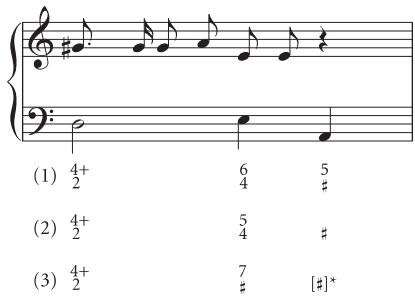
中文讲解
This line marks the location of the musical figure (Example 1) on page 2. Because the actual engraved or typeset image is not transcribed in the source text, the reader must consult the original article to see the three alternatives that Heinichen provides; the caption (P0015) and the prose discussion in P0018–P0019 are intelligible only in conjunction with the example. No details of pitches or figured-bass numerals can be reliably reported from the text alone.
补充说明
For complete verification of alternatives (1), (2) and (3) the reader should consult the original article, since the OCR/source here transmits only the caption and surrounding prose.
第12段(P0017)
原文复述
a harmonic modification in the accompaniment: a cadential 6–4 chord or a dominant chord with a suspended 4th. It is very hard to prove, though, if such harmonic modifications in the accompaniment were widespread or not.
中文讲解
This paragraph completes the sentence left open at the end of P0014. It specifies the two technical means by which the dissonance of rule (b)’s anticipatory bass entry could be neutralized: (i) substituting a cadential 6–4 chord, in which the dissonant 4th against the bass is itself the chord of resolution rather than a foreign note, or (ii) using a dominant chord with a 4–3 suspension, which delays and then resolves the dissonance stepwise. Both are standard thoroughbass resources. The author immediately tempers the claim by admitting that, given the surviving evidence, it is very difficult to prove whether these harmonic adjustments were routine or exceptional in actual practice. This honest hedging signals that the empirical basis for rule (b)’s execution is fragile—a point that leads naturally into the next move: Westrup’s citation of Heinichen as an independent witness.
补充说明
None.
第13段(P0018)
原文复述
After Neumann, the next to take up the problem of the performance of recitative was Sir Jack Westrup. Besides mentioning Telemann and Quantz, Westrup quotes Heinichen, who presents a solution for this problematical cadential execution in rather obscure language. Heinichen proposes three alternatives for harmonization (see ex.1). He presents these examples with the following comments:
中文讲解
This paragraph transitions from Neumann to the next major scholar in the literature, Sir Jack Westrup, who also engaged with the recitative-cadence problem. Westrup draws on Telemann and Quantz (as Neumann had), but uniquely quotes Heinichen—originally in what the author calls ‘rather obscure language’—as someone who explicitly proposes three harmonization alternatives for the troublesome cadence. Example 1 is again invoked, and the author prefaces Heinichen’s own commentary on the three alternatives. The role of this paragraph is essentially transitional: it introduces Heinichen as the key 18th-century theorist whose testimony the rest of the subsection will quote in detail to evaluate the actual practice of recitative cadence execution.
补充说明
None.
第14段(P0019)
原文复述
The third, fourth and fifth examples [alternatives (1), (2) and (3) in ex. 1] show the cadence as it constantly occurs in recitative: a cadence whose harmony seems totally to lack any appropriate resolution (4 –). For, although in the case of the 3rd example [alternative (1)] (in the case that the accompanist wants to play the 4 – that is written over the ‘e’), it received the name ‘mistaken resolution’ because in this case the ‘c’ (which would have naturally [here Mattheson inserts a footnote] resolved the bass line) was transferred to the 6th of the upper voice—even so, one cannot oblige the accompanist to be as accurate as in the third example [alternative (1)] when cadences rush by as quickly as they do; it follows that one must accept the fourth and fifth examples as exceptions to the rule, as freedoms which have been made use of so often that they have acquired the status of citizens’ rights.
中文讲解
This long quotation is Heinichen’s own commentary on the three alternatives he tabulates in Example 1. Two layers of editorial insertion need to be understood before the meaning becomes clear. First, Heinichen himself numbers his examples as ‘third, fourth and fifth’; the square-bracketed glosses ‘[alternatives (1), (2) and (3) in ex. 1]’ are the author/translator’s remapping of Heinichen’s numbering to the three alternatives reproduced as (1), (2), (3) in the article’s Example 1. Second, where Heinichen refers to ‘the 3rd example’ in his later clauses, the editor equates that with alternative (1). With that mapping in place, the argument is: alternatives (1), (2) and (3) all show the cadence as it normally occurs in recitative—a cadence whose harmony lacks a proper resolution, indicated by a placeholder ‘4 –’ (i.e. a figured 4 over the bass with no following chord-symbol). Alternative (1) is singled out as the case where, if the accompanist actually plays the 4 that is written over the bass-note ‘e’, one produces what theorists called the ‘mistaken resolution’ (falsche Auflösung): the note ‘c’ that should resolve the bass line is displaced into the upper voice as its 6th. Even so, Heinichen concedes that in the rapid fire of recitative one cannot realistically require accompanists to maintain the strict voice-leading of alternative (1); therefore alternatives (4) and (5)—i.e. (2) and (3)—must be tolerated as ‘exceptions to the rule’, freedoms that practice has elevated to ‘citizens’ rights’ (Bürgerrecht). The author’s quotation strategy is to let Heinichen himself expose the gap between theoretical orthodoxy and what performers actually do on the page: a freedom repeated often enough becomes normative. This is the conceptual hinge that allows the author, later in the article, to argue that the cadential 6–4 chord and the dominant-with-suspended-4th are not anomalies but accepted idioms of recitative accompaniment.
补充说明
The ‘mistaken resolution’ Heinichen names corresponds to the standard 18th-century thoroughbass error in which the expected stepwise resolution of a dissonance is deflected to another voice; the broader theoretical category is that of a falsa resolutio or ‘false relation/resolution’ discussed by Heinichen’s contemporaries.
第15段(P0020)
原文复述
Mattheson’s footnote reads:
中文讲解
This is a sub-heading marking the transition from Heinichen’s main text to an embedded footnote by Johann Mattheson. The heading serves a single function in the article’s argument: it isolates Mattheson’s intervention from Heinichen’s surrounding commentary so that the reader can recognize it as an independent voice of authority. Because Mattheson is one of the central theorists cited in P0007 for the cadenza trunca, the author is drawing him in here to adjudicate the dispute Heinichen has just opened.
补充说明
None.
第16段(P0021)
原文复述
Of course, the recitative cadence would always, I repeat, always have to be resolved in the following manner, as is now and then the case: [ex.2]
中文讲解
This is the body of Mattheson’s footnote as reproduced by Heinichen. Mattheson insists—repeating ‘always’ for emphasis—that the recitative cadence ought in principle to be resolved in the manner shown in the (here omitted) Example 2, and acknowledges that this proper resolution does ‘now and then’ occur in practice. The function of the quotation is double-edged: on one hand Mattheson reaffirms the orthodox voice-leading that Heinichen’s alternatives (2) and (3) flout; on the other hand his own admission ‘as is now and then the case’ concedes that the orthodox resolution is the exception rather than the rule in real recitative. Mattheson therefore simultaneously strengthens Heinichen’s theoretical norm while ratifying, from within the orthodox camp, Heinichen’s empirical observation that accompanists routinely take the liberties Heinichen defends. This internal contradiction within the normative tradition is precisely what the author exploits in the rest of the article.
补充说明
The bracketed ‘[ex.2]’ in the source marks the place where a further musical illustration would appear; like Example 1, the example itself is not transcribed in the text and the reader is referred to the original article.
第17段(P0022)
原文复述
early music august 2005
中文讲解
This is the running footer/header of the article: it identifies the journal (Early Music) and the issue date (August 2005). It is a typographical locator, not part of the author’s argument, and is included here only because it appears in the source-paragraph stream on page 2.
补充说明
None.
第18段(P0023)
原文复述
Downloaded from https://academic.oup.com/em/article/33/3/473/569657 by Indiana University - Bloomington user on 11 August 2026
中文讲解
This is a duplicate of the access watermark from P0008, repeated by the publisher on page 2. Like P0008 it carries no scholarly content; it is purely a record of the download event from the institutional subscriber’s IP.
补充说明
None.
脚注 / 边栏 / 图表 / 附加信息(如有)
The non-prose items appearing in this section are: (i) the running journal header ‘Early Music, Vol. xxxı, No. 3 …’ (P0009) giving publication metadata; (ii) a download watermark from Oxford University Press (P0008 and again at P0023); (iii) the running footer ‘early music august 2005’ (P0022); (iv) Example 1, a musical illustration from Heinichen, Der Generalbass in der Komposition (Dresden, 1728), placed on page 2 and described by the caption in P0015 (with the image itself at P0016); (v) a reference to Example 2 inside Mattheson’s footnote (P0021), not transcribed in the source. The caption in P0015 and the prose quotation in P0019 both depend on the reader’s being able to see Examples 1 and 2; the author repeatedly cross-references them, so the examples are integral to the subsection’s argument.
💡 本节核心要点
- Neumann, following Kircher, distinguishes the clausula formalis (bass proceeds through the descending 5th) from the clausula truncata (bass waits for the singer to finish before completing the 5th); Burney called the latter ‘the true cadence of musical speech’ and Mattheson in 1744 called it the cadenza trunca, identifying it as the most common cadential type in recitative.
- Within the truncata family, Neumann differentiates two melodic varieties—voice-ending on scale-degree 5 versus on the tonic—cross-cut by ‘masculine’ (one-syllable) and ‘feminine’ (two-syllable) text settings.
- Neumann prescribes three execution rules: (a) generally the chords are played after the singer has closed the period; (b) in opera, some theorists allow the bass to enter on the singer’s penultimate note even at the cost of harmonic correctness; (c) in either case the final chords are to be short and unarpeggiated.
🔑 关键术语
- clausula formalis / clausula truncata:A pair of cadential formulas from Kircher/Neumann, distinguished by whether the written bass moves continuously through its descending 5th (formalis) or pauses to wait for the singer before completing the descent (truncata). The truncata, also called the cadenza trunca by Mattheson, is treated in this section as the dominant cadential type in 17th–18th-century recitative.
- cadenza trunca:Mattheson’s Italian name for the cadence in which the bass is ‘cut off’ or held back before its descent, equivalent to the clausula truncata; Mattheson’s 1744 remark identifies it as the most common recitative cadence in use.
- ‘true cadence of musical speech’:Burney’s epithet for the truncata-type cadence, used in this section to bolster Neumann’s claim that this cadence was the norm in recitative composition and delivery.
- masculine / feminine cadence ending:An 18th-century terminology for whether the closing syllable(s) of the vocal line at a cadence comprise one syllable (‘masculine’) or two syllables with unstressed-stressed rhythm (‘feminine’); the distinction affects how singer and accompanist synchronize at the close.
- key-note cadence:In Neumann’s classification, the variety of the truncata cadence in which the vocal part ends on the tonic rather than on scale-degree 5; contrasted with the ‘descending 4th or 5th’ variety in which the voice ends on the dominant of the prevailing key.
- ‘mistaken resolution’ (falsa resolutio):Heinichen’s term for the harmonization in which the note expected to resolve a dissonance in the bass is deflected into the upper voice; Heinichen concedes that accompanists cannot be held to the strict resolution in rapid recitative, so the deflected version has acquired the status of ‘citizens’ rights’.
- cadential 6–4 chord / dominant with suspended 4th:The two harmonic adjustments cited as ways of neutralizing the dissonance produced when the bass anticipates the singer’s penultimate note (rule (b)): either substituting a cadential 6–4, in which the 4th is consonant against the bass, or using a 4–3 suspension over the dominant.
- thoroughbass period:In Neumann’s usage (and as questioned by the present author) the entire era in which continuo realization from a figured bass was the standard accompaniment practice; Neumann treats Türk’s 1791 directive as normative for this whole period, a claim the author challenges on chronological and geographical grounds.
sec0003 [描述性拆分] Heinichen’s three alternatives for the recitative cadence and their resolution
第1段(P0024)
原文复述
![Ex. 2] But since such boring cadences (which nevertheless constantly occur in theatrical situations) would tend to tire the listener and often seem to delay the singer unnecessarily, it may be that the opportunity has been taken to abbreviate the procedure and, following the fourth and fifth examples [alternatives (2) and (3)], immediately go on to the cadence. Nevertheless, no one should be restrained from expressing a better opinion.¹⁴ ([内嵌图像数据已省略;位置与图注保留])
中文讲解
本段是「例 2」前的导引文字(图像占位符保留),它陈述了海尼兴提出三种宣叙调终止处理方案的现实动因:在剧场场景中,完整而冗长的终止会令听众疲倦、并让歌手显得被不必要地拖延,因此作者允许「按第四、第五例(即方案 (2) 与 (3))」直接进入终止,作为缩短流程的做法。作者也以一句客气话表示保留——任何读者都可以提出更好的意见。脚注 14 应与该开放性立场相关。在本节论证中,这一段的作用是把前文已展示的方案与「剧场实用性」这层考量连接起来,为随后段落区分「正确和声进行」与「歌剧中的简化处理」做铺垫。
补充说明
段落开头以「![Ex. 2]」标记一张示例图,但具体乐例内容需查原图;脚注 14 在本节中被首次引用,其内容未在当前段落给出,需结合后续脚注一并核对。
第2段(P0025)
原文复述
The solutions to the cadence problem Heinichen proposes unmistakably avoid the unresolved dissonant chord. The second example obviously represents an inner cadence that both resolves the minor 2nd chord appropriately and also delays the cadential chords. In the case of opera (‘in theatrical matters’) Heinichen considers this correct solution to be inappropriate, since it could slow down or interrupt the momentum of the dramatic action. In that case one could abbreviate correct harmonic progression in the manner shown in the second example. It must be emphasized that Heinichen is addressing here the problem of how to place inner cadences, not final cadences.¹⁵
中文讲解
这一段是本节的核心解释:海尼兴的三种终止方案共同特点是「避免悬而不决的不协和和弦」。第二例被作者判定为一种「内部终止(inner cadence)」——它既妥善解决小二度和弦,又通过延后到达终止式来衔接上下文,因而在纯和声层面是正确的。但海尼兴同时认为,在歌剧这种「剧场性」场合里,这种正确的解决方案反而会拖慢戏剧推进;因此在歌剧中可以采用第二例所示范的简化版和声进程。作者特别强调,海尼兴此刻讨论的对象是「内部终止」而非「最终终止」,这一定位直接限定了三种替代方案的适用范围。脚注 15 通常承载这一论断的进一步限定或来源。
补充说明
「inner cadence」与「final cadence」的区分是本节关键词:内部终止服务于段落内部的呼吸与和声收束,不要求全场停顿;最终终止则标志整体结束,二者的处理逻辑不同。
第3段(P0026)
原文复述
Nevertheless, he also makes an explicit reference to the performance of final cadences, albeit in a rather remote passage.¹ In the fourth chapter, where he treats the harmonization of a whole cantata, he remarks after the end of a recitative example:¹⁷
中文讲解
这是一个过渡段:作者承认海尼兴在前述讨论「内部终止」的同时,也在另一处较为「偏远」的章节里明确谈到了「最终终止」的执行方式。脚注 16 标出该远处引文的位置。引文出现在第四章——海尼兴在那里示范一整部康塔塔的配和声,并在某一宣叙调例子之后作出说明;脚注 17 指向具体出处。功能上,这一段把论证从「内部终止」延伸到「最终终止」,并准备引入海尼兴的一段直接引文。
补充说明
脚注 16 与 17 的具体内容未在本节内展开,需结合文末注释部分核对。第四章「harmonization of a whole cantata」表明海尼兴把终止问题放入整体配和声语境,而非孤立的和弦练习。
第4段(P0027)
原文复述
With its diminished 5th (12) should normally be contented with the natural 6th, and the note (13) with the ordinary chord. But foresight knows how to improve upon this: a well-practised accompanist will already glance ahead at the cadence to come and will accordingly make a better preparation for it when he gives note (12) the “great sixth” but gives note (13) the natural 6th, handling (12) as the second step in the key of B minor, and (13) as the third step of the same. Furthermore, with the note (14), the 4– cadence is prepared, which is customarily played once the voice has finished. The corresponding correct 5th can be found in the specie octavae of B minor.
中文讲解
这是海尼兴在第四章中针对一段宣叙调所作的直接引文。其要点是:(1) 通常情况下,含减五度的第 (12) 音只需配自然六度,第 (13) 音用普通正三和弦即可;(2) 但有经验的伴奏者会「预见到即将到来的终止」,提前做好准备——把第 (12) 音处理为「大六度」、第 (13) 音仍用自然六度,并在 B 小调的语境下把 (12) 视为 B 小调的二级音、(13) 视为 B 小调的三级音;(3) 此外,第 (14) 音处预备了一个「4—」的终止,这一终止一般在人声结束后再奏出;(4) 相对应的「正确五度」可在 B 小调的「specie octavae」(八度种属表)中找到。海尼兴通过这一段示范了「前瞻性配和声」的实践:以未来终止为参照,调整当下和弦的音程选择与功能归属。
补充说明
「specie octavae」是海尼兴理论体系中的术语,指在一个调内把八度内各级音程关系「系统化」的图表;术语字面含义与本节用法需结合原书上下文理解。「great sixth」与「natural 6th」分别对应增六度(大六度,此处基于减五度音程的解决)与自然小六度。
第5段(P0028)
原文复述
Here, then, he mentions (in connection with (14)): ’the cadence . . . which is customarily played after the voice has finished’. This means that he did not mean the notation as a dissonant chord (at (14))
中文讲解
作者回到海尼兴的原文,强调第 (14) 音处的终止是「在人声结束后才被奏出」的常例。由此推出一个重要诠释:乐谱上第 (14) 音处看似不协和的记谱,并不是要求在声乐进行的同时实时奏响的——它实际上是为歌者收束之后的和声收束服务的。这一句把「记谱上的不协和」与「时间上的延后执行」区分开来,为下一句给出最终解释。
补充说明
「customarily played after the voice has finished」是海尼兴为「延迟奏出终止」这一做法所作的辩护关键词,也是本节论证海尼兴有意回避「实时不协和」的关键依据。
第6段(P0029)
原文复述
to be executed that way in real time, but rather, shortly after the singing voice had finished—in other words, after the beat.
中文讲解
本句收束前段:第 (14) 音处那个被记成不协和和弦的终止,并不是要在人声尚在演唱的同一拍内立即执行,而是「在人声结束后不久的下一拍」才被奏出。换言之,海尼兴通过「记谱不协和 + 时间延后」的组合,把真正的不协和时刻隐藏在节拍之后,从而避免声乐与和声在听觉上同时撞上未解决的紧张。回到本节主题,这一证据进一步说明海尼兴的三种替代方案——尤其是涉及不协和和弦的方案——其实是配合宣叙调收束方式设计的「延迟解决」技巧,而非简单的和声偷懒。
脚注 / 边栏 / 图表 / 附加信息(如有)
本节涉及多枚脚注(14–17),其具体内容未在所提供的小节文本内展开;其中脚注 14 出现于 P0024,脚注 15 出现于 P0025,脚注 16、17 出现于 P0026,是定位海尼兴原书章节与引文出处的关键标识,需结合文末注释部分方能核对。「Ex. 2」(P0024)作为内嵌图示,其具体乐例内容需查阅原图,但小节文本已说明它示范的是宣叙调终止的替代处理方案。
💡 本节核心要点
- 海尼兴提出三种宣叙调终止替代方案的现实动机是剧场节奏:完整终止会拖慢戏剧推进,因此允许在歌剧语境中简化。
- 三种方案的共同特征是「避免悬而不决的不协和和弦」,第二例被作者定性为可妥善解决小二度的「内部终止」。
- 海尼兴在此明确讨论的是「内部终止」而非「最终终止」,限定了三种方案的适用语境。
- 在第四章「整部康塔塔的配和声」中,海尼兴借第 (12)、(13)、(14) 音示范了「前瞻性」配和声——以未来终止为参照调整当下音程与功能归属。
- 海尼兴为第 (14) 音处的「不协和记谱」所作的辩护是:该终止常在人声结束后才奏出,即「记谱不协和 + 时间延后执行」。
- 由此可推断:海尼兴的不协和终止实质是一种「延迟解决」技巧,而非真正意义上的实时不协和。
🔑 关键术语
- inner cadence(内部终止):宣叙调段落内部用于和声收束但不标志整体结束的终止式;本节中海尼兴的方案主要针对此类终止。
- final cadence(最终终止):标志全曲或全段结束的终止;本节中海尼兴专门另辟章节(第四章康塔塔配和声)加以讨论,与内部终止区别对待。
- minor 2nd chord(小二度和弦):本节中第二例所解决的紧张音程来源;其妥善解决是判定终止方案「正确」的关键标准。
- great sixth(大六度/增六度):海尼兴在第 (12) 音处建议的、面向未来终止所做的前瞻性音程选择。
- natural 6th(自然六度):相对于大六度的常规选择;海尼兴在第 (13) 音处保留自然六度,把调整让给 (12) 音。
- specie octavae(八度种属/八度音程系统):海尼兴用以在某一调性内系统化展示各级音程关系的图表或方法;本节中用于指明与「4—」终止相对应的「正确五度」的位置。
- theatrical matters(剧场性场合):海尼兴用以为简化版终止方案辩护的语境:歌剧中的戏剧节奏优先于严格的和声完整。
sec0004 [描述性拆分] Tosi and Agricola on broken-off and final cadences in opera recitative
第1段(P0030)
原文复述
In another study of 18th-century recitative, Sven Hansell cites other theorists. First he examines Pier Francesco Tosi, who has something to say about the cadence problem, but gives no musical examples. As relayed by Johann Friedrich Agricola, Tosi’s opinion reads as follows (see illus.1):
中文讲解
本段是本节的开场白,作用是引出两条相互对照的史料线索:一是 Tosi 关于宣叙调终止的处理意见,二是该意见经由 Agricola 转译后留下的史料形态。作者明确交代:Tosi 本人对终止问题是有话要说的,但他自己没有留下乐谱例证;后人(包括 Hansell)所依据的 Tosi 言论,是经由 Agricola 转述而来的。所以下一段呈现的引文不是 Tosi 原话,而是 Agricola 转述/翻译后的英文文本。这一交代为后面 Hansell 与 Dean 对 Agricola 转述的怀疑埋下伏笔:既然 Agricola 是中介,他自己的阐释是否完全忠实于 Tosi,就成了争议焦点。
第2段(P0031)
原文复述
As to the composition of recitatives, there would still be much to be said, especially as to the maddening uniformity that insults the ear in every opera with at least a thousand brokenoff cadences [cadenze tronche]. Even though custom has introduced the use of this kind of cadence, they still are for the most part without taste and without art. If one wanted to get rid of all of them, the remedy would be worse than the illness itself. To introduce a great number of final cadences [. . .] would cause disgust. If we were to find a happy medium between these two excesses, then I believe that, among one hundred broken-off cadences, ten completely finished ones, placed over points that close off a period, would be put to good use. But those of superior understanding do not talk of this matter, and their silence advises me also not to speak of it any further myself.18
中文讲解
这是 Tosi(经 Agricola 转译)原文的核心段落。Tosi 在这里做了三件事:
-
抱怨现状:他认为宣叙调里到处充斥着截断终止(cadenze tronche / broken-off cadences,即没有完整收束、提前中断的终止式),造成千篇一律、令耳朵难以忍受的效果;这种处理虽已成为惯例,但大多缺乏品味与艺术。
-
提出两端不可取:若全部废除截断终止,会矫枉过正(remedy worse than the disease);若全部改用完整终止(final cadences),则又令人厌恶。因此必须在两个极端之间取折中。
-
给出具体比例:在 100 个截断终止中,安插 10 个完整终止,且这些完整终止必须出现在真正结束一个句法段落(period)的位置才合适。
最后一句"那些有识之士不谈此事,他们的沉默劝我也别再说",是 Tosi 自我收笔的姿态,暗示这是行家的隐性共识,不宜公开讨论。这句话后来成为 Hansell 和 Dean 争论时的重要引文,因为它同时既像在谈"作曲"(composition),又像在谈"演奏/诠释"(interpretation/performance),留下了语义模糊的空间。
补充说明
cadenze tronche 是 18 世纪意大利歌剧宣叙调中常见的截断终止写法:终止的和声并未完整收束(例如 V 没有解决到 I,或停在 6-3 这样的挂留/阻碍和弦上),造成乐句悬而未决、推向下一句的效果。Tosi 抱怨的并不是这类写法本身(他承认惯例已经引入),而是滥用造成的单调。
第3段(P0032)
原文复述
Agricola elucidates Tosi’s view with two musical examples: on the one hand, an interior cadenza trunca that is delayed and ends on a 6-3 chord, forming an interrupted cadence; on the other hand, a cadenza finalis, also delayed. Tosi–Agricola give valuable information about the performance of cadences in opera recitatives towards the beginning of the century. In a nutshell, what Tosi complains about is the uniformity—the lack of variation of the interpretation of the cadence type—leading to boredom. He consequently demands that broken-off cadences alternate with final cadences in a ratio of 10 to 1: the final cadences may only appear at the end of those phrases where the text concludes on a final period.
中文讲解
本段说明 Agricola 如何把 Tosi 的文字转译成具体的乐谱语汇。
Agricola 给出两个乐谱例子:
- 内部截断终止(interior cadenza trunca):被"延迟"处理,并以一个 6-3 和弦结束——在功能和声上等于一个中断终止(interrupted cadence),即 V 预期解决到 I,结果却走到了 VI,从而制造悬而未决的效果;
- 完全终止(cadenza finalis):同样被"延迟"。
“被延迟”(delayed)在 18 世纪终止演奏的语境里,指终止式不和声放到歌唱者最后一个音之后才奏出(after the beat),让歌手的最后一个音悬在空中,听起来像被切掉。
本段把 Tosi 的核心论点再次压缩:他要的不是改变终止式的和声构造,而是改变对同一种终止式的诠释方式所产生的单调感;为了打破单调,需要在 100 次截断终止中安插 10 次完整终止,并且这些完整终止必须落在句法真正结束、文本以句号收束的地方。
补充说明
interrupted cadence 在中译里常被译为"阻碍终止"或"中断终止":V 解决到 VI,而非 I,造成和声上的"绊了一跤"效果。6-3 和弦在数字低音中是六度音程加三度音程叠在低音上的一种挂留/阻碍型配置。
第4段(P0033)
原文复述
Agricola’s interpretation of Tosi’s method of cadencing is treated sceptically by both Hansell and Winton Dean.19 Their opinion is confirmed by Galliard’s English translation of Tosi’s Opinioni, in which he uses a final cadence in a musical example for a ‘foreshortened’ (i.e. simultaneous) cadence—for the placement of the cadential chords on the beat and along with the singer’s last notes. Dale E. Monson agrees with Dean: contrary to Agricola’s supposition, Tosi did not have the composition, but rather its interpretation in mind.20 According to Monson,
中文讲解
本段把视角切到与 Agricola 不同的现代学者阵营,引出对 Agricola 转述的怀疑。
Hansell 和 Winton Dean 两人都怀疑 Agricola 对 Tosi 的解读是否准确;他们的怀疑得到 Galliard 英译 Tosi《Opinioni》(即著名的《Opinioni de’ cantori antichi e moderni》)的支持——Galliard 在举例时,把一个完整终止(cadenza finalis)的乐谱例子用来示范所谓 foreshortened cadence,也就是把终止和弦与歌手最后一个音同时放在正拍上、一起奏出的"同步终止"。
这意味着:同一个"完整终止",按 Agricola 的理解是"延迟到拍后再奏",按 Galliard 的理解却是"在拍上与歌手一起奏"。两种诠释指向完全不同的演奏实践。Monson 赞同 Dean,主张 Tosi 真正关心的不是作曲(即不是关于和声写作),而是演奏诠释(即关于如何把已经写下的终止式实际奏出)。这是本节的核心争议:Tosi 的那句话到底在谈"作曲"还是"演奏",由此决定了对终止式的时值处理应当放在拍上还是拍后。
“According to Monson,“一句在段末,预示下一段(Monson 的具体陈述)即将展开。
补充说明
foreshortened cadence 是一个术语,指缩短/压缩的终止:终止式和声与歌手最后一个音同步出现,而非在其后补上。本节的核心争议正围绕这种终止到底应当"在拍上同步"还是"在拍后补奏"展开。
第5段(P0034)
原文复述
early music august 2005
中文讲解
本段是期刊版面元素:页眉,标明文章出处《Early Music》2005 年 8 月号。
第6段(P0035)
原文复述
Downloaded from https://academic.oup.com/em/article/33/3/473/569657 by Indiana University - Bloomington user on 11 August 2026
中文讲解
本段是期刊版面元素:页脚,标明本文 PDF 由印第安纳大学布卢明顿分校用户于 2026 年 8 月 11 日从牛津学术(academic.oup.com)下载,文章路径 33/3/473。此信息属下载/版权水印,不承载论辩内容。
第7段(P0036)
原文复述
Ueber die Composition der Recitative überhaupt wäre noch viel zu sagen: zumal bey Gelegenheit der verdrüßlichen Einförmigkeit,welchedas Gehdr in jeder Dper zum wenigsten mit taufend abgebrochenen Eadenzen(k) beleidiget. Diese Urt der Eadenzen hat zwar der Gebrauch eingeführet; allein sie sind grdß tentheils ohne Geschmac und Kunst. Wollte man sie alle abschaffen: fo würde das Heilungsmittel árger seyn als das Uebel felbft. Eauter Endigungscadenzen (1) einzuführen, würde Ubfcheu erwecken.Wenn allenfalls zwischen diesen beyden Uusschweifungen ein Mittel getroffen werden müßte; so glaube ich, daß unter hun= bert abgebrochenen Cadenzen, zehn ganz geendigte, über Puncten, welche eine Periode schließen, nicht übel angewendet seyn würden. Doch die Verständigen sprechen nicht davon, und ihr Stillschweigen räth mir auchan, nicht weiter zu reden.
中文讲解
这是 P0031 英文译本所对应的德文原文,节录自 Johann Friedrich Agricola《Anleitung zur Singkunst》(1757)第 162 页(Tosi 意见的德语转译本)。原文是 18 世纪德语印刷字样(长 s 已转写为 s),并带有 OCR 误识,例如"Dper"应为"Oper”,“Gehdr"应为"Gehör”,“Eadenzen"应为"Cadenzen”,“Urt"应为"Art”,“grdß tentheils"应为"größtentheils”,“fo"应为"so”,“árger"应为"ärger”,“felbft"应为"selbst”,“Eauter"应为"Lauter”,“Ubfcheu"应为"Abscheu”,“Uusschweifungen"应为"Ausschweifungen”,“hun=bert"应为"hundert”,“auchan"应为"auch”。这些都是 18 世纪德语印刷字在数字化时常见的 s/l/f 与 s/ß 等字符混淆。
内容上,本段是 P0031 的德语原本:Tosi 抱怨宣叙调里上千个截断终止造成的恼人单调,主张两端都不可取,应在百次截断终止中安插十次完整终止,并放置在句法真正结束的位置;最后同样以"行家不谈此事,我也别再说"收笔。本段在本节中的功能是为 P0031 的英文译文提供文献原文对照,使读者可以亲眼看到 Agricola 转译的形态——这正是后文 Hansell 与 Dean 怀疑 Agricola 转译是否准确的物理依据。
第8段(P0037)
原文复述
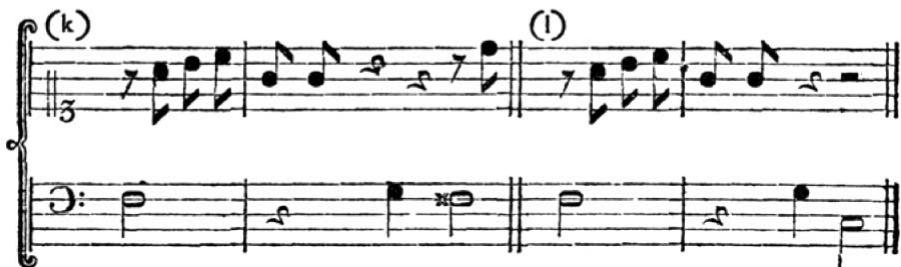
中文讲解
本段是图注/图像占位符。引用的是 Agricola《Anleitung zur Singkunst》(1757)第 162 页的扫描图,即 P0031 与 P0036 中所引文字所在的原始印刷页面,也是本节开端提到的"illus.1”。本图承载 Tosi 言论的德语原本及 Agricola 的两个音乐例子的乐谱(内部截断终止以 6-3 和弦收束的 interrupted cadence,以及延迟的 cadenza finalis)。图像本身的具体谱例内容需查阅原图,本占位符未提供可读谱面。
第9段(P0038)
原文复述
Agricola demanded that interior cadences end on a 6–3 chord for this very reason. In this case a distinction can no longer be drawn between broken-off cadences (tronche) and final cadences. Hansell is of the opinion that towards the middle of the 18th century a change occurred in the execution of cadences in opera recitatives: before 1750 they were on the beat, played simultaneously with the singer’s last syllables (with few exceptions), and after 1750 they were played after the beat.21 Hansell adopted this view after having considered both Agricola’s interpretation of Tosi’s opinion about cadences and the example of a recitative in Hasse’s opera Artaserse (a Venice 1730 version places the notation of the final cadence on the beat, for example, and the Naples 1762 version notates it after the beat), along with the above-mentioned remarks by theorists such as Telemann and Quantz.
中文讲解
本段把 Agricola 的演奏要求与 18 世纪终止演奏史的演变结合起来。
Agricola 的具体做法是让所有内部终止都以 6-3 和弦收束——一旦这样做,截断终止(tronche)与完整终止(final)在听觉上就不再能区分,因为两者听起来都是不完整收束。这是 Agricola 对 Tosi 抱怨"单调"的一种技术性回应:他用统一以 6-3 结尾的方式,把终止处理方式均质化。
Hansell 则进一步提出一个历史分期的论点:约在 18 世纪中叶,宣叙调终止的演奏方式发生了一次断裂——1750 年以前,终止式通常在正拍上与歌手最后一个音同步奏出(on the beat,少数例外);1750 年以后则改为在拍后再补奏(after the beat)。Hansell 给出三类证据:
- Agricola 对 Tosi 的解读;
- Hasse 歌剧《Artaserse》不同演出本的对比——1730 年威尼斯版把终止式记在拍上,而 1762 年那不勒斯版则记在拍后;
- 前文已提到的 Telemann 与 Quantz 等理论家的相关论述。
这一段为本节后文 Dean 把 Hansell 观点应用于亨德尔奠定了史实基础。
补充说明
“on the beat”(在正拍上)指终止和弦与歌手最后一个音同时发声;“after the beat”(在拍后)指歌手先唱完最后一个音,终止和弦随后补上,造成"截断—补完"的听觉效果。
第10段(P0039)
原文复述
For the performance of the cadence in Handel’s operas Dean followed Hansell’s view, and demanded that the cadential formula Handel consistently wrote should be put into practice—on the beat, simultaneously with the singer’s last syllables, and tolerating the dissonances that this causes:
中文讲解
本段是一个过渡段:Dean 把 Hansell 的史学结论(1750 年以前是"在拍上"的演奏方式)直接移植到亨德尔的歌剧演奏上。Dean 的主张是:亨德尔在乐谱上写出的终止公式应当按字面执行——终止和弦放在正拍上、与歌手最后一个音同时发声——即使这会产生和声上的"碰撞"(即歌声音与终止和声同响时形成的短暂不协和)。这里的"tolerating the dissonances"是 Dean 论点的核心:他认为这些听上去的"刺耳"不是亨德尔的疏忽,而是当时的标准演奏实践。下一段引文给出 Dean 的具体规则表述。
第11段(P0040)
原文复述
Whatever solution is adopted . . . it is certain that the foreshortened cadence, the dominant bass note coinciding with the last stressed syllable of the voice, must be the rule in the dramatic recitative of Handel and his contemporaries. Exceptions should be rare, and confined to emphasizing words that require great weight . . .22
中文讲解
本段是 Dean 的核心规则陈述。
Dean 把缩短终止(foreshortened cadence,即终止低音与歌手最后一个重音节同时出现)确立为亨德尔及其同时代人戏剧性宣叙调的演奏通则。规则要点:
- 规则本身:终止中的属音(dominant bass note)必须与歌手最后一个重读音节同步发声;
- 例外应当极少:只有在需要为某个词加重分量时,才打破这条规则;
- “无论你最后采取什么方案……上面这一条是肯定的”(“Whatever solution is adopted…")这一措辞暗示 Dean 当时面对其他学者关于终止问题的不同提议(例如是否在拍后补奏),但他认为无论其余细节如何协商,关于亨德尔戏剧宣叙调的核心规则不应让步。
这条规则直接为演奏实践划线:亨德尔的宣叙调终止,应当按 1750 年以前的方式执行(on the beat),而不是按 1750 年以后的新方式(after the beat)。
补充说明
dominant bass note 指终止式中属功能上的低音——通常是属音或属七和弦的根音;它落在正拍上与歌手最后一个重音节对齐,是"缩短终止"在和声上的具体表现。
第12段(P0041)
原文复述
Dean justifies the frequent occurence of dissonances in this type of execution by citing experimental results that claim that the dissonances sound less piercing on Baroque instruments than on modern ones.23 In the mid-1970s Dean was able to assert:
中文讲解
本段为 Dean 的"在拍上同步奏出"原则提供物理解释:如果按 Dean 的方式执行,歌声音与终止和弦同时发声会形成和声上的"刺耳碰撞”,听上去会有不协和感。Dean 的辩护是:这种不协和在巴洛克时期的乐器(音栓、弦的张力、弓压等参数与现代不同)上听起来并不那么尖锐。这把演奏争论从"作曲家写错了吗"转移到"乐器物理改变了听感"的层面。
“In the mid-1970s Dean was able to assert:“一句在段末,预示下一段是 Dean 在 1970 年代中期(其《亨德尔歌剧宣叙调》一文发表前后)所做的公开陈述。
第13段(P0042)
原文复述
In recent years a few scholars and performers on both sides of the Atlantic have suggested, with different degrees of emphasis, that recitative cadences in late Baroque opera may have been performed as written—the foreshortened or truncated cadence.24
中文讲解
本段是 Dean 在 1970 年代中期的总结性陈述:他宣称跨大西洋两岸的学者与演奏家近年来都已经逐渐倾向一个观点——晚期巴洛克歌剧宣叙调的终止可能就是按乐谱所写的那样来演奏的,即缩短终止或截断终止(foreshortened/truncated cadence),在拍上与歌手最后一个音同步奏出。“with different degrees of emphasis"提示这种倾向的强弱不一,但 Dean 把这一趋势作为已成事实加以陈述。
这一陈述有两层意义:第一,对 Dean 自己而言,这是他长期推动的演奏原则终于得到学界共识的标志性时刻;第二,对全文而言,本节为后文讨论当代实践(即把这一原则运用于亨德尔以外的其他作曲家)做铺垫。
补充说明
truncated cadence 是 foreshortened cadence 的同义术语,都指终止被"压缩"到歌手最后一个音上同步奏出,而非在其后补完。
第14段(P0043)
原文复述
Coming from such an authority on Handel, this recommendation was adopted almost without exception in contemporary practice.
中文讲解
本段为本节作结:Dean 在亨德尔研究中的权威地位,使他的这条演奏建议(终止在拍上同步奏出)几乎被现代实践毫无保留地采纳。
本句的关键信息不在"几乎被采纳”,而在"coming from such an authority on Handel”——作者点明这一采纳并不只是因为规则本身在音乐学上证成,而是因为 Dean 在亨德尔研究中的学术地位本身赋予了这条规则以权威性。这是一种学术社会学层面的观察:演奏实践的转向有时不是靠证据,而是靠权威。
本节由此为后文讨论"若 Dean 的建议被普遍接受,那么非亨德尔的宣叙调终止又应当如何处理"留下伏笔。
脚注 / 边栏 / 图表 / 附加信息(如有)
本节包含若干脚注(18、19、20、21、22、23、24)与一处图版(illus.1,即 P0037 所标注的 Agricola《Anleitung zur Singkunst》(1757)第 162 页扫描)。P0034 为期刊页眉(Early Music, August 2005),P0035 为下载水印页脚。P0036 是 P0031 英文译本对应的德语原文(OCR 文本,保留 18 世纪德语印刷字误识痕迹),其功能是为后文 Hansell、Dean 怀疑 Agricola 转译是否准确提供原文对照。
💡 本节核心要点
- Tosi(经 Agricola 转译)抱怨 18 世纪歌剧宣叙调中截断终止(cadenze tronche)被滥用造成千篇一律,主张在每 100 个截断终止中安插 10 个完整终止,且后者只能出现在句法真正结束的位置。
- Agricola 用两个音乐例子(以 6-3 和弦收束的内部截断终止 = interrupted cadence;延迟的完整终止)来阐释 Tosi 的观点,但其把全部内部终止统一以 6-3 收束的做法,使截断终止与完整终止在听觉上无法区分。
- Hansell、Dean、Monson 怀疑 Agricola 对 Tosi 的解读:Galliard 英译《Opinioni》把一个完整终止用作"缩短终止”(在拍上同步奏出)的例子,提示 Tosi 关心的可能是演奏诠释而非作曲。
- Hansell 提出 18 世纪终止演奏史的分期:1750 年以前终止在拍上同步奏出,1750 年以后改为拍后补奏;其证据来自 Agricola、Hasse《Artaserse》1730 威尼斯版与 1762 那不勒斯版的对比,以及 Telemann、Quantz 的论述。
- Dean 把 Hansell 的分期结论直接用于亨德尔:缩短终止(属音低音与歌手最后一个重音节同步)必须是规则,例外极少;由此产生的和声碰撞被解释为巴洛克乐器物理特性使不协和听起来不那么尖锐。
- Dean 的亨德尔权威使"按谱演奏、缩短终止"这一建议几乎毫无保留地被现代实践采纳;本节由此为后续讨论其他作曲家宣叙调终止演奏方式埋下伏笔。
🔑 关键术语
- cadenze tronche / cadenza trunca:截断终止(broken-off cadence):18 世纪意大利歌剧宣叙调中常见的、终止和声未完整收束(例如 V→I 未完成,或停在 6-3 阻碍和弦上)的处理;Tosi 抱怨其滥用造成单调。
- cadenza finalis:完整终止(final cadence):和声上完整收束的终止;Tosi 认为在百次截断终止中只能出现十次,且必须落在文本句法真正结束的位置。
- 6-3 chord:数字低音中的六度叠三度配置;Agricola 要求所有内部终止都以 6-3 和弦收束,使截断终止与完整终止在听觉上无法区分。
- interrupted cadence:中断/阻碍终止:V 预期解决到 I,结果走向 VI,制造和声上"绊了一下"的效果;本节中 Agricola 的内部截断终止即此类型。
- foreshortened / truncated cadence:缩短/截断终止:终止和弦与歌手最后一个音同步放在正拍上奏出,而非在其后补完;Dean 演奏规则的术语形式。
- on the beat / after the beat:终止和弦相对歌手最后一个音的时值关系:前者同步奏出,后者延迟补奏;Hansell 据此提出 1750 年前后终止演奏方式的断裂。
sec0005 [描述性拆分] Monson’s evidence for delayed cadences in Italian opera
第1段(P0044)
原文复述
Downloaded from https://academic.oup.com/em/article/33/3/473/569657 by Indiana University - Bloomington user on 11 August 2026
中文讲解
本段为期刊文章页面的下载水印/版权声明信息,记录了文章被下载的来源网址(牛津学术出版社 Early Music 期刊第33卷第3期第473页)、下载机构(Indiana University - Bloomington)以及下载时间(2026年8月11日)。该信息属于学术数据库的访问追踪标识,与文章正文论述无关。
第2段(P0045)
原文复述
early music august 2005
中文讲解
本段为期刊页眉信息,标明期刊名《Early Music》(早期音乐)及出版时间2005年8月。它是版面标识,不承载论述内容,仅用于提示读者本节内容出自该刊该期。
第3段(P0046)
原文复述
Ten years later Monson attacked this point of view (which Dean had based almost exclusively on Handel’s notational conventions),25 bringing proof that delayed cadences are widespread in operas sung in Italian and written by Italian composers. He gives examples for the ratio between foreshortened (simultaneous) and delayed cadential executions. In the secco recitatives of the third act in Pergolesi’s Adriano in Siria (Naples, 1734), 15 out of 24 final cadences are notated delayed, and only nine are simultaneous. ‘In L’Olimpiade . . ., his last opera seria (Rome 1735), the totals are even more striking. Of the 104 cadential figures with a descending fourth in the vocal line and a dominant to tonic progression in the continuo, only fifteen are simultaneous: eighty-nine are delayed.’26 Monson mentions additional operas by Leonardo Leo (Partenope, Vienna, 1725), Nicola Porpora (Didone abbandonata, Reggio, 1725), Leonardo Vinci (Didone abbandonata, Rome, 1725), Francesco Peo (Andromaca, Rome, 1730), among others, in which cadences in recitatives are notated as delayed.27 His attribution of the frequency of the occurrence of delayed cadences to composers’ personal styles is particularly interesting; for example, he notes that Porpora writes them more often than Vinci. According to his account, the notation of simultaneous cadential execution disappeared between 1730 and 1755.28
中文讲解
本段是本节的核心证据段落。十年后,Monson 反驳了 Dean 的观点——Dean 的论点几乎完全建立在亨德尔的记谱惯例之上。Monson 转而以意大利语演唱、意大利作曲家创作的歌剧为依据,证明"延迟终止"(delayed cadence)是一种广泛存在的做法。他提供了若干可量化的统计:Pergolesi《Adriano in Siria》(1734年那不勒斯)第三幕的 secco recitativo 中,24 个最终终止里有 15 个记谱为延迟、仅 9 个为同时奏出;Pergolesi 最后一部正歌剧《L’Olimpiade》(1735年罗马)中,104 个符合"声部下行四度+通奏低音属到主进行"的终止式中,89 个延迟、仅 15 个同时。Monson 还列举 Leo、Porpora、Vinci、Peo 等多位意大利作曲家的歌剧记谱均呈现延迟终止。有趣的是,他把延迟终止出现的频率归因于作曲家个人风格(例如 Porpora 比 Vinci 使用更多)。他还指出,“同时奏出"的记谱方式在 1730 至 1755 年间消失。这段在本节中的作用是:以大量具体的歌剧记谱数据与作曲家群体证据,确立"延迟终止"在意大利歌剧 recitativo 中的常态地位,从而削弱 Dean 以亨德尔单一案例建立的结论。
补充说明
本段末尾两处上标(27、28)指向文章后文的注释条目,对应 Pergolesi 数字、Leo/Porpora/Vinci/Peo 名单、以及 1730–1755 消失说法的原始来源;这些注释的详细内容在本节输入未给出。
第4段(P0047)
原文复述
Monson draws another ingenious argument from the notation and performance conventions of recitativo accompagnato from the same period:
中文讲解
这是一个过渡句,提示读者:Monson 接下来将从一个新角度——同一时期"recitativo accompagnato”(带伴奏的宣叙调)的记谱与演奏惯例——再次展开论证。“ingenious” 一词表明作者评价这一论证策略巧妙。本句本身不提供证据,但为本段引出的下一段做了铺垫。
第5段(P0048)
原文复述
Evidence derived from accompanied recitative has also been used to support the simultaneous performance of cadences in simple recitative, particularly in Handel’s operas. A sample of Italian opera seria manuscripts of the first half of the 18th century contradicts this view as well. These clearly show that the vast majority of these cadences were delayed in Italian manuscripts. An examination of works by Caldara, Porpora, Vinci, Peo, Hasse, Pergolesi, Leo and Rinaldo di Capua, from 1725–42, reveals delayed cadences in the accompanied recitative of all these composers.29
中文讲解
本段展开上一段预告的论证。此前学界曾以"带伴奏宣叙调"中的证据支持"简单宣叙调的声部与伴奏同时奏出终止"——尤其在亨德尔的歌剧中如此。然而 Monson 检视了 18 世纪上半叶一批意大利正歌剧手稿(Caldara、Porpora、Vinci、Peo、Hasse、Pergolesi、Leo、Rinaldo di Capua 等人 1725–1742 年间的作品),结果显示这些意大利语手稿中绝大多数终止是延迟的。因此,“带伴奏宣叙调"中的证据同样不能支持 Dean 的论点,意大利语传统中的实践与亨德尔式做法形成对照。这段的作用是:把证据基础从 secco recitative 拓展到 accompagnato recitative,使论点更全面。
第6段(P0049)
原文复述
Monson attempts to find the reason for this solution:
中文讲解
又一个过渡句,预示 Monson 将进一步追问:作曲家为什么选择"延迟"这种处理方式?本句不提供答案,仅作为论证切换的信号。
第7段(P0050)
原文复述
The argument that to perform simultaneous vocal and orchestral cadences would have been too rhythmically difficult is not appropriate, since many cadences are delayed only by an eighth rest, an even more difficult rhythmic task than the simultaneous cadence to execute.30
中文讲解
本段排除一种常见解释。一种观点认为,声部与乐队同时奏出终止在节奏上太难,所以选择延迟。Monson 反驳道:很多"延迟"其实只延后一个八分休止符,这比同时奏出节奏上更难执行,因此"节奏困难"并不是延迟终止的真正理由。这段的作用是:逐一排除似是而非的解释,把"延迟终止"的成因指向更音乐/美学层面的考量。
第8段(P0051)
原文复述
Monson notes that the appearance of the dissonance in the foreshortened cadence cannot be the reason for delaying resolution, since, as Dean has already pointed out, there is no known Italian text containing a condemnation of such clashes.
中文讲解
本段继续排除另一种解释。表面上看,“缩短终止"中声部与通奏低音之间会产生不协和音(典型的是小二度碰撞)。但 Monson 指出,正如 Dean 已经注意到的:现存意大利语文献中没有任何明确谴责这种碰撞的记载。因此,“为避免不协和"也不能成为延迟终止的真正理由。作者借此把 Dean 既有的观察整合进 Monson 的反驳中。
第9段(P0052)
原文复述
Like Heinichen, Scarlatti avoids the dissonance of a minor 2nd by creating a suspension.31 Monson is astonished that neither Hansell nor Dean were at all concerned by the major 3rd and perfect 4th sounding simultaneously. He is of the opinion that neither Telemann nor Quantz (who both insisted on foreshortened cadences in opera) were well informed about standard practices in Italian recitative. Monson’s conclusion:
中文讲解
本段展开第三层反驳,并引入对先前学者的评价。Heinichen 与 Scarlatti 都通过 4–3 挂留(suspension)来回避小二度不协和。然而 Monson 感到惊讶的是:Hansell 与 Dean 对"大三度与纯四度同时发响"这种碰撞毫不担忧——这种碰撞在简化终止中同样会出现。Monson 进而判断:Telemann 与 Quantz 坚持缩短终止的看法,说明他们对意大利宣叙调中的通行做法并不熟悉。这一段的策略是把争议从记谱层面延伸到"学者掌握传统信息的程度”,借此降低 Dean 一方论点的权威性,并以"Monson 的结论"引出下段的总结性陈述。
补充说明
本段上标(31)对应 Scarlatti 用挂留回避小二度不协和的来源注释,原文未给出注释内容。
第10段(P0053)
原文复述
Finally the evidence suggests that the minor second clash between the voice and the harpsichord in simultaneous (foreshortened) cadences, which has been strongly supported in recent commentaries, may not actually have been very common. On the contrary, the widespread use of 4–3 suspensions at cadence points is substantiated by evidence from contemporary theory and from accompanied recitative through at least mid-century.32
中文讲解
本段是 Monson 关于缩短终止的总结性结论。近期评论性研究多支持"声部与羽管键琴同时奏出终止中会出现小二度碰撞”,但 Monson 综合证据后认为:这种碰撞实际上未必常见;相反,同时期理论与 18 世纪中叶之前的带伴奏宣叙调都证实 4–3 挂留的运用在终止处非常普遍。这段是本小节的论证收束点:把延迟终止与 4–3 挂留确立为意大利传统的常规做法,压缩了 Dean 等人观点的解释空间。
补充说明
本段上标(32)对应 Monson 关于 4–3 挂留结论的来源注释,原文未给出注释内容。
第11段(P0054)
原文复述
The essence of Monson’s observations would thus be:
中文讲解
这是显式的归纳提示语,明确告诉读者以下四条是 Monson 观察的要点提炼。本句自身不提供新证据,只起结构标点作用。
第12段(P0055)
原文复述
1 Since some of the cadences in secco recitatives in Italian opera were notated delayed, this means that this manner of performance was well known.
中文讲解
本条要点的含义是:意大利歌剧 secco recitativo 中既然存在记谱为"延迟"的终止,就说明这种演奏方式在该传统中是被熟知的常规做法。换言之,“延迟终止"并非罕见例外,而是被记谱者默认为可能选项的成熟实践。这一条用记谱事实反推实践知识的存在。
第13段(P0056)
原文复述
2 The notation of a cadence as foreshortened does not necessarily mean that it was played according to what was written. This is especially the case with final cadences.
中文讲解
本条要点指出记谱与实际演奏之间存在差距:把终止记为"缩短"并不必然意味着实际演奏时就同步奏出——尤其是在最终终止(final cadences)上。这等于宣告:Dean 等人基于记谱推断演奏习惯的方法论是有缺陷的,记谱只能提供倾向性证据,不能直接等同于表演实践。
第14段(P0057)
原文复述
3 When a cadence on the beat was desired, in these cases often a 4–3 progression appears; in other words, the clashing dissonance created by the major 3rd and the 4th was avoided.
中文讲解
本条要点刻画了作曲家真正想要"在拍上"终止时的处理方式:通常改用 4–3 进行(一种挂留),以回避由大三度与四度同时发响形成的碰撞。换言之,意大利传统在记谱和演奏两个层面都偏好延迟或挂留,而不是同时奏出。这一条与第 4 条互补,构成 Monson 的"积极方案”。
第15段(P0058)
原文复述
4 The notation on the beat was conventional; conceivably in actual performance the cadence could be delayed.33
中文讲解
本条要点把上面的反差概括成一条方法论命题:拍上的记谱只是一种惯例(conventional),实际演奏中延迟终止是合理、可想象的。这等于把记谱惯例与演奏现实彻底分离,是 Monson 论证中最具方法论冲击力的一点。
补充说明
本段上标(33)对应 Monson 论点的来源注释,原文未给出注释内容。
第16段(P0059)
原文复述
Perhaps we can get a glimpse of the way that opera recitatives were usually performed from Carl Philipp Emanuel Bach’s reference either to his own experience or to his observations of opera performances in Berlin:
中文讲解
这是过渡句,引出 C. P. E. Bach 的一段证言。“glimpse” 一词提示作者认为这段引文只是提供侧面观察而非定论。它把读者从 Monson 的论据带入更晚一辈的实践者笔下的描述。
第17段(P0060)
原文复述
When in opera this kind of fiery recitative occurs in situations in which the size of the orchestra is considerable, where the singer must declaim far away from his accompanists on the stage, and where moreover the basses are divided, then the first harpsichord (when there are two) does not wait until the singing part’s cadences are completely finished, but strikes the chord that by right should have come next already during the last syllables, so that the remaining continuo players or instrumentalists have time to follow and join in.34
中文讲解
本段引用 C. P. E. Bach 关于歌剧宣叙调实际演奏的描述:在乐队规模庞大、歌手远离伴奏者站在台上、低音声部分开的"激烈"宣叙调段落中,第一羽管键琴手(如果有两架)并不等到声部的终止完全结束,而是在尾音节期间就提前击出下一个本应到来的和弦,以便其余通奏低音与器乐演奏者有时间跟随进入。这段证言直接展示了"延迟"在实践中的合理性:提前给出和弦正是为了让通奏低音组与声部错开,避免同时发声产生的协调难题,从而以一个具体的现场经验旁证 Monson 关于意大利传统中延迟终止的判断。这段在本节中的作用是引入独立于意大利语手稿的第三方实践佐证。
补充说明
本段上标(34)对应 C. P. E. Bach 引文的来源注释,原文未给出注释内容。
第18段(P0061)
原文复述
early music august 2005
中文讲解
本段为期刊页脚信息,再次标明期刊名《Early Music》与出版时间 2005 年 8 月。它是版面标识,不承载论述内容。
第19段(P0062)
原文复述
Downloaded from https://academic.oup.com/em/article/33/3/473/569657 by Indiana University - Bloomington user on 11 August 2026
中文讲解
本段为页面下载水印/版权声明信息,重复出现于页脚,记录下载来源网址、机构(Indiana University - Bloomington)与下载时间(2026年8月11日)。它属于数据库追踪标识,与文章正文论述无关。
脚注 / 边栏 / 图表 / 附加信息(如有)
本节附注情况:P0046 含注释 25–28,P0048 含注释 29,P0050 含注释 30,P0052 含注释 31,P0053 含注释 32,P0058 含注释 33,P0060 含注释 34。这些注释的完整内容由本节输入未给出,故不在条目中展开。它们的作用是为 Monson 引用的具体数字、作曲家名单、消失时间区间、Scarlatti 的做法、4–3 挂留结论、C. P. E. Bach 引文等提供原始出处。本节无独立图表或边栏文本。
💡 本节核心要点
- 十年后 Monson 通过意大利语歌剧的记谱证据反对 Dean 基于亨德尔记谱惯例得出的同时终止论,指出延迟终止在 secco 与 accompagnato 两种宣叙调中皆为常态。
- Monson 以 Pergolesi 的《Adriano in Siria》与《L’Olimpiade》提供量化证据:在 24 例终止中 15 例延迟、104 例符合下行四度模式的终止中 89 例延迟,确立了延迟记谱的非偶然性。
- Monson 排除两类常见解释:一是节奏难度(八分休止延迟比同时奏出更难),二是为避免不协和(无意大利文献谴责碰撞),由此把延迟终止的成因指向作曲家风格与意大利传统惯例。
- Monson 提出方法论命题:记谱与实际演奏之间存在差距,尤其是最终终止;拍上记谱仅是惯例,实际演奏中延迟终止是可想象的。
- 当作曲家确实需要拍上终止时,意大利传统以 4–3 挂留同时回避大三度与四度碰撞,体现出有意识的协调处理。
- C. P. E. Bach 关于柏林歌剧宣叙调演奏的描述为 Monson 提供了第三方实践佐证:羽管键琴手会在声部终止完成前预先击出后续和弦,使其余通奏低音与器乐者有时间跟进,印证了延迟与错位是歌剧宣叙调的常规处理。
🔑 关键术语
- delayed cadence:指声部终止与通奏低音(或伴奏)终止在时间上错开、后者不与声部同步奏出的终止方式;本节把它确立为意大利歌剧宣叙调中的常规做法。
- foreshortened / simultaneous cadence:指声部与伴奏在拍上同步奏出的缩短终止;本节论证其未必普遍,且常被记谱惯例所掩盖。
- secco recitative:只用通奏低音(通常为羽管键琴与大提琴/低音乐器)伴奏的宣叙调;本节以 Pergolesi 的 secco recitative 数据作为延迟终止存在的主要统计样本。
- recitativo accompagnato / accompanied recitative:由弦乐或乐队整体伴奏的宣叙调;本节把它作为旁证,显示 1725–1742 年间多位意大利作曲家在此类宣叙调中也记谱延迟终止。
- 4–3 suspension:在终止点上以四度下移到三度的挂留进行;本节把它作为意大利传统在拍上终止时回避大三度与四度碰撞的常用手段。
- minor 2nd clash:缩短终止中声部与通奏低音之间出现的小二度不协和碰撞;本节指出近期评论强调这种碰撞,但 Monson 认为它实际上并不常见。
- convention (in notation):本节中指记谱惯例:缩短记谱不一定反映实际演奏,惯例与表演之间允许存在差距。
sec0006 [描述性拆分] C. P. E. Bach on exceptional foreshortened execution in large-orchestra opera
第1段(P0063)
原文复述
Bach’s remark is not easy to interpret. The manner of execution he proposes is valid only for certain specific situations that are precisely described: when the orchestra is large and thus takes up quite a lot of space (perhaps his suggestion refers to recitativo accompagnato?); when the soloist has to sing far away from the continuo group and the great distance between them makes communication difficult; and when the ‘basses are divided’ (this could mean that the contrabass sometimes pauses). When all these conditions are fulfilled, then the harpsichordist should not wait until the singer has completed his or her last phrase before playing the last two syllables, although, according to the rules, the harmonies he plays should normally come afterwards. The motivation is that this gives a ‘cue-note to the other continuo players and other instruments in the accompagnato, so that they have enough time to get ready for their entry. Bach describes this way of executing a cadence as an exceptional situation that apparently does not present itself very often; he is also evidently thinking more about inner cadences than about final ones. Especially interesting is his reference to the fact that the delayed version is ‘by right’ the correct one according to the rules, whereas the foreshortened one represented an exception to the rule.
中文讲解
本段的核心主张并不是介绍一种新的演奏规则,而是把巴赫那段含糊的话还原为一套附带严格前提条件的例外。整段的结构可以拆成两层:第一层先讲触发条件,第二层再讲条件齐备之后该怎么做、为什么这样做、以及巴赫本人对这种做法的规范性评价。
第一层——三个触发条件,必须同时满足。 作者列出了巴赫所描述的三个具体情境:①乐队规模庞大、占据较大物理空间(作者推测这很可能暗示recitativo accompagnato,即由完整乐队伴奏的宣叙调,因为只有这种场合才会涉及大乐队的空间与协调问题);②独唱者必须远离通奏低音组(continuo group),二者距离过大导致难以沟通;③所谓“低音声部被分割”(basses are divided),作者推测可能指低音提琴(contrabass)有时需要停顿。值得注意的是,作者对后两点使用了问号与“could mean”,表明这些是解读巴赫原文时尚不确定的推测,而非确证——这种谨慎态度本身就是对“本段主旨是还原而非补造”的体现。
第二层——例外性的演奏行为及其理由。 在三个条件齐备时,大键琴演奏者不再等独唱者完整结束最后一个乐句之后再奏出最后两个音节(按常规规则,和声本应在独唱结束之后才出现)。这里描写的正是提前/缩减式收束(foreshortened cadence execution):演奏者把和声提前弹入,为的是充当一个提示音(cue-note),让通奏低音的其他成员以及伴奏中的其他乐器有足够时间准备进入。作者用“动机”一词点出,这是一种协调性而非美学性的处理——它的存在是为了解决大编制场合下的实际问题(距离、空间、视觉与听觉上的隔断)。
第三层——巴赫自己的规范评价。 作者强调,巴赫把这种做法界定为一种例外情况,而且他认为这种情况“并不经常出现”。同时巴赫脑子里想的更多是内部终止(inner cadences)而非终止式收尾(final cadences)——这一区分至关重要:内部终止只是乐段之间的衔接,提前给出提示音对整体结构影响较小;而终止式收尾若被提前,则会改变乐章的终结感,巴赫不愿让规则在此被打破。
最值得注意的细节是巴赫自己承认:从规则上看,“延迟演奏”(让和声等独唱结束之后再弹)才是“按理正确”的版本,而提前演奏是一种偏离规则的例外。作者由此读出了巴赫理论体系中一种**“规则/例外”二元结构**:默认规则保留不变,例外只有在特定物理与编配条件下才被允许,并且其目的仅限于协助整体合奏的协调。这一句是理解巴赫全部相关论述的关键钥匙,也是本段在整节论证中承上启下的核心:上承对“按规则应为延迟演奏”的默认假设,下启对例外触发条件与目的的具体剖析。
补充说明
原文中的问号“perhaps his suggestion refers to recitativo accompagnato?”与括注“this could mean that the contrabass sometimes pauses”是作者自己对巴赫原话的解读性推测,而非定论。阅读时不应将其当作已确证的事实,而应理解为作者用以提示读者三种情境可能对应的实际演奏场景,从而帮助理解巴赫那段本来晦涩的表述。
💡 本节核心要点
- 巴赫关于缩减式收束演奏的论述并不构成一条普遍规则,而是附带三重严格条件的例外:乐队庞大、独唱者远离通奏低音组、低音声部被分割。
- 该例外处理的真正目的是功能性的——大键琴家提前弹出的和声充当“提示音”(cue-note),让远距离的通奏低音成员与伴奏乐器有时间准备进入。
- 作者对巴赫原文中“recitativo accompagnato”与“basses are divided”的具体所指持审慎态度,仅以推测形式提出,未断言。
- 巴赫本人将“延迟演奏”判定为“按理正确”的版本,明确把缩减式演奏界定为对规则的偏离,说明其理论体系保持“规则优先、例外受限”的结构。
- 巴赫所设想的例外更多适用于内部终止(inner cadences)而非终止式收尾(final cadences),因为后者被提前会改变乐章的整体结构感。
- 理解本段的关键是把“例外”理解为针对大编制歌剧院特定物理与编配困境的协调性补救措施,而非美学上的自由处理。
🔑 关键术语
- recitativo accompagnato:由完整乐队(而非仅通奏低音)伴奏的宣叙调形式。本段中作者推测巴赫所讨论的例外情境很可能即指此种场合,因为它涉及大乐队的空间分布,是触发缩减式演奏的合理背景。
- continuo group / basso continuo:通奏低音小组,通常由大键琴(或其他键盘乐器)与一件低音弦乐器(如大提琴、低音提琴)共同承担持续低音与和声填充。本段中大键琴家是这一小组的核心成员,需对其他成员发出提示。
- foreshortened execution (of a cadence):对终止式的缩减式演奏,即大键琴在独唱者尚未结束最后乐句时即提前弹入最后两个音节的和声。本段中巴赫将其界定为对“延迟演奏”规则的例外,仅在特定条件下允许。
- cue-note:提示音。本段中专指大键琴家在缩减式收束中提前奏出的和声音,用以向远处或被分割的低音声部及伴奏乐器发出即将进入的信号,使其有足够时间准备。
- inner cadences vs. final cadences:内部终止与终止式收尾。前者只是乐段之间的衔接,本段中巴赫认为适合使用缩减式例外;后者结束整个乐章或段落,若被提前会改变整体结构感,故巴赫不愿在此打破规则。
- ‘basses are divided’:巴赫原话,含义不甚明确。本段中作者推测可能指低音提琴在某些时刻需要停顿,从而使大键琴的提前提示显得必要;这只是作者对巴赫原文的一种可能解读。
sec0007 [描述性拆分] The evidence of Handel’s pasticcios
第1段(P0064)
原文复述
The evidence of Handel’s pasticcios
中文讲解
本句是第7节的小节标题,英文写作“The evidence of Handel’s pasticcios”,意为“亨德尔集成歌剧(pasticcios)的证据”。它开启的论题是:通过考察亨德尔本人根据意大利歌剧蓝本改编、整合而成的“集成歌剧”(pasticcio),来获取关于他在意大利式干诵宣叙调(secco recitative)中终止式处理方式的证据。它承接前文对终止式记谱与四度/三度冲突问题的讨论,并把研究材料从一般规则推进到具体曲例。
第2段(P0065)
原文复述
To learn more about the execution of secco recitatives in Handel’s operas, we may examine Handel’s pasticcios closely based on Italian models. Reinhard Strohm lists nine examples, almost all of them compiled and brought to the stage by Handel between 1730 and 1737: Eipidia (1725), based on Leonardo Vinci; Ormisda (1730), based on Giuseppe Maria Orlandini (1722); Venceslao (1731), based on Giovanni Maria Capelli (1724); Lucio Papirio Dittatore (1732), based on Geminiano Giacomelli (1729); Catone (1732), based on Leonardo Leo (1729); Semiramide (1733), based on Leonardo Vinci (1729); Caio Fabricio (1733), based on Johann Adolf Hasse (1732); and Arbace (1734), based on Leonardo Vinci (1726).35 It is also worth comparing Francesco Gasparini’s Bajazet to Handel’s revision in Tamerlano.
中文讲解
作者主张:想要进一步了解亨德尔歌剧中意大利式干诵宣叙调的实际演唱方式,可以仔细考察他根据意大利范本改编的“集成歌剧”。Reinhard Strohm 列出九个例子,几乎全部由亨德尔在1730至1737年间完成并搬上舞台,作者按原作首演年代给出每个集成作品的改编蓝本:Eipidia (1725) 取自Leonardo Vinci;Ormisda (1730) 取自Giuseppe Maria Orlandini (1722);Venceslao (1731) 取自Giovanni Maria Capelli (1724);Lucio Papirio Dittatore (1732) 取自Geminiano Giacomelli (1729);Catone (1732) 取自Leonardo Leo (1729);Semiramide (1733) 取自Leonardo Vinci (1729);Caio Fabricio (1733) 取自Johann Adolf Hasse (1732);Arbace (1734) 取自Leonardo Vinci (1726)(脚注35)。段末补充指出:把Francesco Gasparini的Bajazet与亨德尔在Tamerlano中的修订作比较,也值得进行。
本段的功能是交代证据来源:作者不是凭空推演,而是要借助亨德尔对意大利范本的“二次制作”留下的并行谱面进行对比;九部作品的列表是 Strohm 的成果,脚注35提供出处。它把后文要集中讨论的Catone(基于Leonardo Leo的Catone in Utica)放在整体名单中,使读者明白这一案例具有代表性;同时提到Gasparini的Bajazet,预告还有第二个可对比的来源。需要注意的是“compiled and brought to the stage”强调亨德尔身兼编剧与舞台监督,“based on”强调蓝本归属而非原创。
补充说明
脚注35对应Strohm所列的九部集成歌剧清单及其意大利蓝本归属;脚注未在本段引出,故此处不作内容补写。
第3段(P0066)
原文复述
For our purposes, let us consider Leo’s Catone in Utica (illus.2), revised by Handel as Catone, in order to gather some information about Handel’s resolution of cadences in secco recitative (illus.3).36
中文讲解
作者声明:本节的具体目标,是考察Leonardo Leo所作Catone in Utica(图2),以及亨德尔将其修订为Catone的版本,从而收集亨德尔如何在干诵宣叙调中处理终止式(cadences)的信息(图3,脚注36)。
本段是一个研究范围的限定:从九个集成歌剧中挑出Catone作为典型案例,其逻辑是它具备“原谱+亨德尔修订谱”可直接并置的版本条件。关键词是“secco recitative”(干诵宣叙调:仅由通奏低音伴奏的宣叙调)与“resolution of cadences”(终止式的解决方式),这与前文讨论的4–3进行、大三度与纯四度冲突直接对应。illus.2指Leo原版标题页,illus.3指干诵宣叙调的谱例;二者分别承担“来源辨识”与“谱面细节对照”的功能。
第4段(P0067)
原文复述
In parallel passages (illus.4–13) Handel retained the original notation of the cadences: he clearly favours the 4–3 progression in order to avoid the dissonant clash of major 3rd and perfect 4th. This is not only the case in inner cadences, but also in final cadences. Illus.9 and 12 show final cadences without the 4–3 progression: in illus.9a the appoggiatura must fall on g-, the 5th of the bass, and no dissonance arises; in illus.9b Handel unmistakably notates the 3rd with a sharp, which would entail a clash between major 3rd and perfect 4th. (The same is true for illus.12.) Does this mean, then, that in this case the cadences must be truncated, taking the dissonance for granted? Illus.13 presents a quite remarkable solution: whereas Leo notates the final cadence on the beat without 4–3 figuring, Handel avoids the dissonance—he transcribes the part of Cesare from soprano to bass—by letting the singer complete his part and subsequently supplying the cadence. Here, contrary to Dean’s opinion, we have a further example of this cadential notation and, of course, performance—even though not written by Handel’s own hand, it is in a copy authorized by him.37
中文讲解
作者报告其谱例比较的发现:在Leo原作与亨德尔修订谱中可对照的段落(图4–13)里,亨德尔保留了终止式原有的记谱方式;他明显倾向于使用4–3进行(即上方声部从四度下行到三度),以避免“大三度与纯四度”同时发声造成的刺耳不协和。这种偏好不仅出现在中间的终止式,也出现在终止全曲的终止式。
接下来作者处理例外:图9与图12显示无4–3进行的终止式。其中图9a倚音(appoggiatura)必须落在低音的属音g-上,因此不产生不协和;图9b亨德尔明确地在三度上加升号,这必然造成大三度与纯四度的冲突(图12同理)。这就引出一个疑问:难道在这种情况下亨德尔默认要把终止式截短,让不协和被听之任之?图13给出了一个相当精妙的解答:Leo把终止式不附4–3数字记在正拍上,而亨德尔为避免不协和,把Cesare这一角色从女高音移记到男低音,让歌手先把声部唱完,再补出终止式。
本段的论证价值在于:(1) 确立亨德尔“保留原谱+偏好4–3进行”的总体倾向;(2) 在两处例外中,一种(图9a)其实不真的冲突,另一种(图9b/12)则通过图13所示的声部调动得到合理解释,而非默认“截短终止式”。段末提到“contrary to Dean’s opinion”,并以“亨德尔本人手书之外、由他授权的抄本”作为依据,主张图13同样可作为该终止式记谱与实际演法的实证(脚注37)。读者需注意:“appoggiatura”指装饰性倚音,“transcribe from soprano to bass”不是改调,而是把同一角色的声部改记到低音声部,使旋律走向能容纳4–3进行。
补充说明
脚注37提示图13来自一份非亨德尔亲笔、但经其授权的抄本;这关系到“亨德尔本人意图”与“可信演出实践”的证据等级,脚注承担限定证据来源的作用。
第5段(P0068)
原文复述
Illus.14 presents a special case. The final cadence is notated on the beat, the third is raised, and the singer’s voice presents a masculine ending on one syllable. If the contralto sings without an appoggiatura, then no dissonance arises, but if such an ornament is used, then major 3rd and perfect 4th must clash. On the whole the cadences are consistently notated either using 4–3 progression or as delayed. Since the dissonant notation seldom appears, this seems to be an actual indication for performance. No evidence can be found in these scores that they were intended to be performed otherwise than as written. It is often argued that, since the appoggiatura represents a conventional departure from notation, then the performance of the cadence that accompanies it must also depart from notation: this may seem plausible, but the evidence is scanty (see illus.13 and the C. P. E. Bach quotation).
中文讲解
作者提出又一个特殊案例(图14):终止式记在正拍上,三度被升高,歌手声部以阳性韵(masculine ending)收于一个单音节。若女低音(contralto)不加入倚音,则不出现不协和;若加入倚音,则大三度与纯四度必然相撞。
接下来作者归纳:总体上看,这些终止式要么一致地使用4–3进行,要么被记成“延迟式”(delayed)。由于带有不协和的数字标记极少出现,这似乎就是真正的演奏指示;谱面上找不到任何要把它们“另作处理”的证据。
最后,作者反驳一种流行论点:因为倚音本身是对记谱的“约定性偏离”,所以与倚音相伴出现的终止式也应该被“约定性地偏离处理”——表面看似乎有理,但本研究所掌握的证据非常稀薄(参图13及C. P. E. Bach的引文)。
本段把分析从“谱例罗列”提升到“总体结论”:终止式的数字标记就是演奏指示,且不应被倚音的存在所推翻。它为整节提供一个判断——“按所记演奏”。同时它显式承认一条反方意见并加以削弱,强调本研究的证据强度有限(“the evidence is scanty”),把图13与C. P. E. Bach的引文留作下一步支撑。
补充说明
段末提到“the C. P. E. Bach quotation”,但原文未引出该引文内容,故不作补写;“masculine ending”指歌词末音节落在重拍、单音节收束的韵式,与之相对的是跨过重拍的“阴性韵”。
第6段(P0069)
原文复述
478 early music august 2005
中文讲解
本行为期刊版面信息:页码478,期刊名Early Music,出版时间为2005年8月。它属于页眉/页脚性质的版面标识,不承担论述内容。
第7段(P0070)
原文复述
Downloaded from https://academic.oup.com/em/article/33/3/473/569657 by Indiana University - Bloomington user on 11 August 2026
中文讲解
本行为下载来源水印:文章由Oxford Academic(academic.oup.com)的Early Music第33卷第3期第473页起的文章,被Indiana University - Bloomington的用户于2026年8月11日下载。它是版权与访问记录的版面水印,不属于正文论证。
第8段(P0071)
原文复述
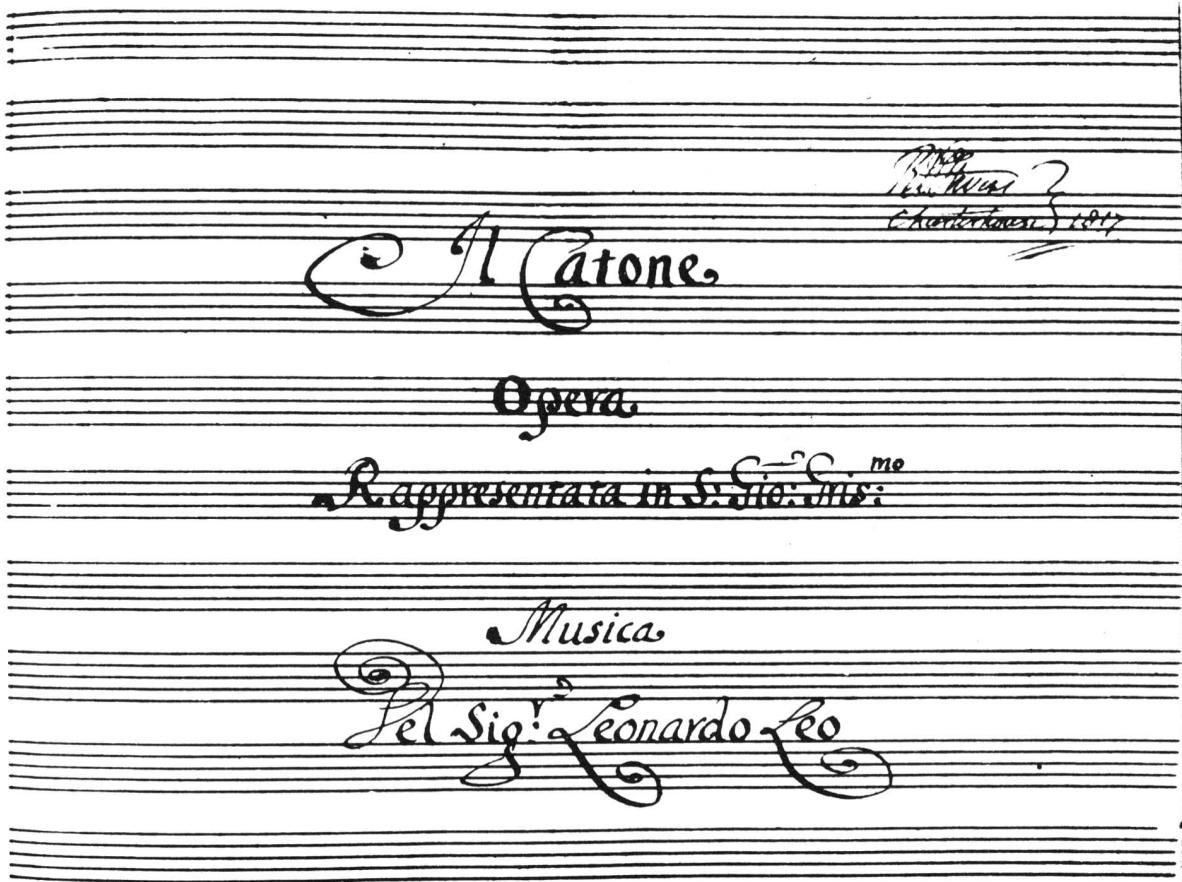
中文讲解
此条为图注占位符,原图位于第7页:图2,Leo的Catone in Utica(1729)原版乐谱的标题页;内嵌图像数据在排版中省略,仅保留位置与图注。它在上下文中用于确认本研究的核心蓝本——即亨德尔据以改编为Catone的那部意大利原作的版本依据,使读者能够把后文关于终止式记谱的对比工作锚定到具体的原版。
补充说明
无额外补充(图像细节需查看原图)。
脚注 / 边栏 / 图表 / 附加信息(如有)
本节内出现的脚注编号为35、36、37,原文均以角标形式带出,但脚注正文未在输入段落中给出,故不作内容补写。illus.2为Leo《Catone in Utica》(1729)的标题页,illus.3–14为正文逐条讨论的谱例片段;它们在论证中分别承担“蓝本来源”“终止式对照”“例外案例”的功能。
💡 本节核心要点
- 亨德尔1730–1737年间制作的集成歌剧(pasticcios)为研究其干诵宣叙调处理提供了可直接对照原谱与改编谱的证据库(Strohm所列九部)。
- 作者选择Leonardo Leo的Catone in Utica(亨德尔修订为Catone)作为典型案例。
- 在并置可对照的段落中,亨德尔保留原作终止式记谱,并明显倾向于使用4–3进行,以避免大三度与纯四度同时发声的冲突。
- 对图9b与图12等表面冲突的例外,作者通过图13所示“将Cesare从女高音移到男低音”提出一种避免不协和的解释,而非默认终止式被截短。
- 图14的特殊情况显示:倚音的有无决定是否真的出现不协和;总体而言亨德尔的终止式要么采用4–3进行,要么记为“延迟式”,少数不协和标记应被视作实际的演奏指示。
- 作者反驳“倚音既已偏离记谱、终止式也应一并偏离”的流行论点,认为现有证据稀薄,主张“按所记演奏”。
- 图13作为非亨德尔亲笔、但经其授权的抄本,为亨德尔的终止式记谱与实际演法提供了进一步的实例(脚注37),与Dean的意见相左。
🔑 关键术语
- pasticcio:集成歌剧,指将不同作曲家、不同歌剧中的咏叹调、宣叙调等片段抽出并重新拼合成一部新歌剧的制作方式;本节指亨德尔根据意大利范本改编并搬上舞台的九部此类作品。
- secco recitative:干诵宣叙调,仅由通奏低音(数字低音)伴奏、节奏自由的宣叙调形式,是18世纪意大利歌剧中陈述剧情的主要载体,本节考察的核心对象即其中终止式的处理。
- 4–3 progression:上方声部在终止式中从四度下行到三度的进行,常以数字低音标记“4–3”体现;本节认为亨德尔偏好此进行以避免大三度与纯四度同时发声的不协和。
- appoggiatura:倚音,在主音前先唱出一个与之相冲突的邻音再落到主音的装饰音;本节讨论其在终止式中的使用是否会引发大三度与纯四度的冲突。
- transcribe the part of Cesare from soprano to bass:在图13中,亨德尔为避免终止式的不协和,把Cesare这一角色的声部由女高音改记到男低音;这并非转调,而是改换声部类型以使终止式可采用4–3进行。
- delayed cadence:延迟式终止式,将终止和弦安排在拍点之后而非拍点上,本节将其与4–3进行并列为亨德尔谱面中两种“避免不协和”的常规终止式写法。
- masculine ending:阳性韵终止,歌词末音节落在重拍或单音节上、不跨拍延续;本节在图14中以之与倚音的有无共同决定终止式是否出现不协和。
sec0008 Melodic formation at the cadence
第1段(P0072)
原文复述
Melodic formation at the cadence
中文讲解
本句是P0072所在小节的二级标题,宣告本节将要讨论的论题:终止式(cadence)处咏叹调/宣叙调旋律是如何构成(formed)的。它接续前文对宣叙调终止和弦与低音走向的讨论,把焦点从和声层转到旋律层——具体而言,是终止处声乐旋律线的音程走向与最终落音的搭配关系。
第2段(P0073)
原文复述
In Gasparini’s Bajazet there are two main melodic formulas at the cadence. The first comprises a diatonic ascent to the 4th above the final note, followed by the drop of a 4th to this note (illus.15a); the other comprises a diatonic descent, followed by the drop of a 3rd to the final note (illus.15b). There is a third group, of which we find only three examples. The first concludes with the falling pattern of three notes, c″–b♭′–a′, ending on a note which is alien to the accompanying chord of E major, dominant of A minor (illus.16a). In the second case, the melody drops a 3rd to end on g′, over a chord of D major, dominant of G. The same happens in the third example, when the final melodic note f♯′ appears over the chord of C-major, dominant of F-minor (illus.16b).
中文讲解
本段把Gasparini《Bajazet》中终止处的旋律形态归为三组。前两组是主要类型:组一,先自然音级(diatonic)上行至终止音上方的四度,再下跳四度落回终止音(谱例15a);组二,先自然音级下行,再下跳三度落到终止音(谱例15b)。第三组只有三个例子:例一以c″–b♭′–a′的下行三音组结束,最终音a′落在E大调(a小调属和弦)这一所谓’外来’于该和弦的音上(谱例16a);例二旋律下跳三度落到g′,上方是D大调(G的属和弦);例三终止旋律音f♯′出现在C大调(f小调属和弦)之上(谱例16b)。三例的共同点是:旋律落音对所标注的属和弦而言看似’外音’,但都指向各自调性的主音。作者借此把读者注意力引到’旋律落音’与’和声落音’可能错位这一现象上,为下一段的解释做铺垫。
补充说明
本段涉及的术语关系属→主(dominant–tonic)在原文中以’X major, dominant of Y minor’的方式直接说明,可直接定位,无须补充外部知识。
第3段(P0074)
原文复述
The third example might easily be considered a spelling mistake. But a closer observation of the three examples makes it obvious that they all show a fall to the tonic note—the final chord of the recitative. These three examples might give us a hint about how the chords of the cadence should be placed—whether on the last syllable of the vocal part or after it.
中文讲解
本段是对P0073第三组例子的解释与推进:作者承认仅看例三(f♯′落在C大调上)很容易被当作’拼写错误’,但若将三例并置观察,就会发现它们的旋律落音都下行落到宣叙调终止的主音上。由此作者提出一个推断:这组例外提示了我们应当如何安排终止和弦的时值位置——是和声和弦落在声乐最后一个音节的正下方,还是落在该音节之后。换言之,‘外来音’之所以不是错,是因为声乐收束音与和弦收束可能在时间上并不同步;旋律先落在主音上,和声(属和弦)则在该音之后才真正结束。这一观察为后文Handel实例的对比埋下伏笔。
第4段(P0075)
原文复述
In Handel’s Tamerlano, his revision of Bajazet, it is striking that falling 3rd and falling 4th endings are used almost equally, whereas Gasparini had used the falling 4th more frequently. Melodic recitative endings appear which belong to the tonic, and not the dominant of the cadence (illus.17). We find a similar situation in Handel’s Aggrippina, where the falling
中文讲解
本段把对比对象从Gasparini转到Handel的《Tamerlano》(即Handel对《Bajazet》的改编本)。作者指出两个差异:其一,Handel在终止处对’下行三度’与’下行四度’两种旋律收束的使用频率几乎相等,而Gasparini原本更偏向’下行四度’;其二,Handel的宣叙调终止旋律落音属于主音而非属和弦(谱例17)。作者并以Handel的《Aggrippina》作为旁证,暗示这并非《Tamerlano》一剧独有,而可能是Handel在宣叙调终止写法上的整体偏好。本段的作用是把上一段从’是否错音’的疑虑,转化为对不同作曲家风格差异的实证描述。
第5段(P0076)
原文复述
Downloaded from https://academic.oup.com/em/article/33/3/473/569657 by Indiana University - Bloomington user on 11 August 2026
中文讲解
本段是页面右下角/边缘的下载来源水印(watermark),说明本文电子版由Oxford University Press旗下学术平台提供,于2026年8月11日由印第安纳大学伯明顿分校的用户下载。它属于版面信息,不参与正文论证。
第6段(P0077)
原文复述
early music august 2005 479
中文讲解
本段是期刊的页眉/页脚标识,标明刊物名(Early Music)、期次(August 2005)与本页页码(479),属于版面信息,不参与正文论证。
脚注 / 边栏 / 图表 / 附加信息(如有)
本小节包含两处版面附加元素:P0076为Oxford University Press学术平台的下载来源水印,注明下载者(Indiana University – Bloomington)与下载日期(11 August 2026);P0077为期刊页眉/页脚,标明刊物Early Music、2005年8月期及页码479。两者均不承载论证内容。小节正文还引用了若干谱例(illus.15a、15b、16a、16b、17),需查看原谱才能确认具体的音型走向,本输出未对其作不可核实的猜测。
💡 本节核心要点
- 本节将终止处的旋律形态分为三组:两组主要公式(上行四度再下跳四度;自然音级下行再下跳三度)与一组只有三例的例外形态。
- 第三组的共同特征是旋律落音看似’外于’属和弦,实则下行落到宣叙调终止的主音上,作者据此推断终止和弦与声乐最后音节在时值上可能错位。
- Handel《Tamerlano》在终止旋律收束上比Gasparini更平衡——下行三度与下行四度几乎等频,并出现旋律落在主音而非属和弦的写法。
- Handel《Aggrippina》中也出现类似现象,提示这是Handel在宣叙调终止处理上的一般倾向,而非《Tamerlano》孤例。
🔑 关键术语
- cadence(终止式):本节语境中指宣叙调或咏叹调段落结尾处的和声与旋律收束,重点在于终止点上旋律音程走向与最终落音的搭配。
- diatonic ascent / descent(自然音级上行/下行):指在自然音阶体系内、不引入变化音的连续级进音列,本节用其描写终止前旋律的走向阶段,再接以跳进落回终止音。
- falling 3rd / falling 4th(下行三度/下行四度):本节用以指代两类收束音程:旋律先经级进再向下跳三度或四度落到终止音,是Gasparini与Handel终止旋律比较的两个核心范畴。
- dominant / tonic(属/主):和声功能名称。本节以’X major, dominant of Y minor’的句式直接标记属七和弦与其所倾向的小主音,属与主的’错位’是论证的核心现象。
- alien note(外来音/外音):本节用来描述P0073第三组例子中旋律落音不属于所标注属和弦音级的情况,作者随后论证这种’外’是相对于和弦时值位置而言,并非拼写错误。
- melodic recitative ending(宣叙调旋律收束):指宣叙调段落终止时声乐旋律的落音走向,是本节与和声终止落音对比的对象。
sec0009 [描述性拆分] Melodic cadential formulas in Tamerlano, Agrippina and the Catone pasticcio
第1段(P0078)
原文复述
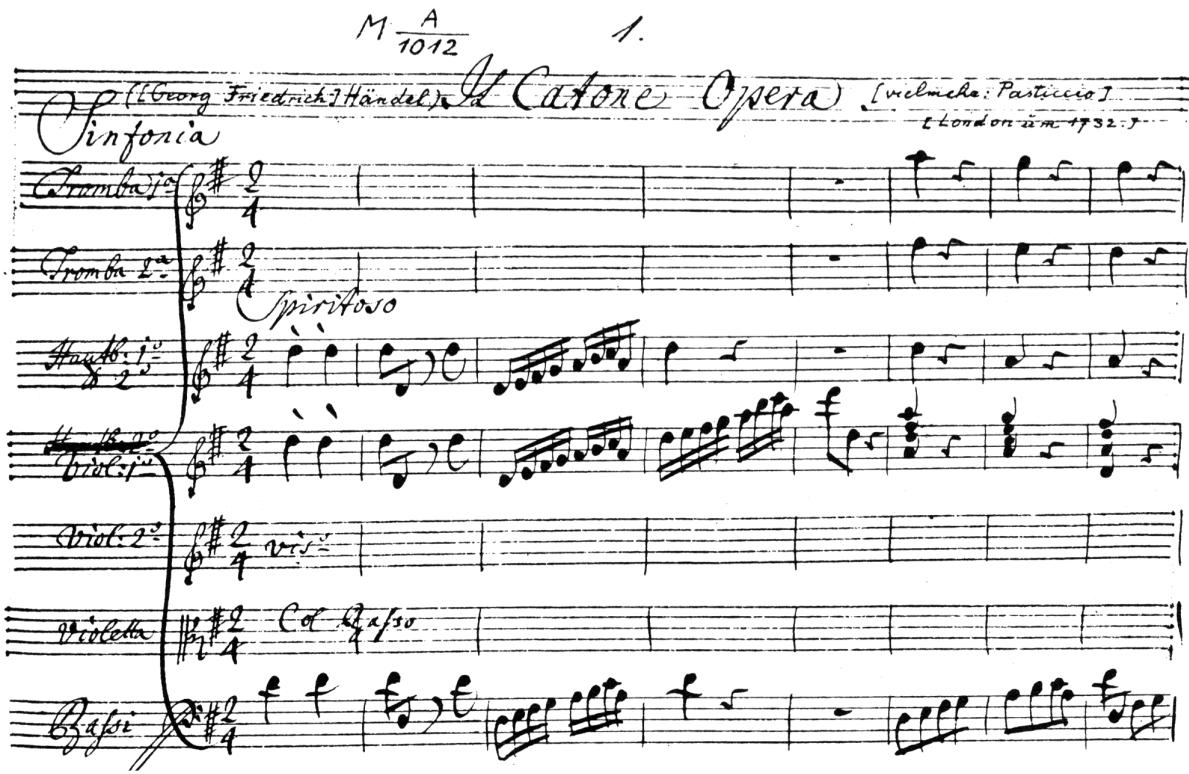
中文讲解
该段为图3的占位符,标题原文标注’Handel, Catone (1732), opening’,意指该图截取的是亨德尔《卡托内》(1732)总谱中乐曲起始处的若干小节谱例。由于内嵌图像数据已省略,仅能从图注确认例证的来源:亨德尔所作、并且改编自1732年上演版本的开篇段落。该小节实际谱例细节需查看原图,包括声部配置、调号、节奏与歌词布置等。
补充说明
本段是前一节(或本页主文)所引卡托内改编证据链中的第一张谱例;具体音乐特征(如终止式类型)需配合正文及后续例对照阅读。
第2段(P0079)
原文复述

中文讲解
该段为第8页一副谱例或图版的占位符,原文仅给出通用的’第8页图像或乐谱示例’说明,并无单独图号或详细标题。具体内容须查看原图。本段在文中紧随图3之后,可能与图3构成对照版面或递进关系的版式占位。
第3段(P0080)
原文复述
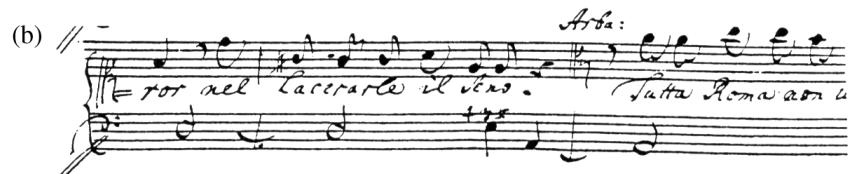
中文讲解
该段为图4的占位符。图注写明:(a)取自列奥《卡托内在尤蒂卡》第10页、第9小节(系统)段落;(b)取自亨德尔《卡托内》第10页、第16小节段落。两者并列以供比较,意图在同一终止式位置对照作曲家各自如何处理宣叙调结束。该图缺少的图像数据应能让人直接核对两者的音型、节奏与歌词断句。
补充说明
图4对应正文中关于’列奥的宣叙调总在声乐声部记出下行四度终止,并带有四度倚音’的判断,是论证亨德尔借自列奥这一规则的关键谱例之一。
第4段(P0081)
原文复述
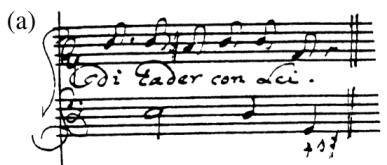
中文讲解
第8页图像或乐谱示例占位符,承图4版式紧随其后,无独立图号;具体内容需查看原图。
第5段(P0082)
原文复述
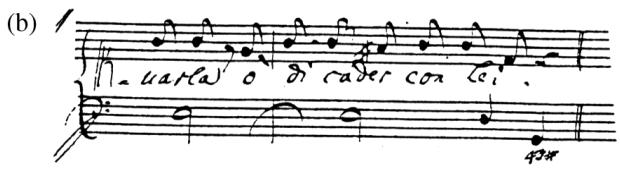
中文讲解
图5占位符。图注标明:(a)列奥《卡托内》第12页第8小节;(b)亨德尔《卡托内》第12页第8小节。两位作曲家在同一原作位置的写法差异是该图想要呈现的对照核心。
补充说明
图5与图4性质相同,均为列奥/亨德尔在《卡托内》对应场景谱例的并置,用来支撑’亨德尔在卡托内直接借鉴列奥终止式’的论述。
第6段(P0083)
原文复述
early music august 2005
中文讲解
页眉文本,标明期刊名称及期次:‘Early Music’(古乐/早期音乐期刊),2005年8月号。该文本仅是版本/出处标识,无须独立论证。
第7段(P0084)
原文复述
Downloaded from https://academic.oup.com/em/article/33/3/473/569657 by Indiana University - Bloomington user on 11 August 2026
中文讲解
该段为OUP学术下载页脚占位文字,标明本文下载来源:牛津学术出版社Early Music第33卷第3期第473页文章,于2026年8月11日由印第安纳大学伯明顿分校用户下载。该信息仅用于版本溯源,不影响正文的论证内容。
第8段(P0085)
原文复述

中文讲解
第9页上的谱例或图版占位符,无独立图号;具体内容须查看原图。
第9段(P0086)
原文复述

中文讲解
图6占位符。图注标出:(a)列奥《卡托内》第21页第8小节;(b)亨德尔《卡托内》第20页第2小节。位置相近但页码略有不同,对照阅读可发现两位作曲家在《卡托内》该处对位宣叙调终止式的处理。
补充说明
图6承接图4、图5的列奥/亨德尔对照序列,继续用并置谱例强化’借自列奥’这一论断。
第10段(P0087)
原文复述
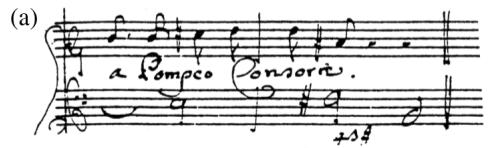
中文讲解
第9页无名谱例/图版的占位符,紧随图6;具体内容须查看原图。
第11段(P0088)
原文复述

中文讲解
图7占位符。图注:(a)列奥《卡托内》第37页第3小节;(b)亨德尔《卡托内》第24页第4小节。两者分别取自两位作曲家各自版本宣叙调中的某段,作为对照。
第12段(P0089)
原文复述

中文讲解
第9页谱例/图版占位符,无独立图号,紧随图7;具体内容须查看原图。
第13段(P0090)
原文复述

中文讲解
图8占位符。图注:(a)列奥《卡托内》第44页第7小节;(b)亨德尔《卡托内》第32页第5小节。此图为列奥/亨德尔对照系列又一例。
第14段(P0091)
原文复述
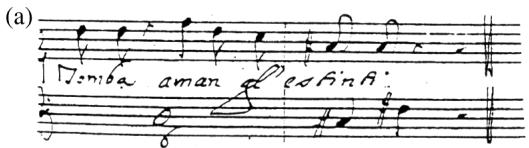
中文讲解
第9页无名谱例/图版占位符,紧随图8;具体内容须查看原图。
第15段(P0092)
原文复述
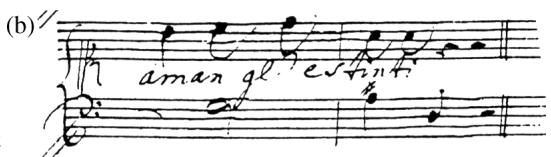
中文讲解
图9占位符。图注:(a)列奥《卡托内》第45页第8小节;(b)亨德尔《卡托内》第42页第4小节。同样为并置对照例。
第16段(P0093)
原文复述
early music august 2005
中文讲解
第9页的页眉文本,标注’early music august 2005’,仅说明期刊与期次。
第17段(P0094)
原文复述
Downloaded from https://academic.oup.com/em/article/33/3/473/5/69657 by Indiana University - Bloomington user on 11 August 2026
中文讲解
第9页的OUP下载信息页脚,注明本文出处及下载者、下载时间。
第18段(P0095)
原文复述

中文讲解
第10页谱例/图版占位符,无独立图号;具体内容须查看原图。
第19段(P0096)
原文复述

中文讲解
图10占位符。图注:(a)列奥《卡托内》第65页第9小节;(b)亨德尔《卡托内》第54页第1小节。继续列入列奥/亨德尔对照系列。
第20段(P0097)
原文复述

中文讲解
第10页无名谱例/图版占位符,紧随图10;具体内容须查看原图。
第21段(P0098)
原文复述

中文讲解
图11占位符(原图注还提及’(b)‘片段的衔接)。图注:(a)列奥《卡托内》第88页第9小节;(b)亨德尔《卡托内》第72页第6小节。继续作为两位作曲家在同一原作段落上的对照。
第22段(P0099)
原文复述

中文讲解
第10页无名谱例/图版占位符,紧随图11;具体内容须查看原图。
第23段(P0100)
原文复述
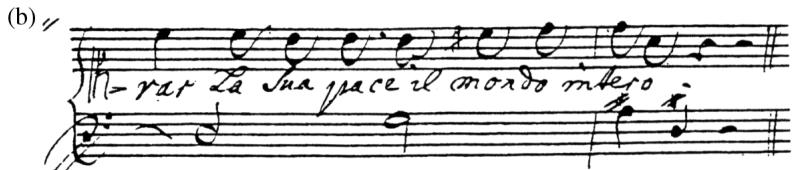
中文讲解
图12占位符。图注:(a)列奥《卡托内》第107页第1小节;(b)亨德尔《卡托内》第88页第4小节。延续列奥/亨德尔系列并置例证。该序列图示至12号共约12对对照谱例,构成作者论证的核心图像证据。
第24段(P0101)
原文复述
3rd ending seems to dominate in the secco recitatives (illus.18), and there are also examples for the vocal part ending on the tonic note. Gasparini’s Bajazet has recitatives that blend directly into an accompagnato or an aria, a characteristic that Handel adopted in Tamerlano.
中文讲解
本段为本节首次出现的连续正文字。作者陈述两个观察:(1)在下属/主音关系的下行三度终止式似乎在干燥宣叙调(secco recitatives)中占主导地位(图18所示),也存在声乐声部直接收在主音上的例子;(2)伽斯帕里尼《巴亚泽》中的宣叙调可直接过渡到accompagnato(器乐伴奏的宣叙调)或咏叹调,亨德尔在《塔梅尔拉诺》中吸收了这一特征。该段把列奥式宣叙调与更早的伽斯帕里尼联系起来,揭示出亨德尔既继承了列奥的终止式选择,也采纳了伽斯帕里尼的段落衔接方式。
补充说明
本段是第10页谱例组之后的总结性陈述,对前文图18至图12序列中具体看到的乐谱现象做出归纳;同时向下一个对象(列奥vs亨德尔在《卡托内》的对比)过渡。
第25段(P0102)
原文复述
A comparison of Leo’s and Handel’s versions of Catone is also instructive. The first thing to notice in Leo’s recitatives is that he always notates the falling 4th endings in the vocal part with an appoggiatura of a 4th (illus.19). But alongside this obvious regularity, there is one exceptional example
中文讲解
本段开始一个新的比较主题:列奥与亨德尔两个版本的《卡托内》并置审视。首先提请注意:在列奥的宣叙调里,凡是出现下行四度终止式,他总会在声乐声部记出’四度倚音’(appoggiatura of a 4th),图19即此。然而,在这层明显规整之下,作者预告后文还将举出’一个例外’(本句未完,下接图20所示例外)。因此本段具有’确立规则 + 埋伏例外’的双重作用,既把列奥的写作习惯明确化,也预留下文中关于特殊情况的论述空间。
补充说明
倚音(appoggiatura)是17—18世纪宣叙调记谱约定中的关键概念:作曲家若在声乐线顶端写出小音符即表示实际演唱时按倚音规则处理;列奥’总是记出’意味着他在《卡托内》里把规则外化为显式标记,与亨德尔更常用的’隐式’处理形成对比。
第26段(P0103)
原文复述
482 early music august 2005
中文讲解
第10页的页码'482’与期刊期次页眉,标明本页页码和期刊期次。
第27段(P0104)
原文复述
Downloaded from https://academic.oup.com/em/article/33/3/473/569657 by Indiana University - Bloomington user on 11 August 2026
中文讲解
OUP学术下载页脚,标明出处与下载者。
第28段(P0105)
原文复述
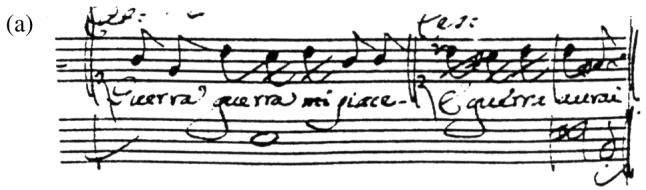
中文讲解
第11页谱例/图版占位符,无独立图号;具体内容须查看原图。
第29段(P0106)
原文复述
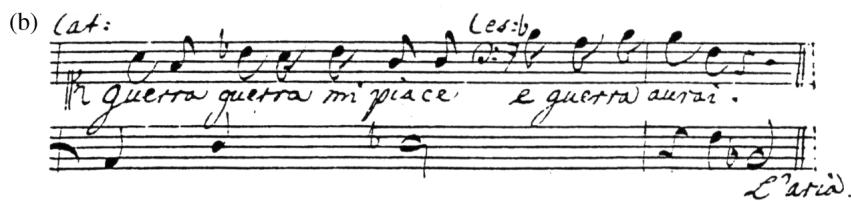
中文讲解
图13占位符。图注:(a)列奥《卡托内》第126页第5小节;(b)亨德尔《卡托内》第99页第10小节。继续用作列奥/亨德尔在《卡托内》相应场景的对照例证。
第30段(P0107)
原文复述
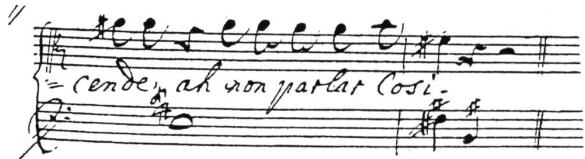
中文讲解
图14占位符。图注:亨德尔《卡托内》第115页第4小节。该图为单独的亨德尔谱例,不再并置列奥,可能用来展示亨德尔在《卡托内》中的某一种独特终止式处理或倚音使用方式,与后文’写明与未写明的四度倚音数量相当’的论断对应。
第31段(P0108)
原文复述
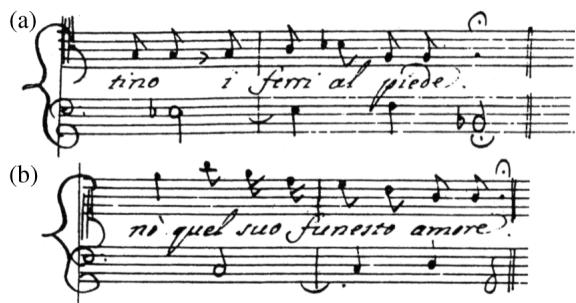
中文讲解
图15占位符。图注:伽斯帕里尼《巴亚泽》中两个未编页码的谱例片段(a、b)。这并非来自《卡托内》系列,而是回到伽斯帕里尼的《巴亚泽》,作为佐证该作曲家在宣叙调与accompagnato/咏叹调衔接上的特殊做法,与本节首段呼应。
第32段(P0109)
原文复述
(illus.20): here both final notes are crotchets, rather than the usual quavers, and the falling 4th is preceded by a quaver rest out of respect for the lyrics. The falling 3rd ending also appears in Leo’s recitatives, where the final note is the root of the tonic chord. A particularly frequent melodic formation (besides the aforementioned notated 4th appoggiatura) starts from the 4th, moves down a minor 2nd and then returns (illus.21)—a form rarely found in the works of Gasparini and Handel under examination. In Handel’s version of Catone, written and unwritten 4th appoggiaturas appear in equal numbers; a few examples of the falling 3rd ending, concluding on the tonic note can also be found.
中文讲解
本段是本节结束段落,承接P0102中断的内容,分四个层次陈述:(1)图20展示了在列奥宣叙调’总是有四度倚音’规则之外的一个例外——这里两个结尾音都是四分音符(crotchets)而非通常的八分音符(quavers),且在下行四度之前的八分音符休止,是为了照顾歌词而特意安排的;(2)下行三度终止式同样出现在列奥的宣叙调中,其最后音落在主音和弦的根音上;(3)图21所示另一频现的旋律形态是:从四度音起,向下走小二度再回到原位——这一形式在被考察的伽斯帕里尼与亨德尔的作品中很少出现,是列奥较具个人色彩的处理;(4)在亨德尔版本的《卡托内》中,写明与未写明的四度倚音数量相当;下行三度终止式收到主音上的例子也能找到若干。本段的实质是把列奥的常规、列奥的例外、列奥的个人特色、亨德尔的取舍四个维度同时摆出,使读者能据以判断亨德尔到底是直接复制列奥、还是有自己的调整。
补充说明
crotchet(四分音符)、quaver(八分音符)是描述终止式节奏差异的术语;‘writing vs unwritten appoggiatura’指的是作曲家在谱面上是否显式标出的小倚音——‘未标出’意味着演唱者按惯例自行加倚音,是实际演奏传统的重要部分。
脚注 / 边栏 / 图表 / 附加信息(如有)
本小节主要由谱例图(illus.3—15,其中3为亨德尔《卡托内》开篇;4—13大体为列奥《卡托内在尤蒂卡》与亨德尔《卡托内》相应小节的并置对照;14为单独亨德尔《卡托内》例;15为伽斯帕里尼《巴亚泽》未编页码样例)及对应的期刊页眉、OUP下载页脚构成;图18、19、20、21在本段正文中被引用,但对应图像未在本节范围内。其作用均作为正文陈述的谱面证据。
💡 本节核心要点
- 在亨德尔《卡托内》中,所引用的若干段宣叙调终止式几乎逐一回溯到列奥《卡托内在尤蒂卡》的同一位置,揭示出借自列奥的迹象。
- 列奥的宣叙调有一条显式规律:凡下行四度终止,必在声乐声部记出四度倚音;亨德尔版本中’写明与未写明’的倚音数量大致相当,说明亨德尔既继承又调整。
- 列奥的宣叙调还多出一种’从四度音下行小二度再回返’的旋律形态(图21所示),在被考察的伽斯帕里尼和亨德尔作品中很少见到,是列奥更个人化的特征。
- 列奥的规则中存在为照顾歌词而产生的特例(图20):两结尾音用四分音符而非通常的八分音符,并在下行四度前安排八分音符休止。
- 伽斯帕里尼《巴亚泽》宣叙调直接过渡到accompagnato或咏叹调的做法,是亨德尔在《塔梅尔拉诺》中吸收并加以运用的特征。
- 在三部被考察的作品中,下行三度终止同样存在并常以主音结尾;该终止在干燥宣叙调中似占主导地位(图18)。
🔑 关键术语
- secco recitative:中文作’干燥宣叙调’,指只用通奏低音伴奏的宣叙调类型;本节以此为统计主体,讨论其终止式倾向。
- accompagnato:中文作’器乐伴奏宣叙调’,区别于secco的、用弦乐等完整器乐伴奏的宣叙调;本节指出伽斯帕里尼的secco可直接过渡到accompagnato或咏叹调。
- appoggiatura of a 4th:中文作’四度倚音’,宣叙调中以小音符标记、出现于强拍的非和弦音;列奥在《卡托内》中’总是记出’,亨德尔则写明与未写明各半。
- falling 4th ending / falling 3rd ending:中文作’下行四度(终止)’/‘下行三度(终止)’,指声乐声部在宣叙调结尾时的下行动作;前者多带有四度倚音,后者常收在主音上。
- crotchet / quaver:分别为四分音符、八分音符的英式术语;本节用来描述列奥特例(图20)中为歌词让位而出现的节奏型变体。
- Tamerlano / Agrippina / Catone pasticcio:本节副题中的三部作品:亨德尔的歌剧《塔梅尔拉诺》与《阿格里皮娜》,以及1732年由亨德尔改编上演的《卡托内》拼盘(pasticcio);三者构成被比较的对象群。
sec0010 The form of the cadence
第1段(P0110)
原文复述
The form of the cadence
中文讲解
这是本节的小节标题,明确提示读者:以下讨论的对象是终止式(cadence)的形态——即终止式中各声部在节奏、时值与结构上的具体安排,而非和声功能本身。标题用“the form of the cadence”而非“the harmony of the cadence”,意味着作者接下来要谈的是终止式在谱面上呈现出的几种“型”,并以此说明作曲家的个人偏好如何体现在终止式的节拍—节奏排布之中。
第2段(P0111)
原文复述
Looking at the cadences in the selected examples, the individual preference of the respective composer becomes obvious. In Bajazet Gasparini prefers a scholarly IV–V–I, with minims in the penultimate bar, followed by a semibreve in the last. This seemingly monotonous principle, however, offers possibilities for variation: the progression can occur as (1) two minims in the penultimate bar, a semibreve in the last (illus.22); (2) two crotchets on the third and fourth beats of the penultimate bar, followed by a semibreve (illus.23); (3) two crotchets and a minim, all in the final bar (illus.24); (4) three minims, with the vocal part ending on the second (illus.25); (5) a minim and two crotchets, all in the final bar (illus.26). Though an exceptional form shown as illus.27 is also to be found, in general just five forms determine the bass part within the final cadence. Gasparini varies between these models throughout the course of the opera—surely in line with the libretto.
中文讲解
本段的核心主张是:通过检视所选谱例中终止式的写法,可以清楚看到每位作曲家各自的个人偏好;在 Gasparini 的《Bajazet》中,这种偏好体现为一种“学究式的”IV–V–I 进行——倒数第二小节用 minim(全音符时值的二分音符,即 half note),最后一小节用 semibreve(全音符,whole note)。
作者并没有停留在指出“单调”这一印象,而是进一步把这看似单一的节拍—时值模式分解为五种实际可能的变体,并用编号 (1)–(5) 列举,配合 illus.22–26 的编号提示读者去对照谱例:(1) 倒数第二小节两个 minim、最后一小节一个 semibreve;(2) 倒数第二小节第三、第四拍各一个 crotchet(四分音符),接一个 semibreve;(3) 两个 crotchet 加一个 minim 全部安排在最后一小节;(4) 三个 minim,但声乐声部在第二个 minim 上结束;(5) 一个 minim 加两个 crotchet 全部在最后一小节。这五种型所规定的对象是“低音声部”(the bass part),也就是说,作者是通过低音的节奏划分来归纳终止式的。
接着作者加上了一个限定:除了这五种之外,还有 illus.27 所示的“例外型”存在,但他仍以“in general”(总体上)作出归纳性陈述——共五种型决定终止式的低音面貌。最后一句话揭示了这套节拍—节奏安排背后的语境驱动:Gasparini 在整部歌剧中于这些型之间切换,“surely in line with the libretto”(必定是与脚本/唱词相配合的)。换言之,作者并不把这五种型看作作曲家随手为之的形式游戏,而是认为其切换服从于歌词对呼吸、语气和戏剧节奏的需求。
补充说明
本段术语 minim 与 semibreve 是英文古乐谱与现代记谱并用时的常见术语:minim 在现代英美记谱中等价于 half note(二分音符),semibreve 等价于 whole note(全音符);crotchet 等价于 quarter note(四分音符)。作者用古乐谱术语,是为了让讨论贴合早期音乐/巴洛克语境下的谱面节奏划分方式。
第3段(P0112)
原文复述
Another striking feature of the recitative cadences is that the vocal part almost without exception ends on the fourth beat of the penultimate bar. For the majority of the recitatives this means that it almost always concludes on a weak beat, and that, if we follow the notation, the dominant chord merges with this light unemphasized ending. Furthermore Gasparini does not write an appoggiatura of either a 3rd or a 4th. However, if they were executed with an appoggiatura, the weakest beat in a 4/4 bar would receive a strong stress. The question is whether this particular notation can be taken as grounds to argue that, when performing Gasparini, the appoggiaturas should only be placed in those contexts where the singing voice ends on the strong first or third beats of the bar, while in the case of an ending on a weak beat, the notation should be understood literally.
中文讲解
本段提出的是关于宣叙调终止式的第二个显著特征:声乐声部“几乎毫无例外地”在倒数第二小节的第四拍上结束。在 4/4 拍中,第四拍属于弱拍,因此这意味着大多数宣叙调都在弱拍上结束其人声线条;进一步,若严格依照 Gasparini 的记谱,那么属和弦(dominant chord)就会与这一轻而未被强调的结束融合在一起——也就是说,被解决的属和弦并不是被特意加重处理的对象。
作者接着指出 Gasparini 没有写出 3rd 或 4th 的倚音(appoggiatura),并给出一个反事实假设:若演唱者在这些位置加上倚音去执行,那么 4/4 拍中最弱的那一拍反而会承受一个强重音。这与上一个事实——“终止落在最弱的拍上”——直接构成张力:原谱的非重读记法与“加倚音”这一演奏惯例在节奏重音位置上互相冲突。
段末由此提出一个具有演奏指导意义的问题:是否可以把 Gasparini 的这种特定记法本身当作论据,主张在表演他的作品时,倚音只应当被加在那些声乐声部结束于强拍(第一或第三拍)之处;而当声乐结束于弱拍时,就应当“按字面”来理解记谱——即不加倚音。本段的真正功能是把一个看似中性的谱面事实(声乐落在第四拍)转化为关于巴洛克演奏实践(倚音加或不加)的论证依据,并把它作为一个悬而未决的问题留给读者。
第4段(P0113)
原文复述
early music august 2005 483
中文讲解
这是期刊页码/刊头信息,标明本段出自期刊《Early Music》2005 年 8 月刊第 483 页。它属于版面元数据,本身不承载学术主张。
第5段(P0114)
原文复述
Downloaded from https://academic.oup.com/em/article/33/3/473/569657 by Indiana University - Bloomington user on 11 August 2026
中文讲解
这是由 Oxford University Press 学术平台(academic.oup.com/em)自动加上的下载来源与时间戳,记录本 PDF 系于 2026 年 8 月 11 日由印第安纳大学伯明顿分校的机构用户下载,文章 DOI 路径中可定位到卷 33、期 3、起始页 473。该信息仅为出处与版权溯源所用,不构成正文论证的一部分。
脚注 / 边栏 / 图表 / 附加信息(如有)
本小节中包含两段非正文版面信息:P0113 为期刊《Early Music》2005 年 8 月刊第 483 页的页眉,标明本文所在的卷期页位;P0114 为 Oxford Academic 平台自动生成的下载来源行,记录下载机构(Indiana University – Bloomington)、下载时间(2026 年 8 月 11 日)以及文章在 OUP 上的 URL(含卷 33 / 期 3 / 起始页 473 等定位信息)。这两条对正文论证不起支撑或限定作用,仅为出版溯源。
💡 本节核心要点
- Gasparini 在《Bajazet》中偏好一种 IV–V–I 的“学究式”终止式框架:倒数第二小节用 minim,最后一小节用 semibreve。
- 在上述框架内,低音声部的实际节奏排布可归纳为五种型,分别由 minim、semibreve、crotchet 的不同组合构成,并以 illus.22–26 为谱例支撑;illus.27 是一种例外型。
- 五种型之间的切换并非随意,作者明确指出这种变化“surely in line with the libretto”,即服从于脚本/唱词的需求。
- 宣叙调终止式的另一显著特征是声乐声部几乎都结束在倒数第二小节的第四拍(即 4/4 中的弱拍),导致按原谱严格读谱时属和弦与一个未被强调的弱拍结束融合在一起。
- Gasparini 在这些位置未记 3rd 或 4th 的倚音;作者由此引出一个演奏实践问题:当声乐结束于弱拍时,是否应“按字面”理解其记谱而不加倚音,只有在结束于强拍处才加倚音。
🔑 关键术语
- cadence(终止式):本节核心对象;作者所讨论的不是和声功能本身,而是终止式在节拍—时值上的“型”。
- IV–V–I:Gasparini 在《Bajazet》中偏好的终止式和声骨架,作者称之为“scholarly”(学究式的)。
- minim / semibreve / crotchet:英式古乐谱术语;minim 对应现代的 half note,semibreve 对应 whole note,crotchet 对应 quarter note。本节用以划分终止式中各声部的节奏位置与时值。
- penultimate bar(倒数第二小节):终止式节奏分析的关键参照位置;本节所列五种型与例外型均围绕倒数第二小节与最后一小节之间的时值分配来定义。
- appoggiatura(倚音):巴洛克声乐/器乐演奏中常见的装饰音,常以小三度或四度音程出现;本节以此讨论 Gasparini 是否记写倚音以及表演时是否应添加倚音。
- dominant chord(属和弦):在本节语境中特指终止式中 V 级的属和弦;作者强调在 Gasparini 的记谱下,该属和弦会与一个轻而未被强调的弱拍结束相融合。
sec0011 [描述性拆分] Gasparini’s bass patterns and the role of appoggiaturas in Bajazet
第1段(P0115)
原文复述

中文讲解
本条是OCR占位符,对应第12页上一处图示(图像或乐谱示例)的标记,原始像素数据未保留,只保留了它所在的位置信息。由于无法看到图像内容,其与下文论证的具体对应关系(如是否展示某一低音走句或倚音记号)需查阅原刊第12页方能确认。
补充说明
该占位符与下文P0116的图16(a,b)在版面上的先后关系是连续的,但在缺少图像的情况下无法判断它与P0119及之后的讨论是否直接呼应。
第2段(P0116)
原文复述

中文讲解
这是图16(a,b)的占位符,说明所引用的乐谱片段来自Gasparini所作歌剧《Bajazet》原版乐谱中未标注页码的两处页面的并置(a与b两段),供读者对照查阅。原图中的具体音符、和声配置及倚音记号无法凭文本确认,需查看原刊插图。
补充说明
图16是后文P0120提到Gasparini《L’armonico pratico al cimbalo》例证(第28号图例illus.28)时与《Bajazet》原谱进行对照的视觉基础。
第3段(P0117)
原文复述

中文讲解
这是图17的占位符,对应的乐谱来自Handel所作《Tamerlano》手稿的第21页正面(f.21r,即folio 21 recto)。原图的具体内容须查阅原刊,文本无法替代。
补充说明
图17被纳入与Gasparini《Bajazet》谱例的对照,是为了说明Handel在宣叙调终止处理上是否沿用或偏离Gasparini的低音模式。
第4段(P0118)
原文复述
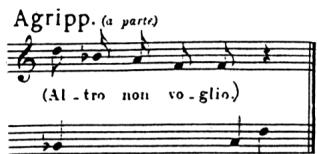
中文讲解
这是图18的占位符,标注的乐谱取自Handel《Agrippina》的某版本(AHA版)第103页。AHA通常是该作品某一权威版本(如Halliwell或Handel重要版本)的缩写,具体所指须结合原文参考文献核实。原始页面内容无法在文本中重建。
补充说明
图18与图17共同构成对Gasparini模式的横向比较样本,时间上早于或同期于Gasparini,呈现Handel在相同体裁中的处理。
第5段(P0119)
原文复述
There remains the problem of harmony. With the vocal part ending on the dominant note there is no difficulty. But introducing an appoggiatura creates a dissonance against the dominant chord: a falling 3rd ending produces a 9th suspension, a falling 4th ending produces a 4th suspension. When discussing the question of how the cadence chord should be placed, both these possibilities will have to be taken into account.
中文讲解
本段承前文讨论低音走句与倚音应用,从旋律层面推进到和声层面,提出一个尚未解决的难题:若声乐线条本就落在属音上则不存在问题;但一旦引入倚音,就会与属和弦产生不协和——下行三度终止时倚音造成九度挂留(9th suspension),下行四度终止时倚音造成四度挂留(4th suspension)。作者提醒后文讨论终止和弦位置时,必须同时考虑这两种可能。这里区分"下行三度"与"下行四度"两种终止方式,意在说明倚音在声部进行方向不同时所产生的挂留类别不同:九度挂留通常较四度挂留更为刺耳,因而对终止位置(强拍或弱拍)的选择有直接影响。
补充说明
九度挂留与四度挂留均属传统对位中的常见不协和,前者被视为更尖锐;本段的术语铺垫为下文P0120引用Gasparini要求4–3进行作理论准备。
第6段(P0120)
原文复述
In Gasparini’s case, the availability of his theoretical treatise L’armonico pratico al cimbalo (1708) can be deceptive, as we might think ourselves in the fortunate position of finding there all our questions answered and all our assumptions confirmed. However, Gasparini mentions only one example of a recitative cadence in this work. From this example we can at least infer that in the case of a two-minim bar with dominant–tonic ending and the melodic vocal part finishing on the bar’s accentuated first beat, he demands a falling 4th ending, as he explicitly writes this in his example. The appoggiatura leading to the dominant chord is to be understood as a suspended 4th, which is resolved into the 3rd on the second note, the root of the dominant (illus.28).
中文讲解
本段讨论Gasparini的理论依据,提示读者不要因他留有1708年的《L’armonico pratico al cimbalo》(《键盘上的和声实践》)而误以为所有问题都可从中得到现成答案。事实上,该论著中只举了一个宣叙调终止的例子;从这一例子至少可以推断:在以两拍半音符为一小节、以属—主结束、且声乐旋律落在此小节重音第一拍的语境下,Gasparini明确要求下行四度终止,而把导向属和弦的倚音视为挂留四度,并在第二音(属音的根音)上解决为三度(即4–3进行)。作者的态度是一种"利用但保持警惕”:Gasparini的论著虽可援引,但单一例证不能覆盖所有情况。illus.28提示该例见第28号插图。
补充说明
《L’armonico pratico al cimbalo》(1708)是巴洛克晚期意大利重要的键盘和声教学文献,本段是节内首次明确援引它来支持某一终止类型的合法性。
第7段(P0121)
原文复述
Obviously Gasparini expected the falling 4th ending to be executed, but also wanted to avoid the consequent dissonance by asking for a 4–3 progression. But the question remains of whether the falling 3rd and 4th endings are really meant to be placed on weak beats, which Bajazet tells us in various examples. Gasparini’s theoretical writing also lacks reference to the possible application of an appoggiatura in the falling 3rd ending. But we can still conclude with certainty from the examples above that a dissonant chord in such an exposed position was fairly unusual.
中文讲解
本段承接P0120,先承认Gasparini显然预设了4–3进行以避免下行四度产生的四度挂留这一不协和,但又提出仍未解决的问题:Gasparini是否真的意图把下行三度与下行四度终止放在弱拍上——这一点《Bajazet》原稿中的多处实例有所暗示,而理论著作却未予明言。Gasparini的理论文本同样未提及下行三度终止时倚音的可能应用。尽管如此,作者仍可由先前列举的谱例确定地得出结论:在如此暴露的位置出现不协和和弦在当时相当罕见。该段体现的是文献与谱例之间的张力:理论文本覆盖不全,必须靠乐谱实例补足;并以一个确定的小结论收束,为下文论证留下节制而稳健的判断。
补充说明
本段与P0119在结构上呼应:P0119提出两种倚音—挂留的可能性(9th与4th),P0121则以《Bajazet》谱例为证据,把焦点收回到实际罕见性上。
第8段(P0122)
原文复述
early music august 2005
中文讲解
这是期刊页眉信息,标示本文载于《Early Music》2005年8月号,是版面的元数据,不参与正文论证。
第9段(P0123)
原文复述
Downloaded from https://academic.oup.com/em/article/33/3/473/569657 by Indiana University - Bloomington user on 11 August 2026
中文讲解
这是Oxford University Press学术网站生成的下载水印,注明本文由Indiana University – Bloomington的用户于2026年8月11日下载,卷号为33第3期第473页起的文章,属于期刊电子版访问痕迹,不构成正文内容。
脚注 / 边栏 / 图表 / 附加信息(如有)
本小节涉及的附加材料包括三组插图占位符(图16 a/b、图17、图18,分别来自Gasparini《Bajazet》、Handel《Tamerlano》f.21r、Handel《Agrippina》AHA版p.103)以及正文P0120中援引的illus.28(来自Gasparini《L’armonico pratico al cimbalo》)。这些图例的作用是与正文论断形成视觉互证:图16用以对照Gasparini自身的理论与他在《Bajazet》中的实践;图17、图18用以横向比较Handel同期作品对同体裁终止的处理。脚注方面,P0120末尾的上标38和39对应于论文正文中的参考标注,限于本节输入未提供具体脚注内容,故不另作展开。
💡 本节核心要点
- 本节的核心问题是:宣叙调终止处若引入倚音,则会与属和弦形成挂留不协和——下行三度终止对应9th挂留,下行四度终止对应4th挂留。
- Gasparini的理论文本《L’armonico pratico al cimbalo》(1708)只提供单一宣叙调终止例证,由此可推知他要求在两拍半小节、属—主收束、旋律落重音首拍的语境下使用下行四度终止并以4–3进行解决4th挂留。
- 尽管Gasparini理论未明言倚音置于弱拍,但《Bajazet》原稿中的多处实例支持这一惯例,并表明在暴露位置出现不协和和弦在当时的实践中相当罕见。
- 本节的论证路径由旋律—和声层面的并列可能性,过渡到Gasparini文献的限度,再落到对《Bajazet》谱例的稳健归纳,体现出理论文本与原始乐谱之间的互补与张力。
- 节内图例(图16–18及illus.28)以视觉材料支持而非替代上述论证,原图细节须查原刊方能核实。
🔑 关键术语
- appoggiatura(倚音):指在本不属于重音的位置上以不协和音先行,再在下一音解决为协和的装饰或结构性音。在本节中专指宣叙调终止前声乐线条中插入的倚音,它会与属和弦产生挂留不协和。
- suspension(挂留):前一声部的音延留至下一和弦,造成与新和弦的不协和再解决。本节具体讨论9th挂留(下行三度终止所产生)与4th挂留(下行四度终止所产生)。
- falling 3rd / falling 4th ending(下行三度/下行四度终止):指声乐旋律以音级下行的方式抵达终止音:下行三度与下行四度分别指向倚音所归属的不协和类别,前者多为9th,后者多为4th。
- recitative cadence(宣叙调终止):宣叙调中常见的和声进行与终止式,本节围绕它讨论低音走句、倚音与属—主和弦的配合问题。
- 4–3 progression(4–3进行):低音或声部中4度挂留向下解决为3度的进行,是Gasparini据其例证所要求的解决方式,用以缓和下行四度终止中产生的四度不协和。
- L’armonico pratico al cimbalo(《键盘上的和声实践》):Gasparini于1708年出版的键盘和声教学著作,本节援引它作为同时期意大利作曲家处理宣叙调终止的权威理论依据,但其覆盖范围有限,仅含一处直接例证。
sec0012 [描述性拆分] Handel’s and Leo’s rhythmic placement of cadential endings
第1段(P0124)
原文复述

中文讲解
图19的图注:Leo,《尤蒂卡的卡托》(Catone in Utica),第101页。内嵌图像数据已省略,位置与图注保留。需查看原图方可获知具体音符、节拍位置与歌词。本节正文未直接引用此图编号,故其具体谱例内容应结合其他章节或原图判读。
补充说明
版面属性:第13页的谱例占位;本任务输入中无对应的可读乐谱细节。
第2段(P0125)
原文复述

中文讲解
图20的图注:Leo,《尤蒂卡的卡托》,第115页。内嵌图像数据已省略,位置与图注保留。需查看原图。本节正文未直接引用此图编号。
补充说明
版面属性:第13页的谱例占位。
第3段(P0126)
原文复述

中文讲解
图21的图注:Leo,《尤蒂卡的卡托》,第149页。内嵌图像数据已省略,位置与图注保留。需查看原图。本节正文未直接引用此图编号。
补充说明
版面属性:第13页的谱例占位。
第4段(P0127)
原文复述

中文讲解
图22的图注:Gasparini,《巴亚泽》(Bajazet),无页码页。内嵌图像数据已省略,位置与图注保留。需查看原图。本节正文未直接引用此图编号,但P0130的论述涉及Gasparini《巴亚泽》中的节拍记写。
补充说明
版面属性:第13页的谱例占位;乐谱原始版本页码未标。
第5段(P0128)
原文复述
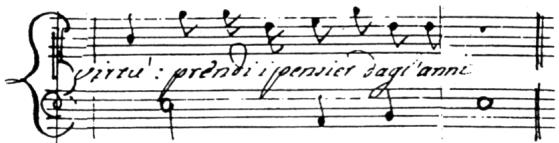
中文讲解
图23的图注:Gasparini,《巴亚泽》,无页码页。内嵌图像数据已省略,位置与图注保留。需查看原图。本节正文未直接引用此图编号。
补充说明
版面属性:第13页的谱例占位。
第6段(P0129)
原文复述
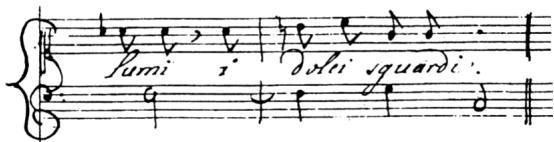
中文讲解
图24的图注:Gasparini,《巴亚泽》,无页码页。内嵌图像数据已省略,位置与图注保留。需查看原图。本节正文未直接引用此图编号。
补充说明
版面属性:第13页的谱例占位。
第7段(P0130)
原文复述
In Tamerlano Handel changes aspects of the recitative cadences from Bajazet to a remarkable degree. The two last notes of the vocal part, where an appoggiatura could be placed on the penultimate note to emphasize the ending, had been set on a weak beat of the 4/4 bar by Gasparini, while Handel consciously ensures that the melodic ending always falls on the strong beat. In his version, falling 3rd endings as much as falling 4th ones finish either on the first or the third beat of the bar, which seems a more natural emphasis. If this were to be played exactly as notated, the continuo would execute the dominant–tonic progression in a seemingly absurd order from strong to weak beats, with the recitative ending falling on the second and fourth beats of the bar.
中文讲解
本段是本节论证的核心,揭示了Handel在《塔梅尔拉诺》(Tamerlano)中对其先前《巴亚泽》(作曲者为Gasparini)宣叙调收束的有意识改造。
逐项理解:
- “recitative cadences"指宣叙调句末用于结束乐句、回归主音的终止公式;它通常由声部最后两音(可带倚音)和通奏低音的属—主进行共同构成。
- 倚音(appoggiatura)放在倒数第二音上,用以强调终止。Gasparini把这两音安排在4/4小节的弱拍,而Handel则"有意识地"把它们安排在强拍——“consciously"一词暗示这一改动并非偶然,而是深思熟虑。
- “下行3度收束”(falling 3rd endings)与"下行4度收束”(falling 4th endings)都同样落在小节的第一拍或第三拍。这两种小节位置在4/4拍中都是强拍,作者认为这给出更自然的重音。
- “seemingly absurd order”(看似荒谬的顺序):如果按谱面字面演奏,声部收束在第二、四拍,而通奏低音的属—主进行却从强拍走向弱拍——这与通常的"弱—强"或"主音落在强拍"的强弱逻辑相反。
- 这一观察为下一句引出"演奏实际可能与记谱不一致"埋下伏笔:作者借此暗示当时演奏者可能对记谱作过即兴调整,以贴合音乐上的强弱自然感。
本段在小节中的功能:明确提出Handel对Gasparini版本的有意识改写,把讨论从乐谱层面引向实际演奏层面。
补充说明
本段将Handel对Gasparini既有版本的改动放在节拍强弱的对照之中;术语"falling 3rd"“falling 4th"指旋律下行的音程性质。
第8段(P0131)
原文复述
Another recitative cadence deserves our attention, one where Handel applies a masculine ending, but Gasparini a feminine, even though both composers deal with the same lyrics. Gasparini finishes the recitativo secco with a falling 4th, Handel the accompagnato with a falling 3rd, notating an F major chord with the final sung note B♭ on the first beat of the bar, before closing in B♭ minor (illus.29).
中文讲解
本段聚焦于一个特别值得关注的宣叙调收束案例:尽管Handel与Gasparini处理的是同一段歌词,两人在收束方式上却不只存在节拍差异,连"阳性/阴性结尾"的类型都不同。
关键概念辨析:
- “masculine ending”(阳性结尾)指终止落在重读音节或强拍上;“feminine ending”(阴性结尾)则落在非重读音节或弱拍上。这是一组从诗韵借用的术语,在音乐分析中常用于描述韵律与重音的对应关系。
- “recitativo secco”(干宣叙调)指仅有通奏低音伴奏的宣叙调;“accompagnato”(伴奏宣叙调)则指有乐队参与的宣叙调。这里出现"同一歌词却分由两种体裁处理"的现象,作者借此指出版本之间在体裁与终止性别上均发生了变化。
- 数字细节:Gasparini以"下行4度"结束;Handel以"下行3度"结束,并把F大调和弦(最后一个歌唱音为降B♭)记在小节第一拍,随后转入降B♭小调。这一细节意味着即使在和声层面,Handel也通过大小调色彩切换实现更有戏剧张力的收束。
本段与P0130一起构成本节的论证:P0130谈节拍位置,本段谈终止的"性别"与和声色彩;二者共同显示Handel对既有版本作了多重维度的改写。
补充说明
同一歌词在两位作曲家笔下产生不同体裁、不同终止性别和不同和声色彩——这一点本身是作者考察Handel个人风格的关键证据。
第9段(P0132)
原文复述
early music august 2005
中文讲解
此为期刊《Early Music》2005年8月刊的页眉文字,仅标示出版物与期次信息,无学术内容。
补充说明
版面属性:期刊页眉。
第10段(P0133)
原文复述
Downloaded from https://academic.oup.com/em/article/33/3/473/569657 by Indiana University - Bloomington user on 11 August 2026
中文讲解
此为Oxford Academic电子版的下载来源水印,标明文章出自卷33第3期473页起的某篇,下载机构为印第安纳大学伯明顿分校的用户,时间为2026年8月11日。该信息仅作为版本溯源用,与正文论述无关。
补充说明
版面属性:下载水印;非正文论述内容。
第11段(P0134)
原文复述
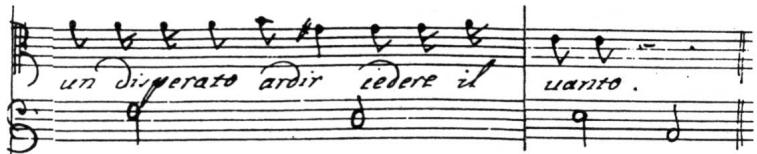
中文讲解
图25的图注:Gasparini,《巴亚泽》,无页码页。内嵌图像数据已省略,位置与图注保留。需查看原图。本节正文未直接引用此图编号。
补充说明
版面属性:第14页的谱例占位。
第12段(P0135)
原文复述

中文讲解
图26的图注:Gasparini,《巴亚泽》,无页码页。内嵌图像数据已省略,位置与图注保留。需查看原图。本节正文未直接引用此图编号。
补充说明
版面属性:第14页的谱例占位。
第13段(P0136)
原文复述
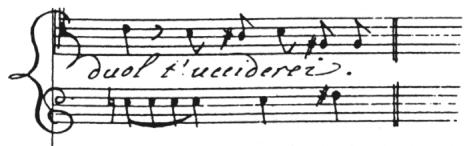
中文讲解
图27的图注:Gasparini,《巴亚泽》,无页码页。内嵌图像数据已省略,位置与图注保留。需查看原图。本节正文未直接引用此图编号。
补充说明
版面属性:第14页的谱例占位。
第14段(P0137)
原文复述
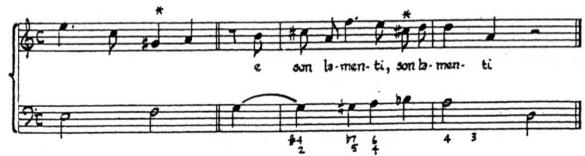
中文讲解
图28的图注:Gasparini,《大键琴实用和声学》(L’armonico pratico al cimbalo),第83页。内嵌图像数据已省略,位置与图注保留。需查看原图。这是Gasparini本人撰写的演奏法理论著作,与歌剧中的宣叙调记谱实践相互参照。
补充说明
图注中的"p.83"为理论著作的印刷页码。
第15段(P0138)
原文复述
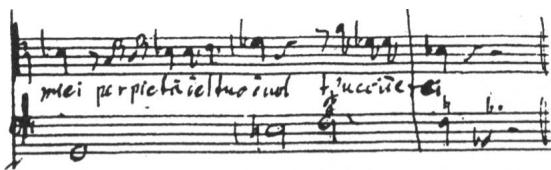
中文讲解
图29的图注:Handel,《塔梅尔拉诺》(Tamerlano),第116页背面(f.116v)。内嵌图像数据已省略,位置与图注保留。需查看原图。该图正是P0131所提到的案例——Handel以阳性收束、降B♭小调结尾的那段伴奏宣叙调。
补充说明
图注中的"f.116v"为手稿页码(folio 116 verso),区别于印刷页码。
第16段(P0139)
原文复述
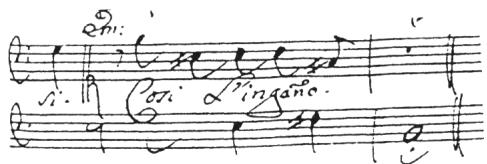
中文讲解
图30的图注:Leo,《尤蒂卡的卡托》,第110页。内嵌图像数据已省略,位置与图注保留。需查看原图。该图对应P0140中所述Leo最常用的标准收束形式:4度倚音落在弱拍,属—主和弦由弱拍走向强拍。
补充说明
本图与P0140中"the appoggiatura of a 4th comes on a weak beat"直接对应。
第17段(P0140)
原文复述
Leo notates recitative cadences with a greater degree of variation than Handel, whose endings seem rather standardized. In the most frequently used form, the appoggiatura of a 4th comes on a weak beat, with the dominant–tonic chords moving from weak to strong beats, according to the notation (illus.30). Leo’s variations would then be: (1) the vocal part ends with a possible appoggiatura on a strong beat, while the continuo has two minims to fill the bar, with the second constituting the dominant chord; (2) the tonic falls on the following bar or the third beat of the bar (illus.31). In all scores examined, a falling 5th is notated in the bass; an ascending 4th—found mostly in Agrippina—remains a rare exception.
中文讲解
本段把讨论对象从Handel切换到Leo,进行横向对比:Leo记写的宣叙调收束变化更多,Handel则相对标准化。
逐项理解:
- “greater degree of variation than Handel, whose endings seem rather standardized”——这是作者对两位作曲家风格的并置判断:Leo写法更多样,Handel更整齐一致。
- “最常用的形式”:4度倚音落在弱拍,属—主和弦由弱拍走向强拍。这与P0130描述的Gasparini/Handel差异形成对照:Leo的常规写法反而与Handel在《塔梅尔拉诺》中的强拍收束方向不一致——这是论证的关键所在。
- Leo的两种变体: (1)声部在强拍结束(可能带倚音),通奏低音以两个minim填满小节,第二minim构成属和弦——这相当于把属音的到达点向后推迟,给主和弦留出更多准备空间。 (2)主音(tonic)落在下一小节或本小节第三拍——这与传统的"强拍属—主"形成变体,强调主音的延迟到达。
- “falling 5th is notated in the bass”(下行5度在低音中记写)——所有考察过的Leo乐谱中低音都使用下行5度。
- “ascending 4th… remains a rare exception”(上行4度是少数例外)——这种上行4度主要出现在Agrippina中,是少见的反例。
本段在小节中的功能:确立Leo的多样化实践作为Handel参照的"基准”,为P0142中"Handel跟随Leo的范例"作铺垫。
补充说明
minim是4/4拍中相当于半拍的时值单位;本段提到"all scores examined”,暗示作者对Leo的乐谱做过系统考察。
第18段(P0141)
原文复述
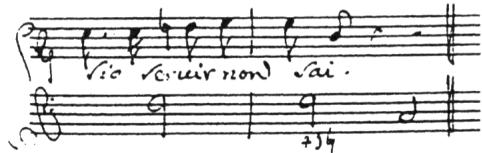
中文讲解
图31的图注:Leo,《尤蒂卡的卡托》,第178页。内嵌图像数据已省略,位置与图注保留。需查看原图。该图对应P0140中所述Leo变体(2):主音落在下一小节或本小节第三拍的例子。
补充说明
本图与P0140中的变体(2)直接对应。
第19段(P0142)
原文复述
Understandably Handel follows Leo’s example in the recitative endings of his Catone pasticcio. In a few cases, however, he carries out remarkable changes that might allow conclusions to be drawn about the desired execution.
中文讲解
本段是本小节的收束句,把前文观察到的差异与共性汇拢到结论性的提示中。
关键概念:
- “Catone pasticcio”——《卡托》的拼贴歌剧版本(pasticcio)。pasticcio指由多位作曲家拼合而成的歌剧,常借用某部原作的不同咏叹调段落。Handel的这一版本意味着他会重写或重新安排宣叙调段落。
- “follows Leo’s example”——Handel追随Leo的范例。由于原作《尤蒂卡的卡托》本身就是Leo所写,Handel在编纂pasticcio时很大程度上沿用了Leo的宣叙调收束做法,这一点"理所当然"(Understandably)。
- “remarkable changes”(显著的改动)——少数案例中,Handel对Leo原谱进行了引人注目的改动。这些改动之所以值得研究,是因为它们暗示了"演奏意图"(the desired execution)——即改动不只是风格上的,还涉及当时演奏者实际如何处理谱面记写的强弱逻辑。
本段在小节中的功能:把"Handel对Gasparini"、“Handel对Leo"两条对比线索汇拢到一处,并预示后文将基于少数改动推断演奏实践的真正意图。
补充说明
本节最后一段承接前文P0130—P0141的对比,提示读者作者后续将基于少数差异推断演奏意图。
脚注 / 边栏 / 图表 / 附加信息(如有)
本节包含的附加材料有:(1)六幅谱例图(图19—24)位于第13页,其中图19—21来自Leo《尤蒂卡的卡托》第101、115、149页,图22—24来自Gasparini《巴亚泽》未编号页;(2)另六幅谱例图(图25—30)位于第14页,其中图25—27再次引用Gasparini《巴亚泽》未编号页,图28引用Gasparini理论著作《L’armonico pratico al cimbalo》第83页,图29引用Handel《塔梅尔拉诺》手稿第116v页,图30引用Leo《尤蒂卡的卡托》第110页;(3)图31引用Leo《尤蒂卡的卡托》第178页;(4)图29—31分别在正文P0131、P0140两处被显式引用,作为"阳性结尾对比"与"Leo常规与变体收束"的例证;图28则将理论著作与歌剧实践相互参照;(5)第13页另含期刊页眉"early music august 2005"与Oxford Academic的下载来源水印。
💡 本节核心要点
- Handel在《塔梅尔拉诺》中有意识地把宣叙调收束的两个关键音从Gasparini《巴亚泽》中的弱拍改写到强拍,体现其终止节奏设计的明确选择。
- Handel的强拍记谱造成一种’看似荒谬’的属—主强弱关系:声部收束在小节第二、四拍,而通奏低音的属—主进行却从强拍走向弱拍,暗示实际演奏可能与谱面记写并不一致。
- 即使是同一段歌词,Handel(阳性收束、下行3度、降B♭小调)与Gasparini(阴性收束、下行4度)也会在终止性别、旋律音程和调性色彩上采取不同处理。
- Leo记写的宣叙调收束变化比Handel更多样:除标准的’弱拍4度倚音、属—主由弱到强’外,他还使用’强拍收束、通奏低音以两个minim推迟属音’以及’主音落在下一小节或第三拍’等变体。
- Leo所有考察过的乐谱中低音均使用下行5度;上行4度仅在Agrippina中出现,属于罕见的例外。
- 在《卡托》pasticcio中Handel通常沿用Leo的收束做法,但少数显著改动为推断其演奏意图提供了线索。
🔑 关键术语
- appoggiatura:倚音:从主要音"借走"重音的装饰音,常置于终止式倒数第二音以强调终止;本节讨论其在宣叙调最后两音中的位置与节奏意义。
- masculine ending / feminine ending:阳性结尾/阴性结尾:来自诗词韵律的概念,阳性结尾落在重读音节(强拍),阴性结尾落在非重读音节(弱拍);本节借以比较Handel与Gasparini对同一歌词的不同处理。
- recitativo secco:干宣叙调:仅以通奏低音(大提琴+羽管键琴)伴奏的宣叙调体裁;本节以Gasparini的干宣叙调作为对照基线。
- accompagnato:伴奏宣叙调:由乐队参与的宣叙调体裁;本节中Handel采用伴奏宣叙调处理同一歌词,以区别于Gasparini的干宣叙调。
- dominant–tonic progression (V–I):属—主进行:和声上从属功能回到主功能的最基本终止进行;本节讨论其在通奏低音中的强弱走向与声部收束的配合。
- falling 3rd / falling 4th / falling 5th:下行3度/下行4度/下行5度:终止处旋律或低音下行的音程;Leo所有考察过的乐谱中低音均使用下行5度;Handel在《塔梅尔拉诺》中使用下行3度与下行4度。
- ascending 4th:上行4度:本节提及的少见终止形式,主要见于Agrippina,与Leo的常规下行5度形成对照。
- pasticcio:拼贴歌剧:由多位作曲家之段落汇编而成的歌剧作品;本节提到的Handel《卡托》pasticcio即为此类,使Handel既能沿用Leo原作,又可在少数段落作出显著改动。
- minim:半音符:在4/4拍的语境中,本节用它描述通奏低音以两个minim填满小节的节奏安排,与本小节倚音位置、属和弦到达点的讨论密切相关。
- L’armonico pratico al cimbalo:《大键琴实用和声学》:Gasparini本人撰写的演奏法与和声理论著作;本节图28引用其中第83页谱例,与歌剧中的记谱实践相互参照。
sec0013 The problem of dissonance
第1段(P0143)
原文复述
The problem of dissonance
中文讲解
这是sec0013小节的标题“The problem of dissonance”(不协和的问题),用以开启本节对通奏低音在宣叙调终止处如何处理属—主终止式(以及由此带来的不协和冲突)的专题讨论。前文sec0011、sec0012已经围绕recitativo宣叙调的终止处理与数字低音记谱做过铺垫,本节正式进入“不协和”这一核心难题:在声乐部与数字低音之间何时允许出现倚音式的不协和,何时必须把属—主终止式推迟到声乐部结束后再奏。
第2段(P0144)
原文复述
In practice the problem of dissonance comes down to the question: when should the continuo play the dominant–tonic cadence? Either way, it should be as notated throughout, or delayed, as Chrysander wrote in the Alte Händel Ausgabe. This topic has been under serious discussion since 1977, when Dean suggested that the cadences should be placed according to the composers’ notation in the opera, as we showed earlier. Without repeating all of the competing opinions, it should again be emphasized that in Leo’s Catone we have a brilliant example in which to study the exact placement. In almost all of Catone’s recitative endings, the exact execution is indicated in the figured bass (for the different possibilities, see illus.32), a form of notation already employed by Alessandro Scarlatti. Two points become clear: (1) in those cases where a 4–3 solution is notated, no dissonance appears between the penultimate note of the vocal part (which Leo notates with a falling 4th ending) and the dominant chord; (2) the cadences have to be executed as notated. In the case of the figuring this means always on the beat, or slightly transposed.
中文讲解
本段为本节核心立论段落。作者把“宣叙调中的不协和问题”收束为一个具体问题:通奏低音究竟应当在什么时候弹出属—主终止式?答案被表述为两条互斥的策略——要么“按记谱在拍点上原样奏出”,要么“把终止推迟(delay)到声乐结束之后”,并指出这一观点最早可追溯到Chrysander在Alte Händel Ausgabe(旧亨德尔版)中的论述。1977年,Dean提出终止式应按作曲家本人在opera歌剧中的记谱来安排,前文已经引述过;作者承认学界存在多种相互竞争的看法,但本文不再逐一复述,而是要强调Leo的《Catone》作为“绝佳样本”的地位:几乎所有Catone宣叙调的结尾,数字低音中已经精确标明了终止的具体执行方式(参看图32),而这种做法是Alessandro Scarlatti早已开创的传统。由此推出两条明确的结论:第一,凡记谱写明4–3解决时,声乐部的倒数第二个音(Leo所记的下行四度结束)不会与属和弦产生不协和;第二,终止必须严格按记谱执行,对应的执行方式即“永远在拍点上奏出,或略作时值的微调(slightly transposed)”。这两条结论是后文讨论Handel如何处理相同问题的基准。
补充说明
“Alte Händel Ausgabe”是19世纪Chrysander编辑的亨德尔作品旧版;“dominant–tonic cadence”指属—主终止式(V→I);“4–3 solution”指解决方式中上方声部由四度下行到三度的运动;“falling 4th ending”指声乐部以级进或跳进的下行四度收尾;“slightly transposed”指数字低音记谱所暗示的极小时间位移。
第3段(P0145)
原文复述
Downloaded from https://academic.oup.com/em/article/33/3/473/569657 by Indiana University - Bloomington user on 11 August 2026
中文讲解
期刊页面页脚/边角信息:标明本PDF由学术数据库Oxford Academic下载自Early Music期刊文章链接,下载机构为Indiana University - Bloomington,下载时间为2026年8月11日。属于元数据性质,不参与正文论证。
第4段(P0146)
原文复述
early music august 2005
中文讲解
期刊页眉信息,标示刊物名《Early Music》、月份august与年份2005。属于版式元素,不构成正文主张。
第5段(P0147)
原文复述
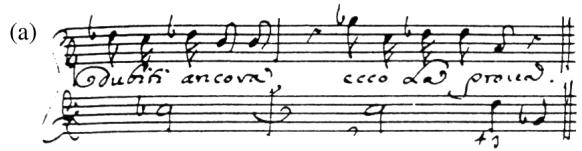
中文讲解
图占位符。位于图32分组中的(b)子图位置,与本节上下文唯一可确认的信息是其作为illus.32的(b)部件呈现Leoncavallo(Leo)所作《Catone in Utica》中某一终止片段。需要查看原图方可获得具体乐谱内容,本占位符不可推测不可见细节。
第6段(P0148)
原文复述
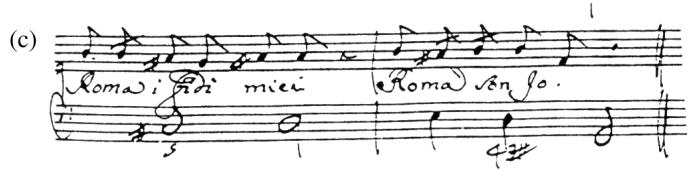
中文讲解
图32的图题与占位符,说明该图由Leo《Catone in Utica》中第191、26、88页三个宣叙调终止片段(a)(b)(c)并列而成。本节正文用此图来演示数字低音中已经给出的几种不同的终止执行方式。需要查看原图才能看清具体音型与数字低音标记。
第7段(P0149)
原文复述
Throughout most of his version of Catone Handel adopted the figured notation, but there is one distinct exception. In one recitative Leo notates two minims beneath the vocal ending, where the dominant chord would be dissonant with the voice if it were played on the beat; Handel writes a crotchet rest and puts the cadence after the singing part (illus.33). What seems strange is that Leo (but later also Handel) does not write the figuring of the bass with the 4–3 ending. In the case of the rarely used ending, an execution without appoggiatura would lead to a dissonance, while with an appoggiatura the 5th of the chord would be accentuated and the vocal part would end on the 4th over the dominant, the final note of the tonic. In this case, a solution Johann
中文讲解
本段集中讨论Handel改编Leo《Catone》时的一个“显著例外”。全文以一句总起——“Handel在其《Catone》版本中几乎全部沿用了数字低音记谱,只有一处例外”——引出具体分析:在一段宣叙调里,Leo在声乐部收尾之下写有两个minim二分音符;这意味着如果属和弦被严格按拍点奏出,就会与声乐部形成不协和;对此Handel的处理是写一个crotchet四分休止符,把终止式放到声乐结束之后(参看图33)。作者继而评论一个令人困惑的现象:Leo本人(以及后来的Handel)都未在该处的低音下方写出4–3解决的数字标记。在讨论极少使用的终止方式时,作者区分了两种情况——不附加倚音(appoggiatura)直接奏出会产生不协和;而若附加倚音,则属和弦的五度被强调,声乐部会结束在属音上方的四度音(恰好是主音的最终音)。本段在句末被截断,留下“a solution Johann……”以待与下一段Heinichen的论述相连。
补充说明
本段是图33的引文段落;图中展示的(a) Leo《Catone in Utica》p.126与(b) Handel《Catone》p.99并列出现,以便比较两者在处理同一终止片段时的差异。“minim”“crotchet”为英式命名,分别对应二分音符与四分音符。
第8段(P0150)
原文复述
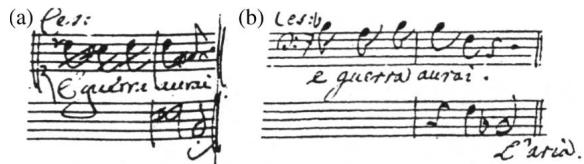
中文讲解
图33的图题与占位符,并列展示Leo《Catone in Utica》第126页片段(a)与Handel《Catone》第99页片段(b)。本图与前段正文共同揭示:Handel在改编Leo时通过加写四分休止符把终止推迟,以避免声乐部收尾与属和弦拍点上的不协和。需要查看原图方可阅读具体谱例。
第9段(P0151)
原文复述
David Heinichen mentions in connection with an Italian cantata (illus.34) should be considered.
中文讲解
本段承接上一段被截断的句子,补全内容为“a solution Johann David Heinichen mentions in connection with an Italian cantata (illus.34) should be considered”——意即:Johann David Heinichen在一部意大利cantata康塔塔中提到过一种解决方案(图34),值得加以考虑。这里起的作用是把前段发现的具体终止困难,引向Heinichen《Der Generalbass in der Komposition》(1728)一书中的相关论述作为参照依据。
补充说明
Johann David Heinichen(1683–1729),德国巴洛克作曲家与理论家,其《Der Generalbass in der Komposition》(Dresden, 1728)是数字低音实践的重要文献。
第10段(P0152)
原文复述
In relation to this we can draw attention to a specific context in Handel’s Tamerlano. Above the original falling-3rd ending in the vocal part is written as a variation on a falling-4th ending. The latter causes no problem of dissonance with an appoggiatura and a 4–3 progression, but the falling 3rd ending would only make sense if the cadence was delayed. In both cases the result would be an emphatic close, suitable to the conclusion of the act.
中文讲解
本段把Heinichen的思路联系到Handel《Tamerlano》中的具体终止片段。文中描述了声乐部原本是下行的三度结束(falling 3rd),但上方另写了作为变化的下行四度结束(falling 4th)。前者若不推迟终止则会与属和弦产生不协和;后者加倚音并按4–3解决则不产生冲突。但若仍采用下行三度的原本版本,则只有把终止推迟才能避免不协和。作者的结论是:无论选择哪一种结束方式,其效果都是“emphatic close”——戏剧性强的、力度突出的收束,正好适合一幕(act)结尾的收束。
补充说明
本段是为图34后引入的Tamerlano案例;“falling 3rd ending”“falling 4th ending”分别指声乐部以三度/四度音程下行的终止处理。
第11段(P0153)
原文复述
In line with these findings, we have to assume that where the vocal part closing to the dominant chord would cause a dissonance, the cadence must be delayed until shortly after the voice has finished. In all other cases, according to the Italian models cited, and in line with the Handel examples, the clash of dissonances can be avoided either through a 4–3 progression or a delay—the latter is preferably to be made at points where there is a distinct hiatus, such as at the end of an act.
中文讲解
本段是前文多项分析之后的综合论断。规则被写成两条:第一,在声乐部收束到属和弦会产生不协和的所有情况下,终止必须推迟(delay)到声乐结束之后“稍后”再奏;第二,在其余情况下,依照所引用的意大利范本(特别是Leo、Scarlatti)与Handel范例,不协和冲突可经由“4–3解决”或“推迟”两种途径之一加以避免,但作者对“推迟”这一方式附加了一个偏好性的使用建议——最好在有明确间断(hiatus)的位置使用,例如一幕(act)的结尾。本段的功能是把分散在illus.32–34的实例观察上升为可操作的执行通则。
补充说明
“distinct hiatus”指戏剧结构上的明显停顿,在意大利歌剧中常对应于一幕的结束;“appoggiatura”即倚音,作为装饰性的不协和音出现在拍点之前。
第12段(P0154)
原文复述
The notation of the above-mentioned phenomenon, observed mostly in Leo’s work, where the vocal part frequently ends on a weak beat but is accented nadfolgenden (10) zur (7) mird,und alsdenn bey der Note (11) förmlich refolviret, Undftellen hier die 4. Bafl-Noten fis,e. dis.e. eben den paflum comnpofitionis vor, welcher oben in dein no. (49, und ç0.) befindlichen Éxempel der vorhergehenden Aria untersuchet wvorden,
中文讲解
本段是上一段论断之后插入的一段引文,前半句以英文概述(前文已提及的现象,主要出现在Leo作品中:声乐部常常落在弱拍上却被强调),后半句无缝接入Heinichen《Der Generalbass in der Komposition》原书的德语原文(使用18世纪德文印刷的“长s”等字体特征,原文标题为nächstfolgenden等,被OCR拼作“nadfolgenden”)。该引文解释声乐部在(10)处解决到(7),并于(11)处正式解决,引用前一首Aria第49、50号范例中的passum compositionis(作曲步骤)作为分析参照。
补充说明
本段是Heinichen原书的直接引用,文献定位见P0161的图34出处标注;“Bafl-Noten”“paflum comnpofitionis”为OCR对18世纪德文花体长s的还原形式,原词应为Bass-Noten与passum compositionis。
第13段(P0155)
原文复述
early music august 2005
中文讲解
期刊页眉信息,标示《Early Music》august 2005。属于版式元素,不构成正文主张。
第14段(P0156)
原文复述
Downloaded from https://academic.oup.com/em/article/33/3/473/569657 by Indiana University - Bloomington user on 11 August 2026
中文讲解
期刊页面页脚/边角信息,同P0145,属版本元数据,不参与正文论证。
第15段(P0157)
原文复述
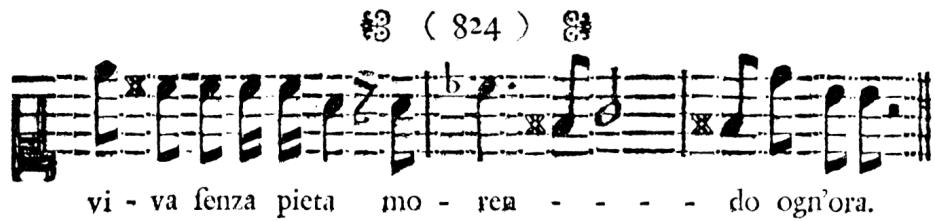
中文讲解
位于第16页的图占位符,与本节上下文唯一可确认的信息是其位置处于Heinichen引文段落之间,可推测为Heinichen原书《Der Generalbass in der Komposition》中的谱例截图。具体内容需查看原图。
第16段(P0158)
原文复述

中文讲解
位于第16页的图占位符,与P0157属同一组谱例占位,具体内容需查看原图。
第17段(P0159)
原文复述
(12) Müste war bey ihrer ft. min, mit dernatürlichen 6te, und die Note (13) mit dem ordinairen Accord zu frieden feyn: Mllein das prævedere weißes hiermieder befsser zumachen: Dennes darffein geübter Accompaguift nur einen Blic auf die gleich darauff erfolgende Cadenz poraus thun, fowird er diefe viel beffer præpariren, wenner der Note (x2) die . der Note (13) aber die natürliche 6te giebet, mithin die erstere als 2dam des modi h moll. und dię leßte als zam diefes modi tractiret, Sierdurch wird zugleich bey der Note
中文讲解
Heinichen原书德语原文的延续段落,编号(12)至(13),其中仍保留18世纪德文印刷体中的长s与花体字母特征(如“Accompaguift”“præpariren”“tractiret”等)。内容是Heinichen对伴随数字记法与和声准备的论证:作者认为伴奏者(Accompaguift)若仅按(12)处的“自然六度”与(13)处的“普通和弦”处理是“可接受的(zu frieden feyn)”,但“prævedere(提前)”的处理会更好——只要练习纯熟的伴奏者把目光提前落在紧接其后的终止上,就能更妥善地为终止做准备:他让(12)音作为b小调的“2dam”(应理解为secunda/上二度或某种特定命名),而让(13)音作为该调式的另一音,从而两者共同为下一处的终止作准备。本段在句末被截断,等待下一段补全。
补充说明
Heinichen原书使用的“2dam”“zam”等为18世纪德文理论著作中音程或音级名称的简写形式(OCR还原后的样子),在巴洛克通奏低音理论中通常指与解决、准备相关的特定角色,需结合具体上下文理解。
第18段(P0160)
原文复述
(14) die Cadenz 4 X prxpariret, welche nach) Endigung der Stimme pleget furß nachgeschlagen zu werden. Die dazu gehörige rechte te findet man in der fpecie ġvx deß h moll,
中文讲解
Heinichen原书德语引文的收尾段。内容指向编号(14)处的终止被预先准备(4 X præpariret),并按惯例在声乐结束后被“紧接着敲出(nachgeschlagen zu werden)”,所用的“rechte te”(正确音)见于b小调(h moll)的species ġvx(应为sextus或species sexti一类术语的OCR还原形式,泛指“六度”这一和声种类)。本段的功能是给P0159中讨论的“倚音后紧接敲出终止”的实践做法提供一个理论依据。
补充说明
“nachgeschlagen”在巴洛克通奏低音实践中指在声乐结束后即时弹奏终止式;“species”与巴洛克音乐教育中的“图兰朵式和声种类”(五度、六度、八度等)体系相对应。
第19段(P0161)
原文复述
34 Heinichen, Der Generalbass in der Komposition (Dresden, 1728), p.673
中文讲解
图34的出处标注,明确指出P0159、P0160等段落所引用的Heinichen德文原文出自《Der Generalbass in der Komposition》(Dresden, 1728)第673页。该标注既是脚注性质也是图题,既限定了引文的版本来源(1728年德累斯顿版),又对应着图34所引用的谱例。
第20段(P0162)
原文复述
through the appoggiatura and the dominant chord, indicates an execution on the beat. In many such cases we find a 4–3 solution and a tonic closure of the recitative on the third beat of the bar to avoid dissonance. But with Handel this solution is problematic. His Tamerlano shows numerous recitative endings with the dominant–tonic cadence on the third to the fourth beats of the bar. But here we could make use of the delayed solution to achieve an emphatic ending, because the cadence could appearance on an upbeat and the following downbeat (illus.35).
中文讲解
本段承接P0161所引Heinichen谱例后的句子(开头“through the appoggiatura and the dominant chord”意即:通过倚音与属和弦这一路径),重申“记谱意味着在拍点上执行”的基本判断,并指出:在许多情况下,作者所见到的解决方案是4–3解决加上在第三拍上以主和弦结束宣叙调,以避免不协和。但在Handel(尤其是《Tamerlano》)中此方案存在困难——许多宣叙调结尾的属—主终止式落在小节第三拍到第四拍之间;在此情形下,作者建议改用“推迟终止”这一方式,使终止出现在一个上拍与随后的下拍上,从而获得戏剧性强的emphatic ending(参看图35)。
补充说明
图35是本段末尾所引图例编号,需查看原图;“emphatic ending”指强调性的终止收束。
第21段(P0163)
原文复述
Until now the problems of recitative execution have not been addressed by the Hallische Händel Ausgabe. In the editions of Handel’s operas Oreste (1734), made by Bernd Baselt, and Flavio (1723), made by Merril Knapp, the problem of executing the appoggiaturas and placing the cadences becomes particularly clear. While Knapp proposes a score free from performance suggestions, Baselt recommends appoggiaturas in several places and puts them above the score in smaller print, whereas he renders the cadence chords as in Handel’s usual notation.
中文讲解
本段把讨论延伸到当代学术编辑层面的问题:作者指出,截至目前HHA(Hallische Händel Ausgabe,Halle版亨德尔全集)尚未处理宣叙调执行问题。以两个具体opera版本为例——Bernd Baselt编辑的《Oreste》(1734)与Merril Knapp编辑的《Flavio》(1723)——凸显“如何处理倚音、如何安排终止”这一难题的可操作性。两种编辑立场不同:Knapp提出一个没有任何演奏建议的“干净”乐谱;Baselt则在多处建议添加倚音,并以小字置于谱面之上,而终止和弦则保留Handel本人通常的记谱方式。
补充说明
Hallische Händel Ausgabe是20世纪后半叶启动的亨德尔作品学术全集出版项目;“Oreste (1734)”“Flavio (1723)”均为亨德尔所作意大利语opera。
第22段(P0164)
原文复述
Neither edition leaves room for a discussion of the problem of dissonant chords necessarily arising from the 4th appoggiatura or the falling-3rd ending with a filling of the 3rd. As Baselt already points out all the places where an appoggiatura is possible, it would be very helpful for practical purposes if he also gave hints about the placement of the cadence chords—whether in 4–3 progression, or sometimes also temporally delayed, but always avoiding the sharp dissonance.
中文讲解
本段对前段所述两种HHA编辑版本作出批评性总结:两者都没有留下讨论“不协和和弦必然出现”的空间——这种不协和来自“四度倚音(4th appoggiatura)”或“带三度填充的下行三度结束”。既然Baselt已经标注了所有可加倚音的位置,作者主张:从演奏实用性角度看,他应进一步提示终止和弦的具体放置方式——是按4–3解决推进,还是在某些情况下作时间上的推迟,但无论如何都应避免尖锐的不协和(sharp dissonance)。
补充说明
“sharp dissonance”特指尖锐的、和声上不可接受的不协和碰撞,是18世纪作曲家与理论家反复强调要避免的听感现象;“4th appoggiatura”指在终止前以四度倚音引入主音的处理。
第23段(P0165)
原文复述
early music august 2005
中文讲解
期刊页眉信息,标示《Early Music》august 2005。属于版式元素,不构成正文主张。
第24段(P0166)
原文复述
Downloaded from https://academic.oup.com/em/article/33/3/473/569657 by Indiana University - Bloomington user on 11 August 2026
中文讲解
期刊页面页脚/边角信息,同P0145、P0156,属下载元数据,不参与正文论证。
脚注 / 边栏 / 图表 / 附加信息(如有)
图32(Leo《Catone in Utica》p.191、p.26、p.88):本节用以展示Leo在不同宣叙调终止处给出的具体数字低音标记,是论证“作曲家本人已经标明执行方式”的核心证据。图33(Leo《Catone in Utica》p.126与Handel《Catone》p.99并列):本节用以揭示Handel在改编Leo时通过加入四分休止符将终止推迟的处理。图34的图注(P0161):Heinichen, Der Generalbass in der Komposition (Dresden, 1728), p.673,标识P0159、P0160等段德语引文的具体出处。P0157、P0158为图34前后出现的谱例占位符,但文本并未对图34单独给出中文/英文图题,仅可推断其与Heinichen《Der Generalbass in der Komposition》中的实例相关。所有图例的实质内容均需查看原图。脚注方面,本节上文P0144引用了第40号脚注(Dean, 1977关于终止按作曲家记谱安置的观点)以及第41号脚注(关于Alessandro Scarlatti早已使用此类数字低音记谱),二者支撑本节的整体史实背景;P0151关联图34与Heinichen。
💡 本节核心要点
- 本节核心问题被归结为“通奏低音在宣叙调结尾应何时弹出属—主终止式”,其答案仅有两条:按记谱在拍点上奏出,或推迟到声乐结束后再奏。
- Leo的《Catone》是研究终止位置与不协和问题的绝佳样本,其数字低音已经明确标出几乎所有宣叙调结尾的具体执行方式(4–3解决),这一传统由Alessandro Scarlatti开创。
- Handel改编Leo时基本沿用其数字低音记谱,但有一处关键例外:通过写四分休止符把终止推迟到声乐部结束后,以避免声乐收尾与属和弦的不协和碰撞。
- Handel《Tamerlano》中许多宣叙调结尾的属—主终止式落在小节第三至第四拍之间,最适合用“推迟终止”方式实现戏剧性强的emphatic ending,尤其适用于一幕结尾处。
- Heinichen《Der Generalbass in der Komposition》(Dresden, 1728, p.673)提供了“倚音后紧接敲出终止”的理论依据,与本节论断相互印证。
- 截至HHA(Hallische Händel Ausgabe)中的Bernd Baselt《Oreste》(1734)与Merril Knapp《Flavio》(1723),两种编辑版本均未充分讨论四度倚音与带三度填充的下行三度结束所必然引发的不协和问题,作者呼吁在终止和弦安置上提供更具体的演奏提示。
🔑 关键术语
- dominant–tonic cadence (属—主终止式):属和弦到主和弦的和声进行(V→I),在巴洛克宣叙调结尾处由通奏低音奏出;本节争论的核心即是此终止式何时、按何种方式在拍点上奏出。
- 4–3 solution (4–3解决):在终止进行中,上方声部由四度下行到三度的运动;按此方式处理可使声乐部收尾与属和弦之间不产生不协和。
- falling 4th ending / falling 3rd ending (下行四度/三度结束):指声乐部收尾以四度或三度的音程下行到主音的不同写法;Leo记谱多用下行四度结束,因其更易与4–3解决配合。
- appoggiatura (倚音):在拍点前装饰性引入的不协和音,本节中特指四度倚音,是Leo和Handel宣叙调中处理终止的关键装饰方式。
- delayed cadence / delay (推迟终止):把属—主终止式不在拍点上奏出,而是推迟到声乐部结束之后再奏;本节中与“sharp dissonance”避免策略密切相关。
- figured bass (数字低音):在低音下方以数字标示和声进行的记谱体系,Leo和Alessandro Scarlatti的宣叙调常用此类记法来精确指示终止执行方式。
- emphatic close / emphatic ending (戏剧性收束):本节中指因终止被推迟到上拍—下拍之间而产生的、力度突出的收尾效果,特别适合一幕(act)结尾。
- species (和声种类):巴洛克音乐教育体系中按音程划分和声类别(如五度、八度、六度等)的概念,Heinichen原书用以讨论正确的准备音。
- Hallische Händel Ausgabe (HHA):20世纪后半叶在Halle启动的亨德尔作品学术全集出版项目;本节批评其在宣叙调执行与终止位置处理上尚付阙如。
sec0014 [描述性拆分] Heinichen’s delayed-cadence solution and its application to Handel
第1段(P0167)
原文复述

中文讲解
本段在原文中不是一段文字论述,而是一个纯粹的图像或乐谱占位符,位于第17页。从其Markdown标记可见,作者在此处插入了一幅内嵌图像,原文标注为"第17页图像或乐谱示例”,但图像数据本身在所提供的文本中已被省略,仅保留了位置与图注标记。该占位符本身不携带任何文字层面的信息——既无图题,也无图注,更没有正文中对该图像内容的描述性语句。结合小节标题"Heinichen’s delayed-cadence solution and its application to Handel"可知,本节旨在讨论亨尼希的延迟终止解决法及其在亨德尔作品中的应用,该图像很可能与此论题相关,但原文并未就此图像提供任何关于调性、小节编号、终止式类型、声部进行或和声处理的具体信息。因此,本讲解不对该图像的内容做任何具体推测;若需要了解其实际呈现的乐谱或图示内容,必须查阅原始图像本身。
补充说明
无额外补充。原文仅为图像占位符,无可从文本中进一步定位的信息。
脚注 / 边栏 / 图表 / 附加信息(如有)
本小节的唯一正文元素(P0167)是一个图像或乐谱占位符,位于第17页,原始图像数据已被省略,原文未配任何文字图注或说明。该占位符在本节整体论证中可能承担示例功能(结合小节标题可推断与亨尼希的延迟终止解决法在亨德尔作品中的应用相关),但其具体内容无法从所提供的文本中确认,需查看原图方可获知。
💡 本节核心要点
- 本小节聚焦于亨尼希(Heinichen)所提出的延迟终止解决法(delayed-cadence solution)这一理论概念。
- 本小节将该理论应用于对亨德尔(Handel)作品的分析与讨论中。
- 第17页的正文内容为一段图像或乐谱占位符(P0167),但原文未提供任何关于该图像的文字描述、图注或可从文本中推断的具体音乐细节。
- 由于源文本仅为视觉元素占位符,关于该谱例的调性、终止式结构、声部进行或和声处理等具体信息均无法从文本层面确认,必须依赖原始图像。
🔑 关键术语
- 延迟终止解决法(delayed-cadence solution):本节小节标题所指的核心概念,属于亨尼希提出的和声处理方式,即通过延迟或延后预期出现的终止进行来制造张力与解决;本小节围绕该概念展开讨论。
- 亨尼希(Heinichen):本节小节标题所指的音乐理论家,其延迟终止解决法是本节讨论的理论出发点。
- 亨德尔(Handel):本节小节标题所指的作曲家,本节将亨尼希的理论概念应用于其作品分析。
- 图像或乐谱占位符:本节第17页正文段落(P0167)的客观属性,指原文中仅以标记形式存在、并未附带文字说明或可从文本中读取的具体内容的视觉元素。
sec0015 Internal cadences and cadences in the form of a question
第1段(P0168)
原文复述
Internal cadences and cadences in the form of a question
中文讲解
这是本节的小节标题,本身不是论述段落。它预告接下来要讨论的两类宣叙调终止:一类是“内部终止”(internal cadence),即用在角色转换处、而非乐段真正收束处的终止;另一类是“疑问形式的终止”(cadences in the form of a question),即声部以半音或全音上行、形成未解决疑问感的特殊终止。标题将这两个相关但不同的话题并置,因为它们共同属于意大利歌剧宣叙调中角色接续与终止处理的惯例,下文分两段分别展开。
补充说明
作为标题,本段无补充说明。
第2段(P0169)
原文复述
Despite the often very extended recitatives of Italian opera, the change-over of characters is very rarely marked by cadencing. But in Leo’s case we find that if he does apply an internal cadence it is harmonized with the same 4–3 progression as the final cadences (illus.36). Handel follows the Italian model in his Catone adaptation, likewise avoiding dissonance through a suspended 4th (illus.37). This example makes it clear that, first, an appoggiatura of a 4th is demanded and, second, the cadence chord is to be played on the beat. Handel varies the internal cadences, for example using not the root position of the tonic chord but rather the first inversion, the 6–3 chord, also with a suspended 4th at the dominant (illus.38). In Agrippina though, he separates the change-over of characters through real cadencing, but without any hints as to how to perform them.
中文讲解
本段讨论“内部终止”在意大利歌剧宣叙调中的使用情况及其在亨德尔作品中的演变,可分为四层理解。
第一层是惯例背景:意大利歌剧的宣叙调往往很长,但在角色交接之处几乎不使用真正的终止来标记,否则会让音乐显得零碎。这一原则是本节讨论的出发点。
第二层是莱奥的例外:当莱奥确实使用内部终止时,他采用与终止式相同的4–3进行(即上方声部从四度下行到三度,伴随属到主的和声进行),从而让内部收束听起来和真正终止一样稳固,但作者随即通过对照引出亨德尔的不同处理。
第三层是亨德尔的《卡托》中的处理:这里他追随意大利模式,避免不协和的硬冲撞,方法是让属和弦上保持一个延留的四度(suspended 4th),即上方声部先唱或奏出四度音程,形成与属和弦的张力,再下行解决到三度。原文从谱例37中提炼出两条演奏/演唱规则:一是必须奏出四度倚音(appoggiatura of a 4th),二是终止和弦需要落在拍子上(cadence chord on the beat),这两点都是为了让延留得到可感的解决、避免含混。
第四层是亨德尔自己的变体与例外:在其他地方他不照搬原位主和弦,而改用主和弦的第一转位(即6–3和弦),同时在属和弦上仍保留延留四度,从而让内部终止的音色更柔和、同时又不失终止感。最后,作者指出在《阿格里皮娜》中,亨德尔采取了与意大利惯例相反的做法——角色交接处用了真正的终止,但乐谱中并未给出演奏提示,意味着这些终止的解释完全留给了演唱者和通奏低音演奏者自行斟酌。
本段的核心主张是:亨德尔在意大利模式与自身独创之间游走,《卡托》忠实于意大利惯例并补充演奏规则,《阿格里皮娜》则突破惯例、留下未标注的解释空间。
补充说明
本段提及多个谱例编号(illus.36–38),它们分别展示莱奥的内部终止、《卡托》中带延留四度的内部终止,以及主六三和弦变体;具体音符细节需查看原谱。本段中所谓“appoggiatura of a 4th demanded”指的是写作上必须写出四度倚音,与演奏时把倚音提前或按时奏出的选择是两件不同的事,作者强调的是记谱规范而非个人化处理。
第3段(P0170)
原文复述
Handel follows the Italian model for recitative cadences that take the form of a question. This means that the vocal close is raised by a semitone, a whole tone or a larger interval, and the bass part falls by a whole tone or a semitone, in the latter case producing a Phrygian cadence (illus.39).
中文讲解
本段讨论第二类终止——“疑问形式的终止”,可从前文的内部终止自然过渡而来。
所谓“疑问形式”,是指终止时声部并不真正落到主音,而是制造一种悬而未决的听感,等待下一次陈述来“回答”。其手法是双声部反向运动:人声的收束音相对前音被升高半音、全音甚至更大的音程(形成上行的疑问感),与此同时低音下行全音或半音。这种声部反向运动避免了通常的稳定闭合,使听者感到乐句尚未说完。
当低音下行半音时,结果就是所谓“弗里几亚终止”(Phrygian cadence)——其低音半音下行是人声升高与之反向的典型形态,在巴洛克宣叙调中常用来表达疑问、哀叹或情感上的不确定。原文用“在后一种情况下产生弗里几亚终止”限定了这一对应关系,即并非所有疑问式终止都是弗里几亚终止,只有低音落半音的那一类才是。
本段用一句话表明:亨德尔在疑问式宣叙调终止上严格遵循意大利模型,没有独立发明新的模式。这与上一段《阿格里皮娜》中突破惯例的“真正终止”形成微妙对比,说明亨德尔在不同体裁或不同戏剧情境下选择不同处理。
补充说明
谱例39(illus.39)展示疑问式终止的典型形态,其具体音程关系需查看原图。本段中“a whole tone or a semitone in the latter case producing a Phrygian cadence”的“后者”指的是低音下行半音的情况,而非人声升高半音的情况,阅读时不应颠倒。
脚注 / 边栏 / 图表 / 附加信息(如有)
本节引用了四个谱例:illus.36(莱奥的4–3内部终止)、illus.37(《卡托》中带延留四度的内部终止,亨德尔从此例提取两条演奏规则)、illus.38(主六三和弦变体)、illus.39(疑问式终止,含弗里几亚终止)。这些谱例是本节论证的核心证据,分别对应内部终止的意大利原型、亨德尔的模仿、亨德尔自己的变体,以及疑问式终止的具体声部进行;离开这些谱例,本节的论述难以独立成立。
💡 本节核心要点
- 意大利歌剧宣叙调在角色转换处通常不用真正终止,以保持叙事的连贯性。
- 莱奥在内部终止中使用与终止式相同的4–3进行,确立了内部终止也可稳固收束的范式。
- 亨德尔在《卡托》中遵循意大利模式,以延留四度避免硬冲撞,并由此确立两条演奏规则:四度倚音必须奏出,终止和弦须在拍上。
- 亨德尔自己也对内部终止做出变体(主六三和弦替代原位),说明他在模仿中保留创新空间。
- 《阿格里皮娜》中亨德尔突破意大利惯例,用真正终止分隔角色却不附演奏提示,把解释权交给演奏者。
- 疑问式终止通过人声升高与低音下行的反向运动造成悬而未决的听感;低音落半音即构成弗里几亚终止,亨德尔在此类终止上完全沿用意大利模型。
🔑 关键术语
- internal cadence(内部终止):出现在角色转换处而非段落真正的结尾的终止,用于在保持宣叙调流畅的同时给角色交接一个收束感,与全终止相区别。
- 4–3 progression(4–3进行):上方声部在属和弦上从四度下行到三度的旋律运动,与属到主的和声进行配合,是本节内部终止的典型声部处理。
- suspended 4th(延留四度):在属和弦上保持四度音形成的不协和张力,随后下行解决到三度;本节用作避免内部终止出现硬冲撞的关键手段。
- appoggiatura of a 4th(四度倚音):作者从《卡托》谱例中提取出的记谱要求:写作上必须出现四度倚音以提示该延留的解决方式。
- 6–3 chord(6–3和弦,第一转位):主和弦的第一转位;亨德尔用其代替原位主和弦以软化内部终止的色彩,仍保留延留四度。
- cadences in the form of a question(疑问形式的终止):通过人声升高、低音下行的反向运动制造未解决感的终止,是本节与内部终止并列的第二类话题。
- Phrygian cadence(弗里几亚终止):低音下行半音的特殊终止形态,作者把它界定为疑问式终止的一种特例(低音落半音的那一类)。
- recitative(宣叙调):本节讨论的所有终止类型所处的歌剧体裁背景,即以模仿说话节奏、配合通奏低音推进叙事为主的声乐段落。
sec0016 Instrumental and technical variations of execution
第1段(P0171)
原文复述
Instrumental and technical variations of execution
中文讲解
本句为小节标题"Instrumental and technical variations of execution"(演奏手段与技巧变化)。它点出本节将围绕宣叙调(recitative)在乐器编制与具体演奏细节上存在哪些变化、变体与历史差异展开议论,为前文关于宣叙调cadence、和声等的讨论补充演奏实务层面。
第2段(P0172)
原文复述
According to research, the instrumentation of the secco recitative, apparently originating from Italy, was standardized in Handel’s operas. In his study on instrumentation Möller elucidates an aspect which until then had not been considered in connection with the instrumentation of the recitative:
中文讲解
本段提出两条背景并引出Möller的研究。1)干燥宣叙调(secco recitative)的乐器配置看似源自意大利,却在亨德尔的歌剧中形成了相对统一的规范;2)Möller对乐器配置的研究揭示了一个此前未被关注的方面——下文将进一步说明。这是引子性的过渡段,真正论证从P0173开始。
补充说明
Möller的研究(脚注44)是本小节论证的核心来源。
第3段(P0173)
原文复述
The fact that in many cases Handel names only those instruments that are not meant to play is very informative, for example when he writes ‘senza Cembalo e Bassons’, ‘senza Cembalo e Contrabassi e Bassons’ or senza Violoncello e Contrabasso’. The demanded instrumentation is not mentioned at all. Such a use of terms can only be useful if the participation of the instruments not mentioned goes without saying.
中文讲解
本段介绍Möller的关键观察:亨德尔在标注乐器配置时往往只列出"不演奏"(senza)的乐器,例如’senza Cembalo e Bassons’(无羽管键琴与巴松)、‘senza Cembalo e Contrabassi e Bassons’(无羽管键琴、低音提琴与巴松)、‘senza Violoncello e Contrabasso’(无大提琴与低音提琴)。他真正"想要"的乐器一概不写出。这种标注习惯之所以成立,是因为读者能够默认"未被列出即表示参与演奏"——即所谓"列其无即应有"的反向标记逻辑。这一条是本小节论证的逻辑起点。
补充说明
三个senza示例的差异(前两者保留Cembalo而省去其他,第三者省去大提琴与低音提琴)暗示出对低音组灵活重组的可能。
第4段(P0174)
原文复述
The fact is that Handel lists only his desired reduction of the continuo instruments at the beginning of the arias, meaning that all the instruments marked senza were obviously playing in the recitative before. We can thus conclude that, besides the harpsichord, the participating instruments were a cello or bassoon as 8′ and one or more ‘contrabassi’ as 16′ instruments. The plural form ‘contrabassi seems confusing, though it might have been intended to include instruments of different sizes used in this position. As Manfred Hermann Schmid has shown, this corresponds to the Roman tradition. It seems unlikely that two 16′ instruments were employed in a secco recitative, but on rare occasions they might have been used to attain a certain desired affect. As the nucleus of Handel’s instrumentation of the figured bass, Möller lists harpsichord, cello, bassoon and contrabass. The constant participation of a theorbo is usually not intended; in only a few cases does Handel explicitly ask for it.
中文讲解
本段基于上段反向标记逻辑推断出实际编制:由亨德尔只列出"缩减"的项目(如某段宣叙调末尾标注senza Cembalo e Bassons),可推知整部宣叙调中原本参与的乐器组。除羽管键琴外,其余参与者包括:作为8′音域的大提琴或巴松管(一或二选一),以及作为16′音域的一件或多件"contrabassi"(低音提琴)。作者承认’contrabassi’的复数形式令人费解,但可能泛指此位置上使用不同尺寸的低音乐器——这与Manfred Hermann Schmid所揭示的罗马传统相符。作者谨慎判断:在干燥宣叙调中同时使用两件16′乐器的可能性不大,但偶有特例服务于特定情感(affect)。Möller将羽管键琴、大提琴、巴松、低音提琴列为亨德尔数字低音乐器的核心。至于西特琴(theorbo),默认并不持续使用,仅在少数情况下亨德尔明示要求。该段把反向标记的证据转换成一份具体的乐器清单与例外情形。
补充说明
“8′“与"16′“是管风琴八度音程标记惯例,在此处借指数字低音的低八度与再低八度音域。
第5段(P0175)
原文复述
Such instrumentation in the recitativo secco provides a rich-sounding basis for the singer. In historically informed performances of the present day we find an almost exclusive use of the harpsichord and, if a melodic instrument is needed, the cello, but hardly ever a 16′ instrument—probably for reasons of convenience. The question of whether this performance practice—the continuo highlighting the harmonic changes in short chords, the notated stationary notes being ignored—really corresponds to the performance practice in Handel’s opera recitatives, as Dean assumes, can only be raised here: the answer must be left to further research. Monson summarizes some historical sources and discovers that a differentiated execution with acciaccaturas of the continuo part was widespread, while a short chordal détaché execution figured only in Italian recitativo semplice.
中文讲解
本段对历史与现代之间作出对比与反思。1)亨德尔时代的干燥宣叙调编制为歌手提供厚实的低音支撑。2)当代"本真演奏"几乎只使用羽管键琴、需要旋律乐器时用大提琴,很少动用16′乐器——更多出于便利,而非史实。3)作者明确提出一个尚待解答的问题:Dean所假设的"短和弦突出和声、忽略标注中的持续音"这一当代做法,是否真与亨德尔歌剧宣叙调的实践相符?4)Monson汇总历史源后得出:装饰性、带有acciaccatura(倚音碎奏)的演奏方式曾广泛存在;而"短和弦的détaché(顿弓式)演奏"只出现于意大利式简单宣叙调(recitativo semplice)。这一段把前段的乐器清单,与当代"简化"现象及历史中两种执行方式并置,提示本小节核心张力所在。
补充说明
détaché原为弦乐弓法术语,此处借指短促、分离式的和声敲击式演奏。acciaccatura:原意为"压碎”,在数字低音实践中指快速下击至本音的方式。
第6段(P0176)
原文复述
early music august 2005 489
中文讲解
本段为期刊页眉,标示刊名《Early Music》、期号August 2005及所在页码489,属版面信息。
第7段(P0177)
原文复述
Downloaded from https://academic.oup.com/em/article/33/3/473/569657 by Indiana University - Bloomington user on 11 August 2026
中文讲解
本段为Oxford Academic下载水印,注明下载来源、用户机构(Indiana University - Bloomington)及下载时间11 August 2026,属版面信息。
第8段(P0178)
原文复述
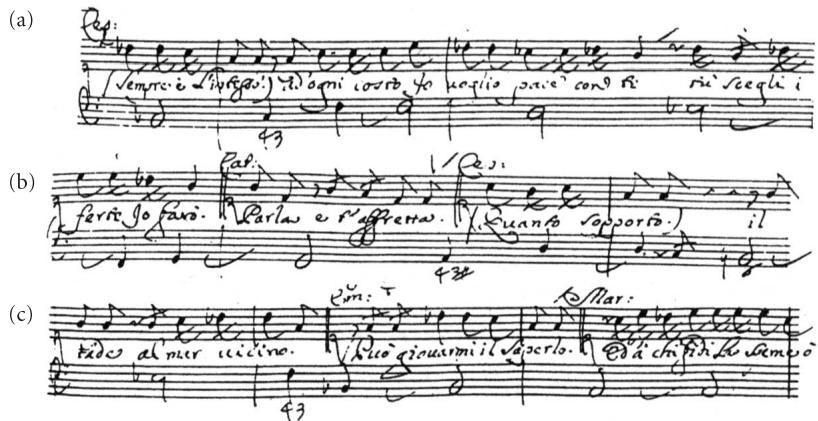
中文讲解
本段为图36的占位说明,标题指出该图由Leo所作歌剧《Catone in Utica》中第119、122、134页的三个乐谱示例组成(对应a、b、c三幅)。该图作为本节乐器演奏变体讨论的乐谱证据,需查看原图以确认具体音符内容;不得凭文字推测。
第9段(P0179)
原文复述
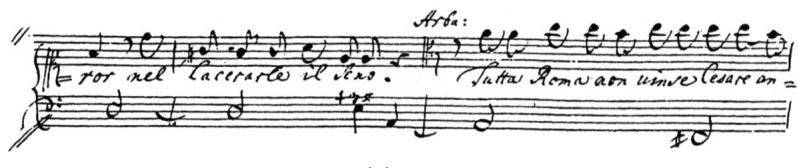
中文讲解
本段为图37的占位说明,标题指明图中乐谱来自亨德尔所作《Catone》第10页。该图作为对照证据(亨德尔版本相对于Leo源本),需查看原图方可得知其具体内容。
第10段(P0180)
原文复述
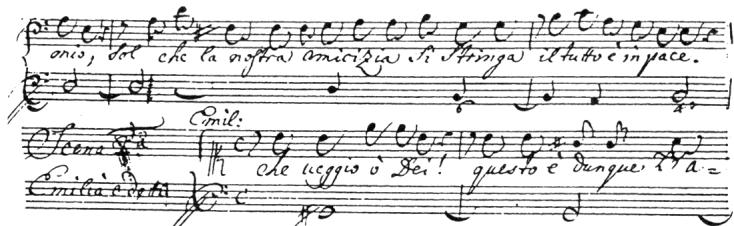
中文讲解
本段为图38的占位说明,标题指明图中乐谱来自亨德尔所作《Catone》第30页。该图作为本节演奏变体论证的又一份乐谱证据,需查看原图方可得知其具体内容。
第11段(P0181)
原文复述
N overview of commercially available recordings shows that since the time of Winton Dean’s 1977 publication, performances turned more and more towards using the foreshortened type of cadence. And a definite further tendency towards foreshortened cadencing can be observed in the 1990s. In his recordings Palmer brings some variety into his performance of cadences: in Imeneo he delays all final cadences; in Muzio the inner cadences are often foreshortened, but the cadences at the end of a scene are delayed.
中文讲解
本段从乐器讨论转入对现场录音中终止式(cadence)执行风格的考察。1)对商业录音的综述显示:自Winton Dean 1977年著作以来,演出越来越倾向采用"缩短型”(foreshortened)终止式;进入1990年代后这一趋势进一步加强。2)但指挥Palmer在录音中呈现出差别化处理:歌剧《Imeneo》中他将所有最后终止式延后;《Muzio》中内部终止式多为缩短型,但场景收束之处仍作延后。这一段为下段对指挥倾向与学术结论间关系的批评埋下伏笔。
补充说明
前段开头"N"显然为"An overview"的误连或断行所致,应理解为"An overview of commercially available recordings”。
第12段(P0182)
原文复述
The recordings give the impression that conductors have uncritically adopted the opinions of those scholars who mostly arrived at their conclusions using comparative logic, but rarely related their investigations to situations that arise in actual practice. It is amazing that current historical performance practice seems so little concerned about the resulting accumulation of dissonant chords. The variant forms we have uncovered by comparing Handel’s pasticcios with their Italian sources are in accord with the theory to be found especially in the writings of German theoreticians of the first half of the 18th century; Martin Ruhnke was the first to point out this connection. Eighteenth-century definitions of recitative explicitly state that it should
中文讲解
本段是本小节论证的核心批评。1)作者断言:录音提示指挥家并未对学者结论加以批判性吸收——这些学者主要借助"比较法"得出结论,鲜少将其研究与真实演奏场景相联系。2)当代"本真演奏"对结果中可能积累的不协和和弦几无警觉,这令人惊叹。3)作者随即给出自己的肯定结论:通过对比亨德尔的"集成剧"(pasticcios)与其意大利原本所揭示的变体形式,与18世纪上半叶——尤其是德语理论家——的著作所载理论相符,Martin Ruhnke首次点出这一联系。4)末句"Eighteenth-century definitions of recitative explicitly state that it should……“被本节边界截断,说明18世纪文献对宣叙调的定义与其"该如何"的规范——续于下节。
补充说明
“集成剧”(pasticcio)指18世纪由多位作曲家既有咏叹调汇编而成的歌剧;本节的论证框架通过比较亨德尔为集成剧改写材料的处理方式与意大利原本间的差异来支持己说。
第13段(P0183)
原文复述
early music august 2005
中文讲解
本段为期刊页眉,仅标示刊名《Early Music》及期号August 2005,属版面信息。
第14段(P0184)
原文复述
Downloaded from https://academic.oup.com/em/article/33/3/473/569657 by Indiana University - Bloomington user on 11 August 2026
中文讲解
本段为Oxford Academic下载水印,注明下载来源、用户机构(Indiana University - Bloomington)及下载时间11 August 2026,属版面信息。
脚注 / 边栏 / 图表 / 附加信息(如有)
本节附加材料包括:图36(Leo《Catone in Utica》第119、122、134页三个乐谱示例)、图37(亨德尔《Catone》第10页乐谱)、图38(亨德尔《Catone》第30页乐谱)三处乐谱占位说明,作为本节演奏变体论证的实证支撑。脚注44–53涉及Möller(48)、Manfred Hermann Schmid(45)、Dean(48)、Monson(49)、Martin Ruhnke(52)等学者来源,以及多处18世纪德语理论家论述,第53号脚注开启对"宣叙调之18世纪定义"的引证,正文在本节末尾被截断。
💡 本节核心要点
- 亨德尔的乐器标注采用"反向标记"逻辑——只列出senza(不演奏)者,被未列出者方可默认为参与演奏。
- 通过反向标记可推断:干燥宣叙调常态编制包括羽管键琴、大提琴或巴松(8′)以及一件或多件低音提琴(16′),与罗马传统一致;西特琴仅极少数情况明示使用。
- 当代本真演奏普遍仅用羽管键琴,16′乐器几近绝迹,主要出于便利而非史实,且偏好的"短和弦détaché式"更对应意大利式简单宣叙调。
- 自Dean 1977年以来,录音中缩短型终止式使用比例显著上升,1990年代后趋势更明显,但Palmer在Imeneo、Muzio等录音中保留差别化处理。
- 通过对集成剧与其意大利原本的比较揭示的变体形式,与18世纪上半叶——尤其是德语——理论著作相符,Martin Ruhnke首次点明此联系。
🔑 关键术语
- secco recitative (recitativo secco):干燥宣叙调:通篇仅以低音乐器持续支撑,节奏与歌词跟随较为自由,区别于乐队伴奏的"obbligato recitative”。本节讨论其在亨德尔歌剧中的乐器配置。
- senza(意大利语:“无”):亨德尔乐谱上用以标记某件乐器在该处不演奏;本节核心论证点在于他"只标缺席"而"应到者不标"。
- continuo / figured bass:通奏低音/数字低音:贯穿全曲的持续低音,并配合数字标记的和声提示;本节所讨论乐器均围绕此编制。
- 8′ / 16′:源自管风琴音栓名称;在通奏低音语境中代指基本音域(8′)与低八度音域(16′),用以描述大提琴/巴松与低音提琴的相对音高位置。
- acciaccatura:装饰音形式;Monson依史源指出带有acciaccatura的通奏低音演奏在宣叙调曾广泛存在。
- détaché execution:短和弦的顿弓式演奏;本节指出该方式主要见于意大利recitativo semplice,而非通行的宣叙调通奏低音习惯。
- foreshortened cadence:“缩短型"终止式:省略通常在终止式之前准备的某些和弦,造成更紧凑的收束;本节用于描述录音中执行方式的倾向。
- pasticcio:集成剧:由多位作曲家既有咏叹调拼合而成的18世纪歌剧;本节将亨德尔所作集成剧与其意大利原本对照以揭示乐谱变体。
sec0017 [描述性拆分] Modern recordings, contemporary theory, and the case for varied cadential execution
第1段(P0185)
原文复述
Caption for Figure/Example 39 reads: “(a) Gasparini, Bajazet; (b) Leo, Catone in Utica, p.166; (c) Handel, Catone, p.122; (d) Handel, Tamerlano, f.39r.” The body of the image carries an inline placeholder noting that the embedded image data have been omitted; only the caption and its position are preserved.
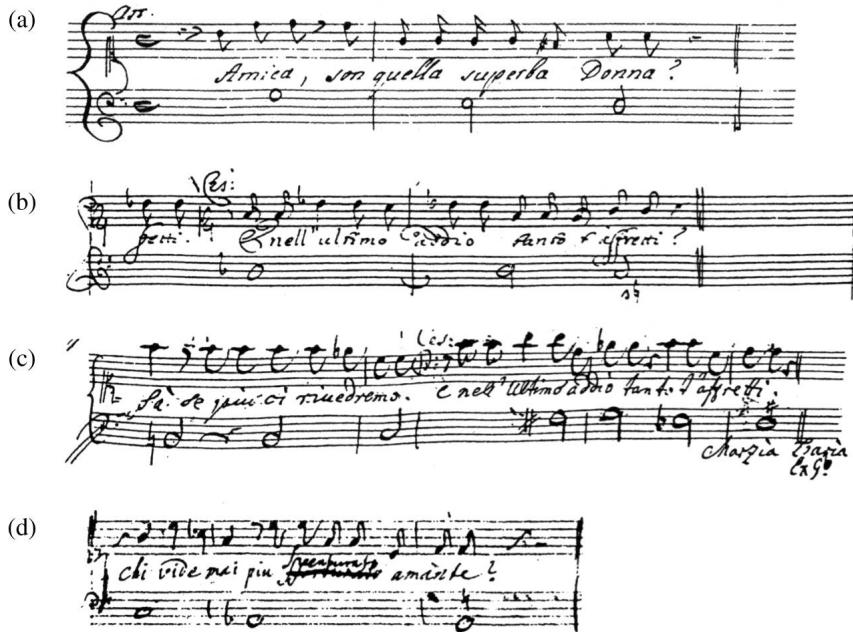
中文讲解
这是例39(Example 39)的图注,列出四处音乐引文的来源:(a) 加斯帕里尼(Gasparini)的《Bajazet》;(b) 莱奥(Leo)的《Catone in Utica》第166页;(c) 亨德尔的《Catone》第122页;(d) 亨德尔的《Tamerlano》第39r面。作者把两位意大利正歌剧作曲家与亨德尔本人对相同或相近剧目所做的终止处理并置,意在为后文“十八世纪终止处理比当代更丰富”这一论点提供直观对照。输入中省略了实际乐谱图像,因此各例究竟以何种终止式呈现、是否包含数字低音与声部细节,须回到原刊查阅原图才能确认。
补充说明
由于图像数据被省略,本条目只能依据图注定位四个例证的曲目与页码;其乐谱内容、终止音型与和声细节均无法在当前输入中核实。
第2段(P0186)
原文复述
…imitate not only spoken language and oral narration, but also the elaborate construction of a public speech. For the music this means that not only the singer but also the accompaniment must do justice to the prescribed rules, the former by singing in the appropriate declamatory style, the latter by going beyond this and fulfilling its important function of subdividing and commenting on the musical action. The diversity of possible realizations of cadences should thus be put to use as punctuation devices. Each turning point and interruption, as well as the different ends of phrase and of sentence, should be rendered so that different textual meanings receive different cadential treatment. The current practice ofgenerally foreshortened, dissonant cadencing does not conflict with observations made by German theorists contemporary to Handel, such as Scheibe: ‘The transformation in all the harmonic progressions [should] also be as unaffected and natural as the singing speech itself …’54 This leads Ruhnke to the conclusion: ‘Striking harmonies must be textually motivated. If there are too many surprising effects, then the listener becomes insensible to them.’55
中文讲解
本段是论文论证的核心收束之一,需逐层解读。
第一层是类比的来源:歌剧咏叹调不仅要模仿口语与口头叙事,还要模仿公开演说那种精心组织的修辞结构。换言之,咏叹调在作者眼中是一种“被谱成音乐的演说”。
第二层把这一类比落实于演奏:歌手有责任以得体的“宣叙化风格”(declamatory style)演唱,使旋律贴近言辞的轻重与节奏;伴奏(尤其是通奏低音/羽管键琴)则更进一步,承担“细分句法、评注音乐动作”的功能——也就是在歌手停顿时补足结构、在句读处示意推进。
第三层把这种分工汇入终止的论题:终止实现方式的多样性,应被当作标点符号来使用。每一次转折、每一次打断、每一处短语或句子的结尾,都应根据文本意义的差别采用不同的终止处理。
第四层是批评与理论回应。作者指出当代演奏通行的“先缩短、再以不协和方式终止”之做法存在片面性,但与亨德尔同时代的德国理论家(如 Scheibe)的观察并不冲突——Scheibe 要求和声进行应像“歌唱的言语”那样自然而不做作。本段最后以 Ruhnke 的结论作结:令人印象深刻的和声必须由文本驱动;若“意外”过多,听众便会麻木。
这两条引文(脚注54、55)的作用是为作者的“终止多样性”主张提供同时代的理论支撑,并把“文本驱动”确立为评判终止处理是否合法的标准。需要留意的是,本段开头以省略号(“…imitate…”)起笔,说明它承接前一段未写完的句子,因此论点的全貌要连起来读才能完整。
补充说明
原文中“The current practice ofgenerally foreshortened, dissonant cadencing”一处“ofgenerally”应为“of generally”之排印/OCR 拼合,本复述保留原貌以便与原文逐字对照;脚注54、55 所引 Scheibe 与 Ruhnke 的具体出处与年代在本节输入中未给出,需在文末脚注区核对。
第3段(P0187)
原文复述
Both notational conventions and remarks by musical theorists suggest that 18th-century cadential execution was considerably more varied than is the case in current musical practice.
中文讲解
这是一个明确的总结性命题。作者把两条独立的证据线索汇拢:其一来自乐谱本身的记谱惯例(如数字低音、延留记号、不同终止式的选择),其二来自十八世纪理论家的论述(如前段引用的 Scheibe 与 Ruhnke)。两者都指向同一结论:十八世纪的终止处理远比今天丰富。该句是本节乃至全篇主旨的显式陈述,承担收束论点的作用。
第4段(P0188)
原文复述
Dieter Gutknecht is Director of Music and Professor of Musicology at the University of Cologne. His main areas of research are performance practice, musical aesthetics, music and fine art/sculpture and the work of Karlheinz Stockhausen: he has published widely in all these fields. As a conductor he has appeared at the Halle Handel Festival, La Fenice in Venice, Palermo, Monreale and Rome. dieter.gutknecht@uni-koeln.de
中文讲解
作者介绍:迪特尔·古特克内希特(Dieter Gutknecht),科隆大学音乐系主任兼音乐学教授。其研究领域涵盖演奏实践、音乐美学、音乐与造型艺术/雕塑的关系,以及施托克豪森(Karlheinz Stockhausen)的作品,并在这些方向均有大量著述。作为指挥,他曾出现在哈雷亨德尔节、威尼斯凤凰歌剧院、巴勒莫、蒙雷阿莱与罗马。其电子邮箱附于段末。
此处的相关性在于“演奏实践”(performance practice)正是本文所属领域的核心,因此作者具备撰写此文的资质。其余研究方向(施托克豪森、雕塑等)与本节主题无直接关联,仅作为人物背景信息提供。
补充说明
本节输入未提供古特克内希特更详细的生卒年或学术履历,不得补写。
第5段(P0189)
原文复述
I would like to thank my assistant Christina Zuber (Cologne) for her help with translation and Amy Whitelock (Oxford) for her intensive proof-reading.
中文讲解
作者鸣谢:感谢其助手 Christina Zuber(科隆)在翻译方面的协助,以及 Amy Whitelock(牛津)所做的细致校订。鉴于作者为德国学者、文章以英文发表,“翻译”一词暗示 Zuber 协助处理了英文表达层面的问题;Whitelock 来自牛津,表明其承担英文学术语言的细致校对。
第6段(P0190)
原文复述
1 Serse/Xerxes, HWV 40, ed. R. Steglich, Hallische Händel-Ausgabe [HHA], II/39 (Kassel, 1958); Orlando, ed. S. Flesch, HHA, II/28 (Kassel, 1969);
中文讲解
脚注1(接续上文)中开列的两部亨德尔歌剧权威版本: ——《Serse/Xerxes》(HWV 40),由 R. Steglich 编辑,收入 Hallische Händel-Ausgabe(哈尔亨德尔全集,简称 HHA)第二系列第39卷,1958年于卡塞尔出版; ——《Orlando》,由 S. Flesch 编辑,收入 HHA 第二系列第28卷,1969年于卡塞尔出版。
两者均为学界通行的学术批评版,本节引用乐谱时一般即指此版本。
补充说明
HWV 为亨德尔作品编号目录(Handel-Werk-Verzeichnis),HHA 为“哈尔亨德尔全集”(Hallische Händel-Ausgabe),由卡塞尔 Bärenreiter 出版的权威批评版系列;本节输入未注明出版社,按惯例补为背景信息时不属本段。
第7段(P0191)
原文复述
Amadigi, HWV11, ed. J. M. Knapp, HHA, II/8 (Kassel, 1971). 2 With the pasticcio Oreste, HWV A11, ed. B. Baselt, HHA, II/supp.1
中文讲解
脚注继续给出第三部歌剧版本: ——《Amadigi》(HWV 11),由 J. M. Knapp 编辑,HHA 第二系列第8卷,1971年于卡塞尔出版。
其后接脚注2:以“pasticcio”拼装歌剧《Oreste》(HWV A11)为参照,由 B. Baselt 编辑,收入 HHA 第二系列补遗卷1。
这些版本信息告诉读者,作者论证时所引的具体谱例与终止式均来自权威批评版,而非某一份手稿或早期印刷版,从而保证论据可被复核。
补充说明
“pasticcio”(拼装剧)指由多位作曲家各取咏叹调合成的歌剧;“HWV A11”中的 A 编号表示归属存疑或拼装作品。本节输入仅给出此信息,不得据此推断该剧具体内容或年代。
第8段(P0192)
原文复述
early music august 2005
中文讲解
版面元素:期刊名 Early Music(《早期音乐》),期号 August 2005(2005年8月号)。这是页眉处的期刊署名,与正文论证无关,仅起标识作用。
第9段(P0193)
原文复述
Downloaded from https://academic.oup.com/em/article/33/3/473/569657 by Indiana University - Bloomington user on 11 August 2026
中文讲解
版面元素:牛津学术(Oxford Academic)平台自动添加的下载水印。信息表明该文由印第安纳大学伯明顿分校(Indiana University - Bloomington)用户于2026年8月11日下载自 em(即 Early Music 期刊)卷33第3期第473页起的文章。这是出版商层面的元数据,与正文内容无关。
脚注 / 边栏 / 图表 / 附加信息(如有)
本节除正文段落外还包含三类附加材料:(1) 例39的图像及图注,列出四处终止处理范例的曲目与页码,是正文论证的视觉佐证;(2) 作者介绍与鸣谢段,提供作者迪特尔·古特克内希特的研究方向及两位助手的贡献;(3) 脚注区,已开始给出脚注1与脚注2,均为亨德尔歌剧权威版本(Hallische Händel-Ausgabe,HHA)的出版信息,指明正文所引谱例的依据。此外还有期刊名页眉“early music august 2005”以及出版商下载水印,二者均为版面信息,不承担论证功能。
💡 本节核心要点
- 歌剧咏叹调被类比为公开演说,其修辞结构应同时由歌手的宣叙化演唱与伴奏的句法细分/评注共同实现。
- 终止实现方式的多样性应被视为标点符号,针对转折、停顿、短语末与句子末等不同文本功能采取不同的终止处理。
- 当代“先缩短、再以不协和方式终止”的通行做法被作者视为削弱了这种多样性,但与亨德尔同时代德国理论家的观察并不相悖。
- Scheibe 要求和声进行像“歌唱的言语”那样自然而不做作;Ruhnke 强调“令人印象深刻的和声必须由文本驱动”,二者为作者主张提供同时代的理论支撑。
- 乐谱记谱惯例与理论家论述这两条独立证据共同表明:十八世纪的终止处理远比今天的演奏实践更为丰富,这是本节乃至全文的明确结论性命题。
- 文中所引谱例均依据 HHA(Hallische Händel-Ausgabe)权威批评版,便于读者核对与复现。
🔑 关键术语
- declamatory style(宣叙化/吟诵式演唱风格):十八世纪歌剧中一种紧贴言辞节奏与重音的演唱方式,与流畅的旋律化唱法相对;本节中歌手须以此种风格演唱,使咏叹调承担“被谱成音乐的演说”这一角色。
- subdividing and commenting on the musical action(细分句法与评注音乐动作):在本节中特指伴奏(尤其是通奏低音/羽管键琴)在歌手停顿时补足结构、标示句读、并对音乐进程作出“评注”的作用,是伴奏超越单纯支撑和声的功能。
- punctuation devices(标点装置):作者用以比喻终止式的术语:如同书面文本中的逗号、分号、句号,不同的终止实现方式应对应不同的文本意义与句法位置。
- foreshortened, dissonant cadencing(缩短、不协和的终止处理):作者批评的当代通行做法——把终止压缩为短促且常含不协和音的程式;本节认为这种做法抹平了十八世纪本应存在的终止多样性。
- Hallische Händel-Ausgabe(HHA):亨德尔作品的权威学术批评版全集,出版地为卡塞尔;本节脚注指明正文中所引歌剧(《Serse》《Orlando》《Amadigi》《Oreste》等)均依据该版本。
- HWV:亨德尔作品编号目录(Handel-Werk-Verzeichnis)的缩写;HWV A11 等带 A 的编号表示归属存疑或拼装作品(如本节脚注2中的《Oreste》)。
- pasticcio(拼装剧):由多位作曲家各贡献咏叹调再行汇编而成的歌剧;本节脚注2中的《Oreste》(HWV A11)即属此类。
sec0018 [描述性拆分] Author biography and acknowledgements
第1段(P0194)
原文复述
(Kassel, 1991), and Flavio, HWV16, ed. J. M. Knapp, HHA, II/13 (Kassel, 1993).
中文讲解
这是脚注2的延续部分,补充了另一项版本信息:Flavio, HWV16(亨德尔歌剧《弗拉维奥》的作品编号),由 J. M. Knapp 编辑,收入《亨德尔作品全集》(HHA,即 Hallische Händel-Ausgabe),第 II/13 卷,1993 年于卡塞尔出版。这一信息承接前一段(位于第19页脚注2中已起始的版本引用),共同为正文所引用的乐谱版本提供完整出处。
第2段(P0195)
原文复述
3 F.-H. Neumann, Die Theorie des Rezitativs im 17. und 18. Jahrhundert unter besonderer Berücksichtigung des deutschen Musikschriftums des 18. Jahrhunderts (Göttingen, 1955).
中文讲解
脚注3:F.-H. 诺伊曼,《17、18世纪宣叙调理论——尤其关注18世纪德语音乐文献》(哥廷根,1955年出版)。这是一本研究宣叙调理论的核心学术专著,是本文作者多处引用的基础文献。
第3段(P0196)
原文复述
4 Charles Burney, A General History of Music, iv (London, 1789), p.151.
中文讲解
脚注4:查尔斯·伯尼,《音乐通史》第四卷(伦敦,1789年),第151页。伯尼是18世纪英国著名音乐史学家,本页脚注引用其著作作为历史描述的来源。
第4段(P0197)
原文复述
5 Neumann, Die Theorie des Rezitativs, p.222.
中文讲解
脚注5:诺伊曼,《宣叙调理论》,第222页。指引读者回到诺伊曼该书第222页的具体论述处。
第5段(P0198)
原文复述
6 As Pier Francesco Tosi calls it in his Opinioni de’ cantori antichi, e moderni (Bologna, 1723).
中文讲解
脚注6:正如皮埃尔·弗朗切斯科·托西在其《古今歌唱家的意见》(博洛尼亚,1723年)中所称呼的那样。托西的这部著作是18世纪初关于声乐艺术的经典文献,作者引用托西的用语以支持正文中的某个特定术语或概念。
第6段(P0199)
原文复述
7 Johann Mattheson, Die neueste Untersuchung der Singspiele nebst beygefügter musikalischer Geschmacksprobe (Hamburg, 1744), p.65; Neumann, Die Theorie des Rezitativs, p.223.
中文讲解
脚注7:约翰·马泰松,《歌唱剧的最新研究附音乐趣味样本》(汉堡,1744年),第65页;诺伊曼,《宣叙调理论》,第223页。该脚注同时引用马泰松的原始著作(由马泰松本人撰写)和诺伊曼对此的转述或讨论。
第7段(P0200)
原文复述
8 Neumann, Die Theorie des Rezitativs, pp.357–9; here as well as in the above citations, Neumann quotes many musical examples and a variety of sources.
中文讲解
脚注8:诺伊曼,《宣叙调理论》,第357–359页;此处以及上述引文中,诺伊曼引用了大量音乐实例和多种来源。该脚注说明了诺伊曼著作中包含丰富的乐谱示例和广泛的资料来源。
第8段(P0201)
原文复述
9 Daniel Türk, Anweisung zum Generalbaßspielen (Halle/Leipzig, 1791).
中文讲解
脚注9:丹尼尔·蒂尔克,《通奏低音演奏指南》(哈勒/莱比锡,1791年)。蒂尔克是18世纪后半叶德国重要的音乐理论家与作曲家,此书为通奏低音演奏法的实用教材。
第9段(P0202)
原文复述
10 Georg Philipp Telemann, Singe-Spiel- und General-Baß-Übungen (Hamburg, 1733); ed. M. Schneider (Berlin, 1914); Johann Joachim Quantz, Versuch einer Anweisung die Flöte traversière zu spielen (Berlin, 1752); facsimile edn, Documenta Musicologica, i/2 (Kassel, 1953), p.272; Johann Adolph Scheibe, ‘Abhandlung über das Rezitativ’, Bibliothek der schönen Wissenschaften und der freyen Künste, xi (Leipzig, 1764), pp.209–68; xii (Leipzig, 1765), pp.1–41, 217–66.
中文讲解
脚注10:格奥尔格·菲利普·泰勒曼,《歌唱、演奏与通奏低音练习》(汉堡,1733年;M. 施奈德编,柏林,1914年);约翰·约阿希姆·匡茨,《横笛演奏教程》(柏林,1752年;摹真版,《音乐学文献》,第i/2卷,卡塞尔,1953年,第272页);约翰·阿道夫·沙伊贝,《论宣叙调》,《美的科学与自由艺术文库》第xi卷(莱比锡,1764年),第209–268页;第xii卷(莱比锡,1765年),第1–41、217–266页。该脚注集中引用了18世纪关于宣叙调和通奏低音实践的多部德语理论著作,是正文相关讨论的主要文献来源。
第10段(P0203)
原文复述
11 Accompaniment practice according to Joseph Riepel, Harmonisches Sylbenmaß Der erste Theil von dem Recitativ (Regensburg, 1776), p.38.
中文讲解
脚注11:依据约瑟夫·里佩尔,《和谐的音节衡量——宣叙调第一部分》(雷根斯堡,1776年),第38页,描述伴奏实践。里佩尔的著作专章讨论宣叙调的伴奏方式。
第11段(P0204)
原文复述
12 J. A. Westrup, ‘The cadence in Baroque recitative’, Natalicia musicologica Knud Jeppesen, ed. B. Hjelmborg and S. Sørensen (Copenhagen, 1962), pp.243–52.
中文讲解
脚注12:J. A. 韦斯特拉普,《巴洛克宣叙调中的终止式》,《克努德·耶佩森音乐学祝寿文集》,B. Hjelmborg 与 S. Sørensen 编(哥本哈根,1962年),第243–252页。本文与韦斯特拉普的文章均为讨论巴洛克宣叙调终止式的重要文献。
第12段(P0205)
原文复述
13 In showing alternative (2) of ex.1 Westrup misplaces the sharp sign, as if the 4th was meant to be raised instead of the 3rd; see Westrup, ‘The cadence in Baroque recitative’, p.242, ex.11.
中文讲解
脚注13:在展示例1的方案(2)时,韦斯特拉普误置了升号,似乎是要升高第4音而不是第3音;参见韦斯特拉普《巴洛克宣叙调中的终止式》,第242页例11。作者在此订正了韦斯特拉普的乐谱标注错误。
第13段(P0206)
原文复述
14 Johann David Heinichen, Der Generalbass in der Komposition (Dresden, 1728; R/Hildesheim 1969, p.673. See illus.40.
中文讲解
脚注14:约翰·大卫·海尼兴,《作曲中的通奏低音》(德累斯顿,1728年;重印/希尔德斯海姆1969年),第673页。参见插图40。海尼兴的这部巨著是巴洛克通奏低音与作曲理论的核心文献。
第14段(P0207)
原文复述
15 See S. H. Hansell, ‘The cadence in 18th-century recitative’, Musical quarterly, liv (1968), pp.228–48, esp. p.242; D. E. Monson, ‘The last word: the cadence in recitativo semplice of Italian opera seria’, Studi pergolesiani, i (Florence, 1986), pp.89–105, esp. pp.90–91.
中文讲解
脚注15:参见 S. H. 汉塞尔,《18世纪宣叙调中的终止式》,《音乐季刊》第liv卷(1968年),第228–248页,尤其第242页;D. E. 蒙森,《最后的话:意大利正歌剧单纯宣叙调中的终止式》,《佩尔戈莱西研究》第i卷(佛罗伦萨,1986年),第89–105页,尤其第90–91页。汉塞尔与蒙森的文章是研究宣叙调终止式的两大关键参考文献。
第15段(P0208)
原文复述
16 I am grateful to Thomas Synofzik for having pointed this out to me.
中文讲解
脚注16:作者感谢托马斯·西诺菲齐克向他指出这一点。这是作者对他人帮助的致谢。
第16段(P0209)
原文复述
17 Heinichen, Der Generalbass in der Komposition, p.824.
中文讲解
脚注17:海尼兴,《作曲中的通奏低音》,第824页。
第17段(P0210)
原文复述
18 Johann Friedrich Agricola, Anleitung zur Singkunst . . . (Berlin, 1757), facsimile edn, together with Pier Francesco Tosi, Opinioni di compositori antichi e moderni . . . (Bologna, 1723), ed. E. R. Jacobi (Celle, 1966), p.162.
中文讲解
脚注18:约翰·弗里德里希·阿格里科拉,《歌唱艺术指南……》(柏林,1757年),摹真版与皮埃尔·弗朗切斯科·托西《古今作曲家意见……》(博洛尼亚,1723年)合刊,E. R. 雅各比编(采勒,1966年),第162页。该脚注提示读者参阅雅各比编辑的合刊摹真版。
第18段(P0211)
原文复述
19 W. Dean, ‘The performance of recitative in late Baroque opera’, Music & letters, lviii (1977), pp.389–402, at pp.396–7.
中文讲解
脚注19:W. 迪安,《晚期巴洛克歌剧中宣叙调的演唱》,《音乐与文学》第lviii卷(1977年),第389–402页,第396–397页。迪安的文章与蒙森的文章并列,是研究晚期巴洛克宣叙调演唱实践的两篇核心文献。
第19段(P0212)
原文复述
20 Monson, ‘The last word’, p.91. 21 Hansell, ‘The cadence in 18th-century recitative’, p.247.
中文讲解
脚注20与脚注21并列:脚注20——蒙森,《最后的话》,第91页;脚注21——汉塞尔,《18世纪宣叙调中的终止式》,第247页。
第20段(P0213)
原文复述
22 Dean, ‘The performance of recitative in late Baroque opera’, p.401.
中文讲解
脚注22:迪安,《晚期巴洛克歌剧中宣叙调的演唱》,第401页。
第21段(P0214)
原文复述
23 Dean, ‘The performance of recitative in late Baroque opera’, p.400.
中文讲解
脚注23:迪安,《晚期巴洛克歌剧中宣叙调的演唱》,第400页。
第22段(P0215)
原文复述
24 Dean, ‘The performance of recitative in late Baroque opera’, p.394.
中文讲解
脚注24:迪安,《晚期巴洛克歌剧中宣叙调的演唱》,第394页。
第23段(P0216)
原文复述
25 ‘Handel only wrote out one delayed cadence in all of his operas, and the cadences in accompanied recitative were frequently written to sound simultaneously with the voice (Monson, ‘The last word’, p.92).
中文讲解
脚注25:蒙森指出(见《最后的话》第92页):亨德尔在所有歌剧中仅写出一处延迟终止式,伴奏宣叙调中的终止式则经常被写成与人声同时发声。
第24段(P0217)
原文复述
26 Monson, ‘The last word’, pp.92–3.
中文讲解
脚注26:蒙森,《最后的话》,第92–93页。
第25段(P0218)
原文复述
27 Monson, ‘The last word’, p.93.
中文讲解
脚注27:蒙森,《最后的话》,第93页。
第26段(P0219)
原文复述
28 Monson, ‘The last word’, p.93.
中文讲解
脚注28:蒙森,《最后的话》,第93页。
第27段(P0220)
原文复述
29 Monson, ‘The last word’, p.94. Monson gives many musical examples.
中文讲解
脚注29:蒙森,《最后的话》,第94页。蒙森给出了大量音乐实例。
第28段(P0221)
原文复述
30 Monson, ‘The last word’, pp.94–5.
中文讲解
脚注30:蒙森,《最后的话》,第94–95页。
第29段(P0222)
原文复述
31 Monson, ‘The last word’, p.95;
中文讲解
脚注31起始:蒙森,《最后的话》,第95页;冒号后引文延续至下一段。
第30段(P0223)
原文复述
ex.12b, p.104, taken from Scarlatti’s Telemaco (Rome, 1718).
中文讲解
脚注31的延续:例12b,第104页,取自斯卡拉蒂的《泰莱马科》(罗马,1718年)。该脚注以斯卡拉蒂歌剧中的具体谱例作为依据。
第31段(P0224)
原文复述
32 Monson, ‘The last word’, p.97.
中文讲解
脚注32:蒙森,《最后的话》,第97页。
第32段(P0225)
原文复述
33 Monson, ‘The last word’, p.96.
中文讲解
脚注33:蒙森,《最后的话》,第96页。
第33段(P0226)
原文复述
34 C. P. E. Bach, Versuch über die wahre Art, das Clavier zu spielen (Berlin, 1753, 1762), facsimile edn
中文讲解
脚注34起始:C. P. E. 巴赫,《论键盘演奏的真正艺术》(柏林,1753年、1762年),摹真版;接续至下一段。
第34段(P0227)
原文复述
L. Hoffmann-Erbrecht (Leipzig, 1978), p.315.
中文讲解
脚注34延续:L. 霍夫曼-埃尔布雷希特编辑(莱比锡,1978年),第315页。该脚注给出 C. P. E. 巴赫该书摹真版的编辑者与版本信息。
第35段(P0228)
原文复述
35 R. Strohm, ‘Handel’s pasticci’, Analecta musicologica, xiv, pp.208–67, at p.211.
中文讲解
脚注35:R. 斯特罗姆,《亨德尔的集成剧》,《音乐学分析》第xiv卷,第208–267页,第211页。集成剧(pasticcio)指由不同作曲家作品拼合而成的歌剧。
第36段(P0229)
原文复述
36 Both versions are available in facsimile: Leonardo Leo, Catone in Utica, introduction by H. M. Brown, Italian Opera, 1640–1770, lxx (New York, 1983); Leo, Hasse, Porpora, Vivaldi and Vincie, Catone, arranged by G. F. Handel, introduction by H. M. Brown, Italian Opera, 1640–1770, lxxi (New York, 1983).
中文讲解
脚注36:两个版本均有摹真版:莱昂纳多·莱奥,《乌提卡的卡托》,H. M. 布朗撰序,《意大利歌剧 1640–1770》第lxx卷(纽约,1983年);莱奥、哈塞、波尔波拉、维瓦尔第与温奇,《卡托》,由 G. F. 亨德尔编配,H. M. 布朗撰序,《意大利歌剧 1640–1770》第lxxi卷(纽约,1983年)。该脚注为正文讨论亨德尔编配的《卡托》提供版本信息。
第37段(P0230)
原文复述
37 Musical examples show the result following Handel’s conductor’s copy: see the preface to the Catone facsimile.
中文讲解
脚注37:乐谱示例展示了依据亨德尔指挥所用抄本所得出的结果;参见《卡托》摹真版的序言。该脚注说明正文谱例的来源是亨德尔的指挥用本。
第38段(P0231)
原文复述
38 Francesco Gasparini, L’armonico pratico al cimbalo (Venice, 1708); facsimile edn (New York, 1967); trans. F. S. Stillings as The practical harmonist at the harpsichord, ed. D. L. Burrows (New Haven, 1963).
中文讲解
脚注38:弗朗切斯科·加斯帕里尼,《羽管键琴上的实用和声》(威尼斯,1708年);摹真版(纽约,1967年);F. S. 斯蒂林斯英译为《键盘上的实用和声家》,D. L. 伯罗斯编辑(纽黑文,1963年)。加斯帕里尼的著作是巴洛克和声与宣叙调伴奏的经典教材。
第39段(P0232)
原文复述
39 See Monson, ‘The last word’, p.98. 40 See Dean, ‘The performance of recitative in late Baroque opera’; Monson, ‘The last word’; Westrup, ‘The cadence in Baroque recitative’.
中文讲解
脚注39与脚注40并列:脚注39——参见蒙森《最后的话》第98页;脚注40——参见迪安《晚期巴洛克歌剧中宣叙调的演唱》、蒙森《最后的话》、韦斯特拉普《巴洛克宣叙调中的终止式》。脚注40再次强调研究宣叙调的三篇核心文献。
第40段(P0233)
原文复述
41 See the special notation in Monson, ‘The last word’, p.105; since Griselda (1701) Scarlatti wrote the cadences in this way.
中文讲解
脚注41:参见蒙森《最后的话》第105页中的特殊记谱法;自《格里塞尔达》(1701年)起,斯卡拉蒂即以这种方式书写终止式。该脚注指出斯卡拉蒂从1701年开始采用特定的终止式记谱方式。
第41段(P0234)
原文复述
42 Heinichen, Der Generalbass in der Komposition, p.824; this advice I owe to Thomas Synofzik, to whom thanks.
中文讲解
脚注42:海尼兴,《作曲中的通奏低音》,第824页;此建议得益于托马斯·西诺菲齐克,谨致谢意。作者在此再次致谢西诺菲齐克。
第42段(P0235)
原文复述
43 D. Möller, ‘Zur Generalbaßbesetzung in den Opern Georg Friedrich Händels’, Göttinger Händel-Beiträge, ii (1986), pp.141–54.
中文讲解
脚注43:D. 默勒,《亨德尔歌剧中通奏低音的乐器配置》,《哥廷根亨德尔研究集》第ii卷(1986年),第141–154页。默勒的文章专门研究亨德尔歌剧中通奏低音组的乐器构成。
第43段(P0236)
原文复述
44 Möller, ‘Zur Generalbaßbesetzung . . .’, p.143.
中文讲解
脚注44:默勒,《亨德尔歌剧中通奏低音的乐器配置……》,第143页。
第44段(P0237)
原文复述
45 M. H. Schmid, ‘Der Violone in der italienischen Instrumentalmusik des 17. Jahrhunderts’, Studia organologica: Festschrift für Henry van der Meer zu seinem fünfundsechzigstem Geburtstag, ed. F. Hellwig (Tutzing, 1987),
中文讲解
脚注45起始:M. H. 施密德,《17世纪意大利器乐中的低音维奥尔琴》,《乐器学论集:亨利·范德梅尔六十五寿辰祝寿文集》,F. 黑尔维希编(图青,1987年);接续至下一段。
第45段(P0238)
原文复述
pp.407–36, at p.427.
中文讲解
脚注45延续:第407–436页,第427页。
第46段(P0239)
原文复述
46 Möller, ‘Zur Generalbaßbesetzung . . .’, p.143.
中文讲解
脚注46:默勒,《亨德尔歌剧中通奏低音的乐器配置……》,第143页。
第47段(P0240)
原文复述
47 Möller, ‘Zur Generalbaßbesetzung . . .’, p.143, quoting Parthenope: ‘con la Theorba’.
中文讲解
脚注47:默勒,《亨德尔歌剧中通奏低音的乐器配置……》,第143页,引述《帕尔特诺珀》中的“con la Theorba”(用西奥巴琴)。西奥巴琴(theorba)是巴洛克时期常用的通奏低音弹拨乐器。
第48段(P0241)
原文复述
48 Dean, ‘The performance of recitative in late Baroque opera’, p.392.
中文讲解
脚注48:迪安,《晚期巴洛克歌剧中宣叙调的演唱》,第392页。
第49段(P0242)
原文复述
early music august 2005
中文讲解
期刊运行页眉——《早期音乐》(Early Music),2005年8月。该行为版面属性,表明本页(第20页)属于该期刊的版面信息,不含正文论述。
第50段(P0243)
原文复述
Downloaded from https://academic.oup.com/em/article/33/3/473/569657 by Indiana University - Bloomington user on 11 August 2026
中文讲解
下载来源信息:从牛津学术期刊网址(academic.oup.com/em/article/33/3/473/569657)下载,由印第安纳大学伯明顿分校用户于2026年8月11日下载。该行为期刊电子版的版权与下载水印信息。
第51段(P0244)
原文复述
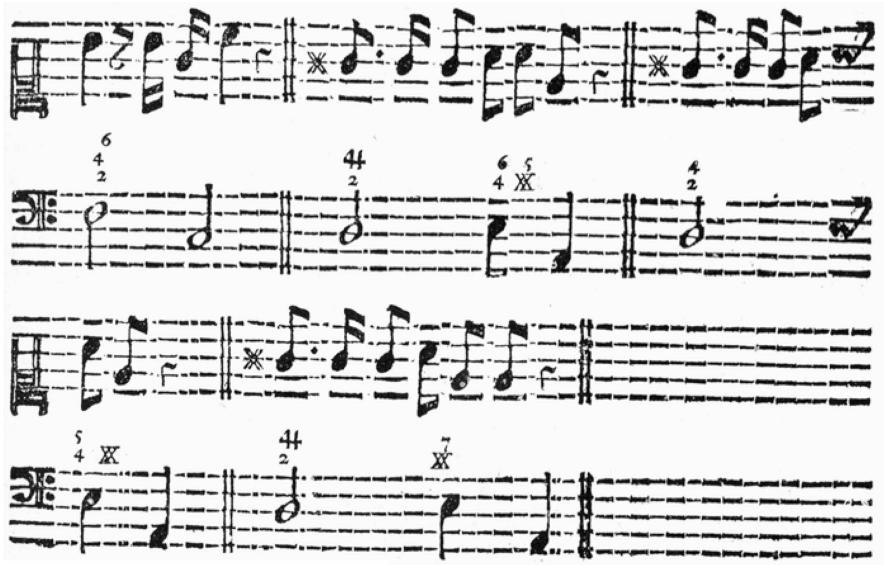
中文讲解
第21页含有一个图像或乐谱占位符。具体内容因内嵌数据省略而无法读取;其位置与图注(即后一段 P0246 中标注的“illus.40”与海尼兴著作第824页的引用)相一致。读者须查阅原图以确认谱例细节。
第52段(P0245)
原文复述
4te, und 5te Exempel geben die, im Recitativ alle Augenblick vorkommende Cadenz an, welcher es gantz und gar an der gebührenden resolution ihres Satzes (#) zu ermangeln scheinet. Denn ob sie wohl in der Figur des 3ten Exempels (so lange nehmlich der Accompagnist die über das e. gezeichnete () distinct anschlagen will) den Nahmen einer verwechselten resolution deswegen erhalten könnte, weil auff diese Art das c. worein der Bass natürlicher Weise (dd) resolviren solte, in die 6te der Ober-Stimme versetzet wird: so kan man doch den Accompagnisten bey dergleichen geschwind vorbey gehenden Cadenzen nicht allzeit zu der Accuratefle des besagten 3ten Exempels obligiren, und folgbahr muß man das 4te, und 5te Exempel vor Exceptiones wieder die allgemeine Regel, und vor solche Libertäten annehmen, die durch langen Gebrauch das Bürger-Recht erhalten.
中文讲解
这段德语原文取自海尼兴《作曲中的通奏低音》(1728年)第824页,阐述了宣叙调中频繁出现的终止式的和声解决方法。译文大意:第4与第5例展示了在宣叙调中时刻都会出现的终止式,这一类终止式似乎完全欠缺对其和弦音(#)的规范解决(resolution)。因为虽然在第3例中(只要伴奏者清晰地奏出标记在 e 上方的音),此类进行可以被称为“换位解决”(verwechselten resolution)——即按这种方式,原本应在低音中自然解决到 d 的 c 音,被转移到了上方声部的六度音上:然而在如此快速掠过的终止式中,人们不能总是要求伴奏者达到第3例所要求的精确程度,因此第4、第5例应被视为对普遍规则的例外,以及通过长期使用而获得合法地位的“自由处理”(Libertäten)。这一段引文的核心论点在于:海尼兴承认宣叙调实践中存在“合法化了的例外”,即速度和实际演奏条件使得严格按和声规则解决变得不切实际。
补充说明
图注(来自 P0246)说明此段对应正文中的插图40,即脚注42所引的海尼兴著作第824页之谱例与说明。
第53段(P0246)
原文复述
40 Heinichen, Der Generalbass in der Komposition (Dresden, 1728), p.824
中文讲解
插图40的出处说明:海尼兴,《作曲中的通奏低音》(德累斯顿,1728年),第824页。该说明为前一页(第21页)图像占位符(P0244)和德语引文(P0245)提供文献出处。
第54段(P0247)
原文复述
49 Monson, ‘The last word’. 50 Lewis, Sosarme (1955): delayed; Bonynge, Alcina (1962), delayed; Margraf, Radamisto (1966), delayed; Rudel, Julius Caesar (1967), delayed; Moriarty, Tamerlano (1970), varied; Curtis, Admeto (1978), foreshortened; Leppard, Ariodante (1979), foreshortened; Kuijken, Partenope (1979), foreshortened; Malgoire, Rinaldo (1979), delayed; Malgoire, Xerxes (1979), delayed; Kuijken, Alessandro (1985), foreshortened.
中文讲解
脚注49与脚注50并列:脚注49——蒙森,《最后的话》;脚注50——录音目录列表,按指挥家、歌剧名(录音年份)与终止式处理方式(延迟 delayed / 缩短 foreshortened / 变化 varied)排列。涉及 Lewis 指挥的《索萨尔梅》(1955,延迟)、Bonynge 指挥的《阿尔奇娜》(1962,延迟)、Margraf 指挥的《拉达米斯托》(1966,延迟)、Rudel 指挥的《尤利乌斯·凯撒》(1967,延迟)、Moriarty 指挥的《塔梅尔拉诺》(1970,变化)、Curtis 指挥的《阿德梅托》(1978,缩短)、Leppard 指挥的《阿里奥丹特》(1979,缩短)、Kuijken 指挥的《帕尔特诺珀》(1979,缩短)、Malgoire 指挥的《里纳尔多》(1979,延迟)、Malgoire 指挥的《塞克斯》(1979,延迟)、Kuijken 指挥的《亚历山德罗》(1985,缩短)。
第55段(P0248)
原文复述
51 Jacobs, Flavio (1990), foreshortened; Minkowski, Amadigi (1991), foreshortened; Hogwood, Orlando
中文讲解
脚注51起始部分:Jacobs 指挥的《弗拉维奥》(1990,缩短);Minkowski 指挥的《阿马迪吉》(1991,缩短);Hogwood 指挥的《奥兰多》(接续至下一段)。该脚注继续脚注50的录音目录,列举1990年代初期一系列亨德尔歌剧录音及其终止式处理方式。
第56段(P0249)
原文复述
(1991), foreshortened, partly also with acciaccatura; Palmer, Imeneo (1991), varied, with final cadences delayed; McGegan, Agrippina (1991), foreshortened; McGegan, Floridante (1991), foreshortened; Palmer, Muzio (1992), foreshortened, but delayed at the end of scenes; Minkowski, Teseo (1992), foreshortened.
中文讲解
脚注51延续:(1991),缩短,部分还使用倚音(acciaccatura);Palmer 指挥的《伊梅内奥》(1991,变化,结尾终止式延迟);McGegan 指挥的《阿格里皮娜》(1991,缩短);McGegan 指挥的《弗洛里丹特》(1991,缩短);Palmer 指挥的《穆齐奥》(1992,缩短,但场末延迟);Minkowski 指挥的《泰塞奥》(1992,缩短)。该脚注进一步列举1991–1992年间的录音及其终止式处理差异,体现出现代演绎实践的多样性。
第57段(P0250)
原文复述
52 M. Ruhnke, ‘Das italienische Rezitativ bei den deutschen Komponisten des Spätbarock’, Analecta musicologica, xvii (1976), pp.79–117.
中文讲解
脚注52:M. 鲁恩克,《晚期巴洛克德国作曲家笔下的意大利风格宣叙调》,《音乐学分析》第xvii卷(1976年),第79–117页。鲁恩克的文章讨论了德国作曲家如何采纳意大利宣叙调风格,是研究德语区接受意大利宣叙调传统的重要文献。
第58段(P0251)
原文复述
53 Mattheson: ‘… type or way of singing that is almost as much like a declamation, public speech or
中文讲解
脚注53起始:马泰松:“……一种几乎像朗诵、公开演讲或(接续至下一段)的歌唱方式。”鲁恩克在文章中引用马泰松对宣叙调的定义。
第59段(P0252)
原文复述
narration than like a song’ (see Ruhnke, ‘Das italienische Rezitativ’, p.82); Gottsched and his pupil Johann Adolf Scheibe: ‘I do not know … I guess it is a speech in song’ (see Ruhnke, p.82); Stölzel and Walther: ‘… it is as if one declaimed in song, or sang in a declamatory manner’ (see Ruhnke, p.83).
中文讲解
脚注53延续:马泰松的定义是“……一种几乎像朗诵、公开演讲或叙述,而不像歌唱的歌唱方式”(参见鲁恩克,第82页);戈特舍德及其弟子约翰·阿道夫·沙伊贝则说“我不知道……我猜它是歌唱中的言语”(参见鲁恩克,第82页);施特策尔与瓦尔特:“……就好似在歌唱中朗诵,或以朗诵的方式歌唱”(参见鲁恩克,第83页)。该脚注并列展示18世纪三位德国理论家(或其中戈特舍德—沙伊贝师徒二人)对宣叙调性质的相近定义,共同强调其介于言与歌之间的过渡性质。
第60段(P0253)
原文复述
54 Ruhnke, ‘Das italienische Rezitativ’, p.89.
中文讲解
脚注54:鲁恩克,《晚期巴洛克德国作曲家笔下的意大利风格宣叙调》,第89页。
第61段(P0254)
原文复述
55 Ruhnke, ‘Das italienische Rezitativ’, p.88.
中文讲解
脚注55:鲁恩克,《晚期巴洛克德国作曲家笔下的意大利风格宣叙调》,第88页。
第62段(P0255)
原文复述
early music august 2005
中文讲解
期刊运行页眉——《早期音乐》(Early Music),2005年8月。该行为版面属性,表明本页(第21页)属于该期刊的版面信息,不含正文论述。
第63段(P0256)
原文复述
Downloaded from https://academic.oup.com/em/article/33/3/473/569657 by Indiana University - Bloomington user on 11 August 2026
中文讲解
下载来源信息:从牛津学术期刊网址(academic.oup.com/em/article/33/3/473/569657)下载,由印第安纳大学伯明顿分校用户于2026年8月11日下载。该行为期刊电子版的版权与下载水印信息。
脚注 / 边栏 / 图表 / 附加信息(如有)
本节内容全部由脚注(编号3–55)、一张插图(P0244)及其德语引文(P0245)、插图出处说明(P0246)、运行页眉与下载水印组成,不含作者传记或致谢正文。其中脚注50–51系统编列了20世纪50年代至90年代一系列亨德尔歌剧录音及其终止式演唱处理(延迟、缩短、变化),为正文相关讨论提供了演奏实践的实证依据。脚注42与脚注16两处对 Thomas Synofzik 表达致谢。脚注48为本节(在第20页)的最后一条注;脚注49–55 出现在第21页,承接前文并以鲁恩克的论述结束此节。
💡 本节核心要点
- 本节全部为参考文献脚注,不含正文论述,是上一节(关于亨德尔宣叙调终止式的讨论)的来源支撑。
- 核心引用文献集中在四位学者:韦斯特拉普(J. A. Westrup)、汉塞尔(S. H. Hansell)、迪安(W. Dean)、蒙森(D. E. Monson),其中蒙森的《最后的话》被引用次数最多(脚注15、20、25、26–34、39、41共十余次),构成作者论述的核心学术基础。
- 诺伊曼(F.-H. Neumann)的《宣叙调理论》(1955)是本文最重要的德语二手文献,被频繁引用。
- 海尼兴(J. D. Heinichen)的《作曲中的通奏低音》(1728年)是作者引用的最重要的18世纪原始理论文献,第824页的内容被以插图与德语引文的形式直接呈现(脚注42、P0244–P0246),说明其在宣叙调终止式问题上具有不可替代的权威性。
- 脚注50–51通过1955–1992年间数十部亨德尔歌剧录音的列举,揭示出终止式演唱处理在20世纪演绎实践中存在“延迟”与“缩短”两大对立传统,作者以此支撑其实证研究。
- 作者对 Thomas Synofzik 的致谢出现在脚注16与脚注42两处,表明后者对作者理解海尼兴的理论具有关键帮助。
🔑 关键术语
- recitative (宣叙调):一种介于说话与歌唱之间的声乐体裁,伴奏通常仅由通奏低音提供。本节反复围绕其在巴洛克时期的演唱实践与和声终止式处理展开讨论。
- cadence (终止式):和声进行中对乐段或乐句结束的标记。本节核心讨论巴洛克宣叙调中终止式的演唱时机与和声解决方法。
- delayed cadence (延迟终止式):演唱实践中伴奏终止式延后人声到达的做法,使终止得到戏剧性强调。脚注50–51列出的1955–1992年亨德尔歌剧录音中约半数采用此方式。
- foreshortened cadence (缩短终止式):演唱实践中伴奏终止式较谱面标注更为提前的处理方式,与延迟终止式相对。脚注50–51中另一部分录音采用此方式。
- figured bass / Generalbass (通奏低音):巴洛克时期由低音线加数字符号指示和声的伴奏实践,本节多篇引文(如海尼兴、泰勒曼、匡茨、加斯帕里尼)均围绕此展开。
- pasticcio (集成剧):由不同作曲家作品拼合而成的歌剧,脚注35(斯特罗姆)讨论亨德尔此类作品的演出实践。
- acciaccatura (倚音):一种装饰音,在脚注51 Hogwood《奥兰多》(1991)录音中被提及,说明演绎者使用了装饰处理。
- accompagnato / accompanied recitative (伴奏宣叙调):由完整管弦乐队伴奏的宣叙调,与仅由通奏低音伴奏的 secco 宣叙调相对;脚注25指出此类型中终止式常被写为与人声同时发声。
sec0019 [描述性拆分] Musicians Benevolent Fund notice
第1段(P0257)
原文复述
listening to musicians – responding to their needs
中文讲解
这是 Musicians Benevolent Fund 公告版面的副标题(headline strapline),用破折号连接两个动名词短语,构成口号式的定位语:“倾听音乐家——回应他们的需求”。它先以"倾听"建立情感态度,再以"回应"承诺实际行动,把这家慈善机构定位为面向音乐从业者的支持者。该标题在版面层级上低于下一行的"MUSICIANS BENEVOLENT FUND"主标题,承担的是情感/价值导向功能,而非行政信息。
补充说明
在小节中起到引导读者的作用,使读者在看到机构名称前先建立对机构角色的预期。
第2段(P0258)
原文复述
中文讲解
此条目为第22页上的一处图像或乐谱占位符,原图的嵌入数据已省略,仅保留了位置标记和图注占位。从上下文判断,该图像位于副标题"listening to musicians – responding to their needs"与主标题"MUSICIANS BENEVOLENT FUND"之间,属于版面的视觉元素,可能为机构标识、相关人物照片或装饰性图案。需查看原图才能确认具体内容。
补充说明
无法在不查看原图的前提下对其主题做出判断,本段不对图像内容进行推测。
第3段(P0259)
原文复述
MUSICIANS BENEVOLENT FUND
中文讲解
这是公告版面的主标题,以全大写英文写出"Musicians Benevolent Fund”(音乐家慈善基金会)。它确立了整段内容的发布主体:一个面向音乐行业从业者的英国慈善机构。该标题在版面中承担识别与权威的功能——读者看到这一行即可知道随后的所有帮助条目、联系方式均出自该机构。
第4段(P0260)
原文复述
For people in the music business there is always help at hand from the Musicians Benevolent Fund
中文讲解
公告的引言句,作用是为该机构的援助范围设定受众限定:“音乐行业中的从业者”(people in the music business)。“there is always help at hand"是一个常见的英文表达,意思是"援助随时可得”,暗示该机构提供持续性、可及性高的帮助。该句把后面四条具体帮助内容整合在一个总括性承诺之下。
补充说明
“at hand"在此为成语用法,字面是"在手边”,引申为"随时可以获得"。
第5段(P0261)
原文复述
• Help with stress and health problems
中文讲解
第一条援助项目:以圆点项目符号列出"压力与健康问题方面的帮助"。这是该机构服务中最具私人敏感性的领域——音乐从业者因职业压力(演出、巡演、竞争、经济不稳定等)容易出现身心健康问题,作者将其列在首位,说明该机构将心理健康与身体健康支持视为核心服务之一。
补充说明
“stress"指职业或心理压力;将其与"health problems"并列,说明该机构把心理层面的负担纳入健康概念中。
第6段(P0262)
原文复述
• Help and advice with financial problems
中文讲解
第二条援助项目:“财务问题方面的帮助与建议”。与第一条相比,本条在"help"之外增加了"advice”(建议),意味着该机构不仅可能提供直接的财务援助,还可能提供咨询性质的指导。财务问题在音乐行业中较为常见,包括低收入、收入不稳定、版权与税务等,本条表明机构具备应对这类实务问题的能力。
补充说明
“help and advice"的搭配表明该机构在此领域兼具实操援助与咨询功能,区别于第一条单纯以"help"开头的措辞。
第7段(P0263)
原文复述
• Help that’s given in strict confidence
中文讲解
第三条援助项目:以定语从句修饰 help,强调帮助"在严格保密的情况下"提供。“in strict confidence"是一个固定的英文表达,意为"严格保密”。这条特别重要,因为它回应了许多求助者(尤其是名人或敏感职业者)最在意的顾虑:隐私保护。它告诉读者,无论是健康还是财务问题,向该机构求助不会被外传。
补充说明
“strict confidence"比一般的"confidential"语气更强,强调机构对求助者隐私的绝对承诺。
第8段(P0264)
原文复述
• Help given to outstanding young musicians
中文讲解
第四条援助项目:“对杰出青年音乐家所提供的帮助”。与前三条的"援助+咨询/保密"性质不同,本条聚焦于受助对象的身份——“杰出的青年音乐家”(outstanding young musicians)。这意味着该机构不仅救助处于困境中的从业者,也主动资助具有潜力或已崭露头角的青年人才,体现了从救济到培育的双重使命。
补充说明
“outstanding"在此并非泛泛夸奖,而是指在音乐上已有突出表现的年轻人,因此本条更接近奖助学金或专项资助,而非应急援助。
第9段(P0265)
原文复述
If you or someone you know needs our help, please contact:
中文讲解
公告的行动号召句,使用第二人称"you"和"someone you know"两种指向,把求助路径扩到读者本人及其周围的人。这种"你或你认识的人"的措辞暗示受助者可能因职业自尊或信息缺乏而不愿主动求助,因此鼓励读者代为转介。“please contact"礼貌地引出下方的联系方式。
补充说明
“or someone you know"是该公告的扩展触达策略,让读者在自身无需求时也可成为信息传播者。
第10段(P0266)
原文复述
Musicians Benevolent Fund 16 Ogle Street London W1W 6JA
中文讲解
该机构的实体地址。“16 Ogle Street"是街道门牌号,“London W1W 6JA"是伦敦市中心的邮编区段(含外伦敦方向编码)。地址作为联系方式之一,服务于希望通过邮政或亲访联络的求助者。
补充说明
W1W 是伦敦 W1 邮编下的子区段,对应 Marylebone / Fitzrovia 一带;这些信息仅在版面中以地址形式出现,本段不补充其他背景。
第11段(P0267)
原文复述
Telephone: 020 7636 4481 Facsimile: 020 7637 4307
中文讲解
电话与传真两个传统通讯渠道。“020"是伦敦的固定电话区号;“Facsimile”(传真)一词在英文中较为正式,等同于 fax。两组号码相邻列出,说明在 2005 年该机构仍同时支持电话和传真两种联络方式,符合该时期英国慈善机构的常规做法。
补充说明
Facsimile 即 fax 的书面表达;020 区号自 1990 年代起即为伦敦地理区号。
第12段(P0268)
原文复述
email: info@mbf.org.uk website: www.mbf.org.uk
中文讲解
电子邮件与官方网站两种数字渠道。“mbf.org.uk"是该机构域名,与上方机构名 Musicians Benevolent Fund 的缩写 MBF 对应。“info@“是机构通用的咨询邮箱前缀。在 2005 年的语境下,网站与邮箱并列出现,表明该机构已完成基础的网络化部署,能够服务到习惯在线联络的年轻音乐人或国际受众。
第13段(P0269)
原文复述
early music august 2005
中文讲解
期刊出处标识行,说明该公告刊登于《Early Music》(《早期音乐》)杂志 2005 年 8 月号。这是一行版式标识(imprint / running footer),用于指示当前版面所属期刊与期次,并非公告正文内容。
补充说明
《Early Music》是 Oxford University Press 出版的学术期刊,专注于早期音乐研究;本段仅复述版面上出现的文字,不补充期刊背景。
第14段(P0270)
原文复述
Downloaded from https://academic.oup.com/em/article/33/3/473/569657 by Indiana University - Bloomington user on 11 August 2026
中文讲解
页脚来源水印,标明该 PDF 由 Oxford University Press 的学术平台(academic.oup.com)提供,记录了具体的文章路径(em/article/33/3/473/569657)、下载机构(Indiana University - Bloomington)以及下载时间(2026 年 8 月 11 日)。这是 OUP 学术资源页面的标准水印,并非公告原文内容,也不属于 Musicians Benevolent Fund 的信息。
补充说明
水印中的卷期信息"33/3"与文章 ID 569657 对应《Early Music》第 33 卷第 3 期(即 2005 年 8 月号),与上一行版式标识相互印证。
脚注 / 边栏 / 图表 / 附加信息(如有)
本节为刊登于《Early Music》2005 年 8 月号(第 33 卷第 3 期)第 22 页的 Musicians Benevolent Fund 公告宣传页。该页包含一条副标题(strapline)、一处图像占位符、主标题、引言、四条服务项目、行动号召及四组联系方式。页面下方另有期刊版式标识"early music august 2005"以及 OUP 学术平台下载水印(P0270),属于期刊发行信息而非公告主体内容。图像占位符(P0258)由于原图嵌入数据已省略,无法从上下文确定其具体视觉内容,需查看原图方可确认。
💡 本节核心要点
- 本节是一则慈善机构公告,发布主体为面向英国音乐行业从业者的 Musicians Benevolent Fund
- 公告以"倾听音乐家——回应他们的需求"作为价值定位,表明机构既提供被动救助也主动培育人才
- 四条核心服务分别覆盖压力与健康、财务、保密原则以及对杰出青年音乐家的资助,构成从救济到扶持的完整支持链条
- 公告的联系方式同时列出实体地址、电话、传真、邮箱与网址,体现 2005 年该机构多渠道并行的服务方式
- 行动号召句特别允许读者代为转介(“you or someone you know”),扩大了潜在受助者范围
- 页脚水印与版式标识表明本节出自《Early Music》第 33 卷第 3 期,由 Oxford University Press 出版发行
🔑 关键术语
- Musicians Benevolent Fund:一家面向音乐行业从业者的英国慈善机构,本节为其在《Early Music》期刊上刊登的公告版面,介绍其援助范围与联络方式。
- in strict confidence:英文固定表达,意为"严格保密”,在本节中用来承诺机构对求助者隐私的保护,是吸引求助者(尤其是职业敏感者)的关键条款。
- outstanding young musicians:在音乐领域已有突出表现的青年从业者,对应公告第四条服务内容,受助对象为已展现出才华的年轻人,区别于前三条针对一般困境从业者的援助。
- Facsimile:即 fax 的正式英文写法,指传真通讯方式,在本节中与电话并列出现,表明该机构在 2005 年仍保留传统通讯渠道。
sec0020 [描述性拆分] Advertisement for Johann Christian Bach opera editions
第1段(P0271)
原文复述
Johann Christian Bach
中文讲解
该段是一级标题,文本内容仅为作曲家姓名"Johann Christian Bach”,用井号(#)标记其标题层级。原文未提供任何生卒年、籍贯、家世或职业生涯等传记信息,因此讲解仅限于其作为整页标题的版面功能:它确立了下文列表所属的对象——约翰·克里斯蒂安·巴赫的歌剧与戏剧作品版本。
第2段(P0272)
原文复述
Operas and Dramatic Works
中文讲解
该段是紧随作曲家姓名之下的二级标题,文本内容为"Operas and Dramatic Works”(歌剧与戏剧作品),同样以井号(#)标记。在本节结构中,它与上一标题共同限定了下方编号列表的范围——并非作曲家全部作品,而是其歌剧及戏剧体裁的版本目录。原文未对该范畴作任何进一步限定或说明。
第3段(P0273)
原文复述
- Artaserse
中文讲解
该段是编号列表的第一项,文本内容仅为歌剧名"Artaserse"及其编号"1."。作为目录条目,其作用是标示该作品在系列中的序号与名称;原文未提供脚本作者、首演时间、地点或其他背景信息。
第4段(P0274)
原文复述
- Catone in Utica
中文讲解
该段是编号列表的第二项,文本内容仅为歌剧名"Catone in Utica"及其编号"2."。条目本身仅承担编号与作品名称的标识功能,原文未提供任何相关说明。
第5段(P0275)
原文复述
- Alessandro nell’Indie
中文讲解
该段是编号列表的第三项,文本内容仅为歌剧名"Alessandro nell’Indie"及其编号"3."。条目本身仅承担编号与作品名称的标识功能,原文未提供任何相关说明。
第6段(P0276)
原文复述
- Orione, ossia Diana vendicata
中文讲解
该段是编号列表的第四项,文本内容仅为歌剧名"Orione, ossia Diana vendicata"及其编号"4."。条目本身仅承担编号与作品名称的标识功能,原文未提供任何相关说明。
第7段(P0277)
原文复述
- Zanaida
中文讲解
该段是编号列表的第五项,文本内容仅为歌剧名"Zanaida"及其编号"5."。条目本身仅承担编号与作品名称的标识功能,原文未提供任何相关说明。
第8段(P0278)
原文复述
- Adriano in Siria
中文讲解
该段是编号列表的第六项,文本内容仅为歌剧名"Adriano in Siria"及其编号"6."。条目本身仅承担编号与作品名称的标识功能,原文未提供任何相关说明。
第9段(P0279)
原文复述
- Carattaco
中文讲解
该段是编号列表的第七项,文本内容仅为歌剧名"Carattaco"及其编号"7."。条目本身仅承担编号与作品名称的标识功能,原文未提供任何相关说明。
第10段(P0280)
原文复述
- Endimione
中文讲解
该段是编号列表的第八项,文本内容仅为作品名"Endimione"及其编号"8."。条目本身仅承担编号与作品名称的标识功能,原文未提供任何相关说明。
第11段(P0281)
原文复述
- Temistocle
中文讲解
该段是编号列表的第九项,文本内容仅为歌剧名"Temistocle"及其编号"9."。条目本身仅承担编号与作品名称的标识功能,原文未提供任何相关说明。
第12段(P0282)
原文复述
- Amor vincitore
中文讲解
该段是编号列表的第十项,文本内容仅为作品名"Amor vincitore"及其编号"10."。条目本身仅承担编号与作品名称的标识功能,原文未提供任何相关说明。
第13段(P0283)
原文复述
- Lucio Silla
中文讲解
该段是编号列表的第十一项,文本内容仅为歌剧名"Lucio Silla"及其编号"11."。条目本身仅承担编号与作品名称的标识功能,原文未提供任何相关说明。
第14段(P0284)
原文复述
- La clemenza di Scipione
中文讲解
该段是编号列表的第十二项,文本内容仅为歌剧名"La clemenza di Scipione"及其编号"12."。条目本身仅承担编号与作品名称的标识功能,原文未提供任何相关说明。
第15段(P0285)
原文复述
- Amadis de Gaule
中文讲解
该段是编号列表的第十三项,文本内容仅为歌剧名"Amadis de Gaule"及其编号"13."。条目本身仅承担编号与作品名称的标识功能,原文未提供任何相关说明。
第16段(P0286)
原文复述
- Gioas, re di Giuda
中文讲解
该段是编号列表的第十四项,文本内容仅为歌剧名"Gioas, re di Giuda"及其编号"14."。条目本身仅承担编号与作品名称的标识功能,原文未提供任何相关说明。
第17段(P0287)
原文复述
- Cantatas
中文讲解
该段是编号列表的第十五项,文本内容仅为"Cantatas”(康塔塔)及其编号"15."。在该目录结构中,这是继14部歌剧/戏剧作品之后的第一项非编号歌剧类作品,原文仅给出名称,未对其范围、体裁特征或与前14项的关系作任何说明。
第18段(P0288)
原文复述
- Miscellaneous Arias
中文讲解
该段是编号列表的第十六项,文本内容仅为"Miscellaneous Arias”(杂集咏叹调)及其编号"16."。在目录中这是最后一项,原文以"Miscellaneous”(杂集)一词表明其为未能归入具体歌剧名下或独立成卷的咏叹调合集,但未进一步界定其具体内容或收录标准。
第19段(P0289)
原文复述
Each volume includes a critical report with a brief description and evaluation of the sources used for the edition. An introduction provides background on the opera’s first production, along with a brief summary of its plot, and the opera’s reception to the present day. In addition, a modern version of the Italian or French libretto is included, reflecting the music underlay, as well as an English translation. Each volume is only $75.
中文讲解
本段是整页广告中唯一的说明性段落,向潜在购买者介绍这套版本每一卷的共同体例与价格。其信息可分为三层:
-
学术内容:每卷均附一份"critical report”(校勘报告),对版本所依据的原始资料作简述与评估;并配有"introduction”(导论),提供该歌剧首演的背景、剧情简介,以及自首演至今的接受史。
-
文本配套:附有意大利语或法语歌词(libretto)的现代整理版本,并确保其与音乐底稿(music underlay)一致,同时提供英译本。这里的"music underlay"指歌词在乐谱中的逐字对应排布,现代整理版需如实反映这种对应关系。
-
价格信息:每卷定价仅75美元,强调价格低廉是该广告的促销要点。
整段的功能是把上方编号目录中各卷的统一规格交代清楚,使读者明白购买任何一卷都将获得同样的学术与文本配套。原文使用"Each volume”(每卷)一词,意味着上述说明对1至16各卷普遍适用;价格信息则统一以"only $75"陈述,未区分单卷与套装。
第20段(P0290)
原文复述
Published by The Packard Humanities Institute jcbach.org
中文讲解
该段是页面底部的出版信息,文本内容为"Published by The Packard Humanities Institute”(由帕卡德人文研究所出版)及网址"jcbach.org”。它在版面位置上承担署名与导引功能:前者标明整套版本的出版机构,后者给出可供进一步查阅该项目信息的网址。原文未对机构性质或网址内容作进一步说明。
脚注 / 边栏 / 图表 / 附加信息(如有)
本节为单页(p.23)的版本宣传页,本身没有脚注、图表或边栏等附加材料;页面顶部以两个井号标题确立对象(Johann Christian Bach)与范畴(Operas and Dramatic Works),中段为16项编号目录,结尾以一段共同规格说明与一行出版署名收束。除P0289所述校勘报告、导论、歌词整理本与英译及统一价格外,无其他附加材料。
💡 本节核心要点
- 本节是一份面向购买者的版本系列广告,其首要功能是告知而非论证。
- 页面通过两级标题(作曲家名+体裁范畴)锁定下文目录的范围。
- 编号目录共列16项:前14项为单部歌剧或戏剧作品,第15项Cantatas、第16项Miscellaneous Arias属于声乐类合集,原文未对其与歌剧的关系作进一步说明。
- P0289是全节唯一的说明性文字,逐项交代了每一卷共有的学术内容(校勘报告、含首演背景与接受史的导论)、文本配套(现代版意/法歌词并配英译)以及统一定价(每卷75美元)。
- P0290给出出版机构(The Packard Humanities Institute)与项目网址(jcbach.org),为读者提供延伸查阅的入口。
- 原文除P0289外不含任何具体史实,全部16项编号条目均仅由编号与作品名称构成,未提供脚本作者、首演时间、地点或体裁归类等细节。
🔑 关键术语
- critical report:校勘报告;P0289指出每卷均附此报告,对版本所依据的原始资料作简述与评估,是该版本学术含量的核心标志。
- music underlay:音乐底稿中的歌词逐字对应排布;P0289说明所附现代版意/法歌词需如实反映这种对应,以确保译本与原谱位置一致。
- libretto:歌词/脚本;P0289说明每卷附有意大利语或法语歌词的现代整理版本,并配有英译,对应J.C.巴赫歌剧的不同语言传统。
- reception:接受史;P0289指出导论部分涵盖歌剧自首演至当下的接受情况,是版本研究兼顾历时评价的体现。
- The Packard Humanities Institute:帕卡德人文研究所;P0290标明为该版本的出版机构。
- jcbach.org:本节给出的项目网址,原文未提供网址内部的具体内容。