目录
CH1 Liela
- S1.1 Liela
- 页码:1-2
CH2 Charlotte
- S2.1 Charlotte
- 页码:3-4
CH3 The teacher’s perspective
- S3.1 About classroom discourse
- 页码:5-6
- S3.2 About the climate of the classroom
- 页码:6-7
- S3.3 About energy and motion
- 页码:8-10
- S3.4 About the research findings
- 页码:11-13
CH4 Summary
- S4.1 Summary
- 页码:14-16
CH5 Chapter VI Summary and Implications
- S5.1 [描述性拆分] Summary of the Study
- 页码:16-21
- S5.2 Implications for Educational Practice
- 页码:21-24
- S5.3 Polysemy
- 页码:24-27
- S5.4 Intersubjectivity
- 页码:27-28
- S5.5 [描述性拆分] Embodiment of music in space
- 页码:29-35
- S5.6 Articulation of timbre
- 页码:36-37
- S5.7 Recommendations for Further Research
- 页码:37-41
CH6 Appendix A
- S6.1 Participant Consent Form
- 页码:42-42
CH7 Appendix B
- S7.1 [描述性拆分] Sample Consent Letter and Forms to Parents or Guardians
- 页码:43-44
CH8 [描述性拆分] Song Lyrics and Transcription Symbols
- S8.1 [描述性拆分] Song “The Golden Vanity”
- 页码:45-47
- S8.2 [描述性拆分] Song “The Turkish Revery”
- 页码:48-49
- S8.3 Symbols for Discourse Transcription
- 页码:50-50
S1.1 Liela
第1段(P0001)
原文复述
In describing what she heard, she found it important to relate the music to other sound sources. For instance, she described a composition as “festival-like” and said that a particular drum reminded her of a “war drum.” When the class was discussing consonance and dissonance, she asked whether the opening notes of the song “Chopsticks” could serve as an example of what they were discussing. She characterized consonance and dissonance herself as “the sun compared to the ghost ship.” She also proposed adding instruments to the song “Tzena, Tzena” to liven it up, because she felt the piano accompaniment alone was insufficient. Although she did not speak as frequently as some of the other girls, accounting for 415 speaking turns, May Chu consistently remained engaged in classroom activities and responded creatively to both the teacher’s questions and the other students’ comments.
中文讲解
本段虽然出现在以 Liela 为标题的小节之内,但内容承接的是前一位学生 May Chu 个案的末尾,开头 “improvisation” 即承接了上一段未写出的句子,所以本段实质上是 May Chu 案例的收束,而非 Liela 案例的开始。讲读时不要把它误读为关于 Liela 的描述。
本段呈现了 May Chu 三种典型学习方式:(1) 跨感官或跨情境类比——她把音乐与节日气氛、战鼓等非音乐经验相连,借熟悉的声音图式去描述陌生声音,这说明她借助外部参照来理解课堂概念;(2) 主动检验定义——她用《Chopsticks》的开音去追问老师正在讲的协和/不协和是否成立,这是一种把抽象概念落到具体曲例上的实证倾向;(3) 自创比喻——“协和与不协和就像太阳与鬼船"用两个极端意象去对照,把听觉上的平静与不安对应到视觉/经验上的对照,反差大但能说明她试图把握两者之间的对立关系。她的《Tzena, Tzena》改写建议,则显示出她对伴奏的丰富度有个人判断,不满足于单一织体。
段落最后用"415 speaking turns"这一量化数据,并立即以"虽然发言不算最多,但始终参与并能创造性地回应"作收,形成参与频率与参与质量的分层评价,为后续 Liela 案例中"沉默寡言"的对照埋下伏笔。
补充说明
本段开头 “improvisation” 一词与上段未包含在本任务输入中的内容相连,作者在节标题 S1.1 “Liela” 之下仍先把 May Chu 的描述写完,说明原文是逐案例排列、各案例段落独立成块的。段中给出的 415 speaking turns 将与 P0006 中 Liela 的 219 次、Dhara 的 489 次形成同一计数维度的对照。
第2段(P0002)
原文复述
Liela
中文讲解
这是一个二级小节标题 “Liela”,它把叙述对象从上文的 May Chu 切换到新个案 Liela,开启本书对这位印度裔学生的背景、课堂态度与学习方式的专门描述。该标题本身只承载定位功能,没有可深入论证的命题;它的修辞意义在于与下方 “Liela is a girl of few words” 的判断形成预兆关系——标题以名字的纯粹指称出现,正文则以"少言"来限制这个名字。
第3段(P0003)
原文复述
Both of Liela’s parents are from India, and Hindi is spoken at home. She plays the violin and is a member of the school orchestra, while also having previously played the saxophone, which she reports being considerably easier. She additionally belongs to the chorus. Liela’s father plays the tabla, a pair of Indian hand drums, and her parents listen to Hindi music at home. Her older sister played the piano for many years, and her younger brother played the trumpet in the school band. Outside of regular school, Liela takes part in musical chanting and in playing drums and cymbals during temple rituals. Her favorite musical artists are Ricky Martin and NSYNC, because, in her own words, their music “is upbeat and has nice melodies and nice lyrics.”
中文讲解
本段是 Liela 案的社会—音乐背景速写,分三层信息组织:(1) 家庭语言与族裔背景——父母均来自印度、家中说 Hindi,构成一种双文化家庭环境;(2) 学校与家内音乐训练的双轨并存——她本人在学校乐团拉小提琴、参加合唱,曾吹萨克斯(并明确表示比小提琴容易);父亲打印度 tabla、家长听印地语音乐,姐姐长年弹钢琴、弟弟在校乐队吹小号。这个家庭呈现"西方器乐 + 印度传统器乐 + 流行音乐"并存的结构;(3) 校外音乐活动——她在寺庙仪式中参与诵唱并打鼓与镲,这把她与印度宗教—仪式音乐传统直接相连。
段末给出她对 Ricky Martin 与 NSYNC 的偏好及理由(“节奏明快、旋律好听、歌词好听”),并以此收束她的音乐身份画像。她的最爱艺人选择本身就是一个文化线索:她被英语流行音乐吸引,但并没有因此回避印度传统——她对两种脉络的接触是并行的,而非互斥的。这就为 P0004 中她对学校音乐课价值的怀疑提供了一个隐含的对照面——她其实在课内外都浸泡在不同类型的音乐中。
补充说明
tabla 的原文解释 “a pair of Indian drums” 与 P0003 中 “drums and cymbals at temple rituals” 一致,可看到 Liela 的父亲与她本人在印度器乐传统中所处的不同位置:父亲是职业/半职业的 tabla 演奏者(“plays the tabla”),而 Liela 在家中更多是通过打鼓与镲参与仪式,并未明确说她打的是 tabla。
第4段(P0004)
原文复述
Liela is not entirely convinced that music holds a very important place among school subjects, and she feels that substantial time was wasted watching videotapes of people making instruments. At the same time, she concedes that music would be useful to someone considering composing or playing an instrument, adding, “Then they at least have that background.”
中文讲解
本段给出 Liela 对学校音乐课的总体评价,包含两层判断:(1) 价值层——她不认为音乐在课程体系中很重要;(2) 内容层——她尤其质疑课堂上播放"人们制作乐器"的录像带,认为是时间浪费。第二层并非否定整个音乐课,只是反对她认为低效的教学媒介。
让步句 “However, she acknowledges…” 至关重要:它限定了她否定立场的范围,使她的态度变成"对学科地位与对某些教学方式存疑,但不是全面否定”。她承认的效用被限定在"想作曲或演奏乐器的人"这一狭窄的实用目的上,并用 “at least have that background” 表达一种"最低限度价值"的语气——即音乐课对部分目标学生有背景性价值,但不是普适重要的学科。
阅读时易误读为 Liela 完全不重视音乐,但结合 P0003 她在课堂外有丰富音乐经验这一背景可看到,她的保留意见针对的是课程结构与教学方式,而非音乐本体——这与 P0003 的多轨音乐家庭环境存在逻辑呼应。
补充说明
本段中 “time wasted watching videotapes of people making instruments” 应理解为 Liela 对所观察的六节课中具体教学材料的具体批评,而不是对所有学校音乐课的普遍判断;段中 “useful to someone who might want to compose or play an instrument” 是她所承认的唯一正面价值,落点非常具体。
第5段(P0005)
原文复述
Liela is a girl of few words. Eliciting from her responses about herself, about the music class, and about what she had learned proved to be a difficult task. After considerable prompting about activities that had been observed roughly a month earlier, she was able to explain how chords are constructed, and offered the remark that “there’s really an instrument in anything, pretty much. Like the baking rack, or whatever.” Liela was somewhat more willing to talk when it came to the ballad lessons. She noted that “different countries take songs from other countries and they vary it a little bit. Like ‘The Turkish Revery’ and ‘The Golden Vanity’ have the same story almost, with a little bit of a different sway. . . I think ‘The Turkish Revery’ was a little bit lower or something. And different time signature. . . The ‘Golden Vanity’ was a little more major, then ‘The Turkish Revery’ was like minor.”
中文讲解
本段是 Liela 课堂表现的实证段,分两部分揭示她的语言与思维特征。
第一部分以"a girl of few words"作判断,“Eliciting responses… was no easy task” 用教师/研究者的唤答困难做证据,说明她在自传性、评价性问题上极度克制。经"大量提示词"之后,她才解释和弦的构造方式,并说出 “there’s really an instrument in anything” 这一通感式陈述——把烤架等日常物件视作潜在乐器。这句话暗示她具备一种"听觉化想象"倾向(auditory imagination),能在非乐器物品中听出乐器的可能性,这与她多元乐器背景(小提琴、萨克斯、合唱、仪式鼓镲)相呼应。
第二部分是本段论证重心。Liela 在叙事歌谣(ballad)单元上明显更能开口,并自主做出了一个跨文化比较:她指出 “The Turkish Revery” 和 “The Golden Vanity” 故事几乎相同,但"被改了一点"——并用三组参数来具体说明差异:(a) 旋律走势(“a little bit of a different sway”);(b) 音高整体水平(“a little bit lower or something”);(c) 节拍记号(“different time signature”);(d) 调性色彩(“The Golden Vanity was a little more major” vs. “The Turkish Revery was like minor”)。她在一次表述中自发调用了大调/小调、调式高低、拍号、旋律走向四个分析维度,说明她内化了课堂所教的对比工具——只是这种分析能力只在她感兴趣或能进入的话题上才会释放。
这一段的关键教学含义是:参与频率低不等于理解力弱;她的沉默掩盖了她实质上具备的跨曲目结构分析能力。
补充说明
“The Turkish Revery” 与 “The Golden Vanity” 在课文前面未给出,作者将其作为现有观察中的两首叙事歌谣引入。Liela 用 “sway” 形容旋律的轮廓走势,这是一种用身体/动态词替代纯音乐术语的口语表达,可以与她在 P0001 中对协和与不协和的 “sun vs. ghost ship” 类比手法形成内部对照。
第6段(P0006)
原文复述
Across the six lessons that were observed, Liela spoke the least, taking only 219 speaking turns. By comparison, Dhara took more than twice as many, with 489 speaking turns. During the passages that were coded as “expressive language,” Liela spoke fewer than 25 times over the six classes, the majority of which were general reactions or one-word answers.
中文讲解
本段用三类量化数据为前面几段关于 Liela “少言"的描述提供统计学支撑,并明确她在同伴中的相对位次。
第一层比较:六节课中 Liela 共 219 个 speaking turns,是所有观察对象中最少;Dhara 是 489 次,“more than twice” 强调悬殊。这一对比把 Liela 的寡言从性质判断转化为可比较的数量事实,与 P0001 中 May Chu 的 415 次、P0005 中"困难唤答"的定性描述构成相互校验。
第二层比较更具论证价值:在按 “expressive language” 编码的段落中,Liela 六节课总计发言 < 25 次,且多为一般反应或单词回答。“expressive language” 是课堂语言的一种功能性编码类别,其定义为输入文本之外的信息,但本段告诉我们:即使在专门鼓励开放表达的环节中,Liela 依然少言到几乎不贡献话语。这意味着她的沉默不是某节课、某一类话题的偶然,而是跨话题、跨类型的系统性稳定特征。
由此本段完成对 P0005 末段的小结:她的叙事歌谣发言是个例外,而非模式;她在更广泛的课堂交流中是高度克制的。教学含义上,她的概念分析能力(如和弦构造、跨曲目比较)与她的发言频次之间存在明显落差,研究者在评估她"学到了什么"时不能仅看参与度。
补充说明
段中所引 “expressive language” 是按某套课堂话语编码规则归类出的特定环节类别。结合上下文应理解为:在被研究者识别为鼓励开放表达或自由讨论的课堂时段内,Liela 的参与量依然极低。这意味着"少言"跨越了不同教学环节类型,并非取决于话题或教师引导方式。本段中关于 Dhara 的数字 489 与 P0001 中 May Chu 的 415 一起,构成了本研究内可比较的发言频次序列。
脚注 / 边栏 / 图表 / 附加信息(如有)
本小节中无脚注、无图、无表、无乐谱,也无独立的边栏或附录框。所有附加材料仅以正文中出现的具体歌曲名、艺术家名、乐器名(“Chopsticks”、“Tzena, Tzena”、“The Turkish Revery”、“The Golden Vanity”、tabla、Ricky Martin、NSYNC)作为叙事要素嵌入,这些名称是支撑个案描述的事实证据,本身不构成独立附加材料栏位。
💡 本节核心要点
- Liela 案例以社会—音乐背景开篇(家庭印度裔、家中说 Hindi、父亲打 tabla、寺中仪式参与)确立其双文化音乐身份,为后续课堂评价提供背景对照。
- 她对学校音乐课持保留而非全盘否定态度:质疑录像带的教学效用,但承认音乐对想作曲或演奏的人具有背景性价值,立场受内容与媒介而非学科本体的限制。
- Liela 的发言频次极低(六节课仅 219 个 speaking turns,“expressive language” 编码段中 < 25 次,几乎为单词回答或一般反应),即使在 Dhara、May Chu 等同伴的对照下仍稳居最末。
- 在叙事歌谣单元上她的回答明显更充分,自发调用调性(大/小调)、整体音高、节拍记号、旋律走势四个维度对《The Turkish Revery》与《The Golden Vanity》进行比较,证明她具备实质的音乐结构分析能力。
- “There’s really an instrument in anything” 一句揭示她有跨物类的听觉想象倾向,与她多乐器经验(小提琴、萨克斯、仪式鼓镲、合唱)相互印证。
- 本节形成"参与频次低 ≠ 概念理解弱"的核心对照:量化沉默与定性分析能力之间的落差,是研究者评估音乐课堂学习时需要特别处理的偏差来源。
🔑 关键术语
- speaking turns:课堂话语计量单位,指一个学生在一次连续发言中所说的话被记为一次 speaking turn。本节中 Liela 219 次、May Chu 415 次、Dhara 489 次是该研究在六节课观察期内的累计计数,用以比较不同学生的课堂参与量。
- tabla:印度一对配套的手鼓,北印度古典音乐与印度教仪式中常见的节奏乐器。Liela 的父亲演奏此乐器,她在 P0003 中被介绍为来自父母皆来自印度、家中说印地语的家庭。
- ballad:叙事歌谣,本研究中用于指一组来自不同国家但讲述相似故事、被代代改编的歌曲。在本节中对应《The Turkish Revery》与《The Golden Vanity》这两首由不同国家传承、共享同一故事的曲子。
- time signature:拍号,记谱中标示每小节包含几拍、以何种音符为基本拍值的符号。Liela 在比较两首叙事歌谣时使用此术语指出二者拍号不同,说明她已掌握基本拍号概念。
- major / minor:大调/小调,西方音乐中最基本的调性色彩区分,大调通常被感知为明亮,小调通常被感知为暗淡。Liela 在比较两首歌谣时用 “more major” 与 “like minor” 来描述调性差异,显示她已能在听辨层面区分调性色彩。
- “expressive language”(编码类别):本研究中将课堂片段按话语功能归类的编码名称之一,特指被识别为鼓励开放表达或自由讨论的环节。Liela 在此类编码段落中六节课发言 < 25 次,是证明其沉默跨话题、跨环节而非偶然的关键指标。
- chord:和弦,三个或以上不同音高的同时发声。Liela 在被追问时能解释和弦的构造方式,说明她具备基本的和声概念理解。
S2.1 Charlotte
第1段(P0007)
原文复述
Charlotte
中文讲解
这是第二节的小节标题,标示出下文将要介绍的研究参与者 Charlotte。该标题开启了本节的核心论题:以一名具体的音乐课堂学生为个案,呈现其家庭音乐背景、学校音乐学习经历、课堂参与情况以及对音乐课内容的回忆与理解。
第2段(P0008)
原文复述
Charlotte’s family background is Scottish, Irish, and English. She says it is important to teach music in school since “it’s something in your daily life. You hear music every day, so it’s really helpful to know what it’s like. . . . You know what you’re listening to. Some people just turn on the radio, and they go, ‘Oh, cool,’ but you know what the beat is, and what notes.”
中文讲解
本段首先交代 Charlotte 的族裔背景:苏格兰、爱尔兰与英格兰混合。这一信息为后文提到她喜爱 Celtic music、参加 Scottish games 提供了文化语境。段落的重点是 Charlotte 对学校音乐教育必要性的看法:她认为音乐是日常生活的一部分,因为人每天都在听音乐,所以了解音乐是什么——例如能分辨节拍与音高——是有实际价值的。她用一个对比来说明这一点:普通人打开收音机只会说“酷”,而受过音乐训练的人则能听出其中的节拍与音符。这里 Charlotte 表达的是一种“功能性音乐素养”,即音乐知识能让人对日常听觉经验产生更深的理解,而不是把音乐当成抽象或孤立的内容。这一主张承接了前一节关于语言在音乐课堂中作用的讨论,并为下文铺陈她在音乐课中具体学到了什么提供框架。
第3段(P0009)
原文复述
Charlotte takes private oboe lessons and is a member of the school orchestra. She belongs to her church chorus and had recently participated in its production of the musical “Godspell,” which involved many hours of rehearsal, and which she found very enjoyable. Charlotte’s family listens to classical music at home, but she listens to “kid music—normal kid music,” as she describes it. Her favorite radio station plays a mix of popular styles, and she likes “oldies” as well. She also listens to Celtic music and attends the local Scottish games every year. Charlotte describes the music she has heard there as “jumpy—it’s happy music,” while Celtic music, in her opinion, is slow and sad. “I think they were kind of depressed. They always sound depressed in all that music.”
中文讲解
本段描绘 Charlotte 的多重音乐生态。学校层面,她在校外上私人双簧管课,并参加学校管弦乐团;社区与信仰层面,她参加教会合唱团,近期还参演了音乐剧《Godspell》,投入了大量排练时间并乐在其中。家庭层面,家里听古典音乐,但她个人偏好她称为“kid music—normal kid music”的通俗流行音乐,喜欢一家融合多种风格的电台,也听“oldies”。此外她每年参加当地的 Scottish games,并听 Celtic music。作者通过 Charlotte 的视角给这两种音乐贴上鲜明的情绪标签:Scottish games 上的音乐是“jumpy—it’s happy music”,而 Celtic music 则是“slow and sad”,她推测演奏者“kind of depressed”,听起来“always sound depressed”。本段的功能是建立一个对照——Charlotte 同时身处古典训练、通俗流行与族裔文化的多种音乐世界中,而且她对不同音乐风格的“情绪”已经有自己的直觉判断,这种判断将影响她在课堂上如何谈论不同文明的音乐。
补充说明
Celtic music 与 Scottish games 的关联呼应了 P0008 中提到的苏格兰族裔背景;该信息可在当前段落内部直接定位。
第4段(P0010)
原文复述
Charlotte enjoys science and social studies, and thinks she would like to be a teacher. She has also thought about being a pediatrician, but says she is afraid of hurting someone. She enjoys reading long fantasy fiction and rides horses.
中文讲解
本段简要补全 Charlotte 在音乐之外的人物画像。她喜欢科学和社会学科,并设想过未来当老师;也曾想过当儿科医生,但担心自己会伤害到别人,因此放弃这一念头。她还阅读篇幅较长的奇幻小说,并骑马。这段内容看似与音乐课无直接关系,但作者通过这种并置意在表明:Charlotte 是一个兴趣广泛、对外在世界充满好奇与想象的少年,她后来在音乐课上对“制作乐器需要不同人发挥不同想象力”以及“不同文明有不同音乐”这类话题产生兴趣,并非偶然,而是与她整体的人格倾向一致。
第5段(P0011)
原文复述
Asked what she had learned a month earlier in music class, Charlotte recalled learning that making instruments is not as hard as one might think. Making instruments was one of her favorite activities because of the opportunity to see “so many people with all their different imaginations.” Charlotte explained that during the lessons about ballads the teacher was trying to show that different civilizations have different music. Asked to remember some of those differences, she responded, “Well, one was more jumpy and major and happy than the other. . . . And they ended differently. One was kind of minorish and the other was majorish.” Charlotte also explained the purpose of learning about chord construction: “If you think about it most songs are made out of those chords. And I don’t think many girls were really thinking about it. They were just like, ‘Oh, cool, it’s a song.’ But there’s so many different parts to it that they’re not really thinking about. It [the activity] made them think about it.”
中文讲解
本段是 Charlotte 接受访谈、回忆一个月前音乐课所学内容的记录,集中体现了她的实质性学习收获,可分为三块。第一,制作乐器的活动:她认识到制作乐器并不像想象中那样困难,并且最喜欢的部分是看到“so many people with all their different imaginations”,即不同人发挥不同想象力的过程——这与 P0010 中她本人“想象力丰富、爱读奇幻小说”的形象互相印证。第二,民谣(ballads)一课的目标:Charlotte 概括出老师的意图——展示不同文明的音乐是彼此不同的。当被要求举出差异时,她用“jumpy and major and happy”与“minorish and majorish”这样的对比来回答,并用“ended differently”指终止式/调性色彩的不同。这里“majorish”和“minorish”虽非正式术语,但反映出 Charlotte 已经能用大调/小调、欢快/忧伤这类通俗范畴去感知并描述音乐差异。第三,和弦构造(chord construction)一课的意义:Charlotte 反思道,大多数歌曲其实都是由那些基础和弦组成的;她认为班里许多女生并没有真正去想这件事,只是觉得“酷,这是一首歌”,而这个活动促使她们去思考歌曲背后的多层结构。作者借 Charlotte 之口揭示:音乐课不仅在传授知识,还在促使学生从被动欣赏转向对音乐结构的关注;Charlotte 显然是做到了这一转变的学生之一。
补充说明
本段中 Charlotte 评价 Celtic music“slow and sad”、“depressed”(P0009)与她在本段用“minorish”形容“慢、忧伤”的音乐一致,可视为她将课堂习得的概念应用到具体音乐经验中——这一前后呼应可在当前段落与 P0009 之间直接定位。
第6段(P0012)
原文复述
Charlotte was very active in classroom discussions, and of the 452 speaking turns that she took, almost 23% were during sections of the class coded as “expressive language.” However, closer examination revealed that most of those speaking turns were simply reactions or comments of agreement. When she did speak about elements of music, her focus was on rhythm patterns, the rhythm values of notes, observations about even or uneven, different or irregular rhythms.
中文讲解
本段由 Charlotte 自己的陈述转向作者对她的课堂话语进行量化分析。她在课堂讨论中非常活跃,总共有 452 次发言(speaking turns),其中约 23% 发生在被编码为“expressive language”的课堂段落中。表面上看,这一比例暗示她在“表达性语言”环节的参与度颇高。然而作者紧接着给出一个限定:“closer examination revealed that most of those speaking turns were simply reactions or comments of agreement”,即仔细检视后可以发现,她在那 23% 中的发言多为应和性、反应性的简短评论,而非真正的实质性表达。当 Charlotte 真正谈及音乐要素时,她的焦点是节奏——具体而言是节奏型(rhythm patterns)、音符的时值(rhythm values of notes)、以及“even or uneven, different or irregular rhythms”这类关于规则与不规则的观察。本段的关键在于一个“表面数据 vs. 实质内容”的对照:发言次数与所在课堂段落的编码容易让人误以为 Charlotte 在语言表达方面表现突出,但作者通过对发言内容进行质性分析,指出她的实质性音乐发言高度集中在节奏维度。这既是对 Charlotte 学习状况的更精确描述,也为下一节从教师视角看她提供了对照基础。
补充说明
“speaking turns”与“expressive language”是当前小节课堂话语分析的两个基本单位:前者指每一次可识别的发言,后者是作者对课堂段落进行编码时划出的类别,二者在本节内可直接定位,无需补充外部信息。
第7段(P0013)
原文复述
The teacher’s perspective
中文讲解
这是本小节的第二个小节标题,标示 Charlotte 个案呈现之后,作者将转向教师 Mrs. Lock 的视角。该标题开启了新的论题:从执教者一方来解释课堂事件与教学决策背后的动机,与 Charlotte 的视角形成对照。
第8段(P0014)
原文复述
In Chapter III, the introduction to Mrs. Amanda Lock included her views on the role of language in the music classroom, and her ultimate goal as a music teacher. In this section, I summarize and present excerpts of our conversations about specific classroom events during the observation period. I wanted to know the motivation behind some of her instructional decisions and her statements. I was also interested in Mrs. Lock’s responses to the class proceedings now that she had an opportunity to view them after a certain amount of time has passed.
中文讲解
本段是向教师视角过渡的导言。作者交代:第三章已经介绍过 Mrs. Amanda Lock 对语言在音乐课堂中作用的看法,以及她作为音乐教师的最终目标;而本节将总结并呈现作者与 Lock 老师关于观察期内具体课堂事件的对话片段。作者明确交代两项访谈动机:其一,想了解 Lock 老师某些教学决策和陈述背后的动机;其二,想了解 Lock 老师在事后“有机会回看”课堂进行过程时的反应——也就是说,作者关注的不只是课堂当下发生了什么,还有教师回过头来如何理解自己的课堂。这段的作用是为下一段乃至更后面的内容设定框架:接下来读者将看到的是教师的“回顾性叙述”,与 Charlotte 的学生视角互为镜像。
脚注 / 边栏 / 图表 / 附加信息(如有)
本小节内未出现独立的脚注、图表、边栏或乐谱占位符;Charlotte 引述课堂编码(“expressive language”、452 次发言、约 23%)来自研究者的课堂话语分析,可视作嵌入正文的研究数据,而非附加材料。
💡 本节核心要点
- Charlotte 的音乐世界由私人双簧管课、学校管弦乐团、教会合唱团、家庭古典音乐听赏、个人通俗流行与 Celtic music 听赏共同构成,呈现一种跨风格、跨族裔的混合生态。
- Charlotte 对学校音乐教育的辩护建立在日常性论证上——音乐每天都在耳边,了解节拍与音符能让听变得更有意识。
- 在回忆课堂内容时,Charlotte 能用“大调/小调、欢快/忧伤、结束方式不同”等范畴描述不同文明的音乐差异,并能将和弦构造与歌曲的整体结构联系起来,显示出从“觉得酷”到“思考结构”的转变。
- 尽管 Charlotte 总发言次数高、在“expressive language”编码段落中占近 23%,作者通过质性分析指出其大部分发言为应和性评论;她真正涉及音乐要素的发言集中在节奏维度(节奏型、时值、均匀与不规则)。
- Charlotte 的个人兴趣(想象力、奇幻阅读、对不同文明的兴趣)与其在课堂上对“不同人发挥不同想象力”和“不同文明有不同音乐”的欣赏相互呼应。
- 小节以标题与导言从学生视角过渡到教师视角,预告接下来的内容将围绕 Mrs. Lock 对具体课堂事件与教学决策动机的回顾性叙述展开。
🔑 关键术语
- speaking turns:本研究中课堂话语分析的基本计数单位,指每一次可被识别出的学生或教师发言;本节中 Charlotte 共计 452 次发言。
- expressive language:作者对课堂讨论段落进行编码时所使用的一个类别,涵盖以表达、讨论为主的语言环节;Charlotte 在该类段落中约占 23% 的发言比例。
- ballads:本节中音乐课所教的一类歌曲体裁;Charlotte 回忆该课旨在展示不同文明的音乐具有不同特征。
- chord construction:课堂活动之一,学习和弦的构成;Charlotte 用以说明大多数歌曲由基础和弦组成,并指出该活动促使同学思考歌曲的结构。
- rhythm values of notes:Charlotte 在课堂中实际讨论的音乐要素之一,指音符的时值长短;与节奏型、均匀/不均匀节奏共同构成她发言的实质性焦点。
S3.1 About classroom discourse
第1段(P0015)
原文复述
A second-level section heading reading ‘About classroom discourse’ opens the present section, signaling that the paragraphs that follow will address the nature of classroom discourse—that is, the talk that takes place between teacher and students during instruction.
中文讲解
这是本节的小节标题(二级标题),标志着章节中一个新的主题单元由此开始。标题“About classroom discourse”(关于课堂话语)提示读者:紧随其后的内容将讨论课堂中师生之间发生的言语互动——不仅是“说了什么”,更是“怎么说”以及这种互动如何塑造学生的学习。在本节中,所讨论的课堂话语发生在音乐课堂(Mrs. Lock 的课堂)中,因此这一标题为读者预先设定了分析视角:要把 Mrs. Lock 的言语方式和教学选择作为课堂话语的实例来加以解读,而不是把它们仅仅当作教学指令来理解。
第2段(P0016)
原文复述
In one class, when a student responded to Mrs. Lock’s question about the energy and motion of the song “Tzena, Tzena” using musical terms such as legato and staccato, the teacher corrected her, saying that she wanted non-musical motion words instead. On another day, Mrs. Lock wanted the students to compare “The Golden Vanity” and “The Turkish Revery,” but cautioned: “Don’t give me musical words for the difference. Give me just the plain kind of adjectives and adverbs you might use if you were describing (it) to a friend, who hadn’t heard it.” The author then asked Mrs. Lock why she did not want the student to use professional vocabulary, and what the advantage was of having the students use their own expressions. The author notes that Mrs. Lock knew she was studying figurative language use, and the author wondered whether this awareness had influenced Mrs. Lock to ask the students to change their responses. Mrs. Lock explained that the research study was not the reason she asked them to use their own language.
中文讲解
本段通过两个具体的课堂片段和方法论上的说明,搭建起本节的核心问题。第一个片段显示 Mrs. Lock 在讨论歌曲《Tzena, Tzena》的能量与运动时,把一名本想用 legato、staccato 这类专业术语作答的学生引导回日常的运动词汇。第二个片段强化了同一规则:在让学生比较《The Golden Vanity》与《The Turkish Revery》时,她要求使用“普通的形容词和副词”,也就是“向一个没听过这首曲子的朋友描述它”时所用的那种语言。两个片段共同呈现 Mrs. Lock 一条反复出现的教学原则:避免使用音乐专业词汇,转而使用学生自己的描述性语言。作者在此基础上抛出两个分析性问题——为什么要禁用专业词汇?让学生用自己的话有什么好处?——并提示 Mrs. Lock 知道作者正在研究比喻性语言的使用,作者因而担心自己的研究存在会反过来影响被研究者的“观察者效应”。Mrs. Lock 主动否定了这一可能性,明确表示研究本身并不是她让学生改用日常语言的原因。结构上,本段同时完成三件事:以课堂实例提供经验证据、提出本节将要回答的分析性问题、并排除最显而易见的替代解释(研究者影响),从而让后续引文中 Mrs. Lock 所陈述的理由可以作为其真实教学理念的证据,而不必担心它只是对研究者的回应。
补充说明
Tzena, Tzena、The Golden Vanity、The Turkish Revery 在本段中只作为 Mrs. Lock 课堂中具体使用过的曲目出现,其作用是为抽象的教学原则提供可定位的课堂事件,而不是作为被分析的对象本身。
第3段(P0017)
原文复述
Mrs. Lock elaborated: “I think legato and staccato immediately get categorized as set things. There are so many shades of legato. There are so many kinds of staccato. Again: *how are you hitting that floor? *How are you plucking it? Is it a ‘pick?’ [she said the words quickly, in a high-pitched voice]. Is it a *jab? [she uttered the words in a forceful, low-pitched voice]. What *kind of staccato is it? Those are the things—those are the many, many shades that make
中文讲解
本段是 Mrs. Lock 对作者问题的直接回答的开端。她论证的核心动作是:legato、staccato 这类术语一旦被说出,就会被立刻当作固定的范畴来对待,但实际演奏中这两种奏法各自内部都存在大量细微的差别(shades)。她用发声方式本身的例子来说明这一点——“你是怎么敲击地面的?”“你是怎么拨弦的?”——并把两个词“pick(挑)”与“jab(戳)”作为对比:两词所指的实际差异正是一段连续的、具有不同强度和色彩的触弦方式。作者的舞台指示(“pick”说得快、音高;“jab”说得重、音低)并非装饰:它们恰恰说明,这两种 staccato 之间的差别正是那种专业标签无法承载的、带有身体性和情感性的特质。其教学含义是:如果学生停留在“staccato”这个标签上,就会错过让现场演奏动人的那些细微差别。需要注意的是,本句在“make”处并未结束,句子跨段延续到 P0018;这不是思想的不完整,而是排版上的换页所致。
补充说明
原文中 *how、*jab、kind 等词前的星号()是转写中保留的重音/强调标记,对应印刷体中的斜体,标示 Mrs. Lock 在这些词上的刻意重读,体现出她在引导学生超越范畴名称时的语言动作。
第4段(P0018)
原文复述
Continuing the quoted speech: “something breathtaking when you go to a concert. Because it isn’t: ‘Oh, now it’s legato, now it’s staccato.’ What kind? When you say it’s walking music, *how are you walking? Are you feeling bouncing? Are you dragging as you’re walking? What’s happening here?”
中文讲解
本段补全了 P0017 未说完的句子,并把 Mrs. Lock 的论证从一个新角度——行走的音乐(walking music)——继续展开。她的论点是:音乐会之所以令人屏息(breathtaking),并不来自 legato 与 staccato 之间的简单交替,而来自这些范畴之内的具体特质——音乐是如何“行走的”,是带着弹跳感(bouncing)还是拖曳感(dragging)。行走这一比喻在教学上特别有力,因为行走是学生熟知的身体经验,可以被进一步细问其内部差别(弹跳 vs. 拖曳),从而作为桥梁,让学生再回到音乐的差别上去。P0017 与 P0018 合起来呈现同一种修辞策略:先呈现一个看似熟悉的范畴名称,再迫使听者追问“哪一种”,直到该范畴被分解为具体的、带有身体感和情感色彩的特质。这也解释了 Mrs. Lock 为什么更愿意学生使用非音乐词汇:像 bouncing、dragging 这样普通的词,恰好保留了专业术语所抹平的那种感官与情感的具体性。
第5段(P0019)
原文复述
Mrs. Lock concluded: “It was to get them to really articulate their own feelings and responses, and to think about the many ways that music can move, without going to piano, to forte. It’s never just piano. What kind of soft? Is it a whisper that you’re trying to—dying to make heard, but you can’t? [she demonstrated in a barely audible voice]. You’re told that you can’t talk any louder than this. Is it that kind of soft? Or is it the soft that comes from exhaustion? Those are the kinds of things that I want them to move towards.”
中文讲解
本段以 Mrs. Lock 的总结收束了她的解释,回到她开头提出的教学目标:让学生“真正表达出自己的感受与反应”。她的论证现在从“奏法”(staccato)推广到了“力度”(piano、forte)——正如 legato 并不是一回事,piano 也不是一回事。她给出的两个例子——一种是你拼命想让人听到、却几乎听不见的低语,另一种是来自疲惫的轻声——显示“soft”并不是一个单一的力度层级,而是一整族各有不同情感质地的情形。舞台指示(“she demonstrated in a barely audible voice”)说明 Mrs. Lock 不仅仅谈论这些差别,她还亲身示范:她用声音表演出她正要求学生尝试的那种具体的、有身体感的表达。结尾处的“move towards”值得注意:Mrs. Lock 把清晰的表达定位为学生成长的方向,而非当下已经达到的状态,因此这一目标在性质上是发展性的。把 P0017–P0019 三段引文合起来看,正好回答了作者在 P0016 中提出的两个问题:避免使用专业词汇并不是因为这种词汇本身错误,而是因为它的范畴性过早关闭了让音乐具有感染力的“shades”;让学生使用自己的表达,其优势恰恰在于它们保留了——身体性、情感性、情境性——这些专业标签所磨平的特异性。
补充说明
piano 与 forte 在 Mrs. Lock 的用法中分别对应“弱”与“强”的力度范畴;她以这对术语作为前一节奏法论证的力度平行项,延续“范畴名称遮蔽内部差别”的同一条思路。
脚注 / 边栏 / 图表 / 附加信息(如有)
本节没有脚注、表格、图表或边栏。唯一需要单独说明的非散文元素是嵌入引文中的方括号舞台指示(如 [she said the words quickly, in a high-pitched voice]、[she uttered the words in a forceful, low-pitched voice]、[she demonstrated in a barely audible voice])。这些舞台指示本身就是论据的一部分:它们记录 Mrs. Lock 不仅谈论声音的差别,而且亲身示范那些差别,从而表明她的教学依赖于“如何说”与“说什么”这两者共同构成的课堂话语,而非仅靠语言内容本身。
💡 本节核心要点
- 本节以两个具体的课堂片段开场,记录 Mrs. Lock 把学生从 legato、staccato 这类专业术语引导向日常运动词汇,并要求学生在比较两首歌曲时只使用“普通的形容词和副词”。
- 作者提出方法论上的顾虑——Mrs. Lock 的行为可能受到她知道作者在研究比喻性语言这一事实的影响;Mrs. Lock 明确否定这一可能,使后续引文可以作为其真实教学理念的证据。
- Mrs. Lock 的核心论点是:legato、staccato、piano、forte 等专业术语作为固定范畴,会把实际连续的、具有细微差别的音乐表现压缩为单一标签。
- 她通过一系列具体对比来演示“shades”这一概念:pick 与 jab 两种 staccato、bouncing 与 dragging 两种 walking、想让人听见却听不见的低语与来自疲惫的轻声——每一组对比都把一个看似单一的范畴打开为多种情境。
- 教学目标被 Mrs. Lock 表述为让学生“真正表达出自己的感受”,并以“move towards”加以框定,意味着清晰的表达是一种发展方向,而非当下状态。
- 作者保留的舞台指示(声音的高低、快慢、轻重)本身是证据:Mrs. Lock 通过表演那些“shades”来教学,因此课堂话语在这一节中同时包含“说了什么”与“怎么说”两个维度。
🔑 关键术语
- Classroom discourse:课堂话语。指课堂中师生之间发生的言语互动;在本节中具体指 Mrs. Lock 如何设计并引导学生对音乐作出言语回应,以及她本人以何种方式说话来示范她所要求的表达。
- Legato / Staccato:连奏 / 断奏(音乐术语)。在本节中 Mrs. Lock 并不否认其作为范畴的合法性,而是强调它们一旦被说出就会“立刻被归类”,从而遮蔽其内部实际存在的多种“shades”,因此在课堂中学生使用这些词反而会过早关闭对音乐差别的体察。
- Piano / Forte:弱 / 强(音乐力度术语)。Mrs. Lock 以这对术语与上一对术语做平行论证:“soft” 同样不是一个单一范畴,而是包含多种情境各异的轻声(如拼命想让人听见却听不见的低语、来自疲惫的轻声),力度术语本身同样会遮蔽这些差别。
- Figurative language:比喻性语言。在本节中作为作者研究项目的对象出现;Mrs. Lock 知道作者正在研究这一现象,作者因此担心自己的研究可能反过来影响 Mrs. Lock 的教学选择,Mrs. Lock 明确否认了这种影响,使这一术语在本节中主要承担方法论上的作用。
- Shades:本节中反复出现的核心隐喻,指专业术语范畴之内的细微差别(如多种 legato、多种 staccato、多种 soft)。Mrs. Lock 用它来论证:让学生停留于范畴名称会错过让现场音乐动人的东西,因此她要求学生用自己的语言去触及这些 shades。
S3.2 About the climate of the classroom
第1段(P0020)
原文复述
About the climate of the classroom
中文讲解
该行为本节标题“关于课堂的氛围”,把话题焦点从转录文本的细节引向课堂整体气氛(climate),即师生互动中表现出的关系基调与情绪状态。该标题在结构上充当分段标记,引出 Mrs. Lock 事后回看录音文字稿时的感受以及作者对三个班级差异的归纳。
第2段(P0021)
原文复述
I asked Mrs. Lock if she encountered any surprises during her review of the transcripts of the taped class sessions. She responded:
中文讲解
作者向 Mrs. Lock 追问她在回看录音转录稿的过程中是否遇到“意外”。这一问为后续几个段落 Mrs. Lock 的直接引语作铺垫,把作者的叙述视角切换为受访者的第一人称回顾。本段本身不提供实质内容,其作用是建立访谈场景与话语权交接。
第3段(P0022)
原文复述
I was dismayed at how much talking went on in a single class. . . . Since then I’ve tried to become more sensitive—getting the explanations out of the way and let the music do the teaching. Music first, talking later. As I looked through there, I thought, “Oh! All those pages of talk!”
中文讲解
Mrs. Lock 回顾转录稿时最大的“惊喜”是负面的:她对一节课中谈话量之大感到震惊(dismayed)。基于这一发现她形成一条改进原则——把口头解释放到次要位置,让音乐本身承担教学功能,简化为“Music first, talking later”。句中的省略号保留了口语中未说完的内容;末尾“所有这些谈话的页面”是她在回看文字稿时的具体感受。该段说明“谈话过多”是 Mrs. Lock 主动认出的课堂问题,而非作者强加的判断。
补充说明
原文中 “Music first, talking later” 是 Mrs. Lock 本人的总结性表述,需作为教学原则理解,不要理解为轻视言语指导。
第4段(P0023)
原文复述
I remembered as I went through the three distinct groups and that the third one was the more challenging group. . . I remembered the faces and the names of the difficult children. . . . It was interesting particularly to read when it came to disciplinary kinds of things. That’s when I really felt as though there was too much talk.
中文讲解
Mrs. Lock 把“谈话过多”的发现进一步定位到三个班的差异上:第三个班最具挑战性,她甚至仍记得那些“难管孩子”的面孔和名字。她强调在重读纪律相关片段时尤其感到“talk”过量,把谈话总量问题与纪律问题挂起钩来。这衔接了 P0022 的总体感受与 P0024 接下来关于纪律如何影响话语的明确表态。
第5段(P0024)
原文复述
Asked whether she thought discipline problems affected discourse in the classroom, Mrs. Lock agreed it did. She explained that “there’s a tenseness to it. You lose that kind of natural spontaneous response to the kids, and they to you as well.”
中文讲解
在作者直接追问下,Mrs. Lock 明确承认纪律问题确实影响了课堂话语。她用“tenseness”(紧张感)和“natural spontaneous response”(自然自发的反应)的丧失来描绘这种影响,并强调它是双向的——教师和学生都失去自然、自发的互动。该段将前段模糊的“纪律场景谈话过多”提炼为对互动基调与反应质量的描述,为作者后续把三个班按气氛归类提供 Mrs. Lock 自己的解释基础。
第6段(P0025)
原文复述
It was obvious that Mrs. Lock had different relationships with each of the three sixth grade groups. There was a “favorite class,” which I call Group A, in which corrections of behavior were infrequent. There also was the class, which I call Group B that could be described as “in between,” where discipline issues emerged from time to time. Finally there was the “problem class,” which I call Group C, in which instruction was interrupted fairly frequently by corrections of behavior.
中文讲解
作者对 Mrs. Lock 与三个六年级班的不同关系做出结构化归纳:A 班被描述为“favorite class”(偏爱的班),行为纠正极少;B 班处于“in between”(中间状态),纪律问题偶尔出现;C 班是“problem class”(问题班),教学经常被行为纠正打断。这是从 Mrs. Lock 个人记忆到作者分类标签的过渡,也是为下一段量化比较提供分组依据。注意作者的命名权(“which I call Group A/B/C”)显示这是研究者视角的标签,而非来自 Mrs. Lock 的原始命名。
补充说明
原文中 “favorite class”、“in between”、“problem class” 是 Mrs. Lock 在访谈中的说法;“Group A/B/C” 则是作者在研究写作中赋予的标签,二者并置时不应混淆。
第7段(P0026)
原文复述
While the differences in spontaneity and affability among the three classes were fairly obvious from the transcripts, I was interested in comparing the use of figurative language among the groups. Surprisingly, there was very little difference among them in the amount of discourse that I had labeled as “expressive language.” A quantitative comparison revealed that I had coded 33% of the transcripts of activities in Group A, 28% of the activities in Group B, and 32% of the activities in Group C as “expressive language.”
中文讲解
作者承认三个班在“自发性”和“亲切度”上的差异在转录稿中已十分明显,因此她想进一步比较“figurative language”(比喻性语言)的使用。出乎意料的是,被她编码为“expressive language”的话语占比在三个班之间差异极小:Group A 为 33%,Group B 为 28%,Group C 为 32%。这段“反直觉”发现是本小节的关键——氛围差异并未映射到表达性语言的总量比例上。它把本节从 Mrs. Lock 的主观氛围叙述推进到作者自己的量化对照,为后续可能的功能分析(例如表达性语言的具体分布与功能而非总量)留出空间。
补充说明
“expressive language” 在原文中带引号,表明这是作者研究中特定编码范畴(coded category),而非日常用法;“figurative language” 与之相关但侧重比喻层面的语言特征,作者用前者作为量化对象。
脚注 / 边栏 / 图表 / 附加信息(如有)
本节无脚注、图表或边栏附加材料。所有数字(33%、28%、32%)与分组标签(A/B/C)均出自正文段落。
💡 本节核心要点
- Mrs. Lock 在回看转录稿时的核心发现是一节课中非教学性“谈话”过多,尤其在纪律场景中表现突出。
- 她由此形成一条改进原则:“Music first, talking later”,把口头解释置于音乐之后。
- 她明确承认纪律问题影响了课堂话语,表现为教师与学生双向失去“自然的、自发的反应”,形成紧张感。
- 作者以 Mrs. Lock 的“偏爱—中间—问题”三段描述为基础,引入 A、B、C 三个研究标签来结构化三个六年级班的关系差异。
- 在自发性与亲切度差异显著的同时,三个班被编码为“expressive language” 的比例却很接近(33% / 28% / 32%),呈现反直觉的对比。
- 该反差点把本节从“氛围描述”推进到作者主导的量化比较,预示后续分析可能转向语言功能而非总量。
🔑 关键术语
- expressive language:作者在研究中使用的编码分类(带引号),指被判定为表达性的话语;本节中用于衡量三个班级中表达性语言所占的比例,是量化比较的对象。
- figurative language:比喻性语言,作者引入时用来与 expressive language 的范围相关联的语言维度;本节中作为研究关注的语言特征被提及,但实际编码量为 expressive language。
- tenseness / natural spontaneous response:Mrs. Lock 用来描述纪律事件如何改变师生互动基调的一组对照词:tenseness 指因纪律问题而产生的紧张感,natural spontaneous response 指教师与学生之间本应存在的自然、自发反应,二者的对立构成她对“纪律影响话语”的核心解释。
- corrections of behavior / discipline problems:本节中指课堂上处理学生违纪行为的事件,是 Mrs. Lock 感受到“谈话过多”与“紧张感”的来源,也是作者区分 A/B/C 三组的核心变量。
S3.3 About energy and motion
第1段(P0027)
原文复述
About energy and motion
中文讲解
本句是小节标题“About energy and motion”(关于能量与运动)。它以Markdown二级标题的形式引出本节论题:教师Lock夫人在教学中如何把音乐的节拍(beat)感受为一种带有能量和运动属性的现象,以及她与学生如何用动作、比喻和身体意象来谈论这种运动。标题本身不承载论证,但预告了后续段落会反复出现的两个关键词——energy(能量)与motion(运动)——以及二者与节拍性质之间的关系。
补充说明
本标题是S3.3这一节的总括,统摄P0028至P0036的全部段落;阅读时应将每一段都视作在回答“节拍如何被体验为能量和运动”这一问题。
第2段(P0028)
原文复述
The reader will recall that personification was a prominent theme during the movement activity in which the song “Tzena, Tzena” was used. The teacher asked the students what they felt the music was telling them to do, or what they felt like the floor was doing to them. When I asked Mrs. Lock what she was trying to achieve with the activity, she answered that her specific focus was the quality or the nature of the beat:
中文讲解
本段起到承上启下的作用:先唤起读者对前文“Tzena, Tzena”那堂律动课中“拟人化”(personification)现象的记忆——老师问学生音乐让他们去做什么、地板对他们做了什么——然后把叙述视角切换到研究者向Lock夫人的访谈,引出Lock夫人对自己教学意图的说明。她明确指出,这项活动的具体聚焦点是beat(节拍)的quality或nature,即节拍本身的“质地”或“性质”,而不是节拍的快慢、强弱等技术参数。句末冒号引出下一段Lock夫人的直接引语,因此本段本身不提供结论,而是为Lock夫人的观点设定框架。
补充说明
personification(拟人化)在本节指把地板、音乐等非人对象当作有意志、能“作用于”学生的存在;quality/nature of the beat这一短语是Lock夫人自我表述的核心术语,下文她对“into the floor / off the floor”的阐释都是对它的展开。
第3段(P0029)
原文复述
I always try to find those things that will help kids get into the nature of music, and that’s why for a long time we used this idea of descriptive language—to help kids express their responses to music, physical and emotional. (One way of) responding to music and even to make it more musical is to look at the nature of the beat. You see it in movement all the time—in dance music. Look at. . . Irish dancing, which is definitely into the floor.
中文讲解
这是Lock夫人的自述,揭示她教学的内在逻辑。她主张两点:第一,“描述性语言”(descriptive language)是工具,目的是让孩子进入音乐本身的nature(性质、内在品质),并表达他们在身体与情感层面的反应;第二,进入音乐nature的一条具体路径是审视beat的nature,而这条路径最容易在movement(身体动作)尤其是在dance music(舞蹈音乐)中看到。她举爱尔兰舞(Irish dancing)作为例子,强调那种舞“definitely into the floor”(明确地“压向地板”),借此说明“into the floor”并不是抽象口号,而是有具体舞蹈实践作为参照的身体姿态。
补充说明
“descriptive language”指课堂上学生用以形容音乐感受的词语(如轻、重、跳跃、贴地等),它不是技术词汇而是经验性表达;“into the floor”作为身体意象,在爱尔兰踢踏舞等传统中确有可观察的对应姿态,因此Lock夫人用它并非随意比喻,而是从舞蹈传统中借来的具身经验。
第4段(P0030)
原文复述
When asked what concept she was trying to convey with the expressions “into the floor” or “off the floor” and what “professional” vocabulary the teacher might use to express that same idea, she responded that she would prefer not to use “professional” vocabulary. She would say it the same way:
中文讲解
本段交代研究者追问的方法论:当Lock夫人反复使用“into the floor”和“off the floor”这类口语化表达时,研究者追问——这些说法背后试图传达的是什么概念?是否存在对应的“专业”术语?Lock夫人的回答出人意料:她明确表示不愿使用“professional vocabulary”(专业术语),宁愿保持原有的说法。冒号再次引出下一段的直接引语,因此本段的关键信息是Lock夫人的“反专业术语”立场,以及研究者对此立场的尊重(不以自己的术语体系覆盖她的表达)。
补充说明
“professional vocabulary”在此语境中指音乐学术语(如articulation、accent、dynamics等),Lock夫人拒绝它意味着她认为教学语汇应当与学生的身体经验直接相连,而非借由抽象术语中介——这是其教学哲学的一部分。
第5段(P0031)
原文复述
I would talk about into the floor and off the floor, because I think it’s very definite movement. It’s the motion of dance, and I think that’s what’s often missing. . . . I’m after the nature of the response to the sound. If there is a sense of lightness, of lifting, of airiness in that, then that’s going to totally change the sound of production. The way you go at it is going to change the sense of movement as you sing through a phrase. If it’s heavier into the floor, even if it doesn’t change the tempo, it’s going to change the sense of accent, the emphasis, all of those things. If you go after the metaphor of dance, which is “into the floor” or “off the floor,” you can use that with professional musicians, or with anybody. When you listen to professional musicians, I think that’s what’s missing in stylistic interpretation.
中文讲解
这是Lock夫人对本段开头立场的完整论证,必须分层理解。第一层是动作层面的判断:她坚持用“into the floor / off the floor”,因为这是“very definite movement”(非常确定的动作),属于dance的motion(运动),而这正是教学中常被忽略的东西。第二层是声音与动作的因果链:她追求的是“对声音的回应之性质”(the nature of the response to the sound);如果回应带有lightness、lifting、airiness(轻盈、上升、空灵感),那么发声本身(sound of production)就会被彻底改变;即使tempo(速度)不变,heavier into the floor会改变accent(重音)与emphasis(强调)。第三层是教学法层面的延伸:舞蹈的隐喻既适用于学生,也适用于professional musicians(专业演奏者/歌唱家),并且她认为恰恰是这种“into / off the floor”的隐喻感,在stylistic interpretation,即风格性诠释中常常缺失。整段引语的关键在于把“动作—声音”视为不可分割的耦合系统,并通过舞蹈隐喻同时承担教学语言和艺术批评的功能。
补充说明
本段中的“sound of production”指实际发出的声音结果;“stylistic interpretation”指演奏/演唱中对风格特征的诠释能力;Lock夫人把舞蹈隐喻同时引入课堂和专业演奏的反思,等于主张身体意象是跨越业余与专业的一种通用分析工具。
第6段(P0032)
原文复述
I was particularly interested in the teacher’s personification of the floor when she asked the students, “What do you have to feel like the floor is doing to you?” I asked Mrs. Lock about the function of the floor when she asked that question, and whether the floor represented some element of music. Her response:
中文讲解
本段由研究者的声音构成,研究者明确表达了他的兴趣点:教师把地板拟人化的提问方式——“What do you have to feel like the floor is doing to you?”(你得感觉地板在对你做什么?)——背后的功能是什么?地板是否对应着音乐的某一要素?研究者向Lock夫人提出这个问题,冒号再次引出下一段的直接引语。本段的关键意义在于:它把Lock夫人的口语化教学语汇(拟人化)与音乐元素之间可能的对应关系作为一个可研究的课题提出,从而为下一段Lock夫人回应中关于“用膝盖和脚聆听”的论述做了铺垫。
补充说明
此处的“function of the floor”是研究者从教学话语分析角度提出的概念性追问:地板在Lock夫人的提问中是修辞工具(拟人化形象),还是承载着某个具体的音乐要素(如节拍的下沉感)?Lock夫人在下一段的回答实际是拒绝二选一,而把问题转向“聆听方式”。
第7段(P0033)
原文复述
Does it stop you? Does it give you spring? . . . I talk about listening with your knees, listening with your feet. Have something other than a logical, linear, cerebral way of listening to music, which is the very Western way. . . We each have preferred responses to listening. Some people immediately think of words in terms of responding to music. Other people—and I’m one of those people—feel movement. Whether I’m sitting still in my chair or not. My body responds to what I’m hearing in terms of how I would move, how I would dance. . . . The third way is to visualize, which I don’t do at all. I’m not a visual person in any sense.
中文讲解
这是Lock夫人对上一段研究者追问的回应。她通过连续提问“地板会阻止你吗?会给你弹性吗?”将“地板做什么”转化为对音乐质地的探询,并把这种探询方法命名为“listening with your knees / with your feet”(用膝盖/用脚聆听),以此与“logical, linear, cerebral way of listening”(逻辑的、线性的、纯大脑的聆听方式)形成对照——她把后者直接称为“the very Western way”(非常西方的方式),暗示这种纯认知的聆听是西方传统的产物,需要被补充。接下来她提出聆听反应的三大类型:以词语回应(think of words)、以动作/舞蹈感受(feel movement)、以视觉形象把握(visualize),并自陈属于第二类,强调即便身体静坐,内在仍以“我会怎么动、怎么跳”来对听到的音乐作出反应。她明确说“I’m not a visual person in any sense”,从而把视觉路径排除在自己的教学框架之外。整段引语实质上是Lock夫人对自己“身体—节拍”教学哲学的三重辩护:反对纯认知聆听、主张身体动作是首要反应模式、并因此排除视觉路径。
补充说明
“the very Western way”是Lock夫人的文化自我反思用语,带有对西方音乐教育过度依赖理性分析的批评;“knees/feet listening”强调的是关节与触觉式的身体感知,与坐姿下的纯听觉形成对比。
第8段(P0034)
原文复述
Mrs. Lock’s characterization of herself was quite accurate. Most of her verbal prompts for this particular activity had to do with energy and motion as a driving force. As a matter of fact, during our final conversation (in early November, 2003) she took issue with the Zuckerkandl quote in Chapter IV in which the author explains that no tone, as long as it sounds, moves from its place.
中文讲解
本段由研究者的评论构成,包含三个层次的推进。第一层是对Lock夫人自陈的评价:研究者认为她的自我描述(上一段所述三类聆听反应及自身偏好)是accurate(准确的),并非自谦或夸大。第二层是对其教学语汇的概括:在这项活动中,她的大部分verbal prompts(口头提示/引导语)都围绕energy and motion(能量与运动)作为driving force(驱动力量)展开,这恰好呼应了本节标题。第三层是引入一个新的学术争论点——研究者提到,在2003年11月初的最终一次访谈中,她对Zuckerkandl在第四章中的一段引文提出了异议,那段引文的观点是:只要一个音还在发声,它就不会离开原位。Lock夫人的异议将以直接引语的形式在下一段展开。
补充说明
Zuckerkandl是本书援引的理论家之一,其“音不动”的观点带有现象学/形而上学色彩,主张乐音在听觉中是“静止于自身”的存在;Lock夫人作为实践型教师从物理振动与演唱经验出发反驳这一观点,构成“理论传统 vs. 教学实践”的对照。
第9段(P0035)
原文复述
I don’t think a tone ever stands still. Physically. . .if you are singing or playing an “A” the amount of physical pressure is constantly changing. Therefore the amplitude is never static and probably could be proven. If you ever tried to sing a pitch, it’s always going a little up or a little down in vibrato. And so I think that even at the very moment that a pitch is sounded it has movement inherent in it. Granted there may be different kinds of movement physically—when you move to the beat, in terms of vibration, acoustic vibration, but I’m not so sure I would agree that tones and the melody do not move, but stand still. I think they physically do. Certainly emotionally they do. And that’s what you say to kids. . . . But I think they physically move too because the minute you intone anything, it’s subject to constant change in the actual vibration.
中文讲解
这是Lock夫人针对Zuckerkandl“音不动”观点的完整反驳,由多层论证组成,必须逐层解析。第一层是物理层:她认为唱或奏一个“A”时,physical pressure(物理气压/力度)在不断变化,因而amplitude(振幅)never static(从不静止),甚至说“probably could be proven”(几乎可以证明)。第二层是演唱经验层:她指出任何pitch(音高)在发出时都会以vibrato(颤音)形式轻微上下浮动,因此音在被发出的瞬间就内在地具有movement。第三层是让步与区分:她承认可能存在不同种类的movement——一种是move to the beat(随节拍的身体运动),另一种是vibration、acoustic vibration(声学振动)层面的运动;但即便区分了种类,她仍不同意Zuckerkandl“音与旋律不动、而静止”的命题。第四层是双重立场:她承认音在情感上(emotionally)必然运动,并强调“that’s what you say to kids”(这正是你对孩子们说的);但更进一步主张,音在物理上也运动,因为intone(吟唱/发出)任何东西的那一刻起,它就受到actual vibration(实际振动)的恒常变化所支配。整段引语的关键是Lock夫人用物理—演唱经验双重证据,把“运动”从单纯的审美/情感命题提升为可观察、可被证明的物理命题,从而对理论家Zuckerkandl提出实质性反驳。
补充说明
amplitude(振幅)与vibrato(颤音)在此是Lock夫人手边的物理—声乐概念;她以“probably could be proven”显示自己的论证虽出自经验直觉,但自认具有可验证性,这是实践者反驳理论命题时常见的姿态——以“身体知道”作为证据基础。
第10段(P0036)
原文复述
Movement and music appear to be inseparable in Mrs. Lock’s mind. On the other hand, during the observed class sessions many of her students needed a point of reference in visual, physical entities, and made references to kangaroos, grasshoppers, trampolines and bouncing balls. Both the teacher and her students expressed their understanding of the beat in spatial terms, often using containment metaphors. Mrs. Lock perceived the music as moving, while her students often needed to compare the motion of music to other moving entities.
中文讲解
本段是本节的收束,由研究者的综合判断构成,包含两个对比层面的概括。第一层是Lock夫人自身的立场:Movement and music appear to be inseparable in her mind——在她的观念里,运动与音乐是不可分的,这正是她前面所有论述的总结。第二层是学生在课堂观察中所表现出的差异:许多学生需要一个point of reference in visual, physical entities(视觉性的、物理性的参照点),于是借助kangaroos(袋鼠)、grasshoppers(蚱蜢)、trampolines(蹦床)、bouncing balls(弹跳的球)等具体事物来谈论节拍。第三层是二者的共同点:教师与学生都用spatial terms(空间性词汇)来表达对节拍的理解,并且常常使用containment metaphors(容器隐喻,含纳式隐喻)——即把音乐或节拍描述为被某种空间“装下”或“限制住”的东西。第四层是核心对比:Lock夫人直接感知到音乐在moving(运动),而她的学生则倾向于把音乐的motion(运动)与其他moving entities(会动的事物)进行类比。这一对比揭示了教师“内在即运动”的身体认知与学生“以外物为参照”的具象认知之间的差异,也为本节关于“energy and motion”的讨论画上句号。
补充说明
containment metaphors(容器/含纳式隐喻)是认知语言学中的常见概念,指把抽象经验表述为“在某容器中”或“被某物所装”;学生用“像袋鼠/蚱蜢那样弹跳”正是把节拍的下沉—弹起结构投射到具体可观察的运动物体上,从而完成对抽象音乐现象的具身理解。
脚注 / 边栏 / 图表 / 附加信息(如有)
本节正文中未出现独立的脚注、图表、边栏或图示说明;唯一的外部文献指涉是P0034和P0035中提及的Zuckerkandl在第四章中的一段引文(“no tone, as long as it sounds, moves from its place”),该引文作为被反驳的理论靶子出现于Lock夫人的话语中,作用是引出并支撑Lock夫人“音在物理与情感上皆运动”的反驳论证。此外,2003年11月初的“final conversation”作为访谈背景时间点在P0034中被提及,但未提供更详细的田野记录。
💡 本节核心要点
- Lock夫人对“Tzena, Tzena”律动活动的核心关注点是beat(节拍)的quality或nature,即节拍本身的质地。
- 她拒绝使用“professional vocabulary”,坚持用“into the floor / off the floor”这种具身舞蹈意象来谈论节拍,并认为这种意象既适用于学生也适用于专业演奏者的风格诠释。
- 她把“动作—声音”视为不可分割的耦合系统:动作的轻重与方向会改变发声、重音与强调,即使速度不变。
- 她把聆听方式分为词语型、动作/舞蹈型、视觉型三类,自陈属于动作型,并以此反对“纯大脑—线性”的“the very Western way”聆听传统。
- 在2003年11月初的最终访谈中,她以物理气压、振幅、颤音等具体声乐经验反驳Zuckerkandl“音不动”的命题,主张音在被发出的那一刻就在物理上持续运动。
- 教师与学生都以空间词汇表达节拍理解,但Lock夫人直接感知到音乐在运动,学生则需要借助袋鼠、蚱蜢、蹦床、弹球等外在运动实体作为参照。
🔑 关键术语
- quality / nature of the beat:节拍的质地或内在性质,是Lock夫人对自己教学聚焦点的高度概括;指节拍在身体感受层面的“重量感”“轻盈感”“贴地/离地”等属性,而非速度、力度等可量化参数。
- into the floor / off the floor:Lock夫人偏好的描述性身体意象。into the floor表示动作/声音压向地面、具重量感;off the floor表示动作/声音轻扬上升、具空灵感,二者共同构成对节拍“运动方向”的具身描述。
- containment metaphors:容器/含纳式隐喻,指用空间容纳关系来表达抽象经验的语言方式。在本节中指教师与学生把音乐或节拍描述为被某种空间“装下”或“限定”住的修辞。
- listening with your knees / with your feet:Lock夫人提出的具身聆听方式,强调以膝盖与脚(乃至整个身体)来感受音乐的节奏与运动,与“逻辑—线性—纯大脑”的聆听方式相对。
- amplitude / vibrato / acoustic vibration:Lock夫人用以支持“音在物理上运动”这一主张的声学/声乐概念。amplitude指振幅,vibrato指歌唱中的轻微音高颤动,acoustic vibration指声学层面持续的振动;三者共同构成她反驳“音不动”观点的物理—经验证据。
- Zuckerkandl的“音不动”命题:本书援引的理论家Zuckerkandl在第四章中提出的观点:只要音还在发声,它就不会离开原位。本节中Lock夫人以演唱经验与物理振动证据对这一命题提出明确反驳。
S3.4 About the research findings
第1段(P0037)
原文复述
About the research findings
中文讲解
本句是该节的章节标题。它提示读者:以下内容将围绕受访者(Mrs. Lock)对第四章所呈现之研究发现的主观反应与教学反思展开,而非作者对研究发现本身再做学术性总结。标题中的“About the research findings”既可理解为“对研究发现的反馈”,也可理解为“关于研究发现的若干看法”,后文的访谈摘录即承担这一功能。
第2段(P0038)
原文复述
I asked Mrs. Lock if she was surprised by the approach I used to analyze language use in the classroom and whether any of the ideas presented in Chapter IV had occurred to her previously. Mrs. Lock confirmed that she indeed was surprised:
中文讲解
本段是访谈的引导句,交代作者向 Mrs. Lock 提出的两个具体问题:一是她对作者分析课堂语言使用的方法是否感到意外,二是第四章中提出的若干观点她此前是否已有过类似想法。句子末尾的冒号提示,下文 P0039 将直接转录 Mrs. Lock 的原话作为回答。这一段的功能是设置问题情境,并把“受访者事先是否想到过这些观点”作为一个有待验证的项引出来,与作者自陈的研究立场形成对照。
第3段(P0039)
原文复述
I had assumed that one of the reasons you were interested in coming to my school was that we did all of this work on language to help children just talk about music—to give the vocabulary. I was expecting more that had to do with words that saw music in terms of its energy, its motion, its timbre, its tension, etc. So that was a whole new way of looking at language, and I found it fascinating. . . .I’m most interested in how you think an understanding of this figurative language applies to the teaching of music. We spoke about Cacciari’s (1998) observation that English language ulary for describing timbre is quite impoverished. Mrs. Lock concurred: I think I came to that conclusion this year [the 2002-2003 school year] actually—in the fourth grade, where I spend a lot of time talking about musical timbre and realizing what a difficult subject it was to put words to. And then (I wonder) if that’s even appropriate for fourth grade. I don’t know. But it does come back in the fifth and sixth grade and . . .it’s not an easy concept, because we have so few words for it . . . . I came to that conclusion this year. It hit me for the first time.
中文讲解
本段是 Mrs. Lock 对作者两问的完整回应,结构上分为两个层次。
第一层(前半部分):她承认事先对作者的研究视角完全没有预期。她原以为作者感兴趣的是她们学校长期从事的“用语言帮助孩子谈论音乐、提供词汇”的工作,期待看到的是把音乐描述为能量、运动、音色、张力等专门词汇的研究。结果作者用的是“比喻性语言”(figurative language)的分析框架,这对她来说“a whole new way of looking at language”,她感到既惊讶又着迷,并特别想了解这一框架如何应用于音乐教学。
第二层(后半部分):在作者提到 Cacciari(1998)关于英语描述音色的词汇相当贫乏这一观察后,Mrs. Lock 明确表示赞同,并具体说明她是“在 2002—2003 学年、也就是这一年”才在四年级教学中得到同样结论的:她在四年级花了大量时间讨论音色,却发现很难找到对应的词;她甚至不确定这种讨论是否适合四年级学生;不过她指出这个概念在五、六年级会再次出现,因为它本身确实困难。结尾处她用“It hit me for the first time”强化了“自己独立得出这一认识”的时间点。
需要注意的细节:原文“ulary for describing”显然为“vocabulary for describing”的排版缺漏(v 字母缺失),但不属于本段讲解需要修正的内容。Mrs. Lock 的“concurred”表明她与 Cacciari 的学术观察独立地、不约而同地得出同一结论,这本身成为研究信度的一种三角验证。
第4段(P0040)
原文复述
Mrs. Lock explained that this is certainly not the first time she had considered the confusion that is caused by the polysemous words “high” and “low.”
中文讲解
本段是一句过渡性陈述。作者指出,Mrs. Lock 说明“多义词 high 和 low 所造成的混淆”并不是她第一次思考的问题。句中“certainly not the first time”与“polysemous”两个关键词承担了主要信息:前者否定“首次接触”,表明 Mrs. Lock 此前已有相关意识;后者点出核心问题——同一个词在不同语境中具备不同含义,恰恰是音乐语言教学中“高低”两词引发学生困惑的语言学根源。这句话的功能是为下一段关于“是否应避免使用多义词”的提问做铺垫。
第5段(P0041)
原文复述
When I asked her what she thought of some researchers’ recommendation to avoid polysemous words, Mrs. Lock responded:
中文讲解
本段是又一次提问—回答结构的引语,承前文 P0040 提出的“多义词会造成混淆”,进一步询问 Mrs. Lock 对“部分研究者建议干脆避免使用多义词”这一做法持何看法。冒号引出下一段(P0042)的直接引语。本句本身不包含观点,只承担转接作用。
第6段(P0042)
原文复述
My first impression is to say that’s almost impossible. It’s too much a part of our culture. . . . Particularly in younger grades, when whether or not a child can be successful at the task you give her depends on her understanding of the concept of high and low, it does suggest that we find alternative ways of presenting that concept. We regularly get comments from our learning specialists that say, “So and so has been tested and we have to make sure that we teach in many modes for her.” . . .I think . . . that we’re almost compelled to make sure that we find alternative methods for teaching the concept of varying pitch. Even definite versus indefinite pitch, which I make a big deal of. There are kids who even have difficulty with that concept. And so “high” and “low” probably presents even a larger challenge to kids. We do need to find alternative ways to teach that concept for children for whom high and low will never make a lot of sense until they’re maybe too old.
中文讲解
本段是 Mrs. Lock 对“是否应避免多义词”的完整回答,包含两层递进立场。
第一层(直觉判断):她的第一反应是“几乎不可能”,因为 high/low 这类词已经深深嵌入我们的文化之中,无法、也不必硬性回避。
第二层(教学现实):尽管如此,她立即转向实践层面的结论——正是因为低年级学生能否完成音乐任务,恰恰取决于他们对“高低”概念的掌握,所以教师“必须”寻找替代方法来呈现这一概念。她引用学校学习专家(learning specialists)经常提出的“多模态教学”(teach in many modes)建议来支撑这一立场;并进一步指出,连她自己特别强调的“定音高 vs. 不定音高”(definite versus indefinite pitch)都有孩子难以掌握,因此“high/low”对学生而言挑战更大。
最后一句作出总结:对于那些“high/low 永远讲不通”的孩子,必须找到替代教学路径,哪怕他们要等到年纪很大才能真正理解。
本段的关键张力在于:Mrs. Lock 既不认同“粗暴回避多义词”的简单做法,又承认在教学上“必须”借助替代手段来弥补多义词带来的理解障碍——这是一种“在承认语言限制的前提下调整教学”的立场。
第7段(P0043)
原文复述
I asked Mrs. Lock what she thought of the value judgements that her students seemed to attach to consonance and dissonance, and what can be done to elicit a musical reaction rather than simply a sensory reaction to consonance and dissonance.
中文讲解
本段是作者的提问句,聚焦于学生在协和与不协和(consonance / dissonance)问题上所表现出的“价值判断”——即带有好恶色彩的趋避反应,而非纯粹听觉层面的感知。作者的关切由此被明确划分为两个层次:其一,对学生“价值判断”本身的评论;其二,如何把学生从“感官反应”(sensory reaction)引导至“音乐反应”(musical reaction),即对协和与不协和在音乐结构意义上的理解。冒号引出下一段 P0044 的直接引语作为回答。
第8段(P0044)
原文复述
Consonance and dissonance does have that negative—even aside from music, it does have a negative connotation. Isn’t that why we call certain things consonance and dissonance? And it is a matter of experience. The negative things that we have ourselves thought of years ago as dissonant, we now hear as dissonant intellectually or acoustically, but it doesn’t have the same negative emotional response from us.
中文讲解
本段是 Mrs. Lock 对 P0043 提问的第一层回应,集中讨论协和与不协和的“负面内涵”。她分三点表达立场。
第一点:协和/不协和本身就带有负面内涵(negative connotation),甚至不局限于音乐领域;她用反问“Isn’t that why we call certain things consonance and dissonance?”——意为“这正是我们之所以要用‘不协和’一词来称呼某些事物的原因”,即该词在命名层面就携带着不快的价值判断。
第二点:这是一种“经验”(a matter of experience)——她没有停留在语言本身,而是把这种负面含义溯源到经验层面。
第三点:她以成人自身经历为例进一步说明:多年前我们认为不协和的那些事物,如今我们可以在“智识或声学层面”(intellectually or acoustically)继续听出其为不协和,但已经不再伴随同样的“负面情绪反应”(negative emotional response)。这说明同样的听觉输入可以与不同的情绪反应并存,价值判断会随经验而改变。
本段实际上为 P0045 提供了逻辑基础:既然负面反应是经验性的、可改变的,那么教学中就有介入的空间。
第9段(P0045)
原文复述
Mrs. Lock observed that the students’ responses appeared to be culturally defined. I asked her how such responses can be changed to become more musical. Mrs. Lock noted that in her classes such changes are effected in composition. Students are asked to start with something they perceive as consonant, then move on to dissonance, and back to consonance to experience the sensation of tension and release. Mrs. Lock added that negative responses to dissonance are not necessarily determined by age. “It’s not even child-like. It’s a human reaction to have these negatives.”
中文讲解
本段把 P0043—P0044 关于“价值判断”的讨论推进到“如何改变”这一实践层面,逻辑链条为:观察到学生反应是“文化所定义的”(culturally defined)→ 作者追问如何引导其变得“更具音乐性”(more musical)→ Mrs. Lock 给出她的具体做法与判断。
具体做法上,Mrs. Lock 介绍她的作曲教学法:让学生先以自己认为是“协和”的材料起笔,再过渡到“不协和”,最后回到“协和”,以亲身体验“紧张—解决”(tension and release)的过程。换言之,她把协和/不协和的“意义”放在作曲实践中、让学生通过结构体验而非标签判断来重新理解。
Mrs. Lock 进一步补充一个判断:学生对不协和的负面反应并不取决于年龄(not necessarily determined by age)。她用“It’s not even child-like. It’s a human reaction to have these negatives.”强调这是人类共有的反应模式,从而把“孩子对不协和的负面反应”从“儿童发展阶段的局限”重新框定为“普遍人性”,这反过来也说明:通过文化/经验介入来改变反应是合理的——因为如果它根植于共通经验,那么共通经验也就可以被重新塑造。
第10段(P0046)
原文复述
Mrs. Lock also noted that she found containment and personification examples in the data especially fascinating saying, “It’s pretty amazing. You don’t go through many sentences before you use it again. It’s part of our speech.” However, she was not sure of the pedagogical implications. “In some ways I saw that as validation of our attempt to allows kids to verbalize their response to music in perceptual terms rather than musical-specific— you call them professional terms.”
中文讲解
本段是 Mrs. Lock 对作者数据中“容器隐喻”(containment)和“拟人”(personification)两类比喻性语言的整体评价,包含肯定与保留两层。
肯定层:她认为这些例子“非常惊人”(pretty amazing),因为它们出现的频率极高——“没几句就会出现一次”(You don’t go through many sentences before you use it again),这说明这类隐喻是“我们日常话语的一部分”(part of our speech),并非音乐课堂的特殊产物。
保留层:她对接下来的教学含义(pedagogical implications)并不确定。她从正面角度把数据看作是对她们学校教学尝试的一种“验证”(validation):她们一直鼓励学生用“感知性语言”(perceptual terms)而非作者所称的“专业术语”(professional / musical-specific terms)来口头表达对音乐的回应,而学生的自发语言中本就充斥着这类隐喻,这从经验上支持了她们的教学取向。
需要注意的细节:原文中“to allows kids”显然是“to allow kids”的笔误;讲解中应按作者所表达的真实意图——即“允许/鼓励学生用感知性语言”——来理解。
本段与 P0039 中的“比喻性语言分析框架”首尾呼应:开头 Mrs. Lock 惊讶于作者用比喻性语言视角看课堂;结尾她对数据中容器隐喻与拟人现象的高频出现表示惊叹,并承认这一发现验证了她在教学上鼓励“用感知性语言而非专业术语”的取向,但对接下来的具体教学策略仍持谨慎态度。
脚注 / 边栏 / 图表 / 附加信息(如有)
本节为访谈资料转录,未包含脚注、图表、边栏或其他附加材料。所有的“研究者”身份均指向作者本人及其所引文献(如 Cacciari, 1998),Cacciari 的具体出处信息未在本节中给出。
💡 本节核心要点
- Mrs. Lock 承认作者用“比喻性语言”分析课堂语言这一视角对她而言完全新颖,但她在与 Cacciari(1998)观察毫无关联的情况下,独立地在 2002—2003 学年的四年级音色教学中得出了“英语描述音色的词汇相当贫乏”的结论,构成本研究的三角验证。
- 面对“是否应避免使用多义词”的研究者建议,Mrs. Lock 给出两层次立场:在文化层面,多义词(如 high/low)已根深蒂固,不可能也不必完全回避;但在教学层面,由于学生能否完成任务取决于其对多义词的理解,教师必须借助替代方法(多模态教学)来呈现高低、定音高与不定音高等概念。
- Mrs. Lock 把学生对协和/不协和的负面反应界定为“文化所定义的”,并以成人自身经验为例说明“同样的不协和可在智识上被认出但不再引发负面情绪”,从而把价值判断锚定为可经经验改变的反应。
- 在教学实践层面,Mrs. Lock 让学生通过作曲亲历“协和→不协和→协和”的过程来体验“紧张—解决”,以此把不协和从标签式的负面判断转化为结构性的音乐体验;并强调这种负面反应是“人类的反应”,不取决于年龄,因此可以也应当被教学重塑。
- Mrs. Lock 对数据中高频出现的容器隐喻与拟人现象表示惊叹,承认这从经验上验证了学校鼓励学生用“感知性语言”而非“专业术语”表达音乐回应的取向,但对接下来的具体教学含义持保留态度。
🔑 关键术语
- figurative language(比喻性语言):在本节中指作者用以分析学生课堂话语的分析框架,包括容器隐喻、拟人等修辞结构;Mrs. Lock 表示这是她此前未接触过的“看待语言的新方式”。
- Cacciari (1998):作者援引的学者观点,核心主张是英语中用于描述音色的词汇相当贫乏;Mrs. Lock 独立得出了相同结论,构成第二节研究信度的支撑。
- polysemous words(多义词):在音乐语境中特指 high、low 这类在不同意义间游移的词,既可指音高、空间位置、情绪评价等;本节中研究者建议避免使用,Mrs. Lock 回应为“几乎不可能,但必须用替代方法弥补”。
- consonance and dissonance(协和与不协和):本节中既是声学/音乐学概念,也承载了负面的价值判断;Mrs. Lock 将学生对之的负面反应界定为“文化所定义”、可经作曲体验加以重塑的人类反应。
- tension and release(紧张与解决):Mrs. Lock 在作曲教学中使用的结构体验路径:让学生从协和进入不协和再回到协和,亲身感受“紧张—解决”,借此把不协和从情感判断转化为结构性体验。
- perceptual terms vs. professional / musical-specific terms(感知性语言 vs. 专业术语):Mrs. Lock 所在学校一贯鼓励学生以前者表达对音乐的回应;本节末她把数据中高频出现的隐喻视为对这一教学取向的“验证”,但对进一步的教学含义保持谨慎。
S4.1 Summary
第1段(P0047)
原文复述
Markdown-style level-2 section heading: Summary.
中文讲解
这是本章(S4.1)的小节标题"Summary”,以Markdown二级标题的形式出现。它的功能是开启本章的总结段落,提示读者接下来将看到作者对Woodgate学校研究的浓缩回顾。该标题本身没有提供论述内容,仅起标识和过渡作用,将前文案例性的章节引入综合性的回顾。
第2段(P0048)
原文复述
The students I interviewed at the Woodgate school lead busy lives filled with enriching experiences. They all expressed lofty career goals and exhibited a sense of self-confidence that the author found very refreshing. Most of the girls take part in musical activities outside the general music classroom—at home and in their communities. Every girl had interesting things to say about the meaning music holds in her life. They had more difficulty verbally linking the musical meaning of the activities they experienced in the classroom during the observation period. Each student’s discourse style was apparent even from the limited data they generated in the observed classes. Ruth, for instance, often used similes and sound effects to describe music. Dhara focused more on the timbres of the sounds she encountered. Janice constantly revisited the question of how music is “put together.” May Chu regularly made connections with other sound sources and contexts when trying to describe what she was hearing. Charlotte was preoccupied with rhythm. Liela, however, did not provide enough information to draw any conclusions about how she constructs musical meaning. Mrs. Amanda Lock is described as a highly reflective practitioner who examines every aspect of her teaching; she ardently wants her students to understand the power that music can have in their lives.
中文讲解
这一段是本章总结的核心段落,同时回顾研究的两条主线:六位学生与Lock夫人。
学生方面:作者强调被访学生生活在繁忙而丰富的体验之中(lead busy lives, filled with enriching experiences),并指出她们普遍怀有高远的职业目标(lofty career goals)以及让人印象深刻的自信(self-confidence that was very refreshing)。作者进一步指出,多数女生在普通音乐课堂之外——家中与社区——持续参与音乐活动(engaged in musical activities outside of the general music classroom),并且每位女生对"音乐在其生活中的意义"都能说出一番有趣的内容。然而,作者也明确区分了另一面:她们在把课堂观察期间所经历的活动的"音乐意义”(musical meaning)用语言联系起来时明显吃力(had more difficulty verbally relating)。这一区分至关重要——作者将"生活维度谈论音乐"与"课堂维度口头传达音乐意义"两种能力明确分层,并把后者标记为本研究关注但学生尚欠缺的能力。
话语风格方面:作者指出,即便只从课堂观察获得的有限语料,也能辨认出每位学生的个体化话语风格(discourse style)。六位学生的并列并非平铺,而是呈现"音乐意义建构"的多元路径:Ruth用明喻和音效(similes and sound effects)描述音乐;Dhara聚焦音色(timbres);Janice反复回到"音乐是如何组织起来的"这一结构性问题(how music is “put together”);May Chu把听到的声音与其他声源和语境做连接(connections with other sound sources and contexts);Charlotte执着于节奏(rhythm)。Liela被单独标出——信息不足,无法得出其音乐意义建构的结论(did not provide enough information to draw any conclusions),这一坦诚限定体现了作者对原始数据边界的尊重。
教师方面:Mrs. Amanda Lock被定位为高度反思的实践者(highly reflective practitioner),审视教学的每一个方面(examines every aspect of her teaching),并热切希望学生理解音乐在生活中的力量(ardently wants her students to understand the power that music can have)。这一句与开头学生的形象相呼应,构成本研究"主体"——学生与教师——的双重核心。
容易误解之处:不要把"All of the girls had interesting things to say about the meaning that music has in their lives"读作"她们能很好地用语言表达课堂内的音乐意义"。作者刻意将生活层面的口头表达与课堂层面的口头表达分开,并指出后者才是难点,这正是后文教学启示的关键起点。
补充说明
六位学生话语风格的描述(similes and sound effects、timbres、how music is “put together”、connections with other sound sources and contexts、rhythm、insufficient information)分别对应前文章节中对Ruth、Dhara、Janice、May Chu、Charlotte、Liela的具体个案分析;此处并置相当于一张"音乐意义建构方式"的对照清单。
第3段(P0049)
原文复述
Motion and energy are concepts that drive much of Mrs. Lock’s music instruction. She attempts to transmit these to her students verbally, through the performance of music, and through physical movement.
中文讲解
这一段从学生线切换到教师线的教学理念核心:motion(动作/运动)与energy(能量)是Lock夫人音乐教学的驱动力(concepts that drive much of Mrs. Lock’s music instruction)。“drive"一词意味着这两个概念不是某一节课的临时话题,而是贯穿其教学的"动力源”。
Lock夫人通过三条路径向学生传递这些观念:(1)言语(verbally);(2)通过演奏音乐本身(through the performance of music);(3)通过肢体动作(through physical movement)。这三条媒介分别对应抽象—具身、听觉—动觉的不同通道,构成一个多模态的教学传递结构。“attempts to transmit"的措辞暗示这是一种需要努力的、有损耗的传递,而非自动完成的灌输,为后文具体讨论Lock夫人课堂的实施细节预留了张力空间。
这一段将前文对Lock夫人"高度反思且希望学生体会音乐之力量"的概括(P0048)落到具体的教学媒介上,使抽象的教育愿景变得可观察、可讨论。
第4段(P0050)
原文复述
Conversations with Mrs. Amanda Lock revealed her genuine interest in exploring how the research findings from her classroom relate to the ways she might teach about timbre, consonance and dissonance, pitch relations, and about encouraging students to verbalize the musical experience.
中文讲解
这一段把研究关系正式化:与Lock夫人的对话显示,她真诚地(genuine interest)希望探究如何把本课堂产生的研究发现与自己的教学方式联系起来(exploring … in relation to the ways she might teach about)。具体涉及的四个主题是:音色(timbre)、协和与不协和(consonance and dissonance)、音高关系(pitch relations)、以及引导学生用语言表达音乐体验(getting students to verbalize the musical experience)。
这四个主题与前文学生话语风格所聚焦的维度形成呼应:Dhara关注音色(→timbre);Janice反复回到"音乐如何组织起来"的结构性问题(→consonance/dissonance与pitch relations);整体学生在课堂观察中口头表达困难的事实(→verbalization of the musical experience)。这种呼应说明,研究者呈现的发现对Lock夫人而言具有切实的教学相关性。
关键限定词:“genuine interest"与"exploring"显示Lock夫人并非被动接受研究者的判断,而是主动把研究者的发现纳入自己的教学反思;“might"则表明这是她正在探索的可能性,而非既定方案。因此,本段实际把"研究者—教师"关系定位为合作的探究关系(collaborative inquiry),为后文Summary and Implications中讨论教学启示奠定基调。
补充说明
原文中四个主题的顺序(timbre → consonance and dissonance → pitch relations → verbalization)与前文学生个体描述中提及的对应概念存在呼应,但作者在本段并未明示这些对应关系,避免在小节总结中重复展开。
第5段(P0051)
原文复述
Markdown-style level-2 section heading: Chapter VI Summary and Implications.
中文讲解
这是下一章(Chapter VI)的二级标题"Summary and Implications”。它出现在当前S4.1小节的页码范围(p.16)之内,但功能上属于下一章的开篇标识——本页没有提供任何正文,作者仅以此标题开启新一章。
它的存在提示读者两件事:(1)本章(Chapter V)当前只完成了"Summary"部分,更系统的总结与对教学/研究意义的延伸讨论(Implications)要到Chapter VI才完整呈现;(2)从研究方法学上看,研究者把"概括研究发现"与"讨论其含义"分成两个相邻章节处理,使总结与启示在结构上保持可区分。
在本节范围内,这一标题只起版面标识作用,不携带论证内容,因此讲解保持简短即可。
脚注 / 边栏 / 图表 / 附加信息(如有)
本节范围内未出现脚注、图表、表格或边栏材料。P0047与P0051分别为本章小结节(Summary)开头与下一章(Chapter VI Summary and Implications)开头的标题标识,属版面结构而非正文材料,无附加内容可汇总。
💡 本节核心要点
- 本章总结同时呈现研究的双主线:六位学生个体的音乐意义建构路径,以及Lock夫人作为反思性教师的教学追求,二者在同一段落内并置,构成本研究的双重核心。
- 作者刻意区分"学生在生活中谈论音乐意义的能力"与"学生在课堂观察中用语言传达音乐意义的能力”,并明确指出后者薄弱,这一区分是后文教学启示的关键起点。
- 六位学生的话语风格——Ruth的明喻与音效、Dhara的音色聚焦、Janice的结构性追问、May Chu的跨语境联结、Charlotte的节奏执着、Liela的资料不足——构成"音乐意义建构个体化路径"的对照阵列。
- Lock夫人以"运动(motion)与能量(energy)“为核心教学概念,并通过言语、演奏、肢体动作三种媒介向学生传递;这是把抽象教育愿景落到可观察教学行为的桥梁性陈述。
- 研究者与Lock夫人之间被定位为合作的探究关系:Lock夫人对将研究发现关联回自身教学(涉及音色、协和与不协和、音高关系、口头表达四个主题)抱有真诚兴趣,且这些主题正与前文学生的话语焦点相对应。
- 本节末尾出现的"Chapter VI Summary and Implications"标题提示:本章只完成了"Summary”,更完整的总结与对研究/教学意义的讨论(Implications)将在Chapter VI展开。
🔑 关键术语
- discourse style:话语风格,指学生谈论音乐时所展现的语言-思维模式;作者借此区分六位学生在课堂观察中建构音乐意义的不同个体化路径。
- timbre:音色,指声音的色彩或质感属性;文中既是Dhara话语聚焦的核心要素,也是Lock夫人希望进一步教学的四个主题之一。
- consonance and dissonance:协和与不协和,音高与和声关系中的核心听觉属性;属Lock夫人希望与研究对话的教学主题之一。
- pitch relations:音高关系,指不同音高之间的音程或旋律联系;与协和/不协和共同构成音乐结构性的听觉维度,属Lock夫人希望探讨的教学主题。
- verbalize the musical experience:用语言表达音乐体验,针对前文指出学生在课堂观察中口头表达音乐意义困难的实践难题;Lock夫人把它列为希望改进的教学方向之一。
- highly reflective practitioner:高度反思的实践者,对Lock夫人的职业定位,强调她持续审视自身教学的每一个方面,而非停留在经验层面。
- motion and energy:运动与能量,Lock夫人教学理念的核心驱动概念;她通过言语、演奏、肢体动作三种媒介向学生传递这些观念。
S5.1 [描述性拆分] Summary of the Study
第1段(P0052)
原文复述
Summary of the Study
中文讲解
这是第五章的小节标题「Summary of the Study」(研究综述/概要)。它本身不承载论证内容,仅作为版面标识,向读者宣告本章将以摘要形式回顾整篇研究的全貌:从研究背景、问题、方法,到核心发现与组织结构。
补充说明
该标题出现在第16页,是章节级标题,属于版面结构信息。
第2段(P0053)
原文复述
Cognitive scientists use many modes of analysis to understand how we perceive, think, remember, understand and learn. The study of language is one such mode of analysis. Many cognitive psychologists and researchers (Piaget, Vygotsky, Bruner, Gardner and others) have stressed the importance of language in the cognitive process. They describe language as a set of symbols, which mediates meaning in the learning process. Many music educators (Auker, 1991; Elliott, 1995; Flowers, 2003; Hair, 2000-2001; Stellaccio, 1993; Hargreaves & Zimmerman, 1992; Regelski, 1981; Tait, 1992; Tait & Haack, 1984; and others) have underlined the importance of language in the formation of musical concepts and in the development of aesthetic sensitivity.
中文讲解
本段提出研究最宏观的背景定位。论证步骤如下:第一句把认知科学的多元分析方法(含语言)作为前提;第二句从众多认知心理学家(Piaget, Vygotsky, Bruner, Gardner 等)那里引出「语言是学习过程中介意义的符号系统」这一主张;第三句用一长串音乐教育学者的文献佐证同样的结论在音乐领域亦成立,即语言对音乐概念形成与审美感受力的发展至关重要。注意:作者在这一段同时引用了普通认知心理学的权威与音乐教育学的实证研究者,意在搭建一座跨学科桥梁——把语言学(特别是认知语言学)引介到音乐教育研究之中。这一铺垫直接服务于后文将认知语言学「具身图式」理论应用于音乐课堂的研究目的。
补充说明
括号内的人名与年代列表在原文中为同一段落的整体引证形式,呈现作者对该命题的多源支撑。
第3段(P0054)
原文复述
Teachers’ awareness of the different types of language that children use is necessary for effective learning and teaching. “Pupil talk” should not be discounted as trivial and unimportant, even when it is deficient in professional music vocabulary. Mere labeling through the use of technical vocabulary may not be sufficient to personalize the musical experience, and educators are recognizing the importance of students’ personal vocabularies when describing their musical perceptions.
中文讲解
本段将上一段的宏观命题推进到教学实践层面。其中心主张是:教师若想有效教与学,必须意识到学生所使用语言类型的差异性。作者用「Pupil talk」(学生自发言谈)这一加引号的术语强调两层意思——其一,即便学生表达缺乏专业音乐词汇,也不应被视为无关紧要;其二,仅用技术性术语贴标签并不足以使音乐体验个人化,因此学界开始重视学生个人化词汇在描述音乐感知中的作用。逻辑上,这是为后文研究「比喻性语言」做铺垫:既然专业术语和个人词汇各有所长,那么教师理应关注更广义的「语言使用」——包括隐喻、类比等修辞手段——以便真正把握学生的音乐认知。
补充说明
“Pupil talk” 在原文中以引号标出,提示这是作者借用的术语而非通用短语,含义即学生课堂中自发产生的语言。
第4段(P0055)
原文复述
Increasingly, figurative language is regarded as a fundamental mode of cognition, reflected not only in language, but also in thought and action. Figurative language uses tropes (figures of speech), such as metaphors, similes, idioms, analogies, hyperbole, metonymy, oxymoron, irony and so on, to expresses one thing in terms normally denoting another with which it may be regarded as analogous. By studying figurative language we can gain insight into how musical meaning is constructed using non-technical terms and concepts.
中文讲解
本段将论述焦点从「语言」收窄到「比喻性语言」(figurative language)。其关键主张有两点:第一,比喻性语言不再被视作语言层面的装饰,而是一种基本的认知模式(fundamental mode of cognition),既体现在语言中,也体现在思维与行动中;第二,作者列出一系列修辞手法(明喻、隐喻、习语、类比、夸张、转喻、矛盾修辞、讽刺等),并指出它们的功能是用一类事物去描述在通常指称上属于另一类但可被视为有相似性的事物。基于此,作者得出研究意义:分析比喻性语言可以洞见「非技术性术语」如何构建音乐意义。这一段在论证链上的作用是引入核心研究对象——比喻性语言——并指出其对音乐意义研究的价值。
补充说明
原文 “to expresses” 是作者原文中的拼写形式(原句如此),在复述时应予以保留。
第5段(P0056)
原文复述
Many cognitive linguists, including Lakoff, Johnson, Turner, Gibbs, Fauconnier and Cacciari, believe that our entire conceptual system is metaphorical, and some researchers maintain that acquisition of new knowledge is not possible without the use of metaphor. These theorists believe that nonphysical phenomena are grounded in physical experience, and our understanding of the world is shaped by how we interact with the physical world. This embodiment is reflected in metaphor and other figurative language, which provides categories for abstract concepts. These categories are called image schemata, which are structures for organizing our experiences and comprehension, based on constantly recurring bodily experience. An image schema can be a visual, auditory, kinesthetic, tactile, imaginative or structural representation of an abstract concept.
中文讲解
本段是整章的理论支柱,引入「具身」「意象图式」两个核心概念。论证链如下:① 引用 Lakoff、Johnson、Turner、Gibbs、Fauconnier、Cacciari 等认知语言学家的命题——我们的整个概念系统本身就是隐喻性的,新知识的习得离不开隐喻;② 这些学者进一步主张:非物理现象根植于身体经验,我们对世界的理解由身体与物理世界的互动塑造,这便是「具身」(embodiment)思想;③ 具身在隐喻与其他比喻性语言中得以体现,并为抽象概念提供范畴;④ 这些范畴被称为「意象图式」(image schemata),它们是「基于反复出现的身体经验」组织经验与理解的认知结构;⑤ 一个意象图式可以是抽象概念的视觉、听觉、动觉、触觉、想象性或结构性表征。作者借此把抽象的认知语言学命题翻译成可操作的分析工具——意象图式,从而为后文在音乐课堂语料中辨识图式类型奠定方法论基础。
补充说明
image schemata 为拉丁语式复数形式,原文保留这一专业写法。
第6段(P0057)
原文复述
The intent of this research was to apply recent theories in cognitive linguistics to musical experiences in classroom situations. Premises of the theory of embodied schema guided the analysis of the data collected for this study. I sought to magnify the understanding of musical cognition and how teachers and students think and verbally construct musical meaning, as reflected in the use of figurative language in the music classroom.
中文讲解
本段是研究目的的正式陈述。作者将前文搭建的理论背景明确转化为研究目标:以「具身图式」(embodied schema)理论为分析前提,将认知语言学的新近理论应用于课堂中的音乐经验;研究意图是「放大」(magnify)我们对以下问题的理解——音乐认知如何运作、教师与学生如何思维与语言地构建音乐意义——而这一切都体现在音乐课堂中比喻性语言的使用上。关键词「magnify」传达了一种放大镜式的分析姿态:并非寻求宏大普适结论,而是聚焦于使原本不易察觉的语言现象变得清晰可辨。本段在论证结构上承担「承上启下」的过渡功能,把理论与方法论引入具体研究场景。
第7段(P0058)
原文复述
The inquiry was guided by these questions:
中文讲解
这是引领研究问题的过渡句,结构上承上启下,宣告下文将列出三个研究问题。它本身不承载论证内容,仅起版面对照与导引作用。
第8段(P0059)
原文复述
- What conceptual schemata emerge when analyzing figurative language in the music classroom?
中文讲解
第一个研究问题关注「现象」层面:当分析音乐课堂中的比喻性语言时,会浮现出哪些概念图式?此问为整个研究设定发现性目标,即寻找图式类型。它对应后文实际归纳出的五种图式(containment、personification、verticality、regularity versus irregularity、location, space and motion)以及关于 timbre 的额外类别。理解这一点,有助于读者把后文的发现与原始研究问题一一对应。
第9段(P0060)
原文复述
- What is the function of figurative language in the construction of musical meaning?
中文讲解
第二个研究问题关注「机制」层面:比喻性语言在构建音乐意义时起何作用?相比第一个问题对类型的关注,这问进一步追问功能——即这些比喻性语言「做了什么」。后文通过容器、人格化、垂直性等具体图式来回答这个问题:比喻性语言提供从身体经验到抽象音乐概念的桥梁。
第10段(P0061)
原文复述
- How can a music teacher use knowledge about figurative language effectively to describe musical concepts and processes, and to respond appropriately to figurative language used by students?
中文讲解
第三个研究问题将视角转向「应用」层面:教师如何利用关于比喻性语言的知识,既能有效描述音乐概念与过程,又能恰当地回应学生所使用的比喻性语言?此问题呼应开篇 P0054 关于教师意识学生语言差异的命题,把研究目的从理论分析延伸至教学实践。它表明研究的最终落脚点是改进音乐教学——教师既要会「说」(专业层面的描述),也要会「听」(理解并回应学生的隐喻表达)。
第11段(P0062)
原文复述
The research was conducted in a private day-school for girls. Three sixthgrade general music classes, taught by the same teacher, were observed and taperecorded over a seven-week period. Recorded verbal communication of the nineteen class sessions was transcribed. Transcriptions, as well as notes and interviews, were analyzed.
中文讲解
本段交代研究方法与情境:研究在一所私立女子日校进行;样本为三个六年级普通音乐班,由同一位教师授课;观察与录音持续七周;共计十九节课的口头交流被转录;转录文本连同笔记与访谈共同作为分析材料。注意这些细节对理解后续发现的代表性至关重要:单一教师与单一性别、同年级群体意味着结论在推广性上有其边界,而十九节课、跨七周的语料规模则提供了相对丰富的语言样本。
补充说明
原文中 “sixthgrade” 未加连字符为原文写法,已予保留。
第12段(P0063)
原文复述
Data were reviewed for the emergence of cognitive schemata. The five schemata that emerged and were presented in Chapter IV are: (a) containment and entity, (b) personification, (c) verticality, (d) regularity versus irregularity, and (e) location, space and motion. One additional group of figurative language was related to describing timbre.
中文讲解
本段是研究发现的预告与目录。作者说明,分析数据时考察的是「认知图式」的浮现,结果浮现并于第四章呈现的五种图式为:(a) 容器与实体,(b) 人格化,(c) 垂直性,(d) 规则对不规则,(e) 位置、空间与运动。此外另有一组与「音色」描述有关的比喻性语言,未形成概念图式但单独成类。这一段在摘要中起「目录」功能,让读者在未读第四章之前就把握发现的总体架构:五类图式+一类音色表达。
第13段(P0064)
原文复述
The containment schema is based on the premise that we experience our bodies as entities or containers, which have an inside, an outside and a boundary that separates them. The container metaphor was the most common in the data. Frequent instances included references to being in a certain key, scale or mode. There were many references to the body or parts of the body as a receptacle for music or its elements.
中文讲解
本段详释第一种图式:容器图式(containment schema)。其形式条件是:人类将自身身体经验为「实体/容器」,具有内、外面与边界。基于这一身体图式,语料中频繁出现把音乐描述为「在某调、音阶或调式中」(be in a certain key…)的表达,亦有许多把身体或其部分视为音乐或音乐要素容器的表述。这种「容器隐喻」之所以在数据中最为常见,作者暗示,与我们最基础的身体边界经验直接相关——一旦表达「在……之中」,便自然调用容器图式。它在论证中回答了第二个研究问题:比喻性语言如何构建音乐意义——通过容器图式,将抽象的调式归属转化为可体验的身体性空间关系。
第14段(P0065)
原文复述
Personification as a schema is closely related to containment. Music was perceived as having attained human qualities and personified as a causal “agent” that implies, speaks, directs, changes character, makes demands, has needs and wants.
中文讲解
本段介绍第二种图式:人格化(personification)。其形式条件是:把音乐赋予人的特质,使之成为具有因果能动性的「施事者」(agent)。具体表现包括:暗示、说话、指挥、改变性格、提出要求、有需要与欲望。作者特别指出人格化与容器图式紧密相关——可以理解为,当音乐被置于「容器」之中并能「做」事情时,便自然被赋予人格。这一图式同样回答了音乐意义的构建机制:通过将抽象音乐拟人化,师生得以把音乐现象当作具有动机与意图的对象来谈论。
第15段(P0066)
原文复述
The verticality schema, with its up-down spatial orientation, is also based on physical experience and has to do with the erect position of our bodies. Passages in the data that use the up-down spatial orientation, included instances when light, active, happy and more were viewed as up, while heavy, passive, sad and less were seen as down.
中文讲解
本段介绍第三种图式:垂直性图式(verticality schema)。其形式条件基于身体的直立姿态,由此形成上—下的空间方位。语料中的对应表现为:光亮、活跃、快乐以及「更多」被视为「上」;沉重、被动、悲伤以及「更少」被视为「下」。这一图式源自 Lakoff & Johnson 的经典 UP-DOWN 概念隐喻理论。作者在此重申其根源在于身体经验——站立的身体为「上」「下」提供了最初始的空间图式,进而投射到情感、数量等抽象维度。
第16段(P0067)
原文复述
The regularity versus irregularity schema is based on the metaphor that “perfect is regular, imperfect is irregular.” There were numerous instances of discourse about events in music that were considered disordered, unusual, out of the ordinary, and causing feelings of unease. These were in opposition to musical events considered normal, orderly, comfortable and pleasant. Students appeared to reject that which they considered to be out of the ordinary. The most distinct
中文讲解
本段开始介绍第四种图式:规则对不规则图式(regularity versus irregularity schema)。其底层隐喻是「完美的即是规则的,不完美的即是不规则的」。语料中,师生多次将音乐事件描述为混乱、非同寻常、脱离常规并引发不安感,与之相对的是被视为正常、有序、舒适、愉快的音乐事件。值得注意的是作者观察到的态度倾向:学生「似乎拒绝」(appeared to reject)他们认为非同寻常的事物——这一发现具有教育意义,提示音乐教学中存在「对非常规音乐的隐性抵触」现象,需要教师有意识地觉察并处理。该段文末「The most distinct」一句跨页未完,接续到 P0068。
补充说明
本段末尾 “The most distinct” 一句跨页,被截断的句子由 P0068 完整化。
第17段(P0068)
原文复述
category of opposition to emerge was consonance versus dissonance. Students also perceived non-Western scales and tuning as irregular rather than just different.
中文讲解
本段接续 P0068,完整化前一句:最显著的对立范畴是「协和与不协和」(consonance vs. dissonance)。同时作者补充一个跨文化发现——学生倾向于将非西方音阶与律动视为「不规则」(irregular),而非仅仅「不同」(different)。这一细节具有方法论上的警示意义:学生在使用「规则/不规则」图式时,可能不自觉地将自身的音乐规范视作「标准」,从而对其他文化的音乐实践产生隐性贬低。这一观察连接了认知语言学与音乐教育中的文化敏感性问题。
第18段(P0069)
原文复述
The location, space and motion schema involves references throughout the data to music or its elements perceived to be in a particular location, occupying a particular space or being in motion. The teacher and students repeatedly perceived music as an external force that causes movement. Frequently, elements of music were also perceived to have a clear location or place. Many descriptions were visualizations of a spatial musical landscape, where the participant was seen as a motionless observer or a traveler within the landscape.
中文讲解
本段介绍第五种图式:位置、空间与运动图式(location, space and motion schema)。其形式条件是:把音乐或其要素视为处在特定位置、占据特定空间或处于运动之中。语料中有两类反复出现的表达:其一,将音乐感知为引发运动的外部力量(external force);其二,将音乐要素视为具有明确位置的对象。许多描述构成一幅「空间化的音乐景观」(spatial musical landscape),其中参与者或为不动的观察者,或为景观中的旅人。该图式表明,比喻性语言使师生得以把抽象音乐「空间化」「可视化」,从而可被谈论、记忆与传达。
第19段(P0070)
原文复述
There were additional examples of figurative language which did not form a conceptual schema, but which nevertheless were grouped into a separate category. These were descriptions of timbre that used similes, analogies, onomatopoeia or vocal imitations of sounds. Although students found it especially difficult to articulate “timbre words,” they were creative in their attempts, turning descriptive nouns or verbs into adjectives, creating cross-modal “synthetic metaphors” using other physical senses, and recalling sounds encountered in other circumstances.
中文讲解
本段处理 P0063 所预告的「额外类别」——关于音色(timbre)的比喻性语言。它未能形成统一的概念图式,故单独归类。其形式条件是:使用明喻、类比、拟声或声音的口头模仿来描述音色。作者观察到一个值得注意的现象:学生发现「说出音色词」格外困难,但他们富有创造性——把描述性名词或动词转化为形容词、借助其他身体感官制造跨模态的「综合隐喻」(synthetic metaphors)、回忆在别处听到过的声音。这一观察呼应第三个研究问题关于教师如何回应学生比喻性语言的议题:教师需要认识到,学生在描述音色时其实在进行跨模态的意义建构,而非简单缺乏词汇。
补充说明
“synthetic metaphors” 在原文中以引号标出,提示这是作者援引的专门术语。
第20段(P0071)
原文复述
In Chapter V, I presented excerpts from conversations with some of the participants of the study, seeking to enhance the reader’s view of the classroom that I had the opportunity to observe. Six target students who had been individually audiotaped during observed classes were interviewed one month after the end of the observation period. I also interviewed the teacher, Mrs. Amanda Lock, after she had an opportunity to examine the transcripts of the observed classes, as well as
中文讲解
本段是第五章内容预告的另一部分:作者呈现与研究参与者的对话节选,以期让读者更深入地「看见」她曾观察的课堂。方法上,六名目标学生在观察期结束一个月后接受个别访谈(他们在观察期间曾被单独录音);此外,作者亦对任课教师 Amanda Lock 女士进行了访谈,让她先查阅课堂转录文本及研究草稿再进行对话。该段文末 “as well as” 跨页未完,由 P0072 续完。此处关键在「事后访谈」设计:访谈延迟一个月,使教师与学生能反思而非即时回应,从而捕捉更内化的认知。
补充说明
Mrs. Amanda Lock 是本研究参与教师的名字,原文以 “Mrs.” 加姓氏形式出现。
第21段(P0072)
原文复述
drafts of the research study. Our conversations centered on specific events during the observation period.
中文讲解
本段是 P0071 末尾跨页句的完结部分:「让她查阅课堂转录文本以及本研究草稿」后,再进行对话;对话围绕观察期内的具体事件展开。这一收尾既说明了访谈的方法(教师先阅读资料再讨论),又限定了对话的焦点(具体事件而非泛泛感想),从而使访谈资料具备更高的情境化与可验证性。本段在论证结构上是第五章的结尾,把研究方法的开放性(参与者的声音)与严谨性(基于具体事件)相结合。
脚注 / 边栏 / 图表 / 附加信息(如有)
本节出现的附加材料主要为:① P0063 中关于第四章五种图式的目录式预告;② P0070 中以引号标注的专门术语 “synthetic metaphors”;③ P0071 中提及的研究参与者教师姓名 Mrs. Amanda Lock。这些材料均服务于摘要的目录功能或参与者的去匿名化处理。
💡 本节核心要点
- 研究背景建立在跨学科论证之上:认知科学将语言视为认知分析模式之一,认知心理学家与音乐教育学者共同强调语言对音乐概念形成与审美发展的重要性。
- 研究焦点从一般语言收窄到比喻性语言,并进一步聚焦于具身图式与意象图式理论——抽象概念根植于身体经验,并以此结构化理解。
- 研究由三个问题驱动:识别浮现的概念图式、揭示比喻性语言构建音乐意义的功能、探讨教师如何在描述与回应中运用相关知识。
- 方法上,研究在单一私立女子日校的三个六年级班进行,同一位教师授课,七周内观察录音十九节课,并对六名学生与教师进行事后访谈。
- 核心发现为五种图式——容器与实体、人格化、垂直性、规则对不规则、位置/空间/运动——以及一个关于音色描述的单独类别,揭示身体经验如何系统性地组织学生对音乐的谈论。
- 研究中亦包含文化敏感性发现:学生在使用规则/不规则图式时倾向于将非西方音乐视为「不规则」而非「不同」,提示教学中需关注图式的潜在偏见。
🔑 关键术语
- Figurative language:比喻性语言,指使用明喻、隐喻、类比等修辞手法以一事物描述另一事物的方式;在本节中被视为音乐意义构建的基本认知模式。
- Image schema / Embodied schema:意象图式/具身图式,指基于反复出现的身体经验所形成的认知结构,用以组织对抽象概念的理解;构成本研究的分析单元。
- Containment schema:容器图式,基于身体作为容器的经验(有内、外面与边界),在本研究语料中表现为「在某调/音阶/调式中」以及身体作为音乐容器的表达。
- Personification:人格化图式,把音乐赋予人的特质并视之为具有意图与因果力的施事者,与容器图式紧密相关。
- Verticality schema:垂直性图式,基于身体直立所产生的上—下空间方位,投射到光亮/沉重、活跃/被动、快乐/悲伤以及「更多/更少」等抽象概念之上。
- Regularity versus irregularity schema:规则对不规则图式,基于「完美的即规则的」隐喻;语料中表现为学生对协和/不协和与中西音乐差异的评价性态度。
- Location, space and motion schema:位置、空间与运动图式,将音乐或其要素视为处于特定位置、占据空间或引发运动的客体,呈现「空间化的音乐景观」。
- Synthetic metaphors:综合隐喻,原文加引号的术语,指调用其他身体感官来描述音色的跨模态比喻,是学生在描述 timbre 时展现出的创造性策略。
S5.2 Implications for Educational Practice
第1段(P0073)
原文复述
Implications for Educational Practice
中文讲解
This is a level-2 Markdown section heading. Its function is to mark the transition from the preceding discussion—primarily the analysis of data and findings from the author’s study of figurative language in music—to a new argumentative unit in which the author draws out what those findings mean for teachers and classrooms. The heading signals that the remainder of this section (and the sub-sections that follow) will move from descriptive analysis toward prescriptive, practice-oriented recommendations.
第2段(P0074)
原文复述
Writing about reform-minded music teachers, Thiessen and Barrett (2002) cite a set of standards developed by The Interstate New Teacher Assessment and Support Consortium (INTASC). This document presents ten principles that define what newly-licensed teachers should know and be able to do. Principle 6 states, “The teacher uses knowledge of effective verbal, nonverbal, and media communication techniques to foster active inquiry, collaboration, and supportive interaction in the classroom” (p. 760).
中文讲解
本段为本节开篇,作者援引外部权威文献为后续主张搭建制度性背景。Thiessen 与 Barrett (2002) 在讨论改革取向的音乐教师时引用了 INTASC(州际新教师评估与支持联盟)所制定的一套标准;该标准包含十条原则,用以界定新取得资格证书的教师应当知晓并能够做到的事项。作者特别摘出第 6 条原则,其核心要求是:教师须掌握有效的言语、非言语及媒介沟通技巧,以促进课堂中的主动探究、合作与支持性互动。本段的作用并非全面介绍 INTASC,而是挑选其中与"沟通"直接相关的一条作为引子——它暗示作者即将论证的命题,即"教师如何使用语言"恰恰是教学专业能力中不可回避的核心维度,从而为下文讨论教师课堂语言意识(尤其是比喻性语言意识)提供外部权威依据。
补充说明
INTASC 为美国教师培养与评估领域的常见参照标准,其第 6 条原则常被引用于支持"沟通素养是教师基本能力"这一论点;作者借此标准提升自身论证的合法性。
第3段(P0075)
原文复述
Educators need to become more aware of the entirety of language used in the classroom by themselves and their students, striving to make it more focused, deliberate and intentional. Not losing sight of Tait and Haack’s (1984) caution that, “Language is not the same experience [as music], the words are not the same feelings” (p. 37), language is nevertheless an indispensable tool in the construction of musical meaning. While it is understandable that many music educators and theorists have argued for less “talk” in the music classroom in favor of actual “music making,” one should not lose sight of the fact that the way teachers use language to describe musical concepts can facilitate or hinder their students musical understanding. It is not sufficient to focus on the development of the professional vocabulary of music. As shown in this study, many musical concepts are articulated through figurative categorization (schema) that does not involve professional vocabulary. One of the research questions which framed this study was: What is the function of figurative language in the construction of musical meaning? It is to categorize and structure experiences into discernible, usable units. We create figurative categories, that is schemata, which map the perceived world structure as closely as possible. The perceived structure of the musical world is no exception.
中文讲解
本段是本节的核心主张段,作者正面提出教学建议并回应可能的反对意见。
第一层主张:教师需要对课堂中师生双方的全部语言使用保持更高自觉,使语言更聚焦、更审慎、更有意图。
第二层限定:作者并未走向"语言万能"的极端,他引述 Tait 与 Haack (1984) 的提醒——“语言并不等同于体验,词语并不等同于感受”——承认语言与音乐体验之间存在不可化约的差距。
第三层回应反对意见:作者承认在音乐教育界与理论界存在一种长期主张,即课堂应当少"说"多"做”,让学生更多地进行实际音乐活动;但他同时指出,教师描述音乐概念的方式既能促进也可能阻碍学生的理解。
第四层关键推进:作者明确反对把语言工作窄化为"专业词汇教学"。他援引自己研究中的发现——许多音乐概念是经由图式化的范畴分类(schema)而非专业词汇来表达的——并回扣自己的研究问题:“比喻性语言在构建音乐意义中的功能是什么?“作者给出回答:其功能是把经验范畴化、结构化,使其成为可识别、可使用的单位;我们创造出比喻性范畴(即图式),尽可能贴近地映射出我们所感知的世界结构,而音乐世界也不例外。
理解本段的关键在于把握作者辩证的立场:他既不主张"以言代乐”,也不接受"少言多乐"的简化口号,而是把教师语言意识视为影响学生理解的关键中介变量,并把"图式"作为理解这一中介的认知工具。
补充说明
本段中"schema”(图式)与第四章中"image schema / embodied schema"相呼应,作者在此提醒读者:音乐课堂中的语言运作并非只有"术语"一种形态,隐含的比喻结构同样承担着意义建构的功能。
第4段(P0076)
原文复述
Figurative language provides a unique tool for mediating between the abstract and the concrete as we construct musical meaning. As many cognitive linguists have noted, we conceptualize abstract, nonphysical phenomena by grounding them in constantly recurring bodily movements and physical experiences. Amorphous entities are perceived to have shape, location, orientation and mobility. Patterns, structures or image schemata for organizing our experiences and comprehension arise through metaphorical projection from the domain of the physical to the abstract. This conceptualization, shaped by functioning in the physical world, is reflected in language and cognition. This study has shown that there is evidence of such embodied schemata in the discourse of music. Musical concepts can be rather abstract, elusive phenomena. Quite possibly many music theorists and music educators have not been aware of the extent to which we structure abstract musical concepts in terms of something more concrete. Johnson and Larson (2003) remind us that:
中文讲解
本段承接前段对"图式"的讨论,从理论层面阐明比喻性语言为何是构建音乐意义所必需的中介工具。
作者首先给出比喻性语言的核心定位:它是介于抽象与具体之间的独特中介。这一论断背后是认知语言学的基本假设——人类理解抽象、非物质的现象,方式是将其"锚定"于反复出现的身体动作与身体经验之中。无定形的实体被感知为具有形状、位置、方向和可动性;用于组织经验与理解的模式、结构或意象图式,是通过隐喻投射从物理域映射到抽象域而产生的。这种由身体运作所塑造的概念化方式,体现在语言与认知之中。
作者随后把自己研究的发现与该理论对接:本研究已表明,音乐话语中存在此类具身图式的证据。他指出音乐概念常是相当抽象、难以捉摸的现象,并推测许多音乐理论家与教育者可能并未意识到我们究竟在多大程度上用"更为具体之物"去结构化抽象音乐概念。
本段的功能是为下一段引用 Johnson 与 Larson 的论证做铺垫:作者先呈现认知语言学的理论框架,再借助外部权威强化"具身图式"在音乐话语中真实存在的判断,从而将第四章的研究发现嵌入一个更大的理论合法性来源。
补充说明
本段涉及"具身认知"(embodied cognition)传统,Lakoff 与 Johnson 的相关工作是其经典来源;作者此处用"image schema"“metaphorical projection from physical to abstract domain"等措辞,均为该传统的核心术语。
第5段(P0077)
原文复述
Music is meaningful in specific ways that some language cannot be, but it shares in the general embodiment of meaning that underlies all forms of symbolic expression, including gesture, body language, ritual, spoken words, visual communication, and so on. Thinking about how music moves us is not going to explain everything we need to know about language, but it is an excellent place to begin to understand how all meaning emerges in the flesh, blood, and bone of our embodied experience. (p. 81)
中文讲解
本段是 P0076 所预告的 Johnson 与 Larson (2003) 的引文。
引文包含两层关键主张:第一层是承认差异——音乐有某些独特的意义方式,是某些语言所无法表达的,因此不能简单地把音乐"翻译"为语言;第二层是承认共通——音乐与姿态、身体语言、仪式、口语、视觉交流等所有象征表达形式一样,都根植于一种共同的"意义的具身性"之中。“how music moves us"在这里具有双重含义,既指音乐如何在情感上打动我们,也隐含身体层面被"推动"的体验。
引文的论证作用是给作者前述主张提供外部权威背书,并消解一个可能的反对意见:即"强调语言就是贬低音乐”。Johnson 与 Larson 的论述恰恰表明,研究音乐的具身维度不仅不与研究语言冲突,反而是理解一般意义如何从具身经验中浮现的极佳起点——“flesh, blood, and bone” 这一强烈具身色彩的措辞凸显出意义的肉身性根基。
理解这段引文的关键是把握其"既区分又勾连"的双向论证结构:既承认音乐的特异性,又将其纳入一个更广的具身意义理论,从而为作者把"语言—音乐"作为连续体来研究的方式正名。
补充说明
引文出自 Johnson 与 Larson (2003, p. 81),页码已标注于引文末。原文以"flesh, blood, and bone"三词并置,强调意义的物质性、肉身性,与作者"embodied schema"的核心论点一致。
第6段(P0078)
原文复述
It should also be noted that when students construct meaning using figurative language as a tool, there is a risk they may oversimplify and overgeneralize. Petrie and Oshlag (1993) even warn that on occasion metaphors are taken literally, which interferes with the later development of knowledge and concepts. Despite these dangers, they do not suggest eliminating the use of metaphors, but rather using a variety of cross-cutting metaphors and sources of knowledge.
中文讲解
本段从"拥护比喻性语言"的立场转向正视其风险,从而体现作者立场的审慎性。
作者承认,当学生使用比喻性语言构建意义时,存在过度简化与过度概括的风险;并援引 Petrie 与 Oshlag (1993) 的更强警示:有时隐喻会被字面化地理解,从而干扰后续知识与概念的发展。这一警告的实质是:若学生把"音乐像一条河"之类的比喻当作音乐本身的属性,就会形成错误的本体论预设。
然而,作者明确指出 Petrie 与 Oshlag 并不因此主张取消隐喻的使用,而是建议采用多种"交叉切割”(cross-cutting)的隐喻及多元知识来源。这一限定策略非常重要——它把作者的立场从"隐喻有益"进一步推进为"多元隐喻优于单一隐喻",从而避免读者把作者的论点误解为对某一特定比喻的辩护。
本段在论证链中承担"承认限度"的功能:它使作者随后重申比喻性语言不可或缺时显得更具说服力,因为风险已被预先承认并被纳入应对方案。
补充说明
“cross-cutting metaphors"指彼此部分重叠但切入角度不同的多重隐喻,其作用是用多个互相制衡的意象防止任何单一隐喻被字面化。
第7段(P0079)
原文复述
Thus, even if we grant the possible misuse and misleadingness of metaphor, especially in advanced learning, and even if we were to assume the goal of making what is learned more explicit, it still appears that metaphors and analogies play a central, even indispensable role in the pedagogical process of acquiring that subject. (p. 581)
中文讲解
本段是 P0078 所引 Petrie 与 Oshlag (1993) 论述的延续与结论句。
该句以"Thus"起头,表明它是对前述风险讨论的总结性判断。句中包含两层让步:其一,即便承认隐喻在高级学习阶段可能被误用或误导;其二,即便假设教学目标是让所学内容尽可能显性化——在这两个极端条件下,结论仍然是隐喻与类比在主体(subject)习得的教学过程中扮演核心、甚至不可或缺的角色。
这种"双让步—仍肯定"的修辞结构具有很强的论证力量:它表明作者并非因为忽视风险才推崇隐喻,而是在最严苛的条件下依然得出隐喻不可取消的结论。“central, even indispensable"的递进措辞强调隐喻的功能并非可有可无,而是教学过程本身的结构性成分。
理解本句的关键在于看到"indispensable"一词的分量:作者通过引用外部权威,把"比喻性语言不可或缺"从一个研究观察升级为一个关于教学过程的强命题。
补充说明
引文页码 (p. 581) 标注于句末;该句在原文中是 Petrie 与 Oshlag 论证的收束句,作者将其与前一段组合使用,构成完整的"承认风险—肯定价值"论证链。
第8段(P0080)
原文复述
Despite this caveat, I maintain that figurative language is an essential instrument in the teaching and learning of music, even when participants are not conscious of its use.
中文讲解
本段是作者个人立场的明确宣示。“Despite this caveat”(尽管有此保留)将本句与前两段的风险讨论衔接,表明作者并未因风险而退却。“I maintain"这一第一人称表态,把立场从"引述他人观点"切换回"我自己的主张”,凸显作者对自身论点的承担。
关键限定落在句末的从句:“even when participants are not conscious of its use”——即使参与者(教师与学生)并未意识到自己在使用比喻性语言,比喻性语言仍是音乐教与学的关键工具。这一限定具有重要的实践含义:它意味着教师语言意识的提升,并非比喻性语言发挥作用的必要条件;比喻性语言是结构性地嵌入教与学过程之中的。
本段的功能是从"承认风险 + 引述他人肯定"过渡到"作者本人的承担性判断”,并为下一段引出具体教学议题做收束。
第9段(P0081)
原文复述
However, when various characteristics and structures of figurative language are bought to the forefront for us to consider, they do present challenges to established educational thinking and practice. While I find the mere existence of cognitive, embodied schemata described in Chapter IV an intriguing topic for study, there remains the issue of how these research findings apply to educational practice more specifically. In the remainder of this section, I present four major pedagogical issues which confronted me, as I contemplated the findings of this study. They are: (a) polysemy, (b) intersubjectivity, (c) embodiment of music in space, and (d) articulation of timbre.
中文讲解
本段承担本节内部的结构性转向功能:从原则性的立场陈述转向具体的教学议题。
“However"标志转折:作者承认,把比喻性语言的各种特征与结构推到前景加以审视,确实会对既有教育思维与实践形成挑战。这一转折点出"认识—实践"之间的张力——意识到语言的结构性作用,并不自动带来清晰的行动指引。
作者随后做出研究范围与方法论的自觉限定:他对第四章所描述的认知性具身图式本身作为研究课题固然感兴趣,但更紧迫的问题是这些研究发现如何更具体地应用于教学实践。
最后,作者明确预告本节余下部分将依次讨论他个人在思考本研究结果时所面对的四大教学议题:(a) 多义性(polysemy);(b) 主体间性(intersubjectivity);(c) 音乐在空间中的具身化(embodiment of music in space);(d) 音色的清晰表达(articulation of timbre)。
理解本段的关键在于把握其双重功能:既是论证的过渡段,也是本节余下内容的"目录段”。它告诉读者,前面的篇幅是"原则立论”,后面的篇幅将逐一展开四大议题;同时它也提示读者,这些议题并非作者从外部强加,而是他在反思自身研究发现过程中自然浮现的问题——这赋予议题以"研究者立场"的合法性。
补充说明
本段中"bought"疑为"brought"之笔误(原书排印问题);“articulation of timbre"中 articulation 既可解作"清晰表达/阐述”,亦可与音乐术语"articulation"(奏法、发音法)相关,作者此处为双关用法。
脚注 / 边栏 / 图表 / 附加信息(如有)
本节中包含多条外部引文及对应页码标注:P0074 引自 Thiessen 与 Barrett (2002, p. 760),所引为 INTASC 第 6 条原则;P0075 引自 Tait 与 Haack (1984, p. 37);P0077 引自 Johnson 与 Larson (2003, p. 81);P0078 与 P0079 引自 Petrie 与 Oshlag (1993, p. 581)。这些引文构成作者论证的外部权威支撑,分别承担"制度性依据"“限度提醒"“理论框架背书"“风险承认—价值肯定"等功能。本节无图表、无脚注(除引文页码外),亦无边栏材料。
💡 本节核心要点
- 本节以 INTASC 第 6 条原则作为外部依据,建立"教师语言意识"的专业合法性。
- 作者辩证地主张:既不滑向"以言代乐”,也不接受"少言多乐"的简化口号,而是把教师语言视为影响学生音乐理解的关键中介变量。
- 本研究的核心论点之一是:音乐概念的建构不仅依赖专业词汇,更依赖比喻性的图式化范畴(schema)。
- 作者援引认知语言学的具身理论,论证比喻性语言是从物理身体经验向抽象音乐概念投射的中介机制。
- 作者明确承认比喻性语言的风险(过度简化、被字面化),但仍坚持其不可或缺性,立场为"多元交叉隐喻优于单一隐喻”。
- 本节末段预告四大教学议题:多义性、主体间性、音乐的具身空间化、音色的清晰表达,标志从原则立论转向具体应用。
🔑 关键术语
- INTASC (Interstate New Teacher Assessment and Support Consortium):美国州际新教师评估与支持联盟所制定的教师专业标准,作者引其第 6 条原则为"教师语言意识"主张提供制度性依据。
- schema / image schema:图式 / 意象图式;指人类通过反复身体经验形成的认知结构,被作者用来解释音乐概念如何通过比喻被范畴化。
- embodied cognition / embodied schemata:具身认知 / 具身图式;认知语言学的基本假设,认为抽象概念根植于身体经验,比喻性语言正是身体经验向抽象域投射的中介。
- figurative language:比喻性语言;本节核心研究对象,作者视其为构建音乐意义的关键工具,区别于狭义的"专业音乐词汇”。
- polysemy:多义性;本节预告的第一个教学议题,指同一语言符号在不同语境下承载多重意义的现象。
- intersubjectivity:主体间性;本节预告的第二个教学议题,指教师与学生之间意义共享与协商的问题。
- embodiment of music in space:音乐在空间中的具身化;本节预告的第三个教学议题,涉及如何用空间—身体隐喻来组织对音乐的理解。
- articulation of timbre:音色的清晰表达;本节预告的第四个教学议题,articulation 一词兼具"清晰阐述"与"音乐奏法"双重含义。
S5.3 Polysemy
第1段(P0082)
原文复述
Polysemy
中文讲解
这是S5.3这一小节的标题。它开启了本节的论题:一词多义(polysemy)现象对儿童在音乐课堂上理解“高低”“上下”等垂直性词汇所造成的困难。标题本身是一个语言学术语,作者用其作为本节的小标题,提示读者本节将从词汇的多种含义(而非仅从音乐声学或教学法)这一角度切入问题。
第2段(P0083)
原文复述
Researchers have repeatedly shown that children find it difficult to apply the concepts of up-down, as well as high-low to tonal direction. This difficulty can be attributed in part to the polysemous nature of the words themselves. As the students’ vocabulary and complexity of language develop, they discover that up, down, high and low can mean many things. They learn that these word pairs can be used to express not only direction, but also scale, weight, volume, even mood and point of view. However, in the music classroom teachers often continue to insist students limit the understanding of these words to “high” and “low” pitch.
中文讲解
本段提出了本节的核心矛盾。首先援引研究指出:儿童难以把up-down和high-low这两个词对应用到音高方向上。作者将这种困难部分归因于这些词本身具有多义性(polysemous nature)。随着学生词汇量和语言复杂度的发展,他们会逐渐发现up、down、high、low可以用来表达许多东西——不仅是方向,还可以表示规模、重量、音量,甚至情绪和视角。然而,音乐课堂上的教师却常常坚持要求学生把这些词的意义限定在“高音”和“低音”上。这一句揭示了“学生自然语言经验的多义性”与“教师人为设定的单义性教学语境”之间的张力,为后文反驳“完全避免多义词”的建议埋下伏笔。
补充说明
“多义性”(polysemous nature)在本段中指的是同一个词形在不同语境下具有多个互相关联的意义。
第3段(P0084)
原文复述
Flowers, and other researchers cited in this study, have suggested avoiding polysemous word pairs altogether, and when they are used, to do so in consistent ways. Having examined polysemous word pairs dealing with verticality even in the limited number of lessons observed in this study, I do not believe that is possible.
中文讲解
本段先呈现一种立场:Flowers以及本研究引用的其他研究者建议,要么彻底避免使用多义词对,要么在使用时保持一致性。作者在基于自身对课堂观察(即使是有限数量的课例)中垂直性多义词对的考察后,明确表达反对意见——“我并不认为那可行”。这是作者立场的关键转折:他不接受“回避/一致性”这一简单方案,因为它与他对课堂语言实际运作方式的观察相冲突。这一表态也为后文提出替代方案留出空间。
第4段(P0085)
原文复述
Many references to up and down, or high and low are not conscious choices and not readily apparent to either the speaker or the listener. In this study, they emerged only after a transcript of the lessons was prepared and examined. Even if the teacher was able to confine all references of high and low to pitch, which is highly unlikely and probably would hinder the natural flow of speech in the classroom, the students’ polysemous understanding of the words would encompass many more concepts based on their experiences outside the classroom. Furthermore, if polysemous words correlate with each other in a natural category of concepts—a cognitive schema, and involve systematic relationships between them (Lakoff, 1987), it is difficult to disconnect one from another. A cognitive relationship exists between polysemous words.
中文讲解
本段为作者反对“回避多义词”的方案提供了三重理由。第一,证据层面:许多up/down或high/low的使用并非说话者的有意选择,说话者与听者都难以察觉,本研究只是在课堂转录文本整理后才显现出来。这说明这些词的使用是潜意识的,不是教师能主动消除的。第二,实践层面:即使教师能把所有high和low的使用都限定到音高上——这极不可能,且会阻碍课堂语言的自然流畅——学生在课堂外经验中形成的对这些词的多义理解仍会带入课堂。第三,认知层面:作者引用Lakoff (1987) 的观点,指出多义词之间如果构成一个自然的概念范畴(即认知图式 cognitive schema),并存在系统性的关系,就很难彼此断开。作者最后一句断言“多义词之间存在认知关系”,是对Flowers等人“避免使用”方案的根本性质疑:既然词义在认知上彼此关联,那么“完全隔离某个意义”就不可能真正实现。
补充说明
Lakoff (1987) 在本段被引用,是为了提供多义词之间存在系统性认知关系的理论支持;此引用是为了表明“避免使用”这一做法在认知层面缺乏可行性。
第5段(P0086)
原文复述
Teachers should find ways to limit the definition of expressions of verticality in the classroom. Narrowing these expressions to an understanding of pitch is in fact necessary when training musicians to communicate musical concepts. However, they should not try to erase or fight against the metaphorical richness of these polysemous word pairs by dismissing other interpretations as erroneous. On the contrary, it could benefit students’ learning, if music teachers were more aware of the different meanings associated with them and work within this more expansive framework. In fact, teachers could draw the students’ attention to the fact that expressions of verticality contain a variety of meanings, and to identify explicitly in this context the particular meaning that is sought. According to Bruner (1986), this is how meaning is constituted:
中文讲解
本段是作者立场的正面陈述,融合了“承认音乐教学的特殊需要”与“承认多义性的认知现实”这两端。作者先肯定教师的合理做法:在课堂上把垂直性表达限定到音高上,因为训练音乐家用音乐概念进行交流确实有必要。但接下来用“然而”转折:教师不应试图抹去或对抗这些多义词对的隐喻丰富性,也不应把学生的其他解释简单判定为错误。相反,作者提出一种更可取的做法——教师应意识到这些词所承载的多重意义,并在这个更宽广的框架下展开教学。具体策略包括:主动引导学生注意垂直性表达包含多种意义,并明确指出在当下语境中所要寻找的特定意义。最后,作者引出Bruner (1986) 作为这一做法的理论依据,提示读者下文将引用Bruner关于意义如何被构成的论述。整段构成了一个清晰的立场陈述:限制是必要的,但应当通过“显式去歧义化(explicit disambiguation)”而非“压制其他意义”来实现。
补充说明
“垂直性表达”(expressions of verticality)在本节中专门指 up/down、high/low 等表达空间或音高关系的语言形式;“显式去歧义化”(explicitly identify the particular meaning)一术语义将在下一段引用的Bruner文本中得到进一步理论阐释。
第6段(P0087)
原文复述
The relation of words or expressions to other words or expressions constitutes, along with reference, the sphere of meaning. Because reference rarely achieves the abstract punctiliousness of a “singular, definite referring expression,” is always subject to polysemy, and because there is no limit on the ways in which expressions can relate to one another, meaning is always underdetermined, ambiguous. To “make sense” in language. . . always requires an act of “disambiguation” [emphasis in the original] (p. 64). Bruner goes on to say that children constantly negotiate how one expression relates to another. They explore ways to overcome ambiguity in an attempt to construct meaning from discourse.
中文讲解
本段是Bruner (1986) 的直接引文,作者用它来为上一段提出的“显式去歧义化”教学策略提供理论根据。Bruner的核心论点可以拆解为三层。第一,意义的范围(sphere of meaning)由“指称”(reference)和“词与词之间的关系”(relation of words to other words)共同构成。第二,因为指称很少能实现一种“单一、明确的指称表达”(singular, definite referring expression)那种抽象的精确性,并且总是受到多义性的影响,加之词与词之间相互联系的方式没有数量上的限制,所以意义始终是“未被充分决定的”(underdetermined)和“模糊的”(ambiguous)。第三,要“在语言中弄懂意义”(make sense in language)总是需要执行一次“去歧义化”(disambiguation)的行动——作者特意标注此词在原文中即以强调形式出现。最后,作者补述Bruner的下文:儿童不断地协商一个表达与另一个表达之间的关系,他们探索克服模糊性的方式,尝试从话语中建构意义。这段引文的功能是为教师的“显式指出当下语境中的特定意义”这一做法提供理论支撑:既然意义本质上是模糊的、需要主动去歧义,那么教学中的显式去歧义化就不是多余的,而是顺应意义构成的认知过程。
补充说明
“singular, definite referring expression”(单一、明确的指称表达)在此被Bruner用作一种理想化标准的反例;他借此说明现实语言中指称很少能达到那种理想精度。
第7段(P0088)
原文复述
Knowing how children’s lexicon helps or hinders the conceptualization of music is truly important. In my own practice I have encountered the frustration of failing to grasp why students had difficulty limiting their understanding of verticality to pitch, even when they were well into their middle school years. I had not considered that students would be applying their “non-musical” extended meanings of these words to a musical situation, and that this was completely normal and commonsensical. An understanding of how polysemous words (especially polysemous expressions of verticality) expand or hinder the students process of constructing musical meaning can inform our practice of teaching children how to conceptualize and label musical phenomena. Those who train prospective music teachers may be well-advised to include discussion of the
中文讲解
本段把抽象的认知语言学讨论拉回到教师个人经验和教师教育层面。作者首先强调了解儿童词汇如何促进或阻碍其音乐概念化是真正重要的。接着,作者以第一人称叙述自己的教学经历:曾长期困惑于为何学生即使到了中学高年级仍难以把对垂直性的理解限定在音高上;过去没有考虑到学生会把这些词的“非音乐”扩展意义应用到音乐情境中,而且这种应用本身是正常且合乎常识的。这一自述具有双重功能:既展示了“忽视多义性”这一盲点在实践中的真实代价,又通过作者作为经验教师的权威身份,强化了前文立场的可信度。段末转向教师培养层面:理解多义词(特别是垂直性多义词)如何扩展或阻碍学生建构音乐意义的过程,可以指导我们如何教儿童概念化和标记音乐现象;培养准音乐教师的项目应被建议纳入相关讨论。句子在“discussion of the”处被切断,自然过渡到下一段。
第8段(P0089)
原文复述
phenomenon of polysemy in their programs, and to propose appropriate verbal clarifications to “disambiguate,” as Bruner recommends.
中文讲解
本段承接上一段被截断的句子,补完作者对教师培养项目的具体建议:在培养准音乐教师的课程中应当纳入对多义现象的讨论,并提出适当的语言澄清策略,用以实现Bruner所建议的“去歧义化”(disambiguate)。这是本节的收束性建议,把前文从理论分析(Lakoff的认知图式、Bruner的意义构成论)层层推进到了具体的教师教育课程设计层面。本段虽然简短,但完成了从“现象描述”(学生困难)— “理论解释”(多义性)— “教学立场”(不压制、显式去歧义)— “课程建议”(师范教育应纳入多义性讨论)的完整论证闭环。
脚注 / 边栏 / 图表 / 附加信息(如有)
本节没有出现图像、表格、图示或乐谱占位符。出现两条学术引用:Lakoff (1987) 用于支持多义词之间存在系统性认知关系的观点;Bruner (1986, p. 64) 用于支持“意义本质上是模糊的、需要显式去歧义”的观点,其中 disambiguation 一词在原文中以强调形式出现,作者在转引时也以引号标出,以保留原强调。两条引用共同支撑作者“显式去歧义化教学”的核心建议。
💡 本节核心要点
- 儿童难以把 up-down、high-low 这类词对准确应用到音高方向上,原因之一在于这些词本身具有多义性(polysemous nature)。
- 作者反对 Flowers 等研究者提出的“完全避免使用多义词对或保持一致性使用”的方案,理由是:多义词的使用在课堂中往往是无意识的;课堂外经验形成的多义理解会带入课堂;多义词之间存在系统性的认知关系(cognitive schema, Lakoff 1987),不可能彼此隔离。
- 作者主张教师在音乐课堂上把垂直性表达限定到音高上是必要的,但不应抹去或对抗其隐喻丰富性,而应在更宽广的框架下展开教学。
- 作者引用 Bruner (1986) 论证:意义本质上始终是未被充分决定和模糊的,“在语言中弄懂意义”总是需要一次“去歧义化”(disambiguation)的行动;据此提出显式引导学生注意当下语境中特定意义的教学策略。
- 理解多义性如何扩展或阻碍学生建构音乐意义的过程,能够指导教儿童如何概念化和标记音乐现象;师范教育课程应纳入对多义现象的讨论,并训练准教师提出适当的语言澄清策略。
🔑 关键术语
- Polysemy (多义性):指同一个词形在不同语境下具有多个互相关联的意义。在本节中特指 up/down、high/low 等垂直性词对既可指音高、也可指方向、规模、重量、音量、情绪、视角等多种意义。
- Expressions of verticality (垂直性表达):指 up、down、high、low 等在空间中表示上下关系的语言形式。在本节中讨论它们在音乐课堂上被用来指代音高时所产生的多义性问题。
- Cognitive schema (认知图式):在本节中依据 Lakoff (1987) 使用,指多义词之间在认知层面所归属的、彼此系统关联的自然概念范畴;作者借此论证多义词之间难以彼此断开。
- Disambiguation (去歧义化):依据 Bruner (1986) 使用,指在语言使用中通过显式行动明确一个表达在当下语境中所指的具体意义,以克服意义本身的模糊性。本节将其作为教师在课堂上可行的教学策略。
- Underdetermined meaning (未被充分决定的意义):Bruner (1986) 的术语,指由于指称难以达到“单一、明确的指称表达”的精确度,加之词与词之间的关系没有数量限制,意义始终处于不充分确定、模糊的状态。
S5.4 Intersubjectivity
第1段(P0090)
原文复述
Intersubjectivity
中文讲解
这是一个二级章节标题,原文仅以 “## Intersubjectivity” 标示,没有附加正文句子。它的功能是为下面四段文字标示论题:把 Vygotsky 与 Wertsch 提出的 “intersubjectivity”(主体间性)概念引入到本书关于音乐课堂中协和/不协和(consonance and dissonance)教学的讨论中。这一标题预告了本小节将围绕 “专家与新手之间如何通过语言与互动建立共享的认知框架” 展开论证。
第2段(P0091)
原文复述
Vygotsky’s (1978) cultural development theory, which focused on the child’s acquisition of semiotic mediators that act as bridges between a child’s earlier and later forms of thinking, was presented in Chapter II. Vygotsky proposed the concept of the zone of proximal development by which interactions between an expert and a novice result in cognitive change in the novice. Similarly, Wertsch (1984) says that the primary task of an adult is to change a child’s definition of a situation so that it approaches the adult’s definition, resulting in intersubjectivity, a third situation definition in which both agents can share the same way of perceiving objects and patterns.
中文讲解
本段是本节的理论铺垫。作者先做回顾:维果茨基(Vygotsky, 1978)的文化发展理论已在第二章介绍过,其核心是儿童通过获取"符号媒介"(semiotic mediators)来连接早期与后期两种思维方式;由此引出"最近发展区"(zone of proximal development),即专家与新手之间的互动能够引发新手身上的认知变化。然后作者引入 Wertsch(1984)的延伸:成人的首要任务是改变儿童对情境的定义,使其趋近于成人的定义,由此产生"主体间性"(intersubjectivity)——一种"第三种情境定义",让两个主体能够共享对事物与模式的感知方式。本段的功能是为后续关于音乐课堂协和/不协和的教学建议提供理论合法性:作者要论证的并不是某个孤立技巧,而是基于维果茨基—Wertsch 传统的"通过语言和互动促成认知变化"的教学模型。读者容易把 intersubjectivity 误解为"两个人意见一致",但作者强调它是双方共同生成的新定义,而非一方压倒另一方。
补充说明
“Semiotic mediators”(符号媒介)在维果茨基理论中指语言、符号、工具等中介物,它们不是被动传递信息,而是塑造思维本身;这是理解后文"教师必须谨慎选择课堂语言"的理论根据。“Zone of proximal development”(最近发展区)与 intersubjectivity 的关系是:前者描述互动发生的潜在空间,后者描述该空间被实现后所达到的共享状态。
第3段(P0092)
原文复述
Clearly, there is need for semiotic mediation in the classroom discourse involving consonance and dissonance. First of all, educators should be more aware of the idea that there exist two types of consonance and dissonance (Thompson & Schellenberg, 2002). Sensory consonance and dissonance is an acoustical phenomenon. Children’s innate dislike for sensory dissonance needs to be “unlearned” through instruction and enculturation. Long-term knowledge of music affects judgments of consonance, and leads to musical consonance and dissonance. The musical understanding of consonance and dissonance is culturally determined or culturally mediated.
中文讲解
本段是上一段理论框架在音乐课堂中的具体应用。作者先用 “Clearly” 做出强断言:涉及协和/不协和的课堂话语需要符号媒介的介入。然后基于 Thompson 与 Schellenberg(2002)的区分提出关键二分:“感官协和/不协和”(sensory consonance and dissonance)是声学层面的生理现象,儿童对其中的不协和具有先天厌恶,必须通过"教学"与"文化习染"(enculturation)来"反学习"(unlearn);而"音乐协和/不协和"(musical consonance and dissonance)则来自长期音乐知识的影响,是"文化决定"或"文化中介"的。这一二分把 P0091 的理论落到了音乐教育上:教师面对的不是单一现象,而是两种不同来源的反应——感官层面的本能反应与文化层面需要被建构的理解。“Unlearned” 加引号提示这是有意使用的术语,强调不是遗忘而是主动覆盖。
补充说明
“Enculturation”(文化习染)在本节中与 “instruction” 并列出现,提示作者认为课堂中的文化传递并非仅靠正式讲授,还包括长期浸润。Thompson & Schellenberg(2002)的两类协和/不协和之分是本节后面所有教学建议的理论基础,应在此处记牢。
第4段(P0093)
原文复述
Teachers should be made more aware of the high probability that their students have an innate preference for sensory consonance and a dislike for sensory dissonance. This results in the simple, sometimes primitive verbal responses encountered in the data of this study describing reactions to examples of consonance and dissonance. This perception may in fact be useful when developing an initial understanding of the role of tension and release in music that is caused by their occurrence. However, at a later stage, most teachers would presumably like to lead their novice musicians in the direction of Stravinsky’s definition of consonance and dissonance. In this case, labels such as bad, wrong, not kosher and yuck, which were encountered in the data, hinder the construction of musical meaning. The development of a culturally determined definition of consonance and dissonance requires an appropriate change in language itself. Teachers may look for ways to bridge the chasm between sensory and musical consonance and dissonance through appropriate classroom events and careful, purposeful use of language, leading eventually to a change in definition, response, and ultimately—cognitive change.
中文讲解
本段将上一段的二分应用到具体的课堂语言问题上,是本节论证的核心段落。作者先承认感官偏好的合理性:学生对感官协和的先天偏好会带来诸如 “bad”、“wrong”、“not kosher”、“yuck”(“难吃”——意第绪语,在英语语境中常用于表达厌恶)等简单甚至"原始"的言语反应,这些反应来自本研究的实际数据。作者并不全盘否定这种反应:它对初步理解"紧张—释放"(tension and release)在音乐中的作用其实是有用的。然而,“然而”(However)转折之后是本段的真正主张:教师最终目标是引导新手走向斯特拉文斯基(Stravinsky)式的协和/不协和定义,因此前类标签反而阻碍音乐意义的建构。要建立文化决定的协和/不协和定义,必须改变语言本身——通过"适当的课堂事件"与"审慎而有目的的语言使用"来跨越感官与音乐协和/不协和之间的鸿沟,最终实现定义、反应和认知层面的变化。最后三个名词 “change in definition, response, and ultimately—cognitive change” 与 P0091 中 Wertsch 的描述形成精确呼应:定义 → 反应 → 认知变化,正是主体间性建立的过程。读者要特别注意作者并不要求压制感官反应,而是要求用更精细的语言替换它们。
补充说明
“Stravinsky’s definition of consonance and dissonance” 在本节中作为文化性、音乐性协和/不协和定义的代表被提出,但作者未在此处进一步展开其具体内容,需结合本书其它章节或斯特拉文斯基本人的论述来理解。“Chasm”(鸿沟)一词刻意夸张,意在强调两类协和/不协和之间不是细微差别而是质的不同。
第5段(P0094)
原文复述
The same recommendation applies to other instances when students express displeasure or unease with elements of music that are deemed “irregular” (e.g., rhythms, tuning). If teachers are aware that students have a tendency to verbally accept those things that are perceived to be regular (i.e., approaching “perfection”), and to reject those things that are not so perceived, they can more effectively regulate the use of language in the classroom so that students would not be so eager to make value judgements regarding the “right” way and the “wrong” way to construct music.
中文讲解
本段把上一段针对协和/不协和的建议推广到更一般的音乐要素。作者先以 “The same recommendation applies” 明确这是外推:学生对"不规则"(irregular)音乐元素(如节奏、调音)表达不快或不适时,遵循同样的处理逻辑。括号中的 “e.g., rhythms, tuning” 列举了两个具体例子,说明不规则涵盖的范围超出协和/不协和本身一直接触的音高关系。本段的关键概念是"完美倾向":学生倾向于口头接受被视为"规则的"(即接近"完美的")事物,而拒绝被视为不规则的事物。作者据此给出教师行动建议——通过调节课堂语言的使用,避免学生急于对"正确"与"错误"的构作方式作出价值判断。本段在小节结构上的功能是把协和/不协和从一个孤立案例提升为更普遍的教学原则的范例,从而呼应开头 Vygotsky/Wertsch 理论所暗示的一般化方向。读者应注意,作者并未禁止价值判断,而是要求教师通过语言调节延缓或重塑学生的判断过程。
补充说明
“Irregular” 与 “perfection” 在本节中互为对立,作者加引号提示这两个词并非音乐技术术语,而是学生日常感知中形成的范畴;它们的功能类似 P0092 中的 “sensory”,代表未经文化中介的原始反应。
脚注 / 边栏 / 图表 / 附加信息(如有)
本节无脚注、图表说明或边栏文本;P0090 为章节小标题,其后的 P0091–P0094 为连续正文。段落间的引用(Vygotsky 1978;Wertsch 1984;Thompson & Schellenberg 2002;Stravinsky)以括注形式直接嵌入正文,未单列为脚注。
💡 本节核心要点
- 本节将维果茨基的"最近发展区"与 Wertsch 的"主体间性"作为理论框架,用以论证音乐课堂中语言与互动如何促成学生的认知变化。
- Thompson 与 Schellenberg(2002)区分了"感官协和/不协和"(声学层面的先天反应)与"音乐协和/不协和"(文化决定的判断),这是本节教学建议的理论基石。
- 学生在课堂上对不协和的本能言语反应(如 “bad”、“wrong”、“yuck”)具有初步教学价值,但若不替换为更精细的语言,将阻碍走向斯特拉文斯基式的文化性音乐定义。
- 教师的核心任务是通过"适当的课堂事件"与"审慎而有目的的语言使用",跨越感官与音乐协和/不协和之间的鸿沟,实现定义、反应与认知层面的变化。
- 同一原则可推广到节奏、调音等其它"不规则"音乐元素:教师应调节语言使用,避免学生急于对"正确"与"错误"的构作方式作价值判断。
🔑 关键术语
- Intersubjectivity:主体间性。Wertsch(1984)所提出的概念,指专家与新手通过互动共同生成的"第三种情境定义",使双方能共享对事物的感知方式;在本节中指师生在音乐意义建构上达成的共享理解状态。
- Zone of proximal development:最近发展区。Vygotsky(1978)提出,指儿童在专家协助下所能达到的认知水平与独立所能达到的水平之间的差距;本节以此说明师生互动能够引发认知变化的空间。
- Semiotic mediators:符号媒介。维果茨基理论中的核心概念,指语言、符号、工具等中介物;它们并非被动传递信息,而是塑造思维本身;在本节中特指课堂中教师使用的语言与教学事件。
- Sensory consonance and dissonance:感官协和/不协和。依据 Thompson 与 Schellenberg(2002),指声学层面的生理现象;儿童对感官不协和具有先天厌恶,需通过教学与文化习染加以覆盖。
- Musical consonance and dissonance:音乐协和/不协和。依据 Thompson 与 Schellenberg(2002),指受长期音乐知识影响的文化性判断,是文化决定或文化中介的;本节将其与斯特拉文斯基的定义方向联系在一起。
- Enculturation:文化习染。与正式讲授并列出现,指学生通过长期浸润于音乐文化而习得判断的过程;本节强调仅靠讲授不足以跨越感官与音乐协和/不协和之间的鸿沟。
S5.5 [描述性拆分] Embodiment of music in space
第1段(P0095)
原文复述
Embodiment of music in space
中文讲解
本节标题为“Embodiment of music in space”(音乐在空间中的具身化/化身)。它在第四章讨论容器、拟人、空间位置三种图式(schemata)的基础上,把论题推向这些图式如何与音乐的听觉经验互动:用具体的、可感知的身体与空间隐喻去“抓住”抽象的、时间性的声音。本节标题的功能是宣告:本节将系统讨论学生(以及广义的音乐学习者)是如何把音乐从抽象的、瞬时的声音事件,转化为在空间中被定位、被容纳、被赋予生命的对象的。
补充说明
本节属于第五章的最后一个描述性子节(descriptive subsection),标题中“描述性拆分”提示这是按内容而非写作顺序切出的一段集中讨论。
第2段(P0096)
原文复述
Throughout the course of nineteen lessons, I encountered students who endeavored to assign meaning to musical experiences by transforming them from the abstract to the concrete. The girls simplified musical reality by creating functional and implicit “theories” to understand abstract and explicit theories. They used three schemata that have been described in Chapter IV: containers, personification, and the notion of music in a particular location and space to “grasp” abstract musical concepts.
中文讲解
本段是本节的导言:作者指出在十九节课的观察中,学生不断尝试为音乐经验赋予意义,方法是把“抽象”转化为“具体”。女孩们通过建立功能性、内隐的“理论”去简化复杂的音乐现实,以便理解抽象而外显的理论。她们反复使用第四章描述过的三种图式——容器(containers)、拟人(personification)、以及“音乐处于某一位置与空间”——去“把握”原本抽象的音乐概念。这里的关键含义是:在作者的语料中,理解音乐并不是被动地接收声音,而是一种主动的认知建构过程;学生自发地用身体与空间隐喻把听觉对象客体化,使它可以被命名、讨论、教学。
补充说明
段中“十九节课”、“第四章”均与前文观察直接相关;第四章已对容器、拟人、空间图式作过定义,本节是在此基础上的延伸与对照。
第3段(P0097)
原文复述
This is very much in line with German philosopher Immanuel Kant’s view of imagination. He believed that there could be no meaningful experience without the operation of imagination, and he understood imagination as a capacity for organizing mental representations into meaningful unities that we can understand (Johnson, 1987). Sticht (1993) strengthens this position, saying, “The metacognitive knowledge of how to manipulate ideas explicitly in metaphor so as to transform either one’s own or another’s knowledge into new knowledge makes metaphor a major tool for extending our capacities for analytical thought, at the same time changing us as tool users” (p. 631).
中文讲解
本段把学生使用三种图式的行为放进更深的哲学与认知理论背景中。作者援引康德(由 Johnson 1987 转述):想象力是把各种心理表征组织为可被理解的“意义统一体”的能力;没有想象力的运作,就不可能产生有意义的经验。再引 Sticht(1993)说明:隐喻让我们能够显性地操控观念,从而把已有知识转化为新知识;因此隐喻既是分析性思维的扩展工具,也在改造使用者本身。两段引文要表达的共同立场是:学生用容器、拟人、空间图式去“抓住”抽象音乐,并不是教学失误或儿童特有的幼稚反应,而是与人类认知和意义建构的根本机制相一致的——它体现了想象力把零散表征整合为可理解整体的功能。
第4段(P0098)
原文复述
Zbikowski (2002) vividly illustrates this transformation in his discussion of anthropomorphism (which I termed personification in this study), which maps the properties of living beings onto sound objects. Applying the conceptual model of living beings onto music yields “a mental space populated with animistic pitches” (p. 113).
中文讲解
本段借助 Zbikowski(2002)进一步说明拟人图式(anthropomorphism)的认知作用:把“生命体”的属性映射到“声音对象”上,从而在心智中构建出一个由有生命的音高所栖居的空间。Zbikowski 称之为“animistic pitches”(有灵性的音高)。作者特意说明:在本研究中他把 anthropomorphism 称为 personification。这是术语层面的对应关系:拟人化在认知语言学中通常指将无生命事物赋予生命特征;作者的语料里反复出现的就是这一机制——学生说某个音“跳起来”、某段旋律“跑过去”。因此本段既为“拟人图式”提供理论支撑,也再次落实“音乐被安置在空间中”这一主题。
第5段(P0099)
原文复述
These views of embodied experience contrast sharply with that of Bowman (1994), who states:
中文讲解
本段是过渡句:作者提示,前文关于具身经验的看法(康德、Sticht、Zbikowski 的立场)将与 Bowman(1994)的观点形成强烈对照,为下一段直接引用 Bowman 做好准备。它在结构上的作用是“设靶”——先建立己方立场,再引出对立面,以便在随后的段落里通过本研究的数据进行反驳。
第6段(P0100)
原文复述
Sounds do not line up one beside or behind one another as the objects of sight generally do. Rather, sounds emanate in all directions at once, intermingle, coalesce with, and pass through each other. Sound’s touch is no surface sensation but one of penetration. It reaches within and passes through us. So, whereas visual experience is of things out-there, sonorous experience is a corporeal one of events in here. (p. 52)
中文讲解
本段是 Bowman(1994)的核心引文,作者据此提出反命题。Bowman 主张:声音并不像视觉对象那样在空间中前后左右整齐排列,而是同时向四面八方辐射、互相交织、互相融合、互相穿透;声音的“触感”不是表面性的,而是穿透性的,它进入我们身体内部并穿越过去。因此视觉经验指向“外部之物”(out-there),而声音经验是“发生在此处(身体)之内”(in here)的肉身事件。Bowman 实际上在说:听觉本身具有一种不可被视觉化和空间化的内化、穿透特性。这一观点是本节后面要系统反驳的“靶子”。
第7段(P0101)
原文复述
Bowman explains that things which are visually seen are sorted out in space, they have a place in relation to each other and to us, they have a sense of separateness and distance, and they have clarity and distinctness. However, sonorous experience, he insists, lacks vision’s sense of durable constancy. “Where sight gives us physical entities, the aural world is phenomenally evanescent, processual, and disembodied,” says Bowman (p. 52).
中文讲解
本段继续阐发 Bowman 的观点,作为前段对比的另一面。Bowman 认为:被看见的事物在空间中被整理,各有位置,相互之间以及与我们之间具有分离感和距离感,并具备清晰与可区分性;但声音经验缺乏视觉那种“持久的恒常性”(durable constancy);视觉给出的是“物理实体”,而听觉世界在现象上是“瞬息的(evanescent)、过程的(processual)、非实体的(disembodied)”。换言之,Bowman 把听觉定性为不可客体化、不可空间化、不可持存的。这是与具身化立场最直接冲突的论断——作者接下来要用本研究的数据指出 Bowman 的概括过于绝对。
第8段(P0102)
原文复述
The data in this study clearly show this is not always true. Although sounds may in fact emanate in all directions at once, that is not how students described the motion of sound. The students and the teacher often referred to musical elements as being “out-there” (in Bowman’s terms), containing an implied surface, separateness and distinct location—much like visually-perceived objects. At times sonorous experiences reached within, especially when the human body was
中文讲解
本段开始正面反驳 Bowman。作者承认声音确实可能向四面八方辐射,但学生在描述声音运动时并不是这样说的——她和老师(Mrs. Lock)经常把音乐元素说成是“out-there”(外在之物),带有隐含的表面、分离感和明确的位置,与视觉对象无异;某些时刻声音经验确实会进入身体内部(尤其当身体被视为“音乐的容器”时)。本段在论证上的功能是:先承认 Bowman 在物理学意义上正确,再用“学生实际上如何谈论音乐”这一语言事实把辩论拉回到认知与教学的层面。注意本段末句“以 especially when the human body was”并未完整结束,将在下一段续写。
第9段(P0103)
原文复述
perceived as a container for music. However, music did not always pass through the listener, as Bowman describes. Sometimes it went past the listener, sometimes it stood still while the listener moved, and sometimes the listener observed its movement from afar.
中文讲解
本段紧接前段,把对 Bowman 的反驳继续展开:当身体被视为音乐的容器时,听觉经验确实会“进入”身体内部,这与 Bowman 的描述吻合;但音乐并不总是“穿越”听者——它有时候从听者身旁经过,有时候站在原地不动而由听者移动过去,有时候听者从远处观察它的运动。作者借此指出:学生在语言中实际建构出来的,是一系列与 Bowman 的“穿透式听觉”不同的空间关系;学生把音乐客体化为可被定位、被绕行、被远观的“对象”,而不是任由它穿透身体。作者的言下之意是:Bowman 把听觉经验普遍描述为“穿透”和“非实体”,忽略了听者主动将声音空间化、客体化的认知倾向。
第10段(P0104)
原文复述
Recall the activity in which students were asked to describe the driving force of the song “Tzena, Tzena.” While Mrs. Lock spoke of energy and motion, many of her students needed a point of reference in visual, physical entities, such as kangaroos, grasshoppers, trampolines and bouncing balls. Both the teacher and her students expressed their understanding of the beat in spatial terms, often using the concept of containment. It may be useful for the teacher to be aware that there may be a difference in the way she and her students perceive music. Perhaps through language she might blend her tendency to express things in terms of movement and her students’ more visually oriented responses.
中文讲解
本段用具体的课堂例子支撑前两段的反驳。作者提醒读者回想第四章已分析过的“Tzena, Tzena”活动:当被问及这首歌曲的“驱动力”时,Mrs. Lock 用能量和运动来描述,而她的许多学生却需要一个视觉化的、具体的参照物——袋鼠、蚱蜢、蹦床、跳跳球——来把握节拍。师生都用空间词汇谈论节拍,且频繁诉诸“容器”概念。作者建议:教师应当意识到自己与学生在感知音乐上的差异,并通过语言去融合“运动式表达”和“视觉化表达”。这一例子的论证作用是双重的:它既说明具身化图式是学生在缺乏专业词汇时的自然应对方式,也提示教师在教学中可以借助语言有意识地把两种隐喻系统结合起来。
补充说明
段中提到的“Tzena, Tzena”活动在第四章已被详细分析,本段是以回指方式调用该案例,故无须在此重新叙述其细节。
第11段(P0105)
原文复述
In Chapter IV, I asked whether container metaphors are beneficial in the instructional process, and conversely, is the imposition of this schema onto musical phenomena a hindrance that impedes instruction of certain aspects of music? Containers have certain properties, and when we map the concept of a container onto music, we map those properties onto music as well. As Cacciari (1998) states, “Metaphors also have a life of their own because they give a linguistic identity to events, persons, and entities using already existing systems of knowledge” (p. 147).
中文讲解
本段把第四章提出的问题再次搬出来:容器隐喻在教学中究竟是有益还是阻碍?作者提醒:容器概念本身携带一组属性(边界、内部/外部、容纳、盛满/清空等),当这一概念被映射到音乐上时,这些属性也随之被强加给音乐。再引 Cacciari(1998):隐喻有“自己的生命”,因为它们用已有的知识系统给事件、人物和实体以“语言身份”。这里的关键含义是:使用容器隐喻不仅是教学修辞,它还“赋予”音乐一组认知属性——例如“音乐被盛放在某个容器里”、“音乐可以从容器中溢出”——这些属性在学生心里会反作用于他们对音乐的理解。本段的作用是:在进入具体教学法讨论之前,明确容器隐喻并非中立工具,而是一种会塑造认知结构的“语言身份”。
第12段(P0106)
原文复述
This study examined the discourse of pre-adolescent musical novices. Could it be that older, more musically sophisticated students or professional musicians do not impose these visual characteristics (such as containers and landscapes) onto sonorous experience? Although research on this topic is not extensive, findings by Brown (in press), Guck (1994), Johnson and Larson (2003), Zbikowski (2002) and others presented in this study suggest that representatives of all populations impose an embodied understanding of various musical elements onto music. Whether this is desirable is another question. Again, quoting Bowman:
中文讲解
本段将讨论从“前青春期新手”推及到更广的人群。自我设问:本研究的发现是否只适用于音乐新手?年龄更大、音乐素养更高的人是否不再把“容器、景观”这类视觉特征强加给声音?作者承认相关研究尚不充分,但 Brown、Guck、Johnson and Larson、Zbikowski 以及本研究的发现都表明:无论年龄段与专业水平,人们普遍会把具身化理解投射到音乐元素上。“是否值得这样做”则是另一个独立的问题。本段的功能是:先把“具身化是不是普遍现象”这个问题给出方向性的肯定答案,再把“具身化是否合乎教育目的”这一价值问题单独划出来,留待下一段援引 Bowman 来展开。
第13段(P0107)
原文复述
Sound also has an urgency unparalleled in visual experience. This “peremptory immediacy,” as Burrows characterizes it, can neither be ignored nor controlled, and may assume qualities ranging from the intoxicating to the violent and invasive. Thus, the sonorous world is characteristically more urgent and engaging, and our relationship to it more
中文讲解
本段是 Bowman(1994)观点的另一面。Bowman 强调:声音具有一种在视觉经验中找不到的紧迫感(urgency);Burrows 称之为“专横的直接性”(peremptory immediacy),这种性质既不能被忽视也不能被控制,其品质可从令人沉醉到暴烈、侵入不等;因此声音世界在特征上更为紧迫、更具介入性,我们与它的关系也更具脆弱性。这段引文与前一段(前段结尾“Again, quoting Bowman:”相接)共同构成 Bowman 论点的延续——听觉经验既“穿透”又“逼迫”听者,比视觉经验更不容回避。本段为下一段提出“如果具身化削弱了这种紧迫性,怎么办”的教育学反思作铺垫。
补充说明
Burrows 的术语“peremptory immediacy”由 Bowman 转述,作者并未直接引用 Burrows 原著。
第14段(P0108)
原文复述
vulnerable than is typically the case in visual experience. (p. 52) By extension, is Bowman claiming that the more visual (or embodied) our understanding of music and its elements, the less urgency and engagement we experience? This is a question that needs to be examined by music educators and is beyond the scope of this study. If, however, music educators were to come to a consensus that embodiment of musical phenomena is a hindrance to the immediacy of the musical experience, teachers would need to discard many of their methods and strategies for teaching music, especially in the elementary general music classroom. Émile Jaques-Dalcroze’s translation of physical experience to musical experience is an internalized mental representation of embodied music. Dalcroze students are taught that rhythm is motion. Furthermore, as Dalcroze has written in Eurythmics, Art and Education (cited in Landis & Carder, 1972) “Rhythm is the link between mind and senses, and this to such a degree that each pupil speedily rejects the current opinion which looks upon the body as inferior to the mind. He quickly comes to regard his body as an instrument of incomparable delicacy, susceptible of the noblest and the most artistic expression” (p. 16). According to Mead (1994), Dalcroze believed that:
中文讲解
本段先完成对 Bowman 引文的复述(声音经验更具脆弱性),再把论辩推向一个延伸问题:Bowman 是否暗示,音乐理解越具视觉化、越具身化,音乐的紧迫感和投入感就越少?作者承认这超出本研究的范围,但紧接着给出一个反事实的假设:如果音乐教育者达成共识,认为具身化妨碍了音乐的“即时性”,那么许多教学方法(尤其在小学普通音乐课堂中)就必须被放弃。接着,作者引出 Jaques-Dalcroze(达尔克罗兹)的体态律动教学法作为反例——达尔克罗兹把身体经验转化为音乐经验,认为节奏即运动;引《Eurythmics, Art and Education》(Landis & Carder, 1972 转引)说明他主张身体应被视为“精致无比、能产生最高尚与最具艺术性表达的乐器”。本段的结构含义是:在教育实践层面,具身化并非边缘现象,而是整个体态律动教学传统的根基;如果要摒弃具身化,就连达尔克罗兹这样的成熟体系也要被一并抛弃——这是一个对教学界而言几乎不可接受的后果,从而引出对具身化的肯定立场。最后一句“According to Mead (1994), Dalcroze believed that:”是为下一段 Mead 的引文做铺垫。
第15段(P0109)
原文复述
students should continually be cultivating a memory bank of aural, visual and kinesthetic images which could be recalled at time for reading, writing, performing or creating music. The stronger and more carefully defined the images, the longer and more precisely they remain in the memory. (p. 5)
中文讲解
本段是 Mead(1994)对达尔克罗兹观点的复述。学生应当持续地积累听觉、视觉与动觉三类意象的“记忆库”,以备在读谱、写作、演奏或创作时随时调用;这些意象越是清晰、越是精确定义,它们在记忆中停留的时间就越久、再现得越精确。本段要说明的是:具身化在达尔克罗兹体系中不是被动的副产品,而是被主动训练的记忆与表征机制——它把身体感受、空间形象和声音事件绑定在一起,构成可调用的认知资源。这一观点为作者辩护具身化教学提供了权威支持。
第16段(P0110)
原文复述
Madeleine Carabo-Cone (1986) takes Dalcroze’s conception of the body as an instrument even further. She states that, “There is hardly a better way to present a concrete representation of an abstract idea than through visual and tactile experience that is reinforced and coordinated with the auditory and the kinesthetic” (p. 172). While her sensory-motor approach to music learning is not as well-known as Dalcroze’s, her techniques have been employed by many music educators. Walking on a giant music staff to indicate pitch location on the floor, for example, is meant to develop children’s self-image of “becoming” a staff, a musical instrument, a sound or a song. Similarly, I have observed many activities in which students are asked to step onto specific circles on the floor to indicate that they are hearing a tonic or主语 chord. Students are asked to step into a row of “Hula Hoops” placed side by side on the floor to show understanding of how many beats there are in one measure by the corresponding number of steps in the hoop. Listening maps found in all current music textbooks, reminiscent of previously-discussed musical landscapes through which we travel, are in direct conflict with the cited notion that, “Sounds do not line up one beside or behind one another as the objects of sight generally do.” Kinetic hand signals used in the Kodály method also reinforce the notion of pitch being in a certain location and having a visual shape. The Orff approach stresses the sensory approach by using kinesthetic activity as a vehicle for improvisation, understanding形式, preparation for playing instruments, and personal expression. All of these methods and strategies serve to reinforce the understanding of musical elements as bounded containers or locations, situated on a musical landscape. All of these strategies presuppose that musical meaning is constructed not internally or abstractly, but through kinesthetic experience or the cognitive schema which recalls a recurring bodily experience. Gordon (2001), who gives primacy to sonic experience, also acknowledges the importance of movement during performance since it prepares children “to ‘audiate space’ as well as time” (p. 45).
中文讲解
本段是本节最长的段落,也是论证的中心:作者系统列举主要音乐教学法——Carabo-Cone 的感觉—运动法、柯达伊(Kodály)的动手势、奥尔夫(Orff)的身体律动、Gordon 的“音听空间”(audiate space)——都在实践中强化“把音乐元素视为被界定的容器或空间位置”的具身理解。Carabo-Cone 把“身体即乐器”的观念推到极致:没有比“用被强化并与听觉和动觉相协调的视觉与触觉经验”更好的方式来呈现抽象观念;典型做法包括走在地板上的巨大五线谱、踏进代表主音或属音的圆圈、用一排并排的呼拉圈对应小节内的拍数。教科书中的“聆听地图”(listening maps)则与 Bowman 的“声音不像视觉对象那样并列”的断言直接冲突;柯达伊手势赋予音高具体位置与视觉形状;奥尔夫把动觉活动用作即兴、理解曲式、为演奏做准备和个人表达的载体;Gordon 虽以听觉经验为首,但也承认演奏中的运动帮助孩子“音听空间”和时间。这些方法的共同前提是:音乐意义不是“内在地、抽象地”建构,而是通过动觉经验或调用反复出现的身体经验的认知图式来建构的。本段的论证作用是:把“具身化是否阻碍音乐经验”这个问题变成“是否要抛弃几乎全部主流儿童音乐教学法”这一极端的反事实,从而以教学实践的厚重度来反驳 Bowman 的抽象理论。
第17段(P0111)
原文复述
Germane to this discussion of how we perceive the abstract, temporal art of music is Lipscomb’s (1996) explanation of musical memory in cognitive organization:
中文讲解
本段是过渡句:作者提示,Lipscomb(1996)关于“音乐记忆在认知组织中的位置”的解释与本节讨论密切相关,即理解我们如何知觉作为抽象、时间性艺术的音乐。下一段将直接引用 Lipscomb 的论述。它的论证功能是引入认知心理学的“图式—记忆”视角,用以补充前段对教学方法的描述,并在概念层面反驳 Bowman“视觉与听觉世界互不相关”的判断。
第18段(P0112)
原文复述
Music is a transitory art form consisting of sounds organized in time. No sooner has a musical tone been perceived than others are impinging upon the sensory system. Since it is impossible to consider music cognition apart from this temporal element, memory must play a significant role. . . . Schemata in memory are not the musical sounds themselves, but rather an abstracted schematic representation that can be accessed either as a source for comparing present sounds to those heard in the past or in mentally recreating (i.e., imaging) previously experienced sounds. (p. 152) Lipscomb’s observations using terms such as “imaging” and “schematic representation” come very close to Johnson’s concept of image schema, further discounting the notion expressed by Bowman that the visual元素 is unrelated to the “phenomenally evanescent, processual, and disembodied” (p. 52) aural world.
中文讲解
本段给出 Lipscomb(1996)的核心观点:音乐是“由时间中组织起来的声音”构成的瞬息艺术;一个音刚被感知,下一个音就已冲击感官系统;既然不可能在脱离时间要素的情况下谈论音乐认知,记忆必然扮演关键角色;记忆中的图式并不是声音本身,而是一种“被抽象出来的图式表征”,它既可以拿来与此刻听到的声音比较,也可以在心智中重现(即“成像”)过去经验过的声音。作者进一步指出:Lipscomb 所用的“成像”(imaging)与“图式表征”(schematic representation)与 Johnson 的“意象图式”(image schema)概念高度接近,这进一步削弱了 Bowman 关于视觉元素与“瞬息、过程性、非实体”的听觉世界无关的判断。本段的论证作用是:从认知心理学层面再次反击 Bowman——既然对音乐的认知必然依赖记忆中的图式与成像,那么“听觉世界是非实体的”这一说法在认知层面上是站不住的。
第19段(P0113)
原文复述
It should be said, however, that Bowman’s portrayal of music as an intoxicating, violent and invasive force is certainly compatible with the examples of personification of music evident in the data of this study. Describing music as an invasive force certainly implies causation during which music becomes an “agent” that causes something to happen to a “patient.” This too is an embodied perception of music.
中文讲解
本段作出一个重要的让步:Bowman 把音乐描绘为“令人沉醉的、暴力的、侵入性的力量”,这与本研究中观察到的“音乐拟人化”实例其实是相容的。当我们把音乐说成是“侵入性的力量”时,实际上是在设定一个因果结构——音乐是“施事”(agent),对“受事”(patient,即听者)施加了某种影响。作者强调:这种因果—施事图式本身也是一种具身化的音乐认知。本段的作用是防止读者把作者对 Bowman 的反驳误读为全盘否定:作者承认 Bowman 描述的“音乐作为有侵入性的施事”的那一面,恰恰是拟人图式的具体表现,与本研究的发现一致。这就让作者与 Bowman 的关系变成“部分一致、部分对立”,立场更为公允。
第20段(P0114)
原文复述
Clearly, a discussion is needed on the role of the body and our other senses in the perception of music and the construction of musical meaning. It would be useful to involve in such deliberations not only music educators, but also linguists, psychologists and representatives of other disciplines with their own point of view about the most fundamental of human experiences.
中文讲解
本段是本节的小结与开放性提议:作者明确指出,关于身体及其他感官在音乐知觉与音乐意义建构中究竟扮演何种角色这一问题,需要展开一场跨学科的讨论;这样的讨论不应只邀请音乐教育者,也应包括语言学家、心理学家以及其他学科的代表——因为音乐经验是人类最根本的经验之一,每个人都可以带来自己的视角。本段的功能有两层:一是把本节中作者与 Bowman 的争论提示为“尚未解决、需要更多研究”的开放议题;二是把音乐教育研究放进更广泛的认知科学与人文科学的对话中,为后续研究或本书更宏观的章节作铺垫。
脚注 / 边栏 / 图表 / 附加信息(如有)
本节不包含独立的图表或脚注框;引文与转引(如 Sticht 1993 p. 631、Zbikowski 2002 p. 113、Bowman 1994 p. 52、Dalcroze 经 Landis & Carder 1972 转引 p. 16、Mead 1994 p. 5、Carabo-Cone 1986 p. 172、Gordon 2001 p. 45、Lipscomb 1996 p. 152、Cacciari 1998 p. 147、Johnson 1987、Brown in press、Guck 1994、Johnson & Larson 2003)均直接服务于论证,并无独立的脚注条目需另行汇总;亦无图像或乐谱占位符。
💡 本节核心要点
- 学生通过容器、拟人和空间位置三种图式,把抽象的音乐体验转化为具体的、可被讨论的对象;这一过程与康德式想象力以及隐喻的认知功能相一致。
- Bowman(1994)把声音描述为向四面八方辐射、互相穿透、瞬息且非实体的现象,构成与具身化立场的鲜明对立面;本研究的数据则表明学生在语言中实际把音乐客体化为“out-there”的、有表面、分离感和位置的对象。
- 具身化倾向并非儿童新手独有:Brown、Guck、Johnson and Larson、Zbikowski 等研究显示,跨年龄段、跨专业水平的人普遍把视觉化、空间化的特征投射到声音经验上。
- 主流儿童音乐教学法——达尔克罗兹体态律动、Carabo-Cone 感觉—运动法、柯达伊手势、奥尔夫律动、Gordon 的“音听空间”——都把身体作为音乐意义的载体;抛弃具身化几乎等于抛弃整个儿童音乐教学传统。
- Lipscomb(1996)的“图式化表征”和“成像”概念与 Johnson 的意象图式相呼应,证明对瞬息音乐的记忆在认知层面必然依赖图式化、空间化的表征,从而削弱 Bowman 的“听觉世界非实体”论断。
- Bowman 把音乐描述为“侵入性力量”反而与本研究的拟人图式相一致:音乐作为“施事”作用于听者这一认知结构本身就是具身化的体现;因此作者与 Bowman 的关系是部分一致、部分对立。
- 作者最终把“身体与其他感官在音乐意义建构中的角色”列为需要音乐教育者、语言学家、心理学家与其他学科共同参与讨论的开放议题。
🔑 关键术语
- 图式(schema / schemata):在认知语言学中指反复出现的、身体经验所形成的结构性模式(如容器、路径、上下等);本节指学生在理解音乐时使用的三种图式:容器、拟人、空间位置。
- 具身化(embodiment):指认知和意义建构依赖身体经验、感知与运动系统;本节中特指把抽象音乐体验转化为可被身体、空间隐喻把握的具体对象的认知倾向。
- 拟人 / 拟人化(personification / anthropomorphism):把无生命的事物赋予生命特征或意向性的认知机制;作者用 personification,Zbikowski 用 anthropomorphism,两者在本研究中指同一现象(如“音高跳动”、“音乐走向”)
- 容器图式(container schema):把音乐视为“被盛放在某容器中”或“从容器中溢出”的隐喻结构;它携带边界、内/外、容纳、盛满等属性,这些属性会被一并映射到音乐上。
- 音乐景观(musical landscape):把音乐经验描绘为可被穿越、可被远观的景观化空间,是学生在描述节拍、和声进行等时使用的空间隐喻。
- 意象图式(image schema):Johnson(1987)在 Lakoff 等工作基础上提出的概念,指反复出现于身体经验中的基本认知结构;本节把它与 Lipscomb 的“图式表征”和“成像”对照,用以反驳 Bowman 的“听觉非实体”论。
- 施事—受事(agent—patient):语言学中表示因果事件的两个语义角色;本节用来说明把音乐描述为“侵入性力量”时,音乐被概念化为施事,听者为受事,这本身就是一种具身化认知。
- 音听空间(audiate space):Gordon(2001)使用的术语,指在听觉意象中能够“听到”声音在空间中的位置;本节引此说明即便以听觉经验为首位的学者也承认空间维度在音乐认知中的重要性。
- 聆听地图(listening maps):现行音乐教材中常见的图形化辅助工具,用空间布局、图像或路径把音乐结构可视化;本节把它作为“音乐景观”类具身化教学的典型实例。
S5.6 Articulation of timbre
第1段(P0115)
原文复述
Articulation of timbre
中文讲解
这是第5.6节的标题 “Articulation of timbre”(音色的表达/清晰表述)。从这一标题可以判断,作者将本节聚焦于如何把音色这种本来难以言说的听觉感受,用语言——尤其是借助隐喻——表达出来。“Articulation” 一词在音乐与语言语境中既指"清晰的发音",也指"把内在的东西落到可被理解的层面",因此这一节的任务不是分析音色本身,而是分析"如何说音色"。
第2段(P0116)
原文复述
Metaphors are often used to express concepts that are inexpressible in literal language. Since auditory timbre is a sensory experience that lacks an extensive descriptive vocabulary in the English language, we devise a variety of strategies to accomplish the task.
中文讲解
本段为本节立下基本前提:隐喻常被用来表达字面语言无法传达的概念,而听觉音色作为一种感官经验,在英语中缺乏充足的描述性词汇,因此人们不得不借助各种策略来完成描述任务。
这一段的论证逻辑是"由一般到特殊":先陈述一个语言学常识(隐喻填补字面语言的空白),再落到音色这个具体领域,说明英语缺乏专门的音色词库。这里的关键词是"inexpressible in literal language"——即无法被字面语言直接表达,以及"lacks an extensive descriptive vocabulary"——即英语中并不存在一套系统的音色形容词。作者由此推出结论:我们必须设计出一系列替代策略。
理解这段的关键在于把握"必要性":作者并不是在提倡隐喻修辞,而是论证在描述音色时使用隐喻几乎是不可避免的。这一论证为后文介绍隐喻、类比、拟声等具体策略埋下伏笔。
第3段(P0117)
原文复述
Researchers have used various methods to identify how timbre is perceived (Thompson & Schellenberg, 2002). They include tasks which require identifying or naming the timbre, grouping similar-sounding timbres, rating how bright or dull a timbre sounds, discriminating whether timbres are the same or different, and rating how similar two timbres sound. Thompson and Schellenberg maintain that the perceived “brightness” of a timbre is one of the most significant dimensions.
中文讲解
本段回顾研究者在感知音色时采用过的多种实验/任务方法,并指出 Thompson 与 Schellenberg 认为"亮度(brightness)“是被感知音色最显著的维度之一。
作者列举的五类任务分别对应不同的认知操作:(1)命名——调用词汇把音色说出来;(2)归类——按相似性把多个音色分组;(3)明亮/暗淡评级——在亮度维度上给音色定位;(4)同/异判断——分辨两段音色是否相同;(5)相似度评级——量化两段音色相近的程度。这五类任务呈现出从"叫出名字"到"量化比较"的认知阶梯,展示了研究者如何把主观听觉经验转化为可操作的测量任务。
值得注意的是,“brightness"作为一个核心维度并非出自字面语言,而是借自视觉领域(光亮的强弱),这本身就说明了 P0116 所论的现象:音色的描述不得不借助跨感官词汇。本段承接 P0116 的"缺乏专门词汇”,给出研究领域的实证回应;同时也为本节后续讨论"合成隐喻"和"跨感官描述"做好铺垫——因为连研究者都默认使用 brightness 这种借自视觉的形容词。
补充说明
Thompson & Schellenberg (2002) 是本段唯一的引文出处,作者用这一文献来支撑"亮度是音色最显著维度"的论断。该引文是支持性来源,而非旁证。
第4段(P0118)
原文复述
The results of this study suggest some additional strategies for music educators. As discussed in Chapter IV, Cacciari’s (1998) “synthetic metaphors” are descriptions of something experienced by a sense organ, using adjectives that are normally associated with another sense organ. This strategy might prove to be a useful tool in helping students describe what they hear. Since touch words, taste words, dimension words and color words can be transferred to sounds, students might be purposefully encouraged to cross the senses and describe timbres using adjectives that generally do not apply to auditory stimuli.
中文讲解
本段把研究结论转换为对音乐教师的教学建议,正式引入 Cacciari (1998) 的"合成隐喻(synthetic metaphors)“概念,并把它定位为帮助学生描述音色的一种可能工具。
理解本段需要抓住"synthetic metaphors"这一定义:用原本属于其他感官的形容词,去描述某种由某感官体验到的事物。换言之,“合成隐喻"是跨感官词类的合成。在本节语境下,作者主张让学生"跨过感官界限(cross the senses)",把触觉词(如"粗糙”)、味觉词(如"苦涩”)、空间/维度词(如"尖锐”)、色彩词(如"明亮")等迁移到声音上,去形容音色。
本段论证的逻辑顺序是:研究结论(暗示跨感官词汇可行)→ 引入合成隐喻的理论支撑 → 给出教学推论(可刻意鼓励学生这样做)。作者用"purposefully"和"generally do not apply to auditory stimuli"两个限定,强调这种跨感官借用是有意识的、刻意的训练,而不是偶然的修辞。这呼应了 P0117 中"brightness"作为典型跨感官词的事实,说明这并非奇思异想,而是有理论依据与实证支持的策略。
补充说明
本段回指 Chapter IV 中关于 Cacciari (1998) “synthetic metaphors” 的讨论,这是前后照应。“synthetic"在这里强调形容词来自另一感官,与"字面/物理意义的隐喻"形成对比。
第5段(P0119)
原文复述
Teachers could also expand and develop some of the other strategies that the students in this study used to cope with the difficult task of describing timbre. Students can be encouraged to create “timbre words” by turning nouns or verbs associated with the sound source into adjectives. Another method is to employ similes and analogies, using sounds encountered in other circumstances. Onomatopoeia or vocal imitations of sounds are yet another way to describe timbre when words insufficient. All of these strategies can be systematized and used in a more conscious manner in the general music classroom.
中文讲解
本段在 P0118 的合成隐喻之外,进一步展开三类具体的音色描述策略:(1)把与声源相关的名词或动词转化为形容词,形成"音色词(timbre words)";(2)使用明喻与类比,调用其他情境下听到的声音;(3)使用拟声词或人声模仿。然后主张这些策略都可以被系统化、更有意识地用于普通音乐课堂。
理解这段需要逐项分析:
- “音色词”:例如把名词"铃(bell)“或动词"敲击(strike)“变成形容词"bell-like"“metallic”,从而由声源命名派生出形容音色的词汇。这是构词层面的策略。
- “明喻与类比”:例如把某音色形容为"像雨打在铁皮屋顶上的声音”,借助听者已有的听觉经验。
- “拟声/人声模仿”:当形容词不够用时,直接用拟声词(如 buzz、hiss)或人声哼唱来演示音色。
“similes"与"analogies"的区别在于强度:明喻用"像……“显式标记比较,类比则通过结构对应来传达关系,但二者都依赖听者的先验听觉经验。
最后一句"systematized and used in a more conscious manner"是本段的关键论断:作者不主张把这些策略当成偶发灵感,而是希望教师把它们整理为可重复训练的教学方法。这体现了从"学生自发使用"到"教师系统化"的提升。
第6段(P0120)
原文复述
Gardner (1982) suggests that educational efforts should concentrate on developing metaphoric capacities at an early age. One of his suggestions for working with children who find it difficult to produce expressive metaphors is to provide linguistic frames, such as this fill-in sentence: “The brightly colored dress seemed as noisy as___ (p. 167). Similar approaches might be used to elicit more expressive descriptions of timbre.
中文讲解
本段引入 Gardner (1982) 关于早期隐喻能力培养的建议,并通过一个具体的"填空句(linguistic frame)“示例,把跨感官隐喻的训练方式呈现出来,最后顺势指出类似方法也可用于引出对音色更具表达力的描述。
“linguistic frames"指的是一种句法骨架——它本身已经有部分词嵌入,留出空格让学生补全。示例 “The brightly colored dress seemed as noisy as___” 中,色彩形容词 “brightly colored”(视觉)和 “noisy”(听觉)已经被搭配在同一个句式里,学生只需补出那个在视觉和听觉之间建立相似性的具体事物。这种设计巧妙之处在于:句式本身已经示范了"跨感官隐喻"的结构,学生无需凭空发明比喻,只需把脑海里某种事物填入即可。
本段在全节中的功能是把前文所有抽象策略落到一个可操作的课堂技术上:教师可以为学生提供类似 “The ___ sounded as ___ as___” 这样的句式模板,引导他们描述音色。这样就把 P0118 的合成隐喻、P0119 的多种策略,整合为一个具体的教学工具,呼应了 P0119 末尾"systematized and used in a more conscious manner"的呼吁。
补充说明
Gardner (1982, p. 167) 在本节中起支持性作用:作者引用他关于儿童隐喻能力培养的建议,作为把跨感官策略落到教学实践上的理论依据。示例句"The brightly colored dress seemed as noisy as___“是该文献中的原句,作者借以说明"语言框架(linguistic frames)“的具体形态。
脚注 / 边栏 / 图表 / 附加信息(如有)
本节(S5.6 “Articulation of timbre”,第 36–37 页)包含的唯一显式引文为 Thompson & Schellenberg (2002)、Cacciari (1998) 与 Gardner (1982)。
- Thompson & Schellenberg (2002) 为支撑性来源,支撑"亮度是被感知音色最显著维度之一"的论断,并间接为本节关于跨感官形容词的讨论提供实证依据。
- Cacciari (1998) 为理论性来源,提供"合成隐喻(synthetic metaphors)“这一概念,并被本节回指至 Chapter IV。
- Gardner (1982, p. 167) 为教学法来源,提供"语言框架(linguistic frames)“的训练思路,并附一个具体填空句作为示例。
本节无图表、乐谱或脚注。
💡 本节核心要点
- 音色缺乏英语字面词汇,因此描述音色不得不借助隐喻等替代策略。
- 研究者识别音色感知所用的方法包括命名、归类、明暗评级、同/异判断、相似度评级,其中"亮度"被 Thompson 与 Schellenberg 视为最显著的维度之一。
- Cacciari (1998) 的合成隐喻——把属于其他感官的形容词借来描述听觉经验——可作为帮助学生描述音色的工具,鼓励跨感官描述。
- 可由本研究中学生自发使用的策略扩展出三类方法:把声源名词/动词转为形容词的"音色词”、借助其他情境声音的明喻与类比、拟声或人声模仿。
- 这些策略应当被系统化、有意识地用于普通音乐课堂,而不是停留于偶发使用。
- Gardner (1982) 主张早期培养隐喻能力,并提供"语言框架(linguistic frames)“作为教学工具,类似方法可用于引出更具表达力的音色描述。
🔑 关键术语
- timbre:音色。指听觉上区别于音高与响度、可让不同乐器/人声区分开来的声音品质。本节聚焦的是"如何用语言把音色说出来”,而非音色本身的声学构成。
- metaphor:隐喻。把本不属此领域的词汇或概念转移到另一领域以表达难以言说之物的修辞方式,在本节中被视为描述音色时近乎不可避免的工具。
- synthetic metaphors:合成隐喻(Cacciari, 1998)。用原本属于其他感官(触觉、味觉、视觉、空间)的形容词,去描述由某感官所体验到的事物;本节将其作为跨感官描述音色的理论依据。
- brightness:亮度。被 Thompson 与 Schellenberg (2002) 视为音色最显著的感知维度之一,本身即是从视觉借用到听觉的形容词,是本节关于跨感官词汇讨论的典型例子。
- linguistic frames:语言框架(Gardner, 1982)。指提供部分词嵌入、留有空格的句式模板(如 “The brightly colored dress seemed as noisy as___"),用以引导学习者补出跨感官隐喻,是把抽象策略落到具体教学的关键工具。
- onomatopoeia:拟声。用语音直接模拟声音的词或表达(如 buzz、hiss),在本节中被列为当形容词不足时描述音色的备选策略之一。
S5.7 Recommendations for Further Research
第1段(P0121)
原文复述
Recommendations for Further Research
中文讲解
P0121 是本节(S5.7)的章节标题,作用是把作者从回顾研究本身转向对未来研究的建议。它既向前面已经报告完的研究做收束,也向后续段落(P0122–P0133)将要提出的具体研究方向开启论题。
第2段(P0122)
原文复述
Leaders in the educational community have repeatedly advocated the study of the language of teaching and learning in context. While the number of such studies in music education is increasing, there is still a great need for research focusing on content-specific discourse in the context of the classroom. As Szego (2002) notes, “Pursuing student opinion and listening closely to student discourse not only reveals their occasional wrestle with the pedagogical environment but also the nature and depth of their subjective musical experiences and the meanings they attach to them” (p. 719). Investigative models and research paradigms used in ethnomusicology, psychology, sociology, anthropology, linguistics, physics, and other areas should be applied more vigorously to music education research.
中文讲解
这一段为整节定下基调,把作者的呼吁嵌入一个跨学科共识和一个明确的缺口之中。开头一句把“教育界反复倡导在情境中研究教与学的语言”转化为一个被广泛承认却又尚未被满足的研究纲领;接着作者把这一纲领收窄到音乐教育,承认相关研究在增加,但课堂情境中的“内容特定话语”(content-specific discourse)依旧匮乏。Szego(2002)的引文既是论据也是论证策略:它证明认真倾听学生话语不仅能揭示他们与教学环境的“偶尔较量”(occasional wrestle),还能揭示主观音乐体验的“性质与深度”(nature and depth),从而为本研究及未来研究提供双重理由。最后一句把方法学层面的建议明确化——民族音乐学、心理学、社会学、人类学、语言学、物理学等领域的调查模型与研究范式应当被更积极地引入音乐教育研究。整段实际上做了四层铺垫:共同的关切、当前的缺口、被引权威的支持,以及作者本人发出的方法学号召。
第3段(P0123)
原文复述
More specifically, the author hopes that this study will encourage other researchers to examine the literature of cognitive linguistics and to design studies that test these theories on other populations of music students. This study was limited to examining the figurative discourse of novice, preadolescent girls in a private school setting. The language abilities of this particular age group are still developing. Maturation and exposure to further musical experiences inevitably influence their use of figurative language. Researchers might build on this study by examining the discourse of older students and adults, both novice and proficient, in classroom and professional situations. Guck (1994) has conducted some research with undergraduate and graduate music students on “the role of metaphoric and underlying analogical thinking in musical discourse” (p. 2). She found that when the students were asked to discuss a piece in non-technical terms, the conversation turned to metaphor and facilitated a “closer, more profound hearing of each musical work” (p. 11). However, much more research is needed in this area. A longitudinal study examining whether the use of figurative language decreases with the increased acquisition of a professional music vocabulary would be particularly interesting. Also, metacognitive studies could be designed to examine students
中文讲解
这一段是 P0122 之后的方向转折:从“总体上需要更多研究”下沉到“具体地可以怎样扩展本项研究”。作者先把本研究的边界摆出来当作延伸的根据——参与者是私立学校中的初学阶段、学前女童,其语言能力仍处于发展中,因此成熟过程与更多的音乐体验必然会影响他们的比喻使用。这一边界不是要被道歉的弱点,而是直接定义后续研究应当怎样调整样本。作者由此提出两套直接的后续设计:一是考察更年长的学生与成人(既包括新手也包括熟练者)在课堂与职业情境中的话语;二是元认知研究(句子延续到 P0124)。Guck(1994)作为既有的先驱被援引,其研究发现——当学生被要求用非术语化方式讨论作品时,对话会转向隐喻,并促成对每部作品“更贴近、更深刻”的聆听——同时回答了“用比喻语言进行研究是否合理”以及“为何这样做有价值”两个问题。段末关于纵向研究的提议尤其有意思:它把“技术词汇是否随专业训练而取代比喻语言”重新框定为一种发展性问题,使得技术语言与比喻语言的关系成为一个可被时间检验的假设。
第4段(P0124)
原文复述
and teachers’ verbalizations of their thoughts and behaviors, as they use figurative language in the classroom.
中文讲解
P0124 是 P0123 末尾句子的延续片段。把它放回上下文看,它的功能是补完“metacognitive studies”这一研究方向的具体设计:元认知研究的对象应同时包括学生与教师,方法是捕捉他们在课堂真实情境中“使用”比喻语言时的想法与行为的言语化。隐含的研究指向是:边想边说(think-aloud)与即时语言报告(verbal report),尤其是现场而非事后回溯地采集,将使研究者能够追踪比喻如何被运用到教学中以及学生对其做出的反应。
第5段(P0125)
原文复述
Johnson and Larson (2003) suggest that research be undertaken about “how metaphors grounded on apparently universal aspects of bodily functioning might still give rise to cultural differences in the understanding of music, differences based on differing cultural values, interests, and practices” (p. 64). Cross-cultural studies of the use of metaphor in constructing musical meaning might show significantly different conceptions of musical experience around the world. We cannot assume that bodily experience will be interpreted in similar ways in all cultures, and the comparative study of how metaphor functions in other cultures would be most revealing.
中文讲解
本段为整节引入一个本研究无法触及、却与认知语言学主旨直接相关的维度——文化差异。其论证支点是一个内部紧张:如果认知语言学理论成立,那么许多音乐隐喻最终根植于看似具有普遍性的身体经验;但从这种经验中抽取出的意义并非普遍的,而是被不同文化的价值、兴趣与实践所过滤。Johnson 与 Larson(2003)被引用,就是要把这种紧张确立为一个值得研究的问题;接着作者把跨文化比较明确为检验它的方法,断言“这将是极具揭示力的”。本段中真正重要的方法学命题因此是一种反普遍主义:身体基础(bodily grounding)并不保证解释的一致性,而普遍基础之上的可变文化加工(cultural elaboration),恰恰应当由跨文化比较来揭明。
第6段(P0126)
原文复述
It also should be pointed out that the time children spend in the music classroom constitutes only a fraction of their total involvement with music. It is certain that the kind of music they encounter beyond the classroom differs significantly from the general music class repertoire. How children’s talk about music differs in these varied situations is beyond the scope of this study, but is certainly of profound interest to the educator who seeks to establish meaningful links with students. It is hoped that these differences in children’s talk might be the focus of future studies.
中文讲解
本段的论点是关于“音乐生态”的范围提醒。作者承认,音乐课堂时间只占儿童音乐生活的一小部分,并且课堂之外他们接触的音乐在性质上与一般音乐课教材显著不同——这意味着,本研究所采集的比喻话语只是儿童整体音乐语言中的一个生态位,而非其全部。这一段同时完成三件事:其一,承认“校园内—校园外话语差异”这一比较超出了本研究范围;其二,主张试图与学生建立“有意义联系”(meaningful links)的教师有专业利益了解这些差异;其三,把这个问题正式移交给未来研究。其教育学潜台词是:弥合课堂音乐与课外音乐文化之间的鸿沟,至少部分地依赖于理解儿童的话语如何在这两种语境之间发生转换。
第7段(P0127)
原文复述
Those who are interested in cognitive linguistics may also want to examine a relatively new body of research which studies mental spaces. This model of conceptual integration and blending was developed by Gilles Fauconnier and Mark
中文讲解
本段为建议引入一条新的研究脉络:Fauconnier(与下一段开头的 Turner)所发展的“心智空间”(mental spaces)/“概念整合与混合”(conceptual integration and blending)模型,作者把它定位为一项较新、值得考察的方向。这里仅就这项工作做提名,先把读者指向后续段落所要给出的实质性解释。由此,P0127 在本节中承担的功能是“议程性”和“伏笔性”:它告诉读者在隐喻分析之外还可以进一步走向哪里,具体的概念说明则推迟到下两段。
第8段(P0128)
原文复述
Turner. It emphasizes the idea that there is no difference between literal and figurative cognitive operations (Fauconnier, 1997; Fauconnier & Turner, 2002; Turner & Fauconnier, 1995). In metaphors, there are inputs from two different conceptual structures. These are blended and integrated, resulting in a new mental space, which contains new structures, which were not provided by the two inputs. Zbikowski (2002), who has studied conceptual blending in relation to music theory, explains:
中文讲解
本段为 P0127 的议程提供实质性的概念整合/混合模型压缩版论述,承载了两个关键命题。其一,模型拒绝在“字面”与“比喻”认知之间划一道硬性界线——两者被主张为同一种认知操作,文中以 Fauconnier(1997)、Fauconnier 与 Turner(2002)、Turner 与 Fauconnier(1995)作为支持。其二,模型给出了操作机制:两个输入概念结构被整合进一个混合体(blend),由此生成的新结构是任一输入单独都无法提供的“涌现结构”(emergent structure)。第二个命题正是这一模型对音乐研究产生吸引力的原因——它能解释为何关于音乐的话语其意义可以“超出各部分之和”。作者随后引入 Zbikowski(2002)作为通向音乐研究的桥梁,并把他的一句代表性表述安排在 P0129 之中。
第9段(P0129)
原文复述
“For instance, concepts about humans spelling and concepts about animals are often brought together in children’s stories to produce talking animals. Such creatures are powerful devices in storytelling, for they offer narrative possibilities beyond those offered by characters with only human or animal attributes. In a like fashion, the combination of musical concepts with those from other domains creates possibilities for meaning construction that reach far beyond those of music alone.” (p. 77)
中文讲解
Zbikowski 的引文担任“使混合模型具体化”的修辞任务。儿童故事中“人+动物”概念被融合成“会说话的动物”这一例子的选用,是因为读者凭直觉就能理解:人类概念(如说话)与动物概念(四足、毛皮)在角色身上发生融合,而这一新出现的角色所拥有的叙事力是任何单一来源本身都不具备的。随后的“以同样的方式”(in a like fashion)一句把这一类比翻译到本研究的领域:音乐概念与其他领域的概念相结合所生成的意义,超出“音乐单独”所能提供。作者由此向本节后续内容传递一个教育学暗示——课堂正是可以观察到这种跨域混合(学生用身体、空间、情感或叙事等概念谈论音乐)的场所,混合模型为研究者提供了一种描述比喻话语“做了什么”的词汇。
第10段(P0130)
原文复述
As Turner (1998) observes, “Inferences, arguments, and ideas developed in the blend can have effect in cognition, leading us to modify the initial inputs and to change our view of the corresponding situations” (pp. 1-2). This model may be useful in analyzing how musical “mental spaces” are blended in the classroom.
中文讲解
本段为混合模型补充“反向作用”原则,并把它直接应用到音乐课堂。Turner(1998)的引文同时说了两件事:在混合体中形成的推理、论证与观念会在认知中产生效应,进而修正最初的输入本身,并改变我们对相应情境的看法。也就是说,混合被呈现为一个双向、迭代的操作,而不是一次性的单向投射。作者随即把这一点翻译为具体的研究应用:在课堂话语中,当学生与教师把音乐的“心智空间”与来自别处的空间相融合时,由此产生的推理也可能反过来重塑原有的音乐概念。这一循环性正是课堂比喻话语研究可以捕捉的东西;本段以“这对该模型而言可能是有用的”作为推荐性收尾。
第11段(P0131)
原文复述
Many of the ideas presented by Tait and Haack (1984) in their book Principles and Processes of Music Education: New Perspectives provided the impetus for this study. Their words, cited in the first pages of this research study, are worth repeating:
中文讲解
本段以“回到研究源头”的方式承上启下。作者把 Tait 与 Haack(1984)的《Principles and Processes of Music Education: New Perspectives》定为整个研究的智识起点,并明确指出接下来要重复的引文在“本研究的前几页”已经被引用过一次。在一节之末再次复用它,起到闭环作用:研究的开场宣告“必须研究音乐中的语言”,收尾时同一个论断再次出现,前后两端由同一个纲领性主张前后夹住。
第12段(P0132)
原文复述
“If we are genuinely concerned with developing the quality of the musical experience we need to explore the language connection. Only then can we hope to identify and develop those forces that contribute to our feeling moved when we experience music…. Language is the essential tool that allows us to conceptualize and think about, to analyze and teach about these vital musical matters that ultimately can take us beyond words.” (p. 37) The author trusts that her view of language has provided the reader with a window into the process of conceptualizing, cognizing, and constructing musical meaning.
中文讲解
本段把本研究的母命题用 Tait 与 Haack(1984,p. 37)的原话重新播放一次,并紧接一句作者对自身贡献的收束评价。所引段落被刻意构筑成三个嵌套命题:(1)音乐体验的质量依赖于我们探索“语言联结”(the language connection);(2)只有通过语言,我们才能识别并发展那些使我们在听音乐时被“打动”的力量;(3)语言是一个“必要工具”,借助它我们能够概念化、思考、分析并教学这些“至关重要的音乐事务”,而这一切最终可以“带我们超越语言本身”(take us beyond words)。收尾句对作者自身工作的定位是:她对“语言”的看法为读者提供了一扇“窗口”(a window),由此得以窥见音乐意义的概念化、认知与建构过程。值得注意的是,“window into”这种用词在语义上呼应 P0122 中 Szego 的“listening closely”,让本节始终由“用语言看进体验”这一隐喻框定。
第13段(P0133)
原文复述
A number of researchers are asking questions concerning the relationship between sensory experience, mental representation, and linguistic expression. “The way in which a perceptual system holds the information concerning objects and events in time and space is highly complex and sophisticated. The underlying concepts and their verbal labels keep only a schematic trace of such complexity” (Katz, Turner, Gibbs & Cacciari, 1998, p. 187). It is hoped that this study has shed light on that complexity and that it will encourage other inquiry into this vast subject of language in cognition in the context of music teaching and learning.
中文讲解
本段把本研究置于一个正在展开的研究脉络中,而不是把这一研究呈现为一项自足的贡献。它首先勾勒出更宏大的问题——“感官经验、心理表征与语言表达”三者之间的关系——并以 Katz、Turner、Gibbs 与 Cacciari(1998)的引文刻画这一问题何以困难:知觉系统以一种非常复杂、精密的方式在时间与空间中编码关于对象与事件的信息,而概念与它们的口头标签只保留了那种复杂性的“图式化痕迹”(schematic trace)。作者对自己工作的“希望”——本研究“已经照亮”(has shed light on)这一复杂性——在语气上呼应 P0132 的收束,并把目光投向更远:鼓励对“音乐教与学情境下的认知中的语言”这一“广阔课题”继续追问。以此句结尾,本节并未宣称解决问题,而是把更宏大的问题重新交给学界。
脚注 / 边栏 / 图表 / 附加信息(如有)
本节本身没有任何脚注、图表或边栏,但作者在 P0122–P0133 中以多种方式依赖了既有研究和作者自己的引用:(1)P0122 引用 Szego(2002,p. 719)作为“应当聆听学生话语”的权威支撑;(2)P0123 引用 Guck(1994,pp. 2、11),提示现有研究中用非术语化方式讨论音乐时隐喻会自然浮现,并为更高年龄段提供先驱;(3)P0125 引用 Johnson 与 Larson(2003,p. 64),引出“身体基础并非文化中立”这一研究问题;(4)P0128 同时列出 Fauconnier(1997)、Fauconnier 与 Turner(2002)、Turner 与 Fauconnier(1995)三份基础文献以确立概念混合模型;(5)P0129 引用 Zbikowski(2002,p. 77),把混合模型类比性地引介到音乐;(6)P0130 引用 Turner(1998,pp. 1–2),说明混合体中的推理会反向作用于输入;(7)P0132 再次引用 Tait 与 Haack(1984,p. 37)的纲领性主张以闭环;(8)P0133 引用 Katz、Turner、Gibbs 与 Cacciari(1998,p. 187),借助他们把“知觉复杂性—概念图式化”之间的张力作为对本研究意义的限定。这些引用既为建议提供授权、也起到桥梁例子和节段收束的作用。
💡 本节核心要点
- 本节由两层次建议构成:先是跨学科的方法学建议(参见 P0122),再是把本研究自身边界转译为具体可执行的后续研究方向(参见 P0123–P0124)。
- 作者把本研究的边界(私立学校、学前女童、初学阶段)当作可扩展的根据,逐项提出后续设计:考察更年长学生与成人——既包括新手也包括熟练者——跨越课堂与职业情境;针对学生与教师在使用比喻语言时的言语化做元认知研究;以及追踪“比喻语言是否随专业词汇习得而减少”的纵向研究。
- 作者在 P0125 中显化为一种反普遍主义立场:隐喻虽可能根植于看似普遍的身体经验,但文化价值、兴趣与实践的不同会导致音乐意义建构的多样,故呼吁跨文化比较研究。
- 作者还在 P0126 中指出生态学短板:音乐课堂只占儿童音乐生活的一小部分,建议未来研究关注“校园外”儿童谈论音乐的方式,并强调这对寻求“有意义联系”的教师具有专业利害。
- 在理论层面,P0127–P0130 推介 Fauconnier 与 Turner 的“概念整合/混合”与“心智空间”模型,并配以 Zbikowski(2002)与 Turner(1998)作支撑,主张该模型比单纯的隐喻理论更适合分析课堂中音乐心智空间如何被混合以及混合体如何反向修正初始输入。
- 本节以 Tait 与 Haack(1984)以及 Katz 等(1998)的回引收束,把本项研究定位为对“音乐教与学情境下认知中的语言”这一广阔课题的一次“窗口”与一次邀请。
🔑 关键术语
- figurative language / figurative discourse:使用隐喻、明喻、拟人等修辞手段的话语;在本节它是贯穿各方向建议所共用的分析单位,作者反复把“是否、何时、如何使用比喻语言”作为后续研究的核心问题。
- cognitive linguistics:以 Lakoff、Johnson、Fauconnier、Turner 等为代表的理论家族,主张意义扎根于身体经验与概念结构;本节的所有研究方向都以“进一步运用认知语言学”作为总框架。
- conceptual blending / mental spaces:Fauconnier 与 Turner 提出的模型:两个输入概念结构被融合进一个心智空间并产生涌现结构;本节在 P0127–P0130 中作为继隐喻理论之后被推荐的下一层分析框架。
- content-specific classroom discourse:课堂上关于学科内容本身(这里是关于音乐)的话语;作者在 P0122 中指出,这是音乐教育研究中仍显不足的层面,因而也是本研究及未来研究的重点。
- metaphors grounded in bodily functioning:以身体经验为源域的隐喻,在 P0125 中是 Johnson 与 Larson(2003)所讨论的核心:身体基础看似普遍,但其文化解释却可能差异显著;这一术语支撑了跨文化比较研究的呼吁。
- non-technical discussion:不依赖专业术语的音乐谈论方式;Guck(1994)以此方式激发本科生与研究生在讨论作品时转向隐喻,并促成对作品的“更贴近、更深刻”的聆听,作者在 P0123 中将其作为非术语化课堂研究的先例。
S6.1 Participant Consent Form
第1段(P0134)
原文复述
Appendix A
中文讲解
原文为附录的层级标题「Appendix A」,作用是告知读者接下来进入的是学位论文主体的附录部分,而非正文章节。它标志着文档结构从正文转入附录区,附录通常放置与研究相关的辅助材料,例如知情同意书、访谈提纲或编码表等。本节附录 A 的具体内容即为下一段落所示的参与者知情同意书。
补充说明
本页以「##」开头表示二级 Markdown 标题层级,用于附录的分级标记。
第2段(P0135)
原文复述
Participant Consent Form
中文讲解
原文为附录内的小节标题「Participant Consent Form(参与者知情同意书)」。它点明附录 A 的具体内容是研究参与者签署的知情同意书。该标题开启了关于研究伦理程序这一论题:在开展人种志研究之前,研究者必须获得被研究者的书面同意,并说明研究目的、数据使用与保密安排等事项。
第3段(P0136)
原文复述
I agree to participate in a research study exploring the use of figurative language in the music classroom to expand understanding of the construction of musical meaning. This ethnographic analysis is to be done in all three sixth grade music classes which I teach, for a period of four weeks. My classes will be audiotaped, videotaped, and field notes will be taken about the proceedings in the class. The role of the researcher will be that of participant observer. Also, I will be interviewed at the completion of the data collection period. I grant permission to use all of the collected data in the proposed doctoral dissertation and any subsequent publications that may emerge from this study. I understand that my name and any other identifiers that might link me, my students, my peers, or my place of employment to this study will not be used in the reporting of this research. To ensure confidentiality I will be referred to in the study by a pseudonym. I further understand that I am free to ask questions, or to withdraw my consent at any time during the course of this study.
中文讲解
中文复述:我同意参与一项研究,该研究探讨音乐课堂上比喻性语言的使用,以拓展对音乐意义建构的理解。这项人种志分析将在我所教授的全部三个六年级音乐班级中进行,为期四周。我的课堂将被录音、录像,并就课堂进程撰写田野笔记。研究者的角色是参与式观察者。此外,数据收集阶段结束后我还将接受访谈。我授权将所有收集到的数据用于拟提交的博士论文以及本研究后续可能产出的任何出版物。我理解,在研究报告撰写中不会使用我的姓名以及其他任何可能将本人、我的学生、同事或工作单位与本研究相联系的识别信息。为确保保密性,我在研究中将以化名出现。我进一步理解,在研究过程中的任何阶段,我都可以自由提问或撤回同意。
讲解:本段是同意书的核心条款,结构上呈现了一个完整的研究伦理告知链。它依次说明了:研究目的(探究音乐课堂中比喻性语言的使用,理解音乐意义的建构);研究方法与范围(人种志分析,覆盖所教的三个六年级班级,周期为四周);数据采集方式(录音、录像、田野笔记);研究者的角色定位(participant observer,参与式观察者,意味着研究者本身也身处课堂情境之中);后续步骤(数据收集结束后的访谈);数据使用范围(博士论文及后续相关出版物);匿名保护(本人、学生、同事、工作单位等识别信息均不出现,研究者以 pseudonym 出现);参与者的退出权(可随时提问或撤回同意)。这一排列符合机构审查委员会(IRB)通常要求的知情同意要素:目的、程序、风险/利益、保密与自愿。需要注意的是,签署者是「我」——即被研究的音乐教师本人,而非学生或家长,这与文中「all three sixth grade music classes which I teach」一致;学生并未直接签署此同意书,故同意书专门强调教师、学生、同事的识别信息均需保密,这呼应了课堂录音录像所牵涉的多方匿名化需求。pseudonym 一词在此处明确承担「以化名替代真实姓名」的制度功能,是人种志写作中常见的去识别化手段。
补充说明
本段出现的关键限定包括:「all three sixth grade music classes which I teach」「a period of four weeks」「audiotaped, videotaped, and field notes」「the completion of the data collection period」「a pseudonym」「at any time」。这些限定共同界定了研究的边界与参与者的权利范围。
第4段(P0137)
原文复述
Research participant / date
中文讲解
原文为签署栏标识「Research participant / date」,即「研究参与者 / 日期」。这是同意书末端的签名行,用于参与者本人亲笔签名并标注签署日期,从而将前段文字承诺转化为具有法律与伦理效力的书面同意。该行的存在使同意书具备可执行的签署要件:仅有文字陈述而无签名与日期,不构成完整同意。
第5段(P0138)
原文复述
Researcher: Emilija Sakadolskis / date
中文讲解
原文为签署栏标识「Researcher: Emilija Sakadolskis / date」,即「研究者:Emilija Sakadolskis / 日期」。这是研究者一方的签名行,标明主持此项研究的研究者为 Emilija Sakadolskis,并预留签署日期的填写位置。研究者签名与参与者签名并列出现,表明同意是一个双向程序:双方在同意书上各自签字确认,从而在制度上锁定研究发起人与参与者之间的契约关系。结合研究主题(音乐课堂中比喻性语言的人种志研究)以及「doctoral dissertation」的表述,此处签名人为论文作者本人。
补充说明
研究者姓名 Emilija Sakadolskis 已在同意书中具名,与参与者的匿名化处理形成对照,体现「研究者公开身份、参与者隐去身份」的研究伦理惯例。
脚注 / 边栏 / 图表 / 附加信息(如有)
本节为论文附录 A 的参与者知情同意书,主要包含两条签署栏:参与者签署栏(P0137)与研究者签署栏(P0138,署名为 Emilija Sakadolskis)。同意书本身构成研究伦理程序的书面证据,呼应正文方法论部分对人种志、数据采集与匿名化处理的描述。
💡 本节核心要点
- 本节是附录 A,完整呈现参与者知情同意书的标准化结构:标题、研究说明、参与者签名栏、研究者签名栏。
- 同意书逐项说明了研究目的(音乐课堂比喻性语言与人种志)、范围(三个六年级班级,周期四周)、数据采集方式(录音、录像、田野笔记、后续访谈)以及研究者角色(参与式观察者)。
- 同意书明确数据使用范围限定为博士论文及后续相关出版物,并通过 pseudonym 等匿名化手段保护参与者、学生、同事及工作单位的识别信息。
- 签署者本人即被研究的音乐教师,而非学生,故同意书强调教师、学生、同事多方的识别信息均不出现。
- 参与者保留随时提问或撤回同意的权利,体现自愿参与原则。
- 同意书由参与者与研究者双方各自签名确认,将口头告知转化为具有执行力的书面契约。
🔑 关键术语
- ethnographic analysis:人种志分析,一种通过长期深入现场观察、访谈与记录来理解特定群体文化实践的研究方法,本研究中用于考察音乐课堂中比喻性语言的运用。
- participant observer:参与式观察者,研究者既身处研究情境之中进行体验,又同时作为观察者记录现象的角色,是人种志研究中的典型身份。
- field notes:田野笔记,研究者在现场观察过程中对情境、言行与个人反思所做的实时书面记录,是人种志的核心数据形式之一。
- pseudonym:化名,本研究中用于替代参与者真实姓名以保护身份的虚构称谓,是研究伦理中常见的去识别化手段。
- figurative language:比喻性语言,本研究的核心考察对象,指通过隐喻、明喻等修辞方式建构意义的语言使用,研究者将其与音乐意义的建构相联系。
S7.1 [描述性拆分] Sample Consent Letter and Forms to Parents or Guardians
第1段(P0139)
原文复述
Appendix B
中文讲解
这是附录 B 的标题。‘Appendix B’ 表示这是论文或研究报告中按字母顺序排列的第二份附录,其功能是放置正文中不便嵌入的辅助材料。由于本附录接下来呈现的是给家长或监护人的同意书样本,因此它的整体功能即作为研究伦理流程的书面证据被收录进论文附录。
第2段(P0140)
原文复述
Sample Consent Letter and Forms to Parents or Guardians Dear Parent or guardian:
中文讲解
这一段由两部分构成:开头是功能性标题 ‘Sample Consent Letter and Forms to Parents or Guardians’(给家长或监护人的同意书与表格样本),随后是信件正文的称呼 ‘Dear Parent or guardian:’。该标题点明附录将展示研究者在进入田野前向学生家长或监护人征求参与许可所使用的正式文件样本;称呼则把信件读者定位为学生家长或监护人,从而开启后续的信件正文。
第3段(P0141)
原文复述
I am very pleased that the School has given me permission to collect data for my dissertation towards a Ph.D. degree in Curriculum and Instruction at the University of Maryland College Park. My area of specialization is music education, and I will be conducting this study in Mrs. sixth grade general music classes from February 22, 1999 through March 19, 1999. The proposed title of the dissertation is: " The Use of Figurative Language in the Construction of Musical Meaning: An ethnographic Analysis of Three Sixth Grade General Music Classes.” More simply put, I will be studying how students use their own personal language to express their perceptions about music. I am particularly interested in their use of vocabulary which is not directly related to music. Metaphors, similes and analogies will be my primary focus.
中文讲解
这是同意书正文的第一段,起到自我介绍与研究说明的作用。研究者依次交代:身份——马里兰大学帕克分校课程与教学专业博士研究生;专长——音乐教育;研究地点与时段——某老师(Mrs. ___,原文此处教师姓名为 OCR 占位符)的六年级普通音乐课,1999 年 2 月 22 日至 3 月 19 日;论文暂定题目——‘隐喻语言在音乐意义建构中的使用:对三个六年级普通音乐班的人类学分析’;通俗解释——研究学生如何用自己的个人语言表达对音乐的感受;研究焦点——特别关注学生使用的与音乐本身无直接关系的词汇,重点收集隐喻、明喻和类比。这一段的功能是在家长阅读后续程序说明前,先把握研究的主题与边界。
补充说明
原文中 ‘Mrs.’ 之后紧跟 ‘sixth grade’,与下一段 ‘Mrs. _’ 的占位形式一致,疑为 OCR 造成教师姓名脱落;此处仅按原文复述,不补全教师姓名。论文题目中 ‘Three Sixth Grade General Music Classes’ 由研究者本人在本段直接给出。
第4段(P0142)
原文复述
In order to do this, I will tape all classes. Additionally, I would like two girls from each sixth grade class to wear a lapel microphone during class so that I may accurately record all of their reactions to the proceedings. I request your permission for your daughter to be one of those who will be individually taped. She has been proposed by Mrs. _. The major reason for the choice is her willingness and ability to verbalize in classroom situations. Additionally, at the end of the data collection period your daughter would be interviewed twice: once in a group with the other 5 individual subjects, and a second time in a one-onone situation with myself, the researcher.
中文讲解
这一段转向说明具体的数据采集程序,意在让家长清楚孩子若参与将经历哪些环节。研究者说明:所有课堂将被录音;此外,希望每个六年级班级的两名女生在课堂上佩戴领夹式麦克风,以便准确记录她们对课堂进程的全部反应——这意味着家长信是写给女生家长的。研究者请求家长允许其女儿作为个别录音对象之一,被选原因是 Mrs. ___ 推荐(原文教师姓名为下划线占位符),主要选择依据是’该生在课堂情境中愿意并能够用语言表达’。在数据采集期结束后,其女儿将接受两次访谈:一次是与另外 5 名个别被试的小组访谈,一次是与研究者本人一对一访谈。该段通过明确’全员录音 + 个别领夹麦 + 两次访谈’的研究步骤,履行知情同意中对程序透明的要求。
补充说明
原文中 ‘one-onone’ 缺少连字符,疑为 OCR 排印瑕疵;按原文复述不予改动。‘Mrs. _’ 中的下划线是原文中用以遮蔽教师姓名的占位符。原文中并未明确写出被试所属班级的总数,亦未由此推算个别被试总人数;本节仅复述原文所给的’每班 2 名女生’与’另外 5 名个别被试参加小组访谈’两项信息。
第5段(P0143)
原文复述
Your daughter’s name or any other identifiers which might link her to the study will not be used in the reporting of this research. She and her fellow classmates, as well as her teachers and the School will be referred to by pseudonyms to ensure confidentiality. I will not discuss anything she says with the teacher if it does not pertain to music or learning. You can be sure
中文讲解
这一段开始说明保密与伦理保障。研究者承诺:在研究报告撰写中将不使用其女儿姓名或任何其他可能将其与本研究联系起来的识别信息;女儿、其同班同学、其老师以及学校均将以化名指代以确保匿名性;研究者不会与任课老师讨论该学生所说与音乐或学习无关的内容。最后一句 ‘You can be sure’ 是一句未完的承诺,引出下一段的进一步说明。该段的功能是把研究伦理中最关键的保密承诺书面化,回应家长对子女在校言行被记录可能产生的顾虑。
补充说明
‘You can be sure’ 在原文中是一句未完成的句子,下一句接在 P0144 开头,按原文复述予以保留。
第6段(P0144)
原文复述
that offhand remarks and off-task talk will not be reported, since the last thing I would like to do is bring any strain into classroom relationships. I hope quite the opposite to result: an increased understanding between students and teachers. Studies like this are intended to deepen our understanding of how students think, which is what teachers ask themselves every day. I sincerely hope that you find this study to be of value. I would be very pleased to present my findings to the parents and teachers of the sixth grade students upon completion of this study if there is interest. If you decide for any reason whatsoever to not grant permission for your daughter to be individually taped in this research study, this will not in any way have repercussions for your daughter. Also, if you have any concerns during the study and wish to withdraw your permission during the course of the study, you are perfectly free to do so. If you have any questions or concerns about this study, please feel free to call or write, and I will be glad to provide more detailed information.
中文讲解
这一段承接上一段未完的承诺,展开四个层面的保障。其一,内容筛选:随意闲聊和离题言论不会被报告,因为研究者最不希望看到的是给课堂关系带来紧张;研究者反倒希望研究能促进师生之间的相互理解。其二,研究价值:这类研究旨在深化对学生思维方式的理解——这正是教师每天都在自问的问题,研究者真诚希望家长能认同研究的价值。其三,反馈意愿:研究结束后,若家长和老师感兴趣,研究者愿意向六年级学生的家长和老师呈现研究发现。其四,参与的自愿性:无论出于何种理由拒绝许可,都不会对其女儿产生任何不良后果;研究过程中如有顾虑并希望撤回许可,家长完全可以这样做;如有疑问或担忧,欢迎来电或来函,研究者乐意提供更详细的信息。该段通过’无害化处理内容 + 申明研究价值 + 承诺反馈 + 强调自愿与可撤回’四重保障,进一步落实知情同意原则。
第7段(P0145)
原文复述
Sincerely, Emilija Sakadolskis
中文讲解
这是信件末尾的署名,‘Sincerely,’ 是英文信件中正式而礼貌的结束语,后接研究者姓名 Emilija Sakadolskis。该署名标示出本同意书的具名作者,使整份样本文件在格式上构成完整的信件。
脚注 / 边栏 / 图表 / 附加信息(如有)
本附录无脚注、无图表说明、无边栏内容;唯一可能与 OCR 有关的标记是 ‘Mrs.’ 之后的下划线/缺名占位符(出现在 P0141 与 P0142),用于遮蔽合作教师的真实姓名,这是同意书样本中用以保护第三方的常见做法。
💡 本节核心要点
- 该附录呈现的是一份完整的同意书样本,按’自我介绍与研究说明—数据采集程序—保密承诺—研究价值与反馈意愿—自愿参与与撤回权’的结构展开,符合知情同意书的常见格式。
- 研究者的自我介绍同时承担’研究者资格’与’研究目的通俗化’两项功能:先交代博士培养单位、专长、研究时段,再以隐喻/明喻/类比作为切入点把研究主题翻译给非专业读者。
- 数据采集程序包含三类数据来源——全员课堂录音、个别学生佩戴领夹麦的录音、数据采集期结束后的两次访谈(一次 6 人小组访谈、一次与研究者一对一访谈),构成三角互证式的质性研究设计。
- 保密承诺以化名化、不报告离题言论、不与任课老师讨论非学术内容三层措施保证学生课堂言行的匿名与课堂关系的稳定。
- 研究者通过’邀请家长与教师反馈研究发现’‘拒绝或撤回许可均无不良后果’等表述,把伦理保障落实到具体的家长可操作选项上,回应知情同意中的自愿性与可撤回性要求。
🔑 关键术语
- Consent Letter / Sample Consent Letter:同意书,是研究者在开展涉及未成年人的研究前向其家长或监护人征求书面参与许可的正式文件;本附录呈现的即为该信件的格式样本。
- Pseudonyms:化名,指在研究报告撰写中用虚构姓名替代学生、同伴、教师及学校的真实姓名,以保证匿名性,是本研究中保密承诺的具体实现方式。
- Lapel microphone:领夹式麦克风,本研究中由个别被试佩戴的小型可穿戴录音设备,用于在课堂全程中精确采集该学生的语音反应。
- Figurative Language:比喻语言/修辞语言,本研究将其操作化为隐喻、明喻与类比三类,是研究者分析学生’如何用与音乐无直接关系的词汇表达音乐感受’的核心观察对象。
- Ethnographic Analysis:人类学分析/民族志分析,论文题目中明确采用的研究方法取向,强调在自然课堂情境中对参与者语言与互动进行长期、细致的质性记录与解释。
- Individual subjects:个别被试,本研究中从每班选出的少数学生(每班两名女生),她们除接受全员课堂录音外还佩戴领夹麦并接受额外的访谈,是研究的主要深度观察对象。
S8.1 [描述性拆分] Song “The Golden Vanity”
第1段(P0146)
原文复述
An embedded image or music-score example is present on page 45. The original image data has been omitted; the position and any accompanying caption are preserved in the placeholder.
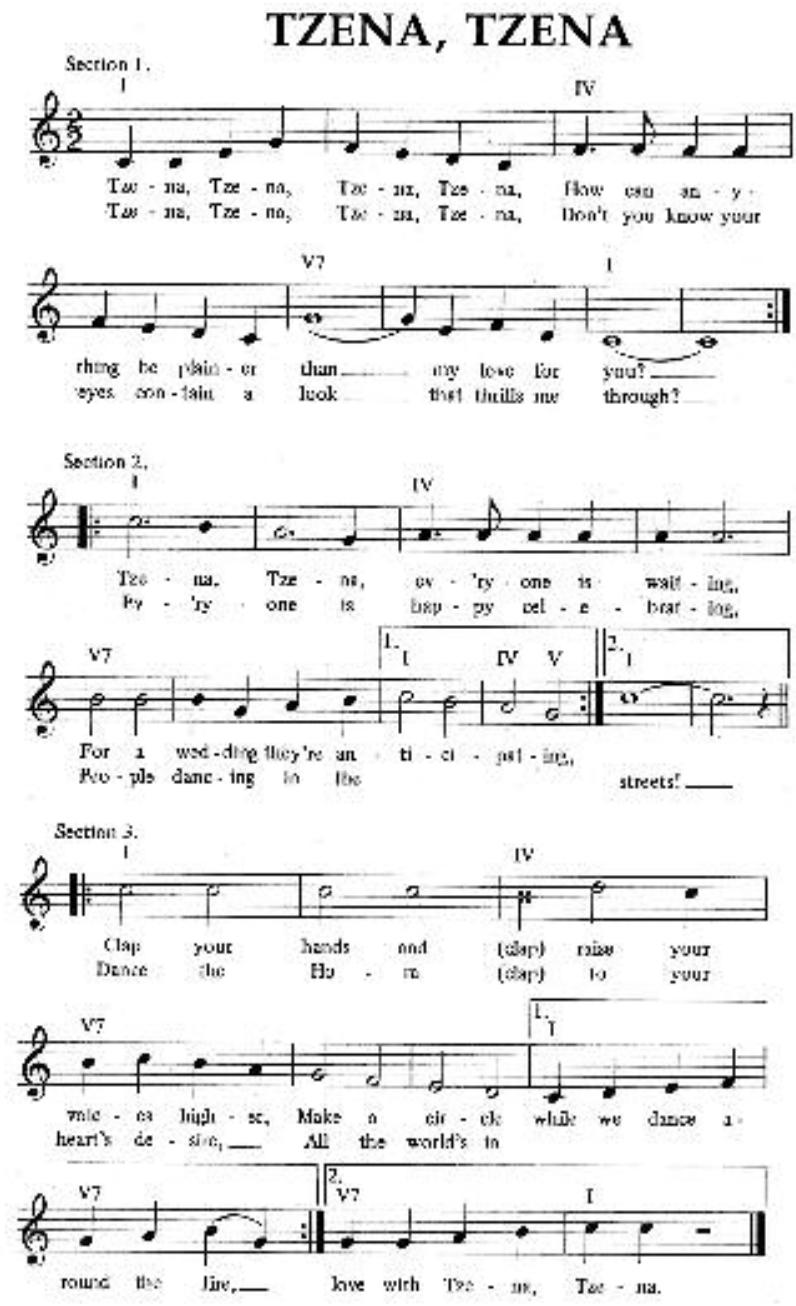
中文讲解
这是第45页上的一个内嵌图像或乐谱占位符,原图的图像数据已省略,仅保留了它在版面中的位置和图注占位。由于本小节是歌曲文本的展示区域,该图像可能是上一页与歌曲相关的插图、谱例或装饰元素。其具体内容需查看原始教材方能确认,本节正文并未引用或讨论它,因此不影响歌词的阅读。
第2段(P0147)
原文复述
Section heading: # Song “The Golden Vanity”
中文讲解
这是本小节的标题行,使用 Markdown 一级标题格式标明本节呈现的是一首名为《The Golden Vanity》(金碧辉煌之船/虚荣号)的歌曲。它在版面功能上起到开启论题的作用:告诉读者下面进入的是一首叙事性民谣的歌词文本。该标题同时提示这是一首歌曲,而非散文或论述文字,因此每节末尾通常配有演唱指示。
第3段(P0148)
原文复述
An embedded image placeholder bearing the title “THE GOLDEN VANITY” appears on page 46. The image data itself is omitted; the position and the printed title are preserved in the placeholder.
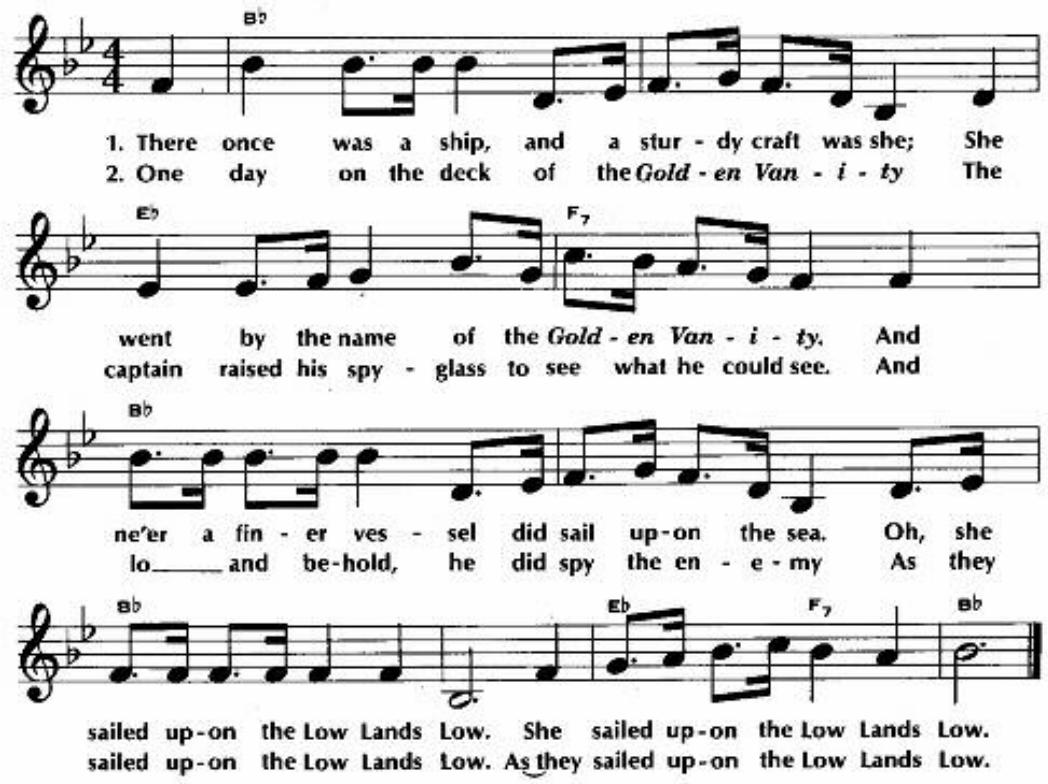
中文讲解
这是第46页上紧跟标题的一处图像占位符,图中带有印刷标题"THE GOLDEN VANITY”。它很可能是一张与歌曲主题相关的配图(例如船只、少年水手等),用以视觉化地引出歌曲。由于图像数据未提供,无法描述具体画面,需查看原教材。
补充说明
该占位符与上一段(P0147)的小节标题在功能上呼应:标题给出歌曲名称,占位符以图像形式再次呈现同一名称,形成版面上"标题+图像"的引入结构。
第4段(P0149)
原文复述
Verse 3 of the song “The Golden Vanity”:
- The captain was pond’ring the course he would pursue, When up spoke the cabin boy, the youngest of the crew. “Pray, sir, what will you give me to rout the foe for you As they sail upon the Low Lands Low?” (2 times)
中文讲解
这是歌曲的第三段。本段开始推动情节:船长正在思考应当采取何种航线(或策略)之际,年纪最小的舱面童工(cabin boy)主动开口,向船长询问——如果我去把敌人击退,你会给我什么报酬?场景设置在敌船"as they sail upon the Low Lands Low”(当他们在低地海域航行时)。
这段承担两个叙事功能:一是把船长的犹豫与少年的主动形成对比,凸显少年的胆识;二是通过"Pray, sir, what will you give me…“一句引出贯穿全曲的"奖赏契约”,为后文船长承诺嫁女埋下伏笔。段末的”(2 times)“是演唱指示,提示该段须重复唱两遍。“Low Lands Low"既是敌船所在的海域地名,也是每段押韵和回环的核心短语。
补充说明
“pond’ring"是"pondering”(沉思、权衡)的口语化拼写,常出现在民谣歌词中以保留韵律节奏;“Low Lands Low"在本曲中既是地名,也是反复出现的叠句,承担叠句(refrain)的押韵与记忆功能。
第5段(P0150)
原文复述
(continued on next page)
中文讲解
这是版面上常见的转页提示,表明歌曲内容在下一页继续。它本身不承载情节或论点,仅起版面导航作用,告诉读者歌词并未结束,需要翻到下一页。
第6段(P0151)
原文复述
Verse 4 of the song “The Golden Vanity”:
- The captain was amazed and a little bit annoyed To think he must depend on a lowly cabin boy, But he said he’d give his daughter, his very pride and joy, If he’d sink them in the Low Lands Low. (2 times)
中文讲解
第四段承接上一段少年提出的交易条件。船长一方面感到惊讶(amazed),甚至有些恼怒(a little bit annoyed),因为他必须依赖一个地位低下的舱面童工;但他仍然答应——只要少年能击沉敌船,就把自己的女儿嫁给他,并形容女儿是他"very pride and joy”(最大的骄傲与欢喜)。
这一段在全曲的叙事链上完成了两件事:第一,确立了"以女许婚"的奖赏条款,使后文少年返回讨赏有据可循;第二,通过"amazed…annoyed"的双重情绪,刻画船长既轻蔑又不得不依靠少年的矛盾心理,为第七段他拒绝援救少年埋下伏笔。句末”(2 times)“提示该段须重复演唱两遍。
补充说明
“cabin boy"是旧时船上的低级勤务少年,通常出身贫寒、社会地位最低;船长愿以掌上明珠下嫁,反映了危机时刻身份等级被功绩暂时颠倒。
第7段(P0152)
原文复述
Verse 5 of the song “The Golden Vanity”:
- The boy spread his arms and into the sea he dived. He swam and he swam, it’s a wonder he survived! He bored some tiny holes in the other vessel’s side And he sank it in the Low Lands Low. (2 times)
中文讲解
第五段进入行动高潮:少年张开双臂跃入海中,一再游动(“swam and he swam”),作者感慨他能活着游到实在是个奇迹(“it’s a wonder he survived”)。他最终在敌船侧面钻出一些小洞,把敌船沉入了"Low Lands Low"海域。
本段是整个冒险行为的完成段,叙事重点从"谈判"转向"执行”。“spread his arms"赋予画面以视觉感;“tiny holes"与敌船沉没之间的反差(以极小的破坏造成极大后果)强化了少年的机智与胆量;“it’s a wonder he survived"则是叙述者的旁观评语,体现了民谣常见的口头叙事口吻。
第8段(P0153)
原文复述
Verse 6 of the song “The Golden Vanity”:
- Then back once again to the Vanity he sped. He thought as he swam of the pretty girl he’d wed, For, “You shall have my daughter,” the captain’d plainly said, “And you’ll sail upon the Low Lands Low.” (2 times)
中文讲解
第六段转入返程与期待:少年飞速游回"Vanity"号(船名,即"The Golden Vanity”),一边游一边想着他将要迎娶的漂亮姑娘,因为船长曾明确说过"你将得到我的女儿”。
此段在叙事结构上起过渡作用,承接任务完成、铺垫奖赏兑现。少年对奖赏的笃信(“the captain’d plainly said”)与下一段船长的翻脸形成强烈反差,构成民谣中典型的"信任—背叛"戏剧张力。“the pretty girl he’d wed"这一心理活动也使人物从单纯的行动者变得有情感、有欲望,丰富了少年形象。
补充说明
“the Vanity"中的"Vanity"即船名"The Golden Vanity"的简称;此处用于押韵与节奏便利。
第9段(P0154)
原文复述
Verse 7 of the song “The Golden Vanity”:
- And when he reached the ship and was safely at her side, “Good captain, help me come aboard!” the cabin boy did cry. The captain, though, ignored him, and merely breathed a sigh As he sailed upon the Low Lands Low.” (2 times)
中文讲解
第七段是全曲的道德转折点。少年游到本船一侧,已经脱离险境、安全抵达,便呼喊船长拉他上船。然而船长无视他的求救,只是轻轻地叹了一口气(“merely breathed a sigh”),便继续驾船驶向"Low Lands Low”。
这一段揭示了船长违背承诺的冷酷一面:少年冒险立功、缔约在前,船长却在他完成使命后拒援于海上。“merely breathed a sigh"用克制笔法刻画船长的冷漠——没有愤怒、没有解释,只有一声叹息,比激烈反应更具道德谴责力。整段情绪从少年的急切呼喊跌入船长的漠然,构成全曲最具反讽意味的一幕。
补充说明
“aboard"指登上甲板/回到船上;少年此时已身处本船船侧的水中,需要被拉上甲板方算真正脱险。
第10段(P0155)
原文复述
Verse 8 of the song “The Golden Vanity”:
- “Good captain, help me up,” cried the cabin boy once more. “Or else I’ll bore your ship and send it to the ocean floor.” The captain then moved quickly and pulled the lad aboard And they sailed upon the Low Lands Low.” (2 times)
中文讲解
第八段是全曲的收束段。少年再次呼救,并以威胁作为筹码:你若不拉我上去,我就钻穿你的船,送它沉入海底。船长这次立即行动,把少年拉上了甲板,然后他们继续在"Low Lands Low"航行。
这一段展示了民谣中常见的"以彼之道还施彼身"的智慧:少年用与击沉敌船相同的方法(钻洞)来胁迫船长,使船长意识到不履约的后果。“then moved quickly"与上一段的"merely breathed a sigh"形成鲜明对比,揭示船长并非不能救、而是先前不愿救。结局含混——少年虽上船,但船长的许婚承诺并未兑现,是开放式的讽刺收尾。
补充说明
“the lad"是船长对少年的称呼,与此前"lowly cabin boy"相比,这一称谓在少年立功+立威之后略有软化,但仍未承认其地位平等。
第11段(P0156)
原文复述
“The Golden Vanity.” Folk Song from England. In Crook, E., Reimer, B., & Walker, D.S. (1974). Silver Burdett Music, Teacher’s Edition Book 6. © 1974 General Learning Corporation. Reprinted by Permission of Pearson Education Inc.
中文讲解
这是本节末的出处与版权说明。它标明:该歌曲《The Golden Vanity》是一首来自英格兰的民谣;它被收录于 Crook、Reimer 与 Walker 主编的《Silver Burdett Music, Teacher’s Edition Book 6》(1974年出版);版权归1974年 General Learning Corporation 所有,本次重印经 Pearson Education, Inc. 许可。
在学术引用层面,这段脚注/出处信息承担两项功能:一是交代歌曲的体裁(folk song)与来源国(England),二是满足教材重印的版权合规要求。它不参与歌词叙事,但为读者提供了该文本在教材体系中的定位。
补充说明
Silver Burdett 是美国知名的 K-12 音乐教材出版社;本节呈现的是该教材教师用书中重印的英国传统民谣歌词。
脚注 / 边栏 / 图表 / 附加信息(如有)
本小节包含两处内嵌图像占位符(P0146、P0148),其中P0148带有印刷标题"THE GOLDEN VANITY”,功能上为歌曲引入配图;具体画面需查看原教材。结尾P0156为完整的出处与版权脚注,标明歌曲为英格兰民谣,收录于 Silver Burdett Music 教师用书第6册(1974),版权属 General Learning Corporation,重印经 Pearson Education 许可。版面上P0150”(continued on next page)“为转页提示。
💡 本节核心要点
- 本节呈现的是英国传统民谣《The Golden Vanity》(英格兰民谣)的歌词片段,包含第3至第8共六段诗节。
- 叙事结构呈"提议—许诺—执行—索赏—被拒—反制—勉强得救"的七拍推进,体现民谣常见的戏剧张力与道德反讽。
- 全曲以"Low Lands Low"作为叠句与韵脚核心,每段末尾标注”(2 times)“指示该段须重复演唱两遍。
- 船长对少年从依赖(amazed/annoyed)到背弃(ignored/merely breathed a sigh),再到被威胁后才施救的转变,揭示了诺言的脆弱与身份的等级落差。
- 少年以"钻洞沉船"的相同手段反制船长,构成"以彼之道还施彼身"的智慧型结局,但其婚约并未被明确兑现,留下开放式讽刺。
- 教材层面的附加信息:歌曲收录于 Silver Burdett Music 教师用书第6册(1974),属英格兰传统民谣,重印经 Pearson Education 许可。
🔑 关键术语
- cabin boy:旧时船上最低级的少年勤务工,在本曲中为主角,地位低微却立下大功,与船长形成身份落差。
- The Golden Vanity / the Vanity:船名,“Vanity"意为"虚荣”,全名"The Golden Vanity”(金碧辉煌之船/虚荣号),既是少年所在的本船名,也是诗中反复指涉的核心意象。
- Low Lands Low:歌曲中敌船所在的海域名,同时充当每段末尾的叠句,承担押韵、回环与记忆功能,是全曲听觉标志。
- (2 times):演唱指示,提示该段诗节须重复演唱两遍,是音乐教材中的常用编排标记。
- Folk Song from England:出处说明中标注的体裁与来源,指明本曲为英国传统民谣,属于口头传承的叙事性歌谣(ballad)传统。
S8.2 [描述性拆分] Song “The Turkish Revery”
第1段(P0157)
原文复述
Appendix E
中文讲解
这是附录 E 的标题行。它表明接下来的内容属于整本书或整篇文章的附录部分,编号为 E。该标题本身不传递具体论证信息,只起版面分区作用,告诉读者已进入附录性质的补充材料区。
第2段(P0158)
原文复述
Song “The Turkish Revery”
中文讲解
这是附录 E 内部的歌曲标题,歌名为“The Turkish Revery”(土耳其号“雷弗里”之歌)。它点出本节的核心材料是一首英语民歌,主题与名为 Revery 的船只相关,标题中的引号是原书排版的一部分,应原样保留。
第3段(P0159)
原文复述
THE TURKISH REVERY
中文讲解
这是歌曲在正文排版中的正式标题,以全大写字母呈现(THE TURKISH REVERY),呼应上一行的标题层级。其作用是正式引入歌词文本,与上一行的 Markdown 标题在功能上略有重叠,但大写形式更接近乐谱或歌词扉页的传统排版。
第4段(P0160)
原文复述
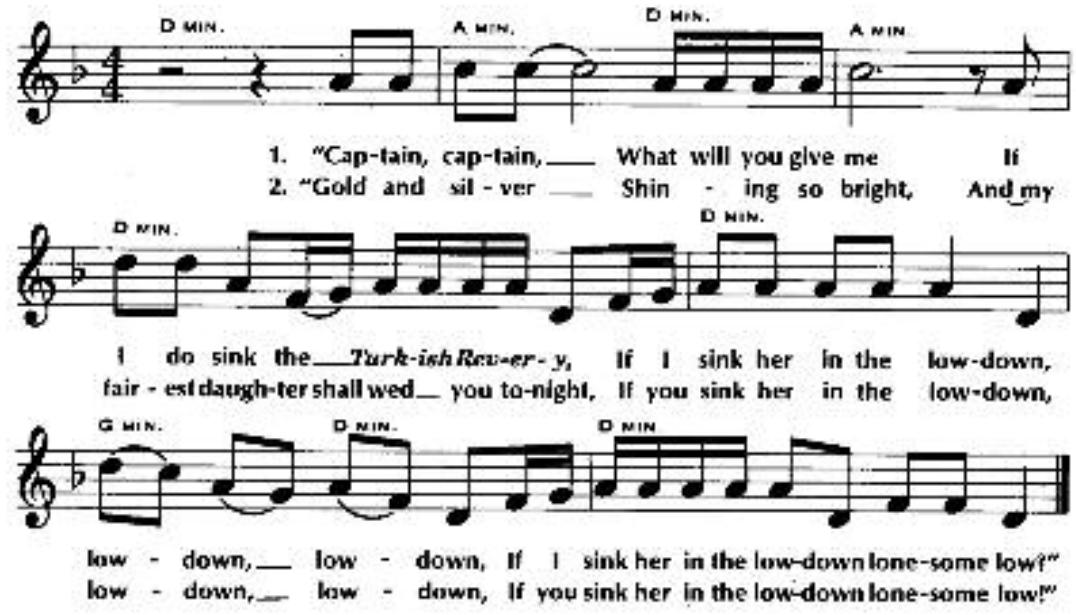
中文讲解
这是页面上的图像或乐谱占位符。第 48 页在标题之后、歌词正文之前插入了图像或乐谱示例,原始数据未在此处嵌入;位置与图注保留,提示读者原文此处应有图示(很可能是乐谱或歌本原页的扫描图)。由于图像数据缺失,无法对乐谱具体音符、调号或拍号做出判断,需查看原书原图方可确认。
补充说明
无额外补充(不可推测乐谱内容)。
第5段(P0161)
原文复述
low - down, low - down, If 1 sink her in the low-down lone-some low?”
中文讲解
这是歌词的一个片段,应是第 1 节或第 2 节末尾副歌的一部分。原文将“low-down”用连字符拆开写,并保留了 OCR 造成的“1”代替“I”的错误(应理解为“If I sink her”)。句子以问号结尾并带引号,提示这是一句唱出的对白或疑问——说话者在问对方:若我把“她”(船 Revery)沉入这低洼而孤寂的水底,又会如何?lonesome low(孤寂的低处)在民歌里既指深水,也暗喻凄凉的去处。
补充说明
OCR 痕迹:“1 sink”应读作“I sink”;原文保留了原文拼写形态,复述时不改正。
第6段(P0162)
原文复述
low - down,low - down, If you sink her in the low-down lone-some low!”
中文讲解
这是上一片段的变体或第 2 节对应的同一副歌。原文将“you”替换为“你”,把问句变成了第二人称的命令或感叹,并以叹号收尾——若“你”把她沉入那低洼孤寂的水底!两行合起来形成一问一答或自问自答的副歌结构,反复吟唱“low-down lonesome low”以营造压抑、孤寂的氛围。
补充说明
P0161 与 P0162 构成副歌的两种演唱分支,差异在主语(I / you)和语气(问号 / 叹号),原文未提供完整节号,需据歌词顺序推断其属于前两节。
第7段(P0163)
原文复述
3. Then he bared his breast
中文讲解
这是第 3 节的小标题,写作“3. Then he bared his breast”(“3. 然后他袒露出胸膛”)。节号“3”提示之前还有第 1、2 节未在本附录中完整列出(或由前面片段承担)。bared his breast 是一种决绝的姿态——为了泅渡或表达诚意,主人公袒胸入水,奠定了全曲动作化、戏剧化的基调。
第8段(P0164)
原文复述
And he swam in the tide,
中文讲解
第 3 节的第二行:他游入潮水之中。swam in the tide 描绘主人公主动投入海潮的画面,与上一行“bared his breast”形成连贯动作序列,承接上一行的决绝姿态,把人物推向海上行动。
第9段(P0165)
原文复述
And he bored three hoies in the old ship’s side,
中文讲解
第 3 节的第三行:他在老船的船舷钻了三个洞。原文保留了 OCR 拼写错误“hoies”(应为“holes”)。bored three holes 是一个关键情节——主人公并非失事落水,而是蓄意凿沉船只,配合前文“sink her”的副歌,显出他是一个有预谋的破坏者,为后续第 6 节船长指控他“淹死六十条灵魂”埋下伏笔。
补充说明
OCR 痕迹:“hoies”应读作“holes”。
第10段(P0166)
原文复述
And he sank her in the low-down, low-down, low-down,
中文讲解
第 3 节的第四行:他把“她”沉入那低洼、低洼、低洼之中。与第 1、2 节的副歌呼应,此处连用三个 low-down,形成节奏上的强调与情绪上的反复,把凿船与沉船的因果链条唱出来。
第11段(P0167)
原文复述
And he sank her in the low-down lonesome low.
中文讲解
第 3 节的第五行(也是这一节的收束句):他把“她”沉入那低洼孤寂的水底。这行呼应了副歌的核心短语“low-down lonesome low”,把第 3 节完整地收在副歌意象上,并宣告沉船行动完成。
第12段(P0168)
原文复述
(Continued on next page)
中文讲解
这是跨页提示(Continued on next page),提示读者歌词在下一页(第 49 页)继续。它是版面提示,不承担歌词或叙事功能。
第13段(P0169)
原文复述
4, Then he bared his breast And he swam in the tide, He swam till he came to his own ship’s side As she rolled in the low-down, . ..
中文讲解
第 4 节开头(原文保留逗号“4,”):主人公再次袒胸入海,游过潮水,一直游到他自己船只的舷侧,当时“她”在低洼的水面起伏。这节与第 3 节形成对照——同一个“他”,第 3 节凿沉他船,第 4 节却游回自己的船舷,意味着他的身份是潜伏在自家船上的破坏者或叛徒,副歌“low-down”在此既是字面意义的海面起伏,也暗指他行为之卑劣。
补充说明
原文以省略号“… ”收尾,是歌词印刷中常用的副歌留白,让演唱者补唱“lonesome low”。
第14段(P0170)
原文复述
- “Caplain, captaln, Take me on board tf you don’t, you’ll have to forfelt your word, For you promised in the low-down, . . .”
中文讲解
第 5 节(保留原文拼写 Caplain、captaln、tf、forfelt 等 OCR 错误):主人公呼喊船长,请求被接上船,并威胁说若不接他,船长就不得不违背诺言,因为船长曾在低洼的水边起过誓(forfelt 应为 forfeit,意为“失去、丧失”;tf 应为 if)。这节把情节推向对峙——破坏者凿沉他船后又试图回到己船,用曾诺言要挟船长收留。
补充说明
OCR 痕迹:Caplain→Captain;captaln→captain;tf→if;forfelt→forfeit。
第15段(P0171)
原文复述
- “Sailor boy, sailor boy Don’t appeal to me, for you drowned sixty souls when you sank the Revery, When you sank her in the low-down, . , .”
中文讲解
第 6 节:船长(也可能是他船幸存者)回应,称主人公为“sailor boy”,拒绝他的哀求,并揭露他沉没 Revery 号时淹死了六十条人命。这是全曲的道德转折——把第 3 节的凿船行动与具体的死亡数字(sixty souls)联系起来,让主人公从“水手”变成凶手。副歌句尾再度以省略号留白,呼应在 low-down 之中的罪行。
第16段(P0172)
原文复述
7, “If it weren’t for the love That 1 bear for your men, I’d sink you the same as I sank theml I’d sink you in the low-down, . . .”
中文讲解
第 7 节(原文保留“1”代替“I”、theml 代替 them、theml 中的 l 等 OCR 痕迹;句首为“7,”):船长(或回应者)表示,若不是看在“他船上水手们的情分”上,他会像沉没 Revery 那样把主人公也沉入水底。这节揭示出拒绝收留并非出于正义,而是出于对己方船员的爱护,使道德立场变得复杂——拒绝仍带着怜悯,与第六节的指控形成对照。
补充说明
OCR 痕迹:1→I;theml→them。
第17段(P0173)
原文复述
- Then he bared his breast And down swam he. He swam til he came to the bottom of the sea, And he drowned in the low-down, , . ,
中文讲解
第 8 节:主人公再次袒胸,向下游去,一直游到海底,最终淹死在低洼的水中。这是全曲的结局——破坏者既未被自己船接回,也未被他船收留,最终自沉于海,呼应了第 1、2 节副歌中“low-down lonesome low”的孤寂意象,把沉船与自沉构成完整的因果闭环:害人者最终害己。
第18段(P0174)
原文复述
“The Turkish Revery” American Folk Song. From the Richard Dyer-Bennett Folk Song Book, published by Dy-Cor Corporation. Reprinted in Crook, E., Reimer, B., & Walker, D.S. (1974). Silver Burdett Music, Teacher’s Edition Book 6. © 1974 General Learning Corporation. Used by Permission of the Dyer-Bennett Family.
中文讲解
这是本歌曲的出处与版权说明。它交代了三层信息:第一,歌曲为美国民歌“The Turkish Revery”;第二,原出处为 Richard Dyer-Bennett Folk Song Book(理查德·戴尔-贝内特民歌集),由 Dy-Cor Corporation 出版;第三,被收入 Crook、Reimer 与 Walker(1974)编写的《Silver Burdett Music 教师版第 6 册》,版权属 1974 年 General Learning Corporation,经 Dyer-Bennett 家族授权使用。这一脚注式的来源说明为教材中的引用提供了合法性与学术溯源,使读者可以循此线索查找原始歌本。
脚注 / 边栏 / 图表 / 附加信息(如有)
本节附录包含一处图像/乐谱占位符(P0160),原图未嵌入,需查看原书第 48 页方可确认其内容;以及一处版权来源说明(P0174),交代原歌出处、再版书与版权归属。跨页提示(Continued on next page)出现在第 48 页末尾(P0168),说明歌词延续到第 49 页。歌词中的英文保留了大量 OCR 拼写错误(hoies、1、Caplain、captaln、tf、forfelt、theml 等),本节在复述时按原样保留,未予改正。
💡 本节核心要点
- 本节是整部作品的附录 E,内容为美国民歌“The Turkish Revery”的歌词文本与乐谱占位,并附有版权来源说明。
- 歌曲以“low-down lonesome low”反复出现的副歌为核心意象,既描述海面深处,也暗示孤寂与卑劣的去处。
- 全曲讲述一个潜入船只的水手蓄意凿沉他船(Revery 号,淹死六十人),事后想回到己船被拒,最终自沉海底的故事,构成“害人者自害”的因果闭环。
- 歌词多处保留 OCR 痕迹(如 1/I、hoies/holes、forfelt/forfeit 等),复述时按原样保留,读者需据上下文辨识正确拼写。
- 第 5 至第 7 节通过对话结构(破坏者要挟、对方以船员之爱为由拒绝)展开道德张力,使结局的自沉具有惩恶与怜悯并存的双重意味。
- 附录末尾的版权说明将歌曲溯源至 Dyer-Bennett 民歌集与 Silver Burdett Music 教师版第 6 册(1974),并经 Dyer-Bennett 家族授权使用。
🔑 关键术语
- The Turkish Revery:本节附录所收录的美国民歌名称;Revery 是歌中被他船水手凿沉的目标船只名,整首歌围绕沉没 Revery 的因果展开。
- low-down lonesome low:歌曲中反复出现的副歌短语,字面指低洼孤寂的水底,在歌曲中也承载孤寂、卑劣、沉沦等多重象征意义,是全曲情绪与主题的浓缩。
- bared his breast:歌词中主人公反复做出的动作,意为“袒露胸膛”,象征决绝投入海中,既出现在凿船之后游回己船时,也出现在最终自沉入海之时。
- bored three holes in the old ship’s side:第 3 节关键情节,意为“在老船的船舷钻了三个洞”,揭示主人公并非失事落水而是蓄意破坏,为后续被指控淹死六十人埋下伏笔。
- sixty souls:第 6 节中对方揭发主人公沉没 Revery 号所致的死亡人数,是把凿船行为量化为具体罪行的关键数字。
- forfeit your word:第 5 节主人公对船长的要挟,意为“违背诺言、丧失信用”,主人公以船长曾立誓为由试图迫使对方接他上船。
- Dyer-Bennett Family / Dy-Cor Corporation:版权说明中的歌曲原始传承方与出版方,歌曲由 Richard Dyer-Bennett 民歌集出版,经 Dyer-Bennett 家族授权再版于 Silver Burdett Music 教师版第 6 册(1974)。
S8.3 Symbols for Discourse Transcription
第1段(P0175)
原文复述
Symbols for Discourse Transcription
中文讲解
这一行是一级编号小节的二级标题(Markdown 中以 “##” 标记),文字内容为 “Symbols for Discourse Transcription”,可译为“话语转写符号”。它本身不是一个论说段落,而是为本节正文(page 50 上由该标题开启的小节)提供题名与论域边界:声明本节要讨论的对象是用于记录、转写"话语”(discourse)的符号体系。从题面看,本节将围绕一套记号(symbols)展开,这些记号的功能是把口语交互中的某些特征以可书写、可重复阅读的形式固定下来,但具体覆盖哪些话语特征(如停顿、重叠、语调、沉默、话轮转换等)以及符号清单的细节,原文在此处并未给出,需等待标题之下的正文内容来具体说明。讲解时不应仅依据题名就推断本节包含哪些符号类别或预测其论述结构;本段的唯一可断言信息是:它是一个二级标题,标志着 Section 8.3 专门讨论话语转写所使用的符号。
脚注 / 边栏 / 图表 / 附加信息(如有)
本段仅为二级标题文本 “## Symbols for Discourse Transcription”,未包含脚注、图表、边栏或页眉页脚类附加材料;除题名外,原文未提供可定位的进一步信息。
💡 本节核心要点
- P0175 是 Section 8.3 的二级标题,其英文题名为 “Symbols for Discourse Transcription”,可译为“话语转写符号”。
- 该标题的功能是界定本节的论域——一套用于转写话语的符号体系——而非展开论述。
- 标题本身未列举任何具体符号类别或特征,所有具体内容须由标题之下的正文提供,不能由题名反推。
🔑 关键术语
- Symbols for Discourse Transcription:本节题名,直译为“话语转写符号”。在本节语境中,它指代一套用于把口头话语(discourse)的某些可观察特征以书面形式记录下来的记号体系;具体内容由本节正文给出。