目录
ch_001 Punctuation vs. Articulation
- sec_001 [描述性拆分] Defining Articulation in Modern Usage
- 页码:1-1
- sec_002 [描述性拆分] Etymology of Articulation from Latin articulus
- 页码:1-2
- sec_003 [描述性拆分] Articulation in Eighteenth-Century String and Wind Treatises
- 页码:2-3
- sec_004 [描述性拆分] Distinguishing Punctuation from Articulation: Türk and Keller
- 页码:3-4
- sec_005 [描述性拆分] Rests in Articulation and Punctuation: Tartini, Mozart, and Westphal
- 页码:4-5
- sec_006 [描述性拆分] Nonpunctuating Rests: Türk’s Customary Touch and Mozart K.548
- 页码:6-6
- sec_007 [描述性拆分] Koch on Incises and Lussy’s Definition
- 页码:7-7
- sec_008 [描述性拆分] Lussy on Slurred Incises in Mozart K.332
- 页码:8-8
- sec_009 [描述性拆分] Eighteenth-Century Slur Execution: Wolf and Leopold Mozart
- 页码:9-9
- sec_010 [描述性拆分] Reassessing Lussy’s Notation through Haydn’s String Quartet
- 页码:10-10
- sec_011 [描述性拆分] Anticipatory Pausing on Leading Tones: Mozart K.332 Analyzed
- 页码:11-11
- sec_012 [描述性拆分] Harrison on Türk’s Einschnitte vs. Slur Articulation
- 页码:12-12
- sec_013 [描述性拆分] Brahms and Joachim on the Slur’s Implied Rest
- 页码:13-13
- sec_014 [描述性拆分] Joachim’s Difficulty and Reclaiming the Slur’s Expression
- 页码:14-14
- sec_015 [描述性拆分] Long Slurs and the Phrasing Slur: Habeneck to Riemann
- 页码:15-15
- sec_016 [描述性拆分] Haydn Op. 77, No. 1: Manuscript Slurs and the Autograph
- 页码:16-16
- sec_017 [描述性拆分] Slurs, Beats, and Metrical Displacement in Bars 3 and 7
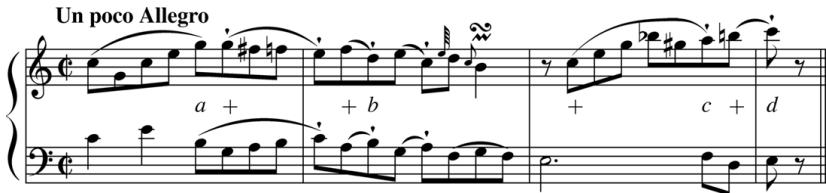
- 页码:17-17
- sec_018 [描述性拆分] Violinistic Gesture and Elssler’s/Artaria’s Edition Choices
- 页码:18-18
- sec_019 [描述性拆分] Editing Decisions and Cross-Instrument Adaptation in Mozart K.361
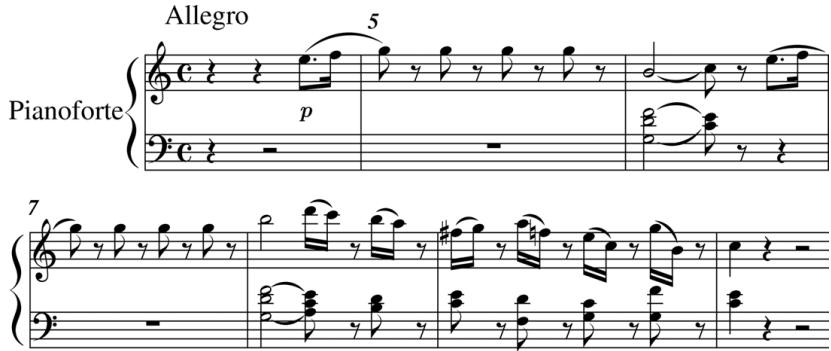
- 页码:19-19
- sec_020 [描述性拆分] Peters 1918 and International 1972 Editions of Haydn
- 页码:20-21
- sec_021 [描述性拆分] Cambini’s Haydn Phrasing: Example 5.4 Analyzed
- 页码:22-22
- sec_022 [描述性拆分] Cambini’s Theatrical Execution: Bowings, Fingerings, Character
- 页码:23-23
- sec_023 [描述性拆分] Ties and Punctuation in Mattheson’s Punctuated Minuet
- 页码:24-24
- sec_024 [描述性拆分] The Hemiola as Flexible Rhetorical Clausula
- 页码:25-25
- sec_025 [描述性拆分] Couperin’s Gavotte and Mattheson’s Minuet: Tied-Note Conventions
- 页码:26-26
- sec_026 [描述性拆分] Articulation and Punctuation Closely Intertwined: Synthesis
- 页码:27-27
- sec_027 [描述性拆分] Long Slurs across Boundaries: Beethoven Op. 28
- 页码:28-28
- sec_028 [描述性拆分] Conclusion: Separating Articulation from Punctuation
- 页码:29-29
sec_001 [描述性拆分] Defining Articulation in Modern Usage
第1段(P0001)
原文复述
Section heading: “Punctuation vs. Articulation” — this title announces the contrast between two related but distinct domains that the section will explore.
中文讲解
这是本节的标题,写作"Punctuation vs. Articulation"(标点与articulation的对立)。它向读者预告:本节将围绕标点(punctuation)与articulation这两个紧密相关却又截然不同的概念展开比较,并通过这种比较使二者相互澄清。标题中的"vs.“暗示作者并非把二者等同,而是要在并置中揭示差异。
第2段(P0002)
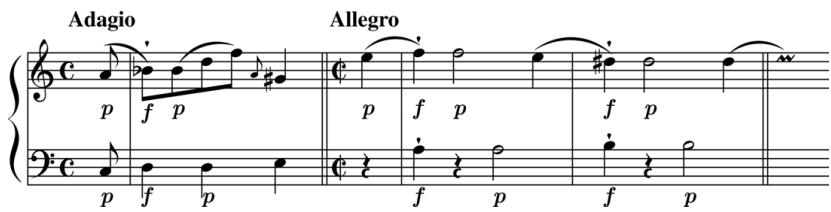
原文复述
These two areas, so closely related yet so sharply differentiated from one another, illuminate one another.
中文讲解
这是Hermann Keller于1955年的题献引文,原文为"These two areas, so closely related yet so sharply differentiated from one another, illuminate one another."。它意在表达:标点与articulation这两个领域,虽然彼此关系紧密、常常被混用,但同时又存在明确而尖锐的区分;正因这种"既紧密又分明"的张力,二者能够相互照亮、相互揭示。作者借此引文为整个小节定下基调:研究的入口是这两个概念的比较与互证,而不是把articulation单纯等同于标点。
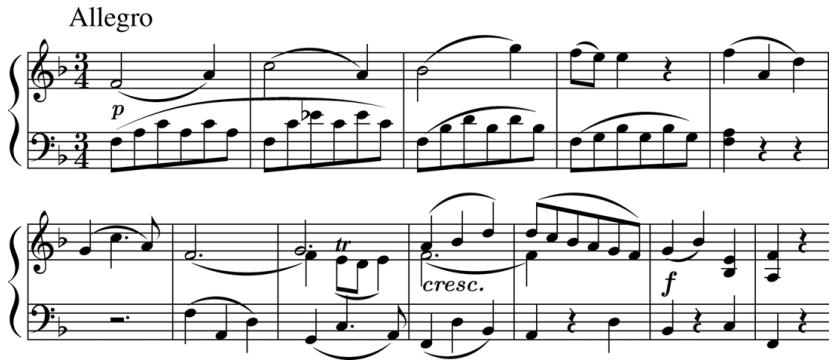
第3段(P0003)
原文复述
—Hermann Keller, 1955
中文讲解
这是上一句引文的署名与年代:"—Hermann Keller, 1955”,表示引文出自Hermann Keller于1955年发表/写作的文献。作为版面元素,它标明前一句引文的出处;就小节论证而言,它为后文即将展开的"标点 vs. articulation"的辨析提供权威性的引言支持。
第4段(P0004)
原文复述
Articulation in the daily discourse of the modern musician has acquired such broad usage that its significance is often obscured. We speak of “articulating” this or that passage in a kind of catch-all manner with any variety of meanings and on any number of levels, many of which easily merge into the realm of punctuation. Take for instance the following two definitions of articulation from The New Harvard Dictionary:
中文讲解
本段的中心主张是:articulation一词在现代音乐家的日常话语中已被用得过于宽泛,其原本的含义反而被模糊;人们在多种意义和层次上catch-all式地谈论"articulate某段音乐",其中许多用法又容易滑入"标点"的范畴。承接关系上,本段为下一段引出《The New Harvard Dictionary》的两条定义做了铺垫——作者用一个"举如下两条定义为例"式的过渡,说明要证明articulation含义的混乱,最直接的办法就是展示权威辞书中并置的、彼此并不完全兼容的两层定义。关键概念"catch-all manner"(笼统包揽的方式)和"merge into the realm of punctuation"(与标点领域合流)提示我们:作者的核心关怀是术语的滥用与界限的丧失。
补充说明
本段中"The New Harvard Dictionary"是下一段即将引用的工具书名,在P0005中得到呼应;本段的功能是引出该工具书的定义。
第5段(P0005)
原文复述
(1) In performance, the characteristics of attack and decay of single tones or groups of tones and the means by which these characteristics are produced. Thus, for example, staccato and legato are types of articulation. In the playing of stringed instruments, this is largely a function of bowing; in wind instruments, of tonguing. Groups of tones may be articulated (i.e., “phrased”) so as to be perceived as constituting phrases. . . . (2) In the analysis of musical form, a boundary or point of demarcation between formal segments, e.g., that produced by a cadence or rest. As a compositional process, articulation is comparable to punctuation in language.
中文讲解
本段以括注形式给出The New Harvard Dictionary对articulation的两条定义,须分别理解其形式条件与直观意义:
定义(1)限定在"performance(演奏)“层面:它指单个音或一组音的起音(attack)与衰减(decay)的特征,以及产生这些特征的手段;staccato(断奏)与legato(连奏)即其典型例证。进一步,在弦乐器中这主要由运弓(bowing)决定,在管乐器中则由运舌(tonguing)决定。括号内又补充"phrased”,即一组音可以被articulate为可被听者识别为phrase(乐句)的形态。
定义(2)则限定在"musical form(曲式分析)“层面:它指形式段落之间的边界或分界点,例如由终止式(cadence)或休止(rest)所产生的边界;作为作曲过程,articulation可比作语言中的标点。
两条定义的对比表明:定义(1)聚焦于"音与音之间的具体演奏方式”(微观、声音学层面),定义(2)则聚焦于"段与段之间的曲式边界"(宏观、结构层面)。两者并不是同一层级——而这正是P0004所说"含义易被混淆"的根据,也是P0007质疑单一术语能否同时承担两种意义的前奏。
补充说明
末尾的脚注标号对应本节末尾的第一条脚注,为本段定义提供来源说明。
第6段(P0006)
原文复述
Writers on the early music performance practice (anything from the seventeenth to the mid-nineteenth century) interpret articulation with much the same breadth: Sandra Rosenblum explains in 1988: “Articulation in performance is the delineation of motives or musical ideas by the grouping, separating, and related accenting of notes. . . . Through this clarification music gains shape and meaning analogous to that provided for language by punctuation and accentuation.” Donington comments in 1974 on “how extremely articulate early phrasing needs to be.” Ratner, writing in 1980, builds a definition of articulation which, in addition to slur and staccato indications, above all stresses clarity in performance, defining this as does Türk (in 1789) to include “the proper connection and separation of musical periods.” In 1985 Robin Stowell praises the efforts of the violinist Habeneck (in 1840) for his comprehensive illustration of the various techniques of “phrase articulation.”
中文讲解
本段延续P0004关于"articulation含义被宽泛使用"的论题,但把视野从现代日常话语转向"early music performance practice"(早期音乐演奏实践,跨度约十七世纪至十九世纪中叶)这一文献群。作者依次罗列五位作者及年代,说明他们在界定articulation时也采用了类似的宽幅:
— Sandra Rosenblum(1988):将演奏中的articulation定义为"通过音的分组、分离以及相关重音来勾勒动机或音乐意念",并类比为语言中的标点与重音。 — Donington(1974):评论早期乐句"需要极其articulate"。 — Ratner(1980):在连奏线(slur)与断奏(staccato)标记之外,特别强调演奏的清晰性(clarity),并与Türk(1789)一致地把这一清晰性界定为"乐段之间恰当的连接与分离"。 — Robin Stowell(1985):称赞小提琴家Habeneck(1840)对各种"phrase articulation"(乐句articulation)技巧的综合展示。
作者列举这些例证的目的是双重的:一是说明articulation的宽幅使用并非个别作者的偶然,而是横跨二百余年早期音乐文献中的稳定传统;二是通过把Rosenblum、Donington、Ratner、Stowell等人的表述与P0005的两条定义并置,揭示这些用法同时涵盖了"单音起音/衰减"(演奏层面)与"乐句/乐段边界"(结构层面)这两层意义,从而为P0007的诘问——单一术语能否兼顾——累积证据。
补充说明
本段包含五个脚注标号,分别对应页脚中对Rosenblum、Donington、Ratner/Türk、Stowell/Habeneck等文献的来源说明。
第7段(P0007)
原文复述
Yet is such a comprehensive term a practical one? Can the single designator, articulation, adequately encompass the nature of both detached and slurred notes as well as phrase divisions? Articulation, like many other musical terms which have been borrowed and appropriated from rhetoric, has become largely disconnected from its original linguistic associations. We want to rediscover these associations, establishing eighteenth-century usage in the process, in order to determine whether applications of articulation are suitable in all their present musical contexts.
中文讲解
本段是本节的总结与转向:以两个修辞性疑问句提出核心诘问——一个如此宽泛的术语是否仍然实用?单一指称词"articulation"是否足以同时容纳"断奏/连奏"的微观层面与"乐句划分"的宏观层面?这一诘问正是作者在P0004—P0006中通过工具书定义与早期音乐文献层层铺垫的结果。
接着,作者给出诊断:articulation与许多其他从修辞学借来并被挪用的音乐术语一样,已经"largely disconnected from its original linguistic associations"(在很大程度上与其原本的语言学关联脱节)。也就是说,问题不在于这个词"含义太多",而在于它与借出领域(语言/修辞)的原初联系已被切断。
由此,作者宣布本研究的纲领:“rediscover these associations”——重新发现articulation在语言/修辞中的原初关联,并在过程中"establishing eighteenth-century usage"——确立十八世纪的用法作为基准;最终目的是"determine whether applications of articulation are suitable in all their present musical contexts"——判定articulation的现有音乐用法在所有语境中是否仍然合适。这就把本节从"描述性问题"(现代用法如何混乱)推进到"规范性议题"(应否回到十八世纪的用法来重审现代用法),同时与本节标题"Punctuation vs. Articulation"呼应:标点属于语言,articulation本属于修辞,二者的真正关系正是接下来要重建的。
补充说明
脚注标号对应本节末尾第六条脚注,疑与本诘问或后续论旨相关。
脚注 / 边栏 / 图表 / 附加信息(如有)
本节末尾附有脚注1—6:脚注1为The New Harvard Dictionary两条定义的来源说明;脚注2—5分别对应Rosenblum(1988)、Donington(1974)、Ratner(1980)及Türk(1789)、Stowell(1985)与Habeneck(1840)等早期音乐演奏实践文献的出处;脚注6与P0007的诘问相关。这些脚注共同为正文中的定义与引文提供文献依据,并支撑作者将articulation回溯至十八世纪用法的研究纲领。本节无图表或边栏。
💡 本节核心要点
- articulation在现代音乐家的日常话语中已被笼统地过度使用,其与punctuation(标点)的界限变得模糊;
- The New Harvard Dictionary同时给出两层定义:演奏层面(staccato/legato的attack与decay)与曲式层面(段落边界),二者并非同一层级;
- 从Rosenblum到Türk、Habeneck,跨越约二百年的早期音乐文献同样在宽幅意义上使用articulation,说明这种宽幅用法有深厚传统;
- 作者提出核心诘问:单一术语"articulation"能否同时涵盖断连奏与乐句划分两层含义;
- 作者诊断问题根源:articulation作为从修辞学借用的术语,已与原本的语言学关联脱节;
- 研究纲领由此确立:回溯articulation在十八世纪的语言/修辞原义,并据此审视现代用法的合理性。
🔑 关键术语
- articulation:本节核心术语。在现代用法中既可指演奏层面的attack/decay特征(断奏/连奏的起音与衰减),又可指曲式层面的段落边界;作者认为这两个层次本不属于同一范畴,需要回溯其修辞学原义方能厘清。
- punctuation:与articulation对比的术语,借自语言学,指文本中用于切分与连接句、段的标点系统;在音乐讨论中常被用作articulation的类比,但作者强调二者相关但不等同。
- staccato / legato:staccato指断奏(音之间分离),legato指连奏(音之间连贯)。它们是The New Harvard Dictionary定义(1)所列举的articulation的典型形态,分别对应弦乐的运弓方式与管乐的运舌方式。
- bowing / tonguing:bowing指弦乐器上以弓产生articulation的手段;tonguing指管乐器上以舌产生articulation的手段。二者在字典定义(1)中作为对应不同乐器族实现同一articulation概念的具体方式被提出。
- cadence / rest:cadence指终止式,rest指休止。二者在字典定义(2)中被作为形式段落之间"boundary or point of demarcation"(边界或分界点)的典型例证,用以说明曲式层面的articulation。
- slur:连奏线/圆滑线记号。Ratner在定义articulation时把它与staccato并列为基本的articulation指示之一,提示articulation并不限于演奏处理,也涵盖谱面符号。
- phrase articulation:Robin Stowell(1985)所引Habeneck(1840)用语,指在乐句(phrase)层级上对连接/分离方式的综合处理,体现articulation从单音层面延伸至乐句层面的宽幅用法。
- eighteenth-century usage:十八世纪用法。P0007提出作为研究纲领的基准——通过确立articulation在十八世纪的语言/修辞原义,来重审其现代用法的合理性。
sec_002 [描述性拆分] Etymology of Articulation from Latin articulus
第1段(P0008)
原文复述
Copyright © 2008. University of Rochester Press. All rights reserved.
中文讲解
本页脚标注该书由罗切斯特大学出版社(University of Rochester Press)于 2008 年出版,并保留全部版权。这是一条出版方的版权声明,并非正文论述,但说明本书版本归属。
第2段(P0009)
原文复述
Vial, Stephanie. The Art of Musical Phrasing in the Eighteenth Century : Punctuating the Classical “Period”, University of Rochester Press, 2008. ProQuest Ebook Central, http://ebookcentral.proquest.com/lib/iub-ebooks/detail.action?docID=3003724. Created from iub-ebooks on 2026-08-12 05:34:42.
中文讲解
本页脚列出本书完整书目信息与电子版来源:作者 Stephanie Vial,书名《The Art of Musical Phrasing in the Eighteenth Century: Punctuating the Classical “Period”》,2008 年由 University of Rochester Press 出版,并通过 ProQuest Ebook Central 提供电子书(链接与 docID 给出),于 2026-08-12 由 iub-ebooks 创建下载副本。此条目为引用元数据,提示读者本节文本来自该书的电子版本,文中出现的脚注与文献编号均依此版本编排。
第3段(P0010)
原文复述
The term articulation derives from the Latin articulus, the diminutive of artus or “joint.” Articulation is then the “the action or process of jointing,” with particular reference to the animal body. Mr. Venus, Articulator of human bones, in Dickens’s Our Mutual Friend $( 1 8 6 _ { 4 } – 6 _ { 5 } )$ brags to his customer, Mr. Wegg: “If you was brought here loose in a bag to be articulated, I’d name your smallest bones blindfold equally with your largest as fast as I could pick ’em out, and I’d sort ’em all, and sort your wertebrae, in a manner that would equally surprise and charm you."7 That which is articulate is “distinctly jointed or marked; having the parts distinctly recognizable,” and an articulate voice thus becomes, “the utterance of distinct elements in speech."8 Literally, this is the language of musical punctuation. Listen to Mattheson [17] (1739):
中文讲解
本段是整个小节的核心起点,提出一个语义链条:“articulation”(清晰发音/连奏与断奏)一词源自拉丁文 articulus,而 articulus 又是 artus(关节)的指小形式,因此 articulation 字面意思即“关节连接的行为或过程”,最初特指动物身体的接合。作者借助狄更斯小说《Our Mutual Friend》(1864–65)中“装配骨骼的人”Mr. Venus 向他顾客 Mr. Wegg 自夸的话,把“articulate”还原为“把零散的骨头拼接成完整骨架”的动作图景;由此过渡到引文定义:articulate 意为“清晰地被连接或标记出来;各部分彼此可辨”,articulate voice 因而变成“发出语言中可分辨的要素”。作者在此强调,这一字面义就是音乐断句(musical punctuation)的语言源头,并随即引向 1739 年 Mattheson 的论述。脚注 7、8 分别标于狄更斯引文与“articulate voice”定义之后,提示这两处都来自作者另行引用的文献。
第4段(P0011)
原文复述
Now since a Comma in speech represents that which in the human body is the Articulus or the joint [Gelencke]: thus by comparison the Colon indicates a membrum, and whole member, as the Greek name implies; but the semicolon (;) indicates only half of one.
中文讲解
本段是 Mattheson 在 1739 年给出的比喻:言语中的逗号(comma)对应人体中的 articulus,即关节(Gelencke,德文原词意为“关节”);与之相比,冒号(colon)对应一个 membrum(肢段、整段肢体),正如其希腊文名字所示;而分号(semicolon)则仅指半个 membrum。作者引用此句,意在说明在十八世纪的修辞/音乐理论中,articulation(关节)这一概念自身体层面被借用来衡量语句段落的相对长度与切分力度——逗号对应小关节(短小停顿),冒号对应整段肢体(较大停顿),分号居中。这一比喻把“断句的层级”与“身体关节能伸展/屈折的不同尺度”直接挂钩,是后文将 articulus 引向音乐断句的关键桥梁。
第5段(P0012)
原文复述
Mattheson is very precise in his usage; the articulus represents specifically the “little joints,” or the commas.9 However Meude-Monpas, in his Dictionnaire de musique $\left( 1 7 8 7 \right)$, demonstrates a more practical and general application, stating: “Musical articulation is that which consists of delineating the phrases."10
中文讲解
本段对 Mattheson 与 Meude-Monpas 的用法做出对比。Mattheson 用法严格:articulus 特指“小关节”,对应言语/音乐中的逗号(短停顿)。而 Meude-Monpas 在其 1787 年《Dictionnaire de musique》(音乐词典)中则把 articulation 推向更实用、更概括的意义:“音乐中的 articulation 即勾勒乐句(delineating the phrases)的做法”。换言之,作者呈现两种历史立场:一种把 articulation 限定为最小的断句单位(逗号),另一种则将其泛指一切划分乐句的行为。作者以此指出,进入十八世纪后期,“articulation” 的语义已从严格的身体/修辞比喻扩展为对乐句整体勾勒的一般性概念。脚注 9 落在 Mattheson 关于“little joints”的引文上,脚注 10 落在 Meude-Monpas 的定义上,分别承担文献出处标注。
第6段(P0013)
原文复述
Vickers offers further insight in 1988 into the nature of this punctuating rhetorical figure, articulus. He explains that the author of Rhetorica ad Herennium $(\mathrm { c a . 8 4 \ B C })$ differentiates between the colon, a brief clause which needs another to complete its sense, and the articulus, where the discourse is cut up by the force of expression—“You have destroyed your enemies by jealousy, injuries, influence, perfidy.” The description is a very visual, gestural one:
中文讲解
本段引入 Vickers 1988 年的进一步分析:articulus 作为修辞断句图式,其渊源可追溯至约公元前 84 年的《Rhetorica ad Herennium》。该佚名作者区分了 colon——一个需要另一个分句才能补足其义的简短分句——与 articulus:后者依靠表达的力量把话语切碎,例句 “You have destroyed your enemies by jealousy, injuries, influence, perfidy.”(你以嫉妒、伤害、权势、背信毁灭了你的敌人)正是依靠一连串短促列举把句子劈开。作者特意点出这种描述是“极富视觉性与手势性的”(very visual, gestural),为下一段进一步展开身体动作的比喻做铺垫。脚注 11 标于下一段引文之后,承接此处的修辞来源。
第7段(P0014)
原文复述
The former moves upon its object more slowly and less often, the latter strikes more quickly and frequently. Accordingly in the first figure it seems that the arm draws back and the hand whirls about to bring the sword to the adversary’s body, while in the second his body is as it were pierced with quick and repeated thrusts.11
中文讲解
本段是《Rhetorica ad Herennium》原文的延续:前者(colon)动作慢、间隔长,譬如手臂后拉、手腕翻转、把剑刺向对手的身体;后者(articulus)则动作快、频次密,身体仿佛被一次次急刺穿透。作者通过这一“剑术”比喻把 articulus 与 colon 的句法区别视觉化:colon 是完整的、一次性的刺击,articulus 是连续、密集的穿刺。这与上文 articulus 字面上对应“小关节、短停顿”相呼应——articulation 的本质就是密集、短促、切分多次的力量。脚注 11 落在引文末尾,承担出处与上下文连接的双重功能。
第8段(P0015)
原文复述
Is it this same concept of articulation that is applied to individual notes? Perhaps the image of quick, repeated thrusts of a sword is what the violinist Piani had in mind in 1712 when he described the execution of eighth notes with dots over them as “equal notes articulated and a little detached” (nottes égales articulées et un peu détachées). A fairly deft handling of the sword produces such notes depicted under a slur and played with one sweep of the bow with a kind of upbow or down-bow staccato effect (nottes égales et articulées d’un même coup d’Archet).12 Mondonville, in his 1735 set of sonatas for violin solo, lists among his ornaments articulation, which he depicts as eighth notes with dots over them.13 This he distinguishes from the detatché, a quarter note with a stroke over it.14 Baillot, while he describes no fewer than nine types of détaché in 1835, uses the vocabulary of articulation only in the context of staccato, depicted under one bow and termed détaché articulé.15
中文讲解
本段将 articulus 的身体/修辞比喻直接嫁接到单个音符的演奏上,提出问题:用于音的“articulation”是否就是这一概念?作者随即用 1712 年小提琴家 Piani 的术语作答:他把上方带点的八分音符执行方式称为“equal notes articulated and a little detached”(nottes égales articulées et un peu détachées,均等且稍稍分开、带关节感的音)。如果剑术更灵巧些,便得到连弓下那种上下弓的断奏效果(nottes égales et articulées d’un même coup d’Archet),即同一弓内做出 articulation。这就把“剑刺”的短促、密集感落实为弓弦上一连串“关节化”的发音。接着作者援引 1735 年 Mondonville 的小提琴独奏奏鸣曲集,其中 articulation 被列为装饰音之一,符号仍是上方带点的八分音符,并与表示“上方带杠的四分音符”的 détaché(跳弓)相区分。最后,1835 年的 Baillot 描述了不下九种 détaché,但只在 staccato(同弓内、带关节感的跳奏,即 détaché articulé)这一语境中使用 articulation 一词。整段的论证线索是:自拉丁语“关节”→ 修辞中的密集短促断句 → 十八世纪小提琴文献中将 articulation 落实为“上方带点的八分音符(同弓内轻断奏)”这一具体记号。脚注 12、13、14、15 分别标在 Piani、Mondonville 装饰音、Mondonville 的 détaché、Baillot 的 détaché articulé 处,承担具体文献来源与年代定位。
脚注 / 边栏 / 图表 / 附加信息(如有)
本小节中带有脚注上标的句子共涉及脚注 7–15:脚注 7 出现于狄更斯引文之后,脚注 8 出现于“articulate voice”定义之后,脚注 9 出现于 Mattheson 的“little joints”说明之后,脚注 10 出现于 Meude-Monpas 词典定义之后,脚注 11 出现于《Rhetorica ad Herennium》剑术比喻之后,脚注 12 出现于 Piani 关于“un même coup d’Archet”之后,脚注 13 出现于 Mondonville 把 articulation 列为装饰音之后,脚注 14 出现于 Mondonville 区分 détaché 之后,脚注 15 出现于 Baillot 的 détaché articulé 之后。本节无图、无谱例,但 P0010、P0015 中多次以记号描述代替实际谱例:上方带点的八分音符(articulation)、上方带杠的四分音符(détaché)。P0008、P0009 分别为版权声明与书目来源信息,属于版面元数据而非正文。
💡 本节核心要点
- “articulation” 源自拉丁文 articulus(artus 的指小形),字面义为“关节连接”,最初特指动物身体的接合,后引申为“清晰可辨的连接/标记”,并进一步对应“发出语言中可分辨要素”的清晰发音。
- Mattheson(1739)将 articulus 比作人体小关节,对应言语/音乐中的逗号(短停顿),冒号对应整段肢体(membrum),分号对应半个 membrum,建立起以身体尺度衡量断句层级的修辞模型。
- Meude-Monpas(1787)在《Dictionnaire de musique》中把 articulation 推向更宽泛的实用义——“勾勒乐句”(delineating the phrases),显示出十八世纪后期该词由严格比喻走向一般化音乐术语的语义迁移。
- Vickers(1988)援引约公元前 84 年的《Rhetorica ad Herennium》,区分 colon(一次完整刺击)与 articulus(密集、短促的反复穿刺),把 articulus 塑造为“视觉化、手势化”的密集断句图式。
- 该修辞图式被十八世纪小提琴文献直接继承:Piani(1712)、Mondonville(1735)、Baillot(1835)以 articulation 命名“上方带点的八分音符”或“同弓内带关节感的跳奏(détaché articulé)”,与一般 détaché 区分开来,将“短促、密集的关节感”具体落实为弓法记号。
- 本节整体论证逻辑:由拉丁词源 → 修辞断句比喻 → 十八世纪音乐断句实践,论证“articulation”并非单纯的演奏技术词,而是承载“身体—修辞—乐句切分”三层意义的连续概念。
🔑 关键术语
- articulus:拉丁文,artus(关节)的指小形式,字面义为“小关节”。在本节中既被 Mattheson 用来对应言语/音乐中的逗号(小停顿),也被《Rhetorica ad Herennium》用来指依靠表达力量把话语切碎的密集短句图式,是“articulation”音乐意义的身体与修辞源头。
- articulation:本节中该词经历两条语义路径:一是字面义“关节连接”,源自 articulus;二是音乐义,既可指狭义的“密集、短促、关节式的断奏”,如 Piani、Mondonville、Baillot 用以命名带点的八分音符与同弓内跳奏(détaché articulé),也可按 Meude-Monpas 的定义泛指“勾勒乐句”的行为。
- colon:在本节修辞传统中指需要另一分句才能补足其义的简短分句,在《Rhetorica ad Herennium》的剑术比喻中被刻画为“慢而少的一次完整刺击”,与 articulus 形成对照。
- membrum:拉丁文“肢体/整段肢体”。Mattheson 用其对应言语中的冒号(colon),与 articulus 对应逗号的层级形成对应关系。
- détaché / détaché articulé:小提琴弓法术语。détaché 一般指一弓一音的清晰跳奏,在 Mondonville 笔下被记为“上方带杠的四分音符”;détaché articulé 则特指同一弓内做出关节式短断奏(staccato 效果),即 Baillot 笔下用 articulation 一词唯一涉及的语境。
- musical punctuation:本节的核心论题,即把 articulation 视作一种音乐断句语言,与语法中标点的作用相对应;其来源被作者追溯到 articulus 所承载的修辞与身体比喻。
sec_003 [描述性拆分] Articulation in Eighteenth-Century String and Wind Treatises
第1段(P0016)
原文复述
Copyright © 2008. University of Rochester Press. All rights reserved.
中文讲解
此为版权声明,标注本书由 University of Rochester Press 于 2008 年出版,版权所有。该段仅具有版式和法律属性,不承担任何论述功能。
第2段(P0017)
原文复述
Vial, Stephanie. The Art of Musical Phrasing in the Eighteenth Century: Punctuating the Classical “Period”, University of Rochester Press, 2008. ProQuest Ebook Central, http://ebookcentral.proquest.com/lib/iub-ebooks/detail.action?docID=3003724. Created from iub-ebooks on 2026-08-12 05:34:42.
中文讲解
此为本书的电子版来源说明,标明作者 Stephanie Vial、书名 The Art of Musical Phrasing in the Eighteenth Century: Punctuating the Classical “Period”、出版社 University of Rochester Press、出版年 2008,以及电子书通过 ProQuest Ebook Central 平台于 2026 年由 iub-ebooks 创建。该段用于文献溯源,并非论述。
补充说明
书名中的 “Period” 指古典乐句结构中的完整乐段单位(period),与上一节以"标点"类比乐句结构的思路直接对应,但此点仅为标题内部信息,本段正文未展开。
第3段(P0018)
原文复述
The difficulty with this analogy is in perceiving each of these “articulated” notes as units equivalent to that of a comma. More likely articulation is employed in the violin treatises above as a synonym for precise vocal pronunciation, where the style of execution demands that each syllable and word be uttered distinctly and separately. In 1720 Hotteterre uses articulation in a manner similar to the string treatises, distinguishing between the articulated tongue and the slurred tongue (Langue articulez, & coulez). Yet as a wind player, he also uses the term in a way that mimics vocal practice, labeling the two syllables which the flutist must pronounce, tu and ru, as articulations. Meude-Monpas claims in 1787 that this kind of articulation, “articulation of the words” or their “clean and exact pronunciation,” extends greater superiority to the voice over instruments, which are capable only of musical articulation, or phrasing.
中文讲解
本段推进并修正前文把乐句音符比作"逗号单位"的类比。作者承认这一类比的困难之处:难以让人把每个被"articulated"的音都视作等同逗号的独立单位;继而提出一个更合理的解释——在上述弦乐论著中,articulation(清晰吐音/清晰发音)实质上是"精确的声乐发音"的同义词,要求把每一个音节、每一个字清晰且彼此分离地发出。
随后,作者把同一用法延伸到管乐论著。Hotteterre(1720)一方面像弦乐论著那样区分"articulated tongue”(清晰吐奏)与"slurred tongue”(连奏吐奏),用法语 Langue articulez, & coulez 表述;另一方面作为长笛演奏家,又把演奏者必须发音的两个音节 tu 和 ru 直接称为 articulations,借用了声乐吐字的概念。
最后,Meude-Monpas(1787)把上述用法推向一个更尖锐的结论:这种"词的清晰发音"式的 articulation 让声乐凌驾于器乐之上,因为器乐只能做到"音乐性的 articulation”——亦即分句(phrasing)。
因此本段的作用是:在前一节以"标点"比喻 articulation 之后,揭示 18 世纪弦乐与管乐论著中 articulation 的实际核心含义是声乐吐字式的清晰发音,并通过 Hotteterre 的双用法和 Meude-Monpas 的对比,建立"声乐 vs 器乐"在 articulation 概念上的等级关系,为下一段关于现代用法的比较埋下伏笔。容易误解之处在于:这里的 articulation 不等于今天所说的"吐音技巧"或"断奏/连奏分类",而更接近"清楚念出每个字"的语言行为。
补充说明
文中"Langue articulez, & coulez"为 18 世纪法语正字法(-ez 为第二人称复数命令式尾缀),与今日拼写 Langue articulée, & coulée 等价;此点仅依据原段文字呈现的形式可见,不涉及外部词源。Hotteterre 的 tu/ru 来自法语单词 tu(“你”)的辅音首音 t 与 roulement(滚奏)或类似发音动作的拟声,强调演奏者像说话那样动用舌头。
第4段(P0019)
原文复述
From these eighteenth- and early nineteenth-century applications of the term, articulation, we see glimmerings of the wide scope evident in modern usage: its primary relationship to punctuation and additional function in the labeling of distinctive signs (such as staccato dots) which appear over individual notes. But note that I stress the word glimmerings. The term articulation appears minimally in eighteenth-century treatises and is not even used to describe all kinds of disconnected notes; as we saw above, very often articulé is distinguished from détaché. And while the leap from articulating phrases to the staccato of individual notes is not a difficult one, nowhere does the terminology become mixed up with concepts of legato or with the slur; articulation is not used in the eighteenth century, as Diran Alexanian [60] uses it in 1922 to describe the bow divisions and dynamic fluctuations of “the legato.” We mentioned in the previous chapter that the slur came to be regarded as a symbol of punctuation, and perhaps this is related to the fact that it also came to be described as a type of articulation. Although articulation (and its Italian, German, and French cognates) may serve as the standard categorization for staccato and legato in today’s dictionaries, encyclopedias, and method books, in this broad and ubiquitous use it is virtually absent from corresponding sources in the eighteenth and early nineteenth century. One will not find for instance, a definition of articulation in Rousseau’s Dictionnaire de musique, or of Artikulation in Koch’s Lexicon. Quantz, in his chapter “Of the Use of the Tongue in Blowing upon the Flute” in his 1752 Versuch einer Anweisung die Flöte traversiere zu spielen (analogous to Hotteterre’s flute treatise), uses an entirely different term to describe the execution of not only short, but also sustained notes, which he claims “ist zur musicalischen Aussprache hoechst noethig.” Reilly (1985) translates this as that which “is indispensable for musical articulation.” However, if one considers the same passage in the French translation (issued simultaneously with the original German edition of 1752), it reads Elle est indispensablement nécessaire pour l’espression musicale. The more obvious translation is then: “It is indispensable for musical expression.”
中文讲解
本段是整节的核心论断,作者从上一段列举的具体用法中抽身,对"articulation"在 18 世纪与现代之间的语义差距作出总体判断,并用一个翻译案例作为收束。
第一层主张:18 世纪与 19 世纪初的论著中已经可以看到现代 articulation 概念的"微光"(glimmerings)——它与标点相关,也被用来标注个别音符上的特殊记号(如 staccato 圆点)。但作者刻意强调"微光"二字,意思是说这些迹象零星、不系统,远未形成现代意义上的广谱概念。
第二层限定:(1)articulation 在 18 世纪论著中出现频率极低,且并不涵盖所有"断开式"的音符——前文已经指出 articulé 常与 détaché 区分;(2)从"分句的 articulation"跨到"个别音符的 staccato"虽然概念上不困难,但 18 世纪的术语并未把 articulation 与 legato 或 slur 混用,例如 Diran Alexanian 在 1922 年把 articulation 用于描述"legato 中的弓段划分与力度起伏",这种用法在 18 世纪并不存在;(3)作者回扣上一章提到过的观点—— slur 后来被视为一种标点符号,而这或许解释了为什么它后来也被描述为一种 articulation。
第三层结论:尽管今天(按作者撰写时的语境)的字典、百科全书与教本都把 articulation(及其意、德、法同源词)作为 staccato 与 legato 的标准上位概念,但在 18 至 19 世纪初的同类文献中几乎找不到这种广义的、统包式的用法。具体证据是:Rousseau 的 Dictionnaire de musique 和 Koch 的 Lexikon 中都没有 articulation / Artikulation 的词条。
第四层翻译案例:Quantz 1752 年 Versuch einer Anweisung die Flöte traversiere zu spielen 中"论舌头在吹奏长笛时的运用"一章,用了一个完全不同的术语 musicalische Aussprache(直译"音乐性的发音/吐字")来描述短音与长音的演奏,并说它"ist zur musicalischen Aussprache hoechst noethig"(对音乐性的发音/吐字而言是极为必要的)。Reilly 1985 年的英译把它译成"is indispensable for musical articulation"(对音乐性的 articulation 而言是必不可少的)。然而,与德文原本同年问世的法文译本,同一处却写作 Elle est indispensablement nécessaire pour l’expression musicale(对音乐性的 expression 而言是必不可少的)——更自然的英译应为"is indispensable for musical expression"。
这个案例的关键在于:Reilly 的译法是一个典型的"以今译古",把 20 世纪以后才稳固下来的"musical articulation"概念回填到了 Quantz 的德文 Aussprache 上;而同时代的法译者更接近 Quantz 原文(用 expression 而非 articulation),反而更可靠。因此作者借此例一锤定音:现代广义 articulation 概念在 18 世纪原始文献中是缺失的,它是后世回溯性建构出来的。
读者容易误解之处:不要把 Quantz 的 musicalische Aussprache 直接等同于今天的"musical articulation";也不要认为 18 世纪的 articulé 已经涵盖今天 staccato–legato 谱系的全部含义。
补充说明
段内互引可定位之处:“as we saw above"指向前一段对 articulé 与 détaché 的区分(属于本节内部);“We mentioned in the previous chapter that the slur came to be regarded as a symbol of punctuation"为跨章回指,提示前章曾讨论过 slur 与标点的关系;“analogous to Hotteterre’s flute treatise"则是段内类比,说明 Quantz 的长笛章节在题材上对应 Hotteterre 的同类论述。Diran Alexanian [60]、Rousseau 的 Dictionnaire、Koch 的 Lexicon、Quantz 的 Versuch、Reilly 1985 的译本均为段内点名引用的对象,其出现意义已在中文讲解中说明,本栏不再补充段外信息。
脚注 / 边栏 / 图表 / 附加信息(如有)
本小节涉及的脚注编号为 16–24,集中出现在 P0018 与 P0019。依据段内可见信息:脚注 16 支撑"articulation 在弦乐论著中作为精确声乐发音同义词"的判断;脚注 17 支撑 Hotteterre 将 tu、ru 称为 articulations 的说法;脚注 18 支撑 Meude-Monpas 1787 年关于"词的 articulation"优于器乐的引文;脚注 19 支撑"现代广义用法在 18–19 世纪初文献中几乎不存在"的总论断;脚注 20 支撑 Rousseau 与 Koch 词典中无 articulation 词条的具体证据;脚注 21 给出 Quantz 德文原文"ist zur musicalischen Aussprache hoechst noethig"的出处;脚注 22 给出 Reilly 1985 年将其译为"musical articulation"的译本来源;脚注 23 给出 1752 年与德文原本同时出版的法文译本的对应句;脚注 24 标注作者本人对法译本更自然的英文回译。整组脚注共同支撑 P0019 的核心结论——现代广义 articulation 概念是后世回溯性建构,而非 18 世纪术语自身的含义。
💡 本节核心要点
- 在 18 世纪弦乐与管乐论著中,articulation 的核心含义是"精确的声乐发音”——即像清晰念出每个音节与字那样演奏每一个音,而非现代意义上涵盖 staccato 与 legato 的谱系概念。
- Hotteterre(1720)既以"articulated tongue / slurred tongue"对应现代断奏/连奏之分,又把长笛演奏中必须发音的 tu、ru 两个音节直接称为 articulations,体现了"声乐吐字"这一底层语义在管乐论著中的延伸。
- Meude-Monpas(1787)把上述用法推向"声乐优于器乐"的等级判断:只有人声能够做到"词的清晰发音"式的 articulation,器乐只能做到"音乐性的 articulation”,即分句。
- 18 世纪论著中 articulation 的出现极为有限,且并不覆盖所有"断开式"音符(articulé 常与 détaché 区分);它更没有与 legato 或 slur 的概念混用——这种混用要到 Alexanian 1922 年才出现。
- 现代字典、百科与教本把 articulation 作为 staccato 与 legato 的标准上位概念,但这种广义用法在 Rousseau 的 Dictionnaire de musique 与 Koch 的 Lexicon 中均无对应词条,属典型的后世回溯性建构。
- Quantz 1752 年所用的 musicalische Aussprache 被 Reilly(1985)回译为"musical articulation”,但同年法译本对应句是 l’expression musicale——同时代译者更接近作者原意,证明现代 articulation 概念确实是从外部投射回 18 世纪文献的。
🔑 关键术语
- articulation:本节的核心研究对象。在 18 世纪弦乐与管乐论著中主要指"精确的声乐发音"——清晰分离地发出每一个音节与字;在现代用法中则被扩大为涵盖 staccato、legato、slur 等所有断连类演奏方式的统包概念,作者主张后者是后世回溯性建构。
- articulé vs détaché:18 世纪法语论著中两种"断开式"演奏术语的区分;articulé 偏声乐吐字式的清晰发音,détraché 偏弓法或运音上的分离,二者并不等同,说明 articulation 在当时并未涵盖所有"断奏"。
- staccato / legato / slur:今天分句与运音谱系中的核心术语。staccato 为音符上方的圆点,指示短促断开;legato 为连贯平滑;slur 为连线,指示连奏。18 世纪术语系统并不把 articulation 与 legato、slur 混用,三者各自独立。
- punctuating the classical “period”:书名与上一节主旨中的关键比喻——把乐句结构类比为语法中的 period(完整句段),把 articulation 类比为标点;本节对这一类比的边界作出修正,承认其只是"微光"而非准确对应。
- musicalische Aussprache / l’expression musicale:Quantz 1752 年德文原本中描述演奏吐字的术语及其 1752 年法译本对应词,分别可直译为"音乐性的发音/吐字"与"音乐性的 expression(表达)"。它们都不等于今天意义上的"musical articulation",是该术语在 18 世纪尚未凝固的关键证据。
sec_004 [描述性拆分] Distinguishing Punctuation from Articulation: Türk and Keller
第1段(P0020)
原文复述
Copyright © 2008. University of Rochester Press. All rights reserved.
中文讲解
这是出版社加在扉页或版权页的版权声明,标明本书 2008 年由 University of Rochester Press 出版,全部权利归出版方所有。它属于版式元信息,并不参与正文的论证,因此讲解时只需指出其版面属性即可。
第2段(P0021)
原文复述
Vial, Stephanie. The Art of Musical Phrasing in the Eighteenth Century: Punctuating the Classical “Period”, University of Rochester Press, 2008. ProQuest Ebook Central, http://ebookcentral.proquest.com/lib/iub-ebooks/detail.action?docID=3003724. Created from iub-ebooks on 2026-08-12 05:34:42.
中文讲解
这是本书完整版本的书目著录信息:作者 Stephanie Vial,书名 The Art of Musical Phrasing in the Eighteenth Century: Punctuating the Classical “Period”,2008 年由 University of Rochester Press 出版;后附 ProQuest Ebook Central 的访问链接和该电子版由 iub-ebooks 于 2026-08-12 创建的时间戳。它属于电子书的版权/来源页,作用是确认本书的版本来源和在线访问路径,本身不参与作者对 Türk 与 Keller 的引用论证。
补充说明
该条目说明本节内容来自 ProQuest Ebook Central 上的电子书版本,是后续引文权威性的来源依据。
第3段(P0022)
原文复述
How then are we to categorize that which concerns staccato, legato, slurs, and the like and distinguish this kind of articulation from the articulation that is punctuation? Türk is particularly helpful in this regard. In his sixth chapter, “Concerning Execution (Von dem Vortrage),” he places all that we have discussed as belonging to punctuation into one section—Part II, “Concerning the Clarity (Deutlichkeit) of Execution”—and what has come to be called articulation, “the detaching, sustaining, and slurring of tones,” into another—Part III, “Concerning the Expression (Ausdruck) of the Prevailing Character.” Here we have the basis of distinguishing between punctuation and our newly defined “articulation”: clarity on one side and expression (also Quantz’s category) on the other. Keller, without having gone into the etymology of the term, articulation, comes up with much the same differentiation:
中文讲解
本段是本小节论证的核心过渡段,回答"如何把 staccato、legato、slurs 等现象与作为标点的 articulation 区分开"这一关键问题。作者搬出 18 世纪德国理论家 Türk 的著作作为依据:在 Türk《论演奏》(Von dem Vortrage) 第六章中,他把"属标点范畴"的内容放入第二部分"论演奏之清晰 (Deutlichkeit)",把通常被称为 articulation 的"音的断、连、圆滑 (the detaching, sustaining, and slurring of tones)“放入第三部分"论主导性格之表达 (Ausdruck)"。这段引证的关键意义在于:Türk 用"清晰 vs. 表达"这一对立结构,为作者所要建立的二分提供了历史依据——一边是关于思想清晰度的标点,一边是关于情感表达的新定义 articulation。作者还提醒,“表达 (Ausdruck)“也是 Quantz 的范畴,从而把 Türk 与 Quantz 串成同一脉络。最后,作者预告 Keller 虽然没有追溯 articulation 的词源,却也得出几乎相同的区分,引出下一段的 Keller 引文。要点在于:作者不是凭空创造区分,而是用 18 世纪权威理论为自己的二分背书。
补充说明
Türk 的 Part II 与 Part III 标题中的 Deutlichkeit 与 Ausdruck 在本节论证里扮演"坐标轴"角色:前者承载 punctuation/清晰,后者承载 articulation/表达,两者的对照贯穿本节。Quantz 与 Türk 的呼应说明这种"清晰—表达"二分并非孤立提法,而是 18 世纪德语区演奏理论中的共识结构。
第4段(P0023)
原文复述
Phrasing and “articulation” have basically different meanings: phrasing is much like the subdivision of thought; its function is to link together subdivisions of musical thought (phrases) and to set them off from one another; it has thus the same function as punctuation marks in language. . . . The function of musical articulation, on the other hand, is the binding together or the separation of the individual notes; it leaves the intellectual content of a melody line inviolable, but it determines its expression. There is, therefore, as a rule only one possible, thoughtful phrasing, but there are several possibilities of articulation.25
中文讲解
本段是 Keller 的直接引文,是上一段预告的"几乎相同的区分"的具体内容。Keller 给出三层主张:
- Phrasing 的功能类似于思想的细分,负责把乐曲中的"乐句"连接起来并彼此分开,因此与语言中的标点功能相同;
- Articulation 的功能则是连接或分离单个音,它保留旋律线的思想内容不变,但决定其表达方式;
- 因此,原则上一段音乐只有一种"深思熟虑的 phrasing”,却存在多种 articulation 的可能。 这段引文之所以关键,是因为它把"标点/思想结构"绑定到 phrasing(注意:这里 Keller 用的 phrasing 就是作者用"标点"所翻译的对象),而把"决定表达的多样选择"绑定到 articulation,从而与 Türk 的清晰/表达二分完全对应。末句"一种 phrasing vs. 多种 articulation"尤具论证力量:它解释了为什么作者必须把两者分开——如果不分,就无法解释为何同一乐句可以有不同的演奏处理。
补充说明
句末的上标 25 指向书末脚注第 25 条,作为该引文的具体出处;正文中以省略号 “…” 表示引文有节略,但不影响 Keller 论点的完整呈现。
第5段(P0024)
原文复述
Now if the result of our lengthy foregoing discussion has been to simply exchange one broad category, articulation, for yet another if not more all-encompassing category, expression, our efforts will have been far from satisfactory. For if articulation is too generalized a term, expression covers just about every aspect of musical . . . well, expression. Yet the argument over semantics is not without purpose. Admittedly, articulation is so much a part of our modern musical vocabulary that we could scarcely do without it, yet still we want to redefine it (or rename it, perhaps as an element of expression) if only to understand the capacity in which we use it. As was fully appreciated by our eighteenth-century predecessors, we must maintain a vigilant control over our potentially “fallible” language. It is my contention that in labeling all degrees of staccato and legato, and particularly slurs, as kinds of “articulation” (a term which is very often a secondary guise for phrasing and punctuation) we predispose how we interpret them. We want, if we can, to find terminology not thus encumbered and establish another context (preferably an eighteenth-century context) in which to define such musical devices. This will help us shed light on the nature of both “articulation” and punctuation, which (as shall become apparent) is crucial to the Art of Interpreting Rests.
中文讲解
本段是作者对本节论证的反思与立场的最终确立,逻辑可分为四步:
- 自我质疑:若长篇讨论只是把 articulation 这个大词换成 expression 这个更宽泛的词,研究就毫无价值;
- 承认语义之争并非无意义,因为 articulation 已成为现代音乐词汇不可或缺的一部分,需要厘清它在何种"身份"下被使用;
- 提出主张:把各种程度的 staccato、legato 尤其是 slurs 都笼统称为 articulation(而该词常常是 phrasing 与 punctuation 的伪装),会预先决定我们的解释方式——这是要避免的;
- 给出方案:希望找到不被既有含义拖累的术语,并尽量回到 18 世纪语境来定义这些音乐手段,由此照亮 articulation 与 punctuation 的本质,而这对"诠释休止符的艺术 (Art of Interpreting Rests)“至关重要。 段落末尾"Art of Interpreting Rests"是后续要展开的相关议题标题,作者以此预告本节的术语清理工作将服务于休止符诠释这一更大的母题。整段体现了作者对术语敏感性的方法论自觉——她不是在玩文字游戏,而是要通过重新框定术语来改变读者对音乐现象的感知方式。
补充说明
句末 “Art of Interpreting Rests” 以斜体出现,表明它是后续将展开的论题或章节标题;作者在此暗示本节的术语区分将直接影响后续对休止符的诠释方式。
脚注 / 边栏 / 图表 / 附加信息(如有)
P0020 与 P0021 分别为版权页声明与完整的电子书书目著录(含 ProQuest 链接与下载时间戳),属版面元信息,不参与正文论证。P0023 末的上标 “25” 为脚注引用,指向书末注释第 25 条,是 Keller 引文的来源标记。本小节无图、无表格、无音乐谱例。
💡 本节核心要点
- Türk《论演奏》第六章以"清晰 (Deutlichkeit) vs. 表达 (Ausdruck)“两大部分分别安置标点与 articulation,为作者的二分提供 18 世纪权威依据。
- Keller 以几乎相同的逻辑区分 phrasing(承担思想细分,功能同语言标点)与 articulation(处理单音的连断,决定表达)。
- Articulation 与 phrasing 的根本差异在于:phrasing 关系到思想内容的结构,因此原则上只有一种"深思熟虑"的实现;而 articulation 决定同一思想内容的多种表达可能性。
- 作者的核心关切是术语的"预设力量”——把 staccato、legato、slurs 一律称为 articulation 会预先决定我们对其的解释,因此需要寻找不受既有含义拖累的术语。
- 作者提出回到 18 世纪语境重新定义这些手段,并指出这一术语清理工作将服务于后续"Art of Interpreting Rests"的论证。
🔑 关键术语
- articulation:在本节中不再被笼统使用,而是被狭义化为"对单音的连、断、圆滑处理”,对应 Türk 的 Ausdruck 部分,决定表达而非思想内容。
- punctuation:在本节中作为"思想结构的清晰度"范畴,对应 Türk 的 Deutlichkeit 部分,与语言中的标点功能类似,负责划分并连接乐句。
- phrasing:Keller 用以指代"对音乐思想的分段与连接”,在本节等同于作者所说"作为标点的 articulation”,决定旋律的思想结构而非具体表达。
- Deutlichkeit:Türk 著作 Part II 的标题"论演奏之清晰",在本节中承载"标点/思想清晰"这一范畴,是 articulation 区分的对立面之一。
- Ausdruck:Türk 著作 Part III 的标题"论主导性格之表达",在本节中承载"articulation/情感表达"这一范畴;亦为 Quantz 的核心范畴。
- Von dem Vortrage:Türk 第六章标题"论演奏",是本节引用其"清晰 vs. 表达"二分结构的原始出处。
- staccato / legato / slurs:本节重新定义的对象群:通常被泛称为 articulation,作者要把它们从"标点/思想结构"范畴中剥离,归入"表达"范畴。
- Quantz:18 世纪德国长笛演奏理论家,其"表达"范畴与 Türk 的 Ausdruck 相呼应,被作者用作"清晰—表达"二分并非孤立的旁证。
sec_005 [描述性拆分] Rests in Articulation and Punctuation: Tartini, Mozart, and Westphal
第1段(P0025)
原文复述
Copyright © 2008. University of Rochester Press. All rights reserved.
中文讲解
这是第4页页脚的版权声明,标明本书出版年份(2008)和版权所有方(University of Rochester Press),属于版式元数据,不构成正文论点。
第2段(P0026)
原文复述
Vial, Stephanie. The Art of Musical Phrasing in the Eighteenth Century : Punctuating the Classical “Period”, University of Rochester Press, 2008. ProQuest Ebook Central, http://ebookcentral.proquest.com/lib/iub-ebooks/detail.action?docID=3003724. Created from iub-ebooks on 2026-08-12 05:34:42.
中文讲解
这是书目与电子资源访问信息,提供作者(Stephanie Vial)、书名(The Art of Musical Phrasing in the Eighteenth Century: Punctuating the Classical “Period”)、出版社(University of Rochester Press, 2008)、电子访问平台(ProQuest Ebook Central)、具体网址以及本次副本的创建时间(2026-08-12)。属于引用脚注的元数据,本身不进入论证。
第3段(P0027)
原文复述
Rests play as important a role in the understanding and execution of “articulation” as they do in punctuation. Tartini (ca. 1752–56) introduces both types of silence, or absence of sound (vacuo), in his discussion of the “Rules for Bowing.”
中文讲解
本段作为本小节的开篇论点,把"休止符"与"articulation"两类概念并置:休止符在articulation层面的理解与演奏中扮演的角色,与其作为"标点"的角色同等重要。Vial随即引入Tartini(约1752–56)作为历史权威佐证,指出Tartini在《Rules for Bowing》(运弓规则)中讨论"两类沉默",并以拉丁术语vacuo(声音的缺席)为之命名。本段为随后直接援引Tartini原文铺设框架,将"休止"概念从标点(视觉/句法层面)扩展到演奏(听觉/技术层面)。
补充说明
“Rules for Bowing"是Tartini论运弓的章节标题;vacuo为拉丁术语,Vial以括号注明其指absence of sound。本节其余段落将围绕这一概念展开。
第4段(P0028)
原文复述
In playing, we must distinguish between the cantabile and the instrumental; that is, when we play in a cantabile style we must perform one note after another with such perfect union that no interval of silence can be heard. On the contrary, the instrumental style must be performed with some sort of detachment between one note and another. . . . Moreover, as there are appropriate ideas when we play, we must be careful not to confuse them with one another. Therefore, in order to avoid such confusion, it is necessary to make an audible break in the sound even though we play in a cantabile style. [footnote 26]
中文讲解
Vial直接引用Tartini关于演奏中"歌唱式(cantabile)“与"器乐式(instrumental)“两种风格的论述。Tartini首先设定理想情形:cantabile演奏要求音符之间完美衔接,听不到任何空隙;instrumental演奏则要求音符之间保持某种程度的分离。随后以省略号跳过后续讨论,转入第二层论证:演奏中承载着不同"想法”(appropriate ideas),为避免这些想法彼此混淆,即使在cantabile风格中也必须制造可听见的断句(audible break)。这一逻辑链的关键在于——休止/断句不仅是风格标记,更是句法/语义分界的工具。脚注26指向Tartini原典的版本出处(其具体内容未在本节截取范围内给出)。
补充说明
Tartini论证的支点是把"可听见的断句"视为服务于思想表达的需要,而非单纯的风格装饰——这正是后续段落把休止与"标点/articulation"对等起来的内在依据。
第5段(P0029)
原文复述
Tartini literally contrasts that which is singable from that which is playable. The distinction is a widely understood notion, often expressed in terms of adagio vs. allegro, contrasting that which is more serious and solemn from that which is lively or playful, the basis for determining either a smooth and legato expression of the notes or one which is crisp and detached. [footnote 27] The above passage should also be considered in conjunction with Leopold Mozart’s [22] (1756) appropriation of Tartini’s ideas. [footnote 28] “The human voice glides quite easily from one note to another; and a sensible singer will never make a break [Absatz] unless some special kind of expression [Ausdrückung], or the divisions or rests of the phrase [Abschnitte und Einschnitte] demand one.”
中文讲解
Vial首先概括Tartini的核心对照:“可唱的(singable)“与"可奏的(playable)"——这一对照通常以adagio(慢板、庄严)与allegro(快板、活泼)的对比来表达,并构成"音符是平滑连贯的legato还是清晰分离的crisp and detached"这一演奏决策的依据(脚注27对应出处说明)。随后Vial引出Leopold Mozart 1756年的文本(标注[22],脚注28对应出处),认为应将其与Tartini的论述并读。Mozart的原话指出:人声能在音符之间自然滑动,明智的歌唱者只在以下两种情形下才做出断句(Absatz):一是某种特殊的表情(Ausdrückung)需要时,二是乐句本身具有分段或休止(Abschnitte und Einschnitte)的要求时。Vial通过引出Mozart,把Tartini的器乐演奏原则转译到声乐/歌唱传统中,使"休止"获得跨体裁的解释力。
补充说明
Absatz、Ausdrückung、Abschnitte、Einschnitte四个德文术语均出自Mozart原文:Absatz=断句/段落,Ausdrückung=表情/表达,Abschnitte=乐段/分段,Einschnitte=切口/分界。Vial用括号注法保留德文同时译出英文,使读者得以看出歌唱中的"断句"由表情或乐段结构触发,而非随意行为。
第6段(P0030)
原文复述
The two amplify each other. Mozart, enlarging on Tartini’s notion that music conveys sentiments which should not become confused, appends a footnote at the conclusion of the above passage extolling the importance of Diastolica: the theory which explains how speech is made intelligible through the modulating influence of punctuation. Tartini, on the other hand, makes the more explicit distinction between the two styles of playing—“singing” or legato and “instrumental” or detached—allowing us to interpret Mozart’s “special kind of expression” (notice the use of the word expression) within the context of singing as a non-legato or detached “articulation.”
中文讲解
Vial在此段揭示Tartini与Mozart论述的相互增益关系。Mozart在引用段落末尾所附的脚注中推崇Diastolica——一种解释"言语如何通过标点的调节作用而变得可懂"的理论——从而把Tartini"音乐承载不应混淆之情"的观点进一步推向"音乐—言语—标点"的三重类比。而Tartini则对"歌唱式/legato"与"器乐式/分离"两种演奏风格作出了更明确的区分,这一区分使我们可以把Mozart所说的"special kind of expression"在歌唱语境中解读为一种"非连奏的/分离的articulation”。Vial特别提醒读者注意Mozart的措辞"expression”——这一选词为后续把"断句"与"articulation"挂钩埋下伏笔。
补充说明
Diastolica(标点学/分节术)由Mozart脚注引入,本节引用它是为了说明Mozart已意识到音乐中的"分句"与书面/口头语言中的"标点"属于同类结构。
第7段(P0031)
原文复述
We also want to consider a nearly identical passage from Peter Westphal [57] written in 1880, over a hundred years after Tartini’s and Mozart’s treatises, which again refers to two types of silences. Like Mozart, Westphal stresses the necessity of maintaining a legato delivery as long as no rests (indications of detached “articulation”) occur, except for the essential lifting of the legato at the caesura points (points of punctuation). Really the sole difference among these passages comes from our knowledge that in Westphal’s day, a legato execution was considered the ordinary or customary expression, where in Mozart’s and Tartini’s day it was more the exception. [footnote 29]
中文讲解
Vial将第三位作者Peter Westphal(章节引用编号[57],写作年份1880年)纳入比较——这一文本距离Tartini与Mozart的论著已过一百余年,但其论述的核心几乎一致:再次谈到"两类沉默”,并强调只要乐谱中没有休止(也就是没有"分离性articulation"的标记),演奏就应保持legato;唯一例外是caesura points(停顿点/标点位置)必须抬起legato。Vial指出,三段论述之间唯一的实质差异在于历史语境:Westphal时代legato已被视为常规或默认的演奏方式,而在Mozart与Tartini的时代legato仍属少数特例。脚注29对应Westphal原典的出处说明。
补充说明
caesura points即乐句/文本意义上的"句读位置”,Vial将其与"标点"对等,这是本小节把"休止—articulation—标点"三概念串成一条论证链的最终落点。
第8段(P0032)
原文复述
Copyright © 2008. University of Rochester Press. All rights reserved.
中文讲解
页脚版权声明在第5页再次出现,归属与P0025相同(2008, University of Rochester Press),属版式元数据的重复。
第9段(P0033)
原文复述
Vial, Stephanie. The Art of Musical Phrasing in the Eighteenth Century : Punctuating the Classical “Period”, University of Rochester Press, 2008. ProQuest Ebook Central, http://ebookcentral.proquest.com/lib/iub-ebooks/detail.action?docID=3003724. Created from iub-ebooks on 2026-08-12 05:34:42.
中文讲解
书目与电子访问信息在第5页重复出现,内容与P0026完全一致,属于重复的元数据,本身不进入论证。
脚注 / 边栏 / 图表 / 附加信息(如有)
本小节正文段落(P0027–P0031)共引用四个脚注编号:26(Tartini原典出处)、27(Tartini adagio/allegro对照的出处)、28(Leopold Mozart 1756论著的出处)、29(Westphal 1880论著的出处)。这些脚注仅以数字上标形式出现于正文,其具体内容并未包含在本节截取范围内,仅承担外部文献支撑的功能,因此本节无法进一步引述其内容。
💡 本节核心要点
- Vial把小节开篇论点定位于:休止符在articulation层面的理解与演奏中的角色,与其作为"标点"的角色同样重要,从而把"休止—articulation—标点"三者并置为同一类结构现象。
- Tartini(约1752–56)在《Rules for Bowing》中以cantabile(歌唱式/legato)与instrumental(器乐式/分离)两类风格的对照,确立"可听见的断句"是表达不同思想、避免语义混淆的工具,把休止从风格装饰提升为句法/语义分界。
- Leopold Mozart(1756)采纳Tartini观点并以声乐传统重述:明智的歌唱者只在特殊表情(Ausdrückung)或乐句本身具有分段/休止(Abschnitte und Einschnitte)时才做断句(Absatz),并在脚注中引入Diastolica(标点学)以把音乐分句类比言语标点。
- Vial综合二人文本,指出Tartini对两种演奏风格的更明确区分,使Mozart所说的"specific kind of expression"在歌唱语境中可被理解为一种非连奏的、分离的articulation。
- Peter Westphal(1880)的论述在结构上与Tartini/Mozart几乎相同——legato为默认,仅在休止或caesura点处抬起——其唯一实质性差异属于历史背景:19世纪legato已成常规演奏方式,而18世纪尚属特例。
- 三段相隔逾百年的历史文本并列表明:把休止等同于articulation、再等同于标点的论证,在18至19世纪跨越体裁和时代保持连续性。
🔑 关键术语
- vacuo:拉丁术语,本节中由Vial以括号注释为"absence of sound"(声音的缺席),用以命名Tartini所谓"两类沉默"之一,指休止/无声状态。
- cantabile:Tartini与Vial在本节使用的术语,指"歌唱式"演奏风格,要求音符之间完美衔接、不出现可听空隙,对应legato。
- instrumental style:Tartini与Vial使用的术语,指"器乐式"演奏风格,要求音符之间保持分离(detached),与legato形成对照。
- legato:意为"连贯/平滑",在本节中与分离式articulation对照,构成判断断句与否的基线演奏状态;Vial指出19世纪它已成为默认演奏方式。
- Absatz / Ausdrückung / Abschnitte und Einschnitte:Leopold Mozart原文中的德文术语:Absatz=断句/分段;Ausdrückung=特殊表情;Abschnitte und Einschnitte=乐句的分段与切口。Vial保留德文并以括号注出英文,借以说明歌唱中的"断句"只在表情或乐段结构要求时才发生。
- Diastolica:Mozart脚注中引入的术语,指"标点学"——研究言语如何通过标点的调节变得可懂;Vial将其作为Tartini"音乐承载不应混淆之情"的类比支撑,以建立"音乐分句—言语标点"的同构关系。
- caesura points:乐句/文本意义上的"句读位置/停顿点",Vial将其等同于"标点",并据此完成"休止—articulation—标点"三概念同构论证的最终落点。
sec_006 [描述性拆分] Nonpunctuating Rests: Türk’s Customary Touch and Mozart K.548
第1段(P0034)
原文复述
Türk describes the customary eighteenth-century touch, which is somewhat shortened:
中文讲解
这是本节首段的引导句,宣告下文将引述 Türk 关于十八世纪“惯常触键”(customary touch)的描述。短语 somewhat shortened 提前点明这一触键方式并非完全保留音符时值,而是略有缩短。作者把 Türk 的原文当作基准来陈述,因此紧接其后即进入直接引文。
第2段(P0035)
原文复述
For tones which are to be played in customary fashion (that is neither detached nor slurred) the finger is lifted a little earlier from the key than is required by the duration of the note. Consequently, the notes in a) [in ex. 5.1] are to be played approximately as in b) or c), depending on the circumstances. If there are some notes intermingled which should be held out for their full value, then ten. or tenuto is written over them (d).³⁰
中文讲解
这是 Türk 关于“惯常触键”的核心定义:所谓“惯常”既不是断奏(detached)也不是连奏(slurred),而是手指比音符理论时值稍早一点离键,因此每个音都被略微切短。括号内 a)、b)、c)、d) 指例 5.1 中的四种记谱与实际演奏对照:a) 是基本记谱,b) 与 c) 是根据语境实际弹奏的两种缩短方式,d) 则是需要保留完整时值的情况,此时用 ten. 或 tenuto 标记。换言之,Türk 主张在断奏与连奏之间存在一个“默认的轻微截短”地带,乐谱本身并不总是显式标记,而要靠演奏者依据上下文判断。
补充说明
脚注 30 标注于本段句末,对应文末的脚注群。a)、b)、c)、d) 四个图例的具体写法参见下一段(图例 5.1)。
第3段(P0036)
原文复述
[Example 5.1. The customary eighteenth-century touch.] (内嵌图像数据已省略;位置与图注保留)

中文讲解
这是图例 5.1 的占位符,标题为“The customary eighteenth-century touch”。它对应前一段中提到的 a)、b)、c)、d) 四种情形:a) 为基本记谱;b) 与 c) 为两种缩短后的实际演奏时值示例;d) 标示用 ten. 或 tenuto 保留完整时值。由于图像数据被省略,具体音符写法不可见,需查阅原书图例才能确认每条谱例的细节。本段在论证结构上是 Türk 引文的视觉证据,把文字描述“惯常触键比记谱略短”落到谱面与实际演奏时值的对照上。
补充说明
图像具体内容(音符、休止符、连线、tenuto 标记位置等)需参阅原书图例 5.1。
第4段(P0037)
原文复述
C. P. E. Bach goes so far as to say that these “customary” notes should receive half their value.³¹ However Türk’s response to this is that then the note (expressed in [e] above) would be too short and the distinction between it and the truly detached notes unnoticeable.³²
中文讲解
本段呈现十八世纪触键讨论中两种立场的交锋:C. P. E. Bach 主张“惯常”音符只保留一半时值,即缩短幅度相当大;Türk 反对这一极端方案,理由是如果“惯常”被压得这么短,演奏者就无法在“惯常”与真正的断奏之间作出区别。这里 [e] above 指代图例 5.1 中另一种(未在前段正文出现的)情形,作者用 e) 作为 Bach 立场的图示。可见 Türk 的论证策略是兼顾“区别性”(distinction)与“实用性”:缩短要足以营造轻盈感,但又不能大到吞没与断奏的差异。
补充说明
脚注 31 出自 C. P. E. Bach 的相关论述,脚注 32 出自 Türk 对 Bach 主张的反驳。e) 这一图例项同样在原书图例 5.1 中,需要查看原图。
第5段(P0038)
原文复述
Thus, as we found in the previous chapter, a notational convention of unwritten rests appears to be as much a part of “articulation” as it is for punctuation. Yet how do we recognize and distinguish among them? What is the difference between the silences of Mozart’s “special expression,” Tartini’s “instrumental style,” Westphal’s “rests,” and those which belong to the phrase divisions?³³ Written or unwritten, sometimes rests may serve only to indicate a short “articulation,” and may convey no meaning with regard to the pauses and rests associated with punctuation. We want to define “articulation” separately from punctuation in order to differentiate their treatment.
中文讲解
这是本节的关键过渡段。作者首先呼应上一章的结论:未写出的小休止(unwritten rests)既属于“articulation”(分句/发音法层面)也属于“标点”(punctuation)层面,二者并非互斥。随即提出问题:面对 Mozart 的“特殊表情”、Tartini 的“器乐风格”、Westphal 的“休止”以及属于乐句划分的休止时,如何辨认并区分它们?作者给出的解答方向是:有些休止(无论记谱与否)只承担短促的“分句”功能,并不承载与“标点”相关的停顿意义。因此必须在概念上把 articulation 与 punctuation 分开定义,以便在分析中分别处理。这一区分为下一段具体分析 Mozart K.548 提供了理论框架:不打点的休止(nonpunctuating rests)属于 articulation 维度,打点的休止(punctuating)属于标点维度。
补充说明
脚注 33 标注于本段提问句之后。Mozart、Tartini、Westphal 三人关于不同休止含义的具体出处与上下文,需查阅脚注 33。
第6段(P0039)
原文复述
For instance, what are we to make of all the rests in example 5.2 from Mozart’s C-major Piano Trio, K.548 (1788)?³⁴ I maintain that in this example we have the written version of two very different kinds of rests. The majority of the eighth-note rests are nonpunctuating, serving to establish the affect of the phrase and calling for what keyboard manuals often refer to as a “light” rather than a “heavy” execution, another angle on describing the degree to which notes should be either detached or sustained. As Türk explains, whether a heavy or light execution should be used is determined, 1) from the character and purpose of the composition, 2) from the designated tempo, 3) from the meter, 4) from the note values used, and 5) from the manner in which the notes progress.³⁵ The rather jaunty character of the trio’s opening, combined with notated rests akin to Türk’s example 5.1e, seems then to be calling for a detached “expression” beyond the customary eighteenth-century touch. However, the eighth-note rest which follows the tonic C major cadence in bar 6, while indicative of the general “light” execution, also marks an interior punctuation point, a small one with a playful anticipation of what is to come. A corresponding punctuation point would seem to occur in bar 8 with the deceptive cadence in the left hand, yet the melodic and rhythmic contour of the right hand prevents the sense of this before it can happen, tumbling us forward to the quarter- and half-note rests which follow the period in bar 10.
中文讲解
这是本节的核心案例段,对 Mozart《C 大调钢琴三重奏》K.548(1788)例 5.2 进行具体分析。
作者的主张是:乐谱中同时存在两类性质截然不同的休止。绝大多数八分休止不打点(nonpunctuating),它们塑造乐句的“情态”(affect),并要求键盘教程中所谓的“轻奏”(light execution)而非“重奏”(heavy execution)——这正是“断奏—延续”连续体的另一种表述方式。
作者借 Türk 之口给出判断轻重奏的五条标准:1) 作品的性格与目的;2) 标定的速度;3) 拍号;4) 使用的音符时值;5) 音符进行的形态。
基于这五条标准,开头乐句轻快(jaunty)的性格加上类似 Türk 例 5.1e 的休止记谱,被解读为在“惯常触键”之上还要再叠加一层“断奏表情”。
接着作者在小节内部进行精细辨析:第 6 小节主音 C 大调收束后的八分休止虽然从总体轻奏角度看属于 articulation,但它同时也标记了一个“内部标点”点,附带对后续材料的俏皮预示;第 8 小节左手的伪终止(deceptive cadence)表面上是又一个标点候选,但右手的旋律与节奏走向在标点感觉成形之前就把它“撞掉”,把听者推到第 10 小节句末之后的四分休止与二分休止。
由此可见,作者用 K.548 演示了如何在一个真实谱例中区分“打点的休止”(与标点同位)与“不打点的休止”(仅承担分句/情态功能)。
补充说明
脚注 34 指向例 5.2 谱例来源(K.548,1788)。脚注 35 指向 Türk 关于判断轻重奏五条标准的原始出处。第 6、8、10 小节的具体谱面写法与声部进行,需参阅原书例 5.2。
第7段(P0040)
原文复述
Copyright © 2008. University of Rochester Press. All rights reserved.
中文讲解
这是页面底部的版权声明,标明本书 2008 年由 University of Rochester Press 出版,保留所有权利。该句属于版面信息,无学术论述内容。
第8段(P0041)
原文复述
Vial, Stephanie. The Art of Musical Phrasing in the Eighteenth Century : Punctuating the Classical “Period”, University of Rochester Press, 2008. ProQuest Ebook Central, http://ebookcentral.proquest.com/lib/iub-ebooks/detail.action?docID=3003724. Created from iub-ebooks on 2026-08-12 05:34:42.
中文讲解
这是页面底部的书目与电子数据库引用信息,标明本节所属图书为 Stephanie Vial 所著《The Art of Musical Phrasing in the Eighteenth Century: Punctuating the Classical “Period”》,2008 年由 University of Rochester Press 出版,并通过 ProQuest Ebook Central 由 iub-ebooks 系统于 2026-08-12 创建电子版。该段属于版本/出处信息,无学术论述内容。
脚注 / 边栏 / 图表 / 附加信息(如有)
本节包含一处图例(图例 5.1:The customary eighteenth-century touch),其图注被保留,但内嵌图像数据被省略,需查阅原书才能看到 a)、b)、c)、d)、e) 各项的具体谱面写法。文中以脚注 30、31、32、33、34、35 标记多处分量较重的引文与谱例出处:脚注 30 与 Türk 关于“惯常触键”原文有关;脚注 31 出自 C. P. E. Bach 关于“惯常”音符应取一半时值的主张;脚注 32 为 Türk 的反驳;脚注 33 涉及 Mozart“特殊表情”、Tartini“器乐风格”、Westphal“休止”等术语的原始文献;脚注 34 指向例 5.2 的出处(Mozart K.548,1788);脚注 35 指向 Türk 关于轻重奏五条标准的原文。第 6、8、10 小节的具体谱例细节亦需参见原书例 5.2。
💡 本节核心要点
- Türk 定义的“惯常触键”位于断奏与连奏之间:手指比音符理论时值稍早离键,使音符被轻微截短;只有需保留完整时值时才加 ten. 或 tenuto 标记。
- C. P. E. Bach 主张“惯常”音符只保留一半时值,Türk 反驳说这会使其与真正断奏无法区分,因此 Türk 取一个温和缩短而非极端缩短的中间立场。
- 作者在概念上把 articulation(分句/发音法)与 punctuation(标点)拆开:未写出或写出的休止可能只承担短促 articulation 功能,与真正的标点停顿并非同义。
- Mozart K.548(例 5.2)演示了同一首作品里两种不同性质的休止并存:绝大多数八分休止是 nonpunctuating,只塑造轻奏情态;少数八分休止同时是内部标点(如第 6 小节),第 8 小节伪终止的标点感则被右手轮廓“撞掉”,推到第 10 小节之后的四分、二分休止。
- 判断轻奏与重奏的依据是 Türk 的五项标准:作品的性格与目的、标定速度、拍号、音符时值、音符进行的形态。
🔑 关键术语
- customary touch (惯常触键):Türk 所用的术语,指既非断奏亦非连奏的默认触键方式:手指比音符理论时值稍早离键,使音符被轻微缩短,是十八世纪键盘演奏的常规“底色”。
- ten. / tenuto:乐谱中用于标示该音需保留完整时值的标记,与 Türk 描述的“惯常触键”形成对照:后者默认缩短,tenuto 则显式要求保持音符全部时值。
- articulation vs. punctuation:作者在本节作出的概念区分:articulation 关注音符之间如何连、断、轻、重(发音法/分句层面);punctuation 关注乐句与乐段之间的结构停顿(标点层面)。同一休止可能只承担 articulation 功能,也可能同时是 punctuation 标记,作者主张分开定义以分别处理。
- nonpunctuating rests (不打点的休止):作者提出的术语,指不承载标点功能、仅用于塑造乐句情态与轻奏效果的休止。K.548 例 5.2 中的多数八分休止即属此类。
- light execution / heavy execution (轻奏 / 重奏):键盘教程中描述“音符应被截短或延续到何种程度”的用语,是断奏—延续连续体的另一种命名方式;作者用此替代“articulation 程度”的口语表述。
- jaunty character (轻快性格):本节用以概括 K.548 开头乐句情绪的形容词,作者据此推断该处需要超越“惯常触键”的额外断奏表情。
- deceptive cadence (伪终止):和声进行中预期解决到主音却转到他音的终止式。第 8 小节左手的伪终止本可形成标点,但因右手旋律与节奏走向而失去标点感。
sec_007 [描述性拆分] Koch on Incises and Lussy’s Definition
第1段(P0042)
原文复述
Image caption: Example 5.2. W. A. Mozart, Piano Trio in C Major, K. 548, 1st movement, bars 5–10. (Embedded image data omitted; caption and position retained.)
中文讲解
这是图例5.2的标题,引用了莫扎特C大调钢琴三重奏K.548第一乐章第5—10小节的乐谱图像(实际图像数据未提供)。该例的作用是为上一节(sec_006或更早)关于非标点性休止的讨论提供乐曲实例,与作者接下来要引入的Koch例5.3形成对照。标题里保留了作品编号K. 548这一原文术语,不应译作K. 548之外的写法。
补充说明
此条目仅为图像题注与占位符。乐谱内容须查看原书第7页图例5.2。
第2段(P0043)
原文复述
Koch presents another kind of nonpunctuating rest in example 5.3 below. He explains:
中文讲解
这是作者的过渡句,宣布Koch将在例5.3中展示另一种非标点性休止(nonpunctuating rest),并用一句引语标记(“He explains:")引出Koch原文。本句不承担论证内容,其功能只是把读者的注意力从例5.2(莫扎特)转向Koch的例5.3,并预告接下来的引文将解释这种休止与"切口(incise)“外观之间的关系。
第3段(P0044)
原文复述
There are phrases whose figures are combined with short rests which often have the appearance of an incise [Einschnitt]. For instance, when the phrase found in [figure 4.1c] is formed as in [example 5.3], it seems that two incises are found in the first measure.
中文讲解
这是Koch的引文,论证了某些短休止在外观上像"切口(incise)"。逐句拆解:(1) 第一句提出一般性观察——存在一类短休止与旋律装饰(figures)结合时,看起来像切口;关键词incise的德语原文Einschnitt被作者以方括号保留。(2) 第二句给出具体例证:当图4.1c所示的乐句按照例5.3的方式构成时,第一小节似乎含有两个切口。这段话的双重作用在于:第一,它给读者一种"看起来是切口"的直觉印象;第二,它与接下来P0046中Koch的澄清形成对照——Koch随后将否认这些表象性的切口属于真正的标点性休止。
补充说明
Einschnitt是德语术语,本节英译作incise,作者以方括号嵌入德语原文以保留Koch原意。figure 4.1c与example 5.3均属本书较早出现的图表/乐例,需查阅原书图4.1c与例5.3。
第4段(P0045)
原文复述
Image or music example placeholder on page 7. (Embedded image data omitted; caption and position retained.)

中文讲解
这是第7页的一个图像/乐谱占位符,承接P0043—P0044中提到的例5.3。占位符表明此处应为Koch引文中所指的乐谱示例,用于展示图4.1c的乐句以特定方式构成后第一小节出现两个看似切口的形态。由于图像数据未提供,乐谱细节(如音高、节奏型、休止符位置等)需要查阅原书才能确认。
补充说明
此条目对应的图例位于第7页,应与Koch引文及图4.1c联读;细节需查看原图。
第5段(P0046)
原文复述
Only in this and the following section, we are not concerned with such incises, if one even wishes to call them that. They arise merely through the different variations of the main notes of the melody. Here we shall consider only such incises which are perceptible resting points. (Footnote 36.)
中文讲解
这是Koch对自己前一引文的关键限定,必须精确理解三层意思:(1) 第一句以"only in this and the following section"明确划定范围——Koch说,在本节与下一节中他"不"讨论P0044所描述的那种外观上的切口;“if one even wishes to call them that"更表明Koch本人甚至不愿意把它们叫做切口。(2) 第二句给出原因:这些外观上的切口只是由于主音的不同变奏(variations)而产生的副产品,并非真正的句法切分。(3) 第三句确立本节真正讨论的对象:只有那些"可感知的休止点(perceptible resting points)“才算切口。这是Koch区分"装饰性外观切口"与"结构性切口"的关键边界,与作者后面引入的Lussy定义形成直接张力——因为Lussy恰恰会把这些外观切口也算作切口。脚注36为权威/来源性脚注,需查阅原书确认。
补充说明
脚注36附于本段末尾,应查阅原书以确认其来源与功能。“variations of the main notes of the melody"在本节指装饰性变奏,而非后来专指变奏曲式。
第6段(P0047)
原文复述
The two sixteenth-note rests in Koch’s example are similar in kind to the written rests we encountered in Mozart’s A-major Symphony (ex. 4.2), as figurations which require simply an absence of sound.
中文讲解
作者在此将Koch例5.3中的两个十六分休止与前文(例4.2莫扎特A大调交响曲中)的"书写休止"进行类比。两者的共同点被作者定性为:它们属于"装饰(figurations)",其作用仅仅是在声音上造成一段缺席(absence of sound),并不承担真正的句法切分功能。这句话的功能是为Koch的边界划分提供乐曲上的旁证——既然连莫扎特作品中也有这样的休止,那么Koch不把它们算作标点性休止就具有了乐曲层面的合理性。作者用"similar in kind”(种类上相似)一词保持类比的限度,没有断言完全等同。
补充说明
ex. 4.2指本书前文已讨论过的莫扎特A大调交响曲中的乐例,其位置与内容须查阅前节。“figurations"在此为音乐修辞术语,指围绕主旋律骨干音的装饰性音型/休止。
第7段(P0048)
原文复述
But notice what happens when the multifaceted word articulation becomes an ingredient in such examples. Lussy states at the conclusion of his 1873 discussion on the treatment of long notes which mark the ends of slurs and phrases: “It is understood, of course, that if the phrase is staccato the rests everywhere indicate incises.” (Footnote 37.) Incise, a term which we have come to recognize as belonging to the language of punctuation and referring to a kind of comma or small pause, Lussy defines as “nothing more than an articulated note followed by a small silence, or several slurred notes followed by a short rest.” Incises can indicate anything from a monosyllable or vowel to a polysyllabic word. (Footnote 38.) Lussy is on slippery ground, the consequences of which become apparent in example 5.4.
中文讲解
这是本节最关键的一段,作者在此把Lussy引入与Koch的对照。逐层解析:(1) 转折句"But notice what happens when the multifaceted word articulation becomes an ingredient…“提示读者:当"多义的咬字(articulation)“进入这类例子时,Koch与Lussy会出现根本分歧。(2) Lussy的第一条引文(来自其1873年关于长音处理的讨论结尾):“如果乐句是断奏的,那么任何地方的休止都表示切口”——这与Koch的限定直接冲突,因为Lussy把Koch排除的休止又全部算作切口。(3) 作者给incise做了一个综合性界定:它属于标点语言,指一种类似逗号或小停顿的成分;Lussy的定义是"一个被清晰发音(articulated)的音后接一小段静默,或数个被连线的音后接一个短休止”;切口可以对应从单音节/元音到多音节词的任何东西。(4) 末尾评论"Lussy is on slippery ground"是作者的关键评价:Lussy把语言咬字的语义层与音乐结构层混在一起,其后果将在例5.4中显现。脚注37标注Lussy引文出处,脚注38标注"单音节到多音节"那一句的出处。
补充说明
1873为Lussy相关讨论的年份(见脚注37出处);本节作者用"slippery ground"暗示Lussy把语义咬字与句法停顿混淆。两条引文均需查阅脚注37与38以确认原始页码。
第8段(P0049)
原文复述
Copyright © 2008. University of Rochester Press. All rights reserved.
中文讲解
这是第7页的版权声明脚注(page footer/boilerplate),表明本书由University of Rochester Press于2008年出版,保留全部权利。它不承担论证内容,仅是版面属性信息。
补充说明
此条为标准版权页脚内容,与本节论证无关。
第9段(P0050)
原文复述
Vial, Stephanie. The Art of Musical Phrasing in the Eighteenth Century: Punctuating the Classical “Period”, University of Rochester Press, 2008. ProQuest Ebook Central, http://ebookcentral.proquest.com/lib/iub-ebooks/detail.action?docID=3003724. Created from iub-ebooks on 2026-08-12 05:34:42.
中文讲解
这是电子书来源的引用/版权信息(page footer/boilerplate):作者Stephanie Vial,书名The Art of Musical Phrasing in the Eighteenth Century: Punctuating the Classical “Period”,出版社University of Rochester Press,出版年2008,访问平台为ProQuest Ebook Central,链接包含docID=3003724,并在2026-08-12 05:34:42由iub-ebooks创建。该条目不承担论证内容,仅说明本节文字的电子版来源与下载信息。
补充说明
此条为电子书的引用/版权水印信息,与本节论证无关。“Created from iub-ebooks"提示此电子副本来自印第安纳大学(IU)电子书系统。
脚注 / 边栏 / 图表 / 附加信息(如有)
本节包含两处脚注(footnote 36附于P0046,footnote 37附于P0048第一句引文,footnote 38附于P0048"单音节到多音节"那一句),均属来源/出处类脚注,其精确页码与引文出处需查阅原书。本节还含两处图像/乐谱占位符:P0042对应例5.2(莫扎特K.548三重奏第5—10小节),P0045对应例5.3(Koch引文中提到的乐例)。这些图例与脚注共同支撑Koch—Lussy对照论证。
💡 本节核心要点
- Koch在例5.3中观察到一类短休止与装饰结合时具有"切口"外观,但随即自我限定:他不愿把它们称为切口,因为它们仅由主音变奏产生。
- Koch为本节设定的讨论边界是:只有"可感知的休止点"才算真正的切口;图4.1c与莫扎特A大调交响曲(例4.2)中的休止都被归入装饰性非标点性休止。
- Lussy引入了一个不同甚至冲突的切口定义:只要乐句为断奏,所有休止都算切口;切口=清晰发音的音+小静默,或数个连线音+短休止。
- Lussy把切口对应到从单音节/元音到多音节词的语义层级,使切口同时承担句法与语言咬字双重功能。
- 作者以"slippery ground"评价Lussy,预示这种语言—句法的混合将在例5.4中产生不良后果。
🔑 关键术语
- incise / Einschnitt:本节核心术语。Einschnitt为德语原文(Koch所用),英译为incise。在Koch用法中它指乐句结构中可感知的休止点;在Lussy用法中它被扩展为"清晰发音的音+小静默"或"连线音+短休止”,并与语言咬字(音节/词)对应。
- nonpunctuating rest:非标点性休止。指虽然记谱上为休止符,但在音乐句法中不承担切分/标点功能、仅作为装饰性静默的休止。
- figuration:装饰/装饰性音型。本节指围绕主旋律骨干音的装饰性音型或装饰性休止,其功能是造成声音缺席而非句法切分。
- articulation:咬字/发音/奏法。在Lussy的讨论中具有多义性,既指音乐上的断连奏法,也指语言上的元音/音节清晰度。
- perceptible resting point:可感知的休止点。Koch用以划定真正切口的唯一标准——必须是在听感上可辨的句法停顿,而非装饰性外观。
- monosyllable / vowel / polysyllabic word:单音节/元音/多音节词。Lussy用来对应切口的语义量级,表明一个切口可以小至一个元音,也可以大至多音节词,是其"slippery ground"的表现之一。
sec_008 [描述性拆分] Lussy on Slurred Incises in Mozart K.332
第1段(P0051)
原文复述
Example 5.4. How great composers make use of incises in their music, demonstrated in Mozart, Piano Sonata in F Major, K.332, 1st movement, bars 1–12, from Lussy, Traité de l’expression musicale, p. 59. [Image data omitted; caption and position preserved.]

中文讲解
本条是图5.4的图注,原图为乐谱引文。它告诉读者:所引谱例出自Lussy的《音乐表现论》第59页,展示了莫扎特F大调钢琴奏鸣曲K.332第一乐章第1–12小节,用来说明“伟大作曲家如何在音乐中运用incise(短动机/短乐汇)”。本段本身没有文字论述,它为下一段P0052的引文与讨论提供谱面证据,因此讲解应指向“图注所引材料在论证中的位置”,而不是补写乐谱内容。
补充说明
无额外补充。乐谱细节需查看原图,原文未对具体音型逐条描述。
第2段(P0052)
原文复述
According to Lussy, this example from Mozart’s Keyboard Sonata in F Major, K.332, demonstrates the manner in which “great composers make use of incises in music."⁽³⁹⁾ Observe that each slurred incise, indicating perhaps a syllable or word, is also designated by a point of punctuation. We begin to perceive confused and intertwining notions of articulation, pronunciation, and punctuation. If we apply the same practices to Mozart’s trio above (ex. 5.2), each eighth note in bars 5 and 7 and each slurred sixteenth-note pair in bars 8 and 9, then becomes a unit of punctuation. Lussy attempts to justify such departures from recognizable forms in language by explaining that composers of instrumental music are given complete latitude, where as in vocal music they must conform to the sense of the words and the length of the verses.⁽⁴⁾
中文讲解
本段集中揭示Lussy论证的结构与内在张力。核心主张有三层:(1) 在Lussy看来,莫扎特K.332的谱例展示了大作曲家如何把“incise”作为一种基本结构单位来部署,而每个带连线的incise又同时对应一个标点;(2) Vial由此观察到Lussy笔下articulation(奏法)、pronunciation(发音/咬字)和punctuation(标点)三者被混同在一起,界限模糊;(3) Lussy为这种超越语言常规的做法辩护,理由是器乐作曲家享有完全的自由度,而声乐作曲家必须受歌词文义与诗句长度的约束。
承接与推进:本段紧接P0051的谱例,把乐谱证据转化为对Lussy理论的批评性观察;同时用“ex. 5.2”的莫扎特三重奏作思想实验(bars 5、7的八分音符,bars 8、9的连线十六分音符对都会被视为标点单元),把问题从Lussy自己的K.332例子推广到更普遍的器乐语境,暴露其类比过度的危险。
易误读处:作者并非否定incise概念本身,而是指出Lussy把标点术语套用到器乐节奏单位上时与语言学punctuation的界限已然混乱;并暗示“器乐享有完全自由度”这一辩护实际上等于说器乐标点无规则可循。脚注39为Lussy的原文出处,脚注40为其辩护的来源。
补充说明
本节中的ex. 5.2出现在前文(前节),本段仅作为反推应用对象引用;脚注39、40的具体内容未在本section内展开。“incise"在该书中是Lussy论述短乐汇/小动机的关键术语。
第3段(P0053)
原文复述
In Lussy’s defense we must applaud his basic intentions. He wants to ensure the proper execution of the slur (to update notation according to changing conventions as we discussed in chapter 4). He illustrates this first vocally and then explains the effect as it would be produced on instruments:
中文讲解
本段是Vial对Lussy的正面“让步”,功能是为接下来的引文做铺垫:她承认Lussy的根本目的是好的,即保证连线的正确演奏,并根据第4章讨论过的“变化中的记谱惯例”来更新记谱。结构上,Lussy的论述被作者概括为“先用人声示例,再用器乐说明效果”,这是一种由熟悉到陌生的教学递进策略。这一段在论证中起缓冲作用:先在P0052中指出Lussy术语体系的混乱,再在这里承认其动机合理,从而避免一边倒的批评,使后续引文(器乐上的具体演奏说明)显得更有针对性。
补充说明
第4章讨论的“changing conventions of notation”指本书前文关于连线和断奏记号演变的内容;本段提示读者把Lussy的提议放在18世纪记谱习惯变迁的背景下理解。
第4段(P0054)
原文复述
Example 5.5
中文讲解
这是紧随P0053之后的图例标题/编号,本身不含论证信息。它的功能是引出下一个条目(P0055–P0056),即“先把连线用人声示范,再在器乐上落地”的器乐部分示例。
第5段(P0055)
原文复述
[Embedded image/musical example on page 8; image data omitted; position and caption context preserved.]

中文讲解
本条为图5.5的图像占位符,原图为谱例或示意,演示Lussy在器乐上如何实现所要求的连奏效果。该图与P0056的文字演奏说明配对使用:图给出视觉呈现,P0056用文字逐乐器说明指法、弓法与呼吸法。读者需查看原图才能核对具体音符与连线位置,本节文本未提供可据以独立判断的细节。
第6段(P0056)
原文复述
To produce the desired effect on the piano, the first note must be firmly struck, and held down until the second is softly touched, the two fingers being removed at the same time, by gliding gently off the second key. On the violin they would be played by one stroke of the bow, and on wind instruments by one emission of the breath, giving force to the first note and softness to the second.⁽⁴¹⁾
中文讲解
本段是Lussy对“连线内两个音如何演奏”的具体规定,是P0053所谓“在器乐上落地”的展开。其核心规则可概括为“一重一轻、同离共止”:(1) 钢琴上,第一个音要用力按下并保持不放,第二个音轻轻触键,然后两指同时从第二键上“滑”离;(2) 小提琴上用同一弓完成(一弓两音);(3) 管乐器上用同一次呼吸完成(一口气两音)。三者的共同原则是:第一个音获得重音/力度,第二个音获得柔和,两音在收束上同步——这正是Lussy所理解的“18世纪连线”的物理与听觉含义。
作用:在论证链中,本段把抽象的punctuation/incise讨论转为可操作的身体动作,从而把Lussy的punctuation观念“落地”为演奏惯例;同时它与P0057的历史评价直接相连——这种连线观念在Lussy时代已经式微。脚注41为这段演奏说明的出处。
补充说明
“one emission of the breath"对应管乐单吐/连奏中的同一次气息;“one stroke of the bow"对应弓弦乐器不分弓的连弓奏法。两种说法在Lussy体系中是等价的演奏实现路径。
第7段(P0057)
原文复述
This eighteenth-century concept of the slur, so fundamental a part of contemporary “articulation” and performance style, had begun to disappear by Lussy’s day.
中文讲解
本段是一句收束性的历史评价,作用是把Lussy的连线观放入历史框架:他所描述的“18世纪连线”概念——把连线当作带有轻重对比与同步收束的短乐汇——在当时已经走向衰落,但这种观念又是后来(作者所谓“contemporary”)所谓articulation和演奏风格的源头之一。
关键含义有两点:(1) Lussy记述的不是他本人发明的做法,而是对一种正在消亡的18世纪实践的追述;(2) Vial借此提示读者:现代人熟悉的articulation术语,其实植根于一套Lussy努力记录却未能阻止其消失的演奏传统。这与P0052对术语混乱的批评形成对照——Lussy既是这种传统的保存者,也因概念混杂而受到质疑。
补充说明
无额外补充。“contemporary"在本节语境中指作者Vial所处的时代,而非Lussy的时代。
第8段(P0058)
原文复述
Copyright © 2008. University of Rochester Press. All rights reserved.
中文讲解
这是该页底部的版权声明,属于版式信息,标明本书由University of Rochester Press于2008年出版,保留所有权利。
第9段(P0059)
原文复述
Vial, Stephanie. The Art of Musical Phrasing in the Eighteenth Century: Punctuating the Classical “Period”, University of Rochester Press, 2008. ProQuest Ebook Central, http://ebookcentral.proquest.com/lib/iub-ebooks/detail.action?docID=3003724. Created from iub-ebooks on 2026-08-12 05:34:42.
中文讲解
这是电子书的来源/引用信息行,说明本书作者为Stephanie Vial,书名《十八世纪音乐分句艺术:为古典“乐段”加标点》,2008年由University of Rochester Press出版;本副本通过ProQuest Ebook Central获取,来自iub-ebooks机构,生成时间为2026-08-12。该条目为版式/书目信息,用以标识电子文本的来源。
脚注 / 边栏 / 图表 / 附加信息(如有)
本节涉及的附加材料包括:(1) 图5.4(P0051)——莫扎特K.332第1–12小节谱例,引自Lussy《音乐表现论》第59页,作为其“伟大作曲家如何运用incise”的核心证据;(2) 图5.5(P0055)——未命名内容的器乐谱例/示意图,与P0056的演奏说明配套;(3) 脚注39、40、41——分别对应P0052中Lussy的原文出处、器乐自由度辩护的来源,以及P0056演奏说明的出处,但这些脚注的具体文字未在本节内展开,仅以角标形式出现。页面底部含2008年University of Rochester Press版权声明及ProQuest电子书来源行。
💡 本节核心要点
- Lussy以莫扎特K.332第1–12小节为示范,论证“伟大作曲家在音乐中使用incise(短乐汇)”,且每个带连线的incise同时被其指定为一个标点。
- Vial由此揭示Lussy体系中articulation、pronunciation与punctuation三者被混为一谈的内在混乱,并把这种思路移植到ex. 5.2的莫扎特三重奏上作反推。
- Lussy为术语混用辩护的理由是:器乐作曲家享有完全自由度,而声乐作曲家必须服从歌词与诗句的长度限制。
- Vial对Lussy做出让步式辩护:承认其根本目的是保证连线正确演奏、并根据变化中的记谱惯例更新记谱;其论述采取“先人声、再器乐”的递进结构。
- Lussy把“连线内两音”规定为“一重一轻、同步收束”:钢琴上重按第一音并与第二音同时滑离,小提琴用一弓,管乐用一口气,这是18世纪连线观念的物理化呈现。
- Vial指出:Lussy所记述的18世纪连线观在他自己的时代已开始消失,但它仍是后来articulation与演奏风格的重要源头。
🔑 关键术语
- incise:Lussy使用的术语,指器乐中可对应于语言“音节或词”的短小乐汇/动机单位;本节中它是连接punctuation与articulation讨论的核心概念。
- slur:连线符号;在Lussy的18世纪用法中不仅表示“连奏”,还暗含“第一音重、第二音轻、两音同步收束”的演奏规则,与现代含义有别。
- articulation:奏法/音符衔接方式;在本节中与pronunciation、punctuation在Lussy笔下被混用,作者借此揭示其概念边界不清。
- punctuation:本节特指Lussy把器乐中的标点单位(重音、停顿、连线收束)类比为书面语言标点的做法;Vial用此概念统摄全章。
- ex. 5.2 (Mozart trio):前文出现的莫扎特三重奏谱例,本节被Lussy的incise/punctuation理论用作反推应用对象,以此测试Lussy体系的解释范围。
sec_009 [描述性拆分] Eighteenth-Century Slur Execution: Wolf and Leopold Mozart
第1段(P0060)
原文复述
The implied convention of an accent or stress on the first note, followed by a softer, gentle release, simply ceased to be aesthetically desirable amidst the more powerful, sustaining ability of instruments, combined with the tendency for phrases to lean forward towards the middle of the measure and away from downbeats. In addition, such an execution became more and more physically difficult to reproduce. For instance, the performance technique described below by E. W. Wolf would have been far easier and more idiomatic to a 1785 fortepiano with its naturally quick decay of sound, than on a heavy, iron-framed, and overstrung grand piano.
中文讲解
本段解释为什么 18 世纪那种“起音重、收束轻”的连线演奏约定逐渐失去其美学合理性。作者提出两层原因:第一,器乐本身变得更响亮、延音更持久,这种乐器演进使得原本被默认的轻柔收束不再契合新的音响理想;第二,18 世纪后期的乐句越来越倾向于向小节中段“前倾”,重心远离强拍,原本把重音放在连线起音的做法与新的句法走向发生冲突。再者,这种早期演奏法在物理上也越来越难以再现。作者以 E. W. Wolf 的指法说明为例,将其放到一架 1785 年的古钢琴(fortepiano,音色自然快速衰减)上就会显得自然而顺手,但放在一架现代重铁架交叉张弦的大三角钢琴上则难以实施。这里隐含的对照是:演奏法的可适性与乐器物理属性直接相关,把 18 世纪记谱盲目移植到现代乐器上会失去原本的执行便利与表现力。
第2段(P0061)
原文复述
One holds the finger down on the note where the slur begins until after the next note has been struck, and only then releases it gently. With several notes slurred together each finger does likewise. Where the slur ends, however, and a new one begins, the finger leaves the key on the last note of the slur before striking the next. A dot or a small dash above the second, third, etc. note of a slur indicates that these notes are to be detached, while those beginning the slur still receive the stronger accent.
中文讲解
本段是 E. W. Wolf 关于连线具体弹法的技术描述,可分为两部分。第一部分规定连线的起音:手指先按住起音,在后一个音被击下之后才轻柔地抬起;多个音符连在一起时,每一个手指都按同样方式处理;但在连线结束、新连线开始之处,则在弹下后一个音之前就提前放开前一个连线的最后一个音。换言之,连线内部音与音之间有手指保留的时间差,连线边界处则提前断开。第二部分规定连线内部的跳音记号:在连线第二个、第三个等音上方的圆点或小短横线表示这些音需要断开(detached),而连线的起始音仍然保持较强的重音。可见 Wolf 的体系允许在同一连线内部出现“连—跳—跳”的混合形态,强调由重到轻、再由轻到断的渐变层次,而不是一律平滑连贯。
第3段(P0062)
原文复述
中文讲解
本段为图示说明文字,对应 Example 5.6(谱例 5.6):Wolf 关于连线演奏法的图解。图注说明中“⊀”记号标示较强的重音位置,字母 a、b、c、d 则标示相对较弱的音。由于内嵌图像数据已被省略,原谱中的具体音高、节奏与连线走向需查阅原图才能确认;仅就图注可断定,本图旨在把上一段文字描述的“起音重、内部递减”规则以视觉符号固定下来,方便读者对照练习。原文中上标 42 表示该谱例附有脚注 42,本小节范围内未提供该脚注的具体内容。
补充说明
本段为图像/乐谱占位符及其图注。具体音符排列与连线位置需查看原图;本节输入仅提供图注文字与上标编号 42。
第4段(P0063)
原文复述
In 1756 Leopold Mozart describes a similar style of slur execution, also very natural to an eighteenth-century, gut-strung violin, played with a more tapered bow and held resting easily against the body without the securing aid of a shoulder rest, which was designed (in part) to aid the production of a more continuously sustained sound.⁴³
中文讲解
本段将视角从键盘乐器转向弦乐器。作者指出,利奥波德·莫扎特在 1756 年也描述了一种类似的连线演奏风格;这种风格之所以在 18 世纪的琴上显得自然,是因为当时的提琴具有三个具体物理条件:一是羊肠弦(gut-strung),二是使用锥度更明显的琴弓(more tapered bow),三是演奏时琴只是轻松地靠在身体上,没有肩托的固定。作者特别交代,肩托的一部分设计目的就是帮助产生更持续不断的音响——这反过来说明,18 世纪的无肩托演奏本身不利于长音延续,因而更倾向于“靠起音支撑、随后自然衰减”的连线处理方式。可见 Wolf 在键盘乐器上的描述与 Leopold 在弦乐器上的描述是同一套美学—物理逻辑在不同乐器上的体现:演奏法与乐器物质属性相互塑造。原文上标 43 表示此处引自脚注 43。
第5段(P0064)
原文复述
Now if in a musical composition two, three, four, and even more notes be bound together by the half circle, so that one recognizes therefrom that the composer wishes the notes not to be separated but played singingly in one slur, the first of such united notes must be somewhat more strongly stressed, but the remainder slurred on to it quite smoothly and more and more quietly.⁴⁴
中文讲解
本段是利奥波德·莫扎特对连线奏法的直接引文。引文的内容很具体:当作曲家以半圆弧(连线符号)把两个、三个、四个甚至更多音符绑定在一起时,演奏者应当意识到作曲家希望这些音不被彼此断开,而是以歌唱性的方式连成一个整体;其中第一个音需要被略微加强地奏出,其余的音则平滑地接续上去,并且越来越安静。换言之,连线内并不要求所有音力度均匀,而是呈现“起音较重、随后递弱”的渐弱弧线。这与上一段 Wolf 关于键盘的描述在精神上完全一致:连线本身意味着“连成一个歌唱乐句”,而该乐句通过起音的加重与后续的递减获得其表现力。原文上标 44 对应脚注 44。
第6段(P0065)
原文复述
These stated conventions associated with the slur provide some very useful guidelines for its execution in eighteenth-century compositions. Yet the notational device is still a very imprecise indicator (as is all notation) for the infinite variety of expressions in which it is employed: among lively passages, impetuous gestures, plaintive sighs and laments, etc. The treatment of the slur is not only subject to a great many subtle nuances in its execution—variations in the degree of diminuendo within its compass, the nature of the initial accent or stress, and the amount of separation between groups of slurs—but also directly contrasting applications. As E. W. Wolf remarks, every rule has its exception (as we also encountered with the melodic rule) and the present case cannot be without exception either: “In some cases, with notes of a longer duration, or in a serious Adagio, the note beginning a slur can have a milder accent without disturbing the seriousness of the performance.” As depicted in example 5.7, “this has the effect of someone taking a deep breath and releasing it with a loud sigh.“⁴⁵
中文讲解
本段是 Wolf 与 Leopold 描述之后的方法论收束,可分三层。第一层肯定:上文给出的连线规则确实为 18 世纪作品的演奏提供了有用的指引。第二层同时限制:作为一种记谱符号,连线对实际表达的指示并不精确——它在活泼乐段、激昂姿态、哀叹与悲歌等截然不同的语境中含义各异;连线的处理方式受到多种细微差别的影响,包括连线范围内渐弱的程度、起始重音的性质、不同连线组之间的分离程度,甚至还可能出现完全相反的用法。第三层以例外修正总规则:作者援引 Wolf “每一规则都有例外”的观点(并指出这与前文旋律规则的处理方式相同),给出一项关键例外——在时值较长的音或庄严的慢板(Adagio)中,连线起音可以用较柔和的重音而不破坏作品的庄重感;这种用法被形容为“某人深深吸一口气,再以一声响亮的叹息释放”。结合 Example 5.7(谱例 5.7,原文未在本节展开),“深呼吸—响亮呼出”的意象说明此处例外允许起音反而不重,把重量转移到连线内或之后的某个点上,从而突破“起音必重”的普遍规则。原文上标 45 对应脚注 45。
补充说明
本段末尾提到 Example 5.7,但本节输入范围未包含该谱例的具体内容,需查看原文方能确认。
第7段(P0066)
原文复述
Copyright © 2008. University of Rochester Press. All rights reserved.
中文讲解
本段为版权声明,属页脚性质的版面信息:本书由 University of Rochester Press 于 2008 年出版,保留全部权利。该声明对正文论证无实质补充作用,仅表明本节文字属于受版权保护的出版物。
第8段(P0067)
原文复述
Vial, Stephanie. The Art of Musical Phrasing in the Eighteenth Century : Punctuating the Classical “Period”, University of Rochester Press, 2008. ProQuest Ebook Central, http://ebookcentral.proquest.com/lib/iub-ebooks/detail.action?docID=3003724. Created from iub-ebooks on 2026-08-12 05:34:42.
中文讲解
本段为来源/书目信息,属引用页脚:作者为 Stephanie Vial,书名为 The Art of Musical Phrasing in the Eighteenth Century: Punctuating the Classical “Period”,2008 年由 University of Rochester Press 出版,本电子版经 ProQuest Ebook Central 平台(docID=3003724)于 2026-08-12 由 iub-ebooks 创建。该信息表明本节所有论述均出自 Vial 的这部专著,不构成独立论证。
脚注 / 边栏 / 图表 / 附加信息(如有)
本小节中包含三处脚注引用:上标 42(对应 Example 5.6)、上标 43(Leopold Mozart 1756 年描述)、上标 44(Leopold Mozart 关于连线的直接引文)、上标 45(Wolf 关于例外与“深呼吸—响亮呼出”的表述)。这些脚注的具体内容未包含在当前输入范围内,仅可由编号确认其存在。本节另涉及两幅谱例:Example 5.6(Wolf 连线演奏法示意,内嵌图像数据已省略)和 Example 5.7(Wolf 例外用法的示意,本节输入亦未给出),均需查阅原书方可核对具体音符与连线位置。
💡 本节核心要点
- 18 世纪“起音重、随后轻柔”的连线默认执行方式,到 18 世纪后期因乐器延音能力增强、乐句向小节中段前倾、以及物理再现难度增大而逐渐失去美学合理性与可操作性。
- E. W. Wolf 在键盘乐器上系统规定了连线演奏法:起音指保留至下一音落下后再轻放;连线内的跳音记号(点或小横线)表示该音需断开,但连线起音仍保持较强重音。
- Leopold Mozart 1756 年的描述与 Wolf 在键盘上的规则在精神上一致——连线意味着歌唱性的整体连接,并由起音重、随后越来越安静的渐弱弧线构成。
- 连线规则与乐器物理属性密切相关:1785 年古钢琴(羊肠/早期金属弦、自然快速衰减)与同时期羊肠弦提琴(无肩托、锥度更明显的琴弓)天然适合“起音支撑—自然衰减”的演奏法,而现代重铁架交叉张弦大钢琴与带肩托的小提琴则改变了这一基础。
- Wolf 同时承认规则的例外:在时值较长或庄严的慢板中,连线起音可采用较柔和的重音,Example 5.7 以“深深吸气—响亮呼出”为意象描述这一例外处理。
- 连线作为记谱符号本身并不精确,其实际含义随活泼、激昂、哀叹等不同语境以及连线范围内渐弱程度、起音性质、组间分离度等微差而变化,记谱与实际演奏之间始终存在阐释空间。
🔑 关键术语
- Slur(连线):一种用弧线(半圆)将若干音符绑定在一起的记谱符号,本节指 18 世纪用法:起音较重、随后平滑递弱地连接为一个歌唱性整体,并允许内部以跳音记号细分。
- E. W. Wolf:18 世纪键盘演奏法的来源人物,本节通过他给出连线具体指法、连线内跳音规则以及“起音可柔和”之例外。
- Leopold Mozart:1756 年从弦乐器(羊肠弦提琴)角度描述与 Wolf 相同精神的连线演奏法,其条件涉及无肩托、锥度更明显的琴弓等乐器物理特征。
- Fortepiano(古钢琴):18 世纪的击弦键乐器,作者以一架 1785 年的 fortepiano 为参照,其音的自然快速衰减使“起音重—轻柔收束”的连线处理显得自然、顺手。
- Overstrung grand piano(交叉张弦大钢琴):与 1785 年古钢琴对照的现代大型钢琴,具铁架、交叉张弦与较强的延音能力,作者指出同样的连线指法在这种乐器上难以再现。
- Adagio:一种缓慢而庄严的速度/性格术语,本节用作 Wolf 例外的情境条件之一:在较长的音或严肃的 Adagio 中,连线起音可以采取较柔和的重音。
- Shoulder rest(肩托):现代小提琴演奏附件,作者指出其部分设计目的是帮助产生更持续的音响,反衬出 18 世纪无肩托演奏更利于“起音支撑—自然衰减”的连线风格。
sec_010 [描述性拆分] Reassessing Lussy’s Notation through Haydn’s String Quartet
第1段(P0068)
原文复述
Figure caption: Example 5.7. Exceptions to the rule of the slur. From E. W. Wolf, Anleitung zum guten Vortrag, viii. [Embedded image data omitted; position and caption retained.]
中文讲解
这是一处图片占位,标记为“例5.7 连线规则之例外”,出处为 E. W. Wolf 所著《Anleitung zum guten Vortrag》(《良好演奏指南》)第八页(viii)。该图原本展示 Wolf 书中关于连线(slur)规则之例外的乐谱片段。在本节中,它的作用是以 Wolf 的案例作为讨论连线表现功能时的旁证素材,提示读者:连线并非始终等同于句读标点,存在若干例外情形需要另行处理。读者若需理解其具体谱例内容,须查阅原书第 viii 页。
补充说明
图中引用的 Wolf 一书标题在原文未给出中文译名,此处按德文原名保留;该书在本节论证中仅作为连线例外之引证来源被提及。
第2段(P0069)
原文复述
As we return to Lussy’s interpretation of Mozart’s keyboard sonata (ex. 5.4), thus while his basic concept appears to be correct, still his notation of the passage’s punctuation is poor. Mozart’s period consists of only “complete” incises and not “incomplete” incises, which, according to Koch, fill only a single measure.⁴⁶ Lussy’s commas are therefore inappropriate, failing to indicate accurately the subtle, nonpunctuating nuances of expression implied by the slurs. And while I agree with his division of the opening sentence into three four-bar phrases concluded by a period, his semicolon divisions are also too large, as we can see more clearly through Mozart’s full scoring in example 5.8.⁴⁷
中文讲解
本段是本小节的核心论述,转回对 Lussy 对莫扎特键盘奏鸣曲(参见例 5.4)解读的再评估。作者的立场是双重的:
-
基本概念与具体标记的分离判断——作者承认 Lussy 对该段落的整体概念(即把它视为一个由若干乐句构成的结构)是正确的,但批评他对其中“标点”的具体记谱不准确。这一区分很重要:它表明问题不在于“分析思路”,而在于“用什么符号去落实分析”。
-
借 Koch 的 incise 概念进行评判——根据 Koch 的术语,一个乐句(period)可由若干“完整”动机短语(complete incise)与“非完整”动机短语(incomplete incise)构成,其中“非完整”动机短语仅占一个小节。作者指出,莫扎特此处的乐句只包含“完整”动机短语,而不包含“非完整”动机短语,因此 Lussy 使用的逗号(comma)标记并不合适:那些连线所暗示的是表达上的细微变化,并不等同于句法上的停顿(punctuation)。换言之,连线在此承担的是“非句读性”的表情功能,而非分割句法的标点功能。
-
同意大尺度划分,但否决小尺度的具体标点——作者接受 Lussy 将该乐章的起始句划分为三个四小节短语并以句号结束的总体结构划分;但同时指出,Lussy 进一步标出的分号(semicolon)划分层级过大(即分号本应表达更长的停顿,他却把它用在了不该停顿的位置)。要更准确地看清这一点,需要结合莫扎特原作的完整总谱(例 5.8)。
-
论证功能——本段在整节中的作用是“提出问题并定位批评点”:先以 Koch 的术语确立衡量标准,再用该标准对 Lussy 的具体标点逐一裁决,最后预告下一图(例 5.8)将用总谱揭示更细的结构层次。
补充说明
脚注 46、47 标记于段末,但脚注具体内容在当前输入范围之外被省略;从上下文推断,46 应支撑“Koch 关于非完整 incise 仅占一节”的引用,47 应指向例 5.8 的进一步说明。术语“incise”为 Koch 理论中比乐句更小的结构单位(动机短语),其与“comma / semicolon / period”等标点符号的对应关系是本节评判 Lussy 标点是否得当的关键标尺。
第3段(P0070)
原文复述
Figure caption: Example 5.8. W. A. Mozart, Piano Sonata in F Major, K.332, 1st movement, bars 1–12. [Embedded image data omitted; position and caption retained.]
中文讲解
本处为图片占位,对应“例 5.8:莫扎特《F 大调钢琴奏鸣曲》K.332,第一乐章,第 1–12 小节”。该图用于呈现莫扎特原作的总谱片段,其作用是让读者能直观比较 Lussy 在该段落中标注的逗号与分号划分(基于键盘版本/例 5.4)与莫扎特原始总谱中的实际声部进行之间的关系,从而印证 P0069 中提出的“分号划分过大”的批评。需查看原图方可获得谱例细节。
补充说明
K.332 即莫扎特 1783–84 年间创作的钢琴奏鸣曲;该编号信息仅在图注中作为作品定位出现,本节正文未对其年代与体裁做进一步说明。
第4段(P0071)
原文复述
Copyright © 2008. University of Rochester Press. All rights reserved.
中文讲解
本页版权声明,标明本书由 University of Rochester Press 于 2008 年版权所有,属常规书页脚注式说明,无独立论证内容。
第5段(P0072)
原文复述
Vial, Stephanie. The Art of Musical Phrasing in the Eighteenth Century: Punctuating the Classical “Period”. University of Rochester Press, 2008. ProQuest Ebook Central, http://ebookcentral.proquest.com/lib/iub-ebooks/detail.action?docID=3003724. Created from iub-ebooks on 2026-08-12 05:34:42.
中文讲解
本段为该书在 ProQuest Ebook Central 平台上的电子版引用信息,标明作者为 Stephanie Vial,书名为《The Art of Musical Phrasing in the Eighteenth Century: Punctuating the Classical “Period”》(《18 世纪音乐分句艺术:为古典“乐句”标点》),2008 年由 University of Rochester Press 出版;附注显示了通过 iub-ebooks 账户于 2026-08-12 创建该电子版的访问记录与文档 ID(docID=3003724)。该信息属书目/出处说明,不构成正文论证,但有助于读者定位全书及核对引用源。
脚注 / 边栏 / 图表 / 附加信息(如有)
本小节包含两处图片占位(例 5.7 与例 5.8)、一段正文批判性论述以及两条页脚信息(版权声明与 ProQuest 引用记录)。例 5.7 来自 Wolf《Anleitung zum guten Vortrag》第 viii 页,作为连线“例外规则”的旁证;例 5.8 为莫扎特 K.332 第一乐章第 1–12 小节的总谱片段,用于直观比较 Lussy 的标点划分与原作声部关系。脚注 46、47 编号虽出现在正文中,但具体内容未在当前输入范围内给出,仅可从上下文推断其支撑 Koch 的引用及对例 5.8 的指引。版权页与电子版引用信息属常规出版元数据。
💡 本节核心要点
- 作者将 Lussy 对莫扎特奏鸣曲的解读在“整体概念”与“具体标号”两个层面分开评判:概念可取,标号不准确。
- 评判的标尺来自 Koch 的术语:乐句(period)由“完整”与“非完整”动机短语(incise)构成,其中“非完整”incise 仅占一节;莫扎特此段只含完整 incise。
- Lussy 误用逗号的原因:连线在此承担的是“非句读性”的细微表情功能,而非句法停顿的标点功能。
- 作者接受 Lussy 将起始句划为三个四小节短语并以句号结束的总体划分,但否定了其分号划分——分号所暗示的停顿层级在原谱中并不存在,须以完整总谱(例 5.8)核实。
- 本节通过 Koch 理论框架为 Lussy 的标点方案设定了评价准则,并以 Wolf 的连线例外(例 5.7)与莫扎特原谱(例 5.8)作为外部参照。
🔑 关键术语
- incise(动机短语 / 乐逗):Koch 理论中比乐句(period)更小的结构单位;分为“完整”与“非完整”两类,后者仅占一节。在本节中用于判断 Lussy 的逗号标记是否对应于真正的句法停顿。
- period(乐句):Koch 体系中由若干 incise 组合而成的较完整结构单位;在本节中即指莫扎特奏鸣曲起始的八小节或更长的段落。
- Lussy:本节被批评的标点/分句分析者;作者同意其大尺度结构划分,但否定其具体逗号与分号标记。
- Koch:Heinrich Christoph Koch,18 世纪德国音乐理论家;本节借其“完整/非完整 incise”概念作为衡量 Lussy 标点是否得当的理论标尺。
- slur(连线):本节讨论的核心记号;作者认为连线在本段莫扎特作品中承担的是非句读性的细微表情功能,而非等同于逗号或分号的句法标点。
- punctuation(句读):本节作者用以区分 Lussy 所标“逗号/分号/句号”这类句法停顿标记与连线所暗示的表情细微差别的关键概念。
sec_011 [描述性拆分] Anticipatory Pausing on Leading Tones: Mozart K.332 Analyzed
第1段(P0073)
原文复述
The concluding measures of both interior phrase units contain unresolved harmonies that lead to tonic downbeats in the following measures, while rhythmic and melodic material continues in at least one hand. Koch describes the effect produced by the left hand in bar 4 as “connecting of two phrases by filling in the space between the caesura note of the preceding phrase and the first tone of the following.” He carefully explains, however, that this effect “should not be mistaken for the compounding of two phrases (where the caesura note of the first and the initial tone of the second phrase are one and the same degree of the scale).”48 To interpret Koch’s statement properly, it is necessary to understand an important aspect of eighteenth-century phrasing that differs from the modern concept of phrasing: the pause may be placed on leading-tone structures (the dominant or diminished seventh) before the cadence terminates. In other words, the pause does not always have to follow the resolution from V to I; it can very often precede it. Thus, the bass eighth notes in bar 4 need not be felt only as an upbeat to the tonic in bar 5, but can tolerate a very slight pause, or at least a tapering inflection—nothing remotely as large as a semicolon—before the melodic line begins again. “Pausing” in this anticipatory manner, previously encountered in Mozart’s A-major symphony, example 4.2, preserves a continuing sense of forward motion and expectation and prevents the sentences from becoming too chopped-up. In bar 8, an embellished leading-tone trill not only “fills the space” between the phrases, but imitation, or conversation, between the hands further diminishes the weight of the second division through a “compounding” of the phrase in the left hand.
中文讲解
本段的关键不是简单把第4小节左手的持续材料听成连接,而是区分“连接”与真正的“乐句复合”。Koch给出的判据是:前一句的停顿音与后一句的起始音若为同一音级,才构成两个乐句的复合;第4小节的材料虽然跨越这一位置,却不一定满足这个条件。要理解这种区分,还必须采用十八世纪的乐句观念:停顿可以落在终止前的主导音结构上,即V到I解决之前。因此,第4小节的低音八分音符不必只能被理解为第5小节主音的弱起,其中也可以容纳极轻微的预感性停顿或渐弱式语气,但其规模远小于分号。这样处理不会切断乐句,反而通过保留期待感维持向前的运动。第8小节的花音式主导音颤音和双手模仿进一步模糊了分界,并减轻第二处划分的结构重量。容易误解的是:声部连续不等于两个乐句已经复合;判断依据是前后边界音是否为同一音级,而轻微停顿也不等于完整终止。
补充说明
“compounding”的判据在本段中是前一句的caesura note与后一句的initial tone是否属于同一音级;仅有填充空间的持续声部并不自动满足这一条件。
第2段(P0074)
原文复述
All of Lussy’s musical incises in example 5.4, although not entirely incorrect, have therefore been scaled up as a result of applying punctuation marks at the level of articulation. It is also not difficult to see how this confusion arose. For example, the following passage from Türk might initially appear to concern the incorrect execution of slurs:
中文讲解
本段把分析从莫扎特第332号作品转向Lussy与Türk在乐句划分上的分歧。作者并非断言Lussy在例5.4中的全部incise划分都错误,而是指出:由于把标点式的划分作用到了articulation这一更细的层面,这些划分被不适当地扩大了。紧随其后的Türk引文表面上看似讨论连奏线是否正确,实际要谈的是:演奏者是否在不该切断乐思时把一个完整的乐思分开。因此,表面上对slur的讨论与前文对乐句、停顿和连接的分析属于同一连续的问题。
补充说明
例5.4用于说明Lussy原有的musical incise划分;Türk的引文则引出对错误分隔及其演奏后果的具体说明。
第3段(P0075)
原文复述
If a keyboard player also does not join the tones together well and consequently divides a thought where it should not be divided, other than at the end of a musical period, then that player makes the same mistake an orator would make if the latter were to pause in the middle of a word and take a breath. Türk indicates these incorrect separations through rests in the following examples, example 5.9.49
中文讲解
Türk用演说者在单词中间停顿并呼吸的类比,说明键盘演奏中的形式规则:只有在一个完整乐段结束时才适合正式划分乐思;若音与音连接不当并在其他位置造成无谓的分隔,就如同在单词中间换气。错误的位置在例5.9中通过休止符标示。这里被批评的不是抬手或休止本身,而是把尚未完成的乐思错误切断。下一段将进一步把这一条件表述为更明确的禁令。
补充说明
引文明确说错误分隔由例5.9中的rests标示,因此休止符在这里承担的是展示错误位置的功能,而不是作者所认可的乐思边界。
第4段(P0076)
原文复述
第11页图像或乐谱示例;内嵌图像数据已省略,位置与图注保留。

中文讲解
这是第11页的一处图像或乐谱示例占位符。由于内嵌图像数据已被省略,输入中无法确认可见的音符、连线、休止符或其他演奏标记;从相邻正文可以确认它与例5.9所代表的错误分隔有关,但具体谱例内容和标记必须查看原图。
补充说明
需查看原图,不能依据当前占位符推测具体音符或断句、连奏标记。
第5段(P0077)
原文复述
A little later on, Türk adds;
中文讲解
这是直接引语前的引导语,作用是把Türk对演奏规则的后续补充与前面的类比连接起来。下一段并非另举一例,而是把“不应在错误位置切断乐思”的条件进一步强化为明确禁令。
第6段(P0078)
原文复述
A musical thought which has not been completed may never be divided by lifting the fingers from the keys at the wrong time, or by rests. Therefore, the first examples, example 5.9, must be executed as shown in example 5.10.50
中文讲解
本段把Türk此前的条件性类比改写为更直接、绝对的演奏要求:未完成的乐思绝不能因错误时机抬手或加入休止而被切断。其中的“错误时机”表明,并非任何抬手或休止都会破坏乐句;关键在于动作是否落在乐思完成之前。既然例5.9展示的是这种错误分隔,它就应按照例5.10所给的方式演奏。这既承接前文“不得在单词中间停顿”的类比,也为前文Lussy的articulation层面划分提供了一个明确的反例尺度。
补充说明
无额外补充;例5.10的具体演奏方式未出现在当前输入中。
第7段(P0079)
原文复述
Copyright © 2008. University of Rochester Press. All rights reserved.
中文讲解
这是版权声明,标明版权年份为2008年、权利人为University of Rochester Press,并保留所有权利;它属于版式与版权信息,不参与本节的音乐论证。
第8段(P0080)
原文复述
Vial, Stephanie. The Art of Musical Phrasing in the Eighteenth Century: Punctuating the Classical “Period,” University of Rochester Press, 2008. ProQuest Ebook Central, http://ebookcentral.proquest.com/lib/iub-ebooks/detail.action?docID=3003724. Created from iub-ebooks on 2026-08-12 05:34:42.
中文讲解
这是本节所属文献的书目与电子版本信息,列出作者Stephanie Vial、书名、出版者University of Rochester Press、出版年份2008年,以及ProQuest Ebook Central的访问地址和创建时间。它用于标识文献来源,不提供新的音乐理论主张。
脚注 / 边栏 / 图表 / 附加信息(如有)
正文分别保留了脚注号48、49和50,但输入没有提供三则脚注的正文,因此只能确认其附着位置,不能进一步陈述脚注中的文献来源或补充论证。第11页另有一处图像或乐谱示例占位符,内嵌数据已省略;其具体音符、连线、休止符及例5.9与例5.10的实际谱面需查看原图。P0079和P0080属于版权及书目信息,不是本节理论内容。
💡 本节核心要点
- 十八世纪乐句中的停顿可以发生在V到I解决之前的主导音结构上,而不一定要位于解决之后。
- 莫扎特K.332第4小节的低音八分音符既可被听作通向第5小节主音的弱起,也容许极轻微的预感性停顿或渐弱式语气,而不能夸大成分号式划分。
- Koch区分了跨越小节空间的连接与真正的乐句复合;后者要求前一句caesura note与后一句initial tone为同一音级。第8小节的填充材料、主导音颤音和双手模仿进一步弱化了分界。
- Lussy在例5.4中的musical incise并非全部错误,但把articulation层面的标点作用扩大后,这些划分被不适当地提升了尺度。
- Türk把错误的音乐分隔比作演说者在单词中间停顿和呼吸,并明确要求未完成的乐思不能因错误时机抬手或加入休止而被切断。
🔑 关键术语
- anticipatory pausing:指在终止解决之前、位于主导音结构上的轻微停顿或渐弱式语气;本节认为这种停顿能够保留期待和向前运动,同时避免乐句被切得过碎。
- leading-tone structures:原文括注为the dominant or diminished seventh,并将其作为十八世纪乐句中可先行放置停顿的位置;停顿因而可以发生在cadence termination之前。
- V to I resolution:原文用来表示终止中的V到I解决;本节强调停顿不一定非要在解决之后才出现,也可以在解决之前开始。
- caesura note:前一句中的停顿音。它是否与后一句的initial tone属于同一音级,是本段区分普通连接与phrase compounding的重要判据。
- phrase compounding:两个乐句在caesura note与下一句initial tone为同一音级时形成的复合;单纯在乐句之间填充连续材料,或跨越分界保持声部运动,并不自动构成这种复合。
- musical incise:Lussy在例5.4中使用的乐句细分单位;作者认为这些划分并非完全错误,但因在articulation层面施加标点作用而被不适当地扩大。
sec_012 [描述性拆分] Harrison on Türk’s Einschnitte vs. Slur Articulation
第1段(P0081)
原文复述
Example 5.10
中文讲解
This is a caption label introducing Example 5.10, which is the musical example whose content the following paragraphs analyze. As a standalone caption, it identifies the example number so that subsequent references to “example 5.10” can be located by the reader on the same page.
第2段(P0082)
原文复述

中文讲解
This is an image or musical score placeholder located on page 12, situated directly under the “Example 5.10” caption. It is the visual content of Example 5.10 itself—the actual notes, slurs, and rests that the surrounding prose is interpreting cannot be seen in the extracted text. The placeholder must therefore be consulted in the original PDF/page image to verify the specific pitch content, the placement of the slurs, and the rests (such as the sixteenth- or eighth-note rests) referenced later in the argument.
补充说明
段落中的图注位置明确对应小节标题中的 “Slur Articulation” 主题,因此该图应被理解为带有分组连奏线(slurs)的谱例,具体形态需查看原图。
第3段(P0083)
原文复述
Now these examples of Türk’s are often cited as evidence for what Bernard Harrison describes in 1997 as “the interpretation of patterns of short slurs as a conventional way of notating continuous legato.” According to Harrison, writers such as Robin Stowell (1991), Hermann Keller (1955), and Paul and Eva Badura-Skoda (1957) consider that “short slurs should be treated in a cumulative manner” and “elided into a long legato line.” Harrison, however, maintains that this would ignore “one of the most characteristic features of eighteenth-century notation on the basis of later concepts of articulation.” In defense of his opinion (and I agree with him entirely), he makes the point that Türk’s subject is not how slurs should be executed, but the Einschnitte in composition. Türk’s examples are given to elaborate how the sentence, “He lost his life, not only his fortune,” or “He lost his life not, only his fortune,” can have an entirely different meaning according to the way in which it is punctuated. In other words, example 5.9 is not meant to demonstrate the incorrect slur articulations of example 5.10, but rather the inappropriate use of rests associated with musical punctuation. In fact, Türk even appends a footnote to example 5.9 to the effect that articulation is not his subject at all: “The tones which the composer, for other reasons, wishes to be played in a detached manner or clearly separate from one another are not under consideration here.”
中文讲解
本段是本小节论证的核心,作者在此陈述她赞同的学术立场并明确反驳另一种流行解释。
中心主张:图尔克(Türk)谱例 5.9 与 5.10 并不是用来示范「错误的连奏(slur)演奏方式」,而是用来说明「Einschnitte(句法切分)」在乐句构成中的功能;将短连奏线累积并融合为一条长 legato 线条的常见解读,是用后来的连奏概念去覆盖十八世纪记谱法的特征。
关键概念辨析:
- “Einschnitte”:直译为"切口”,在十八世纪作曲理论中指乐句内部的句法划分,类似于语句中的逗号、句号——这是图尔克讨论的对象,属于"Part II 句法/标点"层面。
- “slur articulation”(连奏的起止处理):属于演奏层面,指连奏线两端音符的实际触键与离键方式,属"Part III 演奏"层面。
- 作者用英语逗号位置的差异(“He lost his life, not only his fortune” vs. “He lost his life not, only his fortune”)做类比:逗号位置不同,句意完全不同;同理,谱例中休止符的位置不同,决定的是乐句的"标点”,而不是连奏线本身的执行方式。
两层论证的逻辑:
- 学者斯托尼(Stowell 1991)、凯勒(Keller 1955)、巴杜拉-斯科达夫妇(Badura-Skoda 1957)的流行观点认为多条短连线应被累积融合成长 legato;
- Harrison(1997)反驳说这种解读会忽略十八世纪记谱法本身的特征,并用图尔克自己的注释作为根据——图尔克明确说他的主题不是 detached 演奏,而是作曲中的 Einschnitte;因此 5.9 与 5.10 的对比是关于"标点性休止"而非"连奏演奏”。
作者明确表态「and I agree with him entirely」,表明本节是站在 Harrison 一边、反对累积 legato 说法的论辩。
容易误解之处:不要把 5.9 和 5.10 读成"正确连奏 vs. 错误连奏”;它们的对比焦点是休止符在乐句切分中的适当与否。
补充说明
本段注释编号为 51、52,对应图尔克原书与该页脚注;这些脚注的具体内容将在脚注合并说明中再行整理。Einschnitte 与 articulation 两个术语的分层(句法层面 vs. 演奏层面)是本段及 P0084 反复维持的关键区分。
第4段(P0084)
原文复述
As we mentioned earlier, Türk discusses such “expressive” devices, including slurs, in Part III of his chapter on Execution. Here he explains that in executing slurs, the finger remains on the key (without the slightest rest) for the entire duration of the notes which are to be slurred. He does not specifically explain how the last note of the slur is to be treated, but he does add that “the first note on which the curved line begins should be very gently (and almost imperceptibly) accented,” even if this gentle emphasis falls on weak beats. He provides examples with groups of slurs very much like example 5.10. Now if there is what Harrison calls a silence d’articulation, or what Wolf describes as a “gentle release” at the end of each slur (depicted by Lussy through a sixteenth-note rest in example 5.5), then it is a very slight one—just the right amount, as Rosenblum suggests, to provide a “fresh impulse” or “an appropriate distinctness” without impeding the flow of the line. The sense of note grouping will be unavoidable with the proper execution of the slurs in Türk’s example [5.10], but this need not contradict his statement that no rests of punctuation may occur until the entire thought has been completed. In fact his description of slurs in Part III really has nothing to do with his description of punctuation in Part II. The only relevant conclusion about slurs we might draw from the above examples, is, as Harrison notes, that sixteenth- and eighth-note rests are far too big to indicate the silence d’articulation at the ends of the slurs.
中文讲解
本段进一步收束论证,把"连奏执行"与"句法标点"这两条线彻底分开,并给出一个可操作的结论。
论证步骤:
- 首先区分图尔克原书的两部分——“Part III 演奏"讨论包括连奏线在内的"表情"装置;“Part II 标点"讨论 Einschnitte。作者借此把上一段的论断再推一步:图尔克对连奏的描述与对标点的描述是两件事。
- 接着陈述图尔克关于连奏的具体规则:连奏线内的音符触键后手指不离开琴键,连奏线起音要做"极轻且几乎不可察觉"的重音(即使落在弱拍)。这给出了连奏执行在十八世纪演奏实践中的具体形态。
- 然后引入三种相互印证的术语来描述连奏线末端的轻微离键——Harrison 的 “silence d’articulation”(演奏性静默)、Wolf 的 “gentle release”(轻柔释放)、Lussy 在例 5.5 中用十六分休止符所示的示意,以及 Rosenblum 所说的 “fresh impulse” / “appropriate distinctness”(新鲜推进、恰当的清晰度)。这些术语共同表达一个意思:连奏线末端确实有一个轻微的分组感,但它必须细小到不破坏乐句的流动。
- 综合判断:图尔克 5.10 谱例中那种分组感是连奏执行本身的产物,并不与他"完整乐思结束前不应出现标点性休止"的论述相矛盾。
- 最终结论:唯一一个可以稳妥地从这些谱例中推导出的、关于连奏的结论是——十六分休止与八分休止"太大”,根本不足以表达连奏末端那种 silence d’articulation 的细微量级;它们只可能是标点性休止,而不是演奏性静默。
作者策略:这一段通过把术语汇总(Harrison / Wolf / Lussy / Rosenblum)使读者看到不同学者其实描述的是同一种细微的连奏末端处理,并由此排除掉用较大休止符来表示它的可能性,从而坐实 5.9 与 5.10 之争属于"标点"层面而非"连奏执行"层面。
容易误解之处:不要把 Rosenblum 的 “fresh impulse” 读成明显的重音;它是连奏线起音那种"极轻、几乎不可察觉"的推进感,与图尔克描述吻合。
补充说明
段落尾注编号为 53、54,对应图尔克 Part III 原文出处以及 Wolf、Rosenblum 的相关引文;具体内容将在小节附加信息中汇总。Lussy 例 5.5 与 Türk 例 5.10 的对照关系,本段已含足够线索说明"十六分休止在 Lussy 处仅作示意,并非十八世纪真实演奏时长”。
第5段(P0085)
原文复述
Copyright © 2008. University of Rochester Press. All rights reserved.
中文讲解
这是该书出版方的版权声明页面标识,表明本书 2008 年版由 University of Rochester Press 持有版权。属于版面元信息,无正文论述功能。
第6段(P0086)
原文复述
Vial, Stephanie. The Art of Musical Phrasing in the Eighteenth Century : Punctuating the Classical “Period”, University of Rochester Press, 2008. ProQuest Ebook Central, http://ebookcentral.proquest.com/lib/iub-ebooks/detail.action?docID=3003724. Created from iub-ebooks on 2026-08-12 05:34:42.
中文讲解
这是电子书数据库(ProQuest Ebook Central)自动生成的引用与访问信息:作者 Stephanie Vial,书名 The Art of Musical Phrasing in the Eighteenth Century: Punctuating the Classical “Period”,出版社 University of Rochester Press,出版年 2008,以及电子书链接和从 iub-ebooks 平台于 2026-08-12 创建访问的记录。该条目用于学术引用与电子书溯源,与本节论证无直接内容关系。
脚注 / 边栏 / 图表 / 附加信息(如有)
本小节含三处脚注引用(编号 51、52、53、54)。根据 P0083 与 P0084 中的标注,可定位的信息如下:注 51 指向 Harrison 1997 著作中讨论 Türk Einschnitte 与连奏关系的具体出处;注 52 指向 Türk 在例 5.9 下所附关于 detached 演奏不属本论主题的脚注原文;注 53 指向 Türk Part III 关于连奏执行(手指不离键、起音极轻重音)的章节出处;注 54 涉及 Wolf 关于"gentle release”、Lussy 例 5.5 的十六分休止示意以及 Rosenblum 关于"fresh impulse”/“appropriate distinctness"的论述出处。这些脚注共同支撑本节"连奏执行(Part III)与句法标点(Part II)必须分层"的核心论点。此外,P0082 为第 12 页上的 Example 5.10 谱例图占位,需查看原图方可确认具体音高、连奏分组与休止符位置。
💡 本节核心要点
- 图尔克的 5.9 与 5.10 对比所讨论的是 Einschnitte(句法切分)层面,而非连奏执行层面,二者必须分层理解。
- Stowell、Keller、Badura-Skoda 等学者将多条短连线累积融合为一条长 legato 的流行解读,是用后世的连奏观念覆盖十八世纪记谱法的特征;Harrison 与本书作者均反对此说。
- 图尔克本人通过例 5.9 的脚注明确将 detached 演奏排除在其讨论主题之外,这是把谱例解读锚定在"标点"层面的关键文本证据。
- 图尔克 Part III 描述的连奏执行——手指不离键、起音极轻重音——在物理上决定了连奏线内部音符的分组感,但这与他 Part II 关于"完整乐思完成前不应出现标点性休止"的论述并不矛盾。
- Harrison 的 silence d’articulation、Wolf 的 gentle release、Lussy 例 5.5 的十六分休止示意、Rosenblum 的 fresh impulse / appropriate distinctness 共同指向同一极细微的连奏末端处理。
- 唯一可从图尔克这些谱例中稳妥推出的结论是:十六分休止与八分休止在量级上太大,不足以表示连奏末端的 silence d’articulation;它们只能是标点性休止。
🔑 关键术语
- Einschnitte:图尔克作曲理论中指乐句内部的句法切分(“切口”),相当于语言中的标点,属句法/标点层面,是本节区别于连奏执行的核心概念。
- silence d’articulation:Harrison 使用的术语,指连奏线末端极轻微的演奏性静默,是分组感的来源而非真正意义上的休止。
- gentle release:Wolf 用以描述连奏末端离键方式的术语,与 silence d’articulation 同义,强调轻柔、不打断乐句流动。
- fresh impulse / appropriate distinctness:Rosenblum 用以描述连奏起音及分组清晰度的术语,强调这种推进与清晰度应"恰到好处”,不致破坏 legato 线条。
- cumulative legato:Stowell、Keller、Badura-Skoda 等学者所持的流行观点,即将多条短连奏线融合为一条长 legato 线条;本节明确反对此说。
sec_013 [描述性拆分] Brahms and Joachim on the Slur’s Implied Rest
第1段(P0087)
原文复述
This issue of the implied rest as part of the slur gesture was also a point of discussion between Brahms and his friend, the virtuoso violinist Joseph Joachim. In a letter dated May 20, 1879, Joachim argues that the rest, depicted below in example 5.12, is entirely a pianistic effect, and is something violinists have to be made aware of.
中文讲解
本段引出本节论题:连奏记号所暗示的休止(即两个或多个被连奏线相连的音之间应有的微小停顿)究竟是作曲家的真实意图,还是仅仅属于钢琴演奏习惯?作者通过抛出勃拉姆斯与约阿希姆在1879年5月20日书信中的对话,引出两位音乐家在这一问题上的分歧。约阿希姆的核心立场是:这类休止完全是钢琴(pianistic)的效果,小提琴手本身并不会自然这样做,因此需要被特别提醒。这是一个重要的"乐器差异"视角——同一记号在不同乐器上的演奏逻辑不同。
补充说明
本段承接前文对"暗示休止"的讨论,从理论进入实证:两位当时顶级音乐家的私人通信为该讨论提供了史料支撑。约阿希姆是当时最著名的小提琴家之一,勃拉姆斯则既是作曲家也是钢琴家,二人的分歧正好对应钢琴与弦乐两种实践传统。
第2段(P0088)
原文复述
Example 5.11
中文讲解
这是例5.11的标题,承接约阿希姆书信中关于小提琴如何处理连奏的对比示范。该例对应的是约阿希姆所谓"在小提琴上用不同弓法也能同样连奏"的乐谱片段。
第3段(P0089)
原文复述

中文讲解
此处为约阿希姆信件中例5.11的乐谱插图占位符。由于图像内容未提供,需查看原图方可确认其具体音符、连奏线及休止符的形态。该例在小提琴演奏语境下,连线内音符无需特意插入休止也能保持连贯。
补充说明
需查看原图以确认谱例细节;无法仅凭文字判断音符时值、连线方向及休止符位置。
第4段(P0090)
原文复述
[The above example, 5.11] can sound just as connected when played [on the violin] with different strokes, while on the piano it should in all circumstances be played like this:
中文讲解
此句是约阿希姆原话的延续:上面的例5.11在小提琴上用不同弓法(different strokes)演奏都能达到同等连贯(connected)的效果,但在钢琴上则必须在所有情况下都按如下方式演奏——也就是必须按例5.12那样加入暗示休止。这正是其"pianistic effect"判断的核心论据:通过对比两种乐器的连奏机制,说明休止的必要性取决于演奏手段,而非记号本身。“in all circumstances"语气强烈,强调其在钢琴上的绝对性。
补充说明
约阿希姆的论证逻辑:相同乐谱若在小提琴上不需休止也连奏,而在钢琴上必须加休止才能连奏,那么休止就是钢琴家特有的诠释需求,而非音乐文本本身固有的含义。
第5段(P0091)
原文复述
Example 5.12
中文讲解
例5.12的标题。该例对应约阿希姆所指"在钢琴上必须按此方式演奏"的版本——很可能加入了暗示休止的乐谱片段,与例5.11形成对比。
第6段(P0092)
原文复述

中文讲解
此处为约阿希姆信件中例5.12的乐谱插图占位符。该例应展示相同旋律在钢琴语境下因需加入暗示休止而呈现的写法。
补充说明
需查看原图以确认谱例细节。
第7段(P0093)
原文复述
I always draw my students’ attention to this difference in works by composers who are piano players. Think about it also.55
中文讲解
约阿希姆原话的结尾,体现了其作为教师与演奏家的双重身份:他会主动提醒学生注意钢琴出身的作曲家作品中的连奏休止问题。同时巧妙暗示——这些休止是由"作为钢琴家"的作曲家所特有的演奏习惯造成,不应被弦乐演奏者盲目模仿。末尾"Think about it also”(也请你想想看)直接说服勃拉姆斯,是私人书信中常见的礼貌而坚定语气。其下标55指向页脚注释,应是约阿希姆这封信的史料出处。
补充说明
此句揭示了该问题在演奏实践层面的现实意义:当时的钢琴家作曲家所写的连奏,弦乐演奏家常需"翻译"才能正确处理。“composers who are piano players"这一说法轻描淡写地指向了勃拉姆斯本人——他就是以钢琴家身份著称的作曲家。
第8段(P0094)
原文复述
In his reply, dated May 30, 1879, Brahms admits that such a rest is generally appropriate, particularly in the case of two-note slurs. But really each note under the slur receives its true, full value.
中文讲解
本段开始呈现勃拉姆斯在5月30日的回信。他的立场是部分让步、部分坚持:一方面承认休止"generally appropriate”(大体上合适),尤其是两音连奏(two-note slurs)的情形;另一方面明确反驳约阿希姆"完全是钢琴效果"的论断——“really each note under the slur receives its true, full value”(连线内每个音都获得其真正的、完整的时值)。这是勃拉姆斯对自身记谱哲学的核心辩护:他写的每个音都是认真的,不存在偷走时值的情况。“generally"与"really"两个语气词的对置,是理解两人分歧的关键。
补充说明
两音连奏(two-note slurs)是钢琴连奏中最基本的形式,单独被点名暗示它是休止惯例最强的情形。“true, full value"用词坚决,体现勃拉姆斯对自身记谱准确性的自信。
第9段(P0095)
原文复述
It is my intention that the curve over many notes does not diminish the value of any of them. It means legato, and one draws it according to group, period, or as the mood takes one. When over only two notes, time is taken from the last note:
中文讲解
此段阐明勃拉姆斯的整体连奏观:第一,多音连线(curve over many notes)的本意是不削减其中任何一音的时值,其作用是表达legato(连贯);连线本身的画法(“drawn”)依乐句小组、乐段或当下心境而定,是一种具有弹性的诠释记号。第二,两音连线则属于例外——时值要从最后一个音中扣取(“time is taken from the last note”)。这一陈述与前段"each note receives its true, full value"看似矛盾,实则揭示了勃拉姆斯的精细分类学:多音连线维持每个音的独立完整性,而两音连线的功能是把第一个音的倾向性时值让位于第二个音的延音(实际表现为第二个音缩短时使整体听起来"提起”)。这正是他承认休止惯例的逻辑基础。“as the mood takes one"等表达体现勃拉姆斯的浪漫主义诠释观。
补充说明
“curve"是勃拉姆斯对"连奏线"的口语化称呼,强调其作为弧线的视觉形象。“group, period"分别对应音乐结构中的乐节(phrase group)与乐段(period),暗示连线划分应服从更大的结构逻辑,而非逐音机械对应。
第10段(P0096)
原文复述
Example 5.13
中文讲解
例5.13的标题。该例应对应勃拉姆斯所指"两音连线时,最后一音减去时值"的具体乐谱示范。
第11段(P0097)
原文复述

中文讲解
此处为勃拉姆斯回信中例5.13的乐谱插图占位符,应展示两音连线中第二音时值被减短的具体写法。
补充说明
需查看原图以确认谱例细节。
第12段(P0098)
原文复述
For larger groups of notes:
中文讲解
承上启下的过渡句:相对于两音连线的特殊规则,对于更大音群(larger groups of notes)的连线情况则另当别论——其处理原则回到上一段所讲"不削减任何一音时值"的方针。
第13段(P0099)
原文复述
Example 5.14
中文讲解
例5.14的标题,应对应勃拉姆斯所指较大音群连线下"每个音保持完整时值"的乐谱示范。
第14段(P0100)
原文复述

中文讲解
此处为勃拉姆斯回信中例5.14的乐谱插图占位符,预期展示多音连线中每个音维持完整时值的写法。
补充说明
需查看原图以确认谱例细节。
第15段(P0101)
原文复述
that would be a creative freedom and subtlety in the execution, which is mostly generally appropriate. With me, such considerations are unnecessary, but you have the broom in hand, and there is much to sweep.56
中文讲解
本段结束勃拉姆斯的回信。“that would be"承接例5.14,指在较大音群中加入暗示休止是一种执行层面的"创作自由与精妙”(creative freedom and subtlety),多数情况下也属恰当。然而紧接着转向自嘲式的转折:“With me, such considerations are unnecessary”——对他自己而言,由于技术充分,毋须借助暗示休止来达成连奏效果。最后用一句生动的比喻收束:你(指约阿希姆)手里握着扫帚,还有许多地方需要清扫。这句话既客气地承认约阿希姆的演奏实践有其道理,又以幽默口吻暗示约阿希姆作为演奏家需要在技术上多多打磨。其下标56应指向勃拉姆斯这封回信的史料来源。
补充说明
“broom in hand… much to sweep"是德语书信中典型的风趣比喻,传达两层信息:一是承认演奏诠释仍有改进空间(褒义),二是暗示两人技艺段位差异(自谦中的微讽)。“mostly generally appropriate"中mostly修饰generally,进一步软化了勃拉姆斯的让步。
第16段(P0102)
原文复述
Copyright © 2008. University of Rochester Press. All rights reserved.
中文讲解
版权声明,说明本书由University of Rochester Press于2008年出版。该信息对引用本书内容时的版权归属确认有意义。
第17段(P0103)
原文复述
Vial, Stephanie. The Art of Musical Phrasing in the Eighteenth Century : Punctuating the Classical “Period”, University of Rochester Press, 2008. ProQuest Ebook Central, http://ebookcentral.proquest.com/lib/iub-ebooks/detail.action?docID=3003724. Created from iub-ebooks on 2026-08-12 05:34:42.
中文讲解
本段是电子书出处的标准引用格式:作者Vial, Stephanie,书名《The Art of Musical Phrasing in the Eighteenth Century: Punctuating the Classical “Period”》,出版社University of Rochester Press,出版年2008,数据库来源ProQuest Ebook Central,并附具体URL和本次访问的创建时间。该信息用于学术规范引用与版本溯源。
补充说明
作者全名为Stephanie Vial,书名中"Period"一词具有双关含义:既指音乐上的"乐段"这一结构单位,也暗示其作为标点修辞意义的比喻——这正是全书的主题,即音乐句法与文字标点的类比。
脚注 / 边栏 / 图表 / 附加信息(如有)
本节包含两处脚注引用:上标55(出现在约阿希姆信末)应为约阿希姆1879年5月20日书信的史料来源;上标56(出现在勃拉姆斯回信末尾)应为勃拉姆斯1879年5月30日回信的史料来源。此外包含四个乐谱/图像示例:例5.11、5.12(约阿希姆信件中所附)、例5.13、5.14(勃拉姆斯回信中所附)。由于原文将谱例图像数据省略,谱例的具体音符、连线方向及时值标记均须查阅原书页面方可确认。页面底部为该书电子版的ProQuest Ebook Central标准版权与出处信息。
💡 本节核心要点
- 本节借1879年勃拉姆斯与约阿希姆的书信,把"暗示休止"这一记谱惯例置于具体的演奏实践争议中加以审视。
- 约阿希姆主张:暗示休止是钢琴家特有的诠释效果(pianistic effect),弦乐演奏者须被告知,并不天然存在。
- 勃拉姆斯的立场包含两层:其一,承认暗示休止在两音连线情形下大体恰当;其二,连线之下每个音都获得"真正的、完整的时值”,休止并非作曲家的实际记谱。
- 勃拉姆斯对连线的功能做了精细分类:多音连线表legato且不削减任何一音时值;两音连线则让时值由最后一音承担。
- 书信结尾勃拉姆斯以"扫帚"比喻幽默收束,既自谦又含蓄承认演奏诠释空间的弹性,整体语气体现出作曲家对其记谱精确性的自信。
🔑 关键术语
- implied rest:暗示休止,指在连奏弧线内、由演奏习惯而非作曲家显式标注所产生的微小休止。本节中两位音乐家就其必要性产生了分歧。
- slur gesture:连奏记号的笔势动作,本节将其作为讨论对象的核心——暗示休止是否"属于"这一记号所传达的含义。
- pianistic effect:钢琴性效果,约阿希姆用以指称暗示休止是钢琴演奏实践的产物,不应被其他乐器不加分辨地沿用。
- two-note slurs:两音连线,本节中被勃拉姆斯单独指认为"时值由最后一个音承担"的特殊情形,是暗示休止惯例最明确的适用场景。
- legato:连贯、连奏,是勃拉姆斯用来解释多音连线本意的核心术语——连线表达乐句的连贯,不应削减任何音的时值。
- creative freedom and subtlety in the execution:诠释层面的创作自由与精妙处理,勃拉姆斯用以描述在较大音群连奏中加入暗示休止的恰当性,体现浪漫主义诠释观。
- different strokes:不同弓法,约阿希姆用以说明小提琴可通过多种弓法来达到连线效果,不一定需要暗示休止。
sec_014 [描述性拆分] Joachim’s Difficulty and Reclaiming the Slur’s Expression
第1段(P0104)
原文复述
Now I involve myself in this sticky issue because I think that at the crux of Brahms and Joachim’s debate over notation (above and beyond any technical issues specific to either the violin or piano), and the difficulty encountered in both Türk’s examples and Lussy’s, is essentially a confusion over semantics—the conflation of punctuation and articulation. For instance, Brahms gives the symbol quite a wide scope: describing the expressive “refinement” with which it can be treated, its role in delineating groups and periods of notes, as well as the plain arbitrariness of its use according to one’s mood. For Joachim, this is the difficulty with the slur—knowing whether it merely indicates a bow stroke or whether it distinguishes a unit of sense: “In the legato it is awkward to distinguish in the curve where it simply means: so and so many notes in the same stroke, or else, where it signifies: division of the note groups according to sense.” Clearly, the role of the slur in the mid- to late nineteenth century is in a state of great flux and very difficult to interpret: Does the slur demand the nuanced effect described by eighteenth-century theorists, perhaps including the silence d’articulation at its conclusion? Is it merely a symbol of the legato and a guide to bowing/breathing? Or is it in fact a symbol of punctuation? I believe it is just this confusion regarding its application that has resulted in, on the one hand, Lussy’s overemphasis of the implied rests and gestures of Mozart’s slurs, and on the other, the more modern tendency to completely remove any sense of note grouping from Türk’s similar slurs. Thus the result of labeling slurs as articulations and potential phrase designators is that a very vital and subtle expressive device is lost.
中文讲解
本段是全节的理论枢纽。作者明确表态要介入这一棘手问题,并指出 Brahms 与 Joachim 关于记谱法的争论、以及 Türk 和 Lussy 各自的诠释困难,表面上是技术性分歧,实质上是语义层面的混乱——即把"标点(punctuation)“与"运音/吐音(articulation)“混为一谈了。
作者用三个层次展开论证:第一,举 Brahms 为例说明连音线(slur)符号在他手中具有极广的语义范围,既可表达"精炼"的演奏处理,又可划分音群和乐句,甚至可以按演奏者情绪任意使用——这种宽泛赋予恰恰是 Joachim 感到为难的原因。Joachim 引文的核心不安在于:他在乐谱上看到一条弧线时,无法判断它只是要求一弓拉完若干音,还是同时标示出按乐思划分的句读单位。这条引文以"it is awkward to distinguish in the curve"点明辨识的尴尬,揭示出符号的多义性已超出当时演奏者可承受的范围。
第二,作者把问题上升到时代层面:十九世纪中后期连音线的角色正处于剧烈变动(great flux)之中,于是提出三个互斥的解释路径——是要求十八世纪理论家所描述的那种细致效果(可能包括收束时的"艺术性静默"silence d’articulation)?还是仅作为连奏(legato)与换弓/换气的标记?抑或根本就是一种标点符号?
第三,作者给出因果判断:正是这种应用上的混乱,造成了两种相反的极端——一方面是 Lussy 把 Mozart 连音线中暗示的休止与姿态过度放大,另一方面是现代倾向把 Türk 笔下同类连音线中"音群划分"的含义完全抹除。结论是:如果把连音线同时贴上"运音符号"和"潜在乐句设计者"两种标签,那么这个本应微妙而重要的表情工具就会被损耗殆尽。
理解本段的关键:不要把它读成纯粹的术语辨析,而要看到作者在为本节后续提出"第三条道路”(保留长乐句线条、同时恢复内部表情性音群划分)做论证铺垫——前提必须先暴露把 slur 等同于 articulation 带来的语义崩溃。
补充说明
本段中 Joachim 的引文承担了"内部证人"的功能:他既是争论的一方,又是承认符号歧义给演奏带来尴尬的当事人,这种双重身份使其引文具有诊断价值。“silence d’articulation"一词在本段以可能性(perhaps)出现,作者尚未就此下结论,只把它列为三种解释假说之一。Lussy 与 Türk 的对照是本节上一阶段已展开的具体案例,本段将其抽象为两类相反诠释倾向的代表。
第2段(P0105)
原文复述
I would not like to have to choose between the above two extreme interpretations, but given Lussy’s application of the slur, a rebellion against such a disjointed performance practice in favor of a long continuous legato line, seems quite natural. The nuances of slurs which are already more difficult to execute on modern instruments, appear both nonsensical and unmusical when presented as in example 5.4. However if we take “articulation” out of the slur, we can have our cake and eat it too—long lines and expressive interior note groupings. As we have already found in our discussion of examples 4.2 and 5.8, to advocate the “punctuated” style of eighteenth-century music need not necessarily promote short, disjoint expressions. Like Türk in examples 5.9 and 5.10, many music theorists were anxious to express the principles of punctuation in terms of the greater connection within periods. Thus, while the primary definition of punctuation is still that of dividing and separating, the concept of combining and connecting plays no insignificant role (a concept also emphasized by eighteenth-century Elocutionists, as we found in the section “Elocution and the Honnête Homme” in chapter 2, p. 46).
中文讲解
本段是作者正式亮出立场的一段。作者并不愿意在 P0104 所列的两种极端诠释之间做非此即彼的选择,但承认面对 Lussy 把连音线演绎为支离破碎的演奏实践,演奏者与理论家本能地会反抗,转而追求"长而连续的 legato 线条”——这是合乎情理的反弹。
紧接着作者用一个日常英文成语 “have our cake and eat it too” 来说明自己提出的解决方案:把"articulation"这一层含义从 slur 中剥离出去,就可以同时拥有"长线条"与"富有表情的内部音群划分”,两者不必互相牺牲。这一句在英文中略带反讽意味,但作者用之强调两全之法的可能性。
为了支撑这一立场,作者回溯性地援引前文已有的讨论:examples 4.2 和 5.8 已经显示,主张十八世纪音乐的"标点式"风格,并不必然等同于鼓励短促、断裂的表情表达。再以 Türk 在 examples 5.9 和 5.10 中的做法为例,说明许多音乐理论家急切地希望把标点原则表达为"乐句内部更大的连接”。因此,作者修正了"punctuation = 划分与分离"的初级定义,强调"组合与连接"这一面绝非次要(no insignificant role),并回指第二章"Elocution and the Honnête Homme"一节(第 46 页),把十八世纪雄辩术(Elocutionists)对"连接"概念的重视作为旁证。
阅读本段要注意的是:作者表面上在做术语澄清(punctuation 既包含分割也包含连接),实质是在为一种兼顾连贯线条与细腻内部结构的诠释方式建立理论合法性——这正是上一段铺垫的"第三条道路"的具体阐述。
补充说明
“have our cake and eat it too” 在此承担论证标记的功能:作者用它来标记自己提出的不是妥协,而是对既有二元对立框架本身的拒绝。本段末尾对第二章"Elocution and the Honnête Homme"的回指,是本节论证的横向支撑,而非新引入的独立证据。
第3段(P0106)
原文复述
Thus far we have been looking at relatively short slurs, but to pursue the evolution of the phrasing slur a little further, note that above and beyond Mozart’s notation, Lussy introduces long four-bar slurs to indicate the larger structures in example 5.4. The effect is what Hugo Riemann would have called in 1890 “underslurs” bounded by “great slurs,” a layered use of slurs not without precedence in the eighteenth century. Türk explains how such an expression of the legato would be executed:
中文讲解
本段是一段过渡性引介,由对短连音线的讨论转向对"乐句型长连音线(phrasing slur)“的演化追踪。
首先,作者交代视角转换的必要性:截至目前,分析对象都是相对短小的连音线;要进一步追问 phrasing slur 的演化,就必须观察更宏观的层面。具体的观察点是:在 example 5.4 中,Lussy 在 Mozart 原谱记号之外,额外引入了跨越四小节的长连音线,用以标示更大的结构单元。
接着,作者引入一个 1890 年的参照概念——Hugo Riemann 所称的"下位连音线(underslurs)“被"大连音线(great slurs)“所包裹。这是一种分层使用连音线的做法:小弧线位于大弧线之内,标示局部音群;外层大弧线标示整体乐句。作者特意加了一句"not without precedence in the eighteenth century”,即强调这种分层并非 Riemann 的独创,在十八世纪已有先例,从而把 Lussy 和 Riemann 的实践回接到本节核心论域(十八世纪 punctuating 实践)。
段末以"Türk explains how such an expression of the legato would be executed:“作截断,引出下一段(按当前节边界外)的具体谱例说明。这是典型的"预告+引文启出"结构,提醒读者下面的引文是对"如何执行这种 legato 表达"这一具体操作问题的回答。
理解本段的关键在于:作者用 Riemann 的术语给读者的概念库增加一对工具(underslurs / great slurs),同时通过强调其十八世纪先例,避免读者把这种分层做法误认为是浪漫主义或现代的发明,从而维持本节论证的连贯性——十八世纪的 punctuating 实践本来就兼容这种长短线结合的思路。
补充说明
本段中 Riemann 的术语是作者主动引入的近现代参照系,目的是为 Lussy 的四小节长连线提供概念标签;括号内的"not without precedence in the eighteenth century"是作者自己加的限定语,并非 Riemann 原话。段末冒号提示下一段将出现 Türk 的执行说明引文,但该引文位于本节边界之外。
第4段(P0107)
原文复述
Copyright © 2008. University of Rochester Press. All rights reserved.
中文讲解
此为该页的版权声明页脚,属于版面元数据,表明本书于 2008 年由 University of Rochester Press 出版,版权所有。
第5段(P0108)
原文复述
Vial, Stephanie. The Art of Musical Phrasing in the Eighteenth Century : Punctuating the Classical “Period”, University of Rochester Press, 2008. ProQuest Ebook Central, http://ebookcentral.proquest.com/lib/iub-ebooks/detail.action?docID=3003724. Created from iub-ebooks on 2026-08-12 05:34:42.
中文讲解
此为 ProQuest Ebook Central 平台在分发电子书时自动添加的来源说明页脚:作者 Stephanie Vial,书名《The Art of Musical Phrasing in the Eighteenth Century: Punctuating the Classical “Period”》,出版社 University of Rochester Press,出版年 2008;注明该电子版由 iub-ebooks 于 2026-08-12 05:34:42 创建,文档 ID 为 3003724。此信息仅用于版权与电子版溯源,与正文论证无关。
脚注 / 边栏 / 图表 / 附加信息(如有)
本节包含两处页脚性质的元数据段落:P0107 为 University of Rochester Press 的版权声明(2008),P0108 为 ProQuest Ebook Central 的电子书目来源说明(含作者 Stephanie Vial、书名、出版信息、文档 ID 3003724 以及 iub-ebooks 于 2026-08-12 创建电子版的记录)。两段均为版面附加信息,不参与本节论证。P0106 段末以冒号预告 Türk 的执行说明引文,但该引文位于本节边界之外。
💡 本节核心要点
- Brahms 与 Joachim 关于 slur 记号之争的实质,是 punctuation 与 articulation 在语义层面的混同。
- Joachim 的引文揭示了十九世纪中后期 slur 角色的剧烈变动:它可能要求十八世纪式的细腻效果(含 silence d’articulation)、可能仅作为 legato 与换弓/换气标记、也可能被视作标点符号,三种解释彼此冲突。
- 把 slur 同时贴上"运音符号"与"潜在乐句设计者"两种标签,导致 Lussy 的过度细分与现代派抹除音群划分的两种相反极端,并使这一微妙表情工具受损。
- 作者提出第三条道路:把 articulation 从 slur 中剥离,即可同时保留长线条 legato 与富有表情的内部音群划分;并通过 examples 4.2、5.8、5.9、5.10 说明 punctuating 风格本就不等同于断裂表情。
- punctuation 的含义需被修正:它既包含分割与分离,也包含组合与连接,后者得到十八世纪雄辩术(第二章 Elocution and the Honnête Homme 一节,第 46 页)的旁证支持。
- 在长线条层面,Lussy 引入的四小节长连线相当于 Riemann 1890 年所称的"下位连音线被大连音线所包裹"的分层使用,而这种分层在十八世纪已见先例。
🔑 关键术语
- punctuation:在本节中指音乐演奏与句法意义上的"标点”——既包含划分与分离的功能,也包含组合与连接的功能;作者强调不能将其等同于简单的切分,故拒绝把 slur 单纯视作 articulation 标记。
- articulation:在本节中指运音/吐音——单个音或音组的发音方式(如断奏、连奏);作者主张应将其从 slur 的语义中剥离,以避免语义混乱。
- slur / 连音线:本节核心讨论对象,十九世纪中后期处于语义剧变中,可能被解读为换弓/换气指示、legato 标记或句读单位标识,作者在分析中始终保留其多义性。
- legato:本节中作为"长而连续的演奏线条"的对应概念,与断奏式 punctuating 实践形成对照,是作者所主张保留的表情维度之一。
- silence d’articulation:在本节中以可能性方式出现,指连音线收束时十八世纪理论家所要求的"艺术性静默”;作者尚未下结论,仅作为三种诠释假说之一。
- underslurs / great slurs:Hugo Riemann 1890 年提出的分层连音线术语:小弧线(underslurs)标示局部音群,外层大弧线(great slurs)标示整体乐句;作者借此为 Lussy 的四小节长连线提供概念标签,并指出其在十八世纪已有先例。
- phrasing slur / 乐句型长连线:本节 P0106 起进入讨论的对象,指跨越较大结构单元(如四小节)的长连线,是短连线的演化延伸。
- Elocutionists:本节末尾回指的十八世纪雄辩术传统从业者;作者援引其对"组合与连接"的强调,为音乐标点含义的扩展提供跨学科旁证(见第二章相关章节)。
sec_015 [描述性拆分] Long Slurs and the Phrasing Slur: Habeneck to Riemann
第1段(P0109)
原文复述
Example 5.15
中文讲解
这是乐例 5.15 的编号标题,单独占一行,作为接下来要展示的谱例标识。
补充说明
该标题本身不包含论证内容,仅起到定位与引用乐例的作用。
第2段(P0110)
原文复述
中文讲解
这是乐例 5.15 的图注,解释谱例中连线记号的特殊用法:所有音符都被连线覆盖,意味着都要用连奏(legato)演奏;但其中第 1、3、5、7 个音要特别轻柔地处理(marked)。脚注 59 指向这一记谱惯例的出处。作者借此图注提示读者注意:早期的连线并非单纯的连弓或连奏符号,有时还附带轻重处理的提示,这是单纯把连线读作“乐句标记”时会忽略的信息。
补充说明
图注保留了脚注编号 59,便于读者在原书末注中追溯该记谱约定的来源;具体注释内容需查阅原书。
第3段(P0111)
原文复述
Habeneck introduces these long, “great” slurs in 1840, but for the purpose of delineating phrase structure. Yet he is so far from sure his readers will understand his usage, that he adds a footnote to his example shown in figure 5.1: “In the whole of this section, the slur is in no way to be applied to the bowing; it is used merely to separate the figures [dessins], phrases, and periods.”60 Thus in 1840 it would appear that the concept of the slur as a phrase mark is at least not typical. But perhaps the use of the familiar sign for this purpose is another practice which with repetition over time has lent credibility to the interpretation of slurs, particularly long slurs, as phrase marks. As pianist Joseph Hofmann states in 1908, “Find out the start, the end, and the culminating point of your phrase. The last-named is usually to be found upon the highest note of the phrase, while the former are usually indicated by phrasing slurs.”61
中文讲解
本段论述连线(slur)在 19 世纪被借用来标示乐句结构的历程。论证分三层:第一,哈伯内克(Habeneck)于 1840 年首次在著作中用长长的“伟大”连线来勾画乐句结构,他本人也意识到这一用法不寻常,因此特地在脚注中说明连线绝不用于指示运弓(bowing),其唯一功能是划分 figures(动机型/图式)、phrases(乐句)与 periods(乐段),脚注 60 即对应这一限定。第二,由此可推断:在 1840 年前后,将连线等同于“乐句标记”的做法至少尚不普遍;它可能是在反复使用中逐渐被读者默认接受,才使得后人解读长连线时倾向于把它当作乐句标志。第三,钢琴家约瑟夫·霍夫曼(Joseph Hofmann)1908 年的言论被作者引为旁证——“找出乐句的起点、终点与高潮点;高潮点通常落在最高音上,而起点与终点通常由 phrase slur(乐句连线)标出”——说明到 20 世纪初,把长连线读作乐句记号已成为演奏家间可流通的经验法则,但作者提示这是一种由重复使用累积而来的“可信度”,而非早期记谱的本意。
补充说明
dessins 在法语中意为“图形/图案”,对应哈伯内克脚注中的乐思图式;本段与下一页图 5.1 的脚注 60 共同构成同一史料的两条信息。
第4段(P0112)
原文复述
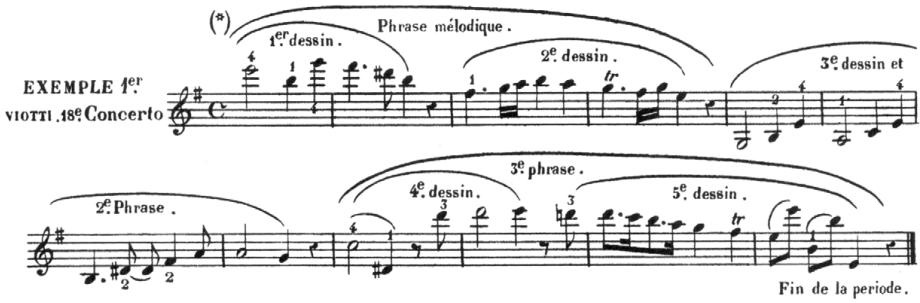
中文讲解
这是图 5.1 的图注,标明了所引谱例的来源:选自小提琴家弗朗索瓦·安托万·哈伯内克(François Antoine Habeneck)的《理论与实用小提琴教本》(Méthode théorique et pratique de violon)第 115 页,原文见 Courlay:Éditions Fuzeau Classique 出版的《教本与论著·小提琴卷·法国 1800–1860》影印本第 107 页。标题写作“一个音乐标点的范例”,呼应本节主题——连线被当作类似标点的“乐句划分符号”来使用。
补充说明
原图谱细节需查阅原书或影印本;图注在此主要承担史料出处与版本说明的功能。
第5段(P0113)
原文复述
Hugo Riemann, as we discussed in the previous chapter, became a great champion of the phrasing slur. In his argument, he explains that the employment of the slur as simply a sign for legato playing has been mostly abandoned for the reasons that first of all, legato has become the customary means of connecting tones and secondly, the slur does not necessarily exclude staccato marks that may appear beneath it. Riemann reasons therefore, “Now, the new office of the slur is, to indicate the articulation of the musical thought (themes, periods, movements) into its natural divisions (phrases).”62 Heinrich Schenker entirely disagrees with Riemann’s efforts, claiming that the phrasing slur “falsifies both the legato slur and the musical form.” He goes on to say that editors, in their attempt to update notation, destroy all the subtle “articulative” devices for the sake of structural unity.63 But in spite of Schenker’s attempt to “abolish the phrasing slur” and even after the emergence of Urtext editions to clean up the excesses of efforts like Riemann’s, the concept of the phrasing slur remains.
中文讲解
本段将乐句连线(phrasing slur)的讨论推向 19 世纪末至 20 世纪初的理论论战,并揭示一种记号如何获得新“职能”的逻辑。论证分三层:
第一,阐释里曼(Hugo Riemann)为何把连线“重新定义”为乐句标记。作者先点出里曼在上一章中已被讨论过、且是乐句连线最有力的倡导者;接着给出里曼的两条理由——其一,连奏(legato)已成为连接音符的默认方式,因此连线已不必再承担单纯的连奏指示;其二,连线之下仍可叠加跳音(staccato)记号,说明连线本身并不排斥断奏,从而其功能需要重新指派。基于此,里曼把连线的新职能定为“标示乐思(主题、乐段、乐章)按自然划分(乐句)的分界”(脚注 62)。
第二,呈现申克(Heinrich Schenker)的反对立场。申克认为乐句连线“既歪曲了连弓/连奏连线,又歪曲了音乐形式本身”(脚注 63),并指控编辑在“更新记谱”的名义下,为了追求结构上的统一,反而毁掉了所有细微的“articulative”(分句/发音)装置。
第三,给出作者的总结判断:尽管申克力图“废除乐句连线”,且 20 世纪“原始版”(Urtext)编辑潮流也试图清理里曼式的过度添加,乐句连线的概念依然留存至今。这一收尾揭示了作者的核心论点——一种记号一旦被广泛使用并获得重复中的“可信度”,就难以被反对者的理论或版本学实践彻底清除。
补充说明
脚注 62 对应里曼论述的原文出处,脚注 63 对应申克的反驳,二者构成论战双方各自的文献依据;Urtext(原始版)一词在 20 世纪音乐学中特指去除后加编辑痕迹、回归作曲家手稿的版本理念。
第6段(P0114)
原文复述
Copyright © 2008. University of Rochester Press. All rights reserved.
中文讲解
这是出版方版权声明,位于该页底部,表明本书 2008 年由罗切斯特大学出版社(University of Rochester Press)出版,保留全部权利。仅作版式信息,无学术内容。
第7段(P0115)
原文复述
Vial, Stephanie. The Art of Musical Phrasing in the Eighteenth Century : Punctuating the Classical “Period”, University of Rochester Press, 2008. ProQuest Ebook Central, http://ebookcentral.proquest.com/lib/iub-ebooks/detail.action?docID=3003724. Created from iub-ebooks on 2026-08-12 05:34:42.
中文讲解
这是电子书数据库(ProQuest Ebook Central)自动生成的引文与访问信息:作者 Stephanie Vial(斯蒂芬妮·维亚尔),书名《十八世纪音乐分句的艺术:古典“乐段”的标点》,2008 年由 University of Rochester Press 出版,文档编号 3003724,由 iub-ebooks 平台于 2026-08-12 05:34:42 创建访问记录。该信息用于版本与可获取性核查,无正文论证功能。
脚注 / 边栏 / 图表 / 附加信息(如有)
本节涉及的附加材料包括:脚注 59(乐例 5.15 中连线记号“第 1、3、5、7 音特别轻柔”之依据)、脚注 60(哈伯内克 1840 年亲自说明连线不用于运弓)、脚注 61(霍夫曼 1908 年关于乐句起讫与高潮点的论述)、脚注 62(里曼关于连线新职能的论述)、脚注 63(申克指控乐句连线歪曲连线记号与音乐形式的反驳);图 5.1(哈伯内克《教本》中的乐句划分谱例);以及版权与电子书出处信息。这些脚注与图例共同支撑作者关于“连线职能随时代由运弓/连奏转向乐句划分”的论证链。
💡 本节核心要点
- 哈伯内克 1840 年最早将长连线(“great slurs”)用于标示乐句结构,并需通过脚注向读者说明连线不指示运弓,说明当时此用法尚不普遍。
- 里曼(Hugo Riemann)以两条理由重新定义连线的职能:连奏已成默认连线方式、连线不排斥下方的跳音记号,遂将连线的新职能界定为标示乐思的自然划分(乐句)。
- 申克(Heinrich Schenker)强烈反对乐句连线,指其“既歪曲连弓/连奏连线、又歪曲音乐形式”,并指控编辑以“更新记谱”为名毁掉了细微的分句装置。
- 尽管申克试图废除、Urtext 编辑潮流试图清理,乐句连线概念仍延续至今,揭示出一种记号在重复使用中获得历史“可信度”的现象。
- 作者将哈伯内克的脚注、霍夫曼的演奏言论与里曼—申克论战串联起来,说明把长连线解读为乐句标记是逐渐累积的诠释习惯,而非早期记谱本意。
🔑 关键术语
- slur:连线。本节中指弓弦乐器或键盘乐器谱面上跨越多个音的弧线记号;在不同历史时期分别承担运弓/连奏指示与乐句划分两种职能。
- phrasing slur / 乐句连线:专用于标示乐句起止与结构的连线,作者把它与单纯的 legato slur(连奏/连弓连线)区分开来,论证其在 19 世纪后被重新赋以“划分乐思”的新职能。
- legato:连奏,即音与音之间平滑无缝的连接方式;里曼论证的关键前提是:连奏已成默认演奏方式,因此连线记号不必再承担单纯的连奏指示,从而可以被重新指派为乐句标记。
- Urtext editions:“原始版”编辑理念与版本,指 20 世纪以来去除后世编辑添加、回归作曲家手稿原貌的版本潮流;本节中作为对里曼式过度添加的纠正力量被提及。
- dessins / figures:乐思图式或动机型,对应哈伯内克脚注中的用语,指小于乐句的旋律—节奏单元;与 phrases(乐句)、periods(乐段)共同构成他用连线划分的三个层级。
- phrase / period:乐句与乐段,是本节讨论连线新职能时的核心结构单位;里曼将连线界定为标示音乐思想按自然划分(主题、乐段、乐章)形成乐句的工具。
sec_016 [描述性拆分] Haydn Op. 77, No. 1: Manuscript Slurs and the Autograph
第1段(P0116)
原文复述
With the prior history of the slur in mind, and combined with the understanding of legato versus detached playing (the adagio versus allegro, and sung versus spoken styles), the author continues efforts to untangle the notational practices of punctuation and articulation. The reader is asked to consider the intricately notated eight-bar period that opens the Adagio of Haydn’s 1799 String Quartet, Op. 77, no. 1—a passage replete with a full scale of dynamics, sforzandi, accents, staccato strokes, and overlapping slurs. Figure 5.2 is reproduced from Haydn’s autograph manuscript, made available in facsimile with commentary by László Somfai, published by Editio Musica Budapest, courtesy of the city’s Nationalbibliothek Széchényi. The autograph is, the author admits, somewhat difficult to read; but since notation, and Haydn’s notation in particular, is being placed under such close scrutiny, the author felt it would be worth the trouble to the reader. Subsequent editions of the same passage will also be examined to help in deciphering the autograph—specifically including the 1802 Artaria edition of figure 5.3, also provided by Somfai, whose interest in this passage sparked the author’s own (footnote 64).
中文讲解
这一段是作者从理论铺垫转向具体案例的过渡。她把先前对连音线(slur)的历史回顾与连奏/断奏(legato/detached)的对比——即柔板对快板、歌唱对说话这两种风格——综合起来,作为分析"标点与奏法"记谱实践的工具。
然后她引入具体的分析对象:海顿1799年弦乐四重奏Op. 77第一首第二乐章Adagio开头的八小节乐句。该段同时密集出现力度记号、sf(突强)、accent、staccato(跳音)、以及彼此叠置的连音线,记号密度极高,是记谱学的"重灾区”,因此被作者选作案例。
Figure 5.2 复制自海顿亲笔手稿(autograph)。该手稿由布达佩斯的 Editio Musica Budapest 以影印本(facsimile)形式出版,附有学者 László Somfai 的评注,承蒙塞切尼国家图书馆(Nationalbibliothek Széchényi)授权。作者坦承亲笔手稿本身较难辨认,但既然她要把海顿的记谱放到如此细致的观察之下,便认为值得给读者这份"麻烦”。
她还预告:后续会考察同一段的后世版本作为辨认亲笔的辅助,特别是1802年 Artaria 版(图5.3),同样由 Somfai 提供;正是 Somfai 对这段音乐的兴趣"点燃"了作者自己的分析。脚注64指向 Somfai 的相关研究。
本段在全章论证链上的作用:从抽象的记号史/风格史切入到具体的海顿案例,确立下一步细读的语料基础,并以 Somfai 的研究作为权威支撑。
补充说明
本段中 Somfai 与 Editio Musica Budapest、Nationalbibliothek Széchényi、Artaria 等名字构成一组相互援引的史料网络:手稿影印本由 Somfai 评注、布达佩斯 Editio Musica Budapest 出版、塞切尼国家图书馆授权;1802 Artaria 版(图5.3)同样出自 Somfai 协助;他对这段音乐的研究兴趣被视为作者本题分析的起点。
第2段(P0117)
原文复述
Figure 5.2. Haydn, String Quartet, Op. 77, no. 1, second movement, bars 1–9; Haydn’s manuscript. [Embedded image data omitted; position and caption retained.]
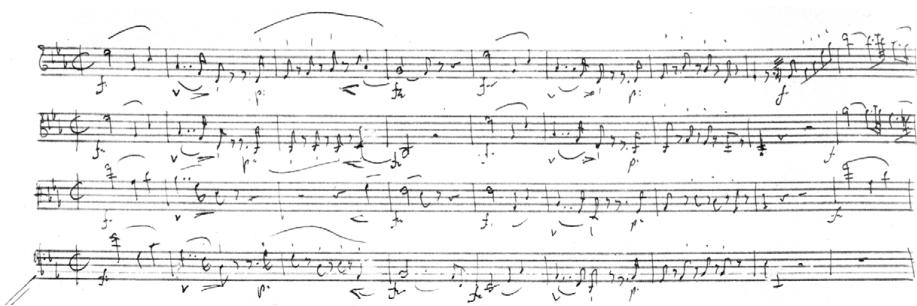
中文讲解
这是 Figure 5.2 的图注,标明所复制的是海顿1799年弦乐四重奏Op. 77第一首第二乐章第1–9小节的海顿亲笔手稿。原文此处嵌有手稿影印图像,但当前文本只保留图注与位置标记,乐谱本身的具体形态需回到原书查阅原图。
这张图是后续分析不可替代的视觉证据:第3小节与第7小节连音线位置、跳音记号、八分休止符的对照讨论都建立在这张图所呈现的记号分布上。
第3段(P0118)
原文复述
In bars 3 and 7 one finds ‘articulated’ notes—eighth notes carrying a staccato stroke, followed by small silences, eighth-note rests. Yet in bar 3 a long slur is indicated above the measure, while there is none in bar 7. The question, then, is what the function of the slur is. Is it a phrasing device, used to identify a more cohesive unit in bar 3 than in bar 7 (with an accompanying footnote reference)? If so, is the rather ludicrous corollary then true—that the eighth-note rests in bar 7 stand for small punctuation units because there is no slur? Or alternatively, perhaps the slur has a different function altogether.
中文讲解
这一段把分析的焦点收束到一个具体而棘手的对比上:第3小节与第7小节在底层节拍与奏法上几乎相同——都是带跳音记号的八分音符紧接一个八分休止符(作者用引号标出的"articulated” notes,即被打断的、点断式的发音)。唯一的差别是:第3小节上方有一条长连音线,而第7小节上方没有。
这一处差异立刻引出核心问题:连音线在这里起什么作用?作者摆出两种对立的猜想,并主动用反讽的修辞把第一种猜想推翻:
猜想一(phrasing device / 分句标记):连音线是一种分句标记,把第3小节标识为一个比第7小节更"内聚"的音乐单位。
推论(corollary):如果猜想一严格成立,那么第7小节里没有连音线,是不是意味着那些八分休止符反过来扮演了"小标点"的角色?作者用"rather ludicrous”(相当荒唐)这种带反讽的措辞主动把这一推论定性为不可接受,从而暴露"连音线 = 分句标记"这种简单对应的解释力不足。
猜想二(alternative):也许连音线根本不是分句标记,而是有别的功能——这是她接下来要正面展开的方向。
这段在全章中的重要性在于:它示范了 Vial 的方法——先抛出看似合理的解释,再把它推到极端(“没有slur = 休止符 = 小标点”),让读者看到推论的荒唐,从而为重新理解连音线的功能腾出空间。这是全书"音乐标点"论证的一个关键修辞动作。
第4段(P0119)
原文复述
Copyright © 2008. University of Rochester Press. All rights reserved.
中文讲解
这是页面底部的版权声明,标注本书由 University of Rochester Press 于2008年出版,版权所有。属于版面信息,与正文论述无关。
第5段(P0120)
原文复述
Vial, Stephanie. The Art of Musical Phrasing in the Eighteenth Century: Punctuating the Classical ‘Period’. University of Rochester Press, 2008. ProQuest Ebook Central, http://ebookcentral.proquest.com/lib/iub-ebooks/detail.action?docID=3003724. Created from iub-ebooks on 2026-08-12 05:34:42.
中文讲解
这是该电子书的来源引用:作者 Stephanie Vial,书名 The Art of Musical Phrasing in the Eighteenth Century: Punctuating the Classical “Period”,出版方 University of Rochester Press,2008年。读者通过 ProQuest Ebook Central 平台(docID=3003724)访问该书,本副本由 iub-ebooks 于2026-08-12 05:34:42 生成。属于电子书元数据/书目信息,非正文内容。
脚注 / 边栏 / 图表 / 附加信息(如有)
本页附加材料包括:(1)Footnote 64,在 P0116 中标出,指向 László Somfai 关于海顿手稿与1802 Artaria 版的研究,为正文提供史料来源支持;(2)Figure 5.2(P0117),复制海顿 Op. 77 no. 1 第二乐章第1–9小节的亲笔手稿,是后续 bars 3 与 bar 7 对比分析的视觉证据;(3)P0119 为 University of Rochester Press 2008年的版权声明;(4)P0120 为 ProQuest Ebook Central 的电子书来源元数据及访问时间戳。
💡 本节核心要点
- 作者把先前对连音线(slur)的历史回顾与连奏/断奏风格区分(adagio vs allegro、唱 vs 说)综合起来,作为分析"标点与奏法"记谱实践的分析工具。
- 分析对象被锁定为海顿1799年弦乐四重奏Op. 77 no. 1第二乐章Adagio开头的八小节——该段同时密集出现力度、sf、accent、staccato 与叠置的连音线,是记号密集的"重灾区”,因此被作者选作案例。
- Figure 5.2 复制自海顿亲笔手稿,由 Somfai 评注、Editio Musica Budapest 出版、塞切尼国家图书馆授权;Figure 5.3(1802 Artaria 版)被预告作为辨认亲笔手稿的辅助资料。
- 核心分析问题落在 bars 3 与 bar 7 的对比:两者底层节拍与奏法相同(跳音八分音符 + 八分休止),但 bar 3 上方有一条长连音线而 bar 7 没有,这一差异迫使作者追问连音线的功能。
- 作者通过把"连音线 = 分句标记"的猜想推到"没有slur就用休止符当小标点"这一被她本人斥为"荒唐"的极端推论,从而否定简单对应,为重新思考连音线功能留下空间。
🔑 关键术语
- slur:本节核心记号;一条连接若干音符的弧线,可指示连奏(legato)、分句(phrasing)或奏法组合;本节直接追问其在海顿手稿中究竟起何种作用。
- staccato:跳音记号,在音符上方或下方加一点或短竖线,表示该音被缩短并与后音分离;本节 bars 3 与 bar 7 的八分音符都带此记号。
- sforzando(sf / sforzandi):突强记号,表示该音或该和弦被突然加重;本节所选海顿谱例同时含 sf、accent 等力度/重音记号,体现记号密集度。
- autograph:作曲家亲笔手稿;本节 Figure 5.2 即为 Haydn Op. 77 no. 1 第二乐章第1–9小节的亲笔(作者坦承其较难辨认)。
- phrasing:把若干音符组织为更内聚的音乐单位的分句行为;本节将其与连音线功能直接挂钩,并质疑"连音线 = 分句标记"的简单对应。
- punctuation(音乐标点):作者全书的核心理论框架:把音乐结构类比于文本中的逗号、句号等标点;本节"第7小节的八分休止符是不是小标点"的反问正是这一框架的运用与自我反思。
- legato vs. detached:连奏对断奏;本节将其与 adagio vs allegro、sung vs spoken 风格对照,作为理解18世纪演奏风格与"标点—奏法"关系的背景对立。
sec_017 [描述性拆分] Slurs, Beats, and Metrical Displacement in Bars 3 and 7
第1段(P0121)
原文复述
The author proposes beginning by considering what would happen if the slur were taken away. An eight-bar period is observed, ending on the tonic E- and clearly separated from a second period by rests, with the exception of the first violin part, which surges onward ahead of the other parts. This period is itself divided into two four-bar phrases, again separated by rests, with the cello part “filling in the space” between the B- half cadence and the tonic downbeat of bar 5. Each four-bar phrase is further divided into two two-bar phrases ending on vii° and uniformly divided by rests in all four parts. Neither adding nor removing the slur over the second two-bar phrase can alter this period structure, but the slur can affect the expression of the sentence. Drawing on Keller, the author concludes that while there may be only one thoughtful phrasing, several articulations remain possible.
中文讲解
本段确立本节的分析框架:先以"假设去掉连线"的逆向思维,把连线的效果与乐曲固有的结构骨架区分开来。作者描述了一个层层嵌套的句法结构——8小节乐段(结束在主音E-,由休止将其与下一个乐段隔开;唯有小提琴一声部"向前涌动"越过此分隔)→ 两个4小节乐句(中间以休止分隔,大提琴声部在B-半终止与第5小节正拍之间"填补空白”)→ 每个4小节乐句再分为两个以vii°结束、以休止统一划分的2小节乐句。关键论点是:连线并不会改写这个结构性骨架,它只能影响乐句的"表达”。结尾援引Keller,进一步区分"分句”(phrasing,智识层面的唯一选择)与"发音/演奏法”(articulation,技术执行层面的多种可能),为下文讨论连线的具体演奏后果铺设方法论前提。小提琴"surges onward"的形象描述预示了后文将详细展开的节拍错位与"向上涌动”。
补充说明
Keller引文的具体所指仅能从本段中"一种审慎的分句、多种发音方式"的对比加以确认;输入未提供其著作出处或年代,不宜外推。第一小提琴越过乐段边界的"surges onward"与P0123末句"violin’s surge upwards"形成跨段呼应,但此联系只能依据本任务输入确认。
第2段(P0122)
原文复述
One consequence of the slur, already mentioned, is an alteration of the beats within the bar. The convention of giving stress to the first note of the slur and connecting the remainder smoothly and progressively more quietly permits accents to fall on unexpected or even weak beats of the bar. Although the harmonic rhythm of figure 5.2 is equally active in both bars — (I⁶–V⁶–I–ii⁶–V) beginning in bar 3 and (I⁶–ii–I₄⁶–V⁷–I) beginning in bar 7 — the slur in bar 3 instructs the performer not to overemphasize the “good beats” of bars 1 and 2 (in cut time), which one would otherwise do. Haydn further indicates, by means of the mid-bar crescendo, that he wishes to avoid any diminuendo implied by the slur, and by the sforzando in bar 4 that the downbeat’s effect should not be diminished. The author suggests this may also be a place where, following Wolf, “the note beginning a slur can have a milder accent without disturbing the seriousness of the performance.”
中文讲解
本段提出本节的核心技术论点:连线引发节拍重音的移位。连线演奏的传统惯例——“重音落在第一个音,其余音平滑且依次更弱地连接”——在本例中被用作一种节拍干预手段:借此可以把重音放在意料之外甚至弱拍上。作者随即进行了一项关键对比:第3、7小节的和声节奏同样活跃(第3小节:I⁶–V⁶–I–ii⁶–V;第7小节:I⁶–ii–I₄⁶–V⁷–I),因此单凭和声密度无法解释两者在节拍听感上的差异;决定性因素正是第3小节的连线——它刻意抑制了本应落在cut time第1、2拍上的"好拍"重音。Haydn又用三种手段加固这一抑制:第3小节中部的crescendo抵消连线所暗示的渐弱;第4小节的sforzando确保正拍的力度不被削弱;并通过援引Wolf,允许连线起首音只获得"较温和"的重音而不破坏演奏的庄重。整段实质上是把"演奏惯例"重新解读为一种节拍—句法操控。
补充说明
本段给出的两组和弦进行为原文中以figure 5.2为标记的和声节奏示例,应按原文如实保留。“cut time”(alla breve,二二拍子)指半拍为一拍的小节单位,故"好拍"为小节内的第1、2拍。Wolf引文的具体出处与年代在输入中并未给出,本段只能确认其原则内容。
第3段(P0123)
原文复述
The piano gesture in bar 3 begins, the author states, with the initial sixteenth note, although one might also place a slight emphasis or rhythmic impulse on the downbeat eighth note (within a piano range) just to maintain a sense of meter. The eighths continue, “articulated” under one bow, but bypass a rhythmic accent on the (strong) third quarter beat of the bar. The performer then crescendos, with an additional emphasis on the otherwise weak quarter-note fourth beat created by the secondary “underslur” and the b-¹ grace note in the first violin part. All of this creates a long upbeat that enhances the listener’s expectation and arrival at the half cadence, with its accented and suspended dissonance. By contrast, when the same gesture returns in bars 7 and 8, the listener is reassured by the regular metrical accents of the short, lightly executed eighth notes and their natural downward inflection and release at the concluding cadence — only to be surprised and swept along by the violin’s surge upward into the following sentence.
中文讲解
本段是对前一段抽象论点的逐拍落实,把第3小节解读为"一个拉长了的弱起”。作者一拍拍走过:起始于十六分音符(弱起位);可在正拍八分音符上保留极轻微的节拍感以维持拍感;八分音符群"在一弓之内"继续,故意绕开本应具有重音的第3个四分拍;随后以crescendo与小提琴一声部的次级"underslur"加上b-¹倚音,在本属弱拍的第4个四分拍上注入一个新的重音。这套连续干预累积成一个拉长的弱起,其张力最终释放到半终止处那个被强调、被悬挂的不协和音上——第3小节因此被"改装"成一个整体性的前导拍,而非节拍稳固的一小节。与之对比,第7、8小节回到相同的表面音型但未施加节拍错位:听者听到的是短促、轻盈、八分音符规则节拍重音的陈述,并在终止处以自然的下行语气"落地"收束;紧接着第一小提琴向上涌动,打破了终止的闭合感,把音乐推入下一句。这里揭示了一个重要的演奏—分析洞见:相同的音型素材,因连线和重音处理不同,可以产生截然不同的节拍与表情效果。
补充说明
“underslur"按字面理解为嵌套或附属的小连线,覆盖第4个四分拍处的局部音型,与主线相连但层级更低。b-¹记号按原样保留,其确切音高在P0123原文中即如此标注。本段末"violin’s surge upwards"与P0121开篇"first violin…surges onward"形成跨段形象呼应。
第4段(P0124)
原文复述
Copyright © 2008. University of Rochester Press. All rights reserved.
中文讲解
这是第17页页脚处的版权声明,表明2008年由University of Rochester Press持有该材料的专属权利。它属于版面元信息,不参与本节的音乐分析论证。
第5段(P0125)
原文复述
Vial, Stephanie. The Art of Musical Phrasing in the Eighteenth Century: Punctuating the Classical “Period”, University of Rochester Press, 2008. ProQuest Ebook Central, http://ebookcentral.proquest.com/lib/iub-ebooks/detail.action?docID=3003724. Created from iub-ebooks on 2026-08-12 05:34:42.
中文讲解
这是第17页页脚处的书目/出处信息块。它表明所摘录章节出自Stephanie Vial所著《The Art of Musical Phrasing in the Eighteenth Century: Punctuating the Classical “Period”》(University of Rochester Press, 2008),通过ProQuest Ebook Central检索获得(文档ID 3003724),数字化副本创建于2026-08-12。该信息块用于提供书目溯源,不构成本节分析论证的一部分。
补充说明
URL路径中的"lib/iub-ebooks"按字面指向Indiana University的电子图书访问系统,这是出处信息本身所提供的内容。
脚注 / 边栏 / 图表 / 附加信息(如有)
本节末尾的P0124与P0125分别承载版权声明与书目/出处信息。P0124为标准的出版社版权页脚;P0125为完整的ProQuest电子书引用块,标明作者、书名、出版社、出版年、检索平台、文档ID及数字化创建时间。两者均为版面元信息,不对前文三段(P0121–P0123)的分析主张提供额外论据。文中提到的"figure 5.2"和所引Keller、Wolf两位的观点按其文中位置出现,但具体出处信息在本节范围内不可进一步核实。
💡 本节核心要点
- 采用"假设去掉连线"的逆向方法,把连线的效果与乐曲固有的结构骨架分开:连线不改写8+4+2小节层层嵌套的句法层级与终止式布局,只调整乐句的表达。
- 连线演奏的传统惯例(首音加强、其后平滑递减)被作者重新解读为节拍重音移位的机制——允许重音落在弱拍或意料之外的拍位。
- 第3小节与第7小节共享同样活跃的和声节奏(皆为五个和弦的快速进行),因此节拍听感的差异不能归因于和声密度;决定性差异在于第3小节的连线对cut time第1、2拍"好拍"重音的抑制。
- Haydon用中段crescendo(抵消连线暗示的渐弱)、第4小节的sforzando(保全正拍力度)以及援引Wolf的"温和起首重音"原则,三重加固了对自然重音的抑制。
- 对第3小节进行逐拍分析显示:起首十六分音符为弱起 → 正拍八分音符仅保留微弱的节拍感 → 八分音符群一弓奏出、跳过第3个四分拍的自然重音 → 通过crescendo与次级underslur及b-¹倚音在第4个四分拍(弱拍)注入新重音——整体塑造出一个延伸至半终止悬挂不协和音的"长弱起”。
- 第7、8小节以相同音型回归但不施加节拍错位,产生规则节拍重音与下行收束;随即第一小提琴向上涌动打破终止闭合感,呼应本节开篇观察到的"第一小提琴向前涌动越过乐段边界”。
🔑 关键术语
- slur / 连线:弧线记号,演奏时要求首音稍重、其后续音依次更弱且平滑连贯;本节中它被用作节拍重音移位的主要工具。
- half cadence / 半终止:以属音(此处为B-)结束的乐句终止式,制造悬置感而非收束感;本节中作为第3小节"长弱起"的最终落点。
- harmonic rhythm / 和声节奏:和弦更替的速率。本节以第3、7小节"和声节奏同等活跃"为前提,把两小节听感差异归因于演奏法而非和声密度。
- cut time (alla breve) / 二二拍子:半拍为一拍的小节单位;本节中"好拍"指cut time小节内的第1、2拍,是连线本应抑制的自然重音所在。
- sforzando / 突强:突然的强重音记号。Haydn在第4小节使用它,以确保正拍的力度不被第3小节连线的整体效果削弱。
- underslur / 次级连线:嵌套于主线连线之下的较小连线,覆盖小提琴一声部第4个四分拍处的局部音型,与b-¹倚音共同在该弱拍上注入附加重音。
- grace note / 倚音:出现在主音之前的装饰性小音符。此处指第一小提琴b-¹倚音,与underslur协同在弱拍上制造新重音。
- vii° / 导音减三和弦:本节中作为每个2小节乐句的终止和弦,提示次级句法边界;其和声功能由P0121明示。
- phrasing vs. articulation (Keller) / 分句与发音:Keller区分"分句"(智识层面的唯一合理选择)与"发音/演奏法"(技术上可有多种执行);本节以此区分作为方法论前提,分别讨论结构层面与演奏层面的变化。
sec_018 [描述性拆分] Violinistic Gesture and Elssler’s/Artaria’s Edition Choices
第1段(P0126)
原文复述
We might also, like Cambini in figure 3.3 with Boccherini’s String Quartet, Op. 2, no. 1, consider the notation from a specifically violinistic standpoint, regarding the player’s bow arm as his “tongue” and “countenance” (gesture as well as voice) in expressing the sentiment of the phrase. The slur as a bowing in bar 3 would convey a very different effect, visually as well as aurally, than would the separate bows of bar 7. I imagine a long up-bow, requiring a full sweep of the arm and engaging the entire upper body as it reaches out for the sforzando downbow on the downbeat of bar 4. The violinist must then immediately retake the bow, another large gesture, to prepare the repetition of the opening forte, barlength slur which begins the second phrase. This manner of arriving at and departing from the half cadence and midpoint of the period imparts a very different character and sense to the punctuation point than do the more simply executed and circumscribed movements of the separate bows as they lead to the tonic close. Thus we observe, from both a compositional and elocutionary standpoint, that Haydn’s “articulation” clearly comments on his punctuation. But as we attempt to perceive the two as operating within separate domains, the results are, I feel, far more descriptive; both the slur and the detached notes become much more informative than the mere clarification of an already abundantly clear phrase structure.
中文讲解
本段是这一小节论证的核心推进段。作者借用了第3章图3.3中Cambini分析Boccherini Op.2 No.1弦乐四重奏时所采用的思路,将分析视角从作曲家的标号层面,转向演奏者身体动作的层面。她提出要把小提琴演奏者的运弓手臂视作其"舌头"和"表情"——既是姿态,也是声音——从而把弓法当作语句表达情感的载体来理解。
本段的功能是把前文关于"演奏法(articulation)“与"句法标点(punctuation)“的讨论,从乐谱符号层面延伸到小提琴演奏的身体姿态层面。作者设想一种具体的运弓方式:第3小节的长上弓(up-bow)需要手臂的完整挥动、整个上身的参与,一直延伸到第4小节正拍上的sf下弓;随后弓必须立刻重新抓握(retake),又是一个大幅度的动作,才能为第二乐句开头那个f力度、跨小节的长连弓做准备。这个由"到达—离开"所构成的姿态,对应于乐句在第4小节处的半终止(half cadence)和乐段的中点。相比之下,第7小节的分弓(separate bows)动作幅度小而紧凑,通向主终止时呈现出的标点感截然不同。
因此作者强调:Haydn的演奏法记号并不只是结构分析的注脚,而是对句法标点的"评论”。她特别提醒读者要避免把演奏法和标点看作两个彼此独立的领域来理解;只要把它们分开讨论,结果就只是描述性的(descriptive),而两者一旦互相参照,连弓与断奏记号所传达的信息就远超过"让已经清楚的乐句结构再清楚一点"这种最低限度功能。本段的论证意义在于:用具体的身体动作(小提琴家手臂的扫动、抓弓、姿态幅度)作为桥梁,把记号学论证与表演美学论证结合起来,使读者能直观感受到不同运弓方式如何塑造乐句的性格。
补充说明
Cambini在第3章图3.3中分析的是Boccherini《第一弦乐四重奏》,作者借用此案例的方法论来观察Haydn的乐谱,但实际分析对象是本小节自身所讨论的Haydn慢板乐章。第3小节长连弓、第4小节sf、第7小节分弓、第8小节回到主音等结构细节,与本小节前文(参见sec_017)所讨论的Adagio乐句结构是对应的,本段相当于把同一谱面在演奏动作层面再展开一次。
第2段(P0127)
原文复述
Johann Elssler, Haydn’s personal copyist, is very faithful to the autograph in his own manuscript copy of the quartet. However, the first edition published by Artaria in 1802 (fig. 5.3) omits many of Haydn’s expressive details: the accents in bars 2 and 6, the staccato strokes on beats 3 of the same measures, and, most particularly, the long slur in bar 3. Perhaps it was felt that such detailed information crowding the printed page was not necessary, or worse, even harmful. Remember that throughout the history of punctuation and its related symbols, there has always been a balancing act between that which is written and that which is unwritten; too many signs can easily result not in the desired clarity, but in confusion. It could be that the slur in bar 3 of Haydn’s Adagio was deemed unnecessary—indicating what was already evident in the notation—a long, rising gesture with a crescendo into the sforzando downbeat. Or perhaps the removal of the slur was an effort to “normalize” the notation—to make both halves of the period conform to each other. Note that a staccato stroke has also been added to the pickup sixteenth-note of bar 7, making it identical to its counterpart at the end of bar 2. But in fairness to Artaria, not even the best of editions can reproduce all the information embedded in an autograph: where exactly a slur begins and ends; and how the various indications for detached and slurred notes, dynamics, and accents are distributed throughout a piece and among the different part books. As James Webster explains in 1998, the difficulty facing editors is that ultimately they must make decisions for performers regarding these points of “ambiguity,” “incompleteness,” and “inconsistency”— with the added responsibility that the original source of uncertainty is then completely removed from the performer’s view.
中文讲解
本段把论证从"演奏姿态"转向"版本实物”,考察Haydn的手稿、抄本与首版之间在记号细节上的差异,并由此引入关于编辑判断的反思。
作者首先区分两类稿本:Haydn的私人抄写员Johann Elssler所作的手抄副本(manuscript copy)对Haydn的原稿(autograph)相当忠实;而Artaria于1802年出版的首版(first edition,见图5.3)却省略了多处表情细节——第2、6小节的重音记号、这两小节第3拍上的跳音(staccato)短杠,以及最关键的第3小节那条长连弓。作者提供了几种推测:第一,密集的记号在印刷版面上可能被视为多余甚至有害;第二,第3小节的长连弓或许被认为"不言自明",因为乐句本身已经呈现出上扬的走势并渐强至sf的强拍;第三,删去连弓也许是为了"规范化"(normalize)记号,使乐段两半在外观上彼此对称——这一推测还有一处直接证据:Artaria版在第7小节的十六分音符弱起上加了一个跳音记号,使其与第2小节末尾的对应音完全一致,从而抹平了原谱中两半乐句在演奏法上的差异。
但作者随即对Artaria作出公允评价(in fairness):即使再好的版本,也无法复制手稿所承载的全部信息——连弓精确的起止位置、跳音与连音记号、力度、重音在整首作品及不同分谱(part books)之间的分布。段落末句引用James Webster 1998年的论述指出,编辑面对的难题在于:他们必须替演奏者就"含糊"“不完整"“不一致"之处作出判断;更严重的是,产生不确定性的源头(即Haydn手稿本身)会因此被排除在演奏者的视野之外。本段的论证意义是把记号问题从"谱面对照"推进到"编辑伦理"层面:现代演奏者所依据的印刷版本,可能已经把原作者刻意留下的判断空间悄悄抹平了。
补充说明
Elssler与Artaria是讨论Haydn作品版本时常见的两类来源:前者属于作曲家圈子内的誊抄传统,往往保留表情记号的细节;后者属于面向公众的商业印刷,受版面、读者习惯、规范化压力等影响。Webster 1998年的引文是这一小节将版本问题上升为方法论问题的关键支点,但被引用段落的具体出处页码未在本段给出。
第3段(P0128)
原文复述
Copyright © 2008. University of Rochester Press. All rights reserved.
中文讲解
此为版权页脚声明,表明该章节文字受2008年罗切斯特大学出版社(University of Rochester Press)版权保护。这一行是全书统一出现的版面元素,用以提示读者该书内容的复制与使用受版权法约束;在学术引用语境中,它也是后续引用此章节时的版权归属依据。
第4段(P0129)
原文复述
Vial, Stephanie. The Art of Musical Phrasing in the Eighteenth Century : Punctuating the Classical “Period”, University of Rochester Press, 2008. ProQuest Ebook Central, http://ebookcentral.proquest.com/lib/iubebooks/detail.action?docID=3003724. Created from iub-ebooks on 2026-08-12 05:34:42.
中文讲解
此段为ProQuest电子书的版本与下载信息,包含作者署名(Stephanie Vial)、完整书名(The Art of Musical Phrasing in the Eighteenth Century: Punctuating the Classical “Period”)、出版社(University of Rochester Press)、出版年份(2008)、ProQuest Ebook Central的访问链接、本册的文档编号(docID=3003724)以及本次由iub-ebooks下载的日期时间戳(2026-08-12 05:34:42)。它的作用是给出本段及所属章节的完整书目出处,便于读者回溯原书电子版的具体版本,是研究引用时的版本依据。
脚注 / 边栏 / 图表 / 附加信息(如有)
本小节无新增脚注或额外图表说明,但段落内嵌入了第66号(位于P0126末尾)、第67号(位于P0127开头处被Artaria省略的内容之后)以及第68号(位于P0127末句)三条脚注的角标。其中第67号角标紧跟"the long slur in bar 3"之后,提示读者该句关于Artaria省略细节的描述另有引文出处;第68号角标则在Webster 1998年论述之后出现,标记其学说出处。这些脚注在正文中起到限定具体史实与外部引文的作用,但本小节输入未给出脚注正文,故仅按角标位置记录其结构功能。
💡 本节核心要点
- 作者借Cambini分析Boccherini的方法论,将Haydn乐谱的演奏法记号与小提琴家的身体动作(运弓手臂作为"舌头"和"表情”)联系起来,从而把"演奏法"与"句法标点"的讨论从谱面扩展到姿态层面。
- 第3小节的长连弓(对应到全弓上弓接sf下弓再抓弓的大幅度动作)与第7小节的分弓在到达/离开半终止的方式上差异显著,这种差异本身就构成了对乐句标点点的"评论”。
- Elssler的手抄副本忠实于Haydn原谱,而Artaria 1802年首版删去了第2、6小节的重音、跳音,以及第3小节的关键长连弓,并在第7小节弱起十六分音符处加上跳音以"规范化"两半乐句。
- 作者对此给出公允评估:版本规范化可能是出于印刷版面、读者负担或对称美观的考虑,但同时也提醒,没有任何版本能够完全复制手稿中关于连弓起止、记号分布等细微信息。
- 通过引用James Webster 1998年的论述,作者将问题上升到编辑伦理:编辑替演奏者对原谱的"含糊"“不完整"“不一致"作出判断,而产生不确定性的源头(手稿)则被排除在演奏者视野之外。
🔑 关键术语
- violinistic standpoint:小提琴演奏者立场,指从弓法、手臂姿态与演奏动作的角度来理解乐谱记号;本节中作者以此视角看待Haydn的连弓与分弓,把弓臂类比为说话者的"舌头"与"表情”。
- bow arm as “tongue” and “countenance”:将小提琴家的运弓手臂视作其"舌头"与"表情"的修辞;意指弓的动作既是声音来源(舌头),也是可被观看的姿态(表情),因此连弓与分弓不只是技术选择,更是一种姿态化的语句表达。
- half cadence / midpoint of the period:半终止与乐段中点;在本节讨论的Adagio中对应于第4小节sf所在位置,是两半乐句之间的标点枢纽;作者强调长连弓在此处的"到达—离开"方式赋予了该标点独特的性格。
- Elssler:Johann Elssler,Haydn的私人抄写员(personal copyist);其手抄副本对本节讨论的Haydn原谱表现出高度忠实,是与Artaria印刷版对照的关键中介版本。
- Artaria:1802年首版的出版方;本节将其印刷版视为对Haydn原谱表情细节进行删减、规范化处理的代表性例子,作者以此引出版本与编辑判断的问题。
- autograph:作曲家亲笔手稿;本节中作为最权威、但信息最不易被印刷版本完全保留的源头,与Elssler抄本和Artaria印本形成三级对照。
- articulation vs. punctuation:演奏法(如连弓、跳音、重音)相对于句法标点(如乐句终止、半终止、乐段中点);本节主张二者并非分属独立领域,而是演奏法记号对句法标点的"评论”。
- James Webster 1998:被本节引用的版本研究学者的论述;其要点是编辑必须替演奏者就原谱的"含糊"“不完整"“不一致"作出判断,并把原谱排除在演奏者视野之外;这是本节将问题上升到编辑伦理的关键外部支点。
sec_019 [描述性拆分] Editing Decisions and Cross-Instrument Adaptation in Mozart K.361
第1段(P0130)
原文复述
Figure 5.3. Haydn, String Quartet, Op. 77, no. 1, 2nd movement, bars 1–8; 1802 Artaria edition. [The image data itself has been omitted; the caption and its position in the layout are preserved.]

中文讲解
这是一段图注(figure caption),对应页面上的图5.3。该图引用的乐谱是海顿《弦乐四重奏》Op.77第一首第二乐章的前8小节,版本来源为1802年的Artaria版。在本书正文中,作者刚刚援引了Artaria版(与作曲家手稿之间的差异)作为编辑决策如何影响演奏释义的例子,因此这张图示的作用是把那段讨论落到一份具体可见的乐谱文献上——读者需要查阅原图才能看到与上文讨论相关的具体标记(如连线、跳音、力度记号等)。本段没有可单独讲解的论点,它的功能是版面性的:为前一段(讨论Artaria对长连线的删减等编辑决策)提供一份可视证据。
补充说明
图注提到的“1802 Artaria edition”与前一段提及的Artaria版相对应;图注与正文P0131共同构成本节讨论“编辑决策”的实证基础。
第2段(P0131)
原文复述
Sometimes such decisions are fairly minor. For instance, the modern Urtext edition of the Op. 77, no. 1 Adagio adds the “missing” staccato strokes on the downbeats of bar 7 in the viola and cello parts (placing them in parentheses to indicate their omission in the autograph).⁶⁹ But other decisions, like Artaria’s removal of the long slur, begin to have larger consequences. The level of complexity can become immense when dealing with works of many parts (like quartets which are often not written in score form) and with works for diverse instruments. Do the slurs, as Joachim suggests, mean something quite different for the pianist than the violinist? How closely should the cellist’s part mimic the bowings of the violinist’s, or even the wind player’s articulated syllables?
中文讲解
本段承接前一段关于“autograph与早期印刷版之间的差异会带来演奏上的后果”的讨论,把编辑决策的影响按程度分成两类:影响较小的(如Urtext版在Op.77第一首Adagio第7小节中提琴与大提琴声部添加手稿缺失的跳音记号,并以括号标注),与影响较大的(如Artaria删除长连线)。作者由此引出一个更深层的问题:当作品分声部传播(如四重奏通常不以总谱形式存在),或为多种不同乐器写作时,乐谱上同一记号在不同乐器上是否具有相同的演奏含义?Joachim的暗示是:钢琴家所理解的连线与提琴家不同;大提琴声部是否应模仿小提琴的弓法?是否应模仿管乐的分音吐字?这一段的功能是从“单声部内部编辑修订”过渡到“跨乐器转译”这一更大的方法论议题,为下一段Mozart的弦乐改编实例做铺垫。
阅读时需注意:(1)Urtext括号里的跳音记号虽然标注了“来源缺失”,但现代编者仍然补入,这是基于十八世纪体裁惯例的合理推断,而非手稿证据;(2)Artaria删除长连线则是“删去”而非“补入”,影响方向相反;(3)作者提出三个具体的跨乐器疑问,是为了让读者意识到连线在键盘、弦乐、管乐三种物理动作逻辑下的演奏含义并不相同。
补充说明
脚注69对应Urtext版本的依据;Artaria 1802版与图5.3(P0130)为同一版本来源,是本段第二个例子的乐谱出处。
第3段(P0132)
原文复述
For instance, the slurs in the bassoon part (doubled at the octave by oboe and basset horn) from Trio II of Mozart’s Wind Serenade in B-flat Major (ca. $1 7 8 3 \mathrm { - } 8 4$) are rewritten when adapted for cello (and also violin and viola) by the pianist and composer C. F. G. Schwencke, in his 1818 arrangement of the piece as Grande quintetto pour le piano forte, hautbois, violon, viola et violoncelle (ex. 5.16).⁷⁰ We can never know how Mozart himself would have arranged these wind passages for strings, but the shorter slurs of example 5.16b are certainly more idiomatic for the cellist than those of the bassoon part in example 5.16a (one rarely encounters such long slurs in eighteenth-century string parts). Further, their context—the rolling, unison momentum of the trio—would likely suggest to the player an overall legato “expression” beyond that which is indicated by one-bar slurs. This would have posed no difficulty to eighteenth-century string players, who (as Joachim claims of violinists in his day) would have been able to execute the smaller slurs with the same cascading effect of the longer, wind instrument slurs.⁷¹ Strong accents and diminuendos accompanying each slur (according to the “rules” of slur execution) would give more swing to the movement, but would perhaps better suit a livelier, jauntier character than the one here. Coinciding with the beginnings of slurs, the hierarchy of downbeats need only be observed: strong on the downbeat of the first bar, weak on the downbeat of the second bar, somewhat strong on the third bar, and weak again on the fourth. Even in example 5.16a, the new slur beginning on the downbeat of bar 3 indicates less of a break in the legato, than a little nudge marking the bottom of the phrase as it swings back upward to its resting point at the half cadence in bar $_ 4 \cdot$ . In these examples then, the particular expressive note grouping appears to be based, at least in part, on the technical nature (bowing vs. breathing) of the instrument being played. The nuances of their execution (the degree of stress, diminuendo, and separation between the slurs) are subject to the governing character or affect of the expression.
中文讲解
本段是本节的核心案例与论证。它由Mozart《降B大调管乐小夜曲》(约1783-84年)第二三重奏段(Trio II)巴松声部(由双簧管与巴赛管在高八度重复)的连线记号谈起:1818年钢琴家兼作曲家C. F. G. Schwencke把这首管乐作品改编为《Grande quintetto pour le piano forte, hautbois, violon, viola et violoncelle》时,将原本长的连线改写成更短的形式(见例5.16a与5.16b)。
作者分四步展开论证: 第一步,比较两种版本。Schwencke改写的短连线(5.16b)对大提琴而言比原巴松谱上的长连线(5.16a)更“地道”(idiomatic),因为十八世纪的弦乐声部罕见如此长的连线; 第二步,语境补足。即便连线变短,三重奏“滚动的齐奏推进感”仍会让演奏者感到一种贯穿小节的legato表情,这种上下文感受对十八世纪弦乐演奏者并不困难,他们(按Joachim的论点)能够用短连线产生与管乐长连线同样“瀑布式”的效果; 第三步,限定。若严格按照连线的“执行规则”配以强重音与渐弱,会让乐句更具推进感(swing),但更适合更活泼、更轻盈的性格,与本段Trio的性格并不贴合; 第四步,节奏层级与乐句形状。具体到第3小节起的新连线,它并不表示legato的中断,而是“轻推”乐句底部,使其上摆至第4小节的半终止;因此演奏者只需关注强拍层级(第一小节强、第二小节弱、第三小节略强、第四小节弱)。
由此作者得出本节关键结论:表情性音符分组的依据,部分在于乐器本身的物理技术(弓法 vs 呼吸),而连线下执行的细微差别(重音程度、渐弱、连线间的分离度)则受制于整段音乐的主导性格或情感(character / affect)。
阅读时需注意:作者并没有声称Schwencke的改编是“正确”或Mozart本人会这么做,而是用其作为分析材料,说明“同一音乐内容由不同乐器演奏时,分组记号必须随乐器物理特性重新校准”。最后一句把“技术决定”和“情感决定”明确分开,是本节在方法论上的落点。
补充说明
脚注70为Schwencke 1818改编的版本来源;脚注71承接P0131提到的Joachim关于小提琴家连线执行的论述。例5.16a/5.16b指作者书中同一编号下的两个谱例(管乐原谱与弦乐改编谱),本段多处比较两者但未给出谱例本身,需查阅原书。
第4段(P0133)
原文复述
Copyright © 2008. University of Rochester Press. All rights reserved.
中文讲解
这是页脚版权声明,标注该书于2008年由University of Rochester Press出版,保留所有权利。它属于版面信息,不包含论证内容。
第5段(P0134)
原文复述
Vial, Stephanie. The Art of Musical Phrasing in the Eighteenth Century : Punctuating the Classical “Period”, University of Rochester Press, 2008. ProQuest Ebook Central, http://ebookcentral.proquest.com/lib/iub-ebooks/detail.action?docID=3003724. Created from iub-ebooks on 2026-08-12 05:34:42.
中文讲解
这是电子书数据库(ProQuest Ebook Central)自动生成的版本来源与访问信息:作者Stephanie Vial,书名《The Art of Musical Phrasing in the Eighteenth Century: Punctuating the Classical “Period”》,出版社University of Rochester Press,出版年2008,并附ProQuest链接、文档ID,以及由iub-ebooks于2026-08-12生成该副本的记录。它属于文献著录与电子访问元数据,不包含论证内容;其作用是标示本电子副本的来源与生成时间。
脚注 / 边栏 / 图表 / 附加信息(如有)
本节包含的附加材料:
- 图5.3(P0130):海顿《弦乐四重奏》Op.77第一首第二乐章1-8小节,1802年Artaria版;用于支持前一段关于Artaria编辑决策的讨论。
- 例5.16a与5.16b(P0132):Mozart《降B大调管乐小夜曲》Trio II的巴松原谱(5.16a)与Schwencke 1818弦乐改编谱(5.16b)中的连线比较;本节论证的核心谱例,需查阅原书。
- 脚注69(P0131):Urtext版本关于Op.77 no.1 Adagio第7小节跳音记号的来源依据。
- 脚注70(P0132):Schwencke 1818 Grande quintetto改编的版本出处。
- 脚注71(P0132):Joachim关于十八世纪弦乐演奏者连线执行能力的论述来源。
- 页脚(P0133、P0134):版权与电子访问元数据。
💡 本节核心要点
- 编辑决策对演奏释义的影响呈程度差异:补充型小修订(如Urtext补加括号跳音)影响较小,删减型大修订(如Artaria删去长连线)影响更大。
- 当作品分声部传播或为多种乐器写作时,连线等同一记号在钢琴家、弦乐演奏者与管乐演奏者之间的演奏含义并不一致,需要跨乐器转译。
- Schwencke 1818年把Mozart管乐小夜曲Trio II的巴松声部改写为弦乐声部时,把长连线改短,这是出于乐器物理特性(大提琴罕见长连线)而非审美取舍。
- 即便连线变短,三重奏滚动的齐奏推进感会在演奏者层面形成超越单小节标记的整体legato表情,这是演奏者基于语境的判断。
- 连线起点的强拍层级(第一小节强、第二小节弱、第三小节略强、第四小节弱)独立于连线长度,是演奏者必须遵守的节奏骨架。
- 表情性音符分组部分取决于乐器的物理技术(弓法 vs 呼吸),而执行细节(重音、渐弱、连线间分离度)则受整段音乐主导性格或affect的统辖——这是本节的方法论落点。
🔑 关键术语
- Urtext edition:意为“原文版”或“净版”,现代乐谱学概念,旨在尽量按作曲家手稿原貌呈现乐谱,对手稿中缺失或含糊之处通常以括号或虚线提示;本节P0131将其作为“小修订”的代表。
- idiomatic:指某段音乐写法贴合某件乐器的演奏习惯与技术可能;本节P0132用以说明Schwencke改短连线是让大提琴声部更“地道”,而非简单的删减。
- affect (Affekt):十八世纪音乐修辞与美学中的核心概念,指一段音乐所表达或承载的情感/性格;在本节中作为统辖连线执行细节(重音、渐弱、分离度)的最高层级因素。
- slur execution:本节所指的连线“执行规则”,即在连线内每个音上配以递增重音与渐弱,使线条呈现自然的“瀑布式”下落;本节指出严格执行此规则会让本Trio显得过于活泼,与原性格不符。
- half cadence:半终止,落在属和弦上,构成乐句的“开放式”停顿;本节P0132以第4小节的半终止作为乐句上摆的回归点,阐释连线在乐句结构中的功能。
- autograph:作曲家亲手书写的手稿;本节P0131提到Urtext版对autograph中缺失的跳音以括号标注,是判断哪些记号属于“编辑介入”而非“作曲家原意”的关键基准。
sec_020 [描述性拆分] Peters 1918 and International 1972 Editions of Haydn
第1段(P0135)
原文复述
The image placeholder reads exactly as follows: 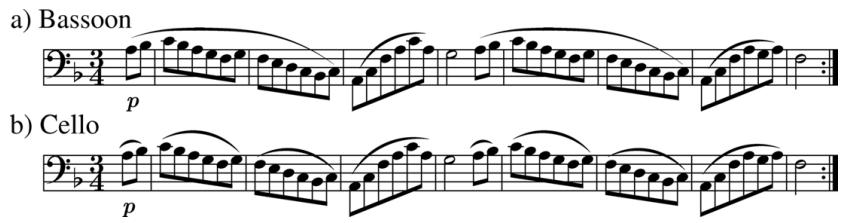
中文讲解
这是第20页的图5.16图注,指向 W. A. Mozart《Wind Serenade in B-flat Major, K.361》第四乐章 Trio II 第1—8小节、由 C. F. G. Schwencke 改编的弦乐版本;图注明确说这是把管乐连线用于弦乐器的改编例子。图像数据已省略,所以当前只能确认题名、改编者和小节范围,不能核对实际谱面。
补充说明
图像数据已省略;需查看原图,不能从本段补写具体音符、连线或乐器标记。
第2段(P0136)
原文复述
Changes in articulation symbols are also often introduced, as we discussed in the previous chapter, in order to clarify the execution of a passage for the performer. Returning to the Adagio from Haydn’s String Quartet, Op. 77, no. 1, we note that in the first violin part from the 1918 Peters edition (ex. 5.17), the editor suggests an additional up-bow in the middle of the opening bar.72 Here a decision has also been made that the meter should be felt in 4 rather than 2. This allows for a slower tempo, which perhaps was felt to accommodate better the more powerful instruments and larger quartet performing venues of the twentieth century. The additional bow then becomes a natural way to sustain and project the sound through the opening forte gesture. The 1972 International edition goes so far as to remove all evidence of the opening slur, moving it over the second two quarter notes, as seen in example 5.18.73 Certainly the opening bars of Haydn’s period demand that a level of intensity be maintained. But this can be achieved while still preserving the nuances of Haydn’s expressive markings, stated in unison by all members of the quartet. The one-bar opening slur dictates a strong downbeat and that no break should occur between the first and second strong beats of the cut-time meter. The gesture of the slur, the desired degree of tapering, should be executed within the dynamic of forte and without disrupting the sense of expectation as one moves forward into the second bar. The written accent on the downbeat of bar 2 also indicates that this measure should not receive the typical weaker emphasis within the hierarchy of the phrase segment. This weightiness of the second bar (the accent need not be harsh, but serious according to the affect required by an Adagio) then falls away with a gentle release on the eighth note of the second (large) beat.
中文讲解
本段把改变 articulation symbols 视为传达演奏决定的手段,而不只是表面上的校订。回到海顿《String Quartet, Op. 77, no. 1》的 Adagio,1918 Peters 版第一小提琴在开头小节中段建议增加 up-bow,并决定把拍子感受为 4 而非 2;作者以“perhaps”说明,较慢速度可能是为了适应二十世纪更 powerful 的乐器和更大的四重奏演出场所。新增的弓法因此承担 sustain 和 project 开头 forte gesture 的功能。相较之下,1972 International 版把开头 slur 移到第二组两个四分音符,实际上消除了其原有痕迹。
作者的判断是:开头需要维持强度,但不必因此抹掉由四重奏成员共同 stated 的海顿细腻标记。开头一小节 slur 要求强正拍、cut-time meter 中第一与第二强拍之间不能断开,并在 forte 中完成所需的 tapering(收束),同时保留进入第二小节的期待。第二小节 downbeat 的 written accent 又表明它不应得到乐句层次中通常的较弱强调;重音可以不必粗暴,但要符合 Adagio 的 affect(情感要求),最后在第二(大)拍的八分音符轻柔释出。
补充说明
脚注72、73分别紧随上弓建议和图5.18的连音线移动;当前任务输入没有提供这两则脚注的正文,不能补写其来源。
第3段(P0137)
原文复述
Copyright © 2008. University of Rochester Press. All rights reserved.
中文讲解
这是第20页的版权声明,标明 University of Rochester Press 在2008年的版权与保留权利;它属于出版元数据,不承载本节的乐句或运弓分析。
第4段(P0138)
原文复述
Vial, Stephanie. The Art of Musical Phrasing in the Eighteenth Century : Punctuating the Classical “Period”, University of Rochester Press, 2008. ProQuest Ebook Central, http://ebookcentral.proquest.com/lib/iub-ebooks/detail.action?docID=3003724. Created from iub-ebooks on 2026-08-12 05:34:42.
中文讲解
这是书目和电子检索记录,列出作者 Stephanie Vial、书名、University of Rochester Press、ProQuest Ebook Central、URL、文档号和创建时间;其作用是提供文献与平台元数据,而不是本节的音乐论证。
第5段(P0139)
原文复述
The image placeholder reads exactly as follows: 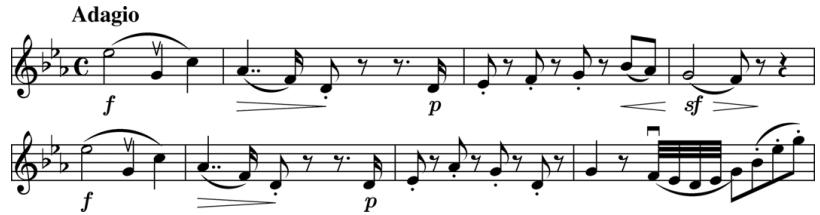
中文讲解
第21页的图5.17图注明确指定海顿《String Quartet, Op. 77, no. 1》第二乐章第1—8小节,并标为1918 Peters edition。它为前段所说的第一小提琴增加上弓及拍子、速度处理提供版本位置;但图像数据已省略,不能核对实际谱面。
补充说明
图像数据已省略;需查看原图确认实际连线、弓法或重音。
第6段(P0140)
原文复述
The image placeholder reads exactly as follows: 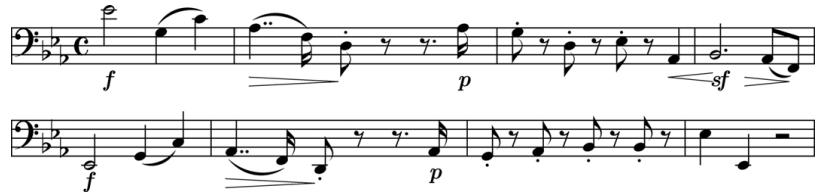
中文讲解
第21页的图5.18图注标明这是图5.17的1972 International edition。它与前段所说开头 slur 被移除并移到后两个四分音符的版本相对应,也为下一段关于第4小节 cello diminuendo 的讨论提供位置;但图像数据已省略,具体符号须查看原图。
补充说明
图像数据已省略;当前输入只提供图注,不能补写图中的具体音符或表情线。
第7段(P0141)
原文复述
Since we just described the case of a well-meaning, but nevertheless misleading effort to direct the performer, so it is only fair to also present a case where the notational additions are indeed helpful. In example 5.18 from the 1972 International edition, cited above, I think the direction to the cellist to make a diminuendo in bar 4 is a very appropriate and much-needed reminder of an important lost notational convention. This is an example of what we described earlier as Koch’s concept of “filling in the space” between phrases. After the initial sforzando downbeat in bar 4, all voices pause with the exception of the cello. And as in example 5.8, this should be executed with an anticipation of what is to come (V does resolve to I), but still with a clear separation between the phrases. A slight diminuendo with the falling gesture and a “gentle release” of the bow at the end of the slur and before the second half of the phrase begins, would facilitate this effect (the slur in Haydn’s autograph is difficult to read, but very likely encompasses the entire bar).74 In bar 8, by contrast, the violin really does function in the sense of a “pickup” to the bar, rising to meet the new higher range of the second (cello-less) period.
中文讲解
本段以“前面那个出于好意却会误导演奏者的案例”为对照,转而说明记谱补充何时确实有帮助。作者认为,1972 International 版在第4小节给 cello 的 diminuendo 指示,是对某种“已经失传的记谱惯例”的恰当且急需的提醒;作者把它归入前面介绍的 Koch“在乐句之间填补空间”概念。
第4小节先有 sforzando downbeat,随后所有声部都停,只有 cello 继续;演奏要预期后面 V 解决到 I,却仍保持清楚的分句。向下的 falling gesture 配合轻微 diminuendo,并在 slur 结束、第二半乐句开始前“轻柔释弓”,正好把延续和边界结合起来。海顿 autograph 中的 slur 很难读,但很可能覆盖全小节。第8小节则相反:小提琴真的作为 pickup 上升,迎接第二(cello-less)period 的更高音区。
补充说明
Koch 的“filling in the space”在本段通过第4小节的停歇、cello 的继续、渐弱和释弓具体化;脚注74的正文未提供。
第8段(P0142)
原文复述
The synthesis of expressive elements we have been talking about—between dynamics, slurs and short notes, visual gesture, and the mechanics of playing— brings me to Cambini’s second example (following the Boccherini passage discussed in chapter 3), in which he illustrates the different expressions a performer can bring to a single phrase of music. The phrase here is taken from “the celebrated Haydn,” the Andante of his Symphony no. 53 (ca.1778–79), later dubbed “L’Impériale.”75 The fact that Cambini presents the work as a string quartet (very likely having played it himself on viola with Manfredini, Boccherini, and Nardini) is due to the work’s considerable reknown through its frequent arrangements—for string quartet, keyboard (two and four hands), two flutes, violin and keyboard, harp, etc.76 As with figure 3.3, Cambini’s process is a three-fold one, getting the student to hear the difference between bad and mediocre, mediocre and good, and good and excellent. The latter Cambini feels can be achieved through the notation depicted in figure 5.4: “Here I am sure that this is what the author wanted: to engage, to move, to affect the spectator.”77
中文讲解
本段把前述的 dynamics、slurs and short notes、visual gesture 和 mechanics of playing 综合起来,转入 Cambini 的第二个例子(承接第3章的 Boccherini passage)。Cambini 用它展示同一乐句可以被演奏出不同 expression;该乐句取自“the celebrated Haydn”《Symphony no. 53》的 Andante(约1778–79),后来称为 L’Impériale。Cambini 将作品作为 string quartet 呈现;作者括注说,他很可能曾与 Manfredini、Boccherini、Nardini 一起亲自演奏 viola,并把这种呈现归因于作品因频繁改编而获得的 considerable reknown,列举了 string quartet、keyboard(two and four hands)、two flutes、violin and keyboard、harp 等。
像 figure 3.3 一样,Cambini 的过程分三步,让学生听出 bad–mediocre、mediocre–good、good–excellent;他认为后者可由 figure 5.4 的 notation 实现,并说作者想 engage、move、affect spectator。这个例子的作用是说明,表现力不是单一符号,而是综合因素和逐步听辨训练的结果。
补充说明
figure 5.4 的实际谱面未随本段提供;输入只说明它承载 Cambini 认为可达到的 excellent 层级。脚注75、76、77的正文也未提供。
第9段(P0143)
原文复述
Copyright © 2008. University of Rochester Press. All rights reserved.
中文讲解
这是第21页重复出现的版权声明,标明 University of Rochester Press 2008年的版权与保留权利;它是出版元数据,不属于本节的音乐论证。
第10段(P0144)
原文复述
Vial, Stephanie. The Art of Musical Phrasing in the Eighteenth Century : Punctuating the Classical “Period”, University of Rochester Press, 2008. ProQuest Ebook Central, http://ebookcentral.proquest.com/lib/iub-ebooks/detail.action?docID=3003724. Created from iub-ebooks on 2026-08-12 05:34:42.
中文讲解
这是第21页的书目和电子检索记录,列出作者、书名、出版社、ProQuest Ebook Central、URL、文档号与创建时间;它的功能是文献与检索元数据,而非对运音或乐句的说明。
脚注 / 边栏 / 图表 / 附加信息(如有)
图5.16、图5.17和图5.18的图像数据均被省略,仅保留图注;P0142还提及 figure 3.3 和 figure 5.4,但本输入没有提供这些图面。脚注72、73见P0136,脚注74见P0141,脚注75、76、77见P0142;这些脚注正文未提供。P0137/P0143版权声明和P0138/P0144书目、检索信息属于出版元数据。
💡 本节核心要点
- 图5.16提供了把莫扎特管乐连线用于弦乐改编的可见参照,但图像数据省略,需查看原图;随后本节进入Peters 1918与International 1972两个海顿版本的比较。
- 运音符号的改动会传达演奏决策:1918 Peters版建议增加上弓,并要求把拍子感受为4而非2;这一选择又关联较慢速度、二十世纪更强的乐器和更大的四重奏演出场所。
- 1972 International版把开头连音线移开后两个四分音符,实际上消除了原有开头连音痕迹;作者指出,维持强度不必以牺牲海顿原有的连音、重音和细腻标记为代价。
- 开头一小节连音线具有结构功能:它规定强正拍、cut-time meter中第一与第二强拍之间的连续性,并要求在forte中完成收束,同时维持进入第二小节的期待;第二小节正拍重音又阻止该小节被常规地弱化。
- 1972 International版第4小节大提琴的渐弱是一个有用且急需的记谱补充,示范Koch所说的“填补乐句之间空间”:在sforzando后延留、预期V解决到I,同时以轻微渐弱和轻柔释弓保持乐句分离。
- Cambini的例子把动态、连线、短音符、视觉手势和演奏机制综合成三步听辨过程,让学生从bad与mediocre、mediocre与good、good与excellent之间听出差异,并以图5.4的记号追求engage、move和affect spectator的表达目标。
🔑 关键术语
- articulation symbols(运音符号):本段将其视为能够传达演奏执行方式的符号;具体争论落在上弓和开头连音线的改动上。
- up-bow(上弓):1918 Peters版第一小提琴在开头小节中段建议增加的弓法,用来在开头forte手势中持续并投射声音。
- cut-time meter:作者要求把该处感受为4而不是2,并把这种感知与较慢速度联系起来;这里保留的是文本明确给出的关系。
- phrase-segment hierarchy(乐句层次):第二小节正拍的重音表明该小节不应得到通常的较弱强调;它的重量最后通过轻柔释出而消退。
- diminuendo(渐弱):第4小节大提琴的下行渐弱,是对重要记谱惯例的提醒,并帮助在乐句边界前轻柔释弓。
- Koch’s “filling in the space”:前面介绍的概念,在本段通过第4小节的停歇、cello的继续、渐弱和释弓具体化:既预期后续,又保持乐句分离。
- sforzando(突强):第4小节开头的正拍力度标记;它启动随后由大提琴渐弱来完成的乐句动作。
- pickup(pickup/接入):第8小节的小提琴向上迎接第二(cello-less)period的更高音区;它与第4小节填补乐句空间的功能不同。
- V resolves to I:本段用来说明演奏者要预期随后和声,同时保持清晰分句;当前输入没有提供更具体的和声分析。
- Cambini’s three-fold process:让学生听辨bad与mediocre、mediocre与good、good与excellent之间逐层差异的教学过程。
- L’Impériale:本段用来称呼海顿《Symphony no. 53》的Andante;段落说明该称呼是后来所加,并标明例子约出自1778–79年。
sec_021 [描述性拆分] Cambini’s Haydn Phrasing: Example 5.4 Analyzed
第1段(P0145)
原文复述
Figure 5.4. The expression of a phrase by Haydn, from his Symphony No. 53, 2nd movement, bars 1–8. From Giuseppe Cambini, Nouvelle méthode théorique et pratique pour le violon, p. 22.

中文讲解
这是图5.4的图注,说明该图取自海顿《第53交响曲》第二乐章第1-8小节,所引用的版本来自朱塞佩·坎比尼(Giuseppe Cambini)的《小提琴新理论与实践方法》(Nouvelle méthode théorique et pratique pour le violon)第22页。坎比尼是18世纪后期小提琴演奏法的重要作者,其教材不仅讲解技术,也涉及对作曲家乐句的表情诠释;此处作者引用坎比尼对同一段海顿主题所作的“诠释式”标注,以与后世所谓Urtext(净版)的纯音符记谱形成对照。
补充说明
原文本段同时伴随一个内嵌图像占位符(图像数据已省略)。原图需查看实体页面以核对坎比尼所标的小提琴分弓、连弓、揉弦、指法与表情记号的具体形态。
第2段(P0146)
原文复述
I must confess that when I first came across this example, I found it absolutely astounding. To me, as a performer engaged in historical performance practice and attempting to faithfully interpret the composer’s intention, the degree to which Cambini felt at liberty to alter the articulation seemed shocking (one might easily have mistaken it for a late nineteenth-century “instructive” edition). If I were playing in a string quartet, or conducting an orchestra where the first violinist proposed this execution, I would very likely ask the player to please stick to Haydn’s “original” notation, and play it “as it is written.” I would interpret, from the notation in the Urtext Haydn edition (ex. 5.19), a moderate pace, “light” execution, with a simple, sweet, and straightforward expression. The phrases are grouped in regularly accented two- and four-bar units, with the divisions recurring on the same beat throughout. The first comma falls on the second beat of bar 2 after a simple I–V–I progression, the second with a greater sense of expectation in bar 4 after a I–IV–V half cadence. Then in the four-bar progression which completes the sentence (vi7°6 – I – ii6 – I4/6 – V – I), there is again another very slight caesura in bar 6.
中文讲解
本段是作者作为本真演奏(historical performance practice)实践者的“第一反应”陈述。三个关键点需要分清:
- 惊讶的对象不是海顿原谱,而是坎比尼在再版中对分句、弓法、指法的“自由发挥”,其幅度之大让作者第一眼几乎以为是19世纪后期的“教学版”(instructive edition,那种常加入大量表情与弓法建议以辅助教学的版本)。
- 作者提出的“对照基线”:以Urtext(净版,即尽量只保留作曲家原始音符、不附加编辑者诠释的版本)海顿版(例5.19)为参照,作者倾向于读出中速、轻盈、单纯、甜美而直白的表情,乐句以规整的二小节与四小节为单位切分,呼吸点反复落在同一拍上。
- 具体的和声-呼吸对应关系:第2小节第二拍在I–V–I之后形成第一处句逗;第4小节在I–IV–V半终止之后形成第二处句逗,带有更强的期待感;接着由vi7°6 – I – ii6 – I4/6 – V – I 完成的四小节收束句中,第6小节又有一处“极轻微的”停顿(caesura)。 作者用这一段先把“Urtext读法”钉牢,下一段(P0147)再放进来与坎比尼的诠释作对比。
补充说明
两处上标78与79分别对应原书脚注,作者用它们支撑“坎比尼式诠释易被误认为19世纪教学版”的判断,以及Urtext版乐谱(ex. 5.19)的引用来源;本节复述未直接展开脚注内容,仅指出其作为旁证的位置。
第3段(P0147)
原文复述
Cambini similarly describes the phrase as expressive of “naivety” and “candor.” But he digs a little deeper, painting the picture of a pretty and innocent (virgin) village girl reproaching her lover for his infidelity (which she so little deserves). Cambini calls upon the theatrical arts, asking the violinist to endow the shepherdess with a character yet more naive than that of Colette in Le devin du village (J. J. Rousseau’s opera of 1752). Nothing about the passage, as Cambini describes it, is executed in the ordinary way. He even warns the violinist that “it may be some time before you are able to execute what I am telling you here, but at any rate your teacher should be able to give you some idea of it.” The sound called for is “sweeter and more gracious” than for the Boccherini phrase (fig. 3.3). The fingerings, rather than sensible, avoid open strings and particularly the brighter sound of the E and A strings where possible. But most extraordinary are the bowing/slurs which cross bar lines and connect the detached notes with a kind of caress as it glides over them. In this way, the bow arm acquires a special lilt and swing, as does the left hand as it shifts up the strings into the downbeats with the accompanying dynamic swells. Assuming the violinist begins down-bow, with each consecutive slur marking a bow change (with no retakes), then each phrase would begin with an alternate gesture—a bit like the orator gesturing first with the right arm and then with the left, or perhaps shifting his weight between the left and right legs. In addition, a very appropriate up-bow falls on the dotted quarter note b1 of bar 4 at the expectant half cadence in the middle of the phrase. Thus while nothing contradicts the simplicity of the phrasing or the regularity of the down beats, still the content within and the connection between the phrases, both aurally and visually, acquires a different expression than would simple slurs and separate short notes (executed in first position). The degree of theatricality proposed by Cambini may be a matter of taste, as we discussed in the section “Voice and Gesture” in chapter 3, p. 67, but the example highlights the role of articulative slurs and short notes in dictating expression, and at the same time presents some exciting and creative interpretive possibilities to the modern interpreter of eighteenth-century music.
中文讲解
本段集中展开坎比尼的“诠释逻辑”,需要分四层理解:
- 修辞与角色设定:坎比尼用“天真”(naivety)与“纯朴”(candor)概括情绪,并进一步具象化为一个美丽、纯洁的乡村少女正因恋人的不忠而自责(“她本不该承受”)。这就把一段看似朴素的主题放进了戏剧场景:演奏者要扮演的并不是抽象的“奏者”,而是一个比卢梭1752年歌剧《乡村卜师》(Le devin du village)中柯莱特(Colette)还要更天真的牧羊女。
- 音色与指法的取向:坎比尼要求“比博凯里尼乐句更甜美、更优雅”(参图3.3),所以指法刻意回避空弦,尤其是音色较亮的E弦与A弦,使旋律保持在较暗、较柔和的弦上。
- 弓法与连线的“越界”:坎比尼最具突破性的处理是让连弓(slur)跨过小节线,把本来分离的音用一种近乎“抚触”(caress)的方式连接起来。这让右臂产生特殊的摆荡(lilt and swing),左手则在换弦上行的同时配合下拍处的渐强(dynamic swells)。
- 身体姿态的隐喻:若以全下弓起奏、每个连线标记一次换弓且不重弓,则每个新乐句都以“另一只手臂”起势——作者将其比作演说家先举右臂再举左臂,或左右腿交替支撑重心的姿态。第4小节半终止处那个附点四分音符b1恰好落在上弓(up-bow),把期待感与弓向变化对齐。
- 结论性比较:作者承认这种戏剧化是否过当属于“趣味问题”(呼应第3章“声音与姿态”第67页的讨论),但其分析示范了一个核心命题——分句连弓与短音符的安排方式本身就决定表情,并为现代诠释者打开富有创意的空间。 要注意本段与上一段(P0146)的关系:P0146给出“Urtext的朴素读法”作为基准,本段则在同一谱面上叠入坎比尼的戏剧化诠释;二者并不矛盾——下拍规律性、乐句切分仍保持朴素,真正改变的是“切分内部”与“切分之间”的连弓与弓向。
补充说明
原文中出现的“caress”与“aquires”等拼写疑为印刷或OCR残留;本节按原拼写保留以维持复述的忠实度。本段还内嵌了卢梭《乡村卜师》(1752)这一跨艺术史参照——它与本卷第3章“声音与姿态”一节(第67页)已作的“演讲姿态/身体重心”讨论构成内部回响,构成本段诠释的两条支撑线索。
第4段(P0148)
原文复述
Copyright © 2008. University of Rochester Press. All rights reserved.
中文讲解
本行为出版社版权声明,标明本书(《18世纪音乐分句艺术》)由罗切斯特大学出版社(University of Rochester Press)于2008年持有版权。属于版式页脚信息,不参与论证。
第5段(P0149)
原文复述
Vial, Stephanie. The Art of Musical Phrasing in the Eighteenth Century: Punctuating the Classical “Period”, University of Rochester Press, 2008. ProQuest Ebook Central, http://ebookcentral.proquest.com/lib/iub-ebooks/detail.action?docID=3003724. Created from iub-ebooks on 2026-08-12 05:34:42.
中文讲解
本行为电子书的出处与访问信息:作者为Stephanie Vial,完整书名为《The Art of Musical Phrasing in the Eighteenth Century: Punctuating the Classical “Period”》(《18世纪音乐分句艺术:给古典“乐段”加标点》),2008年由罗切斯特大学出版社出版;当前电子副本通过ProQuest Ebook Central平台(印第安纳大学iub-ebooks馆藏)于2026年8月12日05:34:42创建。属于电子版引用与访问元数据,不构成正文论点。
脚注 / 边栏 / 图表 / 附加信息(如有)
本小节包含两个非正文元素:(1) 图5.4(图注P0145)——位于P0145,引用自坎比尼《小提琴新理论与实践方法》第22页中海顿《第53交响曲》第二乐章1-8小节的诠释式谱例,是本节分析的核心对象;(2) 两处上标脚注编号78与79(位于P0146)——分别支撑“坎比尼的诠释幅度足以令人误认为19世纪教学版”与“Urtext版谱例5.19”的引用,本节复述未直接展开其正文内容。此外,P0147内部回扣到本卷第3章“声音与姿态”第67页关于演讲姿态/身体重心的既有讨论,作为对“戏剧化诠释是否过当”的品味判断的旁证。
💡 本节核心要点
- 坎比尼在再版中对海顿《第53交响曲》第二乐章主题施加的分句、弓法、指法幅度之大,使作者第一反应几乎将其误认为19世纪后期的“教学版”,由此构成全节问题的出发点。
- 以Urtext版(例5.19)为基准的读法呈现的是:中速、轻盈、单纯、甜美而直白的海顿,乐句按二小节与四小节规整切分,呼吸点反复落在同一拍上。
- 具体的和声-句逗对应关系:第2小节第二拍(I–V–I之后)形成第一逗;第4小节(I–IV–V半终止之后)形成第二逗,带期待感;收束四小节(vi7°6–I–ii6–I4/6–V–I)的第6小节再有极轻微停顿。
- 坎比尼的诠释通过角色设定(比卢梭《乡村卜师》柯莱特更天真的乡村少女)、音色取向(回避E、A空弦)、跨小节连弓(产生“抚触”般的弓臂摆荡与左手换弦渐强)三层手段把朴素谱面戏剧化。
- 下拍规律性与乐句切分并未被破坏,真正被改变的是切分内部与切分之间的连弓与弓向,因此坎比尼的诠释与Urtext读法可以同时为真。
- 作者承认“戏剧化程度”属于趣味判断,但借此例证明:分句连弓与短音符的安排方式本身就具有表情决定权,并为现代18世纪音乐诠释者提供创造空间。
🔑 关键术语
- Urtext:德语术语,本节指“净版/原始版”,即尽量只保留作曲家原始音符与记号、不附加现代编辑者诠释(弓法、指法、表情)的谱面版本;本节作者以Urtext版(ex. 5.19)作为与坎比尼诠释版对照的“基准读法”。
- historical performance practice:本真演奏实践;指以历史乐器、历史演奏法与历史审美范畴来演绎早期音乐的取向;本节作者以此立场出发,认为坎比尼那种偏离“原谱”的诠释“令人震惊”。
- instructive edition:教学版;特指19世纪后期那种加注大量表情、弓法、力度等“指导性”符号的实用版本;本节作者用此词来强调坎比尼对原作的改动幅度之大。
- caesura:句中停顿;本节指乐句内部在乐谱记号(坎比尼)或和声位置(Urtext读法)所提示的轻微呼吸点,如第2、4、6小节处的切分。
- vi7°6 – I – ii6 – I4/6 – V – I:本节指海顿该主题收束四小节的和声进行,依次为:减六和弦的六级七和弦(vi7°6)—主和弦—二级六和弦(ii6)—主四六和弦(I4/6)—属和弦—主和弦;这一进行本身在Urtext读法中对应着第6小节的轻微停顿。
- Le devin du village / Colette:卢梭1752年的歌剧《乡村卜师》及其女主角柯莱特;本节坎比尼借这一比照,要求演奏者赋予主题牧羊女式、且比柯莱特更天真的角色形象。
- slur (bowing slur):弓法连线;本节特指跨小节线把原本分离的音符连成一弓的安排,是坎比尼产生“抚触感”与弓臂摆荡的关键手段。
sec_022 [描述性拆分] Cambini’s Theatrical Execution: Bowings, Fingerings, Character
第1段(P0150)
原文复述
[内嵌图像数据已省略;位置与图注保留] Figure caption: “Example 5.19. Haydn’s full scoring of figure 5.4.”
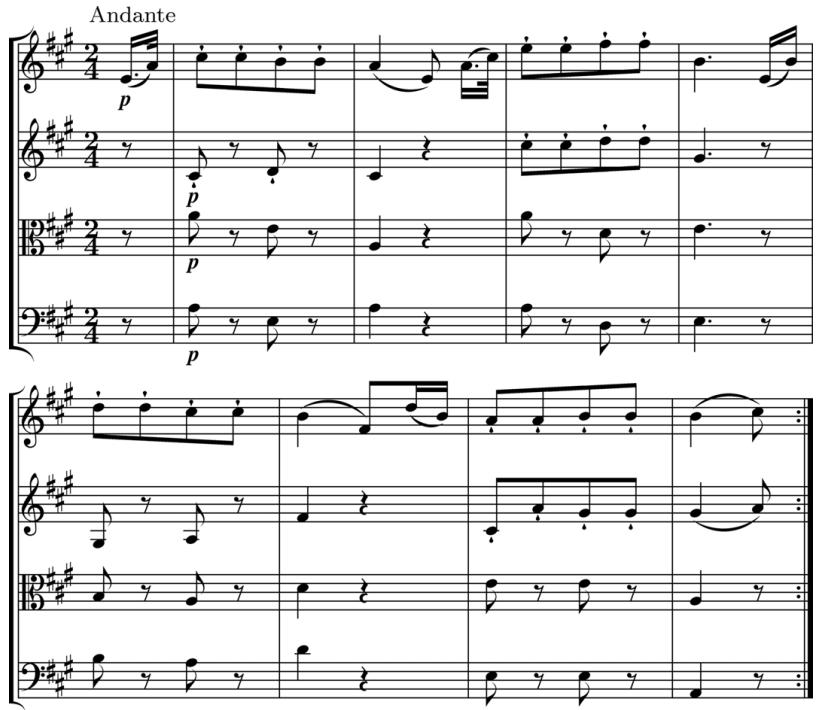
中文讲解
本段是一处图像占位符,原文图注为英文:“Example 5.19. Haydn’s full scoring of figure 5.4."(例5.19 海顿对图5.4的完整总谱写法)。中文释义为:该图属于书中第5章关于弓法、指法与角色塑造的讨论,作为编号第19号的谱例,呈现的是海顿作品中与前文图5.4相对应的完整配器/总谱层面的写法。根据上下文推断,此图的作用是把先前在小节层面或局部谱面上的弓法分析(图5.4)扩展到完整乐队总谱中,使读者看到各声部在演奏法细节上的相互关系。但由于内嵌图像数据被省略,具体声部配置、力度标记、连线、弓法符号等细节需查阅原书图像方可确认,不得凭推测补写。
补充说明
图注中的 “figure 5.4” 指向前文(小节正文讨论中)的一处图示,本图(5.19)被标注为其"完整总谱"形式,说明二者之间存在缩略图与完整谱的对应关系。无法确认的视觉细节已按要求不补充。
第2段(P0151)
原文复述
Copyright © 2008. University of Rochester Press. All rights reserved.
中文讲解
本段为版权声明,原文以英文标注:“Copyright © 2008. University of Rochester Press. All rights reserved.“中文释义为:版权所有 © 2008,罗切斯特大学出版社,保留所有权利。这是一条标准的版权声明版页信息,仅表明该书自2008年起由University of Rochester Press持有版权,并保留一切权利,不承载任何学术主张或论述功能。读者无需从中获取研究信息。
第3段(P0152)
原文复述
Vial, Stephanie. The Art of Musical Phrasing in the Eighteenth Century : Punctuating the Classical “Period”, University of Rochester Press, 2008. ProQuest Ebook Central, http://ebookcentral.proquest.com/lib/iub-ebooks/detail.action?docID=3003724. Created from iub-ebooks on 2026-08-12 05:34:42.
中文讲解
本段为完整的书目/电子版来源信息,原文以英文记录:作者为 Stephanie Vial(斯蒂芬妮·维亚尔);书名为 The Art of Musical Phrasing in the Eighteenth Century: Punctuating the Classical “Period”(《十八世纪音乐分句的艺术:古典"乐段"的句读》);出版社为 University of Rochester Press(罗切斯特大学出版社),出版年份2008;电子版来自 ProQuest Ebook Central,给出了该电子书在印第安纳大学(iub-ebooks)馆藏系统中的访问链接与文献编号 docID=3003724;末行注明该电子副本的创建时间为 2026-08-12 05:34:42。这段信息的主要作用是标注所引用版本的来源出处与版权追溯线索,而非论文本身的论证内容;它表明本节内容出自该书的第23页,相关论证以ProQuest平台上的电子版为引用基础。
补充说明
“docID=3003724” 为该书在ProQuest系统中的唯一文献编号,“iub-ebooks"表明该电子副本由印第安纳大学(Indiana University Bloomington, IUB)馆藏提供。
脚注 / 边栏 / 图表 / 附加信息(如有)
本小节由三项非正文版页材料构成:P0150为带图注的图像占位符(图注指向海顿作品的完整总谱写法),P0151为罗切斯特大学出版社2008年版权声明,P0152为该书在ProQuest Ebook Central中的完整书目及电子版生成信息(包含作者、书名、出版社、年份、URL、文献号 docID=3003724 以及印第安纳大学 iub-ebooks 馆藏生成时间 2026-08-12 05:34:42)。这些材料共同起到标明版本来源与版权归属的作用,本身不承载学术主张;其中P0150的图像因内嵌数据被省略而需查阅原书方可确认细节。
💡 本节核心要点
- 本小节页面上没有连续的学术论述段落,仅包含图像占位符、版权声明与书目/电子版来源信息三项版页要素。
- P0150的图注将本页图像标识为"Example 5.19. Haydn’s full scoring of figure 5.4.",提示该图与前文图5.4存在缩略—完整的对应关系,承担将弓法/指法分析扩展到完整总谱的功能。
- P0151声明该书2008年版权归University of Rochester Press所有,是标准的版权标记,不含学术内容。
- P0152给出完整书目信息与电子版检索路径,明确引用版本为ProQuest Ebook Central平台上的iub-ebooks馆藏电子副本(docID=3003724)。
- 三项要素共同服务于版本追溯与版权合规,与第5章关于弓法、指法与角色塑造的论述在物质载体上相连,但本身不推进论证。
🔑 关键术语
- full scoring:完整总谱写法,指将作品中所有声部全部呈现的总谱层面记谱,相对于缩略谱或局部谱例,本节图5.19即以"full scoring"标注其与图5.4的对应关系。
- University of Rochester Press:罗切斯特大学出版社,本书纸质版与版权声明的持有机构,2008年版即由其出版。
- ProQuest Ebook Central:ProQuest电子图书平台,本书电子版所托管的系统;docID=3003724为该书在平台中的唯一文献编号。
- iub-ebooks:印第安纳大学(Indiana University Bloomington)馆藏电子书的系统标识,本电子副本即生成自该馆藏(2026-08-12 05:34:42)。
sec_023 [描述性拆分] Ties and Punctuation in Mattheson’s Punctuated Minuet
第1段(P0153)
原文复述
Thus far, we have been working primarily with the expressive function of articulation marks within phrase boundaries, but what happens when these indications overlap with points of punctuation? For instance, if the slurs in figure 5.2 tell us not to treat the beats of the bar in their ordinary manner, what happens when a slur is placed over notes on either side of a punctuation point? Consider first the case of the tie, which like a slur indicates that the two notes should be smoothly connected, not broken or detached. For instance, in example 5.20, from Mattheson’s punctuated minuet of 1737, the tie between bars 6 and 7 would appear to indicate that the b¹s should be held and not restruck. As Türk explains: “When two or more (consecutive) notes of the same pitch and name . . . are joined together by a curved line, then only the first tone is struck and the finger remains on the key during the duration of the remaining notes.“⁸⁰ A natural amount of decay would be allowed to occur over the tied b¹s of example 5.20 (particularly on a keyboard instrument) and the downbeat of bar 7 would not receive its customary degree of stress. The effect here is also what could be described as a hemiola, a well-known feature in the current analysis and performance of dance music (and particularly the minuet) in which two measures of 3/4 are combined into one large 3/2 measure (the metrical accents falling on 1, 3, and 5 of the new measure of six quarter notes). Channan Willner, writing in 1991, describes the hemiola as “one of the most characteristic hallmarks of Baroque style.“⁸¹ And Meredith Little and Natalie Jenne, in their 1991 discussion of the minuet in the music of J. S. Bach, maintain that “the regularity and balance in the phrase structure would quickly become tedious were it not for the syncopations, hemiolas, and other rhythmic nuances in the style.“⁸² But note that in the middle of the combined hemiola measure, within the boundaries of the tie, Mattheson places the pause of a comma. Thus we have two concepts seemingly at odds with one another: on the one hand, the connective articulation mark and the resulting metrical orientation; and on the other, the disjunct of a punctuation mark. Furthermore, the tie and comma coincide with the important structural division of the minuet dance into two-bar step-units.
中文讲解
本段把小节论证从「短句内部的演奏法标记」推向一个新问题:当演奏法标记(articulation mark)与句读标点(punctuation point)落在同一位置时,会发生什么。作者先回顾前文所用的连音线(slur,图5.2),其作用是要求演奏者不要按小节拍点的常规方式处理音符;那么如果一条连音线跨过句读标点所在的音,又当如何理解?
作者选择的第一个具体案例是「延音线」(tie)。她指出延音线和连音线虽然形制相似,都要求两个音平滑相连、不要断开,但所连两音必须是同音高的(a tie connects notes of the same pitch)。她引用1737年马特松(Mattheson)《完美的乐队长》(Der vollkommene Capellmeister)中标有句读的小步舞曲(例5.20),其中第6小节与第7小节之间的延音线,按蒂尔克(Türk)的规则,意味着两个b¹音只敲击一次、手指保持在键上、其余音时靠自然衰减延续(特别是在键盘乐器上),因此第7小节的强拍不会获得通常的下拍重音。
接下来,作者指出此处还形成了「赫米奥拉」(hemiola)效果,即把两小节3/4拍合并成一个六拍的3/2大拍,重音落在新大拍的第1、3、5个四分音符上。作者援引两项1991年的研究来定位此现象在巴洛克舞曲风格中的核心地位:Channan Willner称之为「巴洛克风格最具特色的标志之一」;Meredith Little与Natalie Jenne在小步舞曲与巴赫作品的研究中也强调,没有切分、赫米奥拉等节奏细节,仅靠规则的乐句平衡会使音乐变得乏味。
然而,本段最关键的张力出现在最后几句:马特松在合并后的赫米奥拉大拍的中部、也就是延音线所跨越的位置,安放了一个逗号(pause of a comma)。于是两种看似矛盾的概念并置于此——一方面是连接性的演奏法标记(延音线)及其所产生的连贯拍点取向,另一方面则是句读标点所暗示的断句。这种并置进一步被强化:延音线与逗号正好重合于小步舞曲舞蹈动作中至关重要的「两小节为一个舞步单位」(two-bar step-units)的结构切分。换言之,作者在此埋下了本小节的核心疑问——当连接与切断同时被记谱在同一处时,演奏者与理论家究竟应遵循哪一套逻辑?
补充说明
例5.20(P0154)正是本段文字反复描述的对象:马特松1737年小步舞曲中第6、7小节间的延音线与所附逗号。脚注80对应蒂尔克的引文、脚注81对应Willner、脚注82对应Little与Jenne,二次文献共同支撑「赫米奥拉是巴洛克舞曲典型特征」的判断。本段在论证链中起到承上启下的作用:前文讨论演奏法标记在小句内的表达功能,此处则把问题升级到演奏法标记与句读标记的重叠地带。
第2段(P0154)
原文复述
Example 5.20. The tie in Mattheson’s punctuated minuet. From Der vollkommene Capellmeister, p. 224.

中文讲解
这是图5.20的图注,标明该谱例展示的是马特松小步舞曲中的延音线,原始出处为《完美的乐队长》第224页。该图是上一段(P0153)文字论述的实证依据:读者需要查看原谱才能直接观察第6、7小节之间的延音线、其上方或周围所标逗号、以及它所在的赫米奥拉拍位。由于内嵌图像数据已省略,本讲解无法描述可见谱面的具体音符排列与符号位置,仅说明此图与文字论证的对应关系。
补充说明
需查看原图以确认b¹延音线在谱面上的具体起止位置、逗号标记的确切形态,以及该谱例是否还包含其他相关的演奏法标记。
第3段(P0155)
原文复述
Copyright © 2008. University of Rochester Press. All rights reserved.
中文讲解
本段为版权声明,说明本页所含内容(含谱例5.20)的版权归罗切斯特大学出版社(University of Rochester Press)所有,2008年。属于图书的版页信息(boilerplate),不构成学术论证。
第4段(P0156)
原文复述
Vial, Stephanie. The Art of Musical Phrasing in the Eighteenth Century : Punctuating the Classical “Period”, University of Rochester Press, 2008. ProQuest Ebook Central, http://ebookcentral.proquest.com/lib/iub-ebooks/detail.action?docID=3003724. Created from iub-ebooks on 2026-08-12 05:34:42.
中文讲解
本段是本电子书的来源/引用信息:作者Stephanie Vial,书名The Art of Musical Phrasing in the Eighteenth Century: Punctuating the Classical “Period”,出版方University of Rochester Press,2008年;本次访问通过ProQuest Ebook Central平台,由iub-ebooks机构在2026年8月12日生成副本。此信息标识了整本著作的学术出处与本电子版的来源链路,对正文论证本身不提供新的观点。
脚注 / 边栏 / 图表 / 附加信息(如有)
本小节(P0153–P0156)共涉及两处显式附加材料:其一是谱例5.20(见P0154),出处为马特松《完美的乐队长》第224页,是P0153延音线与赫米奥拉论述的直接谱面证据;其二是P0153中的三处脚注——脚注80(蒂尔克关于延音线演奏规则的引文)、脚注81(Willner 1991年关于赫米奥拉为巴洛克风格标志的论述)、脚注82(Little与Jenne 1991年关于小步舞曲中切分与赫米奥拉作用的论述)。P0155为版权声明,P0156为电子书的ProQuest引用信息,均属版页信息而非论证内容。
💡 本节核心要点
- 本小节把研究问题从「短句内部的演奏法标记」扩展到「演奏法标记与句读标点的重叠」,即二者在同一位置并存时的解读难题。
- 延音线(tie)与连音线(slur)形制相似但所连音符必须同音高;蒂尔克规定其演奏规则为只敲一次、其余时长保持琴键自然延续,从而削弱后续强拍重音。
- 马特松1737年小步舞曲第6、7小节之间的延音线同时造成赫米奥拉效应——两小节3/4拍合并为六拍3/2大拍,重音落在第1、3、5个四分音符;Willner、Little与Jenne的研究均把赫米奥拉视为巴洛克舞曲(尤其是小步舞曲)风格的核心特征。
- 真正的张力在于:延音线在合并的赫米奥拉大拍中部制造了连贯与新的重音取向,而马特松恰在延音线覆盖的同一位置安放逗号——连接性的演奏法标记与切断性的句读标记形成对立。
- 这一对立进一步与小步舞曲的两小节舞步单位的结构切分相重合,使演奏法、句读、舞步结构三者在此交汇,成为本节乃至后续章节的枢纽案例。
🔑 关键术语
- tie(延音线):本节核心演奏法标记之一;形制上与连音线(slur)相似(均为弧线),但所连两音必须同音高;按蒂尔克规则,演奏时只敲击第一个音、其余音靠手指保持琴键、随自然衰减延续,从而削弱后接强拍的重音。
- slur(连音线):本节被作为对照对象提及的演奏法标记,弧线跨越不同音高的音,要求平滑相连;前文图5.2曾讨论其在乐句内的表达功能,本节问题是把它与句读标点的重叠情形纳入分析。
- hemiola(赫米奥拉):本节用以描述例5.20节奏现象的关键术语;指两小节3/4拍合并为一个六拍的3/2大拍,新大拍的重音落在第1、3、5个四分音符上;被Willner称为「巴洛克风格最具特色的标志之一」,在巴赫小步舞曲研究中亦被视作避免乐句单调的重要节奏手段。
- articulation mark(演奏法标记):本节用以指代连音线、延音线等指示演奏方式的符号;本节强调其与句读标点同位共存时会产生解读张力。
- punctuation point / punctuation mark(句读标点):本节与演奏法标记对举的概念;马特松在小步舞曲乐谱上方以逗号、句号等形式标出句读,作用类似句法停顿;本节的关键问题是它在同一位置与延音线相重叠时所暗示的「断句」含义。
- two-bar step-unit(两小节舞步单位):本节引入的小步舞曲舞蹈结构单位;与延音线、逗号三者在此例中同时重合,使演奏法、句读与舞步结构产生多层次交汇。
- Mattheson(马特松):本节引用的主要作曲家/理论家,其1737年的《完美的乐队长》(Der vollkommene Capellmeister)是例5.20谱例的来源;马特松在该书中以句读符号标注小步舞曲,本节以此为案例讨论延音线与句读的重叠。
sec_024 [描述性拆分] The Hemiola as Flexible Rhetorical Clausula
第1段(P0157)
原文复述
Let us see if we cannot somehow reconcile these two ideas. First of all, perhaps our understanding of the hemiola and its application needs to be reexamined. In 1999 Tilden A. Russell claims, based on his study of minuet form and phraseology in eighteenth-century dance collections and manuscript tunebooks, that the hemiola causes “problems at the sub-phrase level” far less than is warranted by the amount that has been written about hemiola and the minuet step: “In fact the minuet step with hemiola is unequivocally described in only a small minority of the contemporary printed dance manuals, books about dance, lexica and so on that discuss the minuet.“83 It is certainly notable that Mattheson himself makes no mention of the hemiola in his highly detailed analysis of the minuet cited in example 5.20. Patricia M. Ranum claims in 1993 that it is even an exaggeration to say that theorists of the seventeenth and eighteenth century speak only rarely of the hemiola: “practically never or even never would be more exact.“84 Ranum also argues that when she looks at French lyrics set to supposed hemiolas in seventeenth- and eighteenth-century minuets, virtually none of the measures is accentuated in a way that fits the standard model described above. She explains that the phrasings are borrowed from rhetoric, suggesting that the hemiola rhythm was not accentuated according to a rigid formula, but that it was instead a flexible and expressive rhetorical clausula or “closing.” As such, its use was restricted to the final measures of selected poetic lines, and more often than not the lines that close an important statement or a section of the song.85
中文讲解
本段的核心主张是:之前看似对立的两种小节划分方式(严格的3+3与小节线内 hemiola 重音)可以通过重新理解 hemiola 本身来调和,而调和的关键在于把 hemiola 从一种机械的节拍规则还原为一种修辞性的"收束”。
作者分两步推进。第一步借助 Tilden A. Russell(1999)的统计性证据:Russell 检视了十八世纪舞曲集与手抄乐谱集中的小步舞曲形态与分句法后指出,hemiola 在"次分句层面"引发的问题远没有相关文献所暗示的那么多,因为真正明确把小步舞步与 hemiola 绑定的同时期印刷舞曲手册、舞蹈书籍和辞典只占少数。紧接着作者又援引 Mattheson 在例 5.20 中对小步舞曲的详尽分析却完全没有提到 hemiola 这一反例,来印证理论文献中 hemiola 论述的稀少并非个别遗漏。Patricia M. Ranum(1993)的立场更激进:她说"几乎从不"甚至"从不"谈论 hemiola 才更准确;并且当她查看被假定包含 hemiola 的十七、十八世纪小步舞曲法语歌词时,几乎找不到任何一小节的重音方式符合前述标准模式。
Ranum 的解释是这一段的关键:她认为小步舞曲中的分句方式其实来自演说修辞学(rhetoric),hemiola 节奏并不是按一套死板公式来加重音,而是充当一种灵活而有表现力的修辞性"收束”(clausula,即修辞学中"句末收束"之义)。因此它的使用被限制在选定诗行的最后几小节,且多半用于结束一句重要陈述或歌曲的一个段落。
本段的作用是为下一段讨论"连音线(tie)相关的演奏惯例"做铺垫:既然 hemiola 本身在历史文献中并不像后世理论那样被当作铁律,那么演奏实践中各声部自然也不必被它统一锁定,而是可以依据修辞性的句末收束来安排重音。容易误解之处在于:本段并不是说 hemiola 不重要,而是说它的"决定权"在作曲家与诗行的句法层面,而不在抽象的节拍格律层面。
补充说明
sup 上标 83–85 指向上文引用 Russell 与 Ranum 的脚注,本段文本本身没有给出脚注内容,但脚注位置已被本段保留以便与原文版面对应。“rhetorical clausula"在修辞学传统中指段落或句末的收束式短语,此处被借用来描述 hemiola 在诗行末尾的句法功能,是本节理解 hemiola 灵活性的核心概念锚点。
第2段(P0158)
原文复述
In addition to the above ramifications for a less rigid observance of the hemiola, let us also look more closely at the performance conventions associated with the tie. The direction to eliminate the otherwise customary metrical stress in the primary melodic voice does not necessarily affect the metrical behavior of the other voices. As Koch explains, “The accompanying voices must reinforce the metrical stress when accented metrical or sub-metrical divisions of the measure are tied to unstressed ones immediately preceding. In the case of tied units, the rule rarely permits an exception.“86 Leopold Mozart also emphasizes the importance of maintaining an overall sense of meter. He explains that when quarter notes are tied over the bar line, the second of the two must be at first differentiated and made apparent by an after-pressure of the bow, but without lifting the latter, which procedure merely ensures that strict time be kept. He points out, however, that once the time is secured, the second note which is tied to the first must no longer be accented but only held on.87 Sometimes even a crescendo into the downbeat can be appropriate. Quantz writes: “In ligatures or tied notes that consist of quarter notes or half notes, the volume of the tone may be allowed to swell, since the other parts have dissonances either above or below the latter half of such notes. Dissonances in general, in whatever part they are found, always require special emphasis.“88 While example 5.20 may not be a place for the “swell” described by Quantz or the “after-pressure” described by Mozart, nevertheless the above discussion does allow for some independence and flexibility of expression among the different voices. In other words, not all parts, including the tied melodic voice, need accentuate a rigid hemiola which overrides the division of the phrase into two, two-bar phrases.
中文讲解
本段接续上一段对 hemiola 不应被僵化理解的讨论,把焦点转向"连音线(tie)“的演奏惯例,进一步论证各声部可以在重音处理上相互独立,而不必共同服从于一个压制两小节划分(两个两小节乐句)的刚性 hemiola。
论证分三层。第一层引用 Koch 的规则:当重音位置的小节或次小节单位被连到前一拍的非重音时,伴奏声部"必须"补足节拍重音;Koch 还强调"在连音的情况下,规则几乎不允许例外”。这一规则表明,主旋律声部虽然因连音而被指示去除常规节拍重音,但伴奏声部有义务重新把节拍重音"撑住”。换句话说,去掉的只是某一个声部的局部重音,并非整体的拍感。
第二层引用 Leopold Mozart:当四分音符跨过小节线被连起来时,第二个音起初要靠"弓的后压(after-pressure of the bow)“使之被感知,但不抬弓,以保证严格时值;一旦时值确立,第二个音就不再被强调、只是保持住。Mozart 强调的是"先确立时值,再让重音消退"这一程序,其目的是维持整体拍感,而非否定拍感。
第三层引用 Quantz:在四分音符或二分音符构成的连音中,音量可以渐强(swell),因为其他声部在该音后半段有上方或下方的"不协和音(dissonances)",而"不协和音无论出现在哪个声部,都需要特别强调”。这就把"对连音后段的强调"重新锚定在不协和音解决的需要上,而非 hemiola 自身的句法。
段末作者做了一个限定:例 5.20 可能并不是 Quantz 所说的"渐强"或 Mozart 所说的"弓后压"的典型场景,但上述讨论的累积效果是允许各声部之间存在"独立性与表现上的灵活性”。因此结论是——包括被连音化的主旋律声部在内,并非所有声部都必须去重音化以服从一个压制两小节乐句划分的刚性 hemiola。
本段与上一段共同构成本小节的核心论证:上半段从文献与修辞学层面证明 hemiola 本不是僵化规则,下半段从演奏实践层面证明各声部在重音上本就具有相对独立性,两段合并即得到小节标题所承诺的"hemiola 作为灵活修辞性收束"的整体结论。容易误解之处在于:本段并不是说 hemiola 不存在或不重要,而是说它不应被升格为压倒一切的拍感规则;Koch、Mozart、Quantz 三位的引文都把演奏中的强调理由重新归结为节拍维持、不协和音解决等技术需求,而不是 hemiola 自身。
补充说明
本段中"after-pressure of the bow"指的是弓弦乐器(尤其小提琴)在跨小节连弓时,用弓的额外压力使第二个音被听清、但不离开弦的技法,与断弓(lifting the bow)相对。“swell"在此处特指渐强(crescendo),是 Quantz 论述连音演奏中常见的力度处理术语。sup 上标 86–88 对应 Koch、Mozart、Quantz 三处引文的脚注编号,脚注内容由前文脚注区域提供,本段文本内未展开。
第3段(P0159)
原文复述
Copyright © 2008. University of Rochester Press. All rights reserved.
中文讲解
此条为版权声明页脚,表明本书 2008 年版由 University of Rochester Press 持有全部权利。它属于出版层面的版式信息,不参与正文论证。
第4段(P0160)
原文复述
Vial, Stephanie. The Art of Musical Phrasing in the Eighteenth Century : Punctuating the Classical “Period”, University of Rochester Press, 2008. ProQuest Ebook Central, http://ebookcentral.proquest.com/lib/iub-ebooks/detail.action?docID=3003724. Created from iub-ebooks on 2026-08-12 05:34:42.
中文讲解
此条为电子书来源与版权信息块,标识作者 Stephanie Vial、书名 The Art of Musical Phrasing in the Eighteenth Century: Punctuating the Classical “Period”、出版社 University of Rochester Press、出版年 2008,并注明电子书通过 ProQuest Ebook Central 提供,由 iub-ebooks 平台于 2026-08-12 创建下载。它属于引用与版本溯源信息,不构成正文论证的一部分。
脚注 / 边栏 / 图表 / 附加信息(如有)
本小节末尾两项(P0159、P0160)为电子书页面常见的版权与来源声明,不参与论证,仅用于标识本书(Stephanie Vial, The Art of Musical Phrasing in the Eighteenth Century: Punctuating the Classical “Period”, University of Rochester Press, 2008)的出版权与电子版获取路径。文中出现的上标 83–88 对应正文论及 Tilden A. Russell(1999)、Patricia M. Ranum(1993)、Koch、Leopold Mozart、Quantz 等理论家的脚注引用,具体的脚注内容不在本节段落文本内展开。
💡 本节核心要点
- 本小节试图调和两小节划分(两个两小节乐句)与 3+3 hemiola 重音之间的表面冲突,办法是重新理解 hemiola 本身。
- Tilden A. Russell(1999)通过对十八世纪舞曲集与手抄乐谱集的考察,指出 hemiola 在次分句层面造成的问题被学界过度夸大,且同时期真正明确把 hemiola 与小步舞步绑定的印刷手册只占少数。
- Patricia M. Ranum(1993)进一步主张理论家几乎从不讨论 hemiola,且十七、十八世纪小步舞曲法语歌词的重音方式几乎不符合标准的 hemiola 重音模型。
- Ranum 把小步舞曲的分句方式追溯到演说修辞学,提出 hemiola 是一种灵活而具表现力的"修辞性收束(rhetorical clausula)",其使用被限制在选定诗行的末尾,尤其是重要陈述或歌曲段落的收束处。
- Koch 指出连音去除主旋律声部节拍重音时,伴奏声部仍须补足节拍重音;Leopold Mozart 主张跨小节连弓的第二音以"弓后压"先确立拍感,随后消除重音;Quantz 则允许在连音后段做渐强,因其他声部的不协和音需要特别强调——三位理论家都把强调的理由归结为节拍维持与不协和音解决,而非 hemiola 本身。
- 综合两段可得小节标题的结论:hemiola 应被视为灵活的修辞性收束,而非压倒两小节乐句划分的刚性重音规则;包括被连音化的主旋律声部在内,各声部在重音处理上享有相对独立性。
🔑 关键术语
- hemiola:在本节中指小步舞曲中跨小节线形成的 3+3 重音划分。作者论证其并非铁律,而是修辞性的句末收束,使用受诗行位置与表达需要约束。
- rhetorical clausula:源自演说修辞学,指段落或句末的收束式短语。Ranum 借用此概念说明 hemiola 节奏在十七、十八世纪小步舞曲中实为诗行末尾的灵活收束,而非按公式重音。
- tie (连音线):指乐谱中将相邻音符同音相连的连线。本节讨论的核心在于:主旋律声部因连音而去除常规节拍重音时,伴奏声部仍应维持节拍重音,由此为各声部的独立性提供历史依据。
- after-pressure of the bow:Leopold Mozart 提出的弓法术语,指跨小节连弓时用弓的额外压力使第二个音被感知,但不抬弓,以确保严格时值与拍感。
- swell:此处指 Quantz 所描述的渐强(crescendo),用于四分音符或二分音符连音的后段,以突出其他声部的不协和音。
- sub-phrase level:Russell 用语,指分句结构内部更小的重音或节拍层级;他认为 hemiola 在该层级造成的问题被学界过度夸大。
sec_025 [描述性拆分] Couperin’s Gavotte and Mattheson’s Minuet: Tied-Note Conventions
第1段(P0161)
原文复述
Neither is Mattheson’s example of a tied-note/phrase-division combination a complete rarity. Couperin, in 1730, also juxtaposes the two symbols in the opening phrase of a gavotte from his Quatrième livre de pièces de clavecin (fig. 5.5). As in example 5.20, from Mattheson’s minuet, the tie occurs in the upper voice, here in bar 2 on a c♯². All of the other voices, however, reinforce the half-bar phrase divisions typical in gavottes and which Couperin indicates with his comma breathing mark. In bar 2, the bass outlines a clear dominant harmony in F-sharp minor, after which a new phrase segment is begun on the dominant of B minor and which will produce an even stronger half cadence in the middle of bar 4, as indicated by Couperin with commas in both the upper and lower voices.
中文讲解
本段将Mattheson小步舞曲中的连音线与分句记号并置的例子,与Couperin 1730年《第四册古钢琴曲集》(Quatrième livre de pièces de clavecin)中加沃特舞曲的开头乐句进行类比,以说明这种记谱并置现象并非孤立。两例的共同之处在于:连音线出现在高声部(此处为第2小节的c♯²),而其他声部都支持加沃特舞曲中典型的半小节分句结构,该分句结构由Couperin用"逗号呼吸记号"标出。具体而言,第2小节低声部呈现明确的f♯小调属和声,之后新乐句片段从b小调的属音开始,并在第4小节中段产生一个更强的半终止,Couperin在上、下声部同时用逗号标记。
本段的论证功能在于扩展样本:从Mattheson的德国理论家例子扩展到法国作曲家Couperin的实践,强化"连音线与分句记号共存"这一现象的普遍性。它也进一步细致地展示了Couperin如何让高声部(连音线)和所有其他声部(逗号分句)在同一个乐句里执行不同的句法功能——高声部被连音线绑住而内部不分句,其他声部则按半小节划句。这种内部矛盾恰好是作者想要读者注意的句法张力。
补充说明
“comma breathing mark"指Couperin在乐谱中使用的逗号式呼吸记号,类似于现代意义上提示演奏者换气或划分乐句的符号,与本节主题直接相关。“half cadence”(半终止)是调性音乐中终止于属和弦的终止式,本段提到"更强的半终止"出现在第4小节中段,与加沃特舞曲常见的八小节对称结构相吻合。
第2段(P0162)
原文复述
[Figure 5.5. François Couperin, Quatrième livre de pièces de clavecin, Vingt-sixième ordre, Gavotte, bars 1–4.]
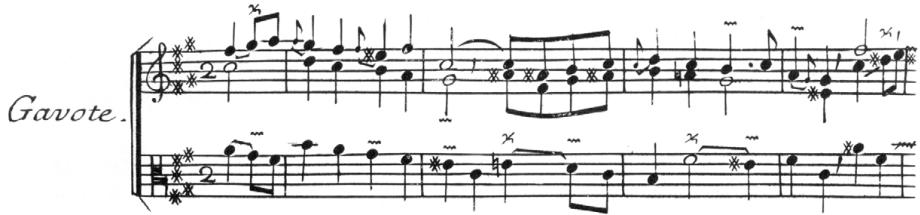
中文讲解
此条为图5.5的图注,对应Couperin《第四册古钢琴曲集》第二十六组曲(ordre)中的加沃特舞曲第1至第4小节。该乐谱正是前一段所讨论对象的实物呈现:高声部第2小节的c♯²上有连音线,而其他声部在相应位置标注Couperin式的逗号分句记号。由于内嵌图像数据已省略,具体音符时值、谱号、声部排列及逗号位置需查阅原图;但从图注可确认它所引作品、组曲编号、舞曲类型与小节范围,这些信息与正文叙述完全对应。
第3段(P0163)
原文复述
In example 5.20, we have only the melody and cannot know either the specific harmony or rhythmic motion of the other voices. But perhaps Mattheson imagined something like example 5.21, which creates a fairly weak vii°4–i6 cadence at the point of the comma (a very slight one) before the subdominant-dominant-tonic cadence in the final two bars of the minuet. One at least has the option of expressing the phrase division in the bass part—a slight relaxation in bar 6 accompanied by a new attack on the e in bar 7. Of course, even if one does insist on this downbeat emphasis in bar 7, there might still be that suggestion to the ear of other possibilities. Different harmonies, different types of rhythmic motion would no doubt produce different subtle relationships between the two voices, each lending a different nuance to the phrase structure.⁸⁹
中文讲解
本段将讨论从Couperin回到Mattheson的例5.20,指出其中关键的认识论问题:我们只有旋律声部,因此无从确知Mattheson心中其他声部的具体和声或节奏律动。然而作者推测Mattheson或许想象的正是例5.21所示的情形——在逗号位置产生一个较弱的vii°4–i6终止(作者特别注明"a very slight one”),随后在小步舞曲最后两小节以下属—属—主的完满终止收束。
作者进一步指出:演奏者至少有选择余地,可以在低声部体现分句,即第6小节稍作"放松”,第7小节在e音上重新起音构成新的重音。即使坚持第7小节是强拍重音,听众耳中仍可能感受到其他句法可能性的暗示。作者由此强调:不同的和声配置与节奏律动会让两个声部之间产生不同的细微关系,从而赋予分句结构不同的细微色彩。
这段的功能是方法论的自觉声明:在缺乏完整谱例的情况下,作者既给出一种推测性诠释(例5.21),又保留多种诠释并存的可能性。这与前文Couperin实例形成对比——后者提供了多声部谱例,故可以确定连音线与分句记号的实际并置;而Mattheson例只能作推测性重建。
补充说明
vii°4–i6是一种减七和弦第一转位解决到一级和弦第一转位的弱终止式,因vii°本身缺乏根音稳定性,比属—主终止更弱;“a very slight one"是作者明确强调此处终止的力度极轻。脚注89应查阅原书,因正文未给出其内容,本处不补充外部信息。“downbeat emphasis"指强拍重音,在本句中特指在第7小节重新起音所形成的句法重音。
第4段(P0164)
原文复述
[Example 5.21. Possible harmonization of example 5.20.]
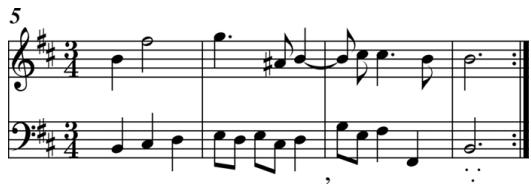
中文讲解
此条为例5.21的图注,标题明确指出这是"对例5.20的一种可能的和声配置”(Possible harmonization of example 5.20)。它直接呼应前段作者关于Mattheson可能心想的和声情境的推测,并将这一推测落实到具体的谱例层面。内嵌图像数据已省略,具体的和声进行、低声部线条、节奏型与逗号位置需查阅原谱。从图注的关键限定词"Possible"可以看出,作者并不主张这是唯一或正确的诠释,只是提供一种合理的推断,以与前段"different harmonies…different nuance"的多元可能性论述保持一致。
第5段(P0165)
原文复述
Copyright © 2008. University of Rochester Press. All rights reserved.
中文讲解
此条为版权声明,说明该书由University of Rochester Press于2008年出版,版权归出版方所有。它是版面上的法律与权利声明,不属于作者论点的组成部分。读者无需从这一行获取论辩信息,只需确认文献的版权归属即可。
第6段(P0166)
原文复述
Vial, Stephanie. The Art of Musical Phrasing in the Eighteenth Century: Punctuating the Classical “Period”, University of Rochester Press, 2008. ProQuest Ebook Central, http://ebookcentral.proquest.com/lib/iub-ebooks/detail.action?docID=3003724. Created from iub-ebooks on 2026-08-12 05:34:42.
中文讲解
此条为该电子书的书目著录信息,内容包括:作者Stephanie Vial,书名The Art of Musical Phrasing in the Eighteenth Century: Punctuating the Classical “Period”,出版社University of Rochester Press,出版年份2008,电子版通过ProQuest Ebook Central提供,并附有URL与文档ID,最后注明该电子版于2026-08-12由iub-ebooks生成。这些信息用于文献引用与检索定位,与本小节论述无直接内容关联,但对读者核实引文出处是必要的。
脚注 / 边栏 / 图表 / 附加信息(如有)
本小节包含两处脚注编号(段P0163末尾的脚注89),脚注具体内容未在本页文本中出现,需查阅原书脚注页;本小节正文未引用其内容,故此处不补充外部信息。版面元素方面,本节包含图5.5(Couperin加沃特舞曲第1–4小节谱例)与例5.21(对Mattheson小步舞曲例5.20的一种可能和声配置)两处图/谱例占位符,内嵌图像数据已省略,具体谱面细节需查阅原图;末尾为版权声明与电子书书目著录,属版式信息,非论述主体。
💡 本节核心要点
- Mattheson小步舞曲中"连音线与逗号分句并存"的现象并非孤例,Couperin 1730年的加沃特舞曲中同样出现这种并置,作者借此扩展样本以说明该现象的普遍性。
- 在Couperin的例子里,连音线出现在高声部第2小节的c♯²上,而所有其他声部由逗号呼吸记号标明半小节分句,形成高声部与其他声部在句法上的张力。
- Couperin的低声部在第2小节明确呈现f♯小调属和声,新乐句片段从b小调属音开始,在第4小节中段形成更强的半终止,体现典型的加沃特舞曲句法结构。
- 由于例5.20仅提供旋律声部,作者承认无法确知Mattheson心中其他声部的具体和声与节奏律动,故以"可能"的口吻给出例5.21作为推测性重建,而非主张唯一诠释。
- 作者强调不同和声与节奏律动会产生不同的声部间关系,从而赋予分句结构不同的细微色彩,体现其诠释立场上的开放性与对表演/诠释多样性的承认。
🔑 关键术语
- tied-note:连音线,记谱中将两个同音高的音符连为一个时值的符号,本节中用于讨论它与分句记号并存时产生的句法张力。
- comma breathing mark:Couperin使用的逗号式呼吸记号,用以在谱面上标示分句或换气处,功能接近现代意义上的乐句划分标记。
- phrase division:分句,即乐句内部的句法划分,可由逗号、呼吸记号、终止式或节奏重音等多种手段标示。
- half cadence:半终止,终止于属和弦的终止式,作者特别指出Couperin加沃特第4小节中段存在一个"更强的半终止”。
- vii°4–i6:减七和弦第一转位解决到一级和弦第一转位,本节中作为Mattheson例5.20推测和声中逗号位置上的"极弱"终止。
- Quatrième livre de pièces de clavecin:Couperin《第四册古钢琴曲集》,1730年出版;本节讨论的加沃特舞曲出自其第二十六组曲(Vingt-sixième ordre)。
- downbeat emphasis:强拍重音,本节中特指演奏者在第7小节重新起音(e音)所可能形成的句法重音,以体现分句在低声部的表达。
sec_026 [描述性拆分] Articulation and Punctuation Closely Intertwined: Synthesis
第1段(P0167)
原文复述
Thus the hemiola (or perhaps we should call it a rhetorical clausula or closing formula) is a flexible, expressive device—an accentuation and articulation of syllables—which is added to the underlying phrase structure, but does not dictate it. Here punctuation and articulation are closely intertwined, one commenting on the nature of the other. The feeling of two-bar phrases in both the Couperin and Mattheson examples is strong enough that a lack of metrical emphasis in one of the voices, even on a very important downbeat, does not prevent the sense of a comma. Still, were the ties to be removed, the nature of the phrasing, even though the division remains, would no doubt be felt differently. Such devices are indeed what prevent seemingly rigid dance structures from becoming what Little and Jenne describe as “tedious,” but it would also be a mistake, I think, to allot the tie on its own the power of punctuation.
中文讲解
本段是小节综合段的第一段,核心主张是:连音线(tie/slur)、重音与断句之间的关系是相互评论的,但连音线本身并不等同于句法标点。作者先重新界定 hemiola 的功能——它是对底层乐句结构的一种附加的、灵活的、表达性装饰(对音节的强调与清晰化),并不主导乐句本身。随后将这种关系上升为一般原则:标点(punctuation)与吐音(articulation)紧密交织,互相说明对方的性质。在 Couperin 与 Mattheson 的例子中,两小节乐句的听感强烈到即使某个声部在关键强拍上没有节拍重音,逗号感(comma)依然成立;但若移除连音线,分句仍存在,性质却会改变。作者借此反驳两种极端:既承认这些手法使看似僵硬的舞曲结构免于 Little 与 Jenne 所称的"乏味”,也警告不应把连音线单独视为标点的等价物。理解要点在于区分"附加表达"与"语法支配”——连音线评论乐句,但不创建乐句。
补充说明
脚注 90 未在输入中给出具体内容,仅作为注释标记保留。Little 和 Jenne 的引文"tedious"出自前文引用的二手文献,具体出处见原文脚注。
第2段(P0168)
原文复述
If a little tie can wreak so much havoc, consider what a much more extended binding of notes across phrase boundaries can do. Staying with the two-bar phrase structure of dance movements for a moment longer, look again at the lengthy slurs of Mozart’s Wind Serenade (ex. 5.16a). What is the role of the slurs in this example versus those of the trio’s B section (ex. 5.22), which isolate the dance’s characteristic eighth-note pickups within the shorter, two-bar gesture? I feel that in both of these examples, the articulation and phrasing seem to reenforce each other—the expression naturally suits the form. While the long slurs support the cascading momentum of the melody and bass, and the division of the opening period into two, four-bar phrases, the shorter slurs and detached eighths of the second phrase are equally suited to the melody’s subsequent upturned and questioning gestures of two bars, accompanied by punctuating rests in the bass. That said, each element is still performing its very distinct function. At no point, in either example 5.16 or example 5.22 do the slurs outline the structure of the phrases, or even the phrase segments.
中文讲解
本段承接 P0167 关于短连音线的论述,将问题推进到跨乐句的延长连音线(slur)能做什么。作者比较 Mozart《管乐小夜曲》中同一舞曲结构的两个不同段落:开段落(ex. 5.16a)使用长连音线贯穿瀑布般的旋律与低音走向,并支撑把开篇乐段划分为两个四小节乐句;B 段(ex. 5.22)的 Trio 则使用较短的连音线配合分开的八分音符,强调舞曲特有的八分音符弱起,并将之封闭在较短的两小节手势中,配以低音的断奏休止形成标点感。两例共同点是吐音与分句互相加强——“表达自然地契合形式”。但作者的真正论点出现在末句的反差转折:尽管如此,每个元素仍各自承担截然不同的功能,slur 在这两个例子中自始至终并未勾勒出乐句结构,甚至连乐段子句也没有勾勒。这是本节的关键判断——吐音可以加强、重塑或评论乐句,但并不等于乐句结构本身。
补充说明
两例为 Mozart《降 B 大调管乐小夜曲》K.361 第四乐章 Trio 的不同段落;具体小节与图例细节须参看原谱,本节仅以功能对比方式引用。
第3段(P0169)
原文复述
[Example 5.22. Mozart, Wind Serenade in B-flat Major, K.361, 4th movement, Trio II, bars 9-16]

中文讲解
本条为图注占位符,对应谱例 5.22。完整内容须查看原图(乐谱本身被省略)。该图注位置确认:所引为 Mozart《降 B 大调管乐小夜曲》K.361 第四乐章 Trio II 第 9—16 小节,正是 P0168 中用于与开段落长连音线(ex. 5.16a)作对比的短连音线段落。
补充说明
图注中以 LaTeX 风格呈现的 bars $9^{-16}$ 在转写后规范化为 bars 9–16。如需了解短连音线如何在两小节手势中隔离八分音符弱起,须对照原图查看具体谱面。
第4段(P0170)
原文复述
We find an even lengthier slur in example 5.23, from the opening Allegro of Beethoven’s Piano Sonata in D Major, Op. 28 (1801). Without the long slur in the above example, one would naturally divide the sentence into two four-bar phrases; bars 63 through 66 move cadentially in F-sharp minor (V7-i-V7-i) and bars 67 through 70 move cadentially in A major (V9/ii-ii-I-V7-I), and the sentence repeats in bar 71 (after a filling in of bar 70). The slur outlines neither the four-bar phrases nor the larger eight, but an unlikely 5 2/3-bar group. What the slur does tell us is not to give the downbeat of bar 65 its natural emphasis. One will feel the cadential motion in the left with the very low FF and the subsequent two-octave jump in bar 5, but above this, the right hand floats up and up, oblivious to the harmonic phrase division—only to tumble down a few measures later and then rise again. While the slur is not itself a phrasing mark, the comment it makes on phrasing is huge. The implication seems to be that while the phrase division exists, the expression demands that it not be felt in the customary manner.
中文讲解
本段通过 Beethoven《D 大调钢琴奏鸣曲》Op.28(1801)开篇快板乐章的 ex. 5.23,把"长连音线 ≠ 乐句结构"的主张推至更极端的实例。论据如下:若无长连音线,演奏者会自然把句子划为两个四小节乐句——第 63—66 小节在升 f 小调上作 V7-i-V7-i 的终止进行,第 67—70 小节在 A 大调上作 V9/ii-ii-I-V7-I 的终止进行,第 71 小节重复整句(第 70 小节为填充)。然而这条连音线既不勾勒出四小节乐句,也不勾勒出更长的八小节整体,而是勾出一个反常的 5⅔ 小节组合。它真正"告知"演奏者的,是不要给第 65 小节强拍以自然的重音:左手在极低的 FF 及第 5 小节(原文如此,原文写作 bar 5,应为笔误或上下文编号问题——本节按原文保留)随之的两八度跳跃足以让人感受到终止运动;而右手却一味上升,对和声上的乐句划分浑然不觉,几小节后跌落又再度升起。作者由此总结:连音线本身不是分句标记,但它对分句的评论是巨大的;暗示着乐句划分存在,但表达要求它不以惯常方式被感受。这一段是小节标题"Articulation and Punctuation Closely Intertwined"最直接的例证之一。
补充说明
原文末段出现"bar 5”,按上下文(讨论的是第 63—66 小节以及随后段落)判断极可能是第 65 小节或邻近小节的转写异常;本节按原文保留,不作改动。罗马数字 V7、V9/ii 等和弦标记保留作者原文写法,分别表示属七和弦与 ii 的属九和弦。
第5段(P0171)
原文复述
Copyright © 2008. University of Rochester Press. All rights reserved.
中文讲解
本条为页脚版权声明,属于版面元素,表明本章/本书的版权归属 Rochester 大学出版社,2008 年。
第6段(P0172)
原文复述
Vial, Stephanie. The Art of Musical Phrasing in the Eighteenth Century: Punctuating the Classical “Period”, University of Rochester Press, 2008. ProQuest Ebook Central, http://ebookcentral.proquest.com/lib/iub-ebooks/detail.action?docID=3003724. Created from iub-ebooks on 2026-08-12 05:34:42.
中文讲解
本条为页脚引用信息,给出本书的完整书目数据:作者 Stephanie Vial,书名 The Art of Musical Phrasing in the Eighteenth Century: Punctuating the Classical “Period”,2008 年由 University of Rochester Press 出版,电子版经 ProQuest Ebook Central 平台获取,访问路径与文档 ID 列出,最后注明创建时间(2026-08-12)。
补充说明
书目信息中的 URL 与文档 ID 为电子书来源标识,表明本电子版由 iub-ebooks 账户于指定日期生成;属版本溯源信息,不影响正文论证。
脚注 / 边栏 / 图表 / 附加信息(如有)
本节包含两个注释标记(P0167 的脚注 90 与 P0160—P0170 之间的脚注 91)以及一幅图注(P0169,谱例 5.22);脚注 90 涉及连音线与标点等同性的进一步论据,脚注 91 注明 Beethoven Op.28 的创作年份 1801。页脚包含版权声明与完整书目数据两条版面元素。图注仅保留位置信息,乐谱本身被省略,讲解须参看原图。
💡 本节核心要点
- Hemiola(及更广义的 clausula/收束公式)是对底层乐句结构的附加表达装置,并不支配乐句本身。
- 标点(punctuation)与吐音(articulation)紧密交织、互相评论,但二者并非同一层级的语法单元。
- 连音线(tie/slur)可以加强、修饰或评论乐句听感,但不能单独等同于标点。
- Mozart《管乐小夜曲》K.361 第四乐章的两个段落表明:长 slur 与短 slur 各自契合不同的表达手势,但均不勾勒乐句结构。
- Beethoven Op.28 开篇 Allegro 的反例显示:极长的 slur 甚至不按乐句小节数划分,而以反常的 5⅔ 小节组合提醒演奏者不要在第 65 小节强拍给以自然重音,揭示"乐句划分存在,但表达要求它不以惯常方式被感受”。
- 小节整体综合:吐音评论乐句、丰富表达,但不取代乐句的语法功能——这是本节标题"Articulation and Punctuation Closely Intertwined"的核心结论。
🔑 关键术语
- hemiola:在本节中被作者重新界定为一种灵活的、表达性的收束公式(clausula/closing formula),附加于乐句结构之上而非支配之,强调对音节的清晰化与重音处理。
- clausula (closing formula):作者作为 hemiola 的替代称呼提出,意为修辞性的收束/终止公式,强调其表达性而非结构性。
- articulation:指音符的吐音方式(连、断、重音等),在本节中作为与 punctuation 互为评论但不等同的层次出现。
- punctuation:在本节中用作对乐句断分的修辞性比喻(如"comma"的感觉),指听感上的句法划分,与和声/小节层面的乐句结构相关但不同。
- slur:跨多个音符的连音线标记;本节论证它并非分句标记(phrasing mark),但可以对分句作出巨大评论。
- tie:连接相同音高的短连音线;P0167 论证即便短至一个 tie 也足以改变听感,但不应被等同于标点本身。
- cadential motion (V7-i, V9/ii-ii-I):终止运动,P0170 用以说明若无长 slur 演奏者会如何据和声划分乐句——63–66 小节在升 f 小调,67–70 小节在 A 大调。
- downbeat emphasis:强拍的自然重音;P0170 中 long slur 的功能之一即是告知演奏者不要按习惯给第 65 小节强拍以自然强调。
sec_027 [描述性拆分] Long Slurs across Boundaries: Beethoven Op. 28
第1段(P0173)
原文复述
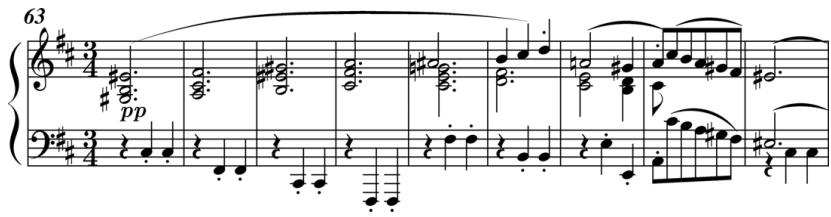
中文讲解
本段是一条图注占位符,标注为“例5.23:贝多芬《D大调钢琴奏鸣曲》Op.28,第一乐章,第63–71小节”。它在版面中的位置紧随上一节关于长连线跨越结构边界的讨论,作用是为读者提供一个具体的乐谱实例,用以配合后续段落对“articulation”与“punctuation/phrasing”关系的反思。由于内嵌图像数据已被省略,仅凭这一行无法看到实际音符、连线、断奏记号与力度标记,因此关于该谱例的具体分析需要回到原始图书或扫描页面查看原图;本节文字本身并没有对该谱例的逐小节解说,而是把它作为一个引发后续总结性论述的视觉锚点。
补充说明
占位符提示读者:图注的小节范围是63–71,原书将其作为例5.23列出;具体谱面内容(连线类型、articulation记号、和声节奏等)需对照原书插图。
第2段(P0174)
原文复述
In the end, of course, it is impossible to discuss any single element of music in complete isolation. The expression or “articulation” with which one executes a passage will naturally affect the pacing and nature of its pauses, and must conform like punctuation to the character or affect of the compositional topic at hand (the subject for our next chapter). I come back to Keller’s insightful quote at the beginning of this chapter and agree with him that articulation and phrasing illuminate one another. I feel, however, that it has been useful to separate the two as much as possible in order to understand the full scope of each. If we treat articulation as simply a kind of subcategory of punctuation, we imply a difference in degree rather than in kind, where articulation operates in the same manner as phrasing but only at a smaller level. Then we not only limit the expressive power of articulation, but at the same time diminish the effectiveness of punctuation. If, on the other hand, we give each its separate domain, the notion of eighteenth-century music as highly “punctuated” need not be incompatible with long, continuous lines. We learn to distinguish between the rests (written and unwritten) which are detached “articulations” and those belonging to punctuation, and we reinstate slurs from their status as “extras” or mere clarifications of phrase groupings.
中文讲解
本段是本节论证的核心,承担双重功能:一方面为整章的“articulation vs. phrasing/punctuation”之辨作收束性辩护,另一方面为下一章“composition topic/affect”设下过渡。
作者首先承认一个前提:任何音乐要素都不能被完全孤立讨论,articulation(演奏中的吐音/触键表达)天然会影响段落的呼吸与停顿方式,并且像标点一样必须服从当前“compositional topic”的性格或情感色彩——而后者正是下一章的主题。这一句把本节的讨论与下一章在论题上明确衔接。
随后,作者回到本章开头引用的Keller的话,并明确表态:赞成Keller“articulation与phrasing相互阐发”的洞见,但同时主张在分析时尽量把两者分开,以便看清各自的全部范围。这里隐含的方法论立场是:分析上的分离不等于本体上的分离,但只有先把它们拆开,才能重新理解它们彼此照亮的方式。
接着是一段反证推理:如果把articulation仅仅当作punctuation(标点/句法停顿)的一个子类别,那就只是程度上的差异——articulation和phrasing在性质上相同,只是运作尺度更小。作者指出这种“降级”处理有双重损失:既限制了articulation自身的表现力,也削弱了punctuation的修辞效能。换言之,把两者混为一谈,会同时矮化二者。
基于此,作者提出本节的总立场:若给予articulation与punctuation各自独立的领域,那么“十八世纪音乐高度‘被标点化’”这一印象,就可以与“存在长而连贯的乐句线条”并存而不冲突。这正是本章开篇示例(如Beethoven Op.28中的长连线)想要论证的:长连线并不因为谱面“高度punctuated”而失效。
最后两句落到操作层面:我们要学会区分两类休止——作为detached articulation(断开式吐音)的休止,与属于punctuation(句法停顿)的休止;同时把slur(连线)从单纯的“附加说明”或“只是把phrase分组再确认一遍”的从属地位中解救出来。slur不再被视为phrase grouping的冗余注释,而重新获得独立的articulation/句法意义。
因此本段在小节整体中的作用是:在谱例P0173之后,把对单一谱例的观察升华为对“如何正确划分概念域”的方法论总结,并预告下一章将转向compositional topic与affect。
补充说明
Keller在本章开头被引用过的相关洞见构成本段的对话对象;“compositional topic”指十八世纪与古典时期音乐中可识别的风格类型(如“狩猎风格”“西西里风格”等),作者明确将其推迟到下一章讨论。
第3段(P0175)
原文复述
In this chapter I have made a big fuss over semantics in an effort to disentangle varied and complex notions of musical articulation, of which we have only barely tapped the surface and which were by no means clear-cut even in the eighteenth century; articulation practices varied considerably from instrument to instrument (or voice), from composer to composer, and even over the course of a single composer’s stylistic development. From early applications to specific kinds of short notes, we perhaps see the origins of labeling all such signs (wedges, tenuto marks, slurs, etc.) as articulations. In addition we understand articulation’s modern function as a synonym for punctuation. It is unclear at what point in time articulation becomes the broad categorization that it is today. There may not be any obvious defining point in history but rather a more gradual growth from the use of articulation to define very specific expressive devices and vocal/wind playing techniques to encompassing all such devices amidst changing aesthetics of sound production and their accompanying notational conventions.
中文讲解
本段是本章的“章末回顾与历史定位”,作者坦白交代本章工作的限度,并把articulation的概念史勾勒为一个“逐渐扩张”的过程。
首先,作者承认本章对articulation这一概念的“语义”花了大力气去拆解,但同时也承认只是触及了表面,并强调即便在十八世纪,“articulation”本身也并不是一个含义清晰的术语——它的实际做法随乐器(或人声)不同、作曲家不同、甚至同一作曲家风格发展的不同阶段而显著变化。这一句在为前文的概念辨析做“免责”式说明的同时,也提醒读者:十八世纪的articulation实践本身就具有高度的多样性和历史流动性。
随后,作者提出一个可能的词源/概念史叙事:从早期只用于特定类型的“短音”(short notes)的标注出发,逐渐把所有这类符号——楔形(wedge)、保持音记号(tenuto)、连线(slur)等等——统统归入“articulation”这一标签之下。这是作者对“为何wedge、tenuto、slur会被混称”的发生学解释,但它只是“或许如此”的推测,而非确定的史实。
作者进一步指出,当代英语中articulation常常被用作punctuation(标点)的同义词,这是它的现代功能。但articulation从“针对特定短音的精确表达手段”扩展为“涵盖一切相关记号的广类”,究竟发生在历史上的哪个时间点,作者坦言并不清楚:可能并不存在一个明确的“定义时刻”,而是在声学审美(aesthetics of sound production)及其伴随的记谱惯例不断变化的背景下逐步形成的。
因此本段在小节中的作用是双重收束:一方面为P0174的方法论立场提供历史维度的支撑(正因为articulation的概念史是渐进的,所以我们必须给它独立的领域,而不是套用punctuation的逻辑);另一方面诚实交代本章并未解决的开放问题,为下一章转向“compositional topic/affect”做铺垫——因为只有先稳住articulation自身的概念边界,才能进一步讨论它如何服务于更宏观的topic表达。
补充说明
本段中列举的wedge、tenuto mark、slur等符号在十八世纪乐谱中各有独立的记谱含义,本节并未逐一展开它们的差异,只是把它们并置来说明“所有这些符号都被笼统地称作articulation”这一现象。
第4段(P0176)
原文复述
Copyright © 2008. University of Rochester Press. All rights reserved.
中文讲解
本段是版权声明,属于书籍版面的常规声明文字,表明本书由University of Rochester Press于2008年出版,保留全部权利。它的作用仅是标示出版者与版权归属,与本章正文的学术论证无直接关联,但提示读者引用或复制时需遵守版权限制。
第5段(P0177)
原文复述
Vial, Stephanie. The Art of Musical Phrasing in the Eighteenth Century : Punctuating the Classical “Period”, University of Rochester Press, 2008. ProQuest Ebook Central, http://ebookcentral.proquest.com/lib/iub-ebooks/detail.action?docID=3003724. Created from iub-ebooks on 2026-08-12 05:34:42.
中文讲解
本段是本书在ProQuest Ebook Central平台上的电子版引用信息,包含作者全名(Stephanie Vial)、书名(The Art of Musical Phrasing in the Eighteenth Century: Punctuating the Classical “Period”)、出版社(University of Rochester Press)、出版年份(2008)、平台URL(含docID=3003724)以及从iub-ebooks创建于2026-08-12 05:34:42的记录。它的作用是标明本节正文所处的电子版本的来源与检索路径,便于读者回溯原文,与论证内容无直接关系。
补充说明
本段所提及的电子版创建日期(2026-08-12)来自电子书平台的系统记录,反映的是该机构访问者下载/创建副本的时间,而非本书的写作或出版时间。
脚注 / 边栏 / 图表 / 附加信息(如有)
本节(sec_027,标题“Long Slurs across Boundaries: Beethoven Op. 28”,第28页)包含一段谱例占位符(Example 5.23,Beethoven Op.28第一乐章第63–71小节)、一段核心论证文字(P0174)、一段章末回顾与历史定位文字(P0175)、一段版权声明(P0176)以及一段ProQuest电子版引用信息(P0177)。本节没有脚注或边栏。
💡 本节核心要点
- 本节首先以Beethoven Op.28第一乐章第63–71小节(例5.23)的长连线谱例作为视觉锚点,引出对articulation与phrasing/punctuation关系的反思。
- 作者主张:在分析上把articulation与punctuation分开,是为了看清各自的全部范围;将articulation降为punctuation的子类别会在缩小articulation表现力的同时削弱punctuation的修辞效能。
- 给予articulation与punctuation各自独立的领域,可以使“十八世纪音乐高度punctuated”与“长而连贯的乐句线条”同时成立,从而把slur从“phrase grouping的附属注释”恢复为独立的articulation/句法标记。
- 需要区分两类休止:作为detached articulation的休止与属于punctuation的休止,这是把概念理顺的关键操作之一。
- 作者承认本章仅触及articulation语义问题的表面,并指出十八世纪本身的articulation实践就因乐器、作曲家和风格阶段而高度多样。
- 在概念史上,articulation可能从针对特定短音的精确表达手段逐步扩张为涵盖wedge、tenuto、slur等所有相关记号的广类,且这一过程是渐进而非有明确“定义时刻”的,作者将之归因于声学审美与记谱惯例的持续变迁。
🔑 关键术语
- articulation:在本节中指演奏中对一个乐句或音符的吐音/触键表达方式,与乐谱上的楔形、tenuto、slur等记号相关;作者主张它应与punctuation/phrasing区分开,拥有独立的表现领域。
- punctuation:在本节中取其比喻义,指音乐中的句法停顿或“标点式”结构划分;作者认为它不能吞噬articulation,否则会同时削弱两者。
- slur:连音乐谱记号;作者主张应把它从“仅是对phrase grouping的冗余说明”这一从属地位中解放出来,恢复其作为articulation/句法独立标记的地位。
- compositional topic:十八世纪与古典时期可识别的风格类型(如狩猎风格、西西里风格等),作者明确将其列为下一章的主题,本节仅以“articulation须服从topic的性格或affect”这一表述加以预告。
- wedge / tenuto mark:本节并列提及的两类记号,分别对应断奏/重音楔形与保持音记号;作者用它们作为例证,说明“各种符号被笼统称作articulation”这一现象。
- eighteenth-century music:本节讨论的历史语境;作者指出该时期音乐常被形容为高度“punctuated”,并强调这种印象与长连线式的连贯线条可以并存。
sec_028 [描述性拆分] Conclusion: Separating Articulation from Punctuation
第1段(P0178)
原文复述
Copyright © 2008. University of Rochester Press. All rights reserved.
中文讲解
本段原文为版权声明,可译为:“版权所有 © 2008。罗切斯特大学出版社。保留一切权利。”这是一行典型的英文出版版权标识,包含三要素:(1)符号 © 与年份 2008,标示版权生效年份;(2)权利主体 University of Rochester Press,即本书的出版方;(3)保留一切权利(All rights reserved)的惯用法律措辞。该行出现在第 29 页末尾位置,处于全节正文结束之后,性质属于版权页脚注或版权印记(copyright notice),其作用在于法律层面声明出版方对本书内容的复制、发行与衍生权利,并非论证性文字,因此本段本身不承载学术主张,仅起到标示著作归属与出版年份的作用。
第2段(P0179)
原文复述
Vial, Stephanie. The Art of Musical Phrasing in the Eighteenth Century : Punctuating the Classical “Period”, University of Rochester Press, 2008. ProQuest Ebook Central, http://ebookcentral.proquest.com/lib/iub-ebooks/detail.action?docID=3003724. Created from iub-ebooks on 2026-08-12 05:34:42.
中文讲解
本段为本书自身的完整书目引文,可译为:“Vial, Stephanie。《十八世纪音乐分句的艺术:为古典‘乐段’加上标点》。罗切斯特大学出版社,2008。ProQuest Ebook Central,http://ebookcentral.proquest.com/lib/iub-ebooks/detail.action?docID=3003724。创建自 iub-ebooks,时间 2026-08-12 05:34:42。”该条目按 APA 式的电子书目格式排列:作者姓氏置于名前(Vial, Stephanie),书名以斜体形式给出完整标题与副标题——《The Art of Musical Phrasing in the Eighteenth Century: Punctuating the Classical “Period”》,其中副标题里的 “Period” 加引号,专指古典时期乐句结构中的“乐段(period)”概念;出版社与年份紧随其后;其后为电子书平台 ProQuest Ebook Central 的访问 URL,并附内部文档编号 docID=3003724;末行注明该电子书副本由 iub-ebooks(即 Indiana University 的电子图书系统)于 2026 年 8 月 12 日 05:34:42 生成。该段属于电子书数据库自动追加的出处印记(source imprint),其功能是标明用户所阅读的电子版本来自哪一个机构订阅、在何时被提取,以便学术引用与版权追溯,本身不参与正文论证。
补充说明
副标题中的 “Period” 在本节论题中特指古典时期由两到四个乐句构成、呈现‘呈示—收束’问答结构的乐段单位,区别于一般意义上的‘时期’,相关讨论参见本节正文中关于 articulation 与 punctuation 区别的论述。
脚注 / 边栏 / 图表 / 附加信息(如有)
本节范围内仅包含两段文字,均为非正文性质的版面附加信息:P0178 为出版方的版权声明(copyright notice),P0179 为电子书数据库自动生成的书目印记(source imprint),二者共同构成本书电子阅读副本的版权与来源标识,不承担论证功能。
💡 本节核心要点
- 本节所标定的论题(Conclusion: Separating Articulation from Punctuation,即结论:区分吐音与标点)在本页范围内并无正文展开,仅出现版权与出处印记。
- P0178 的功能是法律层面的权利声明,标示出版方 University of Rochester Press 与版权年份 2008。
- P0179 的功能是电子书层面的出处追溯,标明作者 Stephanie Vial、书名《The Art of Musical Phrasing in the Eighteenth Century》、出版信息、ProQuest 平台 URL、文档编号及 iub-ebooks 的副本生成时间。
- 副标题 Punctuating the Classical “Period” 中的 Period 指古典乐段结构,与本节核心论题 articulation 与 punctuation 的区分直接呼应。
- 两段文字共同提示:读者所见的文本为 2026 年 8 月 12 日自 ProQuest Ebook Central 经 iub-ebooks 提取的电子版本。
🔑 关键术语
- Copyright notice:版权声明,本节 P0178 所属,作用是标示出版方 University of Rochester Press 对 2008 年版本书内容保留全部权利,属法律性版面信息。
- Source imprint:电子书出处印记,本节 P0179 所属,由 ProQuest Ebook Central 自动追加,用以标明电子书副本的作者、出版信息、平台 URL、文档编号及生成时间,便于引用与追溯。
- Period(古典乐段):本节论题中特指古典时期由数个乐句组成、具有呈示与收束问答结构的乐段单位,副标题 Punctuating the Classical “Period” 中的 Period 即为此意,与本节结论所讨论的 articulation(吐音)与 punctuation(标点)的区分直接相关。
- ProQuest Ebook Central:ProQuest 公司运营的电子书聚合平台,本书电子副本即托管于该平台,URL 与 docID 用于唯一标识该副本以供机构订阅用户访问。
- iub-ebooks:印第安纳大学(Indiana University)电子图书系统的标识,出现在 P0179 末行,用以标记本次副本的提取来源机构。