目录
C1 Part IV – Descriptive Traditions / 27 Music and rhetoric
- S1 [描述性拆分] Chapter front matter and introduction
- 页码:1-3
- S2 The classical tradition
- 页码:4-5
- S3 [描述性拆分] Greek origins and the Roman systematization of rhetoric
- 页码:6-7
- S4 Rhetoric and music in the Renaissance
- 页码:7-8
- S5 [描述性拆分] Rhetoric and the rise of musica poetica
- 页码:9-9
- S6 Rhetoric and Baroque musical poetics
- 页码:10-10
- S7 [描述性拆分] Lippius and the early systematization of musical rhetoric
- 页码:10-10
- S8 [描述性拆分] Burmeister’s Figurenlehre and its historical assessment
- 页码:11-15
- S9 [描述性拆分] Table 27.1, the limits of Figurenlehre, and Example 27.1 (Lasso)
- 页码:16-17
- S10 Christoph Bernhard
- 页码:18-20
- S11 [描述性拆分] Bernhard’s examples and Example 27.3 (Buxtehude)
- 页码:21-22
- S12 [描述性拆分] Bernhard’s musical language and the decline of rhetorical metalanguage
- 页码:23-23
- S13 The waning of the rhetorical tradition
- 页码:24-24
- S14 [描述性拆分] Mattheson’s turn toward inventio, dispositio, and melody
- 页码:25-25
- S15 [描述性拆分] Scheibe, Table 27.3, and Example 27.4 (Beethoven)
- 页码:26-28
- S16 The later eighteenth century
- 页码:28-28
- S17 [描述性拆分] The swan-song of musical rhetoric and the rise of musical structure
- 页码:29-29
- S18 [描述性拆分] Example 27.4 figures on Beethoven Op. 10 No. 3
- 页码:30-31
- S19 [描述性拆分] The nineteenth-century eclipse of musical rhetoric
- 页码:32-32
- S20 Bibliography
- 页码:32-35
S1 [描述性拆分] Chapter front matter and introduction
第1段(P0001)
原文复述
part iv
中文讲解
这是卷内分部的标识——“Part IV”(第四部分),出现在第一页的顶端。它的功能是为后续章节标明所属的卷内分部,从而把读者带进本书第四部分的具体论述范围。
第2段(P0002)
原文复述
DESCRIPTIVE TRADITIONS
中文讲解
这是 Part IV 的卷内标题(以全大写呈现),意为“描述性传统”。它在版面位置上充当整个第四部分的主题标签,向读者预告本部分章节聚焦于音乐分析中的描述性传统,而非纯理论性或纯历史性的论述。
第3段(P0003)
原文复述
Cambridge Histories Online © Cambridge University Press, 2008https://doi.org/10.1017/CHOL9780521623711.029 Published online by Cambridge University Press
中文讲解
这是出现在第 1 页页眉/页脚的数字出版平台标识,包含版权信息、DOI 链接和出版渠道说明。它不属于正文论述,而是剑桥历史在线(Cambridge Histories Online)数字版的版面标记,用以标识电子出版者与数字对象标识符。
第4段(P0004)
原文复述
Cambridge Histories Online © Cambridge University Press, 2008https://doi.org/10.1017/CHOL9780521623711.029 Published online by Cambridge University Press
中文讲解
这是同一平台标识在第 2 页上的重复出现,版面属性与 P0003 完全一致,仍是剑桥大学出版社在线平台的版权与 DOI 标识,不含任何论证信息。
第5段(P0005)
原文复述
IVA MODELS OF MUSIC ANALYSIS
中文讲解
这是章内分节标题。其中的 “IVA” 实际上是 “IV A”(罗马数字 IV + 子节字母 A)的 OCR 误识,开头的 “#” 是源文件中表示标题层级的 Markdown 标记,不属于印刷版正文。该标题表明本节是 Part IV 之下的 A 小节,论题为“音乐分析的各种模型”,由此开启对不同分析框架的讨论。
补充说明
OCR 将 “IV A” 中的空格误识为字符 “A” 与前文连写,并保留了源文件中的 Markdown 标题符号 “#”。印刷原文中本行应为“IV A MODELS OF MUSIC ANALYSIS”。
第6段(P0006)
原文复述
27
中文讲解
这是章节编号,表明本部分是该卷第 27 章。它为读者提供章节的定位信息,本身不承载论证内容。
第7段(P0007)
原文复述
Music and rhetoric
中文讲解
这是第 27 章的正式标题——“音乐与修辞”。它点明本章的核心议题:探讨修辞学传统在多大程度上、以何种方式进入并塑造了音乐理论。该标题与作者名一同构成完整的章首署名块。
第8段(P0008)
原文复述
patrick mccreless
中文讲解
这是本章作者署名——Patrick McCreless(小写排版为原文样式)。作者署名表明本章由该学者撰写,是文献归属与学术责任的基本标识。
第9段(P0009)
原文复述
Rhetoric is the original metalanguage of discourse in the West. From the fifth century BCE until around 1800 it served the educated classes as the most prestigious and influential means of conceptualizing and organizing language, and articulating how it can be e◊ective, persuasive, and elegant. Given that rhetoric shares with music the structured unfolding of sound in time, aspects of performance and delivery, and even a rudimentary notion of the “work” (the oration in rhetoric, the composition in music), it was natural and even inevitable that analogies would be drawn between the two. Analogies between rhetoric and music were common even in antiquity: Quintilian, for example, pointed to the expressivity of music as a model for the orator. In later times it was rhetoric that more frequently served as a model for musicians. Although musico-rhetorical analogies occurred sporadically in the music theory of the medieval period, they began to play a more extensive role only in the sixteenth century, when musicians appropriated rhetoric, by then a central element in the humanistic education of the time, as a model for the teaching of musical composition. It was the theorists of a uniquely German musico-rhetorical tradition who imported the apparatus of rhetoric directly into music theory, in e◊ect making it a metalanguage for music as well as for language by interpreting it as a model for musical composition. What distinguished this German e◊ort in the long history of the interaction between rhetoric and music was precisely that it went beyond the mere drawing of analogies to a thoroughgoing attribution of specific musical substance to rhetorical terms and concepts. The ultimate success of this musico-rhetorical enterprise is open to question: music theory eventually outgrew rhetoric and developed its own vocabulary, systems, and metalanguages. Yet this peculiarly German moment, roughly the years 1550–1800, when rhetoric and music came closest together, has left a permanent stamp on Western music theory, and it is this moment upon which the present chapter will focus.
中文讲解
这是本章最核心的导论段落,承担着为整章确立历史框架与论题焦点的双重功能。可以把它拆为五个论证层次来理解:第一,开篇即给出一个强主张——修辞学是西方话语的原初“元语言”(metalanguage),自公元前五世纪至约 1800 年,一直是知识阶层用以概念化、组织语言并阐明如何使语言有效、有说服力且优雅的最具影响力的话语工具。“元语言”是这里的关键词,意指一种用来描述、组织另一种语言或艺术形式的更高层级语言系统。第二,作者指出修辞与音乐天然地共享三方面特征——声音在时间中的结构化展开、表演与表达层面的问题,以及一种关于“作品”的初步观念(修辞中是“演说”,音乐中是“作品”)。正因为这些结构同构,两者的类比在作者看来不仅是自然的,而且是“不可避免的”。第三,段落以 Quintilian(昆体良)为例,说明即便在古代,修辞—音乐类比也已常见;但随后作者强调方向发生了反转——在后来,修辞更经常充当音乐的模型,而非相反;中世纪只是零星出现,到十六世纪才因人文主义教育的兴起而变得系统化。第四,段落的论证重心落在所谓“独特的德国音乐—修辞传统”:正是这一传统的理论家把修辞学的整套装置直接搬入音乐理论,使修辞学同时成为音乐与语言的元语言。这里的关键区分是“类比”与“具体内容的指派”(thoroughgoing attribution of specific musical substance to rhetorical terms and concepts)——德国传统的独特性不在于修辞—音乐类比本身,而在于把修辞术语赋予真实的音乐内涵。第五,作者给出一个带有保留色彩的总评:这场音乐—修辞事业的最终成效是可疑的,因为音乐理论最终超越了修辞,发展出自身的词汇、体系与元语言;但紧接着他又用“yet”(然而)作转折,强调约 1550–1800 这一“独具德国色彩”的时刻已在西方音乐理论上留下“永久的印记”(a permanent stamp),而这正是本章的论题焦点。修辞上,整段以一个宏大主张开篇,逐步收窄到具体时段,再以转折承认反例,最后锁定本章范围,是典型的“由总到分、再由分反观总”的导论结构。
补充说明
OCR 将 “effective” 误识为 “e◊ective”,将 “effort” 误识为 “e◊ort”(菱形 ◇ 为占位符),原文实为 “effective” 与 “effort”。另需注意本段含有两条脚注编号(上标 1 与上标 2),脚注本体见 P0010 与 P0011。
第10段(P0010)
原文复述
1 For the notion of rhetoric as a global metalanguage of language in the West, I am indebted to Barthes, “The Old Rhetoric.”
中文讲解
这是附在导论第一句“Rhetoric is the original metalanguage of discourse in the West”之后的第一条脚注。作者明确承认,关于“修辞学是西方语言的全局性元语言”这一观念,其学术来源是 Barthes 的文章 “The Old Rhetoric”。脚注的功能是为本段开篇的核心命题提供学术来源支持,而非引入新的论据;同时也提示读者,作者并非自创这一观念,而是承接了 Barthes 已有的提法。
第11段(P0011)
原文复述
2 For Quintilian on music, see Institutio oratoria, vol. i, pp. 165–77. See the bibliography at the end of this chapter for a modern edition and translation of Quintilian and other central primary sources of rhetoric.
中文讲解
这是附在导论中提及 Quintilian 那一句之后的第二条脚注。它为读者指明古代修辞学家 Quintilian 论及音乐的具体出处——《演说术训练》(Institutio oratoria)第一卷第 165–177 页;同时指引读者参看本章末尾的参考文献,以获取该书以及其他核心修辞学原始文献的现代版本与译本。脚注的功能是来源定位与延伸阅读指引,并强调修辞学的原始文献是本章论证的历史根基。
第12段(P0012)
原文复述
Cambridge Histories Online © Cambridge University Press, 2008https://doi.org/10.1017/CHOL9780521623711.029 Published online by Cambridge University Press
中文讲解
这是同一数字出版平台标识在第 3 页(即本章正文页)的版面位置再现。其版面属性与 P0003、P0004 相同,仍为版权与 DOI 标注,不含任何论证内容;它标志着本页面亦处于剑桥历史在线的数字出版框架之下。
脚注 / 边栏 / 图表 / 附加信息(如有)
本节页码范围内的非正文附加材料全部为“Cambridge Histories Online”的数字出版水印/页眉(出现于第 1、2、3 页,文本相同,含版权年份 2008、DOI 10.1017/CHOL9780521623711.029 及出版渠道说明)以及两条脚注(编号 1、2)。水印仅承担版权与数字对象标识功能,对正文论证既不构成支持也不构成限定。两条脚注分别承担“学术来源归属”与“原始文献出处定位”两类功能:脚注 1 将“修辞学为西方语言之全局元语言”的核心观念归于 Barthes《The Old Rhetoric》;脚注 2 将导论中提及的 Quintilian 论音乐一段指引至 Institutio oratoria, vol. i, pp. 165–77,并提示读者参看本章末尾的参考文献以获取 Quintilian 等核心修辞学原始文献的现代版本与译本。本节内未出现图表、乐谱或边栏。
💡 本节核心要点
- 修辞学被界定为西方话语的“原初元语言”,自公元前五世纪至约 1800 年间长期主导知识阶层对语言的反思与组织。
- 修辞与音乐在结构上共享三方面特征——声音在时间中的结构化展开、表演与表达、以及关于“作品”的初步观念,这使两者之间的类比在作者看来“自然且不可避免”。
- 修辞—音乐类比虽自古已有(以 Quintilian 为例),但真正系统化的“音乐—修辞”事业出现于十六世纪以后,并在 1550–1800 年间形成作者所称的“独具德国色彩”的独特传统。
- 该德国传统的核心贡献不在于类比本身,而在于把修辞术语系统地“赋予具体音乐内涵”,使修辞学同时成为音乐理论的元语言。
- 作者对这一事业给出保留性评价:音乐理论最终超越修辞,发展出自身的词汇与系统;但 1550–1800 这一时刻已在西方音乐理论上留下“永久印记”,并被作者明确锁定为本章的论述焦点。
🔑 关键术语
- metalanguage(元语言):在本节中指一种用来描述、组织或解释另一种语言/艺术形式的更高层级话语系统;作者将修辞学界定为西方话语的“原初元语言”,并称德国音乐—修辞传统试图把修辞学变成音乐理论的元语言。
- musico-rhetorical tradition(音乐—修辞传统):本节特指十六世纪以后、尤其是 1550–1800 年间以德语区理论家为主体的音乐理论传统,其特征是把修辞学的术语与装置系统地移植进音乐理论之中。
- the “work”(“作品”观念):在本节中指修辞学里的“演说”与音乐里的“作品”这一对应观念;作者用它来说明两门艺术在最基础的层面上都已具备关于“作品”的初步概念,从而为类比提供前提。
- humanistic education(人文主义教育):在本节中作为十六世纪修辞学复兴的历史语境;作者指出正是在这一教育体系内,修辞学成为音乐家借以建立作曲教学模型的核心资源。
- Quintilian(昆体良):在本节中作为古代修辞—音乐类比的代表人物出现,作者援引其以音乐的“表现性”作为演说者之典范的说法,用以证明修辞—音乐类比在古代即已存在。
S2 The classical tradition
第1段(P0013)
原文复述
The classical tradition
中文讲解
本条仅为小节标题“古典传统”(The classical tradition),标示出后续内容将要追溯的论域:从古希腊到罗马、绵延约两千五百年的修辞学传统。标题本身不承载论点,但暗示本节将解释这一传统的核心定义、构成部分、历史起源与关键理论家。
第2段(P0014)
原文复述
The term rhetoric, in modern English usage, may refer simply to the art of persuasion, or to the art of effective speaking and writing. Less innocently, it may refer to artificial eloquence, the calculated use of language to impress, sway, or even deceive. The term may also refer to the classical discipline in which both of these meanings have their root: the art of rhetoric, as developed in antiquity, and as taught in the West for 2,500 years as a coherent and stable system of organizing language. As Barthes has pointed out, the modern notion of rhetoric is thus two-sided: it is both a “grandiose system which a whole civilization, in its extreme breadth, perfected . . . in order to think its language,” and “an ideological object,” from which modern objectivity dictates that we “take an indispensable critical distance.”
中文讲解
本段为全节的起点,先厘清“修辞”(rhetoric)一词在现代英语中的三重含义。第一层是中性甚至正面的意义:说服的艺术,或有效演说与写作的艺术。第二层带贬义:人为的雄辩(artificial eloquence),即刻意运用语言以打动、操纵甚至欺骗他人。第三层指古典学科意义上的修辞:起自古希腊、在西方被讲授长达两千五百年的“一种组织语言的自洽而稳定的体系”,前两层含义都源于此。随后作者援引罗兰·巴特(Barthes),指出“修辞”这一现代概念是双面的:它既是一个“宏大的体系”,整个文明以其广博的智识加以完善,“以便思考自身的语言”;同时也是一种“意识形态对象”,现代客观性要求我们与之保持“不可或缺的批判距离”。本段的作用是为整节定下基调:一方面承认修辞传统之深厚与系统,另一方面也提示读者对它保持批判性审视,这两层立场将在后文关于柏拉图批评与亚里士多德辩护的叙述中具体展开。需注意“less innocently”与“may also”的限定语气:作者并未将这三层含义判定为同一件事,而是展示同一词在不同语境下所承载的张力。
补充说明
本段中“2,500 years”是后文具体年代框架的伏笔:起自约公元前五世纪的西西里,而后跨越希腊化、罗马、中世纪、文艺复兴一直延续到作者所处时代。巴特所引之语原文出自其“The Old Rhetoric”一文(详见脚注3)。
第3段(P0015)
原文复述
The substance of rhetoric has remained remarkably consistent throughout its history. Aristotle, the first theorist of rhetoric, defines it as “the art of extracting from every subject the proper degree of persuasion it allows,” or as “the faculty of speculatively discovering what in each case are the available means of persuasion.” The five traditional parts of rhetoric – inventio, dispositio, elocutio, memoria, and pronunciatio – were firmly established by the early Roman period (c. 100 BCE), and have retained their organizing force ever since. In classical rhetoric, these parts provided a comprehensive discipline for the orator. Of the five, the first three – inventio, dispositio, and elocutio – constitute the conceptual core of rhetoric. Inventio addresses the problem of developing ideas for a speech. In the classical tradition, this means less “inventing” a subject out of nothing, in the manner of the nineteenth-century artistic genius, than “discovering” in a subject or case what is already there: what ideas to extract, seize upon, and develop. Once these ideas or topics are discovered, it is dispositio that determines their linear ordering and arrangement into a persuasive whole. Dispositio also has its own taxonomy for the organization of a speech, including the exordium (introduction), narratio (statement of facts), partitio or propositio (division, or the statement of what is agreed upon and what contested, and of the orator’s plan of action), confirmatio (proof of the arguments), to refutatio (refutation of the opponent’s arguments), and peroratio or conclusio (peroration or conclusion). Elocutio, the third primary component of classical rhetoric, is the source of style and expression, of figure and trope, and of the eloquence, even grandiloquence, that we naturally associate with rhetoric. For the classical writers, elocutio embodied an excess; assuming a stable base of the normal mode of linguistic communication, they saw in the heightened usage of language a means of persuasion – hence their referring to the figures and tropes as ornamenta, flores, and colores. The remaining two parts of rhetoric – memoria and pronuntiatio – deal with aspects of “performance,” memory and delivery, and thus address the technique of making the fully conceptualized oration persuasive to an audience.
中文讲解
本段是全节理论骨架的核心,作者分四步展开。第一步提出贯穿论:修辞的实质(substance)在其历史中“惊人地稳定”,并以亚里士多德两条经典定义作为锚点——“从任何主题中提取其所允许的恰当说服程度的艺术”,以及“在每一种情形中思辨地发现可用的说服手段的能力”。第二步介绍五个传统部分:inventio(构思)、dispositio(布局)、elocutio(风格)、memoria(记忆)、pronuntiatio(发表/讲演姿态),并说明它们在约公元前一百年罗马早期就已稳固确立,从此一直保有组织性力量。第三步聚焦前三个核心部分,逐一定义并说明其内在逻辑: • inventio 不是十九世纪“艺术天才”式的无中生有,而是在既定主题或案件中“发现”已经存在的论点,加以提取与发挥; • dispositio 决定这些被发现的观念如何线性排列为有说服力的整体,并自带一套演说结构分类:exordium(开场)、narratio(事实陈述)、partitio/propositio(划分——说明何为共识、何为争议、以及演说者的行动计划)、confirmatio(论证)、refutatio(反驳对方)、peroratio/conclusio(结尾); • elocutio 是一切修辞格与风格之源,其本质是“超量”(excess)——古典作家以日常语言为基准,认为语言的提升性使用本身就具有说服力,因此将修辞格称为 ornamenta(装饰)、flores(花朵)、colores(色彩)。 第四步说明后两部分:memoria 与 pronuntiatio 处理“表演”层面,即如何把已完成构思的演说实际呈现给听众。 本段为本节后续讨论奠定了术语基础,所有关键词(inventio、dispositio、elocutio、res/verba、docere 等)将在后文被反复引用。读者需特别留意 inventio 的反“创造”定义——这是古典修辞与现代浪漫主义“天才观”之间的关键分歧。
补充说明
“ornamenta, flores, colores”为拉丁语术语,意为“装饰、花朵、色彩”,是古典修辞学家对修辞格的常见称呼,强调其锦上添花的功能。inventio 的“发现”含义与希腊文 topoi(τόποι,场所/论题)密切相关,将在 P0021 中由亚里士多德再次引入。
第4段(P0016)
原文复述
3 Barthes, “The Old Rhetoric,” p. 47. Richard A. Lanham makes a similar point when he draws a distinction in Western thought between the “rhetorical” view of life and what he calls the “serious” view of life – between language as an instrument of persuasion and language as an instrument of truth. This opposition, he claims, “goes far to explain two persistently puzzling facts about the history of rhetoric: why it has been so deplored and why it has so endured.” See Lanham’s The Motives for Eloquence: Literary Theory in the Renaissance, pp. 4–5. The opposition in fact goes back to Plato, who in his two dialogues that deal most explicitly with rhetoric – Gorgias and Phaedrus – rejects rhetoric, which deals only with opinion, in favor of philosophy, which deals with truth.
中文讲解
此条为脚注 3,对应 P0014 中对巴特观点的征引。脚注先给出巴特原文页码,随后引介 Richard A. Lanham 在《The Motives for Eloquence》中所做的区分——“修辞的人生观”(rhetorical view of life)与“严肃的人生观”(serious view of life)——即把语言视为说服工具 vs. 把语言视为真理工具。Lanham 指出,正是这种对立“有助于解释修辞史上两个持续令人困惑的事实:为什么修辞历来被如此贬低,却又能如此长久地延续”。脚注末尾进一步追溯这一对立的源头:柏拉图在两部最直接讨论修辞的对话《高尔吉亚》(Gorgias)与《斐德罗》(Phaedrus)中,拒斥只处理“意见”(opinion)的修辞,而推崇处理“真理”(truth)的哲学。此处为后续 P0021 中柏拉图对修辞的严厉批评埋下伏笔。
补充说明
脚注中的“意见—真理”之分是希腊词对 doxa(δόξα,意见)vs. episteme(ἐπιστήμη,知识)的另一种表述方式,与 P0021 中亚里士多德抬高 doxa 的立场形成对照。
第5段(P0017)
原文复述
4 Aristotle, The Art of Rhetoric, cited in Barthes, “The Old Rhetoric,” p. 21.
中文讲解
此条为脚注 4,注明 P0015 中亚里士多德关于修辞的两条定义——即“提取恰当说服程度的艺术”与“发现可用说服手段的能力”——系出自亚里士多德《修辞术》(The Art of Rhetoric),经由巴特《The Old Rhetoric》第 21 页转引。这一简短脚注虽不展开论证,却为前段的核心引文提供了权威的文本来源,使读者得以追溯至亚里士多德原文。
第6段(P0018)
原文复述
5 See Vickers, Vickers, In Defence of Rhetoric, pp. 62–67, for a more detailed exposition of the five parts of rhetoric.
中文讲解
此条为脚注 5,为 P0015 中关于修辞五个部分的论述提供延伸阅读指引,指向 Brian Vickers《In Defence of Rhetoric》第 62–67 页,供希望深入了解五大范畴的读者进一步参考。
第7段(P0019)
原文复述
Cambridge Histories Online © Cambridge University Press, 2008 https://doi.org/10.1017/CHOL9780521623711.029 Published online by Cambridge University Press
中文讲解
此条为版心页眉/版权标识信息,表明本章节来源于 Cambridge Histories Online 数据库,由剑桥大学出版社于 2008 年出版,并附有数字对象唯一标识符(DOI)及在线出版平台信息。属于版面元数据,无实质论证内容。
第8段(P0020)
原文复述
Western rhetoric claims its origins in property disputes that arose in the Greek community at Syracuse, in Sicily, around 485 BCE. The means of persuasion developed to argue such cases quickly distilled into a concrete and teachable discipline. Of the five parts of rhetoric, the first to achieve canonical stature was dispositio (Gk. taxis), which had already begun to be codified before rhetoric migrated to Athens later in the fifth century BCE. In the rhetoric of Gorgias and other Sophists we find the roots of elocutio – a heightened sense of style, and the use of tropes and figures. By 393 BCE, Isocrates (436–338 BCE), who established a school of rhetoric in Athens, was writing down and polishing his speeches – an act of crucial importance, inasmuch as a perennial dispute in rhetoric turns on the question of whether it is an oral art of persuasion, negotiated in real time in front of a live audience as an act with a civic function (what George Kennedy, the distinguished historian of rhetoric, calls “primary rhetoric”), or whether it is a written, academic discipline, a discipline of poetics or pedagogy, carried out entirely in writing (Kennedy’s “secondary rhetoric”).
中文讲解
本段转入历史叙述,勾勒西方修辞学的起源与早期分化。作者指出西方修辞学自称起源于约公元前 485 年希腊西西里岛叙拉古城邦的财产纠纷——为处理此类案件而发展出的说服手段很快固化为“具体且可教”的学科。在五大范畴中,dispositio(希腊文 taxis,意为“安排/排列”)是最早获得经典地位的一部分,在修辞学于公元前五世纪晚期迁入雅典之前就已被编纂。 随后修辞传入雅典,高尔吉亚及其他智者派(Sophists)发展出 elocutio 的源头:高度自觉的风格意识与对修辞格的使用。到公元前 393 年,伊索克拉底(Isocrates,公元前 436–338 年)在雅典建立修辞学校,开始将演说词撰写并润色成文——这一举动意义重大,因为它触发了一个“长期争论”:修辞究竟是一种在实时、在现场、在公民功能中与活生生的听众协商完成的口头说服艺术(被著名修辞史家 George Kennedy 称为“primary rhetoric”,首要修辞),还是一种完全在书写中进行的书面、学院化、诗学或教育学性质的学科(Kennedy 所谓的“secondary rhetoric”,次要修辞)? 本段的关键作用是:把 P0014–P0015 中静态的理论定义,置入历史与媒介转换的语境中。“首要—次要”修辞的区分预告了修辞学后来在书面文化、文学批评与教育体系中身份的变迁。
补充说明
Syracuse(叙拉古)为西西里岛的希腊殖民城邦;Gorgias(约公元前 483–376 年)为著名智者派修辞家,其风格影响后世 elocutio 的发展。taxis 即希腊文 τάξις,意为“排列、秩序”,与拉丁文 dispositio 同义。
第9段(P0021)
原文复述
Plato, to whom we owe the first extensive critique of rhetoric, distrusted it in both its oral and its written forms. In the dialogues Gorgias and Phaedrus he mounted against rhetoric the most scathing attack it has ever known, seeing in it only flattery, deception, and illusion – “artificial eloquence,” as it were – as opposed to philosophy, which was for him a dialectical pursuit of eternal truths. Plato’s student Aristotle, unlike his teacher, saw value in rhetoric: elevating doxa (opinion) to a status equal to that of episteme (knowledge), he placed it on the same level as Plato’s dialectic. In his The Art of Rhetoric (c. 335 BCE), the first surviving text on rhetoric, Aristotle continued the Greek tradition and contributed most significantly in the area of inventio, for which he developed the notion of topics, or “places,” which serve to generate and sustain the ideas of a speech.
中文讲解
本段以“师徒对立”为叙事核心,对照柏拉图与亚里士多德对修辞的根本分歧。 首先,柏拉图对修辞持最严厉的批判立场——这一点是 P0014 中所引巴特“修辞即意识形态对象”之说的最早历史源头。在《高尔吉亚》与《斐德罗》中,柏拉图将修辞视为“奉承、欺骗、幻象”,是纯粹的“人为雄辩”;与之相对的哲学则是以辩证法追求永恒真理的学问。值得注意的是,作者明确指出柏拉图对修辞的拒斥涵盖了口头的与书面的两种形式,因此 P0020 中“首要—次要”修辞之分其实早在柏拉图那里就同时被否定。 其次,亚里士多德作为柏拉图的学生,立场截然不同:他承认修辞的价值,把希腊词 doxa(意见)提升至与 episteme(知识)平等的地位,将修辞摆到与柏拉图式辩证法同等的层级上。其《修辞术》(约公元前 335 年)作为现存最早的修辞学专书,承接希腊传统并最显著地推进了 inventio(构思)领域,发展出“topics”(τόποι,论题/场所)的概念,作为生成与维持演说观念的资源库。 本段在整节中的作用是奠定修辞学史上的核心张力轴:哲学对修辞的怀疑 vs. 修辞学自身对哲学范畴的重新整合。这一张力将贯穿后文罗马修辞乃至文艺复兴。读者需特别留意 doxa/episteme 的关系是亚氏对柏氏等级制的颠覆。
补充说明
《Gorgias》与《Phaedrus》分别是柏拉图早期与中期对话,前者借苏格拉底与智者高尔吉亚的辩论批判修辞,后者通过“灵魂的辩证法”重审修辞与真理的关系。topics(τόποι)在亚里士多德体系中既指“共有论题”(common topics)也指“专门论题”(special topics),为发明论证提供场所式入口。
第10段(P0022)
原文复述
The Roman rhetoric of the anonymous Rhetorica ad Herennium (c. 85 BCE), and of Cicero (seven treatises on rhetoric, 87–44 BCE) and Quintilian (Institutio oratoria, 92–94 CE), inherited and developed Aristotle’s theories, and gave increased emphasis to aspects of delivery – memoria and pronuntiatio. Quintilian’s justly famous work, which was written about a century after rhetoric had already begun to decline in public discourse in Rome, is the summa of classical oratory: it approaches rhetoric from the point of view of pedagogy, education, and ethics, and it summarizes and systematizes the entire Greco-Roman tradition in practical language and in admirable detail. The Roman oratory of Cicero and Quintilian turned on two vital and interrelated distinctions, one philosophical and one aesthetic, each of which would play a crucial role in later rhetorical thought, and in the Renaissance and Baroque appropriation of rhetorical theory for the arts. On the philosophical side is the binary opposition between res and verba, between the substance of an argument and the verbal means used to make that argument. The distinction differentiates between an idea itself and the figures and tropes – the linguistic excesses, as it were – used to enliven, dramatize, or “mark” the idea and make it serve the larger persuasive goal. The conceptual task here is to achieve a balance between figure and idea, so that the former accentuates the latter without overwhelming it, to produce eloquence rather than grandiloquence. The not unrelated aesthetic distinction made by Roman oratory is Cicero’s triadic view of what rhetoric attempts to accomplish: docere, movere, and delectare – to teach, to move, and to delight. Here, content and essence are enriched by an aesthetic dimension; however, such a dimension must not be allowed to function on its own, but must operate in service of an argument.
中文讲解
本段将叙述由希腊转入罗马,呈现修辞学在罗马的三位代表及其理论贡献。第一组是匿名的《Herennius 修辞术》(Rhetorica ad Herennium,约公元前 85 年)以及西塞罗(Cicero,公元前 87–44 年,所著七部修辞学论著)和昆体良(Quintilian,《演说术原理》Institutio oratoria,公元 92–94 年)。作者指出罗马修辞学继承并发展了亚里士多德的理论,同时把重心向“发表”层面——memoria(记忆)与 pronuntiatio(讲演姿态)——倾斜。昆体良的《演说术原理》尤其被作者称为“古典演说术的总结”(summa),其独特之处在于从教育、伦理与教学的角度切入,并以“实践语言”和“可佩的详尽”系统化整理了希腊—罗马的整个传统——这一评价的语境是昆体良写作时修辞在罗马公共话语中已衰落了约一个世纪。 随后作者提炼出罗马修辞(以西塞罗与昆体良为代表)所依赖的两组关键且相互关联的区分,每一组都在后世的修辞思想、尤其是文艺复兴与巴洛克对修辞理论的“挪用”中扮演了关键角色: • 哲学层面的 res vs. verba(实质 vs. 词语)之二元对立:区分一个论证的“实质内容”(res)与其“用以呈现该内容的语言手段”(verba);修辞格被定位为“语言的超量”,用以使观念生动、戏剧化、引人注目,从而服务于更大的说服目标。这里的“概念任务”是使“修辞格”对“观念”起到强调作用而不至于压倒后者,产出“雄辩”(eloquence)而非“浮夸”(grandiloquence)。 • 美学层面则是不无相关的西塞罗三一论:docere(教)、movere(动)、delectare(悦)。在三者之中,内容与本质被审美维度所丰富,但这一审美维度不能独立运作,必须服务于论证本身。 本段的作用是补全古典修辞从希腊到罗马的传承,并标识出 res/verba、docere/movere/delectare 两组将贯穿文艺复兴—巴洛克美学讨论的核心范畴。读者需特别留意:作者强调“图—意平衡”以及“审美维度须服务论证”是西塞罗—昆体良一脉的修辞伦理,它将直接影响 P0020 中所提“首要—次要”修辞之争在文学艺术中的处理方式。
补充说明
Rhetorica ad Herennium 是拉丁修辞学最早的完整论著,长期被误归于西塞罗名下。docere/movere/delectare 在西塞罗《演说家》(De Oratore)中以拉丁文形式出现。res/verba 之争后来在文艺复兴的诗学讨论(如但丁、薄伽丘)中被反复改写。
第11段(P0023)
原文复述
6 Kennedy, Classical Rhetoric and Its Christian and Secular Tradition from Ancient to Modern Times, pp. 4–5. The secondary literature on rhetoric and its history is enormous. The books by Kennedy and Vickers note here and in footnote 5 are the best modern introductions in English. The bibliography provides a small selection of other valuable sources.
中文讲解
此条为脚注 6,对应 P0020 中对 George Kennedy “primary rhetoric”/“secondary rhetoric” 区分的征引。作者先标出 Kennedy《Classical Rhetoric and Its Christian and Secular Tradition from Ancient to Modern Times》第 4–5 页为出处,随后为读者提供研究指南:指出关于修辞及其史的二手文献极为庞大,Kennedy 与 Vickers 的著作(即脚注 5 提到之书)是英语世界最佳的现代入门读物,文末的参考文献则精选了其他有价值的资源。
第12段(P0024)
原文复述
Cambridge Histories Online © Cambridge University Press, 2008 https://doi.org/10.1017/CHOL9780521623711.029 Published online by Cambridge University Press
中文讲解
此条为重复出现的版心页眉/版权标识信息,与 P0019 内容相同,标示同一章节在 Cambridge Histories Online 平台上的出版元数据:剑桥大学出版社 2008 年版权,附 DOI 及在线出版声明。属于版面元素,无实质论证内容。
脚注 / 边栏 / 图表 / 附加信息(如有)
本节包含三处实质性脚注与两处版心版权标识:脚注 3(P0016)追溯柏拉图—巴特—Lanham 的“修辞 vs. 哲学/严肃”对立脉络,为 P0014 的双面性论断提供学术支撑与历史源头;脚注 4(P0017)标注亚里士多德《修辞术》两条定义经巴特转引的来源;脚注 5(P0018)指引 Vickers 著作以延伸了解五大范畴;脚注 6(P0023)为 P0020 中 Kennedy 的“primary/secondary rhetoric”区分给出原始出处,并附研究指南。两处页眉(P0019、P0024)为 Cambridge Histories Online 出版元数据,无内容性意义。
💡 本节核心要点
- “修辞”一词在现代英语中具有三重含义:说服艺术、人工雄辩、以及作为古典学科的修辞学;其现代概念因此具有巴特所谓的双面性——既是宏大的语言—文明体系,也是需要批判审视的意识形态对象。
- 古典修辞的实质跨历史保持稳定,其骨架为五大范畴——inventio、dispositio、elocutio、memoria、pronuntiatio;前三者构成概念核心,其中 inventio 意在“发现”而非“创造”论点,dispositio 决定线性组织,elocutio 表现为“超量”风格,后两者处理表演层面。
- 西方修辞学自称起源于约公元前 485 年叙拉古的财产纠纷;dispositio 是最早获经典地位的部分;修辞约公元前五世纪末迁入雅典后,智者派发展 elocutio,伊索克拉底则开启“首要—次要”之争:修辞是口头—公民艺术还是书写—学术学科。
- 古典修辞史上的核心张力源于柏拉图与亚里士多德:柏拉图在《高尔吉亚》《斐德罗》中将修辞贬为奉承与幻象,亚里士多德则把 doxa 提升至与 episteme 同等地位,并在《修辞术》中系统化 inventio 之“topics(论题/场所)”概念。
- 罗马修辞以《Herennius 修辞术》、西塞罗与昆体良为代表,承接并推进希腊传统;昆体良《演说术原理》是古典演说术的总结性著作,从教育与伦理视角系统化整个传统。
- 罗马修辞学为后世(尤其是文艺复兴与巴洛克对修辞理论的“挪用”)留下两组关键区分:哲学层面的 res vs. verba(实质 vs. 词语)以及美学层面的 docere, movere, delectare(教—动—悦);二者共同确立了“修辞格须服务于观念与论证”的修辞伦理。
🔑 关键术语
- rhetoric(修辞 / 修辞学):本节中“修辞”一词同时指现代意义上的说服艺术与作为古典学科的修辞学;古典意义上的修辞学是“在西方被讲授了 2,500 年的组织语言的自洽而稳定之体系”,是本节论述对象。
- inventio(构思):修辞五大范畴之首,指在既定主题或案件中发现可用的论点与观念,而非无中生有;与亚里士多德的“topics(论题/场所)”概念紧密相关。
- dispositio(布局):五大范畴之二,决定已发现观念的线性顺序;包含 exordium、narratio、partitio/propositio、confirmatio、refutatio、peroratio 等演说结构分类,希腊文对应词为 taxis。
- elocutio(风格):五大范畴之三,风格与表达的来源,修辞格与辞藻的所在;古典作家视之为“超量”,以修辞格作为 ornamenta(装饰)、flores(花朵)、colores(色彩)提升日常语言。
- memoria 与 pronuntiatio(记忆与讲演姿态):五大范畴之四与五,处理“表演”层面:前者关乎熟记演说内容,后者关乎把已构思的演说以声音与姿态呈现给听众;罗马修辞学尤其发展此两端。
- doxa vs. episteme(意见 vs. 知识):希腊词对,分别指意见与确定知识;柏拉图抬高 episteme 贬低 doxa 而拒斥修辞,亚里士多德则把 doxa 提升至与 episteme 同等地位,从而为修辞正名。
- primary rhetoric vs. secondary rhetoric(首要修辞 vs. 次要修辞):George Kennedy 的区分:前者指口头、实时、在公民场合与活生生听众协商的说服艺术;后者指完全在书写中进行的学术化、诗学化或教育学化的修辞学科。
- res vs. verba(实质 vs. 词语):罗马修辞学的哲学性二元对立:res 指论证的实质内容,verba 指呈现论证的语言手段;其目标是在“图—意平衡”中产出雄辩而非浮夸。
- docere, movere, delectare(教、动、悦):西塞罗提出的修辞三一目标:教导(教)、激发情感(动)、给予愉悦(悦);三者要求审美维度必须服务于论证本身,不可独立运作。
- topics / topoi(论题 / 场所):亚里士多德在 inventio 领域发展的概念,希腊文 τόποι 意为“场所”,指生成与维持演说观念的资源库,是古典修辞“发现论点”的核心机制。
S3 [描述性拆分] Greek origins and the Roman systematization of rhetoric
第1段(P0025)
原文复述
The history of rhetoric over the next two thousand years traces a path of successive declines and renewals. The early Christian church appropriated classical rhetoric for its own ends. But the task now was preaching a revealed truth as persuasively as possible, not convincing an audience of the value of one among many opinions. The Middle Ages also brought a turn from rhetoric as public discourse to rhetoric as writing and as disputation — from “primary” to “secondary” rhetoric, in the historical model of Kennedy. However, with the Renaissance, rhetoric experienced a spectacular revival. The Renaissance humanists juxtaposed the classical ideals of rhetorical eloquence and civic participation with the baleful scholasticism and inwardness of their more immediate predecessors, and rediscovered many of the classical texts that had been lost or only partially preserved. A manuscript of Quintilian’s Institutio was discovered in 1416 and was quickly copied and distributed around Europe, and Aristotle’s The Art of Rhetoric and a number of lost treatises of Cicero were recovered as well. With the ancient rhetorical sources as their model (especially Quintilian), the Renaissance humanists returned to the Roman practice of making rhetoric the foundation of education, and it became the centerpiece of the advanced teaching of language. In this latter function the connection between rhetoric and poetics, already begun in the Middle Ages, was continued and expanded, especially in the early Renaissance, in which the “totalizing function of poetics . . . [was] able to give unity to and synthesize within itself the whole spectrum of disciplines.” Among those disciplines are painting, for which Leon Battista Alberti initiated a long tradition of rhetorically based criticism in his De pictura of 1435, and music, which in the late Renaissance saw the flowering of a musico-rhetorical tradition.
中文讲解
本段在更大尺度上勾勒修辞学的长程命运,从早期基督教时期一路讲到文艺复兴。它提出三个相互嵌套的判断:其一,修辞学的历史是一连串衰落与复兴的交替;其二,文艺复兴是一次“显著的复兴”,其动力在于人文主义者重新发现了大量古典文本;其三,正是在文艺复兴中,修辞学被提升为高阶语言教育的核心,并由此将诗学以及绘画、音乐等其他学科纳入自身。要理解本段,需要把握几组对照:第一,基督教对古典修辞学的挪用是一次“目的转换”——说服的对象不再是“诸多意见中的一种”,而是要宣讲“启示的真理”。这一转换改变了修辞学的功能定位。第二,肯尼迪(Kennedy)区分的“首要”修辞学与“次要”修辞学,是把握中世纪转向的关键。所谓“首要”修辞学,指的是公民性、口头性、面向公共论辩的修辞实践;“次要”修辞学则是书面化、学院化的,主要服务于写作与论辩(disputation)。中世纪发生的正是从“首要”向“次要”的位移。第三,1416年昆体良《修辞学原理》(Institutio)抄本的发现与随后在欧洲的传抄,是文艺复兴“显著复兴”的标志性事件;与之同时被重新发掘的还有亚里士多德的《修辞术》和西塞罗若干失佚论著。第四,作者特意点出昆体良的影响:以他为典范,人文主义者恢复了“修辞学作为教育根基”的罗马式做法,这使修辞学一跃成为高级语言教学的中心。第五,修辞学之所以能在文艺复兴中“吸收”诗学并辐射到绘画(以阿尔贝蒂 1435 年的《论绘画》为起点)和音乐(晚期文艺复兴的“音乐—修辞学”传统),是因为它已经居于教育的中心位置;而诗学此时正承担着“总体化”的功能——将各学科统合到自己内部。本段的论证作用是为下一段(P0028)铺路:当修辞学成为教育中心,它内部某些倾向(尤其是对情感表达和文辞的偏重)就会被放大,从而引出 17—18 世纪的转折与“衰落”。
补充说明
本段中带“7”的上标对应 P0026 的脚注(即 Barilli, Rhetoric, p. 60),它支撑的是关于诗学“总体化功能”的那段引文。其他需要消化的内部关系:早期基督教挪用 → 中世纪转向书面/论辩 → 文艺复兴再发现古典文本 → 昆体良典范 → 修辞学成为教育核心 → 修辞学与诗学合流并辐射绘画与音乐。这些是本段自身的论证链,没有引入任何外部材料。
第2段(P0026)
原文复述
Footnote 7: Barilli, Rhetoric, p. 60.
中文讲解
这是一条附在 P0025 引文(关于诗学“总体化功能”的那段引语)后面的来源脚注,仅指明引文出自 Barilli 所著 Rhetoric 一书第 60 页。在学术写作中,这种短脚注的功能是“出处核验”:让读者可以顺着这条线索回去核查原文,以确认作者引用的准确性。它本身不增加新的主张,只是为 P0025 中那句带省略号的引文提供文献凭据。
第3段(P0027)
原文复述
Cambridge Histories Online © Cambridge University Press, 2008. https://doi.org/10.1017/CHOL9780521623711.029. Published online by Cambridge University Press.
中文讲解
这是一条出版与平台信息:标明本文出自 Cambridge Histories Online(剑桥历史在线数据库),版权归剑桥大学出版社 2008 年所有,并给出一个 DOI 链接以供线上检索,最后注明由剑桥大学出版社线上出版。它属于版面元数据,不承载任何学术主张,其作用仅是标明文本来源、出版机构与数字访问方式。
第4段(P0028)
原文复述
Over the course of the Renaissance and into the seventeenth century a growing interest in the passions and their representation and expression in rhetoric and poetics led to an elevation of movere over docere and delectare, and a corresponding elevation of elocutio at the expense of inventio and dispositio. This concern with elocutio entailed an increasingly frenzied obsession with the centerpiece of elocutio — the figures. As Vickers notes, tongue-in-cheek, “the Renaissance pursued elocutio with enormous zest.” Schoolboys all over Europe memorized scores of rhetorical figures, carefully noting them in texts that they studied, as a final stage in learning to use them themselves. It was in fact an overemphasis on the figures that eventually led to the death of rhetoric. The once vital tradition of civic rhetoric had given way to the dry recitation and identification of figures with strange-sounding names in Greek and Latin. By the early eighteenth century, even though rhetoric remained at the center of most European educational systems, it had hardened into an oppressive orthodoxy and had lost its vitality. Rhetoric continued to decline as a central cultural force in the later eighteenth century, and its demise is traditionally pinpointed to the beginning of the nineteenth century. It remained for the twentieth century to resurrect it: as intellectual history, as a pedagogy of writing, as a model for speech communication, as an instrument of mass culture in politics and advertising, and as a refined tool for literary and other textual criticism. Rhetoric is again respectable, although, as throughout its history, it continues to embody the tensions between philosophy and persuasion, res and verba, intellectual integrity and ideology.
中文讲解
本段勾勒了修辞学在文艺复兴—17 世纪之后的“由盛而衰再复活”的弧线,论点层层推进。第一层提出一个结构性的再平衡:文艺复兴至 17 世纪,由于对“激情(passions)”及其表达的兴趣上升,修辞学的三目标——movere(打动情感)、docere(教导)、delectare(愉悦)——中,movere 上升为主导;与之对应,修辞学的五范畴中的 elocutio(风格/措辞)上升,而 inventio(论据的发明)与 dispositio(篇章布局)则相对被削弱。第二层解释这种失衡的后果:对 elocutio 的偏重必然把焦点集中到 elocutio 的“中心”——修辞格(figures)上,于是背诵与辨识大量希腊、拉丁命名的修辞格成为欧洲学校教学的常态(Vickers 半开玩笑地说“文艺复兴以巨大的热忱追求 elocutio”)。第三层把这种过度专业化诊断为修辞学衰落甚至死亡的内部原因:原本充满生命力的公民修辞学,让位于干巴巴的修辞格识别与点名;到 18 世纪初,修辞学虽仍居于欧洲教育体系的中心,却已固化为一种压抑的“正统”(orthodoxy),丧失活力;其作为文化主导力量的衰落持续到 18 世纪后期,传统上将其“消亡”定位于 19 世纪初。第四层将 20 世纪定位为修辞学的“复活”期,但呈现为多元分支:思想史、写作教学法、口语传播模型、政治与广告中的大众文化工具,以及文学与其他文本批评的精密工具。结尾则给出一个贯穿全段的主旨判断:修辞学虽然再次变得“体面”,但它一如既往地承载着哲学与说服、res(事物/实质)与 verba(言辞/形式)、知识真诚与意识形态之间的张力。要理解本段,关键是不要把“修辞学的死亡”仅仅理解为外部攻击的结果,而要看到作者强调的是“修辞学自身的内部过度专业化”——对修辞格的痴迷反而掏空了它的实质。读者也应注意,20 世纪的“复活”并不是回到昆体良式的统一公民修辞学,而是分散到多个学科与应用场景中去。
补充说明
本段中带有“8”与“9”的两处上标分别指向两条脚注:脚注 8 支撑关于 movere 上升、elocutio 凌驾于 inventio 和 dispositio 之上的判断;脚注 9 是 Vickers 那句带反讽意味的“the Renaissance pursued elocutio with enormous zest”的出处。两条脚注的完整文献信息未出现在本任务输入的源段落中,故此处不作补全。
脚注 / 边栏 / 图表 / 附加信息(如有)
本小节涉及三处附加材料:脚注 7(P0026),指向 Barilli, Rhetoric, p. 60,作为 P0025 中关于诗学“总体化功能”那段引文的出处;脚注 8 与脚注 9(P0028 中标注),分别支撑 movere/elocutio 上升的判断以及 Vickers 关于文艺复兴追求 elocutio 的反讽引语,但其完整文献信息未包含在当前输入中;P0027 是 Cambridge Histories Online 的版权与平台声明,提供 DOI 链接,表明本文出自剑桥大学出版社 2008 年线上版。
💡 本节核心要点
- 修辞学两千年的历史并非线性进步,而是一连串衰落与复兴的交替。
- 早期基督教对古典修辞学的挪用,是把说服对象从“诸多意见中的一种”改为“启示真理”,功能发生了根本转变。
- 中世纪发生了从“首要”修辞学(公民性、口头性)到“次要”修辞学(书面化、学院化论辩)的转向,这是理解其后发展的关键。
- 文艺复兴的显著复兴以 1416 年昆体良《修辞学原理》抄本被重新发现为标志事件,亚里士多德《修辞术》和西塞罗失佚论著也同时回归;昆体良被立为典范,使修辞学重新成为高阶教育的根基。
- 文艺复兴至 17 世纪对激情的强调,使 movere 凌驾于 docere 与 delectare 之上,elocutio 凌驾于 inventio 与 dispositio 之上,修辞格被过度专业化、目录化,这是修辞学“由盛转衰”的内在原因。
- 20 世纪使修辞学在多个分散领域(思想史、写作教学、口语传播、大众文化分析、文本批评)中复活,且至今仍承载着哲学与说服、res 与 verba 之间的根本张力。
🔑 关键术语
- movere / docere / delectare:古典修辞学的三个目标——movere 打动情感、docere 教导说理、delectare 取悦听众;本节指出文艺复兴至 17 世纪间 movere 上升为主导,其余二者相对被压制。
- elocutio / inventio / dispositio:古典修辞学五范畴中的三项——elocutio 风格与措辞、inventio 论据的发明、dispositio 篇章布局;本节指出文艺复兴以降 elocutio 上升,而 inventio 与 dispositio 相对被牺牲。
- “primary” vs “secondary” rhetoric:肯尼迪(Kennedy)的历史模型:“首要"修辞学指公民性、口头性的公共论辩实践,“次要"修辞学指书面化、学院化的论辩形式;中世纪正是从首要向次要的转向。
- figures:古典修辞学中 elocutio 的核心对象,即对常规语言的有意偏离(辞格与思想格);本节说明对 figures 的过度背诵与辨识反而掏空了修辞学的实质,是其衰落的关键内部原因。
- res et verba:拉丁语“事物与言辞”,代表内容实质与表达形式之间的张力;本节将其与“哲学与说服”“知识真诚与意识形态”并置,用以概括修辞学贯穿始终的内在矛盾。
- scholasticism:在本节中以“有害的经院哲学及其内向性”出现,被文艺复兴人文主义者作为对照面,用以衬托古典修辞—公民参与理想的复兴。
S4 Rhetoric and music in the Renaissance
第1段(P0029)
原文复述
Section heading: ‘Rhetoric and music in the Renaissance.’
中文讲解
本段是章节标题,开启的是“文艺复兴时期修辞与音乐”这一主题。它标示出下文要讨论的核心问题:修辞学(rhetoric)作为一种话语体系,是如何以及在何种条件下进入音乐理论与实践的。标题本身就提示读者,这一节将把修辞史与音乐史在文艺复兴时期的交汇作为论证焦点。
第2段(P0030)
原文复述
The author poses the question of when and why rhetoric entered music history, and more specifically music theory. He notes that the two streams — rhetorical history and musical history — converged most productively from the High Renaissance to the end of the eighteenth century, and that a broad view of the two arts’ historical trajectories makes the timing of this convergence intelligible. On the rhetorical side, the Renaissance saw a dramatic resurgence of interest in rhetoric, which quickly took over the teaching of language throughout the educational system. Brian Vickers estimates that about 2,000 books on rhetoric were published between 1400 and 1700, usually in print runs of 250 to 1,000 copies. This flood of publication fed the teaching of rhetoric in schools across Europe, making rhetoric’s distribution and influence wider and greater than ever before. Because rhetoric was the omnipresent metalanguage of language — arguably the only metalanguage of anything at the time — it is unsurprising that its concepts, systems, and terms were taken over by the arts. The critical language of painting developed by Alberti and others in the fifteenth century, of music developed by Joachim Burmeister and the German theorists of the seventeenth century, and of poetry developed by writers such as Sir Philip Sidney (An Apology for Poetry, 1595) all naturally derive from the rhetorical thinking that dominated Renaissance discourse.
中文讲解
本段承担双重任务:既抛出全节的核心问题(修辞何时以及为何进入音乐史,尤其是音乐理论),又率先从“修辞一侧”解释这种汇流的时代背景。
- 中心主张:修辞与音乐的真正交汇发生在“盛期文艺复兴至18世纪末”这一长时段,作者把这一时间窗口作为后续讨论的基线。
- 论证逻辑:作者用一个因果链来支撑这一时间判断——文艺复兴带来修辞学的复兴→出版量巨大(Vickers估1400–1700年间约2000种修辞书,印数250–1000册)→欧洲学校普遍教授→修辞成为无处不在的“元语言(metalanguage)”→其概念、体系、术语被各门艺术借用。
- 三个例证的安排并非随意:Alberti(绘画批评语言,15世纪)、Burmeister及德国17世纪理论家(音乐批评语言)、Sidney(诗歌批评语言,1595《为诗辩护》)——三者并列说明“修辞渗透各艺术”是欧洲范围内的普遍现象,而非音乐所独有。
- “metalanguage”是关键术语:作者强调修辞不仅是修辞学自身的术语库,更是谈论语言、谈论各门艺术时所使用的“关于语言的语言”,因此其他艺术要建构自身的批评话语,几乎只能借重修辞的词汇。
- 易误之处:不要把作者的话读成“修辞使各艺术变好”,作者只是解释“为何各艺术在那个时代采用修辞术语”是历史必然,并非价值判断。
补充说明
本段中提到的三个人物(Alberti、Burmeister、Sidney)及其作品、年份均直接出现在原文段落中,本节未提供其他关于他们生平的细节,故此处不补充外部信息。脚注10对应本段尾句关于“widest distribution and greatest influence”的出处(详见P0031)。
第3段(P0031)
原文复述
Footnote references for the preceding paragraph: 8 — Vickers, In Defence of Rhetoric, p. 282; 9 — Ibid., p. 283; 10 — Ibid., p. 256.
中文讲解
这是P0030段尾连续三个脚注的并列体。脚注8指向Vickers著作第282页,用以支持“盛期文艺复兴到18世纪末”这一汇流时段;脚注9指向第283页,支持修辞话语在当时的普遍性;脚注10指向第256页,支持“1400–1700年间约2000种修辞书、印数250–1000册”的统计数据及其在学校的普及与影响力。三条脚注均为来源类脚注(source notes),仅提供文献定位,不附加评注。
第4段(P0032)
原文复述
Cambridge Histories Online © Cambridge University Press, 2008. DOI: https://doi.org/10.1017/CHOL9780521623711.029. Published online by Cambridge University Press.
中文讲解
此为页面运行版头(page header / 版面元数据),标明本章节出自Cambridge Histories Online线上平台,由剑桥大学出版社于2008年出版,并附有DOI以供检索。它不包含任何论证内容,仅用于版权与来源标识。
第5段(P0033)
原文复述
Turning to the musical side, the author observes that a central feature of the new sixteenth-century style (musica reservata) and of the seventeenth-century style (le nuove musiche) was a concern for a close relation between text and music. The broader trend of using rhetoric as a model for the arts, already advanced in the visual arts and poetry, led many musicians to take the classical oration as a model for composition. Zarlino, for example, takes the title of his theoretical summa of High Renaissance vocal polyphony, Le istitutioni harmoniche (1558), directly from Quintilian. In his discussion of setting a counterpoint to a soggetto, Zarlino cites classical works on oratory (Plato, Aristotle, Cicero, and Quintilian) and poetry (Hermogenes and Horace), and recommends that the composer follow Horace’s dictum that the poet (or composer) should write things both pleasing and useful — itself a central rhetorical concept. Yet Zarlino stands as a characteristic example of an anomaly: although rhetoric permeated critical thinking in the visual arts and poetics throughout Europe, it gained a strong foothold in music only in the German tradition. Even a cursory look at Italian, French, and British theorists reveals their devotion to rhetoric to be superficial at best. Unlike the German theorists, they do not attempt to correlate rhetorical principles with music-theoretical ones. Most importantly, they develop no Figurenlehre, or doctrine of musical figures. Nor do they offer much substantive discussion of inventio or dispositio. Italian music theory, beginning in the sixteenth century, and French and British theory, which did not develop a strong indigenous tradition until the seventeenth century, do their music-theoretical business in musical, not rhetorical, terms. A few theorists — notably Charles Butler in England and Marin Mersenne in France — do draw strong analogies between rhetoric and music, but they do so without giving these analogies detailed theoretical substance.
中文讲解
本段从“音乐一侧”继续解释为何修辞在此时进入音乐,并提出本节最重要的一个反直觉论断:修辞在音乐中的深度渗透,其实只在德国传统中真正发生。
- 中心主张:16世纪的新风格musica reservata和17世纪的le nuove musiche,核心特征都是“文本与音乐的紧密关系”,这一特征使作曲家自然地把古典演说(classical oration)作为作曲的模型。
- Zarlino作为例子承担双重功能:一方面,他确实是“用古典修辞资源做音乐理论”的典范——书名取自Quintilian、为soggetto写对位时引用Plato、Aristotle、Cicero、Quintilian、Hermogenes、Horace,并主张Horace“既令人愉悦又有用”的箴言;另一方面,作者用Zarlino来揭示一个“异常”:Zarlino同时是“欧洲普遍性”与“唯德国传统真正扎根”这两条事实的交汇点——他引用了修辞,但他并不等于德国传统那种系统化的“音乐-修辞对应论”。
- 反直觉论断(最容易误解处):作者不是说“只有德国人懂修辞”,而是说只有德国人发展出了把修辞原则与音乐理论原则进行系统对应的学科(即Figurenlehre,对inventio、dispositio作实质性音乐理论讨论)。意大利、法国、英国的理论家也“表面谈修辞”,却未建立这种对应,因此其修辞话语停留在“借用词汇”层面。
- 关键术语链:Figurenlehre(音乐修辞“格律论”/“形象学说”,是德国传统的标志)、inventio(修辞五部中的“构思/觅材”)、dispositio(修辞五部中的“布局/安排”)——这三者构成“德国传统系统性”与“别国传统表层性”的判别标准。
- 例证Butler与Mersenne的功能:作者把他们作为“别国传统中最接近德国路径”的代表,但其缺陷在于只做“类比”,不提供“详细理论实质”,由此进一步强化“系统性对应只在德国发生”的判断。
补充说明
本段列举的古典作家(Plato、Aristotle、Cicero、Quintilian、Hermogenes、Horace)以及Zarlino、Butler、Mersenne均直接出现在原文中;本节未提供关于这些人进一步的传记或思想背景,故此处不引入外部信息。脚注11对应本段中关于Zarlino《Le istitutioni harmoniche》中Horace引文与古典作家征引的页码(详见P0035)。
第6段(P0034)
原文复述
The author recalls that in the early sixteenth century, music theory was broadly divided into two parts: musica theorica (speculative theory, a numerical, quadrivial discipline dealing with tuning ratios and the like) and musica practica (practical theory, focusing on composition, counterpoint, and mensural notation). Frequently, individual treatises — such as Zarlino’s Le istitutioni harmoniche — dealt with both (see in particular the Introduction, pp. 7–8; also Chapters 2 and 5, passim). In German theory, however, which was at the time just beginning to establish itself, there was virtually no active tradition of musica theorica throughout the sixteenth century, despite Luther’s adherence to the speculative, mathematical cosmogony of that tradition. In Reformation Germany, what the Lutheran Lateinschule — the centerpiece of the humanistic educational system developed by Luther and his education minister Philipp Melanchthon — taught were the practical skills of singing and performance. What this practical curriculum lacked was the advanced teaching of counterpoint and composition — skills essential to a fledgling cantor or composer — which had developed strongly in the Italian tradition of musica practica culminating with Zarlino. Such skills could only be acquired by students in private lessons. To fill this void, two things stepped in: on the one hand, the dissemination of Zarlino’s compositional pedagogy, and on the other, musica poetica, a creative new branch of music theory developed by German pedagogues.
中文讲解
本段为本节最核心的因果论证段,解释了“为何修辞在德国音乐传统中扎下根来”这一事实的制度与教育根源。
- 中心主张:德国理论传统的独特性,并非源于对修辞的天然亲近,而是源于其音乐教育结构留下的“空缺”,以及填补该空缺所采取的特殊方式——musica poetica。
- 背景框架:早期16世纪音乐理论分为musica theorica(思辨的、数理的、属“四艺”之一的学科,处理音律比例等)和musica practica(实践理论,关注作曲、对位、有量记谱);Zarlino的《Le istitutioni harmoniche》是兼及二者的代表。
- 德国传统的“反常”现状:在16世纪的德国,musica theorica几乎无活跃传统(即便Luther本人仍坚持其数理宇宙观),因为新教路德宗的Lateinschule只教“唱歌与演奏”的实际技能;而意大利式的高度对位与作曲教学(Zarlino所代表的musica practica高峰)在这里却不存在;学生只能通过私人课学到这些技能。
- 因此产生两种填补方式:①传播Zarlino的作曲教学法;②由德国教育家发展出一门全新的音乐理论分支——musica poetica(“音乐诗学”)。作者用“stepped in to fill this void”一句,将musica poetica的兴起解释为对“缺乏高级作曲/对位教学”这一结构性空缺的功能性回应,而非偶然风尚。
- 与上一段(P0033)的衔接:上一段指出德国传统是唯一让修辞“系统性地与音乐理论对应”的传统,本段则解释这种系统性得以出现的制度条件——musica poetica作为教育学发明,既要承载作曲教学功能,又要承袭思辨理论的合法性位置,因此天然倾向于借用当时最具合法性的“元语言”,即修辞。
- 易误之处:不要把musica poetica等同于“用修辞术语谈论音乐”,作者在此段只说它是一门新分支、用于填补教学空缺;其与修辞的内在对应关系,是在前文(P0033)已建立、在后文将展开的,本段只是交代其出现的制度动因。
补充说明
本段提到的机构(Lutheran Lateinschule)、人物(Luther、Melanchthon、Zarlino)、作品(Le istitutioni harmoniche)以及页码指示(Introduction, pp.7–8; Chapters 2 and 5, passim)均直接来自原文,本节未提供其他细节,不补充外部信息。
第7段(P0035)
原文复述
Footnote 11: Zarlino, The Art of Counterpoint, pp. 51, 87.
中文讲解
脚注11指向Zarlino《The Art of Counterpoint》第51页与第87页,对应P0033中关于Zarlino在讨论“为soggetto写对位”时征引古典修辞/诗学作家及Horace“既令人愉悦又有用”箴言的论断。这是一条来源脚注,用以提供作者引用Zarlino原典的页码定位。
第8段(P0036)
原文复述
Cambridge Histories Online © Cambridge University Press, 2008. DOI: https://doi.org/10.1017/CHOL9780521623711.029. Published online by Cambridge University Press.
中文讲解
此为第8页底部再次出现的运行版头,与P0032内容一致,属于连续页面间的重复版面元数据,不含论证内容。
脚注 / 边栏 / 图表 / 附加信息(如有)
本小节附带的非正文材料如下:(1)脚注8、9、10(P0031),均指向Vickers《In Defence of Rhetoric》,分别为第282、283、256页,对应正文P0030中关于汇流时段、修辞话语普遍性、以及1400–1700年间约2000种修辞书与教学普及的三项主张,属来源类脚注;(2)脚注11(P0035),指向Zarlino《The Art of Counterpoint》第51与87页,对应正文P0033中Zarlino征引Horace及古典作家的论断,亦为来源类脚注;(3)页面运行版头P0032与P0036,均为Cambridge Histories Online的版权与DOI信息,无论证功能。以上材料均不引入新的论点,仅为文献定位与版权标识。
💡 本节核心要点
- 修辞与音乐理论真正交汇的时段是从盛期文艺复兴至18世纪末;这一时间判断由“修辞侧的复兴”与“音乐侧的新风格”双重条件共同决定。
- 修辞在文艺复兴成为无处不在的元语言(metalanguage),其概念、体系与术语被绘画(Alberti)、音乐(Burmeister及德国17世纪理论家)、诗歌(Sidney)等各艺术借用,这是欧洲范围的普遍现象。
- 16世纪musica reservata与17世纪le nuove musiche强调文本与音乐的紧密关系,使作曲家自然地把古典演说作为作曲模型;Zarlino《Le istitutioni harmoniche》(1558)即是这一借用修辞资源的典范。
- 尽管修辞名义上渗透到欧洲多国的艺术批评之中,但在音乐中真正建立“修辞原则↔音乐理论原则”系统对应的,仅有德国传统——其标志是Figurenlehre以及对inventio、dispositio的实质性讨论。
- 意大利、法国、英国的理论家虽偶有引用修辞(如Butler、Mersenne的类比),但停留在类比层面,未给出详细理论实质;意大利自16世纪起、法国与英国自17世纪起,各自仍以“音乐术语而非修辞术语”进行其音乐理论工作。
- 德国传统之所以能系统化地嫁接修辞,根本原因在于制度空缺:16世纪德国几乎没有活跃的musica theorica,路德宗Lateinschule只教歌唱与演奏,缺少高级对位与作曲教学(这一传统在意大利由Zarlino代表),学生只能通过私人课获得这些技能;该空缺由两件事填补:Zarlino作曲教学法的传播,以及德国教育家创立的全新音乐理论分支musica poetica。
🔑 关键术语
- metalanguage (元语言):在本节中指“关于语言的语言”。作者用这一概念说明:文艺复兴时期,修辞不仅是修辞学自身的术语库,更是当时谈论语言、进而谈论各门艺术时所使用的主导话语体系,因此其他艺术要建构自身的批评语言,几乎不可避免地要借用修辞词汇。
- musica reservata:本节定义为16世纪出现的新风格之一,其核心特征是强调文本与音乐之间的紧密关系,作者将其作为促使作曲家采用古典演说作为作曲模型的音乐侧动因之一。
- le nuove musiche:本节定义为17世纪的新风格,与musica reservata同样以文本与音乐的紧密关系为标志,继续推动修辞模型在作曲中的运用。
- Figurenlehre:作者在原文中明确译为“doctrine of musical figures”(音乐形象学说/格律论)。在本节中,它是判定“修辞是否真正系统化进入音乐理论”的关键标志:作者指出只有德国传统发展出了系统的Figurenlehre,而意大利、法国、英国传统均未建立。
- inventio / dispositio:作者把它们作为修辞五部(partes orationis)中的两部使用:inventio指“构思/觅材”,dispositio指“布局/安排”。在本节中,作者以是否对二者进行实质性音乐理论讨论,作为判别“真正系统化对应”与“仅作表面类比”的标准。
- musica theorica / musica practica / musica poetica:三者构成作者解释德国传统独特性的框架:musica theorica为思辨的、数理的、处理音律比例的理论(属“四艺”之一),musica practica为关注作曲、对位与有量记谱的实践理论;musica poetica是作者所说的“由德国教育家发展出来的、全新的音乐理论分支”,它兴起于16世纪德国musica theorica几近缺失、而高级作曲教学又无法在公立学校获得这一结构性空缺之中,因此成为修辞进入德国音乐理论的制度性载体。
- Lateinschule:本节中指路德宗的人文学科学校(Lutheran Latin school),是Luther与Melanchthon所发展的人文学科教育体系的中心。作者指出该校所教的只是歌唱与演奏等实际技能,因而无法提供对位与作曲这类高级训练,构成本节“为何musica poetica出现”的制度背景。
- soggetto:本节中出现在Zarlino讨论“为soggetto写对位”的语境,作者将其作为Zarlino征引古典修辞/诗学著作的具体技术场景,用以说明Zarlino在作曲技法层面已引入修辞资源。
S5 [描述性拆分] Rhetoric and the rise of musica poetica
第1段(P0037)
原文复述
The musica poetica theoretical tradition may be traced back to 1537, when the German schoolmaster Nikolaus Listenius (born c. 1510) introduced the term in his treatise Musica as a complement to musica theorica and musica practica, thereby completing the Aristotelian triad of categories concerning the activities of the human mind (the theoretical, the practical, and the poetic or creative). For purposes of the present chapter, the tradition may be said to include those German treatises addressed to the composer as musicus poeticus, or that in any way appropriate rhetoric as a compositional pedagogy or descriptive taxonomy, or both. Musica poetica flourished side by side with other theoretical approaches, most notably an early seventeenth-century manuscript tradition, once thought to have begun with Sweelinck, through which Zarlino’s counterpoint was spread through German-speaking areas, and a similar later tradition, centering on Reinken, that dealt with double counterpoint and other complex contrapuntal practices. Furthermore, the musica poetica tradition was far from a monolithic system: Dressler’s unpublished Praecepta musicae poeticae of 1563 allies conventional contrapuntal and modal theory, and is the first to suggest a parallel between the beginning, middle, and end of a musical piece and the exordium, medium, and finis of an oration; Calvisius’s Melopoiia of 1592 teaches Zarlinian counterpoint and modal theory but not rhetorical figures; Burmeister’s Musica poetica of 1606 offers a pedagogy only of a chorale-like homophony, but introduces his rhetorical figures to analyze works of imitative polyphony; Lippius’s Synopsis musicae novae of 1612 offers a triad-based compositional pedagogy and uses rhetoric to describe musical form, but makes no use of musico-rhetorical figures; Nucius’s Musices poeticae sive de compositione cantus of 1613 and Kircher’s Musurgia universalis of 1650 follow the tradition of musical figures established by Burmeister, but they write as Catholics, not Protestants, and Kircher writes for scholars, not practical composers; Herbst’s Musica poetica of 1643 cobbles together a variety of compositional approaches, including rhetoric; Bernhard provides a useful marriage of counterpoint in the new Italian style and figures in the manner of Burmeister; and so forth. Later, in the eighteenth century, as the notion of musica poetica, with the composer as musicus poeticus, became outdated, the tradition lived on in those theoretical works that continued to use musical figures. Rhetoric was central to this tradition, and it functioned as an important strand in German theory for over two hundred years.
中文讲解
本段是全章的论域起点,需要做四件事:定位术语源头、为下文划出"什么算作 musica poetica"的范围、标出与之并行的其他传统、并立刻用一长串书目告诉读者这一传统内部并不统一。
-
命名源头与哲学结构。Listenius 于 1537 年在《Musica》中创用 musica poetica 一词,与既有的 musica theorica(思辨的、给出规则的)和 musica practica(训练的、给出演奏与歌唱实操的)并列,从而补全沿袭自亚里士多德的"人的心智活动"三分——思辨、实践、创造。这一分类法的关键意义在于:作曲家作为"创造者"被正式纳入心智活动的第三类,与修辞学、诗学共享同一哲学根基。换言之,把修辞术语迁入作曲教学的合法化,自这一步起已经在概念上完成。
-
本章的"工作定义”。紧接着,作者以 “for purposes of the present chapter” 明示这只是操作性界定:musica poetica 指那些以 musicus poeticus(即作曲家本人)为读者对象的德语论著,或任何把修辞学作为作曲教学法、分类体系挪用的德语著作,或兼具二者。定义给出的是两条任一满足即可的并联条件,因此后续讨论可以纳入更多并不严格按 Listenius 原义使用该词的著作。重点应理解为:从功能入手,而非从定义卡死。
-
并行而非单一的体系。本段专门插入一段,提醒读者 musico poetica 是和另外两条对位法传统同时存在的——一条是 17 世纪初的德语手抄本传统,曾被认为发端于斯韦林克,专事传播查里诺对位法;另一条是后来以赖因肯为中心的传统,专论二重对位和其他复杂的对位实践。把它们写出来的目的是划界:本章聚焦的是"修辞取向的德语作曲论”,而不包括斯韦林克—赖因肯这条线。下文一切举证都不应混入后两者。
-
一长串列举的真正功能:从"and so forth"回头看。这段列举看似冗长,实则承担一个关键论证:musica poetica 不是单一教条,而是共享"作曲家优先 + 修辞借用"两个标签、但具体配方各异的著作群。逐条阅读时应抓的对照是: — Dressler 1563《Praecepta musicae poeticae》:结合常规对位与调式理论,并且是第一次把乐曲的"起、承、合"对应到演说辞的 exordium(引言)、medium(主体)、finis(结尾)——后文讨论"音乐结构与修辞结构的对应"时,这是源头文献。 — Calvisius 1592《Melopoiia》:教查里诺对位与调式理论,但不采修辞学术语——一个反向证据:当时存在完全不用修辞的对位教学。 — Burmeister 1606《Musica poetica》:教学层面只覆盖合唱式齐奏(chorale-like homophony),却把修辞性 “figura” 用来分析模仿复调作品——“教得窄而析得宽"是 Burmeister 的关键反差,全章后段会再展开。 — Lippius 1612《Synopsis musicae novae》:以三和弦为根的作曲教学,并用修辞描述曲式,但不用 musica-rhetorical figures——这就把"用修辞"和"用音乐修辞 figura"分成了两件事。 — Nucius 1613 与 Kircher 1650:沿 Burmeister 的 figura 传统,但二人皆为天主教作者而非新教徒,Kircher 的读者是学者而非作曲家——同一套 figura 工具在跨教派、跨读者迁移时会发生功能位移。 — Herbst 1643《Musica poetica》:杂糅多种作曲法,含修辞——可视为综合型教材。 — Bernhard:把新意大利风格对位与 Burmeister 式 figura 结合,是后出的对位法教材常常回应的范例。 “and so forth” 的意思是:作者只是挑出代表点,读者不要以为本章只讨论这几个人。
-
概念的退场与传统的延续。18 世纪时 musico poeticus 的观念本身过时了,但使用音乐修辞 figura 的理论著作仍在出版。这一笔看似补充,实则解释为什么本书可以跨越 18 世纪去追踪这一条线索——概念名死了,使用它的实践未死。最后一句"修辞学是这一传统的核心"把前述一切兜回到全章立场:理解这条德语作曲理论,关键是把修辞学当主线来看,而不是去求一个统一教条。
容易误读之处: (a)不要把 musica poetica 直接等同于"音乐修辞学”。前者是带具体理论史含义的德语术语,指以作曲家为读者、借用修辞的作曲论;后者是跨语言、跨时代的更宽现象。 (b)不要把 Dressler 1563 的"起承合—引言主体结尾"对应看作套话——本段明示它为"第一次",后文再谈此结构对应时 Dressler 通常是参照原点。 (c)不要因为 Burmeister 著作题作《Musica poetica》就把他等同于"音乐修辞学派代表"——按本段所述,他的 pedagogy 实际上只覆盖齐奏。
补充说明
本段列出的各书目——Dressler 1563、Calvisius 1592、Burmeister 1606、Lippius 1612、Nucius 1613 / Kircher 1650、Herbst 1643、Bernhard(无年份)——其相对位置(年份先后)+ 三项差异维度(教什么 / 是否用 figura / 作者的宗教与读者身份)合起来,已经构成后文筛选深入对象的依据;本段结尾处的"修辞学是主线"一句,是对整段叙述的概括性论点性收束。
第2段(P0038)
原文复述
Cambridge Histories Online © Cambridge University Press, 2008. https://doi.org/10.1017/CHOL9780521623711.029. Published online by Cambridge University Press.
中文讲解
这一行是剑桥大学出版社《Cambridge Histories Online》系列电子版的版权与发布脚注,仅起版本来源标识作用。其中 DOI(10.1017/CHOL9780521623711.029)显示本卷即该系列的 CHOL9780521623711(即《Cambridge History of Western Music Theory》一书中的本章节电子版),版权年份 2008,并由 CUP 在线发布。它不构成正文论证的一部分。
脚注 / 边栏 / 图表 / 附加信息(如有)
本节正文仅一段(P0037)+ 一条剑桥大学出版社与 DOI 的版本来源脚注(P0038);无其他脚注、图表、谱例或边栏。该脚注仅用于版本溯源,不参与正文论证。
💡 本节核心要点
- Musica poetica 一词可上溯至 1537 年 Listenius 在《Musica》中的造词;它补全了源自亚里士多德的"思辨—实践—创造"三分,从概念上为作曲家作为"创造者"奠定哲学位置。
- 本章以功能方式界定 musica poetica 传统:以 musicus poeticus 为读者对象,或把修辞学用作作曲教学法或分类学的德语论著——两条并联条件,任一满足即可。
- 该传统与两条并行的对位法传统(斯韦林克—查里诺手抄本传统、赖因肯二重对位传统)同时存在,本章聚焦的是修辞取向这一条而非对位传播那一支。
- Musica poetica 内部不是单一体系:Dressler、Calvisius、Burmeister、Lippius、Nucius、Kircher、Herbst、Bernhard 在教什么(对位 / 调式 / 和声 / 齐奏)、是否使用音乐修辞 figura、作者宗教归属、写作对象(作曲家 / 学者)上各占一个点位,不能合并为统一教条。
- Dressler 1563 是首次把乐曲的"起、承、合"对应到演说辞 exordium、medium、finis 的源头文献,是后文讨论音乐结构与修辞结构对应的参照原点。
- 18 世纪 musico poeticus 观念已过时,但使用音乐修辞 figura 的德语理论著作仍在出版;修辞学作为主线在该传统中延续了超过二百年——这解释了本章讨论的时间跨度可以远超 18 世纪。
🔑 关键术语
- Musica poetica / musicus poeticus:源自德语作曲论传统的术语;指以作曲家作为"创造者"为读者对象的那一类音乐理论。Musica poetica 是学科名(“创造性的音乐”),musicus poeticus 是身份名(作曲家本人)。本章在功能意义上使用它,而非严格按 Listenius 原义。
- Musica theorica / Musica practica:与 musica poetica 配对的另外两类音乐活动:musica theorica 给出思辨性的、规则性的原理;musica practica 给出演奏、歌唱等实操训练。Listenius 把二者之外加上 poetica,构成亚里士多德式的三分。
- Aristotelian triad (思辨 / 实践 / 创造):源自亚里士多德对人类心智活动三分的范畴——theoretica(思辨 / 理论性的)、practica(实践 / 操作性的)、poetica(创造 / 制作性的)。Listenius 通过这三词完成 musica 的范畴化,借此让"作曲"在哲学上与"诗学、修辞学"并立。
- Rhetoric as compositional pedagogy / descriptive taxonomy:本章对 musica poetica 的两条操作判据之一:把修辞学作为作曲教学法(教人如何写音乐)或作为曲式—结构的描述分类体系(用来分析现有音乐)来挪用。前者是规范性的,后者是描述性的。
- Musico-rhetorical figures / musical figures:从古典修辞学中的辞格(figurae)借入的、对音乐局部进行的命名与分类工具,如 anacrusis、mimesis、clausula 等。需与"广义使用修辞语言描述音乐"(如 Lippius)区分:前者是成体系的音乐辞格术语,后者只是借用修辞词汇。
- Exordium / medium / finis:古典修辞学中一篇演说的三个结构性部分:开端(exordium,提出议题)、主体(medium,展开论证)、结尾(finis,收束)。Dressler 1563 是最早把这三段结构映射到乐曲的"起、承、合"的德语论著。
- Zarlinian counterpoint:指源自意大利理论家查里诺(Gioseffo Zarlino)的对位法体系,16 世纪后期经由德语手抄本传统(一度被认为发端于斯韦林克)在德语地区传播,构成 musica poetica 之外另一条并行的实用对位法线索。
- Chorale-like homophony vs. imitative polyphony:前者指以众赞歌为代表的、旋律为主伴奏为辅的齐奏体裁;后者指各声部以模仿方式进入、彼此呼应的复调体裁。本段指出 Burmeister《Musica poetica》的"教"只覆盖前者,而其"析"(用修辞性 figura)却指向后者,这是其教学与理论之间反差的来源。
S6 Rhetoric and Baroque musical poetics
第1段(P0039)
原文复述
Rhetoric and Baroque musical poetics
中文讲解
该段为 Markdown 二级标题(##),原文仅一句话:「## Rhetoric and Baroque musical poetics」。它并非正文段落,而是用以开启一个新小节、标示其论题范围。中文对应可译为「修辞学与巴洛克音乐诗学」。就标题本身的功能而言:1)「Rhetoric(修辞学)」指向古典演说与说服技艺的传统,强调语言与论述如何通过布局、装饰、情感调动来影响听众;2)「Baroque(巴洛克)」限定所讨论的音乐语境属于巴洛克时期(题目本身未给出具体年代,需待正文确认);3)「musical poetics(音乐诗学)」指关于音乐创作与表达规则的理论讨论,而非具体作品分析。合在一起,标题暗示作者将以修辞学这一古典话语传统作为分析框架,去理解巴洛克音乐在结构安排、情感表达与听众/听者反应等方面的内在原则,把音乐视作一种可与演说相类比的「修辞性艺术」。这一标题在本书论证链中的作用,是从前文的概念铺垫转入一个具体历史时期的理论—实践对照,为后续讨论提供语境。
💡 本节核心要点
- 本条目(## Rhetoric and Baroque musical poetics)以 Markdown 二级标题形式出现,是 S6 小节的起始标记,本身不包含论证内容。
- 标题由三个关键词构成:Rhetoric(修辞学)、Baroque(巴洛克)、musical poetics(音乐诗学),三者共同界定本节的研究对象与切入角度。
- 标题的措辞把音乐与古典演说传统并置,暗示作者将以修辞学作为分析框架去解释巴洛克时期的音乐创作与表达规则。
- 作为小节开篇,该标题的功能是论题宣告:它不提供结论或例证,而是为随后正文设定讨论范围与方法论取向。
🔑 关键术语
- Rhetoric:修辞学,源自古典演说与说服技艺的传统,研究如何通过语言的组织、装饰与情感调动来影响听众;在本节中用作分析巴洛克音乐的理论框架。
- Baroque:巴洛克,标题中用以限定所讨论的音乐所属历史时期;具体年代范围需以后续正文为准,本标题未提供。
- musical poetics:音乐诗学,关于音乐创作与表达原则的理论论述,在本节中与「修辞学」并列出现,提示作者将以诗学/修辞学视角审视音乐作品的结构与表达。
S7 [描述性拆分] Lippius and the early systematization of musical rhetoric
第1段(P0040)
原文复述
Sporadic isolated references to rhetoric as a model for musical composition appeared in various treatises over the course of the sixteenth century (e.g., the treatises of Listenius and Dressler noted above), but these did not yet constitute a full-fledged musico-rhetorical tradition. The more thoroughgoing rhetoricization of musica poetica awaited two central figures who emerged around the beginning of the seventeenth century: Joachim Burmeister (1564–1629) and Johannes Lippius (1585–1612). Characteristically for the period, both were educators: Burmeister a schoolteacher and church cantor in the North German port of Rostock, Lippius a doctor of theology and traveling scholar who had accepted a position in theology at the University of Strassburg the year before his death. Their principal works – Burmeister’s Musica poetica (1606) and Lippius’s Synopsis musicae novae (1612) – stand as the fountainheads of the musica poetica tradition for several reasons. First, each offers a comprehensive approach to music and musical composition in a way that sixteenth-century Lateinschule texts could not. Second, each contains elements of startling originality and subsequent importance to the development of music theory: Burmeister’s pioneering examples of musical analysis, and Lippius’s revolutionary theory of the trias harmonica. Most significant in the present context, though, both treatises bring rhetoric and rhetorical terminology into music theory in a detailed and systematic manner.12 Each represents the work of an intellectual musician who was widely read in music theory and in the humanistic disciplines such as rhetoric, and who was positioned to bring the two productively together.
中文讲解
本段是这一小节的开篇,承担双重任务:一是把前文提到的 Listenius 与 Dressler 等 16 世纪零散引用纳入历史脉络,二是为后文聚焦 Lippius 提供共同对照框架。
作者首先做出一个重要的史观判断:16 世纪虽已出现把修辞学作为作曲模型的零星引用(举 Listenius 与 Dressler 为例),但这些还远未构成一个“完备的修辞—音乐传统”(full-fledged musico-rhetorical tradition)。所谓“完备”,并非指有零星类比,而是指体系化地把修辞术语和步骤搬入音乐理论内部。这一区分至关重要——它界定了本节所谓“musica poetica 传统”成立的门槛。
随后作者推出两个中心人物:Joachim Burmeister(1564–1629)和 Johannes Lippius(1585–1612)。注意作者插入了一个看似闲笔实则关键的限定——“Characteristically for the period, both were educators”。这一笔不是在补充传记,而是揭示一个时代结构:把音乐理论系统化的人正是承担人文教育任务的人,这与下文他们能够把修辞学带入音乐理论相呼应。Burmeister 的身份(北德 Rostock 的学校教师兼教堂唱诗班领唱)与 Lippius 的身份(神学博士、漫游学者、卒前一年才在斯特拉斯堡大学取得神学教席)共同说明:他们属于既受过修辞学训练、又有音乐理论写作能力的小型专业群体。
接下来,作者用 “stand as the fountainheads of the musica poetica tradition” 给出总判断,然后并列三条理由:(1)整体性(comprehensive approach)——比 16 世纪的 Lateinschule 教材远为系统;(2)原创性——Burmeister 提供“开拓性的音乐分析范例”(pioneering examples of musical analysis),Lippius 提出“革命性的 trias harmonica 理论”(revolutionary theory of the trias harmonica);(3)对修辞学的系统引入。第(3)条由 “Most significant in the present context, though” 标出——作者明确承认前两条重要,但与本章最相关的恰恰是修辞学的引入。
最后一句的脚注 12 不影响阅读,但作者以“widely read in music theory and in the humanistic disciplines such as rhetoric”作为收束,实质上重申了“教育者身份 + 人文学科修养”这一双重条件,是 Burmeister 与 Lippius 能够把两者“productive together”的真正原因。
理解本段的关键在于:作者不是在做人物传记,而是在界定“何为真正的 musico-rhetorical 传统”的判据——它需要(a)整体性、(b)原创理论、(c)系统化的修辞学搬用,三者缺一不可。
补充说明
Lateinschule 指 16 世纪德语区以拉丁语教学为主的拉丁学校,是当时人文主义中等教育的典型机构;本段用其代表 16 世纪音乐理论教材的局限——零散、不系统、不引入修辞学方法。
第2段(P0041)
原文复述
Lippius. Lippius, the younger of the two theorists, is perhaps a less important figure than Burmeister in the musica poetica tradition with respect to the development of a rhetorical theory, but more important in other areas – reinstituting for German theory the medieval cosmogony of music, whereby music as sounding number links the macrocosm of God’s created universe and the microcosm of human existence; establishing music as an encyclopedic science; and articulating a clear theory of the trias harmonica (see Chapter 24, p. 755). In the area of musical rhetoric, Lippius, who modeled Synopsis musicae novae on his own treatise on rhetoric, offered for the first time a thorough exposition of how the five parts of classical rhetoric – inventio, dispositio, elocutio, memoria, and pronunciatio – could serve as a model for conceiving a musical piece and working it out. Yet he did not elaborate any single part of musical rhetoric in detail; and since he named no musical figures (even though he recognized some of the same configurations upon which his contemporary Burmeister conferred rhetorical terms), at least one scholar has left him out of the musica poetica tradition.13
中文讲解
本段是本节的核心段,需要读者把握作者一个看似矛盾、实则精确的双重判断。
作者首先用 “the younger of the two theorists” 把 Lippius 放到与 Burmeister 的比较框架中。比较的总结果是:在“音乐修辞学”这一具体维度上,Lippius “perhaps a less important figure”,但在其他三个领域他更重要。需要特别留意 “perhaps” 与 “with respect to” 这两个限定词——作者不是在贬低 Lippius,而是说若只论“修辞理论”,Lippius 不及 Burmeister,但若论整个理论贡献,Lippius 有独立价值。
作者罗列 Lippius 的三项非修辞贡献:(a)为德语理论重新引入中世纪音乐宇宙论(cosmogony of music)——把音乐视为“发声之数”(sounding number),从而连接宏观的上帝造物宇宙(macrocosm)与微观的人类存在(microcosm);(b)确立音乐作为百科式科学(encyclopedic science);(c)提出清晰的 trias harmonica 理论(详见第 24 章第 755 页)。这三项由 “and” 并列,作者意在表明 Lippius 的理论雄心远大于单纯模仿修辞学——他的音乐观念本身就是宇宙论与百科式的。
进入“音乐修辞”主轴后,作者给出一句关键的来源说明:“Lippius, who modeled Synopsis musicae novae on his own treatise on rhetoric”——即《Synopsis musicae novae》是按他自己的修辞学著作结构来写的。这不仅交代了文本来源,也解释了为什么这部著作能“首次”(for the first time)系统地把古典修辞五步骤——inventio(构思)、dispositio(布局)、elocutio(措辞/风格)、memoria(记忆)、pronunciatio(表达/演出)——映射到音乐作品的“构思与完成”。这是 Lippius 的首要贡献。
但是,紧随其后的 “Yet” 引出本段最重要的限定:第一,他没有把任何一个音乐修辞环节展开细化(did not elaborate any single part in detail);第二,他没有命名任何 musical figures(音乐修辞格),尽管他其实辨识出了 Burmeister 命名的同样一些音乐构型,只是没给它们修辞学标签。这两点共同决定了 Lippius 在“音乐修辞”领域的尴尬地位——结构上完整(覆盖了五步骤),术语上缺席(没有 figure 词汇)。
由此推出最后一句的学术后果——“at least one scholar has left him out of the musica poetica tradition”。这一句读起来轻描淡写,实则是本节论证的暗锋:作者借此暗示,判定“是否属于 musico poetica 传统”并非只看系统化程度,还看 figure 术语的有无;Lippius 因此存在归属争议。
本段的教学重点在于:一个“系统化”但“未细化”的修辞学搬用,是否足以构成传统的一部分?作者没有给出简单答案,但通过“at least one scholar”的措辞表明学界存在分歧,并把这一争议留待后续段落处理。
补充说明
五步骤 inventio / dispositio / elocutio / memoria / pronunciatio 是古典修辞学的标准五段论,是 Lippius 将其映射入音乐作曲过程的蓝本;理解本段时,应注意作者强调的是“系统映射”而非“术语迁移”,这是 Lippius 与 Burmeister 路径分歧的关键所在。
第3段(P0042)
原文复述
12 Burmeister’s Musica poetica has long been available in facsimile. Both Burmeister’s Musica poetica and Lippius’s Synopsis musicae novae are available in modern English translations by Benito Rivera. See also Ruhnke, Joachim Burmeister; Dammann, Der Musikbegriff im deutschen Barock; Rivera, German Music Theory in the Early Seventeenth Century; Bartel, Musica poetica.
中文讲解
这是对应 P0040 中脚注 12 的参考文献说明。它提供两类信息:(a)文本可及性——Burmeister 的《Musica poetica》早已有影印本(facsimile),Burmeister 与 Lippius 的两部主要著作目前均有 Benito Rivera 的现代英文译本;(b)相关研究指引——列出 Ruhnke、Dammann、Rivera、Bartel 四位学者的研究著作,供读者进一步研读。
脚注的功能是支撑 P0040 中“Burmeister 与 Lippius 是 musico poetica 传统的源头”这一判断,让感兴趣的读者能找到一手文献(影印本、英文译本)和二手研究。读者应注意:本节正文的论证并不依赖脚注提供的事实,因此该脚注属于“来源说明 + 延伸阅读”的支持性脚注,而非限定正文主张的脚注。
脚注中作者并未给出每条研究的出版信息,读者若要进一步检索,需要自行查阅——这是教科书式综述著作中常见的精简做法。
第4段(P0043)
原文复述
Cambridge Histories Online © Cambridge University Press, 2008 https://doi.org/10.1017/CHOL9780521623711.029 Published online by Cambridge University Press
中文讲解
这是 Cambridge Histories Online 数据库为该页添加的页脚/版权标识,包含三部分信息:(1)版权——© Cambridge University Press, 2008,标明本卷出版年份与权利人;(2)DOI——https://doi.org/10.1017/CHOL9780521623711.029,是该章节在 Cambridge 出版平台上的唯一标识符;(3)出版方式——Published online by Cambridge University Press,说明本章收入 Cambridge 历史系列丛书的在线版本。
对本节内容理解无直接贡献,属于纯版面/出版元信息。读者看到 DOI 时可据此在 Cambridge Core 上定位到具体章节原文。
脚注 / 边栏 / 图表 / 附加信息(如有)
本节包含一项脚注(P0042,对应正文脚注 12),其功能是为正文关于 Burmeister 与 Lippius 是 musico poetica 传统源头的判断提供文献来源(一手影印本、英文译本)与延伸阅读指引,属于支持性脚注,不对正文主张施加限定。脚注中所列 Ruhnke、Dammann、Rivera、Bartel 四位学者的研究是本领域后续研读的常见入口。P0043 为 Cambridge Histories Online 的版权与 DOI 页脚,属纯版面信息。
💡 本节核心要点
- 16 世纪虽有零星的修辞—音乐类比(如 Listenius、Dressler),但尚未构成完备的 musico-rhetorical 传统;真正的体系化修辞化要到 17 世纪初由 Burmeister 与 Lippius 完成。
- Burmeister 与 Lippius 被作者定为 musico poetica 传统的“源头”(fountainheads),其资格建立在三点上:整体性论述、对理论的原创性贡献、以及把修辞学系统引入音乐理论。
- Burmeister 与 Lippius 都是受过修辞学训练、又具备音乐理论素养的“人文主义型教育者”,这正是他们能够把两大领域结合起来的结构性条件。
- 在修辞学维度上,Lippius 的首要贡献是首次把古典修辞五步骤(inventio、dispositio、elocutio、memoria、pronunciatio)系统映射到作曲过程,但其结构完整而细节欠缺,且未命名 musical figures。
- Lippius 的非修辞贡献同样重要:重新引入中世纪音乐宇宙论、确立音乐的百科式科学地位、提出 trias harmonica 理论;这意味着不能用“是否命名修辞格”单一标准来判断某人是否属于 musico poetica 传统。
- 由于 Lippius 未命名 musical figures,已有学者把他排除在 musico poetica 传统之外,提示该传统的归属判定在学界存在张力。
🔑 关键术语
- musica poetica:本节核心概念,指 17 世纪初在德语区形成的、把作曲视为一门“诗艺”并系统运用修辞学方法的音乐理论传统;作者把 Burmeister 与 Lippius 的著作视为该传统的源头。
- trias harmonica:Lippius 提出的革命性理论,详见第 24 章第 755 页;本节只需知道它是 Lippius 原创性贡献之一,用以说明他不只是修辞学的搬用者。
- musical figures(音乐修辞格):指音乐作品中被命名、对应修辞学格(figure)概念的具体构型;Burmeister 对它们命名,Lippius 虽识别出相同构型却未命名,这是判定两人在 musico poetica 传统中地位差异的关键。
- inventio / dispositio / elocutio / memoria / pronunciatio:古典修辞学五步骤;Lippius 首次把它们整体映射到作曲过程,构成其音乐修辞学贡献的结构骨架,但其本身并未对任何一步做细节展开。
- cosmogony of music(音乐宇宙论):中世纪观念,认为音乐作为“发声之数”(sounding number)连接宏观的上帝造物宇宙(macrocosm)与微观的人类存在(microcosm);Lippius 为德语理论重新引入此观念。
- encyclopedic science(百科式科学):指把音乐视为涵盖多领域知识的综合学科;本节用它概括 Lippius 对音乐学科地位的提升。
S8 [描述性拆分] Burmeister’s Figurenlehre and its historical assessment
第1段(P0044)
原文复述
Burmeister. Burmeister has now become one of the most written about figures in the history of music theory – in the early years of the twentieth century because he was recognized as the founder of the Figurenlehre tradition, more recently because he is seen as the founder of musical analysis. It has now become fashionable, even among the most sympathetic scholars, to question whether Burmeister was a brilliant innovator or an obsessive pedant: was the invention of the musical figures a great conceptual leap forward? or did it represent the imposition of a once vital but now petrified and repressive discipline on a newly developing art that deserved better, and that has ever since had difficulty relieving itself of the ballast thereby imposed upon it? Whatever our judgment of the intellectual and musical merits of his case, we can hardly deny the surge of energy that he infused into the nascent discipline of musica poetica – a process that required a full two centuries to play out. The same could perhaps be said of Lippius, of course, with respect to his revival of musica theorica. But it is striking for us today to step back and view the full import of Burmeister’s work for the subsequent history of music theory. From the helter-skelter fashion in which rhetoric was invoked by German music pedagogues in the sixteenth century, we find at the turn of the seventeenth century, with the advent of Burmeister’s work, a whole taxonomy of musica figures suddenly emerging full-blown out of virtually nothing, and then, over the next two centuries, spawning more and more competing sets of rhetorical topoi and figures pressed into the service of music theory.
中文讲解
这段是整小节的开篇,确立了本节的论题:布迈斯特(Burmeister)在音乐理论史中的双重形象——二十世纪初被视为 Figurenlehre(修辞性音乐“格”理论)的奠基人,近年来又被视为音乐分析的奠基人。作者并未急于站队,而是先点明当代学界(即便同情他的学者)流行的争议:布迈斯特究竟是“卓越的创新者”还是“偏执迂腐的学究”?这一问句通过两段对照式的设问(“a great conceptual leap forward”还是“the imposition of a once vital but now petrified and repressive discipline”)把整节的核心张力——修辞学入侵音乐究竟是解放还是束缚——摆上台面。紧接着,作者采取了一种折中立场:无论对其功过作何判断,都无法否认他为新生的 musica poetica 注入的推动力,这一影响延续了整整两个世纪。随后,作者对比了利皮乌斯(Lippius):利皮乌斯复兴的是 musica theorica,而布迈斯特则推动了 musica poetica。最后一句回顾了背景变迁:十六世纪德国音乐教育者对修辞学的引用是杂乱无章的(helter-skelter),到了十七世纪初布迈斯特这里却突然涌现出一整套成型、完整(full-blown)的音乐格类分类法,并在随后两百年中不断衍生出更多相互竞争、借用修辞 topoi(论题)和格(figures)的音乐理论体系。这一对比(从无序到爆发)为本节余下的具体内容——作品来源、动机、概念装置、分类法和现代评价——提供了宏大历史坐标。
第2段(P0045)
原文复述
Burmeister’s musico-rhetorical theory appears in his Hypomnematum musicae poeticae (1599), Musica autoschediastike (1601), and finally, in its best-known form, in the Musica poetica of 1606. His classic presentation of the figures occurs in the twelfth and fifteenth chapters of the sixteen-chapter Musica poetica. Chapter 12 presents twenty-seven musical figures, with definitions and examples from the music of composers such as Clemens non Papa and Orlando di Lasso, while Chapter 15 presents an analysis of Lasso’s motet In me transierunt. From these two chapters, it is perfectly clear how his work relates to the classical rhetorical tradition. He essentially ignores inventio, memoria, and pronunciatio. Dispositio is discussed briefly in Chapter 15, “The Analysis or Arrangement of a Musical Piece.” Here Burmeister posits the threefold model, exordium–medium–finis, already introduced by Gallus Dressler – except that Burmeister calls the medium or middle section ipsum corpus carminis, “the body of the song itself.“¹⁴ The analysis of the Lasso motet then is given as an example of this arrangement.
中文讲解
本段交代布迈斯特音乐—修辞理论的三部主要著作:《Hypomnematum musicae poeticae》(1599)、《Musica autoschediastike》(1601)和最为人熟知的《Musica poetica》(1606)。重点是后者——这部十六章的著作中,格类的经典论述集中在第十二章(给出二十七种音乐格的定义,配以 Clemens non Papa 和 Orlando di Lasso 等作曲家的实例)和第十五章(对 Lasso 经文歌《In me transierunt》的分析)。作者随即指出,对照古典修辞学五艺(inventio 构思、memoria 记忆、pronunciatio 表达、dispositio 布局、elocutio 措辞),布迈斯特实际上只采纳了其中两艺:他基本忽略了 inventio、memoria 和 pronunciatio,只在第十五章简要讨论 dispositio,借用了 Dressler 已提出的“开端—中段—结尾”(exordium–medium–finis)三段式模型,唯一区别在于他把中段称为“歌曲本体”(ipsum corpus carminis)。这意味着布迈斯特真正的重心是下一段才会展开的 elocutio(措辞/装饰)和他独创的音乐格类系统。值得注意的是,作者通过把两章内容分别定位为“定义—实例”和“作品分析”,实际上透露了布迈斯特身兼理论家和分析家两种身份——这呼应了 P0044 中“Figurenlehre 创立者 + 音乐分析奠基人”的双重评价。
第3段(P0046)
原文复述
¹³ Dietrich Bartel omits Lippius entirely from his account of rhetoric in the musica poetica tradition. ¹⁴ Burmeister, Musical Poetics (Rivera trans., pp. 202–03). Also see Dressler, Praecepta musica poeticae; Ruhnke, Joachim Burmeister, p. 137; Bartel, Musica poetica, p. 80.
中文讲解
这是两个脚注的合并复述。脚注 13 是一则注释性的学者差异说明:Dietrich Bartel 在叙述 musica poetica 传统中的修辞学时,把 Lippius 完全略去了。这与正文把 Lippius 和 Burmeister 并列、对比的写法形成参照,提示读者:后世学者对二人关系处理并不一致。脚注 14 是关于 Burmeister《Musica poetica》第十五章 dispositio 论述的出处,包括 Rivera 英译本第 202–203 页、Dressler 的 Praecepta musica poeticae、Ruhnke 的《Joachim Burmeister》第 137 页以及 Bartel《Musica poetica》第 80 页——四份材料共同支撑正文关于 Dressler 三段模型与 Burmeister “ipsum corpus carminis” 的论述。
第4段(P0047)
原文复述
Cambridge Histories Online © Cambridge University Press, 2008 https://doi.org/10.1017/CHOL9780521623711.029 Published online by Cambridge University Press
中文讲解
这是页眉/版本元数据,标识了文本的出处:剑桥历史在线(Cambridge Histories Online),2008 年由剑桥大学出版社出版,并配有 DOI 链接和“在线出版”的版权说明。它属于版式信息,不含论点内容。
第5段(P0048)
原文复述
But Burmeister’s real commitment is not to dispositio; it is to elocutio and his newly invented figures, or ornamenta. What motivated Burmeister to develop a whole system of figures, more or less ex nihilo? First, as George Buelow has noted, stylistic changes in the music of the late fifteenth and sixteenth centuries toward a more declamatory, rhetorical, text-sensitive model challenged music theory to grow beyond its conventional concerns with the elements of musica theorica and practica and to develop a vocabulary to deal with music conceived more closely according to a text.¹⁵ Second, in the German Lateinschule tradition, music theory had become virtually synonymous with a constricted notion of musica plana – one limited virtually to the teaching of musical notation and solmization. Thus, Burmeister surely wanted not only to provide young composers and cantors with a systematic pedagogy not available in the schools, but also to restore music theory to intellectual respectability; what better way to do so than to map the academically prestigious discipline of rhetoric onto music? Third, inasmuch as rhetoric, as taught in his time, was used not only as a prescriptive method for speaking and writing, but also for text exegesis, Burmeister clearly reasoned that his figures could function as a kind of analytical tool. A motto of rhetorical pedagogy was praeceptum – exemplum – imitatio: learn a principle, find and memorize an example of it, then imitate it. For the young composer, the figures would anchor this precept in actual musical techniques, in musical reality.
中文讲解
本段承接上一段的“布迈斯特只简要讨论 dispositio”,明确指出他真正的投入所在是 elocutio(措辞/装饰)和他独创的“格”(figures)或称装饰(ornamenta)。作者随即提出三组动因,回答“为何他几乎从无到有地建立起整套格类系统”的问题。第一组:音乐风格变化——十五、十六世纪晚期音乐向更接近朗诵化、修辞化、对文本敏感的形态发展,这迫使音乐理论必须突破传统的 musica theorica 与 musica practica 框架,建立一套能够描述“以文本为本”的音乐的词汇。Buelow 已指出这一点。第二组:制度背景——德国拉丁中学(Lateinschule)传统中,音乐理论几乎等同于狭义的 musica plana,只教记谱法和视唱法(solmization);布迈斯特因此要弥补学校缺乏的系统化教学,并借此恢复音乐理论的学理尊严,将学界地位崇高的修辞学映射到音乐上是再自然不过的选择。第三组:方法论动因——他时代的修辞学既用作写作和口才的规范方法,也用于文本释义;布迈斯特据此推断,他的“格”可以作为分析工具使用。他还借用了修辞教学的口号“原理—实例—模仿”(praeceptum–exemplum–imitatio):学习规则、记住其例证、再加以模仿。对于年轻作曲家而言,这些格就把抽象原理锚定在了具体音乐技术中。这三组动因分别解释了布迈斯特“为何而做”(时代需求 + 制度缺陷)和“如何而做”(格既是教学法也是分析法),共同构成后面讨论 elocutio 与格类构造的基础。
第6段(P0049)
原文复述
The conceptual apparatus that Burmeister imported from rhetorical elocutio operates on a number of fronts. He lays at the very foundation of his Figurenlehre the rhetorical notion of figure as excess: a figure constituted heightened language, now heightened music. An essential feature of an ornamentum or figure is that “it departs from the simple manner of composition, and with elegance assumes and adopts a more ornate character.“¹⁶ A cursory look over his figures (see Table 27.1), makes clear what is implicit here: that the underlying norm of the music is presumed to be diatonic, rhythmically regular, and homophonic – more or less in the style of the chorale; the figures serve, then, to enliven and elaborate this fundamental level of expression.¹⁷ Also taken from rhetoric, of course, are the Greek terms that he adapts for most of his musical figures. Insofar as possible, he finds rhetorical terms that create a plausible analogy with a given musical technique. Thus, hypallage, a reversal of words in rhetoric (“Fair is foul, and foul is fair,” from Shakespeare’s Macbeth) becomes the inversion of a fugue subject. Hyperbole, an overstatement of the truth, becomes an overstepping of the highest note of the modal ambitus of a melodic voice. But it soon becomes obvious that music and musical concepts, not rhetoric, are driving the system. For occasionally Burmeister will invoke a quasi-rhetorical term
中文讲解
本段展开布迈斯特从修辞 elocutio 借来的概念装置如何运作。首先是“格即超出”(figure as excess)这一基础观念:修辞学把“格”视为对平常语言的提升,布迈斯特把这个逻辑平移到音乐上——一个 ornamentum 或 figure 的本质特征就是“偏离单纯的作曲方式,以优雅的方式采用更华丽的样态”(即引文 16 的原文释义)。这一引文揭示了一个隐含的前提:被布迈斯特视为基底的“正常”音乐被假定为自然音体系的(diatonic)、节奏规则的、主调织体(homophonic)的,风格上接近众赞歌(chorale);格的作用就是为这一基础表达增添活力与变化。然后作者点出第二层借用:布迈斯特大多沿用希腊语修辞术语,并尽可能寻找在音乐技法上能形成合理类比的术语。例如修辞中的 hypallage(词序倒装,如《麦克白》“Fair is foul, and foul is fair”)被用来指赋格主题的转位;hyperbole(夸张、过实陈述)被用来指旋律声部超出其调式音域最高音的越界。然而,本段在段末突然转折:“音乐与音乐概念,而非修辞学,才是这个体系的真正驱动力。”这为下文中跨页表 27.1 以及 P0064 的讨论埋下伏笔——布迈斯特会借用非修辞术语或自造术语,暗示音乐本体逻辑最终压倒了修辞类比。
第7段(P0050)
原文复述
¹⁵ Buelow, “Rhetoric and Music,” p. 250.
中文讲解
这是正文 P0048 第一组动因(Buelow 关于音乐风格变化迫使音乐理论发展的论述)的出处脚注,引自 Buelow “Rhetoric and Music” 第 250 页。
第8段(P0051)
原文复述
¹⁶ Burmeister, Musical Poetics (Rivera trans., pp. 154–57).
中文讲解
脚注 16,标注 P0049 中关于 ornamentum 定义引文(“it departs from the simple manner of composition…”)的出处:Burmeister《Musical Poetics》Rivera 英译本第 154–157 页。
第9段(P0052)
原文复述
¹⁷ Bartel makes this point in Musica poetica, p. 84. For Burmeister’s figures, see Burmeister, Musical Poetics (Rivera trans., pp. 154–97).
中文讲解
脚注 17,标注 P0049 中关于“基础规范(自然音、规则节奏、主调织体)”与“格的装饰性”论述的两个来源:Bartel《Musica poetica》第 84 页提出这一观察;Burmeister《Musical Poetics》Rivera 英译本第 154–197 页则集中列出其各类格的论述。
第10段(P0053)
原文复述
Cambridge Histories Online © Cambridge University Press, 2008 https://doi.org/10.1017/CHOL9780521623711.029 Published online by Cambridge University Press
中文讲解
这是版本/页眉元数据,与 P0047 内容相同,标识第 12 页末尾的页脚信息。
第11段(P0054)
原文复述
Cambridge Histories Online © Cambridge University Press, 2008 https://doi.org/10.1017/CHOL9780521623711.029 Published online by Cambridge University Press
中文讲解
这是版本/页眉元数据,标识第 13 页的页眉信息,重复出现表明是逐页刊印的页眉格式。
第12段(P0055)
原文复述
figurae tam harmoniae quam melodiae
中文讲解
这是表 27.1(Table 27.1)的一个标题/栏目条目,意为“兼指和声与旋律的格”。它说明表 27.1 中分类的某些格同时属于和声(harmonia)与旋律(melodia)两类,这呼应了 P0064 中布迈斯特在“figurae dictionis / sententiae”二分之外另设“二者兼具”的第三类。
补充说明
原文为拉丁文,需查看原表以确认在表中的具体位置(表题栏或某类格的标题)。
第13段(P0056)
原文复述
congeries succession 5-6-5-6
中文讲解
这是表 27.1 中的一行条目:“congeries(堆叠/聚集)”对应的音乐技术为“succession 5-6-5-6”,即音程五度—六度—五度—六度的连续进行。该条目展示了布迈斯特如何用音乐—声部进行的具体音程模式来定义一个原本修辞学色彩的格术语。
第14段(P0057)
原文复述
3-3-3-3
中文讲解
这是表 27.1 中紧接 P0056 的一个独立单元格,给出另一组音程连续“3-3-3-3”(连续三度音程),与上一行的“5-6-5-6”形成同一格的两种典型进行或与某相邻格类的对比。需查看原表以确认其与哪个格名对应。
第15段(P0058)
原文复述
fauxbourdon fauxbourdon
中文讲解
表 27.1 中的一个条目,左侧栏(拉丁/希腊格术语)为 fauxbourdon(弗布尔东,法式三度加六度的简易复调技法),右侧说明栏亦使用同一名称 fauxbourdon 作为该音乐技法的英文译名。它呼应 P0064 中指出的“既非希腊语也非修辞学来源”的四例之一。
第16段(P0059)
原文复述
anaphora imitation in some, but not all voices of a polyphonic piece
中文讲解
表 27.1 中的一个条目:格术语 anaphora(“回指/首语重复”,源自修辞学),被布迈斯特定义为“在一部复调作品中部分声部(但非全部声部)的模仿”。它展示了布迈斯特如何将修辞的“首语重复”类比转化为声部模仿的概念,但作了限定:并非全部声部都参与。
第17段(P0060)
原文复述
fuga imaginaria canon
中文讲解
表 27.1 中的一个条目:fuga imaginaria(“想象中的赋格/虚赋格”)被定义为 canon(卡农)。它同样属于 P0064 所列非希腊、非修辞术语的格类之一。
第18段(P0061)
原文复述
supplementum decoration of a final melodic note through chordal
中文讲解
表 27.1 中的一个条目(说明栏上句):supplementum(“补足/补充”)被定义为通过对终止旋律音进行“和声化的装饰”(decoration of a final melodic note through chordal …)。该定义延续到下一行 P0062。
第19段(P0062)
原文复述
progression under or over a pedal
中文讲解
表 27.1 中的一个条目(说明栏下句,承接 P0061):supplementum 的定义继续——该和声化装饰通过“持续音(pedal)之上或之下的和弦进行”(progression under or over a pedal)来实现。这完整给出了 supplementum 作为格的具体技术含义:终止音上加入持续音上下的和弦化处理。
第20段(P0063)
原文复述
Table 27.1 (cont.)
中文讲解
这是表 27.1 跨页续表的标识行,表明该表延续到下一页(即第 14 页之后)。
第21段(P0064)
原文复述
for which there is little rhetorical precedent: thus he appropriates symblema, which does not appear in rhetorical treatises, and he uses the rare term hypobole for the exceeding of the lowest note of the melodic ambitus of a given voice. And in four cases (fuga realis, fuga imaginaria, supplementum, and fauxbourdon) he designates as figures terms that are neither Greek nor rhetorical. Yet rhetoric remains central in that it provides the names for most of the figures, and it also provides the basis for Burmeister’s division of them into three classes. Rhetoric traditionally distinguished between figures of words (figurae dictionis or verbi) and figures that involved whole phrases, clauses, or sentences (figurae sententiae). Burmeister’s harmonic–melodic division of musical figures attempts, not entirely successfully, to replicate these categories, and he adds a third, combined category to deal with figures that he considers both harmonic and melodic.
中文讲解
本段接续 P0049 段末悬置的论述,揭示布迈斯特借用修辞时的“借用过头”现象:有时他会援引一些在修辞学著作中几乎找不到先例的术语——例如 symblema(在修辞论著中根本不出现)、hypobole(极少见的术语,被他用来指旋律声部越过其调式音域最低音的“越下”);更有四例(fuga realis、fuga imaginaria、supplementum、fauxbourdon)根本不是希腊语、也不是修辞术语。然而作者强调,修辞学仍是核心:它不仅为多数格提供了名称,还为布迈斯特的三分法提供了分类框架。古典修辞学把格分为“词格”(figurae dictionis 或 verbi,处理词层面)和“义格”(figurae sententiae,处理短语、从句或句子层面)。布迈斯特把音乐格按和声—旋律维度切分,试图(用作者的话说是“并非完全成功”)复制这两个范畴,并另设第三类以容纳他认为同时具有和声与旋律性质的格。这一段的关键是揭示布迈斯特格类体系的张力:表层借用修辞名目与术语(hypobole、hyperbole、hypallage 等),但底层逻辑已逐步脱离修辞学而由音乐本体接管——这是 P0065 现代评价所要直接回应的。
第22段(P0065)
原文复述
From the analytical – not compositional – perspective of late twentieth- and twenty-first century music theory, it is easy to dismiss Burmeister’s conceptualization of the figures. Brian Vickers has rejected the validity of musical Figurenlehre altogether because the semantic dimensions of the rhetorical figures cannot map literally onto the musical ones. And it takes little effort to find other faults as well.¹⁸ Modern musicians would probably divide the figures, not into classes based on harmony and melody, but into classes based on function: contrapuntal figurations (e.g., symblema, syncopa, fauxbourdon), fugal techniques (fuga realis, hypallage, anaphora), repetition or sequential figures (palilogia, auxesis, climax), figures regarding modal ambitus (hyperbole, hypobole), textural figures (noema), expressive figures (hypotyposis), and so forth. Even with the division of the figures into more logical categories, what we are left with is still a purely descriptive taxonomy. Certainly by modern standards, an analysis by Burmeister’s method could do little but name the figures according to his definitions. Yet this process of naming, whatever we may think of it, surely extended his power as a music theorist over the music in his purview: naming phenomena that previously had no names reifies and classifies compositional techniques, and enables the theorist to partition musical pieces into discrete classes of events.
中文讲解
本段转换视角到现代分析学立场上,对布迈斯特的格类系统进行批评与有限度的辩护。批评方面:从二十世纪末—二十一世纪初的分析视角(不是作曲视角),布迈斯特的概念化很容易被否定。Brian Vickers 更完全拒绝音乐 Figurenlehre 的合法性,理由是修辞格所携带的语义维度无法字面对应到音乐格。作者随即列举现代音乐学家可能提出的功能分类来替代布迈斯特的和声—旋律三分法:对位装饰(symblema、syncopa、fauxbourdon)、赋格技法(fuga realis、hypallage、anaphora)、重复或模进(palilogia、auxesis、climax)、调式音域相关(hyperbole、hypobole)、织体(noema)、表情(hypotyposis)等。即便是更合逻辑的分类,所得仍只是“纯粹描述性的分类法”。按现代标准,布迈斯特分析法能做的只是按定义“命名”各格。然而辩护也随之出现:命名行为本身——即便我们看不上它——确实扩展了布迈斯特作为理论家对其所辖音乐的掌控力。为原本无名的现象命名,可以使作曲技法“具体化、分类化”(reifies and classifies),让理论家把一部作品切分为若干独立事件类别。这段的双层结构(批评 + 有限辩护)呼应了 P0044 开篇的“创新者还是学究”之争,并为 P0068 的具体例子埋下伏笔:作者将给出一个 Lasso 作品的布迈斯特式分析实例。
第23段(P0066)
原文复述
¹⁸ For Vickers’s critiques, see “Figures of Rhetoric/Figures of Music?” and In Defence of Rhetoric, pp. 360–74. For a persuasive argument that the central tradition of the pedagogy of music composition in seventeenth-century Germany does not revolve solely around the rhetorically based Figurenlehre, see Forchert, “Heinrich Schütz und die musica poetica”; “Bach und die Tradition der Rhetorik.” Forchert traces the central tradition of Protestant compositional pedagogy from Calvisius 到 Johann Crüger 到 Herbst – none of whom mentions figures – in the first half of the century, and then to Bernhard, who adopted the Italian pedagogy as well as Figurenlehre, in the second half of the century. For skeptical views of the value of Figurenlehre for analysis, see Harrison, “Rhetoric and Fugue”; Williams, “Encounters with the Chromatic Fourth”; “The Snares and Delusions of Musical Rhetoric.”
中文讲解
脚注 18 汇总了 P0065 现代批判的代表性文献。Vickers 在“Figures of Rhetoric/Figures of Music?”与 In Defence of Rhetoric 第 360–374 页中给出其主要反驳。Forchert 的两篇文章提出了一个具有说服力的反例:十七世纪德国音乐作曲教学的核心传统并非只围绕修辞性 Figurenlehre;他追溯了从 Calvisius 到 Johann Crüger 再到 Herbst 的新教作曲教学谱系,其中前半世纪的人都未提及“格”,直到下半世纪的 Bernhard 才同时吸收了意大利作曲教学法和 Figurenlehre。Harrison 与 Williams 则提供了对 Figurenlehre 分析价值的怀疑论观点。脚注 18 与正文 P0065 紧密配合,既给出现代怀疑的具体来源,也提示修辞性 Figurenlehre 在德国作曲传统中并非唯一中心。
第24段(P0067)
原文复述
Cambridge Histories Online © Cambridge University Press, 2008 https://doi.org/10.1017/CHOL9780521623711.029 Published online by Cambridge University Press
中文讲解
这是版本/页眉元数据,标识第 14 页末尾或第 14 页页眉信息,与前几次重复出现的格式相同。
第25段(P0068)
原文复述
Example 27.1, an analysis in the manner of Burmeister of a Lasso setting of Psalm 143 (one of his Seven Penitential Psalms), shows how such a process of naming might look. The setting of the Psalm verse, like virtually any late Renaissance imitative polyphony, is full of figures of all sorts; they are not difficult to identify. From our present analytical point of view, Burmeister’s musical rhetoric may appear as limited in value; it offers us a set of strange Greek and Latin names for a hodge-podge of unrelated techniques for which music theory since the early seventeenth century has developed a better conceptual grasp and a less arcane terminology. Still, as a critical tool to show how a work communicates a text and how it is rhetorically persuasive, Burmeister’s figures arguably give us an original and insightful method of connecting musical gesture and meaning in the vocal music of the sixteenth century. On the other hand, such a taxonomic system risks flattening such music out into an endless series of descriptive terms. Unlike modern analytical systems, Burmeister’s theory does not make it possible to reveal a deep structure, a teleology, or a master narrative for a vocal work. It proceeds along the textual and musical surface, identifying figures as they occur, as well as features such as cadences, periods, and modal identity, but it has no real means of tying all the descriptive details together.
中文讲解
本段以一个具体例子(例 27.1,布迈斯特式分析 Lasso《诗篇》第 143 篇——出自其《七首悔罪诗篇》——的谱例)来落实前面“命名即掌控”的论点。这一作品作为晚文艺复兴模仿复调的典型,充满了各种格,而且“并不难辨认”。接着作者重述并扩展 P0065 的双重立场:批评——布迈斯特的音乐修辞给我们提供的只是一堆奇怪的希腊语和拉丁语名称,对应一批杂乱无章、彼此并不真正相关的技法;自十七世纪初以来音乐理论已发展出更好的概念把握与不那么晦涩的术语。辩护——作为一种揭示作品如何传达文本、如何具备修辞说服力的批评工具,布迈斯特的格仍是“一种原创且富有洞察力的方法”,把十六世纪声乐中的音乐姿态与意义联系起来。但作者随即承认这种分类系统的风险:把音乐“摊平”成无穷无尽的描述性术语流。更关键的是,布迈斯特理论与现代分析体系不同——它无法揭示作品的深层结构、目的论(teleology)或主导叙事;它只能在文本和音乐的表面层进行操作,识别出格、终止、乐句、调式归属等特征,却没有真正把这些描述性细节整合起来的方法。这一段为结尾段 P0069 作了清晰铺垫:尽管有局限,布迈斯特—利皮乌斯的修辞模型仍可帮助我们聚焦某些十七、十八世纪 musica poetica 的核心议题。
第26段(P0069)
原文复述
For all these weaknesses, Burmeister’s – and Lippius’s – rhetorical models help us to focus upon some of the central stylistic and compositional issues of musica poetica in the seventeenth and eighteenth centuries – issues that were at least in part recognized at the time, and that can shape our response to this tradition: the relation of an implicit plain style to a rhetorically heightened style, the relation of dispositio to the form of a musical piece, the degree of correspondence between rhetorical figures and their musical analogues, the conceptual basis for the classification of figures, the relation of figures to the textual expression of passion and affect, and the broader, fundamental question of whether rhetorical thinking drove the music-theoretical enterprise, or whether music theory proceeded on its own terms, taking up rhetorical theory because it was there, but adapting it according to the conceptual needs of music.¹⁹
中文讲解
这是整小节的收束段,把前面的批评重新整合为正面的研究价值。尽管有种种弱点,布迈斯特与利皮乌斯的修辞模型仍可帮助我们聚焦十七、十八世纪 musica poetica 的若干中心风格与作曲议题——这些议题在当时至少已被部分认识,并能塑造我们对该传统的回应。作者列举了六个相互联系的议题:(1) 隐含的“素朴风格”(plain style)与修辞性的“提升风格”(heightened style)之间的关系;(2) dispositio(布局)与一部音乐作品整体形式的关系;(3) 修辞格与其音乐类比物之间的对应程度;(4) 格的分类的概念基础;(5) 格与文本中情感、激情(passion and affect)表达的关系;(6) 一个更根本、更广的问题——修辞思维究竟是音乐理论事业的主导驱动,还是音乐理论按自身逻辑展开,只是因为修辞学在那里而顺手借用,并按音乐的概念需要加以改造?第六项尤其关键,因为它直接呼应 P0044 开篇的核心张力、P0049/P0064 关于“音乐而非修辞在驱动系统”的观察,以及 P0065/P0068 关于现代评价的争议。这一收束把零散的批评与辩护重新拼成一个有生产力的研究纲领,而不是盖棺定论。
第27段(P0070)
原文复述
¹⁹ A number of scholars – notably Heinz Brandes in the 1930s, and more recently, Dietrich Bartel – have emphasized that German theorists designated as rhetorical figures musical techniques that were already acknowledged as significant in purely musical terms. See Brandes, Studien zur musikalischen Figurenlehre, p. 27; Bartel, Musica poetica, p. 58.
中文讲解
脚注 19 为 P0069 收束段提供文献支撑:Heinz Brandes(1930 年代)和 Dietrich Bartel(近些年)这两位学者强调过一点——德国理论家把一些本就已在纯粹音乐意义上被视为重要的技法冠以“修辞格”之名。出处为 Brandes《Studien zur musikalischen Figurenlehre》第 27 页与 Bartel《Musica poetica》第 58 页。这条脚注直接呼应 P0069 末尾第六个议题——“音乐理论是否按自身逻辑展开,只是顺便借用修辞”——并提示读者:20 世纪学界早已注意到布迈斯特的“格”具有“先音乐后冠名”的特征。
第28段(P0071)
原文复述
Cambridge Histories Online © Cambridge University Press, 2008 https://doi.org/10.1017/CHOL9780521623711.029 Published online by Cambridge University Press
中文讲解
这是版本/页眉元数据,标识第 15 页末尾的页脚信息,结束本节。
脚注 / 边栏 / 图表 / 附加信息(如有)
本节包含三类非正文材料:(1) 三个版本/页眉元数据段(P0047、P0053、P0054、P0067、P0071),重复出现以标记 Cambridge Histories Online 2008 年版的页眉信息,本身无学术论点。(2) 跨页表 27.1 的若干行/单元格(P0055–P0063),其中 P0055 是分类栏目标题“figurae tam harmoniae quam melodiae”,P0056、P0057 给出了 congeries 的具体音程进行,P0058–P0062 给出 fauxbourdon、anaphora、fuga imaginaria、supplementum 等若干格的格名与简短定义,P0063 是续表标识 “Table 27.1 (cont.)”。(3) 四个脚注段(P0046、P0050、P0051、P0052、P0066、P0070),分别提示 Bartel 略过 Lippius 的处理方式(13)、第十五章 dispositio 出处(14)、Buelow 论风格变化(15)、Burmeister 对 ornamentum 的定义(16)、Bartel 关于“基底层规范化”观察(17)、Vickers/Forchert/Harrison/Williams 等现代批评文献(18)、Brandes 与 Bartel 关于“先音乐后冠名”的观察(19)。这些脚注共同支撑正文对布迈斯特著作版本、概念来源与现代评价的具体出处,使论述可追溯。
💡 本节核心要点
- 布迈斯特在音乐理论史上具有双重身份——Figurenlehre(修辞性音乐格类理论)创立者与音乐分析奠基人,其历史评价在学界至今仍处于“卓越创新者还是偏执学究”的争议中,但其对 musica poetica 的推动力贯穿了整个十七、十八世纪。
- 布迈斯特的格类系统集中于 1606 年《Musica poetica》的第十二章(27 种格的定义与实例)和第十五章(Lasso 经文歌分析);他基本忽略古典修辞五艺中的 inventio、memoria、pronunciatio,只简要采纳 Dressler 的三段布局模型,真正重心是 elocutio 与其音乐格类。
- 布迈斯特创立格类系统的动因有三:晚十五—十六世纪音乐风格的朗诵化与文本敏感性向音乐理论提出的新要求;德国拉丁中学把音乐理论压缩为狭窄的 musica plana 而失去学理尊严;以修辞学映射音乐可同时为青年作曲家与领唱提供系统教学(praeceptum–exemplum–imitatio)并使音乐格兼具分析功能。
- 布迈斯特 Figurenlehre 的核心概念是“格即超出”(figure as excess),其隐含的“正常”音乐底色为自然音、规则节奏、主调织体(类似众赞歌);修辞学为多数格提供名称,但他也会借用 symblema、hypobole 等罕见或非修辞术语,乃至 fuga realis、fuga imaginaria、supplementum、fauxbourdon 这类完全非希腊非修辞的术语,说明底层驱动已转向音乐本体。
- 布迈斯特把修辞二分(figurae dictionis / sententiae)类比为和声—旋律二分,再加一类兼具和声与旋律性质的第三类;但现代学者(Vickers、Harrison、Williams 等)认为该体系语义错位且分类逻辑松散,Forchert 则指出十七世纪德国作曲教学中心并非 Figurenlehre 一支。
- 即便布迈斯特分析法只能描述性命名而无深层结构或目的论,它仍通过“命名即掌控”赋予理论家新的分析能力;其格类仍是揭示十六世纪声乐中音乐姿态与文本意义关系的一种原创方法,值得继续用于研究素朴风格与提升风格的关系、dispositio 与作品形式、修辞—音乐类比程度、格的分类基础以及修辞思维究竟是音乐理论的主导驱动还是借用工具等核心议题。
🔑 关键术语
- Figurenlehre:“格类理论”。本节指布迈斯特在十七世纪初创立的、以古典修辞学的“格”(figurae/ornamenta)为模型,对音乐技法进行系统命名与分类的音乐理论体系,是本节的核心对象。
- musica poetica:“诗性音乐”。十六—十八世纪德国音乐理论中相对于 musica theorica(思辨音乐)与 musica practica(实践音乐)的第三种范畴,关注作曲、风格与文本表达,被布迈斯特的格类系统所复兴并延续。
- musica theorica:“思辨音乐”。古典—中世纪以来关于音、音程、调式、数理比例等抽象理论的音乐学科;本节指其由利皮乌斯(Lippius)复兴。
- elocutio:“措辞/表达”。古典修辞五艺之一,指对词句进行润饰以产生说服力的环节;布迈斯特将其与音乐格类对应,是其理论真正的重心所在。
- dispositio:“布局”。古典修辞五艺之一,指对论证材料进行安排;布迈斯特借用 Dressler 的 exordium–medium–finis 三段模型讨论音乐作品的整体形式,中段称为 ipsum corpus carminis(歌曲本体)。
- inventio / memoria / pronunciatio:古典修辞五艺中的“构思”“记忆”“表达”三项;布迈斯特的音乐—修辞系统基本忽略这三艺,专注于 dispositio 与 elocutio。
- ornamentum:“装饰”。布迈斯特用以指代音乐“格”的拉丁术语,强调其偏离单纯作曲方式并采用更华丽样态的特征,与修辞学中的“格”概念(figure as excess)对应。
- praeceptum – exemplum – imitatio:“原理—实例—模仿”。古典修辞教学的口号;布迈斯特借此把抽象作曲原理锚定在具体音乐实例中,使格类兼具教学与分析双重功能。
- musica plana:“平面音乐/素歌”。本节特指德国 Lateinschule(拉丁中学)传统中被压缩为仅教记谱与视唱(solmization)的狭窄意义上的音乐理论,是布迈斯特试图突破的现状。
- figurae dictionis / figurae sententiae:“词格/义格”。古典修辞学把“格”分为处理词层面的 figurae dictionis(verbi)与处理短语/从句/句子层面的 figurae sententiae 两个范畴;布迈斯特试图用和声—旋律二分法复制这一划分,并增设兼具二者的第三类。
- Lateinschule:“拉丁中学”。十六世纪德国以拉丁语教学为主的人文中学,是当时基础音乐教学的主要场所,其音乐教学内容几乎等同于记谱与视唱,缺少系统作曲教学。
- musica theorica / practica:“思辨音乐/实践音乐”。中世纪以来的两类传统音乐学科;布迈斯特因应文本敏感的新音乐风格,被认为需要超越二者建立新的词汇。
S9 [描述性拆分] Table 27.1, the limits of Figurenlehre, and Example 27.1 (Lasso)
第1段(P0072)
原文复述
Example 27.1 Analysis of verse 13 of Lasso’s setting of Psalm 143, Seven Penitential Psalms, using Burmeister’s figures
中文讲解
这段文字是本节核心条目 Example 27.1(例 27.1)的标题/图题。从标题文字可确认四个事实要素:(1) 编号——这是书中第 27.1 号例证;(2) 分析对象——拉索(Lasso)所作曲的第 13 节《诗篇》第 143 首;(3) 作品出处——属于拉索的《七首忏悔诗篇》(Seven Penitential Psalms);(4) 分析方法——使用 Burmeister 的修辞格(figures)体系。标题文字本身并未对 Figurenlehre 的解释能力、Table 27.1 的内容、或 Burmeister 体系的局限性做出任何断言,因此本讲解严格限定在标题信息范围内,不附加原文未给出的论断。
补充说明
本段是小节标题的图题/标题行,本身不构成论证文本;与紧随其后的图示/乐谱占位符(见 P0073–P0074、P0076–P0077)共同构成 Example 27.1 的完整展示。
第2段(P0073)
原文复述
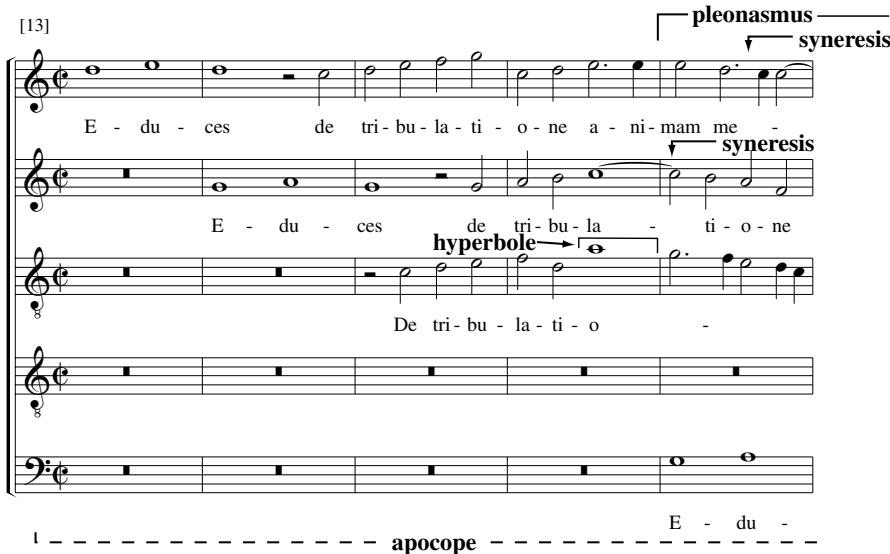
中文讲解
这是位于第 16 页的图像或乐谱占位符,紧跟在 Example 27.1 标题(P0072)之后。结合标题信息,该占位符很可能承载拉索《诗篇 143》第 13 节乐谱或 Burmeister 修辞格分析示意的一部分。由于内嵌图像数据已省略,具体谱例内容、对位细节或标注文字不可见,需查看原图方可确认。
补充说明
无额外补充;该条目仅作为版面占位符出现,无法在文本层面推断具体谱例内容。
第3段(P0074)
原文复述
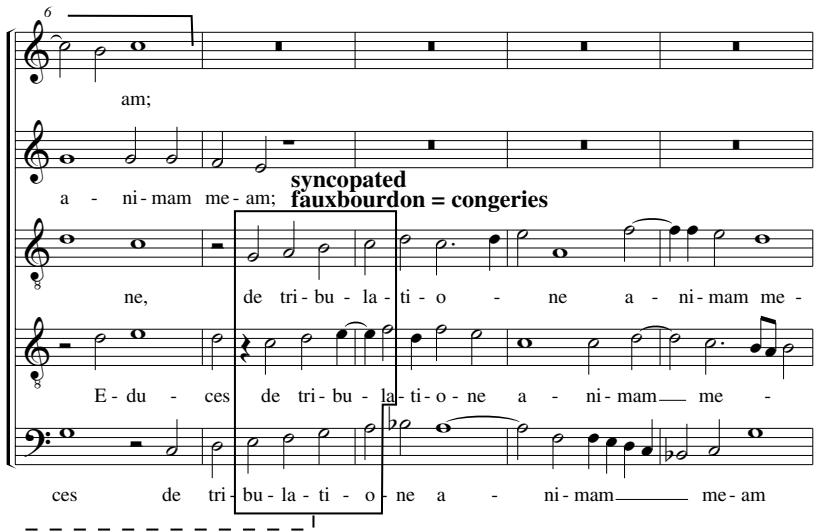
中文讲解
这是第 16 页上紧随 P0073 的第二个图像或乐谱占位符,仍属于 Example 27.1 在该页的版面组成。推测其作用是与前一占位符(P0073)一同构成完整的乐谱或分析图示(例如乐谱的上半/下半,或乐谱与对应修辞格标注),但具体内容因图像省略而无法核实,需查看原图。
第4段(P0075)
原文复述
Cambridge Histories Online © Cambridge University Press, 2008 https://doi.org/10.1017/CHOL9780521623711.029 Published online by Cambridge University Press
中文讲解
这是第 16 页的页脚,标明本页面所属内容出自 Cambridge Histories Online(剑桥历史在线),由剑桥大学出版社(Cambridge University Press)于 2008 年出版,并给出了对应的 DOI 链接(https://doi.org/10.1017/CHOL9780521623711.029)以及"由剑桥大学出版社在线出版"的字样。其版面功能是提供版权归属、出版年份、获取路径与数字对象标识符,方便读者在线查阅和引用本章原文。
补充说明
无额外补充;该条目属于版面元信息。
第5段(P0076)
原文复述
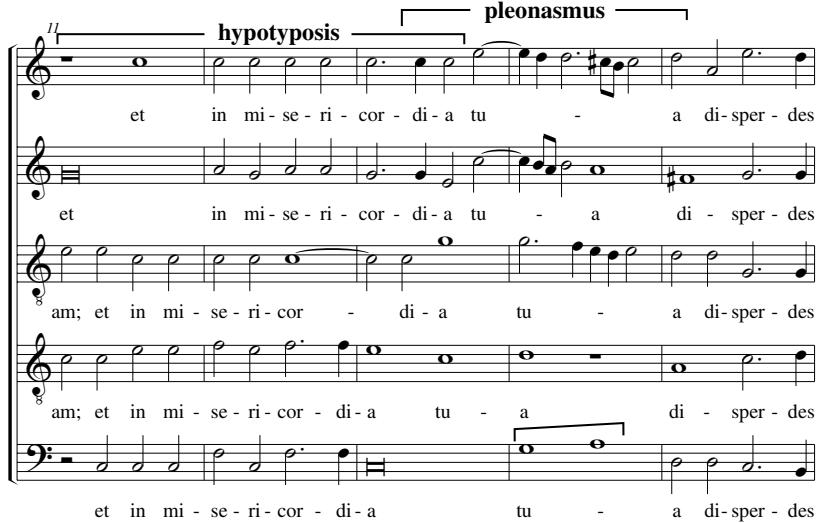
中文讲解
这是位于第 17 页的图像或乐谱占位符。结合本节跨页(16–17 页)且 Example 27.1 标题在第 16 页的事实,该占位符很可能属于 Example 27.1 在第 17 页的延续部分(如乐谱的续页、对位段落或 Burmeister 分析的延伸)。由于图像数据已省略,实际谱例与标注内容不可见,需查看原图方可确认。
第6段(P0077)
原文复述
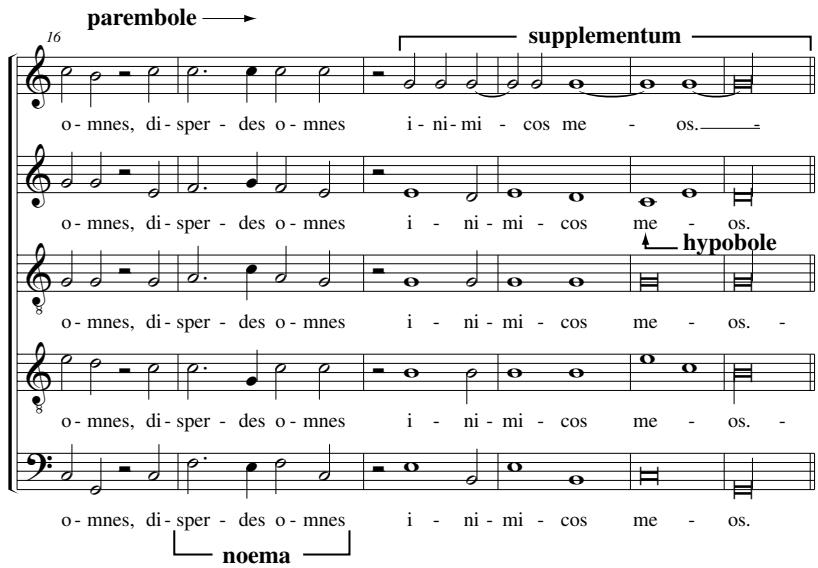
中文讲解
这是第 17 页上紧随 P0076 的第二个图像或乐谱占位符,与 P0076 一起构成第 17 页 Example 27.1 延续内容的版面。推测其与 P0076 配合呈现完整的乐谱片段或分析图示,但具体细节因图像省略而无法核实,需查看原图。
第7段(P0078)
原文复述
Cambridge Histories Online © Cambridge University Press, 2008 https://doi.org/10.1017/CHOL9780521623711.029 Published online by Cambridge University Press
中文讲解
这是第 17 页的页脚,与第 16 页页脚(P0075)内容完全一致:标明本节内容出自 Cambridge Histories Online,剑桥大学出版社 2008 年出版,并提供 DOI(https://doi.org/10.1017/CHOL9780521623711.029)与在线出版信息。其作用是确认第 17 页同样归属同一出版条目,方便读者跨页引用。
补充说明
无额外补充;该条目属于版面元信息。
脚注 / 边栏 / 图表 / 附加信息(如有)
本节小节标题虽提及 Table 27.1、Figurenlehre 的边界与 Example 27.1(Lasso),但 source_paragraphs 实际仅包含:Example 27.1 的标题文字(P0072)、第 16 页与第 17 页的图像/乐谱占位符(P0073、P0074、P0076、P0077)以及两页的 Cambridge Histories Online 页脚(P0075、P0078)。本节中未出现 Table 27.1 的可见条目文字,也未出现关于 Figurenlehre 解释边界的任何明文陈述;任何关于"Figurenlehre 局限"或与 Table 27.1 的互文判断都不在源段落范围内,不能作为本节作者原意加以断言。
💡 本节核心要点
- 本节的核心可见条目是 Example 27.1 的标题,明确说明该例的分析对象为拉索(Lasso)所谱《诗篇 143》第 13 节,所用方法为 Burmeister 的修辞格体系。
- Example 27.1 的内容在版面由第 16、17 页的多块图像/乐谱占位符承载(P0073、P0074、P0076、P0077),但因图像省略,具体谱例与标注细节不可见,需查阅原图。
- 两页的页脚(P0075、P0078)一致标明本节内容出自 Cambridge Histories Online,剑桥大学出版社 2008 年出版,DOI 为 https://doi.org/10.1017/CHOL9780521623711.029。
- 在所给 source_paragraphs 范围内,不存在关于 Figurenlehre 解释边界或 Table 27.1 的可引述文字;本节的实际可证内容仅限于上述标题、占位符与页脚。
- 因此本节的教学解读必须严格限制在 Example 27.1 标题所给出的事实要素内,不得补写原文未给出的理论断言。
🔑 关键术语
- Example 27.1:本节呈现的编号为 27.1 的示例条目,是小节标题中明示要展示的对象;其标题声明使用 Burmeister 的 figures 分析 Lasso《诗篇 143》第 13 节。
- Lasso:指文艺复兴晚期作曲家 Orlando di Lasso(拉索),本节 Example 27.1 的分析对象为其《七首忏悔诗篇》中对《诗篇 143》的谱写。
- Seven Penitential Psalms:《七首忏悔诗篇》,拉索的作品集,Example 27.1 所分析的第 13 节属于该集中的《诗篇 143》谱曲。
- Psalm 143:《诗篇》第 143 首,Example 27.1 聚焦于其中第 13 节(verse 13)的对位/修辞格分析。
- Burmeister’s figures:Burmeister(安得烈亚斯·布迈斯特)的修辞格体系,Example 27.1 据此对拉索谱例进行标注与分析;figures 在本节语境中即 Burmeister 体系内的修辞—对位手法类别。
- Figurenlehre:修辞格学/对位格理论,与 Burmeister 的修辞格体系密切相关的概念;本小节标题虽提及,但 source_paragraphs 中并无任何关于其"边界"或"局限"的明文陈述,不应据此做出原文未支持的论断。
- Cambridge Histories Online:剑桥大学出版社的在线历史学术资源平台,本节内容据页脚属其 2008 年出版的条目,DOI 为 10.1017/CHOL9780521623711.029。
S10 Christoph Bernhard
第1段(P0079)
原文复述
Christoph Bernhard
中文讲解
This line is a second-level Markdown heading functioning as the section title. It announces the shift in the chapter’s narrative: the preceding section introduced Burmeister’s Figurenlehre, and this section moves forward to Christoph Bernhard, the theorist who adapted the Figurenlehre to the newer seventeenth-century Italian styles. The heading establishes that the following paragraphs will treat Bernhard as a new stage in the development of musico-rhetorical theory rather than a mere continuation of Burmeister.
第2段(P0080)
原文复述
A new stage of musico-rhetorical theory was initiated in the mid-seventeenth century by Christoph Bernhard (1628–92), a North German who was a student of Heinrich Schütz but also studied in Italy in the 1650s, and who definitively adapted the Figurenlehre to the newer Italian styles. Bernhard was not the first German theorist after Burmeister to use musical figures in the teaching of composition. A number of theorists in the first half of the century took up and elaborated Burmeister’s idea, including Johannes Nucius (1613), Joachim Thuringus (1624), and Athanasius Kircher (1650). But it was Bernhard who ultimately was most successful and influential in adapting the notion of musical figures to a radically changing musical style in the seventeenth century.
中文讲解
本段确立Bernhard在音乐修辞理论史中的位置。中心主张有三层:第一,时间节点是十七世纪中叶,作者用mid-seventeenth century把Bernhard定位为一个新阶段的开启者,而非Burmeister的简单延续。第二,Bernhard的特殊资质在于双重师承——他是Schütz的学生(北德传统),又在1650年代赴意大利学习(新风格来源),这使他有能力把Figurenlehre与意大利风格嫁接。第三,作者承认Bernhard并非第一个接过Burmeister旗号的人,Nucius(1613)、Thuringus(1624)、Kircher(1650)等人在此前都曾推进过这一观念;但他强调Bernhard是其中最成功、影响最深远的那个。
本段的论证策略是"先让步后加冕”:先承认前驱,再以but转折突出Bernhard的特殊地位。这种写法暗示作者认为,理解Bernhard必须同时看到继承与突破两个维度。对后面的段落而言,本段给出了Bernhard必须满足的两个条件——他既能与北德Figurenlehre传统接续,又能解释正在剧烈变化中的十七世纪音乐风格。
补充说明
无额外补充。括号中的生卒年1628–92属作者对Bernhard生卒年的标识;1550年代意大利留学经历由脚注20补充。
第3段(P0081)
原文复述
Bernhard, working in North Germany in the decades just after the publication of Kircher’s Musurgia universalis in 1650, made style the very foundation of his classificatory system. He retained, perhaps unconsciously, an underlying link to the Burmeister tradition, in that he saw musical figures as ornamenting a plain, diatonic musical style. But now, that plain style is explicitly identified as an actual style in the real musical world: the stylus gravis, the prima prattica. Bernhard’s stylus gravis is not completely unornamented, as was Burmeister’s presumed underlying diatonic homophony, for it allows four simple figures, which are for him contrapuntal elaborations: the unaccented and accented passing tones, and the suspension and rearticulated suspension (transitus, quasi-transitus, syncopatio, quasi-syncopatio; see Table 27.2 for Bernhard’s figures in the Tractatus). Style in fact becomes the criterion for the classification of figures. In the Tractatus, Bernhard recognizes, in addition to the stylus gravis, two more modern styles – the stylus luxurians communis (seconda prattica, church style) and the stylus luxurians theatralis (seconda prattica, theatrical style). For each of these styles he gives a list of acceptable expressive figures, virtually all of which are dissonant figurations of the seconda prattica, with the more radical treatments of dissonance being reserved for the theatrical, as opposed to the church, style.
中文讲解
本段是全节的技术核心,揭示Bernhard的Figurenlehre与Burmeister的关键差异。中心主张是:Bernhard把"风格"本身作为分类的根基,而不只是装饰理论的附属物。
具体而言,作者区分了三个层次。其一,Bernhard与Burmeister的延续:两人仍把"装饰plain diatonic风格"理解为figure的功能。其二,关键突破:Bernhard把这个plain风格从假设性的对位背景,升格为现实世界中的真实风格——stylus gravis(prima prattica)。这是认识论上的跃迁,因为装饰对象不再是无形的范型,而是可指认的实践。其三,stylus gravis并不等于"无装饰”,它本身允许四种对位性elaboration:transitus(非重拍经过音)、quasi-transitus(重拍经过音)、syncopatio(延留)、quasi-syncopatio(再发音延留)。这四种figure本质上都是简单的不协和音处理,把它们纳入stylus gravis,意味着Bernhard承认"庄严风格"本身就具备最低限度的修辞张力。
第二层突破是三分的风格体系。除了stylus gravis,《Tractatus》还承认stylus luxurians communis(第二实践,教会风格)和stylus luxurians theatralis(第二实践,戏剧风格)。每种风格都有可接受的expressive figures列表,几乎都是seconda prattica的不协和音figurations;而更激进的不协和音处理专属于戏剧风格,而非教会风格。这意味着:figure的合法性不取决于自身的修辞外观,而取决于它所属风格的修辞边界。
作者特意用perhaps unconsciously标注Bernhard与Burmeister传统的联系,提示这种延续可能是隐性的、未经反思的。这种措辞帮助读者意识到:Bernhard的创新虽然幅度大,但他对"plain风格需要被装饰"这一前提并未做彻底反思。
补充说明
transitus、quasi-transitus、syncopatio、quasi-syncopatio四个拉丁术语分别对应非重拍经过音、重拍经过音、延留、再发音延留,是Bernhard在《Tractatus》中界定的最基础的对位elaboration。Table 27.2为原书图表,本节未提供该表内容。
第4段(P0082)
原文复述
Bernhard’s Figurenlehre has the advantage over Burmeister’s – and over those of his other predecessors as well – of being more logically consistent. His set of figures is no longer a grab-bag of unrelated devices (of melody, harmony, counterpoint, texture,
中文讲解
本句是跨页段落的开头,与P0089段共同构成一个完整论述。句子本身提出一个评价性主张:Bernhard的Figurenlehre比Burmeister以及其他前辈的版本更具有逻辑一致性。作者用grab-bag(杂烩)一词刻画前人体系的弱点:那些figure(涉及旋律、和声、对位、织体等不同维度)之间缺乏统一的组织原则。这一比喻为接下来P0089段对Bernhard体系逻辑结构的揭示做了铺垫。
补充说明
本段在原书中与P0089段属于同一段落,因排版分页而被拆开;处理时按输入中出现的paragraph_id分别成段,但其论证连续性需在中文讲解中向读者点明。
第5段(P0083)
原文复述
20 Bernhard’s works involving rhetorical figures are the Tractatus compositionis augmentatus, a manuscript treatise dating from around 1660, and the Ausführlicher Bericht vom Gebrauche der Con- und Dissonantien, from the late 1660s. Of the two, the Tractatus is the principal text, and was widely distributed and copied throughout Europe in the latter part of the seventeenth century. For modern editions of Bernhard’s treatises, see Die Kompositionslehre Heinrich Schützens, ed. Müller-Blattau, and the English translations by Walter Hilse in Music Forum 3.
中文讲解
这是正文P0080中提及Bernhard的两部修辞学著作时所用的脚注20。脚注首先给出文献的清单:《Tractatus compositionis augmentatus》(约1660年的手稿)和《Ausführlicher Bericht vom Gebrauche der Con- und Dissonantien》(1660年代末);其次明确两部著作的主从关系——《Tractatus》是主要文本,在十七世纪后期被广泛传抄;第三给出今人可用的现代版本:Müller-Blattau编辑的德文版《Die Kompositionslehre Heinrich Schützens》,以及Walter Hilse在《Music Forum》第3辑中的英译。这条脚注对正文起到资料定位作用,告诉读者Bernhard思想的物质载体是什么,以及在哪里可以读到这些文本。
补充说明
脚注编号与正文P0080末尾的20相对应,构成来源性脚注。
第6段(P0084)
原文复述
21 On the Figurenlehre of Nucius, Thuringus, and Kircher, see Bartel, Musica poetica, pp. 99–111. 22 In his later treatise, Ausführlicher Bericht vom Gebrauche der Con- und Dissonantien, Bernhard retreated from his earlier stylistic classifications in the Tractatus, since the categories drawn there were more applicable to Italian than to German music. See Bartel, Musica poetica, pp. 116–17. For Bernhard’s figures, see Bernhard, Tractatus, pp. 56–121.
中文讲解
这条合并的脚注承担两项任务。脚注21对应正文P0080中提到的Nucius、Thuringus、Kircher三人,将他们各自的Figurenlehre研究指向Bartel《Musica poetica》第99–111页,作为前驱者研究的延伸参考文献。
脚注22对应正文P0081中关于《Tractatus》风格分类的论述,补充了一个重要修正:Bernhard在其后期著作《Ausführlicher Bericht》中实际上从《Tractatus》的风格分类有所后退,理由是《Tractatus》中所划分的范畴更适用于意大利音乐,而非德国音乐。这一脚注为正文中stylus gravis / luxurians communis / luxurians theatralis的三分体系加上了限定——它并非Bernhard的终极立场,而是一种带有意大利音乐偏好的方案。脚注还指向Bartel第116–17页,以及《Tractatus》文本第56–121页作为figure本体的出处。
补充说明
两条脚注编号与正文P0080末21和P0081末22相对应,分别提供前驱者研究和Bernhard本人后续立场的参考文献。
第7段(P0085)
原文复述
Cambridge Histories Online © Cambridge University Press, 2008 https://doi.org/10.1017/CHOL9780521623711.029 Published online by Cambridge University Press
中文讲解
这是Cambridge Histories Online的数字版权与发布信息行,属于版面底部的来源标识,包括出版年份2008、DOI链接和在线发布平台声明。它对正文内容无解释作用,仅用于版本溯源。
补充说明
本行为页脚性质的非正文版面信息,不构成论证内容。
第8段(P0086)
原文复述
Music and rhetoric
中文讲解
这是紧随Bernhard讨论之后出现的二级标题,宣告本节主题由"Bernhard其人其说"转入更宏观的论题:音乐与修辞学的关系。这一标题既是Bernhard段的总结性出口,也是下文(实际已超出本节边界)展开音乐—修辞类比讨论的入口。
第9段(P0087)
原文复述
Cambridge Histories Online © Cambridge University Press, 2008 https://doi.org/10.1017/CHOL9780521623711.029 Published online by Cambridge University Press
中文讲解
这是另一行Cambridge Histories Online版权与发布信息,属于跨页重复出现的页脚标识,与P0085性质相同,仅作版面归属说明。
补充说明
本行为页脚性质的非正文版面信息,不构成论证内容。
第10段(P0088)
原文复述
Stylus luxurians theatralis
中文讲解
这是出现在p.20的小标题,文本为拉丁术语"Stylus luxurians theatralis”(戏剧性的华丽风格),对应P0081段Bernhard三分风格体系中的最末一级。它可能用作Example 27.2或Example 27.3分析片段的引子标签,把后续谱例限定在该风格范畴内讨论。
补充说明
无额外补充。该标题位置紧邻P0089段开头的Example 27.2引用,提示读者接下来的具体figurations分析针对的是戏剧风格。
第11段(P0089)
原文复述
imitation, form, silence, and so forth) that articulates expressive meaning by representing the heightening of some unstated norm. Rather, it is an organized collection of contrapuntal treatments that acquire meaning precisely because they represent the expressive ornamentation of a specific figure in the simpler stylus gravis. Bernhard sees the newer style literally in rhetorical terms: he writes of “the newly established and lately further embellished stylus recitativus, that . . . may indeed be compared to a rhetoric, in view of the multitude of figures.” He makes this rhetorical – and historical – connection explicit in his presentation of the figures, in that for each figuration in the new stylus luxurians, he gives a hypothetical origin in the stylus gravis (see Example 27.2). Bernhard, as Bartel aptly notes, “updates the Figurenlehre, placing it squarely in the context of mid-seventeenth-century stylistic trends without breaking ties to the past.” His figures, like Burmeister’s, had the prescriptive intent of reifying for young composers – though also composers of a later generation – techniques that they might not otherwise have thought of. Used descriptively, as an analytical tool, they are best tailored for the recitative style. Again, like Burmeister’s figures, they may seem to the modern analyst to focus too exclusively on the musical surface, as will be evident from the analysis of an excerpt from Buxtehude cantata O dulcis Jesu in Example 27.3. But they do help to clarify real compositional techniques resulting from the German adaptation of the seconda prattica, and they stand as testament to the contribution of an original and musical mind to the Figurenlehre tradition.
中文讲解
本段与P0082合为一段,承接其开头句"Bernhard的Figurenlehre具有逻辑一致性"展开论证。中心主张是:Bernhard体系的逻辑一致性来自一个统一原则——所有figure都通过对stylus gravis中某个具体figure的expressive ornamentation来获得意义。
第一层论证是结构对比。Burmeister的figure是一个杂烩集合(grag-bag),包括旋律、和声、对位、织体、模仿、曲式、silence等异质维度,靠"代表某种未明言规范的强化"来获得表情意义——这是一种相对松散的语义原则。Bernhard则把figure组织为对位处理(contrapuntal treatments)的有序集合,每个figure的意义都通过其与stylus gravis中某个特定figure的对应关系确立。换言之,意义不再来自"对模糊规范的偏离”,而来自"对具体基底的装饰"。这是更高阶的逻辑。
第二层论证是Bernhard的自我理解。他把新风格视为修辞学的具象化:引文中他将stylus recitativus(宣叙风格)直接比作修辞学,强调figure之"多"。这是一种修辞学的隐喻转向——figure不再仅是装饰单位,而是与雄辩术中的figure在结构上同构。这种修辞—历史的连接还体现在操作层面:每当他在stylus luxurians下列出一个新figuration,他都会给出它在stylus gravis中的hypothetical origin(Example 27.2所示)。这等于在教学层面让每个修辞手势都回溯到一种简化的源头,从而保证体系的历史纵深。
第三层是评价与限制。作者援引Bartel的概括——“更新Figurenlehre,置于十七世纪中期风格潮流之中而不割断与过去的联系”,并指出Bernhard的figure与Burmeister的figure一样具有规范性意图(prescriptive intent):它们试图把年轻作曲家(甚至后辈作曲家)原本未必会想到的技术固化为可学习的形式。这是修辞学教学传统的典型姿态——把口传或直觉的修辞技巧编码为可讲授的规则。
第四层是现代分析视角的保留意见。作为描述性工具,这些figure最适合recitative风格;与现代分析相比,它们似乎过度聚焦于音乐的表层(musical surface),Buxtehude康塔塔O dulcis Jesu的分析(Example 27.3)将展示这一点。尽管如此,作者仍肯定其价值:它们有助于澄清德国作曲家在adaptation of the seconda prattica过程中所产生的真实作曲技术,并作为一位原创且具音乐感的心灵对Figurenlehre传统的贡献的见证。
这一段的功能是为Bernhard的体系做综合评判:既点出其逻辑优胜,也明确其历史条件(recitative风格)及其分析局限(表层性)。
补充说明
原文"O dulcis Jesu"中Buxtehude的拼写为"Buxtehude s cantata",应为排版遗漏撇号所致,此处按原样保留并理解为Buxtehude的康塔塔O dulcis Jesu。Example 27.2和Example 27.3为原书谱例,本节输入未提供谱例内容,按指示不作猜测。
第12段(P0090)
原文复述
Yet Bernhard’s connection to the classical traditions of German rhetoric is les
中文讲解
这是另一个跨页段落的开头,与P0090之后的内容(已超出本节边界)合为一个完整句子。句子以Yet(然而)转折词开头,暗示作者将从Bernhard与德国古典修辞传统的联系不足这一角度,对前文做出限定性的评价。文本在les[s]处被截断,应为less developed、less direct或类似措辞,表明Bernhard虽然把新风格视为修辞性的,但他与德语古典修辞学传统的连接并不像乍看之下那样直接。这一段的功能是预告后文即将展开的限制性讨论。
补充说明
本段在原书中未在本节范围内结束,其后续内容由后续小节承担。
第13段(P0091)
原文复述
23 Bernhard, Bericht (Hilse trans., p. 90). 24 Bartel, Musica poetica, p. 118.
中文讲解
这是两条短小的来源性脚注。脚注23指向P0089段中Bernhard关于stylus recitativus与修辞学类比的直接引文,来源为Hilse英译的《Bericht》第90页——这意味着那段引文并非出自主要文本《Tractatus》,而是出自后期著作《Bericht》,作者据此选择脚注引用。脚注24指向Bartel《Musica poetica》第118页,对应P0089段中"updates the Figurenlehre…“这一概括性引文,作为Bartel评价Bernhard立场的二手出处。两条脚注共同为P0089段的修辞性引述提供精确的文献定位。
补充说明
脚注编号分别对应P0089段中两处23和24标记。
第14段(P0092)
原文复述
Cambridge Histories Online © Cambridge University Press, 2008 https://doi.org/10.1017/CHOL9780521623711.029 Published online by Cambridge University Press
中文讲解
这是本节最后一行的Cambridge Histories Online版权与发布信息,与P0085、P0087性质相同,为重复出现的页脚标识,仅作版面归属说明。
补充说明
本行为页脚性质的非正文版面信息,不构成论证内容。
脚注 / 边栏 / 图表 / 附加信息(如有)
本节附加材料包括三处脚注(编号20、21、22合并于P0084;编号23、24合并于P0091)和三次Cambridge Histories Online版权与DOI行(出现在P0085、P0087、P0092)。脚注20为正文P0080的来源性脚注,给出Bernhard两部修辞学著作(《Tractatus compositionis augmentatus》和《Ausführlicher Bericht vom Gebrauche der Con- und Dissonantien》)的成书年代、流传情况及现代版本(Müller-Blattau德文版、Hilse英译)。脚注21为P0080的前驱者研究脚注,指向Bartel《Musica poetica》第99–111页。脚注22为P0081风格分类的限定性脚注,提示Bernhard在后期《Bericht》中曾后退《Tractatus》的风格分类,并指出Bartel《Musica poetica》第116–17页以及《Tractatus》第56–121页。脚注23、24为P0089段两处直接引文的文献定位。版本信息行重复出现,仅作发布来源说明,不参与论证。原文还提到Example 27.2、Example 27.3与Table 27.2,本节输入未提供其内容,需查看原书图例。
💡 本节核心要点
- Bernhard(1628–92)是十七世纪中叶把Figurenlehre与新意大利风格嫁接的最具影响力的德国理论家,但他不是Burmeister之后第一位推进该观念的人;前驱者包括Nucius(1613)、Thuringus(1624)、Kircher(1650)。
- Bernhard体系的关键突破是把"风格"本身升格为分类根基:plain的diatonic风格不再是假设性背景,而被识别为现实中的stylus gravis(prima prattica);同时他在stylus gravis内部允许四种对位elaboration(transitus、quasi-transitus、syncopatio、quasi-syncopatio)。
- Bernhard在《Tractatus》中给出三分风格体系——stylus gravis、stylus luxurians communis(教会)、stylus luxurians theatralis(戏剧)——并按风格分配可接受的expressive figures;激进的不协和处理专属于戏剧风格;后期《Bericht》中他部分后退了这一分类,因为这些范畴更适用于意大利而非德国音乐。
- Bernhard的Figurenlehre比Burmeister的版本更具逻辑一致性:figure不再是无序的杂烩,而是有组织的对位处理集合,每个figure通过它对stylus gravis中某具体figure的expressive ornamentation来获得意义。
- Bernhard明确把新风格喻为修辞学(“the newly established… stylus recitativus… may indeed be compared to a rhetoric”),并在每个新stylus luxurians的figuration下标注其在stylus gravis中的hypothetical origin,使体系同时具备修辞与历史双重纵深。
- 该体系与Burmeister的figure一样具有规范性意图(prescriptive),目的是把作曲技术编码为可教学的形式;作为描述性分析工具,它们最贴合recitative风格,但可能过度聚焦于音乐的表层,分析价值在Example 27.3(Buxtehude康塔塔O dulcis Jesu)中可见。
🔑 关键术语
- Figurenlehre:音乐修辞学中的"图形学说”,指对音乐修辞图形(musical figures)的系统列举与教学。本节中指Burmeister以来的德国传统,并由Bernhard更新为基于风格分类的体系。
- stylus gravis / stylus luxurians communis / stylus luxurians theatralis:Bernhard在《Tractatus》中划分的三种风格层级:庄严风格(prima prattica)、华丽的共同风格(seconda prattica,教会)和华丽的戏剧风格(seconda prattica,戏剧);figure按所属风格被分类与限定。
- transitus / quasi-transitus / syncopatio / quasi-syncopatio:Bernhard在stylus gravis中允许的四种基础对位elaboration:非重拍经过音、重拍经过音、延留、再发音延留;它们是连接plain风格与figure体系的最小不协和单位。
- prima prattica / seconda prattica:分别指第一实践(较严格的传统对位风格)与第二实践(更自由、允许不协和音与独白宣叙的风格);在Bernhard体系中对应stylus gravis与两种stylus luxurians。
- stylus recitativus:宣叙风格,是Bernhard眼中可与修辞学类比的新风格;他在《Bericht》中将其形容为"newly established and lately further embellished",并直接比作修辞学。
- Tractatus compositionis augmentatus:Bernhard约1660年的手稿《Tractatus compositionis augmentatus》,是本节讨论的三分风格体系与figure列表的主要出处,十七世纪后期在欧洲被广泛传抄。
- Ausführlicher Bericht vom Gebrauche der Con- und Dissonantien:Bernhard 1660年代末的另一部修辞学相关著作;本节脚注22指出Bernhard在此书中部分后退了《Tractatus》的风格分类。
- prescriptive intent:作者用来说明Bernhard与Burmeister的figure体系共同具有的规范性目的——把作曲家可能未曾意识到的技术固化为可讲授的规则。
S11 [描述性拆分] Bernhard’s examples and Example 27.3 (Buxtehude)
第1段(P0093)
原文复述
Example 27.2 Bernhard, Tractatus compositionis augmentatus (Hilse translation, p. 117). Examples 1a, 2a, and 3a give excerpts from the stylus luxurians theatralis. Examples 1b, 2b, and 3b give the more fundamental stylus gravis or prima prattica figurations that underlie the more ornate seconda prattica ones.
中文讲解
这一段是对例27.2的题注(caption),交代所引材料的来源与对照结构。来源是Bernhard的《Tractatus compositionis augmentatus》,引自Hilse英译本第117页;题注把六个乐谱小例按a/b两栏分成了三组对照——上栏(1a、2a、3a)取自stylus luxurians theatralis(剧场体),下栏(1b、2b、3b)是更根本的stylus gravis,也即prima prattica(第一实践)的音型化处理。它在这本Cambridge音乐史章节里的作用,是要把Bernhard的两套技法术语并置呈现:上面的seconda prattica(第二实践)华丽花唱是“表层”,下面的prima prattica音型是“底层”。这意味着读者读谱时不应只看表层装饰音,而要先找回其基本节奏轮廓,这才是Bernhard论证的核心方法。
补充说明
术语“stylus luxurians theatralis”“stylus gravis”“prima prattica”“seconda prattica”在本节出现,但其相互关系须依赖前文S10等小节交代的框架;本段只承担题注与图示配对的提示作用,故不另补外部背景。
第2段(P0094)
原文复述
[Image placeholder — (a); 1.] (Embedded image data omitted; position and caption retained.)
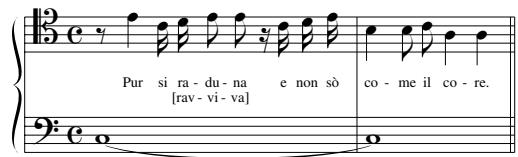
中文讲解
这是一处乐谱/表格占位符,对应P0093题注中“1a”位置的图示:取自stylus luxurians theatralis的第一段摘例。图内细节(具体小节、音型)在文本输入中已省略,讲解无法转写谱面内容,只能依据题注明示其归属体裁与对照角色。
补充说明
需要查看原书中此图方可进行谱例层面的细节分析,本段无可独立讲解的文本主张。
第3段(P0095)
原文复述
[Image placeholder — (b)] (Embedded image data omitted; position and caption retained.)
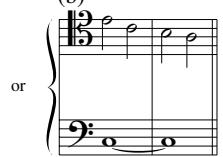
中文讲解
此占位符对应题注中“1b”位置:与P0094同一组摘例的下栏版本,呈示其底层prima prattica / stylus gravis音型。具体谱面内容在输入中省略,仅能确认它在版式上与上栏例1a构成上下对照。
补充说明
无额外补充;本段功能与P0094完全对偶,仅作为图示序列的一部分。
第4段(P0096)
原文复述
[Image placeholder — (a); 2.] (Embedded image data omitted; position and caption retained.)
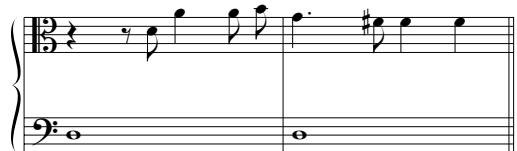
中文讲解
此占位符对应题注中“2a”位置,为stylus luxurians theatralis的第二段摘例的上栏版本。它延续了P0094的角色:在三组对照中提供第二个“华丽表层”的样本,用以与下栏基本音型作并置展示。
第5段(P0097)
原文复述
[Image placeholder — (b)] (Embedded image data omitted; position and caption retained.)
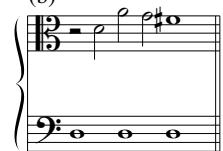
中文讲解
此占位符对应题注中“2b”位置,为同一组对照的下栏版本——展现该华丽片段在stylus gravis / prima prattica层面上的底层音型化形态。原文输入未提供谱面细节,故不复述具体音符;讲解只能讲明其版面对位功能。
第6段(P0098)
原文复述
Cambridge Histories Online © Cambridge University Press, 2008. https://doi.org/10.1017/CHOL9780521623711.029. Published online by Cambridge University Press.
中文讲解
这是Cambridge Histories Online平台的版权与版本元数据,置于第21页底部。内容包括:版权年份2008、DOI链接、出版方Cambridge University Press及其在线出版标识。该信息说明本章出自剑桥历史在线的电子资源,引用时应通过DOI定位;它属于出版来源声明,并非论证文字,故不参与音乐分析推理。
补充说明
页面级版权页眉对正文论证无贡献;其作用是标明数字版本出处与许可状态。
第7段(P0099)
原文复述
Example 27.3 Analysis of Buxtehude’s Cantata O dulcis Jesu, mm. 249–61, using Bernhard’s figures (no prima prattica or stylus gravis figures are marked here, only seconda prattica figures of the stylus luxurians communis and the stylus luxurians theatralis)
中文讲解
这是例27.3的题注,分析对象是Buxtehude的康塔塔《O dulcis Jesu》,具体片断为第249–261小节,分析工具为Bernhard的“figures”(即音型/格律术语体系)。题注进一步明确一个关键限定:此处只标注seconda prattica层面上的stylus luxurians communis(共同华丽体)与stylus luxurians theatralis(剧场华丽体)两类音型,刻意不标注prima prattica或stylus gravis层面的音型。这一限定提示读者:本例的功能不是展示底层基本音型,而是聚焦在第二实践的装饰维度上,因此阅读时应将其与例27.2那种上下栏对照阅读方式区分开来——例27.2强调底层对照,例27.3只聚焦装饰表层。
补充说明
无额外补充;本段的限定条件已构成完整的题注信息,无须引入外部研究文献。
第8段(P0100)
原文复述
[Image placeholder — page 22 image or musical example] (Embedded image data omitted; position and caption retained.)
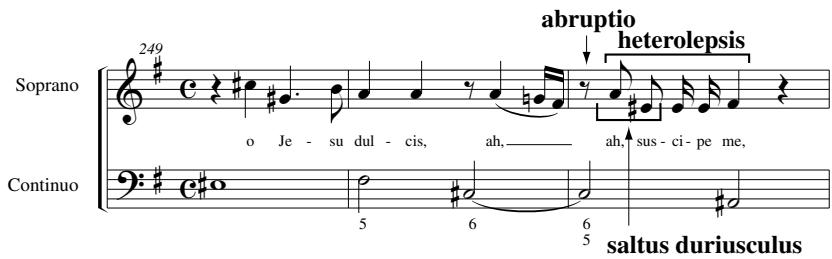
中文讲解
此占位符位于第22页,承接例27.3的题注(P0099),是Buxtehude《O dulcis Jesu》第249–261小节分析图示的第一部分。原文未给出可阅读的谱面或分析标记细节,故本段只能表明其版面位置与功能:它是该例分析图示序列的成员之一,专门呈现seconda prattica的stylus luxurians音型。
补充说明
需要查看原图方可逐音型说明。
第9段(P0101)
原文复述
[Image placeholder — page 22 image or musical example] (Embedded image data omitted; position and caption retained.)
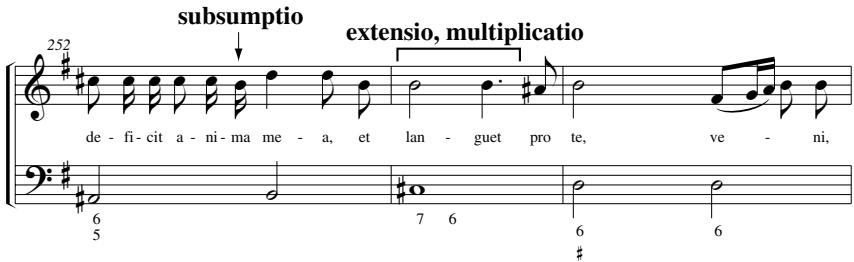
中文讲解
此占位符为第22页分析图示序列的第二部分,继续例27.3对Buxtehude该段的分析,仅标注communis与theatralis两类华丽体音型。原文本段无谱面内容可供讲解。
第10段(P0102)
原文复述
[Image placeholder — page 22 image or musical example] (Embedded image data omitted; position and caption retained.)
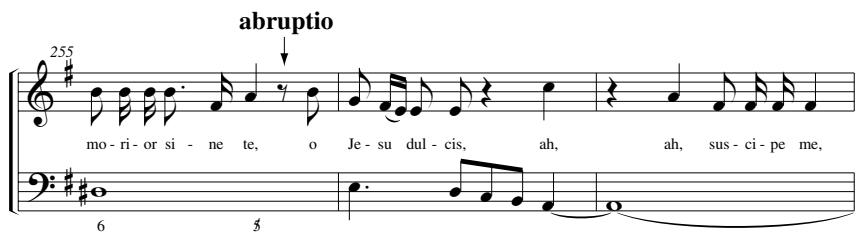
中文讲解
此占位符为第22页分析图示序列的第三部分,仍属例27.3的图示群;据题注限定,仅呈现seconda prattica层面的华丽体音型,prima prattica或stylus gravis不另作标记。谱内细节不可见,故不复述具体音符。
第11段(P0103)
原文复述
[Image placeholder — page 22 image or musical example] (Embedded image data omitted; position and caption retained.)
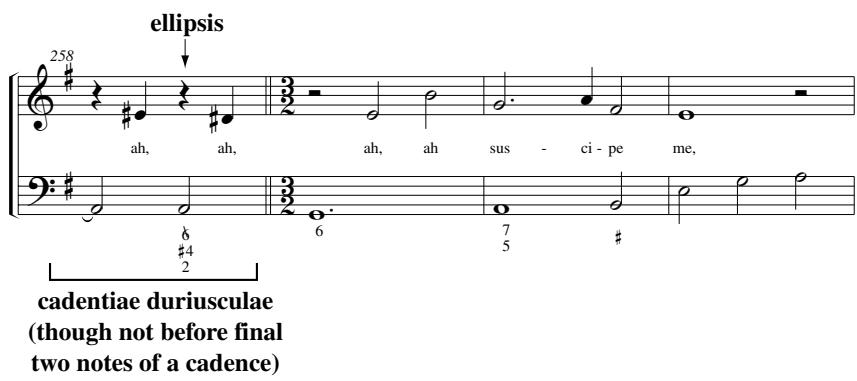
中文讲解
此占位符为第22页分析图示序列的第四部分(末段),功能与前三个占位符一致:作为例27.3的图示群成员,仅呈现stylus luxurians communis与stylus luxurians theatralis所标记的音型分析。
第12段(P0104)
原文复述
Cambridge Histories Online © Cambridge University Press, 2008. https://doi.org/10.1017/CHOL9780521623711.029. Published online by Cambridge University Press.
中文讲解
这是第22页底部的版权与版本元数据页脚,与P0098相同:标明Cambridge University Press的版权年份2008、对应DOI及在线出版身份。该段对论证无贡献,但与P0098一道为前后两页提供统一的出处分隔。
补充说明
页脚版权声明;功能与P0098完全相同。
脚注 / 边栏 / 图表 / 附加信息(如有)
本节非正文内容集中体现为两类:其一,八个图像/乐谱占位符(P0094–P0097、P0100–P0103),其谱面细节因输入未提供而无法逐例解读;其二,第21页(P0098)与第22页(P0104)底部两次重复出现的Cambridge Histories Online版权与版本元数据,含DOI 10.1017/CHOL9780521623711.029与出版年份2008,作用是标明数字出版来源与版权状态。例27.2与例27.3的题注(P0093、P0099)则承担本节全部说明性正文的功能:前者以a/b对照方式同时呈现prima与seconda prattica两套音型,后者只标注seconda prattica中的communis与theatralis两类华丽体音型。
💡 本节核心要点
- 本节由两条主例题注统领:例27.2(Bernhard《Tractatus compositionis augmentatus》Hoseby英译本第117页摘例)以a/b上下对照呈现stylus luxurians theatralis与其底层stylus gravis / prima prattica音型。
- 例27.3将Bernhard的音型工具应用于Buxtehude康塔塔《O dulcis Jesu》第249–261小节,但只标seconda prattica层面的stylus luxurians communis与stylus luxurians theatralis两类音型,明确不标记prima prattica或stylus gravis。
- 两例在分析策略上互补:例27.2突出底层与表层的并置对照,例27.3专门聚焦第二实践的装饰维度。
- 图像/乐谱占位符在原书中以谱例形式出现,具体音型内容须依靠原图方可读出,本节文本无法替代之。
- 页脚版权元数据两次重复出现,作用是为前两页的电子版内容提供出版与版本依据。
🔑 关键术语
- stylus gravis / prima prattica:本节中指第一实践(prima prattica)对应的庄严体或基本体裁,被Bernhard作为更根本的音型化基底,其音型构成华丽表层(seconda prattica)之下的骨架。
- stylus luxurians theatralis / communis:本节中指第二实践中的两类华丽体——剧场华丽体与共同华丽体;例27.3只标记这两类音型,而不标注其底层第一实践音型,从而把分析焦点放在装饰表层。
- seconda prattica figures:本节中指Bernhard体系里属于第二实践的“音型/格律”类别,与prima prattica figures相对;例27.3的题注明确只标注这一类。
- Bernhard, Tractatus compositionis augmentatus:本节核心一手材料来源;Hilse英译本第117页为例27.2所引出处,其“figures”术语体系被用以分析Buxtehude的康塔塔段落。
S12 [描述性拆分] Bernhard’s musical language and the decline of rhetorical metalanguage
第1段(P0105)
原文复述
robust than his description of the recitative style as a “rhetoric” may suggest. He completely lacks the intellectual pretensions of Lippius and Burmeister, and he translates everything into musical terms. He retains, of course, the commitment to text-setting and loyalty to rhetoric that we would expect from a musica poetica theorist. But he often sounds far more like a musician speaking to musicians in a musical language than a musician co-opting rhetoric for use in a di◊erent art. Consider, for example, the matter of language. Bernhard, along with Herbst, was one of the first musica poetica theorists to write his treatises in German rather than in Latin. The change to the vernacular for music-theoretical treatises began to take place in the German tradition fifty to a hundred years after it did in other European countries. Seemingly unimportant in itself, the shift bespeaks a weakening of the ties to classical humanism, with its foundations in Greek and Latin, that were so dominant in Luther’s day, and in the time of Lippius and Burmeister. Furthermore, although Bernhard does use Latin rather than German terms for his figures, it is significant that he does not use the more esoteric Greek names. None of Burmeister’s original designations survive in Bernhard at all; and indeed, of all the musical devices to which the earlier theorist’s rhetorical names referred, only the passing tone and the suspension remain in Bernhard’s work. That such a radical change could take place in what is ostensibly the same tradition in a mere fifty years suggests, of course, that the tradition was by no means the hardened doctrine that it is sometimes thought to be. But it also suggests that in German theory, rhetoric, as a metalanguage for music, was beginning to give way to a more purely musical, or music-theoretical, metalanguage: that rhetoric, in European musical culture in general, and German musical culture in particular, provided a way for music theory to reorient itself in the wake of radically new musical styles, but that the descriptions that it o◊ered for musical phenomena were not so precise as those later developed in musical terms. Supporting this view is the fact that Bernhard’s names for figures are not really rhetorical terms at all: they are either standard musical terms of the time (e.g., transitus for passing tone, syncopatio for suspension) or Latin names that aptly describe a particular technique. Although they project the flavor of rhetoric, they seem far removed from the academic and humanistic patina of Burmeister’s figures. Indeed, one is tempted to wonder if Bernhard’s musical roots, like those of Schütz, really lie in Italy – in Zarlinian counterpoint and in the seconda prattica – rather than in Germany, and that his adaptation of musical figures was simply a way of packaging Italian ideas in a manner compatible with German tradition.25
中文讲解
本段集中论证 Bernhard 的音乐语言实质上脱离了早期德国修辞学派(如 Lippius 和 Burmeister)的语文学姿态,转而以音乐自身的术语思考音乐。
第一层论证:Bernhard 虽然仍属于 musica poetica 传统(保留对歌词配合和修辞学的忠诚),但他把一切都翻译成音乐术语,听起来更像是一位音乐家在用音乐语言与其他音乐家交谈,而非借用修辞学来描述另一种艺术。
第二层论证(语言层面):Bernhard 与 Herbst 是最早用德语而非拉丁语撰写音乐理论著作的 musica poetica 理论家之一。这一转向在德国比其他欧洲国家晚了 50 至 100 年,本身看似微不足道,却标志着与希腊—拉丁古典人文主义传统的纽带正在削弱——这种纽带在 Luther、Burmeister 时代曾主导理论写作。更关键的是,Bernhard 虽然对音乐手法仍使用拉丁名而非德语名,但他回避了 Burmeister 那些冷僻的希腊名称;Burmeister 自创的所有修辞性命名在 Bernhard 笔下一项也没有保留下来,先前修辞名称所覆盖的音乐现象中,只有“经过音”(passing tone)和“延留音”(suspension)以同名方式延续。
第三层论证(元语言层面):仅仅 50 年内“名义上同一传统”发生如此剧烈的变化,说明该传统并非人们有时所想象的僵化教条。在德国理论中,修辞学作为音乐的“元语言”(metalanguage)开始让位于更纯粹的音乐或音乐理论元语言。作者由此提出一个一般性论断:在欧洲音乐文化(尤其是德国音乐文化)中,修辞学曾为音乐理论提供了一条应对全新音乐风格的再定位之路,但它对音乐现象的描述并不像后来以音乐自身术语发展出的描述那样精确。
第四层论证(命名性质):Bernhard 给“音乐手法”所起的名字其实并非真正的修辞术语——要么是当时通行的标准音乐术语(如 transitus = 经过音,syncopatio = 延留音),要么是用以贴切描述某项技法的拉丁名。它们虽带有修辞的“味道”,却与 Burmeister 那些带有学究气和人文主义色彩的命名相去甚远。
第五层(推测性收尾):作者因此推测,Bernhard 的音乐根基与其说在德国,不如说与 Schütz 一样其实在意大利——即 Zarlino 的对位法和 seconda prattica(第二实践);他对“音乐手法”这一范畴的采用,不过是把意大利观念包装成与德国传统相容的形式。这一推测是脚注 25 指向的 Forchert 一文所讨论的核心问题。
段落逻辑:先以语言载体(德语 vs. 拉丁语/希腊语)的转移切入,再以命名层面(Burmeister 的希腊名几乎全部消失)加深,接着把这种变化上升到“修辞元语言让位于音乐元语言”的理论判断,最后提出 Bernhard 实质上属于意大利传统的假设。整段是在用具体证据支撑一个更大的论断:musica poetica 并非自始至终一以贯之的教条,而是一个会随音乐风格变化而调整其理论语言的动态传统。
补充说明
段中 transitus(经过音)和 syncopatio(延留音/切分音)作为 Bernhard 实际使用的标准音乐术语,对应了 Burmeister 修辞命名体系中唯二存活到 Bernhard 笔下的音乐现象。第二实践(seconda prattica)在此指 17 世纪初意大利作曲家(以 Monteverdi、Schütz 等为代表)所实践的、优先服从歌词表达与情感效果而非严格对位规则的做法,其理论代言人通常追溯至 Zarlino 的对位体系与 Monteverdi 的辩护。段尾的“包装意大利观念以兼容德国传统”这一假设,在脚注 25 引用的 Forchert 文献中获得进一步讨论。
第2段(P0106)
原文复述
25 On the claim that Schütz’s musical roots lie in Italy rather than Germany, see Forchert, “Heinrich Schütz und die Musica poetica,” p. 11.
中文讲解
这是正文段 P0105 末尾的脚注 25。它的功能是为作者关于 Schütz 音乐根基在意大利而非德国的推测提供文献出处与支撑,引向 Forchert 撰写的论文《Heinrich Schütz und die Musica poetica》第 11 页。它属于来源类脚注,而不是对正文论断的限定或反驳。
补充说明
此脚注只起文献指向作用,并不对 Bernhard 本人做出新主张;它支撑的是 P0105 末尾关于 Schütz 与 Bernhard 均源于意大利传统的并列假设。
第3段(P0107)
原文复述
It is hardly surprising that Bernhard, with his clear exposition of the relation between simple and more elaborate contrapuntal figurations, is the one theorist of the German musico-rhetorical tradition – and also the only theorist of the seventeenth century – singled out by Schenkerian theory as having something to say to us today: hence the translation of the entirety of the Tractatus in The Music Forum, a publication devoted for the most part to Schenkerian studies.
中文讲解
本段以“毫不奇怪”(It is hardly surprising)作出收束性论断,把 P0105 的论证与后世接受史衔接起来。
作者给出两层限定来凸显 Bernhard 的特殊地位:第一,他是德国音乐—修辞传统中唯一被 Schenkerian theory(申克分析理论)所拣选的代表;第二,他同时也是整个 17 世纪唯一被该理论拣选的代表——也就是说,无论在德国传统内部,还是在更广义的 17 世纪欧洲理论家中,Bernhard 都是独一份。
支撑这一判断的具体理由是:Bernhard 对“简朴对位装饰”与“更复杂对位装饰”之间关系的清晰阐述,与 20 世纪申克学派所关心的“对位层次的简化与延长”这一核心议题在方法论上具有亲和性。
作为该“被拣选地位”的具体表现,作者指出 Bernhard 整部《Tractatus》(即 Tractatus compositionis augmentatus)在《The Music Forum》上被完整翻译出版;而该刊物绝大部分内容专注于申克学派研究,因此此次翻译本身就构成 Bernhard 理论“仍能对当代说话”的物质证据。
本段在小节中承担结论性功能:先用 P0105 解释 Bernhard 为何偏离 Burmeister 式修辞元语言,再用本段说明这种偏离反倒让他的术语与方法更接近后世申克学派关心的“纯粹音乐”问题——语言形式的转变背后是理论关注点的实质性位移。
补充说明
Tractatus 在此处即 Bernhard 的《Tractatus compositionis augmentatus》;The Music Forum 是 20 世纪后期由申克学派主导的英文学术期刊,其上发表 Bernhard 译本本身即被作者用作“当代相关性”的客观指标。
第4段(P0108)
原文复述
Cambridge Histories Online © Cambridge University Press, 2008 https://doi.org/10.1017/CHOL9780521623711.029 Published online by Cambridge University Press
中文讲解
这是剑桥大学出版社《Cambridge Histories Online》平台的版权与出版标识行,附 DOI 链接,说明本章数字版于 2008 年由 Cambridge University Press 线上出版。该行为版面元素,不包含任何实质性论述。
补充说明
DOI(10.1017/CHOL9780521623711.029)是该章在 Cambridge Histories Online 中的唯一标识符,便于读者检索与引用。
脚注 / 边栏 / 图表 / 附加信息(如有)
本节包含一条脚注(编号 25,引向 Forchert《Heinrich Schütz und die Musica poetica》第 11 页),其作用是为正文末尾关于 Schütz(连带 Bernhard)音乐根基在意大利的推测提供文献来源。无其他图表、谱例或边栏材料。
💡 本节核心要点
- Bernhard 虽然名义上属于 musica poetica 传统,但实质上以音乐自身术语思考音乐,缺少 Lippius、Burmeister 那套人文主义修辞姿态。
- Bernhard 与 Herbst 是最早以德语撰写音乐理论著作的代表,该转向在德国比欧洲其他国家晚 50 至 100 年,标志着与古典人文主义纽带的削弱。
- Burmeister 自创的修辞性命名在 Bernhard 笔下几乎全部消失,先前以修辞命名覆盖的音乐现象中只有经过音和延留音得以延续。
- 作者据此提出:在德国理论中,修辞学作为音乐的元语言正让位于更纯粹的音乐理论元语言;修辞学曾帮助音乐理论应对新风格,但其描述精度不及后来以音乐术语发展出的描述。
- Bernhard 给音乐手法起的名字实为标准音乐术语(如 transitus、syncopatio)或描述技法的拉丁名,仅保留修辞外壳。
- 作者推测 Bernhard 的音乐根基其实在意大利(Zarlino 对位与 seconda prattica),对音乐手法范畴的采用是把意大利观念包装成与德国传统相容的形式(此推测在脚注 25 所引 Forchert 文献中获得支持)。
- Bernhard 对简朴与复杂对位装饰关系的清晰阐述,使他成为德国音乐—修辞传统乃至整个 17 世纪唯一被申克学派拣选的代表,《Tractatus》在《The Music Forum》的完整翻译即是其当代相关性的物质证据。
🔑 关键术语
- musica poetica:16–17 世纪德国音乐理论传统,强调作曲须服务于歌词与修辞表达;Bernhard 虽属此传统,但其语言实质已偏向纯音乐术语。
- metalanguage(元语言):用于描述另一套语言或实践的“语言”;本节指修辞学作为描述音乐的元语言,与后来更纯粹的音乐理论元语言相对。
- transitus:Bernhard 用以指“经过音”的拉丁术语,属于当时通行的标准音乐术语,而非修辞性命名。
- syncopatio:Bernhard 用以指“延留音/切分音”的拉丁术语,同为标准音乐术语,亦非修辞性命名。
- seconda prattica(第二实践):17 世纪意大利作曲家所奉行的实践取向:服从歌词与情感表达胜过严格对位规则;本节中用来定位 Bernhard 实际所属的意大利传统。
- Zarlinian counterpoint:以 Zarlino 对位规则为基础的对位体系,本节作为 Bernhard 音乐根基的意大利理论资源被提出。
- Schenkerian theory:20 世纪申克学派音乐分析理论;本节指出 Bernhard 是该学派从 17 世纪德国音乐—修辞传统中拣选的唯一代表。
S13 The waning of the rhetorical tradition
第1段(P0109)
原文复述
The waning of the rhetorical tradition
中文讲解
这是第13小节的标题。《剑桥音乐史述》(Cambridge History of Music)这一章以本节标题宣告了一个转折点:自此开始讨论音乐—修辞传统(musico-rhetorical tradition)如何在17世纪末、18世纪初走向衰落。标题中的“waning”(衰退、渐弱)一词点明本节的核心叙事方向——并不是突然断裂,而是逐渐失去其原本的文化承载力与理论创造力。
第2段(P0110)
原文复述
The final third of the seventeenth century and the first third of the eighteenth offer evidence of the apparent continued vitality of the Figurenlehre. Although no strikingly original thinkers emerged, each writer on the figures had a distinctive angle and list of figures. In general, the tendency, initiated by Bernhard, to write treatises in the vernacular rather than Latin gained strength, although works still appeared in Latin well into the eighteenth century. The principal Figurenlehre theorists of the period were Wolfgang Caspar Printz (1696), Johann Georg Ahle (1695–1701), Tomás Janowka (1701), Mauritius Vogt (1719), and Johann Gottfried Walther (1708 and 1732). Of these five, the most original and influential was Printz. Unlike previous writers, Printz was only interested in melodic, not harmonic or contrapuntal, figures. Indeed, none of his figures is a musico-rhetorical figure from the older musica poetica tradition; rather, they are melodic divisions or diminutions (Zertheilungen or Manieren), often simple embellishments or ornaments, given names from the new Italian style (e.g., tremolo, groppo, trillo, passaggio). Printz’s work marks the beginning of a historical process in which melodic embellishments and ornaments were added to the lists of musico-rhetorical figures. This harbingers the melody-dominated style that would come to the fore in the eighteenth century, when the older musico-rhetorical figures become conflated with the Manieren, the simple melodic diminutions (various types of turns, scalar passages, and so forth) that would be so central to both vocal and instrumental music in the galant period.
中文讲解
本段是本节的实质性开端,先以表面繁荣作为铺垫,再揭示繁荣之下的实质转向。
第一层主张:17世纪最后三分之一到18世纪最初三分之一,Figurenlehre(“辞格论”、音乐辞格学说)表面上仍然有活力,没有出现极具原创性的理论家,但每位作者都各有侧重和不同的“辞格”清单。这种表述的潜台词是——表面延续之下缺乏思想突破,原创性的缺席正是衰落的第一征兆。
第二层主张:语言层面的转变。由Bernhard开启的“用德语等民族语言而非拉丁文写作”的趋势继续加强,尽管拉丁文著作仍延续至18世纪。这看似语言技术问题,实则是修辞传统赖以生存的文化载体在改变:修辞学本是拉丁人文主义的知识载体,当母语写作成为常态,意味着它开始脱离学院—拉丁文的人文主义框架。
第三层主张(重点):作者列举五位Figurenlehre理论家——Wolfgang Caspar Printz(1696)、Johann Georg Ahle(1695–1701)、Tomáš Janowka(1701)、Mauritius Vogt(1719)、Johann Gottfried Walther(1708与1732)——并明确指出Printz是其中最原创、最具影响者。这一判断的依据在于:Printz只关心旋律层面的辞格(melodic figures),而非和声或对位层面的辞格。他的所谓“辞格”里,没有一项来自musica poetica传统中的音乐—修辞辞格(musico-rhetorical figure),而是旋律的细分或缩减(Zertheilungen或Manieren),往往只是一些简单的装饰或加花,并被冠以新意大利风格的名字(tremolo、groppo、trillo、passaggio)。
这里需要特别留心作者的论证用意:他把Printz的贡献定位为“辞格名单开始混入旋律装饰”的起点,而不是新的音乐—修辞理论的延续。这是一次范畴的根本滑动——原本与“情感—修辞表达”相关的辞格概念,开始被等同于“旋律装饰”。Printz的工作因此被作者视为一个历史过程的起点:到18世纪,旧的音乐—修辞辞格将与Manieren(旋律性的简单缩减,包括各种回音、级进走句等)合流,成为华丽风格(galant period)声乐与器乐的核心元素。
简言之:本段的结论是一个隐晦但关键的诊断——辞格学说看似仍然存在,但其核心对象已经从“修辞表达”滑向了“旋律装饰”,这种范畴替换正是musico-rhetorical传统走向衰落的内在征兆。
补充说明
Manieren(德语“装饰、风格化走句”)与Zertheilungen(“细分、分割”)在本段中作为同义词出现,特指17、18世纪之交意大利风格传入德语区后被命名的旋律装饰动作;musica poetica是自文艺复兴晚期至18世纪初德语区以修辞学为模型研究“作曲”的一整套传统。
第3段(P0111)
原文复述
By the time of Johann Mattheson, whose active career encompassed fully the first six decades of the eighteenth century, Johann Mattheson, the musico-rhetorical tradition had begun an irreversible decline. Not that rhetoric itself was dead: it continued to be taught, albeit in a rather pedantic manner, in the German schools, and to play a fundamental role in education. But the powerful forces that had welded Reformation theology, classical humanism, and a few remnants of a medieval worldview together into a stable cultural system for almost two centuries were waning, just as the rational philosophy and aesthetic of the Enlightenment were emerging. The Swiss critic and pedagogue Johann Gottsched did his part to preserve what he could of the older system by bringing rhetoric fully into the vernacular: his popular Ausführliche Redekunst (1736; four more editions by 1759) was a complete rhetoric that brought classical sources, especially Cicero, into line with the seventeenth-century French poetics that was so admired in contemporary German literary circles, all in a dual-language edition with modern German and Latin on facing pages. Gottsched purveyed a rather Cartesian view of the affects and the passions, but his thorough vernacularization of rhetoric did much to bring it out of the humanistic world of the Reformation and into the world of the Enlightenment. It would in fact be Gottsched’s Germanized rhetoric that Johann Georg Sulzer would put to musical use in the 1770s in his enormously influential Allgemeine Theorie der schönen Künste.
中文讲解
本段对衰落的成因给出宏观的文化—思想史解释,并交代传统如何以一种“被翻译过的”形式残留到启蒙时代。
第一层主张:以Johann Mattheson(约活跃于1700—1760年代)作为时间坐标,作者判定musico-rhetorical传统进入不可逆的衰退。这里作者用了非常精确的限定语——“irreversible decline”——表明衰退不是偶然,而是结构性的。
第二层(容易被误读的关键澄清):作者立刻辨明,“rhetoric本身并没有死”:在德语区的学校里它仍然在被教授(尽管以相当学究式的方式),在教育中依然扮演基础角色。所以问题不在修辞学知识的存续,而在它作为艺术创作主导框架的功能丧失。作者的诊断因此是功能性的,而非存在性的。
第三层主张(文化—思想史层面的解释):把过去近两个世纪里支撑musico-rhetorical传统的“三股力量”——宗教改革神学(Reformation theology)、古典人文主义(classical humanism)以及中世纪世界观残余(remnants of a medieval worldview)——明确指出为正在退潮的力量;与此同时,启蒙运动的理性哲学与美学(rational philosophy and aesthetic of the Enlightenment)正在兴起。这是一种文化结构更替式的解释:musico-rhetorical传统并非因为某项理论被驳倒而失效,而是因为它所赖以扎根的文化土壤本身被替换了。
第四层主张:以Johann Gottsched(瑞士批评家与教育家)的Ausführliche Redekunst(《详尽演说术》,1736年初版,至1759年再出四版)作为“保留与转化”的代表案例。这部著作的特点是:把古典源头(尤其西塞罗)与当时德语文学圈极为推崇的17世纪法国诗学对接,以现代德语—拉丁双语对照版呈现。作者评价Gottsched的affects与passions观带有较浓厚的笛卡尔色彩——这是一种理性主义的、几何式的情感论,与晚期巴洛克—人文主义传统中的修辞—情感论有别。Gottsched的真正贡献是让修辞学彻底走出宗教改革时期的人文主义世界,进入启蒙时代的世界。
第五层主张(承上启下):启蒙化之后的修辞学并未在音乐中彻底消失,反而以新的形态被借用——作者预告Johann Georg Sulzer将在1770年代把Gottsched“德语化”的修辞学挪用至音乐理论,写入其影响巨大的《美的艺术的一般理论》(Allgemeine Theorie der schönen Künste)。这是本章后文将要展开的线索,本段中只是埋下伏笔。
综上,本段承担了两重任务:一方面给出musico-rhetorical传统衰落的结构性解释(文化—思想土壤的更替),另一方面借Gottsched这一节点说明修辞学如何被“翻译进启蒙时代”,从而为后文Sulzer将修辞学用于音乐理论的讨论铺路。
补充说明
Johann Mattheson(1681—1764)是德国作曲家与音乐理论家,长期被视为德国启蒙初期音乐思想的关键人物,他在Der vollkommene Capellmeister(1739)等著作中已经显露出从musica poetica框架向新美学过渡的痕迹。Johann Christoph Gottsched(1700—1766)的Ausführliche Redekunst是德语启蒙时期修辞学的标准读本。Johann Georg Sulzer(1720—1779)的Allgemeine Theorie der schönen Künste(1771—1774)则是德语启蒙时期最重要的艺术百科式著作,其中音乐条目由作者本人与Kirnberger等人撰写,承接了修辞学传统在音乐中的延续(按:这些人物生平信息本段未直接给出,本栏此处只标注其在作者叙事链条中的位置)。
第4段(P0112)
原文复述
Cambridge Histories Online © Cambridge University Press, 2008 https://doi.org/10.1017/CHOL9780521623711.029 Published online by Cambridge University Press
中文讲解
此条为剑桥大学出版社“Cambridge Histories Online”网络版的版权与版本元数据页脚:版权属于剑桥大学出版社(2008),并附有对应的DOI号(10.1017/CHOL9780521623711.029)以及“由剑桥大学出版社在线出版”的字样。该DOI对应本章,即Early Modern History of Music Theory一书中关于musico-rhetorical传统的章节,本脚注仅起出版溯源与版本识别作用,与正文论点无直接关联。
补充说明
DOI(数字对象标识符)中的前缀10.1017为剑桥大学出版社(Cambridge University Press)在CrossRef注册下的标准前缀;CHOL9780521623711.029中的“CHOL”指Cambridge Histories Online系列,“029”标识本卷中该章节的序号。
脚注 / 边栏 / 图表 / 附加信息(如有)
本小节无独立脚注、无插图、无图例。页脚为剑桥大学出版社的版权与DOI元数据(P0112),仅用于版本溯源,与正文论点无关。文中以两个时间锚点标记传统衰退的节奏:17世纪末至18世纪初(约1680—1730)作为表面延续期,由Printz等人代表;Mattheson活跃期(约1700—1760)作为不可逆衰退的起点;Gottsched的1736年《Ausführliche Redekunst》则代表修辞学在启蒙语境中的改写与留存,并通过预告Sulzer 1770年代的《Allgemeine Theorie der schönen Künste》向后文搭桥。
💡 本节核心要点
- 17世纪末至18世纪初,Figurenlehre表面仍有活力,但已无具原创性的理论家,且以民族语言写作逐渐取代拉丁文,提示其文化载体正在改变。
- Printz的贡献是范畴性的转折:他只关注旋律层面的辞格,并把意大利风格的旋律装饰(Manieren / Zertheilungen,如tremolo、groppo、trillo、passaggio)纳入“辞格”名单,使musico-rhetorical figure与melodic diminutions开始合流。
- Mattheson活跃期内(约18世纪上半叶),musico-rhetorical传统进入不可逆的衰退——衰退不在于修辞学知识本身的消亡,而在于其作为艺术创作主导框架的功能丧失。
- 作者将衰退归因于文化结构更替:宗教改革神学、古典人文主义与中世纪世界观残余所构成的近两百年的稳定文化系统,正被启蒙运动的理性哲学与美学所取代。
- Gottsched通过Ausführliche Redekunst(1736起)将古典修辞学以德语—拉丁双语形式带入启蒙语境,使修辞学脱离宗教改革人文主义世界;这一“德语化的修辞学”后来被Sulzer在1770年代的Allgemeine Theorie der schönen Künste中用于音乐理论。
🔑 关键术语
- Figurenlehre:“辞格论”,德语区自musica poetica传统发展出的关于音乐辞格(Figuren)的系统理论;本节中指17世纪末至18世纪初仍在延续但已失去原创性的辞格学说体系。
- musico-rhetorical figure / musicalische Figur:音乐—修辞辞格,指源自古典修辞学概念、用于组织音乐段落以表达特定情感或语气单位的最小结构;本节强调其在本时期开始被等同于旋律装饰(Manieren)。
- musica poetica:16—18世纪德语区以修辞学为模型研究作曲的学问传统,是musico-rhetorical figure得以存在的母体;Printz之后这一母体在辞格讨论中开始被旋律装饰取代。
- Manieren / Zertheilungen:德语中指旋律的细分、缩减或装饰动作,意大利风格传入后被命名的简单旋律加花(如tremolo、trillo、passaggio等);本节核心概念之一,被作者视为辞格概念被替换为旋律装饰的关键证据。
- Reformation theology / classical humanism:本节中指近两个世纪中支撑musico-rhetorical传统的两股核心文化力量(连同中世纪世界观残余);作者将这三者的退潮视为musico-rhetorical传统结构性衰退的根本原因。
- Enlightenment (rational philosophy and aesthetic):启蒙运动及其理性哲学与美学,是作者认为正在取代旧文化系统的新框架;Gottsched以笛卡尔式的情感论与彻底的德语化将修辞学带入这一框架。
- Galant style / galant period:18世纪中期的“华丽风格”时期,以旋律主导为特征;作者指出musico-rhetorical figure与Manieren的合流正是这一时期风格的预兆与构成要素。
- Ausführliche Redekunst:Gottsched于1736年出版的修辞学著作,将古典(尤其西塞罗)源头与17世纪法国诗学对接,以德语—拉丁双语对照形式呈现,是修辞学进入启蒙语境的标志性文本。
- Allgemeine Theorie der schönen Künste:Sulzer于1770年代出版的百科式美学著作;本节中作为“修辞学以新形式被用于音乐理论”的伏笔,预告后文将讨论其对音乐理论的影响。
S14 [描述性拆分] Mattheson’s turn toward inventio, dispositio, and melody
第1段(P0113)
原文复述
Mattheson. The work of Johann Mattheson (1681–1764), an exact contemporary of Gottsched, marks a critical turn in the musical appropriation of rhetoric. From the outset Mattheson brings a new point of view to music. As an occasional composer of church music working within the Lutheran tradition, Mattheson retained his loyalty to that tradition while at the same time questioning, indeed waging war against those elements within it that he considered old-fashioned. Chief among these were the medieval cosmogony of music as mathematical art, and any overemphasis on harmony and counterpoint at the expense of melody. For Mattheson the purpose of music was to express the passions, a goal toward which the language arts, such as rhetoric, were a better guide than the exact sciences, and toward which melody was a more effective musical means than harmony. He thus assigned to rhetoric and rhetorically conceived melody central roles in his compositional teaching. He claimed to be the first theorist to give melody its due, and he offered a thorough grounding in “melodic science” in his Kern melodischer Wissenschaft of 1737 — a rhetorically based approach to melodic composition that he incorporated two years later, virtually without alteration, in Part II of his magnum opus, Der vollkommene Capellmeister.
中文讲解
本段的核心主张是:Mattheson(1681–1764)的工作标志着音乐对修辞学的挪用发生了一次关键转向。
首先定位人物:Mattheson 与 Gottsched 同龄(即同属一个时代),这意味着他的音乐理论活动与德语启蒙时期的修辞学复兴处于同一历史窗口。但 Mattheson 的特殊之处在于,他虽然身处路德宗传统之内、偶尔创作教会音乐,却对该传统内部他视为“过时”的成分主动开战。他反对的两类旧元素是:1) 中世纪把音乐当作数学艺术(即按比例与数理原则组织音程和调式)的宇宙观;2) 过分重视和声与对位、以至压制旋律的倾向。换言之,他的反对并不是反对路德宗本身,而是反对音乐理论中的“数学主义”和“重和声轻旋律”传统。
由此推出他的正面主张:音乐的目的在于“表达情感”(to express the passions),而达成这一目的,修辞学等语言艺术比精确科学(数学、比例计算)更为合适,旋律比和声更为有效。这一选择是本段论证的枢纽——它同时解释了 Mattheson 为什么把修辞学拉入作曲教学,以及为什么他要把旋律置于核心位置。
Mattheson 自称是第一个“给予旋律应有地位”的理论家,并在 1737 年的《旋律科学的核心》(Kern melodischer Wissenschaft)中系统地奠定了一套以修辞学为基础的旋律作曲法,两年后(1739)他几乎原封不动地把这些内容纳入了他的代表作《完美的乐长》(Der vollkommene Capellmeister)的第二部分。这里脚注 26 所指向的正是这部代表作的版本信息。
本段在小节中的作用:为接下来的讨论(特别是转向 inventio 与 dispositio)铺垫人物立场——Mattheson 是“用修辞学而非数学、用旋律而非和声”来重塑音乐理论的关键人物。
补充说明
本段中提到的两部著作 Kern melodischer Wissenschaft(1737)和 Der vollkommene Capellmeister(1739)是 Mattheson 最重要的作曲理论著作;前者被他几乎原样收入后者的第二部分,这一段关系是本节后续讨论其“转向 inventio 与 dispositio”的文本基础。
第2段(P0114)
原文复述
Mattheson’s original approach to musical rhetoric is first evident in that he turns his attention away from elocutio and the figures — the core of the musica poetica tradition in the seventeenth century — toward inventio and dispositio. (Paradoxically, he makes this turn in music precisely at the time that rhetoric proper was well on its way to complete ossification in its obsession with the figures.) Near the end of his exposition of melodic rhetoric, he briefly discusses the figures as a viable means of melodic expression. Yet he seems just to note them in passing: he refers to a few figures, but provides only one example. He gives the strong impression that the figures, useful as they are, have been too much written about, that most musicians know them anyway, that many of them are out of date, and that musical fashion concerning the ornamenta changes so quickly that it is hardly worth mentioning them. In contrast, he devotes a long and detailed discussion to a central topic of inventio: the use of the loci topici as a means of inspiring melodic ideas. Mattheson’s discussion here is not entirely original; Johann David Heinichen had already devoted over fifty pages to a detailed musical application of the loci in his Neu-erfundene und gründliche Anweisung of 1711. Yet the point here is less that of which theorist developed the idea first, than that of the shifting of rhetorical focus in music from elocutio to inventio. Mattheson, whose theories of melody laid the foundation for later eighteenth-century theories of form, also attempted to employ dispositio as a model for musical form: his famous analysis of a Marcello aria using the classic parts of dispositio harks back to the simpler exordium–medium–finis model of Dressler. To be sure, as a number of scholars have shown, the mapping does not really work; but it serves notice that the eighteenth century’s interest in rhetoric would be principally as a metaphor to guide the shaping of musical form. Furthermore, Mattheson’s well-known application of grammatical (more than rhetorical) terminology to musical phrase structure would provide the starting point for Riepel and Koch in the second half of the century.
中文讲解
本段集中解释 Mattheson 究竟如何“转向”,其要点可拆为三层。
第一层:转向的对象与方向。Mattheson 把注意力从 elocutio(演述/文辞表达阶段)以及“音乐修辞格”(musical figures)身上移开——而这二者正是十七世纪 musica poetica 传统的核心——转向 inventio(构思/立意)和 dispositio(布局/安排)。作者插入一句悖论式的评论:在音乐界刚刚把重心转向 inventio 与 dispositio 的同时,修辞学本身却正在因沉溺于“格”而走向僵化。这意味着 Mattheson 借用的并不是当时修辞学最活跃的部分,而是当时正在失去活力的部分,但被借来用于新的目的。
第二层:转向的实证表现。Mattheson 对 figures 只在结尾处顺带提及——只举出几种格、只给出一例,并暗示“写得太多了、音乐家都懂、许多已过时、装饰风尚变化太快不值一提”。与这种轻描淡写形成对比的,是他用长篇而详细的篇幅讨论 inventio 的核心议题:loci topici(论题/题位)作为激发旋律构思的方法。作者承认这一讨论并非 Mattheson 首创——Heinichen 在 1711 年的 Neu-erfundene und gründliche Anweisung 中已经用五十余页详细地把 loci 应用于音乐。本段的关键不是“谁先提出”,而是“修辞学的关注焦点在音乐中由 elocutio 转向 inventio”。
第三层:dispositio 进入音乐形式分析。Mattheson 用古典修辞的 dispositio(由引言—主体—结论等部分构成的布局)来分析 Marcello 的一首咏叹调,这一著名分析其实回响着 Dressler 更早的 exordium–medium–finis(开端—中段—结尾)三分模式。作者坦率指出:不少学者已证明这种“dispositio ↔ 音乐形式”的对应其实并不真正成立;但它揭示了一个时代信号——十八世纪对修辞学的兴趣,主要在于把修辞学当作塑造音乐形式的“隐喻”。
最后一句延伸:Mattheson 用语法(而非严格意义上的修辞学)术语去命名音乐乐句结构,这一做法为十八世纪后半叶的 Riepel 与 Koch 提供了出发点。这意味着 Mattheson 的影响同时向两条线索辐射:一是“修辞学作为形式隐喻”,二是“语法作为乐句结构模型”,二者最终在十八世纪后半叶的德国音乐理论中汇合。
补充说明
本段涉及的关键概念 loci topici(论题/题位)源自古典修辞学传统,原本指用以发现论据的一组标准切入点(如“人、地、事、时、因、果”等),Heinichen 与 Mattheson 都把它移植为“启发旋律乐思”的清单式工具,这正是 inventio 阶段在音乐中的具体化方式。
第3段(P0115)
原文复述
Cambridge Histories Online © Cambridge University Press, 2008 https://doi.org/10.1017/CHOL9780521623711.029 Published online by Cambridge University Press
中文讲解
本段为版心页眉/版权与出版信息行,属于版本与来源标识:标明了 Cambridge Histories Online 数据库、剑桥大学出版社的版权年份(2008)、文章 DOI 编号,以及该章节系由剑桥大学出版社在线出版的元数据。它不承载新的论述内容,仅用于版本核对与文献检索。
第4段(P0116)
原文复述
26 Mattheson’s Der vollkommene Capellmeister is available in facsimile, and in an English translation by Ernest C. Harriss. 27 Mattheson, Der vollkommene Capellmeister (Harriss trans., pp. 469–84).
中文讲解
本段是本节的两条脚注:脚注 26 说明 Mattheson 的 Der vollkommene Capellmeister 现已有影印本与 Ernest C. Harriss 的英译本可供参考,属于版本/译本提示,对正文 Mattheson 引用此书具有来源支持作用。脚注 27 指出脚注上指所引用的具体段落出自 Harriss 英译本第 469–84 页,限定并精确指示了上一段正文里“Mattheson 在 melodic rhetoric 论述末尾简要讨论 figures”的引文出处。两者属于来源型脚注,不引入新主张。
补充说明
两条脚注均对应正文 P0113、P0114 中的引用,分别指向 Der vollkommene Capellmeister 的译本信息与具体页码范围,用以支持正文对 Mattheson 关于 melody、figures、loci 等论述的出处追溯。
脚注 / 边栏 / 图表 / 附加信息(如有)
本节包含两条脚注(26、27),均为来源/版本型脚注:脚注 26 指出 Mattheson 的 Der vollkommene Capellmeister 现有影印本及 Ernest C. Harriss 英译本,对 P0113 中提及该著作为 Mattheson 集大成之作提供版本支持;脚注 27 标出 P0114 中所引 Mattheson 关于 melodic rhetoric 与 figures 论述的英译本页码(pp. 469–84),用于精确追溯出处。此外页面底部出现 Cambridge Histories Online 的版权与 DOI 元数据行(P0115),仅供版本与文献检索。
💡 本节核心要点
- Mattheson(1681–1764)是与 Gottsched 同代的音乐理论家,其工作标志着音乐挪用修辞学的一次关键转向。
- 他反对中世纪把音乐视为数学艺术、并反对过分强调和声对位而压制旋律的旧传统,提出音乐应以“表达情感”为目的、以旋律与修辞学而非数学与和声为主要手段。
- 他在 1737 年的 Kern melodischer Wissenschaft 中系统地建立了以修辞学为基础的旋律作曲法,并在两年后几乎原样收入《完美的乐长》第二部分。
- 其原创性首先体现在把音乐修辞的重心由 elocutio 和 figures(十七世纪 musica poetica 的核心)转向 inventio 与 dispositio。
- 对 figures 仅作简短带过(仅举数种且仅给一例),而对 inventio 的 loci topici 详加讨论;这一思路 Heinichen 早在 1711 年已先行,但 Mattheson 的意义在于“焦点由 elocutio 移向 inventio”。
- Mattheson 用 dispositio(exordium–medium–finis)分析 Marcello 咏叹调,虽被学者指出其对应并不真正成立,却预示了十八世纪把修辞学当作“音乐形式塑造之隐喻”的总趋势;他对乐句结构的语法式命名则成为 Riepel 与 Koch 的出发点。
🔑 关键术语
- inventio / dispositio / elocutio:古典修辞学五步骤中的三个环节:inventio(构思立意)、dispositio(布局安排)、elocutio(文辞表达/演述)。本节中 Mattheson 的转向即把音乐理论的重心由 elocutio(以及依附于它的 musical figures)转向 inventio 与 dispositio。
- musica poetica:十七世纪德国把修辞学引入作曲教学的“诗性音乐”传统,其核心是把 musical figures 视作作曲与表达情感的文辞手段;Mattheson 正是从这一传统的核心部位——figures——移开。
- loci topici:古典修辞学中用以发现论据的标准切入点清单(如人、地、事、时、因、果等)。Heinichen(1711)与 Mattheson 都把它移植为“启发旋律构思”的清单式工具,是 inventio 在音乐中的具体化形式。
- Kern melodischer Wissenschaft (1737):Mattheson 系统阐述以修辞学为基础的旋律作曲法的著作,两年后其主体内容几乎原样并入 Der vollkommene Capellmeister 第二部分。
- Der vollkommene Capellmeister:Mattheson 的代表作兼集大成之作,第二部分承接 Kern melodischer Wissenschaft 讨论旋律与修辞作曲;本节引用的 figures 与 melodic rhetoric 论述出自此书英译本第 469–84 页。
- exordium–medium–finis:修辞学布局中最基本的三段式(开端—中段—结尾)。Dressler 曾以此简化模型分析音乐,Mattheson 用 dispositio 分析 Marcello 咏叹调即回响着这一更早的三分模式。
S15 [描述性拆分] Scheibe, Table 27.3, and Example 27.4 (Beethoven)
第1段(P0117)
原文复述
By the middle of the eighteenth century it no longer makes sense to continue linking the musico-rhetorical element in German theory to its musica poetica or Figurenlehre roots. The aim of these two traditions, we recall, had been the musical heightening of a text, either in general, or by means of the figures in particular. This text-expressive goal became increasingly incompatible with the newer galant and empfindsam style as the eighteenth century progressed, not only because of the associated change in musical aesthetics, but also because of the growing emancipation of instrumental music from vocal music. To be sure, theorists throughout the century, from Mattheson to Heinrich Christoph Koch, maintained the priority of vocal over instrumental music: Mattheson, in a famous quip, dubs vocal melody the mother, instrumental melody the daughter.29 Yet even though Mattheson’s expositions of inventio and of dispositio were based on examples of vocal composition or analysis, his melodic theories are equally applicable to instrumental music.
中文讲解
这段是本节的总背景铺垫。作者宣告了一个历史转折:到18世纪中叶,继续把德国理论中的“音乐—修辞”成分同musica poetica或Figurenlehre(音乐修辞格体系)的源头挂钩已经不再合适。原因有两层:一是galant(华丽风格)和empfindsam(敏感风格)的新美学崛起,与“强化文本”这一目的相冲突;二是器乐逐渐从声乐中独立出来,不再必须依附歌词。“为文本服务”的旧目标与新风格脱节,正是该领域理论转向的内在动力。
作者同时给出了一个重要限定:即便如此,整个18世纪的德国理论家——从马泰松到海因里希·克里斯托夫·科赫——依然坚持声乐高于器乐;马泰松那个“声乐旋律是母亲,器乐旋律是女儿”的妙语便是典型代表。这种保留态度看似矛盾,却正说明了理论家在坚持修辞传统的同时,也要面对器乐解放的新现实。所以作者特别指出:尽管马泰松的inventio(构思)与dispositio(布局)所举例子都是声乐曲,但他的旋律理论其实同样适用于器乐——这是本节论证的关键过渡。
本段为本小节定下基调:旧框架失效,新框架(以Scheibe为代表)需要解决“原本用来强化文本的表现意义,如何在脱离文本后仍然具有表现力”的核心问题。
补充说明
术语empfindsam style指的是18世纪中叶德国“敏感风格”,强调细腻、情感化的表达,常体现在不协和、突然的强弱对比和意外进行上。inventio与dispositio源自古典修辞学五步骤中的前两步,分别为构思与整体布局,对应到音乐即旋律的生成与结构安排。脚注29指向马泰松《完美的乐队队长》(Der vollkommene Capellmeister)pp.133起,Harriss英译本第418页。
第2段(P0118)
原文复述
Scheibe. With Johann Adolf Scheibe’s (1708–76) Der critische Musicus (a musical journal published in individual issues 1736–45; collected publication 1745) the process of bringing the musico-rhetorical figures into the Enlightenment becomes complete. Ironically, Scheibe’s progressive work was published in the same year as the Tractatus musicus of the Catholic priest and composer Meinrad Spiess, the last German theorist who could be said to believe wholeheartedly in the now outdated musica poetica synthesis. Scheibe projects an entirely different worldview. The composer whom Scheibe addresses is not the devout musicus poeticus but the instrumental composer of the midcentury Enlightenment. And the rhetoric that he brings to bear on the task is not that of the classical authors, or of those authors as interpreted by Lutheran humanism, but the modernized and Germanized rhetoric of Gottsched; Scheibe even takes his title from Gottsched’s early work on poetics, Versuch einer critischen Dichtkunst (1730). Like Gottsched, Scheibe gives the names of the figures in both German and Latin. Like Gottsched, Scheibe projects a somewhat Cartesian, quasi-mechanistic view of the emotions and their expression. And it is Scheibe who most concisely articulates a central historical phenomenon embodied in the evolution of the musical figures: that the expressive meaning originally linked with a text in vocal music can eventually be liberated to function independently in instrumental music.
中文讲解
这段是本节的核心人物介绍,集中说明Scheibe在历史中的位置与意义。
第一,作者把Scheibe的Der critische Musicus(1736–45年间分期刊出,1745年合集出版)定位为“把音乐修辞格带入启蒙时代”这一过程的完成点。注意“complete”一词意味着此前的理论家只是部分完成,Scheibe才彻底完成。
第二,作者用了一个富含戏剧性的对比:1745年Scheibe那部进步著作出版的同一年,天主教神父兼作曲家Meinrad Spiess的Tractatus musicus也出版了。Spiess被视为“最后一个全心相信musica poetica综合体系”的德国理论家——也就是说,Scheibe与Spiess同年出版,恰好象征新旧两个时代并置:一个向前,一个仍然抱守旧体系。
第三,作者勾勒了Scheibe的世界观:他所面对的作曲家不是虔诚的musicus poeticus(以修辞方式作曲的人),而是18世纪中叶启蒙时代的器乐作曲家。这一转变至关重要,因为它意味着修辞格的对象不再是“带词的音乐”,而可以是纯粹的器乐。
第四,作者揭示Scheibe的资源来源:他搬来的修辞不是古典作者或路德人文主义解读后的修辞,而是由戈特舍德(Gottsched)现代化、德国化的修辞。Scheibe甚至连书名都借自戈特舍德1730年的诗学著作《批判的诗艺试探》(Versuch einer critischen Dichtkunst)。戈特舍德的双语对照写作方式(同时给出德语与拉丁语名称)和略带笛卡尔式、准机械化的情感观,都被Scheibe继承。
第五,也是本节最重要的判断:Scheibe以最简洁的方式阐明了音乐修辞格演化中的一个核心历史现象——原本与声乐文本捆绑的表现意义,最终可以被解放出来,在器乐中独立运作。这句话实质上把本节(描述性拆分)所关注的“为什么可以用修辞格来分析纯器乐”的合法性问题回答清楚了。
读者应特别注意“expressive meaning…can eventually be liberated to function independently”这句话——这是贯穿下文表格与贝多芬例子的总论点。
补充说明
Gottsched(约翰·克里斯托夫·戈特舍德,1700–1766)是德国启蒙时期最重要的文学批评家和诗学理论家,他的《批判的诗艺试探》主张以理性、清晰、合宜性为准绳改造德国文学,对当时的音乐修辞写作影响深远。Scheibe所谓“准机械化的情感观”,指把情感视为可被有序、清晰刻画的内心状态,反对巴洛克晚期过分繁复和隐晦的修辞表达。
第3段(P0119)
原文复述
Scheibe, who has long been maligned for his criticism of J. S. Bach, is in fact arguably the most musically sensitive of the musico-rhetorical theorists of the eighteenth century. No other theorist of the century gives figures (listed in Table 27.3) that so
中文讲解
这段是上一段对Scheibe评价的延伸,并在句尾被省略号截断,需要与本节最后一段(P0154)拼合阅读。
第一层意思:一个历史纠偏。Scheibe因为曾批评J. S.巴赫而长期名声不佳,作者在此明确为他辩护——“arguably the most musically sensitive of the musico-rhetorical theorists of the eighteenth century”。这意味着Scheibe不是不懂音乐的迂腐理论家,而是18世纪所有音乐修辞理论家中最具音乐敏锐性的一位。
第二层意思:提出一个比较性的总判断——“没有任何其他18世纪理论家给出的修辞格(表27.3所列)能如此……”这里句意未完,省略号正是承接P0154“aptly capture the rhetorical, declamatory character of the German music of the empfindsam style”。
这一段的论证功能有二:一是为Scheibe的声誉翻案;二是作为一个“引入表格”的过渡——下表27.3将由Scheibe提供的修辞格一览,正是被他“批评巴赫”名声遮蔽住的真正价值所在。
补充说明
原句因为跨越页面,被拆成两段(P0119与P0154)。P0119末句的“that so”后省略宾语补足语,需要跨段拼接成完整含义。
第4段(P0120)
原文复述
28 See, for example, Hoyt, review of Bonds, Wordless Rhetoric. Also see Chapter 28, pp. 881–83.
中文讲解
这是脚注28的内容。它指引读者参见Hoyt对Bonds《Wordless Rhetoric》一书的书评,并提示另见第28章pp.881–83。功能是提供延伸阅读资源,与正文P0117—P0119所讨论的话题(《Wordless Rhetoric》一书中关于无词修辞的讨论)相呼应。
补充说明
脚注28属于“延伸阅读/参见”性质的引文注,主要作用是让关心Bonds观点的读者去查阅Hoyt的书评,并提示第28章相关页码。
第5段(P0121)
原文复述
29 Mattheson, Der vollkommene Capellmeister, pp. 133 ff. (Harriss trans., p. 418).
中文讲解
这是脚注29,附在正文段落P0117中马泰松“声乐旋律是母亲、器乐旋律是女儿”这一妙语之后。它提供原始出处:马泰松《完美的乐队队长》第133页及以下;并注出Harriss英译本第418页。可见“母亲/女儿”的说法出自该书的某段具体文字。
补充说明
ff.是拉丁文et folia(“及以下各页”)的缩写,指示读者继续往后阅读。
第6段(P0122)
原文复述
Cambridge Histories Online © Cambridge University Press, 2008 https://doi.org/10.1017/CHOL9780521623711.029 Published online by Cambridge University Press
中文讲解
这是剑桥大学出版社《剑桥音乐史》系列在线版的版权与发布声明,指出该章节的DOI编号及在线出版信息。属于出版社元数据,非正文论点内容。
第7段(P0123)
原文复述
(NB: German terms taken from Gottsched)
中文讲解
这是表27.3上方的注释,提示读者:表中给出的德语术语皆出自戈特舍德。这条注释与正文P0118相呼应——Scheibe的修辞格双名(拉丁语+德语)写法是直接借鉴戈特舍德的诗学范畴。
补充说明
读者应注意:表中“拉丁语修辞格+德语名称+英语释义”这一结构本身,就是Scheibe把戈特舍德诗学格律引入音乐写作的最直接证据。
第8段(P0124)
原文复述
exclamatio (Ausruf): musical exclamation
中文讲解
表27.3第一项。Scheibe将古典修辞学中的“惊叹”exclamatio对应到德语Ausruf(呼喊),用于指代一种音乐上的“呼喊式”句型,用来标示突然的强调或情感迸发。
补充说明
exclamatio源自拉丁文,含义为呼喊、惊叹,在修辞学中常用于抒发强烈情感。
第9段(P0125)
原文复述
dubitatio (Zweifel): an intentionally ambiguous rhythmic or harmonic progression
中文讲解
表27.3第二项。dubitatio意为“怀疑”,对应德语Zweifel。Scheibe解释为一种故意模糊的节奏或和声进行,使听者感到不确定。
补充说明
此格在器乐中常表现为突然的离调或暧昧的终止式,使听者暂时无法判断调性走向。
第10段(P0126)
原文复述
ellipsis (Verbeißung): breaking off of a passage which one begins but does not
中文讲解
表27.3第三项。ellipsis(“省略”)对应德语Verbeißung,指一段已经开始的音乐素材被中途打断、没有说完的写法。条目被页面换行截断,完整一句将于P0127补完。
补充说明
原词Verbeißung在P0126里出现,疑为排印变体(一般德语为Verbeiſzung或Verbeißung),含义为“中途截断”。本段与P0127合在一起才完整。
第11段(P0127)
原文复述
completely finish
中文讲解
这是上条ellipsis条目定义的后半段:“……没有完全结束”。合起来意为:一种把已经开始的音乐段落中途打断、未能完结的处理方式。
补充说明
practically a grammatical ellipsis in miniature:曲目中“省略”就意味着话说一半、断章取义,正好对应音乐中的不完整乐句。
第12段(P0128)
原文复述
hyperbaton (Versetzung): transfer of a note or phrase from its natural position to a
中文讲解
表27.3第四项。hyperbaton(修辞格中指词语错置)对应德语Versetzung(位移),指把一个音或一段乐句从其本来应在的位置转移到别处。该条目同样被页面换行截断,完整一句将于P0129补完。
补充说明
hyperbaton在语法上即“倒装”,挪到音乐里就是错位、移位,比如把主题原本应在的位置移至别处,或跨小节、跨声部错开。
第13段(P0129)
原文复述
different position
中文讲解
承接P0128,hyperbaton的完整定义为:“把一个音或一段乐句从其自然位置转移到另一个不同的位置。”
第14段(P0130)
原文复述
repetitio (Wiederholung): repetition of a passage; repetitions should not all be in the same
中文讲解
表27.3第五项。repetitio对应德语Wiederholung,指一段音乐的重复;并附加条件:重复不应全部都在同一调上。该条目被页面换行截断,将由P0131补完。
补充说明
这一条暗示了Scheibe的修辞格原则——重复要有变化,因此必须改换调性或变奏。
第15段(P0131)
原文复述
key
中文讲解
承接P0130,把“repetitions should not all be in the same key”补完。合起来意为:重复不应老是停留于同一调性。
第16段(P0132)
原文复述
paranomasia (Verstärkung): “occurs when an already expressed sentence, word, or saying
中文讲解
表27.3第六项。paranomasia对应德语Verstärkung(增强、强化),定义为“当一句已经表达过的句子、词或说法被重复时,再加上一个新的、特别的、强调性的内容”。该条目被页面换行截断,将由P0133补完。
补充说明
paranomasia在古典修辞中原指“谐音双关”或“近音重复”,Scheibe在此赋以“强化、加重”之义,与戈特舍德对该词的德译Verstärkung一致。
第17段(P0133)
原文复述
is repeated with a new, singular, and emphatic addition”
中文讲解
承接P0132,把paranomasia定义补完,完整意为“……在重复中加上一个新的、独特而具有强调意味的内容”。
第18段(P0134)
原文复述
distributio (Zergliederung): “occurs when the principal theme of a composition is
中文讲解
表27.3第七项。distributio对应德语Zergliederung(拆解、分解),定义为“当作品的主题以这样的方式呈现:其各组成部分被逐一而详尽地展开”。该条目被页面换行截断,将由P0135、P0136补完。
补充说明
distributio在修辞学中原指“分述”,即对一事逐项铺陈,到音乐里相当于动机展开或主题细分。
第19段(P0135)
原文复述
presented in such a manner that each of its parts is successively and thoroughly
中文讲解
承接P0134。distributio的完整定义将分三行拼合:主题的各部分“被依次且彻底地展开”。
第20段(P0136)
原文复述
elaborated”
中文讲解
承接P0135,把“successively and thoroughly elaborated”补完,构成完整短语:主题的各部分被依次、详尽地阐发。
第21段(P0137)
原文复述
antithesis (Gegensatz): “occurs when a few passages are contrasted with each other in
中文讲解
表27.3第八项。antithesis(对偶/对立)对应德语Gegensatz(对立),定义为“当若干段落彼此对比,以便更清晰地突出主题”。该条目被页面换行截断,将由P0138补完。
补充说明
在器乐中,antithesis通常表现为强弱、明暗、调性高低的对比组合。
第22段(P0138)
原文复述
order to bring out the main subject more clearly”
中文讲解
承接P0137,把antithesis定义补完,意为“……以便更清晰地凸显主题”。
第23段(P0139)
原文复述
suspensio (Aufhalten): “occurs when a passage begins from a remote point and progresses
中文讲解
表27.3第九项。suspensio(悬置)对应德语Aufhalten(拖延、停滞),定义为“当一段音乐从一个遥远之处起步,并经过大量迂回而持续推进”。该条目被页面换行截断,将由P0140、P0141补完。
补充说明
suspensio在音乐实践中表现为长时间不给出“真正答案”或终止,制造张力和期待感。
第24段(P0140)
原文复述
for a considerable time through numerous digressions in such a manner that the
中文讲解
承接P0139,suspensio定义继续:“……以这样的方式持续相当长时间、经过大量旁逸斜出,以至于……”。
第25段(P0141)
原文复述
listener cannot ever discern the intention of the composer”
中文讲解
承接P0140,把suspensio定义补完,意为“……听者始终无法弄清作曲家的意图”。这是修辞格中典型的“悬念”手法,被Scheibe转化为器乐中的拖延与游离结构。
第26段(P0142)
原文复述
interrogatio (Frage): musical question
中文讲解
表27.3第十项。interrogatio对应德语Frage,意为“音乐中的提问”。这通常体现为动机以问句式或未完结的乐句结束,形成期待回答或解决的听感。
补充说明
interrogatio是Scheibe特别能刻画empfindsam风格“疑问化”语气的修辞格之一。
第27段(P0143)
原文复述
epistrophe (Wiederkehr): “occurs when the ending of one passage is repeated at the end
中文讲解
表27.3第十一项。epistrophe对应德语Wiederkehr(回归),定义为“当一段音乐的结尾在另一段音乐的结尾处再次出现”。该条目被页面换行截断,将由P0144补完。
补充说明
epistrophe原是修辞学中的“结句反复”,到音乐里即不同段落的同一收束,构成首尾呼应的修辞。
第28段(P0144)
原文复述
of another passage”
中文讲解
承接P0143,把epistrophe定义补完,意为“……在另一段的末尾也被重复”。
第29段(P0145)
原文复述
gradatio (Aufsteigen; earlier writers called it climax): “occurs when one progresses by
中文讲解
表27.3第十二项。gradatio(升级)对应德语Aufsteigen,作者注早先的作家称之为climax(渐强/高潮)。定义为“当音乐由弱段逐步推进到更强段,从而逐渐增强表现力和强调性”。该条目被页面换行截断,将由P0146、P0147补完。
补充说明
gradatio是最常见的“渐进累积”修辞手法,从文艺复兴起就被反复用作修辞格。
第30段(P0146)
原文复述
step from a weak passage to stronger ones, thereby gradually increasing the
中文讲解
承接P0145,gradatio定义继续:“……从较弱的段落逐步进展到更强的段落,从而渐渐增加……”
第31段(P0147)
原文复述
importance and emphasis of the expression or music”
中文讲解
承接P0146,把gradatio定义补完,意为“……表现或音乐的重要性和强调度”。完整含义即:通过逐步提升段落强度来累积张力与意义。
第32段(P0148)
原文复述
Harmonishce Figuren
中文讲解
表27.3的次级分类标题,意为“和声修辞格”。以下P0149—P0151属于Scheibe所列出的与和声进行有关的专门修辞格。
补充说明
注意“和声修辞格”相对前面描述的“通用修辞格”更加专门化,更接近音乐本体技术,而非纯粹的修辞移植。
第33段(P0149)
原文复述
transitus (regularis, irregularis)
中文讲解
表27.3下“和声修辞格”首项。transitus意为“过渡”,分为regularis(规则的)和irregularis(不规则的)两种,指和声过渡的两种类型。
补充说明
在Scheibe的分类中,规则过渡与不规则过渡直接对应和声进行的规范化与突然偏离。
第34段(P0150)
原文复述
syncopatio/ligature
中文讲解
表27.3下“和声修辞格”第二项。syncopatio(切分)和ligature(连音/连奏)作为一对和声修辞手法并列出现。切分打破节奏常规,连奏则把多个音连起来处理。
补充说明
这一组合体现了Scheibe把节拍-时值类的传统修辞格也纳入“和声修辞格”范畴。
第35段(P0151)
原文复述
Fuge
中文讲解
表27.3下“和声修辞格”第三项。Fuge即“赋格”,Scheibe明确把它列入和声修辞格之中。
补充说明
赋格被列为“和声修辞格”说明Scheibe的体系已经渗透到对位写作层面,把赋格视为一种特殊的和声修辞实践。
第36段(P0152)
原文复述
Table 27.3 Scheibe’s figures from Der critische Musicus, 1745; translations from Bartel.
中文讲解
这是表27.3的标题脚注。说明该表所列修辞格来自Scheibe《批判的音乐家》1745年版,英译参考Bartel的译本。读者据此可以追溯引用源。
补充说明
Bartel指音乐学者Dietrich Bartel,他对Scheibe及德国音乐修辞学做过重要整理与翻译工作。
第37段(P0153)
原文复述
Cambridge Histories Online © Cambridge University Press, 2008 https://doi.org10.1017/CHOL9780521623711.029 Published online by Cambridge University Press
中文讲解
重复出现的剑桥大学出版社在线版版权与发布信息,作用与P0122相同。
第38段(P0154)
原文复述
aptly capture the rhetorical, declamatory character of the German music of the empfindsam style, and indeed of Haydn, Mozart, and Beethoven at the end of the century.30 Example 27.4 offers a Scheibe-based figural analysis of the beginning of the Rondo finale of Beethoven’s Piano Sonata in D major, Op. 10, No. 3. Scheibe’s figures elegantly map onto many of the features of the music that are most engaging to us as listeners: the questioning character of the opening motive; the centrality of repetition, and the ways in which altered repetition conveys meaning; the elements of hesitation and surprise; the tendency of the music to start and stop, or to rush along in one direction, then suddenly veer off in another. Though still essentially descriptive, and tied to the musical surface rather than its underlying structure, Scheibe’s figures offer a path into the expressive and affective qualities of the music that modern structuralist analyses often miss.
中文讲解
这段与P0119末句拼合,构成一个完整的长句,是本小节的总结性论断。
第一,作者完成P0119中断的判断:Scheibe所给的修辞格“比其他任何18世纪理论家都更适合捕捉empfindsam风格的德国音乐——尤其是海顿、莫扎特、贝多芬在18世纪末的那种修辞化的、朗诵化的音乐性格”。“declamatory”即朗诵式,意味着Scheibe的格律体系天然贴合那种接近人声宣叙的表现风格。
第二,举出具体的应用:例27.4以Scheibe的修辞格为工具,分析贝多芬《D大调钢琴奏鸣曲》Op.10 No.3末乐章(回旋曲)的开头。这是把前述抽象原则落到具体作品的关键环节,是“描述性拆分”立场的实证。
第三,作者指出Scheibe的修辞格在“听感层面”上具有惊人的解释力。具体能映射到的音乐特征至少有四点:(a)开篇动机的“疑问”性格——interrogatio、dubitatio等格;(b)重复的核心地位及其变化重复如何传达意义——repetitio、epistrophe、distributio;(c)犹豫与惊讶的元素——ellipsis、suspensio;(d)音乐启停交替、忽然改变方向的倾向——hyperbaton、transitus irregularis。
第四,作者对自己的方法保持反省:Scheibe的修辞格本质仍是描述性的,挂钩在音乐表层而非深层结构;但即便如此,它仍然提供了一条进入音乐“表现与情感”特质的路径,而现代的某些结构主义分析往往错过这一维度。这一句话是本节论证的自我定位:修辞格分析不替代结构分析,但能补充结构分析对“表现维度”的忽视。
读者最容易误解之处:以为Scheibe的修辞格方法只是一种古老而主观的比喻阅读。本段反驳了这种印象——它精确地对应到一系列可被独立听辨的音乐特征,并以此对empfindsam风格乃至古典晚期作品保持解释力。这也是为什么作者敢在脚注30提示读者参考例27.4的具体分析。
补充说明
脚注30应当给出例27.4的具体出处或作曲版本,此处仅以数字标示。Op.10 No.3是贝多芬早期钢琴奏鸣曲之一,作于1796—98年间,末乐章是一首回旋曲,正好能为修辞格分析中的“重复与变奏”提供富矿。
脚注 / 边栏 / 图表 / 附加信息(如有)
本节附有两条脚注(28与29)和一张表格(Table 27.3),外加一处曲目案例(Example 27.4)。脚注28为延伸阅读型,引导读者参见Hoyt对Bonds《Wordless Rhetoric》的书评以及第28章相关页码;脚注29为原文出处型,标出马泰松《完美的乐队队长》第133页及以下,Harriss英译本第418页——“声乐旋律是母亲、器乐旋律是女儿”之妙语的源头。表27.3汇集了Scheibe从《批判的音乐家》(1745)中提炼出的修辞格,分两大部分:第一部分为通用“旋律/表达”修辞格,含exclamatio、Ausruf、dubitatio、ellipsis、hyperbaton、repetitio、paranomasia、distributio、antithesis、suspensio、interrogatio、epistrophe、gradatio共十二项;第二部分标题为“和声修辞格”(Harmonishce Figuren),含transitus(规则的与不规则的)、syncopatio/ligature、Fuge三项。例27.4为本节配套的乐谱分析,以这些修辞格为工具分析贝多芬《D大调钢琴奏鸣曲》Op.10 No.3末乐章开头的回旋曲主题。
💡 本节核心要点
- 到18世纪中叶,musica poetica与Figurenlehre的“强化文本”目标已与新兴的galant、empfindsam风格不再兼容,理论框架必须更新;
- Scheibe的《批判的音乐家》(1736–45)通过借用戈特舍德的现代德国式修辞,把音乐修辞格彻底带入启蒙时代;同年出版的Spiess《Tractatus musicus》则代表旧musica poetica综合体系的最后回声;
- Scheibe清晰表述了贯穿音乐修辞格演化史的核心现象——原本与声乐文本捆绑的表现意义可以被解放出来,在器乐中独立运作;
- 表27.3所列的十二项通用修辞格与三项和声修辞格(transitus、syncopatio/ligature、Fuge)显示出Scheibe体系的覆盖面,是empfindsam风格乃至海顿、莫扎特、贝多芬作品的理想描述工具;
- 例27.4对贝多芬Op.10 No.3回旋曲开头的修辞格分析,展示了修辞格如何映射疑问、重复与变化、犹豫与惊讶、方向突变等听感特征;
- Scheibe的方法虽仍属描述性、挂钩表层,但能够切入现代结构主义分析经常忽视的情感表现维度,因此具有补充价值。
🔑 关键术语
- musica poetica:德国巴洛克时期的音乐—修辞综合体系,以强化文本表现为核心目标,是18世纪中叶被新风格取代的旧理论框架。
- Figurenlehre:“修辞格学说”,具体研究音乐中各类修辞手法的体系,与musica poetica同源,被作者视为到18世纪中叶已不适用的旧框架。
- galant / empfindsam style:galant即“华丽风格”,empfindsam即“敏感风格”,均为18世纪中叶的新型德奥音乐美学,前者强调优雅得体,后者强调情感细腻;它们使旧“强化文本”目标不再适用。
- Johann Adolf Scheibe (1708–76):德国音乐评论家与理论家,《批判的音乐家》的作者,以继承戈特舍德修辞、为音乐修辞格注入启蒙精神著称,曾因批评J.S.巴赫而名声受损,本节为他翻案。
- Der critische Musicus:Scheibe的著作,1736–45年间分期刊出,1745年合集出版。书名借自戈特舍德《批判的诗艺试探》,是本节论证的主要一手资料。
- Gottsched / Versuch einer critischen Dichtkunst:约翰·克里斯托夫·戈特舍德及其1730年诗学著作。Scheibe从中获得现代德国式修辞框架,并采用其德—拉双语并列命名习惯和略带笛卡尔色彩的情感观。
- musicus poeticus:以修辞方式作曲、以强化文本为旨归的虔信型作曲家,是Scheibe所面向的对象之前的“旧式作曲家”形象。
- inventio / dispositio:古典修辞学五步的前两步,分别为“构思”与“布局”。马泰松虽以声乐曲为例,但其旋律理论同样适用于器乐,体现出“声乐优先”与“器乐可分析”并存的张力。
- exclamatio (Ausruf):Scheibe修辞格之一,“呼喊”,指音乐中的惊叹式表现。
- dubitatio (Zweifel):Scheibe修辞格之一,“怀疑”,指故意模糊节奏或和声进行以制造不确定感。
- ellipsis (Verbeißung):Scheibe修辞格之一,“省略”,指一段已经开始的音乐中途被打断而未完结。
- hyperbaton (Versetzung):Scheibe修辞格之一,“错位”,把音或乐句从自然位置挪到别处。
- repetitio (Wiederholung):Scheibe修辞格之一,“重复”,并规定重复不应全部在同一调性上以保留变化。
- paranomasia (Verstärkung):Scheibe修辞格之一,“强化”,重复既出之句而加新内容以加强语气。
- distributio (Zergliederung):Scheibe修辞格之一,“分述”,主题各部分被依次详尽阐发。
- antithesis (Gegensatz):Scheibe修辞格之一,“对偶”,段落彼此对比以突出主题。
- suspensio (Aufhalten):Scheibe修辞格之一,“悬置”,音乐自远处起步并经多次迂回,使听者始终无法确认意图。
- interrogatio (Frage):Scheibe修辞格之一,“提问”,指音乐中的问句式陈述。
- epistrophe (Wiederkehr):Scheibe修辞格之一,“结句反复”,一段的末尾在另一段的末尾处再次出现。
- gradatio (Aufsteigen / climax):Scheibe修辞格之一,“升级”,以层层加码的方式从弱段推进到强段。
- Harmonishce Figuren (transitus, syncopatio/ligature, Fuge):表27.3下的“和声修辞格”次级类目,包括规则与不规则过渡、切分与连奏、赋格三项,专门处理和声层而非旋律层。
- Example 27.4 (Beethoven Op. 10 No. 3, Rondo finale):本节配套的乐谱例证,用Scheibe修辞格分析贝多芬《D大调钢琴奏鸣曲》Op.10 No.3末乐章回旋曲主题的开头,是“描述性拆分”立场的具体落地。
S16 The later eighteenth century
第1段(P0155)
原文复述
The later eighteenth century
中文讲解
这是本节的标题“十八世纪后期”。它在章节结构上的功能是开启一个新阶段:聚焦18世纪后半叶音乐修辞传统的演变,承接前文对早期音乐修辞(Figurenlehre等)的发展脉络,转向讨论该传统在18世纪后期的衰落与转化。
第2段(P0156)
原文复述
The second half of the eighteenth century witnessed the final stages of the musicorhetorical tradition. Many theorists and critics continued to ply the metaphor of rhetoric as a model for music. Mark Evan Bonds has meticulously documented such references to rhetoric in musical writings, in both the German and the other European traditions, throughout the eighteenth century and early nineteenth century.31 But radical changes are evident in the ways that rhetoric is conceived of and used for musical purposes. As Bartel has noted, most essential is the now full transformation from a rationalist, objective aesthetic to an expressive, subjective one – or, in the wellknown formulation of Morris Abrams, the shift from a mimetic to an expressive aesthetic.32 With this shift the Figurenlehre tradition becomes defunct. In this regard, Friedrich Blume has rightly claimed that “the art of musical rhetoric is . . . gradually lost in the generation of Bach’s sons, which replaced outlived oratorical formulas by the natural outpouring of the human heart.“33
中文讲解
本段是整节的核心论点,提出18世纪后半叶是“音乐修辞传统”(musico-rhetorical tradition)的最终阶段。作者先承认表面上修辞作为音乐的隐喻仍被许多理论家沿用(Mark Evan Bonds已对德语及其他欧洲传统中的相关文献做过细致梳理),随即用“but”转折,指出真正发生的是“激进的变化”:对修辞的构想方式及其在音乐中的用途已然不同。
这一变化由Bartel明确点出,也是本节最关键的理论命题——从“理性主义的、客观的”美学转变为“表现的、主观的”美学。作者进一步援引著名文论家M.H. Abrams(原文误拼为Morris Abrams,此为笔误,应为M. H. Abrams)的经典表述,即从“模仿的”(mimetic)美学转向“表现的”(expressive)美学。这两种美学范式的区别是:模仿美学把艺术视为对外部世界(自然、理念等)的再现,而表现美学把艺术视为创作者内心情感的外化;这一转向意味着衡量音乐的标准从“是否合乎规则”转向“是否表达情感”。
正是在这一美学范式转换的背景下,作者宣布Figurenlehre传统走向消亡。Figurenlehre(旧译“图像学”或“音乐辞格学”)是音乐修辞传统的核心部分,指的是把音乐的各种音型、动机视为修辞格(如反复、模仿、展开等)并按演说术规则加以组织。
本段最后用Friedrich Blume的引文收束:“音乐修辞的艺术……在巴赫儿子们的世代中逐渐失落,他们用人心之自然倾泻取代了过时的演说公式。”这个例子说明两点:第一,新一代作曲家(巴赫的儿子们,即C.P.E. Bach、W.F. Bach、J.C. Bach等所谓“情感风格”一代)不再以修辞格为组织原则;第二,他们追求的是情感的自然流露,而非程式化的“演说”。因此,Figurenlehre的衰亡不是被另一种系统取代,而是被一种与“模仿—客观”美学相对立的“表现—主观”美学所取代。
补充说明
原文中的“Morris Abrams”是拼写错误,正确人名应为M. H. Abrams(《镜与灯》的作者)。其著作The Mirror and the Lamp与Bartel的Musica poetica均通过脚注32被引为该美学转向的文献依据。Blume的话则通过脚注33标明出处,并注明由Bartel转引。
第3段(P0157)
原文复述
Even so, the death of the Figurenlehre is not necessarily coextensive with the death of musical rhetoric in general. A central thinker here is the conservative Swiss aesthetician Johann Georg Sulzer (1771–79) who further developed the work of Mattheson within the confines of the aesthetics of Gottsched. Sulzer loosely appropriated the basic rhetorical concepts of inventio, dispositio, and elocutio – now expressed in the vernacular as Erfindung, Anlage, and Ausarbeitung – as descriptive categories for the process of creating artworks, musical or otherwise. Heinrich Christoph Koch (1782–93, 1802), who took on the mantle of Mattheson at the end of the century as the principal theorist of melody, and thus of musical form, enshrined these terms in music theory as stages of the compositional process.34
中文讲解
本段以“Even so”承接上段,进一步限定前文结论:Figurenlehre(音乐辞格学)的死亡,并不等同于“音乐修辞”这一更宽泛范畴的死亡。作者借此引入18世纪后期仍以修辞术语思考音乐的两位理论家。
第一位是瑞士保守派美学家Johann Georg Sulzer(其著作年代为1771—79)。作者用三个限定语刻画其位置:“保守的”、“瑞士美学家”、且“在Gottsched美学的框架内”发展Mattheson的工作。这意味着Sulzer的修辞观念已经从Mattheson那种较为激进的修辞移植,转而被纳入Gottsched派较为保守的理性主义美学之中。
Sulzer具体做了什么呢?他“松散地挪用”(loosely appropriated)古典修辞学的三个基本概念——inventio(构思/发明)、dispositio(布局)、elocutio(文辞/表达)——并将它们改写为德语日常词:Erfindung(构思)、Anlage(布局/安排)、Ausarbeitung(润色/完成)。重要的是,这些不再是音乐专用的“格”或“公式”,而是被当作描述一切艺术品(包括音乐)创作过程的“描述范畴”(descriptive categories)。这正是本段揭示的细微之处:原本为演说术写作过程设计的概念,被泛化为一般创作的步骤,而脱离了音乐内部对具体音型的指称。
第二位是Heinrich Christoph Koch(1782—93, 1802)。作者称他在世纪末“继承了Mattheson的衣钵”(took on the mantle of Mattheson),成为“旋律——也即音乐形式——的主要理论家”。他把上述三术语“确立”(enshrined)为音乐理论中“作曲过程的诸阶段”。与Sulzer相比,Koch的作用是将这些原本属于一般美学的范畴制度化、专业化为音乐理论的术语。
由此可见,本节虽在总体上宣告Figurenlehre的衰亡,却通过Sulzer与Koch说明修辞词汇在18世纪后期以另一种方式存活:不再是具体的音型—格对应,而是创作过程的总体阶段描述。换言之,修辞传统由“微观辞格”退化为“宏观阶段论”。
补充说明
Gottsched指Johann Christoph Gottsched,莱比锡时期的德国理性主义美学代表,其规范诗学与Sulzer的关系是本段理解的关键背景之一(仅依据本节文字定位)。Mattheson为前文已大量论述的Johann Mattheson,本段把他视为早期音乐修辞传统的代表人物,而Sulzer与Koch则是该传统在18世纪后期的延续与变形者。
第4段(P0158)
原文复述
30 For Scheibe’s figures, see Der critische Musikus, pp. 683–99.
中文讲解
脚注30指出,关于Scheibe(应为Johann Adolph Scheibe)所讨论的“figures(辞格/格)”,详见其著作Der critische Musikus第683—99页。该脚注承接前文(28页上方段落)讨论Scheibe的图式与分类,为前段(即非本节内容)提供文献出处,本身不直接论述本节18世纪后期的转向。
补充说明
Der critische Musikus是Scheibe 1737—1740年间出版的周刊式音乐评论集;页码范围683—99提示其关于音乐辞格或图式的讨论集中于该书后半部分。
第5段(P0159)
原文复述
Eighteenth Century.” 32 Bartel, Musica poetica, p. 157; Abrams, The Mirror and the Lamp.
中文讲解
此条由两段组成。第一部分“Eighteenth Century.”是脚注31文字的尾端,对应正文P0156中Mark Evan Bonds关于“贯穿18世纪与19世纪初”的论著之标题末尾;这表明该脚注的完整出处名称以“Eighteenth Century”结尾(很可能出自Bonds的Music in Thought and Thought in Music或类似作品,研究“十八世纪音乐修辞”)。第二部分是脚注32的完整内容:注明Bartel的Musica poetica第157页与Abrams的The Mirror and the Lamp为P0156中关于“模仿美学—表现美学转向”的双重文献依据。
补充说明
脚注31所引Mark Evan Bonds的具体著作全名未在本页完整呈现,仅提供末段“Eighteenth Century”,因此本段只能据原文确认该书以“Eighteenth Century”收尾。
第6段(P0160)
原文复述
33 Blume, Renaissance and Baroque Music, p. 105; cited in Bartel, Musica poetica, p. 157.
中文讲解
脚注33对应正文P0156末尾Blume关于“巴赫儿子们世代”取代演说公式的那段引文。出处为Blume的Renaissance and Baroque Music第105页,并说明该引文由Bartel在Musica poetica第157页转引。这是一条间接引用的脚注——作者实际是从Bartel转引Blume,而非直接引自Blume原著。
补充说明
“cited in Bartel”提示读者引文并非直接取自Blume原著,而是经Bartel的Musica poetica中转,引用时应注意二手文献的性质。
第7段(P0161)
原文复述
Cambridge Histories Online © Cambridge University Press, 2008 https://doi.org/10.1017/CHOL9780521623711.029 Published online by Cambridge University Press
中文讲解
此为剑桥历史在线(Cambridge Histories Online)的页面脚注与版权信息,表明本章由剑桥大学出版社2008年出版,DOI为10.1017/CHOL9780521623711.029,并注明该章节在线出版。它是版面属性信息,不承担论证功能。
补充说明
DOI号中的“CHOL9780521623711.029”对应Cambridge History of Literature系列中该章节的电子出版物编号。
脚注 / 边栏 / 图表 / 附加信息(如有)
本节涉及多条脚注(30、31、32、33)。脚注30指向Scheibe《Der critische Musikus》第683—99页,承接前文对Scheibe figures的讨论;脚注31(仅在P0159中显示其标题末段“Eighteenth Century.”)对应Bonds对德语及欧洲其他音乐修辞传统的整体研究;脚注32以Bartel的Musica poetica第157页与Abrams的The Mirror and the Lamp为P0156美学转向的文献支撑;脚注33标明P0156末句Blume引文的来源(经Bartel转引自Blume的Renaissance and Baroque Music第105页)。此外页面底部为Cambridge Histories Online 2008年出版信息和DOI编号,无图、表或边栏内容。
💡 本节核心要点
- 18世纪后半叶是音乐修辞传统的“最后阶段”:表面上看,理论家仍以修辞为隐喻讨论音乐,但观念与用法已发生根本变化。
- 最关键的变化是由Bartel所点出、经M.H. Abrams形式化的美学范式转移:从理性主义、客观的“模仿美学”转向表现主义、主观的“表现美学”。
- 正因这一美学转向,Figurenlehre(以音型对应演说辞格的体系)走向消亡;Blume以巴赫儿子们一代“用人心之自然倾泻取代过时的演说公式”形容这一过程。
- Figurenlehre的衰亡并不等于音乐修辞整体的死亡:修辞概念以新的形式继续存在。
- Sulzer(1771—79)在Gottsched美学框架内,把inventio/dispositio/elocutio改写为德语日常词Erfindung/Anlage/Ausarbeitung,作为一切艺术创作的通用描述范畴。
- Koch(1782—93, 1802)继承Mattheson衣钵,把上述三术语确立为音乐理论中“作曲过程的诸阶段”,从而把修辞词汇制度化为作曲法范畴——这是修辞传统在18世纪后期的另一种延续方式。
🔑 关键术语
- Figurenlehre:音乐辞格学/图像学。指18世纪(特别是德语区)将音乐中的音型、动机与演说术中的辞格(figures)一一对应的体系,是早期音乐修辞传统的核心。本节宣告其在表现美学兴起后走向defunct(消亡)。
- Mimetic vs. expressive aesthetic:模仿美学与表现美学。借用M.H. Abrams的区分:模仿美学把艺术视为对外部世界的再现,表现美学把艺术视为创作者内心情感的外化。本节以此框架解释Figurenlehre衰亡的深层原因。
- inventio / dispositio / elocutio (Erfindung / Anlage / Ausarbeitung):古典修辞学的三个核心阶段:构思、布局、文辞,对应德语词组“构思—安排—润色”。本节说明Sulzer与Koch将这些阶段用作一般艺术创作(尤其音乐创作)的描述范畴,从而延续了修辞词汇在音乐理论中的地位。
- Johann Georg Sulzer:瑞士保守派美学家,著作年代1771—79。在Gottsched美学框架内进一步发展Mattheson的工作,把修辞三阶段改写为德语通用创作范畴。
- Heinrich Christoph Koch:18世纪末—19世纪初德国音乐理论家,著作年代1782—93与1802,被作者视为世纪末Mattheson的继承者,作为旋律(即音乐形式)的主要理论家,将Erfindung/Anlage/Ausarbeitung制度化为作曲过程的诸阶段。
S17 [描述性拆分] The swan-song of musical rhetoric and the rise of musical structure
第1段(P0162)
原文复述
A number of features characterize this swan-song of musical rhetoric. First, as was already perfectly evident by mid-century, the rhetorical tradition was eventually going to have to adapt to the cultural fact that instrumental music was gradually gaining a solid footing that would put it on a level of prestige equal to – and, by the early nineteenth century, higher than – that of vocal music. The last Figurenlehre theorist, the music historian Johann Forkel (1788), tried to respond to this challenge by making a final e◊ort to save the figures: going beyond Scheibe, he detached the figures completely from texted vocal music and claimed that they were not derived from the rhetorical figures of language, but were fundamental and analogous forms of human expression. A second response was common among theorists, Forkel included: to adapt to music the notion of a subject, or idea, of an oration – embodied in rhetoric in the status theory of the ancient Romans, with its loci topici. Late eighteenth-century compositional theory is full of discussions of the Idee, Gedanke, Thema, or motivo. Again, as in Mattheson’s analysis of Marcello, the analogy seems to fit, but it only works at a high level of generality – when rhetoric serves more as a metaphor than as an arbiter of specific musical techniques. Indeed, were it conceived loosely enough, one could adapt the notion of subject in rhetoric to underlie thematic usage in standard instrumenta forms such as sonata form, as Forkel did in the late eighteenth century, and as Bonds has done, from a historical and critical perspective, two hundred years later. Ultimately such usages of rhetoric led to the final divorce of rhetoric and music.
中文讲解
本段是这一小节的核心论述,提炼出音乐修辞学“天鹅之歌”的若干特征。
第一项特征关乎文化格局的变迁:到十八世纪中叶已经清楚,器乐正在获得与声乐同等乃至(在十九世纪初)更高的声望。修辞传统必须正视这一文化事实。在此压力下,Figurenlehre(音型论)的最后一位理论家 Johann Forkel(1788)试图挽救这一体系:他超越前人(Scheibe)之处在于,把音型与带词声乐彻底脱离,并主张音型并非源自语言的修辞格,而是人类表达的“基本且类似”(fundamental and analogous)的形式。这一表态实际上是在为音型寻找独立于修辞学的本体论基础。
第二项特征是借用“演说主题/观念”(subject, or idea, of an oration)这一概念。古罗马 status 理论中的 loci topici(议题来源)提供了“找出主题”这一思想资源,Forkel 等理论家把它移植到音乐中。十八世纪后期的作曲理论充满了对 Idee(观念)、Gedanke(思想)、Thema(主题)、motivo(动机)的讨论。这呼应了前面提到的 Mattheson 分析 Marcello 时所用的类比——表面上看似契合,但只在高度概括的层面才成立,一旦落到具体作曲技术层面就难以发挥修辞学的规范作用。
作者进一步指出,若把“主题”概念放宽,可以像 Forkel 在十八世纪末以及 Bonds 在两百年后那样,把它作为奏鸣曲式等器乐形式中主题运用的底层逻辑。但正是这种松散的隐喻式用法,最终导致了修辞学与音乐的彻底分离——修辞学已不能再为具体音乐技术提供有效约束,而只剩下类比性词汇的残余。
OCR 提示:原文中 “e◊ort” 与 “instrumenta forms” 分别为 “effort” 与 “instrumental forms” 的扫描残字。
补充说明
本段中 Forkel 的核心动作是把音型从“语言的派生现象”重新定义为“人类表达的原始形式”,这是 Figurenlehre 在其末期发生的关键转向。“loci topici” 指古罗马演說术中用于发现论证题材的“论题库”。作者以 Mattheson/Marcello 的案例作为对照,强调类比只在高度抽象的层面有效;这一点呼应了前文对修辞类比局限性的判断。Bonds 的工作(《Wordless Rhetoric》)被作为两百年后的回响,提示读者注意作者—历史学家之间的对话关系。
第2段(P0163)
原文复述
The last musico-rhetorical act of the late eighteenth-century theorists was to distinguish musical rhetoric from musical grammar, to split o◊ compositional process and melodic form from the details of counterpoint and harmony. Forkel, for example, separates the two as follows:
中文讲解
本段宣告十八世纪晚期音乐修辞学的“最后动作”:把音乐修辞与音乐语法区分开来,使作曲过程与旋律形态从对位与和声的细节中分离出去。Forkel 的分离被作为典型例子引出,下一段即将给出具体引文。
这里的“语法—修辞”二分,实际上是把音乐技术中较为基础、规则化的部分(音与音的连接、和弦进行)归为“语法”,而把更高层次的篇章组织(乐句与乐句的连接、整体布局)归为“修辞”。这一划分是修辞学退出具体技术指导、转而只承担宏观隐喻功能的过渡形态。
OCR 提示:“split o◊” 应为 “split off”。
补充说明
这一“语法 vs 修辞”的分离呼应了本节标题中的两条线索:音乐修辞的“天鹅之歌”与音乐结构的兴起。把旋律形态与对位/和声分开,意味着音乐理论将拥有独立于修辞学的技术基础,正是下一段所说“音乐理论自立”的前奏。
第3段(P0164)
原文复述
In concatenating musical expressions into a coherent whole, one must attend to two points in particular: first, the connection of individual notes and chords into individual phrases, and second, the successive connection of multiple phrases . . . The precepts for joining individual notes and chords into individual phrases are part of musical grammar, just as the precepts for joining multiple individual phrases are a part of musical rhetoric.35
中文讲解
本段是 Forkel 的直接引文,用以落实上一段提出的区分。Forkel 主张在把各种音乐表达连缀成完整作品时,需要关注两点:其一,把单个音与单个和弦连成单个乐句;其二,把多个乐句依次连接起来。前者属于“音乐语法”,后者属于“音乐修辞”。
这一区分具有重要的理论后果:把“音—和弦—乐句”这一底层层面留给可规则化的语法(可对位化、可和声化),而把“乐句—乐句”这一篇章层面留给修辞学。这种二分既为后续独立的和声、对位理论腾出空间,也宣告修辞学只保留宏观结构上的隐喻功能。
上标 35 指向前一页脚注:Forkel, Allgemeine Geschichte der Musik, vol. i, p. 21; cited in Bonds, Wordless Rhetoric, p. 72。
补充说明
Forkel 的二分在概念上预示了后来“曲式学”(Formenlehre)与“和声/对位学”作为相对独立学科的分工。该引文出自其《音乐通史》第一卷第 21 页,转引自 Bonds《Wordless Rhetoric》第 72 页,提示读者这一论断已被置于音乐修辞史的经典讨论之中。
第4段(P0165)
原文复述
By the early nineteenth century, the split was complete. But at this point, despite the rhetorical terminology, music theory was on its own: thanks to the tradition that extended from medieval discantus treatises through Zarlino to Fux and Kirnberger, it had a theory of counterpoint; thanks to Lippius, the thorough-bass tradition, Rameau, and German theorists such as Marpurg, Sorge, Daube, and Kirnberger, it had a theory
中文讲解
本段承接 Forkel 的区分,指出到十九世纪初这一分裂已经完成。尽管修辞术语仍然残存,但音乐理论已经“自立”——它不再依赖修辞学来获得自己的技术根基。
作者列举了两条独立的技术血脉:其一是复调(counterpoint),从中古的 discantus 论著,经 Zarlino,到 Fux 与 Kirnberger;其二是另一理论(句子在此处中断,未给出完整名称,从上下文看应当指“和声”或“调性理论”),源自 Lippius、basso continuo 传统、Rameau 以及德国的 Marpurg、Sorge、Daube、Kirnberger 等。
这段的人名清单本身就是论证:作者用谱系(tradition)证明音乐理论拥有独立于修辞学的历史资源和系统工具,因此可以在没有修辞学裁判的情况下自行运作。
注:本段文本在本节截取处中断,句子未完成;以上复述严格依照输入原文。
补充说明
Zarlino、Fux、Kirnberger 是文艺复兴晚期至启蒙时期对位理论的标志性人物;Lippius 是早期提出大小调体系的德国理论家之一,被视为 Rameau 的前身。Marpurg、Sorge、Daube 与 Kirnberger 共同构成德国启蒙时期的和声—键盘理论传统。这一谱系是作者用来论证“音乐理论已经自立”的核心证据。文本中断可能是因为页底排版或扫描限制,需查阅原书后续部分以补全该句。
第5段(P0166)
原文复述
34 For translations of passages involving rhetoric and compositional process in Sulzer and Koch, see Christensen and Baker, Aesthetics and the Art of Musical Composition; see also Christensen’s and Baker’s introductory essays. See also Bent, “The Compositional Process in Music Theory.”
中文讲解
这是编号 34 的脚注,提供延伸阅读线索:关于 Sulzer 与 Koch 著作中涉及修辞与作曲过程的段落英译,可参 Christensen 与 Baker 编《Aesthetics and the Art of Musical Composition》及二人所撰导论;另可参 Bent 的论文《The Compositional Process in Music Theory》。
此脚注的功能是为前文对十八世纪作曲理论的讨论提供进一步资料来源,尤其指向 Sulzer、Koch 两位德语区美学家/作曲理论家,以及 Christensen 与 Baker 的英译工程,对研究十八世纪音乐修辞学与作曲过程的研究者具有索引价值。
补充说明
Sulzer 的《Allgemeine Theorie der Schönen Künste》与 Koch 的《Versuch einer Anleitung zur Composition》都是十八世纪后期德国音乐美学与作曲理论的代表作;Christensen 与 Baker 的英译工程对英语学界使用这些材料至关重要。Bent 的论文则把“作曲过程”作为音乐理论史的独立课题加以处理,与本节关注的“修辞—作曲”议题直接相关。
第6段(P0167)
原文复述
35 Forkel, Allgemeine Geschichte der Musik, vol. i, p. 21; cited in Bonds, Wordless Rhetoric, p. 72.
中文讲解
这是编号 35 的脚注,标注上一段 Forkel 引文的原始出处:Forkel《Allgemeine Geschichte der Musik》(《音乐通史》)第一卷第 21 页;该引文被 Bonds《Wordless Rhetoric》第 72 页转引。
该脚注仅起文献定位作用:它确认 Forkel 关于“音乐语法 vs 音乐修辞”二分的表述出自其《音乐通史》第一卷,且 Bonds 的著作已经注意到并转引了这一段落。读者据此可同时回到 Forkel 原著和 Bonds 的现代讨论。
补充说明
Forkel 的《Allgemeine Geschichte der Musik》是十八世纪末德语区重要的音乐史著作;Bonds 的《Wordless Rhetoric: Musical Form and the Concept of Rhetoric in the Instrumental Works of Haydn, Mozart, and Beethoven》则是当代英语学界把“音乐修辞学”作为独立课题加以处理的关键研究,本脚注把 Forkel 与 Bonds 联系在一起,提示读者二者之间跨越两百年的对话。
第7段(P0168)
原文复述
Cambridge Histories Online © Cambridge University Press, 2008https://doi.org/10.1017/CHOL9780521623711.029 Published online by Cambridge University Press
中文讲解
这是页脚性质的版本与版权信息:标明本章节来自 Cambridge Histories Online,由剑桥大学出版社于 2008 年出版,并提供 DOI 链接 https://doi.org/10.1017/CHOL9780521623711.029 与“在线出版(Published online by Cambridge University Press)”字样。其作用仅是版权与电子出版信息的标识,与正文论证无关。
补充说明
DOI 后缀 CHOL9780521623711.029 对应剑桥历史丛书(Cambridge History)系列中本章的电子版;这一信息便于读者在学术数据库中精确定位本章。
💡 本节核心要点
🔑 关键术语
- Figurenlehre:音型论,十八世纪德语区音乐理论中将音乐中的“音型”(Figuren)类比为语言修辞格的传统。Forkel 被作者称为该传统的最后一位理论家。
- loci topici:古罗马修辞学中用于发现论证题材与议题的“论题库”。本节中 Forkel 等理论家把其中蕴含的“主题/观念”概念移植到音乐作曲理论。
- Idee / Gedanke / Thema / motivo:十八世纪后期作曲理论中讨论“主题/观念”的德语与意大利语术语,分别指观念、思想、主题、动机,体现修辞学“演说主题”概念向音乐主题的迁移。
- musical grammar / musical rhetoric (Forkel):Forkel 区分的两个层面:把单个音与和弦连缀成单个乐句的规则属于“音乐语法”;把多个乐句依次连缀起来的规则属于“音乐修辞”。这一区分标志着修辞学退出具体技术指导。
- status theory:古罗马演说术中关于演说“立场”(status)的理论,Forkel 等音乐理论家从中借用“主题”观念,本节将其作为“主题/观念”概念的原始来源加以引用。
S18 [描述性拆分] Example 27.4 figures on Beethoven Op. 10 No. 3
第1段(P0169)
原文复述
Example 27.4: Analysis of the Rondo of Beethoven’s Sonata in D major, Op. 10, No. 3, mm. 1–34, using Scheibe’s figures.
中文讲解
这是图例 27.4 的标题/说明文字。它标示出一个具体乐谱实例:本例所分析的是贝多芬《D大调奏鸣曲》Op. 10 No. 3 中的回旋曲(Rondo)乐章,分析范围限定在第 1 至第 34 小节之间,所采用的分析符号系统为 Scheibe 的数字低音/音程图示(figures)。该标题承担两个作用:其一,定位作品——把后面的乐谱与谱例锁定到 Beethoven Op. 10 No. 3 的 Rondo 前 34 小节;其二,提示方法——告知读者本例使用 Scheibe 的图示体系,而非现代功能性或申克式分析,从而为后续阅读给出方法约定。
补充说明
Scheibe 的 figures 通常指 18 世纪谱面上方或下方的数字/标记,用于表示和声进行、和弦音程或声部运动;本小节将其作为分析记号体系应用于贝多芬作品,本节范围内的解释以示例中的图示为限。
第2段(P0170)
原文复述
[Page 30 image/music-example placeholder: embedded image data omitted; position and caption retained.]
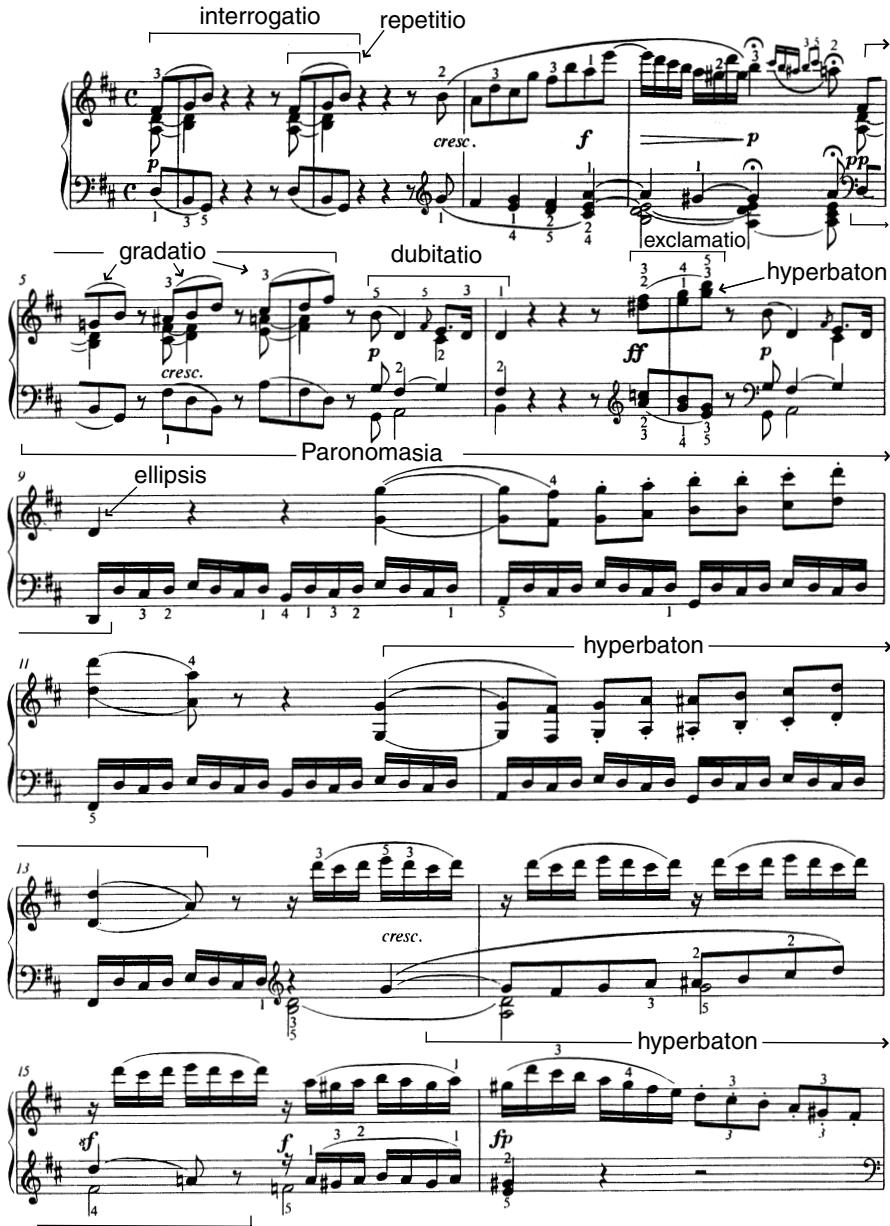
中文讲解
本条是第 30 页的图/乐谱占位符,其原始图像数据被省略,仅保留其在版面中的位置信息以及上方已给出的图注(Example 27.4 关于 Beethoven Op. 10 No. 3 Rondo 第 1–34 小节、采用 Scheibe figures 进行分析的谱例)。它在论证中的作用是:把上一段标题所声明的分析对象以乐谱+数字图示的形式直观呈现出来,使读者能够在谱面上对照 Scheibe 的标注来核实文字论述。由于嵌入式图像数据未随脚本提取,实际谱面细节与 figures 的具体数字无法在此复述,需查原图。
补充说明
无额外补充(图像细节不可在本任务输入内定位)。
第3段(P0171)
原文复述
Cambridge Histories Online © Cambridge University Press, 2008. https://doi.org/10.1017/CHOL9780521623711.029. Published online by Cambridge University Press.
中文讲解
这是剑桥大学出版社 Cambridge Histories Online 平台的版权与出版元数据条目:版权所有方为 Cambridge University Press,出版年为 2008,文章/章的 DOI 为 10.1017/CHOL9780521623711.029,由 Cambridge University Press 在线发布。它属于页面脚注/边栏性质的来源凭证,仅承担版本、出处与版权标识的功能,与本节论证逻辑无直接关联,但为后续引用该谱例提供唯一性标识。
第4段(P0172)
原文复述
[Page 31 image/music-example placeholder: embedded image data omitted; position and caption retained.]
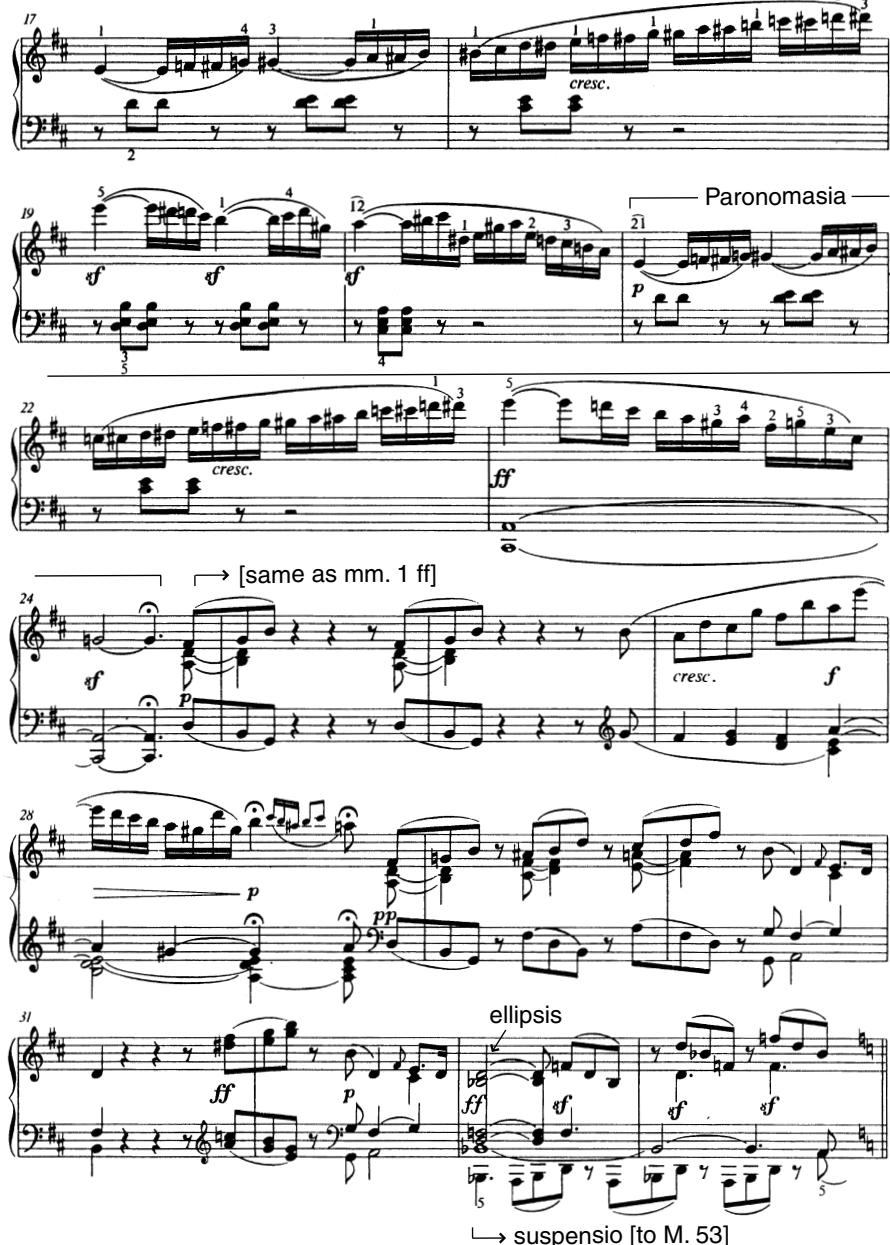
中文讲解
这是第 31 页的图/乐谱占位符,原始图像数据被省略,仅保留版面位置与上方图注。它与 P0170 在结构上平行,但出现在下一页(31 页),因此很可能延续前一谱例(例如谱面的下半部分、后续小节的延续,或同一示例的另一图)。它在论证中的作用仍是为本节的实例分析提供视觉证据,须查原图方可获知其内容;本任务范围内不补写其细节。
补充说明
无额外补充(图像细节不可在本任务输入内定位)。
第5段(P0173)
原文复述
Cambridge Histories Online © Cambridge University Press, 2008. https://doi.org/10.1017/CHOL9780521623711.029. Published online by Cambridge University Press.
中文讲解
本条与 P0171 完全相同的版权与出版元数据,于第 31 页重复出现,来源与凭证依然指向 Cambridge Histories Online 同一 DOI。其作用仍为来源/版权标识,对本节论证本身无新增贡献;之所以在本节末再次列出,是网页扫描时将每一页脚单独识别所致。
脚注 / 边栏 / 图表 / 附加信息(如有)
本小节主要由一组「图题+两幅乐谱/分析图占位符+两条重复出现的 Cambridge Histories Online 版权与 DOI 元数据」构成。两幅占位符分别位于第 30 页(P0170)和第 31 页(P0172),原始内嵌图像未随脚本提取,故其谱面布局、乐句起止小节、figures 数字与具体和声标注均不可见;任何超出图题范围的细节都需回到原书/原 PDF 查看。两条版权条目(P0171、P0173)功能相同,仅作为该章的来源与版权标识,DOI 为 10.1017/CHOL9780521623711.029,出版年 2008,出版方为 Cambridge University Press(CUP)旗下 Cambridge Histories Online。
💡 本节核心要点
- 图例 27.4 锁定一个具体作品对象:贝多芬《D大调奏鸣曲》Op. 10 No. 3 的 Rondo,分析范围为第 1–34 小节。
- 所采用的分析记号体系是 Scheibe 的 figures,而不是现代功能和声或申克式分析。
- 第 30 页和第 31 页的图/乐谱为该分析提供谱面与 figures 标注的视觉证据,两页共同构成本节的核心实证材料。
- 本节中可提取的文字信息十分有限,绝大部分实证信息依赖谱面图像,需结合原图阅读方可完整理解。
- 两条反复出现的 Cambridge Histories Online 版权与 DOI 条目是来源/版权层面的元数据,不参与论证本身。
🔑 关键术语
- Scheibe’s figures:由 Johann Adolf Scheibe 使用的分析记号体系,本节中作为标注叠加在 Beethoven Op. 10 No. 3 Rondo 第 1–34 小节的谱面之上,用以标示和声/声部运动,是本例唯一被明确采用的分析方法。
- Rondo:回旋曲式乐章;本节将其作为分析对象,而非整首奏鸣曲,分析范围限定于该乐章的前 34 小节。
- Op. 10, No. 3 in D major:作品编号与调性信息,用于唯一锁定 Beethoven 该奏鸣曲,使之与作品 10 中的前两首相区别。
- Example 27.4:原书/原章中的图例编号,本节以此为标签,将后面的两页谱面与「Scheibe figures」分析对应起来。
- Cambridge Histories Online:Cambridge University Press 的在线学术平台,本节谱例所属章节以该平台在线形式发布,年份为 2008。
S19 [描述性拆分] The nineteenth-century eclipse of musical rhetoric
第1段(P0174)
原文复述
Continuing from the preceding passage, the text states that, thanks to Mattheson, Riepel, and Koch, music possessed a theory of melody—which, from the modern vantage point, amounts to a theory of form. It then draws an explicit analogy: just as instrumental music eventually separated itself from vocal music, so music theory weaned itself off musical rhetoric. Whatever references to musical rhetoric survive after 1800, the author claims, are no more than the shell of what rhetoric once was. In the nineteenth century, Koch’s musical rhetoric and grammar were fused into a single entity called musical structure—a term that, on the authority of Carl Dahlhaus, can be dated back to E. T. A. Hoffmann’s review of Beethoven’s Fifth Symphony in 1810 (footnote 36). What the late eighteenth century tended to label rhetoric was gradually subsumed under what the nineteenth century labeled structure, until musical rhetoric disappeared altogether. It was left to twentieth-century musicology to recover, beneath the nineteenth-century categories of expression, organicism, and structure, the rhetorical foundations of the music and music theory of the preceding centuries.
中文讲解
本段是小节的高潮性收束段落,作用是把前文搭建的“修辞学—语法”框架推向一个历史结论:十九世纪不是简单地抛弃了音乐修辞,而是把它连同语法一起,改头换面地纳入了一个新的概念实体——“音乐结构”(musical structure)。需要讲透的有三层。
第一,类比的功能。作者把“器乐从声乐中分离”与“音乐理论脱离音乐修辞”并置,并强调两者是同一种结构性的分离:子领域从母体中独立出来。这里类比不是装饰,而是论证——它告诉读者,修辞学的退场不是一个术语的消失,而是一整套理论语域的重组。
第二,hoffmann 1810 这一锚点的重要意义。作者借 Dahlhaus 之口,把“音乐结构”这个术语钉死在 Hoffmann 评论贝多芬《第五交响曲》的 1810 年评论上。这一时间点之所以关键,是因为 Hoffmann 的这篇评论被普遍视为浪漫主义音乐美学的奠基文献;将术语源头放在这里,意味着“结构”一词从一开始就与浪漫主义对器乐、尤其是贝多芬式器乐的重新理解绑定在一起。因此,十九世纪对“结构”的依赖不仅是一个语言事件,更是浪漫主义音乐自我理解的一部分。
第三,结尾的考古学式翻转。最后一句实际上改写了整章的叙事方向:十九世纪所用的“表现”(expression)、“有机论”(organicism)、“结构”(structure)并不是新造之物,而是覆盖在更古老的修辞学关切之上的新标签。二十世纪音乐学的“恢复”工作于是变成一种剥层——把这层十九世纪的概念覆盖剥掉,露出下面的修辞学根基。这正是本节整体论证想要导向的结论:所谓“十九世纪的 eclipses”(隐没/遮蔽)并不是消灭,而是改写与遮蔽。
补充说明
本段对 Koch 的“音乐修辞学”和“语法”之区分,依据的是上一节(不在本次范围内)已经建立的内容;本段内出现的 Mattheson、Riepel、Koch 三人,仅作为“旋律/形式理论的来源”被列出,不再展开。Hoffmann 1810 评论贝多芬《第五》的具体内容同样不在本段内说明,仅作为术语的源头年代被援引。段落末尾将 expression、organicism、structure 三词并列出现,是把它们共同归入“十九世纪概念覆盖层”这一论点的修辞手段,不是对其中任何一个的单独讨论。
第2段(P0175)
原文复述
Footnote 36. Source citation: Carl Dahlhaus, The Idea of Absolute Music, page 7.
中文讲解
这是第 36 号脚注,内容只有一条文献出处:Carl Dahlhaus 著《绝对音乐观念》(The Idea of Absolute Music)第 7 页。它的功能是为正文中“音乐结构(musical structure)一词可上溯至 Hoffmann 1810 年评论贝多芬《第五交响曲》”这一具体年代判断提供学术依据。也就是说,正文中那句带 Dahlhaus 名字的引文,其权威性正是由本脚注落到这一页上。换言之,本脚注属于“来源型”脚注,而非解释型或限定型脚注,作用是让作者的历史断代可以被读者追溯到 Dahlhaus 的具体页码。
补充说明
脚注本身没有给出额外的论断或限定,仅提供页码层面的文献定位;其与正文的对应关系是“一对一”的:脚注支撑的正是上文括注 36 处那个具体的年代与术语归属判断。
脚注 / 边栏 / 图表 / 附加信息(如有)
本节在正文段落之外,仅含一条脚注(第 36 号),出处为 Carl Dahlhaus, The Idea of Absolute Music, p. 7。该脚注为正文中“音乐结构”一词可追溯至 Hoffmann 1810 年评论这一具体断代提供来源依据,属于来源型脚注。无图、表或边栏材料。
💡 本节核心要点
- 十九世纪并未抛弃音乐修辞,而是将 Koch 体系中的“音乐修辞学”与“语法”融合为单一的“音乐结构”概念。
- 依 Dahlhaus 之说,“音乐结构”(musical structure)一词可上溯至 E. T. A. Hoffmann 1810 年评论贝多芬《第五交响曲》一文。
- 作者用“器乐从声乐中分离”来类比“音乐理论脱离音乐修辞”,借此说明修辞学的退场是结构性的理论重组,而非单纯的术语更换。
- 1800 年之后残存的修辞学引用只剩“外壳”,其内容已被“结构”概念吸走。
- 十九世纪以 expression、organicism、structure 三个范畴构筑了一层概念覆盖,将更古老的修辞学关切遮蔽其下。
- 二十世纪音乐学的任务正是从这层十九世纪概念覆盖之下重新发掘修辞学根基——这是本节最终的史学翻转。
🔑 关键术语
- musical rhetoric (音乐修辞学):本节中指十八世纪及更早时期将音乐效果类比于说服性话语的整套理论;本节论证它正是被十九世纪所“隐没”的对象。
- musical structure (音乐结构):十九世纪产生的术语,由 Koch 的修辞学与语法融合而成;据 Dahlhaus,可追溯至 Hoffmann 1810 年评论贝多芬《第五交响曲》。在本节中,它是取代“修辞学”位置的核心概念。
- organicism (有机论):本节末尾与 expression、structure 并列出现,被归入十九世纪用以遮蔽古老修辞学关切的概念覆盖层之一,本身不在本段内单独展开。
- Carl Dahlhaus:本段中作为权威来源被援引的学者,本节借其考证将“音乐结构”一词锚定于 Hoffmann 1810 年的评论;脚注 36 即指向其著作。
- Mattheson, Riepel, Koch:本段开头列出的三位十八世纪理论家,被作者归功于“为音乐提供了旋律(即今日所说的形式)理论”,是十九世纪结构概念的直接前驱。
S20 Bibliography
第1段(P0176)
原文复述
Bibliography
中文讲解
本段是该章节的总标题“Bibliography”(参考文献)。它开启本节的功能是:按类别集中列出全书在论证“修辞学—音乐”关系时所依据的全部原始文献与研究文献,是正文中所有引证与观点的来源索引。
第2段(P0177)
原文复述
Primary sources: rhetoric
中文讲解
本段是参考文献的第一个小标题“Primary sources: rhetoric”(修辞学一手文献),表明接下来列出的均为古代至近代修辞学经典原本及重要译本,作为全文论证的原始文献基础。
第3段(P0178)
原文复述
Ad C. Herennium. De ratione dicendi (Rhetorica ad Herennium), with Eng. trans. H. Caplan, Loeb Classical Library, Cambridge, MA, Harvard University Press, 1954
中文讲解
这是归于“致赫伦尼乌斯”之名的拉丁修辞学著作《论演说术》(亦称《修辞学献给赫伦尼乌斯》)的文献条目,附有 H. Caplan 的英译,1954 年由哈佛大学出版社列入洛布古典丛书出版。该书为后世西方修辞学传统的重要古代文献之一。
补充说明
条目格式:作者匿名(Ad C. Herennium),拉丁文原题,译者英译,丛书系列,出版地、出版者与年代齐全。
第4段(P0179)
原文复述
Aristotle, The Art of Rhetoric, trans. and ed. H. C. Lawson-Tancred, London and New York, Penguin Books, 1991
中文讲解
亚里士多德《修辞术》的英译条目,由 H. C. Lawson-Tancred 翻译并编辑,1991 年由企鹅书店在伦敦与纽约出版。这是英语学界最常用的《修辞术》译本之一,为讨论古典修辞学基本范畴(如 ethos、pathos、logos,劝说三要素;以及修辞论证的五种模式)所必引。
补充说明
企鹅版(Penguin Books)为面向一般读者与学界双重用途的平装译本。
第5段(P0180)
原文复述
Cicero, De inventione; De optimo genere oratorum; Topica, with Eng. trans. H. M. Hubbell, Loeb Classical Library, Cambridge, MA, Harvard University Press, 1949
中文讲解
西塞罗三部修辞学著作《论发明》(De inventione)、《论最佳演说家类型》(De optimo genere oratorum)与《论题学》(Topica)的合订条目,附 H. M. Hubbell 英译,1949 年哈佛大学出版社洛布古典丛书出版。这三部作品构成西塞罗早期到中期修辞理论的代表作。
补充说明
洛布版以拉丁原文与英译对照为特征,便于双语参照。
第6段(P0181)
原文复述
De oratore, 2 vols., Books I and II trans. E. Sutton and H. Rackham, Book III trans. H. Rackham, Loeb Classical Library, Cambridge, MA, Harvard University Press, 1942–48
中文讲解
西塞罗《论演说家》(De oratore)的两卷本洛布版条目:第一、二卷由 E. Sutton 与 H. Rackham 合译,第三卷由 H. Rackham 单独翻译,1942 至 1948 年间由哈佛大学出版社出版。该书是西塞罗成熟期最系统的修辞学对话,为西方演说理论的核心文献。
补充说明
条目标明两位译者及分卷出版年代,反映洛布丛书陆续出书的惯例。
第7段(P0182)
原文复述
Gottsched, J. C. Ausführliche Redekunst nach Anleitung der Griechen und Römer wie auch der neuern Ausländer, Leipzig, Breitkopf, 1736; facs. Hildesheim, G. Olms, 1973
中文讲解
J. C. 戈特舍德(Johann Christoph Gottsched)德文修辞学著作《详尽演说术——依希腊罗马及近代外国作家之指导》的文献条目:1736 年由莱比锡 Breitkopf 出版,1973 年由希尔德斯海姆 G. Olms 影印再版。这是 18 世纪德语区最有影响的系统性修辞学著作之一。
补充说明
facs. = facsimile(影印本)缩写;该书是连接古典修辞与启蒙时期德语修辞传统的关键节点。
第8段(P0183)
原文复述
Plato, Gorgias; Phaedrus, trans. and ed. J. Nichols, Jr., Ithaca, Cornell University Press, 1998 Quintilian, Institutio oratoria, 4 vols., with Eng. trans. H. Butler, Loeb Classical Library, Cambridge, MA, Harvard University Press, 1920
中文讲解
此条目包含两部文献。其一是柏拉图《高尔吉亚》与《斐德若》的英译本,由 J. Nichols, Jr. 翻译编辑,1998 年由康奈尔大学出版社出版;其二是昆体良《演说术原理》(Institutio oratoria)四卷本,由 H. Butler 英译,1920 年哈佛大学出版社列入洛布丛书出版。昆体良著作是西方第一部系统的修辞教育百科全书,对文艺复兴至巴洛克时期的修辞教学影响深远。
补充说明
条目的排版表明原文将两部独立文献合并于同一行,中间未用句号分隔——这是按正文章节原样保留的版式细节。
第9段(P0184)
原文复述
Secondary sources: rhetoric
中文讲解
本段是参考文献的第二个小标题“Secondary sources: rhetoric”(修辞学研究文献),表明下面列出的是研究修辞学的二手文献,即后世学者关于修辞学史、修辞理论或修辞学与其他学科关系的研究著作。
第10段(P0185)
原文复述
Barilli, R. La retorica, Milan, A. Mondadori, 1983; trans. G. Menozzi as Rhetoric, Minneapolis, University of Minnesota Press, 1989
中文讲解
R. Barilli《修辞学》(La retorica)的文献条目:意大利文初版 1983 年由米兰 A. Mondadori 出版,G. Menozzi 英译为 Rhetoric,1989 年由明尼苏达大学出版社出版。该书为意大利学界对修辞学史的综合研究。
补充说明
条目同时给出原语种版本与英文译本的完整出版信息,便于双语核对。
第11段(P0186)
原文复述
Barner, W. Barockrhetorik: Untersuchungen zu ihren geschichtlichen Grundlagen, Tübingen, Niemeyer, 1970
中文讲解
W. Barner《巴洛克修辞学:对其历史基础的研究》(Barockrhetorik: Untersuchungen zu ihren geschichtlichen Grundlagen)的条目,1970 年由图宾根 Niemeyer 出版。该书是德语学界研究 17 世纪巴洛克时期修辞学历史基础的重要专著。
第12段(P0187)
原文复述
Barthes, R. “The Old Rhetoric: An Aide-mémoire,” in The Semiotic Challenge, trans. R. Howard, New York, Hill and Wang, 1988
中文讲解
罗兰·巴特《旧修辞学:一篇助记》(The Old Rhetoric: An Aide-mémoire)的文献条目,原为法文,收入论文集《符号学的挑战》(The Semiotic Challenge),由 R. Howard 英译,1988 年由纽约 Hill and Wang 出版。该文以结构主义视角系统梳理古典修辞学范畴。
补充说明
此条目标志着结构主义与符号学进入修辞学史研究的关键文本。
第13段(P0188)
原文复述
Cambridge Histories Online © Cambridge University Press, 2008https://doi.org/10.1017/CHOL9780521623711.029 Published online by Cambridge University Press
中文讲解
此段是页面页脚/水印信息:声明本文来自 Cambridge Histories Online(剑桥历史在线),由剑桥大学出版社 2008 年出版,并提供 DOI 链接。该信息为电子出版平台的版权与出处说明,并非正文文献条目。
补充说明
DOI 标识 https://doi.org/10.1017/CHOL9780521623711.029 对应本卷章节的唯一数字标识符。
第14段(P0189)
原文复述
Conley, T. Rhetoric in the European Tradition, New York, Longman, 1990
中文讲解
T. Conley《欧洲传统中的修辞学》(Rhetoric in the European Tradition)的条目,1990 年由纽约 Longman 出版。该书是英语学界常用的修辞学史教材,覆盖自古希腊至现代的欧洲修辞传统。
第15段(P0190)
原文复述
Fumaroli, M. L’Age de l’éloquence: Rhétorique et “res literaria” de la Renaissance au seuil de l’époque classique, Geneva, Droz, 1980; reprint Paris, A. Michel, 1994
中文讲解
M. Fumaroli《雄辩的时代:文艺复兴至古典时期门槛的修辞学与“文学之事”》(L’Age de l’éloquence)的条目:1980 年日内瓦 Droz 初版,1994 年巴黎 A. Michel 重印。该书是研究文艺复兴至古典时期过渡阶段修辞学与文学关系的重要法语学术著作。
补充说明
条目标明两个出版地与年代:初版与重印,便于读者选择可获取的版本。
第16段(P0191)
原文复述
Kennedy, G. A. Classical Rhetoric and Its Christian and Secular Tradition from Ancient to Modern Times, Chapel Hill, University of North Carolina Press, 1980
中文讲解
G. A. Kennedy《古典修辞学及其自古代至现代的基督教与世俗传统》(Classical Rhetoric and Its Christian and Secular Tradition from Ancient to Modern Times)的条目,1980 年由北卡罗来纳大学出版社出版。该书是英语学界最具影响的修辞学通史之一。
第17段(P0192)
原文复述
A New History of Classical Rhetoric, Princeton University Press, 1994
中文讲解
Kennedy《古典修辞学新史》(A New History of Classical Rhetoric)的条目,1994 年由普林斯顿大学出版社出版。该书是 Kennedy 在 1980 年通史基础上的增补与更新版。
补充说明
作者与前一条同为 G. A. Kennedy,但原条目未重复署名——这是按原版版式保留下来的处理。
第18段(P0193)
原文复述
Lanham, R. A. The Motives of Eloquence: Literary Theory in the Renaissance, New Haven, Yale University Press, 1976
中文讲解
R. A. Lanham《雄辩的动机:文艺复兴时期的文学理论》(The Motives of Eloquence: Literary Theory in the Renaissance)的条目,1976 年由耶鲁大学出版社出版。该书讨论文艺复兴时期修辞学传统对文学批评理论的影响。
第19段(P0194)
原文复述
Lausberg, H. Handbook of Literary Rhetoric: A Foundation for Literary Study, trans. M. Bliss, A. Jansen, and D. Orton, ed. D. Orton and R. Anderson, Boston, Brill, 1998
中文讲解
H. Lausberg《文学修辞手册:文学研究的基础》(Handbook of Literary Rhetoric)的英译条目:由 M. Bliss、A. Jansen、D. Orton 翻译,D. Orton 与 R. Anderson 编辑,1998 年由波士顿 Brill 出版。该书是文学修辞学的标准工具书。
补充说明
原书德文版为 Handbuch der literarischen Rhetorik,是欧洲学界修辞学术语的权威词典式手册。
第20段(P0195)
原文复述
Vickers, B. In Defence of Rhetoric, Oxford University Press, 1988
中文讲解
B. Vickers《为修辞学辩护》(In Defence of Rhetoric)的条目,1988 年由牛津大学出版社出版。该书为反对将修辞学贬为“虚饰”之名的学术辩护之作,梳理了修辞学自古至今的正面传统。
第21段(P0196)
原文复述
Primary sources: music
中文讲解
本段是参考文献的第三个分类小标题“Primary sources: music”(音乐一手文献),标志接下来的条目均为 16 至 18 世纪音乐理论、修辞作曲法(musica poetica)与音乐实践相关的原始文献。
第22段(P0197)
原文复述
Ahle, J. Musikalisches Frühlings-, Sommer-, Herbst-, und Winter-Gespräche, Mühlhausen, Paul und Brückner, 1695–1701
中文讲解
J. Ahle《音乐之春夏秋冬对谈》(Musikalisches Frühlings-, Sommer-, Herbst-, und Winter-Gespräche)的条目,1695 至 1701 年间由米尔豪森 Paul und Brückner 出版。这是 17 世纪末德语区作曲家兼理论家 Ahle 的对话体音乐论著。
第23段(P0198)
原文复述
Bernhard, C. Ausführlicher Bericht vom Gebrauche der Con- und Dissonantien, Tractatus compositionis augmentatus in Die Kompositionslehre Heinrich Schützens in der Fassung seines Schülers Chr. Bernhard, ed. J. Müller-Blattau, 2nd edn., Kassel, Bärenreiter, 1963; trans. W. Hilse as “The Treatises of Christoph Bernhard,” Music Forum 3 (1973), pp. 1–196
中文讲解
C. Bernhard《关于协和与不协和之运用的详尽论述》及《作曲论》(Tractatus compositionis augmentatus)的文献条目,收入由 J. Müller-Blattau 编辑的《海因里希·舒茨作曲教学法——据其弟子 Chr. Bernhard 之记述》第二版,1963 年由卡塞尔 Bärenreiter 出版;W. Hilse 译为《克里斯托夫·伯恩哈德论著集》刊于 Music Forum 第 3 卷(1973 年),第 1–196 页。Bernhard 是 17 世纪德语区承上启下的作曲理论与音乐修辞学重要人物。
补充说明
该条目同时给出德文原版页码出处与英译期刊出处,是研究舒茨—伯恩哈德学派的必备文献。
第24段(P0199)
原文复述
Burmeister, J. Hypomnematum musicae poeticae, Rostock, S. Myliander, 1599
中文讲解
J. Burmeister《音乐诗学备忘录》(Hypomnematum musicae poeticae)的条目,1599 年由罗斯托克 S. Myliander 出版。该书是德国 musica poetica(音乐诗学)传统中最早系统论述音乐—修辞对应关系的著作之一。
第25段(P0200)
原文复述
Musica autoschediastike, Rostock, C. Reusner, 1601
中文讲解
Burmeister《即兴音乐》(Musica autoschediastike)的条目,1601 年由罗斯托克 C. Reusner 出版。该书为 Burmeister 第二部音乐修辞学著作,进一步发展其 figure(音乐修辞格)体系。
补充说明
autoschediastike 一词意为“即兴的、自发的”,与 Burmeister 关注即兴作曲与即兴演奏的修辞格有关。
第26段(P0201)
原文复述
Musica poetica, Rostock, S. Myliander, 1606; facs. Kassel, Bärenreiter, 1955; trans. B. Rivera as Musical Poetics, New Haven, Yale University Press, 1993
中文讲解
Burmeister《音乐诗学》(Musica poetica)的条目:原版 1606 年由罗斯托克 S. Myliander 出版;1955 年由卡塞尔 Bärenreiter 影印再版;B. Rivera 英译为 Musical Poetics,1993 年由耶鲁大学出版社出版。该书是 Burmeister 音乐—修辞 figure 体系最完整成熟的著作。
补充说明
本条目同时提供原版、影印版与英译版的完整出版信息,便于研究者选择版本。
第27段(P0202)
原文复述
Butler, C. The Principles of Musick, London, Haviland, 1636; facs. New York, Da Capo Press, 1970
中文讲解
C. Butler《音乐原理》(The Principles of Musick)的条目:原版 1636 年由伦敦 Haviland 出版,1970 年由纽约 Da Capo Press 影印再版。该书是 17 世纪英语世界最具系统性的音乐修辞学论述之一。
第28段(P0203)
原文复述
Dressler, G. Praecepta musicae poeticae, MS, 1563; ed. B. Engelke in Geschichts-Blätter für Stadt und Land Magdeburg 49–50 (1914–15), pp. 213–50
中文讲解
G. Dressler《音乐诗学规则》(Praecepta musicae poeticae)的条目:原稿为 1563 年手抄本(MS = manuscript),后由 B. Engelke 编辑校注,刊于《马格德堡城与乡历史杂志》(Geschichts-Blätter für Stadt und Land Magdeburg)第 49–50 卷(1914–15 年),第 213–250 页。该书是 16 世纪中期德语区音乐诗学的重要早期文献。
补充说明
手稿文献以 MS 标明,引文出处精确到卷次与页码。
第29段(P0204)
原文复述
Forkel, J. Allgemeine Geschichte der Musik, Göttingen, Schwickert, 1788; facs. Graz, Akademische Druck- und Verlagsanstalt, 1967
中文讲解
J. N. Forkel《音乐通史》(Allgemeine Geschichte der Musik)的条目:原版 1788 年由哥廷根 Schwickert 出版,1967 年由格拉茨 Akademische Druck- und Verlagsanstalt 影印再版。该书是 18 世纪末德语学界第一部系统的音乐通史。
第30段(P0205)
原文复述
Heinichen, J. Neuerfundene und gründliche Anweisung, Hamburg, B. Schiller, 1711
中文讲解
J. D. Heinichen《新发明而详尽的指导》(Neuerfundene und gründliche Anweisung)的条目,1711 年由汉堡 B. Schiller 出版。该书为 Heinichen 系统阐述其作曲法与音乐—修辞 loci topici(论题位)理论的代表作。
第31段(P0206)
原文复述
Herbst, J. Musica poetica, Nuremberg, Dümler, 1643
中文讲解
J. A. Herbst《音乐诗学》(Musica poetica)的条目,1643 年由纽伦堡 Dümler 出版。该书是 17 世纪德语区 music a poetica 传统中的代表著作之一。
第32段(P0207)
原文复述
Janowka, T. B. Clavis ad thesauram magnae artis musicae, Prague, G. Labaun, 1701
中文讲解
T. B. Janowka《打开伟大音乐艺术宝库的钥匙》(Clavis ad thesauram magnae artis musicae)的条目,1701 年由布拉格 G. Labaun 出版。该书是中欧地区 18 世纪初重要的音乐术语词典类文献。
第33段(P0208)
原文复述
Kircher, A. Musurgia universalis, Rome, Corbelletti, 1650; facs. Hildesheim, G. Olms, 1970
中文讲解
A. Kircher《普遍音乐学》(Musurgia universalis)的条目:原版 1650 年由罗马 Corbelletti 出版,1970 年由希尔德斯海姆 G. Olms 影印再版。该书是 17 世纪百科全书式音乐理论巨著,涵盖广泛,包括对音乐—修辞关系的论述。
第34段(P0209)
原文复述
Lippius, J. Synopsis musicae novae, Strassburg, Kie◊er, 1612; trans. B. Rivera as Synopsis of New Music, Colorado Springs, Colorado College Music Press, 1977
中文讲解
J. Lippius《新音乐纲要》(Synopsis musicae novae)的条目:原版 1612 年由斯特拉斯堡 Kießer 出版,B. Rivera 英译为 Synopsis of New Music,1977 年由科罗拉多斯普林斯 Colorado College Music Press 出版。该书是 17 世纪初德语区关于新音乐理论与音乐修辞格的重要文献。
补充说明
条目中拼写“Kie◊er”出现的方框符号为原文印刷符号(疑为 ß 的字符缺失),按原版保留。
第35段(P0210)
原文复述
Listenius, N. Musica, Wittenberg, G. Rhau, 1537
中文讲解
N. Listenius《音乐》(Musica)的条目,1537 年由维滕贝格 G. Rhau 出版。该书是 16 世纪早期德语区重要音乐理论入门著作,对后世音乐诗学的范畴建构有铺垫作用。
第36段(P0211)
原文复述
Mattheson, J. Kern melodischer Wissenschaft, Hamburg, Herold, 1737 Der vollkommene Capellmeister, Hamburg, C. Herold, 1739; facs. Kassel, Bärenreiter, 1954, 1999; trans. and ed. E. C. Harriss as Johann Mattheson’s “Der vollkommene Capellmeister”, Ann Arbor, UMI Research Press, 1981
中文讲解
J. Mattheson 两部著作的合订条目:《旋律科学之核心》(Kern melodischer Wissenschaft)1737 年由汉堡 Herold 出版;《完美的乐长》(Der vollkommene Capellmeister)1739 年由汉堡 C. Herold 出版,1954 年与 1999 年由卡塞尔 Bärenreiter 影印再版,并由 E. C. Harriss 翻译编辑为英文版 Johann Mattheson’s “Der vollkommene Capellmeister”,1981 年由 Ann Arbor UMI Research Press 出版。Mattheson 是 18 世纪初汉堡乐派的核心理论家,其著作中包含对音乐修辞与情感论(Affektenlehre)的系统论述。
补充说明
“Der vollkommene Capellmeister”是音乐修辞学传统中“完美乐长必须掌握的修辞技艺”这一观念的标准文献。
第37段(P0212)
原文复述
Mersenne, M. Harmonie universelle, Paris, S. Cramoisy, 1636–37; facs. Paris, Centre Nationa de la Recherche Scientifique, 1963 and 1986
中文讲解
M. Mersenne《普遍和谐》(Harmonie universelle)的条目:原版 1636–37 年由巴黎 S. Cramoisy 出版,1963 年与 1986 年由巴黎法国国家科研中心(CNRS)影印再版。该书是 17 世纪法国最重要的音乐理论百科全书。
补充说明
条目中“Centre Nationa”疑为原文拼写,应理解为 Centre National(法语:国家中心)。
第38段(P0213)
原文复述
Nucius, J. Musices poeticae, Nysa, C. Schar◊enberg, 1613; facs. Kassel, Bärenreiter, 1978
中文讲解
J. Nucius《音乐诗学》(Musices poeticae)的条目:原版 1613 年由尼斯 C. Scharßenberg 出版,1978 年由卡塞尔 Bärenreiter 影印再版。该书是 17 世纪初西里西亚地区 music a poetica 的代表著作。
补充说明
条目中“Schareenberg”中的方框符号为原文印刷符号(疑为 ß 的字符缺失),按原版保留。
第39段(P0214)
原文复述
Cambridge Histories Online © Cambridge University Press, 2008https://doi.org/10.1017/CHOL9780521623711.029 Published online by Cambridge University Press
中文讲解
此段为页面页脚/水印信息,重复出现在第 34 页起始处,内容与 P0188 相同:声明本文出自 Cambridge Histories Online,由剑桥大学出版社 2008 年电子出版,附 DOI 标识。该信息为电子出版平台版权声明,并非正文文献。
补充说明
页脚的重复出现是 Cambridge Histories Online 平台的标准页面格式。
第40段(P0215)
原文复述
Printz, W. Phrynis Mitilenaeus, oder Satyrischer Componist, 3 vols., Dresden, J. C. Mieth and J. C. Zimmerman, 1696
中文讲解
W. C. Printz《米提利尼的普律尼斯,或讽刺的作曲家》(Phrynis Mitilenaeus, oder Satyrischer Componist)三卷本的条目,1696 年由德累斯顿 J. C. Mieth 与 J. C. Zimmerman 出版。该书是 17 世纪末德语区以对话体形式论述作曲家的罕见史料。
补充说明
“Phrynis Mitilenaeus”借自古希腊里拉琴演奏家 Phrynis 之名,作者以此暗示对当时音乐风尚的讽刺。
第41段(P0216)
原文复述
Scheibe, J. Der critische Musicus, Leipzig, B. C. Breitkopf, 1745; facs. Hildesheim, G. Olms, 1970
中文讲解
J. A. Scheibe《批判的乐人》(Der critische Musicus)的条目:原版 1745 年由莱比锡 B. C. Breitkopf 出版,1970 年由希尔德斯海姆 G. Olms 影印再版。该书为 18 世纪德语区关于音乐趣味与音乐批评的重要论著。
补充说明
Scheibe 是因批评 J. S. 巴赫而闻名于音乐史的音乐评论家。
第42段(P0217)
原文复述
Spiess, M. Tractatus musicus compositorio-practicus, Augsburg, J. J. Lotters Erben, 1745
中文讲解
M. Spiess《作曲实践论》(Tractatus musicus compositorio-practicus)的条目,1745 年由奥格斯堡 J. J. Lotters Erben 出版。该书是 18 世纪中期巴洛克晚期作曲法的代表文献。
第43段(P0218)
原文复述
Thuringus, J. Opusculum bipartitum, Berlin, Runge, 1624
中文讲解
J. Thuringus《双部小著作》(Opusculum bipartitum)的条目,1624 年由柏林 Runge 出版。该书为 17 世纪初德语区简明音乐理论著作之一。
第44段(P0219)
原文复述
Vogt, M. Conclave thesauri magnae artis musicae, Prague, G. Labaun, 1719
中文讲解
M. Vogt《伟大音乐艺术宝库之密室》(Conclave thesauri magnae artis musicae)的条目,1719 年由布拉格 G. Labaun 出版。该书是 Janowka 1701 年《Clavis》之后又一部中欧地区音乐理论与术语汇编。
第45段(P0220)
原文复述
Walther, J. Musikalisches Lexikon, Leipzig, Deer, 1732; facs. Kassel, Bärenreiter, 1953 Praecepta der musicalischen Composition, MS 1708; new edn., ed. P. Benary, Leipzig, Breitkopf und Härtel, 1955
中文讲解
J. G. Walther 两部著作的合订条目:《音乐词典》(Musikalisches Lexikon)原版 1732 年由莱比锡 Deer 出版,1953 年由卡塞尔 Bärenreiter 影印再版;《作曲规则》(Praecepta der musicalischen Composition)为 1708 年手抄本,1955 年由 P. Benary 编辑出版新版(Leipzig: Breitkopf und Härtel)。Walther 是巴赫的表兄与好友,其词典是西方第一部音乐专业词典。
补充说明
两条文献以连续排版形式并列于同一段;条目中用 MS 标明手稿性质。
第46段(P0221)
原文复述
Zarlino, G. Le istitutioni harmoniche, Venice, Franceschi, 1558; facs. New York, Broude, 1965
中文讲解
G. Zarlino《和声原理》(Le istitutioni harmoniche)的条目:原版 1558 年由威尼斯 Franceschi 出版,1965 年由纽约 Broude 影印再版。该书是 16 世纪威尼斯乐派最重要的和声理论著作。
第47段(P0222)
原文复述
Secondary sources: music
中文讲解
本段是参考文献的第四个小标题“Secondary sources: music”(音乐研究文献),表明下面列出的是后世学者关于音乐理论史、musica poetica、音乐修辞学及音乐与语言美学关系的研究著作。
第48段(P0223)
原文复述
Bartel, D. Musica Poetica, Lincoln, University of Nebraska Press, 1997; rev. from Handbuch der musikalischen Figurenlehre, Regensburg, Laaber, 1985
中文讲解
D. Bartel《音乐诗学》(Musica Poetica)的条目:1997 年由林肯内布拉斯加大学出版社出版,修订自其德文原作《音乐修辞格手册》(Handbuch der musikalischen Figurenlehre),1985 年由雷根斯堡 Laaber 出版。该书是英文学界关于音乐修辞格(Figurenlehre)的标准手册。
补充说明
条目标明从德文原作修订而来的英文版关系,便于读者追溯原始材料。
第49段(P0224)
原文复述
Bent, I. “The Compositional Process in Music Theory, 1713–1850,” MA 3 (1984), pp. 29–55
中文讲解
I. Bent《1713 至 1850 年音乐理论中的作曲过程》(The Compositional Process in Music Theory, 1713–1850)的期刊条目,刊于《音乐分析》(Music Analysis,缩写 MA)第 3 卷(1984 年),第 29–55 页。该文考察 18 至 19 世纪音乐理论中对作曲过程的论述。
补充说明
MA 在该条目中应理解为期刊缩写 Music Analysis,而非硕士学位缩写。
第50段(P0225)
原文复述
Blume, F. Renaissance and Baroque Music, New York, Norton, 1967
中文讲解
F. Blume《文艺复兴与巴洛克音乐》(Renaissance and Baroque Music)的条目,1967 年由纽约 Norton 出版。该书是关于文艺复兴至巴洛克时期音乐史的综合性著作。
第51段(P0226)
原文复述
Bonds, M. E. Wordless Rhetoric: Musical Form and the Metaphor of the Oration, Cambridge, MA, Harvard University Press, 1991
中文讲解
M. E. Bonds《无言的修辞:音乐形式与演说之隐喻》(Wordless Rhetoric: Musical Form and the Metaphor of the Oration)的条目,1991 年由哈佛大学出版社出版。该书是英语学界关于“音乐形式作为修辞—演说结构之隐喻”的核心研究。
第52段(P0227)
原文复述
Brandes, H. Studien zur musikalischen Figurenlehre im 16. Jahrhundert, Berlin, Triltsch und Huther, 1935
中文讲解
H. Brandes《16 世纪音乐修辞格研究》(Studien zur musikalischen Figurenlehre im 16. Jahrhundert)的条目,1935 年由柏林 Triltsch und Huther 出版。该书是早期专门研究 16 世纪音乐修辞格的德语学术专著。
第53段(P0228)
原文复述
Buelow, G. “Johann Mattheson and the Invention of the A◊ektenlehre,” in New Mattheson Studies, ed. G. Buelow and H. J. Marx, Cambridge University Press, 1983
中文讲解
G. Buelow《约翰·马泰松与情感论(Affektenlehre)的发明》(Johann Mattheson and the Invention of the Affektenlehre)的论文条目,收入 G. Buelow 与 H. J. Marx 编辑的《新马泰松研究》(New Mattheson Studies),1983 年由剑桥大学出版社出版。该文系统论证 Mattheson 在情感论传统形成中的关键作用。
补充说明
原条目中“A◊ekten”中的方框符号应为 ff 的字符缺失,按原版保留。
第54段(P0229)
原文复述
“The Loci Topici and A◊ect in Late Baroque Music: Heinichen’s Practical Demonstration,” Music Review 27 (1966), pp. 161–76
中文讲解
G. Buelow《晚期巴洛克音乐中的论题位与情感:海尼兴的实证》(The Loci Topici and Affect in Late Baroque Music: Heinichen’s Practical Demonstration)的期刊条目,刊于《音乐评论》(Music Review)第 27 卷(1966 年),第 161–176 页。该文以 Heinichen 作品为实例展示 loci topici(论题位)在巴洛克音乐中的实际运用。
补充说明
“loci topici”源自古典修辞学的 loci topoi(论题位),即寻找论证起点的常用“场所”。
第55段(P0230)
原文复述
“Music, Rhetoric, and the Concept of the A◊ections: A Selective Bibliography,” Notes 30 (1973), pp. 250–59
中文讲解
G. Buelow《音乐、修辞学与情感论概念:一份选目性书目》(Music, Rhetoric, and the Concept of the Affects: A Selective Bibliography)的期刊条目,刊于《乐谱》(Notes)第 30 卷(1973 年),第 250–259 页。该文是研究“音乐—修辞—情感”交叉领域的重要书目指南。
补充说明
原条目中“A◊ections”应为“Affections”或“Affections”的字符缺失形式,按原版保留。
第56段(P0231)
原文复述
Butler, G. “Fugue and Rhetoric,” JMT 21 (1977), pp. 49–109
中文讲解
G. Butler《赋格与修辞学》(Fugue and Rhetoric)的期刊条目,刊于《音乐理论杂志》(Journal of Music Theory,缩写 JMT)第 21 卷(1977 年),第 49–109 页。该文系统讨论赋格写作中的修辞学原则。
第57段(P0232)
原文复述
“Music and Rhetoric in Early Seventeenth-Century English Sources,” Musical Quarterly 66 (1980), pp. 53–64
中文讲解
G. Butler《17 世纪初英语文献中的音乐与修辞学》(Music and Rhetoric in Early Seventeenth-Century English Sources)的期刊条目,刊于《音乐季刊》(Musical Quarterly)第 66 卷(1980 年),第 53–64 页。该文考察英语世界早期音乐修辞学论述。
第58段(P0233)
原文复述
Christensen, T. and N. Baker, eds. and trans., Aesthetics and the Art of Musical Composition in the German Enlightenment: Selected Writings of Johann Georg Sulzer and Heinrich Christoph Koch, Cambridge University Press, 1995
中文讲解
T. Christensen 与 N. Baker 编辑并翻译的《德意志启蒙运动中的美学与作曲艺术:苏尔策与柯赫文选》(Aesthetics and the Art of Musical Composition in the German Enlightenment)的条目,1995 年由剑桥大学出版社出版。该书为 18 世纪德语区核心音乐美学文献的英译选集。
补充说明
Sulzer 与 Koch 是 18 世纪德语区最重要的两位音乐美学家。
第59段(P0234)
原文复述
Dahlhaus, C. The Idea of Absolute Music, trans. R. Lustig, University of Chicago Press, 1989 “Der rhetorische Formbegri◊ H. Chr. Kochs und die Theorie der Sonatenform,” AfMw 35 (1978), pp. 155–77
中文讲解
此条目包含 Dahlhaus 两部作品。其一:《绝对音乐观念》(The Idea of Absolute Music),R. Lustig 英译,1989 年由芝加哥大学出版社出版。其二:《海因里希·克里斯蒂安·柯赫的修辞学形式概念与奏鸣曲式理论》(Der rhetorische Formbegriff H. Chr. Kochs und die Theorie der Sonatenform),刊于《音乐学档案》(Archiv für Musikwissenschaft,缩写 AfMw)第 35 卷(1978 年),第 155–177 页。该条目将 Koch 的形式概念与奏鸣曲式理论的关系置于修辞学传统中考察。
补充说明
原条目中“Formbegri◊”的方框符号应为 ff 字符缺失,按原版保留;AfMw 为德语音乐学核心期刊。
第60段(P0235)
原文复述
Dammann, R. Der Musikbegri◊ im deutschen Barock, 2nd edn., Regensburg, Laaber, 1984
中文讲解
R. Dammann《德意志巴洛克中的音乐概念》(Der Musikbegriff im deutschen Barock)第二版的条目,1984 年由雷根斯堡 Laaber 出版。该书研究德语区巴洛克时期“音乐”(Musik)概念的语义与思想史。
补充说明
原条目中“Musikbegri◊”的方框符号应为 ff 字符缺失,按原版保留。
第61段(P0236)
原文复述
Eggebrecht, H. H. “Zum Figur-Begri◊ der Musica poetica,” AfMw 16 (1959), pp. 57–69
中文讲解
H. H. Eggebrecht《论音乐诗学的“修辞格”概念》(Zum Figur-Begriff der Musica poetica)的期刊条目,刊于《音乐学档案》(AfMw)第 16 卷(1959 年),第 57–69 页。该文是德语学界讨论 musica poetica 之 Figur 概念的经典文献。
补充说明
原条目中“Figur-Begri◊”的方框符号应为 ff 字符缺失,按原版保留。
第62段(P0237)
原文复述
Federhofer, H. “Christoph Bernhards Figurenlehre und die Dissonanz,” Musikforschung 42 (1989), pp. 110–27
中文讲解
H. Federhofer《克里斯托夫·伯恩哈德的修辞格论与不协和音》(Christoph Bernhards Figurenlehre und die Dissonanz)的期刊条目,刊于《音乐研究》(Musikforschung)第 42 卷(1989 年),第 110–127 页。该文专门讨论 Bernhard 音乐修辞格论与不协和音处理的关系。
第63段(P0238)
原文复述
Forchert, A. “Bach und die Tradition der Rhetorik,” in Alte Musik als ästhetische Gegenwart: Bach, Händel, Schütz. Bericht über den internationalen musik-wissenschaftlichen Kongreß Stuttgart 1985, vol. i, ed. D. Berke and D. Hanemann, Kassel, Bärenreiter 1987, pp. 169–78
中文讲解
A. Forchert《巴赫与修辞学传统》(Bach und die Tradition der Rhetorik)的论文条目,收入《古代音乐作为美学当下:巴赫、亨德尔、舒茨——1985 年斯图加特国际音乐学会议报告》第 1 卷,D. Berke 与 D. Hanemann 编辑,1987 年由卡塞尔 Bärenreiter 出版,第 169–178 页。该文讨论巴赫音乐与修辞学传统的关系。
第64段(P0239)
原文复述
Cambridge Histories Online © Cambridge University Press, 2008https://doi.org/10.1017/CHOL9780521623711.029 Published online by Cambridge University Press
中文讲解
此段为页面页脚/水印信息,与 P0188、P0214 内容相同:声明本文出自 Cambridge Histories Online,由剑桥大学出版社 2008 年电子出版,附 DOI 标识。该信息是平台版权说明,并非文献条目。
补充说明
页脚重复出现于每页底部,是电子出版平台的标准格式。
第65段(P0240)
原文复述
“Heinrich Schütz und die Musica poetica,” Schütz-Jahrbuch 15 (1993), pp. 7–24
中文讲解
A. Forchert《海因里希·舒茨与音乐诗学》(Heinrich Schütz und die Musica poetica)的期刊条目,刊于《舒茨年鉴》(Schütz-Jahrbuch)第 15 卷(1993 年),第 7–24 页。该文讨论舒茨的音乐实践与 musica poetica 传统之间的理论关联。
补充说明
Schütz 是 17 世纪德语区音乐诗学传统从理论走向实践的关键作曲家。
第66段(P0241)
原文复述
Gurlitt, W. “Musik und Rhetorik,” Helicon 5 (1944), pp. 67–86
中文讲解
W. Gurlitt《音乐与修辞学》(Musik und Rhetorik)的期刊条目,刊于《赫利孔》(Helicon)第 5 卷(1944 年),第 67–86 页。该文为德语学界较早系统讨论音乐与修辞学关系的论文之一。
第67段(P0242)
原文复述
Harrison, D. “Rhetoric and Fugue: An Analytical Application,” MTS 12 (1990), pp. 1–42
中文讲解
D. Harrison《修辞学与赋格:一种分析方法》(Rhetoric and Fugue: An Analytical Application)的期刊条目,刊于《音乐理论光谱》(Music Theory Spectrum,缩写 MTS)第 12 卷(1990 年),第 1–42 页。该文将修辞学概念作为分析工具运用于赋格研究。
第68段(P0243)
原文复述
Hoyt, P. review of Wordless Rhetoric: Musical Form and the Metaphor of the Oration by M. E. Bonds, JMT 38 (1994), pp. 123–43
中文讲解
P. Hoyt 对 M. E. Bonds《无言的修辞》一书的书评条目,刊于《音乐理论杂志》(Journal of Music Theory,缩写 JMT)第 38 卷(1994 年),第 123–143 页。该书评回应了 Bonds 关于“音乐形式即演说之隐喻”的核心论点。
补充说明
JMT 在条目中再次出现,与 P0231 同为 Journal of Music Theory 的期刊缩写。
第69段(P0244)
原文复述
Kirkendale, U. “The Source for Bach’s Musical O◊ering: The Institutio oratoria of Quintilian,” JAMS 33 (1980), pp. 88–111
中文讲解
U. Kirkendale《巴赫〈音乐的奉献〉之来源:昆体良〈演说术原理〉》(The Source for Bach’s Musical Offering: The Institutio oratoria of Quintilian)的期刊条目,刊于《美国音乐学会杂志》(Journal of the American Musicological Society,缩写 JAMS)第 33 卷(1980 年),第 88–111 页。该文论证巴赫《音乐的奉献》在结构上与昆体良《演说术原理》存在对应关系。
补充说明
Musical Offering(音乐的奉献,BWV 1079)为巴赫 1747 年题献给腓特烈大帝的著名器乐作品。
第70段(P0245)
原文复述
Kirkendale, W. “Ciceronians versus Aristotelians on the Ricercar as Exordium, from Bembo to Bach,” JAMS 32 (1979), pp. 1–44
中文讲解
W. Kirkendale《论利切卡尔作为开场的西塞罗派与亚里士多德派之争——从本博至巴赫》(Ciceronians versus Aristotelians on the Ricercar as Exordium, from Bembo to Bach)的期刊条目,刊于《美国音乐学会杂志》(JAMS)第 32 卷(1979 年),第 1–44 页。该文追溯从文艺复兴到巴赫时期利切卡尔作为“开场”之修辞功能的两派立场。
补充说明
该条目与 P0244 中“Kirkendale, U.”(推测为同一作者之拼写变体)需在原版中确认作者全名;条目按原版拼写保留。
第71段(P0246)
原文复述
“Circulatio-Tradition, Maria lactans, and Josquin as Musical Orator,” Acta 56 (1984), pp. 69–92
中文讲解
W. Kirkendale《循环主题传统、哺乳圣母与约斯坎作为音乐演说家》(Circulatio-Tradition, Maria lactans, and Josquin as Musical Orator)的期刊条目,刊于《音乐学学报》(Acta Musicologica,缩写 Acta)第 56 卷(1984 年),第 69–92 页。该文以约斯坎作品为例讨论音乐—修辞学的具体应用。
补充说明
“Maria lactans”指中世纪与文艺复兴艺术中“哺乳圣母”图像传统;Circulatio 是修辞学中环绕式论证。
第72段(P0247)
原文复述
Krones, H. “Rhetorik und rhetorische Symbolik in der Musik um 1800: Vom Weiterleben eines Prinzips,” Musiktheorie 3 (1988), pp. 117–40
中文讲解
H. Krones《1800 年前后音乐中的修辞学与修辞符号学:一种原则的延续》(Rhetorik und rhetorische Symbolik in der Musik um 1800: Vom Weiterleben eines Prinzips)的期刊条目,刊于《音乐理论》(Musiktheorie)第 3 卷(1988 年),第 117–140 页。该文考察修辞学原则在 19 世纪前后音乐中的延续与变形。
第73段(P0248)
原文复述
Neubauer, J. The Emancipation of Music from Language: Departures from Mimesis in Eighteenth-Century Aesthetics, New Haven, Yale University Press, 1986
中文讲解
J. Neubauer《音乐从语言中的解放:18 世纪美学对模仿说的背离》(The Emancipation of Music from Language)的条目,1986 年由耶鲁大学出版社出版。该书研究 18 世纪音乐美学如何摆脱语言—修辞—模仿的束缚而走向自律。
补充说明
该书与正文论证“音乐—修辞”关系的时间框架形成对照。
第74段(P0249)
原文复述
Palisca, C. “Ut oratoria musica: The Rhetorical Basis of Musical Mannerism” (1972), in Studies in the History of Italian Music, New Haven, Yale University Press, 1994
中文讲解
C. Palisca《如修辞般音乐:音乐风格主义的修辞学基础》(Ut oratoria musica: The Rhetorical Basis of Musical Mannerism)的论文条目:原作于 1972 年发表,后收入论文集《意大利音乐史研究》(Studies in the History of Italian Music),1994 年由耶鲁大学出版社出版。该文论证音乐风格主义以修辞学为基础。
补充说明
“Ut oratoria musica”仿古典修辞格“ut oratio poesis”(诗如演说)的句式,将音乐与演说相提并论。
第75段(P0250)
原文复述
Reidemeister, P. and V. Gutmann, eds., Alte Musik: Praxis und Reflexion, Winterthur, Amadeus, 1983
中文讲解
P. Reidemeister 与 V. Gutmann 编辑的《古代音乐:实践与反思》(Alte Musik: Praxis und Reflexion)的合订条目,1983 年由温特图尔 Amadeus 出版。该论文集涉及早期音乐的演奏实践与理论反思,是 1980 年代“古代音乐复兴”运动的重要文献。
补充说明
该书与下文 P0259 中 P. Williams 的论文同卷出版。
第76段(P0251)
原文复述
Rivera, B. German Music Theory in the Early Seventeenth Century, Ann Arbor, UMI Research Press, 1980
中文讲解
B. V. Rivera《17 世纪初的德意志音乐理论》(German Music Theory in the Early Seventeenth Century)的条目,1980 年由 Ann Arbor UMI Research Press 出版。该书是研究 17 世纪初德语区音乐理论(包括音乐诗学)的英文学界标准文献。
补充说明
Rivera 同时也是 Burmeister 著作与 Lippius 著作的英译者,连接一手文献与英文学界。
第77段(P0252)
原文复述
Ruhnke, M. Joachim Burmeister: Ein Beitrag zur Musiklehre um 1600, Kassel, Bärenreiter, 1955
中文讲解
M. Ruhnke《约阿希姆·布尔迈斯特:1600 年前后音乐理论之贡献》(Joachim Burmeister: Ein Beitrag zur Musiklehre um 1600)的条目,1955 年由卡塞尔 Bärenreiter 出版。该书是研究 Burmeister 音乐修辞学的经典德语专著。
第78段(P0253)
原文复述
Schering, A. “Die Lehre von den musikalischen Figuren,” Kirchenmusikalisches Jahrbuch 21 (1908), pp. 106–14
中文讲解
A. Schering《音乐修辞格学说》(Die Lehre von den musikalischen Figuren)的期刊条目,刊于《教会音乐年鉴》(Kirchenmusikalisches Jahrbuch)第 21 卷(1908 年),第 106–114 页。该文是早期系统讨论音乐修辞格的德语学术论文。
补充说明
Schering 是 20 世纪上半叶德语音乐学界的代表性人物。
第79段(P0254)
原文复述
Sisman, E. Haydn and the Classical Variation, Cambridge, MA, Harvard University Press, 1993 “Pathos and the Pathétique: Rhetorical stance in Beethoven’s C-minor Sonata, Op. 13,” Beethoven Forum 3 (1994), pp. 81–106
中文讲解
E. Sisman 两篇作品的合订条目:其一《海顿与古典变奏曲》(Haydn and the Classical Variation),1993 年由哈佛大学出版社出版;其二《悲怆与悲怆奏鸣曲:贝多芬 C 小调奏鸣曲作品 13 中的修辞立场》(Pathos and the Pathétique: Rhetorical stance in Beethoven’s C-minor Sonata, Op. 13),刊于《贝多芬论坛》(Beethoven Forum)第 3 卷(1994 年),第 81–106 页。该两条文献将古典时期音乐作品纳入修辞学分析。
第80段(P0255)
原文复述
Street, A. “The Rhetorico-Musical Structure of the ‘Goldberg’ Variations: Bach’s Clavierübung IVand the Institutio oratoria of Quintilian,” MA 6 (1987), pp. 89–131
中文讲解
A. Street《〈哥德堡变奏曲〉的修辞—音乐结构:巴赫〈键盘练习曲集 IV〉与昆体良〈演说术原理〉》(The Rhetorico-Musical Structure of the ‘Goldberg’ Variations)的期刊条目,刊于《音乐分析》(MA)第 6 卷(1987 年),第 89–131 页。该文论证巴赫《哥德堡变奏曲》结构与昆体良修辞训练之间的对应关系。
补充说明
与 P0244(Kirkendale 关于 Musical Offering)共同构成昆体良—巴赫研究的两条经典文献。
第81段(P0256)
原文复述
Unger, H. H. Die Beziehungen zwischen Musik und Rhetorik im 16.–18. Jahrhundert, Würzburg, Triltsch, 1941; facs. Hildesheim, G. Olms, 1969
中文讲解
H. H. Unger《16 至 18 世纪音乐与修辞学的关系》(Die Beziehungen zwischen Musik und Rhetorik im 16.–18. Jahrhundert)的条目:原版 1941 年由维尔茨堡 Triltsch 出版,1969 年由希尔德斯海姆 G. Olms 影印再版。该书是德语学界关于“音乐—修辞”关系的早期通论性专著。
补充说明
该书出版于 1941 年,影印再版于 1969 年,是二战前后德语音乐学对该主题的关键奠基之作。
第82段(P0257)
原文复述
Vickers, B. “Figures of Rhetoric/Figures of Music?,” Rhetorica 2 (1984), pp. 1–44
中文讲解
B. Vickers《修辞学修辞格 / 音乐修辞格?》(Figures of Rhetoric/Figures of Music?)的期刊条目,刊于《修辞学》(Rhetorica)第 2 卷(1984 年),第 1–44 页。该文以质疑的标题直接切入“音乐修辞格”是否可与语言修辞格等量齐观的核心问题。
补充说明
Vickers 同时也是 P0195《In Defence of Rhetoric》的作者,本条目显示其将修辞学视角延伸到音乐领域。
第83段(P0258)
原文复述
Williams, P. “Encounters with the Chromatic Fourth, or More on Figurenlehre,” Musical Times 126 (1985), pp. 276–77 and 339–44
中文讲解
P. Williams《遭遇变化四度——再论修辞格论》(Encounters with the Chromatic Fourth, or More on Figurenlehre)的期刊条目,刊于《音乐时报》(Musical Times)第 126 卷(1985 年),第 276–277 页及第 339–344 页。该文继续推进对音乐修辞格学(Figurenlehre)的讨论。
第84段(P0259)
原文复述
“The Snares and Delusions of Musical Rhetoric: Some Examples from Recent Writings on J. S. Bach,” in Alte Musik: Praxis und Reflexion, ed. P. Reidemeister and V. Gutmann, Winterthur, Amadeus, 1983
中文讲解
P. Williams《音乐修辞学的陷阱与谬误:近期巴赫研究中的若干实例》(The Snares and Delusions of Musical Rhetoric)的论文条目,收入 P. Reidemeister 与 V. Gutmann 编辑的《古代音乐:实践与反思》(Alte Musik: Praxis und Reflexion),1983 年由温特图尔 Amadeus 出版。该文对音乐修辞学在巴赫研究中的过度应用提出批评。
补充说明
与 P0250 同卷出版,反映 1980 年代学界对“音乐修辞”方法论的反思浪潮。
第85段(P0260)
原文复述
Cambridge Histories Online © Cambridge University Press, 2008https://doi.org/10.1017/CHOL9780521623711.029 Published online by Cambridge University Press
中文讲解
此段为页面页脚/水印信息,与前三次出现内容相同:声明本文出自 Cambridge Histories Online,由剑桥大学出版社 2008 年电子出版,附 DOI 标识。该信息为电子出版平台版权说明,并非文献条目。
补充说明
页脚重复出现于本节末尾,是电子出版物每页固定格式。
脚注 / 边栏 / 图表 / 附加信息(如有)
本节中重复出现四次(P0188、P0214、P0239、P0260)的“Cambridge Histories Online © Cambridge University Press, 2008 …”段落为电子出版平台的水印/页脚,并非文献条目;它在本节共出现于第 32、33、34、35 页起始或末尾位置,起到版权声明与 DOI 标识的作用。
💡 本节核心要点
- 本节为参考文献(Bibliography),按“修辞学一手文献—修辞学研究文献—音乐一手文献—音乐研究文献”四类组织,全部围绕“音乐与修辞学”这一章主题。
- 修辞学一手文献以古典时期为核心:包括《致赫伦尼乌斯》、亚里士多德《修辞术》、西塞罗三部修辞著作、柏拉图《高尔吉亚》《斐德若》、昆体良《演说术原理》及德语启蒙时期的戈特舍德,构成古典—近代修辞传统的文献谱系。
- 音乐一手文献集中于 16 至 18 世纪德语区 musica poetica 传统:Burmeister、Herbst、Dressler、Walther、Mattheson、Heinichen、Bernhard、Zarlino、Listenius、Lippius、Janowka、Walther、Vogt、Ahle、Printz、Scheibe、Spiess、Thuringus 等,覆盖从早期音乐诗学到晚期巴洛克音乐修辞格与情感论的关键文本。
- 音乐研究文献(secondary sources)涵盖三大方向:一是 Figurenlehre(音乐修辞格学)专题研究(Bartel、Brandes、Ruhnke、Bent、Eggebrecht、Federhofer、Williams 等);二是“昆体良—巴赫”研究与音乐—演说结构分析(Kirkendale、Street、Hoyt);三是更宏观的音乐—修辞美学史(Bonds、Palisca、Unger、Vickers、Neubauer、Krones、Sisman 等)。
- 条目中若干原文方框符号(如“A◊ections”“Formbegri◊”)疑为 ß 或 ff 字符在版式中的缺失或印刷缺字,本节按原版形式保留,未作推断性补全。
🔑 关键术语
- musica poetica:音乐诗学,16 至 18 世纪德语区将作曲比作修辞—诗艺写作的理论传统,强调音乐结构、修辞格(Figuren)与文本/情感表达之间的对应关系,是本章“音乐—修辞”关系的核心论域。
- Figurenlehre:修辞格论,musica poetica 传统中将语言修辞的修辞格(figures)对应到音乐作曲手法的系统理论,代表人物为 Burmeister、Bernhard、Walther 等。
- Affektenlehre:情感论,17 至 18 世纪欧洲关于音乐如何激发与表达特定情感(Affekte)的理论,与修辞学中“情感诉求”(pathos)密切相关,Mattheson、Heinichen 为代表人物。
- loci topici:论题位(topoi / loci),源自古典修辞学的“寻找论证起点之场所”概念,在巴洛克音乐理论中转化为作曲者可调用的常规化材料库(Heinichen 等运用最系统)。
- Institutio oratoria:昆体良《演说术原理》,西方第一部系统修辞教育百科全书,对文艺复兴至巴洛克时期的音乐修辞学论述有深远影响(如 Kirkendale 对巴赫《音乐的奉献》、Street 对《哥德堡变奏曲》的研究)。
- exordium:开场,西方古典修辞学中演说的开头部分;Kirkendale 论文以此概念理解文艺复兴至巴赫时期的利切卡尔(ricercar)作为乐曲之“开场”。
- ricercar:利切卡尔,16 至 18 世纪器乐体裁,最初以模仿对位展开,Kirkendale 等学者将其结构与古典修辞学的“演说五部”对应加以研究。