目录
C1 Introduction: The Ordre as Political Commentary
- S1.1 [描述性拆分] Interpretive Overview of the Ordre
- 页码:1-2
- S1.2 [描述性拆分] Thematic Connection Across the Ordre
- 页码:3-4
- S1.3 [描述性拆分] Les Folies françoises and L’Âme-en peine within the Narrative
- 页码:4-5
C2 The Mood of L’Âme-en peine: General Observations from Others
- S2.1 [描述性拆分] Existing Commentary and the Limits of Description
- 页码:5-7
- S2.2 [描述性拆分] Moving Beyond General Observations
- 页码:8-8
C3 Additional Thoughts on Mood: Texture, Style, and Emphasis
- S3.1 [描述性拆分] General Observations on Texture and Style
- 页码:9-12
- S3.2 [描述性拆分] Comparative Textures Across the Ordre
- 页码:13-15
- S3.3 [描述性拆分] Ornamentation and Articulation as Expressive Practice
- 页码:15-17
- S3.4 [描述性拆分] Suspensions, Silences, and the Comma
- 页码:18-20
- S3.5 [描述性拆分] Legato (Lié) in L’Âme-en peine
- 页码:20-22
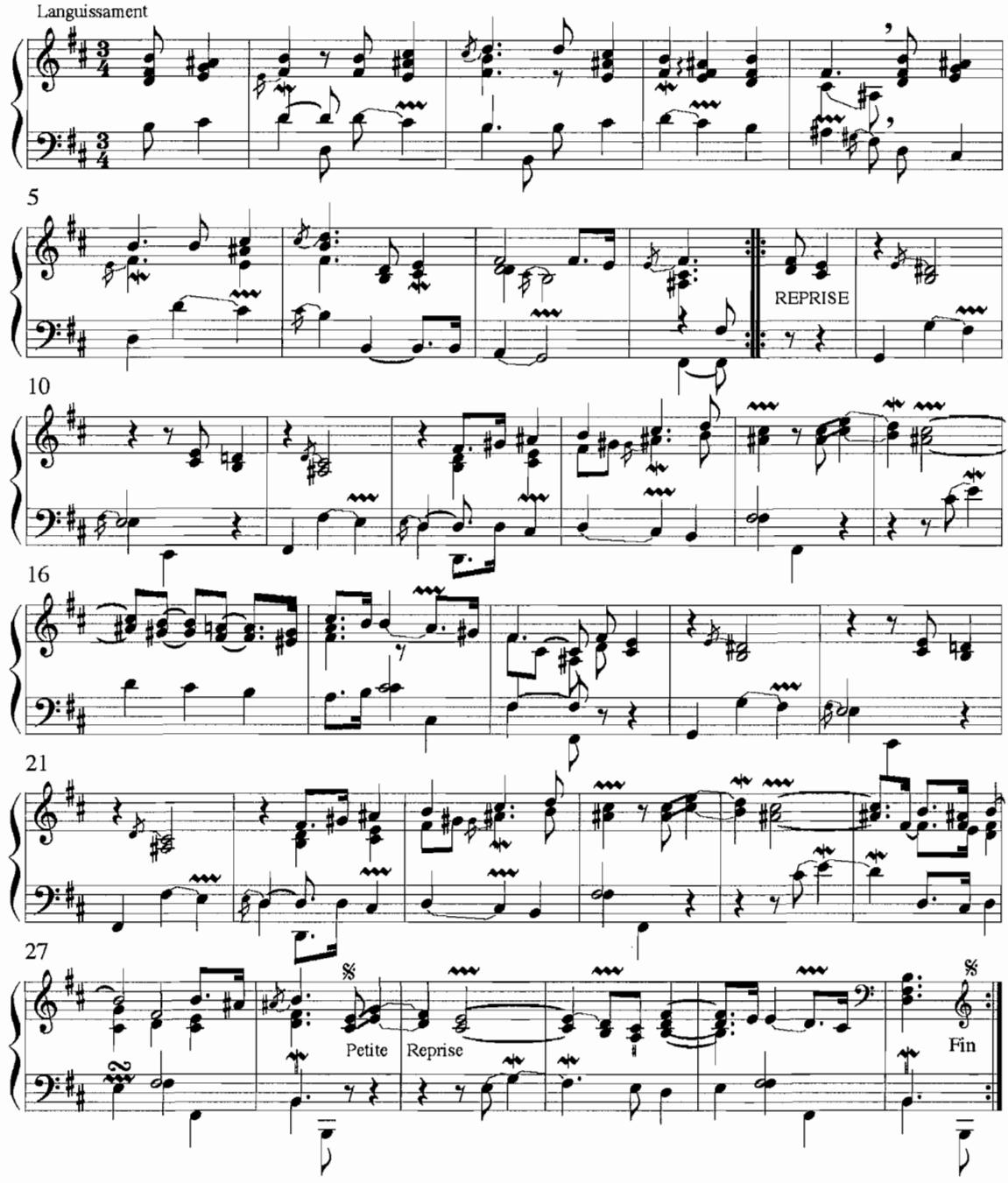
- S3.6 [描述性拆分] Lié over Skips and Coulé
- 页码:23-24
- S3.7 [描述性拆分] Lié with Stepwise Figures and Trills
- 页码:24-26
- S3.8 [描述性拆分] Appoggiatura with Lié and Its Expressive Function
- 页码:27-29
C4 Expression: Form, Aesthetic, and Pattern
- S4.1 [描述性拆分] Binary Form and the Use of Silence to Define Gesture
- 页码:29-33
- S4.2 [描述性拆分] Phrase Organization in the Second Reprise and Petite Reprise
- 页码:34-35
- S4.3 [描述性拆分] French Lyricism and the Aesthetics of Timelessness
- 页码:36-39
C5 Pattern Behavior
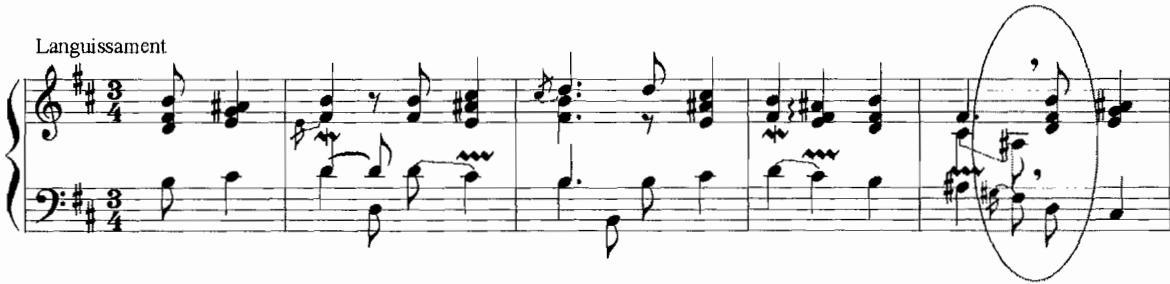
- S5.1 [描述性拆分] The Do-Re-Mi Schema Across the Ordre
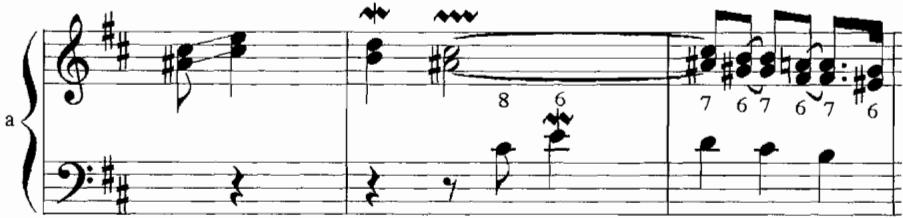
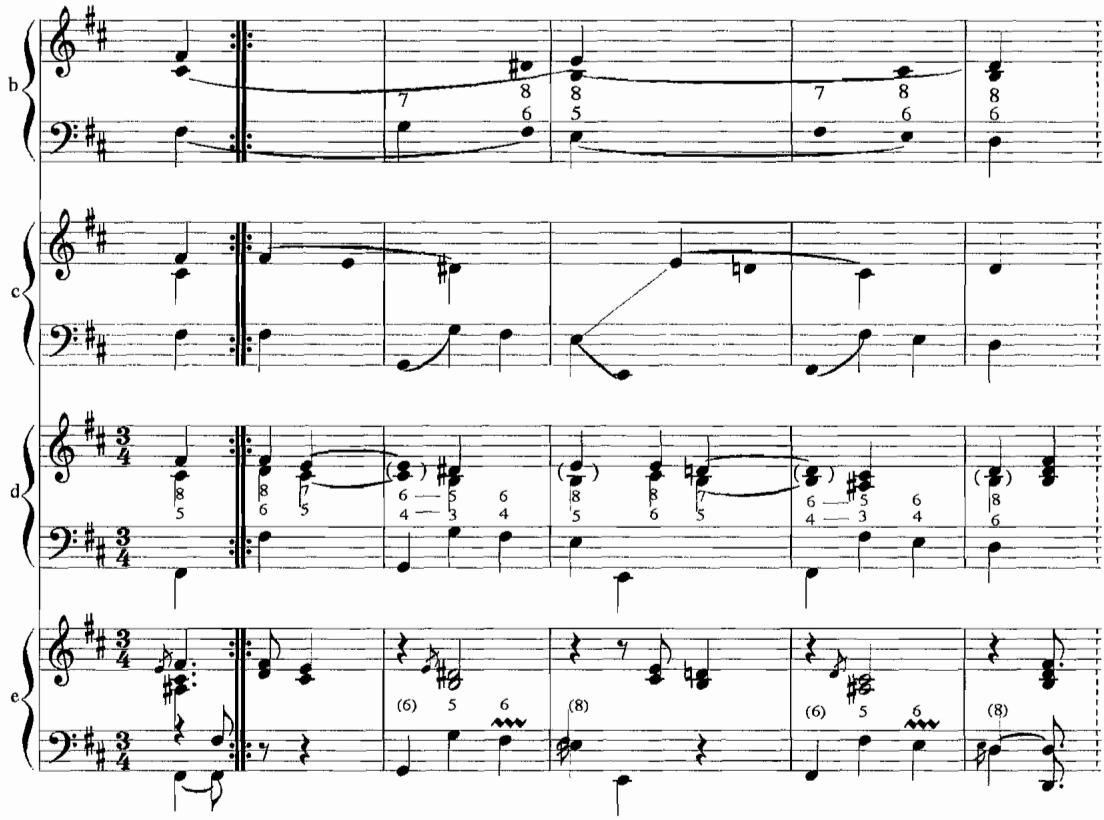
- 页码:40-42
- S5.2 [描述性拆分] The Inverted and Metrically Unstable Opening
- 页码:42-44
- S5.3 [描述性拆分] Continuation Patterns and the Lurching Motive
- 页码:45-50
S1.1 [描述性拆分] Interpretive Overview of the Ordre
第1段(P0001)
原文复述
Jane Clark presents a compelling argument that the ordre functions as a political commentary, and she loosely traces the regent’s coming to power and his eventual moral deterioration.
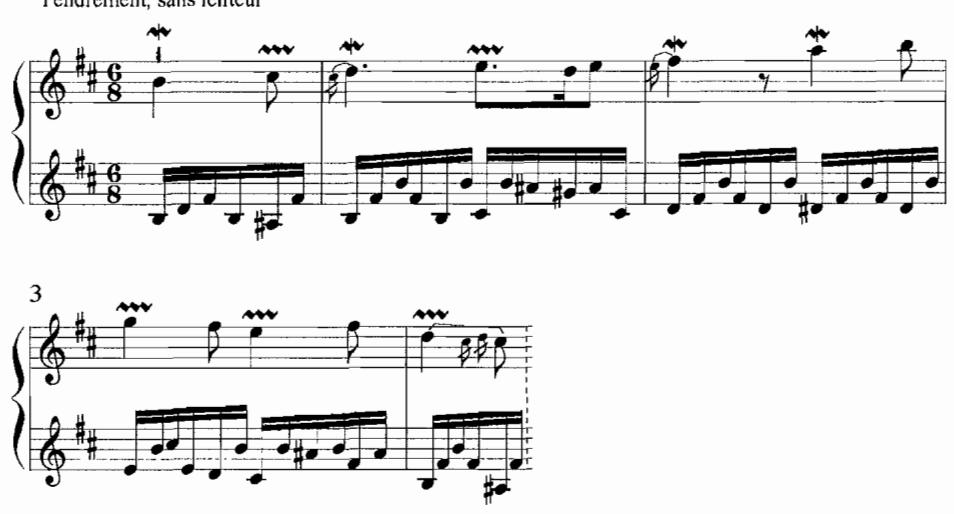
中文讲解
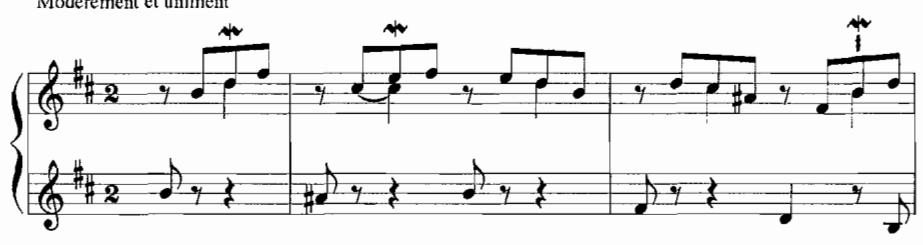
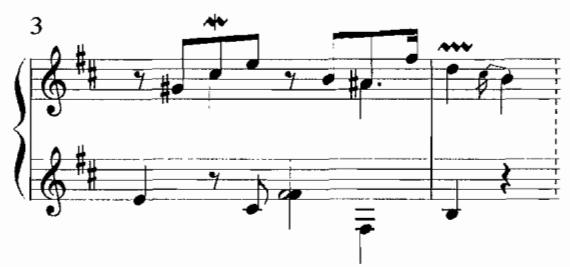
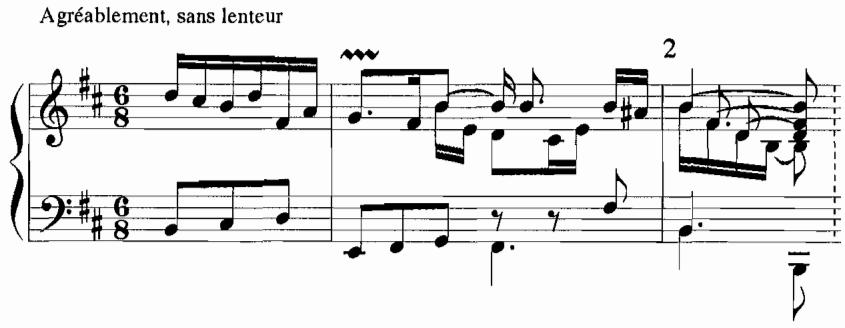
本段以一句话交代 Jane Clark 的核心论点:她把这部 ordre 解读为一篇政治评述,并大致勾勒出摄政王从登台执政到道德沦陷的轨迹。这里的“compelling”表明作者认同 Clark 论证的说服力,也意味着本节的解读立场会围绕 Clark 的政治评论说展开,同时为后文引入 Mellers 的不同解释埋下伏笔。所谓“loosely traces”,意味着 Clark 的叙述并非严密的历史考据,而是带有解读性的勾勒。
补充说明
本节标题中的“Interpretive Overview”提示读者接下来要看到的是不同学者对这部 ordre 的解读之争;P0001 是这场争论的第一方——Clark 的政治评论说。
第2段(P0002)
原文复述
The whole of this ordre refers to Philippe of Orléans, who became Regent of France on the death of his uncle, Louis XIV. This complex man has come down in history as a thoroughly bad lot, but this is not by any means the whole truth. In the same unfortunate position as the Prince de Conti…he had his wings clipped. The highly critical Saint-Simon writes of the Duke in sadly sympathetic terms, “When his ambitions were thwarted he took pride in licentiousness. The rakes of Paris gained a hold over him. Resentment at being forced into an unsuitable marriage drove him to seek consolation elsewhere.“³
中文讲解
本段首先交代这部 ordre 的具体所指——奥尔良公爵菲利普,即路易十四驾崩后成为法国摄政王的菲利普。作者提醒:虽然此人历来声名狼藉,但这远非全部真相。与孔蒂亲王处境相似,他“被剪去了翅膀”,即被剥夺了施展抱负的空间。Saint-Simon 虽以尖刻著称,却在这里对公爵表达了近乎悲悯的同情:野心受阻便以纵情自傲,巴黎浪子遂乘虚而入,强加的不幸婚姻又迫使他向外寻求慰藉。这段生平叙述的功能是:先为后文两种解读(Clark 的政治评论说 vs. Mellers 的道德训诫说)提供共同的历史底色;并以“ambitions thwarted”与“forced into an unsuitable marriage”揭示其堕落的结构性原因,而非简单的道德败坏。
补充说明
Saint-Simon 是路易十四至摄政时期最重要的宫廷回忆录作者,其对菲利普的同情在其他场合罕见,因此本引文具有特殊史料价值。
第3段(P0003)
原文复述
Wilfrid Mellers counters with a slightly different interpretation (invoking ideas of his associate Michael Moran), based upon the meanings inherent to the title of the first piece in the group — Les Lis naissans (The Birth or Budding of the Lilies). The lily, for both Mellers and Clark, refers to the Fleur de lis, which is the symbol and emblem of French royalty. According to Mellers, the Fleur de lis would never have been associated with a Regent. He writes, “An interpretation more in keeping with the literary spirit of the time would…be to regard the ordre as a ‘moral lecture’ to the young Dauphin, later Louis XV.“⁴ Mellers continues by quoting Moran.
中文讲解
本段提出与 Clark 不同的第二种解读,代表人物是 Wilfrid Mellers(并援引其合作者 Michael Moran 的观点)。Mellers 的切入点不是摄政王的生平,而是整部 ordre 开篇之作的标题——Les Lis naissans(百合的诞生或初绽)。无论是 Mellers 还是 Clark,都把“百合”读作“fleur de lis”(鸢尾花),即法兰西王室的徽章。据此 Mellers 提出一个关键判断:fleur de lis 这一象征绝不会与“摄政王”这一身份相挂钩——它属于真正的王。于是引出 Mellers 的正面主张:在当时文学精神下,更合理的解释是把这部 ordre 视为写给年幼的皇太子(未来的路易十五)的“道德训诫”。Mellers 接下来还将引用 Moran 进一步支持此说。
补充说明
“counters”明确标示学术对话关系;本段的功能是用 Mellers 的标题—象征分析来修正甚至替代 Clark 的生平—政治分析。
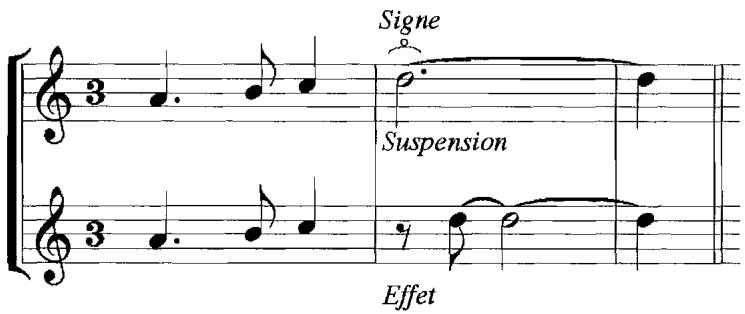
第4段(P0004)
原文复述
Certainly the Regent’s lascivious life may have inspired Couperin to examine the nature of a tormented soul, but surely as a warning to one whose life was before him rather than as a tribute to one whose life was drawing to its close. This is the only ordre that concludes on a note of deepest pessimism. To the Dauphin it would have meant that such a dark fate as is contained in L’âme-en peine is inescapable if the passions are allowed to rule reason. If offered to the Regent its unassuaged gloom would have offered no consolation at all, scarcely a helpful gesture from Couperin who was his friend.⁵
中文讲解
本段是作者对两种解读的裁断,明显倾向 Mellers。作者承认摄政王的放荡生活确实可能激发 Couperin 去刻画“受折磨的灵魂”这一主题,但他强调:作品的用意是“警示”——其对象应是“人生尚在前方”的皇太子,而非“人生行将落幕”的摄政王作为“赞颂”的对象。理由有两层。其一,体裁上的理由:这是 Couperin 全部 ordre 中唯一以极度悲观收束的一部;末曲 L’âme-en peine(受难之魂)暗示只要情欲压倒理性,这种黑暗命运便无可逃避——这正是写给一位未来君主的教训。其二,交情上的理由:若把这部阴沉绝望之作献给摄政王,无异于雪上加霜,而 Couperin 与摄政王交好,不太可能作此不近人情之举。换言之,作品的“受难灵魂”原型可以来自摄政王,但功能与受众必须落在皇太子身上。
第5段(P0005)
原文复述
Footnote 3: Jane Clark, François Couperin Pièces de Clavecin: The Background (Oxford: University of Oxford, 1992), 14.
中文讲解
脚注 3 注明 P0002 中 Saint-Simon 关于奥尔良公爵那段引文的史料来源:Jane Clark 1992 年牛津大学未出版的论文《François Couperin Pièces de Clavecin: The Background》第 14 页。该脚注的功能是为传记叙述提供文献依据,而非推进主要论点。
第6段(P0006)
原文复述
Footnote 4: Mellers, François Couperin, 413.
中文讲解
脚注 4 注明 P0003 中 Mellers 关于“将 ordre 视为写给皇太子的道德训诫”这一主张的出处:Mellers《François Couperin》第 413 页。该脚注的功能是为替代性解读提供权威文献支持。
第7段(P0007)
原文复述
Footnote 5: Mellers, François Couperin, 413–414.
中文讲解
脚注 5 注明 P0004 中关于摄政王激发 Couperin 创作、L’âme-en-peine 的悲观结局以及该作品若献给摄政王将不合情理等论断的出处:Mellers《François Couperin》第 413–414 页。该脚注的功能是为作者的裁断性论证提供双重页码的文献支撑。
💡 本节核心要点
🔑 关键术语
S1.2 [描述性拆分] Thematic Connection Across the Ordre
第1段(P0008)
原文复述
Whether the thematic connection of the whole is a criticism of the Regent himself, or a morality lesson about the tragedies and torment that ensue from bad behavior — with perhaps the Regent as the object — the themes of wavering virtue, and the progressive unfurling of a spiritual and mental state over the course of the ordre are common to both interpretations.
中文讲解
本段提出一个总论性的判断:无论把整个ordre的主题连接理解为对摄政王本人的批评,还是理解为对恶行所招致悲剧与痛苦的道德训诫(摄政王可能是其针对对象),两种解读都共享两个核心主题——一是"摇摆不定的德行”(wavering virtue),二是德行在ordre进行过程中逐步展开的"精神与心理状态”(the progressive unfurling of a spiritual and mental state)。作者在这里使用的是"whether…or…“句式,强调的不是二选一,而是指出无论持哪种立场,读者都能看到同一条贯穿性线索。“unfurling”(展开、舒展)一词带有植物意象,暗示这一心理状态如同花蕾开放一样,是渐进而非突变的。这为本小节后续逐曲解读奠定了框架:每首作品都被视为这条渐进线索上的一个阶段。
补充说明
“Ordre"是法国巴洛克键盘音乐(尤其是库普兰作品)特有的组曲形式,由多首带有描绘性标题的短曲组成。“Regent"指法国摄政王菲利普二世·德·奥尔良(Philippe d’Orléans),1715年至1723年间因路易十五年幼而任法国摄政。本段使用"unfurling"一词,与下一段花蕾的意象形成前后呼应。
第2段(P0009)
原文复述
The set begins with The Birth or Budding of Lilies. Flowers in bud are traditionally a hallmark of spring and the changing of the seasons. Considering the emblem of the Fleur de lis — appropriately or inappropriately ascribed to the Regent or the Dauphin — can symbolize the changing tides of the political climate, although this ordre was published in 1722, seven years after the death of Louis XIV. Alternatively, and all royal associations aside, budding flowers can be viewed as representing the beginning — or the naissance — of life. The lilies are unopened and filled with promise, symbolizing hope or potential, and the expectation of beauty prior the inevitable wilting that takes place as part of the life cycle. There is beauty, but with it comes sadness, as it is definite that it eventually fades away and ultimately dies. Philippe Beaussant writes:
中文讲解
本段进入ordre第一首《百合的诞生或含苞》(The Birth or Budding of Lilies)的具体分析。首先给出花蕾的传统象征——春天与季节更替的标志;接着引入王室层面:百合花(fleur-de-lis)是法国王室纹章,可被联系到摄政王或王太子,由此暗示政治气候的变化。但作者用"appropriately or inappropriately”(合适地或不合适地)一语双关——一方面承认百合花与王室的传统联系,另一方面对将其与摄政王或王太子直接对应保持审慎,尤其指出ordre出版于1722年,距路易十四去世已有七年,此时再作政治影射在时序上已较疏远。在剥离王室联想之后,作者转向更具普遍性的解读:含苞的花朵象征生命的诞生(“naissance"一词特意保留法语),象征尚未绽放的希望与潜能,但同时也必然指向盛放之后的凋零与死亡——美与悲伤在此共存。最后一句"Philippe Beaussant writes:“引出下一段的引文。
补充说明
“Fleur de lis”(百合花饰)是法国王室的传统纹章符号;“Dauphin"指法国王太子;“naissance"是法语"诞生”,作者特意保留以呼应曲名中的"Birth”。无额外补充。
第3段(P0010)
原文复述
Les Lis naissants trembles with life being born and, at the same time, with the overwhelming sight of beauty being born, with the emotional blossoming of a young girl into a woman in full flower…From this contradiction is born a delicate voluptuousness and, at the same time, a tender melancholy. $^{6}$
中文讲解
本段是引文段落,转述自法国音乐学家菲利普·博桑(Philippe Beaussant)。博桑的论述从听觉经验出发:百合花(曲名《Les Lis naissants》,即"初生的百合”)的音乐"颤抖着”(trembles)——这种颤抖同时承载着两种力量,一是新生命的诞生,二是令人震撼的美之诞生,以及少女向成熟女性过渡的"情感绽放”。博桑从这一同体两面性中提炼出一个美学结论:正是这种"矛盾”(contradiction)——即诞生与消逝、欢愉与哀伤的并存——孕育出"细腻的官能之美”(delicate voluptuousness)与"温柔的忧郁”(tender melancholy)的复合体。这一对概念实际上是17世纪法国美学中"douceur"与"mélancolie"传统的延续。尾注上标6指向博桑著作的出处说明。
补充说明
博桑的论述揭示了本段标题"trembles"一词的修辞功能:颤抖既指音乐的织体特征,也指新生事物的不稳定状态。无额外补充。
第4段(P0011)
原文复述
Les Rozeaux (The Reeds) appears next in the ordre, which Clark states are “emblems of human frailty.” $^{7}$ She continues by quoting seventeenth-century scholars
中文讲解
本段引出ordre的第二首《芦苇》(Les Rozeaux / The Reeds)。作者简明交代其在组曲中的位置——接在百合之后,并立即援引简·克拉克(Jane Clark)的判断:芦苇是"人类脆弱的象征"(emblems of human frailty)。“Emblem"一词在此具有特殊含义,它指17世纪盛行的一种图文并茂的寓意表达体裁(emblem book),即用一个具体图像配以格言来表达抽象道德寓意。因此将芦苇称为"emblem of human frailty”,意味着这首作品被视为一个寓意图像而非单纯的音响描写。尾注7指向克拉克与德雷克·康农合著的著作。末句"She continues by quoting seventeenth-century scholars"是承接句,引出下段将引用的帕斯卡与菲特里耶。
补充说明
“Emblem”(寓意图像/徽铭体)是16—17世纪欧洲一种结合图像、铭文与释义的道德训诫体裁,常见于诗集与音乐理论著作。无额外补充。
第5段(P0012)
原文复述
$^{6}$ Philippe Beaussant, François Couperin (Portland, OR: Amadeus Press, 1990), 290.
中文讲解
本段为正文P0010的脚注6,标注博桑的引文出处:Philippe Beaussant, François Couperin,1990年由位于美国俄勒冈州波特兰的Amadeus Press出版,引文出自第290页。该脚注属于来源出处类脚注,为博桑关于《Les Lis naissants》“颤抖"美学的论述提供学术来源。
第6段(P0013)
原文复述
$^{7}$ Jane Clark and Derek Connon, The Mirror of Human Life: Reflections on François Couperin’s Pièces de Clavecin (Huntingdon, England: King’s Music, 2002), 81.
中文讲解
本段为正文P0011的脚注7,标注克拉克关于"芦苇象征人类脆弱"的引文出处:Jane Clark与Derek Connon合著的The Mirror of Human Life: Reflections on François Couperin’s Pièces de Clavecin(《人生之镜:库普兰羽管键琴曲反思》),2002年由英国亨廷登的King’s Music出版,引文出自第81页。该脚注属来源出处类脚注,为P0011中将芦苇定性为"人类脆弱象征"提供文献依据。
第7段(P0014)
原文复述
Blaise Pascal and Antoine Furetière to provide further context for her thematic association. “As Pascal said: ‘Man is only a reed, the weakest thing in nature.’ Furetière: ‘Un esprit faible qui plit comme un Roseau.’ (A weak spirit that bends like a reed).” $^{8}$ Mellers shares Clark’s interpretation, but adds specifically that the piece is a reference to the Regent and his bendable will. In second position, we can think of this as representing the beginning of moral decline — folding under the temptations of life.
中文讲解
本段继续P0011的讨论,给出克拉克所引用的两位17世纪学者的原文,以支持"芦苇象征人类脆弱"这一主题关联。其一是布莱士·帕斯卡(Blaise Pascal)的名言:“人只是一根芦苇,自然界最脆弱的东西”(Man is only a reed, the weakest thing in nature);其二是安托万·菲特里耶(Antoine Furetière)的法语原文:“Un esprit faible qui plit comme un Roseau”(一颗像芦苇般弯曲的脆弱灵魂)。两则引文都从"脆弱—弯曲"的角度建立芦苇与人的类比。尾注8对应菲特里耶引文的出处。接着作者介绍第二位学者威尔弗雷德·梅勒斯(Wilfrid Mellers),他认同克拉克的解读,但进一步特化其内涵:这首曲子是针对摄政王及其"可被弯曲的意志”(bendable will)的暗指。最后作者将这首"在第二位置"(即百合之后)的作品纳入整体叙事:它代表"道德堕落的开端"——在生活的诱惑下屈服。尾注8此处虽未在文本中显示上标,应对应梅勒斯所引菲特里耶的出处。
补充说明
帕斯卡的"人是一根芦苇"出自其《思想录》(Pensées),是该书最著名的比喻之一;菲特里耶是17世纪法国词典编纂者与文学家。“bendable will”(可弯曲的意志)一语将芦苇的物质柔弱转化为摄政王道德意志不坚的隐喻。无额外补充。
第8段(P0015)
原文复述
Next is L’Engageante (The Engaging One or That which Engages), a piece that is named — oddly enough — for items of clothing. “Elegant sleeves which allow beautiful arms to be seen have the name engageantes.“9 Alternatively, an engageante is “A bow of yellow ribbon that young ladies wear on their breast.“10 An engageante, then, is meant to be alluring — meant to catch the eye of men and pique their interest. Within the narrative of the ordre, the piece can be viewed as representing the morally weak man, easily enticed, persuaded, and drawn-in by frivolous things of beauty.
中文讲解
本段进入ordre的第三首《L’Engageante》(“迷人者"或"引人入胜之物”)。作者以"oddly enough”(颇为奇怪的是)提示读者:曲名来源并非人物或观念,而是具体的服饰——一类叫"engageante"的衣物。其一是指由多层蕾丝制成的"褶边袖”(flounced sleeve),17世纪起在女性时装中流行,缝缀在外袖之上以装饰服装;其二是指"年轻女子佩戴于胸前的黄色缎带蝴蝶结”。这两种定义都强调一个共同特征:engageante是一种用以"引人注目”(catch the eye)、“激起兴趣”(pique interest)的装饰物,是"诱人的"(alluring)。作者由此将音乐与寓意叙事对接:在此曲中,engageante成为道德软弱之人的隐喻——他易被美丽却无关紧要的事物(frivolous things of beauty)所引诱、说服并拉入。脚注9与10分别对应袖饰与胸花两种含义的文献出处。这一段将主题线索从"道德堕落的开端"(第二首的芦苇)推进到"堕落的具体机制——被美的事物所诱"。
补充说明
“L’Engageante"是ordre中的第三首,前两首分别是《百合的诞生》与《芦苇》——从含苞的纯净(百合)到脆弱的道德意志(芦苇)再到被美物吸引的具体诱惑(engageante),构成一个渐进的堕落叙事。无额外补充。
脚注 / 边栏 / 图表 / 附加信息(如有)
本小节包含两个正文脚注(编号6—8),分别标注博桑、克拉克与康恩、以及梅勒斯等人著作的版本与页码信息,均为来源出处类脚注,无附加说明性文字。脚注9与10在正文中仅以小数字上标形式出现(对应engageante两种含义的来源),其完整引文未在本节范围内提供。
💡 本节核心要点
- 全曲整体主题的两种解读(对摄政王的批评 vs. 道德训诫)共享同一核心:“摇摆的德行"与在ordre进程中逐步展开的精神心理状态——这一框架为逐曲分析提供结构。
- 第一首《Les Lis naissants》以"花蕾"意象建立起点:含苞的百合既象征生命的诞生、希望与潜能,也必然内含凋零的预兆;博桑从这一矛盾中提炼出"细腻官能美"与"温柔忧郁"的复合美学。
- 第二首《Les Rozeaux》以"芦苇"为道德寓意图像(emblem),通过帕斯卡与菲特里耶的引文将"物理脆弱"转化为"道德脆弱”,梅勒斯更特化为对摄政王"可弯曲意志"的指涉,标志道德堕落的开端。
- 第三首《L’Engageante》从服饰(褶边袖、黄色胸花)引出"诱人装饰"的意涵,将叙事从抽象的"脆弱意志"推进到具体的"被美物诱惑而沦陷”——道德软弱之人在轻浮之美前被吸引、说服、拖入。
- 三首作品构成一个渐进的叙事弧线:纯净的诞生 → 脆弱的意志 → 具体的诱惑与沦陷,呼应P0008所述"精神心理状态的渐进展开"。
- 作者在王室象征(百合—王室纹章)与普遍寓意(花蕾—生命循环;芦苇—人类脆弱)之间保持审慎的双轨解读,但更倾向普遍寓意层面的分析。
🔑 关键术语
- ordre:法国巴洛克时期由库普兰确立的键盘组曲形式,由多首带标题的短曲组成;本节讨论的应是库普兰的某一组套曲,出版于1722年。
- Regent (摄政王):指1715—1723年间因路易十五年幼而任法国摄政的菲利普二世·德·奥尔良;本节将其作为ordre主题的可能所指对象之一。
- Fleur de lis (百合花饰):法国王室传统纹章符号;在本节中既被讨论为ordre中"百合"曲目的王室政治隐喻,又被作者审慎地与普遍生命象征区分。
- emblem (寓意图像/徽铭):16—17世纪欧洲盛行的一种结合图像、铭文、释义的道德训诫体裁;本节用以说明克拉克将芦苇定性为"人类脆弱象征"时所采用的解读框架。
- wavering virtue (摇摆的德行):本节小节主题框架中的核心概念,指德行在面对诱惑时的不稳定、波动状态;它构成ordre中三首作品渐次展开的精神心理弧线。
- engageante:原指17世纪流行的一种女性装饰——由蕾丝制成的褶边袖或胸前黄缎带蝴蝶结;本节中作为ordre第三首曲名,被引申为"引人入胜之物",是道德诱惑的象征。
S1.3 [描述性拆分] Les Folies françoises and L’Âme-en peine within the Narrative
第1段(P0016)
原文复述
Les Folies françaises ou les Dominos follow, which — in one sense — can be considered a microcosm of the ordre as whole. The variations move over a trajectory that begins with innocence and purity and ends in the tragedy of madness and turmoil. The
中文讲解
本段以「Les Folies françoises ou les Dominos follow」开头,说明在前文已交代的某件作品之后,接着出现的是《Les Folies françoises ou les Dominos》。作者用「in one sense」(在某种意义上)作出限定,提示这只是一种解释视角,而非唯一定义。接下来提出一个核心判断:这组变奏曲可被视为整部 ordre 的「缩影」(microcosm)。所谓 microcosm,是指整体中蕴含了与全局相似的结构与走向——也就是说,《Les Folies françoises》的内部轨迹,反映了整部 ordre 的整体叙事弧线。这一轨迹由「innocence and purity」起步,向「madness and turmoil」收束,呈现从纯净到疯狂的下滑。句子在「The」一词处中断,明显跨段延续到下一段(P0020)的「pieces that frame the ordre」,因此本段的论述尚未完成,需要与 P0020 合并理解。
补充说明
原文中「ordre as whole」缺少冠词「a」,疑为排版或 OCR 疏漏,但不影响理解;本段最后以「The」结束,其语法宾语与 P0020 开头的「pieces that frame the ordre」直接相连,阅读时需将两段视为同一句。
第2段(P0017)
原文复述
Footnote 8: Ibid., 81.
中文讲解
这是正文脚注 8,标注来源为「Ibid., 81」,即与上一脚注相同的著作第 81 页。它属于「同前出处」(Ibid.)式的简短交叉引用,用于支持 P0016 中关于 Les Folies françoises 作为 ordre 缩影、其变奏从纯净走向疯狂的论断。脚注本身不再提供新的引文,而是把该判断追溯到既有文献同一页码。
第3段(P0018)
原文复述
Footnote 9: Ibid.
中文讲解
这是正文脚注 9,同样标注「Ibid.」,即与前一注释相同的来源(同一部书,且很可能仍为第 81 页,因为紧接 P0017 的脚注)。其作用是为 P0016 / P0020 中关于 Les Folies françoises 主题与结构判断的进一步佐证,但本身不增加新信息。
第4段(P0019)
原文复述
Footnote 10: Antoine Furetière, quoted by Ibid., 81.
中文讲解
这是正文脚注 10,引用了法国作家 Antoine Furetière 的话,转引自(同前出处)第 81 页(quoted by Ibid., 81)。它提供了一个来自 Furetière 的原始语录作为佐证,使前述论断具有更具体的文本依据。该脚注与 P0017、P0018 共同构成对「Les Folies françoises 主题解读」这一段的注释簇,全部指向同一文献页码。
补充说明
无额外补充;Furetière 本人及其著作的具体身份未在本段输入中出现,故不作进一步展开。
第5段(P0020)
原文复述
pieces that frame the ordre — The Budding Lilies and The Lost Soul/Soul in Torment — can be considered as thematically analogous to the pieces that frame the variation set — Virginity and to Frenzy and Despair. Alternatively Les Folies, as it is situated within the ordre, could thematically represent the cycle of a romantic conquest, which begins after the wavering will of the male (Les Rozeaux) bends to the temptations of beauty (L’Engageante). The cycle traverses the sweet emotions of innocence, passion, and hope, to the more tumultuous ones of betrayal, jealousy, and despair.
中文讲解
本段承接 P0016 末尾被打断的「The」,完成一个完整的类比结构。作者把整部 ordre 的「框架曲」——《The Budding Lilies》(含苞的百合)和《The Lost Soul / Soul in Torment》(失落的灵魂/受难的灵魂)——与 Les Folies françoises 这组变奏曲的「框架曲」——《Virginity》(童贞)与《Frenzy and Despair》(癫狂与绝望)——进行主题类比。两端作品在各自结构中都扮演「由纯至乱」的起讫角色,因此主题上彼此呼应。接下来,作者用「Alternatively」(换一种说法)提出第二种解读:把 Les Folies françoises 视为一场「浪漫征服」的循环。这场征服的起点是男性的意志动摇(《Les Rozeaux》),屈服于美的诱惑(《L’Engageante》);其情感弧线由「innocence, passion, and hope」(纯真、激情与希望)这些甜美情感,逐步滑向「betrayal, jealousy, and despair」(背叛、嫉妒与绝望)等更为动荡的情绪。这一句与 P0016 的「microcosm」判断互为补充:前者强调结构同构,后者强调情感叙事的同构,共同把 Les Folies françoises 定位为整部 ordre 的情感-主题缩影。
补充说明
本段开头的「pieces that frame the ordre」直接接续 P0016 末尾的「The」,故两段应作为一个完整长句阅读;其中《Virginity》和《Frenzy and Despair》是 Les Folies françoises 内部首尾两首变奏的标题(据本节输入内容推断其位置,但具体编号未给出)。
第6段(P0021)
原文复述
As Les Folies françaises concludes, the mood is demented and desperate. L’Âme-en peine follows to act as the nadir of this tragic ordre — an ordre that begins with the fledgling tentativeness of birth and concludes by reeling under the strain of life’s sufferings, and mourning the loss of integrity and innocence. As the piece in final position, its expression can be heard in relationship to the spirit of those that came before it. And, as the most wretched of the collection, L’Âme-en peine must successfully distinguish itself after the expressive tour de force of Les Folies. The role of the tragic ending to a tragic story is a significant one, and according to the authors who discuss the piece, L’Âme-en peine succeeds well in filling this function. What remains unanswered is how the communication of such pain and loneliness is accomplished musically.
中文讲解
本段进入对全 ordre 终曲《L’Âme-en peine》的功能分析。首先承接 P0020 的情感弧线:Les Folies françoises 收束于「demented and desperate」(癫狂与绝望)的基调,而紧接其后的《L’Âme-en peine》被定位为整部悲剧性 ordre 的「nadir」(最低点)。作者用破折号插入一个全 ordre 的整体定性:它「begins with the fledgling tentativeness of birth」(以初生般的试探开端),「concludes by reeling under the strain of life’s sufferings, and mourning the loss of integrity and innocence」(以承受生命苦难、哀悼纯真与正直的丧失而告终)。随后指明《L’Âme-en peine》的结构位置带来两重特殊要求:其一,作为终曲(the piece in final position),其表达须与前面所有作品的精神「在关系中被听见」(heard in relationship to the spirit of those that came before it);其二,作为整部套曲中「最为凄惨」之作(the most wretched of the collection),它在 Les Folies françoises 这样的 expressive tour de force 之后仍须成功地 self-distinguish(自我区分、不被淹没)。作者援引评论界的共识:L’Âme-en peine 很好地完成了「为悲剧故事提供悲剧结尾」这一重要功能。但段末提出本节留下的核心未解问题:「such pain and loneliness is accomplished musically」——即这种痛苦与孤独的音乐传达机制究竟如何实现。这一问句把本节从「主题/叙事定位」过渡到「音乐分析」的张力,预示后文将进入具体音乐语言的分析。
补充说明
本段中的「tour de force」(法语借词,意指「力作、绝技」)与前文 P0016 的「microcosm」、本段「nadir」共同构成本节叙事层级的关键词;「nadir」原为天文术语,指天体轨道上离天体最远、最低之点,此处借喻整部套曲情绪曲线的最低谷。
脚注 / 边栏 / 图表 / 附加信息(如有)
本节包含三条脚注(P0017、P0018、P0019),全部以「Ibid., 81」或同源形式指向同一部文献的第 81 页,并由 P0019 进一步指出其中引文源自 Antoine Furetière,三者共同支撑 P0016–P0020 中关于 Les Folies françoises 主题轨迹及其与整部 ordre 关系的论断;脚注之外无其他图表、边栏或附加版面元素。
💡 本节核心要点
- Les Folies françoises 在「一种意义上」可被视为整部 ordre 的 microcosm:其变奏从 innocence/purity 走向 madness/turmoil,反映全 ordre 的整体叙事弧线。
- 作者提出两套互为补充的解读视角:其一,ordre 的框架曲(《The Budding Lilies》与《The Lost Soul/Soul in Torment》)与 Les Folies 的框架曲(《Virginity》与《Frenzy and Despair》)在主题上类比对应;其二,Les Folies 也可读作一场「浪漫征服」的情感循环,由《Les Rozeaux》的意志动摇、《L’Engageante》的诱惑出发,经纯真、激情、希望滑向背叛、嫉妒、绝望。
- 全 ordre 被定性为悲剧性叙事:以「初生般的试探」开端,以「承受生命苦难、哀悼纯真与正直的丧失」告终;因此 L’Âme-en peine 处于整个情感曲线的 nadir。
- L’Âme-en peine 作为终曲兼「最凄惨之作」,承担双重结构任务:必须与前作精神保持可被感知的关系,又须在 Les Folies 这样的 expressive tour de force 之后成功自我区分。
- 评论界认为 L’Âme-en peine 成功履行了「悲剧故事之悲剧结尾」的功能;但本节末尾把核心未解问题引向音乐本身:这种痛苦与孤独究竟如何在音乐上被传达。
🔑 关键术语
- microcosm:「缩影」之意。在本节中指 Les Folies françoises 的内部结构/情感弧线(纯真→癫狂)与整部 ordre 的整体叙事同构;这是 P0016 提出的核心结构性判断。
- nadir:原指天体轨道最低点,此处借喻整部套曲情绪曲线的最低谷,特指 L’Âme-en peine 在 ordre 中所处的位置(P0021)。
- expressive tour de force:法语借词,意为「情感表现上的力作/绝技」。本节用以指 Les Folies françoises 在表现强度上所达到的高度,并以此作为衡量终曲 L’Âme-en peine 必须超越或区隔的参照(P0021)。
- ordre:本节所讨论的整部作品(套曲),由若干首性格小品与变奏集组成;本节聚焦其中 Les Folies françoises 与 L’Âme-en peine 在整体叙事中的位置。
- frame pieces(框架曲):指位于一组作品首尾、起到开篇与收束作用的两首乐曲;本节以「框架曲」类比整部 ordre 与 Les Folies 变奏集各自首尾两首作品的主题对应关系(P0020)。
S2.1 [描述性拆分] Existing Commentary and the Limits of Description
第1段(P0022)
原文复述
The Mood of L’Âme-en peine: General Observations from Others
中文讲解
本句是S2.1内部的一个二级小标题,宣告本节主题:讨论L’Âme-en peine这首曲目的音乐情绪(mood),并以"General Observations from Others"明确本节的任务——先回顾前人观察,再由作者本人接手。标题中"General Observations"暗示这些评论尚停留在概括层面,预设了后文对前人"描述性、敷衍式"评判的伏笔。
第2段(P0023)
原文复述
The few writers who have commented on L’Âme-en peine, reproduced in Example 5.1, agree that the expression of the piece is singularly dark. However, their assessments are more descriptive in nature, and unfortunately somewhat perfunctory, and none fully engage the musical material to explore how it contributes to this expression. Clark remains silent about the piece altogether and does not provide any thematic reference at all for L’Âme-en peine — a rare omission in her comprehensive discussion about the titles of Les Pièces de Clavecin.¹¹ David Tunley also excludes the piece from his chapter on Couperin’s harpsichord compositions.¹² Mellers discuss the tragic state of L’Âme-en peine in general and in predominantly symbolic terms:
中文讲解
这段是本节的核心立论段,作者先承认学界共识——评论过L’Âme-en peine的少数作者都认为该曲"异常黑暗"——随即提出两个尖锐的方法论批评:一是这些评价"更多停留在描述层面"且"有些敷衍",二是没有人真正"调动音乐材料"来解释这种"黑暗"如何被制造出来。接下来作者点名两处显著的沉默:Clark在其关于Les Pièces de Clavecin曲题的综合性讨论中对此曲只字未提,这在她一贯详尽的论述中是"罕见的省略";Tunley则在Couperin大键琴作品专章里将该曲排除在外。两处缺席加上Mellers仅作"象征性"论述,构成对前人研究状况的整体画像:要么不提,要么只描述情绪而不分析音乐。末尾以冒号预告将引述Mellers原话。
补充说明
脚注标记¹¹、¹²指示两处沉默各自的文献出处(见P0027、P0028)。
第3段(P0024)
原文复述
中文讲解
这是图注Example 5.1的占位条目,说明紧随其后的是François Couperin于1722年出版的第13 ordre中L’Âme-en peine一曲的乐谱。该图的存在使得后文Mellers与Beaussant反复引用的"小节9—12"与"小节15—18"能够被读者直接核对——这恰恰是本节反复强调的"调动音乐材料"所必需的对象。占位符表明图像数据未在此转录,读者需查阅原书相应页面。
补充说明
需查看原图(Example 5.1的乐谱),以便核对小节9—12与15—18中实际的不协和延留与增音程。
第4段(P0025)
原文复述
L’âme-en peine, a piece as violent as the Passacaille, yet covering only one page. Again Couperin’s irony and his melancholy are interdependent, and that Les Folies Françoises is riddled with witty japes only makes this epilogue the more agonizing. This is indeed an apotheosis to the disaster of the Regent’s life; a soul in purgatory is redeemed by the tragic grace of Couperin’s music.¹³
中文讲解
这是Mellers评论L’Âme-en peine的长段引文,恰恰是作者所说的"predominantly symbolic"的范本。其论证可拆为三层:第一层是体量与情绪的对比——Mellers把此曲与Passacaille并列为同样"violent",却仅占一页篇幅,由此形成密度上的压迫;第二层是套曲内部反差的论证——同组作品Les Folies Françoises中充斥的�谐玩笑(“witty japes”),反而使作为终曲(“epilogue”)的本曲"更为痛苦",这意味着Mellers认为Couperin的"反讽"(irony)与"忧郁"(melancholy)是相互依存的两面;第三层是文化—宗教解读——他将该曲视为对摄政王(the Regent)生活"灾难"的"apotheosis"(极致化/神化),并以"炼狱中的灵魂"被"悲剧的优雅"所救赎的宗教意象收束。整段都借情绪、人物与宗教隐喻来描绘该曲,并未进入音乐技法本身,因此也正是作者随后要推进的批评对象。脚注¹³指明该引文出处(Mellers, François Couperin, p. 413)。
补充说明
无额外补充(本段所述"摄政王"等历史身份属于被引文献的语境信息,本节作者未对其展开)。
第5段(P0026)
原文复述
He does, however, share some insight about the music itself. Using measures nine through twelve and fifteen through eighteen as his representative excerpts, Mellers states that the piece “is composed of almost continuously dissonant drooping suspensions, including a high proportion of strained augmented intervals.“¹⁴ Beaussant, citing virtually the same measures, elaborates on the mood of the piece a bit more than Mellers and states that the key of B minor for L’Âme-en peine, and for the ordre in general, lends itself to a particularly sorrowful setting. “Remember that Marc-Antoine Charpentier described the key of B minor as ‘solitary and melancholy.’ It imparts a faint, almost imperceptible tinge of veiled melancholy to the Treizième Ordre.“¹⁵ Beaussant does add that the piece is filled with suspensions and ornaments, “which are less ornamental than ever"¹⁶ which contributes to what he considers the “sorrowful"¹⁷ emotion of the piece.
中文讲解
本段接续Mellers的引文,从纯情绪叙事转入半音乐分析,但仍属前人评论的范畴。首先,作者承认Mellers"分享了一些关于音乐本身的洞察”,并具体定位到小节9—12与15—18这两段样本;Mellers的判断是该曲"几乎持续由不协和的下行延留音组成”,并含"高比例的紧张增音程”。“下行延留”(drooping suspensions)意味着延留音在解决时向下坠落,制造压抑的听感;“增音程”(augmented intervals,如增四度)是18世纪极不稳定的音程形式,Mellers以"strained"形容其张力,这正是他把该曲称为"violent"与"dark"的具体音乐根据。
Beaussant紧接着引用几乎相同的小节,但在两个方向上推进了一步。其一,他把调性本身视为情绪来源:B小调"特别适合悲哀的写作”,并援引Marc-Antoine Charpentier对该调性的著名形容——“solitary and melancholy”——认为这种"若有若无、被遮掩的忧郁"弥漫整个第13 ordre(Treizième Ordre)。其二,他指出曲中虽充斥装饰音与延留,但这些装饰音"比以往任何时候都不再具有装饰性”,也就是说,原本在巴洛克音乐中常作轻盈点缀的装饰音,在此曲里已被压榨成哀痛的载体。Mellers描述"延留”,Beaussant描述"装饰音失去装饰性"与"调性色彩",两人从不同侧面共同支撑了"该曲异常黑暗"的判断,这恰好是作者在P0023中批评前人时仍不得不承认的部分有效观察。脚注¹⁴—¹⁷分别对应引文页码。
补充说明
Charpentier关于B小调"solitary and melancholy"的形容属于18世纪法国调性情感论传统,本段仅作为Beaussant的引文出现,作者本人未就此展开。
第6段(P0027)
原文复述
¹¹ Clark and Connon, Mirror, 82.
中文讲解
脚注11,注明正文中"Clark在Les Pièces de Clavecin曲题讨论中完全未提及L’Âme-en peine"这一论断的文献出处:Clark与Connon合著的Mirror一书第82页。该脚注对正文起的是来源标注(source attribution)作用,提示读者可前往该页核对作者对Clark"罕见省略"的判断。
第7段(P0028)
原文复述
¹² See Tunley, Perfection of Music, Chapter 6.
中文讲解
脚注12,注明正文中"David Tunley在其论Couperin大键琴作品的章节中将L’Âme-en peine排除在外"的出处:Tunley所著Perfection of Music第6章。前缀"See"暗示作者的判断限定在Tunley的大键琴专章范围内,并非通读全书后的全面排查。
第8段(P0029)
原文复述
¹³ Mellers, François Couperin, 413.
中文讲解
脚注13,注明P0025所引Mellers长段引文(关于"该曲与Passacaille同样暴力"、“反讽与忧郁相依”、“炼狱灵魂被悲剧优雅救赎"等论述)的出处:Mellers的François Couperin第413页。这是标准的引文来源标注。
第9段(P0030)
原文复述
¹⁴ Ibid., 201.
中文讲解
脚注14,注明P0026中Mellers关于"小节9—12与15—18几乎持续由不协和的下行延留音组成、含高比例紧张增音程"那段引文的出处,仍出自Mellers的François Couperin,仅页码不同(第201页)。“Ibid.“是紧随上条出处时使用的简写格式。
脚注 / 边栏 / 图表 / 附加信息(如有)
本节范围内含有两类非正文附加材料:(1)一项内嵌图像占位符,即Example 5.1(第13 ordre,1722年,Couperin)的L’Âme-en peine乐谱,其作用是让读者能够直接核对Mellers与Beaussant共同援引的小节9—12与15—18;(2)四条脚注(¹¹—¹⁴),均集中于第7页且全部为来源标注功能——脚注11—12对应正文中Clark与Tunley两处"缺席"判断的文献依据,脚注13—14对应Mellers两段引文的页码定位。其余脚注标记(¹⁵—¹⁷)虽在P0026中以引文上标出现,但具体内容位于本节边界之外,本节未收录。
💡 本节核心要点
- 前人对L’Âme-en peine的评论极为稀少:Clark在其综合性曲题讨论中完全未提,Tunley在其大键琴专章中将其排除,两处沉默共同说明该曲在学界长期处于边缘位置。
- 仅就触及该曲的评论而言,学界虽一致认定其曲色"singularly dark”,但在方法上属于"描述性"且"perfunctory”,无人真正进入音乐材料内部说明这种黑暗如何被构造出来。
- Mellers作为少数触及此曲的学者,其论述以"predominantly symbolic"为特征:以"炼狱灵魂”、“摄政王生活的灾难”、“反讽与忧郁相依"等文化—宗教意象描绘该曲,却未分析技法。
- Mellers最接近音乐本体的观察是:全曲几乎"持续由不协和的下行延留音组成”,并含"高比例的紧张增音程",样本具体定位到小节9—12与15—18。
- Beaussant从同一组小节出发进一步扩展:他援引Charpentier把B小调形容为"solitary and melancholy",认为这种"若有若无、被遮掩的忧郁"笼罩整个第13 ordre;同时指出装饰音在此曲中"比以往任何时候都不再具有装饰性",原本轻盈的点缀已被压榨为哀痛的载体。
- 本节整体功能是"清场":通过对前人"看到了什么"与"未能说明什么"的对照,为下文作者自己调动音乐材料做铺垫。
🔑 关键术语
- L’Âme-en peine:法语"受难的灵魂",本节讨论的核心曲目,是Couperin第13 ordre(1722)的终曲。
- drooping suspensions:“下行延留音”,指延留音在解决时向下进行的和声手法,制造向下坠落的压抑听感;Mellers以此描述L’Âme-en peine全曲的延留特征。
- augmented intervals:“增音程”,如增四度、增二度,是18世纪音乐中极不稳定的音程形式;Mellers称本曲中这类音程呈"高比例"且"紧张"(strained)。
- B minor / la mineur / Treizième Ordre:B小调,本曲与第13 ordre的整体调性;Beaussant援引Marc-Antoine Charpentier形容该调为"solitary and melancholy",作为整组套曲悲情底色的来源之一。
- Les Pièces de Clavecin:Couperin的大键琴曲集(共4卷27组ordre),Clark在该曲题讨论中未提及L’Âme-en peine,构成其"罕见的省略"。
- apotheosis:Mellers用以描述本曲作为第13 ordre终曲的功能,意为"极致化/神化",他把该曲读作对"摄政王生活灾难"的文化升华。
S2.2 [描述性拆分] Moving Beyond General Observations
第1段(P0031)
原文复述
These observations are correct and certainly contribute to the piece’s expression. Given that each piece from the ordre is in the same key, and includes some type of ornamentation and/or suspension figures, they cannot be the only features that distinguish L’Âme-en peine as singularly tragic within the group — or at least tragic enough to qualify it as appropriately sorrowful to serve as the concluding narrative to this tragic ordre. In the next sections of this chapter, I will expand upon these general observations, as well as reframe them in relationship to other constructs such as form, texture, style, and more specifically, pattern behavior — both individually and in comparison to other pieces in the collection — to illustrate that The Lost Soul includes features rooted in a different aesthetic — an aesthetic that affects what I will call the “orientation” of its expression. Investigating how these elements can contribute to the expression of L’Âme-en peine will expand our understanding of the piece, and enrich — as well as refine — the parameters for our metaphoric mappings onto the title of a portrait that Mellers considers as “perhaps his [Couperin’s] most impassioned utterance.” $^{18}$
中文讲解
本段在论证结构上起承上启下的过渡作用:先承认前文(小节S2.1)所做的"一般性观察"——即所有同组(ordre)作品都共用同一调性、并含有装饰音与/或延留音——这些观察本身是成立的,也确实对作品的表达有所贡献。但作者随即设置了一个关键的逻辑限制:既然这些特征是整个ordre的共有属性,那么它们就无法单独充当将L’Âme-en peine区分为"唯一悲剧性"作品的判据,也不足以支撑它作为"悲剧ordre的收束叙事"所需的悲怆程度。这一让步并不是对前文的否定,而是为后续更精细的分析腾出空间。
作者继而预告了后续章节的工作路径:他要将这些一般性观察加以扩展并重新置入更宽广的分析框架中——包括"形式(form)、织体(texture)、风格(style)",并特别聚焦于"模式行为(pattern behavior)",且这种分析既针对单个作品,也与collection中的其他作品进行对照。其总论点是:The Lost Soul(《迷失的灵魂》)包含植根于一种"不同美学(a different aesthetic)“之中的特征,这种美学所影响的,是作者所提出的一个核心概念——表达的"取向(orientation)"。“取向"一词在本节中指作品悲剧表达的内在方向或指向,它不是由装饰音或延留音等表层共有特征决定的,而是由更深的结构层面决定的。
最后,作者将这一研究路径的学术意义落到两个层面:一是扩展对作品本身的理解,二是"丰富并精炼(enrich — as well as refine)“其对作品标题进行隐喻映射(metaphoric mappings)时所依据的参数。这一隐喻映射所对应的批评史脉络,由Mellers那句评价所引出——即该作品或许是Couperin"最为激越的表达(most impassioned utterance)"。脚注18标注了Mellers原话的直接出处。
需要注意原文存在一处明显的文字编辑瑕疵:第二句中出现了两次"as aesthetic that”,其中第一次显然是"an aesthetic that"的印刷或录入错误。在忠实复述时应原样保留这两处表述,包括重复的"as aesthetic”。
补充说明
本段中的” tragique ordre"和"concluding narrative"暗示L’Âme-en peine在整个ordre中具有收束与总结的位置——这是本节论证之所以将该曲作为研究焦点的结构前提。“Orientation"是作者在本论文中自行构造的分析术语,括号中的引号标明其为作者的概念发明,而非借用既有术语。
第2段(P0032)
原文复述
$^{15}$ Beaussant, François Couperin, 294.
中文讲解
这是脚注15,出自前文(应为S2.1即"General Observations"小节中某处具体论述之后),引用Philippe Beaussant所著《François Couperin》一书第294页。Beaussant是法国音乐学家,也是Couperin研究的权威学者之一;该页内容为本节前述"一般性观察"提供了文献支撑。由于本节主体文本中并未出现该脚注的引用标记行,本脚注属于跨页附带落在此处版面下方的页脚注释,其作用是回指S2.1中的某处来源。
第3段(P0033)
原文复述
$^{16}$ Ibid.
中文讲解
脚注16,“Ibid.“为拉丁文ibidem的缩写,意为"出处同上”,即再次引用Beaussant《François Couperin》第294页(或紧随前后页)。该脚注应承接脚注15所在的同一段论述,再次为前文某项观点提供同书来源印证。
第4段(P0034)
原文复述
$^{17}$ Ibid.
中文讲解
脚注17,同样为"Ibid.“三次连续标注之一,与脚注15、16构成对Beaussant同一文献的反复回指。它们集中出现在S2.1某一处的多个并列观点之后,说明前文提出的若干"一般性观察"均以Beaussant的研究为主要或集中来源。
第5段(P0035)
原文复述
$^{18}$ Mellers, François Couperin, 201.
中文讲解
脚注18,紧随P0031主体段落末尾,用于标注其中所引Mellers评价——“perhaps his [Couperin’s] most impassioned utterance”——的直接出处:Wilfrid Mellers所著《François Couperin》第201页。该脚注使作者隐喻映射的批评史语境获得权威来源依据:作者所主张的、以更精细参数重新审视L’Âme-en peine悲剧表达的工作,正是要回应并细化Mellers这一经典性评价。
💡 本节核心要点
🔑 关键术语
S3.1 [描述性拆分] General Observations on Texture and Style
第1段(P0036)
原文复述
Additional Thoughts on Mood: Texture, Style, and Emphasis
中文讲解
This is a section-level heading in English, functioning as the umbrella title that introduces the section’s focus. It signals that the author will offer additional reflections on mood, organized around three analytic dimensions—texture, style, and emphasis—rather than introducing a new overarching argument. Compared with what precedes it, the heading marks a pivot from the earlier case study of a single piece (the La Frénésie / L’Âme-en peine pairing) toward broader observations about musical surface and manner of writing. Its role in the section is to announce the scope, not to advance a claim.
第2段(P0037)
原文复述
General Observations on Texture and Style
中文讲解
This subheading narrows the umbrella topic down to texture and style. It indicates that within the larger mood discussion the author will now step back from specific affective pairings and make general statements about how the music is constructed—its textural fabric and stylistic gestures. The reader should expect descriptive and comparative analysis of voice-leading, figuration, and genre references rather than further emotional interpretation.
第3段(P0038)
原文复述
L’Ame-en peine appears directly after La Frénésie, ou le Désespoir sous le Domino noir from Les Folies françaises. By simply glancing at Example 5.1, it is immediately evident that the quality of expression for The Lost or Tormented Soul is in stark contrast to the frantic madness communicated by of Frenzy or Despair. Couperin assigns a performance marking of languissament — an archaic form of languissant (languishingly) and the direct opposite of frenzy in its meaning and its affect. Rather than tightly wrought, sixteenth-note figures in constant and frenetic motion within a contrapuntal texture as found in Frenzy, block chords — sometimes arpeggiated — dominate the texture of the upper staff of The Lost Soul, particularly in the first eight measures, and move along in an awkward, labored gait throughout the piece. Accompanied by a single line in the bass that moves almost exclusively by step with some octave re-articulations, we hear this combination of parts much like a chorale — a melody accompanied by multiple voices in closed spacing.
中文讲解
本段是本节论证的起点,明确交代L’Âme-en peine与前一首La Frénésie形成对照关系:标题位置紧邻、Example 5.1一望即知二者情感质地相反。作者借这一对比提出三层观察:
- 表演记号上的对立——languissament(languissant的古老形式,意为"倦怠地、萎靡地”),与frénésie(狂热)在含义和情感效果上恰好相对。
- 织体上的对立——La Frénésie是十六分音符、紧密编织、对位化、不断动的织体;L’Âme-en peine则是块状和弦(有时分解),主要在上声部,占据前八小节并贯穿全曲,运动方式被形容为"awkward, labored gait”(笨拙、吃力的步态)。
- 总体声部关系的类比——上声部块状和弦+下声部几乎只以级进(辅以八度重复)运动的单线,被类比为"chorale”(圣咏式)织体:一条旋律线由多个声部以密集音程支撑。
作者用"languissament"一词既给出了演奏指示的来源,又点出情感极性——不是愤怒激越而是困顿萎靡。块状和弦与笨拙步态的描写,把抽象的"倦怠"转化为可听见的节奏—织体特征:少动、声部少、对位稀薄。
本段的作用是为后面两段关于对位装置(suspensions)和声乐体裁风格(recitative / arioso)做铺垫:作者先确立"主调化、合唱式"的基底纹理,再说明对位手法并未完全消失,由此自然过渡到下两段。
补充说明
例5.1(Example 5.1)已在更前面的章节中出现过,本段只是回指它来证明对比,本节无需再次描述其内容。
第4段(P0039)
原文复述
Although a homophonic texture is prevalent, contrapuntal devices, as Mellers and Beaussant have discussed, are not completely abandoned. Suspensions, both overt and implied, appear throughout the second section of the piece. Example 5.2a illustrates a series of overt 7—6 suspensions between the melody and the bass lines in measures fifteen and sixteen of The Lost Soul. This set of suspensions is a result of a canon between the voices. Example 5.2b—e reproduces a series of implied suspensions
中文讲解
本段对上段的"合唱式织体"做出限定:虽然以主调织体为主,但并非纯主调——对位手法仍然存在。作者援引Mellers和Beaussant的既有研究作为权威支撑(这是音乐学写作中常见的二级文献佐证),并把具体的对位装置聚焦在"suspensions(延留/挂留)“上。
关键概念是overt(显性)与implied(隐性)suspensions的区分:
- overt suspension:可以清楚听到准备—延留—解决的7—6进行;
- implied suspension:表面上听不到完整的7—6进行,但通过声部之间的逻辑关系可以分析出来。
作者用Example 5.2a指出L’Âme-en peine第15–16小节存在显性7—6延留,并说明这些延留是声部之间形成canon(卡农/模仿)关系的产物——也就是说,“对位"不是装饰性插入,而是源于声部间严格的模仿结构。Example 5.2b–e则转向隐性延留,但段落本身在此处中断。
本段的逻辑作用是:在主调化的总背景下,揭示出隐藏的对位骨架,从而为后文讨论"声乐性"和"戏剧性张力"埋下伏笔——因为延留带来的延宕感正是一种戏剧化的延宕。
补充说明
Mellers与Beaussant是Couperin研究的两位重要学者,本段以"as Mellers and Beaussant have discussed"表明此处是引述前人观点,而非作者本人的初次发现;具体的页码或出处脚注在原书相应位置给出。
第5段(P0040)
原文复述
punctuated by rests, which occurs in the four measures that begin the second reprise. Example 5.2e is the music itself, while Examples 5.2d, c, and b represent deeper levels of structure. These three levels illustrate how implied suspensions at the surface of the
中文讲解
本段紧接P0039中被截断的句子,补完对Example 5.2b–e的说明。这组例子关注的是"被休止符切分的隐性延留”,出现在第二reprise开头的四个小节中。
值得注意的层级关系:
- Example 5.2e = 音乐表层(surface),即实际可听到的音响;
- Examples 5.2d, c, b = 三个更深层的结构层级(deeper levels of structure)。
这意味着该图示是一种 Schenkerian或类似的层级分析图:表层音响之下还有若干抽象的结构层(可能代表骨架音、骨干和声进行等),隐性延留不仅存在于表层,也存在于这些更深层声部之间。
本段作为分析方法的预告:作者即将用同一例子证明"延留"这一对位现象不是表面的偶发装饰,而是贯通音乐表层与深层结构的统一特征。这为后文讨论该曲的"声乐性、戏剧性张力"提供了方法论依据。
第6段(P0041)
原文复述
中文讲解
此条是Example 5.2a的图注,提示原书此处配有一份乐谱图。该例展示了L’Âme-en peine第14–16小节(m. 14–16)中的显性7—6延留(Overt Suspension),出处为F. Couperin《第13th ordre》(1722)。图注以Markdown图片语法写就,并附有"内嵌图像数据已省略;位置与图注保留"的标记,说明这是占位符而非实际乐谱。
版面属性说明:在最终成品中,此处应能看到展示15–16小节旋律与低音声部之间延留关系的谱例,需查看原图才能确认具体的音高位置、休止符与小节线。原图细节本节不可见,故不做进一步音乐分析。
补充说明
图注中的"m. 14–16"与正文P0039提到的"measures fifteen and sixteen"在指代上稍有差异(前者从14起算、后者从15起算),需结合原图核对起止小节。
第7段(P0042)
原文复述
music also exist at deeper levels of structure between multiple voices. Measures eight through twelve are a sequence. The series of events that takes place in measures eight–ten is reproduced down a step in measures ten–twelve. For example, the implied 6–5 suspension in measure nine, a result of the bass articulating a G while the E in the melody “hangs over” from the measure before, repeats in measure eleven as the D “hangs over” while the bass articulates F#. The suspensions are shown in both cases at levels c and d of Example 5.2. Additional overt and implied suspensions of these types appear in measures eighteen through twenty-two, as well as in parts of the Petite Reprise (again, as a result of a canon between the voices), the presence of which creates a recurring sense of tension over prolonged resolutions.
中文讲解
本段完成P0039–P0040被打断的论证,给出隐性延留的具体音乐证据,并把分析从"现象"推进到"分布与效果”。
具体内容分三层:
- 第8–12小节是一个sequence(模进/序列)——第8–10小节的事件整体下移二度重复于第10–12小节。
- 以第9小节与第11小节的对应为例:第9小节中,低音声部奏G,旋律中的E从前一小节"延留"下来,形成隐性的6–5延留;同样的进行在第11小节中以D对F#的形式再次出现。这种"旋律音悬停、低音下行"的模式在两层结构(Example 5.2的c层与d层)都被标出,说明它既是表层现象也是深层结构。
- 类似显性/隐性延留还出现在第18–22小节以及Petite Reprise部分(再次因声部间的卡农关系而生),它们"在延宕的解决之上制造出反复出现的张力感"。
本段的关键贡献是把"延留"从局部对位手法升级为贯穿全曲的结构特征:通过sequence在模进中复制、在reprise中再现,作者论证L’Âme-en peine的张力并非偶发,而是被精心安排成一种"延宕—未解"的持续心理状态。这与开头"languissament(倦怠、萎靡)“的情感指示完全一致——张力来自于解决不断被推迟。
补充说明
6–5与7—6延留是同族对位进行:7—6先于6—5,前者音程跨度更大、张力更强,本段先用7—6引出suspensions概念(P0039),再用6—5给具体例子(P0042),二者都属悬停—下行低音类型。
第8段(P0043)
原文复述
The contrapuntal and homophonic textures of L’Âme-en peine (in different ways) underscore a vocal quality to this piece. The first eight measures are composed in a chorale style with several voices supporting a single melodic line that occupies a narrow range, in a precise — though markedly awkward — rhythmic framework. The second
中文讲解
本段是论证的转折点:作者从织体事实过渡到风格含义。前面三段讲的是"主调+对位延留"的织体事实,本段开始把它们诠释为"声乐性(vocal quality)“的体现。
关键论点:
- 主调与对位织体以"不同方式"共同凸显该曲的声乐特质——主调是合唱式的声乐支撑,对位是声部之间互动式的"对话”,二者都让人联想到人声及其伴奏。
- 前八小节被明确定性为"chorale style(圣咏风格)":多条声部支持一条旋律,旋律活动范围狭窄(narrow range),节奏框架"精确但显著笨拙”。所谓"awkward"指的正是前面说过的"labored gait"——节奏不走流畅的琶音或十六分音符路线,而以块状、笨拙的步态进行。
段落在"The second"处中断,承接下一段。整体作用是把P0038的"chorale"比喻正式确立为"chorale style"风格判断,并把它作为后段讨论recitative/arioso风格的铺垫:前段是合唱式陈述,后段是宣叙调/咏叙调式陈述,两者都是声乐体裁。
第9段(P0044)
原文复述
中文讲解
此条是Example 5.2b–e的图注,与P0041中的5.2a共同组成关于L’Âme-en peine延留分析的图组。该图组覆盖第8–12小节(m. 8–12),F. Couperin《第13th ordre》(1722)。
图注同样以Markdown图片占位符形式给出,注明"内嵌图像数据已省略;位置与图注保留"。需要查看原图才能确认Example 5.2b、c、d、e四个层级各自呈现何种声部关系、哪条线代表表层、哪些代表深层结构。
版面属性说明:在最终成品中,本图应位于P0042描述的第8–12小节模进及第9与11小节隐性6–5延留讨论之后;其作用是以图示直观支持P0039–P0042关于"隐性延留贯通表层与深层"的论点。
第10段(P0045)
原文复述
part of the piece, alternating between the tension-filled suspensions and accompanied melodic passages, is more in keeping with a recitative or arioso style of composition, where a vocal line and accompanying basso continuo interact over the course of the narrative by moving between declamatory (recitativo secco) and melodically directed passages. According to David Tunley, this style of composition is not unusual in French vocal writing: “in the Lullian-style recitatives declamation and air often merge imperceptibly” $^{19}$ the result of which is a combination of different styles and motion within a single piece in the service of expression. While there is no overt evidence that L’Âme-en peine is imitating a vocal recitative in the style of Lully, the piece does incorporate opposing qualities of motion that are suitable to a dramatic vocal style, alternating between more measured, accompanied vocal gestures, and those that are less measured but more measured but more interactive with the accompanying voice. [译者注:原文末句"less measured but more measured"疑为"less measured but more interactive"之笔误或OCR差错]
中文讲解
本段与P0043合在一起,构成对L’Âme-en peine"声乐性"论证的完整版。前段(P0043)论述前八小节的圣咏风格,本段论述后半段的宣叙调/咏叙调风格,二者共同支撑"全曲具有声乐特质"的总论断。
具体论证层次:
- 风格归类——后半段在"充满张力的延留"与"有伴奏的旋律段落"之间交替进行,更接近recitative(宣叙调)或arioso(咏叙调)的写法:声乐旋律与basso continuo(通奏低音)在叙事过程中互动,在declamatory(朗诵化的、近似recitativo secco即"干式宣叙调")与"旋律化"之间来回切换。
- 历史语境——援引David Tunley的话(脚注19),指出在法国声乐写作中,“吕利风格的宣叙调里朗诵(declamation)与咏唱(air)常常无痕融合”。这是为L’Âme-en peine的风格混合提供历史合理性。
- 结论——尽管没有直接证据表明L’Âme-en peine在模仿吕利式的声乐宣叙调,但其内部动机的对立(“more measured"与"less measured"等)适合戏剧化的声乐风格:在有节制的、有伴奏的声乐姿态与较少节制、与伴奏声部互动更密的姿态之间交替。
这一段的逻辑价值:把局部织体观察(主调+对位延留)升级为风格—体裁判断(声乐性、戏剧性),并通过Tunley的引述把它锚定在法国Lullian传统的语境中。作者谨慎地用"While there is no overt evidence…“作出限定,避免过强的模仿论断,符合学术写作中对推测性主张的克制要求。
关于原文中"less measured but more measured"一处:句子明显冗余/矛盾,结合上下文"alternating between more measured, accompanied vocal gestures, and those that are less measured but more interactive"是合理的意思复原——后半句应为"less measured but more interactive with the accompanying voice”,本节讲解按此复原理解。
补充说明
David Tunley是研究法国巴洛克音乐(特别是库普兰)的学者,其著作《Perfection of Music》对应脚注19(P0047)。“Lullian-style"指法国作曲家让—巴蒂斯特·吕利(Jean-Baptiste Lully, 1632–1687)所确立的法国歌剧/声乐风格,本节不另作展开。
第11段(P0046)
原文复述
These textural features in L’Âme-en peine vary markedly from the variations that precede it. In fact, the compositional style in The Lost Soul is set apart from the rest of the pieces within the whole of the treizième ordre as well. Take for comparison the opening measures from the three other pieces in the ordre — Les Lis naissans (The Birth or Budding Lilies), Les Rozeaux (The Reeds), and L’Engageante (The Engaging One), recreated in Example 5.3a–c below. Each of these examples embodies a clear style brisé articulation in keeping with the lute tradition inherited by the French clavecin style. In this style the texture is filled with broken chords rather than vertical chorale-like textures.
中文讲解
本段把L’Âme-en peine从两个维度上区别开来,从而论证它的"特殊性”:
- 横向比较——L’Âme-en peine的织体特征与其在组曲中紧随其前的variations(变奏曲)显著不同;
- 整体定位——The Lost Soul的作曲风格在整个treizième ordre(第13th ordre,即1722年库普兰组曲集中的第十三组)中也是独立的、与其他曲不同的。
为支撑第二条,作者给出三个对比样本——Les Lis naissans(“百合初绽”)、Les Rozeaux(“芦苇”)、L’Engageante(“迷人者”)——的开头乐段,由Example 5.3a–c图示再现。这三首共同特征是"明显的style brisé(分解风格)触键”。style brisé是法国大键琴风格承袭自lute(鲁特琴)传统的标志性写法:织体由分解和弦(broken chords)填充,而不是垂直的圣咏式和弦。
由此构成对比:
- 同组其他作品:分解和弦、鲁特琴式触键、织体流动;
- L’Âme-en peine:块状和弦、圣咏式垂直织体、笨拙的步态。
本段的论证价值:把L’Âme-en peine的"声乐性、戏剧性"特征置于整个ordre的体裁—织体地图中加以定位。它不是一个孤立的特例,而是相对于ordre中主流的鲁特琴式分解织体的反向选择——作者借此暗示库普兰的"languissament"是通过织体的反常规选择来实现的。
补充说明
treizième ordre指Couperin 1722年出版的《羽管键琴曲集》第四卷(Pièces de clavecin, IV)中包含的第13组曲,本书第5章围绕该ordre展开。“variations that precede it"指紧随L’Âme-en peine之前的变奏体段落,作者此处不展开。
第12段(P0047)
原文复述
$^{19}$ Tunley, Perfection of Music, 33.
中文讲解
此条是正文P0045中David Tunley引语所用的脚注。其内容为简短的文献出处:David Tunley的著作Perfection of Music(直译"音乐的完美”),第33页。该脚注的功能是为P0045中"在吕利风格宣叙调中朗诵与咏唱常常无痕融合"这一观点提供学术来源。它属于支持类脚注(source footnote),并非限定、例外或旁证。读者据此可回溯到Tunley原书第33页查证完整论述。
脚注 / 边栏 / 图表 / 附加信息(如有)
本节包含两处乐谱图注与一处文献脚注,需作为附加材料统一说明:
- Example 5.2a(P0041):位于P0039–P0042关于"显性7—6延留"的论述之后,覆盖L’Âme-en peine第14–16小节;属于分析性谱例,作用是以可见的乐谱支持"声部间形成canon从而产生显性延留"的论点。
- Example 5.2b–e(P0044):位于P0042关于第8–12小节模进与隐性6—5延留的论述之后;属于层级性分析图(surface层 + 三个deeper levels),作用是以图示直观呈现"隐性延留贯通表层与深层结构"的核心主张。
- 脚注19(P0047):为P0045中David Tunley关于"Lullian-style recitatives中declamation与air常常无痕融合"的引语提供出处(Tunley, Perfection of Music, p. 33);属于来源性脚注,作用是学术规范支撑。
- Example 5.3a–c:作者在P0046中提及但其图注/图本身未出现在本节source_paragraphs范围内;正文中只通过文字描述(style brisé、分解和弦)来对照L’Âme-en peine的垂直圣咏织体。
💡 本节核心要点
- L’Âme-en peine与紧邻的La Frénésie在织体与情感上构成强烈对照:前者以languissament(萎靡、倦怠)为基调、块状和弦+笨拙步态的圣咏式织体,后者是十六分音符不断对位运动的狂热织体。
- 尽管表面上是主调织体,对位手法并未消失——显性与隐性的7—6/6—5延留贯穿全曲,且其本身源于声部之间的卡农关系,是深藏于主调骨架中的对位结构。
- 隐性延留不仅存在于表层音响,也存在于音乐的更深结构层(Example 5.2b–e层级图所示),这是该曲对位—主调融合的结构基础。
- 全曲的织体特征凸显了声乐性:前八小节是合唱/圣咏风格,后半段在有张力的延留与有伴奏的旋律之间交替,更接近recitative/arioso式的声乐—通奏低音互动。
- 借Tunley的论述把L’Âme-en peine的风格融合置于法国Lullian声乐传统的语境中,但作者克制地承认没有直接证据表明该曲在模仿吕利式宣叙调。
- L’Âme-en peine的织体—风格选择在整个treizième ordre中也是独特的:ordre中其他曲目(如Les Lis naissans、Les Rozeaux、L’Engageante)以style brisé分解和弦为主流,L’Âme-en peine则反向采用垂直圣咏织体,使其"languissament"通过反常规的织体选择得以实现。
🔑 关键术语
- languissament:出现在P0038,是languissant的古老形式,意为"倦怠地、萎靡地"。在本节中作为库普兰为L’Âme-en peine所标的演奏指示,是理解该曲情感基调与织体选择的关键术语:它与frénésie(狂热)构成情感与织体上的双重对立。
- style brisé:出现在P0046,指法国大键盘(clavecin)风格承袭自鲁特琴传统的"分解风格":织体由分解和弦(broken chords)构成而非垂直和弦。在本节中,style brisé代表treizième ordre中其他曲目的主流织体,被作者用作L’Âme-en peine的圣咏式垂直织体的对照基准。
- chorale (style):出现在P0038与P0043,指由多个声部在密集音程上支撑单条旋律的圣咏式织体。本节作者借它来描述L’Âme-en peine前八小节"旋律+多声部封闭排列"的总体声部关系;这里的"chorale"是比喻,并非直接指宗教圣咏体裁。
- suspension (overt / implied):出现在P0039–P0042,是对位法的核心进行之一:准备—延留—解决(如7—6、6—5)。本节区分overt(显性:可清晰听到完整进行)与implied(隐性:表层音响可能听不出,但通过声部关系可分析出来)两类;隐性延留是该曲结构分析的核心对象。
- canon:出现在P0039与P0042,指声部间的严格模仿关系。本节中L’Âme-en peine的若干延留(无论显性还是隐性)被解释为声部之间卡农关系的产物——即延留不是装饰性插入,而是源于模仿结构。
- recitative / arioso (recitativo secco):出现在P0045,指巴洛克声乐体裁中的宣叙调/咏叙调/干式宣叙调:声乐旋律与basso continuo互动,在朗诵式(declamatory)与旋律化(air)之间切换。本节借此把L’Âme-en peine后半段"延留+有伴奏旋律"的交替诠释为声乐化、戏剧化的风格选择。
- treizième ordre:出现在P0046,指库普兰1722年《羽管键琴曲集》第四卷中的第13组曲。本节围绕该ordre展开,把L’Âme-en peine的独特织体置于ordre整体的体裁—织体语境中加以定位。
S3.2 [描述性拆分] Comparative Textures Across the Ordre
第1段(P0048)
原文复述
中文讲解
本条仅是一条图像/乐谱占位符,位于第13页,原文中未给出可见的图题或附加说明文字。由于内嵌图像数据已省略,无法核对其内容;它可能对应正文中讨论的某一乐谱例(如Example 5.3a或相关序引图),需查看原图方可确认。讲解因此只指出其版面属性与位置,不对其内容作任何推测。
补充说明
占位符位于第13页,紧接小节标题之后,可能起到引入后续乐谱示例(Example 5.3a等)的版式作用,但原文未提供可定位的图题可供确认。
第2段(P0049)
原文复述
中文讲解
本条同样是一条图像/乐谱占位符,其可见标注为"Modérément et uniment"。这是一句法语速度/表情术语,字面意思是"中等地且均匀地",通常被置于乐谱开端作为演奏指示。结合上下文,该术语最有可能出现在Example 5.3a(Les Lis naissans)的开头,用以指导该曲的开篇速度与触键风格,从而与P0052中描述的"gently and tentatively arpeggiate"(轻柔而试探性的琶音)相互印证。
补充说明
“Modérément et uniment"是法国巴洛克键盘音乐常见的速度术语组合,常见于库普兰等作曲家的乐谱版式首行;其与"风格断裂”(style brisé)的轻盈琶音配合,可强化作品"exposed and delicate"的听感印象。
第3段(P0050)
原文复述
中文讲解
本条为图注明确的乐谱占位符,标注的是Example 5.3a:库普兰(François Couperin)的《Les Lis naissans》(《初生的百合》),出自其1722年出版的《第13号组曲》(13th ordre)的第1–4小节。结合P0052的正文,这是作者用以展示"exposed and delicate"——即裸露、纤细——织体的核心例证;图像数据虽已省略,但其存在界定了P0052对这部作品开篇织体的具体讨论范围(仅限第1–4小节)。
补充说明
13th ordre收录于Couperin的《羽管键琴曲集》第二卷(1722年出版);Les Lis naissans是其中具有代表性的小品之一,其标题与本小节所强调的轻盈、新生意象相呼应。
第4段(P0051)
原文复述
中文讲解
本条为图注明确的乐谱占位符,标注的是Example 5.3c:库普兰《L’Engageante》(《迷人者/动人者》),同样出自1722年的《第13号组曲》,范围仅限第1–2小节。P0052在描述L’Engageante时,特别引用了第1小节中高音声部与中音声部之间的7–6延留音进行(fourth-species cadential pattern),因此这张乐谱正是作者用以支撑该观察的具体证据;图像数据已省略,但图注已足以定位它在论证链条中的位置。
补充说明
P0052提到了Example 5.3a、5.3b和5.3c三个例证,但本条素材中只出现5.3a(P0050)和5.3c(P0051)的图注;5.3b(Les Rozeaux)仅在正文中以文字方式讨论,未附独立图注。
第5段(P0052)
原文复述
The musical surface of Les Lis naissans, Example 5.3a, is exposed and delicate. In narrow voicing in a high register, these opening measures gently and tentatively arpeggiate a single harmony at every half note. The left hand initiates the arpeggiation by articulating a single eighth note, while the right takes over and enters on the second eighth note to complete the ascending arpeggiation one note at a time. Les Rozeaux (The Reeds), Example 5.3b, also proceeds in style brisé in a high register. However, instead of the effect of essentially one note at a time, here the ostinato figure in the left hand is much like an accompanying Alberti bass to the single melody line in the right. The texture, like Les Lis naissans, is detached and light. L’Engageante (The Engaging One), Example 5.3c, progresses in a detached, fluid style. However, the vocal lines are more independent and recall earlier contrapuntal styles, such as in the fourth-species cadential pattern outlining 7–6 suspensions between the soprano and alto lines in measure one. The right hand in L’Engageante clearly projects the melody while the left moves much like a walking bass, emphasizing primary notes of the overriding harmony. Together, they
中文讲解
本段是本小节的核心正文,作者以三首作品的织体进行并置比较。
一、Les Lis naissans(Example 5.3a):作者用"裸露且纤细"概括其音乐表层。其特征包括高声区、狭窄的声部安排(narrow voicing)、每半拍分解一个单一和声、左手以一个八分音符先发、右手在第二个八分音符接续,完成逐音上升的琶音。这是一种典型的style brisé(“风格断裂”、分解和弦式织体),但其颗粒感被刻意弱化为"一次一音"的轻柔效果。
二、Les Rozeaux(Example 5.3b,未以图注形式出现):同样在高声区进行style brisé,但与Les Lis naissans的关键区别在于:左手并非纯粹的逐音分解,而是形成一个固定的固定音型(ostinato),其功能类似阿尔贝蒂低音(Alberti bass),在下方持续衬托右手的单线旋律。因此其听感虽同样"detached and light",但层次更分明(低音声部担任伴奏骨架,上方声部担任旋律)。
三、L’Engageante(Example 5.3c):作者形容其进行方式"detached, fluid",但其声部独立性更强,回到了更早的对位风格(earlier contrapuntal styles)。具体证据是第1小节中女高音声部与女高/中音声部之间形成的7–6延留音进行——这是典型的第四类对位(fourth-species counterpoint)终止式节奏。功能上,右手清晰投射旋律,左手则像行走低音(walking bass)那样强调主和声的核心音。
本段最后以"Together, they"戛然而止,与P0053的开头相连,故本段本身不作结论,而是为P0053的总结搭建平台:作者先用三首"轻盈、流动"的作品作铺垫,再引入对比对象L’Âme-en peine。
补充说明
关于"narrow voicing"、“style brisé”、“Alberti bass"和"walking bass"之间的关系可在本段内部互相参照:style brisé是Les Lis naissans与Les Rozeaux的共同表层手法;Alberti bass与walking bass则分别描述了两曲左手的功能性伴奏方式——前者基于固定音型重复,后者强调主和声骨干音的线形运动。7–6延留音(7–6 suspension)是第四类对位的典型形态,作于强拍形成七度、随后下行解决到六度,是巴洛克终止式常见的对位装置。
第6段(P0053)
原文复述
progress in a typical galant chord progression — in modern terms i—iv—V—i, which moves at one chord per dotted-quarter note. The texture of the somber, thick block chords in the opening of L’Âme-en peine, Example 5.1, is very different from these other pieces, and even from the ever-changing Les Folies variations, which altered textures as appropriate to underscore the expression for each character. As a result, the mood in The Lost Soul is decidedly heavy by comparison. Where the pieces in Example 5.3 are tentative, light, fluid, and engaging, The Lost Soul is dense and grave, lurching along from chord to chord. As the last piece of the ordre, representing the final stage in this long-suffering descent, this distinct awkward texture seems appropriate.
中文讲解
本段承接P0052未完成的"Together, they”,首先给出L’Engageante(也即Example 5.3中作品的延续性论断)的和声节奏判断:作者将其定性为典型的galant(华丽风格/洛可可)进行,即现代分析中的i–iv–V–i,速度密度为每附点四分音符一个和弦。这一信息补全了P0052对L’Engageante的描述:除对位风格外,其宏观和声节奏亦属galant常规。
随后是本小节的关键转折:作者引入Example 5.1 L’Âme-en peine(《受难的灵魂》/《失落灵魂》)作为对比。其开篇的"somber, thick block chords"——阴郁、密集的块状和弦——在织体上明显区别于P0052所讨论的三首作品,甚至也不同于Les Folies(Les Folies françaises)变奏曲那种"为配合不同角色形象而灵活变换织体"的策略。由此推出结论:The Lost Soul(《失落灵魂》)的整体情绪氛围因此显得格外沉重(decidedly heavy)。
本段最后一句是本小节的收束性论断:Example 5.3中的作品"试探、轻盈、流动、动人",而The Lost Soul则"稠密、肃穆、踉跄地从一个和弦移向下一个"。由于该曲是第13号组曲(ordre)的最后一首,承担着整个"漫长受难的下降过程"的最终阶段(final stage),其独特而笨拙的织体在此叙事逻辑下反而显得恰当(appropriate)。换言之,织体的"笨拙"并非缺陷,而是与作品作为终曲所要承载的戏剧功能相匹配。
补充说明
本段提到的"i–iv–V–i"是大小调体系下的功能标记,“galant"一词指18世纪上半叶与库普兰同代及稍后流行的"华丽风格”,强调清晰可感的和声节奏与简单的功能性进行,与本段所述"每附点四分音符一个和弦"的速度密度互相印证。“ordre"作为库普兰用以替代"组曲”(suite)的法语术语,承接P0050–P0051的图注,形成小节内的概念闭环。
脚注 / 边栏 / 图表 / 附加信息(如有)
本小节范围内的附加材料主要是P0048–P0051四条图像/乐谱占位符,其图注分别为:(1)P0048,第13页,未附可见图题;(2)P0049,第13页,附"Modérément et uniment"演奏指示;(3)P0050,第13页,Example 5.3a Les Lis naissans, m. 1–4, 13th ordre (1722), F. Couperin;(4)P0051,第14页,Example 5.3c L’Engageante, m. 1–2, 13th ordre (1722), F. Couperin。P0052在正文中还提及Example 5.3b(Les Rozeaux),但该例在本素材中未单独以图注形式出现,仅在文字中被讨论。P0053回引了Example 5.1(L’Âme-en peine)与Les Folies变奏曲作为对比参照。这些乐谱例与正文中对每首作品的开篇织体描述一一对应,是作者论证"13th ordre内部各曲织体对比"以及"终曲L’Âme-en peine织体与全曲氛围相匹配"的关键视觉证据。
💡 本节核心要点
- 本小节通过并置Les Lis naissans、Les Rozeaux与L’Engageante三首作品的织体,归纳出Example 5.3共同具有的"轻盈、试探、流动"特征。
- Les Lis naissans与Les Rozeaux共享高声区的style brisé手法,但前者为"一次一音"的细腻琶音,后者则以左手类Alberti低音式的固定音型衬托右手旋律。
- L’Engageante在织体上回到对位传统,第1小节高声部与中声部之间形成7–6延留音的第四类对位模式;其宏观和声节奏为典型的galant式i–iv–V–i,速度密度为每附点四分音符一个和弦。
- L’Âme-en peine(Example 5.1)开篇的密集块状和弦与Example 5.3各曲形成强烈反差,作者据此将The Lost Soul的氛围定性为"沉重、肃穆、踉跄"。
- 作为第13号ordre的终曲,L’Âme-en peine承担"漫长受难下降过程"的最终阶段,其笨拙而厚重的织体并非缺陷,而是与该曲在叙事结构中的终曲位置相匹配。
🔑 关键术语
- style brisé:法语"风格断裂",指巴洛克键盘音乐中将和弦音逐次而非同时奏出的分解式织体手法,在本小节中是Les Lis naissans与Les Rozeaux共同的表层手法,但其颗粒密度与功能角色两曲并不相同。
- Alberti bass:以固定低音音型持续反复、用于衬托上方旋律的低音声部写法;在Les Rozeaux中被作者借用来类比其左手固定音型的伴奏功能。
- walking bass:强调主和声骨干音、线形运动的低音声部进行;在L’Engageante中被作者用以描述左手在块状和声中突出和声根音的运动方式。
- 7–6 suspension / fourth-species counterpoint:在强拍形成七度、随后下行解决到六度的对位装置,属第四类对位的典型形态;在L’Engageante第1小节出现于女高音与女高/中音声部之间。
- galant / i–iv–V–i:18世纪上半叶盛行的"华丽风格"及其典型和声进行模式;在本小节中被用以概括L’Engageante的和声节奏,速度密度为每附点四分音符一个和弦。
- ordre:库普兰用以替代"组曲"(suite)的法语术语,指其1722年出版的《羽管键琴曲集》中的成套作品单位;本小节所论各曲均出自第13号ordre。
S3.3 [描述性拆分] Ornamentation and Articulation as Expressive Practice
第1段(P0054)
原文复述
Section subheading: ‘Emphasis: Ornamentation and Articulation’.
中文讲解
本段为S3.3小节的子标题’Emphasis: Ornamentation and Articulation’,宣告本节将聚焦于《失魂曲》(L’Âme-en peine)中装饰(ornamentation)与演奏发音法(articulation)作为表情手段的核心议题。标题中’Emphasis’(重点/强调)一词提示:装饰与发音法并非附属细节,而是理解库普兰作品表情的关键所在。该子标题同时点明本节将采用’描述性拆分’的方法,分别处理装饰与发音法这两个相关但可分别分析的概念。
第2段(P0055)
原文复述
Ornamentation and signs of performance articulation pervade the texture of The Lost Soul, contributing both to the piece’s expression and to its vocal quality. Citing Beaussant, the author notes that in this piece ornaments are ’less ornamental than ever.’ Beaussant does not expand on this judgment, but the author suggests that Beaussant may here treat the ornaments as structural to the piece rather than purely decorative. Couperin himself, however, did not consider ornaments or other signs of articulation as anything but essential. He considered it vital that they be performed exactly as indicated, since they were crucial to compositional affect.
中文讲解
本段为S3.3核心命题的开场,确立两个基本立场:(1) 装饰与演奏发音法在《失魂曲》中弥漫于整个织体,既贡献于作品的expression(表情),又影响其vocal quality(人声音质)。(2) 引述Beaussant关于此曲装饰’less ornamental than ever’(前所未有地不那么装饰化)的判断,暗示这些装饰具有结构性意义而非纯装饰性。作者随即转向库普兰本人的立场——后者视装饰与发音法为作品表情不可或缺的组成,而非演奏者可自行裁量之处。‘structural与decorative’的区分是本节的核心张力,铺垫了随后对库普兰原典的直接引证。
补充说明
Beaussant的’less ornamental than ever’作为直接引语出现于脚注20;其判断随后在P0058被重新整合为库普兰装饰具有结构性功能的论断。
第3段(P0056)
原文复述
A first-person statement attributed to Couperin reads: ‘I am always surprised (after the care I have taken to indicate the ornaments appropriate to my pieces, about which I have given, separately, a sufficiently clear explanation in a Method under the title The Art of Playing the Harpsichord) to hear people who have learned them without following the correct method. It is an unpardonable negligence, especially since it is not at the discretion of the players to place such ornaments where they want them. I declare, therefore, that my pieces must be played according to how I have marked them, and that they will never make a true impression on people of real taste unless played exactly as I have marked them, neither more nor less.’
中文讲解
本段是库普兰本人关于装饰音执行的直接引语,经由Tunley《Perfection of Music》第106页转引。声明包含三重要点:(1) 库普兰对自己在作品中标注装饰之精确度表示自豪,并已在《The Art of Playing the Harpsichord》(即《L’Art de Toucher le Clavecin》)中专门说明;(2) 他严厉批评那些不按正确方法演奏的人,称这是’unpardonable negligence’(不可原谅的疏忽);(3) 他强调演奏者无权自行安置装饰(’not at the discretion of the players’),并断言除非按其标记演奏,否则作品不会对’real taste’(真正有品味的人)产生’true impression’(真正印象)。该引语为本节’装饰必须严格按作曲家指示演奏’的核心论点提供了作曲家本人的权威背书,是P0055立场的直接证据。
补充说明
《The Art of Playing the Harpsichord》是《L’Art de Toucher le Clavecin》的英译题名,二者指同一著作;该著作也是P0061—P0065中库普兰术语与定义的主要来源。
第4段(P0057)
原文复述
Footnote 20 reads: Beaussant, François Couperin, p. 294.
中文讲解
本段为脚注20,标注P0055中Beaussant引语’less ornamental than ever’的出处:Beaussant《François Couperin》第294页。该脚注属于支撑性来源标注,将Beaussant对该曲装饰判断的学术出处明示出来,便于读者进一步查证。
补充说明
该脚注为P0055中Beaussant观点的来源标注。
第5段(P0058)
原文复述
The author concludes that ornamentation must not be left to the performer’s decision. For Couperin, ornaments are deliberately applied to compositions and serve a definite function—whether structural, embellishing, or in the service of articulation—so as to properly communicate the right affective ‘impression’ to the listener. In short, ‘ornaments serve a practical purpose: to provide shape and character to the melody.’
中文讲解
本段是P0055—P0056论证的总结,将库普兰装饰观的功能归纳为三种模式:structural(结构性)、embellishing(润饰性)、in the service of articulation(服务于发音法)。这三种功能共同服务于’communicate the right affective impression’(传达正确的表情印象)这一目的。段末以Kreitner等所撰《Grove Music Online》‘Ornaments’条目中的权威定义作结:‘ornaments serve a practical purpose: to provide shape and character to the melody’(装饰服务于实际目的:为旋律提供形态与性格)。此句将装饰的实用性功能凝练表达,与库普兰本人对装饰本质性的判断相互印证。
补充说明
Kreitner的定义’to provide shape and character to the melody’承接P0056中库普兰关于’true impression’的要求,体现装饰功能论述上的连续性。
第6段(P0059)
原文复述
The author introduces Leonard Ratner’s account of the rhetorical importance of ornamentation in his book Classic Music: Expression, Form, and Style. After providing a list of different melodic figures in his section on melody and rhetoric, Ratner states…
中文讲解
本段引出Ratner作为下一段装饰分类学的理论支撑来源。Ratner在《Classic Music: Expression, Form, and Style》的’melody and rhetoric’(旋律与修辞)小节中列出了多种melodic figures(旋律型),并在此基础上提出对装饰性质的分类。本段的功能是过渡——为P0060中Quantz 1752年的arbitrary/essential二分法做铺垫。
补充说明
Ratner在melody and rhetoric主题下罗列的melodic figures在P0060中具体化为arbitrary/essential的二分。
第7段(P0060)
原文复述
Ratner’s quoted statement reads: ‘Most of the figures illustrated above represent what Quantz, 1752, designated as “arbitrary” elaborations, in which a simple melody or interval is ornamented. These elaborations were distinguished from “essential” elaborations, or agréments, in which an appoggiatura, trill, or turn was required at a certain point in a melodic line, with or without a sign to indicate the elaboration. Arbitrary elaborations formed part of the continuity of the melodic line; essential elaborations were used principally for accentual nuance.’
中文讲解
本段是Ratner引述Quantz 1752年提出的装饰分类学。Quantz将装饰分为两类:(1) ‘arbitrary’ elaborations(任意性装饰)——对简单旋律或音程的润饰,构成旋律线的连贯延续;(2) ’essential’ elaborations(本质性装饰/agréments)——在旋律线特定点上必需的倚音、颤音或回音,无论是否有符号明示标注,主要服务于’accentual nuance’(重音上的细微差别)。注意引文中Quantz的著述年代为1752年(出自引文本身)。此分类为P0061将库普兰的装饰实践对应于’essential’一侧提供了理论工具。
补充说明
Quantz的arbitrary/essential二分将在P0061中被用于重新定位库普兰的agréments。
第8段(P0061)
原文复述
In L’Art de Toucher le Clavecin Couperin calls his list of ornaments and signs agréments. The author concedes that this labeling is not likely a direct influence from Quantz, and that agrément carries a generalized meaning of ‘ornament’ or ’embellishment.’ Nevertheless, the author argues that for Couperin elaborations were more ’essential’ than ‘arbitrary’ because of their ability to help create musical impressions and nuance, and more specifically because Couperin held certain types of ornaments in reserve depending upon the setting. This suggests, the author concludes, that the expressive potential of agréments was of particular importance to the composer.
中文讲解
本段论述作者如何将库普兰在《L’Art de Toucher le Clavecin》中使用的agréments一词与Quantz的分类对接。作者承认两点保留:(1) 库普兰使用agréments一词可能并非直接受Quantz影响;(2) agrément本身仅具有’ornament’或’embellishment’的笼统含义。然而,作者主张库普兰的装饰在功能上更接近Quantz意义上的’essential’而非’arbitrary’,理由有二:(a) 装饰能帮助营造’musical impressions and nuance’(音乐印象与细微差别);(b) 库普兰按具体情境’hold certain types of ornaments in reserve’(保留特定类型的装饰)——即不一律使用,而是有所选择。末句推断:agréments的表达潜能对库普兰而言具有特殊重要性。该段是本节理论论证的关键转折:将库普兰的实践与18世纪装饰修辞传统对接起来。
补充说明
库普兰’hold certain types of ornaments in reserve’(按情境保留特定装饰)的做法,与P0055中关于库普兰装饰具有结构性而非纯装饰性功能的判断相呼应。
第9段(P0062)
原文复述
Footnote 22 reads: Kenneth Kreitner, et al, ‘Ornaments,’ in Grove Music Online. Oxford Music Online http://wwwoxfordmusiconline.com/subscriber/article/grove/music/49928pg7 (accessed March 10, 2010).
中文讲解
本段为脚注22,标注P0058末尾’ornaments serve a practical purpose: to provide shape and character to the melody’一句的来源:Kenneth Kreitner等人所撰’Ornaments’条目,收入《Grove Music Online》,通过Oxford Music Online订阅访问(含URL及访问日期2010年3月10日)。这是一条工具书类来源,为关于装饰功能的权威定义提供学术背书。
补充说明
该脚注为P0058末尾权威定义的来源标注;URL为订阅访问链接,作者访问日期为2010年3月10日。
第10段(P0063)
原文复述
Footnote 21 reads: François Couperin, quoted by Tunley, Perfection of Music, p. 106.
中文讲解
本段为脚注21,标注P0056中库普兰直接引语的二级来源:François Couperin quoted by Tunley, Perfection of Music, p. 106。即该引语并非直接出自库普兰原著,而是Tunley著作中的转引。该脚注反映了作者依赖二手文献来获取库普兰相关引语。
补充说明
该脚注为P0056中库普兰引语的二级转引来源;Tunley著作作为来源文献的角色。
第11段(P0064)
原文复述
Footnote 23 reads: Leonard Ratner, Classic Music: Expression, Form, and Style. (New York: Macmillan, 1985), p. 85.
中文讲解
本段为脚注23,标注P0060中Ratner引语的完整出版信息:Leonard Ratner, Classic Music: Expression, Form, and Style(New York: Macmillan, 1985),第85页。该书1985年由纽约Macmillan出版社出版,为Ratner关于古典时期音乐表情、形式与风格的代表性研究。
补充说明
该脚注为P0060中Ratner引语的完整出版信息。
第12段(P0065)
原文复述
A direct quotation from Couperin reads: ‘I have already explained in note values and rests, in the Table of Ornaments which is at the end of my first book, the aspiration and suspension; but I hope that the ideas that I am going to give (although succinct) will not be useless to those who are susceptible of feeling…Concerning the suspension! It is hardly used except in slow and tender pieces.’
中文讲解
本段是库普兰关于aspiration(送气)与suspension(悬留)两种articulation的直接引语。库普兰自述:已在第一本书末尾的’Table of Ornaments’(装饰表)中以音符时值与休止说明aspiration和suspension;并表示接下来的简短论述对’those who are susceptible of feeling’(敏感于感受之人)仍有价值;最后特别指出suspension’hardly used except in slow and tender pieces’(几乎仅用于缓慢、柔情的乐章)。该引语为本节末段关于库普兰’悬留’定义的讨论提供了作曲家本人的语境说明。
补充说明
该引语中’aspiration’一词在本节P0066关于库普兰suspension的论述中未单独展开,但其与suspension并列出现说明两者同属articulation类装饰。
第13段(P0066)
原文复述
By definition, the author explains, Couperin’s suspension—recreated from his table of ornaments as Example 5.4—is the delay of the arrival of a note through the insertion of a rest or pause before playing. This differs from a suspension in a typical contrapuntal setting, which is a delay created by tying a note across the bar line. Apart from a more punctuated silence, the overall character of Couperin’s performance articulation is similar to that of a traditional suspension: both postpone the arrival of a resolution to create expectancy and to generate dissonance with the currently sounding note. While this particular performance articulation is not notated in L’Âme-en peine, the result of traditional contrapuntal suspensions is essentially the same. Those suspensions are prominent in the reprise of the piece and contribute to a state of constant tension characterized by the delayed resolution of suspension figures.
中文讲解
本段为本节末段的关键性论述,区分库普兰意义上的suspension与传统对位法意义上的suspension:(a) 库普兰suspension(依装饰表Example 5.4)——通过在演奏某音之前插入休止或停顿来延迟该音出现;(b) 传统对位法suspension——通过将一个音跨小节线系留造成延迟。两者除却’更突显的沉默’这一执行细节外,在character(性格)上相似:均推迟解决以制造expectancy(期待感),并与当前音响的音形成dissonance(不协和)。虽然这一特定演奏articulation并未在《失魂曲》中明示标注,作者论证传统对位法suspension在再现部(reprise)中产生了本质上相同的效果,构成作品持续张力的来源——即’constant tension characterized by the delayed resolution of suspension figures’(以悬留解决延迟为特征的持续张力)。本段由此完成本节的核心论证:装饰与发音法层面的表情潜能(即便未明示标注)可在《失魂曲》的对位法实践中得到等效实现。
补充说明
‘Example 5.4’为乐谱/装饰表占位符,根据脚注25其原始内容来自Couperin装饰表第13页;需查看原图以确认库普兰suspension的具体记谱形式。
第14段(P0067)
原文复述
Footnote 24 reads: François Couperin, L’Art de Toucher le Clavecin, ed. and trans. Margery Halford (Port Washington, NY: Alfred Publishing, 1974), pp. 33–34.
中文讲解
本段为脚注24,标注P0065中库普兰关于aspiration与suspension引语的来源:François Couperin, L’Art de Toucher le Clavecin, ed. and trans. Margery Halford(Port Washington, NY: Alfred Publishing, 1974),第33—34页。该版本由Margery Halford编辑并翻译,1974年由Alfred Publishing出版。
补充说明
该脚注为P0065引语的来源页标注;该书由Margery Halford编辑并翻译。
第15段(P0068)
原文复述
Footnote 25 reads: Ibid, p. 13.
中文讲解
本段为脚注25,使用ibid(同上)指代同一书目,即Couperin, L’Art de Toucher le Clavecin,第13页。该页对应P0066中提到的’Table of Ornaments’(装饰表),是Example 5.4所据的原始资料来源。
补充说明
该脚注指向P0066中Example 5.4所据的库普兰装饰表(同上书第13页)。
第16段(P0069)
原文复述
Footnote 26 reads: Tunley, Perfection of Music, p. 107.
中文讲解
本段为脚注26,标注P0066中关于库普兰suspension定义描述的来源:Tunley, Perfection of Music, p. 107。即作者关于’rest or pause before playing’(演奏前插入休止或停顿)的说明来自Tunley著作第107页。
补充说明
该脚注为P0066中库普兰suspension定义的二手来源页标注。
脚注 / 边栏 / 图表 / 附加信息(如有)
本节共含七条脚注(编号20—26),均承担来源标注功能:脚注20(Beaussant, François Couperin, p. 294)支撑P0055中’less ornamental than ever’的引语;脚注21(Couperin quoted by Tunley, Perfection of Music, p. 106)为P0056中库普兰直接引语的二级来源;脚注22(Kreitner et al., ‘Ornaments,’ in Grove Music Online, accessed March 10, 2010)为P0058末尾装饰实用性定义的工具书来源;脚注23(Ratner, Classic Music, 1985, p. 85)提供P0060中arbitrary/essential分类的出版信息;脚注24(Couperin, L’Art de Toucher le Clavecin, ed./trans. Halford, 1974, pp. 33–34)为P0065引语的版本来源;脚注25(Ibid, p. 13)指向库普兰装饰表(即Example 5.4所据原始材料);脚注26(Tunley, Perfection of Music, p. 107)为P0066中库普兰suspension定义的二手文献来源。本节含一处乐谱占位符Example 5.4(库普兰装饰表,需查看原图)。
💡 本节核心要点
- 库普兰装饰在《失魂曲》中既承担结构性功能,又是表情的必要组成,作者借Beaussant’less ornamental than ever’的判断与库普兰本人声明双重确立这一立场。
- 库普兰坚持装饰必须严格按其标记执行,演奏者无权自行安置装饰;其原典声明(经Tunley转引)将装饰与’真正的印象’(true impression)的传达直接挂钩。
- 库普兰装饰的功能可归纳为三种模式——结构性、润饰性、服务于发音法——共同服务于正确的affective impression(表情印象)的传达。
- 借Ratner对Quantz 1752年分类的引述,库普兰的agréments在功能上更接近’essential’(本质性)装饰而非’arbitrary’(任意性)装饰,且库普兰按情境保留特定类型的装饰,凸显其表情潜能的特殊重要性。
- 库普兰意义上的suspension(通过休止或停顿延迟某音出现)与传统对位法意义上的suspension(跨小节线系留)在执行细节上不同,但character相似——均推迟解决以制造期待感与不协和。
- 《失魂曲》虽未明示标注库普兰式的悬留articulation,但其再现部中的传统对位法悬留产生本质上相同的持续张力效果,由此完成本节’装饰/发音法层面的表情潜能可在对位法实践中等效实现’的核心论证。
🔑 关键术语
- agréments:库普兰在《L’Art de Toucher le Clavecin》中对其装饰与发音符号表的统称,一般含义为’ornament’或’embellishment’。在本节中,作者将其与Quantz意义上的’essential elaborations’对接,强调库普兰装饰的本质性而非任意性,并指出库普兰按情境保留特定装饰,凸显其表达潜能的特殊重要性。
- “essential” elaborations:Ratner引述Quantz 1752年提出的术语,指旋律线特定点上必需的倚音(appoggiatura)、颤音(trill)或回音(turn)等装饰——无论是否有符号标注——主要用于’accentual nuance’(重音上的细微差别)。本节中作为对照’arbitrary elaborations’的关键概念,用于重新定位库普兰agréments的本质性。
- “arbitrary” elaborations:Ratner引述Quantz 1752年提出的术语,指对简单旋律或音程的润饰,构成旋律线的连贯延续。本节中作为’essential elaborations’的对照概念,与库普兰装饰实践形成对比参照。
- suspension (in Couperin’s sense):库普兰在其装饰表(Example 5.4)中定义的suspension:通过在演奏某音之前插入休止或停顿以延迟该音的出现。与对位法中跨小节线系留音符造成延迟的传统suspension形成对比,但character相似——均推迟解决以制造期待感与不协和。库普兰本人指出该装饰’hardly used except in slow and tender pieces’。
- affective impression:库普兰用语,指作品在听众心中引发的’真正印象’(true impression)。在本节中作为装饰与articulation所要服务的最终目的:除非按库普兰标记演奏,否则作品不会对’people of real taste’产生这种印象。
- performance articulation:演奏中的发音/articulation手法,本节特指库普兰装饰表中可影响旋律时值与张力的articulation手段(如aspiration送气、suspension悬留)。本节论证:此类articulation在《失魂曲》中虽未明示标注,但其表情效果可在对位法实践中得到等效实现。
- reprise:作品的再现部。在《失魂曲》中,传统对位法的悬留是该部分的重要特征,造成’constant tension characterized by the delayed resolution of suspension figures’(以悬留解决延迟为特征的持续张力)。本节末段将其作为本节核心论证的实现场所。
S3.4 [描述性拆分] Suspensions, Silences, and the Comma
第1段(P0070)
原文复述
中文讲解
本条不是正文段落,而是位于第18页的一个图像占位符,其图注为:“Example 5.4. Couperin’s Agrément for Suspension, Recreated from L’Art de Toucher Le Clavecin, (1716), F. Couperin”(例5.4. 库普兰用于挂留的装饰音,依库普兰《触键艺术》1716年版重制)。它出现在本节标题"Suspensions, Silences, and the Comma"之下,紧接前文对suspension(挂留)作为appoggiatura变体的讨论之后,作用是为读者提供一个视觉参照,展示库普兰本人在《触键艺术》中如何记写挂留装饰音的具体记谱与位置,从而衔接后文对其他"表达性"记号的展开。在本节的论证链中,这张例图承担"实例锚点"功能:它让读者把后文抽象提到的suspension与具体谱面形象对应起来。具体的记谱细节、谱表行数、装饰音符号形状因原图被省略,需查阅原书第18页图5.4。
第2段(P0071)
原文复述
There are other ornaments and signs of articulation that, as David Tunley suggests, act more particularly in the service “of ’expression’ rather than ‘ornamentation’” ²⁷ in Couperin’s pieces. These include the aspiration — the shortening of a note’s duration by inserting a rest after it, essentially the opposite of the suspension; the use of bracket-shaped lines over multiple notes specifying legato (lié) articulation; and, new to the third volume of pieces, a comma-like sign meant to indicate that the performer, when concluding a phrase or gesture, should introduce a small silence — much like an audible breath — to punctuate the texture of the piece. While the result of this comma is similar to that of an aspiration, the comma appears to be reserved for breaks between larger units of music, whereas an aspiration can appear as an affective articulation over any given note at any given time within the piece.
中文讲解
本段的中心主张是:库普兰作品中存在另一类记号,其功能更接近"表达"而非"装饰",作者借David Tunley之语加以界定。随后作者罗列三种此类记号并给出对比。第一种是aspiration(气断/吸气记号)——通过在音后插入休止来缩短音的持续时间,作者明言它在本质上"与挂留(suspension)相反":suspension是延长某音,aspiration则是通过休止切断某音。第二种是跨多音的方括号形连线,用以指定连奏(lié)articulation。第三种是第三卷曲集中新出现的"逗号状"记号,作者强调它的出现时间限定(new to the third volume),并说明它的演奏指示——在结束一个乐句或动作时引入一小段沉默,类似可听到的呼吸,从而对织体加以句读。作者在此对comma与aspiration作了关键区分:二者在"产生一段小静默"这一听感结果上相似,但comma"留作较大音乐单元之间的间断",而aspiration则"可以在曲中任何时间、任何音之上"作为情感性articulation出现。换言之,comma是结构层级(phrase/gesture层级)的句读,aspiration是细节层级的articulation。本段在论证链中承担两重作用:第一,把suspension所在装饰音谱系扩展到一个更广的"表达性记号"范畴;第二,为紧接的The Lost Soul讨论准备概念工具——尤其comma,因为作者后文将证明comma正是定义该作品首句的关键标记。
补充说明
本段对comma与aspiration的区分完全依据原文中"reserved for breaks between larger units"与"over any given note at any given time"的对比;不引入超出原文的层级术语。脚注27的内容将在P0072中给出。
第3段(P0072)
原文复述
²⁷ Ibid.
中文讲解
这是脚注27的正文,全文仅一个拉丁缩写"Ibid."(ibidem的缩写,意为"出处同上")。在版面功能上,它对正文P0071中David Tunley的引语起来源指示作用:提示读者该引语的具体页码与前一条脚注(应即上一脚注)的出处相同。换言之,它告诉读者:Tunley关于"of ’expression’ rather than ‘ornamentation’“这一说法,与紧邻上文的一条注出自同一文献同一位置。该脚注对正文P0071的核心主张起来源支持作用,而非限定或修正。
补充说明
无额外补充。脚注本身未提供新的书目信息。
第4段(P0073)
原文复述
While Couperin’s aspiration is not a notated part of The Lost Soul, the other two exclusively expressive markings described above are part of the piece and, like suspensions and appoggiaturas, are important elements of its associated mood. The comma marking, to indicate the expression of a breath, articulates and defines the first phrase of the piece, as shown in measures one-four in Example 5.5. This comma is one
中文讲解
本段是把上一段建立的记号谱系落到具体研究对象The Lost Soul上的过渡段。作者先做一项排除:aspiration"不是The Lost Soul中的标注成分”,因此在分析该作品时可暂时搁置;而前段提到的另外两种"纯粹表达性"记号(bracket-shaped lines for lié以及逗号状记号)“确实是该作品中的成分”,并与suspensions、appoggiaturas一起,构成作品"情绪(mood)的重要元素"。这一句话同时做了两件事:把前段的三类记号筛减为两类适用于本作品的,并把suspensions/appoggiaturas与新引入的表达性记号归入同一个"mood要素"集合。然后,作者把焦点收窄到comma,断言:“用以指示呼吸之表达的逗号记号,划分并定义了作品的第一乐句,如例5.5第1–4小节所示。“此句功能是为后文的具体分析预定位置——第1–4小节、第19页例5.5。该段在论证链中的作用是桥梁:它把"库普兰的记号学知识"与"对The Lost Soul的实际谱面分析"对接起来。本段文字在"This comma is one"处中断,说明续写发生在P0074–P0076。
补充说明
原文以"This comma is one"结尾,提示这是一个跨段未完成句。完成部分将在P0075首句"of several types of silences…“中续接,因此本段的逻辑主语与P0075首句构成同一句。这是原文结构上的事实。
第5段(P0074)
原文复述
中文讲解
本条为位于第19页的图像占位符,图注为:“Example 5.5. Expressive Silence in L’Âme-en peine, m. 4, 13th ordre (1722), F. Couperin”(例5.5. 《L’Âme-en peine》(魂萦梦牵)中的表达性静默,第13组曲第4小节,库普兰,1722年)。本图直接对应P0073中"measures one-four in Example 5.5"的指称,因此其在论证链中的作用是:为作者关于"comma标记在第1–4小节中定义第一乐句"的主张提供谱面证据。它放置在P0073尚未说完的句子之后、P0075续接之前,让读者可以一边阅读P0075对comma的进一步阐述,一边参照谱面。具体的谱面细节(小节内声部、comma记号落在哪个音上方、是否与小节线对齐等)因原图省略,需查阅原书第19页图5.5。
补充说明
图题中"L’Âme-en peine"即The Lost Soul的法语原题,作者已在前文建立The Lost Soul与L’Âme-en peine之间的指称关系,本节内的引用保持一致。
第6段(P0075)
原文复述
of several types of silences that pepper the texture of the piece. As will be discussed more in detail in the next section of this chapter, silences contribute in defining the formal structure of The Lost Soul by breaking the piece into phrases, gestures, or larger musical ideas, each of which comes from what came before without any real sense of directed melodic development. The comma that appears in Example 5.5 illustrates one of these formal breaks, arriving at the end of the first phrase, which concludes on a half cadence and indicates that the performer should break — or breathe — by stopping sound completely before progressing onto the next section of music. It is a brief silence, not unlike a marking to indicate a breath in a vocal piece, but important enough to the
中文讲解
本段在句法上承接P0073末句"This comma is one”,故首词"of"开始即组成完整短语"This comma is one of several types of silences that pepper the texture of the piece”(这一逗号是该曲织体中遍布的若干种静默之一)。由此,作者把comma纳入"silences"这一更广类别,并预告下一节将详述silences如何"通过将作品切分为乐句、动作或更大的音乐观念"来定义The Lost Soul的形式结构——而每一个新单元都"来自先前的内容,却没有真正的方向性旋律发展”。此处作者给出了关于该作品的一个关键形式判断:The Lost Soul缺乏定向性的旋律展开,其形式感来自对既有材料的反复与切割,而非主题-发展逻辑。然后作者聚焦到例5.5中的comma:它落在第一乐句末尾、第一乐句结束在半终止(half cadence)之处,指示演奏者"通过完全停止声音"来断开——或称"呼吸"——然后才进入下一段音乐。作者最后把它比作声乐作品中"指示呼吸"的标记,但语意未完(“but important enough to the”),续接至P0076。本段在论证链中的核心作用有三:第一,把comma从"记号"层面提升到"形式切分"层面;第二,对作品整体形态作出判断(缺乏定向发展,silence承担形式功能);第三,为下一节关于silences的讨论埋下伏笔(“As will be discussed more in detail in the next section”)。
补充说明
作者所谓"without any real sense of directed melodic development"是本节对作品曲式特征的一项直接判断,未援引外部理论术语,仅以原文措辞保留其含义。半终止(half cadence)的判定直接来自原文,亦无外部佐证。
第7段(P0076)
原文复述
expression of the piece that Couperin introduce a marking to signify where and when it should occur.
中文讲解
本段是P0075未完成句的收尾,承接"important enough to the",组合为完整句:"…important enough to the expression of the piece that Couperin introduce a marking to signify where and when it should occur."(其对该作品表情之重要,以至于库普兰引入了一种标记来指明它应在何时、何处发生。)句子的核心主张是:comma这一静默对该作品的表情具有如此关键的意义,以至于库普兰专门为之创制一个书写记号,从而精确规定其出现的位置与时机。换言之,作者以此句把comma的"必要性"归因于表情表达本身——它不是随意的体止,而是库普兰认为必须被精确记谱的表演指示。本句在论证链上的作用是收束:从comma的功能(划分首句、提供呼吸式静默)走向comma的本体论地位(库普兰认为它值得为之创制符号),由此把comma与前文的suspension、appoggiatura放到同等地位——同属"对表情足够重要而被专门记谱"的库普兰记号。
脚注 / 边栏 / 图表 / 附加信息(如有)
本节包含两条图像占位符(P0070的例5.4、P0074的例5.5)以及一条脚注(P0072,“Ibid.")。两条图均为库普兰原谱的引用,分别作为suspension与comma的具体谱面例证;脚注27用于指示P0071中Tunley引语的来源与紧邻上文脚注相同。
💡 本节核心要点
- 本节论证库普兰作品中存在一类偏向"表达"而非"装饰"的记号,包括aspiration(音后置休止)、跨音方括号连线(lié)和第三卷新出现的comma状记号。
- aspiration与suspension在时值操作上相反:前者缩短音的持续,后者延长音的持续。
- comma与aspiration虽听感相似(皆引入小段静默),但comma用于较大音乐单元之间的句读,aspiration则可出现在曲中任何音之上作为情感articulation。
- 在The Lost Soul(L’Âme-en peine)中,aspiration未被记入,但comma与方括号连线与suspensions、appoggiaturas共同构成作品"情绪"的关键要素。
- comma标记出现在第1–4小节(例5.5),落在第一乐句末尾、半终止处,指示演奏者以"完全停止声音"的方式呼吸式断开。
- The Lost Soul的形式结构由静默承担——它将作品切分为乐句、动作或更大单元,但每一单元都源于前文而无定向性旋律发展。
- comma之所以被库普兰专门创制为记号,正因为它在表情表达上重要到需要被精确规定位置与时机。
🔑 关键术语
- aspiration:本节中指库普兰使用的一种表达性articulation:在音后插入休止以缩短其时值。本节明确称其为suspension的反面(essentially the opposite of the suspension),并指出它可在曲中任意音、任意时刻出现,用作情感性articulation,但在The Lost Soul中未实际标注。
- suspension(挂留):在前文中已经作为appoggiatura的变体加以讨论;本节在引入aspiration时把它作为对照——aspiration缩短音,suspension延长音。
- comma-like sign / comma marking:库普兰第三卷曲集中新出现的逗号状记号,指示演奏者在乐句或动作结束时引入一小段类似可听到呼吸的沉默,用于punctuate织体。本节将其与aspiration区分:comma作用于较大音乐单元之间的间断。
- lié:法语术语,指连奏。本节中以方括号形连线跨多音加以标记,是库普兰用以指定legato articulation的方式之一。
- half cadence(半终止):本节中描述The Lost Soul第一乐句的结尾性质:comma落在半终止处,作为形式断开的标记。
- L’Âme-en peine / The Lost Soul:本研究的核心分析对象,库普兰1722年出版的第13组曲。L’Âme-en peine为法语原题,The Lost Soul为英文译名,作者在文中交替使用。
- expression vs. ornamentation:作者借David Tunley所作的范畴区分:库普兰部分记号偏向"表达"功能(如aspiration、comma、lié),区别于以装饰性为主的ornamentation记号(如suspension、appoggiatura)。本节以此为概念框架,扩展suspension之外的表达性记号谱系。
S3.5 [描述性拆分] Legato (Lié) in L’Âme-en peine
第1段(P0077)
原文复述
The other expressive agrément in L’Âme-en peine is the legato or slur articulation, or what Couperin calls lié, and it is specifically relevant in terms of motion and musical emphasis in L’Âme-en peine. In one respect, a legato marking is not necessarily remarkable — many pieces within musical literature share this articulation as part of the interpretative process. However, according to Ratner, legato was not a standard technique in performance until the beginning of the nineteenth century.
中文讲解
本段为本小节开门见山:作者将legato(连奏/连线)与连音术语lié并置,指出它是《失魂》中另一类表现性agrément,与作品中的"运动"和"音乐强调"直接相关。作者随即设置了一个看似平淡的前提——许多作品都用连音,因而这一标记本身并不稀奇——但紧接着通过Ratner的论断翻转:连音直到19世纪初才成为常规演奏技法。这就为后续论证埋下伏笔:在Couperin所处的18世纪galant风格中,连音属异常现象,因而它在《失魂》中出现必然承载特定情感意义。本段的关键是"非显著却具特异性"的张力——表面平常的标记在风格史坐标下变得不平常。
补充说明
本段提及Ratner作为该风格史判断的来源;Couperin自创的术语lié在P0077中被等同为legato,二者的对应关系贯穿本节。
第2段(P0078)
原文复述
Legato — which became a norm for declamation in the nineteenth century — represented a nuance in the eighteenth. It was indicated by slurs or by the term legato, when it applied to the entire piece… Even the most extended roulades should be articulated often enough to maintain the clarity of declamation and crispness of rhythm. ²⁸
中文讲解
本段引述Ratner(脚注28),用对比强化P0077:19世纪连音成为"朗诵性陈述”(declamation)的规范,而18世纪它仅是一种"细微差异"(nuance)。同时给出一个重要的技术细节——即使是最长的roulade(快速跑动音型)也需要足够多的articulation以维持朗诵清晰度和节奏的脆劲。这意味着18世纪的演奏即便不标连音,音符之间也不会全然糊在一起,连音标示只是在这套常规之上的额外强调。本段的作用是把"连音是异常"从风格印象落实为演奏实践的史实依据。
补充说明
本段尾部的"²⁸"对应P0083的脚注Ratner, Classic Music, 192–193;declamation(朗诵性陈述)指乐曲如人声吟诵般的清晰吐字,roulade指装饰性的快速音群跑动。
第3段(P0079)
原文复述
Clarity, or detaché, was the tradition in galant styles and legato more the anomaly. For France specifically, it was the style brisé, or broken-chord articulation, that prevailed in music for the harpsichord.
中文讲解
本段是P0078结论的浓缩与本土化:将连音的"异常性"直接命名为galant风格中的detaché(清晰断奏)传统,并把范围收窄到法国——在那里盛行的是style brisé(分解和弦式触键)。这段的功能是把"法国大键琴语境下的常规是什么"钉死,为后面把L’Âme-en peine中的连音标记判定为"反常"建立对照基线。注意作者用"more the anomaly"而非"the anomaly",保留了程度上的审慎。
补充说明
style brisé源自法国琉特琴传统,将和弦音依序奏出而非同时按响;detaché在此与清晰性(clarity)等同,指各音之间有一定间隔的断奏触键方式。
第4段(P0080)
原文复述
The French clavecin style, best known from the suites of François Couperin and Rameau, was distinguished by elaborate ornamentation… and by the style brisé, the “broken” style adapted from French lute music, in which notes of a chord were played in succession instead of simultaneously. ²⁹
中文讲解
本段脚注29(见P0084)支持P0079的史实判断,进一步定义法国clavecín(古大键琴)风格:除elaborate ornamentation(精致装饰)外,另一核心特征就是style brisé——源自法国琉特琴的"碎音/分解"弹法,将和弦音逐个而不是同时奏出。这对理解L’Âme-en peine为何"反常"至关重要:Couperin本人是这一风格传统的代表作曲家,他的《失魂》中却出现非分解的和弦与连音标记,由此偏离自己所属传统的常态。本段是把作者论点的史实底座铺完。
补充说明
P0080提及François Couperin和Rameau作为该风格的最佳范例;style brisé的"逐个奏出"与后面P0085中"和弦同时发响"形成直接对比。
第5段(P0081)
原文复述
It follows that the atypical presence of legato markings in music of the galant style suggests that a particular mood or specific affect is to be communicated by the piece.
中文讲解
本段是一个逻辑承接句:既然galant风格的常规是清晰/断奏,那么非常规出现连音标记就一定承载含义——它暗示作品意在传达特定的mood或affect(情感/情态)。这是本节的核心推理公式,作者用"It follows that"提示读者这是从前面三条史实(P0077–P0080)推出的必然结论。读者须注意:“suggests"是有限定意义的词,作者主张连音"暗示"有特定情感,并非断言其情感内容本身——情感的具体性质要到后面才展开。
补充说明
affect在18世纪美学中指作品所欲唤起的特定情感范畴(如悲、怒、喜等),与更宽泛的mood(情绪氛围)有层次差别。
第6段(P0082)
原文复述
Based on Ratner’s statement, Couperin’s The Lost Soul is exceptional in two respects. First, a significant portion of the piece’s texture is comprised of vertical
中文讲解
本段是过桥段,预告对L’Äme-en peine两点"反常"的列举框架:第一点(垂直和声织体)刚开篇就中断,承接至P0085。读者可注意作者用"exceptional"而非"anomalous”,语气稍弱,且明确以Ratner的论述作为判断依据。本句本身信息量不大,但其结构预告了后文的论证骨架——两点异常 + Türk文献支持 + 对作品情感的综合判断。
补充说明
本段在原文页20被截断,下文P0085以"sonorities rather than the more typical style brisé"续接,两段本属同一句,跨段处理时需合并理解。
第7段(P0083)
原文复述
²⁸ Ratner, Classic Music, 192–193.
中文讲解
本段是脚注28的版式记录:Ratner《Classic Music》第192–193页。该出处为P0078中关于连音从18世纪nuance变为19世纪declamation规范、以及roulade须articulate的论述提供原始文献支撑。
补充说明
Ratner指Leonard G. Ratner,其《Classic Music: Expression, Form, and Style》(1980)是本节反复引用的风格史依据;脚注编号28与正文P0078末尾上标对应。
第8段(P0084)
原文复述
²⁹ Ibid., 231.
中文讲解
本段是脚注29的版式记录:同上书第231页。该出处支撑P0080关于法国clavecín风格以style brisé为特征、并源自法国琉特琴传统的论断。“Ibid.“表明与前一出处同书。
补充说明
本段对正文P0080末尾上标提供来源定位,本身不引入新论点。
第9段(P0085)
原文复述
sonorities rather than the more typical style brisé. Some chords are to be arpeggiated, as specified by an appropriate agrément, but that marking is infrequent. For the most part all members of the chord are to sound simultaneously (unless another agrément appears, such as a mordent or a trill, altering the arrival point of certain chord members), which contributes to the dense and heavy character of the piece. Second, L’Âme-en peine includes multiple legato (lié) markings. Considered a nuance rather than a norm, the presence of lié suggests that they play a particular affective role in the piece, emphasizing and connecting different notes and figures to produce various sentiments. Ratner calls upon the Klavierschule (1789) of Daniel Gottlob Türk to discuss how emphasis in performance affects expression.
中文讲解
本段承接P0082,是该节论证的核心展开,分两部分完成作者预告的两点"反常”。第一点:作品织体主要是垂直sonority(同时发响的和弦)而非典型的style brisé;少数和弦被指定琶音,但该标记少见;绝大多数情况下和弦各声部同时发声(除非有mordent或trill等其他agrément改变某声部的到达时点)。这一"稠密厚重"的织体本身就是第一重反常——它悖离法国古大键琴的分解传统。第二点:作品含多个legato(lié)标记,作为nuance而非norm,作者推定它们承担特定的情感角色——强调并连接不同的音与音型以生成各种sentiments。第二部分末尾,作者引入Türk 1789年的Klavierschule作为讨论演奏"强调"如何影响"表达"的理论依据。这一文献转向非常重要:Türk的德语理论被用来支撑对法国作品(Couperin)的分析,跨语种、跨风格的合法性问题即将在P0088–P0091得到说明。读者须特别留意mordent/trill改变"到达点"这一细节:它揭示了装饰音不仅美化旋律,还直接影响和声音响的瞬间结构。
补充说明
Klavierschule意为"键盘教程”,Türk原书全称《Klavierschule für Anfänger und Geübtere》;本段同时定义了三类agrément(琶音、mordent、trill)对垂直音响的修饰作用。
第10段(P0086)
原文复述
The heavy or light performance adds profoundly to the expression of the ruling sentiment… it is not possible to determine in each case the degree of lightness or heaviness. The effect depends on the ways in which staccato, connection [Tragen, appoggiato, portamento di voce], slurring and sustaining [Schleifen] are properly used. ³⁰
中文讲解
本段是Türk原话的直接引述(脚注30见P0089),承担两层论证任务:第一,演奏的"重"或"轻"深刻影响ruling sentiment(主导情感)的表达;第二,具体的轻重程度在每个场合无法精确界定,效果取决于staccato、connection、slurring、sustaining等手段的得当运用。其中方括号里的德文Tragen、Schleifen与意大利文appoggiato、portamento di voce并列出现,体现出18世纪末德奥演奏理论对意大利与法国术语的兼收并蓄。对本节而言,Türk的核心贡献在于把"强调(emphasis)“从记谱层面拉到演奏层面——什么样的奏法对应什么样的情感。本段为作者把L’Âme-en peine中的lié标记解读为"情感强调手段"提供了直接理论根据。
补充说明
Tragen意为"承载、拖动”,Schleifen意为"滑动",是18世纪德语键盘演奏术语;portamento di voce源自声乐,指音之间的滑动连接。
第11段(P0087)
原文复述
He continues, “on the other hand, sorrowful and similar affects call for slurring and sustaining of tones. This latter type of composition carries such indications as: con afflizione, con amarezza, lagrimoso, languido, mesto, etc.” ³¹
中文讲解
本段继续引述Türk(脚注31见P0090),把"slurring and sustaining"明确绑定到"悲伤类情感(sorrowful and similar affects)",并列出con afflizione(痛苦地)、con amarezza(苦涩地)、lagrimoso(啜泣地)、languido(倦怠地)、mesto(悲戚地)等意大利表情术语作为佐证。功能上,这一段把P0086的"抽象强调如何影响表达"具体化为"特定情感对应特定触键手段"的对应表——而"悲伤类"恰恰正是后文判定L’Äme-en peine的关键词。本段末的"languido"将与P0092中作品的速度/性格标记languissament形成直接呼应。
补充说明
本段所列意大利表情术语为18世纪常见于乐谱开头或乐章标题;languido将在P0092与languissament配对讨论。
第12段(P0088)
原文复述
While Türk flourished later in the eighteenth century, his treatise not only engages concepts of expression, it also reflects knowledge of the French musical vocabulary. In fact, Ratner states that many composers of the German and Austrian school were influenced by the French clavecin style. “German composers made use of the French
中文讲解
本段处理一个方法论上的关键问题:Türk活跃于18世纪后期,而Couperin属早期法国传统,用Türk的论述来分析Couperin是否合乎时序?作者用"While…not only…also"结构给出一个双重回答:(1)Türk的著作本身涉及表达概念并反映法语音乐词汇的知识;(2)Ratner指出德奥作曲家普遍受法国clavecín风格影响——这两点合并起来,使Türk的理论具有跨时代、跨地域的"广义适用性”。本段被截断,句子末"made use of the French"在P0091续完。该论证是本节方法论上的自我辩护:为后面用Türk谈lié铺路,避免读者质疑"用晚期德语文献评注早期法国作品"是否合法。
补充说明
本段跨页被截断,下接P0091;Ratner作为该跨风格影响的断言来源仍在本节中持续被引用。
第13段(P0089)
原文复述
³⁰ Daniel Gottlob Türk, quoted by Ratner, Classic Music, 193.
中文讲解
本段是脚注30的版式记录:明确Türk的引文经Ratner转引自《Classic Music》第193页。这层"间接引述"说明作者并非直接读Türk原著,而是通过Ratner的中介进入Türk的论述。
补充说明
该出处与P0086中Türk原话上标相对应;Ratner的中介引用是本节引文的主要传递路径。
第14段(P0090)
原文复述
³¹ Ratner, Classic Music, 193.
中文讲解
本段是脚注31的版式记录:Ratner《Classic Music》第193页。该页紧接脚注30同一页,应为Türk论述sorrowful affects与slurring/sustaining关系的段落。
补充说明
该脚注支撑P0087中关于lagrimoso、languido等术语的引述。
第15段(P0091)
原文复述
clavecin style frequently: the treatises of Marpurg, 1755, C.P.E. Bach, 1753, and Türk, 1789, show a strong French orientation; Kirnberger’s Recueil, circa 1783, is largely made up of French dances for clavecin." ³² Türk’s ideas can have a broader application and inform our understanding of repertoire from earlier in the century, especially that which involves execution of ornamentation — a hallmark of the French style — as well as general ideas such as emphasis in performance and its influence on expression in music.
中文讲解
本段续完P0088的引语并完成方法论论证。Ratner给出四组德语音乐文献的"法国导向"证据:Marpurg 1755年、C.P.E. Bach 1753年、Türk 1789年的论著都显示出明显的法国取向;Kirnberger约1783年的Recueil主要由法国clavecín舞曲构成(脚注32见P0094)。这些文献时间跨越18世纪中后期,表明法国风格在德奥理论界有持久影响。由此作者得出方法论结论:Türk的论述具有更广的适用性,可用于理解18世纪早期——尤其是涉及装饰音演奏(法国风格标志)以及演奏强调与表达关系的作品。本段的真正作用,是把P0085–P0087引述Türk的合法性彻底确立下来,使后续对L’Äme-en peine的具体情感判定站得住脚。读者须留意"a hallmark of the French style"这一限定——作者将装饰音演奏识别为法国风格的关键特征,与lié同为该风格的内在要素。
补充说明
本段提及Marpurg(Friedrich Wilhelm Marpurg)、C.P.E. Bach(Carl Philipp Emanuel Bach)、Kirnberger(Johann Philipp Kirnberger)三位德语理论家及Türk本人;Recueil为法文"汇编、选集"。
第16段(P0092)
原文复述
Couperin’s L’Âme-en peine — with its thick texture, frequently occurring legato articulations, and a general performance marking of languissament (similar in meaning Türk’s Italian languido mentioned above) — can be considered a heavy piece, sorrowful in character. And as such, the presence of legato slurs, other ornaments that affect articulation, and the “essential” agrément of the appoggiatura, communicates something particular about emphasis in the piece — what is emphasized, such as a dissonance, can contribute significantly to expression.
中文讲解
本段是本节论证的收束与综合判定。作者把L’Äme-en peine的三项特征——稠密织体、频繁lié标记、整体演奏指示languissament(倦怠地、憔悴地)——汇拢起来,将作品定性为"沉重且具悲伤性格"。“languissament"与Türk列举的意大利表情术语languido(P0087)在意涵上对接,跨语种的术语桥梁由此完成,使整首作品的总体性格与Türk提出的"悲伤类情感对应slurring/sustaining"理论精准对齐。末句进一步将appoggiatura这一"essential"agrément纳入讨论:作者强调,连线、影响articulation的其他装饰、以及倚音所"强调"的对象(例:不协和音)都能显著贡献于表达。这意味着本节的分析不止于lié本身,而是把所有影响articulation的agrément汇为统一的"强调机制”——倚音被标为"essential",暗示它是L’Äme-en peine表达机制中的核心一环。
补充说明
languissament为法语副词,意为"倦怠地、无力地、憔悴地",与意大利语languido同源;appoggiatura(倚音)在本节作为"essential"agrément被引入,为前后章节讨论预留接口。
第17段(P0093)
原文复述
On the one hand, the lié in L’Âme-en peine act to connect gestures that might otherwise be interpreted as detached, such as between two notes that outline a skip or leap, as illustrated in Examples 5.6a and b. The leaps in both the alto voice at the downbeat of measure four, as well as the bass of measure fifteen appear with legato slurs. Within a contour that already moves predominantly by step within a narrow range, connecting the few skips that do exist in the piece with legato markings contributes further to the heaviness we experience as part of the motion. The Lost Soul staggers along as the legato markings bear down on the leaps to perpetuate an expression of
中文讲解
本段开始把抽象论断落实到具体音乐实例,是本节从"理论框架"转入"曲例验证"的转折。功能上:lié标记在L’Äme-en peine中的一项具体作用是"连接本可能被理解为断开的动作"——尤其是在勾勒跳进(skip or leap)的两个音之间;作者提示例5.6a和b为乐谱图示。具体证据有两处:(1)第4小节正拍alto声部的跳进;(2)第15小节bass声部的跳进均带连音弧线。论证的关键背景是作品的轮廓已经以窄音域内的级进为主(predominantly by step within a narrow range),所以这些"少有的跳进"本身就是运动中的高点;将它们用连音"压住",进一步加重听感上的"沉"。末句以拟人笔法"The Lost Soul staggers along as the legato markings bear down on the leaps"点明——失魂踉跄前行,连音在跳进处施加重压,目的在于延续某种特定的情感表达。本句在原文被截断,下文应继续展开该情感的具体性质。
补充说明
本段提及Example 5.6a和b为乐谱图例,原文此处需查看原图以确认两个跳进实例的具体音高与连线位置;alto(中音区声部)与bass(低音区声部)为作品的两条内声部线条。
第18段(P0094)
原文复述
³² Ibid., 351.
中文讲解
本段是脚注32的版式记录:同上书第351页。该出处支撑P0091关于Marpurg、C.P.E. Bach、Türk、Kirnberger四组德语文献呈现法国clavecín风格导向的引述。
补充说明
本脚注是本节最后一条出处,编号32与P0091中Marpurg/1755、C.P.E. Bach/1753、Türk/1789、Kirnberger/c.1783的引语末尾上标对应。
脚注 / 边栏 / 图表 / 附加信息(如有)
本节包含四条脚注(P0083脚注28、P0084脚注29、P0089脚注30、P0090脚注31、P0094脚注32),全部指向Leonard G. Ratner《Classic Music: Expression, Form, and Style》一书,分别位于第192–193、231、193、193、351页;其中P0089明确指出Türk原文系Ratner转引。节内提及两处音乐图示(Examples 5.6a和b),需查看原图以核实第4小节alto与第15小节bass跳进处的连音弧线。无其他附加材料。
💡 本节核心要点
- L’Âme-en peine中连音(legato/lié)标记的"反常性"论证:连音在18世纪galant风格中属nuance而非norm,直到19世纪初才成为declamation规范(依据Ratner)。
- 作品织体的"反常性":以垂直同时发响的和弦为主、style brisé罕见,使作品获得稠密厚重的性格。
- Türk《Klavierschule》(1789) 的方法论中介:尽管Türk晚于Couperin,其论述涉及法语音乐词汇,且Ratner证明德奥作曲家普遍受法国clavecín风格影响(Marpurg 1755、C.P.E. Bach 1753、Türk 1789、Kirnberger c.1783),故可跨时代、跨风格用于解读L’Âme-en peine。
- 情感对应机制:Türk明确将slurring/sustaining与"sorrowful and similar affects"绑定,并以con afflizione、lagrimoso、languido、mesto等意大利表情术语为佐证;这与L’Äme-en peine的总谱标记languissament(对应languido)以及多处lié标记相契合,使作品被定性为"沉重且具悲伤性格"。
- 曲例验证:第4小节alto正拍跳进与第15小节bass跳进均带连音弧线,在原本以窄音域级进为主的轮廓中"压住"少有的跳进,使听感更"沉",以"The Lost Soul staggers along"的拟人笔法延续特定的悲伤表达。
🔑 关键术语
- lié (legato):Couperin使用的法语连奏术语,与意大利语legato相对应;在18世纪galant风格中属异常标记,本节用以指《失魂》中承担特定情感强调作用的连音弧线。
- style brisé:源自法国琉特琴的"分解和弦"弹法,将和弦音依序而非同时奏出,为法国clavecín风格的核心特征之一;本节用作L’Äme-en peine"反常性"的对照基线。
- detaché / clarity:galant风格中清晰断奏的传统,与连音形成对立;本节把"清晰"作为18世纪法国键盘演奏的常规基线。
- agrément:法语术语,泛指装饰音与演奏指示;本节聚焦影响articulation的几类(arpeggiation、mordent、trill、appoggiatura、lié),其中appoggiatura被标为"essential"。
- declamation:源自人声朗诵的清晰陈述概念;Ratner用以描述19世纪连音成为规范的功能——保证乐曲如人声般清晰吐字。
- Klavierschule:德语"键盘教程";此处指Türk 1789年的同名著作,本节作为讨论演奏"强调"如何影响"表达"的理论中介来源。
- languissament / languido:L’Äme-en pane的总谱表情标记(法语,倦怠/憔悴),与Türk列举的意大利表情术语languido同源;本节以此完成跨语种的"悲伤类情感对应slurring/sustaining"对应关系。
S3.6 [描述性拆分] Lié over Skips and Coulé
第1段(P0095)
原文复述
Image placeholder: “a) m. 4” (embedded image data omitted; position and caption retained).
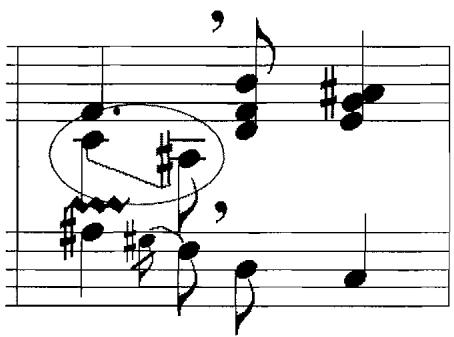
中文讲解
本段在原文中仅是一个图注式占位符,标注为"a) m. 4",对应的是 Example 5.6a 的第一幅图示,位置在第 23 页。它对应乐曲《L’Âme-en peine》(库普兰《悲魂》,1722 年第 13 套曲)第 4 小节的乐谱片段,属于配合后文讲解"连奏 lié"的图例 a 部分。具体的音符内容需查看原图,此处不宜猜测。
补充说明
该图与 P0096 中的 Example 5.6b 同属一组对比图示,分别取自第 4 小节与第 15 小节,旨在以乐谱实证库普林在这一作品中所写的连奏装饰;具体声部进行与符头走向请参考原书图像。
第2段(P0096)
原文复述
Image placeholder: “b) m. 15; Example 5.6a–b. Legato lié in L’Âme-en peine, 13th ordre (1722), F. Couperin” (embedded image data omitted; position and caption retained).
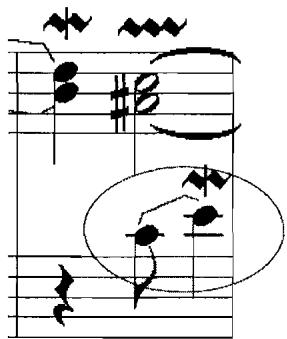
中文讲解
本段是图例 5.6a–b 的完整图注,说明这两幅图所对应的作品、位置与演奏概念。“b) m. 15"指第二幅图谱取自该作品第 15 小节;“Legato lié"是法语音乐术语,指库普林式的连奏滑奏装饰。作品《L’Âme-en peine》出自弗朗索瓦·库普兰(François Couperin)1722 年出版的《羽管键琴曲集》第 13 套曲(ordre)。图注确认了前图(P0095)作为该图例 a 部分的存在,并提示读者这两幅图谱共同支撑正文关于"li over skips"的讨论。
补充说明
库普兰在该曲中常通过连奏装饰(liés)把跳进音程之间的音补上,使旋律运动显得滞重、带有"拖拽感”;图 5.6a 与 5.6b 是这一装饰在两处不同小节中的乐谱实例,为 P0097 的文字论述提供直接证据。
第3段(P0097)
原文复述
dragging or stickiness — almost like moving through molasses or attempting to walk but being restrained by something — impeding motion yet not stopping it completely. This kind of expression is also achieved through the coulé, or slide, which occurs between melodic skips of a third as shown in Example 5.7. Found mostly in the upper stave of this piece, the coulé fills in either ascending or descending thirds by adding in the passing tone. Instead of connecting exclusively by articulation, Couperin also connects by adding in missing notes, which contributes to the heaviness and overwhelming gravity of the piece.
中文讲解
本段是本小节的核心论述段落。它先用三个并列的比喻——“拖拽、黏滞”、“像在糖浆中行进”、“像想走路却被什么拽住”——把所要描述的演奏感觉具象化,并明确点出这是一种"减慢运动但并未完全停止"的表达效果。接着,作者引入实现这种效果的另一种手法:coulé(滑奏、倚音滑奏),指出它出现在三度旋律跳进之间(以 Example 5.7 为例)。coulé 大多出现在该作品的上方声部(upper stave),其作用是在上行或下行的三度之间补入一个经过音,使原本的跳进被"填补"成更连贯的级进。作者由此推进论点:库普林的连接手段不止于演奏法(articulation),更在于在乐谱中直接补入缺失的音,而正是这种"补音"造就了全曲的"沉重感与压倒性的凝重”。在论证链上,本段把前文提到的"li over skips"从单一连奏装饰延展到 coulé,形成装饰—补音—重力感这一递进关系,是小节的关键论述节点。
补充说明
coulé 一词在法语装饰奏传统中泛指滑奏式倚音或经过性补音;在库普林的语境中,它常通过小三度或大三度间的经过音实现,使听感上跳进被"抹平"为级进,与本段所述"拖拽感"一致。所谓"上声部(upper stave)",对应键盘作品的右手声部(dessus)。
第4段(P0098)
原文复述
Image placeholder: “Example 5.7. Coulé Agrément Written and Played in L’Âme-en peine, m. 14, 13th ordre (1722), F. Couperin” (embedded image data omitted; position and caption retained).
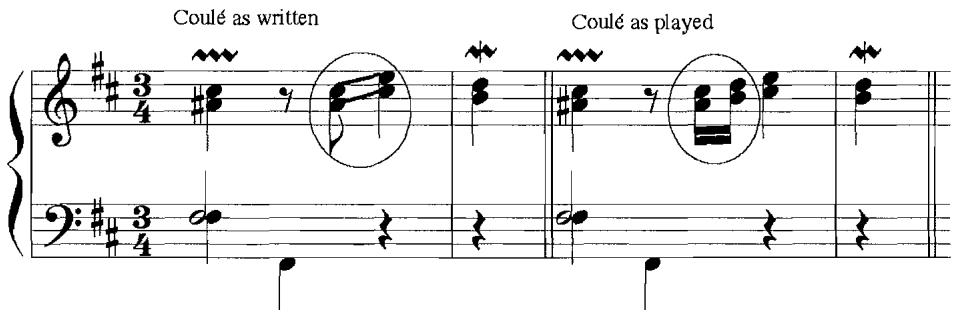
中文讲解
本段是图例 5.7 的完整图注,明确指出该图所呈现的是"在《悲魂》第 14 小节中库普兰实际写出的 coulé 装饰及其演奏形态"。“Agrément Written and Played"强调装饰既存在于谱面,又落实于实际演奏之中;这与 P0097 所论"通过补入缺失的音来连接"直接呼应——couler 在乐谱上被明确写下,在听觉上则表现为滑奏式的级进填补。第 14 小节紧邻前文所提的 m. 15(Example 5.6b),从位置上看是该作品核心段落的连续例证。具体的音高与走向需查看原图,本占位符不作猜测。
补充说明
该图与 Example 5.6a–b(P0095–P0096)共同构成本小节的乐谱证据链:先以"li over skips"展示连奏滑音,再以 coulé 展示经过音填补,两者从不同角度印证"沉重、拖拽"的表达意图。
脚注 / 边栏 / 图表 / 附加信息(如有)
本小节包含三处图像占位符:Example 5.6a(P0095,对应 m. 4)、Example 5.6b(P0096,对应 m. 15,合称"Legato lié in L’Âme-en peine, 13th ordre (1722), F. Couperin”)以及 Example 5.7(P0098,对应 m. 14,“Coulé Agrément Written and Played”)。它们都是配合正文的乐谱图例,作用是直接呈现库普林《L’Âme-en peine》中"li over skips"与 coulé 的谱面与演奏形态,承担证据功能。具体音符走向、声部配置与奏法标注均需查阅原书图像,本小节未出现脚注或独立边栏材料。
💡 本节核心要点
- 本小节讨论库普林《L’Âme-en peine》中两种制造"拖拽/凝重"效果的装饰手法:lié(连奏滑音)与 coulé(经过音滑奏)。
- lié 作用于旋律跳进之间,通过滑奏式的连奏使跳进听起来像被拉慢、但未中断。
- coulé 出现在三度跳进之间,大多位于上声部,以补入经过音的方式把跳进填平为级进。
- 库普林的连接手段不止于演奏法,还直接在乐谱中补写缺失的音,由此形成全曲"沉重与压倒性的凝重"。
- 三幅乐谱图例(Ex. 5.6a、5.6b、Ex. 5.7)分别取自第 4、15、14 小节,提供从乐谱到演奏的直接证据。
🔑 关键术语
- lié:法语连奏装饰奏法,意为"连奏、系住";在本节中指库普林在旋律跳进上以滑奏式连奏营造的拖拽感。
- coulé:法语装饰奏术语,意为"滑、流动";本节特指在三度跳进之间补入经过音的滑奏式装饰,是库普林在《L’Âme-en peine》中制造凝重感的重要手段。
- passing tone (经过音):在两个跳进音之间插入、属于非和弦音的级进音;coulé 正是通过加入经过音把三度跳进填平为级进。
- upper stave (上声部):键盘作品中由右手演奏的高音声部(dessus);本节指出 coulé 主要出现在该声部。
- L’Âme-en peine (《悲魂》):弗朗索瓦·库普兰 1722 年《羽管键琴曲集》第 13 套曲(ordre)中的一首,是本节所有乐谱例证的来源曲目。
- 13th ordre (第 13 套曲):库普兰 1722 年出版的第 13 组羽管键琴套曲,《悲魂》即出自此套。
S3.7 [描述性拆分] Lié with Stepwise Figures and Trills
第1段(P0099)
原文复述
Legato slurs also appear over ascending and descending stepwise figures, as illustrated in the bass line of measure one shown below in Example 5.8. In this example, the legato marking falls over a two-note stepwise figure—specifically the D and the C#—in the bass line of measure one of L’Âme-en peine. That figure, however, is part of a larger three-note descending pattern made up of D, C#, and B (i.e., scale degrees b3-2-1), which completes its gesture on the downbeat of measure two. Within this stepwise configuration, when the lié marking is placed over the first two notes of a three-note pattern, it invites a particular kind of interpretation: the articulation emphasizes, or leans into, the second—and dissonant—note of the gesture, namely the C#. This effect is reinforced by the presence of another embellishment above this dissonant
中文讲解
本段开启本节对lié第二种用法的论述——lié与小二度级进音型共同使用。需要把握三点:第一,lié的弧线虽然只标在两个音(D–C#)之上,但作者主张把它放进更大的三音下行框架D–C#–B(即b3-2-1,对应♭3级向下导音解决到主音的完整动作)来理解,弧线其实处在这一更大动作的上半截;第二,作者明确指出这种lié的功能是让力度/重音"推向"第二音而非第一音,而第二音恰是这个三音音型中的"不协和"音符——C#在此处作为需被倾向解决的张力音,它承载了不协和→协和的解决势能;第三,这种强调效果还依赖于同一个位置上方的另一个装饰音(long mordent,长波音)的配合。作者用一处具体例子把lié从一个孤立的"该连奏"的记号,提升为一种带有和声意图、装饰意图、句法意图的复合信号:它标注的不是"连奏"本身,而是"该向何处倾向"。
补充说明
“b3-2-1"在这段上下文中直接对应小节中的具体音高D–C#–B:b3级是D级(小三度音),2级是C#(上行大二度),1级是B(主音)。C#作为这一下行框架中的不协和音,暗示其在局部和声中充当倾向/导音式张力的位置。long mordent是Coupelin装饰表中的具体装饰写法之一,并非泛指任何颤类装饰。
第2段(P0100)
原文复述
note: the long mordent. In fact, in almost every situation where legato markings appear over stepwise gestures in L’Âme-en peine, they connect two notes
中文讲解
本段是P0099末尾被版面包分布打断的句子的直接延续,把"another embellishment"落实为long mordent(长波音),并把观察从一处特例推广到整首L’Âme-en peine:“几乎所有"lié出现在级进音型之上的场合,都是在连接一个三音音型之内的两个音。换言之,本段在为下一句归纳性陈述(“被强调的音就是该音型中的不协和音”)铺路。教学要点是:作者已经把lié从孤立的演奏标记上升为一条反复出现的组合规则——它不是偶发的,而是与三音级进结构绑定出现的。
补充说明
本段没有引入新概念,只是把P0099中的another embellishment落实为long mordent,并把观察范围由"这一例"扩展为"几乎所有”。
第3段(P0101)
原文复述
Figure caption: “Example 5.8. Legato lié in L’Âme-en peine, m. 1–2, 13th ordre (1722), F. Couperin.” The figure, located on page 25, illustrates the bass-line passage of measure one of L’Âme-en peine containing the lié marking discussed in the preceding paragraphs.
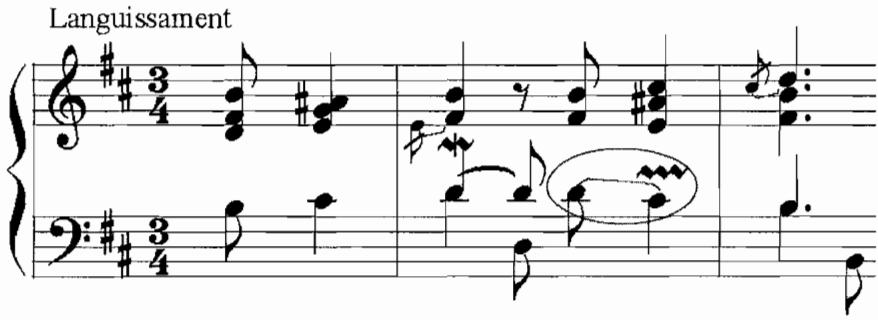
中文讲解
图5.8位于第25页,标题明确为"Legato lié in L’Âme-en peine, m. 1–2, 13th ordre (1722), F. Couperin”。它专门用于呈现前两段所述的lié在小节1与小节2低音线条中的具体位置。该图与正文中D–C#–B的下行三音组以及上方long mordent的搭配相对应,是作者用以把规则"落地"到乐谱位置的核心示例。
补充说明
原图被省略,需查看原书图版方能核对具体音符上的弧线起讫点和上方的波音符号位置。
第4段(P0102)
原文复述
located within a three-note gesture, and the note that is emphasized is the dissonant portion of the pattern; this effect is further reinforced by the presence of a trill. Taken together, these two agréments form either a tremblement appuyé et lié (a tied stressed trill) or a tremblement lié sans être appuyé (a tied trill that is not stressed). Whether the trill is stressed or not depends on the length of the trill in relation to the durational value of the first note, as illustrated in Example 5.9a and b (footnote 33). In each of these two examples, recreated from L’Art de Toucher le Clavecin, the note bearing the trill is brought into relief by means of the added ornament. This is the case, for instance, in measures three, five, and seven of the first part of the piece, and in measures nine, eleven, thirteen, twenty-six, and thirty of the second part. In this application, the legato markings not only underscore the gravity and heaviness of voice motion, but also emphasize dissonance within the overall harmonic contour of the gesture.
中文讲解
本段是本节最重的归纳段落,要把握四层信息:第一,它把"lié + trill"的组合正式命名为Coupelin装饰表中已有的两种装饰——tremblement appuyé et lié(带重音且连入下一音的颤音)与tremblement lié sans être appuyé(连入下一音但不带重音的颤音);第二,“是否重音"的判断依据是颤音演奏长度相对于首音时值的比例——这是一个有时值比例意义的规则,而非任意的力度记号;第三,作者把这一装饰的应用从低音引申到旋律声部,列出第一段第3、5、7小节和第二段第9、11、13、26、30小节作为示范,表明它并非某一处特例而是贯穿全曲的句法选择;第四,也是最具分析意义的一句——lié在此同时承担两个并行功能:一是增加声部进行的"重力与沉重感”(gravity and heaviness),二是强化不协和音在整体和声轮廓中的位置。前者描述演奏法层面的效果,后者描述和声分析层面的功能,两个维度被一根lié弧线同时承担。
补充说明
tremblement为法语"颤抖、震动",对应颤音。appuyé在Coupelin装饰术语中表示"用重音落下、强调"。lié表示"绑定、连入下一音"。agrément是Coupelin时代对装饰音的通称(字面义"使愉悦")。这些术语与上文及脚注33所引的Coupelin装饰表互相对应。
第5段(P0103)
原文复述
Footnote 33. Example 5.9a and b is based upon the interpretation of a tremblement appuyé et lié and a tremblement lié sans être appuyé drawn from Couperin’s Table of Ornaments. The example is reproduced from Couperin, L’Art de Toucher le Clavecin, p. 17.
中文讲解
本脚注交代了Example 5.9a、5.9b的来源与依据:作者从Couperin《L’Art de Toucher le Clavecin》第17页所列的装饰表中提取tremblement appuyé et lié和tremblement lié sans être appuyé的解释,再将其重制为示例,以支撑前文"以trill长度相对于首音时值的比例来判断重音与否"的原典依据。脚注为正文提出的归纳性规则提供原典支撑。
补充说明
页码17直接来自该脚注所指定的版本,没有其他额外版本信息。
第6段(P0104)
原文复述
Image placeholder on page 26 (“第26页图像或乐谱示例”). The figure occupies the upper part of page 26.
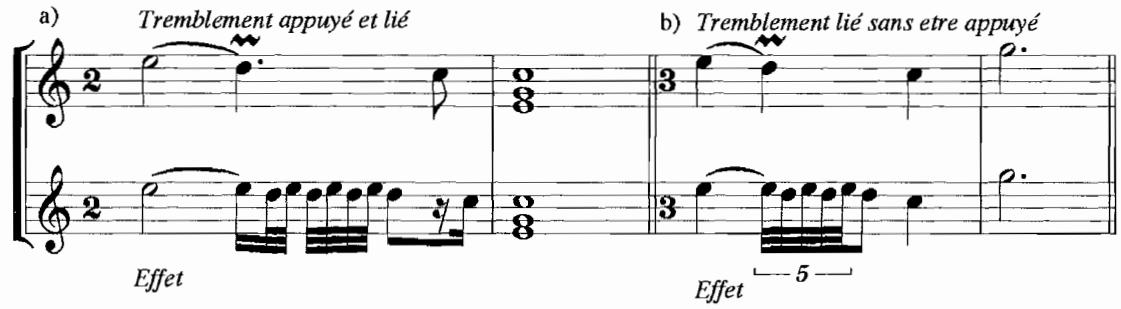
中文讲解
第26页上方这一图像/乐谱示例占位符在原文中没有提供具体图注。结合下文P0105立即进入对Example 5.10的描述,可推断此位置属于Example 5.9附近/终止倚音相关图示之一,但原文未给出确凿说明,因此不应据此推测其具体内容。
补充说明
本图未附图注。除"位于第26页"外,原文未提供其他可视信息。
第7段(P0105)
原文复述
The third application of the legato marking in The Lost Soul is in combination with the appoggiatura. The marking connects the embellishment and its resolving structural note of the chord that follows, as illustrated in Example 5.10 at the cadence of the first half of the piece in measure eight.
中文讲解
本段开启了本节的"第三种应用"——lié与倚音(appoggiatura)的组合。其功能与前两种用法不同:lié在此是把倚音与其随后解决到的结构音和弦连接起来,而不是把倚音单独圈出作为不协和位置。这一组合最具有代表性的位置是乐曲第一部分结束时的终止式——也就是第8小节的中止位置,作者选用此处的目的是让读者在最典型的倚音—解决关系上观察lié的视觉化作用。教学要点是:lié在第三种用法中承担的是和声—句法功能,它标记"装饰如何落到结构",而不是演奏法意义上的重音或倾向。
补充说明
“first half"指作品第一部分(première partie)的终止位置。“The Lost Soul"即L’Âme-en peine的英译。
第8段(P0106)
原文复述
Figure caption: “Example 5.10. Cadential Appoggiatura with Legato lié in L’Âme-en peine, m. 7–8, 13th ordre (1722), F. Couperin.” The example, located on page 26, illustrates the cadential appoggiatura of the first half of the piece together with its resolving structural note as marked by the legato lié.
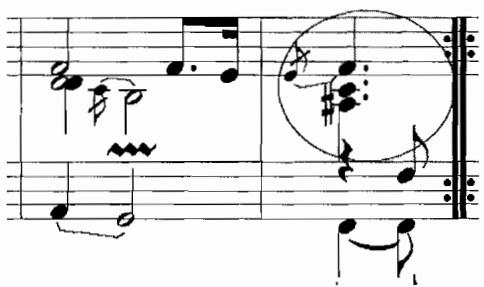
中文讲解
图5.10与P0105讨论的"第三种应用"直接对应,专门展示L’Âme-en peine第7–8小节终止式上的倚音—lié—解决音的搭配。该图让倚音与其解决到的结构性音和弦之间的lié连接在乐谱上得以视觉化,是支持前一段归纳陈述的核心示例。
补充说明
原图被省略,需查看原书图版方能核对具体音符、弧线与和弦的实际形态。
脚注 / 边栏 / 图表 / 附加信息(如有)
本节涉及三个核心图例与一个脚注:图5.8(P0101)位于第25页,呈现L’Âme-en peine第13 ordre(1722)第1–2小节低音线条上的legato lié;图5.9a与5.9b(P0102引用,P0103脚注说明)依据Coupelin《L’Art de Toucher le Clavecin》第17页装饰表重制,用于比较tremblement appuyé et lié与tremblement lié sans être appuyé;图示例(P0104)位于第26页,无图注;图5.10(P0106)位于第26页,展示终止式倚音(第7–8小节)中的legato lié。脚注33(P0103)说明图5.9a、5.9b的来源与重制依据,为本节归纳性陈述提供原典支撑。
💡 本节核心要点
- lié的第二种用法与级进音型绑定:弧线虽标在两音上,但实际放在更大的三音下行框架(b3-2-1)里理解,连接的是从属音域到主音的下行动作的上半部分。
- 在这种用法下,lié的方向是把重音推向三音音型中的第二音(不协和、需被倾向解决的音),而非第一音。
- 这种"推向第二音"的效果通常还有上方的long mordent trill来加倍强化,因此lié在L’Âme-en peine中几乎从不是孤立的,而是与第二个装饰共同出现。
- lié与trill的组合在Coupelin装饰表中有正式名称:tremblement appuyé et lié与tremblement lié sans être appuyé,区别依据trill演奏长度相对于首音时值的比例。
- 这种装饰组合同时承担两个并行功能——增加声部进行的"重力与沉重感”,以及强化不协和音在整体和声轮廓中的位置,把lié从一个单纯的连奏记号提升为和声—句法双重信号。
- lié的第三种用法是与倚音搭配:弧线连接倚音与其解决到的结构音和弦,最具代表性的位置是乐曲第一部分结尾的终止式(m.7–8),其作用在于标记装饰如何落到结构。
🔑 关键术语
- Lié:Coupelin装饰表中的连音弧线指示,意为"连入下一音”。在本节中它不是简单的连奏记号,而是一种带有重音倾向、和声意图与句法意图的复合信号。
- Three-note stepwise gesture (b3-2-1):三音级进下行音型,对应D–C#–B(♭3级→2级→1级),包含一个不协和的下行解决动作。lié在此用法上覆盖的是这一音型的前两音,但实际起作用的理解单位是整个三音框架。
- agrément:Coupelin时代对装饰音的通称(字面义"使愉悦")。本节中lié与trill都被视作agrément类别下的具体装饰形式。
- tremblement appuyé et lié:Coupelin装饰术语:带重音、且连入下一音的颤音。“appuyé"指用重音落下,“lié"指连入下一音。
- tremblement lié sans être appuyé:Coupelin装饰术语:连入下一音但不带重音的颤音,与tremblement appuyé et lié相比仅缺少重音处理,区别依据trill长度相对于首音时值的比例。
- long mordent:长波音,Coupelin装饰表中的具体装饰写法之一。在本节中它出现在lié所连接的不协和音上方,配合lié一起把重音推向该音。
- appoggiatura:倚音。在本节第三种用法中与lié配合,lié的作用是把倚音与它随后解决到的结构音和弦连接起来,标记装饰—结构的句法关系。
- cadence (first half):终止式,具体指乐曲第一部分(première partie)结尾的终止位置(L’Âme-en peine第8小节)。本节中这是lié配合倚音的最具代表性位置。
S3.8 [描述性拆分] Appoggiatura with Lié and Its Expressive Function
第1段(P0107)
原文复述
Compared with the earlier example of lié joining two stepwise notes—in which the emphasis falls on the second note of the two-note unit—the present example still binds the two notes in a legato articulation, but the emphasis is now placed on the first note of the unit, the embellishing and dissonant appoggiatura, rather than on the second note, which is the note that resolves the dissonance.
中文讲解
本段通过对比上一节已讨论过的lié情形,把读者的注意力从“第二个音”转向“第一个音”。在前例中,两个级进音通过lié相连,重音落在解决音;本例中同样是两个音通过连奏连在一起,但第一个音是装饰性的倚音(appoggiatura),本身与和声形成不协和,第二个音才解决这种不协和。因此,作者要强调的是:倚音虽然只是装饰,却在由lié构成的二音单元中成为重音所在,不协和的张力被放在装饰音上,而不是放在它的解决音上。这一对比为下文讨论倚音+lié在表达哀婉情绪时的作用奠定基础。
补充说明
本段与上一节中关于lié连接两个级进音的讨论直接衔接,区分“重音在解决音”与“重音在倚音”两种不同的表达取向。
第2段(P0108)
原文复述
The appoggiatura, also called port de voix, is an essential embellishment within Quantz’s classifications. According to Ratner, it is one of the primary expressive dissonances in the galant vocabulary, appearing in both instrumental and vocal genres.
中文讲解
本段为倚音下一个工作定义:它也叫port de voix(法文术语),在Quantz的装饰分类中被列为重要的一类;Ratner则把它定位为“galant风格”(华丽风格)语汇中最主要的“表达性不协和”之一,并指出它同时出现在器乐与人声音乐中。这一定位让倚音不再只是一种音符装饰,而是一种带表情功能的音结构。port de voix是倚音在法国传统中的同义术语,提示该装饰在法、意、德等多语种语境中均有实践。
第3段(P0109)
原文复述
“For the classic style, the most striking dissonance is the appoggiatura, an unprepared accented dissonance. The appoggiatura is an arresting sound that creates an intense expressive nuance, and a grateful release as it resolves by step into the chord. It is the chief dissonance of the free, or galant, style.” (footnote 34)
中文讲解
这是一段直接引自Ratner的话,提供了倚音的三个关键特征。第一,它是“未经准备的、带重音的不协和”,也就是说,它不通过常规的准备过程就直接出现在重拍上,从而形成突然的撞击感;第二,正是这种撞击使它产生“intense expressive nuance”(强烈的表达意味),而当它向下级进解决到和弦音时,听众得到一种“grateful release”(令人欣慰的释放);第三,Ratner把它定性为“自由风格或华丽风格(galant style)”最主要的非协和音。这三个特征——未准备、重音、突然又得解决——共同构成了倚音之所以具有强烈表达性的结构原因。
补充说明
脚注34(见P0111)标明此段引自Ratner, Classic Music, 第62页。
第4段(P0110)
原文复述
Ratner states that the appoggiatura permeates Mozart’s instrumental music. “They [appoggiaturas] constitute one of the chief ingredients of his musical speech and show specifically the degree of Italian influence in his music.” They also appear in his vocal music to lend what Ratner considers a rhetorical “poignancy” to passages. Beyond Mozart, appoggiaturas were commonly found in eighteenth-century opera. “One convention observed consistently in eighteenth-century opera was the addition of an appoggiatura at the end of a line in a recitative when the phrase closed…the singer took the appoggiatura upon the first tone, as an expressive nuance.” Example 5.10 from The Lost Soul illustrates this vocal nuance—an appoggiatura appears at the end of the phrase upon the close of a Phrygian half cadence.
中文讲解
本段用三种语料把倚音的表达性落到具体作品上:其一,莫扎特的器乐作品中倚音无处不在,是其“音乐语言的主要成分之一”,也是意大利影响的标志;其二,在莫扎特的人声中,倚音带来修辞上的“辛酸感(poignancy)”;其三,十八世纪歌剧中有一种常见惯例——宣叙调乐句结束时加一个倚音,歌手把它唱在第一个音上,作为一种表达性色彩。紧接着,作者将这种“宣叙调收尾处的倚音”回扣到本文研究对象——《失魂》(The Lost Soul)的例5.10:在弗里几亚半终止(Phrygian half cadence)收束的乐句末尾出现了一个倚音。本段的作用是为抽象定义提供实证,并显示倚音在不同体裁中的共通表达力。
补充说明
脚注35、36、37(见P0112、P0113、P0116)分别标注文献出处。例5.10(Example 5.10)的乐谱需参看原书。
第5段(P0111)
原文复述
Footnote 34: Ratner, Classic Music, 62.
中文讲解
脚注34说明P0109的直接引文出自Ratner《Classic Music》第62页。
补充说明
本脚注为P0109段Ratner引文提供文献依据,属“来源类”脚注。
第6段(P0112)
原文复述
Footnote 35: Ibid.
中文讲解
脚注35使用拉丁文缩写Ibid.,表示出处与上一脚注相同,即Ratner《Classic Music》第62页,对应P0110中Mozart器乐作品引文的出处。
补充说明
Ibid.表示“同上”,指代上一脚注的同一文献同一页码。
第7段(P0113)
原文复述
Footnote 36: Ibid., 63.
中文讲解
脚注36仍出自Ratner《Classic Music》,但换到第63页,对应P0110中关于倚音在莫扎特人声作品中带来“poignancy”的引文。
补充说明
页码由62页跳到63页,说明Ratner在该书中将“器乐”与“人声”两段论述分置相邻两页。
第8段(P0114)
原文复述
Appoggiaturas, then, serve an expressive purpose, communicating particular moods and emotions as needed, which, as an accented dissonance, tend to be more plaintive. As the most frequently occurring embellishment in L’Âme-en peine, the appoggiaturas increase the expression of mournfulness and sorrow in an already weighty piece. The combined effect of an appoggiatura with a legato articulation is another example of ornamentation affecting expression: the emphasis is on dissonance as well as on the articulation between notes.
中文讲解
本段把前文理论落到本文核心研究对象——Couperin的《失魂》(L’Âme-en peine)。其论证分三层:第一,作为带重音的不协和,倚音天然偏向“哀婉(plaintive)”的情绪色调;第二,在《失魂》中倚音是出现频率最高的装饰,因此进一步放大了乐曲本已沉重的哀悼与悲伤;第三,作者点出本节核心论断——倚音与连奏(legato articulation)相结合时,产生“装饰影响表达”的双重效果:不仅音与音之间的连奏方式被强调,不协和本身也被强调。这就将本节标题“Appoggiatura with Lié”中的两项元素合为一组表达工具。
第9段(P0115)
原文复述
Couperin clearly states that agréments must be interpreted properly as they are essential to communicating the appropriate sentiment of a piece, indicating that ornaments are much more than arbitrary flourishes. His use of lié in these various situations, as well as other embellishments described above, suggests that these markings play a necessary role in the expression and mood of L’Âme-en peine. An articulation of legato slurs and coulé over skips contributes to the constant connection between notes, which expresses heaviness or a burdened, oppressive state of motion in this piece. A legato slur over a two-note stepwise gesture, or between an appoggiatura and its resolving note, not only enhances this expression but also affects emphasis, which in this setting is on the dissonant moment of the gesture. Calling out a stepwise gesture with a slur, which already implies a more legato interpretation than a leap would, allows us to consider
中文讲解
本段由三层论据串成。第一层援引Couperin本人对agréments(装饰音)的论述:装饰不是任意花饰,而是传达乐曲应有情感所必需,从而为“装饰即表达”提供作曲家本人背书。第二层回到本文乐曲《失魂》:lié以及其他上文讨论过的装饰在这首作品中扮演必要的表达角色;特别地,跳进(skips)之上的连奏与coulé(一组连奏的下行)使音符之间保持不断连接,制造“沉重、压抑、如负重前行”的运动感。第三层具体到本节核心组合:当连奏线标记覆盖在级进二音手势上,或覆盖在倚音与其解决音之间时,它不仅强化“沉重”这种整体表达,还把重音锁定到“该手势中不协和的瞬间”,即倚音本身。作者强调,连奏标记加在级进(而非跳进)之上,本就比不加连奏更倾向连奏,因而更能把读者/听众注意力集中到该手势上,从而为下句得出“这些装饰在本曲中具有特殊意义”作铺垫。
补充说明
coulé是法语装饰术语,指一组顺次连奏下行音;agréments是Couperin体系中对装饰的总称;本段末尾“allows us to consider”未完,接续到P0117。
第10段(P0116)
原文复述
Footnote 37: Ibid., 197.
中文讲解
脚注37出处仍为Ratner《Classic Music》,但换到第197页,对应P0110中关于十八世纪歌剧宣叙调收尾加倚音这一惯例的引文。
补充说明
页码从63页跳到197页,反映Ratner书中“古典风格总论”与“歌剧惯例”分属不同章节。
第11段(P0117)
原文复述
these embellishments as having special meaning in the piece. These markings, then, can affect what is emphasized and, in turn, what is expressed.
中文讲解
本段承接P0115末尾未完成的句子,完成其结论:上述装饰在本曲中具有特殊意义。本节总论性判断是:Couperin的连奏与其他装饰标记可以改变“重音落在哪里”,进而改变“乐曲表达的是什么”。也就是说,标记—重音—表达三者构成因果链:作曲家通过加或不加连奏、把连奏加在级进还是跳进上、用不用倚音等具体写法,直接影响听者感受。
补充说明
本段为P0115未完句的收束,结构上独立成句但在论证上是P0115的下文。
第12段(P0118)
原文复述
The gravity of mood expressed by the dense vertical sonorities and drooping suspensions in the texture of The Lost Soul is clearly supported by Couperin’s articulations and essential embellishments. These markings underscore an emphasis on dissonance as well as heaviness, which in turn express a burdened and almost unbearably troubled state of mind for the subject of this piece. Any opportunity for lightness is eliminated—the application of lié removes moments of silence that would otherwise occur through leaps or through a detached articulation more typical to the French clavecin style. When silence does occur, it punctuates the texture and is in the service of defining gestures within the formal structure of the piece. The next section of this chapter will discuss how form (generated by the combination of seemingly disparate gestures that suggest a different compositional aesthetic) and pattern behavior combine with elements of texture and ornamentation to underscore the expression of sorrow and grief in The Lost Soul.
中文讲解
本段是本节乃至本章此处的小结,并作为下一节过渡。第一层概括:《失魂》中“稠密的纵向音响与下垂的延留音”所传达的“沉重情绪”,与Couperin的articulation(奏法标记)和装饰记号彼此呼应;第二层提炼:本曲中装饰同时强调“不协和”与“沉重”,从而表达乐曲主角“几乎难以承受的内心苦闷”;第三层给出反面说明:lié的使用消除了通常由跳进或更典型的法国羽管键琴断奏带来的静默,从而使乐曲中没有轻巧的机会,即使偶有静默,也只为勾勒结构性手势服务;第四层为下一节设下钩子——将讨论“曲式(由看似不相干的手势组合而成)”与“模式行为”如何与织体、装饰一起,共同强化悲痛的表达。本段把本章到目前为止所分析的“装饰-奏法”线索统一收束。
脚注 / 边栏 / 图表 / 附加信息(如有)
本小节涉及四条脚注(P0111—P0113、P0116)以及一处谱例引用(Example 5.10)。脚注34、35、36、37均出自Ratner《Classic Music》,页码依次为62、62、63、197,分别支撑:倚音作为“经典风格最显著不协和”的定义、倚音在莫扎特器乐中的核心地位、倚音在人声中带来“poignancy”、以及十八世纪歌剧宣叙调句末加倚音的惯例。谱例5.10(Example 5.10)取自Couperin《失魂》(L’Âme-en peine/The Lost Soul),展示弗里几亚半终止处句末倚音的具体写法,需查阅原书乐谱方能完整把握细节。
💡 本节核心要点
- 倚音+lié的组合把重音从不协和的解决音转向不协和本身(倚音),是本节形式上的关键观察。
- Ratner将倚音定义为“未经准备、带重音的不协和」,并定性为galant(华丽)风格最主要的非协和音,决定了其强烈而瞬间释放的表达逻辑。
- 倚音在莫扎特器乐、人声以及十八世纪歌剧宣叙调中均作为核心表达元素出现,例5.10在《失魂》弗里几亚半终止处呼应这一传统。
- 在《失魂》中,倚音是出现频率最高的装饰,与连奏相结合放大了哀婉、悲痛的情绪色彩。
- Couperin本人强调agréments不是任意花饰,而是传达应有情感所必需;lié与coulé在跳进之上维持音与音的连接,制造沉重、压抑的运动感。
- 装饰/奏法标记通过决定重音落点,间接决定乐曲所表达的内容;lié还消除跳进或断奏造成的静默,使曲中几无轻巧,剩余的静默只用于勾勒结构性手势。
🔑 关键术语
- Appoggiatura / port de voix:倚音,又称port de voix。本节中指未经准备、带重音的不协和音,向下级进解决到和弦音,是Quantz装饰分类中的核心类别,也是Ratner所定义的galant风格中最主要的表达性不协和。
- Lié:法文术语,意为“连奏的”,在本节中指覆盖两个音的连奏线。本节关键论点:lié加在级进二音手势或倚音与解决音之间时,使重音落在不协和瞬间,并维持音与音的连接以表达沉重。
- Coulé:法文装饰术语,指一组顺次连奏下行音。本节中与lié共同作用,使跳进之上也保持连接,强化“负重、压抑”的运动感。
- Agréments:Couperin体系中装饰音的总称。Couperin本人强调agréments须被恰当地解释,因为它们对传达乐曲应有情感必不可少,是本节“装饰即表达”论点的作曲家背书。
- Galant style(华丽/自由风格):Ratner术语,指十八世纪中后期的自由风格。倚音被Ratner定位为该风格“最主要的不协和”,从而把本节讨论的具体装饰置于更宏观的风格史语境中。
- Phrygian half cadence:弗里几亚半终止,本节例5.10所在位置。这种终止的收束音即本节所论倚音出现之处,使倚音与终止式紧密结合,作为一种表达性色彩被突出。
- Suspension(延留音):P0118中与稠密纵向音响并提的“drooping suspensions”(下垂的延留音),用以描述《失魂》织体中制造沉重感的另一类不协和来源,与倚音一同支撑乐曲的哀悼情绪。
S4.1 [描述性拆分] Binary Form and the Use of Silence to Define Gesture
第1段(P0119)
原文复述
Expression: Form, Aesthetic, and Pattern
中文讲解
这是第5章(或其下某一节)的二级标题,宣布本节将围绕"表达"这一主题,从形式(Form)、美学(Aesthetic)和模式(Pattern)三个维度展开。它本身不提供论据,只起到引出论题的作用。读者据此可预期:作者将在形式层面(曲式、句法)与表达层面(情绪、风格特征)之间建立关联,并把具体作品当作例证来印证这种关联。
第2段(P0120)
原文复述
Form and Aesthetic
中文讲解
这是在上一大标题"Expression: Form, Aesthetic, and Pattern"下的二级小标题,将焦点收窄到"形式与美学"二者之间的关系。可以理解为:本小节将主要讨论作品在曲式结构上的选择如何承载并塑造其美学效果,而非一般性地讨论风格、装饰音或演奏惯例。结合 S4.1 的小节题(“Binary Form and the Use of Silence to Define Gesture”),读者可以预判:本小节将用具体的库普兰作品作为案例,分析其二部曲式与"以静默塑造句法"这一手法如何共同产生某种特定的美学意味。
第3段(P0121)
原文复述
For this final tragic episode of the treizième ordre, Couperin reverts to a binary dance structure characteristic to many of the movements throughout his keyboard compositions. However, the ways in which the musical units are organized contribute both to the piece’s wandering quality of motion, and also to its perseverant expression.
中文讲解
本段提出本节的核心切入:第13组曲(treizième ordre)中最后一段悲剧性乐章使用了库普兰键盘作品中常见的二部舞曲结构,但材料组织方式本身对该曲的两种美学特征负有责任——一是"wander(游移)“的运动感,二是"perseverant(执着/不懈)“的表情。换言之,结构与表达在这里不是分离的两层,而是同一组织逻辑的两面。作者借此暗示:理解本曲的表达,必须从曲式单位的划分入手,而不是仅凭风格标签(tragic)做印象式描述。
第4段(P0122)
原文复述
The phrase units in L’Âme-en peine are defined by cadences — or clausulae (closing formulae) — and also by silence, which punctuates the piece’s texture in an apparently intentional way and contributes to how gestures are grouped within the piece. Couperin’s use of silence occurs in three primary ways. First, it occurs in both voices simultaneously — a rare occasion in The Lost Soul — as indicated by the expressive agrément of the comma-like breath at the close of the first phrase in measure four. Second, silence occurs in one voice, particularly in the bass to begin an imitative gesture, such as in measures fourteen and fifteen, twenty-four and twenty-five, and in the Petite reprise. And finally, it occurs by alternating rests between the two voices in a more hocket-like style, as found in measures eight-twelve. These three types of silences are circled in Example 5.11 below.
中文讲解
本段为本节论证的关键概念性段落。作者提出双重划分依据:乐句(phrase units)既由终止式(cadences / clausulae,即"收束公式”)界定,也由"静默"界定。这意味着读者必须把休止符视作结构性事件,而不仅是表演性事件。接下来,作者把"静默"在《受难之魂》(L’Âme-en peine,亦即 The Lost Soul)中的使用归为三类,便于后续在谱例中逐一指认:(1)两声部同时休止——在本书讨论的作品中属少见,由第4小节末类呼吸的"逗号式"装饰音(agrément)所指示;(2)仅一声部休止——尤其用于低音起模仿乐思,例见第14–15、24–25 小节及 Petite reprise;(3)两声部轮流休止——更接近中世纪的 hocket(错音/交错)手法,例见第8–12 小节。这一三分法的作用在于:为读者提供一张地图,以便对照下方 Example 5.11 在乐谱上具体"看见"这些静默;同时把"静默"从修辞升级为可分析的句法工具。
第5段(P0123)
原文复述
While punctuating the texture, these silences coordinate either with the beginnings of gestures or with the ends of phrases at cadence points (or clausulae). The gestures appear to be grouped as depicted by the brackets in Example 5.12 below. The first section of the piece up to the double bar includes eight measures that divide into two four-measure phrases, each of which ends in a cadence. The first phrase, labeled “A” in Example 5.12, begins in B minor and concludes at the downbeat of measure four at the expressive “breath” and first half cadence. The second phrase labeled “A” begins immediately after this breath, with a modified version of the opening gesture in measure one, and ends with a Phrygian half cadence in measure eight. These two phrases, in turn, break into two two-measure gestures each. Because of the similarity of opening material in each of these two phrases, these smaller gestures are labeled as “a” and “a” in phrases “A” and “A” respectively in Example 5.12. Smaller gestures “b” and “c” represent the different closing material in these phrases.
中文讲解
本段把上一段的"分类法"落实为具体的曲式图示。它在两件事上同时推进:第一,明确静默与终止式在功能上的分工——静默往往出现在乐思的开始处,终止式则标定乐句的结束;第二,给出第一部分(至 double bar)的层级化结构:8 小节 → 两个 4 小节乐句(标为 A、A′)→ 每个乐句再拆为两个 2 小节单元(小写 a、a′ 标记开头材料的相似,b、c 标记收尾材料的不同)。调性与终止细节也一并交代:第一乐句自 b 小调起,于第 4 小节正拍处结束于带有"呼吸"意味的第一次半终止;第二乐句紧接呼吸后以第 1 小节材料的变形起,于第 8 小节以弗里几亚半终止结束。其论证意义在于:借助"大写字母标记乐句、小写字母标记内部单元"这种常见的曲式分析惯例,作者向读者展示本曲的第一部分具有明确的层级与对仗,从而为下段将本曲与 parallel period 的对比提供了形式坐标。
第6段(P0124)
原文复述
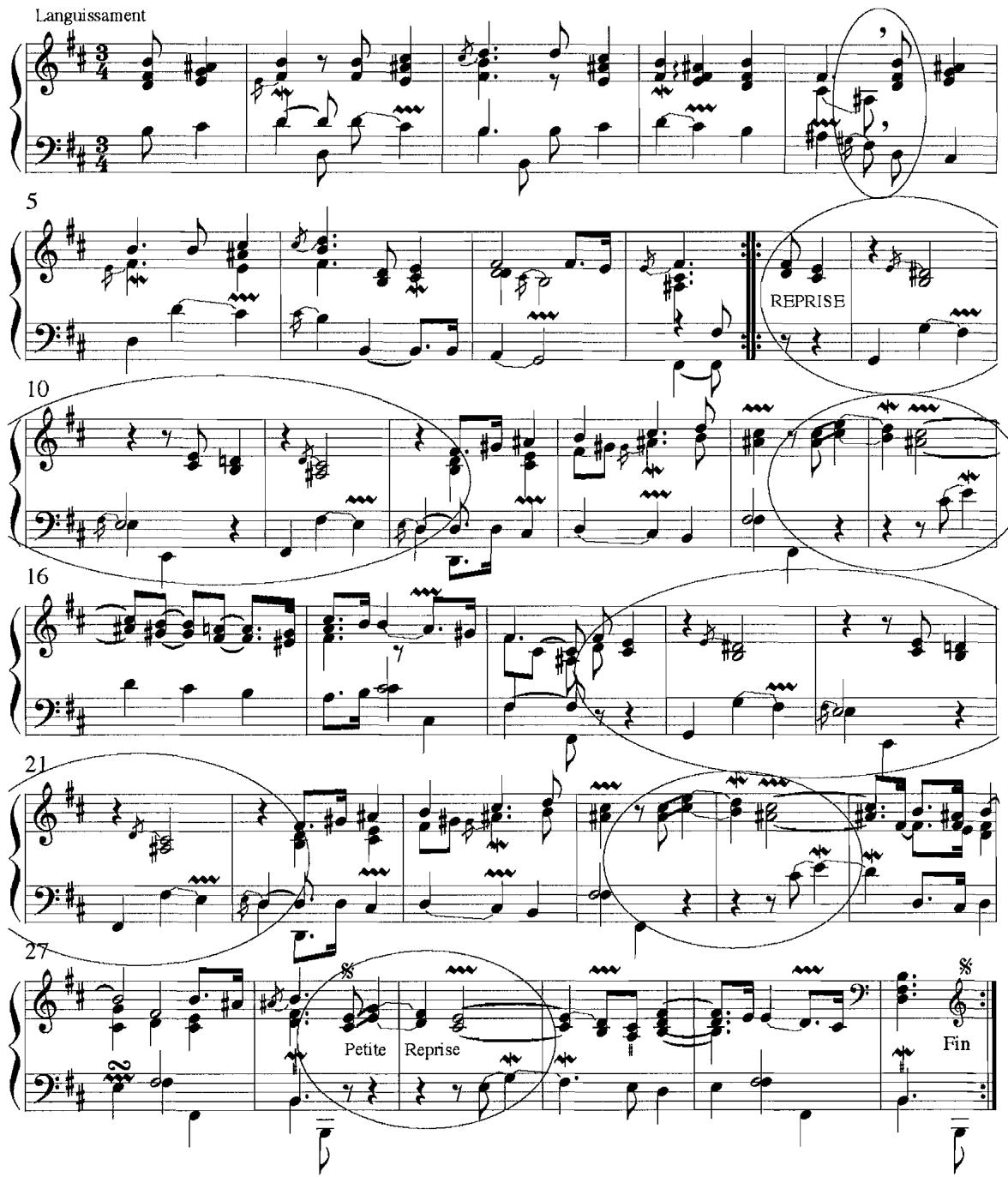
中文讲解
此处为乐谱插图占位符,对应图注 Example 5.11,标题说明其用途为"展示《受难之魂》中用以界定乐思的静默手法”,所选片段为第 13 组曲(1722)第 7–8 小节,作者标为 F. Couperin。结合 P0122 的三分法,可知该谱例应在乐谱上以圆圈标出三类静默出现的位置,但内嵌图像数据已省略,读者需查阅原书原图以核实具体小节中哪一拍、哪一声部出现休止。
第7段(P0125)
原文复述
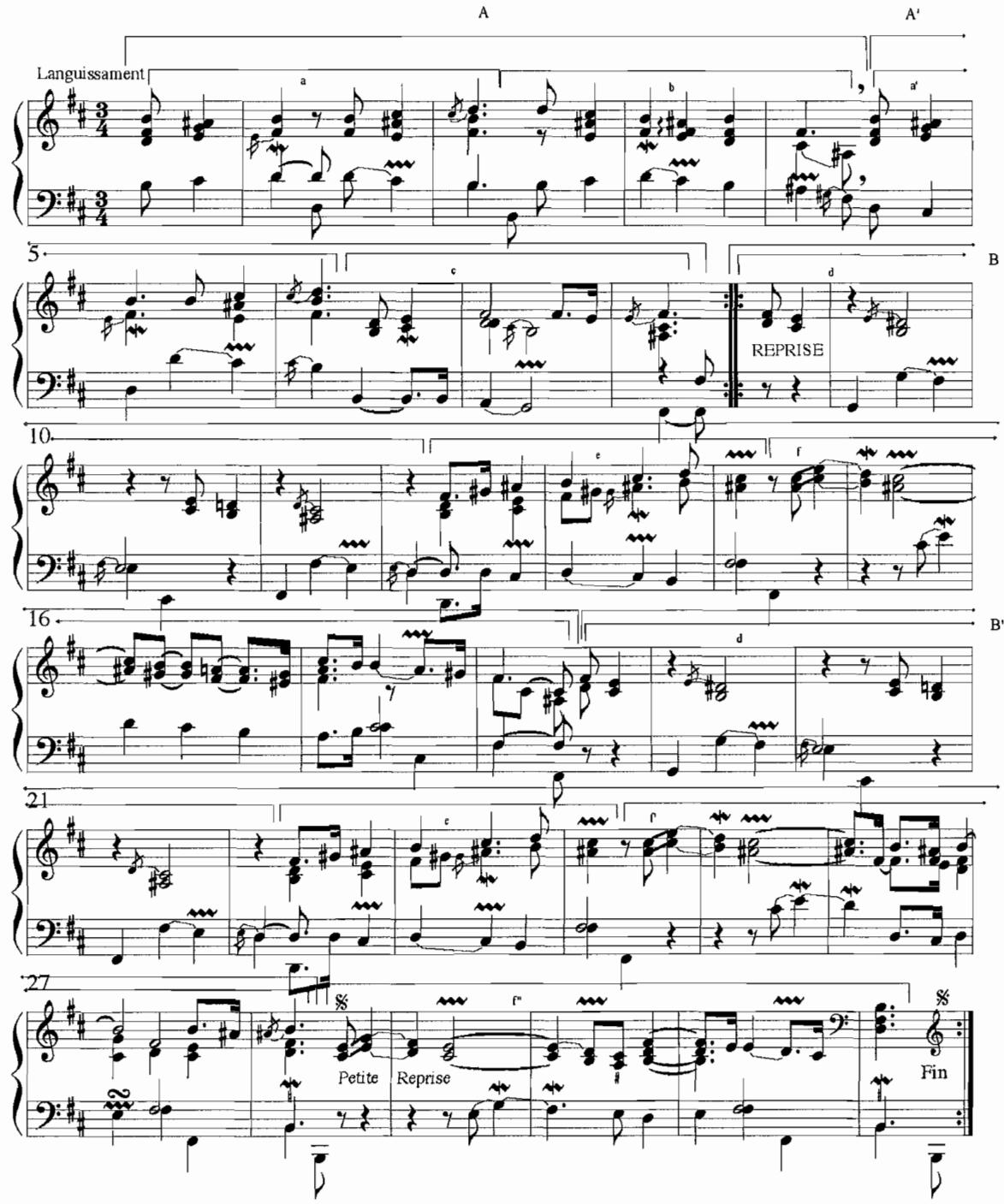
中文讲解
此处为图示占位符,对应 Example 5.12,曲式图(formal diagram),对象为库普兰《受难之魂》(第 13 组曲,1722)。结合 P0123 的描述可知,该图应以括号和字母标注 A、A′、a、a′、b、c 等乐句与乐思单元的层级结构,并体现终止式与静默在结构切分中的作用;但具体版式与括号的起止位置因内嵌图像省略而不可见,需查阅原图。
第8段(P0126)
原文复述
Given the discomfort and awkwardness expressed by this piece, the first section of L’Âme-en peine is remarkably symmetrical in its phrase structure and length. In fact, with the similar opening material between the two phrases, it could be considered as a parallel period, with the exception of the second half cadence to end the section, leaving the phrase open. As expected, the second reprise is different in its formal organization. However, instead of developing a melodic theme or motive over the course of the second section of the binary form — a common process in much galant dance music from the period — the phrase units appear to involve new and different material, which progresses over the course of the piece in a series of repeating gestures that move one into the next.
中文讲解
本段揭示一个看似反常的对照:尽管该曲在情绪上给人以"不适与笨拙"的印象,其第一部分的句法与长度却展现出"显著的"对称性。作者随即用一个古典术语来归类这种结构——parallel period(平行乐段)——但同时强调有一个关键例外:终止并非完满终止,而是第二次半终止,使乐段处于"开放"状态。这一例外至关重要:它把形式上的对称与表情上的悬而未决缝合在一起。段末转入第二部分(第二 reprise):作者指出它并不像当时常见的 galant 舞曲那样在一个主题/动机上做发展,而是引入新材料,并以前后相连的重复性乐思(repeating gestures)推动前行。这一判断预先为下段对"d"乐思单元及 clausula altizan 的细部分析作铺垫,也暗中支持本节标题的另一关键词——“use of silence to define gesture”,因为正是这些被静默切出的乐思单元,构成了第二部分演进的载体。
第9段(P0127)
原文复述
As in this first section of the piece, these repeating gestures or phrase units are still defined by silence and cadence. Immediately after the double bar, the first four-bar gesture, labeled as “d” in Example 5.12, includes the implied suspensions and hocket-like rests between the voices discussed earlier in this chapter. This four-bar unit is comprised of a single two-measure event — measures nine and ten briefly touching on the key of E minor — followed by the same event repeated down a step in measures eleven and twelve. This second two-measure event closes on a type of evaded cadence in the tonic key — or what Gjerdingen would call a clausula altizan — at the downbeat of measure twelve. $^{38}$ Back in B minor, the next phrase unit begins in measure twelve,
中文讲解
本段以"仍由静默与终止式界定"一句与第一部分形成呼应,从而贯彻 P0122 的论点。再以 double bar 后立即开始的"d"单元为切入,把前文提到的两类手法(hocket 式的声部间休止、隐含的延留解决)落到具体小节——第 9–10 小节触及 e 小调(为原调 b 小调的下属方向),第 11–12 小节将同一两小节事件"下移一步"重复,使 4 小节构成一对镜像。第 12 小节正拍处的终止被命名为"evaded cadence”,并以 Gjerdingen 的术语称之为 clausula altizan(具体含义详见下一条脚注)。段落末尾一句(next phrase unit begins in measure twelve, back in B minor)未完结,应接续至下页。其论证功能在于:用具体小节证实第二部分并非主题发展,而是"被静默切出的重复性乐思"在调性空间中的逐步位移——这正是 P0126 中所概括的"series of repeating gestures that move one into the next”。
第10段(P0128)
原文复述
$^{38}$ The clausula altizan, or what is often called an evaded cadence in modern terminology, progresses with the bass moving $\hat{5}-\hat{4}-\hat{3}$ to end the phrase. According to Gjerdingen, this is called altizan because the bass takes on a voice-leading pattern more commonly found in the alto line in polyphonic structures. See Robert
中文讲解
这是第 38 号脚注,对正文出现的术语 clausula altizan 作定义与来源说明。它向读者交代三层信息:其一,现代术语对应物为 evaded cadence(闪避终止);其二,其低音进行为 $\hat{5}-\hat{4}-\hat{3}$,即从属音下行至中音而绕开通常的属→主进行;其三,该名称"altizan"由 Gjerdingen 提出,理由是这种进行更常见于复调结构中的 alto 声部,故借以命名其反向——出现在低音上。脚注末"See Robert"是引文出处的开端(因 OCR 或截断而未完结,读者应回原书核对该条参考文献的完整作者与年代)。就正文作用而言,本脚注把"evaded cadence"从一个修辞性描述升级为一个有理论传统和声部写作谱系支撑的技术概念,加强了 P0127 关于"d"单元收束方式的解释力。
脚注 / 边栏 / 图表 / 附加信息(如有)
本小节含两幅图示占位符(Example 5.11、Example 5.12),其内嵌图像数据均已省略,需查阅原书图版以确认谱例上的具体圆圈与括号位置;脚注 38 对正文术语 clausula altizan 给出定义与文献出处(引文起点为 “See Robert”,疑为截断,完整参考文献待原书核对)。
💡 本节核心要点
- 库普兰《受难之魂》使用二部舞曲结构,但其材料组织方式同时承担了"游移"的运动感与"执着"的表情,两者是同一结构逻辑的两面。
- 本曲的乐句既由终止式/收束公式(clausulae)界定,也由"静默"界定;休止符被当作结构性事件而非仅表演性事件。
- 库普兰的静默使用可归为三类:两声部同时休止、单声部休止(尤其用于低音起模仿)、两声部轮流休止(近 hocket)。
- 第一部分(至 double bar 的 8 小节)呈现层级化对称:A 与 A′ 两个 4 小节乐句,每句再拆为 a/a′(开头材料相似)与 b/c(收尾材料不同)两个 2 小节单元。
- 形式上可视为 parallel period,但因第二乐句以弗里几亚半终止结束而留有开放性,使对称形式承载了悬而未决的表情。
- 第二部分不再做主题展开,而是以被静默切出的重复性乐思逐步位移;其首个 4 小节"d"单元经 hocket 式休止与下移重复后,以 clausula altizan(evaded cadence,低音 $\hat5-\hat4-\hat3$)收束。
🔑 关键术语
- clausula / clausulae:“收束公式”,指用于结束一个乐句或乐段的固定音型与终止式组合,是本节用以划分乐句的首要依据之一。
- agrément:法语术语,指装饰音;本节中用以指第 4 小节末类呼吸的"逗号式"装饰音,作为两声部同时休止的感性指示。
- hocket:中世纪/复调传统中的"错音"或"声部交错"手法,两声部以交替的休止让出节拍空间;本节以此描述两声部轮流休止的静默类型。
- parallel period:“平行乐段”,古典曲式术语,指两个乐句在长度与开头材料上相似、但结束方式(终止式)不同的结构;作者据此归类本曲第一部分,并指出其因半终止而"开放"。
- Phrygian half cadence:“弗里几亚半终止”,通常指低音上行半音进入属音(iv6–V)的特殊半终止形式;本节用于描述本曲第 8 小节处的终止。
- clausula altizan / evaded cadence:Gjerdingen 提出的术语,指一种"闪避"完满终止的收束公式,其低音进行为 $\hat5-\hat4-\hat3$;因这种声部进行在复调中更常见于 alto 声部而得名。
- Petite reprise:“小再现”,库普兰组曲中常见的小型再现段落,本节中作为静默用法的具体例证位置之一出现(第14–15、24–25 小节及此处)。
S4.2 [描述性拆分] Phrase Organization in the Second Reprise and Petite Reprise
第1段(P0129)
原文复述
Labeled as “e” in Example 5.12, the phrase continues until the downbeat of measure fourteen, which ends on another open half cadence along with a coordinated silence. The next phrase unit, labeled as “f” in Example 5.12, features a canon between the melody and bass starting in measure fourteen, and continues through a series of overt 7–6 suspensions previously described in this chapter. The canon breaks at the end of measure sixteen to prepare for a cadence in F# in measure eighteen — the first authentic cadence in the piece. This authentic cadence on F# marks the symmetrical middle point of the second half (second reprise) of the piece, and as such measures nine through eighteen can be considered as a larger phrase group, which is labeled as “B” in Example 5.12.
中文讲解
本段继续描述第二再现内部乐句的衔接方式,与前面描述的开放半终止模式保持一致:乐句"e"一直延续到第14小节正拍,落在又一个开放半终止上,并伴有一段配合性的休止。接下来的乐句"f"从第14小节开始出现旋律与低音声部之间的卡农模仿,并贯穿本章前述的一系列明显的7–6挂留。卡农在第16小节末尾断开,以便为第18小节的F#终止做准备——这是全曲第一次正格终止。
这一F#上的正格终止具有结构标识意义:它是第二半部(即第二再现)对称的中点,正因为如此,第9至第18小节作为一个更大的乐句群被归入Example 5.12中标为"B"的层级。
本段的论述重心是说明第二再现内部通过乐句的级联与终止的逐步升级(F#上的正格终止)来构成一个具有对称中点的大型乐句群。需要特别注意的是:原文只说m. 18的F#正格终止是第二再现的对称中点,并把m. 9–18整体视为一个B乐句群;并未把m. 9–18再细分为前后两段,也未赋予m. 18以"真正的结构关闭"或一般性"封闭"含义,更没有把B乐句群解释为属方向、C乐句群解释为主方向的调性—和声层级。这一点在处理P0130时要延续:m. 18–28的C乐句群与m. 9–18的B乐句群在原文层面是平行的、对称的两段,不应被解读为属—主层级关系。
补充说明
本段涉及的"open half cadence"、“authentic cadence”、“7–6 suspension”、“canon"等术语在前文已解释;本段只是延续这些机制在m. 9–18范围内的具体应用。“对称中点"是本节形式论述的关键定位词,意味着m. 18既是第二再现的中点,也是B乐句群内部三个乐句的汇合处。
第2段(P0130)
原文复述
To complete the final stages of The Lost Soul, the same series of phrases that comprised the larger phrase group “B” above begins again in the middle of measure eighteen and continues until the downbeat of measure twenty-eight. The first two phrases are exactly the same as before and are labeled as such (“d” and “e”) in Example 5.12. As would be expected, the material in the third phrase is different to accommodate the harmonic shift for an authentic cadence in the home key of B minor in measure twenty-eight, rather than in the key of F# as found in measure eighteen. Because of this difference, the third phrase is labeled as “f” in Example 5.12. Together, they form the second larger phrase group of “C” in this piece. Couperin appends a four-measure Petite Reprise to close the piece — a feature common to many of the binary forms in his harpsichord collection, which often serves as a confirmation of material that has come immediately before it. In the case of The Lost Soul’s Petite Reprise, the musical material is very similar to phrases “f”, which comes immediately before it, as well as to “f” from earlier in the piece. It is labeled as “f” in Example 5.12, and confirms the key of B minor with another authentic cadence in the last measure of the piece.
中文讲解
本段交代第二再现下半部分(即C乐句群)以及尾部的Petite Reprise如何收束全曲。从第18小节中开始,B乐句群中所用过的同一系列乐句原样重复进行,直到第28小节正拍结束。前面两句"d"和"e"与先前完全一致,因此沿用相同的标签;第三句必须作出调整,因为终止需要从F#转到主调B小调——m. 28要求是B小调的正格终止,而非m. 18的F#正格终止——所以第三句虽然仍标为"f”,但具体材料不同。三句合在一起构成全曲的第二个大型乐句群,即Example 5.12中的"C”。
在C之后,库普兰附加了一段四小节的Petite Reprise来结束全曲。这是他羽管键琴作品中很多二段体的常见做法,通常用于确认紧接在它之前的材料。The Lost Soul的Petite Reprise在材料上既与紧邻其前的"f"(m. 18–28的C乐句群中的第三句)非常相似,也与较早出现的"f"(m. 14–18的B乐句群中的第三句)非常相似,因此同样被标为"f",并在最后小节以一个B小调的正格终止确认主调。
本段需要把握的论证逻辑是:(1) 重复的边界——前两句完全相同、第三句必须改写以适应终止调,这是重复—变化的标准范式;(2) 形式术语——C与B是平行的两个乐句群标签,Petite Reprise则是库普兰惯例中用于收束的二段体附加段落;(3) 调性收束——从B乐句群的F#正格终止,到C乐句群的B小调正格终止,再到Petite Reprise的又一次B小调正格终止,主调的确认在尾部被重复并加固。
需要强调的是:原文把B乐句群和C乐句群作为平行的两个段落来描述,m. 18的F#正格终止只是对称中点,m. 18–28的C乐句群并非被赋予"主调方向"或"属—主层级中主调那一半"的结构含义,Petite Reprise则只是在主调上的再一次确认。把B、C解释为属—主层级、或把m. 18视作"真正的结构关闭"都越出了原文。
补充说明
“Petite Reprise"是法国巴洛克羽管键琴二段体中常见的短小再现段,常用于在主调上收束并确认前文材料。原文通过C乐句群第三句(标为"f"但改写)和Petite Reprise(同样标为"f”)的对比,暗示材料之间的"相似但不完全相同"关系,这一点是理解Couperin惯例的关键。
第3段(P0131)
原文复述
Gjerdingen, Music in the Galant Style: Being an Essay on Various Schemata Characteristic of Eighteenth-Century Music (New York: Oxford, 2007), Chapter 11.
中文讲解
这是一条文献脚注,出自Gjerdingen《Music in the Galant Style: Being an Essay on Various Schemata Characteristic of Eighteenth-Century Music》,牛津大学出版社2007年版,第11章。脚注在版面上独立于正文,其作用是提供进一步阅读或佐证的来源信息;本章对L’Âme-en peine乐句结构与终止模式的描述与该书中讨论18世纪音乐schemata(程式化音型)的章节有关联。
补充说明
无额外补充。脚注本身不引入新主张,仅作为来源标注出现。
第4段(P0132)
原文复述
This string of phrases combines to generate the binary form of L’Âme-en peine. As they are combined there is a peculiar sense of motion, and yet there is a remarkable symmetry to the organization of the form. Each phrase exists as a unit, and when material is repeated the phrase repeats in its entirety — there is no development of a theme or motive, or the sequencing of ideas to act as connectives between sections. Melodic contour, for the most part, is incredibly linear moving mostly by step with the exception of a shift in register that occurs in measure six as the first half of the piece comes to a close, and range is narrow. Harmonic vocabulary is fairly conservative — key areas never go far from B minor — and all internal cadences are open half cadences with the exception of one authentic resolution in F# at measure eighteen.
中文讲解
本段是对前面所有乐句描述的总结性归纳,把The Lost Soul的曲式特征从整体上加以概括。
- 形式:这一连串的乐句组合起来生成了L’Âme-en peine的二段体。组合之后产生一种奇特的运动感,同时又具有显著的对称性。
- 乐句处理:每个乐句自身都是一个整体;一旦材料重复,乐句就整体重复——既没有主题或动机的展开,也没有用乐思的模进来充当段落之间的连接。
- 旋律:旋律走向非常线形化,主要以级进为主;唯一例外是第6小节出现的一个音区转换,恰好发生在第一半部收束之处;整体音域狭窄。脚注39标记了这一音区转换,并指出其与乐曲表情有关。
- 和声:和声语言相当保守——调性区域从未远离B小调——所有的内部终止都是开放半终止,唯一例外是m. 18在F#上的一次正格终止。
本段的教学重点是揭示:尽管L’Âme-en peine在材料上简单(线性旋律、保守和声、狭窄音域、缺乏展开和连接),但通过乐句自身的重复—对称安排,它仍然能够形成清晰的形式感与持续的运动感。这种"以乐句的整齐重复和对称来替代主题展开"的做法正是下面P0133要把它与法国抒情风格联系起来的关键。
补充说明
脚注39在此处出现(指向音区转换m. 6)。本段中"开放半终止"作为内部终止贯穿全曲,与m. 18的F#正格终止形成"一个例外"的对比——这是上一节形式分析的关键判据。“对称性"与"运动感"并存的张力,正是P0133要回答的"简单却动人"的来源。
第5段(P0133)
原文复述
The Lost Soul is relatively “simple” in its organization and harmonic range, yet it is still compelling and effective in producing an expression of suffering, pain, and discomfort. In a piece that is not complicated, what is it that projects this sort of affect? In terms of form and aesthetics, the type of phrase arrangement and organization in L’Âme-en peine is similar to ideas Tunley suggests as being hallmarks of French lyricism. When discussing the various ways in which melodies can be organized following principles of French styles, he states that at times, melodies can be decidedly “un-Italian” in their formal configurations.
中文讲解
本段提出本节的核心问题,并为下一节(关于表现力来源的讨论)作铺垫。
- 现象观察:The Lost Soul在组织与和声范围上相对"简单”,却仍然能够在表现上产生痛苦、难受、不适等情绪的表达力。
- 问题:在一部并不复杂的作品中,是什么把这种情感投射出来的?这是一个从形式分析过渡到美学—表现分析的转折。
- 形式与美学的联系:从形式和美学角度看,L’Âme-en peine的乐句安排方式与Tunley所说的法国抒情风格(French lyricism)的特征相类似。Tunley在讨论法国风格原则下旋律组织方式时指出,旋律在形式配置上时常会表现出明显的"非意大利式"(“un-Italian”)倾向。
本段的教学重点是:作者把L’Âme-en peine的"简单却动人"这一现象定位为与法国抒情传统的形式美学相关的问题,而不是简单归因于某种作曲技巧。这样做是为下一节把"重复—对称—缺少展开"等看似简朴的乐句安排重新解读为法国式"un-Italian"美学特征作概念准备。换言之,作者暗示:效果不来自于复杂,而来自于形式选择本身所携带的风格传统。
补充说明
本段引入了Tunley关于French lyricism和"un-Italian"形式配置的观点,是将本节的形式描述(对称、缺乏展开、整体重复)转化为美学判断的桥梁。下一节将基于此进一步分析该曲如何通过句法、终止与音型等层面产生情感效果。
第6段(P0134)
原文复述
39 This shift can be heard as being significant to the expression and meaning of the piece, which will be discussed in the section of this chapter dedicated to pattern behavior.
中文讲解
这是脚注39的完整内容。脚注指出:m. 6发生的音区转换可以被听作对全曲的表情与意义具有重要意义的部分,并预告这一议题将在本章专门讨论pattern behavior(音型行为)的小节中再作讨论。
脚注的作用是限定并延迟处理——它告诉读者:m. 6的音区转换不是普通的事件,而是与作品的"表达与意义"有关,但本节暂不展开,留待pattern behavior一节中详细处理。从上下文看,这一脚注对正文P0132中"the exception of a shift in register that occurs in measure six"一句构成延伸与定位:将一处乐句末端的音区变化从单纯的形式事件提升为具有表现意义的观察对象,并把它的完整阐释延后。
补充说明
无额外补充。脚注的功能已与正文P0132相互锁定。
脚注 / 边栏 / 图表 / 附加信息(如有)
P0131为Gjerdingen《Music in the Galant Style》(2007)第11章的引用脚注,作为本章对L’Âme-en peine乐句结构与终止模式描述的来源支持。P0134为脚注39,对应正文P0132中提到的m. 6音区转换,指出该转换具有表现意义,并将详细讨论延后至本章关于pattern behavior(音型行为)的小节。Example 5.12在全节中被反复引用,作为乐句标注(d、e、f与B、C乐句群)以及Petite Reprise标签的图示依据。
💡 本节核心要点
- 第二再现内部以m. 18的F#正格终止为对称中点,m. 9–18构成B乐句群(d、e、f三句),其中f句通过旋律与低音声部卡农及7–6挂留来推进。
- C乐句群(m. 18–28)在结构上重复B乐句群:前两句(d、e)原样重复,第三句(f)为适应m. 28在B小调上的正格终止而改写材料。
- Couperin在C乐句群后附加四小节Petite Reprise作为收束,其材料与前后两个f句均高度相似,并在末小节以B小调正格终止再次确认主调。
- 全曲形式被概括为对称但缺少展开的二段体:乐句以整体重复为单位,无主题/动机发展或模进式连接;旋律以线性级进、窄音域为主;和声语言保守,调性始终围绕B小调。
- 内部终止统一为开放半终止,唯一例外是m. 18的F#正格终止;这一唯一性使m. 18具有结构标识意义,但并非原文意义上的"结构关闭"。
- The Lost Soul的"简单却动人"被作者归入Tunley所说的法国抒情风格传统,其形式配置可被描述为明显的"un-Italian",由此把乐句层面的简朴与美学层面的风格选择联系起来。
🔑 关键术语
- Petite Reprise:库普兰羽管键琴二段体中常见的短小附加段落,用于在主调上收束并确认前文材料;在本曲中为四小节,材料与紧邻其前以及较早的"f"句高度相似,并以B小调正格终止结束全曲。
- binary form:二段体形式;本节把L’Âme-en peine描述为通过一连串乐句的级联与对称重复而生成的形式。
- authentic cadence / open half cadence:正格终止与开放半终止。本曲所有内部终止均为开放半终止,全曲唯一的内部正格终止位于m. 18的F#上,m. 28与Petite Reprise末尾的B小调正格终止则用于全曲的最终收束。
- 7–6 suspension:7–6挂留;本节提到"f"句中贯穿了一系列在前文已讨论的明显7–6挂留。
- canon:卡农模仿;m. 14起的"f"句以旋律与低音声部之间的卡农为特征,延续至m. 16末才断开以准备终止。
- French lyricism / “un-Italian”:作者援引Tunley提出的法国抒情风格特征:在形式配置上与意大利风格相对,旋律组织可以明显地"非意大利式",本节把L’Âme-en peine归入这一美学传统。
- phrase group (B / C):本节使用的大型乐句群标签:B指m. 9–18(含d、e、f三句),C指m. 18–28(含相同的d、e以及改写的f),二者以m. 18的F#正格终止为对称中点彼此平行。
S4.3 [描述性拆分] French Lyricism and the Aesthetics of Timelessness
第1段(P0135)
原文复述
According to Tunley, the overall structure of melodies in this style consists of one phrase that simply complements what has preceded it, producing an effect of ordered symmetry. This stands in striking contrast to the way Italian composers more usually generated their melodies through the process of motivic development. The most characteristic Italian structures give the impression of organic growth, owing to the tendency to develop short rhythmic and melodic motives into longer sequential patterns. Asked what to make of a melodic style in which the landmarks so familiar in Italian Baroque music are missing in the French, Tunley responds that one must first cast off any preconceived ideas about the importance of ’thematic development’ or ’thematic conciseness’ and recognize that there is a vast amount of music in which these play no part at all. What does seem to be universal is melodic shape, upon which the notion of thematicism has been imposed at certain times and in certain schools. Hence one needs to look beyond the familiar processes of the baroque and classical periods toward the wider concept of musical lyricism. In fine melodic writing one generally finds a flight of notes grouped into different spans, each span complementing the others to produce an overall satisfying shape, and one of the most satisfying of these shapes is the arch. Combined with the absence of melodic angularity and lengthy sequential passages, the resultant style resembles in many ways features of the French lyrical tradition inherited by Couperin, whether in sacred, secular, vocal or instrumental music. By retaining much of the prima prattica of the sixteenth century long after it had given way to seconda prattica in seventeenth-century Italy, French composers located the roots of that douceur which lies at the heart of the French style. Consequently, it was not only respect for the text that led French composers to avoid sequential patterning and short repetitions, but also deference to past practice, which to a certain extent can be recognized in the harmony as well. One has the feeling that, as in Renaissance practice, it is the melody that creates the harmony rather than the other way around. 40
中文讲解
本段是大卫·滕利(David Tunley)著作中的一段长引文,作者把它作为建立法国抒情美学概念基础的核心文献。理解滕利的论点应分三层:第一层是法意两种旋律传统的对照——法国旋律由前后相互’补足’(complementing)的乐句构成,形成’有序对称’(ordered symmetry)的效果;意大利作曲家则通过’动机发展’(motivic development)从短小的节奏/旋律动机逐步展开为更长的模进序列,给人’有机生长’的印象。第二层是滕利对’主题性’思维的批判:他提醒读者必须抛弃关于’主题发展’与’主题精炼’重要性的先入之见,承认存在大量不依赖这些原则的音乐。在他看来真正普遍存在的只是’旋律的形’(melodic shape),主题性只是某些时期、某些学派强加于其上的概念,因此分析者应当越过巴洛克与古典时期的熟悉范畴,进入’音乐抒情性’(musical lyricism)这一更宽广的概念。第三层是法国风格的传统根源——滕利指出法国作曲家长期保留十六世纪的prima prattica(第一实践),而意大利早在十七世纪就让位于seconda prattica(第二实践)。这种对过去实践的’敬意’(deference to past practice)正是法语音乐核心那种douceur(柔和、甜美)特质的来源;不仅出于对文本的尊重,也出于对传统的延续。最终,滕利得出一个具有方法论意义的判断:法国音乐中给人以’旋律创造和声,而非和声限制旋律’的印象——和声从旋律中自然生发,与文艺复兴实践一致。
补充说明
本段之所以被作者大段征引,是因为它集中提供了法国抒情美学的几乎全部关键范畴(对称、互补、拱形、抒情性、douceur、prima prattica保留),为后续讨论库普兰的L’Âme-en peine与多昂格勒贝尔的tombeau建立了共同的概念词汇。
第2段(P0136)
原文复述
The author states that Tunley is quoted here at length in order to illustrate that, as part of the French lyric style, there are different sets of compositional qualities and priorities to consider when assessing music of Couperin and his contemporaries. Many of these qualities are arguably present in L’Âme-en peine: for instance, the piece does not thematically develop its melodic ideas, and its phrases move from one to the next by ‘complementing’ one another, creating an overall symmetry to the piece. A symmetrical organization with regularly repeating units can engender a sense of familiarity with the material and a level of expectation for the
中文讲解
本段是作者对长引文用途的元评论。作者明确指出,大段引用滕利是为了让读者意识到:评估库普兰及其同辈的音乐时,存在一整套不同于德—奥—意传统的’作曲品质与价值序列’,即法国抒情风格所偏重的那些范畴。紧接着,作者将滕利的宏观论述落到具体作品——L’Âme-en peine(直译为’受难的灵魂’,文中也译作The Lost Soul)之上:在该作中,旋律观念不被主题化展开,句与句之间相互’补足’,整体呈现对称。下一段(P0138)将完成关于这种对称如何被听者体验为’预期—延迟—紧张的运动’的论述。
补充说明
L’Âme-en peine是库普兰的’风景画集’(Paysages)中的一首拟人化小品,标题借自画家沃特(Antoine Watteau)的同名画作;这是本节把它作为分析对象的体例起点。
第3段(P0137)
原文复述
Footnote 40: Tunley, Perfection of Music, 34–35.
中文讲解
脚注40,标注上文P0135长引文的文献出处:滕利,《音乐的完美》(Perfection of Music)第34–35页。这是本节主要理论框架的支持性来源说明。
第4段(P0138)
原文复述
The continuation of the previous thought argues that a symmetrical organization with regularly repeating units can engender a sense of familiarity with the material and a level of expectation for the listener. When things repeat, we can anticipate what is about to come next. The symmetry, then, allows us to hear the punctuations in the texture as delays, contributing to the strained motion expressed by this piece.
中文讲解
本段延续P0136对L’Âme-en peine对称性的具体论述,从结构特征推进到听者体验层面。关键论证链是:由’规律重复的单元’形成的对称组织,会让听者熟悉材料并形成’预期’(anticipation);一旦材料重复出现,听者便能预判’接下来将要发生什么’。正是这种可预判性使织体中偶尔出现的停顿被体验为’延迟’(delays)——并非真正的中断,而是被等待所拉长的过渡;这一机制贡献了该作品所表达的’紧张的运动’(strained motion)。换言之,作者在此揭示了结构—认知—情感之间的通路:对称不仅是形式特征,它通过生成预期而使偏离预期的瞬间被听成’悬置’,从而契合L’Âme-en peine的悲剧性张力。
补充说明
‘strained motion’这一措辞把作品的运动品质(quality of motion)与情感品质(悲恸、挣扎)直接联系起来,是P0139引入麦克拉里’永恒性’概念前的过渡性描述。
第5段(P0139)
原文复述
The author notes that Tunley’s statements give some meaning to a suggested philosophy behind the formal organization of pieces with these qualities. Susan McClary suggests that this kind of compositional process underscores an aesthetic of stasis or timelessness common to seventeenth-century thought, and consequently, to the music of Couperin’s predecessors.
中文讲解
本段是从’作曲技术描述’过渡到’美学—哲学解释’的关键转折。作者承认滕利的论述为这类形式组织背后的哲学提供了某些意义,并引入苏珊·麦克拉里(Susan McClary)的概念:这种作曲过程体现了’静态或永恒性的美学’(aesthetic of stasis or timelessness)。麦克拉里把这一美学视为十七世纪思想的共同特征,因而把它上溯到库普兰的前辈音乐。这一概念为后文分析多昂格勒贝尔的tombeau和库普兰的L’Âme-en peine提供了核心解释框架——从’看作品在做什么’转向’看作品为什么可以不做那些事’。
第6段(P0140)
原文复述
The author observes that this sense of timelessness was valued not only by the centers of power in France, but also by many of those disenfranchised by Absolutism. In his classic study The Hidden God, Lucien Goldmann argues that the Port-Royal philosophers advocated withdrawal from the world in part as a way of coping with an eroded sense of political agency; he shows how they aspired to an ideal of attentive motionlessness while discouraging future-oriented thought and beliefs in progress. 41
中文讲解
本段把’永恒性’美学从音乐风格扩展到十七世纪法国的社会—思想语境。作者指出,这种’永恒感’不仅为权力中心所看重,也为许多被绝对君主制(Absolutism)边缘化的人所珍视。吕西安·戈德曼(Lucien Goldmann)在《隐藏的上帝》(The Hidden God)中研究波尔—罗亚尔(Port-Royal)的詹森派哲学家,指出他们主张’退出世界’(withdrawal from the world),部分原因是面对政治能动性的丧失(eroded sense of political agency);他们追求一种’专注的静寂’(attentive motionlessness),同时反对面向未来的思维和进步信念。由此,作者为’永恒性’美学提供了一个跨越社会阶层的解释:它既是绝对王权所偏好的稳定感,也是被压制者的精神策略,从而把麦克拉里的音乐论点嵌入更广阔的文化史脉络。
补充说明
波尔—罗亚尔修道院(Port-Royal des Champs)是十七世纪詹森主义的精神中心,其成员因拒绝签署谴责《奥古斯丁记》的教廷文件而遭到迫害,因此’退出世界’既是虔修选择也是政治处境的产物。
第7段(P0141)
原文复述
To demonstrate this ideal of timelessness in music, McClary provides a detailed analysis of a tombeau by D’Anglebert. Acknowledging the danger of selecting only one piece for assessment — and a genre that is melancholy by nature — she first itemizes what the piece ’lacks’ stylistically: for example, sequences, motivic development, imitative counterpoint, adventuresome key relationships, and an overall sense of a goal — qualities similar to what both Tunley and McClary describe as Italian characteristics that pervade how we approach analysis. However, it is precisely this perception that music from the seventeenth century is lacking something that prevents deeper understanding of what the music does have.
中文讲解
本段描述麦克拉里如何在音乐层面证明’永恒性’理想。她选择让—亨利·多昂格勒贝尔(Jean-Henri d’Anglebert)的一首tombeau(哀悼曲)作为分析对象,并首先承认这种选择性分析的危险——单一作品、且体例本身天生忧郁。麦克拉里随即列出了这首作品’缺乏’的西方音乐典型特征:模进、动机发展、模仿对位、大胆的调性关系、整体的方向感。值得注意的是,这张’缺失清单’上的每一项,都恰好是滕利与麦克拉里都描述为’意大利式’、并主导我们当下分析习惯的品质。麦克拉里由此揭示一个分析陷阱:用意大利传统的标准去衡量十七世纪法国音乐,看到的只是’缺失’;而这种’缺失感’本身,恰恰阻碍我们去理解这种音乐真正’拥有’什么。这是一种反方法的策略——把分析者自己预设的标准作为’所缺之物’列出来,从而悬置它们。
补充说明
麦克拉里’逐项列出所缺’的方法构成一个分析反转:她将本节开头滕利所批判的’主题性先入之见’具体化为可清点的技术清单,使读者意识到这些标准本身是历史与文化造就的。
第8段(P0142)
原文复述
Footnote 41: Susan McClary, ‘Temporality and Ideology: Qualities of Motion in Seventeenth-Century French Music,’ ECHO: a Music-Centered Journal 2/2 (Fall 2000), http://www.humnet.ucla.edu/echo (accessed July 27, 2008): 36.
中文讲解
脚注41,标注麦克拉里文章的完整出处信息:发表于《ECHO:音乐中心期刊》(ECHO: a Music-Centered Journal)2000年秋季刊第2卷第2期,第36页;附访问日期2008年7月27日及期刊URL。这是本节后续多处麦克拉里引文的主要来源标注。
第9段(P0143)
原文复述
Quoting McClary, the author maintains that this element of multi-leveled goal orientation is what people unaccustomed to French seventeenth-century music miss the most: to the extent that progressive tonality counts as ‘how music is supposed to work,’ its absence spells pure and simple incompetence. Yet if we take seriously the choices made by D’Anglebert and his colleagues, we can glean insights into a society quite alien from the one that gave our own dominant tradition not only its compositional techniques, but also its sense of being. For D’Anglebert worked within a culture that for a wide variety of reasons wished to promote sensibilities of timelessness. 42
中文讲解
本段承接麦克拉里的论点,以强烈对比呈现两种听法。麦克拉里主张:‘多层次的目标导向’(multi-leveled goal orientation)正是那些不熟悉法国十七世纪音乐的听者最容易错失的要素——在’进行性调性’(progressive tonality)被视为’音乐本来应当如何运作’的语境下,它的缺席只能被读作’纯粹的简单的不合格’。然而麦克拉里进一步论证:若我们认真对待多昂格勒贝尔等人的选择,便能窥见一个与我们所继承的’主流传统’完全异质的社会——不仅作曲技术不同,连’存在感’(sense of being)也不同。多昂格勒贝尔所处的文化,出于种种原因,正是要张扬一种’永恒性的感受’(sensibilities of timelessness)。这段文字的关键贡献是把’美学差异’上升为’存在论差异’——它不只是音乐听起来不同,而是它所表达的’如何存在于世’不同。
补充说明
此处’我们的主流传统’指巴洛克晚期以降的德—奥—意体系;‘异质的社会’指路易十四治下、詹森派与绝对王权并存的十七世纪法国。
第10段(P0144)
原文复述
The author notes that for a composer, creating this type of affect is difficult because, as McClary states, ‘music by its very nature unfolds through time; of all media it would seem the most resistant to the project of conveying immobility.’ For McClary, the concept of stasis is achieved by producing ‘an experience of time in which the listener is absorbed by each present instant.’ D’Anglebert accomplishes this by providing events in the piece that focus our attention on the moment at hand, allowing the listener to relish dissonances, suspensions, extended ornaments, anticipations, and appoggiaturas. These features take hold, prolonging the moment, balancing ’two different conceptions of rhythmic activity: what the French referred to as Mesure and Mouvement.’ Even for Couperin, these ideas are relevant. He states, ‘mesure defines the number and equality of the beats. Cadence or mouvement is properly the spirit and soul that it is necessary to add.’ 43 44 45 46
中文讲解
本段解释麦克拉里所说的’在时间中表达静止’这一悖论的解决路径。麦克拉里首先承认:音乐天然在时间中展开,似乎是最抗拒’传达静止’(conveying immobility)的媒介;但她主张’静态’的实现方式是创造一种’听者被每一个当下瞬间所吸收’(absorbed by each present instant)的时间体验。多昂格勒贝尔的具体手法是:让音乐事件将注意力锁在’此刻’——通过不协和音(dissonances)、延留(suspensions)、扩展的装饰音(extended ornaments)、提前进入(anticipations)和倚音(appoggiaturas)——使’此刻’被延长、悬置。这些手法共同平衡着’节奏活动的两种构想’,即法语所称的Mesure(节拍量度,beat-measure)与Mouvement(运动、动感)。作者随即援引库普兰本人的话来印证:库普兰也说’mesure定义拍子的数目与均等,而cadence或mouvement才是需要被加上的精神与灵魂’。这段论述把麦克拉里的概念追溯到库普兰自身的理论语汇中,从而把’永恒性’美学从外部学者的解释变成库普兰传统内部可以验证的范畴。
补充说明
Mesure与Mouvement的对照是法国音乐修辞学中的核心区分:前者关乎精确的拍值与律动,后者关乎弹性、情绪与精神。麦克拉里借用这对概念作为描述多昂格勒贝尔实现’静态’机制的理论工具。
第11段(P0145)
原文复述
The author argues that McClary’s list of devices is arguably present in myriad other pieces, and whether or not they produce qualities equivalent to timelessness remains a question. However, it is undeniable that these techniques are critical to expression, and in particular settings that expression can represent many things such as despair, sadness, yearning, or contemplation. McClary’s devices are also defining features of the structure of the piece, which should not be considered faulty for lacking other qualities. D’Anglebert’s tombeau is expected to be mournful, and as such, compositional devices that focus attention and provide opportunities for reflection are appropriate.
中文讲解
作者在此对麦克拉里的清单做了一个必要的限定与拓展。麦克拉里所列的那些手法(不协和音、延留、装饰音、倚音等)在无数其他作品中同样存在;它们是否就一定产生等同于’永恒性’的品质,仍是一个开放的问题。然而作者强调,有一点是不可否认的——这些手法对’表达’本身至关重要,且在不同语境下可以承载绝望、悲伤、渴望或沉思等不同的情感内容。麦克拉里的清单同时也界定着多昂格勒贝尔这首作品的结构特征,因此不应因为缺少其他品质而被视为有缺陷。作者进一步以体例(genre)作论:tombeau(哀悼曲)本身预期忧郁、引发沉思;因此那些聚焦注意、提供反思契机的设备在此是’合乎体例’的,而不能用其他体例的标准去判定。这一限定既防止了将麦克拉里清单普适化,也维护了它在本作品中的解释效力。
第12段(P0146)
原文复述
Footnote 42: Ibid., 18.
中文讲解
脚注42,标注P0143中麦克拉里’多层次目标导向’与’永恒性感受’引文的具体页码——同一篇文章第18页。
第13段(P0147)
原文复述
Footnote 43: Ibid.
中文讲解
脚注43,标注P0144中麦克拉里’音乐天然在时间中展开’引文的来源——同一篇文章(页码未指明)。
第14段(P0148)
原文复述
Footnote 44: Ibid.
中文讲解
脚注44,标注P0144中麦克拉里’听者被每一个当下瞬间吸收’引文的来源——同一篇文章(页码未指明)。
第15段(P0149)
原文复述
Footnote 45: Ibid., 20.
中文讲解
脚注45,标注P0144中麦克拉里借用Mesure/Mouvement这对法语概念的具体页码——同一篇文章第20页。
第16段(P0150)
原文复述
Footnote 46: François Couperin as quoted by Ibid.
中文讲解
脚注46,标注P0144末尾库普兰关于mesure与mouvement的原话系麦克拉里在同一篇文章中的转引(quoted by Ibid.),而非库普兰著作的直接引文。
第17段(P0151)
原文复述
The author notes that McClary’s thoughts are specific to music from the seventeenth century, and yet, as Tunley points out, traditions can continue and have influence on later generations. While there is no direct evidence that Couperin composed L’Âme-en peine with an aesthetic of timelessness or absorption in mind, it is clear that the compositional features of the piece — its use of ornamentation, articulation, emphasis, style, and texture — and the way its form is structured — through complementary phrase units and symmetrical grouping — can be seen as contributing to a contemplative, and even mournful, aesthetic, as well as to the qualities of motion in The Lost Soul. These features and formal elements, expressing general qualities such as sorrow or sadness, can map appropriately onto ideas related to death — the loss of a soul. However, in the final section of this chapter, the author will discuss how pattern behavior within the first eight measures of L’Âme-en peine not only underscores the mournful expression of the piece and associated mapping onto death, but also enhances and refines this meaning to include metaphors for being adrift — wandering aimlessly — and for having fallen — the damnation of the soul.
中文讲解
本段是本节的小结,也是向本章最后一节过渡的桥梁。作者首先承认:麦克拉里的论点针对十七世纪音乐,但她借助滕利’传统延续’的观点,将其延伸至库普兰。作者明确表态:没有直接证据表明库普兰在创作L’Âme-en peine时刻意追求’永恒性’或’当下沉浸’的美学——这是一种谨慎的史实判定。但显而易见的是,作品的作曲特征(装饰音、articulation、emphasis、风格、织体)与形式组织(互补的乐句单元、对称分组)有助于营造一种’沉思—哀悼’的美学,并对’失落灵魂的运动品质’(qualities of motion in The Lost Soul)有所贡献。‘悲伤’等一般品质可以恰当地映射到’死亡—灵魂失落’的相关观念上。最后,作者预告:在本章最后一节,他将讨论作品前八小节的’模式行为’(pattern behavior)——它不仅强化哀悼的表达与死亡映射,还丰富和精细化这种意义,加入’漂泊—漫无目的的游荡’与’堕落—灵魂的永罚’这两个隐喻。从结构上看,本段完成了从’美学理论(滕利、麦克拉里)‘到’具体作品的隐喻分析’的过渡,并为本章最后一节做了精确的论域预告。
补充说明
The Lost Soul是L’Âme-en peine的英文意译之一;本节末尾与下一节将以’漂泊’与’堕落’这两个隐喻作为新的分析维度。
脚注 / 边栏 / 图表 / 附加信息(如有)
本节包含6条脚注(编号40–46),均为文献来源说明,无图表或边栏: • 脚注40(P0137):滕利《音乐的完美》第34–35页,是P0135长引文的来源。 • 脚注41(P0142):麦克拉里《时间性与意识形态:十七世纪法国音乐中的运动品质》一文的完整期刊信息(ECHO 2/2, Fall 2000, p. 36),是本节后续多处麦克拉里引文的主要来源。 • 脚注42(P0146):指向麦克拉里同一文第18页,对应P0143中关于’多层次目标导向’与’永恒性感受’的引文。 • 脚注43(P0147):指向同一文,对应P0144中’音乐天然在时间中展开’的引文。 • 脚注44(P0148):指向同一文,对应P0144中’听者被每一个当下瞬间吸收’的引文。 • 脚注45(P0149):指向同一文第20页,对应P0144中Mesure/Mouvement对照。 • 脚注46(P0150):标注库普兰关于mesure与mouvement的原话系麦克拉里在同一文中的转引。 这些脚注共同构成本节理论框架(滕利的法国抒情风格论述与麦克拉里的永恒性美学)的学术来源链。
💡 本节核心要点
- 滕利为法国抒情风格提出的核心特征——句法互补、有序对称、拱形旋律——与意大利传统通过动机发展形成’有机生长’相对立;他要求分析者抛弃主题性先入之见,转向’音乐抒情性’这一更宽广的概念。
- 滕利指出法国风格的根源在于长期保留十六世纪的prima prattica,由此生发法语音乐核心的douceur;这意味着旋律先于和声,与文艺复兴实践一致。
- 麦克拉里把这种形式组织上升为’静态或永恒性的美学’(stasis/timelessness),并经由戈德曼的研究将其与十七世纪波尔—罗亚尔詹森派哲学家所倡导的’专注的静寂’联系起来,从而跨越社会阶层。
- 麦克拉里以多昂格勒贝尔的tombeau为分析对象,指出若以’进行性调性’为标准去衡量,法国十七世纪音乐看似’缺乏’目标导向;这种’缺失感’本身恰恰阻碍了我们对其真正品质的把握。
- 多昂格勒贝尔通过不协和音、延留、装饰音、倚音等手法将听者注意力锁定在’当下’,平衡Mesure与Mouvement两套节奏构想;库普兰本人对这对概念亦有理论自觉。
- 这些作曲设备既属于结构性特征,也承载哀悼等情感;它们对L’Âme-en peine所表达的’沉思—哀悼—灵魂失落’有重要贡献,并为下一节分析前八小节的’漂泊’与’堕落’隐喻提供基础。
🔑 关键术语
- Lyricism(音乐抒情性):在滕利的用法中,指比’主题发展’更宽广的范畴,强调旋律形状、对称、互补句法、拱形结构等特征,而非某一学派强加的主题性。作用:为本节提供替代意大利—德奥主题性思维的分析框架,使’无主题展开’的作品不再被读作缺失,而被读作另一种普遍存在的美学。
- Prima prattica / Seconda prattica(第一实践 / 第二实践):十六世纪严格复调对位风格(prima)与十七世纪初兴起的单声风格化旋律与不协和音自由处理(seconda)的对照。作用:解释法国保留prima prattica何以形成与意大利不同的风格根源——对过去实践的敬意是douceur的来源。
- Douceur(柔和、甜美):法国音乐美学的核心品质词。作用:作为滕利论证’法国风格核心’的概念标识,与意大利的’有机生长’形成对照;它不仅是旋律的甜美,更是整个作曲决策所指向的’柔和而不尖锐’的世界感受。
- Stasis / timelessness(静态 / 永恒性):麦克拉里借自十七世纪思想史的美学概念,指音乐通过’每一当下瞬间的吸收’所实现的’时间中的静止’。作用:为多昂格勒贝尔和库普兰的’静止中延展’的作曲策略提供哲学解释,并把音乐分析连接到波尔—罗亚尔的’专注的静寂’。
- Mesure / Mouvement(节拍量度 / 运动、动力):法国音乐修辞学中区分’拍子的精确与均等’与’弹性、情绪、精神’的一对概念。作用:解释多昂格勒贝尔如何在结构中制造’永恒性’体验的机制——通过这两套节奏构想的平衡;亦为库普兰本人所援用。
- Tombeau(哀悼曲):为悼念亡者而作的器乐体裁,本身承载忧郁与沉思的审美预期。作用:为多昂格勒贝尔作品中’沉思’手法的’合宜性’提供体例依据,使这些手法不会被误读为缺陷。
- Multi-leveled goal orientation(多层次的目标导向):麦克拉里用来指’进行性调性’中由和声—调性—结构共同驱动的方向感。作用:作为’不熟悉法国十七世纪音乐的听者最容易错失的要素’,反衬出法国音乐对’目标感’的悬置,并迫使听者重新思考’音乐应该如何运作’。
- Progressive tonality(进行性调性):以调性区域的有序展开与回归为结构动力的作曲—听赏预设。作用:与’永恒性美学’形成对立——当其缺席被读作’不合格’时,正是麦克拉里要求悬置的那种分析成见。
S5.1 [描述性拆分] The Do-Re-Mi Schema Across the Ordre
第1段(P0152)
原文复述
Pattern Behavior
中文讲解
这是一个二级小节标题,标识本节正式进入对"Do–Re–Mi 图式行为(Pattern Behavior)“的讨论,即在前文定义了该图式的构成之后,开始考察它在第十三个 ordre 中各乐曲开头的具体使用情况。标题本身不承载实质信息,但其开启的论题是:本节将逐一比对第十三个 ordre 中各曲的开头是否使用这一图式,以及个别例外(如 L’Engageante、L’Âme-en peine)偏离该图式的方式。
第2段(P0153)
原文复述
All pieces from the treizième ordre, with the exception of L’Engageante, begin with a Do–Re–Mi opening schema. L’Engageante, however, does include an ascending third (1–2–b3) as part of the opening bass line. The opening measures of Les Lis naissans, Les Rozeaux, and the theme from Les Folies françaises ou les Dominos, La Virginité, appear as Example 5.13a–c. Each of these examples clearly projects the ascending third
中文讲解
本段提出本小节的核心论断:第十三个 ordre(1722 年 Couperin)中,除 L’Engageante 之外的所有乐曲都以 Do–Re–Mi 起首图式开始;即使是 L’Engageante 这一例外,其开头低音线仍包含上行三度音程 1–2–♭3,因此并非完全背离该图式,只是换了一种呈现方式。作者随后点明三个实例化材料的位置:Les Lis naissans(例 5.13a)、Les Rozeaux(例 5.13b)、以及 Les Folies françaises ou les Dominos 中主题 La Virginité(例 5.13c)。这三个谱例将作为下一段所述"上行三度"与"下邻音"特征的实证依据。需注意作者的语气非常克制:先做覆盖性陈述(all pieces… with the exception of…),再用"however"修正例外,最后用"appear as Example"引出实例,体现"规则+例外+例证"的标准音乐学论述节奏。
补充说明
本段为下一段(P0157)所描述的音程特征提供乐曲范围限定:三个被点名的谱例正是用来证明"上行三度 1–2–♭3"与"下邻音 1–7–1"的实例。
第3段(P0154)
原文复述
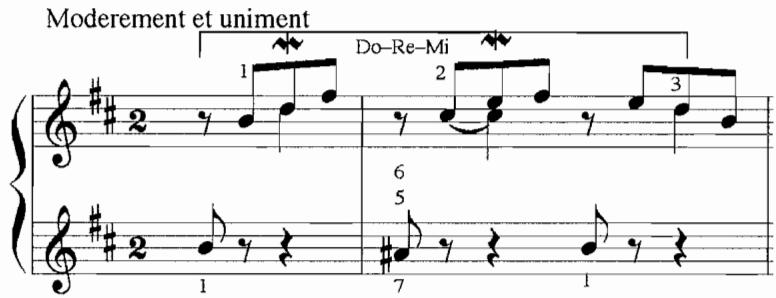
中文讲解
这是位于第 40 页的内嵌图像或乐谱占位符,原图数据已省略,仅保留位置与图注。鉴于其后紧跟的是针对 Les Lis naissans 与 Les Rozeaux 开头的详细乐谱说明,该占位符应当是连接上下文与乐谱视觉呈现的版面锚点;具体谱面细节需参阅原书第 40 页的扫描图像。
第4段(P0155)
原文复述
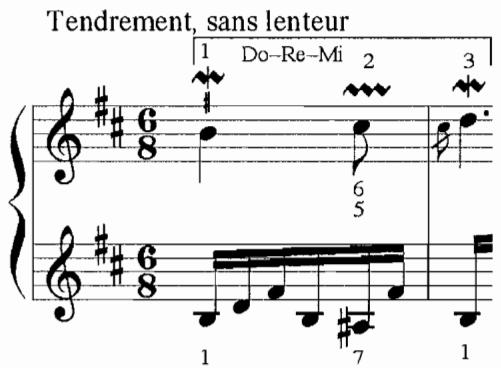
中文讲解
本占位符承载的是例 5.13a 与例 5.13b 的图注信息:两首作品均出自 Couperin 的第十三个 ordre(1722 年),乐谱范围限定为各曲前两小节(m. 0–1)。图注使用分号将两个示例并列,说明作者有意将它们作为一个对照组展示,用以凸显共享的 Do–Re–Mi 起首图式。具体音高与节奏需参照原谱,本占位符不提供可读取的音符内容。
补充说明
图注明确指出了两首作品与它们的出处及节选范围,是后续段落(P0157)描述"上行三度"与"下邻音"特征时的主要视觉依据。
第5段(P0156)
原文复述
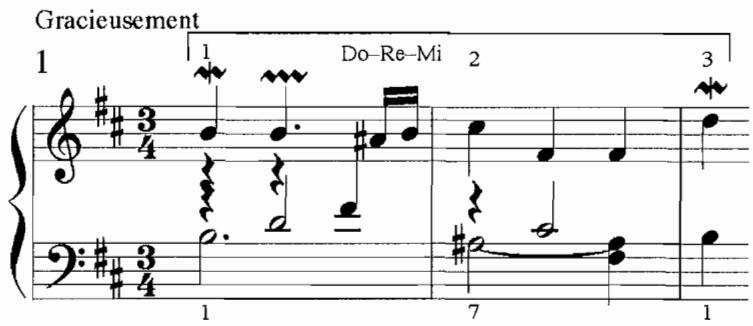
中文讲解
本占位符是例 5.13c 的图注:Les Folies françaises ou les Dominos 中的主题 La Virginité,取自第十三个 ordre(1722 年)第 1–3 小节。注意此处节选范围是 m. 1–3,与 5.13a、5.13b 的 m. 0–1 略有不同,提示 La Virginité 的起首图式需要多看一拍才能完整呈现,作者因此给出了一小节余量。具体乐谱内容需查阅原书。
补充说明
图注的节选范围差异(m. 0–1 对 m. 1–3)暗示 La Virginité 的 Do–Re–Mi 图式在节拍位置上可能与前两例不完全一致;这一点需结合 P0157 的描述理解。
第6段(P0157)
原文复述
(B-C#-D or 1-2-b3) in the melody line, and the lower-neighbor figure (B-A#-B or 1-7-1) in the bass. All begin in metrically stable locations and establish a stable first stage of the pattern. If L’Âme-en peine had started in a way similar to its counterparts in Example 5.13, it would look something like Example 5.14.
中文讲解
本段是对上一段末尾未完成句的补全,并为 P0153 所列的三个谱例给出统一的形式化描述。其要点有四:第一,旋律声部呈现上行三度 B–C♯–D(音级 1–2–♭3,其中 D 是 b3 即中音下方的第三级,提示这是大调或带有 ♭3 色彩的处理);第二,低音声部呈现下邻音 B–A♯–B(音级 1–7–1,7 在大调中即导音);第三,这三首作品都从小节中的稳定拍位进入,从而建立起该图式的"稳定第一阶段”;第四,作者用一个反事实假设引出下一谱例——如果 L’Âme-en peine 也按相同方式起首,它看起来就会像例 5.14 那样。这个反事实句法很重要:它把 L’Âme-en peine 标记为对比对象,为后续揭示其"例外性"做铺垫。读者需注意音级标号 1、2、♭3、7 在此处对应 B 大调(或 B 为中心音的区域),而非 C 大调的自然音阶。
补充说明
下邻音图式 1–7–1 即"先下行半音至导音再回到主音",是该图式低音层稳定性的来源;上行三度 1–2–♭3 则是旋律层"开放—收束"张力的来源。两者并置是 Couperin 起首 gambit 的典型声部间分工。
第7段(P0158)
原文复述
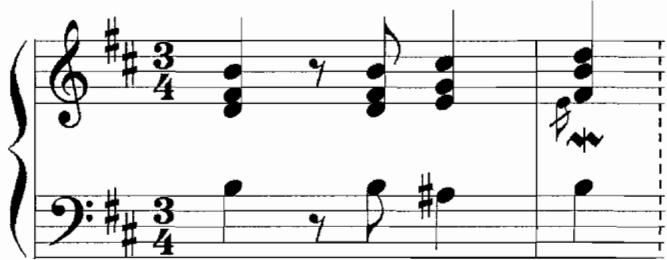
中文讲解
本占位符对应例 5.14 的图注:这是为 L’Âme-en peine 设想的一种"替代开头"(Alternate Opening),其特征是"从强拍起首,旋律层呈上行三度"。注意图注中使用了 LaTeX 排版的 “$\hat{A}me$” 写法,应理解为对 L’Âme-en peine 标题中 Â 字母的音级化标记。整段图注的作用是把 P0157 的反事实假设可视化:作者通过给出一个假想谱例,让读者直观看到"如果 L’Âme-en peine 像其他曲一样起首,它本可以是这样的",从而为下一段对比真实开头(P0160–P0161 的例 5.15b)制造反差。
补充说明
图注用 “Alternate Opening” 一词明确将该谱例定位为"假设性",而非实际作品材料;这一性质决定了它在本节论证中只起对照作用,不进入对 L’Âme-en peine 实际作品的描述。
第8段(P0159)
原文复述
The first stage of the Do–Re–Mi pattern begins on the downbeat of measure one with scale degree $\hat{1}$ , B, in both the melody and the bass voices. This sustains until beat three of the measure for the second stage of the pattern outlining the chord of the fifth (the melody stepping up to C# and the bass stepping down to A#), which resolves on the downbeat of measure two for the third and final stage of the gambit, finishing the ascent to D in the melody and B in the bass.
中文讲解
本段是本小节中技术密度最高的一段,对 Do–Re–Mi 图式的三个阶段给出逐拍的形式化描述。第一阶段:从第一小节强拍开始,旋律与低音声部均落在主音 B(音级 $\hat{1}$)。第二阶段:保持至第一小节第三拍,两声部共同勾勒出"属和弦"(chord of the fifth)——旋律上行至 C♯,低音下行至 A♯,二者构成属音与导音的对位。第三阶段:在第二小节强拍解决,旋律完成上行到达 D(即 b3),低音回到 B。图式以"主—属—解决"的和声逻辑贯穿两小节。需要把握的关键点是:作者使用的是 B 调中心(pitch center B),所以 D 是 ♭3 而非常规意义上的 3;这是 Couperin 在该 ordre 中惯用的色彩处理。此外,三阶段被明确命名为"gambit(开局策略)",强调其作为起首手法而非贯穿性材料的地位。
补充说明
第二阶段所述"属和弦"在 B 中心语境下属音为 F♯,但作者此处的描述聚焦于 C♯(旋律)与 A♯(低音)的对位关系;该写法把属七和弦的核心三音(B–D–F♯ 中由 A♯ 即导音作低音)简化为最具张力的两个外音,以配合 gambit 的紧凑叙事。
第9段(P0160)
原文复述
The actual opening of L’Âme-en peine, however, however, appears in Example 5.15b and is distinct from the other members of the thirteenth ordre. The piece does not open with
中文讲解
本段是把上一段建立起来的"标准图式"与 L’Âme-en peine 的真实开头进行对比的转折点。作者用 “however” 两次出现制造强调,宣告 L’Âme-en peine 的开头(见例 5.15b)与其他同 ordre 成员不同;但由于句末以 “does not open with” 中断未完成,具体偏离方式留待下一段补完。读者由此被引导去预期:要么缺少 Do–Re–Mi 的某个阶段,要么改变了声部分工,要么改变了节拍位置,三种偏离都将在下一段揭示。本段在小节论证中的功能是"设置反例"——先建立规则,再用 L’Âme-en peine 作为打破规则的个案,凸显该曲作为第十三 ordre 异常成员的特殊地位。
补充说明
原文 “however, however,” 为输入文本中重复出现,疑为原始 OCR 或录入造成的重复;理解时应只取一次转折含义。
第10段(P0161)
原文复述
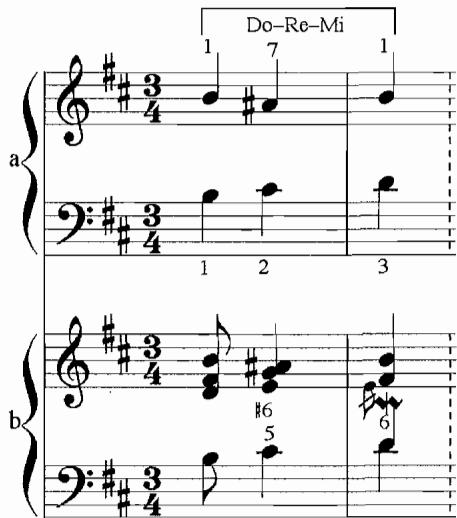
中文讲解
本占位符对应例 5.15a–b 的图注:L’Âme-en peine 前两小节(m. 0–1)的乐谱,取自第十三个 ordre(1722 年)Couperin。注意此处标为 5.15a–b 两个示例并置,按惯例 5.15a 多半是某种对照或简化版本,5.15b 才是 P0160 所说的"actual opening";不过本占位符不展开两个示例各自的内部差别,仅提供出处与节选范围。具体音符内容需查阅原书图像。
补充说明
图注将该例与例 5.13a–c 的节选范围对齐(均为 m. 0–1 或近似范围),便于读者在视觉上直接比对 L’Âme-en peine 与同 ordre 其他乐曲开头的差异。
脚注 / 边栏 / 图表 / 附加信息(如有)
本小节包含四组乐谱占位符:例 5.13a、5.13b(Les Lis naissans、Les Rozeaux,P0155)、例 5.13c(La Virginité,P0156)、例 5.14(假想性 Alternate Opening for L’Âme-en peine,P0158)、以及例 5.15a–b(L’Âme-en peine 真实开头,P0161)。它们在论证中分别承担三种功能:实证(5.13a–c 共同支撑"上行三度 + 下邻音"特征)、反事实对照(5.14 展示"如果 L’Âme-en peine 也按惯例起首会是什么样")、以及反例(5.15b 揭示 L’Âme-en peine 真实开头的偏离)。所有图像的具体音符内容均需参考原书,本占位符仅提供出处、节选范围与图注标题。小节内未出现脚注或边栏文字。
💡 本节核心要点
- 第十三个 ordre 中除 L’Engageante 之外的所有乐曲都以 Do–Re–Mi 起首图式开始,L’Engageante 在低音层仍保留 1–2–♭3 的上行三度,故属部分例外。
- 该图式的标准实现形式为:旋律层上行三度 B–C♯–D(1–2–♭3),低音层下邻音 B–A♯–B(1–7–1),且从稳定拍位进入以建立稳定第一阶段。
- Do–Re–Mi 图式共三阶段:第一阶段主音 B(第一小节强拍起),第二阶段勾勒属和弦(旋律至 C♯、低音至 A♯,止于第一小节第三拍),第三阶段于第二小节强拍解决至旋律 D、低音 B。
- L’Âme-en peine 的真实开头(例 5.15b)偏离上述标准;为凸显其偏离,作者先用假想性例 5.14(从强拍起首的"替代开头")构造对照,再展示实际谱例。
- 本节论证结构是:定义图式 → 用例 5.13a–c 三例共同支撑标准形式 → 用例 5.14 反事实铺垫 → 用例 5.15b 揭示 L’Âme-en peine 作为同 ordre 异常成员的真实开头。
🔑 关键术语
- Do–Re–Mi opening schema:本节讨论的核心图式;以音级 1–2–3 命名的起首 gambit,在第十三个 ordre 中以 1–2–♭3(B–C♯–D)的具体形式呈现,跨越两小节、含主—属—解决三阶段。
- treizième ordre / 13th ordre:Couperin 1722 年出版的第十三个键盘作品集;本节分析的全部实例(Les Lis naissans、Les Rozeaux、La Virginité、L’Âme-en peine 等)均出自此集。
- ascending third (1–2–b3):Do–Re–Mi 图式旋律层的核心音程;在 B 调中心下表现为 B–C♯–D,其中 D 为 ♭3 而非自然 3,赋予该 gambit 独特的色彩。
- lower-neighbor figure (1–7–1):Do–Re–Mi 图式低音层的核心音程;在 B 调中心下表现为 B–A♯–B,即下行半音至导音再回到主音,是该图式低声部稳定性的来源。
- gambit:作者用以指代 Do–Re–Mi 起首手法的术语,强调其作为开局势(opening strategy)的功能,而非贯穿全曲的发展材料。
- chord of the fifth (属和弦):Do–Re–Mi 图式第二阶段勾勒的和声功能;在 B 中心下以 A♯ 作低音、旋律至 C♯,构成属七和弦的核心张力的简化呈现。
- L’Engageante:第十三个 ordre 中开头不完全符合 Do–Re–Mi 图式的成员,但其低音线仍包含 1–2–♭3 的上行三度,故属部分例外。
- L’Âme-en peine:第十三个 ordre 中与标准 Do–Re–Mi 图式明显偏离的成员,是本节作为反例重点分析的对象;其真实开头见例 5.15b。
- Alternate Opening (例 5.14):作者为 L’Âme-en peine 设想的假设性开头(从强拍起首、旋律呈上行三度);属反事实谱例,仅用于与真实开头(例 5.15b)形成对照,不属于实际作品材料。
S5.2 [描述性拆分] The Inverted and Metrically Unstable Opening
第1段(P0162)
原文复述
The ascending third of the Do–Re–Mi gambit (B–C#–D) appears in the melody with an accompanying B–A#–B in the bass on a metrically stable location. Rather, the voices are inverted: Do–Re–Mi — or $\hat{1}-\hat{2}-b\hat{3}$ — appears in the bass, while the lower neighbor — $\hat{1}-\hat{7}-\hat{1}$ — is in the melody as shown in Example 5.15a. In one way, this opening can be heard as an anacrusis. In this hearing, the inverted Do–Re–Mi acts as a pick-up to a melodic Do–Re–Mi over a bass that moves Mi–Re–Do starting in measure one. However, in many other pieces that begin with an anacrusis, such as Les Lis naissans and Les Rozeaux (ref. Example 5.3b), the anacrusis incorporates the first (and sometimes second) structural stages of the opening gambit for the piece, underscoring the importance of the anacrusis from time to time at the surface level of the music in terms of pattern behavior. In this hearing, the anacrusis of L’Âme-en peine can be considered as the opening gambit to the piece.
中文讲解
本段是承接前文对L’Âme-en peine(《失落的灵魂》)开篇gambit的描述,集中在两件事上:声部倒置(voice inversion)与两种听法。
首先是声部关系的倒置。一般Do–Re–Mi gambit的形态是上声部唱上行三度(B–C#–D),下声部做低音邻音(B–A#–B),并落在一个节拍稳定的位置;而L’Âme-en peine把这两个线条互换:Do–Re–Mi($\hat{1}-\hat{2}-b\hat{3}$)出现在低音,邻音$\hat{1}-\hat{7}-\hat{1}$出现在旋律声部(见Example 5.15a)。这是该小节标题"Inverted"的核心含义。
其次是两种听法的并置。第一种听法:把开篇看成一种弱起(anacrusis),倒置的Do–Re–Mi只是引子,真正的主题Do–Re–Mi从第1小节正拍开始,低音走向是Mi–Re–Do。第二种听法:参照Les Lis naissans和Les Rozeaux(Example 5.3b)等其它也以弱起开篇的作品,弱起本身就承载了gambit的第一阶段(甚至第二阶段),因此弱起本身应被视作整首曲子的opening gambit。
理解这段的关键在于:作者并列这两种听法,不是要读者二选一,而是指出谱面允许多重视角——这种视角上的开放性是后续讨论其"metrically unstable"特征的前提,因为如果开篇不被理解为弱起,那么它节拍位置上的不稳定性就无从谈起。
补充说明
本段提到的Example 5.15a、Example 5.3b以及Les Lis naissans、Les Rozeaux两首同ordre作品,都是作者在当前小节内部直接引用的对应材料,用以支撑"倒置"与"弱起承载gambit"两种听法的论证。
第2段(P0163)
原文复述
According to Gjerdingen, the inverted gambit featured as the opening to The Lost Soul is a typical variant to the Do-Re-Mi schema. $^{47}$ But what is not typical is the metric irregularity of the pattern’s disposition. As with the opening of La Frénésie, the final variation in Les Folies françaises, the inaugural stage of the gambit is unstable. In L’Âme-en peine the pattern begins on the weak “and” of beat two of an anacrusis with an eighth-note duration. The second unstable part of the gambit — A# in the melody and C# in the bass — is emphasized on beat three of the same anacrusis with a quarter-note duration. The gambit reaches its third stage on the downbeat of measure one. Even in this inverted configuration, the opening pattern could have been positioned more stably by starting on the downbeat, as illustrated in Example 5.16a and b.
中文讲解
本段紧接上段,从声部倒置推进到本节标题中的第二个关键词——节拍不稳定(metrically unstable)。
作者的论证分三层推进。第一层:划清"典型"与"非典型"的边界。Gjerdingen认为,Do–Re–Mi gambit的倒置形态本身是一个常见的变体(typical variant),这一点并不稀奇;真正不寻常的是这个变体内部节拍位置的安排。
第二层:给出具体的节拍定位。gambit的第一阶段藏在弱起的第二拍后半拍(“and” of beat two)上,时值为八分音符;第二阶段(旋律A# / 低音C#)落在同一弱起的第三拍上,时值为四分音符——这是整首作品第一个被强调的节拍点;只有第三阶段才落到第1小节的正拍上。短—长(八分—四分)的节奏配合上由弱到强的位置布局,把整个前两阶段都排在了节拍重心之外。
第三层:用Example 5.16a、5.16b进行反事实对照——即使保持这种倒置形态,开篇本可以被安排得更稳定(即从正拍起)。这说明不稳定不是倒置的必然结果,而是作曲家有意为之的选择,这正是本节要解释的表达意图。
作者还指出这种不稳定并非孤例:同书第一章的La Frénésie以及Les Folies françaises的终变奏中,gambit的起始阶段同样放在不稳定的位置。这种"系族式"对比有助于把L’Âme-en peine的不稳定性定位为Rameau整个ordre中的一种共通修辞策略。
补充说明
本段末尾的Example 5.16a和5.16b是为论证"作曲家本可选择更稳定的位置"而构建的反事实谱例,与Example 5.15a形成对照,这是作者常用的一种论证手法。
第3段(P0164)
原文复述
$^{47}$ See Chapter 6 in Gjerdingen, Music in the Galant Style.
中文讲解
这是脚注47号,指向Gjerdingen《Music in the Galant Style》一书第六章。它为正文P0163中"According to Gjerdingen, the inverted gambit featured as the opening to The Lost Soul is a typical variant to the Do-Re-Mi schema"这一引用提供来源支持。该脚注属于"来源型"脚注,本身不再展开内容。
第4段(P0165)
原文复述
Not only is The Lost Soul the only piece from the ordre to present the inverted form of the opening Do–Re–Mi, it is also the only piece to fill out the second stage with a
中文讲解
本段是从跨作品比较的视角立论:在整部ordre中,L’Âme-en peine是唯一一首在开篇使用Do–Re–Mi gambit倒置形态的作品,并且也是唯一一首在第二阶段填入某项特殊内容的作品(此处句尾被截断,下一段P0167才补出"diminished sonority")。这段虽然只有一句,但承担了"双重唯一性"的论断——倒置与减七音响在L’Âme-en peine身上是同源出现,暗示二者可能存在内在关联。
补充说明
需注意P0165与P0167在原文中的句子实际上跨越了Example 5.16a–b的图注(P0166),因此本段末句"with a"所接的内容在P0167开头以"diminished sonority"完结。
第5段(P0166)
原文复述
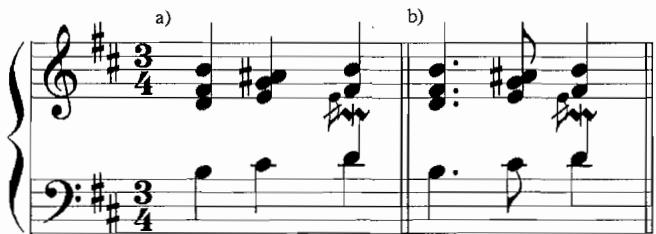
中文讲解
这是图注占位符,其图题/说明文字为:“Example 5.16a–b. Alternate Opening for L’Âme-en Peine Beginning on Downbeat; Ascending Third in Bass”。该图位于P0165与P0167之间,作用是为P0163末尾的反事实论证提供谱例支撑——展示如果将L’Âme-en peine的开篇gambit从正拍开始、低音奏上行三度时,谱面会是什么样。由于内嵌图像数据已省略,原图的具体音区、力度、装饰音等细节无法判断,应查阅原图。
补充说明
该图与原页Example 5.15a–b(同一首作品的两个倒置开篇谱例)相对照,构成"原作倒置且节拍不稳 vs. 假想的正拍稳定版本"的对照。
第6段(P0167)
原文复述
diminished sonority, as illustrated in Example 5.15b. The second unstable stage is emphasized both by metric placement and by a dissonance, the latter feature being significant to the final part of the gambit as well. As the pattern moves to its third stage, an appoggiatura is added to the alto voice, delaying resolution and emphasizing dissonance in a stage typically associated with harmonic consonance. As the pattern moves to its third stage, an appoggiatura is added to the alto voice, delaying resolution and emphasizing dissonance in a stage typically associated with harmonic consonance. The combined effect of the opening two durations (short—long) and the dissonant second stage of this pattern is a lurch forward, much like taking a staggering first step the landing spot of which is insecure or unknown.
中文讲解
本段在P0165未完成的句子上接续"diminished sonority",完成"双重唯一性"的第二层断言:L’Âme-en peine也是ordre中唯一在gambit第二阶段填入减七音响的作品(见Example 5.15b)。
论证随后集中在两件事上:
第一,“双重强调”——第二阶段的不稳定同时被节拍位置(弱起第三拍)和音响(不协和)所强化。这两件事并非互不相干的装饰,而是协同作用于gambit的关键转折点。
第二,向第三阶段的过渡被刻意延迟。gambit的第三阶段按惯例应是协和的、稳定的;然而在这里,女高音声部出现了一个appoggiatura(倚音),延迟了解决、并用一个不协和音侵入了本来协和的阶段。短—长(八分—四分)的节奏值叠加第二阶段的不协和,使整个开篇产生一种"lurch forward"的感觉——作者用"taking a staggering first step the landing spot of which is insecure or unknown"作比喻,说明乐句起步时重心不稳、落点未知。
这一比喻是本节的核心意象:倒置+不稳定节拍+减七音响+倚音延迟解决,这些技术手段共同构成一个"踉跄的第一步"。它的功能不是单纯描述谱面,而是为下一段把这种不稳定与作品的情感表达(“失落的灵魂”)对接做准备。
补充说明
作者在此处所用"lurch forward"与"staggering first step, landing spot insecure or unknown"的比喻,是后文将讨论L’Âme-en peine表达意义的桥梁;该比喻的所指与作品标题"失落的灵魂"在意象上呼应。
第7段(P0168)
原文复述
As with Frenzy and Despair, instability is important to The Lost Soul’s expression. In Frenzy, that instability represents hysteria, lack of calm, and constant motion without purpose to underscore the emotional state of the character. In L’Âme-en peine, instability can be seen as having different meanings related to, for example, suffering and sorrow — appropriate to the title of the piece — particularly in the second reprise. However, the pattern behavior within the remaining measures of the first reprise, suggests that these unstable dissonant moments have an expanded meaning — one that represents the discomfort associated with having lost one’s way.
中文讲解
本段是把前面铺垫的技术分析(倒置、节拍不稳、减七音响、倚音)引向表达意义(expression)的总结段。
论证建立在一个三向平行上:Frenzy(La Frénésie)、Despair(Les Soupirs的代表?此处未明示具体作品名,按ordre常规推断为同系列作品)、L’Âme-en peine三者都使用不稳定的开篇,但表达不同的情感。Frenzy的不稳定代表歇斯底里、缺乏平静、无目的的持续运动——与角色内在情绪对应。L’Âme-en peine的不稳定则在第二reprise(再现段)中往往被读作受苦与悲伤,与"失落的灵魂"这一标题直接吻合。
但作者并未止步于这种"标题—情感"的简单对应。本段最重要的论断出现在最后一句:first reprise(首次再现)其余小节中的pattern行为表明,这些不协和的不稳定时刻还有"扩展意义"(expanded meaning)——它们象征"迷路带来的不适"(the discomfort associated with having lost one’s way)。
这里的关键修辞是"失路"(lost one’s way)与"失落的灵魂"(The Lost Soul)之间的双关:标题中的"lost"既是灵魂的失丧(死亡、悲伤),也是路径的迷失(迷途、徘徊)。作者借此把全曲的基调从单一的悲怆扩展为一种"失去方向的不安感"——这才与开篇那个"踉跄第一步、落点未知"的音乐比喻在语义上完整闭合。
补充说明
本段提到的Frenzy对应La Frénésie、Despair对应作品名在本节输入中未直接出现,仅由P0163中提到的"La Frénésie"以及小节论旨可推知;其它ordre曲目如Les Soupirs等并未在本节输入的原文中出现,因此不应在本栏目补充。
脚注 / 边栏 / 图表 / 附加信息(如有)
本节包含一处脚注(P0164,编号47)与一处图像占位符(P0166,Example 5.16a–b)。脚注47为Gjerdingen《Music in the Galant Style》第六章的指引性来源,用于支持P0163中关于"倒置gambit是typical variant"的断言。Example 5.16a–b为反事实谱例,展示若L’Âme-en peine的开篇从正拍开始、低音奏上行三度时会呈现的稳定版本,与P0163末尾的论证形成对照。P0165与P0167在原文中实际是一个跨越该图注的完整句子,论述了L’Âme-en peine在秩序中的"双重唯一性"(既倒置又使用减七音响)。
💡 本节核心要点
- L’Âme-en peine的开篇Do–Re–Mi gambit与同ordre其他作品相比具有双重独特性:它是唯一采用倒置声部布局(Do–Re–Mi在低音、邻音在旋律)的版本,也是唯一在第二阶段使用减七音响的版本。
- 如果开篇只被理解为弱起引子,则其不稳定性无从解释;因此作者主张按Les Lis naissans、Les Rozeaux等先例的方式把弱起本身视作opening gambit,这是不稳定分析的前提。
- Gjerdingen认为倒置本身是typical variant,真正不寻常的是节拍位置:gambit的前两阶段被安排在弱起的小节内部(第二拍后半拍八分音符、第三拍四分音符),直到第三阶段才落到第1小节正拍,与Example 5.16a–b所示的更稳定安排形成对照。
- 第二阶段的不稳定同时被节拍位置与不协和音响双重强化;第三阶段本应协和稳定,但女高音声部的倚音延迟了解决并把不协和带入协和阶段,与短—长节奏叠加共同造成"lurch forward"的踉跄效果。
- 这种开篇不稳定在全曲中承接了Frenzy那种"以失控表达情绪"的修辞传统,但在L’Âme-en peine中具有扩展意义:它不仅代表受苦与悲伤,更象征"失路"带来的不安,与标题"失落的灵魂"形成结构性的双关。
🔑 关键术语
- Do–Re–Mi gambit:在十八世纪音乐听写(audiation)训练中指向上行三度($\hat{1}-\hat{2}-b\hat{3}$)配合$\hat{1}-\hat{7}-\hat{1}$低音邻音的典型开篇模式;本节以此为基本框架讨论其倒置与不稳定变体。
- voice inversion / 倒置:在本节中指Do–Re–Mi三音组与低音邻音$\hat{1}-\hat{7}-\hat{1}$互换声部位置——前者出现在低音声部,后者出现在旋律声部,是L’Âme-en peine开篇的核心特征。
- anacrusis / 弱起:旋律在强拍之前先行出现的引子式片段;本节的关键争论在于:该开篇究竟应被视为弱起(真正的主题从第1小节正拍起)还是弱起本身就承载完整的opening gambit。
- metric instability / 节拍不稳定:指gambit的核心阶段被安排在节拍重心之外(弱起第二拍后半拍、第三拍),而不是放在正拍上;作者用来解释为什么即使保持倒置形态,开篇仍可被处理得更稳定。
- diminished sonority / 减七音响:即减七和弦式的和声色彩,本节特指L’Âme-en peine在gambit第二阶段所填入的减七音色,是ordre中唯一一次使用,与节拍位置共同强化第二阶段的不稳定。
- appoggiatura / 倚音:本节特指在第三阶段的女高音声部出现、延迟解决并把不协和带入该阶段的装饰音;用于解释为什么一个按惯例应协和稳定的阶段反而出现不协和。
- opening gambit:指作品开篇所承担的模式化结构单位;本节用它与anacrusis的概念相对照,决定对L’Âme-en peine开篇性质的判定。
- reprise / 再现段:本节末段区分了first reprise与second reprise在表达意义上的不同:第二再现段承载受苦与悲伤,而第一再现段的pattern行为则引出"失路"的扩展意义。
S5.3 [描述性拆分] Continuation Patterns and the Lurching Motive
第1段(P0169)
原文复述
If L’Âme-en peine were to continue in a manner complementary to what appears in Example 5.14, we would expect the progression of patterns to look something like the material in Examples 5.17a and b. In Example 5.17a, the Do–Re–Mi gambit with the
中文讲解
本段开启本小节时,先以反事实的方式构建听众的期待。作者假设 L’Âme-en peine 在动机展开后会沿着与 Example 5.14 互补的方向继续,那样就会得到接近 Example 5.17a 与 5.17b 的模式序列。这一步的功能是:先告诉读者"按常规应该怎样继续",再于下一段揭示 Couperin 的实际处理与这一常规预期不同,从而制造出后面那种"lurching(跌撞)“的惊喜。段末的"the Do–Re–Mi gambit with the …“被切断,意指完整论述(含例 5.17a 的具体结构)将被图像本身与紧接的一段说明承接。
补充说明
Do–Re–Mi gambit 指以 1–2–3(即大调主音、上主、中音)开头的三音下行动机,也对应 d–r–m 的音阶级数。
第2段(P0170)
原文复述
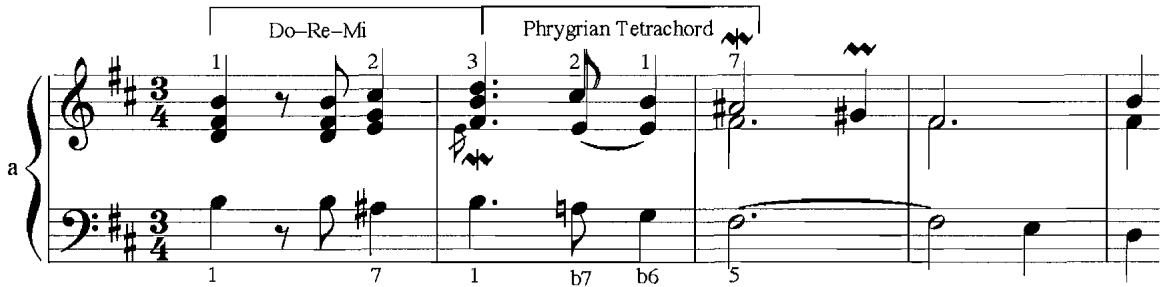
中文讲解
该段仅为 Example 5.17a 的图注/图像占位符。标题写明这是 L’Âme-en peine 的一种"备选续写”:上升的 Do–Re–Mi 接 Phrygian(弗里几亚)下行音型。在本节论证中,它承担"对照样本"的作用——用来对照 Couperin 实际采用的写法与一种规范展开之间的差异。需查看原谱表确认具体音高与节奏,此处文本提供不了的细节不可补造。
第3段(P0171)
原文复述
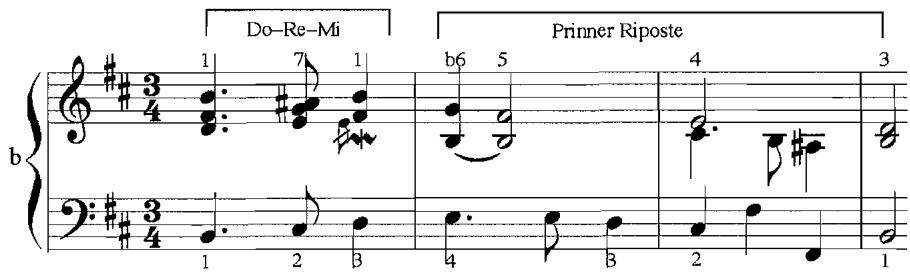
中文讲解
该段为 Example 5.17b 的图注/图像占位符。标题显示另一种"备选续写”:倒置的 Do–Re–Mi 之后接 Prinner(在终止式上的"还击")。它的论证角色与 5.17a 相同——把作曲家实际处理的方式放在一组规整的对称方案之中,使实际选择因不符合预期而显得更为反常。同样,需查看原谱才能确认细节。
第4段(P0172)
原文复述
ascending third on top is balanced by a descending, elided tetrachord pattern much like examples from Les Folies variations. Example 5.17b reflects another possible combination of stylistic schemata — the inverted Do–Re–Mi gambit is followed by a Prinner riposte to finish the phrase unit.
中文讲解
本段完成对前两幅例图的口头总结。5.17a 中,高声部以一个上行的三度与一个下行、并且彼此叠合(elided) 的四音音型互相平衡——后者让人联想到 Les Folies(即 Couperin《Les Folies françoises》中的变奏段落)中类似做法。5.17b 则展示了风格图式的另一种组合:倒置的 Do–Re–Mi 之后用一个 Prinner riposte(Prinner 收束时的"回击"式动机)结束整个乐句单位。两例的目的只是展示"常规的、规整的、对称的"潜在选择,为后面 Couperin 实际选择那种"被打断、不流畅、不对称"的写法作铺垫。
补充说明
Prinner(也写作 Prinner-type schema)指以 5–4–3–2–1 或类似级数下行的四音/五音收束模式,作为终止前的典型图式。
第5段(P0173)
原文复述
The actual continuation of the L’Âme-en peine appears as Example 5.18b.
中文讲解
此段是一个转折性的过渡句,把焦点从假设性/备选的展开转向作曲家真正采用的处理。它引出 Example 5.18b 作为接下来要逐项分析的对象,承上"理论上应该这样继续"、启下"实际却发生了别的事"。
第6段(P0174)
原文复述
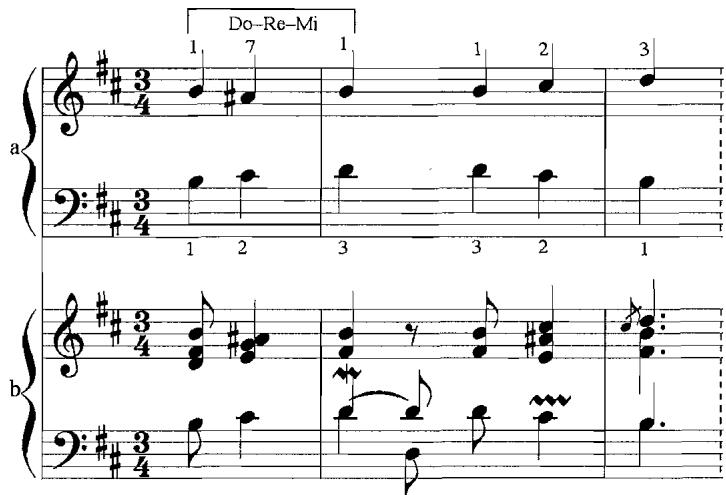
中文讲解
该段为 Example 5.18a–b 的图注/图像占位符。它标记了实际分析的乐谱位置:Couperin《L’Âme-en peine》(1722 年出版的《键盘曲集》第 13 套曲第 6 首)第 0–2 小节。图例位于 p. 46,是本节论证的核心谱例。本节所有关于旋律与低音的级数描述(如 1̂–7̂–1̂、1̂–2̂–b3̂ 等)都要回到这一谱例去核对。具体音符、节奏与装饰音需查看原图。
第7段(P0175)
原文复述
The inverted Do–Re–Mi gambit that concludes in measure one is followed by an ascending third in the melody (1̂–2̂–b3̂) over a descending third in the bass (b3̂–2̂–1̂). It begins on the “and” of beat two of the same measure and concludes on the downbeat of measure three, possessing the same qualities of rhythmic awkwardness — or lurching motion — as the opening gambit. The combination of these two patterns results in stepwise motion in both the melody and the bass voices. The melody moves 1̂–7̂–1̂ and then ascends 1̂–2̂–b3̂. The bass also moves by step: 1̂–2̂–b3̂ with an octave re-articulation on b3̂, beat two, and then back down again to scale degree 1̂ from b3̂ (b3̂–2̂–1̂). In this gesture, the bass line retraces its steps while the melody continues its ascent.
中文讲解
本段是本节技术分析的核心,描述 Example 5.18b 中两个前后相接的三音模式如何在旋律声部与低音声部中同时展开。需要逐点抓住:
- 旋律收束第 1 小节的"倒置 Do–Re–Mi"之后,是一个上行的三音——1̂–2̂–b3̂;同时低音则是一个下行的三音——b3̂–2̂–1̂。即旋律上行与低音下行构成镜像式的反向运动。
- 这一对新模式自"第 1 小节第二拍的 and(弱拍后半拍)“开始,到"第 3 小节的强拍"结束——它延续了段首动机那种"lurching motion(跌撞感)“的不规则节拍进入方式。
- 整体形成的级进行:旋律 1̂–7̂–1̂ 再 1̂–2̂–b3̂;低音 1̂–2̂–b3̂,并在 b3̂ 第二拍做一次八度重述(octave re-articulation),再回到 1̂(b3̂–2̂–1̂)。
- 这里需要特别注意"低音沿同一路径折返,而旋律持续上行"这一不对称的运动方向——这是后续"低音反复、不通向新方向”、“旋律在低音之上继续攀升却再回头"的重要形象,也直接对应 P0184 中"走失的人来回折返"的隐喻。
补充说明
小节内 and-of-2 的意思是 节拍第二拍的后半拍,是连谱表记法中的反拍位置;这种在反拍起音再走到下一小节正拍的写法规律地被作者解读为 lurching。
第8段(P0176)
原文复述
With such conjunct lines in both the melody and bass voices, the awkwardness of motion and general discomfort is surprising. The metric placement of these two patterns contributes to the affect. As illustrated in Example 5.18a, the first pattern starts on the “and” of the anacrusis, while the second pattern does the same and begins after a rest on the “and” of measure one. The combining of these patterns also contributes to these sensibilities. The two patterns: 1̂–7̂–1̂ and 1̂–2̂–b3̂ in the melody, and 1̂–2̂–b3̂ and b3̂–2̂–1̂ in the bass, are non-elided patterns. According to Larson’s theory of musical forces, elided patterns are like gracefully fused physical motions. Taking the pitch content from the opening melodic patterns as an example (1̂–7̂–1̂ and 1̂–2̂–b3̂), when the two patterns elide, musical inertia carries through the elided and stable pitch to change direction on the unstable part of the gesture. $^{48}$ When this occurs, the two three-note patterns: 1̂–7̂–1̂ and 1̂–2̂–b3̂ become one seamless gesture of 1̂–7̂–1̂–2̂–b3̂.
中文讲解
本段在上一段的级数描述之上引入两个层次的解释:
- 反预期:两条声部都在走级进(conjunct),按理应当流畅;但听感上却显得笨拙而不舒服。
- 不流畅有两个来源—— a. 节拍位置:两个模式都从反拍(anacrusis 的 and、以及第 1 小节休止之后的 and)起音,这就让每次起音感觉像被推了一下又落回强拍。 b. 模式之间不叠合(non-elided):melody 中的 1̂–7̂–1̂ 与 1̂–2̂–b3̂、bass 中的 1̂–2̂–b3̂ 与 b3̂–2̂–1̂ 在两两衔接处不重叠、不融合。
- 理论框架:作者引入 Steve Larson 的"musical forces"理论,把"elided pattern"类比为"平滑融合的肢体动作”——一个三音模式结束时,下一个三音模式以相同(或共享)的音为起点顺势展开,把整个序列听成一个无缝的姿态;若只是非叠合的两个独立三音组,则它听起来各自单独起、单独落,缺少冲过连接点的"惯性”。
- 本段末尾以一个设想的"叠合化"版本收束:如果两个旋律三音模式叠合,它们就会变成一个连贯的 1̂–7̂–1̂–2̂–b3̂——也就是说,作者在主张:作品有意不让这件事发生。脚注 48 在此为正文中关于 elision 物理比喻的核心论点提供学术引文证据。
补充说明
elision(叠合)指两个模式共享其末尾与开头的音,从而在听感上彼此连续;non-elided 则指它们之间有呼吸或重起,没有共享音。
第9段(P0177)
原文复述
One could think of these similar patterns in L’Âme-en peine as elided at a deeper level of structure. But the rests interrupt this elision. In L’Âme-en peine, the interrupted succession of the patterns in both voices of Example 5.18a affects the flow — or lack of it — in the opening measures of the piece. The music constantly starts and stops
中文讲解
本段提出本节论证里最关键的一层张力——
- 在深层结构(deep level)上,这些模式其实是叠合的:它们可以被听成"一个更长、连续的线性姿态",而两个相邻模式理应被理解为互相融合。
- 但表层(surface)上的休止符打断了这种叠合,阻止了 Larson 所说的"物理融合"的听感。
- 于是表层听感是"不断启动、又不断中断"——这是 lurching motion(跌撞式运动)的最直接来源。
此处作者做了一个机巧的辨析:叠合发生在深层、不叠合发生在表层;正是这种深/表层的撕裂,使得 L’Âme-en peine 既具有可预测的骨架、又有反直觉的停顿。该段以"the music constantly starts and stops"悬而未结,把结论推迟到下一段与 P0179 的"主—减七和弦的交替"相联系。
补充说明
深层叠合 / 表层不叠合这种区分,是本节后续将"对称性"与"笨拙感"调和在一起的理论枢纽。
第10段(P0178)
原文复述
$^{48}$ See Steve Larson, “Musical Gestures and Musical Forces: Evidence from Music-Theoretical Misunderstandings,” in Music and Gesture, edited by Anthony Gritten and Elaine King, (Burlington, VT: Ashgate, 2006), 61–74.
中文讲解
此段为对应正文(P0176 中关于"elided pattern 像平滑融合的肢体动作"的论断)的脚注 48。其学术功能是:为正文中关于"叠合/非叠合模式在听感上的差异"援引 Steve Larson 的论文作为理论支持;并通过论文集《Music and Gesture》(Gritten 与 King 编,2006 年由 Ashgate 出版)表明此论证属于手势—动作理论脉络。该脚注属于支持性引证,并不对正文主张附加新限制,仅为来源说明。
第11段(P0179)
原文复述
alternating between tonic and diminished chords, expressing uneasy movement and discomfort. In keeping with the view that the “interrupted” patterns are elided at a deeper level, suggests that the underlying structure of these combined patterns is predictable. The divergent timing of these patterns is experienced as divergent in part because of the typicality of, and expectation for, the thing that is interrupted
中文讲解
此段分两层推进。
- 前半段为 P0177 末句补完:“不断启动、不断中断"的表层听感之所以是"不安与不舒服”,正是因为它表现为在主和弦(tonic)与减七和弦之间来回切换——这种和声上的不确定,是 lurching 在和声层面的同义表达。
- 后半段则继续推进 P0177 提出的"深—表层撕裂"论点:尽管表层时间错位,但若以深层结构来看,这些被"打断"的模式本应是叠合并可预见的;它们"在时间上的分离"之所以被听成分离,部分原因恰恰在于听者对"被中断的那种常规形态"有所预期——即听者预期它们本该融合、因而它们的非融合就显出异常。
此处句法不完整(“In keeping with the view …, suggests that …"),但其思想是连贯的:可预测性加剧了偏离的听感。
第12段(P0180)
原文复述
Extending these observations to the next part of the phrase to the cadence in measure four will help to solidify how the pattern behavior in these opening measures can be viewed as representing a soul or person being physically lost, and having gone off course, wandering and trying to find its way. The continuation of the first phrase of the Lost Soul (measures three–five) appears as Example 5.19b. The melody begins in a
中文讲解
本段承上启下:
- 主张音乐分析必须"延伸”——把对开头两小节模式行为的观察继续延伸至第 4 小节终止处的乐句后半,以使该乐句真正"封闭",从而证明在整段乐句中"模式行为如何映射为"’lost soul being physically lost … wandering and trying to find its way’"(被肉体意义上"丢失"的灵魂,离了正道、游荡、试图归返)。
- 引出 Example 5.19b(m. 3–5),即第一乐句后段的实际谱例,作为后续段落讨论的对象。
由此,本节从"两小节局部如何产生 lurching"的论证,过渡到"整段乐句如何再现"失路之人"的隐喻"这一更大的解释目标。
第13段(P0181)
原文复述
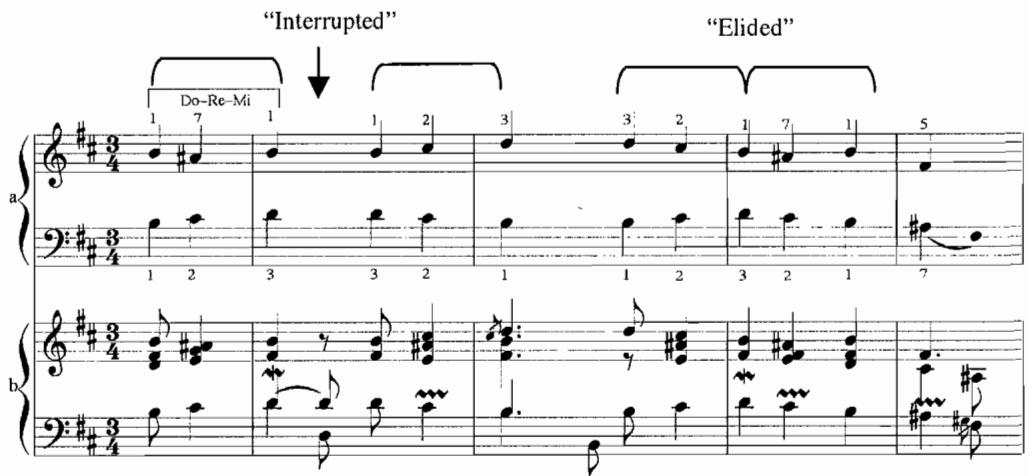
中文讲解
该段为 Example 5.19a–b 的图注/图像占位符。标题明确点出图例的教学意图:它展示"被打断的三音模式"与"叠合的三音模式"在本乐句 m. 0–4 中的接续关系——把 P0175/P0176 的局部观察与 P0180/P0182 将要讨论的第一乐句后半放进同一谱例中同观,从而让听者整体把握"哪几段是 interrupted、哪一段改用 elided"。具体音符需查看原图。
第14段(P0182)
原文复述
descending three-note pattern b3̂–2̂–1̂, which combines with a lower neighbor pattern 1̂–7̂–1̂ that then leaps down to F# (5̂). The bass completes the passage and arrives on 7̂ but then continues its motion to 5̂ on beat two of the measure. This moment can be heard as the conclusion of the first phrase, which ends in a “half close” on 7̂ rather than in a half cadence on 5̂ in the bass. In the second phrase, the bass proceeds similarly to its motion in the first phrase with two “interrupted” three-note patterns — 1̂–2̂–b3̂ and b3̂–2̂–1̂. It continues its descent by step to close on the first half cadence of the piece on 7̂. The patterns in this section of the phrase are elided, which we would expect to give rise to a smoother sense of motion in the piece. However, there remains an overriding lurching effect and lack of fluidity to the movement.
中文讲解
本段对 m. 3–5 第一乐句后半做精细的技术描述,并将 P0175 提出的"中断-不叠合"模式与本段"叠合"模式放到同一乐句中比较。关键观察如下:
- 旋律:以 b3̂–2̂–1̂ 开始的下行三音,与下面的下邻音型 1̂–7̂–1̂ 叠合,再向下跳进至 F#(=5̂),由此第一乐句完成。
- 第一乐句终止是和声意义上的"半闭(half close)“落于 7̂,而不是常规意义上落于低音 5̂ 的半终止;这是一个关键的反常规:通常被期待出现 5̂ 的位置却停在 7̂,这正好契合"走失者尚未归位"的隐喻。
- 第二乐句(m. 4 起)的低音与第一乐句呈同形:用两个"被打断"的三音模式 1̂–2̂–b3̂ 和 b3̂–2̂–1̂ 构成,再继续级进下行至全曲第一个真正的半终止于 7̂。
- 理论上的反差:这段第二乐句中三音模式是叠合(elided)的,按 Larson 的理论应产生更平滑的听感;但实际上"lurching effect and lack of fluidity"依然存在——这是本节后半要深入处理的核心张力。
补充说明
Half close 指高音或某声部结束于 5̂/3̂,但不被视作独立终止;这里作者特别强调它在低音结束于 7̂,更接近对半终止的弱化变形。
第15段(P0183)
原文复述
Contrary to this perceived lack of fluidity is the symmetry of the composite voice-leading strands in both the melody and bass lines in this passage. From the anacrusis to the first half cadence in measure four, both the melody and bass move almost exclusively by step. The melody proceeds as follows: two “interrupted” (non-elided) three-note patterns (1̂–7̂–1̂) and (1̂–2̂–b3̂) followed by two elided three-note patterns (b3̂–2̂–1̂–7̂–1̂), to create a completely symmetrical melodic contour. The bass does this as well by alternating between ascending and descending thirds with octave re-articulations between the “interrupted” patterns: (1̂–2̂–b3̂) followed by (b3̂–2̂–1̂), which repeats but as an elided pair (1̂–2̂–b3̂–2̂–1̂). The symmetry inherent to the structure of these two voices appears to be in opposition to the disjunct quality of motion we experience in this piece. However, just as the symmetry of the form contributes to hearing the surface punctuations of the texture as delays throughout the piece, so too does the symmetry of the voice leading in these opening eight measures. The voices retrace their steps, repeating the same material.
中文讲解
本段是本节论证的关键转型段:它把刚刚确立的"lurching + 缺乏流动性"的听感,与另一条看似相反的事实(即声部进行的对称性)并置。需要看清三点:
- 表层听感(disjunct、lurching)与深层结构(对称、规整)并存。从 anacrusis 至 m. 4 半终止,两条声部几乎完全级进。
- 旋律:先两个非叠合三音(1̂–7̂–1̂ 和 1̂–2̂–b3̂),再两个叠合三音(b3̂–2̂–1̂–7̂–1̂)——整体形成一个"完全对称的旋律轮廓”。低音也呈相同逻辑:上行三度 + 下行三度,并以八度重述作"间歇";m. 4 之前为非叠合(1̂–2̂–b3̂ 接 b3̂–2̂–1̂),其后重复为叠合对(1̂–2̂–b3̂–2̂–1̂)。
- 这里呈现的是表/里之间的对照:对称的声部进行本应平滑,但由于对称同时也意味着"重复相同材料、声部沿原路返回",反而让表层的停顿被听成"打断对对称"的延宕——这是把"对称 × lurching"统一在同一解释中的关键环节。
因此作者要回答的是:如果骨架是对称的,为何我们听不到流畅而只听到断续?答案是:对称即重复,重复即"未前进"——这再次对应"走失的人在原地折返"的隐喻。
第16段(P0184)
原文复述
This repetition allows us to create some level of expectation and anticipation of the material that follows. The punctuations of the texture can be heard as interrupting that symmetry, which in turn, allows us to hear them as delays or disruptions. These disruptions affect the perceived quality of motion for the piece, which can be heard as strained and lurching. The combination of this symmetry and awkward motion can metaphorically map onto one possible meaning for the piece — a person who is lost (moving back and forth) and directionless or disoriented (stopping and starting). The octave re-articulations in the bass could be heard as changes in direction — a musical change of direction that is analogous to a physical change of direction representing, perhaps, what a lost person might do in an attempt to find their way.
中文讲解
本段把技术分析与作品标题的"lost soul"(迷途之魂)对应起来,是本节把分析方法与美学含义打通的关键一段。其论点结构是:
- 重复→预期:声部反复同一材料,使听者形成对后续材料的预期。
- 织体的切分(punctuations)打破这种对称、对这种预期的破坏既被听成"延宕",又由于它打断了对称本身,所以显得更刺眼。
- 听感的总效果:strained and lurching——紧绷、断续。
- 隐喻映射:对称(重复=在原地折返 =“moving back and forth”)+ 笨拙的运动(时断时续 =“stopping and starting”)合起来,可以被听成"迷失方向的人"在走与停、折返之间寻找出路。
- 低音的八度重述(octave re-articulations)则是音乐中"方向改变"的事件;这正可比拟迷失者试图寻找方向时身体方向的一次次转变。
所以本段不只是"贴隐喻标签",而是把前几个段中模式行为的每一个具体特征(重复、对称、反向、级进的折返、八度重述)一一对应到"lost and wandering"的身体动作上。
第17段(P0185)
原文复述
The pattern behavior in phrase two, recreated as Example 5.20 below, allows us to expand these potential mappings. The phrase starting in measure four is a modification
中文讲解
此段承担过渡功能:从乐句 1(m. 0–4)的分析推进到乐句 2(m. 4 起)的分析。标题"expand these potential mappings"已经点明动作方向——保持同一解释框架,但放宽尺度去检视它在更大时间区段(m. 4–8)上是否继续成立。末句"is a modification"表明乐句 2 并非乐句 1 的简单复制,而是某种"变形后的延续";该变形的具体内容由 Example 5.20 及后续段落承接。
第18段(P0186)
原文复述
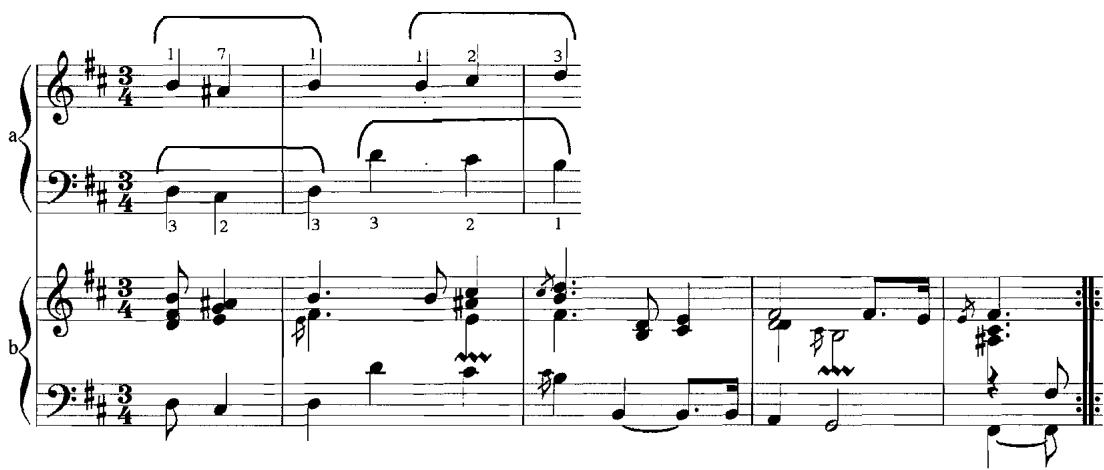
中文讲解
该段为 Example 5.20a–b 的图注/图像占位符。它给出第二乐句(m. 4–8)三音模式延续的谱例,并明确这是与 P0185 紧接着要讨论的同一对象。本节内容到此结束——具体音符、和声与节奏细节需要查看原图。
脚注 / 边栏 / 图表 / 附加信息(如有)
本小节范围内包含 6 个图像/谱例占位符(Example 5.17a、5.17b、5.18a–b、5.19a–b、5.20a–b),均承载"对照样本"或"逐句分析对象"的论证功能;以及 1 个脚注(脚注 48,引自 Steve Larson 在 Gritten 与 King 编《Music and Gesture》(Ashgate, 2006)中关于音乐手势与音乐力的论文,pp. 61–74),该脚注为正文中关于"elision 像平滑融合的肢体动作、non-elision 则像笨拙动作"的核心类比提供理论引证。
💡 本节核心要点
- L’Âme-en peine 的续写在表层呈现出模式不叠合、被休止打断的"lurching"听感——旋律和低音虽都在做级进,但每次都在反拍重新起,造成运动反复被切断。
- 作者用 Steve Larson 的 musical forces 理论区分"叠合(elided,三音模式彼此顺接融合)“和"非叠合(non-elided,三音模式彼此重新起)":本曲在深层叠合、在表层不叠合,所以结构虽连贯,听感却断续。
- 两声部从 anacrusis 到 m. 4 半终止的整体进行——旋律 1̂–7̂–1̂ / 1̂–2̂–b3̂ 接 b3̂–2̂–1̂–7̂–1̂,低音 1̂–2̂–b3̂ / b3̂–2̂–1̂ 接 1̂–2̂–b3̂–2̂–1̂——呈现"完全对称的声部进行”,这种对称恰恰通过重复使得路径未前进,构成"原地折返"的形象。
- 低音的八度重述(octave re-articulation)与织体的切分共同构成"方向改变"事件,与迷途之魂在 stop/start 与 back-and-forth 之间求索的隐喻一一对应。
- 第一乐句终止停在 7̂ 而非低音 5̂(“half close"而非典型 half cadence)、第二乐句仍以叠合模式续接却仍有 lurching 主导——这两个事实都强化了"未到家、持续迷途"的解释。
- 音乐分析的层层递进:从局部两小节模式行为 → 整段乐句对称性 → 与"the lost soul"标题所暗示的迷途含义相对应——三种局部技术特征(重复对称、反拍起、八度重述)都被映射到同一身体动作意象上。
🔑 关键术语
- Do–Re–Mi gambit:以音阶级数 1̂–2̂–3̂(即 d–r–m)开头的三音动机,常作为乐句起首的"开局招式”。在本节,L’Âme-en peine 头部使用的是其倒置形态,即较高音起再下行回主音。
- Elided vs. non-elided pattern:elided 指两个相邻三音模式共用一音、在听感上彼此融合;non-elided 指模式之间有休止或重新起音,因而各自独立。本节主张:本曲在深层结构上叠合,在表层时序上不叠合。
- Lurching motion:作者用于概括本曲听感的核心比喻,指在反拍起音后落到强拍、模式之间不融合的"跌跌撞撞"的运动方式,对应 Larson 框架下不叠合模式所引发的"笨拙动作"听感。
- Musical forces (Larson):Steve Larson 提出的理论,把乐音进行类比为受引力、张力等"力"驱动的物理姿态;elision 相当于动作之间的平滑衔接,non-elision 相当于每次重新发力的新动作(见脚注 48)。
- Octave re-articulation:在同一音级上以八度重新击键/重述同一旋律音,但被听成"重新启动"的事件;本节中出现在低音 b3̂ 的第二拍,用以折返上行三度的路径,被映射为"迷失者改变方向"。
- Half close on 7̂:本节特指第一乐句并非以通常意义上的 half cadence(终止于低音 5̂)结束,而是结束于 7̂,被作者视为"未达通常终止点"的"半闭",与"wondering but not yet arriving"的隐喻相呼应。