目录
C1 Further Remarks on the Passacaglia and Ciaccona
- C1-S1 [描述性拆分] Introduction and the Paseo-Pasacalle Connection in Amat’s Guitarra española
- 页码:1-1
- C1-S2 [描述性拆分] Amat’s Instructions on the Paseo and Its Harmonic Construction
- 页码:1-2
- C1-S3 [描述性拆分] Sanz and Cabanilles on the Equivalence of Paseo and Pasacalle
- 页码:3-3
- C1-S4 [描述性拆分] The paseo as Forerunner of the Pasacalle and Early Literary Reference to the Chacona
- 页码:4-4
- C1-S5 [描述性拆分] Vallet’s Chacona and the Foscarini-Vallet Connection
- 页码:5-5
- C1-S6 [描述性拆分] Ciaccona Ritornelli in Spohr and Related Bibliography
- 页码:6-6
- C1-S7 [描述性拆分] Notation, Tuning, and Transcription of Rasgueado Chordal Guitar Music
- 页码:7-7
- C1-S8 [描述性拆分] Examples 1-3: Montesardo, Sanseverino, and the Ciaccona Stroke Pattern
- 页码:8-9
- C1-S9 [描述性拆分] The Passacaglia-Ciaccona Ostinato Technique and Frescobaldi’s Examples
- 页码:9-10
- C1-S10 [描述性拆分] The Principal Formulae of the Passacaglia-Ciaccona Ostinato
- 页码:11-11
- C1-S11 [描述性拆分] Form Building, Mode, and Historical Continuity to Bach
- 页码:12-13
C1-S1 [描述性拆分] Introduction and the Paseo-Pasacalle Connection in Amat’s Guitarra española
第1段(P0001)
原文复述
Further Remarks on the Passacaglia and Ciaccona
中文讲解
这是文章的标题,开宗明义指出本文是一篇“补充性评论”(Further Remarks),所针对的核心议题是passacaglia(帕萨卡利亚)与ciaccona(恰空)这两种历史悠久的音乐形式。作者使用“Further Remarks”而非“New Study”“Full Account”等措辞,暗示本文属于已有学术对话的延续——它预设了读者对相关讨论已有背景,因此不会从零讲起,而是聚焦于补充、修正或细化既有观点。
第2段(P0002)
原文复述
By RICHARD HUDSON
中文讲解
这是文章的署名行,明确作者为 Richard Hudson。这一位置(标题之下、正文之上)在学术文体中表明著作权与责任归属;署名行独立成段,没有附加任何机构、职位或日期信息,读者必须从文章内部上下文(例如正文提及的博士论文)去推断作者的学术身份。
第3段(P0003)
原文复述
In connection with Thomas Walker’s article “Ciaccona and Passacaglia: Remarks on Their Origin and Early History,” which appeared in this journal, XXI (1968), 300-320, I would like to offer some additional information. Mr. Walker and I were working concurrently but independently on this subject, and the same issue of the journal that included his article also recorded the completion of my dissertation (p. 348). Although we are in substantial agreement, I think a few comments might be of interest.
中文讲解
本段确立了全文的对话起点与写作动机。中心主张是:作者将提供若干补充信息,以接续 Walker 同年发表于本刊 XXI 卷(1968年)第300–320页的文章《Ciaccona and Passacaglia: Remarks on Their Origin and Early History》。作者进一步说明,他与 Walker 是“concurrently but independently”(同期但独立)从事同一课题的研究,这既解释了两篇文章为何同卷问世,又预先消解了“是否相互借鉴”的疑问;同一期第348页还登记了 Hudson 博士论文的完成信息,这一旁证强化了两人研究的平行性。最后,作者承认二人“substantially agree”(大体一致),但仍认为有若干评论值得提出——这句话为下文具体讨论留出空间,也界定了本文的体例:它不是反驳,而是“小补”。在本节整体论证中,本段的作用是搭起文本间互文关系,使读者带着已熟悉 Walker 文章的预设进入 Hudson 的补充论证。
第4段(P0004)
原文复述
First of all I want to suggest a possible connection between Juan Carlos Amat and the passacalle (see Walker’s article, p. 306, footnote 33). Available for my study was a reproduction of the copy of Amat’s Guitarra española at the Sibley Music Library, Eastman School of Music.² This copy was published in Valencia; it gives no date on the title page, but contains a letter dated 1639 which mentions the first Barcelona edition of 1586. No pasacalles or chaconas are included in this copy, but it does present the chord succession (but without meter, rhythm, or stroke pattern, and hence is no real “tablature” in the sense of the later guitar books) for two forms: the paseo and the vacas (referring to Guárdame las vacas on the chordal scheme of the romanesca).
中文讲解
本段提出本节乃至全文的第一个具体论点:在 Juan Carlos Amat 与 passacalle 之间可能存在联系,并引导读者回看 Walker 文章第306页注33以作交叉参照。
支撑这一论点的证据来源交代得很清楚:Hudson 所使用的是藏于 Eastman School of Music Sibley Music Library 的 Amat《Guitarra española》之副本(脚注2指向微缩胶片编号),该副本于巴伦西亚印行,题署页未署年份,但内附一封1639年的信函,信中提及1586年的巴塞罗那首版——这意味着 Hudson 所据版本虽然晚于首版,但仍可能保留了较早的内容传统。
关键的“反直觉”发现是:尽管 Amat 的书以提供“guitarra和弦指法”著称,此副本中却既不含 pasacalles 也不含 chaconas。Hudson 因而把注意力转向“和弦序列”(chord succession)层面:Amat 为 paseo 与 vacas 两种形式标出了和弦进行,但他特别强调——这些进行“没有节拍、没有节奏、没有奏法”(without meter, rhythm, or stroke pattern),因此“并不是后来吉他书意义上的真正‘tablature’(按指法记谱)”。这是一个关键的术语限定:早期西班牙吉他文献中所谓的“tablature”实际可能仅是和弦公式记录,而非完整演奏谱。
最后,作者把 “vacas” 一词与“Guárdame las vacas”(基于 romanesca 和弦骨架)这一著名曲调联系起来,暗示所谓的 “vacas” 其实就是以 romanesca 为和声底层的一种变体。整段论证的作用是:在 Walker 已有的讨论之外,为 passacalle 的更早期形态提供一条“和声基因链”式的间接证据——即某些特定和声骨架(paseo、vacas/romanesca)在更早的吉他文献中已出现,可能为 passacalle 的生成提供了沃土。
补充说明
“Guárdame las vacas”与“romanesca”两个术语在本节中作为和声骨架的名称出现;它们的具体音响特征不在本段陈述,因此不在此补充外部知识。
第5段(P0005)
原文复述
Amat depicts all the major and minor triads on a circular chart, numbered in the order of their appearance in the cycle of fifths.³ Both major and minor chords are numbered from one to twelve, those with the same root receiving the same number. At the end of his book Amat includes a section entitled Tractat breu y explicació dels punts de la guitarra en idioma valenciá, in which he gives the equivalence between his numbers and the letters made popular by Montesardo in 1606.⁴ After showing how to produce all the chords, Amat says: “Puedense con estos Puntos hacer vacas, paseos, gallardas, villanos, italianas, pabanillas y otras cosas semejantes, por doce partes . . .“⁵ (With these chords one can make vacas, paseos, etc. in twelve keys.)
中文讲解
本段紧接上段,继续拆解 Amat《Guitarra española》在“和弦—指法”系统上的具体安排,并把它和 Walker 已论的 passacalle 联系起来。
Amat 用一个圆形图表列出全部大三和弦与小三和弦,编号顺序依照“循环五度”(cycle of fifths)出现顺序(脚注3指出此图另见于 Pedrell 1908 与 Pujol 1950 的重印本)。所有十二个音高都对应一个1到12的数字,无论是大三还是小三,只要根音相同就共享同一编号——这是一种把“根音位置”作为组织原则的系统,方便用最少的符号覆盖所有大小三和弦。
在书末题为《Tractat breu y explicació dels punts de la guitarra en idioma valenciá》(《以巴伦西亚语写成的吉他指法简短说明》)的章节里,Amat 将其数字记号与 Montesardo 1606 年所推广的字母记号之间的对应关系明确写出(脚注4)。这一句有两层意义:第一,它把 Amat 的体系放回十六、七世纪之交意大利—西班牙吉他教学法的大传统中;第二,对 Hudson 而言,重要的是 Amat 在展示完所有和弦后所写下的那段说明性引文:
“Puedense con estos Puntos hacer vacas, paseos, gallardas, villanos, italianas, pabanillas y otras cosas semejantes, por doce partes . . ."(脚注5对应于此引文)。括号内的英文译文“with these chords one can make vacas, paseos, etc. in twelve keys”是 Hudson 自译;其要点在于:vacas 与 paseo 与 gallarda、villano、italiana、pavanilla 等体裁被并列罗列,作者由此指出,这些体裁在 Amat 看来属于同一层次、共享同一和弦资源。
对全节论证而言,本段的真正力量是:它让读者看到一个比 Walker 文章更早、更基本的“和弦—体裁”并置清单,其中 paseo 和 vacas 与其他舞曲体裁平起平坐。Hudson 借此暗示,passacalle 与 chacona 在更晚的吉他传统中被单独“发明”为固定和弦公式的过程,其实在 Amat 这种早期“通泛和弦库”中已具备雏形;这正是本节论证从“可能存在联系”到“和声资源已具备条件”的关键推进。
补充说明
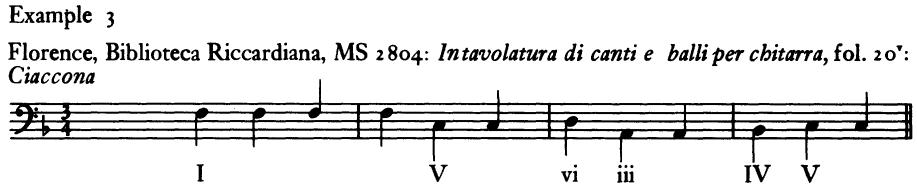
“cycle of fifths”作为组织原则在本段被提及;它在原文中的意义仅在于解释 Amat 的编号顺序,不在本节作进一步引申。
第6段(P0006)
原文复述
¹ Richard Hudson, “The Development of Italian Keyboard Variations on the Passacaglio and Ciaccona from Guitar Music in the 17th Century,” Ph.D. dissertation, University of California, Los Angeles, 1967 (Ann Arbor: University Microfilms, No. 68-219).
中文讲解
这是 Hudson 自注的脚注1,交代他博士论文的完整书目信息:篇名为《The Development of Italian Keyboard Variations on the Passacaglio and Ciaccona from Guitar Music in the 17th Century》,1967年完成于加州大学洛杉矶分校,后由 University Microfilms 以 No. 68-219 号缩微出版(密歇根州 Ann Arbor)。
该脚注在文中的功能是支撑正文第3段所提到的“同一期第348页记载了我博士论文的完成”——亦即,作者把论文的书目信息完整给出,以供有兴趣的读者查阅原始研究;同时也提示读者:本文是从该项博士研究中抽取出来的一段补充评论,并非独立研究的全部。在文本间互照上,它把正文、Walker 文章、Hudson 博士论文三者串成同一组学术对话。
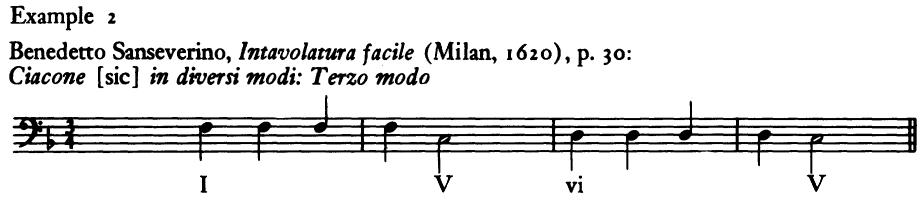
第7段(P0007)
原文复述
² University of Rochester Library, Microcard Publications in Music, Collection of Early Music Books, microcard UR-54 2977.
中文讲解
这是 Hudson 自注的脚注2,交代第4段提到的 Amat《Guitarra española》副本的复制件来源:罗切斯特大学图书馆(University of Rochester Library)“Microcard Publications in Music”之“Collection of Early Music Books”系列微缩胶片,编号 UR-54 2977。
该脚注在文中起文献凭证作用,说明 Hudson 所阅览的并非 Sibley Music Library 馆藏原书本身,而是由该系列微缩胶片提供的副本——这一点决定了引文与转述的可靠性边界。
第8段(P0008)
原文复述
³ This chart and other excerpts from Amat’s book are printed in Felip Pedrell, Catalech de la Biblioteca Musical de la Diputació de Barcelona (Barcelona: Palau de la Diputació, 1908), I, 181-188; also in Emilio Pujol, “Significación de Joan Carlos Amat (1572-1642) en la historia de la guitarra,” Anuario musical, V (1950), 125-146.
中文讲解
这是 Hudson 自注的脚注3,交代第5段提到的“Amat 圆形和弦图”以及该书其他节选的可查阅出处:其一为 Felip Pedrell 编《Catalech de la Biblioteca Musical de la Diputació de Barcelona》(巴塞罗那:Diputació 印刷馆,1908),第 I 卷第181–188页;其二为 Emilio Pujol《Significación de Joan Carlos Amat (1572-1642) en la historia de la guitarra》,载《Anuario musical》V(1950),第125–146页。
该脚注的功能是为读者指示 Amat 和弦图的可靠重印文献,使正文所述“圆形图表”、“1到12的数字编号”等事实可被独立验证;同时它把 Hudson 的工作置于 Pedrell—Pujol 等西班牙早期吉他研究谱系之中,提示后续研究者可以从这些重印本继续追踪。
脚注 / 边栏 / 图表 / 附加信息(如有)
本节为 Hudson 论文的开端部分,正文共两条脚注体系(P0003–P0005 中的上标 2、3、4、5,以及 P0006–P0008 的脚注本体 1、2、3)。其中脚注2/3(即 P0007、P0008)承担“文献凭证”功能,分别交代 Amat 副本的微缩胶片出处与和弦图的重印本文献;脚注1(P0006)则交代作者博士论文的书目信息,承担自我学术身份的凭证作用;脚注4、脚注5 在 P0005 中以右上标形式出现,其具体文本在本节被截断,下文(小节后续部分)应继续包含对应的脚注4 与脚注5 的完整说明,本节范围内不予延伸。
💡 本节核心要点
- 本文定位为对 Walker 同年《Ciaccona and Passacaglia》一文的补充评论,作者以“同期独立研究”的姿态进入对话。
- Hudson 提出的核心新论点是:Amat《Guitarra española》中虽无 pasacalles/chaconas 文本,但已具备与之共享同一和声骨架(paseo、vacas/romanesca)的和弦资源。
- Amat 的圆形和弦图以循环五度为序、用1至12编号统一大小三和弦,是理解早期西班牙吉他指法体系的关键。
- Amat 在书末将 vacas、paseo 与 gallarda、villano、italiana、pavanilla 等体裁并列,暗示这些体裁共享同一和弦库,为 passacalle 的出现提供沃土。
- 脚注体系通过书目与微缩胶片编号固化证据来源,使 Hudson 的补充论证具备可独立核验的文献凭证。
🔑 关键术语
- passacalle:西班牙早期吉他音乐中的一种舞曲体裁/固定和声进行;在本节中与 ciaccona 并列为 Hudson 关心的对象,Hudson 主张其源头可在 Amat 的和弦表中找到更早的和声资源。
- chacona (ciaccona):与 passacaglia 同为本文讨论的固定低音声型变奏体裁;在 Amat 副本中并未直接出现,但其与 passacalle 共享研究语境。
- romanesca:一种四度和声骨架,是“Guárdame las vacas”等曲调的和声基础;本节中 Hudson 把 Amat 所谓 “vacas” 视作 romanesca 上的变体。
- paseo:Amat《Guitarra española》中给出的两种和弦进行形式之一;与 “vacas” 并列,Hudson 借此说明 passacalle 的早期和声语汇。
- ciclo de quintas (cycle of fifths):按纯五度关系排列十二个根音的顺序,Amat 据此为全部大三、小三和弦编号。
- Tractat breu y explicació dels punts de la guitarra en idioma valenciá:Amat 书末以巴伦西亚语写成的指法说明章节,其中给出其数字与 Montesardo 字母记号的对应关系,并列出可由这些和弦生成的舞曲体裁。
- Montesardo:1606 年推广以字母记号的吉他教学法作者;Hudson 借 Amat 的对照表将其纳入更宽的十六、七世纪吉他教学法谱系。
C1-S2 [描述性拆分] Amat’s Instructions on the Paseo and Its Harmonic Construction
第1段(P0009)
原文复述
Downloaded from http://online.ucpress.edu/jams/article-pdf/23/2/302/152868/830645.pdf by Indiana University Bloomington user on 22 July 2026
中文讲解
这是 PDF 文件由加州大学出版社(UC Press)在线期刊系统生成的下载水印,标注了文章 PDF 的路径、下载机构(Indiana University Bloomington)以及下载日期(2026 年 7 月 22 日)。它仅是版面的元数据信息,并非正文内容;与其他同类水印一样,对文意没有贡献,但说明本论文出自《Journal of the American Musicological Society》(JAMS)第 23 卷第 2 期第 302 页起。
第2段(P0010)
原文复述
He then demonstrates the use of the chords in this way:
中文讲解
作者在此用一句话过渡,说明前文刚讨论完和弦的体系,紧接着 Amat 将用具体谱例来示范这些和弦的用法。这句话起到承上启下的作用:将抽象的和弦编号体系与随后出现的实际“paseo”(经过句)范例联系起来,提示读者接下来会看到 Amat 原文的西班牙语引文及其英译。
第3段(P0011)
原文复述
Trataré aquí cómo y de qué manera se tañe un paseo que anda por aquí comun (y esto para acomodarme à toda manera de sugetos) por las doce partes; que entendido esto, y lo que trataré despues, facilmente se tocará cualquier cosa por todos los doce Puntos.
中文讲解
此段为 Amat 原著的西班牙语原文,是他自己对“paseo”教学内容的开场白。大意是:“我将在此说明如何、以何种方式弹奏一种本地常见的 paseo(这样做的目的是为了迁就各种学习者),并按十二个调进行;一旦理解这一点以及我随后要讲的内容,便可以轻松地用十二个和弦弹奏任何乐曲。”Amat 明确把 paseo 教学定位为涵盖十二个调、所有和弦的通用基础训练,强调其“适应各种学习者”的实用性目的。这段话确立了 Amat 教学法的核心——以有限的和弦材料(十二个 Puntos)覆盖尽可能多的曲目。
补充说明
原文使用十七世纪西班牙语的拼写习惯,如 “tañe”(tocar 的古体拼写,意为弹奏)、“à”(介词,带古体重音符)、“sugetos”(sujetos 的古体拼写)、“despues”(después 的古体拼写),具有 Barroco 时期西班牙语特征。
第4段(P0012)
原文复述
Este paseo que digo está compuesto de tres Puntos: el uno se toca dos veces, y los dos no mas de una …
中文讲解
此段继续 Amat 的西班牙语原文,介绍他所说的这个特定 paseo 的结构:由三个 Puntos(和弦)组成,其中第一个和弦弹奏两次,其余两个和弦各只弹一次。这段话体现了 Amat 用数字标签(Puntos)指称和弦的方法,并给出一个简单的形式结构:三个和弦的循环,但首和弦重复。这一简短描述为随后给出该 paseo 的具体进行提供了基本框架。
补充说明
原文中的省略号(“…”)表示引文在此被截断,未引用完全部西班牙语原文。
第5段(P0013)
原文复述
El primero se hace, quando se toca el Punto primero, y de este al segundo, y despues al doce, y de este otra vez al primero. $^{6}$
中文讲解
此段继续 Amat 的西班牙语原文,描述第一个和弦(paseo 中重复的和弦)的具体构成过程:先弹奏 Punto primero(第一和弦),再从第一和弦走到 Punto segundo(第二和弦),然后到 Punto doce(第十二和弦),最后再回到第一和弦。这段话透露了 Amat 和弦编号体系的关键——同一个“第一和弦”出现在这一串进行中的首尾,而“第十二和弦”则承担一个类似属音的功能,使音乐回到“第一和弦”。脚注 6 指向原著第 26 页,便于核查出处。
补充说明
此段末尾的上标 6 标示一个脚注引用,对应本节末尾的脚注 P0020,即引文出自 Amat 原著第 26 页。
第6段(P0014)
原文复述
I will treat here on how and in what manner one plays a paseo, which is common around here (this I will do in order to accommodate myself to all sorts of subjects), in the twelve keys; once this is understood and that which follows, it can be very easy to play anything with the twelve chords. This paseo of which I speak is composed of three chords: the first is played twice, and the other two no more than once. The first one is made when one plays the first chord, and from this goes to the second, and then to the twelfth, and from this, back again to the first.
中文讲解
此段是 P0011–P0013 西班牙语原文的英文翻译,把 Amat 教学开场白与对第一个 paseo 的描述整合呈现。读者通过这段翻译可以更清晰地理解 Amat 的教学主张:paseo 是为了“适应各种学习者”而设立、按十二个调编排的通用练习;一旦掌握并结合后续内容,便能用十二个和弦演奏任何乐曲。这段引文作为 P0015 与 P0016 学术分析的基础,提供了第一手文献依据。
第7段(P0015)
原文复述
The musical result of these instructions is the progression I-IV-V-I. Amat describes the identical harmonic construction of the other eleven paseos and states: “He querido traer estos doce modos de hacer un paseo, por ser comunes à tantos tonos casi infinitos; y tambien porque sabiendo mudar de uno en otro, se sabrá tañer por las doce partes muchas tonadillas que andan por aqui, como son vacas, gallardas, pabanillas, sezarillos . . .” (I have wanted to present here these twelve ways of making a paseo, because they are common to so many pieces, almost infinite in number; one will be able to play, using the twelve keys, many pieces that are current, such as vacas, etc.)
中文讲解
此段是作者基于 P0014 英译 Amat 引文作出的音乐学总结,揭示了 paseo 蕴含的和弦进行:I–IV–V–I。作者指出 Amat 为其余十一个调都提供了结构相同的 paseo,并用 Amat 自己的西班牙语原话强调这些进行适用于无数曲目——作者列出 vacas(瓦卡舞曲)、gallardas(加利亚舞曲)、pabanillas(帕瓦尼利亚舞曲)、sezarillos(塞萨里约舞曲)等曲种作为例证。本段将 Amat 的文字指令转化为现代音乐理论语言(I–IV–V–I),使读者立刻明白这一“paseo 模式”实际上就是西方音乐中最经典的正格进行,从而将 Amat 的教学法与通行的和声理论对接。脚注 7 指向 Pujol 在《音乐百科全书》中的转写,脚注 8 指向 Amat 原著第 28 页。
补充说明
原文中提到的曲种都是西班牙巴洛克时期流行的舞曲或短曲调式;本段把它们并列列举,是为了说明 Amat 的十二种 paseo 足以应付当时常见的多种体裁,从而证明这一教学体系的实用性。脚注 8 标注 Amat 原文出处在第 28 页。
第8段(P0016)
原文复述
Because of the double system of numbering, it is not clear whether he presents paseos only for the major keys, or whether one is supposed to utilize the puntos b mollados (minor triads) to create paseos also in the minor mode. In any event the paseo displays some striking similarities to the pasacalle: the probable common etymology of their names, the same harmonic pattern (Walker, p. 306), and the presentation of a complete series immediately following the identification of the chords (Walker, p. 309, footnote 38). In addition, the words quoted above, in which the paseo is described as fitting many different pieces, seem to indicate ritornello function.
中文讲解
此段是作者的学术分析,指出 Amat 因为使用双重编号系统,无法确定他仅给大调写 paseo,还是希望学习者结合“puntos b mollados”(带降号的、含小三和弦的和弦)来生成小调版本。作者随后转向比较:paseo 与 pasacalle(帕萨卡耶)在三方面显著相似——名称可能同源、共用相同的和声模式(引用 Walker 第 306 页)、以及“识别和弦后立即呈现完整系列”的教学编排(引用 Walker 第 309 页脚注 38)。最后,作者从 Amat 文中“适用许多不同乐曲”的描述推断:paseo 可能具有“利托奈罗”(ritornello,回归段)功能。本段将 Amat 的具体教学与更宏观的西班牙巴洛克吉他曲式研究联系起来,为后续讨论铺垫。
补充说明
Walker’s 引用指同一期的文章作者(推测为 Thomas Walker 关于 pasacalle 的研究),其第 306 页与第 309 页脚注 38 是本段比较分析的两个具体依据;“ritornello”一词指反复出现的固定段落,可作为乐曲的框架或回归结构。
第9段(P0017)
原文复述
Downloaded from http://online.ucpress.edu/jams/article-pdf/23/2/302/152868/830645.pdf by Indiana University Bloomington user on 22 July 2026
中文讲解
本段是 PDF 文件第二次出现的下载水印,版面上与 P0009 重复,属于文档下载元数据。它出现在正文段落与脚注之间,仅作版面记号,不提供新的学术信息。
第10段(P0018)
原文复述
$^{4}$ Girolamo Montesardo, Nuova inventione d’intavolatura (Florence, 1606). The letters in Montesardo’s system, however, appear in no apparent order except possibly the relative frequency of occurrence of the chords. Luis de Briçeno in his Metodo mui facilissimo (Paris, 1626) indicates the chords with numbers, again in no particular order, nor in the same order that Montesardo used.
中文讲解
此段是脚注 4 的内容,介绍早期巴洛克吉他谱中两种用字母或数字标记和弦的体系:意大利人 Girolamo Montesardo 在 1606 年佛罗伦萨出版的《新发明之记谱法》(Nuova inventione d’intavolatura)中以字母标和弦,但字母排列的顺序并无明显规律(可能仅按和弦出现频率排列);路易斯·德·布里塞尼奥(Luis de Briçeno)在 1626 年巴黎出版的《极简方法》(Metodo mui facilissimo)改用数字标和弦,但顺序同样无规律,也与 Montesardo 使用的顺序不同。作者借此说明,在 Amat 之前,字母体系和数字体系都已存在,但都没有系统性安排;Amat 把十二个 Puntos 按功能排序(I、IV、V、I 等),以此形成稳定可复现的和弦体系,是该领域的突破。
补充说明
脚注 4 提供了本节正文中关于“和弦编号体系的历史先例”的具体文献出处,作者在正文中未直接展开早期和弦标记史,仅以脚注形式补充。
第11段(P0019)
原文复述
$^{5}$ Juan Carlos Amat, Guitarra española (Valencia), p. 25.
中文讲解
此段是脚注 5 的内容,仅给出 Amat 著作《西班牙吉他》(Guitarra española)的书目信息:作者 Juan Carlos Amat,出版地 Valencia,引用页码为第 25 页。这是简洁的版本项脚注,作用是让读者可以核查 Amat 原文,并明确作者引用的具体段落位置。
补充说明
无额外补充。脚注 5 标注的是前文 Amat 原文引用所在的页码。
第12段(P0020)
原文复述
$^{6}$ Ibid., p. 26.
中文讲解
此段是脚注 6 的内容,使用拉丁文“ibid.”(ibidem,意为“同前”),表示本注与上一脚注(脚注 5)引用同一著作,即 Amat 的《西班牙吉他》,但具体页码改为第 26 页。脚注 6 对应正文 P0013 的上标引用,体现 Amat 关于“第一个和弦由点到第二、再到第十二、再回到第一”的描述出自该书第 26 页。
第13段(P0021)
原文复述
$^{7}$ A transcription of the chords of the first paseo is given by Emilio Pujol in the article “La guitare” in Albert Lavignac and Lionel de la Laurencie, Encyclopédie de la musique (Paris: C. Delagrave, 1922-31), Part II, Vol. III, p. 2005.
中文讲解
此段是脚注 7 的内容,为作者在 P0015 中提到的“第一个 paseo 的和弦转写”这一信息提供出处:转写由西班牙吉他学者 Emilio Pujol 完成,载于他撰写的文章《La guitare》(吉他),收录于 Lavignac 与 de la Laurencie 主编的《音乐百科全书》(Encyclopédie de la musique,巴黎 C. Delagrave 出版社,1922–31 年出版,第二部分第三卷)第 2005 页。作者借此指出,如需查看第一个 paseo 的实际记谱,可参阅 Pujol 的转写。
补充说明
Pujol 是 20 世纪重要的西班牙吉他学者与演奏家,他为 Amat 原著做过重要的学术编辑与转写工作;脚注 7 因此承担“转写来源”的功能。
第14段(P0022)
原文复述
$^{8}$ Amat, op. cit., p. 28.
中文讲解
此段是脚注 8 的内容,使用拉丁文缩写“op. cit.”(opere citato,意为“在前引著作中”),表示本注再次引用 Amat 的《西班牙吉他》(前文脚注 5、6 已引用同一著作),但具体页码为第 28 页。脚注 8 对应 P0015 中引用的 Amat 原文——“He querido traer estos doce modos de hacer un paseo”——所在页码。
脚注 / 边栏 / 图表 / 附加信息(如有)
本节附加材料包括 P0018–P0022 五条脚注。脚注 4(Montesardo 1606;Briçeno 1626)补充早期吉他和弦标记体系的谱例背景;脚注 5、6、8 三条均为对 Amat《西班牙吉他》具体页码(25、26、28 页)的引用;脚注 7(Emilio Pujol 在 Lavignac《音乐百科全书》II/III 卷第 2005 页)提供了第一个 paseo 和弦转写版本的来源,供读者查阅实际记谱。P0009 与 P0017 是 PDF 下载水印,不构成学术内容。
💡 本节核心要点
- Amat 在《西班牙吉他》中以十二个调(“doze partes”)和十二个 Puntos 为框架,把西班牙当时常见的 paseo 程式化为基础练习;学习者一旦掌握,便能用十二和弦演奏任何乐曲。
- 第一例 paseo 的结构为三个和弦,第一个重复一次、其余各一次,形成 I–IV–V–I 的正格终止进行;该模式也是巴洛克时期最常见的和声骨架。
- Amat 强调这些 paseo 适用于几乎无穷的曲目(vacas、gallardas、pabanillas、sezarillos 等),并暗示这些进行可能具有 ritornello(回归段)功能。
- Amat 的十二个 Puntos 编号体系区别于以字母(Montesardo 1606)或无序数字(Briçeno 1626)标记和弦的早期方法,是音乐理论系统化进程中的一步。
- 由于 Amat 同时使用两套编号,无法确定他仅给大调写 paseo,还是希望结合“puntos b mollados”(含降号、小三和弦的和弦)生成小调版本。
- paseo 与 pasacalle 在名称的可能词源、和声模式以及“识别和弦后立即呈现完整系列”这一教学编排上相似,提示两者可能存在共同谱系。
🔑 关键术语
- Paseo:西班牙吉他教学中的“经过句”或“程式化进行”,由若干和弦循环组成;Amat 用它作为按十二调训练学习者的通用材料。
- Punto:Amat 体系中用数字(1–12)标记的和弦标签,类似于罗马数字分析中的和声功能符号,但并不严格对应大小调。
- puntos b mollados:Amat 体系中带降号的和弦,可能含小三和弦;作者据此推测 Amat 也希望让学生生成小调版本的 paseo。
- I–IV–V–I:西方音乐中最经典的正格进行:主—下属—属—主;作者指出 Amat 第一个 paseo 的和弦进行正是这一模式。
- pasacalle:西班牙巴洛克吉他曲式名,与 paseo 名称可能同源、和声模式相同,并采用“识别和弦后立即呈现完整系列”的编排。
- ritornello:反复出现的固定段落,在乐曲中承担回归或框架功能;作者认为 Amat 描述 paseo “适用许多不同乐曲”的语言暗示它可能具有 ritornello 功能。
- Guitarra española:Amat 1586 年起出版、多次再版的西班牙吉他教学手册,是本节引文与脚注的主要原始文献。
C1-S3 [描述性拆分] Sanz and Cabanilles on the Equivalence of Paseo and Pasacalle
第1段(P0023)
原文复述
The later Spanish composer Gaspar Sanz clearly equates the paseo and the pasacalle in his Instrucción de música sobre la guitarra española (Saragossa, 1674). Sanz states:
中文讲解
本段是这一子小节的开篇导引句。作者举出较晚的西班牙作曲家 Gaspar Sanz,作为将 paseo 与 pasacalle 两个术语视为等价的核心证据。论文同时给出 Sanz 著作的全西班牙文原名《Instrucción de música sobre la guitarra española》以及出版地与年份(Saragossa,1674),并以脚注 9 提示该书的版本来源(详见本节 P0029)。所谓 ’later Spanish composer’ 是相对前文可能已提到的更早作者而言,强调 Sanz 是后来更晚出现的、可作为佐证的见证者。本段的作用是为下一段 Sanz 的西班牙文原引文做铺垫。
补充说明
脚注 9 标记指向 Sanz 著作的版本说明,详见本小节脚注部分(P0029)。
第2段(P0024)
原文复述
En Barcelona Juan Carlos, Doctor en Medicina, compuso un librito, con título de Guitarra Española . . . ; es muy bueno, pero corto, pues le falta lo mejor, que es multiplicar partidas, y diferencias sobre uno de los doze Passacalles, sin salir del tono . . .
中文讲解
这段是 Sanz 原书中的西班牙文原文(17 世纪拼写:‘doze’ 即 doce,‘Passacalles’ 首字母大写)。Sanz 提到巴塞罗那的医学博士 Juan Carlos 写过一本名为《Guitarra Española》的小册子,他承认此书’非常好’,但仍嫌’不足’,因为缺少最关键的内容——即在一首十二首 pasacalles 之一上’生发 partidas 与 diferencias’(变奏与变体),且不离开原调。这里 ‘sin salir del tono’(不离开调)限定了变奏必须在同一调性框架内进行,揭示了 pasacalle 作为’调性内变奏生成基础’的功能。Sanz 借此抬高自己著作的必要性。
补充说明
脚注 10 标记指向 Sanz 原书 fol. 6 处,具体书目信息见 P0030。‘Partidas’ 与 ‘diferencias’ 是西班牙早期吉他/器乐写作中指代成组变奏 (partidas) 与单独变体 (diferencias) 的核心术语。
第3段(P0025)
原文复述
En este mi Tratado hallaràs reglas que no he visto en ninguno de los referidos Autores, porque a mas de enseñar a multiplicar un Passacalle en veinte y quatro modos diversos, como otros han discurrido, y enseña el Doctor Carlos, aquí hallaràs forma de mayores quilates, pues sobre cada uno de los veinte y quatro Passacalles, y demás sones, te enseñarè a que te inventes tantas diferencias como quisieres.
中文讲解
Sanz 继续以第一人称宣示其著作的优越性:‘在本人的《教程》中你将见到在以上提到的诸位作者那里都未曾见过的规则。‘他承认前人(包括 Doctor Carlos)已能’以二十四种不同方式生发出一首 Passacalle’,但他更进一步——在每一首二十四种 Passacalle 之上,教会读者’自行发明任意数量的 diferencias’。‘mayores quilates’(直译:更大的克拉/成色)在这里是金银成色的隐喻,意为’更高价值’。这一段的功能是把 pasacalle 同时定义为’变奏框架(24 种)‘与’无限再创造的基底’。
补充说明
原文拼写保留 17 世纪形式:‘veinte y quatro’ 即 ‘veinticuatro’,’enseñarè’ 以重音符号代替现代 accent 拼写。
第4段(P0026)
原文复述
In Barcelona Juan Carlos, Doctor of Medicine, composed a little book with the title of Guitarra española; it is very good, but short, because the writer omits the best, which is to reproduce variations on one of the twelve pasacalles, without departing from the key. In my book you will find rules that have not been seen in any of the previously mentioned authors, so that in addition to showing how to reproduce a pasacalle in twenty-four different ways, as others have presented, and as Doctor Carlos shows, here you will find a form of great value, which teaches you not only each one of the twenty-four pasacalles, but also how to invent as many variations as you wish.
中文讲解
这是前两段(P0024 与 P0025)西班牙文引文的英文翻译。该译本把 Sanz 的自我推介合并为一段连贯文字:先用 ‘omits the best’ 把 Doctor Carlos 的书归为’尚缺要旨’,再用 ‘a form of great value’(对应 mayores quilates)标榜 Sanz 自己’不仅教授 24 首 pasacalles 各自的内容,更教读者如何自行发明任意数量的变体’。翻译中用 ’twelve pasacalles’ 对应 ‘doze Passacalles’,用 ’twenty-four different ways’ 对应 ‘veinte y quatro modos diversos’。读者可借这段英文译文核对 Sanz 论点的英文表述形式,但它不应替代对原文拼写细节的注意。
第5段(P0027)
原文复述
Furthermore, Sanz uses the words passacalle and passeo (both spelled with two s’s) interchangeably in his titles. Two sets of variations called Passacalles on the pages of the score are listed in the Table of Contents as Partidas de passeos and Partidas de passeos de proporción. In another case a page of music bears at the top the title Passacalles por la G; y B; but in the middle of the page, as title for the second piece, stands the designation Passeos por la B. Cabanilles also uses both terms for keyboard works, but not for the same composition. He has five works entitled Pasacalles and four called Paseos. Moreover, the paseo, like the pasacalle, still seems to survive as a ritornello in the present-day folk music of Latin America.
中文讲解
这是本小节的核心论据段。作者从四个层面累积证据支持’paseo 与 pasacalle 等价’的论点:(1) Sanz 在标题中互换使用 passacalle 与 passeo(均拼作双 s);(2) 同一组变奏在乐谱页上标 ‘Passacalles’,在目录中却标 ‘Partidas de passeos’(甚至包括 ‘passeos de proporción’ 即’比例型 passeos’);(3) 同一页乐谱顶部写 ‘Passacalles por la G; y B;’,但页面中段对第二首改用 ‘Passeos por la B’——表明在同一作曲家笔下两种称谓可指代同一首作品;(4) 键盘作曲家 Cabanilles 虽然同时使用 Pasacalles(5 首)与 Paseos(4 首),但分别用于不同作品,说明在他那里二者并不完全等同(这是对论点的限定,需要结合上下文谨慎处理,并非简单相互取代);(5) 在当代拉丁美洲民间音乐中,paseo 与 pasacalle 同样作为 ritornello(副歌/反复段落)存活下来,强化了二者的功能等价。脚注 11–14 给出 Sanz、Cabanilles 与民俗学的具体来源。
补充说明
‘Passacalles por la G; y B;’ 中的 ‘G’ 与 ‘B’ 指乐曲的调高(音名 G 与 B),‘por la B’ 同理;‘de proporción’ 涉及变化拍号/比例节拍 (proporción)。
第6段(P0028)
原文复述
Downloaded from http://online.ucpress.edu/jams/article-pdf/23/2/302/152868/830645.pdf by Indiana University Bloomington user on 22 July 2026
中文讲解
这是页脚归属信息,说明本 PDF 副本系于 2026 年 7 月 22 日由 Indiana University Bloomington 的用户从 UC Press 期刊电子版下载。该信息仅用于指认文献来源与下载环境,不构成论文论点的一部分。
第7段(P0029)
原文复述
Facsimile of the third edition of Libros I & II (1674) and the eighth edition of Libro III (1697), ed. Luis Garcia-Abrines (Saragossa: Institución “Fernando el Católico” de la Excma. Diputación Provincial [C.S.I.C.], 1952; another edition 1966). All three books appeared originally in 1674.
中文讲解
脚注 9 详细说明 Sanz 著作的影印版来源:编者 Luis Garcia-Abrines,1952 年由萨拉戈萨的 Fernando el Católico 学术机构(附属于最高省级政厅,隶属 C.S.I.C. 即西班牙最高科研理事会)出版,1966 年另有再版。其中 Libros I 与 II 使用的是 1674 年第三版,Libro III 使用的是 1697 年第八版;三册原本都在 1674 年首次出版。该脚注对正文 P0023 的 ‘1674’ 简略标注起到精确化作用。
补充说明
脚注标识著作者所据影印本的具体版本:作者在正文 P0023 中只笼统说 ‘1674’,此处则区分了三册各自所据的版本。
第8段(P0030)
原文复述
Sanz, Libros I & II (3rd. ed., 1674), fol. 6.
中文讲解
脚注 10 指明 P0024 与 P0025 中 Sanz 西班牙文引文的出处:Sanz《Libro I & II》1674 年第三版第 6 对开页(folio 6)。‘3rd. ed.’ 即第三版,‘fol. 6’ 是拉丁文 folio 的简写,指对开页页码。
第9段(P0031)
原文复述
Sanz, Libro III (8th ed., 1697); the two pieces are on fols. 49 and 57, the Table of Contents on fol. 48.
中文讲解
脚注 11 给 P0027 中 Sanz 互换术语的例证提供具体定位:这些来自 Sanz《Libro III》1697 年第八版;正文提到的两首变奏分别在 fol. 49 与 fol. 57,目录页则在 fol. 48。也就是说作者查对了目录与正文标题的拼法差异,从而确认 Sanz 在同一组作品中交替使用 passacalle 与 passeo 两套术语。
第10段(P0032)
原文复述
Ibid., fol. 55.
中文讲解
脚注 12 接续脚注 11,仍指向 Sanz《Libro III》第八版(同上 ‘Ibid.’),具体定位在 fol. 55。这一页正是 P0027 所述’同页乐谱顶部写 Passacalles、中段写 Passeos’的实例所在。
补充说明
‘Ibid.’(ibidem,‘同上’)表示紧接前一条脚注所引用的同一文献。
第11段(P0033)
原文复述
Johannis Cabanilles, Opera omnia, ed. Hyginii Anglès (Barcelona: Institut d’Estudis Catalans: Biblioteca de Catalunya, 1933), Pasacalles: pp. 40-61, Paseos: pp. 120-129.
中文讲解
脚注 13 提供 Cabanilles 键盘作品的全集出处:编辑者 Hyginius Anglès(拉丁化署名为 Johannis Cabanilles 与 Hyginii Anglès),1933 年由巴塞罗那加泰罗尼亚研究学院(Institut d’Estudis Catalans)和加泰罗尼亚图书馆(Biblioteca de Catalunya)联合出版的《Cabanilles 全集》。具体来说,Pasacalles 在第 40–61 页,Paseos 在第 120–129 页——由此可看出两组作品在全集里属于不同分组、用于不同作品,这为 P0027 中关于 Cabanilles 的论断提供了版本依据。
补充说明
‘Opera omnia’ 为拉丁文’作品全集’;编辑者与作曲家名采用拉丁化形式是当时欧洲学术出版的惯例。
脚注 / 边栏 / 图表 / 附加信息(如有)
本小节附加材料集中于脚注 9–13:脚注 9(P0029)交代 Sanz 影印本与初版年份;脚注 10(P0030)精确标出 Sanz 西班牙文引文的 fol. 6 出处;脚注 11(P0031)与脚注 12(P0032)合起来定位 Sanz《Libro III》中目录(fol. 48)与正文(fols. 49、55、57)间术语互换的具体乐谱页;脚注 13(P0033)提供 Cabanilles 全集中 Pasacalles 与 Paseos 的页码分组。所有这些脚注共同支撑 P0023 与 P0027 的论断,没有引文之外的其他图表、边栏或图像。P0028 的页脚(UC Press 下载信息)属版面属性,不参与论证。
💡 本节核心要点
- Sanz(1674)作为’较晚西班牙作曲家’的权威见证,明确把 paseo 与 pasacalle 视为等价,他在标题中以双 s 拼写 ‘passeo / passacalle’ 互换使用。
- Sanz 对 pasacalle 的功能性定义是’单一调性内可无限生发 diferencias 的 24 套变奏框架’——他借此自夸胜过巴塞罗那医学博士 Juan Carlos 的《Guitarra Española》。
- P0027 的证据逐层推进:(a) 目录与正文标题拼法不一;(b) 同页乐谱顶部与中段使用不同术语指代同一作品;(c) Cabanilles 将两组术语分配给不同作品(这是对’完全等同’的限定,而非简单相互取代);(d) 二者在当代拉丁美洲民间音乐中均作为 ritornello 存续。
- Sanz 的版本信息(Libro I & II 第三版、Libro III 第八版,原皆 1674 出版)见脚注 9–12;Cabanilles 的全集分组页码见脚注 13。
- 在解读本节时须区分 Sanz 案例的’术语互换’与 Cabanilles 案例的’术语分流’,才能准确把握’等价’一词在本节中的实际含义与边界。
🔑 关键术语
- pasacalle / passacalle:西班牙语原形 pasacalle;本节按 Sanz 原书保留 17 世纪双 s 拼写 passacalle。指一种基于固定和声框架、可在其上不断生发变奏的西班牙器乐曲形式,也常用作 ritornello。
- paseo / passeo:与 pasacalle 在功能上相近的西班牙器乐形式;Sanz 原书拼作双 s 的 passeo。本小节论证核心即此二者等价。
- diferencias:早期西班牙器乐写作中指在固定主题(如 pasacalle)之上的变体/变奏。
- partidas:整组的变奏集合;‘partidas de passeos’ 即一组以 paseo 为题的作品/变奏。
- ritornello:反复出现的段落/副歌段;本节用以说明 paseo 与 pasacalle 在当代拉丁美洲民间音乐中作为反复段落的功能。
- sin salir del tono:Sanz 引文中的限定语,意为’不离开原调’,揭示 pasacalle 作为’单性调变奏框架’的核心特征。
C1-S4 [描述性拆分] The paseo as Forerunner of the Pasacalle and Early Literary Reference to the Chacona
第1段(P0034)
原文复述
The term passeo occurs in the Discursos sobre el arte del dançado (Seville, 1642) of Juan de Esquivel Navarro. Here it seems to be synonymous with mudança and refers to the complete cycle of steps that constitute any particular dance. Thus he says: “Enseñase comunmente el Alta, quatro mudanças de Pavana, seis passeos de Gallarda, quatro mudanças de Folias, dos de Rey, dos de Villano, Chacona, Rastro, Canario, Torneo, Pie de gibado, y Alemana.” At that time, however, the word paseo ordinarily meant (and still does) “promenade,” referring to a street or to the act of walking along the street. Thus paseo was a word from everyday language, whereas pasacalle, although derived in the same manner (Walker, p. 305), appears in the literature of the early 17th century to be exclusively a technical guitar term. All of these similarities between the two forms suggest that the paseo, as a ritornello with the harmonic progression I-IV-V-I, was the immediate forerunner in Spain of the pasacalle. Both forms are preceded in Italy by the 16th-century dance ritornello called the ripresa, which often displays the same harmonic pattern.
中文讲解
本段的核心主张是:17世纪西班牙舞蹈文献中的paseo(散步步)即为pasacalle(三步舞曲)的前身,二者共享I-IV-V-I的和声进行。
论证链分三层推进。第一层援引Esquivel Navarro的1642年《Discursos sobre el arte del dançado》,让passeo与mudança互训,专指任何一支舞蹈的完整步序,并引用其中Galliarda配六passeos等量词为证;西班牙语原句保留是为了显示作者把passeo和mudança并置的工作定义。第二层区分日常语义:即便在17世纪,paseo更常指街道漫步,而pasacalle作为同源词,仅以吉他技术术语形式出现于早期文献,说明paseo是更口语化、更具民间性的词汇。第三层由名实比对上升为历史谱系:西班牙境内paseo(I-IV-V-I的利都奈罗)→ pasacalle,两者在意大利又有共同前辈ripresa。这一推论的修辞逻辑是"用语同类+形态同类+共祖"三证并举,确立paseo为pasacalle的西班牙本土直接前身。
易被误读之处在于:作者并未声称paseo等于pasacalle,而是提出"paseo as a ritornello with the harmonic progression I-IV-V-I"这一限定性的形态对应;与之并列的还有"from everyday language"这一词源学的证据,两者共同支撑"forerunner”(前身)的判断,因此本段属谨慎的谱系推断。
补充说明
术语mudança在Pavane等慢板舞中指舞者完成一定的方向转换与步序组合,Esquivel Navarro用其计量passeo数量,等于把"步循环"具体化为可数单位,这是他梳理各舞程式时的统一计量方式,与本段论点直接相关。Ripresa的条目(编号18)在P0041脚注中给出书目,本段只调用其和声模式,故解析以I-IV-V-I为限。
第2段(P0035)
原文复述
Concerning the chacona, I would like to add to the literary references mentioned by Walker one that is slightly earlier. The chacona is named in a poem by Mateo Rosas de Oquendo called Satira hecha a las cosas que pasan en el Peru año de 1598. Here it appears in a list of dances: “La zarabanda y balona, el churunba y el taparque, la chacona y el totarque . . .” Considering Walker’s comments on p. 305, it is curious that this earliest source should come from the New World. However, its date is so close to the first Spanish source of 1599 (Walker, p. 305) that by itself it in no way proves the American origin of the dance.
中文讲解
本段主张是:作者替Walker补充一条略早的chacona(恰空舞)书面证据,但反驳其支持美洲起源之说。
论证分三步。第一步引入新材料:Mateo Rosas de Oquendo的《Satira hecha a las cosas que pasan en el Peru año de 1598》中,chacona被列入一串异国/殖民地舞蹈名单,西班牙语原句保留其与zarabanda、balona、churunba、taparque、totarque并列的语境。第二步承认这处文献"在时间上略早”,且源自新世界(秘鲁),与Walker第305页的论述形成明显张力。第三步给出限定:1598年与Walker所记的首条西班牙本土来源(1599)只差一年,单凭这短至一年的时差不足以证明chacona诞生于美洲或经美洲传入西班牙。
本段起着两重论证作用。其一,以新材料为chacona研究扩展文献基线;其二,主动排除材料可能引出的"美洲起源说”,从而保全chacona的西班牙/欧洲来源这一既有立场。这种"先给材料再撤回其激进解读"的写作技术,是史学讨论常见的护场式界定。
需要警惕的误读是:作者并未否认这首1598年秘鲁诗的史料价值,只是强调不能用"美洲率先记载"反推"美洲起源"。
补充说明
本段未引用Walker原文脚注,仅在正文括注页码305、300作为页面对应;Walker著作章节编号18并未指向本段,而是指P0034末句所引ripresa研究,故不可把这两处页码互相替代。
第3段(P0036)
原文复述
Downloaded from http://online.ucpress.edu/jams/article-pdf/23/2/302/152868/830645.pdf by Indiana University Bloomington user on 22 July 2026
中文讲解
本行为UC Press电子版PDF加水印式的下载声明,注明文件来源JAMS第23卷第2期第302页起,由印第安纳大学伯明顿分校用户于2026年7月22日下载。属版面元信息,不含学术主张。
第4段(P0037)
原文复述
$^{14}$ For present-day passacaglie, see Enciclopedia universal ilustrada, XLII, 450, especially the description of the Cuban bolero, in which the pasacalle is a “tañido intermedio de la guitarra despues de la primera parte cantada del bolero, para continuar luego la segunda. Consta generalmente de la tónica, subdominante y dominante, invirtiéndose en cada una dos compases de 3 por 8.” (interlude played on the guitar after the first sung part of the bolero, in order to continue afterwards the second. It consists generally of the tonic, subdominant, and dominant, with each chord occupying two measures of 2.) For the paseo, see Otto Mayer-Serra, Música y músicos de Latinoamerica (Mexico: Editorial Atlante, S.A., 1947), I, 240, and II, 620.
中文讲解
本脚注14为正文paseo与pasacalle对照提供两条20世纪实证材料。
第一条出自Enciclopedia universal ilustrada第XLII卷第450页,特指古巴bolero(波莱罗)中的pasacalle:它在第一段歌唱部分之后、进入第二段之前作为吉他的"tañido intermedio"(间奏),并且通常由主音、下属、属三个和弦构成,每个和弦占据2小节(西班牙原文写作"3 por 8",即3/8拍),每小节翻转一次。其括号内英译为作者自加。这条用例把早期文献中作为间奏利都奈罗的pasacalle传统一直追到20世纪古巴生活语境。
第二条指引Otto Mayer-Serra《Música y músicos de Latinoamerica》第一卷第240页与第二卷第620页,作为讨论今世paseo的材料入口。
这一脚注的功能是:把P0034中所提的"paseo和pasacalle有亲缘关系"这一论断延伸到20世纪拉美(包括波多黎各,依脚注17)的活传统文献,使其不限于纸面推想。
补充说明
“3 por 8"在原文语境即3/8拍记号,括号英译作"two measures of 2"略显随意,作者实际意指3/8拍下每和弦占两小节;脚注只重点比较和声结构与节拍功能,不比较步法。
第5段(P0038)
原文复述
$^{15}$ Facsimile edition in Publicaciones de la Asociación de Libreros y Amigos del Libro, Vol. IV (Madrid, 1947).
中文讲解
脚注15指明Esquivel Navarro《Discursos sobre el arte del dançado》的影印版出处:Madrid,Asociación de Libreros y Amigos del Libro 丛刊第IV卷,1947年。它服务于P0034对1642年原典的引用,等于告诉读者可在1947年马德里影印本中查阅同一文本,避免去查找难得原本。功能为版本提示与文献保障。
第6段(P0039)
原文复述
$^{16}$ Esquivel Navarro, fol. 26 $^{v}$ .
中文讲解
脚注16精确指示P0034所引Enseñase…句的出处页码位置:Esquivel Navarro原书fol. 26v(即第26叶背面)。这对正文论证属于来源凭证:用具体叶码锁定引文,以便读者复核。
补充说明
16至17世纪西班牙印本多以对开叶而非现代页码计,“26v"即第26张叶的verso(背面)。
第7段(P0040)
原文复述
$^{17}$ The paseo as a promenade occurs today as part of a dance in Puerto Rico (see Mayer-Serra, II, 745).
中文讲解
脚注17为P0034"paseo在日常语言中义为’漫步’“这一陈述提供现代佐证:今天波多黎各的舞蹈中仍以paseo指代漫步段落,并指引Mayer-Serra第二卷第745页。它直接呼应脚注14提到的Mayer-Serra《Música y músicos de Latinoamerica》,是同一作者同一著作中关于今世paseo的又一处位置。其功能是证明"日常生活语义"不止于17世纪,一直延续到20世纪拉美民间舞蹈。
补充说明
该处Mayer-Serra用法可以对照脚注14引用的同卷第620页,从而把17世纪西班牙文献中的paseo意义与20世纪波多黎各舞蹈中的paseo意义放入同一条史料线索。
第8段(P0041)
原文复述
$^{18}$ Keyboard riprese beginning around 1530 are described in Willi Apel, Geschichte der Orgel- und Klaviermusik bis 1700 (Kassel: Bärenreiter, 1967), p. 234 and elsewhere, as listed in the index. For lute riprese starting about mid-century see Gerald Lefkoff, Five Sixteenth-Century Venetian Lute Books (Washington, D. C.: Catholic University of America Press, 1960). The relationship between the ripresa and the passacaglia is discussed in Manfred Schuler, “Zur Frühgeschichte der Passacaglia,” Die Musikforschung, XVI (1963), 121-126; and Giorgio Mainerio, Il primo libro de balli (Venice, 1578), ed. Manfred Schuler (Musikalische Denkmäler, V [Mainz: B. Schott’s Söhne, 1961]), pp. 12-13 of the Einleitung.
中文讲解
脚注18汇集了P0034末句"ripresa早于二者(paseo/pasacalle)“的权威性参考文献。
条目一:Willi Apel《Geschichte der Orgel- und Klaviermusik bis 1700》1967年Kassel Bärenreiter版第234页,记载1530年前后键盘ripresa的处理。
条目二:Gerald Lefkoff《Five Sixteenth-Century Venetian Lute Books》1960年华盛顿版,记录16世纪中叶起鲁特琴中的ripresa。
条目三、四转向ripresa与passacaglia的关系研究:Manfred Schuler论文《Zur Frühgeschichte der Passacaglia》载于《Die Musikforschung》第16卷(1963)第121–126页;以及Schuler编订Giorgio Mainerio《Il primo libro de balli》(威尼斯,1578)Musikalische Denkmäler第V卷(Mainz:B. Schott’s Söhne,1961)导言第12–13页。
这一长脚注的功能是把作者对意大利前辈ripresa的"一笔带过"背后推到了四份可查证的书目中,使任何"前辈—伊比利亚—美洲"的传播链都能找到中游文献。
易被误读之处在于:脚注条目中既有键盘文献(Apel)、又有鲁特琴文献(Lefkoff)、又有舞蹈文献(Mainerio),三条线索交叉支持了作者采用"ritornello"而非单独器乐体裁来定义ripresa。
补充说明
Musikalische Denkmäler第V卷在脚注中被标于Mainerio书后,但它由Schuler编订而非Mainerio本人,故其学术地位是现代乐谱学注释工作,而非原版。
脚注 / 边栏 / 图表 / 附加信息(如有)
本小节包含四条脚注(编号14、15、16、17、18)和一行电子版下载声明。
脚注14把paseo/pasacalle的古义接通到20世纪拉美(古巴bolero、波多黎各舞蹈)的活传统,是正文paseo-pasacalle谱系说的现代旁证。
脚注15给出Esquivel Navarro原文影印本的版本信息,便于复核1642年原典。
脚注16锁定正文引文所在的叶位(fol. 26v),为关键引语提供精确出处。
脚注17通过波多黎各的现当代paseo延续正文对paseo日常意义的判定。
脚注18为正文末尾关于ripresa—意大利16世纪舞蹈利都奈罗—的判断提供四条书目支持,跨键盘、鲁特琴、舞蹈与历史研究四个方向,使整段谱系论断具有完整可核验性。
下载声明行是UC Press的加水印式元信息,无学术价值。
💡 本节核心要点
- paseo在Esquivel Navarro 1642年文献中与mudança互训,指完整步序,是日常语词;pasacalle则是17世纪初仅见于吉他文献的技术词,二者词源同构。
- paseo以I-IV-V-I利都奈罗为形态特征,作者据此推断paseo是西班牙境内pasacalle的直接前身。
- 西班牙的paseo/pasacalle与意大利16世纪ripresa共享同一和声程式,ripresa是更早的共同前辈。
- 作者补入Rosas de Oquendo 1598年秘鲁诗作为chacona略早于Walker西班牙本土来源(1599)的文献,但同时限定一年之差不构成美洲起源证据,护住chacona的欧洲/西班牙来源立场。
- 脚注群(14–18)覆盖现代拉美活传统(古巴、波多黎各)、17世纪原典版本(Esquivel Navarro fol. 26v)、16世纪意大利谱系(ripresa于键盘/鲁特琴/舞蹈),使本节论证链前后贯通、可核查。
🔑 关键术语
- paseo / passeo:在Esquivel Navarro的1642年用法中与mudança同义,指一支舞蹈的完整步循环;在日常西班牙语中义为"沿街漫步”,是pasacalle在西班牙境内的口语化同源词,作I-IV-V-I利都奈罗使用时被视为pasacalle前身。
- pasacalle:17世纪西班牙吉他文献中的技术性间奏/利都奈罗术语,与paseo同名异指,被作者推定为后者的直接后裔;脚注14同时把它与20世纪古巴bolero的吉他间奏直接对接。
- mudança:Esquivel Navarro使用的舞蹈技术单位,等价于"步循环”,用以计量passeo数量,是本节推断paseo非曲名而是结构单位的根据。
- ripresa:16世纪意大利舞蹈/器乐利都奈罗,常呈I-IV-V-I和声模式,被作者列为paseo与pasacalle的共同前辈;脚注18给出键盘、鲁特琴、舞蹈三类相关研究路径。
- chacona:本节所讨论的16世纪末伊比利亚/美洲殖民地舞蹈,作者引1598年Rosas de Oquendo《Satira hecha a las cosas que pasan en el Peru》作为"略早于Walker首条1599年西班牙本土来源"的旁证,但限定其时差不构成美洲起源证据。
- ritornello:本节用以概括paseo与ripresa共同的音乐形态单位,指以固定和声进行反复的间奏性段落,作者以此概念将口头步序词(paseo)与器乐体裁(ripresa)并置比较。
C1-S5 [描述性拆分] Vallet’s Chacona and the Foscarini-Vallet Connection
第1段(P0042)
原文复述
There is also a set of variations on the ciaccona earlier than the one cited by Walker (p. 317): La chacona a 7 for lute from Le secret des muses of Nicolas Vallet. This piece appears in the 1618 edition of Vallet’s book and therefore most likely also in the first edition of 1615. It displays a preference for the harmonic scheme I-V-II-V, which can be set beside the other two early harmonic forms of the ciaccona, I-V-IV-V and the favored one: I-V-vi-V. Vallet, although a Frenchman, lived in Amsterdam from 1613 until his death sometime after 1642. Foscarini (Walker, p. 314), in describing certain pieces as more appropriate to the lute than to the guitar, states that with the latter instrument he actually makes his profession, “si come è noto à quelli, che m’hanno conosciuto appresso diversi Prencipi, e dentro è fuori d’Italia, ed in particolare in Fiandra appresso il Serenissimo Arciduca Alberto” (as is known by those who have known me to be with various princes, both inside and outside Italy, and especially in Flanders with the Archduke Albert). Foscarini was therefore in Brussels at the court of Albert sometime before the latter’s death in 1621. One wonders if there might have been some exchange of ideas between Vallet and Foscarini. Foscarini on several occasions reveals his knowledge of contemporary French lute practice. I mention in my dissertation a number of similarities between Foscarini’s music and the French treatment of the passacaglia and ciaccona.
中文讲解
本段以一份更早的ciaccona变奏集作为论据,推进前文已建立的’早期ciaccona存在多种和声模式’的论点。作者引入Vallet《Le secret des muses》中的La chacona a 7,作为先于Walker所引证例子的另一个见证;此曲偏好I-V-II-V和声方案,可与前文另两种早期模式I-V-IV-V及主导型I-V-vi-V并列。如此,早期ciaccona所见的和声方案从两种增至三种,‘早期形式尚未定型’这一判断得到了更具体的形态支撑。
随后作者构造一条跨文化传播的假说,关键事实节点是:Vallet虽是法国人,但1613年起定居阿姆斯特丹直至1642年后去世;Foscarini自述曾以吉他为业,服务过多位君主,并特别提到’在弗兰德斯与Serenissimo Arciduca Alberto(Archduke Albert)共事’。由此可推断Foscarini在1621年Albert去世前某个时间曾身处布鲁塞尔宫廷。两人在同一时期活跃于低地国家(Foscarini在布鲁塞尔、Vallet在阿姆斯特丹),再加Foscarini多次表现出对当代法国鲁特琴实践的了解,作者遂以揣测语气提出’二人之间是否存在某种观念交流’的疑问。作者又把更详细的证据(‘a number of similarities between Foscarini’s music and the French treatment of the passacaglia and ciaccona’)留到自己博士论文里,本段只点到此为止。
本段在小节中的功能:为前文关于ciaccona的讨论补入一份更早的见证者(Vallet);同时搭起一条跨国(法国/意大利/低地国家)可能的联系通道,使ciaccona的早期历史从单纯的形态分析扩展到地理—人际网络的维度。
补充说明
三种和声方案的并置直接呼应本节标题中的’描述性拆分’取向:作者不为ciaccona下单一和声定义,而是把多种早期形态作为同一舞曲的不同变体处理。1621年这一时间点是关键——它把Foscarini的布鲁塞尔行迹与Vallet在阿姆斯特丹的活跃期(1613—1642+)放在同一时段对照。所提’作者博士论文’属于输入范围之外,本段仅作为引向该论文的线索出现,不再展开。
第2段(P0043)
原文复述
19 Rosas de Oquendo y otros, ed. Rubén Vargas Ugarte (Clasicos peruanos, Vol. V [Lima, 1955]), p. 29.
中文讲解
本条为脚注19,是一条简短的文献引用信息:注明Rosas de Oquendo及其他人作品,由Rubén Vargas Ugarte编辑,收入《Clasicos peruanos》第五卷(1955年于利马出版)第29页。这是一条纯书目注,无评价无论断,仅为对应正文提供出版来源。从所收篇目(秘鲁古典作品集)来看,它与本节Vallet、Foscarini及ciaccona的论题没有直接对应关系——它应是从前一节延续到本页版面位置的脚注残段。在本节语境中,它并不承担论证功能,仅以版面元素形式出现。
补充说明
本脚注的出版信息(利马、1955年、Vargas Ugarte编、第五卷、第29页)仅作为书目格式记录可定位,未在本节作任何引用,属于跨节残留脚注。
第3段(P0044)
原文复述
20 A facsimile of the chacona from the 1618 edition is printed in Georg Reichert, “Chaconne,” MGG, II, col. 1011. This edition is entitled Paradisus musicus testudinis, whereas the first edition of 1615 is called Secretum musarum. The latter is listed in Wolfgang Schmieder, Musik alte Drucke bis etwa 1750 (Kataloge der Herzog-August-Bibliothek, Wolfenbüttel, XII [Frankfurt am Main: Vittorio Klostermann, 1967]), pp. 338-339 (no. 477). Both editions use the title Le secret des muses on the pages of music. See also Hans Radke, “Vallet,” MGG, XIII, cols. 1243-1244.
中文讲解
本条为脚注20,对正文使用的Vallet版本信息作出版层面的补充。核心要点:
- 1618年版中该chacona的影印件见Georg Reichert所撰MGG词条"Chaconne"第二卷第1011栏。
- 1618年版的书名是Paradisus musicus testudinis,而1615年初版书名是Secretum musarum——同一本书在不同年份使用了不同拉丁化书名。
- 1615年初版另列于Schmieder《Musik alte Drucke bis etwa 1750》(Wolfenbüttel的Herzog-August-Bibliothek藏目录第十二卷)第338—339页,编号477。
- 两个版本的乐谱页面均用法文标题Le secret des muses,而封面的拉丁化书名不同。
此脚注为正文中"most likely also in the first edition of 1615"的推断提供版本学依据:1618年版本的存在本身就证明这首曲子至少在1618年已进入印刷流通,由此反向推论1615年首版亦很可能收录了它;它也解释了为何作者通篇以法文标题Le secret des muses称呼Vallet这一作品。末尾Hans Radke在MGG第十三卷的"Vallet"词条则属同一百科书系内部的检索指引。
补充说明
MGG即《Die Musik in Geschichte und Gegenwart》,是一部大型德语音乐学百科全书;本脚注还提示该词条汇编了与Vallet相关的基础参考文献方向。
第4段(P0045)
原文复述
Downloaded from http://online.ucpress.edu/jams/article-pdf/23/2/302/152868/830645.pdf by Indiana University Bloomington user on 22 July 2026
中文讲解
此为期刊数据库自动加入的下载水印一行,包含PDF下载URL(指向JAMS即Journal of the American Musicological Society第23卷第2期第302页起的文章)、下载机构(Indiana University Bloomington)及下载时间(2026年7月22日)。它仅是版面/元数据属性,不携带学术内容,与本节论题无关。
补充说明
此水印URL末尾的数字串(152868、830645)为数据库分配的下载哈希,不含学术信息。
第5段(P0046)
原文复述
21 Upper case Roman numerals indicate major triads; lower case minor.
中文讲解
本条为脚注21,是一段符号约定说明:大写罗马数字代表大三和弦,小写罗马数字代表小三和弦。这是对正文P0042里所列三种ciaccona和声方案(I-V-II-V、I-V-IV-V、I-V-vi-V)所用标记法的解释。
理解要点:在和声学标记里,大写/小写用于区分三和弦的色彩性质,使读者能一目了然地读出每一级三和弦是大三还是小三。具体到本节,例如"占主导的"那种模式记作I-V-vi-V,最后一个vi即小三级和弦,这意味着每次循环落到小三级时会带有特殊的暗淡色彩——这与全部大写的模式音响色彩差别明显。脚注21正是为了让读者在不查阅和声教科书的情况下,也能正确解读正文三种方案的色彩差异。
补充说明
此约定贯穿全文所有涉及罗马数字和弦标记的段落,不仅限于本节。
第6段(P0047)
原文复述
22 Foscarini, I quatro libri della chitarra spagnola (no place or date), 3rd unnumbered page of A i lettori. I know of no reliable source for Foscarini’s first two names. Sanz (Libro I-II, 3rd. ed., 1674, fol. 6) mentions only “Foscarini (que en sus Obras se intitula el Academico Caliginoso).” Additional information about this mysterious and important composer is contained in his Intavolatura di chitarra spagnola, libro secondo (Macerata, 1629), a copy of which I obtained from the Deutsche Staatsbibliothek in Berlin. On the last page, below the Tavola del presente libro, appear these words: “Dell’Accademico Caliginoso detto il Furioso, Musico, e Sonatore, di Liuto, e Tiorba, della Venerabile Compagnia del Santissimo Sacramento d’Ancona.” I have found only one brief description of this compagnia in Mario Natalucci, Ancona attraverso i secoli (Città di Castello: Unione Arti Grafiche, 1961), II, 345 (in the section devoted to the 17th century): “Notevole vitalità mantennero ancora alcune delle Compagnie o Confraternite, che avevano funzioni caritative e di assistenza sociale, come quelle del SS. Sacramento e di S. Girolamo . . .” This link with Ancona gives some support for Walker’s theory that Foscarini belonged to the Accademia dei Caliginosi (Walker, p. 314, fn. 47).
中文讲解
本条为脚注22,集中给出关于Foscarini身份的一手与二手资料。它一方面为正文中Foscarini那段意大利文自述提供版本依据,另一方面展示了作者对Foscarini本人身份的考证链条。
关键内容分四层:
- 引文出处。正文那段意大利文引文出自Foscarini的《I quatro libri della chitarra spagnola》(无出版地与出版年)‘A i lettori’(致读者)段的第3页未编号页。
- 关于姓名。作者坦言没有可靠来源能给出Foscarini的前两个名字;后世Sanz在1674年三版《Libro I-II》第6对开页也仅称"Foscarini (que en sus Obras se intitula el Academico Caliginoso)"——以学院头衔而非全名引用。
- 另一手材料。Foscarini的《Intavolatura di chitarra spagnola, libro secondo》(Macerata, 1629),作者从柏林Deutsche Staatsbibliothek获得一册;其末页Tavola del presente libro之下印有自述:“Dell’Accademico Caliginoso detto il Furioso, Musico, e Sonatore, di Liuto, e Tiorba, della Venerabile Compagnia del Santissimo Sacramento d’Ancona.” ——透露他自称’黑暗学社成员’又称’狂人’(il Furioso),职业为音乐家及演奏家(专长鲁特琴与西奥伯琴),并隶属安科纳圣体慈悲兄弟会。
- 兄弟会佐证。作者仅查到一条关于该兄弟会的简述:Mario Natalucci《Ancona attraverso i secoli》(Città di Castello, Unione Arti Grafiche, 1961)卷二第345页,在17世纪部分提到"Notevole vitalità mantennero ancora alcune delle Compagnie o Confraternite, che avevano funzioni caritative e di assistenza sociale, come quelle del SS. Sacramento e di S. Girolamo . . ."——确认这类兄弟会维持着慈善与社会救助功能。
- 结论。Foscarini与安科纳的这条联系为Walker的理论(Foscarini属于Accademia dei Caliginosi,见Walker第314页脚注47)提供了支持。
此脚注在小节中的功能:交代正文Foscarini引文的版本来源;演示作者如何从一部在德国图书馆找到的孤本末页中发掘出城市归属信息,进而检验学界已有的归属假说。
补充说明
本脚注把Foscarini的正反两条自述(一为《I quatro libri》的致读者页、一为《Intavolatura… libro secondo》的末页Tavola之下)一一对应,并通过Sanz、Natalucci两份二手文献把Foscarini由匿名作曲家落实到一个具体的城市—机构网络里。Intavolatura di chitarra spagnola, libro secondo的1629年Macerata版本,是孤本级别的稀缺材料。
脚注 / 边栏 / 图表 / 附加信息(如有)
本节共有编号脚注19、20、21、22共四条,集中在最后几页的版面元素中。脚注19(Rosas de Oquendo等作品,Vargas Ugarte编辑,1955年利马,第29页)为书目注,与本节主题无关,应是从前一节延续到本页的版面残留。脚注20为版本学注,说明Vallet曲集1615年初版(Secretum musarum)与1618年再版(Paradisus musicus testudinis)的不同封面书名及共同的乐谱页法文题名,并引用MGG与Schmieder目录中的相关文献条目。脚注21是和声标记约定说明(大写罗马数字=大三和弦,小写=小三和弦),直接服务于正文三种ciaccona和声方案的比较。脚注22集中处理Foscarini的身份与归属问题:从《I quatro libri della chitarra spagnola》的致读者页、《Intavolatura di chitarra spagnola, libro secondo》(柏林孤本)的末页Tavola之下自述、Sanz的间接引用、Natalucci的安科纳城市史这四层材料入手,为Walker’Foscarini属Caliginosi学院’的假说提供文本与城市层面的支持。版面另有PDF下载水印一行(P0045),属数据库自动插入的访问标记,与学术内容无关。
💡 本节核心要点
- Vallet《Le secret des muses》中的La chacona a 7作为更早的ciaccona变奏集,使本节所示早期ciaccona和声模式从两类扩展为三类:I-V-II-V、I-V-IV-V、I-V-vi-V,弱化了’单一标准低音进程’的假说。
- Vallet为法国人,1613年起定居阿姆斯特丹直至1642年后去世,是本节设定的低地国家法语鲁特琴传统节点。
- Foscarini自述在弗兰德斯Arciduca Alberto宫廷服务,可据此推得他曾在1621年Albert去世前某个时间居于布鲁塞尔;其意大利文原文出自其《I quatro libri della chitarra spagnola》的’致读者’段。
- Foscarini多次显示出对当代法国鲁特琴实践的了解,作者以揣测语气(‘One wonders’)提出两人观念交流的可能,并将详细证据留给自己博士论文,正文只作引向性铺垫。
- 脚注21给出罗马数字—和弦大小写的标记约定(大写=大三和弦,小写=小三和弦),使上述三种和声方案之间能在大三/小三色彩层面被有效区分。
- 脚注22通过Foscarini《Intavolatura… libro secondo》末页的安科纳圣体兄弟会自称,到Natalucci的安科纳城市史所记同类兄弟会的存在,为Walker的’Foscarini属Accademia dei Caliginosi’假说提供城市—机构层面的支持。
🔑 关键术语
- ciaccona / chacona:16—17世纪流行于欧洲的舞曲及其变奏形式。在本节中用于讨论早期ciaccona的和声构造及跨国传播;文中chacona与ciaccona是同一词的西班牙语/意大利语拼写差异,可互换使用。
- I-V-II-V / I-V-IV-V / I-V-vi-V:本节归纳的三种ciaccona早期和声方案。依脚注21:大写罗马数字=大三和弦,小写=小三和弦。三种方案的并置用来论证早期ciaccona尚未形成单一标准低音进程,I-V-vi-V是其中更’受偏好的’一种。
- Le secret des muses / Secretum musarum / Paradisus musicus testudinis:法国鲁特琴家Nicolas Vallet曲集的不同名称:1615年初版封面拉丁名为Secretum musarum,1618年再版封面拉丁名为Paradisus musicus testudinis;两版的乐谱页面均用法文标题Le secret des muses。这一封面/页面双名现象由脚注20交代。
- Foscarini:17世纪初意大利吉他/鲁特琴作曲家,本名不详,行文中只以Foscarini相称;自称’Accademico Caliginoso detto il Furioso’,并隶属安科纳的圣体兄弟会(参脚注22)。本节引其《I quatro libri della chitarra spagnola》‘致读者’段中的意大利文自述作为Franco-Italian音乐交流假说中的意方节点。
- Vallet (Nicolas Vallet):法国鲁特琴家与作曲家,1613年起定居阿姆斯特丹直至1642年后去世;其曲集《Le secret des muses》中所收La chacona a 7是本节讨论的ciaccona早期形态之一,并作为Franco-Italian交流假说中的法方节点。
- Accademia dei Caliginosi / Accademico Caliginoso:一种意大利学院(或至少是Foscarini与之相关的’黑暗/朦胧’系学院名义)。Sanz以’que en sus Obras se intitula el Academico Caliginoso’间接证实Foscarini使用该头衔;Walker(p. 314 fn. 47)认为Foscarini隶属此学院,脚注22通过安科纳的圣体兄弟会联系为其提供支持。
- Compagnia del Santissimo Sacramento d’Ancona:位于意大利安科纳的圣体兄弟会,属兼具慈善与社会救助职能的兄弟会/善会之一种。Foscarini的《Intavolatura… libro secondo》末页自述隶属此会,是把Foscarini与安科纳绑定的关键线索,也是脚注22论证链条的起点。
C1-S6 [描述性拆分] Ciaccona Ritornelli in Spohr and Related Bibliography
第1段(P0048)
原文复述
Regarding the use of the musical scheme of the ciaccona as a ritornello (Walker, p. 317, footnote 56), a number of additional examples can be cited. Several are mentioned in Helga Spohr’s 1956 dissertation, Studien zur italienischen Tanzkomposition um 1600.²³ She lists ciaccona ritornelli in the works of Visconti (1616), Corbetta (1639), Carbonchi (1643), Calvi (1646), Pesori (1649) and others. Helga Spohr’s dissertation is, in my opinion, a most excellent and important work. I consider her chapters on the passacaglia and ciaccona²⁴ to be by far the most significant study of these forms made up to that time. (Although her work is listed in the bibliography at the end of the MGG article on the passacaglia²⁵ and elsewhere, I had not realized its importance until Kurt von Fischer recommended it to me in a letter.) The important literature on the passacaglia and ciaccona, in addition to the works mentioned by Walker, should include this dissertation by Spohr, the two works of Manfred Schuler cited above in footnote 18, as well as two earlier books by Propper²⁶ and Walther.²⁷
中文讲解
本段是作者对前文论点的文献补强:前文已通过 Walker 的脚注 56 提出“恰空(ciaccona)作为回归段(ritornello)”这一用法,本段则进一步从 Helga Spohr 1956 年的学位论文 Studien zur italienischen Tanzkomposition um 1600(《1600 年前后意大利舞曲创作研究》)中补出新的例证。作者列举的作曲家按年份排列:Visconti (1616)、Corbetta (1639)、Carbonchi (1643)、Calvi (1646)、Pesori (1649),这些构成了 ciaccona ritornello 在 17 世纪上半叶意大利(及相关地区)吉他与通奏低音文献中存在的纵向证据链。
作者对 Spohr 的评价极具个人色彩:把其论述 passacaglia 与 ciaccona 的章节(pp. 117–142)视为“直至当时为止最具重要性的研究”。这段评价要放在学术史背景中理解——作者承认 Spohr 的著作虽已列入 MGG 中 passacaglia 条目的参考文献,但她本人却未意识到其价值,直至 Kurt von Fischer 来信推荐。这一细节一方面说明学术文献的影响力未必与被引用频率成正比,另一方面也提示:作者在进行本研究时正依赖 von Fischer 的指引,这影响了她对“重要文献”的判断。
最后一段是文献建议:除 Walker 已引述的著作外,研究 passacaglia 与 ciaccona 还应包括 Spohr 的学位论文、Manfred Schuler 的两部著作(脚注 18 已引)、Propper(1926)和 Walther(1940)的早期专著。本段的功能是扩展读者可参考的文献清单,并暗示这些资源主要处理通奏低音/固定低音技法(basso ostinato、Ostinato-Technik)与早期吉他舞曲。
容易误解之处:作者不是仅仅在“补充文献”,而是在悄悄修正或扩大 Walker 所建立的参考文献体系——加入被既有权威著作忽略却更具方法论价值的学位论文。
补充说明
本段将“恰空作为回归段”这一具体用法与一篇被 MGG 列出却长期未被学界充分重视的学位论文联系在一起。年份序列(1616→1649)显示该用法集中于 17 世纪上半叶。脚注 18 所指 Schuler 的两部著作在前文已出现,本段仅以“见前注 18”形式回指,未在本段内重复其内容。
第2段(P0049)
原文复述
The notation and transcription of rasgueado or chordal guitar music is treated in detail by Wolf.²⁸ Both Wolf and Walker show in their chords only a single note for each course. Each of the two lowest pitched courses includes two strings tuned an octave apart; the next two courses tune both strings in unison; and the highest pitched course has only a single string.²⁹ This means that if Walker, in his transcription on p. 307, for example, intends to show all the sounding pitches, then each of the two lowest tones should sound also an octave higher. Therefore the opening chord of his Ex. r(a) should include also the D above middle C.
中文讲解
本段讨论的是早期西班牙五品吉他(five-course guitar)记谱法中的一个具体技术问题,并由此对 Walker 的转写提出校正意见。
首先澄清术语:rasgueado 是西班牙吉他特有的扫弦奏法,依赖多弦同时振动,因此和弦的实际音响是丰富且含八度重复的;而 chordal guitar music 指的是以和弦形态织体为主的吉他音乐。Wolf 在其记谱学手册(脚注 28)中已对此作了详细论述。
接下来是本段的关键事实陈述——五品吉他实际上配有九根弦,每一品(course)所含弦数不同:两个最低音品各含两根弦,按八度调音;中间两个品各含两根弦,按同度调音;最高音品仅含一根弦。这一描述直接对应本段脚注 29 所引 Pujol 的调弦说明。
作者由此推出一个具有说服力的推论:Wolf 与 Walker 在记谱时“每个音品只记一个音”,这是一种简化记谱;如果 Walker 在 p. 307 的转写中本意是显示所有实际发声的音高,那么两个最低音品上所记之音实际还应以高八度重复一次。作者用具体的乐谱例证收尾——Walker 的 Ex. r(a) 开头的和弦除已记之音外,还应包含中央 C 上方的 D 音。
本段在本小节中的作用:表面上是记谱学层面的“勘误”,实际上揭示了 Walker 的转写可能并未完整呈现 17 世纪吉他音乐的真实音响——这对作者前文已论证的早期吉他舞曲音乐分析具有实质性影响。读者若仅依赖 Walker 的谱例,可能会低估低音的丰富度与八度叠置效果。
补充说明
本段中 “course” 指吉他的“品”(即一组同音高或八度叠置的弦组),与单根弦(string)不同。Walker p. 307 的转写与 Ex. r(a) 出处属于前文 Walker 文献中的具体谱例,本段仅以回指方式提及,未在本段内重复其内容。
第3段(P0050)
原文复述
Downloaded from http://online.ucpress.edu/jams/article-pdf/23/2/302/152868/830645.pdf by Indiana University Bloomington user on 22 July 2026
中文讲解
本段不是正文,而是该期刊文章 PDF 在 UC Press 平台上被下载时由系统自动生成的水印信息:注明下载来源 URL、所对应的 JAMS 文章 PDF 路径(23/2/302)以及下载者(Indiana University Bloomington 的某位用户)与下载时间(2026 年 7 月 22 日)。该信息仅供版权与访问追踪之用,不构成文章的学术内容。
补充说明
该段属于电子期刊分发所产生的页面页脚类元信息,与论文论点无关。
第4段(P0051)
原文复述
²³ Unpublished dissertation, Albert-Ludwigs-Universität, Freiburg i. Br., 1956, pp. 141-142.
中文讲解
本脚注提供正文所引 Helga Spohr 学位论文的完整出版信息:该学位论文为未刊稿,提交机构为弗赖堡(布赖斯高)的 Albert-Ludwigs-Universität,完成于 1956 年;正文引用范围在第 141–142 页。这条脚注的功能是核实正文所述“ciaccona ritornelli”例证的原始出处,使读者可据此查阅 Spohr 著作的具体页码。它对正文起来源支撑作用。
补充说明
“Freiburg i. Br.”为 Freiburg im Breisgau 的缩写,与德国其他同名城市区分。
第5段(P0052)
原文复述
²⁴ Spohr, pp. 117-142.
中文讲解
本脚注标明作者所赞誉的 Spohr 关于 passacaglia 与 ciaccona 章节的具体页码范围:第 117 至 142 页。它对正文中的评价性断言起定位作用——读者可由此直接翻阅 Spohr 学位论文中这两章来验证作者“最显著的研究”这一判断。
第6段(P0053)
原文复述
²⁵ Kurt von Fischer, “Passacaglia,” MGG, X, cols. 868-877.
中文讲解
本脚注给出 MGG(即 Die Musik in Geschichte und Gegenwart,《音乐历史与现状百科全书》)中由 Kurt von Fischer 撰写的“Passacaglia”条目的卷次与栏位范围:第 X 卷,第 868–877 栏。它的作用有二:第一,证实正文所述 Spohr 的著作被列入 MGG 参考文献这一事实;第二,提示读者 MGG 这一权威工具书中存在专门论述 passacaglia 的条目,可与 Spohr 的专题研究互相参照。它对正文起旁证与文献交叉指引作用。
补充说明
MGG 是 20 世纪音乐学最重要的德文综合性百科全书之一;本脚注仅标识其条目位置,未在本段内讨论该条目内容。
第7段(P0054)
原文复述
²⁶ Lili Propper, Der Basso Ostinato als technisches und formbildendes Prinzip, dissertation, Friedrich-Wilhelms-Universität, Berlin, 1926 (Hildburghausen: F. W. Gadow und Sohn, 1926). This work contains transcriptions of a number of early guitar passacaglie and ciaccone.
中文讲解
本脚注提供 Lili Propper 关于通奏低音/固定低音(Der Basso Ostinato als technisches und formbildendes Prinzip,意为《作为技术与结构原则的通奏低音》)学位论文的完整出版信息:作者 Lili Propper,机构为柏林的 Friedrich-Wilhelms-Universität,完成于 1926 年;正式出版地为 Hildburghausen,出版者为 F. W. Gadow und Sohn,同年付印。脚注末尾的英文补充说明指出,此书包含若干早期吉他 passacaglia 与 ciaccone 的转写谱例——这正是它被作者列入“重要文献清单”的核心理由。它对正文起来源说明与内容简介作用。
补充说明
本脚注含德文标题与英文说明两部分,出版地 Hildburghausen 与柏林不同,是当时的实际印刷地点。
第8段(P0055)
原文复述
²⁷ Lothar Walther, Die Ostinato-Technik in den Chaconne- und Arienformen des 17. und 18. Jb. (Schriftenreihe des musikwissenschaftlichen Seminars der Universität München, Studien zur musikalischen Kultur- und Stilgeschichte, Vol. VI [Würzburg-Aumühle: Konrad Triltsch Verlag, 1940]).
中文讲解
本脚注给出 Lothar Walther 关于固定低音技法的著作信息:书名为《17、18 世纪恰空与咏叹调形式中的固定低音技法》(Die Ostinato-Technik in den Chaconne- und Arienformen des 17. und 18. Jb.,其中“17. und 18. Jb.”为德文“17. und 18. Jahrhundert”的简写,意为“17 与 18 世纪”)。它属于慕尼黑大学音乐学研讨会出版物系列——《音乐文化与风格史研究》第六卷,由位于 Würzburg-Aumühle 的 Konrad Triltsch Verlag 于 1940 年出版。该书与 Propper 的著作及 Spohr 的研究共同构成作者所推荐的 passacaglia/ciaccona 早期德语学术文献脉络,三者在时间上分别处于 1926、1940、1956 年。它对正文起来源支撑作用。
补充说明
书名中“Chaconne- und Arienformen”指“恰空形式与咏叹调形式”,揭示该书的研究范围不限于器乐固定低音,还涉及声乐咏叹调中的固定低音实践。
第9段(P0056)
原文复述
²⁸ Johannes Wolf, Handbuch der Notationskunde (Kleine Handbücher der Musikgeschichte, VIII [Leipzig: Breitkopf & Härtel, 1919; reprint, Hildesheim: Georg Olms Verlagsbuchhandlung, 1963]), II, 157-218.
中文讲解
本脚注提供 Johannes Wolf《记谱学手册》(Handbuch der Notationskunde)的出版信息:原版由莱比锡 Breitkopf & Härtel 出版于 1919 年,1963 年由希尔德斯海姆的 Georg Olms Verlagsbuchhandlung 影印再版;该书属于《音乐史小手册》丛书第八卷(Kleine Handbücher der Musikgeschichte, VIII);作者在正文中引用的内容位于该书第 II 卷(即第二部分)第 157–218 页,对应 rasgueado 与和弦型吉他音乐记谱的专题章节。它对正文关于 Wolf 处理 rasgueado 记谱的断言起来源支撑作用。
补充说明
Breitkopf & Härtel 为 18 世纪以来德国最重要的音乐专业出版社之一;脚注中“II, 157-218”中的“II”指 Wolf 手册第二册(部分)而非页码层级。
第10段(P0057)
原文复述
²⁹ The tuning of the nine strings is shown by Pujol in Lavignac and de la Laurencie, Encyclopédie, Part II, Vol. III, p. 2005, and also in Anuario musical, V (1950), 132.
中文讲解
本脚注交代五品吉他九根弦调弦法的两条文献来源:第一条出自 Pujol(西班牙著名吉他学家 Emili Pujol)撰写的章节,收于 Lavignac 与 de la Laurencie 主编的《音乐与音乐家百科全书》(Encyclopédie)第二部分第三卷第 2005 页;第二条出自西班牙音乐学年刊 Anuario musical 第五卷(1950 年)第 132 页。这两条来源共同支撑了正文关于九根弦、五品、四种调弦方式的事实陈述。它对正文起来源支撑作用。
补充说明
Lavignac 与 de la Laurencie 主编的 Encyclopédie 是 20 世纪初重要的法语音乐百科全书;Pujol 本人即为该书相关吉他条目的撰写者,这两条来源在作者权威性上相互呼应。
脚注 / 边栏 / 图表 / 附加信息(如有)
本节包含两条主要类型的附加材料:(1) 文献脚注 23–29,依次提供 Spohr 学位论文(脚注 23–25)、Propper 学位论文(脚注 26)、Walther 专著(脚注 27)、Wolf 记谱学手册(脚注 28)、Pujol 调弦资料(脚注 29)的完整出版信息,作用为核实正文论断与谱例说明的来源;(2) 一条 PDF 下载水印(P0050),属于电子期刊分发产生的元信息,与正文学术内容无关。
💡 本节核心要点
- 作者通过 Helga Spohr 1956 年学位论文补充 ciaccona ritornello 的作曲家例证链:Visconti (1616)、Corbetta (1639)、Carbonchi (1643)、Calvi (1646)、Pesori (1649)。
- 作者对 Spohr 的论述给予极高评价,认为其关于 passacaglia 与 ciaccona 的章节是当时最具重要性的研究,并指出这一认识源于 Kurt von Fischer 的私人推荐。
- 作者提出在 Walker 既有文献之外,研究 passacaglia 与 ciaccona 还应参考 Spohr、Schuler(两部,前注 18 已引)、Propper (1926) 与 Walther (1940) 的著作,由此建立 1926–1956 年的德语学术文献谱系。
- 作者揭示五品西班牙吉他配九根弦、四个品的调弦方式不同(八度、同度、单弦),并据此质疑 Walker p. 307 转写中 Ex. r(a) 开头和弦的完整性,认为应另含中央 C 上方 D 音。
- 作者强调记谱简化(每品一音)与实际音响(含八度叠置)的差异,暗示 Walker 的谱例可能低估早期吉他低音的丰富度,对前文音乐分析具有实质性影响。
- 本节兼具文献学补强与具体记谱勘误双重功能:前者扩展研究 passacaglia/ciaccona 的参考框架,后者修正了既有权威转写中可能遗漏的八度音。
🔑 关键术语
- ciaccona ritornello:将恰空舞曲的和声—低音固定模式用作反复出现的回归段(ritornello)的做法;本节指出该用法在 17 世纪上半叶意大利作曲家的作品中已有实证,并由 Spohr 学位论文系统收集。
- rasgueado:西班牙吉他特有扫弦奏法,依靠多弦同时振动;其记谱简化(每品记一音)可能掩盖实际音响中的八度叠置,是本节记谱讨论的核心对象。
- five-course guitar:五品西班牙吉他,流行于巴洛克时期;本节强调其实际配九根弦,其中两品为八度调弦、两品为同度调弦、一品为单弦。
- basso ostinato / Ostinato-Technik:通奏低音/固定低音技法,指在低音声部反复出现的固定音型;Propper (1926) 与 Walther (1940) 的德文标题均以此为核心,是 passacaglia 与 ciaccona 形式研究的理论基础。
- MGG (Die Musik in Geschichte und Gegenwart):德国《音乐历史与现状百科全书》,本节脚注 25 引用其第 X 卷中由 Kurt von Fischer 撰写的“Passacaglia”条目(cols. 868–877)。
C1-S7 [描述性拆分] Notation, Tuning, and Transcription of Rasgueado Chordal Guitar Music
第1段(P0058)
原文复述
Walker uses arrows to show the stroke direction as indicated in the guitar tablatures. It might be worth mentioning that the downward stroke was actually played with an unfurling of three or four fingers of the right hand, so that the courses sounded not simultaneously, but in a rapid arpeggio. This is described by Montesardo, as well as other guitar composers. However, the guitar is held so that the lowest pitched course is on top. This means that the succession of pitches within a chord made with a downward stroke moves from the lowest pitch to the highest, thus exactly opposite to the direction of the hand. Thus the arrows on p. 307 refer to the movement of the player’s hand and not to the direction of arpeggiation of the chords.
中文讲解
本段解决一个阅读 rasgueado(西班牙吉他扫弦)记谱时最容易产生的误解:箭头究竟指什么。
首先要区分两件事——手的方向与声音的高低顺序。在现代吉他上,最低音弦在下方,所以从下往上拨弦时听到的音高是从低到高。但本段讨论的巴罗克吉他(baroque guitar)琴体是反过来持琴的:最低音的弦组(course)在最上面。因此当右手向下扫弦(downward stroke)时,虽然手的方向是「向下」,琴弦振动的先后顺序却是「从最低音到最高音」,即声音由低到高,与手的方向正好相反。
其次要区分「同时发声」与「快速琶音」。下扫并不是几根弦同时弹响,而是右手指依次展开(三或四根手指),弦组因此在极短时间内被连续拨响,形成一串快速琶音而非齐奏。这一演奏法在 Montesardo 等同时代吉他作曲家的著作中有记载,作者以脚注 30 标出来源。
因此,Walker 谱例(p. 307)中的箭头只是标记右手动作方向,并不代表音的先后走向。这是解读早期 rasgueado 记谱必须记住的视觉约定。
补充说明
本段脚注 30 指向 Richard Keith 的文章(详见 P0064 的脚注条)。
第2段(P0059)
原文复述
Actually any transcription of this music into modern notation is unsatisfactory. For purposes of studying the passacaglia and ciaccona, however, I have found a simplified method of transcription to be useful. This is illustrated by my version of Montesardo’s ciaccona sopra la G (Ex. 1), which can be compared with Walker’s transcription (p. 315). Since there are no functional triad inversions in exclusively rasgueado guitar music, each chord can be represented by a root tone and a Roman numeral. The stems, like Walker’s arrows, indicate the direction of the hand in executing the stroke.
中文讲解
本段交代作者自己的转写策略及其理论根据。
作者先承认一个前提:把早期 rasgueado 吉他音乐原样转写为现代记谱法,在任何情况下都不完全令人满意——因为它无法呈现原本的指法、弦组状态、扫弦方向等演奏细节。但作者的研究目的(passacaglia 与 ciaccona 的比较研究)只需要一个简化但可读的记谱方式,所以他提出用「根音 + 罗马数字」来标记每一个和弦。
这种简化之所以合法,关键在于巴罗克吉他 rasgueado 音乐里实际上不存在功能意义上的三和弦转位。换句话说,作曲家关心的是和弦的色彩与和声功能,而不是哪一个音在最下方(这一点 P0065 的脚注 31 还会进一步解释弦组的音域限制)。既然转位在功能上不构成差异,那么一律标作根音位置(root position),就能让谱面简洁、可比较。
作者把自己的 Ex. 1(Montesardo 的 ciaccona sopra la G)与 Walker 在 p. 315 上的转写并列出来,提示读者可以从对照中看出简化记谱的有效性。最后,作者规定:记谱中的符干方向(stems)承袭 Walker 箭头的功能——只表示右手动作方向,不表示音高走向。
这一段为后续谱例(Ex. 1、Ex. 2、Ex. 3)建立了一套简明的解读规则。
第3段(P0060)
原文复述
I have attempted in Ex. 1 to reflect the rhythm exactly notated in 1620 by Sanseverino, which is the rhythm that becomes typical in the guitar books for the dance of the ciaccona. One of Sanseverino’s ciaccone is transcribed as Ex. 2; it displays a rhythmic structure similar to the first phrase of Walker’s Ex. 7 (p. 316). The addition to this design of the IV chord, or III and IV (as in Ex. 3), creates a second-beat chord change also in the third measure. Most Italian ciaccone display in each measure the down-down-up stroke pattern shown in Ex. 3, thus emphasizing a
中文讲解
本段把节拍与和声节奏两个层次绑在一起,目的是说明 ciaccona 这支舞曲在吉他文献中有一个典型化的节拍–和声骨架。
首先,作者声称 Ex. 1 完整保留了 Sanseverino 在 1620 年记下的节拍型,而这一节拍型在后来的吉他 ciaccona 教材里反复出现,几乎成为这一舞曲体裁的标准节奏模板。
接着,作者把视线延伸到 Ex. 2(Sanseverino 的另一首 ciaccona)与 Walker 在 p. 316 的 Ex. 7,指出两者在第一乐句的节奏结构上彼此相似——这意味着节拍型并非个别作品的偶发选择,而是体裁层面的共性。
最后,作者给出一个关键的和声–节拍叠合规则:在原有的节拍骨架上加入 IV 级和弦,或同时加入 III 和 IV 级和弦,就会造成第三小节第二拍上的和弦变化。绝大多数意大利 ciaccona 在每一小节里都呈现「下–下–上」(down-down-up)的扫弦模式,这种模式在 Ex. 3 中被示出,并由此强化了小节内部的强弱层次。
注意本段在「thus emphasizing a」处戛然而止,说明论述延续到下一页,本节只截取到此处。
补充说明
本段末尾「thus emphasizing a」显然未完成,句子在下一页继续展开。
第4段(P0061)
原文复述
Example 1
中文讲解
这是 Ex. 1 的小节标题,仅标示「例 1」一项。它是紧随前文(P0059、P0060)所述简化记谱规则的第一个具体谱例,对应 Montesardo 的 ciaccona sopra la G。
第5段(P0062)
原文复述
Girolamo Montesardo, Nuova inventione d’intavolatura (Florence, 1606),
中文讲解
这是 Ex. 1 的图注,标明谱例出处:Montesardo 的《Nuova inventione d’intavolatura》,1606 年于佛罗伦萨出版。该书是早期巴罗克吉他(西班牙五组弦吉他)指法谱记谱的重要原始文献,作者的简化转写即以其中一首 ciaccona 为对象。
第6段(P0063)
原文复述

中文讲解
这是 Ex. 1 的图像/乐谱占位符,位于 P0062 图注之后。依据前文,该图应为 Montesardo 原谱与作者简化转写的对照呈现(或仅其一),用以示范前文所述的「根音 + 罗马数字 + 符干表示右手方向」记谱约定。原图数据本处无法读取,需查看原始页面以核实细节(如具体小节数、拍号、调号、所用和弦与符干方向)。
第7段(P0064)
原文复述
$^{30}$ This technique is explained by Richard Keith in “La guitare royale,” Recherches sur la musique française classique, VI (1966), 74-75.
中文讲解
这是正文 P0058 中标注的脚注 30。它为「下扫时三或四根手指展开,使弦组以快速琶音形式发声」这一演奏技法提供了二级文献出处:Richard Keith 的文章「La guitare royale」, 刊于《Recherches sur la musique française classique》第六卷(1966 年),第 74–75 页。该脚注对正文而言是「外部佐证」性质——用现代学者的研究来证实 Montesardo 等早期作曲家对同一技法的描述。
第8段(P0065)
原文复述
$^{31}$ The chords fill the five courses of the guitar with no regard for which note of the triad appears on the bottom. Thus the lowest sounding pitch of each chord is simply the lowest tone of the triad that can be played by the fifth course. When this course is tuned to A, the lowest possible pitch of a G major triad is produced by touching the second fret, resulting in B or the third of the triad. In a C major chord, C is on the bottom; in a D major chord, A. As far as the study of the passacaglia and ciaccona is concerned, the important fact is that when the chords are transcribed by their root tones, the same patterns emerge that occur in other media and in later guitar music as melodic bass-lines.
中文讲解
这是正文 P0059 中标注的脚注 31。它的作用有两层:
一是解释为什么 rasgueado 音乐里「转位」概念不具功能意义。五组弦吉他上的和弦是「填满」五根弦组的,并不刻意安排和弦的哪一个音处于最低位;最低发声音只受第五弦组的调弦与品格位置约束。作者举出三例:当第五弦组调成 A 时,G 大三和弦最低可发的音是第二品的 B(和弦的三音);C 大三和弦最低音自然是 C(根音);D 大三和弦最低音是 A(五音)。换言之,同一罗马数字的根音位置写法并不必然对应和弦最低音就是根音,因此「转位」在这里没有分析价值。
二是为作者的分析方法辩护:只要统一按根音–罗马数字记谱,就会浮现出与其他乐器媒介及后世吉他音乐中作为旋律低音线出现的相同模式——这正是研究 passacaglia 与 ciaccona 体裁所需要的横向比较视角。
简言之,这一脚注同时回答了「为什么可以省略转位」与「为什么按根音转写能跨体裁比较」两个问题。
第9段(P0066)
原文复述
Downloaded from http://online.ucpress.edu/jams/article-pdf/23/2/302/152868/830645.pdf by Indiana University Bloomington user on 22 July 2026
中文讲解
这是该 PDF 页面最末的下载来源水印,说明此文于 2026 年 7 月 22 日由印第安纳大学伯明顿分校的访问者从 JAMS(Journal of the American Musicological Society)在线存档下载。该信息属于版面元数据,不参与正文论证。
脚注 / 边栏 / 图表 / 附加信息(如有)
本节(第 7 页,C1-S7)末尾有两个脚注(30、31),均直接服务于正文论述:脚注 30 为「下扫琶音技法」给出二级文献(Richard Keith,1966);脚注 31 解释「为什么 rasgueado 音乐可以省略转位、按根音记谱」并说明这种简化如何促成跨媒介与跨时代的低音模式比较。此外页内含 Ex. 1 的标题与图注(指向 Montesardo 1606 年佛罗伦萨版《Nuova inventione d’intavolatura》),但 Ex. 1 的实际乐谱/图像数据在当前文本中以占位符形式存在,无法核读细节。页面最末是 PDF 下载来源水印(印第安纳大学伯明顿分校用户,2026 年 7 月 22 日),属版面元数据。
💡 本节核心要点
- Walker 谱例中的箭头与作者转写中的符干都只表示右手扫弦方向,而不表示音高的先后走向——因为巴罗克吉他反过来持琴,最低音弦组在顶端,声音顺序与手的方向相反。
- 下扫并非齐奏,而是三或四根手指依次展开,使弦组在极短时间内呈快速琶音;此技法见 Montesardo 等人的早期著作,并由 Richard Keith(1966)进一步论证。
- 由于 rasgueado 和弦「填满」五组弦、最低音受弦组调弦与品位约束,转位在功能上没有意义,因此可统一用「根音 + 罗马数字」记谱。
- 作者把这种简化记谱当作跨体裁(passacaglia、ciaccona)比较的工具:按根音转写后浮现的低音模式可与其他乐器及后世吉他作品中的旋律低音线相对照。
- Ex. 1 完整保留 Sanseverino 1620 年记下的 ciaccona 节奏型,Ex. 2、Ex. 3 则示范在此节拍骨架上加入 IV(或 III 与 IV)造成第二拍的和弦变化,并确立「下–下–上」的扫弦模板。
🔑 关键术语
- rasgueado:西班牙/巴罗克吉他上一种用右手指依次展开扫过多根弦的快速琶音式技法;本节讨论的主要是该技法下的和声音乐及其记谱。
- course(弦组):巴罗克吉他上的基本发声单位,由两根同度或八度调弦的弦合并构成一根「弦组」;本节所讨论的五组弦吉他即拥有五个 course。
- downward stroke(下扫):右手向下方扫过弦组的动作;本节特别指出这一动作并非齐奏,而是以三、四指展开形成快速琶音,声音从最低到最高。
- ciaccona / passacaglia:17 世纪源自西班牙、盛行于意大利的舞曲体裁,以固定的低音或节拍循环为基础;本节用以说明 rasgueado 吉他音乐与同时期其他媒介在和声–低音模式上的可比性。
- root tone + Roman numeral(根音+罗马数字):作者在本节为简化分析所采用的记谱方式:用罗马数字标记和弦功能级别,省略转位差异,使跨作品、跨媒介的和声骨架比较成为可能。
- tablature(指法谱):本节提及的早期吉他记谱形式(如 Montesardo 的 intavolatura),用字母或符号表示左手指法与弦组,而非现代的五线谱;Walker 的转写即是对这类指法谱的现代记谱化。
C1-S8 [描述性拆分] Examples 1-3: Montesardo, Sanseverino, and the Ciaccona Stroke Pattern
第1段(P0067)
原文复述
Benedetto Sanseverino, Intavolatura facile (Milan, 1620), p. 30: Ciacone [sic] in diversi modi: Terzo modo
中文讲解
这是一段图例/示例的来源标注,用来说明谱例(紧接其后的 Ex. 2 或附近的图示)取自哪一本原始文献。原文逐项交代了作者、书名、出版地与年份(Benedetto Sanseverino,《Intavolatura facile》,米兰,1620 年),并精确到第 30 页;该页上的曲目标题为意大利语的 “Ciacone in diversi modi: Terzo modo”(“恰空的不同方式:第三种方式”)。其中方括号内的 “[sic]” 是编辑或作者加的注释,表示原文拼写为 “Ciacone”,与现代标准拼写 “Ciaccona” 不一致,作者特意保留原貌并提示读者。该条目的功能是为读者提供准确的文献线索,以便核对或查阅 17 世纪意大利键盘文献中"恰空"变体的具体写法。
第2段(P0068)
原文复述
中文讲解
这是一段图像(含数学符号)的图注说明,图片本体未在文本中呈现,因此只能依据图注理解作者意图。图注的核心论点有三层:
- 基础节拍为 $\frac{3}{4}$(即一拍三等分的小节单位,每小节三拍,四分音符为一拍)。
- 在这个表层节奏之上,常常叠加一个"和声反向节奏”(harmonic counter-rhythm):以和声进行的层次把小节重新组合。具体到 Ex. 2,和弦的转换方式暗示整段乐句可以被划分为两小节的 $\frac{3}{2}$(即每小节三拍、二分音符为一拍),从而把原本四小节的 $\frac{3}{4}$ 听成两小节的 $\frac{3}{2}$,形成听觉上的双重分组。
- 作者推测,这正是 Walker 在其著作第 316 页所描述的那种节奏效果。
这里的论证意义在于:表层拍号 ($\frac{3}{4}$) 与深层和声分组 ($\frac{3}{2}$) 并非总是一致,这种"表—里错位"恰恰是 17 世纪恰空/帕萨卡利亚节奏感知的关键,因此作者借助 Walker 的描述把读者引向更早的学术讨论。
第3段(P0069)
原文复述
Finally, I would like to describe my concept of the technique involved in the variation forms based on the passacaglia and the ciaccona. Although my study was centered around Italian keyboard music of the 17th century, the same process seems to occur to some extent also in the music of other media and other countries. The passacaglia-ciaccona technique can be described as an ostinato of derived and selected bass formulae. This special type of ostinato is clearly applied in Frescobaldi’s two compositions of 1627, $^{32}$ excerpts from which are shown as Ex. 4. The ostinato is rhythmic in the sense that a short phrase length is obstinately repeated in the lowest voice. The Partite sopra passacagli (Ex. 4a) commence with three-measure phrases in $^{3}$ meter, then in variation no. 24 change to two-measure phrases in $^{6,33}$ Each ciaccona variation (Ex. 4b) is consistently four measures in length. The ostinato, however, is also harmonic, to the extent that each phrase begins on I and ends on V (or often IV–V) and in some pieces returns at the end to I. But within this harmonic framework internal harmonies are free to change, as can be seen by comparing the second and third measures in the two phrases of Ex. 4b.
中文讲解
这是本节论证的核心段落,作者在此正式给出他对"帕萨卡利亚—恰空技巧”(passacaglia-ciaccona technique)的概念性定义,需要逐层拆解:
- 定义范围:作者说明,他虽然以 17 世纪意大利键盘音乐为中心研究对象,但这一技巧"在某种程度上"也出现在其他媒介和其他国家的音乐中。这是一个有意识的限定——他没有声称该技巧是意大利键盘音乐所独有。
- 核心定义:passacaglia-ciaccona 技巧可以描述为"由衍生并筛选出来的低音公式构成的固定低音"(an ostinato of derived and selected bass formulae)。关键词包括:
- ostinato:固定反复的乐思;
- derived and selected:暗示这些低音公式是从既有素材中提炼、再选择出来的,并非任意编造;
- bass formulae:以低声部为载体的程式化片段。
- 典型例证:作者以 Frescobaldi 1627 年的两部作品为实例(脚注 32 说明其出处),并把谱例编为 Ex. 4,分作 4a(Partite sopra passacagli)与 4b(恰空变奏)。
- 节奏层面的固定性:所谓"节奏上的固定",是指低声部顽固地反复一个短小的乐句长度。具体表现:
- Ex. 4a 开始时为 $\frac{3}{?}$ 拍号下的"三小节乐句";
- 到第 24 首变奏时切换为"两小节乐句"($\frac{6}{?}$ 拍号,具体见脚注 33);
- Ex. 4b 中每个恰空变奏"始终"为四小节。 换言之,乐句长度本身可以是固定,也可以在一首作品内部发生变化,这是后面脚注 33 与 Walker 论点交锋的伏笔。
- 和声层面的固定性:固定低音同时也是"和声"意义上的——每个乐句以主和弦(I)开始,在属和弦(V)或"下属—属"(IV–V)上结束;有些作品最后还会回到 I,形成完整闭合。在这一和声框架之内,中间的和声进行可以自由变化,作者以 Ex. 4b 中两个乐句的第二、第三小节作对照,提示读者去观察内部和声的差异。
段落作用:这是整节的小结性段落,把前面分散的观察整合为一个统一概念——“帕萨卡利亚—恰空技巧”。它既是定义,也是方法论声明;接下来脚注 32、33 则负责为该定义提供文献支撑与例外讨论。
补充说明
本段中提到的"Ex. 4"在本小节末尾并未直接出现(仅出现 Ex. 3 的占位符),因此 Ex. 4 的具体乐谱内容需参照原文后续页面,本任务输入中不可见。
第4段(P0070)
原文复述
Downloaded from http://online.ucpress.edu/jams/article-pdf/23/2/302/152868/830645.pdf by Indiana University Bloomington user on 22 July 2026
中文讲解
这是学术 PDF 页面常见的下载来源标识(页面页眉/页脚水印),并非正文内容。它记录了:下载来源为加州大学出版社线上期刊(UC Press)的 JAMS 第 23 卷第 2 期第 302 页起的 PDF 文件,下载时间为 2026 年 7 月 22 日,由印第安纳大学伯明顿分校的用户下载。它不影响正文论证,仅用于版权与使用来源追溯。
第5段(P0071)
原文复述
$^{32}$ Il secondo libro di toccate . . . d’intavolatura di cimbalo et organo (Rome, 1627), pp. 87-88 (Partite sopra ciaccona) and 88-90 (Partite sopra passacagli); printed in Girolamo Frescobaldi, Keyboard Compositions Preserved in Manuscripts, Part 3 [This volume includes also those printed keyboard works that were not previously available in a modern edition], ed. W. R. Shindle (Corpus of Early Keyboard Music, no. 30 [American Institute of Musicology, 1968]), pp. 44-46 and 46-49. The first editions of Frescobaldi’s Toccate . . . Libro primo in 1615 and 1616 contained no pieces on the passacaglia and ciaccona. Therefore those in Il secondo libro (1627) are his first examples. Frescobaldi issued a new edition of each book in 1637, but curiously, he removed the passacaglia and ciaccona compositions from Libro II and added some new ones (including the Cento partite sopra passacagli) to Libro I. Pierre Pidoux in his edition of Frescobaldi’s Orgel- und Klavierwerke (Kassel: Bärenreiter, 1957-61) uses the 1637 edition of Libro II and therefore omits the variations sopra passacagli and sopra ciaccona.
中文讲解
这是脚注 32,承担两个功能:(1) 提供正文所引 Frescobaldi 1627 年作品的精确书目信息;(2) 给出这部作品集编辑史的关键背景。下面分条解释:
- 原始出处:Frescobaldi 的《Il secondo libro di toccate … d’intavolatura di cimbalo et organo》(罗马,1627)第 87–88 页收有《Partite sopra ciaccona》(恰空变奏),第 88–90 页收有《Partite sopra passacagli》(帕萨卡利亚变奏)。这些就是正文 Ex. 4 的原始母本。
- 现代版本:上述作品另印于 W. R. Shindle 编辑的《Girolamo Frescobaldi, Keyboard Compositions Preserved in Manuscripts, Part 3》(早期键盘音乐文献集第 30 号,美国音乐学学会,1968 年)第 44–46 页和第 46–49 页。方括号里的注释说明:本卷同时收录了此前无现代版本的已印键盘作品。
- 首次出现的意义:Frescobaldi 1615 与 1616 年《Toccate … Libro primo》的初版中没有任何帕萨卡利亚或恰空作品;因此 1627 年《Il secondo libro》中的两部作品是他的"首批实例"。这一点确立了 Frescobaldi 在该体裁中的开创性地位。
- 1637 年新版的取舍:Frescobaldi 1637 年对每本书都再版过,但有意思的是,他把帕萨卡利亚与恰空作品从 Libro II 中删除,却把它们(以及新作品《Cento partite sopra passacagli》等)加入 Libro I。这说明 Frescobaldi 自己有意识地重新编排作品集合,编辑史不能简单等同于创作史。
- 编辑选择的影响:Pierre Pidoux 编辑的《Frescobaldi Orgel- und Klavierwerke》(Kassel: Bärenreiter,1957–61)采用的是 1637 年版的 Libro II,所以他的版本中不包含这些 sopra passacagli 与 sopra ciaccona 变奏。这是研究者在引用 Pidoux 版时极易遗漏的细节。
对正文的作用:脚注 32 既支持正文"Frescobaldi’s two compositions of 1627"这一陈述,也为读者指明查阅途径;同时提示一个常被忽视的版本学陷阱——若以 Pidoux 版为底本,会错过正文所讨论的关键谱例。
第6段(P0072)
原文复述
$^{33}$ Walker is in error when he describes this work (p. 313) as having a “four-measure harmonic ostinato.” Therefore this piece is another exception to his statement on p. 314 that the length of cursus remains invariable. Frescobaldi has utilized two different lengths even within the same composition. Both passacaglia and ciaccona formulae, however, usually encompass four triple groups: hence, four measures of a simple triple meter such as $^{3}{4}$ or $^{3}{2}$ , or two measures of $^{6}{8}$ or $^{6}{4}$ .
中文讲解
这是脚注 33,针对学界前辈 Walker 的论述进行反驳与限定,并补充该体裁的常规尺度信息。逐层来看:
- 指出 Walker 的错误:Walker 在第 313 页把 Frescobaldi 这部《Partite sopra passacagli》描述为具有"四小节和声固定低音",作者明确指出这是错误的——因为这部作品前段是三小节乐句,后段(第 24 首变奏起)切换为两小节乐句,并非始终四小节。
- 由此否定 Walker 的另一项断言:Walker 在第 314 页声称 cursus(拉丁文,指乐句长度或节奏单位)保持不变;作者反驳说,这部 Frescobaldi 作品本身就是又一个反例——在同一首作品内部,作者使用了两种不同的乐句长度。
- 给出该体裁的常规尺度:尽管有例外,“passacaglia 和 ciaccona 的程式通常涵盖四个三拍组”(four triple groups),即:
- 在简单三拍拍号下为四小节,如 $\frac{3}{4}$ 或 $\frac{3}{2}$;
- 在复合三拍拍号下为两小节,如 $\frac{6}{8}$ 或 $\frac{6}{4}$。 这里的"四个三拍组"是听觉与和声分组的实质单位,无论采用何种拍号书写,固定低音的循环长度本质上以"三拍×4"为常态。
对正文的作用:脚注 33 是正文 P0069 中"$\frac{3}{?}$ … $\frac{6}{?}$“那段叙述的来源脚注。它一方面支持正文观察(乐句长度可变),另一方面纠正了 Walker 的两点概括性陈述,并补充了体裁常规尺度的量化描述。这使作者对 passacaglia/ciaccona 的论述既有例证,也有反例,更给出可操作的常规尺度范围。
第7段(P0073)
原文复述
中文讲解
这是一处乐谱/图像占位符,标记为"Example 3”(例 3)。在 task_input 中并未附图注文字或乐谱内容,因此本节无法对其内部细节作进一步讲解。从位置上判断,它是作者在第 8 页末尾跨入第 9 页时插入的又一个示例,可能与上方正文(含脚注 33)讨论的乐句长度、和声分组或 Frescobaldi 实例有关,但具体对应关系需参照原文图注与乐谱。本任务输入范围内仅能确认:此处存在一个被编号为 Example 3 的图像或乐谱。
补充说明
本占位符的具体谱例内容需查阅原图,原文图注未在 task_input 中给出。
脚注 / 边栏 / 图表 / 附加信息(如有)
本节末尾包含脚注 32(P0071)与脚注 33(P0072),均为正文 P0069 的支撑性脚注。脚注 32 提供 Frescobaldi 1627 年作品的精确书目与版本学背景(含 1637 年重编情况与现代 Pidoux 版的取舍),脚注 33 则反驳 Walker 关于乐句长度不变的论断,并给出 passacaglia/ciaccona 程式通常涵盖"四个三拍组"的常规尺度。节内另有图像占位符 P0068(无明确 Ex. 编号,附图注讨论 $\frac{3}{4}$ 与 $\frac{3}{2}$ 的分组)与 P0073(标记 Example 3,但本节未给出图注文字),二者均需参照原图以获完整信息。此外 P0070 为 PDF 下载来源水印,属版面信息而非论证内容。
💡 本节核心要点
- 作者将 passacaglia 与 ciaccona 的共同技巧概括为"由衍生并筛选出的低音公式构成的固定低音"(ostinato of derived and selected bass formulae)。
- 该固定低音在节奏上表现为低声部对短小乐句长度的反复,在和声上表现为每个乐句从 I 开始并在 V(或 IV–V)结束,内部和声可以自由变化。
- 作者以 Frescobaldi 1627 年的两部作品(《Partite sopra ciaccona》《Partite sopra passacagli》)为主要例证,其在该体裁中的首次出现具有历史开创性。
- 脚注 32 揭示版本学陷阱:Frescobaldi 1637 年新版重排作品归属,Pidoux 编辑采用 1637 年版 Libro II 反而省略了正文讨论的帕萨卡利亚与恰空变奏。
- 脚注 33 反驳 Walker 的两点概括——指出 Frescobaldi 同一作品内乐句长度可变,并补充 passacaglia/ciaccona 程式通常涵盖四个三拍组($\frac{3}{4}$/$\frac{3}{2}$ 四小节或 $\frac{6}{8}$/$\frac{6}{4}$ 两小节)。
🔑 关键术语
- passacaglia-ciaccona technique:作者为本节提出的统一概念,指由衍生并筛选出的低音公式所构成的固定低音技巧,适用于 17 世纪意大利键盘音乐中的帕萨卡利亚与恰空变体,同时在其他媒介与国家也有类似表现。
- ostinato of derived and selected bass formulae:本节对该技巧的精确定义,强调固定低音不是任意创作,而是从既有素材中提炼并加以选择的程式化低声部片段。
- cursus:拉丁文术语,指乐句或节奏单位的长度;Walker 主张其长度不变,但作者以 Frescobaldi 作品为反例,证明同一作品内可以出现不同长度。
- harmonic counter-rhythm:在表层节拍(如 $\frac{3}{4}$)之上由和声进行所形成的另一种分组节奏(如把四小节的 $\frac{3}{4}$ 听成两小节的 $\frac{3}{2}$),是恰空/帕萨卡利亚节奏感知的核心机制。
- Partite sopra passacagli / sopra ciaccona:Frescobaldi 1627 年《Il secondo libro di toccate》中的两部变奏集,分别为本节 Ex. 4a 与 Ex. 4b 的母本,也是 Frescobaldi 首次以这两种体裁创作的实例。
- [sic]:编辑标注,表示前引用的拼写(此处为 “Ciacone”)为原文如此,与标准拼写(“Ciaccona”)不符,特此提醒读者保留原貌。
C1-S9 [描述性拆分] The Passacaglia-Ciaccona Ostinato Technique and Frescobaldi’s Examples
第1段(P0074)
原文复述
The technique therefore involves more than the ostinato effects of rhythm and harmony. In its broadest sense the characteristic quality of the passacaglia-ciaccona ostinato comes from the random recurrence of a number of familiar bass formulae that are related to one another by harmonic or melodic derivation. Some of the formulae are associated with the passacaglia, others with the ciaccona; still others are essentially neutral. In a set of variations based on the passacaglia, one or more of the passacaglia formulae are placed in a prominent position, either through an appearance in the initial phrase or by frequent occurrence throughout the piece. Once the passacaglia formulae are established as a central idea in a composition, all other formulae, including those that are neutral and occasionally even those associated with the ciaccona, appear as variants. Partite on the ciaccona are similarly constructed, but with ciaccona formulae dominating.
中文讲解
本段是全节论证的中心结论句,作者把passacaglia-ciaccona ostinato技术从单纯的节奏与和声层面提升到一个更高的范畴。其核心主张是:这种ostinato的特征来自若干"熟悉的下行公式"(bass formulae)的反复出现,而这些公式彼此之间存在和声或旋律上的派生关系。作者将公式分为三类——与passacaglia关联者、与ciaccona关联者、本质上中立者——这一点对后续论证至关重要,因为它意味着passacaglia和ciaccona的区别不在于使用完全不同的材料,而在于"突出哪一组公式"。作者进一步说明:在以passacaglia为基础的变奏集中,passacaglia公式通过"出现在首句"或"在全曲频繁出现"获得显著位置;一旦这些公式确立为"中心观念",其余公式(包括中立者甚至ciaccona公式)都被视为变体。ciaccona的partite亦按同样原理构造,只是由ciaccona公式主导。这段话实际上是在为整篇论文的方法论奠定基础:分析者不能只看"是否反复",而要识别"哪些公式被突出",由此判定作品属于passacaglia传统还是ciaccona传统。
补充说明
本段中"variant"(变体)一词是关键,它建立了"中心公式 vs. 派生公式"的层级关系;这与前文将passacaglia/ciaccona视为"家族"而非"固定模式"的论点一致。“random recurrence”(随机再现)不是指无规律,而是指公式之间没有固定的出现顺序。
第2段(P0075)
原文复述
The formulae originated in rasgueado guitar music, as Walker has shown. The harmonic form of the passacaglia was originally I-IV-V-I; the favored form of the ciaccona, I-V-vi-V. From these two separate schemes other formulae are derived and selected, some of which are shown in Ex. 5. Some are derived harmonically in early guitar music. C₂ in Ex. 5 appears to be formed by the addition of a IV chord to C₁; C₃ similarly results from the insertion of a iii chord in C₂. In later guitar music and in the music of other media the progressions formed by the roots of the chords of these formulae become melodic bass-lines.³⁴ Freed from the limitations of root-position triads, the formulae then evolve melodically. P₂ and most of the other passacaglia forms fill in with
中文讲解
本段把上一段的抽象论述落到具体的历史源头:公式起源于rasgueado(西班牙式扫弦)吉他音乐,作者引述Walker的研究作为依据。两种核心和声型被交代得非常清楚——passacaglia原形为I-IV-V-I,ciaccona偏爱型为I-V-vi-V,这正是上一段所谓"两组家族"的最早原型。其余公式由这两个基本型派生:例如C₂是在C₁中加入IV和弦,C₃是在C₂中插入iii和弦,作者用这一例子演示了"派生"的具体含义。随后作者指出一个关键演变:在早期吉他音乐中这些公式仍以和弦根音进行的形式存在,但在后来的吉他音乐及其他媒介中,根音进行被改写为旋律化的低音线条。一旦摆脱了"必须用原位三和弦"的限制,公式就在旋律层面进一步发展。段末"P₂ and most of the other passacaglia forms fill in with……“被截断,因为原文此处断句,下一段(图片说明区域)将补完"以级进填充P₁的起始跳进"等内容。这是典型的"以未完句导向下一页/下一图例"的写作手法,提醒读者公式的旋律化填充是其历史发展的下一步。
补充说明
I-IV-V-I与I-V-vi-V是西方功能和声标记(罗马数字),其中大写表示大调、小写表示小调。本节出现的"P₁、C₁"等编号指Ex. 5中的具体公式(passacaglia公式1、ciaccona公式1),后续段落还会出现P₂、P₄、C₂等。“rasgueado"特指西班牙吉他上用四指快速扫过琴弦的弹奏技法,与后来的"punteado”(拨弦单音)相对——后者将在脚注35中提及。
第3段(P0076)
原文复述
Downloaded from http://online.ucpress.edu/jams/article-pdf/23/2/302/152868/830645.pdf by Indiana University Bloomington user on 22 July 2026
中文讲解
这是一条PDF下载来源信息行(页脚水印),不属于正文内容,仅说明该页文本的电子来源:UC Press的JAMS期刊文章PDF,由印第安纳大学布卢明顿校区的用户在2026年7月22日下载。本栏无需教学性展开。
第4段(P0077)
原文复述
$^{34}$ This can be seen by comparing the root progression in Ex. 3 with the bass-line of the opening phrase of Ex. 4b. In rasgueado guitar music the fourth chord of C3 is invariably a iii chord. Elsewhere, however, the fourth note is part of a bass melody and may, as in Ex. 4b, sometimes support a I6 chord. These two examples also differ somewhat in internal rhythmic design. Ciaccona phrases, which in the original dance display a fairly fixed rhythm, appear in sets of partite with considerable rhythmic variety. The passacaglia formulae, which as ritornelli have no set pattern at all, tend in partite to imitate the rhythmic characteristics of the ciaccona (adopting, for example, its triple meter and in many cases its inclination for second-beat accents). The formulae in Ex. 5 are therefore shown without time values, since, beyond the requirement that the entire pattern usually fits into four triple groups, the rhythmic values are free to change.
中文讲解
这是正文"the progressions formed by the roots of the chords of these formulae become melodic bass-lines"一句的上标34对应的脚注,承接前段论述,承担两个职能:(1)方法论说明——读者可通过比较Ex. 3的和弦根音进行与Ex. 4b开句的低音线来验证"根音进行 → 旋律化低音"的演变;(2)补充细节——rasgueado吉他音乐中C₃的第四和弦恒为iii,但脱离该媒介后第四音成为低音旋律的一部分,可支持I6(如Ex. 4b所示)。脚注后半部分澄清了一个关键区别:ciaccona公式在原始舞蹈中节奏相对固定,但在partite变奏集中表现出丰富的节奏变化;passacaglia公式作为ritornello(利托奈罗,回归段)本无固定节奏模式,进入partite后却倾向于模仿ciaccona的节奏特征(如三拍子、强调第二拍)。这正是为什么Ex. 5中的公式均未标注具体时值——节奏虽受"通常须容纳四个三拍子组"的约束,但具体时值可自由变化。此脚注因此承担限定功能:限定"公式的节奏并非一成不变”,避免读者把Ex. 5误读为定型的节奏模型。
补充说明
“ritornello"在巴洛克音乐中泛指反复出现的器乐段落,此处特指passacaglia公式作为"回归段"出现的早期形态。“second-beat accents"指ciaccona特有的重音落在第二拍的现象,与现代听觉中"强拍"的位置感不同,对理解早期舞蹈音乐的句法至关重要。
第5段(P0078)
原文复述
Example 4
中文讲解
这是Example 4(例4)的标题/图号,占据第10页图例位置。根据上下文(前段及脚注34反复提及Ex. 4b),此图应包含Frescobaldi作品中passacaglia与ciaccona部分的乐谱摘录,用以直观演示公式在实际作品中的呈现方式。原PDF中此处仅显示"Example 4"字样,具体乐谱内容需查阅原图。
补充说明
Ex. 4是论文中用来"实证"前文公式理论的乐谱实例之一,与Ex. 3(早期吉他音乐中的公式)、Ex. 5(汇总的公式表)共同构成三层证据链:原形 → 演变实例 → 公式总表。
第6段(P0079)
原文复述
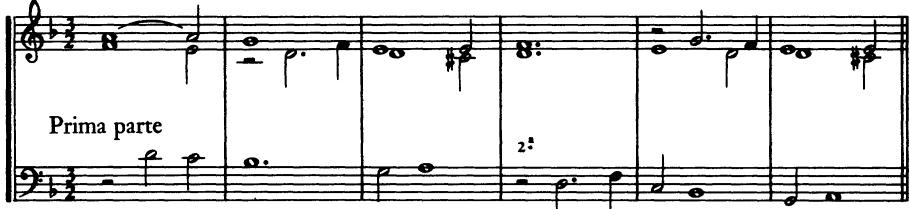
中文讲解
这是Example 4(a)的图注,说明该图为Girolamo Frescobaldi(杰罗拉莫·弗雷斯科巴尔迪)1627年于罗马出版的《Il secondo libro di toccate》(第二册托卡塔集)中的Partite sopra passacagli(基于passacagli的变奏集),取自第1-6小节以及第79-80小节。标题中的分号”;“系原PDF排版断行所致。该图选取开篇片段与收束片段,目的是同时展示passacaglia公式的"首句出现"与"循环重现”——这与前文"passacaglia formulae are placed in a prominent position, either through an appearance in the initial phrase or by frequent occurrence throughout the piece"的论述形成视觉证据。原图未提供,需查阅原PDF。
补充说明
Frescobaldi(1583-1643)是早期巴洛克意大利键盘音乐的核心作曲家,其1627年的第二册托卡塔集是早期键盘变奏体裁的重要文献。本节以Frescobaldi为分析对象,正是因为他的作品横跨passacaglia与ciaccona两类传统,可作为检验前文公式理论的理想样本。
第7段(P0080)
原文复述
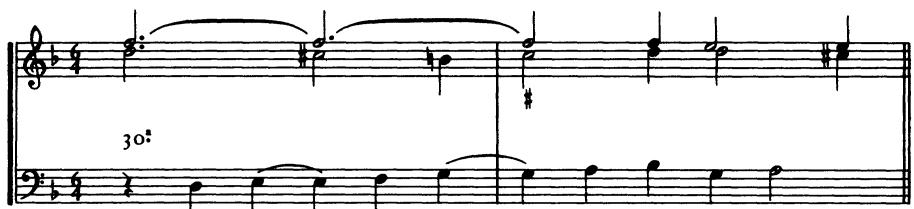
中文讲解
这是Example 4整体在原PDF中的图框位置标记。由于示例数据被省略,无法判断此处对应的是(a)与(b)之间的版式过渡区,还是整张示例的总图框。从上下文推断,它位于(a) Partite sopra passacagli乐谱与(b) Partite sopra ciaccona乐谱之间,起到版式分隔的作用。具体内容须查阅原PDF。
补充说明
本节中所有以”[图像说明:…]“形式出现的条目,均为原PDF因OCR或抽取限制未能解析的图框占位符,分析时须以正文与图注为准。
第8段(P0081)
原文复述
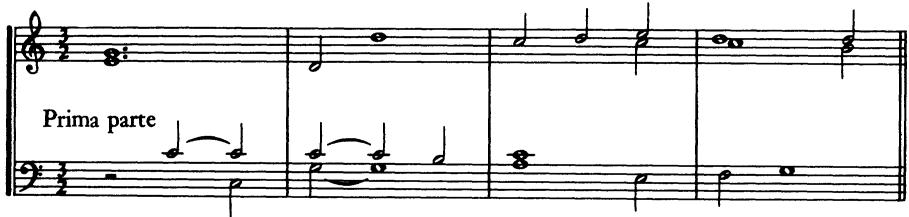
中文讲解
这是Example 4(b)的图注,提示该图为同一Frescobaldi 1627年第二册托卡塔集中的Partite sopra ciaccona(基于ciaccona的变奏集),取自第1-4小节与第41-44小节。选段策略与(a)相同:开篇+接近结尾,用以展示ciaccona公式的"主导地位"如何贯穿全曲。它与(a)并置,使读者可在同一版面上比较同一作曲家对两类公式的不同处理方式——这正是前文"passacaglia与ciaccona的区别在于哪组公式被突出"这一论点的视觉印证。原图未提供,须查阅原PDF。
补充说明
(a)与(b)所选小节范围略有差异——passacagli取mm. 1-6及79-80(共6+2=8小节),ciaccona取mm. 1-4及41-44(共4+4=8小节)——这种选段差异本身可能反映了两种变奏集在长度或结构上的不同。
第9段(P0082)
原文复述
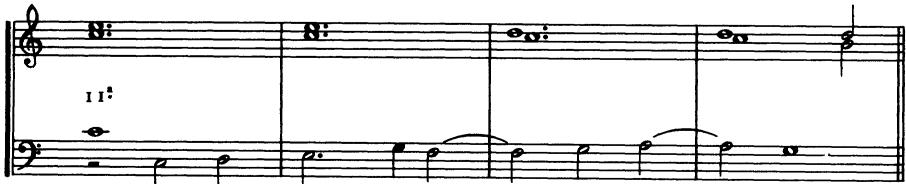
中文讲解
本条目同时承担两个功能:首先是图框占位符(图像数据被省略),其次是该占位符区域恰好承载了被截断的正文片段"stepwise motion the initial leap of P1"以及上标35,并紧接下一句"Sometimes formulae seem to combine…"。把P0075段末的"P₂ and most of the other passacaglia forms fill in with……“与此处"stepwise motion the initial leap of P1"接合起来,可还原出完整句子:“P₂ and most of the other passacaglia forms fill in with stepwise motion the initial leap of P₁."(P₂与大多数passacaglia公式以级进填充P₁的起始跳进。)随后"Sometimes formulae seem to combine"开启新一层论述:公式之间存在"组合"关系,例如P₄可由P₂与C₂合并而成。这意味着公式并非孤立存在,而是可以相互嫁接、生成新公式,这是对P0074"公式彼此通过和声或旋律派生相关"的进一步具体化。原图本身的内容仍须查阅原PDF。
补充说明
此处"P₄由P₂与C₂合并而成"揭示了本节论证的一个微妙之处:passacaglia公式与ciaccona公式并非两个互不相干的家族,而是可以相互借用、组合生成新公式的——这与P0074中"中立公式"的存在相呼应,也说明为何在实践中两类传统的界线有时模糊。
第10段(P0083)
原文复述
$^{35}$ An interest in the insertion of VII in P1 can be traced back even to early guitar music. Colonna presents in 1620 (Intavolatura di chitarra alla spagnuola [Milan]) a number of passacaglie that begin with III-VII and thus display a progression much like the second half of the schemes of the romanesca, passamezzo antico, and the one later called the folia. P2, as a melodic formula, finally emerges around 1640 in the guitar music of Foscarini, made possible by the development of the punteado style (the playing of selected notes on separate courses). P2 also occurs as a ritornello in some hymn settings of Monteverdi; see Tutte le opere di Claudio Monteverdi, ed. G. Francesco Malipiero (Asolo, 1926-42), XV, 606-638.
中文讲解
这是接续P0075/P0082所述"P₁起始跳进"的上标35对应的脚注,承担历史溯源职能。它说明了三点:(1)在P₁中插入VII级音的手法可追溯至早期吉他音乐——Colonna 1620年的《Intavolatura di chitarra alla spagnuola》(米兰出版的西班牙风格吉他曲集)中已有passacaglie以III-VII开始,其进行与romanesca(罗马内斯卡)、passamezzo antico(古帕萨梅佐)及后来称为folia(福利亚)的方案后半段相近;(2)P₂作为旋律化公式最终在1640年前后Foscarini的吉他音乐中成型,得以实现的关键是punteado(拨弦单音)弹奏技法的发展——它使演奏者能在多条琴弦上选择性地奏出单音,从而摆脱rasgueado扫弦对和弦根音进行的限制;(3)P₂还以ritornello形式出现在Monteverdi(蒙特威尔第)的某些赞美诗设置中,作者给出了Malipiero编《蒙特威尔第全集》1926-42年阿索洛版第XV卷第606-638页作为出处。整段脚注的功能是为前文公式历史提供文献锚点,把抽象论述落实到具体作曲家、作品与年代。
补充说明
脚注中提到的几类意大利公式——romanesca、passamezzo antico、folia——都是文艺复兴晚期至巴洛克早期吉他与键盘音乐中常见的固定低音模式,与passacaglia/ciaccona同属一个"公式家族”,这进一步支撑了作者"公式之间相互派生"的论点。Malipero的蒙特威尔第全集至今仍是研究蒙特威尔第作品的标准参考文献。
第11段(P0084)
原文复述
Downloaded from http://online.ucpress.edu/jams/article-pdf/23/2/302/152868/152868/830645.pdf by Indiana University Bloomington user on 22 July 2026
中文讲解
这是与P0076相同的PDF下载来源信息行(页脚水印),仅说明该页文本的电子来源。本栏无需教学性展开。
脚注 / 边栏 / 图表 / 附加信息(如有)
本节包含两条脚注与一组Example 4(含三个图框占位符)。脚注34(接续正文关于"根音进行 → 旋律化低音”)承担方法论说明与节奏限定职能:澄清C₃第四和弦在吉他媒介与其他媒介中的差异,并解释为何Ex. 5中公式不标具体时值。脚注35(接续P₁起始跳进的级进填充)承担历史溯源职能:把P₁插入VII的手法追溯至Colonna 1620,把P₂作为旋律公式的出现锚定在Foscarini约1640年的吉他音乐,并指出Monteverdi赞美诗中也存在P₂作为ritornello的现象。Example 4由(a) Partite sopra passacagli与(b) Partite sopra ciaccona两组乐谱并置而成,均取自Frescobaldi 1627年《Il secondo libro di toccate》,通过"开篇+接近结尾"的选段策略直观演示两类公式如何在实际作品中被突出。所有图框的具体内容须查阅原PDF。
💡 本节核心要点
- passacaglia-ciaccona ostinato的特征不是单纯的节奏或和声反复,而是若干熟悉的下行公式的反复出现,这些公式彼此通过和声或旋律派生相关。
- 公式可分为passacaglia型、ciaccona型和中立型三类;一首作品被归入passacaglia还是ciaccona传统,取决于哪一组公式被突出为中心。
- 所有公式起源于rasgueado吉他音乐,最初的和声原型为passacaglia的I-IV-V-I与ciaccona的I-V-vi-V,其他公式由此派生。
- 公式在历史演变中从"和弦根音进行"发展为"旋律化的低音线条”,关键转折是rasgueado向punteado弹奏技法的演进,使演奏者摆脱了原位三和弦的限制。
- ciaccona在原始舞蹈中有相对固定的节奏,passacaglia作为ritornello本无固定节奏;但在partite变奏集中passacaglia倾向于模仿ciaccona的节奏特征(如三拍子、第二拍重音),因此公式的具体时值是自由的。
- 公式之间可以相互组合,例如P₄由P₂与C₂合并生成,说明passacaglia与ciaccona两个家族并非彼此孤立,而是存在借用与嫁接关系。
🔑 关键术语
- passacaglia-ciaccona ostinato:一种基于反复出现的低音公式的巴洛克变奏技术,特征由"哪些公式被突出"决定,而非由节奏或和声本身单独决定。
- formulae(公式):本节专指passacaglia与ciaccona传统中那些熟悉的低音进行模式(如P₁、C₁、C₂、P₂等),彼此通过和声或旋律派生相关,可分为passacaglia型、ciaccona型与中立型。
- partite(变奏):意大利语,指围绕一个固定低音或公式而作的变奏集,本节讨论的Frescobaldi作品即为此种体裁。
- rasgueado(扫弦):西班牙吉他上用四指快速扫过琴弦的弹奏技法,受限于原位三和弦的根音进行,是passacaglia/ciaccona公式的最初载体。
- punteado(拨弦):在吉他多条琴弦上选择性奏出单音的弹奏技法,约1640年前后发展成熟,使公式得以从根音进行中解放出来,演变为旋律化的低音线条。
- ritornello(回归段):巴洛克音乐中反复出现的器乐段落,此处指passacaglia公式在Monteverdi赞美诗中作为回归段出现的形态。
C1-S10 [描述性拆分] The Principal Formulae of the Passacaglia-Ciaccona Ostinato
第1段(P0085)
原文复述
The paragraph supplies the label ‘Example 5’, which serves as the designator for the musical illustration that follows on this page, marking it as the fifth numbered example within the article’s sequence of figures.
中文讲解
P0085本身只是谱例的编号标签——‘Example 5’,标明紧接其后的那段音乐材料是全文的第五个谱例。它不携带任何论述信息,仅作为一个定位标记,告诉读者后接的谱例和说明属于全文谱例序列中的第五项。在版面上,它出现在谱例之前或之上,与P0086的标题共同构成进入正文的视觉引导。
补充说明
无额外补充(标签性内容);谱例的实际音乐内容(具体音符、和声、拍号等)不在本任务输入范围内,需参看原图。
第2段(P0086)
原文复述
The paragraph provides the caption ‘Some of the Principal Formulae of the Passacaglia-Ciaccona Ostinato’, which heads Example 5 and announces that the musical illustration following it presents a representative but non-exhaustive selection of the principal formulae belonging to the ostinato associated with both the passacaglia and the ciaccona.
中文讲解
P0086是Example 5的说明性标题(caption),告诉读者:谱例中呈现的是passacaglia与ciaccona共用ostinato体系里若干主要的formulae(公式化低音片段)。标题中’Some of’这一限定很重要——它意味着示例只是经过挑选的代表性样本,而非完整公式集合;这一限定与本段正文论述的’selection’(选择)主题形成显式呼应:作者自己在谱例中也以’selection’的方式呈现材料。同样关键的是’Principal’一词——所选并非任意formulae,而是经过判定具有核心地位者。Passacaglia与ciaccona共享同一ostinato体系(同一组formulae),区别在于两种体裁在这些formulae中各取所需,这一共享性正由联合标题所标明。
补充说明
谱例本身的音符内容(调性、节拍、和声走向)需参看原图。副标题中’Passacaglia-Ciaccona’以连字符连接,表示二者共用同一ostinato池,与下文P0087中’both the passacaglia and the ciaccona’对仗。
第3段(P0087)
原文复述
The selection of formulae is accomplished in a number of ways. One type of selection occurs simultaneously with the harmonic derivation of the formulae in guitar music. The insertion of a IV chord in C1 means that the passacaglia cannot be identified with all possible expansions of its basic I-IV-V pattern; therefore derivation is guided by selection. Extraordinary care seems to be taken in the early guitar books to maintain a harmonic distinction between the passacaglia and the ciaccona. Another result of selection is an increasing tendency to favor the minor mode for the passacaglia as a contrast to the major mode of the ciaccona. In the variation forms, however, selection also operates continually during the process of composition: from phrase to phrase the composer is free to choose or reject any of the formulae that have developed historically. This selection may be mere whim, or it may reflect some contemporary musical trend or characteristic of style. Frescobaldi, for example, never employs P1, and in general avoids the formulae with leaps; later in the century Storace again uses P1, evidence that the earliest forms are not forgotten. Selection may also be influenced by the medium. Early seventeenth-century vocal music, for example, seems to favor a basso ostinato, probably because it imparts a sense of musical organization with a minimum of interference with the declamation of the vocal part. Basso ostinato is, of course, one possible but highly restricted manner in which the ostinato of derived and selected bass formulae may be employed.
中文讲解
本段是本小节的核心论证段,把’selection of formulae’这一概念分成多个层面同时运作的机制,并明确各层之间的关系。
第一层:选择与derivation同步发生。所谓derivation,前文(C1-S9)已经展开——从基本I-IV-V三和弦进行推衍出各种formulae。本段加入一层新意:在吉他音乐中,C1(ciaccona主formula)插入了一个IV和弦,这一插入使得passacaglia不能被等同于该基本模式的所有可能扩展。换言之,passacaglia只选取了I-IV-V推衍空间中的一部分结果,而ciaccona通过C1中的IV和弦则扩展到了另一片区域。由此得出的关键命题是’derivation is guided by selection’——推衍过程本身受选择约束,并非纯逻辑展开。
第二层:早期吉他文献对两种体裁之间的和声差异表现出’extraordinary care’(一种近乎执意的区分意识)。‘seems’一词保留了作者对材料性质的判断保留(基于二手观察而非硬证据),但’effort’的程度判断是确定的。这与第一层互相印证:derivative的差异是体裁意识强化的结果。
第三层:调式偏好逐渐定型——passacaglia倾向小调、ciaccona倾向大调,形成对比。‘an increasing tendency’意味着这是历时演化的产物,而非初始就固定的特征;它把对formulae的考察从静态体系推进到风格史维度。
第四层:进入变奏形式后(‘in the variation forms, however’),选择变成作曲过程的实时操作——从乐句到乐句,作曲家有权采纳或拒绝任何历史formulae。这一句中的’however’是结构性转折:前文讨论的是体裁层面/历史层面的选择,这里转入个体作曲家层面,并把选择落到了’living practice’。选择可能是一时兴致(whim),更可能反映时代趋势或风格特征——这为第五、六两例作了铺垫。
第五层:Frescobaldi的例子具有反向佐证的力量。他从不使用P1,且一般避免含跳进的formulae。’never’与’in general’的区分很微妙:P1是被绝对回避的,跳进类formulae则是倾向于回避。后期同一世纪里Storace重新使用P1,被作者明确解读为’earliest forms are not forgotten’的证据——同一formula在Frescobaldi和Storace手中命运相反,恰是选择受时代风格左右的具体见证。
第六层:媒介影响。早期17世纪声乐作品(‘Early 17th century vocal music’)偏向basso ostinato,作者给出的原因假说:低音反复既提供organizational sense,又把对vocal declamation(声乐朗诵/歌词陈述)的干扰压到最低。‘seems’与’probably’再次表达作者的推断色彩;他把vocal declamation当作约束条件,把basso ostinato视为该约束的最优近似解。
末句做收束:basso ostinato只是由推衍并选择过的低音formulae构成的更广义ostinato体系的一种可能——而且是高度受限——的实现方式(‘one possible but highly restricted manner’)。这句话等于宣布:本节乃至全文的ostinato概念并不等同于basso ostinato,后者只是其中一个特例;其余formulae的呈现方式(未必反复、未必在最低音)同样属于该体系。
补充说明
本段内部术语关系与衔接:‘derivation’指C1-S9中由I-IV-V三和弦进行推衍出各formulae的过程;‘selection’是本节的核心概念,与’derivation’构成对偶——推衍决定哪些formulae可以被构造出来,选择决定其中哪些被实际采用。‘C1’即ciaccona的主formula,以插入IV和弦为标志(与只取I-V的passacaglia区分);‘P1’即passacaglia的主formula,本段通过Frescobaldi不采用与Storace再采用对其做进一步刻画。‘I-IV-V’是formulae推衍的起点和声框架。‘basso ostinato’即固定低音反复,是ostinato的一种特例实现。脚注36与脚注37在源段落中分别紧跟Storace(关于其后世纪使用P1的史料支持)与basso ostinato偏好的论述(关于早期17世纪声乐作品中此偏好的来源或旁证),其具体文字未包含在本次任务输入中,故仅按出现位置记录,不补写其内容;‘may be mere whim or may reflect some contemporary musical trend’中的’may…may…‘双重并列结构也需保留以体现作者列举时的并列不确定性。
第4段(P0088)
原文复述
The paragraph consists of a footer / watermark line identifying the article’s source: it was downloaded from the online edition of the Journal of the American Musicological Society (JAMS) hosted by the University of California Press, using the article PDF path 23/2/302, by a user affiliated with Indiana University Bloomington on 22 July 2026.
中文讲解
P0088是页脚的来源/下载水印行,提示该PDF的出处(JAMS期刊、UC Press在线版)、卷期号与起始页(Vol.23, No.2, p.302)、下载者单位(Indiana University Bloomington)以及下载日期(2026年7月22日)。它属于纯版式元数据,对本节内容没有任何论述性贡献,仅起到学术来源标注与版本追溯的作用。
脚注 / 边栏 / 图表 / 附加信息(如有)
本节段落包含两条脚注引用:脚注36紧接P0087中关于Storace在passacaglia-ciaccona史上较晚时段再次使用P1的论述,脚注37紧接关于早期17世纪声乐作品偏好basso ostinato的论述。两条脚注的具体文字均未包含在本次任务的源段落范围(P0085–P0088)之中,仅按其出现位置在此登记,不补写其内容。页面另附编号Example 5及其说明标题’Some of the Principal Formulae of the Passacaglia-Ciaccona Ostinato’,作为本节标题所述’principal formulae’的视觉示例,其音乐细节(具体formulae的音高、和声、节拍形态)需查阅原图方能确认。
💡 本节核心要点
- Formulae的selection不是单一动作,而是与derivation同步、与体裁绑定、与调式偏好绑定、在作曲中实时运作、并受媒介影响的复合机制。
- C1中插入IV和弦这一事实,是passacaglia不能等同于I-IV-V全部扩展的关键证据——它表明selection嵌入到了derivation本身的源头之中。
- Passacaglia—小调、ciaccona—大调的调式对照是selection历时累积的产物(‘an increasing tendency’),而非最初就固定的特征。
- 变奏作曲中从乐句到乐句的自由取舍,既可是一时兴致,也可是时代风格折射;Frescobaldi排斥P1及跳进formulae、而后期Storace重新启用P1,正是同一formula被不同时代作曲家的相反选择所左右的具体例证。
- 早期17世纪声乐作品偏好basso ostinato,作者给出的理由是它在不干扰vocal declamation的前提下提供组织感——vocal declamation被设为约束条件。
- Basso ostinato只是由推衍并选择过的低音formulae构成的更广义ostinato的一种高度受限的实现方式(‘one possible but highly restricted manner’),二者不应等同。
🔑 关键术语
- ostinato:反复出现的固定音乐片段;本节特指passacaglia-ciaccona体系下由低音formulae构成的反复模式,是本节论述的更广义对象(涵盖但不等于basso ostinato)。
- basso ostinato:固定低音反复,是ostinato的一种特殊实现方式,被本段定性为对声乐朗诵干扰最小的ostinato形态。
- derivation:由基本I-IV-V三和弦进行推衍出各formulae的过程,C1-S9已展开;本节证明其在吉他材料中受selection引导而非纯逻辑展开。
- selection:在历史可用formulae中进行取舍的机制,是本节核心概念;同时运行于derivation、体裁区分、调式偏好、个体作曲、媒介适配五个层面。
- passacaglia:本节讨论的两种体裁之一,对应主formula P1,本段被关联到小调偏好;C1-S9已建立其在公式体系中的位置。
- ciaccona:本节讨论的另一体裁,对应主formula C1(含IV和弦),本段被关联到大调偏好;C1即ciaccona主formula的代码化名称。
- I-IV-V:主—下属—属三和弦进行,是formulae推衍的起点和声框架;本段用以界定passacaglia与所有可能扩展之间被selection切开的边界。
- C1:ciaccona的主formula,特征是包含IV和弦,正是该IV和弦使得ciaccona扩张出passacaglia所不取的I-IV-V扩展空间。
- P1:passacaglia的主formula;本段通过Frescobaldi的全然回避与Storace后世的重新启用,对其在历史使用中的起伏做了实证性刻画。
- IV chord:下属和弦;其出现在C1中是区分passacaglia与ciaccona和声走向的关键所在,也正是selection在derivation源头作用的产物。
C1-S11 [描述性拆分] Form Building, Mode, and Historical Continuity to Bach
第1段(P0089)
原文复述
The selection of formulae is also intimately connected with the process of form building. The Italian composers are most concerned, in general, with constant variation, so that no phrase is ever repeated exactly. There is a tendency toward the pairing of phrases; occasionally phrases are associated in larger sections that are marked off by meter, key, or mode (Frescobaldi’s Cento partite sopra passacagli, 38 for example, or the works of Storace). The French, on the other hand, seem more interested in sectional form building than in the process of variation itself. Thus a group of phrases may act as a refrain in a rondeau form. The French treatment of the passacaglia and ciaccona illustrates the great variety of structures that can result from the selection of formulae. In spite of some limitations, then, the passacaglia-ciaccona ostinato allows considerable freedom for creative variation.
中文讲解
本段讨论formulae(公式化乐汇)的选择如何与作品形式建构紧密相连,并对比意大利与法国两种截然不同的处理路径。意大利作曲家总体更关心"持续变化"(constant variation)——任何乐句都不完全重复,倾向于将乐句成对安排,并偶尔通过拍号、调性或调式把乐句归入更大的段落,Frescobaldi的Cento partite sopra passacagli与Storace的作品即为代表。法国作曲家则更看重"分曲式形式建构"(sectional form building)而非变化本身,于是成组的乐句可以作为rondeau(回旋曲式)中的叠句(refrain)出现。法国对passacaglia与ciaccona的处理正展示了同一组formulae能够衍生出结构的巨大多样性。结尾作者总结:尽管存在某些限制,passacaglia-ciaccona ostinato依然为作曲家提供了相当大的创造性变化空间。本段是前文formulae技术讨论向"乐汇如何被组织成完整曲式"视角的转折,承前启后,为下一段讨论formulae承担"身份保留"功能做铺垫。
补充说明
正文中以角标形式标注的两个例子——Frescobaldi的Cento partite(角标38)与Storace的作品——分别在本节之后的脚注38与脚注36中获得详细的版本与文献说明。
第2段(P0090)
原文复述
No rhythmic characteristic occurs frequently enough from composer to composer that it can act as an identifying mark for either the passacaglia or the ciaccona. Often, but not always, the two forms are distinguished by mode. The principal manner, however, in which the identity of each form is preserved is through the action of the formulae. The formulae constitute the heart of the special ostinato technique. Furthermore, the formulae provide a historical continuity that begins with the single phrases of Montesardo in 1606 and leads ultimately to the complex development of the forms in France and Germany. A number of the passacaglia forms in Ex. 5 end with the three-note progression marked by a bracket (6-4-5). This melodic fragment may constitute a link between the ostinato of derived and selected bass formulae, as it developed in Italy during the 17th century, and the passacaglia themes of André Raison 39 and Johann Sebastian Bach. 40
中文讲解
本段集中处理三个相互关联的主题:身份识别、历史延续、具体乐汇的桥梁作用。第一层意思是"否定"——没有任何一个节奏特征在不同作曲家之间足够频繁地出现,因此无法充当passacaglia或ciaccona的识别标记;调式"通常但并非总是"(often, but not always)能区分二者;真正稳定地保留两种形式身份的,是formulae的运作本身——formulae构成这种特殊ostinato技巧的"心脏"。第二层意思是formulae还提供了一条历史连续性的脉络:从1606年Montesardo的单一乐句,延伸到法国与德国对这两种形式的复杂发展。第三层是具体乐汇证据:谱例5(Ex. 5)中许多passacaglia形式都以方括号标注的三音进行(6-4-5)结束,作者推测这个旋律片段可能构成一条纽带,将17世纪意大利"派生与选定低音formulae的ostinato"与Raison及Bach的passacaglia主题连接起来。本段是整节论证的收束:将Bach的passacaglia追溯回意大利formulae传统,为整章的历史叙述画出最终延伸线。
补充说明
“6-4-5"指音级进行,即从六级音下行至四级再到五级的旋律片段;Ex. 5即文中谱例5;“derived and selected bass formulae”(派生与选定低音formulae)是前文已建立的两种formulae类型之区分。
第3段(P0091)
原文复述
36 Bernardo Storace, Selva di varie compositioni d’intavolatura per cimbalo ed organo (Venice, 1664); transcribed by Barton Hudson in Corpus of Early Keyboard Music, Vol. VII (Rome: American Institute of Musicology, 1965).
中文讲解
这是脚注36的书目信息,注明Storace键盘作品集《Selva di varie compositioni d’intavolatura per cimbalo ed organo》(威尼斯,1664年)的版本来源:作品集由Barton Hudson转写,收入《Corpus of Early Keyboard Music》第七卷(罗马:American Institute of Musicology,1965年出版)。该脚注对应正文中Storace作品的例子,作用是为文本中提到的Storace作品提供原始与现代版本依据,便于读者进一步查阅原文或转写本。
第4段(P0092)
原文复述
37 Two vocal pieces by Frescobaldi, however, do not use a basso ostinato strictly: Aria di passacaglia: “Così mi disprezzate?” from Primo libro d’arie musicali (Florence, 1630), and Ceccona a due tenori: “Deh, vien da me” from Il secondo libro d’arie musicali (Florence, 1630). They are transcribed by Helga Spohr in Musikalische Denkmäler, IV (Mainz: B. Schott’s Söhne, 1960), 27-30 and 76-79. Both pieces clearly illustrate the ostinato of derived and selected bass formulae, but include modulation and non-ostinato sections of recitative.
中文讲解
这是脚注37,对正文Frescobaldi的讨论做出限定与补充。作者指出Frescobaldi有两首声乐作品并未严格使用basso ostinato:1630年佛罗伦萨《Primo libro d’arie musicali》中的"Così mi disprezzate?"(标记Aria di passacaglia),以及同年《Il secondo libro d’arie musicali》中的"Deh, vien da me”(Ceccona a due tenori)。脚注还给出了现代转写本的信息:Helga Spohr转写,载于《Musikalische Denkmäler》第四卷(美因茨:B. Schott’s Söhne,1960年),分别位于第27-30与76-79页。作者特别强调这两首作品虽然清晰展示了"派生与选定低音formulae的ostinato",但同时包含转调段落与宣叙调性质的非ostinato段落。该脚注兼具"例外说明"与"材料索引"功能:既提醒读者注意并非所有Frescobaldi的passacaglia/ciaccona都严格遵守ostinato原则,又为研究者提供查阅路径。
补充说明
本脚注与正文的关系为补充而非反驳:前文主要讨论Frescobaldi的键盘作品,此处补上两首声乐作品的特殊处理方式。
第5段(P0093)
原文复述
38 Concerning this piece, see Walker, pp. 318-319, and also Willi Apel, Geschichte der Orgel- und Klaviermusik bis 1700, pp. 465-467. When the seventy-eight passacaglia variations of the Cento partite are added to those in the two balletto-corrente-passacagli groups elsewhere in the same book, the result is one hundred and three, of which four are modulating phrases. Because this number is so close to cento and also because of a strange divergence between the Table of Contents, the title, and the actual contents of the book, I have suggested in my dissertation a possible rearrangement of the pieces in the book.
中文讲解
这是脚注38,兼具文献指引与作者本人研究新见,针对正文提到的Frescobaldi《Cento partite sopra passacagli》。首先给出两处参考来源:Walker著作第318-319页,以及Willi Apel《Geschichte der Orgel- und Klaviermusik bis 1700》第465-467页。接着给出具体数字:《Cento partite》本身含78首passacaglia变奏,加上同书中另外两套balletto-corrente-passacagli组中的变奏,合计103首,其中4首为转调乐句。由于"cento"在意大利语中意为"一百",与实际总数103非常接近,加之书的目录、标题与实际内容之间存在奇特分歧,作者表明在其博士论文中曾提出对该书曲目次序重新编排的可能性。该脚注功能有三:提供文献检索入口、给出关键统计数字、并预告作者对作品编排问题的独立判断。
补充说明
“cento"在意大利语中本义为"一百”,此处揭示书名"百首"与实际数量103之间的微小差异,这是作者判断曲目次序可能需重排的语言线索之一。
第6段(P0094)
原文复述
Downloaded from http://online.ucpress.edu/jams/article-pdf/23/2/302/152868/830645.pdf by Indiana University Bloomington user on 22 July 2026
中文讲解
这是页面下载水印信息,标识本文档由Indiana University Bloomington用户于2026年7月22日从UC Press在线期刊PDF下载,文章路径显示属于JAMS(Journal of the American Musicological Society)第23卷第2期第302页起的文章。属版面元数据,非正文内容。
第7段(P0095)
原文复述
University of California, Los Angeles
中文讲解
这是作者所属机构标题行,标识作者研究单位为University of California, Los Angeles(加利福尼亚大学洛杉矶分校,简称UCLA)。属元数据层级信息。
第8段(P0096)
原文复述
Downloaded from http://online.ucpress.edu/jams/article-pdf/23/2/302/152868/830645.pdf by Indiana University Bloomington user on 22 July 2026
中文讲解
这是页面下载水印信息,与P0094相同,标识该页PDF下载来源与下载者信息。属版面元数据。
第9段(P0097)
原文复述
39 Christe, Trio en passacaille from his Messe du deuziesme ton in Livre d’orgue (Paris, 1687); printed in Alexandre Guilmant, Archives des maîtres de l’orgue, II (Paris: Durand, 1898), 37.
中文讲解
这是脚注39的书目信息,为正文提到的André Raison作品提供版本依据。Raison的Messe du deuziesme ton(《第二调弥撒》)收录于《Livre d’orgue》(巴黎,1687年),其中的Christe, Trio en passacaille一曲印行于Alexandre Guilmant所编《Archives des maîtres de l’orgue》第二卷(巴黎:Durand出版社,1898年)第37页。该脚注作用是让读者能够查阅Raison的passacaille具体乐谱,从而验证作者关于6-4-5三音进行作为意大利传统与法国—德国传统连接点的论述。
第10段(P0098)
原文复述
40 The evolution of the Bach Passacaglia theme is described in more detail in my article “The Passacaglia and Ciaccona in Italian Keyboard Music of the 17th Century,” The Diapason, LX, No. 12 (November, 1969), pp. 22-24, and LXI, No. 1 (December, 1969), pp. 6-7.
中文讲解
这是脚注40的自我引用,作者指引读者查阅其本人发表于《The Diapason》杂志的两期文章以获取Bach Passacaglia主题演变过程的更详细论述。文章题为"The Passacaglia and Ciaccona in Italian Keyboard Music of the 17th Century",分两期刊载:第LX卷第12期(1969年11月)第22-24页,以及第LXI卷第1期(1969年12月)第6-7页。该脚注作用有二:明示作者已在其他刊物中详细讨论过Bach Passacaglia主题的演变,使本节的相关论断可与该文互参;同时也提示研究者进一步阅读的明确路径。
脚注 / 边栏 / 图表 / 附加信息(如有)
本节包含五条脚注(36-40)与两处页面元数据。脚注36为Storace键盘曲集《Selva di varie compositioni》(1664)的转写本版本信息(Barton Hudson转写,载Corpus of Early Keyboard Music第VII卷),是P0089中Storace例子的文献依据;脚注37指出Frescobaldi有两首声乐作品(《Primo/Secondo libro d’arie musicali》,1630)虽展示formulae ostinato但并不严格使用basso ostinato,因含转调与宣叙性段落,并给出Helga Spohr在《Musikalische Denkmäler》IV的转写本信息;脚注38针对《Cento partite》给出Walker与Apel两处文献指引,并报告作者对曲目次序重排的博士论文观点;脚注39给出Raison《Messe du deuziesme ton》中Christe, Trio en passacaille的Guilmant版印刷出处;脚注40为作者本人前期文章的自我引用,引导读者查阅1969年发表于《The Diapason》LX卷与LXI卷关于Bach Passacaglia演变的详细论述。两处页面元数据(P0094与P0096)为UC Press在线PDF下载水印,P0095为作者机构(UCLA)标识行,均属版面信息而非论述内容。
💡 本节核心要点
- Formulae的选择与形式建构紧密相关:意大利作曲家倾向于"持续变化"(不重复乐句)并将乐句成对组织,法国作曲家则倾向于"分曲式建构"并将formulae组织成rondeau中的叠句
- Passacaglia与ciaccona的身份识别不能依赖节奏特征,调式也只能"通常但并非总是"地区分二者,二者的稳定身份主要靠formulae本身的运作来保留
- Formulae构成了这种ostinato技巧的核心(“the heart of the special ostinato technique”),既是身份识别依据,也是历史延续的载体
- Formulae提供了一条历史连续性的脉络:从1606年Montesardo的单一乐句出发,延伸至法国与德国对这两种形式的复杂发展
- 谱例5中以方括号标记的6-4-5三音进行可能是连接17世纪意大利"派生与选定低音formulae ostinato"与Raison、Bach passacaglia主题的具体音乐语汇桥梁
- 整节的论证终点是将Bach的passacaglia追溯回意大利formulae传统,从而将17世纪意大利键盘音乐置于欧洲巴洛克passacaglia-ciaccona演进链条的起点位置
🔑 关键术语
- formulae:公式化乐汇,指具有固定特征并被反复使用以构建ostinato的短小音乐片段,是本节ostinato技术的核心元素,既承担形式建构职能,也承担历史连续性传递职能
- ostinato (basso ostinato):固定低音或固定音型,即反复出现的低音或音型;本节讨论的passacaglia-ciaccona正以此为结构原则,但脚注37指出Frescobaldi有两首声乐作品虽采用formulae ostinato却不严格使用basso ostinato
- rondeau:回旋曲式;本节中作为法国作曲家将formulae组织成分曲式叠句(refrain)的形式框架,与意大利作曲家"持续变化"倾向形成对比
- Cento partite sopra passacagli:Frescobaldi的passacaglia变奏集,书名中"cento"意为一百;脚注38指出该书实际含103首变奏(其中4首转调),且目录、标题与内容存在分歧
- 6-4-5 progression:指音级六度下行到四级再到五级的三音进行;本节提出谱例5中许多passacaglia形式以此片段结束,并推测它可能是连接意大利ostinato传统与Raison(脚注39)、Bach(脚注40)passacaglia主题的桥梁
- Montesardo (1606):本节将1606年Montesardo的单一乐句标记为formulae历史连续性的起点;整条脉络由此延伸到法国与德国形式的复杂发展
- derived and selected bass formulae:“派生型与选定型低音formulae"的区分;前文已建立的两种formulae生成方式,本节在论证历史连续性时再次援引