目录
C1 Introduction and Background
- C1.S1 [描述性拆分] Introduction
- 页码:1-1
- C1.S2 The Uses of Keyboard Music: Instruments and Performance Practice
- 页码:1-2
C2 Notation and Performance Practices
- C2.S1 Notation
- 页码:3-3
- C2.S2 Performance Practices
- 页码:3-4
C3 Composers and Repertories
- C3.S1 [描述性拆分] Composers and Repertories: Overview
- 页码:5-5
C4 Hans Leo Hassler and the Venetian Style
- C4.S1 Hans Leo Hassler and the Venetian Style
- 页码:5-6
C5 Sweelinck and His Students
- C5.S1 [描述性拆分] Sweelinck’s Variations and Echo Fantasias
- 页码:6-8
- C5.S2 [描述性拆分] Scheidt and Northern-German Followers
- 页码:8-8
C6 Heinrich Scheidemann
- C6.S1 [描述性拆分] Scheidemann’s Praeambula and the Stylus Fantasticus
- 页码:9-10
- C6.S2 [描述性拆分] Scheidemann’s Liturgical Settings
- 页码:10-10
C7 Tunder and Reincken and Foreign Inspirations
- C7.S1 Tunder and Reincken and Foreign Inspirations
- 页码:10-13
C8 Dieterich Buxtehude
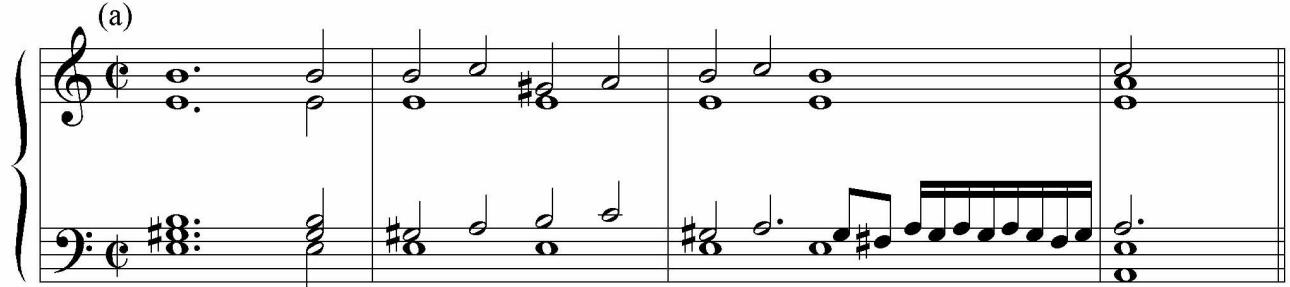
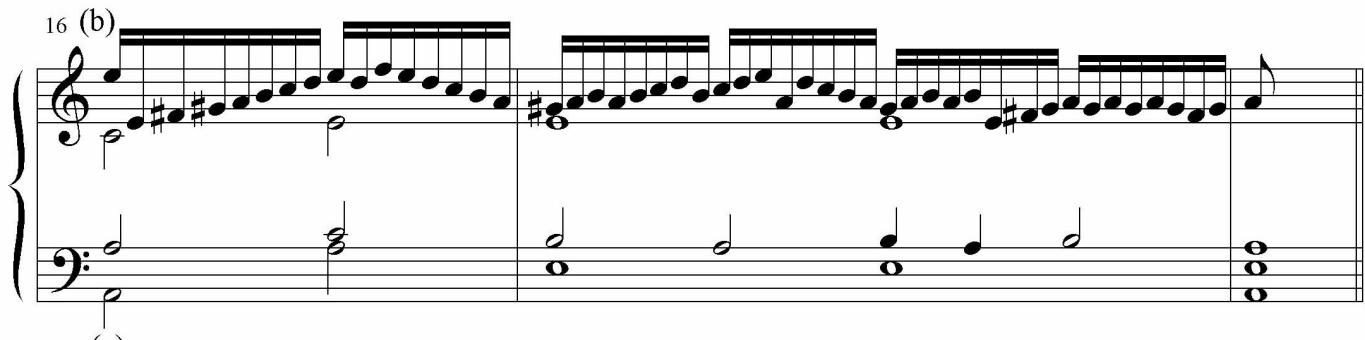
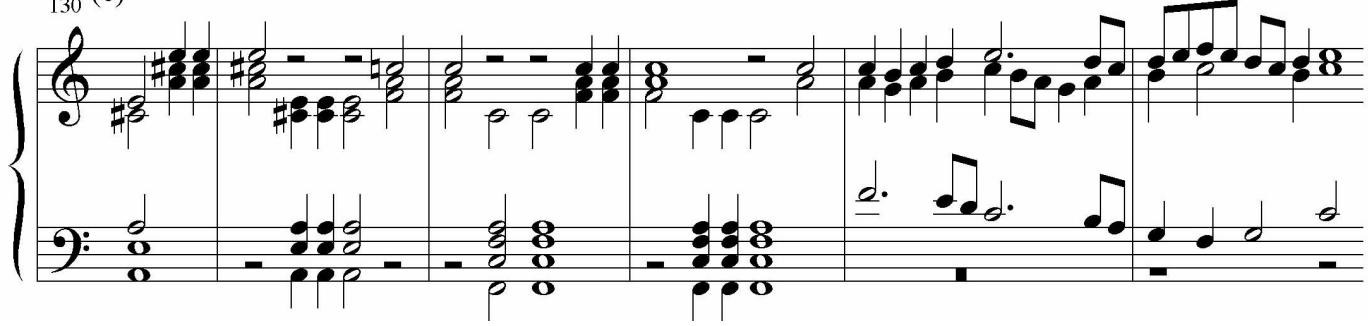
- C8.S1 [描述性拆分] Buxtehude’s Ostinato Works and Praeludia
- 页码:13-14
- C8.S2 [描述性拆分] Buxtehude’s Toccatas and Chorale Settings
- 页码:15-16
- C8.S3 [描述性拆分] Northern Followers: Lübeck, Bruhns, Böhm, and Handel
- 页码:16-17
C9 Froberger
- C9.S1 [描述性拆分] Froberger: Biography and Working Method
- 页码:17-18
- C9.S2 [描述性拆分] Froberger’s Organized Collections
- 页码:19-19
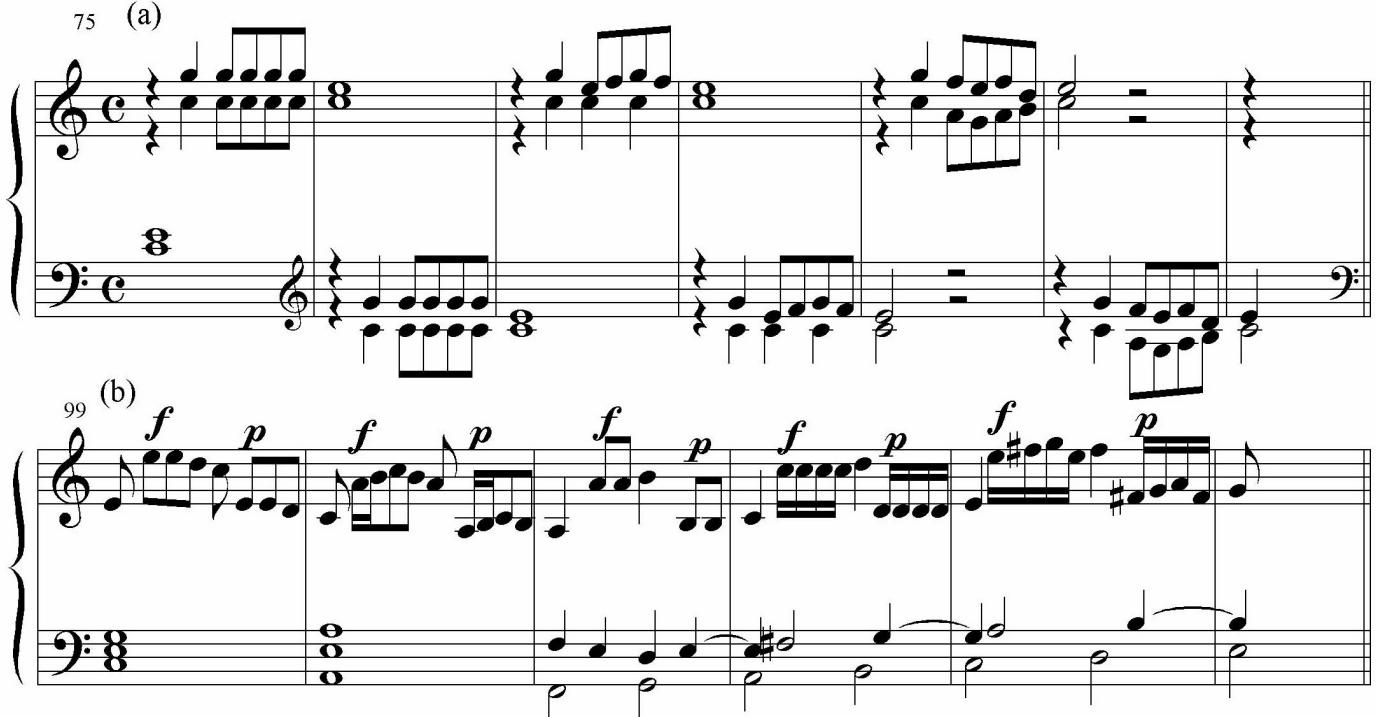
- C9.S3 [描述性拆分] Froberger’s Toccatas and Contrapuntal Pieces
- 页码:20-21
- C9.S4 [描述性拆分] Froberger’s Suites and Dance Movements
- 页码:21-23
C10 The Frescobaldi Tradition: Kerll and Muffat
- C10.S1 [描述性拆分] Kerll, Poglietti, and Viennese Successors
- 页码:23-23
- C10.S2 [描述性拆分] Fux and the Muffats
- 页码:24-24
C11 South- and Central-German Composers at the Turn of the Eighteenth Century
- C11.S1 [描述性拆分] Krieger, Fischer, Kuhnau, and Pachelbel: Overview
- 页码:24-25
- C11.S2 [描述性拆分] Fischer’s Ariadne Musica and Kuhnau’s Sonatas
- 页码:25-26
- C11.S3 [描述性拆分] Pachelbel: Chorale Settings and Magnificat Fugues
- 页码:26-27
C1.S1 [描述性拆分] Introduction
第1段(P0001)
原文复述
Seventeenth-Century Keyboard Music in Dutch- and German-Speaking Europe David Schulenberg (2004, updated 2021)
中文讲解
This paragraph is the heading line of the section. It performs three functions in sequence. First, it states the title of the essay: “Seventeenth-Century Keyboard Music in Dutch- and German-Speaking Europe,” which fixes the chronological window (the 1600s) and the geographic window (Dutch- and German-speaking lands, which in practice extends to include Austria as a German-speaking region, as the body text confirms). Second, it identifies the author, David Schulenberg, a scholar known for work on Baroque keyboard music and the Bach family. Third, it supplies two dates: 2004 for the original publication and 2021 for a later update, which signals to the reader that the text reflects scholarly understanding as of 2021 and may incorporate revisions made in that update. As a heading, this line does not advance the argument; rather, it sets the topic, scope, and provenance of the entire essay that follows.
第2段(P0002)
原文复述
Keyboard music is central to our understanding of the Baroque, particularly in northern Europe, whose great church organs were among the technological and artistic wonders of the age. This essay treats of the distinctive traditions of keyboard music in Germany, Austria, and the Netherlands before the time of Johann Sebastian Bach and other eighteenth-century musicians.
中文讲解
本段是全文的论点引言,承担两项任务。
第一,它为整篇论文确立了一个宏观论断:理解巴洛克时期(尤其北欧)离不开键盘音乐。作者使用"central to our understanding of the Baroque"这一表述,意味着键盘音乐并非巴洛克诸多体裁中的一个旁支,而是观察巴洛克美学、宗教与社会的一把关键钥匙。紧接着,作者以"particularly in northern Europe"把焦点收窄到北欧,并以"great church organs were among the technological and artistic wonders of the age"说明这一中心地位的双重根据——既因为教堂管风琴是那个时代在机械、工艺与声学上的技术奇观,也因为它们承载着最高的艺术表现。这一并列(technological / artistic)暗示后文会同时关注乐器、演奏实践与作曲实践。
第二,它圈定了论文的处理范围:地理上涵盖德国、奥地利与荷兰三国;时间上限定在约翰·塞巴斯蒂安·巴赫及其他十八世纪音乐家兴起之前。“before the time of Johann Sebastian Bach and other eighteenth-century musicians"这一时序断点至关重要——它把巴赫及其后继者从本节论述中明确排除,使本文得以专注于十七世纪的键盘传统,而不与后来的盛期巴洛克或古典早期混合。这一断点也呼应了上一行所暗示的"北欧管风琴奇观”,因为正是在此断点之前的时期,北欧的管风琴文化(尤其德国与荷兰)形成了独特的地域传统。
因此,本段在论证结构中起到"立题与划界"的双重作用,为后文关于具体作曲家、即兴传统与教学传统的讨论提供前提。
补充说明
作者此处将"Netherlands"(荷兰)单列,而将奥地利归入德语文化圈,与标题中"Dutch- and German-Speaking Europe"的提法一致;这一处理方式表明本节是以语言—文化圈而非现代国界来划分研究范围的。
第3段(P0003)
原文复述
Baroque keyboard music followed in a continuous tradition that of the sixteenth century, when for the first time major composers such as William Byrd (1543–1623) in England and Andrea Gabrieli (ca. 1510–1586) in Italy had created repertories of original keyboard music equal in stature to their contributions in other genres. Such compositions joined improvised music and arrangements of vocal and instrumental works as the foundations of keyboard players’ repertories. Nevertheless, the actual practice of keyboard players during the Baroque continued to comprise much improvisation. Keyboard players routinely accompanied other musicians, providing what is called the basso continuo through the improvised realization of a figured bass.1 On the relatively rare occasions when solo keyboard music was heard in public, it often took the form of improvised preludes and fantasias, as in church services and the occasional public organ recital. Hence, much of the Baroque repertory of written compositions for solo keyboard instruments consists of idealized improvisations. The capacity of keyboard instruments for self-sufficient polyphonic playing also made them uniquely suited for the teaching and study of composition. Thus a second large category of seventeenth-century keyboard music comprises models for good composition, especially in learned, if somewhat archaic, styles of counterpoint.
中文讲解
本段是引言部分的论证主体,依次铺设了五层论点,为读者勾勒出十七世纪键盘音乐的全景。
第一层(与十六世纪的一贯传统):作者开宗明义指出巴洛克键盘音乐延续自十六世纪的传统,并以威廉·伯德(William Byrd, 1543–1623,英格兰)与安德烈亚·加布里埃利(Andrea Gabrieli, ca. 1510–1586,意大利)为代表。这一举例具有精心选择的意义:伯德代表英国维金农学派与为键盘而写的系统化作品,加布里埃利代表威尼斯—意大利北部的复调传统。两人共同说明了一个转折点——“for the first time”——即十六世纪首次出现地位等同于其他体裁的"原创键盘音乐曲目"(repertories of original keyboard music equal in stature to their contributions in other genres)。这意味着,在此之前,键盘曲目多为声乐或器乐曲的改编或即兴演奏,缺乏独立地位。
第二层(曲目基础):这些原创作品与即兴音乐、以及声乐/器乐作品的改编(arrangements of vocal and instrumental works)一起,构成了键盘演奏者曲目的三大支柱。这一并置告诉读者:研究十七世纪键盘音乐不能只看"写下来的"作品,必须同时考虑口头/即兴传统和改编传统。
第三层(转折——即兴的持续中心地位):“Nevertheless"一词标志着一个重要转折。尽管原创作品已成谱面曲目的核心,“actual practice”(实际演奏实践)仍然以大量即兴为主。接着,作者用两个场景具体落实这一点:其一,键盘演奏者日常伴随其他音乐家,通过"即兴实现数字低音”(the improvised realization of a figured bass)来提供所谓的"通奏低音"(basso continuo)。这意味着数字低音记谱法只给出一个骨架,真正的演奏由键盘演奏者在现场即兴填充——这一做法在巴洛克时期是常态,而非例外。其二,在相对罕见的公开独奏场合(relatively rare occasions when solo keyboard music was heard in public),公开演奏的形式常常是即兴的前奏曲(preludes)与幻想曲(fantasias),如在教堂礼拜中以及偶尔的公开管风琴音乐会上。
第四层(写下来的曲目的真实性质):综合上述两点,作者得出一个具有方法论意义的结论:“much of the Baroque repertory of written compositions for solo keyboard instruments consists of idealized improvisations”——巴洛克时期留传下来的大量独奏键盘书面作品,本质上是"理想化的即兴"。换言之,作曲家落笔写下这些曲子时,心中模拟的是优秀即兴演奏者会做的事;书面形式是即兴传统的沉淀与提炼。这一论断对于读者理解后续讨论的体裁(如前奏曲、托卡塔、幻想曲等)至关重要。
第五层(教学与对位体裁):最后,作者引入第二条大线索。键盘乐器由于具备"自足的多声部演奏能力"(self-sufficient polyphonic playing),能在一架乐器上独立演示对位结构,因此被独特地、独一无二地(uniquely)用于作曲教学与学习。由此衍生出十七世纪键盘音乐的"第二大类"——“作为优秀作曲范例”(models for good composition)的作品,尤其是那些运用"博学的、稍显古风的"(learned, if somewhat archaic)“对位风格”(styles of counterpoint)的曲子。所谓"learned"指学院化、理论化的高级复调技术;“archaic"指这些风格刻意保留了较古老的(如十六世纪甚至更早的)复调语汇——这与第四层中"原创作品延续十六世纪传统"形成呼应:教学曲目以古老风格为模板,正是为了让学习者通过键盘这种便利的载体掌握艰深的传统技术。
总体上,本段以"即兴—书面化—教学"三足鼎立的方式为十七世纪键盘音乐勾勒出一个立体图景,并隐含了后文将分两条线索展开的预告:一是作为即兴艺术结晶的独奏曲目,二是作为作曲教科书的复调作品。脚注上标1指向关于数字低音即兴实现的进一步说明,本节正文未展开。
补充说明
脚注标记 1 出现在 “figured bass” 一词之后,提示该术语有附加注释;脚注的正文不在本节 source_paragraphs 之内,需查看原页脚注方能确定其具体内容,故此处不作转述。“equal in stature to their contributions in other genres” 这一措辞是理解十六世纪键盘音乐独立化的关键短语:它强调的是体裁地位的对等,而非音乐品质的高低。
脚注 / 边栏 / 图表 / 附加信息(如有)
本节含一处脚注标记(1),附于 P0003 中 “figured bass” 之后;脚注正文未包含在 source_paragraphs 中,仅作标记保留,需查阅原页脚注方能获得其内容。P0001 为标题与作者署名行,P0002–P0003 为正文段落;本节无图、无表、无乐谱、无边栏。
💡 本节核心要点
- 键盘音乐(尤其北欧的教堂管风琴传统)是理解巴洛克艺术与技术成就的核心;本文以此为切入点研究十七世纪德语区与荷兰的键盘传统。
- 本节明确把研究范围限定在德国、奥地利与荷兰,并划定时间上限在约翰·塞巴斯蒂安·巴赫及其他十八世纪音乐家兴起之前。
- 十七世纪键盘音乐延续自十六世纪,威廉·伯德与安德烈亚·加布里埃利代表了原创键盘曲目首次获得与其他体裁同等地位的历史转折。
- 即兴演奏在巴洛克键盘实践中持续居于中心地位:通奏低音中的数字低音实现、独奏场合的前奏曲与幻想曲,皆以即兴为常态;因此书面化的独奏曲目本质上多为"理想化的即兴”。
- 键盘乐器因其自足的多声部能力,被用于作曲教学,从而衍生出以"博学而稍显古风的对位风格"为特征的作曲教学曲目,构成十七世纪键盘曲目的第二大类别。
- 本段以"即兴传统"与"教学/对位传统"两条线索为后文的具体讨论预设了双重框架。
🔑 关键术语
- Baroque:本节指 17 世纪至 18 世纪初的音乐时期;作者将键盘音乐(尤其北欧)作为理解该时期艺术与技术成就的关键切入点。
- basso continuo:通奏低音,巴洛克时期由键盘乐器(通常为管风琴或羽管键琴)持续提供低音线条与和声填充的伴奏实践;其实际音响由键盘演奏者通过即兴实现数字低音产生。
- figured bass:数字低音,在低音音符下方标注数字或符号以提示应奏和声的记谱方式;其实现依赖于演奏者的即兴能力,是巴洛克键盘演奏者日常工作的核心。
- preludes and fantasias:前奏曲与幻想曲,在本节中作为公开独奏场合(教堂礼拜、偶发管风琴音乐会)常见的即兴体裁;它们的存在方式印证了即兴传统在巴洛克仍十分活跃。
- idealized improvisations:理想化的即兴,作者用以概括巴洛克书面化独奏键盘曲目的本质——书面形式是对优秀即兴实践的提炼与凝固。
- counterpoint:对位,本节特指十七世纪键盘音乐中作为作曲教学模型的"博学而稍显古风"的对位风格,强调对传统复调语汇的学习与延续。
C1.S2 The Uses of Keyboard Music: Instruments and Performance Practice
第1段(P0004)
原文复述
The Uses of Keyboard Music: Instruments and Performance Practice is the section heading, marking a turn to the practical and material conditions under which seventeenth-century keyboard music was made and used: which instruments were played, how they differed by region and type, and how performers actually realized the music on them.
中文讲解
本段是章节标题,标志论述从一般性背景转入17世纪键盘音乐的实际用途、所涉及的乐器类型以及演奏实践。标题中"Uses"指向功能层面(伴奏、独奏、教学、公开演出等),“Instruments and Performance Practice"指向物质条件(乐器构造、音色、律制)与演奏惯例;两者结合为本节设定了一个由"乐器物质条件→律制与谱面限制→演奏者即兴决策→公开演出语境→曲目出版与受众"层层推进的论题框架。
第2段(P0005)
原文复述
Each of the basic seventeenth-century keyboard types—organ, harpsichord, and clavichord—encompassed considerable regional variation. Nevertheless, certain superficial features are common. For example, the keyboard compass rarely exceeds four octaves (C–c’’’), and the bottom octave is often incomplete or “short” (e.g., lacking C♯, D, and D♯). The famous instruments of the Flemish Ruckers family range from small virginals and muselars—often depicted in paintings showing the interiors of prosperous Dutch households—to harpsichords with two or three complete sets (or registers) of strings. These harpsichords sometimes incorporate a second keyboard, but unlike those on later French instruments (or on many organs), the paired keyboards generally played at different pitch levels and were not intended for use together within a single composition. German harpsichords rarely exceeded a single keyboard, but the tone color of each register tends to be highly distinctive, creating the potential for substantial variety of sound, although composers rarely if ever specified particular timbres.
中文讲解
本段建立17世纪三类基本键盘乐器(管风琴、羽管键琴、击弦古钢琴)的总体特征。先承认地区差异巨大,随即归纳出共同"表层"特征:音域罕超四个八度(C–c’’’),最低八度常"短”——即省略C♯、D、D♯等音。这一物理限制对理解后文"远关系调罕见"至关重要。接着以弗兰德鲁克斯家族(Ruckers)为例展示羽管键琴形制的多样谱系:小型的维金纳琴(virginals)与muselar——常见于荷兰富裕家庭内景画——直至带有两套或三套琴弦(registers)的大羽管键琴。鲁克斯琴虽偶有双层键盘,但与后来的法国琴及多数管风琴不同:其双键盘置于不同音高,并非为在同一首曲中并用而设。最后转向德国羽管键琴:多为单键盘,但每层(register)音色特征鲜明,理论上音色组合丰富;然而作曲家"几乎从不"指定具体音色——这一观察意味着我们难以仅凭乐谱判断作品的"原意音色",演奏者享有较大自由。
补充说明
“muselar"是一种小型翼形或矩形的羽管键琴,箱体较薄、弦较短,与virginal同属鲁克斯家族的小型家用产品。文中"registers"指同一架琴内多组不同长度或不同拨弦位置的弦列,每组可单独启用或组合,形成不同音色。
第3段(P0006)
原文复述
Organs likewise could be small but colorful. The large church organs in major cites of the Netherlands and northern Germany, however, were famous for their construction in balanced divisions —in effect, separate instruments, each played from a different keyboard, including one for the feet (pedals). Such instruments comprised many full sets of pipes of distinct types, imitating flutes, reeds, and other instrumental sounds, which might be employed as solo colors or in innumerable combinations. On such instruments the feet might play one or even two independent bass and tenor lines; nevertheless much seventeenth-century organ music, especially that from southern regions, lacks pedal parts.
中文讲解
本段聚焦管风琴,尤其荷兰与北德大教堂管风琴。“balanced divisions"是核心技术概念:每个音栓组(division)拥有独立键盘,事实上相当于一架独立乐器,可分别操控音色与音量层级。其脚键盘(pedal)不仅奏低音和声,甚至能演奏独立的低音乃至次中音声部——意味着管风琴具备近似管弦乐队的复调对位能力。然而作者随即指出一个重要反差:17世纪相当数量的管风琴曲目(尤其来自南方地区)并无脚键盘部分。这说明作曲家对脚键盘这一资源的利用并不均衡,地区传统差异显著;该差异直接影响今日演奏者对曲目脚键盘部分"是否必要"的判断。
补充说明
“balanced divisions"中的"balanced"指各组音栓在音量与构造上彼此均衡,使各组作为独立"乐器"可对位协作;“division"指管风琴中由不同音栓构成的区块。
第4段(P0007)
原文复述
Footnote 1 defines figured bass: a form of notation invented around 1600, consisting of a bass line supplemented by numerals (“figures”) and other symbols; guided by the latter, the player improvises chords and counterpoint in the right hand while performing the bass line with the left.
中文讲解
这是一条解释性脚注,对正文中(与羽管键琴担任伴奏功能相关的语境)所预设的概念——数字低音——给出明确定义。它说明:数字低音是一种约1600年发明的记谱法,由低音线加上数字(figures)与其他符号构成;演奏者左手弹低音线,右手则依据这些数字与符号即兴演奏和弦与对位。该脚注为下文讨论羽管键琴与管风琴"伴奏"功能提供必要的概念基础——通奏低音的"即兴"性质意味着同一段数字低音在不同乐器、不同演奏者手下可产生差异显著的织体,因此17世纪的"伴奏"本质上是一种高度可变通的实践。
补充说明
该脚注所定义的"通奏低音(basso continuo / figured bass)“实践是17世纪所有器乐与声乐合奏的核心,因而对理解后文P0012中"管风琴师常常提供通奏低音伴奏"的论断必不可少。
第5段(P0008)
原文复述
Footnote 2 clarifies a historiographic point: German and Netherlandish harpsichords, previously understood as blending elements of contemporary French and Italian harpsichords, are now viewed as constituting a distinct tradition; see John Koster, “The Haprsichord Culture in Bach’s Environs,” in Bach Perspectives, vol. 4, ed. David Schulenberg (Lincoln and London: University of Nebraska Press, 1999), 59–61.
中文讲解
这是一条兼具学术史限定与文献来源双重作用的脚注,对正文"German harpsichords rarely exceeded a single keyboard…“所在句背后的学术判断作出限定与更新。它说明:过去学界普遍认为德意志与尼德兰羽管键琴是当时法国与意大利羽管键琴元素的混合产物;当代学界则改而视之为一种独立的传统,并指引读者参阅John Koster的论文"The Haprsichord Culture in Bach’s Environs”(载David Schulenberg主编,《巴赫视角》第4卷,林肯与伦敦:内布拉斯加大学出版社,1999年,第59–61页)。该脚注的功能是为正文中关于"德国琴"的论断提供学术史背景与文献定位。
补充说明
原文中书名"Haprsichord"为原文拼写(应为Harpsichord),系作者原文之误而非笔误,保留原样。该脚注不直接评价正文论点,而是对正文所涉及的"地区传统分类"提供最新研究层面的限定。
第6段(P0009)
原文复述
Probably the most common instrument, particularly for domestic use, was the clavichord, whose strings are not plucked (as on the harpsichord) but rather struck by small metal points or tangents. Although small in sound, a good seventeenth-century clavichord can produce a surprisingly full sonority while offering a sensitivity of touch—including variable dynamics—not found on other seventeenth-century keyboard instruments. Most pre-eighteenth-century clavichords were fretted: a single string serves two, three, or even four different notes (e.g., D# and E), making certain chords and ornaments difficult or impossible to play, especially in keys whose scales involve numerous accidentals.
中文讲解
本段论述17世纪最普及的家用键盘乐器——击弦古钢琴(clavichord)。其发声机制与羽管键琴"拨弦"截然不同,而是以金属小片(tangent)击弦,由此带来同时期其他键盘乐器所不具备的触感优势:动态可随指力变化,力度对比丰富、音色细腻。然而作者随即揭示一个常被忽视的重要局限:18世纪以前的击弦古钢琴多为"fretted"结构——一根弦同时承担两个、三个甚至四个不同音高(如D♯与E共用一弦)。这种结构使涉及较多升号的调性中某些和弦、装饰音无法演奏。这一物理限制与下段所述律制因素共同解释了为何17世纪键盘音乐回避远关系调——它不仅是"调性审美"问题,也是"乐器物理"问题。
补充说明
“tangent"是击弦古钢琴琴键末端的金属小片:按下琴键时,tangent触弦发声,同时在弦上被触位置的两端形成有效振动弦长,决定音高。“fretted"正是通过让不同键位的tangent在不同位置接触同一根弦实现"一弦多音”,从而节省弦长与造价。
第7段(P0010)
原文复述
Such keys, however, were avoided in keyboard music, since the preferred systems of tuning or temperament favored particular intervals: the major thirds on the notes A, C, D, E, F, G, B♭, and E♭ were tuned more purely than in the equal temperament used today. This made the most commonly used consonant chords more resonant than would otherwise be the case, but chords built on other notes, as well as dissonances and chromatic intervals, sounded distinctly less sonorous—an effect used for expressive purposes in some pieces. Moreover, except on special instruments that possessed extra keys for enharmonic notes—e.g., separate “split” keys for D# and E♭, respectively—such tuning left certain intervals completely out of tune. Thus most keyboard music was confined to what we would call the keys closest to C major; key signatures of more than two accidentals are rare.
中文讲解
本段解释17世纪键盘音乐回避远关系调的根本原因——律制(tuning/temperament)。当时通行的律制将A、C、D、E、F、G、♭B、♭E等音上的大三度调得比今日平均律更为纯正,因此以这些音为根音的常用协和和弦共鸣更为饱满;而其他音上的和弦、不协和音程与半音化音程则"明显不那么洪亮”——作者随即指出这种"不那么洪亮"的听感在某些作品中"被有意识地用作表情手段”,这是一个重要细节,说明远关系调并非完全被弃置,而是被赋予特定修辞功能。接着论及"enharmonic”(等音)问题:除少数特殊乐器配有分裂键(如D♯与♭E各占一键)外,多数等音音程在律制下完全走音。结论:键盘曲目多集中在接近C大调的调性,超过两个升降号的调号罕见。这一论断对今日演奏者、编者乃至听者如何理解17世纪曲目调性选择至关重要。
补充说明
文中"preferred systems of tuning or temperament"在17世纪通常指各种不平均的循环律(如四分之一音差平均律、维奥尔琴律等),其共同特征是让常用调上的大三度更纯正,但牺牲远关系调的纯度。“split keys"是少数为解决等音走音问题而专门增设的分裂键位。
第8段(P0011)
原文复述
Few pieces were designated for a particular keyboard instrument, such as organ or harpsichord. Composers often had no specific intention in this regard, leaving the choice to the player, who used whichever type was available. In other cases, genre can provide clues, as in liturgical pieces presumably for organ. Keyboard compass and the presence of a pedal part can also be suggestive. But wide intervals between the lower voices do not necessarily imply use of organ pedals, for such intervals may be playable with a short octave, and some harpsichords were fitted with pedalboards. More subtle clues, such as a sustained melodic line—especially in an inner or lower voice—may point less ambiguously to the organ. In any case, players would have improvised adaptations as needed, as when a composition exceeded the available keyboard range.
中文讲解
本段论述一个看似简单却影响深远的事实:作曲家极少在乐谱上标明具体乐器。其论证分三层。第一层:作曲家往往对乐器选择毫无特定意图,由演奏者根据手头条件决定——这意味着同一首曲可被多种乐器演奏。第二层:识别乐器的若干线索,包括体裁(礼拜音乐→管风琴)、音域、脚键盘声部。第三层——也是最微妙的一层:下声部间宽音程不一定意味着用脚键盘,因"短八度"可由手键盘奏出,且部分羽管键琴也配有脚键盘;只有"持续旋律声部(尤其在内声部或低声部)“这一更精微的线索才相对明确地指向管风琴。最终结论:演奏者会按需即兴改编(如乐曲超出乐器音域时)——再次印证17世纪演奏实践的"非固化"性质,也提示今日编辑者面对曲目归属不确定时不应擅自锁定。
补充说明
“short octave"指键盘最低音区省略若干半音、用剩余键位代表缺失音的物理布局(与P0005呼应);“pedalboards on harpsichords"指部分羽管键琴配有脚踏键盘,多用于切换音栓或延续低音,并非真正独立的奏乐键盘。
第9段(P0012)
原文复述
A tradition of public performance of solo keyboard music existed only for the organ, and little is known as to how it was used. Regular concert series are known to have taken place in the Calvinist churches of the Dutch republic, and the famous Abendmusiken at Lübeck originated as organ recitals, later expanded to include vocal music. Some organists were required to give an annual public recital, and concerts often accompanied the dedications of new instruments or the testing of prospective organists. Repertory used today by church organists as preludes or interludes in services may have served pedagogical or concert functions in the seventeenth century; the organ may also have accompanied congregational singing in many places, as it does today, but this practice was far from universal. Certainly, however, the organist frequently provided the basso continuo accompaniment in works for instrumental or vocal ensemble.
中文讲解
本段聚焦管风琴的"公开独奏传统”——17世纪唯一具有公开独奏传统的键盘乐器。关键事实包括:荷兰共和体加尔文派教堂有定期音乐会系列;吕贝克的著名Abendmusiken起初是管风琴独奏会,后扩展为含声乐的形式;某些管风琴师须举行年度公开演奏;新琴启用典礼或候选琴师测试时常配以音乐会。作者进一步指出,今日礼拜中作为前奏或间奏使用的曲目,在17世纪可能承担教学或音乐会功能;管风琴也可能在许多地方为会众唱诗伴奏,但此实践"远非普遍”。最后一句最关键:管风琴师最稳定、最普遍的角色仍是通奏低音伴奏——为合奏提供即兴数字低音实现。整段揭示了"公开独奏"虽存在但范围有限,而"伴奏"才是管风琴师的日常核心职责,这一反差为后文理解键盘音乐功能分层奠定基础。
补充说明
“Abendmusiken"为吕贝克Marienkirche等教堂举办的傍晚音乐会传统,与布克斯特胡德(Buxtehude)任内琴师时期密切相关;荷兰共和体加尔文派教堂的公开音乐传统与该宗派对会众歌唱的限制、允许纯器乐礼拜的特殊背景相关。
第10段(P0013)
原文复述
The primary role of the larger types of harpsichord was probably for accompaniment in both sacred and domestic settings, above all in the theater. Wealthy amateurs and professional court musicians might have occasionally played solo repertory on such instruments, but others would have had to content themselves with smaller instruments, especially the clavichord, which must be considered the primary medium for much of the extant secular repertory. During the latter half of the seventeenth century, as German-speaking Europe recovered from the Thirty Year’s War, trade and communication with outlying lands increased, and foreign, especially French, music came increasingly into vogue. Stimulated by the publication of collections of keyboard pieces by Chambonnières, D’Anglebert, and other French composers, German and Dutch musicians began to issue similar volumes. From the dedications of these publications it is evident that they catered to (and were probably subsidized by) wealthy amateurs playing both clavichord and harpsichord. Professional musicians no doubt played this music as well, but the expense of printed music was such that they normally played from manuscripts, which they copied themselves into collections that constituted their personal repertories.
中文讲解
本段勾勒羽管键琴与击弦古钢琴在世俗音乐生活中的功能分层。大羽管键琴主要服务于伴奏——教堂、家庭,最关键的是剧场。富裕的业余乐人与宫廷专业乐师偶有独奏,但一般人只能使用小琴,特别是击弦古钢琴——作者直接断言击弦古钢琴"必须被视为大量现存世俗曲目的主要载体”。后半段引入历史背景:17世纪后半叶德语区走出三十年战争(1618–1648),对外贸易与对外交流扩展,法国音乐日益风行。Chambonnières、D’Anglebert等法国作曲家键盘曲集的出版刺激了德国与荷兰乐人同类出版物的出现。从这些出版物的"献辞"可见它们面向(并很可能由)富有的击弦古钢琴与羽管键琴业余玩家赞助。专业乐师无疑也演奏这些作品,但印刷乐谱昂贵,他们通常自行抄写手稿、汇成个人曲集。本段揭示了17世纪键盘音乐的"出版经济学"与"业余-专业双轨结构”,为后文讨论具体体裁与曲目的传播铺路。
补充说明
“Thirty Year’s War”(三十年战争,1618–1648)重创德语区,1650年代起的恢复期正是德语区音乐生活重建并接受外来(尤其法国)影响的时段;Chambonnières与D’Anglebert为法国大键琴乐派早期核心人物,其曲集(约1650–1689年出版)是欧洲键盘音乐的范本,激励了德、荷同类出版。
💡 本节核心要点
🔑 关键术语
- basso continuo (通奏低音):17世纪器乐与声乐合奏的核心伴奏实践,由低音线加数字符号构成,演奏者左手奏低音线、右手据数字即兴演奏和弦与对位;本节所有关于键盘乐器"伴奏"功能的论述均以此为前提。
- short octave (短八度):键盘最低音区省略若干半音、用剩余键位代表缺失音的物理布局;与P0005的最低八度不完整现象互为表里,是判断"宽音程是否暗示脚键盘"的关键参照。
- fretted clavichord (同弦多音击弦古钢琴):一根弦同时承担多个不同音高(如D♯与E共用一弦)的击弦古钢琴结构;其物理限制与律制因素共同决定了17世纪键盘音乐回避远关系调。
- temperament (律制):键盘乐器音高的调校系统;17世纪通行各种不平均律,让常用调大三度更纯正,但牺牲远关系调的纯度,与今日平均律形成对照。
- enharmonic notes (等音):记谱不同但实际音高相同或相近的音(如D♯与♭E);在不平均律下多数等音音程"完全走音”,故少数特殊乐器增设分裂键以分别奏出。
- balanced divisions (平衡音栓组):大型管风琴中每组音栓拥有独立键盘的构造,使各组可作为"独立乐器"分别控制音量与音色,赋予管风琴近似管弦乐队的复调对位能力。
- register (音栓/弦列):羽管键琴的多组不同长度或不同拨弦位置的弦列,每组可单独启用或组合以形成不同音色,是羽管键琴"音色组合"的物质基础。
C2.S1 Notation
第1段(P0014)
原文复述
Section heading: ‘Notation’.
中文讲解
本条并非正文段落,而是 Markdown 二级标题 ‘Notation’(记谱法/记谱体系)。它为本节确定主题:即将讨论 17 世纪德国键盘音乐所使用的多种记谱方式——法国式的五线谱对页、意大利/英国式的六线与八线大谱表、以及德国本土延续下来的字母谱——并交代它们在版式、可读性与作品保存上的差异与历史更替。
第2段(P0015)
原文复述
Not until the late seventeenth century—and only under the influence of French publications—did German keyboard players take up the practice of writing keyboard music on pairs of five-line staves. Pedal parts were normally placed on the lower staff rather than on their own separate staff, as is done in modern organ scores. Some manuscripts, particularly those containing Italian or English music, continued to use the six- and eight-line staves customary in those countries. In such manuscripts the placing of notes on the upper or lower staff tells the player which hand should play them—the upper for the right, the lower for the left—so that a melodic line passed between the two hands, such as the inner voices of many contrapuntal pieces, drifts from one staff to the other. At the same time, many German musicians kept using the older form of notation called tablature, which employs letters in place of notes. This more abstract system leaves it to the player to decide which notes belong to which hand (or to the pedals). Although it was more economical—a composition could be copied using half or even a third as much paper—tablature is harder to read, and by about 1700 it had fallen out of fashion. J. S. Bach continued to use it well into the eighteenth century, but only for brief sketches, or when cramped for space and forced to write a few measures in the margin of a page otherwise set in staff notation.
中文讲解
本段围绕德国键盘音乐记谱的多元生态展开,可分四条线理解。
第一条线索是德国正式接受’五线谱对页’既晚又带外因。Only in the late seventeenth century, under the influence of French publications 这一强调式开头把’晚’与’外来推动’两个事实摆在读者面前——德国键盘界并非自主发明这一体系,而是被法国出版物带动才普遍采用左右两页各一组五线谱的版式。这一背景解释了后文为何德国键盘谱会出现特殊的兼容与转换问题。
第二条线索是踏板声部的位置。Pedal parts were normally included on the lower staff, not on a separate one of their own as in modern organ scores 指出踏板通常写到下方谱表,与现代管风琴总谱中踏板独占第三行的做法不同。这意味着 1700 年前后的德国键盘谱在视觉版面上不能直接对照今日的管风琴总谱阅读——同一页须同时承担手与脚的双重信息。
第三条线索是各地记谱传统的并存。带有意大利或英国音乐的手稿仍然使用六线或八线大谱表;此处的版式规则与今日不同——上谱对右手、下谱对左手。当一首对位作品的某条旋律线在两手之间交递(原文以 inner voices of many contrapuntal pieces 为例),它就会’游走’于两个谱表之间。这是阅读早期手稿时容易误解之处:今日读者习惯于’每一行固定对应一声部’,而这里的规则是’上下位置即对应使用的手’。
第四条,也是最重要的一条线索,是德国字母谱(tablature)的延续。即便五线谱已被引入,‘许多德国音乐家继续使用以字母代音符的旧式记谱法’。这一体系更为’抽象’——它不直接标明音高与声部归属,由演奏者自己判断哪些字母分配给哪只手或踏板。其优势是经济:‘一份作品可以用一半甚至三分之一的纸张誊抄’;代价是更难读。约到 1700 年前后它已被五线谱取代,但 J. S. 巴赫直至 18 世纪仍偶尔使用,且理由具体——出于’简短草稿’的简便,或因页面边角空间不足而在已是五线谱的页面空白处临时塞进几小节字母谱。这表明巴赫的延续属于务实选择,并非审美上的复古。
四线合在一起,本段先把德国键盘记谱的’多元并存’格局勾勒出来——法国式的对开五线谱、意大利/英国式的六/八线大谱表、德国本土的字母谱——并以巴赫的晚期使用为引子,引出下一段关于’记谱方式如何决定作品能否存世’的论述。
补充说明
原文未对’六线/八线大谱表’给出图例或具体国别乐谱样本,巴赫所写’草稿或边角段落’亦无本页示意,相关视觉细节需回查原书图版方可核对。
第3段(P0016)
原文复述
Among the few substantial German publications of keyboard music from the first half of the century, Samuel Scheidt’s Tabulatura nova (Hamburg, 1624) was printed in open score, with a separate staff for each contrapuntal line, yet Scheidt still expected performers to convert it back into tablature. Many unpublished seventeenth-century works, by contrast, survive only in later manuscripts in which the original tablature was transcribed into staff notation, and the errors and alterations of that transcription sometimes obscure the original readings. Still worse, thousands of pieces, including much of the life’s work of major figures such as Buxtehude, were probably lost because they were never copied out in more than a handful of tablature manuscripts, and those copies were thrown away once their notation could no longer be read.
中文讲解
本段把前一段铺下的’记谱方式’问题直接接到’作品存亡’问题,构成全节论证的核心转折,可分三层理解。
第一层证据是赛伊特(Samuel Scheidt, 1587–1654)1624 年于汉堡出版的《Tabulatura nova》。它被定性为'17 世纪上半叶少数几部具有相当规模的德国键盘音乐出版物’。值得注意的是,原书虽已付梓,并以’开放总谱’(open score——每条对位线独占一行谱表)的形态印行,赛伊特却仍预设演奏者会将其’反向转写’回字母谱。这一事实具有反讽意味:在 1624 年的德国,即便是正式出版的键盘乐谱,其内部所默认的’演奏语言’仍是字母谱,五线谱在印刷端更像一种中介。可见,字母谱并不仅仅是私人草稿的速记,它也是出版物的真正目标读者格式。
第二层证据指向’反向转写’造成的失真。许多未出版的 17 世纪作品之所以还能传到今日,是因为它们在较晚的手抄本中被’从字母谱转写成五线谱’。原文明确指出,这一转写过程伴随错误和改动,‘有时使原本面目变得模糊’。也就是说,今日学者面对的许多 17 世纪德国键盘文本,并非作曲家亲笔或原始抄本,而是经过中介人转译的二手写本;原始字母谱常已不存。这是研究 17 世纪德国键盘音乐时常见的’读谱陷阱’。
第三层,也是最严重的一层,用 Worse 转折引出:成千上万的作品——‘包括布克斯特胡德等重要作曲家毕生创作中的大部分’——大概就此消失,原因是这些作品从未被誊录到’以外的一手之数’的字母谱手稿中,而这些有限的手稿又在其记谱法变得无人能读时被一并丢弃(discarded when their notation became unreadable)。
三层合起来看,本段揭示了一个通常不被注意到的历史机制:德国 17 世纪键盘传统的重大文献损失,主要并非来自外部社会动荡,而是源于记谱法本身的物质属性。五线谱虽’易读易印’,但德国本土的字母谱一旦失传,便造成不可逆的丢失——残存手稿被销毁,连誊写回五线谱都来不及。这恰好回扣上一段巴赫仍使用字母谱的细节:巴赫的字母谱使用,与其说是守旧,不如说正是令其作品草稿能够以较低成本保存的原因,但同时代次要作曲家因缺少足够抄本而被彻底遗忘,是字母谱体系的另一面后果。
补充说明
P0016 中 Scheidt 生卒年 1587–1654、《Tabulatura nova》出版地 Hamburg 与年份 1624,以及作曲家 Buxtehude 之名,均直接见于原文;本批 source_paragraphs 内未出现脚注、图表说明、边栏文字或图像占位符,故除文本内可定位信息外无其他可补充。
脚注 / 边栏 / 图表 / 附加信息(如有)
无。source_paragraphs 仅包含二级标题 ‘Notation’ 一行以及两段正文,本节范围内未出现脚注、图表说明、边栏文字或图像占位符。
💡 本节核心要点
- 德国键盘乐界直至 17 世纪末、受法国出版物影响才普遍采用对开两页五线谱成对的记谱法;踏板声部通常写在下方谱表,而非如现代管风琴总谱那样独立成行。
- 17 世纪德国键盘文献中并行使用至少三套记谱系统:对页五线谱、意大利/英国式的六/八线大谱表(音符所在谱表即对应使用的手),以及德国本土以字母代音符的 tablature。
- Tablature 的核心特征是’抽象’——不标音高与声部归属,由演奏者自行判定哪些字母分配给哪只手或踏板;其最大优点是抄写经济(可省一半至三分之二纸张),代价是可读性差,约 1700 年前后已基本被五线谱取代。
- J. S. Bach 直至 18 世纪仍使用 tablature,但仅用于简短草稿或因页面空间不足而在五线谱页边临时记入几小节,属于实用而非守旧。
- Samuel Scheidt 1624 年于汉堡出版的《Tabulatura nova》是 17 世纪上半叶少见的正式德国键盘出版物;其印刷形态虽是 open score,作者仍预设读者将其反向转写为 tablature,说明当时字母谱才是默认的演奏语言。
- Tablature 在保存与传承上的弱点造成双重文献灾难:从字母谱转写为五线谱时常带入错误与改动;更严重的是,许多作品(包括 Buxtehude 大量创作)仅以极少几份字母谱手稿存世,而这些手稿又在其记谱法失读后被一并销毁。
🔑 关键术语
- Tablature(字母谱):德国 17 世纪仍在使用的键盘记谱法,以字母(通常带修饰符号)代替具体音符,约定对应键位;不直接标出右手、左手或踏板的归属,由演奏者自行判定。本节的核心术语。
- Open score(开放总谱):每条独立对位线各占一行谱表的记谱与排版方式;本节用以描述 Scheidt《Tabulatura nova》的印刷形态,但作者仍预设演奏者将其转回字母谱再读。
- Five-line staff(五线谱):现代西方音乐通用的五线记谱系统;本节指出其在德国键盘乐界直至 17 世纪末、在法国出版物影响下才被普遍采用。
- Six- and eight-line staves(六线与八线谱表):见于带有意大利或英国音乐的手稿中的大谱表写法,谱表行数更多;本节强调其独特规则——音符在上谱即用右手、下谱即用左手,使两手交递的旋律在两谱表之间’游走’。
- Pedal part(踏板声部):管风琴音乐中由脚操作键盘演奏的低音声部;本节指出 1700 年前后的德国键盘谱通常把它写到下方谱表,与今日管风琴总谱把它单独写一行不同。
- Tabulatura nova:Samuel Scheidt 1624 年于汉堡出版的德国键盘乐集,是 17 世纪上半叶少见的正式出版物;本节借此说明即便付梓乐谱,默认的演奏语言仍是字母谱。
- Inner voices(内声部):对位音乐中位于高声部与低声部之间的中间声部;本节以 ‘inner voices of many contrapuntal pieces’ 为例,说明旋律在两手之间交递时会在两谱表之间来回游走。
C2.S2 Performance Practices
第1段(P0017)
原文复述
Performance Practices
中文讲解
This is the section heading. It marks the transition into a discussion of performance practice—an umbrella term for how the music was actually played, including fingering, touch, ornamentation, rhythm, and broader interpretive choices. For the repertoire under consideration (roughly mid-seventeenth-century keyboard music centered on figures like Sweelinck, Frescobaldi, and Froberger), the heading signals that the argument must be reconstructed almost entirely from indirect evidence: treatises, iconography, surviving fingering markings, and the music’s notation itself, rather than from explicit performance instructions by the composers.
第2段(P0018)
原文复述
In the absence of a significant amateur market such as existed in the eighteenth century, earlier musicians wrote relatively little on performance practice. This is especially true in the realm of keyboard music, for which information about such fundamental topics as fingering, registration, and ornamentation—not to mention tempo and other aspects of interpretation—must be deduced from scattered clues often remote in time and place from the music itself. Some sources provide fingerings, ornaments, and other performance markings, but these may represent local practices from which it is difficult to generalize. For example, German manuscripts containing works of Sweelinck and his contemporaries sometimes preserve “paired” scale fingerings that alternate fingers 3 and 4 (or 3 and 2).
中文讲解
本段为本节奠定方法论基调。作者开门见山地解释为什么关于这一时期键盘音乐演奏实践的直接文献如此稀少:18世纪拥有庞大的业余演奏市场,因而产生了大量演奏指南;而更早的时期没有这样的市场,作曲家本人也很少留下系统化的演奏说明。因此,指法、音栓配置(registration)、装饰音乃至速度与诠释,都只能从零散、且常常与作品本身在时间和空间上相距甚远的线索中推得。作者随即指出现存带指法或装饰音标记的谱例往往反映的是地方性惯例,难以直接推广为通用规则,并以德国手抄本中斯韦林克(Jan Pieterszoon Sweelinck)及其同时代人作品里出现的"成对”(paired)音阶指法为例——具体来说是用 3、4(有时是 3、2)两指交替弹奏音阶——来说明这种地方色彩。值得注意的是作者使用"deduced"一词,强调这种演奏实践的重建本质上是一种推断性工作,不是简单的史实复原。
补充说明
本段中的"registration"指键盘乐器(尤其是管风琴)上选择和组合音栓的做法;这一时期管风琴与羽管键琴的音色选择都会直接影响演奏诠释。
第3段(P0019)
原文复述
3 Surviving examples include two large manuscripts prepared by Johann Christoph Bach (1671–1721), older brother and teacher of Johann Sebastian Bach, who contributed some of his own early compositions to the collection.
中文讲解
这是正文第3号脚注,承接前段提到的"德国手抄本中斯韦林克及其同时代人的作品”。脚注指出,这类手抄本的具体遗存例子包括由约翰·克里斯托夫·巴赫(Johann Christoph Bach,1671–1721)抄录的两部大型乐谱手稿。文中特意说明此人是约翰·塞巴斯蒂安·巴赫(Johann Sebastian Bach)的兄长兼老师,并把本人早期的一些作品也收入了这部合集。这一信息的作用是:1)为前段"德国手抄本"的笼统说法提供一个可定位的实物证据;2)借此把斯韦林克—北德管风琴学派传承与巴赫家族联系起来,暗示演奏实践上从斯韦林克经约翰·克里斯托夫到 J. S. 巴赫具有连续性。这是一条典型的"支撑性"脚注,为正文主张提供具体例证,而非对正文作限定或反驳。
第4段(P0020)
原文复述
But it is difficult to fit such patterns to the more irregular types of figuration found in the music of Froberger. The latter might have used the scale fingering described in some Italian sources (2–3–4 3–4, etc.) or a more pragmatic approach (2–3–4–5 2–3–4–5), conceivably including modern “thumb under” technique (especially in the left hand).
中文讲解
本段延续前文指法讨论。承接 P0018 的"3–4–3–4"式成对指法,作者指出这种模式难以套用于 Froberger 作品中更不规则的音型。换言之,斯韦林克—北德传统那种对称的成对指法,可能并不直接适用于 Froberger 那种更复杂、更"现代"的键盘写法。为此,作者提出几种可能的替代方案:1)意大利文献中记载的指法 2–3–4 / 3–4……,即四个手指参与而非两指交替;2)更"实用"的方案 2–3–4–5 / 2–3–4–5,所有五指都参与;3)甚至可能已经使用现代意义上的"穿指”(thumb under,即大指从其他指下穿过以连续弹奏)技术,尤其在左手。作者用"might have"和"conceivably"这些限定词表明:这些都是合理的推测,并非定论。本段的教学要点是让学生看到:同一时期不同作曲家、地区会有非常不同的指法体系,演奏实践的重建必须因人、因地而异,不可一概而论。
补充说明
“thumb under”(穿指/大指穿越)是现代钢琴教学中一项基础技术,用大指从手掌下方穿过 3 指或 4 指以衔接音阶或琶音,使手指移动更顺畅。作者暗示这一技术可能在该时期已为部分键盘演奏者所用,与传统印象中该时期只用 2、3、4 指的旧式指法不同。
第5段(P0021)
原文复述
Paired fingerings do not necessarily have implications for touch or articulation; they need not produce paired slurring, as was once believed, for, by holding the hands well above the keyboard, as shown in some seventeenth-century depictions, a player using such fingering can produce fleet, evenly detached articulation resembling that of the lute. Good players no doubt mixed articulate with sustained playing, using detached touch especially for leaps and in lively dance music. But even in contrapuntal pieces, which were modeled on vocal polyphony, players must have cultivated an articulate approach, to judge from the documented avoidance of the thumb and frequent use of the same手指 for successive notes in a melodic line. Accents would have been created chiefly through agogics, especially by detaching notes that precede emphasized ones. Similar conclusions are suggested by the short organ pedalboards of the period, which prevent the alternation of heel and toe used to create smooth legato lines in later organ music. Detached playing with the toe only was probably the rule, the feet alternating in the liveliest pedal passages of the north-German composers, whose virtuoso pedal parts incorporate motives designed specifically for such playing.
中文讲解
本段是本节论证最密集的一段,集中讨论"成对指法"与触键/articulation(断连奏法/发音方式)之间的关系,并扩展到管风琴脚键盘的演奏方式。作者先推翻一个旧观念:成对指法不一定意味着成对的连音(paired slurring,即 3–4 弹的两个音总是连在一起)。理由是,从 17 世纪一些版画描绘可见,演奏者把手抬得较高,使用成对指法时仍能产生快速、均匀、“断"的触键,其效果更接近琉特琴(lute)的弹拨颗粒感。
作者随即承认,优秀演奏者实际上会混合"articulate”(清晰颗粒)与"sustained"(持续连贯)两种触键:在跳跃大音程处和在活泼的舞曲中尤其倾向断奏。但即便是在对位作品(按作者所说是模仿声乐复调)中,演奏者很可能也培养了"清晰颗粒"的处理方式——证据来自两条文献线索:1)文献记载当时明确避免使用大拇指;2)在同一条旋律线中常用同一根手指连续弹奏相邻的音。这两条都意味着手指必须能在不同音之间干净抬起,因此不会是连贯的 legato。
关于重音,作者提出重音主要靠"agogics"(抑扬法/速度变化)来实现,具体方法是:把位于重音之前的那个音断开(detaching notes that precede emphasized ones),从而使随后的重音在时值和语气上自然突出——这是一种节奏手段而非力度手段。
最后,作者把同样的逻辑延伸到脚键盘:当时管风琴的脚键盘很短,因此无法像后来那样用"脚跟—脚尖交替"(heel-toe)来制造平滑 legato。结论是:只用脚尖的断奏应是常态。北德作曲家炫技性的脚键盘段落也因此专门为这种断奏写法而设计——动机本身就是为断奏量身打造的。
本段的关键是让学生理解:1)该时期"断—颗粒"式触键是默认设置,而非例外;2)连音 legato 反而是后期发展出来的一种特定风格;3)节奏上的微调(agogics)承担了本应靠力度或连音完成的表现功能。
补充说明
P0021 在"the same手指"处出现中英文混排的疑似 OCR 或抄录瑕疵,“the same手指"显然应为"the same finger”。该处涉及演奏者连续两次使用同一手指弹奏相邻音的现象,是论证"articulate 触键"的关键证据。
第6段(P0022)
原文复述
Ornamentation, an essential element, was heavily influenced by that of Italy. Thus Froberger followed Frescobaldi’s use of the letter “t” to signify tremolo or tremoletto, that is, any of various short trill- and mordent-like figures described by writers on vocal music. These unwritten figures usually began on the main note; the long cadential trill or groppo starting on the upper auxiliary was written out well into the seventeenth century. Equally important, although documented largely through hints in contemporary vocal treatises, are numerous types of accenti: passing notes inserted before or after the beat. Only in the published collections from the end of the century did composers introduce systems of ornament signs modeled on those being introduced at the same time in France. The more elaborate types of embellishment, such as the cadenza-like passages used to decorate final cadences or to connect sections of a larger piece, are often written out in toccatas and related works; players may have improvised them in other contexts as well.
中文讲解
本段进入装饰音(ornamentation)主题,核心论点是:17 世纪键盘音乐的装饰实践深受意大利影响,特别是 Frescobaldi 的传统。
第一层证据来自记号本身:Froberger 使用字母"t"来标记 tremolo 或 tremoletto,这个符号其实是延续了 Frescobaldi 的做法。作者解释 tremolo/tremoletto 在该时期的含义并非现代意义上的"颤弓/震音",而是泛指由歌唱理论家描述的若干种短颤音和波音类装饰。
第二层是装饰音的起始音问题:这些"未写出"的短装饰通常从本音(main note)开始;而真正长大的终止颤音 groppo(从上方辅助音开始)则仍以完整记谱形式写出,且这种做法一直延续到 17 世纪后期。这意味着读者必须意识到:看到"t"并不意味着一个简单的波音,而应按 Frescobaldi 谱例所暗示的方式去想象一段更长的装饰。
第三层提到"accenti"(重音装饰/经过音装饰)——在拍前或拍后插入的经过音,主要线索来自同时期的声乐论著。这暗示键盘演奏的装饰音习惯与声乐传统是相通的,作者用"documented largely through hints"再次提醒读者直接证据有限。
第四层是关于记号系统本身的演变:直到 17 世纪末的印刷乐谱中,作曲家才开始引入成体系的装饰音记号,这些记号是参照同时期法国正在流行的体系而建立的。换言之,装饰音的"记号化"在该时期是相对晚起的事,早期更多依赖口头传统和乐句结构来传达。
第五层也是最容易被现代演奏者忽视的:托卡塔及类似作品中的"cadenza-like"(华彩式)段落——用于装饰终止式或连接大型作品不同段落——经常被完整写出。作者推测,在其他体裁中演奏者也可能即兴演奏类似段落。
本段的教学价值在于让学生理解:1)装饰音的解读必须追溯到 Frescobaldi 的意大利传统;2)“t"不是单一记号,而是一类装饰音的家族名;3)终止颤音的起始音规则很重要;4)装饰音的记号化是 17 世纪末才逐步建立起来。
第7段(P0023)
原文复述
Rhythm must often have been treated more freely than the notation suggests to a modern player. In the language of the time, tempo and rhythm were à discrétion—that is, at the discretion of the player—in certain genres, such as the allemande and the organ praeludium. A letter in Froberger’s hand expresses doubt that anyone would play his music with the same discrétion as his own. Yet his rhythmic notation reveals his effort to preserve a style of playing that must have recalled recitative or the “modern madrigals” to which Frescobaldi referred in describing performance of his own toccatas.
中文讲解
本段聚焦节奏与速度的处理方式。核心论断是:对于现代演奏者而言,谱面上写的节奏往往比实际演奏中的节奏更为规整、严格;当时的某些体裁允许演奏者拥有相当大的自由。
关键术语"à discrétion”(法语,意为"由演奏者自行裁量")是整段的核心。它表示在特定体裁——尤其是阿勒曼德舞曲(allemande)和管风琴 praeludium(前奏曲/即兴前奏)——中,节奏与速度都听从演奏者的诠释,而不是被严格锁定。这一概念把现代意义上的"作曲家权威"完全颠倒过来:演奏者不是还原作品的仆人,而是诠释作品的参与者。
作者的"杀手级证据"来自 Froberger 亲笔写的一封信:Froberger 本人表达过怀疑——即除了他自己,是否还有任何人会以他所想的那种"discrétion"来演奏他的音乐。这句话至少有两层含义:1)Froberger 自己确实以高度个人化的、富有弹性的方式演奏;2)他也意识到这种风格难以传递给他人或后人。
第三层论断更微妙:Froberger 的节奏记谱本身显示,他在努力"保存"一种演奏风格——一种让人联想到宣叙调(recitative)或所谓"现代牧歌"(“modern madrigals”,即 Frescobaldi 在谈论自己托卡塔演奏时所提到的参照对象)的风格。换言之,作者在解读记谱时,是把节奏上的不规则视为对一种特定表演传统的"图像化记录",而非作曲家任意为之。
本段是节选中最容易被现代演奏者忽视的一节。现代演奏的常见错误是把阿勒曼德和前奏曲弹得过于"方整"(over-literal),而本段恰恰说明这恰恰违背了原意。
补充说明
“praeludium”(prelude/praeludium)在 17 世纪通常指放在礼拜仪式或套曲之前的即兴前奏,常作为作曲家展示其即兴和装饰能力的体裁,因此与"à discrétion"密切相关。
第8段(P0024)
原文复述
Modern performances do not always heed these suggestions, sometimes employing over-literal rhythm as well as anachronistic ornaments and articulation. Moreover, a dearth of usable instruments from the period and of competent modern copies forces many to play on inexact reconstructions of eighteenth-century instruments. Hence players are only beginning to recreate the excitement that this music must have inspired in its original listeners. Even austere pieces such as Froberger’s ricercars contain potentially expressive dissonances and other features whose effect might emerge through refined ornamentation.
中文讲解
本段是全节的总结性段落,语气转为对现代演奏现状的评估。前半段承认现实:现代演奏常常未能遵循前述历史实践,具体表现为三方面问题——节奏过于刻板(over-literal)、装饰音时代错置(anachronistic)、触键/articulation 与该时期不符。除了诠释问题之外,还存在乐器问题:当时乐器的实物幸存稀少,且高质量的现代复制品也不多,因此许多演奏者只能使用 18 世纪乐器的"不精确复制品"来演奏(注意此处作者特指 18 世纪乐器,对应本节讨论音乐的下限时间)。
“Hence players are only beginning to recreate the excitement that this music must have inspired in its original listeners"一句是关键的判断:演奏者只是"刚刚开始"重现这种音乐在最初听众身上激发的兴奋感。这一表述既是谦逊的(承认做得还不够),也是自信的(暗示方向是正确的)。
最后一句尤其值得注意:即便像 Froberger 的 ricercar(里切尔卡/复调搜寻曲)这样严肃、克制的作品,也含有潜在的表现性不协和音以及其他特征;这些特征只有通过精雕细琢的装饰音处理才能真正浮现出来。这一收尾把整节的"装饰音 + 自由节奏 + articulate 触键"三个论点统一到一个画面中:哪怕是看似最"学术"的体裁,其表现力也依赖于演奏者主动介入诠释——而这种诠释恰恰是现代演奏常常缺失的。
补充说明
“ricercar"一词本意为"搜寻/探索”,是 16—17 世纪一种严肃的复调器乐曲体裁,源自对经文歌主题的模仿处理,到 Froberger 时代已逐步接近赋格,但与赋格相比通常结构更松散,更具即兴与探索色彩。
第9段(P0025)
原文复述
4 The English “two-stroke” ornament sign, also used in some German manuscripts, may have had a similar meaning in some cases. For more on this subject, see the present author’s “Ornaments, Fingerings, and Authorship: Persistent Questions About English Keyboard Music circa 1600,” Early Keyboard Journal 30 (2013): 27–51.
中文讲解
这是正文第 4 号脚注,承接 P0022 关于装饰音符号的讨论。脚注指出:英语文献中的"two-stroke”(双划线)装饰符号,在某些德国手抄本中也出现过,它在某些情况下可能具有与意大利 tremolo/tremoletto 相似的含义。这是一个限定性脚注——它不是简单确认对应关系,而是用"may have"和"in some cases"明确指出:这种相似只在"某些情况下"成立,避免读者简单画等号。
脚注第二部分是文献指引:作者把读者引向自己此前发表的文章《Ornaments, Fingerings, and Authorship: Persistent Questions About English Keyboard Music circa 1600》,发表于《Early Keyboard Journal》第 30 卷(2013 年),第 27–51 页。这是一篇专门讨论约 1600 年英格兰键盘音乐装饰音、指法与归属问题的论文,提供了更详细的背景和论证。脚注的作用是:1)把英国和德国的装饰音记号在视觉上和功能上联系起来;2)通过自我引用,把本节这一论断置于作者自己的研究脉络之中,提示读者可以深入阅读。
脚注 / 边栏 / 图表 / 附加信息(如有)
本节包含两条脚注(P0019 即脚注 3、P0025 即脚注 4):脚注 3 为斯韦林克/北德指法证据提供具体的实物例证(约翰·克里斯托夫·巴赫抄录的大型手稿);脚注 4 把英国"双划线"装饰符号与德国手稿、意大利 tremolo 联系起来,并以自我引用引向作者 2013 年发表在《Early Keyboard Journal》的文章。本节无图表、无谱例,但隐含的对 17 世纪版画(演奏者手的位置)的引用可视为一种"视觉证据",支持"手抬得较高、产生琉特琴式颗粒触键"的论点。
💡 本节核心要点
- 方法论基调:17 世纪键盘音乐演奏实践的重建本质上是一种推断工作,因为缺乏 18 世纪那种业余市场所带来的系统化演奏文献,作者必须从散落、跨时空的线索中推得结论。
- 指法上的地方差异:北德/斯韦林克传统中的"成对指法"(3–4 或 3–2 交替)不一定适用于 Froberger 那种不规则音型;Froberger 可能使用意大利式(2–3–4–3–4……)或更"实用"的五指指法,甚至可能使用穿指(thumb under)。
- 触键默认为"articulate/颗粒"而非 legato:成对指法不必然产生成对连音;把手抬高可以产生琉特琴式快速、均匀断奏;这一规则同样适用于对位作品(依据是避免用大拇指、连续同指)和脚键盘(依据是当时脚键盘太短、无法做脚跟—脚尖 legato)。
- 重音主要靠 agogics(速度/节奏微调)而非力度,特别通过断开重音前的音来制造。
- 装饰音深受意大利(尤其 Frescobaldi)传统影响:“t"代表一整族短颤音/波音类装饰,未写出的装饰多从本音起,长大的终止颤音 groppo 则完整写出;accenti 等则需从同时期声乐论著中推断;装饰音记号系统化要到 17 世纪末才参照法国体系建立。
- 节奏在某些体裁(阿勒曼德、管风琴 praeludium)中是"à discrétion”(由演奏者裁量),Froberger 亲笔信可证;其记谱本身在努力保留一种接近宣叙调或 Frescobaldi 所谓"现代牧歌"的演奏风格;现代演奏的过度刻板节奏恰恰违背了原意。
🔑 关键术语
- registration:键盘乐器(尤其是管风琴)上选择和组合音栓的做法;本节指出这正是缺乏系统文献的演奏实践领域之一,必须从散落线索中重建。
- “paired” scale fingering / 成对指法:音阶弹奏中只使用两指(多为 3 和 4,或 3 和 2)交替进行的方式;见于斯韦林克及其同时代人的德国手稿,是地方性惯例的典型例子。
- thumb under / 穿指:现代钢琴基础技术——大指从其他手指下穿过以衔接音阶或琶音;作者推测 Froberger 等作曲家可能已在左手使用此技术。
- paired slurring / 成对连音:旧观念认为成对指法必然意味着两个音连奏;本节反驳了这一观点,指出成对指法可与颗粒触键并存。
- articulation:音乐中的断连奏法/发音方式;本节论证该时期默认是 articulate(清晰颗粒)而非 legato(连贯),这一推论同时得到指法文献和短脚键盘的物质证据支持。
- agogics / 抑扬法:通过微调节奏/时值来制造重音或表情的手法;本节论证这是该时期制造重音的主要途径,而非靠力度变化。
- tremolo / tremoletto:Frescobaldi 与 Froberger 用字母"t"标记的装饰;该时期含义并非现代震音,而是泛指声乐理论家所描述的多种短颤音、波音类装饰。
- groppo:从上方辅助音起始的长大终止颤音;本节指出这种装饰在该时期仍以完整记谱写出,与短装饰的处理方式形成对照。
- accenti:在拍前或拍后插入的经过音类装饰;本节强调其证据主要来自同时期声乐论著中的暗示而非键盘文献直接记载。
- à discrétion:法语术语,意为"由演奏者裁量";本节核心概念,特指阿勒曼德和管风琴 praeludium 等体裁中节奏与速度由演奏者诠释决定。
- praeludium:17 世纪置于礼拜仪式或套曲之前的即兴前奏,常作为展示即兴与装饰能力的体裁,是"à discrétion"的典型适用对象。
- ricercar:16—17 世纪的严肃复调器乐曲体裁,源自经文歌主题的模仿处理;Froberger 时代已接近赋格但通常结构更松散、更具探索色彩;本节指出即便是这类"严肃克制"的作品也蕴含通过装饰音处理得以浮现的表现潜力。
C3.S1 [描述性拆分] Composers and Repertories: Overview
第1段(P0026)
原文复述
Composers and repertories
中文讲解
这是一个二级小节标题,作用是开启本节的论题。作者用“Composers and repertories”(作曲家与曲目)作为切入口,表明本节将围绕“谁在写键盘音乐、写什么体裁/曲目”展开,而非讨论演奏技巧、乐器形制或理论问题。这个标题本身没有给出立场,但它已经暗示了下文会同时介绍作曲家传承谱系(composers)和他们涉及的体裁(repertories,例如舞曲、改编声乐曲、利通仪式调音调、托卡塔、里切尔卡等)。
第2段(P0027)
原文复述
The state of written keyboard music in late-Renaissance Germany is documented in several printed anthologies whose dances and transcribed vocal pieces seem to have been directed to middling or amateur players.⁵ Comparable pieces—alongside settings of liturgical melodies in a similar style—comprise the bulk of surviving German keyboard music from as early as the fifteenth century. But by 1600 the best professional players were cultivating new genres imported from Italy, especially the toccata and ricercar as developed in Venice by Andrea Gabrieli and his nephew, student, and successor as organist at St. Mark’s Basilica, Giovanni Gabrieli (ca. 1555–1612). The Gabrieli tradition extended well into seventeenth-century Germany through Giovanni’s pupil Heinrich Schütz (1585–1672), whose student Matthias Weckmann (1621–74) left a number of keyboard pieces.
中文讲解
本段是本节的核心立论段落,作者用对比的方式勾勒出德国键盘音乐两条并行的脉络。
第一句先给出一个基础事实:文艺复兴晚期德国书面键盘音乐,主要保存在若干印刷选集中,曲目以舞曲和从声乐曲改编而来的键盘改编曲为主,受众是中下水平玩家或业余爱好者。这里的“middling or amateur”是一个关键的限定,它说明这一批存世文献并不代表德国键盘演奏的最高水平,而是面向家庭、教学和一般音乐爱好者。脚注5应当指向这些印刷选集的来源。
第二句用“Comparable pieces”与前一句呼应,并把时间线向更早延伸——同类作品连同对利通仪式调音调作的类似风格改编,从十五世纪就构成了德国键盘音乐存世文献的主体。这意味着文艺复兴晚期的印刷选集并非孤立现象,而是延续了德国一个多世纪的实用键盘传统,作者借此把德国键盘音乐放在一个更长的历史纵深中。
第三句是转折,用“但是”到1600年引出第二条脉络:顶尖职业演奏家已经在培育从意大利传入的新体裁,特别是由威尼斯圣马可大教堂的管风琴师安德烈亚·加布里埃利及其侄子、学生兼继任者乔瓦尼·加布里埃利(约1555–1612)发展出来的托卡塔(toccata)和里切尔卡(ricercar)。这里的转折很关键:作者并不是说业余传统消失了,而是说专业领域的中心已转向意大利风格的新体裁。换言之,到1600年德国键盘音乐的“职业水平面”已经被意大利(尤其是威尼斯圣马可)传统所塑造。
最后一句把这个影响链向十七世纪延伸:乔瓦尼的弟子海因里希·许茨(1585–1672)将加布里埃利传统传入德国,许茨的学生马蒂亚斯·韦克曼(1611/21–1674)则留下了若干键盘作品。需要注意的是,作者在这里把许茨放在传谱链中,是因为他是乔瓦尼·加布里埃利的学生,是意大利风格传入德国的中介人物;许茨本人主要以声乐作品闻名,并非键盘作曲家,韦克曼才是这条链中真正写出键盘作品的人。这个传承关系说明了德国键盘音乐职业传统的源头和师承路径。
综上,本段在论证结构上有三项功能:(1)确立业余/印刷选集传统作为德国键盘音乐的主体;(2)以1600年为节点标出职业领域向意大利体裁的转向;(3)以加布里埃利—许茨—韦克曼的师承链说明这一意大利化过程如何在德国具体落地。
补充说明
关于圣马可大教堂(St. Mark’s Basilica, Venice):原文说明它是乔瓦尼·加布里埃利担任管风琴师的机构,这一条信息已经足以解释为什么该传统称为“加布里埃利传统”。关于许茨的角色需结合原文“through Giovanni’s pupil”来理解:他不是键盘作品的作者,而是把威尼斯传统带入德国北方的重要中介;这一点可由原文的措辞直接推出,不需额外补充历史。脚注5按原文位置标在“directed to middling or amateur players”之后,按惯例应是对该印刷选集所提供文献来源的标注,但脚注的具体内容未包含在当前段落输入中。
脚注 / 边栏 / 图表 / 附加信息(如有)
P0027 中包含一个上标脚注标记 ⁵,置于“middling or amateur players”之后,按照学术惯例,它应当是该印刷选集文献出处的注释;脚注的具体内容未包含在本次输入范围内,本节正文因此仅作为脚注占位处理,不补写脚注正文。
💡 本节核心要点
- 文艺复兴晚期德国书面键盘音乐主要保存在印刷选集中,曲目以舞曲和声乐改编曲为主,面向中下水平或业余玩家(脚注5支持)。
- 同类作品连同对利通仪式调音调的改编,从十五世纪起就构成德国存世键盘音乐的主体,说明业余/实用传统延续了一个多世纪。
- 到1600年,专业领域的德国顶尖键盘演奏家已转向意大利传入的新体裁,尤其是威尼斯圣马可发展出的托卡塔与里切尔卡。
- 作者用乔瓦尼·加布里埃利作为其叔父安德烈亚的侄子、学生兼圣马可管风琴师继任者的身份,确立圣马可传统的核心地位。
- 意大利化的影响通过乔瓦尼→许茨→韦克曼这一师承链延伸至十七世纪的德国,韦克曼留下键盘作品是该传统落地德国的直接证据。
- 本段以“业余实用传统 vs. 意大利化职业传统”的对照,搭起本节后面讨论作曲家与体裁时所需的历史框架。
🔑 关键术语
- late-Renaissance Germany:指文艺复兴晚期的德国,是本段叙述德国印刷选集传统的时空范围。
- printed anthologies:印刷出版的键盘乐曲选集,是本段所述德国书面键盘音乐的主要载体,受众为中下水平及业余玩家。
- liturgical melodies:天主教礼拜仪式中的旋律,本段说德国键盘音乐中包含对这类旋律的改编曲。
- toccata:一种源自意大利、由威尼斯圣马可传统发展出来的键盘体裁,以即兴、炫技式的段落组织为特征。
- ricercar:一种源自意大利的键盘体裁,后发展为赋格的前身之一,强调对位式的严格展开;本段将其与托卡塔并列为加布里埃利在威尼斯发展出的新体裁。
- Gabrieli tradition:以威尼斯圣马可大教堂为中心、由安德烈亚与乔瓦尼·加布里埃利奠定的键盘音乐传统,通过乔瓦尼→许茨→韦克曼的师承链延伸至十七世纪的德国。
C4.S1 Hans Leo Hassler and the Venetian Style
第1段(P0028)
原文复述
Hans Leo Hassler and the Venetian Style
中文讲解
这是本节标题,点明本节将围绕德国作曲家汉斯·利奥·哈斯勒(Hans Leo Hassler)以及渗透其键盘写作的威尼斯风格展开。该标题为整节设立中心议题:追踪一位北方欧洲键盘作曲家如何在十六世纪末吸收并改造在威尼斯所培育的音乐语言。
第2段(P0029)
原文复述
An earlier recipient of the Venetian tradition was Hans Leo Hassler (1562–1612), who studied in Venice with Andrea Gabrieli before becoming organist in 1586 to Octavian Secundus, Count Fugger, in Augsburg in southern Germany. Hassler later (1601) served as a musician in his native city of Nuremberg, ending his career as organist and, briefly, Capellmeister at the Saxon court of Dresden. Hassler is now best known for his vocal music, his keyboard works being overlooked perhaps because they have never been published in a complete, readily accessible modern edition; in addition, many of the 110 keyboard works attributed are of questionable authorship.6 Yet a few dozen ricercars, toccatas, and other pieces securely assigned to him constitute a keyboard repertory comparable in style and significance to the vocal and ensemble works of Giovanni Gabrieli.
中文讲解
本段勾勒哈斯勒的生平与作品概况。哈斯勒早年随威尼斯传统代表人物之一安德烈亚·加布里埃利学习,这就把他的师承明确地锚定在威尼斯。1586年起他在奥格斯堡的富格家族(Octavian Secundus, Count Fugger)担任管风琴师;1601年回到故乡纽伦堡担任乐师,最终在德累斯顿萨克森宫廷以管风琴师身份结束职业生涯,并短暂出任宫廷乐长(Capellmeister)。作者强调两点:其一,哈斯勒今天主要以声乐作品闻名,其键盘作品长期被忽略,原因是缺少完整且易得的现代版本,加之归于其名下的110首键盘作品中许多归属可疑;其二,仍有几十首归属确凿的利切卡尔、托卡塔等作品,其风格与重要性可与乔瓦尼·加布里埃利的声乐及合奏作品比肩。本段为整节奠定两个论证方向:一是哈斯勒是"威尼斯传统的早期接受者",二是他的键盘遗产被低估但质量极高。
第3段(P0030)
原文复述
Most of Hassler’s pieces, like those by other writers of his generation, are designated according to their “tones,” referring to a system of pitch organization related to the ecclesiastical modes of Gregorian chant. Thus his Ricercar II. toni (Ricercar of the Second Tone) is in what we would call the transposed Dorian mode, set on G with one flat in the “key” signature. Like other late-Renaissance and Baroque ricercars, it is an extended exercise in imitative counterpoint in four voices; unlike earlier examples, it falls into clearly delineated sections of impressive dimensions. The first half, for example, comprises subdivisions that treat, respectively, the original and inverted forms of its chromatic subject.
中文讲解
本段解释哈斯勒作品的命名逻辑与利切卡尔的结构特征。“tones”(调式)并非今天意义上的大小调,而是与格里高利圣咏教会调式体系相关的音高组织方式。Ricercar II. toni 即"第二调式利切卡尔",对应今天所说的以G为主音、带一个降号的移调多利亚调式。作者进一步指出:与早期利切卡尔相比,哈斯勒的利切卡尔虽然仍是四声部的模仿对位练习,但段落划分更加清晰、规模更大;其前半部分分别处理半音化主题(chromatic subject)的原形与倒影。本段的功能是从命名方式、所属调式与体裁结构三个层面,为读者建立进入具体作品(《第二调式利切卡尔》)所必需的术语坐标系。
第4段(P0031)
原文复述
Even more impressive are several pieces designated introitus. These are extended examples of the toccata, which in the Venetian tradition opens with massive homophonic chords, then proceeds to free figuration and, in more extended examples, imitative polyphony. The title of the Introitus IV. toni (Introit of the Fourth Tone) refers to the Phrygian mode, but in fact Hassler, like Giovanni Gabrieli, uses a post-modal idiom whose sequences move more than halfway around the circle of fifths. Broader than the tonal palette of earlier composers, this permits harmonies as remote as B-flat from the “tonic” E minor. An expressive juxtaposition of the chords of A major and F major occurs in a passage recalling Giovanni Gabrieli’s pieces for multiple choirs of instruments (ex. 1). Also broader than that of earlier composers is Hassler’s durational scale; the grand opening section alone is comparable in length to complete toccatas by the Gabrielis. The ensuing imitative sections are more instrumental and more
中文讲解
本段将目光从利切卡尔转向哈斯勒标注为 introitus(入祭引)的作品——它们实际是威尼斯传统托卡塔的扩展形式。作者勾勒威尼斯托卡塔的典型进程:宏大的齐奏和弦开场,进入自由花式展开,再于更长篇幅中进入模仿复调。以《第四调式入祭引》为例,标题虽指涉弗里几亚调式,但哈斯勒与乔瓦尼·加布里埃利一样使用一种"后调式"(post-modal)语言——其序列在五度循环上移动超过半圈,和声色彩比前辈宽广得多,可从以E小调为"主音"出发抵达远至降B的调性区域。文中还指出A大调与F大调和弦并置的色彩效果令人联想到乔瓦尼·加布里埃利为多重合唱团器乐而作的作品(例1)。此外,哈斯勒作品的时长尺度也比前辈宽广,仅宏大的开篇段落本身即相当于加布里埃利家族一首完整的托卡塔。本段末句被截断,由P0034补全。
第5段(P0032)
原文复述
5 For accounts of the Orgel oder Instrument Tabulatur of Elias Nicolaus Ammerbach (Leipzig, 1571) and the Tabulatur Buch of Bernhard Schmid (Strasbourg, 1577), see John Butt, “Germany and the Netherlands,” in Keyboard Music Before 1700, ed. Alexander Silbiger (New York: Schirmer Books, 1995), 159–65.
中文讲解
这是页5正文后附的脚注5。脚注引导读者查阅约翰·巴特(John Butt)所撰章节《德国与尼德兰》(收录于亚历山大·西尔比格主编的《1700年以前的键盘音乐》,纽约Schirmer Books出版社1995年版,第159–65页),以获取关于1571年莱比锡出版的埃利亚斯·尼古劳斯·阿默巴赫《管风琴或乐器琴谱集》(Orgel oder Instrument Tabulatur)与1577年斯特拉斯堡出版的伯恩哈德·施密德《琴谱集》(Tabulatur Buch)的论述。该脚注为本节所述"完整易得现代版本缺失"等键盘乐出版史议题提供延伸阅读,属于来源/旁证性脚注。
第6段(P0033)
原文复述
6 See, e.g., Vincent J. Panetta, “Toccatas Carrying Conflicting Attributions to Sweelinck and Hassler,” Tijdschrift van de Vereniging voof Nederlandse muziekgeschiedenis 42 (1992): 90–130.
中文讲解
这是正文提到的归属问题的脚注6。它引导读者参考文森特·J.帕内塔(Vincent J. Panetta)发表于《荷兰音乐史学会杂志》(Tijdschrift van de Vereniging voor Nederlandse muziekgeschiedenis)第42卷(1992年)第90–130页的文章《归属在斯韦林克与哈斯勒之间存在冲突的托卡塔》。该脚注为正文"110首作品中许多归属可疑"的判断提供具体的学术考证依据,属于支持/来源性脚注。
第7段(P0034)
原文复述
virtuoso in style—closer to those in Gabrieli’s instrumental canzoni—than the vocally inspired counterpoint of Venetian toccatas or Hassler’s own ricercars.
中文讲解
本段承接P0031被截断的句子,补全对《第四调式入祭引》后半段的描述。作者指出:随后的模仿段落相比威尼斯托卡塔或哈斯勒本人利切卡尔中那种受声乐风格启发而作的复调,更具器乐性与炫技性,风格上更接近加布里埃利的器乐坎佐尼(canzoni)。这把哈斯勒定位在一种混合性的写作之中——既有声乐思维的复调,也有器乐炫技段落——并把他与加布里埃利的器乐坎佐纳传统明确联系起来,呼应本节标题中"威尼斯风格"这一线索。
第8段(P0035)
原文复述
中文讲解
这是正文中所引"例1"的图注占位符。图注说明该例选自哈斯勒《第四调式入祭引》,分三处呈现:(a) 第1–4小节、(b) 第16–18小节、(c) 第130–135小节。结合正文P0031,这些片段分别展示作品的开篇宏大和弦、含A大调/F大调并置的过渡段以及作品宏大的开篇规模等不同侧面。原图未在当前输入中给出,需查阅原版以确认记谱细节。
第9段(P0036)
原文复述
中文讲解
这是第6页上另一处图像/乐谱占位符。该占位符未给出具体图注标题,仅以"第6页图像或乐谱示例"标注,其内容与功能需查阅原版页面以确认。
第10段(P0037)
原文复述
中文讲解
这是图注占位符,标题为"斯韦林克与其学生"(Sweelinck and His Students)。该图与本节正文未直接对应的论述,提示其为下一节(或下一主题单元)所用的视觉资料——与北方键盘传统、特别是斯韦林克学派有关。具体内容需查阅原图。
脚注 / 边栏 / 图表 / 附加信息(如有)
本节中的脚注与图像材料汇总:
- 脚注5(页5):引导读者参阅John Butt关于德国与尼德兰键盘音乐的章节,作为阿默巴赫与施密德琴谱集讨论的延伸阅读(来源/旁证性脚注)。
- 脚注6(页5):引用Vincent J. Panetta关于斯韦林克与哈斯勒之间归属冲突的考证,作为正文"110首作品中许多归属可疑"的学术依据(支持/来源性脚注)。
- 例1图注(页6):哈斯勒《第四调式入祭引》三段选段(mm. 1–4、16–18、130–35),配合正文讨论其开篇宏大和弦、和声并置与全曲时长尺度。
- 第6页另有两处图像/乐谱占位符(其一未注明具体图注;另一标题为"Sweelinck and His Students",作为后续章节的视觉资料)。
💡 本节核心要点
- 哈斯勒(1562–1612)是威尼斯传统在德国的早期接受者,曾随安德烈亚·加布里埃利在威尼斯学习;其后在奥格斯堡、纽伦堡、德累斯顿任职,以萨克森宫廷管风琴师身份结束生涯。
- 哈斯勒今日以声乐作品闻名,但其键盘遗产长期被忽略,原因是没有完整易得的现代版本,加之110首归属作品中许多归属存疑;几十首归属确凿的作品在风格与重要性上可与乔瓦尼·加布里埃利比肩。
- 哈斯勒作品按"tones"(教会调式)命名,如《第二调式利切卡尔》对应移调多利亚调式;其利切卡尔是四声部模仿对位的扩展练习,段落划分比前辈更清晰、规模更大,并分别处理其半音化主题的原形与倒影。
- 哈斯勒的 introitus 是威尼斯式托卡塔的扩展形式:宏大和弦开场、自由花式展开、进入模仿复调;《第四调式入祭引》虽标题指涉弗里几亚调式,实则使用"后调式"语言,序列在五度循环上移动超过半圈。
- 哈斯勒的和声与时长尺度均比前辈宽广:和声可远至降B(自E小调"主音"出发),A大调与F大调的并置呼应乔瓦尼·加布里埃利的多重合唱团风格;模仿段落更器乐化、炫技化,风格接近加布里埃利的器乐坎佐尼而非声乐化复调。
🔑 关键术语
- tones(调式):本节中指与格里高利圣咏教会调式体系相关的音高组织方式,不同于今天的大小调概念;用以解释哈斯勒作品标题中"II. toni"“IV. toni"等的含义。
- Ricercar(利切卡尔):本节中指十六世纪末以模仿对位为核心的器乐体裁;哈斯勒的利切卡尔为四声部扩展练习,段落清晰、规模较大,并处理半音化主题的原形与倒影。
- introitus(入祭引):本节中实际指威尼斯传统托卡塔的扩展形式,标题虽借用礼拜仪式用语,实质为键盘托卡塔体裁。
- Venetian toccata(威尼斯式托卡塔):本节所述典型进程:以宏大齐奏和弦开场,进入自由花式展开,于更长的作品中进入模仿复调。
- post-modal idiom(后调式语言):本节指哈斯勒与乔瓦尼·加布里埃利所用、超越单一教会调式束缚、可在五度循环上大幅移动的和声—调性思维方式。
- circle of fifths(五度循环):本节用以衡量序列运动距离的调性关系图式;“序列移动超过半圈"意味着穿越了大半数的调性区域。
- chromatic subject(半音化主题):本节指《第二调式利切卡尔》中含有半音音程的主题材料,被分别以原形与倒影处理。
- imitative counterpoint(模仿对位):本节指一个声部先引入主题、再由其他声部依次模仿的复调写作方式;哈斯勒与威尼斯传统的利切卡尔、托卡塔均以此为核心技法。
- homophonic chords / figuration(齐奏和弦/花式):本节用以描述威尼斯托卡塔开篇阶段(massive homophonic chords)与中段自由展开阶段(free figuration)的织体特征。
- multiple choirs of instruments(多重器乐合唱团):本节指乔瓦尼·加布里埃利为威尼斯圣马可教堂式空间化布局所作的多组合奏编制;其音响色彩在哈斯勒的和弦并置中留下痕迹。
- canzoni(坎佐尼):本节特指加布里埃利等人的器乐坎佐纳,是哈斯勒《第四调式入祭引》后半段模仿段落风格上更接近的体裁。
- transposed Dorian mode(移调多利亚调式):本节用以解释《第二调式利切卡尔》的实际调性:以G为主音、带一个降号的移调形式。
- Capellmeister(宫廷乐长):本节指哈斯勒在德累斯顿萨克森宫廷短暂担任的最高音乐职务,统领宫廷音乐事务。
C5.S1 [描述性拆分] Sweelinck’s Variations and Echo Fantasias
第1段(P0038)
原文复述
Comparable pieces were being composed under the title fantasia at about the same time by Jan Pieterszoon Sweelinck (1562–1621), organist from about 1580 at the Oude Kerk (Old Church) in Amsterdam. Sweelinck wrote, in addition, short, improvisatory toccatas, variations on popular tunes, settings of hymn melodies, and dances. Like Hassler, Sweelinck was also a prolific composer of vocal music, drawing, however, in both vocal and instrumental pieces on a wider range of styles that included French chansons and, in particular, Elizabethan keyboard music. His relevance to the history of Baroque music would be assured merely through his teaching; his students included the most important north- and middle-German keyboard composers of the next two generations, and they used his keyboard works as models for their own.
中文讲解
本段把Sweelinck安置在与Hassler同时从事fantasia创作的平行位置上:两人都在16世纪末写下同类体裁,但身份各异——Sweelinck是1580年前后任职于阿姆斯特丹Oude Kerk(老教堂)的管风琴师,作品体裁比Hassler更宽:除fantasia外,还有短小即兴性的toccata、流行旋律变奏、圣咏旋律编配以及舞曲。在与Hassler的比较中,作者强调Sweelinck既作声乐也作器乐,但声乐与器乐共同借鉴的体裁范围更广,特别是法国chanson与伊丽莎白时代的英国键盘音乐——这一句为下文P0041深入讨论英国影响埋下伏笔。本段最具分量的判断出现在末尾:即便不论Sweelinck本人的创作贡献,仅凭其教学便足以奠定他在巴洛克音乐史上的地位,因为他的学生涵盖了未来两代最重要的北德与中德键盘作曲家,并且以他的键盘作品作为自己写作的范本。这就把Sweelinck定位为:通过教学链——而非通过自身谱面流传——塑造德国巴洛克键盘传统源头的关键人物。
第2段(P0039)
原文复述
Sweelinck’s variations on tunes and dances are often regarded as harpsichord pieces, deriving as
中文讲解
本段为跨页断句的残段,仅余半句"Sweelinck’s variations on tunes and dances are often regarded as harpsichord pieces, deriving as”。句意悬而未决,须与P0041起首的"they do from the tradition of the English virginalists"拼合才能完成——即"deriving as they do from the tradition of the English virginalists”(它们源自英国virginalist传统这一事实)。由于内容不完整,本段独立层面无新主张,仅承担版面衔接功能;具体的归属判断(大键琴 vs. 管风琴)见P0041展开论证。
第3段(P0040)
原文复述
75 (a)
中文讲解
“75 (a)“并非完整论述文字,而是嵌入谱例的版面标记。其中"75"指谱例第75小节起点,"(a)“为该谱例的子项编号(与子项 (b) 对应区分)。它与P0043图注中提到的"mm. 75–85"一致,提示(a)段落在谱面上的位置。本身不承载论述,只为后续文字描述(“echo passage"等)提供版面锚点。
第4段(P0041)
原文复述
they do from the tradition of the English virginalists. Indeed, Sweelinck followed Byrd and other English composers in writing variations on such favorites as the English tune Fortune, my foe and in making an embellished keyboard arrangement of Lachrimae pavana by the lutenist John Dowland (1562–1626). But the consistently contrapuntal texture of Sweelinck’s pieces, often including sections in cantus firmus style—in which the tune is sustained in long notes against lively counterpoint—suggests that even his secular variations were conceived for the organ. Perhaps Sweelinck played them in the recitals that were among his responsibilities as municipal organist in Calvinist Amsterdam. The English organist-composers John Bull (1562/3–1628) and Peter Philips (1560/1–1628) both ended their careers in the adjoining Spanish Netherlands, and they share with Sweelinck certain virtuoso figures as well as a type of etude-like writing cultivated in English cantus firmus settings. The latter style evidently fascinated several generations of northern-European organists, despite its mechanical appearance on paper.
中文讲解
本段接续P0039未竟的句子,论证的核心命题是:Sweelinck的变奏曲在归属上表面看似大键琴作品(源自英国virginalist传统),但实质更可能为管风琴而作。论证分四层推进:第一层承认渊源——作品确实承自都铎/伊丽莎白virginalist传统,Sweelinck追随Byrd等英国作曲家,对英语流行曲如《Fortune, my foe》写作变奏,并把鲁特琴家John Dowland(1562–1626)的《Lachrimae pavana》改编为带装饰的键盘版本;第二层转向反证——其作品持之以恒的复调织体、特别是定旋律(cantus firmus)段落(主调以长音持续、对位声部活泼运动),暗示即便是世俗变奏也构思于管风琴;第三层给出演奏场景的推测——Sweelinck作为加尔文宗阿姆斯特丹市立管风琴师,可能在recital(公开演奏会)中演奏这些作品,这是其职责之一;第四层横向比较英国同僚——管风琴家—作曲家John Bull(1562/3–1628)与Peter Philips(1560/1–1628)职业生涯的尾段都在邻近的西班牙尼德兰度过,他们与Sweelinck共享若干炫技音型以及一种由英国定旋律设置培育出的"练习曲式”(etude-like)写作。这种风格虽然在谱面上看似机械,却显然令数代北欧管风琴家着迷——此句把Sweelinck纳入一个跨越北海的英国-荷兰-德国管风琴师共同体。
补充说明
virginalist指16世纪末至17世纪初以virginal(一种英国小型键盘乐器)为载体的英国键盘作曲家群体;定旋律(cantus firmus)手法源自声乐传统在键盘上的移植;“recital"在加尔文宗语境中由于礼拜仪式简化,管风琴师常在礼拜前后或礼拜中演奏纯器乐曲。
第5段(P0042)
原文复述
Among Sweelinck’s most distinctive pieces are his so-called Echo Fantasias. Like Byrd’s fantasias, these generally begin with a grave imitative section, then introduce livelier imitative subjects, giving way eventually to virtuoso figuration, including the famous echo passages. The latter are characterized by repetitions of short motives in different registers, or, occasionally, at different dynamic levels. The latter type, achieved on the organ by playing on differently registered keyboards, would become a favorite effect of Sweelinck’s German followers (ex. 2). Other types of passage in these pieces include solos for one active voice with simpler accompaniment (ex.) and sequences built on series of long sustained notes (ex.). Fundamental to each type of passage is the fragmentation of the melodic line into short, lively motives that are then developed through sequence, a technique fundamental to later Baroque and Classical style.
中文讲解
本段集中论述Sweelinck最具特色的体裁——所谓"回声幻想曲”(Echo Fantasias)。在宏观结构上,这些作品与Byrd的幻想曲遵循同一三段式:庄重的模仿段落开篇→引入更活泼的模仿主题→最终让位于包含著名"回声"经过句的炫技音型化段落。“回声"有两种实现方式:一是把短小动机在不同音区重复;二是偶尔在不同力度层级上重复。后者通过在管风琴上切换不同音栓配置的键盘(differently registered keyboards)实现,后来成为Sweelinck德国追随者的偏爱手法(见ex. 2)。除回声外,作品还包含另外两类经过句:一条活跃声部搭配简单伴奏的"独奏"段落(ex.)和建立在持续长音序列上的乐句(ex.)。这三类经过句的共同基础,是把旋律线打散为短小、活泼的动机,再以模进(sequence)加以发展。作者强调,此技法对后来的巴洛克与古典风格具有根本意义——它标志着一个从"完整乐句作主题"向"短小动机作主题"的转向,正是P0044接下来要展开的论述。
补充说明
registration指管风琴上选择并组合不同音栓以获得特定音色配置的实践;echo dynamics是通过切换音栓或键盘实现的力度层次差异;“manual"为管风琴手键盘。
第6段(P0043)
原文复述
[Example 2. Sweelinck, Echo Fantasia in C, (a) echo passage, mm. 75–85; (b) “solo” for upper manual (with echo dynamics), mm. 99–104]
中文讲解
本段是图例2的标题说明(caption),其作用是定位谱例内容:Sweelinck《C大调回声幻想曲》,其中(a)对应第75–85小节的回声经过句,(b)对应第99–104小节、上层手键盘的"独奏"段落(带回声音响力度)。由于图像本体未呈现,本段无法独立论证具体音型或谱表细节,只能依靠图注定位:(a)对应P0042所述的回声类型;(b)对应P0042所述的"活跃单声部配简单伴奏的独奏"类型。两段均与P0042"echo passages"以及"solos for one active voice"的文字描述形成图—文对照。
补充说明
关于"upper manual"指管风琴上层手键盘、演奏者可在不同音栓配置的键盘之间切换以实现"echo dynamics"这一机械层面的说明,是基于P0042原文"achieved on the organ by playing on differently registered keyboards"的延伸解释,并非P0043图注本身所含信息;需查看原谱例方可观察具体音栓配置与谱表细节。
第7段(P0044)
原文复述
This technique marked a shift from the style of Renaissance polyphony, whose subjects, developed through imitation in strict counterpoint, were conceived as whole phrases such as comprise a typical vocal melody of the period. Sweelinck continued to cultivate the older style not only in the initial sections of his Echo Fantasias but through the entire course of many other fantasias, which resemble Hassler’s ricercars in their immense length and sectional divisions. Unlike earlier examples, which might involve any number of subjects, Sweelinck’s fantasias tend to be monothematic, treating the same subject throughout, albeit in differing rhythmic forms from one section to the next. Sweelinck’s fantasias regularly include sections in which the subject is treated in both augmentation and diminution. The principal subject may also combine with other recurring subjects, and the counterpoint against it tends to become more animated as the piece progresses, especially in the type of passage known as a bicinia, in which the texture is reduced to a single line of athletic figuration set against the subject, the latter sounding in long notes through the device known as rhythmic augmentation.
中文讲解
本段论证Sweelinck的技法如何标志着从文艺复兴复调向巴洛克风格的转向。作者先把文艺复兴复调定位为:主题通过严格模仿发展,但每个主题被构思为完整乐句,正与当时典型的人声音乐旋律相应。Sweelinck对旧风格的延续体现在两处:一是其回声幻想曲的开篇段落;二是其许多其他完整的幻想曲——这些作品在长度与段落划分上类似Hassler的ricercars。然而与早期ricercar可涉及任意数量主题不同,Sweelinck的幻想曲倾向"单一主题”(monothematic)——同一主题贯穿全曲,仅在不同段落以不同节奏形态呈现,并常常以扩大(augmentation,时值拉长)与缩小(diminution,时值缩短)的双重处理呈现主题。主题还可能与其他再现主题结合,对位随乐曲推进而愈发活跃;这在所谓"二声部对位”(bicinia)段落中最为典型——此处织体被压缩为一条运动化的对位单声部与主题相对,主题则以节奏扩大(rhythmic augmentation)的长音形式持续。本段的论证意义在于揭示Sweelinck既未完全抛弃文艺复兴遗产,也系统性地为短小动机的展开与主题变形提供了范式——这是从"模仿全句"到"展开动机"的关键转折。
补充说明
monothematic与文艺复兴多主题复调形成对照;bicinia原指文艺复兴时期的两声部声乐练习或作品,此处移用到键盘织体;augmentation/diminution是16–18世纪对位法中将主题时值按比例放大或缩小的核心技巧。
第8段(P0045)
原文复述
Such a piece constitutes an encyclopedic demonstration of the working out of a given subject. The latter is first presented in conventional imitative counterpoint, then—when its note values are augmented—as a cantus firmus, finally becoming the basis for motivic development as its rhythmic values are diminished and it is fragmented into its component motives (ex.). The usefulness of such pieces for study may explain their preservation in numerous manuscript copies by Sweelinck’s students, some of whom wrote fantasias and variations on the same subjects. Scheidt, who had studied with Sweelinck about 1607–8 before becoming organist at Halle, evidently conceived his Tabulatura nova as a compendium of the types of pieces that Sweelinck had written. Thus it includes a hexachord fantasia, an echo fantasia, and variations on various liturgical and popular melodies, trumping Sweelinck’s examples of each genre in length if not always in variety of figuration.
中文讲解
本段对前述技法做总结性归纳:单一作品即是"百科全书式"展示一个主题的对位潜能——主题先以常规模仿对位出场;音符时值扩大后转为定旋律(cantus firmus);最后时值缩小并被打散为组成动机,作为动机发展的基础。这三阶段呈现出一个完整的方法论序列:模仿→定旋律→动机展开。作者随即把这一结构与作品的实际传播方式挂钩:这些作品的学习价值解释了它们何以被Sweelinck的学生在大量手稿中抄存;部分学生甚至以同一主题写作幻想曲与变奏。最后一段话把传播线落到Scheidt(约1607–8随Sweelinck学习、后任哈雷管风琴师)身上:他的《Tabulatura nova》显然是Sweelinck所写各类作品的汇编——其中包含六声音阶幻想曲、回声幻想曲以及对多种礼仪与流行旋律的变奏,每种体例在长度上都胜过Sweelinck的同名作品,尽管在音型多样性上未必总能超越。这就把Sweelinck的遗产具体落实到一位学生—出版人身上,并以Scheidt的成果作为这一谱系传播的物质证据。
补充说明
《Tabulatura nova》是Scheidt出版于1624年的管风琴曲集,为德国新教管风琴传统中最早系统整理体裁范式的出版物之一;此处信息仅基于P0045原文可定位之内容。
脚注 / 边栏 / 图表 / 附加信息(如有)
本节附加材料主要为图例2(P0043):Sweelinck《C大调回声幻想曲》,含(a)回声经过句第75–85小节与(b)上层手键盘"独奏"段落第99–104小节。该图与P0042文字描述形成图—文互证:图(a)对应"在不同音区/不同力度层级重复短小动机"的回声类型;图(b)对应"活跃单声部配简单伴奏的独奏类段落”。此外P0040的"75 (a)“为谱例内版面/小节标记。
💡 本节核心要点
- Sweelinck(1562–1621)在阿姆斯特丹Oude Kerk任管风琴师的同时创作fantasia、toccata、变奏、圣咏编配与舞曲,其作品承袭英国virginalist传统(如对Fortune, my foe与Dowland《Lachrimae pavana》的改编),但持续的复调织体与定旋律段落显示其世俗变奏亦为管风琴构思,可能在加尔文宗阿姆斯特丹的市政recital中演奏。
- Sweelinck的回声幻想曲分三段式(庄重模仿→活泼模仿→炫技音型化),其标志性"回声"通过在不同音区或不同力度层级重复短小动机实现,后者由切换不同音栓的键盘完成,后来成为其德国追随者的偏爱手法。
- Sweelinck的fantasia在长度与段落划分上类似Hassler的ricercar,但倾向单一主题(monothematic),通过扩大与缩小、bicinia(两声部对位)以及节奏扩大等手法系统地展示一个主题的对位潜能,标志着从"完整乐句作主题"的文艺复兴复调向"短小动机作主题"的巴洛克风格的转向。
- 其教学影响力——学生涵盖两代最重要的北德与中德键盘作曲家——通过手稿抄存与同主题再创作(如Scheidt的《Tabulatura nova》)得以具体落实:Scheidt的曲集作为Sweelinck作品类型的汇编,在长度上超越先师。
🔑 关键术语
- Echo Fantasia(回声幻想曲):Sweelinck最具特色的键盘体裁;以庄重模仿开篇,引入活泼模仿主题,最终进入包含回声经过句的炫技音型化段落;回声效果通过不同音区或不同力度层级(管风琴上切换音栓/键盘)重复短小动机实现。
- cantus firmus(定旋律):源自声乐传统的对位手法,在键盘上指主调以长音符持续、对位声部活泼运动的写作方式;用于判断Sweelinck的世俗变奏很可能为管风琴构思。
- virginalist:16世纪末至17世纪初以virginal(英国小型键盘乐器)为载体的英国键盘作曲家群体,代表人物有Byrd、Bull、Philips等;Sweelinck在变奏与定旋律写作上承袭此传统。
- monothematic(单一主题):Sweelinck的fantasia倾向于以同一主题贯穿全曲,但以不同节奏形态(扩大、缩小、bicinia中的节奏扩大长音化等)在各段落呈现,区别于早期ricercar可涉及任意数量主题的做法。
- augmentation / diminution(扩大 / 缩小):16–18世纪对位法中将主题时值按比例放大或缩小的核心技巧;Sweelinck在单一作品内依次以常规模仿→定旋律扩大→动机缩小展开的方式系统地演示此技法。
- bicinia(二声部对位):原指文艺复兴时期的两声部声乐练习或作品;此处指Sweelinck幻想曲中将织体压缩为一条运动化的对位单声部与主题相对、主题以节奏扩大形式持续出现的键盘段落。
- Tabulatura nova:Scheidt于1624年出版的管风琴曲集;作为Sweelinck作品类型的汇编,含六声音阶幻想曲、回声幻想曲及礼仪与流行旋律变奏,是Sweelinck—Scheidt教学与传承谱系的物质证据。
C5.S2 [描述性拆分] Scheidt and Northern-German Followers
第1段(P0046)
原文复述
Like Hassler—less so Sweelinck himself—Scheidt occasionally reveals the influence of contemporary music for instrumental ensemble. Most famous are passages bearing the label imitatio violistica in a number of pieces. The expression refers to recurring figures of two or four quick notes under slurs, which would signify performance with a single bow stroke on the viol or violin. But the dogged thoroughness with which Scheidt uses such figures, sometimes through a complete variation or statement of a cantus firmus, is far from the experimental spirit of the Italian violin writing of the day. More impressive is the refined four-part counterpoint in such works as the Fuga quadruplici—a fantasia on subjects from Palestrina’s madrigal Io son ferito lasso—which concludes by presenting its four subjects simultaneously, or the fantasia on the chorale melody “Ich ruf zu dir, Herr Jesu Christ.” The latter belongs to a type used throughout the seventeenth century in which each phrase of the tune becomes the basis of free imitative treatment. The chorale melodies are treated in a similar way in settings by such contemporaries as Michael Praetorius (1571/2–1621).
中文讲解
本段将谢德特(Scheidt)置于哈斯勒(Hassler)与斯韦林克(Sweelinck)之间进行定位,并依次给出对其风格的两层评价。
第一层涉及他对器乐合奏写作的吸收。作者承认谢德特作品中偶见当代器乐的影响,其中最有名的是带有 imitatio violistica(“仿维奥尔风格”)标签的段落。其内涵是:在连弓(slur)下出现的二音或四音快速音型,对应维奥尔琴或小提琴的单弓演奏。作者随即转折指出,谢德特使用此类音型时表现出一种“顽强的彻底性”(dogged thoroughness),有时贯穿整段变奏或定旋律陈述,这与同时期意大利小提琴写作中那种实验性的、随性的精神判然有别。换言之,谢德特把意大利语汇转译为键盘音乐时,把它高度系统化、规范化,失去了原文中那种探索性的鲜活气质。
第二层才是作者真正肯定的成就:谢德特精雕细琢的四声部对位。例证一是《四主题赋格》(Fuga quadruplici),这是一首基于帕莱斯特里那(Palestrina)牧歌《Io son ferito lasso》(“我已受伤疲惫”)主题的幻想曲,其结尾把四个主题同时叠合呈现——这一结构本身即是作曲技术的高难度展示。例证二是以众赞歌《我向你呼求,主耶稣基督》(“Ich ruf zu dir, Herr Jesu Christ”)旋律为基础的幻想曲,作者将它归入一种贯穿整个十七世纪的形式类型:在该类型中,调式的每一乐句都被独立用作自由模仿展开的起点,而非作为贯穿始终的固定曲调。最后,作者把谢德特的众赞歌处理与同时代的米夏埃尔·普雷托里乌斯(Michael Praetorius, 1571/2–1621)相提并论,说明这是一种北德路德宗音乐家共享的众赞歌幻想曲传统。
本段的论证功能是:在前一段对斯韦林克的总体评价之后,把谢德特定位为“既受意大利器乐影响、又深植路德宗众赞歌传统”的作曲家,并以两部具体作品支撑对其对位艺术的肯定。
补充说明
段落中两个作品例证——《四主题赋格》与《Ich ruf zu dir》幻想曲——的脚注编号分别为 9(位于第一例后)和无脚注(第二例直接以“the latter”指代)。关于帕莱斯特里那主题来源及“对位反主题”(countersubject)的细节由 P0050(脚注 9)进一步说明,因此本段不必重复。
第2段(P0047)
原文复述
Later keyboard composers in northern Germany made freer use of the Sweelinck tradition, mingling it with other styles while avoiding its excesses. Particularly notable is Heinrich Scheidemann (ca. 1595–1663), who became organist at St. Catherine’s Church in Hamburg in 1625 after studies with Sweelinck in 1611–14. Underestimated until recently because of the loss or inaccessibility of much of his music, his surviving output comprises examples of most of the genres hitherto discussed, as well as praeambula and alternatim settings of the Magnificat. Although much of this music, like Sweelinck’s, is playable on any keyboard instrument, it was primarily intended for the organ, and much of it includes the independent pedal part that was becoming a mark of organ music in northern Germany.
中文讲解
本段把视角从谢德特转向他之后一代的北德键盘作曲家,并以海因里希·沙伊德曼(Heinrich Scheidemann, 约 1595–1663)为重点个案。
作者首先给出整体判断:后来的北德作曲家对斯韦林克传统“更自由地加以运用”,把它与其他风格混合,同时避免其极端。这里的“避免其极端”暗示斯韦林克某些过度炫技或冗长的处理在后辈那里得到收敛。
随后聚焦沙伊德曼本人:他在 1611–1614 年间随斯韦林克学习,并于 1625 年成为汉堡圣凯瑟琳教堂(St. Catherine’s Church in Hamburg)的管风琴师。作者特别指出,他长期被学界低估,因为其大量作品已散佚或不开放查阅,而其现存作品几乎涵盖前文论及的各类体裁,并补充了“前奏曲”(praeambula)和“交替演唱式圣母颂歌”(alternatim settings of the Magnificat)两类新体裁——后者即在偶数诗节用管风琴独奏、奇数诗节用合唱或会众交替进行,是当时北德礼拜的重要形式。
最后一段澄清一个常被误解的问题:虽然沙伊德曼的音乐(像斯韦林克的一样)能在任何键盘乐器上演奏,但本质上是为管风琴而作的;而且其中相当多的作品包含独立的脚键盘声部(pedal part)。这一“独立脚键盘声部”正是北德管风琴音乐正在形成的标志性特征,作者由此把沙伊德曼置于北德管风琴学派兴起的关键位置。
本段的论证功能是:以沙伊德曼为例,说明斯韦林克传统如何经由第二代作曲家被吸收、混合并转化为具有北德管风琴学派自觉意识的写作。
补充说明
脚键盘声部的独立化是北德管风琴传统区别于意大利和南德传统的核心特征之一,本段对此明确点出。沙伊德曼作为斯韦林克的亲传弟子,是连接斯韦林克成熟期与北德管风琴学派鼎盛期(如 J. S. 巴赫的先驱谱系)的关键一环——本段以“mark of organ music in northern Germany”收束,提示这一传统此后将继续发展。
第3段(P0048)
原文复述
The term bicinia was employed by sixteenth-century musicians for vocal works in two parts, often employed in teaching. Many variation sets by Sweelinck and later German composers also include bicinia sections.
中文讲解
这是脚注 7(位于前文某处关于 bicinia 的描述旁),其功能是为正文术语提供来源与用法的说明。
“bicinia”一词源自拉丁语 bi-(“二”)+ cantare(“唱”),指十六世纪音乐家用以称呼二声部声乐作品的术语,常常用作教学材料——两个声部通常由教师与学生分唱,便于初学者进行对位听觉训练。脚注补充了一个对本节论证有意义的事实:斯韦林克以及后来德国作曲家的许多变奏组曲(variation sets)中也包含 bicinia 段落。这意味着键盘独奏体裁从声乐教学体裁中借用了“成对陈述”这一形式资源,把它改造为键盘写作的内部段落。
对本节而言,这一脚注帮助读者理解:为何在前文列举斯韦林克与北德后继者作品时会出现“二声部段落”——它并非单纯的器乐创新,而是有源自声乐教学传统的形式依据。
补充说明
该脚注对应正文中提到 bicinia 的位置(前文段落,应在该小节之内或紧邻的小节);本段不重复正文复述该词出现之处,仅提供该术语本身的界定。
第4段(P0049)
原文复述
A hexachord fantasia is one based on the six-note pattern represented by the solmization syllables ut–re–mi–fa–sol–la; the notes (typically C–D–E–F–G–A) are employed both as cantus firmus and as imitative motive, both ascending and descending.
中文讲解
这是脚注 8,为术语“hexachord fantasia”(六声音阶幻想曲)作出定义。
六声音阶(hexachord)由六个音组成,对应视唱练耳体系中“ut–re–mi–fa–sol–la”六个唱名;在自然形式中,其典型音高为 C–D–E–F–G–A。脚注强调这种六音模式在幻想曲中具有双重功能:既作为定旋律(cantus firmus)以长音符形式贯穿,又作为模仿动机(imitative motive)在各声部间以较短时值进行模仿展开;并且两种方式都既可上行也可下行。
对本节论证的作用是:让读者理解为何某些键盘幻想曲虽然看似自由展开,却存在一个清晰的音高骨架——六音音列既是结构支柱也是模仿素材。这种“定旋律兼模仿动机”的双重身份,是十六世纪至十七世纪初键盘变奏与幻想曲的常见手法,本节下文讨论斯韦林克风格时被频繁调用。
补充说明
原文保留拼写“desending”(descending 的拼写错误形式),本复述按原文如实保留。
第5段(P0050)
原文复述
The madrigal, one of the few by Palestrina, also served as the basis of a mass by Lassus, which perhaps established a tradition of parody works, including a fantasia by Hassler. Only two of Scheidt’s subjects (the same two used by Hassler) are from Palestrina; two others are chromatic countersubjects that give the work a distinctly Baroque character.
中文讲解
这是脚注 9,呼应正文 P0046 中提到的《四主题赋格》(Fuga quadruplici)所基于的帕莱斯特里那牧歌《Io son ferito lasso》。
脚注首先补全作品的来源谱系:这首牧歌是帕莱斯特里那少数牧歌之一,后来被拉絮斯(Lassus)用作一首弥撒的基础——拉絮斯这一借用“或许开创了一种‘仿作’(parody)作品传统”,其中包括哈斯勒的一首幻想曲。这里“parody”是一个技术性术语,指以既有作品(多为经文歌或牧歌)的全部素材为基础,重新写作一首新体裁作品的作曲手法。
接着把焦点收回到谢德特:他的《四主题赋格》四个主题中,只有两个(与哈斯勒所用相同)直接取自帕莱斯特里那;另外两个是“半音化对位反主题”(chromatic countersubjects)。这两个反主题的半音化处理赋予了整部作品一种鲜明的巴洛克风格特征——这是因为半音进行在十六世纪末至十七世纪初被视为现代、表现性增强的标志。
因此本脚注对正文的贡献是双重的:一是把谢德特的作品嵌入一条“帕莱斯特里那 → 拉絮斯 → 哈斯勒 → 谢德特”的意大利—德意志借用与改编链条;二是揭示谢德特如何在传统定旋律素材之外,引入半音化对位反主题,使其作品超越单纯的模仿式变奏,进入更具巴洛克表现力的领域。
补充说明
本脚注与 P0046 中的《四主题赋格》例证直接对应;它把作品的“题材来源”与“风格转型”两层信息补足,正是读者理解作者为何把它当作谢德特“对位艺术”代表作品所必需的背景。
脚注 / 边栏 / 图表 / 附加信息(如有)
本小节包含三条脚注(编号 7、8、9),分别承担三类不同的补充功能:术语溯源(bicinia 的声乐教学传统)、术语定义(hexachord fantasia 的音高与功能双重性)、以及作品来源谱系(帕莱斯特里那牧歌经拉絮斯、哈斯勒到谢德特的 parody 链条,并指出半音化对位反主题的巴洛克意义)。脚注编号 9 在正文中位于“presents its four subjects simultaneously”之后,与 Fuga quadruplici 直接挂钩;脚注 7、8 分别对应前文对 bicinia 与 hexachord 的提及,三条脚注共同为本节论述提供了体裁史与作曲技法的支撑。本小节未包含图示、表格或谱例。
💡 本节核心要点
- 谢德特位于哈斯勒与斯韦林克之间,他一方面从当代器乐合奏写作中借用 imitatio violistica 式的连弓音型,但使用方式过度系统化,缺少意大利小提琴写作的实验气质。
- 作者真正推崇的是谢德特精炼的四声部对位:以《四主题赋格》(Fuga quadruplici)展示“终段四主题叠合”的高难度技术,以《Ich ruf zu dir》幻想曲展示十七世纪常见的众赞歌幻想曲类型(每乐句独立展开)。
- 谢德特的众赞歌处理与同时代的路德宗作曲家米夏埃尔·普雷托里乌斯共享相似的体裁传统。
- 北德第二代键盘作曲家(以海因里希·沙伊德曼为代表)对斯韦林克传统采取更自由的混合策略,避免其过度炫技,其作品主要为管风琴而作,并越来越多地运用独立脚键盘声部——这成为北德管风琴学派正在形成的标志。
- 沙伊德曼长期被低估主要因为作品散佚;其现存作品涵盖此前讨论的多数体裁,并补充了前奏曲与交替演唱式圣母颂歌。
- 脚注补充了术语史与作品史:bicinia 源自十六世纪二声部声乐教学传统,hexachord fantasia 以六音音列兼具定旋律与模仿动机双重功能,《四主题赋格》处于一条从帕莱斯特里那到拉絮斯、哈斯勒的 parody 传统中,其半音化对位反主题预示了巴洛克风格。
🔑 关键术语
- imitatio violistica:“仿维奥尔风格”。原指在键盘作品中模仿维奥尔琴或小提琴连弓演奏的快速二音或四音音型;谢德特使用此手法极为彻底、贯穿全段,被作者认为反而失去意大利小提琴写作的实验精神。
- Fuga quadruplici:“四主题赋格”,谢德特的一首幻想曲,基于帕莱斯特里那牧歌《Io son ferito lasso》的素材,结尾以四主题同时叠合呈现,被作者当作谢德特精炼对位艺术的代表例证。
- cantus firmus:“定旋律”。在变奏或幻想曲中以长音符形式贯穿全曲的固定曲调;既可来源于众赞歌旋律,也可来源于其他既有作品主题。
- chorale fantasia:“众赞歌幻想曲”。十七世纪常见的一种键盘体裁,其中众赞歌旋律的每一乐句依次作为自由模仿展开的起点,使全曲呈现分段式对位结构。
- bicinia:“二声部(声乐作品)”。十六世纪术语,原指用于教学的两声部声乐作品;后被斯韦林克及德国作曲家吸收进键盘变奏组曲,作为其中独立段落。
- hexachord fantasia:“六声音阶幻想曲”。以 ut–re–mi–fa–sol–la(C–D–E–F–G–A)六个音为核心材料的幻想曲;该六音模式同时充当定旋律与模仿动机,可上行也可下行。
- praeambulum:“前奏曲”。键盘音乐的开场段落,体裁上独立短小,常作为礼拜音乐或较长作品前的引入;沙伊德曼现存作品包含此类。
- alternatim:“交替演唱式”。礼拜音乐中一种做法,在诗节之间让管风琴独奏与人声(或会众)交替进行;沙伊德曼存有圣母颂歌的此类设置。
- parody(parody mass / parody work):“仿作”。以既有作品(通常为经文歌或牧歌)的全部素材为基础,改写为新体裁(常为弥撒)的作曲手法;本节提及拉絮斯基于帕莱斯特里那牧歌的弥撒,被视为此类传统的早期实例。
- chromatic countersubject:“半音化对位反主题”。指在赋格或对位段中与主旋律同时进行的次级旋律线,含有半音进行;本节用以说明谢德特《四主题赋格》中两个非取自帕莱斯特里那的主题所具有的巴洛克风格特征。
C6.S1 [描述性拆分] Scheidemann’s Praeambula and the Stylus Fantasticus
第1段(P0051)
原文复述
Scheidemann’s fourteen surviving praeambula belong to a genre that, under the closely related name praeludium, would later become supremely important in German keyboard music. Both terms can be rendered as “prelude.” Earlier German preludes are short pieces with only modest counterpoint, sometimes containing brief stretches of toccata-like figuration; they appear to have been literally introductory, meant to be played before a longer ricercar or possibly a vocal composition. With Scheidemann, however, the prelude has become an independent composition on a par with the sonata of his time. Most early-seventeenth-century sonatas, written typically for one or two treble instruments with continuo, are comparatively short works designed for church use. They have not yet been split into separate movements the way eighteenth-century sonatas would be, and they share with Scheidemann’s praeambula a free, somewhat rhapsodic shape, built phrase by phrase through the development of short imitative motives and expressive chains of suspensions. The two genres also share certain characteristic rhythmic patterns and motivic shapes.
中文讲解
本段的核心主张是把Scheidemann的前奏曲(praeambulum)从“引子”提升为“独立体裁”。作者先交代术语:praeambulum与praeludium在词义上都可译为“prelude(前奏/前奏曲)”,并提示这一体裁在后来德国键盘音乐中将占据支配地位。接着区分两个历史阶段:早期德国前奏曲篇幅短小、对位简单、可能插入一小段触技风格的花奏,本质上是“引子”——放在更长的ricercar或声乐作品之前演奏;而Scheidemann笔下的前奏曲已经“独立”,其体量与地位可与同时代的sonata(奏鸣曲)相当。
随后作者引入一个比较对象:17世纪初的sonata。关键限定包括:通常为一件或两件高音乐器加continuo、篇幅较短、用于教堂演奏、尚未分成乐章(不同于18世纪的奏鸣曲)。正是在“自由、近乎散漫(rhapsodic)”的结构这一点上,sonata与praeambula重合——两者都是逐句构筑,通过短小的模仿动机与富有表情的延留音链展开。最后补充一句:两个体裁还共享某些典型的节奏与动机类型。
因此本段既为Scheidemann的praeambulum做了体裁定位,又为下文的具体分析(特别是与G. Gabrieli奏鸣曲的比较)预设了参照系:读者应当把praeambulum理解为“具备sonata规模的独立前奏曲”,而非旧式引子。
补充说明
本段中ricercar指16–17世纪以模仿对位写成的器乐曲或声乐曲,常作为较长作品的主体;continuo指通奏低音,即由低音线加数字低音构成的伴奏骨架;suspension(延留音)指一个音在对位中暂时保持并随后下行解决,是制造张力的常见手法。这些术语在本节中的作用已在正文中具体说明,无需外部补充。
第2段(P0052)
原文复述
A praeambulum in d that happens to carry the date Jan. 10, 1637 in one source, for example, begins with a four-note descending figure which today is associated with John Dowland’s Pavana Lachrimae. In the 1630s Dowland’s music may still have been known in Hamburg, but Scheidemann’s handling of the figure is closer to what one finds at the opening of Giovanni Gabrieli’s Sonata con tre violini (published in 1615). Moreover, after its initial imitative statement the figure is worked out motivically in a series of sequences and becomes the foundation of the entire opening section (mm. 1–15). As with Gabrieli’s sonata and other Italian violin music of the period, the piece then moves on to more lively sections built on a variety of motives, including dotted figures and written-out trills and slides (ex. 3). Although sometimes resembling the so-called divisions with which Hassler, Sweelinck, and earlier composers had enlivened their keyboard works, Scheidemann’s figuration avoids the even flow characteristic of sixteenth-century figuration and favors instead a less regular kind of continuity that we recognize as distinctly Baroque. This expressive irregularity, which Scheidemann may have encountered not only in Italian violin music but in Frescobaldi’s keyboard works, was an important part of the emerging stylus fantasticus. In that style, which would come to dominate north-German organ music of the later seventeenth century, sudden bursts of virtuosity (often involving the organ pedals) mingle with harmonic and rhythmic surprises so as to evoke the character of a dramatic narrative or recitative.
中文讲解
本段以一个具体作品(d小调praeambulum,1637年1月10日)作为论证支点,串起三个层次:开头动机的来源、对位—序列式展开、以及整体风格判断。
首先辨认动机:一个四音下行的音型,今天人们将其与英国作曲家John Dowland的Pavana Lachrimae联系起来。考虑到1630年代Dowland的音乐在汉堡仍可能流传,作者并未径直把它定性为Dowland的影响,而是进一步比较——Scheidemann对这一音型的处理更接近Giovanni Gabrieli 1615年出版的Sonata con tre violini开头。这意味着作者在做来源判断时,宁愿把它归入意大利(小提琴音乐)的传承,而不是英国。
接下来是展开方式:开头的动机先以模仿方式陈述,随后通过一系列sequence(模进)作动机式发展,成为整个开篇段落(mm. 1–15)的基础。然后乐曲转入更活泼的段落,使用点音型、记出的颤音与滑音等多种动机,与Gabrieli奏鸣曲及同时期意大利小提琴音乐的写法一致。
风格判断是本段的重心:作者一方面承认Scheidemann的花奏与Hassler、Sweelinck及更早作曲家所用的“divisions(变奏花奏)”有相似之处,另一方面强调差别——Scheidemann避免了16世纪花奏那种均匀流动的连续性,转而采用一种“更不规则”的连续性,这种不规则被作者识别为典型的巴洛克特征。
由此作者把这种“表情性的不规则(expressive irregularity)”直接归入正在形成的stylus fantasticus(奇想风格),并指出Scheidemann的灵感来源可能包括意大利小提琴音乐和Frescobaldi的键盘作品。最后,作者为stylus fantasticus给出功能性定义:突发的炫技段落(常动用管风琴踏脚)与和声、节奏上的惊奇相交织,营造出戏剧性叙事或宣叙调般的性格。该风格将在17世纪后期主导北德管风琴音乐。
因此本段通过具体作品同时做了三件事:定位Scheidemann的意大利(小提琴/键盘)来源、辨析16世纪花奏与巴洛克花奏的区别、引出本节标题中的核心术语stylus fantasticus。
补充说明
divisions指在既有旋律骨架上即兴或记谱加花的变奏手法,16世纪英国与欧洲大陆键盘音乐与琉特音乐中常见;sequence(模进)在文中指同一动机在不同音高上的反复陈述;written-out trills / slides指把即兴装饰音(颤音、滑音)以明确音符记出,而非留待演奏者即兴发挥;recitative在此指戏剧性宣叙性陈述方式。这些都是本段用以刻画stylus fantasticus的内部要素,无须外部补充。
第3段(P0053)
原文复述
Footnote 10: The work is no. 34 in the thematic catalogue of Scheidemann’s works and no. 6 in the modern edition by Werner Breig (Heinrich Scheidemann: Orgelwerke, Band III [Kassel: Bärenreiter, 1971]). Breig regards the date, which appears in one of the two known manuscript copies, as possibly reflecting the date of composition; in any case, the work presumably cannot have been composed earlier than this date. The tonality is identified as “d” rather than D minor in order to avoid implying a modern minor key.
中文讲解
这是对正文P0052所引用作品的来源脚注,兼具版本信息、年代判断与术语说明三层功能。
第一层是作品的目录与版本定位:该作品在主题目录中编号34,在Breig编辑的《Heinrich Scheidemann: Orgelwerke, Band III》(Kassel: Bärenreiter, 1971)中编号6——即读者若要查阅乐谱,应指向Breig版第三卷第6首。
第二层是年代判定:抄本中出现的1637年1月10日见于现存两份手抄本之一,Breig认为这一日期可能即作曲日期;无论如何,该作品不可能早于这一日期被写出来。这是对正文所说“dated Jan. 10, 1637”的限定,避免读者把它误当成确凿的作曲日期。
第三层是术语解释:作者使用"d"而非"D minor"来指称调性,意在避免暗示作品拥有现代意义上的小调。这是17世纪调性概念研究中常见的做法,提醒读者不要用19世纪以后的功能调性观念直接套用到17世纪作品上。
第4段(P0054)
原文复述
Footnote 11: The term stylus fantasticus was also sometimes used in the seventeenth century for the imaginative but restrained style of ricercars, fantasias, and other contrapuntal pieces.
中文讲解
这是对正文P0052中stylus fantasticus一词的补充脚注。它提醒读者该术语在17世纪另有一种用法:除了本段所强调的“突发的炫技、与戏剧性叙事/宣叙调性格相关”的含义之外,它也曾被用来指称ricercar、fantasia及其他对位作品中那种“富有想象力但克制”的风格。
这一脚注的功能是防止读者把stylus fantasticus狭义地等同于“炫技+戏剧性”:它在17世纪的语义场域中实际上覆盖了两种看似相反的美学——既有外放炫技的一面,也有内省、克制、严格对位的一面。理解本节时,需要把正文给出的“奇想/戏剧性”定义与脚注给出的“克制对位”定义并置起来,二者并不矛盾,因为该术语本身就具有弹性。
第5段(P0055)
原文复述
[Figure placeholder] Example 3. Heinrich Scheidemann, Praeambulum in d, WV 34, (a) mm. 1–5, (b) mm. 15–18; (a) [embedded image data omitted; position and caption retained]
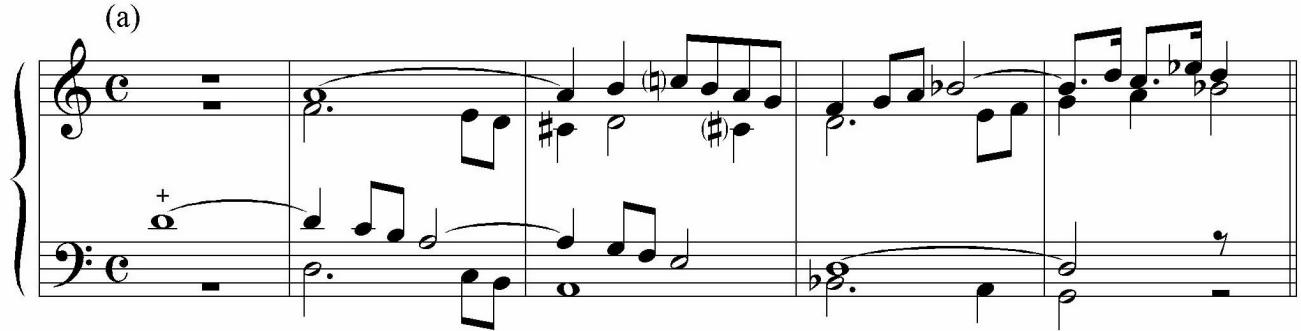
中文讲解
这是图例3的图注上半部分,对应P0052中提到的“ex. 3”。该图的位置紧接在P0052之后,用以直观展示Scheidemann d小调前奏曲WV 34的两段片段:第(a)段为乐曲开头第1–5小节(对应正文所说的“开头动机”及其初次模仿陈述),第(b)段为第15–18小节(对应正文所说的“开篇段落结束、转入更活泼段落”的过渡处)。
由于图像本身被省略,读者只能依据图注与正文的交叉指引定位:正文中提到的“开头动机”“模仿处理”“dotted figures”“written-out trills and slides”等术语,都应在图例(a)(b)中以具体音符形态得到印证。需要查看原图方可确认音符细节,本讲解不补写不可见的谱面内容。
第6段(P0056)
原文复述
[Figure placeholder] (b) [embedded image data omitted; position and caption retained]
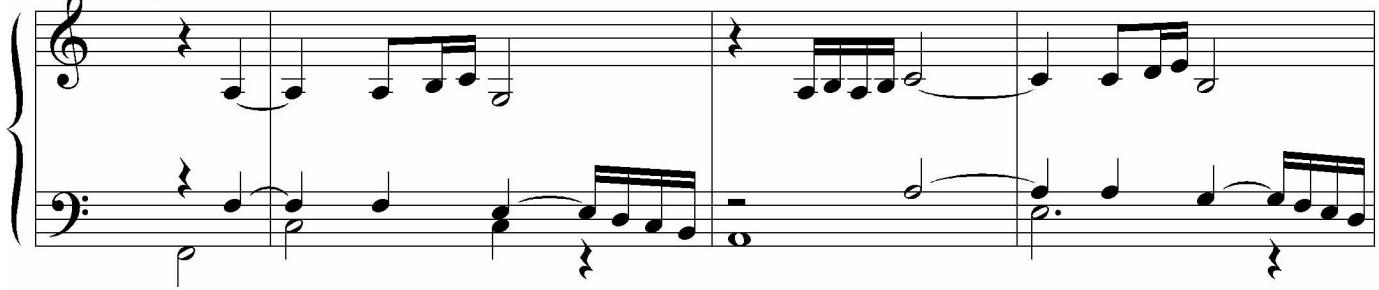
中文讲解
这是图例3的图注下半部分,仅由括注“(b)”组成,表示接续展示同一图例的第(b)片段——即Scheidemann d小调前奏曲WV 34的第15–18小节。其版面功能是把图例3的两幅分图(mm. 1–5与mm. 15–18)在排版上分开标注,与P0055的图注上半部分共同构成完整图例。
由于图像本身被省略,本讲解只能据图注确认其位置和所对应的小节范围,不对谱面细节作推测。需要查看原图方可验证正文所提到的“更活泼的段落”“点音型”“写出的颤音与滑音”等表述。
脚注 / 边栏 / 图表 / 附加信息(如有)
本节包含两则脚注(10、11)和一个图例(ex. 3)。脚注10为正文所引作品提供版本(Breig《Orgelwerke》卷三第6首)、主题目录编号(34)与调性术语(“d”而非“D minor”)的说明,并对1637年日期的可信度作出限定(仅见于两份手抄本之一,可能为作曲日期,但不能更早)。脚注11补充stylus fantasticus在17世纪还曾被用来指称“富有想象力但克制”的对位风格,扩展了该术语的语义范围。图例3对应正文提到的d小调前奏曲WV 34,分(a) mm. 1–5与(b) mm. 15–18两幅,前者印证开头动机及其模仿陈述,后者印证开篇段落向活泼段落的过渡;图像本身在本任务输入中以占位符形式出现,谱面细节需查阅原图。
💡 本节核心要点
- Scheidemann笔下的praeambulum已从“引子”演变为与同时代sonata等量齐观的独立键盘体裁,两者共享自由、近乎散漫的结构与短小模仿动机—延留音链的展开方式。
- 本节以d小调前奏曲WV 34(1637年1月10日)作为范例,其开头四音下行动机虽然与Dowland的Pavana Lachrimae形似,但作者认为Scheidemann的处理更接近Giovanni Gabrieli 1615年出版的Sonata con tre violini,从而把Scheidemann的音乐来源指向意大利(小提琴与键盘)传统。
- 该作品的开篇动机先以模仿陈述、再经模进发展,构成mm. 1–15的整体基础;随后转入更活泼的段落,使用点音型、记出的颤音与滑音等多样化动机。
- Scheidemann的花奏区别于16世纪Hassler、Sweelinck等的“divisions”——它放弃了均匀流动的连续性,转而采用一种“表情性的不规则”,这是巴洛克风格的关键标识,也是stylus fantasticus的组成部分。
- stylus fantasticus在本节中被功能性地定义为:突发的炫技(常动用管风琴踏脚)与和声、节奏上的惊奇相交织,营造出戏剧性叙事或宣叙调般的性格;该风格将在17世纪后期主导北德管风琴音乐。脚注11同时提示该术语在17世纪另曾用于指称克制而有想象力的对位风格。
🔑 关键术语
- praeambulum / praeludium:在本节中均译为prelude(前奏曲/前奏),指Scheidemann及其后德国键盘音乐中的引子—前奏体裁;本节强调Scheidemann笔下的praeambulum已发展为独立作品而非附属引子。
- sonata(17世纪初):本节所指为17世纪初的sonata,常为一件或两件高音乐器加continuo,篇幅较短,用于教堂,尚未分为多乐章;其自由、散漫、近乎逐句构筑的形式与Scheidemann的praeambulum共享结构特征。
- stylus fantasticus:本节定义为一种以突发炫技、和声与节奏惊奇制造戏剧性叙事/宣叙调性格的风格,成为17世纪后期北德管风琴音乐的主流;脚注11补充该术语在17世纪另指富有想象力但克制的对位风格。
- divisions:16世纪键盘与琉特音乐中在既有旋律上即兴或记谱加花的变奏手法;本节用以与Scheidemann的不规则花奏作对比。
- written-out trills and slides:把原本留给演奏者即兴发挥的颤音与滑音以明确音符记出;本节将其作为Scheidemann乐曲转入活泼段落时使用的动机之一。
- d(作为调性标记):本节及脚注10使用“d”而非“D minor”来标识调性,意在避免暗示作品具有现代意义上的小调,反映17世纪调性概念与现代功能调性的差别。
C6.S2 [描述性拆分] Scheidemann’s Liturgical Settings
第1段(P0057)
原文复述
Among Scheidemann’s surviving works, the greatest number consists of settings of liturgical melodies, predominantly chorales but also the eight tones or chant formulas for the Magnificat. The latter is a setting of Mary’s hymn of exultation from Luke 1:46–55, and was still sung at Vespers in Lutheran churches during the seventeenth century. Many performances followed the alternatim practice that had been in use since the late Middle Ages, in which the verses of hymns and other liturgical songs were presented in alternation by the organ and the choir, respectively. Such a practice raises obvious problems for modern-day usage, whether in concert or in service.12 Scheidemann’s Magnificat verses, however, are so extended and inventive that they might be played as independent pieces, like his chorale settings. The latter, while clearly related to examples by Sweelinck, also include elements cultivated by later composers—above all their incorporation of the stylus fantasticus, as in the lengthy fantasia on the chorale “Jesus Christus, unser Heiland, der von uns.”
中文讲解
本段的核心主张是:Scheidemann留存下来的作品中,数量最多的一类是礼仪旋律的器乐设置,主要是圣咏(chorale),也包括为Magnificat的八种调式或圣歌公式所作的设置。作者交代了一个礼仪与历史背景——Magnificat取材自路加福音1:46-55中玛利亚的欢呼颂歌,在17世纪的路德宗教堂中仍作为晚祷(Vespers)的核心内容咏唱;Vespers属于教会日课(每日祈祷时序)中的晚祷时辰。随后作者引入一个关键的中世纪晚期传统——alternatim(交替演唱):诗篇与礼仪歌曲的各诗节由管风琴与合唱团轮流承担。作者明确指出,无论在音乐会还是礼拜场合,这一传统都对现代使用提出了明显问题——因为它预设了完整的礼仪语境、轮替的诗节分布,以及会众/合唱与器乐之间即时的呼应关系。接着作者笔锋一转,强调Scheidemann的Magnificat各节诗节写得如此扩展、构思如此独立,以至于它们可以脱离交替演唱框架,作为独立器乐作品演奏,与他的圣咏设置具有同等的独立演奏价值。最后,作者指出Scheidemann的圣咏设置虽然与Sweelinck的范例有明显的承继关系,却同时吸收了后世作曲家培育的元素,其中最重要的是对stylus fantasticus(幻想风格)的运用;文中以一首以圣咏"耶稣基督我们的救主,从我们"为主题的长篇幻想曲作为例证。作者在此列举此例,意在说明:Scheidemann并非仅仅承袭北德管风琴传统链条上的保守遗产,而是在保留Sweelin克式圣咏设置骨架的同时,已将17世纪中叶以后逐步成熟的巴洛克键盘"幻想风格"纳入了自己的创作语汇,由此既延续前辈,又为后来的巴洛克盛期埋下伏笔。
补充说明
本段是C6.S2小节的开篇段落,承担确立Scheidemann创作重心(礼仪音乐设置)这一基本定位的功能。原文末尾以上标形式出现脚注12("…in concert or in service.12”),但当前task_input未提供该脚注的具体内容,故此处不补写其具体作用。
脚注 / 边栏 / 图表 / 附加信息(如有)
原文在该段末尾出现了一处脚注引用——上标12附在"Such a practice raises obvious problems for modern-day usage, whether in concert or in service.“一句之后,提示读者查阅脚注以获取进一步信息。根据当前task_input,脚注12的完整内容未直接出现于本节文本之中,故仅记其存在与所在位置;其大致功能应为该现代使用问题提供来源说明、补充限定或案例支持,但具体内容需查阅原书脚注方能确认。
💡 本节核心要点
- Scheidemann留存作品的主体是为礼仪旋律所作的器乐设置,以圣咏(chorale)为主,其次是为Magnificat的八种调式或圣歌公式所作的设置。
- Magnificat源自路加福音1:46-55中玛利亚的欢呼颂歌,在17世纪仍为路德宗晚祷(Vespers)的核心礼仪内容。
- 自中世纪晚期沿用的alternatim(交替演唱)实践——由管风琴与合唱团轮流承担诗节——为现代音乐会与礼拜场合的演奏/使用带来了明显困难。
- Scheidemann的Magnificat各节诗节篇幅扩展、构思独立,使其能够脱离交替演唱框架,作为独立器乐作品演奏。
- 其圣咏设置虽与Sweelinck的范例明显相关,却已引入后世作曲家所培育的stylus fantasticus(幻想风格)元素;文末以"Jesus Christus, unser Heiland, der von uns"主题的长篇幻想曲作为例证。
🔑 关键术语
- Magnificat:圣母尊主颂,源自路加福音1:46-55中玛利亚的欢呼颂歌;在路德宗传统中作为晚祷(Vespers)礼仪歌曲使用,Scheidemann为其八种调式均作了器乐设置。
- Vespers:晚祷,教会日课(每日祈祷时序)中的一个时辰;本段语境中特指17世纪路德宗教堂晚祷时仍咏唱Magnificat的礼仪场合。
- chorale:圣咏/众赞歌,宗教改革后路德宗礼仪中使用的德语赞美诗旋律;Scheidemann留存作品中数量最多的一类即此类旋律的器乐设置。
- alternatim:交替演唱实践,自中世纪晚期沿用的礼仪音乐演唱方式,由管风琴与合唱团轮流承担诗篇或礼仪歌曲的各诗节;作者认为此实践对现代音乐会与礼拜场合的使用造成了明显困难。
- stylus fantasticus:幻想风格,17世纪巴洛克键盘音乐的一种作曲风格,以自由、即兴性的构思、对比强烈的段落结构与炫技性为特征;本段将其界定为"后世作曲家培育的元素”,并指出Scheidemann已将其引入自己的圣咏设置中。
- Sweelinck:在本段中被作为Scheidemann圣咏设置的直接参照系;据当前输入仅可确认其作品与Scheidemann的圣咏设置"明显相关”,二者之间的具体师承关系等细节须依据原文其他段落或脚注另行确认。
C7.S1 Tunder and Reincken and Foreign Inspirations
第1段(P0058)
原文复述
Tunder and Reincken and Foreign Inspirations
中文讲解
这是本小节的标题,原文为英文,因此复述保留英文原貌。它点出本节将讨论两位德国北部的管风琴作曲家——Franz Tunder 与 Johann Adam Reinken,并将二人置于更广阔的“外来影响”(foreign inspirations)语境中,即意大利(尤其是 Frescobaldi)与法国音乐传统的渗透。标题中的“and”不是平行罗列,而是暗示一种推进:先讲 Tunder,再讲 Reinken,并贯穿外来因素这条暗线。
补充说明
本标题在原文第10页出现,是该节的正式起首,下一段 P0059 即进入正文论述。
第2段(P0059)
原文复述
Less survives of the music of Scheidemann’s younger contemporary Franz Tunder (1614–67), organist at St. Mary’s in Lübeck from 1641. Tunder is presumed to have performed much of his surviving music during the Vespers concerts (Abendmusiken), which he was presenting at Lübeck by 1646. His praeludia fall more clearly than do Scheidemann’s praeambula into the sectional divisions that would become the norm for following generations. An introductory section recalling those of Scheidemann’s pieces, but graced by a greater number of cadenza-like flourishes, leads to one or more imitative sections, as in the example on CD 104, band 3 in G minor (Tunder would have assigned it to the second “tone”). The imitative section is archaic in style, recalling the generation of Hassler. But it soon gives way to a freer section whose more flowing figuration includes a motive derived by rhythmic diminution from the imitative subject, as in many of Sweelinck’s fantasias. The most remarkable aspect of this piece, however—shared with many later north-German works—is the eloquent use of silence on the concluding page. Here the lovely homophonic progression into which the counterpoint suddenly dissolves (m. 75) is itself interrupted by pauses (mm. 76, 77, 80). These rests might have been understood as sighs (sospire) in the music-rhetorical language of the day (ex. 4).
中文讲解
本段介绍 Tunder 的生平与作品概况,核心主张有四层:
- 存世与定位:Tunder 是 Scheidemann 年纪稍轻的同时代人,1641年起任吕贝克的圣母教堂管风琴师,到 1646年 已在那里举办晚祷音乐会(Abendmusiken)。残存作品很可能就是在这些场合中演奏的。
- 形式承前启后:与 Scheidemann 的 praeambula 相比,Tunder 的 praeludia 更清晰地呈现"引子—模仿段—自由段"这种分节结构,这一形式后来成为北德管风琴家的范式。
- 具体例子:以 CD 104 第 3 段 G 小调作品(Tunder 会将其归入第二个"调式/tone”)为例。模仿段风格古朴,让人想起 Hassler 一代;接着过渡到自由段,其中旋律素材来自对模仿主题的"节奏减缩"(rhythmic diminution),这正是 Sweelinck 幻想曲常见手法。
- 最突出的特征:末页对"静默"的修辞性使用。复调在 m. 75 突然让位于抒情的齐奏进行,而这一进行又在 mm. 76、77、80 被休止打断,作者认为这种休止按当时"音乐修辞"应被理解为"叹息"(sospire)。
本段的功能是为 Tunder 立传,并把它同 Scheidemann、Sweelinck 串联起来:通过"分节化"和"静默修辞"两个特征,作者暗示北德传统从 Scheidemann 经 Tunder 走向成熟体制。容易误读之处:“second tone"不是 G 小调的本义,而是中世纪以来按音高排列的"调式序号"系统,作者特意加引号提示。
补充说明
“Abendmusiken"是 Tunder 在吕贝克首创的晚祷音乐会,其后由其继任者 Buxtehude 发展为重要传统。“Sospire"是 17 世纪音乐修辞(musica poetica / musica rhetorica)中表示"叹息"的术语,常见于同时代的意大利与德国理论著作。
第3段(P0060)
原文复述
12 The congregation would not hear the words of the verses played on the organ. There was no set scheme for alternatim performances, which might begin with either the organ or the choir presenting the initial verse, nor is it clear for which verses of the Magnificat Scheidemann’s settings were meant to substitute. His organ Magnificats comprise four settings apiece, each individual setting using as cantus firmus the monophonic chant melody (similar to a psalm tone) that the choir would have sung in its verses.
中文讲解
这是脚注 12,专门针对上一节中关于 Scheidemann Magnificat 的论述。它补充三条信息:
- 功能定位:信众不会听到管风琴所奏经文的歌词——即这些段落不是为会众咏唱而设,而是礼拜中由器乐承担的轮替部分(alternatim)。
- 轮替制度的灵活性:不存在固定方案;可以由管风琴起首,也可以由唱诗班起首;Scheidemann 的具体经文设置究竟要替代哪一节诗篇并不清楚。
- 结构细节:每首管风琴 Magnificat 包含四段独立的设置,每一段都把会众本该咏唱的单声部素歌旋律(近似诗篇调 psalm tone)作为 cantus firmus。
对正文而言,此脚注起到"限定"作用——它澄清 Scheidemann 的 Magnificat 既非为会众歌词服务,也并非一套完整对位的诗篇,而是部分经文轮替中管风琴所奏的素歌固定调处理。
补充说明
“Alternatim"是交替演唱/演奏的礼拜实践,源自中世纪晚期;“cantus firmus"指作为复调骨架的预先存在旋律,“psalm tone"则是教会咏唱诗篇所用的固定调式旋律模型。
第4段(P0061)
原文复述
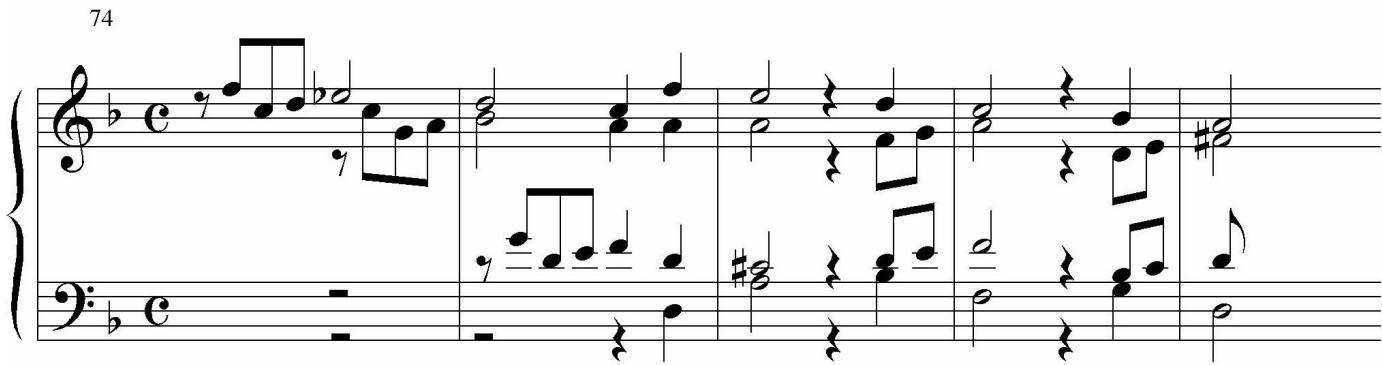
中文讲解
这是图例 4 的说明文字。它指出示例取自 Tunder 的 g 小调 Praeludium:前段小节数为 20–27(应对应文中提到的"模仿段”),后段为 74–81(应对应"结论页"的齐奏进行与休止中断)。图像数据已省略,需查原图。其作用是把正文对"古朴模仿"与"静默修辞"两个特征落到具体谱例上。
补充说明
本图例为 P0059 所述特征提供视觉依据;谱面细节需查看原版图像方可核对。
第5段(P0062)
原文复述
Probably Tunder’s most important surviving works are his chorale arrangements. Some of these are lengthy fantasias in which phrases of the chorale melody are subjected to the same forms of development, including echoes, explored by Sweelinck in his fantasias. “Komm Heiliger Geist, Herre Gott” opens with what is often termed a monodic setting of the melody: the latter, played in embellished form by the right hand, has a subdued accompaniment in the lower voices (ex. 5a). But unlike shorter chorale pieces, which often comprise a single monodic setting of the melody—a variety of what is today termed a chorale prelude—this work proceeds to freer treatment of the melody before completing the first statement of the latter. Eventually, motives from the chorale tune are developed in imitation and in sequence, including a series of quick echo effects. Particularly notable is the chromatic embellishment of the chorale melody during the first echo passage (ex. 5b). Such chromaticism had been understood since the mid-sixteenth century as an intensely expressive effect. Although its exact significance here is difficult to judge, the pungent effect which the chromatic steps would have made on an instrument tuned in “unequal” temperament surely contributed to the intended “difficult” or “hard” effect of this passage. A correspondingly harsh manner of articulation, each note played separated but tenuto (not staccato), seems appropriate, for a smooth legato, producing a sensual Mozartean effect, can hardly be what Tunder had in mind.
中文讲解
本段集中讨论 Tunder 最重要的遗作——圣咏改编曲,并以《Komm Heiliger Geist, Herre Gott》为例,分四层展开:
- 总体类型:Tunder 的部分圣咏处理是长篇幻想曲,把圣咏各乐句按 Sweelinck 已使用过的发展手法(包括回声)加以处理。
- 开篇手法:作品以"单音旋律式”(monodic)配置开场——右手装饰化奏出旋律,低声部作低调伴奏(ex. 5a)。这种单段旋律陈述在较短作品中通常就是一首完整的"圣咏前奏曲”(chorale prelude),但此曲在此陈述尚未完成时就转向更自由的展开。
- 发展手法:动机经模仿与模进展开,并出现快速的回声段;尤其突出的是第一段回声中对圣咏旋律的半音化装饰(ex. 5b)。
- 风格判断:半音化自 16 世纪中叶起被理解为高度表情化的手段;其确切含义虽难以断言,但在"不平均律”(unequal temperament)调律的乐器上,半音进行会产生尖锐刺耳的效果,对应作者所要的"难"或"硬”。相应地,演奏应采用每个音断开但保持时值的粗粝触键(tenuto 而非 staccato),而非后来莫扎特式的圆滑连奏。
本段通过这个例子既说明 Tunder 与 Sweelinck 的承继关系,也借"不平均律"与"粗粝触键"两个细节,纠正读者可能套用后期风格来演奏的误解。
补充说明
“Monodic"在此并非 17 世纪初意大利单声部歌曲之意,而是指"单一声部承载旋律、其他声部作伴奏"的配置。“Unequal temperament"指当时键盘乐器常用的"不平均律"调律法,半音之间的纯度不均等,听感比现代平均律更"尖锐”。
第6段(P0063)
原文复述
13 Number 4 in the modern edition by Klaus Beckmann (Franz Tunder: Sämtliche Orgelwerke [Wiesbaden: Breitkopf und Härtel, 1974]).
中文讲解
这是脚注 13,给出文中所引 g 小调 Praeludium 在现代版本中的来源:它是 Klaus Beckmann 编辑的《Franz Tunder: Sämtliche Orgelwerke》(Wiesbaden: Breitkopf und Härtel, 1974)一书中的第 4 首。它属于版本来源类脚注,对正文论述起到"可查证依据"的作用。
补充说明
该版本是研究 Tunder 管风琴作品的标准现代乐谱来源。
第7段(P0064)
原文复述
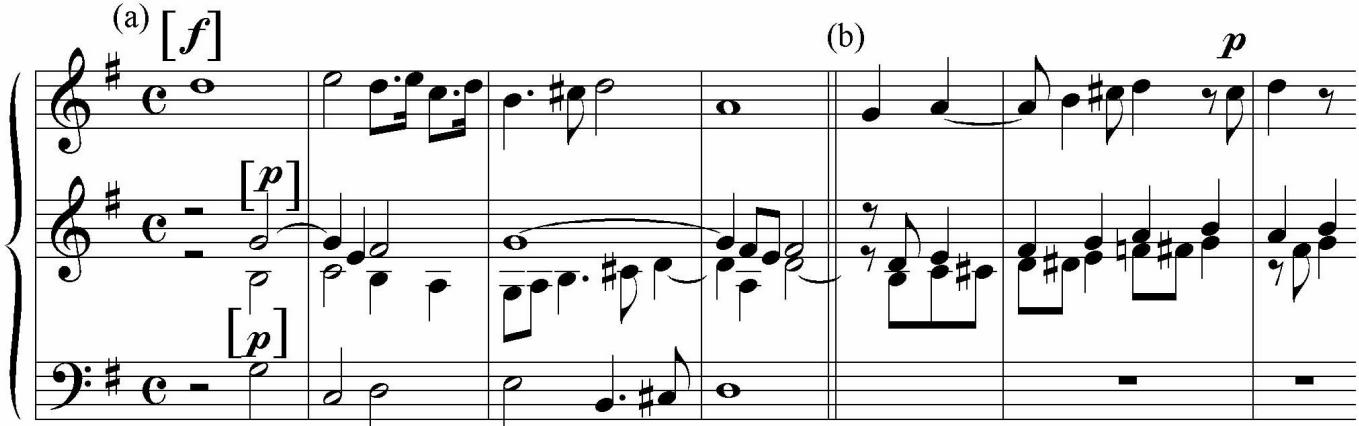
中文讲解
这是第 12 页的图像或乐谱占位符,原文未给出具体图注文字,图像数据已省略。它应位于 P0063 之后、P0065 之前,可能与第 12 页脚注或图例配合,具体内容需查原图。
补充说明
无额外补充;细节须参照原版图像。
第8段(P0065)
原文复述
With Tunder, we face a composer whose inspirations came from beyond the spheres of older Venetian and English music. Although we have little direct knowledge of the stylistic origins of this music, Tunder and his younger contemporaries were evidently in contact with newer traditions, including that represented in the toccatas, partitas, and settings of liturgical melodies by the organist and harpsichordist Girolamo Frescobaldi (1583–1643), who worked primarily at Rome. Frescobaldi’s numerous publications had a lasting impact throughout Germany, where numerous pieces by (or purported to be by) Frescobaldi survive in manuscript copies. When Georg Muffat published a collection of keyboard music in 1690, he likened it in his preface to a collection that Frescobaldi had published seven and a half decades earlier. J. S. Bach and his students continued to make and treasure manuscript copies of Frescobaldi’s music.
中文讲解
本段是本节的小转折,正式提出"外来影响"的第一条线索——意大利,尤其是 Frescobaldi。它分三层展开:
- 总体定位:Tunder 的灵感来源已经超出更早的威尼斯与英国传统,扩展到更新的意大利体制。
- Frescobaldi 的影响:Frescobaldi(1583–1643)主要在罗马活动,创作了托卡塔、变奏组曲(partitas)和礼拜歌曲的键盘改编。其大量出版物在德国有持久影响,德国手抄本中至今仍保留许多署其名(或传为其作)的作品。
- 影响的深远证据:1690年 Georg Muffat 在出版其键盘曲集的前言中,将其与 Frescobaldi 75 年前的某个版本相比拟;J. S. Bach 与其弟子仍持续抄录并珍视 Frescobaldi 的手稿。
本段的作用是把 Tunder 之后的北方德语区作曲家纳入一个跨国的"意大利传统"接受史,为后段 Reinken 与法国影响的双线交叠做铺垫。值得注意:作者用了 “purported to be by”,提示抄本传统中作者归属未必可靠。
补充说明
“Partita"在 Frescobaldi 处常指带变奏的器乐组曲;Muffat 是奥/德地区著名键盘作曲家,他 1690 年的《Apparatus Musico-Organisticus》常被援引为接受史的关键证据。
第9段(P0066)
原文复述
An equally significant impact on German music would soon come from France. By mid-century the French influence was becoming manifest in suites of dances written by German composers such as Froberger in imitation of French harpsichord pieces. Because few actual French pieces survive from before the last third of the century, German imitations are among the earliest witnesses of the seventeenth-century French keyboard tradition. After the establishment of a permanent opera theater under Lully at Paris in the 1670s, the French influence on German music became pervasive, and transcriptions and imitations of airs and dances from Lully’s operas became a major part of the German (and French) keyboard repertory.
中文讲解
本段对应"外来影响"的第二条线索——法国。论旨分三步:
- 中叶的初始渗透:到 17 世纪中叶,德国作曲家(如 Froberger)已开始模仿法国大键琴作品写作舞蹈组曲。
- 史料稀缺使德国抄本成为早期见证:因 17 世纪最后三分之一之前保留下来的法国原作很少,德国人的模仿之作反而成为今人研究 17 世纪法国键盘传统最早的实物证据之一。
- Lully 时代后的全面渗透:1670 年代 Lully 在巴黎建立常设歌剧院之后,法国风格对德国音乐变得无所不在,其歌剧中的咏叹调与舞曲被大量转写与模仿,进入德、法两国共同的键盘曲目库。
本段与 P0065 配合,把"外来影响"拆解为意大利(南向、Frescobaldi)与法国(西向、Lully)两条线索,使下一段能在此基础上讨论 Reinken 如何兼具两者。
补充说明
Froberger 是德国作曲家 Johann Jacob Froberger(1616–1667),曾游学于巴黎与罗马,其组曲是德、法、意三国风格融合的早期样本。Lully 的歌剧院建立于 1672/1673 年的巴黎歌剧院(Académie Royale de Musique)。
第10段(P0067)
原文复述
If Frescobaldi’s influence may be seen in both the mercurial improvisations and the chromatic counterpoint of the stylus fantasticus, the French style is the source of an expressive style of melodic ornamentation as well as the increasingly refined use of idiomatic keyboard textures—such as the socalled style brisé or luthée on the harpsichord and various trio scorings on organ. One of the earliest northern German composers whose music combines both strands is Johann Adam Reinken. Unfortunately, the scant survival of his music and uncertainties of dating make it difficult to reach a clear understanding of this figure, who is traditionally mentioned because of his longevity and his apparent significance for Bach’s career. It is possible that he improvised most of what he played as
中文讲解
本段是全节承上启下的核心段落,把之前两条线索收敛到一位具体作曲家——Reinken 身上。其论旨有三:
- 风格归类:Frescobal迪的影响见于 stylus fantasticus(幻想曲风格)那种神采飞扬的即兴与半音对位;法国风格则贡献了装饰性的旋律润色,以及越来越精致的"键盘化织体”——如大键琴上的"碎奏风格/琉特风格”(style brisé / luthée)和管风琴上各种三重奏编制(trio scorings)。
- Reinken 的定位:他是北德最早把两条线索合为一体的作曲家之一。但其作品存世稀少、断代困难,使其研究难以深入;他传统上被提起,主要是因为寿命极长,以及对 Bach 事业的明显意义。
- 史料缺口提示:作者推测 Reinken 实际演奏的大部分内容是即兴的——这句末尾的 “as” 引出下文承接。
本段的功能是把抽象的"外来影响"具象化为一位人物,同时诚实交代研究 Reinken 的困难,为后文具体作品分析划定边界。
补充说明
“Stylus fantasticus” 是 17 世纪德国音乐修辞学家(如 Printz、Birnbaum)所列的三大风格之一,特征为自由、即兴、富于半音对位。“Style brisé / luthée” 指模仿琉特琴"分解和弦"的键盘织体;“trio scorings” 指以两件高声部与持续低音模拟三重奏的管风琴编制。
第11段(P0068)
原文复述
14 Reincken’s dates have traditionally been given as 1623–1722, but recent research suggests a birthdate twenty years later. The nature of Bach’s contact with Reinken is largely a matter of speculation, but he made keyboard arrangements of several of Reinken’s compositions, and according to Reinken’s famous remark an older style of improvisation remained alive in Bach’s
中文讲解
这是脚注 14,提供两条信息:
- 生年修订:传统上 Reinken 的生卒年标为 1623–1722,但近期研究把出生年份推后 20 年(即约 1643)。这意味着他比过去以为的更年轻,与 Scheidemann 等北德传统的代际关系需重新审视。
- 与 Bach 的关系:Bach 与 Reinken 接触的具体情况基本只能推测;可确证的是 Bach 曾把 Reinken 的若干作品改编为键盘曲;Reinken 的著名评论暗示 Bach 的即兴中保留了更古老的即兴风格。脚注在 “Bach’s” 处中断,留待正文延续。
此脚注对正文起到"修正与限定"作用:既更新年代,也提示 Bach—Reinken 关系的史料局限。
补充说明
此脚注中 Reinken 关于 Bach 即兴风格的著名言论,传统上见于 18 世纪各类 Bach 传记回忆。
第12段(P0069)
原文复述
Scheidemann’s successor at St. Katherine’s Church in Hamburg. Certainly an improvisatory strand is evident in his one surviving toccata and in a fantasia on the chorale melody “An Wasserflüssen Babylon.” The latter is often noted for its great length and for a slight resemblance to Bach’s setting of the same melody (BWV 653). Both pieces bear tangible relationships to Bach, the toccata being preserved in a manuscript copy that belonged to Bach’s older brother, the chorale fantasia in a copy by Bach himself. Like the later praeludium, the toccata alternates between improvisatory and fugal sections; the title probably reflects the composition of the first section through virtuoso elaboration of a few prolonged harmonies, an archaic device abandoned in Bach’s manualiter toccatas.
中文讲解
本段接续 P0067 末尾与 P0068 脚注,集中分析 Reinken 的两件传世作品:
- 身份补全:Reinken 是 Scheidemann 在汉堡圣凯瑟琳教堂的继任者(P0067 末尾的 “as” 在此得到完整归属)。
- 托卡塔:仅存一首的托卡塔中,即兴性清晰可见;作品在即兴段与赋格段之间交替展开;标题应来自首段——以几个持续和声为基础展开炫技性变奏,这种"古老手法"在 Bach 的 manualiter(无踏板,即只用手动)托卡塔中已被放弃。
- 圣咏幻想曲:以《An Wasserflüssen Babylon》为旋律,篇幅极长,并与 Bach 同名作品 BWV 653 有轻微相似。
- 与 Bach 的实物关联:两件作品都因与 Bach 的实物连接而保存——托卡塔存于 Bach 之兄的手抄本中,幻想曲则存于 Bach 本人亲笔抄本中。
本段通过"残存 + 与 Bach 的传抄关系"两条线索,解释为何 Reinken 的极少作品仍能流传至今,并借此暗示他在 Bach 心目中的地位。
补充说明
“Manualiter"指管风琴仅用手动键盘(不带踏板 pedaliter)的演奏/写作方式。Bach 在莱比锡时期的托卡塔多采用"manualiter 加 pedaliter"的现代手法。
第13段(P0070)
原文复述
Reinken also left a number of suites. The latter designation is modern, but the consistency with which these originally untitled works comprise a single allemande, courante, sarabande, and gigue is contrary to French practice. It suggests that a distinctive version of the genre had become well defined in Germany by the 1660s or 1670s, perhaps under the influence of Froberer (see below). Reinken’s suites, like those of other northern European composers of the period, reflect the pre-Lullian French style of mid-century or slightly later, lacking Lully’s tunefulness as well as the rhythmic subtlety and the rich harmony of later French music. On the other hand, unlike most法国 dances they contain counterpoint and relatively rigorous motivic work alongside flashes of virtuoso passagework. Some also employ variation technique, the courante constituting a free reworking of the harmonic and melodic scheme of the allemande. In all these respects, Reincken furnished an apparent example for later north Germans while departing from the more restrained style of Froberger. The contrast between the two composers is clearest in their respective sets of variations on the song “Schweiget mir vom Weiber nehmen,” known as Die Mayerin. Although both sets conclude with several dances such as one might find in a suite, Reincken’s eighteen variations focus on inventive virtuoso figuration whereas Froberger’s shorter set tends toward the expressive.
中文讲解
本段是本节的收束段落,对 Reinken 的组曲作品做总体评价,并以他与 Froberger 的对比作为收尾。其论旨分四层:
- 曲式结构:Reinken 留下一批"组曲”,“组曲"之名是现代所加;原本无题,但统一呈现"阿勒芒德—库朗特—萨拉班德—吉格"四首的固定次序,与法国实践相悖。这暗示德国在 1660–1670 年代已发展出有自身特征、定义明确的组曲类型,或受 Froberger 影响(Froberger 名字拼写疑为原文笔误或排印差异,对应德文 Froberger,下文作 Froberger 处理)。
- 风格定位:Reinken 的组曲与同时期其他北欧作曲家一样,反映的是 Lully 之前的中世纪法国风格,缺乏 Lully 的旋律悦耳、节奏微妙与和声丰富;但与一般法国舞曲不同,它们包含对位与较为严谨的动机展开,并夹有炫技段落;部分作品使用变奏手法(如库朗特自由改写阿勒芒德的和声与旋律骨架)。
- 对后辈的范本意义:Reinken 为后来的北德作曲家树立了与 Froberger 的克制风格不同的榜样。
- 两人对比的焦点:以二人对民歌《Schweiget mir vom Weiber nehmen》(俗称 Die Mayerin)的变奏为例——同样以几首组曲型舞曲收束,但 Reinken 的 18 段变奏侧重炫技性音型创新,Froberger 较短的变奏则更倾向表情性。
本段把本节所有线索收束为"Reinken 兼具意大利即兴/对位传统与法国舞曲/装饰传统,但又发展出独立于二者的德国键盘风格"这一形象。读者易忽略的关键点:“pre-Lullian"意味着这些组曲并非模仿后期法国宫廷风格,而是代表更早、更朴素的法国传统。
补充说明
“Die Mayerin”(“市长夫人”)是一首在德国广泛流传的世俗歌谣主题,曾被多位作曲家谱写变奏,是研究 17 世纪键盘变奏的重要参照。
脚注 / 边栏 / 图表 / 附加信息(如有)
本小节包含两条脚注(P0060 脚注 12 与 P0068 脚注 14)、一条作品来源脚注(P0063 脚注 13)以及两个图像/乐谱占位符(P0061 的 Example 4 与 P0064 的第 12 页图例)。脚注 12 限定与补充 Scheidemann Magnificat 的功能与结构;脚注 13 给出所引 Praeludium 的现代版本出处;脚注 14 修正 Reinken 的传统生年,并交代 Bach—Reinken 关系的史料局限。两个图例分别为 Tunder Praeludium 的关键小节谱例与第 12 页插图(具体内容须查原图)。
💡 本节核心要点
- Tunder 是 Scheidemann 的同时代人,其 praeludia 把北德键盘前奏曲的"分节化"结构推向成熟范式,并在末页以"休止—齐奏"的修辞手法表达"叹息”。
- Tunder 的圣咏幻想曲继承 Sweelinck 的发展手法,并使用半音化装饰——在"不平均律"调律下产生尖锐刺耳的"难"“硬"效果,需以粗粝断奏的触键演奏。
- 本节把"外来影响"析为两条线索:意大利(Frescobaldi 的 stylus fantasticus 即兴与半音对位)与法国(装饰性旋律润色、style brisé 与三重奏编制)。
- Reinken 是北德最早把这两条线索合二为一的作曲家之一;其作品存世稀少、断代困难,传统上被重视主要因其长寿与对 Bach 的影响。
- Reinken 现存作品包括一首托卡塔与一首《An Wasserflüssen Babylon》幻想曲,均因与 Bach 家族(其兄与 Bach 本人)的传抄关系而保留。
- Reinken 的组曲以固定的"阿勒芒德—库朗特—萨拉班德—吉格"次序体现德国化特征,反映 Lully 之前的中叶法国风格;他与 Froberger 在 Die Mayerin 变奏中的对比——炫技 vs 表情——是本节收尾的关键范例。
🔑 关键术语
- Abendmusiken:Tunder 自 1646 年起在吕贝克圣母教堂主办的晚祷音乐会,是 17 世纪北德重要的非礼拜性音乐演出体制,后由其继任者 Buxtehude 发展为年度盛会。
- stylus fantasticus:17 世纪德国音乐修辞学列出的三大风格之一,特征为自由、即兴、富半音对位;本节中作为 Frescobaldi 影响最显著的表现形式。
- style brisé / luthée:又称"碎奏风格"或"琉特风格”,指键盘上模仿琉特琴分解和弦式织体的写法;本节将其作为法国风格影响德语区键盘织体的典型。
- trio scorings:管风琴(或键盘)以两个高声部与一个持续低声部构成"虚拟三重奏"的织体形式,是北德管风琴巴洛克的关键语汇之一。
- alternatim:礼拜中由管风琴与唱诗班轮替演唱/演奏经文与诗篇的传统实践;本节用于解释 Scheidemann Magnificat 的功能定位。
- cantus firmus:作为复调骨架而预先存在的旋律线;在本节中指 Scheidemann Magnificat 与 Tunder 圣咏改编所依据的素歌诗篇调。
- sospire:17 世纪音乐修辞术语,指"叹息"式的休止;本节用于解读 Tunder 末页休止的修辞含义。
- manualiter:管风琴只用手动键盘(不踩踏板)的写作/演奏方式;本节指出 Bach 已弃用 Tunder 那种以"延长和声"为基础的古老开场手法。
- unequal temperament:“不平均律"调律法,17 世纪键盘乐器常用,三度等纯度与现代平均律不同,半音进行更尖锐刺耳;本节用于解释 Tunder 圣咏幻想曲中半音化段落的听感效果。
- pre-Lullian French style:Lully 之前(17 世纪中叶前后)的法国键盘风格,较朴素;本节用来说明 Reinken 组曲所继承的并非后期法国宫廷风格,而是更早的样式。
C8.S1 [描述性拆分] Buxtehude’s Ostinato Works and Praeludia
第1段(P0071)
原文复述
Section heading: “## Dieterich Buxtehude.” This heading marks the opening of a subsection devoted to the music of Dieterich Buxtehude.
中文讲解
这是页面13上的小节标题”## Dieterich Buxtehude”。它把讨论对象从此前小节中的通德(Tunder)切换到迪特里希·布克斯特胡德(Dieterich Buxtehude),表明接下来将以他为中心,集中讨论其键盘作品——尤其是固定低音作品与前奏曲(praeludia)。
补充说明
本标题的形式(双##标记)属于原文版面要素;其后的段落内容构成本小节的实质论述。
第2段(P0072)
原文复述
A more striking and cosmopolitan integration of diverse styles and genres occurs in the music of Dieterich Buxtehude (ca. 1637–1707), who in 1668 succeeded Tunder as organist at St. Mary’s in Lübeck. Buxtehude’s keyboard works survive in greater numbers than those of any other seventeenth-century German composer, perhaps reflecting the fame of the Abendmusik concerts at which they may have been played. They include examples of types seen earlier as well as several ostinato works—two chaconnes and a passacaglia.
中文讲解
本段以三点信息开启对布克斯特胡德的整体定位。 (1)身份与职位:布克斯特胡德(约1637—1707),1668年接替通德出任吕贝克圣玛丽教堂(St. Mary’s in Lübeck)的管风琴师;其音乐展示了"更显著、更具世界性的不同风格与体裁融合”。 (2)作品存佚与晚间音乐会:其键盘作品留存数量超过任何其他17世纪德国作曲家,作者以"或许"(perhaps)的措辞推测这与晚间音乐会(Abendmusik)的声望有关——这些作品可能正是在该音乐会场合上演的。 (3)作品范围:既包含前文已见体裁的范例,也包括若干固定低音(ostinato)作品——两首恰空(chaconnes)和一首帕萨卡利亚(passacaglia)。
补充说明
段中"perhaps"一词保留了对因果关系的谨慎态度:留存数量与晚间音乐会的关联为推测性陈述,而非定论。
第3段(P0073)
原文复述
Originally dances, chaconnes and passacaglias were normally constructed over short repeating bass lines or ostinati. They are present in both the Italian tradition—Frescobaldi published several examples of both—and the French, where a grand chaconne or passacaille was often the climactic number of an opera or ballet. Improvisation over ground basses is also documented from mid-seventeenth-century England and again in northern Germany at the end of Buxtehude’s lifetime; thus it is not surprising that these pieces represent a distinctly north-German approach to the genre. This is evident above all in Buxtehude’s placement of the ostinato in the pedals, making these probable organ pieces (unlike Italian and French examples). In addition, although always in the traditional triple meter, these works lack the characteristic rhythmic formulas of French examples, such as an upbeat of two quarter notes, instead focusing on Italianate running figuration. The relentless repetitions of the ostinato coupled with improvisatory upper parts might have led to a rambling, formless character. But Buxtehude’s work projects a sense of architectural design, above all the Passacaglia in D minor, whose 28 statements of the ostinato include 7 in the tonic followed by 7 in F major, 7 in A minor, and 7 more in the tonic.
中文讲解
本段从体裁来源、欧洲分布、北德特征与结构设计四个层面系统论述布克斯特胡德的固定低音作品。 ——体裁本源:恰空与帕萨卡利亚原为舞曲,建立在短小循环的低音线(即ostinato)之上。 ——两大传统:意大利传统中弗雷斯科巴尔迪出版过两类体裁的多首作品;法国传统中,宏大的 chaconne 或 passacaille 常作歌剧或芭蕾的高潮乐章。 ——英格兰与北德的即兴传统:17世纪中叶的英国以及布克斯特胡德晚年的北德地区均文献记载有在固定低音之上即兴演奏,因此这类作品代表一种"鲜明的北德路径"并不令人意外。 ——北德路径的具体标志:布克斯特胡德把固定低音置于脚键盘(pedals),使作品成为可能的管风琴作品(不同于意大利和法国例子);虽保留传统的三拍子(triple meter),却缺失法国例子的特征节奏公式(如两个四分音符构成的上拍),转而集中在意式流动音型(Italianate running figuration)。 ——形式感的塑造:固定低音的反复配合即兴化的上声部,本可能导致松散无结构(rambling, formless);但布克斯特胡德的作品展现出"建筑设计感"(sense of architectural design),尤以d小调帕萨卡利亚为典型——28次固定低音陈述按"7+7+7+7"分配:7次主调—7次F大调—7次a小调—7次回归主调。
补充说明
d小调帕萨卡利亚的调性分布(主调/F/a/主调,各7次,共28次)是"建筑设计感"判断的具体证据;“或许会松散无结构"的反事实陈述(might have led to…)用以突出布克斯特胡德实际结构控制力的对照。
第4段(P0074)
原文复述
A short standalone note: “Hamburg organ audition of 1720.”
中文讲解
这是一条极简的独立标注,指向1720年的汉堡管风琴试听事件(organ audition)。它以最小化的文字提示该事件的位置或相关性,本身的背景信息未在本页展开。
补充说明
该句孤立出现于正文段落(P0073)与编号脚注(P0075,脚注15)之间,应视为版面中的一条简短位置/事件提示,正文未对其加以解释。
第5段(P0075)
原文复述
Footnote 15: “Both settings end with a descending scale over the final pedal note.”
中文讲解
脚注15指出:两个版本(settings)都在最终的脚键持续音之上以一条下行的音阶结束。“settings"在此指对同一素材的不同编配,“pedal note"指脚键盘(或持续的)低音;此条脚注的作用是为正文某处关于收束方式的陈述提供精确的补充描述。
补充说明
本脚注所支撑的正文论述未完整出现于P0071–P0073之中,应理解为对前节相关陈述的支撑性细节。
第6段(P0076)
原文复述
Footnote 16: “See Peter Wollny and Michael Maul, ‘The Weimar Organ Tablature: Bach’s Earliest Autographs,’ Understanding Bach 3 (2008): 67–74.”
中文讲解
脚注16为文献出处:Peter Wollny与Michael Maul合著的文章《The Weimar Organ Tablature: Bach’s Earliest Autographs》,载于《Understanding Bach》第3期(2008年),第67—74页。该注释指向关于巴赫最早手稿与魏玛管风琴古谱(tablature)的研究。
补充说明
本注释属于来源脚注(source footnote),支撑前文涉及巴赫/魏玛管风琴谱例的论述;其正文对应段落未在P0071–P0073中出现。
第7段(P0077)
原文复述
Footnote 17: “But two of Bach’s toccatas do employ Reinken’s device of composing an extended transition passage out of broken-chord figuration. This was also a favorite device in Bach’s later preludes.”
中文讲解
脚注17起限定/补充作用:巴赫有两首托卡塔确实采用了赖因肯(Reinken)“以分解和弦音型构成较长过渡段"的写作手法;这一手法在巴赫后来的前奏曲中也屡见不鲜。注释以"但是”(But)起首,意在修正或限定前文可能造成的概括性印象,强调该手法在巴赫笔下并非孤立存在。
补充说明
“赖因肯手法"在本注释中特指:用分解和弦音型(broken-chord figuration)构建较长过渡段的写作装置。
第8段(P0078)
原文复述
Footnote 18: “Suites in which the courante—and occasionally other movements—varies the allemande are known as variation suites (see ex. 9 below).”
中文讲解
脚注18提供术语定义:当库兰特舞曲(courante),偶尔也有其他乐章,对阿勒曼德舞曲(allemande)进行变奏时,整部组曲被称为"变奏组曲”(variation suite),参见下方例9(ex. 9)。该注释同时承担术语解释与例证指引两项功能。
补充说明
本注释指向"ex. 9 below”——位于后文某页的谱例9,读者需跨页查证;该注释与本节核心论述(布克斯特胡德的固定低音与前奏曲)距离较远,应为前节组曲类型讨论的术语补充。
第9段(P0079)
原文复述
Footnote 19 (opening): “See Christopher Simpson’s The Division Viol (London, 1659) as well as the Musicalische” — the citation is continued in P0082.
中文讲解
脚注19开篇,引证两部文献:其一为克里斯托弗·辛普森(Christopher Simpson)的《The Division Viol》(伦敦,1659),其二为"Musicalische …"——一部德语文献名,后文在P0082中续完。该脚注的完整内容跨段呈现,本段只引出引文之首。
补充说明
注释19从P0079起首、在P0082续完,完整面貌须将两段合读;引文指向17世纪中叶英格兰(辛普森)与18世纪初北德(尼特)关于固定低音即兴演奏的文献证据,用以支撑P0073关于"北德路径"的判断。
第10段(P0080)
原文复述
Of Buxtehude’s other “free” works, the eighteen or so praeludia impressively expand the genre as understood by Tunder. In most of these works, the initial improvisatory section is followed by two fugues, both using variants of the same subject (typically in duple and triple time, respectively). Yet these are not “preludes and fugues” in the eighteenth-century sense. As in earlier praeludia—and in contemporary sonatas for instrumental ensemble, including those of Buxtehude and Reincken—the fugues are not independent movements but are integrated into a larger quasi-dramatic unity. The improvisatory opening section concludes in an impressive cadence, after which the entry of the fugue subject and its subsequent contrapuntal development sound as a stentorian, orderly contradiction of the stylus fantasticus that has preceded it. But the “fantastic” style gradually returns in the course of each fugal section, which usually ends by relaxing into free motivic work that returns to improvisatory style.
中文讲解
本段转向布克斯特胡德的"自由"作品——约18首前奏曲(praeludia),论证它们如何扩展通德已理解的前奏曲体裁。 ——结构模式:起始为即兴化段落,其后接两首赋格;两赋格使用同一主题的不同变体,分别常以二拍子(duple)和三拍子(triple time)写成。 ——否定与界定:明确指出这些作品不是18世纪意义上的"前奏曲与赋格”(preludes and fugues)。延续早期praeludia及同时期器乐合奏奏鸣曲(包括布克斯特胡德与赖因肯)的传统,赋格并非独立乐章,而是被整合进一个更大的、“准戏剧性的统一体”(quasi-dramatic unity)之中。 ——风格逻辑:即兴化开篇在一次辉煌的终止之后收束,赋格主题进入及其对位发展听起来像是先前幻想风格(stylus fantasticus)的"洪亮、秩序化的反驳”(stentorian, orderly contradiction);但在赋格的进行中,“幻想"风格逐渐回归,乐章的尾声往往松弛地回到动机化的自由写作,重返即兴风格。 ——与通德的比较:本段以"impressively expand the genre as understood by Tunder"点明:布克斯特胡德的前奏曲是在通德体裁基础上的显著扩展。
补充说明
段中"stentorian"与"contradiction"两词共同把赋格段落描述为对开篇幻想风格的"反驳”,这是"准戏剧性统一体"判断的核心修辞依据。
第11段(P0081)
原文复述
The same conception is evident in the small number of works designated toccatas. Here the fugal passages are even shorter, just one of a number of contrasting types of music that are heard in rapid succession, as in a number of Frescobaldi’s toccatas (notably no. 9 from his second book). Thus the toccata in F (BuxWV 156) opens with a section inspired by a type of toccata composed by Frescobaldi and other earlier composers, in which the entire fabric of the work is constructed over pedal points. Buxtehude confines this technique to the opening, alluding to it briefly in a transition that follows the first fugue and again at the very end. The overall design, which includes some rapid alternations between 12/8 and 4/4 time as well as short-lived imitative passages, is as improvisatory as in many earlier Italian works. Yet a degree of coherence is assured by the intensive development of certain motivic figures within each section, and by the recurrence of several motives which, although to some degree the common property of north-German organ style, achieve sufficient prominence to seem purposeful. Particularly notable is the climactic appearance of one figure as an athletic pedal line (ex. 6). The latter passage, incidentally, illustrates the achievement of near-equality between the pedals and the manuals—a measure of the technical achievement of both the players and the builders of the instruments for which such pieces were written, notably the north-German organ builder Arp Schnitger (1648–1719).
中文讲解
本段将同一构思应用到为数不多的托卡塔作品。 ——构思延续:托卡塔的赋格段落更短,只是快速并置的多种对比音乐之一,类似于弗雷斯科巴尔迪若干托卡塔(尤其是第二册第9首)。 ——F大调托卡塔(BuxWV 156):开篇借鉴弗雷斯科巴尔迪等前辈"全曲建立在持续音(pedal points)之上"的托卡塔类型,但布克斯特胡德将这一手法限定于开头,仅在第一赋格之后的过渡段与极末处短暂回顾。 ——整体设计:包括12/8与4/4拍子之间的快速交替以及短促的模仿段落;整体与许多早期意大利作品一样即兴化。然而,通过每一段落内若干动机形态的深入发展,以及若干动机的重现(虽在一定程度上属于北德管风琴风格的共有资源,但因重现显著而显得刻意),仍保有一定程度的统一性。 ——例6与乐器—演奏的相互成全:尤其值得注意的是,一个动机以"运动式的脚键盘线条"(athletic pedal line)在高潮处出现(见ex. 6)。该段顺带说明:这一段落体现了手键盘与脚键盘接近平等的实现——既是演奏者技术的体现,也是为这类作品所写的乐器(尤为北德管风琴制造者阿尔普·施尼特格尔 Arp Schnitger,1648—1719)的工艺水准的体现。
补充说明
ex. 6作为"手/脚键盘技术对等"的具体证据出现于正文讨论中,其动机形态与谱例细节需查阅原谱例;BuxWV 156的编号在此为首次出现,全书后续可凭此编号定位。
第12段(P0082)
原文复述
Footnote 19 (continuation): “Handleitung (Hamburg, 1706) of Friedrich Erhardt Niedt (both works are available in modern reprints and translations). Musical examples in the latter, all in north-German style, include a variation suite as well as a praeludium incorporating a chaconne (much as Buxtehude’s BuxWV 137). The Roman organist-composer Bernardo Pasquini also wrote passacaglias that at times sound surprisingly close to the north-German style.”
中文讲解
这是脚注19的接续部分,补全前段所引的第二部文献:除辛普森的《The Division Viol》外,另一部为弗里德里希·埃尔哈特·尼特(Friedrich Erhardt Niedt)的《Musicalische Handleitung》(汉堡,1706),两部作品均有现代重印与译本。后者所附谱例均为北德风格,包含一首变奏组曲以及一首嵌入恰空的前奏曲(与布克斯特胡德的BuxWV 137相似)。注释末再补充:罗马管风琴家兼作曲家贝尔纳多·帕斯基尼(Bernardo Pasquini)也写过帕萨卡利亚,其音响效果有时与北德风格惊人地接近——这是对正文P0073中"北德路径"判断的旁证与对照。
补充说明
尼特《Handleitung》中"嵌入恰空的前奏曲"与BuxWV 137的相似,间接支持正文对布克斯特胡德固定低音作品体裁关联的判断;帕斯基尼作为意大利—罗马传统作曲家,其帕萨卡利亚"惊人地接近"北德风格,构成跨地域风格交汇的旁证。
第13段(P0083)
原文复述
Footnote 20: “Johann Pachelbel was a contemporary of Buxtehude who continued to write such pieces; J. S. Bach’s toccata in F, BWV 540, opens with the same technique and for this reason is traditionally associated with the Buxtehude work.”
中文讲解
脚注20提供与正文BuxWV 156的体裁/技法关联:约翰·帕赫贝尔(Johann Pachelbel)是布克斯特胡德的同代人,延续了"全曲建立于持续音之上"这类写法;J.S.巴赫的F大调托卡塔BWV 540开篇即采用同一手法,因此传统上被视为与布克斯特胡德的F大调托卡塔相关联。该注释的功能为"旁证/传承链",连接布克斯特胡德—帕赫贝尔—巴赫三者的开篇手法。
补充说明
注释以"传统上视为关联"(traditionally associated)的措辞,提示读者此种关联属演奏—编辑传统的判断,并非严格的体裁谱系证明。
脚注 / 边栏 / 图表 / 附加信息(如有)
本节涉及的附加材料包括: (1)脚注15(P0075):对正文某处关于收束方式的精确补充——两个版本均以最终持续音上的下行音阶结束。 (2)脚注16(P0076):文献来源,指向Wollny与Maul关于魏玛管风琴古谱与巴赫最早手稿的研究。 (3)脚注17(P0077):限定性注释,说明赖因肯的"分解和弦过渡段"手法亦见于巴赫的两首托卡塔与后期前奏曲。 (4)脚注18(P0078):术语定义,界定"变奏组曲"(库兰特对阿勒曼德作变奏),并指向下方谱例9。 (5)脚注19(P0079+P0082,跨段):文献来源,引辛普森《The Division Viol》(1659)与尼特《Musicalische Handleitung》(1706),并附帕斯基尼帕萨卡利亚作为北德风格的旁证。 (6)脚注20(P0083):将帕赫贝尔与巴赫BWV 540的开篇手法与布克斯特胡德BuxWV 156相联系,提示传统关联。 (7)谱例引用:ex. 6(BuxWV 156高潮处的脚键盘线条)、ex. 9(变奏组曲示例)。 (8)独立标注(P0074):“Hamburg organ audition of 1720."——指向1720年汉堡管风琴试听事件,正文未作展开。
💡 本节核心要点
- 布克斯特胡德(约1637—1707)于1668年接替通德任吕贝克圣玛丽教堂管风琴师;其键盘作品留存数量超过任何其他17世纪德国作曲家,作者以"或许"一词推测这与晚间音乐会的声望有关。
- 两首恰空与一首帕萨卡利亚代表鲜明的北德固定低音路径:固定低音置于脚键盘、保留三拍子、缺失法国节奏公式、转用意式流动音型;d小调帕萨卡利亚以28次陈述按"7+7+7+7"的调性布局(主调/F/a/主调)展现出"建筑设计感”,与可能松散无结构的反事实情形形成对照。
- 约18首前奏曲扩展了通德的体裁:即兴化开篇 + 两首以同一主题变体写成的赋格(常二拍与三拍),赋格并非独立乐章,而与开篇构成"准戏剧性统一体";赋格段落以洪亮秩序化的方式"反驳"开篇幻想风格,但幻想风格在赋格进程中又逐渐回归。
- 托卡塔延续同一构思但更碎片化:BuxWV 156借鉴弗雷斯科巴尔迪式"全曲立于持续音之上"手法而将其限于开头,含12/8与4/4的快速交替,整体即兴但由动机发展与重现获得统一;ex. 6所示高潮处的运动式脚键盘线条体现手/脚键盘的接近平等——既彰显演奏者技术,也彰显北德管风琴(尤为施尼特格尔1648—1719)的工艺水准。
- 布克斯特胡德的键盘作品不是18世纪意义上的"前奏曲与赋格",而是与同时期器乐合奏奏鸣曲、早期praeludia传统一脉相承的"准戏剧性统一体";脚注19与脚注20分别以尼特/辛普森文献与帕赫贝尔/巴赫BWV 540为旁证,勾勒出北德管风琴传统的延续与影响链。
🔑 关键术语
- chaconne(恰空):原为舞曲的体裁,建立在短小循环低音(ostinato)之上;在法国传统中,宏大的chaconne常作歌剧或芭蕾的高潮乐章。
- passacaglia(帕萨卡利亚):与恰空同源,建立在固定低音之上的体裁;布克斯特胡德d小调帕萨卡利亚以28次按7+7+7+7分布的固定低音陈述构成。
- ostinato / 固定低音:短小反复的低音线,恰空与帕萨卡利亚的体裁基础;布克斯特胡德将其置于脚键盘以使其成为管风琴作品。
- praeludium(前奏曲):本节中专指布克斯特胡德约18首键盘前奏曲,结构为即兴开篇 + 两首赋格的整合体,扩展自通德的体裁理解。
- stylus fantasticus(幻想风格):17世纪强调即兴、惊奇与情感表现的键盘/器乐风格;在布克斯特胡德的前奏曲中被赋格段落以洪亮、秩序化的方式"反驳",又在赋格进程中逐渐回归。
- pedal points(持续音):在低音持续音上构建整段音乐的手法;弗雷斯科巴尔迪式托卡塔的典型手段之一;布克斯特胡德BuxWV 156将其限于开头。
- variation suite(变奏组曲):库兰特(courante),偶尔其他乐章,对阿勒曼德(allemande)进行变奏的组曲类型(脚注18定义)。
- Abendmusik(晚间音乐会):吕贝克圣玛丽教堂举办的著名音乐会;作者推测布克斯特胡德键盘作品可能在该场合演出,并以此解释其作品的大量留存。
- ground bass(固定低音):反复出现的低音骨架,用于即兴演奏;17世纪中叶英格兰与布克斯特胡德晚年北德均有文献记载,是"北德路径"判断的旁证之一。
- quasi-dramatic unity(准戏剧性统一体):作者对布克斯特胡德前奏曲/托卡塔的整体性判断:即兴开篇与赋格并非独立乐章,而是被整合进一个更大、更接近戏剧性叙事的统一体中。
C8.S2 [描述性拆分] Buxtehude’s Toccatas and Chorale Settings
第1段(P0084)
原文复述
Example 6. Dieterich Buxtehude, Toccata in F, BuxWV 156, (a) mm. 12–13, (b) mm. 55–56, (c) mm. 71–2, (d) mm. 121–22
中文讲解
这是谱例6的标题行,标识作者为Dieterich Buxtehude,作品为F大调托卡塔(BuxWV 156),并列出四个被节选的具体小节位置:第12–13小节、第55–56小节、第71–2小节、第121–22小节。这些片段在前文讨论托卡塔结构时被引用,对应正文所述“规则段落与不规则段落交替”以及“终段回归幻想风格”的论证。
补充说明
BuxWV为Buxtehude-Werke-Verzeichnis(布克斯特胡德作品目录)编号。该标题本身不展开讨论,仅定位四个谱例片段。
第2段(P0085)
原文复述
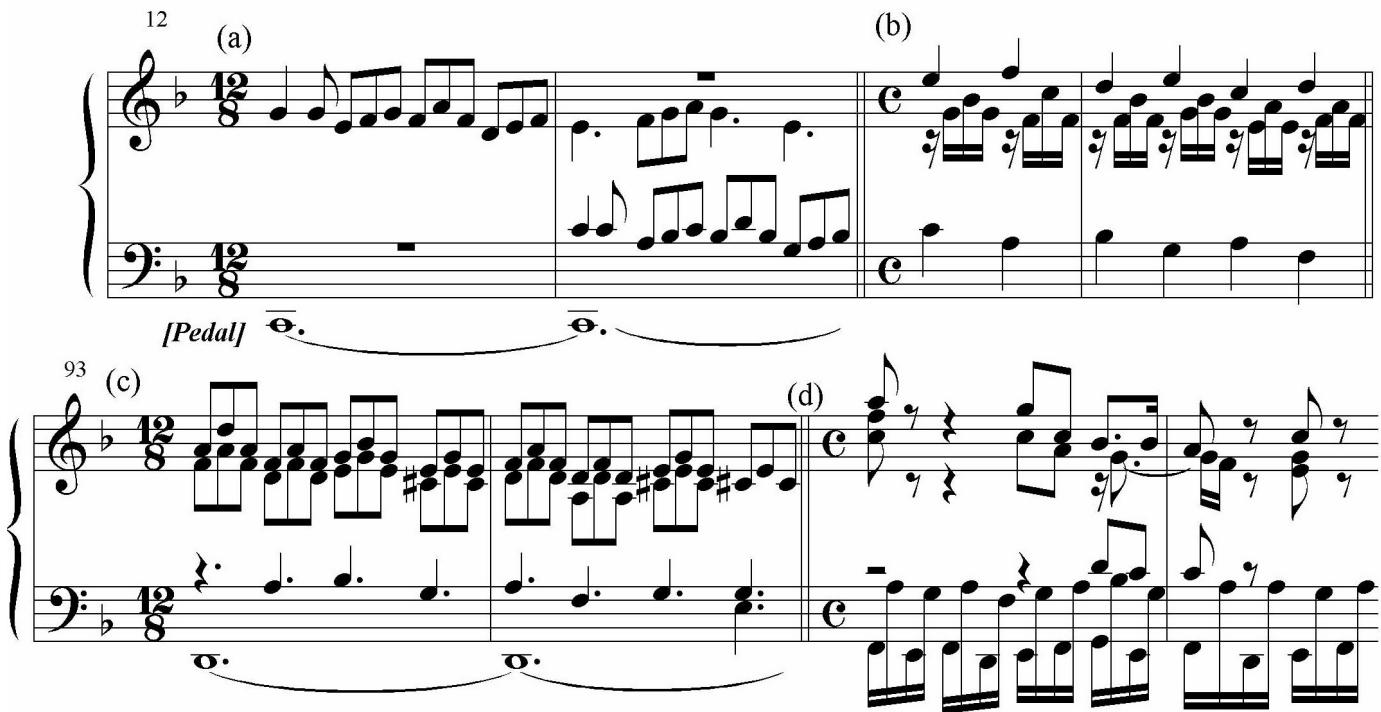
中文讲解
此为第15页的图像/乐谱占位符,对应上方谱例6的四个小节片段。其作用是直观展示BuxWV 156托卡塔在不同位置的音乐材料,使正文中关于“规则与不规则段落交替”以及“终段回归幻想风格”的论述获得视觉佐证。具体谱面细节须查阅原图。
补充说明
无额外补充(占位符本身不含可定位的文字信息)。
第3段(P0086)
原文复述
In its alternation between regular and irregular sections, the composition resembles not only the contemporary sonata but certain cantatas (or, as they were then designated, vocal concertos). The succession of arioso- and recitative-like sections, respectively, creates the impression of a vocally inspired piece of musical rhetoric. At the same time, the sheer size of such pieces, and especially the ultimate return to “fantastic” style at the end, gives the impression of an impressive architectural design, even if the plan is never as regular as in the D-minor Passacaglia.
中文讲解
本段对F大调托卡塔BuxWV 156的结构逻辑给出两层评价。第一层是体裁类比:作品在“规则与不规则段落交替”这一特征上,不仅类似当时的奏鸣曲(sonata),也接近某些康塔塔——当时称作“声乐协奏曲”(vocal concertos)。其中类宣叙调(recitative-like)与类咏叹调(arioso-like)段落的相继出现,使整部作品听来像是受声乐启发的一段音乐修辞。第二层是总体规模与回归:作品篇幅庞大,且终段重新回到“幻想风格”(fantastic style),给人以宏伟建筑感;但作者同时限定,这一设计并不像D小调帕萨卡利亚那样具有严格规则的计划。换言之,类比是修辞意义上的相似,而非结构等同。
第4段(P0087)
原文复述
The urge toward monumental yet “fantastic” writing evidently led to a number of extended chorale settings which, as it turned out, represent some of the last examples of this tradition. Buxtehude’s setting of the chorale “Nun freut euch lieben Christen g’mein” BuxWV 210 is one of his longest (256 measures), treating each of the seven phrases of the melody in turn. Following a design comparable to one used by Tunder, the first two phrases receive an ornamented “monodic” setting not unlike that which comprises the entire substance of Buxtehude’s many shorter chorale settings. The latter, today referred to as preludes, may have introduced the congregational singing of the tunes; here
中文讲解
本段将话题从托卡塔转向扩展的圣咏变奏,指出追求“纪念碑式却仍具幻想性”的写作倾向催生了若干大型圣咏设置,而这些作品后来成为该传统的最后代表之一。作者以BuxWV 210(“Nun freut euch lieben Christen g’mein”,共256小节)为典型,按旋律的七个乐句逐一处理。其设计可比于Tunder所用方案:前两乐句采用装饰性的“单声部”(monodic)设置,这与Buxtehude众多较短圣咏设置(今天称为“前奏曲”preludes,可能用于引导会众齐唱)的全部内容相当。本段在此处中断,下段继续。
补充说明
Tunder指Franz Tunder,Buxtehude的前任,亦为吕贝克圣母教堂乐长。‘monodic’在键盘圣咏前奏曲语境下指单线条旋律配以和声的写法,并非巴洛克晚期歌剧意义上的单声部咏叹调。
第5段(P0088)
原文复述
21 Efforts—not entirely convincing—have been made to analyze such instrumental pieces along the lines of an actual oration. Thus John Butt, “Germany and the Netherlands,” 198–9, analyzes the sections of Buxtehude’s Praeludium in F-sharp minor, BuxWV 146, as analogs of six successive parts of a Classical oration: exordium, narratio, propositio, confirmatio, confutatio, and “conclusio/peroratio.”
中文讲解
此为正文第P0086段“音乐修辞”提法对应的脚注21。脚注承认,曾有人尝试按古典演说(oration)的六部分结构——开端(exordium)、叙述(narratio)、命题(propositio)、论证(confirmatio)、反驳(confutatio)、结论/结尾(conclusio/peroratio)——来分析此类器乐曲,并以John Butt《Germany and the Netherlands》第198–9页对升f小调前奏曲BuxWV 146的分析为例。但脚注明确判定该类分析“并不完全令人信服”(not entirely convincing),因此仅为旁证,未上升为正文主张。
补充说明
无额外补充。脚注引文的具体页码和作者归属本身已提供充分定位。
第6段(P0089)
原文复述
22 Most later chorale “fantasias” by J. S. Bach and his contemporaries represent an entirely different type of piece, related to new ritornello-form types of aria and instrumental concerto that emerged around 1700.
中文讲解
此为正文第P0087段“该传统最后代表”提法对应的脚注22。脚注限定:Bach及其同时代人后来的圣咏“幻想曲”(chorale fantasias)属于全然不同的体裁,关联到约1700年前后兴起的、基于利都奈罗(ritornello)结构的咏叹调与器乐协奏曲类型。这等于提示读者,Buxtehude的大型圣咏设置(如BuxWV 210)所代表的旧式圣咏幻想传统在1700年前后已被新体裁所取代。
第7段(P0090)
原文复述
23 This work, too, is preserved in an early manuscript copy by Bach; see Wollny and Maul, “The Weimar Organ Tablature.”
中文讲解
此为第P0087段提及BuxWV 210对应的脚注23。脚注说明:这部作品(BuxWV 210)的早期手抄本之一由J. S. Bach亲自抄录,并指引读者查阅Wollny与Maul合著的《The Weimar Organ Tablature》(魏玛管风琴数字低音谱表)一文。该信息为Buxtehude—Bach之间的传承关系提供旁证,与第P0087段“该传统最后代表”的历史判断相呼应。
第8段(P0091)
原文复述
the monodic setting of lines 1–2 introduces an extended development of line 3 in double counterpoint at the twelfth with a new countersubject—the type of learned contrapuntal writing characteristic of older ricercars and fantasias (ex.). This style is abandoned for line 4, however, which instead is fragmented, each half developed antiphonally, with echoes between the organ manuals. An embellished cadence brings this section to a close—not coincidentally, about a third of the way through the piece. The next third of the piece comprises a development of lines 5–6 through a comparable succession of contrapuntal, then antiphonal, devices, and the work concludes with an extended treatment of the final (seventh) line in monodic, contrapuntal, and antiphonal styles, followed by a free coda.
中文讲解
本段紧接P0087,对BuxWV 210的逐句处理方案作出具体描述,全文呈“三段式”结构。第一乐段(第1–4行):第1–2行采用单声部设置;第3行转入十二度双重对位(double counterpoint at the twelfth),配合一个全新的对题(countersubject),属较古老的里切卡尔与幻想曲所特有的学究式对位风格;第4行风格突然转变,将旋律一分为二,以两套手键盘(manuals)之间的应答式(antiphonal)回响加以发展,最后以装饰性终止结束,此时恰好在全曲三分之一处。第二乐段(中段三分之一):第5–6行以类似的“对位—应答”顺序展开。第三乐段(最后部分):第7行以单声部、对位与应答三种风格合并展开,并接以自由尾声(coda)。由此可见,全曲的内部结构虽不似帕萨卡利亚那样严整,却呈现“单声部—对位—应答”三种写法循环交替的宏观三段布局。
补充说明
“double counterpoint at the twelfth”指两声部可在十二度音程上互换的写作手法;“antiphonal”指两套手键盘之间的对答效果,是北德管风琴作品的典型手法。
第9段(P0092)
原文复述
Also attributed to Buxtehude are a number of suites and variations on secular tunes, probably intended for clavichord or perhaps harpsichord. Preserved in Scandinavian manuscripts, these might include the seven suites which, according to Johann Mattheson, Buxtehude composed “on the nature and qualities of the planets.” But if so the musical characterization of the planets is not distinctive enough to recognize them in the absence of explicit titles. The pieces fall into the same expressive but not particularly distinctive style typical of other German suites of the period, Froberger’s excepted. At least two of the suites have conflicting attributions, raising the possibility that the group as a whole is by several composers—which would explain small inconsistencies in style and keyboard ambitus.
中文讲解
本段从宗教性作品转向Buxtehude名下世俗性作品:若干组曲与变奏曲,可能为古钢琴(clavichord)或拨弦键琴(harpsichord)所作,保存在斯堪的纳维亚手稿中。其中可能包括Johann Mattheson所述的“以七颗行星之性质与特性”为题的七首组曲,但作者谨慎指出,即便确为该套作品,其音乐刻画也并不足以让听者在没有标题的情况下辨认出哪首对应哪颗行星。整体而言,这些作品的风格属于该时期德国组曲共有的“有表情但不特别鲜明”一类,仅Froberger例外;而且至少有两首组曲存在归属分歧,使整组作品可能出自多位作曲家之手,由此可以解释其中出现的细微风格与键盘音域不一致。
脚注 / 边栏 / 图表 / 附加信息(如有)
本节附加材料包括:1) 谱例6(BuxWV 156的四个小节片段,标题见P0084,图像占位符见P0085),用以直观支撑正文中“规则与不规则交替”及“终段回归幻想风格”的论述;2) 脚注21(P0088)对“将器乐曲比作演说结构”的做法表示保留,提示John Butt对BuxWV 146的分析;3) 脚注22(P0089)将Buxtehude的圣咏幻想传统与1700年前后兴起的利都奈罗新体裁加以区分;4) 脚注23(P0090)注明BuxWV 210有Bach的早期抄本,见Wollny与Maul文。三条脚注均为对正文论断的限定、来源或旁证,无独立论证。
💡 本节核心要点
- BuxWV 156 F大调托卡塔的特征是“规则—不规则段落交替”,并被比作奏鸣曲与当时称作“声乐协奏曲”的康塔塔,使作品带有声乐修辞色彩,但结构并不像D小调帕萨卡利亚那样严整。
- 追求纪念碑式与幻想性写作相结合,催生了扩展型圣咏设置;BuxWV 210(256小节,按圣咏七乐句逐一处理)是该传统最后代表之一。
- BuxWV 210的内部设计呈宏观三段式:单声部—对位(十二度双重对位)—应答三种风格按段循环使用,并在第4行和第7行附近以装饰性终止划分比例。
- 前两乐句的“单声部”装饰性设置,与Buxtehude那些可能用于引导会众齐唱的较短前奏曲在写法上一致。
- Bach及其同时代人的圣咏幻想曲属于约1700年后兴起的利都奈罗新体裁,与Buxtehude所代表的旧传统分属不同范畴。
- Buxtehude名下世俗组曲(含据Mattheson所述“七行星”套曲)保存于斯堪的纳维亚手稿,音乐刻画不鲜明,至少两首存在归属分歧,整组可能非一人所作。
🔑 关键术语
- BuxWV:Buxtehude-Werke-Verzeichnis的缩写,布克斯特胡德作品目录编号,用于标识具体作品如BuxWV 156(托卡塔)、BuxWV 210(圣咏设置)、BuxWV 146(前奏曲)。
- Toccata / 托卡塔:本节中作为“规则与不规则段落交替”的体裁,其“幻想风格”段落和不规则段赋予作品修辞与建筑感。
- fantastic style / 幻想风格:本节反复出现的概念,指带有即兴性、华丽炫技段落与不规则结构的写法;大型托卡塔与圣咏设置的终段都会回归此种风格。
- vocal concerto / 声乐协奏曲:当时对康塔塔的称呼,因其交替出现类咏叹调和类宣叙调的段落,而被本节用以比照BuxWV 156的结构逻辑。
- monodic setting / 单声部设置:在键盘圣咏前奏曲语境下,指突出单一旋律线配以和声的写法;BuxWV 210前两乐句以及众多较短圣咏前奏曲均采用此法。
- double counterpoint at the twelfth / 十二度双重对位:两个声部在十二度音程上可以互换的写作手法,属较古老的里切卡尔与幻想曲所特有的学究式对位,在BuxWV 210第3行处使用。
- antiphonal / 应答式:指两套管风琴手键盘(manuals)之间的对答回响效果;在BuxWV 210中用于第4行及第5–6行的展开阶段。
- chorale fantasia / 圣咏幻想曲:以圣咏旋律为基础的大型幻想性变奏作品;脚注22强调Bach等人的同名体裁与本节所论旧传统分属不同类型。
C8.S3 [描述性拆分] Northern Followers: Lübeck, Bruhns, Böhm, and Handel
第1段(P0093)
原文复述
Younger contemporaries of Buxtehude in northern Germany include Vincent Lübeck (1654–1740), Nicolaus Bruhns (1665–97), and Georg Böhm (1661–1733), who continued the north-German tradition into the eighteenth century. Like J. S. Bach—on whom he may have exercised early influence (footnote 25)—Böhm incorporated up-to-date elements of the French and Italian styles into his keyboard music. For instance, his variations on chorale melodies include apparent references to the new types of aria being included in Italian opera and cantata around 1700, in which entries of the voice are framed by instrumental ritornellos. Groups of his keyboard compositions, alongside works of Reincken and other north-German composers, are preserved in two manuscripts compiled shortly after the turn of the century by Bach’s older brother Johann Christoph.
中文讲解
本段把小节正式打开:列出布克斯特胡德(Buxtehude)在北德的几位年轻同代人——Vincent Lübeck(1654–1740)、Nicolaus Bruhns(1665–1697)和 Georg Böhm(1661–1733),并把他们定位为北德传统进入十八世纪的延续者。Lübeck 与 Bruhns 在这里只是提名,篇幅真正的焦点是 Böhm。两个细节支撑 Böhm 的特殊地位:(1)他对 J. S. Bach 可能产生过“早期影响”(加了脚注 25 提示这一关系其实有不确定之处,参见 P0097);(2)他把当时法国和意大利风格中的“最新元素”融进了键盘音乐。本段给出的具体例证是他的圣咏变奏:作者指出,这些变奏里能听到约 1700 年前后意大利歌剧与康塔塔中“新式咏叹调”的影子——这种新式咏叹调的结构特征是人声进入段落被器乐利都奈罗(ritornello)前后包夹。换言之,作者用“利都奈罗框住人声”这种形式特征,把 Böhm 的北德圣咏变奏和同时期意大利新式咏叹调勾连起来,论证 Böhm 对南方新风格确有吸收。最后一句交代史料来源:保存 Böhm(及 Reincken 等北德作曲家)作品的,是 Bach 的哥哥 Johann Christoph 在世纪之交编订的两份手稿——这就把作曲家群体的代际和作品保存链条串起来:北德作曲家 → Johann Christoph 手稿 → 与 J. S. Bach 早期学习环境的接触。
补充说明
脚注 25 标记在此段末,针对“he may have exercised early influence”这一保守措辞;脚注内容在 P0097 给出了 C. P. E. Bach 后来对该关系的犹疑。
第2段(P0094)
原文复述
Among the works of Böhm is a praeludium in G minor whose unusual opening section, composed of repeated notes and arpeggios, perhaps borrows ideas heard in the incipient Italian concerto (footnote 26). More distinctive than this, however, or than Böhm’s few surviving organ pieces, are his suites. These, although clearly in the same tradition as those attributed to Buxtehude, are closer to the contemporary French tradition (including the early works of François Couperin) while incorporating the drama and the virtuoso elements of the north-German style. Thus the chaconne of Böhm’s F-minor suite—whose key is remarkable at this date—is in the full Lullian style, unlike the more Italianate chaconnes of Buxtehude. It also incorporates the sweeping scales and other dramatic gestures of the stylus fantasticus. Even Böhm’s allemandes incorporate bursts of arpeggiated figuration that span the complete keyboard.
中文讲解
本段把注意力集中在 Böhm 的具体作品,并以此进一步刻画他的风格混合。结构上是“总分”:先提一首前奏曲作为佐证,再把重心放到组曲上。前奏曲方面:g 小调前奏曲的开头由“重复音 + 琶音”构成,作者推测这可能借鉴了当时正在萌芽的意大利协奏曲(concerto)语汇——这里“incipient”很关键,说明是“初期”形态的协奏曲,并非成熟的大协奏曲。真正的重点是组曲。作者给出一个三层比较:Böhm 的组曲(1)显然属于布克斯特胡德名下那套组曲的传统,但(2)更靠近当时的法国传统(包括库普兰 François Couperin 的早期作品),同时(3)吸收了北德风格的戏剧性与炫技性。具体例子是 f 小调组曲的恰空:作者特别标注其调性在当时“remarkable”(罕见、不寻常),并把它定位为“full Lullian style”(典型的吕利风格)——这与布克斯特胡德那些更意大利化的恰空形成对比。作者再补一句:这段恰空同时还包含迅疾的音阶跑动和其它富于戏剧性的动作,这些恰是 stylus fantasticus(幻想曲风格)的标志性语汇。最末一句又把目光拉回到阿勒曼德舞曲:连通常较平稳的阿勒曼德里,Böhm 也会插入覆盖整个键盘的琶音式片断,证明北德炫技传统在他手里已渗透到舞曲内部。整段的论证策略是:用一首前奏曲呼应意大利新风格,再用恰空与阿勒曼德呼应法国/北德传统,从而把 Böhm 框定为综合型作曲家。
补充说明
本段两次使用比较级与最高级表达作者评价:“More distinctive than this…are his suites”、“closer to the contemporary French tradition”;脚注 26 指向 P0098,对前奏曲作品的流传史与现代演奏误区做了补充。
第3段(P0095)
原文复述
This last feature may confirm Böhm’s authorship of a highly expressive suite in E-flat copied anonymously in one of Christoph Bach’s manuscripts (footnote 27). Although the work has been published as Froberger’s, the key (unused by Froberger elsewhere) points against this, and the unmistakable allusions to the Froberger style may reflect Böhm’s evident talent for stylistic imitation. Christoph Bach also owned a copy of an early version of a suite by another young north-German contemporary, Johann Mattheson. J. S. Bach might well have carried copies of these pieces back with him, making them available to his older brother and teacher, after his northern sojourns in the early years of the eighteenth century. In any case, Sebastian must have known a later version of Mattheson’s suite published alongside eleven other suites of the composer at London in 1714; these include, alongside dance movements in the old tradition, distinctive preludes some of which Bach seems to have imitated (footnote 28).
中文讲解
本段处理两个相互交织的问题:一是 Böhm 作品的归属,二是北德作曲家之间的作品传播网络。先接续 P0094 末尾“整键盘琶音”这一特征,把它升级为归属证据:Christoph Bach 手稿里有一首匿名抄录的、极富表现力的降 E 大调组曲——尽管这部作品曾以 Froberger 名字出版,但(1)Froberger 在其它作品中从未用过这一调性,这是反证;(2)作品里确有清楚可辨的对 Froberger 风格的“allusion”(暗示、致敬),这恰好印证 Böhm 本人“对风格的高超模仿能力”。作者由此推断,匿名抄本可能就是 Böhm 的真作。这就把 Böhm 描述为一个“既能吸收多种风格,又能精细模仿他人风格”的作曲家。第二条线索转向 Johann Mattheson——又一位年轻北德同代人。论证链条是:Christoph Bach 手稿里有 Mattheson 组曲的早期版本;J. S. Bach 在十八世纪初游历北方时,可能带回这些抄本供哥哥(也是他早年的老师)使用;此外,Mattheson 1714 年在伦敦出版了十二首组曲,其中除了传统舞曲外,还包含一些颇具特色的前奏曲,作者认为其中部分前奏曲“似乎被 Bach 模仿过”。换言之,本段一方面用归属争议展示版本与风格分析的细节,另一方面把 Böhm、Mattheson、Christoph Bach 与 J. S. Bach 通过手稿抄本串成一张影响/传播网络。
补充说明
脚注 27、28 分别针对本段两处推断(归属与 Bach 的模仿)提供外部文献支持,但原文未展开内容,仅以编号提示出处。
第4段(P0096)
原文复述
24 Der vollkommene Capellmeister (Hamburg, 1739), 130.
中文讲解
本页脚注 24 的内容:源自 Mattheson 的著作《Der vollkommene Capellmeister》(汉堡,1739 年),第 130 页。脚注编号 24 出现在前一小节(即上一节的 P0092,本节未直接复述),作用是为正文中的某条引述提供文献来源;本脚注以完整出版信息列出来源。
第5段(P0097)
原文复述
25 Bach evidently had some contact with Böhm during his student years at Lüneburg (1700–1703), although many years later C. P. Bach may have had some uncertainty as to the two men’s exact relationship, crossing out an initial reference to Böhm as his father’s teacher (letter dated Jan. 13, 1775, trans. in The New Bach Reader, ed. Hans T. David and Arthur Mendel, rev. Christoph Wolff [New York: Norton, 1998], 398).
中文讲解
脚注 25 为 P0093 中 Böhm“对 J. S. Bach 可能施加早期影响”这一谨慎说法提供史料限定。脚注承认:Bach 在吕讷堡求学期间(1700–1703)显然与 Böhm 有过接触;然而多年之后,C. P. E. Bach 在 1775 年 1 月 13 日的一封信中,曾把 Böhm 称为其父的“老师”,后来又把这个称呼划掉——可见即使是 Bach 家族内部,对两人关系的精确程度也存在不确定。脚注末尾给出该信的英译出处:《新巴赫读本》(The New Bach Reader),David、Mendel 编,Wolff 修订,纽约 Norton 1998 年版,第 398 页。该脚注的功能是为正文中的“may have exercised early influence”做支持兼限定:既支持存在接触,又提醒读者对“师徒”之类的精确称谓保持怀疑。
补充说明
脚注对正文的具体作用是支持 + 限定;脚注本身的引文仅取自 task_input 中可定位的文献信息。
第6段(P0098)
原文复述
26 The work became known in the twentieth century under the title “Präludium, Fuge und Postludium”; the character of the opening section is often disguised in modern performances that include unidiomatic ornaments added by J. C. Bach; these tend to slow the tempo considerably.
中文讲解
脚注 26 对应 P0094 中提到的 g 小调前奏曲。脚注内容:这部作品在二十世纪以“Präludium, Fuge und Postludium(前奏曲、赋格与后奏曲)”之题流传;但现代演出常常加入由 J. C. Bach(Johann Christoph Bach)所添的、不符合该体裁风格的装饰音,这些装饰音往往会显著拖慢速度,从而掩盖了原作开头部分的本来面貌。换言之,脚注既交代了这部作品的现代命名史,也提醒研究者:今天听到的某些版本,因后人添加的装饰音,已经偏离了 Böhm 原本的写作意图。
第7段(P0099)
原文复述
One last composer to be mentioned in this context is George Frideric Handel (1685–1759), who worked in Hamburg for several years before departing for Italy in 1706. Handel had been trained in Halle by the capable organist-composer Friedrich Wilhelm Zachow (1663–1712), whose variation suite in B minor appears alongside an early work of the same type by J. S. Bach in one of Christoph Bach’s manuscripts. Handel’s own keyboard works include several of this same type, probably composed, like the bulk of his keyboard music, during his early years. Among them is the famous suite in E, published in a revised version (like a number of other mostly early works) as one of the eight “Great Suites” of 1720 (footnote 29). The last movement, a set of variations, became known in the nineteenth century as “The Harmonious Blacksmith,” and under this title it has probably been Handel’s most frequently played keyboard work. The theme was supposed to have been suggested by a musical artisan whom Handel overheard near Cannons, where the composer was working about 1716–17. But the movement is probably earlier; several manuscripts give it in early versions as an independent piece in G. As in a chaconne or passacaglia, the variations are based less on the melody than on the bass line and its implied harmonic progression; Bach’s student Kirnberger would later quote the work to illustrate this type of variation technique (footnote 30).
中文讲解
本段为本小节收尾,引出 George Frideric Handel(1685–1759)——他在 1706 年赴意大利之前,曾在汉堡工作数年。结构上分两层:一是师承与早期作品,二是“最著名段落”的版本与体裁辨析。
第一层:Handel 在 Halle 师从管风琴家、作曲家 Friedrich Wilhelm Zachow(1663–1712)。史料细节是,Zachow 的 b 小调变奏组曲与 J. S. Bach 早期同类作品一起,被抄入 Johann Christoph Bach 的一份手稿——这再次坐实了 Christoph Bach 的手稿作为北德键盘音乐“档案库”的地位。Handel 自己的早期键盘作品中也包含若干同类型变奏组曲,多半写于早年。其中最著名的一部是 E 大调组曲,后于 1720 年以修订版收入八首“Great Suites(大组曲)”之一。
第二层聚焦该组曲末乐章:一套变奏,十九世纪得名“The Harmonious Blacksmith(和谐的 blacksmith)”,也是 Handel 被演奏最多的键盘作品。围绕它有一个著名传说——Handel 在 Cannons(约 1716–1717 年间他工作之处)附近听到一位工匠锤铁,主题由此而生。但作者明确否定这一浪漫叙事,指出该乐章很可能更早,多份手稿以 G 大调独立作品的形式保留了早期版本。
最后一句给出体裁定位:与恰空、帕萨卡利亚一样,这套变奏的建构依据“更在于低音线条及其隐含的和声进行”,而非旋律本身——这也是巴赫的学生 Kirnberger 后来引用此曲来说明此类变奏技法的理由。换言之,作者把 Handel 这首通俗名作重新放回到“和声—低音变奏”这一北德/南方共通的体裁语境中,既破除传说,又把作品提升到值得严肃技术分析的层面。
补充说明
脚注 29 与 30 分别针对 E 大调组曲 1720 年出版与 Kirnberger 的引用,未在本段给出具体文献信息;功能为来源标记。
脚注 / 边栏 / 图表 / 附加信息(如有)
本小节包含的附加材料均为脚注(编号 24、25、26、27、28、29、30),其中 24–26 已在本节正文段落 P0096–P0098 中完整复述;27、28、29、30 在正文段落中仅以角标形式出现,原文未展开具体内容,仅作为脚注引用提示。无图表或边栏。本小节没有出现独立的图像或乐谱占位符。
💡 本节核心要点
- 北德传统在 18 世纪初由 Lübeck、Bruhns、Böhm 三位年轻同代人延续,其中 Böhm 因对 J. S. Bach 可能产生早期影响而获得特殊地位。
- Böhm 是一位综合型作曲家:其圣咏变奏吸收 1700 年前后意大利歌剧/康塔塔中“利都奈罗包夹人声”的新咏叹调结构;其组曲靠近同时期法国传统(包括早期库普兰),同时保留北德戏剧性与炫技性,f 小调组曲的恰空被定位为完整 Lullian 风格而非布克斯特胡德式的意大利化变体。
- Böhm 的“阿勒曼德包含全键盘琶音”这一特征,被作者用作将 Christoph Bach 手稿中一首匿名降 E 大调组曲归属给 Böhm 的证据;该作品曾以 Froberger 之名出版,但调性不见于 Froberger 其它作品,且对 Froberger 风格的清晰暗指被解释为 Böhm 对风格模仿的才能。
- Johann Christoph Bach 编订的两份手稿,是保存 Böhm、Reincken、Mattheson、Zachow 与早期 J. S. Bach 等北德作曲家作品的共同档案;J. S. Bach 在北方游历后可能将抄本带回,使其进入兄长兼早期教师的曲目圈。
- Mattheson 1714 年伦敦出版的十二首组曲中包含颇具特色的前舞曲,其中部分被作者认为 Bach 似乎模仿过。
- Handel 在赴意大利前在汉堡工作数年,早期师从 Halle 的 Zachow;其 E 大调组曲末乐章《和谐的 blacksmith》的浪漫起源传说被作者否定,实际很可能是更早的独立 G 大调变奏乐章;其变奏以低音与和声进行为基础,与恰空/帕萨卡利亚同属一类变奏技术。
🔑 关键术语
- ritornello:本节指 1700 年前后意大利歌剧/康塔塔中新式咏叹调里反复出现的器乐段落,被用来在结构上框住人声进入;作者用此术语说明 Böhm 圣咏变奏与同时期意大利新咏叹调之间的形式关联。
- stylus fantasticus:北德管风琴与键盘音乐中以自由结构、迅疾音阶跑动与戏剧性姿态为标志的炫技风格;本节用来描述 Böhm 恰空里加入的“sweeping scales”等戏剧性动作。
- Lullian style:源自法国作曲家吕利的舞曲化、装饰性强的器乐风格;本节中与布克斯特胡德更“意大利化”的恰空形成对比,用以定位 Böhm f 小调组曲中恰空的风格归属。
- chaconne / passacaglia:以固定低音及其和声进行为基础反复变奏的体裁;本节用以说明 Handel《和谐的 blacksmith》变奏乐章的真正结构基础是低音而非旋律主题。
- incipient Italian concerto:本节中指尚处于萌芽阶段的意大利协奏曲语汇;作者以此谨慎措辞说明 Böhm g 小调前奏曲开头所借鉴的,并非成熟的大协奏曲体裁。
- “Great Suites” of 1720:1720 年出版的八首组曲合集;本节中 Handel E 大调组曲以修订版收入其中,作者指出被收入的多为早期作品,因此该合集本身也是研究 Handel 早年键盘风格的重要来源。
C9.S1 [描述性拆分] Froberger: Biography and Working Method
第1段(P0100)
原文复述
Froberger
中文讲解
这是一个二级标题,宣告本小节将围绕作曲家约翰·雅各布·弗罗贝格(Johann Jacob Froberger)展开。上一节结束于德国北方的键盘音乐传统(布克斯特胡德等),此标题暗示作者将目光从北德转向一个“外部”的中心人物,从而在地理与风格上推进全书叙事。
第2段(P0101)
原文复述
Outside northern Germany, the central figure in seventeenth-century keyboard music is Johann Jacob Froberger (1616–67). He traveled widely and was recognized within his lifetime as a master in both the French and the Italian styles. Although details of his life and output remain controversal, by 1638 he was in imperial service at Vienna and was almost immediately sent to Rome to study with Frescobaldi. He was back in Vienna from 1641 to 1645, but by 1649 had completed a second visit to Rome, during which he evidently studied with the Italian composer of cantatas and oratorios Giacomo Carissimi (1605–74) and made the acquaintance of the famous polymath Athanasius Kircher, who included a fantasia by Froberger in one of his prolific writings. Subsequent destinations during 1649–53 included
中文讲解
本段为本节定下总框架:先点出弗罗贝格在17世纪键盘音乐中的核心地位(“outside northern Germany… the central figure”),再勾勒其生平主线。其重要性在于同时精通法国与意大利两种风格——这正是巴洛克键盘音乐两条主要传统的汇合点。作者随后用“although details … remain controversal”这一让步句承认生平细节仍有争议,但随即给出几个有时间锚点的事实:1638年进入维也纳宫廷并被派往罗马师从弗雷斯科巴尔迪;1641–45年回到维也纳;1649年完成第二次罗马之行,期间显然跟随康塔塔与清唱剧作曲家卡里西米学习,并结识学者基歇尔(Kircher),后者将弗罗贝格的一首幻想曲收入自己的多产著作。本段的叙事功能是为下一段(P0106)的旅行清单做铺垫——句末以“Subsequent destinations during 1649–53 included”未完成句收尾,把1649–53年间的行程列表留到下一页继续。
补充说明
“controversal”是原文拼写(应为controversial),按原文保留;“imperial service”指神圣罗马帝国宫廷的雇佣关系;“polymath”指博学者,提示基歇尔作为百科全书式学者的身份。这些事实均直接来自本段文本,不作外部延伸。
第3段(P0102)
原文复述
27 Suite 11 in the edition by Klaus Beckmann (Georg Böhm: Sämtliche Werke für Klavier/Cembalo [Wiesbaden: Breitkopf und Härtel, 1985).
中文讲解
这是脚注27,内容是前一节关于格奥尔格·伯姆(Georg Böhm)组曲的版本信息:贝克曼(Klaus Beckmann)编辑的《格奥尔格·伯姆:键盘/大键琴作品全集》中收录了第11号组曲,出版于威斯巴登的Breitkopf und Härtel,1985年。脚注作用是提供学术版本来源,方便读者核查曲谱。
补充说明
Breitkopf und Härtel是历史悠久的德国音乐出版社。本脚注中括号未闭合是原书排印的保留。
第4段(P0103)
原文复述
28 The preludes of Bach’s English Suites, and perhaps even the title of that set, may have been suggested by Mattheson’s publication; the opening movement (“Fantasie”) of Mattheson’s Suite 5 resembles that of Bach’s third English Suite in key and motivic material, and the “Symphonie” of Mattheson’s Suite 10 furnishes an apparent model for the Sinfonia of Bach’s C-minor Partita.
中文讲解
脚注28讨论马泰森(Mattheson)的组曲出版与巴赫《英国组曲》之间的关系。作者提出三点推测或关联:(1)《英国组曲》的前奏曲乃至整部曲集的标题都可能受到马泰森出版物的启发;(2)马泰森《第5组曲》开篇的“幻想曲”(Fantasie)在调性与动机材料上与巴赫《第三英国组曲》开头相似;(3)马泰森《第10组曲》中的“Symphonie”为巴赫C小调帕蒂塔的Sinfonia提供了明显范本。脚注整体作用是为前文关于马泰森与巴赫风格联系的论点提供具体例证。
补充说明
“Sinfonia”是巴赫C小调第二帕蒂塔(BWV 826)的开篇乐章,以其宏大的对称结构著称,常被独立演奏。脚注中“may have been”保留了推测语气,不应改写为确定结论。
第5段(P0104)
原文复述
29 Handel’s own title was Suites de pièces pour le clavecin; a second volume of suites published in 1727 (possibly without Handel’s authorization) contains an even greater preponderance of youthful compositions.
中文讲解
脚注29澄清亨德尔(Handel)自己的标题用法:他使用的法文标题是“Suites de pièces pour le clavecin”(为大键琴而作的组曲集)。1727年出版的第二卷组曲(可能未经亨德尔授权)包含了比例更高的早年作品。这一脚注服务于前文关于亨德尔组曲的论述,并提示读者对“亨德尔授权版本”与“可能非授权版本”加以区分。
补充说明
括号中的“possibly without Handel’s authorization”保留了作者的不确定性,原文未提供确证,不应据此外推更多结论。
第6段(P0105)
原文复述
30 In his Kunst des reinen Satzes in der Musik (Berlin and Königsberg, 1771–9). Bach used the same technique in his Goldberg Variations.
中文讲解
脚注30极短,先标明前一论断的出处——基恩贝格尔(Kirnberger)的《音乐中纯正作曲技法》(Kunst des reinen Satzes in der Musik),柏林与柯尼斯堡,1771–9年;随后补充说明巴赫在《哥德堡变奏曲》中也使用了同一技法。该脚注的作用是交叉印证某种作曲技法在18世纪理论家与巴赫实践中的存在。
补充说明
“Kunst des reinen Satzes in der Musik”是基恩贝格尔的德文原题名,按原文保留;柯尼斯堡(Königsberg)当时属普鲁士,今为俄罗斯加里宁格勒。脚注残句结构(首句不完整)反映了原书排版,依原文保留。
第7段(P0106)
原文复述
Brussels, Utrecht, Paris, London, and Madrid. After the death of the Holy Roman Emperor Ferdinand III in 1657, Froberger was dismissed, ending his career as teacher of the dowager duchess Sibilla of Württemberg, who retired after her husband’s death in 1662 to the enclave of Montbéliard in France.
中文讲解
本段承接P0101末尾被截断的1649–53年行程列表,补全这一时期弗罗贝格到访的城市:布鲁塞尔、乌得勒支、巴黎、伦敦、马德里。这一行程凸显其国际流动性,也呼应了开篇“traveled widely”的描述。段落随后转向宫廷生涯的终结:1657年神圣罗马帝国皇帝斐迪南三世去世,弗罗贝格被解职;其最后职位是符腾堡公爵夫人西比拉(Sibilla)的教师,西比拉在丈夫1662年去世后退居法国境内的蒙贝利亚尔(Montbéliard)飞地。由此,弗罗贝格晚年的活动空间从宫廷教师转向私人家庭教师。
补充说明
Montbéliard在17世纪属于符腾堡领地,是一块被法国领土包围的飞地,符合本段“enclave”的描述;这些地理信息仅作为原文用语的注脚,不作外部延伸。
第8段(P0107)
原文复述
It was in a letter to Princess Sybilla that Froberger spoke of the discrétion required to play his music, using a term also employed by Kuhnau and others for rhythmic freedom.31 Although Froberger implied that his music could not be properly performed by one who had not heard his own playing, the precision with which he notated the irregular, speech-like rhythms of his allemandes, toccatas, and other more improvisatory movements suggests his concern for fixing his practice in writing. It is odd, therefore, that Froberger did not also notate most of the ornaments—trills (tremoli), grace notes (accenti), and the like—which were an equally integral part of keyboard performance practice, and which the next generation of composers would indeed fix in notation.
中文讲解
本段是全节核心论证之一,揭示弗罗贝格记谱实践中的矛盾与张力。首先,作者指出弗罗贝格在致西比拉公主的信中谈到演奏其音乐所需的“discrétion”(法语,意为“有分寸的克制/审慎”),这一术语库瑙(Kuhnau)等其他人也曾用来指节奏自由;其作用是引入一个演奏美学关键词(脚注31将作文献延伸)。接着出现一个对照:尽管弗罗贝格暗示未听过他本人演奏的人无法正确诠释他的音乐,但他对阿勒芒德、托卡塔及其他即兴性较强的乐章中不规则、言语化节奏的精确记谱,说明他其实在通过记谱来“固定”自己的演奏实践。由此形成本段的关键悖论——“因此令人奇怪的是”——他却没有把装饰音(颤音tremoli、倚音accenti等)一并记下,而这些装饰同样是键盘演奏不可或缺的成分,且下一代作曲家确实将它们写入了谱面。这一悖论是本节对弗罗贝格“工作方法”最重要的观察:他对节奏记详尽而对装饰记粗略,体现了17世纪键盘记谱的过渡状态。
补充说明
discrétion(带重音符号)是17世纪法语原文形式,与现代discrétion对应;tremoli与accenti分别为意大利文“颤动/颤音”与“重音/倚音”,体现弗罗贝格身处意大利风格语境中的术语选择。这些对照关系完全依据本段文本。
第9段(P0108)
原文复述
Froberger seems to have composed little besides keyboard music, much of which he gathered into at least five manuscripts which he presented to his employers, the Austrian emperors. Unfortunately, only three of these, dated 1649, 1656, and 1658, survive; because the first two of these are designated as volumes 2 and 4, it is clear that at least volumes 1 and 3 have been lost. Some of their contents can be provisionally reconstructed from pieces surviving in other manuscript copies and in several posthumous printed editions.32 The three dated manuscripts each comprise several distinct sets of pieces, grouped into homogeneous half-dozens as shown in Table 1.
中文讲解
本段勾勒弗罗贝格的作品流传状况,是其“工作方法”的另一重要面向:(1)他似乎几乎只写键盘音乐;(2)他将作品集结成至少五部手稿,作为礼物献给雇主——奥地利皇帝;(3)这五部手稿中只有三部幸存,分别署年1649、1656、1658;(4)由于幸存的三部被分别标为第2卷和第4卷,可知至少第1卷和第3卷已佚;(5)遗失部分的内容可借助其他手抄本和几部他去世后的印刷版暂时重构(脚注32为相关文献索引)。段落最后交代三册幸存手稿的结构:每册由若干独立的成套乐曲组成,按“同类六首为一组”的方式编排,并指向表1。这一描述为本节后续讨论具体曲目(如阿勒芒德、组曲等)提供了物质载体:我们要研究弗罗贝格的风格,必须依托这三册手稿的物理结构。
补充说明
“homogeneous half-dozens”(同类六件一组)暗示弗罗贝格以六首为单位进行分类编集,这种编集逻辑直接影响后文对“partita”“suite”等体裁命名的讨论。本段不展开外部细节,仅在文意内澄清。
第10段(P0109)
原文复述
31 See Howard Schott, “Parameters of Interpretation in the Music of Froberger,” in J. J. Froberger, musicien européen ([Paris?]: Klincksieck, 1998), 99–120. Further discussion of the term by Markus Grassl, “Froberger der diskrete,” in “Avec discrétion”: Rethinking Froberger, edited by Andreas Vejvar and Markus Grassl (Vienna: Böhlau, 2018), 11–51; see also the review of the latter volume by the present author in Early Keyboard Journal 31/32 (dated 2014–15, published 2020): 165–73.
中文讲解
脚注31为“discrétion”一词提供文献索引:先列Howard Schott关于弗罗贝格音乐诠释参数的论文,收入《J. J. Froberger, musicien européen》(Klincksieck出版社,1998年)第99–120页;再列Markus Grassl的文章“Froberger der diskrete”,收入Andreas Vejvar与Markus Grassl主编的《Avec discrétion: Rethinking Froberger》(Böhlau出版社,维也纳,2018年)第11–51页;最后提示本卷有现任作者的评论文章,刊于Early Keyboard Journal 第31/32辑(标注2014–15年,实际出版2020年)第165–173页。脚注作用是把正文中的关键术语(discrétion)连接到具体学术讨论,使读者得以追溯这一概念在弗罗贝格研究中的脉络。
补充说明
出版社名Klincksieck与Böhlau仅作原文记录,不作外部资料补写。脚注中括号内的出版地“[Paris?]”保留原文的不确定标记。
第11段(P0110)
原文复述
32 See Alexander Silbiger, “Tracing the Contents of Froberger’s Lost Autographs,” Current Musicology 54 (1993): 5–23. An additional autograph manuscript that surfaced in 2006 before returning to private ownership is described by Simon Maguire, “Johann Jacob Froberger: A Hitherto Unrecorded Autograph Manuscript,” Journal of Seventeenth-Century Music 13 (2007), online at https://sscmjscm.org/v13/no1/maguire.html; further discussion by the present author in “Recent Editions and Recordings of Froberger and Other Seventeenth-Century Composers,” Journal of Seventeenth-Century Music 13 (2007), online at http://sscm-jscm.org/v13/no1/schulenberg.html.
中文讲解
脚注32为正文关于弗罗贝格遗失手稿的论述提供学术支撑,分三条文献线索:(1)Alexander Silbiger在Current Musicology第54期(1993年)第5–23页发表《Tracing the Contents of Froberger’s Lost Autographs》,对遗失亲笔手稿的内容进行追溯;(2)Simon Maguire在Journal of Seventeenth-Century Music第13卷(2007年)在线发表文章,描述2006年浮出后又回归私人收藏的另一部亲笔手稿;(3)现任作者在同一期刊同一卷就弗罗贝格及17世纪作曲家近期版本与录音发表评论,并附上在线链接。该脚注的作用是告诉读者:弗罗贝格遗失手稿的“重建”工作在学术界仍在持续,且新材料仍在出现。
补充说明
两条URL为原文给出的在线地址,仅作文献线索记录;2006年新发现的亲笔手稿是否对应遗失的某一卷,原文未给出结论,本栏不作外部推断。
脚注 / 边栏 / 图表 / 附加信息(如有)
本小节包含编号脚注27–32共六条。脚注27交代贝克曼1985年版伯姆全集,承前节;脚注28、29、30分别就马泰森与巴赫英国组曲、亨德尔组曲标题与基恩贝格尔的论述提供版本与文献支撑;脚注31为正文核心术语discrétion提供Schott与Grassl等学者的延伸阅读;脚注32为遗失手稿的内容追溯与新材料(如2006年浮出的亲笔手稿)提供文献索引。脚注31与脚注32各自对应正文中的关键论述:前者支持“演奏自由/审慎”的美学概念,后者支持“手稿遗失与部分可重建”的作品流传论断。表1在本节末段被提及,但本任务输入未提供表1的图内容,故不作具体细节补充。
💡 本节核心要点
- 弗罗贝格被定位为17世纪北德之外键盘音乐的核心人物,同时精通法国与意大利两种风格。
- 其生平主线由两次罗马之行串联:先师从弗雷斯科巴尔迪,后又受教于卡里西米并结识基歇尔,1649–53年间游历布鲁塞尔、乌得勒支、巴黎、伦敦、马德里等城市。
- 1657年斐迪南三世去世后被宫廷解职,晚年在符腾堡公爵夫人西比拉(蒙贝利亚尔)处任私人教师。
- 工作方法的核心张力在于:弗罗贝格对不规则、言语化的节奏记谱极精确,却几乎没有记下装饰音,留给下一代作曲家去“补写”。
- 他将作品结集为至少五部手稿献给皇帝,但仅1649、1656、1658三册(即第2、4及未编号的第5册或相当者)幸存,至少第1、第3卷已佚。
- discrétion既是演奏美学关键词,也是理解其“有节制的节奏自由”与精确记谱之间关系的关键。
🔑 关键术语
- discrétion:弗罗贝格在致西比拉公主信中使用的法语术语,意为“有分寸的克制/审慎”,亦被库瑙等用以指演奏中的节奏自由。本节以此词串联演奏美学与记谱实践的张力。
- tremoli / accenti:弗罗贝格文本中以意大利文标注的两类装饰音:颤音(tremoli)与倚音/重音(accenti)。它们在本节中作为“未被记谱的装饰”之代表,与已被精确记谱的不规则节奏形成对照。
- homogeneous half-dozens:弗罗贝格将同类作品每六首编为一组的编集方式,决定了幸存三册手稿的物理与体裁结构,是讨论其作品流传的基本单元。
- polymath(基歇尔语境):指阿塔纳修斯·基歇尔作为博学者的身份。他将弗罗贝格的幻想曲收入自己的著作,体现弗罗贝格在17世纪知识网络(尤其是罗马学术圈)中的可见度。
- lost autographs:指弗罗贝格至少已佚的第1、第3卷亲笔手稿。脚注32显示学界仍可借助其他抄本与印刷本进行“暂拟性重建”,且新材料(如2006年浮出的手稿)仍在出现。
C9.S2 [描述性拆分] Froberger’s Organized Collections
第1段(P0111)
原文复述
It is immediately apparent that in these collections Froberger adopted a systematic type of organization rare in earlier seventeenth-century collections but anticipating the practice of later Baroque composers, including Kuhnau and J. S. Bach. This may be one reason for the importance attached to Froberger by musicologists since the late nineteenth century; another, no doubt sensed already by his contemporaries, is the unusually expressive and personal character of much of his music, evident above all in the programmatic, sometimes autobiographical, titles and rubrics attached to some of his works. In addition to organization by genre, the collections suggest planning according to key, or rather by “tone”; within groupings, tonalities are rarely repeated, and the exotic keys of F-sharp and C-sharp minor—more properly, transposed versions of the Aeolian mode—come last in the two sets of ricercars. It is not known why the volume of 1658 is smaller than the others, comprising only pieces in contrapuntal style; it is also appreciably plainer in its calligraphy, lacking the exuberant visual ornamention of the earlier volumes which includes famous emblematic images in the last suite of Book 4, a lament for the late “King of the Romans” Ferdinand IV. With the exception of the suites and laments, Froberger borrowed the types, titles, and even the notational styles of his pieces from those published by Frescobaldi. Thus the toccatas are written on Italian-style systems comprising staves of six and eight lines, respectively, whereas the fantasias, ricercares, and other contrapuntal pieces are in open score. The dates of copying do not necessarily correspond with those of composition, but in general the three sets do seem to reflect a relative chronology; for example, some of the relatively short, simple suites of Book 2 lack gigues, and some of those same suites are of the variation type (as in ex. 9 below), both evidently being features of Froberger’s early style.
中文讲解
本段集中揭示弗罗贝格(Froberger)抄本集的两个看似外在、实则音乐史意义深远的特征:组织性与抄写—作曲关系。
第一,组织性。作者开门见山地说这些抄本集采用了“a systematic type of organization”,并明确指出两点比较坐标:在17世纪上半叶的同类曲集中“rare”(罕见),却“先于”后来的巴洛克作曲家库瑙(Kuhnau)与J. S. 巴赫。这一对照是本节的核心论点之一:弗罗贝格被视为连接早期巴洛克与成熟巴洛克体裁编排传统的桥梁。组织性体现在两个层面——按体裁(by genre)与按调(by key/tone)。按调编排时,同一组合内“tonalities are rarely repeated”,并且两个里切卡尔(ricercar)组都将 F-sharp 与 C-sharp minor 这种“异国”调性放在最后。作者还特别说明,这两个调严格说并非真正意义上的大小调,而是“爱奥利亚调式的移调形式”(transposed versions of the Aeolian mode)。这句话提醒读者:17世纪中叶的调性概念尚未等同于现代大小调体系,作者用现代调名作描述,但仍以历史术语限定其本质。
第二,作者给出两项解释说明这套组织何以重要。其一,19世纪末以来音乐学界之所以看重弗罗贝格,正因为他这种系统编排“先于”后来的巴赫等人;其二,他的同代人已经感受到他音乐的“unusually expressive and personal character”,这种个性尤其体现在某些作品带有“programmatic, sometimes autobiographical”的标题与rubric(段落说明文字)上。换言之,编排上的理性秩序与作品内的情感自传性并不矛盾,而是同一作曲家身上的两面。
第三,1658年抄本显得格外反常:篇幅更小,只收对位风格作品;书法“appreciably plainer”,缺少早期抄本那种“exuberant visual ornamention”。后者最著名的例子就是Book 4最后一组组曲中的“emblematic images”,它同时是一首悼念“罗马人之王”斐迪南四世(Ferdinand IV)的挽歌。这一细节把抄本作为视觉—音乐复合物的层面带了出来:装帧、图像、书法与音乐文本共同构成抄本整体。
第四,作者转入对来源问题的讨论。除组曲与挽歌之外,弗罗贝格作品的体裁、标题乃至记谱法都借鉴自弗雷斯科巴尔迪(Frescobaldi)的出版物。具体到记谱:托卡塔采用“意大利式谱表系统”(Italian-style systems),分别为六线与八线谱表;而幻想曲、里切卡尔及其他对位作品则采用“open score”(开谱,即分行列写各声部)。这一对照显示:体裁与记谱是耦合的,托卡塔属于键盘独奏传统,故用密集的高线数键盘谱;对位作品继承声部对位传统,故用开放的多声部记谱。
第五,作者提醒读者注意抄写日期不等于作曲日期,但三套抄本整体上仍可对应一个相对年代顺序,证据是Book 2中的组曲“relatively short, simple”,且许多“lack gigues”,另一些属于“variation type”,作者明确判定这两项是“early style”的标志。也就是说,通过体裁内部的形式特征(组曲有无吉格、是否为变奏体),可以反推该抄本反映的早期风格。
本段在本小节中的作用是:先确立“编排的系统性”与“借鉴来源”作为讨论弗罗贝格抄本的两条主线,再引出下文对抄本之外作品(P0112)、托卡塔传统(P0113)及特殊托卡塔类型(P0114)的考察。
补充说明
本段反复出现“type”一词时含义不同:在“types, titles, and notational styles”中指“体裁类型”;在“special type”(P0114)中指“功能/仪式类型”。注意本段中提到的小节示例编号“ex. 9”是本卷随后插入的谱例,故“below”指本卷后续页面,而非该段内部。
第2段(P0112)
原文复述
Full consideration of Froberger’s output cannot neglect the pieces absent from the imperial dedication volumes, which include at least five toccatas, six fantasias, twelve capricci, and some twenty suites and individual movements. Among these are works that postdate those in the Vienna manuscripts, including a “Meditation . . . on the future death” of Froberger’s patron Duchess Sibylla of Montbéliard; the unusual title echoes that of the opening movement of Froberger’s Suite 20, which is a “meditation” on the composer’s own mortality. Rubrics and titles in some of the non-autograph manuscripts provide additional information about the circumstances of their composition. For instance, one such heading suggests that Suite 13 in D minor, or at least its final gigue, dates from around 1651, when Cardinal Mazarin, at the time the effective ruler of France, made a famous return to Paris. Froberger visited there as well in that year; the title shows that other musicians were aware of Froberger’s travels, which no doubt contributed to the dissemination of his music and the depth of his influence.
中文讲解
本段把视野从“呈献卷”扩展到“呈献卷之外”的弗罗贝格作品,论证如果不看这些遗漏之作就无法完整讨论他的创作。
第一,作者给出量化清单:至少5首托卡塔、6首幻想曲、12首随想曲(capricci),以及大约20首组曲与独立乐章。这些数字本身说明,献礼抄本远未涵盖弗罗贝格的全部创作,作者由此强调研究时“cannot neglect”这些散布在别处的作品。
第二,作者用两个相互呼应的标题作为例证。其一是献给赞助人蒙贝利亚尔公爵夫人西比拉(Duchess Sibylla of Montbéliard)的《沉思……关于未来的死亡》(Meditation … on the future death),其二是弗罗贝格自己的《第20组曲》开篇乐章——同样以“沉思”形式面对“the composer’s own mortality”。作者用“unusual title echoes”点出两段文字的同构关系:赞助人之死与作曲家自身的必死性共用同一标题模式。这一对照不只是文学性的,它显示弗罗贝格把私人化的“mortality”主题系统性地转化为可重复使用的体裁—标题模板。
第三,作者进一步说明非亲笔抄本中的rubric与标题能够补充作品的具体创作情境。例证是《第13组曲》d小调(或至少其末乐章吉格),标题暗示其作于1651年前后,正值枢机主教马扎林(Cardinal Mazarin)“以法国实际统治者身份”famous return to Paris的同一时期。弗罗贝格本人也在那一年访问巴黎,所以这一标题反映了“other musicians were aware of Froberger’s travels”。
第四,作者把上述事实与传播问题挂钩:旅行使其他音乐家知道弗罗贝格的行踪,“no doubt contributed to the dissemination of his music and the depth of his influence”。换言之,作者认为抄本之外的作品不只是研究材料的补充,它们本身是弗罗贝格国际声誉传播的证据。
第五,本段需要小心理解的限定。P0111已说明“抄写日期不必等于作曲日期”,本段则进一步提示:非亲笔抄本(non-autograph manuscripts)中的标题虽可提供“circumstances of their composition”,但其准确性依抄写者与来源而定,不能等同于亲笔献礼卷的权威性。因此作者用“at least its final gigue”与“around 1651”作软限定。
本段在本节中的作用:把“呈献卷作为完成作品集”的隐含印象打破,让读者意识到弗罗贝格的真实创作体量与传播网络远比献礼卷所示更大。
补充说明
capriccio(capricci)一词在17世纪通常指带有奇想、即兴或变化性格的键盘曲,与本段中提到的托卡塔、幻想曲属于并列体裁;本段中两次出现的“meditation”是“标题套语”,并非指某种严格体裁规则,而是带有宗教—伦理色彩的标题用语。
第3段(P0113)
原文复述
Not surprisingly, Froberger’s toccatas were evidently modeled on those of Roman composers, primarily Frescobaldi’s but perhaps also those of Michelangelo Rossi (ca. 1602–1656), with whom Froberger shares a tendency toward clearer sectional divisions and the intense, quasi-contrapuntal development of short motives in certain quick passages. These, however, were common tendencies for seventeenth-century composers, in keeping with which Froberger’s later toccatas often comprise a distinct improvisatory section followed by two fugues, as in many of Buxtehude’s praeludia. Froberger’s toccatas are shorter than the latter, however, and they never call for pedals, suggesting that they were intended primarily for the harpsichord, as was probably true of his other works also.
中文讲解
本段把焦点收窄到托卡塔体裁,论证其与罗马作曲家传统的承继关系。
第一句“not surprisingly”是一个重要的逻辑标记:因为P0111已说明弗罗贝格总体上借鉴弗雷斯科巴尔迪,所以他在托卡塔上也“evidently modeled on”罗马作曲家,尤其是弗雷斯科巴尔迪,可能还包括米开朗琪罗·罗西(Michelangelo Rossi,约1602–1656)。作者列举两条具体的音乐学共性作为证据:1)“clearer sectional divisions”——段落划分更清晰;2)“intense, quasi-contrapuntal development of short motives in certain quick passages”——在某些快速段落中对短小动机进行强烈的、近乎对位式的发展。
紧接着一个关键转折:“These, however, were common tendencies for seventeenth-century composers”。作者提醒读者:上述两个特征并非弗罗贝格独有,而是17世纪作曲家的共同倾向。因此它们只能证明弗罗贝格属于时代主流,不能独立证明直接师承于罗西。这一限定体现了作者严谨的史学态度——区分“共性背景”与“具体影响”。
第二层论证进入后期托卡塔的内部形式。作者指出,弗罗贝格后期托卡塔“often comprise a distinct improvisatory section followed by two fugues”,并且拿它与布克斯特胡德(Buxtehude)的“praeludia”作类比。这里有一个隐含的结构图式:自由即兴段 → 第一赋格 → 第二赋格,这与后来北德前奏曲(praeludium)的标准结构一致。但作者随即给出两条区分:弗罗贝格的托卡塔比布克斯特胡德的更短,且“never call for pedals”,由此推论它们主要为harpsichord(羽管键琴)写作。
第三,作者把“harpsichord”的判断推及“他其他作品可能也是如此”(as was probably true of his other works also)。“probably”一词是软限定——这是一个基于证据的合理推论,而非亲笔标注的事实。
本段在本节中的作用:完成从“体裁—编排”层面(P0111—P0112)到“具体体裁内部形式”层面的过渡,并把弗罗贝格置于一个由罗马(弗雷斯科巴尔迪/罗西)→ 维也纳(弗罗贝格)→ 北德(布克斯特胡德)构成的传播—演化链中。
补充说明
段中“quasi-contrapuntal”是指:在表面听感为快速单声部或主调织体的段落中,局部隐含对位化的工作方式;这种用法是17世纪托卡塔讨论中常见的术语,并不意味着该段落严格符合对位法教科书定义。
第4段(P0114)
原文复述
Exceptions include the last two toccatas of Book 2, which represent a special type meant for performance during the elevation of the Host at Mass; the unusual dissonances, chromatic voice leading, and strangely wandering nature of these pieces (all taken directly from the Frescobaldi tradition) perhaps reflect the mystery of the Incarnation which these pieces perhaps symbolized. More typical is the last toccata from Book 4, which finds a medium between the rhapsodic freedom of the elevations and the schematic forms of some later works, alternating between free passages and
中文讲解
本段是P0113末尾“后期托卡塔由自由段加两赋格构成”的必要补充,专门讨论两种“例外/边缘”情况,以避免读者把上一段的图式当作普适规则。
第一,作者指明“exceptions”:Book 2最后两首托卡塔属于“special type”,专为弥撒中“举扬圣体”(elevation of the Host)仪式演奏。这类作品的特点是:unusual dissonances、chromatic voice leading、strangely wandering nature。三个特征并列:1)不寻常的不协和音;2)半音化声部进行;3)方向飘忽不定。三者共同营造一种神秘、不安、超出常规调性逻辑的音响。作者随即指出来源:“all taken directly from the Frescobaldi tradition”,说明这种特殊风格并非弗罗贝格独创,而是直接从弗雷斯科巴尔迪继承。
作者接着给出一个解释性推测:“perhaps reflect the mystery of the Incarnation which these pieces perhaps symbolized”。两个“perhaps”必须注意:作者并非声称这是定论,而是提出一种功能—象征解读:举扬圣体仪式纪念基督道成肉身(Incarnation),而这类托卡塔在音响上所体现的“神秘感”可能在仪式语境中“象征”这种奥秘。这一推测的逻辑链是:仪式功能 → 神学主题 → 音乐特征。
第二,作者转向“more typical”的对照案例:Book 4最后一首托卡塔。它“finds a medium between the rhapsodic freedom of the elevations and the schematic forms of some later works”,即在Book 2举扬圣体托卡塔的“狂想自由”(rhapsodic freedom)与后期某些作品的“图式化形式”(schematic forms,即P0113所说的自由段+双赋格)之间取得“medium”(中间道路)。其表现方式是“alternating between free passages and…”,但本段在此处戛然而止——后半句应在下一页或后续段中续完。
第三,本段末尾未完成的句子属于段落截断,不是论述结束。读者不应据此推断作者放弃了对比,而应理解为本卷排版造成的段落边界。
本段在本节中的作用:1)说明弗罗贝格托卡塔并非铁板一块,存在仪式型特殊子类;2)通过Book 4末首托卡塔建立从“举扬型”到“图式型”的过渡形态,呼应P0113对后期托卡塔的图式描述。
补充说明
“elevation of the Host”指天主教弥撒中“神领圣体”(Consecration)之后、神父举扬圣饼的动作,是17世纪天主教礼仪中被认为特别神圣的环节之一;专门为该环节写作的音乐体裁在德语区常被称为“Elevationsstück”。文中两次出现的“perhaps”是对作者推测语气的忠实记录,不应被读作肯定论断。
脚注 / 边栏 / 图表 / 附加信息(如有)
本小节位于第19页,包含4个连续段落(P0111–P0114),无脚注、无图、无表格标注;P0111提到的“ex. 9 below”与P0114末尾未完成的“alternating between free passages and”属于跨段提示,前者指向本卷后续谱例,后者指向本卷下一页的续文,二者均应在阅读时跨边界处理。
💡 本节核心要点
- 弗罗贝格的献礼抄本采用按体裁与按调的双重系统编排,这种编排在17世纪上半叶罕见,但先于库瑙与J. S. 巴赫,被视为其历史重要性的来源之一。
- 弗罗贝格作品的体裁、标题与记谱法(除组曲与挽歌外)整体借鉴自弗雷斯科巴尔迪,托卡塔采用六/八线意大利式键盘谱表,对位体裁采用开谱(open score)。
- 1658年抄本以对位风格作品为主、篇幅更小、书法更朴素,缺少早期抄本那种装饰性视觉元素,包括Book 4末首组曲中悼念“罗马人之王”斐迪南四世的著名徽志图像。
- 抄本之外尚有可观数量的弗罗贝格作品(约5首托卡塔、6首幻想曲、12首随想曲、约20首组曲/独立乐章),其标题与rubric补充了创作情境,且揭示了1651年弗罗贝格访巴黎与马扎林回巴黎同年发生的事件关联。
- 弗罗贝格的托卡塔主要师承罗马传统(弗雷斯科巴尔迪,可能还包括米开朗琪罗·罗西),后期常呈“自由段+两赋格”结构,与布克斯特胡德的前奏曲相关但更短且不用踏板,由此推断主要为羽管键琴写作。
- Book 2末两首托卡塔属于举扬圣体仪式专用子类,其不协和、半音化、飘忽性来自弗雷斯科巴尔迪传统,可能象征道成肉身之神秘;Book 4末首托卡塔则是在该仪式型自由与后期图式形式之间取得中间形态。
🔑 关键术语
- ricercar (ricercare):里切卡尔,16—17世纪的一种对位性器乐曲体裁,以主题模仿为核心;在本小节中按调编排,F-sharp与C-sharp minor(实为爱奥利亚调式移调)置于两套里切卡尔组之末。
- Aeolian mode (transposed):爱奥利亚调式;以A为基音的自然小调式。本段中F-sharp与C-sharp minor被视为爱奥利亚调式的移调形式,反映17世纪对调性的命名与理解与现代大小调体系并不等同。
- open score:开谱,即把各声部分行列写,每行仅含一个声部;用于幻想曲、里切卡尔等对位作品,与高线数意大利式键盘谱(用于托卡塔)形成对比。
- Italian-style systems (six- and eight-line staves):意大利式键盘记谱系统,分别用六线谱表与八线谱表记写托卡塔;六线用于右手单层织体,八线用于双手或多层织体,是17世纪罗马键盘传统的视觉标志。
- capriccio:随想曲,17世纪带有奇想、即兴或变化性格的键盘曲体裁;在本节量化清单中作为独立类别出现,与托卡塔、幻想曲、组曲并列。
- rubric:乐曲起始或段落处的说明性文字,可包含标题、创作情境、演奏指示等信息;在弗罗贝格抄本中常带有自传性或情节性内容,是研究其作品背景的重要来源。
- elevation of the Host:举扬圣体,弥撒中神父在成圣体之后举扬圣饼的仪式环节;17世纪天主教礼仪中专门为该环节创作的音乐以半音化、神秘化音响为典型特征,本节Book 2末两首托卡塔属此类。
- praeludium (pl. praeludia):前奏曲,17世纪北德键盘体裁,常以自由段接一个或多个赋格段;本节将其与弗罗贝格后期托卡塔的结构作类比,以揭示体裁演化路径。
- Aeolian / transposed versions:本段指出F-sharp与C-sharp minor严格说是爱奥利亚调式的移调形式;这一定性旨在让读者理解17世纪中叶所谓“调性”实际是教会调式体系下的概念,与现代大小调思维有别。
- emblematic images:徽志性图像,Book 4末首组曲(悼念斐迪南四世的挽歌)抄本中所附的著名图像;说明17世纪抄本是音乐文本与视觉图像的综合载体,书法与装帧亦为分析对象。
C9.S3 [描述性拆分] Froberger’s Toccatas and Contrapuntal Pieces
第1段(P0115)
原文复述
Imitative sections, only the last of which is truly fugal. Although not variations of one another as in Froberger’s capricci, the imitative subjects share an intervalic structure; the latter is also reflected in a sustained line which resounds somewhat like a cantus firmus over a rushing bass in a climactic final passage (ex. 7).
中文讲解
本段接续前文对托卡塔第十二的分析,指出其内部各模仿段落中,只有最后一段是真正意义上的赋格。与Froberger随想曲(capricci)中各段落彼此形成变奏的关系不同,这里各模仿段落的主题并不互为变体,但它们在音程结构上彼此相通。这一共同的音程结构在终段以另一种方式显形:一条持续的旋律线像cantus firmus(定旋律)般在快速涌动的低音之上鸣响,形成高潮段。请注意作者使用的限定语——‘somewhat like’,说明这只是听觉上类似定旋律的写法,而非严格意义上的定旋律技法。
补充说明
本段中的ex. 7对应下一段的图注,列出Toccata 12 in a的第10、28、40–41、55–58小节,正是作者用以佐证上述观察的具体谱例位置。
第2段(P0116)
原文复述
Example 7. Johann Jacob Froberger, Toccata 12 in a, (a) m. 10, (b) m. 28, (c) mm. 40–41, (d) mm. 55–58;(a);(b);(c)

中文讲解
这是例7的图注,标明所引谱例的作曲家、作品与具体小节位置:选自Froberger《a小调托卡塔第十二》,分别取第10小节、第28小节、第40–41小节、第55–58小节四处片段。图注末尾的’(a);(b);(c)‘是图像嵌入标记的残留部分(因图像数据被省略而保留)。读者需对照原书图7方可看到具体乐谱。
第3段(P0117)
原文复述
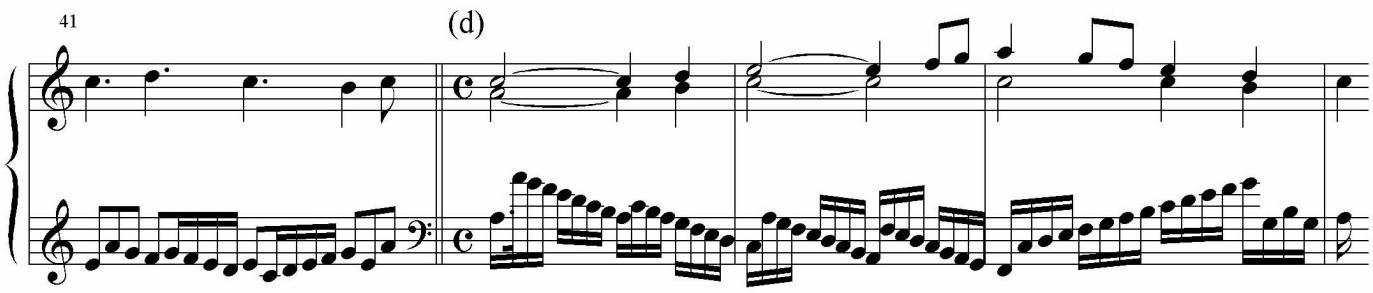
中文讲解
本页的一处图像/乐谱占位符,标记位于第20页,原始嵌入数据已省略,仅保留位置与图注信息。配合P0116的图注可知,此处承载例7的乐谱内容,用于展示Toccata 12各段落的音程结构与终段持续旋律线织体。读者须查阅原书以获得实际谱例。
第4段(P0118)
原文复述
The relatively impersonal nature of the contrapuntal pieces has tended toward their neglect by modern performers, despite the evident interest which they held for Froberger and his patrons. Even the canzoni and capricci, whose titles might suggest things song-like and capricious, are fairly sober exercises in modal counterpoint, avoiding the more idiomatic keyboard effects or the inspirations from violin music found in Dutch and north-German works. Most of these pieces fall into several sections, each treating a variation of the opening subject or combining it with a distinctive countersubject; brief toccata-like transitions occasionally link two sections. Even the latter are absent in the fantasias and ricercars, which although inspired by examples by Frescobaldi differ from the latter in their predominantly monothematic construction. Clearly, these were pieces for connoisseurs of learned counterpoint, although the combination of lively, sonata-style subjects with chromatic bizarria in works such as Canzon 1 or Capriccio 8 sustains interest, especially in later sections where the subject is rhythmically varied to resemble that of one of Froberger’s duple-time gigues (Canzon 1) or inverted, then combined in cantus-firmus style with livelier counterpoint (Capriccio 8) (ex. 8).
中文讲解
本段是本节的核心论述,展开三个层次。
第一,作者给出一个解释性判断:Froberger的对位作品之所以被现代演奏者忽视,并非因为它们缺乏价值,而是因为其’相对非个性化’的特质——也就是说,这些作品不靠炫技或情感外露吸引人,尽管Froberger本人和赞助人对它们确有浓厚兴趣。
第二,纠正由曲名造成的误读。‘canzone’(歌谣曲)与’capriccio’(随想曲)的字面含义容易让人联想到歌唱性或随意性,但本段明确指出:它们其实是调式对位中相当严肃的练习,避免了荷兰与北德作品中常见的器乐化键盘效果或对小提琴音乐的借鉴。多数作品分若干段落,每段以开放主题的变体展开,或与一个独特对题结合;偶尔以短小的托卡塔式过渡连接两段。
第三,作者通过对比Frescobaldi点明Froberger的独特定位:幻想曲与利切卡尔虽然受Frescobaldi启发,但区别在于它们以’单主题(monothematic)‘建构为主,而Frescobaldi相应作品多为多主题。最后,作者补充——正是这种’为行家而作’的定位,需要靠某些特殊技法维持听觉兴趣:例如Canzon 1中主题被节奏化变形,模仿Froberger二拍子吉格舞曲的节奏;Capriccio 8则把主题倒影化,再以定旋律风格与活泼对位结合。
关键术语澄清:’lively, sonata-style subjects’指活泼、接近奏鸣曲式主题风格的主题——这里的’sonata-style’并不是指成熟的古典奏鸣曲式,而是17世纪使用的那种生动、有动力感的主题写法。‘chromatic bizarria’指半音化的、奇崛的色彩处理。
补充说明
本段末尾的ex. 8对应P0119的图注。Canzon 1与Capriccio 8的例证作用不同:前者示范节奏变形,后者示范倒影加定旋律,两者共同说明’严谨对位之外仍可制造听觉张力’这一论点。
第5段(P0119)
原文复述
Example 8. Johann Jacob Froberger, Canzon 1, (a) mm. 1–4, (b) mm. 100–101; Capriccio 8, (c) mm. 1–4, (d) mm. 63–65
中文讲解
这是例8的图注,列出两首作品的具体引证小节:Canzon 1取开头第1–4小节(a)与第100–101小节(b)以对照主题的初始形态及其后变为吉格节奏的变形;Capriccio 8取开头第1–4小节(c)与第63–65小节(d),用以对照原主题与其倒影、定旋律化处理的段落。读者须查阅原书图8方可获得实际谱例。
第6段(P0120)
原文复述
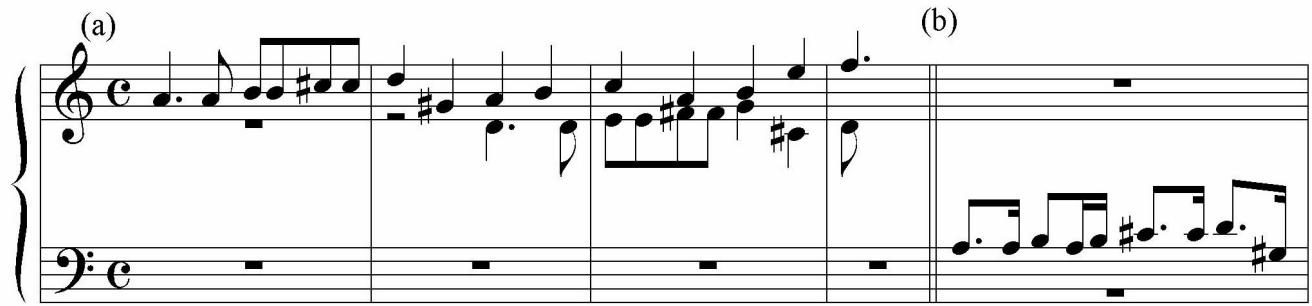
中文讲解
第21页的一处图像/乐谱占位符,原始嵌入数据已省略。配合P0119的图注可知,此处承载例8(a)、(b)即Canzon 1相关乐谱片段的图像。读者须查阅原书以获得实际谱例。
第7段(P0121)
原文复述
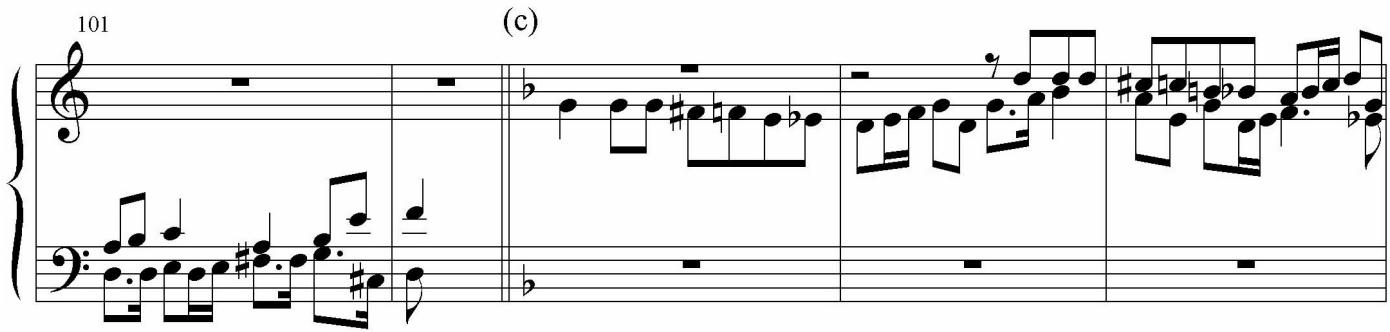
中文讲解
第21页的又一处图像/乐谱占位符,原始嵌入数据已省略。配合P0119的图注,此处承载例8(c)、(d)即Capriccio 8相关乐谱片段的图像。读者须查阅原书以获得实际谱例。
第8段(P0122)
原文复述
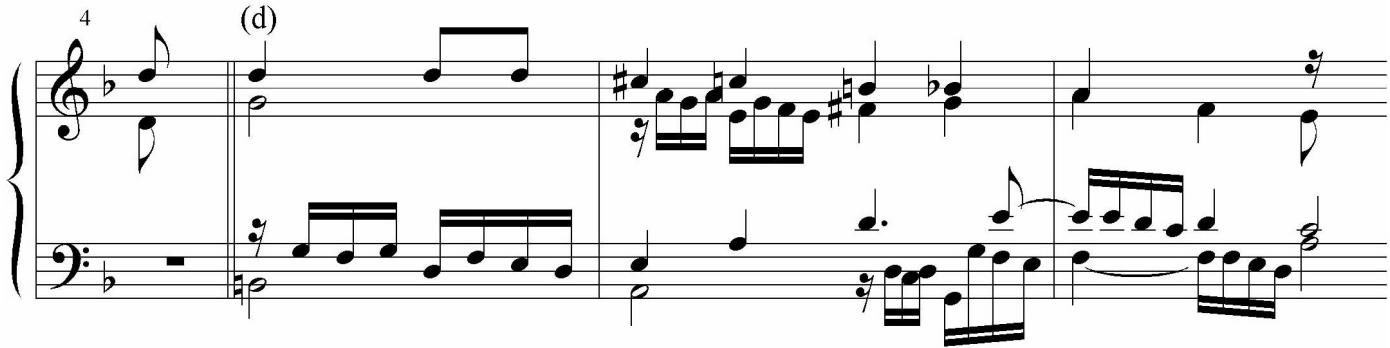
中文讲解
第21页的第三处图像/乐谱占位符,原始嵌入数据已省略。该占位符与P0120、P0121共同构成例8的全部谱例图像,承载Canzon 1与Capriccio 8的对照片段。读者须查阅原书以获得实际谱例。
脚注 / 边栏 / 图表 / 附加信息(如有)
本小节附有两组谱例(例7、例8)。例7位于第20页,标注四段小节位置(第10、28、40–41、55–58小节),用于展示Toccata 12各模仿段落的共同音程结构与终段持续线/快速低音的织体;例8位于第21页,标注Canzon 1的第1–4小节与第100–101小节、Capriccio 8的第1–4小节与第63–65小节,用于展示节奏变形(吉格化)与倒影加定旋律这两种维持听觉兴趣的技法。所有图像的具体乐谱内容均须查阅原书,本输入未保留。
💡 本节核心要点
- Toccata 12各模仿段落共享音程结构而非彼此构成变奏;只有最后一段是真正意义上的赋格,终段以类似定旋律的持续线置于快速低音之上形成高潮。
- Froberger的对位作品被现代演奏者相对忽视,原因在于其’非个性化’的严肃调式对位特质,而非作品本身缺乏价值。
- Canzone与Capriccio的曲名具有误导性:它们实为严肃的调式对位练习,避免了荷兰与北德作品中的器乐化键盘效果或对小提琴音乐的借鉴。
- 多数作品为多段结构,每段处理开放主题的变体或与独特对题结合,并以短小托卡塔式过渡相连。
- Froberger的幻想曲与利切卡尔虽受Frescobaldi启发,但以单主题建构为主,区别于Frescobaldi的多主题模式。
- Canzon 1与Capriccio 8通过节奏变形(吉格化)与倒影加定旋律技法,使严谨对位之作仍保持听觉张力。
🔑 关键术语
- cantus firmus:定旋律,一种预先存在的旋律线条,在对位织体中以较长时值保持,常作为结构骨架。本节用以描述Toccata 12终段持续线与Capriccio 8后段倒影主题的处理方式。
- capriccio / capricci:随想曲,本节中Froberger的一种键盘体裁,其内部段落彼此构成变奏关系,与托卡塔第十二中各段共享音程结构但不互为变体的写法形成对照。
- canzone / canzon:歌谣曲,虽字面含’歌’之意,但本节指出Froberger的canzoni实为严肃的调式对位练习。Canzon 1后段将主题节奏化变形以接近吉格。
- fantasia / ricercar:幻想曲与利切卡尔,两种对位体裁。本节指出Froberger的此类作品受Frescobaldi启发但以单主题(monothematic)建构为特征,且无托卡塔式过渡。
- monothematic:单主题的,指作品主要围绕一个主题建构。本节用以区分Froberger与Frescobaldi相应体裁作品的内部结构差异。
- chromatic bizarria:半音化的奇崛色彩处理。本节指出Canzon 1与Capriccio 8中活泼的奏鸣曲式风格主题与此类半音化手法结合,用以维持听觉兴趣。
- gigue (duple-time):吉格舞曲,Froberger作品中常见的一种活泼舞曲。本节中Canzon 1后段将主题节奏变形以模仿其duple-time版本,使对位主题获得舞曲性格。
- counterpoint:对位,多条独立旋律线同时结合的写作技法。本节贯穿始终,是讨论Froberger对位作品的核心范畴。
- fugal:赋格式的,Toccata 12各模仿段中只有最后一段被作者判定为真正的赋格,其余为模仿但不具完整赋格结构。
C9.S4 [描述性拆分] Froberger’s Suites and Dance Movements
第1段(P0123)
原文复述
Froberger’s suites constitute the earliest surviving body of datable keyboard suites. The French works—those by Chambonnières and other composers on which they were presumably modeled—generally survive only in later versions that have been much reworked. Froberger, however, already presents a distinctly German version of the genre: he maintains a strict sequence of (usually) four movements, and he frequently writes imitative counterpoint in the gigue, a movement that sometimes follows the allemande (as throughout Book 4) but more commonly stands at the end of the suite. Even the presumably early suites of Book 2 already reveal Froberger’s mastery of the so-called brisé (broken) notation, which—although sounding less complicated than it looks on the page—provided an exact prescription for the expressive arpeggiation that forms the basis for the style, especially in the allemandes (see ex. 9a). Although the style is often taken to be an imitation of lute playing, it owes at least as much to Italian monody, as becomes clear from the frequent chromaticism and occasional quick…
中文讲解
本段是本节的总纲,确立了三层论点。第一层是史料定位:Froberger 的组曲是现存可断代的最早键盘组曲;Chambonnières 等法国作曲家的相关作品通常只以经过后人大幅修订的版本存世——这意味着 Froberger 的版本反而成为我们了解早期组曲原貌的最重要证据。第二层是"德意志特征":Froberger 通过两点使组曲呈现出明确的德国面貌——其一是严格的、通常四个乐章的顺序,其二是吉格中频繁运用的模仿对位;吉格的位置具有弹性,可以放在阿勒芒德之后(如第四册通例),但更常置于组曲末尾。第三层是风格来源:他掌握所谓 brisé(分解式)记谱法,即便在据信较早的第二册中亦如此;这种记谱看似复杂实则音响简洁,给琶音化演奏提供了精确的处方。尽管这种风格常被视为模仿琉特琴,作者却指出它至少同样源自意大利的单声部歌曲(Italian monody)——这从频繁的半音化和(接下段讲的)快速吟诵式音型可以辨认。本段的功能是为整节定下分析坐标:先讲组曲作为整体的特征与来源,再分述各舞曲。
补充说明
段中提到"ex. 9a"指向下一段图注所示的组曲 1 a 小调阿勒芒德 mm. 1–6,是后文讨论 brisé 风格时的具体乐谱依据。“Book 4"吉格位置的说法将由紧随其后的脚注 33 进一步限定。
第2段(P0124)
原文复述
Footnote 33. Gigues are absent entirely from Suites 1 and 3–5. In the posthumous editions of Froberger’s suites, the gigues fall at the end; this reflects later convention, but—contrary to what is often supposed—it was not necessarily imposed by the publisher. The phrase “meilleur ordre” in the title of the printed edition recurs in other titles issued by the same publisher and does not reflect a reordering of the movements.
中文讲解
本脚注对正文关于吉格位置的论断进行了限定与纠正。它做了三件事:(1)事实补充——组曲 1 与 3–5 完全不含吉格,因此读者不能把"吉格有时位于阿勒芒德之后"理解为普遍规律;(2)纠正通行说法——遗作印刷版确实把吉格置于末尾,但这反映的是后世惯例而非 Froberger 本人的布局;(3)出版史考辨——人们常以为出版商重新安排了乐章顺序,但"meilleur ordre"只是该出版商其他出版物书名中反复出现的套话,并不意味着乐章被重新编排。本脚注在论证功能上属于"限定 + 修正”,提示读者:若仅依据印刷版判断吉格位置,会得到不可靠的结论。
第3段(P0125)
原文复述
…repeated notes that may represent rapid declamation or perhaps the trillo—a common ornament in Italianate solo singing, current at least through the middle of the century (see ex. 9a, m. 5).
中文讲解
本句承接 P0123 末端的"occasional quick…",把 brisé 风格与意大利单声部歌曲之间的关联落实到具体的音乐现象上:重复音。这些重复音可能表示快速的话语式吟诵(rapid declamation),也可能就是 trillo——一种意大利风格独唱中常见的装饰,至少在该世纪中叶之前仍然流行。乐谱依据是例 9a 第 5 小节。本句的功能是把"意大利单声部影响"从一个概括判断化为可观察的音符现象,为前段提出的"至少同样源于意大利单声部歌曲"提供具体证据。
第4段(P0126)
原文复述
Example 9. Johann Jacob Froberger, Suite 1 in a: (a) allemande, mm. 1–6; (b) courante, mm. 1–5.
中文讲解
这是例 9 的图注,列出了曲目与段落范围:Froberger a 小调第 1 组曲的(a)阿勒芒德第 1–6 小节与(b)库朗特第 1–5 小节。功能上是为前文和后文提供共同的音乐实例——(a) 用来印证 brisé 琶音与可能的吟诵/trillo 现象(P0123、P0125 提到"ex. 9a"),(b) 则将在 P0129 用来讨论库朗特中"在分解和弦上短暂停留、继而以突发音型推进"的细致节奏。
第5段(P0127)
原文复述
[Embedded image data omitted; location and caption retained.]
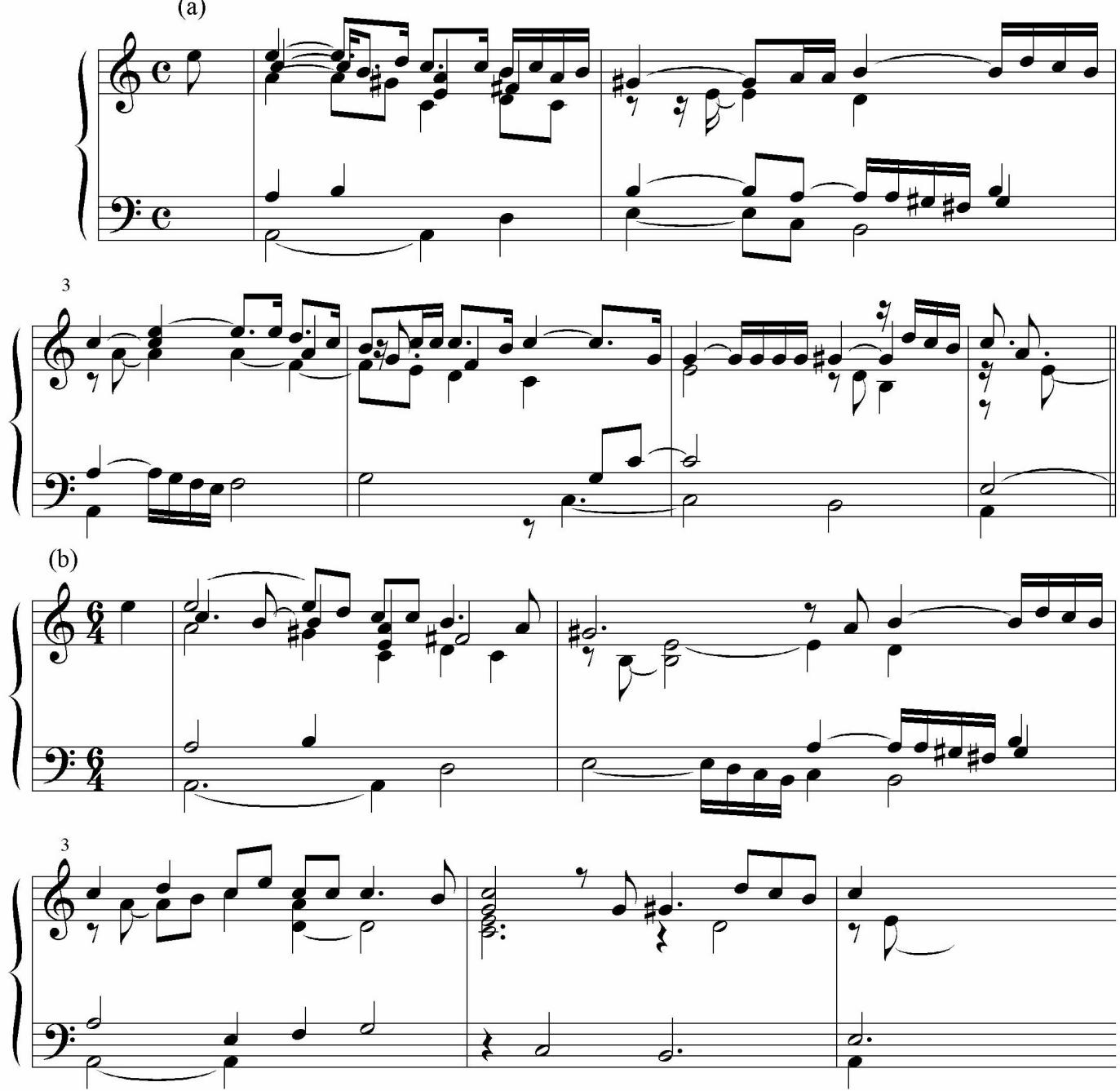
中文讲解
此条为 (a) 阿勒芒德的乐谱图占位符,图片数据未在文本中提供。该图位于例 9 之 (a) 部分,与上方图注对应,所提供的实例用于讨论 brisé 风格、分解琶音及可能的吟诵/trillo 重复音。本节文本中关于 (a) 的所有论述均建立在该乐谱之上,但本占位符无可见细节,需查看原图以核实具体音型走向、和声进行及第 5 小节处的重复音。
第6段(P0128)
原文复述
Although a few examples preserve hints of the processional character of some early French allemandes, otherwise these movements resemble improvised preludes except for their binary forms—shared with all of Froberger’s dances—and occasional passages of free imitation, as at the opening of the allemande of Suite 7 in E minor. The latter is remarkable for its extraordinary modulations, which include a passing tonicization of F-sharp minor—the same key represented earlier in the volume by Ricercar 12; in such pieces the tuning problems that would have arisen on the organs and clavichords of the period imply that Froberger played them on the harpsichord. A few opening movements are designated laments, most famously in Suite 12, where the imperial apotheosis represented by the ascending scale at the end is made explicit by the decoration of the Vienna manuscript. The opposite effect, a downward scale, at the end of the solitary Tombeau in C minor for the lutenist Blancrocher, must reflect the latter’s death; he died as the result of a drunken fall down the stairs. Although potentially ludicrous by modern standards, this very concrete approach to musical representation was evidently taken seriously by Froberger and his audiences.
中文讲解
本段集中讨论阿勒芒德。先作总体判断:少数样本仍保留早期法国阿勒芒德的队列行进性格,其余则几乎像即兴前奏曲——只保留了"与所有 Froberger 舞曲共享的二段体形式"和偶尔的自由模仿段落。例证是 e 小调第 7 组曲阿勒芒德的起首,作者指出其调性布局极为大胆,途经升 f 小调的短暂主调化——而升 f 小调正是本卷前面 ricercar 12 的调;按当时的管风琴与击弦古钢琴的调律条件,这样的转调只可能在拨弦古钢琴上演奏,由此反向推断 Froberger 在演奏该曲时使用的是拨弦古钢琴。本段后半转向另一类开场乐章——挽歌(lament):以第 12 组曲最为著名,其结尾的上行音阶象征皇帝的神化(imperial apotheosis),维也纳抄本上的装饰图样使之明白无误;与之对照的是为琉特琴家 Blancrocher 所作的 c 小调 Tombeau,其结尾的下行音阶据推断反映其死亡——他是醉酒后跌下楼梯身亡的。作者承认这种具体的音乐写实在今天看来近乎荒唐,但在 Froberger 与其听众那里却是被严肃看待的写实方式。整体功能:本段一方面收束对阿勒芒德的论述(形式上似即兴前奏、调性极端化暗示乐器选择),另一方面把视角从"风格来源"转向"具体音乐写实",为下一段对吉格、库朗特、萨拉班德的分析做铺垫。
补充说明
段中明确提到"Ricercar 12"与升 f 小调的关联以及"维也纳抄本"(Vienna manuscript),均为本卷内部的交叉参照;段末提到的脚注 34 与 Blancrocher 楼梯事件的具体脚注内容未在本节段落中给出。
第7段(P0129)
原文复述
The gigues of these suites rarely display the easy flow associated with the Italianate giga of the later Baroque. Many are serious contrapuntal exercises, inverting the subject in the second half (as Reincken and later J. S. Bach often do). Some are in quadruple meter; although several of the latter also exist in versions in compound time, it is clear that Froberger’s notation is to be taken literally, as in the gigue of the E-minor Suite 7. Froberger’s courantes, though relatively brief, are among the few by German composers that achieve the same metrical refinement as their French counterparts—expressed not only in outright hemiolas but in more subtle rhythms that may linger momentarily on a broken chord, then move forward with impulsive figuration (as in ex. 9b, m. 2). Like the gigues, they are not particularly fast, leaving these suites without any truly quick movements. The sarabandes tend to be relatively simple in style; in Book 4, where they are the final movements, they serve as epigraphic conclusions to these lyrically melancholic suites.
中文讲解
本段分三块分别讨论吉格、库朗特、萨拉班德,三者合在一起勾勒出整套组曲的速度与表情轮廓。关于吉格:它们很少具备后世意大利风格 giga 的顺畅流动,而多为严肃的对位练习,常在第二部分倒置主题(Reincken 与后来的 J. S. Bach 常用此手法);少数采用四拍子记谱,即便存在复合拍子的版本,也应按 Froberger 的记谱原意理解(例:e 小调第 7 组曲吉格)。关于库朗特:篇幅虽短,却在德国作曲家中少见地达到了与法国同类作品相当的程度——不仅有明确的 hemiola(三对二),还有更细致的节奏处理,如在分解和弦上短暂盘桓,再以突发音型推进(例 9b 第 2 小节)。关于萨拉班德:风格相对简朴;在第四册中它们作为终曲乐章,具有题献性收束的功能,呼应整组曲"抒情而忧郁"的整体气质。综合来看,三种舞曲都不快,整部组曲缺乏真正迅捷的乐章,这一观察与本节开头对"德意志特征"的强调形成呼应——德国组曲并非以炫技速度取胜,而是以对位、节奏精微与抒情深度见长。
补充说明
Reincken 与 J. S. Bach 主题倒置手法的提及,把 Froberger 的吉格做法置于从 17 世纪中期到 18 世纪早期的德国键盘对位传统中,但作者未给出具体作品对照,本节也不展开。
脚注 / 边栏 / 图表 / 附加信息(如有)
本节涉及的附加材料有:脚注 33(段落 P0124,限定并修正正文中关于吉格位置的论断,澄清"meilleur ordre"仅为出版商套语);脚注 34(正文 P0128 提及,涉及维也纳抄本上的皇帝神化装饰,具体脚注内容未包含在本节段落中);脚注 35(正文 P0129 提及,涉及 e 小调第 7 组曲吉格的具体处理,具体脚注内容未包含在本节段落中);例 9(P0126–P0127,包含 a 小调第 1 组曲阿勒芒德 mm. 1–6 与库朗特 mm. 1–5 的图注与乐谱占位符,是本节分析 brisé 风格、阿勒芒德琶音化、库朗特细致节奏的共同实例依据)。
💡 本节核心要点
- Froberger 的组曲是现存可断代的最早键盘组曲,其德意志特征体现为严格的(通常)四乐章顺序以及吉格中频繁的模仿对位。
- brisé(分解式)记谱法看似复杂但音响简洁,为阿勒芒德等乐章的琶音化提供精确处方;其风格来源并非仅止于琉特琴模仿,至少同样源自意大利单声部歌曲,证据在半音化与可能代表快速吟诵或 trillo 的重复音。
- 脚注 33 纠正通行说法:遗作印刷版将吉格置于末尾反映的是后世惯例而非 Froberger 本人布局;“meilleur ordre"仅为出版商套话,并不意味着乐章被重新编排。
- 阿勒芒德在形式上(保留二段体)像即兴前奏曲;e 小调第 7 组曲阿勒芒德的极端转调(含升 f 小调短暂主调化,与 ricercar 12 同调)暗示该曲以拨弦古钢琴演奏;少数开场乐章为挽歌或 Tombeau,以音阶方向象征皇帝神化或 Blancrocher 楼梯坠亡。
- 吉格多为严肃的对位练习,常在第二部分倒置主题;少数四拍子记谱应按字面理解;库朗特篇幅短但达到与法国作品相当的节奏精微;萨拉班德在第四册中作为终曲乐章,具有题献性收束功能。
- 整部组曲缺乏真正迅捷的乐章——这是其德意志特征的重要侧面:作品不以炫技速度取胜,而以对位严密、节奏精微与抒情忧郁见长。
🔑 关键术语
- brisé notation:分解式(“破碎”)记谱法。看似复杂实则音响简洁,给琶音化演奏提供精确处方,是 Froberger 风格的核心记谱手段,尤其见于阿勒芒德。
- gigue:吉格舞曲。本节中常置于组曲末尾,但第四册例外(在阿勒芒德之后);Froberger 的吉格多具严肃对位性质(第二部分主题倒置),缺乏后世意大利风格 giga 的顺畅流动。
- allemande:阿勒芒德舞曲,组曲的首乐章。本节论述其在 Froberger 笔下像即兴前奏曲但保留二段体;e 小调第 7 组曲版本以极端转调著称,暗示用拨弦古钢琴演奏。
- courante:库朗特舞曲。Froberger 的库朗特篇幅较短但达到与法国同类作品相当的节奏精微——含明确 hemiola 与在分解和弦上短暂盘桓、继而突发推进的细致节奏(例 9b mm. 2)。
- sarabande:萨拉班德舞曲,组曲中慢速的标志性乐章。Froberger 的萨拉班德风格相对简朴;在第四册中作为终曲乐章,具有题献性收束功能,呼应整组曲的抒情忧郁气质。
- Italian monody:意大利单声部歌曲,17 世纪初兴起的独唱风格。本节把它作为 Froberger brisé 风格的另一主要来源,与琉特琴模仿说并列。
- trillo:意大利声乐中常见的颤音/重复音装饰,至少在该世纪中叶之前仍流行于意大利风格独唱中。本节用其解释重复音现象,作为意大利单声部影响的证据(例 9a m. 5)。
- lament:挽歌/哀歌。本节用作少数开场乐章的体裁标签;最著名的例子是第 12 组曲,结尾上行音阶象征皇帝神化,维也纳抄本上的装饰图样使之明确。
- Tombeau:悼亡曲,为纪念亡者而作的器乐曲。本节唯一一例是 c 小调 Tombeau for Blancrocher,结尾下行音阶据推断反映其楼梯坠亡。
- hemiola:三对二节奏。本节指库朗特中除了这种明确的节奏手法外,还有更细微的节奏处理(在分解和弦上短暂停留、继而以突发音型推进)。
- binary form:二段体。本节指出二段体形式为 Froberger 所有舞曲乐章所共有,是阿勒芒德"像即兴前奏曲却仍是舞曲"的关键限定。
- tonicization:短暂的主调化/属主化。本节用以描述 e 小调第 7 组曲阿勒芒德途中对升 f 小调的短暂确立,该调与本卷前面的 ricercar 12 同调。
- imperial apotheosis:皇帝的神化/尊崇。本节特指第 12 组曲挽歌结尾的上行音阶所象征的政治-宗教意涵,由维也纳抄本上的装饰图样加以明示。
C10.S1 [描述性拆分] Kerll, Poglietti, and Viennese Successors
第1段(P0130)
原文复述
The Frescobaldi Tradition: Kerll and Muffat
中文讲解
这是位于p.23的小节标题,向读者预告本节将讨论两位维也纳作曲家——Johann Caspar Kerll与Muffat,并把他们置于更宏大的Frescobaldi传统谱系中。
需要注意一处不完全的对应:本节标题写作"Kerll and Muffat”,但本页正文(P0131段)实际只讨论Kerll与Poglietti,并未提及Muffat;Muffat的内容应在本页之后的段落中出现。
标题的承启功能有三:(1) “Frescobaldi Tradition"把维也纳作曲家与意大利源头Frescobaldi联系起来;(2) 承接前一节对Froberger的讨论,说明维也纳如何延续并改造Frescobaldi→Froberger的传承;(3) 预告两位主角,开启对维也纳追随者的考察。
第2段(P0131)
原文复述
Viennese composers kept alive the Frescobaldi tradition once Froberger had departed, and were influenced by Froberger himself in varying degrees as well. Johann Caspar Kerll (1627–93) had studied with Frescobaldi; like Froberger, he left behind toccatas and suites that mingle devices drawn from those two composers with more overtly virtuoso gestures such as rapid arpeggios and repeated notes. More distinctive, however, are Kerll’s contributions to a Frescobaldian genre that Froberger had largely left aside: brief fugues—also called versets—on liturgical subjects, above all a collection on the Magnificat intended for alternatim performance, which Kerll issued as the Modulatio organica (Vienna, 1686). A second Viennese colleague, Alessandro Poglietti (d. 1683), brings to mind the English virginalist John Bull in pairing extraordinary virtuosity with flashes of wit, as one hears in a learned ricercar evoking the sounds of various birds, or in his occasionally bizarrely programmatic harpsichord pieces. Like Froberger before him, Poglietti presented a selection of his pieces to his imperial patrons in a manuscript entitled Il rossignolo (The Nightingale); among its contents is a set of twenty variations on a German “aria” dedicated to the Empress Eleanora. In the usage of the time, the term aria was commonly applied to short binary tunes that served as the basis of virtuoso variations; J. S. Bach’s “Goldberg” Variations are a late instance of this same kind of encyclopedic variation set. How seriously Poglietti intended his music to be taken is not always clear, although to modern ears a great deal of it conveys a sense of humor that is also visible in early programmatic pieces by the violinist Heinrich Biber. Among the variations are imitations of Bohemian bagpipes and of other ethnic dances and instruments, as well as an “old women’s funeral procession” that appears to parody the kind of chromaticism Froberger had introduced into one of his Mayerin variations.
中文讲解
本段是本节的核心论述,并行刻画两位维也纳宫廷作曲家——Kerll与Poglietti——并把他们纳入Frescobaldi–Froberger传统。
一、Kerll(1627–93)。作者给出三层信息:(1) 他曾直接随Frescobaldi学习,与Froberger有共同的师承源头;(2) 他留下的托卡塔与组曲兼采Frescobaldi与Froberger的写作手法,并加入更外露的炫技元素——快速分解和弦(arpeggios)与重复音;(3) 他最具特色的贡献在Froberger几乎未触及的领域:为礼拜仪式而作的短小赋格(亦称versets),尤其是为alternatim(交替演唱)所用的《Magnificat》集,1686年以《Modulatio organica》之名在维也纳出版。
“alternatim"与"verset"是理解这部作品的关键:交替演唱指诗篇歌咏时由唱诗班唱诗节、器乐奏verset轮替进行;短小赋格因此被设计成"填空"用——它必须短到能与唱诗节的篇幅匹配,又必须有足够独立的对位趣味。这是为什么Frescobaldi之后有专门的"verset"体裁:它服从礼拜仪式的时间结构。
二、Poglietti(卒1683)。作者用一个跨地域的比较——把他与英国维吉纳琴家John Bull类比——来揭示他的音乐气质:惊人炫技与机智并存;既作"博学的"里切卡尔(模仿各种鸟鸣),也作"古怪的"标题性羽管键琴作品。和Froberger一样,他把作品集以手抄本形式献给皇帝,手抄本名为《Il rossignolo》(“夜莺”),内含一套以德文"aria"为主题的二十首变奏曲,献给皇后Eleanora。
三、关于"aria"这一关键术语的界定。作者在此插入一个看似离题的说明:当时的"aria"通常指作为炫技变奏基础的二段体短小旋律,而J.S.巴赫的《哥德堡变奏曲》则是这一"百科全书式变奏集"传统的晚期代表。这句话把Poglietti的二十首变奏放入一条贯穿至巴洛克晚期的体裁史——以同一首小曲为种子、围绕它生长出庞大变奏集的传统——从而揭示Poglietti并非孤立的怪趣味。
四、关于Poglietti的"幽默"与"戏仿”。作者承认我们难以判断他有多认真,但现代听感认为他颇具幽默——这种幽默也出现在小提琴家Heinrich Biber的早期标题作品中。具体的幽默证据:在变奏中有对波希米亚风笛及其他民族舞蹈/乐器的模仿,以及一首"老妇葬礼行列”,后者被作者解读为"似乎在戏仿(parody)Froberger在《Mayerin》变奏中所用的半音化写法"。“戏仿"意味着:原本的半音化也许带有哀悼或庄重的修辞,Poglietti把它移植到"老妇葬礼"这一滑稽化的语境中——形成反讽式的悲怆。这一笔把Poglietti从单纯的"炫技+机智"提升到"对前人修辞手法的反讽式再利用"的层次。
整段的功能:把维也纳宫廷对Frescobaldi–Froberger传统的继承,从"托卡塔与组曲"扩展到"礼拜变奏"和"百科式变奏集"两条分支;同时开辟"幽默/标题化"的旁支,为后文(Muffat登场)以及更广的巴洛克标题音乐讨论铺路。
补充说明
本段内部有两处前后照应:(1) Poglietti的"老妇葬礼"戏仿Froberger Mayerin变奏中的半音化——读者应记得本节前文讨论Froberger Mayerin变奏时提到的半音化风格;(2) 巴赫《哥德堡变奏曲》作为"百科式变奏集"的晚期典范被引用,是用来说明"以一首短小二段体旋律作为变奏基础"并非Poglietti独创,而是延续至巴赫时代的体裁惯例。
第3段(P0132)
原文复述
34 Another allemande, the extraordinarily expressive one of the G-minor Suite 14, is designated Lament sur ce que j’ay êté volé in one source, referring to Froberger’s having been robbed during one of his travels.
中文讲解
这是编号脚注34。它告诉读者:Froberger的G小调第14组曲中那首极富表现力的阿勒芒德舞曲,在某一手稿来源中被冠以法文标题《Lament sur ce que j’ay êté volé》(意为"为我曾遭劫之事而悲叹”),这是Froberger某次旅行途中被劫这一史实在曲名中留下的痕迹。
脚注的功能:为正文提供作品背景的延伸信息——把一首纯器乐作品与作曲家的某次具体经历相联系,从而暗示其"悲叹"并非修辞空话,而是有真实事件的依托。
关于题名中的古拼写:“j’ay êté"是古法语形式(现代法语应为"j’ai été”),“ai"省作"ay"是17世纪抄本常见的拼写,提示该来源可能是较早的抄本或刻意保留古风的抄本。
补充说明
脚注34与P0131段中提到的Froberger Mayerin变奏共同构成对Froberger作品的"现实化"补充:Mayerin涉及个人情感的哀悼,此处则涉及具体的旅行劫难。两处都说明Froberger的一部分作品可能带有自传性或即事性的标题,与本节讨论的Poglietti标题音乐相呼应。
第4段(P0133)
原文复述
35 The same is true of occasional quadruple-meter gigues by later composers, including Kuhnau and J. S. Bach. In France, the gigue was sometimes viewed as a version of the allemande; instructions for converting allemandes to gigues indicate that the tempo but not the basic meter was to be altered. The allemande of Froberger’s Suite 3 in G is of a type that can be readily converted to an allemande giguée to fill the place of the absent gigue.
中文讲解
这是编号脚注35。它做了三件事:
一、补全正文所说的"偶尔也有四拍子的吉格”——指出后来的作曲家Kuhnau和J.S.巴赫确实写过四拍子的吉格,这使得这一现象不是孤例。
二、引入法国音乐实践中的一个概念性观察:在法国传统里,吉格有时被视为阿勒芒德的变体;当时有具体的转换规则——把阿勒芒德"改写"成吉格时,只改速度(tempo),基本拍号(basic meter)保持不变。这意味着两种舞曲的区别有时落在速度上,而非节奏骨架。
三、把这一抽象规则落到Froberger的具体作品:Froberger G大调第3组曲中的阿勒芒德属于那种可以方便地转换成"allemande giguée"(“吉格化的阿勒芒德”)的类型,用来"填补"该组曲中缺失的吉格之位。
“allemande giguée"这一法语术语的内涵值得拆解:它指"被吉格化的阿勒芒德”——保留阿勒芒德原本的节拍骨架,但提高速度,从而获得吉格的特征。理解这一点能解释一个看似奇怪的现象:Froberger某些组曲只有阿勒芒德而没有吉格。作者暗示:那首阿勒芒德本身就兼具吉格的功能,或者说它可以被演奏者按吉格的速度来演奏。
脚注的功能:把抽象的体裁规则与具体作品实例相连接,帮助读者理解为何Froberger组曲中"阿勒芒德存在而吉格缺席"这一表面缺失其实有内在理由。
补充说明
脚注35解释了"allemande giguée"这一法语术语的来源(法国音乐实践),并提供Froberger G大调第3组曲作为实例。它与脚注34都属于对正文中Froberger作品背景的延伸说明,而非独立论题。两条脚注共同提示读者:Froberger的许多作品有具体的语境、来源与体裁规则背景,不能仅作为抽象曲式来看待。
脚注 / 边栏 / 图表 / 附加信息(如有)
本页(P0132、P0133)含两条编号脚注(34、35),分别对Froberger的作品进行补充说明:脚注34说明G小调第14组曲中那首阿勒芒德的法文题名"Lament sur ce que j’ay êté volé"与Froberger某次旅行遭劫的史实相关;脚注35解释四拍子吉格在法国传统中的地位,并引入"allemande giguée"(吉格化阿勒芒德)这一术语,以Froberger G大调第3组曲为实例,说明某些组曲中"吉格缺席"其实由一首可被转换的阿勒芒德填补。两条脚注共同起到"为正文提供作品背景与术语界定"的作用,并把抽象规则与具体作品相连。
💡 本节核心要点
- 维也纳作曲家在Froberger离开之后继续发展Frescobaldi传统,并同时受Froberger不同程度的影响
- Kerll(1627–93)的特色在于为礼拜仪式而作的短赋格(versets),尤以1686年维也纳出版的《Modulatio organica》为代表,其中《Magnificat》套曲是为alternatim(轮替演唱)而设计的
- Kerll的托卡塔与组曲在Frescobaldi、Froberger手法之外,加入了更外露的炫技元素:快速分解和弦与重复音
- Poglietti(卒1683)以惊人炫技与机智幽默著称,可与英国维吉纳琴家John Bull类比
- Poglietti的手抄本《Il rossignolo》(夜莺)献给皇帝,其中包含一套以德文"aria"为基础的二十首变奏曲;“aria"在当时的用法指可作炫技变奏基础的短小二段体旋律,巴赫《哥德堡变奏曲》是这一"百科式变奏集"传统的晚期代表
- Poglietti的变奏中含有戏仿性内容——对波希米亚风笛与民族乐器的模仿,以及一首戏仿Froberger Mayerin变奏半音化写法的"老妇葬礼行列”——表明其音乐带有反讽与幽默的维度
🔑 关键术语
- alternatim:拉丁语,“交替"之意。在礼拜仪式中指唱诗班与管风琴/键盘手轮替演奏诗篇歌咏:诗节由人声演唱,其间以器乐verset填充。Kerll的Magnificat赋格集即按此方式使用。
- verset:在礼拜仪式中替代诗节演唱的短小器乐段落,常以赋格形式写成。本节指Kerll为alternatim演奏所写的短小赋格,是Frescobaldi传统中Froberger未深入开拓的体裁。
- ricercar:十六至十八世纪的对位体裁,源自即兴式"探索"的写法,后发展成严谨的赋格式对位曲。本节指Poglietti一首以鸟鸣为题材的"博学"里切卡尔。
- aria:在本节上下文中指一种可作为炫技变奏基础的短小二段体旋律,并非后世歌剧咏叹调之意。Poglietti的二十首变奏与巴赫《哥德堡变奏曲》同属此传统。
- allemande giguée:法语术语,“被吉格化的阿勒芒德”——保留阿勒芒德的基本拍号但提高速度,从而兼具吉格功能。脚注35说明Froberger G大调第3组曲中的阿勒芒德即属此类。
- Modulatio organica:拉丁语,“有机的编排/调式"之意。Kerll于1686年在维也纳出版的管风琴作品集名,内含一套基于Magnificat礼拜诗篇的versets。
- Il rossignolo:意大利语,“夜莺"之意。Poglietti献给维也纳皇帝的手抄本曲集名,内含献给皇后Eleanora的二十首aria变奏。
C10.S2 [描述性拆分] Fux and the Muffats
第1段(P0134)
原文复述
Beyond the orbit of Pachelbel’s circle, several Austrian composers carry forward the Frescobaldi–Froberger lineage in a more substantial manner. Among them, Johann Joseph Fux (1660–1741), who served as organist in Vienna from 1696 onward, has gained his widest reputation through his theoretical treatises, yet he was likewise a resourceful composer of suites, fugues, and other keyboard works. At least some of these keyboard pieces probably date from after the turn of the century, and they bear a close resemblance to the lively fugues and harpsichord suites published by Fux’s pupil and eventual successor Gottlieb Muffat (1690–1770). Gottlieb’s father, Georg Muffat (1653–1704), also stands as a major keyboard composer who has been unfairly neglected by modern performers. Although Georg Muffat is recognized today chiefly for his printed orchestral concertos and suites (1682–96), he took up the post of Capellmeister at Passau in southern Germany in 1690 and there also issued the Apparatus musico-organisticus, a collection of twelve large toccatas together with several variation works, designed to be playable on either organ or harpsichord.
中文讲解
这段在奥地利作曲家的话题下进一步推进,把焦点从帕赫贝尔周围的人扩展到更“严肃”地延续弗雷斯科巴尔迪–弗罗贝格尔传统的几位作曲家,并以祖孙三代式的师承链呈现:老穆法特→小穆法特→福克斯(学生反过来又是继承人)。教学中需要讲清三件事:第一,作者对福克斯的定位是“双重身份”——他因理论著作(按:即著名的《登阶和声》Gradus ad Parnassum)而最为人知,但他同时也是一位有想象力的键盘作曲家,这一对照本身就说明键盘创作在作曲家声誉中被低估。第二,作者用了“probably”(可能)和“at least some”(至少部分)这两个限定词来表述年代判断,意味着福克斯晚期键盘作品的归属仍带有不确定性;不应将其改写为确定结论。第三,老穆法特在1690年成为帕绍au(巴伐利亚东南、邻近奥地利)宫廷乐长,同年出版《Apparatus musico-organisticus》,因此该曲集是他就任新职后最具代表性的键盘作品,也是作者眼中连接早期意大利托卡塔传统与德国晚期键盘语汇的关键文本之一。末句“可同时用于管风琴或大键琴”揭示了该曲集面向两种键盘语境的实用定位。
补充说明
段落中出现的“Apparatus musico-organisticus”作为书名按拉丁文保留;“Capellmeister”为德文,文中按拼写直接给出。该段本身并未对“unjustly neglected”给出原因,仅以作者评价呈现。
第2段(P0135)
原文复述
In his preface, Muffat himself characterizes the collection as the first work of its kind to have appeared in seventy years—an apparent reference to Frescobaldi’s comparably ambitious and varied Second Book of Toccatas and Partitas of 1627. He attributes the formation of his personal style to his direct acquaintance with three figures: Lully in Paris and Corelli as well as the keyboard player Bernardo Pasquini in Rome. Through these encounters, he claims to have been able to merge what he regarded as the best features of the French and Italian schools into a “mixed” manner which would subsequently come to be understood as characteristically German. To demonstrate this synthesis, the opening portion of Toccata 7 unfolds in the manner of a Lullian overture and then proceeds through a succession of contrasting sections, most of them written in the contrapuntal manner of Froberger’s capricci, but also incorporating alternating treble and bass solo passages—a type traceable to Sweelinck but especially important in French organ music of the period. The closing section brings together, with notable effect, four sharply differentiated subjects, one of them of the chromatic type (ex.). Even the notation of the collection is described as “mixed”: the volume adopts a system of ornament signs which, although descended from the letter “t” of Italian practice, allots a specific meaning to each symbol, and thus follows the recently published keyboard collections of d’Anglebert and other French composers.
中文讲解
本段深入解读老穆法特的写作自觉,可分三层讲解。 第一层是历史定位:穆法特自称这是“七十年来第一部此类作品”,作者用“apparently”提示这只是穆法特本人的引述,其参照对象是弗雷斯科巴尔迪1627年的《托卡塔与帕蒂塔第二集》——这是一个跨度极大的谱系宣告,把自己定位为意大利大型托卡塔集在十七世纪末的复兴者。 第二层是风格形成的传记解释:穆法特把“混合风格”归结为自己在巴黎与吕利、在罗马与科雷利和键盘家贝尔纳多·帕基尼的亲身接触。这就把风格问题由“作品分析”转为“作曲家游学路线”的历史叙事,作者借此说明德国“混合风格”并非抽象综合,而是实际由作曲家把法国与意大利传统吸收、合并而成。 第三层是文本细读:作者用第七托卡塔作微型案例,逐段揭示其混合结构——开头是吕利式序曲(法国),主体多为弗罗贝格尔随想曲式的对位段落(中欧/意大利),穿插的“高声部与低声部独奏交替”源自斯韦林克并特别见于当时法国管风琴音乐,结尾段并置四个性格鲜明的主题,其中之一为半音化类型。文末进一步指出记谱系统本身也是“混合”的:装饰符号虽源自意大利字母“t”,但每个符号都被赋予特定含义,遵循当·昂格贝尔等法国新近出版乐谱的做法。 因此整段在论证:穆法特的“混合”不是折中,而是从体裁、风格、主题材料到记谱符号全层面的系统融合,这也是后来被视为“德国典型”的样貌。
补充说明
段落中“(ex.)”标记提示此处原本附有音乐例证,但当前文本中不可见,故仅能据上下文确认它指向Toccata 7结尾段的并置主题。d’Anglebert、吕利的名字、Corelli、帕基尼等人物仅在段落内出现,未提供更多生平细节。
脚注 / 边栏 / 图表 / 附加信息(如有)
本小节正文中出现了一处与原文相关的附加提示:第二段末尾的“(ex.)”指明存在一处乐谱例证,对应第七托卡塔结尾段四个并置主题的展示;该例证在当前文本中不可见,讲解时应注明需参看原谱。除此之外,小节内提到的参照文献有两项:弗雷斯科巴尔迪《托卡塔与帕蒂塔第二集》(1627)作为穆法特七十年前的历史先驱;当·昂格贝尔等法国作曲家近期出版的键盘曲集,作为穆法特装饰记谱的模板。这些都是段落内嵌的引用,而非外部补充。
💡 本节核心要点
- 奥地利作曲家群体对弗雷斯科巴尔迪–弗罗贝格尔传统的延续呈现出比帕赫贝尔圈更为“严肃”的谱系深度,跨越老穆法特、小穆法特与福克斯三代。
- 福克斯虽以理论著作闻名,但同时是有想象力的键盘作曲家;其晚期键盘作品与小穆法特(其学生兼继任者)的已出版作品高度相似。
- 老穆法特作为被现代演奏者低估的键盘作曲家,其1690年就任帕绍au宫廷乐长后出版的《Apparatus musico-organisticus》是连接意大利大型托卡塔集与德国晚期键盘语汇的关键文本。
- 穆法特自视为七十年来第一部“此类”作品,并以游学经历(巴黎吕利、罗马科雷利与帕基尼)解释“混合风格”的形成;这一“混合”被视为后来德国键盘音乐的典型样貌。
- 第七托卡塔被作者用作微型案例,呈现从吕利式序曲、弗罗贝格尔式对位段落、斯韦林克式高/低声部独奏交替到半音化并置主题的体裁融合。
- 该曲集的记谱系统本身也是“混合”的:符号源自意大利字母“t”,但具体含义遵循当·昂格贝尔等法国近期出版的键盘谱惯例。
🔑 关键术语
- Frescobaldi–Froberger tradition(弗雷斯科巴尔迪–弗罗贝格尔传统):本节沿用的核心谱系概念,指从十七世纪意大利键盘家弗雷斯科巴尔迪经弗罗贝格尔(中欧传承者)传至德国/奥地利键盘写作的连续脉络;本段用它来界定福克斯与穆法特父子所属的风格谱系。
- Apparatus musico-organisticus:老穆法特1690年于帕绍au出版的拉丁文标题曲集;本节介绍它包含十二首大型托卡塔与若干变奏作品,可同时用于管风琴或大键琴。
- Capellmeister(宫廷乐长):德文称谓,指老穆法特1690年在帕绍au(位于德国南部)所任的音乐主管职务,是其出版该曲集时的身份背景。
- “mixed” style(“混合”风格):老穆法特自称、并被作者视为后来“典型德国”样貌的风格,由法国(吕利式序曲等)与意大利(对位、主题写法)元素在体裁、主题与记谱各层面系统融合而成。
- Lullian overture(吕利式序曲):段落内用以指第七托卡塔开篇所参照的法国序曲体裁,对应吕利确立的、由慢速附点段落与快速赋格段落对比构成的开场结构。
- Froberger’s capricci(弗罗贝格尔的随想曲):段落内用来描述第七托卡塔主体中那些对位化、段落对比鲜明的写作方式;本节把它作为中欧键盘传统中可识别的体裁参照。
- alternating treble and bass solos(高声部与低声部独奏交替):段落内作为穆法特“混合”成分之一的键盘写作类型,作者将其源头追溯至斯韦林克,并指出它在当时法国管风琴音乐中尤其重要。
- chromatic type(半音化类型):段落内出现的术语,指第七托卡塔结尾段四个并置主题之一所采用的手法类型;段落未给出技术细节,仅以“类型”称之。
- ornament signs descended from “t”(源自字母“t”的装饰符号):段落内描述的穆法特记谱系统:符号体系虽由意大利字母“t”演变而来,但每个符号被赋予特定含义,遵循当·昂格贝尔等法国近期键盘曲集的用法,因而也是“混合”的。
C11.S1 [描述性拆分] Krieger, Fischer, Kuhnau, and Pachelbel: Overview
第1段(P0136)
原文复述
Section heading: “South- and Central-German Composers at the Turn of the Eighteenth Century: Krieger, Kuhnau, Fischer, and Pachelbel.”
中文讲解
这是一个章节标题,开启了对18世纪初德国南部与中部四位键盘音乐作曲家(Krieger、Kuhnau、Fischer、Pachelbel)的集中讨论。从上一节以Muffat的Apparatus为切入点转入本节,本节的论题转向同时期其他德国作曲家群体,他们共同构成了17世纪末德语区键盘音乐版图的重要侧面。标题中“turn of the eighteenth century”提示本节关注的时段为1700年前后,是德语区键盘风格从Froberger传统向巴罗克盛期过渡的关键时期。
第2段(P0137)
原文复述
Muffat’s Apparatus was one of many publications of keyboard music by south- and central-German composers during the closing years of the seventeenth century. Although none emulated Frescobaldi or Froberger so closely as did Muffat, several did continue the tradition of demonstrating their mastery of counterpoint alongside more fashionable genres. Thus Johann Krieger (1651–1739), organist at Zittau, issued both a collection of rather conventional suites or partitas (Sechs musicalische Partien, Nuremberg, 1697) and a set of ricercars, fantasias, and other pieces in contrapuntal style (Anmuthige Clavier-Übung, Nuremberg, 1698). Despite these publications, Krieger seems to have been a less original composer than his older brother Johann Philipp (1649–1725), an important and prolific writer of cantatas. Johann Philipp was evidently a keyboard virtuoso during his early years, when he traveled to Venice and Rome; a remarkable Passaglia or passcaglia from early in his career treats an unusual six-bar bass ostinato that somehow found its way into a famous work of Telemann’s (the last of the “Paris” Quartets).
中文讲解
本段的核心主张是:Muffat的Apparatus只是17世纪末德国南部与中部键盘音乐出版潮中的一个代表,并非孤例;同时这些作曲家虽然没人像Muffat那样紧密追随Frescobaldi或Froberger的范式,但不少人延续了“对位技艺展示 + 时新体裁”的双重传统。作者以Johann Krieger为具体例证:他既出版了较为常规的组曲/帕蒂塔(Sechs musicalische Partien, 1697),也出版了对位风格作品集(Anmuthige Clavier-Übung, 1698),正好印证了上述双重传统。值得注意的是,作者接着做了一个反直觉的比较——尽管Johann发表了出版物,作者却认为他作为作曲家不如其兄长Johann Philipp更具原创性。Johann Philipp被定位为康塔塔写作的重要且多产作者,年轻时曾游学威尼斯和罗马,具备键盘炫技演奏能力。段末以一个具体的音乐史案例作结:Johann Philipp早年的一首Passaglia采用了不寻常的六小节低音固定音型,而这个固定音型后来竟出现在Telemann著名的“巴黎”四重奏组曲的最后一首中。这个例子并非闲笔——它既证明了Johann Philipp的键盘炫技能力,又揭示了音乐素材在作曲家之间跨地域、跨年代的隐秘流动,为本节关于德国键盘音乐传统的论述增添了一层“活态传承”的具体证据。
补充说明
“Apparatus”特指Georg Muffat于1690年出版的Apparatus Musico-Organisticus,本段仅作为整体出版潮的参照点,不展开讨论。“Paris Quartets”指Telemann于1730年代发表的“Paris” Quartets(亦称Quadri),是德国作曲家受法国风格影响的代表性室内乐作品之一。这些信息仅用于澄清本段内的引用关系,不引入额外历史背景。
第3段(P0138)
原文复述
In southern Germany, Johann Caspar Ferdinand Fischer (ca. 1670–1746), music director to the margrave of Baden, also followed up a volume of suites with a contrapontual collection. The suites (Pièces de clavecin, Schlackenwerth, 1696, reprinted as Musicalische Blumen-Büschlein, Augsburg,
中文讲解
本段承接P0137对Krieger的讨论,将视线由德国中部移向南部,引出Johann Caspar Ferdinand Fischer。作者勾勒了两个关键信息:第一,Fischer的机构身份——巴登藩侯(margrave of Baden)的乐长(Kapellmeister),这赋予他在宫廷音乐生活中的稳定地位;第二,他的出版轨迹与Krieger惊人相似——都是先出版组曲集,再出版对位作品集(contrapuntal collection)。作者用“also followed up”点明这种“双轨出版”模式并非Krieger的偶然选择,而似乎是当时南德、中德作曲家的一种共有职业策略。本段在句尾“Augsburg,”处中断,下一段将继续完成出版信息(重印年份与后续讨论)。
补充说明
Schlackenwerth(今捷克Lázně Kynžvart)位于波西米亚,是Fischer任职所在地;Augsburg是出版地。这一出版地从作者任职地到奥格斯堡的位移,反映了18世纪初南德地区音乐出版的商业网络,但本段原文未明说此层意涵,仅在此处说明事实以避免混淆。
第4段(P0139)
原文复述
- depart significantly from those of Froberger and other German predecessors, opening with short praeludia and avoiding the four “standard” movements in favor of more colorful types such as the bourrée and gavotte. There are also several rondeaux and single examples of the branle, amener, and plainte; both titles and style seem to reflect Fischer’s familiarity wth the current French theater, suggesting as well that some of these could have originated as transcriptions of actual theatrical dances. The preludes, comprised largely of harmonically inspired figuration, are probably derived from French and Italian varieties of improvised harpsichord prelude, but unlike the latter they tend to develop a small number of lively motives through sequence and free imitation.
中文讲解
本段接续P0138被打断的句子,展开了对Fischer《Musicalische Blumen-Büschlein》(1699年奥格斯堡重印本)的实质性分析,是本节中信息密度最高的一段。作者的核心主张有两层:第一层是Fischer的组曲在结构上与Froberger及更早德国传统明显决裂——他不采用四首“标准”舞曲的固定顺序,而是以短小的praeludium开篇,并纳入bourrée、gavotte、rondeau、branle、amener、plainte等更具色彩、更具法国戏剧色彩的舞曲类型。amener、plainte、branle都是与法国宫廷芭蕾和戏剧芭蕾密切相关的体裁,因此作者推测Fischer熟谙当时的法国戏剧舞台音乐,并认为部分作品可能是真实戏剧舞蹈的移植改编。第二层是关于praeludium的处理方式:Fischer的前奏曲以和声驱动的音型化(harmonically inspired figuration)为主,源于法国与意大利即兴羽管键琴前奏曲传统,但与之不同的是,Fischer的前奏曲倾向于通过模进(sequence)和自由模仿(free imitation)来发展少量活泼动机,这使得他的前奏曲更具展开性而非纯粹的即兴铺陈。两层分析共同揭示了Fischer在德国组曲传统中的双重位置——一方面在舞曲选择上接受法国戏剧音乐的影响,另一方面在开篇前奏曲中融合了意大利、法国即兴传统并加以结构化处理。
补充说明
本段原文中的“wth”系原书印刷遗漏(应为“with”),复述时保留原样。Froberger“四首标准舞曲”通常指allemande–courante–sarabande–gigue,本段未明示但属于这一德国组曲传统的常识判断依据,讲解中仅作术语对照说明,不再展开历史。
脚注 / 边栏 / 图表 / 附加信息(如有)
本节无脚注、图表或边栏材料。段落P0138与P0139在原书中跨越页码24至25,句子被分页切断,但属于同一论述单元。
💡 本节核心要点
- 17世纪末德国南部与中部存在一股键盘音乐出版潮,Muffat的Apparatus只是其中一例,Krieger与Fischer等人都以“双轨出版”(组曲 + 对位作品集)模式参与其中。
- Johann Krieger虽然同时出版了常规组曲与对位作品,但作为作曲家其原创性被作者认为不及兄长Johann Philipp,后者是重要的康塔塔作者且具备意大利游学背景。
- Johann Philipp Krieger一首以六小节低音固定音型写成的Passaglia与Telemann“巴黎”四重奏最后一首存在素材关联,揭示了18世纪德语区键盘—室内乐素材的跨作曲家流动。
- Fischer的《Musicalische Blumen-Büschlein》在组曲结构上脱离Froberger传统:省略固定舞曲顺序、开篇用短praeludium、纳入bourrée、gavotte、rondeau、branle、amener、plainte等法国戏剧相关舞曲类型。
- Fischer的舞曲在曲名与风格上显示其熟谙当时的法国戏剧音乐,部分作品可能源自真实戏剧舞蹈的移植。
- Fischer的前奏曲以和声性音型化为基础,结合模进与自由模仿来发展少量活泼动机,使其在源自法、意即兴前奏曲传统的同时具有更明显的展开性。
🔑 关键术语
- Apparatus (Musico-Organisticus):Muffat于1690年出版的管风琴与键盘作品集,本节中作为德国南、中部出版潮的参照点之一提出,不展开讨论。
- ricercar / fantasia:本节中出现在Krieger的Anmuthige Clavier-Übung(1698)中,属于对位风格的传统体裁,与“时尚体裁”(如组曲)相对,体现作曲家的对位技艺。
- partita / suite:本节中指Krieger的Sechs musicalische Partien(1697)和Fischer的Pièces de clavecin(1696/1699重印),是17世纪末德语区键盘音乐的主要“时尚体裁”。
- Passaglia / passcaglia:固定低音变奏体裁。Johann Philipp Krieger的一首Passaglia以六小节低音固定音型写成,该固定音型后来出现在Telemann的“巴黎”四重奏末首中。
- praeludium:组曲开篇的短小前奏性段落。Fischer以praeludium开篇,结构上即与Froberger传统的“allemande开篇”模式拉开距离。
- bourrée / gavotte / branle / rondeau / amener / plainte:本节中作为Fischer组曲中替代“四首标准舞曲”的色彩性舞曲类型,多与法国宫廷芭蕾或戏剧芭蕾相关;其出现本身即被作者视为Fischer受法国戏剧音乐影响的证据。
- harmonically inspired figuration:Fischer前奏曲的主要织体特征,指以和声进行为骨架来组织音型化旋律线条。
- sequence / free imitation:Fischer前奏曲区别于纯粹即兴型前奏曲的核心手法:通过模进与自由模仿来发展少量活泼动机,使前奏曲具有展开性而非铺陈性。
C11.S2 [描述性拆分] Fischer’s Ariadne Musica and Kuhnau’s Sonatas
第1段(P0140)
原文复述
Fischer’s contrapuntal volume, the Ariadne musica is a set of short preludes and fugues in the twenty most commonly used keys; the title refers to the mythological heroine who found her way out of the Minoan labyrinth, a symbol for the work’s ranging through such a wide variety of tonalities. As such it is mentioned frequently as a predecessor of J. S. Bach’s Well-Tempered Clavier, which quotes a number of Fischer’s fugue subjects. But Fischer’s fugues are short, still close to the verset tradition; a number of pedal points in the preludes indicate that these are for organ.
中文讲解
本段介绍 Fischer 的《Ariadne musica》(阿里阿德涅音乐)这部对位体裁的曲集,并对其与巴赫《平均律键盘曲集》的关系作出限定。
第一句先说明作品的两个基本属性:(1) 由短小的前奏曲与赋格组成;(2) 涵盖了最常用的二十个调。这里“二十个最常用的调”暗合后世所谓“全二十四调”前奏曲与赋格的先声,标题中的阿里阿德涅(Ariadne)借助神话中走出米诺斯迷宫的形象,象征作品在众多调性之间穿梭。第二句指出该曲集常被援引为巴赫《平均律键盘曲集》的“前驱”,巴赫引用了 Fischer 若干赋格主题,这是一个肯定其历史地位的判断。
第三句是关键转折,用“但是”(But)把前述的崇高定位拉回真实状况:Fischer 的赋格篇幅短小,仍贴近 verset(圣咏短句交替演奏)的传统;前奏曲中多处持续低音(pedal point)的出现,则表明这些作品是为管风琴而作的。换言之,《Ariadne musica》虽是巴赫《平均律》的先声,但两者在长度、体裁传统与演奏媒介上仍存在差距,读者应避免把它直接视为《平均律》的同质前身。
补充说明
本段末尾的上标 36 对应本节末尾的脚注 P0144,关于《Ariadne musica》初版的流传情况及 Fischer 后续两部曲集的出版年份。
第2段(P0141)
原文复述
Probably the best-known keyboard publications of the late seventeenth century are those of Johann Kuhnau (1660–1722), Bach’s predecessor as cantor at the St. Thomas School. Kuhnau published two volumes of suites (Leipzig, 1689–92), sharing with Krieger both the generic title Partien and the collective title Clavierübung (Keyboard Practice), which Bach would later borrow. Moreover, each of Kuhnau’s suites incorporates the four “standard” movements alongside a prelude and several additional ones, thus establishing a type followed by Bach and other eighteenth-century composers. The preludes are often substantial pieces, related to the sonatas that Kuhnau published in two subsequent volumes (1696–1700), having included a single such piece as a sort of appendix to the second collection of suites.
中文讲解
本段把焦点从 Fischer 转向 17 世纪晚期最有名的键盘出版物——Kuhnau(1660–1722)的作品集,并点明其与巴赫的多重传承关系。
第一句给出 Kuhnau 的双重身份:巴赫在圣托马斯学校(St. Thomas School)的前任 cantor;同时他的作品是 17 世纪末最具知名度的键盘出版物。第二句介绍他于 1689–92 年在莱比锡出版的两卷组曲(suites),并交代两条与同时代人和后人的术语共享:与 Krieger 共用通用标题 Partien(共用的体裁名)和集体标题 Clavierübung(键盘练习)——后者正是巴赫后来借用的曲集名。这一句的关键不在列举曲目,而在揭示曲集标题的传承谱系。
第三句转向曲式结构层面的传承:Kuhnau 的每一首组曲在四个“标准”舞曲乐章之外,加入前奏曲和若干附加乐章,由此确立了被巴赫及其他 18 世纪作曲家沿用的组曲类型。第四句补充说明 Kuhnau 的前奏曲往往篇幅可观,并与其 1696–1700 年出版的奏鸣曲(sonatas)有体裁关联:早在第二套组曲里,他就已把一首奏鸣曲式作品作为附录收入。
本段的功能是:(1) 凸显 Kuhnau 与巴赫的师承链;(2) 通过共享标题与曲式结构两条线索,为后文讨论奏鸣曲体裁埋下伏笔。
补充说明
本段提及的 Partien 与 Clavierübung 两个标题共享现象,是 17 世纪末德语区键盘曲集命名习惯的具体体现,文中已给出足够的语境,不另作补充。
第3段(P0142)
原文复述
The importance of the sonatas, the first such published collection, was exaggerated in older histories that viewed them as milestones in the development of the solo keyboard sonata. In fact, the latter emerges as a well-defined genre only in the 1730s, in imitation of multi-movement compositions for solo flute or violin with continuo. Kuhnau’s works resemble a type of ensemble sonata written by Johann Rosenmüller, Johann Pachelbel, and other central German composers—but apparently not Kuhnau himself—for four or five stringed instruments. Although these may contain passages of a soloistic or virtuoso nature for the leading violin part, the emphasis is on freely imitative sections framed by predominantly homophonic passages—in other words, something like the polyphonic sonatas that inspired the praeludia of the north-German organists. Kuhnau avoids harmonic and rhythmic surprises and other elements of the stylus fantasticus; he also has an unfortunate tendency to repeat sequences and other patterns at great length, without modulating wide or maintaining a foreign key for very long. Evidently, although Kuhnau aspired to writing relatively imposing individual movements unified by use of a limited number of distinct motivic ideas, composers of his generation lacked the formal devices—notably the articulation of long-range modulating plans through such devices as ritornello form—with which Bach and other successors could create a sense of drama and contrast within compositions of comparable or even greater dimensions.
中文讲解
本段是对 Kuhnau 奏鸣曲历史地位的修正性评价,包含三个层次:解构旧史观、揭示真实体裁渊源、指出 Kuhnau 形式手段的局限。
第一层(旧史观的解构):旧音乐史曾把 Kuhnau 的奏鸣曲集尊为独奏键盘奏鸣曲发展的里程碑。本段作者明确指出这种看法被“夸大”了。第二层(重新定位体裁渊源):独奏键盘奏鸣曲真正作为明确体裁出现,要到 1730 年代,其原型是模仿为独奏长笛或小提琴加通奏低音而作的多乐章作品。Kuhnau 的作品更接近一种合奏奏鸣曲(ensemble sonata)——由 Rosenmüller、Pachelbel 等中德作曲家(注意:作者明确说“apparently not Kuhnau himself”,即 Kuhnau 本人并未参与这类合奏奏鸣曲的写作)为四五件弦乐器所作的类型。这种合奏奏鸣曲内部虽有第一小提琴声部的炫技段落,但整体以“自由模仿段落夹在主调段落之间”为结构特征,其实质接近北德管风琴家前奏曲(praeludia)所借鉴的那种复调性奏鸣曲(polyphonic sonatas)。
第三层(Kuhnau 形式手段的局限):Kuhnau 刻意回避和声与节奏上的意外,也回避 stylus fantasticus(奇幻风格)的要素;他不幸倾向于把模进与其他模式拖长重复,又不在远关系调上做长时间停留或大幅度的转调。最后一句是全段的结论性判断:Kuhnau 那一代作曲家即便有意写出以少数动机观念统一起来的较为宏大的乐章,也缺乏像 ritornello form(利都奈罗式)这样能勾画长远调性布局的形式手段;正是这类手段,使巴赫等后继者能在同等乃至更大篇幅的乐曲中制造出戏剧性与对比。
读者理解此段的关键在于:作者并不是说 Kuhnau 的奏鸣曲不重要,而是说他并非 1730 年代以后独奏键盘奏鸣曲的真正源头;其根源与缺陷都被锚定在体裁与形式手段两个维度上。
补充说明
本段出现的 stylus fantasticus、ritornello form、praeludia 等术语,作者在文中已用“奇幻风格”“利都奈罗式”“北德管风琴前奏曲”等语义予以贯通,读者依文可解,不再补充外部词源。
第4段(P0143)
原文复述
These considerations hold true even for the six sonatas comprising the Biblische Historien of 1700, which, however, fulfill a novel programmatic conception: each represents a dramatic event from the Bible, which Kuhnau recounts in a German preface and summarizes in Italian headings for the various sections of each sonata. Rather than depicting actions and personalities, these works evoke the affects or conventional emotional quantities associated with the events, often by borrowing gestures or generic signifiers from vocal music. Thus Sonata VI, La Tomba di Giacob (Jacob’s Death and Burial), suggests the “sadness of Jacob’s children” through a freely imitative texture reminiscent of motet writing for a small vocal ensemble (ex. 10a); the “slight sweetening” of their feelings “at their father’s blessing” appears to be signified by interruptions in triple time, using a homophonic texture of broken chords that Kuhnau elsewhere uses to represent joyful harp playing (ex. 10b). A four-part fugue represents their “thinking upon the consequences of this death”—the emphasis evidently being on pensiveness rather than death (ex. 10c). Motet style returns, however, to represent “the most sad lament of the assistants” at Jacob’s burial, the repeated notes of the imitative subject suggesting a declamatory style of text setting (ex. 10d). The sonata nevertheless ends with a representation of “the consoled spirit of the survivors” through a more lively movement in chaconne style, a type with which a number of Kuhnau’s sonatas close (ex. 10e).
中文讲解
本段在肯定 P0142 形式评判仍适用于 1700 年《圣经故事集》(Biblische Historien)六首奏鸣曲的同时,转入对其“标题性构想”(programmatic conception)的分析,是全节最细致的实例段落。
第一句是承接与转折:上述对 Kuhnau 形式局限的判断,对这套奏鸣曲依然适用;然而,这套作品完成了一种新颖的标题性构想——每首奏鸣曲描绘一个圣经中的戏剧性事件。Kuhnau 用德文序言叙述故事,并用意大利文小标题概述每首奏鸣曲的各段落。这一句点出 Kuhnau 奏鸣曲区别于纯器乐曲的关键:它们是“叙事—情感”型作品。
第二句指出 Kuhnau 的描绘策略:他不直接刻画动作与人物,而是通过借用声乐作品的姿态或体裁符号来唤起与事件相关的“情感”(affects,即古典意义上规约化的情感范畴)。这一点对理解后面例 10a–10e 至关重要:每个声音织体或节奏手势并非随意为之,而是有体裁来源的“符号”。
第三句展开对第六奏鸣曲《雅各之死与葬礼》(La Tomba di Giacob)的逐段分析:
- 例 10a:自由模仿的织体让人联想到小型声乐合写的经文歌(motet)写法,用以表现“雅各众子的悲伤”;
- 例 10b:在“父亲祝福”处情感“略得缓和”,符号手段是“三拍子的插入”加上“分解和弦的主调织体”,而这种分解和弦织体 Kuhnau 在别处正是用来代表欢快的竖琴演奏;
- 例 10c:一首四声部赋格表现“他们思忖此死之后果”,重点在于“沉思”而非死亡本身;
- 例 10d:经文歌风格再现,表现“葬礼上助丧者最悲伤的哀悼”,模仿主题中的重复音暗示宣叙式的歌词设置方式;
- 例 10e:终曲是较为活泼的夏空舞曲(chaconne style)乐章,象征“幸存者得到安慰的心境”,这种以夏空结束的写法在 Kuhnau 多首奏鸣曲中重复出现。
理解本段的关键在于区分两件事:(1) 形式层面,Kuhnau 的局限一如前段所述;(2) 标题性层面,他通过调取声乐体裁的符号(经文歌、宣叙调、竖琴分解和弦、夏空)来编码情感。这两层评价同时成立,并构成《圣经故事集》作为“早期标题音乐”范例的意义。
补充说明
例 10 各片段对应的小标题与拍号位置详见 P0145 的图注;本段例 10b 中所谓的“在别处代表欢快竖琴演奏”的同类织体,作者未在文中进一步引证,依文内信息仅需理解为 Kuhnau 自我重复的符号惯例即可。
第5段(P0144)
原文复述
36 No exemplars survive of the first edition of the Ariadne musicae, which is known only from later reprints. Fischer published two subsequent collections of suites and contrapuntal pieces in 1738 and 1732, respectively.
中文讲解
本条为 P0140 上标 36 所对应的脚注,作用是对正文作出版史层面的限定与补充。
脚注首先澄清一个流传事实:《Ariadne musica》(正文写作 Ariadne musica,标题拉丁拼写为 Ariadne musicae)的初版没有传世实物,今人只能依据后世重印本来了解该作。其次补充 Fischer 此后的出版活动:他另外出版了两部曲集,分别为组曲(suites)和对位体裁作品(contrapuntal pieces),年份分别为 1738 年与 1732 年(原文按 respectively 顺序写出“1738 and 1732”,与通常的先后叙述顺序相反,引用时按原文保留)。
这一脚注对正文 P0140 起到两重作用:一是文献校勘层面的限定(正文中提到的版本实际为后世重印本),二是为理解 Fischer 创作活动的全貌提供时间坐标。
补充说明
脚注中对两部后续曲集的具体曲目与对应年份顺序,原文已明示,无须另外推断。
第6段(P0145)
原文复述
Example 10. Johann Kuhnau, Biblische Historien, Sonata VI: (a) “il dolore dei figlii di Giacob,” mm. 1–3; (b) “. . . raddolcito un poco dalla paterna benedittione” (same movement), mm. 29–31; (c) “il lamento dolorisissimo fatto da gli assistenti,” mm. 13–14; (d) “l’animo consolato dei sopraviventi,” mm. 1–4
中文讲解
本条是 P0143 所引例 10 的图注,作用是标明每个谱例的标题文本与起止小节,以便读者将音乐片段与正文分析对应。
图注以四个片段呈现:
- (a) 出自 Sonata VI《雅各之死与葬礼》,引文为意大利文小标题“il dolore dei figlii di Giacob”(雅各众子之悲伤),节选第 1–3 小节,对应正文对“悲伤”经文歌式织体的描述;
- (b) 引文为“… raddolcito un poco dalla paterna benedittione”(略得父亲祝福的缓和),同属一首乐章,节选第 29–31 小节,对应正文讨论的“三拍子插入+分解和弦主调织体”;
- (c) 引文为“il lamento dolorisissimo fatto da gli assistenti”(助丧者最悲伤的哀悼),节选第 13–14 小节,对应正文关于葬礼哀歌与宣叙式重复音的描述(注:正文按 10c–10d 的顺序排列,图注中 c 与 d 的对应关系须结合正文阅读);
- (d) 引文为“l’animo consolato dei sopraviventi”(幸存者得到安慰的心境),节选第 1–4 小节,对应正文末尾讨论的较为活泼的终曲乐章。
需提醒读者注意:P0143 正文例 10 与本图注之间存在编号错位(正文列出 10a–10e 共五段,本图注只列出 a、b、c、d 四段,且正文 10d 与图注 d 在引文与段落对应上不一致),因此实际引用时应回到原书例 10 图版核对,本节文字不应取代谱例本身。
补充说明
本节文字只引用了例 10 的部分谱例,且图注编号与正文编号不完全对应,提示读者以原书图版为准。
脚注 / 边栏 / 图表 / 附加信息(如有)
本节附加材料包括:(1) P0144 脚注,限定《Ariadne musica》初版的流传状况(仅靠后世重印本传世),并补充 Fischer 后续两部曲集(1738 年与 1732 年)的出版信息;(2) P0145 为例 10 的图注,标出 Kuhnau《圣经故事集》第六奏鸣曲《雅各之死与葬礼》中四个片段的意大利文标题与起止小节,供读者与 P0143 的逐段分析相对应。脚注对正文起版本史限定作用,图注为正文标题性分析提供具体谱例的定位依据。
💡 本节核心要点
- 《Ariadne musica》涵盖最常用的二十个调,常被视为巴赫《平均律键盘曲集》的先声;但其赋格仍贴近 verset 传统且以管风琴持续低音为标志,与巴赫《平均律》在长度与体裁上仍有距离。
- Kuhnau 不仅与巴赫共享圣托马斯学校 cantor 的职位,还通过共享曲集标题(Partien、Clavierübung)与组曲结构(标准四舞曲+前奏曲+附加乐章)两条线索确立了被 18 世纪沿用的体裁范式。
- Kuhnau 奏鸣曲被旧史观高估为独奏键盘奏鸣曲的里程碑;事实上该体裁要到 1730 年代才确立,Kuhnau 的作品更接近中德作曲家为四五件弦乐器所作的合奏奏鸣曲。
- Kuhnau 缺乏 ritornello form 等能勾画长远调性布局的形式手段,导致作品在和声节奏上回避意外,倾向于长篇重复模式而缺乏戏剧性对比。
- 《圣经故事集》在保持上述形式局限的同时,开创了一种“借用声乐体裁符号来编码情感”的标题音乐策略:经文歌式自由模仿代表悲伤,分解和弦主调织体象征竖琴/缓和,四声部赋格表现沉思,重复音暗示宣叙调,夏空舞曲收束代表安慰。
- 本节从《Ariadne musica》的体裁定位,过渡到 Kuhnau 的师承与曲式范式,再到其奏鸣曲的形式评判与标题性构想,构成了“前驱→师承→形式修正→标题性补足”的论证链。
🔑 关键术语
- Ariadne musica:Fischer 的对位体裁曲集,含短小前奏曲与赋格,涵盖二十个常用调;标题借阿里阿德涅出迷宫之典象征作品穿梭众多调性,常被视为巴赫《平均律键盘曲集》的先声。
- verset tradition:圣咏短句交替演奏的传统,本节中用以说明 Fischer 的赋格篇幅短小,仍贴近此种旧传统。
- pedal point:持续低音,本节中作为《Ariadne musica》前奏曲系为管风琴所作的标志。
- Clavierübung:Kuhnau 两卷组曲的集体标题(意为“键盘练习”),后被巴赫借用于自己的同名曲集。
- stylus fantasticus:“奇幻风格”,17 世纪器乐风格分类之一,以和声与节奏上的意外为特征;本节用以反衬 Kuhnau 刻意回避此种风格的取向。
- ritornello form:利都奈罗式,即反复出现的主题段落与对比插段交替的结构;本节用以解释巴赫等后继者能够组织长远调性布局并制造戏剧性对比的形式手段。
- Biblische Historien:Kuhnau 1700 年出版的六首奏鸣曲集,每首对应一个圣经事件,开创以声乐体裁符号编码情感的标题音乐策略。
- motet / 经文歌:本节中 Kuhnau 用以代表“悲伤”的声乐体裁符号,表现为自由模仿的复调织体。
- chaconne / 夏空:基于固定低音或固定和声进行的舞曲类型,本节中作为 Kuhnau 多首奏鸣曲的终曲,象征“幸存者得到安慰的心境”。
C11.S3 [描述性拆分] Pachelbel: Chorale Settings and Magnificat Fugues
第1段(P0146)
原文复述
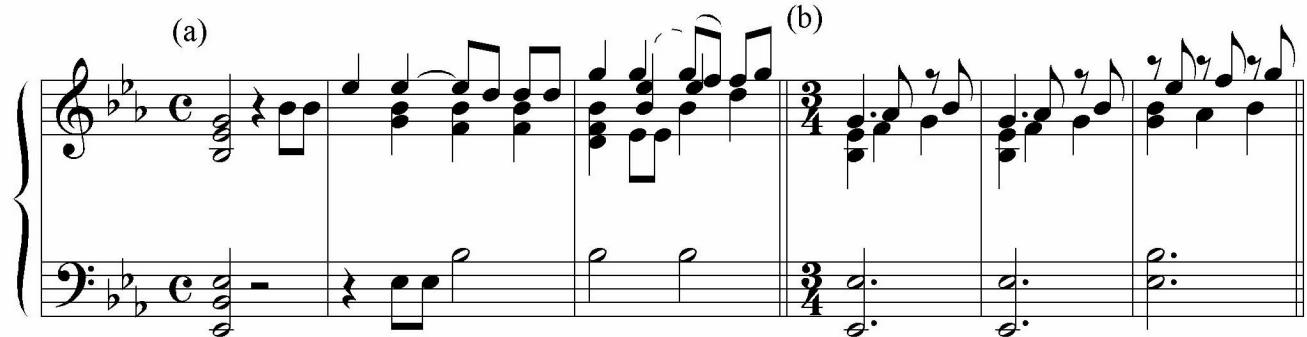
中文讲解
这是一段图像占位符,原始文本为图注编号“13 (c)”,指向内嵌图片,但其图像数据已省略,仅保留位置与图注。从上下文看,本小节讨论帕赫贝尔的圣咏改编与《尊主颂》赋格曲,此图很可能是作者为帕赫贝尔作品配置的插图或乐谱节选(如变奏集或赋格谱例的一部分)。在缺少原图的情况下,无法判断其具体内容;需要查看原书第26页插图才能确认。讲解此段时应明确其仅为图像标记,不展开内容猜测。
第2段(P0147)
原文复述
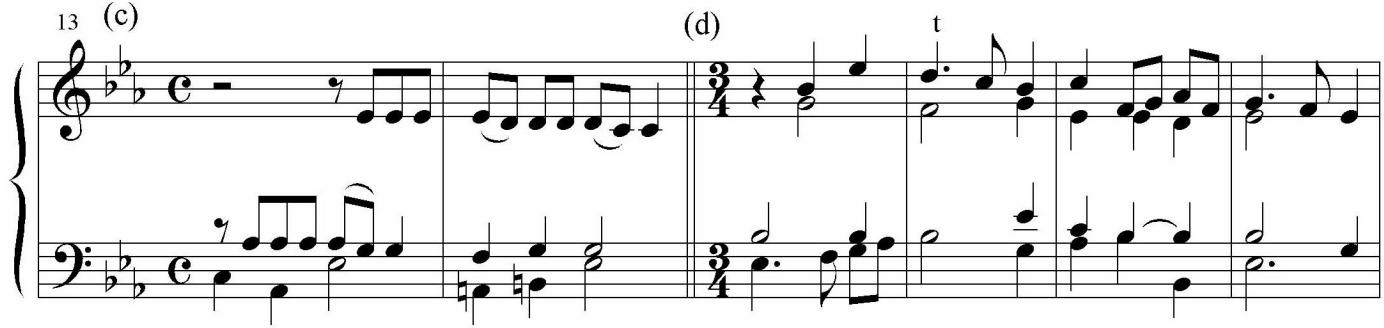
中文讲解
此段同样是图像占位符,原始文字为“第26页图像或乐谱示例”,指明位于第26页,原书此处原本嵌入图像或乐谱节选,但其数据已省略。结合本节主题,该占位符很可能承载帕赫贝尔某件作品的谱例(如《Hexachordum Apollinis》中的某首变奏或一首《尊主颂》赋格的开头片段)。在解读本节时,应意识到作者引用了具体谱例来佐证文字论述;只有参考原图,才能将作者所谈到的“主题的反复音型”“短小主题进入”等描述与实际谱面对应起来。
第3段(P0148)
原文复述
Less ostentatious than Kuhnau, but of greater importance regionally and even as far off as America, was Johann Pachelbel (1653–1706). In his works, elements of the Roman and Viennese keyboard tradition mingle with those of central Germany. A native of Nuremberg, he studied with a pupil of Kerll and possibly with Kerll himself in Vienna, where he served for a time as organist at St. Stephen’s Cathedral; thereafter he held a series of appointments, ended his career as organist in his home town. His students included several members of the Bach family, including Johann Sebastian’s older brother and teacher Johann Christoph,37 as well as his three of own sons, one of whom emigrated to British North America, eventually serving as organist in Charleston, South Carolina. Pachelbel’s music survives in scattered sources; even his publications are imperfectly preserved, the chorale variations from the Musicalische Sterbensgedancken of 1683 surviving (it is thought) only in manuscript copies.
中文讲解
本段是对帕赫贝尔(1653—1706)的整体定位与生平概述,需从几个层面来理解:
第一,与库瑙的对比。作者称帕赫贝尔“不如库瑙那样炫技”(less ostentatious),但其影响“在地域上甚至远及美洲都更为重要”。这暗示虽然帕赫贝尔风格较为内敛,但通过家族网络(尤其是儿子移居北美)和教学传承,其作品的辐射范围反而更广。
第二,风格的多元融合。作者指出帕赫贝尔的作品“是罗马与维也纳键盘传统与中德意志元素的混合”,这与他先后跟随凯科尔(Kerll)的弟子乃至可能亲炙凯科尔学习、在维也纳圣斯德望大教堂任管风琴师的经历相符;之后他回到故乡纽伦堡任管风琴师终老。读者需注意,这种地理与师承的多元性正好解释了为何他的作品既不同于法国风格,也区别于北德意志风格。
第三,与巴赫家族的渊源。帕赫贝尔的学生中包括数位巴赫家族成员——尤其是约翰·塞巴斯蒂安·巴赫的兄长兼教师约翰·克里斯托夫·巴赫,以及帕赫贝尔自己的三个儿子(其中一位甚至移居英属北美,最终在南卡罗来纳州查尔斯顿任管风琴师)。作者在此特意加上脚注37,指向更远的巴赫家族亲属。这一连串的师承链条,是后来J. S. 巴赫接触此类音乐的桥梁。
第四,文献保存状况。作者明确指出帕赫贝尔的音乐“在零散的来源中流传”,连出版物也保存不善——例如1683年的《Musicalische Sterbensgedancken》(《音乐临终之思》)中的圣咏变奏(据推测)仅以手抄本形式存世。这意味着今天对帕赫贝尔作品的判断深受手稿传统和后世编辑的影响,作者在后面P0152中提到的“现代版将数份来源混为一谈”问题即与此相关。
第4段(P0149)
原文复述
37 Two older and more distant relatives who also studied with Pachelbel were significant composers of
中文讲解
此段是脚注37的开头部分。作者用脚注37承接P0148中提到的“几位巴赫家族成员”——他指出,除了J. S. 巴赫的兄长约翰·克里斯托夫之外,还有两位“年长、亲属关系更远”的巴赫家族成员也曾师从帕赫贝尔。这条脚注显然是要补充说明帕赫贝尔—巴赫家族之间的师承网络远不止P0148正文所列。本段文字在此被页边或版面分割,下一句“organ chorales: …”将在P0154接续,形成完整的脚注内容。
第5段(P0150)
原文复述
The latter work, like the extant Hexachordum Apollinis of 1699, reflects seventeenth-century interest in variation sets, as do several chaconnes left in manuscript. Unlike French examples, the latter have less to do with the dance than with older quasi-improvisational examples by Krieger and Kerll, in which “architectural” designs are suggested by the gradual building up (or diminishing) of motion and excitement over the course of long series of variations. The published variations, on the other hand, are less virtuosic but perhaps somewhat more refined in their exploration of various keyboard idioms.
中文讲解
本段集中讨论帕赫贝尔的变奏作品,需要把握三层对比关系:
第一,《Musicalische Sterbensgedancken》与1699年的《Hexachordum Apollinis》一样,体现了17世纪对变奏集的普遍兴趣。手稿中留存的几首恰空(chaconnes)也属这一传统。
第二,与法国变奏风格的对比。作者强调帕赫贝尔的恰空“与舞蹈关系不大”,而更接近克里格尔(Krieger)和凯科尔(Kerll)那些“准即兴式”的古老范例。这里的关键特征是被作者称为“建筑式”(architectural)的设计:作曲家通过在长篇变奏序列中逐步积累(或逐步减弱)动感与兴奋度,使作品具有宏大的结构感。这是一种以情绪与织体密度递进来构筑整体,而非以舞曲节奏为骨架的处理方式。
第三,出版变奏与手稿变奏的差异。作者指出,帕赫贝尔已出版的变奏较少炫技,但在探索各种键盘语汇(idioms)方面“或许更为精雅”。这一对比暗示:出版物面向更广泛的键盘演奏者,故更克制、更具教学与演奏实用性;而手稿恰空则承载了更接近即兴传统的、结构更宏大的构思。读者应注意,作者在此为后文讨论帕赫贝尔的圣咏改编与《尊主颂》赋格铺设了风格坐标——既有“精雅”的实用性,也有“建筑式”的结构野心。
第6段(P0151)
原文复述
More important works include a number of fantasias, toccatas, and praeludia—all types composed by north-German composers. But Pachelbel’s toccatas are relatively short pieces over pedal points—without the additional sections present in Buxtehude’s toccata of this type. His numerous chorale settings avoid north-German fantasia, developing the melody either in fugue (using the the first line as subject) or as a cantus firmus in half or whole notes, against which two or three other voices add more lively imitative counterpoint. Many of these pieces include pedal parts, but they avoid the outright virtuosity of their north-German counterparts; often the pedal parts can be played by the hands, especially if taken up an octave, as is possible (no doubt by design) in many of the chorale settings.
中文讲解
本段是帕赫贝尔作品中段最重要的体裁概览,需要把握两条主线:
第一,对北德意志体裁的吸收与改造。帕赫贝尔的“幻想曲、托卡塔与前奏曲”都是北德意志作曲家常用的体裁,但他有意加以改造:他的托卡塔“相对短小”,仅建立在持续音之上,而不像布克斯特胡德(Buxtehude)同类托卡塔那样附加多段落结构。这意味着帕赫贝尔不追求宏大炫技,而追求形式紧凑。
第二,圣咏改编是本节的核心。作者明确指出,帕赫贝尔“数量众多的圣咏改编”刻意避开了北德意志式的幻想曲风格,转而采用两种具体手法: (a)以圣咏第一句作为主题写成赋格; (b)将旋律作为固定调(cantus firmus),以全音符或二分音符陈述,再由两到三个其他声部加上活泼的模仿对位。 这两种手法都不是炫技型的,而是凸显旋律骨架与对位清晰度的处理。
第三,脚踏键盘的处理同样服务于上述克制风格。许多圣咏改编包含脚踩声部,但“避开了北德意志同行的彻底炫技”。作者特别指出,脚踩声部常常可以由双手演奏——尤其在高一个八度时也可以弹奏,作者推测这(“无疑是有意为之”)正是作曲家的设计意图。这反映出帕赫贝尔的圣咏改编不仅适用于教堂中拥有脚踏键盘的大型管风琴,也可在较小乐器或家庭练习中演奏,扩大了其传播与教学用途。
第7段(P0152)
原文复述
Equally abstract, but in a more lively, appealing style, are the numerous pieces entitled fuga. In the tradition of Kerll, Fischer, and Johann Krieger, these remain short by eighteenth-century standards, rarely introducing the subject in other keys than tonic and dominant. Most, however, are substantial enough to include at least two entries of the subject in each voice, and some include episodes comprised of free figuration—implying use beyond the study of counterpoint. The greatest number, often referred to as “fugues on the Magnificat,” contain few references to the actual Magnificat melodies, although they evidently were intended for liturgical use. Misleadingly presented in a modern edition, which conflates several sources, they seem to have originally constituted two sets of thirty-two pieces each, with four fugues for each “tone”—hence forming a regular collection comparable to but surpassing Kerll’s Modulatio organica, their likely model. The freely invented subjects range from old-fashioned vocal types to so-called “repercussive” themes, a popular German type in which the three or four reiterated notes typical of the sixteenth-century canzona are extended to a dozen or more quick repeated notes. Here, as in works by Poglietti, one detects a sense of humor, or at least a fascination with bizzaria, that belies the present-day image of the seventeenth century as overwhelmingly serious and self-absorbed.
中文讲解
本段是本节论述最密集、信息量最大的一段,需要分层拆解:
第一,“fuga”的整体定位。作者认为帕赫贝尔的这些“赋格”作品“同样抽象,但风格更活泼、更具吸引力”,延续着凯科尔、菲舍尔(Fischer)和约翰·克里格尔的传统。按18世纪标准衡量,这些作品篇幅仍然较短,并且“几乎不在主调与属调之外的调性上引入主题”——这是巴洛克早期赋格的典型特征,显示其作为对位教学与实用音乐的双重属性。多数作品在每个声部中至少让主题进入两次,部分作品包含自由花奏段落,暗示这些作品并不只是用来学习对位,更具有演出用途。
第二,《尊主颂》赋格群。作者指出,帕赫贝尔最多的赋格被统称为“《尊主颂》赋格”(fugues on the Magnificat),然而它们“几乎不引用实际的《尊主颂》旋律”,尽管显然是为礼仪用途而作。这一现象对理解17世纪键盘音乐体裁非常关键:作品的标题主要指示其礼仪功能(在不同“调式”即教会调上循环使用),并不要求主题必须来自原旋律。
第三,文献流传问题。作者尖锐地指出,现代版本“把数份不同来源混淆在一起”,呈现方式具有误导性。据作者考据,原始形态应是两套各32首的组曲,每一“调式”(tone,即教会调)有4首赋格,合计形成一套“与凯科尔的《Modulatio organica》相当但超越之”的规整收藏——后者很可能是帕赫贝尔的范本。这一句信息密度极高:它不仅纠正了现代读者的印象,还把帕赫贝尔的赋格集纳入到与凯科尔作品直接对话的谱系中。
第四,主题类型与“bizzaria”。作者描述帕赫贝尔自由创作的主题,从“老式的声乐风格”到所谓“反复音型”(repercussive)主题——这是德国的一种流行类型,将16世纪坎佐纳(canzona)中典型的三四个重复音扩展为一打甚至更多的快速重复音。这种处理产生了奇特的听觉效果。作者紧接着指出,如同波格里埃蒂(Poglietti)的作品,帕赫贝尔这些作品透露出一种“幽默感,或至少是对bizzaria(异趣/奇思)的迷恋”。
第五,重要的史观主张。作者总结:这些细节“打破了当下人们将17世纪视为极度严肃与自我沉溺的形象”。也就是说,作者反对将巴洛克音乐笼统地理解为庄重肃穆,而是通过帕赫贝尔的赋格主题揭示其幽默、游戏化的一面。这是本节少见的带有方法论色彩的一句,提醒读者不要以今度古。
第8段(P0153)
原文复述
Pachelbel’s Magnificat fugues may not have been widely known. But the preservation of his relatively unpretentious pieces in the manuscript anthologies of the younger Johann Christoph Bach, alongside the more outgoing pieces of the north-German style, suggests the significance of both types of music to subsequent generations. Among those to benefit from study of this music must have been the young J. S. Bach. In fact, Bach probably knew at least some music by most of the composers mentioned in this chapter; he and his students were among the eighteenth-century musicians whose manuscript copies preserved much of this repertory. Yet it diminishes the achievement of these composers and our own experience to hear this music as prelude to the eighteenth century or to seek in it only those features which inspired Bach. We might do better to try to understand it on its own terms and within its historical and musical context, as its first listeners did.
中文讲解
本段是本节乃至本章的收束性论述,需注意三个层次:
第一,文献与影响。一方面,帕赫贝尔的《尊主颂》赋格在当时可能并不广为人知;另一方面,他的“朴实之作”却被保存于小约翰·克里斯托夫·巴赫(年幼的J. C. Bach)的曲集中,与北德意志风格更为外向的作品并列。这一文献事实暗示:对于后辈(包括少年J. S. 巴赫在内)来说,“朴实”与“外向”两种风格都是有意义的,都值得学习。
第二,巴赫的接触面。作者进一步推测,巴赫“很可能至少知道本章所提及的大多数作曲家的某些作品”,他和学生们的抄本正是这些曲目的主要传承载体。这将帕赫贝尔等人的音乐与18世纪的演奏实践直接关联。
第三,本章的方法论结语。作者提出一个鲜明的史学主张:“把这些音乐视作18世纪的前奏,或者只去寻找其中启发巴赫的那些特征,既贬低了这些作曲家的成就,也削弱了我们自身的体验。”作者主张应当“在其自身的条件与历史、语境中去理解它,如同最初的听者那样”。这一句话不仅是本章总结,更是对此前各位作曲家分论中所暗含倾向的明确纠偏:作者提醒读者,库瑙、帕赫贝尔、布克斯特胡德等人的音乐有其自身的内在价值,不能被简单还原为“通向巴赫的阶梯”。这是本章最重要的史学态度之一。
第9段(P0154)
原文复述
organ chorales: the brothers Johann Christoph Bach (1642–1703) and Johann Michael Bach (1648–94).
中文讲解
此段是脚注37的结尾部分,与P0149共同构成完整的脚注。其内容接续P0149的“两位年长且亲属关系更远的巴赫家族成员也曾师从帕赫贝尔,是器乐圣咏(organ chorales)的重要作曲家”,此处给出两位具体人物:兄长约翰·克里斯托夫·巴赫(1642—1703)与弟弟约翰·米夏埃尔·巴赫(1648—1694)。
需要与P0148正文区分的是:P0148提到的约翰·克里斯托夫·巴赫是J. S. 巴赫的兄长兼教师(小约翰·克里斯托夫,1671年生,1721年卒),而本脚注中的约翰·克里斯托夫·巴赫生于1642年,是巴赫家族中更早一辈的成员,对J. S. 巴赫而言是更远的长辈亲属;约翰·米夏埃尔·巴赫则是J. S. 巴赫祖母的兄弟。读者切勿将这两人与P0148中那位同名者混同。
这一脚注的史学意义在于:帕赫贝尔的教学影响不仅直接延伸到J. S. 巴赫的兄长,还回溯到巴赫家族更早两代的两位作曲家,他们本身就是管风琴圣咏(organ chorales)这一体裁的代表人物,由此构成一条从帕赫贝尔→巴赫家族长辈→J. S. 巴赫兄长的清晰传承链。
补充说明
本段与P0149合在一起构成完整的脚注37。
脚注 / 边栏 / 图表 / 附加信息(如有)
本节包含两段图像占位符(P0146、P0147),其原始图像或乐谱数据已省略,需查看原书第26页插图方可获得;以及一条跨段脚注37(P0149与P0154合为一完整脚注),补充说明帕赫贝尔对巴赫家族长辈一辈作曲家的影响。脚注不改变正文论述方向,仅加深巴赫家族—帕赫贝尔师承谱系的具体内容。
💡 本节核心要点
- 帕赫贝尔的风格是罗马/维也纳键盘传统与中德意志元素的混合,与其先后在维也纳、纽伦堡任管风琴师的经历相符。
- 帕赫贝尔通过教学网络影响巴赫家族至少两代人,且其子辈之一将欧洲键盘传统带入英属北美(查尔斯顿),扩大了其传播范围。
- 帕赫贝尔的恰空与变奏不同于法国舞曲变奏,而承袭克里格尔、凯科尔的“准即兴式”与“建筑式”设计,通过长程递进建构结构。
- 帕赫贝尔的圣咏改编有意避开北德意志幻想曲的炫技倾向,采用赋格或固定调加模仿对位的手法,脚踩声部多可由手代弹,扩大了实用范围。
- 《尊主颂》赋格群原始形态可能是两套各32首、按教会调系统排列的规整组曲;现代版本因来源混淆而具误导性。
- 帕赫贝尔赋格主题中的“反复音型”与bizzaria倾向,揭示出17世纪键盘音乐并非全然严肃自溺,作者由此反对把这一时期的音乐仅视作“巴赫的前奏”。
🔑 关键术语
- cantus firmus:源自拉丁文,指一首预先给定、通常以长音符(在本节指二分或全音符)陈述的旋律声部,作为对位写作的骨架。帕赫贝尔的圣咏改编即以此方式呈现旋律,再由其他声部加入活泼的模仿对位。
- pedal point / pedal parts:持续音或脚踩声部。帕赫贝尔的托卡塔“建立在持续音之上”,而许多圣咏改编包含脚踩声部;本节特别指出这些脚踩声部常可由手演奏(尤其是高一个八度时),体现作曲家对乐器规格的兼顾。
- toccata / praeludia / fantasia:本节列举的三种北德意志键盘体裁。帕赫贝尔虽采用这些体裁名称,但故意将托卡塔写得更短、不附多段落,以区别于布克斯特胡德式宏大炫技。
- Hexachordum Apollinis:帕赫贝尔1699年出版的变奏集,与《Musicalische Sterbensgedancken》(1683)共同体现17世纪对变奏体的兴趣;本节以此为例说明帕赫贝尔出版变奏的“精雅”而非炫技倾向。
- Modulatio organica:凯科尔所作的管风琴调式练习集,按教会调系统编排赋格;作者推测它很可能是帕赫贝尔《尊主颂》赋格两套32首组曲的范本。
- Magnificat fugues / tone:“《尊主颂》赋格”与“tone”(教会调式)。帕赫贝尔的《尊主颂》赋格标题指示礼仪功能,并不要求主题必须来自《尊主颂》旋律;两套各32首的安排意味着每一教会调有4首赋格,形成系统化的礼仪—教学套曲。
- repercussive theme:“反复音型”主题,指将16世纪坎佐纳中典型的三四个重复音扩展为十几个甚至更多快速重复音的写作手法;是德国17世纪键盘音乐的流行主题类型之一,本节用以解释帕赫贝尔主题的奇异听觉效果。
- bizzaria:意大利语,意为“奇思/异趣”。本节用以指帕赫贝尔与波格里埃蒂作品中流露出的幽默与奇特构思,借以反驳现代读者将17世纪音乐笼统视为“严肃自溺”的印象。