目录
ch_01 Reflections on Historical Harpsichord Registration
- sec_01 [描述性拆分] Introduction: The Challenge of Historical Registration
- 页码:1-2
- sec_02 [描述性拆分] Scope, Methods, and Existing Scholarship
- 页码:3-3
ch_02 Considerations for Historically Informed Registration
- sec_03 [描述性拆分] 1. Fixed Registration
- 页码:4-4
- sec_04 2. Harpsichords as Color Machines and Organ Analogues
- 页码:5-5
- sec_05 [描述性拆分] a. Germany: Early Colorful Harpsichords and Their Organ Heritage
- 页码:5-6
- sec_06 [描述性拆分] a. Germany: C. P. E. Bach’s Four-Register Disposition and the Bach Harpsichord
- 页码:7-9
- sec_07 [描述性拆分] a. Germany: Hildebrandt’s Harpsichord, the ‘Bach’ Disposition, and 16’ Stops
- 页码:10-11
- sec_08 [描述性拆分] b. England: From Virginalists to Restoration and Kirckman-Shudi Dispositions
- 页码:11-12
- sec_09 [描述性拆分] c. The Low Countries: Ruckers Dispositions and Divided Buf Stops
- 页码:13-14
- sec_10 [描述性拆分] c. The Low Countries: Later Innovations, Virginals, and Van Blankenburg’s Alterations
- 页码:15-16
- sec_11 [描述性拆分] 3. “Quicker and Sharper Than the Unison”: The Importance of Four-Foot Stops
- 页码:17-20
- sec_12 [描述性拆分] 4. The Use of Two Manuals: Origins, Terminology, and Mother-and-Child Virginals
- 页码:20-22
ch_03 Use of Two Manuals (continued)
- sec_13 [描述性拆分] a. France: Origins of the Contrasting Double and Standard Disposition
- 页码:23-25
- sec_14 [描述性拆分] a. France: Couperin’s Pièces Croisées, High Tessitura, and Plein Jeu Practice
- 页码:26-26
- sec_15 [描述性拆分] a. France: Manual Changes for Echoes, Petites Reprises, and Expressive Markings
- 页码:27-27
- sec_16 [描述性拆分] a. France: Couplets, Chaconnes, Passacaglias, and the Absence of Duo Textures
- 页码:28-30
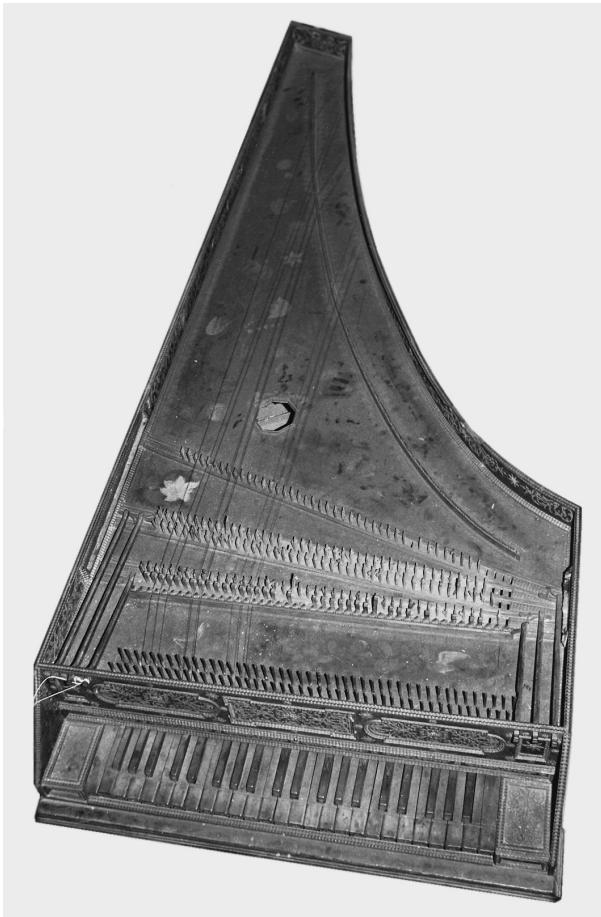
- sec_17 [描述性拆分] b. Variant Traditions: The 1658 Dutch Instrument and Bader’s Contrasting Double
- 页码:31-32
- sec_18 [描述性拆分] b. Variant Traditions: Dulcken, Dogleg Jacks, and Accompanied Solos in Non-French Repertoire
- 页码:33-35
ch_04 [描述性拆分] Conclusion: License, Compromises, and Registration as Interpretation
- sec_19 [描述性拆分] Historical Compromises and the Single-Instrument Harpsichordist
- 页码:36-37
sec_01 [描述性拆分] Introduction: The Challenge of Historical Registration
第1段(P0001)
原文复述
Reflections on Historical Harpsichord Registration
中文讲解
这是文章的总标题,概括全篇主旨:作者就历史上大键琴(harpsichord)的"音栓配置"(registration,即选用与组合不同弦列、音栓及键盘层次的实践)展开反思。标题中的"Historical Harpsichord Registration"是文章的核心论题;“Reflections"则提示本文不是系统教科书,而是一位资深学者结合实践与文献的反思性论述。
第2段(P0002)
原文复述
JOHN KOSTER
中文讲解
这是作者署名。John Koster 是北美大键琴与维金纳琴研究领域的知名学者。结合 P0009 中所列他本人的多篇专题论文(涉及早期英国、伊比利亚、那不勒斯、17 世纪法国等学派)可确认,作者撰写本文时已在大键琴史学领域深耕多年。
第3段(P0003)
原文复述
ALTHOUGH MUCH HAS BEEN LEARNED about historical instruments and performance practices since the pioneering works of the mid-twentieth century, the dificulties of applying the principles of historically informed performance practice can be formidable even today. These dificulties increase proportionally with an increasing number of performers. Obviously, the problems are reduced in certain respects with repertoire involving a single performer. Although there are solo works for primarily melodic instruments such as the violin, cello, and recorder, the main Renaissance and Baroque instruments with which a full polyphonic musical texture can be rendered by a single performer are lutes and keyboards.
中文讲解
本段是文章的开篇,定下全篇的论题位置。原文以排印上的小型大写字母(small caps)“ALTHOUGH MUCH HAS BEEN LEARNED"起首,制造论文式的庄重起笔效果。
中心主张是:尽管 20 世纪中叶以来学界对历史乐器与演奏实践的认识大幅提升,但要把"以史为据的演奏”(historically informed performance)原则付诸实践,仍困难重重;而且参与演奏的人越多,难度越大。
为了说明"单人演奏"为什么相对容易处理,作者做了一个限定:提琴、大提琴、竖笛等"主要是旋律性的乐器”(primarily melodic instruments)虽然也有独奏作品,但要让"一位演奏者同时呈现完整的复调织体"(full polyphonic musical texture),主要靠的是鲁特琴(lutes)和键盘乐器(keyboards)。
这一段为后文聚焦于键盘乐器(特别是大键琴)作了铺垫:既然键盘乐器可以让一个人独立承担复调,它就是把"以史为据的演奏"原则彻底落实的关键乐器类型,因此本文选择大键琴的音栓配置作为讨论焦点。
本段保留的两个限定词值得注意:“in certain respects”(在某些方面问题减少)与"primarily melodic instruments"(以旋律性为主的乐器)——不能误读为"单人演奏完全没问题"或"独奏弦乐/管乐也是复调乐器"。
补充说明
原文中的 “dificulties” 是 “difficulties” 的拼写变体(缺少一个 f);原文并出现 “and performance practices since the pioneering works of the mid-twentieth” 这一片段被重复录入的现象。这些均为 OCR 转写瑕疵,不影响内容理解。
第4段(P0004)
原文复述
The principal stringed-keyboard instrument from the early sixteenth century to the late eighteenth was the harpsichord. After more than a century of efort by makers, restorers, and scholars (often one and the same, as with, for example, Frank Hubbard and Grant O’Brien1) it is now, I believe, possible to restore old harpsichords or to make new ones that, within a reasonable or even negligible margin of error, can attain the tonal and playing qualities of the various instruments historically appropriate for most of the Renaissance, Baroque, and early Classical repertoire. Playing these instruments with appropriate knowledge, skill, and insight will continue to be a challenging and worthwhile pursuit. There are, however, a number of ways in which the choice and use of instruments might be improved among musicians who wish to apply the principles of historically informed performance.2
中文讲解
本段把论题从"键盘乐器"进一步收窄到"大键琴",并交代为什么大键琴值得专门讨论。
第一层事实:自 16 世纪早期至 18 世纪晚期(约三百年),大键琴是主要的"弦鸣键盘乐器"(stringed-keyboard instrument),这就是后续讨论的时空范围。
第二层主张:经过一个多世纪以来制作者、修复者与学者(往往身兼数职,例如 Frank Hubbard 与 Grant O’Brien)的工作,今天已经可以"在合理甚至可忽略的误差范围内"(within a reasonable or even negligible margin of error)修复旧琴或制作新琴,使其在音色与演奏特性上达到文艺复兴、巴洛克与早期古典时期各历史阶段所应有的状态。这是作者一种克制而自信的乐观判断——用了 “I believe” 和 “within a reasonable or even negligible margin of error” 两层限定,说明他并不认为复原工作已经完美无缺。
第三层转折:“will continue to be a challenging and worthwhile pursuit”——演奏本身依然值得追求,但随即用 “however” 引出关键限定:在"乐器的选择与使用"(the choice and use of instruments)方面,仍有可改进之处。这是文章主问题浮出水面的地方:复原乐器在物质层面已相当成熟,问题更多出在演奏者如何选择和使用乐器——这就把后文引向音栓配置这一具体主题。
补充说明
原文 “efort” 是 “effort” 的拼写变体(缺 e);上标的脚注标记 1 与 2 分别对应后文 P0006 与 P0007 两条脚注。
第5段(P0005)
原文复述
Under the most favorable circumstances for performing a particular repertoire in a historically informed manner, a harpsichordist, having obtained an appropriate instrument,3 would, among many other considerations, seek to use appropriate registrations. This is easier said than done, as written evidence on the subject from the historical heyday of the harpsichord is sparse. Except for special circumstances, as when François Couperin explained how to play a pièce croisée on the separate 8’ stops of the two manuals,4 composers almost never specified which registrations to employ. Tutors were generally silent on the subject, while Couperin recommended in his L’Art de Toucher le Clavecin (Paris, 1716; 2nd ed. 1717) merely that beginners of “early youth” (premiere jeunesse) should play on a spinet or on a single keyboard of a two-manual harpsichord.5
中文讲解
这段提出本文最核心的问题:取得合适的大键琴之后,“音栓配置”(registration)才是最难的环节。
作者先勾勒"理想情况":一位大键琴演奏者在得到合适乐器后,会考虑许多方面,其中之一就是采用合适的音栓配置。这里的 “appropriate registrations” 含义是:依据曲目所属时代、地域、流派的惯例,选用合适的单排弦或双排弦、是否加入 4’ 或鼻音栓、是否使用双层键盘(两排键盘)的对比音色等。
接着抛出关键判断:“This is easier said than done”(说起来容易做起来难)。原因是:大键琴鼎盛时期留下的"书面证据"(written evidence)极为稀少。作曲家"几乎从不"(almost never)指明该用哪些音栓,唯一被作者明确提到的例外是 François Couperin(库普兰),他解释了如何用两层键盘各自的 8’ 弦列(separate 8’ stops)来演奏"交叉曲目"(pièce croisée,复调声部在两层键盘之间交错进行)。教材(tutors)通常对音栓配置问题保持沉默;Couperin 自己也只是在《触键艺术》(L’Art de Toucher le Clavecin,1716;1717 年第二版)中建议"幼年"(premiere jeunesse)初学者使用斯皮耐琴(spinet)或双层键盘大键琴的单层键盘。
这段论说的逻辑是:文献空缺 → 演奏者必须借助乐器实物与音乐文本去推断 → 引出后文"乐器本身是首要史料"的论点。文中保留的限定包括 “almost never”、“generally silent”、“merely”,都强调文献在这个问题上的极度匮乏,作者的态度也因此带有保留与反省的色彩。
补充说明
“pièce croisée” 为法语,原意为"交叉的",在库普兰那里特指复调声部在两层键盘之间交错的键盘作品;“premiere jeunesse” 为法语"幼年、童年"。上标脚注 3、4、5 分别对应后文 P0009、P0010、P0011。
第6段(P0006)
原文复述
1 Frank Hubbard, Three Centuries of Harpsichord Making (Cambridge, MA: Harvard University Press, 1965); Grant O’Brien, Ruckers: a Harpsichord and Virginal Building Tradition (Cambridge: Cambridge University Press, 1990).
中文讲解
这是正文中标记为 1 的脚注,为 P0004 中提到的 Frank Hubbard 与 Grant O’Brien 提供文献出处。Hubbard 的《三个世纪的大键琴制造》(Three Centuries of Harpsichord Making,1965)是英语世界关于大键琴制造史的奠基之作;O’Brien 的《鲁克斯家族》(Ruckers: a Harpsichord and Virginal Building Tradition,1990)则专门研究佛兰德斯鲁克斯家族这一最重要的大键琴与维金纳琴制作传统的源流。两书在英语学界被视为"以史为据的演奏"实践在乐器层面得以展开的基础性参考。脚注的功能是"来源",证明正文所述"制作者、修复者、学者三位一体"的代表性人物并非凭空提出。
第7段(P0007)
原文复述
David Schulenberg has observed that “much of what passes for ‘authentic’ playing on ‘original instruments is not what it purports to be” (The Keyboard Music of J. S. Bach, 2nd ed. [New York and London: Routledge, 2006], 9).
中文讲解
这是正文中标记为 2 的脚注,对应当前小节 P0004 末尾关于"乐器的选择与使用仍有改进空间"的主张。脚注援引 David Schulenberg(舒伦贝格)在《J. S. 巴赫的键盘音乐》第二版(The Keyboard Music of J. S. Bach,2nd ed.,2006)第 9 页中的论断:“许多被当作’原真’(authentic)演奏、在’原真乐器’(original instruments)上进行的演奏,并非它所声称的样子(much of what passes for ‘authentic’ playing on ‘original instruments is not what it purports to be)。”
这一引文的功能是"旁证/限定":为作者本人对所谓"以史为据的演奏"的保留态度提供第二来源——并不是说所有相关实践都不好,而是说打着"原真"旗号的演奏里有相当部分并不真正合乎历史。这与 P0004 末尾 “however” 引出的限定语气相互呼应。
第8段(P0008)
原文复述
Some tentative conclusions about registration can be derived from musical scores, but the primary historical documents are the instruments themselves. If a registrational resource, such as a stop or a second manual, was not present on instruments of a certain place and time, players in that environment could not have used it—a stricture often overlooked by today’s performers. Likewise too often ignored is the converse, that if a registrational resource was commonly present on instruments of a certain place and time, players in that environment would likely have used it. Makers went to considerable trouble to install such features as 4’ stops, nasal registers, second manuals, buf (i.e., “harp” or “lute”) stops, or even the occasional 16’. Owners of instruments with one or more of these resources must have been willing both to pay for them and to maintain them.
中文讲解
本段提出本文方法论的核心原则:乐器实物是第一史料。
第一层:可以从乐谱(musical scores)得出关于音栓配置的若干"试探性结论"(tentative conclusions——作者刻意用了 tentative 一词,表示这只是辅助性证据),但"首要的历史文献是乐器本身"(the primary historical documents are the instruments themselves)。这是全篇方法论的关键命题。
第二层:由此推出双向的逻辑规则。
- 反向规则:如果某地某时的大键琴上没有某种音栓资源(例如某根音栓 stop 或第二层键盘 second manual),那么该环境中的演奏者就不可能使用它——这是一种"硬约束"(a stricture),现代演奏者常常忽视。
- 正向规则:反过来,如果某地某时的大键琴上普遍存在某种音栓资源,那里的演奏者"很可能"(likely,带保留)会使用它。“likely” 而非"一定",是因为普遍存在只是必要而非充分条件。
第三层例证:作者列举了若干被刻意安装的"高级"音栓资源——4’ 音栓(比标准 8’ 高八度)、鼻音栓(nasal register,音色带金属感)、第二层键盘(second manuals)、“buf"音栓(后用括号直接给出英文同义词 “harp” or “lute” stops,即竖琴/鲁特音栓,模仿拨弦清脆感)、甚至偶见的 16’ 音栓(比标准低八度)。
第四层推理:制作者花费相当精力去安装这些功能,拥有这些功能的琴主也必然愿意为之付费并维护——这是一个简单的经济学论证:如果从来没人用,为何还要付钱制造和维护?这从反面印证"正向规则"的合理性。
这一段在本小节的作用:把"如何得知音栓配置"这一方法论问题与"为什么以乐器实物为主要史料"的理由一并交代,为后文按地域/时期讨论各国学派、并具体考察各派拥有的音栓资源铺垫逻辑基础。
补充说明
“8’"、“4’"、“16’” 沿用管风琴/大键琴传统音高标记,源自管长描述:8’ 为基础音高,4’ 高八度,16’ 低八度。“nasal register” 指音色带金属/鼻音感的特殊音栓;“buf” 一词作者已自行以括号说明即 “harp” 或 “lute” stop,意为"竖琴/鲁特音栓”,模仿拨弦乐器音色。这些术语在原文中已经给出定义或同义说明。
第9段(P0009)
原文复述
The familiar basic classification of historical harpsichord making as comprising five national schools—Italian, Flemish, French, English, and German—was presented in the pioneering midtwentieth-century histories of the instrument. See Raymond Russell, The Harpsichord and Clavichord: An Introductory Study (London: Faber and Faber, 1959); and Hubbard’s Three Centuries. This picture has since been refined and extended. It goes beyond the scope of this study to revisit the arguments in detail. Among the more recent literature are John Henry van der Meer, “Beiträge zur Cembalobau im deutschen Sprachgebiet bis 1700,” Anzeiger des Germanischen Nationalmuseums (1966): 103–33; John Barnes, “The Specious Uniformity of Italian Harpsichords,” in Keyboard Instruments: Studies in Keyboard Organology, 1500–1800, ed. Edwin M. Ripin (Edinburgh: Edinburgh University Press, 1971), 1–10; O’Brien, Ruckers; Alfons Huber, ed., Das österreichische Cembalo: 600 Jahre Cembalobau in Österreich (Tutzing: Hans Schneider, 2001); Darryl Martin, “The Native Tradition in Transition: English Harpsichords circa 1680–1725,” in The Historical Harpsichord, vol. 5, Aspects of Harpsichord Making in the British Isles, ed. John Koster (Hillsdale, NY: Pendragon Press, 2010), 1–115; and several articles by the present author: “The Importance of the Early English Harpsichord,” Galpin Society Journal 33 (1980): 45–73; “Towards an Optimal Instrument: Domenico Scarlatti and the New Wave of Iberian Harpsichord Making,” Early Music 35, no. 4 (November 2007): 575–604 (also a postscript, “Scarlatti and His Keyboards,” Early Music 37, no. 2 [May 2009]: 345–46); “Traditional Iberian Harpsichord Making in Its European Context,” Galpin Society Journal 61 (2008): 3–78; “The Early Neapolitan School of Harpsichord Making,” in Domenico Scarlatti en España / Domenico Scarlatti in Spain, ed. Luisa Morales (Garrucha, Almería, Spain: Asociación Cultural LEAL, 2009), 47–80; “A Harpsichord by Diego Fernández?,” Galpin Society Journal 64 (2011): 5–48; “A Spanish Harpsichord from Domenico Scarlatti’s Environs,” Early Music 39, no. 2 (May 2011): 245–51; and “The Harpsichord in Seventeenth-Century France,” in Cembalo, Clavecin, Harpsichord: Regionale Traditionen des Cembalobaus – Symposium in Rahmen der 35. Tage alter Musik in Herne 2010, ed. Christian Ahrens and Gregor Klinke (Munich and Salzburg: Musikverlag Katzbichler, 2011), 10–42.
中文讲解
这是正文中标记为 3 的脚注,对应当前小节 P0005 中 “having obtained an appropriate instrument” 一语。它说明了"合适乐器"意味着什么:历史大键琴传统可分为五大"民族学派”(national schools)——意大利、佛兰德斯、法国、英国、德国。
作者承认,这一分类最早由 20 世纪中叶的大键琴史著作奠定(参见 Raymond Russell,《大键琴与古钢琴》〔The Harpsichord and Clavichord: An Introductory Study〕,伦敦:Faber and Faber,1959;以及 Hubbard《三个世纪》〔Three Centuries〕);同时指出此后该图景已被 “refined and extended”(细化与扩展),例如对德语区、奥地利、伊比利亚半岛、那不勒斯学派等的深入研究。脚注接着列出一长串参考文献,包括 van der Meer(德语区,1966)、Barnes(意大利,1971)、O’Brien(佛兰德斯鲁克斯家族,1990)、Huber(奥地利,2001)、Martin(英国,2010),以及作者本人的多篇专题论文(涉及早期英国、伊比利亚、那不勒斯、Diego Fernández、塞拉蒂周边、17 世纪法国等)。
这一脚注的功能是"限定与文献综述”:告诉读者"五大学派"是起点而非终点,并展示后续讨论的文献依据;脚注收录作者本人的多篇论文,亦提示他撰写本文时已在该领域发表过系统研究。
补充说明
“national schools” 是脚注自身提出的分类概念,指大键琴制造传统按地理/语言族群归类的学派;脚注内未具体阐述五派各自特征,后续正文将分别讨论。
第10段(P0010)
原文复述
4 François Couperin, Second Livre de pièces de Clavecin (Paris, 1716/1717), 62, in the heading of Les Bagatelles.
中文讲解
这是正文中标记为 4 的脚注,对应当前小节 P0005 中关于 Couperin 解释如何在两键盘各自 8’ 弦列上演奏 “pièce croisée” 的论断。该说明的具体出处是 Couperin《第二键盘曲集》(Second Livre de pièces de Clavecin,巴黎,1716/1717)第 62 页,即《小曲》(Les Bagatelles)一曲的曲首说明文字。脚注的功能是"来源",把库普兰关于两键盘音栓用法的罕见文字证据精确地定位到具体页码与曲目。
第11段(P0011)
原文复述
5 François Couperin, L’Art de Toucher le Clavecin (Paris, 1716; 2nd ed. 1717), 6.
中文讲解
这是正文中标记为 5 的脚注,对应当前小节 P0005 中提到 Couperin 仅建议"幼年初学者"使用斯皮耐琴或双层键盘大键琴的单层键盘这一陈述。出处是 Couperin《触键艺术》(L’Art de Toucher le Clavecin,巴黎,1716;1717 年第二版)第 6 页。脚注的功能同样是"来源",但同时也起"限定"作用——说明 Couperin 在音栓配置问题上几乎保持沉默,仅给出这一条对初学者的实用建议,从而反向支撑作者"书面证据稀少"的判断。
第12段(P0012)
原文复述
9 6 K E Y B OA R D P E R S P E C T I V E S V I I I
中文讲解
这是版面顶端的页眉与页码信息。“96” 为当前页码;“KEYBOARD PERSPECTIVES” 是期刊名《键盘视角》;“VIII” 为卷号(罗马数字 8),即该刊第 8 卷。该信息属于版面属性,不是正文论据,仅用于识别文章来源期刊与卷期页码。
脚注 / 边栏 / 图表 / 附加信息(如有)
本小节含五条脚注与一处页眉页码。脚注 1(P0006)为 P0004 中提到的 Frank Hubbard 与 Grant O’Brien 提供文献出处,功能为"来源";脚注 2(P0007)援引 David Schulenberg 关于"原真演奏"并不如其所称的保留论断,功能为"旁证/限定";脚注 3(P0009)说明"五大民族学派"分类法源自 20 世纪中叶 Russell 与 Hubbard,并罗列后续细化的文献(包含作者本人多篇论文),功能为"限定与文献综述";脚注 4(P0010)定位 Couperin 关于"pièce croisée"双键盘用法的具体出处(《第二键盘曲集》第 62 页《Les Bagatelles》曲首),功能为"来源";脚注 5(P0011)定位 Couperin《触键艺术》中关于初学者使用单层键盘的建议,功能同为"来源"。P0012 为期刊《KEYBOARD PERSPECTIVES》第 VIII 卷第 96 页的页眉页码,属版面识别信息。
💡 本节核心要点
- 把"以史为据的演奏"原则付诸实践仍然困难,且参与人数越多越难;能让一位演奏者独立承担完整复调织体的乐器中,键盘乐器是关键,这就把本文聚焦于大键琴。
- 大键琴自 16 世纪初至 18 世纪末是主要的弦鸣键盘乐器;经过一个多世纪以来制作者、修复者与学者的工作,今天已可在合理甚至可忽略的误差内复原或重制匹配各历史阶段的乐器,但"乐器的选择与使用"仍有改进空间。
- 关于音栓配置的书面历史证据极为稀少:作曲家几乎从不指定,教材普遍沉默,库普兰是少数例外(解释了 pièce croisée 的双键盘 8’ 弦列用法,以及对初学者的简短建议)。
- 由此推出方法论核心原则——乐器实物是第一史料,并由此推出双向规则:某地某时没有的音栓资源,演奏者不可能使用(常被现代演奏者忽视);某地某时普遍存在的资源,演奏者很可能使用(同样常被忽视)。
- 制作者为 4’ 音栓、鼻音栓、第二层键盘、buf(竖琴/鲁特)音栓乃至偶见的 16’ 等"高级"资源耗费精力,琴主愿为之付费维护,这是反向佐证:这些资源确有实际用途。
- 历史大键琴传统可分为意大利、佛兰德斯、法国、英国、德国五大民族学派,此分类由 20 世纪中叶 Russell 与 Hubbard 奠定,但后续研究已将其细化与扩展(覆盖德语区、奥地利、伊比利亚、那不勒斯、英国、17 世纪法国等),本文无意重述全部争论。
🔑 关键术语
- harpsichord:大键琴/羽管键琴,16–18 世纪欧洲主要的弦鸣键盘乐器,本文核心对象。
- historically informed performance:“以史为据的演奏”/历史知情演奏,根据历史文献与乐器实物复原古代演奏实践的取向,本文讨论其在大键琴音栓配置问题上的局限。
- registration:音栓配置/音色组合,演奏者选择并组合不同弦列(8’、4’、16’)、特殊音栓(鼻音栓、buf 等)以及在双层键盘之间切换的做法,是本文的核心论题。
- pièce croisée:库普兰曲集中一类曲目,复调声部在双层键盘之间交错进行;本文以此作为作曲家曾具体说明音栓用法的稀有例子。
- manual:键盘层;大键琴可有单层或双层键盘,每层各有独立的音栓组合,与本文讨论的"第二键盘"“单层键盘用法"直接相关。
- stop:音栓,控制某组弦(或全部)是否参与发声的机械装置;本文与"4’ 音栓"“鼻音栓"“buf 音栓"“16’ 音栓"等具体资源一起讨论。
- nasal register:鼻音栓,音色带金属/鼻音感的特殊音栓;被作者列为大键琴上"高级"音栓资源的代表之一。
- buf / harp / lute stop:即"竖琴音栓"或"鲁特音栓”,模仿拨弦乐器清脆音色的音栓;作者在原文中已自行以括号注明其英文同义。
- national schools (of harpsichord making):大键琴制造传统按地理/语言族群归类的学派,本文采用意大利、佛兰德斯、法国、英国、德国五大分类,源自 20 世纪中叶 Russell 与 Hubbard 的奠基性著作。
sec_02 [描述性拆分] Scope, Methods, and Existing Scholarship
第1段(P0013)
原文复述
Perhaps because of the dearth of written documentation, but more likely because the study of registration falls among the divides of musicology, organology, and practical performance, relatively little of scholarly worth has been written on the subject as a whole. Although the scope of the present article extends from the beginnings of the harpsichord as a distinctive musical medium in the early sixteenth century to its ultimate pre-revival flourishing in the second half of the eighteenth, this is not intended as a comprehensive study. I hope just to point out some of the problems, to suggest some basic guidelines grounded in the historical evidence, and to touch on some matters that might be pursued in future studies.
中文讲解
本段交代作者写作的双重动机。其一,说明大键琴 registration(音栓/琴弦组的选择与组合)这一主题长期被学界边缘化——可归于书面文献的匮乏(dearth of written documentation),但更根本的原因在于该议题横跨音乐学(musicology)、乐器学(organology)与演奏实践(practical performance)三大领域,落入学科之间的缝隙,难以形成系统化研究。值得留意的是作者用 ‘relatively little of scholarly worth’ 这一限定——并非完全无人涉足,而是缺少真正具有学术分量的综合性成果。其二,作者明确本文的时间跨度:从十六世纪初大键琴作为独立乐器形态出现,延伸至十八世纪后半叶其复兴(revival)之前最后的繁荣期,并以 ’this is not intended as a comprehensive study’ 自我定位为非穷尽性研究。结尾的三个排比(point out problems / suggest basic guidelines / touch on matters for future studies)勾勒出文章三大功能:诊断问题、提供基于史实的初步准则、指出未来研究方向。这一谦逊定位为后文的具体讨论定下基调。
第2段(P0014)
原文复述
Considerations for Historically Informed Registration
中文讲解
这是一级小节标题,宣告下文进入 ‘Considerations for Historically Informed Registration’(关于具有历史依据之音栓配置的若干考量)。在结构上,它从前文的范围与方法说明过渡到对具体议题的逐项讨论。标题中的关键词 ‘Historically Informed’(具历史依据的)暗示作者将以历史证据而非后世审美或理论推演为依据来讨论音栓选择,与上一段提到的 ‘basic guidelines grounded in the historical evidence’ 相互呼应。
第3段(P0015)
原文复述
1. Fixed Registration
中文讲解
这是上一小节之下的第一个子标题,编号为 1,主题为 ‘Fixed Registration’(固定音栓配置)。它预告即将讨论的第一种情形:当乐器本身不具备多种音栓选择时,演奏者实际上没有 ‘音栓配置’ 这一问题——因为只有一种配置可用。这一看似平凡的起点其实具有方法论意义:从最简单、最无歧义的情形出发,可以为后续讨论更复杂的双排或多排琴弦乐器建立基准。
第4段(P0016)
原文复述
Some instruments and their associated repertoires present no dificulties in choice of registration: there was none. Many Italian harpsichords from the sixteenth century and the beginning of the seventeenth had only a single set of strings. Examples are known from Naples and Venice, the two major centers of harpsichord making in Italy in that period, as well as from Rome and Florence. From the splendidly preserved anonymous Neapolitan instrument of about
中文讲解
本段在 ‘Fixed Registration’ 标题下展开论证。核心主张是:某些乐器及其对应曲目在音栓选择上根本不构成问题,因为根本没有别的选择——’no dificulties in choice of registration: there was none’ 是一个双关修辞,先说 ‘没有选择上的困难’,再以 ’there was none’(根本不存在选择)自我消解。作者随即以意大利大键琴作为 ‘固定配置’ 的代表,指出十六世纪至十七世纪初许多意大利大键琴只有一组琴弦(a single set of strings)。在地域上,他列举那不勒斯(Naples)与威尼斯(Venice)这两个当时意大利大键琴制作的中心,并补充罗马(Rome)与佛罗伦萨(Florence)也有实例,以示这一现象的普遍性。最后一句 ‘From the splendidly preserved anonymous Neapolitan instrument of about’ 在此处被截断,预示作者将引入一件具体实物作为例证(推测下一句会给出年代并描述该琴)。本段的功能是为 ‘Fixed Registration’ 这一范畴提供实证基础,并暗示对意大利早期大键琴而言,registration 不是演奏者真正需要面对的实际问题。
补充说明
本段在原文中于 ‘about’ 一词之后被截断;后续内容应在下一个小节中继续,此处不予补全。
第5段(P0017)
原文复述
Among the few worthwhile treatments aiming to be comprehensive are Eta Harich-Schneider, “Registration und Dynamik,” chap. 7 in Die Kunst des Cembalo-Spiels (Kassel: Bärenreiter, 1939), 161–78; David Fuller, “Harpsichord Registration,” The Diapason 69, no. 8 (July 1978): 1, 6–7; and David Fuller, “Registration, §II: Harpsichord,” in The Grove Dictionary of Musical Instruments, ed. Laurence Libin, 2nd ed. (Oxford: Oxford University Press, 2014), 4:286–91. Jan H. Siemons, Het Gebruik van Secundaire Registers in Clavcimbelmuziek voor 1760 (M.A. thesis, Universiteit Utrecht, 1996) is an especially thorough and valuable study. A brief but notable specialized study is Kenneth Gilbert, “Le Clavecin Français et la registration,” in L’Interpretation de la musique française aux xviiiième et xviiième siècles, Paris, 20–26 Octobre 1969, ed. Édith Weber (Paris: Centre National de la Recherche Scientifique, 1974), 203–11. Much material related to Bach’s registrational practice is contained in Schulenberg’s Keyboard Music of J. S. Bach.
中文讲解
本段对应正文 P0013 末尾标注的脚注 6,以引文形式列出作者认可的少数 ‘值得一读、且力求全面’ 的相关研究:Eta Harich-Schneider 1939 年《Die Kunst des Cembalo-Spiels》第 7 章 ‘Registration und Dynamik’;David Fuller 1978 年发表于 The Diapason 的 ‘Harpsichord Registration’;David Fuller 2014 年在《Grove Dictionary of Musical Instruments》第二版中所撰 ‘Registration, §II: Harpsichord’ 条目;Jan H. Siemons 1996 年乌特勒支大学硕士论文《1760 年之前大键琴音乐中副音栓的使用》(被作者特别称为 ’thorough and valuable’)。另补充两项专项研究:Kenneth Gilbert 关于法国大键琴与音栓配置的论文,以及 Schulenberg 关于 J. S. 巴赫键盘音乐中 registration 实践的著作。该脚注的功能是为 P0013 中 ‘学界成果稀少’ 的判断提供反证与文献定位——既承认综合性研究稀少,又具体指引读者何处可寻已有高水准成果;同时为后文关于巴赫实践的讨论埋下文献来源。
补充说明
脚注中所列各文献的具体页码、期号、出版地等已随复述保留;此处不作额外补充。
第6段(P0018)
原文复述
H I STORIC A L HA RP SIC HORD RE G I ST RAT ION
中文讲解
这是印于第 3 页上方的版面页眉(running header),以字母间留空的小型大写体(spaced small caps)形式排印 ‘HISTORICAL HARPSICHORD REGISTRATION’,与正文章节主题相呼应,属于版式标识,本身不承载独立论点。
脚注 / 边栏 / 图表 / 附加信息(如有)
本小节包含一处脚注(即正文 P0013 末尾标注的脚注 6,对应段落 P0017),系统列出与 ‘harpsichord registration’ 主题相关的少数权威研究,起到为正文判断提供文献反证与延伸阅读的双重作用;此外第 3 页顶部有版面页眉 ‘HISTORICAL HARPSICHORD REGISTRATION’(P0018)。本小节无图表、谱例或边栏。
💡 本节核心要点
- Registration 作为研究主题长期被学界边缘化,主要因为它横跨音乐学、乐器学与演奏实践三大领域,落入学科之间的缝隙。
- 本文明确自我定位为非穷尽性研究,时间跨度从十六世纪初大键琴作为独立乐器出现,到十八世纪后半叶其复兴前最后的繁荣期。
- 作者将文章功能限定为三点:指出问题、提出基于史实的基本准则、提示可深入的未来研究方向。
- 在方法论上,作者采取从简到繁的讨论策略,先以 ‘Fixed Registration’(固定音栓)作为最简单情形切入。
- 意大利十六至十七世纪初的大键琴以单组琴弦为主,那不勒斯、威尼斯、罗马、佛罗伦萨均有实物实例,构成 ‘无 registration 选择’ 的实证基础。
- 脚注 6 提供少数几部公认的综合性与专题性研究文献,为后文的论证提供文献定位。
🔑 关键术语
- registration:在本节中指大键琴演奏中对一组或多组琴弦(音栓/registers)的选择与组合;这是文章的核心议题,作者强调其横跨音乐学、乐器学与演奏实践三大领域,因而长期被学界边缘化。
- organology:乐器学,研究乐器形制、结构与制作历史的学科;在本节中与 musicology、practical performance 并列,被指出是 registration 研究落入学科缝隙的原因之一。
- Fixed Registration:固定音栓配置,指乐器只有一组琴弦、演奏者没有音栓选择余地的情形;这是文中第一项 ‘考量’,以十六至十七世纪初意大利大键琴为实证依据。
- pre-revival flourishing:指十八世纪后半叶大键琴在 ‘复兴’ 之前的最后繁荣期;‘revival’ 指二十世纪大键琴演奏与制作的历史复兴潮流,本文研究范围止于这一复兴之前。
- Historically Informed:出现在小节标题 ‘Considerations for Historically Informed Registration’ 中,强调以历史证据而非后世理论或审美偏好作为音栓选择的依据,与正文 ‘basic guidelines grounded in the historical evidence’ 相互呼应。
sec_03 [描述性拆分] 1. Fixed Registration
第1段(P0019)
原文复述
A harpsichord dated 1530 in the National Music Museum in Vermillion, South Dakota, which has been restored to playing condition with little more than restringing and the installation of a new set of jacks, makes it supremely evident that harpsichords of this type are capable of rendering most beautifully the entire range of late-Renaissance keyboard music in all its different styles and textures. This range extends from the counterpoint of ricercars and intabulated motets to homophonic frottola arrangements, to early toccatas (which are characterized more by figuration than by gestures), and to percussive dances.
中文讲解
本段是这一小节论述的实证基础。作者以南达科他州弗米利恩美国国家音乐博物馆中一架1530年的击弦古钢琴(harpsichord)为切入:这架琴只需重新穿弦并换一套拨子(jacks)即可恢复演奏,说明此类乐器本身的保存与修复成本并不高。关键论点在于:这种类型的击弦古钢琴能够胜任晚期文艺复兴键盘音乐的全部体裁——从对位性的里切卡尔(ricercars)和经文歌的改编(intabulated motets),到主调性的弗罗托拉(frottola)改编,再到早期托卡塔和打击性舞曲。作者特别用括号补充:早期托卡塔的特征是“音型化”(figuration)多于“姿态化”(gesture),这与巴洛克托卡塔的修辞性风格形成对比。整段为下文要论证的“固定音栓”(fixed registration)在实践上完全可行提供了具体的实物支持。
补充说明
本段末尾的上标7对应脚注P0022,指出Andrea Antico 1517年出版物上的古钢琴图像与弗米利恩这架琴形制相似,可作为本段论断的旁证。
第2段(P0020)
原文复述
Girolamo Frescobaldi’s toccatas, with their dramatic rhetoric, fall somewhat flat on a single-strung harpsichord; however, this composer’s works, archetypes of the Baroque, were conceived for what is commonly regarded as the typical Italian harpsichord, one equipped with two 8’ registers. One hesitates to say two 8’ stops because it was usually difficult, in fact nearly impossible in performance situations, to turn them on or off. Although the registers could be slid on or off when the jackrail was moved out of the way, this surely would have been done only in order to tune or voice one set of strings and jacks at a time. In performance, both sets would be on at all times. Frescobaldi’s music is so masterfully conceived, with varying gestures, textures, harmonic content, and control of dynamics through changes in the number of voices, that the constant registration is never tiresome.
中文讲解
本段将焦点从单弦古钢琴转向意大利两套8英尺音栓的典型古钢琴,并以弗雷斯科巴尔迪(Frescobaldi)的托卡塔为论证核心。作者承认弗雷斯科巴尔迪那种富有戏剧性修辞的托卡塔在单弦琴上表现力有限,但随即强调:他的作品是巴洛克的典范,原本就是为两套8英尺(8’)的意大利标准击弦古钢琴而写的。这里的“8英尺”(8’)指一根长度为8英尺的琴弦所对应的基本音高,是古钢琴音栓规格的标准记法。作者特别辨析了“音栓”(register/stop)的概念:虽然琴在结构上有两套独立的弦,但演奏者在演出中几乎无法中途切换两套音栓,只有在把顶栓轨(jackrail)移开的情况下才能滑动音栓,而这种操作只可能在调律或整音(voicing)时进行。所以在实际演出中两套弦始终同时发声(both on at all times),这是一种“固定音栓”(fixed registration)的状态。结论是:弗雷斯科巴尔迪的音乐通过改变声部数量、织体、和声内容等手段实现了丰富的力度变化,足以避免两套弦同时响所产生的音色单调感。
补充说明
“voicing”一词在古钢琴语境中指对拨子(jack)的整音处理,调整拨子拨弦的力度与音色使其符合演奏要求;本段中与tuning并列出现,说明更换音栓只服务于这两种维护性操作,而非演出需要。
第3段(P0021)
原文复述
The same could be said about Domenico Scarlatti’s hundreds of sonatas. Scarlatti would have known various types of harpsichords during his international career, but the instruments most closely associated with him in his maturity were those of Diego Fernández, maker to his pupil Queen Maria Barbara and other members of the Spanish royal family. As Ralph Kirkpatrick first noted and emphasized in italics, “The only instruments in the Queen’s possession on which the full five-octave sonatas of Scarlatti could have been played were the three Spanish harpsichords with sixty-one notes and two [eight-foot] registers.” No instruments signed by Fernández are known to exist, but a five-octave (GG to g3) 2×8’ harpsichord attributable to him has recently come to light (in the Smithsonian Institution, Washington, D.C.). As in the typical Italian harpsichords that Scarlatti would have known in his youth, both registers are permanently engaged. Such an instrument is in perfect accordance with what Kirkpatrick observed (but, alas, did not observe in his own performances): “Scarlatti’s sonatas do not seem to call for a harpsichord with a wide variety of registers; his writing itself is too colorful.”
中文讲解
本段将“固定音栓”论证扩展到斯卡拉蒂(Domenico Scarlatti)的奏鸣曲,并补充实物证据。作者先确认斯卡拉蒂一生游历广泛,所接触的古钢琴类型多样;但在成熟期与他关系最密切的是西班牙制琴师迭戈·费尔南德斯(Diego Fernández)为他的学生西班牙女王玛丽亚·巴巴拉(Maria Barbara)及其他王室成员制作的古钢琴。继而引用斯卡拉蒂研究权威拉尔夫·柯克帕特里克(Ralph Kirkpatrick)的斜体原文:女王宫中唯一能演奏斯卡拉蒂全五组八度奏鸣曲的,只有三架具有61个键、两套8英尺音栓的西班牙古钢琴。这一处斜体强调是关键引文,直接排除了多音栓配置的可能性。实物方面:目前虽无费尔南德斯亲笔署名的乐器存世,但史密森尼学会(Smithsonian Institution)新近发现一架可归于此人之手的五组八度(GG至g3)双8英尺琴。两套音栓同样为永久同时发声,与斯卡拉蒂年轻时接触的意大利古钢琴一致。作者在结尾再次引用柯克帕特里克并略带惋惜地指出:斯卡拉蒂奏鸣曲的写作本身就色彩极为丰富,反而不需要多种音栓的配合;而柯克帕特里克本人在演奏中却并未贯彻这一观察。
补充说明
文中GG到g3的五组八度音域、61键以及两套8英尺音栓的配置,是本段支持“固定音栓”论点的具体参数;引用柯克帕特里克的两处文字均见本节脚注P0023。
第4段(P0022)
原文复述
7 The title page of Andrea Antico’s Frottole intabulate da sonare organi (Rome, 1517) shows a harpsichord very similar to the Vermillion instrument.
中文讲解
这是P0019末尾上标7对应的脚注。它提供了一条图像学旁证:1517年罗马出版的安德烈亚·安提科(Andrea Antico)的《Frottole intabulate da sonare organi》(为管风琴或古钢琴演奏而改编的弗罗托拉曲集)其扉页上所绘的古钢琴,与弗米利恩那架1530年实物在形制上高度相似。这条脚注用以佐证作者关于16世纪单弦古钢琴足以胜任晚期文艺复兴各体裁键盘音乐的核心判断,并提示读者从图像史料的角度印证实物。
第5段(P0023)
原文复述
Ralph Kirkpatrick, Domenico Scarlatti (Princeton: Princeton University Press, 1953), 179.
中文讲解
这是P0021第一处斜体引文所附的出处脚注。文献信息完整为:作者Ralph Kirkpatrick,书名Domenico Scarlatti,出版地Princeton(普林斯顿),出版社Princeton University Press(普林斯顿大学出版社),出版年份1953年,引文页码179。该书是斯卡拉蒂研究的奠基性著作,本节对斯卡拉蒂与西班牙两套8英尺古钢琴之关系的论证,即建立在此书第179页的论述之上。
第6段(P0024)
原文复述
9 See Koster, “A Harpsichord by Diego Fernández?” and “A Spanish Harpsichord from Domenico Scarlatti’s Environs.”
中文讲解
这是P0021中提及史密森尼学会那架费尔南德斯归属琴的脚注,编号9(与编号8的P0023脚注因同一段密集引用而紧密相邻)。它指引读者进一步查阅Koster所撰的两篇文章:一篇题为“A Harpsichord by Diego Fernández?”(出自费尔南德斯之手的古钢琴?),另一篇题为“A Spanish Harpsichord from Domenico Scarlatti’s Environs”(来自斯卡拉蒂生活圈的一架西班牙古钢琴)。两条文献为作者关于该琴归属与形制(2×8’、五组八度)的判断提供来源依据。
补充说明
脚注仅给出作者姓氏(Koster)和两篇文章的英文标题,并未在当前输入中提供具体的出版信息或年代,补充栏不得补写这些外部细节。
第7段(P0025)
原文复述
9 8 K E Y B OA R D P E R S P E C T I V E S V I I I
中文讲解
这是第4页的页眉(running header),呈现形式为期刊名《KEYBOARD PERSPECTIVES》第八辑(VOLUME VIII)的版式排印,其中含有版心工艺造成的字母间距拉大(如K E Y B OA R D),并且混入“9 8”这类残字或版心记号。页眉仅标示文章所属的期刊与卷次信息,本身不包含论证内容。
脚注 / 边栏 / 图表 / 附加信息(如有)
本节含有三处正式脚注(P0022、P0023、P0024),分别承担三种不同的功能:脚注7(P0022)为P0019关于“1530年弗米利恩琴能胜任晚期文艺复兴各体裁”的论断提供图像学旁证;脚注8(P0023)为P0021第一处斜体引文给出完整的学术出处;脚注9(P0024)为P0021中提及的史密森尼学会那架2×8’、五组八度琴的归属提供文献指引。此外还有第4页的页眉(P0025),仅标示期刊《Keyboard Perspectives》第八辑,无实质论证内容。本节正文插图并未出现于本批段落中,故无内文图说。
💡 本节核心要点
- 一、16世纪单弦(单套8’)击弦古钢琴能够胜任晚期文艺复兴键盘音乐的全部体裁——对位的里切卡尔、经文歌改编、主调性的弗罗托拉、早期托卡塔与打击性舞曲,1530年弗米利恩琴是其物质证据。
- 二、弗雷斯科巴尔迪的巴洛克托卡塔是为意大利标准的两套8英尺音栓击弦古钢琴而写;演出中两套弦始终同时发声,是真正意义上的“固定音栓”,作者以此拒绝将之简单称为“带音栓切换的琴”。
- 三、只有顶栓轨移开时才能滑动音栓,此操作仅服务于调律与整音,因此“固定音栓”并非音乐表现的缺失,而是历史演奏实践的真实状态。
- 四、弗雷斯科巴尔迪通过声部数量、织体与和声等手段实现力度与色彩变化,使两套弦恒响的状态始终不显单调。
- 五、斯卡拉蒂的奏鸣曲同样属于“固定音栓”传统:柯克帕特里克已证实,能演奏其全五组八度奏鸣曲的西班牙琴只有两套8英尺、61键的配置;史密森尼学会新近发现的费尔南德斯归属琴以实物印证了这一点。
- 六、斯卡拉蒂的写作本身已足够丰富,因此不需要多样音栓的辅助——这一来自作曲本体的论据从音乐逻辑上为“固定音栓”提供了最终支撑。
🔑 关键术语
- harpsichord(击弦古钢琴):通过拨子(jack)上的羽管或皮制拨片拨动琴弦发声的键盘乐器;本节讨论的是16—18世纪意大利与西班牙的此类乐器。
- 8’ register(8英尺音栓):以一根长度为8英尺、对应基本音高的弦为一组的音栓;本节中所谓“两套8’音栓”(2×8’)即两套音高相同的弦同时发声,使音色更丰厚但不可在演出中切换。
- fixed registration(固定音栓):指古钢琴在演出过程中音栓组合不发生变化、所有可用的弦组始终同时发声的实践状态,是本节标题所主张的核心概念。
- jack(拨子):古钢琴键盘末端的木质部件,顶端装有拨片(p,通常为羽管或皮革),按下琴键时拨子上升拨动琴弦发声;本节脚注语境中的“new set of jacks”指重新装一套新的拨子组件。
- jackrail(顶栓轨):古钢琴键盘上方用于固定拨子滑轨的横木;只有将顶栓轨移开,操作者才能滑动音栓,因此本节推断这一操作只可能在调律或整音时进行,而非演出中切换音色。
- voicing(整音):对拨子及其拨片的精细调整,影响拨弦力度、时值与音色;本节中与调律并列,是唯一允许移开顶栓轨而移动音栓的合理理由。
- intabulation(改编谱):将原本为声乐或其他乐器写作的乐曲改写为键盘乐器演奏谱的实践;本节中“intabulated motets”指将经文歌改编为键盘演奏版本。
- frottola(弗罗托拉):16世纪前期流行于意大利的一种主调性、节奏鲜明、歌词简短世俗歌曲体裁,本节中指其键盘改编版本。
sec_04 2. Harpsichords as Color Machines and Organ Analogues
第1段(P0026)
原文复述
Section heading: ‘2. Harpsichords as Color Machines and Organ Analogues.’ This heading marks the second numbered section of the chapter and signals that the discussion will treat the harpsichord not only as a solo keyboard instrument but also as a vehicle for coloristic registration and as a counterpart to the organ with its multiple stops.
中文讲解
本条是第二节的标题:“2. Harpsichords as Color Machines and Organ Analogues(作为色彩机器与管风琴类比物的羽管键琴)”。标题本身即点出本节的核心视角:作者不再把羽管键琴孤立地看作独奏键盘乐器,而是把它放入与管风琴共享的“色彩”传统中讨论。标题中的两个关键比喻——“色彩机器(color machines)”与“管风琴类比物(organ analogues)”——预示了正文将论证:尽管前文(第一节)强调了羽管键琴自身细腻的演奏表现力,但在某些地区、某些时期,演奏者和制作者更倾向于把它当作一架小型管风琴来使用,通过音栓/弦列组合来制造色彩变化。该标题开启了论证的转折:从前节的“演奏表现力”转入“音色色彩与历史建制”的层面。
第2段(P0027)
原文复述
The primary function of registration as an aid to expression is to enrich the character of a piece. In many cases the character and consequent registration are obvious: there can be little doubt that the Ouverture of J. S. Bach’s fourth Partita (Clavierübung I), for example, was intended for a full registration, or that a single 8’ is appropriate for Couperin’s Le Rossignol-En-Amour (Quatorzième Ordre), marked Lentement, et tres tendrement. Expressivity in composing for the harpsichord and playing it largely consists of detailed variations in the number of notes sounding at once, on subtle timing and rhythmic shading without resort to frequent changes of volume or timbre. There is ample historical evidence, however, that harpsichords in some places at some times were conceived rather as color machines or as analogues of organs with their multiple colorful stops. This tendency was most pronounced in Germany, where harpsichord making was largely in the hands of organ builders, just as professional harpsichord playing was mostly in the hands of organists.11
中文讲解
本段提出了本节的核心论点,并为第二节的全部分析设定了对照框架,可分三层理解。
第一层:注册法的首要功能与“显然”的例子。作者开宗明义——registration(音栓/弦列组合的选择与搭配)作为表现手段,其首要功能是“enrich the character of a piece(丰富作品的性格)”。所谓“性格”,并非抽象的审美概念,而是指作品体裁、标题、速度标记所暗示的整体气质。为支持这一点,作者给出两个对照清晰的例子:巴赫《第四帕蒂塔》(键盘练习曲集第一部分)中的 Ouverture,由于其恢宏的序曲体裁,“几乎无可置疑”地应当使用 full registration(全部弦列齐用的饱满配器);而库普兰《第十四组曲》中的《Le Rossignol-En-Amour(爱中的夜莺)》,标记为“Lentement, et tres tendrement(缓慢,且极为温柔)”,则适合仅用单排 8’ 音栓的清淡音色。这两个例子并非随意拼凑,而是分别代表“丰满/辉煌”与“纤细/温柔”两极,作者借此说明:在多数情况下,性格与配器之间的对应是演奏者可以据作品本身推断出来的,并不依赖外部理论。
第二层:羽管键琴表现力的内在逻辑。作者紧接指出,羽管键琴音乐与演奏中的表现力,“在很大程度上”依赖于三种手段:(1) 同时发声音数目的细微变化(即音符密度与织体厚薄);(2) 微妙的时间与节奏明暗处理;(3) 而“without resort to frequent changes of volume or timbre”——不依赖频繁的音量或音色变化。这一否定式限定极为关键:它把羽管键琴与钢琴式的力度变化(volume)和十九世纪后期的浪漫主义音色对比明确划清界限。换言之,羽管键琴的表现力是“内部”的——通过织体、时值、节奏的微观雕琢来实现,而非通过外部的强弱或色彩切换。理解了这一点,才能体会作者为何在前文用“detailed”一词——表现力是细密而内敛的,不依赖大幅度对比。
第三层:历史反例与“色彩机器”视角的提出。作者用“however”转折,引出与上一段共识相反的历史证据:在某些地区、某些时期,羽管键琴被构想为“色机器(color machines)”或管风琴的类比物——通过其上多个色彩丰富的音栓/stops 来产生音色变化。这一倾向在德国最为显著,作者给出的解释是制度性的而非美学性的:当时德国的羽管键琴制作主要由 organ builders(管风琴制作者)承担,而专业的羽管键琴演奏也主要由 organists(管风琴家)担任。这是一种双重的人才与工艺重合——制作者带来的管风琴思维(多音栓、多音色配置)自然渗透到羽管键琴的设计中,而演奏者从管风琴带来的注册思维也自然延伸到羽管键琴的实践中。段末标注的脚注 11 正是为这一历史与制度性论断提供依据。
整体而言,本段在小节中起到了“立靶子”的作用:先以多数情况下羽管键琴自身的表现力逻辑作铺垫,再用“however”引出对德国色彩的特例讨论,从而为后文具体分析德语区作品中的注册法实践提供历史与术语上的合法性。
补充说明
脚注 11 位于本段末尾,标注在“organists”之后。其作用在正文中已暗示:为“德国羽管键琴制作主要由管风琴制作者承担、专业演奏主要由管风琴家担任”这一制度性论断提供历史文献支持。脚注的具体内容不在 task_input 给出的范围内,故不在此展开。8’ 是管风琴/羽管键琴音高的标准基准(与八尺长管发出的音高对应),单排 8’ 即指仅使用标准音高弦列的清淡配器,与 full registration(全部可选弦列齐用)相对。
脚注 / 边栏 / 图表 / 附加信息(如有)
本小节附带一条脚注(编号 11),出现在 P0027 段末“organists”之后。该脚注在正文中用于支撑关于德国羽管键琴制作与演奏分别由管风琴制作者与管风琴家主导的制度性论断,属于来源/旁证类脚注;脚注的完整内容未在 task_input 内提供,因此无法进一步复述其具体文字。小节内无其他图表、边栏或图像占位符。
💡 本节核心要点
- Registration(音栓/弦列组合)在羽管键琴上的首要表现功能是丰富作品的“性格”,这在多数情况下是作品体裁与标记本身所暗示的。
- 羽管键琴表现力的内在逻辑是细密的音符密度变化、时值与节奏处理,而非频繁的音量或音色切换——这一点把它与钢琴式的力度美学区别开来。
- 巴赫《第四帕蒂塔》Ouverture 与库普兰《爱中的夜莺》分别代表了“full registration/饱满配器”与“单 8’/清淡配器”两极,是作者用来说明“性格—配器”对应关系的典型案例。
- 历史证据显示,羽管键琴在某些地区与时期被构想为“色彩机器”或管风琴的类比物,倾向于通过多音栓配置产生音色变化。
- 这一色彩化倾向在德国最为突出,其制度性根源在于:羽管键琴制作主要由管风琴制作者承担,专业演奏主要由管风琴家担任——人才与工艺的双重合决定了管风琴思维向羽管键琴的渗透。
- 本段以“however”转折为后续小节中针对德语区注册法实践的讨论提供了历史与术语上的合法性铺垫。
🔑 关键术语
- registration:在羽管键琴或管风琴上选择与组合音栓/弦列(如 8’、4’、16’ 等)的做法。本节中它被定位为一种表现手段,其首要功能是丰富作品的性格,而非制造频繁的音色对比。
- color machines / 色彩机器:作者用以描述一种羽管键琴观念的比喻,指把乐器视为通过多音栓组合产生色彩变化效果的工具,强调音色维度而非力度维度。
- organ analogues / 管风琴类比物:本节标题中与“色彩机器”并列的比喻,指把羽管键琴看作管风琴的小型对应物,其设计思维与注册逻辑皆移植自管风琴传统。
- full registration:指使用全部可用的弦列/音栓以获得最饱满音色的注册方式;作者以巴赫《第四帕蒂塔》Ouverture 为典型例证。
- single 8’:仅使用单一标准音高(八英尺音高)弦列的清淡配器;作者以库普兰《爱中的夜莺》为典型例证。
- organ builders / organists:本节用以解释德国羽管键琴色彩化倾向的制度性因素:管风琴制作者承担羽管键琴制作,管风琴家承担专业演奏,由此带来管风琴式的注册思维与审美。
sec_05 [描述性拆分] a. Germany: Early Colorful Harpsichords and Their Organ Heritage
第1段(P0028)
原文复述
a. Germany
中文讲解
此为第 a 小节的标题,标明以下讨论转入“德国”线索。整段在版面层级中只是章节标记,但它承担开启论题的功能:与意大利早期羽管键琴(及其未被强烈需求音色变化的特点)相对,作者将在 a 小节中考察德国羽管键琴——一种与德国管风琴传统共享“多变音色”基因的键盘乐器,从而引出对 Hassler 作品应如何在历史乐器上表演的讨论。
第2段(P0029)
原文复述
If an extended work like Frescobaldi’s Cento Partite sopra Passacagli, played well on the unchanging 2×8’ registration of a beautiful Italian harpsichord, can be heard with complete satisfaction for its full length of about twelve minutes, the same cannot be said of a work like Hans Leo Hassler’s thirty-one variations on Ich gieng einmal spatieren. Such a composition was likely conceived for instruments with a wide variety of tone color that could be changed from variation to variation. A penchant for making organs with an abundance of colorful stops had long been present in German organ building. The contract of 1509 between Hans Suys of Nuremberg (or “of Cologne” in other documents) for the Confraternity of Our
中文讲解
本段是 a 小节的核心起点,作者用一个对比命题把意大利与德国两条线索串起来:Frescobaldi 的《Cento Partite sopra Passacagli》长达约十二分钟,在意大利羽管键琴两排 8 英尺(2×8’)的不变音栓下完整聆听已令人满意;但 Hassler 的《Ich gieng einmal spatieren》三十一变奏不能如此处理——它很可能是为“可在变奏之间切换的多种音色”所设想。这一对比的功能不是贬低意大利,而是要在作曲意图(conceived for)的层面,把作品与其原本音响条件对应起来:Hassler 的变奏体既缺乏和声色彩又缺乏节奏细腻变化,因此它比 Frescobaldi 的通篇托卡塔更依赖于乐器层面的音色变换。最后一句“所以在德国管风琴制造中早已存在一种对丰富彩色音栓的偏爱”把话题从作曲风格转向乐器制造史——它预告了下一段将以 1509 年 Hans Suys 与安特卫普圣母兄弟会签订的合同作为具体例证。该句在原文边界处被截断(“for the Confraternity of Our”),由 P0034 在下一页接续完成。
补充说明
本段将意大利(不变音栓即可成立的连续体)与德国(变奏之间的音色切换)的听觉期待区分开,这是本章“历史羽管键琴音栓”论证的核心前提。
第3段(P0030)
原文复述
10 Kirkpatrick, Domenico Scarlatti, 177.
中文讲解
此为脚注 10,引用 Kirkpatrick《Domenico Scarlatti》第 177 页。功能是为前文 P0029 中提到的 Frescobaldi 与意大利羽管键琴之间的关系提供一个二手出处(来源类脚注)。
第4段(P0031)
原文复述
11 This is discussed in John Koster, “Some Remarks on the Relationship Between Organ and Stringed-Keyboard Instrument Making,” Early Keyboard Journal 18 (2000): 95–137.
中文讲解
此为脚注 11,指向 John Koster 的论文《Some Remarks on the Relationship Between Organ and Stringed-Keyboard Instrument Making》,载《Early Keyboard Journal》第 18 卷(2000 年),第 95–137 页。该脚注承担来源功能:为本节所持“德国羽管键琴的多彩音色与德国管风琴制造传统直接相关”这一论断提供了专门的二手研究依据。
第5段(P0032)
原文复述
12 The Cento Partite were first published in the 1637 edition of Frescobaldi’s Secondo Libro di Toccate. Hassler’s variations, edited by Georges Kiss, were published by B. Schott’s Söhne, Mainz, 1971 (Edition Schott 6226).
中文讲解
此为脚注 12,提供 P0029 所引两部作品的版本信息:《Cento Partite》最早见于 Frescobaldi 1637 年《Secondo Libro di Toccate》;Hassler 的变奏由 Georges Kiss 编辑,1971 年由美因茨 B. Schott’s Söhne 出版(Edition Schott 6226)。该脚注为读者指向现代可用的乐谱版本,属于来源/版本类脚注。
第6段(P0033)
原文复述
HISTORICAL HARPSICHORD REGISTRATION
中文讲解
此为页眉,标识所属专刊栏目或文章标题“Historical Harpsichord Registration”。版面属性为运行标题(running head),重复出现于页面顶端,本身不承载论证内容。
第7段(P0034)
原文复述
Lady in the Church of Our Lady (now the Cathedral) in Antwerp, for example, specified, in addition to the principal chorus, a plethora of colorful stops: “two types of flutes, and hohlpipes, also schwegels, hunting horns, pipes [sounding like] little bells, trumpets, shawms, cornetts, rauschpipes, and drums, and still other unusual stops that have never been heard in organs.” In the famous organ, now in Frederiksborg Castle in Hillerød, Denmark, built by Esias Compenius between about 1605 and 1610 for the Duke of Braunschweig-Wolfenbüttel, the color stops almost completely displaced the principals. German harpsichords of the period commonly also had a range of contrasting tone colors, most notably from the provision of a nasal register plucking near the nut.
中文讲解
本段承接 P0029 被截断的句子(即 1509 年 Hans Suys 为安特卫普圣母教堂——今大教堂——签订的合同),用合同原文引述的方式证明“德国管风琴传统中存在丰富彩色音栓”。作者列举的彩色音栓包括:两种长笛、管(hohlpipes)、schwegels、猎角、似小铃铛的管、小号、肖姆管、cornetts、rauschpipes 与鼓,以及“从未在管风琴上听过的奇异音栓”。需要注意的是,方括号中作者插入的解释“pipes [sounding like] little bells”是对合同中古荷兰语 scheelpipen 的直译注解,反映作者正在带读者阅读一手合同文本。第二个证据是 Esias Compenius 约 1605–1610 年为不伦瑞克-沃尔芬比特尔公爵所造、今存于丹麦 Hillerød Frederiksborg 城堡的著名管风琴,其“彩色音栓几乎完全取代了 principal”——这是一种比单纯“丰富”更强的说法,意味着该琴在声学结构层面以彩色音栓为主导,principal choruses 反被边缘化。本段的论证作用是:先以德国管风琴的实践来论证“多彩音色”是德国一以贯之的器官遗产,再把羽管键琴接上这一谱系——同期的德国羽管键琴也“普遍具有对比音色”,最显著的就是“近琴桥拨奏的鼻音音栓”(nasal register plucking near the nut),由此把德国管风琴的“彩色停音栓传统”与德国羽管键琴的机械可能性直接挂钩,为下一段详细举例预留位置。
补充说明
本段引用的彩色音栓名称(schwegels、rauschpipes、cornetts 等)是德国/低地国家管风琴停音栓体系中的特定术语;它们在此句中的作用不是要读者辨认每一种音色,而是以“数量庞大且非常规”的集合来支持作者论点。
第8段(P0035)
原文复述
A nasal register was already present in a harpsichord made by Hans Müller of Leipzig in 1537 (in the Museo degli Strumenti Musicali, Rome). There were also two registers with normal plucking points and probably a batten with brays that could be brought near one of the two sets of strings to cause a jarring tone. Sebastian Virdung referred to this effect in 1511 as present in a gut-strung clavicytherium, while in the following century Michael Praetorius referred to it as the Arpichordum stop sometimes present in virginals. German harps of the period typically had brays. Today the most familiar instance of such tone color is that of the sitar.
中文讲解
本段从器官传统具体下钻到羽管键琴的机械层面,论证“鼻音音栓(nasal register, near-nut plucking)”是一种可考证的早期德国实践。最早的实物证据是 1537 年由 Hans Müller 在莱比锡所制、今藏罗马乐器博物馆的羽管键琴,它已经带有鼻音音栓,还另含两个正常拨点的音栓,以及一个可以靠近某组弦产生“刺耳音(jarring tone)”的 bray 条(batten with brays)。这一推断的实物依据将在脚注 16 中给出(颊板上的孔位,batten 端部曾伸出)。作者用 Virdung(1511)和 Praetorius(17 世纪初)两部文献来支撑同一现象在更长时间跨度上的延续:Virdung 把它记为肠弦 clavicytherium 上的同样效果,Praetorius 则把它称作 virginal 上偶见的“Arpichordum 停音栓”。三者(实物 + 早期文献 + 晚期文献)互相印证。最后,作者以一句类比结束:德国竖琴(harp)同期常带 brays,而“今天最熟悉的此类音色例子是西塔琴(sitar)”——这是一种以现代听感类比帮助读者建立直觉的修辞。需避免的误解:作者并未声称鼻音音栓是德国所独有,而是在论证它在德国键盘传统中“早已存在且文献充分”,从而为下一段的乐器举例铺路。
第9段(P0036)
原文复述
An anonymous clavicytherium (unlike Virdung’s, certainly metal-strung) of about 1625 (in the Germanisches Nationalmuseum, Nuremberg) has three sets of 8’ jacks, one nasal and two normal, plucking two sets of 8’ strings, a buf stop for one of these sets, and a 4’ stop. The two 8’ choirs of a harpsichord of about the same date (in the Bayerisches Nationalmuseum, Munich: see Figure 1) are plucked by five sets of jacks, two nasal (one with metal plectra), two normal, one distant plucking, and there is a buf stop. Harpsichords with such diverse registrational resources were doubtless common throughout the central- and south-German regions where Hassler was active. Surely his long set of variations, quite lacking in harmonic color and rhythmic nuance, would gain significantly through being heard on instruments like these on which frequent dramatic changes of tone color are possible.
中文讲解
本段将前面的器官—鼻音论证推进为两件具体乐器的“音栓清点”,并完成本节的核心结论。两件乐器分别是:一、约 1625 年藏于纽伦堡日耳曼国家博物馆的匿名立式羽管键琴(clavicytherium),与 Virdung 所记不同,它是金属弦的;三组 8 英尺 jack,其中一组为鼻音、两组正常,拨响两套 8 英尺弦;其中一套还配有 buf 静音音栓;另有一个 4 英尺音栓。二、约同时期藏于慕尼黑 Bayerisches Nationalmuseum 的羽管键琴(参见图 1),两套 8 英尺弦被五组 jack 拨响:两组鼻音(其中一组带金属拨子 plectra)、两组正常、一组远距拨弦,另含 buf 静音音栓。作者随后作出概推:拥有如此多样音栓资源的羽管键琴在中德—南德地区——即 Hassler 活动的地区——“毫无疑问很常见”,因此 Hassler 那套“缺乏和声色彩与节奏细腻变化”的长变奏,若在“能频繁做出戏剧性音色切换”的乐器上演奏,将“显著获益”。这是本节真正的结论句:作品本是为可变音色设计,而这种音色条件在作者所举的历史乐器上是物理存在的,因此演奏(及听感想象)应当按此音色逻辑进行。读者容易误解为“这只是某种现代偏好”,但作者的论据是合同、文献、实物三层相互印证后得出的历史推论。
补充说明
该段对两件乐器的描述承担“把抽象‘丰富音栓资源’落实为可验证机械结构”的功能;buf stop 即“缓冲音栓”,通过在弦上贴软条使弦不再发声,从而制造弱音效果;远距拨弦(distant plucking)指 jack 在远离琴桥的位置拨弦,使发音带有特定的鼻音或哑音特征。
第10段(P0037)
原文复述
13 See Guido Persoons, De Orgels en de Organisten van de Onze Lieve Vrouwkerk te Antwerpen van 1500 tot 1650, Verhandelingen van de Koninklijke Academie voor Wetenschappen, Letteren, en Schone Kunsten van België, Klasse der Schone Kunsten no. 32 (Brussels: AWLSK, 1981), 151: “… twee manieren van fluten, ende hoelpijpen, nog weegelen, walthornen, scheelpipen, trompetten, schameijen, sincken, ruijspijpen, ende tamboreijnen, ende nog meer andere selsame stemmen die noijt in orgelen gehoirt geweest en sijn.” See also Maarten Albert Vente, Die Brabanter Orgel: zur Geschichte der Orgelkunst in Belgien und Royal Dutch im Zeitalter der Gotik und der Renaissance, 2nd ed. (Amsterdam: H. J. Paris, 1963), 39. The plurals in the names did not necessarily indicate more than one register of that type but reflected the many pipes in each stop.
中文讲解
此为脚注 13,来源/旁证类脚注,对应 P0034 中关于安特卫普圣母教堂 1509 年合同的引文。它提供 Guido Persoons《De Orgels en de Organisten van de Onze-Lieve-Vrouwkerk te Antwerpen van 1500 tot 1650》(比利时皇家学院美学分部第 32 号)一书中该合同荷兰语原文(包含“twee manieren van fluten, ende hoelpijpen…”、“ende nog meer andere selsame stemmen die noijt in orgelen gehoirt geweest en sijn”等),并辅以 Maarten Albert Vente《Die Brabanter Orgel》第 2 版第 39 页作旁证。脚注末尾的解释——“这些名称的复数形式并不必然代表多于一组的该类音栓,只是反映该音栓包含许多管”——是为读者阅读引文作澄清:合同中很多名词的 -en 词尾并非今日英语意义上的复数停音栓,可能只是管风琴管数众多的语言习惯。这是限定类信息:它影响如何计数“多少个音栓”,从而影响对合同“丰富程度”的量化解读。
补充说明
Vente 一书的副标题为“zur Geschichte der Orgelkunst in Belgien und Holland im Zeitalter der Gotik und der Renaissance”,脚注中已出现部分,原文可能存在 OCR 痕迹(“Royal Dutch”),本条目按输入文本原样保留。
第11段(P0038)
原文复述
14 See Michael Praetorius, Syntagma musicum, vol. 2, De Organographia (Wolfenbüttel, 1618/1619), 189; and Claus Røllum-Larsen et al., eds., The Compenius Organ/Compenius-orglet (Hillerød, Denmark: Det Nationalhistoriske Museum, Frederiksborg Slot, 2012).
中文讲解
此为脚注 14,来源/旁证类脚注,对应 P0034 中关于 Compenius 管风琴的论述。它提供两条出处:其一为 Michael Praetorius《Syntagma musicum》第二卷《De Organographia》(沃尔芬比特尔,1618/1619)第 189 页;其二为 Claus Røllum-Larsen 等编《The Compenius Organ/Compenius-orglet》(2012 年由丹麦弗雷德里克斯堡国家博物馆出版)。两条出处分别从早期文献与现代研究专著为“彩色音栓几乎取代 principal”这一断言提供依据。
第12段(P0039)
原文复述
15 The instrument is described in Luisa Cervelli and John Henry van der Meer, Conservato a Roma il più antica clavicembalo tedesco (Rome: Edizioni Palatino, 1967). On early German harpsichords in general, see van der Meer, “Beiträge zum Cembalobau im deutschen Sprachgebiet bis 1700.”
中文讲解
此为脚注 15,来源/旁证类脚注,对应 P0035 中提到的 1537 年 Hans Müller 羽管键琴。它提供 Luisa Cervelli 与 John Henry van der Meer 合著的《Conservato a Roma il più antica clavicembalo tedesco》(罗马 Edizioni Palatino,1967)作为该乐器的具体描述来源;并以 van der Meer《Beiträge zum Cembalobau im deutschen Sprachgebiet bis 1700》作为关于早期德国羽管键琴整体研究的旁证。
第13段(P0040)
原文复述
16 Evidence for the batten in the Müller harpsichord is a hole in the cheekpiece through which its end would have projected. The position of the batten, between the two “normal” sets of jacks, between the two “normal” sets of jacks, is much too far from the nut for a buf stop.
中文讲解
此为脚注 16,限定/旁证类脚注,对应 P0035 中对 Müller 羽管键琴“可能存在 bray 条”的推断。它说明推断依据是颊板(cheekpiece)上的一个孔——bray 条末端可能由该孔伸出;同时限定:bray 条位于两组“正常” jack 之间,距琴桥过远,因此不会是 buf 静音音栓。这一限定将 Müller 琴上的音栓资源限定在“两组正常 + 鼻音 + 一条 bray 条”的范围内,影响读者对该琴具体音栓清单的理解。
第14段(P0041)
原文复述
17 Sebastian Virdung, Musica getutscht (Basel, 1511), sig. B1v.
中文讲解
此为脚注 17,来源类脚注,对应 P0035 中“1511 年 Sebastian Virdung 曾论及肠弦 clavicytherium 上的这一效果”的论断。它将读者指向 Virdung《Musica getutscht》(巴塞尔,1511 年)B1v 折页;它为鼻音/bray 现象提供最早的德语文献来源之一,从而与 1537 年的实物证据形成“文献—实物”互证。
第15段(P0042)
原文复述
18 Praetorius, De Organographia, 67.
中文讲解
此为脚注 18,来源类脚注,对应 P0035 中“Michael Praetorius 将此称为 virginal 上偶见的 Arpichordum 停音栓”的论断。它将读者指向 Praetorius《De Organographia》第 67 页,与脚注 14(第 189 页)相互补充——同一本书的不同页码分别支撑本节两处历史论述。
第16段(P0043)
原文复述
1 0 0 K E Y B OA R D P E R S P E C T I V E S V I I I
中文讲解
此为页脚,标识页码(100)与期刊名(Keyboard Perspectives VIII)。版面属性为运行页脚(running footer),仅承担导航功能,不承载论证。
脚注 / 边栏 / 图表 / 附加信息(如有)
本节脚注(10–18)整体承担三类功能:(1)来源类(10、12、14 上半、15 上、17、18),把正文论点引向 Kirkpatrick、Persoons、Praetorius、Virdung、Cervelli/van der Meer 等可核实的二手或一手文献;(2)旁证/补论类(11、13 下半、14 下、15 下),扩充读者可参考的更广义研究(如 Koster 关于管风琴与弦乐键盘乐器制造关系的论文、Vente 关于布拉班特管风琴的著作、Røllum-Larsen 等关于 Compenius 琴的现代研究);(3)限定类(16、13 末句),对正文推断加以方法学限定——bray 条的判定依据来自颊板孔位、而非 buf 静音音栓;合同荷兰语复数并不一定代表多组停音栓。本节含一处插图占位符——“Figure 1”(指 P0036 中提到的慕尼黑 Bayerisches Nationalmuseum 羽管键琴),其具体可视细节需查看原图。
💡 本节核心要点
- 意大利与德国作曲意图不同:Frescobaldi 长达约十二分钟的《Cento Partite》在意大利 2×8’ 稳定音栓下仍能完整聆听;Hassler 的三十一变奏则很可能为“变奏间切换音色”而生。
- 德国管风琴制造传统中早已存在对丰富彩色音栓的偏爱:1509 年 Hans Suys 与安特卫普圣母教堂的合同列出多种非常规彩色音栓;Compenius 管风琴(1605–1610,Hillerød)甚至让彩色音栓几乎取代 principal。
- 德国羽管键琴同样具备对比音色资源,最关键的是近琴桥拨弦的鼻音音栓:1537 年 Hans Müller 羽管键琴已具备此特征,并由 Virdung(1511)、Praetorius 等文献支撑到两个世纪。
- 约 1625 年的纽伦堡匿名 clavicytherium 与慕尼黑羽管键琴以可验证的多组 jack、buf 静音音栓、4’ 音栓等丰富音栓资源,把前文论断落到具体器物层面。
- 结论:拥有如此多样音栓的乐器在中德—南德 Hassler 活动区域“并不罕见”;他的长变奏“缺乏和声色彩与节奏细微变化”,因此在能频繁做戏剧性音色切换的乐器上演奏,将显著获益。
🔑 关键术语
- 2×8’ registration:两排 8 英尺音栓的羽管键琴音栓配置,每键拨响两套长度相同的弦,是意大利羽管键琴最常见且音色相对单一的组合;在本节中作为 Frescobaldi 长篇作品“可以接受不变音色”之依据。
- nasal register / plucking near the nut:在靠近琴桥一端拨弦的鼻音音栓,因拨点靠近琴桥后产生的泛音少于亮音而带有鼻音般音色;是本节德国羽管键琴“多彩音色”的核心机械来源。
- buf stop:缓冲音栓:通过在弦上贴附软条使该弦音被吸收,发声被静音;本节中出现在 1625 年前后两件德国羽管键琴上,是 17 世纪初德国乐器音栓资源的组成部分。
- bray / batten with brays:一根可在弦上滑动接近的木条(batten)及其上的 bray pin,靠近弦后产生刺耳的拍击式振动;Virdung、Praetorius 都记载过这一效果,作者以现代西塔琴音色作为类比。
- principal chorus / color stops:principal chorus 指以基本音管为主的混合音管群;color stops 指模仿其他乐器或制造特殊音色的停音栓(如小号、长笛、肖姆管模仿管)。本节以 Antwerp 合同与 Compenius 琴指出德国器官传统中后者发展得极为丰富。
- clavicytherium:立式(直立)羽管键琴,与卧式(wing-shaped harpsichord)相对;本节所举的约 1625 年纽伦堡匿名 clavicytherium 是金属弦的,比 Virdung 所记的肠弦立式琴音色条件不同,因而其音栓清单可以作为德国器物的新证据。
- Arpichordum stop:Praetorius 在《De Organographia》中所记的、在 virginal 上偶见的一种停音栓,作者将之与 Virdung 已记录的“brays 效果”视为同一现象的延续。
sec_06 [描述性拆分] a. Germany: C. P. E. Bach’s Four-Register Disposition and the Bach Harpsichord
第1段(P0044)
原文复述
Coloristic tendencies remained here and there in eighteenth-century German harpsichord making. A most notable instance is the instrument for which C. P. E. Bach indicated detailed registrations in his Sonata in D-minor (W. 69), composed in 1747. From these one can reconstruct the instrument’s four-register disposition: lower manual with Flöte 8’ (having a relatively distant plucking point) and Octav 4’; upper manual with Cornet 8’ (the normal front 8’) and Spinet 8’ (nasal); coupler; and a buf stop for the Cornet. Although the Cornet and Spinet might have plucked the same strings, more likely there were three sets of 8’ strings. The registrations in the final movement, a set of nine variations, are particularly imaginative, including the 8’ Cornet with buf stop coupled to the lower-manual 4’; solo 4’ accompanied by the bufed Cornet; and Cornet plus Spinet on the upper manual, accompanying Flöte plus 4’ on the lower. Such playful registrations might well have been applied to the J. S. Bach’s Goldberg Variations, published only six years before.
中文讲解
本段是本节的核心实证段落,开宗明义提出:十八世纪德国大键琴制作中仍残留"色彩化”(coloristic)倾向,作者随即以 C. P. E. Bach 1747 年所作 D 小调奏鸣曲(W. 69)所标注的具体音栓配置作为最显著的例证。读者需要理解"coloristic tendencies"在此处的含义——指制作者刻意在同一台琴上提供音色对比鲜明的多种音栓与组合,而不只是双排基本配置的古典拨弦风琴理想。C. P. E. Bach 在曲谱中写明的音栓标记反过来使学者能够"逆向重构"该琴的 disposition(四排音栓布局),这是音乐文献学中典型的"以曲目证乐器"的研究路径。重构的具体配置是:下键盘为 Flöte 8’(拨弦点较远、音色柔和如长笛)和 Octav 4’;上键盘为 Cornet 8’(即常规的前排 8’)和 Spinet 8’(鼻音性);附有耦合器;以及用于 Cornet 的 buff 止音装置。作者特别指出,虽然 Cornet 与 Spinet 理论上可能共用同一组 8’ 弦,但更可能是三套独立的 8’ 弦组——这关系到该琴究竟是两套弦还是三套弦的实物问题。本段的真正亮点在末尾的九段变奏部分:C. P. E. Bach 在变奏曲中写出极具想象力的音栓组合——上键盘 8’ Cornet 带 buff 后与下键盘 4’ 耦合;下键盘 4’ 独奏配合带 buff 的 Cornet;上键盘 Cornet 加 Spinet 伴奏下键盘 Flöte 加 4’。这些"嬉戏"式的音栓手法可能也适用于 1741 年发表的 J. S. Bach《哥德堡变奏曲》(仅早六年),作者借此暗示父子两代对色彩化音栓的共同审美趣味。
补充说明
术语说明:buf stop(buff stop / lute stop)是一种止音装置,按下时使琴弦的振动被柔软的皮革条压住,产生类似拨弦古钢琴或鲁特琴的闷哑音色;plucking point 指琴弦上被拨子击中的位置,距琴马越近音色越明亮尖锐,距琴马越远音色越柔和。W. 69 是 C. P. E. Bach 作品的目录编号(WoO/Verzeichnis 体系)。
第2段(P0045)
原文复述
Significantly, the Flöte, Octav, and Cornet of the instrument in C. P. E. Bach’s sonata were names of familiar organ stops. The organ’s influence on harpsichord making has also long been recognized in the 16’ stops occasionally found in
中文讲解
本段承接上一段重构出的 disposition,引出一个重要解释:C. P. E. Bach 奏鸣曲中那台琴的 Flöte、Octav、Cornet 三个音栓名称——Flöte(长笛音栓)、Octav(八度音栓)、Cornet(小号或尖亮混合音栓)——直接借用自管风琴上熟悉的同名音栓。这不是孤立现象,而是更广泛趋势的一部分:学界早已注意到管风琴对大键琴制作的影响,具体证据之一即"16’ 音栓"有时会出现在大键琴上。本段在此处被页面边界截断,下文将继续介绍德国境内具有 16’ 音栓的大键琴实例(哈斯家族与 Hildebrandt)。作者之所以强调"借用器官琴音栓名”,是要为下一段(Hildebrandt 琴 disposition)做铺垫——后者有 Principal 16’、Principal 8’、Cornet 8’、Octava 4’ 等更具"管风琴化"色彩的命名。
第3段(P0046)
原文复述
19 This instrument is decribed in John Henry van der Meer, “Ein wenig bekanntes deutsches Cembalo,” Das Musikinstrument 37, no. 7 (July 1988): 6–10; English translation by John Koster as “A Little-Known German Harpsichord,” Early Keyboard Studies Newsletter 5, no. 3 (March 1991): 8–13.
中文讲解
这是脚注 19,交代前一段所述"那台琴"的实物来源文献:John Henry van der Meer 在 1988 年 7 月的《Das Musikinstrument》第 37 卷第 7 期 6–10 页发表的德文文章《Ein wenig bekantes deutsches Cembalo》(一台鲜为人知的德国大键琴),由 John Koster 译为英文《A Little-Known German Harpsichord》,刊于 1991 年 3 月《Early Keyboard Studies Newsletter》第 5 卷第 3 期 8–13 页。该脚注的功能是为正文所重构的 disposition 提供实物与文献双重依据;同时也提示读者,C. P. E. Bach 那台琴并非纯文献推断,而是有现代乐器学专著加以描述的实物。需要注意的是 OCR 中"decribed"应为"described”,属原文拼写误差。
第4段(P0047)
原文复述
20 The “harpsichord, with 4 registers, with an ivory keyboard down to GG” present in Dresden in 1681, albeit decades after Hassler’s death there in 1612, was almost certainly of this type, either with four 8’ stops or three plus a 4’. F. A. Drechsel, “Alte Dresdener Instrumenteninventare,” Zeitschrift für Musikwissenschaft 10, no. 8 (May 1928): 495–99, esp. 497: “Clavizimbul, Mitt 4 Registern, mitt einem Elfenbeinern Clavire, bis ins Contra G.”
中文讲解
这是脚注 20,提供一个独立的旁证:1681 年德累斯顿的一架"带 4 排音栓、象牙键盘下至 GG"的大键琴——尽管已在 Hassler 1612 年于该地去世几十年之后——几乎可以肯定是同类型,即四排 8’ 音栓或三排 8’ 加一排 4’。文献来源为 F. A. Drechsel 1928 年 5 月《Zeitschrift für Musikwissenschaft》第 10 卷第 8 期 495–99 页(特别是 497 页)的文章《Alte Dresdener Instrumenteninventare》(旧德累斯顿乐器清单)。该脚注保留了 17 世纪德累斯顿的原始德文描述:“Clavizimbul, Mitt 4 Registern, mitt einem Elfenbeinern Clavire, bis ins Contra G."(一架大键琴,4 排音栓,象牙键盘,下至 Contra G)。此脚注的作用是:通过同时代的乐器清单文献,证明四排音栓、四组弦(或 4’+8’+8’+8’)的多弦列大键琴类型在德国 17 世纪后半叶已实际存在,呼应正文对 18 世纪 C. P. E. Bach 那台琴的论断。
补充说明
术语说明:“Clavizimbul"即意大利语 clavicembalo 的德语化变体;“GG”(或 Contra G)是 16’ 音域中最低的大键琴音,约 49 Hz,作者用此表明该琴的低音延伸极深,提示其可能含 16’ 音栓或低音四排 8’ 配置。
第5段(P0048)
原文复述
21 Edition by Darrell M. Berg in C. P. E. Bach, Klaviersonaten, Auswahl (Munich: G. Henle Verlag, 1986), 1:74–85.
中文讲解
这是脚注 21,简洁地交代 C. P. E. Bach D 小调奏鸣曲(W. 69)的现代乐谱版本:Darrell M. Berg 编辑,收入《C. P. E. Bach 键盘奏鸣曲选集》(Klaviersonaten, Auswahl),由慕尼黑 G. Henle Verlag 于 1986 年出版,第 1 卷 74–85 页。该脚注为研究者提供查阅"详细音栓标记"原文版本的途径,是该书最重要论据(“C. P. E. Bach 在曲谱中写明了具体音栓”)的文献定位。
第6段(P0049)
原文复述
H I STORIC A L HA RP SIC HORD RE G I ST RAT ION
中文讲解
这是页面顶部的英文栏目标识,原文由于排版间距或字体设置呈大写散布形式,应还原理解为"HISTORICAL HARPSICHORD REGISTRATION”(历史上的大键琴音栓使用/历史性大键琴音栓配置)。它标识本节所在的章节属于讨论历史时期大键琴音栓实践的学术栏目,本身不承载论证信息,仅起版面导航作用。
第7段(P0050)
原文复述
中文讲解
这是图 1 的图注:制作者未知的德国南部大键琴,约 1630 年,现藏慕尼黑巴伐利亚国家博物馆(Bayerisches Nationalmuseum),馆藏编号 Mu 78,照片由本书作者亲自拍摄。该琴有五排 8’ 音栓,拨弦点位置差异很大,由此产生的音色从鼻音性到长笛般柔和不等。图注中的”[内嵌图像数据已省略;位置与图注保留]“提示图像本体未在文本内呈现,读者需查阅原书插页才能看到实物照片。本图在本节论证中的功能——可由图注本身确认——是作为"多排 8’ 音栓、拨弦点差异显著"这一德国大键琴传统的早期视觉证据,与正文 P0051 段谈到的 Hass 家族和 Hildebrandt 形成呼应;但图内细节(如具体哪几个音栓位于前排、雕饰、漆面等)只能从原图读取,不应在本注释中虚构。
第8段(P0051)
原文复述
German harpsichords, most notably some of those made by the Hass family in Hamburg. An instance from central Germany was an instrument described in an advertisement in the Leipziger Intelligenzblatt of October 4, 1775:
中文讲解
本段延续 P0045 段被截断的句子,补全前文所述"管风琴影响在大键琴上的另一个表现——16’ 音栓——有时出现在德国大键琴上,最显著者是汉堡 Hass 家族所制若干琴”。然后作者引入本节下一个关键实证——来自中部德国的一例,即 1775 年 10 月 4 日《莱比锡情报报》(Leipziger Intelligenzblatt)上一则广告所描述的乐器。这段在结构上起承上启下作用:承上(Hass 家族 16’ 音栓),启下(Hildebrandt 这台五排音栓琴)。作者刻意挑选 1775 年的报纸广告而非乐谱或私人通信,是因为该广告文本明确列出 disposition,是 18 世纪德国本土关于乐器本身的"原生"文献证据。
补充说明
Hass 家族(亦写作 Hass 或 Hasse)是 17—18 世纪活跃于汉堡的著名德国大键琴—翼琴制作世家,对德语区键盘乐器制作有重要影响。
第9段(P0052)
原文复述
A four-choired harpsichord, beautifully veneered in walnut, by Zacharias Hildebrandt, is for sale. It has two keyboards from FF to f3. In the lower manual a Principal 16’ and Principal 8’. On the upper is a Cornet 8’ and Octava 4’. For strengthening the bass there is a Spinet 8’ in two octaves, borrowed from the Cornet. Herewith are five registers with which, by using the coupler, very many variations can be made.
中文讲解
本段完整引用 1775 年 10 月 4 日《Leipziger Intelligenzblatt》上 Hildebrandt 琴的出售广告译文。一台四弦列大键琴,胡桃木贴面,制作者 Zacharias Hildebrandt;两排键盘,音域从 FF(低八度的 F,16’ 音域)到 f3(三个八度高的 f);下键盘为 Principal 16’ 和 Principal 8’;上键盘为 Cornet 8’ 和 Octava 4’;另有"加强低音"用的 Spinet 8’(仅两个八度音域,借用 Cornet 的弦);连同耦合器在内共五排音栓,“使用耦合器可以做出非常多的变化”。这段广告在本节论证中地位极高——它是下文 P0056 段分析 Hildebrandt disposition 的直接文献依据:四排基础音栓加一排"借弦"低音 Spinet,命名高度"管风琴化"(Principal 16’、Principal 8’、Cornet 8’、Octava 4’)。读者应特别留意"borrowed from the Cornet"——Spinet 与 Cornet 共用同一组弦,这正是色彩化设计的核心机制:用同一物理弦组制造两种音色对比。
补充说明
FF 表示 16’ 音域的低 F(约 44 Hz);f3 表示三个八度高的 f(约 2794 Hz)。“Principal"在管风琴术语中指基础音栓,类似大键琴前排 8’ 的概念。
第10段(P0053)
原文复述
22 See Herbert Heyde, “Der Instrumentenbau in Leipzig zur Zeit Johann Sebastian Bachs,” in 300
中文讲解
这是脚注 22 的开头部分,文献来源为 Herbert Heyde 的《Der Instrumentenbau in Leipzig zur Zeit Johann Sebastian Bachs》(巴赫时代的莱比锡乐器制作),发表在一本纪念性文集《300 Jahre Johann Sebastian Bach》中(书名此处仅显示开头"300”,完整信息见 P0057 段脚注全文)。脚注被页面边界截断,完整条目将在下页 P0057 给出。
第11段(P0054)
原文复述
1 0 2 K E Y B OA R D P E R S P E C T I V E S V I I I
中文讲解
这是页面下方的栏目标识与页码组合:原文由于排版间距呈散布的大写形式,应还原理解为"102 KEYBOARD PERSPECTIVES VIII"(第 102 页,刊物《Keyboard Perspectives》第八辑/第八期)。它标识所在期刊与页码,本身不承载论证信息。
补充说明
《Keyboard Perspectives》是美国早期键盘乐器研究学会(The Westfield Center for Historical Keyboard Studies)出版的英文年刊。
第12段(P0055)
原文复述
As Herbert Heyde has pointed out, this harpsichord was probably made in Leipzig before 1750, since Hildebrandt (1688–1757), active there from the mid-1730s, left in 1750 to assist Gottfried Silbermann in building the monumental organ for the Catholic Schloßkirche in Dresden. During the final period of J. S. Bach’s life, no instrument maker is known to have worked in closer association with him than Hildebrandt. According to Johann Friedrich Agricola, who as a student of Bach was in a position to know, the composer and the builder collaborated in making a lute-harpsichord. Hildebrandt also took care of instruments in Leipzig churches, including the harpsichord at St. Thomas.
中文讲解
本段承接上文 Hildebrandt 琴广告,进一步论证该琴年代的真实性与历史价值。首先引用 Herbert Heyde 的推断:该琴很可能制于 1750 年之前的莱比锡,理由是 Hildebrandt 本人(1688—1757)从 1730 年代中期起活跃于莱比锡,但 1750 年离开莱比锡去协助 Gottfried Silbermann 建造德累斯顿天主教宫廷教堂(Schloßkirche)的大风琴。如果琴制于 1750 年之前,它就几乎必然是 J. S. Bach 在世(卒于 1750 年)期间接触过的乐器。其次作者阐明 Hildebrandt 与 J. S. Bach 的密切关系:在巴赫生命的最后阶段,没有任何已知制琴师比他与 Hildebrandt 联系更紧密——按照巴赫的学生 Johann Friedrich Agricola(其身份特殊,他确知内情)的记述,两人合作制作过一台鲁特大键琴(lute-harpsichord)。Hildebrandt 还负责莱比锡各教堂乐器的维护,包括圣托马斯教堂(St. Thomas,巴赫作为 Thomaskantor 工作之地)的大键琴。本段对正文论证的功能是:为 Hildebrandt 琴 disposition 的历史地位提供时代定位与人物关系基础——这不仅是 1775 年待售的某台琴,而是 J. S. Bach 直接接触过的、与其主要制作人合作的、有具体文献可考的乐器。
补充说明
术语说明:Schloßkirche(宫廷教堂)在德累斯顿即 Hofkirche,Silbermann 大风琴为其代表性乐器工程;lute-harpsichord(鲁特大键琴)是一种结合了古钢琴机制和鲁特琴共鸣特征(肠线弦、特殊止音)的混合型键盘乐器;St. Thomas 即莱比锡圣托马斯教堂,巴赫自 1723 年起担任 Thomaskantor(教堂乐长)直至去世。
第13段(P0056)
原文复述
The disposition of the Hildebrandt harpsichord advertised in 1775 is remarkable in several ways. First is its organ-like character, evident in four of the five stop names. Clearly the intention was to provide resources analogous to those of an organ like that in the Dresden Schloßkirche, with a 16’ Hauptwerk “of large and massive [gravitätische] scaling” and an 8’ Oberwerk “of sharp and penetrating scaling.” Second is the Spinet, presumably a nasal register on the upper manual from FF to f, acting on the same strings as the normal upper-manual 8’ stop, the Cornet. The bass nasal stop was probably intended to act as a foil to the 16’ stop, that is, to enrich the bass with bright harmonics, for the same reason that the Hass family occasionally included a 2’ stop in the lower part of the compass of harpsichords with 16’ stops. Third, the Hildebrandt harpsichord is extraordinary in that, except for the supplementary Spinet, it had the same disposition as the “Bach harpsichord” so admired by early modern harpsichord revivalists and so despised by later scholars and performers.
中文讲解
本段是本节论证的高潮,对 Hildebrandt 琴的 disposition 给出三层递进的"为何重要"分析。第一层——“类管风琴性”:五排音栓中有四个(Principal 16’、Principal 8’、Cornet 8’、Octava 4’)直接借自管风琴术语。作者由此推断 Hildebrandt 的意图是提供与德累斯顿宫廷教堂管风琴相类似的资源组合——该管风琴 16’ Hauptwerk 的音管"尺寸大且庄重"(gravitätische scaling),8’ Oberwerk 的音管"明亮且具穿透力"。这说明 Hildebrandt 不仅借用名称,更在概念层面模拟管风琴的分层音栓结构。第二层——“Spinet 的设计逻辑”:该 Spinet 是借用 Cornet 弦组的鼻音性音栓,仅覆盖上键盘低音两个八度(FF 到 f)。作者解释其设计目的——为 16’ 那种厚重低音加上明亮泛音作"对比性丰富",这与 Hass 家族在含 16’ 的大键琴低音区偶尔加入 2’ 音栓的做法出于同一审美逻辑:用尖亮音色"点亮"厚重的低频,避免 16’ 听起来浑浊。第三层——本段最关键的论断:除那排附加 Spinet 外,Hildebrandt 琴的 disposition 与著名的"Bach harpsichord"(所谓"巴赫大键琴")完全相同——这种琴曾被早期现代大键琴复兴者(20 世纪上半叶)所推崇,却被后来学者和演奏家轻视。作者借此暗示,Hildebrandt 琴作为有 18 世纪文献明确支撑、有与 J. S. Bach 紧密制作人关系的实物证据,重新打开了"巴赫大键琴"是否就是 18 世纪德国实际做法之代表的问题。
补充说明
术语说明:gravitätische 是德语形容词,意为"庄重的、威严的";scaling 在乐器学中指"音管/琴弦的尺寸比例",尺寸越大则声音越厚重低沉。“Hauptwerk"与"Oberwerk"是管风琴上的"主键盘层"与"上键盘层”;“Bach harpsichord"通常指纽伦堡艺术收藏馆等机构中那类下键盘为 16’+8’、上键盘为 8’+4’、并附耦合器的大键琴实物。
第14段(P0057)
原文复述
Jahre Johann Sebastian Bach: sein Werk in Handschriften und Dokumenten, Musikinstrumente seiner Zeit, seine Zeitgenossen : eine Ausstellung der Internationalen Bachakademie in der Staatsgalerie Stuttgart, Sept. 14 – Oct. 27,1985, ed. Ulrich Prinz and Konrad Küster (Tutzing: Hans Schneider, 1985), 76: “Es stehet ein vierchörichter schön mit Nußbaum fournierter Flügel von Zacharias Hildebrand zum Verkauf. Selbiger hat 2 Claviere von contra F bis dreygestrichen F. Im Unterclaviere mit Principal 16 Fuß und Principal 8 Fuß. Auf dem obern ist ein Cornet 8 Fuß und Octava 4 Fuß. Zur Verstärkung der Bässe ist Spinet 8 Fuß in 2 Octaven von Cornet entlehnt. Hierzu sind 5 Register, mit welchen beym Gebrauche der Kuppel sehr viele Veränderungen gemacht werden.”
中文讲解
这是脚注 22 的完整内容,提供 1775 年 Hildebrandt 琴广告的德语原文(OCR 保留了 18 世纪德语正字法的若干特征:“vierchörichter”、“Nußbaum fournierter”、“Claviere”、“dreygestrichen”、“Fuß"大写、“beim Gebrauche"写作"beym Gebrauche"等)。文献来源为 Herbert Heyde 的文章《Der Instrumentenbau in Leipzig zur Zeit Johann Sebastian Bachs》,收入 Ulrich Prinz 与 Konrad Küster 编辑的展览目录《300 Jahre Johann Sebastian Bach: sein Werk in Handschriften und Dokumenten, Musikinstrumente seiner Zeit, seine Zeitgenossen》(巴赫三百年:其手稿与文献中的作品、其时代乐器、其同时代人),由图青(Hans Schneider)出版社 1985 年出版,第 76 页。该脚注的作用是:(1)为正文引用的 Hildebrandt 琴广告译文提供可信原版出处;(2)通过原始德语词汇让读者直接感受到 18 世纪德国大键琴制作术语(如"vierchörichter”——四弦列的——“Kuppel”——耦合器——“entlehnt”——借用弦组的)的时代风貌。该脚注是本节 Hildebrandt 琴论证的文献基石。
补充说明
“Staatsgalerie Stuttgart"为斯图加特国家画廊,此展览由国际巴赫学院(Internationale Bachakademie)于 1985 年 9 月 14 日至 10 月 27 日在此举办。
第15段(P0058)
原文复述
23 See Ulrich Dähnert, Der Orgel- und Instrumentenbauer Zacharias Hildebrandt (Leipzig: Breitkopf und Härtel, 1962), 121.
中文讲解
这是脚注 23,引用 Ulrich Dähnert 的专著《Der Orgel- und Instrumentenbauer Zacharias Hildebrandt》(管风琴与乐器制造者 Zacharias Hildebrandt),由莱比锡 Breitkopf und Härtel 出版社于 1962 年出版,第 121 页。该脚注支撑的是正文 P0055 段关于 Hildebrandt 1750 年离开莱比锡去协助 Silbermann 建造德累斯顿宫廷教堂大风琴的论断,是 Hildebrandt 生涯史实的标准参考文献。
补充说明
Breitkopf und Härtel 为莱比锡著名音乐出版社,历史可追溯至 18 世纪,至今仍是德语区音乐学术出版的重镇。
第16段(P0059)
原文复述
24 See Jakob Adlung, Musica mechanica Organoedi (Berlin: Friedrich Wilhelm Birnstiel, 1768), 2:139.
中文讲解
这是脚注 24,引用 Jakob Adlung 1768 年的著作《Musica mechanica Organoedi》(管风琴师用机械音乐),由柏林 Friedrich Wilhelm Birnstiel 出版,第 2 卷第 139 页。该脚注支撑的是正文 P0055 段中关于 J. S. Bach 与 Hildebrandt 合作制作鲁特大键琴(lute-harpsichord)的记述——按正文说法,这一信息出自 Agricola,但实际上是通过 Adlung 这部 18 世纪德国乐器学经典著作得以保存。该脚注表明,关于 18 世纪德国键盘乐器制作实践的诸多细节,正是通过 Adlung 的记录为现代学者所知。
补充说明
Jakob Adlung(1699—1762)是德国管风琴师、乐器学者与作家,其《Musica mechanica Organoedi》是一部百科全书式的 18 世纪乐器制造手册,至今仍是该领域重要史料。
第17段(P0060)
原文复述
25 See Dähnert, Der Orgel- und Instrumentenbauer, 80.
中文讲解
这是脚注 25,简短地指向 Dähnert 1962 年专著第 80 页,支撑正文 P0055 段中关于 Hildebrandt 维护莱比锡教堂乐器(包括圣托马斯教堂大键琴)的论断。该脚注证明 Hildebrandt 不仅为大键琴演奏家制作乐器,也承担教堂乐器的保养工作,因此他与 J. S. Bach 在圣托马斯教堂工作中的接触是制度化、日常化的。
第18段(P0061)
原文复述
These descriptions of the scalings and their tonal efects were specified in the original contract for the organ, signed by Silbermann in 1750. See Werner Müller, Gottfried Silbermann, Persönlichkeit und Werk: Eine Dokumentation (Leipzig: Deutscher Verlag für Musik, 1982), 462.
中文讲解
这是脚注 26(按正文标号顺序),支撑正文 P0056 段中关于德累斯顿宫廷教堂管风琴"gravitätische"16’ Hauptwerk 与"sharp and penetrating"8’ Oberwerk 描述的来源:这些措辞出自 1750 年 Silbermann 签订的风琴建造合同原文。文献来源为 Werner Müller 1982 年由莱比锡 Deutscher Verlag für Musik 出版的《Gottfried Silbermann, Persönlichkeit und Werk: Eine Dokumentation》(Gottfried Silbermann:其人与作品——文献集)第 462 页。该脚注的功能是为 Hildebrandt 琴"类管风琴性"的论断提供对照参照系:Hildebrandt 设计 Principal 16’ / 8’ / Cornet 8’ / Octava 4’ 的思路,正是当时德国人对管风琴 Hauptwerk—Oberwerk 分层的直接模拟。
补充说明
原文"tonal efects"应为"tonal effects”,属 OCR 拼写误差。Silbermann 是 18 世纪萨克森地区最著名的管风琴制作家族,Gottfried Silbermann(1683—1753)为该家族最杰出代表。
第19段(P0062)
原文复述
27 The “Bach harpsichord” (in the Musikinstrumenten-Museum des Staatlichen Instituts für Musik-
中文讲解
这是脚注 27 的开头部分,被页面边界截断;说明"Bach harpsichord"实物现藏于"Musikinstrumenten-Museum des Staatlichen Instituts für Musik-"(某国家音乐研究机构下属乐器博物馆,名称在此处被截断),完整信息将出现在下一页。该脚注支撑的是正文 P0056 段最后一句——“除附加 Spinet 外,Hildebrandt 琴 disposition 与所谓巴赫大键琴相同”——中的"巴赫大键琴"实物身份。
补充说明
“Bach harpsichord"通常指位于柏林艺术博物馆(当时即属此系统的国家音乐研究机构)的纽伦堡学派大键琴(早期制作年代约 18 世纪上半叶),其与 J. S. Bach 的实际关系在现代学者中存有争议。
第20段(P0063)
原文复述
H I STORIC A L HA RP SIC HORD RE G I ST RAT ION
中文讲解
这是新一页顶部的英文栏目标识,应还原为"HISTORICAL HARPSICHORD REGISTRATION”(历史上的大键琴音栓配置)。它重复出现在本节下方的版面导航,与 P0049 段一致;本身不承载论证信息,仅标识本页所属栏目。
脚注 / 边栏 / 图表 / 附加信息(如有)
本节末尾附有多条脚注(19—27)以及一幅图像占位(Figure 1),构成对本节核心论证的文献—实物—图像支撑网络。脚注 19 给出 C. P. E. Bach 那台四排音栓琴实物的现代乐器学文献;脚注 20 通过 1681 年德累斯顿乐器清单证实德国四排音栓传统的早期存在;脚注 21 提供 C. P. E. Bach W. 69 奏鸣曲的现代编辑版本;脚注 22 提供 1775 年 Hildebrandt 琴广告的德语原文及出处文献,是 Hildebrandt 部分论证的基石;脚注 23、25 引用 Dähnert 1962 年的 Hildebrandt 专著,支撑其生平与工作史实;脚注 24 引用 Adlung 1768 年的乐器学百科,支撑 Bach 与 Hildebrandt 合作鲁特大键琴的史实;脚注 26 提供 Silbermann 1750 年管风琴合同的来源文献,支撑 Hildebrandt 琴"类管风琴性"判断的对照参照;脚注 27 给出所谓"Bach harpsichord"实物的机构归属(本段被截断)。图像(图 1)作为 1630 年左右德国南部五排 8’ 音栓大键琴的视觉证据,呼应正文对该传统历史深度的论证。
💡 本节核心要点
- 十八世纪德国大键琴制作仍保留"色彩化"倾向,最显著实证是 C. P. E. Bach 1747 年 D 小调奏鸣曲(W. 69)所标注的具体音栓配置,由此可逆向重构该琴的四排音栓布局(下键盘 Flöte 8’ + Octav 4’;上键盘 Cornet 8’ + Spinet 8’;耦合器;Cornet 的 buff 止音),并在其九段变奏中展现高度想象力的音栓组合。
- C. P. E. Bach 那台琴的 Flöte、Octav、Cornet 名称直接借用自管风琴术语,体现德国大键琴制作受管风琴传统影响的更广趋势,证据之一是 Hass 家族制作的含 16’ 音栓的大键琴。
- 1775 年《莱比锡情报报》上 Hildebrandt 出售广告提供了本节第二个核心实证:四弦列大键琴,FF—f3,下键盘 Principal 16’ + Principal 8’,上键盘 Cornet 8’ + Octava 4’,另有借用 Cornet 弦组的低音 Spinet 8’,共五排音栓加耦合器。
- Hildebrandt 与 J. S. Bach 在巴赫生命的最后阶段关系密切:两人合作制作过鲁特大键琴,Hildebrandt 维护圣托马斯教堂的大键琴;该琴很可能制于 1750 年 Hildebrandt 离开莱比锡之前,从而直接关联到 J. S. Bach。
- Hildebrandt 琴的"类管风琴性"在五个音栓名中有四个(Principal 16’、Principal 8’、Cornet 8’、Octava 4’)直接借用自管风琴术语,作者推断其设计意图是模拟德累斯顿宫廷教堂 Silbermann 管风琴的 Hauptwerk/Oberwerk 分层结构。
- 除附加 Spinet 外,Hildebrandt 琴的 disposition 与 18 世纪著名、20 世纪被推崇又被学界质疑的"Bach harpsichord"完全相同,从而以有明确 18 世纪文献与人物关系支撑的实物,介入关于该琴是否真正反映巴赫时代做法的争论。
🔑 关键术语
- Flöte 8’:一种 8’ 音域(标准高度)的大键琴音栓,拨弦点距琴马较远,音色柔和近似长笛,因此借用管风琴 Flöte(长笛音栓)的名称。在 C. P. E. Bach 的琴上位于下键盘。
- Cornet 8’:上键盘的常规 8’ 前排音栓,音色明亮尖锐,在 Hildebrandt 琴上类似管风琴的小号音栓(Cornet)概念。C. P. E. Bach 琴上附有 buff 止音装置。
- Spinet 8’:鼻音性的 8’ 音栓,通常比前排更靠近琴马或采用不同拨弦方式,产生带鼻腔共鸣的音色。在 Hildebrandt 琴上为"借自 Cornet 弦组”、仅覆盖低音两个八度的辅助音栓,用以丰富 16’ 低音的明亮泛音。
- Principal 16’ / Principal 8’:管风琴术语借用,分别表示基础 16’ 音域(低八度)和基础 8’ 音域(标准高度)的厚重主音栓;在 Hildebrandt 琴上下键盘分置,意在模拟管风琴 Hauptwerk 的 gravitätische(庄重)规模化效果。
- Octava 4’ / Octav 4’:4’ 音域(高八度)音栓,音色明亮尖锐。在两台琴中均位于上键盘,用以增加高音亮度与穿透力,对应管风琴 Octav(八度)音栓概念。
- Buf stop / buff stop:一种使琴弦贴附柔软皮革条止音的装置,按下时产生闷哑、类鲁特琴或拨弦古钢琴的音色;C. P. E. Bach 琴上专用于 Cornet,使其音色瞬间变得柔和,以制造与未止音乐器的对比。
- Lute-harpsichord (鲁特大键琴):一种结合大键琴拨弦机制与鲁特琴式肠线弦、特殊止音或独立琴体的混合键盘乐器;J. S. Bach 与 Hildebrandt 合作制作过此类乐器。
- Disposition:大键琴或管风琴上所有音栓的完整配置清单,包括音栓名、所在键盘、音域、是否借用弦组等;本节全篇围绕 disposition 的"逆向重构"与"管风琴化命名"两条线索展开。
- “Bach harpsichord”:特指一类早期现代大键琴复兴运动(20 世纪上半叶)所推崇的、柏林艺术博物馆等机构所藏的大键琴实物;其与 J. S. Bach 的真实关系在现代学者中存在争议,是 Hildebrandt 琴论证所介入的核心话题。
- Plucking point:琴弦上被拨子击中的位置;距琴马越近则音色越尖亮、谐波越丰富;距琴马越远则音色越柔和低沉。同一台琴上不同排音栓的拨弦点位置差异是德国大键琴制造产生音色多样性的关键工艺变量(如图 1 注释所述)。
sec_07 [描述性拆分] a. Germany: Hildebrandt’s Harpsichord, the ‘Bach’ Disposition, and 16’ Stops
第1段(P0064)
原文复述
Hubbard wrote of the “Bach” disposition, which he regarded as historically spurious, that “The gutteral, mufled utterance of the sixteen-foot and eight-foot combination is in sad contrast to the steely fragility of the eight-foot and four-foot. … The two manuals have cruelly severed the body of the tone through the trunk. To the lower manual pertain the nether regions, and to the second manual the unsupported upper work.“28 Here passionate outrage at the heavily constructed early modern German revival harpsichords that were indeed both mufled and steely seems to have overcome logic in the analysis of the disposition per se. One might just as well say that the body of 2×8’ tone is severed in the standard French disposition. If one disregards the 16’ of the “Bach” disposition, one has, just as on French harpsichords, one manual with 8’ the other with 8’ and 4’. It could even be argued that with the two upper-manual stops coupled to the lower manual with its 8’, the lower and upper manuals, respectively with two and three stops, are better balanced than the solo 8’ on a French upper manual against the full registration on the lower. The latter registration, one against three (or even one against two if the 4’ is omitted), can be problematic in such works as the outer movements of Bach’s Italian Concerto and the 29th Goldberg variation. A four-register harpsichord like that called for in C. P. E. Bach’s sontata would also be useful for these works. For the 29th Goldberg, designated for 1 o vero 2 Clav.,29 harpsichordists today usually take the single-manual option so that this climactic variation can sound with a full registration rather than with a single 8’ on each manual. More substantial two-manual registrations are available with the “Bach” disposition (even without its 16’) or with that of C. P. E. Bach’s instrument: on the latter, for example, Cornet plus Spinet on the upper against Flöte plus Octav on the lower.
中文讲解
本段是本节论证的核心,目的是为所谓"巴赫配置”(Bach disposition)在历史上的正当性进行辩护。作者首先引用 Hubbard 对这一配置的著名批评——16’与8’的组合发出的声音"喉音般含混”,与8’与4’的"钢制般脆弱"形成对比,两排键"残忍地把音色躯体从中劈开”。作者承认现代德国早期复兴琴确实具有含混与钢制般的音色,但认为 Hubbard 把对这些"厚重重建琴"的愤怒错误地转移到了配置逻辑本身。接下来是关键的反驳:即便在标准法国配置中,2×8’的音色"躯体"同样被劈开;若把 16’抽掉,“巴赫配置"就和法国琴一样(一对 8’,另一对 8’加 4’)。再进一步,真正的差异在于"两层平衡”:把上层两个音栓与下层 8’连接后,下层两音栓对上层三音栓(若用法国琴的话,则是上层单独 8’ 对下层全套三音栓),后者的失衡才是真正的问题。这一音乐后果具体体现在巴赫《意大利协奏曲》的外乐章和《戈德堡变奏曲》第 29 变奏中——上层独奏 8’ 与下层全音栓的对比难以承担戏剧性段落。亨德尔·巴赫的四排音栓配置(以及"巴赫配置"本身,即使去掉 16’)能提供更丰富的层次。作者最后说明现代演奏家常选单层琴方案演奏第 29 变奏,是为了让全音栓得以展开;而"巴赫配置"或亨德尔·巴赫配置(上层 Cornet+Spinet 对下层 Flöte+Octav)能提供更理想的双排层次。读者需注意原文"sontata"疑为 sonata 的拼写异体而非术语。
补充说明
“Galanterie"与"organlike repertoire"的对比在本节末尾(P0069)有明确阐述;“1 o vero 2 Clav.“的具体含义将由 P0067 脚注展开。
第2段(P0065)
原文复述
forschung Preußischer Kulturbesitz, Berlin, Kat.-Nr. 316) was once thought to have been owned by J. S. Bach, but in fact there is only a tenuous connection between the instrument and his son Wilhelm Friedemann Bach. Of the extensive literature, see, for example, in favor of the instrument, Erwin Bodky, The Interpretation of Bach’s Keyboard Works (Cambridge, MA: Harvard University Press, 1960), 31; and contra, Hubbard, Three Centuries, 184 and 331–33; and Ralph Kirkpatrick, “Fifty Years of Harpsichord Playing,” Early Music 11 (1983): 37. More recently, the instrument, with its unusual disposition, has been partially rehabilitated as an authentic Central-German harpsichord from Bach’s lifetime: see Dieter Krickeberg and Horst Rase, “Beiträge zur Kenntnis des mittel- und norddeutschen Cembalobaus um 1700,” in Studia Organologica: Festschrift für John Henry van der Meer zu seinem fünfundsechzigsten Geburtstag, ed. Friedemann Hellwig (Tutzing: Hans Schneider, 1987), 294–302; and Konstantin Restle and Susanne Aschenbrandt, eds., Das Berliner “Bach-Cembalo”: Ein Mythos und seine Folgen, exhibition catalog (Berlin: Musikinstrumenten-Museum des Staatlichen Instituts für Musikforschung Preußischer Kulturbesitz, 1995). Now attributed to Johann Heinrich Harrass (1665–1714) of Großbreitenbach (or to one of his sons), the instrument appears originally to have been made with a 16’ stop, not with a third set of 8’ strings, as Hubbard concluded.
中文讲解
本段实际上属于 P0064 中上标 28 所引脚注的后半部分,讨论的对象是柏林 Musikinstrumenten-Museum 收藏的著名"柏林巴赫羽管键琴”(Berlin “Bach-Cembalo”, 目录号 Kat.-Nr. 316)。段落开头的"forschung Preußischer Kulturbesitz"是因段落切分而断裂的机构名尾段(全名应为 Staatliches Institut für Musikforschung Preußischer Kulturbesitz,即普鲁士文化遗产国家音乐研究所)。作者概述了围绕此琴归属问题的学术史:早期 Bodky 认为与 J. S. Bach 有关,但事实上仅有与其次子 Wilhelm Friedemann Bach 的微弱联系;Hubbard 与 Kirkpatrick 则持反对意见;近年 Krickeberg/Rase 以及 Restle/Aschenbrandt 的研究将此琴部分"复正"为巴赫时代的正宗中德羽管键琴。关键的学术更正:此琴现归 Johann Heinrich Harrass(1665–1714,德国 Großbreitenbach)或其子所制,而 Hubbard 认为其配有三组 8’弦的观点被否定——此琴原本配的是一根 16’音栓。这一更正直接支持正文观点:“巴赫配置”(含 16’)在巴赫时代是历史性真实存在的乐器配置,并非伪制。
补充说明
段落开头的不完整名词属原书版面切分造成的断裂,不影响本段对归属与配置关键信息的理解。Großbreitenbach 是图林根州著名的乐器制造家族聚集地,与 Harrass 家族羽管键琴制造传统相关。
第3段(P0066)
原文复述
28 Hubbard, Three Centuries, 184.
中文讲解
本段是 P0064 中上标 28 所引长引文的纯粹文献出处标注,指向 Frank Hubbard《Three Centuries of Harpsichord Making》第 184 页。属于脚注的尾注形式,不含新的论说内容。
第4段(P0067)
原文复述
29 Editors usually amend this designation, also found in the other variations with the option of one- or two-manual registration (the 5th and 7th), to 1 ovvero 2 Clav. Perhaps, however, with o suficient to mean “or” in Italian, Bach intended vero to mean, as in Latin, “in truth” thus indicating his basic conception of these movements for two-manual performance.
中文讲解
本段对应 P0064 中上标 29 所引脚注,讨论《戈德堡变奏曲》第 29 变奏乐谱上"1 o vero 2 Clav.“的奇特标记。通行的校订惯例把"o vero"改成意大利语"ovvero”(意为"或者”),使整句成为"一层或两层琴"的选择说明。类似的双层选择标记也出现在第 5、第 7 变奏中。但作者提出一个新的读法:既然前一个连接词"o"已足够表示意大利语的"或者”,那么"vero"可能并非意大利语 “or” 而是拉丁语 “in truth”(“实际上”),整体意为"实际上为两层琴",从而表明巴赫对这些乐章的基本构想即为双层琴演奏。这一解读若成立,可支持双排键演奏是巴赫本人意图的主张。原文"suficient"为 sufficient 的拼写异体。
补充说明
此段拉丁语义读法目前仍为作者的假说,并未在原文中以其他方式直接论证,读者应将其与 P0064 末尾的演奏建议一并理解。
第5段(P0068)
原文复述
1 0 4 K E Y B OA R D P E R S P E C T I V E S V I I I
中文讲解
本段是期刊《Keyboard Perspectives》第 VIII 卷(卷号用罗马数字 VIII 表示)的页眉,标示页码 104。属版面信息,无叙事或论说内容。
第6段(P0069)
原文复述
Mozart wrote to his father in 1781, “We have two harpsichords [Flügel] in my residence, one for playing Galanterie and the other a machine with a lower octave throughout [i.e., with a 16’ stop], like the one we had in London[!], therefore like an organ. On this, then, I’ve improvised and played fugues.“30 Although the term Flügel, referring to the form of the instruments, admits the possibility that the first of these had a hammer action, it, more suitable for lighter repertoire than the second instrument, was doubtless lighter in tone. Likely a similar matching of repertoire and instrument had long been customary. When more than one instrument was available, the one with a 16’ would be used for organlike repertoire—toccatas, fugues, and the like—while smaller instruments would be used, say, for pieces like J. S. Bach’s French suites. When playing dance movements or other lighter fare on a large harpsichord, the 16’ would be left of. If today’s performers with intentions of being historically informed could come to regard the 16’ stop as frankly organlike, not as a relic of Landowska’s Pleyel, perhaps it would become more palatable for them.31
中文讲解
本段以莫扎特 1781 年写给父亲的信为权威史料,为本节关于 16’音栓的历史正当性提供佐证。莫扎特在信中描述家中"两台 Flügel”:一台用于演奏 Galanterie(华丽、轻巧风格的作品),另一台"通底带一个低八度(即配有 16’音栓)",像伦敦那台,也"像管风琴”——他用后者即兴与演奏赋格。作者指出 Flügel 一词本义指形制,因此第一台也可能是早期击弦钢琴,但其音色无疑更轻盈,因为更适合"华丽"类作品。由此推论:把曲目风格与乐器相匹配的实践由来已久。具体到 16’ 音栓的使用规范:大型琴上仅在演奏管风琴类曲目(托卡塔、赋格等)时启用 16’;舞曲或轻盈作品则在大型琴上关闭 16’,或改用小型琴;演奏 J. S. 巴赫《法国组曲》等曲目时尤其如此。作者最后向现代"具历史意识"的演奏者发出呼吁:若能像莫扎特那样坦率地将 16’ 视作"像管风琴"的音色——而非把它当成 Landowska 的 Pleyel 复原琴所遗留的厚重音色记忆,16’ 在演奏实践中就可能更易被接受。这是本节对当下演奏美学的明确建议性结语。原文"left of"应为"left off"(脱漏字母)的小印刷瑕疵,不影响理解。
补充说明
信中"like the one we had in London[!]“中的感叹号暗示莫扎特对伦敦那台配有 16’ 的琴印象深刻,这与他笔下"像管风琴"的描述相呼应,亦呼应本节对 16’ 音色定位的整体观点。
💡 本节核心要点
🔑 关键术语
- Bach Disposition(巴赫配置):本节中指一对羽管键琴键组的常见配置:一层带 16’ 与 8’,另一层带 8’ 与 4’。作者反驳其"历史伪制"之说,主张它源出真正中德制造传统,且在双层琴层次平衡上优于标准法国配置。
- 16’ stop(十六英尺音栓):在羽管键琴中发出比记谱音低八度的音栓,音色沉重、近似管风琴。本节反复论证它原本被作曲家视为"管风琴式"音色,适用于赋格与即兴,而非舞曲或华丽小曲。
- Flügel:德语中本义指羽管键琴(及广义带翼形外壳的键盘乐器)的形制名。本节中用于指莫扎特信中所描述的两台琴,作者承认该词亦可指早期击弦钢琴,但根据曲目定位仍倾向羽管键琴解释。
- Galanterie:18 世纪音乐美学分类,指代轻盈、华丽、装饰性的曲目风格(舞曲、嬉游曲等),与严肃对位并置。莫扎特信中明确将其与无 16’ 琴关联,从而成为本节"曲—琴匹配"惯例的核心史料依据。
- Landowska’s Pleyel:20 世纪初由 Wanda Landowska 委托 Pleyel 制作的厚重复原羽管键琴,常带 16’。本节将其作为对 16’ 音色的负面听觉成见来源,主张当代演奏者应摆脱该联想,以莫扎特式"类管风琴"取而代之。
- Cornet / Spinet / Flöte / Octav:本节给出的一套德式 8’ 音栓命名(分别对应不同音栓或音栓组合),用于示例亨德尔·巴赫四排音栓琴上层"Cornet+Spinet"对下层"Flöte+Octav"的双层琴组合,以展示比单一 8’ 与 8’+4’ 更丰富的音色对比。
sec_08 [描述性拆分] b. England: From Virginalists to Restoration and Kirckman-Shudi Dispositions
第1段(P0070)
原文复述
b. England
中文讲解
P0070 是本小节的标题,仅标示进入“b. England”这一支论题,承接上文对早期键盘乐器音色与音域的讨论,将焦点从大陆地区转向英格兰的羽管键琴传统与登记法(registration)。它开启了两条主要论证线索:一是伊丽莎白—雅各宾时期 Virginalists(维金纳乐派)作品对英国本土键盘乐器音色的依赖,二是从王朝复辟期到 Kirckman-Shudi 时代英格兰经典音色配置的成型。
第2段(P0071)
原文复述
In general, the masterfully and subtly wrought works of the English Elizabethan and Jacobean composers (the “Virginalists”) are inherently interesting and would seldom become tedious on the constant registration of contemporary single-8’ or 2×8’ Italian harpsichords. Indeed, it has often been thought that the early English harpsichordists relied mainly on instruments imported from Italy or Flanders.32 English works, however, even those made available to the general public in Parthenia (London, 1612/1613), the collection of pieces by William Byrd, John Bull, and Orlando Gibbons, frequently contain the low accidentals absent from the short-octave keyboards of virtually all continental instruments of the period. Thus, these works must usually have been played on English harpsichords and virginals, which commonly had chromatic bass compasses.33 The two known English harpsichords of this period, by Lodewijck Theewes, London, 1579 (in the Victoria and Albert Museum, London), and John Hasard, London, 1622 (in Knole House, Sevenoaks, Kent), each have three sets of strings and jacks.34 The former was disposed 2×8’ + 4’; one of the 8’ choirs evidently had permanently engaged brays. The Hasard harpsichord was disposed 8’ + 2×4’, although, depending on whether the lowest note of the missing keyboard was C or GG, the pitch level might have been as much as a fourth below “normal” 8’ pitch. (For present purposes, normal pitch can be defined as a1 ranging from about 385 to 465 hz.) One of the 4’ stops probably had a close plucking point (i.e., was a nasal register). Thus, both the Hasard and Theewes harpsichords, even without the five-stop organ to which the latter was attached, could provide a wide variety of tone color. Although doubtless an individual pavane or galliard would have been played with a fixed registration, players likely exploited the range of registrational possibilities in sets of variations and other long forms. Surely a diversity of colors, some of the more exotic being imitative of flutes, bagpipes, or trumpets, would have heightened the effectiveness of Byrd’s harmonically static Battell, in which there are convenient opportunities to manipulate stops between the numerous movements. Some English fantasias are divided into sections ending cleanly with block chords at which one could add or subtract a stop.35
中文讲解
本段是本小节的核心论证,论证英格兰维金纳乐派的实际演奏环境与意大利键盘传统有根本差异,因此推断音色配置必须更丰富。
关键推理链如下:
-
传统观点:英国早期羽管键琴家主要使用从意大利或弗兰德尔进口的乐器,音色配置以单一 8’ 或 2×8’ 为主。作者并不否认维金纳乐派的音乐本身足以在意大利式配置下保持趣味。
-
反证:然而《Parthenia》(1612/1613,Byrd、Bull、Gibbons 合集)等公开出版物大量使用低升记号音(low accidentals),而这些音在大陆短八度键盘(short-octave keyboards,即最低几个键被重新分配以填补缺失低音的折衷方案)上根本不存在。既然作曲家用到了这些音,实际演奏就必须用到低音齐全的英国本土乐器。
-
实物证据:本段给出两台已知英国羽管键琴——Lodewijck Theewes(1579,现存 V&A)与 John Hasard(1622,现存 Knole House)。两台都配有三组弦与三组拨子(jacks),提供多音色可能。Theewes 配置 2×8’ + 4’,其中一组 8’ 显然固定装有 brays(bray harp 拨弦机制类似的中古机制,能产生嗡鸣类音色)。Hasard 配置 8’ + 2×4’;其缺失键盘的最低音究竟是 C 还是 GG 仍不确定,导致其 8’ 音高可能比“正常” 8’ 音高低达四度(作者随后定义 a1 正常音高约 385–465 Hz)。两台中至少有一组 4’ 音栓可能为 nasal register(鼻音音栓,即拨弦点靠近琴桥的音色)。
-
推断演奏实践:即便不算 Theewes 琴上附带的五音栓管风琴,两台琴已能提供相当多样的音色变化。短小的 pavane、galliard 等舞曲大概会用固定音色,但变奏曲、长大的幻想曲等体裁显然允许演奏者切换音栓(stops)。作者举 Byrd 的 Battell 为例——此曲和声相对静止,分曲(movements)之间正适合换栓;演奏者或许会借助笛、风笛、小号等模仿性音色来加强戏剧效果。英国式幻想曲也常以块状和弦干净收尾,这些落点同样便于加减音栓。
本段在全节中的作用:它把“英国=色彩更丰富”这一预设从风格印象落实到具体的音域、机械特征与曲目结构,为后文 Haward、Hayward 等复辟期多音栓设计,以及 Kirckman-Shudi 经典配置的出现作铺垫。
补充说明
本段内部前后呼应:作者先用“意大利 8’/2×8’ 配置”这一对照基准,再用《Parthenia》中的低升记号打破“英国靠进口琴”的旧观点;随后通过两台实物琴的构造数据,把“色彩丰富”落实为可验证的硬件参数(音栓数、拨弦点位置、bray 机制)。Battell 与英文幻想曲的引用同时承担两个功能——既说明作品需要色彩切换,又示范了作者后注 35 提到的具体谱例位置。
第3段(P0072)
原文复述
30 Ludwig Nohl, ed., Mozarts Briefe (Salzburg: Verlag der Mayrischen Buchhandlung, 1865), 302: “Wir haben in meiner Wohnung 2 Flügel, einen zum Galanteriespielen und der andere eine Machine, der durchgehends mit der tiefen Octav gestimmt ist, wie der, den wir in London hatten, folglich wie eine Orgel. Auf diesem habe ich also capricirt und Fugen gespielt.” For the translation of capricirt as “improvised” refer to Mozart’s Capriccio, K. 395, basically a written-down unmeasured improvisation, what C. P. E. Bach would call a freye Fantasie. The Prelude and Fugue K. 394, composed in April 1782, is likely the result of Mozart’s experimentation on this 16’ harpsichord.
中文讲解
这是注 30,为正文 P0071 前后关于“英国式多音栓偏好可上溯到 16’ 配置”之讨论提供外部旁证。注中引用莫扎特 1780 年代的自述信:他在寓所里有两台槌击键盘(Flügel),其中一台是“machine”,全键盘按低八度(tiefen Octav)调律,与他在伦敦用过的那台相似,因此“像管风琴一般”(wie eine Orgel)。莫扎特声称在这台琴上即兴(capricirt)并演奏赋格。
作者提示:capricirt 应译为“即兴”,可对照莫扎特《随想曲》K. 395——那基本是把无节拍的即兴落到谱面上的产物,亦即 C. P. E. Bach 所说的 freye Fantasie(自由幻想曲)。作者推断 1782 年 4 月所写的《前奏曲与赋格》K. 394 即是莫扎特在这台 16’ 羽管键琴上做音色实验的产物。
本注对正文的支撑作用:是“16’ 音色实验在历史上有据可循”的旁证,证明低八度音栓不仅见于英国传统,也曾被莫扎特这样的大陆作曲家主动选择。
补充说明
本注核心引文为德语原文,作者保留原文未译,以维持文献学严谨性;其英译“improvised”系作者为本研究专门作出的术语选择,理由援引 K. 395 与 C. P. E. Bach 的 freye Fantasie 概念。
第4段(P0073)
原文复述
31 The prevailing attitude is presented in Ann Bond, A Guide to the Harpsichord (Portland, OR: Amadeus Press, 1997), where one reads (p. 25) that the 16’ register “is of dubious authenticity, although it was popular on post-war revival instruments [and pre-war, one might add]…. But the addition of sixteen-foot tone tends to congest the contrapuntal texture….”
中文讲解
注 31 引用 Ann Bond 1997 年《A Guide to the Harpsichord》第 25 页,代表当时主流学界/演奏界对 16’ 音栓的怀疑态度:认为它“史源可疑”(of dubious authenticity),仅在战后复古琴上流行(作者括注:战前同样存在),并指出 16’ 音色容易“对位织体变浑”(congogates the contrapuntal texture)。
本注的功能是为正文做反衬:作者借此引出“主流意见认为 16’ 不可靠”这一背景,从而凸显英式 16’/多音栓偏好属于被长期低估的另类传统。
第5段(P0074)
原文复述
H I STORIC A L HA RP SIC HORD RE G I ST RAT I ON
中文讲解
这是页眉版面要素,居中排印 H I S T O R I C A L H A R P S I C H O R D R E G I S T R A T I O N(即“Historical Harpsichord Registration”),标示本节所属的篇章节标题。它不承载论辩内容,仅提示读者当前所在论文部分。
第6段(P0075)
原文复述
The apparent English penchant for colorful harpsichords evidently lasted into the Restoration period. An instrument by Charles Haward, London, 1683 (in Hovingham Hall, North Yorkshire), had, according to Darryl Martin’s recent analysis of its original state, two sets of 8’ strings plucked by three sets of jacks, two of them nasal registers.36 Also devised in this period was the “Pedal,” a harpsichord with foot-controlled stops invented by John Hayward, likely a close relative of Charles Haward. All that is known of this instrument, which had as many as 24 different registrations, is the description in Thomas Mace’s Musick’s Monument (London, 1676).37 Frank Hubbard concluded that the instrument would have had a single manual with three 8’ stops (one of them nasal), a 4’, and a buff.38 Most of the surviving English harpsichords from about 1700 to 1725 have just two 8’ stops on a single manual.39 Beginning, however, no later than 1721, the date of a two-manual harpsichord made in London by Hermann Tabel (in the County Museum, Warwick),40 the classic English disposition as made until the end of the century by the Kirckman and Shudi-Broadwood firms came to the foreground: 8’ and 4’ on the lower manual, a dogleg 8’ played by both manuals, and an 8’ nasal register on the upper, plucking the same set of strings as the dogleg. Although not yet present in the Tabel harpsichord, there was normally also a buff stop for one of the 8’ choirs.
中文讲解
本段延续 P0071“英国偏好多彩音色”的论题,并把时间线推进到王朝复辟(1660 起)直至 18 世纪末,勾勒出英式羽管键琴音色配置的演变谱系。
关键节点如下:
-
复辟期 Charles Haward(伦敦,1683;现存 Hovingham Hall):据 Darryl Martin 对原貌的复原,这台琴只有两组 8’ 弦,却配有三组拨子(jacks),其中两组是鼻音音栓(nasal registers,拨弦点靠近琴桥)。这是一种“弦少拨子多”的非典型设计,目的显然是为了制造多样的同度变体音色。
-
同时期的 “Pedal” 琴——John Hayward 所发明的脚踏音栓切换羽管键琴,作者推测他可能是 Haward 的近亲。该琴在 Thomas Mace《Musick’s Monument》(1676)中有描述,据称可达 24 种不同登记组合。Frank Hubbard 据此重构了它的配置:单层键盘(single manual),三组 8’(其中一组鼻音)、一组 4’、一组 buff(制音/拨弦点旁另加小皮片制造拨弦不均的颤动音色)。Mace 原书描述是唯一史料来源,因此该琴的存在本身依赖间接文献。
-
过渡期:约 1700–1725 年间多数存世英国琴只有单键盘两组 8’,显示出复辟末—安妮女王时期音色趋于简化的趋势。
-
经典配置的形成:至迟至 1721 年 Hermann Tabel 双层琴(Warwick County Museum)的出现,由 Kirckman 和 Shudi-Broadwood 两家作坊定型并沿用至世纪末的英式标准配置正式登场:下键盘 8’ + 4’,dogleg 8’(反曲 8’,即琴身尾端反折加长以借用较长弦长)由两层键盘共用;上层键盘另设一组 8’ 鼻音音栓,与 dogleg 共享同一弦组(实际是拨同弦的不同位置)。buff(制音变音)在 Tabel 琴上尚缺,但在后期琴上通常会为某一组 8’ 加上。
本段论证作用:把“英国式多音栓偏好”从 16 世纪末 Theewes/Hasard 的多弦组硬件(P0071),通过复辟期 Haward/Hayward 的极端设计,过渡到 18 世纪 Kirckman-Shudi 的经典实用配置,从而完成“多彩英国传统”的纵向论证,为本节大标题“From Virginalists to Restoration and Kirckman-Shudi Dispositions”收束。
补充说明
本段前后照应:nasal register、buff stop 等术语在 P0071 已铺垫;本段把它们落实到 Haward、Hayward、Tabel、Kirckman 等具体制琴师与器物上。dogleg 8’ 与共用弦的描述揭示了一个重要物理事实——上层键盘的鼻音音栓与 dogleg 8’ 共用同一组弦,只在拨弦点位置上区别,因此同度音色变体由拨弦距离产生,而非增加弦组。
第7段(P0076)
原文复述
32 Hubbard, Three Centuries, 133: “One must assume that the majority of instruments in use in England at the time [16th c.] were imported, first from Italy and later from Flanders.”
中文讲解
注 32 引 Frank Hubbard《Three Centuries》第 133 页:“必须假设,16 世纪英国所用乐器中,多数是进口的——起初来自意大利,其后来自弗兰德尔。”这是 P0071 正文提到的“it has often been thought”之传统观点的原始出处,作者借此把主流意见的可信来源明确标出,为其后用《Parthenia》低升记号推翻这一假设做好对比铺垫。
第8段(P0077)
原文复述
33 See John Koster, “The Importance of the Early English Harpsichord.” A more detailed view of English compasses is in Davitt Moroney, “Bounds and Compasses: The Range of Byrd’s Keyboards,” in Sundry Sorts of Music Books: Essays presented to O. W. Neighbour on his 70th Birthday, ed. C. S. Banks et al. (London: The British Library, 1993), 67–88.
中文讲解
注 33 给出 P0071 关于“英国羽管键琴/维金纳多具完整半音低音”论断的两条出处:John Koster 的“早期英国羽管键琴之重要性”(基础性综合论述),以及 Davitt Moroney 在 O. W. Neighbour 70 大寿祝寿文集《Sundry Sorts of Music Books》中的“音域与音界:Byrd 键盘乐器的音域范围”(第 67–88 页),后者专题讨论 Byrd 作品的音域需求与英国键盘音域的对应关系。两注并置,意在说明:低升记号的存在不仅是理论推论,且在 Byrd 作品的音域分析中已被实证。
第9段(P0078)
原文复述
34 These are described in Koster, “The Importance of the Early English Harpsichord”; Malcolm Rose, “Further on the Lodewijk Theewes Harpsichord,” Galpin Society Journal 55 (2002): 279–309; and Darryl Martin, The English Virginal (Ph.D. diss., University of Edinburgh, 2003), 324–53.
中文讲解
注 34 列出 P0071 中提到的两台具体乐器(Theewes 1579 与 Hasard 1622)的三类详细描述文献:Koster 的通论、Malcolm Rose 2002 年发表于《Galpin Society Journal》第 55 期第 279–309 页的 Lodewijk Theewes 琴专题论文,以及 Darryl Martin 2003 年爱丁堡大学博士论文《The English Virginal》第 324–353 页。Martin 同样在 P0075 中以原貌分析者身份出现,是本节多处具体器物复原数据的关键学者。
第10段(P0079)
原文复述
35 See, for example, Byrd, My Lady Nevells Booke, no. 36 (mm. 15–16) and no. 41 (mm. 24–25); and Giles Farnaby, Fitzwilliam Virginal Book, no. 129 (mm. 36–37 and 49–50) and no. 232 (between the 25th and 24th measures from end).
中文讲解
注 35 为 P0071 末句“English fantasias are divided into sections ending cleanly with block chords at which one could add or subtract a stop”提供具体谱例:Byrd《My Lady Nevells Booke》第 36 首第 15–16 小节、第 41 首第 24–25 小节;Giles Farnaby《Fitzwilliam Virginal Book》第 129 首第 36–37 与 49–50 小节,以及第 232 首倒数第 25 与第 24 小节之间。这些位置都是块状和弦清晰落点的典型示例,演奏者可以在此加/减音栓而不打断乐句流动。作者用“for example”提示这些并非穷举,只是代表性谱例。
第11段(P0080)
原文复述
1 0 6 K E Y B OA R D P E R S P E C T I V E S V I I I
中文讲解
这是页脚版面要素,居中标示页码 106 与期刊/辑次 KEYBOARD PERSPECTIVES VIII(按字距排印)。属版面信息,无须附加论证内容。
脚注 / 边栏 / 图表 / 附加信息(如有)
本节附注、脚注与版面要素清单:
- 注 30(P0072):莫扎特 1780 年代书信原文(德语),引用其家中一台全键盘低八度调律的槌击琴,作为“16’ 配置在大陆亦有实践”之旁证,并联系到 K. 394、K. 395。
- 注 31(P0073):Ann Bond 1997 年通论第 25 页对 16’ 音栓“史源可疑、易使对位浑浊”的代表性表述,构成与英式传统的对照。
- 注 32(P0076):Hubbard《Three Centuries》第 133 页关于 16 世纪英国琴多为进口的传统观点。
- 注 33(P0077):Koster 通论 + Moroney《Bounds and Compasses》第 67–88 页,为英国键盘音域与 Byrd 作品音域需求的专题出处。
- 注 34(P0078):Koster、Rose(GSJ 55, 2002, 279–309)、Martin(爱丁堡大学博士论文 2003, 324–53)——Theewes 与 Hasard 两琴的器物学详述。
- 注 35(P0079):Byrd《My Lady Nevells Booke》no. 36、no. 41;Farnaby《Fitzwilliam Virginal Book》no. 129、no. 232——块状和弦落点便于加减音栓的具体小节位置。
- 版面:P0074 页眉“Historical Harpsichord Registration”、P0080 页脚“106 Keyboard Perspectives VIII”,均为定位标识。
💡 本节核心要点
- 维金纳乐派作品大量使用低升记号,说明演奏所用键盘必须具有完整的半音低音;这与大陆短八度键盘相冲突,从而排除“英国早期主要使用意大利/弗兰德尔进口琴”的传统假设,确立英国本土琴(含 chromatic bass compass)才是标准演奏工具。
- Theewes(1579, 2×8’+4’)与 Hasard(1622, 8’+2×4’)这两台已知伊丽莎白—雅各宾时期英国羽管键琴均配三组弦与三组拨子,含一组或多组鼻音音栓及 bray 类机制,证明英国从 16 世纪末起即具备多音栓音色变化的硬件条件。
- 英国演奏实践并非全曲一律使用固定音色:pavane、galliard 等短舞曲可能固定登记,但变奏曲与长大的幻想曲则利用分曲间或块状和弦落点切换音栓,模拟笛、风笛、小号等色彩,可强化 Byrd《Battell》之类的多乐章结构与戏剧效果。
- 复辟期英国仍延续“多彩羽管键琴”路线:Haward(1683)以两组 8’ 弦配三组拨子(两组鼻音);Hayward 的“Pedal”琴据 Mace《Musick’s Monument》(1676)描述可达 24 种登记组合,Hubbard 据此推论其配置为单键盘、三组 8’、一组 4’、一组 buff。
- 18 世纪初(约 1700–1725)多数英国琴回归简朴(单键盘两组 8’),但至迟至 1721 年 Tabel 双层琴起,Kirckman-Shudi-Broadwood 共同确立的英式经典配置定型:下键盘 8’+4’、双键盘共用 dogleg 8’、上层键盘同弦鼻音 8’,后期通常再加一组 buff——构成 18 世纪英国羽管键琴的代表性音色组合。
- 本节整体论证链:从《Parthenia》文本证据 → Theewes/Hasard 器物证据 → 复辟期 Haward/Hayward 极端多音栓 → 18 世纪 Kirckman-Shudi 经典配置,呈现“英国式多音栓偏好”贯穿伊丽莎白到 18 世纪末的连续传统,并辅以莫扎特书信作为大陆亦曾实践 16’ 的旁证,以平衡 Ann Bond 等主流怀疑态度。
🔑 关键术语
- Virginalists:本节特指伊丽莎白—雅各宾时期的英国键盘作曲家群体,代表人物 Byrd、Bull、Gibbons;其作品常依赖完整半音低音与变奏/幻想曲体裁,是本节用以推断英国本土键盘音色配置的核心文本证据。
- short-octave keyboard:短八度键盘,大陆键盘乐器常见的折衷音域安排——最低几个键被重新分配以填补缺失低音;本节用以解释为何意大利/弗兰德尔进口琴无法演奏含低升记号的英国作品。
- chromatic bass compass:完整半音低音音域,指键盘最低区按完整半音排列;本节用以论证《Parthenia》等英国作品对英国本土琴的依赖。
- bray:一种拨弦机制,使弦在拨动后仍与拨子边缘持续接触而发出嗡鸣类音色;Theewes 琴(1579)一组 8’ 据信固定装有此机制。
- nasal register:鼻音音栓,将拨弦点设于靠近琴桥处,缩短有效弦段发出较尖细的音色;与靠近琴尾拨弦的“明亮”音色形成对照。Theewes、Hasard、Haward 等琴皆曾配此类音栓。
- buff stop / buff:制音变音音栓,通过在拨弦点旁附加小皮片使部分弦音发出颤动、不均匀的音色;Mace 描述的 Hayward “Pedal”琴与后期 Kirckman-Shudi 琴皆有配置。
- dogleg 8’:反曲 8’,琴身在尾端反折以借用较长弦长,使单台琴外壳内能容下两套 8’ 弦;Kirckman-Shudi 经典配置中由两层键盘共用,是英式双层琴结构的关键。
- Pedal (Hayward):复辟期 John Hayward 发明、Thomas Mace《Musick’s Monument》(1676)描述的脚踏音栓切换羽管键琴,最多约 24 种登记组合;为英式多音栓传统的极端代表。
- normal pitch:本节定义的参考音高范围,a1 约 385–465 Hz;用以判断 Hasard 琴缺失键盘音位若为 GG 则其 8’ 实际可能低至四度。
sec_09 [描述性拆分] c. The Low Countries: Ruckers Dispositions and Divided Buf Stops
第1段(P0081)
原文复述
c. The Low Countries
中文讲解
这是第二级章节小标题,开启本节第(c)小节《The Low Countries》(低地国家)。它标志着本节从前面已讨论过的子小节(前文 P0082 明确指出此前涉及的是英国和德国羽管键琴)转向对鲁克斯家族及其在安特卫普同行的羽管键琴制作传统的讨论。在更宏观的章节(历史羽管键琴音栓配置)脉络下,本小节将论证:尽管鲁克斯乐器的弦组配置看似有限,但它们通过组合音栓、buf stop 等机制,提供了比初看之下更丰富的音色变化。
第2段(P0082)
原文复述
At first, the instruments made by the Ruckers family and their colleagues in Antwerp from about 1580 to the middle of the following century appear to ofer a much smaller tonal palette than the English and German harpsichords mentioned above. With only one known exception before the 1640s, Ruckers harpsichords were invariably strung with only two choirs, an 8’ and a 4’, and single-manual instruments had only two registers.41 Doubles had four registers, an 8’ and a 4’ on each keyboard, but with both 8’ registers plucking one set of strings and both 4’ registers plucking the other set. Because there would be damper interference between the upper- and lower-manual jacks if both were engaged simultaneously, the two keyboards, which, moreover, were arranged to play at diferent pitches, could not be used simultaneously. Thus the doubles were essentially two singles, one a fourth lower than the other, within the same case.
中文讲解
本段是本小节的核心论证之一,先建立一个’表面印象’,再为下一段(P0090)的反转作铺垫。作者指出:从约 1580 年到 17 世纪中期,由鲁克斯家族及其在安特卫普的同行所制作的羽管键琴,与前文所述的英国和德国羽管键琴相比,初看之下提供的音色色彩要少得多。在 1640 年代之前仅有一例已知例外——鲁克斯羽管键琴毫无例外地只装两组弦,即 8 英尺和 4 英尺——单键盘乐器只有两个音栓(registers)。双键盘乐器有四个音栓(上下键盘各有一个 8’ 和一个 4’),但两个 8’ 共用同一组弦,两个 4’ 共用另一组弦。关键限制在于:由于上下键盘的制音器之间会产生干扰(如果两个键盘同时启用),加之两个键盘被设计为不同的音高(一个比另一个低四度),因此两个键盘无法同时使用。因此,所谓’双键盘’(doubles)本质上只是两个’单键盘’被装在同一琴壳里,其中一个比另一个低四度。本段承接前文英德羽管键琴的讨论,以’appear to’(看似)一词预先保留了反转的空间——这正是下一段要做的工作。脚注 41 标记在’single-manual instruments had only two registers’之后,用以指引关于该’例外乐器’的更多信息。
补充说明
本段中的'8 英尺’(8’)与'4 英尺’(4’)是羽管键琴的弦长标尺——8’ 为基本音高(与现代钢琴同高),4’ 为高八度音高。‘Damper interference’(制音器干扰)是指当一根弦因被一个键盘的键按下而被该键盘的制音器抬起时,另一键盘的制音器又会试图将它按住,从而产生机械冲突。
第3段(P0083)
原文复述
36 See Martin, “The Native Tradition in Transition,” 27–49.
中文讲解
这是编号 36 的脚注,仅给出文献指引:参见 Martin 所撰 ‘The Native Tradition in Transition’(本土传统之过渡),第 27–49 页。该脚注提示读者查阅 Martin 关于本土传统过渡期研究的特定页码范围,以了解前文(推测为英德羽管键琴)讨论的相关史料。从脚注内容本身无法确定它对应正文中哪一句话。
补充说明
本脚注本身仅给出文献指引,无附加学术说明。
第4段(P0084)
原文复述
37 Thomas Mace, Musick’s Monument (London, 1676), 235–36.
中文讲解
这是编号 37 的脚注,引用 Thomas Mace 的著作《Musick’s Monument》(《音乐之纪念碑》),1676 年伦敦出版,第 235–236 页。这是一本关于键盘乐器和鲁特琴演奏实践的 17 世纪英国原始文献。脚注为正文提供史料来源。
补充说明
脚注中标注的 1676 年为该书出版年;Musick’s Monument 一书是研究英国 17 世纪键盘乐器实践的核心原始文献之一。
第5段(P0085)
原文复述
38 Hubbard, Three Centuries, 147–48. Another possibility would be 4×8’ plus buf. Each stop did not necessarily have a separate set of strings.
中文讲解
这是编号 38 的脚注,引用 Hubbard 的《Three Centuries》(《三个世纪》)一书第 147–148 页。脚注除给出书目外,还补充了两条信息:第一,存在另一种可能的弦配置——4 组 8 英尺弦加上一个 buf;第二,每一个 stop(音栓)并不一定对应一组独立的弦。这两条信息是对正文所述羽管键琴配置可能性的旁注或修正。
补充说明
脚注中提及的’buf’即下文反复讨论的拨弦变音装置(buf stop);‘4×8’‘意为四组 8 英尺标尺的弦。
第6段(P0086)
原文复述
39 See Martin, “The Native Tradition in Transition,” passim.
中文讲解
这是编号 39 的脚注,仅给出文献指引:参见 Martin 的 ‘The Native Tradition in Transition’,passim(各处)。它属于广参型脚注,提示读者通篇参阅该文以获取更广泛的背景信息。
补充说明
Passim 为拉丁语,学术注释中表示’通篇、各处’。
第7段(P0087)
原文复述
40 See Charles Mould, “The Tabel Harpsichord,” in Keyboard Instruments: Studies in Keyboard Organology, 1500–1800, ed. Edwin M. Ripin (Edinburgh: Edinburgh University Press, 1971), 57–63.
中文讲解
这是编号 40 的脚注,引用 Charles Mould 撰写的文章 ‘The Tabel Harpsichord’(塔贝尔羽管键琴),收录于 Edwin M. Ripin 编辑的论文集《Keyboard Instruments: Studies in Keyboard Organology, 1500–1800》(《键盘乐器:1500–1800 年键盘乐器学论集》,爱丁堡大学出版社 1971 年出版),第 57–63 页。
补充说明
该论文集汇集了关于键盘乐器学(keyboard organology)的研究论文;从文题’Keyboard Instruments’与出版机构判断,该文涉及 1500–1800 年间的键盘乐器研究。
第8段(P0088)
原文复述
41 For a detailed survey of the Ruckers/Couchet oeuvre, see O’Brien, Ruckers. The exceptional instrument (in an American private collection), made in 1635 by Joannes Ruckers as a single-manual with 2×8’ + 4’ stringing and three registers, was, as shown by the working plan scribed on its bottom board, a special production.
中文讲解
这是编号 41 的脚注,对应正文 P0082 中’single-manual instruments had only two registers’之后的上标 41。它既给出文献指引(O’Brien, Ruckers 是关于鲁克斯/库歇家族作品的详细综述),又对正文所述’仅有一例已知例外’提供了具体信息:该例外乐器藏于美国某私人收藏,1635 年由 Joannes Ruckers 制作,为单键盘配置 2×8’ + 4’ 弦设置和三个音栓;其底板上刻有工作图样(working plan),证明它是一件’特殊定制品’(special production),而非标准型号产品。
补充说明
脚注中 Couchet 是与 Ruckers 并称的家族/工坊名,延续了鲁克斯工坊的制作传统,O’Brien 的专著 Ruckers 即对该家族群体的整体作作品作作品进行综述。
第9段(P0089)
原文复述
H I STORIC A L HA RP SIC HORD RE G I ST RAT I ON
中文讲解
这是页 13 的页眉,字母之间被故意拉开间距以增加版面的视觉宽度,内容为’HISTORICAL HARPSICHORD REGISTRATION’(历史羽管键琴音栓配置)。它标识本节所属大章节的标题,本身不承载论证信息,仅起版面定位作用。
补充说明
该字间距设计仅为排版手法,含义与’HISTORICAL HARPSICHORD REGISTRATION’完全一致。
第10段(P0090)
原文复述
Viewed more broadly, however, the standard Ruckers harpsichords did ofer considerable variety of tone color. Three timbres were available by using each register separately or both together. Also, there was a buf stop for the 8’. Buf stops are seldom used by today’s harpsichordists, who perhaps regard the efect as too gimmicky. Bufs, however, were present as a standard feature of Ruckers harpsichords and in many others made throughout northern Europe—available, it would have been used. One could imagine that even the registration of bufed 8’ plus 4’ had its occasional appeal. Although long after the Ruckers, it is relevant at least in a general sense that C. P. E. Bach specified this registration for the left hand in one of the variations in the Sonata in D-minor mentioned above.
中文讲解
本段是 P0082 所埋反转的实际兑现——作者用 ‘Viewed more broadly, however’(然而从更宏观的角度看)显式翻转了前段的’初看之下音色较少’的判断。论证逻辑层层推进:第一,标准鲁克斯羽管键琴其实提供了相当丰富的音色变化——单独使用任一音栓或同时使用两个音栓可获得三种不同的音色;第二,8 英尺弦配有 buf stop(拨弦变音装置)。作者坦承现代羽管键琴演奏家很少使用 buf stop,认为其效果’过于花哨’(too gimmicky);但他随即反驳——既然 buf 是鲁克斯以及北欧众多羽管键琴的标准配置(即’具备’),那么’它就会被使用’(it would have been used)。作者还进一步推测,buf 化的 8’ 加上 4’ 这一组合也有其偶然的吸引力;最后,他援引了远晚于鲁克斯时代的 C. P. E. 巴赫在《D 小调奏鸣曲》某一变奏中为左手指定了同样的音栓配置作为历史佐证,承认这一关联’至少在大体意义上’是相关的。整段体现了作者的修辞策略:先承认现代偏见,再以历史证据反驳;并通过’however’一词构成与 P0082 的明确反转关系。
补充说明
‘Register’(音栓)在羽管键琴语境下指一组可被独立启用或禁用的弦组;‘buf stop’是用皮革或毛毡类材料接触弦使其音色变得柔和、略带拨弦化效果的装置。本段中 C. P. E. 巴赫的’D 小调奏鸣曲’应指前文已提及的同一作品(‘mentioned above’)。
第11段(P0091)
原文复述
That Ruckers buf stops were divided between bass and treble—in singles and the lower manual of double at f1/f-sharp1, on the upper manual of doubles at c1/c-sharp1—further increased the registrational possibilities. Although it would have been easy for players using divided registrations to avoid crossing one hand or the other over the split while improvising, opportunities for using these registrations are relatively rare in the written repertoire historically appropriate for Ruckers harpsichords in their original state. One can point to a few simple Dutch pieces from the middle of the seventeenth century42 and some from north-German followers of Sweelinck,43 with right-hand melodies not extending below f-sharp1 and with right-hand accompaniments that could be bufed. Many other similar pieces could be played with license (a matter of course in the seventeenth century) to make minor adjustments to the musical text. Ruckers harpsichords were also well known in Spain,44 where organ stops were commonly divided at c1/c-sharp1: the many seventeenth-century Spanish organ tientos de medio registro conceived for divided registration could have been played with the treble or bass buf stop on the upper manual of a Ruckers double.
中文讲解
本段讨论鲁克斯羽管键琴 buf stop 的’分键’特征,进一步丰富 P0090 所建立的音色多样化论点。具体而言:单键盘以及双键盘的下半键盘,buf 是在 f1/f#1 处分割高音与低音;双键盘的上半键盘,buf 是在 c1/c#1 处分割。这一分键设置进一步增加了音栓组合的可能性。在即兴演奏时,演奏者较容易避免任一只手越过分割点;但在历史上与鲁克斯乐器原貌相契合的书面曲目中,使用这种分键音栓配置的机会相对少见。作者仍能指出几例:17 世纪中叶几首简短的荷兰作品(脚注 42)以及一些北德斯韦林克追随者的作品(脚注 43),这些作品中右手旋律不下行至 f#1 以下,右手伴奏可以被 buf 化。还有许多类似作品可以’以演奏者之自由’(在 17 世纪是理所当然的做法)对乐谱进行小的调整来演奏。最后,作者扩展视野到西班牙——鲁克斯羽管键琴在西班牙也广为人知(原文标注 44,但本任务输入未提供该脚注内容),那里的管风琴音栓通常在 c1/c#1 处分割;17 世纪大量西班牙管风琴 tientos de medio registro(半音栓风格)原本就是为分键音栓配置而作,本可在鲁克斯双键盘的上键盘上以高音或低音 buf 演奏。作者的论证层层收窄又放宽:先承认曲例稀缺,再逐一列举不同传统中可资例用的曲目资源。
补充说明
本段中 f1/f#1、c1/c#1 为具体音高位置,决定 buf 在琴弦哪一段被分割。‘Tientos de medio registro’是西班牙 17 世纪管风琴的一种体裁/风格,专为分键音栓配置而作;medo registro即’半音栓’。‘Play with license’指 17 世纪常见的演奏者在不改动乐谱基本结构前提下对细节作个人调整的演奏实践。本段末尾的脚注 44 标记未在本任务输入所附脚注列表中出现,但原文如此标注,本节忠实复述。
第12段(P0092)
原文复述
42 These, in Alan Curtis, ed., Nederlandse Klaviermuziek uit de 16e en 17e Eeuw, Monumenta Musica Neerlandica 3 (Amsterdam: Vereniging voor Nederlandse Muziekgeschiedenis, 1961), are Droevige Princesse (pp. 61–62), Engles Voishe (pp. 65–66), Courante (p. 66), Pavana Hispania (pp. 70–71), Ballet Bronckhorst (p. 72), and De Engelsche Fortuijn (p. 77). In fairness, it must be noted that there are many similar pieces from the same sources in which the right hand part goes below f-sharp1.
中文讲解
这是编号 42 的脚注,对应正文 P0091 中关于’a few simple Dutch pieces from the middle of the seventeenth century’的提法。脚注列出了六首曲例,均收录于 Alan Curtis 编订的 Monumenta Musica Neerlandica 第 3 卷《Nederlandse Klaviermuziek uit de 16e en 17e Eeuw》(《16、17 世纪荷兰键盘音乐》,荷兰音乐史学会 1961 年阿姆斯特丹出版):Droevige Princesse(第 61–62 页)、Engles Voishe(第 65–66 页)、Courante(第 66 页)、Pavana Hispania(第 70–71 页)、Ballet Bronckhorst(第 72 页)以及 De Engelsche Fortuijn(第 77 页)。脚注进一步诚恳地补充:在同一曲集中,还有许多类似作品,其右手声部下行至 f#1 以下,意味着这些曲目不能严格地用 buf 分键配置来演奏——这是作者本人对自己论点的诚实修正,显示其学术严谨。
补充说明
脚注开头的’These’承上指代正文所述’几首简短的 17 世纪中叶荷兰作品’;‘In fairness,…‘一句是作者对自身论点的限定。
第13段(P0093)
原文复述
43 These include one of a set of anonymous variations on Windecken daer het bosch af drilt, in Werner Breig, ed., Lied- und Tanzvariationen der Sweelinck-Schule (Mainz: B. Schott’s Söhne, 1970), Edition Schott 6030, 14–15, and a setting of Amarillis in the Hinze Manuscript, stemming from Sweelinck’s grand-pupil Matthias Weckmann, published in Siegbert Rampe’s edition of Weckmann’s Sämtliche freie Orgel- und Clavierwerke (Kassel: Bärenreiter, 1991), 75.
中文讲解
这是编号 43 的脚注,对应正文 P0091 中关于’some from north-German followers of Sweelinck’的提法。脚注列出两首具体作品:其一为一套关于 Windecken daer het bosch af drilt 的匿名变奏之一,收录于 Werner Breig 编辑的《Lied- und Tanzvariationen der Sweelinck-Schule》(《斯韦林克学派的歌曲与舞曲变奏》,B. Schott’s Söhne 1970 年美因茨出版,Edition Schott 6030 号)第 14–15 页;其二为 Hinze 手稿中一首 Amarillis 改编曲,传承自斯韦林克的再传弟子(grand-pupil)Matthias Weckmann,收录于 Siegbert Rampe 编辑的《Sämtliche freie Orgel- und Clavierwerke》(Weckmann 全部自由管风琴与键盘作品集,Bärenreiter 1991 年卡塞尔出版)第 75 页。两首作品分别为匿名与署名,来源既有现代校勘版也有原始手稿,显示作者对乐谱来源的细致考据。
补充说明
脚注开头的’These include’承接正文所述’北德斯韦林克追随者作品’;‘grand-pupil’指斯韦林克的学生之学生,即隔代弟子。
第14段(P0094)
原文复述
1 0 8 K E Y B OA R D P E R S P E C T I V E S V I I I
中文讲解
这是页 14 的页码与刊物名:数字'108’为该页页码,‘KEYBOARD PERSPECTIVES’为学术刊物名称,罗马数字’VIII’为卷次(第八卷)。这是该期刊第八卷第 108 页的版面标识,属于版面信息,不承载论证内容。
补充说明
字母间的字间距仅为排版手法,含义与'108 KEYBOARD PERSPECTIVES VIII’完全一致。
脚注 / 边栏 / 图表 / 附加信息(如有)
本小节附带脚注 36–43 共八条。脚注 36、37、38、39、40(编号上夹在 P0082 之后)内容涉及 Martin、Mace、Hubbard、Mould 等关于英国(及一般)键盘乐器传统的文献,应承前文英德羽管键琴讨论;脚注 41 紧扣 P0082 正文所述'1635 年例外乐器’,并指引 O’Brien 关于鲁克斯/库歇家族作品的综述;脚注 42、43 为 P0091 中荷兰与北德曲目举例提供具体乐谱版本来源与页码。P0091 末尾原标脚注 44(关于鲁克斯在西班牙的流传),但本任务输入未提供该脚注内容。版面元素方面:页 13 顶部页眉为’HISTORICAL HARPSICHORD REGISTRATION’(P0089),页 14 底部为'108 KEYBOARD PERSPECTIVES VIII’(P0094),二者均为期刊版面信息。
💡 本节核心要点
- 鲁克斯(Ruckers)家族及其安特卫普同行的羽管键琴从约 1580 年至 17 世纪中期,标准配置是单键盘双音栓(8’ + 4’)或双键盘四音栓;但双键盘的上下两组 8’ 共用同一组弦、上下两组 4’ 共用另一组弦。
- 双键盘鲁克斯乐器由于上下键盘的制音器干扰及被设计为相差四度的不同音高,无法同时启用两个键盘——本质上等同于两个独立的单键盘被装在同一琴壳内。
- 1640 年代之前仅有一例已知例外:1635 年由 Joannes Ruckers 制作、藏于美国私人收藏的特殊定制品,配置 2×8’ + 4’ 弦与三个音栓(由底板刻有的工作图样证实其特殊性)。
- P0090 通过 ‘Viewed more broadly, however’ 显式翻转 P0082 的’初看较少’判断:三种音栓组合(任一单独/两者同用)加上 buf stop 实际提供了相当丰富的音色变化;现代演奏家对 buf 的偏见被’具备即会被使用’的论据反驳。
- C. P. E. 巴赫在远晚的 D 小调奏鸣曲变奏中为左手指定 buf 化的 8’ + 4’ 配置,作为鲁克斯 buf 实践的历史回响与佐证。
- Buf stop 的分键特征(单键盘与下键盘 f1/f#1;上键盘 c1/c#1)进一步增加音栓组合可能;尽管书面曲例相对罕见,作者仍能举出 17 世纪中叶荷兰作品、北德斯韦林克学派变奏以及可移植自西班牙管风琴 tientos de medio registro 的曲目资源。
🔑 关键术语
- Ruckers harpsichord:由安特卫普鲁克斯家族(约 1580 至 17 世纪中期)及其同行制作的羽管键琴,是早期巴洛克时期欧洲最具影响力的羽管键琴制作传统;标准型号为单键盘双音栓或双键盘四音栓。
- choir:羽管键琴上一组相同标尺的弦;鲁克斯标准配置为一组 8’ 和一组 4’。
- register:可独立启用或禁用的弦组;单键盘鲁克斯有两个(8’ 与 4’),双键盘四个(每键盘 8’ 与 4’)。
- doubles:鲁克斯家族制作的双键盘羽管键琴,实质上是两个不同音高(相差四度)的单键盘被装在同一琴壳内,因制音器干扰与音高差异无法同时使用两个键盘。
- damper interference:上下键盘各自的制音器对同一根弦产生机械冲突的现象,导致双键盘无法同时启用。
- buf stop (buff stop):羽管键琴上的拨弦变音装置,按下后使皮革或毛毡类材料接触琴弦,使音色变得柔和、略带拨弦化效果;为鲁克斯及北欧羽管键琴的标准配置。
- divided buf stop:在特定位置被分割为高音段与低音段的 buf stop,使演奏者可选择性地只对某一段进行变音;本节所述具体分割点为 f1/f#1(单键盘与下键盘)与 c1/c#1(双键盘上键盘)。
- tientos de medio registro:西班牙 17 世纪管风琴曲的一种体裁/风格,专为分键音栓(medio registro 即’半音栓’)配置而作;作者论证这类作品可移植到鲁克斯双键盘上键盘使用高音或低音 buf 演奏。
- 8’ / 4’:羽管键琴的弦长标尺记号;8’ 为基本音高(与现代钢琴同高),4’ 为高八度音高。
- play with license:17 世纪常见的演奏实践,演奏者在不改动乐谱基本结构的前提下对细节作个人调整;作者借此扩大鲁克斯分键 buf 实际可应用的曲目范围。
sec_10 [描述性拆分] c. The Low Countries: Later Innovations, Virginals, and Van Blankenburg’s Alterations
第1段(P0095)
原文复述
The range of colors available on Ruckers harpsichords is all the greater when one counts the lower-manual registers of the doubles. Even without taking into consideration that these sounded a fourth below normal 8’ pitch, in itself a type of timbral variety, these registers, with their more distant plucking points, have a much rounder tone than those of the upper manual or of single-manual instruments. It should also be remembered that a large part of the Ruckers oeuvre consisted of two types of virginals, the flute-toned muselars with strings plucked near their midpoints and the nasal spinetten with close-plucked strings. Muselars, in addition, had an arpichordum stop in the bass. Both types of virginals, moreover, were often made together with octave virginals to form mother-and-child instruments. In these, the child, at 4’ pitch, could be coupled to the mother at 8’. To be sure, the various Ruckers tone colors were never all available within one instrument. Because, however, members of the aristocracy and wealthy amateurs often owned multiple instruments, one could register, in a way, by moving from one to another.
中文讲解
本段揭示鲁克斯家族(Ruckers)大键琴音色丰富性的第二个来源:双键盘琴的下手键盘(lower-manual)音栓,以及维金纳琴(virginals)家族。各层论证逐步收紧:第一层指出下手键盘的8’音栓虽比正常音高低四度(这本身已是音色变化),但更关键的差异在于其拨弦点离琴桥更远,因此音色比上手键盘或单键盘琴的同音高琴弦更圆润、浑厚;第二层提醒读者,鲁克斯作品的重要组成部分是两类维金纳琴——音色接近长笛的muselar(拨弦点靠近弦中段)和鼻音较重的spinetten(拨弦点贴近琴码),其中muselar还在低音区配有arpichordum拨弦点更近的音栓;第三层更进一步指出,这两类维金纳常与八度维金纳(octave virginal)组合成母子琴(mother-and-child),其中子琴为4’音高,可与母琴的8’耦合使用。最后,作者承认由于单一乐器无法同时集齐所有音色,于是贵族和富裕爱好者往往拥有多件琴,通过在琴之间切换来获得类似"切换音栓"的效果。
本段的功能在于把鲁克斯音色库的解释从单件琴扩展到藏琴组合,从而为后续Van Blankenburg等人的乐器改造讨论铺设背景。需注意"音色”(tone color)这一概念在键盘乐器史中的特殊含义:它并非指力度或揉音的层次,而是由拨弦点位置、弦长耦合方式等多重物理参数决定的固定音色特征。
补充说明
段中arpichordum stop是仅存在于muselar低音区的特殊拨弦设置,使低音声部带有更明显的鼻音色彩,与全段muselar vs. spinett音色对比的论述一脉相承;couple(耦合)指通过机械联动让母琴键盘或踏瓣同时触发子琴琴弦,是理解母子琴使用方式的关键操作。
第2段(P0096)
原文复述
The predilection for varied tone colors persisted in Netherlandish harpsichord making after the demise of the Ruckers family and the obsolescence of their standard models in the second half of the seventeenth century. Already in one of the last known Ruckers-family harpsichords, a single made by Joseph Joannes Couchet in 1679 (in the National Music Centre, Calgary, Alberta, Canada), strung with the usual single 8’ and 4’, the 8’ strings are plucked by two sets of jacks with closer and farther plucking points. A harpsichord originally made as a single by Joris Britsen III in Antwerp, 1681 (in the Museum Vleeshuis, Antwerp), had the usual two registers, an 8’ and a 4’, and in a separate gap near the 8’ nut, an 8’ nasal register plucking its own set of strings. A harpsichord made with a nasal register in the northern Netherlands in 1658 is described below. Nasal registers were also a standard component of the doubles made in Antwerp by Johann Daniel Dulcken in the 1740s and 1750s.
中文讲解
本段将论域从鲁克斯家族转移至荷兰大键琴制作的整体延续,论证鲁克斯之后的尼德兰制琴师仍然追求音色多样化。作者以三个具体乐器实例按时间先后加以佐证:其一,鲁克斯家族晚期的Couchet于1679年制作的一台单键盘琴(位于加拿大卡尔加里国家音乐中心),虽仅弦配8’和4’两套常规琴弦,但8’琴弦被两组拨子分别以近、远两个拨弦点拨奏,从而在同一音高上获得两种音色;其二,1681年Antwerp的Joris Britsen III制作、原为单键盘琴的大键琴(位于安特卫普Vleeshuis博物馆),设有常规8’和4’音栓,又在8’琴码附近一独立缝隙处增设8’鼻音音栓,由自己独立的琴弦拨奏;其三,作者提示下文还会描述1658年北方荷兰一台带鼻音音栓的琴;其四,1740–1750年代Antwerp的Johann Daniel Dulcken所制双键盘琴把鼻音音栓作为标准配置。
本段的核心逻辑是:即使在鲁克斯家族衰落后、其标准型号过时的背景下(17世纪下半叶),尼德兰制琴师依然通过增设鼻音音栓或多拨弦点等方式延续音色多样化的传统,并把鼻音音栓从维金纳移植到羽管键琴本体。三个实例共同构成一个从南到北、从17世纪中叶到18世纪中叶的延续链条,与上段鲁克斯家族期内的论述形成纵向呼应。
补充说明
Couchet是鲁克斯家族外甥,其琴被视为鲁克斯家族传统的延续;Britsen III来自安特卫普另一个制琴家族;Dulcken则是鲁克斯之后安特卫普最重要的双键盘琴制琴师之一。三家共同构成鲁克斯传统的后继谱系。
第3段(P0097)
原文复述
44 A Ruckers single-manual harpsichord of 1601, for example, has been discovered in Segovia Cathedral: see the description by Cristina Bórdas Ibáñez in La Música en la Iglesia de Castilla y León, exhibition catalogue (Valladolid: Fondación Las Edades del Hombre, 1991), 220–21.
中文讲解
脚注44,提示正文所述(贵族和富裕爱好者拥有多件琴这一事实)有具体例证:1601年一台鲁克斯单键盘琴曾在西班牙塞戈维亚大教堂被发现,相关描述见Cristina Bórdas Ibáñez的著作(展览图录,Valladolid: Fondación Las Edades del Hombre, 1991, 第220–21页)。本脚注属于支撑性证据,证实鲁克斯琴广泛流通至伊比利亚半岛这一历史现象。
第4段(P0098)
原文复述
45 See John Koster, “The Mother and Child Virginal and Its Place in the Keyboard Instrument Culture of the Sixteenth and Seventeenth Centuries” in Colloquium, Ruckers klavecimbels en copieën: universele instrumenten voor de interpretatie van de muziek uit Rubens tijd, Antwerpen, Museum Vleeshuis, 30 september-2 oktober 1977, ed. J. Lambrechts-Douillez (Antwerp: Ruckers Genootschap, 1978); also issued as Brussels Museum of Musical Instruments Bulletin 7 (1977): 78–96 (same page numbers in both editions).
中文讲解
脚注45,为正文中"母子琴"(mother-and-child virginal)这一概念提供权威学术参考文献:John Koster于1977年安特卫普Vleeshuis博物馆会议论文集中发表的专文《母子维金纳琴及其在16、17世纪键盘乐器文化中的地位》,编者J. Lambrechts-Douillez,出版方安特卫普Ruckers Genootschap,1978年;同时亦以同一页码发行于《布鲁塞尔乐器博物馆通报》第7卷(1977),第78–96页。属于背景支持性脚注。
第5段(P0099)
原文复述
46 For example, Jacques Snel, an Antwerp wine merchant who died in 1623, owned:
中文讲解
脚注46第一行,引入一个具体人物个案:Jacques Snel,安特卫普酒商,1623年去世。其名下拥有多件键盘乐器,作为正文"通过拥有多件琴进行音色切换"这一论点的实证。属例证类脚注。
第6段(P0100)
原文复述
• a claviorgan
中文讲解
脚注46列表第1项:Snel拥有的乐器之一为claviorgan(键琴管风琴混合琴),即键盘与大键琴结合、管风琴与弦乐音色合一的复合乐器。
第7段(P0101)
原文复述
• a steertstuck (harpsichord)
中文讲解
脚注46列表第2项:steertstuck(字面意为"尾巴部件"),即翼形大键琴(harpsichord)。通过本句对该尼德兰俗名的英译,提示读者下文的语汇对应关系。
第8段(P0102)
原文复述
• an ordinaris clavecimbel (virginal) by Ruckers
中文讲解
脚注46列表第3项:ordinaris clavecimbel(普通维金纳琴),由鲁克斯制作。“ordinaris"暗示其为标准型号、单键盘维金纳。
第9段(P0103)
原文复述
• a dobbel clavecimbel (mother and child) by Ruckers
中文讲解
脚注46列表第4项:dobbel clavecimbel(双维金纳琴,即母子琴),由鲁克斯制作。dobbel意为"双"或"二重的”,对应正文的mother-and-child形式。
第10段(P0104)
原文复述
• another dobbel clavecimbel (mother and child) by Ruckers
中文讲解
脚注46列表第5项:另一台dobbel clavecimbel(母子琴),亦由鲁克斯制作。提示Snel拥有两台母子琴,可能为不同音色配置(muselar与spinett),与正文下句互相印证。
第11段(P0105)
原文复述
• a cleyn instrumentken (octave virginal or clavichord?)
中文讲解
脚注46列表第6项:cleyn instrumentken(小乐器),作者在此对原档案用词本身做存疑处理——它究竟是八度维金纳琴(octave virginal)还是翼琴(clavichord),原文献并未明确,故作者保留问号,并不作推断。
第12段(P0106)
原文复述
In the nomenclature of the period, clavecimbel normally meant the rectangular form, i.e., virginal, while steertstuck (tail-piece) meant harpsichord. Possibly one of the dobbel clavecimbel mothers was a muselar, the other a spinett. The document is included in Jeannine Lambrechts-Douillez, “Documents Dealing with the Ruckers Family and Antwerp Harpsichord-Building,” in Keyboard Instruments: Studies in Keyboard Organology, 1500–1800, ed. Edwin M. Ripin (Edinburgh: Edinburgh University Press, 1971), 39–43.
中文讲解
脚注46的延续,承担三项功能:其一,统一术语——指出当时语汇中clavecimbel通常指矩形维金纳琴,而steertstuck(尾巴部件)才是翼形大键琴,这与今日英语读者习惯区别明显;其二,对Snel的乐器清单作合理推测——两台dobbel clavecimbel中可能一台母琴为muselar、另一台为spinett,从而具备不同音色;其三,给出档案的学术出处——Lambrechts-Douillez 1971年发表于Edinburgh University Press的《Keyboard Instruments: Studies in Keyboard Organology, 1500–1800》(Edwin M. Ripin编)第39–43页。整体属于术语澄清+例证拓展+文献来源的综合性脚注。
第13段(P0107)
原文复述
HISTORICAL HARPSICHORD REGISTRATION
中文讲解
版面标题/小节标题,“Historical Harpsichord Registration”(历史上的大键琴音栓注册/编排实践)。这一标题标记了论题的一次转换:从此前论述鲁克斯家族的多音色传统,过渡到下一段具体讨论历史上某位作曲家(Van Blankenburg)如何为鲁克斯双键盘琴配置音栓并将其"注册"为演奏指令。此标题为版面层级标识,不展开正文。
第14段(P0108)
原文复述
Quirinus van Blankenburg’s account of his alterations to a Ruckers double in 1708 provides some insight into how the various registers were regarded. He offered two nomenclatures for the four registers: Spinetta for the nasal 8’, Unisonus for the upper-manual 8’ (probably doglegged to the lower manual), Cymbalum for the lower 8’, and Octava for the 4’; or, “to speak organwise,” Trompet, Bourdon, Prestant, and Octaaf. The second set of names shows the relationship to the organ aesthetic, while the use of Spinetta suggests that the still-prized tone quality of the obsolescent spinett type of virginal was grafted into the harpsichord. In any case, van Blankenburg noted that “in order to be able to surprise the listener more quickly through unexpected changes we brought the stops to the front so as to be able to move them while playing with a motion of the hand.” Further, van Blankenburg was the only known historical composer other than C. P. E. Bach to specify the buf stop for a piece: a curious set of Airs á 2 Trompettes, essentially D-major fanfares to be played on the harpsichord by the right hand (to be played on the Trompet of the composer’s harpsichord, the nasal stop?), accompanied by the left hand in the bass imitating tympani by playing A and d on the buf (Luth) stop. This surely was a special case, but performers must on occasion have used the buf stop for more conventional repertoire.
中文讲解
本段是本小节的核心证据段落,以Quirinus van Blankenburg(1689?–1739,荷兰作曲家)1708年改造一台鲁克斯双键盘琴的亲笔记述为窗口,揭示18世纪初大键琴制琴师与演奏者如何理解四种音栓并将其纳入演奏实践。
作者分三层推进论证:第一层,Van Blankenburg为四个音栓提出两套命名——卢克斯式(Spinetta/Unisonus/Cymbalum/Octava)对应鼻音8’、上手键盘8’(可能通过doglegging机械弯钩接到下手键盘)、下手键盘8’、4’音栓;管风琴式(Trompet/Bourdon/Prestant/Octaaf)则以"用管风琴的词汇来说"引出。第二层解释这两套名称的意涵:第二套名称揭示大键琴音色与管风琴美学的亲缘关系,而Spinetta这一卢克斯式名称仍保留了对已过时的spinetten维金纳鼻音音色的推崇,说明该音色被移植进大键琴传统。第三层,Van Blankenburg解释了为何将音栓挪到琴前便于演奏中即时切换——“为了能更快地以出乎意料的变化令听众惊讶”,这是历史上把音栓从琴后挪到琴前的明确动机陈述。
第四层引出本段最独特的历史细节:Van Blankenburg是为数极少的在乐谱中明确指定buf stop(拨片停/羽管停,接近簧片或拨子极短、无振幅的特异音色)的大键琴作曲家之一(除C. P. E. Bach外),其《Airs á 2 Trompettes》要求右手在鼻音音栓上演奏D大调号角式旋律,左手在buf/Luth停上弹A和d两音模仿定音鼓。其末句承认此为特例,但推测演奏者必然偶尔将buf停用于更常规的曲目。
本段在本小节论证链中起承上启下作用:上文已说明鲁克斯及其后继者提供多样音色,本段则首次呈现一位作曲家如何把这些音色编织进具体作品的演奏指令,从而为后文建立"历史大键琴家确实关心音色选择"这一论点提供唯一存世级别的直接证据。
易误解点:Spinetta并非指小键琴(spinet)整体,而是特指鼻音音色——即拨弦点极接近琴码所产生的尖细泛音强烈的声音;buf stop也非乐器整体音色,而是通过使拨子无法勾住琴弦而形成的一种"闷哑"或"无声拨弦"的特殊效果。
补充说明
doglegging(弯钩传动)指通过机械弯钩让下手键盘的琴键可同时触发原属上手键盘的音栓,从而扩展下手键盘的音色选择;buf (Luth) stop的"Luth"是lute(鲁特琴)的简写,提示该音色模拟鲁特琴的闷哑、富有弹拨感效果。
第15段(P0109)
原文复述
47 See O’Brien, Ruckers, 274–75.
中文讲解
脚注47,正文Couchet 1679琴拨弦点细节的文献出处:O’Brien所著《Ruckers》第274–75页。属支撑性脚注。
第16段(P0110)
原文复述
48 See John Koster, “Two Antwerp Harpsichords from the Second Half of the Seventeenth Century,” Mededelingen van het Ruckers-Genootschap 8 (2009): 105–27.
中文讲解
脚注48,1681年Britsen III琴的文献出处:John Koster《十七世纪下半叶两台安特卫普大键琴》,《Ruckers-Genootschap通讯》第8卷(2009年),第105–127页。属支撑性脚注。
第17段(P0111)
原文复述
49 See Jean Tournay, Archives Dulcken (Brussels and Tutzing: Musée Instrumental and Hans Schneider, 1986), 1:20–24 and passim. (No vol. 2 was issued.)
中文讲解
脚注49,Johann Daniel Dulcken双键盘琴中鼻音音栓作为标准配置的文献出处:Jean Tournay《Dulcken档案》(布鲁塞尔与图青:Musée Instrumental及Hans Schneider出版社,1986年),第1卷第20–24页及全文散见处。括号中附注说明该书第2卷未出版。属支撑性脚注。
第18段(P0112)
原文复述
50 Quirinus van Blankenburg, Elementa Musica (The Hague: Laurens Berkoske, 1739), 145
中文讲解
脚注50,正文Van Blankenburg 1708年改造记述的原始文献出处:Van Blankenburg《音乐基础》(Elementa Musica,海牙:Laurens Berkoske,1739年)第145页。属核心文献来源脚注。
第19段(P0113)
原文复述
51 As translated in Hubbard, Three Centuries, 239.
中文讲解
脚注51,正文中Van Blankenburg原话(“in order to be able to surprise the listener more quickly through unexpected changes…")的英译出处:Frank Hubbard《Three Centuries of Harpsichord Making》第239页。属支撑性脚注。
第20段(P0114)
原文复述
110 KEYBOARD PERSPECTIVES VIII
中文讲解
页脚版面信息:第110页,期刊《Keyboard Perspectives》第八卷。属标识性版式元素,不展开正文内容。
脚注 / 边栏 / 图表 / 附加信息(如有)
本小节包含大量脚注(44–51),其功能分三类:1)文物与乐器具体描述的来源(44、47、48、49);2)专题研究文献(45,母子琴;46,Snel乐器清单);3)Van Blankenburg原话的原始文献及英译(50、51)。脚注46篇幅较长,实际上是一个独立的微型档案研究:它不仅列出1623年去世的安特卫普酒商Jacques Snel所拥有的六件键盘乐器(claviorgan、steertstuck、ordinaris clavecimbel、dobbel clavecimbel两台、cleyn instrumentken),还澄清当时clavecimbel指矩形维金纳琴、steertstuck指翼形大键琴的术语关系,并推测两台dobbel clavecimbel中可能一台母琴为muselar、另一台为spinett,构成与正文音色多样性主题的呼应。无图表或乐谱占位符。
💡 本节核心要点
- 鲁克斯家族大键琴的音色多样性源自三个层面:双键盘琴下手键盘的远拨弦点音色、muselar与spinetten两类维金纳的音色差异、以及母子琴形式的4’/8’音色组合;由于单个乐器无法同时容纳所有音色,贵族和富裕爱好者通过收藏多件琴实现’切换式’音色控制。
- 鲁克斯家族及其标准型号在17世纪下半叶式微后,尼德兰制琴师(Couchet 1679、Britsen III 1681、北方荷兰1658年琴、Dulcken 1740s–1750s)通过增设鼻音音栓或多拨弦点等方式延续了音色多样化的传统。
- Van Blankenburg 1708年改造鲁克斯双键盘琴时为四个音栓提出两套命名——卢克斯式(Spinetta/Unisonus/Cymbalum/Octava)和管风琴式(Trompet/Bourdon/Prestant/Octaaf),揭示大键琴音色与管风琴美学的亲缘关系,以及对已过时spinetten维金纳鼻音音色的移植。
- Van Blankenburg是历史上仅有的两位在乐谱中明确指定buf stop的作曲家之一(另一位为C. P. E. Bach),其《Airs á 2 Trompettes》要求右手在鼻音音栓上演奏D大调号角式旋律、左手在buf停上弹A和d模仿定音鼓。
- 将音栓挪到琴前以便演奏中即时切换的动机,被Van Blankenburg明确表述为’为了能更快地以出乎意料的变化令听众惊讶’,是历史上有明确记载的即时音色切换实践。
🔑 关键术语
- muselar:鲁克斯家族制作的两类维金纳琴之一,弦被拨于弦中段附近,音色圆润柔和,类似长笛(flute-toned),低音区还配有arpichordum近拨点音栓。
- spinetten:鲁克斯家族制作的两类维金纳琴之一,拨弦点紧贴琴码,音色尖细带鼻音;其音色被Van Blankenburg以’Spinetta’之名移植到大键琴上方,提示该音色传统在18世纪仍受推崇。
- mother-and-child:母子琴,将一台8’音高的母维金纳与一台4’音高的子八度维金纳组合而成的复合乐器;子琴4’音高可与母琴8’耦合使用,扩大音色与音域。
- buf (Luth) stop:使拨子无法勾住琴弦的特殊音栓,‘Luth’即lute(鲁特琴)简写,提示其模拟鲁特琴闷哑富有弹拨感的音色;Van Blankenburg与C. P. E. Bach是历史上仅知的两位在乐谱中明确指定此音栓的作曲家。
- doglegging:通过机械弯钩(dogleg)将原属上手键盘的音栓接到下手键盘琴键上的传动方式,使下手键盘可临时获得上手键盘的音色选择;Van Blankenburg的’Unisonus’上手键盘8’即可能通过此法延伸到下手键盘。
- nasal register:鼻音音栓,拨弦点极接近琴码、振幅短、泛音强烈、声音尖细带鼻音的音色配置;常见于鲁克斯之后的Antwerp制琴传统(包括Couchet、Britsen III、Dulcken),并在Van Blankenburg琴中以’Trompet/Spinetta’命名保留。
sec_11 [描述性拆分] 3. “Quicker and Sharper Than the Unison”: The Importance of Four-Foot Stops
第1段(P0115)
原文复述
3. “Quicker and sharper than the unison”: The Importance of Four-Foot Stops
中文讲解
这是本节(第三节)的标题,写作’“Quicker and sharper than the unison”: The Importance of Four-Foot Stops’,意为《比齐奏更明快尖锐:四英尺音栓的重要性》。标题后半句点明本节主旨:反驳现代教学中将4’音栓视为次要甚至多余的观点,论证其在历史上的不可或缺地位。‘Quicker and sharper than the unison’一语出自1648年制琴师Jan Couchet致Constantijn Huygens的信件原文(详见后文P0123),作者把它用作小节标题,意在让历史当事人的话直接代言本节论点。
第2段(P0116)
原文复述
Since the 1960s, a common conception among harpsichordists has been that, as one tutor puts it, “A genuine tutti effect on the harpsichord is best obtained by the blending of two… 8-foot registers” synergistically interacting, as in a good instrument. Another tutor goes so far as to list 4’ stops as “extraneous to the essential 8’ stop design.” I once attended a series of harpsichord performances during a week-long European festival throughout which a 4’ stop was never to be heard. Be that as it may, harpsichord makers of many prominent historical schools routinely included 4’ stops in their instruments—the Ruckers family and their contemporaries in the Low Countries; the later Flemish makers such as J. D. Dulcken; the seventeenth- and eighteenth-century French; Kirckman, Shudi, and others in London from the 1720s to the end of the century; the Fleischer and Hass families in Hamburg; and those working in Valladolid in the first half of the eighteenth century. Although French makers in the latter half of the seventeenth century and the eighteenth occasionally made single-manual harpsichords with just two 8’ stops, these, perhaps intended mainly for accompanying other performers, were exceptional: the two-manual instruments predominating their production always had a 4’ stop. Likewise, while some Kirckman and Shudi single-manual harpsichords are disposed 2×8’, other singles and all their doubles include the 4’. To my knowledge, there is no authentic historical two-manual harpsichord of any school without a 4’ stop. Obviously, all these makers regarded the 4’ as an integral part of the harpsichord, without which the instrument was incomplete.
中文讲解
本段是本节的核心立论段,开篇即建立论证张力:自1960年代以来,大键琴演奏界与教学界普遍存在一种观念,即"真实的大键琴tutti(全奏)效果"应通过两个8’音栓的协同混合来实现,甚至有教师把4’音栓列为"对核心8’音栓设计的无关附加”。作者用一个亲历轶事(在一周长的欧洲音乐节上从未听到4’音栓)进一步强化这种现代轻视。然而,作者随即转入历史事实:从鲁卡斯家族与同时期低地国家制琴师,到后弗拉芒的J. D. Dulcken,再到17–18世纪法国、伦敦1720年代至世纪末的Kirckman和Shudi、汉堡的Fleischer与Hass家族、以及18世纪上半叶瓦拉多利德的制琴师,几乎所有重要历史流派的古钢琴都常规包含4’音栓。法国例外仅限于主要为他人伴奏的单排琴——而占主导的双排琴仍一律配备4’;Kirckman与Shudi的某些单排琴确实为2×8’,但其余单排琴和所有双排琴都包含4’。作者的结论性陈述是:据其所知,所有学派中不存在无4’音栓的可靠历史双排琴;因此4’被这些制琴师视为古钢琴不可分割的一部分,缺少它乐器即不完整。本段的关键修辞策略是:以横跨多个学派、多个世纪的"普遍实践"作为归纳证据,与现代"单一共识"形成对照,从而把后者的权威性解构掉。
补充说明
三处数字标记53、54、55分别指向Schott、Troeger两本教学著作与作者本人的亲历轶事(详见后文脚注条目)。本段是后文各国别具体例证的总纲。
第3段(P0117)
原文复述
As already noted, Ruckers-family harpsichords were almost invariably made with just a single 8’ and a 4’, such that the latter was an essential constituent of the full ensemble. One of the few exceptions proves the rule. In 1648 Constantijn
中文讲解
本段从总纲转入第一例个案——鲁卡斯家族。前半句重申(呼应前文或本章前文)鲁卡斯家族的古钢琴几乎毫无例外地是单8’加4’配置,4’被视为完整音色的必备要素。“例外证明规则"一句(One of the few exceptions proves the rule)立即引出1648年Constantijn Huygens请Jan Couchet定制2×8’古钢琴的案例——这一异常委托反而被制琴师本人在附信中推荐应加4’,因此成为支持作者论点的关键证据。本段承上启下:从普遍论断过渡到具体的反证式历史文献,为下一段完整引用Couchet原信铺垫。
补充说明
“As already noted"指向前文中对鲁卡斯家族8’+4’配置的陈述(本节输入之外)。
第4段(P0118)
原文复述
52 See Siemons, Het Gebruik van Secundaire Registers, 47 and 82, with a facsimile of the original source.
中文讲解
这是脚注52,引用Siemons所著《Het Gebruik van Secundaire Registers》第47页与第82页(含原始资料影印件),用于支撑本节某处对次要音栓配置历史的论述。脚注中提示该书附有原始来源的影印件,体现史料引用的严谨性。
第5段(P0119)
原文复述
53 Howard Schott, Playing the Harpsichord (London: Faber and Faber, 1971), 183.
中文讲解
这是脚注53,注明正文中关于"真实tutti效果最好通过两个8’音栓协同混合获得"的引文出自Howard Schott《Playing the Harpsichord》(伦敦:Faber and Faber,1971年)第183页。
补充说明
与脚注54一同,构成正文中现代教学轻视4’音栓的文献依据。
第6段(P0120)
原文复述
54 Richard Troeger, Technique and Interpretation on the Harpsichord and Clavichord (Bloomington and Indianapolis: Indiana University Press, 1987), 195.
中文讲解
这是脚注54,注明正文中将4’音栓列为"对8’核心设计的无关附加"的引文出自Richard Troeger《Technique and Interpretation on the Harpsichord and Clavichord》(布鲁明顿与印第安纳波利斯:印第安纳大学出版社,1987年)第195页。
第7段(P0121)
原文复述
55 When I remarked about this to a certain fortepiano maker, he replied “mosquitoes.”
中文讲解
这是脚注55,补充正文中"一周长欧洲音乐节期间从未听到4’音栓"这一轶事:当作者向一位古钢琴(fortepiano)制琴师提及此事,对方戏称4’音栓的声音像"蚊子”(mosquitoes)。这一调侃既幽默又凸显了现代制琴与演奏圈对4’音色亮度的轻视态度,与本节为4’正名的论证形成鲜明反差。
第8段(P0122)
原文复述
HISTORICAL HARPSICHORD REGISTRATION
中文讲解
这是第17页的版头栏目名称,写作"HISTORICAL HARPSICHORD REGISTRATION”(历史古钢琴音栓配置),标示本章(亦即本节所属的章节)所讨论的主题。该版头以全大写字母和小间距排版,是期刊章节的固定栏目头。
第9段(P0123)
原文复述
Huygens, secretary to the Prince of Orange, stadtholder of the Netherlands, purchased a single-manual harpsichord from Jan Couchet, nephew and successor of Joannes Ruckers. The specially commissioned instrument was disposed with unisons, that is, 2×8’. Along with the instrument, Couchet sent to Huygens in the Hague a letter, which he ended by recommending that “if the occasion should ever arise again, that I should have to make another for a music lover, I would advise him to have the same to be made with an octave [i.e., a 4’]; that would be my wish. This goes quicker and sharper than the unison, it is sweet and lovely in sound, then your honour would hear the diference.”
中文讲解
本段提供了本节的关键一手史料:1648年,荷兰共和国执政的Prince of Orange(奥兰治亲王)之秘书Constantijn Huygens向Joannes Ruckers的外甥与继承人Jan Couchet订购了一台单排键古钢琴,特别定制为齐奏(unison)即2×8’配置——无4’。然而Couchet随琴致信海牙的Huygens,信末郑重建议:未来若再为"乐友"制琴,他建议加入"octave"(即八度音栓,此处指4’),并形容"this goes quicker and sharper than the unison, it is sweet and lovely in sound"(它比齐奏更明快尖锐,听起来甜美可爱),请Huygens亲自体会差异(“diference"原文拼写如此)。这一引文的论证效力极高:它是制琴师本人向重要赞助人推荐4’的原始文本;既证伪了"现代教学与历史实践一致"的假定,又让本节标题"Quicker and sharper than the unison"有了具体的文献归属。从历史角度看,连一个以2×8’为标准默认配置的委托方都被制琴师劝告改配4’,足见4’在该传统中的核心地位。
补充说明
作者在脚注中说明"octave"在当时术语中即指4’(一个八度)。信件原文可于17世纪荷兰共和国知识实践流通网站在线查阅(详见脚注56)。本段"diference"系原文拼写,按转录忠实保留。
第10段(P0124)
原文复述
The 8’ plus 4’ chorus was available not only on Ruckers harpsichords but also on their mother-and-child virginals, which formed a considerable portion of their surviving oeuvre—about fifteen percent (likely more originally, as harpsichords were more liable to remain in use and to be preserved). That the child would often have been played alone at 4’ pitch reminds us that the 4’ stop of Ruckers harpsichords would also have been played solo. Sixteenth- and early seventeenth-century lists of appropriate registrations for organs in the Netherlands and nearby regions of Germany suggest that playing at 4’ pitch was not infrequent.
中文讲解
本段把4’音栓的讨论从大键琴扩展到鲁卡斯作坊的"母子维吉纳琴”(mother-and-child virginals)。这类成对乐器(母琴正常音高、子琴高八度)约占鲁卡斯现存作品的15%——作者指出原始比例很可能更高,因为大键琴通常寿命较长、易于保存,故现存比例偏低。“子琴常单独以4’音高演奏"这一观察,反过来提示我们:大键琴上的4’音栓在鲁卡斯传统中也会被作为独奏声部使用,并非仅为合奏的辅助音栓。最后,作者援引16世纪至17世纪初荷兰及邻近德国地区管风琴的音栓配置列表,说明在键盘乐实践中以4’音高演奏并非罕见,从而为整段论述提供更广泛的乐器类别佐证。
补充说明
脚注57(Vente《Die Brabanter Orgel》第15章)支撑本段关于荷兰/德国管风琴4’音高实践的论断。“Mother-and-child virginals"是鲁卡斯作坊代表性的成对维吉纳琴产品。
第11段(P0125)
原文复述
Marin Mersenne’s Harmonie Universelle (Paris, 1636–37) includes a fine, realistic engraving of a single-manual harpsichord which, since it does not quite resemble the instruments of other schools, presumably represents a typical French instrument of the period. Like Ruckers harpsichords, it was disposed with a single 8’ and 4’. Harpsichords with the same disposition were probably also common in Spain, although the earliest known dated example was made in 1712. Thus, the 4’ as the only complement to a single 8’ was an essential component of harpsichords not just in Antwerp, but also in other significant musical traditions.
中文讲解
本段把4’音栓的实践从低地国家扩展至法国与西班牙。Mersenne《和谐世界》(巴黎,1636–37年)含一幅精致的单排键古钢琴木刻,因其细节与别派不同而被认定为当时典型法国乐器的代表。该法国琴与鲁卡斯琴一样为单8’+4’配置。作者随后指出,同一配置在西班牙可能也很普遍——尽管目前所知最早有纪年的西班牙实例是1712年。段落以总结性陈述收束:4’作为单8’的唯一补充,是"不仅在安特卫普,而且在其他重要音乐传统中"古钢琴的不可或缺组件。论证逻辑由此从国别案例累积推向跨国普遍性。
补充说明
脚注58提供Mersenne原书页码与影印件来源;脚注59指向Koster关于西班牙传统古钢琴制作的研究作为依据。
第12段(P0126)
原文复述
56 Translation from O’Brien, Ruckers, 306. A facsimile, transcription, and translation is in Edwin M. Ripin, “Antwerp Harpsichord-Building: the Current State of Research,” in Colloquium: Restauratieproblemen van Antwerpse Klavecimbels, Museum Vleeshuis 10 tot 12 mei 1970 (Antwerp: Ruckers Genootschap, 1971), 12–23, esp. 20–22. The original text is also available on the website “Circulation of Knowledge and Learned Practices in the 17th-century Dutch Republic,” at http://ckcc.huygens.knaw.nl/epistolarium/letter.html?id=huyg001/4851 (accessed November 3, 2015).
中文讲解
这是脚注56,对P0123所引Couchet信件的译文来源提供三重确认:英文译文出自O’Brien《Ruckers》第306页;Edwin M. Ripin于1970年安特卫普Ruckers Genootschaft学术会议的论文集文章第20–22页附有原件影印、转写与翻译;信件原文亦可于"17世纪荷兰共和国知识与学术实践流通"网站在线查阅(链接见原文,2015年11月3日访问)。
补充说明
该脚注体现作者为这一关键原始文献提供多重可核验来源的严谨史料学方法。
第13段(P0127)
原文复述
57 See Chapter 15 of Maarten Albert Vente, Die Brabanter Orgel: zur Geschichte der Orgelkunst in Belgien und Holland im Zeitalter der Gotik und der Renaissance, 2nd ed. (Amsterdam: H. J. Paris, 1963).
中文讲解
这是脚注57,为P0124中关于"16–17世纪初荷兰及邻近德国地区管风琴音栓配置表显示4’音高演奏并不罕见"提供文献依据:Maarten Albert Vente《Die Brabanter Orgel:论比利时与荷兰哥特与文艺复兴时期的管风琴艺术史》(阿姆斯特丹:H. J. Paris,1963年第二版)第15章。
第14段(P0128)
原文复述
58 Marin Mersenne, Livre Troisiesme des Instrumens à chordes, in Harmonie Universelle (Paris, 1636–37), 2:111; reproduced in Hubbard, Three Centuries, plate X; and Koster, “The Harpsichord in Seventeenth-Century France,” 16.
中文讲解
这是脚注58,为P0125中关于Mersenne所绘法国古钢琴插图提供原始文献与影印件出处:Marin Mersenne《和谐世界》(巴黎,1636–37年)第二卷第111页"弦乐器之第三书”;Hubbard《Three Centuries》图版X及Koster文章第16页亦重现此图。
第15段(P0129)
原文复述
59 See Koster, “Traditional Iberian Harpsichord Making.
中文讲解
这是脚注59,指向Koster关于西班牙/伊比利亚半岛传统古钢琴制作的研究文章,作为P0125中"西班牙亦可能流行8’+4’配置"这一推断的文献依据。
第16段(P0130)
原文复述
112 KEYBOARD PERSPECTIVES VIII
中文讲解
这是第19页顶部的页眉,标示当前页码为112,期刊/卷名为《KEYBOARD PERSPECTIVES》第八卷。
第17段(P0131)
原文复述
The 4’ also had its place in early Italian harpsichord making. As mentioned above, many sixteenth-century Italian harpsichords were single-strung at 8’ pitch, but when a second stop was included it was typically a 4’, not a second 8’. Although some of these 8’+4’ harpsichords were of moderate size and scaling suitable for tuning fairly close to the lower region of normal pitch, most of the Venetian harpsichords made with this disposition were large, long-scaled instruments. It is now often thought that these instruments were strung in iron and tuned to normal pitch, but they might well have been strung in brass and tuned about a fourth lower. This, however is not the place to pursue such matters of stringing and pitch, except to note that with the alternative of stringing in brass the 4’ would serve nicely as a foil to the low pitch of the 8’.
中文讲解
本段把4’音栓的实践扩展至意大利。16世纪意大利古钢琴通常为单排弦8’配置;当加入第二排弦时,惯例是配4’而非第二8’。在8’+4’的意大利古钢琴中,部分尺寸适中、张弦合宜,可在正常音高偏低区调律;但绝大多数威尼斯古钢琴是大型、长张弦的乐器。现代学界通常认为它们以铁弦按现代音高调律,但作者推测它们很可能用黄铜张弦、调律比现代低约四度。作者虽声明本节不展开张弦与音高问题,但指出一个关键推论:若8’以黄铜弦低四度调律,4’便成为对低8’的精彩"陪衬”(foil)——音色明亮度的对比因此格外有意义。本段的论证功能是把"4’作为补充音栓"的实践从北欧扩展至意大利这一独立传统,并暗示威尼斯大琴的低音域与4’的明亮度之间存在天然美学互补。
补充说明
脚注60(Boston博物馆那不勒斯琴)、脚注61(1531年Trasuntino琴)、脚注62(Wraight博士论文)支撑本段关于张弦材料与音高的讨论。“As mentioned above"指向前文对16世纪意大利单排弦8’古钢琴的描述。
第18段(P0132)
原文复述
The large Venetian harpsichords were usually made with the compass extending up to f3. Because there is relatively little repertoire requiring the highest notes, they might mainly have been used so that pieces including bass F-sharp or G-sharp, which were lacking on the C/E short-octave keyboards, could be played an octave higher. In many such sixteenth-century Italian pieces, the notated music does not extend above f2. In Spain this practice of playing pieces with F-sharp or G-sharp in the bass an octave higher was explicitly recommended by Juan Bermudo, and his pieces including these bass accidentals could, because of their limited upward range, all be played an octave higher. Even without the necessity of accommodating bass accidentals, players might have extended the timbral resources of their instruments playing an octave higher. Playing the 8’ in this manner would provide a second 4’, and playing the 4’ thus would introduce a 2’ voice. For that matter, players might occasionally also have played notated music an octave lower.
中文讲解
本段提出一个解释4’音栓功能的关键假说:大型威尼斯古钢琴音域通常扩展到f3,但很少有曲目需要如此高音区;这些高区音键的存在,很可能是为了让演奏者将含有低音F♯或G♯(在C/E短八度键盘上缺失)的乐曲整体高八度演奏。许多16世纪意大利乐谱不高于f2。在西班牙,Juan Bermudo在其著作中明确建议这种"为避开低音升记号而高八度演奏"的做法;其含低音升记号的曲目因音域有限均可高八度演奏。即使没有回避升记号的必要,演奏者也可能会为了音色多样化而高八度演奏。段落的最关键推理在最后:若用8’音栓高八度演奏,效果等同于第二个4’;若用4’音栓高八度演奏,则引出2’的音色——也就是说,一台8’+4’大键琴通过简单的八度移调,实际为演奏者提供了多种音色选择。最后作者补充:演奏者也可能偶尔将乐谱低八度演奏。本段将"4’音栓"从"补充音色"升级为"通过八度移调实现多音色扩展"的核心载体,从而把本节的音乐学论证从静态音栓清单转向动态演奏实践。
补充说明
脚注63(Cavazzoni 1523年Recercare Secondo达f3)、脚注64(Brumel利切卡尔高音仅e2却含低音G♯)、脚注65(Bermudo 1555年fol. 90)、脚注66(Otaola González所编Bermudo作品转录)、以及暗示的脚注67共同支撑本段论证。
第19段(P0133)
原文复述
60 See, for example, a Neapolitan harpsichord in the Museum of Fine Arts, Boston, described in John Koster, Keyboard Musical Instruments in the Museum of Fine Arts, Boston (Boston: Museum of Fine Arts, 1994), 3–15. The instrument is 1915 mm long. Its original scaling, with c2 about 300 mm long, is consistent with brass strings tuned about a whole tone below modern pitch.
中文讲解
这是脚注60,举出波士顿美术博物馆藏那不勒斯古钢琴(长1915毫米,c2音弦长约300毫米)为例,说明其张弦与音高若用黄铜则约比现代低全音。文献出自John Koster《波士顿美术博物馆键盘乐器》第3–15页。
第20段(P0134)
原文复述
61 For example, the Trasuntino harpsichord of 1531 in the Royal College of Music, London, is 2227 mm long. With an estimated original c2 length of 356 mm (see Elizabeth Wells, ed., Royal College of Music Museum of Instruments, Catalogue Part II: Keyboard Instruments [London: Royal College of Music, 2000], 29), it would, if strung in brass, have been tuned approximately a fourth below modern pitch.
中文讲解
这是脚注61,举出伦敦皇家音乐学院藏1531年Trasuntino古钢琴(长2227毫米,c2估计弦长356毫米)为例,说明大型威尼斯古钢琴若用黄铜张弦则音高约比现代低四度。文献出自Elizabeth Wells所编皇家音乐学院乐器目录第二部分键盘卷第29页。
第21段(P0135)
原文复述
62 See Ralph Denzil Wraight, The Stringing of Italian Keyboard Instruments c.1500–c.1650 (Ph.D. diss., The Queen’s University of Belfast, 1996; rev. 1997), 1:227–36.
中文讲解
这是脚注62,指向Ralph Denzil Wraight关于1500–1650年间意大利键盘乐器张弦研究的博士论文(贝尔法斯特女王大学,1996年;1997年修订),作为P0131中关于意大利古钢琴张弦材料与音高讨论的文献依据。
第22段(P0136)
原文复述
63 The Recercare Secondo in Marco Antonio Cavazzoni’s Recerchari Motetti Canzoni (Venice, 1523) extends up to f3.
中文讲解
这是脚注63,举出Marco Antonio Cavazzoni《Recerchari Motetti Canzoni》(威尼斯,1523年)中的Recercare Secondo作为音域达到f3的16世纪意大利作品例证,支撑P0132"几乎无曲目需要最高音"这一论断。
第23段(P0137)
原文复述
64 An example is a ricercar in the third tone attributed to Giaches Brumel, the third piece in Anthony Newcomb, ed., The Ricercars of the Bourdeney Codex, Recent Researches in the Music of the Renaissance 89 (Madison, WI: A-R Editions, 1991). It includes several bass G-sharps, while the highest note in the treble is e2.
中文讲解
这是脚注64,举出归为Giaches Brumel所作、Bourdeney Codex中第三首利切卡尔为例,说明该曲含若干低音G升号而最高音仅e2,支撑"许多16世纪意大利乐谱不超过f2"的论断。文献出自Anthony Newcomb所编Bourdeney Codex利切卡尔版(A-R Editions,1991年)。
第24段(P0138)
原文复述
65 Juan Bermudo, Declaración de instrumentos musicales (Osuna, 1555), fol. 90.
中文讲解
这是脚注65,指向Juan Bermudo《乐器声明》(Osuna,1555年)第90页,作为Bermudo明确建议"为避开C/E短八度键盘缺失的升号而将乐曲高八度演奏"的西班牙文献依据。
第25段(P0139)
原文复述
66 Transcriptions of these pieces in Bermudo’s Declaración are in Paloma Otaola González, Tradición y modernidad en los escritos musicales de Juan Bermudo (Kassel: Edition Reichenberger, 2000),
中文讲解
这是脚注66(原文以逗号结尾,文献页码在本节输入中被截断),指出Paloma Otaola González所编Juan Bermudo《乐器声明》中的作品转录作为参考;文献出自《Tradición y modernidad en los escritos musicales de Juan Bermudo》(卡塞尔:Edition Reichenberger,2000年)。
补充说明
脚注末尾的逗号及缺失的页码说明源材料此处被截断。
第26段(P0140)
原文复述
HISTORICAL HARPSICHORD REGISTRATION
中文讲解
这是第19页底部的版头栏目名称(HISTORICAL HARPSICHORD REGISTRATION,历史古钢琴音栓配置),与P0122的版头呼应,表明此版面延续同一章节。
第27段(P0141)
原文复述
As for the latter part of the seventeenth century and the eighteenth, when a second 8’ register became de rigeur in all northern-European harpsichordmaking schools, the 4’ (except in Vienna and, briefly, in London) continued to be included in all but the most modest instruments. Surely it was regarded as an essential element of the instrument’s tonal ensemble. To play an entire harpsichord program of Sweelinck, Couperin, or Bach without using the 4’ is like playing a program of their organ works without using a mixture stop.
中文讲解
本段作为本节的收束句,把4’音栓的实践延伸至17世纪后半叶与18世纪:尽管第二8’音栓已成为北欧所有学派的标配(de rigeur,按惯例必备),4’(除维也纳与短暂时期伦敦的例外)仍保留于所有非最简型号。作者的结论是:4’必定被视为乐器音色组合中不可或缺的要素。最后一句是本节最具修辞力量的主张:演奏Sweelinck、Couperin或Bach的整套大键琴作品而不使用4’,如同演奏他们的管风琴作品而不使用组合音栓(mixture stop)。这一类比的论证逻辑是双重的:第一,把Sweelinck、Couperin、Bach这三位大键琴与管风琴双栖的作曲家放在天平上,凸显其权威性;第二,“mixture stop"在管风琴传统中是公认的"全奏"中加亮加厚的关键音色组合——大键琴中的4’与之同构,因此把4’从"可选色彩"提升到"结构性必须"的高度。
补充说明
句中"de rigeur"为法语,意为"按惯例必须”。“except in Vienna and, briefly, in London"暗示脚注68可能涉及该例外,文献出处未在本section输入中明示。
脚注 / 边栏 / 图表 / 附加信息(如有)
本节包含大量脚注文献支撑(标号52–66),其中关键原始文献为1648年Jan Couchet致Constantijn Huygens信件(脚注56),其原文与译文可在多份出版物及线上数据库(ckcc.huygens.knaw.nl)中查阅。版头"HISTORICAL HARPSICHORD REGISTRATION"在P0122与P0140两次出现,表明本节属于该章节的连续版面。本节还引用Marin Mersenne《和谐世界》(1636–37)所附古钢琴木刻作为法国乐器的视觉证据。无图表或插图在本节正文中出现。
💡 本节核心要点
- 现代(1960年代以来)大键琴教学界普遍认为4’音栓对真实tutti效果非必要,甚至将其视为多余;本节旨在系统反驳此现代共识。
- 从鲁卡斯家族与低地国家制琴师,到17–18世纪法国、伦敦Kirckman/Shudi、汉堡Fleischer/Hass家族、瓦拉多利德制琴师,几乎所有主要历史流派的二排键盘大键琴都包含4’音栓——这构成跨学派、跨世纪的普遍实践。
- 1648年Couchet致Huygens信件是本节的关键原始文献:制琴师本人向赞助人推荐未来应配4’,形容其’比齐奏更明快尖锐’——连’例外’(2×8’ Ruckers-school琴)都被制琴师本人劝阻改配4’。
- 意大利16世纪古钢琴虽多为单排弦8’配置,但加入第二排弦时通常仍是4’;大型威尼斯琴的高音域延伸(至f3)允许演奏者高八度移调以避开C/E短八度键盘中缺失的升记号,而4’音栓使8’高八度即得4’音色、4’高八度即得2’音色——大键琴由此获得多层级音色选择。
- 直至18世纪,北欧学派在双8’成为标准配置的同时,4’仍(除维也纳与短暂伦敦例外)保留于所有非最简型号,证实4’被制琴师视为’音色组合的不可或缺要素’。
- 类比管风琴的组合音栓:演奏Sweelinck、Couperin或Bach的整套大键琴作品而不使用4’,如同演奏其管风琴作品而不用组合音栓——这是对现代演奏实践的有力修辞挑战。
🔑 关键术语
- 4’ stop(四英尺音栓):大键琴或管风琴上音高比标准8’高八度的音栓;本节论证其在历史上的不可或缺性,而非现代教学中常见的次要或可选色彩。
- 8’ stop(八英尺音栓):大键琴或管风琴的’标准音高’音栓,音高与非移调乐器一致;是多数现代大键琴教学所谓’真实tutti效果’的基础配置。
- Tutti effect(全奏效果):指管弦乐全奏或类似丰满音响;现代大键琴教学中认为应通过两排8’音栓的’协同’混合获得,而非依赖4’音栓。
- Mother-and-child virginals(母子维吉纳琴):由一台正常音高与一台高八度音高的维吉纳琴组成的成对乐器,为鲁卡斯作坊的代表性产品;子琴常单独以4’音高演奏,反证4’音栓作为独奏声部的合法用途。
- C/E short-octave keyboard(C/E短八度键盘):文艺复兴时期键盘乐器中低音区的非常规排布,将通常的C-D-E-F-G排列改造为C-D-E-F♯-G♭的布局,让G♭键兼任F♯功能;导致真正的F♯与G♯升记号在低音区缺失,需借助高八度移调演奏。
- Mixture stop(组合音栓):管风琴上由多个不同音高的音管组合发声的音栓,用以增加音响亮度与丰富度;本节将其与大键琴4’音栓类比,借此提升4’的结构地位。
- De rigeur:法语,意为’按惯例必须’;本节用以描述17世纪后半叶第二8’音栓在北欧学派中的标准地位。
- Mersenne’s Harmonie Universelle:Marin Mersenne《和谐世界》(巴黎,1636–37年)——一部百科全书式的科学-音乐著作;含一幅古钢琴木刻,被本节用作法国乐器典型配置的视觉证据。
sec_12 [描述性拆分] 4. The Use of Two Manuals: Origins, Terminology, and Mother-and-Child Virginals
第1段(P0142)
原文复述
4. The Use of Two Manuals
中文讲解
本标题开启本节主体议题:双键盘(两排手键盘)大键琴的使用。作者将围绕双键盘大键琴的最早证据、术语分歧、以及母子维金纳琴这一相关但不同的早期形制展开讨论。该标题同时表明,本节关注的核心是“使用”而非“结构”,即两排键盘如何在演奏实践中发挥作用。
第2段(P0143)
原文复述
The earliest firm evidence for the existence of two-manual harpsichords with keyboards at the same pitch and playable simultaneously stems from France in the 1640s. This is found in the first edition, published in Paris in 1643, of the Traité de l’accord de l’espinette by the harpsichord maker and organist Jean Denis II, who wrote that “there are harpsichords with two keyboards for passing all the unisons.“69 That is, these were harpsichords on which one can play pièces croisées with two separate 8’ stops, one on each keyboard. This type of harpsichord cannot have been developed too many years earlier, as in 1648 it was described in a letter written to Constantijn Huygens by the royal organist Pierre de La Barre, who referred to its unnamed inventor as “still young” (encore jeune).70
中文讲解
本段建立时间上限:能够同时演奏、同音高对齐的双键盘大键琴,最早的可靠证据出现在1640年代的法国。两条证据链互相支持:第一条来自1643年巴黎出版的《调律法》(Traité de l’accord de l’espinette),制琴师兼管风琴家让·德尼二世在书中写道“有用于奏出所有齐奏的双键盘大键琴”(“pour passer tous les Unisons”),意味着两排键盘各有一组独立8英尺弦,可以用来弹奏交叉声部(pièces croisées);第二条是1648年皇家管风琴家皮埃尔·德·拉·巴尔写给惠更斯的信,其中称该琴的匿名发明者“仍然年轻”(encore jeune),暗示这一形制在此前不久才出现。作者用这两条证据交叉印证,将双键盘大键琴的发明时间牢牢锁定在17世纪中叶之前不久的法国,为讨论17世纪之前的曲目是否“原本为双键盘大键琴而作”设定历史边界。
补充说明
段落中“passer tous les Unisons”按字面意思是“奏出所有的齐奏/同度”,即通过切换键盘获得音色与力度对比。德尼二世既是大键琴制造师也是管风琴家,说明此类乐器的实践者同时也是改良者。
第3段(P0144)
原文复述
440–42; and in Javier Artigas Pina’s edition of Bermudo, Obras para teclada, Cuadernos de Daroca 2 (Zaragoza: Institución “Fernando el Católico,” 2005), 93–96.
中文讲解
本段是上一页某条脚注的延续,引自 Artigas Pina 编辑的贝尔穆多《键盘作品集》(Cuadernos de Daroca 2, 2005)的第93–96页。它提供额外的文献页码以支持同一条脚注的论点,本身不是独立论说。
第4段(P0145)
原文复述
67 An explicit late example is Pancrace Royer’s suggestion that, in its final repetition one could play the petite reprise of Les tendres Sentiments (Pièces de Clavecin, Premier Livre, 1746) an octave lower: “La seconde et derniere fois que l’on dit la petite Reprise B. on peut la jouer une Octave plus bas pour finir.” Echos notated at the lower octave were not uncommon, as in the examples by Sweelinck and Peter Phillips mentioned below. The last two measures of the A-section of Balbastre’s La De Caze (Pièces de Clavecin, Premier Livre, 1759) are a lower-octave echo of the previous two measures.
中文讲解
本脚注为正文提供低八度“回声”记谱的明确晚期例证。首先引出潘克拉什·鲁瓦耶1746年的指示:在《柔情》(Les tendres Sentiments)的小反复(petite reprise)最后一次重复中,可以低八度演奏,以营造收束感;接着指出这种记谱并不罕见,Sweelinck与Peter Phillips的例证见正文;最后举Balbastre 1759年的《La De Caze》A段最后两小节为其前两小节的低八度回声作为佐证。该脚注的功能是为P0151中母子维金纳琴“可演奏记谱低于主要陈述一个八度的回声”这一论断提供谱例支撑——这是双键盘同音高乐器最常见的实用方式之一。
补充说明
“petite reprise”指乐曲A段之后的小再现段落,作为终止前的总结性陈述。
第5段(P0146)
原文复述
68 Harpsichords made in Vienna from the late seventeenth century to the late eighteenth, and in London from about 1690 to the 1720s, typically had only one manual with two 8’ stops. See Huber, Das österreichische Cembalo; and Martin, “The Native Tradition in Transition.”
中文讲解
本脚注提示:17世纪末到18世纪末的维也纳,以及约1690至1720年代的伦敦,所造大键琴通常为单键盘配两组8英尺音栓。它为正文P0143的论断(双键盘大键琴的普及是更晚的现象)提供反向证据——在某些重要制作中心的主流产品其实长期保持单键盘结构,因此双键盘并非“通用标准”。
第6段(P0147)
原文复述
69 Translation from Hubbard, Three Centuries, 123. Hubbard cited the 1650 edition of the Traité, where the passage is on p. 13. The same wording is found on p. 17 of the 1643 edition: “ayant des Clavecins à deux Claviers, pour passer tous les Unisons.” I am most grateful to Christian Péligry, Director of the Bibliothèque Mazarine, Paris, for sending me a photocopy of the relevant pages of this library’s unique copy of the first edition. There is a facsimile edition of the 1650 edition (New York: Da Capo Press, 1969), and a translation by Vincent J. Panetta, published as Treatise on Harpsichord Tuning (Cambridge: Cambridge University Press, 1987).
中文讲解
本脚注交代P0143关键引文的文献版本与致谢。Hubbard的英译本引用1650年版(p. 13),但作者核查了1643年第一版第17页,确认原文完全一致:“ayant des Clavecins à deux Claviers, pour passer tous les Unisons”。作者感谢巴黎马扎然图书馆馆长Christian Péligry提供该馆孤本的复印件;又补充1650年版有Da Capo影印本,另有Vincent J. Panetta的英译本(剑桥大学出版社1987年)。此脚注的功能是保证关键引文的时间准确性——以第一版而非通行版作为证据。
第7段(P0148)
原文复述
1 1 4 K E Y B OA R D P E R S P E C T I V E S V I I I
中文讲解
本段为版面页眉,内容为期刊名《KEYBOARD PERSPECTIVES VIII》(第114页)。它不承载论说信息,仅指示版面位置。
第8段(P0149)
原文复述
The modern nomenclature applied to these instruments bears examination. Frank Hubbard called this type the “expressive two-manual harpsichord” or “expressive double harpsichord,” which he defined in 1965 as “a two-manual harpsichord in which the extra manual is used to vary the dynamic level or timbre rather than for transposition.“71 Since, however, expression in playing the harpsichord is achieved primarily by subtleties of touch while playing on one keyboard, the harpsichord is achieved primarily by subtleties of touch while playing on one keyboard, the term “contrasting double,” introduced a few years later by Edwin M. Ripin seems preferable.72 Also significant is Ripin’s clarification of the definition to specify that it be “possible to make rapid contrasts of volume and timbre,” or, one might add, also possible to play on the two keyboards simultaneously.
中文讲解
本段处理术语问题。Frank Hubbard 1965年称此类乐器为“表现性双键盘大键琴”(expressive two-manual harpsichord),定义为“用以变化力度或音色而非用于移调的额外键盘”。但作者指出:在大键琴上,即使在单一键盘内演奏时,“表现力”也是通过触键的微妙差别实现的,因此称为“表现性”并不贴切。Ripin稍后提出的“对比双键琴”(contrasting double)更为准确,作者认同此选择。进一步,Ripin将定义细化为“必须能进行音量与音色快速对比”,作者补充还应加上“能够在两排键盘上同时演奏”。本段为术语定调:通过概念辨析为后文讨论“真正的双键盘大键琴”设定一个更精确的边界。
补充说明
“表达性/表现性”expressive一词的争议核心在于大键琴自身的音量不可通过键盘机械变化来改变,因此借用现代钢琴意义上的“expressive”来形容大键琴的双键盘结构容易被误解。
第9段(P0150)
原文复述
Whether the clavecin ayant deux claviers listed in 1636 among the possessions of Claude Gaultier, a Parisian oficial,73 was already a contrasting double is indeterminable. It might well have been a transposing double imported from Antwerp. Likewise, Mersenne’s remark, also from the 1630s, about harpsichichords with two or three keyboards and seven or eight jeux,74 that is, stops or combinations of stops, is consistent with the registrational resources of Ruckers transposing doubles, in which a third keyboard was sometimes present in a virginal built into the hollow of the bentside.
中文讲解
本段处理两个早于1643年法国双键盘大键琴的零散记录,并解释其不应被误读为“对比双键琴”。第一,1636年巴黎“官方”人员 Claude Gaultier 财产清单中的“clavecin ayant deux claviers”,无法确定是否已是真正的对比双键琴,更可能是从安特威纳进口的移调双键琴(transposing double)。第二,Mersenne 在1630年代提到的大键琴“两或三个键盘、七或八个 jeux(音栓或音栓组合)”,恰好与 Ruckers 移调双键琴的音栓配置吻合——其第三键盘有时嵌于维金纳琴箱体的弯音侧(bentside)空腔中。本段的功能是划清证据边界:在 P0143 给出明确的“同音高同时可演奏”证据之前,所有看似早期的双键盘记载都更可能是移调双键琴而非对比双键琴。
补充说明
“oficial”一词指中世纪以来法国宫廷或城市行政机构中的官职人员,其财产清单具有法律文件性质,因此成为音乐器研究的重要档案来源。“arpichordum”在原文中按其上下文(muselars琴低音档的选项)指大键琴上附加的拨弦装置,但本段未直接出现该词。
第10段(P0151)
原文复述
The only stringed-keyboard instruments with two simultaneously playable keyboards that are unquestionably known to have existed before 1643 were mother-and-child virginals. Although all but one of the surviving examples were made in Antwerp—one English child (bereft of its mother) by Thomas White, London, 1638, is known75—there is documentary evidence of such instruments in Germany and Italy.76 When the mother and the child were used together, with the child coupled to the mother, the mother’s keyboard, functioning as the lower manual, had the fixed registration of 8’ plus 4’ (with the possibility of the arpichordum in the bass of muselars) while the 4’ child functioned as the upper manual. The performance possibilities on these instruments include alternating keyboards for repeats or from section to section of a set of variations; using the child to accompany a solo voice on the lower keyboard; and playing echoed phrases on the child. In this last use, in pieces where, as was often the case, echoes were notated an octave lower than the primary statement, the echo, played on the 4’ child, will sound at the same pitch.77 Much the same could be done if one, as Praetorius mentioned, stacked an octave virginal on top of a larger instrument.78
中文讲解
本段是本节论证的关键转折:在1643年之前,唯一无争议的、可同时演奏双键盘弦鸣键盘乐器是“母子维金纳琴”(mother-and-child virginals)。除一件1638年伦敦Thomas White制作的“子琴”(已失其母)之外,所有存世实物都产自安特威纳,但文献证据表明德国与意大利也存在此类乐器。在母子合奏状态下,子琴耦合到母琴:母琴作为下排键盘,固定配8’+4’音栓(低音部分可选arpichordum拨弦装置);子琴为4’音栓,作为上排键盘。其演奏可能性包括:在反复段或变奏曲不同段落之间切换键盘;用子琴为下键盘上的人声独唱伴奏;在子琴上演奏回声音型。最后一种用法中,作曲家经常把回声记谱低于主要陈述一个八度,此时在4’子琴上弹奏回声,听起来与原陈述同音高。Praetorius 提到的做法是把一个八度维金纳琴直接叠加到大琴之上,也能达到相同效果。本段实质上是为前文提供“反证”:即便存在可同时演奏双键盘的早期乐器,其音栓配置与演奏实践与后来的法国对比双键琴完全不同,绝不能用作“某首曲子原本是为双键盘对比乐器而作”的证据。
补充说明
“muselars”是维金纳琴的常见形制,特点是所有弦共用一块桥(而非每音独立琴桥),其低音部分有时可加装arpichordum拨弦装置以增强低音。母子维金纳琴的“子”是4英尺八度关系的八度琴。
第11段(P0152)
原文复述
70 Original text in W. J. A. Jonckbloet and J. P. N. Land, Musique et musiciens au XVIIe siècle: correspondance et œuvre musicales de Constantin Huygens (Leiden: E. J. Brill, 1882), cxlix-cxl; translation in Hubbard, Three Centuries, 232–33.
中文讲解
本脚注交代P0143中Pierre de La Barre致惠更斯信件原文与译文的文献出处:原文在Jonckbloet与Land 1882年编辑的《17世纪的音乐与音乐家》(莱顿:E. J. Brill)第 cxlix–cxl 页,英译见Hubbard《三个世纪》第232–33页。功能是为关键史料(“发明者仍年轻”)提供版本依据。
第12段(P0153)
原文复述
71 Hubbard, Three Centuries, 105 and 350.
中文讲解
本脚注提供P0149中Hubbard 1965年定义“expressive two-manual harpsichord”的具体页码(第105页和第350页),便于读者核查。
第13段(P0154)
原文复述
72 Edwin M. Ripin, “The Two-Manual Harpsichord in Flanders Before 1650,” Galpin Society Journal 21 (1968): 33–39.
中文讲解
本脚注给出Ripin提出“contrasting double”一词及其修正定义的原始文献出处:1968年《Galpin Society Journal》第21期第33–39页。该文是后世讨论双键盘大键琴分类的奠基之作。
第14段(P0155)
原文复述
73 Madeleine Jurgens, Documents du Minutier Central concernant l’histoire de la musique (1600–1650) (Paris: S.E.V.P.E.N., [1968]), 1:888.
中文讲解
本脚注给出P0150中Claude Gaultier 1636年财产清单的文献来源:Madeleine Jurgens编《中央公证处涉及音乐史的文件(1600–1650)》(巴黎:S.E.V.P.E.N.,约1968年)第1卷第888页。功能是为该关键史料提供追溯路径。
第15段(P0156)
原文复述
74 Mersenne, Livre Troisiesme des Instrumens à chordes, in Harmonie Universelle, 2:112.
中文讲解
本脚注给出P0150中Mersenne论及两至三键盘、七至八音栓大键琴的具体出处:《和谐宇宙》(Harmonie Universelle)中《弦乐器之三》(Livre Troisiesme des Instrumens à chordes)第2卷第112页。功能是为该史料提供确切的版本位置。
第16段(P0157)
原文复述
75 See Made for Music: an Exhibition to Mark the 40th Anniversary of the Galpin Society for the Study of Musical Instruments… (London: The Galpin Society, 1986), no. 177.
中文讲解
本脚注给出P0151中Thomas White 1638年伦敦制“子琴”(已失其母)的图录出处:1986年Galpin学会为纪念成立40周年而举办的“Music为音乐而造”展览图录第177号。功能是为该特例提供来源。
第17段(P0158)
原文复述
H I STORIC A L HA RP SIC HORD RE G I ST RAT I ON
中文讲解
本段为版面页眉,内容为“HISTORICAL HARPSICHORD REGISTRATION”(历史大键琴音栓配置),指示章节标题。它是本章节运行页的页眉,提示读者正文所处的总章节。
第18段(P0159)
原文复述
Ripin pointed to several paintings by Antwerp artists from the 1610s and 1620s that depict two-manual harpsichords with aligned keyboards.79 Even under the assumption that these accurately represent actual instruments, they were unlikely contrasting doubles, as Ripin defined them. There is a third possible type of two-manual harpsichord in addition to transposing and contrasting doubles. The version of this third type that is easiest to imagine is an instrument like a Ruckers transposing double, that is, with two sets of strings and four sets of jacks, an 8’ and a 4’ on each keyboard, but with the two keyboards aligned to play at the same pitch. Because of interference between the dampers of the two sets of jacks plucking the same set of strings, registers of the same pitch could not be engaged simultaneously on the two keyboards. Basically, one would have the equivalent of two independent single-manual harpsichords with diferent tone qualities resulting from the diferent plucking points. The advantage of this disposition over merely making all four set of jacks playable from a single manual is that the action would be lighter and that the balance points of the keys could be optimally placed for each pair of 8’ and 4’ stops. There are, in fact, several extant harpsichords of this type, albeit in the form of Ruckers transposing harpsichords, in which the lower keys were later rearranged to play at the same pitch as the upper manual.80 I have called this type the “non-simultaneous contrasting double.“81 One should note, however, that the 8’ of one keyboard and the 4’ of the other could be played simultaneously. In any case, if such harpsichords existed at all in the first half of the seventeenth century they must have been very rare. For the practical purposes of historically informed performance it would be best to assume that no repertoire from before the middle of the seventeenth century was originally conceived for any sort of contrasting two-manual harpsichord.
中文讲解
本段是本节论证的结论性段落,作用是穷尽分类并提出实践忠告。首先承认Ripin指出安特威纳画派1610–1620年代的绘画描绘了键盘对齐的双键盘大键琴,但即便这些画如实反映乐器,按Ripin的定义它们也不可能是对比双键琴。其次提出第三种理论类型:结构类似Ruckers移调双键琴(两组弦、四套击弦器,每键盘一组8’+一组4’),但两键盘调至同音高对齐;由于两组击弦器共用同一组弦的制音器会相互干扰,同音高音栓不可同时使用;其优势是动作更轻、键的平衡点可针对每对8’+4’音栓单独优化。实物中确有此类乐器,呈现为Ruckers移调大键琴的下排键后来被重新排列为与上排同音高,作者称之为“非同时对比双键琴”(non-simultaneous contrasting double)。但要注意:两组键盘的8’与4’音栓仍可同时演奏。最后做出对历史本真演奏(HIP)极重要的实践建议:若此类乐器在17世纪上半叶存在也必属罕见;为审慎起见,应假设17世纪中叶之前的任何曲目“原本并非为任何形式的对比双键盘大键琴而作”。本段既完成了分类上的穷尽(移调双键琴、对比双键琴、非同时对比双键琴),又为演奏实践划下了清晰的红线。
补充说明
Ruckers 移调双键琴的标准做法是上排键比下排键高一个八度,使演奏者不用移动手位即可实现八度移调;本段假设“同音高对齐”则是违背其原本设计的后期改装状态。
第19段(P0160)
原文复述
76 See Koster, “The Mother and Child Virginal”; and Francesco Nocerino, “Evidence for Italian Mother-and-Child Virginals: An Important Document Signed by Onofrio Guarracino,” Galpin Society Journal 53 (2000): 317–21.
中文讲解
本脚注给出P0151中关于德国、意大利存在母子维金纳琴文献证据的两条出处:Koster《母子维金纳琴》一文;以及Nocerino发表于《Galpin Society Journal》2000年第53期第317–21页的文章,论及由Onofrio Guarracino签署的意大利文献证据。功能是为该主张提供多语种来源。
第20段(P0161)
原文复述
See, for example, measures 75 and following in Sweelinck’s Echo Fantasia (Fantasia C1 in the list in Pieter Dirksen, The Keyboard Music of Jan Pieterszoon Sweelinck [Utrecht: Koninklijke Vereniging voor Nederlandse Muziekgeschiedenis, 1997], 641). The echoes in mm. 17–25 and 29 in the seventh section of Peter Phillip’s Passamezzo Pavana (Fitzwilliam Virginal Book, no. 76) could also be played in this manner.
中文讲解
本脚注为P0151“母子维金纳琴上演奏低八度记谱的回声”提供具体谱例:第一处是Sweelinck《回声幻想曲》(Echo Fantasia,Pieter Dirksen编号为Fantasia C1)第75小节及之后;版本依据为Dirksen《Jan Pieterszoon Sweelinck键盘音乐》(乌得勒支:荷兰音乐史皇家学会,1997年)第641页。第二处是Peter Phillips《Passamezzo Pavana》(《菲茨威廉维金纳琴曲集》第76首)第七段第17–25与29小节的回声,也能用同样方式演奏。两例均为低八度记谱的回声,是P0151“用4’子琴弹奏低八度回声则听起来与原陈述同音高”的实证基础。
补充说明
《菲茨威廉维金纳琴曲集》(Fitzwilliam Virginal Book)是英国最重要的维金纳琴曲手稿之一。
第21段(P0162)
原文复述
78 Praetorius, De Organographia, 62.
中文讲解
本脚注给出P0151末尾提到的Praetorius记述(将八度维金纳琴叠加于大琴之上)的文献出处:《器乐学》(De Organographia)第62页。功能是为这一辅助做法提供权威文献支持。
第22段(P0163)
原文复述
79 Edwin M. Ripin, “The Two-Manual Harpsichord in Flanders Before 1650,” Galpin Society Journal 21 (1968): 33–39.
中文讲解
本脚注给出P0159首句“Ripin指出安特威纳画派绘画描绘双键盘对齐大键琴”这一论断的原始文献:Ripin 1968年《Galpin Society Journal》第21期第33–39页。功能是证明该判断并非作者本人首创,而是沿用Ripin的视觉图像学证据。
第23段(P0164)
原文复述
1 1 6 K E Y B OA R D P E R S P E C T I V E S V I I I
中文讲解
本段为版面页眉,内容为期刊名《KEYBOARD PERSPECTIVES VIII》(第116页),表明本节结束处的页码。它不承载论说信息,仅指示版面位置。
💡 本节核心要点
🔑 关键术语
sec_13 [描述性拆分] a. France: Origins of the Contrasting Double and Standard Disposition
第1段(P0165)
原文复述
a. France
中文讲解
这是一个小节标题,开启了对法国大键琴(harpsichord)双键盘配置的起源与标准布局的论述。从上下文看,作者即将从法国的乐器实物、文献记载(如梅森 Mersenne、拉巴尔 La Barre)以及制造者的实践(如 Denis、Jacquet)入手,重建法国双重键盘大键琴(contrasting double harpsichord)从十七世纪中叶至十八世纪的标准配置(standard disposition)的形成过程。
补充说明
小节标题本身只是结构标记,无独立论证内容。其后 P0166–P0167 紧扣标题展开论据。
第2段(P0166)
原文复述
An inventory of the workshop of the Parisian maker Jean Jacquet in 1632 included two harpsichords, one with a single set of strings, the other with two sets of fifty strings (i.e., 100 strings). The latter, surely with two sets of fifty strings, would correspond with the instrument shown by Mersenne, with its 8′ + 4′ disposition. La Barre’s letter of 1648 concerning the new French contrasting doubles described them as being like “two harpsichords joined together.” If one imagines a single-strung harpsichord at 8′ pitch set atop a harpsichord like Mersenne’s the result is something like the standard French two-manual disposition, as found in the earliest known surviving French harpsichord (in the Musée de l’Hospice Saint-Roch, Issoudun), made by Jean Denis II in 1648, with its three sets of strings and three registers, presumably arranged originally, as now, with 8′ and 4′ on the lower manual, and 8′ on the upper. The instrument also has a shove coupler now operated by shifting the upper manual but perhaps originally by shifting the lower manual. Since, however, the coupler dogs on the original keys are identical in workmanship to those on several keys added to the compass about 1700, there is no real evidence that the Denis harpsichord had a coupler at all. The maker himself, in his Traité, emphasized that one could “pass the unisons,” not that one could play them coupled.
中文讲解
本段是本小节的核心论据段,作者通过多重证据勾勒出法国对比式双重键盘大键琴(contrasting double harpsichord)的最早面貌。
第一层证据来自文献记载:1632 年巴黎制造者 Jean Jacquet 的作坊清册中并列登记了两架大键琴,一架单排弦,另一架有 100 根弦(推测为两套各 50 根的双排弦琴)。后者正与梅森(Mersenne)所绘的 8′ + 4′ 配置琴对应;1648 年 La Barre 在信中把这类新琴比作"两架合二为一的大键琴”,所谓"对比式双重键盘”(contrasting double)的名号由此被定调。
第二层是实物证据:现存最早的法国大键琴是 1648 年 Jean Denis II 制作、藏于伊苏丹(Issoudun)圣洛克博物馆的那一架,有三组弦、三个音栓(registers),按上下两段键盘分配——下键盘 8′ 与 4′,上键盘 8′。这正是后来被称作"标准法国双重键盘配置”(standard French two-manual disposition)的样板。
第三层是关于耦合器(shove coupler,即推动式键盘耦合装置)的关键反思:现今的 Denis 琴虽有一具上键盘推动式耦合器,但作者通过工艺比对发现,其耦合器插销(coupler dogs)在原制琴键与约 1700 年后追加的琴键上完全一致,因此并无实证能确认原琴出厂时已装有耦合器。Denis 本人在其《专论》(Traité)中强调的是"让同度音互相让开”(pass the unisons)——即手动错开两个 8′ 排弦,而非把它们耦合在一起演奏。
由此,作者并非在叙述琴的某一零部件,而是在为下一段铺垫一个核心论点:早期法国双键盘琴的真实默认用法可能并非"耦合全开”,而是各键盘单独使用、按需切换。
补充说明
本段提及的 La Barre 1648 年信件与梅森图谱、Mersenne 的对应关系,可与 P0167 中 Claude Jacquet 的琴相联系:两架琴共同构成作者推论"标准配置"的实物基础。脚注 82 在 P0170 中给出 Jacquet 清册的文献出处。
第3段(P0167)
原文复述
The next oldest French harpsichord, made by Claude Jacquet in 1652, almost certainly had a coupler operated by shifting the lower manual. In the uncoupled position, with the keyboard shoved back, the front surface of the endblocks fixed to the case and the moveable endblocks on the keyframe are flush. When the keyboard is slid forward for coupling, the endblocks attached to the keyframe protrude beyond the fixed block. This visual irregularity suggests that the uncoupled state, with these front surfaces flush, was what one might call the “default” registration. The normal plein jeu, to adopt organ terminology, might therefore in this period have been the lower-manual 8′ and 4′. The discernable preference for light, single-8′ registrations is paralleled by the very delicate keys and other action parts of seventeenth-century French harpsichords. Voicing was probably very light. All of this would allow a fluent, effortless playing technique. Registrations involving the coupler might mostly have been reserved for accompaniment.
中文讲解
本段推进论证:从存世第二早的 Claude Jacquet 1652 年大键琴的物理细节,推断十七世纪法国双键盘琴的"默认”(default)音响配置。
作者的推理链清晰:琴体侧端有两类挡板(endblocks)——固定于琴箱(case)和可动于键架(keyframe)。当键盘后推、未耦合时,两块挡板齐平;推前则键架上的挡板突出、视觉上失衡。这意味着日常停置位置就是"未耦合”,从而把"未耦合状态"视作"默认注册”。结合配置——下键盘有 8′ 与 4′——作者借用管风琴术语 plein jeu(全奏),主张此时期"正常全奏"实质是下键盘的 8′ + 4′。
更进一步,作者把琴键与击弦机零件的"纤细"特征、音栓的"轻音”(light voicing)以及偏好"单 8′ 轻注册"相互对照:三者共同支持一种"流畅轻盈"的弹奏美学。其结论带有反直觉色彩:耦合器牵涉的注册(双排同时响)多数时候可能仅用于伴奏场合,而非独奏。
这是为后文讨论"默认注册究竟应理解为全三排还是分键盘轻奏"预先埋下的伏笔。
补充说明
plein jeu 一词借自管风琴,意指把所有基本音栓同时拉满的全奏音响;此处被借用来比附大键琴上"全排弦同时发音"的状态。“shove coupler”(推动式耦合器)是当时一种常见做法:将下键盘向演奏者方向平推,下键盘的琴键便同时带动上键盘的琴键,从而联动两组排弦。
第4段(P0168)
原文复述
80 For example, the instrument by Andreas Ruckers, 1640, in the Hôtel de Croix, Namur. See O’Brien, Ruckers, 266.
中文讲解
这是脚注 80,作用是为前文某个比较或参照提供佐证:以 1640 年 Andreas Ruckers 制作、藏于那慕尔 Hôtel de Croix 的一架琴为例,作者引 O’Brien 的《Ruckers》(页 266)作为读者进一步查阅的来源。脚注的功能是辅助论证,提供一个跨地域、可对比的实物个案,但本小节正文未直接提及此琴,可见此脚注更可能服务于一节开头的总体铺垫。
补充说明
脚注的版面属性:上标 80 接在前段某处,作为旁证类来源。脚注内部信息已完整复述。
第5段(P0169)
原文复述
81 John Koster, “A Netherlandish Harpsichord of 1658 Reexamined,” Galpin Society Journal 53 (2000): 117–39, esp. 118–22.
中文讲解
脚注 81 是 John Koster 发表在《加尔平学会学报》第 53 期(2000 年)的论文《重新审视 1658 年的一架尼德兰大键琴》,页 117–39,特别见 118–22 页。功能同样是提供详细文献指引,让读者可对相关实物研究进行深入查阅。脚注与上条 80、下一条 82 构成一组旁证,集中引述与十七世纪欧洲大键琴相关的器物史研究。
补充说明
无额外补充;脚注自身即为完整出处信息。
第6段(P0170)
原文复述
82 Colombe Samoyault-Verlet, Les Facteurs de clavecins Parisiens: notices biographiques et documents (1550–1793) (Paris, Société française de musicologie, Heugel et Cie, 1966), 93.
中文讲解
脚注 82 给出 P0166 中 Jean Jacquet 1632 年作坊清册的文献出处:Colombe Samoyault-Verlet 所著《巴黎羽管键琴制作家》(Les Facteurs de clavecins Parisiens),1966 年由法国音乐学学会与 Heugel 联合出版于巴黎,第 93 页。此脚注支撑的是正文的关键史实——早期法国制作家的作坊已并存单排弦与 100 弦双排弦大键琴,从而为"对比式双重键盘琴"在 1632 年前后已存在的论断提供原始档案来源。
补充说明
无额外补充;此条脚注就是 P0166 关键史实的文献支撑。
第7段(P0171)
原文复述
H I STORIC A L HA RP SIC HORD RE G I ST RAT ION
中文讲解
这是版心页眉(running head),文字内容为"HISTORICAL HARPSICHORD REGISTRATION"(历史大键琴音栓使用),因排版原因字母之间留有间隔。它标识本章正在讨论的主题;本身不承载论证,只是版面标识,告诉读者当前仍处于"历史大键琴注册"这一章节之内。
补充说明
无;属版面属性。
第8段(P0172)
原文复述
Frank Hubbard, mainly on the basis of an unsigned harpsichord formerly in the collection of Eugène de Briqueville, suspected that seventeenth-century French two-manual harpsichords were typically disposed with the 4′ stop on the upper keyboard and the two 8′ stops on the lower. Because of its close similarity to the instrument by Claude Labrèche, Carpentras, 1699, the ex-de Briqueville harpsichord (now in the Württembergisches Landesmuseum, Stuttgart) is firmly attributable to this maker. Both Labrèche harpsichords were doubtless made with a dogleg 4′ on the upper manual, but it would be taking too much of a leap to assume that these provincial instruments conformed to the mainstream Parisian or Lyonnaise practice of the period, or even of half a century previous. Labrèche’s upper-manual 4′ could well have been as anomalous as his use of dogleg jacks and box slides rather than the shove coupler and separate thin leather-covered upper and lower guides made elsewhere in France. With the 4′ on the upper manual one cannot easily play pièces croisées, and one cannot do this at all on instruments with doglegs rather than couplers. Except for the instruments of Labrèche, the several seventeenth-century French harpsichords which have survived with unquestioned original jacks and keyboards were disposed with shove couplers and the 4′ on the lower manual. Thus, they had the same standard disposition as eighteenth-century French doubles, except that buf stops were more often present in the latter. In view of uniformity of the design and compass of the keyboards and other elements of the actions of the seventeenth-century harpsichords, it seems unlikely that the dispositions would often have varied from this standard.
中文讲解
本段是本小节最核心的辩论段,作者正面反驳 Frank Hubbard 的一个长期假说。
Hubbard 的主张与论据:基于一架原本由 de Briqueville 收藏、现已入藏斯图加特符腾堡州立博物馆的无签名琴,Hubbard 推测十七世纪法国双键盘大键琴的典型配置是"上键盘 4′、下键盘两个 8′"。因该琴与 Claude Labrèche 1699 年 Carpentras 琴极接近,故可归于 Labrèche 名下;Labrèche 两琴的上键盘都用 dogleg 4′(弯脚 4′ 排弦)。
作者对 Hubbard 的反驳分三层:
- 区域代表性存疑:Labrèche 是外省(provencial)制作家,不能据此推断主流的巴黎或里昂实践;即使相差半世纪也未必能套用同一假说。
- 制作细节异常:Labrèche 用的是 dogleg jacks(弯脚拨子)和 box slides(箱式滑轨),与法国其他地方通行的推动式耦合器配独立皮革导轨截然不同;“上键盘 4′“可能是其特例,而非通则。
- 功能后果:上键盘 4′ 的安排使 pièces croisées(交叉曲目,即需在双键盘之间快速换手)几乎无法演奏;若再无耦合器,则根本无法做到。
反观法国其它有明确原始拨子与键盘的存世十七世纪琴,全部是"下键盘 4′ + 推动式耦合器”。这意味着它们与十八世纪法国双重键盘琴(doubles)的标准配置相同,区别仅在后者更常带有 buf stop(柔音栓)。作者由此总结:鉴于十七世纪法国琴键设计与音域的高度统一,配置(disposition)出现显著变异的可能性不高。
这一段的功能在于确定正题:“标准法国双重键盘配置"即为"下键盘 8′ + 4′,上键盘 8′,带推动式耦合器”。
补充说明
“dogleg jack"指一种把拨子做成弯折形的构造,目的是让一具拨子能从不同角度拨动两组不在同一高度排开的弦,从而用一个拨子实现两组排弦;但其代价是牺牲了耦合演奏的可行性。“pièces croisées"是法国大键琴文献中专指需要双键盘交叉演奏的曲目(典型如库普兰的某些作品)。
第9段(P0173)
原文复述
83 See the description of this instrument in Koster, “The Harpsichord in Seventeenth-Century France.”
中文讲解
脚注 83 把 P0167 中提到的 1652 年 Claude Jacquet 大键琴的详尽描述指向 Koster 的论文《十七世纪法国的大键琴》。其作用是支撑上一段关于该琴"几乎确定配有下键盘推动式耦合器"这一论断,提供仪器描述的权威来源。
补充说明
无;脚注自身即给出完整文献指引。
第10段(P0174)
原文复述
84 See Michel Foussard, “Le Clavecin de Claude Labrèche, Carpentras, 1699,” Musique-Images-Instruments 7 (2005): 18–31; and Christopher Nobbs, “A French Harpsichord from the End of the Seventeenth Century, Attributed to Claude Labrèche,” Musique-Images-Instruments 7 (2005): 32–44.
中文讲解
脚注 84 给出两篇专门研究 Labrèche 1699 年 Carpentras 大键琴的文献:Michel Foussard 和 Christopher Nobbs 同刊于《Musique-Images-Instruments》第 7 期(2005 年)的两篇文章,分别在 18–31 页与 32–44 页。功能是支持正文把 ex-de Briqueville 琴归于 Labrèche 名下、以及确认其上键盘 4′ 配置的事实。
补充说明
无;脚注内部信息已完整复述。
第11段(P0175)
原文复述
85 A contrary view is presented in Peter Mole, “Seventeenth-Century Harpsichords: Playing the Four-Foot Stop,” in Interpreting Historical Keyboard Music: Sources, Contexts and Performance, ed. Andrew Woolley and John Kitchen (London: Ashgate, 2013), 131–39.
中文讲解
脚注 85 提示读者存在相反观点:Peter Mole 在 Andrew Woolley 与 John Kitchen 主编的《解读历史键盘音乐:来源、语境与演奏》(Ashgate,2013)一书第 131–39 页发表的《十七世纪大键琴:4′ 音栓的演奏》一文代表另一种看法。其功能在于呈现学术争议——本节作者虽主张"下键盘 4′“是主流配置,但承认仍有学者持异议,构成作者谨慎立场的边注。
补充说明
无;脚注自身即完整的相反观点出处。
第12段(P0176)
原文复述
1 1 8 K E Y B OA R D P E R S P E C T I V E S V I I I
中文讲解
这是版心页眉与页码。“118"为页码,“KEYBOARD PERSPECTIVES VIII"是刊物名《键盘视角》第八卷。属版面属性,标识当前所在期刊与卷次,本身不承载论证。
补充说明
无;属版面标识。
第13段(P0177)
原文复述
That, with very few exceptions, seventeenth- and eighteenth-century French harpsichords were doubles suggests that the two keyboards were used much more frequently than just for playing the occasional pièce croisée. A major use was in accompaniment of other instruments and singers. Saint Lambert, in his Nouveau traité de l’accompagnement du clavecin (Paris, 1707), stated (p. 61) that a singer performing with a very weak “half voice” should be accompanied on the petit jeu (i.e., the upper manual), while all the stops should be used for a singer with a strong chest voice. Presumably to accompany singers or other performers who modulated their tone expressively with different degrees of loud and soft within a movement, the harpsichordist would change manuals appropriately.
中文讲解
本段从"几乎全是双重键盘琴"这一事实,推论双键盘的真正用途:远不止偶尔演奏交叉曲目,更主要是伴奏。作者以 Saint Lambert 1707 年《新羽管键琴伴奏专论》第 61 页的陈述为证:
- 弱"半声”(half voice)的歌者——用 petit jeu,即上键盘(轻奏);
- 强胸声(chest voice)的歌者——用全音栓。
作者由此推断:在一首乐曲之内,演奏者需要随着歌者或乐器家强弱起伏的音色表达,灵活换键。换言之,“双键盘+多音栓"是一种"动态音色控制"装置,本质上是为了伴奏服务。这一推断把"双键盘琴普及"的事实与"伴奏用途"的实践连为一体。
补充说明
“half voice"与"chest voice"是声乐术语,指半声(弱、轻)与胸声(强)。“petit jeu"借自管风琴术语,原意指"小奏"或较轻的一组音栓组合,此处被作者用于指代大键琴的上键盘轻奏状态。
第14段(P0178)
原文复述
As for the solo repertoire for harpsichord, François Couperin’s instructions for playing pièces croisées, as in the heading of Les Bagatelles in his Second Livre de pièces de Clavecin (Paris, 1716/1717), specify that one should uncouple the keyboards and retire the 4′, and Jean-François Dandrieu’s directions for playing Le Concert des Oiseaux state that one should disengage the two 8′ registers, leaving just the 4′. Such instructions have been taken as indications that the default registration in this period was with all three registers, one or more of which would be turned off for special effects. Because, however, the pieces with such instructions were generally preceded by pieces that would naturally be played with a full registration (for example, L’Amazone, marked Vivement et fièrement, before Les Bagatelles; and Les Tourbillons, marked Vivement, before Le Concert des Oiseaux), one could regard the directions to remove stops as reflecting only the particular circumstances of proceeding from one movement of a suite to the next. In any case, if the typical harpsichord were used as much for accompaniment as for solo playing, the default registration for the former, but not necessarily for the latter, might well have been with all three stops (i.e., the registration that Saint Lambert specified as appropriate for singers with strong voices). For what it’s worth, an English source of the period with instructions for playing a three-stop instrument mentioned that “three Setts of Strings … all together are only a thoroughbass to a Consort: for Lessons [i.e., solo pieces] any two sets of the three are more proper.”
中文讲解
本段处理本节最微妙的争议:十八世纪初法国"默认注册"究竟是"三排全开"还是"分键盘轻奏”?
作者列举两条常被引用的"作家证据”:
- Couperin《第二键盘曲集》(1716/1717)中《Les Bagatelles》的标题指示:解开耦合、撤去 4′;
- Dandrieu 在《Le Concert des Oiseaux》中的指示:撤去两个 8′、只留 4′。
传统解读把这两条当作"默认注册为三排全开,遇到特殊效果才撤排"的证据。但作者提出反诘:被加上指示的曲子通常紧跟在一首"自然用全注册"的曲子之后——《L’Amazone》(标 Vivement et fièrement,全奏气质)之于《Les Bagatelles》,《Les Tourbillons》(标 Vivement)之于《Le Concert des Oiseaux》。这意味着撤排指示可能仅是"从一首全注册曲子过渡到下一首时、需要减少到一组音栓"这种特殊情境的产物,并不一定反映常规默认。
由此作者给出综合判断:
- 若典型大键琴既用于伴奏又用于独奏,则伴奏时(特别是配合强声歌者时)可能默认三排齐发(与 Saint Lambert 的规则一致);
- 独奏时则未必如此,可能只开两排。
最后,作者附加一条旁证:当时一部英语来源对"三排弦"大键琴的指示——“三排全开仅适合为合奏做通奏低音;独奏时三排中任意两排更合适”。该旁证支持"三排全开主要服务于伴奏"的判断。
整段的论证策略是"从历史文献内部还原默认用法的语境”,避免把撤排指示过度解释为全局规则。
补充说明
“pièce croisée"由前文可知为需要双键盘交叉演奏的曲目;Couperin 与 Dandrieu 的具体指示具有曲例功能。“L’Amazone"与"Les Bagatelles”、《Les Tourbillons》与《Le Concert des Oiseaux》均为同一部曲集中前后相邻的两首作品,作曲家的指示针对的是"从前一首过渡到下一首"时的注册调整,并非建立全局默认。
脚注 88 在原文中给出的英文来源(“three Setts of Strings…")是这条旁证的具体出处。
第15段(P0179)
原文复述
86 An example is the anonymous harpsichord of 1667 in the Museum of Fine Arts, Boston, discussed in Koster, Keyboard Musical Instruments, 40–44.
中文讲解
脚注 86 为 P0172 末句关于"除 Labrèche 外,存世十七世纪法国大键琴均带推动式耦合器、4′ 在下键盘"的论断,提供具体例证:藏于波士顿美术博物馆的 1667 年匿名琴,详见 Koster《键盘乐器》第 40–44 页。其功能是支撑正文的实证判断。
补充说明
无;脚注自身即完整的实证例证。
第16段(P0180)
原文复述
87 See Gilbert, “Le Clavecin Français et la registration,” 207; and Fuller, “Registration, §II: Harpsichord,” in Grove Dictionary of Musical Instruments, 4:289.
中文讲解
脚注 87 给出把 Couperin、Dandrieu 的"撤排指示"解读为"默认全注册、特殊效果撤排"这一传统观点的文献出处:Gilbert 的《法国大键琴与注册》页 207,以及 Fuller 在《新格罗夫乐器辞典》第 4 卷第 289 页的《注册:§II 大键琴》条目。其作用是把作者在 P0178 中所反驳的"传统解读"明确标注出来,体现学术对话。
补充说明
无;脚注自身即完整。
第17段(P0181)
原文复述
H I STORIC A L HA RP SIC HORD RE G I ST RAT ION
中文讲解
这是版心页眉,文字为"HISTORICAL HARPSICHORD REGISTRATION”。属版面标识,重申本章仍在讨论"历史大键琴注册"这一主题。
补充说明
无;属版面属性。
脚注 / 边栏 / 图表 / 附加信息(如有)
本节共 17 个段落单元,包括小节标题(P0165)一个、正文论证段三段(P0166、P0167、P0172、P0177、P0178;注:P0166 与 P0167 共同建立早期实物证据,P0172 反驳 Hubbard 的替代假说,P0177 与 P0178 转入"双键盘的实际用途与默认注册"问题),脚注八条(P0168–P0170、P0173–P0175、P0179–P0180),以及版心页眉三条(P0171、P0176、P0181)。脚注群功能大致分为三类:①为正文关键史实(Jacquet 1632 清册、Mersenne、La Barre、Denis、Claude Jacquet)提供原始档案或乐器史论文出处;②标注替代或相反观点(Hubbard、Mole)以呈现学术争议;③为"默认注册"问题的传统解读(Gilbert、Fuller)与英文旁证提供文献索引。
💡 本节核心要点
- 法国"对比式双重键盘大键琴"早在 1632 年 Jean Jacquet 作坊中已并存单排与双排琴,1648 年 La Barre 把它描述为"两架琴合二为一”,现存最早实物是同年 Jean Denis II 在 Issoudun 的 1648 年琴——配置为下键盘 8′+4′、上键盘 8′、三排弦三音栓。
- Denis 琴并无实证表明出厂时已装推动式耦合器;Claude Jacquet 1652 年琴则几乎确定带下键盘推动式耦合器,其物理设计(键架与琴箱挡板齐平)显示"未耦合"是默认状态。
- Hubbard 据 Labrèche 1699 年外省琴推测"上键盘 4′、下键盘两 8′“为典型法国布局;作者以 Labrèche 的 dogleg jacks、box slides 与外省属性为据,反驳此为特例而非主流,并论证十七世纪法国琴的标准配置是"下键盘 4′+推动式耦合器”,与十八世纪法国双重键盘琴相同。
- 双重键盘琴的真正高频用途是伴奏:Saint Lambert 1707 年规则把上键盘轻奏留给弱声歌者、把全音栓留给强胸声歌者,反映出换键作为"动态音色控制"的实践。
- Couperin、Dandrieu 曲前的"撤排指示"不应直接读作"默认三排全开”——这些曲子常紧跟全注册曲,撤排可能仅是组曲内部的过渡情境;旁证的英文来源同样把"三排全开"限定于通奏低音场合,独奏宜取两排。
🔑 关键术语
- contrasting double:对比式双重键盘大键琴,指两套键盘的音栓配置彼此不同(如一键盘 8′、另一键盘 8′+4′)的大键琴,以区别于"双 8′ 同度"的对称式双重琴;本节以此为论述对象。
- standard disposition:法国标准双重键盘配置,指下键盘 8′+4′、上键盘 8′、配推动式耦合器的布局,作者论证此布局贯穿十七至十八世纪。
- shove coupler:推动式耦合器,把一键盘(如上或下)平推后使两键盘的琴键同时联动,从而让两组排弦同时发音;本节以之作为法国主流耦合方式,与 Labrèche 的 dogleg 方案相对。
- plein jeu:借自管风琴术语,指全奏;本节中作者用以比附大键琴"全排弦齐发"的状态,并主张十七世纪法国的"正常 plein jeu"实质是下键盘 8′+4′。
- pièce croisée:需要双键盘交叉演奏的曲目;本节指出上键盘 4′ 的安排几乎使这类曲目无法演奏,4′ 在下键盘才是演奏交叉曲目的前提。
- petit jeu:借自管风琴术语,指"小奏”、轻奏组合;本节中 Saint Lambert 用之指代大键琴上键盘的轻奏,用于为弱声歌者伴奏。
- buf stop:柔音栓,又称"鼻音栓”,在琴弦上压以软物(早期多用皮革)使音色柔化;作者指出其在十八世纪法国琴上比十七世纪更常见,是两个时期标准配置相同下的细节差异。
sec_14 [描述性拆分] a. France: Couperin’s Pièces Croisées, High Tessitura, and Plein Jeu Practice
第1段(P0182)
原文复述
That most pièces croisées, which were played on single 8’ registers, are high in tessitura might suggest that many other pieces, or sections of pieces, written entirely or substantially for the upper range of the keyboard, were likewise intended to exploit the delicious treble sounds of one or the other 8’ stop on a fine French harpsichord or ravalé Ruckers. Among the numerous such pieces in the works of François Couperin that might most effectively be played on a single 8’ stop are La Muse Naissante (Septième Ordre), Les Lis naissans, Les Fauvétes Plaintives, Le Carrillon de Cithére (Treizième Ordre), and Les Vieux Signeurs (Vingt-Quatrième Ordre); and among other composers, a Menuet by Jean-Philippe Rameau (Nouvelles Suites de Pièces de Clavecin, 1727/28), Dandrieu’s La Touchante (Troisième Livre, 1734), and Louis-Claude Daquin’s Les Bergères and La Tendre Silvie (Premier Livre de Pièces de Clavecin, 1735). Earlier composers tended not to write entire pieces in the high tessitura, but in certain works there are key passages in the upper range that might be taken to characterize the registration of the movement as a whole, for example, the beginning and measures 24–26 and 33–35 of D’Anglebert’s Chaconne de Galatée (Pièces de Clavecin, 1689), the beginning of Louis(?) Couperin’s La Pastourelle, and the beginning of the third section of his Tombeau de M^r Blancrocher.89 This should not be taken to suggest that single-8’ registration is suitable for all high-tessitura works (surely not L’Amazone in Dandrieu’s Troisième Livre) or is suitable only for them. Many pieces with a balance of bass and treble (e.g., François Couperin’s Le Rossignol-En-Amour in the Quatorizième Ordre; also many allemandes) or, indeed, entirely in the bass range (e.g., Couperin’s Les Délices in the Septième Ordre) can be played effectively on one 8’ stop alone.
中文讲解
本段论证的核心是:既然已经确证 pièces croisées(双手交叉作品)多用单根8’音栓演奏,且它们普遍位于高音区,那么同样位于高音区或主要在高音区展开的其他作品(或段落),也极可能是为了利用法国优秀羽管键琴或经改装的 Ruckers 琴上某根8’音栓的“甜美高音”而作。
作者用两组例子支撑这一推论。第一组是 François Couperin 的多首作品(La Muse Naissante、Les Lis naissans、Les Fauvétes Plaintives、Le Carrillon de Cithére、Les Vieux Signeurs),以及 Rameau、Dandrieu、Daquin 等同时代作曲家的作品。这些都是“整首或绝大部分在高音区”的作品,因此有理由被视为“单8’音栓曲目”的候选。第二组是更早作曲家的作品——他们一般不会把整首曲子放在高音区,但某些作品的某些关键段落(如 D’Anglebert 的 Chaconne de Galatée 的开头与第24–26、33–35小节;Louis Couperin 的 La Pastourelle 开头;以及 Tombeau de M^r Blancrocher 第三段开头)位于高音区,可以视为整首曲目的“音色代表”。
但作者立即给出重要的限定:这一推论不能被推到极端。并非所有高音区作品都适合单8’音栓(如 Dandrieu 的 L’Amazone 显然不适合);也并非只有高音区作品才适合单8’音栓。许多低音与高音均衡的作品(如 Le Rossignol-En-Amour、许多 allemande)甚至完全处于低音区的作品(如 Couperin 的 Les Délices)同样可以只用一根8’音栓有效演奏。
这段在本小节中的作用是:在已经讨论过 pièces croisées 与高 tessitura 的关联之后,进一步将单8’音栓的适用范围向“高音区作品”扩展,并通过反例防止读者把这一原则绝对化。
补充说明
Pièces croisées 指左右手交叉演奏的键盘作品;tessitura 指乐曲整体音域倾向,而非单点最高音;8’ 是羽管键琴音栓的英尺长度单位,标称音高(pitch),单根8’音栓即仅用一种标称音色的栓。ravalé 指经过改装(通常是改小或改窄)以适应法式音律的弗兰德键盘乐器。括号中的序号(如 Septième Ordre)指 Couperin《羽管键琴曲集》各 ordre 的编号。
第2段(P0183)
原文复述
Whether the individual sections of pieces in binary form were routinely played first on the lower manual followed by the repetition on the upper, or vice versa, is questionable. It is possible, however, that the petites reprises at the ends of some movements were routinely played as echoes on the upper manual. Although there is very little direct evidence for this presumed custom in French sources,90 the piano markings added to the petites reprises in Froberger’s sarabandes in the French style contained in pirated collections of his suites published in Amsterdam several decades after his death might possibly reflect a longstanding performance tradition.91 Except, however, for several petites reprises marked Doux (or D) in Pierre-Claude Foucquet’s suite Les Caractères de la Paix, Pièces de Clavecin, oeuvre premier (1751),92 French composers seem never to have indicated in any way that these repetitions should be played piano. It is particularly telling that in several collections with careful indications of manual changes for echoes and other effects—Dandrieu’s Premier Livre (1724), Rameau’s Nouvelles Suites (1727/28), François Dagincour’s Pièces de Clavecin (1733), Joseph Bodin de Boismortier’s Quatre Suites de Pièces de Clavecin (1736), Jean-Baptiste-Antoine Forqueray’s arrangements of his father’s pieces for viol (Pièces de Viole … Mises en Pièces de Clavecin, 1747), and Claude-Bénigne Balbastre’s Pièces de Clavecin (1759)—there are no such indications for petites reprises.93 One might well conclude that petites reprises were normally played without shifting to the upper manual.
中文讲解
本段讨论法国羽管键琴演奏中的一个具体问题:二段体作品中两个段落重复时,是否常规地在下键盘演奏一次、再在上键盘重复(或反之)?作者直接表态“this is questionable”,并把焦点收窄到 petites reprises(小反复,即二段体末尾标记为要反复的小段),认为它们“可能”作为回声(echoes)在上键盘演奏。
证据层面,作者承认法国原始资料中直接证据极少。间接旁证来自 Froberger:在他死后多年由阿姆斯特丹翻印的曲集中,模仿法国风格的萨拉班德舞曲的小反复被加上 piano(弱奏)记号,作者认为这或许反映了一种“长期存在的演奏传统”。但作者随即用更大的证据量来限定这一假设:在 Foucquet 1751 年的《Les Caractères de la Paix》中,除少数小反复被标记为 Doux(或 D)之外,法国作曲家几乎从未在任何方式上标明小反复需要弱奏。
最具说服力的是“沉默的证据”(argument from silence):Dandrieu 1724、Rameau 1727/28、Dagincour 1733、Boismortier 1736、Forqueray 1747、Balbastre 1759——这些曲集都细致地标注了用于回声和其他效果的手键盘切换,却唯独在小反复处不做此类标注。作者由此得出一个稳妥的结论:小反复通常是“不上键盘切换”地演奏的(即直接以同音色完整重复)。
本段在论证链上的作用是:先承认 petites reprises 用上键盘做回声是一个“可能”的做法,紧接着用大量负面证据把它收回到“不太可能普遍成立”的范围内,从而把小反复的常规处理排除在“必须切换键盘”的清单之外。
补充说明
binary form 指巴罗克舞曲常用的 A–B 二段体结构,每段通常各自重复一次。petites reprises 即二段体尾部的“小反复”记号所涵盖的若干小节。Doux(或 D)是法语“柔和”的意思,是力度/音色指示,等同于 piano。argument from silence(由沉默推导)在音乐演奏实践史中是常见方法:当作曲家在某处普遍给出标记、却唯独此处不给,往往意味着此处不需要特殊处理。
第3段(P0184)
原文复述
88 Hubbard, Three Centuries, 153.
中文讲解
本条是正文 P0182 末尾上标“88”所对应的脚注。它仅提供一条文献出处:Hubbard 所著《Three Centuries》(全名通常为 Harpsichord Regulating 或 Three Centuries of Harpsichord Making,视上下文而定),第153页。该脚注的功能是为正文“高 tessitura 作品可用单8’音栓演奏”这一观点提供来源支撑,而非引入新的主张。
第4段(P0185)
原文复述
These are nos. 52 and 84 in Alan Curtis’s edition of Louis Couperin, Pièces de Clavecin (Paris: Heugel & Cie, 1971). One should note that the sources of all works attributed to Louis Couperin lack the composer’s forename. As Glen Wilson argues in an article forthcoming in Early Keyboard Journal (vol. 30), they might well have been composed by Louis’s brother Charles (father of François Couperin).
中文讲解
本条是正文 P0182 上标“89”对应的脚注,分两部分。第一部分指出:正文中提到的 La Pastourelle 与 Tombeau de M^r Blancrocher,是 Alan Curtis 编辑的 Louis Couperin《Pièces de Clavecin》(巴黎:Heugel & Cie,1971)中的第52号与第84号作品。第二部分是一个重要的归属提醒:所有归于 Louis Couperin 名下的作品,其原始手稿都没有给出作曲家的“名”(first name),因此究竟是谁所作其实并不确定。脚注进一步介绍 Glen Wilson 在即将发表于《Early Keyboard Journal》第30卷的文章中的观点:这些作品很可能出自 Louis 之兄 Charles 之手——而 Charles 正是 François Couperin 的父亲。
这条脚注的价值不在补充正文论点,而在于提醒读者:当文献以“Louis Couperin”名义出现时,作者归属本身具有不确定性,因此基于这些作品的演奏实践推论需要保留余地。
补充说明
Curtis 版 Louis Couperin《Pièces de Clavecin》是20世纪 Louis Couperin 作品最常用的现代编辑本;归属问题影响演奏风格史的判断——若某些作品实为 Charles 所作,那么所谓“Louis Couperin 的风格”与 François Couperin 之间的承继关系就需要重新审视。
第5段(P0186)
原文复述
1 2 0 K E Y B OA R D P E R S P E C T I V E S V I I I
中文讲解
本条为该页的版式页眉:左侧为页码“120”,右侧为期刊名《KEYBOARD PERSPECTIVES》(《键盘视角》)第VIII卷(即第8卷)。它仅表明该页出自《Keyboard Perspectives》第8卷第120页,并不承载论辩内容。
补充说明
《Keyboard Perspectives》是北美键盘乐器研究学会(American Musical Instrument Society 键盘分会相关)的学术期刊,常刊载羽管键琴、楔槌键琴、钢琴的演奏实践与乐器史研究。
脚注 / 边栏 / 图表 / 附加信息(如有)
本小节的两条脚注(P0184、P0185)均承担来源/归属说明功能:P0184 为“单8’音栓可用于高音区作品”这一论点提供 Hubbard《Three Centuries》第153页的出处;P0185 则在给出 Curtis 版作品编号(52、84)的同时,提出 Louis Couperin 作品归属悬而未决的问题,引用了 Glen Wilson 即将在《Early Keyboard Journal》第30卷发表的观点,认为这些作品很可能出自其兄 Charles(François Couperin 之父)之手。
💡 本节核心要点
- 作者以 pièces croisées(多在单8’音栓上演奏)作为类比基础,将单8’音栓演奏的适用范围扩展到“整首或主体位于高音区”的作品。
- 作者列举 Couperin、Rameau、Dandrieu、Daquin 的高音区作品以及 D’Anglebert、Louis Couperin 等早期作曲家的高音段落作为可能用例,但同时用 L’Amazone 等反例防止推论绝对化。
- 作者明确指出单8’音栓并不只适用于高音区作品:低音与高音均衡甚至全在低音区的作品(如 Les Délices)同样可以只用一根8’音栓演奏。
- 在 petites reprises 是否常规在上键盘做回声的问题上,作者承认理论上的可能性,但通过法国资料中几乎没有相关标记这一“沉默证据”,得出“小反复通常不切换键盘演奏”的稳妥结论。
- 对 Louis Couperin 作品归属的不确定性提示读者,本节基于这些作品的演奏实践推论需保留余地。
🔑 关键术语
- pièces croisées:左右手交叉演奏的羽管键琴作品;本节将其作为“单8’音栓演奏曲目”的典型代表,并据此向外类推。
- tessitura:乐曲整体所处的音域倾向(不是单点最高音);本节中“高 tessitura”指整首或主体落在键盘高音区。
- 8’ register / 8’ stop:羽管键琴上标称长度为8英尺的音栓,即发出标准音高的栓;单8’即只用一根此类音栓。
- ravalé Ruckers:经改装(通常改窄或改小)以适应法国音律或法国品味的弗兰德 Ruckers 琴。
- petites reprises:二段体末尾标记需要反复的小段;本节讨论其是否常规在上键盘作为回声演奏。
- binary form(二段体):巴罗克舞曲常见结构 A–B,每段通常各自重复一次,本节讨论其重复段是否切换手键盘演奏。
- Doux (D):法语“柔和”,意为 piano 或音色变柔;Foucquet 用此标注小反复的演奏方式。
sec_15 [描述性拆分] a. France: Manual Changes for Echoes, Petites Reprises, and Expressive Markings
第1段(P0187)
原文复述
A frustratingly large proportion of the works that carry indications of manual changes are atypical programmatic pieces, such as Dandrieu’s Les Caractères de la Guerre, Rameau’s La Poule, Foucquet’s Les Caractères de la Paix, and Armand-Louis Couperin’s L’Allemande (not an allemande!) from Les Quatre Nations (Pièces de Clavecin, 1751). The relatively few conventional pieces do, however, provide some hints about the use of the two manuals. In Dagincour’s La Moderne, Boismortier’s La Caverneuse and La Rustique, Forqueray’s La Portugaise, Armand-Louis Couperin’s La Blanchet and La Foucquet, and Balbastre’s Gavotte (the first part of La Berville), the upper manual is indicated for brief echoes or echo-like effects. By analogy one might, for example, shift to the upper manual for the echoes in François Couperin’s Air dans le Goût Polonais (Vingtième Ordre), in the second part of his La Muse Naissante (Septième Ordre; from the middle of the sixth measure to the middle of the seventh), and in the third couplet of La Favorite (Troisième Ordre; from the end of measure 4 to the middle of measure 8). In Le Gazoüillement (Sixième Ordre), which lies completely in the upper part of the compass and could well be played on a single 8’ stop, the performer could play on the lower manual to measure 28, shift to the upper manual at the direction Plaintivement, and then back to the lower for the echo and on to the end.
中文讲解
本段的核心主张是:法国羽管键琴作品中明确标注的换手键盘(换manual)记号,大多出现在非典型的标题性(programmatic)作品里,而常规作品虽然数量不多,却能提供关于两排键盘用途的可靠线索。
所谓"非典型"标题性作品,是指像Dandrieu的《战争性格》、Rameau的《母鸡》这类带有具体情景或叙事意图的曲子——它们因为需要制造音色对比来配合情节,所以更容易出现手动切换标注;而常规舞曲或性格小品则较少这样做。括号中的"not an allemande!“提醒读者,Armand-Louis Couperin这首名为"L’Allemande"的作品其实并不是真正的德国风格阿勒芒德舞曲。
作者从常规作品中归纳出一条规律:上排键盘常被指定用于"短小的回声或类回声效果”,并列举了Dagincour、Boismortier、Forqueray、Armand-Louis Couperin和Balbastre的多首作品作为直接证据。这是一种从确定案例出发再做"类推"的谨慎做法——他没有声称这些类推是作者原意,而是说演奏者"可以"按此处理。
针对François Couperin,他进一步指出三处可以类比换键的位点:《波兰风格咏叹调》中的回声、《诞生的缪斯》第七组曲第二部分(具体到第6小节中段到第7小节中段)以及《宠儿》第三组曲第三对句(从第4小节末到第8小节中段)。这些精确的小节定位是为了让演奏者可以照此操作。
《Le Gazoüillement》(第六组曲)的例子比较特殊:全曲音区集中在上方,因此理论上用单一8英尺音栓就能演奏。作者给出的是一种可行的演奏方案——下键盘弹至第28小节,按"Plaintivement”(哀怨地)指示换到上键盘,再换回下键盘完成回声段落并奏至结尾。此处"Plaintivement"既是表情术语,也顺带成为换键盘的触发点。
总体上,本段建立了"小样本—类推—个案演示"的论证模式:为后续讨论法国常规曲目中换键习惯的真实图景作铺垫,同时也暗示读者:常见做法中真正稳健的换键信号是回声与某些表情标记,而不是泛泛的强弱变化。
补充说明
本段提到的"petites reprises"“Gravement"“Plaintivement"等术语将在脚注90(P0188)和P0191中进一步讨论;“upper part of the compass"指羽管键琴音域的高音区段,便于单排8英尺音栓演奏而无须动用全部键盘。
第2段(P0188)
原文复述
Footnote 90. Troeger (Technique and Interpretation, p. 199) is entirely mistaken in stating that “A significant proportion of eighteenth-century French pieces have petites reprises marked p.” I am most grateful to Glen Wilson (who offered very helpful comments on a draft of this article) for a wide-ranging search through this repertoire, including the works of Claude Balbastre, Jean Barrière, Joseph Bodin de Boismortier, Louis-Nicolas Clérambault, Michel Corrette, François Couperin, François Dagincour, Jean-François Dandrieu, Louis-Claude Daquin, Bernard de Bury, Charles Demars, Louis-Antoine Dornel, Jacques Duphly, Durocher, Jean-Baptiste-Antoine Forqueray, Pierre-Jean Lambert, Gaspard Le Roux, Louis Marchand, Christophe Moyreau, Jean-Philippe Rameau, Pancrace Royer, Nicolas Siret, and Philippe-François Veras—none of whom indicated a change of manual or of loudness for petites reprises. I have noticed no such indications in the seventeenth-century French repertoire.
中文讲解
这是编号90的脚注,承担两项功能:公开纠正前人错误,并交代作者自己的实证依据。
被纠正的对象是Mark Troeger的著作《Technique and Interpretation》第199页,其原文观点是"相当大比例的十八世纪法国作品在petites reprises处标有p(即piano)"。作者用"entirely mistaken”(完全错误)这一措辞,态度明确而强烈。问题出在哪里?“petites reprises"是法国羽管键琴曲中一种固定的体裁/句法术语,指具有特定节奏型(多为附点八分音符接十六分音符)的短小重复音型或乐句,常作为结束前的小段落出现;它与"p”(piano,弱)这种力度标记在表面上可能并存,但作者指出前者在原始乐谱中并不伴随任何换键或换力度的指示。换言之,Troeger把"petites reprises处的p记号"误解为对该结构本身的力度或音色变化指示。
为支撑这一反驳,作者感谢Glen Wilson对该曲目做了"wide-ranging search”(广泛检索),并列出超过二十位作曲家的名字,包括Balbastre、Barrière、Boismortier、Clérambault、Corrette、François Couperin、Dagincour、Dandrieu、Daquin、Bury、Demars、Dornel、Duphly、Durocher、Forqueray、Lambert、Le Roux、Marchand、Moyreau、Rameau、Royer、Siret、Veras等。这一长名单本身就是论据:检查样本足够多而仍无相关标记,反例才足以否定Troeger。
最后,作者把结论延伸到十七世纪法国曲目:他同样未发现任何此类标记。这把反驳的范围从十八世纪扩展到整个法国传统,加强了论点力度。
此脚注在整节中的意义是为正文论证提供一项"反向证据”——即对某些被广泛重复但缺乏根据的说法予以澄清,避免后续读者把"petites reprises = 弱奏/换键"当作既定规则。
补充说明
本脚注与正文中关于常规作品换键记号的讨论形成对照:正文给出的是有据可查的"回声换键"实例,而此处澄清的是不应混淆的另一种结构。
第3段(P0189)
原文复述
Footnote 91. These are in suites 10 and 18 in the edition edited by Guido Adler: Johann Jakob Froberger, Klavierwerke II, Denkmäler der Tonkunst in Österreich, Jahrgang VI/2, Band 13 (Vienna: Artaria, 1899).
中文讲解
编号91的脚注是一条文献出处说明,指向奥地利"Denkmäler der Tonkunst in Österreich”(DTO)系列中由Guido Adler编辑的Froberger键盘作品第二卷——第VI/2年度第13卷,1899年由维也纳Artaria出版社出版。“These"指代前文所讨论的具体作品,在该版本中位于第10组曲与第18组曲。
Froberger是十七世纪中叶德语区最重要的键盘作曲家,其作品在力度与表情标记上比同时期法国曲目更为丰富,因此常被作者用作对照的参照点。该脚注的功能是"来源"类脚注——告诉读者被引述的具体页码或段落出自哪个权威版本,以便核实。
对于本节论证而言,此处提供的是一手文献坐标,使作者关于Froberger作品中的标记论述可以被独立检视,从而支撑其关于力度/表情记号与换键关系的一般性结论。
补充说明
“Klavierwerke II"是Froberger键盘作品集的第二部分;DTO是十九世纪末以降音乐学界整理早期音乐的核心系列之一。
第4段(P0190)
原文复述
Footnote 92. Pages 9 and 10, abbreviated D in the latter instance. Also marked Doux in the position of petites reprises are an echo on p. 8 and a tag phrase on p. 13.
中文讲解
编号92的脚注继续对Froberger版本(第10和第18组曲)中的具体页面做批注:在第9页与第10页出现"Doux”(柔和地)的标记,其中第10页上是缩写形式"D”。此外,第8页的回声段落以及第13页的"tag phrase"(短小收束句)位置上也写有"Doux"。
此处需要注意的是:“Doux"被写在"petites reprises"的位置上,但它本身并不是对petites reprises体裁的常规标注,而是对这些特定乐句(如回声或短收束句)的音色指示。这一点与脚注90中的论点相呼应——即便谱面上出现类似位置的"柔和"标记,也并不意味着这就是对petites reprises这一结构本身的力度/音色规定。
本脚注对正文的功能是"限定”:作者用具体页码告诉读者,这些Doux标记虽然位置看起来与petites reprises重合,但所指对象是回声或收束句,因此不能作为"法国作品普遍在petites reprises处标p/doux"的证据。“tag phrase"指一种短小、收束性的乐句,常出现在乐章末尾,承担"封口"作用。
补充说明
本脚注的标注对象与第10、第18组曲的具体小节布局有关,读者需对照DTO版本第8至13页。
第5段(P0191)
原文复述
Footnote 93. In Balbastre’s La Courteille, the passage marked petite Reprise and Gracieux, which would be regarded as piano in contrast to passages marked fort, is not a petite reprise in the conventional sense.
中文讲解
编号93的脚注针对Balbastre的《La Courteille》做了一项重要的术语澄清。谱面上有一段同时标有"petite Reprise"和"Gracieux”(优雅地)的乐段——按照今天的常规力度观念,它相对其它标"fort"(强)的段落会被视为piano(弱)。但作者强调:这段乐句"不是petite reprise in the conventional sense"(并非惯例意义上的petite reprise)。
也就是说,作曲家(或编辑)使用了"petite Reprise"这个标签,但其句法、节奏型或结构位置并不符合法国羽管键琴传统中petite reprise的体裁定义。这种"标签—实质"不一致的情况,正是Troeger等学者误判的来源之一:表面上看似某段标有petite reprise与p/doux,于是推断法国作品普遍在petites reprises处做弱处理;作者则以Balbastre为例说明,这一推断在材料层面就站不住脚。
此脚注对正文的贡献是提供具体的反例与术语校准:提醒读者区分"标签字样"与"体裁意义",避免被表面的标记形式误导。
补充说明
本脚注与脚注90(P0188)构成相互支撑的关系:90从宏观列表否定"普遍性",93则从个案层面展示误读的源头。
第6段(P0192)
原文复述
Running header: HISTORICAL HARPSICHORD REGISTRATION
中文讲解
这是第27页的版心页眉(running header),以全大写英文呈现文章的总标题:“HISTORICAL HARPSICHORD REGISTRATION”(历史羽管键琴音栓配置)。它并非正文段落,而是版面元素,用于在每一页顶部提示读者当前所在文章的主题。
从其位置(P0192,紧接于正文段落之后)可知,本页属于该文章的开篇或早期章节。从作者在正文中以法国曲目(十八世纪和十七世纪)作为切入口讨论manual换键来看,“历史音栓配置"是该文章的总论域,本节(小节a)即是其中针对"法国作品中的手动变化、petites reprises与表情标记"这一具体子题的展开。
脚注 / 边栏 / 图表 / 附加信息(如有)
本节包含三个脚注(90、91、92、93,即P0188、P0189、P0190、P0191),分别承担三种不同的脚注功能:
- 脚注90(P0188)为"纠正+实证"类,明确反驳Troeger关于十八世纪法国作品普遍在petites reprises处标p的说法,并列举Wilson所做的作曲家范围检索作为依据;
- 脚注91(P0189)为"文献出处"类,指向Froberger键盘作品第二卷的Adler编辑版本;
- 脚注92(P0190)为"具体批注"类,定位该版本中"Doux"出现的页码与位置;
- 脚注93(P0191)为"术语澄清"类,举Balbastre《La Courteille》中"petite Reprise"标签被错用为例,说明标签与体裁意义可能不一致。 另含一处页眉(P0192),标示文章总标题。
💡 本节核心要点
- 法国羽管键琴作品中明确标注的换手键盘记号主要出现在非典型标题性作品中,常规作品只能提供少量但可信的线索;
- 上排键盘在常规作品中常被指定用于短小的回声或类回声效果,作者据此类推到François Couperin《波兰风格咏叹调》《诞生的缪斯》《宠儿》等曲目中的具体小节位点;
- Le Gazoüillement的例子说明,即使作品音区集中在高音区、理论上可用单排8英尺音栓演奏,作者仍给出一种基于Plaintivement等表情标记的换键方案;
- 脚注90明确否定Troeger"相当比例的十八世纪法国作品在petites reprises处标p"的说法,理由是经Wilson广泛检索后的作曲家清单中无一例证;
- Froberger相关脚注(91、92)显示"Doux"虽出现在与petites reprises相邻的位置,但其实际指向回声或收束句,并非对petites reprises这一结构的力度规定;
- Balbastre《La Courteille》(脚注93)作为术语校准的反例,说明"petite Reprise"标签与体裁意义上的petite reprise不一定等同,是Troeger式误判的可能源头。
🔑 关键术语
- manual changes:羽管键琴两排键盘之间的切换。不同manual可预先配以不同音栓组合(如8’+4’或单一8’),切换时即改变音色与音量;在本节中,作者聚焦法国作曲家在何种语境下指示或暗示manual切换。
- petites reprises:法国羽管键琴曲中一种具有固定节奏特征(常见附点节奏)的小型重复句法或短收束段落,是体裁性术语;本节强调它与单纯的"p”(弱)标记并非等同,不能将后者作为该结构普遍需要弱奏的证据。
- echo / echo-like effect:回声或类回声音效,通常通过换到音色更柔或更亮的键盘来实现。本节所列常规曲目多以此为换键的明示理由。
- 8’ stop:羽管键琴音栓中发出原高的音栓。在Le Gazoüillement中,作者指出全曲音域允许只用单一8英尺音栓,故提出仍可在特定表情处(如Plaintivement)做manual切换以获得音色对比。
- Doux:法语"柔和地",在Froberger的乐谱中出现(第10页甚至缩写为"D");本节脚注92强调它所指是回声或tag phrase,不是petites reprises的体裁规定。
- Plaintivement:法语"哀怨地",是François Couperin《Le Gazoüillement》中的一处表情指示,作者将它视为可与manual切换同步进行的触发点。
- programmatic pieces:标题性/叙事性音乐作品。本节指出带有具体情境标题的作品(如《战争性格》《母鸡》)更容易出现manual变化记号,因为需要音色对比来配合叙事。
- tag phrase:乐章或段落末尾起封口作用的短小乐句,脚注92中Froberger第13页的Doux标记即针对此类乐句,与petite reprises体裁不同。
sec_16 [描述性拆分] a. France: Couplets, Chaconnes, Passacaglias, and the Absence of Duo Textures
第1段(P0193)
原文复述
Another use of the upper manual was to differentiate passages of a contrasting nature, for example, the four measures beginning with the indication p[etit] Clavier in measure 52 of Forqueray’s La Sainscy. Similarly contrasting passages in Balbastre’s La De Caze, La Courteille, La Lamarck, 2me Gavotte (the second part of La Berville), and La Laporte are marked moéleux, Gracieux, or Doux, and were clearly meant to be played on the upper manual, with fort indicating returns to the lower. This interpretation is obvious, even if the most explicit terms, petit Clavier and grand [Clavier], are found only in the first Gavotte of La Berville. Armand-Louis Couperin also used different terms in different pieces: Doux and fort in L’Arlequine ou L’Adam (and for the echoes in La Foucquet) but Tendre and Fierement in La De Croissy. In the works of the older generation of composers one might well consider shifting to the upper manual for analogous contrasting passages, especially those marked with expressive terms; for example, in François Couperin’s L’Amphibie (Vingt-Quatrième Ordre) the sections marked coulé, Modérément, and Afectueusement surrounded by sections marked Noblement, Gayment, Vivement, and Marqué. In Rameau’s L’Enharmonique (Nouvelles Suites) one might alternate between the upper and lower manuals as suggested by the alternating designations Gratieusement and hardim[en]t. The passage from Le Gazoüillement mentioned above could also be taken as an example of a manual change to be made in conjunction with an expressive indication. Needless to say, expressive designations should not always be taken to indicate changes of manual. In Couperin’s Sarabande L’Unique (Huitième Ordre), for example, doubtless intended for a full registration on the lower manual, one surely would not shift from manual to manual at the alternating indications of Gravement and Vivement. Conversely, however, appropriate contrasting passages without expressive designations might well be played with manual changes; for example, the first five measures of the B-section of Couperin’s La Ténébreuse (Troisième Ordre), which, played on the upper manual, would provide a moment of light before returning to the dark on the lower manual in measure sixteen.
中文讲解
本段的核心主张是:在法国羽管键琴文献中,上键盘(upper manual)最常见、最稳妥的用途是借助力度或表情术语来标记具有对比性质乐段的音色或色彩切换。作者以Forqueray的《La Sainscy》第52小节起标注petit Clavier的四小节作为最明确的依据;Balbastre的若干作品则用moéleux、Gracieux、Doux等表情词暗示上键盘,而fort则回到下键盘。作者强调,最明确的petit Clavier和grand [Clavier]标识其实只在Balbastre《La Berville》第一Gavotte中出现,但这并不削弱其他作品中的推断合理性。Armand-Louis Couperin在不同作品中分别用Doux/fort和Tendre/Fierement这类配对术语,说明法国传统中术语词汇并不统一,但“柔和—强力”对置的逻辑相通。对于老一辈作曲家(François Couperin、Rameau),作者持谨慎但肯定的推论态度:若乐段带有coulé、Modérément、Afectueusement或Gratieusement等表情词,且与Noblement、Vivement、Marqué、hardim[en]t等强烈段落交替,便“可考虑”作键盘切换。同时,作者也明确划出两条反例边界:一是表情术语不一定总意味着换键盘——Couperin《L’Unique》的Gravement与Vivement交替就应在同一键盘上以不同触键和留位完成;二是即使没有表情术语,对比性乐段(如《La Ténébreuse》B段前五小节在音区与色彩上与前后形成“暗—亮—暗”的对照)也值得做键盘切换。本段在论证链中的作用是为“换键盘”在法国作品中提供可操作的判别准则:它既有正面证据,也设定了不可机械套用的例外。
补充说明
术语说明:petit Clavier指上键盘(manual),grand [Clavier]指下键盘;moéleux意为“柔和、圆润”,Gracieux意为“优雅”,Doux意为“柔和、甜美”,fort意为“强”。这些术语既是力度也是音色/色彩提示。文中Forqueray、Balbastre、A.-L. Couperin、F. Couperin、Rameau五位作曲家的作品均用以证明法国传统中“以表情词暗示键盘切换”的做法是广泛存在的惯例。
第2段(P0194)
原文复述
K E Y B OA R D P E R S P E C T I V E S V I I
中文讲解
此为期刊页眉,标示杂志名《Keyboard Perspectives》第七卷/辑(VII)的卷期信息,属于版式信息,不承载论点。
第3段(P0195)
原文复述
Forqueray designated that several of the couplets in La Morangis ou La Plissay, Mouvement du Chaconne, should be played on the petit clavier. This might provide some justification for occasionally doing the same in the passacaglias and chaconnes of earlier composers.94 Readily coming to mind is François Couperin’s great Passacaille (Huitième Ordre), in which one could effectively shift to the upper manual for the third and fourth couplets, which, being in the upper part of the compass, are of a contrasting nature. In Jean-Henri D’Anglebert’s Passacaille d’Armide (Pièces de Clavessin, 1689) the passages in the high range, reflecting those played by flutes alone in the original orchestral version of Jean-Baptiste Lully’s opera Armide, could also well be played on the upper manual. In Louis(?) Couperin’s G-minor Passacaille95 the change in mode, from minor to major, might be accompanied by a change of manuals, as at the major-to-minor shift in Forqueray’s La Morangis and, conceivably, as mentioned above, in François Couperin’s L’Amphibie (Mouvement de Passacaille).96
中文讲解
本段把“换键盘”的讨论从单一乐段推进到成组的变奏/回旋段落。作者以Forqueray的《La Morangis ou La Plissay》(恰空舞曲的Mouvement)作为有明确标记的依据,主张这为早期作曲家在恰空与帕萨卡利亚中的同类实践提供了合理依据。随后提出三组可操作的建议:① F. Couperin《第八组曲》的大帕萨卡利亚中,第三、第四段位于高声区且与前后形成对比,可移至上键盘;② D’Anglebert的《Armide帕萨卡利亚》(1689)中高声区段落对应Lully歌剧中由长笛独奏承担的片段,移至上键盘具有戏剧与音色的双重合理性;③ Louis Couperin的G小调帕萨卡利亚中从小调到大调(或反向)的调式转换,可与键盘切换同步。作者对后两者均用“could well”“might”作谨慎限定,避免将推测升级为定论。本段在论证链中的角色是:把上节关于局部乐段的准则扩展到恰空/帕萨卡利亚这种大型变奏曲式,并为“调式转换—键盘切换”这一隐性规则埋下伏笔。
补充说明
“couplet”在此指恰空或帕萨卡利亚中的一段(变奏单位),并非歌词中的“对句”。F. Couperin《第八组曲》的Passacaille是该曲式中最著名的范例之一,其结构特征与文中第三、第四段位于高声区的描述相符。Lully歌剧《Armide》的管弦乐版本中确有长笛独奏段落,D’Anglebert的键盘改编可视为对原管弦乐配器的色彩转写。
第4段(P0196)
原文复述
There is no particular evidence that keyboard shifts or other registrational changes were made in sets of variations, such as Gaspard Le Roux’s Sarabande with eleven variations in his Pièces de Clavessin (1705) and Rameau’s Gavotte with its six doubles (Nouvelles Suites). It seems highly likely, however, that if changes of manual were regularly done in chaconnes and passacaglias—both names used for works in variation or rondo form—manual changes would also have been done in other types of variations and rondeaux. Indeed, in all these forms other registrational changes—engaging or disengaging the 4’, the coupler, or the buff stop—might, with opportune pauses, also have been made between distinct sections in sets of variations or occasionally between the couplets of couplets of works in rondo form.
中文讲解
本段处理“变奏曲集”这一体裁中的换键盘问题,论证逻辑可拆为三层:第一层是承认Le Roux《Pièces de Clavessin》(1705)中萨拉班德附十一段变奏、Rameau《新组曲》中加沃特附六段doubles等作品中“并无明确证据”表明做过键盘切换;第二层是由类比作出推论——既然恰空和帕萨卡利亚(其中chaconne与passacaille两种名称既用于变奏也用于回旋)确有键盘切换惯例,那么其他变奏与回旋曲式中也理应存在类似实践;第三层是把换键盘扩展到更广义的“registration变化”,即在适当停顿处接合或脱开4’音栓、联键音栓(coupler)或拨弦释放音栓(buff stop)。作者的核心策略是以“惯例迁移”弥合“证据缺口”:面对直接证据不足的体裁,他用相关体裁的已知惯例作合理推论。本段的论证意义在于不把换键盘局限于恰空/帕萨卡利亚,而把变奏/回旋体裁整体纳入可能的换键盘范围。
补充说明
“4’”指四英尺音栓,产生比八英尺高八度的音色;“coupler”即联键音栓,可将下键盘的音联动到上键盘;“buff stop”即拨弦释放音栓(亦称lute stop),使琴弦被皮革/毡片轻触,发出柔和、带鼻音的音色。“doubles”在法国传统中特指加沃特等舞曲之后附加的、保持原主题骨干但加花装饰的变奏段落。文中末句“between the couplets of couplets of works in rondo form”疑为排印重复,但语义可解为:在回旋曲式作品的各couplet之间,偶尔也可做registration切换。
第5段(P0197)
原文复述
Except for pièces croisées, there is little or no evidence for the simultaneous use of two keyboards in the French repertoire. This is curious in that all the major clavecinistes were also notable organists who in their organ works frequently specified two manuals for such common textures as duos and recits. While J. S. Bach’s Goldberg Variations, for example, include simultaneous two-manual movements analogous to those in French organ music (var. 7 is a duo; var. 13 a recit), the French seem almost deliberately to have avoided specifying two manuals for such writing in their harpsichord works. François Couperin, in fact, devised a sign, a short vertical line between the staves, to indicate a unison between the two hands, thus alerting the performer to play the note with only one finger. This is found, for example, in Les Plaisirs de Saint-Germain en Laÿe (Premier Ordre), which is essentially a duo.97 The unison sign would not be unnecessary if the voices were played on separate keyboards.
中文讲解
本段是整节论证的关键转折:它揭示了一个看似矛盾的文化现象——法国大羽管键琴家同时也是重要的管风琴家,他们在管风琴作品中频繁指定双手分用两键盘来演奏duo(二重)与récit(独奏加伴奏)织体,但在羽管键琴作品中却几乎没有这么做的证据(pièces croisées除外)。作者用J. S. Bach的《哥德堡变奏曲》作对照:其中第7变奏是duo、第13变奏是récit,正是用两键盘同时奏出的——这表明两键盘同时使用在德语传统中并不罕见,因此法国传统的“回避”是一种刻意的选择,而非乐器限制。François Couperin发明了同音连线符号(unison sign)——两行谱表间的一条短竖线——用以提示演奏者两声部在同音上重叠,应只用一个手指按键;若两声部分配到两键盘,同音连线就完全多余。《Les Plaisirs de Saint-Germain en Laÿe》(第一组曲)本质上是duo,却使用这一符号,正是反证:即两声部是给同一只手在同键盘上弹的。本段在论证链中的作用是给全节定调——法国羽管键琴传统的标志性特征不是“两键盘同用”,而是“单键盘的色彩与音区切换”。
补充说明
pièces croisées(“交叉乐曲”)是法国羽管键琴文献中一类双手在高/低声区频繁交叉的体裁,确为两键盘同用提供了少数实例。F. Couperin的同音连线符号(unison sign)是其记谱法中最具个人特色的发明之一,表明作曲家在写作时已对“单手跨声部”这一技术有明确意识。
第6段(P0198)
原文复述
94 I am inclined, however, to regard the short double bars found between some couplets in two of the chaconnes in Nicolas Lebègue’s Second Livre de Clavessin (1687) as articulation marks, not indications of manual changes, as proposed by David Fuller in “Harpsichord Registration,” 6; and “Registration §II: Harpsichord,” in Grove Dictionary of Musical Instruments, 290.
中文讲解
这是针对正文第95段(此处即上文P0195)中“早期作曲家恰空曲中可能换键盘”论断的脚注,编号94。作者在此表态:他倾向于把Lebègue《Second Livre de Clavessin》(1687)中两首恰空曲若干couplet之间出现的短双小节线视为分句/articulation(断句)标记,而非David Fuller所主张的换键盘指示。这一表态意味着正文P0195中“为早期作曲家恰空/帕萨卡利亚换键盘提供依据”的推论是谨慎的、有限度的——即承认Lebègue案例中Fuller的解读可商榷。
补充说明
脚注中提及的David Fuller是20世纪后半叶研究羽管键琴registration的重要学者;其“Registration §II: Harpsichord”收于《Grove Dictionary of Musical Instruments》讨论羽管键琴音色配置的权威条目。脚注的作用是限制正文中类比推理的强度。
第7段(P0199)
原文复述
95 Louis Couperin, Pièces de Clavecin, ed. Alan Curtis, no. 98.
中文讲解
脚注95,指向正文P0195中Louis Couperin的G小调帕萨卡利亚所采用的版本:Alan Curtis编辑的《Louis Couperin, Pièces de Clavecin》中的第98号。这是标准的版本来源标注,便于读者核查乐谱内容。
补充说明
Alan Curtis(1934–2015)是重要的法国巴洛克羽管键琴音乐学者、演奏家,其编辑的Louis Couperin作品集是学界通用版本。
第8段(P0200)
原文复述
96 Alternatively, the shift to the upper manual in the senior Couperin’s Passacaille could be reserved for the high-tessitura passage within the major section.
中文讲解
脚注96,对正文P0195中Louis Couperin帕萨卡利亚换键盘方案的另一种替代建议:即不把切换点设在调式转换处(大调段开头),而是留到大调段内部的高音区段落。这一替代方案扩展了“何时换键盘”的可能性,强调高音区(high tessitura)本身即具有触发键盘切换的合理性。
补充说明
tessitura(音区)指一段音乐整体所处的音高位置;高tessitura段落通常音色更明亮、穿透力更强,与上键盘的音色定位相符。
第9段(P0201)
原文复述
H I STORIC A L HA RP SIC HORD RE G I ST RAT ION
中文讲解
此为期刊章节眉题,标示本节所在专章为“Historical Harpsichord Registration”(历史羽管键琴音色配置),属于版式信息,不承载论点。
第10段(P0202)
原文复述
It is difficult to find in the French harpsichord literature any clear examples of accompanied-solo textures like that of French organ recits or the 13th Goldberg variation. Perhaps the several relatively slight Airs de Ballet arranged by D’Anglebert after orchestral works of Jean-Baptiste Lully would qualify, as might some simple dance movements, such as the passepieds by Gaspard Le Roux as well as some sections of his sarabande with variations.98 François Couperin’s Les Regrets (Troisième Ordre) could also have been played in this manner—that is, with the right hand playing the mostly one-voice solo forte on the lower manual, and the left hand playing the mostly two-voice accompaniment piano on the upper—but an unpretentious single-manual performance is at least as effective, indeed more so. The subtitle of Elisabeth Jacquet de la Guerre’s Pièces de Clavecin (Paris, 1707), Qui peuvent se Joüer sur le Viollon, inviting violinists to play the upper line of the keyboard score, might have prompted lone harpsichordists to play the melody as an accompanied solo. Some rearrangement, however, would have been necessary to avoid having always to play the frequent secondary voices with the melodic hand.99 But Jacquet’s pieces would be exceptional in this regard. Perhaps most indicative of conventional practice is Michel Corrette’s Nouveau Livre de Noëls avec un Carillon Pour le Clavecin ou L’Orgue (about 1740). This includes organ registrations with many instances of the simultaneous use of two manuals for Duos, Recits, and bass solos, but Corrette specified in his introduction that when playing the pieces on a harpsichord one should (with the exception of two Recits de Trompette) generally use just a single manual.
中文讲解
本段紧接P0197的判断,从“反向证据”角度寻找法国羽管键琴中类管风琴récit或《哥德堡变奏曲》第13变奏那样的“带伴奏独奏”织体(即右手独奏旋律fort、左手多声部伴奏piano分置两键盘)。作者考察了多组候选:①D’Anglebert改编自Lully歌剧的若干短小芭蕾咏叹调(Airs de Ballet);②Le Roux的帕斯皮耶舞曲与某些变奏段落;③F. Couperin《Les Regrets》(第三组曲)——理论上可作“右手下键盘独奏fort+左手上键盘伴奏piano”的处理,但作者坦承朴素单键盘演奏同样甚至更有效;④Jacquet de la Guerre的《Pièces de Clavecin》(1707)副标题“亦可用小提琴演奏”虽提示旋律可独立,但右手指法常含次要声部,需重新安排,且属例外。最具决定性的是Corrette的《Nouveau Livre de Noëls》(约1740):同一作品中管风琴版本明确指定Duos、Recits、bass solos使用两键盘,但前言中却规定羽管键琴版本(除两首Recits de Trompette外)应一律单键盘演奏。本段的论证意义在于:当代作曲家的明确证词(Corrette)正面支持了“法国羽管键琴传统中单键盘为主”这一结论,使P0197的判断从“缺乏证据”升级为“有据可循”。
补充说明
“accompanied-solo texture”即récit类织体——上方一声部独奏、下方多声部伴奏,在管风琴上常以两键盘实现力度与音色的层次差。Corrette前言中的规定是18世纪法国羽管键琴实践中“单键盘”惯例最直接的同期文献证据,比单纯从乐谱缺失标记的推论更具分量。
第11段(P0203)
原文复述
97 On this point see Thurston Dart, “On Couperin’s Harpsichord Music,” The Musical Times 110, no. 1516, 125th Anniversary Issue (June 1969): 590–94, esp. 591; also Gilbert, “Le Clavecin Français et la registration,” 208. That the unison symbol is lacking in Les Nonètes (also in the Premier Ordre) is presumably the result of an oversight.
中文讲解
脚注97,对正文P0197中关于F. Couperin同音连线符号论断的学术出处补充:Thurston Dart在《The Musical Times》1969年6月号(125周年纪念特刊)以及Gilbert在《Le Clavecin Français et la registration》中均有相关讨论。同时作者附带指出:同属第一组曲的《Les Nonètes》中本应出现同音连线却未出现,这大概是排印或抄写中的疏漏,而非作曲家的本意。
补充说明
Thurston Dart(1921–1971)是英国著名音乐学家、羽管键琴家;Kenneth Gilbert为当代重要F. Couperin研究与演奏权威。脚注表明正文P0197的同音连线论证在学界早有共识。
第12段(P0204)
原文复述
98 In some of these variations the bass could be played on the lower manual accompanied on the upper, rather in the manner of a Basse de Trompette for organ.
中文讲解
脚注98,对正文P0202中Le Roux萨拉班德变奏的处理建议作具体补充:其中某些变奏可把低音置于下键盘、上方伴奏置于上键盘,仿效管风琴上Basse de Trompette(小号低音)的两键盘配置。这是“乐段间键盘切换”向“乐段内两键盘同用”过渡的少数可能场景之一。
补充说明
Basse de Trompette是法国管风琴传统中以小号音栓突出低音旋律的独奏配置,常配上方伴奏声部于另一键盘。
第13段(P0205)
原文复述
99 The absence of double stops in the composer’s violin sonatas, published together with the harpsichord pieces, suggests that the secondary voices on the right-hand staff of the latter would not have been played on the violin.
中文讲解
脚注99,对正文P0202中关于Jacquet de la Guerre作品副标题“亦可用小提琴演奏”的进一步限定:与羽管键琴曲同时出版的小提琴奏鸣曲中并不存在双音(double stops),由此可推断羽管键琴曲右手指法中那些次要声部在小提琴上本就是被舍弃的——因此“旋律上提至小提琴”这一用法需要再调整(如转位、改配)才能实现,且并非作曲家预期的常规处理。
补充说明
double stop(小提琴上同时拉响两根弦的双音)是巴洛克独奏小提琴文献中常见技法;其缺席可作为反证,说明作曲家的旋律线写作确实预设了单声部(单弦)的可演奏性,与羽管键琴作品中存在的次要声部并不对应。
第14段(P0206)
原文复述
1 2 4 K E Y B OA R D P E R S P E C T I V E S V I I I
中文讲解
此为页脚版式信息,标示期刊《Keyboard Perspectives》第八卷/辑(VIII)第124页,属于版式信息,不承载论点。
脚注 / 边栏 / 图表 / 附加信息(如有)
本节包含四条脚注(94–99),分别承担不同功能:脚注94限定P0195中以早期作曲家恰空为依据的推论强度(反对Fuller把Lebègue短双小节线读作换键盘标记);脚注95、96是版本与替代演奏建议;脚注97为P0197中同音连线符号的论断提供学术来源并补述Les Nonètes的缺漏;脚注98、99分别对P0202中Le Roux与Jacquet的具体演奏假设作进一步限定。节内无图表/谱例。
💡 本节核心要点
- 法国羽管键琴传统中上键盘的主要功能是借表情/力度术语(petit Clavier、Doux、moéleux、coulé等)来区分对比性乐段,而fort等词常意味着回到下键盘。
- 恰空、帕萨卡利亚这类变奏/回旋体裁中,高声区段、调式转换段也常被推断为适合做键盘切换,但证据多为间接推论而非作曲家明确指示。
- 变奏曲集中虽无直接证据,但作者以“惯例迁移”推论换键盘或其他registration切换(4’、coupler、buff stop)应同样适用。
- 法国羽管键琴文献中几乎没有同时使用两键盘演奏duo或récit类织体的证据(pièces croisées除外),即便作者们本人在管风琴作品中频繁如此。
- François Couperin的同音连线符号是判定单手跨声部而非两键盘分声部的关键证据。
- Corrette《Nouveau Livre de Noëls》前言明确规定羽管键琴版本应使用单键盘,是18世纪法国实践最直接的同期证词。
🔑 关键术语
- petit Clavier / grand [Clavier]:上键盘与下键盘;法国羽管键琴传统中最明确的换键盘指示,但实际乐谱中明确出现petit/grand标记的案例并不常见,多以表情术语暗示。
- pièces croisées:“交叉乐曲”,法国羽管键琴文献中双手在高/低声区频繁交叉的体裁,是少数两键盘同用有据可循的体裁。
- unison sign (同音连线符号):F. Couperin在两行谱表间加短竖线,表示两声部在同音重叠,提示演奏者用单指弹——是判定织体非两键盘分置的关键证据。
- 4’ / coupler / buff stop:4’指四英尺音栓(高八度音色),coupler指联键音栓,buff stop(拨弦释放音栓)使琴弦被毡/皮轻触产生柔和带鼻音音色;作者借此把“换键盘”扩展为更广义的registration切换。
- accompanied-solo texture / récit:带伴奏的独奏织体——上方独奏旋律(fort)、下方多声部伴奏(piano),管风琴上常以两键盘实现;法国羽管键琴文献中明确两键盘同用的案例极罕见。
- Passacaille / Chaconne / couplet:帕萨卡利亚与恰空均为变奏/回旋体裁,couplet指其中一段变奏单位;本节围绕这两类体裁讨论换键盘的可能性。
sec_17 [描述性拆分] b. Variant Traditions: The 1658 Dutch Instrument and Bader’s Contrasting Double
第1段(P0207)
原文复述
b. Variant Traditions
中文讲解
本段是小节标题,标示作者从对法国早期contrasting double的讨论转入对欧洲其他地区变体传统的考察。标题中的“Variant Traditions”提示读者:作者不再讨论源头,而要讨论这一概念向其他地区传播后与本地制琴传统结合所形成的不同变体。
第2段(P0208)
原文复述
If we assume, plausibly, that there was no existing tradition of making contrasting doubles prior to their invention in France around 1640, the idea soon spread elsewhere. This does not mean that French harpsichords or their registrational resources were imitated closely. Rather, the germ of the idea of aligned keyboards was combined with existing regional traditions. The earliest known non-French harpsichord constructed as a contrasting double was made in 1658 almost certainly in the northern Netherlands (i.e., “Holland”). Strung in the traditional Netherlandish (“Flemish”) manner with a single 8’ and a 4’, the instrument’s lower manual had three registers, two plucking the 8’ strings at diferent points, the other the 4’. The upper manual had only a nasal register plucking the 8’ strings. Significantly, there was no coupler of any kind. Thus, this was a non-simultaneous contrasting double. The sole possible simultaneous registration of upper-manual nasal 8’ and lower-manual 4’ might occasionally have been used, but the primary reason for isolating the nasal stop on the upper manual was doubtless to avoid the weight of four jacks on a single-manual keyboard and to provide optimal keyboard balance points for both the nasal register and the registers in the main gap. The nasal register, presumably introduced to the Netherlands through one of the German organbuilders active there, was, so to speak, grafted onto a singlemanual model of the type with a second 8’ register plucking the same strings as the first, as in the Couchet harpsichord of 1679 mentioned above.
中文讲解
这是本小节的核心段落,论述contrasting double概念传播后形成的第一批非法国变体。关键要点:(1)作者先做一个谨慎的假设——1640年法国发明contrasting double之前并不存在这种制琴传统——随后指出这一“分层键盘”的思路很快传到别处,但并非照搬法国的音色配置,而是与各地传统结合。(2)1658年的北尼德兰(“荷兰”)harpsichord是已知最早的法国之外的contrasting double。它采用传统的尼德兰(“佛兰德斯”)张弦方式:只有一套8’和一套4’弦。下键盘有三组寄存器,其中两组在不同位置拨奏同一8’弦,一组拨奏4’弦;上键盘仅有一组nasal register拨奏8’弦。(3)最关键的一点:没有coupl器,因此属于non-simultaneous contrasting double。唯一可能同时使用的组合是上键盘nasal 8’和下键盘4’。(4)作者对为什么把nasal register单独放在上键盘给出一个非音色而纯机械的解释:避免单个键盘上同时承载四个琴键的重量,并为nasal register和主音区中的寄存器分别提供最佳的键盘平衡点。(5)最后指出nasal register很可能是通过在荷兰活动的德国管风琴制琴师传入的,被“嫁接”到一种单键盘模型上——这种单键盘模型本已像1679年Couchet琴那样在同一8’弦上加装第二组8’寄存器。整段在论证:contrasting double的关键不在于音色,而在于键盘力学与寄存器布局;nasal register的加入是“嫁接”而非“复制”。
第3段(P0209)
原文复述
In 1662 the prominent Westphalian organ builder Hans Henrich Bader completed a large organ for Kloster Abdinghof in Paderborn (Westphalia). At the same time, he made a harpsichord, which the monastery’s abbot described as:
中文讲解
本段是过渡段,把讨论从1658年荷兰琴转向1662年德国琴。信息包括——制琴者:威斯特法伦管风琴制琴师Hans Henrich Bader;地点:帕德博恩的Kloster Abdinghof修道院;事件:他同年完成一座大管风琴和一台harpsichord,后者由修道院院长亲自描述。下一段(P0210)便是院长描述的英译文,再后(P0213)才是作者对这台琴的解读。
第4段(P0210)
原文复述
“…a beautiful keyboard instrument or large harpsichord [ster stück]. Which instrument, first of all, sounds at twelve-foot pitch and consists, then, of four diferent stops, namely: first, a twelve-foot archispinetto; second, a double unison, each at twelve-foot pitch; third, an octave. And these stops can be interchanged in a special way or be used and played simultaneously on two keyboards. Therefore, indeed, such a model, resonance, and sweet harmony have, as it were, never been seen or heard before, as all enthusiasts and all gentlemen and masters experienced in this art must be completely delighted to report.”
中文讲解
这是修道院院长对1662年Bader琴的原文描述(英译)。关键信息:(1)这是一台“大harpsichord”(ster stück);(2)整体为12英尺音高;(3)含四种不同音色(stop):①12英尺的archispinetto;②两组各12英尺的unison(即double unison);③一组octave;(4)这些音色既能“用一种特殊方式相互切换”,也能“在两副键盘上同时使用”。(5)院长强调前所未见的“模型、共鸣与甜美和声”。这段描述是本小节的关键史料,因为它既是德国最早的contrasting double记录,又暗示了音色之间的“可切换/同时使用”关系——读者需要结合P0213中作者的解读来理解这些术语在17世纪语境中的实际含义。
第5段(P0211)
原文复述
100 See Koster, “A Netherlandish Harpsichord of 1658 Reexamined.”
中文讲解
这是正文脚注100,指向Koster所撰《重新审视1658年的尼德兰harpsichord》一文。该脚注承担来源支持功能:它把正文P0208中关于1658年荷兰contrasting double的判断溯回到Koster的研究上。读者如需深入了解该琴的现状与讨论应查阅此文献。
第6段(P0212)
原文复述
H I STORIC A L HA RP SIC HORD RE G I ST RAT ION
中文讲解
本段为版心页眉(OCR排版造成的字母间距拉大),实际文字是“HISTORICAL HARPSICHORD REGISTRATION”。它标识本章主题,说明本节所属的更大研究框架是历史harpsichord音色配置的研究。
第7段(P0213)
原文复述
This is the earliest known account of a contrasting double in Germany. That the stops were described as 12’ should be taken only to indicate that they were 8’ stops on a keyboard descending to FF. The archispinetto was likely a nasal register on the upper manual. Whether there was a coupler of some sort, whether one of the two 8’ stops comprising the double unison was on the upper keyboard or the lower, and whether each of the three 8’ registers had its own set of strings cannot be determined. There must, however, have been at least two sets of 8’ strings which could be played separately but simultaneously on the upper and lower manuals. Basically, the disposition was as if that of the earlier seventeenth-century German clavicytherium mentioned above were spread over two keyboards.
中文讲解
这是本段对P0210院长描述的解读与分析,是本小节的另一段核心论证。关键点:(1)作者判定这是德国最早的contrasting double记录;(2)把院长描述中的“12英尺”解释为当时的命名习惯——实际上指降FF的键盘上8英尺音高的弦;(3)作者推断archispinetto可能就是放在上键盘的nasal register;(4)明确列出无法从史料中确证的细节:是否存在coupl、构成double unison的两组8’寄存器各自在哪一键盘上、三组8’寄存器是否共用弦——这些都无法判断;(5)但可以确认的事实:至少有可独立拨奏的两套8’弦,可通过上下键盘同时使用;(6)作者把Bader琴的整体结构类比为前文提过的17世纪德国clavicytherium“铺开”到两副键盘上的形态,强调其本地原型是单件直立琴而非法国contrasting double的复制。整段展示了作者处理史料时的态度:既不被院长的溢美之词迷惑,也不把“12英尺”当作现代英尺概念理解,而是基于乐器声学去还原其真实布局。
第8段(P0214)
原文复述
The idea of the nasal register had reached Antwerp by the late eighteenth century, as shown by the Britsen harpsichord of 1681, and persisted there in J. D. Dulcken’s doubles of the mid-eighteenth century. At some point, perhaps around 1700, a second keyboard was added to the Britsen harpsichord, such that its new lower manual played the normal 8’ and 4’ stops and the upper played the nasal 8’. Since both 8’ stops had their own strings, the instrument became a contrasting double, but, significantly, there was no coupler. As on the anonymous Dutch instrument of 1658, the nasal register could only be played solo, not combined in ensemble with the others.
中文讲解
本段讨论安特卫普传统中nasal register如何转化为contrasting double。论证链:(1)1681年的Britsen琴已显示nasal register到达安特卫普,并在J. D. Dulcken的18世纪中叶double琴中延续下来。(2)大约1700年前后,Britsen琴加装了第二副键盘:新下键盘控制普通8’与4’,上键盘控制nasal 8’。(3)由于两组8’各有自己的弦,琴成为contrasting double;但仍然没有coupl器。(4)作者由此得出与1658年荷兰琴一致的结论:nasal register只能独奏,不能与其他音色组合。这一段与P0208形成跨地域的呼应——荷兰和安特卫普两地的演变路径相似,暗示没有coupl的contrasting double是欧洲北部非法国传统中的一种典型模式。
第9段(P0215)
原文复述
Very little is known of harpsichord making in the Low Countries when contrasting doubles would have begun to be made, between the early 1680s and the 1740s. Possibly most of the contrasting doubles in this period came about by alteration of earlier Antwerp harpsichords, as van Blankenburg did to his Ruckers double in 1708. A surviving instrument altered in this period is a double by Joannes Ruckers, 1642, on which the 1701 discreetly written on the soundboard records the date of the modifications. These were almost certainly done in Holland, where the instrument remained until the nineteenth century.
中文讲解
本段讨论低地国家的contrasting double生成机制。关键点:(1)作者承认这一时期(1680年代初至1740年代)的低地国家制琴史几乎无记载;(2)他推测这一时期大多数contrasting double并非新造,而是通过对早期安特卫普琴的改造产生的——并以1708年van Blankenburg改造其Ruckers double为例;(3)举出一件实物为证:Joannes Ruckers 1642年的double琴,其音板上低调写有“1701”,记录改造时间;(5)改造几乎肯定在荷兰完成,且此琴一直留在荷兰直到19世纪。这段进一步强化本节论点——contrasting double在欧洲北部的出现方式主要是“加装键盘”的后期改造,而非新设计,从而解释了为什么这些琴都缺乏coupl器:它们本来就不是按contrasting double的思路从头建造的。
第10段(P0216)
原文复述
101 The original document is transcribed in Hugo Wohnfurter, Die Orgelbauerfamilie Bader 1600–1742 (Kassel: Bärenreiter, 1981), 193: “…Meister Hanß Henrich Bader… ein schönes Instrument oder großes ster stück verfertiget, welches Instrument vors erst auf zwolf fueß, sprechen vndt demnegst betstehen thuet in vier vnterschiedtlichen stimmen, alß nemblich sindt pro pmo ein archispinetto von 12. fueß, 2do ein zweyen vnisonis, jede von 12 fueß, vndt dan 3tio ein Octauigen, vndt können dieße Stimmen auf eine besondere Weiße abgewechselt, oder zugleich auf zwo Clauyr, gebraucht vndt gespielet werden also zwar, das dergleichen modell, resonantz vnd liebliche Harmoney /: Wie alle liebhabere vndt in solcher kunst wollerfaherene herren vndt Meistere solches ganz gerne nachgeben müeßen :/ es sey auch wo es wolle, niemals gesehen noch gehort worden.”
中文讲解
这是正文脚注101,给出P0210英译文所对应的德文原文,源自Wohnfurter所著《制琴家族Bader 1600–1742》。脚注中德文文本完整保留了原文的拼写(包括zwölf拼作zwolf、vnterschiedtlich、abgewechselt、Clauyr等17世纪拼写)。读者据此可以核对P0210英译文的准确性,并发现院长使用“zwo Clauyr”(两副键盘)和“abgewechselt, oder zugleich”(切换或同时)等关键术语——这两个词正好对应了作者在P0213中讨论的“可切换/同时使用”问题。
第11段(P0217)
原文复述
102 Private collection, New York. I am grateful to Walter Burr for pointing out this date.
中文讲解
这是正文脚注102,对P0215中所提的Joannes Ruckers 1642年改造琴的信息进行来源说明:现藏纽约私人收藏;同时注明音板上的“1701”这一改造日期由Walter Burr指出。作者在此致谢作为旁证信息的提供者。
第12段(P0218)
原文复述
1 2 6 K E Y B OA R D P E R S P E C T I V E S V I I I
中文讲解
本段为版心页脚(OCR排版造成的字母间距拉大),实际文字是“126 KEYBOARD PERSPECTIVES VIII”,标识页码126和卷次《键盘视角第八辑》。
脚注 / 边栏 / 图表 / 附加信息(如有)
本节共有两条正文脚注和一条OCR版心页眉/页脚。脚注100(Koster文)支撑1658年荷兰琴作为最早非法国contrasting double的判断;脚注101(Wohnfurter著作)给出Bader琴院长描述的德文原件,是P0210英译文的来源与校对依据;脚注102则注明P0215所举Ruckers 1642改造琴的现藏地(纽约私人收藏)与1701改造日期的出处(Walter Burr)。页眉“Historical Harpsichord Registration”标示本章宏观主题;页脚“126 Keyboard Perspectives VIII”标示页码与卷次。
💡 本节核心要点
- 作者首先假设1640年之前不存在contrasting double传统,此后这一“分层键盘”的思路从法国传出但并未被复制,而是与各地本土制琴传统结合。
- 1658年北尼德兰(“荷兰”)琴是已知最早的法国之外的contrasting double:佛兰德斯张弦(单8’加单4’),下键盘三组寄存器、上键盘仅一组nasal register,且无coupl器。
- 把nasal register置于上键盘并非出于音色考虑,而是出于键盘力学:避免单键盘上同时承载四个琴键的重量,并为不同寄存器提供最佳的键盘平衡点。
- 1662年Bader琴(帕德博恩Kloster Abdinghof)是德国最早的contrasting double记录;院长描述的“12英尺”实指FF键盘上的8英尺,archispinetto可能即上键盘nasal register。
- 安特卫普的nasal register传统(1681年Britsen琴、18世纪中叶Dulcken琴)大约在1700年通过加装第二副键盘转化为contrasting double,但仍无coupl器。
- 低地国家1680年代至1740年代之间的contrasting double大多通过对早期安特卫普琴的改造产生(例:Joannes Ruckers 1642琴1701年在荷兰改造),这解释了这些琴普遍缺乏coupl器的现象。
🔑 关键术语
- contrasting double:本节核心概念,指具有两副键盘、且不同键盘拨奏不同音色配置的harpsichord;与本节所述各例相应的,是缺乏coupl器、因此通常需在不同键盘间切换使用的“非同时contrasting double”。
- nasal register / archispinetto:一种音色较为“鼻音化”的寄存器;在1658年荷兰琴与1662年Bader琴中分别被称为nasal register和archispinetto,作者将二者视为同类,可能位于上键盘。
- Flemish / Netherlandish disposition (single 8’ and 4’):传统低地国家的张弦方式:仅一套8’弦与一套4’弦,1658年荷兰琴即采用此布局。
- coupler:把两副键盘联动以便同时拨奏同一音色配置的装置;本节所述三台琴(1658荷兰、1662 Bader、约1700 Britsen)均确认无coupl器,故无法真正“同时”使用全部音色。
- clavicytherium:17世纪德国一种直立harpsichord;作者将Bader 1662琴的整体音色布局类比为“把它铺开成两副键盘的形态”,以提示该琴的本地原型。
- 12’ stops on a FF keyboard:本节关键术语转换:院长描述中“12英尺”并非现代英尺概念,而是17世纪用法,意即在最低音为FF的键盘上、实际弦长相当于8英尺音高的弦。
sec_18 [描述性拆分] b. Variant Traditions: Dulcken, Dogleg Jacks, and Accompanied Solos in Non-French Repertoire
第1段(P0219)
原文复述
A new disposition was established in a particular harpsichord: 8’ and 4’ on the lower manual, a dogleg 8’ provided with its own dedicated set of strings, and a 4’ on the upper manual that sounded the same strings as the lower 4’.
中文讲解
本段以一句话交代了讨论开启的“新配置”:下键盘有8’和4’,上键盘除了和下键盘共用同一组4’弦外,还多出一条带独立弦列的“dogleg 8’”。这里的“new disposition”是与前文French harpsichord(用shove coupler让上键盘带动下键盘音栓)的做法形成对照的起点。dogleg意为一种特殊的击弦机方向,使上键盘在不通过耦合器的情况下独立触发自己的8’音栓。其重要性在本段虽未展开,但已经预告了下一段将要详谈的核心:使用dogleg而非shove coupler如何影响两键盘乐器的演奏可能性。
第2段(P0220)
原文复述
The use of doglegs instead of the shove couplers found in French harpsichords persisted in eighteenth-century Dutch and Flemish harpsichord making. Dulcken’s usual two-manual disposition was 8’ and 4’ on the lower manual; played by both manuals, a dogleg 8’ with its own set of strings; and an upper-manual nasal 8’ playing the same strings as the lower-manual 8’. This troubled Frank Hubbard, who lamented that one could not employ a separate solo 8’ stop on each manual simultaneously; that is, one could not play pièces croisées nor could one rapidly alternate between solo 8’ stops. The same is true of eighteenth-century English doubles, unless one were willing to play the upper-manual nasal against the lower-manual 8’. Obviously, the expectations of what one should be able to do on a two-manual harpsichord were different in the Low Countries and England than in France. It is pointless to blame the Flemish or English for not wishing to play in the manner of classic French pièces croisées, which, after all, were a very small part of the French repertoire. Further, it is not certain that the French themselves would often have alternated between solo 8’ stops by, say, playing repeats on the upper manual. In any case, dogleg jacks provide the advantage of avoiding the inertia of moving coupled upper-manual keys, a particular advantage when these carry the additional weight of a second set of jacks (i.e., those of the nasal register common in the English and Flemish doubles).
中文讲解
本段是这一小节的核心段落,必须层层讲清。
第一,它确立了一个地域性事实:荷兰与弗兰德的十八世纪制琴师延续了一种非法式传统——用dogleg jack(犬腿击弦机)而不是法国琴上的shove coupler(上推耦合器)来让上键盘触发额外的8’。这就意味着机械上与法式琴在“两键盘如何共享音栓”上有根本差异。
第二,文章给出Dulcken典型的两键盘配置作为代表:下键盘8’和4’;两键盘共用同一组dogleg 8’的弦(上下键盘都能触发,但其独立性仅在于是否使用jacks而不是共用琴弦);上键盘带一个nasal 8’,与下键盘8’共享弦。其关键是:上键盘的nasal和共用的dogleg如果都使用,就不能同时拥有“两条各自独立的8’独奏栓”。
第三,作者援引Frank Hubbard对此的批评:这样的配置无法同时在两个键盘上各保留一个独立8’做独奏,因此不便演奏French pièces croisées(需要上下键盘各持一条独奏8’交替呈现主题与对题),也无法在两个独奏8’之间快速交替。他注意到,这种限制在十八世纪英国double harpsichord(双层琴键琴)上也同样存在,除非演奏者愿意让上键盘的nasal对着下键盘8’使用——这是一种妥协。
第四,作者为低地国家与英国辩护,视角非常关键:两地与法国的演奏期待本就不同;而且pièces croisées在法国曲目中也只是很小的一部分;甚至连法国人自己是否经常在两个独奏8’间快速重复切换都没有确证。换言之,作者在反驳以法国用法为唯一标准的成见。
第五,文章给出对dogleg的物理优势解释:它避免了上推耦合器带来的附加惯量,尤其当上键盘还得承载nasal(鲁特栓)那一组额外的击弦机重量时,dogleg使得上键盘手感更轻、响应更敏捷——这呼应了下一段Hildebrandt琴的例子。
本段论证结构:以“机械差异—Hubbard的批评—标准不可一刀切—物理优势”四条线,为非法式两键盘传统正名。
补充说明
无额外补充;脚注103–105的相关说明已在正文中嵌入,下文逐条处理。
第3段(P0221)
原文复述
One configuration found relatively often in eighteenth-century harpsichord music from regions other than France is the accompanied solo. Prime examples are the second movement of J. S. Bach’s Italian Concerto and the 13th and 25th of the Goldberg Variations. Others, albeit without careful indications that two keyboards should be used, are several movements in the Dutch organist Pieter Bustijn’s IX Suittes pour le Clavessin, published in Amsterdam about 1712; the opening Adagio of G. F. Handel’s F-major Suite (Suites de Pièces Pour le Clavecin,
中文讲解
本段从“配置差异”转向“音乐事实”:文章指出,十八世纪法国以外的羽管键琴音乐中,一种特定的织体非常常见——即“accompanied solo”(带伴奏的独奏段落,独奏旋律由一只手或一键盘弹出,其余部分用不同的音色或键盘作陪衬)。
作者给出的“首选例证”是巴赫《意大利协奏曲》第二乐章和《哥德堡变奏曲》的第13和第25首,这些都是音乐学常识中讨论两键盘演奏最典型的案例。
随后他列出虽然乐谱并未明确标注使用两键盘,但织体上属于同一类的若干例子:荷兰管风琴/羽管键琴家Pieter Bustijn约1712年在阿姆斯特丹出版的《IX Suittes pour le Clavessin》中的若干乐章;以及亨德尔F大调《组曲》(《Suites de Pièces Pour le Clavecin》)开头的Adagio。这段在P0222被页底脚注103截断,所以引用是不完整的,但语义上提示读者这些作品都“形似accompanied solo”。
这段为下文P0226进一步讨论“如何用弗兰德/英国式的dogleg 8’实现这种配备”作了铺垫:既然有这种作品传统存在,且这些乐器没有法国式的shove coupler,那就需要重新设想它们的注册方案。
第4段(P0222)
原文复述
103 See Tournay, Archives Dulcken, 1:20–24; and Hubbard, Three Centuries, 80.
中文讲解
本段是正文P0220和P0221之下的脚注103,给出两个出处:一是Tournay所编《Archives Dulcken》第一卷第20–24页,应为关于Dulcken家族制琴档案中乐器配置的引证;二是Frank Hubbard《Three Centuries of Harpsichord Making》(《三百年羽管键琴制造史》)第80页,即Hubbard对Dulcken配置的论述原文出处。两条文献共同支撑正文关于“低地国家式dogleg配置”的历史与断代判断。
第5段(P0223)
原文复述
104 Hubbard, Three Centuries, 80–81, where, perhaps even misunderstanding the use of his norm, French doubles, he further opined that “One is forced to the conclusion that Dulcken did not think in terms of true two-manual performance in which the various stops are used consistently to give a distinct personality to each voice.”
中文讲解
这是脚注104,引出Hubbard的延伸评语。值得注意的是作者用了“perhaps even misunderstanding the use of his norm”这一插入语:意思是Hubbard用法国双键盘琴作为评判标准,却可能甚至没有真正理解他所依据的法国琴传统“究竟应当如何使用”。Hubbard的结论是:“人们只好认为Dulcken并不是在以‘让每个声部各有独立性格’的方式进行真正的两键盘演奏”。
这个脚注服务于正文:它把Hubbard的判断作为被引对象,同时暗示作者的立场——即Hubbard的标尺本身就是可疑的,从而加强正文为弗兰德/英国传统辩护的力度。
第6段(P0224)
原文复述
105 Tellingly, the description of a harpsichord by Zacharias Hildebrandt offered for sale in Leipzig in 1779 notes that “its touch is very light, since, after an improvement, the upper manual can be played together [with the lower] without a coupler.” Presumably, the shove coupler was removed and dogleg jacks installed. See Heyde, “Der Instrumentenbau in Leipzig,” 76: “… dessen Tractament sehr leichte ist, weil, nach einer Verbesserung, das obere Clavier ohne Kuppel mit spielen kann.”
中文讲解
这是脚注105,提供了一个独立旁证:1779年莱比锡出售的Zacharias Hildebrandt羽管键琴被描述为“触感很轻,因为经过一次改进,上键盘可以无耦合器地与下键盘同时弹奏”。作者推断——这是合理推测,不是事实陈述——其改法很可能是拆除shove coupler、装上dogleg jacks。
此处证据意义在于:它表明即使在德国本土(不一定属于低地国家传统),到了十八世纪后期也有人主动把法国式耦合器改为dogleg配置,以追求更轻的上键盘触感。这与正文末尾讨论“dogleg可避免耦合器惯性”的论点形成实物支撑。最后引用的是Herbert Heyde所撰关于莱比锡乐器制造史的文章第76页,原文德文与英文意译并置。
第7段(P0225)
原文复述
H I STORIC A L HA RP SIC HORD RE G I ST RAT I ON
中文讲解
这是横贯页面的running head(页眉标识),文字断字为“HISTORICAL HARPSICHORD REGISTRATION”,即文章所在的大章节标题。它本身不提供新论点,只起版面定位作用,提示读者:本页处于“历史羽管键琴注册法”的大章节内。
第8段(P0226)
原文复述
London, 1720); several of Joseph-Hector Fiocco’s Pièces de Clavecin (Brussels, 1730), e.g., the Adagio and Andante of the first suite; and the sarabandes of Bach’s second and fifth French suites. Perhaps the most likely registration to have been used for two-manual performances of the Handel and Fiocco pieces on contemporary Flemish or English harpsichords would have been for the left hand to play the accompaniment on the upper-manual dogleg 8’ and the right hand to play the melody, sounding forte on the lower-manual 8’ stop plus the dogleg. Other conceivable combinations with single 8’ accompaniment and the melody played on a combination of two stops would be dogleg 8’ on the upper with dogleg and 4’ on the lower; nasal 8’ on the upper with 8’ and 4’ on the lower (possible on English harpsichords or the rebuilt Britsen); and (with the Dulcken disposition) nasal 8’ plus dogleg 8’ sounding the melody on the upper manual, accompanied by the dogleg on the lower. Needless to say, similar effects, except those involving the nasal, would have been available in France on harpsichords with shove couplers, even if two-manual performance of accompanied solos seems not to have been cultivated there. In general, as admirably demonstrated by such works as Scarlatti’s E-major sonata, K. 208, presumably conceived for a single-manual harpsichord, and the Aria of Bach’s Goldberg Variations, which must be played on one keyboard (unless, like Landowska, one contorts the right hand to play the melody on the upper manual while playing some of the accompaniment on the lower), single-manual performance of works that might be considered accompanied solos can be completely satisfying musically.
中文讲解
本段接续P0221被截断的列举,补完“accompanied solo”清单:亨德尔F大调组曲(伦敦1720年版)开头的Adagio;Joseph-Hector Fiocco 1730年布鲁塞尔出版的Pièces de Clavecin中第一组曲的Adagio和Andante;以及巴赫第二、第五《法国组曲》中的萨拉班德。这些都被归入“织体上属于带伴奏独奏、但谱面未必标明使用两键盘”的曲目。
接下来是本文最技术性的部分——作者为这些作品设想“在弗兰德或英国双键盘琴上可能采用的注册方案”。他的“最可能”方案:右手在上键盘弹旋律,下键盘的8’加dogleg同时触发以使旋律forte;左手在上键盘用dogleg 8’弹伴奏。这种安排的物理意义在于:上下键盘各持有独立触发方式(dogleg与下键盘击弦机),从而在不靠shove coupler的前提下实现音量对比。
随后他列出其他“单一8’伴伴奏、旋律双栓叠加”的方案:上键盘dogleg 8’配下键盘dogleg+4’;上键盘nasal 8’配下键盘8’+4’(在英国琴或重建后的Britsen琴上可行);按Dulcken式,上键盘nasal加dogleg弹旋律、下键盘仅用dogleg作伴奏。
作者随后承认:在法国琴上用shove coupler也能获得除nasal之外类似的音色效果,只是法国人不常把accompanied solo用两键盘方式呈现。最后他给出一个平衡性总结:斯卡拉蒂K.208的E大调奏鸣曲本就是为单键盘琴而作,巴赫《哥德堡变奏曲》的Aria严格说也必须单键盘弹(除非像Landowska那样右手缠绕地在上键盘弹旋律、部分伴奏用下键盘)——single-manual演奏这些“形式上可走双键盘路线”的作品,照样能在音乐上完全令人满意。
这段在小节论证中的作用:它一方面给出“在非法国仪器上实现accompanied solo”的实际操作清单,另一方面又对“是否真的必须用双键盘”保持节制,防止读者得出“必须如此”的过度推论。
第9段(P0227)
原文复述
It is sometimes thought that, as one internet wag put it, “[François] Couperin’s harpsichord music is a snugger fit on the harpsichord than Bach’s general purpose stuff”—or, as an American keyboardist wrote somewhat more formally:
中文讲解
本段是一个论点转折的引子:作者要反驳一种广泛流传的看法——库普兰的羽管键琴音乐比巴赫的更“贴合羽管键琴这件乐器”。他先以网络论坛上一句俏皮话(即“[库普兰]的羽管键琴音乐比巴赫那些通用的东西更合身”)引出此观点,然后预告下面要引述更正式版本的同类说法(来自美国键盘演奏家)。
第10段(P0228)
原文复述
Who, in fact, was the great harpsichord composer of the time? – it was Couperin. He was to the harpsichord what Chopin was to the piano. He developed its possibilities to the utmost: the very structure, figure and ornament of his works are so intrinsically developed from harpsichord technique and its possibilities of sonority that I would be the first to say ‘this is harpsichord music, and is best on the harpsichord.’
中文讲解
本段是Rosalyn Tureck(罗莎琳·图雷克)在1962年《American Music Teacher》上发表的引文,主题是库普兰之于羽管键琴,恰如肖邦之于钢琴——把乐器本身的性能、音色可能性发展到极致,其作品的结构、织体与装饰都内在地源于羽管键琴的演奏技巧与音色潜力,因此“这是羽管键琴音乐,且最好由羽管键琴演奏”。
这段引文是为下文P0229的反诘作铺垫——许多键盘演奏家与学者持这种库普兰更“地道”的看法,作者接下来要表明:即使承认库普兰的高度风格化,巴赫仍然在“为羽管键琴作为两键盘乐器而谱曲”这一点上走得远比库普兰或任何法国人更远。换言之,作者要重新定义“哪一种作品才真正充分利用羽管键琴的潜能”。
第11段(P0229)
原文复述
Leaving aside the question of whether the structure, figure, and ornament of Bach’s compositions for stringed keyboards really were less idiomatically conceived for the harpsichord than Couperin’s, one must note that Bach went much farther than Couperin or any other Frenchman in composing for the harpsichord as a two-manual instrument. In addition to noting the many two-manual configurations to be found in Clavierübung II and IV, one might well close by mentioning an extraordinary use of two keyboards, largely overlooked, in Clavierübung I. The Tempo di Minuetta of the fifth Partita, with time signature 3/4, moves primarily in eighth notes with downward stems, but with the first and fourth of the six notes in most measures having an additional upward stem (see Figure 2). For eight measures in the B-section the pattern is reversed. The double-stemmed notation would suggest that the movement should be played on two manuals each with a single 8’, mostly by the left hand but with the right also playing the first and fourth notes (or reversed for the passage in the B-section) so that they sound on both manuals. Thus, these louder beats provide a rhythmic counterpoint in 6/8 time. One could, perhaps, simulate the effect to some degree on a clavichord or piano, but this little piece, with subtle registration essential for its full effect, is harpsichord music of the highest order.
中文讲解
本段是本小节乃至整篇文献的高潮论点之一,必须逐层讲清。
第一,作者先把“巴赫是否不如库普兰那样贴合羽管键琴的织体与装饰”这种争议悬置起来——这避免了陷入“谁的写法更地道”的口水之争。
第二,他提出一个更具实质性的对比:巴赫比库普兰或任何法国人都更深入地把羽管键琴作为“两键盘乐器”来谱曲。换言之,库普兰把羽管键琴的性格发挥在织体与装饰上,巴赫则把羽管键琴的“两层键盘”这一独特属性发挥出来。这是“独特性地使用乐器”的一种更深层意义。
第三,他指出在《键盘练习曲》第二卷和第四卷里已有大量两键盘配置;然后他引入一个“largely overlooked”(长期被忽视)的例子——《键盘练习曲》第一卷里第五帕蒂塔中的Tempo di Minuetta,作为本段最关键的音乐分析对象。
第四,他精细地描述谱面信息:3/4拍,主要以八分音符向下符干移动,但每小节六拍中的第1和第4个音带有向上的额外符干(构成双符干)。B段八小节中模式反转。这种双符干记法建议演奏者用两台键盘、每键盘一条8’来演奏:主要由左手弹,但右手也在第1、第4音上同时按下(或者在B段反转),使这些音在两台键盘上同时发声。
第五,由此产生的音乐效果:这些被加强的拍点形成一种6/8感觉的节奏对位。
第六,他承认这种音色变化在击弦古钢琴(clavichord)或钢琴上可以“模拟到一定程度”,但他强调——这是本段的重心句——这首小品的关键在于“微妙的注册变化对其完整效果不可缺”,因此“这是最高水准的羽管键琴音乐”。
结论:本段把“双键盘的演奏实践”与“巴赫特有的乐器观念”挂钩,并用Tempo di Minuetta这一具例作出不可争辩的示范,从而对前段Tureck的“库普兰更地道”命题作出实质性的反驳:巴赫对羽管键琴的理解不是“更少”,而是“更深一层”。
补充说明
无额外补充;图2的谱例细节请参考P0233(图位与图注保留)。
第12段(P0230)
原文复述
106 See the Talk Classical web forum, http://www.talkclassical.com/33325-fran-ois-couperin-johann.html#post695233 (accessed November 24, 2015).
中文讲解
脚注106,提供P0227中那条网络俏皮话的来源:一个叫Talk Classical的古典音乐网络论坛帖子,URL指向关于François Couperin与Johann Sebastian Bach比较的讨论,作者引用的具体楼层号是post695233。访问日期为2015年11月24日。此脚注表明作者留意并对网络文化中流传的观点作了回应。
第13段(P0231)
原文复述
107 Rosalyn Tureck, “Bach: Piano, Harpsichord, or Clavichord,” American Music Teacher 11, no. 3 (January 1962): 8–9 and 30. Text available on the website of the Tureck Bach Research Institute, Inc., at http://www.tureckbach.com/publication-documentation/page/piano-harpsichord-or-clavichord (accessed November 23, 2015).
中文讲解
脚注107,标明P0228那段较长引文的出处:Rosalyn Tureck发表于1962年1月《American Music Teacher》第11卷第3期第8–9页与第30页,文章题为《Bach: Piano, Harpsichord, or Clavichord》。作者并提供该文经Tureck Bach Research Institute官网发布的电子文本URL,访问日期为2015年11月23日。这是本小节反驳“库普兰vs.巴赫”论战的关键历史文献。
第14段(P0232)
原文复述
1 2 8 K E Y B OA R D P E R S P E C T I V E S V I I I
中文讲解
这是位于第34页底部的页码与刊物名页眉:“128 KEYBOARD PERSPECTIVES VIII”(即《键盘视角》第八辑,第128页)。属于纯版面信息,提示本文献出现在该刊第八辑。
第15段(P0233)
原文复述
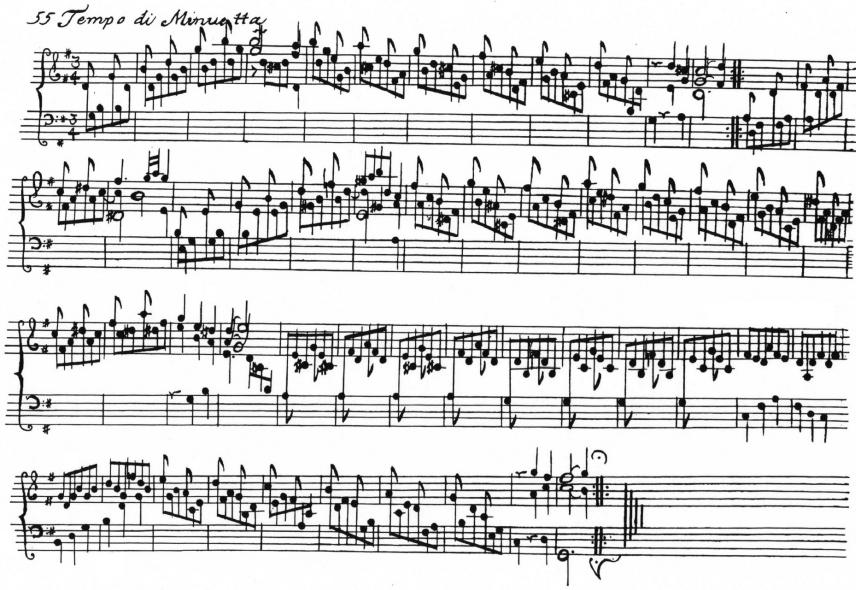
中文讲解
这是图2的图位与图注。由于图片数据未嵌入,需查看原图谱例:内容为J. S. Bach《Clavierübung I》(《键盘练习曲》第一卷,莱比锡1731年出版)第五帕蒂塔中Tempo di Minuetta乐章的局部谱例,作者用它来展示双符干记法(第1、4个音带向上符干)。
本图与正文P0229中的分析直接对应,是文中“largely overlooked”的两键盘记谱的视觉证据;在OCR限制下图像内容不可见,但其在上下文中的功能明确:让读者核对双符干所在的具体位置,并配合下一条脚注108的比较说明。
补充说明
图的具体内容(拍号、第1第4音的符干方向等)已在P0229用文字描述;本图与图注互为印证。
第16段(P0234)
原文复述
108 Superficially similar but, in fact, quite different are passages in French works, such as Rameau’s Allemande and the fourth double of his Gavotte (Nouvelles Suites), in which notes alternately with upward and downward stems were likely played alternately by the right and left hands on the same keyboard.
中文讲解
脚注108,是写作上极精到的一句限定:作者指出,法国作品(如拉莫《Allemande》以及《新组曲》Gavotte的第四个double)中那些“上下符干交替出现”的段落,在谱面外观上与巴赫Tempo di Minuetta的双符干相似,但其演奏方式很可能不同——在法国作品中,那些带不同方向符干的音是由同一键盘上的左右手交替弹奏完成的。
这一脚注防止读者把“双符干”简单地等同于“必须两键盘演奏”:法国传统与巴赫用相同谱面记号却赋予不同演奏含义。这恰好回应了P0220中“不同地域的两键盘预期不同”的核心论点——记谱外观相同,使用语境与演奏方法可以完全不同。
第17段(P0235)
原文复述
H I STORIC A L HA RP SIC HORD RE G I ST RAT I ON
中文讲解
本段是与P0225相同的running head(页眉标识):“HISTORICAL HARPSICHORD REGISTRATION”。位于第35页顶部,提示读者本节仍处于“历史羽管键琴注册法”大章节之内。纯版面信息。
脚注 / 边栏 / 图表 / 附加信息(如有)
本小节包含三条脚注(103、104、105)位于第33页正文P0220/P0221之下;三条脚注(106、107、108)位于第34页正文P0227/P0228/P0229之下;两处相同的页眉“Historical Harpsichord Registration”出现于第33页末与第35页首;第34页底部的页眉“128 KEYBOARD PERSPECTIVES VIII”标识卷期与页码;图2(图注完整保留)位于第35页,展示巴赫《Tempo di Minuetta》的双符干谱例,与P0229的音乐分析直接呼应。其作用可分三类:(一)来源类脚注103、104、105、107支撑正文关于Dulcken配置、Hubbard立场、Hildebrandt琴与Tureck引文的事实;(二)网络/非印刷材料脚注106提示“库普兰更地道”论点有其通俗化源头;(三)补全脚注108阻止一种误读——把“双符干”一律解读为必须用两键盘,从而把巴赫的做法与拉莫等法国作品清晰区分。
💡 本节核心要点
- 本节核心比较:弗兰德/英国琴用dogleg jacks代替法国琴的shove coupler,从而在机械上排除了“同时使用两个独立8’独奏栓”的可能;以法国用法为标尺来评价其他传统的Hubbard式判断,是有问题的标准。
- 经典Dulcken两键盘配置的实质:8’与4’在下键盘,dogleg 8’带独立弦并由两键盘共用,上键盘nasal 8’与下键盘8’共用弦。
- 作者为“带伴奏的独奏”(accompanied solo)这一非法国传统中的常见织体设想了多种可能的注册方案,说明非法国双键盘琴同样能实现富有表现力的音色对比。
- 反驳“库普兰比巴赫更地道”:库普兰把羽管键琴的性格发挥于织体与装饰,巴赫则更深一层——把两键盘属性当作音乐结构本身的一部分来使用。
- Tempo di Minuetta(Clavierübung I, Partita 5)的双符干记法是巴赫把“注册差异”内嵌到节奏对位的关键例证,被作者称为“最高水准的羽管键琴音乐”。
- 节末定调:即便存在双键盘演奏传统,单键盘演奏(特别是斯卡拉蒂K.208与巴赫《哥德堡变奏曲》Aria)依旧可以在音乐上完全令人满意,作者并未将“两键盘路线”绝对化。
🔑 关键术语
- dogleg jacks:犬腿击弦机。一种让上键盘独立触发额外音栓(多见为8’)的特殊击弦机构,无需借助shove coupler;其优势是上键盘手感更轻、避免耦合器带来的惯性,特别当上键盘还需承载如nasal鲁特栓的第二组击弦机时更为明显;其代价是无法同时拥有两条完全独立的8’独奏栓。
- shove coupler:上推式耦合器。法式双键盘琴上让上键盘通过推动下键盘琴键来带动下键盘音栓的机械;以此可以实现pièces croisées所需的两个独立8’独奏栓之间的快速切换。
- pièces croisées:交叉独奏风格。法国羽管键琴流派中一种两键盘用法——主题与对题分别在两个键盘上以两条独立8’栓呈现并穿插、对话;其实现高度依赖shove coupler,因此难在弗兰德式dogleg配置的琴上完成。
- nasal (register):鲁特栓(鼻音栓)。一种带腮/喉管以削弱明亮度、使音色更柔暗的8’音栓;在弗兰德、英国以及Dulcken式双键盘琴上,常见于上键盘并与下键盘8’共用琴弦,故与下键盘8’不能同时作为两条独立独奏栓。
- accompanied solo:带伴奏的独奏段落。一只手(或一条旋律线)由显眼的独奏音色承担,其余织体由伴奏音色(或另一键盘)衬托;本文用它指十八世纪法国以外羽管键琴音乐中常见的织体形态,如巴赫《意大利协奏曲》第二乐章与《哥德堡变奏曲》第13、25首。
- double harpsichord / double:双层键盘琴。具有两层键的羽管键琴;与本文相关的英国“double”一词在正文出现,指上下两层键、其配置与弗兰德式相类(无法同时拥有两个独立8’独奏栓)。
sec_19 [描述性拆分] Historical Compromises and the Single-Instrument Harpsichordist
第1段(P0236)
原文复述
中文讲解
这是小节起始处的一行装饰性星号(* * *),在版面上起到分隔、标志新主题开始的作用。它本身不含论点,仅是排版上的视觉停顿,提示读者下文将进入关于演奏者在乐器受限条件下做历史妥协的新论证。
第2段(P0237)
原文复述
Few if any present-day performers have access to all the diferent harpsichords historically appropriate for all the diferent repertoires. It would, however, be silly for performers to be bound to play only the repertoire exactly appropriate for the one or two instruments that they happen to own. Moreover, even the strictest historical approach permits some license. Frescobaldi’s works, for example, were well known in France and Germany, where they surely were played on locally made instruments. Similarly, the works of French composers were widely known in England, the Low Countries, and Germany. Sweelinck’s works were brought home by his many German pupils, a number of whom lived into the second half of the seventeenth century, when they might well have played their master’s compositions on instruments with two 8′ stops or two manuals. Thus, there is some historical justification for playing Sweelinck’s works on a Ruckers harpsichord (or copy thereof) that had undergone alignment of the keyboards and the addition of a second set of 8′ strings. Since the tonal structure and voicing of such a harpsichord in its altered state has become such that the second 8′ is an integral part of the plenum, it would be infelicitous to confine one’s fullest registration to just a single 8′ and 4′ in a vain attempt to render Sweelinck “authentically.”
中文讲解
本段是这一小节的核心主张。作者先承认现实约束:几乎没有现代演奏者能拥有与所有历史曲目相匹配的全部古钢琴。接着推出两层让步:第一,把演奏者严格限制在自己所有的一两件乐器所对应的曲目上是不合理的;第二,即便最严格的历史演绎流派,也容许一定的灵活度(“some license”)。
为支撑第二点,作者列举三组跨地域传播的证据:1)Frescobaldi 的作品在法国和德国流传,必然在当地乐器上被演奏;2)法国作曲家的作品传播到英国、低地国家与德国;3)Sweelinck 的作品被其大量德国学生带回故里,其中不少活到 17 世纪后半叶。
随后作者聚焦于 Sweelinck 的具体案例来作论证:他的德国学生很可能在拥有两组 8′ 音栓或两层键盘的乐器上演奏老师的作品。因此,在一台经过键盘对齐并增设第二组 8′ 弦的 Ruckers 古钢琴(或其复制品)上演奏 Sweelinck,是有历史依据的。
作者继而引出关键的音乐音响学论断:经过改造后的这种古钢琴,其音响结构和整音方式已发生改变,第二组 8′ 已成为全奏(plenum,即多层栓同时拉起时的饱满音响)的有机组成部分;若为了追求所谓"原真"而把最丰满的音栓配置限制到只有一组 8′ 加 4′,反而不合适(“infelicitous”)。
这一段为下一段提出"妥协是合理的"这一立场奠定了历史证据与音响逻辑的双重基础。
补充说明
段落内出现的术语关系需要厘清:8′(eight-foot pitch)指八英尺音高,是古钢琴的基本音栓;4′(four-foot pitch)指四英尺音栓,比 8′ 高一个八度;plenum 指全奏,即把多个音栓同时拉满以获得最洪亮音响的用法。Ruckers 是 16—17 世纪安特卫普著名的古钢琴家族,其原本的单键盘设计后来常被改造为双键盘,这是本段论证的关键历史事实。
第3段(P0238)
原文复述
Compromises, then, are possible and not entirely to be condemned. If one wishes to play a wide range of repertoire and can have only one instrument, no better choice can be made than a two-manual harpsichord with the French disposition. Playing works historically associated with other schools and periods of harpsichord making on such an instrument can be regarded as the equivalent of D’Anglebert playing Frescobaldi. Still, license is best not stretched to licentiousness. Certainly by present-day standards few would wish to emulate Landowska’s performances of seventeenth-century French pieces on her harsh but turgid 16’ Pleyel. Today one might wish, for example, to draw the line at performing sixteenth- or early-seventeenth-century works with two-manual interplay or employing much change of registration for Frescobaldi. In general, the 2 × 8′ combination might well be used less frequently and the 4′ more than in many modern performances.
中文讲解
承接上一段的历史论证,本段转入实操层面的妥协建议,并明确划定界限。
第一层建议:若演奏者想覆盖广泛曲目且只能拥有一件乐器,最好的选择是双键盘、法国音栓配置的(French disposition)古钢琴。用它演奏本不属于法国学派的曲目,可类比为 D’Anglebert 演奏 Frescobaldi——历史上本就发生过跨学派演绎。
第二层告诫:“license is best not stretched to licentiousness”——灵活度不应滑向放纵。具体例子是 Wanda Landowska 用她那架音色严苛而沉闷的 16′ Pleyel 古钢琴演奏 17 世纪法国作品,作者认为以今天的审美标准来看几乎没人愿意模仿。
第三层具体建议:现代演奏者可在两条线上画界——1)不为 16 世纪或 17 世纪初的作品使用双键盘交叉演奏;2)不为 Frescobaldi 频繁变换音栓配置。一般而言,2 × 8′ 组合应比许多现代演奏中用得更少,而 4′ 音栓应使用得更多。
“French disposition”(法国音栓配置)指 17 世纪法国古钢琴常见的双 8′ 配置结构,这恰好与上段提到的改造后 Ruckers 的音响逻辑相呼应。
本段将抽象的"历史妥协合理"落实为具体的乐器选择、音栓使用频率和演绎边界,使论证兼具理论与实践意义。
补充说明
D’Anglebert(让-亨利·当格勒贝,1628—1691)是 17 世纪晚期法国重要的羽管键琴家与大键琴作曲家,本段中他演奏 Frescobaldi 作品的案例用来证明跨学派演绎有先例。Landowska(旺达·兰多夫斯卡,1879—1959)是 20 世纪复兴羽管键琴的关键人物,她的 Pleyel 钢琴使用 16′ 音栓(即 16 英尺的低八度音栓),发出的是深沉、近乎管风琴式的音响,与历史古钢琴的音色相去甚远,本段借此作为"过度妥协"的反面教材。
第4段(P0239)
原文复述
Discussing Bach’s likely use of harpsichord, clavichord, or organ “according to the convenience and choice of the moment” for playing the preludes and fugues of the Well-Tempered Clavier, Ralph Kirkpatrick noted that “Their musical values are such that, like sculpture under changing lighting conditions, their beauties are variously illuminated by the special qualities of any one of the three instruments to which Bach dedicated his clavier music.“109 Much the same could be said about the effect of different harpsichord stops and their various combinations. Registration is just one of many aspects of interpretation, but to register inappropriately is as if to turn a color gel or blazing searchlight on Bernini’s Ecstasy of St. Teresa.
中文讲解
本段把视角从乐器的选择(harpsichord vs. clavichord vs. organ)拓展到同一件乐器内部音栓组合(即 registration,音栓配置)的美学意义。
作者引用 Ralph Kirkpatrick(拉尔夫·柯克帕特里克)对巴赫《平均律键盘曲集》可在羽管键琴、击弦古钢琴或管风琴上演奏的论述。Kirkpatrick 的关键比喻是:这些作品的美学价值如同雕塑在变化光照下的呈现——不同乐器以各自的特质分别照亮作品的不同侧面。柯克帕特里克的原文是"according to the convenience and choice of the moment”,意味着巴赫本人对乐器的选择具有灵活性。
作者由此类推:同一架古钢琴的不同音栓组合也具有类似效果,“much the same could be said”。但随即给出一个强有力的反面警示——不恰当的音栓配置,犹如在贝尼尼的《圣特蕾莎的狂喜》上投射彩色滤镜或刺眼的探照灯。这件雕塑本身是白色大理石材质,其美学效果依赖于光影在白色表面上的微妙变化;用强烈的彩色光或强光照射会破坏作品本来的统一感。
这个比喻的关键逻辑是:registration 不是越多越强烈越好,音栓的选用应当与作品风格相协调,否则会扭曲而非揭示作品的美学内涵。这与上段 Landowska 反例形成呼应:不恰当的乐器或音栓配置会损害演绎。
本段的功能是把本节的论证从"选择什么乐器"上升到"如何选择音栓配置”,并以雕塑比喻把抽象的音响美学问题变得直观可感。
补充说明
脚注序号 109 在原文中指向下一段(P0241)的注释来源。Bernini 的《圣特蕾莎的狂喜》(Ecstasy of St. Teresa)是 17 世纪巴洛克雕塑,位于罗马胜利之后圣母堂(Santa Maria della Vittoria)的科尔纳罗礼拜堂,主体为白色大理石,其美学效果依赖礼拜堂上方隐藏光窗投射的自然光,本段中的"color gel"与"blazing searchlight"都是为了与这种自然微光形成对比的反面意象。
第5段(P0240)
原文复述
KEYBOARD PERSPECTIVES VII
中文讲解
这是期刊《Keyboard Perspectives》第七卷的页眉标识,属于版面信息,没有实质论点。它表明本文章发表在该期刊中,仅作版面辨识。
第6段(P0241)
原文复述
109 Meredith Kirkpatrick, ed., Ralph Kirkpatrick: Letters of the American Harpsichordist and Scholar (Rochester, NY: University of Rochester Press, 2014), 85.
中文讲解
这是 P0239 中 Kirkpatrick 引文对应的脚注 109,标明出处:Meredith Kirkpatrick 编辑、Ralph Kirkpatrick 撰写的《Ralph Kirkpatrick: Letters of the American Harpsichordist and Scholar》(拉尔夫·柯克帕特里克:美国羽管键琴家与学者的书信集),由罗ochester 大学出版社于 2014 年出版,引文位于第 85 页。
此脚注为 P0239 的引文提供文献来源支持,确保读者可追溯。其作用是源出依据类,而非旁证或限定。
补充说明
该书信集是研究 Kirkpatrick 本人学术与演奏思想的一手资料,其编辑 Meredith Kirkpatrick 与作者 Ralph Kirkpatrick 同姓,但具体亲属关系在本节输入中未提供,无法进一步确认。
第7段(P0242)
原文复述
HISTORICAL HARPSICHORD REGISTRATION
中文讲解
这是页面另一处的页眉,标示本章节或文章的主题为"历史古钢琴音栓配置"(Historical Harpsichord Registration),与本节标题"Historical Compromises and the Single-Instrument Harpsichordist"共同构成版面框架。此处无实质论点,仅作主题标识。
脚注 / 边栏 / 图表 / 附加信息(如有)
本节包含一处脚注(编号 109),位于 P0239 末尾指向的引用,标明 Kirkpatrick 引文的完整出处:Meredith Kirkpatrick 编辑的《Ralph Kirkpatrick: Letters of the American Harpsichordist and Scholar》,罗ochester 大学出版社 2014 年版,第 85 页。该脚注为正文引述提供源出依据,不构成对正文主张的限定或修正。节中无图表或边栏。
💡 本节核心要点
- 现代演奏者几乎不可能拥有与所有历史古钢琴曲目相匹配的全部乐器,因此演奏与乐器之间的灵活搭配具有现实必要性。
- Frescobaldi、法国作曲家以及 Sweelinck 作品的跨地域传播证明,历史上已存在跨学派、跨地域在不同地方乐器上演奏同一作品的实际先例,为当代演奏的"license"(灵活度)提供历史依据。
- 经改造后的双键盘 Ruckers 古钢琴在音响结构上已发生变化,第二组 8′ 成为全奏的有机组成部分,因此为追求"原真"而将音栓配置限制为单一 8′ 加 4′ 反而不妥。
- 若只能选一件乐器覆盖广泛曲目,最佳选择是双键盘、法国音栓配置的(French disposition)古钢琴,可类比为历史上 D’Anglebert 演奏 Frescobaldi 的跨学派演绎。
- 灵活度有边界:Landowska 在 16′ Pleyel 上演奏 17 世纪法国作品被视为反面教材;16 世纪至 17 世纪初作品不宜使用双键盘交叉演奏,Frescobaldi 不宜频繁变换音栓配置。
- 音栓配置(registration)如同光照对雕塑的影响,不恰当的配置犹如对贝尼尼《圣特蕾莎的狂喜》投射彩色滤镜或刺眼探照灯,会破坏而非揭示作品的美学内涵。
🔑 关键术语
- 8′ / 4′ / 16′:古钢琴音栓的英尺长度标记,决定音高:8′ 为基本音高,4′ 比 8′ 高一个八度,16′ 比 8′ 低一个八度。8′ 与 4′ 是常规配置,16′ 在现代古钢琴中尤为罕见,正是 Landowska Pleyel 的标志特征。
- plenum:全奏,指将多个音栓同时拉满以获得最洪亮丰满音响的用法,是巴洛克古钢琴演奏的最高强度配置。
- French disposition:法国音栓配置,指 17 世纪法国古钢琴常见的双 8′ 结构,是本节推荐作为"通用型单一乐器"的核心配置。
- Ruckers:16—17 世纪安特卫普著名的古钢琴制作家族,其原本的单键盘乐器后来常被改造为双键盘并增设第二组 8′ 弦,是本节论证乐器改造与跨时代演奏的关键案例。
- registration:音栓配置,指演奏者在演奏中选用与切换音栓的方式和策略,是本节核心讨论的演绎要素之一,与乐器选择、演奏风格共同构成诠释的多个维度。
- D’Anglebert:让-亨利·当格勒贝(1628—1691),17 世纪晚期法国重要的羽管键琴家与大键琴作曲家,本节中其演奏 Frescobaldi 作品的事例被用作跨学派演绎的历史先例。
- Landowska:旺达·兰多夫斯卡(1879—1959),20 世纪复兴羽管键琴的关键人物;其 16′ Pleyel 因音色与历史古钢琴相去甚远,被本节作为"过度妥协"的反面教材。