目录
C1 [描述性拆分] Pitch, Temperament and Source Document Analysis Framework
- S1.1 [描述性拆分] Pitch, Temperament, and the Need for Historical Awareness
- 页码:1-1
- S1.2 [描述性拆分] Introduction to Source Documents and the Four Stylistic Aspects
- 页码:2-2
C2 SOURCE DOCUMENTS ANALYSIS
- S2.1 [描述性拆分] Aspects of Chord Playing
- 页码:3-4
- S2.2 [描述性拆分] Opening Chord Interpretations Across the Five Recordings
- 页码:5-5
- S2.3 [描述性拆分] Final Cadence Interpretations and Overall Reflections on Chord Playing
- 页码:6-8
C3 NOTE PLACEMENT
- S3.1 [描述性拆分] Lebègue, F. Couperin, and Landowska on Note Placement
- 页码:8-9
- S3.2 [描述性拆分] Performers’ Note Placement Decisions and Conclusions
- 页码:9-10
C4 LINE INTERPRETATIONS
- S4.1 [描述性拆分] Meanings of Notated Lines and Barline Interpretations
- 页码:11-12
- S4.2 [描述性拆分] Long Horizontal Lines, Harmonic Preservation, and Duration Variance
- 页码:12-13
C5 RHYTHMIC VARIETY
- S5.1 [描述性拆分] Source Commentary on Rhythm and the Toccata Connection
- 页码:13-14
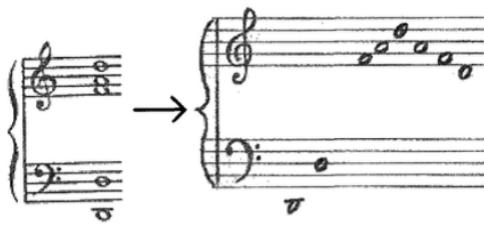
- S5.2 [描述性拆分] Notes Inégales Across the Five Performances
- 页码:15-16
- S5.3 [描述性拆分] Harmonic Pauses, Pedagogical Influence, and Conclusions on Rhythmic Variety
- 页码:16-18
C6 CONCLUSIONS
- S6.1 [描述性拆分] Informing My Own Interpretive Practice
- 页码:20-22
- S6.2 [描述性拆分] Refined Assumptions and Period Awareness
- 页码:23-25
- S6.3 [描述性拆分] Final Conclusions on Modern Performance of the Prélude Non Mesuré
- 页码:26-26
C7 APPENDIX TWO
- S7.1 Appendix Two
- 页码:28-28
C8 APPENDIX THREE
- S8.1 [描述性拆分] Biographies of Gerlin and Leonhardt
- 页码:29-30
- S8.2 [描述性拆分] Biographies of Tilney, van Asperen, and Rousset
- 页码:30-31
C9 BIBLIOGRAPHY
- S9.1 [描述性拆分] Bibliography Part 1
- 页码:32-33
- S9.2 [描述性拆分] Bibliography Part 2
- 页码:34-34
- S9.3 [描述性拆分] Bibliography Part 3
- 页码:35-35
- S9.4 [描述性拆分] Bibliography Part 4
- 页码:36-36
S1.1 [描述性拆分] Pitch, Temperament, and the Need for Historical Awareness
第1段(P0001)
原文复述
performers were becoming more historically informed in the French Baroque pitch. Seven musicians use the more traditional tuning of French Baroque pitch of 392 Hz, including Leonhardt as the first example in 1988, and Rousset as one of the later examples in 2010. Rousset’s CD booklet notes ‘The instrument’s tuning is around 392Hz, which is what it must have been at the time, if we take into account the length of the vibrating part of the C3 string’. There is not a specific pattern to the use of 392 Hz since 1958, as this tuning is scattered throughout. However, after Leonhardt and Moroney (in 1989) five of the seven between 2003 and 2010 are recorded at 392 Hz, suggesting a wider increase in historical tuning knowledge.
中文讲解
本段讨论的是法国巴洛克音高(French Baroque pitch)在现代演奏者中的使用趋势。作者指出有七位演奏家采用了较为传统的法国巴洛克音高 a’=392 Hz,其中最早一例是 1988 年的 Leonhardt,较晚一例是 2010 年的 Rousset。Rousset 在唱片说明书里引述了一段话,解释 392 Hz 这一音高是根据 C3 弦振动部分的长度推断出来的历史真实数值。从 1958 年至今,392 Hz 并未形成连续使用模式,呈现出分散分布。但文中特别强调了一个集中现象:自 Leonhardt 和 Moroney(1989 年)之后,七位演奏家中多达五位在 2003—2010 年间录制时使用了 392 Hz。作者由此推断,近十年来演奏者对历史调律知识的关注在明显增加。
这一段在小节论证中的作用是:先以最常见的 392 Hz 为切入点,建立“演奏者越发具有历史意识”的初步证据。统计样本(七人,五人集中在 2003—2010 年)作为支撑,但同时作者承认“分散分布”这一反证,体现论证的审慎。
补充说明
本段以 Rousset 的文献佐证作为核心引证,标号 105 指向后面段落 P0005。a’=392 Hz 相对于现代标准音 a’=440 Hz 低约四个半音,是法国巴洛克时期常用音高之一,与所谓的 “classical pitch” 传统相关,但本段并未详述其历史根源。
第2段(P0002)
原文复述
In the booklet accompanying his recording, Richard Egarr notes that he plays at 398 Hz, suggesting the pitch varied for this repertoire, being “anywhere from a’ = 360Hz (-ish) to a’=407 (-ish)… My instrument (the Ruckers copy) decided, after some months of rest and relaxation with Louis, that it liked precisely (according to my Korg tuner) 20 cent sharp of a’=392Hz. – which is around a’ = 398. And so the decision was made.” He is the only performer to record at 398 Hz.
中文讲解
本段介绍了 Richard Egarr 的独特选择:使用 a’=398 Hz,是所考察的录音中唯一一例。Egarr 在唱片说明书里给出了一段颇具叙事性的说明:他认为这一曲目所用的音高历史上本就在 360 至 407 Hz 之间浮动,并不固定;他所弹的鲁克斯(Ruckers)仿古琴在与 Louis 共处数月后,自己"决定"停在 a’=392 Hz 高 20 个音分(cent)的位置,也就是约 398 Hz,于是顺势采用了此音高。
这段叙事有两层意义。其一,Egarr 以具体乐器的物理状态作为依据,而非援引某条历史规则,体现了“以琴定音”的实践逻辑。其二,他把音高选择交给乐器本身(“the Ruckers copy decided…"),反而成了所考察的演奏者中音色"最贴近器物本身"的例证。作者引用 398 Hz,是为了补充前一段 392 Hz 共识之外的一个反例或变体,从而避免给出"法国巴洛克音高就是 392 Hz"的简化结论。这一段与下一段共同构成对"单一音高标准"的反例铺垫。
补充说明
“20 cent sharp of a’=392Hz” 中 cent 为对数音分单位,100 cent 等于一个半音,20 cent 即约 0.2 个半音的微升。文中 “with Louis” 似为作者与乐器伙伴相处的拟人化表达,并未在原文中提供进一步解释,本段不宜过度推测其指代。
第3段(P0003)
原文复述
Haynes notes the shift in performing style did not begin to occur until the 1960s, with questions only occasionally being raised regarding pitch, instruments, ensemble sizes and unfamiliar playing techniques as a result of the closer study of original period instruments. The variance between the other four performers supports the evidence of the fluctuating A1 during the 1600s. Prior to the instrument revolution of c.1670, the pitch of A1 could vary anywhere between A=388 to A=490, depending on country, region within the country and the instrumen used. This analysis shows that although a modern performer could use any pitch, it is recommended that they consider the realm of historical research to inform their choice of pitch. Based on Egarr’s example, a performer may consider becoming familiar with their instrument prior to recording, thus establishing a pitch to which the instrument naturally gravitates.
中文讲解
本段把上文两例(392 Hz 与 398 Hz)放在更广阔的历史—学术背景下解读。作者援引 Haynes 的著作,提出演奏风格的整体转变要到二十世纪六十年代才真正开始,而伴随对原始时期乐器的研究,音高、乐器编制、演奏技法等问题才被零星提出。这意味着作者所统计的 1958 年之后的录音变化,并非孤立的孤立现象,而是与整个古乐运动(Early Music movement)相挂钩的。
紧接着,作者用“其余四位演奏者之间存在的差异”来印证另一个事实:在 1600 年代,a’ 本身极不稳定;在大约 1670 年那次“乐器革命”之前,a’ 可以在 388—490 Hz 之间的几乎任何位置出现,且这种浮动依国家、地区乃至乐器而异。原文中的 “A=388 to A=490” 跨度极大,本身就说明对法国巴洛克曲目而言,不存在一个统一的“正确音高”。
段末给出了两条面向演奏者的实用建议:第一,尽管现代演奏者可以选用任何音高,但应先考虑历史研究提供的范围;第二,可以效仿 Egarr,提前熟悉乐器,让乐器自身引导一个“自然归属”的音高。前半段是宏观学术背景,后半段回到具体演奏实践,形成“由面到点”的论证闭环。
注意原文 “A=388 to A=490” 与前文 360—407 Hz 的范围存在差异:此处谈的是十七世纪整体可能范围,而前一段谈的是 Egarr 认为本曲目可能所在的范围,两者口径不同,不应混为一谈。
补充说明
“instrument revolution of c.1670” 指约 1670 年前后法国(及欧洲)键盘乐器结构与制作工艺的重大变化,常被音乐学界视为法国巴洛克风格形成的一个技术节点;原文未展开解释,读者需注意此处的 “c.” 为拉丁文 circa(约略)的缩写。原文 “instrumen” 疑为 “instrument” 的印刷遗漏。
第4段(P0004)
原文复述
The question of temperament is more difficult to address, as the method using Sonic Visualiser was not available, and only three recordings offered information regarding temperament, all identified as meantone. Egarr notes he uses an adjusted quarter-comma meantone or ordinaire, which was common during the first half of the seventeenth century. He notes this “brings a strong, pungent taste (more Roquefort than Brie) to the music’s highly charged chromatic/harmonic content.” The three different temperaments Catherine Perrin (b. unknown–) uses are meantone, Vallotti and equal, and her interpretation of Prélude non mesuré in D minor is in meantone. It is possible that temperament influences Egarr’s recording, as he dwells slightly at points where the tuning is more pronounced, for example at 6R21-22, a point where the melody moves from C#5 to D5. Perrin also uses the tuning to emphasise points of interest, with moments where she chose to linger slightly to accentuate the character of the temperament. Jane Chapman is the third to use quarter-comma meantone. Given that all the other recordings do not offer any information, it would suggest that modern performers consider using meantone when performing the Prélude non mesuré in D minor, although this is more speculation rather than the identification of solid evidence.
中文讲解
本段把论题从音高转到律制(temperament),并明确说明处理律制问题比音高更困难,原因有二:一是所采用的 Sonic Visualiser 分析方法并不适用于律制研究;二是只有三张录音提供了律制信息,且三者皆为 meantone(平均律家族)。作者由此把律制这部分的证据严格限定在这三位演奏者身上。
接下来分别介绍这三位: 1)Egarr 使用经过调整的 quarter-comma meantone(即“ordinaire”),这在十七世纪上半叶较为常见。他用一个比喻——“比 Brie 奶酪更接近 Roquefort 奶酪的强烈风味”——形容这种律制对高强度半音/和声内容的色彩影响。Egarr 那段 “My instrument… decided” 的拟人化叙事与此处 “pungent taste” 的食物比喻,共同构成作者对 Egarr 演奏风格的一种文学化呈现。 2)Catherine Perrin 在三段录音中分别使用三种律制(meantone、Vallotti、equal),其中《Prélude non mesuré in D minor》采用 meantone。原文特别注明她的生年不详(b. unknown–)。 3)Jane Chapman 是第三人,使用 quarter-comma meantone。
作者随后给出了演奏者—律制之间可能的因果联系:Egarr 在律制色彩特别突出的地方(例如 6R21-22 这个 C♯5 向 D5 转移的位置)会有细微停留;Perrin 也会利用律制的特性在某些点上稍加延展,以强调律制本身的色彩。这部分属于作者的推断(“It is possible…"),并未被所收集的证据所证实,因此段末明确交代:基于这三例而推断“现代演奏者在演奏 D 小调《Prélude non mesuré》时应使用 meantone”,是一种推测而非铁证。
需要小心的是:原文 “all identified as meantone” 同时指 overall temperament 类别,而 Perrin 三种律制又被称作 “meantone, Vallotti and equal”,其中 Vallotti 是 meantone 与 equal 之间的桥梁式律制,equal(等分律)严格说已不属于 meantone 家族——这一术语上的张力原文未做解释,读者需注意作者在“宽泛的 meantone 类别”下把三种律制并列处理。
补充说明
“ordinary quarter-comma meantone” 指纯四分之一音差平均律,是法国古钢琴传统中常见的调律法。“Vallotti” 由意大利神父 Francesco Antonio Vallotti 提出,曾被欧洲部分作曲家用作介于平均律与 meantone 之间的折中方案;equal temperament 即等分律,把八度 12 等分。“6R21-22” 应指作者所用曲谱中的小节/小节位置编号(fascicle 6, line/measure 21–22),原文未给出更具体的说明。Prélude non mesuré 指 Louis Couperin 等法国作曲家创作的“无小节线前奏曲”,是一种带有即兴或自由节拍特征的键盘体裁。
第5段(P0005)
原文复述
105 Christophe Rousset, “Louis Couperin” (2010), 19.
中文讲解
本条为正文标号 105 对应的脚注,参考文献出处:Christophe Rousset 发行于 2010 年、标题为《Louis Couperin》的录音,引用页码为第 19 页。该脚注用于支撑 P0001 中 Rousset 关于 392 Hz 的引文,其作用是来源标注。
第6段(P0006)
原文复述
106 Richard Egarr, “Louis Couperin: Pièces de Clavecin” (2011), 5. doi:HMU907511.14.
中文讲解
本条为正文标号 106 对应的脚注,参考文献出处:Richard Egarr 于 2011 年发行的录音《Louis Couperin: Pièces de Clavecin》,引用第 5 页。该脚注支撑 P0002 中 Egarr 关于 398 Hz 与 Ruckers 仿古琴的引文,并提供了用于检索该录音的 doi:HMU907511.14。
第7段(P0007)
原文复述
107 Bruce Haynes, The End of Early Music: A Period Performer’s History of Music for the Twenty-First Century (Oxford; Oxford University Press, 2007), 45
中文讲解
本条为正文标号 107 对应的脚注,参考文献出处:Bruce Haynes 著《The End of Early Music: A Period Performer’s History of Music for the Twenty-First Century》,Oxford University Press 2007 年版,引用第 45 页。该脚注支撑 P0003 中关于演奏风格变化从二十世纪六十年代开始的论断,是“历史意识兴起”这一论点的学术出处。
第8段(P0008)
原文复述
108 Haynes, A History of Performing Pitch: The Story of “A.”, 99.
中文讲解
本条为正文标号 108 对应的脚注,参考文献出处:Bruce Haynes 著《A History of Performing Pitch: The Story of “A."》,引用第 99 页。该脚注支撑 P0003 中关于 1670 年之前音高浮动范围(388—490 Hz)的论断,是“音高本身在十七世纪极度不稳定”这一事实的来源。
脚注 / 边栏 / 图表 / 附加信息(如有)
本小节共含四条脚注(标号 105—108),分别承担两类作用:105、106 是对两位当代演奏家录音(Rousset 2010;Egarr 2011)的内容出处,第 107、108 是对 Haynes 两部专著的引用,为作者关于音高史和演奏风格史的论述提供学术背书。除此之外,本节无图、无表、无乐谱占位符。
💡 本节核心要点
- 近十年(2003—2010)使用 a’=392 Hz 这一传统法国巴洛克音高的演奏者比例明显增加,作者以此推断演奏者的历史意识在增强。
- Egarr 选择 a’=398 Hz 的例子表明,音高选择可以以乐器自身的物理状态为依据,而非援引唯一历史标准。
- Haynes 的研究表明 1670 年乐器革命之前 a’ 可在 388—490 Hz 之间浮动,因此对巴洛克曲目而言不存在唯一正确音高,作者由此建议演奏者面向历史研究的范围,并提前熟悉自己的乐器。
- 律制问题在统计上比音高更难把握:本节获得律制信息的只有三张录音,全部以某种 meantone 收尾,但作者坦言由此推出“应使用 meantone”更多是推测而非证据。
- Egarr、Perrin、Chapman 三人分别在律制色彩突出的位置(如 Egarr 的 6R21-22)有细微停留,提示律制可能影响演奏者的诠释,但属推断层面。
- 整节的论证趋势由“音高的多样性”逐步走向“律制的更有限证据”,最终落到对演奏者历史意识(historical awareness)的呼吁上。
🔑 关键术语
- French Baroque pitch (a’=392 Hz):传统法国巴洛克时期使用的音高标准,约为现代 a’=440 Hz 低四个半音的音高;本节统计显示它在 2003—2010 的录音中浓度上升。
- quarter-comma meantone (ordinaire):纯四分之一音差平均律的法国别称,本节 Egarr 与 Chapman 采用,是十七世纪上半叶法国键盘音乐常用的律制,强调半音音高的尖锐色彩。
- Vallotti temperament:由意大利神父 Francesco Antonio Vallotti 提出的折中律制,本节 Catherine Perrin 使用之一,介于纯平均律与 equal temperament 之间。
- equal temperament:等分律,将八度十二等分,本节 Catherine Perrin 在三段录音之一中使用。
- cent:对数音分单位,100 cent 为一个半音;本节 Egarr 以“a’=392 Hz 上 20 cent”说明其 398 Hz 的选择,量化为约 0.2 个半音的微升。
- Sonic Visualiser:文中提到的音频分析软件,本节指出它无法用于律制识别,因此律制证据只能依靠唱片说明书和演奏者的口述。
- Prélude non mesuré in D minor:本节案例曲目,Louis Couperin 的 D 小调无小节线前奏曲;本节围绕它的音高与律制诠释展开统计。
- instrument revolution c.1670:约 1670 年前后的欧洲键盘乐器结构与制作变革,本节作为音高浮动范围的截止点被引用。
S1.2 [描述性拆分] Introduction to Source Documents and the Four Stylistic Aspects
第1段(P0009)
原文复述
SOURCE DOCUMENTS
中文讲解
本句是该小节的二级标题,本身不作正文叙述。其功能是把论述转向“原始文献(source documents)”这一主题,即后文要讨论的那些由当时演奏者/作曲家留下的、解释前奏曲如何演奏的文本材料。
第2段(P0010)
原文复述
Drawing on the information addressed in the period commentary and the notational practices evident in the manuscripts, analysis of the duration of the first croches blanches section of the prélude non mesuré in D minor explores modern interpretive approaches using the four-part schema noted below. The Bowen framework underpinned the analysis of five selected recordings in order to show how modern performers’ interpretations of notational detail and performance style within the prélude non mesuré itself changed.
中文讲解
本段交代了整篇研究的方法与对象。它把两方面的依据结合在一起:一是“时代评注(period commentary)”所给出的信息,二是手稿中可见的记谱做法。分析的具体对象是 D 小调“unmeasured prelude”(prélude non mesuré)中第一段“croches blanches”(法语术语,指八分音符一类的短音符时值)的时值长度。研究者用下文将列出的“四部分类框架(four-part schema)”来探讨现代诠释方法,并在此之上使用“Bowen framework”(Bowen 框架)作为支撑,对五份选定的录音进行分析,目的是展示现代演奏者对该前奏曲内部记谱细节与演奏风格的诠释如何发生了变化。换言之,本段的功能是为后文的方法学说明做铺垫:先用四要素框架梳理原始文献,再借助 Bowen 框架对现代录音进行对比。
补充说明
原文并未解释“Bowen framework”的具体内容,因此本节只能指出其在后文分析中的“支撑”作用,不对其内部定义作进一步引申。
第3段(P0011)
原文复述
As noted above, Lebègue and F. Couperin address the difficulty of making the genre of the prélude non mesuré genre intelligible to all keyboardists. These two performer/composers were the only practitioners to provide source documents that discussed performance interpretation relating specifically to the Prélude non mesuré.
中文讲解
本段指出历史材料的稀缺性:Lebègue(Lebègue)与 F. Couperin 这两位既是演奏家又是作曲家的人,曾试图解决“prélude non mesuré”这一体裁难以被所有键盘演奏者理解的问题。更关键的是,作者明确强调——在所有留下“原始文献(source documents)”的实践者中,仅有他们两人提供了专门针对“Prélude non mesuré”演奏诠释的讨论。这意味着后文四要素的分析几乎完全依赖这两位作者留下的文本证据,因此读者需要注意样本的局限。
补充说明
原文将“prélude non mesuré genre”重复了一次“genre”,在忠实复述中保留了这一冗余写法。
第4段(P0012)
原文复述
Within their source commentaries, four stylistic aspects are presented:
中文讲解
本句是承上启下的过渡句,作用是引出紧随其后的四项条目。它告诉读者:下面列出的四个方面,都是从 Lebègue 与 F. Couperin 各自的“原始文献评注(source commentaries)”中归纳出来的。
第5段(P0013)
原文复述
- Aspects of chord playing
中文讲解
这是第一项——“和弦演奏的各方面(Aspects of chord playing)”。在 unmeasured prelude 中,由于缺少小节线与固定节拍,和弦如何被布置、被释放、被彼此衔接,便成为诠释上首先需要面对的问题。该条目提示读者注意和弦演奏本身即是一种风格要素。
补充说明
原文并无 “andando” 或类似限定词,应仅按“和声/和弦演奏的方面”理解,不应加入未被原文给出的速度或律动描述。
第6段(P0014)
原文复述
- Note placement
中文讲解
第二项为“音符位置(Note placement)”。在自由节奏的记谱中,音符并非均匀地放在时间轴上,而是由演奏者根据乐句、纹理与呼吸决定具体出现的位置。该条目要求读者关注单个音符在时值序列中所处的相对位置及其产生的效果。
第7段(P0015)
原文复述
- Line interpretations
中文讲解
第三项为“旋律线条的诠释(Line interpretations)”。这里的“line”指乐曲中可辨识的横向声部线条(line),它涉及如何把若干音符理解为一条连贯的乐句、如何处理线条的起止与起伏,是 unmeasured prelude 风格表达中的核心环节。
补充说明
原文没有限定“line”指高音线条、低音线条还是整体声部走向,复述中保留这一开放性,解释时以“横向声部线条”作为通用含义。
第8段(P0016)
原文复述
- Rhythmic variety
中文讲解
第四项为“节奏多样性(Rhythmic variety)”。在名义上“无固定节拍”的前奏曲中,演奏者仍需要制造出丰富的时值对比,通过长短不一的音符组合来形成节奏感。该条目提示读者:自由节拍并不等于单调,而是要求演奏者在节奏上具备变化与对比。
第9段(P0017)
原文复述
109 Egarr, “Louis Couperin: Pièces de Clavecin.”, 5.
中文讲解
这是编号 109 的脚注,引用 Egarr 题为“Louis Couperin: Pièces de Clavecin”的文献第 5 页。它在正文中对应于上文对现代演奏者诠释的分析,为“Pièces de Clavecin”与 unmeasured prelude 之间的关联提供出处支持。
补充说明
脚注仅给出作者、文章题名与页码,未注明出版年份或出版社,原文如此,本节不复加额外出版信息。
第10段(P0018)
原文复述
110 Catherine Perrin, “24 Preludes” (1998), 8.
中文讲解
这是编号 110 的脚注,引用 Catherine Perrin 题为“24 Preludes”的文献,注明年份 1998,第 8 页。它为正文中关于 unmeasured prelude 体裁或诠释的某项论述提供来源支持。
补充说明
脚注未给出出版形式(如书、论文、唱片解说本),原文如此,本节亦不补写。
脚注 / 边栏 / 图表 / 附加信息(如有)
本节末尾包含两条脚注:第 109 条(Egarr,“Louis Couperin: Pièces de Clavecin.”,第 5 页)与第 110 条(Catherine Perrin,“24 Preludes”,1998,第 8 页),分别用于支撑正文中关于现代演奏者诠释以及 unmeasured prelude 体裁的论述;其作用为来源标注。除此之外,本节无图表或边栏。
💡 本节核心要点
- 本小节明确研究对象为 D 小调 prélude non mesuré 中第一段 croches blanches 的时值长度与现代诠释变化。
- 历史原始文献极为有限,仅 Lebègue 与 F. Couperin 二人留下了专门针对 Prélude non mesuré 演奏诠释的讨论。
- 方法上以“四要素框架”梳理原始文献评注,再以 Bowen 框架为支撑,对五份现代录音进行对比分析。
- 四要素分别为:和弦演奏的各方面、音符位置、旋律线条的诠释、节奏多样性。
- 脚注 109 与 110 为正文中的现代诠释与体裁讨论提供文献出处。
🔑 关键术语
- prélude non mesuré:法语术语,指“无固定节拍/无小节的前奏曲”,是 17 世纪法国键盘音乐中一种以自由节奏记谱为特征的体裁,本节所有分析均围绕此体裁展开。
- croches blanches:法语术语,原义涉及短音符与白符头的区分;在本节中指 prélude non mesuré 内某段以短音符为主的片段,其时值长度是本研究的分析对象之一。
- Bowen framework:本节中作为分析五份录音所用支撑性框架的名称;原文未给出其内部定义,本节仅按其“支撑分析”的功能提及。
- source documents / source commentaries:指由当时演奏者/作曲家(如 Lebègue、F. Couperin)留下的、讨论演奏诠释的原始文本与评注,是本节归纳四要素的直接依据。
- four-part schema:本节用以梳理“原始文献评注”的四要素分类框架,其内容即下文四项:和弦演奏方面、音符位置、旋律线条诠释、节奏多样性。
S2.1 [描述性拆分] Aspects of Chord Playing
第1段(P0019)
原文复述
On the harpsichord, restriking an arpeggiated chord is a means of sustaining the tone, like that of an organ, ensuring the harmonic sound is audible to the listener. Lebègue references the technique of restriking the chord in the preface to his Pièces de clavessin, as noted on p. 27 of this thesis. Table 5 shows the variances in interpretations between the five performers of the first section, including their execution of the opening and closing chords:
中文讲解
本段为整节设定概念框架。作者提出一项具体的羽管键琴技法——重新击奏分解和弦以延续音色——并将其类比为管风琴天然延续的音响效果,由此确立本节的核心诠释问题:现代演奏者是否真正遵循这一历史建议?文中提到“本论文第27页”意味着Lebègue前言的内容已在论文其他处先行讨论,此处将其作为衡量基准加以援引。提到“表5”与“五位演奏者”预示了接下来的分析将基于证据、采用比较方法,并以特定录音样本(Gerlin、Leonhardt、Sempé、Tilney、Rousset)为对象。读者应当理解:本节将以此历史技法作为标尺,去衡量现代演奏选择。
第2段(P0020)
原文复述
Gerlin’s Pleyel harpsichord does not have a lingering, resonant sound. Rather than re-sounding the note, he leaves melodic passages without the support of the bass harmonies. He delays the placing of the D5 at 6L7, playing it simultaneously with the right hand 6R19 midway through the melody, rather than restriking the chord. He holds some bass notes for longer than suggested by the lines, for example 7L12 can still be heard at 8R16, rather than as the line suggests lifting at 8R14. Gerlin does not restrike chords to solidify a harmony.
中文讲解
本段具体分析Gerlin的录音。论证分两步展开。首先,作者确立限制条件:Gerlin使用的Pleyel牌羽管键琴缺乏延续性的共鸣,无法自然支撑和声。其次,作者展示Gerlin的应对策略——他并未通过重新击奏和弦(Lebègue建议的技法)来补偿,而是采用两种替代手段:延迟音符的进入(D5在6L7处被推迟到与右手6R19同步奏出,而非作为和弦的一部分),以及将低音音符保留得比谱面所提示的更长(7L12低音到8R16仍可听见,而谱面提示在8R14处离键)。由此得出结论:“Gerlin不通过重新击奏和弦来巩固和声”。作者并非在批评Gerlin的选择,而是展示每位演奏者各自的处理方式如何与乐器特性互动,产生独特的诠释结果。对6L7、6R19、7L12、8R16、8R14等精确的小节-拍位引用,体现了论文基于乐谱的研究方法。
第3段(P0021)
原文复述
Leonhardt’s recording is extremely resonant, and the listener can clearly hear the bass notes climbing smoothly from 2L9 (F#6), 2L10 (G6), 3L2 (A6). One can also hear the A minor chord at 14L1 through the descending A scale, before being released for the left hand to participate in the ascending A scale. Leonhardt does not follow the advice of Lebègue, and throughout his recording no chords are restruck to maintain harmonies.
中文讲解
本段对Gerlin的情况构成对照。Leonhardt的乐器共鸣极强,因此天然延续性已经具备,无需重新击奏。作者以具体音乐证据加以佐证:依次上升的低音F#6→G6→A6(位于2L9、2L10、3L2)清晰可闻,A小调和弦在14L1处可贯穿整个下行音阶而被听见。论证逻辑具有重要意义:即便乐器天然共鸣足以使声音自然衰减(从而降低重新击奏的必要性),是否遵循Lebègue建议仍属风格选择。Leonhardt的做法是纯粹依赖乐器本身的共鸣,并不辅以历史技法。这将Leonhardt定位为在拥有可支持该技法的乐器条件下,仍做出明确不遵从Lebègue建议之决定的演奏者。
第4段(P0022)
原文复述
Sempé’s recording is also sonorous, and as one of the quickest recordings of the first section, it has a sense of brilliance – fast melodic passages and minimal, deliberate pauses that highlight on harmonic changes, and quick execution of tremblements. Yet due to the speed of the first section there is rarely a moment of reflection in his interpretation. The continual forward movement means that he does not restrike any left hand chords to retain the sound, as the chords remain audible for the duration of the right hand harmonic passage. Sempé does linger briefly over these chords at 14L9-14R18.
中文讲解
Sempé的诠释兼具两项特征:洪亮的乐器与迅捷的速度。作者用“辉煌”(brilliance)一词概括由此产生的美学效果。论证的关键在于:Sempé的速度使重新击奏变得无必要——前行动力如此绵延不断,以至于在右手段落进行期间,和弦天然保持可闻。作者点出一个例外:14L9-14R18处Sempé稍作停留,但被定性为短暂的停顿,而非对和弦的重新击奏。作者的分析表明:Sempé通过不同的途径(速度驱动的连贯性,而非反复的和弦击奏)达成了与Lebègue目标(和声延续)相近的音乐效果。这将Sempé定位为又一位虽然与Lebègue字面建议相左,但或可实现相关音乐效果的演奏者。
第5段(P0023)
原文复述
Tilney’s slower execution of the moving melody potentially provided opportunities to repeat the chord, yet he avoids such a practice. The harpsichord used in his recording has a bass register that is audible for longer than those of the other recordings, such as Rousset’s instrument, resulting in the melodic line having the support of the bass register for longer. However, Tilney’s slower tempo means the bass harmony still fades away, leaving the right hand unsupported, for example at 4L11-5R5. Tilney does not remain long at 14L9-14R18, meaning that there is no break between the two chords.
中文讲解
本段分析Tilney的处理方式,结果呈现出一种悖论。作者识别出两项有利条件:较慢的速度(理论上提供更多可在其间重新击奏和弦的时间),以及低音区可听延续时间更长的乐器。然而Tilney仍避免重新击奏。作者使用反事实式措辞——“原本可能提供重复和弦的机会,但他却避开这种做法”——来突出这一选择。悖论在末句浮现:即便低音区延续更长,较慢的速度仍使和声逐渐消退(4L11-5R5处),右手声部失去支撑。末尾对14L9-14R18(两和弦之间没有间断)的论述,与下一段中Rousset在同一位置上的大幅停顿形成对照。
第6段(P0024)
原文复述
Rousset pauses at the chord 4L11-4R15 for so long that the G octave (G2/3) is no longer audible in the left hand. This results in absence of bass harmony to strengthen the G major to G minor shift in the right hand, as suggested by the sweeping lines held until 5L5. This could have been an opportune moment for Rousset to repeat the chord to sustain the harmony, if this is how we might choose to follow Lebègue’s advice. He holds the A major chord at 14L1-14R8 until it is inaudible, resulting in the absence of a sustained bass line during the scales that follow, although once again some kind of harmonisation is suggested by L. Couperin’s use of the lines. Rousset repeats this technique at the close of bar 14, holding the chord 14L9-14R18 until it cannot be heard, unlike Tilney’s swifter execution. Nowhere in the first section does Tilney restrike a chord.
中文讲解
本段分析Rousset的诠释,代表样本中最极端的案例。论证精确且颇具反直觉意味:通过将和弦保留过久以致变得不可闻(4L11-4R15末尾的G八度G2/3,以及14L1-14R8的A大和弦),Rousset的诠释策略反而事与愿违。在乐谱(L. Couperin“保持至5L5的延绵连线”)暗示需要延续和声之处,实际演奏却出现了空缺。作者引入条件句“如果我们选择遵循Lebègue的建议”——这一表述颇为关键,表明作者并未断言Lebègue建议应当被普遍采用,而是在探讨若使用重新击奏则演奏将呈现何种面貌。末句关于Tilney不重新击奏的陈述,从上下文判断似应归入Tilney段落,逻辑上为Tilney分析作结;“不同于Tilney更迅捷的处理方式”这一比较,则强化了Rousset在14L9-14R18处的绵长停顿与Tilney处理同一位置之间的对照。
补充说明
末句关于Tilney不重新击奏的陈述,从段落归属与论述脉络看,原本应属于Tilney分析;作者可能因编辑整理之故将其置于本段末尾。
第7段(P0025)
原文复述
Each performer interprets the opening and closing chords differently (see Table 5). The length of these chords is not reflective of the duration of the whole section. For example, Gerlin’s interpretation of the opening chord is the second fastest, yet his is the slowest first section, equal in duration with Tilney. Leonhardt has one of the longest closing chords (6.00 secs), yet his first section was the second fastest (1:50 min). Of the five selected performers, the overall theme for the duration of the opening chord shows an increase by modern performers, suggesting that increased resonance of harpsichords is encouraging performers to enjoy the sound of their instruments more. Of the remaining fourteen examples from the discography, only one performer is marginally longer in execution than Tilney, being Schenkman (8.19 secs). The fastest execution of the opening chord is recorded by Spieth (2.02 secs).
中文讲解
本收束段将分析从定性个案研究转向依据表5得出的量化规律。论证浮现三层要点。其一,单个和弦的时值并不能预示整体速度——Gerlin的开头和弦位列第二快,但其第一段却最慢;Leonhardt拥有最长的收束和弦之一(6.00秒),然而其第一段位列第二快(1分50秒)。这种非线性关联是关于演奏实践的一项重要发现。其二,作者识别出一条历史趋势:“在所选五位演奏者中,开头和弦时值的整体趋势是现代演奏者有所增加”,并将其因果性地解读为“羽管键琴共鸣的增强正鼓励演奏者更充分地享受其乐器的音响”。这是作者将乐器技术与演奏行为相联系的主要诠释性结论。其三,作者援引更广泛的唱片目录:19份录音(5份核心样本+14份其他)中,Schenkman的8.19秒开头和弦为最长,Spieth的2.02秒为最快。数据延伸至核心五位演奏者之外,用以支撑这一趋势。
补充说明
“唱片目录中其余十四例”的表述显示该论文总共审视了19份录音(5份主要样本+14份其他);此信息来自表5的数据引述,而非外部补充。
脚注 / 边栏 / 图表 / 附加信息(如有)
本节多次援引表5作为各位演奏者首尾和弦时值的比较数据来源。所提供段落中未出现脚注;文中“本论文第27页”的交叉引用表明Lebègue的文献出处已在论文其他处确立。乐谱定位标记体系(如6L7、6R19、4L11-5R5)采用“数字L/R+数字”格式,L表示左手、R表示右手,前一数字为小节号,后一数字为该手在该小节中的拍位编号;这一精确的拍位引用贯穿全节,是本节基于乐谱之研究方法的体现。
💡 本节核心要点
- Lebègue《Pièces de clavessin》前言中提出的历史技法是:在分解和弦后重新击奏,以延续和声,模拟管风琴般的音响延续性;此技法充当衡量诠释选择的基准。
- 在所考察的五位演奏者中,无一人主动通过重新击奏和弦来维持和声——他们各自依赖乐器的天然共鸣、速度安排或替代性的音符处理,但均偏离Lebègue的字面建议。
- Gerlin的特殊之处在于其Pleyel羽管键琴缺乏共鸣,使得某些段落失去低音和声支撑;他采用延迟D5、延长低音等替代手段,但仍不重新击奏和弦。
- Leonhardt、Sempé、Tilney、Rousset的乐器共鸣更强,使得重新击奏在技术上不那么必要,但每位演奏者仍做出不遵循Lebègue建议的明确决定;Rousset甚至通过过度延长停顿导致和声不可闻,呈现反效果。
- 现代演奏者呈现出开头和弦时值延长的趋势,作者将此归因于羽管键琴共鸣的增强使演奏者更愿意“享受”乐器音响;这一规律超越五位核心样本,得到更广泛的19份录音目录支持。
- 单个和弦的时值与整段演奏的总时长之间不存在简单线性关系——开头和弦的处理方式不能预示整体诠释的速度选择。
🔑 关键术语
- Arpeggiated chord (分解和弦):其音符并非同时奏出,而是依次奏出的和弦;本节所讨论的技法涉及重新击奏此类和弦以刷新其音响。
- Restriking (重新击奏):再次演奏和弦以刷新并延续其音响的技法;源自Lebègue前言,是本节审视的历史演奏实践。
- Tremblements:巴洛克时期的法语术语,指装饰性颤音;在对Sempé的描述中被用作“quick execution of tremblements”,以体现其诠释的迅捷风格。
- Pleyel harpsichord (Pleyel牌羽管键琴):Pleyel厂制造的羽管键琴;本节中由Gerlin使用,其特征被描述为缺乏其他演奏者乐器所具备的延续性共鸣。
- L. Couperin:以“L.”首字母指代的路易·库普兰(Louis Couperin),即所分析乐曲的作曲家;本节在论及乐谱本身暗示和声延续(通过延绵连线的运用)时加以援引。
S2.2 [描述性拆分] Opening Chord Interpretations Across the Five Recordings
第1段(P0026)
原文复述
Gerlin plays the opening D minor chord in style brisé; however, rather than stopping at the top of the chord, he returns down the arpeggio. This interpretation takes 2.40 seconds to complete, and is illustrated in Figure 22.
中文讲解
本段引出五位演奏家比较的起点——Gerlin 对开篇 D 小调和弦的处理。Style brisé 在本节上下文中表现为将和弦音按序列顺次奏出的分解弹法(后文 Leonhardt 描述中的 “rolls upwards”、Tilney 描述中的 “rolling up, down” 均可印证)。Gerlin 的特别之处在于:他不仅把和弦向上"打开”,还在到达最高音后又沿着分解音型下行回去,形成一个"上—下"的双向琶音。这种处理把原本可瞬间完成的和弦拉伸到 2.40 秒,本身已是一种风格化诠释,为后文与另外四位演奏家做对比设立了基准点(2.40 秒)。段末的冒号引出 Figure 22,为该弹法提供视觉/谱面参照。
补充说明
Gerlin 的具体弹法(往返琶音)及其 2.40 秒的用时,是本节后续四位演奏家比较的基准数据;本段不含脚注或外部补充信息。
第2段(P0027)
原文复述
Figure 22 is captioned as follows: “Louis Couperin: Prélude non mesuré: D minor (opening chord).” The figure shows Gerlin’s style brisé interpretation of the opening chord of the D minor prélude non mesuré. The source cited for the figure is Tsurata, 2010, p. 109. The embedded image data itself has been omitted in this transcript, but the position of the figure and its caption are retained.
中文讲解
这是一张图(图 22)的占位说明。图中展示的是 Gerlin 对 Louis Couperin D 小调 prélude non mesuré(“无小节前奏曲”)开篇和弦的 style brisé 弹法。由于实际图像数据并未内嵌在文本中,需查阅原书第 5 页中的 Figure 22 才能看到具体的音型与谱例细节。该图作为 Gerlin 弹法的可视化参照,与 P0026 的文字描述相互印证。图注明确给出文献来源:Tsurata, 2010, p. 109。
补充说明
图注中的文献出处(Tsurata, 2010, p. 109)是本节唯一可定位的外部资料线索,作者并未对该引文内容作进一步说明,故仅照原样复述。
第3段(P0028)
原文复述
Leonhardt quickly rolls the chord upwards without restriking it or adding additional embellishments, completing the gesture in 2.63 seconds. Of the five performers, Sempé is the fastest, executing the first chord in 2.23 seconds. Tilney takes Gerlin’s idea further by rolling up, then down, and then completing the style brisé with a further upward roll of the chord; this makes Tilney’s opening chord the longest of the five, at 8.18 seconds. Rousset, like Leonhardt, also plays the chord as written, but his execution takes 4.73 seconds—nearly twice the length of Leonhardt’s and half the length of Tilney’s.
中文讲解
本段在 Gerlin 的基准(2.40 秒)之上,依次给出另外四位演奏家的时长与手法,由此勾勒出一条从"严格照谱"到"自由发挥"的诠释光谱:
- Leonhardt(2.63 秒):向上快速滚动一次,不反复击键,也不加装饰——是接近"按谱直弹"的一端。
- Sempé(2.23 秒):速度最快,但本段未进一步描述其手法。
- Rousset(4.73 秒):同样"按谱弹”,用时却几乎是 Leonhardt 的两倍——说明"按谱"与"速度"是两个独立维度。
- Tilney(8.18 秒):在 Gerlin"上—下"的基础上再向上滚一次,形成"上—下—上",是五人中诠释幅度最大、用时最长的一位。
数字本身具有说服力:2.23 到 8.18 秒之间相差近四倍,足以说明同一开篇乐谱在不同演奏家手中可呈现极为不同的面貌。本段并不评判优劣,而是为下一段(第 15 小节终止式)进一步比较"结构性差异"提供时间与手法数据。
补充说明
“plays as written”(“按谱弹”)一词与"不额外加花"对应;这与"完全照谱但用时自由"(Rousset)以及"在谱上自由发挥"(Tilney)形成对比。五位演奏家按时长由短到长排序为:Sempé 2.23s、Gerlin 2.40s、Leonhardt 2.63s、Rousset 4.73s、Tilney 8.18s。
第4段(P0029)
原文复述
To further emphasise the differences each performer brings to the structure of the piece, the author turns to the final cadence of this section in bar 15, after having examined the opening chord. Gerlin and Leonhardt interpret this passage differently. Where Gerlin connects the two left-hand notes at the beginning of bar 15 (14L1–2), Leonhardt phrases the left-hand D3 (15L2) together with the right-hand notes, creating a five-note pattern instead of four. Leonhardt pauses slightly between the two slurred notes (15R1–2, 15R3–4), and then plays the descending three-note stepwise pattern quickly the first time (15R6–8). Like Gerlin, he applies a ritardando to the second three-note pattern (15R14–16). In both Gerlin’s and Leonhardt’s recordings the sound is allowed to carry through to the final chord, but Leonhardt rolls the final chord slowly, pausing before he places the final F#4.
中文讲解
本段把比较从"开篇"延伸到"收尾",以第 15 小节的终止式为对象,聚焦 Gerlin 与 Leonhardt 的差异,目的是再一次印证演奏家对"作品结构"的塑造方式各不相同。
核心差异有两层:
- 声部组合方式:Gerlin 把开头两音连在一起,形成 4 音组合;Leonhardt 则把左手 D3(15L2)归入右手旋律线条,形成 5 音组合。这意味着同一个小节在两人手中拥有不同的重音轮廓与句法分组。
- 力度与时值安排:Leonhardt 在连奏的两组音之间(15R1–2 与 15R3–4)做轻微停顿;首次三音下行动机(15R6–8)弹得较快;第二次三音组(15R14–16)则做渐慢(ritardando),这一点与 Gerlin 一致——两人在"末次渐慢"上达成共识,但在"如何分组声部"上分道扬镳。
最后一句点出两人都让声音延续到最终和弦,但 Leonhardt 在最终 F#4 落键前先做慢速琶音并停顿——这种"延后到位"的处理与他开篇的快速上行滚奏形成对照,可视为同一位演奏家"两端刻意拉开"的结构意图。
总体而言,本段既是对 P0026–P0028 开篇比较的延伸,也是为后续小节中"每位演奏家为作品结构带来不同诠释"这一中心论点提供终止式层面的证据。
补充说明
段中标记(如 14L1-2、15L2、15R1-2、15R3-4、15R6-8、15R14-16)是作者用以精确定位谱面细节的编号体系:L 指左手(left hand),R 指右手(right hand),数字为小节内的音符序号。本节未引用外部资料对该编号体系作进一步说明。
脚注 / 边栏 / 图表 / 附加信息(如有)
本小节包含一张图(图 22)及其图注。图为 Louis Couperin D 小调 prélude non mesuré 开篇和弦的 style brisé 弹法示意,来源标注为 Tsurata, 2010, p. 109。本小节段落中未出现脚注。
💡 本节核心要点
- 同一开篇 D 小调和弦在五位演奏家的录音中,时长从 2.23 秒(Sempé)到 8.18 秒(Tilney)不等,相差近四倍,说明"按谱"与"诠释"是两个相对独立的维度。
- Gerlin 的 style brisé(2.40 秒)是后续比较的基准——他在到达最高音后沿琶音下行;Tilney 在此基础上加入第三次上行(“上—下—上”),形成最长版本。
- Leonhardt 与 Rousset 都属"按谱弹"的一端,但 Rousset 用时近乎 Leonhardt 的两倍,表明"按谱"并不等于"快速或简短"。
- 在第 15 小节终止式的比较中,Gerlin 把开头两音相连接形成 4 音组合,Leonhardt 则把左手 D3 归入右手形成 5 音组合——声部句法的差异直接改变了同一小节的结构面貌。
- Gerlin 与 Leonhardt 在末次三音组都使用渐慢(ritardando),对终止情绪具有共识;但 Leonhardt 在最终 F#4 前慢滚琶音并停顿,与他开篇的快速上行滚奏构成对照,显示出"两端刻意拉开"的结构意图。
🔑 关键术语
- style brisé:本节上下文指把和弦音按序列顺次奏出的分解弹法(即沿琶音方向滚动和弦);Gerlin 与 Tilney 的诠释正是基于这一手法。
- arpeggio:琶音;本节指将和弦音按序列顺次弹奏的方式,Leonhardt、Sempé、Rousset、Tilney 的处理均属此范畴。
- prélude non mesuré:“无小节的前奏曲”,一种自由节奏、不用固定小节线划分的体裁;本节所讨论的 D 小调作品即属此类。
- ritardando:渐慢;本节指 Gerlin 与 Leonhardt 在第 15 小节第二组三音下行(15R14-16)处采用的减速处理。
- cadence:终止式;本节特指第 15 小节处乐段收束的和声与节奏结构,作者以此作为比较两位演奏家结构诠释差异的对象。
- embellishment:装饰;本节特指 Leonhardt 在弹奏开篇和弦时"未添加"(without … adding additional embellishments)的额外花音,与 Tilney 在谱外扩展形成对照。
S2.3 [描述性拆分] Final Cadence Interpretations and Overall Reflections on Chord Playing
第1段(P0030)
原文复述
Both Sempé and Rousset, after their respective longer pauses, take up the passage using the same procedure employed by Leonhardt, executing the left-hand D4 together with the right-hand notes (15R3-8). Unlike Leonhardt, however, both Sempé and Rousset carry the movement all the way through to the final descending passage (15R14-16). Sempé’s final chord is preceded by a port de voix on the C#4 (15R16), and his chord spread is markedly faster than that of Leonhardt and Rousset, as shown in Table 5. Rousset’s final chord is executed in a manner comparable to Leonhardt’s—slowly and thoughtfully—but Rousset incorporates the penultimate note (C#4) into the final chord itself.
中文讲解
本段将 Sempé 与 Rousset 的处理与 Leonhardt 进行对照,重点在三处差异:第一,两位较新演奏家都在 Leonhardt 停止的位置之后接续弹奏下行段(15R14-16),打破了 Leonhardt 在 15R8 处的休止方式;第二,Sempé 在最后一个和弦之前于 C#4 处加了 port de voix(一种法国巴洛克装饰音,相当于倚音式滑奏),并以远快于另外两人的速度“打开”和弦;第三,Rousset 把倒数第二个音 C#4 并入到最终和弦之中,使原本独立的下行末音成为最终和弦的一部分。这说明即便同样模仿 Leonhardt 的指法,新一代演奏家在最终乐句的节奏感、和声处理以及装饰音选择上都已发展出各自的诠释取向。
补充说明
原文中提及的“15R3-8”“15R14-16”等标记指的是所用乐谱版本(如 Edition Peters 或相关校勘版)中第 15 小节右手声部第 3 至 8 个音符、第 14 至 16 个音符的编号系统;Table 5 指本节末尾关于最终和弦时值与速度的对照表。port de voix 在此处的作用是让 C#4 以倚音方式滑入最终和弦,从而柔化进入终止的边缘。
第2段(P0031)
原文复述
Tilney plays the left-hand material into the right hand (15L1-R4), combining E4 and F4 in the right hand to create a trill before pausing on 15R5, a pattern he repeats on the following group of notes (15R11-12). He plays the descending passage quickly into the left-hand A3 (15L3) and continues the momentum into the G4 (15R13). For the final chord, Tilney begins on the higher left-hand D3, placing the octave-lower D2 only after the right hand has completed its upward spread and, unlike Gerlin and Leonhardt, a subsequent downward spread. All five performers accentuate the top note of each group of notes, producing a descending melodic line: A4 (15R5), G4 (15R13), concluding on the F#4 of the final chord.
中文讲解
本段聚焦 Tilney 的独特诠释。首先,他的左手线条主动“侵入”到右手声部(15L1-R4),这是一种较为强势的声部交织方式;并在两处通过 E4 与 F4 的叠加形成颤音式装饰(trill),从而在原本静态的和弦连接中制造乐句感。其次,在最终和弦的处理上,Tilney 先弹较高的左手 D3,待右手向上“打开”后再补入低八度的 D2,并且做了 Gerlin 和 Leonhardt 都没有做的“向下回开”,显示出他对最终和弦空间感的扩展。最后,作者总结五位演奏家共同遵循的一个原则——每一组音都强调最高音——由此构成一条由 A4、G4、F#4 构成的下行旋律线,使整体音响虽为和弦分解,仍具备清晰的旋律骨架。
补充说明
本段所说的“trill”实际是在 E4、F4 两个相邻右手音符上以快速交替方式形成的装饰性震音,是法国巴洛克键盘音乐中常见的颤音用法之一,与意大利式的 trillo 有别;它在此处的功能不是炫技,而是把两个静态的和弦位置连接为乐句运动。
第3段(P0032)
原文复述
Overall, the placement of the final chord has not produced a longer duration for the first section; on the contrary, interpretations of the first section have become shorter over time, as Table 4 illustrates. Rousset, however, as the most recent recording, departs from this trend by lengthening the final chord. The absence of any overall lengthening may be explained by the fact that this is the closing chord of the section rather than the final chord of the whole piece. Nevertheless, as previously observed for the opening chord, performers increasingly choose to linger longer than earlier recordings, allowing the resonance of the instrument to speak for itself. These variations in the length of the outer chords have not resulted in a longer first section overall.
中文讲解
本段是对前两段细节的总体归纳,并提出一个反直觉的观察:尽管每位演奏家都在外侧两个和弦(开头与结尾)上越来越倾向于“延长以留白”,但乐章第一部分的总时长并未因此变长,反而在整体趋势上缩短了。换言之,单个和弦的延长被乐章内部更紧凑的速度所抵消。Rousset 作为最新录音,是第一位在收尾和弦上明显背离“缩短趋势”的演奏家。作者对这种差异的解释是功能性的——这只是段落而非全曲的结束,因此演奏家不会像对待全曲终止那样给它相同的份量。但同时作者又指出,这一延长趋势与开头和弦的延长一样,体现出现代演奏家更愿意“让乐器自身的共鸣说话”的审美取向。
补充说明
本段呼应了前文关于开头和弦的论述(详见本论文 S2.2 部分对“first chord”持续时间的讨论),形成“开头—结尾”两端延长趋势的对照;Table 4 应为各演奏版本第一部分总时长的对照表。
第4段(P0033)
原文复述
Musicians commonly adjust tempo to convey different affects in the music they perform, but in this genre performers can draw upon a broader range of tempos to present distinct musical ideas. Tempo is a crucial performance dimension that is entirely absent from the historical sources discussing the prélude non mesuré and is mentioned only once in the secondary literature. Tilney holds that the preludes are aesthetically more effective when played at a slower tempo, a view supported by Froberger’s direction echoing Frescobaldi’s ’et se joue lentment’ (to be played slowly). Tilney subsequently discusses the placement and affect of notes and chords rather than the overall tempo of the piece.
中文讲解
本段由“单个和弦的延长”议题自然过渡到更宏观的“速度”议题,并指出 prélude non mesuré 体裁的特殊性:演奏者可以通过更大幅度的速度变化来塑造不同的音乐意象(affects)。这一观点是本节后半部分的论述起点。作者特别强调一个文献上的缺口——历史原始资料几乎不讨论速度问题,二手文献中也仅有 Tilney 一处提及;他援引 Froberger 转述 Frescobaldi 的“et se joue lentment”(要慢速演奏)作为支持慢速论的历史旁证,但同时注意到 Tilney 自己其实更关注音符与和弦的“位置与情感色彩”,而非对全曲速度的系统主张。这一区分是后面反驳 Tilney 单一速度观的伏笔。
补充说明
Frescobaldi(Girolamo Frescobaldi, 1583–1643)与 Froberger(Johann Jacob Froberger, 1616–1667)均为 17 世纪键盘音乐核心作曲家,Froberger 曾师从 Frescobaldi,其作品集中保留并传抄了 Frescobaldi 关于“慢速演奏”的指示;Tilney 的速度论述出自其《拉威尔古钢琴音乐研究》一类的著作(本节脚注 111 引自 Moroney 综述)。
第5段(P0034)
原文复述
With the development of sophisticated recording equipment, we can now trace how chains of influence might develop by examining tempo specifically. Gerlin’s 1950s interpretation is among the longest first sections at 2:20, and three decades later Leonhardt’s is thirty seconds shorter. By 2004, Sempé offers a markedly faster and rhythmically energised performance. Tilney, in line with his research, records his version at 2:20, yielding a longer interpretation. Rousset’s tempo mirrors Leonhardt’s, recorded at 1:53. Sempé’s recording is the most musically effervescent in employing the fastest tempo and is no less aesthetically effective, even though it is nearly a minute faster than Tilney and Gerlin. However, Sempé’s interpretation appears to pay less attention to some of the minimal directions relating to historical performance practice, a point that will be discussed further.
中文讲解
本段是全节最关键的实证段落,作者借助录音技术给出的精确时值,把抽象的速度主张落到具体数字上:Gerlin 1950 年代录音为 2:20,Leonhardt 三十年后约 1:50(短了 30 秒),Sempé 2004 年版明显更快且节奏更具活力,Rousset 又回到接近 Leonhardt 的 1:53,Tilney 则依其理论主张录到 2:20。借助这条时序线,作者想说明两点:第一,演奏家之间的影响链可以通过速度直观追踪;第二,Sempé 用近一分钟的速度优势证明——快速演奏并不必然损害审美效果,从而对 Tilney 的“必须慢速”主张构成经验上的反驳。但作者同时保留一个限定:Sempé 在某些细节上对历史演奏实践的指导“关注较少”,这是后文要展开的论据,本段只是埋下伏笔。
补充说明
文中给出的 2:20、1:53 等时值均指第一部分(first section)的总时长;2:20 与 1:53 之差为 27 秒,原文“nearly a minute”是相对于 Gerlin 与 Tilney 的 2:20 而言,整体对照应以原文数字为准。
第6段(P0035)
原文复述
The resonance of the instrument is a further factor influencing the restriking of chords. Revival instruments such as the Pleyel harpsichord used by Gerlin are now regarded as antiques, alongside Gerlin’s style of playing. By the 1950s, replica harpsichords were being constructed in a more historically authentic manner, as exemplified by the Zuckermann kits that were becoming available. The characteristics of a Pleyel instrument give Gerlin’s performance a different colour and tone quality from the other performances, producing a greater resonance than the instrument itself would yield, owing to the construction materials of the Pleyel. This additional sound renders restriking unnecessary for Gerlin, just as Sempé’s chosen 8’, 8’, 4’ registration likewise removes the need to restrike through the additional sound produced by three strings.
中文讲解
本段把“是否需要重新击弦”这一演奏决策与乐器物理属性绑定起来分析。Gerlin 使用的 Pleyel 是 19 世纪“复兴型”古钢琴,材质和构造都使其共鸣大于通常意义上的古钢琴,因此即便不重新击弦也能维持和声——演奏家“不再重复”并不是出于风格保守,而是被乐器本身的延续音响所“迫使”。到 1950 年代,Zuckermann 套件式古钢琴(Zuckermann kits)的出现代表向“历史本真”乐器的回归,这是一个与演奏观念同步转变的过程。最后,作者用 Sempé 的 8’、8’、4’ 音栓配置作类比:三排弦同时发音提供的额外音量同样替代了重新击弦的功能。
补充说明
8’、8’、4’ 是古钢琴音栓的长度标识:8’ 为标准音高,第二个 8’ 为同度叠加以加强音量,4’ 为高八度叠加以增强亮度与穿透力;用三排弦发声所形成的复合音量,使得即便不重复击键也能维持丰满和声,故“取消 restriking”是乐器物理特性直接导致的结果。
第7段(P0036)
原文复述
In summary, none of the five performers follows Lebègue’s advice to restrike chords in order to sustain harmonies in the first section of the Prélude non mesuré in D minor. Tilney restrikes the opening chord to sustain the sound, but this is the only point in the piece where he does so. Gerlin and Sempé reinforce bass notes by adding octaves—Gerlin more frequently than Sempé. Leonhardt and Rousset do not restrike at all.
中文讲解
本段是对前文关于“重新击弦”讨论的简明收束,明确点出五位演奏家与历史源头建议之间的实际落差:Lebègue 曾建议演奏者通过重复击键来维持和声,但五位录音演奏者无一人整体遵循。Tilney 仅在作品开头处保留了一次重新击弦;Gerlin 与 Sempé 选择以“加八度低音”来替代重复击弦,且 Gerlin 比 Sempé 更为频繁;Leonhardt 与 Rousset 则完全不重新击弦。这一并置说明:对“重新击弦”这一演奏指示,五人形成了从“局部遵守”到“完全忽略”的连续谱。
补充说明
Nicolas-Antoine Lebègue(1631–1702)为法国巴洛克重要古钢琴家与管风琴家,其《古钢琴曲集》中包含对演奏法(包括“restriking chords to sustain harmonies”)的具体指示,是讨论 prélude non mesuré 时最重要的原始资料来源之一。
第8段(P0037)
原文复述
Footnote 111: Moroney, ‘Prélude Non Mesuré.’
中文讲解
本条为正文脚注,标注 Tilney 关于“以较慢速度演奏 prélude non mesuré 更具美学效果”的论述出处。Moroney 的《Prélude Non Mesuré》属于综述性二手文献,是本节讨论速度议题时引用的唯一一处二手文献支撑,因此作者在正文中特意说明该议题在原始资料中“完全未被讨论”、二手文献中也仅“出现一次”,凸显这一议题的文献稀缺性。
第9段(P0038)
原文复述
Footnote 112: Howard Schott and Edward Kottick, ‘Zuckermann, Wolfgang Joachim,’ Grove Music Online, Oxford University Press, 2014, accessed January 30, 2017.
中文讲解
本条为正文脚注,标注 1950 年代以来 Zuckermann 古钢琴套件(kits)开始普及这一事实的文献来源。Grove Music Online 是英语学界最权威的音乐百科数据库,Howard Schott 与 Edward Kottick 是该词条的撰写人;该词条为后世学者了解 Zuckermann 在推动“历史本真乐器”普及方面的作用提供了权威依据。在本节的论证中,它支持“1950 年代起乐器构造趋向历史本真”这一乐器史背景陈述。
第10段(P0039)
原文复述
Analytical reflection on the primary source commentary and the decisions made by performers regarding tempi indicates that historically informed performances of the prélude non mesuré allow for a broad range of tempi and should not be confined to a slower tempo, contrary to Tilney’s assertion. By disregarding the source documentation’s advice to restrike chords, each performer signals that they did not perceive anything harmonically lacking in their interpretations that would require the reinforcement of a restruck chord or note. One may conclude, on the basis of these five examples in which performers chose not to restrike chords, that the most informed presentation of these preludes avoids following the source instructions to restrike the chord, thereby reducing the complexity of the interpretation.
中文讲解
本段是本小节乃至 S2 整体的总结性论断,作者从两条主线出发得出结论:第一,速度上,以 Sempé 为代表的快速演奏同样具备美学效力,因此“本真演奏”并非必须慢速,这直接挑战了 Tilney 的论点;第二,和声维持方式上,五位演奏者均未完整遵循 Lebègue 关于“重新击弦”的指示,说明他们认为自己已有的和声安排并不匮乏,无需重复击键来填补。由此作者进一步推论:在五位演奏家的实践基础上,最具信息量的演奏方式反而是“不按原始指示重新击弦”,因为这既符合乐器物理特性,又简化了演奏动作,与该体裁“未量化”的简约美学是一致的。换言之,作者主张演奏家集体实践已经事实上重塑了历史规则的边界。
脚注 / 边栏 / 图表 / 附加信息(如有)
本节共包含两条脚注(编号 111、112):脚注 111 标注 Tilney 速度论述的二手文献来源(Moroney《Prélude Non Mesuré》);脚注 112 标注 1950 年代以来 Zuckermann 古钢琴套件出现的权威工具书来源(Schott 与 Kottick 撰写、Grove Music Online 出版的 Zuckermann 词条)。两者分别支撑本节“速度”与“乐器史”两条论述线,未直接涉及表格,但与正文中 Table 4(第一部分时长对照表)与 Table 5(最终和弦时值与速度对照表)所引数据相互印证。
💡 本节核心要点
- 五位演奏家对最终下行乐句与最终和弦的处理各异:Sempé 和 Rousset 在 Leonhardt 之后接续弹至结尾,Sempé 在 C#4 处加 port de voix 并加快和弦“打开”速度,Rousset 将倒数第二音并入最终和弦;Tilney 则以左右手交织与颤音装饰另辟路径,并采用“向下回开”的最终和弦方式。
- 第一部分的总时长并未因外侧和弦被演奏家延长而整体变长,反而呈缩短趋势;这种“局部延长、整体缩短”的悖论说明演奏家的延长决策是审美性的,而非结构性的。
- Tilney 主张慢速演奏更有效,作者则以 Sempé 近快一分钟却仍具美学效力的录音,从经验层面反驳“必须慢速”的单一主张。
- 重新击弦并非出于风格选择,而受乐器物理属性左右:Pleyel 古钢琴的材质共鸣与 Sempé 的 8’/8’/4’ 音栓配置都提供了“无需重复”即可维持和声的物理条件。
- 五位演奏者均未完整遵循 Lebègue 关于“重新击弦以维持和声”的历史指示——Tilney 仅在开头一次,Gerlin 与 Sempé 通过加八度替代,Leonhardt 与 Rousset 则完全不重新击弦。
- 作者由此推出两项核心结论:本真演奏下的 prélude non mesuré 在速度上具有宽广的合法范围;同时,“不重新击弦”反而可能是基于乐器物理与体裁美学双重逻辑的最具信息量的处理方式。
🔑 关键术语
- prélude non mesuré:“未量化前奏曲”,法国巴洛克体裁,无小节线与固定拍号,由演奏者自由决定音符时值与节奏,是本论文研究的核心体裁。
- port de voix:法国巴洛克键盘音乐中的装饰音形式,通常表现为一个倚音式音符滑入下一音;本节中 Sempé 在最终和弦前对 C#4 的处理即属此类。
- restriking (of chords):“重新击弦”,即通过重复按同一和弦(或单音)来维持和声延续,是 Lebègue 等历史源头建议的演奏法;本节核心议题之一即五位演奏家对该建议的实际遵守程度。
- registration (8’, 8’, 4’):古钢琴音栓配置:8’ 为标准音高,第二个 8’ 为同度叠加,4’ 为高八度叠加;三排弦同时发声可显著提升音量与延续性,从而在功能上替代重新击弦。
- Pleyel harpsichord:19 世纪由 Ignace Pleyel 制作的“复兴型”古钢琴,材质与构造使其共鸣大于历史本真乐器;Gerlin 即使用此琴演奏,其声音色彩与其他四位的现代复制古钢琴形成对比。
- Zuckermann kits:Wolfgang Joachim Zuckermann 自 1950 年代起推广的古钢琴套件式复制琴,被视为推动“历史本真乐器”普及的重要节点,本节用以说明乐器史背景。
- historically informed performance:“历史本真演奏”,20 世纪后半叶兴起的演奏实践取向,强调使用时代乐器、参考原始资料指导下的诠释;本节以此作为评估五位演奏家的标准框架。
- spread (of a chord):“打开”一个和弦,即把构成和弦的音符按一定顺序先后奏出(自下而上或自上而下),从而延续和声;本节讨论五位演奏家在最终和弦上展开速度与方向的差异。
S3.1 [描述性拆分] Lebègue, F. Couperin, and Landowska on Note Placement
第1段(P0040)
原文复述
NOTE PLACEMENT
中文讲解
This is a level-2 section heading marking the start of a new subsection focused on “note placement,” i.e. the question of whether and how a performer may reorder, add, or double written notes. It signals a shift from earlier discussion of the unmeasured prelude as a whole to a narrower, text-critical issue: how strictly performers must follow the notated order of pitches. The heading itself does not argue anything; it only frames the five sources and three performers that follow (Lebègue, F. Couperin, Landowska, and the recording artists Gerlin, Leonhardt, Sempé, Tilney, Rousset).
第2段(P0041)
原文复述
L. Couperin wrote the préludes non mesurés to provide a performer with a template for an improvisatory form and each player marks their own personal performance stamp on these pieces by making the piece sound extemporised. Lebègue suggests that performers execute all the notes in the order that they are written, as previously provided on p.26 of this thesis.
中文讲解
The paragraph first establishes L. Couperin’s compositional intent: the unmeasured preludes are deliberately skeletal templates intended to invite improvisation; each performer is supposed to leave a personal imprint by sounding “extemporised.” Against that background of licensed freedom, the author then introduces a counter-source: Lebègue’s written advice. Lebègue does not contradict the improvisatory character of the genre, but instead insists on a minimal constraint—execute all notes in the written order. The author flags this with a back-reference to an earlier page (p.26) of the same thesis, indicating that Lebègue’s words have already been quoted and that this is the starting baseline against which later performers will be measured. The logical move is therefore: L. Couperin allows freedom in rhythm and ornament, but Lebègue (and, as we shall see, F. Couperin) draws a line at reordering pitches.
补充说明
The reference to “p.26 of this thesis” means Lebègue’s actual wording is not repeated here; the author’s summary substitutes for the original. No external context about Lebègue or L. Couperin is added beyond what is in the input.
第3段(P0042)
原文复述
F. Couperin also recommends this straightforward approach in his preface to Troisième livre de pièces de clavecin:
中文讲解
This sentence is a hinge that transfers Lebègue’s basic principle (preserve the written order of notes) onto a more famous authority, François Couperin. “Also recommends this straightforward approach” makes Couperin a reinforcing witness rather than an independent theorist: his preface to the Troisième livre (1722) is presented as converging with Lebègue. The colon at the end announces a direct quotation that will occupy the next two paragraphs (the French original and its English translation). The author is about to use primary-source quotation rather than paraphrase to give Couperin’s view maximum authority.
第4段(P0043)
原文复述
Je suis toujours surpris (apres les soins que je me suis donné pour marquer les agrémens qui conviennent à mes Piéces, dont jày donné, àpart une explication assés intelligible dans une Méthode particuliere connüe sous le tutre de L’art de toucher le Clavecin) d’entendre des personnes qui les ont aprises sans s’y assujétir. C’est une négligence qui n’est pas pardonable d’auntant qu’il nést point arbitraire d’y mettre uls agremens qu’on veut. Je déclare done que mes piéces doiventêtre exéutées comme je les ay marquées: et qu’elle ne feront jamais une certaine impression sur les personnes qui ont le goût vray, tant qu’on n’observera pas a la letter, tout ce que j’y ay marqué, sans augmentation ni diminution.
中文讲解
This is the French original of F. Couperin’s complaint from the preface to the Troisième livre. Its argumentative shape has four moves that the reader should track: (1) Couperin registers surprise and displeasure that learned players still ignore his ornament markings despite the care he has taken to indicate them; (2) he refers to a separate explanatory treatise—L’Art de toucher le Clavecin—where his ornaments are defined, so his markings on the score are not arbitrary but part of a system explained elsewhere; (3) he describes the failure to follow them as “une négligence qui n’est pas pardonable” because ornamentation is “not arbitrary”; (4) he issues a flat performative declaration that his pieces must be executed exactly as marked, “sans augmentation ni diminution,” neither more nor less, and that only then will they produce a “certain impression” on listeners of “true taste.” The strength of the language (surprise, unpardonable negligence, declaration, true taste) is what the next English paragraph simply transmits. The quotation is preserved with its original seventeenth‑century orthography (accent irregularities, elisions, etc.) and the modern English translation that follows must be read against this French text, not in place of it.
第5段(P0044)
原文复述
I am always surprised (after the care I have taken to indicate the ornaments appropriate to my pieces about which I have given, separately, a sufficiently clear explanation in a Method under the title The Art of Playing the Harpsichord) to hear people who have learned them without following the correct method. It is an unpardonable negligence, especially since it is not at the discretion of the players to place such ornaments where they want them. I declare therefore that my pieces must be played according to how I have marked them, and that they will never make a true impression on people of real taste unless played exactly as I have marked them, neither more nor less.114
中文讲解
This paragraph is the English translation of the preceding French quotation, supplied for the reader’s convenience. Its argumentative value is identical: ornamentation is not free choice, deviation is unpardonable negligence, and the pieces must be played “neither more nor less” than as marked. The trailing footnote reference “114” connects this translation to a citation that will appear elsewhere (it is not the one shown on this page). For the purposes of the present section, the key takeaway is that F. Couperin’s authority is being mobilised to back Lebègue: both forbid reworking the written pitches. The English version’s phrase “place such ornaments where they want them” is particularly relevant, because later in the section the author will argue that performers such as Gerlin, Leonhardt and Sempé do exactly that—reorder or add notes—and that this is a departure from the period norm as expressed by Lebègue and F. Couperin.
第6段(P0045)
原文复述
113 Tilney, The Art of the Unmeasured Prelude for Harpsichord, France, 1660 - 1720. vol 3, 7.
中文讲解
This is footnote 113, attached earlier in P0041. It is a bibliographic reference: it cites a volume by Shepherd M. Tilney titled “The Art of the Unmeasured Prelude for Harpsichord, France, 1660 – 1720,” volume 3, page 7. Functionally, it supplies the secondary source that supports the author’s earlier claim about L. Couperin’s intent in writing the unmeasured preludes (that they are templates for an improvisatory form, each player adding a personal stamp). It is therefore a supporting reference for the historical background of the prelude genre, not for Lebègue’s note-order prescription (which was cited elsewhere in the thesis, on p.26).
第7段(P0046)
原文复述
By addressing the persuasive conventions of the day relating to ornamentation, F. Couperin not only clarified his expectation that his music was complete as it stood on the score, but he also implied that performers took great liberties in adding further embellishments. Wanda Landowska is considered one of the earliest advocates for seventeenth and eighteenth-century repertoire and a leading figure in the revival of the harpsichord in the twentieth century. In 1964, when addressing Italianate music, she wrote that performers were to embellish and ornament extensively, and to fill in empty passages, as the works were incomplete and just a harmonic skeleton.115 In comparison of the five recordings, Gerlin is the only performer to create octaves, for example, in the final note of bar 3 where he includes the lower octave to the (3L8) D3 with D2. At bar 10 he doubles the 10L3 C3 in the left hand with the lower C2. This demonstrates Landowska’s influence on his interpretation, noting that Gerlin did often include additional harmonic notes, following Landowska’s teaching of performance techniques:
中文讲解
This paragraph performs the central pivot of the section. It begins by reading F. Couperin’s preface backwards: Couperin “clarified his expectation that his music was complete as it stood” and “implied that performers took great liberties.” That is, the preface is not just a stylistic remark but documentary evidence that early-eighteenth-century performers already felt licensed to add embellishments—a fact the author will use to introduce a contrary twentieth-century voice. That voice is Wanda Landowska, presented as a pioneer advocate for early-music repertoire and a leading figure in the twentieth-century harpsichord revival. In 1964, Landowska treated early-music works as incomplete “harmonic skeletons” to be fleshed out with ornamentation and added notes—an outlook directly opposed to F. Couperin’s. The paragraph then moves from theory to recording: among the five recordings being compared, Gerlin is singled out as the only one to create octaves by doubling written notes (the (3L8) D3 with D2 at the end of bar 3, and the 10L3 C3 with C2 at bar 10). The author’s interpretive claim is explicit: this demonstrates Landowska’s influence on Gerlin. The paragraph ends with a colon, signalling that the next paragraph will reproduce Landowska’s own words so the reader can judge the connection directly.
第8段(P0047)
原文复述
In the seventeenth and eighteenth centuries more liberty was left to performers and conductors than is today. . . . Interpreters . . . had to realize the figured bass, to ornament the adagios, to fill in the empty places in passages where the composer had merely indicated a harmonic skeleton. Without these additions the works were incomplete.116
中文讲解
This is Landowska’s own statement, quoted in English translation, of the doctrine just summarised in P0046. Three linked ideas are crucial. First, the past is described as a period of greater performative liberty than the present—this grounds Landowska’s advice historically rather than treating it as personal taste. Second, the seventeenth and eighteenth centuries demanded specific realisations: figured bass, ornamented adagios, “filling in” empty passages. Third, the justification is structural: the composer left only a “harmonic skeleton,” so without realisation the work is incomplete. This stands in direct contradiction to F. Couperin’s claim that his pieces must be executed exactly as marked. The footnote reference “116” points to a citation for this quotation; the omission of the page reference here means the full citation appears in the footnotes apparatus, not in the body. The juxtaposition with F. Couperin’s preface is the argumentative engine of the section: two authorities, two opposite doctrines, and the recordings of Gerlin, Leonhardt, Sempé, Tilney and Rousset will be used to show whose practice they actually follow.
第9段(P0048)
原文复述
These examples of note-doubling appear to underline Gerlin’s understanding, possibly deriving from Landowska, that these passages are “empty places” in need of filling in. This alters the quality of the sound at points of harmonic interest, for example at 7L12 (F2) with the doubling making Gerlin’s performance ‘rather expressively colorful and majestic’.117 As previously noted, part of this colourfulness also comes from Gerlin’s changes of registration on the Pleyel harpsichord. The listener can often hear him swapping between the two manuals of the harpsichord and one also notes the inclusion of the four-foot stop.
中文讲解
Returning to Gerlin’s recording, the author treats the octave doublings described in P0046 as evidence of a Landowska-influenced reading: Gerlin apparently understands those written notes as “empty places” requiring harmonic filling. The word “possibly” is significant—the author does not claim certainty, only that the practice is consistent with Landowska’s teaching. The paragraph then turns to sonic effect: doubling at points of harmonic interest produces a particular colouring, illustrated by the example at 7L12 (F2), where adding the octave makes Gerlin’s performance sound “expressively colorful and majestic” (a quotation, attributed by footnote 117). Finally, the author reminds the reader that this is only one ingredient of Gerlin’s colour—the other is registration: he frequently changes manuals on his Pleyel harpsichord and uses the four-foot stop, both of which add timbral variety. So Gerlin’s distinctive sonority is constructed from two layers—added pitches (Landowska doctrine) and registration changes (instrument-specific practice on the Pleyel). The author is careful not to attribute either layer to a single cause; he presents them as a combined effect.
第10段(P0049)
原文复述
Like Gerlin, Leonhardt and Sempé shift the placement of some notes, not always playing note after note, as suggested by Lebègue’s written references. In bar 12, these three performers place the 12R8 D4 before the G3 in the left hand (12L13) to close the D major harmony before moving through to the G minor chord. Tilney and Rousset play this bar as written without amending note placement. Bar 13 contains a tremblement symbol in the manuscript. Leonhard omits this trill from his interpretation, and Rousset starts the trill from above.
中文讲解
This paragraph extends the analysis from Gerlin alone to a pattern across three performers. The argument is structured as a five-way comparison that maps onto the two doctrines just introduced. Gerlin, Leonhardt and Sempé are grouped together as performers who “shift the placement of some notes” rather than playing strictly “note after note”—the wording directly echoes Lebègue’s prescription from P0041. Tilney and Rousset are grouped together as performers who follow the written order. The specific example is bar 12: Gerlin, Leonhardt and Sempé reorder the written notes so that the 12R8 D4 in the right hand sounds before the G3 in the left hand (12L13), producing a complete D-major harmony before the music moves on to G minor; Tilney and Rousset preserve the written order. The harmonic logic of the reordering (closing the D major chord before the modulation) is what makes the change audible and meaningful. The paragraph then turns briefly to a different category of alteration, ornament: bar 13 contains a tremblement (trill) sign in the manuscript, and Leonhardt omits it entirely while Rousset begins it from the upper auxiliary rather than from the main note. By bringing in trill treatment, the author widens the comparison from note reordering to ornament execution, showing that the same performer groupings also differ on whether and how they realise indicated ornaments—again a Lebègue/Couperin-style concern. The paragraph ends without concluding which approach is correct; it simply lays out the divergence so the rest of the section can interpret it.
脚注 / 边栏 / 图表 / 附加信息(如有)
本节共出现三个脚注引用(113、114、115、116、117),分布在不同段落:脚注113附着于P0041末,引用Tilney《The Art of the Unmeasured Prelude for Harpsichord, France, 1660 - 1720》vol 3, p.7,作用是为L. Couperin写作préludes non mesurés的意图提供二手文献支持;脚注114附着于P0044末(即F. Couperin引文英文翻译之后),其完整文献信息未在本节页面给出,应在文末脚注列表中查阅,作用是交代这段翻译的原始出处;脚注115附着于P0046中Landowska 1964年关于意大利风格音乐的论述处,作用是支撑Landowska的“harmonic skeleton”主张;脚注116附着于P0047中Landowska原文引用处,作用是给出该段英文引文的原始出处;脚注117附着于P0048中Gerlin在7L12处表现被形容为“rather expressively colorful and majestic”的引文处,作用是支撑该评价的来源。本节没有图像、表格或谱例占位符;谱例依据为文字描述(如“bar 3”“bar 12”“12L13”),因此读者须查阅原谱与录音以核对。
💡 本节核心要点
- 本节围绕"应否按书写顺序演奏音符"这一具体问题,将三种权威立场与五位演奏家的录音实践并置。
- Lebègue与F. Couperin(前言,Troisième livre)代表严格立场:演奏者不可任意添加或挪动装饰音与音符,必须按标记执行,“sans augmentation ni diminution”。
- Wanda Landowska代表对立立场:十七、十八世纪乐谱只是"harmonic skeleton",演奏者有义务通过数字低音实现、装饰、填补"empty places"来完成作品。
- Gerlin的录音在两套立场间更贴近Landowska:他在多处(如3L8 D3、10L3 C3、7L12 F2)加入八度双音,被作者解释为受Landowska教学影响而作的"filling in"。
- Gerlin、Leonhardt、Sempé三人构成一组,在bar 12中将12R8 D4置于12L13 G3之前,以提前收束D大调再过渡到g小调;Tilney与Rousset则保留书写顺序,代表更接近Lebègue/Couperin严格立场的一组。
- Gerlin的"colorful and majestic"音色由两个层面叠加而成:依据Landowska学说进行的和声加音,以及在Pleyel大键琴上更换manual与使用四英尺音栓的音色变化。
- Bar 13的tremblement处理(Leonhardt省去,Rousset从上方起奏)说明同一组对比也延伸到装饰音的实际奏法层面,而不止于音的次序。
🔑 关键术语
- préludes non mesurés:无小节线的前奏曲,十七世纪末至十八世纪初由L. Couperin等人创作的一种即兴性大键琴体裁;节拍与节奏由演奏者即兴决定,本节讨论的"note placement"问题即发生在此体裁背景下。
- agrémens:法语,指F. Couperin在曲谱上所标的装饰音(如颤音、回音等);F. Couperin在前言中强调这些标记不可由演奏者随意增减或挪动。
- L’art de toucher le Clavecin:F. Couperin所著大键琴演奏教本,他在Troisième livre前言中引用此书作为其装饰标记的系统性依据,声称已有充分解释。
- harmonic skeleton:Landowska用语,指乐谱本身只提供和声骨架,演奏者需通过数字低音实现、装饰与加音将其"填满";这一概念与F. Couperin的"完整记谱"主张直接对立。
- figured bass:数字低音,十七、十八世纪键盘演奏者必须现场即兴实现的低音与和声结构;Landowska在引文中将其列为演奏者自由与责任的核心内容。
- tremblement:法语术语,指F. Couperin体系中一种特定的颤音/震音符号;本节以bar 13处的tremblement为例比较演奏家对装饰音的不同处理。
- four-foot stop:大键琴四英尺音栓,使音色比八英尺高一个八度;本节提到Gerlin在Pleyel大键琴上使用该音栓,是其音色"色彩"的来源之一。
S3.2 [描述性拆分] Performers’ Note Placement Decisions and Conclusions
第1段(P0050)
原文复述
114 David Tunley, François Couperin and “the Perfection of Music” (Aldershot, Hants, England: Ashgate Publishing, 2004), 106.
中文讲解
这是论文中第114号脚注,引用了David Tunley关于François Couperin的专著《François Couperin and “the Perfection of Music”》(Ashgate出版社,2004年)第106页。该脚注在原文中应为前文某处主张或描述的出处依据,指向Tunley研究中关于Couperin音乐观念或演奏实践的具体论述。由于本节输入未提供该脚注在正文中的对应位置,此处仅能确认其作为参考文献的功能。Tunley是研究法国巴洛克键盘音乐及Couperin的重要学者,此处引用的页码106提示该处可能涉及Couperin对音乐“完美性”的论述或演奏层面的评价。
补充说明
本脚注作为参考文献支撑前文关于Couperin演奏传统或音乐美学的主张;其具体对应位置不在本节段落范围内。
第2段(P0051)
原文复述
115 Wanda Landowska, Landowska on Music, ed. Denise Restout (New York: Stein and Day, 1964), 94.
中文讲解
这是论文中第115号脚注,引用了Wanda Landowska的《Landowska on Music》(Denise Restout编辑,Stein and Day出版社,纽约,1964年)第94页。Landowska是20世纪最早复兴大键琴(harpsichord)的著名演奏家之一,她在20世纪上半叶的演奏实践对后世大键琴学派有深远影响。此处引用第94页的内容,结合正文中关于Gerlin与Landowska影响的讨论,可推断该页包含Landowska关于前奏曲即兴演奏自由性、装饰音添加或乐谱文本态度的论述。
补充说明
该脚注对应的正文主张涉及Landowska对Gerlin的影响及其“the piece is lacking, and without the additions the piece is incomplete”的观点(见P0055)。
第3段(P0052)
原文复述
116 Tsuruta, “Twentieth-Century Performance Practices of Préludes Non Mesurés by Louis Couperin.”, 108.
中文讲解
这是论文中第116号脚注,引用了Tsuruta的论文《Twentieth-Century Performance Practices of Préludes Non Mesurés by Louis Couperin》第108页。Tsuruta的这项研究直接聚焦于20世纪演奏家对Louis Couperin“非量化前奏曲”的处理实践,是本论文核心的二手资料来源之一。该脚注所支撑的内容很可能涉及20世纪某些演奏家在即兴性、装饰音或音符时值方面的具体做法。
补充说明
Tsurura的研究对象(即Louis Couperin的非量化前奏曲)也是本论文的研究对象;该脚注提供的页码定位指向具体的演奏实践描述。
第4段(P0053)
原文复述
117 Ibid., 111.
中文讲解
这是论文中第117号脚注,使用了“同上”(Ibid.)的简写形式,指向与前一脚注(P0052)相同的Tsuruta文献,但页码不同,为第111页。脚注117位于正文之后,紧随脚注116(P0052),表明作者在相隔数行的论述中再次引用了Tsuruta同一研究的不同页面内容。
补充说明
Ibid.格式表示与前一条脚注来源完全一致,仅页码不同;本页内容应是对第108页论述的延伸或补充。
第5段(P0054)
原文复述
Sempé’s inclusion of additional notes and ornaments adds an air of unpredictability to the interpretation. He adds embellishing notes throughout this section, for example immediately adding a trill on bar 1 (1R16) having added an additional A at 1R15, to strengthen the A5 after the barline. He does not play the mordent 3L1, adding an appoggiatura instead. Bar 6 includes a trill with a turn on 6R1, and lower mordent on 6R5. He repeats the final three right hand notes of bar 8 (8R21-23). He adds trills to 9L5 and 9L7, and repeats the three right hand notes of bar 9 (9R5-7) mimicking the earlier pattern. Bar 11 (11R20) includes a trill. Bar 13 (13R3) includes the addition of a turn before completing the trill as written. Trills are added to 14R2 and finally 15R15. Sempé is the only performer to include additional ornaments, as Gerlin, Leonhardt, Tilney and Rousset play only the ornaments in the score. Sempé’s interpretation aurally expresses what Tilney conveys in writing regarding tempi: “Chords, too, can sound amazing if they are occasionally broken impetuously, even brutally, and surprise can be achieved just as well by delivering a chord fast and early, as by delaying it and playing it languidly”.118
中文讲解
本段集中论述了Sempé在演奏中独特的处理方式:他是五位演奏家中唯一主动添加乐谱之外装饰音的人。其中心主张是:Sempé通过加入额外的音符和装饰,赋予了解释一种“不可预测性”(air of unpredictability)。作者用极其具体的演奏位置代码(bar数+手+拍数,如1R16表示第1小节右手第16个音符时值位置)系统列出了Sempé的改动:第1小节加颤音(trill)与一个额外的A音以加强小节线后的A5;第3小节省略mordent而改用appoggiatura;第6小节在6R1使用trill with a turn、6R5使用下mordent;第8小节重复右手最后三个音(8R21-23);第9小节加trill并重复右手三个音(9R5-7)模拟前次的模式;第11小节(11R20)加trill;第13小节(13R3)在trill前加turn;第14与15小节再加trill。作者明确指出,其他四位演奏家(Gerlin、Leonhardt、Tilney、Rousset)只演奏乐谱上已标注的装饰,不擅自添加。段末引用Tilney关于和弦处理的文字——和弦若“被偶尔激烈甚至粗暴地分解”,或者“提前快速弹奏”,都能产生令人惊讶的效果——将Sempé的听觉处理与Tilney文字中提倡的“打破规则、制造惊讶”的演奏哲学联系起来。这种联系使Sempé的“额外装饰”获得了理论依据:他不是在随意添加,而是在以一种“可听”的方式表达同样属于该传统内的演奏自由精神。本段在论证链中的功能是确立Sempé在五位演奏家中的独特性,为下一段P0055的横向比较提供材料。
补充说明
位置代码系统(如1R16指小节1右手第16时值、3L1指小节3左手第1时值)是作者为精确指认演奏位置而建立的简化标识,仅在本节中使用。
第6段(P0055)
原文复述
Gerlin (1950s), Leonhardt (1988) and Sempé (2004) have divergent interpretations of note placements throughout and Gerlin is the only performer to double notes. As noted above, the influence of Landowska on Gerlin’s interpretation is clear. This effect continues through severa generations to the more recent recording by Sempé. The three performers who do deviate from practices discussed within the source instructions do not change the order of notes so much as to change the character of the piece, merely shuffle notes in order to accentuate harmonic points. This is not to say that the piece is lacking, and without the additions the piece is incomplete, as noted by Landowska. As the two most recent recordings, Tilney (2009) and Rousset (2010) are the only two performers to follow the commentary by Lebègue and F. Couperin precisely regarding note placement.
中文讲解
本段是本节的核心比较段,作者在此将五位演奏家按时代(Gerlin 1950s、Leonhardt 1988、Sempé 2004、Tilney 2009、Rousset 2010)排列,作出横向归纳。其关键主张包括:(1)Gerlin、Leonhardt、Sempé三人对音符位置的处理方式彼此分歧;(2)Gerlin是唯一“double notes”(即把单音奏成八度双音)的人;(3)这种“加厚”或“自由处理”的做法可追溯到Landowska对Gerlin的影响,并经几代人传至Sempé——作者用“severa generations”(原文疑为“several”之误,但应原样保留)刻画了从Landowska经Gerlin到Sempé的影响链;(4)三位偏离原始谱例指引的演奏家,其偏差只是“洗牌”音符顺序以突出和声点,并未改变乐曲的性格;(5)作者明确反对Landowska那种“没有加花乐曲就不完整”的观点,即指出原作本身已经完整,添加只是诠释选择;(6)最后也是本节最重要的结论性观察:作为最近的两份录音,Tilney(2009)与Rousset(2010)是唯一精确遵循Lebègue与F. Couperin原始评注的演奏家。本段的论证功能是从逐个分析(Sempé独占)过渡到整体格局判断(最近的演奏回归文本)。同时值得注意的是,作者把Landowska的影响与Gerlin的“加倍音符”关联,使20世纪上半叶Landowska学派成为“偏离原文”之代表,与近年的“回归原文”趋势形成历时对照。
补充说明
“severa generations”疑为“several generations”的原文排印错误,但应原样保留以忠实原文;其含义为“跨越数代人”。
第7段(P0056)
原文复述
To conclude this section, whether it is following the source document specifically, or supplying what is lacking in an intelligent way by creating octaves, altering, or not altering note placements, each performer renders a convincing performance making these preludes accessible and intelligible for all listeners. However, noting that the two most recent examples do follow the commentary, one could surmise that the modern performer should in fact adhere to the source documentation regarding note placement, and present an interpretation that reflects the score.
中文讲解
这是本节(S3.2)的结论段,作用是收束前文的比较与论述。作者首先采取一种较宽容的立场:无论是严格依照原始文献(Lebègue与F. Couperin的评注),还是通过创造八度、改动或不改动音符位置等“智能方式”去“补充乐谱所缺”,每一位演奏家都提供了令人信服的演绎,使这些前奏曲对所有听众而言都可被接受且可被理解。这一表述同时承认了“文本派”(Tilney、Rousset)与“自由派”(Gerlin、Leonhardt、Sempé)各自的合法性。然而作者随即用“however”转向提出本节真正的判断:既然最新的两份录音都遵循了原始评注,那么可以推测——作者用“could surmise”这一谨慎措辞——现代演奏者实际上应当遵循原始文献中关于音符位置的指示,并呈现出能反映乐谱面貌的诠释。本段的论证意义在于:表面上承认多元诠释的合理性,实质上为“回归文本”提供了一种历时性证据——最近期的实践趋势是更忠实地依从原始评注。这是一个带有价值倾向的结论,但作者用“could surmise”将其表述为推测而非定论。
第8段(P0057)
原文复述
118 Tilney, The Art of the Unmeasured Prelude for Harpsichord, France, 1660 - 1720. vol 3, 7.
中文讲解
这是论文中第118号脚注,引用了Tilney的著作《The Art of the Unmeasured Prelude for Harpsichord, France, 1660 - 1720》第3卷第7页。该脚注对应P0054段末所引Tilney关于和弦处理、节奏与“惊讶”效果的论述。Tilney是该领域的权威演奏家与研究者,他的著作以“非量化前奏曲的艺术”为题,专门讨论17世纪末至18世纪初法国的大键琴前奏曲传统。该脚注所引内容已在P0054的source_restatement中完整复述。
补充说明
本脚注的引用对象为同一人(Colin Tilney),既是演奏家也是学者;其著作三卷本涵盖了1660-1720年间法国非量化前奏曲的演奏艺术。
脚注 / 边栏 / 图表 / 附加信息(如有)
本节共含8个段落,其中4个为脚注(P0050、P0051、P0052、P0053、P0057),3个为正文段(P0054、P0055、P0056)。脚注均为参考文献条目,支撑正文中对各演奏家实践及其理论依据的论述。P0054段末以脚注118标记引用Tilney关于和弦处理与节奏自由的文字。脚注114-118集中于本节所涉及的Tunley、Landowska、Tsuruta、Tilney四家文献,分别支撑历史背景、Landowska学派影响、20世纪演奏实践与节奏诠释哲学。
💡 本节核心要点
- Sempé是五位演奏家中唯一在乐谱之外主动添加装饰音者,其添加行为为诠释带来“不可预测性”,并与Tilney所主张的通过打破常规制造惊讶的演奏哲学相一致。
- Gerlin是唯一“加倍音符”(奏成八度)的演奏家,这一做法可追溯到Landowska对其的影响,并通过几代人传至Sempé,构成20世纪大键琴演奏“自由添加”传统的代表脉络。
- 三位偏离原始评注的演奏家(Gerlin、Leonhardt、Sempé)虽改动了音符位置,但未改变乐曲性格,仅是“洗牌”以突出和声点;这表明这些自由处理属于诠释选择而非结构重写。
- Tilney(2009)与Rousset(2010)是仅有两份精确遵循Lebègue与F. Couperin原始评注的演奏家。
- 本节结论采取宽容与倾向性并置的策略:一方面承认每位演奏家的诠释都能使作品可听、可理解;另一方面以历时证据(最近期录音回归原文)作为依据,推测现代演奏者应当更忠实地依从原始文献。
- 该节的论证呈现“文本/自由”两极的历时对照:从Landowska→Gerlin→Sempé的自由传统,到Tilney与Rousset的文本回归,暗示20世纪后期以来演奏实践有向原始文献靠近的趋势。
🔑 关键术语
- Préludes Non Mesurés(非量化前奏曲):指17世纪末至18世纪初法国大键琴传统中一种不标注固定时值的自由前奏曲形式,演奏者需依从当时理论家(如Lebègue、F. Couperin)的评注自行决定音符位置与节奏。本节研究对象即Louis Couperin的非量化前奏曲。
- mordent:巴洛克装饰音的一种,通过快速交替主音与相邻音(通常为下方二度)实现。本节P0054中提及3L1与6R5两处Sempé的mordent处理。
- appoggiatura:“倚音”之意,指不占据主要节拍时值的装饰音,通常出现在主音之前并与之解决。P0054提及Sempé在3L1处不用mordent而代以appoggiatura。
- trill (with a turn):颤音,本节中频繁出现;6R1处的trill with a turn指颤音结束时附带回音;9L5、9L7、11R20、14R2、15R15均提到Sempé加trill。
- double notes(加倍音符):指Gerlin将原本单音线条的音符奏成八度(或更多声部叠加)以加厚织体的做法;P0055指出这是Gerlin独有的处理。
- note placement(音符位置/放置):本节核心议题,指演奏者选择每个音符具体出现在何拍(或何相对时值)的决定;在非量化前奏曲中尤为关键,因为谱面不固定时值,需由演奏者依评注做出选择。
S4.1 [描述性拆分] Meanings of Notated Lines and Barline Interpretations
第1段(P0058)
原文复述
LINE INTERPRETATIONS
中文讲解
此为小节标题,原文以两个井号标记二级小节,标题为"线条的诠释"。它标志着本节进入对记谱法中"线条"(lines)这一记号的具体讨论,承接前面关于线条多用途的总述,将论题收窄到不同演奏者对这些线条所做的实际诠释差异。该标题提示读者:下文将不再泛论线条有哪些种类,而是转向它们在演奏中如何被理解和发声。
第2段(P0059)
原文复述
Notated lines—different to the ones discussed on p. 30—within the préludes non mesurés have several meanings. They can be used to bind tones into harmonic groups, to indicate the length of time a note is to be held to preserve the harmonies while the other hand continues its movement, or to articulate cadential and rhythmic units. These scenarios create potentially limitless ways to perform these compositions. As noted on p. 26, Lebègue speaks to the use of slurs, suggesting a performer hold all notes enclosed within a slur in order to preserve the harmony of the piece. He also notes that the bindings (lines) indicate that the hand that does not have the movement remains held down while the other part continues moving forward. F. Couperin does not inform his readers how to interpret the lines.
中文讲解
本段是本节的总论,中心主张是:未记量前奏曲(préludes non mesurés)中的"记谱线条"具有多重含义,因此演奏方式在理论上几乎是开放的。具体而言,作者列举了三种用法:(1)将音绑成和声群;(2)标示一个音应持续多久,以在另一手继续进行时维持和声;(3)划分收束与节奏单位。紧接着,作者给出 Lebègue 在 p. 26 的说法作为外部佐证:连线(slur)内的音应被同时按住以保持和声,绑定线(bindings)则意味着无动作的那只手保持按下的状态,而另一只手继续向前移动。作者特别指出 F. Couperin 没有向读者说明这些线条应如何诠释,这构成了后文讨论各演奏家不同处理时的一个关键背景——作曲家本人未提供权威解释,演奏诠释因此必然分化。需要注意的是,作者强调这些情境造就了"近乎无限的演奏可能性"(potentially limitless),但这是一种理论上的开放性,并不等于实际演奏真的五花八门;后文恰恰要展示演奏家之间的差异其实有限。
补充说明
作者使用"different to the ones discussed on p. 30"明确把本节所讨论的线条与前文 p. 30 的线条区分开来,避免读者混淆两种不同语境下的线条概念。tenues(单线)与 liaisons(多线)虽在本段未直接出现,但 P0061 会引入这两个术语。
第3段(P0060)
原文复述
There are factors that can influence a performers interpretation when using modern editions, as noted by Chung.119 The variances between visual appearance of the lines, whether curved or straight, and the spacing between notes and ornaments can result in differing approaches to interpretation. Wider spacing between notes that are connected harmonically can make it difficult for the performer to be able to identify them.120
中文讲解
本段从乐谱物质形态的角度引入影响诠释的客观因素。中心主张是:当演奏者使用现代版本时,线条的视觉外观(弧线还是直线)以及音与装饰音之间的间距,都会导致不同的诠释路径。具体表现为——当本应被识别为和声连接的音被排得过宽时,演奏者反而难以判断它们彼此相连。这一观察常被忽略,但其意义重大:它把诠释差异部分归因于编辑/排版层面的物质条件,而非纯粹的艺术判断。作者引用 Chung(脚注 119)作为这一观点的来源,脚注 120 进一步定位到 Chung 同书第 77 页。该段为本节后面对五位演奏家差异的分析提供了物质基础:差异并不一定源于美学意图,也可能源于排版。
补充说明
本段两处上标编号 119、120 对应 P0062、P0063 两条脚注,须按原文献顺序保留。
第4段(P0061)
原文复述
Taking into account the vertical and diagonal barlines, there are varying interpretations by the five performers (see earlier section ‘Multiple purposes of lines in the Préludes non Mesurés p.33). The first bar provides examples of single (tenues) and multiple (liaisons) lines. Gerlin’s interpretation of the first bar does not convey any sense that he is sonically communicating the varying uses of the lines. He does not hold the lowest D1 (1L1) through to the barline, but immediately releases it when he resounds the D2 (1L2). He does not hold B♭4 (1R3) or F4 liaisons through to the end of either line, and he does not slur any of the four patterns before the barline, and again after. His interpretation is thin, with generally only one left hand bass note being held while the right hand plays the melody. Leonhardt’s interpretation is quite different, as one can hear him holding on the left hand D1 and D2, sustaining the liaisons over the audible slurs. Sempé, Tilney and Rousset all interpret the lines in the same manner as their teacher Leonhardt.
中文讲解
本段是本节的核心对比段,中心主张是:在面对竖线与斜线两类小节线时,五位演奏家呈现两种不同诠释——Gerlin 一人代表"稀薄"的处理,Leonhardt、Sempé、Tilney、Rousset 四人则代表一致的处理。具体而言:Gerlin 不把低音 D1(编号 1L1)保持至小节线,而是当 D2(1L2)再发声时立即放开;他也不把右手 B♭4(1R3)或 F4 的 liaisons 持续到线条末端,更不在小节线前后对四组音型作连奏。其结果是左手仅偶尔保留一个低音,右手则独自承担旋律。相比之下,Leonhardt 在左手 D1 与 D2 上都做保持,并将 liaisons 持续到连奏之上,听感截然不同。值得注意的是,作者点出 Sempé、Tilney、Rousset 都以他们的老师 Leonhardt 的方式诠释线条——这一句揭示了诠释可能并非纯粹个人美学,而是师承谱系的反映。需要记住 tenues 指单线、liaisons 指多线(括号内已给出释义);编号 1L1、1L2、1R3 等是作者对乐谱中音的位置编号(左手第几音、右手第几音),用以精确指代。
补充说明
编号惯例:1L1 表示第一个(节)段左手第一个音,1R3 表示第一个段右手第三个音,依此类推;这些编号仅在当前任务输入中可定位,作者未给出完整编号图谱。“p.33"为前文参考页码。
第5段(P0062)
原文复述
119 Chung, “The Port de Voix in Louis Couperin’s Unmeasured Preludes: A Study of Types, Functions and Interpretation.”
中文讲解
此为正文 P0060 所引上标 119 对应的脚注。脚注完整信息为:作者 Chung,篇名为《Louis Couperin 未记量前奏曲中的 Port de Voix:类型、功能与诠释之研究》。此脚注作为 P0060 中"现代版本影响诠释"这一主张的来源出处,对正文而言承担文献支撑作用,而非提出新论点。
补充说明
脚注中篇名以英文原样保留,未译。port de voix 为法国古钢琴/羽管键琴术语,指一种倚音式装饰奏法;该词在此仅出现在文献标题中,正文并未展开讨论,故不在本节 terms 中单列。
第6段(P0063)
原文复述
120 Ibid., 77.
中文讲解
此为正文 P0060 上标 120 对应的脚注,意为"同上,第 77 页”。它把上一条脚注(119)所引的 Chung 同一著作精确到第 77 页,从而把"过宽间距使演奏者难以识别和声连接音"这一具体观察锚定在原书第 77 页。该脚注对正文起限定来源的作用,不引入新主张。
第7段(P0064)
原文复述
After the opening chord, Gerlin continues through the barline, including notes 1R11 and 1R12, pausing slightly before placing the A2 (1L3). If written out this would place notes 1R11 and 1R12 before the barline, not after. Leonhardt pauses on the dominant A2, which is placed after the barline, thereby accenting the note that follows a barline. However, Tilney’s performance does not follow his own scholarly recommendation, as he does not pause at the barline. There is no sense of agogic accentuation or any other sense of arrival at this point, with no use of time, duration, dynamics or the delayed placement of the following note for accentuation. Sempé does acknowledge the barline with slight pauses both before and after the barline. As with Tilney, there is no audible confirmation of this first barline by Rousset, although he does hold slightly on 1R14, but this pause is not large enough to affect the forward movement being conveyed. This would suggest that the barline is simply explanatory and that it was inserted by L. Couperin to clarify结构, rather than as an audible instruction meant to be heard.
中文讲解
本段延续 P0061 的对比,把分析对象从线条转到小节线(barline)的实际听感处理。中心主张是:五位演奏家对第一条小节线做了极不相同的处理,而综合来看,这些处理都表明小节线更可能是 L. Couperin 为厘清结构而设的解释性记号,而非真正可听见的演奏指令。具体论证逐人展开:Gerlin 在开篇和弦后不停顿地穿越小节线,把 1R11、1R12 都弹过小节线才在 A2(1L3)前略作停顿,作者指出如果按其实际演奏重写记谱,1R11、1R12 应当被置于小节线之前而非之后;Leonhardt 则在小节线之后的属音 A2 上做停顿,使小节线后的音获得重音强调;Tilney 虽在自己的学术文章中建议应做停顿,实际演奏中却没有停顿,更不存在时间延长、力度变化或延迟放置后续音等任何重音手段;Sempé 在小节线前后都有轻微停顿;Rousset 与 Tilney 类似,第一条小节线处无可听确认,仅在 1R14 上略作保持,但停顿幅度不足以改变向前推进的乐流。术语 agogic accentuation 指通过延长音值而非力度变化来强调某音。整段的意义在于:作者并非简单罗列差异,而是用这些差异作证据,引导出"小节线是结构性而非可听性"的结论——演奏家集体性地未把小节线当作听觉事件来处理,这恰好支持了小节线只是作曲家为便于读谱、厘清结构而加的辅助记号这一推论。这是本小节最重要的分析性结论。
补充说明
编号 1R11、1R12、1R14 沿用 P0061 的左手/右手+序号惯例。dominant(属音)在该语境下指 A2,其作为属音的身份建立在调性上下文之中,作者未在本段展开调性分析。
脚注 / 边栏 / 图表 / 附加信息(如有)
本小节包含两条脚注(119、120),均位于 P0060 对应正文。脚注 119 提供 Chung 的学位论文/论文完整篇名,脚注 120 以"同上,第 77 页"形式精确锚定页码;二者共同支撑"现代版本的视觉外观影响诠释"这一观点。无图表、无边栏文字、无谱例占位符(本节涉及的小节、线条与具体音符在文字中以编号如 1L1、1R3、1R11 等描述,未提供独立图示)。
💡 本节核心要点
- 本节论题是未记量前奏曲中"线条"与"小节线"的实际演奏诠释差异,区分于 p. 30 所讨论的另一类线条概念。
- Lebègue 明确建议连线内音同按、绑定线表示无动作之手保持按下;但 F. Couperin 未给出诠释指引,这构成诠释多样化的理论背景。
- 现代版本中线条的弧/直差异与音间距会影响演奏者识别和声连接——这是被忽略的物质性诠释因素,源自 Chung。
- 五位演奏家形成两类诠释阵营:Gerlin 一人做"稀薄"处理(低音即放、不做 liaisons、不做连奏);Leonhardt 及其学生 Sempé、Tilney、Rousset 四人做连贯处理(左手长音持续、liaisons 跨过连奏)。
- 对第一条小节线的处理进一步分化:Gerlin 穿越、Leonhardt 在属音停顿并强调、Sempé 前后微顿、Tilney 与 Rousset 均无可听停顿。
- 综合证据指向小节线是 L. Couperin 为厘清结构而设的解释性记号,而非可听演奏指令——这是本节最终分析结论。
🔑 关键术语
- préludes non mesurés:未记量前奏曲,法国巴洛克键盘音乐体裁,以无小节线、无定量时值为特征;本节讨论其记谱中线条与(少量)小节线的诠释问题。
- tenues:单线记号,P0061 释义为 single lines,在本节中用于绑定单一低音或单一和声骨架。
- liaisons:多线记号,P0061 释义为 multiple lines,在本节中用于将多个音连成和声群,作者强调演奏者是否将其持续到线条末端直接决定听感厚薄。
- slur:连奏记号,Lebègue 在 p. 26 建议连线内所有音应被同时按住以保持和声;本节以此作为线条功能的外部权威佐证。
- agogic accentuation:通过延长音值(而非力度变化)来强调一个音的演奏手段;P0064 用以检验 Tilney 等人是否在小节线后做强调,是衡量"小节线是否被听见"的关键判据。
- barline:小节线记号;在未记量前奏曲中本不应存在,本节探讨 L. Couperin 加入的小节线是否具有可听功能,作者结论为仅具结构解释功能。
S4.2 [描述性拆分] Long Horizontal Lines, Harmonic Preservation, and Duration Variance
第1段(P0065)
原文复述
The longest horizontal-line span within the Prélude non mesuré in D minor covers nineteen notes and occurs in bars 5 and 9, with bar 5 also containing the second-longest line of eighteen notes. For all three of these examples there is a melodic pattern that is executed quickly, and the long horizontal lines inform the performer that they need to hold out previous notes to ensure the harmonies support the melismatic passages. In bar 9 the pattern is a trill in the right hand (on D4/C4), and the line indicates that the F#4 be held while the tremblement is carried out. In bar 5 the first nineteen-note line is included with two additional lines (seventeen and sixteen notes long) to create an E diminished chord. This chord has a written-out trill underneath (fifteen notes centred around G3 and A3), finishing on the F3, which also happens to be the start of the thirteen-note ascending run. It is assumed that all features will be executed quickly to ensure the bass notes are audible at the completion of the trills and run. At bar 9 Leonhardt and Rousset both hold these notes until the line is finished, and the resonance of their respective instruments allows the bass notes to still be heard. Tilney and Gerlin do the same; however, the resonance of their instruments is not as strong, and the D1 at 9L8 can no longer be heard at the end of the line in either recording. As Sempé’s interpretation is quite fast, it is not as difficult for the notes to remain audible until the end of the line, and, like Leonhardt and Rousset, Sempé holds the notes for the full length. None of the performers holds the notes any longer than the lines written in the manuscript.
中文讲解
本段聚焦于’长水平线’(long horizontal lines)在《未节拍小序曲》(Prélude non mesuré)中的演奏指示功能——这些线条并非度量单位,而是告知演奏者延留前音,以使和声在快速多音经过句(melismatic passages)执行期间仍得到支撑。
作者首先锁定D小调《Prélude non mesuré》中最长与次长的水平线跨度:十九音(第5与第9小节)与十八音(也在第5小节)。这三处共有的特征是’后接一段快速演奏的旋律型’,由此引出水平线的实际含义——‘在你执行这段快速经过句时,请保留这些和声支撑音’。换言之,线条长度本身即是’延留时长’的视觉度量。
具体到两小节:
- 第9小节:右手D4/C4上的颤音(tremblement,即法语术语’颤动/颤音’),线条规定F#4必须在颤音进行期间保持——这是’线条长度=延留时长’的最直接对应方式。
- 第5小节:十九音线条与两条附线(十七音与十六音)共同构成一个E减和弦;下层还有一个围绕G3与A3的十五音’写出式颤音’(written-out trill,即把通常以颤音符号简写的内容逐音写出),终止于F3;而F3又恰好是一个十三音上行经过句的起点。作者推断所有要素都被设计为’快速执行’,以便低音在颤音与经过句完成时仍可听闻。
进入演奏个案比较。作者将五位演奏者分成三类声音效果:
- Leonhardt与Rousset:把音符保持到线条结束,且其乐器的共鸣(resonance)足以让低音延续可闻;
- Tilney与Gerlin:同样保持,但乐器共鸣较弱,因此9L8位置的D1(很低的低音)在线条结束时已无法听见;
- Sempé:因演奏速度本身很快,音符更容易在线条结束前仍持续可闻,因此也保持全长。
末尾’没有任何演奏者把音符保持得比手稿线条所指示的更长’一句具有双重意义:既划出演奏自由度的上界(不得超越乐谱所示长度),又为下一段从’线条指示’转向’演奏时长整体差异’作了衔接。
本段在小节整体论证中的作用:把抽象的’线条长度’翻译成可观察的演奏行为,并通过乐器共鸣的物理差异说明为何相同的演奏动作会得到不同的听感结果——为下一段对Gerlin偏离原始资料的行为进行评价铺设前提。
补充说明
原文未对’水平线为何以长度传达延留时长’作进一步说明,但其逻辑在本段中是自洽的:线条越长=所延留的音符数越多=延留时间越长。‘melismatic’在传统用法中本指一个音节唱出多个音符,此处作者借以指代那些由多条水平线为之提供和声支撑的快速多音片段。‘written-out trill’指把通常以颤音符号简写的内容逐音写出,故其执行方式与符号化颤音不同——必须’快速’地逐音弹完。原文未指明各演奏者所用具体乐器,‘共鸣强/弱’是文本给出的对比维度,补充中不进一步引申。9L8中的’L’与数字含义在本段中未作说明,故不补。
第2段(P0066)
原文复述
Although most of the recordings examined here follow Lebègue’s commentary, as we have seen, the duration of the first section varies significantly: 1:31 for Sempé to 2:20 for both Tilney and Gerlin. While such inconsistencies suggest that performers adhere to F. Couperin’s desire for intelligent players to provide an individual interpretation of the genre of the prélude non mesuré, there are significant variances, resulting in the first section’s wide-ranging duration. Except Gerlin, all performers’ interpretations of the notated lines preserve the harmonies by not quitting the indicated notes as implied by the lines in the score. By not following the advice apparent in the primary sources, as with note placement instructions, Gerlin again reveals his avoidance of the historical sources. Therefore, the recommendation to modern performers is to adhere to the lines to ensure that the identified notes are articulated and held as indicated by the score, in order to convey a performance that preserves the harmonies.
中文讲解
本段作为S4.2小节的总结段落,在两个维度上同时收束前文P0065的讨论。
第一,时长维度的归纳。作者以具体数字给出第一节演奏时长的跨度:Sempé 1分31秒最短,Tilney与Gerlin 2分20秒最长,两端相差约49秒。作者把这种差异解读为符合F. Couperin所主张的’未节拍小序曲应当由智能演奏者(intelligent players)进行个性化演绎’的精神范围,即诠释自由所允许的差异。然而’宽幅’(wide-ranging)的差异本身仍是可观察的事实,并非偶然误差。
第二,和声保持维度的归纳。除Gerlin外,所有演奏者都按乐谱线条’不释放所标音符’,从而保持和声。Gerlin的偏离并非单独事件——‘与音符位置指示的情况相同’(as with note placement instructions),又一次显示出他对原始资料的回避态度。这一重复性的偏离构成作者对其演奏历史忠实度的负面评价基础。
由此,本段引出一个面向’现代演奏者’(modern performers)的明确建议:应遵守乐谱线条,使所标识的音符按谱面所示被奏出并保持,从而呈现一份’保持和声’(preserves the harmonies)的演奏。
本段的逻辑结构是一种’双重承认’:既承认F. Couperin意义上的诠释自由允许时长差异,又以Gerlin为例划出忠诚度的下限。换言之,差异是允许的,但偏离原始资料的根本性指示(如线条长度、和声保持)则不被认可。
本段作为小节终段的功能:把’线条指示—和声保持—演奏时长差异’三个事实观察转化为对Gerlin的个案判断与面向未来的演奏建议,完成本小节从描述性(descriptive)向规范性(normative)的过渡。
补充说明
原文用’as we have seen’与’as with note placement instructions’两处提示本段与前文的衔接:前者是显式回顾本节范围内已讨论的演奏时长事实;后者暗示在更早的讨论中曾分析过’音符位置指示’(note placement instructions)的遵循情况,但该前文段落未包含在本task_input中,故不展开。Lebègue与F. Couperin在本段中以原名出现:前者作为’评注’(commentary)的来源被援引,用以核对演奏;后者作为’诠释自由’理念的来源被援引。原文仅以名字出现,未在本段内进一步说明其身份,补充中亦不补。
脚注 / 边栏 / 图表 / 附加信息(如有)
本小节输入范围内未出现脚注、图表、边栏或其他附加版面材料。仅有的附加要素是原文中以原名引用的Lebègue(作为演奏评注来源)与F. Couperin(作为诠释自由理念的引用依据);以及9L8这一位置标识——其中'9’指小节号,‘L8’的具体含义未在本节内说明,故不补。
💡 本节核心要点
- 长水平线(最长十九音、次长十八音)在未节拍小序曲中起到演奏指示功能:告知演奏者延留前音,以在快速多音经过句(melismatic passages)期间维持和声支撑;线条长度本身即是延留时长的视觉度量。
- 第9小节(右手颤音同时保持F#4)与第5小节(多线构成E减和弦、含十五音写出式颤音与十三音上行经过句)作为典型实例,说明’线条长度=延留时长’的对应方式以及所有要素被设计为’快速执行’的内在要求。
- 乐器物理属性(共鸣强度)影响线条保持的听感效果:Leonhardt、Rousset、Sempé的乐器共鸣使低音可闻;Tilney与Gerlin的乐器共鸣较弱,D1在9L8处线条结束时已难听见。
- 第一节演奏时长存在显著差异(Sempé 1:31至Tilney/Gerlin 2:20),作者将此差异解读为符合F. Couperin所主张的’由intelligent players进行个性化诠释’的精神范围。
- 除Gerlin外的所有演奏者均按线条’不释放所标音符’以保持和声;Gerlin的偏离与’音符位置指示’的情况相同,重复性地表现出对原始资料的回避,构成作者对其演奏历史忠实度的负面评价。
- 由此向现代演奏者提出规范建议:遵守乐谱线条、按谱面所示奏出并保持标识音符以保持和声;诠释自由允许,但不得超越原始资料的根本指示。
🔑 关键术语
- Long horizontal lines:乐谱中跨越多个音符的长水平线;在本节中作为演奏指示——其长度对应需要延留的音符数,从而在快速旋律型经过句期间维持和声支撑。
- Prélude non mesuré:未节拍小序曲,一种法国巴洛克键盘体裁;本节研究对象是其中的D小调作品。其特征为缺乏小节线、由水平线与符号化指示规定演奏方式,因而为个性化诠释留出空间。
- Melismatic passages:快速多音经过句;在本节中借自传统术语(一个音节唱出多个音符),用以指代那些由多条水平线为之提供和声支撑的快速旋律片段。
- Tremblement:法语术语,指颤音;本节中特指第9小节右手D4/C4上、由水平线指示F#4在颤音期间保持的具体演奏动作。
- Written-out trill:写出式颤音,即把通常以颤音符号简写的内容逐音写出;本节中指第5小节围绕G3与A3的十五音逐音写出段落,必须作为快速经过句整体执行。
- Resonance:共鸣;本节用以区分不同乐器物理属性对延留音听感的影响——共鸣强者使低音在线条结束时仍可闻,共鸣弱者则使低音过早消失(如9L8处的D1)。
- Lebègue’s commentary:Lebègue的评注;本节将其作为对照演奏的原始资料依据。
- F. Couperin’s desire for individual interpretation:F. Couperin关于’未节拍小序曲应当由智能演奏者进行个性化演绎’的理念;本节援引此理念以解释演奏时长差异之合理性。
- Primary sources / historical sources:原始资料/历史资料;本节将其作为演奏忠实度的评价基准——Gerlin对线条指示与音符位置指示的双重偏离被作者解释为’回避原始资料’。
- Harmonic preservation:和声保持;本节作为演奏建议的规范目标:通过遵守乐谱线条、按谱面所示奏出并保持标识音符,使和声得以维持。
S5.1 [描述性拆分] Source Commentary on Rhythm and the Toccata Connection
第1段(P0067)
原文复述
RHYTHMIC VARIETY
中文讲解
这是本章(乃至本节)的小节标题,用作下一段讨论的引子。该标题宣告本节将围绕 unmeasured prelude(无小节线前奏曲)演奏中的"节奏多样性"展开,涵盖局部层面的节奏变化以及整体速度方面的处理。作为版面要素,它的功能是划分论题边界,而非陈述论点,因此下文仅作为标题解释,不再对其作过多扩写。
第2段(P0068)
原文复述
Rhythmic variety in the context of the préludes non mesurés can address both the local rhythmic alteration, for example notes inégales, and broader tempo modifications, and both aspects are considered, looking at the variances of overall duration, along with the execution of note inégales.
中文讲解
这一段是本节对"节奏多样性"这一概念的范围界定。作者指出,讨论 unmeasured préludes(无小节线前奏曲)中的节奏多样性时,需要同时涵盖两个层面:一是 local(局部)的节奏处理,以 notes inégales(法语术语,指一种对等值音符作长短不均演奏的装饰性节奏处理)为例;二是 broader(更广)的速度变化,即整体时值上的差异。两者都需要通过观察不同演奏家在总体时长与 notes inégales 执行方式上的差异来加以比较。换言之,作者不是只谈一种层面,而是把"节奏多样性"拆成局部与整体两个变量,二者一同构成本节后文的讨论框架。
补充说明
“notes inégales"是法语术语,本节作为局部节奏处理的代表例子被提出;该术语的功能是为"局部节奏变化"提供具体语境,并非独立论点。无外部补写。
第3段(P0069)
原文复述
Lebègue’s preface addresses the nature of the croches blanches preludes of L. Couperin and d’Anglebert. Gustafson suggests that following Lebègue’s written instructions would potentially make each interpretation sound the same, as there is no guidance to a play in a rhythmically uninhibited style.¹²¹ However, the nature of this genre precludes it from adherence to strict rules. F. Couperin wrote in a more structured notational style, in order to make the interpretation of the preludes accessible to the general public, while maintaining a feeling of liberation, giving rein to any whim a performer may desire, as noted on p. 27.
中文讲解
这一段引入两位 17 世纪法国作曲家——Lebègue、L. Couperin 和 d’Anglebert——通过他们序言里的表述来揭示该体裁的本质张力。
第一层主张源自 Gustafson 的观察:若演奏者严格遵循 Lebègue 文字版记谱指示,不同演奏听起来会趋于一致,因为他的指示并未引导演奏者作"无拘束(rhythmically uninhibited)“的节奏发挥。第二层主张是转折——作者承认体裁本身决定了它不能被严格规则约束。
为了弥补 Lebègue 这类记谱过于模糊的局限,作者提出 F. Couperin(François Couperin)的策略:采用更结构化的记谱方式,使无小节线前奏曲的演奏对一般爱好者也"可操作”,同时在记谱内部保留一种"解放感(liberation)"——即允许演奏者按个人癖好(whim)行事。这一论述明确地把记谱风格与演奏自由度绑定:Lebègue 的简短序言导致演奏同质化,Couperin 的精细化记谱则追求"易学且自由"的双重效果。最后"as noted on p. 27"指向本论文较早章节的同一论点(Compositional Style 段落),起到首尾呼应作用。
补充说明
“croches blanches"是法语术语(直译为"白色八分音符”,指一种没有符干、不指示具体时值的记谱方式),与 unmeasured préludes 体裁特征直接相关。它在本段中作为 Lebègue 序言讨论的对象出现,本身无需独立解释。
第4段(P0070)
原文复述
As noted under the section Compositional Style of the Prélude non Mesuré (Page 16), some of Couperin’s works can be identified as toccatas, due to the structure of the pieces (the outer two sections are rhythmically free, and the middle section is more contrapuntal, as is often the style of Italian toccatas.)¹²² Moroney identifies a further link between Couperin and Froberger when he compares the Prelude de Couprin a l’Imitation de Mr Froberger, which he notes is derived from Froberger’s first organ toccata, which can also be found in the Bauyn manuscript. Taking
中文讲解
这一段开始把节奏话题延伸至"托卡塔联系(the Toccata Connection)",论证分两步。
第一步:作者借第 16 页"Compositional Style"段落已提及的结论,声明 Couperin 部分作品可被识别为"toccatas”,判断依据是结构特征——外部两段节奏自由,中央段落更对位化,这正是意大利 toccata 的典型样式。这是一项形/类互证的论断:体裁属性源自结构相似性,而非纯粹风格相似。
第二步:作者援引 Moroney 的研究,提出 Couperin 与 Froberger 之间的进一步关联,具体案例是 Couperin 那首以 Froberger 为模仿对象的序曲——Prelude de Couprin a l’Imitation de Mr Froberger。Moroney 指出它源出 Froberger 的第一首管风琴托卡塔,且同一素材亦见于 Bauyn manuscript(鲍恩手稿)。因此本段不止谈论"节奏自由",而是把节奏自由的体裁置于跨作曲家、跨曲目、跨手稿传承的传播链中。
段尾"Taking"一句在原文被截断,应理解为承接下段展开 Froberger 原曲与 Couperin 改写之间的具体音型对照。
补充说明
“Bauyn manuscript"在本节范围内仅作为 Froberger 第一首托卡塔的另一个出处而被提及,其历史背景此处不展开。
第5段(P0071)
原文复述
¹²¹ Gustafson, “A Letter from Mr Lebegue Concerning His Preludes.”, 13.
中文讲解
这是对应正文 P0069 的脚注 121,仅作为引文出处:Gustafson 所撰关于 Lebègue 前奏曲书信的文章第 13 页。该脚注的功能是为 P0069 中 Lebègue 序言是否能引导"节奏无拘束风格"的观点提供学术来源支持,而非独立论点。
第6段(P0072)
原文复述
¹²² Moroney, “The Performance of Unmeasured Harpsichord Preludes.”, 145.
中文讲解
这是对应正文 P0070 的脚注 122,作为 Moroney 关于无小节线大键琴前奏曲表演一文第 145 页的引文出处。该脚注支撑 P0070 中关于 Couperin 作品符合意大利托卡塔结构的判断,亦为下文 Froberger—Couperin 关联提供依据来源。
第7段(P0073)
原文复述
Froberger’s opening chord, Couperin presents it in arpeggiated embellishment, in the style of harpsichord playing, as addressed by Legèbue (Page 26). The variances in interpretations of the five selected performers can be seen on Page 48.
中文讲解
这一段承接 P0070 末尾的"Taking"未完成句,将两个版本的开头进行具体音色对比:Froberger 原曲以"开头一个和弦(opening chord)“的方式陈述素材,Couperin 改写时则用"分解式装饰(arpeggiated embellishment)“呈现同一素材,即在和声不变的前提下把同步击弦拆为琶音,这是大键琴音型风格(harpsichord playing style)的典型处理。
作者进一步引导读者交叉引用:Lebègue 论及大键琴风格的论述见第 26 页;五位演奏家的具体诠释差异则在第 48 页以表格形式可见。该句在原文"Lebègue"被拼为"Legèbue”(疑为 OCR 错排),不影响理解。
这段的核心作用是提供"节奏自由体裁的具体音响对比”,让前述 Froberger—Couperin 关联不再只是援引二手研究结论,而是落到具体的开篇织体差异上。
第8段(P0074)
原文复述
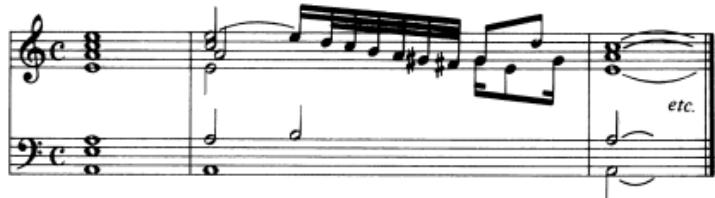
中文讲解
这是一处图像/乐谱占位符,呈现两张并置的开篇片段谱例:
- Figure 24: Louis Couperin 的《Prélude non mesuré: A minor》开篇段落(出处:Moroney, 1976,第 146 页);
- Figure 23: Johann Froberger 的《Toccata Number 1 in A minor FbWV 101》开篇段落(出处同前)。
这两张谱例对应 P0073 的论述:Froberger 以同步和弦陈述开头,Couperin 则改写为分解/琶音式装饰,作纵向并置以便读者直接对比。其学术功能在于把上一段"节奏自由体裁的织体转化"以谱面形式可视化,避免论述停留在抽象描述。由于原文标示"内嵌图像数据已省略”,谱面具体音符、和声、节拍细节需查阅原图。
注意:图号编号顺序为 Figure 24 在前、Figure 23 在后,符合原文所标顺序。
补充说明
“FbWV 101"为 Froberger 作品编号体系(Froberger-Werkverzeichnis)中第 101 号,本段以图注形式出现,无须再展开解释其编号背景。
第9段(P0075)
原文复述
As these preludes were aimed at a wide audience, ranging from amateur to experienced performers, both writers suggest that a performer should present the pieces in a rhythmically unencumbered style. Lebègue suggests that the performer’s interpretation may supply what might otherwise be lacking in a performance, and F. Couperin notes that he writes in measured time merely for ease of teaching and learning the prélude non mesuré
中文讲解
本段对前述"记谱/演奏关系"作收束式总结。核心论点三步:
第一,因该体裁面向从业余到专业演奏者的"广泛受众”,两位作曲家(Lebègue 与 F. Couperin)的论述实际上共同指向一种演绎原则——以"节奏上无束缚(rhythmically unencumbered)“的方式呈现。
第二,Lebègue 的主张被明确化:演奏者的诠释可以补足乐谱本身的不足。换言之,当记谱本身不带明确的节奏指示,演奏自由度本身即成为乐曲"完成态"的一部分。
第三,F. Couperin 的立场被归结为"实用取向”:他之所以部分作品采用有量记谱(measured time),并非改变体裁的节奏自由本质,而是为了让教与学更"便于上手(merely for ease of teaching and learning)"。
三个层次的共同结论是:无论记谱疏密,演奏风格应保持"无束缚",记谱差异只在教学/学习便利性上有意义。该段为本节节奏问题提供一个统一定调,从而把下文 Lebègue 1687 年省略此事的话题承接下去。
补充说明
本段末尾"merely for ease of teaching and learning the prélude non mesuré"在原文中以无句号收尾,应理解为未完成句并接续到 P0076,故下文保持原样。
第10段(P0076)
原文复述
This open form of notation was characteristic of the genre, and one could argue the information provided by Lebègue also comes in an obscure form. That Lebègue omitted these preludes entirely from his second harpsichord book published, in 1687 due to their lack of unambiguou performative instructions, suggests that performers contemporaneous with the author lacked the necessary expertise and knowledge required to execute imaginative interpretations.
中文讲解
本段是本节节奏话题的最终结论段。
第一句重申体裁属性:开放式记谱是该体裁的固有特征(characteristic of the genre),但同时指出 Lebègue 的记谱信息以"晦涩形式(obscure form)“出现——即这种"开放"对当时演奏者而言未必等于"自明”。这里暗含一种张力:体裁需要自由记谱,但记谱若太过模糊则难以传达意图。
第二句给出史实证据:Lebègue 在 1687 年出版的第二册大键琴集中把这些前奏曲"全部省略(omitted these preludes entirely)",原因为其演奏指示不够"明确(unambiguous)"——原文"unambiguou"疑为拼写残缺。这是一项以行为反推心理的论断策略:作者通过"省略行为"逆向推断当时读者缺乏执行富于想象力诠释的能力。
第三,本段为本节闭合做出明确判断:体裁的开放性不仅是美学选择,也是对演奏者专业水平的隐性要求;同时也反向论证了 F. Couperin 把部分作品写得"更结构化"的合理性——若同时代演奏者无法把握 Lebègue 式的高度自由,那么至少需要一种"稍微明确化"的折衷记谱来让体裁流传。
整段的关键作用是把本节从"节奏多样性如何被演奏"延伸到"为何部分作曲家选择不全记谱",让节奏问题具备历史条件性的深度。
补充说明
原文 1687 年对应 Lebègue 的第二册大键琴书(second harpsichord book),但仅依据本节文字本身,不在本任务范围内补充其他版本细节。
脚注 / 边栏 / 图表 / 附加信息(如有)
本节附加材料主要包括两处脚注与一组并置谱例:
- 脚注 121(Gustafson, “A Letter from Mr Lebegue Concerning His Preludes.”, 13)支撑 P0069 中关于 Lebègue 序言缺乏节奏无拘束引导的论断。
- 脚注 122(Moroney, “The Performance of Unmeasured Harpsichord Preludes.”, 145)支撑 P0070 关于 Couperin 作品的托卡塔结构识别、Froberger—Couperin 关联及第 146 页的两张谱例出处。
- Figure 23 与 Figure 24 以 Louis Couperin 的《Prélude non mesuré: A minor》与 Froberger《Toccata No.1 in A minor FbWV 101》开篇段落并置,作为 P0073 论述"同步和弦 vs 分解琶音"的具体谱面例证,需查阅原图获得细节。
- 第 26 页、27 页与第 48 页为本论文内部交叉引用,分别对应 Lebègue 大键琴风格论述、F. Couperin 自我说明文段和五位演奏家诠释差异一览。
💡 本节核心要点
- “节奏多样性"在本节被拆分为局部层面(以 notes inégales 为代表的装饰性不均)与整体层面(整体时长/速度变化)两个维度。
- Lebègue 序言以开放记谱传达演奏意图,但因过于模糊而存在不同演奏趋于同质或无法落地两种风险,这是体裁内蕴的张力。
- F. Couperin 通过更结构化的记谱既保留体裁的"解放感”,又为更广泛受众提供可操作性,其选择具有教学—美学双重目的。
- 依据结构(外部自由 + 内部对位化),Couperin 部分作品可被识别为 toccatas,并经由 Prelude de Couprin a l’Imitation de Mr Froberger 直接关联 Froberger 的 Toccata No.1。
- Froberger 与 Couperin 开篇同一素材的织体差异(同步和弦 vs 琶音化装饰)以谱例并列呈现(Fig. 23/24),是把"节奏—体裁"讨论落到具体音响的环节。
- Lebègue 在 1687 年第二册大键琴书中彻底省略此类前奏曲,提示当时同行演奏者在执行富有想象力的诠释时已欠缺所需的专业储备,这一史实为开放记谱的历史条件性提供证据。
🔑 关键术语
- préludes non mesurés / unmeasured préludes:本节讨论的核心对象,17 世纪法国大键琴与管风琴中无小节线或带开放记谱的前奏曲体裁;其节奏演绎依赖于演奏者的诠释自由。
- notes inégales:法语术语,指对等值音符施加的弱拍短、强拍长(或反之)装饰性不均演奏;本节作为"局部节奏变化"层面的代表例子出现。
- croches blanches:法语术语,直译为"白色八分音符",指没有符干、因此无固定时值的开放记谱符号,是 unmeasured préludes 最典型的记谱形态之一。
- toccata:本节用作体裁类比,以"外部两段节奏自由、中央段落更对位化"的结构特征与 Couperin 部分作品互证;亦是 Froberger 与 Couperin 关联的关键中介概念。
- arpeggiated embellishment:本节指 Couperin 对 Froberger 原曲同步和弦的开篇处理方式,即将本应同时发声的和声材料以琶音形式展开,符合大键琴的音型风格。
- Bauyn manuscript:本节中作为 Froberger 第一首托卡塔的另一处手稿来源被提及,与 Couperin 的模仿对象形成共享素材关系。
- open form of notation / 开放记谱:本节作为 unmeasured préludes 体裁的固有属性出现,并被用来解释 Lebègue 1687 年省略该类前奏曲的根本原因——演奏指示的不明确性。
S5.2 [描述性拆分] Notes Inégales Across the Five Performances
第1段(P0077)
原文复述
The French practice of notes inégales (unequal notes) was considered a means to add interest to melodic passages, without disturbing the metre. Although barlines are generally not included in préludes non mesurés, there is an unwritten pulse that a performer naturally conveys when interpreting, and despite affecting the melodic passages, notes inégales did not influence the pulse. The rhythmic division between the notes was left to the performer to decide, noting the character of the piece, and can range from barely detectable to double dotting.
中文讲解
本段给出本节核心概念 notes inégales(不等音)的定义性说明,为后续比较五位演奏家的处理差异奠定术语基础。需要讲清三层含义:第一,notes inégales 的功能是在不破坏拍子(metre)的前提下为旋律段增添趣味,它作用于旋律层面而非节拍层面;第二,作者强调 préludes non mesurés(无小节线的前奏曲)中虽然没有写明的小节线,但演奏家在诠释时自然传达出一种未被写出的脉动(unwritten pulse),而 notes inégales 同样只改变音符间的时值分配,并不改变这种底层脉动;第三,演奏的轻重两端跨度极大,从几乎听不出来到接近双附点节奏(double dotting),具体由演奏家根据作品性格自行决定。这为本节后文比较 Gerlin、Leonhardt 等人的处理方式(“更严苛"或"更具即兴性”)提供了尺度参照。
补充说明
本段同时界定了两个被反复引用的术语:préludes non mesurés 与 notes inégales,后文五位演奏家的所有比较都落在这两者的张力之内——作品本身无小节线但有底层脉动,演奏家在保持脉动的前提下以不等音制造趣味。
第2段(P0078)
原文复述
Notes inégales is a widely-researched area, and without diverging too far down this path, it seems appropriate to reference key authorities, such as David Fuller and Frederick Neumann. Over the years inquiries have resulted in scholars amending their opinions to reflect new information and new interpretations of older sources. This can be seen in Neumann’s comments: “David Fuller, who earlier had himself pointed to the basic inégalité, reversed himself in the Grove articles by writing that, ‘…contrary to what is now often said, French inequality ran the gamut from barely perceptible to extremely dotted.’” (footnote 123)
中文讲解
本段交代本节采用的学术立场:notes inégales 是一个被广泛研究的领域,作者并不打算深入该议题的学理之争,仅引用 David Fuller 与 Frederick Neumann 两位权威作为支撑。重点在于指出——学界对该现象的认识并非一成不变,研究者会随新资料出现与对旧文献的新解读而修正旧观点,并以 Neumann 转述 Fuller 的情况作为例证:Fuller 早期曾指出"基本的不等音"现象,但在 Grove 辞典文章中修正为"法国的不等音跨度极广,从几乎不可感到极度附点化"。作者借此暗示,他下文评估演奏录音时所采用的尺度——从"几乎听不出"到"接近双附点"——正与 Fuller 修正后的观点一致,从而为本节的演奏比较提供学术合法性。
补充说明
Neumann 所引 Fuller 在 Grove 中的措辞(“barely perceptible to extremely dotted”)与 P0077 所给出的尺度(“from barely detectable to double dotting”)形成呼应:作者的定义并非孤立提出,而是建立在 Fuller 修正后的学术共识之上。
第3段(P0079)
原文复述
The use of notes inégales provides a performer with a natural way to convey rhythmic variety. Gerlin’s use of the notes inégales style after the initial chord is not rhythmically regular and results in an unpredictable, jumpy, uneven feeling. Gerlin and Leonhardt both interpret the opening bar with the similar use of the notes inégales pattern, noting that Gerlin changes the note positions and employs a more severe use of notes inégales. However, Gerlin’s approach leads to a more improvisatory interpretation, which is also noted in reviews of his recordings (footnote 124). At 2L5 Gerlin waits on D3, before moving forward to the next three note passage, also executed with a strong lilt. He often pauses when he reaches the highest point of a musical statement, for example 4R19 – D5 and 5R4 – B♭4 (Fig 25) before continuing the passage:
中文讲解
本段进入具体的演奏比较,把抽象的 notes inégales 尺度应用到 Gerlin 与 Leonhardt 身上。先以"rhythmic variety"概括 notes inégales 的功能;接着指出 Gerlin 在开篇和弦之后的处理节奏不规则,造成"不可预测、跳跃、不均匀"的感觉,这是"more severe use of notes inégales"的具体表现;尽管 Gerlin 与 Leonhardt 在开篇小节采用相似的 notes inégales 模式,但 Gerlin 改变了音符位置,力度更强,导向更即兴化的诠释,该评价在 Mellers 的乐评中也得到印证。段末以三个具体乐谱位置(2L5、4R19–D5、5R4–B♭4)说明 Gerlin 的一种习惯性处理:在音符最高点等待或停顿后,再以"strong lilt"(明显的轻快律动)继续,从而把抽象判断落实为可定位的演奏细节。末尾冒号引出 Fig 25 作为视觉证据。
补充说明
位置标记 2L5、4R19、5R4、14L9、14R8、14R18 等均为作者体系内的乐谱坐标系统,“L/R” 通常指左手/右手拍号中的小节位置;3L1、3L9 等标记含义同此。“Fig 25” 是支撑本段论述的乐谱示例图。
第4段(P0080)
原文复述
[第15页图像或乐谱示例]([内嵌图像数据已省略;位置与图注保留])
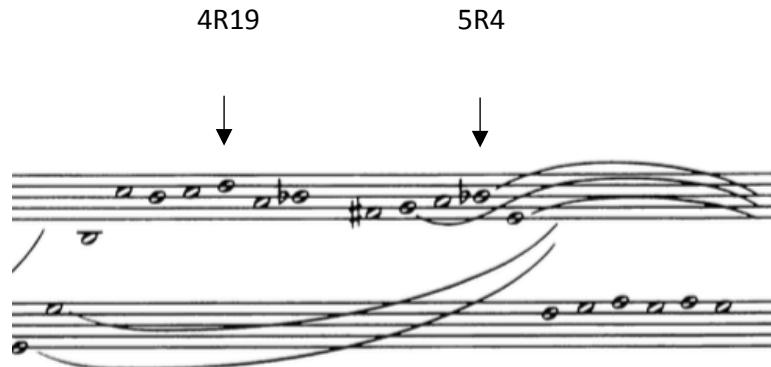
中文讲解
本段为图示占位符,原文插图位于第 15 页,对应前文 P0079 末尾所述"Fig 25",其作用是展示 Gerlin 在 4R19 – D5 与 5R4 – B♭4 等位置的演奏处理,作为作者关于 Gerlin 在音乐高点停顿、随后以明显律动继续这一论断的视觉证据。由于嵌入图像数据被省略,无法核对其具体谱例细节,需查阅原图。
补充说明
无额外补充;图示功能仅在 P0079 末尾以"Fig 25"被明确交代。
第5段(P0081)
原文复述
123 Neumann, “The Notes Inégales Revisited.”, 146.
中文讲解
本段为脚注 123,提供 P0078 中 Neumann 转引 Fuller 的文献出处:Frederick Neumann, “The Notes Inégales Revisited,” 页 146。该脚注对正文的作用是来源性支撑——证明 Fuller 观点修正及其转述的学术根据。
第6段(P0082)
原文复述
124 Mellers, “French Classics on the Gramophone.”, 68.
中文讲解
本段为脚注 124,提供 P0079 中关于 Gerlin 即兴化诠释评价的文献出处:Wilfrid Mellers(或来源所示作者), “French Classics on the Gramophone,” 页 68。该脚注对正文的作用是旁证——以第三方的乐评支持作者对 Gerlin 演奏的"improvisatory"定性。
第7段(P0083)
原文复述
With the later recordings, the performers’ fluid interpretation of the score results in a clear sense of direction being communicated towards points of interest. There is not the prolonged anticipation for the next note, as demonstrated by Gerlin. Gerlin’s recording has a constant fluctuation of the beat, faster and then slower, and this is one aspect that may have differed had Gerlin had access to the information that became available through more recent scholarship (footnote 125). Where there are florid melodic passages, the remaining four recordings maintain a regular feel, all using notes inégales stylistically throughout this first section.
中文讲解
本段将比较视野从 Gerlin 扩展到其余四位演奏家,并提出一个关键的方法论反思。其要点有四:第一,后期录音(晚于 Gerlin 的版本)的演奏家对乐谱的诠释更流畅,能清晰地把音乐推向兴趣点;第二,他们不像 Gerlin 那样对下一个音符进行长期等待式的预期,Gerlin 的录音呈现拍子不断波动(先快后慢)的特征;第三,作者提出一个反事实假设——若 Gerlin 能接触到近年出现的学术成果,其处理可能会有所不同,这表明作者认为 Gerlin 的诠释反映了其时代的演奏惯例而非错误;第四,在花彩乐段(florid melodic passages)处,其余四位演奏家都保持规则的感觉,并在整个第一段中以风格化的方式运用 notes inégales。换言之,作者在 Gerlin 的"严苛且不规则"与后期录音的"规则且风格化"之间画出了明确界线。
补充说明
本段通过反事实假设(had Gerlin had access to…)承认 Gerlin 诠释的时代合理性,同时又隐含地把更近期演奏家置于更新的学术共识之下——这与 P0078 所建立的 Fuller 修正后的学术权威相互呼应。
第8段(P0084)
原文复述
As noted, there is significant variances between the duration of the first section that are also reflected in the overall interpretation. Tilney (6:33 min) and Gerlin (6:50 min) record the longest versions of the first section, reinforcing Tilney’s belief that the “preludes are better played too slowly than too fast” (footnote 126). However, for the full piece, there are only two examples that are longer than Gerlin and Tilney recordings. Both were recorded in 2003, by Glen Wilson (6:55 min) and Byron Schenkman (7:18 min). At the other end of the scale, Sempé’s first section (4:55 min) is one of the fastest of the five analysed examples and there is only one recording that is faster than his, by Nicholas Jackson (4:33 min) in 1982.
中文讲解
本段以时长数据把抽象诠释判断落到具体数字上。作者指出五位演奏家在第一段的时长上存在显著差异:Tilney(6:33)与 Gerlin(6:50)录制了最长的第一段,作者援引 Tilney 的观点"前奏曲宁可弹得过慢也不要弹得过快"作为观念支持;就全曲而言,比这两版更长的只有 2003 年录制的 Glen Wilson(6:55)与 Byron Schenkman(7:18)。在另一端,Sempé 的第一段(4:55)是最快之一,仅有 Nicholas Jackson 1982 年录制的 4:33 比之更快。作者通过这些数字建立了一个从慢到快的连续谱,并使诠释风格的差异(Gerlin 的留白与不规则 vs. Sempé 的速度与轻盈)与具体时长产生直接对应。
补充说明
本段同时给出录制年代信息(Jackson 1982,Wilson/Schenkman 2003)与演奏家姓名,这些都是作者在本节用以定位五段录音的标签,时长数据与诠释判断一一对应。
第9段(P0085)
原文复述
Although the duration of Rousset’s first section is 1:53min, he executes a notably long pause of five seconds in bar 14 after the first arpeggiated chord (14R8) and another four second pause at the end of the same bar (14L9 – 14R18). Had he chosen to reduce these two pauses, his recording may have been placed further up the chart, sitting approximately around a similar time to van Asperen’s two recordings.
中文讲解
本段对 Rousset 的演奏作单独分析。其第一段时长为 1:53,但他做了两处显著的长停顿:在第 14 小节第一个分解和弦之后(14R8)停顿 5 秒,在该小节末尾(14L9 – 14R18)再停顿 4 秒。作者通过反事实假设指出——若 Rousset 缩短这两处停顿,其录音时长本可接近 van Asperen 的两版录音,时长榜上的位次也会更靠前。这段的作用在于揭示 Rousset 的总时长很大程度上由其诠释选择(而非内在速度感)决定,从而把"时长"与"诠释"明确区分开来:长时长既可以来自整体慢速处理(如 Gerlin、Tilney),也可以来自局部停顿(如 Rousset),二者动机不同。
补充说明
无额外补充;本段实质是为 P0084 的"时长谱"加上一个区分性案例,说明时长的成因不止一种。
第10段(P0086)
原文复述
Unlike the similarly-timed recording by Rousset, Leonhardt’s 1.50min first section does not have the pauses. Leonhardt’s interpretation generates a perpetual feeling of moving forward and minimal lingering on points of harmonic interest, as do all the other recordings. Sempé’s execution combines energy with moments of stillness, reflecting the vivid harmonic characters of the music, for example 3L1, a moment where he also plays a different ornament from that notated in the score, repeating the G3.
中文讲解
本段为本节演奏比较作出收束式的定性概括。它以时长相近、诠释风格相反的对照切入:Leonhardt 的第一段(1:50)时长与 Rousset 相近,但不存在停顿,其诠释产生"不断向前推进"的感觉,对和声兴趣点的停留极少,所有其他录音也都是如此——这就把 Rousset 的处理标识为该组录音中的异例。Sempé 的处理则综合了能量与静默时刻,反映出鲜明的和声性格;作者以 3L1 为例,说明他在该处不仅营造静默时刻,还演奏了一个与乐谱不同的装饰音(重复 G3),从而在演奏层面展示了对乐谱的实际改写。该段的意义在于:一方面确立 Leonhardt 的"流动、无停顿"为多数录音的常态,另一方面又借 Sempé 表明,即便认同这种常态,演奏家仍可在装饰音、和声性格刻画上作出个人化抉择。
补充说明
3L1 处 Sempé 重复 G3 而非按谱所写装饰,是本节唯一明确指出演奏与谱面存在差异的细节,可作为"诠释自由度"的具体证据。
脚注 / 边栏 / 图表 / 附加信息(如有)
本节附加材料包括三项脚注与一幅图示:脚注 123(Neumann, “The Notes Inégales Revisited,” 146)支撑 P0078 关于 Fuller 修正观点的来源;脚注 124(Mellers, “French Classics on the Gramophone,” 68)为 P0079 中 Gerlin 即兴化诠释的乐评旁证;脚注 125 与 126 在 P0083、P0084 中分别支撑"近期学术成果"与 Tilney 关于速度的观念(原文未具体给出 125 文献条目信息,本节亦未引用其内容,仅保留编号);Fig 25 位于第 15 页,作为 P0079 中 4R19–D5 与 5R4–B♭4 处 Gerlin 停顿处理方式的乐谱图示。
💡 本节核心要点
- notes inégales 是作用于旋律层面的不等音实践,其尺度从"几乎不可感"到"接近双附点",具体由演奏家依作品性格决定,但不变更作品的底层脉动。
- 作者以 Fuller/Neumann 的修正后学术观点作为评判尺度的依据,把该领域共识建立在最新而非最旧的表述之上。
- Gerlin 的诠释以"严苛、即兴、跳跃、停顿于高点"为标志,与 Leonardt 等"流动、规则、风格化运用 notes inégales"的后期录音形成对照,作者以反事实假设承认 Gerlin 诠释的时代合理性。
- 五位演奏家的第一段时长差异显著——从 Jackson 的 4:33 到 Gerlin 的 6:50 与 Tilney 的 6:33,再到更长全曲的 Schenkman(7:18)、Wilson(6:55);作者以"宁慢勿快"的 Tilney 立场为慢速阵营提供观念支撑。
- Rousset 的 1:53 时长主要由两处停顿(5 秒与 4 秒)造成;Leonhardt 时长相近却无停顿,体现"流动推进"的常态。
- Sempé 的处理兼具能量与静默,并在 3L1 处对装饰音作出谱面改写(重复 G3),说明诠释自由度在装饰层面亦可体现。
🔑 关键术语
- notes inégales:法语不等音实践,在不改变作品底层脉动的前提下,对连续音符的时值进行不等分配以增添旋律趣味,尺度从几乎不可感到接近双附点,由演奏家根据作品性格自行决定。
- préludes non mesurés:无小节线的前奏曲体裁,原文乐谱中通常不写明小节线,但演奏家在诠释中自然传达出未被写出的底层脉动;本节所有比较均落在此体裁的诠释空间内。
- metre / pulse:在本节中分别指作品的拍子结构与演奏传达出的底层脉动;notes inégales 只影响旋律音符的时值比例,不影响这两层基础节律。
- double dotting:双附点节奏,作为 notes inégales 尺度上端——即把短音符压缩至极短、长音符相应延长的极端形式,是作者所引 Fuller 修正观点中的上限描述。
- lilt:轻快、有弹性的律动感;作者用以描述 Gerlin 在停顿之后的继续方式——并非匀速推进,而是带有可识别的摇摆或弹动。
- improvisatory interpretation:即兴化的诠释,表现为音符时值不可预测、跳跃性强;本节以此定性 Gerlin 的演奏风格,并以 Mellers 的乐评作为旁证。
- florid melodic passages:花彩性旋律段,指音符密集、装饰性强的乐句;作者指出在其余四位演奏家的处理中,这类段落仍保持规则的感觉,并以风格化的方式运用 notes inégales。
S5.3 [描述性拆分] Harmonic Pauses, Pedagogical Influence, and Conclusions on Rhythmic Variety
第1段(P0087)
原文复述
Footnote 125: David Fuller, “You Can’t Prove It by Notation,” The Diapason, volume lxxii, number 3 (1981).
中文讲解
本条为脚注125,引用David Fuller于1981年发表于The Diapason第72卷第3期的论文《You Can’t Prove It by Notation》,为后文涉及Fuller关于节奏变化(rhythmic alteration)论述的出处定位;脚注本身不展开论证。
第2段(P0088)
原文复述
Footnote 126: Tilney, The Art of the Unmeasured Prelude for Harpsichord, France, 1660-1720, volume 3, page 7.
中文讲解
本条为脚注126,指向Tilney所著《The Art of the Unmeasured Prelude for Harpsichord, France, 1660-1720》第三卷第7页,作为后文所引Tilney演奏要诀及其对自身演奏影响论述的具体页码定位。
第3段(P0089)
原文复述
The listener can hear the influence of Tilney’s research in his interpretation. “The player has only two further important things to keep in mind: first, that the sound of the harpsichord, especially the decay of essential bass harmonies, will often influence his timing and shape his phrasing; and second, that he should be aware from first note to last that his business is to compose, not to perform.” This comment means that a performer should consider the music as though he is improvising it for the first time, and not as though it has been rehearsed numerous times. Although his melismatic passages are measured and thoughtful with a strong pulse, there is a sense of space around each musical idea. He also pauses on moments of harmonic interest created by the temperament, for example 4R20-21 where the melody moves from A4 through B♭4, to pause slightly on F#4. It is as if the listener can sense Tilney considering the harmonic implications of the next note. Tilney often speeds up a descending passage as it progresses, creating the feeling of momentum towards a harmonically significant point (2L1-9) (see Fig. 26).
中文讲解
本段聚焦于Tilney的诠释,明确指出其演奏可听出受其自身研究影响的痕迹。作者先完整引述Tilney的两条演奏要诀:第一,古钢琴的音色——尤其是关键低音和声的衰减——会左右演奏者的节奏与乐句塑形;第二,演奏者从第一个音到最后一个音都应意识到"自己的本职是作曲,而不是演奏"。作者随即把第二条释义为:把音乐当作首次即兴,而非反复排练的成品。接着,作者把这两条原则与Tilney的实际演奏对应起来:其花唱式(melismatic)段落虽然节拍稳定、思索性强,但在每个音乐意念周围留出空间;他会在因律制(temperament)而凸显的和声趣味处稍作停留,例证是4R20-21小节——旋律由A4经B♭4短暂停顿于F#4,仿佛可听出Tilney在掂量下一个音的和声含义;下行段落(2L1-9)则随推进而渐快,制造朝向重要和声点的冲力。本段的功能是把Tilney的演奏理念与音响证据对应起来,为后面跨演奏家比较提供可追溯的解释框架,并以"见Fig. 26"将读者引向紧随的乐谱图示。
补充说明
段落中"temperament"在本段语境中指古钢琴所采用的调律体制,其对纯律的偏离使某些音程或和弦色彩更突出;这与作者所说Tilney在F#4处的停顿在概念上相互呼应。“9R20-21"等编号为Tilney版本中以小节与声部定位音符的标记——L指左手、R指右手,数字分别表示所在小节与该声部内的音符序号,这一约定由原文P0092的"left-hand E3 (9L11)“等表述可直接确认。
第4段(P0090)
原文复述
Figure 26: Louis Couperin: Prélude non mesuré: D minor (Bar 2) (Source: Tilney, 2009. Volume 2 Modern Transcriptions, p.2). [Original image not embedded; caption and position retained.]
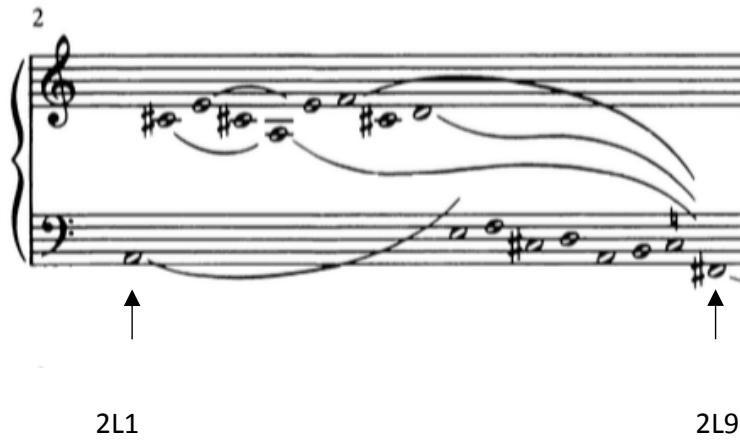
中文讲解
本条为图26的图注,注明乐谱出处为Tilney 2009年版第二卷《Modern Transcriptions》第2页,内容为Louis Couperin《Prélude non mesuré》D小调第2小节。该图位于正文讨论Tilney"在2L1-9随下行渐快、朝重要和声点推进"之处,作用是让读者对照乐谱核实所讨论的片段位置;具体谱面细节需查看原图。
补充说明
本图为内嵌图像占位符,原图像未随文本提供,故本节无法对其谱面细节作进一步描述。
第5段(P0091)
原文复述
Leonhardt’s overall interpretation can be summed up in a personal observation of his playing style: ‘coolly dispassionate and austere a style’. The influence of both Leonhardt and Gerlin can be heard in the recordings of the later performers. Gerlin’s sense of climax and conception of mood is reflected in the interpretation of Rousset and Sempé. Both older recordings provide influence on the later versions, as previously noted in the review by James Leonard.
中文讲解
本段将视角由Tilney切换到Leonhardt,并将其整体风格概括为"冷静、超然而严峻”(coolly dispassionate and austere)。随后作者搭建一个三代传承链条:Leonhardt与Gerlin两人的录音都能在Rousset和Sempé的演绎中听到回响——Gerlin关于"高潮感"与"情绪构思"的把握尤其被Rousset与Sempé继承;作者提醒,James Leonard的评论也曾指出这两位较早的录音对后来版本的影响。本段的功能是把后续具体节奏对比(特别是P0097的小节时长比较)置入一个可解释的师承/录音影响框架中。
第6段(P0092)
原文复述
The four sequential chords at 9L10-10L11 are of rhythmic interest. Gerlin moves the placement of notes at the beginning of this section: he places 9R18 and 9R19 before the left-hand E3 (9L11), linking E3 instead with C3 and E3 afterwards (10L1 and 10L2), to accentuate the A minor chord.
中文讲解
本段切入一个具体的谱例:9L10至10L11处的四个连续和弦在节奏处理上颇具意味。Gerlin并未按小节顺序把9L11的左手E3紧贴前面,而是把9R18与9R19两个右手音提前到E3之前,从而把E3与其后的C3、E3(10L1、10L2)连接在一起,以强调A小调和声。作者用此例说明Gerlin如何通过重排声部进入顺序来改变和声重音——这是一种局部节奏重塑,而非整体速度变化;它为下一节精确到秒的横向比较做了铺垫。
补充说明
“9L10"“9R18"等编号采用"小节+声部+序号"的结构(结合原文"left-hand E3 (9L11)“可确认L=左手、R=右手),该定位体系来自原输入所引Tilney转录谱。
第7段(P0093)
原文复述
Footnote 127: Ibid., vol. 3, p. 7.
中文讲解
本条为脚注127,使用"Ibid."(同前),指代与脚注126相同的Tilney著作第三卷第7页,证实本段所引Tilney原话直接出自该处。
第8段(P0094)
原文复述
Footnote 128: Lionel Salter, “Gustav Leonhardt Obituary,” The Guardian, 2012.
中文讲解
本条为脚注128,引用Lionel Salter于2012年发表于The Guardian的Gustav Leonhardt讣闻,作为形容Leonhardt风格"coolly dispassionate and austere"的来源。
第9段(P0095)
原文复述
Footnote 129: Leonard, “CD Review: Skip Sempe Plays Louis Couperin.”
中文讲解
本条为脚注129,引用James Leonard对Skip Sempé演奏Louis Couperin的CD评论,作为前文关于"早期录音影响后期版本"判断的依据。
第10段(P0096)
原文复述
He also doubles the left-hand with octaves for the structural notes: C3, B2 and C2 (10L3, 5 and 7), leaving the other left-hand notes (10L4 and 6) to create a homophonic sound to the recording. It takes 3.93 seconds for Gerlin to play this passage.
中文讲解
本段接续P0092的Gerlin例证,进一步描述其在该处的力度/织体处理:他将左手结构音C3、B2、C2(位于10L3、10L5、10L7)作八度重复,而让10L4、10L6等非结构音保持单声部,从而在录音中产生主调化的和声效果。Gerlin演奏该段共耗时3.93秒,这一时长为下一段的横向比较提供了基准数字。本段的论证作用是:Gerlin的诠释不仅包含声部进入顺序的重排,还有结构音加厚的织体选择,二者共同塑造了该处的节奏感与和声重心。
第11段(P0097)
原文复述
Leonhardt holds the second group of chords at 10L3-10L7 slightly longer than Gerlin, but this is a small variance, taking 4.25 seconds. In Sempé’s interpretation, this passage is one of the few moments of stillness. His execution of the two chords at 9L10 – 10L3 is 3.06 seconds, which feels like a long pause. Tilney’s execution is longer at 3.76 seconds, although due to the slower nature of his playing this emphasis is not as noticeable as it is in Sempé’s recording. Rousset’s is the fastest at 2.63 seconds. This brevity of pauses may indicate that Leonhardt was influenced by Gerlin, which in turn led to Rousset to be influenced by Leonhardt, maintaining a performing tradition across the three generations.
中文讲解
本段以同一段谱例(10L3-10L7和弦组,以及9L10-10L3两个和弦)的实际演奏秒数横向对比五位演奏家:Leonhardt 4.25秒,略长于Gerlin的3.93秒,差异不大;Sempé演奏9L10-10L3仅3.06秒,由于整体偏静止而听起来像长停顿;Tilney 3.76秒偏长,但因整体速度缓慢反而不显突出;Rousset 2.63秒为最快。作者据此提出一个传承假设:Rousset的简练可能源自Leonhardt,而Leonhardt又承自Gerlin,从而在三代演奏家之间维持着一种表演传统。本段是本节最关键的定量证据,以秒数把"风格相似"的论点落到可测量的层面,同时为后续小节关于风格史层面的解释提供数字支撑。
补充说明
原文未给出测量工具或方法说明,故对3.93、4.25、3.06、3.76、2.63秒的具体获得方式不作进一步推测。
第12段(P0098)
原文复述
Although the préludes non mesurés do not provide significant amounts of melodic passages, each performer presents an interpretation that is rhythmically varied, as determined by their stylistic awareness of interpretive practices available at the time of their recording. Each interpretation reflects F. Couperin’s advice to play “in a free, easy style, not sticking too closely to the exact time.” Of the selected recordings, Gerlin’s use of notes inégales is the most radical, with an extremely dotted interpretation taking place. In Leonhardt’s 1988 recording the interpretation of the notes inégales is barely perceptible, suggesting perhaps that he was influenced by Fuller’s 1981 publication on rhythmic alteration. It is also true that adopting Fuller’s theories means inequality is more appropriate to measured music, a distinction perhaps lost on Gerlin’s performance style.
中文讲解
本段将讨论从具体小节拉升到整体节奏风格。作者承认尽管préludes non mesurés本身旋律性不强,但每位演奏家的诠释都呈现出节奏变化,而这些差异由录音年代所及的风格认知所决定;共通的原则即F. Couperin《L’Art de toucher le clavecin》中所劝诫的"以自由、从容的方式演奏,不可过于拘泥节拍”。在所选录音中,Gerlin对notes inégales(不均等的音符时值)的使用最为激进,呈极端附点化;而Leonhardt 1988年录音中notes inégales几乎听不出,作者推测这可能受到Fuller 1981年关于节奏变化论文的影响。作者进一步指出,按Fuller的理论,“不等"更适合有量音乐(measured music),Gerlin的演奏风格或许恰恰模糊了这一区分。本段的功能是从局部节奏对比过渡到风格史层面的解释,为下一段的结论作准备。
补充说明
“notes inégales"在本节语境中指17—18世纪法国古钢琴与羽管键琴传统中,对成对相同音高/相同节奏的音符作不等时值处理(通常前长后短或反之)的装饰性节奏实践,是F. Couperin钢琴风格的核心要素;该术语与"极端附点化"效果由原文P0098直接对应。
第13段(P0099)
原文复述
To conclude this section, within all performers’ interpretations rhythmic flexibility is apparent, both regarding local rhythmic alteration and broader tempo modifications. This adheres to the commentary provided in primary sources regarding rhythmic pliability. While Sempé and Rousset’s interpretations are more adventurous and playful, they replicate the slower tempo of the older generation of keyboardists. Although there is a strong rhythmic sensibility in the earliest recording, Gerlin presents an interpretation that lacks the finer awareness of stylistic practices such as subtle use of notes inégales evidenced in the Leonhardt recording. The earlier supposition that there would be greater rhythmic variety is, in fact, incorrect. Overall, the interpretations are rather similar, perhaps owing to the increased availability of primary sources, historical documents and overlapping pedagogical influences. The surveyed performer evidently observe aspects of F. Couperin’s preface with varying degrees of overall and more localised rhythmic flexibility suggestive of the players’ informed historical awareness and manner of performance. These variances in rhythm also create a more improvisatory interpretation of the préludes non mesurés.
中文讲解
本段是本节小结,承担"推翻先前假设"的论辩任务。作者承认,所有演奏家在局部节奏变化与整体速度调整上均表现出灵活性,符合F. Couperin序言所主张的"节奏可塑”。Sempé与Rousset虽更具冒险与游戏感,却仍复刻了早期键盘家较慢的整体速度。Gerlin虽具强烈节奏感,但缺乏Leonhardt录音中那种对notes inégales等风格细节的精微体察。先前预设的"各版本之间节奏差异将更大"其实并不成立——整体而言,各诠释相当相似,作者将之归因于原始文献、历史资料的日益可得以及教学影响的相互重叠。最后,作者归纳:被调查的演奏家都在不同程度上遵循了F. Couperin序言,表现出整体与局部节奏灵活性的差异,这些差异也使préludes non mesurés听起来更富即兴意味。本段是P0089—P0098一系列比较的总收束,结论是:差异存在但有限,传承与文献共享是趋同的主因。
第14段(P0100)
原文复述
Footnote 130: Couperin, L’Art de Toucher Le Clavecin, p. 33.
中文讲解
本条为脚注130,引用F. Couperin《L’Art de toucher le clavecin》第33页,作为前文所引"以自由、从容的方式演奏,不可过于拘泥节拍”(“in a free, easy style, not sticking too closely to the exact time”)的原始出处。
第15段(P0101)
原文复述
Footnote 131: Fuller, “You Can’t Prove It by Notation.”
中文讲解
本条为脚注131,再次引用David Fuller的《You Can’t Prove It by Notation》一文,作为支撑Leonhardt可能受Fuller 1981年节奏变化(rhythmic alteration)理论影响的参考文献。
脚注 / 边栏 / 图表 / 附加信息(如有)
本节共含脚注125、126、127、128、129、130、131共7条,均为前文所引观点的文献定位脚注,无独立论证内容:脚注125、131指向Fuller关于节奏变化的两处引用;脚注126、127指向Tilney第三卷第7页所载两条演奏要诀及其释义;脚注128为Salter所撰Leonhardt讣闻,对应"coolly dispassionate and austere"的风格描述;脚注129为James Leonard的CD评论,对应"早期录音影响后期版本"的判断;脚注130为F. Couperin《L’Art de toucher le clavecin》第33页,对应序言中关于"自由从容、不拘泥节拍"的劝诫。图表方面,图26位于P0089讨论Tilney在2L1-9随下行渐快的段落之后,图注标明出处为Tilney 2009年版第二卷《Modern Transcriptions》第2页的Louis Couperin《Prélude non mesuré》D小调第2小节乐谱,作用是让读者直观对照前文所述"下行渐快、向和声重点推进"的谱面依据;原图未随文本提供,具体谱面需查看原图。
💡 本节核心要点
- Tilney的演奏明显受其自身研究影响:其两条演奏要诀——古钢琴低音和声衰减决定节奏与乐句、演奏应如"作曲"而非"演绎”——为理解其版本提供内在解释框架,体现在4R20-21的和声停顿与2L1-9下行渐快等具体音响中。
- Leonhardt的风格被概括为"coolly dispassionate and austere”,其与Gerlin的录音共同塑造了Rousset和Sempé的诠释,形成Gerlin→Leonhardt→Rousset的代际传承链(由P0097秒数对比与脚注128、129共同支撑)。
- Gerlin在9L10-10L11处重排声部进入顺序(将9R18、9R19提前于左手E3)以强调A小调和声,并在10L3、5、7处对结构音作八度重复,使该段耗时3.93秒,呈现一种织体层级的节奏重塑。
- 对同一段谱例的横向秒数对比——Gerlin 3.93s、Leonhardt 4.25s、Sempé 3.06s、Tilney 3.76s、Rousset 2.63s——既呈现差异,也为趋同假设提供量化基础。
- Gerlin对notes inégales的处理最为激进,Leonhardt 1988年录音中则几不可察,作者推测这与Fuller 1981年节奏变化理论有关,且按Fuller的观点,“不等"更适合有量音乐,Gerlin的演绎或许模糊了这一区分。
- 本节结论推翻"差异更大"的先验假设:所有演奏家在局部与整体节奏灵活性上彼此相当接近,原因是原始文献、历史资料的日益可得以及教学影响的相互重叠;F. Couperin序言的"自由从容"原则仍是被共同遵守的底线,但各版本均因风格史差异呈现出不同程度的即兴意味。
🔑 关键术语
- notes inégales:17—18世纪法国古钢琴与羽管键琴传统中,对成对相同音高/相同节奏的音符作不等时值处理(通常前长后短)的装饰性节奏实践,是F. Couperin钢琴风格的核心要素;本节用于对比Gerlin的激进使用与Leonhardt几不可察的处理。
- préludes non mesurés:“无小节线前奏曲”,指路易·库普兰等法国作曲家所作的、谱面上无明确小节线、需由演奏者自行决定节奏与乐句划分的键盘引子性乐曲;本节所有比较与"即兴诠释"论点均围绕该曲体展开。
- Tilney的两条演奏要诀:古钢琴低音和声衰减影响节奏与乐句(决定性因素),以及演奏者应以"作曲"而非"演绎"之心面对音乐(态度性因素);本节以此为框架解读Tilney自身的停顿、下行渐快等诠释行为。
- temperament(律制):古钢琴所采用的调律体制;其对纯律的偏离使某些音程或和弦听起来更突出或更不协和,作者借此解释为何Tilney会在特定音(如F#4)处稍作停顿——这是和声色彩被律制放大的位置。
- rhythmic pliability(节奏可塑性):指F. Couperin序言所主张的"自由从容、不拘泥于精确节拍"的演奏态度;本节将其作为衡量各演奏家诠释的共同底线,并据此提出"差异比预期小"的结论。
S6.1 [描述性拆分] Informing My Own Interpretive Practice
第1段(P0102)
原文复述
CONCLUSIONS
中文讲解
P0102 是一个二级小节标题,文字为 “## CONCLUSIONS”。它开启本节(实际章节名为 “Informing My Own Interpretive Practice”——见上一级标题——但本小节内的标题是 Conclusions),表明接下来的文字属于本研究的结论部分。结论部分的双重功能由下一段说明:一是交代研究结果如何影响了作者自身的诠释实践,二是基于第二章的分析得出整体结论。这一标题在前面的分析章节与本节的反思之间起到结构转换作用。
第2段(P0103)
原文复述
The purpose of this section is two-fold. It will address how the results have informed my own interpretive practice and it will establish conclusions based on the analysis completed in Chapter Two.
中文讲解
本段开宗明义地交代了本节的两重目的:其一,说明研究结果如何反作用于作者本人的诠释实践(即演奏层面的体会);其二,依据第二章已完成的手稿分析得出整体结论。这里的 “Chapter Two” 是承接关系,即本节的结论建立在第二章对不同手稿(facsimiles)的比较分析之上。“two-fold” 一词暗示作者刻意把“自我实践反思”与“学术结论”两条线索并列,避免结论部分变成纯演奏笔记或纯文献综述。这也解释了为什么后文会既谈演奏体验(如 9L8/9L9 的复奏问题),又引用 Bowen、Emmerson、Cook 等学者的观点。
第3段(P0104)
原文复述
Having performed the Prélude non mesuré in D minor in various settings over the course of this study, I attempted to follow, then not to follow, the source documentation advice. I have been influenced by lessons with mentors around the world, by the source material, reading about the development of performance practice, and listening to recordings. All these avenues have contributed to my changing understanding of the facsimiles and how to interpret them, based on the methodologies of Bowen and Emmerson. Emmerson considers the different approaches in regard to fortepiano and modern piano, and the methodology utilised in this thesis is specific to harpsichord. However, there are similarities between the two approaches, including listening to recordings and having lessons with experts.
中文讲解
本段是作者对自身演奏 D 小调 “Prélude non mesuré”(非度量前奏曲)过程的总体交代。关键信息有四层:第一,作者在不同场合反复演奏该曲,并交替尝试“遵循”与“不遵循”原始文献的建议;第二,影响其诠释的因素有四方面——来自世界各地导师的指点、原始材料本身、阅读演绎实践史、以及聆听录音;第三,作者把手稿理解的变化建立在 Bowen 和 Emmerson 的方法论基础上;第四,作者点明 Emmerson 的方法论针对 fortepiano 和现代钢琴,而本论文使用的方法是针对 harpsichord(大键琴)的,但两种方法在“聆听录音”和“向专家请教”方面具有共性。这段话的功能是为后文的细节性演奏决策提供方法论框架,强调本研究的演奏实践并非凭感觉,而是有方法论支撑的。原文中的拼写错误(如 “have having lessons”)应保持原样,不予订正。
补充说明
Bowen 与 Emmerson 在本节中分别以脚注 132、133 的形式出现,其完整引用见 P0107、P0108。
第4段(P0105)
原文复述
As Cook notes, the performance goes beyond the score. However, the score is a fundamental component of this intriguing genre and I have played using both the manuscript facsimiles and modern editions, and every performance is a unique experience.
中文讲解
本段引用 Cook 的观点(脚注 134),并把它作为本节的核心立场之一——“performance goes beyond the score”,即演奏超越乐谱本身。但作者随即加了一个限定:尽管演奏可以超越乐谱,乐谱(特别是手稿影印件)仍是这一“引人入胜的体裁”(即法国非度量前奏曲)的基本组成。作者进一步指出,他同时使用手稿影印件与现代版本演奏,并强调每一次演奏都是独特体验。这一句暗示了本节后文所讨论的所有具体决定(如和声复奏、音的位置、装饰音处理)都是在“乐谱”和“超越乐谱的演奏”两端之间寻找平衡。
补充说明
Cook 的来源见脚注 134(P0109)。
第5段(P0106)
原文复述
During the practical component, I have made conscious decisions throughout this process. I have considered the four source document references. When focussing on restriking the chords, I found there were several factors that contributed to my execution. Instrument resonance was a strong determinant, as when an instrument was more resonant I felt the performance did not require the chord to be restruck. However, when the venue had poorer acoustics, or when there was an audience in the venue, it was necessary to restrike chords, or more specifically bass structural notes, to ensure that harmonics were maintained – for example restriking 9L8 when playing 9L9. Following the conclusion to not restrike chords, I intend to follow this advice when performing the Prélude non mesuré in D minor in order to present an aural performance that is as simplistic as its visual representation, as noted by Lebègue.
中文讲解
本段进入了第一个具体的演奏决策话题:和弦是否需要复奏。作者强调这些决定都是“conscious decisions”(有意识的选择),反映了 P0104 中提到的“方法论意识”。核心论证按因果结构展开:决定是否复奏的关键变量是乐器共鸣与场地声学——共鸣好的乐器下,作者认为不必复奏;反之,声学较差或现场有听众时,为了维持和声必须复奏“bass structural notes”(低音声部中的结构音),而不是所有音。给出的具体例子是 9L8 与 9L9:当演奏 9L9 时需要复奏 9L8,以维持和声延续。在权衡之后,作者倾向“不复奏”,并以 Lebègue 的观点为支撑(脚注 135)——其乐谱视觉上的简约应转化为听觉上的简约。这段话的结构是“多重因素—案例—结论—理论支撑”,是典型的以证据驱动决策的论述。
补充说明
Lebègue 的来源见脚注 135(P0110)。原文中 “there are several factors” 后的具体变量虽未在本段全部展开,但共鸣与声学已在 P0106 给出。原文 “i” 应为 “is”,属 OCR 或排印小瑕疵,按要求原文复述。
第6段(P0107)
原文复述
132 Bowen, “Finding the Music in Musicology: Performance History and Musical Works.”
中文讲解
本页脚注 132,对应正文 P0104 中对 Bowen 的引用。该脚注采用短引格式,仅给出作者姓氏与文章标题,未列出版信息;它支撑正文关于“从音乐学角度理解演奏史”的方法论立场。
补充说明
本脚注信息仅按原文复述;其完整出版信息在原文未提供,故不予补充。
第7段(P0108)
原文复述
133 Emmerson, Around a Rondo: Preparing Mozart’s Rondo in A Minor for Performance on Fortepiano.
中文讲解
本页脚注 133,对应正文 P0104 中对 Emmerson 的引用。该脚注采用短引格式,仅给出作者姓氏与书名(实际上是作品准备研究的副标题级别的题名),未列出版信息;它支撑正文关于 fortepiano/现代钢琴演奏准备的方法论。
第8段(P0109)
原文复述
134 Cook, Beyond the Score. Disc 1.
中文讲解
本页脚注 134,对应正文 P0105 中 Cook 的观点。该脚注以短引格式出现,只显示作者姓氏、作品名 “Beyond the Score” 与 “Disc 1”(说明这是一份含有第一张光盘的录音/影像资料,而非纯文字著作);它支撑 P0105 “performance goes beyond the score” 的引语归属。
补充说明
“Disc 1” 表明 Cook 的作品是一部带光盘的音像出版物,原文未说明其他盘片是否相关,按原文保留。
第9段(P0110)
原文复述
135 Troeger, “The French Unmeasured Harpsichord Prelude.”, 92.
中文讲解
本页脚注 135,对应正文 P0106 中对 Lebègue 观点的引用(正文写 “Lebègue”,脚注作者署名为 Troeger)。这表明正文中归给 Lebègue 的那句话实际出自 Troeger 在第 92 页对 Lebègue 的转述,而非 Lebègue 的一手原文。该脚注支撑 P0106 “aural performance that is as simplistic as its visual representation” 的论断来源。
补充说明
本脚注在正文与脚注的归属上不一致:正文归到 Lebègue,脚注实为 Troeger 引用 Lebègue。这种归属差异按原文如实复述,不予擅自修改。
第10段(P0111)
原文复述
Note placement was an interesting component to consider, as I found it was the most naturally flexible, and once I had completed the analysis of the manuscripts, I made conscious decisions as to whether to include or remove notes, considering factors such as the instrument at my disposal and the acoustics. At 10R7-8 the Parville manuscript includes a C4, which I chose to include in my interpretation, as the C4 acts as the leading note to the D4 tonic (see Fig. 15). I also chose to keep the additional G4 at 11R10 which is written in the Bauyn manuscript but not the Parville, as this echoes the three-note pattern immediately preceding 11R10, and at the beginning of the bar (11R1-3).
中文讲解
本段讨论第二个具体决策维度:音符的取舍与位置。作者指出,在所有演奏参数中,note placement(音符位置)是最具自然弹性的——完成手稿分析后,作者基于乐器条件与声学条件,有意识决定是否加入或省略某些音。给出两个具体例证:其一,10R7-8 处的 Parville 手稿包含一个 C4,作者选择保留,因为它是 D4 主音的导音,具有和声上的功能意义;其二,11R10 处 Bauyn 手稿比 Parville 多一个 G4,作者选择保留,因为该音呼应了此前及 11R1-3 的三音音型。这两个例子的论证结构相同:在遇到手稿版本差异时,作者依据具体的音乐功能(导音作用、动机呼应)来裁决取舍。这一段的功能是把 P0103 所说的“诠释实践”落到小节级别的具体音符层。
补充说明
原文中 “see Fig. 15” 表示作者引用了一幅具体图示来辅助说明 10R7-8 的位置;图的视觉细节依原文未作进一步描述。
第11段(P0112)
原文复述
A further point where I have chosen to alter the note placement is bar 12, where L. Couperin writes a D major7 chord followed immediately by a G minor chord (12L10-12L13). I have chosen to place 12L12 (B♭2) before 12R8 (D4), in order to establish the G minor harmony before the 12R9 (B♭3) is played. This preference means that the 12L12 is heard before the following two right hand notes, and it alters the pattern of two notes in the left hand followed by two notes in the right hand. It is a small adjustment, which is my personal preference and does not require strict adherence.
中文讲解
本段是 P0111 之后的又一个音符位置决策的具体案例,集中在 bar 12。L. Couperin 在此处写下 D 大七和弦后紧接 G 小调和弦(12L10–12L13)。作者做了一个非典型顺序的安排:把 12L12 的 B♭2 提前到 12R8 的 D4 之前演奏,其目的是在 B♭3(12R9)出现前先确立 G 小调和声。这一选择打破了原本“左手两音—右手两音”的对位格局。作者诚实地把这个改动定性为 “personal preference”,并指出它 “does not require strict adherence”(并非必须严格遵守)。本段的教学价值有两点:第一,演示作者如何用手稿提供的多声部和弦自行设计声部进入次序;第二,示范“个人诠释”如何被诚实标注,避免把自己的选择伪装成唯一正解。
补充说明
无额外补充。原文 “stric” 应为 “strict”,属排印小瑕疵,按要求原文复述。
第12段(P0113)
原文复述
Ornaments required a great amount of attention, due to the varying methods of presenting them. My execution of these ornaments changed, following the analysis identifying the additional ornaments embedded in the notation. My execution of ornaments became faster and played with more emphasis on the note directly following them. There was also the decision as to whether the written out tremblements were in fact to be executed with the exact number of turns or to be considered more of a suggestion. Following discussion with teachers, I have chosen to interpret the written out tremblements as though they were indicated by the symbol.
中文讲解
本段转入装饰音(ornaments)的诠释决策。核心论点共三层:第一,乐谱以多种方式呈现装饰音,对诠释者的解读提出较高要求;第二,分析阶段识别出记谱中“额外嵌入”的装饰音后,作者的实际演奏随之变化——速度更快、把强调放在装饰音后的那个音上;第三,对于写出全部转音数目的 tremblements(颤音),曾面临“按写明的转数演奏 vs. 视为示意”两种选择,作者经与教师讨论后选择按颤音符号(tremblement symbol)的通用方式来诠释,即把那些完全写明的颤音当作仅用符号标示的颤音来对待。这条结论的意义在于:面对记谱中“看似具体实则示意”的写法,作者通过“降格”解释使其与同曲其他颤音的诠释方式保持一致。本段继续贯彻 P0104 的“有意识决策”思路。
补充说明
“tremblements” 是法国巴洛克羽管键琴术语,对应英语的 trills;本段是术语用法上的本土化保留。
第13段(P0114)
原文复述
I observed that my earlier interpretations were less spontaneous and that as my knowledge increased, my playing started to more clearly reflect the ideas of Lebègue and F. Couperin and that my imagination was more engaged in the process. To state confidently that I will not adjust note placements would possibly do any future interpretations a disservice, as I may find myself not participating in, or contributing to the music, and being too concerned with following note order to let the music speak for itself, and it was a spontaneous action that resulted in my decision to alter the placement in bar 12.
中文讲解
本段属于演奏成长反思,回顾自己的诠释随研究过程的变化,并提醒自己不要僵化。其论点分两部分:前半段回顾——早期的诠释较缺乏自发性(less spontaneous),随着知识增加,演奏更贴近 Lebègue 与 F. Couperin 的主张,想象力也介入更深;后半段自警——若声称今后“永远不动音符位置”,实际上会伤害未来的诠释,因为过度执着于音符次序会让演奏者无法参与和贡献于音乐本身,无法让音乐自我表达(参见脚注 136,Taruskin)。结尾点明 P0112 中改 bar 12 顺序的决定正是这种自发性(spontaneous action)的产物。本段的论证作用是把具体决策(如 bar 12 的改动)从“个人偏好”进一步提升为“演奏必须保留自发性空间”的方法论原则。原文 “i” 应为 “it”,“disservice” 一词清晰,属排印瑕疵。
补充说明
Taruskin 的来源见脚注 136(P0118)。F. Couperin 与 Lebègue 是该体裁理论的两大主要源头;本段把演奏者置于“还原古人”与“注入自发性”两端之间。
第14段(P0115)
原文复述
Line interpretation also required consideration of both the facsimiles and the modern scores. The modern scores were too specific, often with lines finishing at the same point in the score, or shortly after one another. Visually, the manuscript offered me the ambiguity the genre suggests, and I was able to play with more imagination when I was using the facsimiles. As an outcome derived from this study, the harmonies created in the Prélude non mesuré in D minor should be allowed to linger. One particular point is bar 14, where L. Couperin moves from the dominant A major to an E diminished chord following a scale passage. The barrenness of the solo A4 at the top of the descending scale, followed by the surprise of the G minor chord (with E♭4) is enhanced by a longer pause at 14R8, with all the previous notes in this bar held until the instrument stops ringing, and the keys are released together. The lines also influenced phrasing and required interpretation as to when the tempo required modification and the piece needed to move or be static. Additionally, notes that required accentuation needed to be identified and emphasised for the audience to be able to hear them.
中文讲解
本段讨论第四个维度:连线(lines)的诠释。可分为三层。第一层比较手稿与现代版本——现代版本连线过长、过具体,线条常在同一落点或紧邻落点结束;而手稿视觉上提供了该体裁应有的“ambiguity”(暧昧性),使作者在使用手稿时能更富想象力地演奏。第二层给出研究产出——本曲的和声应被允许“linger”(延续、逗留),具体在 bar 14 体现:L. Couperin 在一段音阶后从属和弦 A 大调进入 E 减和弦;下行音阶顶端的孤立 A4 之后的 G 小调(带 E♭4)形成“惊奇”,通过在 14R8 处做更长的停顿、把本小节先前的音一直保持到乐器共鸣自然消失、再同时放键,得到强化。第三层回到通论——连线影响分句,影响何时需调整速度、何时音乐需要静止,并要求鉴别需要重音强调的音符以让听众听见。本段教学价值在于示范:作者如何把一个抽象原则(和声应延续)锚定到一个具体的乐句、和弦替换和抬键动作上。
第15段(P0116)
原文复述
Rhythm was the hardest aspect to reflect on, as each rendition is different. My durations ranged from 1:40 min to 2:40min. I attempted to perform an interpretation at the speed of Sempé, however I found that this tempo was too fast for me, and that I preferred to be able to linger more than to race through the melismatic passages. I also attempted an extremely long rendition, but I found that the instrument was not able to maintain the harmonies and that the recording became quite empty and lacking in any clear direction. I used notes inégales whenever there was a scalic passage, but not when the notes created a chord. Upon identifying written out coulés, I noticed my interpretation changed at 4R16-18 and 6R15-17. I presented this pattern of three notes more quickly, rather than as part of the melody.
中文讲解
本段讨论最难的维度:节奏(rhythm)。核心论点为:每一次演奏的节奏都不同,因此节奏是最难反思的要素。作者报告:尝试过的演奏总长从 1 分 40 秒到 2 分 40 秒不等;试过 Sempé 的速度但觉得太快,宁可放慢以在 melismatic(音节化、连音)段落里“逗留”;也试过极长的诠释,但因大键琴无法维持和声、且录音听起来空洞无方向感而放弃。通论原则:notes inégales(不平均音符)只用于音阶式进行,不用于同时构成和声的音。本段也指出,作者在识别出手稿中写明的 coulés(连奏音/过音)后,于 4R16-18 和 6R15-17 处把这一三音音型演奏得更快,而不作为旋律的一部分。本段的论证结构是“实验—反馈—边界条件”,演示作者如何通过尝试与失败来界定“可行速度区间”。
补充说明
“Sempé” 应为某一演奏家姓名,本段未提供完整姓名为 “Skip Sempé” 或其他,按原文仅以 “Sempé” 出现,不予补全。
第16段(P0117)
原文复述
Prior to completing this research, my interpretations were uninformed by historical document and contemporary recordings. I had limited understanding of implications evident within the points raised by Lebègue and F. Couperin, and my performance imitated views expressed by my teacher, rather than presenting my own interpretation. Throughout the practical component of this research, I have applied the source elements discussed in various combinations to create a framework of understanding through conscious decisions. I have attempted to add additional notes and ornaments, attempted to restrike chords as recommended to maintain harmonic structure, to hold notes for a longer or shorter period than directed by the lines and to alter the rhythm. At all times, my imagination has been an integral part of the interpretive process. As noted by Bowen, “Investigating performance styles is a natural extension of the initial charter of examining compositional styles. Indeed, it provides an opportunity to integrate the analysis of compositions with an understanding of how they were performed and perceived”. By investigating performance styles, this enquiry has deepened my understanding of the prélude non mesuré, and I feel more confident in my interpretation, knowing that I am performing this genre with a greater awareness of historical principles and with a strong sense of imagination, artistry and awareness. As Emmerson notes, such an approach means I can now create a performance that is imbued with spontaneity and inspiration.
中文讲解
本段是全节的总结与终曲。结构上可分为四层:第一,对比前后——研究前的诠释不受历史文献和当代录音的指引,对 Lebègue 与 F. Couperin 的论述理解有限,演奏只是模仿教师观点而非自我诠释;研究后,作者把各类原始材料以不同组合应用于实践,形成一个有意识决策的诠释框架。第二,回顾本节中具体做过的尝试:增删音符与装饰音、按建议复奏和弦以维持和声结构、依连线延长或缩短音符、改变节奏。第三,方法论总结:想象力在诠释过程中始终不可分割;并引用 Bowen(脚注 137)指出“研究演奏风格是审视创作风格的自然延伸,可将作品分析与对其演奏与接受的理解结合起来”,把演奏研究提升为方法论命题。第四,终曲判断——通过研究演奏风格,作者加深了对非度量前奏曲的理解,并以更强的历史意识、想象力、艺术性与自觉来演奏;引用 Emmerson(脚注 138,按原文“138”出现)指出,这一进路可让诠释“充满自发性与灵感”。文中 “charter” 应为 “charter”(应为 charter 之排印正确或同义词,但原文无误录入),“the analysis” 应为 “the analysis”,属排印瑕疵,按原文复述。本段的功能是把前面所有具体决策(和弦复奏、音符取舍、装饰音、连线、节奏)收束为一个完整的诠释方法论,并以两位方法论引路人(Bowen、Emmerson)的话封顶。
补充说明
Bowen 的原文引用见 P0117 段内引号;Emmerson 的引用结尾以脚注 “138” 标注,但本节范围内未提供独立脚注段落,按原文保留这一未匹配的编号。
第17段(P0118)
原文复述
136 Richard Taruskin, “On Letting the Music Speak for Itself: Some Reflections on Musicology and Performance,” The Journal of Musicology 1, no. 3 (1982): 340.
中文讲解
本页脚注 136 对应正文 P0114 中“to let the music speak for itself”的引语归属。本次完整给出了完整出版信息:作者 Richard Taruskin、文章标题、刊名 The Journal of Musicology、卷次 1、第 3 期、年份 1982、页码 340。该引文支撑 P0114 关于“演奏不应过度执着于音符次序”的论断。
补充说明
Taruskin 是 20 世纪后期重要音乐学家;本段仅按原文事实复述其署名发表信息,不补充他在原文之外的其他活动。
脚注 / 边栏 / 图表 / 附加信息(如有)
本节包含五条脚注(132、133、134、135、136),分别支撑正文中的方法论引用(Bowen、Emmerson、Cook)、对 Lebègue 观点的间接引用(Troeger 转引)以及演奏应让音乐自我表达的观点(Taruskin)。其中脚注 135 在归属上具有特殊性:正文把观点归于 Lebègue,脚注实为 Troeger 引用 Lebègue。文中引用了一幅图示 “Fig. 15”(位于 P0111,指示 10R7-8 处的位置),其视觉细节需参照原图,本节文字未对其内容作进一步描述。结尾所引 Emmerson 出现在 P0117 中以脚注编号 138 标注,但本节范围内并未出现独立的脚注 138 段落,按原文保留该未匹配的编号。本节无其他图表、谱例或边栏。
💡 本节核心要点
- 本节承担双重任务:既反思研究对作者自身诠释实践的影响,又基于第二章分析得出结论;两线交织进行。
- 作者的诠释决策建立在 Bowen(音乐学与演奏史)与 Emmerson(具体乐器演奏准备)的方法论基础之上,并依据本研究针对 harpsichord 的具体方法展开。
- 演奏层面作出五类有意识决策:和弦是否复奏(受共鸣与声学支配,并最终倾向不弹)、音符取舍(如 10R7-8 的 C4 作为 D4 导音、11R10 的 G4 因音型呼应而保留)、声部次序(如 bar 12 提前 12L12 B♭2)、装饰音处理(tremblements 按符号而非按写明转数演奏)、连线与和声延续(如 bar 14 处延长停顿以让和声延留)、节奏区间(1:40–2:40 之间,倾向中速,notes inégales 仅用于音阶进行)。
- 作者保留了诠释的自发性空间,认为过度固化“不再改音符位置”反而会损害演奏,避免把有意识的决策变成僵化规则;bar 12 的改动被回溯为一次“spontaneous action”。
- Bowen 的引语把“研究演奏风格”定位为“审视创作风格的自然延伸”,将本研究的实践—文献两条线索合拢为方法论命题;Emmerson 的结尾点出最终诠释应“自发性与灵感兼具”。
🔑 关键术语
- Prélude non mesuré in D minor:D 小调非度量前奏曲,本研究对象;属于法国巴洛克羽管键琴音乐体裁,其乐谱仅以线条、和声框架与零散指示呈现,演奏节奏与装饰由演奏者自行决定。
- facsimiles:本节中指手稿影印件(manuscript facsimiles),即作者直接面对的原始手稿复制品;与 “modern editions”(现代编辑版本)相对,是诠释决策的第一手依据。
- methodology of Bowen and Emmerson:指本文借鉴的两位学者的研究方法——Bowen 把音乐学分析与演奏史结合,Emmerson 则以 fortepiano/现代钢琴为对象考察作品演奏准备;本文针对 harpsichord 进行了语境化调整。
- notes inégales:法国巴洛克音乐中对一组同方向连续音符进行不等时值演奏的实践;本节指出作者仅在音阶式进行处使用,不在构成和声的音上使用。
- tremblements / coulés:法国巴洛克羽管键琴装饰音术语——tremblements 指颤音(符号式或全写式),coulés 指连奏型过渡音;本节分别讨论了二者的诠释策略。
S6.2 [描述性拆分] Refined Assumptions and Period Awareness
第1段(P0119)
原文复述
Before commencing the current project, I believed a significant variance in interpretive style would emerge in the recordings spanning over fifty years. During the course of this research, my assumptions have fluctuated. When listening to the sampled performances at first, similarities in interpretive style came to the forefront. However, as my analysis of historical sources grew, I began to listen to the recordings in a new light. Themes began to emerge, including the differences in the inclusion of additional notes by each performer, or the large discrepancy in the time taken to execute the first section based on the length of notes. Underpinned by a broader understanding of the source documentation, my analysis of the performances revealed fresh artistic nuances and significant contrasts in interpretations, including the divergent use of notes inégales, subtle differences in line interpretations and the lack of digression when restriking chords.
中文讲解
本段交代作者研究预设的演变轨迹,是整个小节反思性的入口。作者原以为跨越五十年的录音会呈现显著的风格差异,但在初听样本时却发现相似性居多;随着对原始文献(sources)研究的深入,他才转而听到差异。这一转变的关键在于:‘相似’只是表层听觉印象,‘差异’则需要借助历史文献中的具体规范(如附加音、首段时长、和弦复击、notes inégales 等)作为评判坐标。三个例证——每位演奏家加入的附加音不同、首段执行时长因音符长度而差距明显、notes inégales 的处理方式相异——共同说明:风格差异必须以原始记谱与历史规范为尺子,否则会被表层相似所掩盖。作者由此承担起双重角色:既是诠释者,又是听者;研究过程动摇了初始假设,正是这一动摇使结论更具说服力。
补充说明
段中’notes inégales’指法国古乐演奏中将均匀写出的音符作长–短或短–长不均衡处理的做法;’lines’指乐谱中以线条标示的装饰或延音规范(traits);‘restriking chords’即复击和弦,是本节反复讨论的演奏习惯之一。
第2段(P0120)
原文复述
Given advances in historical research, the recorded performances examined demonstrate a keen awareness of stylistic and notational practices of the period. The current thesis establishes the prélude non mesuré as a free-spirited work that moves beyond the confines of strict notation. Similarly, it ascertains that the expert practitioners sampled employ an autonomous form of interpretation based upon stylistic awareness of the sources, primarily F. Couperin’s: “A Prelude is a free composition, in which the imagination gives rein to any fancy that may present itself”.139
中文讲解
本段提出本节的核心论点:得益于历史研究的进展,所考察的录音均显示出对’时代风格与记谱实践’的明确意识。作者同时给出本论文对体裁的定义——prélude non mesuré(无小节线前奏曲)是一种’自由精神的作品’,超越严格记谱的边界,因此演奏者的诠释并非机械服从音符,而是建立在对原始文献(特别是 F. Couperin)所揭示的风格意识之上的’自主诠释’。F. Couperin 的引文在此并非装饰,而是全文的方法论支柱:它把’自由’从演奏者的主观偏好提升为’符合原始风格的、有依据的自主’。这一论点是后续评价 Gerlin、Leonhardt、Rousset、Tilney、Sempé 等演奏家的标尺。
补充说明
上标 139 对应 P0123 脚注;F. Couperin 即 François Couperin(1668–1733),其《L’Art de Toucher Le Clavecin》是法国巴洛克键盘演奏的纲领性文献。
第3段(P0121)
原文复述
137 Bowen, “Finding the Music in Musicology: Performance History and Musical Works.”, 450.
中文讲解
脚注 137:出处指向 Bowen 关于音乐学中’表演史与音乐作品’的论述,第 450 页。本脚注承袭自上一小节,为正文提出的诠释学反思提供文献支撑。
第4段(P0122)
原文复述
138 Emmerson, Around a Rondo: Preparing Mozart’s Rondo in A Minor for Performance on Fortepiano. Disc 1.
中文讲解
脚注 138:出处为 Emmerson《Around a Rondo: Preparing Mozart’s Rondo in A Minor for Performance on Fortepiano》,光盘 1。该文献为正文关于演奏准备与早期钢琴实践的论述提供旁证。
第5段(P0123)
原文复述
139 Couperin, L’Art de Toucher Le Clavecin, 33.
中文讲解
脚注 139:F. Couperin《L’Art de Toucher Le Clavecin》第 33 页,正是 P0120 中’自由前奏曲’原文的直接来源,作为 P0120 核心论点的文献支撑。
第6段(P0124)
原文复述
Although this genre was intended for publication via manuscripts, the music of this period wa not conceived to be documented and preserved by modern means of recordings.
中文讲解
本段仅一句,但承担一个关键的方法论提醒:prélude non mesuré 的本意是以手稿形式流传,而非以现代录音形式被记录与保存。这一时间与媒介的错位——一个’无小节线’、‘自由’的体裁被’固化’于录音中——构成作者后续评价录音诠释的潜在张力:录音既是研究的便利,也可能是体裁精神的局限。原文 ‘wa’ 显然为 ‘was’ 的排印错误。
第7段(P0125)
原文复述
With the exception of late-nineteenth-century musicologists such as Guido Adler (1855-1941), it was only during the 1950s that musicology started to become a legitimate academic discipline, when a committee of the American Musicological Society (AMS) published a definition for musicology in 1955.140 Works were being published as critical editions for the first time, for example many Haydn symphonies, “and practically the whole corpus of music by important secondary figures of the Renaissance and Baroque eras such as Giaches de Wert and Louis Couperin”.141 Basic errors were rectified, such as the incorrect authorship of the work, and incorrect year of completion.
中文讲解
本段勾勒学术史背景,为后续评价 Gerlin(1950 年代录音)做铺垫。除 Guido Adler 等 19 世纪晚期学者外,音乐学直到 1950 年代才成为合法学科——1955 年美国音乐学会(AMS)委员会给出学科定义,这与 Gerlin 录音的年代完全重合。在此背景下,首批校勘版(critical editions)相继问世,涵盖海顿交响曲、文艺复兴与巴洛克时期 Giaches de Wert、Louis Couperin 等’次要’但重要作曲家的作品;同时纠正了署名错误、完成年份错误等基础性问题。这一段是理解’为什么 Gerlin 的诠释较少反映原始文献’的关键——他录音时,校勘版与系统的历史表演实践研究尚处起步阶段,文献基础薄弱。
补充说明
上标 140 对应 P0128 脚注,141 对应 P0129–P0130 脚注。
第8段(P0126)
原文复述
The current analysis demonstrates that Gerlin’s interpretation in the 1950s is less reflective of the content addressed within the historical sources than is evident in the latter recordings. Gerlin does present a rhythmically variable performance, but his rhythmic variety is extreme when compared with the later, more historically informed, interpretations. Significantly, he does not adhere to the remaining three source instructions and he contravenes some of the sources by not restriking chords, varying note placements and not retaining notes, as instructed by the lines. Gerlin’s recordings of works by other contemporaneous composers also indicate a capacity for extreme rhythmic flexibility, as can be heard in his interpretation of Armand-Louis Couperin’s (1727-1789) “Les caqueteuses” from Pièces de clavecin.142 This would indicate that Gerlin’s interpretations were not overtly nor heavily informed by historical sources.
中文讲解
本段是论证的转折点:从历史背景进入具体演奏家评价。作者将 Gerlin(1950 年代)与其后录音对照,结论是:Gerlin 的诠释较少反映原始文献内容;他虽有节奏变化,但极端程度超出后来的’历史有据’演奏。更关键的是,他在三个方面违反原始规范——不复击和弦、改变音符位置、不保留线条所要求的延音。作者进一步以 Gerlin 演奏 Armand-Louis Couperin 的《Les caqueteuses》(来自《Pièces de clavecin》)为例,说明’极端节奏自由’是其一贯风格,而非孤立现象——由此推出:Gerlin 的诠释’并非明显或重度地受原始文献影响’。这一结论与 P0125 的学术史背景相互印证:1950 年代尚无足够校勘版与历史研究来支撑历史性演奏。
补充说明
上标 142 对应 P0131 脚注。
第9段(P0127)
原文复述
Although offering essentially distinctive interpretations, Leonhardt and Rousset eschew the observations of historical commentators by not re-striking chords. Relating this practice to the opening chord, both play only what is notated within the score. In considering the significance of such interpretive gestures, perhaps the establishment of the harmony within the opening chord suggests repetition is unnecessary, as it has already been introduced. Reflection upon the irregularity emerging within the analysis indicates that modern day performers must decide whether they will execute the opening chord as written, or restrike, based on the historical sources. To not restrike the chord would suggest a performer was already familiar with, and did not require the additional time to adjust to the touch of the instrument. It also suggests they are accustomed to the acoustics of their recording or performance venue, and the venue’s ability to adequately sustain the instrument’s tone, without requiring the restrike. By avoiding primary source advice, Leonhardt and Rousset are not ignoring the historical information, but merely listening to their own interpretations and deciding at that point in time it is not necessary to restrike chords.
中文讲解
本段讨论 Leonhardt 与 Rousset 的’不复击和弦’做法。表面上他们似乎违反原始文献建议,但作者提出一个细腻的解释:和声已在开篇和弦中建立,重复并非必要;不复击意味着演奏家已熟悉琴键触感、不需额外调整,并且录音或演出场所的声学足以让音色延续。作者明确区分’忽略’与’主动判断’——二者并非’忽视历史信息’,而是基于自身诠释在当时决定不复击。这一段是论证的关键张力:‘忠于原始文献’不等于’机械执行每一条建议’,演奏家仍保有自主判断余地。这与 P0120 提出的’自主诠释’论点形成呼应。
补充说明
原文 ‘historica sources’ 应为 ‘historical sources’ 的排印错误。
第10段(P0128)
原文复述
140 Duckles, “Musicology.”
中文讲解
脚注 140:出处为 Duckles 的’Musicology’条目,是 P0125 关于’音乐学何时成为合法学科’论述的来源支撑。
第11段(P0129)
原文复述
141 Matthew Brown, Debussy Redux: The Impact of His Music on Popular Culture
中文讲解
脚注 141(前半):出处为 Matthew Brown《Debussy Redux: The Impact of His Music on Popular Culture》,是 P0125 关于校勘版与作品整理论述的来源支撑。
补充说明
出版信息续于 P0130。
第12段(P0130)
原文复述
(Bloomington;Indianapolis; Indiana University Press, 2012), 67.
中文讲解
脚注 141(出版信息续):出版社为印第安纳大学出版社(Bloomington / Indianapolis),2012 年出版,第 67 页。补全 P0129 的完整出版信息。
第13段(P0131)
原文复述
142 Ruggero Gerlin, “Anthologie de La Musique de Clavecin. L’école Française” (1956).
中文讲解
脚注 142:出处为 Ruggero Gerlin《Anthologie de La Musique de Clavecin. L’école Française》,1956 年录音。是 P0126 关于 Gerlin 演奏 Armand-Louis Couperin《Les caqueteuses》的来源支撑。
第14段(P0132)
原文复述
Tilney displays a strong understanding of the source documentation, via his own publication, and as one of the more recent recordings, one might have anticipated that he would use a tuning that was more appropriate to the genre. It may be that as the prélude non mesuré was included in an album that also contained J.S. Bach, Frescobaldi, Gabrieli and Froberger, Tilney might not have wanted to change temperaments or tuning during the recording process. He does follow the source commentary more precisely than some of the other recordings, resulting in an interpretation that is more indicative of the suggestions by Lebègue and F. Couperin. Although Sempé’s interpretation appears to not follow the four aspects, his rendition still addresses F. Couperin’s commentary that the performer gives rein to “any fancy”,143 with the inclusion of additional notes and ornaments, and presenting one of the fastest recordings.
中文讲解
本段将评价转向 Tilney 与 Sempé。Tilney 因自己的出版物而具备较强的文献理解,按理应当使用更合适的调律;但其所在专辑同时收录 J.S. Bach、Frescobaldi、Gabrieli、Froberger 等不同时期作品——若逐曲更换律制,录音流程难以操作,因此可能未做调整。作者随即肯定 Tilney 在’依据原始评注’方面比其他录音更精确,结果是更贴近 Lebègue 与 F. Couperin 的建议。Sempé 的诠释表面上未遵守四项要点,但他通过加入附加音与装饰、提供’最快’的录音之一,仍体现 F. Couperin’给想象以自由’的精神。这一段揭示两个维度:‘文献依据的精确度’与’风格精神的体现度’可分离——Sempé 在后者上仍立得住。
补充说明
上标 143 对应 P0136 脚注;’the four aspects’指 P0119 与 P0126 中讨论的复击和弦、音符位置、线条延音、附加音四项规范。
第15段(P0133)
原文复述
Given that Leonhardt taught or influenced the three latter performers, there is little discernible variance between teacher and students’ interpretations. This might suggest that Leonhardt’s students (Rousset, Tilney and Sempé) endorse the historical significance of the former’s interpretation, while intelligently interpreting the genre, as noted by F. Couperin’s recommendation.
中文讲解
本段揭示一组重要的非文献因素:师承关系。Rousset、Tilney、Sempé 三人或由 Leonhardt 教导,或受其影响,致使师生之间的诠释差异甚小。作者据此推断:学生们既’认同’其师诠释的历史意义,又按照 F. Couperin 的建议’智慧地诠释’该体裁。‘认同’与’智慧地诠释’的并存揭示了’历史性演奏’并非单由文献决定——演奏学派、口传传统、师承风格同样是延续路径。
第16段(P0134)
原文复述
Although limited, the source documentation provides modern players with valuable theoretical knowledge to underpin a historically-based interpretation. These performers can now interpret the genre through ease of access to primary and secondary sources, while considering the varying approaches to performance practice within a multitude of recordings to stimulate the musical imagination.
中文讲解
本段是一个简洁的小结:原始文献虽’有限’,却能为现代演奏者提供关键的理论支撑;而今演奏者可便捷获取一手与二手文献,并参考多种录音中的不同演奏实践,从而激发’音乐想象’。‘想象’一词再次呼应 P0120 中 F. Couperin 的’给想象以自由’,作者借此完成论点闭环:文献不是束缚,而是激发想象的支点。
第17段(P0135)
原文复述
Based upon my analytical observations, the selected recordings reflect the development in musicological research into authentic performance practice. This can be heard in performers’ practical demonstration of theoretical principles. Tilney’s 2009 recording appears to offer the most robust reflection of the practical application of the historical sources. While acknowledging the rigour of Tilney’s historically-based performance style and artistic expertise in the repertoire, the research indicates that present-day performers should draw upon multi-faceted sources.
中文讲解
本段是全节的结论。作者基于分析指出:所选录音反映了音乐学界对’本真演奏实践’研究的发展轨迹,且这一发展’可被听见’——演奏者将理论原则落实于表演。在诸录音中,Tilney 2009 年版被认为最有力地反映了原始文献的实际应用。但作者并不止于赞许 Tilney,随即提出开放性建议:当今演奏者应借鉴’多面向的原始资料’(multi-faceted sources)。这一限定使结论保持张力:单一录音即便最严谨,也只代表一种’应用方式’,演奏者应综合多种来源进行判断。
第18段(P0136)
原文复述
143 François Couperin, L’Art de Toucher Le Clavecin (Wiesbaden: Breitkopf & Härtel, 1933), 33.
中文讲解
脚注 143:出处为 F. Couperin《L’Art de Toucher Le Clavecin》(Wiesbaden: Breitkopf & Härtel, 1933),第 33 页。该脚注是 P0132 中 Sempé 诠释所引’任何奇想’原文的完整出版信息。
脚注 / 边栏 / 图表 / 附加信息(如有)
本节包含 7 个脚注(137–143)。其中 P0121(137)支持前节关于诠释学的反思;P0122(138)为 Emmerson 关于早期钢琴演奏准备的旁证;P0123(139)为 P0120 中 F. Couperin’自由前奏曲’原文的直接来源;P0128(140)为 P0125 关于音乐学学科化叙述的来源;P0129–P0130(141)为 Matthew Brown 著作的完整出版信息,支撑 P0125 的校勘版论述;P0131(142)为 P0126 中 Gerlin 演奏 Armand-Louis Couperin《Les caqueteuses》的录音出处;P0136(143)为 P0132 中 F. Couperin 原文的完整出版信息。这些脚注共同构成本节论证的文献基础,性质以’来源’与’旁证’为主,无图像、表格或边栏。
💡 本节核心要点
- 作者的研究预设发生了演变:从’预想差异显著’到’初听相似’再到’借助文献重听而发现差异’,强调历史文献作为评判录音诠释的标尺作用。
- 本节核心论点:得益于历史研究进展,所考察录音显示出对时代风格与记谱实践的明确意识;prélude non mesuré 被界定为’超越严格记谱的自由作品’,演奏者依据对原始文献(特别是 F. Couperin)的理解进行自主诠释。
- Gerlin 的 1950 年代诠释较少反映原始文献:其节奏自由度过大,且在复击和弦、音符位置、线条延音三方面违反原始规范;这与 1950 年代音乐学尚处起步、校勘版稀少的学术背景相吻合。
- Leonhardt 与 Rousset’不复击和弦’并非忽视原始建议,而是基于和声已被建立、对琴键触感与场所声学的熟悉而做出主动判断,呼应’自主诠释’论点。
- Tilney 在’依据原始评注’方面最为精确,但因专辑曲目跨期而未更换律制;Sempé 表面未守四项要点,却以附加音、装饰与高速演奏体现 F. Couperin 的’自由想象’精神——‘文献依据度’与’风格精神体现度’是两个可分离的维度。
- 师承关系(Leonhardt → Rousset / Tilney / Sempé)使诠释差异甚小,显示’历史性演奏’不仅由文献决定,亦受学派与口传传统影响;结论同时强调:当代演奏者应借鉴多面向的原始资料,而非仅取一种最严谨的录音作为唯一范本。
🔑 关键术语
- prélude non mesuré:无小节线前奏曲。法国巴洛克键盘体裁,无小节线划分,给演奏者留出自由节奏与即兴空间;本节以此体裁的录音诠释为研究对象。
- notes inégales:法式’不均匀音’演奏法。将原本均匀记出的音符作长–短或短–长的非等时演奏,是法国古乐风格的核心特征之一,本节将其列为录音之间差异化的判据之一。
- lines (traits):乐谱上以线条标示的装饰音或延音指示;本节指’按线条保留音符(retain notes)‘这一原始规范,对应 Gerlin 的违反点之一。
- critical editions (校勘版):基于原始手稿系统整理、订正署名与年代错误的学术版本;1950 年代起陆续出版,是历史性演奏实践得以展开的基础,本节以此说明 Gerlin 录音时代文献条件的局限。
- authentic performance practice (本真演奏实践):以历史文献、原始乐器与时代风格为依据的演奏取向;本节将所选 50 年录音视为这一研究领域的实践回声。
- temperament / tuning (律制 / 调律):键盘乐器的音高分配方案,不同历史时期与体裁适用不同律制;Tilney 因专辑曲目跨期而未更换律制,是本节讨论录音实际操作约束的具体例子。
S6.3 [描述性拆分] Final Conclusions on Modern Performance of the Prélude Non Mesuré
第1段(P0137)
原文复述
No two performances will ever be identical, as shown in the results of this analysis taken from snapshots of each musician. Primary sources and the work of later scholars are available to inform musicians playing the préludes non mesurés, and recordings can be used in conjunction with the facsimiles to model an informed interpretation. Expediting methods of interpretation based on historical sources and the work of expert practitioners allows the thesis to become a useful tool for the modern scholar-performer, as we continue to endeavour to clarify L. Couperin’s intentions.
中文讲解
本段是6.3节的收束开篇,明确提出本研究的总判断:没有任何两场演出会是完全相同的,这一结论建立在对每位演奏者进行“快照式”采样所得的分析之上。段中区分了三类可用资源——一手文献、后代学者的研究、录音与影印本——并指出三者应相互配合,才能为prélude non mesuré塑造“有依据的诠释”。这里的“expediting methods of interpretation”是指基于史料与专家实践、加速生成诠释的方法,作者强调本论文因此能够转化为面向现代“学者型演奏者”的实用工具,而其最终目标仍是澄清L. Couperin的创作意图。理解本段的关键在于:作者把“差异性”从缺陷转化为一种正当的诠释状态,同时把论文的学术价值定位于“实用工具”而非单纯的理论梳理。
补充说明
段中的“snapshots of each musician”提示本研究的取样方式是截取每位演奏者的一小段录音,而非覆盖其全部作品;这与前文逐一比对的分析框架保持一致。“L. Couperin”特指Louis Couperin,作者通篇关注的就是他的préludes non mesurés。
第2段(P0138)
原文复述
This research is significant because, to date, no other studies compare recordings of the same prélude non mesuré while addressing the commentary available in primary sources. Furthermore, there is no research available that integrate findings into one’s own performance. Although they can offer merely a guide, primary sources are the most accurate instructional source that present-day performers have at their disposal, along with the facsimiles. Analysis of the surveyed recordings shows that it is unlikely that every performance of the Prélude non mesuré genre will unwaveringly follow all principles set out within the source documentation. However, the latter four of the five performers examined in this research display awareness of the primary sources through the inclusion of notes or rhythmic variety. These phenomena suggest that the musical and artistic intelligence of performers is crucial, as noted by Lebègue. In order to produce a robust interpretation of the prélude non mesuré, Lebègue allows the performer artistic latitude within their interpretation, while adhering to his advice. Evidence within the five decades shows an increased awareness of source documentation, as noted in the varying interpretations of Gerlin and Leonhardt. This is significant as it provides the listener with varying examples of how préludes non mesurés were interpreted prior to the discovery of the source documents and subsequently more historically informed recordings. It also shows how the findings have impacted upon my own interpretation of the prélude non mesuré. This notational approach imparts the performer with minimal interpretative instructions, and the responsibility falls on the keyboardist to synthesise the knowledge available, while presenting a performance that moves beyond the harmonic structure, to fundamentally present a work as if it were being composed on the spot.
中文讲解
本段是本节的核心,集中论证研究的“双重独特性”:既无既有研究比较过同一首prélude non mesuré的不同录音并同时对接一手史料评论,也无研究把分析结果真正整合进演奏者自己的演奏。随即作者对一手史料做出限定——“merely a guide”,但同时称其与影印本是当今演奏者所能获得的“最准确教学资源”,这一定位说明史料不是规约,而是参照底线。统计层面的发现也呈现辩证结构:五位受考察演奏者中只有后四位显示出对史料的意识(通过加入装饰音或节奏变化),表明并不是所有演奏都“毫无偏差地”遵循史料。作者由此援引Lebègue的观点(见脚注144),把“音乐与艺术智识”提至关键位置,并提出“artistic latitude”这一核心范畴:演奏者在遵从Lebègue建议的前提下,仍享有宽广的诠释自由度。Gerlin与Leonhardt在不同时代的诠释差异,构成了“五十年间”史料意识提升的具体证据;这不仅让听众获得“前史料发现期”与“更具史识的录音”两类参照,也说明本论文的研究发现已经反过来影响作者本人的演奏。最后一句收束于prélude non mesuré的审美理想——“as if it were being composed on the spot”,即演奏必须超越和声骨架、呈现出即兴创作的临场感,这是对“有限记谱+演奏者综合判断”这一总原则的最终艺术陈述。
补充说明
原文中“instructiona source”为拼写疏漏(instructional source),复述时予以保留以维持忠实度。本段涉及三个层次的因果链:一是研究空白→研究价值;二是史料分析的统计结果→对Lebègue的援引→artistic latitude的概念;三是Gerlin与Leonhardt的历时差异→史识提升的证据→作者自身演奏的改变,读者宜循此线索把握作者如何把数据分析逐步转译为美学主张。
第3段(P0139)
原文复述
144 Troeger, “The French Unmeasured Harpsichord Prelude.”, 92
中文讲解
本条为脚注,指向Troeger所著《The French Unmeasured Harpsichord Prelude》第92页。它出现在正文P0138中Lebègue关于“演奏者的音乐与艺术智识至关重要”的论断之后,功能是为该引述提供出处,属于支持性引用。读者可由此判断:作者关于Lebègue立场的概括并非自创,而是从Troeger这本专题研究的第92页转引而来。
脚注 / 边栏 / 图表 / 附加信息(如有)
本节P0139为唯一附加材料,是正文中“as noted by Lebègue”一句对应的脚注(编号144),出处为Troeger, “The French Unmeasured Harpsichord Prelude.”, 92。其作用是为作者转述Lebègue关于演奏者音乐与艺术智识的观点提供文献支持,便于读者回溯原始论证。
💡 本节核心要点
- 本研究的总体结论建立在“快照式”采样分析之上,确认没有任何两场prélude non mesuré的演出是完全相同的。
- 本论文同时具备“学术研究”和“演奏工具”两种功能:把史料、影印本与录音综合起来,加速现代学者型演奏者形成有据可依的诠释。
- 研究的独特性在于首次把“同一首前奏曲的不同录音比较”与“一手史料评论”及“作者自身演奏实践”三层工作结合起来。
- Lebègue提出的“artistic latitude”是本节的美学核心:演奏者在遵守其建议的前提下享有宽广的诠释自由度。
- Gerlin与Leonhardt在五十年间的诠释差异,被作者用作“史料意识随时代提升”的具体证据,并说明研究结论反过来影响了作者本人的演奏。
- prélude non mesuré的最终审美理想是“as if it were being composed on the spot”,即记谱提供最低限度的指引,演奏者须综合知识并超越和声骨架,呈现出即兴创作般的临场感。
🔑 关键术语
- prélude non mesuré:未有小节线定量节拍的前奏曲体裁;本论文特指L. Couperin所作的该体裁作品,本节讨论其演奏诠释问题。
- primary sources:一手史料,作者将其与影印本并列为当今演奏者可获得的最准确教学资源,但同时承认其仅能起指引作用。
- artistic latitude:来自Lebègue的概念,指演奏者在遵守其建议的同时所享有的诠释自由度,是本节为prélude non mesuré演奏所确立的核心美学范畴。
- facsimiles:作者在本节中提到的手稿影印本,是演奏者研习prélude non mesuré时的基本视觉资料。
- scholar-performer:作者为本研究预设的目标读者身份,既具备学术研究能力,又从事实际演奏,本论文被定位为其可用的实用工具。
- as if it were being composed on the spot:本节对prélude non mesuré演奏的最终审美要求,即在超越和声骨架的前提下,呈现出作品被现场即时创作的临场感。
S7.1 Appendix Two
第1段(P0140)
原文复述
Image placeholder. Alt text / caption: “‘Marques des Agrements et leurs significations’: Table of ornaments by d’Anglebert from his Pièces de clavecin, 1689.” (Source: Oxford Music Online). Superscript footnote marker: 145. The embedded image data itself is omitted; the caption and source attribution are retained.
中文讲解
本段是一幅图像占位符,附带图注与来源说明。图注显示,这是一张装饰音符号表,标题为法语「Marques des Agrements et leurs significations」(装饰音符号及其含义),出自 d’Anglebert 1689 年出版的《Pièces de clavecin》(羽管键琴曲集)。图注末尾标明来源为 Oxford Music Online,并附有上标编号 145,对应正文及脚注体系中的第 145 条注释。由于图像本体数据已省略,读者需要查阅原图才能看到具体的装饰音符号、对应名称以及演奏指示。但仅从图注即可判断,其作用是为本附录(或上文相关段落)提供一个历史装饰音记号—含义对照的视觉参考,使读者能够将文本中讨论的装饰音规则与十七世纪法国键盘音乐传统中的实际记法联系起来。
补充说明
本图被标注的来源是 Oxford Music Online,并与上标 145 对应正文中的装饰音讨论;d’Anglebert 的装饰音表是法国巴洛克键盘装饰音符号学的经典文献之一,但本任务输入未提供可独立确认的外部背景,因此此处不再补充。
第2段(P0141)
原文复述
APPENDIX TWO
中文讲解
本段是小节标题「APPENDIX TWO」(附录二)。作为版面标记,它在结构上把正文中关于装饰音或符号的讨论与后续材料分隔开,正式开启本附录的论题。该标题的功能在于:宣告此处进入附属资料区,配合 P0140 的装饰音符号表图、P0142 的乐谱附件以及 P0143 的参考文献脚注,共同构成供读者参照的辅助材料集合。标题本身不展开论述,但指示了本附录在全书(章节)结构中的位置与作用。
第3段(P0142)
原文复述
See attached file for the scores.
中文讲解
本段是一句简短的英文指引,告知读者乐谱(scores)以独立附件文件的形式提供,附录正文中并不直接呈现乐谱图像或谱例。其作用是为读者指明乐谱的物理位置——即需查阅所附文件而非当前页面。换言之,本附录将装饰音符号表(图)与实际乐谱(附件)分开陈列:图提供符号—含义对照,附件提供可演奏的谱面实例,二者共同构成装饰音讨论的实证材料。本句虽简短,却决定了读者使用本附录的方式:先看图,再结合附件中的乐谱来印证符号规则在实际作品中的呈现。
第4段(P0143)
原文复述
145Kenneth Kreitner, “Ornaments.”
中文讲解
本段是编号为 145 的脚注,内容为文献出处:作者 Kenneth Kreitner,作品名 “Ornaments."(装饰音)。其作用是对正文或图注中讨论装饰音的内容提供权威来源支持——具体来说,即为 P0140 中 d’Anglebert 装饰音符号表的来源说明提供学术引用。该脚注仅给出作者与条目名,未注明刊物、卷期或页码,因此它呈现的是简略引用形式,可能指向 Oxford Music Online 中 Kreitner 撰写的 “Ornaments” 词条。读者据此可回溯到该词条以获取更详尽的装饰音历史与符号学论述。
补充说明
脚注与图注上标 145 形成正文—脚注对应关系;脚注中只列出作者与篇名,未出现更详细的出版信息,这与 Oxford Music Online 词条类引用的常见简写方式一致。
脚注 / 边栏 / 图表 / 附加信息(如有)
本节(S7.1 Appendix Two)以四类非正文材料构成:① 一幅图像占位符(P0140),附有 d’Anglebert 1689 年装饰音符号表的图注与 Oxford Music Online 来源,上标编号 145;② 章节标题 “APPENDIX TWO”(P0141),作为附录区的开篇标记;③ 一句指引性文字 “See attached file for the scores."(P0142),指示乐谱以附件形式存放于独立文件;④ 一条编号 145 的脚注(P0143),引用 Kenneth Kreitner 撰写的 “Ornaments.” 一文。综合来看,这些附加材料的功能是:为正文讨论装饰音提供历史图例、可演奏谱例的外部指向,以及权威文献的引用支撑;它们不构成连续论证,而是工具性、参照性的辅助资源集合。
💡 本节核心要点
- 本附录由图像、章节标题、附件指引与脚注四类辅助材料组成,不含连续正文论述。
- 附录的核心图像资料是 d’Anglebert 1689 年《Pièces de clavecin》中的装饰音符号及其含义表,提供十七世纪法国键盘装饰音的符号—含义对照。
- 乐谱以独立附件形式存放,读者需参阅所附文件方能查看具体谱例。
- 第 145 条脚注(Kenneth Kreitner, “Ornaments.")为装饰音图例与正文讨论提供文献来源支撑。
- 附录的整体作用是把装饰音讨论的实证材料(图例与乐谱)与参考文献集中陈列,便于读者交叉参照。
🔑 关键术语
- Marques des Agrements et leurs significations:法语短语,意为「装饰音符号及其含义」;这是 d’Anglebert 1689 年装饰音表的标题,本附录即以此图作为视觉参考。
- Pièces de clavecin:法语,意为「羽管键琴曲集」;d’Anglebert 于 1689 年出版的羽管键琴作品集,其卷首包含著名的装饰音符号表。
- Ornaments:英文「装饰音」;Kreitner 撰写的条目名,本附录第 145 条脚注所引用的文献对象,为装饰音讨论提供学术出处。
- Oxford Music Online:本图所标注的图像来源平台;图注通过该平台引用 d’Anglebert 装饰音表的图像资源。
S8.1 [描述性拆分] Biographies of Gerlin and Leonhardt
第1段(P0144)
原文复述
APPENDIX THREE
中文讲解
这是原文中的一个主层级标题,标记本书的“附录三”。它提示读者:自此页起的内容是论文主体的补充参考材料,而非正文论证的一部分;该附录专门收录与论文主题相关的辅助信息。
第2段(P0145)
原文复述
Biography of performers
中文讲解
这是附录三之下的二级标题,引出“演奏家小传”这一栏目。它向读者预告:本附录将要为后续讨论涉及的两位演奏家提供背景资料,其目的是为正文中的演奏风格分析提供人物履历参照,而非独立的人物研究。
第3段(P0146)
原文复述
Ruggero Gerlin (B: Venice, 5 January 1899; D: Paris, 17 June 1983)
中文讲解
这是Gerlin小传的小标题,使用了“B:”与“D:”的缩写分别标明出生(B:)与去世(D:)。据此可知:Gerlin于1899年1月5日出生于意大利威尼斯,1983年6月17日卒于法国巴黎。将他列入“附录三·演奏家小传”,暗示其录音或演奏风格在正文比较研究中具有参照价值。
第4段(P0147)
原文复述
Gerlin studied piano at the Milan Conservatory before studying harpsichord with Wanda Landowska in Paris in 1920. Gerlin maintained a working relationship with Landowska until 1940, often performing concerts with two harpsichords. In 1941, Gerlin took the post of harpsichord teacher at San Pietro a Majella Conservatory in Naples, and during this time he taught masterclasses at the Accademia Musicale Chigiana in Siena. Gerlin performed regularly and recorded many albums on a Pleyel harpsichord, including the complete works of François Couperin, Louis Couperin and Jean-Philippe Rameau.
中文讲解
本段勾画Gerlin的训练路径与演奏/录音生涯,传达四个要点:(1)他先在米兰音乐学院学钢琴,1920年赴巴黎随Wanda Landowska(大键琴复兴运动的关键人物)转学大键琴;(2)至1940年他与Landowska保持合作关系,期间常以“双大键琴”形式同台演出;(3)1941年他获得那不勒斯San Pietro a Majella音乐学院大键琴教席,并在锡耶纳的Accademia Musicale Chigiana开设大师班,确立其意大利学院体系内的教学地位;(4)他长期在Pleyel大键琴(即Landowska所推动的现代改良乐器)上录音,曲目包括库普兰家族(François、Louis)与拉摩的全集。该段通过师承关系(Landowska)与乐器选择(Pleyel),将Gerlin定位为“现代大键琴传统”一脉的代表,与下文Leonhardt“本真演奏”取向形成对照。
补充说明
本节正文没有介绍Pleyel大键琴;本条仅指出文中明确写出Gerlin使用的是Pleyel大键琴,并指出这一乐器与Landowska的联系见于本段文字本身。
第5段(P0148)
原文复述
Gustav Leonhardt (B: Graveland, 30 May 1928; D: Amsterdam, 16 January 2012)
中文讲解
这是Leonhardt小传的小标题,标明其生于1928年5月30日(荷兰Graveland)、卒于2012年1月16日(阿姆斯特丹)。将其与Gerlin并列置于“演奏家小传”中,提示两位大键琴家在正文比较研究中扮演参照角色。
第6段(P0149)
原文复述
Leonhardt is considered the ‘grandfather’ within the Early Music movement. His influence on the Historically Informed Performance movement is well documented and in its 2012 obituary for Leonhardt, The Guardian considered him ‘a pioneer and pillar of the early music movement.’ Leonhardt was a Dutch harpsichordist, organist and conductor who studied with Eduard Müller at the Schola Cantorum in Basel from 1947 to 1950 before studying conducting with Hans Swarowsky in Vienna. He held teaching posts at the Vienna Music Academy (1952 to 1955), Amsterdam Conservatory (1954 to 1988) and held a visiting professor post at Harvard University from 1969 to 1970.
中文讲解
本段给Leonhardt贴上三组标签:身份上——荷兰大键琴家、管风琴家与指挥;声誉上——“早期音乐运动”之“grandfather”(教父),并在《卫报》讣文中被称为“a pioneer and pillar of the early music movement”;训练上——先后在巴塞尔Schola Cantorum(1947–1950)随Eduard Müller学习、又在维也纳随Hans Swarowsky学习指挥;教席上——维也纳音乐学院(1952–1955)、阿姆斯特丹音乐学院长达34年(1954–1988)以及哈佛大学客座教授(1969–1970)。这一连串任职提示其影响既贯穿学院体制,又跨越国别。文中特别强调“grandfather”一词,并以《卫报》讣文背书,意在确立:若要讨论本真演奏运动(HIP),Leonhardt是不可绕开的中心人物。
补充说明
Schola Cantorum in Basel指瑞士巴塞尔的Schola Cantorum音乐学院,文中明确给出该校名称与Leonhardt的在校时段。其余院校名称亦按本段原文列出。
第7段(P0150)
原文复述
Leonhardt’s discography is significant, and he is well-known for his extensive recordings as both a solo harpsichordist and an organist, ranging from the German repertoire of J.S. Bach and Froberger, through the Italian recording Frescobaldi and French, recording Louis Couperin, recording albums that ‘won a wider audience for their music and set a standard of interpretative style. Tasteful ornamentation, subtle rubato nuances within a firm rhythmical pulse, and stylistic authority characterized his harpsichord playing.’ Leonhardt preferred performing and recording on properly restored or copies of period instruments that were associated with the correct period of the compositions.
中文讲解
本段说明Leonhardt录音的两条关键信息。其一是覆盖面:作为大键琴家与管风琴家,他的录音横跨德语区(J.S. Bach、Froberger)、意大利(Frescobaldi)与法国(Louis Couperin)曲目。其二是风格——引用语指出他的专辑“won a wider audience for their music and set a standard of interpretative style”,并把其大键琴演奏概括为三大特征:装饰(tasteful ornamentation)、在稳定节奏脉动中的细微rubato(subtle rubato nuances within a firm rhythmical pulse)、风格权威(stylistic authority)。其三是乐器取向:Leonhardt偏好使用“妥善修复的或与原作时代相符的复制本时代乐器”,这与上文Gerlin使用Pleyel现代大键琴形成直接对比,是HIP实践的标志性原则之一。
补充说明
本段原文在曲目罗列部分存在明显编辑/OCR遗留(多次重复“recording”),本复述已按原文顺序逐字保留,未作删润。
第8段(P0151)
原文复述
Salter, “Gustav Leonhardt Obituary.”
中文讲解
这是脚注146的内容,提供P0149中所引《卫报》讣文的出处:作者Salter,文章题为“Gustav Leonhardt Obituary”。作为来源脚注,它为“a pioneer and pillar of the early music movement”这一直接引语提供文献支持。
第9段(P0152)
原文复述
Ibid.
中文讲解
这是脚注147,使用拉丁文缩写Ibid.(=in the same source / 出处同上),表示P0150中的引文与脚注146出自同一来源——即Salter所撰《卫报》讣文。该脚注为P0150中所引的风格描述提供来源依据。
第10段(P0153)
原文复述
Leonhardt was known for, and he himself noted that his playing was sometimes ’too coolly dispassionate and austere a style’. The same Guardian article notes Leonhardt’s cool demeanour ‘His own playing was marked by superlative technical assurance, lucidity, intellectual authority and gravitas – gaiety and humour came less easily to him’ and this is something he acknowledged and he attempted a freer, more relaxed approach later in his career. The Guardian did note however that although held in high esteem, there was criticism that his ’excessive sobriety - the wit of French claveçinists seemed to elude him – of rather unsettling free rubatos, and in concerted works of over-heavy accentuation’. It is unfortunate that there are not two recordings of Leonhardt performing the same preludes at different stages of his career, as it would have been of interest to note if his interpretation reflected his acknowledgement of his own early more sombre persona.
中文讲解
本段以三段式呈现对Leonhardt演奏风格的平衡评价:第一,Leonhardt本人承认自己有时显得“too coolly dispassionate and austere”(过于冷静超脱、近乎严苛);第二,《卫报》同篇文章肯定其演奏具备“superlative technical assurance, lucidity, intellectual authority and gravitas”(超群的技术确信、明晰、智性权威与庄重感),但也指出“gaiety and humour came less easily to him”(欢悦与幽默对他而言不易得),Leonhardt对此自承并于晚期尝试更自由放松的演绎;第三,《卫报》虽总体推崇,却也记录了对其“excessive sobriety”(过度肃穆)、缺乏法国claveçinistes之谐趣、“rather unsettling free rubatos”(令人不安的自由速度伸缩)以及合奏作品中“over-heavy accentuation”(过重的重音)的批评。最后一句作者自陈遗憾:若能有Leonhardt在同一前奏曲上、不同生涯阶段的两版录音,便可观察其后期演绎是否呼应了他对自己早期“sombre”人格的认识。这一遗憾对作者自身的论文写作有直接影响——它暗示作者曾考虑过以Leonhardt的录音演变为个案,但苦于材料不足,因此只能以旁证(obituary + 自我陈述)勾勒其风格转变。
补充说明
本段正文中嵌有脚注148(“he attempted a freer, more relaxed approach later in his career”后),但脚注148的完整定义未出现在本节所列段落中,故此处无法据本节内容复述其内容。
第11段(P0154)
原文复述
The list of people who worked or studied with Leonhardt is significant and reads of the ‘Who’s Who’ of early musicians of the following generation: Bob van Asperen, John Butt, Alan Curtis, Richard Egarr, Pierre Hantaï, Christopher Hogwood, Ton Koopman, Davitt Moroney, Christophe Rousset, Skip Sempé, and Colin Tilney.
中文讲解
本段以名单形式给出他/她曾与Leonhardt共事或受教的学生与合作者,并形容这一群体为“下一代金牌早期音乐家Who’s Who”。所列十一位人物皆为HIP运动后半期至晚近的代表性大键琴家、指挥家或学者。本段的功能是:以可数的人名证据把Leonhardt由“个体教父”落实为“学派源头”,从而让读者直观理解为何前文把他的影响力称为“well documented”。
补充说明
名单中各人物的具体身份本节并未逐一说明,故此处只据原文确认名单顺序与拼写,未对其职业或国籍作补充。
脚注 / 边栏 / 图表 / 附加信息(如有)
本节由标题、Gerlin与Leonhardt的小传正文、脚注及一句话评述组成,无图表或乐谱。脚注146(Salter, “Gustav Leonhardt Obituary.”)与脚注147(Ibid.)明确指向同一篇《卫报》讣文,分别支撑P0149对Leonhardt声誉的引用与P0150对其演奏风格的引用;正文P0153中嵌有脚注148,但脚注148的完整释文不在本节段落内,故本节“additional_information”中不补写其内容。整体而言,附录三以两位代表性大键琴家的履历对照,为正文中关于早期大键琴演奏取向(Landowska/Pleyel现代乐器传统 vs. Leonhardt/HIP本真传统)及其风格演变的讨论提供传记层面的人事参照。
💡 本节核心要点
- 本节是附录三“演奏家小传”,其目的是为正文比较研究提供人物履历参照,而非独立人物研究。
- Gerlin的师承(Wanda Landowska)与乐器选择(Pleyel大键琴)将其定位为“现代大键琴传统”一脉的代表,录音覆盖法国库普兰家族与拉摩全集。
- Leonhardt被定位为早期音乐运动的“grandfather”与《卫报》所称的“pioneer and pillar”,其训练跨越巴塞尔Schola Cantorum与维也纳,教席跨越维也纳、阿姆斯特丹(34年)与哈佛。
- Leonhardt的录音横跨德、意、法三语种曲目,并坚持使用修复的或与时代相符的复制本时代乐器,是其HIP立场的核心证据。
- 《卫报》讣文对Leonhardt的风格给出三段式评价:技术确信、明晰、智性权威与庄重感;同时承认欢悦与幽默不易得,且存在过度肃穆、自由rubato令人不安、合奏重音过重等批评;Leonhardt本人承认“too coolly dispassionate and austere”,并于晚期尝试更自由的演绎。
- Leonhardt的学生与合作者名单(Bob van Asperen、John Butt、Alan Curtis、Richard Egarr、Pierre Hantaï、Christopher Hogwood、Ton Koopman、Davitt Moroney、Christophe Rousset、Skip Sempé、Colin Tilney)被作者形容为下一代金牌早期音乐家Who’s Who,以可数的人名证据落实Leonhardt作为HIP学派源头的地位。
🔑 关键术语
- Historically Informed Performance (HIP) / Historically Informed Performance movement:在本节中(依P0149、P0150),指Leonhardt所代表、并对其产生深远影响的演奏运动;本节通过他对“properly restored or copies of period instruments that were associated with the correct period”的偏好(P0150),将HIP落实为“使用与作品时代相符的乐器”这一具体取向。
- Early Music movement:在本节中(依P0149),指Leonhardt被尊为“grandfather”的更大范围的早期音乐复兴运动;HIP为其下属的演奏取向。
- Pleyel harpsichord:在本节中(依P0147),指Gerlin录音所用的Pleyel大键琴;本节明确把它与Landowska的演奏传统联系在一起,作为对照Leonhardt“本真乐器”取向的反例。
- Schola Cantorum in Basel:在本节中(依P0149),指瑞士巴塞尔Schola Cantorum音乐学院,Leonhardt于1947–1950在此随Eduard Müller学习;本节仅给出校名与在校时段,未作其他说明。
- claveçinistes:在本节中(依P0153《卫报》引文),指法国大键琴家群体;本节借《卫报》之口指出Leonhardt被批评“缺乏法国claveçinistes之谐趣”,以此对照其“过度肃穆”的风格评价。
- masterclasses:在本节中(依P0147),指Gerlin在锡耶纳Accademia Musicale Chigiana所开设的高级教学课程;本节仅指出其开设事实与地点,不涉具体内容。
S8.2 [描述性拆分] Biographies of Tilney, van Asperen, and Rousset
第1段(P0155)
原文复述
A subsection heading titled “## Colin Tilney (B: London 31 October 1933)” which opens the first of three biographical entries in this section, giving Tilney’s name together with his birth place (London) and birth date (31 October 1933); the parenthetical “B:” stands for “Born:”, following the standard Western music-dictionary biographical convention.
中文讲解
这是本节第一个传记条目的小标题。它以西方音乐辞典常见的传记条目体例撰写,先给出人物姓名,再以括号注明其出生地与出生日期。“B:“是"Born:"(生于)的缩写;紧随其后的"London"与"31 October 1933"即是Tilney的出生信息。该标题预示其后两段将对Tilney的师承、教学、演奏取向、著作与录音做简明叙述。
第2段(P0156)
原文复述
Tilney is identified as an English harpsichordist who now resides in Canada. His harpsichord training began with Mary Potts from 1956 to 1958; he then continued his studies with Leonhardt in Amsterdam. The passage notes that, despite this teacher-student relationship, only a five-year age difference separates the two men.
中文讲解
本段核心信息有两条:其一,Tilney是英裔大键琴家,现居加拿大;其二,他的师承是先师从Mary Potts(1956–1958),再赴阿姆斯特丹跟随Leonhardt学习。作者特别加上一笔"师徒之间仅相差五岁”,这一看似闲笔的细节实有两层用意——第一,强调Tilney与Leonhardt并非传统意义上的隔代师徒,而更接近同辈;第二,把Tilney直接定位到Leonhardt所代表的"历史演奏”(historically informed performance)学术谱系中。
中文释义:Tilney是一位英国大键琴演奏家,目前居住在加拿大。他于1956年至1958年间随Mary Potts学习大键琴,随后到阿姆斯特丹随Leonhardt继续学习,尽管两人之间只相差五岁。
第3段(P0157)
原文复述
In 1979 Tilney relocated to Toronto and took up a teaching post at the Royal Conservatory of Music. According to Oxford Music—comparing him, as it does, with Leonhardt—Tilney shows a propensity to perform on the historically appropriate keyboard instrument and to consult original scores (note 149). Tilney is also the author of the work referenced throughout this research, The Arts of the Unmeasured Prelude (London, 1991). His recording catalogue spans English works by Purcell and Locke, Italian repertoire by Scarlatti, and early German composers such as Froberger and Kuhnau. He currently holds a faculty position at the University of Victoria, School of Music in Toronto.
中文讲解
本段信息密度较高,可拆为四组:其一,1979年Tilney迁居多伦多,在皇家音乐学院任教;其二,作者引述Oxford Music对其"以合适键盘乐器演奏并参照原始乐谱"倾向的评价,并明确以"as with Leonhardt"将其与历史演奏学派直接挂钩;其三,作者的研究引用了Tilney本人所著的《The Arts of the Unmeasured Prelude》(伦敦,1991),这本著作因而成为本论文的关键参考文献;其四,录音涵盖普赛尔与洛克的英国作品、斯卡拉蒂的意大利作品,以及Froberger与Kuhnau等早期德国作曲家的作品;末句提到他在多伦多某音乐学院任教(原文表述为"University of Victoria, School of Music in Toronto”,存在表述歧义,按原文复述)。
本段在本节整体论证中的作用:为后文反复引用Tilney的《The Arts of the Unmeasured Prelude》提供作者身份的铺垫;同时以"演奏取向"的相似性把Tilney并入以Leonhardt为核心的历史演奏学派。
中文释义:1979年,Tilney移居多伦多,在皇家音乐学院任教。Oxford Music指出,如同Leonhardt一样,Tilney倾向于在合适的键盘乐器上演奏,并使用原始乐谱。他也是本研究参考文献《The Arts of the Unmeasured Prelude》(伦敦,1991年)的作者。其录音作品涵盖普赛尔与洛克的英国作品、斯卡拉蒂的意大利作品,以及Froberger与Kuhnau等早期德国作曲家的作品。Tilney目前在多伦多的维多利亚大学音乐学院任教。
补充说明
本段中"The Arts of the Unmeasured Prelude"被作者明示为本论文研究引用的核心参考文献——这一自陈把Tilney的传记从背景叙述提升为本研究的方法学锚点,也是后续章节反复引用该著作的合法性来源。
第4段(P0158)
原文复述
This paragraph is the textual content of footnote 148, citing Howard Schott’s article “Leonhardt, Gustav” in Grove Music Online, published by Oxford University Press, accessed 22 March 2014.
中文讲解
这是脚注148的正文,引用Howard Schott所撰、刊于Grove Music Online的"Leonhardt, Gustav"条目,由Oxford University Press出版,访问日期为2014年3月22日。在本节正文P0155至P0157段落中并未出现148上标标记,但脚注仍独立列出,应是为档案完备性而保留。该脚注为研究者提供Leonhardt的权威传记资料来源。
第5段(P0159)
原文复述
This paragraph is the URL associated with footnote 148, pointing to Howard Schott’s “Leonhardt, Gustav” entry in Grove Music Online via the Australian National University library proxy, with query parameters for the surname “leonhardt” and the search anchor “firsthit”.
中文讲解
这是脚注148所附的访问网址,通过澳大利亚国立大学(ANU)图书馆代理访问Grove Music Online上的Leonhardt条目,URL中包含姓氏"leonhardt"的查询参数及"firsthit"锚点。
第6段(P0160)
原文复述
Footnote 149 cites Howard Schott’s “Tilney, Colin” entry in Grove Music Online, published by Oxford University Press, with no publication date given, accessed 22 March 2014; immediately following the access date, without intervening space, the footnote supplies the proxy URL to the same article via the ANU library subscription, with query parameters for the surname “tilney”.
中文讲解
脚注149引用Howard Schott所撰、刊于Grove Music Online的"Tilney, Colin"条目,由Oxford University Press出版,未注明具体出版日期,访问日期为2014年3月22日;其后紧接(无空格)附上经ANU图书馆代理的访问网址。
该脚注位于P0157句末,对应正文中关于Tilney"以合适键盘乐器演奏并参照原始乐谱"倾向的论述,为该事实主张提供Oxford Music条目的资料来源。
第7段(P0161)
原文复述
A subsection heading titled “## Bob (Jan Gerard) van Asperen (B. Amsterdam 8 October 1947)” which opens the second biographical entry, giving the musician’s Dutch given name (Jan Gerard), his commonly used English first name (Bob), his birthplace (Amsterdam), and his birth date (8 October 1947); the parenthetical “B.” abbreviates “Born”.
中文讲解
这是本节第二段传记条目的标题。其中"Bob (Jan Gerard)“显示作者同时给出常用名(Bob)与本名(Jan Gerard),并标明其生于1947年10月8日,出生地为阿姆斯特丹。该标题同样遵循西方音乐辞典传记条目体例。其后两段将对van Asperen的师承、教学与录音做简明叙述。
第8段(P0162)
原文复述
Van Asperen is identified as a Dutch keyboardist and conductor. His first documented teacher was Gustav Leonhardt; he additionally studied organ with Albert de Klerk at the Amsterdam Conservatory, completing his studies in 1971. His recording repertoire encompasses the French clavecinistes along with works by Soler and C.P.E. Bach.
中文讲解
本段信息要点有三:其一,van Asperen是荷兰键盘演奏家兼指挥家;其二,他最早有据可查的老师是Leonhardt(与前段对Tilney师承的叙述形成呼应),同时在阿姆斯特丹音乐学院随Albert de Klerk学习管风琴,1971年完成学业;其三,录音曲目涵盖法国clavecinistes(即法国大键琴家群体)以及Soler与C.P.E. Bach的作品。这一曲目侧重体现出他的演奏与教学取向偏向欧陆巴洛克与古典早期风格。
中文释义:van Asperen是荷兰键盘演奏家与指挥家,他的第一位有据可查的老师是Leonhardt。他还在阿姆斯特丹音乐学院跟随Albert de Klerk学习管风琴,并于1971年完成学业。van Asperen的录音曲目涵盖法国大键琴家,以及Soler与C.P.E. Bach的作品。
补充说明
“clavecinistes"为法语,指17–18世纪法国大键琴学派作曲家与演奏家群体;此处作为体裁/学派术语出现,并非专指某一人。
第9段(P0163)
原文复述
Van Asperen served on the faculty of the Royal Conservatory in The Hague as a harpsichord professor from 1973 to 1988; after that he succeeded Leonhardt at the Sweelinck Conservatory in Amsterdam (note 150).
中文讲解
本段承接上一段所建立的教学背景,落脚于van Asperen的两段教职:1973–1988年间任海牙皇家音乐学院大键琴教授,1988年后接替Leonhardt出任阿姆斯特丹斯韦林克音乐学院教授。
这一"接替"事实是本节最重要的结构性节点之一——它表明Leonhardt在荷兰大键琴教育体系中处于核心位置,而van Asperen则是其直接学术继承人;这一关系与本节后续P0165中Rousset追随van Asperen求学的叙述,构成清晰的师承链:Leonhardt → van Asperen → Rousset。脚注150为此事实提供出处。
中文释义:van Asperen于1973年至1988年间在海牙皇家音乐学院担任大键琴教授,此后他接替Leonhardt出任阿姆斯特丹斯韦林克音乐学院教授。
第10段(P0164)
原文复述
A subsection heading titled “## Christophe Rousset: (b Montfavet, nr Avignon, 12 April 1961)” opening the third biographical entry; it supplies Rousset’s birth place (Montfavet, near Avignon) and birth date (12 April 1961). The single-letter “b” stands for “born”; “nr” abbreviates “near”. The use of a colon rather than parentheses is a minor formatting departure from the two preceding headings.
中文讲解
这是本节第三段传记条目的标题,Rousset生于1961年4月12日,出生地为Montfavet(位于阿旺斯附近)。其中"b"为"born”(生于)的缩写,“nr"为"near”(附近)的缩写。与前两位相比,本标题采用冒号而非圆括号包裹出生信息,是格式上的细微差异。其后一段将对Rousset的师承、演奏风格与录音做简明叙述。
第11段(P0165)
原文复述
Rousset, a harpsichordist and director, is identified as the only French national of the three musicians profiled. He began harpsichord studies at the Paris Schola Cantorum under Huguette Dreyfus in 1976, then moved to The Hague in 1983 to study with Bob van Asperen; he additionally studied interpretation with Gustav Leonhardt. He divides his activities between performing and directing. His playing style is said—per the quoted description—to show “technical virtuosity, and a fastidiou attention to stylistic detail” (as printed; the intended word appears to be “fastidious”), qualities also discernible in the performances of Les Talens Lyriques. His discography includes the complete harpsichord works of Rameau and the complete harpsichord pieces of François Couperin (note 151).
中文讲解
本段信息最丰富,可分四层:其一,Rousset为大键琴家兼指挥,是本组中唯一的法国人;其二,求学路径显示清晰的师承链——1976年随Huguette Dreyfus在巴黎Schola Cantorum学习,1983年赴海牙跟随Bob van Asperen,并曾随Gustav Leonhardt学习诠释;其三,作者引述对Rousset演奏风格的评价:“technical virtuosity, and a fastidiou attention to stylistic detail”,并将其与Les Talens Lyriques(其领导的合奏团)的演出风格关联起来;其四,录音涵盖Rameau与Couperin大键琴作品全集,这是法国大键琴学派的核心曲目,足见其作为法国大键琴家代表的地位。
本段在本节整体论证中的作用:以Rousset的师承链(Leonhardt → van Asperen → Rousset)将三位传记主角联结为一个学术谱系;同时通过"唯一法国人"的定位,把本节的地理/学派覆盖面从英、荷扩展到法国,呼应研究主题的多国比较视角。
中文释义:Rousset是一位大键琴家兼指挥,是本组中唯一的法国国民。他于1976年在巴黎Schola Cantorum随Huguette Dreyfus学习大键琴,1983年赴海牙跟随Bob van Asperen学习,他还曾随Gustav Leonhardt学习诠释。Rousset兼顾演奏与指挥,其演奏风格以"technical virtuosity, and a fastidiou attention to stylistic detail"著称——这一风格在Les Talens Lyriques的演出中亦可辨识。Rousset的录音包括Rameau大键琴作品全集与François Couperin大键琴作品全集。
补充说明
原文中"fastidiou"为"fastidious”(一丝不苟的、严谨的)之原文拼写错误,按原文如实保留;该评价由作者特意与Les Talens Lyriques的演出联系起来,提示Rousset指挥活动与演奏活动之间存在风格上的内在一致性——但这一关联的具体论述需结合本论文其他章节进一步确认。
第12段(P0166)
原文复述
Footnote 150 cites Howard Schott’s entry “Asperen, Bob van” in Grove Music Online, published by Oxford University Press, with no publication date given, accessed 22 [the source prints “<arch” which appears to be an OCR artefact for “March”] 2014.
中文讲解
脚注150引用Howard Schott所撰、刊于Grove Music Online的"Bob van Asperen"条目,由Oxford University Press出版,未注明具体出版日期;原文中”<arch 2014"应为OCR误读,对应"March 2014”(2014年3月)。该脚注位于P0163句末,对应正文中关于van Asperen接替Leonhardt出任斯韦林克音乐学院教授的事实主张。
第13段(P0167)
原文复述
This paragraph is the URL associated with footnote 150, pointing to Howard Schott’s “Asperen, Bob van” entry in Grove Music Online via the ANU library proxy, with query parameters for the surname “van asperen” and the search anchor “firsthit”.
中文讲解
这是脚注150所附的访问网址,通过ANU图书馆代理访问Grove Music Online上Bob van Asperen条目,URL中包含姓氏"van asperen"的查询参数及"firsthit"锚点。
第14段(P0168)
原文复述
The opening portion of footnote 151, citing Nicholas Anderson’s “Rousset, Christophe” entry in Grove Music Online, published by Oxford University Press (publisher name repeated in the source), with no publication date given, accessed 22 March; the year and URL continue in the following paragraph.
中文讲解
脚注151的开头部分,引用Nicholas Anderson所撰、刊于Grove Music Online的"Christophe Rousset"条目,由Oxford University Press出版(出版方名称在原文中出现两次,疑为版式重复),未注明具体出版日期,访问日期为2014年3月22日(年份与URL延续至下一段)。
值得注意的是,本条目作者为Nicholas Anderson,与前三则脚注的作者Howard Schott不同;该脚注对应P0165末关于Rousset录音的论述,为其提供资料来源。
第15段(P0169)
原文复述
The continuation of footnote 151, completing the access date (“2014”, printed without a separating space before the URL) and supplying the proxy URL to Nicholas Anderson’s “Rousset, Christophe” entry in Grove Music Online via the ANU library subscription, with query parameters for the surname “rousset” and the search anchor “firsthit”.
中文讲解
脚注151的剩余部分,补全访问年份(2014)并附上经ANU图书馆代理的访问网址,指向Grove Music Online上Rousset条目。注意原文中日期"2014"与URL之间无空格分隔,属版式连排。
脚注 / 边栏 / 图表 / 附加信息(如有)
本节共有四条脚注(148、149、150、151),全部引用Grove Music Online(Oxford University Press出版)的条目,并通过澳大利亚国立大学(ANU)图书馆代理访问,访问日期均为2014年3月22日。脚注148、149、150的作者为Howard Schott,分别对应Leonhardt、Tilney、van Asperen三个条目;脚注151的作者为Nicholas Anderson,对应Rousset条目。脚注149为唯一在P0157句末出现的上标,其余脚注虽独立列出但未在本节正文段中出现明确上标标记,疑为档案连贯性保留。本节无图表、乐谱或表格。
💡 本节核心要点
- Tilney是英裔大键琴家,现居加拿大;先后师从Mary Potts(1956–58)与Leonhardt,作者特别指出两人仅相差五岁
- Tilney本人即《The Arts of the Unmeasured Prelude》(伦敦,1991)的作者——这正是本研究反复引用的核心参考文献
- Van Asperen是荷兰键盘演奏家兼指挥,师承Leonhardt与Albert de Klerk;1988年接替Leonhardt出任阿姆斯特丹斯韦林克音乐学院教授
- Rousset是本组中唯一的法国国民;先后随Dreyfus、van Asperen、Leonhardt学习,构成 Leonhardt → van Asperen → Rousset 的清晰师承链
- Rousset的演奏风格被引述为兼具技术炫技与对风格细节的一丝不苟,并与Les Talens Lyriques合奏团的演出风格相关联
- 三位音乐家分别代表英、荷、法三国的大键琴学派,作者以此将本节定位为多国历史演奏传统的并置背景
🔑 关键术语
- clavecinistes:法语术语,指17–18世纪法国大键琴学派作曲家与演奏家群体;本节中作为van Asperen录音曲目的体裁范畴出现
- Schola Cantorum:巴黎的一所历史悠久的音乐学校,Rousset于1976年在此随Huguette Dreyfus学习大键琴
- Sweelinck Conservatory:阿姆斯特丹斯韦林克音乐学院,荷兰大键琴教学的重镇;Leonhardt与van Asperen先后在此任教,构成师徒承替关系
- Les Talens Lyriques:由Rousset领导的巴洛克合奏团,其演出风格被引述为与Rousset个人演奏风格相一致——兼具技术炫技与对风格细节的严谨态度
- The Arts of the Unmeasured Prelude:Tilney于1991年在伦敦出版的著作;本论文研究反复引用的核心参考文献,本节对此点做了直接交代
S9.1 [描述性拆分] Bibliography Part 1
第1段(P0170)
原文复述
BIBLIOGRAPHY:
中文讲解
这是书目(BIBLIOGRAPHY)部分的总标题。它开启了一个分两期呈现的参考文献列表,本节(S9.1)覆盖从 Anderson 到 Gerlin,按作者姓氏字母顺序排列的英文及法文文献条目。该标题自身不包含论点,仅作为版式标记,引导读者进入按作者编排的引用清单。
第2段(P0171)
原文复述
Anderson, Nicholas. “Rousset, Christophe.” Grove Music Online. http://www.oxfordmusiconline.com.virtual.anu.edu.au/subscriber/article/grove/music/43596?q=rousset&search=quick&pos=1&_start=1#firsthit.
中文讲解
这是一条由 Nicholas Anderson 撰写的《格罗夫音乐在线》(Grove Music Online)词条,主题为法国大键琴家、低音维奥尔琴演奏家与指挥家 Christophe Rousset。条目以网络数据库的检索链接结尾,作者通过机构(ANU)的订阅入口访问 Oxford Music Online 平台。在本小节的参考文献序列中,这是关于现役演奏家的第一手资料来源。
第3段(P0172)
原文复述
Bach, Carl Philipp Emanuel. Essay on the True Art of Playing Keyboard Instruments. London: Lowe & Brydone Printers Ltd. 1949.
中文讲解
C. P. E. 巴赫(C. P. E. Bach)所著《论键盘乐器演奏的真正艺术》一书的书目信息:1949 年由伦敦 Lowe & Brydone Printers Ltd. 出版。这是十八世纪键盘演奏实践的经典理论文献,常被作者援引以讨论装饰音、速度与情感表达等问题。出版年份表明此处引用的是该书 1949 年的英文印刷版本,而非 1753 年的德文初版或更早的英译。
第4段(P0173)
原文复述
Bauyn, Manuscrit. 1977. Pièces de Clavecin c.1660. Edited by Minkoff Reprint. Res. Vm7 6. Paris: Bibliothèque Nationale.
中文讲解
《鲍安手稿》(Manuscrit Bauyn)的书目信息:1977 年由 Minkoff Reprint 编辑出版,原藏于巴黎法国国家图书馆(Bibliothèque Nationale),馆藏编号 Res. Vm7 6,内容为约 1660 年的大键琴曲集(Pièces de Clavecin c.1660)。这是一份重要的法国巴洛克大键琴原始手稿合集,含有 Louis Couperin 等作曲家的作品,是本节反复出现的核心史料。
第5段(P0174)
原文复述
Beccia-Schuster, Donna Jean. 1991. “Interpretation of the Unmeasured Preludes of Louis Couperin as Applied to Prelude No. 9 in C Major.” ProQuest Dissertations Publishing U6 - ctx_ver=Z39.88-2004&ctx_enc=info%3Aofi%2Fenc%3AUTF-8&rfr_id=info%3Asid%2Fsummon.serialssolutions.com&rft_val_fmt=info%3Aofi%2Ffmt%3Akev%3Amtx%3Abook&rft.genre=dissertation&rft.title=Interpretation+of+the+unmeasured. http://anu.summon.serialssolutions.com/2.0.0/link/0/eLvHCXMwnV1LSwMxEB7UvYiHkStwuB9a_ZVs6eCq6UHEQ_ey24ygYpNtOv6-032IdsKPQi5fSEMZJj3AyAKR8zfkAm5oLAQiQz4XZGTZCoW44SYSoNUqUiy9d0w0E2FaH7E5K15JZGuKC59dqTyKpLFk0-Pn23RcplW9uVGrvghW7gpeVvdj_b9N7_iN1al0wHQF1Hzvd.
中文讲解
Donna Jean Beccia-Schuster 于 1991 年完成的博士论文条目,题为《路易·库普兰无度量前奏曲的诠释——以 C 大调第九号前奏曲为例》(Interpretation of the Unmeasured Preludes of Louis Couperin as Applied to Prelude No. 9 in C Major),收录于 ProQuest Dissertations Publishing,并通过 ANU 图书馆订阅的 Summon 检索系统提供访问链接。该文是讨论 Louis Couperin 无度量前奏曲演奏诠释的最早学位论文之一,与后续 Chang(2011)、Curtis(1956)等文献形成研究谱系。
第6段(P0175)
原文复述
Beghin, Tom. The Virtual Haydn: Paradox of a Twenty-First-Century Keyboardist. Chicago, London: The University of Chicago Press. 2015.
中文讲解
Tom Beghin 著《虚拟海顿:一位二十一世纪键盘演奏家的悖论》(The Virtual Haydn: Paradox of a Twenty-First-Century Keyboardist),2015 年由芝加哥大学出版社(芝加哥与伦敦)出版。该书从历史演奏实践的角度重新审视海顿的键盘作品,探讨当代演奏家如何借助历史乐器与文献回归作品的历史语境。
第7段(P0176)
原文复述
Bowen, José A. “Finding the Music in Musicology: Performance History and Musical Works.” In Rethinking Music, Ed. Nicholas Cook and Mark Everest, Oxford: Oxford University Press. 1999.
中文讲解
José A. Bowen 的文章《在音乐学中寻找音乐:演奏史与音乐作品》(Finding the Music in Musicology: Performance History and Musical Works),收录于 Nicholas Cook 与 Mark Everest 主编的《重思音乐》(Rethinking Music),1999 年由牛津大学出版社出版。这是 1990 年代末“演奏研究”(performance studies)兴起的关键文献,主张把作品的演奏史纳入音乐学分析的核心。
补充说明
需注意条目中将编者姓氏写作“Everest”,而下方 P0186 又写作“Everist”,对应于同一编者 Mark Everist。
第8段(P0177)
原文复述
Bowen, José A. 1993. “The History of Remembered Innovation: Tradition and Its Role in the Relationship between Musical Works and Their Performances.” The Journal of Musicology 11 (2). Spring: 139–73. http://www.jstor.org.
中文讲解
Bowen 1993 年发表于《音乐学杂志》(The Journal of Musicology)第 11 卷第 2 期(春季号)第 139–173 页的文章《被记忆的创新史:传统在音乐作品与演奏之间的关系中所扮演的角色》,可通过 JSTOR 数据库获取。该文是 Bowen 关于“演奏传统”与“作品”关系的代表性论文,与上一条目(P0176)共同构成其演奏史研究的方法论基础。
第9段(P0178)
原文复述
Brown, Matthew. Debussy Redux: The Impact of His Music on Popular Culture. Bloomington; Indianapolis; Indiana University Press. 2012.
中文讲解
Matthew Brown 著《德彪西再访:其音乐对流行文化的影响》(Debussy Redux: The Impact of His Music on Popular Culture),2012 年由印第安纳大学出版社(位于 Bloomington 与 Indianapolis)出版。该书将德彪西的音乐接受史延伸至 20 世纪以后的流行文化,是音乐接受研究与流行音乐学交叉的例证。
第10段(P0179)
原文复述
Buch, David J. 1985. “‘Style Brise, Style Luthe,’ and the ‘Choses Luthees.’” The Musical Quarterly 71 (No. 1): 52–67. http://www.jstor.org/stable/948172.
中文讲解
David J. Buch 1985 年发表于《音乐季刊》(The Musical Quarterly)第 71 卷第 1 期第 52–67 页的文章《“断奏风格、琉特风格”与“琉特风事物”》(‘Style Brisé, Style Luthé,’ and the ‘Choses Luthées’),通过 JSTOR 访问。该文考察了法国键盘音乐中“琉特风格”术语的源流及其音乐修辞含义,与本节围绕 Louis Couperin 的“琉特化”写作风格直接相关。
第11段(P0180)
原文复述
Chang, Philip Chih-Cheng. “Analytical and Performative Issues in Selected Unmeasured Preludes by Louis Couperin.” Doctor of Philosophy diss., University of Rochester, 2011.
中文讲解
Philip Chih-Cheng Chang 于 2011 年在罗切斯特大学(University of Rochester)完成的博士论文《路易·库普兰所选无度量前奏曲中的分析与演奏问题》(Analytical and Performative Issues in Selected Unmeasured Preludes by Louis Couperin)。该论文与 Beccia-Schuster(1991)、Curtis(1956)等研究共同构成本主题的学位论文脉络,其题目亦呼应了本节小标题所暗示的“分析与演奏”双重取向。
第12段(P0181)
原文复述
Charpentier, Marc-Antonie. Règles de Composition. Paris. n.d.
中文讲解
Marc-Antoine Charpentier 的《作曲规则》(Règles de Composition),出版地为巴黎,出版日期不详(n.d. = no date)。该书是 17 世纪末至 18 世纪初法国作曲教学的重要理论文献,作者据此可在论文中讨论同时代人对位与和声规则的接受史。
补充说明
需注意原文将作者名写作“Marc-Antonie”,疑为笔误,正名通常为“Marc-Antoine”。此处仅据原文复述,不做更正。
第13段(P0182)
原文复述
Chung, David. 2015. “The Bauyn Manuscript: Harpsichord Music from the Seventeenth Century.” Music Library Association 72 (1): 216–21.
中文讲解
David Chung 2015 年发表于《音乐图书馆协会期刊》(Music Library Association)第 72 卷第 1 期第 216–221 页的书评或论文,题为《鲍安手稿:来自 17 世纪的大键琴音乐》(The Bauyn Manuscript: Harpsichord Music from the Seventeenth Century)。该文是对 Bauer 手稿(与 P0173 同一文献对象)相关研究的回顾,文献序号与 Chung 后续两篇(P0183、P0184)连续,体现出作者引用同一研究者的多篇文献。
第14段(P0183)
原文复述
Chung, David. “The Port de Voix in Louis Couperin’s Unmeasured Preludes: A Study of Types, Functions and Interpretation.” In Performer’s Voices across Centuries and Cultures, 59–84. London: Imperal College Press, 2012.
中文讲解
David Chung 的文章《路易·库普兰无度量前奏曲中的“越指”:类型、功能与诠释研究》(The Port de Voix in Louis Couperin’s Unmeasured Preludes: A Study of Types, Functions and Interpretation),收录于《跨世纪与跨文化的演奏家之声》(Performer’s Voices across Centuries and Cultures)第 59–84 页,2012 年由伦敦帝国学院出版社(Imperial College Press)出版。条目中“Imperal”疑为“Imperial”之笔误,仅按原文录入。该文聚焦于无度量前奏曲中的“越指”装饰音类型,是本节核心演奏诠释文献之一。
第15段(P0184)
原文复述
Chung, David. 2011. “Revisiting ‘Le Bon Goût’: Observations on the Irregularities and Inconsistencies in French Harpsichord Music 1650-1730.” Music & Letters 92 (2). London: Oxford University Press: 183–201. http://anu.summon.serialssolutions.com/2.0.0/link/0/eLvHCXMwtZ1LS8NAEIAXrRcv4hO1CoMHeygpzW6abQQPtigKFcG259JtNm0PppKm-OM8-secfTSJFYsevIQwgU3INzs7O7uzQwijtbqzYhOY8IduIEUj8iIasVD4kkd1FolG3QYPle7UBsmK9qXy_4VPMoQvUqk_QP8rFEU4D2qAF5RCfD6KzV41tnjqQkI8I6sCsQ9nqn.
中文讲解
David Chung 2011 年发表于《音乐与文学》(Music & Letters)第 92 卷第 2 期第 183–201 页(牛津大学出版社)的文章《重访“良好品味”:对 1650–1730 年法国大键琴音乐中异常与不一致现象的观察》(Revisiting ‘Le Bon Goût’: Observations on the Irregularities and Inconsistencies in French Harpsichord Music 1650-1730),附有 ANU 图书馆 Summon 系统的检索链接。该文以风格史眼光审视法国大键琴音乐中的不规则现象,与本节对 Louis Couperin 作品风格的讨论直接相关。
第16段(P0185)
原文复述
Cook, Nicholas. Beyond the Score. New York: Oxford University Press. 2013.
中文讲解
Nicholas Cook 著《超越乐谱》(Beyond the Score),2013 年由纽约牛津大学出版社出版。该书进一步发展了 Cook 在《音乐学指南》(A Guide to Musical Analysis)等前期著作中的观点,倡导把演奏、影像与文化语境纳入音乐分析,与本节援引的 Bowen 演奏史研究(P0176、P0177)形成对话。
第17段(P0186)
原文复述
Cook, Nicholas and Mark Everist. Rethinking Music. New York: Oxford University Press. 1999.
中文讲解
Nicholas Cook 与 Mark Everist 合编的论文集《重思音乐》(Rethinking Music),1999 年由纽约牛津大学出版社出版。此即 P0176 中 Bowen 一文所收录的论文集,编者全名在此条以“Everist”形式给出,因此 P0176 中的“Everest”可被视作同一人名(Mark Everist)。该书是 1990 年代末音乐学“演奏转向”的代表性文集。
补充说明
见 P0176 中“Everest”与本条“Everist”的对应说明。
第18段(P0187)
原文复述
Couperin, François. 1933. L’Art de Toucher Le Clavecin. London: 1933. Wiesbaden: Breitkopf & Härtel.
中文讲解
François Couperin 的《键盘演奏艺术》(L’Art de Toucher Le Clavecin),由 Wiesbaden 的 Breitkopf & Härtel 出版,1933 年。此条目中并列出现“London”与“Wiesbaden”两地,原文信息略显混乱,但发行方为 Breitkopf & Härtel 这一历史悠久的德国音乐出版社是明确的。该书是 18 世纪初法国大键琴演奏装饰音与指法的权威指南。
第19段(P0188)
原文复述
Curtis, Alan. 1970. Musique classique française a Berkeley. Pièces inédites de Louis Couperin, Lebègue, La Barre, etc. Revue de Musicologie, T. 56(No 2), 123 - 164. doi:10.2307/927915
中文讲解
Alan Curtis 1970 年发表于《音乐学评论》(Revue de Musicologie)第 56 卷第 2 期第 123–164 页的论文《伯克利的法国古典音乐:路易·库普兰、勒贝格、拉巴尔等人的未刊作品》(Musique classique française à Berkeley. Pièces inédites de Louis Couperin, Lebègue, La Barre, etc.),附有 DOI 编号。该文是 Curtis 在伯克利发现并整理的 Louis Couperin 等法国作曲家未刊曲谱的首次系统披露。
第20段(P0189)
原文复述
Curtis, Alan. 1956. “Unmeasured Preludes in French Baroque Instrumental Music.” diss Urbana, Ill. [University of Illinois].
中文讲解
Alan Curtis 1956 年的博士论文《法国巴洛克器乐中的无度量前奏曲》(Unmeasured Preludes in French Baroque Instrumental Music),由伊利诺伊大学(University of Illinois,位于伊利诺伊州厄巴纳)授予。该文是最早系统研究法国无度量前奏曲这一体裁的学位论文,亦是 Beccia-Schuster(1991)与 Chang(2011)的学术先驱。
第21段(P0190)
原文复述
D’Anglebert, Jean-Henri. Pièces de Clavessin Avec La Manière de Les Jouer: Diverses Chaconnes, Ouvertures et Autres Airs de M. de Lully Mis Sur Cet Instrument, 1689.
中文讲解
Jean-Henri d’Anglebert 的《大键琴曲集及其演奏方式》(Pièces de Clavessin Avec La Manière de Les Jouer: Diverses Chaconnes, Ouvertures et Autres Airs de M. de Lully Mis Sur Cet Instrument),出版年为 1689 年。此条无出版地与出版社信息,作者据原文照录。该书收录了 Lully 的夏空舞曲、序曲等改编作品及其装饰音演奏说明,是 Louis Couperin 之后法国大键琴演奏装饰传统的重要文献。
第22段(P0191)
原文复述
Drabkin, William. n.d. “Consecutive Fifths, Consecutive Octaves.” Grove Music Online.
中文讲解
William Drabkin 撰写的《格罗夫音乐在线》词条《连续五度、连续八度》(Consecutive Fifths, Consecutive Octaves),无出版日期。该条针对的是音乐理论与作曲教学中的基本禁忌——平行五度与平行八度,构成本节涉及 Louis Couperin 写作风格时所援引的和声理论参照。
第23段(P0192)
原文复述
Duckles, Vincent, “Musicology.” Grove Music Online.
中文讲解
Vincent Duckles 撰写的《格罗夫音乐在线》词条《音乐学》(Musicology),无出版日期。该条为本节提供音乐学学科定义与方法论背景,是论文可能在导论或方法论部分援引的总览性词条。
第24段(P0193)
原文复述
Egarr, Richard. 2011. “Louis Couperin: Pièces de Clavecin.” Harmonia Mundi: HMU907511.14.
中文讲解
Richard Egarr 2011 年录制的《路易·库普兰:大键琴曲集》(Louis Couperin: Pièces de Clavecin),由 Harmonia Mundi 唱片公司发行,目录编号 HMU907511.14。这是本节中少数以录音形式出现的演奏文献,记录了 21 世纪初期大键琴家 Egarr 对 Louis Couperin 作品的诠释选择。
第25段(P0194)
原文复述
Emmerson, Stephen. Around a Rondo: Preparing Mozart’s Rondo in A Minor for Performance on Fortepiano, 2007.
中文讲解
Stephen Emmerson 的《在一首回旋曲周围:为古钢琴演出准备莫扎特 A 小调回旋曲》(Around a Rondo: Preparing Mozart’s Rondo in A Minor for Performance on Fortepiano),出版年 2007,无出版社信息。此条为演奏准备性质的论文,可能源自某次讲座或专辑附文,构成本节关于演奏准备(preparation for performance)的辅助案例。
第26段(P0195)
原文复述
Ferguson, Howard. Early French Keyboard Music. London: Oxford University Press. 1966.
中文讲解
Howard Ferguson 著《早期法国键盘音乐》(Early French Keyboard Music),1966 年由伦敦牛津大学出版社出版,是关于法国早期键盘音乐(涵盖文艺复兴至巴洛克时期)曲目的标准曲集与导论。本节在讨论 Louis Couperin 作品的体裁语境时常被援引。
第27段(P0196)
原文复述
Ferguson, Howard. n.d. “Prelude.” Grove Music Online.
中文讲解
Howard Ferguson 撰写的《格罗夫音乐在线》词条《前奏曲》(Prelude),无出版日期。此条为本节主题——Louis Couperin 的无度量前奏曲——提供体裁定义与发展史背景。
第28段(P0197)
原文复述
Fuller, David. 1978. “Harpsichord Registration,” The Diapason 69 (8).
中文讲解
David Fuller 1978 年发表于《Diapason》杂志第 69 卷第 8 期的文章《大键琴音栓配置》(Harpsichord Registration)。该文针对大键琴演奏中的音色选择与音栓配合展开讨论,是本节涉及 17 世纪法国大键琴音色取向时的基础参考文献。
第29段(P0198)
原文复述
Fuller, David. 1981. “You Can’t Prove It by Notation.” The Diapason lxxii (3).
中文讲解
David Fuller 1981 年发表于《Diapason》第 72 卷第 3 期的文章《你不能用记谱来证明》(You Can’t Prove It by Notation)。标题已点明作者立场:音乐演奏中诸多要素无法仅凭记谱文献来判定,正是支撑本节对“无度量前奏曲”演奏诠释讨论的方法论依据。
第30段(P0199)
原文复述
Fuller, David. 1983. “An Introduction to Automatic Instruments.” Early Music 11 (2): 164–66. http://www.jstor.org/stable/3137828.
中文讲解
David Fuller 1983 年发表于《早期音乐》(Early Music)第 11 卷第 2 期第 164–166 页的《自动乐器导论》(An Introduction to Automatic Instruments),通过 JSTOR 访问。该文属于 Fuller 对历史自动乐器(如机械管风琴、自动羽管键琴等)的系列介绍之一,可作为本节讨论演奏实践史的旁证。
第31段(P0200)
原文复述
Fuller, David, Bruce Gustafson, and Edward Higginbottom. n.d. “Couperin.” Grove Music Online.
中文讲解
David Fuller、Bruce Gustafson 与 Edward Higginbottom 合著的《格罗夫音乐在线》词条《库普兰》(Couperin),无出版日期。该条是关于库普兰家族(涵盖 Louis、François 等多位作曲家)的总览性条目,构成本节讨论对象的核心背景资料。
第32段(P0201)
原文复述
http://www.oxfordmusiconline.com.virtual.anu.edu.au/subscriber/article/grove/music/40182 pg1.
中文讲解
此条目仅含一条 URL 链接,对应《格罗夫音乐在线》中 ID 为 40182 的某词条(疑即上一条 P0200 “Couperin” 词条的访问链接),通过 ANU 订阅入口访问。该条目与前一引用条目 P0200 应当作为同一文献的组成部分处理。
补充说明
此 URL 与 P0200 “Couperin”词条相对应。
第33段(P0202)
原文复述
Gaultier, Denis. Livres de tablature des pièces de luth. Paris. n.d.
中文讲解
Denis Gaultier 的《琉特曲谱集》(Livres de tablature des pièces de luth),出版地为巴黎,出版日期不详。该书是法国巴洛克琉特音乐的核心曲集,其“琉特风格”概念被 Buch(P0179)等学者援引以解释同时代键盘音乐中的琉特化写作手法,与本节论题密切呼应。
第34段(P0203)
原文复述
Gerlin, Ruggero. 1956. “Anthologie de La Musique de Clavecin. L’école Française.” BnF Collection.
中文讲解
Ruggero Gerlin 1956 年的《大键琴音乐选集:法国学派》(Anthologie de La Musique de Clavecin. L’école Française),归属法国国家图书馆(BnF = Bibliothèque nationale de France)馆藏。该书是 20 世纪中期整理的法国大键琴学派曲谱与介绍合集,常作为演奏曲目选择的参照来源。
脚注 / 边栏 / 图表 / 附加信息(如有)
本节(S9.1)为论文“Bibliography Part 1”,覆盖页 32–33 共 34 个段落(P0170–P0203)。其中 P0170 为一级标题“## BIBLIOGRAPHY:”,其余均为按作者姓氏字母顺序排列的英文/法文文献条目。条目中部分夹杂 URL、JSTOR 编号、DOI、Summon 检索链接等电子资源信息,以及机构订阅入口(如 virtual.anu.edu.au)。另有少量排印疑误(如 P0176 “Everest” vs P0186 “Everist”;P0181 “Marc-Antonie”;P0187 出版地重复;P0183 “Imperal”),均按原文照录未做修正。条目类型涵盖:专著(P0172、P0175、P0178、P0185、P0186、P0195)、学位论文(P0174、P0180、P0189)、期刊论文(P0177、P0179、P0182、P0184、P0188、P0197、P0198、P0199)、百科词条(P0171、P0191、P0192、P0196、P0200)、原始史料(P0173、P0187、P0190、P0202)、唱片(P0193)以及预备性文献(P0194)。
💡 本节核心要点
- 本节为论文参考文献清单的第一部分,按作者姓氏字母顺序排列,自 Anderson 起至 Gerlin 止,共 33 条文献。
- 条目主题以 Louis Couperin 的无度量前奏曲为核心,向外辐射至法国巴洛克大键琴演奏实践、装饰音理论、风格史与音乐学方法论。
- 史料类条目(如 Bauyn 手稿 P0173、Couperin《键盘演奏艺术》P0187、d’Anglebert 曲集 P0190)与现代研究类条目(如 Curtis、P0188、P0189;Chung,P0182、P0183、P0184)形成清晰的两层文献结构。
- 多个条目出现电子资源链接(JSTOR、Summon、Oxford Music Online),反映论文以数据库订阅方式获取资料的检索路径,访问入口多经 ANU 机构订阅。
- 本节未给出具体的论证推进,仅起文献佐证与索引作用;其学术重心由 P0188、P0189(无度量前奏曲专题)、P0179(琉特风格)、P0176、P0177(演奏史方法论)三条线索共同标定。
- 多处条目存在轻微排印疑误,但均按原文照录未做更正,对理解本节内容无实质影响。
🔑 关键术语
- Unmeasured Prelude(无度量前奏曲):一种主要流行于 17 世纪法国键盘音乐中的前奏曲体裁,乐谱仅以音符时值与轮廓示意,不标示精确节拍,长度由演奏者根据和声与风格决定。本节中由 P0174、P0180、P0183、P0189 等条目共同界定。
- Style Brisé / Style Luthé(断奏风格 / 琉特风格):源自法国巴洛克琉特音乐的写作手法,特征为分解和弦、跨声部跳进与不规则节奏,P0179(Buch)专文考证,并见 P0202 Gaultier 曲集为本源。
- Bauyn Manuscript(鲍安手稿):藏于法国国家图书馆、约 1660 年的大键琴曲集手稿,编号 Res. Vm7 6,由 Minkoff Reprint 1977 年影印出版,见 P0173、P0182。
- Port de Voix(越指):法国巴洛克键盘演奏中一种装饰音类型,介于两个相邻音之间。P0183 Chung 专文研究其在 Louis Couperin 无度量前奏曲中的功能与诠释。
- Performance Studies / 演奏史(performance history):1990 年代末兴起的音乐学子领域,主张把作品的具体演奏史纳入分析,P0176、P0177(Bowen)为代表性方法论文献。
- Le Bon Goût(良好品味):17–18 世纪法国艺术批评中的核心美学范畴,P0184 Chung 通过观察 1650–1730 年法国大键琴音乐中的“异常与不一致”对该范畴进行重新审视。
S9.2 [描述性拆分] Bibliography Part 2
第1段(P0204)
原文复述
Gerlin, Ruggero. n.d. “Louis Couperin: Complete Works for Harpsichord.” L.Oiseau-Lyre. doi:OL 50107.
中文讲解
这是一条唱片目录条目。Ruggero Gerlin 是二十世纪上半叶重要的羽管键琴家和大键琴文献编辑者。条目记录了他录制的「路易·库普兰:羽管键琴作品全集」,由 L’Oiseau-Lyre 厂牌发行,编号 doi:OL 50107(出版年份标注为 n.d.,即不详)。在该领域的研究语境中,这条文献代表了一种以学术性编辑为基础的早期录音传统——Gerlin 是较早系统整理并演奏路易·库普兰作品的钢琴家之一,因此常被视作现代库普兰研究谱系中的源头人物。
第2段(P0205)
原文复述
Guest. 1988. “CD Review: Couperin Family Harpsichord Works.” The Guardian. http://www.gramophone.co.uk/review/couperin-family-harpsichord-works.
中文讲解
这是一条署名仅作 Guest、发表于 1988 年的库普兰家族羽管键琴作品 CD 评论。文中给出的链接指向《留声机》(Gramophone) 杂志网站而非《卫报》(The Guardian) 的原始页面,说明来源实际为 Gramophone 的评论转载或链接错置。该类条目通常用于反映当时专业评论界对特定录音版本的评价。
补充说明
条目中作者署名为单字 Guest,未给出全名,属于仅以「Guest」署名的评论文章。
第3段(P0206)
原文复述
Gustafson, Bruce. (1993, Nov). The Art of the Unmeasured Prelude for Harpsichord: France 1660-1720 by Colin Tilney. Music and Letters, Vol. 74(4), 648 - 650. Retrieved March 22, 2014, from http://www.jstor.org/stable/737623
中文讲解
这是 Bruce Gustafson 于 1993 年 11 月发表在《音乐与文学》(Music and Letters) 杂志第 74 卷第 4 期第 648–650 页上的一篇书评,所评的对象是 Colin Tilney 的《羽管键琴无度前奏曲的艺术:1660–1720 年的法国》。检索时间为 2014 年 3 月 22 日,来源为 JSTOR 平台。该书评对 Tilney 关于法国巴洛克羽管键琴「未记谱前奏曲」(unmeasured prelude) 的研究进行了学术评价。Gustafson 本人是法国古典音乐研究领域的学者,其评论具有较高的学术参考价值。
第4段(P0207)
原文复述
Gustafson, B. (1977). A letter from Mr Lebegue concerning his preludes. “Recherches” sur la Musique française classique XVII, 7 - 14.
中文讲解
这是 B. Gustafson 于 1977 年发表在《法国古典音乐研究》(Recherches sur la Musique française classique) 第 XVII 卷第 7–14 页的一篇学术文章,题为《勒贝格先生关于其前奏曲的一封信》。文章围绕法国巴洛克作曲家 Nicolas-Antoine Lebègue(条目 P0216 即为其 1677 年原版作品的前言)所写的一封涉及前奏曲演奏问题的书信进行考察。该文献属于一手史料研究,常用于讨论 Lebègue 的创作与演奏观念。
补充说明
作者署名为缩写 B. Gustafson,与 P0206 中署为全名 Bruce Gustafson 者为同一人。
第5段(P0208)
原文复述
Haynes, Bruce. A History of Performing Pitch: The Story of “A.” Maryland and Oxford: Scarecrow Press Inc. 2002.
中文讲解
这是 Bruce Haynes 于 2002 年由马里兰州与牛津的 Scarecrow Press Inc. 出版的专著《演奏音高史:「la」的故事》。该书追溯了西方音乐中标准音高(A 音)随历史变迁的过程,涵盖乐器制作、演奏实践及理论史多个层面。在法国巴洛克羽管键琴研究中,常被用于解释 17 世纪键盘乐器常用的不同音高标准(如 A=392 Hz、A=400 Hz 等),对理解当时演奏实践具有方法论意义。
第6段(P0209)
原文复述
Haynes, Bruce. The End of Early Music: A Period Performer’s History of Music for the Twenty-First Century. New York; Oxford; Oxford University Press. 2007.
中文讲解
这是 Bruce Haynes 于 2007 年由牛津大学出版社(纽约和牛津)出版的专著《早期音乐的终结:一位本真演奏者面向二十一世纪的音乐史》。该书以本真演奏 (period performance) 实践者的视角,回顾并反思「早期音乐运动」(Early Music Movement) 的发展、成就与局限。在涉及羽管键琴演奏传统与本真演奏 (HIP) 议题的论著中,本书常作为对运动进行批判性总结的代表作品被引用。
第7段(P0210)
原文复述
Hiley, David. n.d. “Accidental.” Grove Music Online. http://www.oxfordmusiconline.com.virtual.anu.edu.au/subscriber/article/grove/music/00103.
中文讲解
这是 David Hiley 在《格罗夫音乐在线》(Grove Music Online) 中撰写的「Accidental」(临时记号) 词条。条目出版年份标注为 n.d.(不详),可访问链接为订阅平台 oxfordmusiconline 上的 Grove 词条 00103。该词条系统解释了乐谱中升降号等临时记号的含义与历史用法,是讨论法国巴洛克羽管键琴作品装饰音、变音体系等议题时常用的参考工具。
补充说明
链接中的 virtual.anu.edu.au 表明该条目来自澳大利亚国立大学 (ANU) 的虚拟订阅访问。
第8段(P0211)
原文复述
Kreitner, Kenneth. “Ornaments,” Grove Music Online. http://www.oxfordmusiconline.com.virtual.anu.edu.au/subscriber/article/img/grove/music/F9 22302.
中文讲解
这是 Kenneth Kreitner 在《格罗夫音乐在线》中撰写的「Ornaments」(装饰音) 词条,链接指向 oxfordmusiconline 平台上的 grove/music/F9 22302 条目(订阅访问来源为 ANU 虚拟订阅)。装饰音是法国巴洛克羽管键琴演奏中极为核心的议题——库普兰、勒贝格等作曲家均对装饰符号体系做出明确规定。该词条为读者提供装饰音符号、来源与历史演变的权威综述。
第9段(P0212)
原文复述
Kuijken, Barthold. The Notation Is Not the Music: Reflections on Early Music Practice and Performance. Bloomington; Indianapolis; Indiana University Press. 2013.
中文讲解
这是 Barthold Kuijken 于 2013 年由印第安纳大学出版社(布卢明顿和印第安纳波利斯)出版的专著《记谱并非音乐本身:对早期音乐实践与演奏的反思》。Barthold Kuijken 是著名的弗拉芒长笛演奏家与早期音乐倡导者,本书集中论述了早期音乐演奏中「记谱文本」与「实际演奏」之间的张力,提示读者不能将谱面等同于音乐本身。该立场是法国巴洛克羽管键琴文献解读(特别是未记谱前奏曲、未明示装饰等情形)的方法论基础之一。
第10段(P0213)
原文复述
Landowska, Wanda. 1964. Landowska on Music. Edited by Denise Restout. New York: Stein and Day.
中文讲解
这是 Wanda Landowska 于 1964 年由纽约 Stein and Day 出版社出版的《Landowska 论音乐》,编者为 Denise Restout。Landowska 是 20 世纪上半叶最具影响力的羽管键琴演奏家之一,是推动羽管键琴复兴的代表性人物。本书汇集了她关于音乐、演奏与乐器本身的论述。在有关羽管键琴复兴史与现代演奏传统的论著中,本书常被引用为 Landowska 演奏思想的原始文献。
第11段(P0214)
原文复述
Langwill, Lyndesay G, and Arthur W J G Ord-Hume. n.d. “Barrel Organ.” Grove Music Online.
中文讲解
这是 Lyndesay G. Langwill 与 Arthur W. J. G. Ord-Hume 在《格罗夫音乐在线》中合撰的「Barrel Organ」(手摇风琴 / 圆筒风琴) 词条,出版年份标注为 n.d.(不详)。Barrel Organ 是一种以旋转圆筒上凸钉控制音栓的发声机械乐器,与羽管键琴的机械结构在历史上存在亲缘关系,常被引用于讨论机械键盘乐器家族的发展脉络。
第12段(P0215)
原文复述
Latham, Alison, ed. n.d. “Style Brisé.” The Oxford Companion to Music.
中文讲解
这是 Alison Latham 编辑的《牛津音乐伴读》(The Oxford Companion to Music) 中「Style Brisé」(断奏风格 / 分解风格) 词条,出版年份标注为 n.d.(不详)。Style brisé 是巴洛克音乐(尤其为鲁特琴、羽管键琴和合奏作品所使用)的一种「将和弦拆解为分解音型」的写作风格。该词条为读者提供对这一风格在库普兰等法国作曲家作品中运用的标准解释。
第13段(P0216)
原文复述
Lebègue, N. Pièces de clavessin – preface, 1677.
中文讲解
这是 Nicolas Lebègue(条目中以 N. Lebègue 署名)于 1677 年出版《羽管键琴曲集》(Pièces de clavessin) 中所附前言 (preface) 的原始文献条目。该前言是作曲家本人对演奏装饰音与演奏惯例的直接说明,构成 17 世纪法国羽管键琴演奏传统的第一手文献,常被引用为演奏规则的来源(与 P0207 中 Gustafson 关于该前言的书信研究相互参照)。
第14段(P0217)
原文复述
Ledbetter, David. Harpsichord and Lute Music in 17th-Century France. London: MacMillan Press Ltd, 1987.
中文讲解
这是 David Ledbetter 于 1987 年由伦敦 Macmillan Press Ltd 出版的专著《17 世纪法国的羽管键琴与鲁特琴音乐》。该书系统论述了 17 世纪法国键盘与鲁特琴音乐的发展,是研究路易·库普兰及其同时代作曲家语境下的重要学术参考。在涉及 17 世纪法国羽管键琴曲目整体图景时,本书常被作为综合性研究加以引用。
第15段(P0218)
原文复述
Leonard, James. 2004. “CD Review: Skip Sempe Plays Louis Couperin.” All Music. http://www.allmusic.com/album/skip-sempé-plays-louis-couperin-mw0001842979.
中文讲解
这是 James Leonard 于 2004 年在 AllMusic 网站上发表的、评论 Skip Sempé 演奏路易·库普兰作品的 CD 乐评,链接指向 allmusic.com 上该专辑的条目页。Skip Sempé 是当代专门演奏法国巴洛克羽管键琴的演奏家,其录音版本常被视为现代本真演奏视角下对路易·库普兰作品的代表性诠释之一。
第16段(P0219)
原文复述
Leonhardt, Gustav. 1987. “Armand-Louis, François, Louis Couperin - Pièces de Clavecin.” Philips Digital Classics. doi:00028942093928.
中文讲解
这是 Gustav Leonhardt 于 1987 年在 Philips Digital Classics 厂牌录制的库普兰家族(Armand-Louis Couperin、François Couperin、Louis Couperin)羽管键琴作品 (Pièces de Clavecin) 唱片条目,编号 doi:00028942093928。Leonhardt 是 20 世纪后期本真演奏运动的核心羽管键琴家之一,该录音代表了一种历史导向的库普兰作品诠释。
第17段(P0220)
原文复述
Leonhardt, Gustav. 2002. “Frescobaldi, G.A/Couperin, L: Keyboard Works” Alpha: ALPHA026
中文讲解
这是 Gustav Leonhardt 于 2002 年在 Alpha 厂牌 (ALPHA026) 录制的 Frescobaldi 与路易·库普兰键盘作品合辑唱片条目。该录音将意大利巴洛克作曲家 Girolamo Frescobaldi 与法国作曲家路易·库普兰并列呈现,常用于讨论 17 世纪意大利与法国键盘音乐风格之间的相互关系。
第18段(P0221)
原文复述
Lindley, M. (1977, April). Authentic Instruments, Authentic Playing. The Musical Times, Vol 118(1610), 285+287-288. doi:10.2307/958046
中文讲解
这是 M. Lindley 于 1977 年 4 月发表在《音乐时报》(The Musical Times) 第 118 卷第 1610 期第 285、287–288 页上的文章《本真乐器,本真演奏》。文章标题中的「Authentic」对应本真演奏 (Authentic Performance / Historically Informed Performance) 议题,考察了 1970 年代本真演奏运动中对乐器与演奏风格匹配问题的讨论。该文与 Haynes (P0209)、Kuijken (P0212) 等围绕同一议题的著作形成互补。
第19段(P0222)
原文复述
Mellers, Wilfrid. 1957. “French Classics on the Gramophone.” Music & Letters 38 (1). Oxford University Press: 66–73. http://www.jstor.org.virtual.anu.edu.au/stable/730638.
中文讲解
这是 Wilfrid Mellers 于 1957 年发表在《音乐与文学》(Music & Letters) 第 38 卷第 1 期(牛津大学出版社)第 66–73 页上的文章《唱片的法国古典作品》。文章对早期唱片录音中的法国古典音乐(包含羽管键琴作品)进行了回顾性评论,链接指向 JSTOR 平台上的相关条目(通过 ANU 虚拟订阅可访问)。该文为研究 20 世纪上半叶法国巴洛克音乐传播与接受史提供了史料。
脚注 / 边栏 / 图表 / 附加信息(如有)
本节为论文末尾参考文献 (Bibliography) 部分的第二部分,由 19 条书目/唱片条目组成,跨越 P0204 至 P0222。所有条目均位于第 34 页。条目类型大致可分为四类:(1) 早期与现代羽管键琴录音(如 Gerlin、Leonhardt、Sempé 等条目);(2) 学术专著(如 Haynes、Kuijken、Ledbetter、Landowska 等条目);(3) 期刊文章与书评(如 Gustafson、Lindley、Mellers 等条目);(4) 工具书与原始文献(如 Grove Music Online 词条、Oxford Companion 词条、Lebègue 1677 前言)。这些条目共同为论文关于 17 世纪法国羽管键琴演奏传统(特别是库普兰家族作品)的研究提供文献支撑。
💡 本节核心要点
- 本节是论文参考文献的第二部分,所有 19 条文献均集中在第 34 页。
- 条目内容覆盖三类核心来源:羽管键琴作品的录音(Gerlin、Leonhardt、Sempé 等)、学术专著与期刊文章(Haynes、Kuijken、Ledbetter、Gustafson、Lindley、Mellers 等),以及工具书词条(Grove Music Online、Oxford Companion to Music)。
- 本节文献显示出作者引用谱系具有明确的历史层次:从 1677 年 Lebègue 原始前言,到 1957 年 Mellers 早期评论,再到当代本真演奏语境下的 2013 年 Kuijken 著作。
- 文献主题集中于法国 17 世纪羽管键琴演奏传统:未记谱前奏曲、装饰音体系、style brisé 写作风格、音高历史及本真演奏议题。
- 相当一部分条目为唱片或乐评,反映作者对不同诠释传统的对照参考;另一部分为方法论性文献(如 Haynes 关于音高、Kuijken 关于记谱与音乐、Lindley 关于本真演奏),构成论文的方法论支撑。
🔑 关键术语
- Style Brisé:断奏 / 分解风格。一种将和弦音按特定音型分解连续奏出的巴洛克音乐写法,常见于鲁特琴与羽管键琴作品;本节 P0215 词条即解释此概念。
- Unmeasured Prelude (未记谱前奏曲):法国巴洛克羽管键琴特有的一种前奏体裁,其乐谱不记录具体节奏,而由演奏者根据和声骨架即兴演奏;本节 P0206 所评的 Tilney 著作专门讨论此体裁。
- Accidental (临时记号):乐谱中用以临时改变音高的符号(如升号、降号、还原号);本节 P0210 为 Grove Music Online 中关于此概念的权威词条。
- Ornaments (装饰音):乐谱中用以标记装饰性音形的符号;法国巴洛克作曲家(库普兰、勒贝格)对装饰符号体系有明确规则;本节 P0211 为 Grove 词条。
- Pièces de Clavecin / Pièces de Clavessin:「羽管键琴曲集」的法语名称;本节 P0216 为 Lebègue 1677 年同名曲集前言,P0219、P0220 则为以此命名的唱片条目。
- Authentic Playing / Authentic Instruments (本真演奏 / 本真乐器):20 世纪后期发展出的早期音乐演奏运动,主张使用历史乐器并按历史风格演奏;本节 P0221 的 Lindley 文章即直接讨论此议题。
S9.3 [描述性拆分] Bibliography Part 3
第1段(P0223)
原文复述
Moroney, Davitt. 1976. “The Performance of Unmeasured Harpsichord Preludes.” Early Music 4 (2). Oxford University Press: 143–51. http://www.jstor.org.virtual.anu.edu.au/stable/3125509.
中文讲解
这是一条期刊文章书目条目。作者为 Davitt Moroney,1976 年发表。题名为《The Performance of Unmeasured Harpsichord Preludes》(《未计小节的大键琴前奏曲的演奏》),刊于 Oxford University Press 出版的《Early Music》(《早期音乐》)第 4 卷第 2 期,页码 143–51,并附有通过 ANU 虚拟代理访问 JSTOR 的稳定链接。条目格式遵循作者-年份-标题-期刊-卷期-出版者-页码-URL 的标准学术引用。从书目标题推断,本文涉及法国巴洛克时期“prélude non mesuré”(未记谱小节、即兴节奏的前奏曲)的演奏实践,与本节(路易·库普兰相关文献)所关注的法国大键琴传统直接相关。
第2段(P0224)
原文复述
Moroney, Davitt. n.d. “Prélude Non Mesuré.” Grove Music Online. Retrieved March 22, 2014, from http://www.oxfordmusiconline.com/subscriber/article/grove/music/22290
中文讲解
这是一条在线参考工具书条目。作者同为 Davitt Moroney,年份未注明(n.d.),题名为《Prélude Non Mesuré》(《未记谱小节的前奏曲》),收录于《Grove Music Online》(《格罗夫音乐在线辞典》),检索日期为 2014 年 3 月 22 日,附 Oxford Music Online 订阅用户专用文章链接。条目类型属于辞典/百科词条,标题使用法语术语,符合原术语习惯。它为本节相关概念提供权威定义与综述,是研究法国大键琴前奏曲体裁时常用的参考。
第3段(P0225)
原文复述
Moroney, Davitt. Pièces de Clavecin de Louis Couperin. Monaco: Éditions de l’Oiseau-Lyre, 1985.
中文讲解
这是一条唱片/版本出版条目。作者/编者 Davitt Moroney,作品标题《Pièces de Clavecin de Louis Couperin》(路易·库普兰大键琴曲集),由摩纳哥 Éditions de l’Oiseau-Lyre(云雀出版社)于 1985 年出版。这是 Moroney 对路易·库普兰大键琴作品所做的校订与演绎版本,作为本节主要研究对象(路易·库普兰大键琴音乐)的核心原始资料来源。
第4段(P0226)
原文复述
Neumann, Frederick. 1988. “The Notes Inégales Revisited.” The Journal of Musicology 6 (2). University of California Press: 137–49. doi:10.2307/763711.
中文讲解
这是一条期刊论文书目条目。作者为 Frederick Neumann,1988 年发表。题名为《The Notes Inégales Revisited》(《再论附点不规则音符》/《重审不等音》),刊于 University of California Press 出版的《The Journal of Musicology》(《音乐学杂志》)第 6 卷第 2 期,页码 137–49,附 DOI 编号 10.2307/763711。该论文属于对法国巴洛克演奏实践(不等时值音符 notes inégales)这一核心议题的学术重审,与本节讨论的法国大键琴演奏传统密切相关。
第5段(P0227)
原文复述
Parville, Manuscrit. 1670. Pièces de Clavecin c.1670. Music Libr. University of California, Berkeley.
中文讲解
这是一条手稿/乐谱文献条目。作者/抄本归属为 Parville Manuscrit(帕维耶手稿),年代标为 1670 年,作品标题《Pièces de Clavecin c.1670》(约 1670 年的大键琴曲集),藏于 University of California, Berkeley 的 Music Library(加州大学伯克利分校音乐图书馆)。这是路易·库普兰大键琴音乐的主要原始手抄本之一,属于第一手史料,构成本节研究对象的曲谱来源。
第6段(P0228)
原文复述
Pfeiffer. (1979). ‘Das französische prélude non mesuré für Cembalo: Notenbild, Interpretation, Enfluss auf Froberger, Bach, Händel. NZM, 132 - 36.
中文讲解
这是一条德文期刊论文条目,作者署名为 Pfeiffer,发表年份为 1979 年(括号标注)。题名为《Das französische prélude non mesuré für Cembalo: Notenbild, Interpretation, Enfluss auf Froberger, Bach, Händel》(《为大键琴所作的法国未记谱小节前奏曲:谱面形态、演奏诠释及其对弗罗贝格、巴赫、亨德尔的影响》),刊于《NZM》(Neue Zeitschrift für Musik,《新音乐杂志》),第 132 卷第 36 页。该文献以德语撰写,但保留法语术语“prélude non mesuré”,与本节核心议题——法国前奏曲体裁及其对德语国家作曲家(如巴赫、亨德尔)的辐射——直接相关。
第7段(P0229)
原文复述
Taruskin, Richard. n.d. “Chapter 5 Virtuosos.” http://www.oxfordwesternmusic.com/Volume3/actrade-9780195384833-chapter-005.xml.
中文讲解
这是一条在线学术著作章节条目。作者为 Richard Taruskin,年份未注明(n.d.),章节标题为《Chapter 5 Virtuosos》(《第五章 炫技大师》),资源位于《Oxford History of Western Music》(《牛津西方音乐史》)第三卷的在线平台,附章节 XML 链接(actrade-9780195384833-chapter-005)。该章节涉及历史上的“virtuoso”(炫技演奏家)传统,可作为本节讨论演奏实践、演奏家谱系的宏观历史背景。
第8段(P0230)
原文复述
Rousset, Christophe. 2010. “Louis Couperin Harpsichord Suites.” Aparte: AP006.
中文讲解
这是一条唱片发行条目。演奏家为 Christophe Rousset(法国大键琴家),2010 年发行。作品标题《Louis Couperin Harpsichord Suites》(《路易·库普兰大键琴组曲》),唱片厂牌 Aparte,编号 AP006。这是当代著名大键琴家对路易·库普兰组曲的录音演绎版本,作为本节核心研究对象的重要当代演绎范例与音响参考。
第9段(P0231)
原文复述
Saint-Lambert, Michel de. Les Principes Du Clavecin. Geneve: Minkoff, 1974.
中文讲解
这是一条早期音乐论著再版条目。作者为 Michel de Saint-Lambert(《大键琴原理》的原作者),作品标题《Les Principes Du Clavecin》(《大键琴原理》),由日内瓦 Minkoff 出版社于 1974 年出版。Saint-Lambert 是 17 世纪法国大键琴演奏与记谱实践的权威理论家,其著作是了解路易·库普兰时代法国大键琴演奏规则(包括不等音、装饰音、未记谱前奏曲等)的核心一手理论文献;Minkoff 1974 年的版本为现代影印再版。
第10段(P0232)
原文复述
Salter, Lionel. 2012. “Gustav Leonhardt Obituary.” The Guardian.
中文讲解
这是一条报刊悼文条目。作者为 Lionel Salter,2012 年发表。题名为《Gustav Leonhardt Obituary》(《古斯塔夫·莱昂哈特讣告》),刊于《The Guardian》(《卫报》)。Gustav Leonhardt 为 20 世纪重要的大键琴家与指挥家,本节在涉及现代大键琴演奏传统的回顾与演奏家谱系时引用该讣告作为权威生平资料。
第11段(P0233)
原文复述
Salter, Lionel. n.d. “Landowska, Wanda.” Grove Music Online. http://www.oxfordmusiconline.com.virtual.anu.edu.au/subscriber/article/grove/music/15951.
中文讲解
这是一条在线辞典条目。作者为 Lionel Salter,年份未注明(n.d.),词条标题《Landowska, Wanda》(《万达·兰多夫斯卡》),收录于《Grove Music Online》(《格罗夫音乐在线辞典》),附 Oxford Music Online 订阅用户专用文章链接(通过 ANU 虚拟代理)。Wanda Landowska 是 20 世纪上半叶推动大键琴复兴的代表人物,该词条为本节讨论近现代大键琴演奏史上的关键演奏家提供权威参考。
第12段(P0234)
原文复述
Schott, Howard. 1971. Playing the Harpsichord. London: Faber and Faber Limited, 1971
中文讲解
这是一条专著书目条目。作者为 Howard Schott,1971 年出版。书名《Playing the Harpsichord》(《大键琴演奏》),由伦敦 Faber and Faber Limited 出版。该书是 20 世纪后期关于大键琴演奏技法与历史的代表性英文著作之一,常被用作大键琴演奏教学的入门与进阶参考,是本节讨论演奏实践时的核心二手文献。
第13段(P0235)
原文复述
Schott, Howard. n.d. “Tilney, Colin.” Grove Music Online. http://www.oxfordmusiconline.com.virtual.anu.edu.au/subscriber/article/grove/music/27969?q=tilney&search=quick&pos=1&_start=1#firsthit.
中文讲解
这是一条在线辞典条目。作者为 Howard Schott,年份未注明(n.d.),词条标题《Tilney, Colin》(《科林·蒂尔尼》),收录于《Grove Music Online》,附 Oxford Music Online 订阅用户专用文章链接(含检索查询参数 q=tilney 等),通过 ANU 虚拟代理。Colin Tilney 是当代重要的大键琴演奏家与教育家,该词条为其权威生平与演奏资料。
第14段(P0236)
原文复述
Schott, Howard and Edward Kottick. 2014. “Zuckermann, Wolfgang Joachim.” Grove Music Online.
中文讲解
这是一条在线辞典条目,合著作者为 Howard Schott 与 Edward Kottick,2014 年撰写。词条标题《Zuckermann, Wolfgang Joachim》(《沃尔夫冈·约阿希姆·祖克曼》),收录于《Grove Music Online》。Zuckermann 是 20 世纪大键琴制作领域的代表性制琴师,该词条为本节涉及乐器制造史与现代大键琴乐器学提供权威参考。
第15段(P0237)
原文复述
Schott, Howard. n.d. “Leonhardt, Gustav.” Grove Music Online. http://www.oxfordmusiconline.com.virtual.anu.edu.au/subscriber/article/grove/music/16435?q=gustav+leonhardt&search=quick&pos=1&_start=1#firsthit.
中文讲解
这是一条在线辞典条目。作者为 Howard Schott,年份未注明(n.d.),词条标题《Leonhardt, Gustav》(《古斯塔夫·莱昂哈特》),收录于《Grove Music Online》,附 Oxford Music Online 订阅用户专用文章链接(含 q=gustav+leonhardt 等检索参数),通过 ANU 虚拟代理。该词条与 P0232 的讣告互为补充,为莱昂哈特提供《格罗夫音乐在线辞典》的权威学术生平条目。
第16段(P0238)
原文复述
Schott, Howard. n.d. “Asperen, Bob van.” Grove Music Online. http://www.oxfordmusiconline.com.virtual.anu.edu.au/subscriber/article/grove/music/43297?q=van+asperen&search=quick&pos=1&_start=1#firsthit.
中文讲解
这是一条在线辞典条目。作者为 Howard Schott,年份未注明(n.d.),词条标题《Asperen, Bob van》(《鲍勃·范·阿斯佩伦》),收录于《Grove Music Online》,附 Oxford Music Online 订阅用户专用文章链接(含 q=van+asperen 等检索参数),通过 ANU 虚拟代理。Bob van Asperen 为当代重要的大键琴演奏家,专精法国与荷兰巴洛克键盘音乐,其权威生平条目对本节演奏家谱系的讨论有直接参考价值。
第17段(P0239)
原文复述
Sealey, Mark. 2011. “CD Review: Pièces de Clavecin.” Classical Net. http://www.classical.net/music/recs/reviews/a/apt00006a.php.
中文讲解
这是一条在线评论条目。作者为 Mark Sealey,2011 年发表。题名为《CD Review: Pièces de Clavecin》(《CD 评论:大键琴曲集》),刊于《Classical Net》(古典音乐评论网站),URL 末段 apt00006a.php 提示其评论的是 Aparte 厂牌编号 AP006 的唱片。该评论对应 P0230 的 Rousset 录音版本,是当代学者/乐评人对路易·库普兰大键琴曲集演绎的第三方评价,可与学术研究文献互为参照。
第18段(P0240)
原文复述
Sempé, Skip. 2004. “Louis Couperin.” Alpha: ALPHA333.
中文讲解
这是一条唱片发行条目。演奏家为 Skip Sempé,2004 年发行。作品标题《Louis Couperin》(《路易·库普兰》),唱片厂牌 Alpha,编号 ALPHA333。Skip Sempé 是专精法国巴洛克键盘音乐的当代大键琴家,该录音是路易·库普兰作品的另一重要当代演绎版本,与 P0230(Rousset)、P0225(Moroney 1985 版本)共同构成本节论题的多版本音响与版本学参照。
脚注 / 边栏 / 图表 / 附加信息(如有)
本节(S9.3)为参考文献清单的第三部分,全部由书目条目构成,共 18 条(P0223–P0240),不含正文脚注、图表或边栏文本。条目类型涵盖:期刊论文(P0223、P0226、P0228)、在线辞典词条(P0224、P0229、P0233、P0235、P0236、P0237、P0238)、专著/再版(P0231、P0234)、手稿/乐谱(P0227)、版本/编辑(P0225)、唱片(P0230、P0240)、讣告(P0232)、乐评(P0239)。这些条目共同围绕路易·库普兰大键琴作品、prélude non mesuré 与 notes inégales 等法国巴洛克键盘音乐议题,提供从一手史料(手稿、18 世纪理论著作)到当代演绎(唱片)与学术综述(期刊、Grove 词条)的完整文献支撑。
💡 本节核心要点
- 本节是参考文献清单的第三部分(S9.3),全部由 18 条按字母顺序排列的书目条目(P0223–P0240)构成。
- 条目类型多元:包括期刊论文、在线辞典(Grove Music Online、Oxford History of Western Music)词条、专著与再版、手稿史料、版本编辑与唱片发行、乐评与讣告。
- 核心研究对象为路易·库普兰的大键琴音乐,相关史料来源包括 Parville Manuscrit(约 1670 年,藏于 UC Berkeley 音乐图书馆)与 Moroney 1985 年的 Oiseau-Lyre 版本。
- 理论框架方面引用了 Saint-Lambert 1974 年再版的《大键琴原理》、P0223 与 P0224 关于未计小节前奏曲演奏的研究、以及 Neumann 1988 关于 notes inégales 的重审论文。
- 跨文化影响方面,P0228(Pfeiffer)以德文文献讨论法国前奏曲对弗罗贝格、巴赫、亨德尔的影响,体现法国—德国键盘传统的辐射关系。
- 当代演奏参考包括 Rousset 2010(Aparte AP006)、Sempé 2004(Alpha ALPHA333)两套路易·库普兰录音,以及多篇涉及 Leonhardt、Landowska、Tilney、van Asperen 等关键大键琴演奏家的 Grove 词条。
- 部分条目通过 ANU 虚拟代理访问 JSTOR 与 Oxford Music Online,URL 中保留完整检索参数,体现学术访问方式的记录。
🔑 关键术语
- prélude non mesuré:法语术语,指“未记谱小节的前奏曲”,即法国巴洛克大键琴体裁中不严格按小节节拍记谱、由演奏者即兴处理节奏的前奏曲;在本节书目中作为 P0223、P0224、P0228 的核心题名要素,并构成路易·库普兰相关讨论的体裁背景。
- notes inégales:法语术语,指法国巴洛克音乐中“音符时值不等”的演奏惯例,即将原本等分的连续音符作长短交替处理;本节通过 P0226(Neumann 1988 的重审论文)作为演奏实践议题的代表文献。
- Pièces de Clavecin:法语术语,意为“大键琴曲集”,是路易·库普兰作品集(P0225、P0230、P0239、P0240)以及 1670 年手稿(P0227)的标题关键词,表明本节研究对象的核心曲目体裁归属。
- Grove Music Online:《格罗夫音乐在线辞典》,本节多条(P0224、P0233、P0235、P0236、P0237、P0238)均引用该在线参考工具书,提供演奏家与体裁的权威学术词条。
- Parville Manuscrit:帕维耶手稿,约 1670 年的大键琴曲集手抄本,现藏于加州大学伯克利分校音乐图书馆(P0227),是路易·库普兰作品的一手史料来源。
- Éditions de l’Oiseau-Lyre:云雀出版社(摩纳哥),P0225 中 Moroney 编辑的路易·库普兰大键琴曲集由该社于 1985 年出版,是学术版本学的代表出版机构。
- Éditions:法语词,意为“出版社”,P0225 中该词以法语原形出现,保留原书名拼写。
S9.4 [描述性拆分] Bibliography Part 4
第1段(P0241)
原文复述
Service, Tom. 2012. “Gustav Leonhardt: Precision, Coolness, Brilliance - and Alfa Romeos.” The Guardian. https://www.theguardian.com/music/tomserviceblog/2012/jan/19/gustavleonhardt-harpsichord-early-music.
中文讲解
中文翻译:Service, Tom. 2012。《古斯塔夫·莱昂哈特:精准、冷峻、才华横溢——以及阿尔法·罗密欧》。载于《卫报》。网址:https://www.theguardian.com/music/tomserviceblog/2012/jan/19/gustavleonhardt-harpsichord-early-music。
讲解:这是一篇由Tom Service撰写、发表于2012年1月19日《卫报》音乐博客的纪念性/评介性文章,主题为荷兰羽管键琴家与早期音乐领军人物Gustav Leonhardt。文章副标题中的"Alfa Romeos"暗示这是带有个人轶事色彩的人物特写,文中可能涉及Leonhardt的演奏风格(“精准、冷峻、才华横溢”)及其生活侧面。作为《卫报》的网络资源,定位属于面向一般读者的音乐评论,而非学术专论;在整份文献清单中,它可能用于为羽管键琴演奏传统或古乐运动语境提供一般性背景。
补充说明
本条与本节其他条目的关系:从撰文主题看,与古乐运动/羽管键琴演奏传统的若干条目(P0248、P0249、P0254等)属于同一知识语境,但本段并未直接引用前述条目,作者立场与时间跨度也不同于学术条目。
第2段(P0242)
原文复述
Smith, Richard Langham. 1993. “Reviewed Work: The Art of the Unmeasured Prelude for Harpsichord by Colin Tilney.” Edited by Colin Tilney. Early Music 21 (1). Oxford University Press: 131–33. http://www.jstor.org.virtual.anu.edu.au/stable/3128338.
中文讲解
中文翻译:Smith, Richard Langham. 1993。《评介作品:Colin Tilney编辑的〈羽管键琴未度量前奏曲的艺术〉》。由Colin Tilney编辑。载于《早期音乐》第21卷第1期。牛津大学出版社:第131–33页。网址:http://www.jstor.org.virtual.anu.edu.au/stable/3128338。
讲解:这是一篇刊登于《Early Music》(《早期音乐》)杂志的书评,所评论的对象是Colin Tilney编辑的羽管键琴未度量前奏曲(unmeasured prelude)选集——《The Art of the Unmeasured Prelude for Harpsichord》(与本节P0249条目同名,但该条是1991年伦敦Schott出版的原谱集)。期刊为牛津大学出版社出版的《Early Music》,1993年第21卷第1期,第131–33页,篇幅仅3页,属于简明书评。它在整份文献中的作用是:以学术评论的视角对Tilney这一关键文献进行二次评估,可作为作者阅读/采纳Tilney编辑工作的旁证;其JSTOR稳定URL中的"virtual.anu.edu.au"表明该条目可能由作者通过澳大利亚国立大学(ANU)机构订阅访问。
补充说明
本条所评介的著作与P0249(Tilney 1991原谱集)标题几乎一致,可推断两者指向同一出版物,本书评是围绕该出版物展开的二次文献。
第3段(P0243)
原文复述
Spitzer, John, and Neal Zaslaw. 1986. “Improvised Ornamentation in Eighteenth-Century Orchestras.” Journal of the American Musicological Society 39 (3). [University of California Press, American Musicological Society]: 524–77. doi:10.2307/831627.
中文讲解
中文翻译:Spitzer, John与Neal Zaslaw。1986。《十八世纪管弦乐队中的即兴装饰》。载于《美国音乐学学会会刊》第39卷第3期。[加州大学出版社、美国音乐学学会]:第524–77页。DOI:10.2307/831627。
讲解:这是一篇发表于《Journal of the American Musicological Society》(《美国音乐学学会会刊》,JAMS)的学术论文,作者为John Spitzer与Neal Zaslaw,主题为18世纪管弦乐队演奏实践中的即兴装饰(improvised ornamentation)。JAMS是音乐学领域的顶级英文学术期刊,出版方为加州大学出版社(代表美国音乐学学会)。该文长达约54页(524–77),属于研究型长文,提供了18世纪乐团演奏中即兴装饰的史料梳理与演奏实践推断。在本节语境中,它可作为讨论装饰演奏与历史演奏实践议题的支撑性学术文献,与本节中关于前奏曲、装饰与演奏风格的多条文献互为参照。
补充说明
本条提供DOI(数字对象标识符),便于学术引用与检索;这是文献清单中少有的同时具备JSTOR/期刊页码与DOI双重定位的条目。
第4段(P0244)
原文复述
Stein, Daniel. 2012. Jazz Perspectives: Music Is My Life: Louis Armstrong, Autobiography, and American Jazz. Ann Arbor, US: University of Michigan Press. http://site.ebrary.com/lib/anuau/docDetail.action?docID=10562722.
中文讲解
中文翻译:Stein, Daniel. 2012。《爵士乐视角:音乐即我的人生——路易·阿姆斯特朗、自传与美国爵士》。美国安娜堡:密歇根大学出版社。网址:http://site.ebrary.com/lib/anuau/docDetail.action?docID=10562722。
讲解:这是一本学术专著,作者为Daniel Stein,2012年由美国安娜堡的密歇根大学出版社出版。书名以"Music Is My Life"作为副结构,并展开为"Louis Armstrong, Autobiography, and American Jazz”——即围绕爵士乐巨匠Louis Armstrong的自传文本与其所代表美国爵士文化进行的学术研究。该书收录于"Jazz Perspectives"系列丛书中,表明其学术定位为爵士研究专著。出版商信息中的URL(ebrary的ANU文档库)再次显示该清单可能来自澳大利亚国立大学(ANU)研究者的检索记录。在以巴洛克羽管键琴/未度量前奏曲为核心主题的文献清单中,本书或许作为对比性的演奏实践与自传叙事研究而被收入,提示作者对更广泛"演奏者—自传—文化"议题有所关注。
补充说明
本条URL中的"anuau"暗示作者所属机构为Australian National University(ANU)。
第5段(P0245)
原文复述
Taruskin, Richard. 2009. “Chapter 5 Virtuosos.” In Music in the Nineteenth Century. New York: Oxford University Press. http://www.oxfordwesternmusic.com/Volume3/actrade 9780195384833-chapter-005.xml.
中文讲解
中文翻译:Taruskin, Richard. 2009。《第5章 演奏大师》。收入《十九世纪的音乐》。纽约:牛津大学出版社。网址:http://www.oxfordwesternmusic.com/Volume3/actrade 9780195384833-chapter-005.xml。
讲解:这是Richard Taruskin所著《Oxford History of Western Music》(《牛津西方音乐史》)系列中第三卷《Music in the Nineteenth Century》(《十九世纪的音乐》)的第5章"Virtuosos"(演奏大师/炫技家)。Taruskin是20世纪末至21世纪初极具影响力的美国音乐学家,以对历史演奏实践与音乐学方法论的批判性反思著称。该章聚焦于19世纪炫技演奏家文化。在本节文献清单中,它可作为讨论演奏风格、炫技传统与历史演奏语境的旁证。其URL指向《Oxford History of Western Music》的在线版本,由牛津大学出版社提供。
第6段(P0246)
原文复述
Taruskin, Richard. “On Letting the Music Speak for Itself: Some Reflections on Musicology and Performance.” The Journal of Musicology 1, no. 3 (1982): 338–49.
中文讲解
中文翻译:Taruskin, Richard。《让音乐自己说话:关于音乐学与演奏的一些思考》。载于《音乐学杂志》第1卷第3期(1982年):第338–49页。
讲解:这是Richard Taruskin早期的一篇重要反思性文章,发表于《Journal of Musicology》(《音乐学杂志》)。文章标题"On Letting the Music Speak for Itself"暗示其核心议题:音乐学(音乐理论研究)与演奏实践之间的关系,及其方法论争议——即是否应让音乐"自身"呈现而不被理论或诠释所"中介"。该期号(1982年第1卷第3期)显示《Journal of Musicology》创刊不久的学术语境。该文在演奏实践/音乐学方法论领域被广泛引用,是本节文献清单中方法论层面的关键文本,与同作者P0245条目及整份清单中关于演奏传统的多条文献形成理论支撑。
补充说明
本条未给出出版方全名与稳定URL,但《Journal of Musicology》是公认的音乐学核心期刊;引文日期与卷期对应为1982年秋季号前后。
第7段(P0247)
原文复述
Thompson, Shirley. 2002. “Once More into the Void: Marc-Antoine Charpentier’s ‘Croches Blanches’ Reconsidered.” Early Music 30 (No. 1): 82–92. http://www.jstor.org/stable/3519281.
中文讲解
中文翻译:Thompson, Shirley. 2002。《再度进入虚空:Marc-Antoine Charpentier〈白钩〉之再议》。载于《早期音乐》第30卷第1期:第82–92页。网址:http://www.jstor.org/stable/3519281。
讲解:这是由Shirley Thompson撰写、发表于2002年《Early Music》第30卷第1期的一篇学术论文。论文对象为法国巴洛克作曲家Marc-Antoine Charpentier(夏庞蒂埃)作品中的"Croches Blanches"(“白音符”,指未指定时值或演奏节奏的音符标记,与未度量记谱传统相关)这一现象,并对其进行重新审视。“Once More into the Void”(“再度进入虚空”)以文学化短语作标题,提示该议题已被多次讨论但仍未有定论。该文在本节文献中与未度量前奏曲/装饰演奏议题直接相关,提供巴洛克音乐中"留白"或模糊节奏记谱的另一种语境。
补充说明
本条提供JSTOR稳定URL(不带ANU代理前缀),不同于P0242条,说明该条目可能为公开或通用访问路径。
第8段(P0248)
原文复述
Tilney, Colin. 2009. “Fugue - Bach and His Forerunners.” Music and Arts Programs of America: CD-1226.
中文讲解
中文翻译:Tilney, Colin. 2009。《赋格——巴赫与其先驱》。Music and Arts Programs of America:CD-1226。
讲解:这是一张CD唱片发行资料,由加拿大羽管键琴家Colin Tilney演奏/录制,发行方为Music and Arts Programs of America,目录号为CD-1226。唱片主题为"赋格——巴赫与其先驱",即收录J.S. Bach的赋格作品及其前驱作曲家的对应作品,以便比较赋格传统的演变。在以未度量前奏曲与法国羽管键琴音乐为核心议题的文献清单中,此CD代表Tilney作为演奏者/研究者的录音成果;它可视为前述Tilney编辑/撰写的乐谱与文字资料(P0242、P0249)的音响化补充。
补充说明
本条与P0249、Tilney本人的学术与编辑工作(见P0242评介的同名出版物)形成演奏—编辑—录音三位一体的关联。
第9段(P0249)
原文复述
Tilney, Colin. 1991. The Art of the Unmeasured Prelude for Harpsichord, France, 1660 - 1720. London: New York: Schott & Co. Ltd, 1991.
中文讲解
中文翻译:Tilney, Colin. 1991。《羽管键琴未度量前奏曲的艺术,法国,1660–1720》。伦敦/纽约:Schott & Co. Ltd,1991。
讲解:这是本节文献清单的核心原谱/编辑出版物之一。作者/编者为加拿大羽管键琴家Colin Tilney,1991年由著名音乐出版商Schott & Co. Ltd出版,伦敦与纽约两地发行。书名"The Art of the Unmeasured Prelude for Harpsichord, France, 1660–1720"明确界定研究对象为:1660至1720年间法国羽管键琴的未度量前奏曲(unmeasured prelude)传统。该时期大致对应法国巴洛克羽管键琴学派的形成与鼎盛期(如Louis Couperin、François Couperin、Jean-Henri d’Anglebert等作曲家)。作为该领域的标杆性原谱与研究性编辑版本,本书在未度量前奏曲的乐谱辑录、序言讨论、演奏建议等方面具有奠基意义,是本节文献清单的核心参考。
补充说明
本条与P0242(Smith的书评)所评介的出版物为同一著作;亦与P0248(同一作者的录音CD)形成文字—音响的互补。
第10段(P0250)
原文复述
Troeger, Richard. “The French Unmeasured Harpsichord Prelude.” Early Keyboard Journal, 89– 119. 1992.
中文讲解
中文翻译:Troeger, Richard。《法国未度量羽管键琴前奏曲》。载于《早期键盘杂志》:第89–119页。1992年。
讲解:这是由美国羽管键琴家与学者Richard Troeger撰写、发表于《Early Keyboard Journal》(《早期键盘杂志》)的一篇学术文章,篇幅约31页(89–119)。文章主题为"法国未度量羽管键琴前奏曲",即对法国巴洛克未度量前奏曲体裁的专题研究。该刊为古乐与早期键盘乐器研究领域的专业期刊(由西方键盘音乐学会等机构支持)。1992年发表,正值该领域研究方兴未艾之时,与同年左右出版的多项重要文献(P0249、P0251)形成学术合力。在本节文献清单中,本条与Tilney的核心著作(P0249)及Troeger本人的另一篇文章(P0251)共同构成未度量前奏曲研究的核心文献集群。
补充说明
本条所引页码(89–119)显示该文为长文,且期刊名以斜体呈现,是典型的期刊论文著录格式。
第11段(P0251)
原文复述
Troeger, Richard. 1983. “Metre in Unmeasured Preludes.” Early Music 11 (3). Oxford University Press: 340–45. http://www.jstor.org.virtual.anu.edu.au/stable/3138021.
中文讲解
中文翻译:Troeger, Richard. 1983。《未度量前奏曲中的节拍》。载于《早期音乐》第11卷第3期。牛津大学出版社:第340–45页。网址:http://www.jstor.org.virtual.anu.edu.au/stable/3138021。
讲解:这是Richard Troeger早期的一篇专题论文,发表于1983年《Early Music》第11卷第3期,由牛津大学出版社出版。文章核心议题"Metre in Unmeasured Preludes"(“未度量前奏曲中的节拍”)直指该体裁最核心的方法论悖论——既然称为"未度量",为何其演奏实践仍存在节拍/节奏问题。Troeger在此对这一矛盾进行了学理性分析。本篇6页篇幅属短论性质,但议题关键,是未度量前奏曲研究中的重要参考文献,与本节中Tilney(P0249)、Troeger本人1992年长文(P0250)等形成作者内部、议题互证的研究脉络。其JSTOR URL中再次出现ANU代理前缀,提示作者机构来源。
补充说明
本条与P0250作者相同(Richard Troeger),且刊名(《Early Music》)与本节多条期刊条目(P0242、P0247)一致,构成本节期刊资源的核心期刊。
第12段(P0252)
原文复述
Tsuruta, Tamiko. 2010. “Twentieth-Century Performance Practices of Préludes Non Mesurés by Louis Couperin.” ProQuest Dissertations Publishing. http://anu.summon.serialssolutions.com/2.0.0/link/0/eLvHCXMwnV3NTsMwDLaAXRAH_gUM pLxAoUtT0pyQGEw7cGP3KWkSbRJqB6WgPRLPwYthdw1UQ-LA0U2lqmnj2LG_7wNI-GUcrfkEkfCMqMZzo-LU-MRmmEkbTL9IJ8c1PTUdbRgIrBDt1w5OsvHctszp0Byzdtz8CRh5s3iOSEWKqq2tpMYm9DgRXuL_ Hd-O17P3YGOmkFA.
中文讲解
中文翻译:Tsuruta, Tamiko. 2010。《路易·库普兰〈未度量前奏曲〉的二十世纪演奏实践》。ProQuest学位论文出版。网址:http://anu.summon.serialssolutions.com/2.0.0/link/0/eLvHCXMwnV3NTsMwDLaAXRAH_gUM pLxAoUtT0pyQGEw7cGP3KWkSbRJqB6WgPRLPwYthdw1UQ-LA0U2lqmnj2LG_7wNI-GUcrfkEkfCMqMZzo-LU-MRmmEkbTL9IJ8c1PTUdbRgIrBDt1w5OsvHctszp0Byzdtz8CRh5s3iOSEWKqq2tpMYm9DgRXuL_ Hd-O17P3YGOmkFA。
讲解:这是一篇博士/硕士水平的学位论文,由Tamiko Tsuruta于2010年完成,主题为"路易·库普兰〈未度量前奏曲〉的二十世纪演奏实践"——即聚焦Louis Couperin(路易·库普兰,法国巴洛克羽管键琴学派核心人物之一)所创作的未度量前奏曲(原文以法语Préludes Non Mesurés表述)在20世纪如何被演奏/诠释的历史。学位论文通过ProQuest(美国博硕士论文数据库)的学位论文出版渠道发布,URL指向ANU的Summon(学术资源发现服务)链接。在本节文献中,本条将议题进一步聚焦于具体作曲家(Louis Couperin)与具体历史阶段(20世纪演奏实践),与本节中关于Couperin(P0249、P0253、P0254)和未度量前奏曲(P0249、P0250、P0251)的多条文献形成纵深互补。
补充说明
本条URL异常长,包含Summon链接的转义字符和"anu"前缀,再次印证该清单由澳大利亚国立大学(ANU)研究者汇集。
第13段(P0253)
原文复述
Tunley, David. 2004. François Couperin and “the Perfection of Music.” Aldershot, Hants, England: Ashgate Publishing.
中文讲解
中文翻译:Tunley, David. 2004。《弗朗索瓦·库普兰与"音乐的完美"》。英格兰汉普郡奥尔德肖特:Ashgate Publishing。
讲解:这是由澳大利亚音乐学者David Tunley撰写、2004年由Ashgate Publishing出版的学术专著。书名聚焦于法国巴洛克作曲家François Couperin(弗朗索瓦·库普兰,1668–1733),并以"the Perfection of Music"(“音乐的完美”)作为副标题议题。Tunley曾长期任教于澳大利亚西澳大学等机构,其专著多以18世纪法国音乐为对象。Ashgate Publishing是当时英国重要的学术出版品牌(后并入Routledge/Taylor & Francis)。在本节文献中,本条将库普兰家族从Louis Couperin(P0252等)扩展至其侄子/继承人François Couperin,形成库普兰家族研究的纵向序列;亦是Couperin研究中的人文—美学路径的代表。
补充说明
本条出版地为"Aldershot, Hants, England",该地自中世纪以来即为英国出版业重镇之一;Ashgate于2016年前后并入Routledge,但本条记录的是2004年原版信息。
第14段(P0254)
原文复述
Van Asperen Bob. (1992). Louis Couperin: Pièces de Clavecin. EMI Classics: 54340.
中文讲解
中文翻译:Van Asperen, Bob。(1992)。《路易·库普兰:羽管键琴曲集》。EMI Classics:54340。
讲解:这是一张录音唱片资料,演奏者为荷兰羽管键琴家Bob van Asperen(鲍勃·范·阿斯佩伦),发行方为EMI Classics(百代古典),目录号为54340,发行年份标注为1992年(置于括号中表明该年份系推测或来自不同来源)。录音曲目为Louis Couperin(路易·库普兰)的《Pièces de Clavecin》(羽管键琴曲集),即Louis Couperin创作的羽管键琴作品的完整/主题性录音。Bob van Asperen是20世纪后期重要的荷兰羽管键琴学派代表人物之一。在本节文献中,本条提供Louis Couperin未度量前奏曲议题(P0249、P0250、P0252等)的具体录音实证,可作为演奏实践与诠释史的音响文献;并与同代/同主题演奏家Tilney(P0248)的录音形成横向参照。
补充说明
本条以括号包裹年份(1992),是学术著录中表示"发行年份不确定或来源不一"的惯用标记法。
第15段(P0255)
原文复述
Woolf, Jonathan. n.d. “Review: Contrapuntal Byrd.” Music Web International. http://www.musicweb-international.com/classrev/2016/Apr/Byrd_keyboard_CD1288.htm.
中文讲解
中文翻译:Woolf, Jonathan。无日期。《评论:对位法的伯德》。载于Music Web International。网址:http://www.musicweb-international.com/classrev/2016/Apr/Byrd_keyboard_CD1288.htm。
讲解:这是一篇发表于Music Web International网站、由评论家Jonathan Woolf撰写的唱片/作品评论,标题为"Review: Contrapuntal Byrd"(“对位法的伯德”)。“n.d."(no date,无日期)表示该网络资源未明确标注发表日期;从URL结构推断(“2016/Apr”),该评论可能发布于2016年4月。评论对象涉及英国文艺复兴/早期巴洛克作曲家William Byrd(威廉·伯德)的键盘作品(CD1288为其目录号)的对位法表现。Music Web International为古典音乐评论的常用网络平台。本条虽非巴洛克法国羽管键琴研究的核心文献,但其作为一般性CD评论可为本节提供键盘作品演奏与诠释方面的对照视角;亦呼应本节中其他英国/法国早期键盘音乐文献的并存语境。
补充说明
本条URL路径含"2016/Apr/",可推断实际发布时间为2016年4月,但条目本身仅标"n.d."。
脚注 / 边栏 / 图表 / 附加信息(如有)
本节为参考文献清单的第4部分,共15条(P0241–P0255),全部集中在第36页。条目类型涵盖:专著(P0244、P0249、P0253)、期刊论文(P0242、P0243、P0246、P0247、P0250、P0251)、学位论文(P0252)、唱片录音(P0248、P0254)、网络评论/报道(P0241、P0245、P0255)。多个URL中包含"anu”(Australian National University)或"virtual.anu.edu.au"前缀,强烈暗示该文献清单来自澳大利亚国立大学研究者的资料库。
💡 本节核心要点
- 本节文献以法国巴洛克未度量前奏曲(unmeasured prelude / préludes non mésurés)及其演奏实践为隐含主题,核心作者包括Colin Tilney、Richard Troeger、Tamiko Tsuruta等。
- 核心原谱与编辑文献为Tilney 1991年Schott出版的《The Art of the Unmeasured Prelude for Harpsichord, France, 1660–1720》(P0249),围绕其有书评(P0242)和相关录音(P0248)。
- Couperin家族研究在文献中呈现纵向展开:从Louis Couperin的未度量前奏曲(P0249、P0252、P0254)延伸至François Couperin的音乐美学(P0253)。
- 演奏实践议题从18世纪管弦乐队即兴装饰(P0243)、19世纪炫技演奏家(P0245)到20世纪未度量前奏曲的诠释(P0247、P0252)形成跨时期呼应。
- 音乐学方法论层面的反思由Taruskin两篇文献(P0245、P0246)提供,与演奏实践议题形成理论支撑。
- 多份条目通过澳大利亚国立大学(ANU)资源链接获取,表明该文献清单与ANU学术研究背景直接相关。
🔑 关键术语
- Unmeasured Prelude(未度量前奏曲):本节文献的核心研究对象。指17–18世纪法国羽管键琴传统中不使用明确节拍记号、而由演奏者自由诠释节奏与时值的前奏曲体裁,与本节中Tilney、Troeger、Tsuruta等多位作者的研究直接相关。
- Préludes Non Mesurés(未度量前奏曲,法语):同一概念的法语表述,见于Louis Couperin作品语境(P0252),是法国巴洛克音乐传统对该体裁的原始命名。
- Louis Couperin(路易·库普兰):约1626–1661年法国巴洛克羽管键琴作曲家,库普兰家族重要先驱,其未度量前奏曲与羽管键琴曲集是本节文献聚焦对象(P0249、P0252、P0254)。
- François Couperin(弗朗索瓦·库普兰):1668–1733年法国巴洛克羽管键琴与作曲家,被誉为"大库普兰",是法国羽管键琴学派代表人物;本节P0253为其专著研究对象。
- Harpsichord(羽管键琴):本节文献涉及的主要乐器,贯穿演奏实践、曲目辑录与录音等多个层面。
- Performance Practice(演奏实践):音乐学分支,研究不同历史时期音乐演奏的合理重建方式;本节多条文献(P0243、P0245、P0246、P0252、P0254)均属此范畴。
- Improvised Ornamentation(即兴装饰):18世纪及更早音乐演奏中由演奏者当场添加的装饰音与变奏;见P0243的Spitzer & Zaslaw论文,是历史演奏实践研究的重要议题。
- Musicology(音乐学):对音乐进行学术研究的学科;本节中Taruskin两篇文献(P0245、P0246)讨论音乐学方法论及其与演奏的关系。