目录
ch1 [描述性拆分] Title, Authors, and Abstract
- ch1_s1 [描述性拆分] Title, Authors, and Abstract
- 页码:1-1
ch2 Introduction
- ch2_s1 [描述性拆分] Performance, Analysis, and the Unmeasured Prelude
- 页码:1-2
- ch2_s2 [描述性拆分] Tension Perception, Listener Expertise, and Continuous Rating Methods
- 页码:2-3
- ch2_s3 Present Research
- 页码:3-3
ch3 Experiment 1: Analyses and Performances of an Unmeasured Prelude
- ch3_s1 Experiment 1: Analyses and Performances of an Unmeasured Prelude
- 页码:3-3
- ch3_s2 [描述性拆分] Method: Piece, Participants, and Procedure
- 页码:3-4
- ch3_s3 [描述性拆分] Data Analysis: IOIs and Grouping Structure Without Meter
- 页码:5-5
- ch3_s4 Results
- 页码:5-5
- ch3_s5 [描述性拆分] Score Analysis: Performer Segmentations and the Performers’ Analysis
- 页码:5-6
- ch3_s6 [描述性拆分] Expressive Timing and Note Duration Graphs of P9 and P6
- 页码:6-7
- ch3_s7 [描述性拆分] Group-Final Lengthening via Curve Fitting
- 页码:7-8
- ch3_s8 [描述性拆分] Group-Final Anticipation and Smoothed Ritardandi
- 页码:8-10
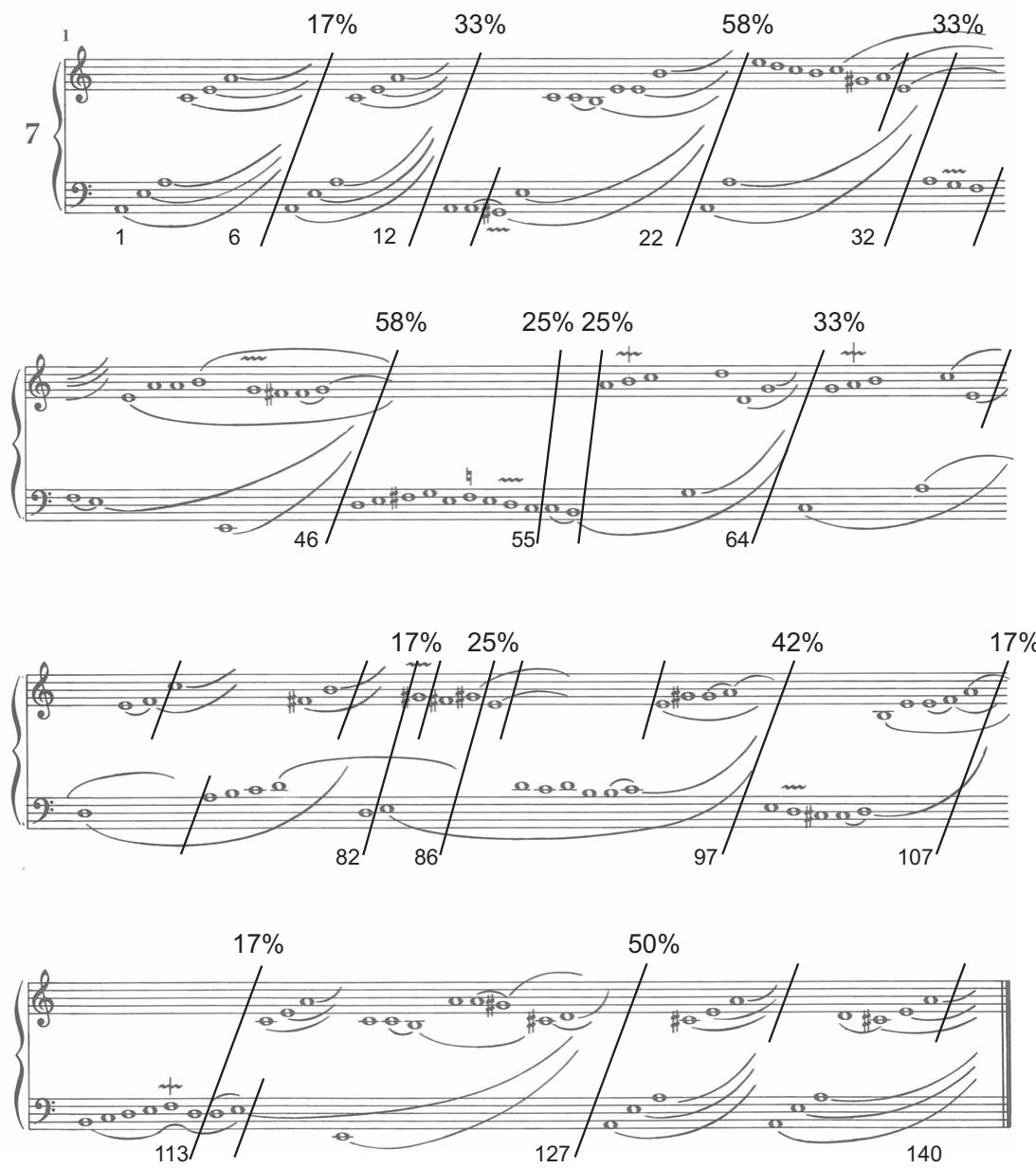
- ch3_s9 [描述性拆分] Note Duration Variability Across the Piece
- 页码:10-10
- ch3_s10 Discussion
- 页码:10-10
- ch3_s11 [描述性拆分] Discussion of GFL, Group-Final Anticipation, and Large-Scale Variability
- 页码:10-11
ch4 Experiment 2: Perceived Musical Tension
- ch4_s1 Experiment 2: Perceived Musical Tension
- 页码:11-11
- ch4_s2 Method
- 页码:11-11
- ch4_s3 [描述性拆分] Method: Participants, Apparatus, Stimuli, Slider, Procedure, and Data Collection
- 页码:11-12
- ch4_s4 Results
- 页码:12-12
- ch4_s5 [描述性拆分] Mean Tension Ratings by Event and Boundary Profiles
- 页码:12-13
- ch4_s6 [描述性拆分] Associations Between Timing and Tension (Tempo, Variability, Onset Density)
- 页码:13-14
- ch4_s7 [描述性拆分] Listener Response Profiles and Tension Variability
- 页码:15-16
- ch4_s8 Discussion
- 页码:16-16
- ch4_s9 [描述性拆分] Discussion of Tension Profiles, Case Study, and Listener Groups
- 页码:16-16
ch5 General Discussion
- ch5_s1 General Discussion
- 页码:17-17
- ch5_s2 [描述性拆分] General Discussion: Tension, Timing Variability, and Verbal Responses
- 页码:17-17
- ch5_s3 [描述性拆分] Future Directions, Limitations, and Broader Implications
- 页码:18-18
ch6 Author Note and References
- ch6_s1 Author Note
- 页码:18-19
- ch6_s2 References
- 页码:19-20
ch1_s1 [描述性拆分] Title, Authors, and Abstract
第1段(P0001)
原文复述
ANALYSIS, PERFORMANCE, AND TENSION PERCEPTION OF AN UNMEASURED PRELUDE FOR HARPSICHORD
中文讲解
这是论文的总标题,全文以英文大写字母呈现。标题把三个核心研究对象——分析(analysis)、演奏(performance)与紧张感感知(tension perception)——并列标出,并把研究对象限定为一首"未计小节的"(unmeasured)古钢琴前奏曲。标题结构揭示了论文的整体思路:在音乐听感体验、演奏诠释与谱面分析三者之间寻找联系,并以一首具体的古钢琴作品作为研究载体。
第2段(P0002)
原文复述
MEGHAN GOODCHILD
中文讲解
这是论文署名中的第一位作者姓名,以英文全大写呈现:Meghan Goodchild。该条目仅承担署名功能;本页未在同一行附带其所属单位,因此其机构归属需要与紧随其后的所属机构条目以及后文的作者姓名顺序对照才能确定。
第3段(P0003)
原文复述
McGill University, Montreal, Canada
中文讲解
这是第一作者 Meghan Goodchild 的所属机构:位于加拿大蒙特利尔的麦吉尔大学(McGill University)。条目以英文给出完整地名,便于读者快速识别作者的研究背景;本论文的另两位作者则分别来自奥地利的因斯布鲁克大学(见后文)以及再次出现的麦吉尔大学(见后文),表明这是一项跨国合作研究。
第4段(P0004)
原文复述
BRUNO GINGRAS
中文讲解
这是论文署名的第二位作者姓名,以英文全大写呈现:Bruno Gingras。该条目仅提供署名信息;其所属单位由紧随其后的条目给出。
第5段(P0005)
原文复述
University of Innsbruck, Innsbruck, Austria
中文讲解
这是第二作者 Bruno Gingras 的所属机构:位于奥地利因斯布鲁克的因斯布鲁克大学(University of Innsbruck)。这表明本论文的作者团队分属两所大学——第一、第三作者同属麦吉尔大学,第二作者来自因斯布鲁克大学,作者团队具备跨国、跨机构的研究背景。
第6段(P0006)
原文复述
STEPHEN MCADAMS
中文讲解
这是论文署名的第三位作者姓名,以英文全大写呈现:Stephen McAdams。该条目仅承担署名功能;其所属机构在紧随其后的条目中给出。
第7段(P0007)
原文复述
McGill University, Montreal, Canada
中文讲解
这是第三作者 Stephen McAdams 的所属机构:位于加拿大蒙特利尔的麦吉尔大学(McGill University)。由于第一作者与第三作者同属麦吉尔大学,本研究的主要研究基地在麦吉尔大学,第二作者所在的因斯布鲁克大学则为合作的另一据点。
第8段(P0008)
原文复述
This study focuses on the relationships between music analysis, performance, and tension perception. Part 1 examines harpsichordists’ analyses and performances of an unmeasured prelude—a semi-improvisatory genre open to interpretive freedom. Twelve harpsichordists performed the Prélude non mesuré No. 7 by Louis Couperin on a harpsichord equipped with a MIDI console and submitted a formal analysis. Using a curve-fitting approach, we investigated the correspondence between analyzed segmentations and group-final lengthening. We found that harpsichordists also employed ‘group-final anticipation,’ involving deceleration before, and acceleration through, analyzed boundaries. In Part 2, three listener groups (harpsichordists, musicians, and nonmusicians) continuously rated tension for 12 performances. In contrast to measured music, local tension peaks, rather than troughs, occurred at boundaries featuring group-final lengthening. Associations were found between global tempo and tension ratings, with significant differences among the three listener groups. Performers expressed the large-scale structure through the amount of tempo variability, which was also reflected in tension rating variability.
中文讲解
本段是论文摘要,宣告研究目标为探讨音乐分析、演奏与紧张感感知之间的关系,并以"Part 1 / Part 2"两部分结构报告具体发现。
第一部分聚焦演奏实践。研究对象是一首"未计小节的前奏曲"(unmeasured prelude),摘要随即给出该体裁的限定——它是一种"半即兴、允许诠释自由"的体裁,没有规整小节线,因此演奏者在速度、节奏与结构切分上拥有较大解释空间。十二位古钢琴家在装有 MIDI 接口的古钢琴上演奏了路易·库普兰(Louis Couperin)的《Prélude non mesuré No. 7》,并各自提交了一份正式分析。MIDI 接口把每次击键转成精确的时间事件序列,使演奏时值被量化捕获;“正式分析"则提供演奏者自己对乐曲结构边界的判断。研究方法上,作者用曲线拟合(curve-fitting approach)对照两条曲线:演奏者分析出的结构切分边界,与演奏中实际出现的"组尾拉长”(group-final lengthening,即在结构组末尾自然减速)位置。摘要报告了两个核心发现:其一,分析边界与组尾拉长之间存在对应关系;其二,演奏者还采用了作者命名为"组尾预期"(group-final anticipation)的新策略——在分析边界之前先减速,再在跨越边界时加速——区别于传统文献中"边界处单纯拉长"的模式。
第二部分转向听感实验:邀请三组听众——古钢琴家、音乐人、非音乐人——对 12 个演奏录音做连续紧张感评分(continuous rating),即在聆听过程中不间断地滑动打分。摘要指出,与已有"有量度音乐"(measured music,即带规整小节线的音乐)研究中的发现相反,在本研究的未计小节作品中,局部紧张感的峰值出现在出现组尾拉长的边界处,而不是像常规文献那样在边界位置出现紧张感的低谷(即边界处反为低点)。此外,全局速度(global tempo)与紧张感评分之间存在关联,且三组听众之间差异显著。最后,演奏者通过速度变异性(tempo variability)的幅度来表达乐曲的大尺度结构,这种大尺度结构同时也反映在紧张感评分的变异性中。
总体看,摘要把研究定位为一项兼顾演奏测量(Part 1)与听感实验(Part 2)的综合研究,其核心贡献在于把"未计小节"这一特殊体裁、演奏者的主观结构分析、演奏中的时值操作、连续紧张感评分四者联系起来,并提出"组尾预期"作为新概念。
第9段(P0009)
原文复述
Received: August 21, 2014, accepted September 9, 2015.
中文讲解
这是论文的收稿与接受日期记录:稿件于 2014 年 8 月 21 日收到,于 2015 年 9 月 9 日被接受。该条目属于学术出版的版面元数据,说明从投稿到接受大约经历了近一年的同行评审与修改周期;它本身不构成论文的实质论点,仅用于标注发表时间与流程信息。
第10段(P0010)
原文复述
Key words: performance, tension, unmeasured music, analysis, musical structure
中文讲解
这是论文首页提供的关键词列表,以英文呈现,共五个:performance(演奏)、tension(紧张感)、unmeasured music(未计小节的音乐)、analysis(分析)、musical structure(音乐结构)。这些关键词高度浓缩了摘要的研究主题:演奏实践与听感紧张度是研究对象,“未计小节的音乐"界定了研究体裁,分析与音乐结构则点出研究路径。该条目在论文首页起检索与分类功能,便于数据库和读者快速定位论文所属的研究领域。
脚注 / 边栏 / 图表 / 附加信息(如有)
本小节为论文首页的标题、署名与摘要区,所含附加材料仅有第 9 段的收稿/接受日期与第 10 段的关键词两条版面元数据。它们用于标注审稿周期与支持数据库检索,并不构成研究论证本身;本节未包含脚注、图表或边栏。
💡 本节核心要点
- 论文以"分析—演奏—紧张感感知"三者关系为核心议题,并明确将研究限定在"未计小节的前奏曲"这一半即兴体裁内。
- 第一部分让十二位古钢琴家在装有 MIDI 接口的古钢琴上演奏路易·库普兰《Prélude non mesuré No. 7》并各自提交结构分析,借助曲线拟合比较分析边界与"组尾拉长"位置。
- 作者提出新概念"组尾预期”(group-final anticipation):演奏者在分析边界前减速、跨越边界时加速,区别于传统意义上"边界处单纯拉长"的模式。
- 第二部分以三组听众(古钢琴家、音乐人、非音乐人)对 12 个演奏录音做连续紧张感评分。
- 与有量度音乐的既有发现相反,未计小节音乐中局部紧张感峰值出现在组尾拉长所在的边界处,而非边界间的低谷处,且三组听众之间存在显著差异。
- 演奏者通过全局速度变异性表达大尺度结构,这种大尺度结构同时也反映在紧张感评分的变异性中。
🔑 关键术语
- Unmeasured prelude (Prélude non mesuré):指一种不带规整小节线的前奏曲体裁;摘要中明确为"半即兴、允许诠释自由",构成本研究的核心研究对象。
- Group-final lengthening:指在音乐结构组末尾出现的减速(拉长)现象;本研究中作为对照演奏者分析边界是否被演奏所标记的关键指标。
- Group-final anticipation:论文提出的新概念,指演奏者在分析边界之前先减速、跨越边界时加速的时值策略,区别于传统的"边界处单纯拉长"。
- Curve-fitting approach:指第一部分使用的方法:通过曲线拟合比较演奏者分析所得的结构切分序列与演奏时值序列,从而定量检验两者之间的对应关系。
- Tension perception:指听众对音乐进行的连续紧张感评分,是第二部分研究的因变量,也是全篇探讨的三大对象之一。
- MIDI console (harpsichord):指古钢琴上加装的 MIDI 接口,可将每次击键转为精确的时间事件,从而把演奏时值量化供后续统计与分析。
ch2_s1 [描述性拆分] Performance, Analysis, and the Unmeasured Prelude
第1段(P0011)
原文复述
Over the last four decades an increasing amount of research has been undertaken on musical performance, with timing measurements dominating the investigation (Gabrielsson, 2003). A large body of literature on piano performance has found that performers convey information about the grouping structure of the piece (Clarke, 1985, 1988; Palmer, 1989, 1996a; Repp, 1992, 1995). In particular, performers tend to slow down at sectional boundaries, a process referred to as ‘phrase-final lengthening’ or ‘group-final lengthening’ (Bengtsson & Gabrielsson, 1980; Ohriner, 2012; Palmer, 1989; Repp, 1995; Todd, 1985). The magnitude of the tempo variation corresponds to the hierarchical importance of the boundaries, with larger ritardandi associated with major formal divisions of the piece (Repp, 1992; Shaffer & Todd, 1987; Todd, 1985). The musical communication hypothesis (Clarke, 1985; Gabrielsson, 1987; Palmer, 1989, 1996a; Penel & Drake, 1998; Repp, 1992, 1995; Shaffer, Clarke, & Todd, 1985) proposes that tempo fluctuations correspond to the performer’s interpretation of musical structure and its communication to the listener. More recently, Penel and Drake (2004) reported that group-final lengthening could be attributed to motor and perceptual constraints and also to musical communication through expression of the grouping structure hierarchy.
中文讲解
本段以英语复述,原始主张如下(中文释义置于本栏):在过去的四十年间,音乐演奏(musical performance)研究不断增长,其中以时间(timing)测量为主导方向(Gabrielsson, 2003)。大量钢琴演奏文献表明,演奏者会通过演奏来传达乐曲的分组结构(grouping structure)。最具体的体现是:演奏者在段落边界(sectional boundaries)处倾向于放慢速度,这种现象被称为"乐句末延长"(phrase-final lengthening)或"组末延长"(group-final lengthening)。这里有一个关键的数量关系——节奏变化的幅度与边界在曲式层级中的重要性相对应:曲式中更主要的分段对应着更大的渐慢(ritardandi)。音乐交流假说(musical communication hypothesis)进一步认为,节奏的起伏对应着演奏者对音乐结构的诠释以及向听者的传达。较新的 Penel 与 Drake(2004)则对组末延长提出了双重归因:既可能源于运动与知觉的制约(motor and perceptual constraints),也可能源于演奏者通过表达分组结构层级所进行的音乐交流。换言之,作者在此段把"演奏中的节奏起伏"同时解释为一种结构信号和一种交流信号。理解此段需注意:ritardando 是一种在段落收束处逐渐放慢的演奏处理;grouping structure 是听者与演奏者共同感知到的层级化结构(如乐句、乐段),它不等同于作曲技术意义上的纯曲式分析。
补充说明
本段中所有引文与作者均为 task_input 中已出现的引用信息;本节其余段落(P0012–P0017)以本段所建立的"节奏承载分组结构"作为出发点,逐步引向对未记谱前奏曲的考察。
第2段(P0012)
原文复述
This relationship between music-theoretical analysis and performance has also been a topic of increasing interest among music theorists. Cone’s (1960) essay influenced the direction of the discussion for several decades as a one-way line of communication of analytical interpretation from theorists to performers, including work by Berry (1989) and Narmour (1988). More recently, theorists such as Lester (1995), Rink (2002), and McCreless (2009) have reversed this line of thought by advocating a collaborative view, one that values performers’ insights and looks to performance as a way to illuminate analysis.
中文讲解
本段指出:音乐理论分析(music-theoretical analysis)与演奏之间的关系,也是音乐理论家越来越关注的议题。Cone 在 1960 年的论文影响了几十年的讨论方向,它把分析—演奏的关系确立为一条单向线路——从理论家向演奏者传达分析诠释(analytical interpretation),Berry(1989)和 Narmour(1988)的工作都循此方向。而 Lester(1995)、Rink(2002)和 McCreless(2009)等较近的理论家则翻转了这一思路,主张一种"协作观"(collaborative view):既重视演奏者的洞见,又将演奏视为照亮分析的一种途径。把握此段的关键在于"分析→演奏"与"演奏→分析"这两种方向的对比——前者是分析先行、演奏执行,后者是分析借鉴演奏所揭示的内容。本段的功能是为后文介绍一项既考察分析又考察演奏的研究(即 Gingras 等人的工作)做铺垫。
补充说明
本段提及的所有人物与年代均来自原文引用;本段作为理论思潮的小型综述,不引入补充知识。
第3段(P0013)
原文复述
Attempting to bridge the gap between analyst and performer is problematic due to differences in terminology and artistic goals; theorists tend to analyze the musical score as an object ‘out of time,’ whereas performers necessarily operate in the temporal dimension. Gingras, McAdams, and Schubert (2010) studied the relationship between the performer’s concept of a piece both as an analyst and performer to circumvent the apparent disconnect between the language and goals of music theory and performance. In their study, organists performed J. S. Bach’s ‘Dorian’ Fugue (BWV 538)
中文讲解
本段说明:弥合分析者与演奏者之间的鸿沟之所以困难,原因有二——术语不同,以及艺术目标不同。理论家倾向于把乐谱(musical score)当作一个"脱离时间"(out of time)的对象来分析;演奏者则必须在时间维度(temporal dimension)中进行操作。这一对比是上一段"协作观"的具体障碍所在。Gingras、McAdams 与 Schubert(2010)的研究试图绕开这一明显的脱节:他们考察的是同一位演奏者作为分析者与作为演奏者时,对同一乐曲的理解之间的关系。受试者是管风琴演奏者(organists),曲目是 J. S. Bach 的《多利亚》赋格(BWV 538)。该段在此处断开,本段在页面排版上跨越至 P0014 的期刊卷期信息,下一段(P0015)续写研究结果。
补充说明
本段在原文结构上与 P0014(期刊卷期版权信息)相邻且在版面上中断;研究结果的陈述位于 P0015,须合并阅读方可得到完整的方法—结果叙述。
第4段(P0014)
原文复述
Music Perception, VOLUME 34, ISSUE 1, PP. 1–20, ISSN 0730-7829, ELECTRONIC ISSN 1533-8312. © 2016 BY THE REGENTS OF THE UNIVERSITY OF CALIFORNIA ALL RIGHTS RESERVED. PLEASE DIRECT ALL REQUESTS FOR PERMISSION TO PHOTOCOPY OR REPRODUCE ARTICLE CONTENT THROUGH THE UNIVERSITY OF CALIFORNIA PRESS’S REPRINTS AND PERMISSIONS WEB PAGE, HTTP://WWW.UCPRESS.EDU/JOURNALS.PHP?P¼REPRINTS. DOI: 10.1525/MP.2016.34.1.1
中文讲解
这是一段期刊版面的卷期与版权信息,并非正文段落。其版面属性为:刊名 Music Perception,卷 34,期 1,页码 1–20,印刷版 ISSN 0730-7829,电子版 ISSN 1533-8312;版权属加利福尼亚大学校董会(2016)。读者所有复印与转载请求须通过加利福尼亚大学出版社的 Reprints and Permissions 页面办理,DOI 为 10.1525/MP.2016.34.1.1。该信息在原文中因排版原因插入于 P0013 与 P0015 之间,对正文论证不构成推进。
第5段(P0015)
原文复述
and submitted a written analysis of the phrase structure. Gingras et al. (2010) observed that organists used group-final lengthening and the end-of-phrase ritardando corresponded to the hierarchal importance of major subdivisions in their written analyses. They examined whether performers whose written analyses substantially differed from other performers also emphasized unique formal aspects in their performances, but did not find a significant difference between the average size of the ritardandi of the performers who marked a section as a boundary and those who did not.
中文讲解
本段承接 P0013 的研究描述。Gingras 等人(2010)让管风琴演奏者提交其对乐曲"乐句结构"(phrase structure)的书面分析,并观察其演奏。研究者发现:演奏者使用的组末延长(group-final lengthening)以及乐句末的渐慢(end-of-phrase ritardando),与他们在书面分析中所标示的主要分段的层级重要性相对应。换言之,分析中标示得更重要的分段,在演奏中也对应着更显著的减速。研究者进一步追问:书面分析彼此差异显著的演奏者,是否也会在演奏中强调各自独有的形式要素?研究并未发现显著差异——即那些"在分析中标记某处为边界"与"未作此标记"的演奏者,其在该位置的平均 ritardando 幅度并无显著区别。本段的功能是给出既有研究的一个"既相关又不完全对应"的结果:分析中的分组层级与演奏中的节奏起伏方向一致,但个体间的分析差异并未线性地映射到演奏差异。这一结论是后文转向未记谱前奏曲的关键铺垫。
补充说明
本段中的 “hierarchal importance of major subdivisions in their written analyses” 与 P0011 中 “hierarchical importance of the boundaries” 属于同一概念线索;P0015 的"书面分析与演奏并未显著对应"是本节论述的关键转折点。
第6段(P0016)
原文复述
Since timing patterns have been found to be a major expressive device in harpsichord performance (Gingras, Asselin, & McAdams, 2013), this study investigates the link between temporal patterns and formal structure in an unmeasured prelude for harpsichord, a genre cultivated in France between 1650 and 1720. Due to its semiimprovisatory nature, the unmeasured prelude allows for considerably more interpretive freedom regarding temporal structure than measured music. Related to fantasias and toccatas, unmeasured preludes for harpsichord ‘go far beyond a simple introductory gesture and belong to the most ingenious and satisfying music in the keyboard repertoire’ (Tilney, 1991, p. 1). Inspired by lute tablature, Louis Couperin developed a notational solution that conveys specific information about the order of pitches, but liberates the performer in rhythm and tempo. Performances of an unmeasured prelude potentially display a wider range of possible structural realizations through event timing than what is found in measured music. This genre may thus shed more light on the connection between analysis and performance.
中文讲解
本段交代本研究的切入点与对象。由于节奏模式在羽管键琴(harpsichord)演奏中已被发现是主要的表达手段(Gingras, Asselin, & McAdams, 2013),本研究考察的则是"羽管键琴未记谱前奏曲"(unmeasured prelude for harpsichord)中节奏模式与形式结构之间的关联。该体裁在 1650 至 1720 年间的法国得到培育。由于具有半即兴(semiimprovisatory)性质,未记谱前奏曲在时间结构上所允许的诠释自由度,远大于有节拍记谱的乐曲(measured music)。它与幻想曲(fantasias)和托卡塔(toccatas)相近;Tilney(1991, p. 1)评价它"远远超过单纯的引子性姿态,是键盘文献中最精巧、最令人满足的音乐之一"。在记谱上,受琉特琴记谱法(lute tablature)的启发,Louis Couperin 提出了一种既明确标示音高次序,又在节奏与速度上解放演奏者的记谱方案。因此,未记谱前奏曲的演奏有可能通过事件时距(event timing)展现出比记谱音乐更广的结构实现范围;这一体裁或可对"分析与演奏之间的关系"提供更多光亮。本段为本研究的核心对象——“未记谱前奏曲”——做了体裁与记谱史的限定,并将它与前文 P0011 起的节奏—结构关系联系起来:越是允许演奏自由度高的体裁,越能放大节奏承载结构的信号。
补充说明
本段中所有引文(Gabrielsson、Gingras 等)来自原文;本段未提供 Tilney(1991)的进一步出处信息,亦不引入外部词源或人物背景。
第7段(P0017)
原文复述
Recent research into the temporal dynamics of music listening has shown that listeners integrate musical events into a hierarchical organization, which governs their intuitions about musical tension, sense of completion, and perceptual expectations (Krumhansl, 1996). Real-time judgments have been used to test the ongoing musical experience, including segmentation of structural boundaries (Deliège, 1987) and continuous measures of musical tension (Farbood, 2012; Krumhansl, 1996; Toiviainen & Krumhansl, 2003). Segmentation provides a direct measure of parsing the musical surface; however, it does not map the build-up and decay of musical experiences. In addition, precise boundaries may not be present in all types of music, especially in music such as the unmeasured prelude, as discussed above. Musical tension and relaxation schemas have been studied as an important dimension of musical experience (Fredrickson, 1995; Krumhansl, 1996; Madsen &
中文讲解
本段从听者侧补充论证。近期对"音乐聆听的时间动力学"(temporal dynamics of music listening)研究表明:听者将音乐事件整合进一种层级化的组织中,这种组织支配着他们对音乐张力(musical tension)、完结感(sense of completion)以及知觉期待(perceptual expectations)的直觉。研究者采用实时判断(real-time judgments)来检验正在进行的音乐经验,其中既包括对结构边界的切分(segmentation,Deliège, 1987),也包括对音乐张力的连续测量(Farbood, 2012;Krumhansl, 1996;Toiviainen & Krumhansl, 2003)。切分(segmentation)虽然为分析音乐表层(musical surface)的切分提供直接度量,却无法刻画音乐经验之"建立—消退"的过程。更重要的是,并非所有音乐都存在精确的边界——尤其是前文所讨论的未记谱前奏曲。音乐的张力—放松图式(tension and relaxation schemas)被视作音乐经验的一个重要维度(Fredrickson, 1995;Krumhansl, 1996;Madsen & ——原文在此处截断)。把握此段的关键在于:作者将听者的层级化知觉作为理解演奏中节奏—结构关系的另一支柱,并指出传统"边界切分"方法不适用于未记谱前奏曲,从而为下文采用一种捕捉"张力—放松"的连续方法做铺垫。本段在原文页面上于 Madsen & 处结束,剩余文字未在 task_input 中提供。
补充说明
本段在所提供的 task_input 中于 “Madsen &” 处截断;后续作者与年份未在当前输入中出现,故不予补写。
脚注 / 边栏 / 图表 / 附加信息(如有)
本小节范围内的非正文材料:P0014 为期刊 Music Perception 第 34 卷第 1 期 pp. 1–20 的版权与卷期信息(ISSN 0730-7829;电子 ISSN 1533-8312;DOI 10.1525/MP.2016.34.1.1;版权属加利福尼亚大学校董会,2016)。该信息仅为出版元数据,对正文论证不构成推进,但能确认本文发表于 Music Perception,并以 DOI 10.1525/MP.2016.34.1.1 索引。本小节无脚注、无图表、无边栏;P0017 于原文页面上在 “Madsen &” 处截断,下一句作者及引文年份未在当前输入中提供。
💡 本节核心要点
- 过去四十年的演奏研究中,时间(节奏)测量居主导地位;钢琴演奏文献显示演奏者在段落边界处减速,即所谓"乐句末/组末延长",且减速幅度与边界在曲式层级中的重要性相对应。
- “音乐交流假说"将节奏起伏解释为演奏者对结构的诠释与向听者的传达;Penel 与 Drake(2004)补充:组末延长同时受运动与知觉制约驱动。
- Cone(1960)所代表的传统观点将分析—演奏视为从理论家到演奏者的单向线路;Lester、Rink、McCreless 等则转向一种重视演奏者洞见、把演奏视为分析照亮的"协作观”。
- 分析者把乐谱当作"脱离时间"的对象来研究,演奏者则在时间维度中操作,二者在术语与目标上存在鸿沟;Gingras 等人(2010)以管风琴演奏者演奏巴赫《多利亚》赋格(BWV 538)并提交书面分析的方式尝试绕开该鸿沟。
- Gingras 等人发现:演奏者的组末延长与书面分析中标示的主要分段的层级重要性相对应;但书面分析差异显著的演奏者,并未在线 ritardando 幅度上表现出显著差异——分析差异并不简单地一对一映射到演奏差异。
- 本研究因此转向羽管键琴的"未记谱前奏曲"——一种 1650–1720 年间法国培育、半即兴、记谱受琉特琴记谱法启发而解放节奏与速度的体裁,其演奏在事件时距上可能呈现比记谱音乐更广的结构实现范围。
- 听者侧研究表明:听者将音乐事件整合为层级化组织,支配对张力、完结感与知觉期待的直觉;切分方法对未记谱前奏曲并不适用,需要借助对音乐张力—放松的连续测量。
🔑 关键术语
- phrase-final lengthening / group-final lengthening:乐句末延长 / 组末延长,指演奏者在段落、组或乐句边界处趋于放慢速度的现象。本节中它既是"分析—演奏关系"的实证核心,也是未记谱前奏曲研究中被检验的时间信号。
- ritardando:渐慢,指在段落收束处逐渐降低速度的处理。本节中 ritardando 的大小与曲式层级中主要分段的边界相对应,是组末延长的具体实现方式之一。
- musical communication hypothesis:音乐交流假说,认为节奏起伏对应着演奏者对音乐结构的诠释及其向听者的传达;与之相对的另一种解释是运动与知觉制约(Penel & Drake, 2004)。
- grouping structure:分组结构,听者与演奏者共同感知到的乐句—乐段层级化组织。本节中它既是分析的对象,也是演奏者通过节奏变化所传达的内容。
- music-theoretical analysis:音乐理论分析,对乐谱所进行的结构化诠释;Cone(1960)的传统把这种分析视为单向下达给演奏者的诠释,而 Lester、Rink、McCreless 等的"协作观"则把演奏视为对分析的反向照亮。
- unmeasured prelude:未记谱前奏曲,1650–1720 年间法国羽管键琴文献中的一类体裁;受琉特琴记谱法启发,记谱只标示音高次序而不固定节奏与速度,使演奏者在事件时距上拥有更大的结构实现空间。
- out of time:“脱离时间”,本节中用以刻画音乐理论家看待乐谱的方式——把乐谱当作一个脱离时间展开的对象来分析;与之相对,演奏者必然在时间维度中操作。
- segmentation:结构边界的切分,本节中作为一种直接测量音乐表层切分的方法;它并不刻画音乐经验之"建立—消退"的过程,因此对未记谱前奏曲这类没有精确边界的体裁并不适用。
- musical tension / tension and relaxation schemas:音乐张力 / 张力—放松图式,被视为音乐经验的重要维度;本节以连续测量音乐张力的方法(Farbood 2012;Krumhansl 1996;Toiviainen & Krumhansl 2003)作为对未记谱前奏曲进行经验研究的可行替代路径。
ch2_s2 [描述性拆分] Tension Perception, Listener Expertise, and Continuous Rating Methods
第1段(P0018)
原文复述
Prior studies (Fredrickson, 1993; Nielsen, 1983) have linked tension perception to aspects of musical structure such as harmony and tonal hierarchies (Bigand & Parncutt, 1999; Lerdahl & Krumhansl, 2007). Krumhansl (1996) reported that the musical surface could be parsed into hierarchically organized units by measuring variations over time in the degree of experienced tension. Several musical features were found to influence tension ratings, including melodic contour, dissonance, dynamics, chromaticism, and breaks in harmonic patterns. Farbood (2012) investigated the relative contributions of several musical parameters on perceived tension in both retrospective and continuous ratings. Dynamics and pitch height were found to have a clear effect on tension in isolated contexts. In complex stimuli in which various features interact, the tension results were more ambiguous; however, when multiple features moved in the same direction, tension ratings were strengthened in that same direction.
中文讲解
本段为本小节铺垫背景,介绍音乐张力(tension)感知的既有研究脉络。作者先援引 Fredrickson(1993)和 Nielsen(1983),指出张力与音乐结构(尤其是和声与调性层级,harmony and tonal hierarchies)相关,并由 Bigand & Parncutt(1999)、Lerdahl & Krumhansl(2007)进一步推进;随后引入 Krumhansl(1996)的重要方法论:通过追踪张力随时间的变化,可以把音乐表层解析成层级化的单元——这是一种把主观体验时间序列当作分析窗口的思路。接下来列举影响张力评分的若干音乐特征:旋律轮廓(melodic contour)、不协和(dissonance)、力度(dynamics)、半音化(chromaticism)、和声模式的断裂(breaks in harmonic patterns)。Farbood(2012)的贡献在于同时使用回顾性(retrospective)评分和连续性(continuous)评分,比较各音乐参数的相对贡献:在孤立条件下,力度和音高走向对张力影响清晰;而在多个特征交互的复杂刺激中,结果变得模糊,但当多个特征同向变化时,张力评分也会被同向放大——这说明在复合情境中各特征的效应并不简单叠加,而是可能被同步性(共同运动方向)所放大。整段的论证作用是:第一,建立“张力—音乐结构”之间的稳定关联;第二,预告变量众多、交互复杂这一方法学难题,为后文讨论连续评分设备和评分个体差异做铺垫。
补充说明
“回顾性评分”(retrospective)指听完整段音乐后给出整体判断;“连续性评分”(continuous)指在听的过程中实时调节装置记录张力变化,二者属于本节核心方法对照。harmonic patterns 处的“breaks”指和声进行被中断或偏离常规模式的情形。
第2段(P0019)
原文复述
The connection between musical structure, performance timing, and tension has been less studied. Krumhansl (1996) reported that peaks and rapid decreases in tension corresponded to slower tempi at section endings. Palmer (1996b) found a correlation between expressive timing and music-theoretically predicted tension (Lerdahl, 1996), with performers lengthening positions of predicted high tension more than positions of relaxation. In terms of global tempi of short phrases, listeners rated higher tension for music with a fast tempo than with a slower tempo (Ilie & Thompson, 2006). In stimuli that were designed to isolate the effects of onset frequency and tempo, a decrease in both features resulted in decreases in tension (Farbood, 2012).
中文讲解
本段聚焦一个研究相对不足的子领域:音乐结构、演奏时值(performance timing)与张力之间的关系。作者先承认相关研究较少(“less studied”),然后按层次递进地组织证据。Krumhansl(1996)观察到张力的峰值与急速下降在时间上对应乐段结尾的减速(slower tempi at section endings)——也就是说,演奏者会在张力戏剧性变化的位置做时间上的拉伸。Palmer(1996b)把这种观察和 Lerdahl(1996)的音乐理论张力预测进行比对,发现演奏者对“预测高张力”的位置确实比对“预测放松”的位置延长更多,建立了表现性时值与理论张力之间实证的相关性。Ilie & Thompson(2006)则从短乐句的整体速度切入:听众对快速乐句报告出更高的张力。Farbood(2012)通过专门设计的刺激隔离了两个特征——起始事件频率(onset frequency)和速度(tempo)——发现二者同时下降时张力也随之下降。本段的结构逻辑是:从乐段内部的时间微调(Krumhansl、Palmer)→到短乐句的整体速度(Ilie & Thompson)→再到对两个参数的人为隔离实验(Farbood),由观察性证据逐步走向控制性证据,表明时间维度的参数确实参与塑造张力体验。
补充说明
“onset frequency”指单位时间内音符起始事件的密度,与音符数量相关但不等同于 tempo;“expressive timing”指演奏者在保持基本节拍框架之外加入的微时值调节,是表演心理学常用术语。
第3段(P0020)
原文复述
Fredrickson (1997, 1999) reported that perceived tension was not greatly affected by musical expertise or familiarity with a particular piece of music. Krumhansl (1996) also showed that tension responses were uniform despite differences in music training. The relative contributions of various musical parameters to tension responses, however, have been found to vary for musicians and nonmusicians. Farbood (2012) reported that musicians were more sensitive than nonmusicians to changes in most musical features (e.g., harmony, dynamics, and onset frequency), with the exception that nonmusicians were more influenced by changes in pitch height.
中文讲解
本段讨论“听者专业度”(listener expertise)如何调节张力反应。作者先呈现一个看似明确的总体结论:Fredrickson(1997, 1999)和 Krumhansl(1996)一致指出,张力的总体反应水平(即评分高低本身)并不显著受到音乐训练或对乐曲熟悉程度的影响——这一点暗示张力感知具有跨专业群体的一致性。但随后话锋一转:作者强调“相对贡献”(relative contributions)这一限定词,揭示出一个更精细的差异——虽然两组人对张力的总体反应近似,但他们对哪些参数更敏感并不相同。Farbood(2012)的关键发现是:在大多数特征(和声、力度、起始事件频率)上,音乐家比非音乐家更敏感;唯独“音高走向”(pitch height)一项是个例外,非音乐家反而受到更大的影响。这一处“with the exception”极其重要,它防止读者得出“音乐家处处更敏感”的简化结论。本段对小节论证的作用是:为后文按听者群体分析连续评分策略提供学理依据——既然两类听者对参数的依赖方式不同,那么后续对评分策略的分组讨论就不是人为划分,而是有实证支撑的。
补充说明
本段“张力反应水平一致 vs. 参数相对贡献不同”是阅读时最容易混淆之处:前者是评分高低量值上的趋同,后者是各参数解释力分布上的差异,二者并不矛盾,应分别理解。
第4段(P0021)
原文复述
Continuous response rating devices, such as spring-loaded tongs (Nielsen, 1983), the continuous response digital interface (CRDI) dial (Madsen & Fredrickson, 1993), a virtual slider or emotion space on a computer screen manipulated by a mouse (Farbood, 2012; Schubert, 2004), and a handheld mechanical slider box (McAdams,
中文讲解
本段(实为下一段的引出句)以列举方式介绍多种用于连续反应评分(continuous response rating)的设备。注意句末以逗号结束、“McAdams,” 的引文被截断——这是原文因排版断行的结果,完整的引文会在 P0022 中补全。作者列出四类装置:① Nielsen(1983)的弹簧加载钳(spring-loaded tongs);② Madsen & Fredrickson(1993)的连续反应数字界面(CRDI)旋钮;③ Farbood(2012)和 Schubert(2004)使用的电脑屏幕上的虚拟滑块或情绪空间(通过鼠标操作);④ McAdams 等人使用的手持机械滑盒。该段为本节方法学讨论的第一块拼图:为下文讨论这些装置的成功使用、优势(直观、不需要音乐经验)以及局限(被试间差异)做铺垫。
补充说明
由于本段在原文中被跨页拆开,与 P0022 在内容上属于同一句,阅读时需将两者合并理解;装置名称的差异主要体现技术代际——从机械式(弹簧钳、滑盒)发展到数字式(CRDI 旋钮)和计算机交互式(虚拟滑块、情绪空间)。
第5段(P0022)
原文复述
Vines, Viellard, Smith, & Reynolds, 2004), have been used successfully to measure perceived tension or emotion ratings in previous studies. The continuous rating task is intuitive and does not require musical experience (Schubert, 2004). Although some studies have reported high inter and intrasubject correlations among subject responses (Krumhansl, 1996; Madsen & Fredrickson, 1993; Nielsen, 1983), other studies using continuous measures have found substantial variability among subjects (McAdams et al., 2004; Upham & McAdams, 2014). Given this variability, there is some concern regarding the interpretation of mean ratings. In this study, we employ several analytical approaches (to be discussed further below) in order to effectively interpret the continuous responses, to map important musical moments signaled by the listeners, and to investigate rating strategies by different listener groups.
中文讲解
本段补全上一段被截断的引文(McAdams, Vines, Viellard, Smith, & Reynolds, 2004),并完成对连续评分方法的评价与本研究的应对策略。作者先肯定这些装置已经在过往研究中“成功用于”测量张力或情绪评分;接着援引 Schubert(2004)指出连续评分任务的两大优势:直观(intuitive)、不需要音乐经验(does not require musical experience),因此对非音乐家群体尤其友好。然而,随后的“Although…other studies…”转折是本段论证的真正落点:部分研究报告了高被试间与被试内相关(Krumhansl, 1996; Madsen & Fredrickson, 1993; Nielsen, 1983),支持其信度;但 McAdams 等(2004)与 Upham & McAdams(2014)发现被试间存在“实质性变异”(substantial variability),对只用均值来概括所有听者反应的解读方式提出了警示。作者由此引出本文的方法学立场:本研究将采用多种分析手段(后文详述)来更有效地解释连续反应,把听者标记出的重要音乐时刻(important musical moments)映射出来,并按听者群体分别考察评分策略(rating strategies)。这就把上文“装置列举”“优势肯定”“局限警示”三个层次收束到一句研究意图陈述上,也与 P0020 中“音乐家/非音乐家参数贡献不同”的结论形成呼应。
补充说明
“inter and intrasubject correlations”分别指不同被试之间与同一被试多次评分之间的一致性,前者反映群体平均趋势的可重复性,后者反映个体评分的时间稳定性;二者均高才能支持将连续评分作为可靠指标。
脚注 / 边栏 / 图表 / 附加信息(如有)
本节未包含脚注、图表或边栏等独立附加材料;唯一的版面要素是 P0021 与 P0022 之间因跨页(page 2 → page 3)造成的同一句子被切断,阅读时需将两段合并为完整句才能看到完整的引文(McAdams, Vines, Viellard, Smith, & Reynolds, 2004)。
💡 本节核心要点
- 张力感知与音乐结构(尤其是和声与调性层级)之间存在稳定关联,时间序列上的张力变化可被用于把音乐表层解析为层级化单元。
- 旋律轮廓、不协和、力度、半音化、和声模式断裂等多种音乐特征都会影响张力评分;当多特征同向变化时,张力反应被同向放大,提示特征之间存在交互而非简单叠加。
- 音乐结构、演奏时值与张力的关系研究相对较少,但已有证据支持:演奏者在理论预测的高张力位置延长时值、整体快速乐句引发更高张力、起始频率与速度同时下降伴随张力下降。
- 张力反应的总体水平在音乐家与非音乐家之间相对一致,但各参数对张力的相对贡献在两类听者中分布不同——音乐家对多数特征更敏感,而非音乐家对音高走向更敏感。
- 连续反应评分装置经过多代发展(弹簧钳、CRDI 旋钮、虚拟滑块/情绪空间、手持机械滑盒),任务直观且无需音乐经验。
- 连续评分在被试间与被试内相关性上既有高一致性报告,也有实质性个体变异的证据;本研究因此采用多种分析手段,并按听者群体分别考察评分策略。
🔑 关键术语
- tension (perceived tension):听者在听音乐过程中体验到的紧张感或张力;本节中既指总体评分水平,也指随时间变化的连续反应曲线。
- continuous response rating:听者在听音乐过程中实时调节装置(如滑块、旋钮)记录张力/情绪随时间变化的方法,与听完后再做整体回顾性评分相对。
- CRDI (continuous response digital interface) dial:Madsen & Fredrickson(1993)引入的数字旋钮式连续反应装置,是本节列举的代表性工具之一。
- musical parameters / musical features:本节用来解释张力变化的具体音乐维度,包括旋律轮廓、不协和、力度、半音化、和声模式断裂、起始频率、速度、音高走向等。
- musical expertise (musicians vs. nonmusicians):按是否受过系统音乐训练划分听者群体的二分变量;本节关键发现是总体张力反应近似但参数相对贡献不同。
- retrospective vs. continuous ratings:回顾性评分指听完后给出整体判断,连续性评分指听的同时实时记录;Farbood(2012)将二者并用以比较各参数的贡献。
- inter and intrasubject correlations:被试间与被试内一致性指标;前者反映不同听者反应的可重复性,后者反映同一听者多次评分的时间稳定性,是评估连续评分信度的关键。
ch2_s3 Present Research
第1段(P0023)
原文复述
Present Research
中文讲解
这是一个二级小节标题,文字为“Present Research”(当前研究)。它在版面层级上把后文归入第二章的“当前研究”部分,功能上承担从“Previous Research”(前人研究)转向作者本人研究设计的过渡作用:宣告本节将概括本论文的两项实验及其研究目的,开启对作者具体研究方案的陈述,而非继续综述既有文献。
第2段(P0024)
原文复述
The aim of the work presented here was to investigate the relationships between analysis, performance, and perception of tension. To this end, two experiments were conducted. The first experiment involved performances and written analyses by harpsichordists of an unmeasured prelude. We investigated whether there were correspondences between analysis and performance in terms of group-final lengthening and whether performers treated local-level boundaries differently than higher-level grouping boundaries. We predicted that the performances of the unmeasured prelude would have greater variability of tempo profiles among performers compared to measured music on the local level, but that there might be more correspondence among performers on higher hierarchical levels. In addition, we expected that the connections between individual analyses and strategies of tempo fluctuations would be strong given the expressive freedom of interpretation of the unmeasured prelude compared to the constraints of measured music.
中文讲解
本段总领作者研究的总体目的与第一项实验的设计逻辑。其核心主张是:本研究意在同时打通“分析—演奏—紧张感感知”这三者之间的关系,而不是单独研究其中任何一面;为实现这一目的,作者设计了两项实验。
关于第一项实验,原文给出了三层信息,需要逐层讲清:
-
实验材料与被试:选用“无节拍前奏曲”(unmeasured prelude)作为刺激,由羽管键琴演奏者(harpsichordists)进行演奏并提交书面分析。选用无节拍素材是关键设计——这种体裁没有规整的小节线与音符时值,演奏者必须自行决定节奏与乐句划分,从而使“分析如何映射到演奏”成为可被观测的变量。
-
两个具体研究问题:第一,分析与演奏之间是否在“组末减速”(group-final lengthening)上存在对应关系;第二,演奏者是否对小层级局部边界(local-level boundaries)与高层级分组边界(higher-level grouping boundaries)作不同处理。这两个问题共同指向“结构层级差异是否在演奏时被差异化体现”。
-
两条可检验的预测:第一,在局部层级上,由于无节拍前奏曲比有节拍音乐更自由,不同演奏者的速度曲线(tempo profiles)会表现出更大的个体差异;而在更高结构层级上,演奏者之间反而可能表现出更高的一致性——因为尽管局部节奏自由,乐句与段落的宏观划分仍受制于相对共享的音乐结构知识。第二,由于无节拍前奏曲相比受节拍约束的音乐具有更大的“诠释自由度”(expressive freedom of interpretation),作者预期个体的书面分析与各自的“速度波动策略”(strategies of tempo fluctuations)之间会形成较强的对应。
本段在小节层面的作用是:先把研究目标与第一项实验的逻辑交代清楚,为下一段第二项实验(感知研究)做铺垫;其论述结构是“总目标 → 实验一设计 → 关键变量 → 可检验预测”,体现出一种以预测驱动实验设计的实证风格。容易误解之处在于:作者并未声称分析、演奏与紧张感感知三者已在第一项实验中同时测量——感知部分留到第二项实验;第一项实验只考察“分析—演奏”两端的关系。
补充说明
本段提到的“组末减速”“局部层级边界”“高层级分组边界”共同构成了实验一观测演奏结构感知的三个并行维度;“无节拍前奏曲”与“有节拍音乐”的对比是实验一得以探测诠释自由度的关键材料设计。其余信息均来自本段内部,无需外部补充。
第3段(P0025)
原文复述
For the second experiment, we conducted an exploratory perceptual study that involved collecting continuous tension ratings of three listener groups with varying levels of expertise: harpsichordists, nonharpsichordist musicians, and nonmusicians. The aims of the tension study were to map the experience of perceived tension over time, to examine the connection between performance timings and perceived tension, and to compare the ratings across the three listener groups. The study directly confronts the influence of timing variation on tension ratings, as the harpsichord has limited dynamic range (Penttinen, 2006), and other musical features are held constant (e.g., melodic contour) for all performances.
中文讲解
本段描述第二项实验——一项探索性的感知研究,并将它与第一项实验逻辑对接。其核心主张是:要回答“演奏中的时值变化如何塑造听者所感知的紧张感”,作者不是仅观察演奏端,而是要系统测量听者端的时间连续反应。
需要讲清的要点:
-
被试设计:连续紧张感评分(continuous tension ratings)由三组不同专业水平的听者完成——羽管键琴演奏者、非羽管键琴的器乐演奏者(nonharpsichordist musicians)、以及非音乐人(nonmusicians)。这一三组划分的作用是:把“专业是否同源乐器”“是否受过音乐训练”这两个变量同时纳入比较,从而既可观察演奏者群体内部一致性,也可观察训练程度带来的影响。
-
三个具体目的:第一,将“紧张感的体验”随时间绘制成曲线(map the experience of perceived tension over time),相当于把紧张感当作一个时间过程来描述,而不只是离散打分;第二,检验演奏中的“时值选择”(performance timings)与听者感知到的紧张感之间的对应关系;第三,比较三组听者评分曲线之间的异同。这三个目的构成“描述—关联—群体比较”的三层逻辑。
-
方法论正当性说明:作者强调该实验“直接面对时值变化对紧张感评分的影响”(directly confronts the influence of timing variation on tension ratings),并给出两点理由。其一,羽管键琴的“动态范围有限”(limited dynamic range,引自 Penttinen, 2006)——这意味着强弱对比不能成为塑造紧张感的强变量,从而把时值推到分析的中心位置。其二,其他音乐特征(如旋律轮廓 melodic contour)在所有演奏版本中保持恒定。这两点共同构成了一个“控制变量—突出目标变量”的实验逻辑:既然力度等其他变量要么受乐器限制、要么被人为固定,那么紧张感差异就主要可归因于时值差异。
本段在小节层面的作用是:与上一段形成互补——实验一观测“分析—演奏”两端,实验二观测“演奏—感知”两端,二者合起来实现本节开篇所提出的“分析—演奏—紧张感感知”三角关系的目标。容易误解之处在于:原文使用 exploratory(探索性)一词,提示读者该实验偏向发现性、假设生成性的工作,而非严格检验预先假设;同时“连续评分”区别于离散打分,意味着数据的时间分辨率较高,对后续分析方法提出了更高要求。
补充说明
段落中唯一一处可定位的外部信息是括号内的文献引用 Penttinen, 2006,仅作为“羽管键琴动态范围有限”这一技术事实的来源支持脚注使用;其余论证均依据本节与作者自陈的研究设计,不需要补充外部事实。
脚注 / 边栏 / 图表 / 附加信息(如有)
本小节出现的脚注式文献信息仅有一处:第二项实验段落中以括号形式给出的 Penttinen, 2006 引用,其作用是为“羽管键琴动态范围有限”这一乐器属性提供文献支持,从而为实验二排除力度变量、聚焦时值变量的设计逻辑提供正当性。小节内无独立编号脚注、图表或边栏。
💡 本节核心要点
- 本节总目标是把“分析、演奏、紧张感感知”三者作为一个相互关联的系统同时考察,而非分别孤立研究。
- 第一项实验以羽管键琴演奏者对无节拍前奏曲的演奏与书面分析为对象,聚焦于“组末减速”、局部与高层级边界差异,并预测局部层级速度变异更大、高层级一致性更高、分析与速度策略对应更强。
- 第二项实验是一项探索性的连续紧张感评分感知研究,由羽管键琴演奏者、其他器乐演奏者、非音乐人三组听者参与,目的包括绘制紧张感时间曲线、检验演奏时值与紧张感的对应、比较三组差异。
- 两项实验在逻辑上互补:实验一连接分析与演奏,实验二连接演奏与感知,共同实现对三者关系的三角考察。
- 羽管键琴动态范围有限(Penttinen, 2006)与其他音乐特征被固定这一控制条件,使两项实验能够将时值变化作为塑造紧张感的关键自变量加以研究。
🔑 关键术语
- unmeasured prelude:无节拍前奏曲,指没有规整小节线与固定音符时值标记的前奏曲体裁;本节中作为实验材料,用以最大化演奏者的诠释自由度。
- group-final lengthening:组末减速,演奏者在乐句或音乐组末尾自然放慢的现象;本节中作为连接“书面分析中的分组”与“演奏时值选择”的关键观测变量。
- local-level boundaries / higher-level grouping boundaries:局部层级边界与高层级分组边界,前者指小尺度乐思或短乐句的终止,后者指段落或大型乐段的结构划分;本节用来检验演奏者是否对不同结构层级做差异化的时值处理。
- tempo profiles:速度曲线,即演奏过程中瞬时速度随时间变化的轨迹;本节中作为衡量演奏个体差异与层级一致性的主要度量。
- continuous tension ratings:连续紧张感评分,指听者在聆听过程中对紧张感强度所作的随时间连续变化的评定;本节中作为感知端的因变量,时间分辨率高于离散打分。
- dynamic range:动态范围,乐器所能表现的强弱幅度区间;本节中羽管键琴动态范围有限(Penttinen, 2006)这一事实,使时值而非力度成为塑造紧张感的主要变量。
ch3_s1 Experiment 1: Analyses and Performances of an Unmeasured Prelude
第1段(P0026)
原文复述
Experiment 1: Analyses and Performances of an Unmeasured Prelude
中文讲解
本段是文章中的一个二级标题(Markdown 中以 ## 标记的节标题),位于第 3 页。标题文字为 “Experiment 1: Analyses and Performances of an Unmeasured Prelude”。从标题本身可以直接读出的信息如下:
- “Experiment 1”——使用编号 “1”,表明作者将本节命名为第一个正式实验/实验报告,但仅凭标题不能推断后面是否还有 Experiment 2,也不能推断该节属于全文的哪一章节或相对于前文处于什么结构位置。
- “Analyses”——复数形式,指分析、研究层面的工作,可理解为对乐谱或音乐对象所做的学术性、音乐学性分析。
- “Performances”——同样为复数,指演奏/表演层面的工作,可理解为对实际演奏(无论是演奏会、录音,还是演奏实践中的传统与变化)的考察。
- “Unmeasured Prelude”——“Prelude” 意为前奏曲;“Unmeasured” 直译为"无小节线的"或"无固定节拍的",在音乐语境中通常指不使用严格小节线和规整节拍划分的前奏曲(例如历史上某些自由即兴式的引子段落)。“of an Unmeasured Prelude” 在语法上表明,作者要分析和演奏的对象,是某一首具体的无小节前奏曲。
标题将"Analyses"与"Performances"并列,中间用 “and” 连接,提示本节的工作包含两条并行维度——对作品的分析,以及对该作品的演奏考察。读者据此可以预期:正文会同时处理书面化的分析研究和演奏实践层面的考察。但需注意,由于本输入只包含标题本身,这里对术语和结构功能的说明仅限于从标题文字可推断的内容,不涉及标题未提供的章节定位、过渡功能或后续编号。
补充说明
本节标题中 “Analyses” 与 “Performances” 并列,提示研究方法上的双重取向:分析面向文本/谱面,演奏面向音响/实践。这种"分析+演奏"的并列结构是音乐学论文中常见的题目构型。
脚注 / 边栏 / 图表 / 附加信息(如有)
无。本输入仅包含该节的标题文本,无脚注、图表或边栏信息。
💡 本节核心要点
- 本节标题为 “Experiment 1: Analyses and Performances of an Unmeasured Prelude”,是一级章节下的二级标题,位于第 3 页。
- “Experiment 1” 使用编号 1,表明作者将本节定为第一个实验/实验报告;仅凭标题无法推断后续是否还有其他编号实验。
- “Analyses” 与 “Performances” 并列,表明本节的工作涵盖分析和演奏两个维度。
- “Unmeasured Prelude” 指无严格小节线/无固定节拍的前奏曲,是本节的研究对象。
- 本节同时考察乐谱层面的分析与演奏层面的实践,呈现"文本+实践"的双重研究取向。
🔑 关键术语
- Experiment 1:本节名称中的编号部分,表明作者将本节作为第一个实验/实验报告;仅从标题无法判断是否还存在后续编号实验。
- Analyses:复数名词,指对研究对象(此处为无小节前奏曲)的分析性研究工作,对应谱面/文本层面的考察。
- Performances:复数名词,指对研究对象的演奏考察,对应实际演奏实践层面的工作。
- Unmeasured Prelude:“无小节线的前奏曲”,指不使用严格小节线和规整节拍划分的前奏曲;是本节分析和演奏的对象。
- Prelude:前奏曲,通常指位于其他乐曲之前的短小引子性段落,也可独立成曲。
ch3_s2 [描述性拆分] Method: Piece, Participants, and Procedure
第1段(P0027)
原文复述
METHOD
中文讲解
本段为 Method(方法)部分的章节标题,开启了对实验设计的介绍,其下按 Piece(实验曲目)、Participants(被试)和 Procedure(流程)三个子标题依次展开。
第2段(P0028)
原文复述
Piece. The Prélude non mesuré No. 7 by Louis Couperin (1626–1661) was selected for this experiment as representative of the unmeasured prelude genre from the baroque harpsichord repertoire. The score is presented in Figure 1, adapted from Tilney (1991). The segmentations marked by angled lines will be discussed below. Although meter and precise rhythmic values are absent, several features of the notational system clarify the order of pitches, relative durations, and stylistic aspects for performance. Tilney (1991) explains that a single note attached to a long curved line should be held at minimum until the termination of the line, which often directs toward important goal pitches or points of the musical flow. He advises that the lines “serve to impart order to the music, preventing events from happening too fast” (Tilney, 1991, p. 6). Where several lines terminate together, the harpsichordist would release the held notes in one motion, which we term a “gestural change.” A small slur that links two pitches could be interpreted as a port de voix, with the first note accented, or as a rhythmically inflected pattern (Tilney, 1991). Moroney (1976) notes that, “Good prelude playing requires the invigoration of imaginative freedom, but the player must be liberally inclined to impose on the music that measurement and shape which his imagination dictates” (p. 143). Therefore, performers of the unmeasured prelude use the notational details as a point of departure for expressive interpretation.
中文讲解
本段交代实验所用曲目及其乐谱解读依据,核心主张是:尽管该作品缺乏节拍与精确时值记号,但谱面符号系统提供了关于音高顺序、相对时值和演奏风格的关键指引;表演者以此为基础进行富有表达力的诠释。
具体而言:(1) 选曲理由——Louis Couperin 的《Prélude non mesuré No. 7》(约 1626–1661)作为巴洛克羽管键琴"无节拍前奏曲"流派的代表性作品;(2) 谱面线索的解读——单音附长弧线表示该音至少保持到弧线终止,常引向目标音或音乐流向的重要节点(见 Tilney, 1991, p. 6),多位演奏者同时终止弧线即统一释放所持之音,作者将这一动作命名为"gestural change"(姿态变化),它既是分析单位也是演奏单位;(3) 小连线(port de voix)既可解释为带重音的第一音,也可理解为带节奏重音的模式;(4) Moroney (1976) 的观点强调"想象自由"与"主动赋予作品以节拍与形"之间的张力,这为本研究的解读提供理论框架。
注意作者用 “point of departure”(出发点)一词,意味着谱面细节不是机械执行的脚本,而是表演者自由度与秩序感的共同起点。这为本研究后文观察分割(segmentation)的个体差异奠定了理论前提:无固定正确划分,表演者基于同一谱面做出不同诠释,正是研究所要捕捉的现象。
第3段(P0029)
原文复述
Participants. Twelve professional harpsichordists, seven male and five female, with an average age of 39 years (range = 21–61) participated in the study. They had played the harpsichord for an average of 22 years (range = 6–40) and were performing and residing in the Montreal area at the time of the experiment.
中文讲解
本段简述被试构成,旨在说明样本具备专业演奏经验,但同时存在显著的个体差异。其要点有三: (1) 样本规模——12 位职业羽管键琴演奏家,男女各占 7 与 5 人;(2) 年龄跨度大——平均 39 岁,范围 21–61 岁;(3) 演奏经验——平均演奏羽管键琴 22 年,范围 6–40 年;(4) 地域——所有被试都在蒙特利尔地区演出与居住,这既控制了地理文化背景,也暗示了招募渠道与录音地(McGill 大学)的本地联系。
年龄与经验范围宽广(21–61 岁;6–40 年经验)这一特征对后文分析分割结果非常重要:被试并非同质群体,他们彼此之间的差异(如经验深浅)可能影响对同一谱面的分段判断。
第4段(P0030)
原文复述
Procedure. The harpsichordists were provided with the score of the unmeasured prelude 4–6 weeks prior to the recording session. They were asked to analyze the piece, with instructions as follows: “On a copy of the score of the Unmeasured Prelude No. 7 by Louis Couperin, please indicate what you feel are the main subdivisions of the piece, by tracing vertical lines to delimit sections. Please note that there are no right or wrong answers to this question; the goal of this question is to analyze your performances in light of your analysis.” This relatively straightforward segmentation task was chosen to avoid imposing a strict music-theoretical approach, which may cause a disconnect between the language and goals of analysis and performance.
中文讲解
本段交代实验流程中的"事先分析"步骤及其方法学考量。
关键安排:(1) 时机——被试在录音前 4–6 周即获得乐谱,有充分时间熟悉作品;(2) 任务——在乐谱副本上用竖线标出"主要分段"(main subdivisions);(3) 指令措辞——明确告知"没有对错答案",目的是要把演奏行为与演奏者自己的分析对照观察,而非考核音乐学水平。
作者特别说明选择这一简单分段任务的合理性:避免使用严格的音乐理论分析方式,以免造成"分析语言/目标"与"演奏语言/目标"之间的脱节。这是对方法学透明的强调——研究关心的是演奏者自然形成的心智分段,而非学者式的乐句分析。指令中的"there are no right or wrong answers"暗示研究者预期到分段会因人而异,这正是后续图 1 与统计所要捕捉的核心现象。
第5段(P0031)
原文复述
中文讲解
本段为图 1 的图注与图像占位符,原图未嵌入。图注提供了三项关键说明: (1) 图中短斜线(short slashes)代表某一位演奏者个人的分段位置; (2) 长斜线上方标注的数字是多位演奏者分段位置的重合百分比(percentages of agreement),可反映哪些边界为多数演奏者共同认可; (3) 长斜线左侧的"事件编号"(event number at each boundary)表明该分段对应的乐谱事件序号,便于在固定参照点上对齐不同演奏者的划分。
图注还标注了乐谱来源:经 Tilney (1991, p. 20) 改编,并经 European American Music Distributors Company(Schott Music Ltd. 在美加的独家代理)许可使用。
该图的作用是把抽象的"分割百分比"落地为可读的乐谱视图:读者可直接对照谱面观察一致与不一致的分段边界。需查看原图以核对每处斜线在谱面上的具体位置。
补充说明
无额外补充;图像细节需对照原文。
第6段(P0032)
原文复述
The harpsichordists performed the piece twice in a recital setting without performance directives from the experimenters. Immediately following their performances, they submitted the score with their analysis. At the same recording session, the harpsichordists also performed two other pieces (not analyzed here), as outlined in Gingras, Asselin, and McAdams (2013). The entire session lasted approximately one hour and the participants were provided financial compensation.
中文讲解
本段衔接事前分析(前一节)与后续录音流程,介绍演奏环节的安排。
要点:(1) 演奏情境——被试在"recital setting"(演奏会式环境,即非实验室化情境)下演奏曲目两次,且主试未给出任何演奏方向,以贴近真实演出状态;(2) 分析回收时机——演奏一结束即收回分析好的乐谱,避免被试在演奏后回头修改答案而污染数据;(3) 实验设计——同一次录音中,被试还演奏了另两首作品,但本研究未作分析,另见 Gingras、Asselin 与 McAdams (2013),这提示本研究属于更大的研究项目中的一部分;(4) 时间与报酬——整次录音约 1 小时,被试获得报酬,符合研究伦理。
“without performance directives” 这一措辞与前段"no right or wrong answers"思路一致:研究者有意避免影响演奏者自然形成的诠释,这贯穿于设计与执行两层。
第7段(P0033)
原文复述
Performances took place in an acoustically treated studio at CIRMMT, McGill University on an Italian-style Bigaud harshichord (sic, harpsichord) with two 8-foot stops (Heugel, Paris). All performances were recorded using the same registration (the back stop). The harpsichord was equipped with a MIDI console, which precisely measures performance parameters including note onsets and offsets, as well as key-stroke velocity. The audio signal was recorded through two omnidirectional microphones MKH 8020 (Sennheiser Electronic GmbH, Wademark Germany), located 1 m above the resonance board and placed 25 cm apart. The audio and MIDI signals were recorded through an RME Fireface audio interface (Audio AB, Haimhausen, Germany) using Cakewalk’s SONAR software (Cakewalk, Inc., Boston, MA) and were stored on a hard disk.
中文讲解
本段详列录音的硬件与软件配置,作用是为后文的量化分析(on-set、offset、velocity 等时间参数)提供测量学依据。
场地与乐器:(1) 录音地点——McGill 大学 CIRMMT 中心的声学处理工作室;(2) 乐器——意大利式 Bigaud 琴,配有两组 8-foot 音栓(Heugel, Paris),所有演奏统一使用"背排"(the back 8-foot stop)一种 registration,目的是消除音色配置对演奏节奏/分段的潜在影响。
测量系统:(1) 键盘装有 MIDI 控制台(MIDI console),可精确测量音的起始(onsets)、结束(offsets)和键击速度(key-stroke velocity),为本研究的核心时间参数提供毫秒级数据;(2) 音频由两只 Sennheiser MKH 8020 全指向话筒收录,置于共鸣板上空 1 米、相距 25 厘米——这种近场、立体声对称布局能捕捉乐器整体共鸣特征。
采集与存储:RME Fireface 音频接口 + Cakewalk SONAR 软件,输出存入硬盘。整套配置把"演奏行为"转化为可对齐到谱面事件号的高精度时间序列,从而支持后续将每位演奏者的分割位置、音乐分割与 MIDI 数据进行交叉分析。
脚注 / 边栏 / 图表 / 附加信息(如有)
本节除图 1 外无脚注、边栏或附表。图 1 的图注信息已并入 P0031 段落条目中。文中引用的文献为 Tilney (1991)、Moroney (1976) 与 Gingras, Asselin, and McAdams (2013),其中 Moroney 引文为本节观点(想象自由与主动塑形)提供理论支持;Tilney 引用既用于曲目来源(p. 20),也用于演奏法解释(p. 6);Gingras 等 (2013) 指明本研究隶属于更大的录音项目。
💡 本节核心要点
- 选曲依据:Louis Couperin 的《Prélude non mesuré No. 7》作为巴洛克无节拍前奏曲的代表,其谱面长弧线、小连线等符号系统在缺乏节拍的情况下为演奏提供了顺序、相对时值与风格线索,长弧线同时终止处即"姿态变化"(gestural change)的边界。
- 被试为蒙特利尔地区的 12 位职业羽管键琴演奏家,年龄与演奏年限跨度大,保证了样本内对作品可能存在的多样化诠释。
- 流程的核心是"先分析、后演奏":演奏前 4–6 周收到乐谱并要求被试用竖线自行标出主要分段;演奏时无主试指令,演奏后立即收回分析稿,以避免演奏后追溯修改。
- 方法学动机:刻意采用非音乐理论化的分段任务和"无对错"的指令,是为了捕捉演奏者自然形成的诠释,而非理论强加的乐句分析。
- 技术配置确保测量精度:Bigaud 琴统一使用背排 8-foot 音栓以排除音色变量;MIDI 控制台提供音符起止与键击速度的精确时序数据;Sennheiser MKH 8020 对称布局和 RME Fireface/Cakewalk SONAR 系统完成高质量音频与 MIDI 同步收录,为后续把分段百分比落到事件号上的对齐分析提供基础。
🔑 关键术语
- Prélude non mesuré(无节拍前奏曲):巴洛克羽管键琴体裁,特征是无小节线与固定时值,由演奏者依据谱面细节自由诠释时值与节奏。本节所选 Couperin 的 No. 7 是其代表性曲目。
- gestural change(姿态变化):本研究中定义的术语:当多条长弧线在同一位置同时终止,演奏者统一释放所持之音,所形成的统一手势即为一次"姿态变化"。它是本研究把乐谱分段与演奏动作对应的核心分析单位。
- port de voix:法语术语,指小连线连接两音时第一音带重音的装饰性奏法。本节亦提到它也可被读作带节奏重音的模式,体现同一符号的解读多元性。
- segmentation(分段):指演奏者在乐谱上标出作品主要子结构(main subdivisions)的操作,是本研究的自变量之一;后文图 1 将以谱面斜线呈现个体分割与一致性百分比。
- registration:羽管键琴上各音栓的启用组合。本研究统一使用"背排"(back 8-foot stop)一种 registration,以排除音色对演奏节奏/分段行为的潜在影响。
- MIDI console / note onsets & offsets / key-stroke velocity:MIDI 控制台记录每个音的起始时间、结束时间和键击速度(与力度相关),为本研究提供毫秒级、可对齐到乐谱事件号的演奏时序数据,是把"分段"与"演奏动作"联接起来的测量基础。
ch3_s3 [描述性拆分] Data Analysis: IOIs and Grouping Structure Without Meter
第1段(P0034)
原文复述
Data analysis. Note onsets and offsets were extracted from the MIDI data of the performances and matched to the score by means of an algorithm developed by Gingras and McAdams (2011). Note durations were derived from the interonset intervals (IOI) of each notated event for each performer. Only the IOI spanning from the onset of one event to the onset of the following event was taken into account. Ornaments—both those written in the score and those improvised—were excluded from this analysis, although they will be discussed further below and in Part 2.
中文讲解
本段是数据处理流程的说明,属于方法学交代,而非研究发现本身。
核心内容是把MIDI演奏数据转化为可测量的时间变量。关键步骤有三个层次:
- 音事件的对齐:用Gingras和McAdams(2011)提出的匹配算法,把MIDI演奏中实际发生的音符起止点与乐谱上的记谱事件一一对应。这一步解决了“乐谱上的音符”和“演奏中实际被触发的音符”之间可能存在的偏差问题。
- 时值的量化:不用音符本身的长度,而是用相邻两个音符起始时刻之差(IOI,发音起始间距)来代表该音符在演奏中的感知时值。作者特意限定只考虑“当前音到下一个音”的IOI,而非更复杂的计算方式,这是一种保守、可重复的简化处理。
- 装饰音的排除:无论是乐谱上写明的装饰音还是演奏者即兴加入的装饰音,都不在本分析的IOI计算范围内。作者同时预告,这些装饰音会在下文及Part 2中另行讨论。
因此本段的作用是为后续所有统计和分组结构分析提供“洁净”的时值数据基础,并预告装饰音问题已被有意搁置,留到其他章节处理。读者应将本段理解为方法学承诺,而非研究发现。
补充说明
IOI(interonset interval)在此处特指从某音符起始到下一音符起始的时间差,反映演奏者实际拉开相邻音符之间的距离,而非乐谱标注的节奏值。MIDI数据与乐谱匹配是音乐心理学实证研究中常见的前处理步骤,目的是消除演奏与记谱之间的偏离。装饰音(ornaments)包括颤音、回音、倚音等,这些短小音符往往密集出现,会显著影响IOI均值,因此被有意剔除以保证分析的稳定性。
第2段(P0035)
原文复述
Performed IOIs in measured music are interpreted proportionally within a metrical framework. By contrast, the performed IOIs of the unmeasured prelude were analyzed within a framework of events assumed to be isochronous—that is, without a metrical structure. The authors assumed that listeners of the unmeasured prelude would be unable to infer a metrical structure, yet would still be able to chunk the musical sequences into groupings on the basis of pitch, attack points, and durations. According to Lerdahl and Jackendoff’s (1983) theory, grouping sequences of events is a basic aspect of musical understanding. Listeners construct a metrical hierarchy by inferring regular patterns of strong and weak beats; however, the perception of metrical structure can become ambiguous when musical cues are irregular, which the authors presume is the case for the unmeasured prelude. Lerdahl and Jackendoff (1983) write: ‘[T]he principles of grouping structure are more universal than those of metrical structure. In fact, though all music groups into units of various kinds, some music does not have metrical structure at all, in the specific sense that the listener is unable to extrapolate from the musical signal a hierarchy of beats’ (p. 18). Despite the absence of a metrical hierarchy, performers can still convey a grouping-structure hierarchy through phenomenal accents (e.g., long notes) and structural accents (e.g., harmonic goals such as a cadence) (Lerdahl & Jackendoff, 1983). Therefore, the authors investigated grouping structure as determined by performer-selected segmentations and performed durations.
中文讲解
本段是本节理论框架的核心,论证为什么对无小节前奏曲(unmeasured prelude)必须采用“分组结构(grouping structure)”而非“节拍层级(metrical hierarchy)”作为分析维度。
论证链可拆为五步:
- 对照设定:在有节拍(measured)的音乐中,IOI按节拍比例解读;而无节拍前奏曲没有可依附的节拍框架,所以IOI被放入“等时事件(isochronous events)”的框架中处理,即假设事件之间在时间上不存在强弱拍循环。
- 听者假设:作者预设听者虽无法从无节拍音乐中推断节拍,但仍可凭借音高、起音点(attack points)和时值把事件切分为“组块(chunk into groupings)”。这意味着听者的认知组织能力并未消失,只是组织维度从节拍转移到分组。
- 理论依据:调用Lerdahl与Jackendoff(1983)的生成音乐理论(GTTM),其中分组(grouping)是与节拍(meter)并列的、更为基础的听者认知维度。
- 区分节拍与分组:节拍依赖规则的强弱循环感知,当音乐线索不规则时,节拍感知会变得模糊乃至无法建立;分组则依赖邻近性、相似性等更普遍的原则,即便在没有节拍的音乐中依然可以成立。作者直接引用Lerdahl与Jackendoff的原话(p. 18)作为权威支撑:分组结构原则比节拍结构原则更为普遍,所有音乐都能分组,但有些音乐根本没有节拍。
- 操作化含义:即便没有节拍层级,演奏者仍可通过两种重音来传达分组层级——“现象重音(phenomenal accents)”,如拉长的音符;“结构重音(structural accents)”,如和声终止点(如终止式cadence)。因此,本研究最终考察的变量落在两件事上:演奏者选择的分段方式(segmentations)和演奏时值(durations)。
本段在小节中的作用是把P0034中提取的IOI数据“放进一个合适的理论框架”:既然没有节拍可依,就必须换用分组结构来组织数据。它解释了为什么本研究不去讨论“节拍内的比例关系”,而转向讨论“分组边界与重音位置”。对读者来说,最容易误解的地方是把“isochronous”误读为“等速度演奏”,其实它指“事件之间缺乏节拍强弱规律”,不等同于速度恒定。
补充说明
本段是整节论证的枢纽,其前后照应关系如下:前承P0034给出的IOI提取结果,后接后续段落将分析的落脚点明确为“演奏者分段 + 演奏时值”两项指标。“isochronous events”在此处是分析假设,而非乐谱事实,作者用此假设绕开节拍层级,从分组层级切入。Lerdahl与Jackendoff(1983)的引用是理论锚点,被作者用作“分组普遍、节拍非普遍”的论证支柱。“phenomenal accent”与“structural accent”的区分,决定了后续重音检测的变量类型。
脚注 / 边栏 / 图表 / 附加信息(如有)
本小节无独立图表、脚注或边栏。P0035中嵌入的Lerdahl与Jackendoff(1983,p. 18)引文属于正文行内引用而非脚注,作用是为“分组结构比节拍结构更普遍”的主张提供权威支撑;Gingras与McAdams(2011)的算法引文为方法学参考文献,已在P0034中交代。
💡 本节核心要点
- IOI的提取严格限定为“当前音到下一音”的间距,装饰音一律排除,以保证时值数据的可重复性。
- 有节拍音乐的IOI按节拍比例解读,无节拍前奏曲的IOI则被放入“等时事件”框架处理。
- 作者预设听者能从音高、起音点和时值中切分出分组,即便无法建立节拍层级。
- 依据Lerdahl与Jackendoff(1983),分组结构是比节拍结构更为普遍的认知维度,无节拍音乐仍可被分组。
- 在没有节拍的情况下,演奏者通过现象重音(长音)与结构重音(和声终止)传达分组层级。
- 本研究的分析最终落在演奏者分段和演奏时值两项指标上。
🔑 关键术语
- IOI (interonset interval):相邻两音符起始时刻之差,本研究用以代表演奏中音符的感知时值,仅计算当前音到下一音的间距。
- Unmeasured prelude:本研究中巴赫无伴奏大提琴组曲前的无小节前奏曲,没有可推断的节拍层级,但其IOI仍可被分析。
- Grouping structure:听者将音乐事件切分为组块的认知结构,依据Lerdahl与Jackendoff(1983),它比节拍结构更普遍,本研究以此作为无节拍音乐的主要分析维度。
- Metrical hierarchy:由规则强弱拍循环构成的节拍层级,在无小节前奏曲中被假设无法建立。
- Phenomenal accent:由声学事件本身突显出来的重音,如拉长的音符,是演奏者传达分组层级的手段之一。
- Structural accent:由音乐结构位置赋予的重音,如和声终止点(cadence),同样可在缺乏节拍时为听者提供分组线索。
ch3_s4 Results
第1段(P0036)
原文复述
RESULTS
中文讲解
本段是一级Markdown标题“## RESULTS”,本身不承载任何论证内容,只是版面层面的分节标记。它标志论文在第5页翻开了“结果”这一独立小节,意味着前文的方法、数据处理或分析过程在次结束,紧随其后将以陈述方式呈现研究中得到的主要发现。该标题在学术论文结构中通常承担“承上启下”的过渡职能:向上承接引言中提出的研究问题或假设,向下引出对实验数据、统计指标或案例结果的报告。在本节的内部论证链中,它的作用是为后续每条发现提供统一的论域,使读者明白随后诸段均属于“作者报告了什么”的范畴,而非继续讨论方法或梳理文献。
脚注 / 边栏 / 图表 / 附加信息(如有)
本小节仅由一个二级Markdown标题(## RESULTS)构成,未附带脚注、图表说明、边栏或正文段落;因此无附加材料可汇总。
💡 本节核心要点
- 该标题标志着论文自此处起进入“结果”小节。
- 标题本身不携带实质性主张,仅起版面分节与论域划定的作用。
- “Results”在学术论文中通常是承接方法/分析、并向下引出研究发现与数据的过渡节点。
🔑 关键术语
- RESULTS:论文的“结果”小节,用于集中报告研究数据、统计指标或案例发现,区别于讨论方法的方法学小节以及解释意义与局限的讨论小节。
ch3_s5 [描述性拆分] Score Analysis: Performer Segmentations and the Performers’ Analysis
第1段(P0037)
原文复述
Score analysis. Out of 140 notes (hereafter called events), the harpsichordists marked 5.6 boundaries on average (SD = 3.7). The response frequency, varying between two and 13 boundaries, indicates that the harpsichordists may have evaluated the structure at different hierarchical levels. Seven performers demarcated two or four boundaries, thereby dividing the piece into large sections. The remaining five performers analyzed on a closer, surface level with seven to 13 segmentations.
中文讲解
本段给出乐谱分析的基本统计结果:140 个音符被作者统称为"事件"(events),12 位古钢琴演奏家平均在乐谱上标注 5.6 个结构边界,标准差为 3.7,这一较大的离散度提示个体差异明显。标注数量从 2 到 13 不等,作者据此推断演奏家们可能在不同的结构层级上把握作品——7 人只标出 2 或 4 个大边界,属于宏观切分;另 5 人标出 7 至 13 个边界,属于表层细密切分。这里需要注意的是:所谓"hierarchical levels"(层级水平)并不是说有人分对了、有人分错了,而是同一首作品允许从不同尺度(section-level vs. surface-level)来观看,这正是 P0038 后面要讨论低一致率时的一个解释性背景。
补充说明
“Event"一词在本节被作者明确定义为乐谱中的单个音符,共 140 个;后续所有边界编号(如 12、22、46、64、97、127)均指这些事件在序列中的位置。
第2段(P0038)
原文复述
In total, the performers segmented 27 different boundaries, 13 of which were indicated by only one harpsichordist. Only seven boundaries resulted in agreement of over 30% (four or more harpsichordists) and the highest level of agreement was 58% (7 out of 12 performers). In comparison, Gingras et al. (2010) reported that organists who analyzed Bach’s Dorian Fugue (222 measures and 15 cadences) marked 7 boundaries on average, with a total of 21 different subdivisions and agreement of up to 93.8%.
中文讲解
本段把一致率的具体数字公开:12 位演奏家总共标出了 27 个互不相同的边界位置,其中 13 个位置只有 1 人标注(孤点)。超过 30% 一致率(≥4 人)的边界仅 7 个,最高的也只到 58%(7/12)。作者随即引入 Gingras 等人(2010)对巴赫《多利安调式赋格》(共 222 小节、15 个终止)的研究作为对照——该研究平均 7 个边界、共 21 处细分、最高一致率高达 93.8%。这组对照说明:本研究中"无节拍前奏曲”(unmeasured prelude)得到的边界一致率显著偏低,原因并非演奏家分析能力不足,而是作品类型的差异,这一点将在 P0041 得到专门解释。
补充说明
Gingras et al. (2010) 的对照研究针对的是有明确小节和终止式的有节拍音乐,本研究针对的是无固定节拍的自由前奏曲;这一作品类型的差异是后续解释低一致率的关键。
第3段(P0039)
原文复述
Figure 1 contains the score with performer-selected boundaries. Short slashes indicate the segmentation of a single harpsichordist; otherwise, the percentage of agreement is noted above the long slashes. The event number at each boundary is indicated to the left of the slash below the lower staff. In general, the harpsichordists segmented based on gestural changes (described above) or instances where changes in harmony could be implied. Boundaries with high agreement coincide with both harmonic and gestural changes (events 12, 22, 46, 64, 97, and 127). There are several cases where there is greater analytical disagreement, particularly in the interior section where the harmonic and gestural changes are less distinct. The set of 14 segmentations with agreement of 17% or more (long slashes) will be referred to as the “performers’ analysis.”
中文讲解
本段同时承担两个功能:先对图 1 的图例规则作出精确说明,再把分析结果落实到"演奏者分析"这一定义上。图例方面——短斜线代表仅 1 位演奏家的切分,长斜线代表多人的共同切分,其上方标注一致百分比,左下标注该处事件序号。实质性结论是:演奏家切分依据主要为姿态变化(gestural changes,与前文呼应)和可被暗示的和声变化;六个高一致率边界(事件 12、22、46、64、97、127)恰好是姿态变化与和声变化同时出现的位置;而作品中部一致率明显下降,因为此处两类变化都不够显著。最后一句给出操作性定义:“演奏者分析"特指一致率达到 17% 及以上(即图中以长斜线显示)的 14 处切分,这是把后续分析范围收紧到"群体共有看法"的一种筛选阈值。
补充说明
“Gestural changes” 在前文应有专门的演奏姿态分类描述(本节未给出详细列表),本段的判断需要结合前文才能完整理解;17% 阈值在 12 人样本中等价于 2 人及以上,是"演奏者分析"区别于"个体标注"的临界值。
第4段(P0040)
原文复述
In addition to angled lines and slashes to indicate formal divisions, several performers used the score as a working performance copy, notating performance directions, extra ornaments, harmonic progressions, rhythmic patterns, tempo indications (e.g., accelerando), articulation (e.g., slurs), and formal descriptions (e.g., bridge). For example, performer 1 provided only two segmentations, but also included several downward-pointing arrows, likely to plan important goal notes as points of arrival during performance. The variety of analytical methods utilized by the performers speaks to the detailed approach of learning the piece and preparing it for performance.
中文讲解
本段把视角从"切分边界"扩展到"演奏者使用乐谱的全部方式”:除结构切分符号外,许多人在乐谱上自行添加力度指示、附加装饰、和声进行、节奏型、速度(如 accelerando)、奏法(如连音线)和曲式术语(如 bridge)。以表演者 1 为例——他只标了两处切分,却在多处加注向下箭头,作者推测这是为重要目标音(goal notes)预设的"到达点"。这段话的关键意义在于:低切分数并不等于分析粗浅,反而说明部分演奏家把精力投入到演奏层面的规划上;而且"分析"这个行为在此并不只体现为画切分线,而是涵盖了从和声标记到目标音布局的整套准备方式。
第5段(P0041)
原文复述
It should be noted that the groupings based on the performers’ analysis in the unmeasured prelude are not equivalent to those in previous studies on measured music where the majority of structural boundaries correspond to cadences at the phrase or thematic level. Instead, the groupings occur at a more local level as chord changes or gestures, which may explain the lower agreement on the segmentations compared to Gingras et al. (2010). On the one hand, these points of articulation could be emphasized in performance through group-final lengthening. On the other hand, the linear nature of the music could also conceal a sense of arrival if the performer avoids a pause or ritardando in the forward flow.
中文讲解
本段是全文论证的转折点:作者用一句话明确否定把本研究结果与以终止式为依据的既有研究做类比。在有节拍的乐曲中,结构边界多对应终止或主题层级;而本作品作为无固定节拍的前奏曲,演奏家们划出的边界落在更局部的层级上——和声变化点或姿态变化本身。这一层级差异同时解释了两件事:一是与 Gingras 等(2010)相比一致率偏低,二是为何不同演奏家选择不同的"局部点"。最后给出两种相反的演奏处理选择:通过句末拉长(group-final lengthening)来强化这些点,或在向前流动的音乐中避免停顿和渐慢,从而掩盖"到达感"。这两种处理都为接下来用声学方法检验"演奏家是否在实际演奏中执行了拉长"留出空间。
补充说明
“Group-final lengthening” 是音乐表演研究中常见的局部结构强化手段,指在乐句或乐段结束处放慢速度,用时值延长来标记结构边界;其对立面则是保持线性流动(forward flow)。
第6段(P0042)
原文复述
Towards the end of the piece, there is an elaborated cadential formula (Ijzerman, 2011), with the only instance of root position dominant to tonic harmonic motion. Based on Lerdahl and Jackendoff’s (1983) theory, the boundary at 127 would be situated at a higher level of the grouping hierarchy due to the structural accent as the tonal motion’s goal. We predicted that the performers would be more likely to use group-final lengthening into event 127 compared to the local-level boundaries.
中文讲解
本段为后续声学分析提出核心预测。事件 127 在作品中具有特殊地位:它落在 Ijzerman(2011)所说的"展开型终止公式"上,而且是全曲唯一一次出现原位属到主的和声进行。依据 Lerdahl 与 Jackendoff(1983)的优先规则,由于该处是调性运动的最终目标,它应被置于组别层级(grouping hierarchy)中较高的位置,扮演结构性重音(structural accent)。基于此,作者提出可检验的预测:相较于 14 处"演奏者分析"中的其他局部边界,演奏家在实际演奏中更可能对 127 处的到达使用句末拉长。这一步把分析数据与演奏数据连接起来——研究不再是描述演奏家在哪里看到结构,而是在检验他们的演奏是否回应了最高层级的结构点。
补充说明
“Structural accent”(结构性重音)源自 Lerdahl & Jackendoff 的生成式音乐理论,指由调性或层级关系而非节拍强弱决定的、在结构上具有更高权重的位置;“root position dominant to tonic” 指传统和声终止式中以原位属和弦解决到原位主和弦,是终止式最强有力的和声标志之一。
第7段(P0043)
原文复述
In the following discussion, we focus on the grouping structure of the piece from the perspective of the harpsichordists’ analyses and performances, which could be informed by their understanding of harmony, melodic contour, texture, and their interactions. Therefore, we have avoided imposing a structural or harmonic analytical perspective, except for identifying the segmentation of event 127 as a point of cadential articulation.
中文讲解
本段是方法论上的边界声明:从接下来开始,分析视角完全采用演奏家自身的认识——他们对和声、旋律轮廓、织体及其相互作用的理解——而不是研究者从外部强加的分析框架。唯一的外部介入点是对事件 127 的终止式位置标识,因为这是后续预测所必须的参照。作者由此把"演奏者的结构观"与"以终止式为标尺的传统结构观"明确分离:前者决定切分来源,后者仅在 127 处作为可验证的特例保留。这一立场交代保证了下文把演奏家分析当作自洽体系来处理。
脚注 / 边栏 / 图表 / 附加信息(如有)
本节涉及图 1(Figure 1),原文中仅以文字说明其图例规则(短/长斜线、百分比、事件序号、绘图位置),未给出实际图形,读者需查看原图以获取空间分布信息。节内引用的 Gingras et al. (2010)、Ijzerman (2011)、Lerdahl & Jackendoff (1983) 三处文献均作为外部理论或对照依据出现,作用分别为:对比一致率水平、为终止式段落提供和声术语、把事件 127 嵌入生成理论的层级结构。文中无独立脚注或边栏。
💡 本节核心要点
- 12 位演奏家平均标出 5.6 个边界(SD = 3.7),离散度大,体现为两种分析层级:宏观 2–4 段切分与表面 7–13 处切分。
- 总边界数 27 处,但一致率低——13 处为孤点,仅 7 处超过 30% 同意率,最高 58%,与 Gingras 等人对有节拍乐曲的研究形成强烈对比。
- 演奏家的切分依据是姿态变化与可暗示的和声变化,二者同时出现的 6 个位置(事件 12、22、46、64、97、127)一致率最高,构成"演奏者分析"的稳定节点。
- “演奏者分析"被操作性定义为一致率 ≥ 17% 的 14 处长斜线切分,作为后续讨论的共有结构集合。
- 本作品的切分层级与有节拍乐曲不同:落在局部性和声或姿态变化点上,而非终止或主题层级,这解释了低一致率,也使演奏处理存在两种可能——句末拉长以强化点,或保持线性流动以淡化到达感。
- 事件 127 因全曲唯一的原位属—主进行而具有高层级结构重音地位,作者预测该处会比其他局部边界更可能出现句末拉长,构成后续声学分析的关键检验点。
🔑 关键术语
- event:在本节中指乐谱中的单个音符,全曲共 140 个;后续所有边界编号(如 12、22、46、64、97、127)均指这些事件在序列中的位置,是本节切分分析的基本计数单位。
- gestural change:指演奏姿态的变化(如手指位置、手臂运动、音型切换等),与和声变化共同作为演奏家切分乐谱的依据;本节中前文应有具体分类。
- performers’ analysis:本节操作性地定义为一致率达到 17% 及以上的 14 处切分(即长斜线所示位置),代表 12 位演奏家在群体层面共享的结构判断,作为后续讨论的共有结构集合。
- group-final lengthening:句末拉长,演奏中用以强调结构边界的常用时间性手段;本节预期它在事件 127 处比其他局部边界更常出现。
- structural accent:结构性重音,源自 Lerdahl 与 Jackendoff 的生成式音乐理论,指由调性运动或层级位置决定、而非节拍强弱赋予的结构重要性;事件 127 因作为调性目标而被置于较高的 grouping 层级。
- root position dominant to tonic:原位属到主的和声进行,传统终止式最强有力的标志;事件 127 是本作品唯一一次出现该进行的位置,因此被作者用作高层级边界的依据。
ch3_s6 [描述性拆分] Expressive Timing and Note Duration Graphs of P9 and P6
第1段(P0044)
原文复述
We predicted that the unmeasured-prelude performances would feature more timing variation than measured music. Previous studies of measured piano and organ music reported high correlations for tempo patterns both within and between performers (Gingras et al., 2010; Palmer, 1989; Repp, 1990). For the unmeasured-prelude performances in the current study, the mean correlation coefficient across all performance pairs was moderate, .54 (SD = .18, df = 138), whereas the correlation coefficient between performances by the same performer was strong, .87 (SD = .10, df = 138).
中文讲解
本段对应标题中的“Expressive Timing”,检验了未测量前奏曲是否比测量音乐表现出更多时值变化。跨所有演奏组合的平均相关系数为 .54,只能说不同演奏者之间存在中等程度的共同时间轮廓;同一演奏者不同演奏之间的相关系数达到 .87,则表明其个人速度模式相当稳定。两者揭示的是两个不同层次:演奏者之间并非各行其是,但共同趋势也没有强到掩盖个人风格。鉴于既有研究所报告的测量音乐相关与本研究并非在完全相同的条件和统计口径下直接比较,这组结果与原预测相符,但本段本身并未直接量化“增加了多少”变化。
补充说明
本段以“所有演奏组合”和“同一演奏者的演奏”两种相关分别衡量跨演奏者相似性与演奏者内部一致性。
第2段(P0045)
原文复述
Note duration graphs were made from the IOIs of each performer to assess how their timing profiles corresponded with their written analyses. We expected to find group-final lengthening at the group endings in the performers’ segmentations; however, the performers used expressive timing with varied tempo patterns. Detailed comparisons of performers 9 and 6, hereafter P9 and P6, further demonstrate this individuality in expressive timing. They were selected because they represented the extremes of the range of recorded performances in mean tempo and timing variability, as explained below. Figure 2 contains the note duration graphs for the P9 and P6 performances. Dashed vertical lines along the horizontal axis mark boundaries specified by each performer. Event numbers above the curve indicate pertinent boundaries derived from the “performers’ analysis.”
中文讲解
本段把原始时间数据与分析框架连接起来:每名演奏者的IOI被转化为音符时值图,使研究者能够观察其时值曲线是否与书面分析中的分段边界对应。“组末延长”原本是检验演奏者分段方式的一个预期,但实际记录呈现了多种速度模式,因此不能把某一种结构解释当成所有人的共同规则。P9和P6之所以被选中,是因为两人位于已记录演奏在平均速度和时值变异性范围内的极端位置:P9体现快速、相对稳定的演奏,P6体现较慢而变化更多的演奏。选取这两个端点能够突出表现性计时的个体差异,而不能据此断言二人代表了所有演奏者。
补充说明
本段对应标题中的“Note Duration Graphs of P9 and P6”。图2中的竖直虚线用于定位演奏者指定的边界,事件号则提供“performers’ analysis”所导出的结构参照。
第3段(P0046)
原文复述
P9 had one of the 12 performers’ fastest base tempi, at 0.30 seconds per event, or 198 events per minute. The longest ritardandi occurred at the performer’s segmented boundaries and at the initial rolled arpeggio at event 6, marked above the curve. A deliberate ritardando with a wide peak occurred leading to the final cadence at event 127, indicating a protracted increase in note duration. Aside from four large decelerations leading into events 6, 12, 22, and 57, P9 maintained a relatively steady tempo throughout.
中文讲解
P9的整体速度很快,0.30秒一个事件意味着约每分钟198个事件;其时值曲线的主体却相当平稳,说明快速并不等于持续变化。较大的减速主要集中在四个进入点:事件6、12、22和57,其中事件6是开头的滚奏式琶音。最长的渐慢还出现在分段边界,表明P9确实会用速度变化标记某些结构位置。事件127终止式之前的“wide peak”不是单个事件的突然拖慢,而是临近终止式时音符时值在一段范围内持续增加,表现为一次铺展较宽的ritardando。P9因此在维持稳定基础速度的同时,有选择地强调若干结构节点。
补充说明
“wide peak”对应接近事件127时逐渐拉长的音符时值,强调的是持续展开,而非仅由一个孤立事件造成的减速。
第4段(P0047)
原文复述
P6, in contrast, had a slower base tempo of 0.49 seconds per event, or 122 events per minute, and greater timing variability. There was less direct connection between segmented boundaries and ritardandi; several large peaks, such as those at events 75 and 105 marked by asterisks, were associated with neither the segmentations of the “performers’ analysis” nor the analysis of P6. In contrast, P6 slowed considerably in the second-to-last arpeggio, as shown by the peak at event 133, elaborating the postcadential material with a larger ritardando than the ritardando at the arrival of the cadence at event 127.
中文讲解
P6的基础速度为0.49秒一个事件,即约每分钟122个事件,明显慢于P9,而且时值变化更大。其渐慢与分段边界的对应关系较弱:事件75和105附近的两个峰既不符合“performers’ analysis”的分段,也不符合对P6乐谱所作的分析。这不表示这些渐慢是错误,而是说明表现性计时可以偏离书面结构边界。另一个关键对比发生在终止式之后:终止式到达点为事件127,而P6在倒数第二个琶音、即事件133处出现更大的渐慢。该处理把更明显的速度展开放在后终止材料中,说明表达重点不一定总是落在终止式本身,也可能落在终止之后的延续过程。
补充说明
事件75和105的峰以星号标出,并被明确说明与两类分段分析均无关联;事件127是终止式到达点,事件133则是倒数第二个琶音及其大渐慢所在的位置。
脚注 / 边栏 / 图表 / 附加信息(如有)
图2把P9和P6的音符时值图置于同一比较框架中。横轴上的竖直虚线表示各演奏者标定的边界,曲线上方的事件号对应“performers’ analysis”导出的相关边界。正文另行标出P9的事件6、最终终止式事件127,以及P6的事件75、105和133;其中事件75和105以星号标示,事件133对应倒数第二个琶音处的大幅渐慢。这些标记使读者能够判断时值曲线中的峰是否与结构分析中的边界重合。
💡 本节核心要点
- 未测量前奏曲在所有演奏组合之间呈中等程度相关,而同一演奏者的不同演奏之间呈强相关,说明共同时间结构与稳定的个人速度模式可以同时存在。
- 音符时值图把演奏者的IOI转化为可与书面分段比较的时间轨迹;“组末延长”因此成为一种待验证的预期,而不是预先成立的统一规律。
- P9以0.30秒一个事件的高速度运行,除事件6、12、22和57等少数大幅减速外总体平稳,并会在终止式前形成宽而持续的渐慢。
- P6以0.49秒一个事件运行,时值变化更大;事件75和105等峰与两类结构分析都没有明确对应,表现性计时因而显现出较强的个人选择性。
- P6在事件133的倒数第二个琶音处使用了比事件127终止式到达处更大的ritardando,说明终止后的材料也可能获得比终止点更突出的表达性展开。
- P9与P6处于平均速度和时值变异性的极端位置,二人的对照突出的是表现性计时的个体差异,而非一条所有演奏者共同遵循的固定曲线。
🔑 关键术语
- expressive timing(表现性计时):演奏者通过改变事件间隔或音符时值来塑造音乐进行,而不是始终保持机械、均匀的速度。本节以P9和P6的不同速度曲线展示这种个体化处理。
- IOI(事件间起始间隔):相邻事件起始之间的时间间隔。正文以每名演奏者的IOI为材料生成音符时值图。
- note duration graph(音符时值图):把演奏过程中音符或事件时值的变化绘制成曲线,并与书面分段边界相对照,从而判断渐慢发生在哪些结构位置。
- ritardando(渐慢):逐渐降低速度的处理;在本节的时值曲线中表现为音符时值增加并形成峰,峰的宽度还显示这种减速持续了多长时间。
- group-final lengthening(组末延长):在演奏者划分出的各个组块末尾出现速度减慢的预期现象。P9的渐慢与部分分段边界对应,而P6与边界的联系较弱。
- performers’ analysis(演奏者分析):用于提供结构分段和事件边界的分析参照;图中部分事件号据此标出。P6在事件75和105处的峰则被说明与该分析及P6自身分析均不对应。
- base tempo(基础速度):演奏整体所依据的事件速度。P9为0.30秒一个事件、约每分钟198个事件,P6为0.49秒一个事件、约每分钟122个事件。
- timing variability(时值变异性):演奏过程中事件时值发生波动的程度。P6的时值变异性高于P9,并表现出更多未与结构边界对应的大幅渐慢。
ch3_s7 [描述性拆分] Group-Final Lengthening via Curve Fitting
第1段(P0048)
原文复述
Group-final lengthening. This study examined the extent to which the harpsichordists performed group-final lengthening (GFL) in the unmeasured prelude. It predicted that the performers would use timing patterns reflecting GFL at the ends of the analyzed segmentations, especially at the cadential articulation; following Ohriner (2012), the authors henceforth shortened this description to “GFL-reflective.” Previous studies had found that performed durational contours take a parabolic form at several structural levels, including phrases (Todd, 1985) and local-level gestures (Repp, 1995). The authors therefore used MATLAB’s Curve Fitting Toolbox (Mathworks, version R2013b) to assess how well the performed durations fit either a parabolic (secondorder quadratic) function or a linear function. They first tested whether GFL corresponded to the ends of segments established through performer agreement. To facilitate this approach, several adjustments were made to the “performers’ analysis.” When two segmentations occurred within five or fewer events, one was selected: event 55 was chosen over event 57 so that the segment from events 46 to 64 would be divided in half, while event 86 was chosen over event 82 because it had the higher percentage of agreement. A subdivision was also included at event 133 in order to respect the repeated arpeggiations that mirror the segmentation at event 6. Finally, a boundary was included after event 140 as the last grouping of the piece. The authors also compared the GFL-reflectivity of P9’s and P6’s performances for groupings based on their individually segmented boundaries with the groupings in the performers’ analysis discussed below.
中文讲解
本段建立了“界定现象—选择曲线模型—确定分段基准”的分析链条。GFL在这里不是笼统的慢速,而是被预期出现在分组末端的特定时长形态;已有研究中的抛物线时长轮廓为选取二次函数模型提供了直接依据。分段点的调整也很重要,因为进入每次拟合的是这些边界之前的最后六个时长事件。事件55而非57能够把46—64这一段等分,事件86则依据更高的演奏者一致率;事件133的细分对应重复琶音与事件6分段之间的结构呼应,事件140之后的边界则明确覆盖全曲最后一组。后文对P9和P6个人分段的比较,将检验个人划分边界是否比共同分段更能对应实际演奏中的组末延长。
补充说明
文中的“performers’ analysis”是经演奏者一致率和结构位置调整后形成的共同分段基准,而不是P9或P6任何一位演奏者单独提出的分段;后文将分别把两人的个人分段结果与这一基准比较。
第2段(P0049)
原文复述
For all 24 performances, the last six durations from each grouping in the performers’ analysis were classified as a parabolic fit with positive curvature or a linear fit with a positive slope, depending on which type of fit had the greater R². Figure 3 contains examples of segments with strong linear and parabolic fits. Otherwise, the performed durations were classified as not GFL-reflective if the parabolic curvature was negative, the linear slope was negative, or the fit was weak (R² < .20). Figure 4 presents a matrix of the R² values for the quadratic or linear fits, using grey-to-black shading. White shading indicates that the segment was not GFL-reflective. The majority of performers’ durations were GFL-reflective for groupings at the beginning and end, particularly for the opening and closing rolled arpeggios—the segments ending at events 6, 12, 133, and 140. In the interior of the piece, there were fewer fitted segments, and the GFL-reflective segments had lower R² values. Of particular note, the majority of performances did not slow into the boundary at event 127, which had 50% agreement and represented the main cadential articulation of the piece.
中文讲解
本段给出了判定GFL的完整规则:模型类型、变化方向和拟合强度必须同时得到满足。作者先比较抛物线与线性拟合的R²,但正向抛物线曲率或正向线性斜率只是必要条件;如果R²低于.20,即使方向为正,也不能算作GFL-reflective。这样的双重门槛避免把任何微弱的末端变化都解释为组末延长。结果也显示出明显的结构位置差异:开头和结尾较多出现GFL,四个特殊位置又都涉及首尾的rolled arpeggios;乐曲内部的合格分段较少,而且即使被判定为GFL-reflective,其R²也较低。最关键的限定是事件127:它虽然代表主要cadential articulation且有一致率,但多数演奏并未在进入该边界时减速,因此“cadential articulation”这一结构地位并没有自动带来所预测的组末延长。
补充说明
“segments ending at events 6, 12, 133, and 140”中的编号是各自分段的结束位置;事件127的“50% agreement”表示该边界由演奏者分析获得的一致程度,而该处的主要cadential articulation身份与多数演奏没有减速的结果同时成立。
第3段(P0050)
原文复述
Figure 5 shows the durational contour of every segment for events 1–46, allowing a closer comparison of the differences between P9 and P6. Several aspects distinguish the two performers’ interpretations. For the first three segments, P9 exhibited very deliberate lengthening of the final note in each grouping. After that point, P9 established a more consistent and rapid tempo, with only a slight slowing into event 32. In contrast, P6’s first, third, and fifth segments were GFL-reflective, with the groupings ending at events 6, 22, and 46.
中文讲解
图5把分析范围收窄到事件1—46,使两人的时间处理差异能够被直接观察。P9在最初三个分组中都特意延长组末音,因而形成清晰而连续的边界标记;但此后的速度转为较稳定且偏快,事件32附近的轻微减速则是另一种局部变化。P6只在第一、第三和第五个分段表现出符合GFL判定的轮廓,其末六时长形态并不具有与P9相同的连续性。这个对照说明,相同的乐谱分组可以由不同演奏者以不同的局部时长策略来实现:P9更突出连续的前端组界,P6则只在部分组界上形成可判定的GFL。
补充说明
本段依据的是图5所示事件1—46范围内的分段时长轮廓,因此它具体呈现的是该范围的P9—P6差异,不能单独代表全曲两人的所有演奏特点。
第4段(P0051)
原文复述
The preceding analysis tested whether the performed durations were GFL-reflective at the boundaries of the performers’ analysis. Table 1 instead directly compares the performed segments as individually analyzed by P9 and P6, shown in the bottom row and labeled P9 or P6, with the performers’ analysis shown in the top row and labeled “PA.” Shaded cells represent GFL-reflective segments. Text in bold and italics identifies performer-specified boundaries that differ from the performers’ analysis.
中文讲解
本段把比较问题从“共同分段边界是否得到时长上的GFL”转换为“演奏者个人标出的边界是否比共同分段更经常得到GFL”。表1同时呈现两种信息:PA顶行给出共同分段基准,P9或P6底行给出各自的个人分段;阴影记录该位置的实际时长是否通过GFL判定,而粗斜体只标记两人提出的边界与PA不一致。因此,表格既显示分段判断的差异,也显示这些判断与演奏时长结果之间的关系。
第5段(P0052)
原文复述
The analysis shows that P9 and P6 did not perform GFL at the boundaries they personally analyzed any more extensively than at the boundaries in the performers’ analysis. As shown in Table 1A, P9 did not use group-final lengthening for the two segmentations that diverged from the performers’ analysis, at events 57 and 87. Although several of P9’s segmentations converged with the performers’ analysis, many of these were not GFL-reflective, including events 46, 97, and 127. Overall, only 29% of P9’s analyzed segments were GFL-reflective, compared with 43% for the performers’ analysis. Similarly, Table 1B shows that P6 had more segments with group-final lengthening for the performers’ analysis, at 64%, than for the individual analysis, at 50%. Among the segmentations that differed from the performers’ analysis at events 35, 71, and 82, P6 used group-final lengthening only at event 82. P6 also emphasized the performers’ analysis boundaries at events 6, 46, 107, and 133, but did not personally indicate them as segments.
中文讲解
本段给出核心结果:演奏者个人分析出的边界,并没有比PA边界呈现更高比例的GFL。P9的个人分段中只有29%符合GFL,而PA为43%;在偏离PA的事件57和87上,P9均未实施组末延长。P6的情况相同:个人分段为50%,PA则为64%,而三个个人不同分段中只有事件82符合GFL。P6在事件6、46、107和133上虽然通过时长体现了这些PA边界,却没有亲自把它们标为分段,这尤其说明“在演奏中强调一个边界”和“在结构分析中正式认定一个分组”是两个可以分离的层面。数据直接支持的是PA与时长GFL的对应比例更高,而不是个人分段本身导致了更明显的组末延长。
补充说明
P6在PA边界上的GFL与未把同一位置标为个人分段可以同时出现:前者依据实际时长轮廓判定,后者是分段判断,两者不能相互替代。
脚注 / 边栏 / 图表 / 附加信息(如有)
小节标题“[描述性拆分] Group-Final Lengthening via Curve Fitting”明确了本节以曲线拟合分析组末延长。图3用强线性拟合和强抛物线拟合展示分类所依据的轮廓类型;图4用从灰到黑的R²矩阵和白色单元汇总各分段的拟合结果及GFL判定;图5比较P9与P6在事件1—46内各分段的时长轮廓;表1A和表1B则把两人的个人分段与PA逐项比较。本节未提供脚注或边栏材料。
💡 本节核心要点
- 研究以每个PA分组末尾的六个时长事件为观察对象,在正曲率抛物线与正斜率线性模型之间按较大的R²选择拟合,并要求R²不低于.20,才判定该分段为GFL-reflective。
- PA分段经过明确调整:事件55取代57以平分46—64,事件86依据较高一致率取代82,事件133对应与事件6呼应的重复琶音,事件140之后设置全曲最后的分组边界。
- GFL主要出现在乐曲开头和结尾,尤其集中于结束于事件6、12、133和140的首尾rolled arpeggios;内部不仅合格分段较少,而且R²整体较低。
- 事件127是关键反例:它代表主要cadential articulation并获得50%一致率,但多数演奏没有在进入该边界时减速。
- 事件1—46的对比显示P9在前三个分组中持续突出组末音,随后速度转为较稳定且偏快;P6则只在结束于事件6、22和46的第一、第三、第五分段上符合GFL判定。
- 个人分段与时长结果的对应并不比PA更强:P9为29%对43%,P6为50%对64%,因此实际演奏中的GFL更经常对应经调整的共同分段边界。
🔑 关键术语
- Group-final lengthening (GFL):通过分组末端音符或末段时长的增长来体现组界;本节把它作为可由末端时长轮廓检验的演奏现象。
- GFL-reflective:指一个分组的实际时长通过本节GFL判定的状态:正向抛物线曲率或正向线性斜率可与这一判定相容,但还必须满足拟合强度要求。
- R²:作者用于比较抛物线与线性模型拟合强度的指标;R²越高,模型与所分析时长的对应越强,R² < .20被视为弱拟合。
- performers’ analysis (PA):依据演奏者一致率并经过事件位置、重复结构和全曲终点等调整后形成的共同分段基准,用于与P9、P6的个人分段比较。
- parabolic (secondorder quadratic) and linear functions:本节用来拟合每个分组最后六个时长的两种候选模型;二者分别通过正曲率或正斜率表示与GFL相容的时长走向。
- positive curvature / positive slope:抛物线拟合的正曲率或线性拟合的正斜率,是时长轮廓被归入GFL-reflective类别时必须具备的方向条件。
- cadential articulation:本节主要指事件127的结构位置;它代表全曲主要cadential articulation且有50%一致率,但多数演奏并未在进入该边界时减速。
ch3_s8 [描述性拆分] Group-Final Anticipation and Smoothed Ritardandi
第1段(P0053)
原文复述
Group-final anticipation. The analyses presented above point to a complex interplay between the analyzed groupings and the phrases as performed. Although performers exhibited GFL-reflectivity at certain segmentations, as shown in the durational graphs and the analysis of GFL-reflective segments, many performers also slowed down before a boundary but accelerated through it—a process we term “group-final anticipation.” The performer anticipates the end of the grouping by placing the peak of the ritardando at an event before the group end, followed by an acceleration into the following grouping. Thus, the same understanding of grouping structure could be expressed either by lengthening the final event of the grouping or by lengthening the penultimate event.
中文讲解
本段提出本节的核心新概念——group-final anticipation,作为对前文GFL-reflectivity发现的补充。前文分析表明演奏家在某些分段位置会做出分组终止延音(group-final lengthening);但本段指出,许多演奏家实际上采用的是一种相反的策略:在边界前放慢、却在边界处加速冲过,作者称之为group-final anticipation。关键在于,作者强调这两种策略表达的是同一种分组意识——区别仅在于减速点是落在终止事件上还是倒数第二事件上。这个区分很重要,因为它打破了“分析边界必然对应演奏中的终止减速”这一过于简单的对应关系,揭示了节奏策略在边界处的多种可能性。
补充说明
无额外补充;本段本身即为术语定义段。
第2段(P0054)
原文复述
The note duration graph for performer P4 in Figure 6A provides an example of group-final anticipation for the final cadence at event 127. To illustrate this more clearly, Figure 6B displays the relative event-to-event timing variation on a log2 scale, with +1 and -1 representing values that are twice as fast and twice as slow, respectively. The peak of the deceleration occurred several events before the cadence, at event 124 (marked with an asterisk), while the peak of the acceleration actually occurred at event 127. Group-final anticipation is likely the result of the fluid nature of the unmeasured prelude and the low hierarchical level of the boundaries—as suggested by harmonic or gestural changes—which may not require strict markers of formal division in the same way that phrase or thematic boundaries do in measured music.
中文讲解
本段用P4的实例具体演示了group-final anticipation的形态。Figure 6A展示P4在终止式(event 127)附近的音符时长曲线;Figure 6B把相邻事件的时间间隔比转换成log2标度,使加速和减速可以用对称数值直接比较——+1代表两倍快,-1代表两倍慢。在该实例中,最慢点出现在终止前几拍的event 124(图中用星号标出),而最快点反而落在终止处event 127。这一轮廓正好印证了“慢点前移、冲过边界”的策略。作者进一步解释了这种策略产生的原因:①作品的unmeasured prelude体裁使节奏天然流动;②这些边界层级较低,仅由和声或姿态变化提示,不像measured music中的乐句或主题边界那样要求严格的结构标记。两者结合,使演奏家无须在终止处用减速来“宣告”分组结束,从而选择更早地建立张力并顺势进入下一组。
补充说明
无额外补充;Figure 6A、6B的具体曲线需查看原图。
第3段(P0055)
原文复述
Smoothed note durations. In addition to the difficulty in accounting for group-final anticipation, several notated ornaments occurred a few events before segmented groupings (e.g., see Figure 1, events 43, 54, and 112). Since the duration of each event is calculated from the IOI, performed ornaments resulted in a spike in note duration. The ornaments could be understood as a written-out ritardando before the end of the phrase, thereby imposing some constraints on performance at the end of the grouping.
中文讲解
本段过渡到第二个分析难点:装饰音对时长测量的污染。作者指出,在若干分组结束前几拍的位置上,记谱本身就标有装饰音(Figure 1中的event 43、54、112)。由于本研究的event时长由IOI(起音间隔)推导,演奏中实际展开的装饰音会撑大附近事件的duration数据,从而在时长图中形成伪尖峰。更重要的是,作者给出了一个解释框架:这些装饰音在功能上等同于“写下来的ritardando”,即作曲家已把“接近终止时的渐慢”以装饰音形式预先写入乐谱,因此演奏家处理分组结束时实际上受到这些装饰音节奏模型的约束,而非完全自由的节奏选择。
第4段(P0056)
原文复述
The previous analyses conducted were sensitive to local-level timing variations. Using a window of four events to smooth the effects of the ornaments, the ten largest ritardandi were calculated based on the average relative timing variation (log2). Figure 7 compares the performers’ smoothed ritardandi profiles with the performers’ analysis with 25% agreement or more (black bars). The ten longest durations are indicated by open squares, while the open circles represent the relative timing variation for the remaining boundaries. Several boundaries were directly associated with one of the ten longest ritardandi (events 12, 22, 32, and 86), along with the final event of the piece. Over half of the largest tempo variations were the result of an ornament (events 15, 34, 43, 54, and 99).
中文讲解
本段说明去除装饰音局部影响后采用的“平滑”策略及其结果:使用四事件滑动窗口对相对时间变化(log2)做平均,再从中挑出最大的十个ritardando。Figure 7把每位演奏家的平滑ritardando剖面与“25%以上分析者同意”的分组边界(黑柱)叠合;最长的十个duration用空心方块表示,其余边界用空心圆圈表示。两组数据值得注意:①真正命中“十大ritardando”的分组边界只有events 12、22、32、86及全曲终止音,说明结构性减速仅与少数高层分析边界对齐;②十大tempo变化中超过半数(events 15、34、43、54、99)实为装饰音效应,进一步证明装饰音对演奏时长具有强大影响,必须在分析中先行剥离。
补充说明
无额外补充;Figure 7的具体分布需查看原图。
第5段(P0057)
原文复述
Of all the analyzed boundaries, we predicted that the harpsichordists would emphasize event 127 through group-final lengthening, due to its high analytical agreement and its music-theoretical significance as the only cadential point of articulation in the piece. However, the boundary was not among the ten longest ritardandi overall. At event 127, the last note of the chord to sound (D) is the chordal seventh (a dissonance), which sets up strong expectations to resolve on C# at event 131. As discussed above, many harpsichordists connected the linear motion from events 127 to 131 with group-final anticipation, rather than with a ritardando that would mark the end of the gesture.
中文讲解
本段把焦点收回到event 127这个终止式上。从分析角度看,它具备双重重要性:分析者之间一致度高,且是全曲唯一的“cadential point of articulation”。因此作者原本预期演奏家会用group-final lengthening来强调它。然而数据并不支持这一预期——event 127并未进入十大ritardando之列。作者从音乐内部给出解释:终止和弦中最后响起的D音实际是七音(不协和音),强烈需要在event 131解决到C#。换言之,从event 127到131之间存在一个尚未解决的和声张力,演奏家不愿在event 127就通过减速“关闭”该姿态,而是用group-final anticipation把张力延续——先慢、再加速冲向C#,使和声倾向在时间维度上获得更充分的戏剧化表达。本案例清楚表明:在unmeasured prelude中,演奏节奏策略必须同时回应分组边界、和声倾向和姿态延续三层要求,单一的“lengthening the boundary”模型无法涵盖演奏者的真实选择。
脚注 / 边栏 / 图表 / 附加信息(如有)
本节涉及Figure 1(事件43、54、112处的装饰音位置)、Figure 6A与6B(P4终止式附近的时长曲线与log2时间变化)以及Figure 7(平滑ritardando剖面与25%一致分析边界的对照)。这些图的具体曲线与分布需查看原图,本节文字已提供分析框架与关键事件编号。
💡 本节核心要点
- Group-final anticipation是本节新提出的核心策略:演奏家在分组倒数第二事件减速、再加速冲过分组边界,表达与group-final lengthening相同的分组意识。
- 该策略在unmeasured prelude中尤为常见,因为流动的节奏和低层级的和声/姿态边界不要求measured music中那种严格的结构标记。
- 记谱中的装饰音(events 43、54、112等)位于分组结束前,会在event时长数据中产生尖峰,功能上相当于作曲家预先写下的ritardando,并对演奏家的分组结束处理构成约束。
- 四事件窗口平滑后,十大ritardando仅对齐少数分析边界(events 12、22、32、86及全曲终止音),且十大tempo变化中超过一半实为装饰音效应。
- 终止式event 127虽具高分析一致性与理论重要性,但因和弦七音D需在event 131解决到C#,演奏家以group-final anticipation延续和声张力,而非用减速收束。
🔑 关键术语
- GFL-reflectivity:group-final lengthening reflectivity,演奏家通过在分组终止事件上减速来反映分析分组的策略;本节之前段落已建立,本节作为其对照概念出现。
- Group-final anticipation:本节核心新术语,指演奏家将ritardando峰值置于分组倒数第二事件、随后加速冲过分组边界的节奏策略,与GFL-reflectivity形成策略对照。
- IOI:inter-onset interval,相邻事件起音之间的时间间隔,是本研究计算event duration的基础单位;装饰音展开会拉长IOI从而撑大duration数据。
- Log2 timing variation:以2为底取对数的相邻事件时间比,+1表示两倍快、-1表示两倍慢,便于在不同绝对速度下对称地比较加速与减速幅度。
- Chordal seventh:七和弦的七音,此处指event 127终止和弦中最后响起的D音,为不协和音,需在event 131解决到C#;正是这一和声张力塑造了演奏家的group-final anticipation选择。
- Unmeasured prelude:无小节线、无强拍规整的引子体裁,节奏上更流动;与measured music中的乐句或主题边界相比,这里的和声/姿态边界层级较低,不必用严格的形式化减速来标记分组结束。
ch3_s9 [描述性拆分] Note Duration Variability Across the Piece
第1段(P0058)
原文复述
We found that the harpsichordists conveyed a sense of the large-scale structure of the piece through the amount of variability in note duration. Figure 8 illustrates the average absolute variation in note duration, calculated as the absolute first derivative, in seconds per event. As an extension of the performers’ analysis and the pattern of GFL-reflective segments, the piece was divided into two sections of nearly equal length: one including both the beginning and the end (events 1–46, 108–140) and another comprising the interior section (events 47–107). The boundaries at 46 and 107 were chosen based on the high analytical agreement and also because the majority of performances were GFL-reflective. The greatest amount of timing variability occurred at the beginning and end (M = 0.34, SD = 0.09) and decreased for the interior section (M = 0.23, SD = 0.06). A paired-samples t-test across the 24 performances revealed that the variability in note duration was significantly higher for the opening and closing sections compared to the interior section, t(23) = 8.41, p < .001, d = 1.72.
中文讲解
本段报告本节的第二个量化发现:古钢琴家通过相邻音符时值之间的波动幅度来传达乐曲的大尺度结构。所用指标是时值的"绝对一阶导数”,单位为秒/事件——也就是说,对每一对相邻音符求时值变化的绝对值,再对整段做平均。数值越高,相邻音符的时值跳动越大;数值越低,相邻音符的时值越接近彼此。
为了检验这个想法,作者把全曲切成两段大致等长的区域:“首尾段”(事件 1–46 与 108–140,即开头加结尾)和"中段"(事件 47–107)。切点不是任意的:它们正好与前面表演者分析中所识别的 GFL-reflective 段边界重合,并且是分析者一致性最高的位置。这意味着分段本身具有实质依据,而不是简单地对半切开。
统计结果:首尾段 M = 0.34 秒/事件(SD = 0.09),中段 M = 0.23 秒/事件(SD = 0.06)。对 24 位演奏者的配对样本 t 检验得到 t(23) = 8.41, p < .001,Cohen’s d = 1.72——按照常用阈值,这是一个非常大的效应量。因此,每一位演奏者个体都表现出同一个模式:乐曲中段的时值比结构两端的时值明显更平稳。
本段在整节论证中的作用:与前文发现的"GFL-reflective 段集中在结构两端"相呼应,时值变异性提供了第二个收敛性的量化证据——演奏者通过在结构两端的"局部时值松弛"来标记乐曲的大尺度框架,而把中段处理得相对规整。两种独立量化指标指向同一结论,使结构性框架假说更有说服力。
理解时需注意:“变异性更大"并不等于"更乱”,而是说相邻音符时值的逐次变化更自由;它体现的是演奏者在结构标志位置上的弹性诠释。
补充说明
原文中的"¼"为 OCR 识别错误,应为"="(如 M = 0.34),已在复述中订正。“absolute first derivative"在本节语境中即对相邻事件的时值差取绝对值后求平均。“GFL-reflective segments"的具体定义需要回到前文(performer analysis 那一部分)才能完全定位,本段未给出独立定义。配对 t 检验采用每位演奏者自身在两段上的配对比较,因此 n = 24,df = 23。
脚注 / 边栏 / 图表 / 附加信息(如有)
无独立脚注或边栏。图 8 用于可视化本段的平均绝对时值变化,但本任务输入中不含图像细节,需查看原图。
💡 本节核心要点
- 古钢琴家通过时值变异性(绝对一阶导数)传达乐曲的大尺度结构。
- 全曲被切为首尾段(事件 1–46、108–140)与中段(事件 47–107),切点与 GFL-reflective 段边界及分析者高一致性位置重合。
- 首尾段的时值变异性(M = 0.34 s/event)显著高于中段(M = 0.23 s/event)。
- 配对 t 检验 t(23) = 8.41, p < .001, d = 1.72,效应量非常大,且在 24 位演奏者中一致出现。
- 本结果与 GFL-reflective 段分布构成两个相互独立的量化证据,共同支持"结构两端以弹性时值作为框架标记"的假说。
🔑 关键术语
- Absolute first derivative of note duration:对相邻事件时值之差取绝对值后的平均,单位为秒/事件;衡量相邻音符时值的逐次跳动幅度。
- GFL-reflective segments:表演者分析中被认定为与 GFL 演奏者模式一致的事件段;其边界决定了本段切点 46 与 107 的位置。
- Paired-samples t-test:对同一演奏者在两段(首尾段 vs 中段)上的成对比较,因此自由度为 n−1 = 23。
- Cohen’s d:效应量指标,1.72 在常规阈值中属于"非常大”,意味着两段之间的差异不仅显著而且在实践层面明显。
ch3_s10 Discussion
第1段(P0059)
原文复述
DISCUSSION
中文讲解
本段是一个二级标题(## DISCUSSION),用于开启第三章(ch3)的第10节(s10),页码为10。它本身不含正文,只是版面结构上的章节标识。在学术论文和书籍中,Discussion(讨论)通常是紧跟在 Results(结果)或 Findings(发现)之后的核心小节,其作用是:解释研究发现的意义,将结果与既有研究/理论进行对照,指出本研究的局限与未尽问题,并提示未来的研究方向。因此读者在看到这一标题时,应预期紧随其后会出现解释性、评价性、对比性和展望性的论述,而不是新的实验数据或方法细节。就本小节当前内容而言,该标题是论证功能上的转折点,标志着行文从陈述性段落进入反思性段落。
补充说明
本段仅为章节标题,未提供任何可定位的实质信息,因此不补充外部背景。
脚注 / 边栏 / 图表 / 附加信息(如有)
无。该小节当前仅含一个章节标题“## DISCUSSION”,无脚注、无图表、无边栏文本。
💡 本节核心要点
- 本节以“## DISCUSSION”为开篇,是第三章的讨论部分(ch3_s10),位于第10页。
- “Discussion”作为学术写作的固定功能段落,通常承担解释、对照、限定与展望四类任务。
- 本标题标志着行文从事实陈述转向意义阐释与批判性反思,是论证结构的转折标识。
- 在本节当前边界内仅出现标题本身,正文论述应在此标题之后展开,读者应以解释性而非描述性的语气阅读后续内容。
🔑 关键术语
- Discussion:学术文本中的固定章节名称,中文常译为“讨论”。其功能是解释研究发现、对比既有文献、指出局限并提出后续方向,本身通常不引入新的实验数据。
ch3_s11 [描述性拆分] Discussion of GFL, Group-Final Anticipation, and Large-Scale Variability
第1段(P0060)
原文复述
In general, the results indicate that the unmeasured prelude lends itself to interpretive freedom in terms of analysis and performance. Several segmentations had moderately high analytical agreement (events 22, 46, 97, and 127), but many boundaries were only identified by a single performer. The compositional structure and notational system, although semi-improvisatory, supply inherent constraints for performance; the curved lines provide some interpretive guidance for the relative durations of notes within gestures and the ornaments invite performers to highlight and dwell on certain events to varying degrees. The comparisons between contrasting performances by P9 and P6 revealed interesting similarities and dissimilarities in analysis and performance of the unmeasured prelude. In the note duration graphs, there were stark differences in the interpretations, including timing variations and the relationship between analysis and performed ritardandi.
中文讲解
本段是本节的总起,交代实证发现的总貌。核心结论是一组对比:未节拍化的前奏曲虽然名为「自由」,但作者发现,分析与演奏两层面都呈现出相当大的解释空间——许多分句边界只有个别演奏者识别出来,凸显个人解读的高度分散。与此同时,乐曲又并非真正无章可循:弯曲连线和装饰音作为具体记谱元素,对音符相对时值与重音处理提供了真实约束。作者特别指出,事件 22、46、97、127 这四个位置达到了「中等偏上」的群体一致性,提示它们在结构上具有特殊地位(很可能是终止或大型乐段分界)。P9 与 P6 两位演奏者的对比显示,即便同属高水准演绎,音符时长图也呈现出「显著差异」,尤其体现在时间安排与分析所示的渐慢之间。这一对比为本节随后讨论 GFL(群体终止延长)与其替代策略埋下伏笔。
补充说明
本段中提到的事件编号(22、46、97、127)应是作者在乐谱中事先设定的分析单元编号;P9 与 P6 是演奏者代号,用以呈现两位风格对比鲜明的演奏者。弯曲连线与装饰音在本段中被作为「限制性」记谱元素,与前文对未节拍化前奏曲「自由性」的描述形成对照。
第2段(P0061)
原文复述
By assessing the parabolic or linear fit of performed durations, we investigated the correspondence between analyzed segmentations and group-final lengthening. Performers employed group-final lengthening for the boundaries at the beginning and end to a greater extent than those in the interior section. We predicted that performers would show more GFL-reflectivity for the boundaries that they personally segmented compared to the ones that they did not segment; however, both P9 and P6 showed more correspondence for the boundaries agreed upon by the group.
中文讲解
本段介绍了本节采用的具体定量方法:对每段演奏时值分别拟合抛物线或直线,抛物线对应典型的渐慢(亦即传统 GFL),直线则对应较为均匀的时值分布。借助这一方法,作者考察了「分析所得分句」与「演奏者实际呈现的终止延长」之间的对应关系。两个关键发现:(1) 首尾边界比内部边界更多地触发 GFL——这与乐曲首尾常具有更高结构权重的一般规律相符;(2) 作者原本假设演奏者会对自己亲自划分出的边界使用更强的终止延长,但 P9 与 P6 的数据均表明相反——演奏者在群体一致认同的边界上反而表现出更强的 GFL 对应。这个反直觉的「零结果」很关键:它说明群体共识边界背后可能承载着演奏者共同感知的某种深层结构信号,超出个体分析的范畴。
补充说明
抛物线拟合与直线拟合在本段中作为定量判据出现,抛物线意味着「越接近边界越慢」(典型 GFL),直线则意味时值均匀。作者的初始假设是「个人分段驱动个人演奏延长」,但结果反向,这一矛盾正是下一段提出「群体终止预期」这一新概念的动因。
第3段(P0062)
原文复述
Part of the discrepancy between GFL-reflectivity and analyzed segmentations is related to the variety of timing patterns employed by performers. We suggest that an alternative to the traditional group-final lengthening is group-final anticipation, which still conveys a certain understanding of grouping structure, without relying too heavily on predictable patterns of acceleration and deceleration within gestures. Clarke (1988) also discusses the ambiguity of the relationship between expressive aims and means: ’the lengthening of a note can indicate that it is accented, that it finishes the structural unit at some level, or that the following (delayed) note is of structural importance’ (p. 15). One example of this discrepancy is the final cadence at event 127, which had high analytical agreement and would be situated at a higher level of the grouping hierarchy due to the structural accent, but was not associated with one of the ten longest ritardandi on average. Performers highlighted this moment through group-final lengthening or group-final anticipation—slowing down several events before and accelerating through the resolution of the dominant seventh chord. Therefore, performers may have similar conceptions of the structure, but they express the grouping in different ways. Additionally, they may analyze the structure differently, but perform certain groupings similarly due to the inherent constraints of the gestural notation and placement of ornaments.
中文讲解
本段针对上一段提出的「GFL 与分析不完全吻合」现象给出解释,并提出新概念「群体终止预期」(group-final anticipation)。其与传统 GFL 的差别在于:演奏者不是在边界前逐渐减速,而是在到达边界之前先放慢、再加速「穿过」该边界,从而以另一种方式传递分组结构信息。Clarke (1988, p. 15) 关于「延长一个音可以同时意味重音、结构单元结束、或为下一个结构音蓄势」的观点为本段提供理论支撑——即一个时间事件可能承载多重表达意图,难以一一对应。作者用事件 127(终止式)作为典型例证:它在分析层面属高阶分组边界并具结构重音,但平均而言并非十大最长渐慢之一;演奏者通过「提前放慢、再加速穿过属七和弦解决」的方式实现对该位置的结构性凸显。这一例证同时支持作者提出的两个解耦主张——结构理解与演奏表达可以分离;不同分析却可能产生相似演奏,反之亦然,因为姿态性记谱与装饰音位置对演奏施加了独立约束。
补充说明
本段引用的 Clarke (1988) 出自第 15 页,属注脚/参考引文形式,用以支撑「同一时值可承载多重表达意图」的判断。属七和弦的「解决」是指该和弦张力随后得到解决的功能和声事件,事件 127 的处理即围绕此和声节点展开。
第4段(P0063)
原文复述
We found that the harpsichordists conveyed a sense of large-scale structure of the piece through the amount of timing variability. The stability of the opening and closing rolled chords may have permitted more extreme timing variations that display individual expressivity. The interior section, which features pseudo-polyphony and less distinct harmonic motion, may have required a steadier tempo, in order to underline the linear nature of the individual contrapuntal parts.
中文讲解
本段将视角从「边界如何被演奏」扩展到「整首作品的大尺度结构如何通过时值变化来传达」。作者提出一个分层策略:首尾的滚奏和弦结构稳定,因而可以承受、也可能鼓励更大幅度的时值浮动,用以展示个人表达风格;中段则因伪复调织体与和声动力较弱,乐曲推进更多依赖各对位声部的线性进行,为使各声部清晰可辨,演奏者需要维持更稳定的时值。这一发现的深层含义在于:大型曲式结构不仅通过具体延长事件呈现,也通过对「何处可变速、何处需稳速」的差异化配置来传递。它把 GFL 与群体终止预期的讨论从局部边界扩展到全曲时值分布的整体逻辑。
补充说明
「滚奏和弦」(rolled chords)指在古钢琴上以分解方式奏出的和弦,多用于乐曲起讫;「伪复调」是相对真正复调而言——听感上多条声部并行,但实质上仍依附于单一和声框架,这一织体特征解释了中段为何需要稳速以保持线条可辨性。
脚注 / 边栏 / 图表 / 附加信息(如有)
本节出现的脚注/参考引文为 Clarke (1988, p. 15),作者引用其关于「延长一个音可同时承载重音、结构终止、或为下一结构音蓄势」的观点,用以支撑「同一时值事件可对应多重表达意图」这一论证。该引文为本节「群体终止预期」概念的提出提供理论背景。除此之外,本节未引入新的图表、表格或边栏内容。
💡 本节核心要点
- 未节拍化的前奏曲虽被视作自由,但弯曲连线、装饰音等记谱元素对音符时值与重音处理构成真实约束。
- 群体分析仅在事件 22、46、97、127 四个位置达到中等偏上的一致性,其余边界多为个体独立识别,体现高度分散性。
- 演奏者在群体共识边界处反而比在自己个人划分的边界处表现出更强的 GFL 对应,这一反直觉结果否定了「个人分段驱动个人演奏延长」的初始假设。
- 作者提出「群体终止预期」(group-final anticipation)作为传统 GFL 的替代策略——先放慢、再加速穿过边界,从而以非典型的减速模式传递分组信息。
- 事件 127(终止式)虽具高阶结构重音却并非十大最长渐慢之一,演奏者通过「提前放慢、加速穿过属七解决」实现结构性凸显,证明结构理解与演奏表达可以解耦。
- 大尺度曲式结构通过差异化时值分布传达:稳定的首尾滚奏和弦允许更大的个人化时值浮动,伪复调中段则要求稳速以突出对位线条的线性进行。
🔑 关键术语
- Group-final lengthening (GFL):群体终止延长,指演奏者在音乐分组或乐句结尾前逐渐减速、延长末尾音符的现象,是本节用以判断演奏是否「反映」分组结构的核心指标。
- Group-final anticipation:群体终止预期,本节提出的替代性表达策略:演奏者并非渐慢进入边界,而是在边界前放慢并随后加速「穿过」该边界,以避免对单一减速模式的依赖。
- Ritardando:渐慢,本节用于衡量各演奏事件「延长程度」的具体时间现象;十大最长 ritardandi 是统计分析中用以衡量边界强度的一个量化指标。
- Parabolic / linear fit:抛物线拟合与直线拟合,本节采用的曲线拟合方法:抛物线对应典型的减速型 GFL,直线对应较为均匀的时值分布,用于量化分析分段与演奏延长之间的对应关系。
- Pseudo-polyphony:伪复调,听感上呈多声部对位进行、但实质上仍属单一和声框架的织体;中段因具有此特征,故需较稳的时值以维持各声部线条的清晰可辨。
- Rolled chords:滚奏和弦,在古钢琴上以分解方式奏出的和弦,常见于乐曲起讫;其结构稳定性使首尾位置能够承受更大幅度的个人化时值变化。
ch4_s1 Experiment 2: Perceived Musical Tension
第1段(P0064)
原文复述
Experiment 2: Perceived Musical Tension
中文讲解
这是一个二级小节标题,标示本节进入论文的第二个实验,主题是"感知到的音乐紧张度”(Perceived Musical Tension)。在论文整体结构上,它承接并开启了一个新论题:从此前的演奏客观属性分析,转向听众主观感知层面的研究。
第2段(P0065)
原文复述
Having examined the properties of the performances of the unmeasured prelude, we now turn to the perception of those performances. For the second experiment, we conducted an exploratory study on perceived musical tension. We investigated the role of performance timing variations on tension ratings and compared the results of participants with varying levels of expertise: harpsichordists, nonharpsichordist musicians, and nonmusicians.
中文讲解
中文释义:在考察了未测量前奏曲各演奏的属性之后,本文现在转向对这些演奏的感知研究。第二个实验被定性为一项关于感知到的音乐紧张度的探索性研究,研究内容是考察演奏中时间变化对紧张度评分的影响,并比较不同专业水平受试者的结果差异,所比较的三类受试者分别是羽管键琴演奏家、非羽管键琴专业的音乐人和非音乐人。
讲解:本段承担三方面功能。第一是承接与转向:以 Having examined…we now turn to… 的经典衔接句式,把研究视角从"演奏本身的可分析属性"切换到"听众如何感受这些演奏",标志论文研究对象从声学/演奏学层面进入音乐感知心理学层面。第二是界定研究性质:作者使用 exploratory study 一词,明确说明本实验不以验证某一具体假设为直接目标,而是为后续更系统的研究做铺垫、识别关键变量与差异来源。第三是预告研究设计的两条线索——其一是自变量层面的演奏时间变化(performance timing variations)对紧张度评分(tension ratings)的影响;其二是受试者层面的分组对比,按专业程度划分为 harpsichordists、nonharpsichordist musicians 与 nonmusicians 三类,这种三层划分使研究可以同时检验"演奏本乐器者的专家效应"与"一般音乐训练效应"对紧张度感知的作用。读者需注意:本段只预告实验设计,并不报告任何结果;术语"tension ratings"是因变量的量化方式,但具体的评分工具与流程需依赖本节后续段落才能明确。
补充说明
本节内部术语关系:performance timing variations 与前文对未测量前奏曲演奏属性的讨论形成前后照应;tension ratings 为本实验的因变量;三类受试者的具体界定标准将在本节后续内容中展开。
脚注 / 边栏 / 图表 / 附加信息(如有)
本小节范围内无额外的脚注、图表说明或边栏材料。
💡 本节核心要点
- 本节从此前对未测量前奏曲演奏属性的客观分析,过渡到听众主观感知层面的研究,开启论文的第二个实验。
- 第二个实验被作者明确界定为探索性研究(exploratory study),核心因变量是感知到的音乐紧张度(perceived musical tension)。
- 研究关注演奏的时间维度变化(performance timing variations)对紧张度评分(tension ratings)所起的作用。
- 受试者按专业水平被划分为羽管键琴演奏家、非羽管键琴专业的音乐人、非音乐人三组,旨在检验专家效应与一般音乐训练效应。
🔑 关键术语
- Perceived Musical Tension:指听众主观感受到的音乐紧张度,是本实验的核心因变量,通过受试者评分(tension ratings)进行量化。
- Exploratory Study:探索性研究,指本实验不以验证某一具体假设为直接目的,而是为后续更严格的研究识别关键变量与潜在差异。
- Performance Timing Variations:演奏中的时间维度变化(如节奏的伸缩、rubato 等),是本实验考察的关键自变量之一。
- Harpsichordists / Nonharpsichordist Musicians / Nonmusicians:本实验受试者的三层划分,分别代表羽管键琴演奏专家、其他音乐专业训练者与无音乐训练者,用于比较不同专业背景对紧张度感知的差异。
ch4_s2 Method
第1段(P0066)
原文复述
METHOD
中文讲解
本段为小节标题,英文原文为“## METHOD”,即二级标题层级的“方法(章/节)”。它开启了论文中专门交代研究方法的章节,告诉读者接下来将看到作者如何设计实验、收集数据或构建论证。该标题本身不承载任何实质论述,仅起结构划分作用;它的出现意味着后文应围绕“如何做”这一层面的技术性、可操作的步骤展开,而不是继续提出问题或回顾文献。
💡 本节核心要点
- 本节仅为标题层级的“## METHOD”,用以划分论文结构,标示后续内容转入方法部分。
- 标题承担的是结构导航功能,而非论证内容,不应被当作论点来解读。
- 本节的实质内容将出现在该标题之后的章节(不在本小节边界内)。
🔑 关键术语
- METHOD:英文论文中的章节名,意为“方法”,通常说明研究的设计、样本、工具、步骤或分析方式;本节本身仅为标题,不含具体方法内容。
ch4_s3 [描述性拆分] Method: Participants, Apparatus, Stimuli, Slider, Procedure, and Data Collection
第1段(P0067)
原文复述
Participants. Fifty listeners participated in Experiment 2 (10 harpsichordists, 20 nonharpsichordist musicians, and 20 nonmusicians). All of the musicians and nonmusicians were recruited and tested in Montreal, Canada. Due to the limited number of harpsichordists in Montreal, five of the 10 harpsichordist listeners were recruited and tested in London, UK. The harpsichordist listeners, eight male and two female, had an average age of 31.6 years (range = 23-38), and had obtained at least an undergraduate degree in harpsichord performance. None of the harpsichordist listeners in Experiment 2 participated in Experiment 1 as performers. The musicians (12 male and 8 female) had studied a minimum of two years in an undergraduate degree in music and had an average age of 26.7 years (range = 20-47). The nonmusician participants (12 male and 8 female) had less than two years of music training in early childhood and had an average age of 26.6 years (range = 20-48).
中文讲解
本段给出实验2的受试者结构与招募细节。中心信息是三组对比设计:10位羽管键琴演奏家、20位非羽管键琴专业音乐人、20位非音乐人,共50人。这种三组划分使作者可以分别考察“专业内行-一般音乐训练-无训练”三类听众的张力感知是否存在差异。
在招募策略上有两点需要留意:其一,蒙特利尔的羽管键琴演奏家数量有限,因此有5位在伦敦招募,这导致实验在两地进行;这与下文的“Apparatus”段提到两个实验室相呼应,意味着读者应留意跨地点变量。其二,羽管键琴组平均年龄(31.6岁)显著高于另外两组(约26岁),这反映了专业演奏家通常需要更长的训练时间,年龄偏大是合理的。
资格标准方面:羽管键琴组要求至少完成本科水平的演奏学位;音乐人组要求至少两年的本科音乐学习;非音乐人组要求早期童年音乐训练少于两年。两组20人组在性别分布(12男8女)上一致,但羽管键琴组性别比为8:2,样本量太小,需谨慎处理性别相关结论。最后,作者强调这些羽管键琴受试者在实验1中没有担任过演奏者,避免了双重角色带来的偏差。
这些信息让读者能够判断:(1)三组在音乐专业训练上是否形成了足够大的梯度;(2)样本是否能支持后续统计推断;(3)两个城市的被试差异是否可能成为混淆变量。
补充说明
“harpsichordists”与“nonharpsichordist musicians”的划分意味着音乐人组虽受过系统训练但演奏的不是羽管键琴,这一区分对于探讨“专长效应”(expertise effect)非常关键:只有羽管键琴演奏家对该乐器有具体的演奏经验。
第2段(P0068)
原文复述
Apparatus. The experiment took place at the Music Perception and Cognition Lab at the Schulich School of Music of McGill University (Montreal) and at Goldsmiths College (London). In both cities, participants were seated in a double-walled IAC sound-isolation chamber (IAC Acoustics, Bronx, NY): model 120-act 3 in Montreal and 1200-A in London. In Montreal, the experiment was conducted on a Macintosh G5 computer (Apple Computer, Inc., Cupertino, CA). The musical stimuli were amplified through a Grace Design m904 monitor (Grace Digital Audio, San Diego, CA) and presented over Sennheiser HD280 Pro headphones (Sennheiser Electronic GmbH, Wademark, Germany). In London, the experiment was conducted on a MacBook Pro 15’’ laptop computer (Apple Computer, Cupertino, CA). The musical stimuli were played through an Edirol UA-4FX USB external sound card (Roland Corporation, Shizuoka, Japan) and presented over Sennheiser HD202 headphones (Sennheiser Electronic GmbH, Wademark, Germany). All participants passed an audiogram to ensure that hearing was below 20 dB HL at octave spaced frequencies (ISO 389-8, 2004; Martin & Champlin, 2000).
中文讲解
本段交代实验的硬件环境,需要同时讲清楚两地的差异和共同的听觉控制。共同点是两地均使用IAC双层隔音舱,以保证听觉实验不受外界声音干扰;并且所有受试者都通过听力图测试,确保在倍频程频率上听力低于20 dB HL(即听力阈值处于正常范围)。该听力标准的引用来源是ISO 389-8 (2004)和Martin & Champlin (2000),属于听觉实验的标准规范。
两地的差异:蒙特利尔使用Macintosh G5台式机、Grace Design m904监听放大器、Sennheiser HD280 Pro耳机;伦敦使用MacBook Pro 15寸笔记本、Edirol UA-4FX外置USB声卡、Sennheiser HD202耳机。两套设备的链路上有差异:G5直接通过监听放大器输出到耳机,而笔记本需要外置USB声卡才输出到耳机。这种差异在心理学实验中并不罕见,但读者在比较两地数据时需要留意它们是否引入了系统差异(例如耳机频响曲线不同)。
作者提供品牌与产地信息(地址精确到城市与国家)符合APA等学术规范,目的是让其他研究者能够复现实验或采购同型号设备。
本段的作用是确保实验在感知层面的标准化:通过隔音舱和听力筛查,控制环境噪声和受试者听力水平这两个潜在混淆变量。
补充说明
HD280 Pro是封闭式监听耳机,HD202也是封闭式耳机但频响与阻抗不同;两地设备不完全一致的事实需要在“跨地点”结果中作为局限看待。文中“HL”指hearing level(听力级),是相对于正常听阈的dB刻度。
第3段(P0069)
原文复述
Stimuli. The stimuli used in the experiment consisted of one recording of Couperin’s Prélude non mesuré No.
中文讲解
本句是个跨段落的开头,未结束。它只是Stimuli小节的第一句,被排版分割到了下一页。原文提到Couperin(库普兰)的《Prélude non mesuré》(无小节线前奏曲)第X号,但句末编号被截断。这里“non mesuré”是法语术语,意为“无小节线/无节拍划分”,是库普兰等巴洛克作曲家的一种特殊体裁。需要等下一段读出完整内容才能理解其全貌。
读者在阅读跨页断句时应特别注意:本句的句号位置仅是排版换页造成的,不是内容的真正结束。
第4段(P0070)
原文复述
7 by each of the 12 performers from Experiment 1. The performance selected out of the two for each performer was subjectively chosen based on the number of performance errors (wrong or missing notes) and recording quality. Two performances that were not selected for the main experiment were used for the practice trials. The stimuli were presented at a comfortable listening level that was kept constant for all of the sessions. Audio signals were sampled at 44.1 kHz with 16-bit amplitude resolution.
中文讲解
本段接续P0069的Stimuli小节,完成对刺激的说明。核心信息是:实验2的刺激来自实验1中12位演奏家各自演奏的库普兰《Prélude non mesuré No. 7》录音,每位演奏家只选出一段用于主实验。
关于“每位演奏家选出一段”的依据有两个标准:(1)演奏错误的数量(错音或漏音),(2)录音质量。这是一个主观筛选而非随机选择,意味着被选中的版本可能更“干净”,这本身不是问题,但读者要明白主实验中的刺激并不涵盖每位演奏家较差的一次演奏。
未被选中的两个版本被用作练习材料,这是一种典型的实验设计思路:用与正式刺激相似但不同的材料做练习,避免练习效应污染正式数据。
在呈现参数方面:所有刺激以“舒适音量”播放,且在整个实验过程中保持恒定——这控制了响度变化带来的张力判断差异。技术参数上音频采用44.1 kHz采样率和16-bit幅度分辨率,这是CD级别的标准,足以覆盖人耳可听范围且保留足够的动态范围。
本段的作用是建立刺激的可控性:来源、数量、筛选标准、练习/正式刺激分离、播放参数都被明确写出,让读者能判断刺激变量是否被充分控制。
补充说明
Couperin的《Prélude non mesuré》是法国巴洛克时期一种刻意不划分小节、即兴性较强的键盘作品。该体裁不依赖规则节拍,对演奏者的rubato(弹性节奏)和听众的张力感知都可能产生特殊影响,这正是研究张力持续感知的合适素材。
第5段(P0071)
原文复述
Slider. Participants used a handheld slider to continuously rate the perceived musical tension during each performance. They held the slider box on the desk or on their lap and moved the slider forward (away from themselves) to indicate higher perceived tension and backward (toward themselves) to indicate less perceived tension. The slider box was equipped with a rubber band to provide feedback through physical resistance. As the slider is moved in the direction of more tension, the participant increasingly felt more resistance to the movement. In pilot studies, participants reported that the slider was an intuitive method of rating that obviates the need for visual attention to the device.
中文讲解
本段介绍本实验的核心工具——手持滑动器(slider),用于连续评定张力。中心意思是:让听众在听演奏的同时通过推动一个物理滑块来“实时输出”张力强度判断。
操作方向被明确规定:向前(远离身体)=张力更高,向后(朝向身体)=张力更低。这种身体化的方向映射隐含了一种隐喻:远离=“更紧张/推向极限”,朝向=“更放松/收回”。
关键的巧思是“橡皮筋提供物理阻力”:当滑块推向高张力端时阻力增加,听众会感到越往高张力端推动越费力。这是利用了人对于“阻力增加=强度增加”的直觉对应,让评分操作符合身体感受,从而降低认知负荷。Pilot study(前测)中受试者反馈滑块是“直观的”评分方法,不需要视觉注意,这意味着听众可以把视觉和大部分注意力留给听音乐,而不是分散到仪器上。
为何用连续滑动器而非离散按钮?这是实验设计的关键选择:音乐张力是连续变化的,离散等级会丢失时间分辨率;连续滑动可以记录每个瞬间的张力值,让作者后续可以把张力时间序列与演奏的乐谱事件对齐(这与P0075中“averaged over the duration of each score event”相呼应)。
本段让读者理解:实验的数据形式不是“每一段音乐给一个总体评分”,而是“每一瞬间的张力连续轨迹”。
补充说明
“obviates the need for visual attention”这一点对实验的内部效度很重要:它降低了受试者在评分和听音之间的注意力竞争,从而让“听音乐时同时评分”这一双任务设置更可行。
第6段(P0072)
原文复述
Procedure. The first part of the experiment consisted of the practice trials, during which time the experimenter was present to answer questions. Participants were told that the practice pieces were representative of the performances in the main part of the experiment. The data from the practice stage were not analyzed. The main experiment consisted of one performance by each of the 12 performers, interspersed with 15 seconds of birdsong and nature sounds as a short break. The order of performances was randomized for each participant.
中文讲解
本段开始描述实验流程。结构清晰:练习阶段 + 主实验阶段。
练习阶段的两个细节:(1)实验员在场答疑——这避免了受试者因不理解操作而产出无效数据;(3)明确告诉受试者练习片段是“具有代表性的”,避免他们误以为练习是特殊样本。练习数据不进入分析,这是标准做法。
主实验设计为每位12位演奏家各听一段(加上P0071中的连续评分),中间插入15秒鸟鸣与自然声作为短暂休息。这里的细节有两层意义:
第一,休息可以缓解听觉疲劳与评分单调性。15秒不长不短,刚好够大脑从上一首的张力评价中“归零”,又不至于让受试者脱离实验。
第二,鸟鸣和自然声作为休息素材,可能也是刻意的——这些声音在音乐张力研究中常被用作“基线”或“低张力”参照,使受试者在听正式片段前处于一种相对中性的情绪状态,避免上一首的情绪延续到下一首。
“演奏顺序对每位受试者随机化”这一点很关键:它控制了顺序效应(比如总是先听到演奏最好或最差的版本会导致后续评分漂移)。
本段为读者建立了一个时间线:练习(无数据)→ 12段正式演奏,每段间隔15秒自然声。整段实验约30分钟(见P0073末尾)。
第7段(P0073)
原文复述
The computer interface, programmed with the PsiExp computer environment (Smith, 1995), provided instructions on the screen and allowed participants to advance at their own pace through the trials by clicking the mouse on a button on-screen. Participants began each trial with the slider at the bottom (no tension) and were asked to use the full range of the slider for at least one performance during the whole experiment. They were warned about the possibility of minor sound glitches and performance errors and were asked to ignore these issues. Once the experimental session ended, the participants completed a questionnaire and received financial compensation. The entire session lasted approximately 30 min.
中文讲解
本段继续流程说明,重点是软件环境、滑块起始位置、范围提醒、容错说明与时长。
PsiExp(Smith, 1995)是一个心理学实验编程环境,用在这里负责屏幕指令显示和受试者按键推进。这是上世纪90年代以来实验心理学常用的工具之一,能保证时间戳精度。
关于滑块的设计细节:(1)每次试次开始时滑块位于最底部(即“无张力”位置),这是为了给一个明确的基线,让受试者每次从0开始评分;(2)要求受试者在整个实验中至少有一次使用滑块的全范围,这是为了避免出现只使用中段而把极端张力“压缩”进中部的情况——这是一种温和的校准提示。
警告“可能会出现小声音故障和演奏错误,并请受试者忽略”,呼应了P0070提到的演奏筛选标准:尽管选择了“较干净”的录音,但仍可能有小瑕疵,提前警告避免受试者把这些瑕疵误解为“张力事件”。
会后流程:填写问卷 + 财务补偿。这是标准的伦理程序。
总时长约30分钟,这对受试者注意力负荷和持续评分能力是一个关键信息——12段演奏 + 12次休息 + 练习 + 问卷,30分钟意味着每段演奏加上休息不超过约2分钟,说明每位演奏家的片段本身不长。
补充说明
PsiExp是一个老牌心理学实验软件,作者引用Smith (1995)说明其使用历史悠久;但现代研究多使用Psychopy、E-Prime或jsPsych等替代品。
第8段(P0074)
原文复述
Previous studies have avoided specific definitions of tension (Farbood, 2012; Fredrickson, 1997, 1999; Krumhansl, 1996; Madsen & Fredrickson, 1993; Silvey, 2011). Given the wide range of expertise of the participants, no explicit definition of musical tension was provided.
中文讲解
本段是一个方法论上的关键决策说明:作者故意不给受试者提供“音乐张力”的明确定义。理由有两层:
第一层是文献惯例:作者列出多个前人研究(Farbood 2012; Fredrickson 1997, 1999; Krumhansl 1996; Madsen & Fredrickson 1993; Silvey 2011),说明在这个研究领域,张力通常不被操作化定义。这是为了与既有文献保持一致——让本文的张力概念与领域内通用用法可比。
第二层是受试者异质性:本实验有三种专业程度差距很大的听众(专业演奏家、一般音乐人、非音乐人)。如果给出一个学术化的张力定义,可能只对音乐人组有意义,对非音乐人组反而造成理解障碍;不给定义则让每组都基于自己对张力的直觉评分——这与本实验探究“不同听众如何理解张力”的目的契合。
这个设计选择的代价是:受试者对“张力”可能持有不同含义(例如非音乐人可能把“张力”理解为“音量”,音乐人可能理解为“和声或节奏的紧张度”)。这是后续讨论结果时需要考虑的解释局限。
本段在论证链中扮演“方法论自觉”角色:它主动声明为什么做了某个看起来“有漏洞”的选择,让读者不至于误解为作者的疏忽。
补充说明
作者引用Farbood等2012年的研究是该领域近期工作的代表;Krumhansl 1996是音乐认知中张力研究的经典文献。无外部补充。
第9段(P0075)
原文复述
Data collection and analysis. The slider was connected to an AtoMIC Pro analog-to-MIDI converter (Fléty, 2002), which converted the slider position to a 7-bit value and sent MIDI timings to the controlling computer with a maximum response latency of 10 ms. For each participant, a log file recorded the tension slider ratings continuously over time for each performance. The matched score of the MIDI performance data was used to establish a correspondence between performed durations and the tension values, which were averaged over the duration of each score event. Due to the force exerted by the elastic band when stretched at maximum, a block was inserted into the slider, resulting in half the scale of MIDI ratings between 54 and 127. These results were normalized to a range between 0 and 100 for each participant.
中文讲解
本段说明了数据的采集、转换、与乐谱对齐、以及归一化处理——这是把“受试者推动滑块”这一物理动作转化为可分析数据的关键环节。
技术链路:滑块→AtoMIC Pro模数转换器(Fléty, 2002)→7-bit MIDI数值→控制计算机。AtoMIC Pro是音乐认知实验室常见的设备,能把模拟信号转换成MIDI标准信号。7-bit意味着数值范围是0-127(2^7-1=127)。最大响应延迟10 ms,对于音乐中以秒为单位的张力变化来说足够精细,不会错过关键变化。
数据记录:每个受试者每段演奏产生一个日志文件,连续记录滑块位置随时间的变化。这与P0071的“连续评分”设计吻合。
乐谱对齐:作者使用实验1的MIDI演奏数据与乐谱对齐,让每个“乐谱事件”(score event,即一个音符或一个乐句,取决于记谱约定)的起止时间与对应时间段内的张力评分相对齐,然后对该事件期间的多个张力采样做平均。这就把连续轨迹压缩成了按乐谱事件离散的“事件级张力均值”,便于后续统计建模。
一个有趣的工程细节:因为P0071提到的橡皮筋在最大拉伸时有较大弹力,会让滑块末端操作困难,因此作者在滑块中插入了限位块(block),把可用的MIDI范围限制为54-127(只用上半段)。这是一种实用性调整,但带来了归一化问题:不同受试者的可用范围起点可能略有差异。
归一化处理:把所有数据线性映射到0-100范围,使受试者之间可比,并消除“限位块”带来的起点偏移。这是数据分析前常见的标准化步骤。
本段让读者理解:受试者推动滑块的物理动作→经过A/D转换→按乐谱事件对齐平均→归一化后→进入统计分析。每个环节都有作者明确的选择,构成了方法透明性。
补充说明
7-bit对应MIDI标准的控制器值范围0-127,这是MIDI协议规定的最大精度;作者引用Fléty (2002)是该AtoMIC Pro设备的来源说明。
脚注 / 边栏 / 图表 / 附加信息(如有)
本节没有独立的小节标题(Method下的描述性子标题如Participants、Apparatus等),所有子标题已在每段开头以粗体形式出现并已在source_restatement中保留。P0069与P0070之间存在跨页断句,但属于同一Stimuli段落,讲解时已分别处理并互相对照说明。
💡 本节核心要点
- 实验2采用50人三组对比设计(10位羽管键琴演奏家、20位音乐人、20位非音乐人),用以检验专业训练对张力感知的影响;其中羽管键琴演奏家因蒙特利尔人数不足,部分在伦敦招募。
- 两地的实验环境(Mac G5 + HD280 Pro vs. MacBook Pro + HD202)和实验室(McGill vs. Goldsmiths)不完全一致,跨地点差异是数据解释时需注意的潜在变量。
- 刺激材料是12位实验1演奏家各自演奏的Couperin《Prélude non mesuré No. 7》录音,由主观筛选错音最少、录音最好的版本作为主实验材料,未选版本作练习材料。
- 核心测量工具是带橡皮筋阻力反馈的连续滑动滑块,使“远离=高张力”这一身体隐喻自然对应评分动作,并通过先导测试确认其无需视觉注意、评分过程不干扰听音。
- 实验流程以练习阶段(实验员在场答疑)+ 主实验(12段演奏,间隔15秒自然声)构成,演奏顺序随机化以控制顺序效应,每次试次滑块从零位开始并要求至少一次使用全程范围。
- 作者主动声明未给出张力的明确定义,理由是文献惯例与受试者异质性——这一选择是方法论自觉而非疏忽,但也是结果解释时必须考虑的局限。
- 数据通过AtoMIC Pro转换为7-bit MIDI信号(延迟≤10ms),与MIDI演奏数据按乐谱事件对齐取平均,再归一化到0-100范围以保证受试者间可比。
🔑 关键术语
- Prélude non mesuré:库普兰等巴洛克作曲家创作的无小节线前奏曲,体裁本身具有即兴性与弹性节奏,是研究张力持续感知的合适刺激素材。
- Slider:本实验的核心测量装置,受试者推动其连续评定张力;带橡皮筋阻力,向前推=张力更高,向后拉=张力更低;目的是在不分散视觉注意的情况下记录连续的张力时间序列。
- Score event:乐谱事件,即乐谱上的一个离散单元(可以是一个音符或一个乐句,取决于记谱约定);作者把连续的张力评分按score event对齐并求平均,得到事件级的张力值以便统计建模。
- AtoMIC Pro analog-to-MIDI converter:由Fléty (2002)开发的模数转MIDI设备,把滑块位置转换成7-bit(0-127)MIDI值并以≤10ms延迟传至控制计算机,是本实验把物理动作变为可分析数据的关键硬件。
- PsiExp:Smith (1995)开发的心理学实验编程环境,负责呈现屏幕指令和受试者按键推进,是本实验的软件控制平台。
- Audiogram (20 dB HL at octave-spaced frequencies):听力图筛查,标准要求受试者在倍频程频率上听力低于20 dB HL(即听力阈值处于正常范围),以排除听力损伤对张力判断的干扰。
- Normalization to 0-100:把MIDI 54-127的非对称可用范围线性映射到0-100,使不同受试者的评分在同一尺度上可比,并消除限位块带来的起点偏移。
ch4_s4 Results
第1段(P0076)
原文复述
RESULTS
中文讲解
本段是第四章的二级标题"RESULTS"(结果),它标志着论文进入结果呈现阶段。作者在此处用此标题开启新的一节,表明接下来将系统报告前文方法或实验所产生的客观发现。标题本身不携带论证内容,但其功能具有结构性意义:在典型的学术论文结构中,“Results"节紧随"Method"或"Methodology"之后,承担"展示研究发现"的职能,由后续段落具体展开数据、现象或统计发现,本节只起开启和划分章节的作用。
脚注 / 边栏 / 图表 / 附加信息(如有)
无。本节目前仅包含一个章节标题,无脚注、图表说明或边栏内容。
💡 本节核心要点
- 本节以"RESULTS"标题开启第四章的结果部分,标志论文从方法阶段转入发现呈现阶段。
- 该标题本身不承载实质性论证,其作用是结构性划分和引导后续段落。
- 结果节在学术论文中通常承接前文的方法设计,集中报告数据与发现,由紧随其后的段落填充实质内容。
🔑 关键术语
- RESULTS:学术论文结构中的标准章节名称,中文意为"结果”,用于集中呈现研究方法或实验所产生的客观发现,常与"Method"(方法)和"Discussion"(讨论)等章节前后呼应。
ch4_s5 [描述性拆分] Mean Tension Ratings by Event and Boundary Profiles
第1段(P0077)
原文复述
Mean tension ratings by event. Graphs of the mean tension ratings by event were produced for each performer, with separate curves for each group of participants (harpsichordists, musicians, and nonmusicians). Mean ratings provide a measure of central tendency for each event for each listener group. The variability of tension ratings is discussed below. Returning to the two performers discussed in Experiment 1, as an example, P9 and P6 received the highest and some of the lowest mean tension ratings, respectively. Figure 9 contains the responses of the three listener groups and also maps the note durations of the single performance by P9 and P6. The mean group tension responses to P9 correspond quite closely to one another, with some individual differences. Generally, there is one initial tension arch from the beginning until around event 64, followed by a larger arch after 64 until the end; the first tension arch aligns with the large ritardando peaks for the first three gestures in the first half of the piece, and the second tension curve corresponds to the steadier tempo throughout the second half of the piece.
中文讲解
本段引出本节的核心图表——以演奏者为单位、按事件(event)绘制的平均紧张度(tension)曲线,并以三类听者(羽管键琴演奏家、音乐家、非音乐家)分别成线,从而把每个事件在每类听者身上的"中心趋势"可视化。作者随即用 P9 与 P6 这两位在 Experiment 1 中已被讨论过的演奏者做示范:P9 获得最高平均紧张度,P6 则属于最低之列。图 9 同时叠合了这两位演奏者表演的音符时值,因此读者可以同时看到"紧张度曲线"与"音符时长曲线"的对应关系。对 P9 而言,三组听者的平均反应高度一致(仅有个体差异),整体呈两个拱形:第一个拱形从开头延伸到约第 64 个事件,第二个更大的拱形从第 64 事件之后延伸至结尾。作者特意把第一个拱形与作品前半段三大乐思处的大规模渐慢(ritardando)联系起来,把第二个拱形与后半段较为平稳的节奏联系起来——这意味着 P9 的紧张度曲线并不是孤立的情绪反应,而是与演奏层面有意识的拉伸动作相对应的。
补充说明
本段"event"指全曲中按演奏顺序排列的离散分析单元(与前文 Part 1 中的事件编号体系一致);“中央趋势"即均值,用以代表每组听者在该事件上的整体反应。所谓"两个拱形"是描述性术语,指紧张度随时间上升再下降形成的波形,并在本段中逐一与具体的演奏事件(前三大乐思的渐慢、后半段的稳定节奏)相对应。
第2段(P0078)
原文复述
For P6, the ratings of the three listener groups generally resemble a plateau throughout. One striking difference between the tension ratings of P9 and P6 are the responses to the final rolled arpeggios. For P9, the tension ratings gradually decrease after event 127 for harpsichordist and musician groups, whereas the nonmusicians’ ratings increase after event 133. For P6, the ratings drop considerably after event 127, but all three groups show a slight increase after event 133. The differences between the tension profiles may reflect the different cadential profiles of the performers (as discussed above); P9 has a large ritardando at the cadence, whereas P6 emphasizes the post-cadential material (rolled arpeggios).
中文讲解
本段是 P0077 的对比与补充,把视角由 P9 切换到 P6,揭示两位演奏者结尾段(rolled arpeggios,即终曲的琶音滚奏)的紧张度反应截然不同。P6 的整体紧张度曲线近似一条"平台”,没有像 P9 那样的双拱形结构。最关键的差异落在终曲琶音滚奏附近:在 P9 的版本中,第 127 事件之后羽管键琴演奏家与音乐家两组的紧张度逐渐下降,而非音乐家组却在第 133 事件之后上升;在 P6 的版本中,三组听者在第 127 事件后都明显下降,但到了第 133 事件后又都轻微回升。作者把这一差异归因于两人的"终止式轮廓"不同——P9 在终止处有大幅度渐慢,因此张力集中消耗在终止本身,到琶音滚奏时已自然回落;P6 则把表现重心放在终止后的琶音滚奏上,于是听者把张力后置到了收尾处。换言之,听者感知的紧张度并不仅来自乐谱,更来自演奏者对终止式与终止后材料的轻重分配。
补充说明
“终止式轮廓(cadential profiles)“指演奏者在终止位置及之后的时值、呼吸、力度等的整体塑形;前文 P0077 已把 P9 的渐慢与第一大拱形对齐,此处则进一步把 P6 的琶音滚奏塑形与平台形曲线对齐。“Rolled arpeggios"指临近结尾的琶音滚奏(自上而下快速连贯地奏出和弦各音)。
第3段(P0079)
原文复述
Krumhansl (1996) found that tension peaks followed by sharp decreases in tension occurred at section boundaries with hierarchical importance. For the unmeasured prelude, the tension profiles are shifted; tension peaks occur directly at the segmentations, with decreases in tension occurring at the onset of the next grouping. Consider, for example, the tension peaks for P9 and P6 that correspond directly to note duration peaks at boundaries, followed by a tension drop for the following segment (see Figure 9A, events 22, 55, 127; Figure 9B, events 22, 64, 97). These results also differ from Farbood (2012), who reported that a decrease in tempo and onset density resulted in decreases in tension ratings in simple stimuli.
中文讲解
本段把本研究的发现放入既有理论框架中作比较。首先援引 Krumhansl(1996)的经典结论:在具有层级重要性的分段边界处,会出现"紧张度先达峰、再陡降"的模式。紧接着作者指出,“无节拍前奏曲”(unmeasured prelude,即羽管键琴家 C.P.E. Bach 的自由前奏曲)中紧张度曲线的相位是"偏移"的——也就是说,紧张度峰值不再落在边界之后,而是直接落在分段边界上,而紧张度的下降则移到下一组开始的瞬间。作者随即用具体事件编号把这个抽象结论落实:图 9A(P9)的 22、55、127 事件,以及图 9B(P6)的 22、64、97 事件,都是紧张度峰值与音符时值峰值同时出现的边界,其后都伴随下一片段的紧张度下降。最后,作者把这些结果与 Farbood(2012)对比,指出后者在简单刺激中发现"速度与起音密度下降导致紧张度下降”——这与本研究中紧张度峰值与时长峰值同位的现象并不一致,意在说明本研究的"无节拍前奏曲"不能被简单套用一般化的紧张度规律。
补充说明
“无节拍前奏曲"指 Baroque 时期没有拍号标注、自由节奏的前奏曲类型,常要求演奏者根据乐句决定速度与时值。Krumhansl(1996)是音乐认知研究中关于紧张度轮廓的代表性文献,Farbood(2012)则研究更简单刺激下的紧张度与节奏参数关系;两位作者的具体研究内容本节未详述,读者需查原文。
第4段(P0080)
原文复述
Boundary expression and perception case study. In order to investigate the correspondence between analysis, performance, and tension perception, we examined the analyses and timing profiles of each performer and the tension response profiles by participant group for a single boundary. Event 46 was chosen for this case study due its analytical importance (58.3% performer agreement). Table 2 shows the results of this analysis.
中文讲解
本段是过渡与定位段,把叙述从"全曲的平均紧张度曲线"收束到"单一分段的案例研究"上。其逻辑是把前述的图表用作宏观对照,再用单一分段做微观检验,从而把"分析—演奏—紧张度感知"三个层面同时摞起来考察。事件 46 被选作该案例的对象,原因在于其"分析学重要性”——58.3% 的演奏者在分析中认定它为分段边界,意味着这个事件并不是某个演奏者的偶然决定,而是相对具有共识性的结构点。表 2 集中呈现该事件的演奏者分段、演奏时值与听者紧张度三类信息,是后两段(P0081–P0082)的事实基础。
补充说明
“GFL-reflective"与"group-final lengthening(组末拉长)“将在 P0081 中具体定义;此处仅为方法学预告。58.3% 这个比例来自演奏者对全曲分段的人工标注(参见前文 Part 1 的分析)。
第5段(P0081)
原文复述
As shown in the “Segmented Boundary” column, seven out of 12 performers segmented at event 46. To assess which harpsichordists emphasize this boundary through performance, we calculated whether one of their ten longest durations occurs at this point. Four harpsichordists (3, 4, 7, and 12) exhibit a marked ritardando at event 46. In total, two of the seven performers who segmented the boundary also expressed it as one of their ten longest durations. P4 and P12 articulated this boundary with a ritardando (one of their ten longest), but they did not segment in their formal analysis. P2, P6, and P11 did not indicate event 46 as a boundary in their analysis or performance. Next, we calculated whether the grouping is GFL-reflective, which takes into account the last six durations before event 46 using the curve-fitting approach described in Part 1. Out of the 12 performances, eight were GFL-reflective, but only four harpsichordists (P1, P3, P7, and P10) who segmented the boundary also performed group-final lengthening at this point.
中文讲解
本段对事件 46 做了详细的多维度统计,目的是检验"分析—演奏"是否在同一个边界上重合。第一个维度看"是否分段”:12 位演奏者中 7 人在分析里把事件 46 标为边界。第二个维度看"是否在演奏中拉长”:以"该演奏者全曲十个最长时值之一是否落在事件 46"为标准,发现有 4 位(P3、P4、P7、P12)在该处出现显著渐慢。两者交叉,可见"分析中分段且演奏中拉长"的只有 2 人;而 P4、P12 演奏上拉长但分析里却没有把此处视为边界,说明演奏上的强调与分析上的判定不必同步。第三个维度引入 GFL-reflective(组末拉长是否与分组相符),它通过曲线拟合(curve-fitting)方法考察事件 46 之前 6 个时值的曲线形态。12 个演奏版本中有 8 个是 GFL-reflective,但其中分段与组末拉长同时具备的羽管键琴家只有 4 位(P1、P3、P7、P10)。可见无论从"是/否分段"还是"是否符合组末拉长曲线"看,三个层面(分析标注、演奏拉长、组末拉长曲线)之间都存在多种错位组合,提示读者:边界在"分析、演奏、时值曲线"上的实现并不一致。
补充说明
“Curve-fitting approach"与"Part 1"指前文 Part 1 中给出的判定组末拉长是否反映分组的曲线拟合方法,本节不再重复算法,仅复述其功能。“Ten longest durations"是被用作演奏强调程度的简易指标,本节并未给出它的统计阈值细节。
第6段(P0082)
原文复述
Given that local tension peaks occurred at durational peaks in the unmeasured prelude, the tension profiles for each listener group were also analyzed using the curve-fitting approach outlined above in relation to the timing data. Through this method, we determined whether an increase in tension occurred in relation to the boundary (i.e., a group-final tension increase). The same procedure was employed as outlined above for the group-final lengthening of performance durations. Listeners responded with tension increases to performers 2, 3, 4, 7, 10, and 11 (tension increase by one listener group) and particularly to 5, 6, 9, and 12 (two or more listener groups) to a greater extent than to performers 1 and 8 (no listener groups). This analysis demonstrates the difficulty in directly assessing the connection between analysis, performance, and tension judgments for a particular boundary. In addition, the results reveal the complexity in attempting to model the tension response of the three listener groups regarding a particular boundary, as no clear patterns emerge.
中文讲解
本段把分析的重心由"演奏"转向"听者”,延续 P0079"局部紧张度峰值与时长峰值同位"的结论,使用与 P0081 同一套曲线拟合方法考察听者反应:若在事件 46 附近的紧张度上升曲线与演奏时值的曲线形态一致,就视为"组末紧张度上升(group-final tension increase)"。结果显示听者对事件的反应分布:P2、P3、P4、P7、P10、P11 至少有一组听者出现紧张度上升;P5、P6、P9、P12 出现多组(两组及以上)听者的紧张度上升;而 P1 和 P8 则没有任何一组听者出现紧张度上升。作者据此得出两点方法学层面的判断:(1)就单一边界而言,分析、演奏与紧张度判断三者之间的对应非常难以直接评估——前面几个段落的不同维度并不收敛于同一演奏者;(2)三类听者在某一特定边界上的紧张度反应很难被一个统一模型清晰捕捉,没有出现简单可概括的模式。这一结论为本节乃至整篇研究的核心提示:在"无节拍前奏曲"这种高度依赖演奏者诠释的作品上,把分段结构、演奏塑形与听者反应三者强行对应,会遭遇显著的复杂性。
补充说明
“Group-final tension increase"是本节借由 curve-fitting 方法定义的概念,与上一段的"GFL-reflective"在方法上对称:本段看紧张度曲线是否在边界前呈组末上升(与该位置前若干紧张度值的曲线形态对照),前者则看演奏时长是否在边界前呈组末拉长。两个判定共用同一曲线拟合框架,使时间与紧张度两个层面的"组末隆起"具有方法学上的可比性。
脚注 / 边栏 / 图表 / 附加信息(如有)
本节涉及两张图表与一张表格的引用:图 9A 与图 9B(P0077–P0079)分别对应 P9 与 P6 的紧张度曲线与音符时长曲线,并标注了事件 22、55、64、97、127、133 等关键时间点;图 9A 标注的事件 22、55、127 与图 9B 标注的 22、64、97 共同支持"紧张度峰值直接落在分段边界"的核心主张。表 2(P0080–P0082)则集中呈现事件 46 的"是否分段 / 是否十大最长时值之一 / 是否 GFL-reflective / 三组听者紧张度上升情况"四列数据。除此之外,P0079 引用 Krumhansl(1996)作为紧张度—边界峰的经典理论对照,P0079 引用 Farbood(2012)作为相反方向(紧张度随速度与起音密度下降而下降)的对照案例。两者均不出现在视觉素材之中,但其引用位置对理解作者为何强调"无节拍前奏曲"中的相位偏移至关重要。
💡 本节核心要点
- 按事件绘制的平均紧张度曲线(每演奏者一图,按三组听者分线)使紧张度的中心趋势可视化,并为后续比较 P9 与 P6 奠定图表基础。
- P9 的紧张度呈双拱形且与演奏层面的渐慢峰高度对应;P6 的紧张度近似平台,差异主要源自两人不同的终止式塑形(P9 重终止处的渐慢、P6 重终止后的琶音滚奏)。
- 本研究中"无节拍前奏曲"的紧张度曲线与 Krumhansl(1996)经典模式相位偏移:峰值直接落在分段边界上而非其后,下降发生在下一片段的开端,这一相位特征在 P9、P6 两人身上均有体现。
- 事件 46 的案例研究显示,分析层面的分段、演奏层面的渐慢、时值曲线层面的组末拉长三个维度之间并不收敛:分段、演奏拉长、组末拉长曲线三者的重合与错位组合均出现。
- 用同一曲线拟合方法考察听者紧张度后,发现 P5、P6、P9、P12 引发多组听者的组末紧张度上升,而 P1、P8 未引发;这说明就单一边界而言,分析—演奏—紧张度感知的三重对应难以直接评估,且三类听者的反应难以用统一模式概括。
🔑 关键术语
- Mean tension rating:平均紧张度评分:本研究中按"事件 × 听者组 × 演奏者"计算的中心趋势,用以刻画每个事件上某类听者整体上的紧张度反应水平。
- Event:事件:在本研究的分析框架中作为离散时间单元编入全曲的序号;图 9 中以事件编号为横轴,使紧张度曲线、音符时长曲线与分段边界三者可在同一时间轴上对照。
- Ritardando:渐慢:本节中特指演奏者在终止、关键分段等位置刻意放慢速度的塑形手段,是使演奏时长曲线出现局部峰值(即"时长峰值”)的主要方式。
- Rolled arpeggios:琶音滚奏:临近结尾的快速连奏和弦分解,构成本节中两位演奏者(P9、P6)塑造不同结尾紧张度反应的核心对比材料。
- Group-final lengthening (GFL):组末拉长:演奏者在分组边界前若干时值上逐步拉长音符的塑形模式;本节通过与前六个时长比对的 curve-fitting 方法判定其是否"GFL-reflective”。
- GFL-reflective:贴合组末拉长曲线:指某位置前的时长曲线形态与组末拉长的曲线模型相符;本节用此来量化演奏者是否在演奏中实现组末拉长。
- Group-final tension increase:组末紧张度上升:本节借同一曲线拟合方法把"组末拉长"概念迁移到听者紧张度上:若边界前若干事件的紧张度曲线与组末拉长模型吻合,即视为听者出现了"组末紧张度上升”。
- Curve-fitting approach:曲线拟合方法:判断某序列是否呈现"组末隆起"形态的统计方法,详见 Part 1;在本节统一用于演奏时长与听者紧张度两层,使二者方法学上可比。
- Unmeasured prelude:无节拍前奏曲:无拍号标注、依赖演奏者诠释节奏与分段的 Baroque 前奏曲体裁;本节把它作为与既有紧张度理论(Krumhansl 1996、Farbood 2012)比较的关键对象。
ch4_s6 [描述性拆分] Associations Between Timing and Tension (Tempo, Variability, Onset Density)
第1段(P0083)
原文复述
Associations between timing and tension. Means were calculated from the normalized continuous rating data for each participant for each of the 12 performances. A mixed-design ANOVA tested the differences in global mean tension ratings for all 12 performers (within-subjects variable) and the listener groups (between-subjects variable). The main effect of performer was statistically significant, $F(7.32, 344) = 6.12, p < .001, \eta_p^2 = .12, \varepsilon = .67$. Post hoc analyses with a Bonferroni adjustment revealed that mean ratings of tension for P9 were significantly higher than those for performers 2, 6, 7, 10, and 12 ($p < .001$).
中文讲解
本段开启整节关于时间参数与紧张度之间关联的分析。首先,作者对每位被试在12场演出中的归一化连续评分数据计算均值,作为后续统计的基础。
统计方法选用混合设计方差分析(mixed-design ANOVA):演出者(P1–P12)作为被试内变量,听众组别(受训背景不同的三组)作为被试间变量。这种设计同时检验"同一组听众对不同演奏家的评分差异"以及"不同背景听众对同一演奏家评分的差异”。
主体效应(main effect of performer)显著:F(7.32, 344) = 6.12, p < .001, 偏η² = .12, ε = .67。其中 ε = .67 表明自由度经过了 Greenhouse-Geisser 校正(因为重复测量方差分析常违反球形假设),校正后的真正自由度约为7.32而非理论的11。偏η² = .12 意味着演奏家身份大约解释12%的评分方差,属于中等效应。
Bonferroni 校正的事后比较进一步指出:P9 的平均紧张度评分显著高于 P2、P6、P7、P10、P12 全部五位演奏家(p < .001)。这就把"演奏家之间确实存在系统差异"这一统计结论落实到了具体的"P9 拉高全组平均"这一事实上,为后文将 P9 与 P6 对照分析提供了统计依据。
第2段(P0084)
原文复述
The between-subjects factor of training was also significant, $F(1, 47) = 965.75, p < .001, \eta_p^2 = .95$. Post hoc analyses using Tukey’s HSD indicated that the nonmusicians’ global mean tension ratings were significantly higher than both the musicians’ ratings ($p = .001$, mean difference = 14.7) and the harpsichordists’ ratings ($p = .009$, mean difference = 13.6).
中文讲解
本段紧接上一段,报告同一个混合方差分析中被试间因子——听众训练背景——的主效应。F(1, 47) = 965.75, p < .001,偏η² = .95。
这两个数字非常极端:F值高达965.75、偏η²高达.95,意味着"听众是否受过音乐训练"几乎完全决定了平均紧张度评分。这一结果在统计上极具说服力,但也提示读者需留意:如此大的效应通常暗示组间均值差距巨大,结合下面Tukey HSD的事后比较才能看清具体方向。
Tukey HSD两两比较揭示:非音乐家组的全局紧张度评分显著高于音乐家组(p = .001, 均差 = 14.7)和羽管键琴家组(p = .009, 均差 = 13.6)。也就是说,无论面对哪一位演奏家,非音乐家都倾向于打出更高的紧张度分。这里没有直接报告音乐家组与羽管键琴家组之间的差异是否显著,但从描述方式推测二者不被强调,说明关键落差出现在"非音乐家 vs. 另两组"之间。
功能上,本段回答了"评分差异从何而来"的一半问题——一半来自演奏家本身(上一段),一半来自听众训练背景(本段)。后半节才进入演奏层面的假设检验,本段是先行的听众层面铺垫。
第3段(P0085)
原文复述
One hypothesis to explain the difference in tension ratings among performers is the average tempo, as measured in events per second. P9 had the highest ($M = 0.61$) and P6 had one of the lowest ($M = 0.50$) average tension ratings, respectively. We investigated the relationship between average tempo and average tension ratings for each performer. A Pearson’s correlation revealed a strong positive association, $r(10) = .83, p = .001$, with average tempo explaining 68.6% of the variation in tension ratings. The results indicate that as the average tempo increases, the average tension rating also increases.
中文讲解
本段提出第一个解释演奏家间差异的演奏层面假设:平均速度(以每秒事件数度量)。前文已确立P9评分最高、M=0.61,P6评分最低、M=0.50,但此处需注意——原文中 P9 和 P6 的平均值是平均紧张度而非平均速度;只是把这两位评分极端者挑选出来作为对比锚点。
实际检验的方法是:取12位演奏家的"平均速度"与"平均紧张度"做Pearson相关。得到 r(10) = .83, p = .001,决定系数 r² = .686 ≈ 68.6%。这意味着演奏家层面的平均速度差异能解释其紧张度评分差异的近七成,属于非常强的正相关。
实质含义:演奏得越快(每秒事件越多),听众感知到的紧张度越高。这与音乐直觉一致——速度加快通常带来推进感与不稳定感。但需注意推理方向:相关不等于因果,并且平均速度差异同时蕴含着节奏选择和乐曲局部结构选择,不能简单等同于"演奏家主动加快了拍子"。本段的作用是为后续P9(快、稳、评分高)、P6(慢、散、评分低)的对照确立量化基础。
第4段(P0086)
原文复述
Another hypothesis to explain the difference in tension ratings among performers is the amount of timing variability. As previously discussed, P9 had a faster and steadier tempo, particularly after event 64, where the tension ratings increased considerably (see Figure 8A). P6 had more timing variability and the tension ratings plateau throughout (see Figure 8B). To measure the variability of timing and tension variability, we calculated the derivative, which measures the rate of change. We performed a regression analysis of the first (discrete) derivative of tension ratings on first (discrete) derivative of note duration over time (140 events) with lags of 0 to 3 events (see Table 3). For the lags of 0 and 1, seven of twelve performers reached significance ($p < .05$); however, the model provided low $R^2$ values overall. The model worked best for P9, with 38% of the variance explained for a lag of 1. For the models that reached significance, the lag time was minimal, suggesting that listeners reacted fairly quickly to changes in note duration.
中文讲解
本段提出第二个演奏层面假设:时值变异性(timing variability)。前一段已经处理了"平均速度",本段转向更细微的"瞬时速率变化"能否解释紧张度的瞬时变化。
概念上,作者用一阶(离散)导数衡量两个序列的变化率:紧张度评分随事件的变化率,对音符时值随事件的变化率。这相当于把"音符被拉长或缩短"与"听众紧张度感升降"对齐后做回归。滞后设为0–3个事件,意在检验听众反应的时间延迟。
结果有三个层次需要分开看:
- 显著性:在滞后0和滞后1下,12位演奏家中各有7位达到 p < .05 的显著水平,说明音符时值变化与紧张度变化确实存在伴随关系。
- 解释力:尽管显著,但整体 R² 都很低,说明导数回归只能捕捉紧张度变化的一小部分方差。
- 最佳拟合:模型在P9身上表现最好,滞后1条件下解释38%的方差。
P9与P6的对照再次出现:P9在第64个事件之后速度快而稳,紧张度陡升;P6时值波动大,紧张度曲线则呈平台状。这与上一段"速度越快越紧张"的结论互为补充——速度稳定的演奏更容易让紧张度累积上升,而不稳定的演奏则让紧张度曲线趋于平稳。
最后一句的推论是:滞后时间很短,意味着听众对音符时值变化几乎即时做出反应(没有长延迟的累积效应)。这与音乐感知的低层加工速度一致。功能上,本段将分析从"演奏家间静态差异"推进到"同一演奏家内部动态耦合",深化了对P9机制的刻画。
第5段(P0087)
原文复述
In Part 1, performance timings were calculated in relation to score events in order to compare across performances. One potential drawback of this approach is that it ignores ornaments. To incorporate the effects of notated and improvised ornaments on tension ratings, we calculated the average onset density as the total number of onsets performed (including ornaments) divided by the total duration of each performance. We also determined the average event density as the number of notated score events (140) divided by the total duration of each performance. Pearson correlation coefficients were computed among the three variables of average tension, average onset density, and average event density. The results of these correlational analyses indicated that all three variables were positively correlated with one another. The bivariate correlation between average tension and average onset density was $r(11) = .79, p = .002$. The bivariate correlation between average tension and average event density was $r(11) = .82, p = .001$. Finally, the bivariate correlation between average onset density and average event density was $r(11) = .99, p = .001$. A partial correlation was then computed between average tension and average onset density, controlling for average event density. A negative, nonsignificant relationship was found, $r(9) = -.41, p = .21$. This result indicates that although there was a significant positive correlation between average tension and onset density, the relationship does not hold when the effects of ornaments on tension are isolated from those of event density.
中文讲解
本段引入第三个演奏层面变量:onset density(起音密度),以解决"Part 1中按乐谱事件计时而忽略装饰音"这一遗留问题。
两个新指标的定义是分析关键:
- 平均起音密度 = 演奏出的总起音数(含装饰音)÷ 该演奏的总时长
- 平均事件密度 = 乐谱事件数(固定140)÷ 该演奏的总时长
两者的分母相同(同一首曲子的总时长),分子分别衡量"实际奏出的所有起音"与"乐谱上原有事件"的密度。装饰音越多、起音密度相对事件密度的偏离就越大。
三组Pearson双变量相关全部显著且呈正相关:
- 平均紧张度 ↔ 起音密度:r(11) = .79, p = .002
- 平均紧张度 ↔ 事件密度:r(11) = .82, p = .001
- 起音密度 ↔ 事件密度:r(11) = .99, p = .001
最后一个相关几乎等于1,意味着两位演奏家的"快/慢"主要体现在演奏总时长上,起音密度与事件密度几乎同步变化——这一点为下一步偏相关分析埋下伏笔。
偏相关(在控制事件密度后)考察紧张度与起音密度的"纯"关联:r(9) = -.41, p = .21,关系反转且不再显著。作者据此推论:之前看到的紧张度—起音密度正相关,其实是两者各自与"事件密度"共变的副产品;一旦把事件密度的线性影响剔除,装饰音本身对紧张度几乎没有独立贡献。
这种方法学设计相当关键:它区分了"装饰音有无独立效果"与"演奏快慢是否影响紧张度"。本节因此得出的结论是——在第1部分框架下观察到的紧张度差异主要由速度/事件密度驱动,装饰音的额外起音被事件密度的共变所"吸收",并不单独提升紧张度。
脚注 / 边栏 / 图表 / 附加信息(如有)
本节涉及图表 Figure 8A、Figure 8B 与 Table 3 的引用,但具体内容(如曲线形态、回归系数表)均未在原文中给出,故仅作为段落中的视觉锚点出现,本节汇总中不补充无法定位的细节。
💡 本节核心要点
- 混合设计方差分析同时检验演奏家(被试内)与听众训练背景(被试间)两个来源,两者均显著:演奏家效应偏η²=.12,训练效应偏η²=.95,其中非音乐家打分显著高于音乐家与羽管键琴家。
- P9的紧张度评分显著高于P2、P6、P7、P10、P12等五人,确立P9作为高紧张度锚点、P6作为低紧张度锚点的对照地位。
- 平均速度(事件/秒)与平均紧张度存在强正相关 r(10)=.83,约解释68.6%的方差,是演奏家间差异的主要解释变量。
- 通过一阶离散导数回归考察音符时值变化与紧张度变化的耦合:在滞后0–1下12位演奏家中7位显著,但R²普遍偏低,P9拟合最佳(滞后1下解释38%),提示听众对时值变化反应迅速。
- 引入起音密度与事件密度区分装饰音贡献:双变量相关均显著,但控制事件密度后紧张度—起音密度偏相关反转且不显著,说明装饰音的额外起音并不独立提升紧张度。
🔑 关键术语
- mixed-design ANOVA:混合设计方差分析,兼顾被试内因子(本节的演奏家)与被试间因子(本节的听众训练背景),可在一次分析中同时检验两类效应对因变量(紧张度评分)的影响。
- Greenhouse-Geisser epsilon (ε):球形假设不成立时对重复测量自由度进行的校正系数,本节 ε=.67 表明实际违反球形,需按校正后自由度(≈7.32)报告 F 值与显著性。
- 偏η² (partial eta squared):效应量指标,表示某因子在控制其他因子后可解释的因变量方差比例,本节演奏家效应≈.12(中等),训练效应≈.95(极大)。
- tempo / events per second:本节用每秒事件数度量演奏平均速度,比BPM更适合直接量化演奏中的事件发生率,是与紧张度做相关分析的自变量。
- discrete derivative / lag regression:离散导数+滞后回归,用于衡量"两个时间序列变化率"之间的延迟耦合;本节以紧张度变化率对音符时值变化率在滞后0–3个事件下回归,用于刻画听众对时值起伏的反应时。
- onset density vs. event density:起音密度纳入装饰音的实际起音,事件密度只计乐谱原有140个事件;两者双变量高度共变(r=.99),因此需用偏相关分离装饰音的独立贡献。
- partial correlation:偏相关,控制一个或多个其他变量的线性影响后,两变量之间的相关;本节在控制事件密度后,紧张度—起音密度的关系由显著正相关变为不显著的负相关,揭示装饰音无独立效应。
ch4_s7 [描述性拆分] Listener Response Profiles and Tension Variability
第1段(P0088)
原文复述
Listener response profiles. In order to investigate the differences between listeners, we mapped the responses for all 12 performances on a single graph for each listener. Visual inspection revealed distinct response profiles for each listener group. As shown in Figure 10A, a typical harpsichordist listener had a wide range of tension curves; tension ratings for some performances reach one or both extremes of the tension range, suggesting that the harpsichordist listeners responded to subtle nuances of each performance. Figure 10B illustrates characteristic tension ratings for a musician listener, with a general climb to the cadence at event 127 and a pronounced drop after this point. The general shape that emerges across performances suggests a strong influence of the global structure. As shown in Figure 10C, a typical nonmusician listener reached a plateau after about 20 events, and many performances reach the upper-end of the range. These profiles help to explain the significant differences mentioned previously in global mean tension ratings between the nonmusicians and the other two listener groups, particularly the high mean tension ratings for the nonmusician listeners across all performances and the wider range between the highest and lowest mean ratings for the harpsichordists (range = 21.3) compared to the musicians (range = 10.2).
中文讲解
本段提出"听者反应轮廓"(listener response profiles)这一分析单位,目的是解释前面提到的小组间总体均值差异。研究者把每位听者对全部12个演奏的紧张度反应画在同一张图上,通过视觉比较归纳出三类典型轮廓:
- 大键琴演奏者(图10A):曲线分布最宽,能在紧张度量表的两端都出现评分,说明他们能区分不同演奏之间的细微差异。
- 音乐家听者(图10B):轮廓呈整体上升至第127号事件的终止式(cadence),随后明显下降,呈现一个清晰的"拱形"结构。这种跨多个演奏共享的形状提示他们对乐曲全局结构(global structure)敏感。
- 非音乐家听者(图10C):在约20个事件后进入平台期,且许多演奏的评分都顶到量表上限,说明他们倾向于快速给出高分,缺乏分辨差异的尺度。
这些轮廓的差异为前面的统计结果提供了解释:非音乐家之所以平均分高,是因为他们的反应容易顶到上限;而大键琴组的最高与最低均值之差(21.3)远大于音乐家组(10.2),说明前者的内部差异更大。作者用具体数字(21.3 vs 10.2)把"轮廓差异"和"总体均值差异"两条线接在一起,让读者看到个体反应的形状是组间差异的来源。
第2段(P0089)
原文复述
Tension variability. We investigated whether the variability in tension ratings is related to the large-scale variability in performed note durations. In the same manner as the performance data presented in Part 1, the absolute (discrete) first derivative of tension ratings was calculated for each participant by event and averaged across performers (see Figure 10). For the averaged absolute tension variability for each performer, the tension variability at the beginning and end (M = 0.41
中文讲解
本段把分析从"均值差异"转向"逐事件的波动"——即紧张度的变异性(tension variability)。其推理逻辑是:演奏端的音符时值有大尺度波动,听者的紧张度评分是否也呈现类似的大尺度波动?
方法上与第一部分对演奏数据的处理保持一致:计算每位被试紧张度评分的绝对值离散一阶导数(absolute discrete first derivative),再按事件(event)对演奏者求平均。绝对值一阶导数衡量的是相邻事件之间评分变化的绝对幅度,因此变异性大意味着听者评分在事件之间起伏剧烈。
段尾以"for the averaged absolute tension variability for each performer, the tension variability at the beginning and end (M = 0.41"截断,引出下一段将要报告的统计结果。从句子结构可知,作者已先观察到首尾区段(M = 0.41)的变异性高于内部区段,下一段将给出内部区段的均值与显著性检验。
补充说明
本段是跨段断句(句尾的 “(M = 0.41” 未闭合),完整数字与统计量在 P0090 给出。
第3段(P0090)
原文复述
$S D = 0 . 1 1 )$ was significantly higher than within the interior section (M = 0.16, SD = 0.06), t(11) = 6.96, p < .001 2 d = 2.01
中文讲解
本段承接 P0089 末句,补完统计结果:紧张度变异性在首尾区段(M = 0.41, SD = 0.11)显著高于内部区段(M = 0.16, SD = 0.06)。
关键统计量解读:
- t(11) = 6.96:t 检验的 t 值很大,自由度 11 对应 12 位被试两两配对比较,符合"for each performer"(每位演奏者做配对)的设计。
- p < .001:差异在 0.001 水平上显著。
- d = 2.01:Cohen’s d 效应量超过 2,属于非常大的效应,说明首尾与内部区段之间的差异不仅显著,而且量级极大。
这组数据回答了 P0089 的研究问题:紧张度评分的逐事件波动确实存在"大尺度"结构——首尾高、中间低——与演奏端时值变异的结构相似。但这只是描述性结论,“为什么"首尾变异更大,需要在 P0091 中给出解释。
补充说明
d = 2.01 是配对比较的标准化效应量(Cohen’s d),可粗略理解为"组间差异是组内变异的 2 倍以上”。本段仍是 P0089 句子的延续,因此 chinese_explanation 中需说明其与上一段方法描述的对应关系。
第4段(P0091)
原文复述
It might be argued that the tension variability that occurs at the beginning may be exaggerated due to the constraints of the experimental procedure, which required that participants begin with the slider at the bottom. Examining Figures 8 and 11, the largest spikes in absolute tension variability at the beginning and end were not connected to the initial or final motions of the slider, but directly reflect the large spikes in tempo variability in the treatment of the rolled arpeggios into events 6 and 133. In other words, the wide range of performance interpretations of the initial and final rolled arpeggios appear to influence the variability of tension ratings at these moments. Many of the peaks in tension variability are associated with boundaries of the performers’ analysis, suggesting that the group-final lengthening or acceleration at those important structural markers may influence differences in perceived tension. The lowest points of tension variability occur in the middle of a gesture or phrase, events that are less likely to be dramatically emphasized through performance, which would result in smoother or less extreme movements of the slider.
中文讲解
本段回应一个可能的替代解释(alternative explanation),并把它驳回,使前面的统计结论站稳。
被驳回的解释:紧张度变异在首尾大,可能只是因为实验设计——被试必须从滑块最底端开始评分,造成首段机械性偏差。
作者通过观察图8与图11否定这一解释:首尾最大波动峰并不对应滑块起止动作,而是与演奏端第6号和第133号事件处对"琶音滚奏"(rolled arpeggios)的速度处理直接对应。也就是说,听者首尾反应的差异,根源在于不同演奏者对开场与收束琶音诠释差异巨大,而非滑块机械约束。
由此引出更具一般性的结论:
- 紧张度变异的波峰普遍出现在演奏者"分析边界"(boundaries of the performers’ analysis)处。术语"group-final lengthening or acceleration"指多个演奏者在结构标记处一致地放慢或加速。这种共性结构提示听者的紧张感会受到乐曲结构关键标记的影响。
- 紧张度变异的低谷出现在手势或短句(gesture/phrase)的中部,这些位置不太会被演奏者戏剧化强调,听者滑块运动也更平滑。
本段的功能是为整节的统计结果提供因果性辩护——首尾高变异性不是实验伪迹,而是音乐结构本身的反映。
补充说明
“boundaries of the performers’ analysis"与第一部分提到的演奏分析层级(phrase、section 等)相呼应;rolled arpeggios 指和弦音从低到高快速依次奏出的装饰性奏法,开头与结尾的滚奏处理差异是首尾变异大的具体来源。
脚注 / 边栏 / 图表 / 附加信息(如有)
本节涉及的图表:
- 图10(P0088、P0089):以叠加曲线展示每位听者对12个演奏的紧张度评分,以及按事件平均的紧张度绝对变异性。
- 图8与图11(P0091):分别用于核对演奏端的时值/速度变异与听者端的紧张度变异是否在第6号与第133号事件处同步出现峰值,从而排除滑块机械约束的替代解释。
本节无脚注。
💡 本节核心要点
- 研究者把每位听者对全部12个演奏的反应画在同一张图上,得到三类听者的"反应轮廓”,用以解释前面的组间均值差异。
- 大键琴听者曲线最宽(均差范围21.3)说明其分辨力强;音乐家轮廓呈全局拱形并对第127号终止式敏感;非音乐家在约20个事件后进入平台期并频繁触顶。
- 紧张度逐事件变异性以绝对值离散一阶导数度量,首尾区段(M=0.41)显著高于内部区段(M=0.16),t(11)=6.96, p<.001, d=2.01,效应量极大。
- 首尾高变异性并非来自滑块从底端起动的实验约束,而是与演奏端对第6号和第133号琶音滚奏的速度处理差异相对应。
- 变异的波峰普遍出现在演奏者的结构分析边界(group-final lengthening/acceleration 处),波谷出现在手势或短句的中部,说明听者紧张感对乐曲结构标记敏感。
🔑 关键术语
- Listener response profile:将同一位听者对全部12个演奏的紧张度评分叠加在单张图上得到的整体形状,用于刻画该听者对不同演奏的反应模式。
- Absolute (discrete) first derivative:相邻事件之间紧张度评分变化幅度的绝对值,用于度量评分的逐事件波动;值越大表示听者评分在事件之间起伏越剧烈。
- Rolled arpeggios:把和弦音由低至高快速依次奏出的装饰性奏法,第6号与第133号事件分别是开头与结尾的滚奏。
- Boundaries of the performers’ analysis / group-final lengthening or acceleration:演奏者共同识别出的乐句或段落边界,在这些位置多位演奏者一致地放慢或加速,构成本研究中"结构标记"的具体表现。
- Effect size (Cohen’s d):标准化效应量,d=2.01 表示首尾与内部区段均值之差约为合并标准差的两倍,属极大效应。
ch4_s8 Discussion
第1段(P0092)
原文复述
DISCUSSION
中文讲解
本段为章节标题,以全大写英文 “DISCUSSION” 标识论文中的"讨论"部分。它在论文结构上承接前文(通常是对方法与实验结果的呈现),开启新的论题:由作者对所得结果进行解释、对比、限定与延伸。学术论文中的 Discussion 一般承担四项功能:解释结果意味着什么、将自己的发现与既有研究对照、承认本研究的局限或例外、以及指出该工作对未来研究与实践的意义。仅凭标题无法预判本节具体论点,但其位置表明,下面将进入作者自己的阐释与评价阶段,而非继续罗列新的实验数据。
脚注 / 边栏 / 图表 / 附加信息(如有)
无。本小节仅包含一个章节标题,未附图表、脚注或边栏。
💡 本节核心要点
- 本段是小节标题 “DISCUSSION”,标志着论文从结果陈述转向作者的解读与评价。
- Discussion 部分通常承担解释、与既有文献对话、说明局限性以及指出未来方向四项功能。
- 在此标题之后,读者预期看到的是论证性、解释性内容,而非新的实验材料。
- 由于本节输入仅含标题,无法预判其具体结论;后续段落将决定讨论的实际深度与范围。
🔑 关键术语
- Discussion:学术论文的标准章节之一,位于 Results 之后、Conclusion 之前;在本节中用于开启作者对研究结果的解释、比较与意义阐发。
ch4_s9 [描述性拆分] Discussion of Tension Profiles, Case Study, and Listener Groups
第1段(P0093)
原文复述
The tension graphs for each performer indicate a surprising difference in the experience of tension at the end of groupings in the unmeasured prelude compared to the ends of phrases in measured music; listeners rated higher tension at phrase endings where group-final lengthening occurs. The differences in interpretation by P9 and P6 resulted in different tension profiles of the three listener groups. Ratings for P6 generally resemble a plateau throughout, whereas two large tension arches occurred for P9. The differences related to mean tempo and timing variability that were observed between P9 and P6 in Experiment 1 were reflected in the tension results of the regression analyses; a moderate association between timing variability and tension variability was found, particularly for the model of P9, and significant correlations were found between mean tempo and mean tension ratings, as well as mean onset density and mean tension ratings.
中文讲解
本段将紧张度张力的分析结果与第一阶段实验(Experiment 1)中观察到的演奏差异进行整合讨论。核心发现有四层:
第一,紧张度的时间分布与乐句边界处的组末延长(group-final lengthening)相关——在无小节预奏(unmeasured prelude)的乐汇末尾和有量度音乐的乐句末尾之间,听众的紧张度评价出现了令人意外的不同。具体而言,在发生组末延长的乐句/乐汇收束处,听众感受到的紧张度更高。这意味着演奏家通过时值拉伸所标记的结构边界,会在听众层面转化为更高的紧张感,结构信号与情感信号并非彼此独立。
第二,演奏家层面的差异直接塑造了听众群体的紧张度剖面。P6 的听众评分离散度小、整体呈"高原"(plateau)状,说明其演奏内部各处的紧张度变化平缓;而 P9 的听众则呈现出两个明显的"张力拱形"(tension arches),即紧张度随时间出现两次显著的升降。这说明 P9 通过更明显的时值和密度变化制造了可被听众识别的紧张起伏,而 P6 的演奏在紧张度上更为均质。
第三,回归分析将这种紧张度差异与第一阶段实验中的两个计时变量(平均速度 mean tempo 和计时变异性 timing variability)联系起来:计时变异性与紧张度变异性之间存在中等程度的关联,且在 P9 的模型中尤其明显;平均速度与平均紧张度评分之间、起始音密度(onset density)与平均紧张度评分之间也发现了显著相关。这条回归链解释了"为什么不同演奏家诱发不同紧张度剖面"——根因在于演奏的时值结构本身。
第四,这里"三个听众群体"指非音乐家、音乐家与大键琴家(与下一段呼应),但本段只先点出他们的紧张度剖面存在差异,留待 P0095 再展开。
本段的作用是:把第一阶段的演奏差异(P9 vs P6)作为自变量,把第二阶段的紧张度评分作为因变量,用回归分析完成两个实验之间的因果链对接。
补充说明
组末延长(group-final lengthening, GFL)在本节上下文中既是分析中的边界标记手段,也是听众感受到紧张度上升的触发点。P9 与 P6 的对比贯穿全章:Experiment 1 已发现他们在平均速度和计时变异性上的差异,本段则说明这些差异进一步映射到紧张度评分上。“three listener groups"在本段首次出现,其具体身份(nonmusicians / musicians / harpsichordists)在 P0095 才被明确说明。
第2段(P0094)
原文复述
The case study at event 46 attempted to quantify differences in the performance and perception of a boundary with high analytical agreement. No clear association between analysis, performance and tension judgments was found, a result that emphasizes the lack of a one-to-one correspondence between boundary segmentation, GFL-reflectivity, and tension responses. This analysis highlights the importance of considering the entire listening context, not just localized moments. To consider this connection further, Gingras, Pearce, Goodchild, Dean, Wiggins, and McAdams (2016) employ time series analysis techniques to directly confront the chain of influence from score events to performance to tension perception for the unmeasured prelude.
中文讲解
本段引入一个针对特定事件(event 46)的案例研究,方法学价值高于其结果本身。
研究者选择 event 46 是因为它在分析层面具有高一致性(high analytical agreement),即分析者之间对这一位置作为结构边界的判定比较统一——这是一个理想的测试位点,因为如果边界标记、演奏特征和听众紧张度判断之间存在一一对应,那么在这样一个"分析共识最强"的位置,三者理应高度一致。
然而结果显示,在分析、演奏与紧张度判断三者之间并未发现明确关联。这个"零结果"否定了简单的边界—紧张度一一对应模型:即便分析上认定某处是边界,即便演奏家在那里做了组末延长,听众并不必然在此刻报告紧张度峰值。这说明紧张度是更宏观的、跨越多个局部事件的整体性体验。
作者由此得出方法论上的提醒:研究紧张度必须考虑"整个聆听语境”(entire listening context),不能只盯着个别局部时刻。这一立场也为下一段讨论听众群体差异做了铺垫——因为整体语境本身因听者经验而异。
最后一段把研究展望引向 Gingras 等人(2016)的工作:用时间序列分析技术直接把乐谱事件—演奏—紧张度知觉这条因果链端到端地呈现,并专注于无小节预奏(unmeasured prelude)这一材料。这为后继研究提供了比"逐事件对照"更强的统计框架。
本段在全节中的作用是一个反证:它不是支持主要发现,而是通过指出局部边界与整体紧张度之间的脱节,提醒读者不要过度解读单一事件层面的对应关系。
补充说明
“GFL-reflectivity"指演奏家是否通过组末延长来"反映"分析层面所识别的结构边界;本段的结论是该反射关系并不必然带来相应的紧张度反应。Gingras 等人(2016)的引用出现于本节末尾,仅说明其方法(时间序列分析)与材料(无小节预奏),作者未在原文内进一步介绍该研究的具体结论。
第3段(P0095)
原文复述
Several different approaches were used to investigate the differences in tension ratings among the three listener groups. The mixed-design ANOVA revealed that the nonmusicians’ mean ratings were significantly higher than those for the musicians and harpsichordists. Similarly, Frederickson (1999) reported higher ratings for less experienced listeners, which was interpreted as less discrimination of the stimulus. Visual inspection of each listener’s tension ratings for all 12 performers uncovered trends in responses depending on expertise group. The general plateau for a typical nonmusician listener across different performances explains the higher mean tension ratings compared to musicians and harpsichordists. A typical harpsichordist listener produced a variety of tension curves, often reaching both extremes of the tension scale within a single performance. The wide range of mean tension ratings also suggests that harpsichordists responded more to specific performance features compared to the musicians and nonmusicians. The common shape of the response profiles across performances and the narrower range of mean tension ratings across performances suggest that musicians are strongly influenced by the inherent musical structure.
中文讲解
本段是 P0093 末尾预告的展开:详细分析三个听众群体——非音乐家(nonmusicians)、音乐家(musicians)、大键琴家(harpsichordists)——的紧张度评分差异。方法上同时使用了混合设计方差分析(mixed-design ANOVA)与目视检查(visual inspection),属于定量+定性互证。
第一个发现是统计层面的:非音乐家的平均紧张度评分显著高于音乐家和大键琴家。作者援引 Frederickson(1999)的同类结果——经验较少的听众给出更高评分——并将该现象解释为"对刺激的辨别能力较弱”(less discrimination of the stimulus),即非音乐家倾向于用接近量表上端的标准来评价听到的紧张度,缺少专业听者那种把高紧张与中紧张、低紧张区分开来的能力。
第二个发现由目视检查得出,按群体呈现三种典型剖面: (1)典型非音乐家:剖面近似"高原",在不同演奏下紧张度都偏高且变化平缓——这从机制上解释了 ANOVA 中他们均值偏高的现象。 (2)典型大键琴家:紧张度曲线形态多样,在单次演奏中往往同时触及紧张度量表的两个极端,说明他们高度依赖特定演奏细节,对每一次演奏的微差异都有强烈反应。 (3)典型音乐家:跨演奏的剖面形状相似度高、均值分布范围较窄,说明他们的反应被"音乐结构本身"(inherent musical structure)所主导,更少受演奏细节的偶然性影响。
这三种剖面共同说明:紧张度知觉既不是纯粹的音乐结构反映,也不是纯粹的演奏细节反映,而是被听众的专长背景所调节。大键琴家敏感于演奏细节,音乐家敏感于结构骨架,非音乐家则更倾向于把各种紧张感压缩到量表高端、缺乏分辨。
本段是整节关于听众差异的收束,与 P0093 提出的"三个听众群体有不同紧张度剖面"形成完整闭环。
补充说明
Frederickson(1999)在本段中作为方法学先例被引用,仅介绍其核心现象(经验少的听众评分更高)及其解释(辨别力较弱),原文未提供该研究的设计细节。“inherent musical structure"指乐谱层面的结构属性(如调性、和声进程、句法划分),与演奏层面的"performance features"在本段形成对照,用以解释音乐家跨演奏剖面的稳定性。
脚注 / 边栏 / 图表 / 附加信息(如有)
无独立图表或脚注需汇总;本节脚注方面仅在 P0094 出现对 Gingras 等人(2016)的文献引用,在 P0095 出现对 Frederickson(1999)的文献引用,两者均在相应段落内被复述,未提供独立脚注文本。
💡 本节核心要点
- 组末延长(GFL)处听众报告的紧张度更高,表明结构边界标记与紧张度知觉之间存在联系,但在局部事件层面并不构成一一对应。
- 演奏家 P9 与 P6 的差异(平均速度、计时变异性)通过回归分析映射到紧张度评分差异上:P9 的听众出现两个张力拱形,P6 的听众则呈紧张度高原。
- 针对 event 46 的案例研究在分析共识最强的位置并未发现分析、演奏与紧张度判断之间的明确关联,提示研究者关注整体聆听语境而非孤立局部。
- 非音乐家的平均紧张度评分显著高于音乐家与大键琴家,被解释为对刺激的辨别力较弱(呼应 Frederickson 1999 的同类发现)。
- 三类听众各具特征剖面:非音乐家呈高原(整体偏高且变化平缓),大键琴家曲线多样且常触及极端(对演奏细节敏感),音乐家跨演奏剖面形状一致(受内在音乐结构主导)。
- 紧张度知觉既受音乐结构影响,也受演奏特征影响,更受听众专长背景调节——三者构成一个非简单的多层交互。
🔑 关键术语
- group-final lengthening (GFL):组末延长,演奏家在乐汇或乐句末尾对时值进行拉伸的现象;在本节中既被用作分析层面的边界标记,也被讨论为听众紧张度上升的触发信号。
- tension profile / tension arch / plateau:紧张度剖面/张力拱形/高原,三种描述紧张度随时间变化的曲线形态:拱形指紧张度先升后降呈峰状,高原指紧张度长时间维持在相近水平,剖面是对整条曲线的统称。
- timing variability:计时变异性,演奏内部时值的波动程度;本节中与紧张度变异性呈中等程度关联,且在 P9 模型中尤为明显。
- onset density:起始音密度,单位时间内出现新音事件的数量;本节中与平均紧张度评分呈显著相关。
- mixed-design ANOVA:混合设计方差分析,兼顾组间因素(如听众群体)与组内因素(如不同演奏家)的统计方法;本节用于检验三个听众群体在平均紧张度上的差异。
- one-to-one correspondence:一一对应关系,指分析层面的边界判定、演奏层面的 GFL 反射与知觉层面的紧张度反应之间的逐点匹配;本节案例研究否认了这种简单对应。
- inherent musical structure:内在音乐结构,指乐谱层面的调性、和声、句法等结构性属性;本节中用于解释音乐家听众在不同演奏下保持一致剖面形状的现象。
ch5_s1 General Discussion
第1段(P0096)
原文复述
General Discussion
中文讲解
这是一级章节标题"General Discussion”(总体讨论),标志着文章从 Results(结果)或先前的小节转向综合性的讨论部分。在该标题下,作者将汇集并解释主要发现,与既有文献进行对照,并讨论研究结果的含义与局限。该标题本身不携带具体主张,但预示着本节将围绕研究的整体意义展开论述,而非报告新的实验数据。
第2段(P0097)
原文复述
This study focused on performances of an unmeasured prelude for harpsichord as an ecologically valid object of study, which allowed for the direct exploration of the connections between expressive timing, analysis, and tension perception. As predicted, analyses and performances of the unmeasured prelude were more varied than those found in measured music, with lower agreement on segmentations and lower timing correlations among performances. We expected that the interpretive freedom provided by the unmeasured structure would aid in uncovering connections between analysis and performance, particularly GFLreflectivity of segmented groupings. In contrast to Gingras et al. (2010), who observed that the group-final lengthening of organists corresponded to the hierarchal importance of major subdivisions in their analyses, the harpsichordists did not slow down to a greater extent with group-final lengthening at the cadence, which would be situated at a higher level of the grouping hierarchy as a structural accent. One explanation is that a variety of tempo patterns were discovered; in addition to group-final lengthening, the performers also slowed down before and accelerated through the analyzed boundaries, a process we describe as groupfinal anticipation. Gingras et al. (2010) did not find a significant difference between the average size of the ritardandi of the organists who marked a section as a boundary and those who did not. Similarly, harpsichordists 9 and 6 showed more GFL-reflectivity for the boundaries of the performers’ analysis compared to their own segmentations.
中文讲解
本段是讨论部分的核心段落,承担多重功能:回顾研究设计逻辑、陈述被证实的假设、对比既有文献、提出新的发现与新概念。
第一层:研究对象的合理性。作者强调"unmeasured prelude for harpsichord"(无小节线的大键琴前奏曲)作为研究对象具有"ecologically valid"(生态效度,即接近真实演奏情境)的特点,这正是研究能够直接探讨 expressive timing(表现性时值)、analysis(分析)与 tension perception(紧张度感知)三者之间关系的根本前提——因为无小节线结构迫使演奏者与分析者自行做出结构判断,从而暴露出这三者在有量音乐中可能被掩盖的连接。
第二层:被验证的预测。“As predicted"这一限定说明作者事先预期:在无小节线音乐中,不同分析者对段落的划分(segmentations)一致性更低,不同演奏者之间的时值相关(timing correlations)也更低。这一预测得到了数据支持,呼应了研究设计中对"interpretive freedom”(诠释自由度)的利用。
第三层:与 Gingras et al. (2010) 的对比及其意义。这是本段最关键的论证环节。Gingras 等人在管风琴演奏研究中观察到"group-final lengthening"(组末减速,GFL)的程度对应于分析层级中较高级别的结构划分。但本研究中的大键琴演奏者在终止式(cadence)——按分组层级应属较高位置、构成"structural accent"(结构重音)之处——并未表现出更显著的减速。这一反例并非否定 Gingras 等人的发现,而是提示:GFL-反应性(GFL-reflectivity,即演奏时值反映分析层级的程度)依赖于演奏传统的约束条件;管风琴圣咏与大键琴前奏曲的诠释传统不同,表现手法也不同。
第四层:新发现的提出。为了解释上述反差,作者引入一个新概念:“groupfinal anticipation”(组末预期)。其含义是:演奏者不仅在分析边界之后减速(即经典的 GFL),还在到达边界之前就先减速,并紧接着在通过边界时加速。这种"前减速—后加速"的双向时值塑形与单独的"末尾减速"是截然不同的诠释策略,作者将其作为对无小节线音乐中多样化速度模式的归纳。
第五层:进一步的相似性。作者补述 Gingras et al. (2010) 同样未发现 ritardandi(渐慢)的平均幅度在标注边界与未标注边界的管风琴演奏者之间存在显著差异——这是另一处两项研究结论相近之处。
第六层:个体层面的细节。作者点名 harpsichordists 9 和 6 这两位演奏者:当边界依据来自他人分析而非自己的分段时,他们的 GFL-反应性更强。这是一个细微但重要的发现,提示同一演奏者在面对不同分析参照时,其时值表现会发生变化。
理解时需注意:作者并未宣称无小节线音乐完全不存在 GFL-反应性,而是强调发现了新的、此前未被命名的速度塑形模式(groupfinal anticipation),从而丰富了对表现性时值如何反映分析层级的认识。
补充说明
段落内部的前后照应:“GFLreflectivity"在本段首次作为术语使用,应理解为 group-final lengthening reflectivity 的缩写形式,即演奏时值对分组边界及其层级的反映程度;“groupfinal anticipation"则是作者在本研究中提出的新术语,含义由紧邻的描述句(slowed down before and accelerated through the analyzed boundaries)直接给出,无须外部参照。“harpsichordists 9 and 6"指研究中以编号标识的两位具体大键琴演奏者,编号体系来源于前文对被试的描述。
脚注 / 边栏 / 图表 / 附加信息(如有)
本小节除 P0096 章节标题与 P0097 主体段落外,未包含脚注、图表说明或边栏文本;段落内部提及的 Gingras et al. (2010) 是与本研究进行对比的既有文献,作者在 P0097 中对其发现做了直接的引用与对照讨论。
💡 本节核心要点
- 研究选取无小节线的大键琴前奏曲作为生态效度高的研究对象,目的在于直接揭示表现性时值、分析与紧张度感知三者之间的连接。
- 研究预期在无小节线音乐中,分析划分的一致性更低、演奏时值的相关性也更低,该预测得到了数据支持。
- 与 Gingras 等人 (2010) 在管风琴上的发现不同,本研究中的大键琴演奏者并未在终止式(高层级结构重音处)表现出更显著的组末减速。
- 为解释这一差异,作者提出新概念 “groupfinal anticipation”(组末预期),指演奏者在到达分析边界之前先减速、之后加速的双向时值塑形模式。
- Gingras et al. (2010) 同样未在管风琴演奏者的 ritardandi 幅度上区分"标注边界者"与"未标注边界者”,与本研究中个体层面的发现方向相近。
- 个体演奏者(编号 9 与 6)对他人分析边界的 GFL-反应性强于对自身分段的反应,提示分析参照会影响时值表现。
🔑 关键术语
- unmeasured prelude:无小节线的前奏曲,指乐谱中不划分小节、缺少固定拍号的音乐体裁,演奏者需自行决定时值与结构划分。
- ecologically valid:生态效度,指研究对象与真实演奏情境的接近程度;在本研究中意味着研究情境能反映真实音乐诠释过程。
- GFL (group-final lengthening):组末减速,演奏中位于音乐分组末尾的时值拉长现象,是表达结构边界的重要表现手段。
- GFL-reflectivity:组末减速反应性,指演奏时值反映分析层级(特别是高层级边界)的程度;本研究中用以衡量演奏与分析之间的对应关系。
- groupfinal anticipation:组末预期,本研究提出的新术语,指演奏者在到达分析边界前先减速、之后加速通过边界的速度塑形模式。
- structural accent:结构重音,由音乐结构层级决定的重音位置,而非由小节节拍决定;本段中终止式被作为高层级结构重音的实例。
- ritardando:渐慢,演奏中逐渐放慢速度的处理;本段用以指 Gingras 等研究中管风琴演奏者的减速幅度。
- segmentation:分段,将连续的音乐材料划分成具有结构意义的组群,是分析中的基本操作,也是本研究比较分析一致性的关键指标。
ch5_s2 [描述性拆分] General Discussion: Tension, Timing Variability, and Verbal Responses
第1段(P0098)
原文复述
The results of the tension study confirm that the boundaries of the unmeasured prelude do not operate in the same way as in measured music, as previously reported by Krumhansl (1996) and Farbood (2012). At boundaries marked by group-final lengthening, the prelude produces local peaks of tension rather than local decreases. This local inverse pattern, however, does not extend to the large-scale level: the relationship between longer durations and tension peaks breaks down once the music is examined globally. The analyses of timing–tension associations show instead that faster mean tempi correlate with higher mean tension ratings, which is consistent with the findings of Ilie and Thompson (2006). Those same analyses additionally reveal a moderate positive link between variability in timing and variability in tension ratings.
中文讲解
本段是讨论部分的总起,承担三项工作:把紧张度研究的核心结果与既有文献作对照,区分局部与全局两种尺度,并把后续段落需要延伸的几个线索(timing/tension 的变异性、表演差异)先预告出来。
第一,与测量音乐对比,作者要颠覆一个继承性预期:在 Krumhansl(1996)和 Farbood(2012)所讨论的常规有拍号音乐里,phrase 边界通常对应的是 tension 的 DROPS;而本研究的 unmeasured prelude 在同样的 group-final lengthening 位置却出现 tension PEAKS。也就是说,表演者通过“拖”来标记边界,结果反而被听成紧张感上升。这一反向本身就是本节最重要的新发现,必须在局部尺度上成立。
第二,作者随即用“However”把这一结论锁在局部:长时值–紧张度峰值的耦合关系在 LARGE-SCALE LEVEL 不成立。大尺度上反倒是 faster mean tempo 与 higher mean tension rating 正相关,呼应 Ilie and Thompson(2006)的结论。这意味着虽然表演者在乐句尾让速度慢会让边界处显得更紧张,但整首曲子跑得更快—更躁动—会让整体平均紧张感更高。两个尺度方向相反,必须分别建模。
第三,timing variability 与 tension variability 的中等程度相关为后文做了铺垫:P0100 将用“变异性”这一关键词回到结构片段上,重启 P0099 的逐演奏者分析。
第2段(P0099)
原文复述
The verbal responses collected after the tension study help in interpreting these quantitative findings. One harpsichordist listener noted that ’those who brought out the harmony by lingering on a dissonance or delayed before something expected created more tension.’ Musicians emphasized a balance between slowing for certain moments and maintaining a consistent tempo, relating tension both to performances that were ‘well-balanced, with good use of time and waves of intensity’ and to performances that displayed ‘a variety of tempo patterns, [tempo] rubato, flourishes, and prolonged dissonances.’ Several nonmusicians reported rating higher tension for performances in which the tempo changes tracked particular musical moments, such as the ‘arch shape of the melody’ and ‘faster notes at the climax.’ Across many comments a subtle connection emerged between perceived tension and listening engagement, even suggesting that listeners preferred the performances they had rated higher in tension. Taken together, these observations and the perceptual-study results suggest that tension ratings were shaped by the degree to which performers managed to connect their timing variations to inherent aspects of the score—emphasizing certain dissonances or gestural changes—while still preserving an overall swift pace. The author illustrates this through a contrast between two performers. With P6, listeners likely failed to hear a connection between musical features and the expressive timing changes: event 12 is accelerated in a way that is neither group-final lengthening nor group-final anticipation, and the extreme note-duration peaks do not line up with segmentations. These expressive timing variations may have come across as more random compared with P9’s emphasis of a few structural moments. These divergences in interpretation, together with overall mean tempo, help explain the perception of tension on both local and large-scale levels.
中文讲解
这是本节最长的一段,承担三项相互衔接的工作:以定性材料补足定量材料、把“紧张度”重新定义为一个“被听见的连接”现象、并用 P6/P9 的对比做案例检验。
第一,verbal responses 的功能被作者明确指出是“assist in interpreting these findings”,因此它不是装饰性的感性材料,而是论证链条的一环。作者按听众的专业分组汇报观察: — harpsichordist 的陈述把 tension 与“lingering on a dissonance / delayed before something expected”挂钩,这是从音乐修辞学(rhetoric)角度描述 timing 的功能:长音对应不协和音,延迟对应预期。 — 音乐家的陈述呈现了一个看似矛盾其实整合的描述:在“slowing for certain moments”和“consistent tempo”之间取得平衡,因此 tension 既见于“well-balanced, with good use of time and waves of intensity”也见于“a variety of tempo patterns, [tempo] rubato, flourishes, and prolonged dissonances”。两段引文并不互斥,它们一起界定了“好表演”的两个互补面向:宏观稳态与局部释放。 — 非音乐家的陈述把 tension 投射到大尺度图像:“arch shape of the melody”、“faster notes at the climax”,说明即便没有技术词汇,listener 仍会捕捉到拱形旋律与高潮加速。
第二,作者从中提炼出一个一般性结论:tension ratings 取决于表演者是否让 timing variations 与乐谱的内在特征(不协和音、gesture)建立“连接”,同时维持总体的轻快步伐。这里隐含两层含义——连接的可读性(readability)和整体速度(swift pace)——两者缺一:没有连接,timing 是“随机的”;没有快节奏,timing 失去 unmeasured prelude 特有的小品动感。
第三,P6/P9 的对比是论点的具体落点。P6 的 event 12 acceleration 被作者刻意标定为双重否定式——“既非 group-final lengthening 也非 group-final anticipation”——这意味着听者没有任何现成范畴去解读它;其 extreme note-duration peaks 又不与 segmentations 对齐,等于进一步剥夺了结构锚点。其 timing 容易显得“random”。P9 的对照是反例:他只在少数 structural moments 上强调,让 timing 变得可读。
值得提醒的是“subtle connection between perceived tension and listening engagement”:这暗示听众的评分并不纯粹是对“紧张”属性的判断,多少掺入了“他们是否被吸引/被维持住注意力”的判断。这是后续讨论 listener expertise 时仍会被引用的方法学伏笔。
第3段(P0100)
原文复述
The performances of the unmeasured prelude conveyed a sense of global structure through the amount of timing variability they exhibited. Performers showed their greatest interpretive diversity at the beginning and end of the piece—during the stable arpeggios—while the steadiest tempo was maintained during the more unstable interior section. The tension data mirrored this same large-scale structure: tension-rating variability was largest at the beginning and end of the piece and smallest in the middle section. These parallel patterns point to an intriguing connection among the inherent structure of the piece, variability in timing, and variability in tension ratings.
中文讲解
本段很短,作用是切换到 LARGE-SCALE / STRUCTURAL 视角,并把前两段的结论提升为一种关于结构与变异性之间对应的命题。
论证由两个平行链构成: (a)表演方面:表演者在结构上“稳定”的段落——也就是稳定 arpeggios 的开头与结尾——出现最大的 interpretative diversity;与之相反,在结构上“unstable”的内部段落,速度反而最稳(steadiest tempo)。这说明 unmeasured prelude 虽然没有拍号,但其和声与织体仍能对表演施加约束:当乐谱本身“留白”时,表演者各自填补空间,速度分散;当乐谱本身“逼迫”时,表演者相互收敛到同一种稳态。 (b)听感方面:tension 评分表现出同样图样——首尾变异性最高,中段最低。作者的总结词是“intriguing connection”,刻意不用“causal”或“deterministic”,因此这应当被理解为观察层面的相关性,而不是结论性的因果关系。
这两段平行为全文提供一个统一的可视化:timing 与 tension 的分歧/收敛图样同向。读者应记得这一观察将在 P0101 的总括框架里被概括为“gestural and harmonic structure imposes constraints on performance”。
第4段(P0101)
原文复述
This study is an important addition to research on performance and tension perception, as it reveals the complexities involved in the interplay among individual expression, performance limitations, and tension perception across different listener groups. Performers can agree on aspects of the structure while expressing that agreement through quite different means. At the same time, performers each bring individual impressions of the music, yet the gestural and harmonic structure of the piece imposes certain constraints on performance. The findings indicate that the perception of tension arising from these interpretive differences is shaped by three factors: the musical context, the underlying tempo, and the expertise of the listener.
中文讲解
这是本节的收束段,把前三个段落的发现抽象成一个三层框架。
第一层(表演者侧):表演者可以在“结构认知”上达成共识,但把这种共识表达出来的手段可以完全不同。这是 P0100 开头—结尾—interpretive diversity 的概括,意味着“理解一致 / 表达发散”是 unmeasured prelude 表演的常态。
第二层(音乐材料侧):每个表演者都有自己的印象,但 gestural 与 harmonic structure 对表演施加了约束。这与 P0100“unstable 内部段落反过来让速度最稳”是同一回事——结构不“放任”表演者。
第三层(听感侧):前两层所造成的 interpretive differences 所引发的 tension perception,被三个因素调节——musical context(timing 落在哪个结构点上)、underlying tempo(整体速度,与 P0098 faster-tempo-equals-higher-tension 对应)、以及 listener expertise(musicians、harpsichordist、nonmusicians 三类,P0099 已按此分组汇报)。
作者用“complexities”一词自我定位:本文的价值不在提出单一规则,而在于揭示三种因素(个体表达、结构约束、听者专业度)之间的相互作用,这与第一节分别讨论 local/global、quantitative/qualitative 的方法学风格是一致的。
脚注 / 边栏 / 图表 / 附加信息(如有)
本节页(page 17)的 P0098–P0101 截取中未出现脚注、图表、表格或边栏。段内出现的引用(Krumhansl 1996;Farbood 2012;Ilie and Thompson 2006)以文末参考文献形式给出,已在 P0098 的 source_restatement 中保留。
💡 本节核心要点
- 局部—全局结论方向相反:unmeasured prelude 在 group-final lengthening 边界处出现 tension PEAKS(与 measured music 的 tension DROPS 形成对照),但在大尺度上 faster mean tempo 与 higher mean tension rating 正相关(呼应 Ilie & Thompson 2006)。
- timing variability 与 tension variability 之间存在中等程度的正相关,这一关系在 P0100 的结构分析中被进一步具体化为“首尾大、中段小”的同一图样。
- tension 的感知并不取决于 timing 本身,而取决于 timing 是否被听成“与乐谱内在特征相连接”的表达;P6 因 event 12 既非 group-final lengthening 也非 group-final anticipation、且 note-duration peaks 不与 segmentations 对齐而被听成“random”,对照 P9 在少数结构点上的强调。
- 大尺度上,结构稳定的段落(开头/结尾的 arpeggios)出现最大 interpretative diversity 与最大评分分歧;结构不稳定的内部段则让速度与评分都收敛——这说明 gestural and harmonic structure 对表演施加了约束。
- 总体框架:表演者在结构认知上趋同而在表达手段上发散;个体印象受 gestural 与 harmonic structure 约束;tension perception 受 musical context、underlying tempo、listener expertise 三个因素共同调节。
🔑 关键术语
- Group-final lengthening:在音乐 group/phrase 末尾出现的时值拉长现象;在本节中用于标识局部边界,并被指出在 unmeasured prelude 中与 tension 局部峰值而非局部谷值共现(P0098)。
- Group-final anticipation:进入 phrase 边界前的速度加快,与 group-final lengthening 互为对照;在 P0099 中被作为范畴标签,用来界定 P6 在 event 12 的加速行为“不属于”这两类中任何一类。
- Unmeasured prelude:本研究的刺激曲目;采用不带严格拍号的记谱,把速度和时值的具体处理权交予表演者(P0098、P0100)。
- Tension (musical):本研究的被测听感属性:通过数值量表在紧张度研究中测得,并被多位听众在事后 verbal responses 中自发提及(P0098、P0099、P0100、P0101)。
- Timing variability:表演者之间或同一表演内部,时长/速度上的变化幅度;分析结果显示其与 tension variability 之间存在中等程度相关(P0098、P0099、P0100)。
- Expressive timing:表演相关、相对中性的 timing 偏离,包括 lingering、delaying、anticipation、rubato 等具体形式,本节用以讨论表演意图是否被听者解读(P0099)。
- Rubato:乐句内部对速度的弹性处理;在 P0099 中被音乐家作为能引起紧张感的特征之一提及。
- Idiosyncratic (performance):在 P0099 中用于形容 P6 的 expressive 选择——既不落在既有范畴(lengthening / anticipation)上,也不与结构边界对齐,结果被听成感知上更“随机”的 timing。
ch5_s3 [描述性拆分] Future Directions, Limitations, and Broader Implications
第1段(P0102)
原文复述
The authors applied a curve-fitting method to evaluate whether the durations performed at the segmentations identified by the performers followed a parabolic or linear fit. They found that performers employed group-final lengthening to a greater extent for the groupings located at the beginning and end of the piece than for those in the interior section and at the cadence. The same method also proved useful for checking whether tension ratings increased at a particular boundary. Looking ahead, they propose that the curve-fitting approach could be extended with a moving window in order to map the locations of the segments showing the highest goodness-of-fit for parabolic or linear decelerations, as well as for accelerations. They argue that such results could reveal further insights into the strategies by which performers shape timing in relation to the inherent musical structure.
中文讲解
本段兼具回顾与展望。先交代方法:曲线拟合(curve-fitting)用于检验演奏者在自身标注的分段(segmentations)处的时值是呈抛物线形(parabolic)还是线性(linear)衰减,这正是量化"组末延长”(group-final lengthening)的工具。核心发现是:组末延长在乐曲首尾的分组处比内部段落和终止处更显著,提示首尾边界在结构信号上承担更强功能。作者还指出,同一拟合也能检验"边界处张力评分是否上升”,体现了方法的多用途。展望部分提出用滑动窗口(moving window)把拟合扩展到全曲,自动定位减速乃至加速最显著的段落。其论证作用是开启本节:先承认已有方法有效,再给出"方法沿用+方法深化"的基调。
补充说明
段中"group-final lengthening"(组末延长)属音乐表演研究中的经典现象,指演奏者在短语末尾延长末音以标记结构边界。“parabolic"与"linear"分别对应减速曲线的两种函数形式:抛物线意味着减速不均匀(先慢后快或反之),线性则为匀速衰减。本研究用这两种函数形式作为拟合候选,与"边界前减速"的现象学描述直接对应。
第2段(P0103)
原文复述
Activity analysis, a method currently being developed by Upham and McAdams (2014), is an analytical approach that focuses on particular types of events within continuous responses—for example, increases in tension ratings above a certain threshold. It considers the coincidence of a given activity across multiple responses to the same stimulus and statistically evaluates response coordination. The authors state that they intend to use activity analysis in future work to assess response coordination for the three listener groups and to pinpoint statistically significant local moments at which tension ratings increase or decrease. They argue that this type of analysis would help to disentangle tension increases that stem from performer-specific timing variations from those that stem from inherent aspects of the score—for instance, tension increases at the cadence that musicians show across performances.
中文讲解
本段引入第二种补充统计工具——“活动分析”(activity analysis),由 Upham 与 McAdams(2014)开发。它关注连续反应中的特定事件,例如张力评分超过某阈值的瞬间;通过观察多名听众对同一刺激的反应是否在某一活动上同步出现,统计评估"反应协调度”(response coordination)。作者计划把它应用到本研究的三个听众组,以定位张力升/降的统计显著局部时刻。其核心价值在于"分离来源":把演奏者特有的时值处理造成的张力变化,与乐谱本身固有的张力特征(如终止式处的张力上升)区分开来。与 P0102 配合,本节形成了"先有工具 → 新工具"的方法学递进结构。
补充说明
活动分析与 P0102 的曲线拟合在统计思路上互补:前者关注离散事件的同步性(多名听者是否在同一时间点出现反应活动),后者关注连续曲线的函数形式(演奏时值的衰减形状)。两者在本节中并列出现,体现作者倡导的"多种统计工具组合"研究策略。
第3段(P0104)
原文复述
The authors point out that ornaments, which are often notated several events before segmentations, pose considerable problems for interpretation, because performers tend to lengthen the events prior to and during the ornament itself but not the final event of the grouping. They note that the perception of tempo fluctuations has been found to depend on musical context; for example, ritardandi are more difficult to detect at the end of musical units, producing a warping of experienced time (Repp, 1992, 1996). They therefore suggest that ornaments may influence the perception of tension differently across contexts. To address this, their analysis of average onset density attempted to incorporate both notated and improvised ornaments by calculating the total number of onsets relative to the duration of the piece. The isolated effect of average onset density on average tension ratings, after controlling for the average density of notated events, turned out to be a negative and nonsignificant correlation. On the basis of this result, they speculate that ornaments may be perceived as a moment of stasis that embellishes and prolongs the notated event, but does not push tension ratings beyond what is already produced by the expressive timings of notated events. They suggest that a systematic evaluation of ornaments, including the location of improvised ornaments in other unmeasured preludes, could provide insight into improvisatory expressive details and the resulting tension judgments.
中文讲解
本段聚焦装饰音(ornaments)这一全文最难处理的因素。作者首先指出其解释困难:装饰音虽记在分段前几个事件处,但演奏者往往延长装饰音前与装饰音中的事件,却不延长分组的最后一个事件,这与"组末延长"的常规解释相冲突。理论支持来自 Repp(1992, 1996):速度波动感知依赖音乐语境,例如 ritardando 在音乐单元末尾更难被察觉,造成"经验时间的扭曲"(warping of experienced time)。因此装饰音可能在不同语境下对张力感知产生不同影响。实证检验上,作者用"平均起音密度"(average onset density = 起音总数 / 乐曲总时长)试图同时纳入记谱与即兴装饰音。关键结果:在控制记谱事件密度后,起音密度对平均张力评分的独立效应为"负向且不显著"。由此作者推测装饰音被听者感知为"静止时刻"(moment of stasis),只是装饰并延长记谱事件,并未在记谱事件的表达性时值之外额外推动张力。本段把"未发现显著效应"作为有意义的结果呈现,体现作者对负面证据的坦然态度。
补充说明
“onset”(起音)在音乐心理学中指一个新音符被发出声音的瞬间;“onset density"即单位时间内起音事件的密集程度,用以衡量事件发生率。文中区分了"notated events”(记谱事件)和"improvised ornaments"(即兴装饰音),二者都能产生起音,因此用总起音数同时纳入两类事件进行分析。
第4段(P0105)
原文复述
The authors acknowledge one limitation of the study: they did not analyze the harmonic structure of the piece, nor did they account for harmony in their analyses. They note that although a harmonic reduction of the unmeasured prelude has been proposed by Ijzerman (2011), they argue that harmonic interpretations vary across performers and that harmony therefore cannot be treated as a constant. They further suggest that the perception of harmony in the unmeasured prelude is likely itself influenced by expressive performance parameters. To investigate this further, they propose that a potential future study could manipulate timing and articulation patterns—such as sustained pitches—and examine their effect on tension perception in isolated contexts.
中文讲解
本段以"局限声明 + 反驳现有方案 + 提出替代路径"的结构展开。第一,承认本研究未分析或控制"和声结构"(harmonic structure)这一变量。第二,针对 Ijzerman(2011)已提出的和声缩约(harmonic reduction)方案,作者明确拒绝:不同演奏者的和声解读不同,和声不能被当作常量。第三,进一步指出和声感知本身很可能受表达性演奏参数影响,由此形成"演奏→和声感知"的回路。第四,建议未来在"孤立语境"(isolated contexts)中操控时值与咬字(如持续音 sustained pitches),考察其对张力感知的影响。论证意义上,本段与 P0104 共同回应"未解决问题":P0104 处理装饰音,P0105 处理和声,两者作为本节并列的两大遗留议题。
补充说明
“harmonic reduction”(和声缩约)指把一段音乐的复杂和声进行压缩为骨干和弦或级数表示的方法;“unmeasured prelude”(无节拍前奏曲)特指节拍与节奏不受固定拍号约束的前奏曲,本研究的对象即属此类。
第5段(P0106)
原文复述
The authors propose that the experimental procedures described in the study could be used to investigate other unmeasured preludes in order to assess how performers respond to the constraints of the score in various contexts—for example, gestures and cadential patterns. They further argue that the findings could be relevant to other improvisatory music and metrically ambiguous music, including Gregorian chant, the alap (the opening section) of North Indian raga, free jazz, and certain types of contemporary music. In particular, they claim that the curve-fitting approach used to investigate grouping structure could contribute to research on segmentation in improvisation (Dean & Bailes, 2014; Dean, Bailes, & Drummond, 2014). The authors acknowledge that studying this “beautiful but puzzling music” (Tilney, 1991, p. 1) presents considerable challenges, but they maintain that the unmeasured prelude reveals intriguing insights into performance timing and tension perception.
中文讲解
本段承担本节的收束与升华任务,分三层展开。第一层是方法的可推广性:实验流程可用于其它无节拍前奏曲,以考察演奏者在不同语境(手势型乐句、终止式等)下如何回应乐谱约束。第二层是跨体裁相关性:研究发现对其它即兴与节拍模糊音乐同样适用,作者具体列举格里高利圣咏、北印度拉格的开篇 alap、自由爵士及部分当代音乐。第三层是工具贡献:本研究的曲线拟合方法可推进即兴音乐中关于"分段"(segmentation)的研究(Dean & Bailes, 2014; Dean, Bailes, & Drummond, 2014)。结尾引用 Tilney(1991, p. 1)的原话"beautiful but puzzling music",既承认研究挑战,又以审美性评价给全文定调——无节拍前奏曲为演奏时值与张力感知提供了富有启发性的洞见。
补充说明
“alap"是北印度古典音乐中拉格(raga)的开篇散板段落,无固定节拍、富有即兴性;“Gregorian chant”(格里高利圣咏)为单声部、无固定节拍的天主教礼拜音乐;“free jazz”(自由爵士)亦以打破常规节拍和小节结构著称。这几类与巴赫无节拍前奏曲的共同点正是"节拍模糊"与"即兴表达”,因此作者认为研究发现可以横向迁移。
脚注 / 边栏 / 图表 / 附加信息(如有)
本节出现的文献引用均嵌入正文句子之中,无单独脚注、图表或侧栏:Upham and McAdams (2014) 提出 activity analysis;Repp (1992, 1996) 关于速度波动感知的语境依赖;Ijzerman (2011) 关于无节拍前奏曲的和声缩约;Dean & Bailes (2014) 与 Dean, Bailes, & Drummond (2014) 关于即兴音乐中的分段研究;Tilney (1991, p. 1) 的引文"beautiful but puzzling music"出现在正文末尾,起到收束与情感升华的作用。
💡 本节核心要点
- 曲线拟合方法可被扩展为滑动窗口分析,以全曲尺度定位减速/加速最显著的段落,深化对演奏时值与音乐结构关系的理解。
- 活动分析(Upham & McAdams, 2014)作为补充统计工具,能够定位张力反应的局部显著时刻,并区分演奏者特有的与乐谱固有的两类张力来源。
- 装饰音的实证检验显示其对平均张力的独立效应为负向且不显著,作者推测装饰音被听者感知为静止时刻,并未在记谱事件的表达时值之外推动张力。
- 研究局限之一是未纳入和声分析;作者拒绝把和声当作常量,因为不同演奏者解读不同,且和声感知本身受表达性演奏参数影响。
- 研究流程可推广至其它无节拍前奏曲,结论对格里高利圣咏、北印度拉格 alap、自由爵士、当代音乐等即兴与节拍模糊音乐同样相关。
- 本文的曲线拟合方法对即兴音乐中的分段研究(Dean 等人的工作)具有方法论贡献;尽管研究"美丽但费解"的音乐挑战重重,无节拍前奏曲仍为演奏时值与张力感知提供新洞见。
🔑 关键术语
- curve-fitting approach (曲线拟合方法):用数学函数(抛物线或直线)拟合演奏时值的衰减曲线,以量化组末延长等表达性时值策略;本节中是已被使用、并被建议扩展到滑动窗口的工具。
- group-final lengthening (组末延长):演奏者在短语末尾延长末音以标记结构边界的现象;本节开头指出该现象在乐曲首尾比内部和终止处更强。
- activity analysis (活动分析):由 Upham 与 McAdams (2014) 开发,聚焦连续反应中的特定事件(如张力超过阈值),评估多名听者反应是否同步出现的方法;本节中作为未来可用的统计工具。
- average onset density (平均起音密度):单位时间内音符起音事件的总数;本节中用于同时纳入记谱与即兴装饰音以检验装饰音对张力的影响。
- harmonic reduction (和声缩约):把一段音乐的复杂和声压缩为骨干和弦或级数的简化方法;本节中 Ijzerman (2011) 已对无节拍前奏曲提出此类方案,但作者拒绝将其作为常量。
- unmeasured prelude (无节拍前奏曲):节拍与节奏不受固定拍号约束的前奏曲,常见于巴赫等巴洛克作曲家笔下;本研究的对象即属此类。
- metrically ambiguous music (节拍模糊音乐):无法被清晰归入固定拍号或常规节拍结构的音乐,如格里高利圣咏、北印度拉格 alap、自由爵士等;本节中作为研究发现可迁移的对象。
ch6_s1 Author Note
第1段(P0107)
原文复述
Author Note
中文讲解
这是该小节的标题「Author Note(作者声明/致谢)」。它开启的不是正文论证,而是学术论文末尾常见的致谢与声明板块,用于交代资助、设备借用、技术协助、数据首发场合以及通讯作者联系方式等信息,本身不承担论证功能,但能让读者了解研究的支持条件和后续联络路径。
补充说明
作为Markdown二级标题(##),它在版面上标示作者声明板块的开始。
第2段(P0108)
原文复述
This research was supported by a SSHRC postdoctoral fellowship to Bruno Gingras, and a grant from NSERC (RGPIN 321774-10) and a Canada Research Chair awarded to Stephen McAdams. The MIDI harpsichord used in this study was generously loaned to us by Alain Poirier, the former director of the Conservatoire National Supérieur de Musique et de Danse de Paris. We wish to thank Pierre-Yves Asselin, Bennett Smith, Julien Boissinot and Harold Kilianski (CIRMMT) for their technical assistance, McGill Sound Recording for permission to use their equipment, and Martha de
中文讲解
本段是致谢的核心内容,分三层信息。第一层是资助来源:Bruno Gingras获得了SSHRC博士后奖学金,Stephen McAdams获得了NSERC的RGPIN 321774-10号拨款以及加拿大研究讲席(Canada Research Chair),说明该研究由加拿大社科与自然科学基金体系共同支持。第二层是设备支持:研究所用的MIDI大键琴由Alain Poirier慷慨借出,此人是巴黎国立高等音乐与舞蹈学院(Conservatoire National Supérieur de Musique et de Danse de Paris)的前任院长,意味着实验涉及一件罕见且不易获得的乐器,Poirier本人的身份保证了设备来源的权威性。第三层是技术协助:作者感谢CIRMMT的Pierre-Yves Ascelin、Bennett Smith、Julien Boissinot和Harold Kilianski的技术帮助,并感谢McGill Sound Recording允许使用其录音设备,以及Martha de(名字在此段被截断,下一段继续)。这些致谢同时显示了研究的合作网络——McGill大学、CIRMMT与巴黎方面。
补充说明
段末「Martha de」显然是人名的开头,被段落切分截断,下一段P0109会接续为「Francisco」。SSHRC即Social Sciences and Humanities Research Council of Canada(加拿大社会科学与人文研究委员会),但本任务规定不得补充task_input之外的外部知识,因此此处不展开其外部定位;仅指出这是加拿大主要的社科人文类资助机构名称本身已见于原文上下文。NSERC同理,原文给出拨款编号RGPIN 321774-10。
第3段(P0109)
原文复述
Francisco for her expertise with sound recording. Lauren Stewart provided the use of the audiometric booth at Goldsmiths (London). Many thanks to Ryan Ouckama for his assistance with data processing and Mitch Ohriner for his helpful suggestions on a previous version of the manuscript.
中文讲解
本段承接P0108被截断的人名「Martha de Francisco」,交代其在录音方面的专业知识协助。紧接着提到Lauren Stewart提供了位于伦敦Goldsmiths的测听室(audiometric booth),说明研究还涉及需要在隔音与电声控制环境下进行的听觉测试或播放实验,因此获得了Goldsmiths方面的场地协助。最后感谢Ryan Ouckama协助数据处理,以及Mitch Ohriner对稿件前一版本提出有益建议。整体上,本段把致谢从「设备与场地」扩展到「数据处理与稿件修改」,覆盖了研究从采集到写作的完整链条。
补充说明
测听室(audiometric booth)是听力测试或受控听觉实验用的隔声室;此处作者借助Goldsmiths(伦敦大学金匠学院)现成的设施完成实验。Ryan Ouckama负责数据处理、Mitch Ohriner给出稿件意见,这两项致谢暗示研究经过了同行层面的内部审阅。
第4段(P0110)
原文复述
A preliminary analysis of the empirical data in this article was presented at the 11th International Conference on Music Perception and Cognition (ICMPC11),
中文讲解
本段声明本文的实证数据初步分析曾在第十一届国际音乐感知与认知会议(ICMPC11)上报告过。「A preliminary analysis」一语明确说明呈报的是初步分析,而非完整结果,这通常意味着会议版本与正式发表的版本在分析深度或范围上有所区别,对读者理解文章定位具有提示作用——它是经过会议同行反馈后进一步完善的工作。
补充说明
ICMPC即International Conference on Music Perception and Cognition,是音乐认知与感知领域的主要国际会议之一;此处的具体届数为第11届,标注为ICMPC11。「empirical data」表明该研究属于实证取向而非纯理论研究。
第5段(P0111)
原文复述
Seattle, Washington in August 2010 and reported in the conference proceedings.
中文讲解
本段补全会议的时间与地点:2010年8月,华盛顿州西雅图,并说明该初步分析被收录于会议论文集(conference proceedings)。这表明研究成果在被正式汇集成文之前,已经以可检索的会议论文形式公开过,对评价研究新颖性与首发时间有参考价值。
补充说明
会议论文集(conference proceedings)通常收录未经正式期刊同行评审的会议报告;作者注明这一点是学术规范,也便于其他研究者追溯工作的早期版本。
第6段(P0112)
原文复述
We wish to thank the European American Music Distributors Company for the permission to reproduce the score from (Tilney, 1991).
中文讲解
本段致谢European American Music Distributors Company允许作者复制Tilney 1991一书中的乐谱。这一致谢是著作权层面的声明,表明文中出现的谱例并非公有领域或作者原创,而是经版权所有方正式授权使用。Tilney (1991) 作为文献出处提示读者可以在该出版物中找到对应谱例的原始版本。
补充说明
European American Music Distributors Company 是音乐出版代理与分销机构,作者通过其取得谱例的复制授权属于规范的版权处理流程;引用形式(Tilney, 1991)为APA风格的文内引注。
第7段(P0113)
原文复述
Correspondence concerning this article should be addressed to Meghan Goodchild, Schulich School of Music, 555 Sherbrooke Street West, Montreal, Quebec, H3A 1E3. E-mail: meghan.goodchild@mail.mcgill.ca
中文讲解
本段提供本文通讯作者及其联系方式:Meghan Goodchild,单位为McGill大学的Schulich School of Music,地址位于加拿大魁北克省蒙特利市Sherbrooke Street West 555号,邮编H3A 1E3,电子邮件为meghan.goodchild@mail.mcgill.ca。「Correspondence concerning this article should be addressed to」是学术期刊的标准措辞,表明Meghan Goodchild为通讯作者,负责处理读者与同行的来信、勘误、再版数据等后续沟通事务。
补充说明
通讯作者(corresponding author)通常由第一作者或承担主要联络责任的研究者担任;从致谢段中提到的资助人(Bruno Gingras、Stephen McAdams)来看,本文的通讯作者与他们是不同的研究角色,需要区分清楚。H3A 1E3为加拿大邮政编码格式,Sherbrooke Street West是蒙特利尔市中心的一条主要街道。
脚注 / 边栏 / 图表 / 附加信息(如有)
本小节为作者声明(Author Note)板块,全部为致谢与声明性质内容,无正文论证、图表或公式。需注意的事项:1) P0108末尾「Martha de」与P0109「Francisco」实为同一人名「Martha de Francisco」,被段落边界切分;2) 文中涉及的资助编号为NSERC RGPIN 321774-10;3) ICMPC11(2010年8月,西雅图)为本文实证数据的首发会议;4) Tilney (1991) 为谱例授权出处,由European American Music Distributors Company代理授权;5) 通讯作者为Meghan Goodchild,与主要资助获得者Bruno Gingras和Stephen McAdams并非同一角色。
💡 本节核心要点
- 本节为作者声明板块,承担致谢、首发声明、版权声明和通讯作者信息四项学术功能,不包含研究论证内容。
- 研究的资助来源明确:SSHRC博士后奖学金(Bruno Gingras)与NSERC拨款及加拿大研究讲席(Stephen McAdams),构成加拿大社科与自然科学基金体系的联合支持。
- 研究所用关键设备MIDI大键琴由巴黎国立高等音乐与舞蹈学院前院长Alain Poirier借出,并得到CIRMMT、McGill Sound Recording与Goldsmiths测听室等多方技术协助,反映出研究涉及跨机构合作。
- 本文的实证数据初步分析已于2010年8月西雅图ICMPC11会议上报告并收录于会议论文集,说明该工作在期刊发表前已具有可追溯的早期公开版本。
- 谱例材料经European American Music Distributors Company授权复制自Tilney (1991),属于规范的版权处理;通讯作者为Meghan Goodchild,其联系方式是后续学术沟通的正式渠道。
🔑 关键术语
- SSHRC postdoctoral fellowship:资助项目名称,授予博士后研究人员,由SSHRC(加拿大社会科学与人文研究委员会)颁发;本研究中由Bruno Gingras获得。
- NSERC (RGPIN 321774-10):加拿大自然科学与工程研究理事会(NSERC)的发现类研究拨款,编号RGPIN 321774-10授予Stephen McAdams用于本研究。
- Canada Research Chair:加拿大研究讲席计划授予的高级学术职位,本研究由Stephen McAdams获得该讲席支持。
- MIDI harpsichichord:配有MIDI接口的大键琴,可在演奏时输出MIDI控制信号,使传统键盘乐器能接入电子音乐与计算机系统,是本研究的实验核心乐器。
- CIRMMT:McGill大学内的音乐媒体与技术跨学科研究中心,全称Centre for Interdisciplinary Research in Music Media and Technology;本研究获得其技术人员协助。
- audiometric booth:用于听力测试或受控听觉实验的隔声室,由Lauren Stewart在Goldsmiths(伦敦)提供使用。
- ICMPC11:第11届国际音乐感知与认知会议,2010年8月于美国华盛顿州西雅图举办,本文实证数据的初步分析在该会议上报告。
- conference proceedings:会议论文集,指ICMPC11收录会议报告的正式出版物,文中实证数据初步分析已被其收录。
- European American Music Distributors Company:音乐出版代理与分销机构,作者通过其取得Tilney (1991)乐谱的复制授权。
- corresponding author (通讯作者):负责处理与论文相关的信函、勘误和数据沟通的署名作者,本研究由Meghan Goodchild担任。
ch6_s2 References
第1段(P0114)
原文复述
References
中文讲解
本条目是本章(第6章)的小节标题“References”(参考文献)。它标明了紧随其后的是按作者姓氏字母顺序排列的文献列表。该标题属于版式标记,本节所有正文内容均为参考书目条目,不含连续论述。
补充说明
本节后续所有 P0115 至 P0169 均为独立的参考文献条目,按作者姓氏字母顺序排列。
第2段(P0115)
原文复述
BENGTSSON, I., & GABRIELSSON, A. (1980). Methods for analyzing performance of musical rhythm. Scandinavian Journal of Psychology, 21, 257-268.
中文讲解
这是一篇期刊论文。题目《Methods for analyzing performance of musical rhythm》表明其内容是关于音乐节奏演奏表现的分析方法。发表于《Scandinavian Journal of Psychology》第 21 卷,页码 257–268。
第3段(P0116)
原文复述
BERRY, W. (1989). Musical structure and performance. New Haven, CT: Yale University Press.
中文讲解
这是一本专著。题目《Musical structure and performance》表明其聚焦于音乐结构与演奏之间的关系。由耶鲁大学出版社(New Haven, CT)出版。
第4段(P0117)
原文复述
BIGAND, E., & PARNCUTT, R. (1999). Perceiving musical tension in long chord sequences. Psychological Research, 62, 237-254.
中文讲解
这是一篇期刊论文。题目《Perceiving musical tension in long chord sequences》表明其研究在长和弦序列中对音乐张力的知觉。发表于《Psychological Research》第 62 卷,页码 237–254。
第5段(P0118)
原文复述
CLARKE, E. F. (1985). Structure and expression in music performance. In P. Howell, I. Cross, & R. West (Eds.), Musical structure and cognition (pp. 209-236). London, UK: Academic Press.
中文讲解
这是一篇收入论文集中的章节。题目《Structure and expression in music performance》讨论演奏中的结构与表现。收录于 P. Howell、I. Cross 与 R. West 编辑的《Musical structure and cognition》一书中,页码 209–236,由 Academic Press(伦敦)出版。
第6段(P0119)
原文复述
CLARKE, E. F. (1988). Generative principles in music performance. In J. A. Sloboda (Ed.), Generative processes in music: The psychology of performance, improvisation and composition (pp. 1-26). Oxford, UK: Oxford University Press.
中文讲解
这是一篇收入论文集中的章节。题目《Generative principles in music performance》聚焦于音乐演奏中的生成性原则。收录于 J. A. Sloboda 主编的《Generative processes in music: The psychology of performance, improvisation and composition》,页码 1–26,由牛津大学出版社(Oxford, UK)出版。
第7段(P0120)
原文复述
CONE, E. T. (1960). Analysis today. The Musical Quarterly, 46(2), 172-188.
中文讲解
这是一篇期刊论文。题目《Analysis today》表明其为关于(音乐)分析的论述。发表于《The Musical Quarterly》第 46 卷第 2 期,页码 172–188。
第8段(P0121)
原文复述
DEAN, R. T., & BAILES, F. (2014). Cognitive processes in musical improvisation. In G. E. Lewis & B. Piekut (Eds.), The Oxford handbook of critical improvisation studies. Oxford, UK: Oxford University Press.
中文讲解
这是一篇收入论文集中的章节。题目《Cognitive processes in musical improvisation》讨论音乐即兴中的认知过程。收录于 G. E. Lewis 与 B. Piekut 主编的《The Oxford handbook of critical improvisation studies》,由牛津大学出版社出版。
第9段(P0122)
原文复述
DEAN, R. T., BAILES, F., & DRUMMOND, J. (2014). Generative structures in improvisation: Computational segmentation of keyboard performances. Journal of New Music Research, 43(2), 224-236.
中文讲解
这是一篇期刊论文。题目《Generative structures in improvisation: Computational segmentation of keyboard performances》将即兴中的生成性结构与键盘演奏的计算分割联系起来。发表于《Journal of New Music Research》第 43 卷第 2 期,页码 224–236。
第10段(P0123)
原文复述
DELIÈGE, I. (1987). Grouping conditions in listening to music: An approach to Lerdahl & Jackendoff’s grouping preference rules. Music Perception, 4, 325-360.
中文讲解
这是一篇期刊论文。题目《Grouping conditions in listening to music: An approach to Lerdahl & Jackendoff’s grouping preference rules》表明其以 Lerdahl 与 Jackendoff 的分组优先规则为出发点,研究音乐聆听中的分组条件。发表于《Music Perception》第 4 卷,页码 325–360。
第11段(P0124)
原文复述
FARBOOD, M. M. (2012). A parametric, temporal model of musical tension. Music Perception, 29, 387-428.
中文讲解
这是一篇期刊论文。题目《A parametric, temporal model of musical tension》表明其提出一种针对音乐张力的参数化时间模型。发表于《Music Perception》第 29 卷,页码 387–428。
第12段(P0125)
原文复述
FLÉTY, E. (2002). AtoMIC Pro: A multiple sensor acquisition device. Proceedings of the 2002 Conference on New Interfaces for Musical Expression (NIME 2002) (pp. 96-101). Dublin, Ireland: MediaLabEurope.
中文讲解
这是一篇会议论文。题目《AtoMIC Pro: A multiple sensor acquisition device》介绍一种名为 AtoMIC Pro 的多传感器采集设备。发表于 2002 年新音乐表达界面会议(NIME 2002)论文集,页码 96–101,由 MediaLabEurope(都柏林)出版。
第13段(P0126)
原文复述
FREDRICKSON, W. E. (1995). A comparison of perceived musical tension and aesthetic response. Psychology of Music, 23(1), 81-87.
中文讲解
这是一篇期刊论文。题目《A comparison of perceived musical tension and aesthetic response》对比知觉到的音乐张力与审美反应。发表于《Psychology of Music》第 23 卷第 1 期,页码 81–87。
第14段(P0127)
原文复述
FREDRICKSON, W. E. (1997). Elementary, middle, and high school student perceptions of tension in music. Journal of Research in Music Education, 45(2), 626-635.
中文讲解
这是一篇期刊论文。题目《Elementary, middle, and high school student perceptions of tension in music》调查小学、初中与高中学生对音乐中张力的知觉。发表于《Journal of Research in Music Education》第 45 卷第 2 期,页码 626–635。
第15段(P0128)
原文复述
FREDRICKSON, W. E. (1999). Effect of musical performance on perception of tension in Gustav Holst’s First Suite in E-Flat. Journal of Research in Music Education, 47(1), 44-52.
中文讲解
这是一篇期刊论文。题目《Effect of musical performance on perception of tension in Gustav Holst’s First Suite in E-Flat》研究音乐演奏对霍尔斯特《降 E 大调第一组曲》中张力知觉的影响。发表于《Journal of Research in Music Education》第 47 卷第 1 期,页码 44–52。
第16段(P0129)
原文复述
GABRIELSSON, A. (1987). Once again: The theme from Mozart’s piano sonata in A major (K. 331). In A. Gabrielsson (Ed.), Action and perception in rhythm and music (pp. 81-104). Stockholm, Sweden: Royal Swedish Academy of Music.
中文讲解
这是一篇收入论文集中的章节。题目《Once again: The theme from Mozart’s piano sonata in A major (K. 331)》再次讨论莫扎特 A 大调钢琴奏鸣曲(K. 331)的主题。收录于 A. Gabrielsson 主编的《Action and perception in rhythm and music》,页码 81–104,由瑞典皇家音乐学院(斯德哥尔摩)出版。
第17段(P0130)
原文复述
GABRIELSSON, A. (2003). Music performance research at the millennium. Psychology of Music, 31(3), 221-272.
中文讲解
这是一篇期刊论文。题目《Music performance research at the millennium》是对千禧年前后音乐演奏研究状况的回顾。发表于《Psychology of Music》第 31 卷第 3 期,页码 221–272。
第18段(P0131)
原文复述
GINGRAS, B., ASSELIN, P., & MCADAMS, S. (2013). Individuality in harpsichord performance: Disentangling performer- and piece-specific influences on interpretive choices. Frontiers in Psychology, 4(895), 1-16.
中文讲解
这是一篇期刊论文。题目《Individuality in harpsichord performance: Disentangling performer- and piece-specific influences on interpretive choices》考察大键琴演奏的个性,分离演奏者与曲目各自对诠释选择的影响。发表于《Frontiers in Psychology》第 4 卷第 895 号文章,页码 1–16。
第19段(P0132)
原文复述
GINGRAS, B., & MCADAMS, S. (2011). Improved score-performance matching using both structural and temporal information from MIDI recordings. Journal of New Music Research, 40(1), 43-57.
中文讲解
这是一篇期刊论文。题目《Improved score-performance matching using both structural and temporal information from MIDI recordings》表明其利用 MIDI 录音中的结构与时间信息改进乐谱与演奏的匹配。发表于《Journal of New Music Research》第 40 卷第 1 期,页码 43–57。
第20段(P0133)
原文复述
GINGRAS, B., MCADAMS, S., & SCHUBERT, P. (2010). The performer as analyst: A case study of J. S. Bach’s “Dorian” Fugue (BWV 538). In C. Utz (Ed.), Music Theory and Interdisciplinarity - 8th Congress of the Gesellschaft für Musiktheorie Graz 2008 (pp. 305-318). Saarbrücken, Germany: Pfau-Verlag.
中文讲解
这是一篇收入会议论文集中的章节。题目《The performer as analyst: A case study of J. S. Bach’s “Dorian” Fugue (BWV 538)》以巴赫《多利亚》赋格(BWV 538)为案例研究“演奏者作为分析者”的角色。收录于 C. Utz 主编的《Music Theory and Interdisciplinarity - 8th Congress of the Gesellschaft für Musiktheorie Graz 2008》,页码 305–318,由 Pfau-Verlag(萨尔布吕肯)出版。
第21段(P0134)
原文复述
GINGRAS, B., PEARCE, M. T., GOODCHILD, M., DEAN, R. T., WIGGINS, G., & MCADAMS, S. (2016). Linking melodic expectation to expressive performance timing and perceived musical tension. Journal of Experimental Psychology: Human Perception and Performance, 42(2), 594-609.
中文讲解
这是一篇期刊论文。题目《Linking melodic expectation to expressive performance timing and perceived musical tension》将旋律期望与表现性演奏时值以及知觉到的音乐张力联系起来。发表于《Journal of Experimental Psychology: Human Perception and Performance》第 42 卷第 2 期,页码 594–609。
第22段(P0135)
原文复述
IJZERMAN, J. (2011). Louis Couperin’s Préludes non mesurés - Unmeasured? Dutch Journal of Music Theory, 16(2), 112-123.
中文讲解
这是一篇期刊论文。题目《Louis Couperin’s Préludes non mesurés - Unmeasured?》对路易·库普兰“无量记”前奏曲是否真正无量记提出疑问。发表于《Dutch Journal of Music Theory》第 16 卷第 2 期,页码 112–123。
第23段(P0136)
原文复述
ILIE, G., & THOMPSON, W. F. (2006). A comparison of acoustic cues in music and speech for three dimensions of affect. Music Perception, 23, 319-330.
中文讲解
这是一篇期刊论文。题目《A comparison of acoustic cues in music and speech for three dimensions of affect》在三个情感维度上对比音乐与言语中的声学线索。发表于《Music Perception》第 23 卷,页码 319–330。
第24段(P0137)
原文复述
KRUMHANSL, C. L. (1996). A perceptual analysis of Mozart’s Piano Sonata K. 282: Segmentation, tension, and musical ideas. Music Perception, 13, 401-432.
中文讲解
这是一篇期刊论文。题目《A perceptual analysis of Mozart’s Piano Sonata K. 282: Segmentation, tension, and musical ideas》对莫扎特钢琴奏鸣曲 K. 282 进行知觉分析,涵盖分段、张力与音乐意念。发表于《Music Perception》第 13 卷,页码 401–432。
第25段(P0138)
原文复述
LERDAHL, F. (1996). Calculating tonal tension. Music Perception, 13, 319-363.
中文讲解
这是一篇期刊论文。题目《Calculating tonal tension》讨论调性张力的计算。发表于《Music Perception》第 13 卷,页码 319–363。
第26段(P0139)
原文复述
LERDAHL, F., & JACKENDOFF, R. (1983). A generative theory of tonal music. Cambridge, MA: MIT Press.
中文讲解
这是一本专著。题目《A generative theory of tonal music》以“调性音乐的生成理论”为题。由 MIT Press(马萨诸塞州剑桥)出版。
第27段(P0140)
原文复述
LERDAHL, F., & KRUMHANSL, C. L. (2007). Modeling tonal tension. Music Perception, 24, 329-366.
中文讲解
这是一篇期刊论文。题目《Modeling tonal tension》构建调性张力的模型。发表于《Music Perception》第 24 卷,页码 329–366。
第28段(P0141)
原文复述
LESTER, J. (1995). Performance and analysis: Interaction and interpretation. In F. Lerdahl & R. Jackendoff (Eds.), The practice of performance: Studies in musical interpretation (pp. 197-216). Cambridge, MA: MIT Press.
中文讲解
这是一篇收入论文集中的章节。题目《Performance and analysis: Interaction and interpretation》讨论演奏与分析之间的互动与诠释。收录于 F. Lerdahl 与 R. Jackendoff 主编的《The practice of performance: Studies in musical interpretation》,页码 197–216,由 MIT Press 出版。
第29段(P0142)
原文复述
MADSEN, C. K., & FREDRICKSON, W. E. (1993). The experience of musical tension: A replication of Nielsen’s research using the continuous response digital interface. Journal of Music Therapy, 30(1), 46-63.
中文讲解
这是一篇期刊论文。题目《The experience of musical tension: A replication of Nielsen’s research using the continuous response digital interface》使用连续反应数字界面对 Nielsen 的研究进行复制,研究音乐张力的体验。发表于《Journal of Music Therapy》第 30 卷第 1 期,页码 46–63。
第30段(P0143)
原文复述
MARTIN, F. N., & CHAMPLIN, C. A. (2000). Reconsidering the limits of normal hearing. Journal of the American Academy of Audiology, 11, 64-66.
中文讲解
这是一篇期刊论文。题目《Reconsidering the limits of normal hearing》重新审视正常听力范围的上限。发表于《Journal of the American Academy of Audiology》第 11 卷,页码 64–66。
第31段(P0144)
原文复述
MCADAMS, S., VINES, B. W., VIELLARD, S., SMITH, B. K., & REYNOLDS, R. (2004). Influences of large-scale form on continuous ratings in response to a contemporary piece in a live concert setting. Music Perception, 22, 297-350.
中文讲解
这是一篇期刊论文。题目《Influences of large-scale form on continuous ratings in response to a contemporary piece in a live concert setting》在现场音乐会环境中研究大规模曲式对作品连续评价的影响。发表于《Music Perception》第 22 卷,页码 297–350。
第32段(P0145)
原文复述
MCCRELESS, P. (2009). Analysis and performance: A counterexample? Dutch Journal of Music Theory, 14(1), 1-16.
中文讲解
这是一篇期刊论文。题目《Analysis and performance: A counterexample?》以“反例”形式质疑分析与演奏之间的关系。发表于《Dutch Journal of Music Theory》第 14 卷第 1 期,页码 1–16。
第33段(P0146)
原文复述
MORONEY, D. (1976). The performance of unmeasured harpsichord preludes. Early Music, 4(2), 143-151.
中文讲解
这是一篇期刊论文。题目《The performance of unmeasured harpsichord preludes》研究大键琴“无量记”前奏曲的演奏实践。发表于《Early Music》第 4 卷第 2 期,页码 143–151。
第34段(P0147)
原文复述
NARMOUR, E. (1988). On the relationship of analytical theory to performance and interpretations. In L. B. Meyer, E. Narmour, & R. A. Solie (Eds.), Explorations in music, the arts, and ideas (pp. 317-340). Stuyvesant, NY: Pendragon.
中文讲解
这是一篇收入论文集中的章节。题目《On the relationship of analytical theory to performance and interpretations》讨论分析理论与演奏及诠释的关系。收录于 L. B. Meyer、E. Narmour 与 R. A. Solie 主编的《Explorations in music, the arts, and ideas》,页码 317–340,由 Pendragon(纽约州 Stuyvesant)出版。
第35段(P0148)
原文复述
NIELSEN, F. V. (1983). Oplevelse af musikalsk spænding [The experience of musical tension]. Copenhagen: Akademisk Forlag.
中文讲解
这是一本专著。主标题为丹麦语《Oplevelse af musikalsk spænding》,方括号中的英文译名为《The experience of musical tension》。由 Akademisk Forlag(哥本哈根)出版。
第36段(P0149)
原文复述
OHRINER, M. S. (2012). Grouping hierarchy and trajectories of pacing in performances of Chopin’s Mazurkas. Music Theory Online, 18(1), 1-16. Retrieved from http://mtosmt.org/issues/mto.12.18.1/mto.12.18.1.ohriner.php
中文讲解
这是一篇网络期刊论文。题目《Grouping hierarchy and trajectories of pacing in performances of Chopin’s Mazurkas》研究肖邦玛祖卡演奏中分组层级与节奏速度轨迹。发表于《Music Theory Online》第 18 卷第 1 期,页码 1–16,并附有原文 URL。
第37段(P0150)
原文复述
PALMER, C. (1989). Mapping musical thought to musical performance. Journal of Experimental Psychology: Human Perception and Performance, 15, 331-346.
中文讲解
这是一篇期刊论文。题目《Mapping musical thought to musical performance》探讨将音乐思维映射到音乐演奏的过程。发表于《Journal of Experimental Psychology: Human Perception and Performance》第 15 卷,页码 331–346。
第38段(P0151)
原文复述
PALMER, C. (1996a). On the assignment of structure in music performance. Music Perception, 14, 23-56.
中文讲解
这是一篇期刊论文。题目《On the assignment of structure in music performance》讨论音乐演奏中结构的指派问题。发表于《Music Perception》第 14 卷,页码 23–56。年份后附 a,表明与作者同年另一篇文献相区分。
第39段(P0152)
原文复述
PALMER, C. (1996b). Anatomy of a performance: Sources of musical expression. Music Perception, 13, 433-453.
中文讲解
这是一篇期刊论文。题目《Anatomy of a performance: Sources of musical expression》剖析演奏的构成,追溯音乐表现的来源。发表于《Music Perception》第 13 卷,页码 433–453。年份后附 b,与同年另一篇 Palmer (1996a) 区分。
第40段(P0153)
原文复述
PENEL, A., & DRAKE, C. (1998). Sources of timing variations in music performance: A psychological segmentation model. Psychological Research-Psychologische Forschung, 61(1), 12-32.
中文讲解
这是一篇期刊论文。题目《Sources of timing variations in music performance: A psychological segmentation model》提出音乐演奏中时值变化的心理学分段模型。发表于《Psychological Research-Psychologische Forschung》第 61 卷第 1 期,页码 12–32。
第41段(P0154)
原文复述
PENEL, A., & DRAKE, C. (2004). Timing variations in music performance: Musical communication, perceptual compensation, and/or motor control? Perception and Psychophysics, 66, 545-562.
中文讲解
这是一篇期刊论文。题目《Timing variations in music performance: Musical communication, perceptual compensation, and/or motor control?》就音乐演奏时值变化提出三种可能的解释:音乐交流、知觉补偿或运动控制。发表于《Perception and Psychophysics》第 66 卷,页码 545–562。
第42段(P0155)
原文复述
PENTTINEN, H. (2006). On the dynamics of the harpsichord and its synthesis. In V. Verfaille (Ed.), Proceedings of the 9th International Conference on Digital Audio Effects (DAFx-06) (pp. 115-120). Montreal, Canada: ICDAE. Retrieved from http://www.dafx.ca/proceedings/p_115.pdf
中文讲解
这是一篇会议论文。题目《On the dynamics of the harpsichord and its synthesis》研究大键琴的动力学特性及其合成。发表于第 9 届国际数字音频效果会议(DAFx-06)论文集,页码 115–120,由 ICDAE(蒙特利尔)出版,并附原文 URL。
第43段(P0156)
原文复述
REPP, B. H. (1990). Patterns of expressive timing in performances of a Beethoven minuet by 19 famous pianists. Journal of the Acoustical Society of America, 88, 622-641.
中文讲解
这是一篇期刊论文。题目《Patterns of expressive timing in performances of a Beethoven minuet by 19 famous pianists》分析 19 位著名钢琴家演奏贝多芬小步舞曲时的表现性时值模式。发表于《Journal of the Acoustical Society of America》第 88 卷,页码 622–641。
第44段(P0157)
原文复述
REPP, B. H. (1992). Diversity and commonality in music performance: An analysis of timing microstructure in Schumann’s “Träumerei.” Journal of the Acoustical Society of America, 92, 227-260.
中文讲解
这是一篇期刊论文。题目《Diversity and commonality in music performance: An analysis of timing microstructure in Schumann’s “Träumerei."》分析舒曼《梦幻曲》演奏中的时值微观结构。发表于《Journal of the Acoustical Society of America》第 92 卷,页码 227–260。
第45段(P0158)
原文复述
REPP, B. H. (1995). Expressive timing in Schumann’s “Träumerei”: An analysis of performances by graduate student pianists. Journal of the Acoustical Society of America, 98, 141-160.
中文讲解
这是一篇期刊论文。题目《Expressive timing in Schumann’s “Träumerei”: An analysis of performances by graduate student pianists》分析研究生钢琴家演奏舒曼《梦幻曲》的表现性时值。发表于《Journal of the Acoustical Society of America》第 98 卷,页码 141–160。
第46段(P0159)
原文复述
REPP, B. H. (1996). The art of inaccuracy: Why pianists’ errors are difficult to hear. Music Perception, 14, 161-183.
中文讲解
这是一篇期刊论文。题目《The art of inaccuracy: Why pianists’ errors are difficult to hear》讨论为何钢琴家的错误难以被听辨。发表于《Music Perception》第 14 卷,页码 161–183。
第47段(P0160)
原文复述
RINK, J. (2002). Musical performance: A guide to understanding. Cambridge, UK: Cambridge University Press.
中文讲解
这是一本专著。题目《Musical performance: A guide to understanding》作为一本理解音乐演奏的指南。由剑桥大学出版社(Cambridge, UK)出版。
第48段(P0161)
原文复述
SCHUBERT, E. (2004). Modeling perceived emotion with continuous musical features. Music Perception, 21, 561-585.
中文讲解
这是一篇期刊论文。题目《Modeling perceived emotion with continuous musical features》使用连续音乐特征建模知觉到的情感。发表于《Music Perception》第 21 卷,页码 561–585。
第49段(P0162)
原文复述
SHAFFER, L. H., CLARKE, E. F., & TODD, N. P. N. (1985). Metre and rhythm in piano playing. Cognition, 20(1), 61-77.
中文讲解
这是一篇期刊论文。题目《Metre and rhythm in piano playing》研究钢琴演奏中的节拍与节奏。发表于《Cognition》第 20 卷第 1 期,页码 61–77。
第50段(P0163)
原文复述
SHAFFER, L. H., & TODD, N. P. N. (1987). The interpretive component in musical performance. In A. Gabrielsson (Ed.), Action and perception in rhythm and music (pp. 139-152). Stockholm, Sweden: Royal Swedish Academy of Music.
中文讲解
这是一篇收入论文集中的章节。题目《The interpretive component in musical performance》讨论音乐演奏中的诠释成分。收录于 A. Gabrielsson 主编的《Action and perception in rhythm and music》,页码 139–152,由瑞典皇家音乐学院(斯德哥尔摩)出版。
第51段(P0164)
原文复述
SILVEY, B. A. (2011). The effects of orchestration on musicians’ and nonmusicians’ perception of musical tension. Research and Issues in Music Education, 9(1). Retrieved from http://www.stthomas.edu/rimeonline/vol9/silveyfinal.htm
中文讲解
这是一篇网络期刊论文。题目《The effects of orchestration on musicians’ and nonmusicians’ perception of musical tension》研究配器对音乐家与非音乐家音乐张力知觉的影响。发表于《Research and Issues in Music Education》第 9 卷第 1 期,并附原文 URL。
第52段(P0165)
原文复述
SMITH, B. K. (1995). An environment for psychoacoustic experimentation using the IRCAM musical workstation. In Proceedings of the Society for Music Perception and Cognition Conference. Berkeley, CA: University of California.
中文讲解
这是一篇会议论文。题目《An environment for psychoacoustic experimentation using the IRCAM musical workstation》介绍基于 IRCAM 音乐工作站的心理学实验环境。发表于音乐知觉与认知学会会议论文集,地点为加州大学伯克利分校。
第53段(P0166)
原文复述
TILNEY, C. (Ed.). (1991). The art of the French unmeasured prelude (Vol. 2). (H. Lerch, Trans.). London, UK: Schott.
中文讲解
这是一本编辑作品(书)。题目《The art of the French unmeasured prelude》(卷二)是一部关于法国“无量记”前奏曲艺术的著作,由 H. Lerch 翻译,由 Schott(伦敦)出版。
第54段(P0167)
原文复述
TODD, N. (1985). A model of expressive timing in tonal music. Music Perception, 33, 33-57.
中文讲解
这是一篇期刊论文。题目《A model of expressive timing in tonal music》提出调性音乐中表现性时值的模型。发表于《Music Perception》第 33 卷(注:原文中此处卷号为 33,但该卷与发表年份 1985 在常规期刊档案上不匹配;这是原文所列形式,未在输入中修正),页码 33–57。
补充说明
本卷号与年份的对应关系照原文保留,疑为原书 OCR 转录问题;此处不作订正,仅如实复述原条目信息。
第55段(P0168)
原文复述
TOIVIAINEN, P., & KRUMHANSL, C. (2003). Measuring and modeling real-time responses to music: The dynamics of tonality induction. Perception, 32, 741-766.
中文讲解
这是一篇期刊论文。题目《Measuring and modeling real-time responses to music: The dynamics of tonality induction》测量并建模对音乐的实时反应,聚焦调性引发的动力过程。发表于《Perception》第 32 卷,页码 741–766。
第56段(P0169)
原文复述
UPHAM, F., & MCADAMS, S. (2014). Activity analysis and coordination in continuous responses to music. Manuscript submitted for publication.
中文讲解
这是一份未发表手稿。题目《Activity analysis and coordination in continuous responses to music》分析对音乐连续反应中的活动与协调性。条目末尾注明“Manuscript submitted for publication”,表明其为投稿待审的手稿。
补充说明
条目末尾明确标注“Manuscript submitted for publication”,因此引用状态为投稿待审而非已正式出版作品。
💡 本节核心要点
🔑 关键术语
- expressive timing(表现性时值):在本节多处文献中出现(Shaffer 1985、Todd 1985、Repp 1990/1992/1995、Penel & Drake 1998/2004、Gingras 等 2016),指音乐演奏中对节拍基础时值的系统性偏离,是音乐表现性与演奏心理学研究的中心概念之一;本节文献通过比较钢琴家、舒曼《梦幻曲》、肖邦玛祖卡等不同语境下的时值模式来研究该现象。
- musical tension(音乐张力):在本节多篇文献标题中出现(Lerdahl 1996、Lerdahl & Krumhansl 2007、Bigand & Parncutt 1999、Krumhansl 1996、Fredrickson 1995/1997/1999、Farbood 2012、Madsen & Fredrickson 1993、Silvey 2011 等),指被知觉到的紧张或期待感;本节文献既包括对调性张力的计算或建模,也包括对配器、演奏、学龄段知觉差异的实验研究。
- generative theory(生成理论):出现于 Lerdahl & Jackendoff(1983)的书名以及 Clarke(1988)和 Dean 等(2014)的章节标题中,指通过形式规则生成音乐结构或音乐解释的体系,在本节被作为演奏与分析关系讨论的理论框架。
- MIDI-based score-performance matching(基于 MIDI 的乐谱–演奏匹配):出现于 Gingras & McAdams(2011)等条目中,指利用 MIDI 录音的结构与时间信息对齐乐谱与实际演奏;本节将这一计算方法与演奏者分析、演奏个性等心理学问题相结合。
- unmeasured prelude(无量记前奏曲):出现于 Moroney(1976)、Tilney(1991)、Ijzerman(2011)等条目中,特指 17 世纪法国大键琴文献中不标注节拍的前奏曲;本节将这些条目集中在一起,提示作者的研究语境涉及此类历史性乐谱的诠释与数字化合成。
- Musical structure and performance(音乐结构与演奏):出现于 Berry(1989)、Clarke(1985)、Howell/Cross/West(1985)书名及多条相关章节中,是本节串联音乐理论分析与演奏实践的核心议题;本节表明作者将“结构”作为解释“演奏表现性”的关键切入点之一。