目录
ch_001 Dynamics
- sec_001 INTRODUCTION
- 页码:1-1
- sec_002 [描述性拆分] Cantabile legato and melodic dynamics: learning from singers
- 页码:2-2
- sec_003 [描述性拆分] Quantz’s example and Bach’s dynamic vocabulary
- 页码:3-4
- sec_004 TERRACE DYNAMICS
- 页码:4-6
- sec_005 ECHO DYNAMICS
- 页码:6-6
- sec_006 WHEN SHOULD ONE PLAY PIANO, AND WHEN SHOULD ONE PLAY FORTE?
- 页码:7-7
- sec_007 [描述性拆分] Bach’s dynamic markings in the Italian Concerto and French Overture
- 页码:8-9
- sec_008 [描述性拆分] The Goldberg Variations, organ works, and registration principles
- 页码:10-11
- sec_009 DYNAMIC GRADATIONS, CONCLUDING CRESCENDOS
- 页码:11-11
- sec_010 [描述性拆分] Inner dynamics, voice-counting, and the restriking of long notes
- 页码:12-12
- sec_011 [描述性拆分] Diminuendo endings, final chords, and masculine-endings habit
- 页码:13-14
sec_001 INTRODUCTION
第1段(P0001)
原文复述
Dynamics
中文讲解
这是全书的章标题 “Dynamics”(力度)。它开宗明义地表明本书将要处理的核心议题:在乐谱文本之外,如何决定并实践演奏中的力度变化。该标题本身并不包含论点,它的作用是为整章定下论域——后续所有内容都将围绕"力度"这个维度展开。在本节中,它为 INTRODUCTION 提供了上位框架,提示读者:作者将先从巴洛克音乐力度记号稀少的现实出发,再进入各键盘乐器的具体处理方式。
第2段(P0002)
原文复述
INTRODUCTION
中文讲解
这是章内的小节标题 “INTRODUCTION”(引言),标志着全章的导论部分。从小节边界判断,本节只占第 1 页,承担从总体问题过渡到具体讨论的功能。它不包含实质论证,而是把读者带入"巴洛克力度记号稀少"这一基本事实,并预告后续将依次讨论羽管键琴、击弦古钢琴与早期钢琴等不同键盘乐器上的力度实现手段。
第3段(P0003)
原文复述
The paucity of dynamic marks in baroque music makes it necessary for every musician to determine the dynamics he intends to apply. First some remarks concerning dynamics on the harpsichord. Shaping the dynamics of the melodic lines is only marginally possible on the harpsichord, though it must not be overlooked. François Couperin says of this:
中文讲解
本段提出本章的总论题:巴洛克时期的乐谱中力度记号极度稀少,因此每一位演奏者都必须自行决定实际采用何种力度。这一表述确立了全章的基本立场——力度并非由乐谱直接给出,而是演奏者的诠释任务。
接着作者将讨论范围收窄到羽管键琴(harpsichord),并预先给出关键限定:在羽管键琴上"塑造旋律线的力度"只是勉强可行(only marginally possible),但绝非可以忽略(must not be overlooked)。这两句看似并列,实则构成了一个张力:羽管键琴无法像现代钢琴那样通过触键改变音量,因此其力度手段必然有限;但即便如此,演奏者仍不能放弃在这一维度上做文章。这一张力恰好是后文引入库普兰(François Couperin)自述的动因——他需要证明,即使在先天受限的乐器上,作曲家/演奏家仍可通过其他途径(装饰音、休止、时值调整等)营造富有表现力的效果。
末尾的 “François Couperin says of this:” 是一个引文提示,下一段将引用库普兰的原文来佐证上述判断。
补充说明
段中 “harpsichord” 即羽管键琴(亦称大键琴),靠琴键末端拨动琴弦发音,单音音量基本固定,无法通过触键力度变化。下文紧接库普兰的自述,作者正是借库普兰之口为羽管键琴上的有限力度手段提供历史依据。
第4段(P0004)
原文复述
As the notes of the clavecin are each of them fixed, and as a result can neither increase nor decrease in volume, it seemed almost inconceivable hitherto that one might imbue this instrument with a soul. However, through the effort with which I have moulded the little talent Heaven has given me, I will try to explain how I have acquired the good fortune of being able to move people with taste.
中文讲解
本段是对库普兰原文的引用,关键词 “clavecin” 是法语词,即羽管键琴。库普兰开门见山地承认羽管键琴的物理局限:每个音的音量都是固定的,既不能增大也不能减小(neither increase nor decrease in volume)。由此他指出,过去人们几乎无法想象可以把"灵魂"(soul)注入这样一种乐器——因为缺乏力度变化的乐器在直觉上难以表达情感。
紧接着库普兰以 “However” 转折,引出他的核心主张:尽管存在先天局限,他通过自身努力(effort)不断雕琢上天所赋予的才华(the little talent Heaven has given me),最终学会了"以品味感动听众"(move people with taste)。这句话的逻辑要点是:力度表现力的缺失不等于表现力的缺失;只要找到合适的手法,羽管键琴同样可以动人。“品味”(taste)一词暗指后世所谓"高雅的、合宜的"(agrément 之 taste)表现方式,区别于单纯的炫技。
本段在论证链中的作用是:作为历史权威的现身说法,回应并支撑前段"虽然勉强可行但不可忽略"的判断,为下一段具体说明"用什么手法动人"做铺垫。
补充说明
“clavecin” 即法语中对 harpsichord 的称谓,本段为作者直接引用库普兰的英语译文。“soul”(灵魂)在此并非宗教概念,而是隐喻乐器能否表达深层情感。库普兰的整个自述是 18 世纪羽管键琴演奏美学中"以装饰音与时值变化替代力度"这一主张的源头文献之一。
第5段(P0005)
原文复述
The emotive expression I mean owes its effect to the timely application of ‘interruption’ (cessation) and ‘delay’ (suspension) according to the character required by the melodies of the preludes and pieces. These two kinds of embellishments (agréments) in their contradictory quality leave the ear in doubt to such an extent that where bowed instruments swell their notes, the notes of the clavecin, by a contrary effect, convey the same effect to the ear. In the table of ornaments of my first volume I already explained, by means of note-values and rests, aspiration [accented abbreviation of the note], and suspension [delayed entry of a note], but I hope that the idea that I have given of it, however brief, will not be without use for sensitive people.
中文讲解
本段继续库普兰的引文,揭示他所采用的两种核心手法:“interruption / cessation”(中断/休止)与"delay / suspension"(延迟/悬留)。这两种装饰音(agréments)在使用时必须配合前奏曲与乐曲旋律所要求的"性格"(character)——即随情境而变,并非机械套用。
最关键的一句是:这两种看似对立的装饰,由于其"矛盾性"(contradictory quality),反而让听者的耳朵处于"不确定"(in doubt)的状态;这种不确定所产生的效果,等价于弓弦乐器通过渐强(swell)所获得的力度感——只不过羽管键琴是通过相反的途径达到相同的听觉效果(“by a contrary effect, convey the same effect to the ear”)。这是一种典型的"以时值变化代替力度变化"的论证:在无法改变音量的情况下,听者对节奏与装饰的不确定感,会在主观上产生与渐强类似的张力与释放。
库普兰随后回顾自己在第一卷的装饰音表中已用"音符时值与休止"来解释 aspiration(重音化的缩写音)与 suspension(延迟进入的音),并希望这一简要说明对有感受力的读者有所助益。
本段在论证中的功能是给出"具体怎么做"的回答:先否定"羽管键琴能直接做出力度变化",再提出"通过装饰音的不确定感模拟力度效果"的替代方案,从而把前一段的总主张落到实处。
段尾的脚注上标 1 在本任务提供的 source_paragraphs 中并未给出对应的脚注正文,因此脚注的具体内容无法在本任务范围内确认。
补充说明
agrément 在巴洛克法语音乐术语中泛指装饰音、音型化润饰。库普兰此处所谓的"中断"与"延迟"分别对应后世文献中常见的 aspiration(重音式缩短)与 suspension(延迟进入/悬留)。脚注标记 1 在当前输入中无对应正文,属于无法定位的内容,故仅作存在性提示,不补写其内容。
第6段(P0006)
原文复述
Other means of emphasis on the harpsichord are an increase in the number of voices, the application of fast ornaments (e.g. mordents), and a slight lengthening of expressive notes and corresponding shortening of unimportant notes (rubato).
中文讲解
本段是作者从库普兰的引文中抽身之后所做的归纳补充:在库普兰所强调的"中断与悬留"之外,羽管键琴上还有其他几类实现"强调"(emphasis)的手段。
作者列出了三种:
- 增加声部数量(increase in the number of voices)——通过织体厚度的变化在听觉上制造重音;
- 使用快速装饰音(fast ornaments),例如 mordent(波音)——借助密集的音符运动在听觉上突出某点;
- 对表现性音符略微延长、对次要音符相应缩短(rubato,即弹性速度)——通过时值的微小不对称打破节拍的机械均匀,从而制造语气感。
这三项的共同逻辑是:既然羽管键琴无法直接改变音量,那么演奏者必须借助"织体密度、音符密度、时值长度"这三种与力度并不直接等同的维度,去间接实现"强调"。rubato 在这里被纳入力度/强调范畴,而不是单纯的节奏范畴,反映了巴洛克语境中"时值变化即表现手段"的思路。
本段是前段库普兰引文的延伸和补充,把"如何强调"的清单做了一次概括性收束,为下一段把讨论扩展到所有键盘乐器做了过渡。
补充说明
rubato 一词在此被用来涵盖巴洛克时期的"自由速度/弹性时值"实践,与 19 世纪浪漫派的 tempo rubato 含义相近但更受节制,仅用于对个别表达性音符做细微的延长与缩短。
第7段(P0007)
原文复述
Common to all keyboard instruments is the concern with emphasis, ’non-emphasis’, and the increasing and decreasing dynamics of melodic lines. All this is easier to put into practice on the fortepiano and the clavichord than on the harpsichord. Rhythm, melody, and harmony are subject to their own laws which can of course come into conflict. With regard to rhythm, it is important to distinguish between strong and weak beats. In 4/4 1 and 3 are stronger than 2 and 4, in 3/4 2 and 3 are weaker than 1. Furthermore, it is a fact that longer notes are ‘stronger’ than short ones. With regard to harmony, there is the old rule that dissonances should be emphasized, and that the ensuing consonances should be weaker.
中文讲解
本段把视角从羽管键琴扩展到所有键盘乐器,并给出力度处理的总体原则。
首先,作者指出所有键盘乐器共有三类关注点:对旋律线施加 emphasis(强调)、non-emphasis(非强调),以及渐强渐弱的力度变化。这些手段在早期钢琴(fortepiano)与击弦古钢琴(clavichord)上比在羽管键琴上更容易实现——因为这两件乐器的触键本身就能直接改变音量,省去了库普兰所描述的那些迂回策略。
接着作者提出一个关键洞见:节奏、旋律、和声各自遵循自身的法则,这些法则彼此之间"当然"(of course)可能发生冲突。这一句为下文的小节埋下伏笔——演奏者必须在冲突中作出权衡。
随后作者分两项给出具体规则:
- 节奏维度——必须区分强拍与弱拍。具体而言,4/4 拍中第 1 与第 3 拍强于第 2 与第 4 拍;3/4 拍中第 2 与第 3 拍弱于第 1 拍。此外,时值更长的音符天然具有"更强"的属性。
- 和声维度——遵循一条古老规则:不协和音(dissonances)应当被强调,其后接续的协和音(consonances)则应当相对较弱。
旋律维度的具体规则在本段并未展开,留待后续段落处理。
本段在整节论证链中承担"承上启下"的角色:上承羽管键琴的专门讨论,下启适用于所有键盘乐器、跨乐器共通的力度原则,为读者建立进入后续小节所需的概念框架。
补充说明
段中 “fortepiano” 指 18 世纪后半叶至 19 世纪初的早期钢琴,“clavichord” 指击弦古钢琴。两者均可通过触键力度直接影响单音音量,因此作者认为其力度实现比羽管键琴更直接。不协和/协和的强弱对比规则在巴洛克音乐理论中常被称为 “doctrine of dissonance”,但本任务输入并未提供该术语的具体出处,故此处仅按原文表述进行解释。
脚注 / 边栏 / 图表 / 附加信息(如有)
P0005 末尾出现一处上标脚注标记 “1”,但当前 task_input 的 source_paragraphs 中未提供该脚注的正文内容,因此脚注的具体文字、来源或作者说明无法在本任务范围内确认,仅能确认其在 P0005 末尾的存在。本节范围内无其他图表、谱例或边栏材料。
💡 本节核心要点
- 巴洛克乐谱中力度记号稀少,因此力度处理是每一位演奏者的诠释任务,而非由乐谱直接给定。
- 羽管键琴在物理上无法直接实现单音的渐强渐弱,因此其力度表现必须借助迂回手段实现。
- 库普兰主张通过 interruption(中断)与 delay(延迟)这两类装饰音在听者心中制造"不确定感",从而在效果上等价于弓弦乐器的渐强。
- 除装饰音外,羽管键琴还可以通过增加声部数量、使用快速装饰音(如波音)以及对表达性音符进行 rubato(弹性延长与缩短)来实现强调。
- 所有键盘乐器都关心 emphasis、non-emphasis 以及旋律线的渐强渐弱;在早期钢琴与击弦古钢琴上这些手段比在羽管键琴上更易实现。
- 节奏、旋律、和声各有自身法则,可能彼此冲突;本节在节奏维度给出强/弱拍与长/短音符的强弱规则,在和声维度给出"不协和应强调、协和应较弱"的古老规则。
🔑 关键术语
- harpsichord (clavecin):羽管键琴/大键琴。本节核心讨论对象,靠琴键末端拨弦发音,单音音量固定,不能通过触键改变力度。库普兰的引文正是围绕这一物理局限展开。
- agrément:巴洛克法语音乐术语,泛指装饰音与音型化润饰。本节中库普兰用 interruption(中断)与 delay(延迟)两种 agréments 来模拟力度效果。
- fortepiano:早期钢琴,18 世纪后半叶至 19 世纪初的键盘乐器。本节指出其力度表现比羽管键琴更直接,因为触键可直接改变音量。
- clavichord:击弦古钢琴。本节与 fortepiano 并列,被视为力度处理上比羽管键琴更容易实现的键盘乐器。
- emphasis / non-emphasis:强调与非强调。本节将之列为所有键盘乐器共通的力度处理维度,强调某音或某片段可由多种手段实现。
- rubato:弹性速度/弹性时值。本节把它归入羽管键琴上的强调手段之一,指对表达性音符略微延长、对次要音符相应缩短。
- mordent:波音,一种快速交替的装饰音。本节将其作为"快速装饰音"的典型例子,用来在羽管键琴上制造听觉上的突出点。
- dissonance / consonance:不协和音与协和音。本节引述古老规则:不协和音应被强调,其后接续的协和音应较弱,这构成和声维度上的力度处理原则。
sec_002 [描述性拆分] Cantabile legato and melodic dynamics: learning from singers
第1段(P0008)
原文复述
Nevertheless, the single most important feature of cantabile legato is what the author calls ‘melodic dynamics’, and on this point keyboard players ought to model themselves on singers. C. P. E. Bach is then quoted in support of this claim.
中文讲解
这一句为本节定调:cantabile legato(歌唱性的连奏)的关键不在表面的“连”,而在旋律内部的力度起伏,作者称之为“melodic dynamics”(旋律性力度变化)。作者随即点明学习对象——歌唱家——并引入 C. P. E. 巴赫的引文作为权威支持。前一句已说明连奏不能只靠指法或踏板实现,本段顺势把“向歌唱学习”作为下文具体技术建议的总纲。
补充说明
本节标题点出“cantabile legato”这一表演概念;“legato”在键盘语境中常指音与音之间无缝衔接的弹奏方式,与本段强调的“melodic dynamics”构成对比——即连奏不仅是技术上的连贯,更需力度上的有机塑造。
第2段(P0009)
原文复述
C. P. E. Bach is quoted as saying: ‘Above all, lose no opportunity to hear artistic singing. In so doing, the player will learn to think in terms of song. Indeed, it is good practice to sing instrumental melodies in order to reach an understanding of their correct performance. This way of learning is of far greater value than the reading of voluminous tomes or listening to learned discourses. In these one meets such terms as Nature, Taste, Song, and Melody.’ (See footnote 2.)
中文讲解
本段是 P0008 所引 C. P. E. 巴赫原文的展开。巴赫建议演奏者首先要多听“artistic singing”(艺术性的歌唱),由此学会“以歌曲的方式思考”;更进一步,应亲自吟唱器乐旋律,以体会其正确的演奏方式。他断言这种身体力行的学习远胜于“卷帙浩繁的理论著作”(voluminous tomes)和“高头讲章式的讨论”(learned discourses)——后者堆砌的不过是“自然、品味、歌唱、旋律”等空泛术语。教学意义在于:巴赫把“歌唱”从一种风格比喻提升为一种具体的学习方法,强调演奏者须以身体(声带、呼吸)为媒介去体会乐句的起承转合,才能避免纸上谈兵。这一立场与上一段“向歌唱学习”的总纲形成承递关系。
补充说明
“artistic singing”“thinking in terms of song”“singing instrumental melodies”三者构成巴赫论证的递进:先听,再悟,最后亲身实践。本段末尾用破折号引出的“Nature, Taste, Song, Melody”带有明显反讽意味,作者借巴赫之口批评当时键盘教学文本的概念化倾向。脚注 2(P0012)给出该引文出处为巴赫《Essay》(即《论键盘乐器的正确演奏法》)第 151–152 页。
第3段(P0010)
原文复述
The author then lists what only those who themselves sing, or who closely observe singers, can know about vocal delivery: in long notes the voice swells slightly; high notes, because of the greater tension of the vocal cords, are louder and more intense than low ones; a beautiful vocal phrase usually begins and ends in a relaxed manner and reaches its dynamic peak half-way through. Above all, the singer must breathe and articulate (declaim) well, and must discern the right breathing pauses in music or text. When phrases follow directly on one another, the singer has very little time to breathe, which necessitates a short rhythmic retardation that is often compensated by subsequent acceleration; such pauses, far from being obtrusive, permit the music to ‘breathe’ and impart an ‘eloquent’ kind of expression markedly different from the monotonous way in which music is often rattled off on the piano. Above all, a good singer must attend to the relationship between the words and the music: often it is only the text that ‘explains’ the affection or emotional expression of an aria or song, especially where the music itself does not express its essence unambiguously. C. P. E. Bach adapted a number of cantata movements in his instrumental works; knowledge of the original text can give the keyboard player valuable insights into the emotional content of this and similar pieces.
中文讲解
本段是全节的核心,把“向歌唱学习”落实为六条具体的力度与表情原则,并把它们转译为键盘演奏可参照的模型。
一、长音会轻微渐强(the voice swells slightly)——对应键盘上对持续音的内部塑造。二、高音因声带张力较大而天然更响、更紧张——键盘演奏者应在高音区主动做力度起伏,以模拟这种物理属性。三、乐句的力度弧线:通常“松弛起—松弛收—中段达至高峰”,即典型的拱形。三者合起来就是“melodic dynamics”的具体形态。
四、最重要的是“breathing and articulating”(呼吸与吐字/朗诵),演奏者须为每个乐句找到恰当的“breathing pauses”(呼吸停顿)。五、当乐句紧接而来,呼吸时间不足,会出现“rhythmic retardation”(节奏上的短暂延缓),其后常以加速补偿。这种延缓非但不令人感到突兀,反而使音乐得以“呼吸”,并产生“eloquent”(雄辩的、有表达力的)效果,与钢琴上常见的“rattled off”(仓促、单调地赶拍)形成鲜明对比。这是把歌剧/声乐中呼吸作为修辞手段的观念,移植到器乐句法上。
六、词与曲的关系:很多情况下只有歌词才能解释一段咏叹调或歌曲的“affection”(情感/情绪基调),尤其在音乐本身表达并不明朗时。作者特别指出 C. P. E. 巴赫曾把多部康塔塔乐章改编为器乐作品,因而键盘演奏者若了解这些器乐曲的原始歌词,就能更准确地把握其情感内涵。
本段的功能是把前一段巴赫的抽象劝诫转为可操作的演奏原则,并以“巴赫本人改编康塔塔”作例,证明词—曲关系对键盘演奏者并非遥远的历史知识,而是切实可用的诠释工具。
补充说明
“the affection”在此处译为“情感/情绪基调”,对应巴洛克音乐修辞学中的 Affekt(情绪)概念;本段说明在音乐本身表达含糊时,歌词往往是解锁作品情感的钥匙。“rhythmic retardation … made up for by subsequent acceleration”描述的是演唱中常见的“rubato”式处理,在键盘演奏中对应句头的轻微拖延与随后的节奏回收,是作者推荐的歌唱化句法。
第4段(P0011)
原文复述
For the case of crescendos and decrescendos on single notes, wind instruments are the closest to the voice. The author points to an instructive example provided by Quantz, who, using a slow movement of a flute sonata, notated these inner melodic dynamics through a system of abbreviations; Karl Hochreither transcribed this example—part of which is cited as Ex. 5.1—into modern notation (see footnote 3). At first these dynamics appear exaggerated, at least on paper; but if one reads the dynamic values in relative terms, substituting ‘stronger’ for ‘forte’ and ‘weaker’ or ‘unstressed’ for ‘piano’, the shaping of the line seems perfect. Of particular interest are the unstressed passing appoggiaturas in bars 1 and 2, where most modern performers would place the emphasis quite differently.
中文讲解
本段从“人声”扩展到“管乐器”,指出管乐器在单音渐强渐弱上最接近人声,因而是另一类可参照的模型。作者举 Quantz(昆茨)为例:他在一首长笛奏鸣曲的慢乐章中,用一套缩写符号体系记下这些旋律内部的力度变化——这是历史实践的直接证据,说明十八世纪演奏者确实在谱面上标出单音的力度起伏。Karl Hochreither 将其转写为现代记谱,本书引用为 Ex. 5.1(第 5.1 例)。
关键的教学观点是“relative”(相对)读法:纸面上看这些强弱标记似乎夸张(exaggerated),但只要把 forte 读作“较强”,把 piano 读作“较弱/不被强调”,整条旋律的塑形就显得自然而完美。这正是“melodic dynamics”的具体谱面体现。
作者特别提示例 1—2 小节中的“unstressed passing appoggiaturas”(未被强调的经过性倚音):按照源自歌唱传统的力度处理,这些倚音不应被强调,而大多数现代演奏者却会把重音放在不同位置。这暗示现代演奏传统在倚音处理上可能偏离了十八世纪的歌唱化句法,构成对当代演奏习惯的隐性批评,也呼应本节“向歌唱/管乐学习”的总主张。脚注 3(P0013)补充了 Perl 关于“rhythmic phrasing”(节奏性句法)的参考。
补充说明
“appoggiatura”(倚音)在本节中特指“passing appoggiatura”(经过性倚音),即在两个主要音之间以倚音形式填充的音;本段强调其在歌唱化传统中应保持“不被强调”(unstressed)的弱奏性格,与现代常见的突出重音形成对比。
第5段(P0012)
原文复述
Footnote 2: ‘Essay, pp. 151–2.’
中文讲解
这是 P0009 所引 C. P. E. 巴赫原文的出处说明,即巴赫《论键盘乐器的正确演奏法》(Versuch über die wahre Art das Clavier zu spielen,常略称 Essay)第 151–152 页。它属于文献来源类脚注,作用是为前段巴赫引文提供权威依据,并暗示读者可在原典中查阅更完整的语境。
第6段(P0013)
原文复述
Footnote 3: ‘See also Perl, Rhythmische Phrasierung, pp. 251–4.’
中文讲解
这是 P0011 所引 Quantz 例及其相关讨论的补充参考文献,引向 Perl 的《Rhythmische Phrasierung》(《节奏性句法》)第 251–254 页。它属于旁证/扩展阅读类脚注,作用是引导有兴趣的读者进一步考察“节奏性句法”与本节“melodic dynamics”之间的关系。
脚注 / 边栏 / 图表 / 附加信息(如有)
本节包含两条脚注:脚注 2 标注 C. P. E. 巴赫引文的原始出处(《Essay》第 151–152 页),承担来源说明功能;脚注 3 给出 Perl《Rhythmische Phrasierung》第 251–254 页的扩展阅读线索,与本节关于节奏性延缓、补偿加速以及倚音处理的话题相呼应。本节正文引用了一处谱例(Ex. 5.1),即 Quantz 长笛奏鸣曲慢乐章中以缩写符号记录的单音力度起伏,由 Karl Hochreither 转写为现代记谱;该谱例在原文中需配图查看,本摘要未涉其具体音符。
💡 本节核心要点
- cantabile legato 的关键不在表面“连”,而在“melodic dynamics”(旋律内部的力度塑造),键盘演奏者应以此向歌唱学习。
- C. P. E. 巴赫主张通过聆听艺术性歌唱、乃至亲自吟唱器乐旋律来体会正确演奏,其价值高于阅读卷帙浩繁却只堆砌术语的理论著作。
- 歌唱提供了六条可移植到键盘的原则:长音轻微渐强;高音天然更响更紧张;乐句呈“松弛起—松弛收—中段达至高峰”的拱形;必须呼吸与清晰吐字;在句头可作节奏性延缓并随后以加速补偿,使音乐得以“呼吸”并避免单调;词与曲的关系(尤其在巴赫将康塔塔改编为器乐曲的情形下)能揭示音乐本身未明确表达的情感内涵。
- 管乐器在单音力度起伏上最接近人声,Quantz 在长笛奏鸣曲中以缩写符号记录这些“内部力度”,经 Hochreither 转写后显示:若把强弱作相对读解,其旋律塑形自然且完美。
- Ex. 5.1 中第 1—2 小节的未强调经过性倚音,揭示现代演奏者的常规重音处理可能偏离十八世纪的歌唱化传统,构成本节对当代演奏习惯的隐性批评。
🔑 关键术语
- cantabile legato:“歌唱性的连奏”。本节强调其核心不在手指的连贯技术,而在旋律内部的力度起伏(melodic dynamics),即把声乐化的句法移植到键盘上。
- melodic dynamics:本节提出的关键概念,指单个长音内部的渐强渐弱,以及乐句从起、到中段力度高峰、到收的拱形力度塑形,是 cantabile legato 的真正内核。
- breathing pauses / rhythmic retardation:演唱者在乐句间为换气而做的短暂节奏延缓,并常由随后的加速补偿。在键盘演奏中表现为“rubato”式的句头拖延,使音乐得以“呼吸”,避免单调。
- affection(the affection):在本节中指咏叹调或歌曲所承载的情感/情绪基调;作者指出当音乐本身表达不明朗时,歌词往往是理解这种情感基调的关键。
- appoggiatura(passing appoggiatura):倚音,本节特指经过性倚音。在 Quantz 例中,这些倚音按歌唱化传统应保持“未被强调”(unstressed)的弱奏性格,与现代演奏中常见的突出重音形成对照。
- cantata movements(康塔塔乐章):本节提及 C. P. E. 巴赫曾将多部康塔塔乐章改编为器乐作品;这一史实是作者主张键盘演奏者应了解器乐曲原始歌词的依据,因为歌词能解释音乐本身未明确表达的“affection”。
sec_003 [描述性拆分] Quantz’s example and Bach’s dynamic vocabulary
第1段(P0014)
原文复述
Image with the caption: “Ex. 5.1. Quantz’s dynamic markings in the slow movement of a flute sonata, transcribed in Hochreither, Zur Aufführungspraxis, p. 121.” The embedded image data is omitted; position and caption preserved.

中文讲解
本段为第3页开篇的图示占位符,对应原图编号’Ex. 5.1’(例5.1)。图注(英文)为:‘Quantz’s dynamic markings in the slow movement of a flute sonata, transcribed in Hochreither, Zur Aufführungspraxis, p. 121’——即Quantz(匡茨)一首长笛奏鸣曲慢乐章中的力度标记,转录自Hochreither所著《Zur Aufführungspraxis》第121页。该图作为本小节标题中’Quantz’s example’的视觉证据,让读者得以看到Quantz在乐谱上书写力度记号的具体形态,与下文讨论Bach的力度词汇形成同时代对比。由于实际图像数据未嵌入正文,所有力度记号的细节需查阅原书第121页方可确认。
补充说明
图注中的’Transcribed in Hochreither’提示该图并非Quantz原版手稿的影印件,而是Hochreither在其著作中的转录件,这一转录性质意味着图中的力度符号可能经过Hochreither的标准化整理。
第2段(P0015)
原文复述
第3页图像或乐谱示例占位符(内嵌图像数据已省略;位置与图注保留)。

中文讲解
本段是第3页第二处图示占位符,原文以中文’第3页图像或乐谱示例’标记此处原应有视觉材料,但具体图注文字在可读文本中未保留。结合版面位置——紧随P0014(Quantz力度标记实例)之后,且先于P0018(Bach力度词汇的正文段落)——可知此图位于Quantz与Bach主题切换的版面节点。从输入文本中无法独立判断本图所展示的具体作品或记号细节,故不能作进一步推断。需查阅原书第3页对应图像方能确认。
第3段(P0016)
原文复述
第3页图像或乐谱示例占位符(内嵌图像数据已省略;位置与图注保留)。

中文讲解
本段是第3页第三处图示占位符,与P0015相同,具体图注内容未在可读文本中保留,故无法独立判定本图所对应的作品或记号内容。从版面顺序判断,它与P0014、P0015、P0017共同构成P0018之前的一组图像版面,但其各自所指对象在本输入中无法区分。读者如需判断其内容与本节论证的具体对应关系,应回到原书第3页查看。
第4段(P0017)
原文复述
第3页图像或乐谱示例占位符(内嵌图像数据已省略;位置与图注保留)。

中文讲解
本段是第3页第四处、也是本节最后一处图示占位符,原文以中文’第3页图像或乐谱示例’标记此处原应有图像或乐谱。其位置紧接P0018(Robert Marshall编制Bach力度标记清单)之前,处于从图示版面转入正文段落的关键过渡。该图本身因图注缺失,无法从输入文本中确认其具体内容;不应就其与本节论述的具体关系作推测。
第5段(P0018)
原文复述
Robert Marshall has compiled a very useful list of all dynamic marks found in Bach’s works. As the vast majority appear only in vocal pieces, few keyboard players will be aware of the subtle way in which Bach sometimes expressed his intentions. Among baroque composers he is unique in this respect as well.
中文讲解
本段在四张图示之后切入Bach的力度词汇议题,可拆为三层:
(1)研究基础:Robert Marshall编制了一份涵盖Bach全部作品中力度标记的清单,作者评价其为’非常有用的’资料,意味着后续段落所引证的具体力度现象均有Marshall的整理作为后盾(出处详见脚注4,即《Tempo and Dynamic Indications》第261页)。
(2)乐种分布:Bach的力度标记’绝大多数’(vast majority)仅出现在声乐作品中,键盘演奏者通常不会在自己的谱面上遇到这些记号,因此对Bach在力度上的精细处理缺乏直接感知。
(3)独特性判断:作者断言Bach在’这一方面’(指力度标记的精细程度)在巴洛克作曲家中是’unique’(独一无二的)。这是对Bach的总体评价,为后文具体例证(pp=più piano、poco piano、poco forte等)确立语境。
本段在本节中起承上启下作用:承接图示所代表的Quantz体系背景,引出Bach作为对比对象,并预先提示键盘演奏者可能对此陌生。段末’as well’(也)一词暗示本判断与前文某论断并列,本节将其延伸到力度领域。
补充说明
‘Among baroque composers he is unique in this respect as well’中的’in this respect’指力度标记的细腻程度;‘as well’提示本句与前文某一关于Bach独特性的论断形成并列,完整所指需结合本书前文。仅就本节而言,本句已确立Bach在巴洛克作曲家群体中力度标记独特性的位置。
第6段(P0019)
原文复述
Few musicians know that in Bach pp (in agreement with Walther’s Musicalisches Lexicon) does not signify ‘pianissimo’, but ‘più piano’. In the first movement of the D major Harpsichord Concerto, BWV 1054 (the keyboard version of the E major Violin Concerto), bars 17–19 and 35–7 of the viola part are marked ‘p–pp–pianissimo’, which practically amounts to a diminuendo.
中文讲解
本段提出一个具体的、可能引发现代读者误读的事实:Bach所用’pp’不表示’pianissimo’(独立的弱档),而是’più piano’(更弱,即比p还要弱)。这一解释得到同期权威工具书Walther《Musicalisches Lexicon》(页码详见脚注5:第257页及下页)的支持。两个关键点:
(1)释义修正:在Bach的用法中,pp是相对于p的’比较级’,而非独立的绝对弱档。这与现代乐谱习惯不同——现代习惯里p、mp、pp、ppp等各自表示独立的绝对档位。
(2)作品例证:作者举D大调羽管键琴协奏曲BWV 1054第一乐章的中提琴声部为例,bars 17–19与bars 35–37的标记为’p–pp–pianissimo’。这一序列通过文字而非连线指示一个由p出发、经过pp(更弱)、再到pianissimo(弱)的渐弱过程。原文评价它’practically amounts to a diminuendo’(事实上等同于一个渐弱)。换言之,Bach在’più piano’(更弱)后接’pianissimo’(弱)这两个不同档位,合起来表达一种从p起点向下渐弱的运动,而非简单重复同一弱奏记号。
本段的功能是把Bach力度词汇中一个违背现代读者预期的术语先厘清,为后文讨论’poco piano’‘poco forte’等更复杂的中间档提供解释方法学样板:用具体作品位置(bar数)+乐种描述(中提琴声部)+逐字标记复述(p–pp–pianissimo)确证术语含义。BWV 1054是E大调小提琴协奏曲的键盘改编版,键盘本保留了原协奏曲中提琴声部的力度细节,这一事实本身也支持P0018’Bach力度标记多见于声乐/器乐作品’的判断。
补充说明
段中’Walther’s Musicalisches Lexicon’是本段用以支持对’pp’含义释读的权威性音乐辞典,脚注5指明其具体页码。’the keyboard version of the E major Violin Concerto’提示BWV 1054并非独立创作,而是一首既有协奏曲的键盘转写本,其内部保留原协奏曲各声部的力度细节。
第7段(P0020)
原文复述
Footnotes: ⁴ ‘Tempo and Dynamic Indications’, p. 261. ⁵ pp. 257 f.
中文讲解
本段由两条脚注组成:
(1)脚注4:出处为《Tempo and Dynamic Indications》(《速度与力度标记》),第261页。此为P0018中Robert Marshall所编Bach力度标记清单的来源指示,对正文论断起’来源’作用——证实P0018’Marshall编制了一份非常有用清单’的具体文献出处。
(2)脚注5:出处为’pp. 257 f.’(第257页及下页)。此为P0019中Walther《Musicalisches Lexicon》对’pp’解释的页码指示,对正文论断起’来源’作用——证实’Bach的pp意为più piano’这一释读可在Walther辞典第257页及下页找到对应条目。
两条脚注均为来源型,作者以此将文献出处集中处理而避免打断正文论证。
补充说明
‘f.‘是文献学常用的简写,意为’and the following page’(及次页),区别于’ff.’(及后续多页)。两条脚注均为来源型脚注,非限定型或旁证型。
第8段(P0021)
原文复述
As an intermediate mark between ‘piano’ and ‘forte’ Bach used the expressions ‘poco piano’, ‘mezo forte’ (sic), and ‘poco forte’. It is also noteworthy that Bach repeatedly wrote ‘poco forte’ in contrast to the predominant ‘piano’ in places where a tutti ritornello motif subsequently appeared in the accompanying parts and was to be emphasized, as in the oboe part of the duet ‘Gott du hast es wohl gefüget’ from the Weimar Christmas Cantata No. 63 or in the aria ‘Mein Erlöser und Erhalter’ from Cantata No. 69, Lobe den Herrn, meine Seele. In this connection Bach’s use of the indication ‘poco forte’, which occurs twice (bars 37 and 59) in the first movement of the C major Concerto for three harpsichords, BWV 1064, deserves to be mentioned. It is a sign of a dynamic differentiation that is relatively rare in baroque notation.
中文讲解
本段集中讨论Bach在p与f之间使用的’中间档’力度标记,分为三层:
(1)三种记号清单:Bach使用’poco piano’(稍弱)、‘mezo forte’(中强;原文标注sic提醒读者此为’mezzo’的非标准拼写)和’poco forte’(稍强)作为p与f之间的过渡档,提供比单纯’p–f’更精细的力度层级。
(2)‘poco forte’的语用功能:Bach并非随意使用’poco forte’,而是反复在特定情境中使用:声部当时处于’piano’(弱)的整体背景中,随后在伴奏声部出现一个tutti ritornello(全体齐奏的里托内洛)动机并需要被强调。这一情境下,‘poco forte’用于局部性地突出该动机,使其相对周围’piano’语境稍稍加强,但又不至于跨入完全的’forte’。作者举两个声乐作品为例:(a)魏玛时期圣诞康塔塔No. 63中二重唱’Gott du hast es wohl gefüget’(《神啊,你安排得真好》)的双簧管声部;(b)康塔塔No. 69《Lobe den Herrn, meine Seele》(《我的灵魂啊,赞美主》)的咏叹调’Mein Erlöser und Erhalter’(《我的救赎者与守护者》)。
(3)键盘作品中的例证与总体评价:进一步以C大调三架羽管键琴协奏曲BWV 1064第一乐章为例,该作品’poco forte’标记出现两次(bars 37与bars 59)。作者最后给出总体判断:这种精细的力度区分(dynamic differentiation)在巴洛克记谱中’relatively rare’(相对罕见)。
本段在本节论证中承担将’中间档’从单纯术语层面推进到’使用语境与作品位置’层面的功能:从’Bach写了什么记号’(P0019)扩展到’Bach在什么情况下写这些记号’。句末’It is a sign of…’(这是一种……的标志)为整段下结论:Bach的力度区分能力是巴洛克记谱中少见的现象,呼应P0018’unique in this respect’的总判断。两例声乐作品的引用也直接印证P0018’Bach力度标记绝大多数出现在声乐作品’的观察。
补充说明
原文中’(sic)‘是拉丁语’sic erat scriptum’(原文如此)的缩写,编辑用它提醒读者:原文中的’mezo’并非标准意大利语’mezzo’(中)的拼写,而应按’mezzo forte’(中强)来理解。
第9段(P0022)
原文复述
Marshall also points out that music bearing the indication ‘poco piano’ should be played more loudly or more softly than a normal p in accordance with the context and the affection. The most interesting subtlety occurs in the first movement of the Second Brandenburg Concerto: by adding ‘forte’ in bars 45 and 51–4 and similar passages Bach set off the predominant thematic lines against the rest, which are marked ‘piano’—a wholly modern kind of notation. The first movement of the Fifth Brandenburg Concerto also contains examples of subtle dynamics, for instance in bars 31, 50, 71, and 100.
中文讲解
本段是本小节的收束段落,进一步深化P0021开始的中间档力度标记的演奏学问题,并引入两个具有标志性意义的协奏曲例证,分为三层:
(1)‘poco piano’的演奏学释义:Marshall指出,带有’poco piano’标记的音乐应根据其上下文(context)与情感(affection)演奏得比一个常规的p’更响或更弱’(more loudly or more softly)。这一表述的关键在于:‘poco piano’不是机械地比p弱一个固定档位,而是让演奏者根据音乐情境自主调节——既可能比常规p稍强(用以保持某条旋律线的清晰),也可能比常规p更弱(用以表达更细腻的状态)。‘affection’在P0022与context并列,指演奏’poco piano’时除乐句位置外还应考虑的情感依据。
(2)第二勃兰登堡协奏曲的力度对置:第一乐章bars 45和bars 51–54及类似段落中,Bach在以’piano’为主的织体里添加了’forte’,用以使主要的主题线(thematic lines)从其余’piano’标记的声部中凸现出来。作者评价这种处理为’a wholly modern kind of notation’(一种完全现代的记谱法)——意指在18世纪早期的语境中,Bach这种做法已超出当时常见的力度书写规范。‘set off…against the rest’(将……与其余部分对置)一句点明了’forte’的功能:在’piano’底色上’点亮’主题线。
(3)第五勃兰登堡协奏曲的相应例证:第一乐章bars 31、bars 50、bars 71和bars 100处也包含精细的力度处理。第二与第五勃兰登堡协奏曲同属Bach的协奏曲体裁作品,作者并置这两部作品意在显示:Bach的精细力度写法并非个别作品的偶发行为,而是具有一贯性的实践。
本段最后一句把’勃兰登堡协奏曲中的精细力度例证’与P0021’poco forte’用于突出tutti ritornello’、P0019’pp’用作’più piano’的渐弱功能等论断联系起来,共同支持P0018’unique among baroque composers’的总体判断:‘wholly modern kind of notation’是本段最关键的定性语,使Bach的力度书写具有了一种跨越其时代常规的特征。
补充说明
段中’context’与’affection’在P0022中并列出现,二者共同限定’poco piano’的演奏处理:context(上下文)指乐句前后关系,affection(情感)则要求演奏者根据所要唤起的情感状态调整实际响度。段中’rest’非休止符之意,而是指’rest of the texture’(其余声部)。
脚注 / 边栏 / 图表 / 附加信息(如有)
本节包含两类附加材料:(一)图像占位符共4处,分别为P0014、P0015、P0016、P0017。其中仅P0014附有明确图注——‘Ex. 5.1. Quantz’s dynamic markings in the slow movement of a flute sonata, transcribed in Hochreither, Zur Aufführungspraxis, p. 121’,作为本节开篇Quantz力度标记实例的视觉证据。P0015至P0017在可读文本中仅有’第3页图像或乐谱示例’的中文占位提示,图注缺失,需查阅原书第3页方能确认各自内容。(二)脚注2条,集中于P0020:脚注4指明P0018所引Marshall清单的来源为《Tempo and Dynamic Indications》第261页(来源型);脚注5指明P0019所引Walther《Musicalisches Lexicon》释义的页码为第257页及下页(来源型)。两类附加材料共同为力度标记论证提供视觉证据与文献出处支持。
💡 本节核心要点
- 本节以Quantz长笛奏鸣曲慢乐章的力度标记实例(P0014)为起点,提供同时代参照系,为讨论Bach的力度词汇建立对照背景。
- P0018确立核心立场:Bach的力度标记绝大多数出现在声乐作品中,键盘演奏者往往对其陌生;而Bach在力度标记的细腻程度上,在巴洛克作曲家中独一无二。
- P0019厘清Bach力度词汇中一项违背现代读者预期的术语:‘pp’在Bach用法中意为’più piano’(更弱),非独立的pianissimo弱档;并以BWV 1054第一乐章中提琴声部bars 17–19与35–37的’p–pp–pianissimo’序列为渐弱式标记的具体例证(Walther辞典支持)。
- P0021展示Bach在p与f之间的过渡档’poco piano’‘mezo forte’(sic)‘poco forte’,以BWV 1064第一乐章bars 37与59的’poco forte’为例,说明其用于在piano背景中突出tutti ritornello动机;作者评价这种力度区分在巴洛克记谱中相对罕见。
- Marshall对’poco piano’的演奏学释义(依据context与affection比常规p更响或更弱)揭示:Bach的力度记号不指向绝对档位,而依赖演奏者根据情感语境作相对调节。
- 本节以两部勃兰登堡协奏曲(第二号第一乐章bars 45、51–54;第五号第一乐章bars 31、50、71、100)的精细力度例证收束,作者将’piano’底色上以’forte’凸显主题线的做法定性为’wholly modern kind of notation’,从而将Bach的力度书写与18世纪早期常规明显区隔。
🔑 关键术语
- pp (in Bach):在本节中指’più piano’(更弱),即相对于p的弱,而非现代意义上独立的pianissimo(很弱)档位;依据Walther《Musicalisches Lexicon》第257页及下页得到支持。
- poco piano / mezo forte / poco forte:Bach在p与f之间使用的过渡档力度记号:‘poco piano’(稍弱)、‘mezo forte’(中强,原文拼写为’mezo’故加sic)、‘poco forte’(稍强)。本节以BWV 1064第一乐章bars 37与59为例,显示’poco forte’用于在piano背景中突出tutti ritornello动机。
- tutti ritornello:全乐队齐奏的里托内洛动机(反复出现的乐队段落);在本节中是Bach使用’poco forte’突出该动机的语境条件。
- context and affection:Marshall在P0022中对’poco piano’演奏方式的限定:context(上下文)与affection(情感)并列,要求演奏者据此调节实际响度,而非按固定档位机械执行。
- dynamic differentiation:作者在P0021末尾用以概括Bach力度书写的术语,指同一作品中p、pp、poco piano、poco forte、f等不同档位的精细区分;本节断言这种区分在巴洛克记谱中相对罕见。
- a wholly modern kind of notation:P0022对Bach在第二勃兰登堡协奏曲第一乐章bars 45、51–54等处以’forte’在’piano’底色中凸显主题线的写法的定性,意指其超出18世纪早期常见的力度书写常规。
sec_004 TERRACE DYNAMICS
第1段(P0023)
原文复述
TERRACE DYNAMICS
中文讲解
这是本节(小节 sec_004)的标题,原文标题为 “TERRACE DYNAMICS”(阶梯式力度)。该标题以 Markdown 二级标题形式呈现,开启了关于巴洛克音乐中力度处理方式的专题讨论:作者将围绕"阶梯式力度"这一概念的定义、常见误解、以及它在实际演奏(尤其涉及管风琴、双键盘大键琴和赋格演奏)中的运用展开论述。
补充说明
本节在全书论证结构中位于力度与演奏实践的交界处,既纠正对历史概念的误读,又为后续的乐器与演绎讨论定下基调。
第2段(P0024)
原文复述
‘Terrace dynamics’ is a concept which is occasionally misunderstood and sometimes misused. In orchestral works (such as overtures, suites, and especially concerti grossi) terrace dynamics came into being by the alternation of tutti and solo (or concertino) passages. It would of course be wrong to suppose that within a ’terrace’ one should be inflexible in the use of forte or piano, though it would be equally wrong to introduce crescendos or decrescendos designed to turn the terraces into slopes.
中文讲解
本段是作者为"阶梯式力度"这一概念所作的初步界定与双向纠偏。中心主张有三层:(1) “阶梯式力度"是一个常被误解、甚至被滥用的概念;(2) 该术语源自管弦乐作品(如序曲、组曲,尤其是大协奏曲)中全奏(tutti)与独奏(solo/concertino)段落的交替;(3) 在使用这一概念时存在两个同样错误的极端——既不能假定"阶梯"内部只能死守 forte或 piano 而毫无弹性,也不能用渐强(crescendo)或渐弱(decrescendo)人为地把阶梯抹成斜坡。换言之,作者主张:阶梯式力度强调的是段落之间的对比层次,而非段落内的力度单调;它要求演奏者保持各力度层级(terrace)的辨识度,但不必以僵硬取代自然语气。
补充说明
段中关键词 tutti、solo、concertino、crescendo、decrescendo 等来自巴洛克协奏体裁的标准术语。“阶梯"这一比喻贯穿本节,是理解后续段落的基础。
第3段(P0025)
原文复述
We should treat the concept of terrace dynamics with caution, for the term was coined only about a hundred years ago. In fact, the Baroque era probably made far greater use of dynamics than we now like to suppose. As early as 1619 Michael Praetorius wrote that the violinist presented ‘affections’ on his instrument in ‘bowing and applying pressure loudly or quietly’.⁷ The use of dynamics in accordance with the ‘affection’ was even more important in vocal music. Only on the harpsichord and the organ was it impossible to achieve dynamic gradations by means of melodic inflection. This was possible only by a change of manual or registration, the increase or decrease in the number of voices, and other artificial means such as those indicated by Couperin (see above p. 130). In the age of Bach this was occasionally felt to be a disadvantage. Like many other commentators, C. P. E. Bach noted that in this regard the fortepiano was superior to the harpsichord:
中文讲解
本段对上段定义的术语再次提出警示,并铺垫关键历史脉络。中心主张是:(1) 由于"阶梯式力度"这一术语大约一百年前才被造出来,使用时必须谨慎——它的提出者并非巴洛克时代的人,所以不能简单地用它去套巴洛克实践;(2) 实际上巴洛克时期对力度的运用很可能比今天人们所设想的更加丰富多样;(3) 作者引用 Praetorius 1619 年的文字证据——小提琴家通过"运弓与施加压力"的强弱变化来表现"情感”(affections)——指出力度服务于情感表达早已有之;(4) 在声乐中,按"情感"调整力度更加重要;(5) 只有在 harpsichord(羽管键琴)与 organ(管风琴)上,无法仅凭旋律的抑扬(melodic inflection)获得力度变化,必须依靠换键盘(change of manual)、换音栓(registration)、增减声部数量,或 Couperin 等人所记的其它人工手段(参见上文 p. 130);(6) 到 Bach 时代,这种局限有时被视为一种不利;(7) 与许多评论者一样,C. P. E. Bach 也认为在这一点上 fortepiano(早期钢琴)优于 harpsichord。这一段为本节后文引入 C. P. E. Bach 的长引文做好了逻辑铺垫。
补充说明
段中 “affections” 指巴洛克时期音乐修辞学中"情感/情绪"的范畴(如悲、喜、爱、怒等),“melodic inflection” 此处特指通过弓压、揉音之类的演奏处理产生的自然力度起伏,而非通常意义上的旋律走向。脚注 ⁷ 见 P0027。
第4段(P0026)
原文复述
⁶ I am grateful to Klaus Hofmann for pointing out that the indication ‘poco forte’ is not infrequent in baroque violin music.
中文讲解
本条是 P0025(按段落编号实际为前一节的脚注 6,根据段落上下文则与本节主题相关)所附的脚注 6。其内容为:作者感谢 Klaus Hofmann 指出 “poco forte”(稍强)这一力度标记在巴洛克小提琴音乐中并不罕见。该脚注的作用是来源说明/学术致谢,为前文关于"巴洛克时期力度运用比人们预想更丰富"的论点提供专家佐证,提醒读者:即便在所谓"阶梯式"的小提琴文献里,也存在比单纯 forte/piano 更细腻的中间力度标记。
第5段(P0027)
原文复述
⁷ Syntagma musicum, ii (Wolfenbüttel, 1619), 69.
中文讲解
本条是脚注 7,作为文献出处标注。其完整信息为:Syntagma musicum,第二卷,沃尔芬比特尔(Wolfenbüttel),1619 年,第 69 页。该脚注对应 P0025 中引用的 Praetorius 关于小提琴家通过运弓与压力表现"情感"的原文出处,属于来源说明类脚注,为前段历史论点提供原始文献支撑。
第6段(P0028)
原文复述
We shall open the subject of performance by discussing volume. Of all the instruments that are used in the playing of thorough bass the single-manual harpsichord is the most perplexing with regard to forte and piano. To make amends for the imperfection of the instrument in this respect the number of parts must be increased or reduced…. Some resort to a highly detached touch in order to express a piano, but the performance suffers tremendously by this; and even the most detached staccato performance requires pressure…. The fine invention of our celebrated Holefeld which makes it possible to increase or decrease the registration by means of pedals, while playing, has made the harpsichord, particularly the single-manual kind, a much-improved instrument, and, fortunately, eliminated all difficulties connected with the performance of a piano. If only all harpsichords were similarly constructed as a tribute to good taste!… But aside from this invention, the clavichord and fortepiano enjoy great advantages over the harpsichord and organ because of the many ways in which their volume can be gradually changed. ⁸
中文讲解
本段是一段长引文,引自 C. P. E. Bach 的《Essay》(参见脚注 ⁸)。其中心主张是:(1) 在通奏低音所用的乐器中,单键盘 harpsichord 在 forte/piano 方面最为棘手;(2) 为弥补这一缺陷,演奏者不得不通过增减声部数量来制造力度对比;(3) 一些人试图用极度断奏(highly detached touch)来表达 piano,但效果很差——即使最断开的 staccato 也仍需压力(压力本身就是音量来源);(4) Holefeld 的精巧发明——演奏时可用踏板增减音栓——使 harpsichord(尤其是单键盘型)大为改善,幸运地消除了演奏 piano 时的大部分难题;作者感叹若所有 harpsichord 都如此制作将是对良好品味的致敬;(5) 即使不考虑这一发明,clavichord(古钢琴)与 fortepiano(早期钢琴)相比 harpsichord 与 organ 在力度渐变方面享有显著优势。这段引文通过 Bach 家族第二代成员同时代人的视角,印证了 P0025 的论点:harpsichord 自身的力度局限在巴洛克晚期已被演奏者与评论者明确感知。
补充说明
Holefeld 是 18 世纪以踏板操纵音栓的 harpsichord 制造家,thorough bass 即"通奏低音”。该段引文中的省略号("….")是原文即有的,表示段落中若干句被略去。脚注 ⁸ 见 P0032。
第7段(P0029)
原文复述
However, even in the case of the harpsichord and the organ, changes of manual were often more concerned with changes in tone-colour than with dynamics.
中文讲解
本段以 “然而”(However)转折,承接 P0028 关于 harpsichord/organ 力度局限的讨论,对前段论证做出重要修正。中心主张是:即便在 harpsichord 与 organ 上,换键盘(changes of manual)这一手段,其目的往往更多是为了改变音色(tone-colour),而不是为了改变力度(dynamics)。这意味着:研究者若把巴洛克时期所有"换键盘"的现象一律解读为力度变化,就犯了过度归因的错误。该段提示读者注意"音色"与"力度"两个维度在历史实践中的区分。
补充说明
此处的 tone-colour(音色)涉及不同音栓或不同键盘的音列组合所产生的色彩差异,与 dynamics(力度/音量)是两个独立维度。
第8段(P0030)
原文复述
The dynamic differences between the terraces were fairly small by modern standards, so in order to pander to the modern listener used to less subtle fare it will often be necessary to emphasize some of the contrasts. Yet even Quantz stated that excesses should be avoided:
中文讲解
本段在 P0029 之后,从历史回到现实演绎,提出一个实践层面的悖论。中心主张是:(1) 以现代标准衡量,巴洛克时期"阶梯"之间的力度差异其实相当小;(2) 因此,为了迎合习惯于较为粗线条音响的现代听众,演奏者常常有必要放大其中某些对比;(3) 但即便如此,Quantz 也曾指出,过分夸张仍然需要避免。作者在此承认现代演绎的现实需要(适度放大对比),同时以 Quantz 之语为防止过度放大留下伏笔。该段引出下一段 Quantz 关于 forte/piano 不应过度夸张的长引文。
补充说明
Quantz(约翰· Joachim Quantz,1697–1773)是普鲁士宫廷长笛演奏家、作曲家及音乐理论家,其著作《Versuch einer Anweisung die Flöte traversare zu spielen》(1752)为本节反复征引的权威文献。
第9段(P0031)
原文复述
The Forte and Piano must never be unduly exaggerated. The instruments must not be handled with more force than their constitution permits, since the ear will be most disagreeably affected, especially in a small place. You must always be able, in case of necessity, to express an additional Fortissimo or Pianissimo. It may often happen that you must unexpectedly bring out or soften a note, even if nothing is indicated. And this opportunity will be lost if you always play with the greatest loudness or softness. There are also many more degrees of moderation between the Fortissimo and the Pianissimo than can be expressed by words; these degrees must be executed with great discretion, and can only be learned through feeling and judgement from the execution of a good soloist. The Fortissimo, or the greatest volume of tone, can be achieved most conveniently with the lowest part of the bow, playing rather close to the bridge, and the Pianissimo, or the utmost softness of tone, with the tip of the bow, rather far from the bridge. ⁹
中文讲解
本段是 Quantz 关于 forte 与 piano 不应被"过度夸张"的完整引文。其要点包括:(1) 演奏者绝不能把 forte 与 piano 不当地夸张化;(2) 不可超过乐器自身构造所能承受的力度,否则听觉上(尤其在小空间里)会非常不适;(3) 必须永远保留在必要时演奏出 Fortissimo 或 Pianissimo 的余地——若始终以最大力度或最弱力度演奏,则失去了临时突出或柔化某个音的机会;(4) 即便谱面没有标记,演奏者也可能需要临时突出或柔化某一音,这种机会只有在保持力度的中间弹性时才存在;(5) Fortissimo 与 Pianissimo 之间存在着比语言所能表达的多得多的"中庸"程度,这些必须谨慎处理,只能通过感受和判断、并通过聆听优秀独奏家的演出而习得;(6) 具体到小提琴演奏:Fortissimo 最便于用弓根、靠近琴马(bridge)演奏;Pianissimo 则最便于用弓尖、远离琴马演奏。该段既是 P0030 论点的权威支撑,也是为现代演奏者放大对比时划下的限度线。
补充说明
段中 Fortissimo、Pianissimo、bridge(琴马)皆为标准乐器/力度术语;Quantz 此段对弓根/弓尖与力度的对应说明,是后世弦乐演奏法关于力度控制的基本常识。脚注 ⁹ 见原文所附来源(本节输入未列出该脚注内容)。
第10段(P0032)
原文复述
⁸ Essay, pp. 368–9. The possibility of engaging and disengaging stops by means of pedals was particularly favoured by English harpsichord makers in the 2nd half of the 18th cent. The Venetian swell, which made it possible to achieve differences in the dynamic level within a register (again by means of a pedal), came into use at about the same time.
中文讲解
本条是脚注 8。其内容分两层:(1) 文献出处:P0028 引文出自 C. P. E. Bach 的《Essay》(即《Versuch über die wahre Art das Clavier zu spielen》)第 368–369 页;(2) 补充说明:通过踏板接合或卸除音栓这一可能性,在 18 世纪下半叶特别受到英国 harpsichord 制造师的青睐;与之同时期出现的还有"威尼斯增音箱"(Venetian swell)——同样借助踏板,使同一音栓内的力度层次成为现实。该脚注既为前段长引文标明出处,又扩展了"踏板/音栓切换"在 harpsichord 历史上的具体技术背景。
补充说明
“Venetian swell” 是 18 世纪后期 harpsichord 上一种可在不换音栓的情况下改变音量的装置,属于 P0028 所提 “Holefeld 发明"之同类技术。
第11段(P0033)
原文复述
Terrace dynamics are often employed on the organ and on two-manual harpsichords. In fugues, for instance, certain episodes should be played on the quieter manual. Once again it is Quantz who provides interesting information on how to play fugue subjects:
中文讲解
本段把"阶梯式力度"从通奏低音/合奏语境,扩展到具体乐器与具体体裁。中心主张是:(1) 在管风琴(organ)与双键盘 harpsichord(two-manual harpsichords)上,“阶梯式力度"常被实际使用;(2) 例如在赋格(fugues)演奏中,某些插段(episodes)应在更安静的键盘(quieter manual)上演奏——这正是靠换键盘形成阶梯层次的典型手法;(3) 至于如何演奏赋格主题(fugue subjects),又是 Quantz 提供了富有意味的建议。该段引出 P0034 中 Quantz 关于赋格主题演奏方式的具体引文。
补充说明
“manual”(键盘/手动键盘)在管风琴与 harpsichord 语境下指独立的键盘层(手键盘),与脚踏键盘(pedal)相对;“quieter manual” 通常指八度音高较高、音栓组合更轻柔的键盘。
第12段(P0034)
原文复述
The principal subject (thema), particularly in a fugue, must be vigorously stressed in each part whenever it appears unexpectedly, especially if it begins with long notes. Neither a flattering style of playing nor extempore additions are permissible in it. If in the continuation of the fugue no rests precede its entry, you may moderate the volume of the preceding notes somewhat. You must proceed in the same manner with notes that resemble the principal ideas, or are inserted as new ideas in the middle of the piece, whether in the tutti or during the solo of a concertante part. ¹⁰
中文讲解
本段是 Quantz 关于赋格主题(thema)演奏方式的长引文。其要点是:(1) 赋格的主题(即 principale subject, thema)在每次出乎意料地出现时,都必须有力地被强调出来,尤其是当它以长音(long notes)起始时;(2) 在主题上既不允许用讨好性的演奏风格,也不允许即兴加花(extempore additions);(3) 如果主题的下一次进入之前没有休止符作为缓冲,演奏者可以把前几个音的音量稍稍收敛一点,以为新进入的主题留出空间;(4) 对于与主题相似的材料、或在乐曲中段插入的新材料,无论是在全奏(tutti)还是协奏性独奏(concertante part)段落中,都应按同样的方式处理。该段一方面回应 P0033 关于赋格中换键盘演奏的议题,另一方面为 P0035 关于"渐入式起音"的讨论埋下伏笔——Quantz 明确主张主题进入时需"被有力地突出”,与浪漫派的"从无到有”(creeping into a note)形成对照。脚注 ¹⁰ 见原文(本节输入未给出该脚注内容)。
补充说明
“concertante part” 指协奏性独奏声部(与 P0024 中的 concertino/solo 概念相通);“thema” 在此用作"赋格主题"的同义词。
第13段(P0035)
原文复述
These comments are in marked contrast to the habit of playing longer string notes so that they start as it were from nothing. Wilfried Bruchhäuser rightly notes that in the Baroque era instrumentation was nothing more than a kind of registration. ‘Registrational orchestration shares with the models of its origins the direct presence of starting transients. In the case of the organ and the harpsichord the note is there, or it is not. Similar things were expected of other instruments. Gradually creeping into a note and other hypertrophic sensitization processes first appeared in the late Romantic period.’ ¹¹
中文讲解
本段是本节小结式的对比与定位段落。中心主张是:(1) Quantz 在 P0034 中的建议——主题必须被有力地突出——与现代演奏家常有的做法形成鲜明对比:现代人习惯于在演奏较长弦乐音时让音"仿佛从无到有地开始"(so that they start as it were from nothing);(2) Bruchhäuser 正确地指出,在巴洛克时期,配器(instrumentation)实质上不过是一种"音栓式编排"(a kind of registration);(3) 引文进一步展开:“音栓式管弦乐与其来源模型共享起音瞬态的直接存在”——在管风琴与 harpsichord 上,音要么在,要么不在;(4) 对其他乐器也有相同的期待;(5) “逐渐潜入一个音"以及其它过度敏感化的演奏癖好(hypertrophic sensitization processes),要到晚期浪漫派时期才出现。该段把本节所有论证收束为一个核心命题:巴洛克音乐演奏应保持音的"开关式"清晰与对比,而非浪漫派的渐入渐出;这与"阶梯式力度"的实质一脉相承——力度不是连续的斜坡,而是有辨识度的台阶。脚注 ¹¹ 见原文(本节输入未给出该脚注内容)。
补充说明
“starting transients”(起音瞬态)指音开始瞬间由激励产生的那段短暂的音色与力度瞬变;“hypertrophic sensitization” 直译为"过度肥大的敏感化”,在此隐指浪漫派以降对每一个音的细微进入、揉弦、颤抖等过度修饰。
脚注 / 边栏 / 图表 / 附加信息(如有)
本节包含四条脚注:脚注 6(P0026)为学术致谢与史料提示——Klaus Hofmann 指出 ‘poco forte’ 在巴洛克小提琴音乐中并非罕见;脚注 7(P0027)标注 Praetorius《Syntagma musicum》第二卷(沃尔芬比特尔,1619)第 69 页的出处;脚注 8(P0032)兼标出处(C. P. E. Bach《Essay》第 368–369 页)与延伸背景(18 世纪下半叶英国 harpsichord 制造师对踏板操纵音栓的青睐,以及同时期威尼斯增音箱的出现);脚注 9 与脚注 10、脚注 11 在本节输入中未给出文字内容,但其位置分别对应 Quantz 的 forte/piano 引文(P0031)、Quantz 的赋格主题引文(P0034)和 Bruchhäuser 的引文(P0035)。本节无图表或乐谱占位符。
💡 本节核心要点
- “阶梯式力度"源于管弦乐中全奏与独奏的交替,不等于段落内毫无弹性,也不等于用渐强渐弱抹平对比层次。
- 术语本身约一百年前才被造出,不能简单地把它套回巴洛克实践;巴洛克时期的力度运用比人们通常设想的更丰富,可由 Praetorius 1619 年的记述为证。
- 在 harpsichord 与 organ 上,“换键盘/换音栓"更多是为了改变音色而非改变力度;将两者混同是常见的误读。
- C. P. E. Bach 与 Quantz 同时代文献表明,演奏者已经意识到 harpsichord/organ 的力度缺陷,fortepiano 与 clavichord 在渐变力度上享有优势。
- 巴洛克时期各"阶梯"之间的力度差异按现代标准其实很小,现代演绎常需适度放大对比,但 Quantz 明确反对夸张化、并要求演奏者保留临时突出或柔化的余地。
- Quantz 要求主题被"有力地强调”——尤其是长音起始的主题——这与浪漫派"逐渐潜入一个音"的做法形成根本反差,巴洛克的"音栓式配器"观支持了"音开关式清晰"的演奏取向。
🔑 关键术语
- terrace dynamics:阶梯式力度。指巴洛克管弦乐中通过全奏(tutti)与独奏(solo/concertino)段落的交替所形成的、阶梯状而非渐变式的力度层次。本节强调它不应被理解为段落内力度单调,也不应被等同于可用渐强渐弱抹平的斜坡。
- tutti / solo / concertino / concertante part:全奏/独奏/小组合奏/协奏性独奏声部。tutti 指全体合奏段落;solo(在大协奏曲中亦称 concertino)指独奏或小组合奏段落;concertante part 指协奏性独奏声部。它们之间的交替是"阶梯式力度"在体裁上的来源。
- harpsichord / organ / clavichord / fortepiano:羽管键琴 / 管风琴 / 古钢琴 / 早期钢琴。前两者(尤其是单键盘 harpsichord)难以实现渐变力度,需依靠换键盘、换音栓或增减声部等方式制造对比;后两者则可通过触键直接获得渐变力度。
- manual / registration:手动键盘 / 音栓配置。在 harpsichord 与 organ 上,不同 manual 与不同的 registration 会带来不同音色,并由此构成"阶梯”;但本节明确指出此类切换往往服务于音色变化而非力度变化。
- registration / registrational orchestration:音栓配置 / 音栓式管弦乐配器。Bruchhäuser 提出的概念,认为巴洛克的配器本质上是一种"音栓编排"——音的存在与否是开关式的,与管风琴/harpsichord 的发声模型一致。
- melodic inflection / affections:旋律的抑扬 / 情感。melodic inflection 此处特指通过弓压、揉音等演奏处理产生的自然力度起伏;affections 指巴洛克修辞学中音乐所要表现的"情感/情绪"范畴,是力度变化的内在根据。
- starting transients / creeping into a note / hypertrophic sensitization:起音瞬态 / 渐入一个音 / 过度敏感化。Bruchhäuser 用以刻画巴洛克与浪漫派的差异:巴洛克(以及 harpsichord、organ)以起音瞬态的"直接存在"为特征——音要么在,要么不在;浪漫派以降才出现"逐渐潜入"和过度敏感化的演奏癖好。
- thema / fugue subject:赋格主题。Quantz 主张主题每次出现都须被有力强调,尤其是当它以长音起始时;这与本节关于"音开关式清晰"的总体论点一致。
sec_005 ECHO DYNAMICS
第1段(P0036)
原文复述
The passage is introduced by the section heading ‘ECHO DYNAMICS’, which announces that the discussion to follow will treat echo-based dynamic practice.
中文讲解
本段为小节标题’回声力度’(ECHO DYNAMICS),用以标定本节论题:巴赫键盘作品中’回声力度’手法(在重复乐思上以较弱力度再现)的使用范围、依据与具体取舍。该标题与下文回溯到的巴洛克通行的回声传统(Quantz所定义的规则)以及作者对巴赫本人节制使用情况的讨论形成对应,预告本节既有历史规范层面,也有作品层面和规范操作层面三重论述。
第2段(P0037)
原文复述
Echo effects were very popular in the Baroque era and earlier. Quantz offers a working definition: when an idea that is the same as, or similar to, a preceding idea is repeated after an interval of half a bar or a whole bar, whether at the same pitch level or in transposition, the repeat may be played somewhat more softly than the first statement. In works that actually carry printed dynamic markings, J. S. Bach does on occasion employ an echo effect, but he does so only very sparingly. In Clavier-Übung, Part II, the device is found in just two movements: the first movement of the Italian Concerto, BWV 971, and the last movement of the French Overture, BWV 831. The St Matthew Passion contains only a single echo effect, placed in the final chorus where it carries a particularly telling poetic effect on the words ‘Ruhe sanft’. The author finds Bach’s restraint on this point entirely understandable, for two reasons. Aesthetically, echo effects tend to prettify the music and to weaken the monumental impression of the work—comparable, the author suggests, to someone wishing to ’loosen up’ the strict regularity of Doric columns in a Greek temple by inserting a few Corinthian capitals. Practically, echoes can also significantly interrupt the forward flow of a piece. For both reasons, echoes should be used sparingly even in unmarked works. The author accordingly proposes a small number of places where echo treatment would be defensible: the fugal subject of the C minor Toccata, BWV 911, at bars 34–5 and parallel passages; the Corrente of the E minor Partita, BWV 830, at bars 31–2 and 91–3; and, possibly, the D minor Organ Toccata, BWV 565, at bars 6–7. Echoes should not, however, be applied at bar 4 or bar 15 of the Chromatic Fantasia, since those bars are not exact repetitions of the preceding material. The author adds that some printed editions supply dynamic marks and variant readings which purport to derive from Wilhelm Friedemann Bach, but these are later additions foreign to the style of J. S. Bach.
中文讲解
本段是本节的论证主干,兼具定义—描述—解释—规范四个层次,需逐层讲清。
(1)定义层。引自Quantz的句段不是一般性背景,而是为全节提供操作定义:所谓回声力度,是指在相隔半小节或整小节、且乐思相同或相似的情况下,无论同度重复或移调重复,第二次陈述应比首次稍弱。这一定义把’回声’从笼统的’减弱’收窄为’对相同/相似乐思的减弱重复’,为后文判断’哪些乐段可以视为回声’立下形式条件。
(2)描述层。巴赫本人在标有力度记号的作品里极节制地使用回声,证据集中:Clavier-Übung第二部仅意大利协奏曲BWV 971第一乐章与法国组曲BWV 831末乐章两处;《马太受难曲》全曲仅在终合唱’Ruhe sanft’一处使用。‘Ruhe sanft’(安静地安息)的诗意与回声的渐隐效果相契,作者用’telling’(极具表现力)一词强调这次例外之所以例外。
(3)解释层。巴赫的克制有两个理由——美学上’回声’容易把作品’装饰化’(prettify),削弱其纪念碑式的整体印象;实践上’回声’会显著打断乐思的推进。作者以希腊神庙为喻:多立克柱式的严整正是其庄严感的来源,掺入科林斯柱头反而损害整体——这一比喻把’风格统一’与’建筑学上的整体性’绑定,是本节最具方法论色彩的一个判断。
(4)规范层。在无力度标记的作品中,作者援引同样的克制原则,并以小节号给出可操作的建议:c小调托卡塔BWV 911赋格主题的34–5小节及平行段落、e小调帕蒂塔BWV 830的Corrente第31–2及91–3小节、d小调管风琴托卡塔BWV 565第6–7小节(后一例加’possibly’语气较弱)。同时给出反例——《半音幻想曲》第4、15小节并非对前文的精确重复,因此不应套用回声。这一正一反共同确立一个可验证的判据:能否使用回声,取决于乐思是否是’精确重复’,而不是表面上像不像。
本段末尾还暗含一项版本批判:一些版本据Wilhelm Friedemann Bach所传的力度标记与变体,被作者判定为后人增补、不属于J. S. Bach风格。这把’何为可信赖的力度依据’这一问题与本节主题连在一起,使全节不仅是演奏建议,也是一次来源辨识。
第3段(P0038)
原文复述
Footnote 9: ‘On Playing the Flute, pp. 274–5.’
中文讲解
本段为正文脚注9,引用Quantz《论长笛演奏》(On Playing the Flute)第274–5页。该脚注正文中对应的引用位置位于本节之外的段落;其作用是以Quantz的论述为更广泛的力度—演奏实践主张提供旁证,与本节P0037所引Quantz(p. 277)在来源上相互呼应。
第4段(P0039)
原文复述
Footnote 10: ‘On Playing the Flute, p. 277.’
中文讲解
本段为正文脚注10,引用Quantz《论长笛演奏》第277页。该页码紧邻本节P0037所引第277页,可见Quantz在同一章节范围内多次被援引以支持力度与重复处理的论述;与脚注9、12共同构成Quantz在本页的连续引用网络。
第5段(P0040)
原文复述
Footnote 11: reference to the article ‘Zur Aufführungspraxis der Werke Johann Sebastian Bachs—Forschung-Tradition-Willkür’, published in Bach-Tage Berlin (Neuhausen and Stuttgart, 1985), p. 100.
中文讲解
本段为正文脚注11,引用德文文献《论约翰·塞巴斯蒂安·巴赫作品的演奏实践——研究、传统、任意性》(‘Zur Aufführungspraxis der Werke Johann Sebastian Bachs—Forschung-Tradition-Willkür’),载于《巴赫日·柏林》(Bach-Tage Berlin,Neuhausen与Stuttgart,1985),第100页。该脚注正文中对应的引用位置位于本节之外的段落;其德文副标题’Forschung-Tradition-Willkür’暗示作者对巴赫演奏实践研究中的传统与任意性问题的批判立场,与本节作者对后人增补力度标记的拒绝态度在方法论上相通。
第6段(P0041)
原文复述
Footnote 12: ‘Quantz, On Playing the Flute, p. 277.’
中文讲解
本段为正文脚注12,明确P0037所引关于回声力度处理的那段话的出处为Quantz《论长笛演奏》第277页。该脚注的功能是文献来源:把P0037中看似作者个人陈述的回声定义还原为Quantz原话,从而把本节对’何为回声’的形式条件建立在一手18世纪乐论之上,而非作者自创。
脚注 / 边栏 / 图表 / 附加信息(如有)
本页(第6页)除正文段落P0036与P0037外,附有四条脚注(9、10、11、12)。脚注9、10分别引Quantz《论长笛演奏》第274–5页与第277页,正文对应位置在本节范围之外;脚注11引1985年《巴赫日·柏林》文献集第100页的德文论文,正文对应位置亦在本节范围之外;脚注12(Quantz,第277页)正是P0037中关于’回声可奏得稍弱’的引文出处。其余页面元素仅为页码,无图表或谱例。
💡 本节核心要点
- Quantz为’回声’(echo)提供形式定义:对相同或相似的乐思,在相隔半小节或整小节、同度或移调重复时,重复可奏得稍弱——这一可验证判据贯穿全节。
- 巴赫本人在带力度标记的作品中极节制地使用回声:Clavier-Übung第二部仅BWV 971第一乐章与BWV 831末乐章两处,《马太受难曲》全曲仅终合唱’Ruhe sanft’一处。
- 作者以两层理由解释巴赫的克制:美学上回声会’装饰化’、削弱作品的纪念碑式整体印象(以希腊神庙多立克柱式之严整不可掺入科林斯柱头为喻);实践上回声会显著打断乐思推进。
- 对无力度标记的作品,作者仍主张克制,并给出可操作的具体位置:BWV 911赋格主题34–5小节及平行段、BWV 830 Corrente第31–2与91–3小节;BWV 565第6–7小节属可能但不肯定。
- 反例:BWV 903a《半音幻想曲》第4与第15小节并非对前文精确重复,故不可施加回声——由此确立’精确重复’作为适用回声的必要条件。
- 版本批判:一些版本据Wilhelm Friedemann Bach所传的力度标记与变体系后人添加、不属于J. S. Bach风格,作者在演奏建议之外也对其加以拒绝。
🔑 关键术语
- Echo effect:回声音效/回声效果:在相隔半小节或整小节、对相同或相似乐思进行重复时(同度或移调),以略弱于首次陈述的力度演奏的力度处理手法;本节以此为核心讨论对象,并以Quantz所给的定义为依据。
- Echo dynamics:回声力度处理:本节标题所用术语,指在演奏实践中对重复乐思使用较弱力度再现的整套处理方式及其在巴赫作品中的取舍规范。
- Clavier-Übung, Part II:《键盘练习》第二部:巴赫1735年出版的键盘作品集,其中包含意大利协奏曲BWV 971与法国组曲BWV 831;本节以此为来源,给出巴赫在带力度标记作品中极节制地使用回声的两处主要例证。
- Wilhelm Friedemann Bach:威廉·弗里德曼·巴赫:被本节作者点名的传抄来源;一些版本据称依据他所传的力度标记与变体,但本节作者将其判定为后人添加、并不属于J. S. Bach风格的材料而加以拒绝。
- Ruhe sanft:《马太受难曲》终合唱歌词,意为’安静地安息’;本节指出巴赫在全曲仅在此一处使用回声力度处理,并强调其具有诗意的表现效果。
- BWV:巴赫作品编号(Bach-Werke-Verzeichnis):本节用以标识各引证作品的目录号,包括BWV 971、BWV 831、BWV 911、BWV 830、BWV 565及《半音幻想曲》等。
sec_006 WHEN SHOULD ONE PLAY PIANO, AND WHEN SHOULD ONE PLAY FORTE?
第1段(P0042)
原文复述
WHEN SHOULD ONE PLAY PIANO, AND WHEN SHOULD ONE PLAY FORTE?
中文讲解
这是一个位于第7页的小节标题,以疑问句的形式提出本节将要处理的核心问题:演奏者在巴赫作品中应当何时采用弱(piano)、何时采用强(forte)?标题的功能在于把整节内容收纳在一个具体的演奏抉择之下——强弱(dynamics)并非随意之事,而是要根据作品结构与作者意图来判断。随后的段落将分别从作品复杂性、声部组合(registration)习惯、具体作品中的力度标记,以及对当代演奏者的批评等几个层面来回答这一提问。
第2段(P0043)
原文复述
As Bach’s music is more subtle and complex than that of his contemporaries, there is reason to believe that this had an effect on his use of dynamics and registration. This view is supported by Forkel’s remarks that Bach ‘was able to make his performances as varied as a conversation’, and that he had drawn forth sounds from the organ, by means of unusual registrations, which even the organ-builder itself had considered impossible.
中文讲解
本段给出本节论证的总前提:巴赫的音乐比同时代人更细腻、更复杂,因此其力度的使用与声部组合(registration)也理应随之更丰富。本段的支撑来自十八世纪巴赫传记作者福克尔(Forkel)的两段评价——一是巴赫能让演奏像对话一样富于变化,二是他能用出建造者本人都认为不可能的管风琴音色组合。换言之,本段并不是直接给出演奏规则,而是先建立一种期待:面对这样一位作曲家,演奏者必须从结构与织体中挖掘动态与配器信息,而不是套用同一套响度方案。Forkel的两段引语在这里具有双重作用——既证明巴赫本人实践了“对话般的力度变化”,又证明他在配器上具有反常规的创造力。
第3段(P0044)
原文复述
To all this came his personal way of combining the various voices of the organ, or his art of registration. It was so unusual that many organ-builders and organists were startled when they witnessed his registrations. They were of the opinion that such a combination of stops could not possibly sound good; but were most surprised afterwards to note that the organ sounded best in this way, having acquired a strange, unusual quality which their own manner of registration could not bring forth. $^{13}$
中文讲解
本段进一步落实上一段的“unusual registrations”:巴赫在管风琴上对各声部(voices)所做的组合——即所谓“声部搭配的艺术」(registration)——非常独特,以至于管风琴建造者和管风琴家当场见到时都会吃惊。本段的关键在于揭示一种“先否定、后折服”的反应模式:旁人先认为这种音栓组合“听起来不可能好听”,结果亲耳听到后才发现,恰恰是这种组合让乐器呈现出他们自己的搭配方式所达不到的奇异音色。本段上承P0043中Forkel的见证,下启P0045中具体谱例的例证,并在脚注13处标明文献出处。
补充说明
本段末尾的“13”指向紧随小节之后的P0047脚注,标明本段的史实描述有文献来源。
第4段(P0045)
原文复述
Bach was obviously inspired by the instrument of the moment, and of course by the harpsichords, lute harpsichords, clavichords, or fortepianos at his disposal. A good example of an unusual registration, which, exceptionally, Bach in fact wrote down, is found in the chorale prelude Gott durch Deine Güte, BWV 600, from the Orgel-Büchlein, where he stipulated that the chorale should be played by an eight-foot trumpet pedal, and the real bass voice (Prinzipal) by the left hand. According to Alfred Dürr this is a practice that already occurs in the organ works of Scheidt.
中文讲解
本段说明巴赫对力度的关切并非凭空:他同时受到“手边的乐器”启发,包括羽管键琴(harpsichord)、鲁特羽管键琴(lute harpsichord)、古钢琴(clavichord)与早期钢琴(fortepiano)。随后给出一个罕见的、由巴赫本人亲笔写下力度/配器提示的例子:《小礼拜乐书》(Orgel-Büchlein)中的众赞歌前奏曲《Gott durch Deine Güte》(BWV 600)。在那里巴赫规定圣咏旋律由八尺小号音栓的脚键盘(eight-foot trumpet pedal)演奏,而真正的低音(Prinzipal,即基本音栓)则由左手承担——这意味着圣咏音在下方,低音却在键盘手部,这种倒置在常规声部逻辑中极为反常。段末援引Alfred Dürr的研究,说明此种做法在Scheidt的管风琴作品中其实已有先例,因此它并非孤例,而是巴赫继承并发挥的一种传统。本段的论证功能是把抽象的“unusual registration”落实到一个可验证的具体作品上。
补充说明
Orgel-Büchlein为巴赫年轻时编订的众赞歌前奏曲集,以简短篇幅对应全年教会节日;Prinzipal指管风琴中最基础的、主要的基础音栓;Dürr与Scheidt的引用是用来为BWV 600这一“反常”配器做法提供历史先例。
第5段(P0046)
原文复述
It is disconcerting to hear performers ‘rattling off’ pieces with contrasting themes such as the first movements of English Suite No. 6 and of Partitas Nos. 4 and 6, at the same dynamic level (usually forte). Such performers have obviously not taken the trouble to glean the relevant information from similarly structured movements in which Bach added dynamic indications.
中文讲解
本段是整节对当代演奏实践的批评。作者指出,令人不安的是,有些演奏者把英国组曲第6号、帕蒂塔第4号与第6号的第一乐章等含有对比主题的段落,都不加区分地以同一种力度(通常是forte)“哗啦弹过”。之所以造成这种结果,是因为这些演奏者没有费力去参照巴赫在结构相近的乐章中所留下的力度标记。也就是说,演奏者只要在同样体裁、同样结构的其它乐章中留意过那些标记,就能推断出本乐章应有的层次——对比主题之间本来应有强弱差异,而不是一律的强奏。本段与P0043的总前提相呼应:既然巴赫的音乐如此细腻复杂,那么把一切都弹成同一响度就是对作品结构的视而不见。
第6段(P0047)
原文复述
$^{13}$ Bachs Leben, p. 44; Eng. trans., The Bach Reader, p. 314.
中文讲解
这是第13号脚注,对应P0044中关于巴赫声部搭配艺术的史实描述。文献来源为Forkel的《巴赫生平》(Bachs Leben)第44页,以及该书的英译本《巴赫读本》(The Bach Reader)第314页。该脚注属于来源类注释,为本节关于巴赫独特registration及其引起的惊讶反应提供权威文献出处。
脚注 / 边栏 / 图表 / 附加信息(如有)
本节附有1条脚注(编号13),位于P0044末,对应P0047的内容,引用Forkel《Bachs Leben》第44页及英译本《The Bach Reader》第314页,为本节关于巴赫独特声部搭配的史实描述提供文献来源。
💡 本节核心要点
- 本节的总前提:巴赫的音乐较同时代人更细腻、更复杂,因此其力度与声部搭配也应更丰富。
- Forkel的见证从“对话般的变化”与“建造者认为不可能的音色”两个角度,证实巴赫的力度与配器具有反常规的创造力。
- 本节用一个罕见地被巴赫亲自写下配器提示的例子(BWV 600《Gott durch Deine Güte》)落实“unusual registration”,并援引Scheidt的传统为其先例。
- 本节对当代演奏的批评是:把对比主题的乐章一律以forte“哗啦弹过”,等于忽视了巴赫在结构相近的乐章中所留下的力度标记。
- 标题所提问题——何时piano、何时forte——的答案不在通用规则,而在对作品结构与同体裁同结构作品所附力度标记的仔细比照。
🔑 关键术语
- registration:指管风琴(或类似键盘乐器)上对各音栓(stops)、各手键盘(manuals)与脚键盘(pedal)的组合选择,巴赫在此被描述为具有反常规的、产生独特音色的个人艺术。
- dynamics (piano / forte):本节标题中的“piano”(弱)与“forte”(强)指演奏时的力度层次;本节主张强弱应随作品结构与对比主题而变化,而非一律使用同一响度。
- Orgel-Büchlein:巴赫编订的众赞歌前奏曲集,BWV 600即出自其中,本节以此作为巴赫罕见亲笔写下声部搭配提示的具体例证。
- eight-foot trumpet pedal:管风琴脚键盘上八尺音高的喇叭音栓;本节中用于在BWV 600里承载圣咏旋律,是一种音色突出、强调旋律线的声部搭配做法。
- Prinzipal:管风琴中最基础的主要音栓,相当于核心低音/基础音色;在BWV 600的例子中由左手承担真正的低音线。
- Forkel:十八世纪巴赫最早的传记作者;其关于巴赫演奏与配器的两段引语在本节中作为史实支撑,证明巴赫在力度与registration两方面的独特实践。
sec_007 [描述性拆分] Bach’s dynamic markings in the Italian Concerto and French Overture
第1段(P0048)
原文复述
Our most important sources of information are of course the three works for two-manual harpsichord in which Bach himself provided detailed dynamic marks, namely the Italian Concerto, BWV 971, the French Overture, BWV 831, and, indirectly, the Goldberg Variations. In the latter, in place of dynamic marks, there are indications on the use of the two manuals. (The second manual is usually used as a soft register.) At first sight this does not seem to add up to very much, but it is actually a great deal for a composer of Bach’s time. Domenico Scarlatti, for example, only added dynamic marks to a single sonata, K. 70 (Longo 50, Fadini 30). ¹⁴
中文讲解
本段是全节的入口,作用是为整段论述圈定证据来源。作者没有泛泛讨论巴赫的力度记号,而是把证据限定在三部为双排键大键琴而作、且巴赫本人留下了详细力度指示的作品:意大利协奏曲 BWV 971、法国序曲 BWV 831,以及间接相关的哥德堡变奏曲。三部作品分别代表三种不同类型的力度信息:意大利协奏曲和法国序曲有明确的强弱标记,哥德堡变奏曲则没有力度词,而是用“用哪一排键盘”来代替强弱——因为第二排键通常对应较弱的音栓,所以手册指示在功能上就等于力度指示。作者特意强调“乍看之下这似乎不算多”,这是为反驳一种可能误解:今天的研究者会以为只有几首曲子有力度记号太单薄,但作者认为对巴赫那个时代来说已经非常难得。证据就是紧接着的对照:多梅尼科·斯卡拉蒂一辈子只在一部奏鸣曲 K. 70(Longo 编号 50,Fadini 编号 30)里加过力度标记。这一对比说明,巴赫在键盘作品上保留力度记号的做法在他的同时代人中是极不寻常的,因此本节随后对几部作品逐一讨论就有了扎实的依据。
补充说明
本段把意大利协奏曲、法国序曲、哥德堡变奏曲并列为“一类来源”,区别在于:前两部靠文字记号,后一部靠键盘选择;这层区分决定了作者在后文讨论三部作品时分别采取了不同的解读策略。
第2段(P0049)
原文复述
Most famous of all are the dynamic indications in the Italian Concerto. The first movement, composed in the Italian concerto form often found in Vivaldi, Corelli, and Marcello (but also in the First Brandenburg Concerto), distinguishes between the ’tutti’, which employs all the available stops and is repeated in total or in part, and the ‘solo’ episodes, which in a real concerto were assigned to the solo violin, or the concertino, a group of soloists. From this point of view Bach’s registration is not altogether successful, because the solo passages are played at the same forte as the tutti, with the sole difference that the accompaniment is now played piano and the texture as a whole is thinner and more delicate. This minor blemish—it is as if six violins in unison were playing the solo part in a violin concerto—is naturally bound up with the nature of the instrument itself. Changing the registration in the course of a movement, for instance switching off the four-foot stop at the entry of the first solo passage, would have been too time-consuming, necessitating an involuntary pause, and was thus not viable musically. In the opening movements of English Suites Nos. 2–6, Bach is clearly at pains to refashion the tutti–solo contrast into a texture of this kind.
中文讲解
本段集中讨论意大利协奏曲第一乐章的力度设计。作者首先把这一乐章放回到协奏曲传统的语境里:巴赫借用了维瓦尔第、科雷利、马尔切罗等人常见的意大利协奏曲形式(并指出在第一勃兰登堡协奏曲里也能找到类似原则),其中“tutti”动用全部音栓并整体或部分反复,“solo”段在真正的协奏曲里本应交给独奏小提琴或一组独奏者。接着作者做了一个非常关键的演奏学评价:从协奏曲逻辑看,巴赫的力度安排并不完全成功,因为 solo 段和 tutti 段被标记为同样的 forte,唯一的差别只在于伴奏声部被改成 piano,整体织体更稀薄、更纤细。作者用一个小提琴协奏曲的画面来形容这一缺陷——“好像六把小提琴在齐奏独奏声部”——意思是说,独奏应有的突出地位在大键琴上没法靠力度差来制造,只能靠织体疏密来暗示。这种“瑕疵”不是巴赫作曲能力不足,而是乐器本身限制的结果:在乐章进行中临时改换音栓(例如在第一段 solo 进入时关掉四英尺音栓)会需要时间,会造成不必要的停顿,因此从音乐上不可行。最后一句把这一限制延伸到了英国组曲第 2–6 号的开篇乐章:巴赫在这些作品里明显是在努力把“tutti–solo 对比”重塑为单排键也能实现的织体对比,也就是说本段的结论同时解释了巴赫在其他作品里为什么采取那种写法。
补充说明
“八英尺音栓”“四英尺音栓”指大键琴上不同音高的弦列:八英尺是标准音高,四英尺比标准音高高八度,音色更亮但也更耗操作;16 英尺则低八度。tutti 通常指同时使用所有可用音栓,因此关掉某个音栓就意味着音色变化。本段为后文讨论第三乐章(仍有力度区分但乐章内部操作代价更小)作了铺垫。
第3段(P0050)
原文复述
The second movement, with its decidedly ‘Italian’ cantilena, is an ideal transcription for a keyboard instrument of an imaginary solo concerto movement. The forte in the solo part was probably not intended to be as loud as the ‘orchestral’ tutti in the first and last movements. Experience shows that such solo cantilenas should be played with one or two eight-foot stops, without an additional four-foot stop, and the accompaniment as quietly as possible on the second manual. Pianists should not hesitate to play the vocal part with a full and expressive tone. Finally, the only difficulty on the harpsichord occurs at the end of the movement, where the dynamic level has a natural tendency to decrease, something that cannot be rendered on this instrument. The resolution of the suspension in the final chord of the left hand is invariably too loud.
中文讲解
本段讨论意大利协奏曲第二乐章,作用是从第一乐章那种“tutti/solo 力度差失效”的总体判断里挑出一个例外情形,并给出非常具体的演奏建议。作者先把这一乐章定位为“假想中的独奏协奏曲乐章在大键琴上的理想移植”,因为它的核心是带意大利风味的歌唱性旋律(cantilena)。在这种语境下,独奏声部的 forte 显然不能等同于第一、三乐章那种“全编制 tutti”的响度——它更像独奏乐器的自然音量。作者基于演奏经验给出一条可操作的对应方案:旋律用一个或两个八英尺音栓,不要再加四英尺;伴奏尽量压低音量并使用第二排键盘。这其实是对“solo 力度差”在大键琴上如何实现的一次成功示范,靠的不是整体音量比 tutti 弱,而是织体、音栓与键盘分配的组合。接下来作者特意为现代钢琴演奏者说了一句——不要犹豫地把歌唱声部弹得饱满而有表情——这是为了防止钢琴家出于“大键琴=始终轻柔”的印象而把这个乐章弹得过弱。最后一段提出一个具体的物理难题:乐章结尾处音乐本身的自然倾向是渐弱,但大键琴没有渐弱机制;结果就是左手最后一个和弦解决挂留音(suspension)时,按键动作在机械上“太响”。这一句既解释了为什么结尾听起来不平衡,也再次印证了作者在大键琴上讨论“力度”的方式不是音量本身,而是织体与音色的对比。
补充说明
“挂留音(suspension)解决太响”的现象,本质是大键琴音符的响度由触键动作的快慢决定:解决时左手的按键通常无法做得比前面更慢,因此即使作曲意图是渐弱,听起来仍像一个突然的强音。这一观察把本节对巴赫力度记号的讨论从“标记解读”进一步推进到“乐器物理对演奏的限制”。
第4段(P0051)
原文复述
¹⁴ Personal communication from Emilia Fadini, ed. of the Scarlatti complete edition (Ricordi).
中文讲解
本条是脚注 14,作用是为正文里斯卡拉蒂奏鸣曲编号提供出处。它说明 K. 70 的第三个编号系统(“Fadini 30”)来自 Emilia Fadini,她是里科尔迪出版社出版的斯卡拉蒂全集的编者。这里之所以特地交代“私人通信”,是因为该编号系统并非人人皆知,作者通过与编者直接交流获得了确认。
补充说明
斯卡拉蒂奏鸣曲在不同目录里的编号不一致是常见现象:克吉版用“K.”,Longo 用“Longo”或“L.”,而 Fadini 在新里科尔迪版中又引入了一套新编号;本节正文同时列出三套编号,是为了避免读者在不同乐谱之间来回比对时对不上号。
第5段(P0052)
原文复述
In the third movement, a Presto, Bach departed furthest from the orchestral concerto model, composing one of the most brilliant of all ‘keyboard’ pieces. The way in which he makes a dynamic distinction in the second theme between main and subsidiary voices by occasionally assigning the forte register to the left hand and the piano register to the right (e.g. in bar 25) is remarkable. So is the incongruence of the registration in the third theme (the second episode). On its first appearance (bar 77) both hands play piano, whereas the second time round (bars 155–71) the bass figure is marked ‘forte’. I believe that this departure from the schema is wholly intentional. Applied to other works, it signifies that it is not always necessary to use the same registration for similar passages.
中文讲解
本段处理意大利协奏曲第三乐章,作用是从另一个角度证明巴赫对力度差异非常自觉——甚至在高度炫技的键盘语汇中也要制造力度层次。作者首先把第三乐章定性为“最远离管弦乐协奏曲模型”的一部作品,是“纯粹的键盘炫技曲”,这等于在说:如果巴赫愿意,完全可以放弃力度区分而只靠速度和音型取胜;但他没有。第二主题里他把 forte 音栓分配给左手、把 piano 音栓分配给右手(第 25 小节),等于在主声部与次要声部之间制造了力度差,这是大键琴上少见而精妙的处理。接着作者抓住一个更值得玩味的“不一致”:第三主题(第二插段)首次出现时(第 77 小节)双手都标 piano,而再次出现时(第 155–171 小节)低音却标了 forte。作者明确判断这种背离图式(schema)的写法是“完全有意”的——它不是失误,而是要传达一种演奏学原则:相似段落不必使用相同的音栓或力度安排。这一原则的重要性超出意大利协奏曲本身:它直接告诉读者,巴赫对力度/音栓的选择是结构性的(服务于每次出现的具体需要),而不是机械重复的;这对之后任何键盘作品的演绎都具有方法论意义。
补充说明
“schema”指协奏曲的总体结构图式,特别是反复出现的主题/插段应当在材料、织体与力度上保持对称的惯常做法;本段所举的力度偏离,正是巴赫拒绝“机械套用 schema”的一个范例。
第6段(P0053)
原文复述
The B minor French Overture, BWV 831, is a mine of information about the right application of forte and piano registration. In the first movement the first and last sections should be played using all the stops available. The Allegro section, an ingenious combination of fugal and concerto forms, makes a clear distinction between the forte of the fugal sections and the piano of the episodes, which should of course be played on the second manual. These dynamics should also be applied in the case of similarly constructed overtures, for instance in that of Partita No. 4, bar 33 (Ex. 5.2). There the second theme, which enters at this point, is similar in style to soft Christmas music.
中文讲解
本段把讨论对象转向 B 小调法国序曲 BWV 831。作者用“金矿”一词评价这部作品的力度信息密度,提示读者这部作品比意大利协奏曲能告诉我们更多关于 forte/piano 实际如何分配的事情。第一乐章分成两个部分:首尾两段应动用所有音栓(即真正的全编制);中间的 Allegro 段是赋格形式与协奏曲形式的精巧结合,因此需要在赋格段保持 forte、在插段用第二排键盘做 piano——这是大键琴上明确、可操作的力度差异安排。作者强调“这些力度处理也应适用于结构相似的序曲”,并举第四帕蒂塔第 33 小节为例:第二主题在那里以“轻柔的圣诞音乐般的风格”进入。这一外推是本节方法论上的关键——巴赫留下的力度提示不是孤立的,而是一种可以移植到同类型作品中的演奏学范例。括号中的“Ex. 5.2”是正文图例编号,作者把第 33 小节作为示范曲例提供给读者去对照。
补充说明
“法国序曲”这种体裁本身就有“慢—快—慢”的固定结构,首尾两段通常是带附点节奏的庄严慢段,中段是赋格风格的快段;这正是为什么作者会说“首尾动用全部音栓、Allegro 段做力度对比”——它对应的是体裁本身的速度与织体对比,而不是巴赫临时的即兴选择。
第7段(P0054)
原文复述
In such cases it sometimes happens that at the end of an episode one hand is still playing piano whilst the other is already playing forte the ‘precursor’ of a fugal ritornello, as for example in bar 89 of the first movement of the French Overture. The dynamic indications in the other movements of this work are very instructive, for example in the ternary dance forms, where the trio (e.g. Gavotte II) should normally be played more quietly than the outer sections. Naturally Bach’s ‘forte’ does not mean the same in all eight or eleven movements ¹⁵ of this, his largest solo suite. It can be interpreted on the harpsichord as follows: first manual, eight-foot stop; first and second manuals, coupled eight-foot stops, or a ’tutti’ encompassing a four-foot stop. Sixteen-foot stops were so unusual on eighteenth-century harpsichords that this register is only mentioned here in passing. Finally, the last movement of the French Overture, entitled ‘Echo’, makes great demands on the harpsichordist with regard to switching swiftly from one manual to the other.
中文讲解
本段是全节中最具演奏学操作性的部分,作用是把前面“按段落分力度”的原则细化到“手与手之间”和“音栓对应表”两个层次。
第一层是关于手部分工:在大键琴上,由于两排键盘可独立演奏,作者指出在插段结束时经常出现一只手还在 piano(第二排)、另一只手已经进入 forte(第一排)以预示赋格主题回归(“fugal ritornello 的先兆”)的情况。他以法国序曲第一乐章第 89 小节为例。这是大键琴独有的现象:在管弦乐或钢琴上无法在同一时刻让左右手分别使用不同力度;巴赫的力度标记因此带有键盘体裁本身的操作逻辑。
第二层是关于其他乐章:三段体舞曲形式中,中段(trio,例如 Gavotte II)通常应比首尾两段更轻。
第三层是关键的方法论提醒:巴赫的“forte”在这套组曲的全部八个或十一个乐章中并不是同一含义(脚注 15 解释了八与十一的计数差异),它必须按所在乐章的音乐语境来解读。作者给出可操作的大键琴对应表:最弱档——第一排键的八英尺音栓;中档——两排键合用八英尺音栓;最强档——加上四英尺音栓的完整 tutti。十六英尺音栓在 18 世纪大键琴上极少使用,所以作者只是顺带提及。
最后,作者以末乐章“Echo”作结:这是一首对快速切换键盘有极高要求的作品,进一步说明法国序曲的力度标记不只是装饰性的提示,而是贯穿全曲的演奏挑战。
补充说明
“ritornello”原指反复出现的器乐段落,在巴赫的键盘协奏曲式写作中常对应赋格主题的回归;作者用“precursor”一词强调插段末尾那一记 forte 是结构上的预告,而非单纯的力度加强。
第8段(P0055)
原文复述
¹⁵ Modern edns. print Gavotte I, II, etc. as separate movements. Strictly speaking this is an error.
中文讲解
本条是脚注 15,作用是解释为什么正文中 BWV 831 的乐章数既可说“八个”又可说“十一个”。现代版本把 Gavotte I、Gavotte II 等分别印刷成独立乐章,因此总数被算成更多。但作者认为这是编辑上的错误,因为 Gavotte II(或类似的“加沃特二”)本来是带反复结构的三段体中的一段,应与 Gavotte I 合算为一个乐章,而不是两个独立乐章。这一脚注体现了作者的学术立场:他不仅在演奏上要求严谨,在乐谱版式上也坚持巴赫原始意图。
补充说明
在巴罗克组曲中,类似“加沃特与加沃特二”的配对是常见做法,第二支通常是“缪塞特”风格的三声中部,与主加沃特一起构成带反复的大三段体;现代版本拆分印刷虽然阅读方便,却容易让演奏者忘记它们之间的从属关系。
脚注 / 边栏 / 图表 / 附加信息(如有)
本节共包含两条脚注(14、15),分别解释斯卡拉蒂奏鸣曲的 Fadini 编号来源,以及 BWV 831 乐章数在“八个”与“十一个”之间差异的原因——后者由现代版本把加沃特等拆分为独立乐章造成,作者认为这是编辑上的不准确。正文中另有一处图例编号“Ex. 5.2”,对应第四帕蒂塔第 33 小节的示范,但图例本身不在本节输入范围内。这些附加材料的作用是让力度讨论在乐谱引用、版本编号和结构计数上都经得起核对。
💡 本节核心要点
- 本节的三部核心证据:意大利协奏曲 BWV 971、法国序曲 BWV 831,以及通过键盘指示间接提供力度信息的哥德堡变奏曲;与斯卡拉蒂仅一部奏鸣曲 K. 70 留有力度标记的对照表明,巴赫在键盘上写力度是极不寻常的做法。
- 意大利协奏曲第一乐章的 tutti–solo 对比在大键琴上“部分失效”:solo 段与 tutti 段力度相同,差异只能靠织体疏密和伴奏的 piano 来暗示,这是乐器物理决定的局限。
- 第二乐章(cantilena)给出大键琴上实现“独奏力度差”的成功范例:用一两个八英尺音栓主奏、伴奏用第二排键;第二乐章末端的渐弱在大键琴上无法真正实现,是演奏中必须意识到的难题。
- 第三乐章 Presto 表明巴赫即使在最炫技的乐章中也有意识地制造力度差;第二主题用左右手不同力度音栓、第三主题再现时低音改为 forte——这种“背离图式”是刻意的,提示演奏者不必对相似段落机械使用同一音栓。
- B 小调法国序曲是力度信息的“金矿”:第一乐章首尾用全部音栓、Allegro 段赋格部分 forte/插段 piano;同类结构(如第 4 帕蒂塔第 33 小节)应使用同一原则。
- 巴赫的“forte”不是固定音量,而是一组音栓配置:单排八英尺=轻、双排合用八英尺=中、加四英尺的 tutti=强;力度标记必须结合具体乐章的音乐语境来解读,这正是“Echo”末乐章对快速键盘切换提出高要求的原因。
🔑 关键术语
- tutti / solo:源自协奏曲体裁:tutti 指全编制齐奏,solo 指独奏声部或小组独奏。在大键琴上,tutti 通常对应全部音栓同用,solo 则靠更少的音栓和更薄的织体来制造对比。本节指出在意大利协奏曲第一乐章里这种对比只能部分实现。
- cantilena:意大利语“歌唱性旋律”,在键盘语境中指模仿声乐风格的长线条旋律。意大利协奏曲第二乐章的旋律被作者定义为“典型的意大利 cantilena”,因此其 forte 不应等同于管弦乐 tutti 的力度。
- manual:大键琴上的排键。双排键大键琴的第一排通常用于较强的音色,第二排用于较弱的音色;因此“用哪一排键”在功能上等价于力度选择,这也是哥德堡变奏曲里没有力度词而仍能传达力度信息的原因。
- eight-foot / four-foot / sixteen-foot stop:大键琴音栓按弦长(英尺)命名:八英尺为标准音高,四英尺高八度(音色更亮),十六英尺低八度(更暗更粗)。tutti 通常指同时使用这些音栓;本节末尾给出“forte 在大键琴上的对应表”正是基于这套音栓体系。
- schema:音乐体裁或形式的总体结构图式。本节在第三乐章用“departure from the schema”指巴赫有意打破对相似段落使用相同力度/音栓的惯例,强调他的力度选择是结构性的而非机械重复的。
- ritornello / precursor:在协奏曲或赋格形式中反复出现的主题段落;本节用“precursor of a fugal ritornello”指插段末尾一只手提前进入 forte 来预示赋格主题回归的现象,这是大键琴独有的左右手分力度技法。
sec_008 [描述性拆分] The Goldberg Variations, organ works, and registration principles
第1段(P0056)
原文复述
From a statistical standpoint, Bach’s keyboard works contain far more ‘forte’ markings than any other dynamic indication. This is probably connected to the ‘joyful’ baroque attitude to life. Works that carry no markings should normally also begin forte. This incidentally holds true of Haydn and Mozart as well.
中文讲解
本段以统计观察立下本节的总基调:巴赫键盘作品中 “forte” 标记在数量上远远超过任何其他力度记号。作者把这一现象归因于巴洛克对生活的 “joyful”(欢愉)态度——巴洛克音乐默认的基调是明亮、响亮、有力。因此即便乐谱上没有力度记号,演奏者通常也应以 forte 起音。本句还顺带把这一惯例延伸到海顿与莫扎特,暗示 “forte 为默认” 实际上是整个 18 世纪键盘音乐的共同前提,而不是巴赫一人之偏好。从论证结构看,本段是后面所有讨论的基准设定:接下来无论是讨论哥德堡变奏曲还是管风琴作品的力度判断,作者都默认在这个 “forte 为常态” 的框架之内展开。读者需要警惕的是,这里的 “forte” 不等同于 “吵闹”——这一点在本节末段会以 “singing forte” 的概念再次收束。
第2段(P0057)
原文复述
The Goldberg Variations, which stipulate the use of one or two manuals, are a rich source of information about dynamic markings, though of a different kind. It is striking that Bach repeatedly leaves the decision to the player as to whether a given variation should be played on one manual or on two manuals—that is, with a homogeneous or with a ‘divided’ sound; the seventh variation, for instance, is headed ‘a 1 ovvero 2 Clav’. Ralph Kirkpatrick’s edition of the work contains interesting suggestions for registration (p. xxvi); however, those suggestions stem from an era which prized the use of the sixteen-foot stop on Pleyel harpsichords and similar instruments.
中文讲解
本段把视角切换到《哥德堡变奏曲》,作为另一类力度信息的来源。值得注意的是:“stipulations on the use of one or two manuals” 表明此曲本身就明确指示键盘数,由此可推断 Bach 关心 manuals 之间的音色分层。Bach 在变奏层面反复把 “一排还是两排键盘” 的选择留给演奏者——即 homogeneous(统一音色)与 divided(分层音色)两种奏法之间的选择——以第 7 变奏 “a 1 ovvero 2 Clav” 为具体证据。然而,Kirkpatrick 编辑版(第 xxvi 页)给出的 registration 建议虽有趣,却出自一个偏好 Pleyel 大键琴及类似乐器上十六英尺音栓(sixteen-foot stop)的时代,因此不能不加辨析地直接套用于今天的演奏或学术判断。本段的论证功能可以概括为 “提供资源 + 提醒局限”:一方面指出哥德堡变奏曲中蕴含大量 manual/音色分层的提示,另一方面预先提示读者:编辑传统中的具体音色建议受限于其时代与乐器条件,需谨慎对待。
第3段(P0058)
原文复述
The organ works likewise offer valuable clues as to where piano and forte are intended. For example, in the final movement of his variations on ‘O Gott, du frommer Gott’, BWV 767, Bach added detailed instructions for changing manuals by inserting ‘piano’ and ‘forte’ markings. According to Hans Klotz, this corresponds exactly to the alternation between ‘Grand Clavier’ and ‘Positif’ in the ‘Dialogues sur les Grands Jeux’ by French composers such as Couperin and de Grigny, which in turn suggests that Bach was employing the reed chorus. Anyone who has studied these models should have no difficulty in deciding whether a piece ought to be played in a tender, cantabile manner or in a vigorously forthright manner. The presence of all the voices virtually always signifies forte. Klotz is certainly correct in maintaining that changes of manual—and hence dynamic gradations—should above all be deduced from the structure of a keyboard or organ work.
中文讲解
本段把讨论从大键琴扩展到管风琴作品,以 BWV 767(《O Gott, du frommer Gott》变奏曲末乐章)为具体例证:Bach 不仅在曲中标明 “piano” 与 “forte”,还把它们与切换 manuals 直接挂钩。Klotz 认为,这种手动切换正好对应于法国作曲家 Couperin、de Grigny 的 “Dialogues sur les Grands Jeux” 中 “Grand Clavier Positif” 的对照,从而推断 Bach 实际使用的是 reed chorus(簧管音栓群)。这一对应把三组概念连成一条链:力度对比(piano/forte)↔ 键盘组切换(manuals)↔ 法国大键琴/管风琴的对话体裁;其中第三点又支持 “全声部齐奏≈forte” 的判断规则——全齐奏意味着簧管全上、声音全开,自然是 forte。本段最后一句是本节最重要的方法论声明:manual 的切换(从而动态层次的划分)应主要从作品自身的结构推断,而非依赖后人添加的力度标记。这条原则把整节讨论从 “听编辑的力度记号” 转向 “看作品本身”。
第4段(P0059)
原文复述
“A change of manual, if it is musically justified at all, can be regarded as authentic when both the end of a Hauptwerk passage and the beginning of a new one—”
中文讲解
本句是引自 Klotz 的判定准则的开始。它的核心结构是一个条件句:要使一次键盘组切换(change of manual)可被视为 “authentic”(真正出于巴赫本意),它首先必须在音乐上至少是有理由的(“if it is musically justified at all”);其次,切换涉及的 “前段尾部” 与 “新段首部” 必须满足下文三条具体准则。这里需要读者特别注意:判定对象是 manual 切换这一演奏/解释动作的 authenticity,而不是巴赫作品本身的 authenticity;标准是结构性的而不是风格印象性的。句末的破折号引出下文 (a)(b)(c) 三个并列条件。
第5段(P0060)
原文复述
“(a) are stylistically unobjectionable in all voices,”
中文讲解
这是 Klotz 三条件中的第一条 (a):切换发生的 “前段尾” 与 “新段首” 必须在所有声部上都不存在风格瑕疵。换言之,不能让某一声部在切换点出现突然的风格跳跃(例如突然从对位风格跳到炫技风格,或反过来)。这一条把 manual 切换从单纯的 “力度操作” 提升为 “风格事件”——一次切换在风格上必须能被所有声部共同接受,而不只是主旋律可以接受。
第6段(P0061)
原文复述
“(b) are physically and technically possible, and”
中文讲解
这是 Klotz 三条件中的第二条 (b):切换必须在演奏的物理和技术上是可行的。意思是说,演奏者在那个具体时间点真的能够完成手动切换——手能及时到位、声部衔接在指法上不会断裂,簧管音栓或耦合器在当时的管风琴上也确实可以在该位置被操作。这条把判定标准从纸上谈兵拉回到演奏现实:理论上看似成立的切换,若在乐器与身体上做不到,就不能算作巴赫本意。
第7段(P0062)
原文复述
“(c) can be applied consistently in all parallel passages.”
中文讲解
这是 Klotz 三条件中的第三条 (c):同一切换处理必须能够一致地应用到所有结构上平行的段落。这是三条中方法论上最强的一条:如果一处 manual 切换只对某一段成立而无法在类似结构(赋格主题的各处呈示、反复段落、平行乐句)上同样合理,那么它就只是偶然性的局部处理,而不是 Bach 全局性的演奏设计意图。这一条体现了非常现代的结构主义思路:巴赫作品中的演奏选择必须能在所有平行结构中复现,才能被承认为 “authentic”。
第8段(P0063)
原文复述
On the basis of these criteria Bach’s preludes and fugues fall into two groups. In the first group, a change of manual immediately raises so many problems that the idea must be rejected out of hand. In the second group, the conditions are satisfied so exactly that it is no longer a matter of chance, and it is virtually certain that Bach himself was thinking in terms of more than one manual.
中文讲解
本段把前四条 (Klotz 的三条件) 应用于 Bach 的前奏曲与赋格,把它们分成两组。第一组中,manual 切换在 (a)(b)(c) 任一项上都立刻出问题,因此该解释应被放弃;第二组中三项条件精确契合,以至于 “不再是巧合”,几乎可以肯定 Bach 本人在创作时就是按多于一个 manual 构思的。这里的修辞值得注意:作者使用的是 “virtually certain”(几乎可以肯定)而非 “certain”(确定无疑),保留了学术上的克制;同时通过 “双重分组 + 排除法”,把 manual 切换从一个看似任意的解释提升为一个可以用结构证据加以证实或证伪的命题。整段也提示读者:并不是所有 Bach 前奏曲与赋格都适合用手动切换来演奏,这一点对实际的管风琴演奏选择有直接影响。
第9段(P0064)
原文复述
16 See App. 1.
中文讲解
本条目是正文中的脚注编号 16 所对应的注释内容。它指向附录 1(App. 1),提示读者若想查阅 P0057 中提到的 Kirkpatrick 编辑版(第 xxvi 页)registration 建议的更详细出处,需翻到本书的附录 1。由于该附录不在本节输入范围内,本脚注在当前段落里仅起到 “指路” 的版面作用,本身不提供更多信息。
第10段(P0065)
原文复述
17 Studien zu Bachs Registrierkunst (Wiesbaden, 1983), 60. George B. Stauffer’s essay ‘Über Bachs Orgelregistrierpraxis’, Bfb, 67 (1981), was reissued in a slightly modified form as ‘Bach’s Organ Registration Reconsidered’ in the collection of essays J. S. Bach as Organist: His Instruments, Music and Performance Practices, ed. George B. Stauffer and Ernest May (Bloomington, Ind., 1986), 193 ff. Klotz disagrees with some of Stauffer’s views.
中文讲解
本条目是脚注编号 17 的内容,为 P0058 中 Klotz 的判断提供文献来源。Klotz 的核心著作是 Studien zu Bachs Registrierkunst(威斯巴登,1983 年)第 60 页。该脚注同时交代了学术语境中的另一项重要研究:Stauffer 的论文 ‘Über Bachs Orgelregistrierpraxis’ 最初刊于 Bachforschung(Bfb)第 67 卷(1981 年),后经轻微修改以 ‘Bach’s Organ Registration Reconsidered’ 为题收入 Stauffer 与 May 主编的论文集 J. S. Bach as Organist: His Instruments, Music and Performance Practices(印第安纳布卢明顿,1986 年)第 193 页及之后。脚注最后明确指出 Klotz 与 Stauffer 在某些观点上存在分歧。这条脚注提示读者:P0058 中 Klotz 对 BWV 767 manual 切换的解读并非学界唯一立场;理解 “author takes Klotz’s side” 不等于 “业界共识”。
第11段(P0066)
原文复述
The discussion of Bach’s art of registration in the last chapter of Klotz’s book is extremely interesting and should also prove stimulating to harpsichordists and pianists.
中文讲解
本段是正文对 Klotz 著作的直接评价:书中最后一章关于 Bach registration(音栓/音色配置)艺术的讨论 “极有意思”,并且不仅对管风琴家、也对大键琴家和钢琴家具有启发意义。这一句的功能是把 registration 这一议题的影响范围从管风琴扩展到所有键盘乐器演奏者,呼应本节标题中 “organ works” 与更广义的 “keyboard works” 之间的张力,也呼应开篇关于巴赫全部键盘作品的统计默认。它为本节末尾即将给出的演奏箴言做了一个从学术研究到演奏实践的过渡。
第12段(P0067)
原文复述
It hardly needs saying that the numerous dynamic markings found in nineteenth-century editions of Bach were for the most part added by ignorant and sentimental ‘romantics’ acting in a wholly arbitrary manner. Those markings should simply be ignored. Murmuring in a weak sort of way is out of place in Bach’s music. If in doubt, play forte—but please make sure that it is a singing forte.
中文讲解
本段是本节(也是相关论题)的总结性指令,包含三层意思。第一,19 世纪浪漫主义编者加在巴赫作品中的大量力度标记被作者定性为 “无知且多愁善感的浪漫派” 的任意添加,应当被完全忽略——这是对整节论证的最终态度宣示。第二,“微弱地喃喃低吟” 在巴赫音乐中没有位置,这是对前文 “forte 为默认” 统计观察的重申与语气强化。第三,“如果拿不准,就弹 forte(但请确保是一个会歌唱的 forte)” 是把整节方法论浓缩成一条可操作的演奏言。“singing forte” 这一限定尤其关键:它修正了 “forte = 响” 的粗浅理解,把力度判断与 cantabile(如歌)和 legato(连奏)演奏风格绑在一起,避免演奏者用敲击式或短促的 forte 来满足 “响” 的字面要求。整段以近乎箴言式的语气收束本节,与开头 “forte 标记最多” 的统计观察形成首尾呼应。
脚注 / 边栏 / 图表 / 附加信息(如有)
本节包含两条脚注与若干文献指引:(1) 脚注 16(对应 P0064)内容仅 “See App. 1.",指向本书附录 1,用以回查 P0057 中 Kirkpatrick 编辑版第 xxvi 页 registration 建议的更详细出处,本节输入未含附录正文。(2) 脚注 17(对应 P0065)给出 Klotz《Studien zu Bachs Registrierkunst》(Wiesbaden, 1983) 第 60 页的完整出处,并补充 Stauffer 的 ‘Über Bachs Orgelregistrierpraxis’(Bfb 67, 1981)及其修订重印版 ‘Bach’s Organ Registration Reconsidered’ 收录于 Stauffer 与 May 主编的论文集 J. S. Bach as Organist (Bloomington, Ind., 1986) 第 193 页及之后,同时说明 Klotz 与 Stauffer 在部分观点上存在分歧,为 P0058 中作者采信 Klotz 的判断提供了学术对话背景。
💡 本节核心要点
- 从统计上看,巴赫键盘作品以 ‘forte’ 为最常见的力度标记,这一默认与海顿、莫扎特相同,反映出巴洛克音乐对响亮、欢愉基调的偏好;无标记的乐段通常也应以 forte 开始。
- 《哥德堡变奏曲》通过 ‘a 1 ovvero 2 Clav’(如第 7 变奏)一类提示,给出大量关于一排/两排键盘选择的素材;但 Kirkpatrick 编辑版的 registration 建议受其时代 Pleyel 大键琴十六英尺音栓审美的影响,不能不加辨析地直接采用。
- 管风琴作品(如 BWV 767 末乐章)中 ‘piano’ 与 ‘forte’ 标记对应 manuals 的切换;据 Klotz,这一对应等同于法国 ‘Dialogues sur les Grands Jeux’ 中 Grand Clavier 与 Positif 的交替,并暗示 Bach 使用了簧管音栓群;全声部齐奏通常意味着 forte。
- Klotz 提出判定 manual 切换是否 ‘authentic’ 的三项结构条件:(a) 切换点对所有声部风格上无可挑剔;(b) 物理与技术上行得通;(c) 同一切换能在所有平行段落中一致地应用。
- 把以上条件应用到巴赫的前奏曲与赋格,可将其分为两组:第一组中 manual 切换几乎不可能成立,应予排除;第二组中三项条件精确契合,几乎可以肯定 Bach 本人即以多 manual 构思。
- 19 世纪编辑在巴赫作品中所加的力度标记多为无知、感伤的 ‘romantic’ 任意添加,应予以忽略;若拿不准,应弹一个会歌唱的 forte(singing forte)——喃喃低吟在巴赫音乐中没有位置。
🔑 关键术语
- forte:一种力度记号,表示强奏;在本节中同时被用作巴赫键盘作品的统计默认力度,并与末段 ‘singing forte’ 概念一起指明 ‘响而歌唱’ 的演奏取向。
- manual(s):管风琴或大键琴上的键盘组(一排或两排);通过切换不同 manual 即可获得音色或力度对比,是本节讨论 registration 的核心操作单位。
- a 1 ovvero 2 Clav:意大利文,意为 ‘用一排或两排键盘’,出现在《哥德堡变奏曲》第 7 变奏的标题中,提示演奏者可自由选择 homogeneous 或 divided 音色。
- sixteen-foot stop:一种音栓(音高比记谱低八度),常见于 Pleyel 大键琴等乐器;本节指出 Kirkpatrick 编辑建议受惠于这一时代审美,故对当代演奏需谨慎对待。
- Hauptwerk:德语术语,指管风琴的主键盘组(主要手动层);在 Klotz 的判定准则中以 ‘Hauptwerk passage’ 的形式出现,作为 manual 切换所涉及的基本单位。
- Positif:管风琴上常置于琴体前方或后方的副键盘组;在本节中与 Grand Clavier 成对出现,对应 ‘Dialogues sur les Grands Jeux’ 中的力度与音色对比。
- Grand Clavier:管风琴(或大型键盘乐器)上的主键盘;本节中与 Positif 配合,构成 ‘Dialogues sur les Grands Jeux’ 中对话式强弱交替的两极。
- reed chorus / Grands Jeux:法国管风琴中由多支簧管音栓组合而成的 ‘全开’ 音色,对应热烈、外向的 forte 段落;本节据此推断 Bach 在对应段落中使用了簧管音栓群。
- registration:在管风琴或大键琴上选择与组合音栓/音色配置以匹配乐曲或段落需求的做法;本节围绕其判断依据——作品结构本身——展开。
- singing forte:本节末段提出的关键概念:一个保持 cantabile(歌唱性)与连奏的 forte,区别于纯靠音量取胜的 ‘响’,是作者最终推荐的力度基准。
sec_009 DYNAMIC GRADATIONS, CONCLUDING CRESCENDOS
第1段(P0068)
原文复述
DYNAMIC GRADATIONS, CONCLUDING CRESCENDOS
中文讲解
This is the section heading. It signals a shift from the preceding discussion of registration and articulation toward two related topics: how dynamic gradations (crescendo and decrescendo) function in Bach’s music even though they are rarely written out, and how Bach builds concluding crescendos—climactic intensifications at the ends of pieces—through structural means rather than through Romantic-style dynamic markings. The heading thus frames both the analytical question (where does dynamic shaping come from if not from written signs?) and a specific technique to be illustrated (the ending built by adding voices).
补充说明
The heading is in English in the source, while the surrounding musical terminology (e.g., ‘concluding crescendos’, ‘gradations’) is drawn from the performance-practice vocabulary that the book as a whole uses to bridge Baroque notation and modern interpretive habits.
第2段(P0069)
原文复述
The following remark by Quantz on the execution of tied notes is instructive: ‘In ligatures or tied notes that consist of crotchets or minims, the volume of the tone may be allowed to swell, since the other parts have dissonances. Dissonances in general, in whatever part they are found, always require special emphasis.’ ²⁰
中文讲解
Quantz (Johann Joachim Quantz, the eighteenth-century flautist and author of the standard treatise on flute-playing) is cited as an instructive authority. His rule has two linked claims. First, when a held note (a tie spanning crotchets or minims) sounds against dissonances in other parts, the player may legitimately let its volume grow. Second, the underlying principle is that dissonance anywhere in the texture requires special dynamic emphasis. The passage therefore serves two functions in the section: it supplies a contemporary (mid-eighteenth-century) written warrant for shaping a held tone, and it grounds the later argument about Bach’s ‘inner dynamic’ in the principle that dissonance carries inherent dynamic pressure that the performer should realize rather than flatten out.
补充说明
The footnote superscript ²⁰ refers to Quantz’s treatise, identified later in P0073 as ‘On Playing the Flute,’ p. 277. The pairing of ‘crotchets or minims’ identifies the rhythmic range in which the rule applies; the principle of emphasizing dissonance is broader and is what connects this remark to the larger argument about crescendo.
第3段(P0070)
原文复述
Do crescendo and decrescendo play a role in Bach’s music? Though there are no large-scale written-out crescendos in the nineteenth-century sense, one nevertheless notices an inner dynamic which is the result of harmonic tension, a thickening of the polyphonic web, and an increase in the number of voices. Karl Hochreither has observed that in some choral fugues (e.g. the first movement of Cantata No. 76, Die Himmel erzählen die Ehre Gottes) an architectonic intensification transcending the additive process is achieved by an increase in the number of parts—in this case the trumpet adds a fifth voice. ²¹ Hochreither rightly observes: ‘Inevitably, however, singers and instrumentalists will demonstrate a greater degree of intensity from exposition to exposition. It would be artificial to leave it at mere addition, and . . . thus to deny the retrospective intensifying effect of ‘additional registration’. ²² Of interest in this connection is the entry of the oboe in the Wedding Cantata No. 202, Weichet nur, betrübte Schatten. ²³
中文讲解
The author poses and answers the section’s central question. There are no nineteenth-century-style written crescendos in Bach, but an ‘inner dynamic’ nevertheless exists; it is produced by three structural factors: harmonic tension, the thickening of the polyphonic texture, and an increase in the number of voices. Hochreither is then cited to show that when a fifth voice enters (the trumpet in the first movement of Cantata No. 76, ‘Die Himmel erzählen die Ehre Gottes’), something more than mere addition occurs: an ‘architectonic intensification’ that transcends the additive process. Hochreither’s second observation explains why this intensification is unavoidable in performance: singers and instrumentalists will naturally increase their intensity from one exposition of a fugue subject to the next, and to refuse this would be artificial and would deny the retrospective intensifying effect of adding a registration. The same principle is illustrated by another example, the oboe entry in the Wedding Cantata No. 202, ‘Weichet nur, betrübte Schatten,’ which functions as an instance of dynamic intensification through the entrance of an additional timbre. The cumulative point is that dynamic growth in Bach is a structural phenomenon audible in the writing, and performers who suppress it erase something the score itself encodes.
补充说明
Cantata No. 76 ‘Die Himmel erzählen die Ehre Gottes’ is a chorale cantata for the Second Sunday after Trinity, opening with a choral fugue. Cantata No. 202 ‘Weichet nur, betrübte Schatten’ is the so-called Wedding Cantata. The two examples are chosen to show the principle at work in different scorings (chorus with trumpet; solo aria with oboe).
第4段(P0071)
原文复述
A common feature of Bach’s keyboard music is a concluding climax brought about by an increase in the number of voices. The third prelude from WTC I, which is in two parts, finishes with seven-part chords, and in the A minor Fugue from WTC I the four-part texture becomes a six-part one at the end. This practice is particularly apparent in the Chromatic Fugue, BWV 903. At two ‘points of congestion’ (bars 94 and 135) the three parts increase to eight. ²⁴ Furthermore, the last four bars are in six parts, with octaves in the left hand, a rare device in Bach. In spite of such concluding intensification modern performances of Bach fugues often end with a diminuendo, for instance in the great C sharp minor Fugue of WTC I. In my opinion this desire to ’let the sound die away’ is based on an incorrect interpretation of the long concluding pedal-note. Bass notes tied over several bars do in fact die away to a pianissimo on stringed keyboard instruments. However, striking a pedal-note once and then holding it applies only to performances on the organ. On other keyboard instruments the bass note must normally be restruck after two or three bars. ‘The performer may break a long tied note by restriking the key.’ ²⁵ This also applies to long held notes in the upper register, for example at the end of the C sharp minor Fugue of WTC I. ‘If the bass alone has the held note, the accompanist may repeat solely the bass note just as it dies out. But this must not be done “against the beat”, as the expression goes. In a duple bar the repetitions may occur at the beginning and in the middle, according to its divisions and the pace. In a triple bar only the downbeat is played.’ ²⁶ Quantz was even more adamant about restriking bass notes, ‘for without the fundamental note the dissonances are transformed into consonances by the ear, destroying the desired effect.’ ²⁷ In the WTC there are numerous places where a long held note in the bass can be restruck—in Book I, for instance, in preludes No. 7 (bars 1–3), No. 12 (bars 17–21), and No. 16 (bars 18–19) and at the end of fugues No. 1, No. 2, No. 4, and No. 20.
中文讲解
The paragraph has two interwoven arguments. First, Bach frequently creates a concluding climax by increasing the number of voices at the end of a piece: WTC I Prelude 3 is in two parts but closes with seven-part chords; the A minor Fugue from WTC I goes from four parts to six; the Chromatic Fugue BWV 903 reaches eight parts at two ‘points of congestion’ (bars 94 and 135), and its last four bars are in six parts with octaves in the left hand—an exceptional procedure in Bach. Second, modern performers often contradict this intensification by ending Bach fugues in a diminuendo (the C sharp minor Fugue of WTC I is cited), and the author attributes this to a misreading of the long concluding pedal note. The correction distinguishes instruments: on stringed keyboards a struck note does decay to pianissimo, but a single strike-and-hold applies only to the organ; on harpsichord, clavichord, and similar instruments the bass must be restruck every two or three bars. The same logic applies to long held notes in the upper register, with the rule that re-articulation must not fall ‘against the beat’ (in duple meter at the beginning and the middle of the bar, in triple meter only on the downbeat). Quantz is then invoked in stronger terms: without the fundamental bass, the ear converts dissonance into consonance, destroying the desired effect. The paragraph closes with a list of specific locations in WTC Book I where a bass can be restruck—preludes No. 7 (bars 1–3), No. 12 (bars 17–21), No. 16 (bars 18–19), and the endings of fugues No. 1, No. 2, No. 4, and No. 20—turning the principle into a practical inventory.
补充说明
WTC I = Das Wohltemperierte Klavier, Book I (The Well-Tempered Clavier, Book I). BWV 903 is the Chromatic Fantasia and Fugue, whose fugue has two internal textural peaks labelled by the author ‘points of congestion’. The phrase ‘against the beat’ is a performance-practice expression indicating that re-articulations should coincide with metric divisions rather than fall between them, so as not to disturb the rhythmic profile.
第5段(P0072)
原文复述
¹⁸ Bachs Registrierkunst, p. 85.
中文讲解
Footnote 18, citing page 85 of a work titled ‘Bachs Registrierkunst’ (Bach’s Art of Registration). Its role is bibliographic: it is the source reference for a statement made earlier in the book concerning Bach’s registration practice.
补充说明
The footnote number is out of sequence relative to its physical placement in this section, indicating it pertains to material earlier in the chapter than the immediately surrounding paragraphs.
第6段(P0073)
原文复述
²⁰ On Playing the Flute, p. 277.
中文讲解
Footnote 20, citing page 277 of ‘On Playing the Flute’—the standard English title of Johann Joachim Quantz’s treatise (originally Versuch einer Anweisung die Flöte traversiere zu spielen, 1752). It is the source for the Quantz quotation about swelling tied notes against dissonance in P0069, providing the historical authority for the section’s opening claim.
第7段(P0074)
原文复述
¹⁹ In such cases a Viennese conductor used to say ‘Net amol ignoriern’ (Don’t even bother to ignore it).
中文讲解
Footnote 19, recording a remark in Viennese dialect by a conductor, glossed as ‘Don’t even bother to ignore it.’ The ‘such cases’ implies situations in which performers will naturally intensify (e.g., from one exposition of a fugue subject to the next): the conductor’s quip wryly advises that one should not try to suppress an intensification that is already musically inevitable. The footnote supplies a vivid performance-side illustration of the principle laid out in P0070.
补充说明
The Viennese-dialect phrase ‘Net amol ignoriern’ belongs to a body of conducting anecdotes preserved in German-speaking performance-practice tradition; the parenthetical English gloss is supplied by the source text itself.
第8段(P0075)
原文复述
²¹ Zur Aufführungspraxis, pp. 118 f. ²² Zur Aufführungspraxis, pp. 110 f.
中文讲解
Two footnotes, both citing Karl Hochreither’s ‘Zur Aufführungspraxis’ (On Performance Practice). Footnote 21 (p. 118 f.) is the source for the observation in P0070 about the trumpet adding a fifth voice in Cantata No. 76 and producing ‘architectonic intensification’; footnote 22 (p. 110 f.) is the source for the quotation about singers and instrumentalists naturally intensifying from exposition to exposition and about the ‘retrospective intensifying effect of additional registration.’ Together they attribute the analytical core of P0070 to Hochreither.
补充说明
The page references ‘pp. 118 f.’ and ‘pp. 110 f.’ use the conventional German abbreviation ‘f.’ for ‘folgende’ (following), indicating that the cited passage continues onto the next page or two.
第9段(P0076)
原文复述
²³ I am grateful to Alfred Dürr for this information. He pointed out that as early as 1938 Werner Neumann had made similar observations in J. S. Bachs Chorfuge (Leipzig, 1938; end edn., 1950).
中文讲解
Footnote 23 is an acknowledgment with historical attribution: the author credits Alfred Dürr as the source of the reference to the oboe entry in Cantata No. 202 mentioned at the end of P0070, and Dürr in turn points back to Werner Neumann’s ‘J. S. Bachs Chorfuge’ (Leipzig, 1938; revised edition 1950), where similar observations had already been made. The footnote thereby documents that the principle of intensification through added instrumentation in Bach’s choral fugues was recognized in the scholarly literature as early as 1938, predating the author’s own discussion.
补充说明
Alfred Dürr (1918–2011) and Werner Neumann (1905–1989) were both major figures in twentieth-century Bach scholarship, particularly associated with the Bach-Archiv Leipzig; the works cited are standard references in the field.
脚注 / 边栏 / 图表 / 附加信息(如有)
The supplementary apparatus of this section consists entirely of footnotes 18 through 23. Footnote 18 (Bachs Registrierkunst, p. 85) is bibliographic and refers back to material preceding the section. Footnote 19 (Viennese conductor’s remark ‘Net amol ignoriern’) is anecdotal and supports the claim that natural intensification cannot be suppressed. Footnotes 20 (Quantz, On Playing the Flute, p. 277) and 21–22 (Hochreither, Zur Aufführungspraxis, pp. 110 f. and 118 f.) are the source citations for the two main authorities quoted in the body. Footnote 23 is an acknowledgment plus historical attribution, tracing the observation about the oboe entry in Cantata No. 202 to Alfred Dürr and to Werner Neumann’s J. S. Bachs Chorfuge (Leipzig, 1938; revised edn. 1950). The footnote numbering is not strictly consecutive within the section, indicating that the apparatus was compiled from a longer chapter and the notes retain their original sequence.
💡 本节核心要点
- Quantz’s treatise explicitly licenses a held (tied) note to swell when other parts contain dissonance, supplying an eighteenth-century written authority for shaping long notes dynamically.
- Bach’s music contains no Romantic-style written crescendos but has an ‘inner dynamic’ arising from harmonic tension, thickening of the polyphonic web, and increase in the number of voices.
- Hochreither shows that when a new voice enters (e.g. the trumpet as a fifth voice in Cantata No. 76) the result is ‘architectonic intensification’ that transcends mere addition; performers naturally intensify from exposition to exposition, and suppressing this denies the retrospective intensifying effect of added registration.
- A recurring technique in Bach’s keyboard writing is a concluding climax achieved by increasing the number of voices at the end of a piece (WTC I Prelude 3, A minor Fugue from WTC I, and especially the Chromatic Fugue BWV 903).
- Modern performances that end Bach fugues in a diminuendo are based on a misreading of the long concluding pedal note: only the organ holds a struck note indefinitely; on harpsichord, clavichord, and similar instruments the bass (and by extension long held upper notes) must be restruck every two or three bars.
- Quantz’s strongest claim is that without the fundamental bass the ear transforms dissonance into consonance, destroying the desired effect; the WTC Book I contains many specific passages where the bass can legitimately be restruck, listed at the end of P0071.
🔑 关键术语
- ligature / tied note:A note sustained across a bar line or beat boundary. In this section the term is central because Quantz’s rule—allowing such a held note to swell when dissonances are sounding against it—anchors the argument that dynamic shaping of long notes is historically authorized.
- dissonance:A note that sounds unstable against another sounding note. In Quantz’s rule and in the author’s wider argument, dissonance carries an inherent dynamic pressure that the performer is expected to realize through emphasis, which is what licenses the swelling of tied notes and the intensification of added voices.
- inner dynamic (innerliche Dynamik):The author’s term for an implicit dynamic shaping present in Bach’s music even without written dynamic marks; it is produced by harmonic tension, thickening of the polyphonic texture, and increase in voice count. It is the conceptual counterpart to a Romantic written-out crescendo.
- architectonic intensification:Hochreither’s term for the qualitative leap in intensity that occurs when a new voice is added beyond a merely additive accumulation; in Cantata No. 76 the entry of the trumpet as a fifth voice is the cited instance.
- additional registration (Hinzuregistrierung):The act of adding an extra stop, instrument, or voice. Its ‘retrospective intensifying effect’ (Hochreither) means that a newly added part recolors and intensifies what has already been heard, so performers cannot keep successive expositions at the same dynamic level without falsifying the structure.
- concluding climax (Schlusssteigerung):A high-intensity ending produced by Bach through the systematic increase in the number of voices at the close of a piece (e.g. WTC I Prelude 3, the A minor Fugue from WTC I, and the Chromatic Fugue BWV 903). It is the keyboard-music counterpart of the dynamic intensification by voice-count that Hochreither describes in the choral fugues.
- points of congestion (Stauungen):The author’s term for the two bars in the Chromatic Fugue BWV 903 (bars 94 and 135) where three parts expand to eight; the term conveys a sense of textural pressure and density rather than mere loudness.
- pedal note / pedal point:A long-held bass note over changing harmonies above it. In this section the pedal note is the locus of a widespread performance misunderstanding: modern players often let it decay into a diminuendo, but on non-organ instruments the bass must be restruck every two or three bars so that the fundamental is preserved and the dissonances above it retain their character (Quantz).
sec_010 [描述性拆分] Inner dynamics, voice-counting, and the restriking of long notes
第1段(P0077)
原文复述
The problem of ’long notes’ is dealt with differently by François Couperin. He recommends using trills or long mordents, whereas C. P. E. Bach makes a point of warning against the application of trills on such notes:
中文讲解
本段以对比方式引出本节核心议题:长音(long notes)在两位作曲家笔下被赋予截然不同的处理方案。库普兰(François Couperin)主张用颤音(trills)或长回音(long mordents)去装饰长音,使持续时间较长的音符获得听觉上的’充实感’;C. P. E. 巴赫则明确反对在长音上使用颤音。这种分歧并非表面上的风格偏好,而是触及键盘音乐内部动力来源的根本判断:长音究竟需要依靠附加装饰来维持声音活力,还是应当凭借乐句内部的连贯性自然延续。本段是导入句,紧随其后的 P0078 将以直接引语形式完整呈现巴赫的反颤音立场,使读者直接感受其论证强度与措辞色彩。
补充说明
原文’long notes’是承接上文声部计数讨论的具体技术焦点:长音往往出现在多声部织体中某一独立声部内部,其时值跨越其他声部的多个音符,处理方式直接关系到一个声部’听不听得见’。
第2段(P0078)
原文复述
Why must the finest legato passages be ruined so often by inept playing? Indeed, most errors are committed in just such places [long and held notes]. Trills are introduced in an attempt to rescue these passages from oblivion. . . . It is apparent that those guilty of these faults can neither think lyrically nor grant each tone its proper weight and length. Tones will sing on the harpsichord as well as on the clavichord if they are not detached from each other, although one instrument may be better constructed for this purpose than another. . . . Even when the tempo is too slow or the instrument not good enough to sustain tones properly, it is better to sacrifice a little of the clear flow of a legato passage than to disrupt it with trills, for a correct performance will be ample compensation for the lack of sonority. 28
中文讲解
这是 C. P. E. 巴赫《论键盘乐器的正确演奏法》中的一段直接引文(脚注 28 指向 Essay 第 106 页),由作者完整嵌入正文以呼应 P0077 所提出的对立立场。引文的论证可分为数层:第一层以反问句开篇,质问为何最精妙的连奏乐段常被拙劣演奏所毁坏,并明确指出错误最常发生的地点正是长音与持续音;第二层进而批评用颤音来’挽救’此类乐段的做法,认为这种补救暴露出演奏者既不能以歌唱性思维思考,也无法赋予每个音其应有的分量与时值;第三层提出核心正面主张——只要不把音符彼此切断,拨弦键琴(harpsichord)上的音色同样能像击弦键琴(clavichord)那样’歌唱’,并承认不同乐器在这方面的’适合度’确有差别;第四层给出实践准则:即便在速度过慢或乐器延音不足的情况下,也宁可略微牺牲连奏乐段的清晰流动,也不能用颤音去打断它,因为正确的演奏本身已足以弥补音响上的不足。整段引文实际为’内部动力来自何处’提供了回答——它来自乐句自身未被切断的连接,而非外加的装饰性震音。
补充说明
巴赫此处用’sing’(歌唱)一词作为衡量键盘演奏质量的标准,把歌唱艺术中’气息连贯、音与音之间不断’的直觉移植到键盘语境,这与他论及’歌唱式演奏’(singing style)的一贯立场相对应。
第3段(P0079)
原文复述
26 C. P. E. Bach, Essay, p. 374.
中文讲解
这是正文中的脚注 26,仅给出文献出处:C. P. E. 巴赫《论键盘乐器的正确演奏法》第 374 页。该脚注位于本节讨论的某处(结合 P0082 同属《Essay》引文来看),为正文某项具体主张提供原始文献支持。
第4段(P0080)
原文复述
28 Essay, p. 106.
中文讲解
这是脚注 28,承接 P0078 末尾的上标编号,标明该段 C. P. E. 巴赫关于长音、颤音与连奏的长段引文出自《论键盘乐器的正确演奏法》第 106 页。脚注起到来源定位的作用,使读者能够回查原文。
第5段(P0081)
原文复述
24 Some eds. disregard the sources and add a ’linking’ passing note b on the last crotchet of bar 93, thereby destroying the ‘congestion’ effect.
中文讲解
这是脚注 24,并非文献出处,而是一条编辑学评论:部分编者无视原始谱面依据,自行在小节 93 最后一拍添加一个用作’衔接’的经过音 b;其结果恰恰破坏了作曲家本意所追求的’拥挤’(congestion)效果。这条脚注揭示了一种常见的编辑越权现象——出于让谱面’更顺畅’、‘更连奏’的善意,反而抹除了作者刻意保留的织体密度。它从侧面印证了 P0078 中巴赫的核心警告:用外加装饰(包括此处添加的经过音)去’帮助’乐句,常常是以牺牲作者意图为代价的。
补充说明
‘congestion’(拥挤)一词指向多个声部在同一时间点上密集重叠的织体状态;脚注暗示作曲家认为这种密度本身具有表现意义,不应被简化。
第6段(P0082)
原文复述
25 C. P. E. Bach, Essay, p. 159.
中文讲解
这是脚注 25,仅给出文献出处:C. P. E. 巴赫《论键盘乐器的正确演奏法》第 159 页。该脚注为正文某项与声部处理、连奏或长音相关的具体主张提供原始文献依据,与 P0079(p. 374)、P0080(p. 106)共同显示本节密集征引《Essay》。
第7段(P0083)
原文复述
27 On Playing the Flute, p. 263.
中文讲解
这是脚注 27,仅给出文献出处信息:《On Playing the Flute》(关于长笛演奏)一书的第 263 页。脚注原文未注明作者姓名或学科定位,因此本讲解仅按脚注所示信息客观复述:这是一部关于长笛演奏的著作中的某一页。该脚注为正文某处关于长音处理、声部延续或类似主题的论述提供跨乐器(键盘—管乐)的旁证来源。
脚注 / 边栏 / 图表 / 附加信息(如有)
本小节末尾汇集了多条脚注:脚注 24(P0081)为编辑学评论,指出部分编者擅自添加经过音 b 而破坏了作曲家追求的’拥挤’(congestion)效果,与正文关于声部密度及是否应以外力’帮助’乐句的论题直接呼应;脚注 25(P0082)、26(P0079)、27(P0083)均为单纯文献出处,分别指向 C. P. E. 巴赫《论键盘乐器的正确演奏法》(Essay)第 159 页、第 374 页,以及《On Playing the Flute》第 263 页;脚注 28(P0080)则标识 P0078 长段引文的直接出处为 Essay 第 106 页。这些脚注共同表明,本小节的核心文献支撑是 C. P. E. 巴赫的《Essay》,并旁及一部关于长笛演奏法的著作(其作者归属以脚注所示信息为准)。
💡 本节核心要点
- 长音处理在库普兰与 C. P. E. 巴赫之间形成明确对立:库普兰推荐以颤音或长回音装饰,巴赫则明确反对。
- 巴赫的反对并非装饰趣味之争,而是建立在’歌唱性’思维与’正确演奏’两个核心概念之上:用颤音’挽救’长音恰恰暴露了演奏者不具歌唱性思维。
- 巴赫提出正面主张:只要音与音之间不被切断,拨弦键琴上的音色同样能如击弦键琴般’歌唱’,长音的活力应来自乐句自身的连贯。
- 在速度过慢或延音不足时,巴赫宁可略微牺牲连奏的清晰,也不以颤音打断乐句——这为’内动力’提供了一种纯键盘乐的解决路径。
- 脚注 24(P0081)显示,作者警惕的不仅是装饰性的颤音,还包括现代编辑出于’善意’添加的衔接性经过音,因为这类干预同样会以牺牲织体密度为代价。
🔑 关键术语
- long notes:长音;本节讨论的演奏对象,特指持续时间跨越多个其他声部音符的单一音。
- trills / long mordents:颤音 / 长回音;装饰性震音手段,库普兰主张用于长音以’激活’听觉,巴赫则反对在长音上使用。
- legato:连奏;本节关键演奏状态,巴赫主张宁可稍损其清晰流畅也要保全其不被颤音打断。
- harpsichord / clavichord:拨弦键琴与击弦键琴;巴赫在引文中以二者的对照说明:只要保持音与音的连接,拨弦乐器亦能’歌唱’。
- congestion effect:‘拥挤’效果;出自脚注 24(P0081),指多个声部在同一时间点密集重叠的织体状态,被作曲家刻意保留,部分编者反以’添加经过音’加以削弱。
- passing note (linking):经过音(此处特指用作’衔接’的经过音);脚注 24 批评部分编者在小节 93 末尾自行添加的 b 音正是此类。
sec_011 [描述性拆分] Diminuendo endings, final chords, and masculine-endings habit
第1段(P0084)
原文复述
However, C. P. E. Bach later states that, in order to enhance the cantabile quality of an Adagio, singers sometimes discreetly applied trills and mordents.
中文讲解
本段以转折连词 However 开头,意在与前文(可能批评慢板中加入颤音、回音的观点)形成对照:即使有节制地使用装饰音,歌唱家也会出于让 Adagio 段落更具如歌性(cantabile)的目的,恰当地加入颤音(trill)与回音(mordent)。关键词 discreetly 表明这种装饰是克制的、内敛的,而非炫技式的发挥。它来自 C. P. E. Bach(卡尔·菲利普·埃马努埃尔·巴赫,约瑟夫·丹尼尔·永贝格为引用的权威)的论断,为前文关于装饰音问题的讨论提供佐证:在合乎结构的范围内,慢板乐章中加入适度的颤音与回音对歌唱性有益。
第2段(P0085)
原文复述
Of course Bach also wrote diminuendo endings. They are structurally appropriate in quiet and delicate pieces that are cantabile in character, such as the C sharp minor Prelude of WTC I, or in certain allemandes, but almost always inappropriate in fugues. At the end of the Chromatic Fantasia, there is a kind of elaborately constructed diminuendo: the melody descends nearly two octaves, and the character of the phrases changes from confidence (d²–g¹–bb¹) to resignation (d²–d¹–g♯¹). Yet even here, in view of the full final chord, the diminuendo should not, in my opinion, be exaggerated.
中文讲解
本段承认 J. S. 巴赫确实写过渐弱式结尾,但严格限定其适用范围:仅当乐曲本身安静、纤细、具有歌唱性时(如《平均律键盘曲集》第一册升 c 小调前奏曲、某些阿勒曼德舞曲)才合乎结构;而在赋格中几乎总是不恰当的,因为赋格结尾需要饱满的终止和弦。作者进而以《半音幻想曲》结尾为例分析其"精心构造的渐弱”:旋律下行近两个八度,音程关系由体现自信的 d²–g¹–bb¹(大三度+小三度,明亮)转为体现隐忍/放弃的 d²–d¹–g¹(八度+小三度,色彩转暗)。即便如此,作者仍主张该处渐弱不可被夸张,因为最终需要饱满的终止和弦予以肯定。本段在论证链中起承转作用:从上一段对装饰音的容许过渡到对结尾力度处理的原则性限定。
补充说明
两段括号内的音程片段(d²–g¹–bb¹ 与 d²–d¹–g♯¹)描述的是《半音幻想曲》结尾处旋律骨干的轮廓,括号内第一个音高与第二个音高的音程关系(大三度+小三度 vs. 八度+小三度)解释了作者所谓"自信"与"隐忍"色彩差别。
第3段(P0086)
原文复述
Just as an increase in the number of voices suggests a crescendo, a reduction in the number of voices signifies a decrease in the dynamic level, not as a diminuendo, but in the shape of a sudden change of registration. Thus, in the Chromatic Fugue, the two lute-like episodes (beginning at bars 49 and 97) are best played with a restrained second manual registration (a lute stop, if possible), or non legato at the piano with ‘semi-pedal’. The following fugal entries should not be prepared for by a crescendo, but played subito forte (first manual). Compare the remark by Quantz quoted above concerning the preparation of (forte) fugal entries by means of a diminuendo.
中文讲解
本段区分两种表面上相似、实质不同的力度降低方式:(1)真正的渐弱(diminuendo),即音量逐渐减小;(2)声部数量减少造成的"突然换音色档位"(change of registration),这不是渐弱过程,而是瞬间的音量层次切换。作者把这种关系与对位处理直接挂钩——声部增加暗示渐强,声部减少则暗示减弱,但后者应被理解为档位变化而非真正的渐弱。具体到《半音幻想曲与赋格》中的赋格,两段"鲁特琴式"插段(始于第 49 与 97 小节)应当用第二排键盘(鲁特音栓)以克制音色演奏,或在钢琴上以 non legato 加"半踏板"(semi-pedal);紧随其后的赋格主题进入不应通过渐强做铺垫,而应 subito forte(在第一排键盘上)猛然以强奏出现。作者请读者与前文所引昆茨(Quantz)关于以渐弱来准备(强奏的)赋格进入的论述相互参看。
补充说明
前文所引 Quantz 论述(参见输入之外的前序段落)所主张的是反向做法——用渐弱来准备强奏进入;本段的立场与之形成对照:巴赫在此处的写作意图是通过音色档位转换而非真正的渐弱/渐强来制造对比。
第4段(P0087)
原文复述
We may, indeed we should apply dynamics to Bach’s keyboard music, but we ought to bear in mind the limitations imposed by the structure of the music. It is wrong to begin a Bach fugue like a purring kitten, and to end like a roaring lion.
中文讲解
这是本节立场的高度凝练:可以且应当为巴赫的键盘音乐注入力度处理,但必须受音乐结构的约束——结构本身决定了哪些位置允许力度变化、允许何种幅度以及以何种方式过渡。末句"purring kitten / roaring lion"的著名比喻点出典型错误:把赋格开头处理得太弱、把结尾处理得太响,把结构内含的力度逻辑颠倒过来。它既呼应前文对赋格中渐弱结尾的反感,也引出后文对最终和弦处理的讨论。
第5段(P0088)
原文复述
In connection with the concluding climax, holding the final chord also plays an important role. The common habit of abbreviating the last chord is to be deplored. That Bach was not merely complying with a convention when he notated many final chords in long sustained notes, often with fermatas to boot, is shown by the fact that he also wrote numerous short final chords. Examples from the WTC include Book I, preludes No. 2, No. 11, No. 13, and No. 21 and fugues No. 10 and No. 15; Book II, preludes No. 4, No. 7, and No. 8, and fugues No. 4, No. 11, and No. 16. Christoph Albrecht warns against the opposite mistake (more common among organists) of lengthening short final notes:
中文讲解
本段切入"最终和弦"这一具体议题。在收束的高潮处,延长最终和弦至关重要;把最后一个和弦缩短是常见但应受谴责的做法。作者紧接着为巴赫长时间记谱(且常伴延长号 fermata)的终止和弦做辩护:有人或许以为这只是沿袭惯例,但巴赫同样写过大量短促的终止和弦这一事实,恰好反向证明他写长时值终止和弦并非随手遵循惯例,而是有意为之——即他清楚区分何时该长、何时该短。作者列举《平均律键盘曲集》中的具体曲目:第一册含长终止和弦的前奏曲第 2、11、13、21 与赋格第 10、15;第二册含短终止和弦的前奏曲第 4、7、8 与赋格第 4、11、16。最后指出管风琴家克里斯托夫·阿尔布雷希特(Christoph Albrecht)曾警告相反方向的错误(管风琴家中更为常见),即人为拉长短终止音符,为下一句反例做铺垫。
补充说明
本段为论点配以编号式的曲目例证:巴赫在《平均律键盘曲集》中既写长终止和弦又写短终止和弦,这一对照是论证核心。
第6段(P0089)
原文复述
Finally, in quite a number of pieces even the last note still poses problems. If a piece ends with a long note, especially if it lasts a full bar, it should be held for at least the full extent of its value. Nobody will object to it being prolonged, provided that this is not out of keeping with the rest of the piece, no matter whether or not the composer has added a fermata. On the other hand, it is wrong for a performer to depart from the text in final bars where the metre is carefully written out, and, ostensibly for the sake of a more effective ending, to hold a short final chord longer than it is notated, for example in Bach’s B minor Prelude, BWV 544
中文讲解
本段针对最后一音的处理做出"长短分别"的双向规定:(一)若乐曲以长音收束(特别是长达整小节者),必须至少保持其记谱的完整时值;若延长符合乐曲整体性格,即使作曲家未加延长号(fermata)也不应被反对。(二)反之,在节拍被巴赫仔细写出的小节(即终止小节),演奏者不应擅自把短促的终止和弦延长——哪怕动机是"为了更戏剧化的收束"。具体例证引出巴赫《b 小调前奏曲》BWV 544,其终止小节即属"短终止和弦不应被延长"的反面教材。
补充说明
本段延续上一段阿尔布雷希特的方向(不要人为拉长短终止音符),并把规则推向更具体的演奏操作层面。BWV 544 在原文中作为短终止和弦被延长这一典型错误的首个实例。
第7段(P0090)
原文复述
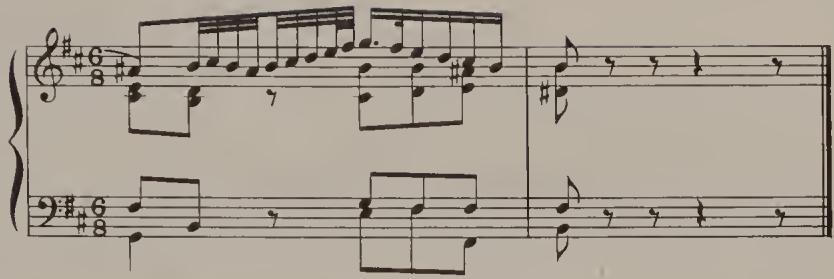
中文讲解
这是一个页面占位符,位于第 14 页,对应上一段提到的 BWV 544《b 小调前奏曲》终止小节的乐谱示例,用于让读者直观看到"节拍已被巴赫仔细写出却常被演奏者延长"的段落。原始图像未提供,需查看原书方能确认乐谱细节。
补充说明
位置在 P0089 与 P0091 之间,承接 BWV 544 例证。
第8段(P0091)
原文复述
or in the C major Fugue, BWV 564.
中文讲解
承接前段例证,列出第二首典型作品——《C 大调赋格》BWV 564,与 BWV 544 同属"短终止和弦不应被延长"的反面教材。本句语法上是上一段例证列表的延续(由 “for example in Bach’s B minor Prelude, BWV 544 … or in the C major Fugue, BWV 564” 拆分为两段)。
补充说明
BWV 564 是魏玛时期的管风琴作品,本段用它作为同类型错误的第二例证。
第9段(P0092)
原文复述
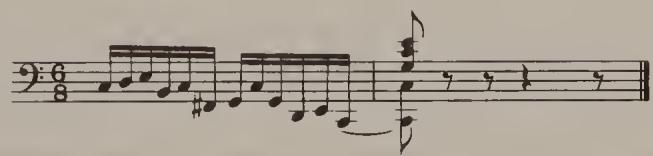
中文讲解
第二个页面占位符,对应 BWV 564《C 大调赋格》终止小节的乐谱示例,与上一段例证配对呈现。原始图像未提供,需查看原书方能确认乐谱细节。
补充说明
位置紧跟 P0091,配图对象为 BWV 564。
第10段(P0093)
原文复述
If Bach had considered a long final chord desirable, he could have considerably simplified the troublesome notation of the final bars. ²⁹
中文讲解
这是对前述双向规定的进一步推论与反证:若巴赫认为应使用长终止和弦,他完全可以把终止小节的繁难记谱改写得简单许多;他没有这样做,正说明终止小节里那些"麻烦"的短时值音符恰恰是乐谱本意——短促收束是有意为之,而非缺失延长记号之故。末尾的上标 ²⁹ 对应脚注 29(见 P0096)。
补充说明
脚注编号 29 与下一段 P0096 的脚注图像相对应。
第11段(P0094)
原文复述
In conclusion it should be mentioned that the recent past has witnessed the rise of the strange habit of ’emasculating’ the final rhythms on the strong beat, the so-called masculine endings, by adding free and wholly unjustified long appoggiaturas or trills. If this practice continues, Beethoven’s Fifth Symphony will be played as in Ex. 5.3 a hundred years from now. Further comment on this subject is superfluous.
中文讲解
作为本节总结,作者批评一种近年流行的习惯:演奏者在强拍上的"阳性收束"(masculine endings,即重音落在小节第一拍上的结尾)之前,自由地、毫无根据地加入长的倚音(appoggiatura)或颤音,以此"阉割"原本落在强拍上的节奏。作者形象地用 “emasculating”(去势)一词表达他对这一做法的强烈不满。他以预言式的口吻警告:若此风不止,一百年后贝多芬《第五交响曲》的开头动机(短—短—短—长,亦即落在强拍上的阳性收束节奏)将按例 5.3 所示的加装饰版本演奏。最后一句"Further comment on this subject is superfluous"以反讽与不耐的态度结束全节。
补充说明
贝多芬《第五交响曲》开头的"短短短长"动机是阳性收束的典型例子,作者以此作为类比说明:错误习惯一旦制度化,连最家喻户晓的作品也会被改写。例 5.3 即 P0095 之图。
第12段(P0095)
原文复述
Ex. 5.3
中文讲解
这是上段所引例 5.3 的图题(caption),标记谱例编号。具体谱例图像未在原文中显示,需查阅原书以确认被作者嘲讽的加装饰版本之形态。
第13段(P0096)
原文复述

中文讲解
这是脚注 29 的内容(同时以图像形式呈现):作者所引书名为《Interpretationsfragen》(即《解释问题》或类似德文译名《诠释问题》),第 126 页。该脚注支持 P0093 的反证论点——巴赫若想要长终止和弦本可简化记谱。原始书影图像未提供,需查看原书方能确认完整页码与上下文。
补充说明
脚注 29 为 P0093 的判断提供外部文献支撑。
脚注 / 边栏 / 图表 / 附加信息(如有)
本节包含两处谱例占位符(P0090 与 P0092),分别配 P0089/P0091 中的 BWV 544 与 BWV 564 终止小节乐谱,用于支持"短终止和弦不应被延长"的反面论证;含一处示例标题 P0095(Ex. 5.3),配 P0094 关于阳性收束被装饰的讽刺性谱例;含一处脚注 P0096,引用《Interpretationsfragen》第 126 页,支撑 P0093 关于巴赫若想延长终止和弦本可简化记谱的反证论点。
💡 本节核心要点
- 渐弱式结尾在巴赫笔下确实存在,但其使用受乐曲性格严格限定:仅适用于安静、纤细、具有歌唱性的段落(如《平均律》第一册升 c 小调前奏曲、某些阿勒曼德),几乎不适用于赋格。
- 声部数量减少造成的力度下降并非真正渐弱,而应被理解为档位(registration)的突然切换——在《半音幻想曲与赋格》的赋格中,鲁特琴式插段应当用第二排键盘或 non legato + 半踏板,紧接的赋格进入则应 subito forte,不应以渐强铺垫。
- 巴赫需要力度处理,但力度处理受结构约束,典型错误是把赋格开头弹得过弱、结尾弹得过响。
- 终止和弦的时值应严格按照巴赫记谱:长时值者必须至少保持完整时值;短时值者在终止小节中不应被延长,否则即违背记谱意图——BWV 544《b 小调前奏曲》与 BWV 564《C 大调赋格》是典型反面教材。
- 巴赫既写长终止和弦(含延长号)又写短终止和弦这一事实证明,长时值记谱并非沿袭惯例,而是有意为之;若他想要长收束,他完全可以简化终止小节的繁难记谱。
- 在阳性收束(masculine endings)前自由加入长的倚音或颤音以削弱强拍节奏,是一种应当受到强烈批评的当代演奏习惯。
🔑 关键术语
- diminuendo ending:渐弱式结尾,指乐曲结尾处音量逐步收小的处理;本节限定其仅适用于安静、歌唱性段落,不适用于赋格。
- cantabile:如歌的、歌唱性的,本节借以描述适合使用渐弱式结尾的性格特征。
- registration / manual / lute stop:管风琴(或羽管键琴)的音色档位/分排键盘/鲁特音栓;声部数量减少在本节被解释为档位变化而非真正渐弱。
- subito forte:意为"突然强奏",指不经过渐强铺垫直接以强奏出现;本节用以描述《半音幻想曲赋格》中紧随鲁特琴式插段之后的赋格进入。
- fermata:延长记号;本节指出巴赫并非因惯例而加 fermata,而是有意区分长短终止和弦。
- masculine ending:阳性收束,指重音落在小节第一拍上的结尾;本节批评在该位置前自由加入长倚音或颤音以"阉割"强拍节奏的习惯。
- appoggiatura:倚音,一种装饰音;本节批评其在阳性收束前被无依据地延长使用。