目录
C001 Problems of Sonority
- S0001 Instruments in the Age of Bach
- 页码:1-2
- S0002 Church and Chamber Organs
- 页码:2-3
- S0003 Stringed and Plucked Instruments
- 页码:3-4
- S0004 Lute Harpsichords (Lautenwerke)
- 页码:5-5
- S0005 Harpsichords
- 页码:6-9
- S0006 Hämmerwerke or Hämmerpantalone
- 页码:10-11
- S0007 Clavichords
- 页码:12-12
- S0008 Cembal d’amour
- 页码:12-13
- S0009 Fortepianos
- 页码:14-17
- S0010 Combination Instruments
- 页码:17-18
- S0011 Bach’s Attitude to Stringed Keyboard Instruments
- 页码:18-26
- S0012 Once More to the Question: Harpsichord or Piano?
- 页码:27-33
S0001 Instruments in the Age of Bach
第1段(P0001)
原文复述
Problems of Sonority
中文讲解
这是本节所属的上级章节标题,意为"音响的问题"。“音响”(sonority)一词在音乐语境中指乐器发声时的音色、响度与音质等综合特征;“问题"一词暗示本部分将讨论的不是对乐器本身的中性介绍,而是巴赫在使用乐器时所遭遇的种种困难与局限。该标题统摄全章,将下文的讨论引向"声音为何难以达到理想"的方向。
第2段(P0002)
原文复述
INSTRUMENTS IN THE AGE OF BACH
中文讲解
本节小标题"巴赫时代的乐器”。它将上一级"音响的问题"进一步聚焦到具体的历史时段——巴赫(1685–1750)所生活的18世纪上半叶——以及具体的研究对象:当时可用的乐器。这一标题为整节定下范围,提示读者接下来的论证将围绕巴赫本人与乐器的实际关系展开。
第3段(P0003)
原文复述
It may be taken for granted that J. S. Bach was intimately acquainted with the rich variety of instruments in use in his time. It may also be taken for granted that Bach was not always wholly satisfied with these instruments, particularly when the ones at his disposal were of poor quality or in need of repair. This may have been one of the reasons why he acquired a rather large collection of instruments, as is shown by the catalogue of his estate.
中文讲解
本段的中心主张分三层:(1) 巴赫对他那个时代丰富多样的乐器非常熟悉;(2) 但他并不总是完全满意这些乐器,特别是在手头的乐器质量较差或需要维修时;(3) 这种不满意可能是他购置大量乐器的原因之一。论证结构上,作者用两个"It may be taken for granted that…“句式先确立无需争辩的前提,再以"not always wholly satisfied"的限定(注意"not always"与"wholly"两层减弱)引入真正的论点,并以"may have been one of the reasons"的推测口吻将"不满意"与"收藏丰富"相联系。逻辑上,这一"不满意—所以广为收藏"的推论为下文的遗产目录埋下伏笔:本目录正是"大量收藏"的物证。
补充说明
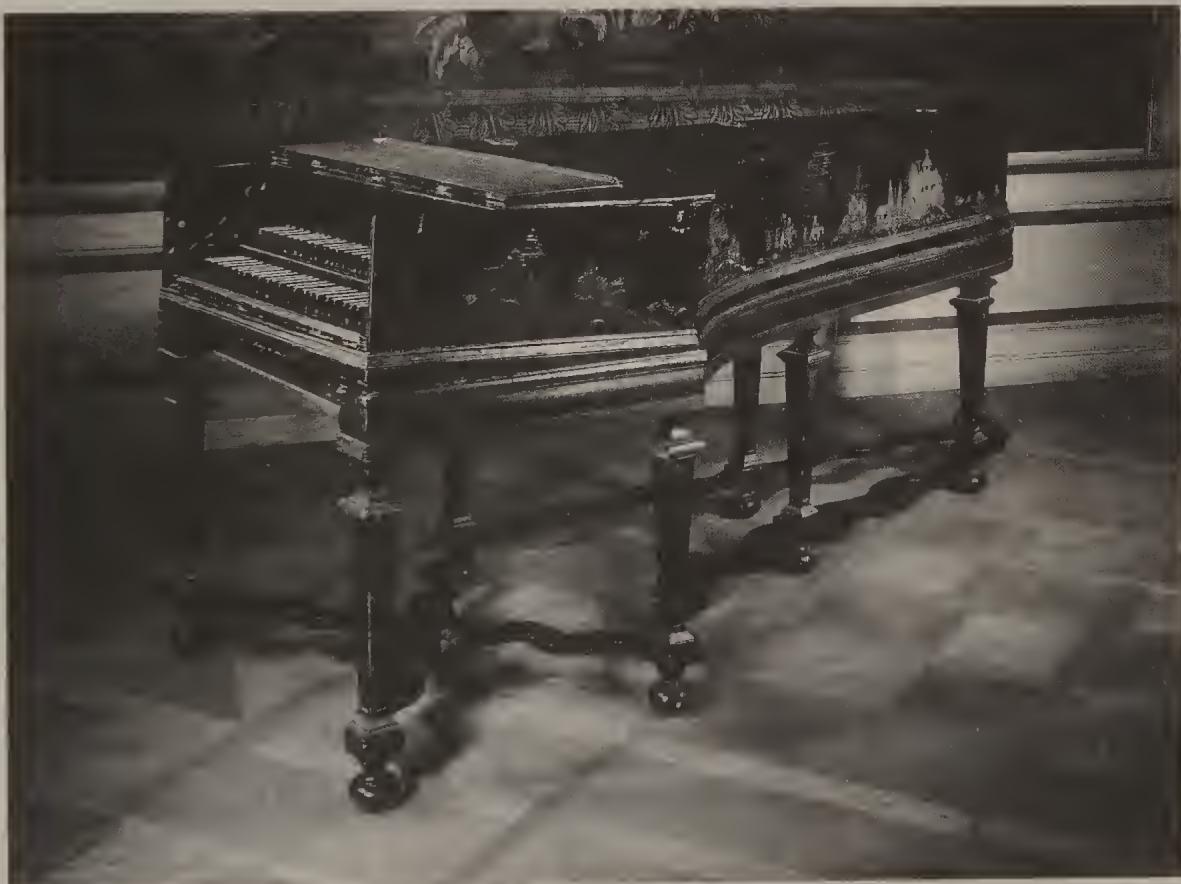
“遗产目录”(catalogue of his estate)即巴赫去世后对其财产进行清点与估价的官方文件,本节下文将引用其中"第六章 乐器"的具体内容。
第4段(P0004)
原文复述
Extract from the catalogue of Bach’s estate:
中文讲解
“巴赫遗产目录摘录:"——这一行作为引出下表的标题,作用是告诉读者接下来出现的是一份历史文献的摘录,而非作者自己的叙述。它将"议论"切换为"史料”,使读者意识到自己正在看到的是一份原始档案。
第5段(P0005)
原文复述
Particulars [Specificatio] of the estate of the late Johann Sebastian Bach, formerly cantor at St Thomas’s School in Leipzig, who died on 28 July 1750.
中文讲解
这是巴赫遗产目录的扉页/题头文字,包含三个关键信息点:(1) 文档性质——“Specificatio”(拉丁文/德文,意为"明细表"或"财产清单”),作者在方括号中以英文"Particulars"加以解释;(2) 主体——已故的约翰·塞巴斯蒂安·巴赫,曾任莱比锡圣托马斯学校的乐长(cantor);(3) 时间——他于1750年7月28日去世。作用:作为遗产清单的官方说明,为紧接着的"第六章 乐器"提供权威出处与年代定位,使后文目录中的数字具有历史档案的可信度。
补充说明
“cantor"一词源自拉丁文,文中以"cantor at St Thomas’s School in Leipzig"出现,指负责教堂音乐事务与学校音乐教育的复合职位。
第6段(P0006)
原文复述
Chapter VI Instruments
1 veneered clavecin, which is to remain in the family if at all possible | 80 | - | - 1 Clavesin | 50 | - | - 1 ditto | 50 | - | - 1 ditto | 50 | - | - 1 ditto smaller | 20 | - | - 1 Lauten Werck [lute harpsichord] | 30 | - | - 1 ditto | 30 | - | - 1 Stainer violin | 8 | - | - 1 lower-quality violin | 2 | - | - 1 ditto piccolo | 1 | 8 | - 1 Braccie [viola] | 5 | - | - 1 ditto | 5 | - | - 1 ditto | - | 16 | - 1 Bassettgen [small bass] | 6 | - | - 1 Violoncello | 6 | - | - 1 ditto | - | 16 | - 1 Viola da Gamba | 3 | - | - 1 Lute | 21 | - | -
中文讲解
这是本节的核心史料——巴赫遗产目录"第六章 乐器"的具体清单,共列出18件乐器。表格结构为:物品名称、其后三列数字(具体货币单位未在原表中标注)。从内容可观察到以下几点。第一,键盘乐器占绝对多数:1架贴面羽管键琴(特别注明"尽量留在家族中”)、4架羽管键琴(含1架较小者)、2架鲁特琴键琴(Lauten Werck),合计7件翼形键盘乐器——这正是后文"七件翼形键盘乐器"这一表述的来源。第二,价值最高的单件是那架贴面羽管键琴(80),并特别附加"留在家族中"的嘱托,显示其在收藏中的特殊地位。第三,弦乐器包括施塔纳小提琴、次等提琴、小提琴(piccolo)、三件中提琴、小型低音维奥尔琴、大提琴、古低音维奥尔琴、鲁特琴各若干。第四,估价差距很大——从1 8(piccolo)到80(贴面羽管键琴)不等,反映出乐器等级与品质的差异。第五,原表中"— 16 —“的写法(出现于中提琴与低音大提琴的ditto行)表示第一列为空、第二列为"16"的数值。本表的功能是为后段作者提出"估价偏低"与"古钢琴缺失之谜"提供具体事实基础。
补充说明
“ditto"在原表中用以避免重复上述同名乐器名称(如"1 ditto"意即"另1架(上一行所述乐器)")。
第7段(P0007)
原文复述
The collection was rather valuable, particularly when we bear in mind that the valuations were usually kept deliberately low for the benefit of the heirs.
中文讲解
本段中心主张:这份乐器收藏相当有价值,尤其是当我们考虑到估价通常会为了继承人的利益而被刻意压低时。承接上文的表格,作者在此提醒读者:表中的数字低估了真实价值。论证逻辑:当时德国遗产清单的惯例是低估价值以减少继承人所需缴纳的遗产税,因此这些数字应被视为"底线"而非"真实价格”。这为本节定下了另一层基调——我们看到的只是一份保守的清单,真正的巴赫收藏要比纸面上显得更可观。
补充说明
“heirs”(继承人)指巴赫死后依法继承其遗产的家属;“for the benefit of the heirs"指压低总额以减少继承人应缴的遗产税费。
第8段(P0008)
原文复述
We will have reason to return to the catalogue of Bach’s estate on a number of occasions. Elsewhere the Specificatio mentions the fact that Bach’s youngest son, Johann Christian, received ‘3. Clavire nebst Pedal’ during his father’s lifetime. Two of these ‘Clavire’ may have been clavichords; and the pedal may either have been an instrument in its own right placed beneath the harpsichord, or combined with a clavichord or a harpsichord. However, it is also conceivable that one of the three ‘Clavire’ was a fortepiano. At any rate, it is a remarkable fact that Chapter VI of the Specificatio lists seven wing-shaped keyboard instruments, but does not mention a clavichord. Alfred Dürr is of the opinion that this is because Anna Magdalena Bach may have claimed a clavichord as her personal property. Even if this were the case, it is still surprising that no clavichord is mentioned in the list.
中文讲解
本段是本节中最长的论述,包含三个层次。
第一层:“我们将在多处再次回到这份遗产目录”——作者预告这份目录将在后续章节中反复出现,提示读者它具有贯穿全章的资料价值。
第二层:关于小儿子约翰·克里斯蒂安·巴赫(J. C. Bach)的附注。目录别处提到巴赫在世时曾将"3. Clavire nebst Pedal”(三架键盘乐器连同脚键盘)给予小儿子。其中"Clavire”(Clavier 的复数形式)泛指键盘乐器,但具体种类不明——作者给出多种可能:(a) 三件中两件可能是古钢琴(clavichord),脚键盘(Pedal)则可能是独立乐器置于羽管键琴下,或与古钢琴/羽管键琴组合;(b) 三件中也可能有一件是早期钢琴(fortepiano)。这说明巴赫实际拥有的键盘乐器种类比第六章所列可能更复杂。
第三层:“古钢琴缺失之谜”。第六章列出了7件翼形键盘乐器,却完全没有提到古钢琴。考虑到古钢琴是巴赫在键盘演奏与教学中经常使用的乐器(这一对比在巴赫相关文献中是常见的论题),这一遗漏极不寻常。对此,研究者阿尔弗雷德·迪尔(Alfred Dürr)的假设是:安娜·玛格达莱娜·巴赫(巴赫的第二任妻子)可能将一架古钢琴作为个人财产索回。即便接受这一假设,作者仍认为第六章中"只字未提"令人意外——毕竟即便不属遗产,至少应当被提及。
整段作用:把上一段具体的表格内容与更宏观的问题(巴赫实际拥有的乐器种类、文献记载与事实之间的出入)联系起来,为后续讨论"音响问题"埋下具体的研究目标。
补充说明
“Specificatio"即 P0005 中已说明的财产明细表,此处与"目录”(catalogue of his estate)同义;“Pedal”(脚键盘)一词在原文中以德文出现(nebst Pedal),与英文 pedal keyboard 含义相同。
脚注 / 边栏 / 图表 / 附加信息(如有)
本节包含一份源自巴赫遗产目录’第六章 乐器’的原始表格(共18行,列示乐器名称与三列数值),是本节的核心史料。文中还引用了学者 Alfred Dürr 的学术观点作为对’第六章未列古钢琴’问题的可能解释。表内特别标注的'1 veneered clavecin… which is to remain in the family if at all possible’(‘尽量留在家族中’)显示了该件乐器在收藏中的特殊地位。这些材料的功能是为后续关于’音响问题’的讨论提供具体的事实基础。
💡 本节核心要点
- 巴赫对他那个时代丰富多样的乐器非常熟悉,但并不总是完全满意——当手头的乐器质量较差或需要维修时尤其如此;这种不满可能是他大量购置乐器的原因之一。
- 巴赫遗产目录(Specificatio)‘第六章 乐器’是本节的核心史料,列出18件乐器,其中7件为翼形键盘乐器(5架羽管键琴 + 2架鲁特琴键琴),并附有三列数值。
- 表中价值最高的为’贴面羽管键琴’(80),并特别注明’尽量留在家族中’,显示其在收藏中的特殊地位。
- 作者提醒读者:表中所有估值都被认为是有意压低的结果(为减少继承人所需缴纳的遗产税),因此实际收藏价值比表上数字更高。
- 目录别处提到小儿子 J. C. Bach 在巴赫生前曾获赠'3. Clavire nebst Pedal’,其中可能包括古钢琴甚至早期钢琴,提示巴赫的键盘乐器实际种类比第六章所列更为复杂。
- 目录第六章列出了7件翼形键盘乐器却完全未提古钢琴——这一’古钢琴缺失之谜’为本节和后续讨论埋下伏笔;Dürr 的假设(Anna Magdalena 可能将古钢琴作为个人财产索回)虽有可能,但作者仍认为不足以完全解释这一遗漏。
🔑 关键术语
- Specificatio:拉丁文/德文,意为’财产明细表’或’具体清单’,文中以英文’Particulars’对应,指巴赫去世后编制的遗产清册。
- clavecin / Clavesin:羽管键琴的旧式法语/拉丁拼写,等同于 harpsichord;文中'1 veneered clavecin’指外壳贴有珍贵木料的羽管键琴。
- Lauten Werck:鲁特琴键琴,原文以德文形式出现并以英文’lute harpsichord’括注,指装有模仿鲁特琴音色之音栓的羽管键琴。
- Stainer violin:施塔纳小提琴,原文直接以英文’Stainer violin’出现,指以 Stainer 姓氏命名的提琴(Stainer 是 17 世纪提洛尔地区著名的小提琴制琴师)。
- Braccie [viola]:中提琴的德语古称,原文以德文形式出现并以英文’viola’括注。
- Bassettgen [small bass]:小型低音弦乐器,原文以德文形式出现并以英文’small bass’括注。
- Viola da Gamba:古低音维奥尔琴,意大利文名称,区别于夹于肩上的小提琴家族,指夹腿持琴(有’腿’)的低音弦乐器。
- fortepiano:早期钢琴,18世纪中叶发展出的击弦键盘乐器,介于古钢琴与现代钢琴之间;文中作为巴赫晚年可能拥有的键盘乐器之一被提出。
- Pedal:脚键盘或踏板装置,原文以德文’nebst Pedal’出现,指可以独立成琴或与键盘乐器组合使用的脚踏键盘部分。
- cantor:教堂乐长,原文以’cantor at St Thomas’s School in Leipzig’出现,指负责教堂音乐事务与学校音乐教育的复合职位。
S0002 Church and Chamber Organs
第1段(P0009)
原文复述
CHURCH AND CHAMBER ORGANS
中文讲解
这是本节的标题,原文以两个层级的标记呈现(##),功能是开启并限定本节议题——教堂管风琴与室内管风琴。标题本身不展开观点,而是为紧随其后的正文划定讨论对象:巴赫作为管风琴家所接触、评价并实际演奏过的那一类乐器,以及与之相关的音响偏好。该标题向读者预告,本节将围绕两类管风琴(教堂用的大型管风琴与较小、可置于室内的练习/家用管风琴)展开,并自然地过渡到巴赫的具体偏好与文献依据。
补充说明
标题层级为二级标题(##),属于版面结构而非论述本身;正文中提及的 Klotz 等研究将围绕这一议题提供支撑。
第2段(P0010)
原文复述
Bach was primarily an organist. Thus it is perhaps surprising that the catalogue of the estate does not list a chamber organ. In Leipzig he presumably did not need to practise at home in view of the proximity of St Thomas’s Church.
中文讲解
本段由两个递进判断构成。第一,巴赫主要是一位管风琴家(primarily an organist),这是后文讨论其音响品味的前提。第二,遗产目录(catalogue of the estate)中没有列出室内管风琴(chamber organ),作者以 “it is perhaps surprising” 表示轻微意外——因为以巴赫的管风琴家身份,家中备一台室内管风琴本是合乎情理的。但随即给出合理解释:在莱比锡时期,由于住所与托马斯教堂(St Thomas’s Church)距离很近,巴赫可以随时到教堂练琴,因此并不需要在家中再置办一台室内管风琴。本段的作用是为读者设置一个看似反常、随后被合理解释的小悬念,同时也引出莱比锡时期的地理背景:教堂就在身边,他不必借助家庭乐器。
本段以 “thus” 和 “presumably” 标记推论的性质:作者并未声称证据确凿,而是基于日常距离作出合理推测,因此读者应将这一解释视为作者的可能性判断,而非史料明证。
补充说明
遗产目录(Nachlass-Verzeichnis)在此处被用作关于巴赫家庭乐器配置的唯一证据来源,作者对其内容做的是反向推理——从缺失项(没有室内管风琴)推断生活条件。
第3段(P0011)
原文复述
As an organist Bach certainly had a number of predilections when it came to the combination of different sonorities. Thus, as Klotz has demonstrated, he did not like all Silbermann organs, for, in spite of their excellent workmanship, they did not always have a specification that came up to his expectations. Did he consider them to be too rococo in character? Further, Bach might not have been satisfied with Silbermann’s unequal temperament. According to Klotz, he evidently liked a wide variety of sonorities, not only reed stops of all kinds, but also more delicate shades such as the Viola da gamba, Salizional, Gemshorn, and Quintadena stops and the bright Glockenspiel stop. And he was particularly enchanted by the sound of the full organ. That he also praised recondite stops such as the thirty-two-foot of the organ in Hamburg’s St Catherine’s Church is an established fact, as is his enthusiasm for the large number of reed stops on this organ. As a composer of contrapuntal works he no doubt liked to combine different stops. For further information, the reader is referred to Hans Klotz’s excellent book Studien zu
中文讲解
本段是本节的核心,集中说明巴赫对管风琴音响(sonorities)与音栓组合(combination of different sonorities)的多重偏好。作者以 “As an organist… certainly had a number of predilections” 起笔,奠定本段的总论:巴赫并非对一切管风琴都满意,而是有明确的好恶。接着以 Klotz 的研究为依据展开两点负面判断:第一,巴赫并非喜欢所有的 Silbermann 管风琴,尽管工艺(workmanship)出色,但其规格(specification)有时未达他的期望;作者以反问 “Did he consider them to be too rococo in character?” 提出一种猜测——巴赫可能觉得 Silbermann 的音色风格过于洛可可。第二,巴赫可能对 Silbermann 的不平均律(unequal temperament)也不满意——这一细节揭示巴赫对调律体系的敏感。
随后转入正面列举巴赫喜欢的音色:不仅各类簧管音栓(reed stops of all kinds),还包括更为细腻的音色——中提到的 Viola da gamba(维奥尔琴音栓)、Salizional、Gemshorn(羊角笛)、Quintadena,以及明亮的 Glockenspiel(钟琴音栓)。“delicate shades” 一词强调这些音色在传统强势簧管之外提供的细腻层次;“bright” 则提示 Glockenspiel 的高亢透亮特征。
作者进一步以 “enchanted”(入迷)一词说明他对 full organ(全部音栓齐鸣、plenum)音响的偏好,这是管风琴演奏美学的关键取向。接着以 “established fact” 引述两条事实证据:其一,巴赫曾赞扬汉堡圣凯瑟琳教堂(St Catherine’s Church)管风琴上的 32 尺音栓(thirty-two-foot,深沉低音);其二,他对这架琴上大量簧管音栓(reed stops)同样热情。32 尺音栓在管风琴传统中意味着罕见的超低频震撼力,作者用 “recondite”(罕见的、深奥的)形容它,强调巴赫对极端音域的鉴赏。
段末以作曲身份作结:作为对位作品(contrapuntal works)的作曲家,巴赫自然喜欢把不同音栓叠加使用(combine different stops),借此让各声部获得独立音色,便于听觉上分辨复调织体。最后一句 “For further information, the reader is referred to Hans Klotz’s excellent book Studien zu” 将读者引向下一段(脚注所补全的书名:Bachs Registrierkunst)。
整体上,本段以"分项举例 + 反例 + 文献指向"的方式,建立了巴赫的音响偏好画像:既包含对极端低音(32 尺)与全奏的喜爱,又涵盖对簧管、弦乐类(Viola da gamba)、笛类(Gemshorn)以及装饰性音栓(Glockenspiel)的广泛喜好;同时对 Silbermann 的规格与律制保留批评态度。
补充说明
段中列举的音栓名(Viola da gamba、Salizional、Gemshorn、Quintadena、Glockenspiel)皆为管风琴传统中的具体音色类型,原文以并列结构呈现,作者意在表明巴赫的音色谱系宽广,而非局限于某一类。32 尺音栓(thirty-two-foot)以管长为命名原则,对应极低的音域;圣凯瑟琳教堂管风琴在巴赫时代具有特殊地位,是巴赫长途造访并撰写鉴定报告的对象。
第4段(P0012)
原文复述
$^{1}$ Bach-Dokumente, ii. 492 f. and 504.
中文讲解
这是脚注 1 的前半部分,属于版面附加内容。其作用是为正文中的事实主张提供文献出处:标注来源为《Bach-Dokumente》第 ii 卷第 492 页及随后页(f. = “and following”)与第 504 页。该脚注对应正文提到的 Silbermann 管风琴评价、巴赫对律制与音栓的具体反应等历史性事实主张,提供来源以便读者核证;它并不引入新的论点。脚注编号为上标 1,与下一段中以 Hans Klotz、Robert Marshall、George Stauffer 为署名的脚注 2、3 一并构成完整参考文献链。
补充说明
《Bach-Dokumente》是巴赫文献集成(Documenta Bachiana),由 Bach-Archiv 主持编辑,是巴赫研究中最重要的原始资料汇编之一。脚注中 “f.” 为德文 “folgende” 之略,等同于英文 “and following”。
第5段(P0013)
原文复述
Bachs Registrierkunst, and to the relevant publications by Robert Marshall $^{2}$ and George Stauffer. $^{3}$
中文讲解
本段承接脚注 1 的剩余部分并合并了脚注 2 与脚注 3。它补全了正文段末所引书名——《Studien zu Bachs Registrierkunst》(Hans Klotz 著),即"巴赫配册艺术研究",是研究巴赫音栓运用(Registrierkunst)最核心的专著。同时指引读者参考 Robert Marshall 与 George Stauffer 的相关出版物。
脚注 2 与脚注 3 在原版中分别对应 Robert Marshall 与 George Stauffer 的研究著作,它们扩展了 Klotz 工作的方向:Marshall 与 Stauffer 都对巴赫的音栓运用、乐器评价与对位作曲实践做过系统研究。整段的功能是为正文关于音栓偏好与乐器评价的判断提供扩展阅读路径,使有兴趣进一步研究的读者能够沿此线索追溯学术文献。
就本节论证而言,本段不增添新的事实主张,仅是文献延伸,因此其作用是支撑性与引导性,而非推进性。
补充说明
脚注 2 与 3 在此处仅以作者姓氏标注,其完整出版信息应在原书参考文献或相应位置给出,本段不复述之。“Registrierkunst”(音栓配册艺术/管风琴配册艺术)指演奏者在不同乐曲与场合下选择、组合音栓的实践与技术。
脚注 / 边栏 / 图表 / 附加信息(如有)
本节包含两条附加成分:(1)脚注 1 的完整版(横跨 P0012 与 P0013),出处为《Bach-Dokumente》第 ii 卷第 492 页起与第 504 页,作用是为正文关于 Silbermann 管风琴及巴赫音色偏好的事实主张提供原始文献支撑;(2)脚注 2 与脚注 3,分别指向 Robert Marshall 与 George Stauffer 的相关著作,作用是为读者延伸阅读提供线索,与脚注 1 一起构成"Klotz—Marshall—Stauffer"的核心研究文献链。脚注本身不引入新论点,仅作来源与延伸。
💡 本节核心要点
- 巴赫主要身份是管风琴家,但其遗产目录中并未列出室内管风琴;这在文中被解释为莱比锡时期他与托马斯教堂距离很近,无需家中练习。
- 巴赫并非喜欢所有 Silbermann 管风琴,尽管工艺优秀,他对其规格(specification)并不总是满意,甚至可能认为其音色过于洛可可,并对其不平均律也不满意。
- 巴赫偏好的音色谱系宽广:包括各类簧管音栓(reed stops),以及细腻的 Viola da gamba、Salizional、Gemshorn、Quintadena 等音栓和明亮的 Glockenspiel;他尤其钟爱全奏(full organ)的音响。
- 对罕见与极端音响的鉴赏同样是巴赫的标志:他曾赞扬汉堡圣凯瑟琳教堂的 32 尺音栓以及该琴上大量的簧管音栓——这些是已确立的史实(established fact)。
- 作为对位作曲家,巴赫喜欢把不同音栓组合起来,借此让复调织体的各声部获得可分辨的独立音色。
- 本节的文献支撑集中于 Hans Klotz《Studien zu Bachs Registrierkunst》,并辅以 Robert Marshall 与 George Stauffer 的相关研究,脚注 1 同时指向《Bach-Dokumente》第 ii 卷。
🔑 关键术语
- chamber organ:室内管风琴,体量较小、可置于室内的管风琴,常用于家庭练习或私人演出。本节指出巴赫遗产目录中没有这一项,作者将其归因于莱比锡时期与托马斯教堂的近距离。
- Silbermann organs:由德国著名管风琴制造家族 Silbermann 所制作的管风琴,工艺精湛但被巴赫评价为并非全部符合其规格期望,并可能对其律制与洛可可化的音色有所保留。
- unequal temperament:不平均律,一种历史上常见的调律体系,使各调色彩不一;本节提到巴赫可能对 Silbermann 所采用的不平均律不满意。
- reed stops:簧管音栓,依靠金属簧片振动发声的管风琴音栓,音色明亮、有穿透力;本节指出巴赫喜欢各类簧管音栓。
- Viola da gamba / Salizional / Gemshorn / Quintadena:四类音色偏细腻、模拟弦乐或笛类音响的管风琴音栓;本节将其并列列举,作为巴赫所欣赏的"更柔和层次"的代表。
- Glockenspiel stop:钟琴音栓,以小型金属管发出清脆明亮的音色;本节将其作为巴赫所欣赏的"明亮"音色的代表。
- thirty-two-foot stop:32 尺音栓,以管长命名,对应极低音域;本节指出巴赫曾对汉堡圣凯瑟琳教堂的此音栓加以赞扬。
- full organ (Plenum):全奏,即所有基本音栓齐鸣的音响状态;本节以 “enchanted” 一词强调巴赫对此音响的强烈喜爱。
- Registrierkunst:音栓配册艺术,指在不同乐曲与场合下选择、组合音栓的技术与审美判断,是 Hans Klotz《Studien zu Bachs Registrierkunst》一书的核心主题。
- St Thomas’s Church, Leipzig:莱比锡托马斯教堂,巴赫担任 Thomaskantor 时期的任职地,也是其日常可及的练琴与演奏场所。
- St Catherine’s Church, Hamburg:汉堡圣凯瑟琳教堂,本节提到其管风琴的 32 尺音栓与大量簧管音栓获得巴赫的高度评价。
S0003 Stringed and Plucked Instruments
第1段(P0014)
原文复述
STRINGED AND PLUCKED INSTRUMENTS
中文讲解
这是本书第3—4页的小节标题,以加粗大写居中形式呈现。它宣告本节论题从前文的键盘乐器与管风琴转向弦乐器与拨弦乐器,提示读者下文将围绕巴赫实际使用或与之相关的两类乐器展开:一类是提琴家族内部的若干成员(viola pomposa、violoncello piccolo、violino piccolo、bassettl 等),另一类是拨弦类乐器(viola d’amore、theorbo、lute 等)以及它们在历史演出实践中的复兴问题。标题自身不提供论证,只起分节标志和论题预告的作用。
第2段(P0015)
原文复述
Though Bach’s fame was primarily due to his organ playing, he was evidently not only able to play all kinds of keyboard instruments, but also the violin. With regard to stringed instruments, Bach is known to have bewailed the lack of an intermediate member of the violin family. At his behest a very large viola, or ’tenor violin’ was constructed (or reconstructed). This has gone down in history as the ‘viola pomposa’, and was evidently the instrument for which he wrote his violoncello piccolo parts. ⁴ In addition to this Bach still made use of the violino piccolo, for example in the First Brandenburg Concerto (an instrument of this kind is also listed in the catalogue of the estate). Finally, in the eighteenth century, there were still a greater number of bass stringed instruments in use than today. The so-called bassettl was presumably a small cello (in the catalogue of Bach’s estate it is termed bassettgen). It has been suggested that it may possibly have been played like a viola pomposa. Then it was not a small double bass, and thus may well have been identical with the instrument Bach termed ‘violoncello piccolo’.
中文讲解
本段的中心主张是:巴赫并非只是一位管风琴与键盘演奏家,他对小提琴家族也具备演奏能力,并且亲自介入了乐器形制的设计与乐曲的声部指派。论证分四个层次展开:
(1) 修正常见印象。作者先以连词 Though 起笔,限定巴赫的声名主要源于管风琴,随即用 not only…but also…强调他同样能够演奏所有键盘乐器以及小提琴,从而为下文讨论弦乐器做铺垫。
(2) 介绍 viola pomposa 的由来。作者指出巴赫曾抱怨小提琴家族缺少介于中音与低音之间的成员,并在他授意下制造(或改制)了一支比常规中提琴更大的所谓 “tenor violin”,它在历史上被定名为 viola pomposa。作者进一步推测,这件乐器很可能就是巴赫为 violoncello piccolo 声部所设想的实际乐器(脚注 4 引 Besseler 1949 与 Schrammek 1977 关于十度小提琴与 viola pomposa / violoncello piccolo 的研究作为旁证)。
(3) 强调 violino piccolo 的继续使用。即使在 viola pomposa 出现之后,巴赫仍然使用高音小提琴 violino piccolo,例证是《第一勃兰登堡协奏曲》,并且巴赫的遗产目录中也列有同类乐器。这一事实限制了把 viola pomposa 视为 viola da braccio 家族内通用替代品的简单化解释。
(4) 处理 bassettl/violoncello piccolo 的对应关系。作者谨慎地使用 presumably、it has been suggested that、may possibly、may well have been 等限定语,呈现的是一种尚未定论的学术推测:目录中的 bassettl(即 bassettgen)大概是一支小型大提琴,若按 viola pomposa 的方式持琴演奏,则它并非低音提琴,从而很可能等同于巴赫笔下的 violoncello piccolo(脚注 5 引 Drüner 1987 关于该对应关系的专论)。
关键概念澄清:viola pomposa 是一件体积介于中提琴与大提琴之间的特殊弦乐器;violoncello piccolo 在巴赫笔下是一个声部术语,并不指某一种固定乐器;violino piccolo 是一种定弦较高的高音小提琴;bassettl/bassettgen 是同一件乐器在不同目录中的不同拼写。
本段在整节中的作用是:在进入下文的演奏实践争议(如 “Bach bow” 之争)之前,先勾画巴赫周围的弦乐器家族成员及其谱面术语与实际乐器之间的对应关系,为后续讨论提供物质基础。
补充说明
脚注 4、5 指向的核心争论——viola pomposa 与 violoncello piccolo 是否为同一件乐器——在本段以限定语形式呈现,作者并未下断言,而是把不同学者(Drüner 等)的结论作为可能性的依据留待读者判断。
第3段(P0016)
原文复述
Merely of historical interest to violinists are the claims advanced by Arnold Schering and Albert Schweitzer, who suggested that Bach made use of a curved bow that enabled the performer to play in three and four parts at once, that is, making it possible to avoid arpeggiating the four-part chords such as those in the Chaconne of Bach’s D minor Solo Partita. Though this idea was debated for decades, it was convincingly refuted by Andreas Moser ⁶ as early as 1920, and more recently, in 1956, by Eduard Melkus. ⁷ Towards the end of his life even Albert Schweitzer was convinced by the latter’s arguments that the so-called ‘Bach bow’ was the result of an incorrect interpretation of the sources. Just as the so-called ‘Bach trumpet’ was an invention of the nineteenth century, the curved bow, though used in the nineteenth and early twentieth century (especially by the famous violinist Ole Bull), was most likely unknown to J. S. Bach and his friend, the Dresden court musician
中文讲解
本段集中讨论一个已被推翻、却仍在演奏史上有影响的假说——所谓 “Bach bow”。
论证结构为: (1) 介绍假说的内容与倡导者:Arnold Schering 与 Albert Schweitzer 主张巴赫使用一种可以同时演奏三、四个声部的弯曲琴弓,借此避免对 D 小调无伴奏帕蒂塔恰空舞曲中四音和弦作琶音分解式演奏。 (2) 指出假说虽被讨论数十年,但早已被 Andreas Moser(1920 年,脚注 6)与 Eduard Melkus(1956 年,脚注 7)相继有力反驳。 (3) 强调甚至连原初倡导者 Albert Schweitzer 本人在晚年也被 Melkus 的论证说服,承认所谓 “Bach 弓” 源于对原始文献的误读。 (4) 以类比收束:Bach 弓如同 “Bach 小号”,是 19 世纪的发明;尽管 19 世纪与 20 世纪初确有使用(作者举出著名小提琴家 Ole Bull),但它"最有可能"(most likely unknown)为 J. S. Bach 与其友人——即下一段开头的 Dresden court musician Pisendel——所不知。
关键限定语:作者用 merely of historical interest 表明这一假说对当代小提琴家而言只有史料价值;用 most likely unknown 而非 definitely unknown 保留了审慎语气;并通过 as early as 1920 与 more recently, in 1956 区分两次反驳的时间点。
本句在结构上跨段:末句以 the Dresden court musician 收束,下一段 P0023 紧接着写出 Pisendel,构成一个跨段的不完整句子,处理时需要注意这一连续性。
补充说明
作者以 “Bach trumpet” 类比 “Bach bow”,借此把个案纳入一个更大的批评判断:所谓与巴赫直接相关的若干特殊乐器或弓具往往是后世的发明或重构,而非巴赫时代真实存在的演奏实践。
第4段(P0017)
原文复述
² ‘Organ or “Klavier”? Instrumental Prescriptions in the Sources of Bach’s Keyboard Works’, in J. S. Bach as Organist, ed. G. Stauffer and E. May, 212 ff.
中文讲解
这是脚注 2,标注对象为上一节关于巴赫使用管风琴还是键盘乐器的讨论。其内容为一篇论文的标题与出处:‘Organ or “Klavier”? Instrumental Prescriptions in the Sources of Bach’s Keyboard Works’,收入 G. Stauffer 与 E. May 主编的论文集 J. S. Bach as Organist,起始页 212 页及其后。该脚注为正文关于乐器归属(organ 与 Klavier 之间的区分)提供学术来源,属于支持性脚注。
第5段(P0018)
原文复述
³ ‘Bach’s Organ Registration Reconsidered’. This is a modified version of Stauffer’s earlier essay ‘Über Bachs Orgelregistrierpraxis’ in BJb, 1981.
中文讲解
这是脚注 3,承接前文关于巴赫管风琴音栓使用(registration)实践的讨论。其内容指明相关文献为 ‘Bach’s Organ Registration Reconsidered’,并注明此文是 Stauffer 较早一篇德文论文 ‘Über Bachs Orgelregistrierpraxis’(载于 BJb,1981 年)的修订版。该脚注属于来源与限定脚注:一方面提供英文学界的研究入口,另一方面提示读者该结论建立在 Stauffer 本人早前德文研究的基础之上。
第6段(P0019)
原文复述
⁴ See Heinrich Besseler, ‘Zum Problem der Tenorgeige’, Musikalische Gegenwartsfragen, i (Heidelberg, 1949); W. Schrammek, ‘Viola pomposa und Violoncello piccolo bei Johann Sebastian Bach’, Bericht über die Internationale Konferenz zum III. Internationalen Bachfest der DDR in Leipzig 1975 (Leipzig, 1977), pp. 345 ff.
中文讲解
这是脚注 4,对应正文 P0015 中关于 viola pomposa 即巴赫笔下 violoncello piccolo 声部所用乐器的论断。其内容并列两条学术来源:Besseler 1949 年在 Heidelberg 出版的 Musikalische Gegenwartsfragen 第一辑中关于 ‘十度小提琴’(Tenorgeige)问题的论文,以及 Schrammek 在 1977 年 Leipzig 出版的关于 1975 年第三届 Bach 会议的国际会议报告中关于 viola pomposa 与 violoncello piccolo 的研究(自第 345 页起)。两条文献共同为正文关于乐器形制对应关系的猜测提供学术支持。
第7段(P0020)
原文复述
⁵ See Ulrich Drüner, ‘Violoncello piccolo und Viola pomposa bei Bach’, BJb, 73 (1987).
中文讲解
这是脚注 5,支撑 P0015 中关于 bassettl/bassettgen 究竟是否为巴赫笔下 violoncello piccolo 这一推测。其内容指明参考文献为 Ulrich Drüner 于 1987 年发表在 Bach-Jahrbuch (BJb) 第 73 卷的论文 ‘Violoncello piccolo und Viola pomposa bei Bach’。该脚注属于旁证脚注,为一个尚未定论的可能性提供学术出处。
第8段(P0021)
原文复述
⁶ ‘Zu Joh. Seb. Bachs Sonaten und Partiten für Violine allein’, BJb, 17 (1920), 52 ff.
中文讲解
这是脚注 6,对应正文 P0016 中关于 Andreas Moser 早在 1920 年即已反驳 Bach 弓假说的陈述。其内容为 Moser 的论文 ‘Zu Joh. Seb. Bachs Sonaten und Partiten für Violine allein’,发表于 Bach-Jahrbuch 第 17 卷(1920 年),起始页 52 页及之后。该脚注为 “Bach 弓假说早在 1920 年已被驳倒” 一说提供原始文献出处。
第9段(P0022)
原文复述
⁷ ‘Zur Frage des Bach-Bogens’, ÖMZ, 11 (1956), 99 ff. See also Melkus, ‘Bach-Interpretation’.
中文讲解
这是脚注 7,对应 P0016 中 Eduard Melkus 于 1956 年再次反驳 Bach 弓假说、并最终说服 Schweitzer 本人的陈述。其内容为 Melkus 的论文 ‘Zur Frage des Bach-Bogens’,发表于 Österreichische Musikzeitschrift (ÖMZ) 第 11 卷(1956 年),起始页 99 页及之后;并补充指引读者参见 Melkus 的另一部著作 ‘Bach-Interpretation’。该脚注同时承担来源与旁证功能:既定位 1956 年的反驳文章,又提示读者进一步的相关研究。
第10段(P0023)
原文复述
Pisendel. Apart from Telmanyi, Tossy Spivakovsky was probably the last great violinist who, despite the refutation of this theory, continued to promote the idea of the curved ‘Bach bow’ in theory and practice, even after the Second World War, ⁸ and performed Bach’s Chaconne with such a bow. His recording and that of Telmanyi are certainly of historical interest. However, few modern violinists would want to imitate the harmonium-like sound of the chords of the chaconne theme.
中文讲解
本段承接 P0016 未完成的句子,以 “Pisendel” 完成前文关于巴赫友人——即 Dresden court musician——的称呼,由此把 P0016 与 P0023 串成同一句。
论证步骤如下: (1) 引出 Bach 弓在 20 世纪的复兴人物:除 Telmanyi 之外,Tossy Spivakovsky 大概是"最后一位伟大的小提琴家"(probably the last great violinist),即使该理论早已被反驳,他仍继续在理论与实践两个层面推广弯弓 “Bach 弓”,并以之演奏巴赫的恰空舞曲(脚注 8 引 Spivakovsky 1967 年发表于 Music Review 的论文作为来源)。 (2) 对其录音作出评价:作者承认 Spivakovsky 与 Telmanyi 的录音"无疑具有史料价值"(certainly of historical interest),但随即转折——少数现代小提琴家愿意去模仿恰空主题和弦那种"风琴式"(harmonium-like)的音色。
限定语的使用:作者用 apart from Telmanyi 框定比较范围,用 probably 保留对 “最后一位” 这一判断的审慎,用 certainly 与 however 形成让步转折,再用 few…would want to 表达现代演奏实践的普遍倾向。
本段在小节中的作用是:把已被学术驳倒的 Bach 弓假说放回演奏史的脉络中,承认其历史意义,但同时给出当代主流演奏的明确距离感。
第11段(P0024)
原文复述
It is a different matter with regard to the welcome revival of certain other stringed instruments of Bach’s time. Whereas the viola da gamba has come back into its own since the beginning of the century, and is nowadays an indispensable part of Bach performances, only a handful of musicians are able to play the viola d’amore. This mirrors the fact that Bach rarely had such a player at his disposal, and, with the exception of two cantatas, employed it only in the St John Passion. And even here, at a later performance, its place had to be taken by violins playing with mutes.⁹ As the viola d’amore literature is rather small, and as the tuning of the instrument’s twelve or fourteen strings (six or seven are sympathetic strings) can be very time-consuming, learning to play the viola d’amore is nowadays often not considered to be worth the effort. (There is no convincing evidence to suggest that the viola d’amore in Bach’s day did not possess sympathetic strings. However, the number of normal and sympathetic strings varied.) The revival of the theorbo is of greater importance for performances of Bach’s works, even if we take into account the fact that in Bach’s autographs, as in the case of most other baroque composers, the instrument is never expressly stipulated. Yet it is an established fact that in the eighteenth century it was still in use as a thoroughbass instrument. At this time the collective term ’lute’ also served to describe archlutes with two pegboxes, and theorbos. In other words, ‘archlute’ could also signify ’theorbo’. The catalogue of Bach’s estate does not list a theorbo or an archlute, and mentions only a lute (and two lute harpsichords). Should this really be taken to mean that Bach was no longer interested in the larger lutes, using them neither as accompanying nor as continuo instruments? After all, theorbos were louder and thus of greater value than lutes in larger ensembles. As a matter of fact J. S. Bach employed a lute on several occasions, and he was a close friend of the Saxon court lute-maker Johann Christian Hoffmann, who mentioned him in his will.
中文讲解
本段是本节最长的论证段落,中心主张是:巴赫时代若干弦乐与拨弦乐器在现代的复兴程度并不均衡,这种不均衡既反映了乐器本身的演奏成本与曲目规模,也部分地反映了巴赫本人使用它们的实际频率。
论证分四组进行:
(1) viola da gamba 的复兴。作者以 It is a different matter with regard to…作过渡,与上文 Bach 弓的话题拉开距离;指出 viola da gamba 自 20 世纪初以来已回归其本来的位置,如今是巴赫演出中不可或缺的成员。
(2) viola d’amore 的复兴受限。作者用 only a handful of musicians are able to play 与后文 nowadays often not considered to be worth the effort 表达复兴的有限。原因被分析为三层:第一,巴赫本人也少有 viola d’amore 演奏者可用,除两首康塔塔外,他仅在《约翰受难曲》中使用此乐器,且在一次后期演出中不得不由带弱音器的小提琴取代(脚注 9 注明信息由 Alfred Dürr 提供);第二,viola d’amore 的曲目相当有限;第三,该乐器有十二或十四根弦(六或七根为共振弦/sympathetic strings),调音耗时,使学习的投入产出比偏低。括注补充:目前没有令人信服的证据表明巴赫时代的 viola d’amore 没有共振弦,但常规弦与共振弦的数量当时确有差异。
(3) theorbo 的复兴对巴赫演出更重要。作者承认在巴赫手稿中——如同其他多数巴洛克作曲家——从未明确指定 theorbo,但这是 18 世纪仍被用作通奏低音(thoroughbass)乐器的事实不容置疑。进一步指出:当时 ’lute’ 一词作为集合术语既可指双弦钮箱的 archlute,也可指 theorbo;换言之 ‘archlute’ 也可以意指 ’theorbo’。
(4) 目录缺失与巴赫使用 lute 的证据。巴赫遗产目录未列出 theorbo 或 archlute,仅列出一件 lute 和两件 lute harpsichord。作者并不立即接受目录缺失即代表巴赫不再使用较大鲁特琴族乐器的结论,反而以反问呈现:theorbo 在较大合奏中音量更大、本应更有价值。事实上巴赫确曾在若干场合使用 lute,并与萨克森宫廷制琴师 Johann Christian Hoffmann 关系密切,Hoffmann 在遗嘱中还提到了巴赫。
关键限定语:作者频繁使用 it has been suggested、is presumably、may well、it is a different matter、only a handful、often not considered、is certainly of historical interest、even if we take into account the fact 等表达,留出讨论空间,避免对争议问题做单方面断言。
本段在小节中的作用是:把视角从"巴赫周围的乐器形制"扩展到"巴赫时代的乐器在现代的复兴状况",由此把历史器乐研究与当代演出实践连接起来,并提示读者:复兴程度并不等同于巴赫当年的实际使用程度,二者各有其解释路径。
补充说明
viola d’amore 的 sympathetic strings 是巴赫时代此类乐器的关键声学特征,作者在括注中以中立方式陈述史料尚未给出确定结论,但明确指出弦数有变化。Hoffmann 的遗嘱提及巴赫,是证明二人关系的直接文献证据。
第12段(P0025)
原文复述
With regard to Bach’s use of wind instruments, much has been written on the subject in the last few decades, and we refer the reader to the work of Menke, Barnes, Tarr, and Hochreither. However, it is worth mentioning that in the first Leipzig cantatas Bach was already using the oboe d’amore, which had been invented shortly before 1720. This again demonstrates Bach’s particular interest in innovations in the field of instrument-making.
中文讲解
本段是本节向下一议题(管乐器)过渡的桥梁段落。
论证结构为:(1) 先行承认近数十年来关于巴赫对管乐器的使用已有大量研究,并把读者引向 Menke、Barnes、Tarr、Hochreither 的相关工作,作者因此不再展开;(2) 但仍补充一个值得指出的具体事实——巴赫在首批莱比锡康塔塔中已经使用 oboe d’amore,而该乐器在 1720 年前不久才被发明;(3) 据此概括:这一事实再次说明巴赫对乐器制造领域的革新具有特别的兴趣。
关键限定语:作者用 in the first Leipzig cantatas 与 shortly before 1720 框定时间范围;用 was already using 与 this again demonstrates 强调巴赫对新乐器接纳的迅速;much has been written…and we refer the reader 是常见的文献指引套语,提示本节将不再处理管乐器主题。
本段在整节中的作用是:作为本小节的结尾段,一方面总结前文"巴赫对乐器形制的兴趣"这一贯穿论点,另一方面把话题从弦乐、拨弦乐器延伸到管乐器,预告下一节的论域。
第13段(P0026)
原文复述
⁸ See Spivakovsky, ‘Polyphony in Bach’s Works for Solo Violin’, Music Review, 28 (1967).
中文讲解
这是脚注 8,对应正文 P0023 中关于 Spivakovsky 在理论与实践中推广弯弓 “Bach 弓” 的陈述。其内容为 Spivakovsky 的论文 ‘Polyphony in Bach’s Works for Solo Violin’,发表于 Music Review 第 28 卷(1967 年)。该脚注为正文所述的"Spivakovsky 在二战后仍推广 Bach 弓"提供学术来源,属于支持性脚注。
第14段(P0027)
原文复述
I am grateful to Alfred Dürr for this piece of information.
中文讲解
这是脚注 9,对应正文 P0024 中关于《约翰受难曲》后期演出以带弱音器的小提琴取代 viola d’amore 这一事实。其内容为作者的致谢:“I am grateful to Alfred Dürr for this piece of information.” 该脚注属来源致谢脚注,提示该信息为同行学者私人提供,而非来自某一公开出版物,因而也限定了正文陈述的来源性质。
脚注 / 边栏 / 图表 / 附加信息(如有)
本节附有脚注 2—9 共 8 条。脚注 2、3 属于前文(前一小节)键盘与管风琴主题的来源脚注(Besseler、Schrammek、Drüner 除外),不直接参与本节论证。脚注 4、5 为 P0015 关于 viola pomposa/violoncello piccolo/bassettl 对应关系的来源脚注(Besseler 1949、Schrammek 1977、Drüner 1987)。脚注 6、7 为 P0016 关于 “Bach 弓” 之争的来源脚注(Moser 1920、Melkus 1956,并指向 Melkus 的 ‘Bach-Interpretation’)。脚注 8 为 P0023 中 Spivakovsky 推广 Bach 弓的来源脚注(Spivakovsky 1967)。脚注 9 为 P0024 中关于《约翰受难曲》后期以带弱音器小提琴替代 viola d’amore 这一信息的致谢脚注,致谢 Alfred Dürr。脚注 2、3 与脚注 9 同时承担文献来源与作者致谢两类功能。
💡 本节核心要点
- 巴赫对小提琴家族内部成员有直接兴趣,并曾授意制造或改制介于中音与低音之间的弦乐器 viola pomposa,巴赫笔下的 violoncello piccolo 谱面术语与该乐器及目录中的 bassettl/bassettgen 之间可能存在对应关系(但作者以限定语保留学术余地)。
- 所谓 “Bach 弓”——一种可同时奏出三、四声部以避免恰空舞曲和弦琶音化的弯曲琴弓——虽由 Schering 与 Schweitzer 主张,但早经 Moser(1920)与 Melkus(1956)有力反驳,连 Schweitzer 本人晚年亦被说服,因此对当代小提琴家仅具史料价值。
- Spivakovsky 与 Telmanyi 的 Bach 弓录音属于 20 世纪复兴 Bach 弓的具体实践,但现代小提琴家普遍不愿模仿其"风琴式"和弦音色。
- 巴赫时代若干弦乐/拨弦乐器在现代的复兴程度并不均衡:viola da gamba 已不可或缺,viola d’amore 因巴赫本人使用不多、曲目有限与调音复杂而仅极少数演奏者掌握,theorbo 则在通奏低音实践中具有更重要的复兴意义。
- 目录缺失不能直接等同于巴赫本人不再使用该类乐器:theorbo/archlute 未见于巴赫遗产目录,但巴赫确实在若干场合使用 lute,并与萨克森宫廷制琴师 Hoffmann 交往密切,Hoffmann 在遗嘱中提及巴赫。
- 首批莱比锡康塔塔中巴赫已使用 1720 年前不久才发明的 oboe d’amore,再次显示其对乐器制造革新的兴趣,从而把本节对弦乐/拨弦乐器的观察延伸到管乐器层面,预示下一节议题。
🔑 关键术语
- viola pomposa:巴赫时代一种介于中提琴与大提琴之间的特殊中音弦乐器,在巴赫授意下制造,巴赫笔下的 violoncello piccolo 声部可能即为其所用乐器。
- violoncello piccolo:巴赫用以标示乐曲声部的术语,在历史与目录文献中常与 viola pomposa、bassettl/bassettgen 等发生对应关系的讨论,并不指某一种固定的独立乐器形制。
- violino piccolo:18 世纪使用的一种高音小提琴,巴赫在《第一勃兰登堡协奏曲》等作品中继续使用,并见于其遗产目录。
- bassettl / bassettgen:巴赫遗产目录中的小型低音弦乐器,作者推测其为小型大提琴而非低音提琴,并可能等同于巴赫笔下的 violoncello piccolo。
- ‘Bach bow’:Schering 与 Schweitzer 主张巴赫曾使用、可同时演奏三、四声部的弯曲琴弓假说,已被 Moser 与 Melkus 反驳,对现代演奏仅具史料价值。
- viola d’amore:带有多根共振弦的中音弦乐器,巴赫主要在《约翰受难曲》中使用,复原因演奏成本与曲目规模而受限。
- sympathetic strings:即共振弦,不直接被琴弓或拨子激发、而与其他弦的振动共振发声的弦,viola d’amore 上有六或七根共振弦,巴赫时代弦数有变化。
- theorbo / archlute:18 世纪仍被用作通奏低音乐器的较长颈拨弦乐器;当时 ’lute’ 常作为统称涵盖双弦钮箱的 archlute 与 theorbo。
- oboe d’amore:1720 年前不久发明的中音双簧管乐器,巴赫在首批莱比锡康塔塔中即已使用,体现其对乐器制造革新的兴趣。
S0004 Lute Harpsichords (Lautenwerke)
第1段(P0028)
原文复述
Lute Harpsichords (Lautenwerke)
中文讲解
本段是章节标题,作用是开启一个新的论题。它宣布本小节将讨论“琉特拨弦键琴”(Lautenwerke,Lautenclavicymbel / LautenWerck)。这一标题把讨论焦点从一般的拨弦键琴收窄到巴赫亲自参与设计的一种特殊类型——使用肠弦、模仿琉特或西奥波音色的拨弦键琴,因此它既是命名,也是对后文讨论范围的限定。
第2段(P0029)
原文复述
J. S. Bach may be termed the inventor not only of the viola pomposa, but also of a new keyboard instrument. Around 1720 he commissioned a cabinet-maker in Cothen to build a lute harpsichord (Lautenclavicymbel or LautenWerck); the instrument was made to specifications supplied by Bach, and cost 60 thaler. Another instrument of this type was constructed two decades later at his behest by Hildebrand, a pupil of Silbermann. This instrument was described thus by Jacob Adlung: ‘In the year 1740 or thereabouts a lute harpsichord was made in Leipzig by Mr Zacharias Hildebrand to specifications supplied by Mr Johann Sebastian Bach…. It had two sets of gut strings and a so-called “Octävchen” (small octave) of brass strings… In actual fact it sounded… more like a theorbo than a lute.’
中文讲解
本段是本小节的核心事实段落。它提出三点主张并以引文支撑:
- 发明权归属:作者把巴赫称为这种新键琴的“发明者”(inventor),并将其与中提琴披阿波萨(viola pomposa)并置,从而把巴赫塑造为不仅创作乐曲、还参与乐器设计的实践者。
- 第一件乐器(1720年前后):巴赫委托科滕(Cothen)的一位家具匠(cabinet-maker)按其规格制作一把 Lautenclavicymbel,造价 60 塔勒。“按巴赫规格制作”这一点对“发明者”的判定至关重要——说明乐器出自巴赫的设计意图,而不仅是乐匠的独立创造。
- 第二件乐器(约1740年)及 Jacob Adlung 的描述:约二十年后,Silbermann 的弟子 Hildebrand 在莱比锡再次按巴赫规格制作了一把。这一乐器由 18 世纪的 Jacob Adlung 留下目击式描述,关键细节包括:(a) 两组肠弦(gut strings);(b) 一组称为“Octävchen”(小八度)的黄铜弦;(c) 实际听感“更像西奥波而非琉特”。 作者援引 Adlung 的用意是双重的:既提供第一手音色证据,又通过“更像西奥波”这一反直觉的描述,引导读者修正对“琉特拨弦键琴”的直观联想——它的目标不是复制琉特,而是复制琉特家族中更具共鸣、更低张力的一支声音特征。
补充说明
原文中 “Octävchen” 的功能可在本段内定位:它是附加于两组肠弦之外、以黄铜制成的高一个八度的弦组,这正是作者所说“更像西奥波”的声学来源之一;这一信息无需引入外部词源即可理解。
第3段(P0030)
原文复述
Bach’s lute harpsichord probably had a softer and quieter sound than a normal harpsichord. The instrument looked like a harpsichord, and did not possess a lute body of the kind suggested by the instrument by Rudolf Richter shown at the Stuttgart exhibition ‘300 Jahre J. S. Bach’. Agricola remembered seeing Bach’s lute harpsichord around 1740, noting that it looked like a normal harpsichord, though it had a smaller compass and gut strings. Richter has since made another lute harpsichord that is probably much closer to the instrument devised by Bach. Other reproductions on these lines have been made by the Ammer brothers (in 1931–2) and by Martin Sassmann (in 1962).
中文讲解
本段由两层论证构成:先纠正一种常见误解,再勾勒后世的复原史。
- 纠正误解:作者明确指出巴赫的琉特拨弦键琴“外形像一把普通拨弦键琴”,并没有真正的琉特共鸣箱体。Stuttgart 展览“300 Jahre J. S. Bach”上 Rudolf Richter 展出的那件乐器因具有琉特式琴体,不能代表巴赫的原始设计。Agricola 约 1740 年的目击记——外形像普通拨弦键琴、音域较窄、配肠弦——再次佐证了这一点。因此本段的关键不在于“它像琉特”,而在于作者借助 Richter 早期复原品的反例,告诫读者不要把视觉上明显的“琉特形制”投射到巴赫的乐器上。
- 声音与复原:作者推测巴赫的乐器音色比普通拨弦键琴“更柔和、更安静”,这与 P0029 中 Adlung 所说“更像西奥波”在听觉印象上一致。随后列举 Richter 的新作品以及 Ammer 兄弟(1931–2)和 Martin Sassmann(1962)的复制品,其作用是说明:当代学者已经沿着“更像巴赫原器”的方向重新复原,因此现在的实物复制品比早期展览品更接近历史原型。 综上,本段的论证功能是:澄清外形特征 + 限定声音推测 + 给出复原史脉络,为下一段引入“巴赫时代键盘乐器多样性”做铺垫。
第4段(P0031)
原文复述
It is easy to forget the fact that in Bach’s lifetime there were far more different kinds of stringed keyboard instruments than we are willing to admit. Today Bach is associated with only two stringed keyboard instruments, the harpsichord and the clavichord, and the fortepiano is rarely mentioned. Yet it would be more correct to speak of at least three groups of such instruments. Harpsichords and clavichords were not standardized instruments, being made to order for individual customers. Also, different ‘hammer-harpsichords’ existed and it is incorrect to exclude completely from Bach performances the historical fortepiano as invented by Cristofori as early as 1698 (not 1709, as is sometimes stated) and built by Gottfried Silbermann in 1732 at the very latest, and most probably about ten years earlier (though in a not yet satisfying version).
中文讲解
本段是小节的论证转折:从具体的一把琉特拨弦键琴上升到对“巴赫时代键盘乐器版图”的总体修正。作者的推理可以拆为四步:
- 指出常见印象:今天人们通常只把巴赫与两种弦鸣键琴联系——拨弦键琴(harpsichord)与击弦键琴(clavichord),古钢琴(fortepiano)则很少被提及。
- 指出这种印象是偏差:作者主张“至少应该谈到三组”弦鸣键琴,言下之意是第三组(槌击式的古钢琴及其前身)必须被纳入视野。
- 解释偏差的成因:拨弦键琴和击弦键琴都是按客户订单定制的非标准化乐器,样式差异极大,因此容易被研究者“标准化”为少数类型。
- 正面挑战常见年代错误:作者明确说 Cristofori 发明 fortepiano 的时间是“早至 1698 年”,而非文献中常见的 1709 年;并说 Gottfried Silbermann 至少在 1732 年已造出 fortepiano,很可能还要再早约十年,但“当时版本尚不令人满意”。 作者的论证目的不是给出一部键盘乐器史,而是为演奏实践提供正当性——既然 fortepiano 在巴赫生前已经存在,那么在巴赫作品的演出中完全排除它就不正确。这一立场同时呼应小节主题:琉特拨弦键琴的存在本身就是“巴赫时代弦鸣键琴远多于我们愿意承认”这一更大命题的例证。
第5段(P0032)
原文复述
$^{10}$ See Rudolf Bunge, ‘Johann Sebastian Bachs Kapelle zu Cöthen und deren nachgelassene Instrumente’, Bfb, 2 (1905), 29.
中文讲解
这是 P0029 中“1720 年前后科滕制作琉特拨弦键琴、造价 60 塔勒”一条信息的来源脚注。它指向 Rudolf Bunge 1905 年发表在《Bach-Jahrbuch》(简称 Bfb)第 2 卷第 29 页的文章,标题讨论的是“巴赫在科滕的宫廷乐队及其遗留的乐器”。其功能是为正文提供史料出处,支持巴赫亲自委托并按其规格制造乐器的论断。
第6段(P0033)
原文复述
$^{11}$ Musica mechanica organoedi, ed. J. L. Albrecht (Berlin, 1768), ii. 139.
中文讲解
这是 P0029 中 Jacob Adlung 关于 Hildebrand 1740 年乐器的描述的来源脚注。它指向 Adlung 的《Musica mechanica organoedi》,由 J. L. Albrecht 于 1768 年在柏林编辑出版,第 ii 卷第 139 页。其功能是第一手文献来源——证明文中那段关于“两组肠弦、Octävchen 铜弦、音色更像西奥波”的引文并非作者转述,而是有 18 世纪权威文献依据。
第7段(P0034)
原文复述
$^{12}$ Catalogue no. 224.
中文讲解
这是 P0030 中提及 Stuttgart “300 Jahre J. S. Bach” 展览上 Rudolf Richter 那件琉特式琴体乐器的来源脚注,仅以“目录第 224 号”指代。其功能是为展览展品提供出处标识,提醒读者该乐器可在该展览目录第 224 号条目下查证。它不是支撑论点的独立文献,而是定位性的版本说明。
第8段(P0035)
原文复述
$^{13}$ See Uta Henning, ‘The Most Beautiful Among the Claviers’, Early Music, 10 (1982), 480 f.
中文讲解
这是 P0030 中关于 Richter 新作、Ammer 兄弟(1931–2)以及 Martin Sassmann(1962)复原品的来源脚注,指向 Uta Henning 1982 年发表于《Early Music》第 10 卷第 480 页及之后页码的文章《The Most Beautiful Among the Claviers》。其功能是为“后世多件复原品”这一陈述提供当代学术来源,同时通过引用一篇以“最美的键盘乐器”为题的专文,间接提示复原研究本身的鉴赏与评价维度。
脚注 / 边栏 / 图表 / 附加信息(如有)
本小节共有四条脚注(10–13),无独立图表。脚注 10(Bunge 1905)支撑 P0029 中 1720 年科滕委托造琴与造价的事实;脚注 11(Adlung《Musica mechanica organoedi》1768 版 ii.139)是 P0029 中关于 1740 年 Hildebrand 乐器引文的第一手文献;脚注 12(展览目录 no. 224)为 P0030 中 Stuttgart 展览上 Richter 琉特式琴体乐器提供定位出处;脚注 13(Henning, Early Music 10, 1982, 480 f.)支撑 P0030 中后世多件复原品的叙述。四条脚注共同构成一个由 19 世纪末文献、18 世纪第一手记述、当代展览目录和 20 世纪乐器学研究组成的多层证据链。
💡 本节核心要点
- 巴赫不仅是作曲家,也是新键琴的“发明者”:约 1720 年他在科滕委托按自己规格制造了第一把琉特拨弦键琴(Lautenclavicymbel / LautenWerck),造价 60 塔勒。
- 约 1740 年由 Silbermann 的弟子 Hildebrand 在莱比锡再造一把,Adlung 的目击记描述其有两组肠弦、一组黄铜的 Octävchen(小八度),听感“更像西奥波而非琉特”。
- 巴赫的琉特拨弦键琴外形像普通拨弦键琴、音域较窄、音色更柔和安静,并不带琉特共鸣箱;早期复原(如 Stuttgart 展览中 Richter 的展品)容易因形制误导观者。
- 巴赫时代实际存在的弦鸣键琴种类远多于今天的常见印象:除拨弦键琴与击弦键琴外,还有槌击式的“槌式拨弦键琴”,以及早至 1698 年(而非 1709 年)由 Cristofori 发明、至迟 1732 年(很可能更早约十年)由 Silbermann 制造的 fortepiano。
- 因此在巴赫作品的演出实践中,完全排除 fortepiano 并不正确;琉特拨弦键琴的存在本身就是这一“乐器多样性”命题的具体例证。
🔑 关键术语
- Lautenclavicymbel / LautenWerck:本节讨论的“琉特拨弦键琴”的德文名称,原文中以两种拼写出现,二者均指同一乐器;其特征是使用肠弦,并配有称为 Octävchen 的黄铜小八度弦组,音色被描述为“更像西奥波而非琉特”。
- Octävchen (small octave):原文以德文 Octävchen 加英文“small octave”标注,指附加于主体肠弦之外、高一个八度的一组黄铜弦;它是本节琉特拨弦键琴产生独特音色的关键组件之一。
- viola pomposa:本节开头作为类比出现的中提琴披阿波萨,作者以此乐器暗示巴赫的“发明者”形象——不仅设计乐器,也参与具体规格的制定。
- hammer-harpsichords:P0031 中提到的“槌式拨弦键琴”,用以说明巴赫时代的弦鸣键琴并非只有拨弦与击弦两类,处于二者之间的槌击式变体同样存在。
- fortepiano:P0031 中由 Cristofori 于 1698 年(而非常见的 1709 年)发明、由 Silbermann 至迟在 1732 年(很可能再早约十年,但版本尚不完善)制造的早期槌击键琴;作者以此论证在巴赫演出实践中不应被完全排除。
- cabinet-maker:P0029 中巴赫 1720 年在科滕委托制作琉特拨弦键琴的工匠身份,强调这是一项按客户规格定制的家具式乐器制作,而非乐器作坊的标准产品。
S0005 Harpsichords
第1段(P0036)
原文复述
Harpsichords
中文讲解
这是本节的标题,宣告本节论题:Harpsichords(大键琴/羽管键琴)。承接前文对18世纪键盘乐器谱系与"cembalo"一词广义用法的交代,本节将焦点收窄到与巴赫最直接相关的具体乐器——大键琴——并提出本节的核心问题:在巴赫所处的德国传统中,他本人偏爱的大键琴究竟是什么样子?
第2段(P0037)
原文复述
The harpsichord proper (cembalo, Clavicymbel, Kielflügel, clavecin) is a stringed keyboard instrument on which the strings are plucked by plectra (usually raven’s or other quills). On the basis of this definition the harpsichord group in the wider sense includes spinets, spinettini (Bach’s Spinettgen), virginals, and épinettes, all names for variously shaped though usually small, square or broad-format instruments. Cristofori even made an oval spinet, which is now preserved in the Instrument Museum of Leipzig University. The upright harpsichord, or clavicytherium, outwardly a twin brother of the later pyramid piano, should also be mentioned here. Yet in the seventeenth and eighteenth century the harpsichord in the narrower sense of the word (or ‘instrument’, as it was often simply called) was always large and wing-shaped.
中文讲解
本段首先给"大键琴"下了操作性定义:以羽管(或称拨子,通常为乌鸦羽或其他禽羽)拨动琴弦发声的键盘乐器。这一发声机制是后续一切讨论的基础。接着,作者把广义的"harpsichord group"扩展到各种小型方形或横长形乐器——spinet、spinettino(巴赫称之为"Spinettgen"的小型spinet)、virginal、épinette——并提及Cristofori甚至做过一架保存在莱比锡大学乐器博物馆的椭圆形spinet。立式大键琴(clavicytherium)因外形酷似后来的"金字塔钢琴"也被提及。但段尾是关键的收窄:17、18世纪不带限定语的"harpsichord"(或径直称为"instrument")特指大型翼形(wing-shaped)大键琴。这一收窄决定了后文所有"cembalo/harpsichord"应取狭义——也呼应上一段关于"cembalo"作为属概念的讨论。
补充说明
“Spinettgen"是巴赫自用的小型spinet称呼;这一细节只能在原文同时提到巴赫名字时才能定位,作者借此将乐器术语与巴赫个人的使用习惯直接挂钩。
第3段(P0038)
原文复述
Just as the word ‘clavier’ was used as a collective term for keyboard instruments in general in the eighteenth century, the Italian term ‘cembalo’ was for a long time a generalized word for wing-shaped stringed keyboard instruments. Thus it is a well-known fact that Mozart wrote ‘cembalo’ at the beginning of the piano part in the score of his concertos at a time when he was already using his own fortepiano for subscription concerts in Vienna. Both Beethoven (the autograph of the A major Piano Sonata Op. 101 contains the marking ‘una corda- due corde-tutto il cembalo’) and Schubert (in an early work, D 28) used the word ‘cembalo’ even though they meant the fortepiano. In the nineteenth century people in Paris still spoke of ‘clavecinistes’ when the latter were clearly playing Beethoven’s ‘Hammerklavier’ Sonata or works by Liszt on fortepianos. In Italy, a little book published in Naples as late as 1850 provided information on how one could best replace the leather of ‘i martelli dei cembali’ (the ‘hammers of harpsichords’). In Italy in particular the fortepiano, with very few exceptions, was termed ‘cembalo’ throughout most of the eighteenth century. We will return to this general meaning of the word ‘cembalo’ or ‘clavecin’ below.
中文讲解
本段的论点是语义史层面的:18世纪意大利语"cembalo"并非专指羽管键琴,而是泛指一切翼形弦鸣键盘乐器,包括新兴的fortepiano。作者铺陈了一连串证据——莫扎特在自己的协奏曲钢琴声部总谱上仍写"cembalo”,尽管他在维也纳订票音乐会上已经使用自己的fortepiano;贝多芬《A大调钢琴奏鸣曲》Op.101手稿上标注"tutto il cembalo";舒伯特的早期作品D 28亦用"cembalo"一词;19世纪巴黎人依然把弹贝多芬《“槌子键琴"奏鸣曲》或李斯特fortepiano作品的演奏家称为"clavecinistes”;甚至迟至1850年,那不勒斯还出版了一本教人如何更换"i martelli dei cembali"(“harpsichord的琴槌”)皮革的小册子。这些例证共同表明"cembalo/clavecin"一词的生命力远超羽管键琴本身,在意大利尤其贯穿整个18世纪。本段为后续讨论预先做了一个关键限定:遇到史料中的"cembalo"时,必须先判断其取广义还是狭义。两条脚注(14、15)承诺下文还会回到"cembalo/clavecin"的广义用法,并指向维也纳fortepiano的早期史研究文献。
第4段(P0039)
原文复述
Harpsichords or ‘cembalos’ in the narrower sense of the word could have one or two manuals, occasionally even three. They could have a small or large compass, and a greater or lesser number of stops. None of Bach’s instruments mentioned in the catalogue of the estate has survived, unless one of the harpsichords was identical with the so-called Berlin ‘Bach harpsichord’ (see below). Unfortunately the important question of what Bach’s favourite harpsichord may have been cannot be precisely answered.
中文讲解
承接上段的语义限定,本段进入狭义"cembalo"——即大键琴本身——的内部变体谱:一件、两件乃至偶尔三件键盘(manual),音域可大可小,音栓数量可多可少。然后作者立刻抛出本节最根本的证据困境:巴赫遗产清单中所列的大键琴没有一件留存下来——除非其中某件与所谓柏林的"Bach harpsichord"是同一架(这一问题被推迟到下文处理)。因此"巴赫偏爱的大键琴是什么样的"这一核心问题无法被精确回答。这一段设置了全节的调查挑战:必须通过旁证(归属、文献、相似器物)间接重构。
第5段(P0040)
原文复述
In his article ‘Pianoforte’ in the New Grove, xiv. 682, Edwin Ripin gives the impression that somehow or other Cristofori used the modern term when referring to his new ‘harpsichord with hammers’. This is quite erroneous. Cristofori always considered fortepianos to be also ‘cembali’, though ‘cembali’ that could be played loudly and softly. Cristofori’s name for the fortepiano shown to the Marchese Maffei was ‘gravecembalo, che fa il pian’ e il forte’.
中文讲解
这是脚注14,专门订正一条学术错误:New Grove中Ripin撰写的"Pianoforte"条目暗示Cristofori曾在某处使用现代术语指称他新发明的"带琴槌的大键琴"。作者断然否定这一点:Cristofori始终把自己的fortepiano视为一种"cembalo"——只是能奏出强弱变化的"cembalo"。作者援引Cristofori向Maffei侯爵展示该琴时所用的原名"gravecembalo, che fa il pian’ e il forte"作为直接证据。这一脚注从乐器命名史的角度再次印证了正文论点——“cembalo"在18世纪是一个属概念,而非专名。
第6段(P0041)
原文复述
With regard to this and the following section see Eva Badura-Skoda, ‘Prolegomena to a History of the Viennese Fortepiano’, Israel Studies in Musicology, 2 (1980), 77 f., and ‘Zur Frühgeschichte des Hammerklaviers’, Festschrift Hellmut Federhofer zum 75. Geburtstag, ed. C. Mahling (Tutzing, 1988). See also Atti del XIV Congresso della Società Internazionale di Musicologia, Bologna, 1987, ii, Study Session XII (Turin, 1990), 283–96.
中文讲解
这是脚注15,属于文献导引。它指引读者参阅Eva Badura-Skoda关于维也纳fortepiano早期史的两篇论文(1980年Israel Studies in Musicology与1988年Federhofer祝寿文集),以及1987年博洛尼亚第十四届国际音乐学大会Study Session XII的会议论文集(都灵,1990年)。这些文献都与本节及随后小节所讨论的fortepiano术语与早期历史议题相关。
第7段(P0042)
原文复述
It used to be said that in Bach’s lifetime there was no specifically German style of harpsichord-making, and that German harpsichords of this period were merely copies of French, Flemish, or Italian instruments. One reason for this assumption was the fact that for a long time only relatively few harpsichords made in Germany were known to be extant. However, a number of harpsichords have since come to light, and these have enabled us to modify our views on this matter. An unsigned harpsichord now in Berlin, which probably once belonged to Wilhelm Friedemann Bach, was for a long time taken to be a ‘Bach harpsichord’. Friedrich Ernst, sometime restorer of this collection, cast doubt on its authenticity, though it now appears that he was wrong. Hubert Henkel has described a harpsichord by Harass now in the Schlossmuseum in Sondershausen. He was able to demonstrate that it was so similar to the harpsichord in the Berlin collection that both instruments can probably be ascribed to the Thuringian maker Harass (1665–1714). The possibility that the ‘Bach harpsichord’ once belonged not only to Friedemann, but previously to J. S. Bach, may now seriously be entertained. It has two manuals and three choirs of strings, and originally had a sixteen-foot and a four-foot stop in the lower, and an eight-foot in the upper manual and a coupler. It was rebuilt with sixteen-foot and eight-foot stops in the lower manual, and with eight-foot and four-foot stops in the upper manual. This rebuilding may have happened at an early stage, that is, before 1714 (according to Krickeberg and Rase).
中文讲解
本段开启实质性调查。首先解构旧说:曾有一种流行观点认为巴赫时代没有独立的德国大键琴制作风格,德国琴只是法国、佛兰德斯或意大利琴的复制品——这一假说的部分依据是当时已知的德国制大键琴实物极少。但作者指出新发现改变了这一图景。论证的核心是归属推理:柏林那架长期与Wilhelm Friedemann Bach挂钩的无签名琴(即所谓"Bach harpsichord”)曾被修复者Friedrich Ernst质疑真伪,但事实证明他错了;Hubert Henkel对松德尔斯hausen城堡博物馆中Harass所制大键琴的研究表明,它与柏林那架极为相似,因此两架琴都可以归于图林根制作师Harass(1665–1714)。这一归属进而让"Bach harpsichord"曾经归J. S. Bach而非仅归Friedemann的可能性"值得认真考虑"。本段最后给出该琴的技术规格:两件键盘、三组琴弦、下键盘原本有16英尺与4英尺音栓、上键盘8英尺音栓,并设耦合器;后经改建,下键盘变为16英尺与8英尺、上键盘变为8英尺与4英尺;据Krickeberg与Rase,此改建可能在1714年之前即已发生。作者用这架幸存的实物作为窥探巴赫大键琴世界的窗口。
第8段(P0043)
原文复述
There are two other unsigned harpsichords in Berlin which may with some justice be called ‘Bach harpsichords’. In 1718 Bach was permitted to order a harpsichord for the court of Cöthen. The instrument chosen, certainly with Bach’s approval, came from the workshop of the Berlin court instrument-maker Michael Mietke. Heinrich Besseler suggested that Bach travelled to Berlin in 1718 to order the harpsichord personally. On this occasion he may well have met the Margrave of Brandenburg and played the Mietke instruments in his possession. This remains a hypothesis. It has been possible to prove only that Bach travelled to Berlin in 1719 to evaluate the completed Mietke harpsichord and to take it back with him to Cöthen. It must have been a valuable instrument, for it cost the Prince of Anhalt-Cöthen more than 100 thalers—Bach was paid 130 thalers to cover the costs of the instrument, transport, and travel; and transport and travel cannot possibly have amounted to more than 30 thalers. This harpsichord was almost certainly a two-manual instrument, and may even have had a sixteen-foot stop. We have no reliable information on this point, for the instrument has disappeared without trace. It may however have been similar to the two-manual ‘black’ unsigned harpsichord which is still (or again) in Schloss Charlottenburg (see Fig. 1). Research carried out by Dieter Krickeberg and Sheridan Germann suggests that it was made by Michael Mietke, probably for the Electress (and later Queen) Sophie Charlotte, who was very musical. It no doubt stood in the music-room of the palace and had a compass of F₁ – e³ (originally only F₁ – c³ without F♯₁ and G♯₁), eight-foot and four-foot stops on the lower manual, an eight-foot stop on the upper manual, and a coupler. However, in Cothen, according to Alfred Dürr, Bach always seems to have required a compass of G₁ – d³ in his keyboard works, which nearly corresponds to the compass of the ‘black’ harpsichord in Berlin before it was rebuilt. The compass of G₁ – d³, rather than F₁ – c³, may very well have been what Bach wanted in the case of the Cöthen instrument, and he may well have stipulated it when ordering it from Mietke.
中文讲解
本段引入另两架可称为"Bach harpsichord"的柏林无签名琴。论证的重心是1718–1719年有文献记录在案的Mietke交易:巴赫获准为克滕宫廷订购一架大键琴,所选之琴出自柏林宫廷制作师Michael Mietke的工坊,且显然经巴赫本人同意。Heinrich Besseler曾推测巴赫1718年亲赴柏林下单(可能借此见到勃兰登堡边伯并试奏其府上Mietke琴),但此点仅为假说——可证实的只有巴赫1719年赴柏林验收成琴并带回克滕一事。作者用价格证据来确认这架琴的价值:Anhalt-Cöthen亲王为之支付了超过100塔勒;而巴赫报销所得为130塔勒(含琴价、运输与旅费),由于运输与旅费至多不超过30塔勒,琴本身至少值100塔勒——这反向印证了"must have been a valuable instrument"的判断。该琴几乎可以确定是双键盘琴,甚至可能带16英尺音栓——但已无可靠信息可考,因为它已完全消失。其可能的物证代理是至今(再度?)藏于夏洛滕堡宫的"黑色"无签名双键盘琴(图1):Krickeberg与Germann的研究认为它出自Mietke之手,可能为酷爱音乐的Sophie Charlotte选后(即后来的女王)所制,置于宫中音乐厅,音域F₁–e³(原本仅F₁–c³,不含F♯₁与G♯₁),下键盘8英尺与4英尺音栓,上键盘8英尺音栓,并设耦合器。作者随后把该琴规格与巴赫在克滕的实际需求进行比对:据Alfred Dürr,巴赫在克滕的键盘作品几乎都需要G₁–d³音域——这与"黑色"琴改建前的音域极为接近。因此Cöthen那架Mietke琴很可能正是G₁–d³音域(而非F₁–c³),并可能在巴赫下单时即被明确提出。
第9段(P0044)
原文复述
No. 316 of the Instrument Collection of the Staatliches Institut für Musikforschung, Berlin.
中文讲解
这是脚注16,仅给出P0042所讨论的柏林"Bach harpsichord"(即长期被认为归W. F. Bach所有的无签名琴)在柏林国立音乐研究学院(Staatliches Institut für Musikforschung)乐器藏品中的编号316,便于读者按号查找。
第10段(P0045)
原文复述
See Dieter Krickeberg and Horst Rase, ‘Beiträge zur Kenntnis des mittel- und norddeutschen Cembalobaus um 1700’, Studia Organologica: Festschrift John Henry van der Meer (Wissenschaftliche Beibände zum Anzeiger des Germanischen Nationalmuseums; Tutzing, 1987).
中文讲解
这是脚注17,指向P0042末尾所引技术分析的来源:Dieter Krickeberg与Horst Rase合撰的论文《1700年前后中德与北德大键琴制造考》,载于John Henry van der Meer祝寿文集Studia Organologica(图青,1987)。它是为"Bach harpsichord"的改建发生于1714年之前的判断提供学术依据的出处。
第11段(P0046)
原文复述
‘Markgraf Christian Ludwig von Brandenburg’, BJb, 43 (1956), 18–35.
中文讲解
这是脚注18,给出P0043中Besseler关于"巴赫可能于1718年亲赴柏林订琴"这一假说的文献来源:Besseler的《勃兰登堡边伯Christian Ludwig》一文,载于《巴赫年鉴》(Bach-Jahrbuch)第43卷(1956年),第18–35页。
第12段(P0047)
原文复述
中文讲解
这是图1的图注。图注识别图中所绘乐器:双键盘大键琴,作者Michael Mietke(柏林宫廷制作师,卒于1719年),为Sophie Charlotte女王所制,现藏柏林夏洛滕堡宫。图注接着把图直接钩连到克滕叙事:Mietke去世前不久为克滕宫廷制作了一件类似乐器,巴赫于1719年亲赴柏林取货。因此该图成为已消失的克滕Mietke琴的视觉代理,让读者看到巴赫很可能曾弹奏过的那类琴。
补充说明
原文以"[内嵌图像数据已省略;位置与图注保留]“占位符标记图像,说明本任务输入中无可用的嵌入图像数据;图注文字已完整复述在上栏,图像本体需查阅原始出版物。
第13段(P0048)
原文复述
In addition to the two-manual ‘black harpsichord’ (the chinoiserie on a black background is attributed to Dagly) Mietke probably made another harpsichord for Sophie Charlotte’s palace. This instrument, the basic colour of which is white, has become famous on account of the valuable painting by Dagly. It has recently been established that in the course of his career Mietke also made two instruments with a sixteen-foot stop, both of which, unlike the instruments destined for the court of Sophie Charlotte, were probably signed. Krickeberg believes that one of these may well have been ordered by Bach for the court at Cöthen.
中文讲解
本段引入Sophie Charlotte宫中可能存在的第二架Mietke琴——基本色调为白色者,因其上Dagly所作的精美绘画(黑色背景上的chinoiserie归于Dagly)而闻名。作者接着拓宽视野:Mietke一生中另制过两架带16英尺音栓的琴,且与夏洛滕堡那两架不同,这两架很可能有签名;Krickeberg认为其中一架可能正是巴赫为克滕宫廷所订。该段一方面让"白色"Dagly琴作为替代候选,另一方面让16英尺音栓的猜想从P0043的"可能"进一步具体化为Krickeberg的明确假设。
第14段(P0049)
原文复述
The fact that Bach himself probably chose a harpsichord by Michael Mietke for the court at Cöthen, or at any rate evaluated the instrument and brought it back to Cöthen, is an important piece of information. The Fifth Brandenburg Concerto, which was written shortly afterwards, was probably composed with this instrument in mind. Thus the kind of harpsichord Bach preferred was evidently a two-manual instrument with a compass of more than five octaves (probably G₁–c³). It was probably in the German style, and similar to Mietke’s ‘black’ harpsichord. Bach may also have thought highly of harpsichords by Johann Heinrich Harass, Gottfried Silbermann, Johann Christoph Fleischer, Johann Nikolaus Bach, Zacharias Hildebrand, and Heinrich Gräbner. It is certain that he owned ’excellent instruments’. Ernst Ludwig Gerber, writing of his father Heinrich Nicolaus Gerber in his Lexikon, stated: ‘Bach played the latter [WTC] to him three times with his inimitable mastery; and my father considered his happiest hours to have been those when Bach, under the pretext of not wanting to teach, sat down at one of his excellent [sic!] instruments and made these hours seem but minutes.’
中文讲解
作者在此把前文推论提炼为定论:巴赫本人很可能是亲自挑选(至少是验收并带回)了克滕宫廷所用的Mietke琴——这是一条重要信息;其后不久写成的《第五勃兰登堡协奏曲》可能就是为这架琴谱写的。因此巴赫偏爱的大键琴轮廓明确:双键盘、音域超过五个八度(很可能G₁–c³)、德国风格、与Mietke"黑色"琴相似。作者又列举其他巴赫可能同样看重的制作者:Johann Heinrich Harass、Gottfried Silbermann、Johann Christoph Fleischer、Johann Nikolaus Bach、Zacharias Hildebrand、Heinrich Gräbner——并以"确实无疑他拥有’出色的乐器’“作为总评。最后引用Ernst Ludwig Gerber在Lexikon中回忆其父Heinrich Nicolaus Gerber的话:巴赫三次以"无可比拟的技艺"为其父弹奏《平均律键盘曲集》,其父认为最幸福的时刻便是巴赫以"不想教"为托辞坐下来在一架"出色的"乐器上弹奏,让那几个小时宛如几分钟——文末方括号中的[sic!]是作者标注,表示Gerber原文如此,编辑不予改动。这段引文是巴赫"拥有并珍视一流乐器"的独立佐证。
第15段(P0050)
原文复述
Presumably most German harpsichords of the age of Bach had a disposition of an eight-foot and a four-foot stop on the lower manual and an eight-foot stop on the upper manual, possibly with a lute or buff stop, and a coupler. The question of whether one of Bach’s own harpsichords may have had a sixteen-foot stop after all is again open and will no doubt be discussed afresh in the near future by Krickeberg and others.
中文讲解
由个例回到一般,作者给出一个"巴赫时代德国大键琴"的暂定典型音栓配置:下键盘8英尺与4英尺音栓,上键盘8英尺音栓,可能附加lute或buff音栓,并设耦合器。16英尺音栓的问题被再次搁置——巴赫本人的琴是否真有一支16英尺仍悬而未决,预计将由Krickeberg等人重新讨论。本段的作用是把前面得到的具体发现升格为可被修正的工作假说,并提示学界动向。
第16段(P0051)
原文复述
As only a small handful of German harpsichords from the eighteenth century have survived, almost none of them in good or even playable condition, it has become customary in the twentieth century to play Bach on historical instruments (or reproductions) from other countries. Today French and Dutch harpsichords are still very much in favour with harpsichordists and makers of reproductions. However, we believe that English instruments, such as those by Kirckman or Shudi, the design and disposition of which is closer to eighteenth-century German ones, probably approximate more to Bach’s ideal sonority with their carrying power and their cantabile and yet clear tone. Our knowledge of German harpsichord-building in the age of Bach has increased markedly in recent years. Thus harpsichordists are encouraged to choose exact copies of a Mietke or a Harass harpsichord.
中文讲解
本段把历史讨论拉回到当代演奏实践。作者首先坦承核心限制:18世纪德国大键琴实物存世极少,几乎没有一架处于良好甚至可演奏的状态;因此20世纪的惯例是改用其他国家的历史乐器(或其复制品)来演奏巴赫。当代以法国琴与荷兰琴最受演奏家与复制制作者青睐。但作者明确表态:在与18世纪德国琴设计更为接近的意义上,Kirckman或Shudi这类英国琴凭借其穿透力兼具歌唱性与清晰度的音色,可能更接近巴赫理想的音响。近年我们对巴赫时代德国大键琴制作的认识显著增加,因此作者鼓励演奏家选用Mietke或Harass琴的精确复制品——这是把前文史学研究直接转译为具体演奏建议的关键一段。
第17段(P0052)
原文复述
In a thorough and exhaustive article, ‘The Mietkes, the Margrave and Bach’, in Bach, Handel, Scarlatti, ed. P. Williams, Sheridan Germann suggests that Bach, when visiting the margrave, may have played the white 1-manual harpsichord (painted by Dagly). However, Dieter Krickeberg has demonstrated convincingly why Bach probably played the 2-manual black harpsichord rather than the 1-manual white one: see ‘Michael Mietke—ein Cembalobauer aus dem Umkreis von J. S. Bach’, Köthener Bach-Hefte, 3 (Cöthen, 1985), and ‘Der Berliner Cembalobauer Michael Mietke, die Hohenzollern und Bach’, Programmbuch der Berliner Bachtage (Berlin, 1986), pp. 17–28.
中文讲解
这是脚注19,记录一段学术分歧:Sheridan Germann在Williams所编Bach, Handel, Scarlatti一书中提出,巴赫1718年拜访勃兰登堡边伯时可能弹奏的是白色单键盘的Dagly彩绘琴;Dieter Krickeberg则在他的两篇文章中——1985年《克滕巴赫文集》第3期的"Michael Mietke——巴赫圈子的制琴师"以及1986年《柏林巴赫日节目册》第17–28页的"柏林制琴师Michael Mietke、霍亨索伦家族与巴赫”——令人信服地论证巴赫弹的应是双键盘黑琴而非单键盘白琴。这一脚注支撑正文以"黑色双键盘Mietke琴"作为巴赫可能所选之琴的判断。
第18段(P0053)
原文复述
Historisch-Biographisches Lexikon, p. 492.
中文讲解
这是脚注20,给出P0049所引Gerber那段关于巴赫三次弹奏《平均律键盘曲集》的引文的出处:Ernst Ludwig Gerber的Historisch-Biographisches Lexikon,第492页。属定位脚注。
脚注 / 边栏 / 图表 / 附加信息(如有)
本节附有三类非正文材料:(1) 三条学术性脚注(P0040/P0041/P0045/P0046/P0052/P0053),其中脚注14(P0040)订正了Ripin关于Cristofori用现代术语指称fortepiano的错误,脚注15(P0041)和脚注19(P0052)分别提供维也纳fortepiano早期史与Mietke/Bach归属问题的文献导引,脚注16(P0044)给出柏林的乐器藏品编号,脚注17(P0045)与脚注18(P0046)为正文归属与技术分析提供具体文献出处,脚注20(P0053)定位Gerber的引文。(2) 图1(P0047)为夏洛滕堡宫"黑色"Mietke大键琴的图像,作为已消失的克滕Mietke琴的视觉代理;本任务输入中仅有图注文字,图像本体未提供,需查阅原书。(3) Gerber Lexikon引文(P0049)作为"巴赫拥有并珍视一流乐器"的独立佐证,结尾的[sic!]是作者对原文用字的明示保留。
💡 本节核心要点
- “Cembalo"在18世纪是泛指翼形弦鸣键盘乐器的属概念,并非专名——这从Mozart、Beethoven、Schubert的乐谱用法、19世纪巴黎的"clavecinistes"称谓以及1850年那不勒斯的小册子中得到共同证明;遇到"cembalo"时必须先分辨广义或狭义。
- 巴赫遗产清单中所列大键琴无一留存(柏林"Bach harpsichord"可能是例外),因此"巴赫偏爱的大键琴是什么样的"只能间接重构。
- 柏林"Bach harpsichord"现已可较有把握地归于图林根制琴师Harass(1665–1714),并有可能在归Friedemann之前曾归J. S. Bach本人;其规格(双键盘、三组弦、原本16英尺+4英尺/8英尺+耦合器)为德国本土制作传统提供了独立于法、弗、意的物证。
- 1718–1719年巴赫为克滕宫廷从柏林宫廷制作师Michael Mietke处选琴(有文献可证)并于次年亲赴验收带回,是关于"巴赫如何选琴"最坚实的证据:该琴价值超过100塔勒,几乎可确定为双键盘,可能带16英尺音栓,但已完全消失;其最可能的物证代理是夏洛滕堡宫"黑色"Mietke双键盘琴。
- 由此推断巴赫偏好的大键琴为:双键盘、音域超过五个八度(很可能G₁–c³)、德国风格、与Mietke"黑色"琴相似;Harass、Silbermann、Fleischer、J. N. Bach、Hildebrand、Gräbner等其他制作者亦可能在其视野之内。
- 德国18世纪大键琴实物极少且几无可演奏者,导致20世纪普遍以法国、荷兰历史琴或复制品演奏巴赫;作者主张英国Kirckman、Shudi琴在音响上更接近巴赫理想,并直接建议演奏家改用Mietke或Harass琴的精确复制品。
🔑 关键术语
- harpsichord (cembalo, clavecin, Clavicymbel, Kielflügel):本节的核心乐器:以羽管(plectra/quills)拨动琴弦发声的键盘乐器;在18世纪狭义用法中专指大型翼形(wing-shaped)琴,广义则涵盖各种方形/横长形小琴乃至立式(clavicytherium)。本节讨论主要以狭义为对象。
- plectra (quills):拨弦用的羽管,最初多为乌鸦羽,用以从弦上拨动发声——这是大键琴区别于钢琴(用琴槌击弦)的根本机制,也是P0037对大键琴下定义的依据。
- spinet / spinettino / virginal / épinette:大键琴家族中体型较小、方形或横长形的乐器;spinettino(巴赫称之为"Spinettgen”)是其更小的型号——它们都属于广义的"harpsichord group”,但不在本节狭义讨论之列。
- clavicytherium:立式大键琴,外形酷似后来的"金字塔钢琴"——本节P0037提及但仅一笔带过,不作为讨论焦点。
- manual:键盘(手弹的琴键组);大键琴可有一件、两件乃至偶尔三件manual;巴赫所选琴(克滕Mietke、夏洛滕堡"黑色"Mietke、“Bach harpsichord”)均为双manual。
- stop:音栓,即选择某组特定琴弦发声的装置;其规格以英尺标注:8英尺=基音、4英尺=基音高八度、16英尺=基音低八度。lute或buff音栓则改变触弦点以产生柔和或拨奏般音色。
- choir of strings:同音高、同配置的成组琴弦单元;“Bach harpsichord"有三组弦(双manual琴),即两件manual共用或分别触发的多组弦。
- coupler:耦合器,机制上使一件manual触发时同时带动另一件manual发声——巴赫所选各琴几乎都配备此装置。
- compass:音域,即乐器能奏出的最低至最高音范围;文中以音名标记,如F₁–c³或G₁–d³;克滕时期巴赫的键盘作品似乎要求G₁–d³,这成为推断Mietke琴规格的关键证据。
- thaler:塔勒,18世纪德国通行的银币单位;本节P0043用"超过100塔勒"与"报销130塔勒(其中至多30塔勒为运输旅费)“两个数字反推Mietke琴的实际价值。
- gravecembalo col piano e forte:Cristofori向Maffei侯爵展示其新琴时所使用的原名(缩写作"gravecembalo, che fa il pian’ e il forte”);脚注14(P0040)援引此名以证明Cristofori本人仍把fortepiano视为一种"cembalo”。
S0006 Hämmerwerke or Hämmerpantalone
第1段(P0054)
原文复述
Hämmerwerke or Hämmerpantalone
中文讲解
这是本小节的标题。德文 Hämmerwerke(“锤击乐器”)与 Hämmerpantalone(“带琴键的潘塔隆锤琴”)是同一类键盘击弦乐器的两种称呼。该标题表明本节将围绕 18 世纪初在德语区流行的这种带琴键的潘塔隆琴展开,讨论其来源、传播、形制与声音特征。
第2段(P0055)
原文复述
Keyboard instruments in existence after 1700 included the Hämmerpantalone or Hämmerwerke, named after the ‘pantaleon’, an instrument invented by Pantaleon Hebenstreit around 1695. From about 1720 onwards this term often referred to a combination of an enlarged dulcimer or cimbalon and a hammer action with a keyboard. Until recently it tended to be forgotten that, although Hebenstreit himself played his instrument with hammer sticks, that is, without a keyboard, shortly before or after 1720 the pantaleon was made both with and without a keyboard. ²¹ On the basis of the descriptions of its sound, the instrument most nearly resembled an unrefined and rather loud Tangentenflügel (tangent piano), or a somewhat imperfect ‘fortepiano sounding like a harpsichord’. Gottfried Silbermann had made a pantaleon for Hebenstreit in Strasbourg as early as 1703/4, and around 1720 was making instruments of this kind in Saxony, initially at Hebenstreit’s behest. Hebenstreit, who by then had not only a highly paid position at the Dresden court, but also the royal privilege to his instrument, subsequently accused Silbermann of making these instruments without his permission, and felt moved to complain to the king in 1726. ²²
中文讲解
本段为本节核心论述,依次交代了四层信息:
- 术语溯源:Hämmerpantalone 或 Hämmerwerke 以潘塔隆(pantaleon)命名;后者由潘塔隆·赫本施特赖特(Pantaleon Hebenstreit)约 1695 年发明,原型其实是带锤棍的洋琴,并不一定有琴键。
- 概念演变:约 1720 年起,该名常指“放大的洋琴/钦巴龙 + 琴键锤击装置”的组合,即加入键盘。学术界以往容易忽视赫本施特赖特本人所弹奏者其实无键盘,但 1720 年前后带键盘与不带键盘的版本并存。
- 声音定位:根据文献描述,Hämmerpantalone 的音色最接近“粗糙而响亮的切克钢琴(Tangentenflügel)”,或“略欠完美的、像大键琴那样发声的强弱钢琴(fortepiano)”。也就是说,它兼具大键琴般的力度变化和响度,但工艺尚粗糙。
- 历史轶事:1703/4 年,戈特弗里德·西尔伯曼(Gottfried Silbermann)已在斯特拉斯堡为赫本施特赖特制作潘塔隆;约 1720 年起在萨克森继续制作,初期受赫本施特赖特委托。但赫本施特赖特此时已身兼德累斯顿宫廷高俸职位并获乐器“皇家特权”,遂指控西尔伯曼擅制,并于 1726 年上书国王。
这段同时承担了“定义 + 声音特征 + 版权纠葛”三件事,其用意是:先让读者把握何为 Hämmerpantalone,再揭示其与早期击弦钢琴之间的过渡性质,最后用赫本施特赖特与西尔伯曼的纠纷暗示该乐器在德语区乐器制造业中已具有相当的重要性与商业利益。
补充说明
术语提示:Tangentenflügel(切克钢琴)是一种琴键尾端的金属切克(Tangent)向上击弦发声的方形击弦钢琴;fortepiano 在 18 世纪上半叶泛指可奏强弱变化的击弦键盘乐器,并非特指后来的 fortepiano。
第3段(P0056)
原文复述
In 1758 Jacob Adlung, in his Anleitung zur musikalischen Gelahrtheit, described the Hämmerpantalon thus:
中文讲解
这是过渡句,引入 1758 年雅各布·阿德隆(Jacob Adlung)在《音乐学问指南》(Anleitung zur musikalischen Gelahrtheit)中对 Hämmerpantalon 的描述。本句本身只是铺垫,关键信息集中在下一段所引用的正文。
补充说明
Anleitung zur musikalischen Gelahrtheit 是德国 18 世纪重要的乐器学文献,阿德隆在此书中系统讨论了当时各类键盘乐器。
第4段(P0057)
原文复述
The main body of a Hämmerwerk or Hämmerpantalon is similar to that of the clavecin, and when upright, to the clavicytherium. However, the action functions with the help of wooden or horn hammers attached to metal or wooden sticks. These sticks cause the strings to sound either from below through the sound-board [presumably this means between the sound-board and the strings] or fall on to the strings from above; and the ones we have here are all like the latter. Most of the ones to be seen here were made by Fickert in Zeiz . . . Fickert’s instruments have a head-piece that contains the keyboard and the hammers and covers the wrest plank, which is the reason why it has to be removed when one wishes to tune the instrument. ²³
中文讲解
本段是阿德隆描述 Hämmerpantalon 形制的核心文献。逐层拆解如下:
- 箱体外形:卧式时与 clavecin(法文,harpsichord 大键琴)相似,立式时与 clavicytherium(立式羽管键琴)相似。说明这种乐器共享大键琴家族的整体箱体结构。
- 击弦机构:用木质或角质小锤,固定在金属或木质连杆上。锤可从下方经由音板上抬击弦(编者注:原文括注认为应指“在音板与琴弦之间”击弦),也可从上方落击弦;阿德隆所见之器皆属后者。
- 制作来源:阿德隆亲眼所见者多为 Zeiz(蔡茨)地区 Fickert 家族所制。
- 结构细节:Fickert 制作的琴有一个包含琴键与击弦锤的“头部构件”,盖在琴轸板(wrest plank)之上,因此调音时必须先拆除该头部构件。
作者引用此段的目的有二:一是给 Hämmerpantalon 提供一份 1758 年的原始技术文献,证实其锤击机构、键盘与箱体的具体形制;二是通过 Fickert 蔡茨工坊的记述,说明 18 世纪中期该乐器已由地方工坊批量制作,不再是赫本施特赖特的孤品。容易误解之处:方括号内编者注“presumably this means between the sound-board and the strings”是阿德隆原文含糊所致——从历史与文献描述来看,实下应为“从音板方向上抬击弦”,即自下而上击弦。
补充说明
clavicytherium 指立式羽管键琴;wrest plank 即琴轸板,安放调音弦轸的木条。本段是脚注 23 的来源文本(p. 559, §249)。
第5段(P0058)
原文复述
²¹ See Eva Badura-Skoda, ‘Besaitete Tasteninstrumente um und nach 1700: Hämmerpantalone, Lautenwerk und Cembal d’amour’ (forthcoming).
中文讲解
这是脚注 21。内容为一条参考文献:伊娃·巴杜拉-斯科达(Eva Badura-Skoda)即将发表的论文《1700 年前后及其后的弦鸣键盘乐器:Hämmerpantalone、Lautenwerk 与 Cembal d’amour》。它对正文 P0055 的主张起“学术补充/专题来源”作用:佐证 Pantaleon 在 1720 年前后既存在带键盘版也存在不带键盘版,并梳理 Hämmerpantalone 与 Lautenwerk、Cembal d’amour 三种键盘弦鸣乐器的并列谱系。
第6段(P0059)
原文复述
²² Hebenstreit was acquainted not only with Silbermann, but also with J. S. Bach, whose son W. Friedemann he is known to have helped. See Alfred Berner, ‘Hebenstreit, Pantaleon’, MGG.
中文讲解
这是脚注 22。除了对正文 P0055 中赫本施特赖特与西尔伯曼之间的纠纷做学术来源说明外,还补充了一项关系事实:赫本施特赖特不仅认识西尔伯曼,也认识 J. S. 巴赫,并曾帮助过巴赫之子 W. 弗里德曼(W. Friedemann Bach)。文献来源为 Alfred Berner 在 MGG(《音乐学与音乐实践新格罗夫》)中所撰条目 ‘Hebenstreit, Pantaleon’。此脚注的功能是“旁证/扩充”,为主文中的人物关系提供音乐学辞书级别的权威来源。
补充说明
MGG 一般指 Die Musik in Geschichte und Gegenwart(《音乐历史与现状》),德国权威音乐学百科。
第7段(P0060)
原文复述
This demonstrates that these pantaleons or Hämmerwerke were supplied with keyboards, which meant that they could be played by every keyboard player. Whether or not this was the case with Kuhnau’s instrument of 1706, which he mentioned in a letter to Mattheson in 1718, is an unsolved question. ²⁴ Christoph Gottlieb Schröter noted in 1763 that the pantaleon was in widespread use, and claimed: ‘I know of more than twenty towns and villages where, since 1721, instead of the usual clavicymbel, such keyboard instruments with hammers and strikers have been made, which, when the string is struck from above, are known by their makers and buyers as pantaleon.’ ²⁵
中文讲解
本段由两个推论与一条当代证言组成:
- 推论一:阿德隆的描述证明这些潘塔隆/Hämmerwerke 配有键盘,因此“每一位键盘演奏者都能弹奏”——这是 Hämmerpantalone 与赫本施特赖特原版无键盘潘塔隆之间最重要的实用区别,也是它得以流行的关键。
- 悬而未决的问题:库瑙(Kuhnau)1706 年的乐器在 1718 年致马泰松(Mattheson)的信中曾被提及,但究竟是否为带键盘的潘塔隆,目前仍无定论。
- 当代证言:1763 年,施勒特尔(Christoph Gottlieb Schröter)声称潘塔隆已普遍流行,并称“自 1721 年起,在二十多个城镇和乡村中,制作商和买家都把这种自上击弦、装有琴键与锤击装置的键盘乐器称作 pantaleon,以代替通常的 clavicymbel”。
这段论证的逻辑是:用技术特征(带键盘)解释其普及可能性,用库瑙的悬案提醒读者早期文献尚有空白,再用施勒特尔的口述坐实其在德语区的广泛流传。作者的态度是审慎的——既肯定普及事实,又承认某些关键案例(如库瑙的琴)尚无法确证。
补充说明
库瑙(Johann Kuhnau,1660–1722)系 J. S. 巴赫之前的莱比锡托马斯教堂乐长;马泰松(Johann Mattheson,1681–1764)为汉堡音乐家、评论家。clavicymbel 即 clavicembalo,意大利/德语对 harpsichord(大键琴)的称呼。
第8段(P0061)
原文复述
At any rate, the instrument to which the following advertisement in the Leipziger Postzeitung of 23 October 1731 referred certainly had a keyboard:
中文讲解
这是过渡句,预告下一段将引用 1731 年 10 月 23 日《莱比锡邮报》(Leipziger Postzeitung)上一则关于这种新式键盘乐器的广告,作者借此断言:广告中的乐器“必定配有键盘”。这是为了用一份当时的商业文献再次坐实 Hämmerpantalone 的“带键盘”属性。
补充说明
Leipziger Postzeitung 是 18 世纪莱比锡出版的重要定期报刊,常刊登乐器买卖信息。
第9段(P0062)
原文复述
Lovers of the noble art of music are advised that the maker of organs and instruments by the name of Friedrich Fickern in the town of Zeitz has once again invented and made a new musical instrument, which is called Cymbal-Clavir. It is in the shape of a sixteen-foot harpsichord, and with four choirs of wire strings. In gravity and force it surpasses the loudest harpsichord, and remains in tune as long as a good clavichord without the least adjustment. It is also easy to play, for the little hammers fall 2 ½ inches down on the strings. Furthermore it has several innovations: (1) an agreeable moderato mechanism, as if one were playing with little padded hammers; (2) one can also, by means of a stop, prevent the intermingling of notes while playing, just as the strip of cloth in the tangent of a clavicymbel silences the string. This instrument, which may be had for an affordable price, has the qualities of the cymbal invented by the most famous Pandalon [sic], and has been admired and approved by many virtuosos. ²⁶
中文讲解
本段为 1731 年《莱比锡邮报》广告原文,由译者译为英文。其信息要点:
- 制作者:蔡茨(Zeitz)的管风琴与乐器制造师弗里德里希·菲克恩(Friedrich Fickern,正是前文 Fickert 的另一拼写)。
- 乐器名:Cymbal-Clavir(“洋琴键琴”),明确属 16 英尺音域、外形似大键琴,配四组金属琴弦。
- 声音与音准:在“重力与力度”上超越最响的大键琴,且音准稳定如好的古钢琴(clavichord),几乎无需调整。
- 演奏机制:小锤从上方下落击弦,落距 2½ 英寸。
- 创新点:(1) 一套“moderato(柔和)”装置,使音色如同裹着软垫的小锤敲击;(2) 通过一根止音档(stop)防止余音互相混响,原理同大键琴切克旁的布条消音。
- 营销定位:价格可承受,音色据称可与“最著名的 Pandalon [原文如此]”所发明的洋琴相比,并获许多 virtuoso(演奏名家)赞誉。
例证在此承担双重论证功能:一是证实 Hämmerpantalone 配有琴键(广告中即为“Clavir”);二是揭示 Fickert/Fickern 家族在蔡茨制作的“洋琴键琴”已经引入强弱变化装置与止音档,是从洋琴型乐器向现代钢琴过渡中的具体形态。作者引用广告全文,意在让读者从商人视角直观感受这种乐器的市场定位——既强调音量与音准优势,又主打“柔和”与“余音可控”的创新。
容易误读之处:广告中“Pandalon”是 pantaleon 的拼写变体,并加了 [sic] 表示原文如此;四组琴弦“choirs”指音高与材质相同的成组琴弦。
补充说明
16 英尺(sixteen-foot)指音域相当于管风琴 16′ 音栓的下八度低音域;Clavir 与 Clavier 是 clavichord/clavicymbal 词族的德语形式。
第10段(P0063)
原文复述
Even if we are currently unable to describe the sound of the Hämmerpantalone, because no instrument seems to have survived in its original state, and none has been copied by a maker since, it is interesting to note that many harpsichords and fortepianos in Bach’s time had a stop or register known as ‘Pantalon’. Its precise nature remains unclear.
中文讲解
本段以学术克制收束主题,分两层意思:
- 实物缺位:至今没有原始状态的 Hämmerpantalone 留存,也无现代制琴师完整复制,因此其声音只能依赖文字描述(如前文 P0055、P0057、P0062)间接重建,无法直接听辨。
- 旁证功能:尽管乐器本体失传,但巴赫时代许多大键琴与强弱钢琴上都有一个名为“Pantalon”的音栓或换档装置(stop/register)。其确切性质至今不明。
这段的论证意义在于:作者从“原器失存”退到“同名机制留存”,把一个看似消失的乐器同大键琴与早期钢琴上的具体机械装置重新连接起来,提示读者:即便听不见 Hämmerpantalone 的声音,巴赫时代的键盘乐器世界仍以“Pantalon”之名保留了它的影子。读者也应据此理解:作者态度审慎,并不强下结论。
补充说明
此处 fortepiano 仍指“强弱钢琴类”击弦键盘乐器(含方形钢琴、翼形钢琴、tangent piano 等),而非后世专称的 fortepiano。
第11段(P0064)
原文复述
²³ p. 559, §249.
中文讲解
这是脚注 23 的简短文献出处标注。指明 P0057 中所引阿德隆文字位于《Anleitung zur musikalischen Gelahrtheit》第 559 页第 249 节。它仅起“页码/章节定位”的作用,无其他延展信息。
第12段(P0065)
原文复述
²⁴ Johann Mattheson, Critica musica, ii (Hamburg, 1722–5; facs. Amsterdam, 1964), 236. See Eva Badura-Skoda, ‘Besaitete Tasteninstrumente um und nach 1700: Hämmerpantalone, Lautenwerk und Cembal d’amour’.
中文讲解
这是脚注 24,引用马泰松《Critica musica》第二卷(汉堡 1722–1725 年版,1964 年阿姆斯特丹影印本)第 236 页,并再次指引巴杜拉-斯科达关于弦鸣键盘乐器的论文。其作用是对正文 P0060 中“库瑙 1706 年的乐器在 1718 年致马泰松的信中提及”一事提供原始文献出处与近代研究指引,是“来源标注 + 进一步阅读”双重功能。
补充说明
Critica musica 是马泰松于 1722–1725 年间在汉堡出版的早期音乐评论刊物。
第13段(P0066)
原文复述
²⁵ See Marpurg, Kritische Briefe über die Tonkunst, letter cxxxix (Berlin, 20 Aug. 1763). 1743, the date assigned to Schröter’s publication by Hubert Henkel, ‘Bach und das Hammerklavier’, Beiträge zur Bachforschung, ii (Leipzig, 1983), p. 58, is incorrect.
中文讲解
这是脚注 25,分两层信息:
- 出处更正:正文 P0060 所引施勒特尔 1763 年之言,出自马普格(Marpurg)《Kritische Briefe über die Tonkunst》第 139 封信,1763 年 8 月 20 日于柏林刊出。
- 学界勘误:作者明确指出,Hubert Henkel 在《Bach und das Hammerklavier》(载《巴赫研究论丛》第二卷,莱比锡 1983 年)第 58 页中把施勒特尔的发表年份定为 1743 年,这一日期是错误的。
此脚注的功能是“来源校正”:既给出原始页码与刊期,又对前人研究中的失误予以更正,体现了作者的文献批判意识。
补充说明
Marpurg 即 Friedrich Wilhelm Marpurg,普鲁士音乐评论家与音乐学家;Kritische Briefe über die Tonkunst 是其重要的音乐评论通信集。
第14段(P0067)
原文复述
²⁶ Quoted in Christian Ahrens, ‘Zur Geschichte von Clavichord, Cembalo und Hammerklavier’, Ausstellungskatalog der 10. Tage alter Musik in Herne (Herne, 1985), p. 59.
中文讲解
这是脚注 26,说明 P0062 中所引《莱比锡邮报》1731 年广告的转引来源:克里斯蒂安·阿伦斯(Christian Ahrens),《论古钢琴、大键琴与击弦钢琴的历史》,载于“第 10 届黑尔内古乐节”展览图录(黑尔内,1985 年)第 59 页。功能是“转引文献出处”,提示读者该广告并非作者直接从报纸原版辑出,而是经由阿伦斯的研究汇集转引。
补充说明
Tage alter Musik in Herne 是德国黑尔内一年一度的早期音乐节庆,配套展览图录中常包含重要的乐器史文献。
脚注 / 边栏 / 图表 / 附加信息(如有)
本小节共有 6 条脚注(21–26),全部为来源标注或学术勘误:脚注 21、24 指引巴杜拉-斯科达关于 1700 年前后弦鸣键盘乐器的论文(即将发表 / 在 Critica musica 影印本同一处被指引);脚注 22 引 MGG 中的 ‘Hebenstreit, Pantaleon’ 条目;脚注 23 给出阿德隆书的页码与节号(p. 559, §249);脚注 25 同时给出马普格《Kritische Briefe》第 139 封信(柏林 1763 年 8 月 20 日)的出处并纠正 Henkel 1743 年的错误年代;脚注 26 注明《莱比锡邮报》1731 年广告转引自阿伦斯 1985 年黑尔内古乐节图录第 59 页。文中未出现独立图表或边栏,所有附加信息都集中于脚注与直接引文(阿德隆 1758 年陈述、施勒特尔 1763 年陈述、1731 年广告)之中,承担的是“佐证 + 形制描写 + 商业证据”作用。
💡 本节核心要点
- Hämmerpantalone/Hämmerwerke 源自约 1695 年赫本施特赖特发明的 pantaleon,约 1720 年起特指“放大的洋琴/钦巴龙 + 琴键锤击装置”的组合。
- 赫本施特赖特本人所用原型无键盘,但 1720 年前后带键盘与不带键盘的版本并存;带键盘使任何键盘演奏者都能上手。
- 其音色介于粗糙响亮的切克钢琴(Tangentenflügel)与“像大键琴般发声的强弱钢琴”之间,力图兼得大键琴的响度与击弦键盘的轻重变化。
- 现存最早形制证据是 1758 年阿德隆的描写——箱体似大键琴或立式羽管键琴,锤分自下或自上击弦,蔡茨 Fickert 家族所制有可拆卸头部以暴露琴轸板调音。
- 1731 年《莱比锡邮报》Fickern 广告中的 Cymbal-Clavir 自带键盘、十六英尺箱型、四组金属弦、自上 2½ 英寸落距锤击,配有 moderato 与止音档两道创新。
- 1763 年施勒特尔指出,自 1721 年起已有二十余处城镇以 pantaleon 取代通常的大键琴;而巴赫时代许多大键琴与强弱钢琴上又保留有名为 “Pantalon” 的音栓或换档装置,但其性质至今不明;原始乐器无一留存,也无现代复制,故其真实声音只能依赖文字描述间接重建。
🔑 关键术语
- Hämmerpantalone / Hämmerwerke:德语对带琴键的潘塔隆锤琴的两种称呼,前者强调其与 pantaleon 的传承关系,后者强调其“锤击乐器”性质;本节中两者基本互换。
- pantaleon:潘塔隆·赫本施特赖特约 1695 年发明的带锤棍击弦的洋琴,Hämmerpantalone 即由此得名,原型无键盘。
- Tangentenflügel:切克钢琴,琴键尾端金属切克向上击弦发声的方形击弦钢琴,文中用作 Hämmerpantalone 声音的比照基准。
- fortepiano:18 世纪上半叶泛指可奏强弱变化的击弦键盘乐器(含方形钢琴、翼形钢琴等),非后世专用术语 fortepiano。
- clavicymbel / clavecin / clavicytherium:分别为意大利/德语、法语对大键琴(harpsichord)的称呼,以及立式羽管键琴;阿德隆借此说明 Hämmerpantalone 沿用大键琴家族的箱体形制。
- Cymbal-Clavir:1731 年广告中 Fickern 自创的乐器名,字面即“洋琴键琴”,是 Hämmerpantalone 在商业语境下的具体化身。
- moderato 装置:Fickern 广告中所称的“柔和”机构,使小锤如裹软垫般敲击,从而实现接近强弱变化的效果。
- 止音档 (stop):Fickern 广告中第二项创新,原理类比大键琴切克旁的布条,用来防止余音相互串扰。
- “Pantalon” 音栓/换档:巴赫时代许多大键琴与击弦键盘上的同名音栓或换档装置,作用机制不明,被作者视为 Hämmerpantalone 在更广泛乐器世界中的遗存线索。
- wrest plank:琴轸板,安放调音弦轸的木条,Fickert 琴的“头部构件”覆盖其上,故调音需先拆下头部。
S0007 Clavichords
第1段(P0068)
原文复述
Clavichords
中文讲解
这是一个二级小节标题,正式开启“古钢琴(Clavichord,击弦古钢琴/翼琴)”这一论题。标题本身仅起命名和分界作用,表明本节将围绕古钢琴的构造、历史形态、音色特征及其与作曲家偏好之间的关系展开论述,承接前文对羽管键琴(harpsichord)的讨论。
第2段(P0069)
原文复述
Clavichords are so well known that it is hardly necessary to describe their construction. They are the smallest and in tone the most delicate keyboard instruments, and the only ones on which a note can be modified after the key has been struck. The thin metal strings are caused to speak not by plucking, as on the harpsichord, but by a metal pin or ’tangent’ that strikes the string and divides it like a bridge, lifting it slightly as long as a finger remains on the key. This makes Bebung possible, a tonal resource similar to string vibrato.
中文讲解
本段给出古钢琴最核心的物理与音色特征,并将其与羽管键琴进行明确对比。中心主张是:古钢琴的独特性源于其击弦而非拨弦的发声方式,以及琴键按下后音高仍可被手指进一步修饰的可能性。
作者先以“最广为人知,无需详述构造”作铺垫,强调读者对古钢琴外观已有基本了解,因此重点放在机制本身。三个关键判断依次出现:(1)古钢琴在尺寸上最小、音色上最细腻;(2)它是唯一允许在琴键已按下之后继续改变音符的键盘乐器;(3)发声原理不同于羽管键琴的拨弦,而是由一片金属小片(tangent,即“切线”)击打并同时充当琴桥(bridge),只要手指不离键,琴弦就被持续抬起并振动。
最后一句点出这种机制带来的独特表现手段——Bebung(颤音/揉弦),作者将其比作弦乐器的vibrato(揉弦)。需要注意的是:这里的Bebung并不是通过手指在键面上横向揉动产生音高波动,而是通过手指在键上的持续按压使琴弦张力周期性微变,从而产生类似弦乐揉弦的音色起伏。这一特征是古钢琴区别于所有其他键盘乐器(包括羽管键琴和早期钢琴)的最根本性能,也是它在后来强调细腻情感表达的Empfindsamkeit(敏感风格)时代受到作曲家青睐的根本原因。
补充说明
本段中“the smallest and in tone the most delicate keyboard instruments”以及“the only ones on which a note can be modified after the key has been struck”是理解古钢琴历史地位的两项关键断言,作者以“最……”和“唯一……”的限定句式排除了其他键盘乐器的可能性,限定词不可省略。
第3段(P0070)
原文复述
Like harpsichords, clavichords differed greatly with regard to structure and quality in Bach’s time. The instrument was usually a portable square box that could be placed on a table. Fretted clavichords were often very small, usually significantly smaller than unfretted instruments. According to Walther’s Musicalisches Lexicon, the latter first appeared in 1709. Each key now possessed a string or a pair of strings, so that every conceivable chord became possible, something which, as is well known, was not always possible on a fretted instrument. Unfretted clavichords were often larger and made in various sizes, whereby the materials used and the quality probably differed greatly. This is the only way to explain the fact that there were great differences between the prices of clavichords in the middle of the century. Gottfried Silbermann’s instruments were particularly famous. Older fretted clavichords were cheaper and simpler, but they had a more robust sound than the later unfretted instruments, whose tone is described as delicate, soft, capable of subtle inflections, and soulful. For this reason it became the favourite instrument of the composers of the epoch of Empfindsamkeit. C. P. E. Bach is said to have possessed an especially valuable Silbermann clavichord of unique quality. This may well have been the reason for his special predilection for the instrument.
中文讲解
本段把视角从“古钢琴的机制”转向“古钢琴在巴赫时代的历史形态与文化定位”,并解释为何它在18世纪中叶成为某些作曲家的首选。中心主张是:18世纪的古钢琴存在质的差异,这种差异由“有品(fretted)”与“无品(unfretted)”之分主导,并直接决定了音色偏好与作曲家选择。
论证分三层推进。第一层建立“有品/无品”的区分:有品古钢琴通常尺寸很小,可放在桌面的便携方形盒中;无品古钢琴据Walther《音乐辞典》(Walther’s Musicalisches Lexicon)记载于1709年首次出现。Walther的辞典作为权威出处被引用,赋予这一年代断限以文献依据。
第二层解释无品古钢琴的革命性:每个琴键都独立拥有一根弦或一对弦,因此“所有可想象的和弦”都成为可能——而这一点在有品古钢琴上并非始终可行。“as is well known”提示这是当时乐界共识,也是有品古钢琴最常被诟病的局限。
第三层将差异扩展到制作、价格和音色:无品古钢琴尺寸更大、形式多样,用料与质量参差不齐,这是18世纪中叶古钢琴价格悬殊的唯一合理解释。紧接着引入名家Gottfried Silbermann(戈特弗里德·西尔伯曼),他的古钢琴尤负盛名。音色方面,作者用一组对偶形容:老式有品古钢琴更便宜、更简单,但声音更“robust”(结实有力);后来的无品古钢琴则被描述为“delicate, soft, capable of subtle inflections, and soulful”(细腻、柔和、富有微妙变化、富于灵性)。
由此推出文化史结论:正是后者这种细腻且富有表情的音色,使古钢琴成为Empfindsamkeit(敏感风格/情感风格)时代作曲家最钟爱的乐器。最后以C. P. E. Bach(卡尔·菲利普·埃马努埃尔·巴赫)拥有一台格外珍贵的西尔伯曼古钢琴作为例证,作者谨慎地用“is said to have possessed”和“may well have been”提示这是基于传闻的推断,但足以支持其对C. P. E. Bach偏爱古钢琴的解释。
本段的关键逻辑链是:机制差异(每键独弦)→ 音色差异(细腻/富于微妙变化)→ 美学偏好(与Empfindsamkeit的情感表达诉求契合)→ 作曲家选择。
补充说明
本段中“According to Walther’s Musicalisches Lexicon”为唯一的文献依据出现处,作者用以限定1709年这一断代年份,其作用是为无品古钢琴的首次出现提供权威来源而非主观判断。Empfindsamkeit一词在本节内特指18世纪中叶强调细腻情感与微妙力度变化的音乐风格,与本段对古钢琴音色的描述直接对应。
第4段(P0071)
原文复述
The so-called pantalon or pantaleon stop on the clavichord divided the strings from the damper, thus permitting them to vibrate. This suggests that the pantalon stop, which occurs in descriptions of old German fortepianos, means the same as the ‘forte’ stop in the eighteenth century, namely the dividing of the strings from the damper (although Adlung equates the pantaleon stop with ‘harpsichord stops’, small metal plates that strike the strings). It seems that small fortepianos were sometimes built without dampers. 27 This was surely a reminiscence of the sound of Hebenstreit’s pantaleon.
中文讲解
本段从机制层面的细部构造出发,揭示古钢琴与早期德国钢琴(fortepiano)在设计上的延续关系。中心主张是:古钢琴上的“pantalon/pantaleon止音装置”与18世纪早期钢琴上所谓的“forte止音装置”在功能上相同,都是把弦与制音器(damper)分离使弦持续振动;同时这一机制可能正是Hebenstreit所发明的pantaleon(大扬琴式击弦琴)音色的回响。
论证分三层。首先给出古钢琴上“pantalon(或pantaleon)止音装置”的定义:把弦与制音器分开,从而允许弦持续振动。
其次是关键的语义学推断:既然古钢琴的pantalon止音功能如此,那么在描述老式德国fortepiano时出现的同名装置,其含义也应等同于18世纪所谓“forte止音”,即把弦与制音器分离。作者在此用了“suggests”(提示/暗示)这一较弱的动词,承认这并非定论,而是基于功能同构的合理推测。紧接着作者立即引入Adlung的反对性意见:Adlung将pantaleon止音等同于“harpsichord stops”(羽管键琴止音),即小金属片敲击琴弦。这构成作者本人主张的反例,作者用括号补充以保证论述的平衡——这意味着在当时的文献中“pantaleon止音”一词至少有两种相互竞争的理解。
最后,作者推断某些小型fortepiano在制造时干脆不装制音器,并以脚注27作引证支持。作者以“surely”(无疑)一词给出文化史解释:这种做法是对Hebenstreit的pantaleon(一种大型击弦乐器)的音色的追忆。
本段的作用是把古钢琴的细部机制延伸至早期钢琴的设计史,说明看似不同的乐器家族之间存在设计语言与审美趣味的传承——古钢琴所代表的“让弦持续振动”的声音理想,已经渗透到后来的钢琴制造中。
注意:脚注27的具体内容在本任务输入中未被给出,因此其详细出处与论点不可在supplement中补写。
补充说明
“pantalon”与“pantaleon”为同一装置的两种拼写形式,作者并列使用以对应不同文献中的称法。Adlung(此处应指Jakob Adlung,18世纪德国管风琴与键盘乐器理论家)的反对性观点被作者明确引出,构成该段落论证内部的张力点。脚注27的具体内容在当前输入中未呈现,仅以编号“27”出现在正文末尾。
脚注 / 边栏 / 图表 / 附加信息(如有)
本节包含一个脚注引用(编号27,见于P0071末尾“It seems that small fortepianos were sometimes built without dampers. 27”之后),用以支持“小型fortepiano有时不装制音器”的判断;脚注的具体文字内容未在当前输入范围内,因此其完整出处与论点不可在本节内复述,仅可确认其作为该主张的来源标记存在。
💡 本节核心要点
- 古钢琴以金属切线(tangent)击弦并同时充当琴桥,是唯一允许在琴键已按下后继续修饰音符的键盘乐器,这是其音色细腻且富有表现力的物理基础。
- 古钢琴的Bebung机制使演奏者能在手指不离键的情况下让弦持续振动并产生类似弦乐揉弦的音色起伏,是其他键盘乐器无法复制的表现手段。
- 18世纪的古钢琴存在有品(fretted)与无品(unfretted)两种主要形态:无品古钢琴据Walther《音乐辞典》记载于1709年首次出现,因每键独弦而实现所有和弦的可行性,并带来更细腻、富于微妙变化的音色。
- 古钢琴在用料、尺寸与质量上差异极大,导致18世纪中叶价格悬殊;Gottfried Silbermann所制古钢琴尤负盛名,成为高品质的标杆。
- 无品古钢琴细腻、柔和、富有灵性的音色使它成为Empfindsamkeit(敏感风格)时代作曲家最钟爱的键盘乐器;C. P. E. Bach拥有一台珍贵的Silbermann古钢琴,被作者谨慎地(用“is said”与“may well have been”限定)作为这一偏好的例证。
- 古钢琴上的pantalon/pantaleon止音装置(把弦与制音器分开)暗示早期德国fortepiano上的同名装置与18世纪的“forte”止音功能相同;某些小型fortepiano干脆不装制音器,被作者解释为对Hebenstreit所制pantaleon音色的追忆,从而在键盘乐器史中建立古钢琴与早期钢琴之间的设计延续性。
🔑 关键术语
- Clavichord:古钢琴/击弦古钢琴/翼琴;本节讨论对象。其特征是以金属切线击弦发声,键按下后音符仍可被手指修饰,是Empfindsamkeit时代作曲家最钟爱的键盘乐器之一。
- Tangent:古钢琴击弦机构中的金属小片,垂直装于键尾,琴键按下时它击打琴弦并同时充当琴桥,是古钢琴发声机制的核心部件。
- Bebung:古钢琴特有的揉弦效果,通过手指在键面上持续按压使琴弦张力周期性微变,产生类似弦乐vibrato的音色起伏,是其他键盘乐器无法实现的细腻表现手段。
- Fretted clavichord / Unfretted clavichord:有品古钢琴与无品古钢琴;前者多个键共享同一弦组的不同切线点、尺寸小、便宜、声音结实;后者据Walther《音乐辞典》记载于1709年首次出现,每键独弦、和弦自由、音色细腻富于微妙变化。
- Empfindsamkeit:18世纪中叶德语区盛行的“敏感风格/情感风格”,强调细腻情感与微妙力度变化;本段用以解释为何无品古钢琴成为这一时代作曲家最钟爱的乐器。
- Pantalon / Pantaleon stop:古钢琴与早期德国fortepiano上的一种止音装置,作用是把弦与制音器分开使弦持续振动;作者推测其在fortepiano上等同于18世纪的“forte”止音,但Adlung另有将其等同于羽管键琴金属击弦片的解释。
- Damper (制音器):键盘乐器中用于止住弦振动的部件;本节通过pantalon止音装置将弦与制音器分开这一操作,引出早期fortepiano不装制音器的设计现象。
- Gottfried Silbermann:18世纪德国著名键盘乐器制作家,本节以其作为高品质古钢琴的代表,并指出C. P. E. Bach拥有一台尤其珍贵的Silbermann古钢琴。
- C. P. E. Bach:卡尔·菲利普·埃马努埃尔·巴赫,本节引其作为Empfindsamkeit时代作曲家偏爱无品古钢琴的例证。
- Walther’s Musicalisches Lexicon:Johann Gottfried Walther所编音乐辞典;本节以该辞典为权威依据,限定无品古钢琴于1709年首次出现这一断代。
- Hebenstreit’s pantaleon:Pantaleon Hebenstreit所创的大型击弦乐器;本节解释某些小型fortepiano不装制音器是对该乐器音色的追忆。
S0008 Cembal d’amour
第1段(P0072)
原文复述
Cembal d’amour
中文讲解
本段是小节标题,开启了对「Cembal d’amour」(直译为「爱慕琴」或「爱乐古钢琴」)的专题讨论。这一乐器名称源自德语/法语混合词,字面带有情感意味,但实际指一种由Gottfried Silbermann制造的、形似拨弦古钢琴却属击弦古钢琴家族的特殊键盘乐器。标题本身只承担标示论题的功能,并不承载实质论述;它表明本小节将围绕一件巴洛克时代罕见但有代表性的键盘乐器展开。
第2段(P0073)
原文复述
Silbermann’s cembal d’amour was another interesting keyboard instrument from the age of Bach that is practically unknown today. Though it looked like a harpsichord, it was apparently a member of the clavichord family. To judge by the various descriptions of it, the action of the cembal d’amour was based on that of the clavichord. Silbermann constructed it before 1721 for the wife of the Dresden court poet König, who was the court harpsichordist and had asked him ’to think of an instrument that had the power and capabilities of a small harpsichord, while preserving the tenderness of a clavichord’.
中文讲解
本段是本节的导入性叙述,交代了cembal d’amour的三层基本信息:(一)历史地位——它是巴赫时代又一件有趣但如今几乎被遗忘的键盘乐器;(二)分类归属——外观像拨弦古钢琴(harpsichord),实际却属于击弦古钢琴(clavichord)家族,其击弦机构(action)正是基于clavichord的原理;(三)来源与动机——Silbermann在1721年之前为Dresden宫廷诗人König的妻子建造此琴,König本人是宫廷harpsichordist,他向Silbermann提出的需求是「一件具有小型harpsichord力度与表现力、同时保留clavichord之细腻触感的乐器」。这段引述精确点出了cembal d’amour的设计意图:兼顾音量与触键表现力,弥补clavichord音量小、harpsichord缺乏触键控制的不足。需要注意的是,「tenderness of a clavichord」在这里指clavichord因琴弦直接被tangent击打而产生的那种细腻、可控制音量的触感特性,这是理解后面Gerber描述中「更长弦带来更长大音」的关键铺垫。
补充说明
本段是后文Gerber长篇引文(P0076)的背景;两段形成「需求—结构实现」的对应关系。
第3段(P0074)
原文复述
See Laurence Libin, ‘Early Pianos Without Dampers’, Atti del XIV Congresso, pp. 287 f.
中文讲解
这是一条脚注,编号为27,引自Laurence Libin的文章《Early Pianos Without Dampers》(《早期无止音器的钢琴》),载于《Atti del XIV Congresso》(第十四届国际会议论文集)第287页及下页。脚注功能为:提供关于「无止音器早期钢琴」的学术出处,属于本节论题的旁证性文献指引。需要说明的是,该脚注挂在P0073末尾的上标28之后的位置,但其编号为27,说明原书排版中此脚注实际归属到上一小节相关论述,本小节只是按原文一并接收。其内容与cembal d’amour的扬音机制讨论形成上下文关联:cembal d’amour通过长弦两端发声而获得更长延续,正契合「无止音器」所带来的延长音效果。
补充说明
脚注内容已全部复述;无外部补写。
第4段(P0075)
原文复述
Ernst Ludwig Gerber described the cembal d’amour thus:
中文讲解
本段是过渡句,引出下一段Ernst Ludwig Gerber对cembal d’amour的描述。其作用有二:一是给出文献来源——18世纪德国音乐辞典编纂者Gerber曾亲自描述过此琴;二是为下一段的长引文提供署名与权威背书。Gerber的描述将是理解cembal d’amour具体机械结构的核心史料。
第5段(P0076)
原文复述
A second invention [Gerber had referred to Silbermann’s ‘Piano-Fort’ as the first] that the worthy Silbermann made all alone is the cembal d’amour. This has exactly the same keys and tangents as the clavier [clavichord], and also approximates to the form of the latter. Yet its strings are twice as long as those of the clavier, for they are struck by the tangent in the middle and must produce the same note on both sides. For this reason there are bridges and sound-boards on both sides. In the middle the string rests on a small U-shaped prong covered with cloth, in the middle of which the tangent touches the string and, by raising it from the cloth, produces the double note from both sides…. The advantages of this instrument compared to the normal clavichord are: (1) greater volume; (2) an increase in the duration of a note; and (3) greater dynamic variety.
中文讲解
本段是Gerber描述cembal d’amour结构与优点的长引文,包含三个层次。第一层说明其与Silbermann的「Piano-Fort」并列为Silbermann独立发明的两件键盘乐器,且明确琴键与tangent(击弦片)与clavichord相同、外形也近似clavichord。第二层是机械结构核心:琴弦长度是普通clavichord的两倍,tangent在弦的中央击弦,必须使弦的两侧同时发出同一音高;为此两侧都设有琴桥与音板;弦的中段搁在一个小U形外包布的支架上,tangent在正中抬起弦身脱离布垫,从而让弦的两半同时振动发声。这种「中央击弦—两端同音」的设计使发声弦长加倍、音量增大、延续更长。第三层明确指出其相对于普通clavichord的三大优势:音量更大、音的延续更长、力度变化更丰富——这三点正是P0073中König夫人提出的「兼具harpsichord力度与clavichord细腻感」需求的实现。需要注意的是,Gerber将之与Silbermann自己的Piano-Fort并提,并称之为「第二项发明」,暗示cembal d’amour在概念上先于或平行于早期钢琴的尝试;而本段末尾省略号处省略了Gerber原文中可能存在的进一步说明。
补充说明
原引文中的方括号[Gerber had referred to Silbermann’s ‘Piano-Fort’ as the first]是作者(或编辑)插入的解释性补注,帮助读者理解Gerber为何将cembal d’amour称为「第二项发明」。clavier一词在原文中被方括号括注为clavichord,说明两种术语在18世纪曾混用。
第6段(P0077)
原文复述
In June 1724 the cembal d’amour was described in the Breslauer Sammlungen. However, in 1725 Mattheson commented on this description thus: ‘The description itself tells us little, for we have not been told what advantages it possesses compared to other instruments, and what the great art of its maker consists of. Which the renowned Herr Sécretaire König intends to take the trouble to do in detail if he has the time, and to compare the Florentine and the Freyberg instruments.’ The ‘Florentine and Freyberg’ instruments were of course the novel harpsichord with hammers of Cristofori and probably Gottfried Silbermann’s newest cembalo with tangents. After Bach’s death a cembal d’amour was offered for sale in Leipzig, which suggests that Bach might have known and played an instrument of this kind.
中文讲解
本段将cembal d’amour的讨论从「技术描述」转入「历史传播与文化评价」,并引出与早期钢琴史相关的更广议题。三个要点需要理解:第一,1724年6月《Breslauer Sammlungen》(《布雷斯劳汇编》)刊载了对cembal d’amour的描述,但1725年Mattheson批评这一描述「几乎未告诉读者该乐器相对其他乐器的优势与制琴师技艺之精妙」——这揭示出当时德国读者对键盘乐器新发明缺乏深度技术报告的普遍状况。第二,Mattheson引述König(被称作「Herr Sécretaire」,即宫廷秘书)承诺将详述并比较「佛罗伦萨琴」与「弗莱贝格琴」。作者随后点明:「佛罗伦萨琴」即Cristofori的新型带锤harpsichord(实际即早期钢琴),「弗莱贝格琴」则很可能是Gottfried Silbermann最新的「带tangent的cembalo」——即另一种早期钢琴尝试。这就把cembal d’amour与Cristofori、Silbermann的早期钢琴探索放在了同一比较框架中。第三,巴赫去世后在Leipzig有cembal d’amour求售,提示巴赫可能接触过并演奏过此类乐器——这是一条间接证据,将cembal d’amour与巴赫本人的实践联系起来,对本节位于「巴赫时代键盘乐器」整体叙事中的意义至关重要。
补充说明
本段把cembal d’amour、Cristofori翼形钢琴与Silbermann「带tangent的cembalo」并置,构成了18世纪初键盘乐器「拨弦—击弦—带tangent的拨弦/混合」三元并存的图景;这也是本节结尾P0078进一步讨论「tangent钢琴」的过渡。
第7段(P0078)
原文复述
The question of when and where the first tangent piano was built is still a matter for debate, though recent research suggests that square instruments of this kind may have existed before 1700. Presumably the first model of a clavecin à maillets that Jean Marius described to the Académie Française in 1716 was a kind of tangent piano, that is, it functioned without an escapement, but had small hammers as tangents (which only partly justifies the name Hammerklavier). It is still unclear whether, as is sometimes claimed in eighteenth-century German literature (notably by Bossler), the wing-shaped tangent piano was first built by Jacob Späth in Regensburg around 1750, or whether it was already in existence earlier in Bach’s lifetime.
中文讲解
本段从cembal d’amour的具体物件,跃升到对「tangent piano」(击弦钢琴)起源这一更大学术问题的开放式讨论,包含三个并列的争议点。第一个争议是「首架tangent piano何时何地建造」:近期研究提示方箱形(square)tangent钢琴可能早于1700年就已存在。第二个争议是Jean Marius 1716年向法兰西学术院(Académie Française)描述的「clavecin à maillets」(带槌古钢琴)是否就是tangent piano——作者认为它很可能就是,因为它「无擒纵机构(escapement)、却以小型hammer为tangent」,但这又使「Hammerklavier」(德语「槌键琴」,即钢琴)这一名称只能部分成立。第三个争议涉及翼形(wing-shaped)tangent piano是否最早由Regensburg的Jacob Späth在约1750年建造,抑或在巴赫生前已经出现——18世纪德国著作(如Bossler)持前说,但作者保持存疑。理解这一段的关键在于「tangent」概念的弹性:tangent既可指clavichord中以金属片直接拨动琴弦的部件,也可被借用来描述任何「弦被某一刚性部件击打而发声的机构」,cembal d’amour正是后一种用法的延伸,从而成为连接clavichord与现代钢琴谱系中的中间形态。
补充说明
本段中「escapement」即擒纵机构,是现代钢琴动作中让hammer击弦后立即脱离琴弦、从而允许弦自由振动的关键部件;tangent piano因无此机构,故被作者认为只能「部分」配得上「Hammerklavier」之名。
第8段(P0079)
原文复述
Quoted in W. Müller, Gottfried Silbermann: Persönlichkeit und Werk (Leipzig, 1982), 36.
中文讲解
本段是编号28的脚注,标明P0073末尾König夫人那句引语(关于「兼具harpsichord力度与clavichord细腻感」的需求)转引自W. Müller所著《Gottfried Silbermann: Persönlichkeit und Werk》(《戈特弗里德·西尔伯曼:其人其作》),Leipzig, 1982年版,第36页。脚注功能:提供该引语的学术来源;其性质为转引(quoted in),而非原始一手文献,故本身限定了该引语作为史料的二手性。
第9段(P0080)
原文复述
‘Silbermann (Gottfried)’, Historisch-Biographisches Lexikon, pp. 516 f.
中文讲解
本段是编号29的脚注,标明P0076那段关于cembal d’amour结构与三大优点的Gerber长引文,源自Gerber所编《Historisch-Biographisches Lexikon》(《历史—传记辞典》)中「Silbermann (Gottfried)」条目,第516页及下页。脚注功能:为cembal d’amour的核心机械描述提供18世纪原始辞书来源(Gerber本人即18世纪晚期的权威音乐辞书编纂者),故这条脚注实质上是引文的一手出处,文献价值较高。
第10段(P0081)
原文复述
Vol. 5, p. 697. Critica musica, ii. 380.
中文讲解
本段合并标注了两条脚注的出处信息:编号30对应P0077中提到的「Breslauer Sammlungen」第5卷第697页——即1724年6月那篇cembal d’amour描述的原始刊载位置;编号31对应Mattheson的批评引语,出自其著作《Critica musica》(《音乐评论》)第2卷第380页。两条脚注功能分别为:前者确认1724年刊载事实及其页码,后者确认Mattheson 1725年评论的一手出版来源。两者共同为P0077所述「描述—批评—承诺详述」的传播链条提供了史料定位。
第11段(P0082)
原文复述
See Stewart Pollens, ‘An Early Tangent Piano’, Atti del XIV Congresso, pp. 286 f.
中文讲解
本段是编号32的脚注,指向Stewart Pollens的文章《An Early Tangent Piano》(《一架早期击弦钢琴》),载于《Atti del XIV Congresso》第286页及下页。脚注功能:为P0078中「近期研究提示方箱形tangent钢琴可能早于1700年存在」的判断提供具体学术出处。Pollens是纽约大都会博物馆乐器部的资深研究者,其关于早期钢琴的考据为「tangent piano早于Cristofori公开钢琴之前即已存在」这一观点提供了重要支持;这条脚注因此承担着把P0078的开放性学术争议锚定到具体研究文献上的作用。
脚注 / 边栏 / 图表 / 附加信息(如有)
本小节共包含6条脚注(编号27—32),全部为文献指引性质,无对正文作实质性限定或反驳。脚注27(Libin)与脚注32(Pollens)同出于《Atti del XIV Congresso》,分别指向「无止音器早期钢琴」与「早期击弦钢琴」两篇论文,构成本节关于tangent钢琴起源争议的学术支撑。脚注28(Müller 1982)为P0073的König夫人需求引语提供转引来源。脚注29(Gerber《Historisch-Biographisches Lexikon》)是P0076机械描述的一手出处,文献等级最高。脚注30、31分别定位《Breslauer Sammlungen》第5卷与Mattheson《Critica musica》第2卷中的两段原始文字。脚注在文中分布均匀,每条均承担史料定位或旁证功能,没有互相矛盾或冗余之处。本小节未出现图表、乐谱或边栏内容。
💡 本节核心要点
- cembal d’amour由Gottfried Silbermann在1721年之前应Dresden宫廷harpsichordist König之妻所请而建造,外观似harpsichord但机械归属clavichord家族。
- 其核心机械创新在于「中央击弦、两端同音」:tangent在加长一倍琴弦的中部抬起弦身脱离布垫,使弦的两半同时发声,从而获得更大音量、更长延续、更丰富力度变化。
- 18世纪文献传播呈「描述—批评—承诺详述」的链条:1724年《Breslauer Sammlungen》刊载,1725年Mattheson批评该描述空疏,König本人承诺详述并比较「佛罗伦萨琴」(Cristofori)与「弗莱贝格琴」(Silbermann的带tangent cembalo)。
- 巴赫去世后Leipzig有cembal d’amour求售,提示巴赫可能接触过此琴,使其在「巴赫时代键盘乐器」叙事中具备现实意义。
- 本节将cembal d’amour与早期tangent piano的起源问题相联系:方箱形tangent钢琴可能早于1700年即已存在,Marius 1716年的clavecin à maillets很可能即是tangent piano,而翼形tangent piano的首次建造时间(Späth约1750年 vs. 巴赫生前)仍是开放问题。
- cembal d’amour作为「tangent机制」的变体,构成clavichord与现代钢琴谱系之间的中间形态;其无escapement而有tangent的特点使「Hammerklavier」之名对其只能部分适用。
🔑 关键术语
- cembal d’amour:Gottfried Silbermann于1721年前制造的特殊键盘乐器,外观似harpsichord,但属clavichord家族;通过中央击弦使加长一倍琴弦的两端同时发声,获得更大音量、更长延续与更丰富力度变化。
- clavichord / clavier:击弦古钢琴,琴键末端的金属片(tangent)直接击弦发声,触感细腻可控制音量但音量小;本节中clavier与clavichord为同义术语。
- tangent:击弦古钢琴及cembal d’amour中用以击打琴弦使之发声的金属片或部件;在tangent piano语境中亦指任何「以刚性部件直接击弦」的机构。
- escapement:擒纵机构,使钢琴hammer击弦后立即脱离琴弦从而让弦自由振动;cembal d’amour与Marius的clavecin à maillets均无此机构,故作者认为其只能部分配得上「Hammerklavier」之名。
- clavecin à maillets:Jean Marius 1716年向法兰西学术院描述的「带槌古钢琴」,作者认为很可能即一种tangent piano——无escapement、以小型hammer为tangent。
- Florentine and Freyberg instruments:Mattheson引述中König承诺详述并比较的两件键盘乐器;作者将其分别对应为Cristofori的新型带锤harpsichord(佛罗伦萨)与Gottfried Silbermann最新的带tangent cembalo(弗莱贝格)。
S0009 Fortepianos
第1段(P0083)
原文复述
Fortepianos
中文讲解
小节标题,仅起开启论题的作用。接下来的段落将讨论古钢琴(fortepiano)的发明、命名、与巴赫的关系,以及它在德语区被接受的过程。标题本身即点明本节的研究对象:带有击弦机(hammer action)、能够控制强弱(piano e forte)的键盘乐器,亦即现代钢琴的前身。
第2段(P0084)
原文复述
Until recently it was commonly believed that the first fortepiano was made by Cristofori in Florence as late as about 1709. This date has had to be revised as a result of research first carried out by Mario Fabbri. We now know that Cristofori invented his hammer action before 1700 (presumably around 1698) and developed a ‘cembalo che fa il piano e il forte’ (literally ‘harpsichord which makes piano and forte’). This redating of the invention of the fortepiano to a decade earlier is of great interest with regard to Domenico Scarlatti’s youth, though it probably had little influence on Bach’s student years. Bach probably grew up in ignorance of this ’new-fangled harpsichord’. However, at about the age of 30 or 35 he may well have been confronted with the first fortepianos made by Cristofori or Silbermann on the occasion of his visit to Dresden to compete with Marchand. This date has not been confirmed, but it is certainly a possibility.
中文讲解
本段给出古钢琴发明年代从约1709年提前到1700年之前(推定约1698年)的修正结论,依据来自Mario Fabbri的研究;原文保留意大利语短语 ‘cembalo che fa il piano e il forte’(字面意思“能奏出piano与forte的harpsichord”),强调Cristofori本人并没有使用“piano-forte”这一后世才流行的合成名词。接着,作者区分这一提前的年代对Domenico Scarlatti青年时期有重大意义,但对巴赫的学琴岁月影响有限,巴赫很可能是在不知情中度过童年的。但当巴赫三十或三十五岁左右赴德累斯顿与Marchand竞奏时,他很可能第一次见到Cristofori或Silbermann所造的古钢琴——这一推测虽未经证实,但可能性颇大。本段的功能是为整节定下时间与文献框架:先把“发明古钢琴=1709”这一旧观点推翻,再引出巴赫究竟何时接触到古钢琴的悬而未决的问题。
补充说明
本段保留意大利语原文短语,未作翻译,这反映了18世纪意大利造琴家并未使用 piano-forte 这一名称的事实。Marchand竞奏发生在1717年,按巴赫生于1685年算,时年32岁,正合“三十或三十五岁”的估计。
第3段(P0085)
原文复述
Fortepianos, with regard to both their form and the nomenclature employed, were referred to as cembali (harpsichords) in Bach’s lifetime. Serviceable hammer actions, as developed by Cristofori and Silbermann, were first built into wing-shaped cases. Later (perhaps from about 1740) Silbermann’s pupil Friederici and others began to make square instruments. ‘Piano-forte’ (or ‘forte-piano’), the names that began to be used for this novel kind of harpsichord after about 1745, were wholly unknown in the first three decades of the eighteenth century in Italy and Germany. It is important to remember this, for we really have no precise idea of what was meant by the numerous ‘clavecins’, ‘cembali’, or ’novel clavessins’ mentioned in court and civic archives, in Silbermann and Bach documents, and in other contemporary records. For example, in Mattheson’s Critica musica, where an article by Maffei (translated by the Dresden court poet König) appeared in 1725 under the title ‘A description of a newly invented clavicein, on which piano and forte may be obtained’, Cristofori’s fortepiano is always referred to as a ’new kind of harpsichord’ or ‘instrument’. Maffei’s article is of interest on account of the objections to this new and extraordinary harpsichord, which did not have ‘a sound as loud as that of other harpsichords’. ‘But’, Maffei continues, ’the greatest objection to this instrument is based on the fact that normally not everyone was able to play it at once’. This is understandable, for even today those who have never touched an eighteenth-century fortepiano have difficulty in learning how to play the instrument. Good harpsichordists and pianists usually need to practise on the instrument for several days or even weeks in order to master its technique. For this reason alone we must assume that when Bach arrived in Potsdam in 1747, he must have been fairly familiar with the Silbermann fortepianos, for otherwise he would have been unable to play to the king on one immediately after his arrival. On the subject of the fortepiano C. P. E. Bach also noted: ‘The more recent fortepiano, when it is sturdy and well-built, has many fine qualities, although its touch must be carefully worked out, a task which is not without difficulties.’
中文讲解
本段集中解决一个关键术语问题:18世纪前三十年的意大利与德国并无“piano-forte”一词,人们把带击弦机的新琴统称为 cembalo、clavecin、clavicymbel、clavessin 一类大键琴用语;‘Piano-forte’ 要到约1745年才流行起来。这一术语史决定了我们在档案、Silbermann文献、巴赫文献里看到的’新颖大键琴’究竟指什么,至今难以确证。接着作者借Maffei 1725年的文章(经宫廷诗人König翻译,发表于Mattheson的 Critica musica)说明这种琴在当时的两个突出弱点:音量不如大键琴、需要专门学习才能弹——这正解释了为什么1747年巴赫到访波茨顿时能够立即在国王面前演奏 Silbermann 古钢琴,他必须事先已相当熟悉这种乐器。段末引用 C.P.E. Bach 的《Essay》原话(保留 ’touch must be carefully worked out’ 等措辞),强调即便琴体坚实、声音悦耳,触键仍需精心调校。作者在此用三点证据(Cristofori术语、Maffei批评、C.P.E. Bach《Essay》)共同支撑一个方法论提醒——面对18世纪上半叶关于古钢琴的史料时不能把现代含义倒推回去。
补充说明
Mattheson的 Critica musica 中所刊Maffei文章原文为意大利文,由König译德文后再刊出;此处提到König是德累斯顿宫廷诗人。Friederici为Silbermann的学生,约从1740年起制造方形(square)古钢琴。方琴与翼形(wing-shaped)琴是两种主要形制。C.P.E. Bach《Essay》即Versuch über die wahre Art das Clavier zu spielen(1753)。
第4段(P0086)
原文复述
33 Critica musica, ii. 337.
中文讲解
脚注33:标明上一段所引Maffei文章(《Critica musica》第2卷第337页)的出处。版面属性为脚注,仅起文献定位作用。
第5段(P0087)
原文复述
Agricola gave the following account of Bach’s attitude to Silbermann’s ‘piano-fort’ instruments:
中文讲解
引导句,引出下一段引文:Agricola关于巴赫对Silbermann钢琴看法的记述。Agricola是巴赫在莱比锡的学生(1738–41年间在此学习),后来成为知名音乐理论家,其证言是研究巴赫与古钢琴关系的关键二手文献。
第6段(P0088)
原文复述
Mr. Gottfried Silbermann had at first built two of these instruments. One of them was seen and played by the late Kapellmeister Mr. Johann Sebastian Bach. He had praised, indeed admired, its tone; but he had complained that it was too weak in the high register, and was too hard to play. This was taken greatly amiss by Mr. Silbermann, who could not bear to have any fault found in his handiworks. He was therefore angry at Mr. Bach for a long time. And yet his conscience told him that Mr. Bach was not wrong. He therefore decided—greatly to his credit be it said—not to deliver any more of these instruments, but instead to think all the harder about how to eliminate the faults Mr. J. S. Bach had observed. He worked for many years on this. And that this was the real cause of this postponement I have the less doubt since I myself heard it frankly acknowledged by Mr. Silbermann. Finally, when Mr. Silbermann had really achieved many improvements, notably in respect to the action [Tractament], he sold one again to the Court of the Prince of Rudolstadt. [This is presumably the one which Herr Schröter had in mind in the 141st Critical Letter, p. 102.] Shortly thereafter His Majesty the King of Prussia had one of these instruments ordered, and when it met with His Majesty’s Most Gracious approval, he had several more ordered from Mr. Silbermann. Those who, like me, had seen one of the old instruments, saw and heard on all these instruments quite easily how much effort Herr Silbermann must have expended on improving them. Mr. Silbermann had also the laudable ambition to show one of these instruments of his later workmanship to the late Kapellmeister Bach and to have it examined by him; and he had received, in turn, complete approval from him.
中文讲解
本段是Agricola关于巴赫批评Silbermann最早两台 piano-fort 的完整记述。作者原文保留意大利文短语 ‘piano-fort’ 及德文术语 Tractament(指击弦机)。叙事按时间顺序展开:Silbermann最先造两台琴→巴赫试弹并赞美音色、但批评高音弱、触键过硬→Silbermann不快但自知有理,于是停售并多年改进→尤其改进 Tractament 后卖出一台给Rudolstadt宫廷→其后普鲁士国王订购并认可,又订购数台→Agricola本人对比新旧琴后确信Silbermann改进显著→最后Silbermann将改进琴送巴赫过目并获完全认可。这段引文是后面论证的核心史料,因为它把巴赫的批评、Silbermann的多年沉默与改进、最终获认可三件事串成因果关系。注意Agricola自述“亲自听到Silbermann承认”这点,是其权威性的来源。段中括号补注推测 Rudolstadt 那台即Schröter第141封“批评信”中所提到的琴。
补充说明
Schröter即 Christoph Gottfried Schröter,其“批评信”(Critical Letters)讨论乐器构造问题,第一版出现于1763年;文中提及的一台琴很可能就是Rudolstadt宫廷那台。普鲁士国王即弗里德里希大帝(Friedrich II),1747年巴赫到访即在波茨坦。
第7段(P0089)
原文复述
This detailed report has led some scholars to think that Agricola may have been present when Bach tried out Silbermann’s first ‘piano-fort’ model, or that this event was at least chronologically close to Agricola’s sojourn in Leipzig as Bach’s pupil (1738–41). However, it is wrong to draw this inference. Agricola says that Silbermann himself told him that Bach had criticized his instruments. Thus the improved instrument must have been in existence between 1738 and 1741 at the latest. Agricola must have met Silbermann before the end of 1741 and he may in fact have met him in 1738 or 1739. When Agricola states that he saw the improved Silbermann instruments, which were the result of many years’ work, and ‘one of the old instruments’, it may be assumed that this ‘old’ fortepiano really was old. It could have been standing somewhere in Leipzig for five, ten, or even twenty years when Agricola saw it. (The reference to Schröter’s report is no more than a supposition, and cannot serve as proof for the chronology, especially in view of the fact that Schröter’s report first appeared in 1763.)
中文讲解
本段针对学界(如Wolff)从Agricola报告的细节推断其“亲眼目睹巴赫试琴”或至少事件发生于1738–1741年Agricola在莱比锡做巴赫学生期间这一推论,提出反驳。作者论证如下:①Agricola记述的是Silbermann亲口所告,并非亲见;②因此“改进后的琴”在1738–1741年之前已经存在;③Agricola在1741年底前见过Silbermann,最早可能1738/39年;④当Agricola说见到“旧琴”时,那台琴可能已经在莱比锡放了很久,五年、十年甚至二十年都有可能;⑤Schröter的1763年信不能作为此处的年代证据。本段是方法论示范:作者用史料内在证据校正其他学者过度推论的结论,并把“旧琴存在多久”的下限设到巴赫初访Dresden(约1717–20)完全可能的范围内,为后段假设Silbermann在1720年即有早期钢琴的设想留出余地。
第8段(P0090)
原文复述
34 Essay, p. 36.
中文讲解
脚注34:标明P0085末所引C.P.E. Bach《Essay》第36页的页码出处。版面属性为脚注,仅作定位。
第9段(P0091)
原文复述
35 Bach-Dokumente, iii. 194; Eng. trans. in Hans T. David and Arthur Mendel, The Bach Reader (New York, 1945; 2nd edn., London, 1966), p. 259. Italics by the author.
中文讲解
脚注35:标明上一段Agricola记述的原始出处(BDok第3卷第194页)及英文译本(David & Mendel, The Bach Reader, 1945年初版/1966年伦敦第二版,第259页)。斜体为原文作者所加。版面属性为脚注,作文献定位之用。
第10段(P0092)
原文复述
36 e.g. Christoph Wolff, in his article on Bach and the fortepiano (see Bibliography), who states: ‘The information is so detailed and like an eyewitness report that this must have occurred at about the time of Agricola’s sojourn in Leipzig as Bach’s pupil (1738–1741)’. Wolff then deduces, wrongly in my opinion, that Bach first saw Silbermann’s first attempt at an instrument known as ‘piano-fort’ between 1738 and 1741, and thus the improved Silbermann instrument in 1745–6.
中文讲解
脚注36:以Christoph Wolff关于巴赫与古钢琴的论文为例,指出Wolff将Agricola的“亲历式”细节当作亲见证据,由此推断巴赫在1738–1741年间才第一次见到Silbermann的’piano-fort’,改进型则要到1745–46年。作者明确标注“wrongly in my opinion”,即不同意Wolff推论。本脚注与P0089构成方法论上的呼应:作者既呈现反对观点的原文引述,也提前在脚注中标记自己的异议。版面属性为脚注,承担限定与反驳功能。
第11段(P0093)
原文复述
Silbermann evidently first combined the adjectives ‘piano’ and ‘forte’ to form a noun in 1732, applying it to his new instrument. In the fifth volume of Zedler’s Universal Lexikon, which appeared in 1733, the entry for ‘Cembal d’amour’ states at the end: ‘Furthermore, the famous Herr Silbermann has recently invented another new instrument, which he [sic!] terms piano-fort, and last year [1732] delivered to His Royal Highness the Crown Prince of Poland and Lithuania etc. and Elector of Saxony. It is said to have been graciously received on account of its extremely pleasant sound.’
中文讲解
本段给出术语固定时点的证据:Silbermann在1732年首次将形容词 piano 与 forte 合成为名词 piano-fort(保留原拼写 piano-fort)。Zedler的 Universal Lexikon 第5卷1733年出刊,其中 ‘Cembal d’amour’ 条目末尾引述“著名的Silbermann先生近来发明另一新琴,他称之为 piano-fort,去年[1732]已交付萨克森选帝侯兼波兰立陶宛王太子……”。这是把1732年视为“改进琴定型且公诸于世”的最早明证之一。本段与上一节关于术语史的论述形成衔接:由“谁首次造琴”转向“该琴何时获得正式名称并进入百科全书”。
补充说明
Zedler的 Universal Lexikon(1731–54)是当时最重要的德语百科全书。Cembal d’amour为Lembcke/Christian Ernst Friederici等人曾做过的键盘乐器形制,Silbermann亦曾制造。萨克森选帝侯兼波兰立陶宛王太子即后来成为萨克森选帝侯的弗里德里希·奥古斯特二世(Friedrich August II),其父为“强力王”奥古斯特二世。
第12段(P0094)
原文复述
The word ‘recently’ does not, however, invalidate a daring hypothesis, namely that Silbermann’s first attempts to make fortepianos may have been considerably earlier than 1731–2. To show a new instrument to one’s musician friends did not mean making it public to the extent that the author of a Universal Lexikon would have heard about it. Rather, the lexicographer’s remarks could be taken to mean that Silbermann had made a fortepiano around 1720 (with which Bach was not satisfied), and that it was only around 1731–2 that he made fortepianos with which he was entirely satisfied, and which he was proud to present to the world at large and the Dresden court under a new name, ‘piano-fort’. This at least is suggested in a dedicatory poem by Erselius of 1735, and a report in Curiosa Saxonica (1736). Thus it may be possible to assume that Silbermann made his first two fortepianos as early as 1725, or even 1720 (prior to the cembal d’amour perhaps), and that he was so discouraged by Bach’s criticism that he only returned to the construction of a fortepiano action after having seen a Cristofori fortepiano around 1730, having carefully studied the Florentine instrument. It was only now that he made his improved and masterly instruments, proudly giving them a name of their own (‘piano-fort’), and presenting them to the ‘world’, that is, to the king and the members of the royal chapel in Dresden, but also to well-known Leipzig citizens, including Johann Sebastian Bach and the author of the article in Zedler’s Universal Lexikon. This at least is suggested in a dedicatory poem by Erselius of 1735, and a report in Curiosa Saxonica (1736). Thus it may be possible to assume that Silbermann made his first two fortepianos as early as 1725, or even 1720 (prior to the cembal d’amour perhaps), and that he was so discouraged by Bach’s criticism that he only returned to the construction of a fortepiano action after having seen a Cristofori fortepiano around 1730, having carefully studied the Florentine instrument. It was only now that he made his improved and masterly instruments, proudly giving them a name of their own (‘piano-fort’), and presenting them to the ‘world’, that is, to the king and the members of the royal chapel in Dresden, but also to well-known Leipzig citizens, including Johann Sebastian Bach and the author of the article in Zedler’s Universal Lexikon. Of course, this is no more than a hypothesis, yet more probable than the assumption that Silbermann completed his first two fortepianos as late as 1732.
中文讲解
本段是整节中最具推论色彩的一段,作者提出一个“大胆假设”:Zedler词条中的“recently”并不排斥Silbermann在1731–32之前已有早期古钢琴,因为给音乐家朋友私下展示与进入百科全书的“公诸于世”是两回事。作者进而综合 Erselius 1735年的献诗、Curiosa Saxonica 1736年的报道,主张:①Silbermann在1720年前后即造过古钢琴(巴赫不满意),②约1730年前后他才在仔细研究Cristofori佛罗伦萨琴的基础上改进击弦机,③1731–32年才做出“大师级”成品并以 piano-fort 之名公诸于世(包括国王、Dresden宫廷教堂成员以及莱比锡市民,包括巴赫本人和Zedler词条作者)。作者坦承这仍属假设,但比“1732年才完成最初两台”更合理。这段假设与P0089对Agricola“旧琴可存在多年”的论证呼应,作者用术语史、文献和人物关系将1720年的早期钢琴设想嵌入更大的因果链中。
补充说明
Erselius即 Johann Christoph Erselius(萨克森诗人/学者);Curiosa Saxonica 是1736年左右在莱比锡发行的萨克森趣闻类小册子。括号“prior to the cembal d’amour perhaps”提示作者将1720年早期钢琴设想置于cembal d’amour之前。
第13段(P0095)
原文复述
As we have seen, he delivered one of these instruments in 1732 to the Saxon
中文讲解
承接句,提示上文论述过渡到下一段:1732年Silbermann向萨克森王太子交付了一台琴,下一段具体说明另一台琴的去向及同年莱比锡音乐活动。
第14段(P0096)
原文复述
37 See Müller, Gottfried Silbermann, p. 39.
中文讲解
脚注37:标明上一段Zedler词条引文的出处参见Müller所著《Gottfried Silbermann》第39页。版面属性为脚注。
第15段(P0097)
原文复述
38 We know far too little about Bach’s travels. It is not wholly impossible that on his journey to Dresden in 1720 (?) he may have visited Görlitz, where he is said to have played the organ, and Silbermann’s workshop in Freiberg.
中文讲解
脚注38:作者承认对巴赫行程了解甚少,但提出一种可能性:巴赫1720年(?)赴Dresden途中可能顺访 Görlitz(传说他在那里弹过管风琴)和Silbermann位于Freiberg的工作室。这一脚注为上一段“1720年Silbermann已有早期钢琴并由巴赫批评”的假设提供人物行程层面的“可行性”。版面属性为脚注,承担限定/旁证功能。
第16段(P0098)
原文复述
39 Cf. Müller, Gottfried Silbermann, pp. 38 f.
中文讲解
脚注39:再次指引读者参看Müller《Gottfried Silbermann》第38页以下,对应正文提及的 Erselius 1735年献诗与 Curiosa Saxonica 1736年报道。版面属性为脚注。
第17段(P0099)
原文复述
Crown Prince in Dresden; he may have sent the other to Leipzig, where Bach, after the end of state mourning for King August the Strong, once again conducted his collegium musicum. In June 1733 a Leipzig newspaper carried an advertisement of a forthcoming collegium musicum concert. It stated:
中文讲解
承接P0095,说明1732年Silbermann向Dresden王太子交付一台琴后,另一台可能送往Leipzig;而此时Bach正因为奥古斯特二世驾崩“国丧”结束而重新主持 collegium musicum。1733年6月一份莱比锡报纸刊登下一场音乐会的预告——作者在此将引出报纸原文。
补充说明
奥古斯特二世(August der Starke,“强力王”)于1733年2月1日驾崩,Leipzig的collegium musicum在他丧期内停止活动;此处“state mourning”正是指此。collegium musicum是巴赫领导的莱比锡市民音乐会组织,定期在咖啡馆/花园举行。
第18段(P0100)
原文复述
After His Royal Highness and His Grace the Elector has graciously conceded that the Collegia Musica lately discontinued may now be resumed, a start will be made with a pleasing concert given by Bach’s Collegio Musico tomorrow, Wednesday 17 June, in Zimmermann’s Garden on Grimmischen Stein-Wege at 4 p.m., to be continued on a weekly basis, featuring a new clavicymbel, the like of which has never been heard before here, and amateurs of music as well as virtuosi are invited to attend.
中文讲解
此段为Leipzig报纸广告原文(保留古英文/德式拼写):萨克森选帝侯恩准中断的Collegia Musica恢复,将于6月17日下午4点在Zimmermann花园举行巴赫的Collegio Musico音乐会,并承诺每周续办;广告语“新clavicymbel前所未闻”,邀请音乐爱好者与名家出席。这则广告之所以重要,是因为它证实:1733年6月,莱比锡公开场合出现了一台“新clavicymbel”(古钢琴),与作者上文关于Silbermann同期送出另一台琴至Leipzig的设想高度吻合。
补充说明
Zimmermann的咖啡花园位于Leipzig Grimmaische Steinweg,是巴赫1733年起主持collegium musicum的演出场所。Clavicymbel即古英文/德语区对cembalo的拼写形式。
第19段(P0101)
原文复述
The Leipzig newspaper noted that ‘it started with a beautiful concerto . . . with a new clavicymbel, the like of which has never been heard here before’. That the new term ‘piano-fort’ does not appear, and that there is talk of a clavicymbel, is understandable. Bach, the Leipzig journalist, and other musicians were used to referring to pianos with hammer actions as ‘cembalo’, clavessin, clavicymbel, or ‘instrument’. After all, Cristofori, Maffei, and König had done the same. It was a long time before every musician was familiar with Silbermann’s new name.
中文讲解
作者对广告术语的解释:莱比锡报纸使用 clavicymbel 而非 piano-fort,并不奇怪——巴赫、记者和当时乐手都习惯把击弦琴叫 cembalo、clavessin、clavicymbel 或“instrument”,因为Cristofori、Maffei、König也都是这样称呼的。Silbermann新名钢琴-fort 普及到“每个乐手”需要很长时间。这一解释把1733年广告中的术语现象,与P0085关于术语史的整体论述衔接起来:术语滞后于实物。
第20段(P0102)
原文复述
It should not surprise us that Bach was reluctant to use the single substantive ‘piano-forte’. In 1749, at the end of his life, when he received a payment of 115 Reichsthaler for a fortepiano which was most probably made by Silbermann, he stated in a receipt that the money was for an ‘instrument named Piano et Forte’. The same term is used in Gottfried Silbermann’s inscription in the fortepiano preserved in the palace of Sanssouci (see p. 166 n. 50).
中文讲解
本段以巴赫1749年(其生命最后阶段)的亲笔收据为收束:巴赫获得115 Reichsthaler用于一台很可能是Silbermann制造的古钢琴,他在收据中称其为 ‘instrument named Piano et Forte’(依拉丁词序)。同样措辞也出现在Sanssouci宫中保存的Silbermann铭文上。作者借此说明:即便到1749年,巴赫本人仍未把 piano-forte 当作一个单独名词直接使用,仍把它当作一个修饰性的名字套在通用词“instrument”之下,从而呼应全节关于术语滞后的主题。Sanssouci的钢琴则把同一命名习惯以铭文方式固化下来。
补充说明
Sanssouci位于波茨坦,是弗里德里希大帝的夏宫;其钢琴即1747年巴赫拜访时所弹者或其后增订者。115 Reichsthaler是当时一笔可观的报酬,约相当于熟练工匠数月工资。
脚注 / 边栏 / 图表 / 附加信息(如有)
本节包含脚注33–42,以及若干次要文献:Mattheson的 Critica musica(1725),Maffei/König文章,Bach-Dokumente第3卷第194页(Agricola记述),David & Mendel《The Bach Reader》(1945/1966)第259页,C.P.E. Bach《Essay》第36页,Zedler Universal Lexikon第5卷(1733),Müller《Gottfried Silbermann》第38–39页,Erselius 1735年献诗,Curiosa Saxonica(1736),Schröter《Critical Letters》第141封(1763),以及1749年巴赫的付款收据。本节还利用了1733年6月Leipzig报纸的collegium musicum广告原文。这些附加材料的共同作用是:①固定术语史时间点(piano-fort 1732、1745前不用),②校正学界对Agricola报告的过度推论(Wolff说),③为“1720年早期钢琴”之假设提供文献旁证,④说明巴赫本人使用 piano et Forte 直至生命末年。
💡 本节核心要点
- 古钢琴的发明年代已从约1709年提前到约1698年(Cristofori),使巴赫30岁前就有可能接触到它。
- ‘Piano-forte’(或 piano-fort)作为合成名词在意大利和德国直至约1745年才开始流行,此前所有击弦机新琴都仍用 cembalo、clavecin、clavicymbel 等大键琴名称,造成档案辨识困难。
- Maffei 1725年的文章揭示了古钢琴两个根本弱点——音量弱、需专门学习——这反过来证明巴赫1747年能立即在普鲁士国王前演奏,必须事先已熟悉Silbermann古钢琴。
- Agricola的证言是核心二手史料,但只能用来推断改进琴定型于1738–41年前;不能据此断言巴赫首次见到Silbermann钢琴就在1738–41(Wolff之推论被作者明确否定)。
- 作者提出’大胆假设’:Silbermann可能早在1720年甚至1725年就有过第一台钢琴(巴赫不满意),约1730年研究Cristofori琴后改进,1731–32年以 piano-fort 之名公诸于世,1732年交付萨克森王太子一台、可能送Leipzig另一台,1733年6月在Zimmermann花园音乐会上使用。
- 巴赫本人1749年的亲笔收据仍写 ‘instrument named Piano et Forte’,与Sanssouci保存的Silbermann钢琴铭文一致,说明术语滞后于实物直至巴赫生命最后一年。
🔑 关键术语
- fortepiano:18世纪的击弦键琴(带hammer action),能够通过触键力度控制强弱,是现代钢琴的前身。本节中亦写作 ‘forte-piano’、‘piano-fort’、‘piano-forte’,均为同一类乐器在不同时期/作者的不同拼写或称谓。
- cembalo / clavecin / clavicymbel / clavessin:大键琴(harpsichord)家族在不同语言/时期的不同拼写形式。18世纪前半叶,意大利和德国普遍把带击弦机的新琴也归入这一称谓,导致档案中难以分辨究竟是harpsichord还是fortepiano。
- piano-fort (piano-forte / forte-piano):由形容词 piano(弱)与 forte(强)合成的新名词,约1732年由Silbermann首次铸造以命名其改进型古钢琴,约1745年后才在德国、意大利广为流传。Cristofori从未使用这一名称。
- Tractament:德文术语,本节括号注释中即指击弦机(hammer action)。在Agricola的记述中,Silbermann改进的关键即在此部件。
- cembal d’amour:Zedler《Universal Lexikon》1733年第5卷中列出的乐器条目,与Silbermann新琴 piano-fort 并列讨论;本节把它当作考察Silbermann时间线的旁证之一。
- collegium musicum:巴赫在莱比锡领导的市民音乐会组织,定期在咖啡馆/花园举行。1733年6月因奥古斯特二世驾崩国丧结束后恢复活动,并在Zimmermann花园的复活首场音乐会上首次在莱比锡公开使用一台“新clavicymbel”。
- Agricola:Johann Friedrich Agricola(1720–1774),巴赫在莱比锡的学生(1738–41年),后成为著名音乐理论家。其关于巴赫批评Silbermann钢琴的记述是本节最重要的一手证言之一,但其细节程度不能等同于亲见。
- Critica musica:Mattheson主编的音乐批评刊物,1725年刊出Maffei(经König翻译)关于Cristofori古钢琴的描述性文章,是本节讨论术语史与新琴特性的关键史料。
- Universal Lexikon (Zedler):Johann Heinrich Zedler主编的大型德语百科全书(1731–54),其第5卷1733年关于 ‘Cembal d’amour’ 的条目提供了Silbermann于1732年交付 piano-fort 给萨克森王太子的最直接书面证据。
- Erselius 1735年献诗与 Curiosa Saxonica (1736):两件18世纪中期萨克森地方文献,作者用作支撑“1720年Silbermann已有早期钢琴”假设的旁证。
S0010 Combination Instruments
第1段(P0103)
原文复述
Combination Instruments
中文讲解
这是一个二级小节标题,原文以 Markdown 语法标记。它引出本节的主题:在同一件(或配套的)乐器中把不同种类的键盘乐器结合起来的做法,即所谓的“组合乐器”(Combination Instruments)。从此处开始,作者将以具体乐器实例(claviorganum、1742 年莱比锡广告中的三层手键盘 clavecin、Ferrini 的双层手键盘琴、踏板乐器)来展示 18 世纪这种乐器组合的设计动机与音乐效果。
第2段(P0104)
原文复述
In the eighteenth century different kinds of keyboard instruments were often combined. For example, the claviorganum combined a chamber organ and a harpsichord. In 1742 the following advertisement appeared in the Leipziger Post-Zeitung: ‘A new clavecin with three manuals, of which the lower 2 have 4 choirs of strings with different stops, the third manual a cymbal with small hammers and different stops.’ $^{43}$ A similar two-manual instrument by
中文讲解
本段是本节的开篇论证:先给出一般性观察——“18 世纪不同种类的键盘乐器经常被组合在一起”,再立刻用 claviorganum(室内管风琴 + 翼琴的结合体)作为例子把这条观察具体化。接着引用 1742 年《莱比锡邮报》上的一则广告,列举了一件三层手键盘的 clavecin:下面两层各有 4 套不同音栓的琴弦组,第三层手键盘则是一种带小锤(small hammers)和不同音栓的“cymbal”。这里 “cymbal” 不是现代意义的钹,而是一种带小锤敲击的键盘装置(即早期钢琴性质的击弦键盘)。段落最后一句 “A similar two-manual instrument by……” 在此被截断,引出下页 P0109 中 Cristofori 弟子 Giovanni Ferrini 制造的那件双层手键盘琴。整段的功能是:建立“组合乐器是 18 世纪常见现象”的论断,并以原始广告文献佐证。
补充说明
段中标注的上标 ⁴³ 对应本节后出现的脚注 P0108(C. Ahrens 关于 Clavichord、Cembalo 和 Hammerklavier 历史的文章,第 61 页),是该广告引文的来源。
第3段(P0105)
原文复述
$^{40}$ Nachricht auch Frag- und Anzeiger, 16 June 1733, quoted in Bach-Dokumente, ii. 237 f (author’s italics). On the advertisements, which were probably devised by Bach himself, see Werner Neumann, ‘Einige neue Quellen zu Bachs Herausgabe eigener und zum Mitvertrieb fremder Werke’, Festschrift Walther Vetter (Leipzig, 1969), 165 ff. See also E. Badura-Skoda, ‘Komponierte J. S. Bach “Hammerklavier-Konzerte”?’, Bfb, 77 (1991), 117–29.
中文讲解
这是脚注 40。它由两条信息组成:第一条给出 1733 年 6 月 16 日《Nachricht auch Frag- und Anzeiger》中的一则广告,原始出处为《Bach-Dokumente》第二卷第 237 页及下页(作者自己加的斜体强调);第二条给出一篇关于这些广告的学术文章——Werner Neumann 1969 年发表在《Festschrift Walther Vetter》中的《Bach 自己作品出版与代销的新资料》,并附加一篇 E. Badura-Skoda 1991 年发表于《Bach-Jahrbuch》(Bfb) 第 77 期的文章,讨论 J. S. Bach 是否“创作”了 Hammerklavier(早期钢琴)协奏曲。该脚注主要起“来源 + 二手文献”作用,支持正文中关于广告以及 Bach 与早期钢琴关系的论述。
补充说明
脚注以德文期刊名与德文文章题为原本语言呈现;这里仅复述其文献信息,不增补正文之外的历史事实。
第4段(P0106)
原文复述
$^{41}$ Seé Herbert Heyde, ‘Der Instrumentenbau in Leipzig zur Zeit Johann Sebastian Bachs’, 300 Jahre Johann Sebastian Bach (Tutzing, 1985), 73–88.
中文讲解
这是脚注 41。它指向 Herbert Heyde 1985 年发表在《300 Jahre Johann Sebastian Bach》(Tutzing 版)一书中题为《Bach 时代莱比锡的乐器制造》的文章,页码为第 73–88 页。这是一篇为正文提供莱比锡乐器制造史背景的参考文献。脚注以德文标题呈现,与原文一致。
补充说明
脚注首词写作 “Seé”,显然是原文中的拼写形态,本栏保留不做改写。
第5段(P0107)
原文复述
$^{42}$ See Bach-Dokumente, iii. 633 (addenda to vol. i).
中文讲解
这是脚注 42。它指向《Bach-Dokumente》第三卷第 633 页(即第一卷的“补遗”addenda 部分)。这是对正文某条信息(具体内容由上文中的相应主张决定)的简要文献指引,没有额外的解释性文字。
第6段(P0108)
原文复述
$^{43}$ C. Ahrens, ‘Zur Geschichte von Clavichord, Cembalo und Hammerklavier’, Ausstellungskatalog der 10. Tage alter Musik in Herne (Herne, 1985), 44–68, at 61.
中文讲解
这是脚注 43。它为 P0104 中引用的 1742 年《Leipziger Post-Zeitung》三层手键盘 clavecin 广告提供出处:C. Ahrens 在 1985 年 Herne 第 10 届“古代音乐日”展览目录中发表的《Clavichord、Cembalo 与 Hammerklavier 的历史》一文,第 44–68 页,具体出处见第 61 页。这条脚注的作用是:把正文中那段关于 1742 年乐器的引文锁定到一份可查的二手文献。
第7段(P0109)
原文复述
Cristofori’s pupil Giovanni Ferrini was built around the same time. It is now again in playable condition and in a private collection in Bologna. Its upper manual belongs to a fortepiano and its lower manual to a harpsichord. The conjunction of harpsichord and fortepiano sonorities makes possible not only the combination of eight-foot stops and lute registers on the harpsichord—and thus of loud and soft—but also, through the fortepiano’s flexible dynamics, a much greater variety of tone-colour. Repetitions of single bars (echo effects) or repeats of whole movements of a suite enabled the listener to judge the advantages of the two instruments in succession or conjunction. It reminds us of the mixed sonorities of C. P. E. Bach’s Concerto for harpsichord and fortepiano.
中文讲解
本段是 P0104 末句(“A similar two-manual instrument by …”)的承接,补全了主语:发明 fortepiano(早期钢琴)的 Cristofori 的弟子 Giovanni Ferrini 所造的一件双层手键盘琴。该琴与 P0104 中的三层 clavecin 大致同时;现在已修复到可演奏状态,保存在博洛尼亚一处私人收藏中。其结构是:上层手键盘属于 fortepiano,下层手键盘属于 harpsichord(大键琴/翼琴)。
作者指出这种“混血”的真正意义在于音色:
- 在 harpsichord 一侧,可以同时使用 8 尺音栓(八度齐奏)和鲁特音栓(lute register,一种带弱音器的柔化音色),从而把“响”与“柔”这两种基本力度对比并置在一架琴上;
- 在 fortepiano 一侧,由于击弦机可以做出力度强弱(flexible dynamics),又为整套乐器增加了远比单纯 harpsichord 更丰富的音色层次。
接着,作者描述这种组合的实际听感效果:作曲家可以让单个小节或整首组曲乐章“重复”,让听众既能“分别听”(succession)也能“叠加听”(conjunction),从而直接比较两件乐器的优劣。最后,作者把它与 C. P. E. Bach 为 harpsichord 与 fortepiano 而作的协奏曲里的“混合音色”联系起来——也就是说,这件 Ferrini 琴既是实物层面的组合,也是 18 世纪音乐创作中混合音色的现实载体。整段的功能是:用一件具体的、有历史档案可考的乐器,把“组合乐器”的抽象说法落地到音色与作曲实践。
补充说明
原文中 Fortepiano(带力度变化的早期钢琴)与 harpsichord 的混搭是本节的典型案例,可与 P0104 中三层 clavecin 的“cymbal with small hammers”相呼应——后者在概念上就是同一种把击弦键盘纳入键盘家族的趋势。
第8段(P0110)
原文复述
Finally a brief word about contemporary pedal instruments. Every organist needed pedals on which to practise. On the other hand there were also pedal instruments in their own right (better, though more expensive solutions), in which the pedal-board was attached to its own strings in a case of its own. This independent instrument was placed under the harpsichord so that both could be played together. Silbermann’s pupil Zacharias Hildebrand, who constructed the lute harpsichord at Bach’s behest, made a pedal instrument, which was offered for sale on 9 July 1763 in the Leipziger Intelligenzblatt: ‘For sale: A very beautiful clavecin, with 2 keyboards and a 16’ pedal. The keys are of ivory, and the instrument is outwardly beautifully veneered.‘⁴⁴
中文讲解
本段把话题从“手键盘之间的组合”扩展到“手键盘与脚键盘的组合”。作者开门见山地说一句“关于当时的踏板乐器(pedal instruments)还要简略一提”,然后解释踏板乐器的存在理由:每位管风琴家都需要在踏板上练习。
接下来区分了两类踏板方案:
- 把踏板加到现有的 clavichord、harpsichord 和后来的 fortepiano 上,脚键盘与手键盘共用同一套琴弦;
- 独立的踏板琴(pedal instruments in their own right),自带独立琴弦、独立外壳,作者明言后者“效果更好,虽然也更贵”。这种独立踏板琴的典型放法是把它摆在 harpsichord 下面,使演奏者可以同时操作两件乐器。
最后给出一个具体例子:Silbermann 的弟子 Zacharias Hildebrand——他曾在 Bach 的委托下制造过 lute harpsichord——又造了一件踏板琴。这件琴在 1763 年 7 月 9 日的《Leipziger Intelligenzblatt》上登出销售广告,原文为:“出售:一架非常漂亮的 clavecin,配 2 个手键盘和一根 16′ 踏板。琴键为象牙制,外壳包镶精美。”末尾的上标 ⁴⁴ 指向本节中未在此处列出的下一条脚注。
本段的作用是补全“组合乐器”这一范畴:组合不仅发生在手键盘(harpsichord + organ、harpsichord + fortepiano)之间,也发生在手键盘与脚键盘之间;并用 Hildebrand 这件 1763 年的实物把前几段的论断延伸到 1760 年代。
补充说明
本段中“in which case the same strings were played on the manuals and the pedals”的含义是:踏板并非驱动独立琴弦,而是与手键盘共用同一组琴弦,因此力度与音色并不独立。这是理解 18 世纪“练习踏板”与“独立踏板琴”区别的关键。原文中“在自己的案例里”一句作为脚注 44 的提示未在本节列出,故此处不展开其内容。
脚注 / 边栏 / 图表 / 附加信息(如有)
本节包含五条脚注:40、41、42、43、44。其中脚注 40(Bach-Dokumente ii. 237 f;Werner Neumann 1969;Badura-Skoda 1991)支持正文关于广告来源以及 Bach 与 Hammerklavier 关系的论述;脚注 41(Heyde 1985)提供莱比锡乐器制造史背景;脚注 42(Bach-Dokumente iii. 633)指向上文某条事实性主张;脚注 43(C. Ahrens 1985,第 61 页)是 1742 年《Leipziger Post-Zeitung》三层 clavecin 广告的来源;脚注 44 出现在 P0110 末尾,但文本未在本节范围内给出,故此处不展开其内容。
💡 本节核心要点
- 18 世纪的常见做法是把不同种类的键盘乐器组合在同一件(或配套的)乐器中,claviorganum 是典型早期范例。
- 1742 年《Leipziger Post-Zeitung》刊登的三层手键盘 clavecin 表明当时已存在“手键盘中含击弦机”的设计雏形。
- Cristofori 弟子 Giovanni Ferrini 制造的双层手键盘琴把 fortepiano(上层)与 harpsichord(下层)合为一体,使 8′ 音栓 + 鲁特音栓的强弱对比与 fortepiano 的力度变化叠加成更丰富的音色。
- 组合乐器的真正意义不仅在于“把两件乐器装在一起”,更在于作曲家/演奏家能在重复小节或整乐章时让听众直接比较两种音色的优劣。
- 踏板乐器是组合乐器的另一维度:可分为共用琴弦的练习踏板和拥有独立琴弦的独立踏板琴,后者效果更好但更贵。
- 1763 年 Silbermann 弟子 Hildebrand 制作的“双键盘 + 16′ 踏板”clavecin 在《Leipziger Intelligenzblatt》上的销售广告,延续了本节关于“组合乐器是 18 世纪普遍现象”的论断。
🔑 关键术语
- claviorganum:18 世纪出现的一种组合乐器,把室内管风琴(chamber organ)与 harpsichord 装在一起,是本节提到的最早一批键盘组合实例。
- clavecin:法语/德语中对羽管键琴(harpsichord)的称呼,本节中 P0104 的三层手键盘 clavecin 仍属翼琴家族,第三层手键盘“cymbal”则含有小锤击弦装置。
- cymbal (with small hammers):本节 1742 年广告中的术语,指带小锤敲击的键盘装置,性质上接近早期钢琴,与本节后文讨论的 fortepiano 同属击弦键盘传统。
- fortepiano:即早期钢琴(区别于现代钢琴),由 Cristofori 发明;本节中它是与 harpsichord 组合的“另一半”,其“flexible dynamics”是组合音色多样性的关键来源。
- manual:手键盘。组合乐器的“多层手键盘”(如三层 clavecin、双层 Ferrini 琴)正是本节讨论的核心结构。
- choirs of strings / stops:“choirs of strings”指一套弦列,“stops”指音栓;多层弦列与不同音栓的搭配使 harpsichord 一侧就能在同一架琴内并置“响”与“柔”。
- lute register:harpsichord 上一种带特殊止音装置的音栓,使弦振动被柔化而发出类似鲁特琴的柔弱音色,是 18 世纪音色对比设计的重要部件。
- pedal-board / pedal instruments:脚键盘及其所属乐器;本节区分两类——与手键盘共用琴弦的练习踏板,以及拥有独立琴弦、独立外壳的独立踏板琴,后者通常摆在 harpsichord 下面以组合演奏。
- 16′ pedal:指 16 英尺音高的脚键盘,音色比 8′ 厚重,多用于管风琴低音延续;1763 年 Hildebrand 制作的 clavecin 即配有一根 16′ 踏板。
S0011 Bach’s Attitude to Stringed Keyboard Instruments
第1段(P0111)
原文复述
BACH’S ATTITUDE TO STRINGED KEYBOARD INSTRUMENTS
中文讲解
This is the section heading, formatted as a level-2 Markdown heading. It announces the topic of the section: Bach’s personal stance toward the various stringed keyboard instruments he encountered — primarily the clavichord, harpsichord, and the emerging fortepiano. The heading signals that the section will reassess long-standing assumptions about which of these instruments Bach actually preferred and used, setting up a re-examination of received biographical tradition (above all Forkel’s testimony) in the light of more recent documentary and physical evidence.
补充说明
No additional supplement beyond the heading’s own function.
第2段(P0112)
原文复述
For a long time early fortepianos were to all intents and purposes excluded from ‘authentic’ Bach performances, though in the recent past they have come back into favour. The fortepiano tended to be excluded because it was generally believed that Bach became acquainted with the instrument too late to have composed for it and that he was not particularly satisfied with it. It was popularly believed that fortepianos had not reached perfection in Bach’s lifetime. This view of the fortepiano, which now seems untenable, can be traced back to Bach’s first biographer, Nikolaus Forkel, who, around 1800, characterized Bach’s attitude to the various keyboard instruments thus:
中文讲解
This paragraph lays out the problem the section will address: a longstanding orthodoxy in ‘authentic’ Bach performance that excluded the early fortepiano. The author identifies two premises that underlay this exclusion — that Bach encountered the fortepiano too late to compose for it, and that he was dissatisfied with it — and adds a third premise, that the instrument was technically immature during Bach’s lifetime. All three premises are traced to Nikolaus Forkel, Bach’s first biographer (writing c. 1800), whose characterization the author will now quote and then contest. The phrase ‘which now seems untenable’ is a clear signal that the section will mount a revisionist argument, using both documentary evidence (the estate catalogue, correspondence, payment receipts) and physical evidence (the surviving Silbermann fortepianos in Potsdam) to overturn Forkel’s picture.
补充说明
Forkel (1749–1818) wrote the earliest biographical sketch of J. S. Bach; his portrait has shaped virtually all subsequent reception of Bach’s instrumental preferences. The author’s challenge to Forkel is a challenge to a foundational text.
第3段(P0113)
原文复述
He preferred to play the clavichord. Wing-shaped harpsichords, although they enable the player to employ a range of nuances, he deemed to be without soul, and during his lifetime the fortepiano was still in the process of being developed, and still too coarse to satisfy him. He thus regarded the clavichord to be the best instrument on which to study, and for the purposes of private music-making. He found it best adapted to express his most subtle thoughts, and did not believe that a harpsichord or fortepiano could produce such variety in the gradations of sound as on this, an admittedly soft, but on a small scale extremely flexible instrument. $^{45}$
中文讲解
This is the load-bearing quote from Forkel that the rest of the section will dismantle. It contains four claims: (1) Bach personally preferred the clavichord; (2) Bach considered wing-shaped harpsichords to be ‘without soul’; (3) Bach found the contemporary fortepiano too crude to satisfy him; (4) Bach regarded the clavichord as the ideal study and chamber instrument, capable of subtler dynamic gradation than either harpsichord or fortepiano. The quote is dense with evaluative language (‘without soul’, ’too coarse’, ‘most subtle thoughts’) and it is precisely this rhetorical certainty that the author will later subject to scrutiny. The footnote 45 points readers to Forkel’s original German text and its English translation.
补充说明
The footnote 45 (resolved later in the source) cites Forkel’s Bachs Leben (p. 39) and the English translation (p. 311). The phrase ‘without soul’ is a strong characterisation and Forkel’s use of it is one of the author’s chief targets.
第4段(P0114)
原文复述
$^{44}$ See Herbert Heyde, ‘Der Instrumentenbau in Leipzig zur Zeit Johann Sebastian Bachs’, 300 Jahre Johann Sebastian Bach (Tutzing, 1985), p. 76.
中文讲解
This is footnote 44, attached to the previous paragraph. It directs the reader to Herbert Heyde’s article on instrument-building in Leipzig during Bach’s time, published in the 1985 Bach tercentenary volume. The footnote provides scholarly backing for the claim, made in the surrounding text, that Leipzig had an active instrument-building milieu in Bach’s lifetime — a context that indirectly undercuts the assumption that the fortepiano was unavailable or unperfected in Bach’s environment.
补充说明
Heyde’s article is cited as a source on the Leipzig instrument-making scene; the publication context (a 1985 Bach tercentenary festschrift) is part of the citation’s scholarly provenance.
第5段(P0115)
原文复述
Forkel’s words seem to mirror the views of C. P. E. Bach, a great lover of the clavichord, who supplied him with most of his information. This is particularly true of his evaluation of the clavichord. As Robert Marshall has demonstrated, J. S. Bach, unlike his son, in fact considered the clavichord in the main to be a practice instrument only. $^{46}$
中文讲解
This paragraph introduces a crucial source-critical point: Forkel’s view is not a neutral witness but is heavily mediated through C. P. E. Bach, J. S. Bach’s second surviving son and a famous keyboard composer in his own right. C. P. E. Bach was, as the author notes, ‘a great lover of the clavichord’ — the instrument on which his own Versuch über die wahre Art das Clavier zu spielen is essentially a treatise. The author invokes Robert Marshall’s research to argue that the elder Bach’s actual view of the clavichord was more limited: he treated it chiefly as a practice instrument, not as his favoured vehicle for expression. This separation between father and son is essential to the author’s argument that Forkel conflated the two men’s preferences.
补充说明
Robert L. Marshall’s ‘Organ or “Klavier”?’ (the article cited in footnote 46) is the key modern study establishing the divergence between J. S. Bach’s and C. P. E. Bach’s attitudes toward keyboard instruments.
第6段(P0116)
原文复述
In regard to the assessment of the harpsichord, Forkel’s statement can only be considered a historically untenable exaggeration. In Beethoven’s lifetime, when this biography of Bach was written, the harpsichord was in fact deemed to be a soulless, old-fashioned instrument. However, if Bach had really considered it to be unsatisfactory, he would hardly have written so many works expressly intended for it, such as the second part of the Clavier-Übung, the Goldberg Variations, the violin sonatas with keyboard accompaniment, and so on. In contrast to this, not a single work by Bach seems to have been composed specifically for the clavichord. This does not exclude the possibility that Bach and his pupils may have used the sensitive and expressive clavichord for domestic music-making. But it may well be that C. P. E. Bach, who was presumably the source of Forkel’s information, attributed to his father his own predilection for this instrument.
中文讲解
The author now turns the argument against Forkel’s harpsichord judgement. Two complementary lines of reasoning are deployed. First, a historical-ideological point: by Forkel’s time (around 1800, Beethoven’s lifetime), the harpsichord had acquired a reputation as ‘soulless’ and old-fashioned — Forkel projected this nineteenth-century prejudice backwards onto Bach. Second, a compositional point: Bach wrote major works expressly for harpsichord (the second part of the Clavier-Übung, the Goldberg Variations, the keyboard-accompanied violin sonatas), whereas no work appears to have been designated specifically for the clavichord. The author carefully concedes that Bach and his pupils may still have used the clavichord at home for its expressive qualities, but concludes that the most economical explanation for the skewed testimony is that C. P. E. Bach projected his own clavichord love onto his father.
补充说明
The ‘second part of the Clavier-Übung’ (BWV 971–) and the Goldberg Variations (BWV 988) are the centrepieces cited as harpsichord-specific; the Inventions and Sinfonias likewise mention the clavichord in their prefaces, but no composition is dedicated exclusively to it.
第7段(P0117)
原文复述
J. S. Bach’s frequent use of the harpsichord is also demonstrated by the fact that in addition to two lute harpsichords and a spinettino the catalogue of his estate mentions no fewer than five ‘clavecins’. (One of these may well have been a fortepiano; in the eighteenth century the generic term for such instruments continued to be ‘cembalo’ or ‘clavecin’.) That clavichords are missing from the catalogue can only partially be explained by the fact that Johann Christian Bach was given these instruments by his father before he died, or that they were portable, and thus removed from the estate before it became subject to death duty. After all, a Stainer violin was also portable. Alfred Dürr has attempted to explain the lack of clavichords in the catalogue by suggesting that a clavichord belonged to Anna Magdalena Bach. $^{47}$ Yet even if this were true, it would not point to a great predilection for the instrument on Bach’s part.
中文讲解
This paragraph marshals the documentary evidence from the inventory of Bach’s estate. The numerical asymmetry is the rhetorical pivot: five ‘clavecins’ (a generic term that may include a fortepiano, since in the eighteenth century ‘cembalo’ or ‘clavecin’ covered all plucked and struck stringed keyboards), two lute harpsichords, and a spinettino, but no clavichord explicitly listed. The author rebuts the obvious counter-explanations — that J. C. Bach had received clavichords as gifts before his father’s death, or that clavichords were portable and thus taken away before death-duty assessment (the portable Stainer violin counter-example is particularly effective). Alfred Dürr’s hypothesis that a clavichord belonged to Anna Magdalena is noted but found inadequate: even if true, it would indicate her attachment, not J. S. Bach’s preference.
补充说明
The estate inventory is a primary document of considerable evidentiary weight; the parenthetical about ‘cembalo’/‘clavecin’ being a generic term is important because it complicates simple instrument counts in eighteenth-century sources.
第8段(P0118)
原文复述
If Forkel’s assertion that Bach considered the harpsichord to be without soul is questionable, then we should also cast doubt on his negative comments about the fortepiano. Recent research into the history of the fortepiano may help to dispel some old prejudices. A document that has recently come to light (the receipt for payment of a valuable fortepiano mentioned above) makes it seem likely that Bach was more intimate with the Silbermann fortepiano and its maker than was thought. We now know that Bach and Silbermann corresponded. Letters from Bach existed in Silbermann’s estate, though they are no longer extant. $^{48}$
中文讲解
Having undermined the harpsichord half of Forkel’s testimony, the author logically extends the doubt to the fortepiano half. Two new pieces of evidence are introduced. First, a recently surfaced payment receipt for a valuable fortepiano (referred back to an earlier passage — the word ‘above’ indicates this receipt was discussed in a previous section) suggests a closer, more transactional relationship between Bach and Gottfried Silbermann than the older literature allowed. Second, the now-known fact that Bach and Silbermann corresponded — although the letters themselves are lost, having existed in Silbermann’s estate — fills in the documentary gap. The argumentative move is symmetrical: just as the harpsichord reassessment rested on new documentary evidence, so the fortepiano reassessment rests on new documentary evidence.
补充说明
Footnote 48 (resolved later) points to Müller’s monograph on Gottfried Silbermann (p. 402) as the source for the correspondence. The lost-letter argument is a common one in Bach scholarship: existence in an inventory or catalogue is treated as evidence even when the documents themselves no longer survive.
第9段(P0119)
原文复述
$^{45}$ Bachs Leben, p. 39; Eng. trans., p. 311. $^{46}$ See ‘Organ or “Klavier”?’.
中文讲解
This line resolves footnotes 45 and 46. Footnote 45 confirms that the long Forkel quotation (P0113) comes from Bachs Leben page 39 (German) and page 311 (English translation). Footnote 46 confirms that the Marshall reference (P0115) is to the article ‘Organ or “Klavier”?’ — Marshall’s study distinguishing J. S. Bach’s and C. P. E. Bach’s attitudes to the clavichord. Both footnotes are sources for claims already made in the main text.
补充说明
No additional supplement beyond identifying the two source citations.
第10段(P0120)
原文复述
$^{47}$ ‘Tastenumfang und Chronologie in Bachs Klavierwerken’, Festschrift G. von Dadelsen (Stuttgart, 1978), 73.
中文讲解
Footnote 47 supports the reference to Alfred Dürr in P0117. The article ‘Tastenumfang und Chronologie in Bachs Klavierwerken’ (keyboard range and chronology in Bach’s keyboard works) was published in the Festschrift for Georg von Dadelsen (Stuttgart, 1978), p. 73. The placement is consistent with Dürr’s broader scholarly project of dating Bach’s keyboard works by their compass.
补充说明
Dürr’s article on keyboard range and chronology is part of the foundation for modern dating of Bach’s keyboard oeuvre.
第11段(P0121)
原文复述
Yet the most important source of information on this point is the Silbermann instrument itself. It is one of the ironies of history that of the many stringed keyboard instruments that Bach played on in his lifetime none seems to have survived, with the exception of the fortepianos by Gottfried Silbermann now in Potsdam (see Figs. 2, 3, and 4). A report states that Bach tried out all the instruments in the royal palace. Bach’s visit to Frederick the Great in Potsdam on 7 and 8 May 1747 is in fact one of the best documented episodes of his life. The king had a predilection for Silbermann’s fortepianos
中文讲解
The author now pivots from documentary evidence to physical, organological evidence. The ‘irony of history’ formulation is important: although Bach played many stringed keyboards, almost none survive, but the very instruments most relevant to the present argument — Silbermann fortepianos — do survive in Potsdam. The 1747 visit to Frederick the Great’s court is introduced as one of the best-documented episodes of Bach’s life, supplying the external narrative that ties the surviving instruments to Bach’s actual contact with them. Frederick’s known preference for Silbermann’s fortepianos provides the link between Bach, the maker, and the king. The paragraph ends mid-sentence (continued in P0126), and the reader is also referred forward to figures 2, 3, and 4 (images of the surviving instruments).
补充说明
The 1747 Potsdam visit resulted in Das Musikalische Opfer (BWV 1079); the visit is documented in multiple eyewitness sources, including C. P. E. Bach’s own account and Agricola’s report.
第12段(P0122)
原文复述
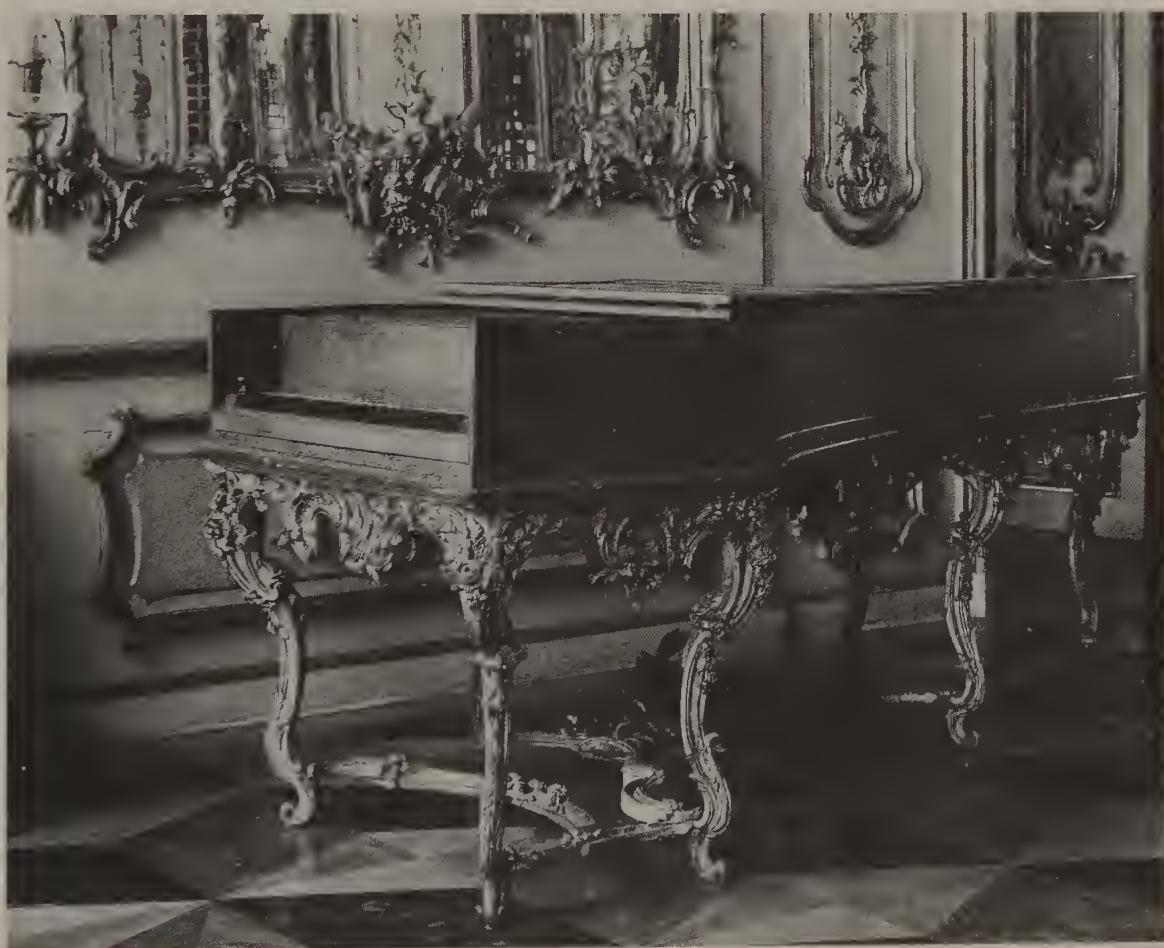
中文讲解
Figure 2 is a photograph (not displayed here) of a Silbermann fortepiano once belonging to Frederick the Great, currently in the Neues Palais at Potsdam. It is one of the three surviving Silbermann fortepianos the author will discuss, and it provides the visual reference for the instrument whose mechanical and acoustic properties the author will describe. Within the section’s argument the figure serves as organological evidence that the fortepianos Bach encountered were not the crude prototypes that Forkel’s negative testimony implied.
补充说明
The image data is omitted in the source; the figure caption itself is sufficient to locate and identify the instrument.
第13段(P0123)
原文复述
$^{48}$ See Müller, p. 402.
中文讲解
Footnote 48, resolved here, refers to Müller’s monograph on Gottfried Silbermann, page 402, as the source for the now-lost Bach–Silbermann correspondence mentioned in P0118. The brief citation matches the parenthetical reference there.
补充说明
No additional supplement beyond identifying the citation.
第14段(P0124)
原文复述
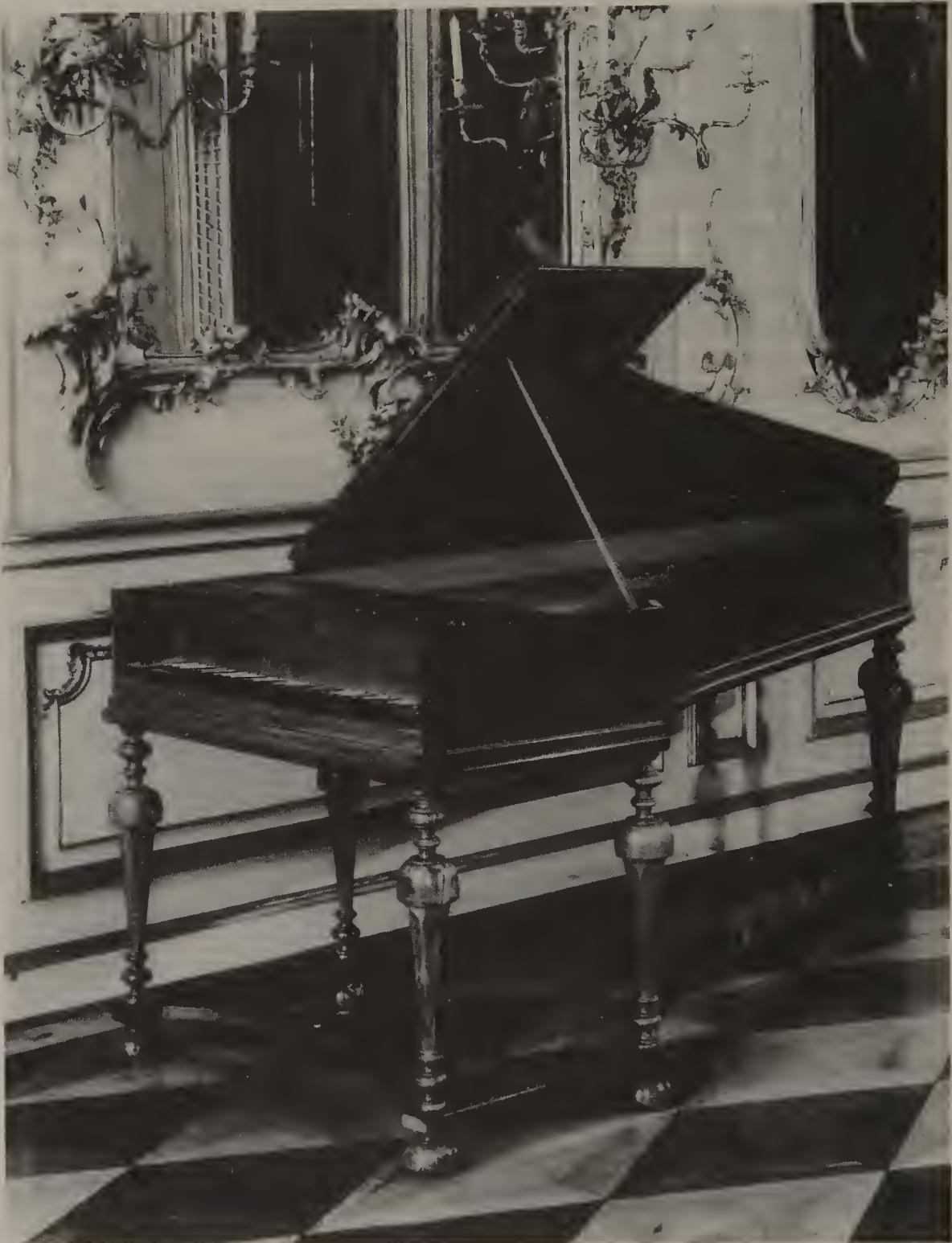
中文讲解
Figure 3 is a photograph of the Silbermann fortepiano dated 1746, kept in the palace of Sanssouci (the Neues Palais or a Sanssouci concert-room). This is the very instrument the author himself was permitted to play on 23 May 1984 (described in detail in P0127), and so it carries exceptional weight in the argument: it is the physical object whose behaviour under the author’s hands is reported in the rest of the section.
补充说明
The 1746 date is significant: it places the instrument one year before Bach’s 1747 visit to Potsdam.
第15段(P0125)
原文复述
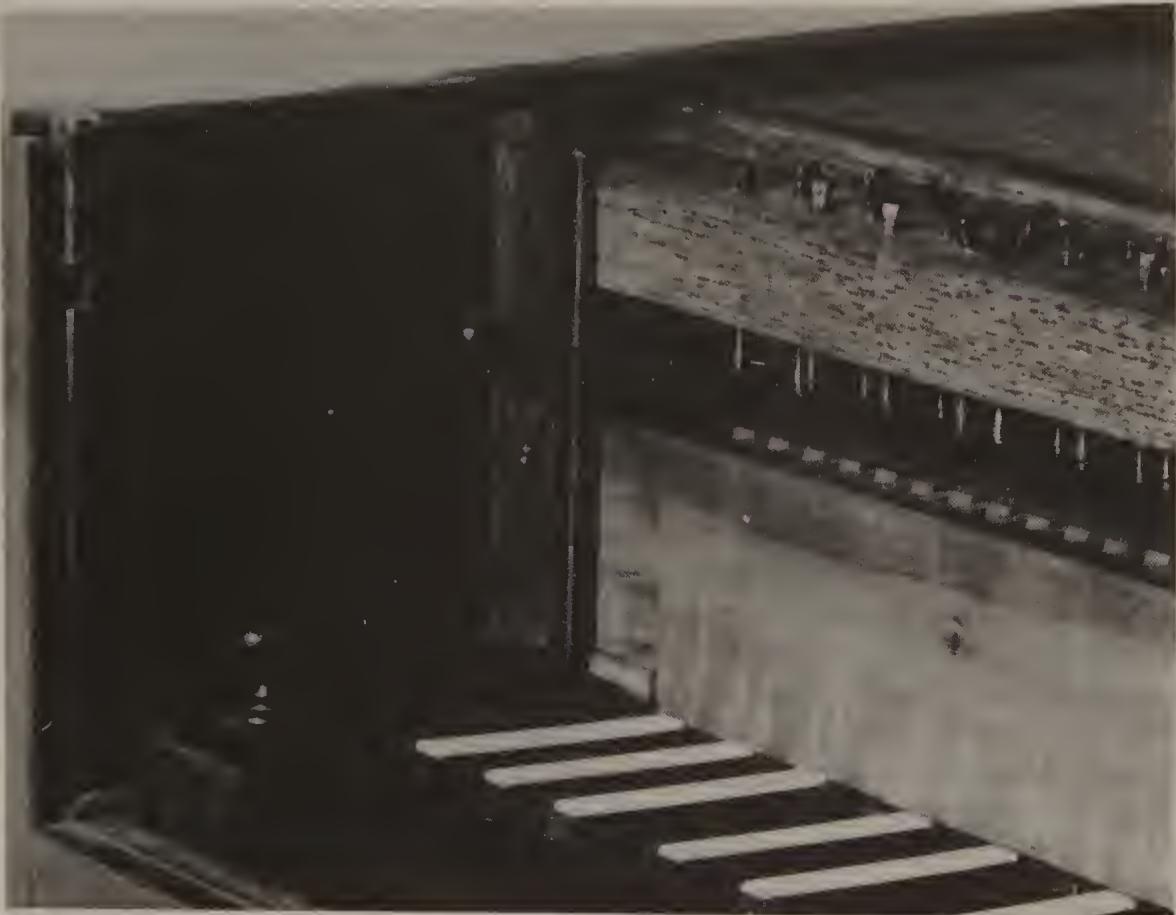
中文讲解
Figure 4 is a detail view of the same Silbermann fortepiano shown in Figure 3. Detail figures in organological writing typically focus on the action, keyboard, or case decoration — the very features on which a claim about touch, sound, or authenticity rests. The cross-reference ‘see Fig. 3’ confirms that this is a magnified view of the Sanssouci instrument.
补充说明
The exact subject of the detail cannot be determined from the caption alone; the original image should be consulted for specifics.
第16段(P0126)
原文复述
and purchased a number of them for his own use. $^{49}$ On this occasion Bach improvised two fugues on a fortepiano. The three-part ricercar of the Musical Offering which Bach dedicated to the king is probably the first of the two fugues, which he wrote down from memory. It can with some justice be described as ‘composition for the fortepiano’.
中文讲解
Continuing the sentence begun in P0121, the author gives the empirical anchor for the 1747 visit: Frederick owned (according to Agricola, seven; according to Forkel, as many as fifteen) Silbermann fortepianos, and on this visit Bach improvised two fugues on a fortepiano. The author then advances a striking compositional claim: the three-part ricercar from the Musical Offering (BWV 1079), the only one of the improvised pieces Bach wrote down, is plausibly a written record of one of these improvisations — and therefore the ricercar can legitimately be called ‘composition for the fortepiano’. This is a strong claim because it pushes the dating of Bach’s contact with the fortepiano back to at least 1747 and identifies a major canonical work as fortepiano-composed.
补充说明
The discrepancy between Agricola’s ‘seven’ and Forkel’s ‘fifteen’ is noted in footnote 49. The ricercar a 3 is one of the most analysed pieces in Bach’s output, and its ‘composition for the fortepiano’ reading is associated with Christoph Wolff (referenced later in P0140).
第17段(P0127)
原文复述
Much has been written about Gottfried Silbermann’s fortepianos, though few scholars seem to have had the opportunity of playing his instruments. This may be one of the reasons for the many misconceptions and prejudices. The Silbermann fortepiano in the Germanisches Nationalmuseum in Nuremberg has not been restored, and thus cannot be played. It simply gives us a visual impression of the instrument. However, while visiting Potsdam to give a concert, I sought permission to play on the recently restored Silbermann fortepiano in the palace of Sanssouci. The authorities acceded to my request, and thus, on 23 May 1984, I was able to spend an hour with this instrument, which stands in the Konzertzimmer (concert-room). $^{50}$ Its compass extends from $F_{1}$ to $d^{3}$ . It has two choirs of strings throughout and a Stosszungen (jack) action which is remarkably similar to that of Cristofori. At the right and left ends of the keyboard there are levers to raise the dampers. This is the sole difference from Cristofori’s fortepiano, where the dampers cannot be raised, and doubtless reflects the influence of the pantaleon instruments that Silbermann had made for Hebenstreit. (He probably fitted keyboards to the pantaleon and sold the instruments without Hebenstreit’s permission. The latter considered this to be in breach of the royal privilege and in 1726 sued Silbermann for damages.) It means that pedalling in the later sense of the word is impossible, though one can raise the dampers for longer passages, a registration effect that leads to an intermingling of the harmonies. This can sound delightful in tender pieces such as the first prelude of WTC I. In spite of the name ‘Fortepedal’ later applied to this lever, it is quite clear that it was never used for playing longer passages loudly, as Friedrich Ernst assumed, $^{51}$ even when we bear in mind that the resonance of the early fortepiano was much, much shorter than that of the modern piano.
中文讲解
This is the central empirical passage of the section: the author’s first-hand account of playing the recently restored 1746 Silbermann fortepiano in the Sanssouci Konzertzimmer on 23 May 1984. The descriptive content is dense. The compass (F₁ to d³) places the instrument in the standard mid-eighteenth-century range. The action is a Stosszungen (jacked) action closely resembling Cristofori’s; the principal divergence from Cristofori is the presence of hand-levers at both ends of the keyboard for raising the dampers — a feature traced to Silbermann’s earlier work on pantaleon-style dulcimers built for Hebenstreit (and the amusing aside that Silbermann was sued for damages in 1726 for selling such instruments without Hebenstreit’s permission). The functional consequence is important: there is no foot-pedal in the later sense; the damper levers yield only a registration effect (an intermingling of harmonies) useful in tender pieces such as the first prelude of WTC I, not a dynamic sustain pedal. The author explicitly corrects Friedrich Ernst’s contrary assumption, while conceding that the early fortepiano’s resonance was far shorter than a modern piano’s, so the absence of a foot pedal was less awkward than it might seem.
补充说明
The parenthetical Hebenstreit/Silbermann lawsuit is one of the most colourful facts in eighteenth-century German instrument-building history and is relevant here only because it explains a structural feature of the surviving instrument.
第18段(P0128)
原文复述
$^{49}$ According to Agricola he had 7, and Forkel even claims he had 15 instruments by Silbermann.
中文讲解
Footnote 49 supports the claim in P0126 that Frederick owned multiple Silbermann fortepianos, citing two conflicting sources: Agricola’s seven and Forkel’s fifteen. The discrepancy is itself a small illustration of how Forkel’s testimony tends toward exaggeration.
补充说明
No additional supplement.
第19段(P0129)
原文复述
Silbermann’s fortepiano also possesses a manually operated Verschiebung (una corda or soft pedal), which according to the restorer, Martin-Christian Schmidt, corresponds to a transposing mechanism in the fortepiano in the Neues Palais. Furthermore, the Silbermann fortepiano in the Neues Palais also has a Veränderung, which Schmidt terms ‘harpsichord stop’. To the right and the left of the damper-rail there are strips of ivory (each about $2 \times 100$ mm.). In the treble the two last segments are covered with a thin layer of brass. The sound of this ‘accessory’ does in fact come remarkably close to that of a harpsichord. The old pantaleon stop described by Adlung and others may have corresponded more to the lifting of the damper and not to this ‘harpsichord’ accessory, though Adlung asserted the opposite.
中文讲解
The author continues the mechanical description with two further features of Silbermann’s fortepianos. First, a hand-operated Verschiebung (shift), functionally analogous to the later una corda or soft pedal, corresponds (according to the restorer Martin-Christian Schmidt) to a transposing mechanism in the Neues Palais instrument. Second, a Veränderung (modification) that Schmidt calls a ‘harpsichord stop’, physically realised as small ivory strips on either side of the damper-rail (with brass-faced segments in the treble), whose acoustic effect approximates harpsichord sonority. The author then makes a source-critical point: the historical ‘pantaleon stop’ described by Adlung likely referred to damper-lifting rather than this harpsichord-like modification, even though Adlung himself claimed the opposite. This is a small but characteristic instance of the author’s care with primary organological sources.
补充说明
The numeric specifications (2 × 100 mm ivory strips) are precise physical measurements, characteristic of organological writing.
第20段(P0130)
原文复述
Apart from the possibility of using a knee-lever or pedal to lift its dampers, the Silbermann instrument in the palace of Sanssouci is fairly similar with regard to touch and sound to the fortepianos built by Johann Andreas Stein about thirty years later. However, the Stosszungen (jack) action is inferior in terms of ’technical’ sensitivity to the ‘Viennese’ action later developed by Stein. But Stein’s piano even resembles Silbermann’s instruments externally, which is actually not very surprising, for Stein was trained by a nephew of Silbermann in Strasbourg, who in turn had become acquainted with the instruments of his uncle Gottfried in Freiberg.
中文讲解
This paragraph situates the Silbermann fortepiano in the lineage of later instruments. The author’s first-hand impression is that, in touch and sound, Silbermann’s instrument resembles the later South German fortepianos by Johann Andreas Stein (active in Augsburg from the 1760s onward), even though the Stosszungen action is technically inferior in sensitivity to Stein’s later ‘Viennese’ (Prellzunge) action. The external resemblance is explained genealogically: Stein was trained in Strasbourg by a nephew of Gottfried Silbermann, who had himself worked with his uncle Gottfried in Freiberg. The point is to soften any sharp discontinuity between the Bach-era Silbermann and the Mozart-era Stein instruments: the later pianos are evolutionary descendants, not unrelated innovations.
补充说明
The genealogical chain — Gottfried Silbermann → nephew → Johann Andreas Stein — is a well-known feature of eighteenth-century German piano-building history.
第21段(P0131)
原文复述
$^{50}$ Inventory no. V 13. Height 92.5 cm. (without stand, 27 cm.), width 92.5 cm., length 232 cm. The body is of oak, and the stand with its turnings and 6 legs is of alder-wood. In 1983 the instrument was restored by Martin-Christian Schmidt. According to Schmidt, the following is written under the wrestplank: ‘Dieses Instrument: Piano et Forte genandt, ist von dem Königl. Polnischen und Churf. Sächsischen Hof- und Land-Orgelmacher und Instrumentenbauer, Herrn Gottfried Silbermann gefertiget worden. Freyberg in Meissen den 11. Juni Anno Christi 1746.’ (This instrument, called Piano et Forte, was made by Mr Gottfried Silbermann, Royal Polish and Electoral Saxon court and state organ-builder and instrument-maker . . .) The 2nd Silbermann fortepiano to have survived in Potsdam is now in the Neues Palais, in the concert-room of Frederick the Great’s apartments. Unfortunately I have not been able to examine it. According to information supplied by the director of the Staatliche Schlösser und Gärten Potsdam-Sanssouci collection, it has the inventory no. V 12, height 93 cm. (without stand, 25 cm.), width 95 cm., and length 232 cm. The body is of oak, the carved stand of lime-wood covered with gold leaf. It has a range of $F_{1}-e^{3}$ .
中文讲解
Footnote 50 is unusually long, providing detailed organological documentation for the Sanssouci instrument described in P0127 and a brief inventory entry for a second surviving Potsdam Silbermann fortepiano in the Neues Palais. For the Sanssouci instrument (V 13): dimensions 92.5 × 92.5 × 232 cm (without the stand, 27 cm tall); oak body, alder-wood stand with six turned legs; restored by Martin-Christian Schmidt in 1983; and a verbatim transcription (with partial English translation) of the inscription under the wrestplank, dated 11 June 1746 in Freiberg in Meissen. For the Neues Palais instrument (V 12), the author has not personally examined it but provides the museum’s information: 93 × 95 × 232 cm (stand 25 cm), oak body with a carved lime-wood stand covered in gold leaf, and a compass of F₁–e³ (one note wider than the Sanssouci instrument).
补充说明
The wrestplank inscription is a primary authentication document; its wording (‘Piano et Forte genandt’) reflects the early German terminology for the instrument.
第22段(P0132)
原文复述
$^{51}$ ‘Bach und das Pianoforte’, BJb, 48 (1961), 69.
中文讲解
Footnote 51 cites Friedrich Ernst’s article ‘Bach und das Pianoforte’ in the Bach-Jahrbuch (1961), p. 69 — the source of the assumption, which the author is correcting, that the Silbermann damper-lever was used as a dynamic pedal for sustained loud passages.
补充说明
No additional supplement.
第23段(P0133)
原文复述
Compared with that of a clavichord, the action of a Silbermann fortepiano is rather heavy. But compared with the modern piano and many eighteenth-century tracker-action organs the action still seems light to our fingers; in fact, it seems very light indeed. (It is difficult to compare with the touch of a harpsichord, which can vary greatly, and, depending on the kinds of quill employed and the number of stops, can be heavier or lighter than a hammer action.)
中文讲解
The author calibrates the reader’s expectation of the touch. Relative to a clavichord, the Silbermann fortepiano’s action is heavy; relative to a modern piano or an eighteenth-century tracker-action organ, it is light. The parenthetical caveat about harpsichords is methodologically important: harpsichord touch is so variable (depending on plectrum material and stop combinations) that direct comparison is unreliable. This calibration sets up the surprise reported in the next paragraph.
补充说明
The parenthetical on harpsichord touch is a small methodological aside characteristic of organological writing: comparison between historical instruments requires acknowledging sources of variability.
第24段(P0134)
原文复述
I admit that on the basis of Forkel’s report and other negative remarks, I did not approach the Silbermann instrument with great expectations about its sound. Rather, I expected to be confronted with an imperfect instrument with a tinny and thin tone, with weak treble notes, and with an insensitive, sluggish action. I was all the more surprised to find a fully developed fortepiano which in its own way is almost on a par with the later Stein instrument from Augsburg, known to have elicited an enthusiastic response from Mozart in 1777. The Silbermann fortepiano has an eloquent, fluty tone and sounds enchanting. True, the action is slightly ‘sticky’, but still fluent and light enough to permit the execution of fast trills and mordents without difficulty. $^{52}$
中文讲解
This is the author’s pivotal first-person revelation: he expected, on the basis of Forkel and the received literature, a ’tinny, thin, weak-treble, sluggish’ instrument, but instead found a fully developed fortepiano comparable to the later Stein instrument that famously delighted Mozart. The adjectives — ’eloquent’, ‘fluty’, ’enchanting’ — are striking and load-bearing: they are the experiential refutation of Forkel’s ’too coarse’. The qualifier ‘slightly sticky’ but ‘fluent and light enough for fast trills and mordents’ is the author’s careful concession that the action is not perfect, while insisting that it is musically more than adequate. The Mozart comparison is rhetorical gold: the Stein piano’s Mozart reception is itself an established benchmark of an excellent early fortepiano, and the author claims Silbermann is comparable.
补充说明
Mozart’s 1777 letter from Augsburg praising Stein’s instruments is one of the best-known documents in early piano history.
第25段(P0135)
原文复述
The main difference between the Silbermann fortepiano and later South German, French, or English instruments of the age of Mozart is, as we have seen, the absence of a pedal action. That the pedal had to be operated ‘manually’ does not seem to have worried musicians who were accustomed to the harpsichord. As late as 1776 Johann Heinrich Silbermann, Gottfried Silbermann’s nephew, was making very similar instruments. $^{53}$ In the nineteenth century Carl Czerny made a point of mentioning that the use of the pedal was never ‘obbligato’ in Mozart’s keyboard music. $^{54}$ Having to play legato with their fingers only is a salutary lesson for modern pianists.
中文讲解
The author identifies the principal structural difference between the Silbermann fortepiano and later pianos of Mozart’s time as the absence of a true foot-pedal action. He then places this absence in historical perspective: musicians trained on the harpsichord were used to controlling damping by hand, so the lack of a pedal was not a felt deficiency. The continuity of the design is documented by the fact that Johann Heinrich Silbermann (Gottfried’s nephew) was still making essentially similar instruments as late as 1776 — nearly thirty years after the 1746 instrument the author played. Czerny’s nineteenth-century observation that pedal use was never ‘obbligato’ in Mozart is cited to reinforce the point that finger legato is a legitimate and historically grounded practice. The closing sentence — that playing legato without the pedal is a salutary lesson for modern pianists — is a small performance-practice homily addressed to the reader.
补充说明
Johann Heinrich Silbermann’s 1776 Strasbourg instruments thus bridge the Bach-era and Mozart-era fortepiano; their preservation in Berlin (per footnote 53) provides a further organological reference.
第26段(P0136)
原文复述
Bach would have been a bad musician if he had failed to appreciate the qualities and the beautiful sound of this new fortepiano. A composer who evidently followed new developments in instrument-building with the greatest of interest would hardly have ignored an important innovation like the fortepiano. Thus Agricola’s account of Bach’s dealings with Silbermann seems altogether credible. It is merely debatable whether he first became acquainted with Silbermann’s improved fortepiano as early as 1732, or as late as 1740.
中文讲解
Having established empirically that the Silbermann fortepiano was a fine instrument, the author now argues rhetorically that Bach, as a forward-looking musician, would necessarily have appreciated it. Two premises support this: (i) Bach demonstrably followed new developments in instrument-building, and (ii) the fortepiano was an important innovation that a composer like Bach would hardly have ignored. Therefore Agricola’s account of Bach’s dealings with Silbermann is ‘altogether credible’. The author reduces the residual uncertainty to a narrow dating question: did Bach first encounter Silbermann’s improved fortepiano as early as 1732, or only as late as 1740? Either way, the contact is established.
补充说明
The 1732–1740 range for Bach’s first acquaintance with Silbermann’s improved fortepiano is a dating question the author flags but does not resolve here.
第27段(P0137)
原文复述
$^{52}$ This sluggishness may also be due to the way the instrument is adjusted. Some time after this, at the Metropolitan Museum in New York, I had the opportunity to play the Cristofori instrument of 1720, the action of which is almost identical. It responded more lightly and precisely than the Silbermann instrument, and in this can certainly be compared to a Stein action.
中文讲解
Footnote 52 supplies a qualification and a comparative data point. The ‘sluggishness’ the author noted on the Silbermann may partly reflect the instrument’s current regulation. As a comparison, the author also played the 1720 Cristofori at the Metropolitan Museum, whose action is almost identical in design but felt lighter and more precise — comparable to a Stein action. The footnote thus tempers the previous praise of Silbermann (the sluggishness is real, though not crippling) and reinforces the structural point that the Silbermann and Cristofori actions are nearly the same.
补充说明
The 1720 Cristofori at the Metropolitan Museum is one of the earliest surviving pianos and is the standard reference for Cristofori’s action design.
第28段(P0138)
原文复述
$^{53}$ A well-preserved Strasbourg wing-shaped Silbermann instrument of this kind is now in the Musical Instrument Collection of the Staatliches Institut für Musikforschung (Preußischer Kulturbesitz), Berlin.
中文讲解
Footnote 53 documents the survival of a Johann Heinrich Silbermann wing-shaped instrument in Berlin, supporting the claim in P0135 that such instruments were still being made in 1776.
补充说明
No additional supplement.
第29段(P0139)
原文复述
$^{54}$ Complete Theoretical and Practical Piano Forte School. Op. 500, iii (London, 1839), p. 100.
中文讲解
Footnote 54 cites Carl Czerny’s Complete Theoretical and Practical Piano Forte School, Op. 500, volume iii (London, 1839), p. 100, as the source for the claim in P0135 that pedal use was never ‘obbligato’ in Mozart’s keyboard music.
补充说明
No additional supplement.
第30段(P0140)
原文复述
Of course, all old and modern fortepianos sound slightly colourless and sober compared with the splendid and intoxicating sound of the best harpsichords with their varied sonorities and stops. But the sound of the piano has a beauty of its own, and in the case of the early fortepianos its timbre is still similar to that of other eighteenth-century keyboard instruments. But clavichords and fortepianos are superior to harpsichords in one respect: expressivity. The ‘cantabile execution’ Bach repeatedly demanded (e.g. in the preface to the Inventions) means in the final analysis that in every melodic line there ought to be strong and weak and intense and relaxed notes. Such accents and ’non-accents’ can be expressed only imperfectly with the help of touch on the harpsichord, on account of its relatively unyielding action. Other means of enlivening the dynamic range, such as an imperceptible lengthening and shortening of notes, the application of embellishments, and an increase in the number of voices, have to make up for the lack of genuine dynamic gradations. However, the clavichord and the fortepiano enable the performer to play in a direct and ’natural’ manner. Bach surely noticed this advantage just as much as we do. Thus it is difficult to disagree with Christoph Wolff when, in the preface to the NBA edition of the ricercar mentioned above and in the editorial notes on the Musical Offering, he construes the sigh-motifs and crescendo figuration as evidence that Bach was thinking in terms of the Silbermann fortepiano.
中文讲解
This paragraph completes the musical argument against the harpsichord-for-Bach orthodoxy by connecting instrument choice to compositional text. The author makes two concessions first: even the best harpsichords sound more ‘splendid and intoxicating’ than any fortepiano, and early fortepiano tone is close to that of other eighteenth-century keyboards. But the decisive advantage of clavichord and fortepiano is expressivity. The author anchors this in Bach’s own words: the ‘cantabile execution’ demanded in the preface to the Inventions requires dynamic shaping (strong/weak, intense/relaxed) within a single melodic line, which the harpsichord’s ‘unyielding action’ can only imperfectly convey through touch alone. Harpsichordists resort to compensating devices (micro-rubato, embellishment, voice-leading increase) but these are second-best. The clavichord and fortepiano deliver expressivity ‘directly and naturally’, and Bach ‘surely noticed this advantage’. The author then endorses Christoph Wolff’s reading of the Musical Offering ricercar — its sigh motifs and crescendos as evidence that Bach was composing with the Silbermann fortepiano in mind — as a textual corollary of the organological argument.
补充说明
The reference to Bach’s preface to the Inventions (BWV 772–786) is the canonical Bach statement on cantabile playing; invoking it gives the argument direct textual support from Bach himself.
第31段(P0141)
原文复述
However, many other works written before 1747 contain passages that are equally expressive. Though most of Partita No. 3 sounds beautiful and convincing on the harpsichord, a point is reached in the particularly expressive Sarabande where the dynamic possibilities of the instrument are exhausted, a fact of which every musical harpsichordist is acutely aware. A string player or singer would play the beginning of this movement as in Ex. 6.1. Doubtless the clavichord (which cannot be used in the concert-hall) and the fortepiano are more appropriate than the best harpsichord to this musical idea, which was probably conceived in vocal terms. This is also true of some of the preludes of WTC II. In passages where points of imitation in the middle and lower voices have to be emphasized, the fortepiano proves to be superior to the harpsichord. In addition to fugues and canons, such passages occur in the Allemande of the Sixth English suite in D minor (BWV 811), where the opening theme appears in the lower voice (bars 5–7), and in the Sarabande of the French Overture (BWV 831), with its imitations in bars 2, 5, and so on (see Ex. 2.40).
中文讲解
The author extends the expressivity argument backwards in time, beyond the 1747 Musical Offering, to earlier works. The Sarabande of Partita No. 3 (BWV 827) is offered as a test case: most of the partita is harpsichord-convincing, but in the most expressive Sarabande the dynamic possibilities of the harpsichord are exhausted, as any sensitive harpsichordist will admit. A string or vocal model would shape the opening as in Example 6.1 (a notated example not shown in the source). The author’s claim is that the Sarabande was probably conceived in vocal terms and that clavichord or fortepiano serves it better than the best harpsichord. Similar cases appear in some WTC II preludes. Specific examples of polyphonic passages requiring emphasis in the middle and lower voices are cited: the Allemande of the Sixth English Suite in D minor (BWV 811), where the theme enters in the lower voice at bars 5–7, and the Sarabande of the French Overture (BWV 831) at bars 2, 5, etc. (see Example 2.40).
补充说明
Example 6.1 is the musical illustration of the Sarabande’s opening, not displayed in the text; Example 2.40 refers to an example in a previous part of the book.
第32段(P0142)
原文复述
In addition to the expressive shaping of melodies, the fortepiano is superior to the harpsichord in that it makes it possible to play crescendos. A ‘Mannheim crescendo’ is surely inappropriate in Bach’s music. However, there are in his works a number of written-out crescendos. Good examples are the endings of certain fugues where the number of voices is augmented, upward-striving lines such as the ending of the C major Concerto for two harpsichords, BWV 1061 (which ascends four octaves), and passages in some other concerto movements.
中文讲解
A second fortepiano advantage is laid out: the capacity for genuine crescendos. The author carefully distinguishes this from later ‘Mannheim crescendo’ practice, which is foreign to Bach’s idiom; Bach’s crescendos are ‘written-out’, i.e. notated in the score itself. Examples include fugue endings where the number of voices is augmented, the four-octave ascending close of the C major Concerto for Two Harpsichords (BWV 1061), and similar passages in other concerto movements. The argument is that the very existence of written-out crescendos in Bach presupposes an instrument capable of executing them dynamically — and that instrument is most plausibly the fortepiano (or the clavichord in private contexts).
补充说明
The C major Concerto for Two Harpsichords, BWV 1061, is one of three Bach double-harpsichord concertos; its final movement’s four-octave ascent is a celebrated close.
第33段(P0143)
原文复述
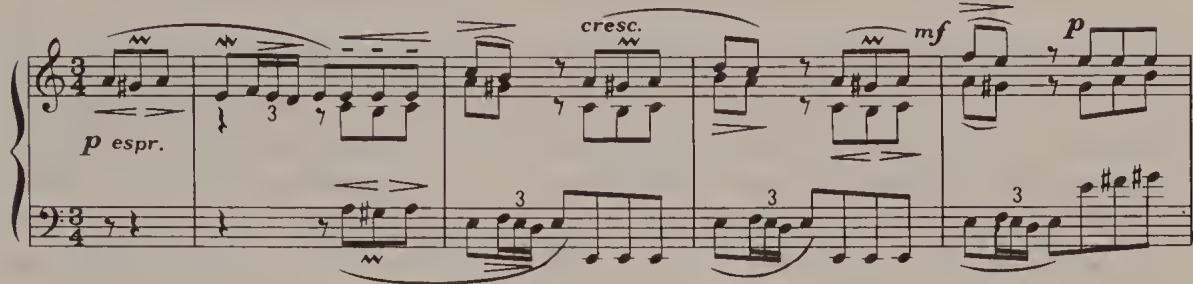
中文讲解
Example 6.1 is the notational example illustrating the Sarabande of Partita No. 3, bars 1–4. As discussed in P0141, it is the musical passage whose vocal/shaped execution the author argues would benefit from an expressive instrument such as the clavichord or fortepiano. The image itself is not present here; consult the original to see the notation.
补充说明
No additional supplement.
第34段(P0144)
原文复述
Another characteristic of fortepiano tone that is often ignored in modern analyses deserves to be mentioned here. This is the fact that an increase in the intensity of touch leads to an increase not only in dynamics, but also in the number of overtones. This means that loud chords or passages on a Silbermann or Stein fortepiano are so fraught with overtones that one almost has the impression that an additional four-foot stop is being used. In this way the variable dynamics of the fortepiano provide the possibility of a kind of registration which also approximates to the harpsichord. Many old fortepianos even have lute stops and other Veränderungen (means of changing the tone-quality) which further enhance this similarity.
中文讲解
The author identifies a less-discussed acoustic feature of the fortepiano: increased touch intensity produces not only more volume but also more overtones, to the point that loud passages on a Silbermann or Stein instrument give the auditory impression of an added four-foot stop. This dynamic-acoustic coupling effectively supplies the fortepiano with a rudimentary registration capacity akin to a harpsichord’s. Many old fortepianos in fact possessed literal Veränderungen (tone-colour modifications) and lute stops, further closing the gap to harpsichord sonority. The implication is that the choice between harpsichord and fortepiano is not as sharp as it appears: the fortepiano can simulate a quasi-harpsichord registration when needed, while retaining the dynamic gradations the harpsichord lacks.
补充说明
The reference to a ‘four-foot stop’ is organological shorthand: an eight-foot string sounds the written pitch, while a four-foot string sounds an octave higher; the overtones of a strongly struck fortepiano chord mimic the added brilliance of such a registration.
第35段(P0145)
原文复述
The question of the keyboard instruments Bach acquired during his lifetime and owned at the time of his death has been discussed in great detail. The catalogue of the estate reveals that one of the first five ‘clavecins’ in the list must have been particularly valuable, for it had a remarkably high estimated value of 80 thalers, though it was described as a ‘fournirt [veneered] Clavecin’, which means that its value cannot have been due to artwork. Furthermore, there is the comment that, if possible, it was to remain in the family. What could this valuable instrument have been? Was it perhaps a two-manual harpsichord with a sixteen-foot stop or an additional pedal harpsichord? Recently it has been suggested that the instrument in question may have been a Hildebrand or Silbermann fortepiano. After all, Silbermann’s instruments were always rather valuable and correspondingly expensive. The suggestion is a legitimate one, especially in view of the fact that the catalogue of the estate was drawn up not by a musician, but by a civic or legal clerk who was surely as ignorant of the difference between a harpsichord and a fortepiano as of the new term ‘piano-fort’. The ‘veneered clavecin’ may also have been a combination instrument like the ones advertised in the Leipzig Post-Zeitung in 1742 and 1743. Combination instruments were not as rare as is normally supposed.
中文讲解
The section closes with a return to the estate catalogue, now focused on the anomalous 80-thaler ‘clavecins’ entry. The descriptive label (‘fournirt [veneered] Clavecin’) implies ordinary cabinetry, so the high valuation must be due to something else — internal mechanism, perhaps, or stops. The author’s first hypothesis is a two-manual harpsichord with a sixteen-foot stop or a pedal harpsichord; a more recent suggestion is that the instrument was a Hildebrandt or Silbermann fortepiano. The author endorses this suggestion as legitimate, and adds a supporting observation: the catalogue was drawn up by a civic or legal clerk, not a musician, who would not have known the difference between harpsichord and fortepiano (or the new term ‘piano-fort’), so the word ‘clavecin’ is no reliable guide to the instrument’s actual mechanism. Finally, the author notes that ‘combination instruments’ (compound harpsichord–fortepiano designs) were advertised in the Leipzig Post-Zeitung in 1742 and 1743, and were not as rare as is often supposed. The closing thus reinforces the section’s central revisionist claim: Bach’s posthumous instruments included at least one that was likely a fortepiano, drawn up under an imprecise label by a non-specialist clerk.
补充说明
The Leipzig Post-Zeitung advertisements for combination instruments (1742–1743) and the existence of Hildebrandt instruments of this period provide external confirmation that compound harpsichord–fortepiano designs circulated in Bach’s milieu.
脚注 / 边栏 / 图表 / 附加信息(如有)
The section includes three figures (Figs. 2, 3, 4) and one musical example (Ex. 6.1), all of which are image placeholders in the supplied text. Fig. 2 shows a Silbermann fortepiano in the Neues Palais at Potsdam; Figs. 3 and 4 show the 1746 Silbermann fortepiano in the Sanssouci palace (Fig. 4 being a detail view of Fig. 3); Ex. 6.1 is the opening bars of the Sarabande from Partita No. 3 (BWV 827). The footnotes (44–54) form a continuous apparatus: 44 cites Heyde on Leipzig instrument-building; 45 locates the Forkel quotation; 46 cites Marshall on J. S. vs C. P. E. Bach; 47 cites Dürr on keyboard range and chronology; 48 cites Müller on Silbermann and the lost Bach correspondence; 49 notes the Agricola/Forkel discrepancy on Frederick’s instrument count; 50 is a lengthy organological inventory of both surviving Potsdam Silbermann fortepianos; 51 cites Friedrich Ernst’s article on Bach and the pianoforte; 52 adds the author’s Cristofori comparison at the Metropolitan Museum; 53 documents a Johann Heinrich Silbermann instrument in Berlin; 54 cites Czerny on pedal use in Mozart. Together, the figures and footnotes provide both the visual and the bibliographic scaffolding on which the author’s argument rests.
💡 本节核心要点
- The received view that Bach preferred the clavichord and dismissed the harpsichord and early fortepiano originates with Forkel (c. 1800) and is shown to be a conflation of J. S. Bach’s views with those of his son C. P. E. Bach, mediated by Forkel.
- The estate catalogue documents at least five ‘clavecins’ (a generic term that may include a fortepiano) but no clavichords explicitly attributed to J. S. Bach, undermining the clavichord-preference thesis.
- New documentary evidence — a payment receipt for a Silbermann fortepiano and lost Bach–Silbermann correspondence — shows Bach was more closely involved with the early fortepiano than Forkel implied.
- The author’s first-hand experience of the restored 1746 Silbermann fortepiano in the Sanssouci Konzertzimmer (23 May 1984) establishes that the instrument was musically excellent: eloquent, fluty, and capable of executing fast figuration, contrary to Forkel’s ’too coarse’ verdict.
- The principal structural limit of the Silbermann fortepiano is the absence of a foot-pedal action; damper-levers offer only a registration effect, not sustained dynamics, but this was unproblematic for harpsichord-trained musicians.
- Bach’s demand for ‘cantabile execution’, the existence of written-out crescendos, and the expressivity of pieces such as the Sarabande of Partita No. 3 all presuppose an instrument with dynamic gradation — supporting the case that the fortepiano was at least an occasional vehicle for Bach, and that Christoph Wolff’s reading of the Musical Offering ricercar as fortepiano-composed is musically plausible.
- The 80-thaler ‘veneered clavecin’ in the estate catalogue may itself have been a Hildebrandt or Silbermann fortepiano (or a combination instrument), since the catalogue’s non-musician clerk could not reliably distinguish harpsichord from fortepiano in terminology.
🔑 关键术语
- clavichord:A small stringed keyboard instrument on which the tangent strikes the string directly, producing sound and pitch variation simultaneously. Touch-sensitive and capable of Bebung; Bach treated it chiefly as a practice instrument, unlike his son C. P. E. Bach who regarded it as the ideal expressive medium.
- harpsichord (clavecin / cembalo):A plucked-string keyboard instrument whose tone cannot be dynamically varied by touch; the eighteenth-century generic term ‘clavecin’/‘cembalo’ could also cover the early fortepiano. Bach wrote major works expressly for the harpsichord (e.g. the second part of the Clavier-Übung, the Goldberg Variations).
- fortepiano:An early hammer-action keyboard instrument, capable of dynamic gradation through touch; the ancestor of the modern piano. The section argues that Bach was familiar with the Silbermann fortepiano well before his 1747 visit to Frederick the Great.
- Stosszungen action (jack action):The hammer-and-jack mechanism used by Silbermann (and close to Cristofori’s design); in the section this is described as less technically sensitive than Stein’s later ‘Viennese’ (Prellzunge) action, but fluent enough for Bach’s figuration.
- Verschiebung / Veränderung:Hand-operated mechanisms on Silbermann fortepianos: Verschiebung (a shift akin to a soft pedal or transposing mechanism) and Veränderung (a ‘harpsichord stop’ realised by ivory strips on the damper-rail that approximate harpsichord timbre).
- cantabile execution:Bach’s term (in the preface to the Inventions) for a singing, dynamically shaped manner of playing. The section argues that this ideal is more fully realised on clavichord or fortepiano than on harpsichord.
- ‘Mannheim crescendo’:A later, eighteenth-century orchestral effect associated with the Mannheim school; the author distinguishes it from the written-out crescendos found in Bach’s scores, which are the kind of dynamic shaping that a fortepiano can execute but a harpsichord cannot.
- estate catalogue (Verzeichnis):The posthumous inventory of Bach’s possessions, drawn up by a civic or legal clerk. It is the chief documentary evidence for Bach’s instruments and is ambiguous because the clerk used the generic ‘clavecin’ for plucked and struck stringed keyboards alike.
S0012 Once More to the Question: Harpsichord or Piano?
第1段(P0146)
原文复述
ONCE MORE TO THE QUESTION: HARPSICHORD OR PIANO?
中文讲解
这是本章的标题,仅作为版面标识出现。它提示本章将再次回到巴赫键盘演奏中的一个经典争论:在现代钢琴(modern piano)与历史键盘乐器(尤其是大键琴 harpsichord)之间,应当选择哪一种作为演奏巴赫作品的“正确”乐器。该标题本身是一个设问,而不是结论,意味着作者将在本章中以回顾、辨析和重新表态的方式来处理这个已经持续了一个多世纪的话题。
第2段(P0147)
原文复述
Let me start by making it clear from the outset that anyone who expects me to adopt an unequivocal stance in favour of one of the two instruments will be disappointed. As a musician who is equally at home with eighteenth-century and twentieth-century keyboard instruments, it is a question not of ’either-or’, but of ‘both’. After all, we do not play early music in order to take ourselves back in time, but because it pleases and moves us here and now. The twentieth century, in contrast to the nineteenth, has seen a welcome increase in the number of keyboard instruments available to us on account of the revival of harpsichords, fortepianos, positive organs, and so on. This has come about not for purely historical reasons, but because we admire the sound of these instruments for their own sake. It is of course possible to play well on every instrument, provided that it is of good quality and well tuned. It would be a sorry state of affairs if we were only able or allowed to play on a small handful of instruments. Bach himself, who wrote immortal works for all the instruments he played and who was always adapting his own music for all sorts of occasions in the shape of parodies and transcriptions, was certainly not narrow-minded in this regard.
中文讲解
本段是全章的立场宣告。作者开宗明义地拒绝在“用大键琴”与“用现代钢琴”之间二选一,并把自己定位为同时熟悉十八世纪与二十世纪键盘乐器的演奏者。核心主张是:早期音乐的演奏目的不是“回到过去”,而是让音乐在当下感动听众,因此“either-or”应被改为“both”。
作者列举三个支撑论据:(1) 二十世纪出现的乐器复兴(大键琴、古钢琴、小型管风琴等)并非纯出于考据,而是出于对这些乐器本身音色之美的欣赏;(2) 只要乐器质量好、调律准确,任何键盘乐器都可以演奏得好,把演奏范围限制在极少数乐器上是不合理的;(3) 巴赫本人就为多种乐器写作并改编(parodies and transcriptions),并不狭隘地固守某一种乐器。
逻辑上,这一段是“先破后立”的“破”:先把读者期待中的“非此即彼”立场清除掉,再为后续逐条讨论大键琴与钢琴各自的优势和局限确立基调。值得注意的是,“parodies”一词在巴赫研究中通常指借用既有素材写成新作品的手法(自用或他用),并非贬义。
补充说明
术语“parodies”在巴赫学界并非贬义的“滑稽模仿”,而是指借用旧作的音乐素材(主题、对位结构等)来创作新作品,包括巴赫将自己的康塔塔改编为经文歌、将器乐协奏曲改编为康塔塔等做法。“transcriptions”则指为不同乐器或编制而作的改编谱,本节后文还会详细讨论这一概念。
第3段(P0148)
原文复述
What then is the purpose of historical research of this kind? Here I can only restate what I have said repeatedly above: that music performed ‘correctly’, in a manner that also corresponds to the historical sonorities, usually sounds more beautiful and meaningful. From this standpoint historical instruments (or copies of them) have an incontrovertible advantage over those of later periods, provided they are of high quality and in good condition. However, this advantage is not a good enough reason to exclude from performances instruments that were subsequently invented. We are thus led to ask whether or not Bach interpretation is possible on the modern piano.
中文讲解
本段将上一段的“两者皆可”立场进一步聚焦到一个具体问题:现代钢琴能否演奏巴赫?为此作者先回答一个前置问题——“这种历史研究的目的是什么?”——并重复前文的核心主张:在符合历史音色的前提下“正确”演奏的音乐,通常更美、更有意味。因此,历史乐器(或其复制品)在高质量、状态良好的前提下,对后期乐器具有不可否认的优势。
但是,作者马上加了一个限定:从这一优势并不能推出“应当把后发明的乐器排斥在演奏之外”。这种“优势存在但不应排斥后者”的辩证,为下文讨论钢琴奠定了逻辑基础:本节不否认大键琴的优越地位,但也不接受“大键琴至上主义”。段末顺势提出本节的核心问题:Bach interpretation is possible on the modern piano(用现代钢琴诠释巴赫是否可能)。
这一段在全章结构上的作用是从总论(乐器选择的一般立场)过渡到专题(钢琴问题)。它既是态度声明,也是问题设置。
补充说明
“sonority”一词在本节反复出现,意为“音色”或“音响质地”,指的是乐器特有的声音色彩及其与作品的关联。它不是指某一个具体的音量或响度,而是指一种综合的声音身份。
第4段(P0149)
原文复述
The attitude towards this has definitely changed in the course of the twentieth century. ⁵⁵ At the beginning of the century the modern piano was considered to be an instrument equal, if not superior, to the harpsichord. In the last fifty years it has had an increasingly bad press in Bach literature. Its sound was said to be thick and colourless, and it was considered to be too loud and penetrating in relation to other instruments employed in the Baroque era. Furthermore, it was said to lead the player astray into crescendo and decrescendo dynamics that had nothing to do with the baroque aesthetic, and was thus ill suited to Bach interpretation. For example, in an article of 1972 Peter Schmiedel wrote:
中文讲解
本段梳理二十世纪关于“用钢琴还是大键琴演奏巴赫”这一问题的态度变迁,呈现出一个明显的转折。世纪初(约1900年)钢琴被视为至少与大键琴平等、甚至更优越的乐器;到了二十世纪后半叶,钢琴在巴赫文献中却声誉日下。
作者具体列出对钢琴的批评点:(1) 声音“厚而无色”(thick and colourless);(2) 与巴洛克时期其他乐器相比音量过大、过具穿透力;(3) 容易诱导演奏者使用渐强渐弱(crescendo and decrescendo),这种力度起伏被认为不符合巴洛克美学,因此不适合演奏巴赫。
作者在此并非直接表达自己的观点,而是搭建一个被引述的“反方立场”,作为下一段引用 Schmiedel 1972 年文章的铺垫。这种“铺—引—评”的结构在学术散文中很常见,目的是先呈现一个有力但有争议的论断,再通过回应来推进自己的论证。
补充说明
本段末尾的脚注编号 55 对应下一条 P0151,为作者建议延伸阅读的文献。
第5段(P0150)
原文复述
The piano speaks the language of our time. Should we therefore translate Bach into the language we understand? It will either turn out to be a lifeless acoustic happening, because the sonority is incapable of re-creating the original intellectual content, which ranges from the sensory event to the inner experience of form. We must relinquish from the outset the all-pervasive inner unity described above. It may be possible to convey some idea of the inner form, but it is not established by the acoustic structure, remaining isolated from it in the realm of pure ‘meaning’, and therefore abstract and dead. Or a new significance that derives from modern performance practice is imparted to the abstract and empty structure, a significance which the latter was never intended to convey, and for which the old formal accoutrements are altogether too small. ⁶
中文讲解
本段是 Schmiedel 1972 年文章的引文,集中体现“反钢琴”立场中最强的一种表述。Schmiedel 的论点是:用我们的时代语言(钢琴)来“翻译”巴赫,会出现两种同样糟糕的结果——
第一种:用钢琴的音色来再现巴赫原本的“智识内容”(intellectual content,涵盖从感官事件到内在形式体验)注定失败,因为钢琴音色无法承载这种内容,结果音乐变成“a lifeless acoustic happening”(无生命的声学事件);所谓的“内在形式”虽然也许可以被传达出来,但它不再由声音结构本身确立,而变成孤悬于“意义”层面的抽象物。
第二种:演奏者用现代实践给原本抽象空无的结构注入新的意义,但这种意义并非原结构本要传达的,且古老的“形式装饰”(formal accoutrements)根本无法容纳它。
也就是说,在 Schmiedel 看来,无论演奏者如何努力,钢琴要么让巴赫的音乐“死掉”,要么让巴赫的音乐被错误地“现代化”。这一论断具有挑衅性,是作者接下来必须回应或部分接受的核心靶子。理解这段话,需要注意“all-pervasive inner unity”是指 Schmiedel 自己在上文论证中提出的一种理想状态:在合适的乐器上演奏巴赫时,“内在形式”与“声音结构”是合一的。
补充说明
“intellectual content”是德语 Gehalt 的常见英译,指音乐中承载思想、情感与结构的内在含量,是德奥音乐学传统中的核心概念。Schmiedel 的论证预设了“形式—内容”的内在统一观,因此任何一种不能保留这种统一的乐器都被他视为致命缺陷。
第6段(P0151)
原文复述
⁵ On this subject see the valuable essay by Josef Dichler, ‘Bach auf dem modernen Hammerklavier’, ÖMZ (1962), 574–9, and Max Cooke’s excellent pamphlet Bach at the Piano (Melbourne, 1985).
中文讲解
这是正文段落 P0149 中脚注编号 55 所对应的脚注内容。作者为读者提供两篇延伸阅读:Josef Dichler 的论文《在现代击弦钢琴上演奏巴赫》(Bach auf dem modernen Hammerklavier,1962 年发表于《奥地利音乐杂志》ÖMZ),以及 Max Cooke 的小册子《巴赫在钢琴上》(Bach at the Piano,1985 年墨尔本出版)。
两条文献都属于支持“在现代钢琴上演奏巴赫”这一立场的代表性写作,作者将它们作为“可进一步阅读的材料”推荐出来,作用是为持赞同意见的读者提供学术资源,本身并不直接论证作者本人的观点。
“Hammerklavier”是德语对现代钢琴的称谓,字面意义为“击弦键盘乐器”,与羽管键琴(harpsichord,拨弦)和古钢琴(fortepiano,早期带弱音踏板的击弦琴)相区别。
第7段(P0152)
原文复述
And Werner Neumann has summarized the change in attitude with regard to the piano thus:
中文讲解
这是承接 P0150 之后的一个过渡句,本身只有一句话,作用是引出巴赫学学者 Werner Neumann 对“钢琴—大键琴之争”态度变迁的概括性论述。在结构上,它与上一段引 Schmiedel 形成对称:先引“反钢琴”的极端表述,再引“中性—历史”的综述,形成两种声音并置。
这种“叠引—并陈”的修辞策略是为作者本人的重新表态作铺垫:通过先呈现两种看似权威的反对意见,再用自己(以及引文中 Neumann 后面半段)的论证来回应与修正。
补充说明
Werner Neumann(1905–1991)是德国音乐学者,曾任莱比锡巴赫档案馆(Bach-Archiv Leipzig)馆长,是二十世纪下半叶巴赫研究的代表人物之一。其立场通常被作者视为“严肃的史学”代表。
第8段(P0153)
原文复述
Since 1900 the debate about which keyboard instrument should be used has witnessed, in continually changing guises, a theory propounded by advocates of the piano and directed against the harpsichord. As formulated by Peter Raabe (Stein Festschrift, 1935) this theory states: ‘If Bach had known the modern grand piano, he would not have insisted on his works being played on the imperfect instruments that preceded it.’ An attempt is often made to bolster up this wholly untenable view of [the harpsichord as] an imperfect precursor of the piano by an equally questionable hypothesis, namely that certain advanced works by Bach transcend the expressive resources of the instruments at his disposal, obviously having been written for an ideal instrument of the future. It is a hypothesis that seems more in keeping with the romantic than with the baroque idea of music. ⁷
中文讲解
这是 Werner Neumann 对“钢琴—大键琴之争”的概括总结,分三个层次展开。
第一层是历史描述:1900 年以来,关于应当使用哪种键盘乐器的争论不断变换形式,但其核心存在一种“钢琴派”提出的反对大键琴的理论。
第二层引用 Peter Raabe 1935 年《Stein 纪念文集》中的原话:若巴赫知道现代三角钢琴,就不会坚持让自己的作品在那些“在他之前的、不完美的乐器”上演奏。这是一种“事后合理化”式的论断——用“巴赫若见过更好的乐器就会选更好的”这种反事实假设来贬低大键琴。
第三层是 Neumann 的反驳:这种将大键琴视为“钢琴的不完美前身”的观点 Neumann 认为“wholly untenable”(完全站不住脚);与之配套的辅助假设——某些巴赫的“先进”作品超越了他手中乐器的表现力,明显是为一种“未来的理想乐器”而作——在 Neumann 看来更属于浪漫主义而非巴洛克时期的音乐观念。
作者的引文策略很明确:通过引述 Neumann 的史学性总结,预先消解“钢琴优越论”的历史合法性,为下文提出“钢琴也有合法位置”扫清前提。读者应注意,Neumann 的反驳针对的是“钢琴派”对大键琴的贬低,而不是针对在钢琴上演奏巴赫本身。
补充说明
Peter Raabe(1872–1945)是德国指挥家与音乐学者,曾任魏玛宫廷音乐主管和纳粹时期的普鲁士国家音乐顾问。他在 1935 年 Stein(应是钢琴家或乐器制造相关人物)纪念文集上的发言,反映了二十世纪上半叶“钢琴中心主义”在德国音乐学界的某种典型立场。Stein Festschrift 在此语境下指为某人(可能是钢琴家或乐器制造家)所出的纪念文集。
第9段(P0154)
原文复述
Around 1970, from a musicological point of view, it seemed that the piano was no longer an instrument on which it was possible to play Bach. Even today it seems that certain musicologists and many harpsichordists would like to prohibit Bach performances on modern grand pianos, and enforce this ban with fines and prison sentences. However, if one were to ban the piano, would it not be logical to banish modern stringed and wind instruments used in Bach performances from concert-halls and churches? Not to mention all women’s voices in choirs? Whether or not this would be beneficial for Bach is a moot point.
中文讲解
本段以略带反讽的语气,把“钢琴不宜演奏巴赫”的主张推到极端,并指出其逻辑后果。约 1970 年前后,从音乐学角度看,钢琴似乎已不再被视为可以演奏巴赫的乐器;至今仍有一些音乐学家和大键琴家希望禁止用现代三角钢琴演奏巴赫,甚至主张以罚款和监禁来强制执行。
作者用反讽的方式追问:若真要禁止钢琴,那么基于同样的“乐器非历史”逻辑,是否也应该禁止现代弦乐器和木管乐器出现在巴赫的演出中?更不必说女声——因为女性不曾在巴赫时代的教堂唱诗班中演唱。这样的归谬(reductio ad absurdum)把“钢琴禁令”推到了荒谬的边缘。
结尾“Whether or not this would be beneficial for Bach is a moot point”则用一句看似冷静的反语,把“禁止一切非历史因素”这种清教式立场轻轻推开。
这段的作用是:先用幽默揭示“反钢琴”立场一旦严格执行会自相矛盾,再为本节核心主张——“钢琴不应被排除”——铺垫。它同时说明:作者并非站在“大键琴阵营”的对立面,他反对的不是大键琴,而是对其他乐器的教条排斥。
补充说明
作者此处提到的“女声”问题,是历史表演实践(historical performance practice)讨论中一个常见的伦理与美学交叉点:巴赫时代的教堂唱诗班确实主要由男童和男低音组成,因此“全本真”(wholly authentic)演出意味着使用男童与假声男高音。这一立场在当代已被广泛质疑。
第10段(P0155)
原文复述
With regard to the piano, we must counter the undoubtedly correct statement ‘Bach certainly had good harpsichords which suited his requirements’ with a question: ‘Do we have instruments that are equally good?’ The answer is an emphatic ’no’. Despite the welcome growth of the harpsichord movement, we are still far from a situation where every larger concert-hall has a reasonably good harpsichord. For this reason almost all famous harpsichordists travel with their own instruments, a practice that does not exactly make their nomadic lives any easier, and in particular poses almost insoluble problems on trips overseas. Even where there are good harpsichords, as for instance in instrument museums, we are confronted repeatedly with instruments which have a beautiful tone, but are wholly unsuited to Bach with regard to touch and the kind of stops available, for the majority are old French or Flemish instruments, or Italian harpsichords from the sixteenth and seventeenth centuries. The difference between these and eighteenth-century German instruments is almost as great as the one between an imaginary Bach harpsichord and a modern grand piano. Furthermore, there is no unanimity on what the ideal Bach harpsichord was in the past, or on what it should look or sound like today. The pioneer of the harpsichord movement, Wanda Landowska, who adduced ingenious and sound arguments in favour of the use of the harpsichord in Bach performances, ⁵⁸ possessed a Pleyel harpsichord which (unintentionally) was an unhistorical nineteenth-century creation, standing in relation to old harpsichords like an elephant to a gazelle. Other modern harpsichords often sound like wire crates or frying-pans when compared with old harpsichords or good modern copies. One reason for many of these defects is the problem of maintenance. Faced with a lack of tuners and technicians, concert-halls and conservatories can keep only harpsichords able to survive the rigours of modern concert and educational life. They have to be robustly built, so that the action does not have to be regulated every week and the instrument does not go out of tune with every change in the weather. Even the best modern copies of old harpsichords often achieve this stability only at the price of a loss in beauty of tone. Even if we wanted to, we could not banish the piano from modern Bach performances. The question is, do we want to banish it?
中文讲解
这是本节中最长也是论证最密集的一段。作者的策略是把“反钢琴派”隐含的一个前提——“既然巴赫的大键琴已经足够好,我们就应当回到大键琴”——拆解为若干现实层面的反驳。
第一层(核心反驳):承认“Bach certainly had good harpsichords which suited his requirements”这句话正确,但立刻反问:“Do we have instruments that are equally good?” 答案是坚决的“no”。也就是说,巴赫时代有他需要的、好用的大键琴,但我们今天并没有同等质量的乐器——这就把“历史性”优势从抽象层面拉回到具体的乐器供应问题上。
第二层(乐器供应现实):大键琴运动虽然发展迅速,但大多数大型音乐厅仍没有像样的大键琴;几乎所有著名大键琴家都要自带乐器,这种“游牧生活”在跨国巡演中尤其困难。这是经验层面的反证:如果大键琴在实践中无法成为“标准配置”,那么以“乐器正确性”为名排斥钢琴就显得不公平。
第三层(现存乐器的历史错位):即便在乐器博物馆里有“好听”的大键琴,其中绝大多数是十六、十七世纪的法国、佛兰德斯或意大利乐器,其触键和音栓配置完全不适合演奏巴赫;它们与十八世纪德国乐器的差异之大,几乎等同于“想象中的巴赫大键琴与现代三角钢琴”的差异。这一比较极具说服力:它表明“用大键琴”本身就不是一个单一明确的概念。
第四层(理想巴赫大键琴的不确定性):作者进一步指出,对“理想的巴赫大键琴”究竟应当是什么样的,过去与现在都没有一致看法。Landowska(华达·兰多芙斯卡)作为大键琴复兴的先驱,其所使用的 Pleyel 大键琴实质上是一种十九世纪乐器(无意中的非历史选择),与真正的古大键琴相比“像大象之于瞪羚”。其他现代大键琴常被作者比作“铁丝筐”或“煎锅”——形象生动,强调现代大键琴的品质参差。
第五层(维护问题):大键琴需要频繁调律与机械调整,但现代音乐学院和音乐厅缺乏合格的技师与调律师;为适应现代演出与教学强度而加固的大键琴,往往以牺牲音色为代价。
第六层(结论性反问):即便我们想要,也“cannot banish the piano from modern Bach performances”——这不是愿不愿意的问题,而是现实条件决定的。所以真正的问题不是“能不能”,而是“想不想”。
整段的逻辑力量在于:把抽象的“历史正确性”主张放回到乐器品质、供应、维护、可演奏性的具体现实之中,从而让“排斥钢琴”显得既不现实,也不合理。读者应注意:作者在此并不是要贬低大键琴,而是要指出“排斥钢琴”这种排他性立场的不切实际。
补充说明
Landowska(1879–1959)是波兰裔大键琴家、二十世纪大键琴复兴的核心人物。她委托法国 Pleyel 公司制造的“大键琴”使用了现代钢琴的厚重框架与机械结构,音色洪亮但并不符合十八世纪原器的状态;她在演奏与教学中的“兰多芙斯卡传统”深刻影响了二十世纪上半叶对巴赫键盘音乐的理解。“像大象之于瞪羚”(standing in relation to old harpsichords like an elephant to a gazelle)是作者借助体型对比来凸显现代大键琴与古大键琴在体量与气质上的反差。
第11段(P0156)
原文复述
56 ‘Zum Gebrauch des Cembalos und des Klaviers bei der heutigen Interpretation Bachscher Werke’, B7b, 58 (1972), 103.
中文讲解
这是 P0150 引文中上标 56 所对应的脚注。它给出了 Schmiedel 1972 年文章的完整出处:《论当今巴赫作品诠释中使用羽管键琴与钢琴的问题》(Zum Gebrauch des Cembalos und des Klaviers bei der heutigen Interpretation Bachscher Werke),刊于《巴赫年鉴》(Bach-Jahrbuch,文中缩写为 B7b,应为 Bjb 之误或为原书排印),第 58 卷(1972 年),第 103 页。
本脚注的学术功能是让读者能够回查 Schmiedel 文章的具体出处,从而核实 P0150 的引文及其上下文。对于理解本段而言,其作用是支持(support)与来源(source)——它告诉读者那不是作者自己的概括,而是 Schmiedel 的原话。
补充说明
Bach-Jahrbuch(Bjb)是关于巴赫研究最重要的德文年刊之一,自 1904 年起持续出版,由 Neue Bachgesellschaft 与之后的 Bach-Archiv 主办。文中出现的“B7b”很可能是排印误差或 OCR 误读,对应的应为“Bjb”(Bach-Jahrbuch 的标准缩写)。
第12段(P0157)
原文复述
⁵⁷ ‘Probleme der Aufführungspraxis im Spiegel der Geschichte der Neuen Bachgesellschaft’, Bjb, 53 (1967), 100–20.
中文讲解
这是 P0153 引文中上标 57 所对应的脚注,给出 Werner Neumann 文章的完整出处:《在新巴赫学会史观照下的演奏实践问题》(Probleme der Aufführungspraxis im Spiegel der Geschichte der Neuen Bachgesellschaft),刊于《巴赫年鉴》第 53 卷(1967 年),第 100–120 页。
该脚注在本节中起到的作用是来源(source)支持:它让读者可以回到 Neumann 的原文,确认作者转述 Neumann 立场时的准确性。这种“引文—脚注—出处”链条是学术散文中常见的体例。
补充说明
Neue Bachgesellschaft(新巴赫学会)于 1890 年在莱比锡成立,1904 年起开始出版《巴赫年鉴》,是二十世纪巴赫研究最重要的机构之一。该学会的学术立场与历史变迁,本身就是巴赫演奏实践史的一个缩影——这正是 Neumann 文章标题所要呈现的视角。
第13段(P0158)
原文复述
As far as the record-buying and concert-going public is concerned, Bach played on modern grand pianos is still very popular, even today. Few music-lovers would be willing to forgo performances of the WTC by pianists such as Edwin Fischer, Sviatoslav Richter, Friedrich Gulda, Jörg Demus, Glenn Gould, and others who play (or played) the modern piano. In these interpretations, does the inner form, as Schmiedel says, really remain ‘abstract and dead’? I very much doubt it. Even more open to doubt is the idea that a good harpsichord, even in inartistic and unmusical hands, allows the spirit of baroque music to come to life in a magical way, as it were.
中文讲解
本段从“音乐听众”的角度,对反钢琴立场提出第二个反驳。论点是:用现代三角钢琴演奏的巴赫在唱片听众和音乐会听众中至今仍然极受欢迎;几乎没有人愿意放弃 Edwin Fischer、Richter、Gulda、Demus、Glenn Gould 等钢琴家演奏的《平均律键盘曲集》(WTC)。
作者随即反问:在这些钢琴演绎中,所谓的“内在形式”(inner form,即 Schmiedel 在 P0150 中所说的那种与声音结构合一的内在形式)真的如 Schmiedel 所说的那样,仍然“抽象而僵死”吗?作者明确表示自己“非常怀疑”。
更值得怀疑的是另一种镜像式迷思:一架好大键琴,哪怕是在毫无艺术性和音乐感的演奏者手中,也能让巴洛克音乐的精神“魔法般地复活”。这一句同样是对“反钢琴派”背后的潜在假设——“乐器决定一切”——的反驳。
本段论证的特点是用“听众体验”和“伟大钢琴家的传统”作为反证,与前一段的“乐器现实”论据形成补充:前者是社会—文化层面的论据,后者是供给—技术层面的论据。两者共同支持作者“钢琴不应被排除”的核心主张。
补充说明
Edwin Fischer(1886–1960)、Sviatoslav Richter(1915–1997)、Friedrich Gulda(1930–2000)、Jörg Demus(1928–2019)、Glenn Gould(1932–1982)都是二十世纪著名的巴赫钢琴诠释者,其中 Fischer 与 Gould 的《平均律》录音在音乐史上被视为里程碑式的演绎。WTC 即 Das Wohltemperierte Klavier(《平均律键盘曲集》),BWV 846–893,分为两卷。
第14段(P0159)
原文复述
In the article quoted above, Werner Neumann does not deny the piano its right to rival the harpsichord:
中文讲解
这是一个只有一句话的过渡句,其作用是把论证从“社会—听众—伟大钢琴家”层面切回到文本层面:作者要再次回到 P0153 引述过的 Werner Neumann 文章,但这次是引用该文中另一个段落——其中 Neumann 并不否认钢琴有与羽管键琴“平起平坐”的权利。这一过渡句同时具有修辞功能:先向读者保证“反方并不否认钢琴的合法性”,再引出 Neumann 的具体表述,由此显得公允。
第15段(P0160)
原文复述
For musico-sociological reasons alone it would be absurd to want to exclude the millions of people who possess the most common keyboard instrument from the experience of playing Bach. In the concert-hall, however, pianists will still have to demonstrate how far their ability to play this universal instrument does justice to the specific tonal structure of a work by Bach. It is an undertaking which from the historian’s viewpoint can only be considered to be a transcription. ⁵⁹
中文讲解
本段是 Werner Neumann 在同一篇文章中对钢琴合法性的正面陈述,分三层意思。
第一层:仅从“音乐社会学”(musico-sociological)理由看,把数百万拥有钢琴这一“最常见的键盘乐器”的人排斥在演奏巴赫的经验之外,是荒谬的。这是一个大众化、平权式的论据。
第二层:但是在音乐厅中,钢琴家仍然需要展示:他们演奏这台“万能乐器”的能力,能在多大程度上“公正对待”巴赫作品特有的音色结构(Tonalstruktur)。也就是说,钢琴家不能因为“大家都弹钢琴”就理所当然地忽略巴赫的特殊要求。
第三层:从历史学家的视角看,这种在钢琴上演奏巴赫的行为“只能被视为一种改编”(can only be considered to be a transcription)。这是 Neumann 立场中最有意味的一句:他不否定钢琴演奏的合法性,但坚持它的“史学身份”是“改编”,而非“本真”演奏。
作者选择引述这段话,是为本节后面的“transcription(改编)概念辩护”做准备——既然连反方都不否认钢琴的合法性,那么“改编”这一标签也不应自动带有贬义。读者应注意 Neumann 的话在策略上是有限度的肯定:他没有说钢琴与大键琴“同等”,而是说钢琴演奏“在史学意义上属于改编范畴”。
补充说明
“musico-sociological”(音乐社会学的)在此指向的是关于“谁能够接触到何种乐器与音乐训练”这一社会层面的考量,反映了德语区音乐学自二十世纪六十年代以来对“音乐作为社会现象”的关注。
第16段(P0161)
原文复述
⁵⁸ ‘Bach’s Keyboard Instruments’, in Landowska on Music, ed. and trans. D. Restout (New York, 1964), 139.
中文讲解
这是 P0155 中上标 58 所对应的脚注,标注 Landowska 关于“巴赫的键盘乐器”论述的出处:收录于《兰多芙斯卡论音乐》(Landowska on Music)一书中由 D. Restout 编辑并翻译的同名章节,1964 年由纽约出版,第 139 页。
该脚注的学术功能是来源(source):为 P0155 中关于 Landowska 的论述(她为巴赫演奏中大键琴的使用提出过聪明且有说服力的论据)提供可回查的文献依据。它对本节论证起支持作用。
补充说明
Denise Restout(1914–2004)是 Landowska 的学生与生活伴侣,曾整理兰多芙斯卡的录音与文字,并编辑出版了 Landowska on Music 一书。
第17段(P0162)
原文复述
Whereas this comment is quite correct, it would be quite wrong to ascribe to the concept of ’transcription’ the negative idea of something which is a substitute or second-rate, as is frequently the case. With regard to keyboard music, the greater part of our repertoire, played on modern instruments, is similarly a transcription, from Haydn and Mozart to Chopin and early Brahms or Liszt, all of whom had quite different keyboard instruments at their disposal. In a wider sense, however, almost all great music is transcription. In most cases a musical idea can be realized in terms of sonority only by means of adaptation and arrangement.
中文讲解
本段承接 P0160 Neumann 把钢琴上的巴赫演奏定性为“transcription(改编)”,并对“改编”这一概念作正名。
作者的论证分两步。第一步(局部反驳常见的贬义):把“改编”自动等同于“次等替代品”是错误的。从海顿、莫扎特、肖邦到早期勃拉姆斯、李斯特,他们写下的键盘音乐绝大多数在我们今天用现代钢琴演奏——但他们当时所拥有的键盘乐器与现代钢琴完全不同。因此,键盘曲目的大部分在今天本身就是“改编”。
第二步(推广到普遍):在更宽泛的意义上,几乎所有伟大的音乐都是“改编”。一段音乐想法若要落实为具体的音响,几乎总需要经过“adaptation and arrangement”(适应与安排)。
这一段在全章结构上的作用非常关键:通过“改编”概念的正名,作者把“用现代钢琴演奏巴赫”这一实践从“次等”或“偏离”的位置,提升到“音乐传统本身的常态”之中。这一论证既不否定 Neumann 的史学判断,也不让“改编”成为贬低钢琴演奏的理由。
需要注意:作者在此并不是主张“任何改编都等价”,而是说“改编”本身是一个中性词,其优劣应当依据具体改编的效果判断,而非依据“改编”这一身份判断。
第18段(P0163)
原文复述
Bach himself was one of the greatest transcribers of all time, both of his own works and of those of others. Norman Carrell’s study of this subject, Bach the Borrower,⁶⁰ and (in more concise form) Georg von Dadelsen’s article in the Festschrift für Alfred Dürr,⁶¹ list hundreds of adaptations and transcriptions. If Bach transcribed a work for solo violin so that it could also be played on the organ, the lute, and the harpsichord, and if he had no hesitation in transcribing an oboe part for flute, harpsichord, or a stringed instrument, he would surely not have objected to ’transcriptions’ of his keyboard works for the modern grand piano. More important for the performance of any music than a particular ‘sonority’ are musicality, the understanding and shaping of musical structure, the choice of something approaching the correct tempo, the convincing and stylish execution of articulation and ornamentation, the perception of the affection, emotional content, musical symbolism, and so on.⁶² Overestimating the importance of sonority seems in fact to be a modern malaise. For centuries tone-colour was considered to be of secondary importance, a factor which rarely had anything to do with the substance of the music. In the case of much early music we do not even know whether it was sung or played on instruments, to say nothing of the question of which instruments were used. Bach’s transcriptions would seem to partake of this spirit. Of course, this does not amount to a carte blanche for every arbitrary transcription.
中文讲解
本段是上段“改编”正名论证的历史化与系统化。
第一层(史实基础):巴赫本人是史上最伟大的改编者之一,既改编自己的作品,也改编他人的作品。作者引用 Norman Carrell 的研究《借用的巴赫》(Bach the Borrower)与 Georg von Dadelsen 在《Alfred Dürr 纪念文集》中的文章,列出数百例改编。
第二层(具体例子):巴赫曾把独奏小提琴作品改编为管风琴、鲁特琴、大键琴版本;也曾毫不犹豫地把双簧管声部改为长笛、大键琴或弦乐器声部。因此,作者推断:如果巴赫今天还在世,他“surely would not have objected”(肯定不会反对)把他的键盘作品改编为现代三角钢琴版本。
第三层(表演要素的重排):作者明确提出,对任何音乐的演奏而言,比“某种特定音色”更重要的因素包括:音乐性(musicality)、对音乐结构的理解与塑造、近乎正确的速度选择、令人信服且具风格的articulation 与 ornamentation 处理、对 affection(情感特质)、情感内容、音乐象征性的感知,等等。
第四层(历史视角):高估“音色”的重要性其实是“a modern malaise”(一种现代的弊病)。几个世纪以来,音色一直被视为次要因素,很少与音乐的“实质”(substance)相关。对许多早期音乐而言,我们甚至不知道它究竟是被唱还是被演奏,更不用说用的是哪些乐器。巴赫的改编正属于这种精神。
第五层(必要的限定):作者在段末加了一个限定句——这“并不等于给每一种随意的改编开一张空白支票”(does not amount to a carte blanche for every arbitrary transcription)。也就是说,作者承认“改编”虽合法,但具体改编的质量仍需逐一评判。
整段论证的高明之处在于:先以巴赫本人的实践作为“改编”合法性的最强证据,再把“音色”从“音乐演奏之核心”降格为“次要因素”,最后用一个限定句保留了对低质量改编的批评空间。读者应注意“affection”是巴洛克音乐修辞学中的关键概念,指音乐作品所意欲传达的特定情感状态(如悲伤、喜悦等),与情感内容(emotional content)密切相关但更强调结构化、修辞化的对应关系。
补充说明
Georg von Dadelsen(1918–2007)是德国音乐学者,曾任汉堡大学音乐学教授,以巴赫的改编与借用实践研究著称。Alfred Dürr(1918–2011)是著名的巴赫学者,《巴赫年鉴》的长期编辑。
第19段(P0164)
原文复述
In one respect the modern piano’s relative lack of overtones, in conjunction with its capacity for differentiated dynamics, is even an advantage. In some polyphonic pieces it is often easier on a modern piano than on a harpsichord to achieve plastic execution which renders fugal entries, points of imitation, and strettos audible. The choice of varying degrees of loudness when loudness when playing several voices simultaneously even makes it possible to achieve slight differences in tone-colour (louder = brighter, softer = darker) which are not possible on other keyboard instruments, with the possible exception of the organ.
中文讲解
本段是作者为钢琴“翻案”的具体论据之一:在某些方面,现代钢琴相对于大键琴不是劣势,反而是优势。
作者指出,钢琴相对缺少泛音(overtones)这一特点,配合其有层次的力度表现力(differentiated dynamics),反而有助于演奏者实现“塑形性”(plastic execution)的复调呈现——具体而言,让赋格进入(fugal entries)、模仿对位(points of imitation)、紧接段(strettos)变得可听。
进一步地,在同时演奏多个声部时,钢琴可以通过不同力度制造出细微的音色差异(响=亮、轻=暗),这种差异在除管风琴以外的其他键盘乐器上都是无法实现的。
这一论证的修辞力量在于:先承认钢琴在“泛音”上不如大键琴,再把这种“不足”转化为“优势”——少泛音意味着每个声部更清晰;具备力度层次意味着可以用力度来补偿音色对比。读者应注意此处把“泛音丰富”从“绝对优点”还原为“在某些作品中可能成为负担”的相对判断,正是作者反对“音色至上”的具体表现。
补充说明
“stretto”(紧接段)是赋格写作技法,指主题(或答题)在前一进入尚未结束时就再次出现,从而造成主题叠合的张力。“points of imitation”(模仿对位)指不同声部以同一旋律片段彼此追逐对答的织体。
第20段(P0165)
原文复述
⁵⁹ ‘Probleme’, p. 107.
中文讲解
这是 P0160 引文中上标 59 所对应的脚注。它仅仅标明 Neumann 那篇文章(《新巴赫学会史观照下的演奏实践问题》)第 107 页为引文所在位置。
这是一条简短定位脚注,作用是来源(source)支持:让读者可以回查 Neumann 在“钢琴合法性”段落中的具体表述。其在本段中的作用是辅助核实,不引入新的论证内容。
第21段(P0166)
原文复述
⁶⁰ London, 1967.
中文讲解
这是 P0163 引文中上标 60 所对应的脚注,仅给出 Norman Carrell《Bach the Borrower》一书的出版信息:伦敦,1967 年。
作用是来源(source)支持:让读者可以查找 Carrell 关于巴赫借用与改编实践的专著。本节作者用 Carrell 一书作为“巴赫改编数量极多”的实证依据,因此脚注作为索引提供。
第22段(P0167)
原文复述
⁶¹ ‘Anmerkungen zu Bachs Parodieverfahren’, Bachiana et alia Musicologica. Festschrift Alfred Dürr, ed. Wolfgang Rehm (Kassel, 1983), pp. 52–7.
中文讲解
这是 P0163 引文中上标 61 所对应的脚注,给出 Georg von Dadelsen 文章《对巴赫 parody 技法的注解》(Anmerkungen zu Bachs Parodieverfahren)的完整出处:收录于 Wolfgang Rehm 编辑的《巴赫学与其他音乐学论集——Alfred Dürr 七十寿辰纪念文集》(Bachiana et alia Musicologica. Festschrift Alfred Dürr),1983 年由卡塞尔(Kassel)出版,第 52–57 页。
本脚注提供来源(source)支持。它让读者能够进一步查阅关于巴赫 parody(借用、戏拟)技法的德文研究文献。
注意:这里的“Parodie”在德文巴赫学语境中并非贬义的“戏谑模仿”,而是指将既有作品(尤其是康塔塔等大型作品)的大部分素材重新整合为新作品的手法,与英文“parody”词义有别。
第23段(P0168)
原文复述
⁶² In his MGG art. ‘Bach, Johann Sebastian’, Friedrich Blume provides a good summary of the virtually impenetrable complexity of Bach’s music with regard to affection, symbolism, and numerical relationships.
中文讲解
这是 P0163 中上标 62 所对应的脚注,提示读者可参考 Friedrich Blume 在 MGG(《音乐学总汇》Die Musik in Geschichte und Gegenwart)中关于巴赫的长篇词条。该词条对巴赫音乐中情感特质(affection)、象征性(symbolism)与数字关系(numerical relationships)的“几乎难以穿透的复杂性”作了良好综述。
本脚注的学术功能是来源(source)支持与延伸阅读:它告诉读者,作者在 P0163 中罗列的 affection、symbolism 等概念,在 Blume 的 MGG 词条中有更系统的展开。这是一种典型的“提示性脚注”,作用不在于提供某个具体观点,而在于指明可以深入阅读的方向。
补充说明
MGG 是德语区最具权威性的音乐学百科全书,初版由 Friedrich Blume 主编(1949–1986),目前通行的是 1994 年起由 Ludwig Finscher 主持的新版(Sachteil 与 Personenteil)。Blume 的巴赫词条是该领域最重要的综合性介绍之一。
第24段(P0169)
原文复述
Another reason why I think the modern grand piano is a legitimate instrument with a future in performances of Bach is the fact that his music often contains accents implied by the inner structure which have to be ‘suggested’ rather than played on the harpsichord. These can be brought out even more on modern pianos than on fortepianos and clavichords. A typical example of an intrinsic accent is the subject of the A major Fugue from WTC I (Ex. 6.2). The first note followed by a rest is, in purely structural terms, like an explosion. In fact it must project its energy across the rest to the next triplet figure. Every string player would play the first note marcato. As is well known, Carl Czerny incorporated in his edition of the WTC (a historical achievement of great interest) his memories of Beethoven’s performances. I have no doubt that the dynamic marks supplied by Czerny went back to the way Beethoven played this work (see Ex. 6.3). This is of course an exaggeration from the point of view of the style of Bach, but may in fact be the best way of making it clear to the listener that the subject (especially in later entries) does not begin after the long rest.
中文讲解
本段是全章技术性最强的段落之一,作者用《平均律键盘曲集》第一卷 A 大调赋格的主题作为实例,论证现代钢琴对巴赫作品的诠释潜力。
第一层(一般性论点):巴赫的音乐常常包含由内在结构所暗示的重音(accents implied by the inner structure),这种重音在大键琴上无法真正“奏出”,只能“暗示”;而现代钢琴(甚至超过古钢琴与 clavichord)能够把这些重音显现出来。
第二层(具体例子):作者以 WTC I A 大调赋格主题为例(参见 Ex. 6.2)。第一个音之后紧接休止,从纯粹的结构角度看,那个音“像一次爆炸”——它的能量必须穿过休止投射到后面的三连音形上;每位弦乐演奏者都会把第一个音奏成 marcato(着重强调的)。
第三层(历史旁证):Czerny 在他所编辑的《平均律》中加入了大量力度标记,这些标记来源于他对贝多芬演奏这部作品的记忆。作者相信 Czerny 所提供的力度记号确实可以追溯到贝多芬的演奏方式(参见 Ex. 6.3)。
第四层(限定与辩护):作者承认,从纯巴赫风格的角度看,Czerny 的力度标记是一种“夸张”(exaggeration)。但它也许恰恰是把“主题并非在长休止之后才开始”这一点向听众说清楚的最有效方式,尤其是当该主题在赋格中较晚再次进入(later entries)时。
整段论证的力量在于:把“力度处理”从“装饰性的个人诠释”还原为“对结构重音的客观呈现”,并用具体音乐实例(Ex. 6.2、Ex. 6.3)说明现代钢琴在传达这种结构上的优势。它同时避免了一种简单的“钢琴优越论”:作者承认这些力度标记是“夸张”,但在某些情况下它们对结构传达是必要的。
补充说明
Carl Czerny(1791–1857)是奥地利钢琴家、作曲家、贝多芬的学生。他在 1837 年编辑出版的《平均律键盘曲集》版本中加入了大量指法与力度记号,这些记号虽然不是“本真”的巴赫风格,但因承载了贝多芬演奏传统的信息而被现代学者视为重要的历史资料。marcato 是意大利语术语,意为“着重强调地”。
第25段(P0170)
原文复述

中文讲解
这是图例 Ex. 6.2 的占位符,标明它是《平均律键盘曲集》第一卷 A 大调赋格的开头四小节(即上文 P0169 所讨论的主题)。由于图像数据被省略,读者需查阅原书以获取实际的乐谱谱例。
此图在论证中起“视觉锚点”作用:它把作者抽象的“内在结构重音”论点具体化,让读者可以在乐谱上看见“一音后接休止、再接三连音形”的主题形态,从而理解为何第一音需要“投射能量跨过休止”。
占位符中的中文“内嵌图像数据已省略;位置与图注保留”是 OCR/排版系统的标准说明,提醒读者该处原本有图但当前文本中没有显示。
补充说明
本节所需的实际谱例内容需查阅原书或可信电子版本获取,本讲解无法进一步描述乐谱细节。
第26段(P0171)
原文复述
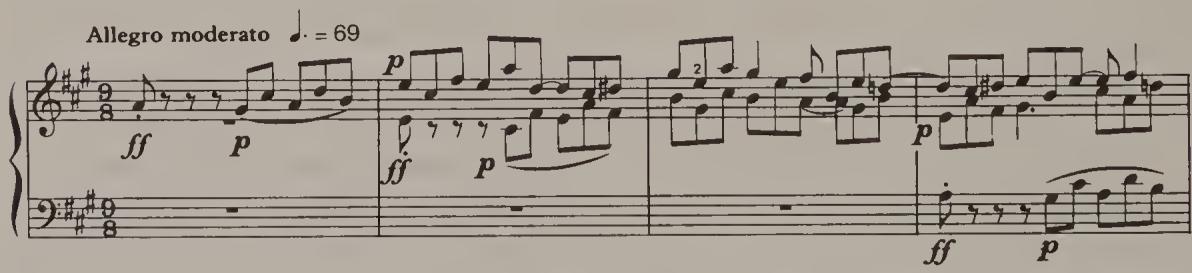
中文讲解
这是图例 Ex. 6.3 的占位符,标明它是《平均律键盘曲集》第一卷 A 大调赋格的开头四小节,但是 Czerny 编辑版本(含力度标记)的呈现。该谱例与 Ex. 6.2(无力度标记的“原谱”版)相对照,目的是让读者直观地看到 Czerny 所补充的力度记号如何把主题开头的“结构性重音”凸显出来。
图例的实际谱面内容仍需查阅原书或可信电子版本,作者的论证是:在视觉对比下,Czerny 版中的力度记号展示了“一位伟大钢琴家/教师认为应当如何演奏此主题”的历史证据。
第27段(P0172)
原文复述
On the basis of these findings we may restate the old question: ‘What would Bach have thought of the modern concert grand?’ The probable answer would be neither naïve—‘He would have considered it to be the fulfilment of his secret wishes’—nor arrogant—‘He would have considered it to be an unmusical monstrosity’. We may now assume with greater insight and for better reasons that Bach would have recognized both the advantages and weaknesses of the instrument. Its undisputed advantages include the great dynamic range and the capacity for cantabile tone in the the middle and high treble register. Its disadvantages, on the other hand, include its relatively colourless, ‘grey’ tone. Even in the case of more brilliant modern instruments, Bach might well have criticized the tone as being too thick and drab, and, especially in the lower register, as being too unclear and opaque. Like all other eighteenth-century keyboard players, Bach would no doubt have considered the action to be too heavy.
中文讲解
在 P0169–P0171 的实例分析之后,作者把讨论拉升到更高的层面:回到“那位经典问题——巴赫本人会怎么看现代三角钢琴?”
作者首先否定两种极端答案:(a) 天真式的肯定——“巴赫会把它视为自己秘密心愿的实现”;(b) 傲慢式的否定——“巴赫会认为它是一种无音乐性的怪物”。这两种答案都是把现代钢琴问题当作“信仰问题”来处理,与严肃的史学态度相悖。
作者主张以更深入的洞察和更充分的理由推测:巴赫会承认这台乐器的优势与劣势并存。优势包括:宽广的力度幅度、中高音区的歌唱性(cantabile tone)能力。劣势包括:相对无色、“灰暗”的音色;即使在最辉煌的现代钢琴上,音色也过于厚重沉闷,尤其在低音区“不清晰、不透明”;触键过重——这一点任何十八世纪键盘演奏者都会提出。
本段的论证作用是:用“假想巴赫”这一修辞,把抽象的乐器评判转化为具体的“优势 / 劣势清单”,从而使讨论回到经验层面、可检验层面。这是一种典型的“用反事实假设来检验立场”的方法——但作者特意强调答案不能是天真的肯定或傲慢的否定。
补充说明
“cantabile”(歌唱性的)源自意大利语动词 cantare(歌唱),在钢琴语境中指能够像人声一样连贯、舒展地演奏旋律的能力,是钢琴演奏技法中重要的理想。
第28段(P0173)
原文复述
Yet Bach would also have recognized the precision and flexibility of the modern piano action, and the fact that the instrument makes possible the execution of very rapid repeated notes in trills and other ornaments. His main objection to the modern piano would doubtless have been that it does not blend well with other instruments and is almost wholly unsuited for continuo playing in the orchestra on account of its lack of overtones. But despite these objections he would probably have recognized that it was a mature instrument with great scope for virtuoso and expressive playing. He would probably have acquiesced in the use of the modern piano for most of his ‘keyboard’ works, with the proviso that dynamic extremes be avoided. He might even have allowed occasional octave doublings in the bass on the lines of those he wrote out (exceptionally) in the E major Sonata for violin and obbligato harpsichord, BWV 1016, but, it is to be hoped, not the well-known ‘Busoni basses’ in the lowest register.
中文讲解
本段延续 P0172 的“假想巴赫”论证,从优势—劣势清单转向更具体的“可接受使用范围”。
作者推测巴赫会认可现代钢琴的两点优势:触键的精确性与灵活性(precision and flexibility of the action),以及快速重复音(trills 与其他装饰音)的可行性。
主要反对意见则集中在:现代钢琴与其他乐器的融合度差,且由于缺乏泛音,几乎完全不适合在乐队中担任数字低音(continuo)。
但即便有这些反对意见,巴赫大概也会承认这是一台成熟的乐器,有着巨大的炫技与表现空间。他可能会默许在演奏他大部分“键盘作品”时使用现代钢琴,前提是避免极端的力度对比。他甚至可能允许在低音区偶尔加八度重复——就像他在 BWV 1016(E 大调小提琴与 obbligato 大键琴奏鸣曲)中亲自写出(但属例外)的做法。不过作者明确表示他不希望出现著名的“布索尼式低音”(Busoni basses),即 Ferruccio Busoni 等钢琴家为巴赫键盘作品添加的低音区八度重复。
本段论证的特点是:把“可接受使用”具体化到音乐实践细节——既允许某些“巴赫自己都做过”的处理(八度重复),又排除某些“虽然常见但偏离巴赫风格”的处理(Busoni 式极端低音加厚)。它表明作者并非无条件支持钢琴演奏,而是希望“按巴赫的精神”行事。
补充说明
BWV 1016 是巴赫六首《为小提琴与 obbligato 大键琴而作的奏鸣曲》中的第四首,E 大调。该作品是巴赫少数亲自在谱面上写出低音区八度重复的键盘作品之一,因此成为作者论证“巴赫本人也容许某种程度的低音加厚”的关键例证。Ferruccio Busoni(1866–1924)是意大利钢琴家、作曲家,他编辑的巴赫键盘作品版本以大幅加厚的低音区闻名,被后来的“本真演奏”派视为过度诠释的代表。continuo(数字低音)指巴洛克乐队中由低音乐器(如大提琴、低音提琴)与和声乐器(如大键琴、管风琴、羽管键琴)共同演奏的即兴和声—低音框架。
第29段(P0174)
原文复述
What role should be assigned to the modern pedal? Whereas it can be very useful, when playing Bach, to do without the pedal altogether—in order to emphasize articulation and finger-legato—the total rejection of the pedal sometimes advocated today seems rather pointless. The manner in which the sound is suddenly ‘cut off’ by modern dampers produces a dryness of tone which was never heard on eighteenth-century harpsichords or fortepianos. On larger harpsichords in particular there was a considerable interval between the key being released and the point when the strings and the sound-board ceased to vibrate.
中文讲解
本段开始讨论一个具体的钢琴演奏技术问题——延音踏板(the modern pedal,即通常所说的右踏板 / sustaining pedal)的使用。
作者的态度是中庸的:完全不用踏板有其合理性——可以强调 articulation(音的断开与清晰)与 finger-legato(指键连奏),但今天某些人主张的“彻底拒绝踏板”在他看来毫无意义(rather pointless)。理由是:现代钢琴的制音器(dampers)会“突然切断”声音,造成一种十八世纪大键琴或古钢琴上从未有过的“干涩”。在大键琴上,琴键释放后到琴弦与音板完全停止振动之间存在明显的延迟,因此其声音是自然衰减的;而钢琴则是被机械切断的。
这是一个经验性的论证:现代钢琴的“干”特性是制音系统的副作用,并不能等同于十八世纪乐器的真实状态;因此“完全不用踏板”反而失去了对历史音色的接近。这一段在全章中起“由乐器到具体演奏技法”的转折作用。
补充说明
现代钢琴的制音器(damper)系统在琴键释放时立即压回琴弦,从而切断振动;右踏板则抬起全部制音器,允许琴弦持续振动直至下一次按下踏板。大键琴则不存在机械制音——琴键释放后琴弦会自然持续振动直至能量耗尽,因此其声音有一种天然的“延留感”。finger-legato(指键连奏)指不依赖踏板而仅靠手指连键动作来连接音符的技法。
第30段(P0175)
原文复述
In pieces with arpeggiated triads, for example, the sound of a good early harpsichord was very similar to that of a modern piano when the pianist makes a discreet use of the pedal. The pedal is the ‘stop’ peculiar to the modern piano, and with its help magical sounds can be evoked. It is the piano’s only substitute for the harpsichord’s many stops.
中文讲解
本段以具体作品类型(“有分解和弦三和弦的乐句”)为例,进一步论证踏板的合理性。在这类作品中,优良的古大键琴的声音,与一位钢琴家谨慎使用踏板时所发出的声音“非常相似”。
作者由此提出一个极具洞察力的类比:踏板是现代钢琴特有的“stop”(音栓 / 音色切换装置)。它是大键琴众多 stops(羽管键琴通常拥有 8′、4′、lute stop 等多种音栓)唯一的替代物。借助踏板,钢琴家可以召唤出“富有魔力的声音”。
这一论证的妙处在于:它把踏板从“现代钢琴带来的偏差”重新定位为“现代钢琴对历史音色多样性的补偿”。作者并不主张把钢琴变成大键琴,而是指出踏板能让钢琴在某些方面达到与大键琴 stops 相近的效果。
补充说明
在羽管键琴语境中,“stop”指一组与某一特定音栓相连的琴弦(不同 stops 给出 8′、4′、16′ 等不同八度音色或特殊音色),演奏者通过拉动手动音栓杆来切换;踏板则在现代钢琴中扮演类似角色——通过控制制音器来改变声音的延留与混合方式。
第31段(P0176)
原文复述
It would also be just as wrong to try to ‘play the harpsichord’ on the modern piano as it is, conversely, to ‘play the piano’ on the harpsichord (this can sound terrible). A pianist who eschews the pedal is like a violinist who does not use vibrato, for on the piano a note played with pedal creates a vibrato effect. Performers of baroque and rococo music are fully aware of the fact that violin vibrato was used in the eighteenth century, particularly by virtuosos, though less frequently than today. Geminiani describes vibrato in his famous violin treatise of 1751, stating that it should be used ‘as often as possible’.⁶³ It has always been one of a performer’s primary concerns to draw the most beautiful sounds possible from his instrument.
中文讲解
本段把踏板使用问题与小提琴的 vibrato(揉弦)进行类比,论证的核心是“乐器的本真特性应当被充分发挥,而非被压抑”。
首先,作者指出两种错误的极端:在现代钢琴上“假装是大键琴”,或者反过来在大键琴上“假装是现代钢琴”,这两种做法都同样错误——后者听起来尤其糟糕。
接下来是关键类比:一位拒绝使用踏板的钢琴家,就像一位不用揉弦的小提琴家——因为在钢琴上使用踏板时所发出的声音本身就具有一种“揉弦效果”(vibrato effect)。
为支持这一类比,作者引入历史依据:十八世纪的小提琴演奏者确实使用揉弦,尤其是炫技性演奏家,只是频率不如今天这般高。Geminiani 在其 1751 年著名的小提琴论著中说,揉弦应当“尽可能多地使用”(‘as often as possible’)。
最后一句总结:演奏者“始终主要关心”的是如何从自己的乐器中发出最美的声音。这一句把整段讨论拉回到作者一贯的美学立场——“音色不是演奏的全部,但是演奏者必须深入挖掘乐器的音色潜力”。
本段在论证策略上的特点是:用小提琴家“使用揉弦”的合法性,来为钢琴家“使用踏板”辩护。这种类比之所以有力,是因为揉弦在十八世纪本身是被历史证据所支持的,从而让踏板使用从“现代发明”变成了“乐器演奏中的合理延伸”。
补充说明
Francesco Geminiani(1687–1762)是意大利小提琴家、作曲家。其 1751 年英文论著 The Art of Playing on the Violin 是十八世纪弦乐演奏实践最重要的原始文献之一,详尽讨论了揉弦、弓法、装饰音等问题。rococo(洛可可)通常指约 1730–1770 年间的音乐风格,紧接巴洛克晚期、与早期古典风格重叠。
第32段(P0177)
原文复述
I have already mentioned the intermingling of different harmonies on early fortepianos. Whilst it is hardly ever appropriate to play a piece by Bach on the modern piano with the pedal depressed for long stretches at a time, Bach and his contemporaries often write movements of the ‘musette’ type with pedal-points in the bass that imitate the sound of hurdy-gurdies or bagpipes on the harpsichord. Movements of this kind are Gavotte II ‘ou la Musette’ from English Suite No. 3, BWV 808, Gavotte II from English Suite No. 6, BWV 811, and, to a slightly lesser extent, Minuet II from the B flat Partita, BWV 825. Here some strong ‘over-pedalling’ on the piano probably comes closer to the original than the harpsichord. There is no need to be afraid of using the pedal!
中文讲解
本段以具体作品类型说明“何时应大量使用踏板”。作者先承认,连续长时间踩住踏板来演奏巴赫,几乎总是不合适的——这呼应了 P0174 中关于“避免过度使用踏板”的立场。
但巴赫和他的同时代人确实写过“musette”型的乐章——这种乐章在低音有持续的 pedal-points(持续低音 / 固定低音),目的是在大键琴上模拟手摇风琴(hurdy-gurdy)或风笛(bagpipe)的声音。具体例子包括:
- BWV 808《英国组曲第三号》第二乐章 G 小调,“Gavotte II ‘ou la Musette’”;
- BWV 811《英国组曲第六号》的第二乐章 Gavotte II;
- BWV 825《bB 大调帕蒂塔》(即第一套《帕蒂塔》)的第二乐章 Minuet II(程度稍弱)。
作者指出,在这类作品中,钢琴上的“over-pedalling”(即比常规更深的踏板使用)反而比大键琴更接近原始的声音效果。因此作者总结:“完全不必害怕使用踏板!”
这是一个精彩的“具体作品类型 + 历史意图”的双层论证:既承认踏板不应滥用,又指出在某些特殊体裁中踏板是实现巴赫本意的最佳手段。
补充说明
musette 是巴洛克时期的一种舞曲体裁与舞曲风格,通常具有持续低音,常用于模仿民间风笛或手摇风琴的音响;pedal-point(持续音)指在低音持续一个或多个音的同时,上方声部自由进行和声运动。hurdy-gurdy(手摇风琴)与 bagpipe(风笛)均为持续低音型民间乐器,与 musette 体裁所追求的音色密切相关。BWV 825 是巴赫六首《帕蒂塔》(或称德国组曲)中的第一首。
第33段(P0178)
原文复述
To sum up. In comparison with the tonal ideal of the nineteenth and twentieth centuries all eighteenth-century musical instruments had a brighter, clearer, more transparent, but also thinner and quieter sound than later ones. Conversely, where music is pure poetry in sound, listeners have always tended to forget the instrument and even the performer, because it speaks to us on a level that is more profound than a merely sensual response to sound. I and other musicians experience this every time we hear Edwin Fischer’s moving performance of the B flat minor Prelude from WTC I. This is deeply felt music of mourning that speaks directly to the heart. Therefore, without wishing to belittle our quest for the correct instrument, I would like to conclude by saying that the sonority is not the most important element. Bach himself adapted his works for all sorts of instruments, without taking into account the original sonority. In the end it was not the instrument or the voice that he considered important, but the spirit that infuses the player or singer. ‘Let everything that hath breath praise the LORD.‘⁴
中文讲解
本段是全章的总结,作者把“乐器选择”议题拉升到一个更宽广的人文—美学层面。
第一层(音色的历史相对性):相对于十九、二十世纪的音色理想,所有十八世纪乐器的音色都更明亮、更清澈、更透明,但也更单薄、更安静。也就是说,“更好”并不是一个绝对标准,而是一个历史相对的判断。
第二层(音乐的超越性):当音乐是“纯粹的声音之诗”时,听众往往会忘记乐器甚至演奏者本身,因为这种音乐“在我们心中唤起的共鸣,远比感官对声音的反应更为深沉”。这一句接近于作者的美学信仰陈述。
第三层(具体体验):作者与许多其他音乐家每次听到 Edwin Fischer 演奏的《平均律键盘曲集》第一卷 b 小调前奏曲时,都会体验到这种超越性。那是一种“深刻的悲悼音乐”,“直接诉诸心灵”。
第四层(结论):作者并不想贬低对“正确乐器”的追求,但最终想要声明:音色不是最重要的元素。巴赫本人为各种乐器改编自己的作品,并不考虑“原始音色”。对巴赫而言,最终重要的不是乐器或人声,而是“注入演奏者或歌唱者之中的精神”。
第五层(宗教引文):以《圣经·诗篇》第 150 篇的“凡有气息的都要赞美耶和华”作结,把整章的论证收束于一种敬畏—精神性的话语中。
本段的功能是把前文所有的具体技术讨论(钢琴 vs 大键琴、踏板、八度重复等)重新置于一个更大的框架之下:音色服务于音乐,而非相反;演奏的精神是音乐之所以动人的核心。这种修辞位置恰好回应了 P0150 中 Schmiedel 的“反钢琴”立场——但作者并未简单否定 Schmiedel 的“内在形式”概念,而是把“内在形式”的来源从“乐器的内在品质”转移到“演奏者的内在精神”,从而打开一个比“钢琴或大键琴”更深的维度。
补充说明
WTC I b 小调前奏曲(BWV 858 的前奏曲)以其缓慢下行的减七和弦分解广为人知,常被视为巴赫键盘作品中“悲悼”之情的最高表现之一。Edwin Fischer 1930 年代与 1950 年代的两次录音至今仍被视为钢琴演奏巴赫的典范。诗篇 150 是《旧约·诗篇》的最后一篇,全文皆为赞美之歌,最后一节即“凡有气息的都要赞美耶和华”(拉丁文“Omnis qui spirat, laudet Dominum”),是西方音乐传统中最常被引用的赞美诗篇之一。
第34段(P0179)
原文复述
⁶³ The Art of Playing on the Violin (London, 1751), p. 8.
中文讲解
这是 P0176 中上标 63 所对应的脚注,给出 Geminiani 1751 年小提琴论著的完整出版信息:《小提琴演奏的艺术》(The Art of Playing on the Violin),伦敦,1751 年,第 8 页。
本脚注的学术功能是来源(source)支持。它让读者可以回查 Geminiani 关于揉弦“应尽可能多使用”(‘as often as possible’)这一表述的原文出处,从而核实作者在 P0176 中的引述。它对本节论证起到支持作用。
第35段(P0180)
原文复述
⁶⁴ Psalm 150.
中文讲解
这是 P0178 中上标 64 所对应的脚注,仅给出引文出处:《圣经·诗篇》第 150 篇。它是一条极简的来源脚注,作用是标明作者在结尾所引之宗教文本的圣经位置。
《旧约·诗篇》第 150 篇全文皆为赞美,其最后一节“凡有气息的都要赞美耶和华”在西方音乐传统中常被用于表达“让一切会发声的存在都来赞美”的精神,是巴洛克音乐(含巴赫的宗教作品)所继承的最深精神背景之一。
脚注 / 边栏 / 图表 / 附加信息(如有)
本小节包含九条脚注(编号 55–63、64,其中 60 与 61 之间编号连续),其中 56、57、59、60、61、63、64 为简短文献出处脚注;55 为延伸阅读推荐脚注;58 为文献出处脚注。它们共同为本节的史学与文献基础提供索引支持。两个乐谱图例(Ex. 6.2 与 Ex. 6.3)位于 P0170 与 P0171,作为 P0169 论点的视觉证据;由于图像数据省略,需查阅原书以确认细节。
💡 本节核心要点
- 本节的总论点是“钢琴与大键琴并非二选一”,两者在巴赫演奏中都有合法地位,关键是演奏者的音乐性而非乐器本身。
- 二十世纪关于钢琴演奏巴赫的态度经历了显著转变:从世纪初的“平等甚至优越”,到世纪后半叶的“被排除”,作者通过引用 Schmiedel(1972)与 Neumann(1967)等代表性争论,呈现了这场争论的史料脉络。
- 作者从乐器供应现实、乐器品质参差、维护困难等具体层面反驳“反钢琴派”,指出连 Neumann 也承认钢琴演奏“只能被视为改编”,但“改编”本身不应被贬义化。
- 作者通过巴赫本人作为“史上最伟大改编者之一”的史实,将“改编”正名为音乐传统的常态,并以 WTC I A 大调赋格主题为例,说明现代钢琴在呈现结构性重音方面具有不可替代的优势。
- 在踏板使用问题上,作者主张既不必彻底拒绝踏板(这会失去与十八世纪乐器自然延留相接近的音色),也不可滥用踏板——但对“musette”型乐章中的“over-pedalling”给予明确肯定。
- 全章以“音色不是最重要的元素、巴赫本人看重的是演奏者内在的精神”作结,引用《旧约·诗篇》150 篇,把乐器选择议题升华到精神—美学层面。
🔑 关键术语
- harpsichord(羽管键琴 / 大键琴):通过羽管或皮制拨子拨动琴弦发声的键盘乐器,是巴赫时代最主流的键盘乐器之一。其声音由琴弦自然振动产生,缺少现代钢琴式的力度层次,但拥有多种 stops(音栓)以切换音色。本节中,作者既肯定它在历史音色上的优势,也指出当代乐器供应、维护与品质方面的现实问题。
- fortepiano(古钢琴):十八世纪后半叶发展起来的早期击弦键盘乐器,与现代钢琴同属“击弦”家族,但触键更轻、音色更明亮且有更自然的衰减。本节中作者认为它在呈现结构性重音方面不如现代钢琴灵活,但优于大键琴。
- clavichord(古翼琴 / 楔槌键琴):通过金属切线(tangent)击打琴弦发声的早期键盘乐器,音量极小但触键极为敏感,能在力度与音色上做最细微的变化。本节在 P0169 中作为与现代钢琴对照的参照点出现。
- sonority(音色 / 音响质地):指乐器特有的声音色彩与质地,是本节反复出现的核心概念。作者并不否定其重要性,但主张它不应被“高估为音乐的全部”,更不能成为排斥钢琴的唯一理由。
- transcription(改编):将一部作品从一种乐器或编制转换为另一种乐器或编制的过程。本节中作者通过巴赫本人的大量改编实践为这一概念正名,反对将“改编”自动等同于“次等替代品”。
- affection(情感特质):巴洛克音乐修辞学中的关键概念,指音乐作品所意欲传达的特定情感状态(如悲伤、喜悦、爱等),与“affetti”理论密切相关,是巴赫音乐诠释中的核心考量之一。
- pedal-point(持续音):在低音持续一个或多个音的同时,上方声部自由进行和声运动的技法。musette 型乐章常使用此技法以模拟持续低音乐器的声响。
- stretto(紧接段):赋格写作技法,指主题或答题在前一进入尚未结束时就再次出现,造成主题叠合的张力。本节中作为“复调清晰呈现”所对应的具体音乐结构之一。
- vibrato / 揉弦:弦乐演奏中通过左手手指在指板上轻微、周期性摇动来产生音高细微波动的声音效果。Geminiani 1751 年论著中明确记载此技法在十八世纪已被使用。
- musette:巴洛克时期一种舞曲体裁与舞曲风格,常具有持续低音,旨在模仿风笛或手摇风琴的音响。本节在 P0177 中作为“应大量使用踏板”的代表体裁被讨论。