目录
CH7 Chapter 7 Chopin: Nocturnes, Mazurkas, and Études
- 7.1 [描述性拆分] Introduction: Chopin’s Place in the Classic Tradition
- 页码:1-1
- 7.2 [描述性拆分] Early Character Pieces and the Nocturne in Eb Major, Op. 9, No. 2
- 页码:1-2
- 7.3 [描述性拆分] Lead-ins and Overlap in the Ab Major Mazurka, Op. 17, No. 3
- 页码:2-4
- 7.4 [描述性拆分] The Études of Op. 10: Syncopation and the Five-Measure Phrase
- 页码:4-6
- 7.5 [描述性拆分] Phrase Structure and the Cadential 6/4 Reinterpretation in Op. 10, No. 3
- 页码:6-7
- 7.6 [描述性拆分] The B Major Nocturne, Op. 32, No. 1: Inner-Voice Counterpoint and Linking Passages
- 页码:7-8
- 7.7 [描述性拆分] Whimsical Articulation in the G# Minor Mazurka, Op. 33, No. 1
- 页码:8-10
- 7.8 [描述性拆分] Late Style and the Concept of Endless Melody
- 页码:10-10
- 7.9 [描述性拆分] Endless Melody in Practice: Op. 59, No. 1 and Op. 48, No. 2
- 页码:11-13
- 7.10 [描述性拆分] Phrase Overlap and Expansion in the F# Minor Nocturne, Op. 48, No. 2
- 页码:13-16
- 7.11 [描述性拆分] The Late Nocturne Op. 62, No. 1 and Conclusion of Chapter 7
- 页码:16-18
CH8 Chapter 8 Wagner: From Opera to Music Drama
- 8.1 [描述性拆分] Introduction: Wagner, Brahms, and the Rhythm Problem
- 页码:18-19
- 8.2 [描述性拆分] Analytical Literature and the Scope of This Chapter
- 页码:19-19
- 8.3 [描述性拆分] Early Operas: Wagner’s Musical Background and the Rhythm Problem
- 页码:19-20
- 8.4 [描述性拆分] Rienzi: Square Phrase Rhythm and the Bar Form
- 页码:20-21
- 8.5 [描述性拆分] The Flying Dutchman and Tannhäuser: Quatrain Form and the Poetic-Musical Period
- 页码:21-25
- 8.6 [描述性拆分] Lohengrin: Toward Endless Melody
- 页码:25-25
- 8.7 [描述性拆分] Leitmotif Technique and the Ortrud–Telramund Dialogue
- 页码:25-29
- 8.8 [描述性拆分] Leitmotifs, Hypermetrical Ambiguity, and Musical Prose in Lohengrin
- 页码:29-32
- 8.9 [描述性拆分] Music Drama: Endless Melody and Musical Prose
- 页码:32-32
7.1 [描述性拆分] Introduction: Chopin’s Place in the Classic Tradition
第1段(P0001)
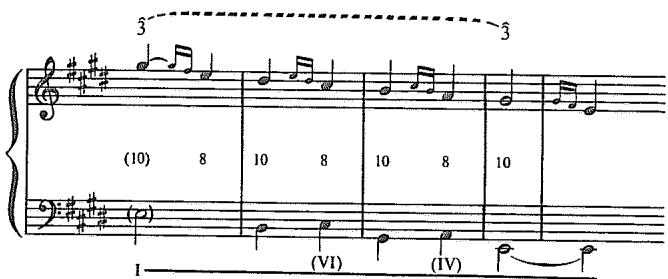
原文复述
Chapter 7 Chopin: Nocturnes, Mazurkas, and Études
中文讲解
本章的总标题。作为版面上的章节标识,它限定了本章的研究对象与讨论范围:作者聚焦于作曲家肖邦(Chopin),并把他的作品范围收窄到三种最具代表性的钢琴体裁——夜曲(Nocturnes)、玛祖卡(Mazurkas)与练习曲(Études)。标题同时预告了全章的分析路径:后续内容将以这三类作品为材料,探讨肖邦在钢琴音乐中的风格特征,而不会全面铺开肖邦的所有作品(如协奏曲、奏鸣曲等虽然在第3段被提及,但并不构成本章分析的样本)。
第2段(P0002)
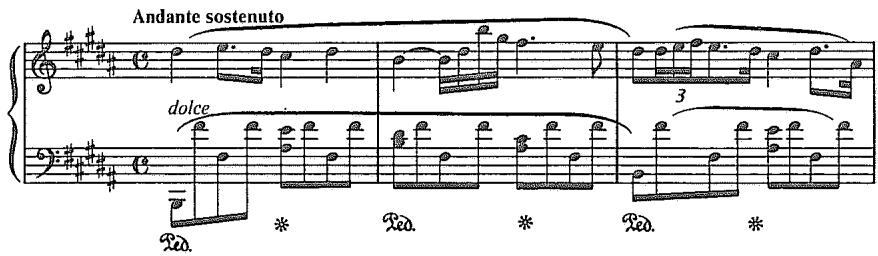
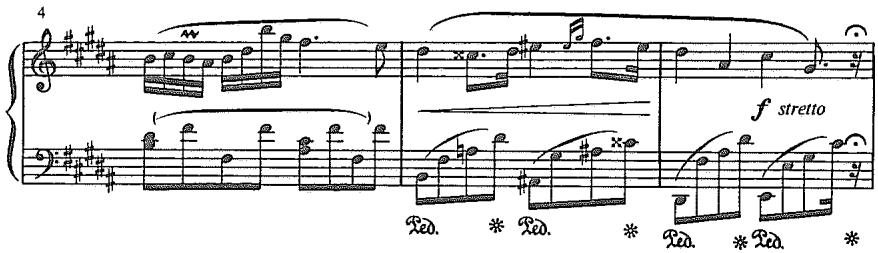
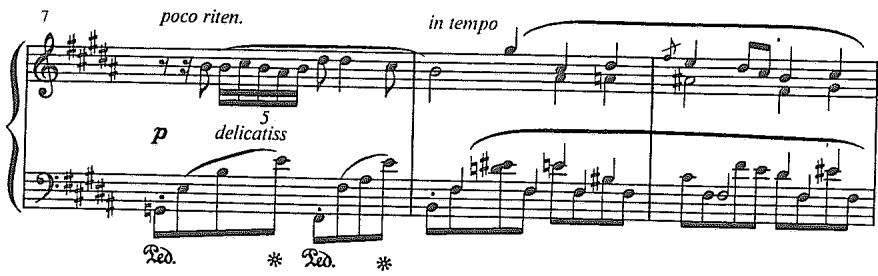
原文复述
Relatively little is known about Chopin’s early training as a composer—much less, certainly, than is known about Mendelssohn’s. We do know that Chopin was passionately attached, in his adult life, to the music of Bach and Mozart, and that he appeared to dislike much of his own time. He even had little use for most of Beethoven’s music. His taste seems to have run more to those early-19th-century composers who had more or less bypassed Beethoven’s influence—Cramer, Clementi, Hummel, Field, and perhaps Weber as well. ¹
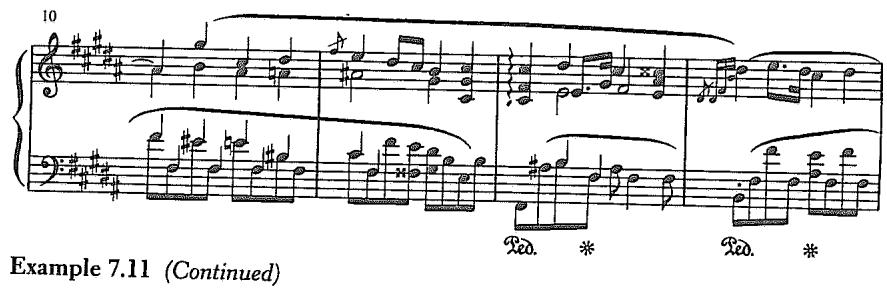
中文讲解
本段是全章开篇对肖邦审美取向的勾勒。作者首先承认肖邦早年作曲训练的具体细节相对模糊(且远不及人们对门德尔松早年的了解),随后转向有据可查的成年期趣味:他热爱巴赫与莫扎特,对自己时代的大部分音乐持排斥态度,对贝多芬的大多数作品也兴趣寥寥。这一连串否定性陈述勾勒出的是一种"逆时代"的审美肖像。关键证据是最后一句——肖邦更偏爱那些"绕过贝多芬影响"的早期19世纪作曲家:克拉默(Crammer)、克莱门蒂(Clementi)、胡梅尔(Hummel)、菲尔德(Field),可能还有韦伯(Weber)。这一列表的共同点是:他们都属于键盘音乐传统中相对保守、更靠近古典风格与钢琴演奏技术一脉的作曲家,菲尔德还是夜曲体裁的奠基者——这与肖邦日后创作夜曲有直接的渊源。对照后文,这一表述同时为"肖邦古典根基不深但审美倾向保守"的张力埋下伏笔:他对古典传统有感情,但他进入这一传统的路径与门德尔松不同。
补充说明
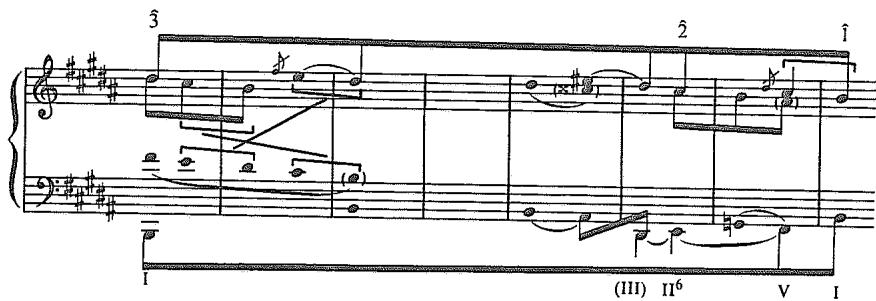
本段末尾的脚注 ¹ 通常指向作者对肖邦这一审美判断的文献出处(一般与传记文献或历史书目相关),属于来源类脚注。在本段范围内,脚注标记本身不提供新论据,仅作为"参见文献"使用。
第3段(P0003)
原文复述
Despite these signs of conservative taste, Chopin was not brought up in an 18th-century cultural milieu as Mendelssohn was. As Charles Rosen has pointed out, Chopin’s two piano concerti and his C Minor Sonata, all very early works, are anything but Classic in form, especially as regards their key relations. ² Mendelssohn was part of an unbroken 18th-century tradition; Chopin, like Schumann and Brahms, had to rediscover that tradition for himself—to compose his way into it, as it were. Therefore it is not surprising that certain features of the Classic style came naturally to Mendelssohn but not to Chopin. The handling of sonata form is only the most obvious point of difference between the two in this respect. In their character pieces, Mendelssohn employed phrase expansion more frequently than did Chopin; furthermore, Mendelssohn’s expansions more often resemble those found in Classic music (see Examples 6.8–6.9). Although many and perhaps most of the Songs without Words can be traced back to symmetrical underlying phrase structures in duple hypermeter, few of the pieces actually retain those symmetries at the surface without some expansion or other variation. This is not true of Chopin’s character pieces, particularly the earlier ones. Even in his more complex later music, symmetries often lurk just beneath the surface, concealed by artifices of a strikingly original nature—rhythmic devices that differ noticeably from those commonly used by Haydn, Mozart, Beethoven, or Mendelssohn.
中文讲解
本段承接前段建立的"肖邦趣味保守"印象,但立即做出一处重要修正:虽然审美保守,肖邦成长的文化环境却并非真正延续着18世纪古典传统的家庭(与门德尔松不同)。作者引用Charles Rosen的观点指出,肖邦早期作品——两首钢琴协奏曲与C小调奏鸣曲——在形式上,尤其在调性关系上,并不符合古典规范。这一对比其实解释了肖邦为何作品听起来"偏离古典":他并未浸入一个活着的古典传统,他必须像舒曼、勃拉姆斯那样,“重新发现"那一传统——换言之,要通过自己的创作去重新走通它、走进它。因此,“某些古典手法对门德尔松自然而然、对肖邦却不然"便是顺理成章的结论。
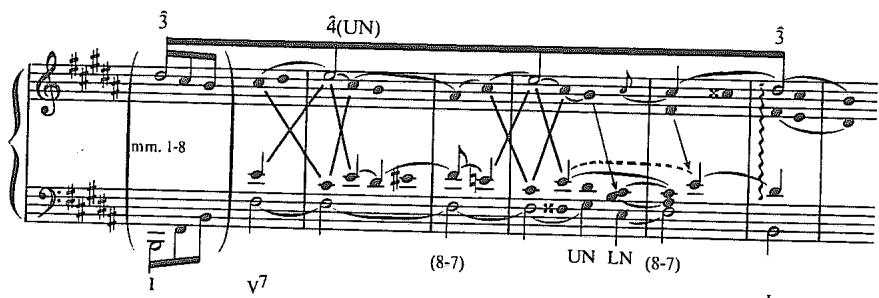
随后段落进入具体音乐分析层面,列举三类后果:第一,奏鸣曲式的处理是二人最显眼的差异;第二,在性格小品(character pieces)中,门德尔松比肖邦更频繁地使用乐句扩展(phrase expansion),且其扩展手法更贴近古典作品(参见例6.8–6.9);第三,更为精细的反差在深层结构上:很多无词歌(Songs without Words)的底层乐句结构以双拍子超级节拍(duple hypermeter)下的对称格局为基础,但表层由于扩展或变化大多已不再保持对称;而肖邦的性格小品则不同——尤其是他早期作品——表层仍维持对称。更深一步,即使在后来更复杂的作品里,对称也常常只是"潜伏"在表层之下,被"极具原创性的手法"所掩藏——这些手法体现为节奏装置(rhythmic devices),并明显不同于海顿、莫扎特、贝多芬或门德尔松惯用的节奏策略。
从论证结构看,本段完成了三项任务:(1)解释前段埋下的张力(审美保守≠浸润于古典传统);(2)通过与门德尔松的对照,把肖邦定位为"必须重新学习古典语言"的作曲家;(3)给出可在后续章节具体核实的技术后果——奏鸣曲式处理、乐句扩展频率、底层对称是否在表层暴露出来。这一框架为接下来对夜曲、玛祖卡与练习曲的逐一分析做好了铺垫。
补充说明
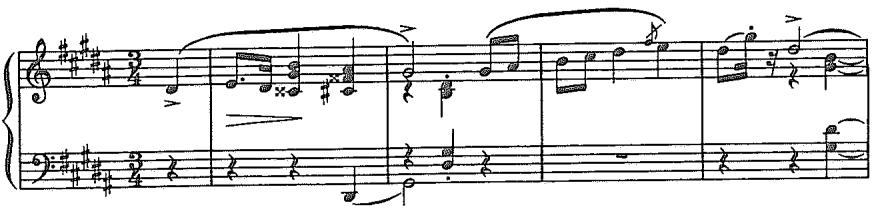
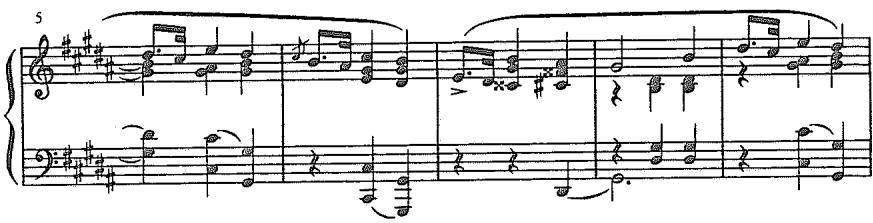
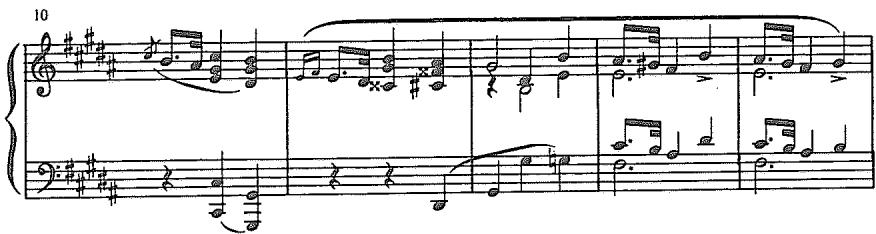
本段中的脚注 ² 标注在Rosen关于肖邦早期作品调性关系的论断之后,属于来源/佐证类脚注,指向Rosen的具体论述。段中提及的"例6.8–6.9"指向前一章第6章中的谱例,用于支撑"门德尔松的扩展更接近古典风格"这一判断,因此本段与第6章的谱例材料形成跨章互文,本章读者应同时参照第6章例6.8与例6.9以理解该对比。
脚注 / 边栏 / 图表 / 附加信息(如有)
本小节范围内涉及的脚注有两处:脚注 ¹(位于P0002末尾,标注于肖邦审美趣味陈述之后,作用为对肖邦偏爱早期19世纪保守派作曲家这一断言提供文献来源,属于来源类脚注);脚注 ²(位于P0003开头,标注于Charles Rosen关于肖邦早期作品形式与调性的论断之后,作用为对Rosen的引述提供出处,属于来源/佐证类脚注)。此外,段中还跨章引用了第6章的例6.8与例6.9作为对照材料,构成本节与上一节之间的互文关系。本节本身不包含独立的图表或谱例,仅给出文字论述与对外部材料(前一章的谱例)的指引。
💡 本节核心要点
- 肖邦的作曲训练背景相对模糊,但其成年期审美趣味被刻画为"保守”——钟爱巴赫、莫扎特,及绕过贝多芬影响的几位键盘音乐传统作曲家(克拉默、克莱门蒂、胡梅尔、菲尔德,可能还有韦伯)。
- 尽管趣味保守,肖邦并非在连续不断的18世纪古典文化环境中成长(与门德尔松相对);他必须像舒曼、勃拉姆斯那样,通过自己的创作过程去重新发现古典传统。
- 这一成长路径差异在形式层面产生可观测后果:肖邦早期协奏曲与奏鸣曲在调性关系上偏离古典规范,奏鸣曲式的具体处理亦与门德尔松不同。
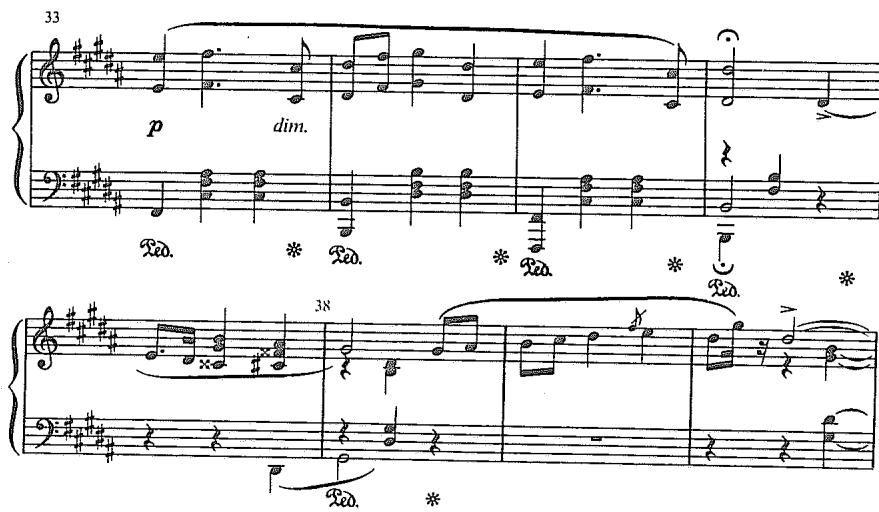
- 在性格小品层面,门德尔松更常使用乐句扩展,且其扩展手法更贴近古典风格;肖邦则较少如此,并倾向于在表层保留底层乐句结构的对称。
- 在更复杂的晚期作品中,肖邦的表层音乐虽可能显得不对称的,但其底层的对称布局往往隐伏于表面之下,被他自创的、明显异于海顿—莫扎特—贝多芬—门德尔松传统的节奏手法所遮蔽。
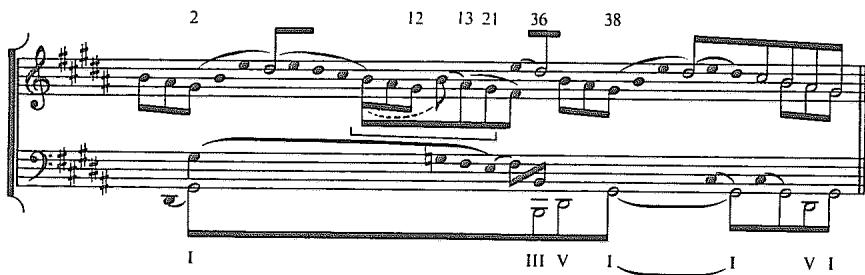
🔑 关键术语
- character pieces (性格小品):短小的、带有标题或性格化特征的钢琴独奏曲体裁。肖邦与门德尔松在本章被作为这一体裁的两位主要代表进行对比分析;肖邦的夜曲、玛祖卡与练习曲均属此类。
- phrase expansion (乐句扩展):在古典风格中常见的句法手法,指通过对一个基本乐句进行加花、重复或延伸,从而扩展其长度。本节指出门德尔松比肖邦更频繁地运用此手法,且其扩展更接近古典模式。
- symmetrical underlying phrase structures (对称的底层乐句结构):指作品底层节拍组织中以可等分的结构单位(如四小节、八小节)构成的左右对称布局。本节强调:在门德尔松无词歌中,此类对称常在表层被扩展所打散;而肖邦——尤其是其早期作品——则在表层仍保留这种对称。
- duple hypermeter (双拍子超级节拍):指在多个小节尺度上由两拍(或两小节)单位组合而成的更高一级的节拍层级。本节以此术语刻画门德尔松无词歌底层组织的基本格局。
- Classic style / Classic form (古典风格/古典曲式):特指18世纪后期至19世纪初由海顿、莫扎特、贝多芬等确立的调性音乐语言与奏鸣曲式等结构规范。本节把它作为衡量肖邦与门德尔sohn关系的参照系。
- sonata form (奏鸣曲式):由呈示—发展—再现三段构成、调性对照的器乐曲式结构。本节明确把奏鸣曲式的处理方式列为肖邦与门德尔松之间"最显而易见"的差异点。
7.2 [描述性拆分] Early Character Pieces and the Nocturne in Eb Major, Op. 9, No. 2
第1段(P0004)
原文复述
The famous Nocturne in Eb Major, Op. 9, No. 2 (1830), is an early character piece not very far removed from the nocturnes of Field. In fact, it is often compared to Field’s first nocturne, which is in the same key. Until the last phrase of its coda, Chopin’s nocturne follows an absolutely regular pattern of four-measure phrases, each phrase being repeated with embellishments: the layout of the whole is |: A :|: B A :| + coda, where each letter represents one four-measure phrase, and the repeats are written out and varied. What is truly remarkable is how much rhythmic variety Chopin manages to create within this seemingly rigid framework. Even if we disregard the varied reprises—an obvious opportunity for variety—the A phrase itself, to be heard four times in four different variations, already demonstrates Chopin’s exquisite rhythmic sense (see Example 7.1).
中文讲解
本段为本节定调:肖邦的《降E大调夜曲》Op. 9 No. 2 创作于1830年,是一首早期性格小品,与菲尔德(Field)夜曲传统仍有较近的亲缘关系(二人第一首夜曲甚至同为降E大调)。作者强调两点结构性事实:其一,全曲在尾声的最后一个乐句之前,严格遵循四小节乐句的循环,且每个乐句都带有装饰性反复,整体图式为 |: A :|: B A :| + coda(再现中已被写出且加以变化);其二,在这看似僵硬的框架内,肖邦却制造出惊人的节奏多样性——即便忽略变奏化的反复,A 段本身要被听四次且每次都不同,这已经足以展示肖邦的节奏感。第7.1例(m. 1–4)即承担这一论证任务。把握住"刚性框架 + 弹性节奏"的对照,是理解本节核心论点的钥匙。
补充说明
图式 |: A :|: B A :| + coda 中,|: … :| 表示反复记号,反复部分在小节符号内写入并变化;A 与 B 各代表一个四小节乐句。B 段再现为 A,形成类似小三段体但以再现 A 收束的夜曲常见布局。
第2段(P0005)
原文复述
[Example 7.1. Chopin: Nocturne in Eb Major, Op. 9, No. 2, mm. 1–4]
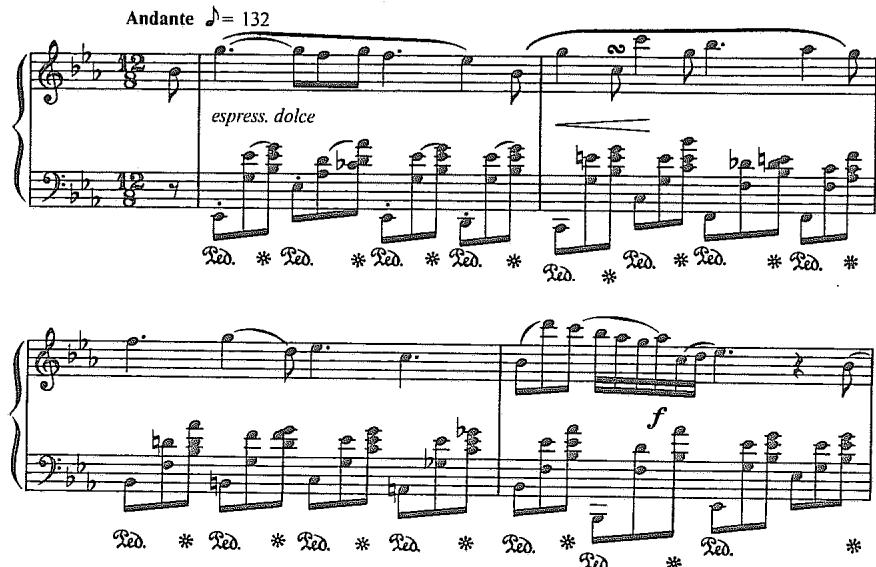
中文讲解
这是肖邦《降E大调夜曲》Op. 9 No. 2 第1—4小节的乐谱图占位符。作为本节第7.1例,它为后文关于"刚性框架内的节奏变化"以及"前景装饰遮蔽了乐句分界"的讨论提供实证素材。请参阅原书谱例以核对音符细节。
补充说明
占位符所示为谱例图注本身,谱面内容需参照原书图像。本节作者对m. 1–4的论述依赖此谱例。
第3段(P0006)
原文复述
Example 7.2 is based on a voice-leading graph of mm. 1–4 by Oswald Jonas.³ The first part, 7.2a, shows the underlying third-progressions of the melody, which occur at two different structural levels—the overarching third g²–f²–eb² and the smaller offshoots that descend from g² and f²; the second part, 7.2b, adds some elaborations to this skeletal structure, including two new third-progressions that belong to the foreground (Eb–D–C in the bass and ab²–g²–f² in the melody). All of the third-progressions in the example are descending ones, but the two just named—the two that have least to do with the underlying structure—play a special role as carriers of rhythmic continuity.
中文讲解
本段基于奥斯瓦尔德·约纳斯(Oswald Jonas)对m. 1–4所做的声部进行图(脚注³),把"结构骨架"和"前景装饰"分成两层对照展示。7.2a 揭示旋律中两层级下行的三度进行:最高层级的 g²–f²–eb²(笼罩整段),以及由 g² 与 f² 出发的较小下行支脉;7.2b 在骨架之上添加两处前景的三度进行——低音 Eb–D–C 与旋律 ab²–g²–f²。两者都是下行的,但作者特意指出:这两条与基本结构关系最远的前景三度进行,正是"承担节奏连贯性"的关键线索。这一观察为下文Example 7.3的"去掉装饰"对照埋下伏笔:一旦去掉这些前景连线,节奏动力也随之中断。
补充说明
脚注³ 指向 Jonas, Introduction to the Theory of Heinrich Schenker, p. 65。该图本身即是申克式声部进行的简化图,作者用其证明同一段落存在多层级的下行三度。
第4段(P0007)
原文复述
[Example 7.2. Voice-leading reduction of mm. 1–4 (after Jonas, Introduction to the Theory of Heinrich Schenker, p. 65)]
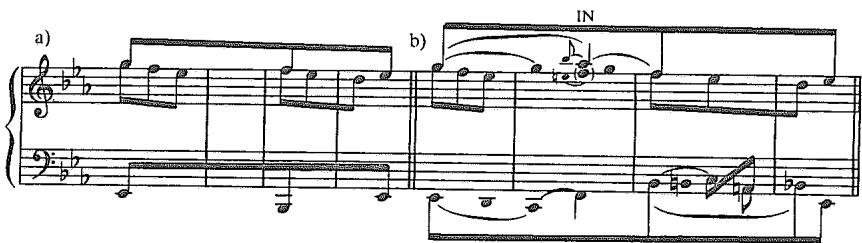
中文讲解
这是m. 1–4 声部进行缩简图的图占位符,分 7.2a(骨架)与 7.2b(加上前景装饰)两部分。读者应直接参看原图,对照上文的文字描述。
补充说明
无额外补充,依赖原图。
第5段(P0008)
原文复述
We can observe this special role more closely if we recompose the passage in a less ornate way, keeping the underlying structure and the basic melodic motives intact. This might give us the uninspired results shown in Example 7.3 (in which the left hand is given only as a bass line; the inner voices can be imagined).
中文讲解
这是研究方法上的关键一步:作者建议在保留基础结构与基本旋律动机的前提下,把m. 1–4"改写"成较少装饰的版本,由此得到 Example 7.3。这种"减法实验"意在把肖邦真正"加"上去的东西凸显出来——一旦剥去装饰,节奏连贯性是否会随之瓦解?左手在 7.3 中仅以低音线呈现,内声部留给读者想象(暗示内声部在此并非论证对象)。
补充说明
作者把这种"改写—对照"作为一种揭示性的思想实验:保留骨架以隔离装饰变量,从而把前景处理的特殊贡献单独显示出来。
第6段(P0009)
原文复述
[Example 7.3. Recomposition of mm. 1-4]
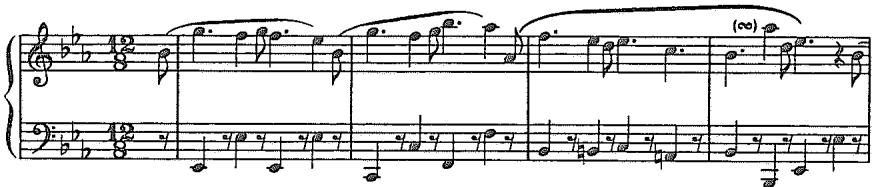
中文讲解
这是"较少装饰的改写版"m. 1–4 的图占位符。它对应的是剥去肖邦前景处理后呈现出的"平淡"版本,是后文论证"肖邦天才主要居于前景装饰"的关键证据。请参阅原书谱例。
补充说明
依赖原图;建议在阅读时把 7.1 与 7.3 同步对照。
第7段(P0010)
原文复述
Among other things, this pedestrian version brings us considerably closer to the style of Field (see Example 6.1). But how little of Chopin has been changed! This proves how much of the genius of this nocturne resides precisely in its foreground elaboration rather than in its middleground structure, however impressive the nested third-progressions of the latter (Example 7.2a) may appear.
中文讲解
本段是这一小节的核心论断之一。“平淡版"与菲尔德风格的距离骤然拉近(参见第6章例6.1),但原本肖邦的成分又似乎被"改变"得很少。这一对照证明:肖邦夜曲的天才主要不在中层结构(即 7.2a 中那些令人印象深刻的嵌套三度进行),而在前景的装饰——装饰层才是真正把"菲尔德式底版"变成"肖邦"的关键。言外之意是:单看中层声部进行图,会高估其作为本曲创新来源的地位。
补充说明
作者借此把"结构分析可能误导"的警告写入了正题:申克式的深层图谱诚然漂亮,但若据此以为肖邦的原创性都在中景,那将错过他对前景节奏连贯性的经营。
第8段(P0011)
原文复述
The subphrase organization of Example 7.3 is clearly of the sentence type; that is, the subphrases follow the pattern 1 + 1 + 2 (in measures). The durational pattern of each measure is identical, except that m. 4 lacks an eighth-note upbeat, thus reinforcing the unity of the two-measure segment (mm. 3–4). In m. 2, the melodic high note c³ has been changed to f², lower neighbor to g², and a similar change has been made at the second beat of m. 3 (g² changed to eb²). These changes serve to avoid the outlining of awkward melodic intervals—a ninth bb¹–c³ in mm. 1–2, a seventh ab¹–g² in mm. 2–3. They also cause the melody to hew more closely—that is, less imaginatively—to the skeletal structure shown in Example 7.2b: ab² is now more clearly an incomplete upper neighbor to g² (m. 2), and the descending third-progression in mm. 3–4 also stands out more clearly. Finally, the change in m. 2 eliminates an apparent third-progression, c³–bb²–ab², which prepares the connective third-progression ab²–g²–f² (connecting the upper neighbor ab² to the more structural f² of m. 3).
中文讲解
本段对改写版(7.3)做内部解剖。子乐句结构呈典型的"句型”——1+1+2 小节;各小节节拍模式原本相同,唯第4小节少了八分音符上行动机,因而强化了 mm. 3–4 这一两小节单元的统一感。接着作者列举几处具体的旋律改动及其理由:把 m. 2 的高音 c³ 改为 f²(作为 g² 的下邻音),把 m. 3 第二拍的 g² 改为 eb²。这些改动(1)避免了凸显尴尬的旋律音程(mm. 1–2 出现九度 bb¹–c³,mm. 2–3 出现七度 ab¹–g²);(2)使旋律更贴近 7.2b 的骨架(ab² 更明显是 g² 的不完全上邻音,mm. 3–4 的下行三度也更突出);(3)尤其是 m. 2 的改动,消除了一个表面的三度进行 c³–bb²–ab²——后者本可引出"连接性"三度进行 ab²–g²–f²——从而把 ab² 这一上邻音更直接地与 m. 3 结构性更强的 f² 衔接起来。整段的逻辑是:改写既除去了肖邦前景中"不必要"的炫目音程,又因更忠实地服从骨架而变得"无趣”——这再次从反面印证前景装饰的创造性。
补充说明
句型(sentence type)指 1+1+2 的子乐句比例:呈现—重复—扩展,常用于终止式前的总结;这里用作结构对照的基准。
第9段(P0012)
原文复述
On comparing Examples 7.1 and 7.3, it becomes clear that the phrase as Chopin wrote it likewise shows a sentence type of subphrase organization, 1 + 1 + 2, but that the boundaries of the subphrases are covered over by the two connective third-progressions eliminated from Example 7.3 (and from Example 7.2a). In m. 1 the end of the first subphrase, eb², coincides with the passing tone D of the bass third-progression. In mm. 2–3, a connective third-progression between two子子子子子子子子子子子子子子子子子子子子子子子 subphrases substitutes for an upbeat beginning to the latter subphrase (compare Example 7.3). Chopin’s slur in m. 2 pointedly emphasizes the connection by not ending at ab²; this is a simple example of his utterly individual manner of slurring—in this case, using a legato slur to disguise a subphrase boundary. By contrast, the separate articulation of f² in m. 3 helps the listener to connect this tone with g² in m. 1.
中文讲解
对比 7.1 与 7.3 揭示出关键差异:肖邦的原谱在子乐句层面其实也呈现 1+1+2 的句型结构,但他有意识地把子乐句之间的分界线"遮盖"起来——途径就是 7.3 中被去除、7.2a 中也未显示的两条"连接性三度进行"。具体而言:m. 1 第一个子乐句的结束音 eb² 与低音三度进行中的经过音 D 在时间点上重合;mm. 2–3 之间,一条连接性三度进行替代了后一子乐句本应出现的上行动机起点(这正是 7.3 所给出的"应有的"起点)。作者由此把笔锋转向肖邦最具个人特色的处理——m. 2 的连音线:它故意不在 ab² 处断开,而把跨子乐句的连接用 legato 弧线"伪装"成一体;这正是肖邦连音手法的代表性手段之一——以连音线掩盖而非强调结构分界。与之对照,m. 3 对 f² 单独发音的处理,则帮助听者把这一音与 m. 1 的 g² 联系起来,从而反向构造出更长的结构性连线。可见肖邦在同一段落中以两种相反的"发音—连音"策略交替使用,使听感上的乐句边界与谱面标记脱钩。
补充说明
此处作者已从"节奏连贯"层面深入到"演奏标记如何重塑听感"的层面,为下一段对前景装饰细节的进一步讨论铺垫。
第10段(P0013)
原文复述
Other details of melodic elaboration also help to sustain rhythmic interest throughout the phrase. The detour upward in m. 2, with the ensuing illusion of a fifth-progression from the cover tone c³ down to f², provides a running start for the motion past the subphrase boundary and into m. 3. The analogous detour in m. 4—the two are obviously related—is more cadenza-like, foreshadowing the increasingly elaborate cadenzas to come and leading to the ascending third c²–d²–eb² (which connects to bb¹ at the beginning of the measure), played forte.⁶ In the voice leading of m. 4, d³ is cast in an ethereal half-light by virtue of its clash with the suspended eb¹ in the left hand; the suspension robs d³ of any middleground function, since it points to the resolution—d¹ in the left hand and d² in the right—as the “real” D, the goal of the third-progression f²–eb²–d² (mm. 3–4). This dissonant clash should be treated delicately but lingeringly in performance, though probably less lingeringly here than on its elaborated return in mm. 16 and 24.⁷
中文讲解
本段继续举例说明肖邦如何用前景装饰维持节奏趣味。第一个例子:m. 2 的上行"绕行",制造出从覆盖音 c³ 向下到 f² 的"伪五度进行",从而为越过子乐句边界、进入 m. 3 提供了起跑动力。第二个例子:m. 4 的对应绕行(作者明言二者明显相关),更具华彩段(cadenza)意味——它预示了肖邦日后越来越复杂的华彩写法,并引出以 forte 力度演奏的上行三度 c²–d²–eb²(连接到小节开头的 bb¹)。第三,作者从声部进行角度对 m. 4 内部的 d³ 与左手悬挂音 eb¹ 的不协和碰撞做了解读:这种碰撞使 d³ 失去中景功能,因为不协和倾向于把"真正"的 D 音锁定在其解决——左手的 d¹ 与右手的 d²——之上,即三度进行 f²–eb²–d²(mm. 3–4)的最终目标音。结尾给出演奏建议:这一不协和应当"细致而略带延留"地处理,但此处停留感不应强过其在 mm. 16 与 mm. 24 中更为华丽的再现。脚注⁶ 与 ⁷ 分别支持力度标记与该不协和的反复位置等细节。
补充说明
脚注⁶ 涉及 m. 4 上行三度以 forte 演奏的力度语境;脚注⁷ 指向 mm. 16、24 处该不协和的再现。作者借此把单次局部处理与全曲反复结构关联起来,提醒演奏者控制延留程度以维持等级化表达。
第11段(P0014)
原文复述
Even this early example—a relatively simple one, for Chopin—points in the direction that was to occupy him throughout his life. The use of lead-ins (in this case the connective third-progressions) is but one way to avoid a stark division between successive melodic segments. Chopin often went to much greater lengths to avoid such divisions, becoming bolder and more original as he progressed.
中文讲解
本段为本节作结。作者承认此处讨论的例证在肖邦作品中尚属"相对简单",但它已经指向肖邦毕生关注的核心方向:用"引子/连缀"式处理(在本例中即连接性三度进行)来避免旋律段落之间的生硬分界。肖邦日后在这条路上走得越来越远,手段也越来越大胆、新颖——所以这一例在肖邦整体风格史中既是缩影,也是起点。这一句为后续章节对更复杂夜曲的展开预留了伏笔。
脚注 / 边栏 / 图表 / 附加信息(如有)
本节附录素材主要包括三项图例:Example 7.1(肖邦原谱 m. 1–4)、Example 7.2(基于 Jonas 的声部进行缩简图,分 7.2a 骨架与 7.2b 加上前景装饰两部分;脚注³ 出处为 Jonas, Introduction to the Theory of Heinrich Schenker, p. 65)、Example 7.3(保留骨架的"平淡"改写版)。脚注⁶ 与 ⁷ 分别涉及 m. 4 上行三度的 forte 力度处理,以及该不协和在 mm. 16、24 处的再现——作者借此提示演奏上要保持等级化处理。这些图例与脚注共同支撑本节"肖邦天才主要居于前景装饰而非中层结构"的核心论断。
💡 本节核心要点
- 肖邦《降E大调夜曲》Op. 9 No. 2 表面上是规则的 |: A :|: B A :| + coda 四小节乐句框架,但肖邦在刚性结构内制造了丰富的节奏变化。
- 通过 Oswald Jonas 的声部进行图(7.2a/7.2b),可识别出两层级下行的三度进行:最高层级 g²–f²–eb²,以及由 g²、f² 出发的下行支脉;前景另含两条与基本结构关系最远的三度进行,它们承担节奏连贯性。
- 在保留骨架而减少装饰的"改写版"(7.3)中,段落接近菲尔德风格;这表明肖邦夜曲的天才主要不在中层结构,而在前景装饰。
- 改写版呈典型的句型子乐句结构(1+1+2),并对原谱的旋律音做多处调整,以避免出现九度 bb¹–c³ 与七度 ab¹–g² 这类尴尬音程。
- 肖邦原谱同样遵循 1+1+2 的子乐句结构,但通过连接性三度进行与独特的连音/断音处理,把子乐句之间的分界线遮盖起来——这是其最具个人特色的"以连音线掩盖结构分界"的手法。
- m. 2 的上行绕行与 m. 4 的华彩式绕行互相呼应,m. 4 中的 d³ 与悬挂音 eb¹ 形成不协和碰撞,作者给出细致而有等级感的演奏建议(脚注⁶、⁷)。
- 本节作为肖邦风格发展的缩影,预示其毕生以"引子/连缀"避免旋律段落生硬分界的写作倾向。
🔑 关键术语
- character piece:性格小品;本节用它指 19 世纪以来一类短小、带有明确情感/性格刻画的小型器乐曲(如夜曲、即兴曲、叙事曲等),肖邦早期夜曲即属此类。
- nocturne:夜曲;通常指带有歌唱性旋律、伴奏型低音织体、营造夜间沉思氛围的器乐小品。Field 是该体裁的奠基者,肖邦将其发展到新的高度。
- |: A :|: B A :| + coda:本节给出的形式图式:第一个 A 反复一次,B 与 A 的再现再反复一次,尾声以最后乐句告终。各字母各代表一个四小节乐句,反复部分以装饰变奏方式写出。
- voice-leading graph (声部进行图):申克分析中将实际音响简化为骨架式声部进行的图示,常用线条与音级符号展示音与音之间的级进/跳进连接。Jonas 对 m. 1–4 所做的图即此类。
- third-progression (三度进行):连续若干音以三度为单位的级进或跳进(多为下行)。本节将其作为识别肖邦旋律骨架与前景装饰的关键结构单位,并区分"结构性"与"前景性/连接性"两类。
- middleground / foreground (中景 / 前景):申克分析中的层级概念:中景位于基本结构(背景)与实际音响(前景)之间,是相对简化但仍可辨认的声部进行层。本节反复对比前景装饰与中景结构以凸显肖邦的原创性。
- sentence type (句型):Caplin 形式理论中的术语之一,指子乐句按 1+1+2(小节)模式组织的乐句结构,常带终止性。本节用以揭示 7.3 改写版与肖邦原谱在子乐句结构上的同构。
- connective third-progression (连接性三度进行):在前景中跨越子乐句分界、起"连接/引子"作用的三度进行。它在改写版(7.3)中被去除,从而暴露出子乐句边界;在原谱中则用以遮蔽分界。
- legato slur (连音线):表示一段音应连贯演奏的弧线。本节指出肖邦以连音线跨越子乐句边界,刻意"伪装"结构分界,这是其极具个人特色的连音用法。
- suspension (悬挂/延留):前一小节的音延续至后小节与新和弦形成不协和,并随后下行解决。本节中 m. 4 左手的 eb¹ 即为悬挂音,与右手 d³ 形成需细致处理的碰撞(脚注⁷)。
- cadenza-like detour (华彩式绕行):旋律在到达结构音前做即兴式、装饰化的迂回;本节 m. 4 的绕行被作者定性为"华彩式",预示肖邦后期更复杂的华彩写法。
7.3 [描述性拆分] Lead-ins and Overlap in the Ab Major Mazurka, Op. 17, No. 3
第1段(P0015)
原文复述
An unusually complex example for this early period is the middle section of the Ab Major Mazurka, Op. 17, No. 3 (1832–33). Here, too, the basic technique employed is the lead-in between subphrases, with overlap used between complete phrases. 8 An excellent voice-leading graph of this piece appears in Schenker’s Free Composition; this is reproduced as Example 7.4. The first part of the middle section itself is shown in Example 7.5.
中文讲解
本段为这一节确立研究对象与基本技术。Ab大调玛祖卡Op.17 No.3作于1832–33年,其中段被视为该时期异常复杂的范例。技术层面与作者此前讨论一致:子句之间使用lead-in(前置引入),完整乐句之间使用overlap(叠置)。脚注8为该乐例提供来源说明。Schenker的《Free Composition》中已有的声部进行图被作者复制为本节Example 7.4,而中段首部(即读者可以直接查看乐谱的部分)另列为Example 7.5。这意味着本节将围绕两个互补的材料展开:Schenker的纵向缩减图与原始谱例,读者需要交叉参照。
第2段(P0016)
原文复述
Schenker’s portrayal of mm. 41–56 requires some explanation. First, his graph in effect shows only the consequent phrase, which starts at m. 49. The antecedent is the same, except that the concluding fifth-progression shown in the graph is interrupted at f♯¹(2) over the dominant harmony; the consequent, as usual, provides the complete descent. Analogous interruptions in the two A sections are also not shown by Schenker (though he alludes to them in the accompanying text), 9 and the final A section is given in abbreviated form.
中文讲解
本段是对Schenker图示的第一次重要说明,提醒读者不能直接把Schenker的图当作完全图。Schenker的图实际上只显示了从m.49开始的正句(consequent phrase),前句(antecedent)虽然结构相同,但末端的五度下行在f♯¹(2)上方被属和弦中断,并未真正完成;只有正句给出完整下行。Schenker在图例中也省略了两处A段中类似的中断(脚注9指其正文文字有所提及),并把最后一个A段以缩写呈现。理解这一前提,下文所有的"Schenker显示……但实际是……“才能成立。
第3段(P0017)
原文复述
Secondly, Schenker’s analysis of the sequence in mm. 41–46—three times two measures—may not appear immediately convincing. I believe it to be correct, however. A more detailed analysis (my own) of the antecedent phrase is given in Example 7.6; it emphasizes the counterpoint between the melody and the upper notes of the left hand. As this reduction shows, there is a pattern of parallel sixths between the upper voice and the tenor, although this is somewhat concealed by rhythmic displacements. The sixths in mm. 42 and 44 do not actually appear until the second beats of their respective measures. The first sixth in m. 43 is merely implied, since by the second beat (when d♯¹ is sounded) the melody has already moved on from b¹ to a♯¹. The sixth in m. 46 (also b¹/d♯¹) is similarly implied.
中文讲解
本段解释Schenker将mm.41–46视为"三组各两小节"的模进可能不易被读者立即接受,但作者判断Schenker是正确的,并给出自己的详细缩减作为Example 7.6。核心新信息是:在旋律与左手高声之间存在一组平行六度,却被节拍错位所遮蔽。具体而言:m.42与m.44中的六度实际只在小节第二拍才真正出现;m.43中的第一个六度只是暗示性的——当第二拍d♯¹奏出时,旋律已从b¹移到了a♯¹;m.46中的六度(同样是b¹/d♯¹)也只是被暗示。理解这一点对把握本节关于"乐句接缝被刻意消解"的论证至关重要:作者用声部进行的细节来支撑对结构层次的判断,而非依赖表面节奏。
第4段(P0018)
原文复述
[Page 3 image/notation placeholder]
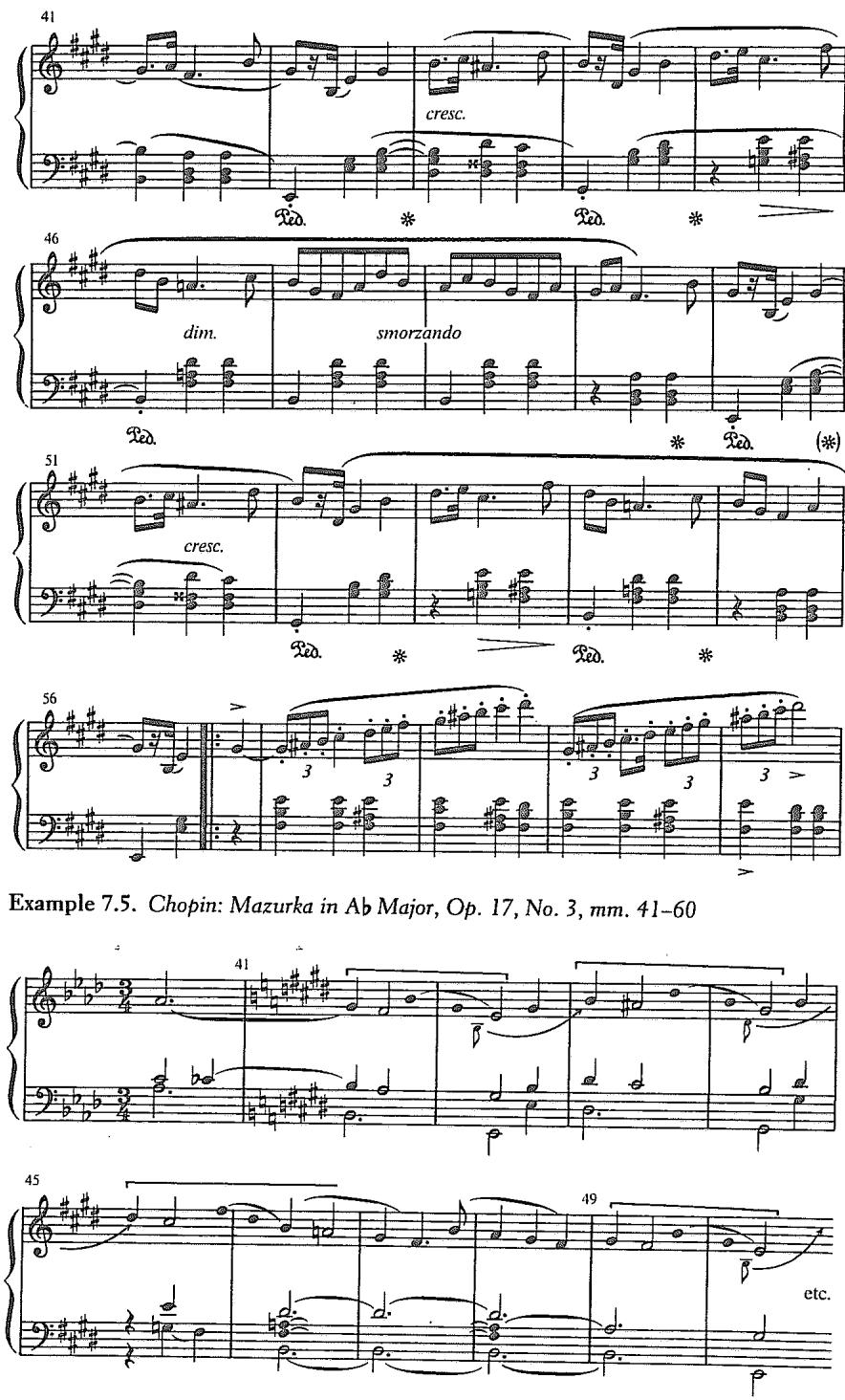
中文讲解
这是第3页上的图像或乐谱占位符。原图的视觉细节无法从文本中确认,应查阅原书第3页。它位于P0017与Example 7.4的图注之间,在版面流程中起到承接上下文的作用。
补充说明
无额外补充;需查看原图。
第5段(P0019)
原文复述
[Image placeholder – caption: Example 7.4. Schenker, Free Composition, Figure 30a; From Heinrich Schenker, Free Composition, trans. and ed. by Ernst Oster. Copyright 1979 by Schirmer Books (orig. Longman). Reprinted with permission.]
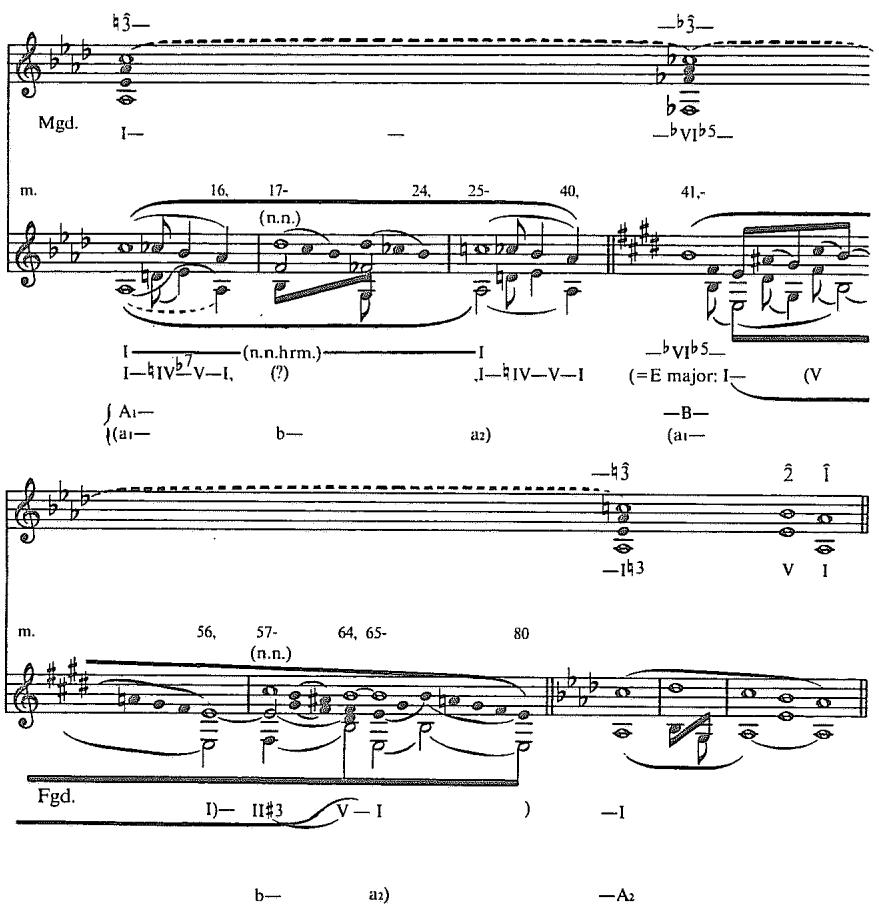
中文讲解
这是Example 7.4的图像占位符及完整图注。出处信息为:Heinrich Schenker, Free Composition, trans. and ed. by Ernst Oster,版权1979 Schirmer Books(原版Longman),经许可重印。该图即Schenker原书Figure 30a,是本节核心的声部进行缩图。读者应在阅读P0016、P0017、P0020时同时参照此图。
补充说明
图注信息已在source_restatement中完整保留。
第6段(P0020)
原文复述
Example 7.6 shows descending three-note motives where Schenker (Example 7.4) shows two-note motives. But the first note of each descending third is in fact a suspension, either prepared in the soprano (m. 41) or transferred upward from the tenor (mm. 43 and 45). Schenker is therefore correct to show the two-note motive, beginning with the suspension’s resolution, as basic; 10 the main melodic tone in each bar throughout mm. 41–45 thus falls on the second beat (see the score, Example 7.5). Significantly, this explanation of the voice leading also serves to explain why the subphrases end on the second beats, not the downbeats, of mm. 42 and 44—despite the sixteenth rests in those measures, and despite the continuing slur in m. 44. (Note the square brackets in Example 7.6.) Chopin frequently uses the rhythm ♪𝅘𝅥𝅯 as a sprightlier variant of ♪𝅘𝅥𝅯, especially in the mazurkas, without any implication of a break in the phrase or subphrase. Analysts who use rests as phrase indicators, rather than voice leading and harmony, are often led astray by such rests. In Chopin, at
中文讲解
本段是本节最关键的论证之一。作者承认自己的Example 7.6在表面上显示出三音下行动机,而Schenker的图只显示两音动机,但两者并不矛盾:因为每个下行三度的首音实为挂留音(m.41为女高音预备,mm.43与m.45为男高音上行转移而来),Schenker以挂留音的解决作为动机的开始是合理的(脚注10)。由此推出重要推论:在mm.41–45范围内,每小节主要的旋律音落在第二拍(参看谱例Example 7.5),这也解释了为什么子句虽然在mm.42与m.44有小节内的十六分休止与持续连线,实际却在第二拍结束——而非按休止或连线表面提示在正拍结束。作者特别提示读者注意Example 7.6中的方括号,并提出对节奏型的判断:Chopin(尤其在玛祖卡中)将十六分音符节奏作为八分音符节奏的活泼变体,并不意味着乐句或子句的中断。把休止当作乐句标记的分析者会因此被误导——这成为后续P0022中讨论连线的伏笔。
补充说明
节奏符号在原文中以图形记号呈现,本转写保留大意。脚注10支持作者对Schenker两音动机的辩护。
第7段(P0021)
原文复述
least, they are elements of articulation (here indicating a kind of staccato), not indicators of phrase structure.
中文讲解
本段承接上句结尾的"In Chopin, at”,构成完整判断:在Chopin这里,休止至少属于articulation(此处为一种断奏效果)的元素,而非乐句结构的标志。这是本节关于"勿把演奏层面的articulation误读为结构层面的phrase boundary"的核心论断的完成句。
第8段(P0022)
原文复述
If Chopin’s rests are potentially confusing, his slurs are an analytical minefield. No composer so frequently slurred against the phrase structure of his music rather than in support of that structure. Chopin’s practice alone should be proof enough that legato articulation and phrase structure are inherently different aspects of music, related only in so far as the former may be used to delineate the latter. This passage is a good case in point: the division between the antecedent and consequent phrases is obscured not only rhythmically, by the continuing eighth-note motion into m. 49 and the lack of a bass note on that downbeat; it is also obscured through harmonic means (V⁷ continues), through articulation (the slur continues), and through Chopin’s mandated smorzando (“dying away”). 11 Finally, it is obscured melodically, in that f♯¹ at the end of the antecedent (see Example 7.6, m. 48) is linked to f♯¹ at the beginning of the consequent (remember that g♯¹ is an appoggiatura). It seems almost as if Chopin wishes us not to know that one phrase is ending and another beginning. This is more than a simple phrase overlap; it is an attempt, within a basically regular phrase structure, to melt away the seams in that very structure.
中文讲解
本段将论证从休止推进到连线。中心主张是:Chopin的连线(slur)经常与乐句结构相对而非顺应之,因此"连奏articulation"与"乐句结构"本质上是音乐的两个独立维度,前者只是"可以"用来标示后者。本段以m.49前后前句与正句的分界为个案,逐项列举了五条接缝被消除的手法:(1)节奏——八分音符运动延续到m.49,且该正拍无低音;(2)和声——V⁷持续;(3)articulation——连线延续;(4)表情——作者标明的smorzando(“渐弱消失”);(5)旋律——前句末f♯¹与正句起f♯¹相同音直接相连(而g♯¹只是倚音)。由此推出对作品意图的判断:Chopin近乎希望听者感受不到一个乐句的结束与另一个的开始;这超越了一般的phrase overlap,是在基本规则的乐句结构内部主动"融化接缝"。脚注11为该处smorzando标记提供依据。
第9段(P0023)
原文复述
The sequence that begins each phrase shows a similar conflict between the simplicity of the underlying structure and the complex continuity of the surface. The lead-ins between subphrases consist of ascending four-note arpeggiations in the melody, spanning an octave in each case (b–b¹ in mm. 42–43, d♯¹–d♯² in mm. 44–45). As Example 7.6 shows, each lead-in overlaps the end of one subphrase and leads to the first note of the next, while transferring upward a tone from an inner voice—b¹ in m. 42, d♯¹ in m. 44—to initiate the following subphrase. 12 In addition, each lead-in retraces the path of the immediately preceding descending arpeggiation, shown in unstemmed noteheads in Example 7.6. The resulting down-and-up motion within each triad joins the subphrase to the lead-in and thence to the next subphrase. The total effect is to de-emphasize the points of juncture almost completely.
中文讲解
本段集中阐释lead-in的具体形态,把"深层结构简单/表层连续复杂"的对立具体化。两个核心特征是:(1)子句间的lead-in为旋律中的四音上行琶音,每次跨越一个八度(mm.42–43为b–b¹,mm.44–45为d♯¹–d♯²);每个lead-in同时跨越前一子句之尾并引出下一子句之首,并把内声部的一个音(m.42的b¹、m.44的d♯¹)上行传递给下一子句作为起点(脚注12)。(2)每个lead-in回溯刚刚发生的下行琶音路径,这些回溯音在Example 7.6中以无符干的符头显示。每个三和弦内部的"下—上"运动把子句、lead-in、再下一子句缝合起来。总效果是接缝几乎被完全去强调。读者应同时参照Example 7.6的符头有无符干,以辨别下行琶音与上行lead-in的呼应。
第10段(P0024)
原文复述
Once again Chopin finishes the job with his seemingly capricious articulation. The first lead-in (mm. 42–43) is played mostly non legato but with pedal. The second and fourth lead-ins (mm. 44–45 and 52–53) are slurred into the following subphrases. The third lead-in (mm. 50–51) is articulated in yet another way, emphasizing the end of the consequent’s first subphrase and thus the end of the ambiguous passage surrounding the phrase overlap. (In the otherwise literal recapitulation of the entire parallel period, mm. 65–80, the articulation is again different!)
中文讲解
本段指出Chopin在articulation(演奏法)层面同样有意为之,看似随意实则精确。四个lead-in各有不同的处理:(1)mm.42–43第一组——基本non legato但带踏板;(2)mm.44–45第二组与mm.52–53第四组——连线滑入下一个子句;(3)mm.50–51第三组——又是一种articulation,强调正句第一子句的结束,从而强调围绕phrase overlap的那段模糊区域至此结束。作者还提醒:即便在mm.65–80这一几乎是全段平行周期(parallel period)的字面再现中,articulation再次不同。这一并置表明,Chopin的articulation不只是装饰,而是结构信号,但这些信号的方向是"对位于"而非"强化"乐句结构。
第11段(P0025)
原文复述
There are other features of this middle section that have not been touched upon here—for example, the relation of the stressed motion g–f♯ in mm. 45 and 53 to the ubiquitous bass motive g–ab in the A sections of the mazurka (and to the enharmonically equivalent f×–g♯ in mm. 43–44). From the standpoint of phrase rhythm, however, the curious thing about this section is the disparity between the regular, sixteen-measure parallel period—with its two eight-measure phrases divided into subphrases of two, two, and four measures—and the apparent striving for seamless melodic continuity (the latter evident from the use of lead-ins, phrase overlap, and slurring against the phrase structure). Even the passage following this one begins with an upbeat (to m. 57) that mimics the original lead-in of mm. 42–43. One might well ask: if Chopin sought to transcend points of articulation (division) between melodic segments, why did he employ phrase structures that by their very nature are highly articulated? In a mazurka, of course, such structures probably derive from the heritage of the dance, with its innate bias in favor of duple hypermeter and symmetrical phrase structures. In some other pieces, even in his early period, Chopin did not feel so constrained.
中文讲解
本段为本节作结,承认尚有未及讨论的细节(如mm.45与mm.53的重音g–f♯与A段主导低音动机g–ab、以及与mm.43–44等音的f×–g♯之间的联系),并就phrase rhythm给出最终判断:核心张力在于"规则的十六小节平行周期"(两个八小节乐句,各自再分为2+2+4小节的子句)与"力求无缝的旋律连续性"(lead-in、phrase overlap、连线反向于结构)之间的强烈反差。下一段甚至以m.57的上行音起句,模仿mm.42–43的原lead-in,使无缝接续延伸至本段之外。作者由此提出反向设问:若Chopin意在超越旋律片段的接缝,为何仍采用高度articulated的乐句结构?回答从体裁渊源给出:玛祖卡作为舞曲天然倾向于双拍子hypermeter与对称乐句结构。在其他体裁(即便早期作品)中,Chopin并不如此受约束——这暗示本节观察到的"规则结构+去articulation表面"的辩证关系,是舞曲体裁与作曲意图共同塑造的结果。
脚注 / 边栏 / 图表 / 附加信息(如有)
脚注8–12依次支持:Schenker《Free Composition》中该玛祖卡分析图的来源、Schenker对A段类似中断的文字提及、对Schenker两音动机的辩护、正句m.49附近smorzando与V⁷延续的依据、以及内声部音上行转移的说明。Example 7.4(Schenker原书Figure 30a)与Example 7.6(作者自己的foreground reduction)为本节两份核心图示,须交叉参照。
💡 本节核心要点
- 本节个案为Op.17 No.3玛祖卡中段(mm.41起),技术核心是子句间的lead-in与完整乐句间的overlap。
- Schenker的图(Example 7.4)只显示从m.49起的正句,前句末端的五度下行在f♯¹被属和弦中断;A段中的类似中断与末段A在Schenker图中也被省略或缩写。
- Schenker将mm.41–46视作"三组各两小节"的模进看似可疑,但作者以平行六度、挂留音(mm.41由女高音预备,mm.43与m.45由男高音上行转移)以及节拍错位为证为其辩护。
- Chopin的休止与连线不可作为phrase boundary的标志:休止属于articulation(一种断奏效果),连线经常反向于乐句结构;连奏articulation与phrase structure本质上是音乐的独立维度。
- 前句与正句的分界(m.49前后)通过五种手段同时被刻意消解:持续的八分音符运动、无低音正拍、V⁷延续、连线延续、smorzando,以及旋律上f♯¹—f♯¹的同音相连(g♯¹仅为倚音)。
- 每个lead-in是跨八度的四音上行琶音(mm.42–43:b–b¹;mm.44–45:d♯¹–d♯²),同时跨越前子句之尾、回溯紧接的下行琶音,并把内声部一音上行转移给下一子句,从而几乎完全消除接缝。
- Chopin在articulation层面的处理同样精心:第一lead-in基本non legato带踏板,第二与第四lead-in连线进入下一子句,第三lead-in则以不同方式强调正句第一子句之末;mm.65–80的字面再现中articulation再次不同。
- 本节最终张力在于:规则的十六小节平行周期(2+2+4子句划分)与去articulation的连续性表层形成反差;这种辩证受限于玛祖卡作为舞曲对双拍子hypermeter与对称结构的天然依赖,在其他体裁中Chopin并不如此受约束。
🔑 关键术语
- lead-in:子句之间的前置引入,指一段上行或模仿性材料跨越前子句之尾并引出下一子句之首;本节中表现为跨八度的四音琶音。
- overlap:完整乐句之间的叠置,使前句之末与正句之首相连以消解接缝;本节mm.49前后通过节奏、和声、articulation、表情与旋律同音五种手段同时实现。
- parallel period:平行周期,由结构相同或近似的两个乐句(antecedent与consequent)构成;本节个案为十六小节,每句八小节,再分为2+2+4小节的子句。
- antecedent / consequent phrase:前句与正句;本节中Schenker图只显示从m.49开始的正句,前句在f♯¹(2)上以属和弦中断五度下行。
- foreground reduction:前景缩减,把表面细节压缩为可显示声部进行基本骨架的图示;本节中作者自制的Example 7.6即为此种缩减。
- suspension:挂留音,前一和声中的音延迟解决到下一和声中;本节mm.41由女高音预备,mm.43与mm.45则由男高音上行转移而来,因此Schenker以挂留音的解决作为下行动机之始是合理的。
- smorzando:渐弱消失的速度与力度指示;本节m.49前后作为消解前句与正句分界的一种手段被作者援引(脚注11)。
- appoggiatura:倚音,不属于本和弦的装饰音,向本和弦音级解决;本节m.49处的g♯¹被作者标识为倚音,从而f♯¹—f♯¹同音相连成为旋律上消解接缝的关键。
- non legato:非连奏的articulation方式,本节中用于第一lead-in(mm.42–43),区别于其他lead-in的连线处理。
7.4 [描述性拆分] The Études of Op. 10: Syncopation and the Five-Measure Phrase
第1段(P0026)
原文复述
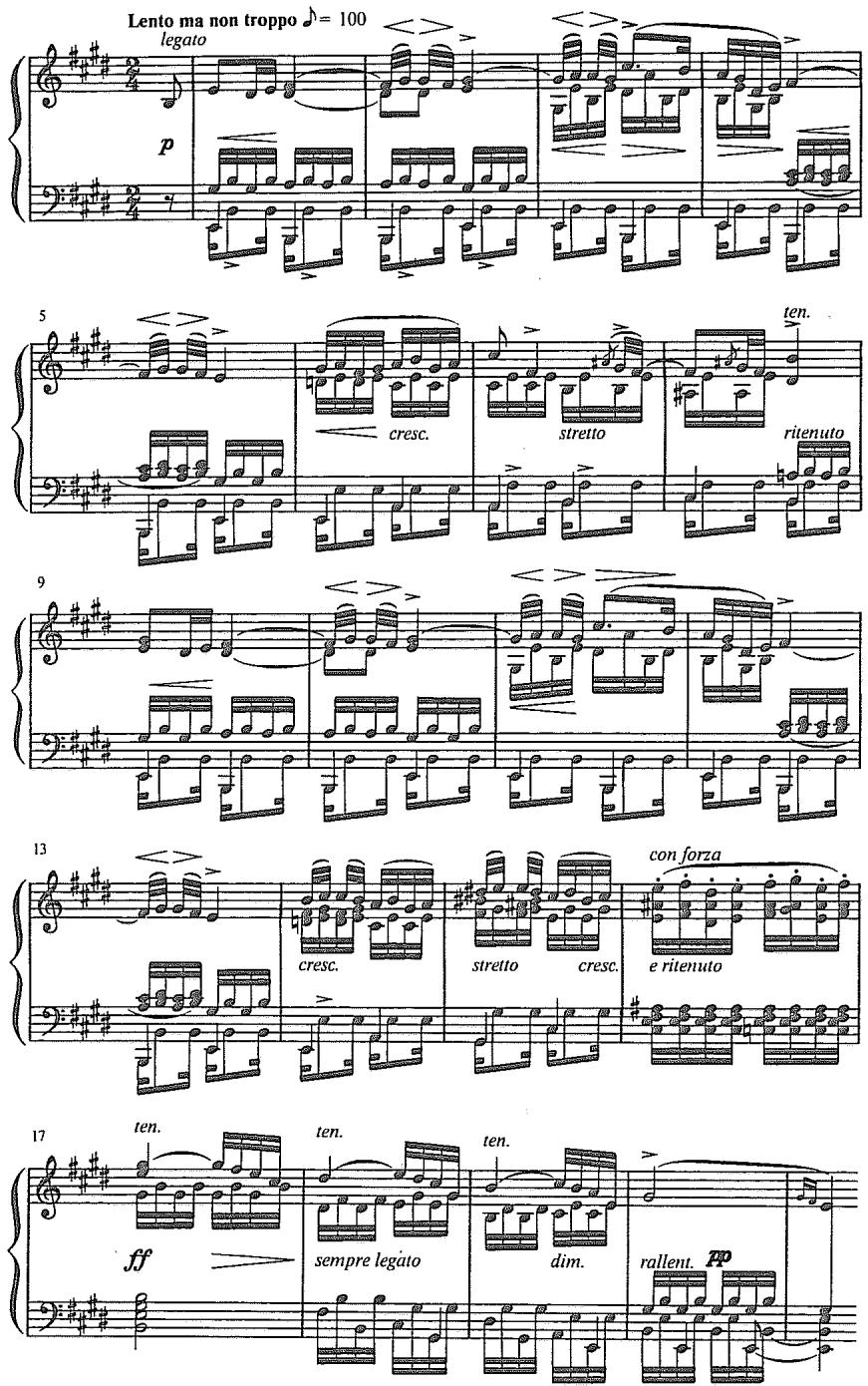
The boldest of Chopin’s early works—rhythmically as in other respects—are the twelve études of Op. 10, composed between 1829 and 1832. (Perhaps Chopin felt that an étude, which is usually based on a single rhythmic figure, particularly requires imaginative treatment of its larger rhythms in order to avoid monotony. 13) Most of the Op. 10 Études feature phrases of regular duple length, but one—No. 3, in E Major—opens with a five-measure phrase. The first part of this three-part piece (ABA’) is given in Example 7.7.
中文讲解
本段为小节定调:把Op. 10这套练习曲定性为肖邦早期作品中节奏上最大胆的一套,并交代其写作年代(1829–1832)。括号内是作者对肖邦创作心理的推测——练习曲通常围绕一个固定音型展开,因此尤其需要在更大尺度上做节奏处理,以免单调。括号外的真正落点是:这套练习曲大多以规整的二拍子长度乐句为主,但E大调第3首以一个五小节乐句开场,这是一个反常的特例,构成全节要解释的对象。ABA’三段式与之后的谱例7.7一起预告了后面将以该曲开头部分为分析对象。注意这里的“duple length”指的是以偶数小节(双数)构成的乐句单位,不是2/4之类的拍号。
补充说明
脚注13对应原文括号里关于练习曲节奏问题的推测,是作者对肖邦创作动机的旁证而非直接引语。
第2段(P0027)
原文复述
An issue that has been widely commented upon in regard to this piece is the tempo marking in the original autograph, vivace ma non troppo; a second autograph gives simply vivace, while the first edition has lento ma non troppo. Rudolf Steglich, in an essay largely devoted to this question, regards the vivace indication as a matter of expressive character rather than of actual speed. He points to the syncopations of the left hand as a clue to the febrile character appropriate to the piece—quite different from the languid expression it often receives in performance. 14 Steglich is surely right on this point. A similar case is the first movement of Brahms’s B Major Piano Trio, Op. 8, marked allegro con brio. The first theme, with its syncopated accompaniment remarkably similar to that of Chopin’s étude, is almost always played as if it were the most calmly beautiful melody in the world, disregarding both the rhythmically unstable accompaniment and Brahms’s con brio marking. 15
中文讲解
本段解决的是演奏诠释层面的前提:速度术语只是表象,关键在“表情性格”。作者先列举三个版本的速度标记——vivace ma non troppo、vivace、lento ma non troppo——指出学界对此一直争论不休。接着介绍Steglich的观点:vivace要按性格而非按速度理解,左手持续的切分音暗示的是一种“发烧般的”(febrile)热烈性格,与演出中常见的慵懒诠释完全不同。作者明确表态赞同Steglich,并为防止读者把这种误读当成个别现象,又引入勃拉姆斯B大调钢琴三重奏Op. 8第一乐章(allegro con brio)作为平行例证:那段主题的伴奏写法在切分形态上与肖邦此曲惊人地相似,却在演奏中常常被处理成“最平静优美的旋律”,同时把节奏的不安和con brio标记都丢掉了。逻辑链是:先建立“听切分而不弱化其摇摆感”这一诠释共识,下一段才得以在此基础上展开关于大切分与小切分对应的结构论证。
补充说明
本段脚注14支撑Steglich关于表情性格的论断,脚注15支撑关于勃拉姆斯Op. 8第一乐章的对照论述;两者均为佐证,不是新论点。
第3段(P0028)
原文复述
In the étude, the syncopation within each quarter-note beat reappears at a larger level in the syncopations across the bar lines—in melody and bass both—in measures 1–5. These syncopations are so persistent that one might be tempted to speak of an actual shift in the meter—that is, a metrical pattern starting on the notated weak beats, as we saw occur several times in Mendelssohn’s Songs without Words. In this case the temptation should be resisted, however. First, there is no consistent pattern of conflicting downbeats outside of the recurring five-measure phrase and thus no systematic metrical conflict such as exists in the Mendelssohn examples; therefore, we are not dealing with a case of long-range metrical conflict and resolution. Second and more important, any perception of the stressed weak beats as downbeats vitiates the local rhythmic tension generated by the syncopations. In spite of Chopin’s apparently final decision in favor of the lento ma non troppo marking, it is vital to the expressive character of the piece that the syncopations be heard as such. The correspondence between the small syncopations (♩♩♩) and the larger ones (♩♩♩♩) may be taken as structural evidence for this conclusion.
中文讲解
这是本节的方法论核心段,揭示了论证的结构支点——“小切分对应大切分”。具体而言:四分音符拍内的切分重又在跨小节的更大尺度上重现(既出现在旋律也出现在低音),这就让人联想到无词歌中那种弱拍起拍的整段移位效果。但作者严守两条理由反对把这里读成“实际节拍转移”:第一,五小节乐句之外并不存在持续的下拍冲突模式,因而不能等同于无词歌那种系统性的长程节拍冲突与解决;第二也是更关键的——一旦把小节线上的重音“落实”为真正下拍,那么切分本身所产生的局部紧张就被自己消解掉了。也就是说,正是因为节拍不被重置,切分才能“切”。因此哪怕最终采用了lento标记,切分仍必须被听成切分。最后一句是真正的论证印章:小切分(♩♩♩节拍重排)与大切分(♩♩♩♩跨小节重排)在节奏型上严格同构,这种同构本身就是结构证据,证明作者并非无心为之。
补充说明
本段两处节奏示意图(♩♩♩与♩♩♩♩)用来标示“同一套重音错位模式在不同尺度上重复出现”,是论证的关键视觉辅助。
第4段(P0029)
原文复述
Schenker, in Free Composition, uses the larger syncopations as a way of explaining the five-measure length of the opening phrase. He clearly implies that the odd-numbered length stems from an underlying duple ordering. He also takes note of an acceleration in m. 4, maintaining that a version without the acceleration would necessarily have occupied six measures. 16
中文讲解
本段引入Schenker的解释框架:用大切分来说明五小节乐句的来历。Schenker的隐性主张是——看上去奇数的五小节其实是从一个二倍数(双数)底座通过切分派生的,因此“奇数”并不破坏整体的双数秩序。他还指出第4小节出现了节奏加密(即acceleration),并断言若没有这次加密,乐句原本会是六小节。也就是说,正是这次加密把潜在的六小节“挤”成了五小节。这为下一段作者重构Schenker推演步骤做了铺垫。
补充说明
脚注16指向Schenker《Free Composition》中相关图示(图138,5即P0037所标的7.8d)的来源。
第5段(P0030)
原文复述
中文讲解
这是谱例7.7的图位占位符,展示的是肖邦Op. 10 No. 3 E大调练习曲的开头部分。该谱例在前文P0026末尾已被预告为本节分析对象,此处正式呈现。位置信息得以保留,但具体音符、和声细节因图像省略而无法在本任务内复述;分析依赖于“乐曲实际面貌”这一前提。
补充说明
需查看原图以核对左手切分型及第4小节的节奏加密处的实际写法。
第6段(P0031)
原文复述
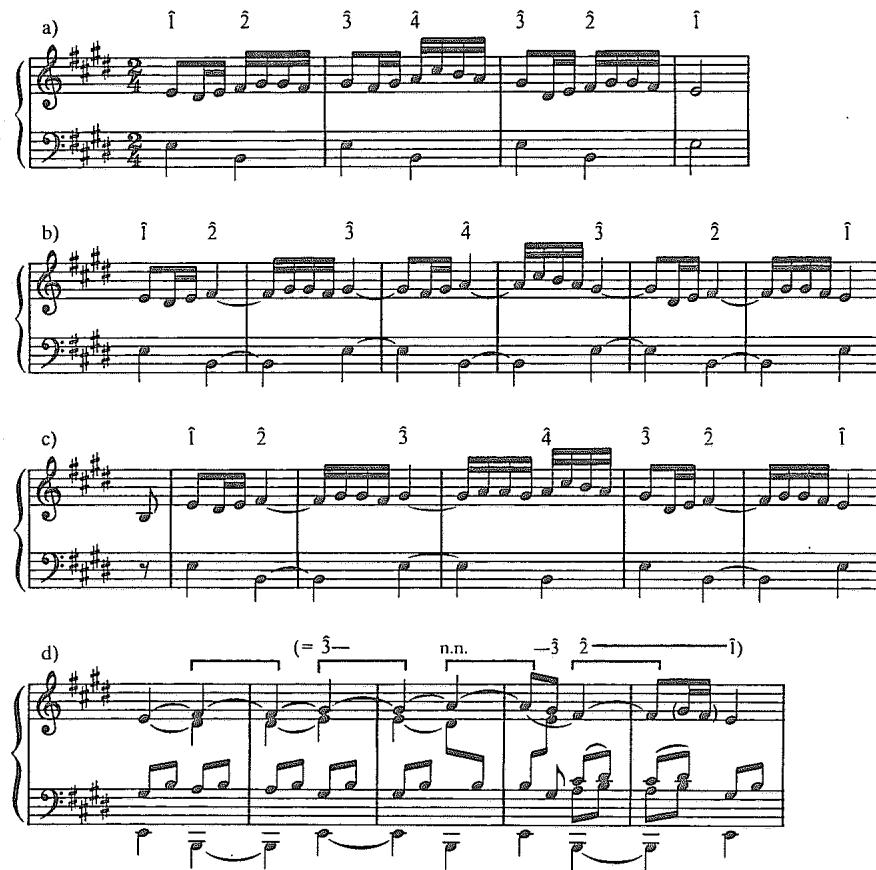
Although one might choose to take the unusual length of the opening phrase simply as a given, we can perhaps reconstruct Schenker’s reasoning as follows: a four-measure version of the phrase might look like Example 7.8a, with one principal melodic tone per beat. Example 7.8b lengthens all but the first and last of the principal tones, creating a six-measure phrase with syncopations. Example 7.8c then compresses the third, fourth, and fifth bars of this last version into two measures, resulting in the acceleration noted by Schenker, whose sketch of the phrase is given in Example 7.8d.
中文讲解
本段是Schenker推演过程的“显化”重构,把它原本只可意会的逻辑一步步写成可看的派生链:第一步(7.8a)以一拍一个主要音的方式还原为一个标准的四小节原型;第二步(7.8b)把这个原型中的主要音(首尾除外)做切分拉长,得到六小节带切分的版本;第三步(7.8c)再把第三、四、五小节压缩成两小节,从而产生第4小节的节奏加密——这正是Schenker所提到的关键动作;结果就是奇数的五小节;最后(7.8d)就是Schenker《Free Composition》中的实际草图。整个论证的关键技巧是:四→六→五,反直觉地把“奇数”拆解成“二倍数底+切分拉长+局部压缩”三步操作,避免把五小节当成无源之水。
第7段(P0032)
原文复述
中文讲解
这是谱例7.8整体图像的占位符,包含a、b、c、d四个子图,用以呈现上一段所述的派生过程。
补充说明
需查看原图以核对每个子图小节线的实际划分以及切分音符的位置。
第8段(P0033)
原文复述
Example 7.8. Chopin’s Op. 10, No. 3
中文讲解
这是谱例7.8的总标题,复述出该例的对象是肖邦Op. 10第3首。
第9段(P0034)
原文复述
a. recomposition of mm. 1–5 (as 4 bars)
中文讲解
子图a的标签:标明了它是开头1–5小节的“重构”,但被改写成4小节。这是派生链的起点——一个不切分的四小节原型。
第10段(P0035)
原文复述
b. recomposition of mm. 1–5 (as 6 bars)
中文讲解
子图b的标签:同样对应1–5小节,但被改写成6小节。这是通过切分拉长得到的中间版本,本身尚未压缩,是派生链的第二步。
第11段(P0036)
原文复述
c. recomposition of mm. 1–5 (as 5 bars)
中文讲解
子图c的标签:再次回到1–5小节,但呈现为最终的5小节版本。这是把子图b的局部三小节压缩为两小节之后的结果,也就是肖邦原貌(去除最后的旋律实现细节后)的中间形态。
第12段(P0037)
原文复述
d. Schenker, Free Composition, Figure 138, 5
中文讲解
子图d的标签:标明其出处是Schenker《Free Composition》中的图138第5项,即Schenker对这一乐句所留的草图(前文P0029所引)。
补充说明
Schenker原图保留了其用来解释大切分和五小节长度的草稿式记谱;本节作者据此复写了a、b、c三幅重构图作对照。
第13段(P0038)
原文复述
From Heinrich Schenker, Free Composition, trans. and ed. by Ernst Oster. Copyright 1979 by Schirmer Books (orig. Longman). Reprinted with permission.
中文讲解
这是谱例7.8d的版权说明行,交代材料出自Heinrich Schenker的《Free Composition》,Ernst Oster翻译并编辑,1979年版权归Schirmer Books(原版由Longman出版),获得许可重印。它属于来源声明,不是论证内容。
第14段(P0039)
原文复述
This is not quite a complete, step-by-step derivation; I have weighted the scales by adopting Chopin’s diminution—that is, his fleshing-out of the melodic skeleton—at almost every step. Thus, for example, a^1 in Example 7.8a is embellished with an upward leap of a third rather than with the simple neighboring motion that is applied both times to f♯^1. It is this leap up to c♯^2 to which Chopin applies yet another rhythmic displacement, bringing the high note onto the beat and delaying the return of a^1 until the following beat, where it becomes a suspension. This final detail of melodic realization is all that separates Example 7.8c from the melody as Chopin actually wrote it (Example 7.7).
中文讲解
本段是对前述派生链的方法论坦白——它并不是“纯骨架”的推导,而是每一步都已经混入了肖邦的diminution(即旋律骨架被“填肉”的具体化处理)。作者用a¹这个音做实例:a的原型本是简单邻音运动(如同f♯¹那两次一样),但肖邦却把它“装饰”为向上的三度跳进到c♯²;紧接其上又加了一层节奏位移——把c♯²这个高音放到拍上,再把a¹延后一拍出现并转化为挂留音。也就是说,从子图c到肖邦原貌(谱例7.7),只剩这“最后一笔”旋律实现上的差异。这番话对读者有两层意义:一是说明派生链的每一步其实都已经预设了肖邦式的具体化,因此必须作为“半透半实”的参考而非纯形式生成;二是把读者注意力引向“跳进—位移—挂留”这一小尺寸装饰作为五小节乐句最终样貌的关键笔触,为下一段从四小节模型转向A段整体分析做收束。
第15段(P0040)
原文复述
The notion of relating the five-measure phrase to a four-measure model is attractive not only for Riemannesque reasons, but also because Chopin adheres strictly to four-bar hypermeter in most of the rest of the piece, including the entire middle section (cadenza-like flourishes and all). However, we will now abandon this notion to concentrate on the way in which the opening phrase is integrated with the rest of the A section (mm. 1–21).
中文讲解
本段是分析视角的转折点。先总结“四小节模型”之所以诱人——既有Riemann理论体系(双数小节为单位的乐句观)上的契合,也有作品其余部分的事实支撑:除去开头这五小节例外,肖邦在乐曲其余地方(包括整个中段的华彩性乐段)都严格遵守四小节一组的hypermeter。也正因如此,如果只盯着派生链,就会忽略乐句如何与A段整体咬合。因此作者明确宣告要“放下”这一思路,把焦点切换到1–21小节整体(A段)里,开头这五小节如何与其他乐句相互衔接。这一宣告也提示了后续小节里将出现不同的论证对象和不同的“正常与异常”关系。
补充说明
Riemann此处指德国音乐理论家Hugo Riemann,其乐句体系倾向以双数小节为基本单位;这是本段用以解释作者为何会被“四小节模型”吸引的外部理论背景。
脚注 / 边栏 / 图表 / 附加信息(如有)
本节出现的附加材料有:(1)原文中编号13、14、15、16四处脚注,分别对应肖邦创作动机、Steglich的诠释观点、勃拉姆斯Op. 8对照以及Schenker《Free Composition》图138之出处;(2)谱例7.7,为肖邦原谱;(3)谱例7.8a–d,为作者对Schenker推演步骤的重构及Schenker的草图;(4)谱例7.8d的版权声明行(Heinrich Schenker, Free Composition, trans. and ed. by Ernst Oster, 1979 Schirmer Books)。图像与谱例的实质内容因原文省略而不可见,需查阅原书。
💡 本节核心要点
- Op. 10十二首练习曲是肖邦早期最具节奏野心的作品,其中E大调第3首以一个反常规的五小节乐句开场。
- Steglich将手稿中“vivace”解读为表情性格而非绝对速度,主张左手切分暗示的是热烈而非慵懒;作者以勃拉姆斯B大调钢琴三重奏Op. 8首乐章作为平行例证支持这一诠释。
- 本节论证的核心结构证据是“小切分与大切分同构”:四分音符拍内的切分在跨小线的更大尺度上重现,因而五小节乐句不应被读成实际节拍移位,否则切分本身将被自我取消。
- Schenker的解释框架是:五小节的奇数长度源自一个二倍数(双数)底座——先以切分拉长至六小节,再通过第4小节的节奏压缩回到五小节。
- 作者据此把Schenker的推演重构为a(四小节原型)→b(六小节切分版)→c(压缩为五小节)的派生链,但坦承每一步都已混入了肖邦式的diminution,并非纯骨架推导。
- 尽管把五小节还原为四小节模型既符合Riemann的乐句观又与A段其余部分的四小节hypermeter相符,本节仍宣告放下这一思路,转向考察五小节乐句如何在1–21小节的A段整体中与其他乐句衔接。
🔑 关键术语
- 切分(syncopation):本节中指通过把重音从常规的拍点或下拍位置挪开,使弱位获得临时重音的节奏处理;本曲同时存在拍内小切分与跨小线大切分两个尺度,是论证核心。
- 节拍移位(metrical shift / long-range metrical conflict):指一段音乐的感知下拍系统从原本的正拍位置整体平移到弱拍位置;本节以门德尔松《无词歌》中的先例为参照,明确指出肖邦此曲并不构成这种系统性的长程节拍冲突。
- 双重度量(hypermeter):在小节之上的更高一层度量单位,通常以四小节为一组;本节指出本曲除开头五小节外,包括整个中段在内都严格遵守四小节一组的hypermeter。
- diminution(缩减/旋律填肉):在Schenker体系中指以邻近音、经过音、挂留音等对骨架音进行具体化(fleshing-out);本节用来解释为何作者所重构的派生链每一步都已掺入肖邦的具体化处理。
- Riemannian(黎曼式)乐句观:指Hugo Riemann体系下以双数小节为基本乐句单位的传统观念;本节借此说明“把五小节还原为四小节模型”在理论传统上的吸引力。
7.5 [描述性拆分] Phrase Structure and the Cadential 6/4 Reinterpretation in Op. 10, No. 3
第1段(P0041)
原文复述
The A section is a rondo-like structure, with the opening phrase serving as the recurring theme. Measures 6–8 form the first contrasting passage, after which the full theme is heard again with only its first note changed (from e¹ to g♯¹). The second contrasting passage begins in m. 14 and leads to the fortissimo climax in m. 17. This same measure begins a five-bar melodic and dynamic descent, which—while far from being a variation of the theme in any strict sense—is certainly felt to be related to it. The relation is somewhat hard to define, but it has to do with the melodic emphasis on G# (the primary melodic tone of the theme) and the five-measure length itself. Like the theme, this closing passage concerns itself melodically with an ascent from E to G# (mm. 16–17) and a descent from G# back to E (mm. 17–21). This time, of course, the descent encompasses two different registers instead of just one as in the theme.
中文讲解
本段勾勒A段的整体结构形态:它被比作回旋曲式,开篇乐句充当循环出现的主题。6–8小节构成第一处对比性段落,随后主题完整再现,仅首音由e¹改为g♯¹。第二处对比性段落自第14小节起,把音乐推向第17小节的ff(极强)高潮。第17小节同时开启一段长达五小节的旋律与力度下行——尽管它并非主题的严格变体,却在听感上与主题相关:相关性体现在G♯这一主题核心旋律音的强调,以及五小节这一长度本身。与主题一样,这段收束在旋律上经历了从E到G♯的上行(第16–17小节)以及从G♯回到E的下行(第17–21小节),所不同的是这次下行跨越了两个不同的音区,而非仅在单一音区内进行。
作者的意图在于把读者注意力从表层的主题反复引向深层的结构呼应:尽管材料不严格相同,但五小节的长度、G♯的核心地位以及E–G♯–E的弧线都让这段收束获得主题性的回归感。两个音区的下行更是把这一收束同主题在单一音区内的下行区别开来,预示了接下来将讨论的更为复杂的和声—结构事件(即第17小节的六四和弦)。
补充说明
本段中提及的g♯¹与e¹使用八度标记法(¹表示中央C上方的八度区间);ff是fortissimo(极强)的缩写。
第2段(P0042)
原文复述
It is interesting that the first contrasting passage is three measures long, for this yields an eight-measure sum when added to the length of the theme’s initial statement. Even more interesting, though, is the approach to the climax in m. 17 and the descent to the close in m. 21. The passage between five-measure units (mm. 14–16) is again three measures long, but this time there is obviously some kind of overlap at the fourth bar, m. 17. (There is also an overlap at m. 9, where the dominant seventh resolves to the tonic, which itself inaugurates the return of the theme.)
中文讲解
本段揭示A段内部的对称计量关系:第一处对比段落恰好三小节,加在主题初次陈述之后形成八小节的总数;同样,第二处五小节单位之间(第14–16小节)又是三小节,并在第四小节即第17小节处出现明显的乐句重叠。作者用括号补充,第9小节也发生过一次重叠——属七和弦解决到主和弦的同时,该主和弦开启了主题的回归。
这段的功能是为下文的"乐句重叠"分析做铺垫:通过展示三小节+五小节、五小节+三小节这种非对称但彼此对称的小节组合,提示读者去关注小节边界被打破的时刻。作者特别指出第17小节的重叠现象,比第9小节那次更为关键,因为那里正是和声功能(终止六四→主)发生戏剧性再解释的节点。
第3段(P0043)
原文复述
In order to understand the phrase structure of mm. 14–21, it is first necessary to understand the function of the ⁶₄ chord in m. 17. Six-four chords built on the dominant note may function either as part of a prolongation of V—the common cadential ⁶₄ acts in this way—or as part of an arpeggiation of the tonic harmony. Very occasionally a ⁶₄ chord will represent either a V or a I harmony all by itself, without further clarification by other chords. ¹⁷ The ⁶₄ chord in this instance is clearly approached as a cadential ⁶₄—a dominant harmony—since it is preceded both by V of B major and by an augmented sixth chord on C♯; both of these chords are directed toward V of E major. The expected completion of the phrase might therefore look something like Example 7.9.
中文讲解
作者明确指出,要理解第14–21小节的乐句结构,必须先弄清第17小节六四和弦的功能。理论上,建立在属音上的六四和弦可能承担两种角色:要么作为属功能(V)的延展——这正是"终止六四"(cadential ⁶₄)的常见用法;要么作为主功能和声的分解(arpeggiation)。极少数情况下,六四和弦会脱离上下文单独代表V或I(脚注17所讨论的例外情形)。在肖邦此处,前文先现了B大调的V和弦,随后是建立在C♯上的增六和弦,两者都明确指向E大调的V和弦,因此第17小节的六四和弦在表面上显然被设置为终止六四——一个属功能和弦。
这段的功能是把读者的分析预期"校准"到一个标准终止的模型上:照此推理,乐句的预期进行应当是六四→V或V⁷,从而构成一次正常的终止——这正是示例7.9所要展示的"如常的进行"。通过先建立读者对常规终止的预期,作者才能在下一段揭示肖邦并未如此写作,并以此凸显其和声再解释的惊人之处。
补充说明
终止六四(cadential ⁶₄)是一种装饰性的属功能和弦:尽管低音为属音,但上方声部以六度音和四度音构成主和弦的轮廓,悬而未决地等待解决到V或V⁷。增六和弦(augmented sixth chord)是一种倾向性强、低音半音下行至属音的功能和弦,常用于强化对属的导向。
第4段(P0044)
原文复述
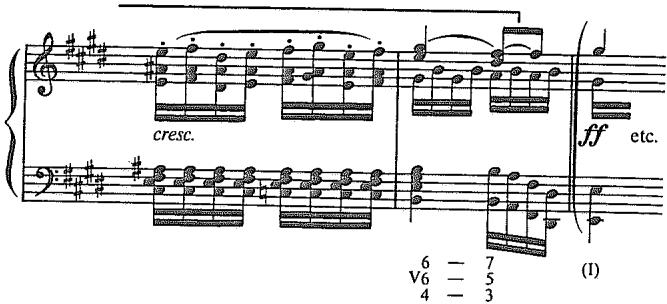
中文讲解
本条为图像占位符,对应的是示例7.9。其图注指明:这是对肖邦Op. 10 No. 3第16–17小节的"重新构思"(Recomposition),即作者按常规终止六四的解决方式所推测出的"应当如此"的和声进行——作为对照,用以反衬肖邦实际所写之法的异常。
由于原图未提供,无法判断具体音高排列;但根据上下文,示例7.9应展示终止六四正常解决到V/V⁷并最终到I的高音区终止形态,而肖邦原作则避开这种进行,转而把六四和弦悄然再解释为主功能延伸,从而把音乐留在低音区展开模进。读者若需把握该示例的全部论证价值,应参照原书插图。
补充说明
需查看原图。
第5段(P0045)
原文复述
But the resolution of the apparently cadential ⁶₄ to a simple V or V⁷ is not at all clear. The first beat of m. 18 might be taken for the resolution at first glance, but it does not sound like the resolution. This is because m. 18 is already in the midst of a sequence, and chords in the middle of a sequence generally lack the status of significant functional harmonies (or “scale degrees,” in Schenker’s terminology). The sequence itself is based on an alternating pattern of tenths and octaves between the outer voices; Example 7.10 shows this in a simplified version. In this reduction, the parenthesized note E has been inserted to show how the sequence would look if it were completely consistent: it would start with a root-position tonic and end with the same harmony an octave lower. Thus, the sequence as a whole would constitute a prolongation of I. (Note the motivic correspondence of the small third-descents, all written in small notation—as ornaments—in Example 7.10.)
中文讲解
本段揭示肖邦的"反常":尽管第17小节表面上呈终止六四,但实际解决到V或V⁷并不清晰——乍看第18小节第一拍或许可被当作解决,但在听感上却并不构成解决。原因在于:第18小节本身已经身处模进(sequence)之中,而模进中间的和弦通常不具备显著的功能和声地位(Schenker称之为"缺少音级意义")。这一模进基于外声部十度与八度的交替进行;示例7.10展示了一个简化版本,其中插入了一个括号内的E,用以展示若模进完全一致时的理想形态:应当从根音位置的主和弦开始,到同一和弦低八度结束,从而使整个模进构成主功能(I)的延展。作者还提示读者注意示例7.10中小音符所写的三度下行动机——它对应着旋律装饰。
这段的分析核心是"通过模进取消解决":肖邦用一个本应承载解决功能的和声位置(第18小节第一拍),把它转化为模进中的过渡步骤,从而让第17小节的六四和弦无法按终止六四的方式被听见。这一手法在功能上等于把第17小节重新解释为对主功能的延展,而非属功能的悬挂。
补充说明
Schenker(申克尔)是奥地利理论家,其理论以"深层结构"和"延展"(prolongation)著称;他将主音级(tonic)的延展视为音乐作品结构的基础。模进(sequence)指的是一个动机在不同的音高上重复出现。
第6段(P0046)
原文复述
中文讲解
本条为图像占位符,对应的是示例7.10。其图注指明:这是对肖邦Op. 10 No. 3第17–21小节的分析。示例应包含简化后的外声部进行(十度与八度交替),并以小音符标出作为装饰的三度下行动机;此外还应包含一个括号内的E,用以展示"假如模进完全一致"的对照形态。
由于原图未提供,无法判断具体音高排列。读者若要把握该示例在论证链中的作用——即展示整个17–21小节模进如何构成对主功能的延展,从而把第17小节的六四和弦再解释为主功能而非属功能——应参照原书插图。
补充说明
需查看原图。
第7段(P0047)
原文复述
This analysis strongly suggests that Chopin has taken advantage of the identity in sound between ⁶₄-as-dominant and ⁶₄-as-tonic, and has reinterpreted m. 17 from the former to the latter—sealing the harmonic reinterpretation with a phrase overlap. In the overlap, the resolution of the cadential ⁶₄ to the simple V or V⁷ is elided completely; the concluding sequence represents an expanded final tonic. ¹⁸ The sequence is necessary to bring the melody back down to its original register: a cadence in the upper register, as in Example 7.9, would present registral problems for the piece as whole.
中文讲解
本段是本节的核心结论:肖邦利用了"作为属的六四"与"作为主的六四"在音响上的同一性,把第17小节从前者再解释为后者,并以乐句重叠作为这一和声再解释的"封口"。在重叠过程中,原本应当出现的终止六四→V/V⁷的解决被完全略去;其后承接的模进则被理解为"扩大的最终主功能"(脚注18所讨论的概念)。这一模进的存在还有现实必要性:它把旋律带回原本的音区——若像示例7.9那样在音区高处作终止,全曲将面临音区安排上的困难。
这段的论证亮点在于把音响相同但功能不同的六四和弦用作和声双关(harmonic reinterpretation):肖邦先以B大调V和C♯上的增六和弦把六四设置为终止六四,让听者预期正常的属解决;紧接着通过乐句重叠,悄然将这一六四和弦"改宗"为对主功能的延展,使原本期待解决的位置直接进入主功能的延展模进。这一手法的关键在于乐句重叠——它既取消了原本应有的属解决,又在结构上把第17小节同时归入"上一乐句的终止性六四"和"下一乐句的主功能起点"。
补充说明
和声再解释(harmonic reinterpretation)指同一个和弦(或音高组合)在音乐进程中先后承担两种不同功能的技法;它是19世纪和声语汇扩展的关键手法之一。
第8段(P0048)
原文复述
Chopin was one of the greatest masters of the phrase overlap, and he used the technique as one of his principal means of achieving continuity in phrase rhythm, especially in his shorter pieces. Yet, despite the far greater frequency of overlaps in his later music, I know of no other single example quite so astonishing as this overlap in the E Major Étude. Also, although many examples of ambiguous ⁶₄ chords can be found in 19th-century music—especially at points of thematic return—in this instance the ambiguity of harmonic meaning is especially remarkable. Unlike the deceptive recapitulations in Mendelssohn (examined in the previous chapter), here two harmonic functions, V and I, stake virtually an equal claim to the ⁶₄ chord. (In the Mendelssohn examples, the ⁶₄ chord clearly represented a dominant.) Therefore, in spite of the general thesis being advanced here—that Chopin’s character pieces show a gradual increase in rhythmic complexity—there are examples even in his earlier music in which Chopin’s rhythmic genius is already fully evident.
中文讲解
本段将本节分析提升到对肖邦整体的评论层面:肖邦是乐句重叠(phrase overlap)大师之一,他把这一手法作为实现乐句节奏连续性的主要手段,尤其在短小作品中。然而,尽管肖邦晚期作品的重叠更为频繁,作者坦言自己找不到比E大调练习曲此处更为惊人的例子。同时,19世纪音乐中模糊六四和弦的实例并不少见——尤其在主题回归之处——但此处的功能模糊程度格外突出。与前一章所分析的Mendelssohn的"欺骗性再现"不同——在Mendelssohn那里,六四和弦明确代表属功能——肖邦此处让V和I两种功能几乎以同等地位竞逐该六四和弦。
因此,尽管本书的总论点是"肖邦性格小品中的节奏复杂度呈渐进增长",本节的分析却表明,即便在他较早的作品中,肖邦的节奏天赋也已充分展现。这段的作用是把微观分析同宏观论点相调和:作者既坚持以"渐进增长"为长期趋势,又承认早期作品中的反例,并以E大调练习曲作为最有力的证据。
补充说明
前章所讨论的Mendelssohn欺骗性再现(deceptive recapitulations)应是指用其他调性或功能伪装真正的调性回归,从而制造听感上的"误期待"。作者通过对比强调肖邦此处和声双关的独特性——双功能几乎平衡,胜出者不明确。
第9段(P0049)
原文复述
Chopin’s character pieces of the middle and later 1830s continue to develop the means of rhythmic continuity already present in his earlier music. There is, however, a trend toward ever greater refinement of rhythmic technique. It is in the music of this period, too, that Chopin seems most addicted to peculiarities of articulation as a means of transcending phrase and subphrase boundaries. In his later style—after about 1840—the idiosyncratic and sometimes frankly puzzling slurs recede somewhat in importance, to be largely replaced by more organic compositional procedures.
中文讲解
本段是本章乃至全书的总结性陈述:肖邦1830年代中期至后期的性格小品延续并发展了早期作品中的节奏连续性手段,并呈现出节奏技巧日益精炼的趋势。在这一时期的音乐中,肖邦似乎尤为"沉溺"于通过独特的运音(articulation)标记来跨越乐句与次级乐句的边界。在1840年之后的晚期风格中,那些奇特甚至令人困惑的连线(slurs)标记作用相对减弱,让位于更具"有机性"的作曲手段。
这段的功能是为整章的论点做收束:它把E大调练习曲所代表的早期精彩(结构性的乐句重叠—和声再解释)与中后期的"运音癖"和晚期"更有机的手法"并置,呈现出一条从早期到晚期、从结构性技巧到表面记号再到有机发展的演进轨迹。本节的具体分析(7.5)虽然聚焦于早期作品,却在结尾段落里被纳入这一长期演进图景,作为该图景中"节奏天赋已然成熟"的标志性证据。
补充说明
运音(articulation)指音符的演奏方式,包括连线(slur)、跳音(staccato)、重音(accent)等;这里的"peculiarities of articulation"指肖邦在乐谱中标注的非常规、不符合典型句法预期的连线与断句方式。
脚注 / 边栏 / 图表 / 附加信息(如有)
本节含两处脚注引用(脚注17和脚注18)以及两个示例插图(示例7.9和示例7.10)。脚注17对应第17小节六四和弦功能"单独代表V或I而不依赖其他和弦"的例外情形之讨论;脚注18对应"扩大的最终主功能"(expanded final tonic)这一申克尔式概念,本节未给出脚注原文内容。两幅插图均为关键分析图示:示例7.9展示按常规终止六四解决所应出现的和声进行(即"如常的进行"),用以反衬肖邦实际写法的偏离;示例7.10则以简化方式展示第17–21小节的模进结构、外声部十度/八度交替以及装饰性三度下行的动机。
本节还有两个附加要点:(1) 第9小节存在一次"次要"的乐句重叠——属七和弦解决到主和弦的同时,该主和弦开启主题回归;(2) 第17小节的六四和弦由B大调V和弦和C♯上的增六和弦引出,这两处和声导向使该六四在表面上明确呈现为属功能。
💡 本节核心要点
- A段被类比为回旋曲结构,开篇乐句充当循环主题;两次对比段落(mm. 6–8与mm. 14起)以及五小节的收束下行共同构成结构骨架。
- 第17小节的六四和弦在表面上以"终止六四"被引入——前文由B大调V和C♯上的增六和弦导向E大调V——但其解决到V或V⁷被随后立即展开的模进所取消(mm. 18起的十度/八度交替模进)。
- 肖邦利用了"作为属的六四"与"作为主的六四"的音响同一性,通过乐句重叠把第17小节从属功能再解释为主功能,整个17–21小节由此构成对主功能(I)的延展。
- 乐句重叠(phrase overlap)兼有三重功能:取消原本应有的属解决、和声上封口"再解释"的合法性,以及把旋律带回原始音区以避免终止在高音区造成的全局音区安排问题。
- 肖邦此处和声双关的独特性在于:V与I两种功能几乎以同等地位竞逐该六四和弦,胜出者不明确——这与Mendelssohn的欺骗性再现(六四和弦明确属功能)形成鲜明对比。
- 本节的具体分析在论证链上服务于全书总论点:肖邦性格小品的节奏复杂度总体上呈渐进增长,但即便是早期作品(如Op. 10 No. 3)中,节奏天赋也已充分展现;E大调练习曲的和声—结构精彩由此被定位为该长期趋势中的标志性早期证据。
🔑 关键术语
- cadential ⁶₄ (终止六四和弦):建立在属音上的六四和弦,表面上听似主和弦轮廓,实则悬而未决地等待解决到V或V⁷,是装饰性属功能和弦的一种常见用法。本节第17小节表面即以此方式被引入。
- phrase overlap (乐句重叠):两个乐句在边界处共享至少一拍或一小节的结构手法,本节中第17小节既是上一乐句的终止又是下一乐句(模进)的开始。肖邦短小作品中实现乐句节奏连续性的主要手段。
- harmonic reinterpretation (和声再解释):同一和弦(或音高组合)在音乐进程中先后承担两种不同功能。本节指第17小节的六四和弦从属功能(终止六四)被悄然改为主功能(I的延展起点)。
- prolongation (延展):申克尔理论中,指某个和弦或音级在时间上的延续与装饰。本节中第17–21小节的整个模进被理解为对主功能(I)的延展。
- sequence (模进):一个动机在不同的音高上重复出现。本节中第18小节起的十度/八度交替模进,因其处于"序列之中",其内部和弦被认为不具独立的功能地位。
- augmented sixth chord (增六和弦):一种倾向性强的功能和弦,低音半音下行至属音。本节中C♯上的增六和弦与B大调V共同导向E大调V,从而强化第17小节作为属功能的预期。
- arpeggiation of the tonic harmony (主和弦分解):六四和弦被理解为对主和弦音的分解而非属功能延展。本节通过论证整个17–21小节为对I的延展,把第17小节归入此种解释。
- deceptive recapitulation (欺骗性再现):前一章所讨论的Mendelssohn手法:用其他调性或功能伪装真正的调性回归。本节借此对比凸显肖邦此处六四和弦双功能平衡的独特性。
7.6 [描述性拆分] The B Major Nocturne, Op. 32, No. 1: Inner-Voice Counterpoint and Linking Passages
第1段(P0050)
原文复述
A comparison of the early E♭ Major Nocturne (Example 7.1) with the B Major Nocturne, Op. 32, No. 1 (1836–37; Example 7.11), reveals some of the subtle
中文讲解
本句开宗明义,宣告本节的核心方法:将早期降E大调夜曲(例7.1)与约五年后创作的B大调夜曲Op. 32, No. 1(1836–37年;例7.11)并置比较。句子以"subtle"一词戛然而止,承上文起、待下文续,其修辞作用是预告二者在五年间发生的精细变化——而非粗线条的风格转向;同时暗示作者将借助谱例7.1和7.11作为分析对照的两端。需注意:B大调夜曲并非Op. 9那组,而是中期作品,时值已能反映"little more than five years"内夜曲语汇的演进。
补充说明
本段文本在原始页面中显然跨行,本节收到的仅是该段的起始部分;其完整论述由P0051–P0055中的图像与续写文字共同承担。
第2段(P0051)
原文复述
中文讲解
这是第7页上的一个图像/乐谱示例占位符,原图的视觉信息(具体谱例或表格)已省略,需查看原书图像。根据它在P0050(提及Example 7.1)之后紧邻的位置推断,它极有可能就是Example 7.1(早期降E大调夜曲)的相关图示——但本任务输入未提供可读取的图内细节,故不作具体断言。
补充说明
占位符中"第7页图像或乐谱示例"为系统生成的中文描述标签,并非原书用语;其后的图注内容在本段中未出现,需对照原图。
第3段(P0052)
原文复述
中文讲解
这是Example 7.11的占位符与图注:肖邦《B大调夜曲,Op. 32, No. 1》的开头部分乐谱。图像数据已省略,实际谱面需查看原书。从其在P0050(提及Example 7.11)与下文P0055(继续以Op. 32, No. 1 mm. 1–8为分析对象)之间的位置可知,它是本节主分析的载体——作者将引用此例开头的前8小节做声部进行简化。
补充说明
图注中"Chopin: Nocturne in B Major, Op. 32, No. 1 (beginning)“为保留的英文原题,括号内”(beginning)“提示图示仅截取作品开头。
第4段(P0053)
原文复述
中文讲解
第7页的又一个图像/乐谱占位符,原图未保留。从其紧邻P0052(Example 7.11)之后的位置推断,它可能是Example 7.11之后的延续图示,或与P0054一起构成同一示例的多帧图;但因无图内文字或图注,不能进一步确认。
第5段(P0054)
原文复述
中文讲解
第7页的第四个图像/乐谱占位符,原图未保留。结合上下文,它可能与P0053共同承担某个谱例的呈现,或作为P0055所述"Example 7.12"的视觉前身——但本任务输入未给出可读取的图注或图内文字。
第6段(P0055)
原文复述
changes that have taken place in Chopin’s rhythm in little more than five years. The two pieces make an especially good comparison because they are both dominated by the motive of a stepwise, descending third. To make the comparison easier, Example 7.12 gives a voice-leading reduction of mm. 1–8 of Op. 32, No. 1, corresponding to; Example 7.12. Voice-leading reduction of Chopin’s Op. 32, No. 1, mm. 1–8]([内嵌图像数据已省略;位置与图注保留])
中文讲解
本段承接P0050的"subtle”,具体说明比较的价值与依据。论证链如下:(1) 五年间肖邦的节奏发生了细微但可观察的变化;(2) 之所以选这两首夜曲作比较,是因为它们都被"级进下行的三度"动机所主导——这一共同点构成有效的控制变量,使差异可归因于节奏层面而非主题本身;(3) 为方便比较,作者在Example 7.12中给出了Op. 32, No. 1前8小节的声部进行简化(voice-leading reduction),作为分析的可视化工具。文本末尾"corresponding to"看似未完成的指示,对照下一段提及的Example 7.13,应指"与Example 7.13中按简化方式改写的同一短句相对应",但该连接在P0056中以独立段落呈现。
补充说明
voice-leading reduction(声部进行简化)是申克分析体系下的一种简化记谱,将复杂织体归结为基本的骨架声部进行;它在本节反复出现,是观察"内声部对位"的前提工具。
第7段(P0056)
原文复述
Example 7.2. The same eight-measure phrase is recomposed in Example 7.13 in a manner similar to Example 7.3—this time with even more dreadful results.
中文讲解
本句虽以"Example 7.2"开头,但实际内容是关于Example 7.13的说明:同一段8小节的乐句在Example 7.13中被改写(recomposed),手法与Example 7.3中所示类似——但结果"更为糟糕"(even more dreadful results)。这里的"dreadful"暗示改写剥离了某些肖邦赖以使该乐句流畅的元素,作者正是借此对照来揭示那些被剥离的元素(尤其是内声部运动与连接段)的不可或缺性。句首的"Example 7.2"很可能是OCR或排版导致的误置标签,文本真正讨论的是7.13与7.3之间的类比。
补充说明
将本句与P0057中的"(In Example 7.13 the pause is omitted.)“对照,可知Example 7.13的具体操作是:省略原句中的休止停顿、按子句叠加原则重组,以此暴露原句的句法骨架。
第8段(P0057)
原文复述
Like the first phrase of the E♭ Major Nocturne, the opening phrase of Op. 32, No. 1, has a sentence type of subphrase structure, 2 + 2 + 4 measures. (It was 1 + 1 + 2 in the earlier piece.) The unity of the final and longest subphrase is slightly concealed by the rhetorical pause at the end of m. 6, but the harmonic and linear continuity over this break is very clear. (In Example 7.13 the pause is omitted.)
中文讲解
本段进入具体分析:(1) 两首夜曲的开头乐句都属于"句法型"子句结构(sentence type)——由若干子句相加而成的陈述式结构。Op. 32, No. 1是2+2+4小节,而早期降E大调夜曲则是1+1+2小节——亦即三段时长各自翻倍;(2) 在Op. 32, No. 1中,最后一段(4小节)的统一性被m. 6末的"修辞性停顿”(rhetorical pause)所略微掩盖;(3) 但透过这一表面断裂,“和声与线性”(harmonische und lineare)的连贯其实非常清晰;(4) 括号中指出:Example 7.13正是移除了这一停顿,以此来揭示骨架。“sentence type"作为术语提示:子句相加的结构是音乐句法中的标准陈述模型之一,作者借此与早期作品的1+1+2形成"成比例放大"的对照,从而说明五年间肖邦在乐句延展上的尺度感变化。
第9段(P0058)
原文复述
The first two subphrases in the B Major Nocturne are run together—and run into the third subphrase—in a manner reminiscent of Op. 9, No. 2. There the three segments of the phrase were linked by connective third-progressions, first in the bass and then in the upper voice (see Example 7.2b). Here they are linked in part by an apparent third-progression, f♯² − e² − d♯², which obviously imitates the descending third (d♯² − c♯² − b¹) of mm. 1–2. Chopin’s legato slurs emphasize this linking function, especially over the bar line separating mm. 2 and 3 (compare Example 7.13, where the links are omitted).
中文讲解
本段说明Op. 32, No. 1开头三个子句的连接方式:(1) 前两个子句被"缝合”(run together)并直接滑入第三个子句,整体手法让人想起Op. 9, No. 2——那里三个片段是依靠"三度进行"(third-progression)来连接的,先在低音声部、再在上方声部(参见Example 7.2b);(2) 在Op. 32, No. 1中,同样的连接部分依赖于一个明显的三度进行f♯²–e²–d♯²,它显然是对mm. 1–2中"d♯²–c♯²–b¹"那个下行三度的模仿;(3) 肖邦用连奏(legato)连线突出这种连接功能,尤其在mm. 2–3的小节线处——对比Example 7.13,去掉连线即去掉连接,骨架立即显现。论证的关键洞见是:肖邦的"乐句连贯"并非仅靠连奏记号表面地维持,而是被一个隐藏的三度模仿动机的复制所支撑——这种动机级进的复制本身就是节奏连续性的深层来源。
补充说明
f♯²–e²–d♯²与d♯²–c♯²–b¹的关系本质上是同一音程模式在不同音高位置上的"模进式"重复;这是申克体系下"贯穿延长"(Urlinie-related)思路在表面节奏中的具体体现。
第10段(P0059)
原文复述
But in the B Major Nocturne there is an important inner-voice motion, shown in Example 7.12, which makes the tonal and rhythmic situation somewhat more complex than it was in Op. 9, No. 2. As the voice-leading reduction indicates, an exchange of voices takes place between the melody and the inner voice, in two-note groups (C♯–B, E–D♯). Partly as a consequence of this, the descending third in mm. 1–2 sounds less complete than the corresponding third in the E♭ Major Nocturne (m. 1),¹⁹ and the linking motive f♯² − e² − d♯² becomes something more than a mere lead-in tacked on to preserve the rhythmic flow. Although the subphrase structure may seem to be adequately expressed by Example 7.13, in fact the voice leading itself creates an overlapping of subphrases at the downbeats of mm. 3 and 5. This is an example of the use of counterpoint as an aid in achieving rhythmic continuity. Chopin would draw on this resource increasingly in his later music.
中文讲解
本段是本节论证的高潮,揭示B大调夜曲与Op. 9, No. 2的根本差异所在:(1) 在B大调夜曲中,存在一个重要的"内声部运动"(inner-voice motion),使调性与节奏的状况比Op. 9, No. 2更为复杂;(2) 声部进行简化(Example 7.12)显示:旋律与内声部之间发生了"声部交换"(voice exchange / Stimmtausch),以两音一组(C♯–B、E–D♯)的形式进行——亦即旋律音与内声部音位置互换;(3) 部分因为这一交换,mm. 1–2的下行三度听起来不如降E大调夜曲m. 1那一组那样"完整";(4) 因此f♯²–e²–d♯²这一连接动机就不再仅仅是"为维持节奏流动而外加的引子",而是获得了结构意义上的分量;(5) 尽管Example 7.13看似已经足以表达子句结构,实际上声部进行本身就在mm. 3和mm. 5的强拍上造成了"子句的重叠"(overlapping of subphrases)——即下一子句的起头尚未真正结束,上一子句的延伸已经涌入;(6) 这是以"对位作为节奏连续性的辅助手段"的典型例证,肖邦在晚期作品中日益频繁地调用这一资源。脚注19标记的是对降E大调夜曲三度完整性的进一步说明。
补充说明
“voice exchange”(声部交换)是经典对位技法:两条声部互换音高位置,从而在保持和声骨架不变的同时产生织体的色彩变化;此处与"内声部对位"共同支撑了本节标题。
第11段(P0060)
原文复述
Other sources of continuity in Op. 32, No. 1, are more readily apparent. The sudden entrance of a dissonant chord on the second beat of m. 8 does not obscure the preceding cadence, but it does propel the motion forward—especially since its entrance in tempo necessarily sounds a bit rushed after the poco ritenuto of the cadence. (The repeated and syncopated 3̂ [d♯²], just before the cadence, is a virtual cliché of the bel canto style; the second and longer d♯² demands to be rushed toward and then drawn out somewhat.)
中文讲解
本段补充"更明显"的连贯来源:m. 8第二拍上突然进入的不协和和弦。论证层次如下:(1) 这一不协和和弦并未遮蔽之前的终止(preceding cadence),但它推动了音乐向前运动;(2) 由于终止处有poco ritenuto(稍渐慢),而该和弦的进入仍是in tempo(按原速),所以必然听起来"略赶";(3) 括号内的演奏说明:终止前那个重复、切分的3̂(d♯²)几乎是美声(bel canto)风格的口头禅(virtual cliché);第二个、且更长的d♯²在演奏上要求"奔向并略带延展"。“virtual cliché"一词至关重要:它表明肖邦此处是在自觉地调用美声歌剧的传统节奏语汇,使其服务于乐句的连贯推进。
补充说明
bel canto(美声唱法)风格对肖邦夜曲的影响体现在旋律的呼吸感、portamento倾向与对延音/装饰节奏的运用;此处的d♯²重复切分即属此类。
第12段(P0061)
原文复述
The linking passage over the dominant pedal, mm. 8–12, first seems to aim toward the half cadences in mm. 10 and 12. A lead-in, c♯² − d♯² − c♯² − c♯² − d♯², then appears to overlap the beginning of the next phrase (downbeat of m. 13). But since d♯² in m. 13 is also the resolution, on a larger scale, of the dominant seventh e² in mm. 9 and 11, this overlap, too, is grounded in the voice leading of the piece and is thus “organic.” (See the reduction in Example 7.14.)²⁰ In fact, basing a phrase on a large-scale neighboring note virtually guarantees an overlap when the neighboring note finally resolves, since the resolution will generally coincide with the beginning of the next phrase. Such is the case here: mm. 8–12 constitute a large prolongation of V⁷, with e² as upper neighbor to the primary tone d♯²; the resolution of e² to d♯² in m. 13 also marks the beginning of a recapitulation of mm. 1–8. The broad arpeggiation of the tonic chord in m. 13 is the perfect expression of the overlap; it highlights the resolution in the lower register (d♯¹) and its transfer to the higher one. The local upper neighbor that follows, e² in m. 13, should be played with special poignancy, as it sums up the entire linking passage in its relation to d♯² (the primary tone).
中文讲解
本段分析mm. 8–12的连接段与mm. 13进入的逻辑,是本节最严密的一段申克式分析。论证链如下:(1) mm. 8–12建立在属音持续低音(dominant pedal)之上,表面上似乎意指m. 10与m. 12的两个半终止(half cadences);(2) 一个"引子"音型c♯²–d♯²–c♯²–c♯²–d♯²看似与下一乐句的开头(m. 13强拍)发生重叠;(3) 但m. 13的d♯²同时是mm. 9与m. 11中e²(在属七和弦中)的"大尺度解决”,因此这一重叠"扎根于声部进行",属于"有机的"(organic);(4) 一般规律:以大尺度邻音(large-scale neighboring note)为基础建构的乐句,当邻音最终解决时几乎必然造成与下一乐句的重叠,因为解决音恰好落在下一句开端;(5) 本例正如此:mm. 8–12是V⁷的大尺度延长,e²作为d♯²(主要音)的上方邻音;e²→d♯²的解决在m. 13发生,与此同时该d♯²也标记了mm. 1–8主题的回归开始;(6) m. 13中主和弦的宽广琶音是重叠的"完美体现"——它凸显了低音声部(d♯¹)的解决及其向高声部的转移;(7) 紧接其后的m. 13的e²(局部上方邻音)应演奏得格外"辛酸"(special poignancy),因为它以邻音到主要音的关系浓缩了整段连接段。脚注20对应的是Example 7.14所示的简化。
补充说明
“organic”(有机的)在本段并非修辞,而是分析术语:指由深层声部进行自然生长出来的表面结构,而非人为的拼贴;这与第5节"Rhythm"主题下的论点一致。
第13段(P0062)
原文复述
中文讲解
这是Example 7.14的占位符与图注:肖邦Op. 32, No. 1, mm. 8–13的声部进行简化。图像数据已省略,需查看原书。它是P0061论证的直接图示依据——该简化图揭示了e²作为d♯²上方邻音、V⁷延长的全貌,以及m. 13处解决与主题回归重合的结构逻辑。
补充说明
图注中的"Voice-leading reduction"与Example 7.12一致,体现了同一种简化方法在不同片段中的连贯应用。
第14段(P0063)
原文复述
A passage similar to mm. 8–12 was seen in Example 7.7 (the E Major Étude), mm. 6–8. Although more complicated in its voice leading, that passage similarly linked two statements of a theme by prolonging a motion to V⁷—in that case, by way of IV and II♯ (V of V). There, too, an upper neighbor to 3̂ was involved, its resolution overlapping the return of the theme.²¹ Such linking passages involving the dominant seventh are not uncommon in Chopin. Another instance is the middle section of the F♯ Major Nocturne, Op. 15, No. 2, which Schenker analyzes as a fantastically expanded linking passage prolonging V⁷.²² According to our definition of phrase, these linking passages are not really independent phrases, because they prolong a dissonant neighboring harmony (V⁷) that is completely dependent on the surrounding harmonies (usually tonics). Such passages can more accurately be regarded as links between complete phrases.
中文讲解
本段将本节分析置于更广的肖邦语境中,并完成概念上的总结:(1) 类似的连接段先前在Example 7.7(E大调练习曲)的mm. 6–8中出现过——尽管那段声部进行更复杂,但它同样是通过延长向V⁷的运动来连接主题的两次陈述,其间经过IV与II♯(V/V);(2) 那里同样涉及一个上方邻音(to 3̂),其解决与主题回归重叠;(3) 这种涉及属七和弦的连接段在肖邦中并不罕见;另一例是F♯大调夜曲Op. 15, No. 2的中段,被申克分析为"极度扩张的V⁷连接段";(4) 根据本节对"乐句"的定义,这些连接段其实并非真正独立的乐句,因为它们延长的V⁷是一个"完全不依赖周围和声"(实际上完全依赖,意思为本身没有独立调性意义)的不协和邻音和声——它们应当更准确地被理解为"完整乐句之间的连接物"。脚注21和22分别对应E大调练习曲与F♯大调夜曲的引证出处。
补充说明
本段引述Schenker对Op. 15, No. 2中段的分析,意在把本节关于"V⁷延长型连接段"的论点扩展到肖邦更广泛的作品类别(夜曲之外的练习曲亦在内),从而把个案上升为体裁特征。
脚注 / 边栏 / 图表 / 附加信息(如有)
本节含有两个编号脚注(19、20、21、22):脚注19出现在P0059,针对"降E大调夜曲m. 1中三度的完整性"作进一步说明;脚注20出现在P0061,与Example 7.14的声部进行简化图示相对应;脚注21出现在P0063,针对E大调练习曲mm. 6–8的上方邻音与主题回归重叠提供补充说明;脚注22出现在P0063,对应Schenker关于F♯大调夜曲Op. 15, No. 2中段的分析(具体页码与版本在原书标注,本任务输入未提供)。本节共包含五个谱例:Example 7.11(Chopin: Nocturne in B Major, Op. 32, No. 1, beginning)、Example 7.12(voice-leading reduction of Op. 32, No. 1, mm. 1–8)、Example 7.13(recomposed 8-measure phrase)、Example 7.14(voice-leading reduction of Op. 32, No. 1, mm. 8–13),以及一处无标题的页7图像占位符(数量与位置由P0051、P0053、P0054共同标记,但任务输入未提供可读取的图注)。
💡 本节核心要点
- 通过比较早期降E大调夜曲与Op. 32, No. 1,作者揭示五年间肖邦在节奏连贯手法上的精细演进,而非风格突变。
- 两首夜曲虽同被"级进下行三度"动机主导,但Op. 32, No. 1的子句结构由1+1+2扩展为2+2+4,呈现出乐句延展尺度的成比例放大。
- Op. 32, No. 1开头的连续性依赖于内声部对位:旋律与内声部之间发生两音一组的声部交换(C♯–B、E–D♯),从而在mm. 3和m. 5的强拍上造成子句的重叠。
- mm. 8–12作为"属七延长型连接段",以e²为d♯²的上方邻音;其解决在m. 13发生,恰好与mm. 1–8主题的回归重合,使重叠"有机"地扎根于声部进行。
- 这种以V⁷延长为核心、邻音解决与主题回归重合的连接段,在肖邦作品中反复出现(如E大调练习曲Op. 10, No. 3 mm. 6–8,以及Schenker所分析的F♯大调夜曲Op. 15, No. 2中段),构成一种体裁特征。
- 按本节对乐句的定义,这类连接段并非独立乐句,而是"完整乐句之间的连接物",这一界定对节拍划分与申克式简化记谱均有方法论意义。
🔑 关键术语
- inner-voice counterpoint:内声部对位,指由非旋律声部(中间声部)承担的、具备独立声部进行意义的对位运动;在本节中它是Op. 32, No. 1开头连续性的深层来源,使旋律看似"未完成"的下行三度被内声部所补足。
- voice-leading reduction:声部进行简化,将复杂织体归结为基本骨架声部进行的一种申克式记谱法;在本节以Example 7.12和Example 7.14为载体,是观察内声部运动与声部交换的可视化工具。
- sentence type (of subphrase structure):“句法型"子句结构,由若干子句相加而成的陈述式乐句构造;Op. 32, No. 1为2+2+4,降E大调夜曲为1+1+2,本节以此作为两作品乐句尺度的对比指标。
- third-progression:三度进行,连续以三度音程为单位的进行;在本节中作为连接子句的"贯穿动机”(如f♯²–e²–d♯²对d♯²–c♯²–b¹的模仿),并由legato连线加以强调。
- voice exchange:声部交换,两条声部互换音高位置而保持和声骨架不变的对位技法;本节中具体表现为旋律与内声部以两音一组(C♯–B、E–D♯)互换,是制造子句重叠的关键机制。
- dominant pedal / V⁷ prolongation:属持续低音与V⁷延长;mm. 8–12即建立在这一延长之上,e²作为d♯²的上方邻音,使属七和弦成为"不独立的邻音和声",并因此构成段间连接而非独立乐句。
- linking passage:连接段,连接两个完整乐句或主题陈述的过渡性段落;在本节被界定为"延长依赖性不协和和声的连接物",其节奏推进作用(如不协和和弦的"赶节奏"进入、邻音的解决与主题回归重合)构成肖邦连贯手法的核心。
- bel canto style:美声唱法风格,对肖邦夜曲的旋律呼吸、portamento倾向及切分/重复音型的运用均有影响;本节以"virtual cliché of the bel canto style"形容终止前重复切分的d♯²,提示演奏上应作美声化的"奔向—延展"处理。
7.7 [描述性拆分] Whimsical Articulation in the G# Minor Mazurka, Op. 33, No. 1
第1段(P0064)
原文复述
The G# Minor Mazurka, Op. 33, No. 1 (1837–38; see Example 7.15), is an outstanding example of Chopin’s whimsical articulation. The phrase structure itself seems rather whimsical in this piece, but Chopin’s slurs are still more so. Sad as this mazurka is (mesto), Chopin begins it with an old witticism from the Classic period: he uses a cadence—a phrase ending—as a phrase beginning. Then he concludes the opening phrase—basically a symmetrical, eight-measure phrase—with the same cadential formula (mm. 7–8). A repetition of the latter half of the phrase follows; but, since a single slur continues from m. 7 through m. 9, mm. 7–8 take on a double meaning, functioning both as end and beginning. That is, mm. 7–12 assume the character of an abbreviated repetition of mm. 1–8 (abbreviated by the omission of the unaccompanied rising line from mm. 3–4).
中文讲解
本段提出整节的核心论点:升g小调玛祖卡是肖邦"古怪articulation"最典型的例证,其古怪不仅体现在乐句结构上,更体现在连线(slur)上。作者特意用对比句式"The phrase structure itself seems rather whimsical… but Chopin’s slurs are still more so"来强调:相对于乐句本身的不规则,连线的画法更为离奇。
第二层论证揭示了古典时期的一种"文字游戏"——用终止式作为乐句开头(cadence as phrase beginning)。升g小调玛祖卡虽是mesto(忧伤地)的慢板,开头却借用这种来自古典时期的"老笑话",让终止式同时充当起点。这个手法使开篇八小节的对称乐句(mm. 1–8)与mm. 7–8的终止公式之间形成镜像关系。
第三层是本段最关键的发现:mm. 7–8承担"双重功能"(double meaning),既作为结束又作为开始。原因是单一连线从m. 7贯穿到m. 9,把传统上应该是终止位置的mm. 7–8继续引向mm. 9。于是mm. 7–12被听成是mm. 1–8的"缩略重复"——之所以是缩略,是因为省略了mm. 3–4中那条独奏式上行的旋律线。
教学中需注意:作者引入"cadence as beginning"这一古典传统概念,用来解释为什么肖邦能够在乐曲开头就埋下后续结束的伏笔;而连线的"无视"乐句结构是肖邦制造结构歧义的主要手段。
补充说明
本段提到脚注23、24、25,但脚注具体内容未在输入中出现,故不在此处补写。术语"mesto"(意大利语,“哀伤的”)是肖邦玛祖卡常见的速度/表情标记;“slur"在乐谱中表示连奏线,与phrase marking不同;“hypermetrical downbeat"将在下一段出现并解释。
第2段(P0065)
原文复述
On the second beat of m. 12, however, the entire expanded phrase—eight measures plus repetition—truly ends. The slurring here is almost perverse in its willful disregard of the phrase structure. Chopin articulates the bass note f# separately, in order to establish the hypermetrical downbeat for this rhythmically more incisive phrase (mm. 13–20), but otherwise he does everything possible—especially in his smoothly stepwise voice leading—to cover over the phrase division. It is minimized even in the bass, by the lead-in g#-g#-f# (which is too compelling as a linear motion to be affected by the break in articulation).
中文讲解
本段继续推进上一段提出的"双重功能"问题:当听者以为m. 7–12作为缩略重复结束时,真正完整的终止其实发生在m. 12第二拍。也就是说,整个扩展乐句(八小节+重复部分)要到m. 12才真正结束。作者用"almost perverse in its willful disregard of the phrase structure"这种强烈措辞,形容肖邦连线对乐句结构的"故意无视”。
教学上需抓住两个对立声音的处理逻辑:
- 终止需要被听到——所以肖邦特意把m. 12第二拍的低音f#单独articulate出来,让听者意识到这里是"超节拍重拍”(hypermetrical downbeat),也即下一个节奏更锐利的新乐句(mm. 13–20)的真正起点。
- 但同时肖邦又试图掩盖终止——通过平稳的级进声部进行(smoothly stepwise voice leading)让乐句衔接几乎不被察觉;尤其在低声部,g#-g#-f#这一引导性线性进行"强到不会被articulation的断裂所影响"。
这个矛盾正是本小节的关键:肖邦的articulation同时在揭示和遮蔽结构,制造一种在听感上既结束又开始的歧义。
补充说明
“hypermetrical downbeat”(超节拍重拍)指跨过单个小节、在更高一级节拍单位上的强拍;“voice leading”(声部进行)指多声部音乐中各声部旋律横向运动的控制;“lead-in”(引导音/引导进行)指跨小节把听感牵向下一单位的线性运动。
第3段(P0066)
原文复述
[Image placeholder: “Red. *” — embedded image data omitted; position and figure-note retained]
中文讲解
此条为图像占位符,原始图像数据已被省略,仅保留了"Red. *"(可能是"Reduction *“的缩写,提示这是某种简化图示或图表的星号标记)和其在版面中的位置信息。
教学上需要让读者理解:本节是技术性较强的音乐分析章节,作者使用大量图表、乐谱示例与声部进行简化图(voice-leading reduction)来辅助论证。当遇到"Red. *“这样的占位符时,说明此处原书有一幅图,但本任务输入中未含可读图像细节,故应查看原书图版以获取完整视觉信息。
补充说明
无额外补充(图像内容不可见)。
第4段(P0067)
原文复述
[Image placeholder: page 9 image or score example — embedded image data omitted; position and figure-note retained]
中文讲解
此条为第9页的图像或乐谱示例占位符,原图像数据已省略。其所在位置紧接上一占位符之后,处于作者讨论完m. 12终止问题后转入下一页之前,应被视为第9页正文区域的图像位置标记。
读者需结合后文P0068(Example 7.15的图注)来定位:本占位符极可能就是Example 7.15实际乐谱的位置,但具体谱例细节仍以原书为准。
第5段(P0068)
原文复述
![Example 7.15. Chopin: Mazurka in GMinor, Op. 33, No. 1 (beginning)]
中文讲解
此为Example 7.15的图注,标识其内容为肖邦升g小调玛祖卡Op. 33 No. 1开头部分的乐谱。该图注对应P0064中所引用的Example 7.15,使读者得以对照正文讨论mm. 1–12的具体乐谱来理解"cadence as beginning"以及mm. 7–8双重功能的论述。
需要注意图注标题中"GMinor"应为"G#Minor"的排印省略(sharp符号被略去),此为原书印刷体例。
补充说明
本图注把读者的注意力引向乐曲开头——这正是本节关于"终止式作为开头"论点的核心段落。
第6段(P0069)
原文复述
At the end of the eight-measure phrase on the F# major harmony (mm. 13–20; see Example 7.16), a clear echo of mm. 1–2 impels the motion onward into the following phrase. This motion, mm. 20–21, is also so compelling that no slur is needed to bring it out; even the sudden forte dynamic cannot disrupt it. The parallel with mm. 12–13 is a strong one: there the motion over the bar line proceeded in tenths, $\frac{b^{1}}{g}-\frac{a_{#}^{#1}}{f_{#}^{#}}$ ; here it does likewise, beginning with the same tenth that was reached in m. 13—thus, $\frac{a_{#}^{#1}}{f_{#}^{#}}-\frac{g_{#}^{#1}}{e}$ .
中文讲解
本段把分析焦点从m. 12转向m. 20,揭示一个对称的声部进行结构。论证逻辑分三层:
-
节奏推动力:mm. 13–20是F#大调上的八小节乐句,结束时出现对mm. 1–2的"清晰回响”(clear echo),这一回响本身就把乐思推向下一个乐句。mm. 20–21的运动本身如此有力,连线都不必再画;即便突然出现forte力度,也无法打断其势。
-
与mm. 12–13的平行结构:mm. 12–13之间的跨小节运动是十度关系b¹/g – a#¹/f#;而m. 20–21再次以十度相接,从m. 13已经达到的同一十度继续:a#¹/f# – g#¹/e。这种跨小节十度的重复,是肖邦用声部进行本身来"替代"articulation效果的明证。
-
教学要点:作者用具体的音程关系(十度)和明确的音高记号,论证声部进行能够跨越小节边界制造"非articulation所能达到"的衔接效果。这与上一段讨论"g#-g#-f#引导性低音"的逻辑一脉相承。
补充说明
“tenths”(十度)指上下声部之间跨越十度的音程关系;这里以分数记号$\frac{上方音}{下方音}$表示同时发声的两个声部;“echo”(回响)指主题材料在不同位置的再现或变形重复。
第7段(P0070)
原文复述
The most obvious articulation for mm. 21–24 would be in two-measure units, with a new slur starting from $e^{1}$ in m. 23 (compare m. 25). But Chopin links $e^{2}$ and $e^{1}$ over the bar line by a slur, and—more strikingly—by a hemiola-creating accent on the higher E. In this way he connects the two registers, claiming $e^{1}$ for the right hand after its stint in the accompaniment and preparing the octave doubling beginning at m. 25.
中文讲解
本段揭示mm. 21–24处肖邦articulation设计的"反常规"特征。论证分两层:
-
正常的articulation本应如此:mm. 21–24最自然的articulation方式是以两小节为单位(two-measure units),从m. 23的e¹开始一条新的连线(与m. 25的处理一致)。
-
肖邦实际的处理:肖邦却用一条连线把高音e²与低音e¹跨小节连接起来,并更进一步——在较高的E上加上一个重音,而这个重音制造了hemiola(3:2的节奏复合,常见于将两个三拍子小节重组成三个二拍子单元)。
教学要点:这个hemiola重音表面上显得"古怪”,实际上承担了双重结构功能:
- 音区衔接:把高八度的e²与e¹连起来,把e¹重新"收归"右手(之前在伴奏声部),为m. 25开始的八度双音做准备。
- 节奏衔接:通过hemiola制造跨小节节奏张力,让听感跨越m. 23的分界线。
这又是"articulation表面古怪、结构上却精心设计"的又一例证。
补充说明
“hemiola"指节拍或节奏上的3:2复合关系;“octave doubling"指八度同音重复;“stint"此处意为某声部在伴奏中的短暂"任期”。
第8段(P0071)
原文复述
Only at the recapitulation of the opening phrase (Example 7.17) does the double function of mm. 1–2 come completely into its own: those two measures, which began the piece, now sound first as an ending, then as a beginning. In a most ingenious use of register, Chopin lets the bass sink to its lowest depths for the final cadence of the B major section, mm. 35–36. Not since m. 10 has this low B been exceeded in the bass, and the lower F# (m. 35) is the lowest note in the entire piece.
中文讲解
本段是本节论点最关键的一次"兑现”:之前在m. 7–8出现的"双重功能”(既是结束又是开始)只有在再现部才彻底展现出来。论证逻辑:
-
结构位置:mm. 1–2在开头本来只是作为乐句的起点。但在再现部(Example 7.17)出现时,由于前面长达37小节的和声运动已经积累到B大调的终止,它们听起来"先作为结束,再作为开始"——双重功能至此才完全实现。
-
音区设计:肖邦为这一时刻安排了"最精巧的音区运用"(most ingenious use of register)——低音下沉到全曲最低位置来为B大调段(mm. 35–36)做最终终止。自m. 10以来低音从未低过这个低B,而m. 35的更低的F#是整首曲子最低的音。
教学要点:这是分析中典型的"前埋伏笔、后兑现"结构。开头埋下的双重功能潜力需要等到再现部结合低音区的极致下沉,才能完全释放其修辞能量。
补充说明
“recapitulation”(再现部)此处并非奏鸣曲式严格意义上的再现,而是开篇乐思在较后位置的回归;“register”(音区)指乐器或人声的高低频段;“cadence of the B major section"指到达B大调上的终止。
第9段(P0072)
原文复述
![Example 7.17. Chopin’s Op. 33, No. 1, mm. 33-40]
中文讲解
此为Example 7.17的图注,标识其内容为肖邦Op. 33 No. 1第33–40小节的乐谱。该图例对应正文P0071和P0073的论述,即B大调终止及其后回到主调G#小调的过渡段,是"双重功能"完全展现的关键位置。
第10段(P0073)
原文复述
(The B major cadence eight measures earlier occurred with the bass an octave higher.) Because of this registral placement, the return in mm. 37–38 corresponds to mm. 35–36 not only by virtue of the similar bass leap (perfect fourth) in both places; in addition, the bass notes D#–G# complete a literal ascending arpeggiation of the G# minor triad, beginning with the low B in m. 36. The harmonic progression thus emphasized, III–V–I in G# minor, closes a harmonic circle that opened with the first phrase of the piece. Example 7.18 illustrates this remarkable middleground progression.
中文讲解
本段补充和深化上一段B大调终止的论点,把焦点从音区转到和声结构。论证分三层:
-
音区对照:八小节之前的B大调终止低音在更高八度上;现在mm. 35–36的低音处于全曲最低位置——这两次B大调终止通过音区落差形成对照。
-
音型对应:mm. 37–38与mm. 35–36之间不仅因低音四度跳进(perfect fourth)相似而呼应,更关键的是低音D#–G#在m. 36的低B之上完成了G#小三和弦的字面分解上行(ascending arpeggiation of the G# minor triad)。
-
和声圈的闭合:被强化的和声进行III–V–I in G# minor,关闭了一个"和声圈”——这个圈是从乐曲第一乐句(mm. 1起)就已经开启的。Example 7.18展示了这一中层结构(middleground)进程。
教学要点:作者把读者的注意力从表层articulation引向中层和声结构。低音分解上行+和声III–V–I的闭合,揭示出整段长达30余小节的运动最终在最低音区"落地"的修辞逻辑——它不仅是终止,更是开头和声问题的句号。
补充说明
“middleground”(中层结构)是申克分析体系术语,指介于前景(surface)与背景(background/Ursatz)之间的结构层;“perfect fourth”(纯四度)是基本音程;“ascending arpeggiation"指和弦音按音高顺序依次奏出的分解进行。
第11段(P0074)
原文复述
![Example 7.18. Voice-leading reduction of Chopin’s Op. 33, No. 1 (after Schachter)]
中文讲解
此为Example 7.18的图注,标识其内容为肖邦Op. 33 No. 1的声部进行简化图(voice-leading reduction),署名"after Schachter”(据Schachter)。该图是上一段所提到的"remarkable middleground progression"的视觉化呈现,也是本节分析结论的核心依据。
“Voice-leading reduction”(声部进行简化图)是申克学派分析法的标志性呈现方式——把前景复杂织体缩减为几个主要骨架声部,从而突出中层结构进行。
补充说明
脚注26与本图相关,但脚注内容未在输入中出现。
第12段(P0075)
原文复述
Thus the recapitulation of the opening phrase begins with a cadence that resolves a harmonic motion spanning some thirty-seven measures! This is a realization of the full potential for ambiguity (end versus beginning) of mm. 1–2. It is also phrase overlap with a vengeance. For surely the final cadence of a long harmonic progression marks the end of a phrase, even if (as in this case) it is a phrase comprising most of the piece. Any danger that the cadence in m. 38 might sound too final—thus eliminating the need for continuation—is avoided by the lack of any melodic motion starting from the primary tone $d^{2}$ (5̂); that is left for mm. 40–48 (see Example 7.18). Also, after the very long and gradual motion toward the cadence in B major (III), a two-measure final cadence (V–I) would seem inadequate to end the piece.
中文讲解
本段是对前面整节论证的总结性陈述,把"双重功能"潜力彻底兑现。论证要点如下:
-
跨度之巨:再现的开篇乐句从一个解决持续约37小节和声运动的终止式开始。这是一个数字上的惊叹——"!“的修辞效果正来自这一巨大跨度。
-
双重功能的"完全实现”:开头两小节"end vs beginning"的歧义潜力,到这里才得到完全的实现(realization of the full potential)。同时,这也是"乐句重叠"(phrase overlap)的极致形式(“with a vengeance”)。
-
终止的双重作用:尽管长达数十小节的和声进程的最终终止在传统上必然标志着一个乐句结束——哪怕这个乐句占据了全曲大部分——但这里它同时承担起新乐句起点的功能。
-
如何防止"过终止"(too final):肖邦用两种方式避免m. 38的终止听起来太终极:
- 主音d²(5̂,即sol)上没有任何旋律运动,留给mm. 40–48(见Example 7.18);
- 相比之下,经过漫长而渐进地到达B大调(III)的运动之后,一个两小节的V–I终止显然不足以结束全曲。
教学要点:作者用"乐句重叠"和"双重功能"两个概念,把肖邦看似古怪的articulation重新定义为服务于宏大结构逻辑的精微手法。这一段是从具体articulation升华到整体结构观的过渡。
补充说明
“5̂”(sol的唱名标记)指大调或小调第五音级;“primary tone"在申克分析中指贯穿全曲的核心音;“V–I"为属到主的终止进行;“III"在G#小调中指B大调上的中音级大三和弦。
第13段(P0076)
原文复述
By revealing the very large phrase motion spanning mm. 1–38, Example 7.18 also suggests why the smaller phrases within that motion are made to flow into each other so continuously. The nearly static phrase on F# (mm. 13–20) is a good clue here: by “pausing” for eight measures on the tenth $\frac{a^{\sharp1}}{f^{#}}$ , the phrase points beyond itself to its surroundings—its origin and its goal—which it needs even more than most phrases to clarify its purpose. That purpose is also suggested in Example 7.18: the motivic third $b^{1} - a^{\sharp1} - g^{\sharp1}$, reproduced in the small in mm. 20–21, is reproduced in the large in mm. 10–21 (see the square bracket between the staves in the example). The continuing slur through mm. 11–12 and beyond helps to make the necessary connections for the listener, chiefly by de-emphasizing the closing function of m. 12 and stressing instead the link between the two occurrences of $b^{1}$ in mm. 11–12. In this way the enlargement of the descending third stands at least a chance of being heard: if the slur had ended with the cadence in m. 12, the strong melodic descent to g¹ (I) would probably have obscured the large-scale importance of b¹ (3̂). Therefore the seemingly aimless slur, which puzzled even Schenker, seems to have a purpose after all. If we are still to call Chopin’s articulation in this piece “whimsical,” we must at least allow that his were whims of the most purposeful kind, however arbitrary they might strike us at first.
中文讲解
本段是整节论述的收尾与总结,把前面所有讨论(古怪的articulation、双重功能、跨小节声部进行、和声圈闭合等)汇拢为一个统一的解释。教学上需抓住以下要点:
-
简化图的功能:Example 7.18揭示了mm. 1–38的大跨度乐句运动,并由此解释为何其中各小乐句之间要如此无缝地相互流动——因为它们共同服务于一个更大的结构目标。
-
F#上"近乎静止"的乐句(mm. 13–20):这个八小节在十度a#¹/f#上"暂停”,使该乐句"指向自身之外”——指向其起点与终点。这种指向超越自身的功能,正是它比一般乐句更需要clarify其purpose的原因。
-
动机化三层结构:动机音程"三度下行"b¹–a#¹–g#¹在mm. 20–21小尺度上再现一次,又在mm. 10–21大尺度上再现一次(见Example 7.18中方括号标记)。这是"在小的尺度内再现,在大的尺度内再现"的经典扩大手法。
-
连线的真正功能:贯穿mm. 11–12及之后的连线不是"无目的"的,而是通过两个方式为听者制造必要连接——
- 削弱m. 12的终止功能;
- 强调mm. 11–12中两次出现的b¹之间的关联。
-
反事实推理(counterfactual):如果连线在m. 12的终止处结束,那么到g¹(I)的主音强下行很可能掩盖b¹(3̂)的宏观重要性。也就是说,连线的"无目的"恰恰是为了让下行三度的扩大结构"至少有可能被听到”。
-
回应申克:作者指出这种"看似漫无目的的连线"曾让申克也感到困惑(“puzzled even Schenker”),但通过中层结构分析可以发现它其实有明确目的。
-
本节核心结论的修辞性收尾:作者把全节分析归结为一句修辞——如果还要把肖邦在这首曲子中的articulation称为"whimsical"(古怪),那么至少必须承认:这些"古怪"是"最有目的性的古怪"(“whims of the most purposeful kind”),无论它们初看起来多么随意。
教学要点:本段是申克分析法的典型应用案例——把表层看似无关紧要甚至错误的articulation细节,与中层甚至背景结构联系起来,从而揭示作曲家的"深层用意"。作者通过这一案例,示范了如何用分析来"挽救"被传统听感判定为"古怪"或"漫无目的"的音乐细节。
补充说明
“Schenker”(海因里希·申克,1868–1935)是申克分析法的创始人,本节引用他对该曲articulation的困惑作为修辞支点;“motivic third"指作为核心动机的三度音程;“enlargement”(扩大/放大)是申克体系的关键概念,指同一动机在不同结构层级上的延伸。
脚注 / 边栏 / 图表 / 附加信息(如有)
本节涉及脚注23、24、25、26、27,但具体脚注内容未在输入中出现,故不在此补写。节内包含三处图像占位符(P0066、P0067、P0068对应Example 7.15;P0072对应Example 7.17;P0074对应Example 7.18)。其中Example 7.15为乐曲开头的实际乐谱,Example 7.17为mm. 33–40的乐谱,Example 7.18为Schachter的声部进行简化图。三幅图例都对本节论证起到关键的视觉支撑作用:7.15让读者对照正文关于开头mm. 1–12的论述;7.17让读者看到B大调终止的音区下沉与回到G#小调的开头;7.18则以申克式的简化图揭示整个中层和声运动(III–V–I闭合)。
💡 本节核心要点
- 升g小调玛祖卡Op. 33 No. 1中肖邦的"古怪articulation"实际上承担着精微的结构功能:把传统上应作为终止的位置同时用作乐句起点,形成"end versus beginning"的双重歧义。
- mm. 7–8由于单一连线从m. 7贯穿至m. 9,承担起既是结束又是开始的"双重功能”,使mm. 7–12被听成是mm. 1–8的缩略重复。
- 肖邦通过级进声部进行(尤其是低音g#-g#-f#的引导性线性运动)来掩盖articulation断裂,但同时又通过单独articulate的f#低音来确立下一个超节拍重拍,形成既揭示又遮蔽结构的矛盾。
- 跨小节的十度声部进行(b¹/g – a#¹/f# – g#¹/e)证明articulation之外,声部进行本身就能跨越小节边界制造衔接。
- mm. 35–36的低音下沉到全曲最低位置(F#),使B大调终止获得了"前所未有"的修辞分量,为再现mm. 1–2时双重功能的彻底兑现做铺垫。
- Example 7.18揭示mm. 1–38是一个跨越约37小节的大型乐句运动,其中动机三度b¹–a#¹–g#¹在mm. 20–21(局部)和mm. 10–21(更大尺度)双重再现;贯穿mm. 11–12及之后的连线正是为保证这一扩大结构能被听到。
- 本节的核心结论是:肖邦看似"古怪"的articulation是"最有目的性的古怪"——表层的任意性服务于深层的中层结构逻辑。
🔑 关键术语
- cadence as phrase beginning:古典时期的修辞手法,将终止式(通常标志乐句结束的和声进行)置于乐句开头,使听感一开始就接收到"已结束"的信息,从而形成结构上的反讽或双重解读可能。本节以之解释肖邦开头mm. 1–2的设计。
- double meaning / double function:同一音乐片段同时承担两种结构角色(结束与开始)。本节中mm. 7–8因单一连线持续而同时作为mm. 1–8的终止和mm. 7–12的开头,这一双重功能在再现部才完全兑现。
- hypermetrical downbeat:超节拍重拍,即跨越单小节、在更高一级节拍单位上的强拍。m. 12第二拍的单独articulate的f#正是为确立下一个乐句(mm. 13–20)的超节拍重拍。
- voice leading:声部进行,指多声部音乐中各声部旋律的横向运动控制。本节多处指出肖邦通过平稳级进的声部进行来掩盖articulation造成的结构断裂。
- hemiola:节拍或节奏上的3:2复合关系,常出现在将两个三拍子小节重组成三个二拍子单元时。本节m. 23的高E重音即制造hemiola。
- voice-leading reduction:声部进行简化图,把前景复杂织体缩减为几个骨架声部以揭示中层结构,是申克分析法的标志性呈现方式。Example 7.18即此类图示。
- middleground:中层结构,申克分析体系中位于前景(surface)与背景(Ursatz)之间的结构层。本节用此术语讨论长达37小节的和声进程。
- phrase overlap:乐句重叠,指一个乐句的结束与下一个乐句的开始同时发生。本节将再现处的mm. 1–2称为"phrase overlap with a vengeance"——它既是整个宏大乐句的终点,又是新乐句的起点。
7.8 [描述性拆分] Late Style and the Concept of Endless Melody
第1段(P0077)
原文复述
The later works of Chopin—those composed after 1840—are known for their often dense chromaticism, which has sometimes been said to anticipate Wagner’s chromatic harmony. This is not the only sense in which Chopin’s name might be linked with Wagner’s, however. During the decade of the 1840s, both composers were moving toward an increasingly seamless style of melodic writing, which in Wagner’s case has become famous under the name of endless melody (Wagner’s term). We will follow Wagner’s development in the next chapter; here we will examine a few aspects of Chopin’s late style as they relate to phrase rhythm.
中文讲解
本段是7.8节的开场,承担两重任务:界定时间范围并引入本节核心议题。作者以1840年为界划出肖邦晚期作品,先提示学界常见的观察——晚期肖邦半音化程度密集,甚至被认为预示了瓦格纳的半音和声;随即用"however"转折,把话题从和声技术(chromaticism)切换到旋律写法(melodic writing),指出1840年代两位作曲家都在走向一种"无缝"的旋律风格,并以瓦格纳自创的术语"endless melody(无尽旋律)“为之命名。本节将沿"乐句节奏(phrase rhythm)“这一线索考察肖邦晚期风格;瓦格纳的相关发展则顺延至下一章。这里"seamless(无缝)“一词已经暗示了本节的关键主张:肖邦晚期的某些作品正在尝试跨越乐句边界。
补充说明
“endless melody"是瓦格纳本人提出的术语,作者以括号标注其来源;下一章将专门处理瓦格纳的发展路径,因此本节不必也无法详述瓦格纳。
第2段(P0078)
原文复述
In the works of Chopin examined thus far, we have observed a tendency to undermine the effect of divisions between phrases, and between subphrases as well. This tendency is so strong and so consistent that it must have been intentional on Chopin’s part. In its more advanced stages, especially in some of the late works, there seems to be an attempt to transcend phrase boundaries altogether, so that the melody flows unbroken throughout a long section of music or even through an entire piece. This trend in Chopin’s music has not been sufficiently recognized. If endless melody is the term used to describe roughly similar phenomena in Wagner’s music, then the same term can with justice be applied to Chopin—at least to some of his late compositions in which complete melodic seamlessness is very nearly attained. It would not even be too farfetched to imagine that Chopin may have influenced Wagner in this area, as he apparently did in the area of chromaticism (partly through the mediation of Liszt).
中文讲解
本段是本节的核心论断。作者从前文(前几节已经分析过的肖邦作品)中归纳出一条贯穿性观察:肖邦刻意削弱乐句与子句的划分效果,并且这种倾向如此强烈、如此一致,必定是有意为之。在晚期作品中,这种倾向进一步发展为"超越乐句边界"的尝试——旋律在长段落乃至整首作品中连绵不断。作者明确指出"这一趋势在肖邦研究中尚未得到充分承认”,这是作者主动要补的研究空白。基于这一观察,作者主张:既然瓦格纳音乐中类似的现象被命名为"无尽旋律”,那么肖邦晚期的某些作品(旋律几乎达到完全无缝的作品)也完全可以理直气壮地使用同一术语。最后,作者在比较两位作曲家时提出一个推测性观点:肖邦对瓦格纳的影响不仅在和声半音化领域(部分经由李斯特中介),也可能延伸至"无尽旋律"这一领域,用"not even too farfetched"这种谨慎措辞避免了武断。
补充说明
“subphrases(子句)“是与phrase(乐句)相对的结构单位;本节反复使用"phrase rhythm(乐句节奏)“这一视角,正是因为肖邦的无缝写法直接冲击了乐句层面的节律组织。“mediation of Liszt"是脚注式说明,提醒读者肖邦对瓦格纳的影响并非全是直接接触。
第3段(P0079)
原文复述
Endless melody was Chopin’s ultimate response to the Rhythm Problem, which he seems to have felt more acutely than most other 19th-century composers. It is interesting—and surely not coincidental—that Chopin’s solution was more radical than that of his contemporary Mendelssohn. Mendelssohn, who came more naturally to the older and more flexible Classic techniques of phrase rhythm such as expansion, had less need of radical solutions than did Chopin. Wagner, whose rhythm in his early operas is often astonishingly wooden, bore the fullest brunt of the Rhythm Problem; therefore his solution was the most radical of all.
中文讲解
本段为"无尽旋律"提供一个解释框架——它是对"节奏问题(the Rhythm Problem)“的最终回应。所谓"节奏问题"在本节语境中指的是:传统乐句节奏的边界划分(cadential closure 等)与作曲家追求更长、更流畅的旋律线条之间产生的张力。作者认为肖邦对这一问题感受得比大多数19世纪作曲家都更敏锐,因此他的解决方案(无尽旋律)也相应更激进。接下来的对比是本段的关键:作者把同时代的门德尔松作为参照——门德尔松天然亲近古典时期更灵活、可扩展的乐句技巧(expansion),所以无需更激进的手段;瓦格纳早期歌剧的节奏"惊人地笨拙(astonishingly wooden)",承受了节奏问题最严重的冲击,因此其解决方案也最为激进。这是一种三阶递进:门德尔松(古典资源充足,方案较保守)→ 肖邦(感受强烈,方案激进)→ 瓦格纳(感受最强烈,方案最激进)。需要注意的是"surely not coincidental"这一措辞:作者提示读者,解决方案的激进程度与作曲家所受问题困扰的程度之间的对应关系,在他看来不是偶然的。
补充说明
“the Rhythm Problem"在前文应有定义或讨论;本节将其作为既定概念直接调用,本节摘要的terms中将标注其在本节中的功能。“expansion(扩展)“是古典乐句节奏中的一项常用技巧,指通过延长、补充材料等方式延展乐句,而不必破坏其基本结构。
第4段(P0080)
原文复述
It would be an oversimplification to assert that all of Chopin’s later music achieves, or even strives for, endless melody. Some works show the tendency more than others, as do some genres. Among the shorter pieces, the late nocturnes and mazurkas are the most adventurous in this regard. The three late waltzes (Op. 64) are more conservative, as the waltzes are generally. Among the larger works, the Polonaise-Fantasy (Op. 61) is the most radical in this as in other respects; the middle section of the largo movement from the B Minor Sonata (Op. 58) also comes to mind, as does, to a lesser degree, the E Major Scherzo (Op. 54). The Berceuse (Op. 57), while essentially a set of variations, can also be regarded as a virtual exercise in endless melody, since the four-measure variations—while still distinct—overlap continuously up to the coda, largely avoiding perfect cadences along the way.
中文讲解
本段是对前一节激进立场的必要限定:作者承认"所有肖邦晚期作品都追求无尽旋律"将是过度简化,并按体裁与作品分别指出程度差异。短小作品中,晚期夜曲与玛祖卡最为大胆;Op. 64三首晚期圆舞曲则较为保守(圆舞曲整体本就保守)。在大型作品中,Op. 61《波兰舞曲-幻想曲》在这一点上和别的方面一样最为激进;Op. 58《b小调奏鸣曲》广板乐章的中段也被作者归入此列,程度稍弱的是Op. 54《E大调诙谐曲》。最后对Op. 57《摇篮曲》的处理尤其值得注意:它本质上是一组变奏,但因其四小节变奏虽彼此分明却彼此重叠、并在到达coda之前几乎回避了完全终止,作者称其为"无尽旋律的虚拟演练”。本段的功能是为前面较为抽象的论断(无尽旋律是肖邦的终极解决方案)提供具体的作品清单与程度等级,使论点能够接受检验。
补充说明
perfect cadence(完全终止)在传统调性音乐中承担明确的乐句结束功能;肖邦在《摇篮曲》中"largely avoiding perfect cadences”,正是为实现旋律无缝连续所采用的具体手法。
第5段(P0081)
原文复述
The image contains no discernible text or characters. The vertical line is a stylistic or background element and must be ignored according to the rules.
中文讲解
此条目对应原文中的一个图像占位说明。该图像本身不包含可识别的文字或字符;图中存在的竖线属于版式或背景元素,按规则应予以忽略。这是一条非正文内容,作者提示读者此处需要查看原图以获取更多信息,但在当前文本可定位的信息中并无实质性论据;因此本段不引入额外的论述性内容,仅保留版面说明功能。
脚注 / 边栏 / 图表 / 附加信息(如有)
本节末尾(P0081)出现一处图像占位说明,提示原页面存在非文字版面元素(一条竖线),按规则不构成可解读的内容;本节的实质论证止于P0080对具体作品的列举。该图像在当前文本可定位的信息中并不承载论证负担。
💡 本节核心要点
- 本节以1840年为界定义肖邦晚期风格,核心议题是两位作曲家在1840年代共同趋向的"无缝"旋律写法,作者借用瓦格纳的术语endless melody来描述这一现象。
- 作者主张肖邦刻意削弱乐句与子句的划分效果,并在晚期作品中进一步发展为跨越乐句边界的"无尽旋律”,这一趋势在既有研究中尚未得到充分承认。
- 作者用"节奏问题(the Rhythm Problem)“为无尽旋律提供解释框架,并按作曲家所受困扰程度提出三阶递进:门德尔松(古典资源充足,方案较保守)→ 肖邦(感受强烈,方案激进)→ 瓦格纳(感受最强烈,方案最激进)。
- 作者对"无尽旋律"的覆盖范围作必要限定:并非所有晚期作品都达到这一理想,按体裁与作品分别呈现程度差异——短小作品中以晚期夜曲和玛祖卡最为大胆;大型作品中以Op. 61《波兰舞曲-幻想曲》和Op. 58《b小调奏鸣曲》广板中段为代表,Op. 57《摇篮曲》则被视为以变奏形式实践无尽旋律的特例。
- 本节将瓦格纳的发展延至下一章处理;并以谨慎措辞提出肖邦可能也影响了瓦格纳的"无尽旋律”,与和声半音化领域的影响(部分经李斯特中介)形成呼应。
🔑 关键术语
- endless melody(无尽旋律):瓦格纳本人提出的术语,本节被作者借用以描述旋律跨越乐句边界、连绵不断的写法;在本节中特指肖邦晚期作品中"完整旋律无缝性几乎达到"的若干作品。
- the Rhythm Problem(节奏问题):在本节语境中指传统乐句节奏的边界划分(尤其是终止式带来的闭合感)与作曲家追求更长、更流畅旋律线条之间产生的张力;作者认为肖邦对此感受尤其敏锐,并以"无尽旋律"作为其最激进的回应。
- phrase rhythm(乐句节奏):本节贯穿的分析视角,关注乐句与子句层面的节律组织;肖邦晚期风格的核心冲击点即在乐句边界被有意削弱乃至跨越。
- seamless / seamlessness(无缝、无缝性):本节用以刻画晚期肖邦与瓦格纳共同趋向的旋律特征,意为旋律在长段落或整首作品中不因乐句边界而被打断。
- expansion(扩展):古典乐句节奏中延展乐句的常用技巧(例如补充、延展),门德尔松以此即可应对节奏问题,因此其方案较肖邦更为保守。
- chromaticism(半音化):本节开头提到的肖邦晚期常见特征,被认为预示了瓦格纳的和声半音化;作者借此引出肖邦与瓦格纳在旋律写法上的第二条联系。
7.9 [描述性拆分] Endless Melody in Practice: Op. 59, No. 1 and Op. 48, No. 2
第1段(P0082)
原文复述
The means by which Chopin pursued endless melody in his music after 1840 were for the most part extensions of those techniques he used throughout his life. Overlaps and lead-ins remain the favored devices. But these devices are now used so lavishly that, in some pieces, few melodic segments remain unaffected by them. Two additional elements in the late music are an increased use of counterpoint—partly to aid in fostering rhythmic continuity—and an avoidance of expected full or half cadences. The latter element, the avoidance of cadences, is the one most reminiscent of Wagner’s practice in his music dramas (all of which, of course, were composed after Chopin’s death). ²⁸
中文讲解
本段是 7.9 节的总纲,开门见山地概括了肖邦 1840 年之后追求"无尽旋律"的几种主要手法。
- 延续与扩展:作者强调这些手法并非全新发明,而是肖邦一生所用技术的延伸——重叠(overlap)与引导式进入(lead-in)依然是核心工具,只是用得更"奢华”,某些作品中几乎每个乐句都被它们触及。
- 新增的两大要素:一是对位增加,部分原因在于对位有助于保持节奏连续性;二是回避预期的完全终止或半终止。
- 与瓦格纳的对照:肖邦回避终止式这一点,最像瓦格纳在乐剧中(Tragödie/音乐戏剧)的做法。作者特意加括号说明:瓦格纳的所有乐剧均在肖邦去世之后才写成,这是一种"后来者回望先行者"的有趣历史错位,但并不意味着肖邦师法瓦格纳——而是两人独立得出类似的句法倾向。
关键词"endless melody"出自瓦格纳美学,本节用此概念来框定肖邦晚期句法的连续性追求。学习时应注意:肖邦的"无尽旋律"并非靠纯旋律绵延实现,而是借助句法粘连(重叠+引接)和对位化(counterpoint)共同打造,这与瓦格纳主导动机贯穿式的无尽旋律是截然不同的实现路径。
补充说明
脚注 28 在正文中被引用,但本 task_input 未提供其具体内容,故此处不补写。脚注在此处通常用于支持肖邦与瓦格纳之间的历史性比较。
第2段(P0083)
原文复述
An instance of a phrase overlap accomplished by contrapuntal means is shown in Example 7.19. It occurs in one of the most complicated of the mazurkas—Op. 59,
中文讲解
本段是引出具体例子的过渡句,向读者预告:接下来的 Example 7.19 将展示一个通过对位手段完成的乐句重叠,它出现在肖邦最复杂的玛祖卡之一——Op. 59(标题未完,下段补全)。
值得注意的是,作者用"by contrapuntal means"点明了此例的实现机制——这不是靠单一旋律的延长,而是靠新声部的加入来模糊乐句界线,与本节开头提到的"counterpoint"新增要素直接呼应。
补充说明
本段与 P0085 在原文叙述上是同一长句被 Example 7.19 图像切分;阅读时需把两句连起来理解:P0083 提出论点(对位式重叠),P0085 给出具体的乐谱与和声描述。
第3段(P0084)
原文复述
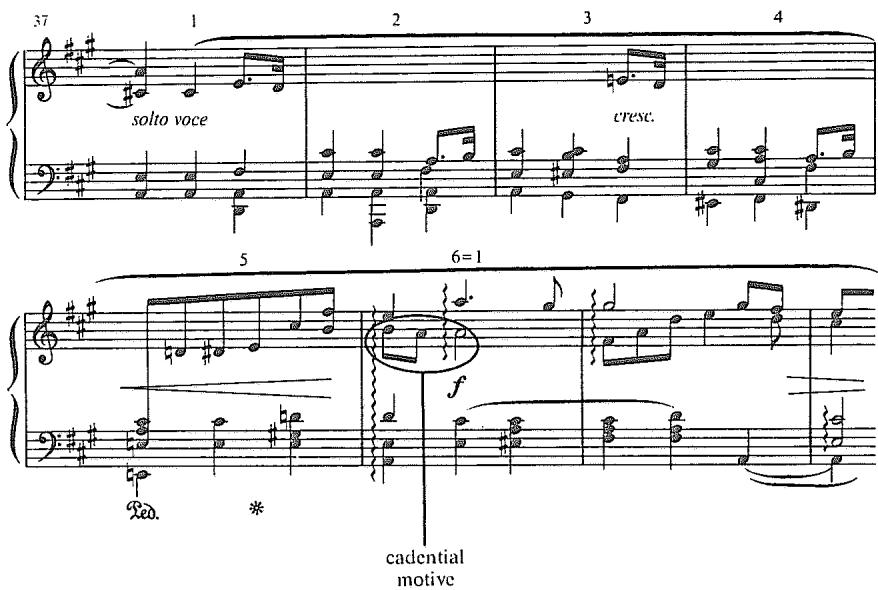
中文讲解
本项是图示占位符,对应乐谱例 7.19:肖邦《A 小调玛祖卡》Op. 59 No. 1,第 37–44 小节。
该图位于 P0083 提出的论点与 P0085 详细解释之间,承担承上启下的作用:在视觉上为读者提供"亲眼所见"的乐谱证据,让读者可以同时阅读文字描述与谱面。其图像内容(音符、和声、声部走向)需查阅原书图像。
例 7.19 是本节的核心乐谱之一,它选自玛祖卡的中段开头,是作者用来演示"对位式乐句重叠"这一核心概念的具体样本。
补充说明
无额外补充(图像数据未在本输入中提供)。
第4段(P0085)
原文复述
No. 1, in A Minor (1845)—at the beginning of the middle section. The first phrase is six measures long and ends with a perfect cadence in m. 42; the melodic close can be seen in the lower of the two voices on the treble staff. But a second and higher voice is added just before the cadence, obscuring the end of the first phrase and beginning a new one. This added upper voice recaptures the original melodic register of the mazurka, which was abandoned at the beginning of the middle section; it also reestablishes the primary melodic tone, e²(5̂). The cadence has a distinctive melodic rhythm (derived from the first section of the piece), which identifies it at each occurrence. These occurrences are several, because—until the final two measures (Example 7.20)—a higher voice always interposes to force the motion onward. ²⁹ Even in Example 7.20, the higher octave of the cadential note, a², is added.
中文讲解
本段是例 7.19 的详细文本说明,揭示了对位式重叠的具体机制。学习时应抓住以下几个要点:
- 基本结构:第一乐句长 6 小节,第 42 小节以完全终止(perfect cadence)结束。终止的旋律收束发生在高音谱表两条声部中较低的一条——这一细节提示读者在乐谱上要锁定正确的声部位置。
- 重叠机制:在终止之前就引入了一条更高的声部,由此模糊了第一乐句的结尾,并同时开启第二乐句。这正是 P0082 所说的"对位增加"所造就的句法粘连。
- 高声部的双重功能:① 找回作品开头所放弃的高音区(recapture the original melodic register);② 重新确立主旋律音 e²(即 5̂,徵音)——也就是说,主旋律声部从低音转回高音,完成"调性回归+音色回归”。
- 终止的"节奏指纹”:终止处的旋律节奏具有辨识度,源自第一段,因此每次终止出现都能被认出。
- 对运动的强迫:除了最后两小节(参看例 7.20),每当终止出现总有更高的声部插入,强迫乐句继续前进——这就是"无尽旋律"在玛祖卡中的具体呈现。
- 例 7.20 的尾声例外:即便到了最后两小节,终止音 a² 的高八度仍然被额外加上,说明肖邦即便在句尾也不愿让旋律"彻底落地”。
从这些细节可见,作者的论证思路是先描述乐谱事实,再解释这些事实如何产生"无尽"效果:旋律永不真正静止——每次快要停顿时,总有新声部接力。
补充说明
脚注 29 在 P0085 中被引用,但本输入未提供其内容。脚注通常在此处支持关于"高声部不断插入"这一连续手法的论断。
第5段(P0086)
原文复述
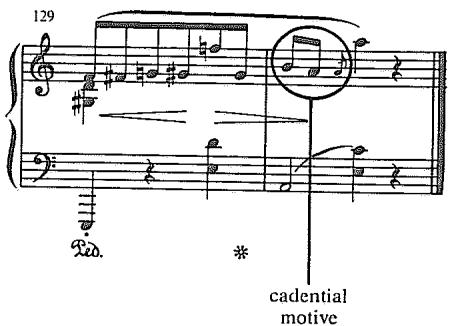
中文讲解
本项是图示占位符,对应乐谱例 7.20:肖邦 Op. 59 No. 1,第 129–30 小节。
本图用来呈现本段最后一句所提到的"最后两小节”——也就是整首玛祖卡中段末尾,仍然没有彻底停下的地方。它的作用是给读者一个"亲眼看"的机会,去验证"即便在最末了的终止,终止音 a² 的高八度仍然被加上"这一陈述。读者应在阅读 P0085 末句与本图对照时,体会肖邦如何在曲终仍保持"未结束感”。
第6段(P0087)
原文复述
The six-measure length of the first phrase in Example 7.19 is unusual for a mazurka, as it would be for any dance piece. This mazurka, like all of Chopin’s, is not meant for actual dancing, but it is one of only a few in which the duple standard for phrase lengths is largely abandoned. (Another is the B Major Mazurka, Op. 56, No. 1.) The opening period of the first section, for example (see Example 7.21), is twelve measures long, consisting of three four-bar hypermeasures, each of which can also be considered a small phrase. This twelve-measure length does not arise from phrase expansion, and thus the period as a whole cannot be reduced to a basic phrase of, say, eight measures. Rather, the period is formed by giving one four-bar hypermeasure to each of three main harmonies—I, III, and V—each of which is preceded by its own dominant. The third and last hypermeasure also includes a IV–V–I cadence in the tonic. ³⁰
中文讲解
本段从"乐句长度"切入,把例 7.19 的 6 小节乐句放在玛祖卡体裁惯例中加以审视。学习时要抓住以下几点:
- 6 小节的不寻常:对玛祖卡这种舞曲体裁,标准的双拍(duple)惯例是 4 或 8 小节一句;6 小节是很反常的——并且作者强调,这不是某个偶然错误,而是作曲家刻意放弃双拍标准的少数玛祖卡之一(另一首是 Op. 56 No. 1)。
- 体裁意识:肖邦的玛祖卡本就"不为真正舞蹈而写”,因此乐句长度的自由具有合法性;但本曲仍因长度偏差而"outlier"(极端例子)。
- 第一段开篇的 12 小节周期:由**三个 4 小节超小节(hypermeasure)**构成,每个超小节本身也可看作一个小乐句。这与"先写 8 小节、再扩展"的做法无关——12 小节不是 8 小节+4 小节的扩展。
- 和声逻辑:12 小节周期不是凭空的长度,而是由三个主和弦的并列构成——I、III、V,每个和弦前都有其自身的属和弦。第三个超小节还包含一个IV–V–I 的主调终止。换言之,长度来源于和声序列的需要而非传统的对称美感。
- 不可化简性:作者特意指出 12 小节周期"cannot be reduced to a basic phrase of, say, eight measures"——这暗示了肖邦晚期玛祖卡的一个根本特征:形式结构服从和声-序列逻辑,而非服从于传统的双数小节美感。
补充说明
本段预示了后文对中段(mm. 13–24)的类似分析:同样采用 I–III–V 顺序序列,同样使用属七和弦引出。这构成了 Op. 59 No. 1 形式逻辑的内在一致性。脚注 30 在此引用但本输入未提供内容。
第7段(P0088)
原文复述
The middle period of the A section, like the first period, is constructed sequentially. In this sequence, too, each of three triads is preceded by its own (applied) dominant seventh chord—E major, Eb major, and D major, a chromatic descent. ³¹ The last V⁷–I progression, in D major, is prolonged tonally and expanded rhythmically by the interpolation of four measures over an A pedal (V of D major). These measures, placed in parentheses in Example 7.21, delay the arrival of the expected sixth measure of the period, which now appears as m. 22. The twelve-measure unit between the first period and the return of the theme—that is, mm. 13–24—can therefore be heard as an expanded eight measures (unlike the first period itself, which is irreducible).
中文讲解
本段分析 A 段的中段(middle period,即 mm. 13–24),与前段对第一段开篇(12 小节不可化简)的分析形成对照——本段说中段虽然表面是 12 小节,其实可以听成"扩展的 8 小节"。关键点如下:
- 顺序构造(sequential construction):中段和第一段一样,按 I–III–V 的次序排列,但每个和弦前用其属七和弦作引出——具体是 E 大调、E♭ 大调、D 大调,构成一条半音下行的属七和弦序列。
- 最后 V⁷–I 的扩展:D 大调中的 V⁷–I 被延长——作者说"tonally prolonged and expanded rhythmically"——手段是在 A 持续音上(A 是 D 大调的属音)插入4 小节的插段。这 4 小节在例 7.21 中用括号标出(即 mm. 18–21)。
- 延迟效果:原本应在第 6 小节出现的位置(即 m. 18)被推迟到 m. 22,原因是插段先占了位置。换言之,这 4 小节是"寄生"于 V 之上的属音延长(pedal point)。
- 可化简 vs. 不可化简:作者明确对比——第一段开篇的 12 小节"不可化简"(是 3 个独立的 4 小节单位相加),而中段 mm. 13–24 的 12 小节可以听作"扩展的 8 小节",即:基本结构是 8 小节,加上了 4 小节插段。这是肖邦晚期玛祖卡形式上的灵活性的典型表现。
补充说明
脚注 31 在此处引用,本输入未提供其内容,通常用于支持"E 大调、E♭ 大调、D 大调半音下行属七和弦序列"的和声分析。
第8段(P0089)
原文复述
But the true rhythmic situation is even more complex than this. The harmonic goal of the middle period is not IV# (D major) but V# (E major), as the diminished seventh chord on d# in mm. 23–24 makes clear. The harmonic skeleton of the period is thus V#–IV#–V#, a large neighboring motion about the dominant, with the initial sequence serving to connect V# and IV#. This skeleton is an enlargement of the harmonic motion in mm. 10–11 (see NB in the example), except that there the IV was minor. The expanded V⁷ of D, five measures long in total (mm. 17–21), thus corresponds to the same harmony on the last beat of m. 10. In both cases—mm. 10–11 and mm. 13–26—the progression V–IV–V amounts to a prolongation of the dominant.
中文讲解
本段揭示出中段"真正的节奏情况比想象的还要复杂"——即作者要更进一步:原本分析到 V–IV–V 框架还不够,必须看到整个中段的真正和声目标是 V#(升 IV 的属,即 E 大调),而不是表面的 IV#(D 大调)。学习要点:
- 真正的和声目标:根据 mm. 23–24 的 d# 减七和弦,可知中段的真正归宿是 V#(E 大调),不是表面上看到的 IV#(D 大调)。这是深层 vs. 表层和声的差异。
- 和声骨架:整个中段的和声骨架是 V#–IV#–V#,即在 V#(主调的属,即 E 大调)周围做一个大尺度邻进运动(neighboring motion);最初的 I–III–V 顺序序列只是连接 V# 和 IV# 的桥梁。
- 跨小节的对应关系:这一 V#–IV#–V# 的骨架与 mm. 10–11 中的和声动作(标注 NB = Neben 邻近/邻进)相似,只是 mm. 10–11 那里 IV 是小三和弦(iv),而中段里则是大写的 IV#。
- 属音延长:扩展的 D 上的 V⁷(mm. 17–21,共 5 小节)和 m. 10 最后一拍的同一和弦对应。两者共同构成对属音的延长(prolongation of the dominant)。
结论:在两个看似无关的小节组(mm. 10–11 和 mm. 13–26)中,肖邦其实在做同一件事——用 V–IV–V 来延长属音——只是规模不同。这是肖邦晚期音乐中典型的"深层结构同构"现象。
补充说明
“NB” 应为作者引用的德文术语 Neben 或 NB(neighbor/邻进)的缩写,指邻近音运动。本输入未提供完整术语体系,故此处仅依本段上下文解释为"邻进运动"。
第9段(P0090)
原文复述
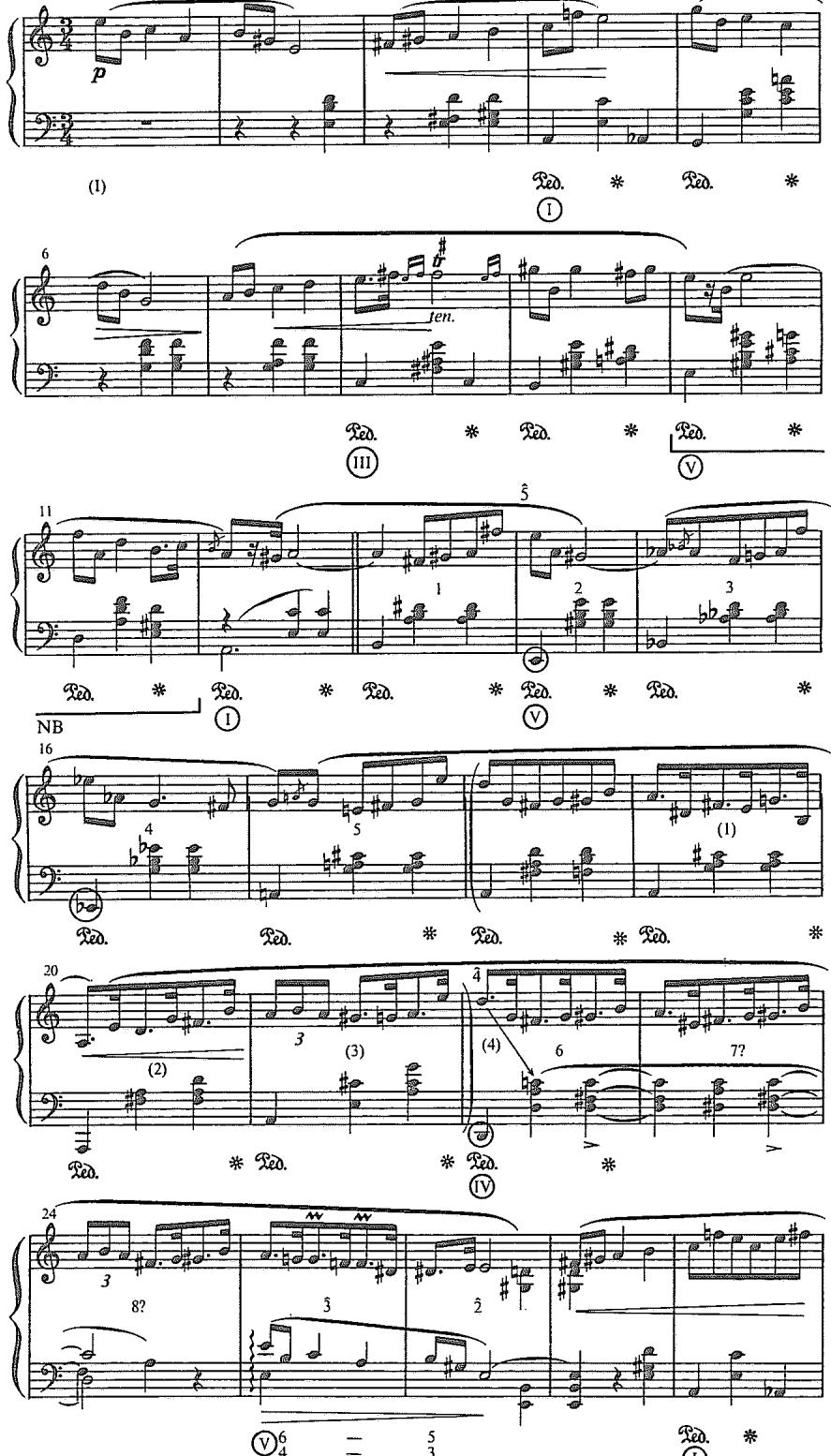
中文讲解
本项是图示占位符,标注为"第 12 页图像或乐谱示例",原始图像数据未提供。
根据上下文(紧接 P0089 的 mm. 10–11 与 mm. 13–26 的对比分析,以及 P0091 提到 m. 25 处左手再现主题),本图很可能对应 Example 7.21——即肖邦 Op. 59 No. 1 第一段开篇及中段的整体结构示意或乐谱节选,P0087、P0088、P0089 均引用此例中的小节编号。读者需查看原书图以确认其具体内容。
补充说明
无额外补充(图像数据未提供)。
第10段(P0091)
原文复述
Since the middle period does not reach its goal until m. 26, it is clear that the return of the theme in the left hand, at m. 25, overlaps the concluding half cadence. This time, Chopin’s articulation—the slur ending in m. 26—clarifies rather than obfuscates the phrase structure, as does the continuation of the dotted rhythm through m. 26. The first measure of the theme itself, which in m. 1 would probably be taken to represent an arpeggiated tonic harmony, now arpeggiates the cadential ⁶—moving, in m. 26, to the simple V harmony.
中文讲解
本段说明主题再现与终止之间的重叠,以及这次重叠的特殊句法表现。要点:
- 延迟到达与重叠时机:因为中段到 m. 26 才到达真正的和声目标,所以左手在 m. 25 重新出现的主题恰好与结束性的半终止(concluding half cadence)重叠。这是 P0092–P0093 之后要详细展开的核心"句法事件"。
- 句法清晰性的来源:与之前例 7.19(高声部加入使乐句边界模糊)相反,这次主题再现处的句法是清晰的——两条证据:① **m. 26 终止的连音线(slur)**给出明确的乐句划分;② 点状节奏(dotted rhythm)持续到 m. 26未被打断。
- 主题首小节的和声含义变化:开头 m. 1 的主题首小节通常会被理解为主和弦的琶音;但到了 m. 25 这次再现,它实际是终止的六和弦(cadential ⁶)的琶音,并在 m. 26 进入单纯的 V 和声。换言之:同一个表面旋律,在不同位置上承担不同的和声功能——再现处的版本是"和声意义被终止语境重新定义"。
这一段很重要,因为它为后文 P0092 把它与早期作品 Op. 6 No. 1 做类比埋下伏笔。
第11段(P0092)
原文复述
As the reader may have noticed, there is a strong resemblance between this overlap of two periods and the overlap between the antecedent and consequent phrases in the early F# Minor Mazurka, Op. 6, No. 1 (see Examples 2.22–2.23 and the accompanying discussion). Like that overlap, this one takes advantage of the fact that the first chord literally presented in the piece is a dominant. There as here, the overlap connects a phrase ending with a half cadence to a return of the opening theme; the presence of a V chord rather than a I at the beginning makes the overlap possible. In both mazurkas the opening theme is constructed as a sequence moving from I to III to V—each harmony preceded by its own dominant—and in both cases the third segment of the sequence (moving from V-of-V to V) is executed differently from the first two segments. ³² In both pieces the phrase overlap is a relatively extended one, in that more than a single melodic note is common to the two phrases.
中文讲解
本段是关键的横向比较段,把 Op. 59 No. 1 与早期作品 Op. 6 No. 1(《升 F 小调玛祖卡》)进行类比,揭示肖邦早在 1830 年就已经使用了类似手法,但晚期的版本"更进一步"。要点:
- 类比对象:Op. 6 No. 1(肖邦 20 岁作品,1830 年)中的"前句+后句重叠"(参看例 2.22–2.23 及伴随讨论)。
- 实现重叠的前提:两首曲子开篇第一和弦就是属和弦(V)——这一非常规设计为重叠提供了可能:如果开头是 I,则主题再现时用 I 起始会与终止式冲突;用 V 起始则终止后的 V 自然过渡到再现开头的 V,无缝衔接。
- 句法功能:重叠总是发生在"以半终止结尾的乐句"与"主题再现"之间;开篇用 V 而非 I 是其结构性前提。
- 主题序列构造相同:两首曲子的主题都是 I–III–V 顺序序列,每个和弦前各有属和弦;两首曲子的第三个序列段(V-of-V 到 V)都以不同于前两段的方式处理——这是一个细节,作者用以说明"肖邦对序列的处理有意识地区分开头与结尾"。
- 重叠的规模:两首曲子的乐句重叠都是扩展型(relatively extended),不止一个旋律音是两乐句共有的——不是简单的尾音重叠。
这一段的论证逻辑是:肖邦并非到晚期才发明重叠手法,他早在 1830 年就在用类似手法——晚期作品的"复杂性"更多体现在重叠与其他手法(属音延长、对位、终止回避)的叠加上,而不是手法的"全新发明"。
补充说明
脚注 32 在此引用,本输入未提供其内容。
第12段(P0093)
原文复述
Although the overlap in Op. 6, No. 1, is astonishing for a mazurka composed in 1830 (when Chopin was twenty), the overlap in Op. 59, No. 1, is even more remarkable. First, of course, there is the appearance of the theme’s first two measures in the left hand, continuing the voice leading of the accompaniment from mm. 22–24 (see Example 7.22). But, as we have already seen, there is also a more complex hypermetrical structure in this instance. Measure 22, for example, is basically the sixth bar of the sequence that begins in m. 13—expanded, however, by the interpolation of mm. 18–21. But m. 22 is also the concluding bar of a surface four-bar hypermeasure beginning at m. 19, which is marked by the distinctive dotted rhythm in the melody (see the metrical numbering in parentheses in Example 7.21). As a surface hypermeasure, mm. 19–22 are structurally subordinate to, or “more foreground” than, the sequence itself. ³³
中文讲解
本段承接上段比较,继续论证 Op. 59 No. 1 的重叠比 Op. 6 No. 1 更非凡。本段重点是"双重结构层次"——一个事件(小节)同时属于两种不同尺度的结构。要点:
- 左手的双重角色:左手再现主题的前两小节同时延续了 mm. 22–24 伴奏的声部进行(参看例 7.22)——这不是简单的主题回归,而是声部线在伴奏和主题之间的无痕切换。
- 超小节结构的双层叠加:m. 22 处于两个不同结构层级:
- 深层(背景)层级:是 m. 13 开始的序列的第 6 小节——只是被 mm. 18–21 的插段扩展了;
- 表层(前景)层级:是 m. 19 开始的 4 小节超小节的结束小节,以点状节奏作为标记(参看例 7.21 中括号内的拍号编号)。
- 层级关系的方向:表层 4 小节(mm. 19–22)结构上从属于深层序列——即所谓"structurally subordinate to, or ‘more foreground’ than, the sequence itself"。换言之,深层结构(序列)才是骨架,表层结构(点状节奏标记的小节组)是浮在骨架之上的前景装饰。
- “更非凡"的具体所指:Op. 6 No. 1 中的重叠虽惊人,但只是单一的句法事件;Op. 59 No. 1 在同一位置同时实现深层序列、表层超小节、主题再现与伴奏延续——是多重事件的叠加,这就是"更非凡"的含义。
补充说明
脚注 33 在此引用,本输入未提供其内容。
第13段(P0094)
原文复述
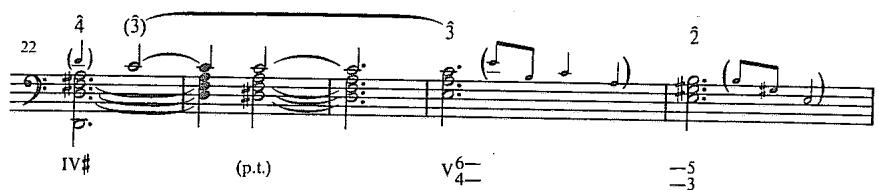
中文讲解
本项是图示占位符,对应乐谱例 7.22:肖邦 Op. 59 No. 1,mm. 22–26 的声部进行缩简(voice-leading reduction,仅左手)。
本图的作用是直观呈现 P0093 第一条论点:左手再现主题时,旋律声部与伴奏声部之间的连接是无缝的——声部线从伴奏过渡到主题,不留痕迹。读者需要查看原图,才能看到这一"声部进行被精心设计以避免跳跃"的具体音符细节。这是肖邦晚期"无尽旋律"手法的另一面:不仅是水平方向的句法粘连,还有垂直方向(声部间)的平滑转移。
第14段(P0095)
原文复述
Furthermore, unlike the antecedent phrase of Op. 6, No. 1 (see Example 2.23), the middle period of Op. 59, No. 1, could easily have been expressed as an eight-measure phrase. The slow motion of the bass from d over d to e in mm. 22–26 was probably inspired by the preceding pedal on A in mm. 17–21; a quicker bass motion after the end of the pedal would have sounded abrupt. Once the parenthetical pedal is removed, however, a measure-by-measure bass progression seems most natural, because that was the harmonic rhythm in mm. 13–16. Thus we arrive at the eight-measure version shown in Example 7.23, which omits both the parenthetical measures and the phrase overlap. The middle period is thus cleanly separated from the thematic return, giving the phrase juncture a more normal appearance. In addition, note that the 4-3-2 linear motion, which Chopin divides between two voices (Example 7.21, mm. 22–26), is now contained entirely in the soprano. ³⁴
中文讲解
本段提出一个"假设性重构”——如果把 Op. 59 No. 1 中段的插段和重叠都去掉,中段完全可以是一个普通的 8 小节乐句。这一对照是用来凸显肖邦实际写出来的东西有多么不普通。要点:
- Op. 6 No. 1 vs. Op. 59 No. 1 的可化简性差异:早期作品 Op. 6 No. 1 的前句不易用 8 小节表达(它的长度本身就是复杂的);但 Op. 59 No. 1 的中段可以用 8 小节轻松表达——但肖邦偏偏不这样写,而是选择了扩展+重叠。
- 低音慢动的成因:mm. 22–26 的低音从 d 上的 d 缓慢运动到 e,很可能是因为前面 mm. 17–21 的 A 持续音——A 持续后立刻做快速低音运动会显得突兀。
- 8 小节重构的逻辑:去掉括号中的插段后,mm. 13–16 的"每小节一个和声步进"的自然节奏使 mm. 17–24 也变成"每小节一和声"——于是得到一个 8 小节的中段。
- 重构示例(例 7.23):去掉插段小节和重叠之后,中段与主题再现之间界限分明,乐句衔接恢复正常——这正是肖邦没有采用的方案。
- 线性运动的声部分配:实际谱中(例 7.21 的 mm. 22–26),肖邦把 4-3-2 的线性运动(指 d–c–b 或类似的下行运动)分配到两个声部;在重构版本(例 7.23)里,则完全集中到女高声部(soprano)。这是一个"重构与原作"在声部分配上的关键差别。
学习时这一段是"反向思维"的精彩示例:作者先构造一个简化版本,让读者明白"原本可以这么写",从而更深地体会肖邦实际选择的那种"复杂"的写法有多么深思熟虑。
补充说明
脚注 34 在此引用,本输入未提供其内容。
第15段(P0096)
原文复述
Example 7.23 may be regarded, at least approximately, as the basic phrase underlying the middle period of the mazurka. The duple hypermeter of the example
中文讲解
本段(与 P0098 在原文中是一段,被图像 P0097 隔断)确立例 7.23 的方法论地位:它是中段的基础乐句(basic phrase)。
注意措辞:作者说"at least approximately"(至少大致上是)——这是谨慎的措辞,因为实际谱比简化版更复杂;重构并非真正的"原型",而是一种分析上的"参考模板"。下句(被图像打断)将进一步说明 2 拍超小节可作为该周期的底层节拍。
第16段(P0097)
原文复述
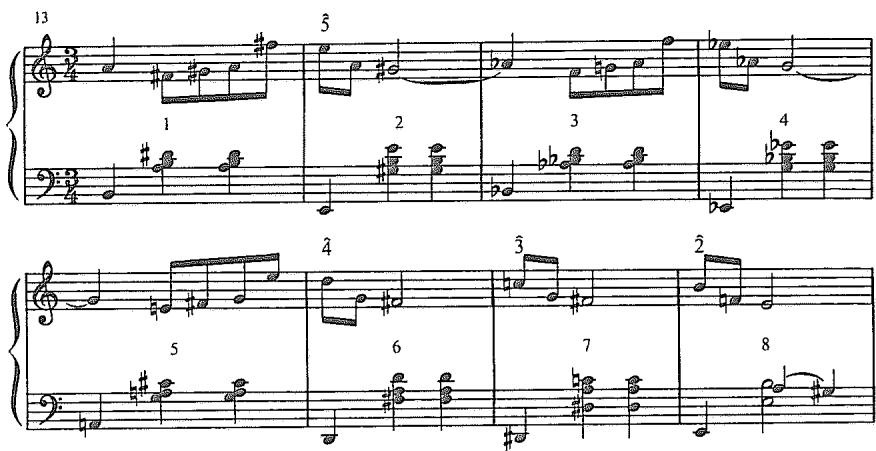
中文讲解
本项是图示占位符,对应乐谱例 7.23:肖邦 Op. 59 No. 1,mm. 13–26 的重构版(Recomposition)。
“Recomposition”(重构)一词非常关键——它意味着这不是肖邦的原谱,而是作者构造的一个假设性版本,用于呈现"如果不插入括号小节、不发生句法重叠,中段原本可以是什么样"。该图的方法论意义在于:作为分析参考,让读者通过对比看出肖邦实际写法的复杂度。
图像内容需查阅原书以确认。
第17段(P0098)
原文复述
may be taken as the underlying hypermeter of the period. However, a satisfactory metrical model may also be obtained by joining mm. 13–17 (from the hypermetrical downbeat at m. 13 to the parenthesis) with mm. 22–24 (the measures leading to the hypermetrical downbeat at m. 25).
中文讲解
本段(与 P0096 在原文中是一段,被图像 P0097 隔断)说明节拍模型的两种合法选择:
- 第一种选择:以 2 拍超小节(duple hypermeter)为该乐段底层节拍——也就是把中段视为 4 个 2 拍超小节的连续排列。这是 P0096 提出的方案。
- 第二种选择:另一种同样令人满意的节拍模型——将 mm. 13–17(从 m. 13 超小节强拍到括号开始处)和 mm. 22–24(通向 m. 25 超小节强拍的小节)拼接起来。换言之,把括号内的 4 小节视为"节拍空缺",跳过它们直接连接 mm. 13–17 与 mm. 22–24。
- 两种方案的认识论意义:这一对照说明,深层的节拍模型具有多种合法的简化方式——分析者可以根据所关注的层级(深层 vs. 表层)选择不同的方案。这呼应了 P0093 中"表层 vs. 深层"的层级讨论。
补充说明
本段在原文中与 P0096 一起构成一个完整论证,但被图 P0097 隔成两段。教学时可以把这两段连读,逻辑更顺。
第18段(P0099)
原文复述
The combination of phrase expansion and phrase overlap in this mazurka is unusually complicated, especially for a dance piece. That it is done within the framework of an apparently symmetrical form, 3 × 12 measures—for the thematic return beginning at m. 25 is complete and basically unaltered—is extraordinary. It is ironic, too, that by recognizing an expansion in the middle period we are positing an underlying phrase structure that is asymmetrical (12 + 8 + 12 measures) and thus in conflict with the symmetry of the outer form.
中文讲解
本段是 7.9 节关于 Op. 59 No. 1 的总结段,点出本曲手法的"非常性"及其认识论上的反讽。要点:
- 手法的复合:本玛祖卡同时使用乐句扩展(phrase expansion)与乐句重叠(phrase overlap)——两者的复合在舞曲体裁中是异常复杂的。
- 表层对称 vs. 深层不对称:表面形式是3 × 12 小节 = 36 小节的对称结构(m. 25 起的主题再现完整且基本未改)。但分析表明中段是扩展的 8 小节(基本句),导致底层结构是 12 + 8 + 12 = 32 小节,不对称。
- 反讽性(irony):一旦承认中段是扩展,我们就不得不假设一个与外层对称形式相冲突的不对称底层结构。也就是说,正是分析者对深层结构的追求本身,揭示了一个打破表面对称性的真相。
- 深层论点:玛祖卡的体裁传统(舞曲、对称、4 或 8 小节乐句)从未真正约束住肖邦;他的"复杂句法"是在形式对称的外壳下实现的——这本身就是一个艺术上极具反讽意味的成就:表面上规矩整齐,骨子里却精巧失衡。
这是作者对本曲分析的收束——既是音乐分析,也是一段美学评论。学习时应体会:肖邦晚期玛祖卡的"无尽旋律"追求不是单一手法的炫技,而是在多重结构层级(表层对称、表层句法、深层和声、深层节拍)同时进行复杂操作。
脚注 / 边栏 / 图表 / 附加信息(如有)
本小节包含 7 处脚注引用(²⁸–³⁴),正文段落中以小数字形式标注,但本 task_input 未提供各脚注的具体内容,故仅在出现处提及而不补写。本小节涉及多个乐谱示例:Example 7.19(P0084,肖邦 Op. 59 No. 1 mm. 37–44)、Example 7.20(P0086,Op. 59 No. 1 mm. 129–30)、第 12 页示例(P0090,对应 Example 7.21 的整体结构示意,标注为第 12 页)、Example 7.22(P0094,Op. 59 No. 1 mm. 22–26 声部进行缩简)、Example 7.23(P0097,Op. 59 No. 1 mm. 13–26 的重构版)。所有图像的原始数据均未在输入中提供,读者需查阅原书图以确认具体音符与节拍信息。
💡 本节核心要点
- 肖邦晚期追求"无尽旋律"的两大新增要素:对位(用以维持节奏连续性)和回避预期的完全或半终止;后者最接近瓦格纳乐剧的做法,但二人无师承关系。
- Op. 59 No. 1 通过对位手段实现乐句重叠:高声部在终止前加入,模糊乐句边界并强迫乐句继续前进;终止本身具有"节奏指纹"。
- 本曲第一段开篇 12 小节由 I–III–V 序列构成(每个和弦前有属和弦),该长度不可化简为 8 小节;中段 mm. 13–24 表面是 12 小节,但底层为可化简的 8 小节加上 4 小节属音延长插段。
- 中段真正的和声目标是 V#(E 大调),其骨架是 V#–IV#–V# 的大邻进运动,与 mm. 10–11 的 V–IV–V 属音延长形成跨段对应。
- m. 25 处左手主题再现与 m. 26 的半终止重叠;这与早期 Op. 6 No. 1 中的同类重叠同源,但 Op. 59 No. 1 同时叠加了双层超小节结构和声部进行的延续,复杂度更高。
- Op. 59 No. 1 在表面 3×12 小节对称形式内部,隐藏了一个 12+8+12 的不对称底层结构——这一反讽揭示了肖邦晚期玛祖卡"形式对称外壳下的句法非对称"的美学逻辑。
🔑 关键术语
- endless melody:本节的核心概念,原出自瓦格纳美学,指乐句不断延续、不出现真正终止的连续性效果。在肖邦语境中并非瓦格纳意义上的无终旋律,而是通过句法粘连(重叠+引接)与对位化实现的"未结束感"。
- phrase overlap:乐句重叠——前一句尚未结束,后一句已经开始,使两乐句共享若干小节/音。本节反复出现,是肖邦晚期玛祖卡实现连续性的关键句法工具。
- lead-in:引导式进入——某种句法准备使后续乐句自然到来。与 overlap 共同构成肖邦终身偏爱的连续性手法,晚期使用得"lavishly"(奢华)。
- hypermeasure:超小节——多个小节组成的高一层节拍单位。本节多次出现 4 小节超小节与 2 拍超小节两种规格;超小节层级是分析肖邦大型句法结构的关键工具。
- cadential ⁶:终止六和弦——终止式中的倚音六和弦(6̂ over 5̂)。本节指出,Op. 59 No. 1 m. 25 处再现的主题首小节实际是 cadential ⁶ 的琶音,与 m. 1 的主和弦琶音形成同形异义。
- phrase expansion:乐句扩展——在基础乐句结构之外插入额外小节,使总长超过原型。本节 Op. 59 No. 1 的中段是 8 小节基础上加 4 小节插段,构成"扩展的 8 小节"。
- voice-leading reduction:声部进行缩简——把具体谱面简化为只保留结构性声部线条的分析图。本节 Example 7.22 即为此类缩简图。
- recomposition:重构——分析者构造的"假设性版本",用于揭示原作的实际选择及其效果。本节 Example 7.23 是分析者去掉插段和重叠后的"如果……那么……“版本。
- NB (neighbor):Neben 的缩写,指邻进音运动。本节 mm. 10–11 标注 NB,说明 V–IV–V 在此处是邻进式运动;中段的 V#–IV#–V# 是其放大版。
7.10 [描述性拆分] Phrase Overlap and Expansion in the F# Minor Nocturne, Op. 48, No. 2
第1段(P0100)
原文复述
Chopin sometimes expresses the urge to unify the melody of a large section of a piece by writing a single, very long slur to cover the entire section. Such a slur appears, for example, in the middle section of the G Minor Nocturne, Op. 37, No. 1 (1838). By itself, such a slur does not constitute endless melody, although it may perhaps be taken as an indication of Chopin’s desire to overcome any obvious division of his melody into separate phrases. Such may not have been his intention in the chorale-like middle section of Op. 37, No. 1—if it was, the attempt would have to be deemed unsuccessful—but endless melody does appear to be a strong factor in the slightly later Nocturne in F# Minor, Op. 48, No. 2 (1841; see Example 7.24). A single slur covers mm. 3–25, and the repetition of this section (mm. 31–53) is similarly slurred; unfortunately, these slurs are not reproduced in all editions of the nocturne.
中文讲解
本段为整节奠定讨论起点:肖邦有时用一条贯通全段的长连音线(slur)来暗示旋律的“统一”,但单纯的连音线并不等于“无终旋律”(endless melody)。作者举出 Op. 37 No. 1 的中段作为反例——那里的长连音线并未真正克服乐句的分割,因此即使有连音线,作品也未必成功实现无终效果。接着作者将目光投向 Op. 48 No. 2:m. 3–25 及其重复(m. 31–53)都被一条长连音线覆盖,作者据此判断“无终旋律”在这首稍晚的夜曲中确实是一个重要因素。最后,作者提醒读者,许多版本并未保留这条长连音线,所以阅读不同版本的乐谱时,演奏指示可能丢失,需要警惕版本来理解作者的初衷。
补充说明
Op. 48 No. 2 作于 1841 年,比 Op. 37 No. 1(1838)稍晚。Op. 37 No. 1 中段被描述为“chorale-like”,因此长连音线在那里被解读为对圣咏式结构的统一尝试,但与本文讨论的 Op. 48 No. 2 的无终效果并非同类现象。
第2段(P0101)
原文复述
It may seem paradoxical that a melody containing so much repetition could be thought of as “endless.” Melodic repetition—whether literal, varied, or sequential—has the effect of delineating and emphasizing the melodic segments being repeated. Thus, in this nocturne, the slightly varied repetition of mm. 3–4 (as mm. 5–6) stresses the two-measure unit. The sequential repetition of mm. 7–8 a third higher (as mm. 9–10) strengthens the identification of the two-measure unit as a standard length for melodic segments in this piece. Then, as if the consistent repetition of two-measure units were not enough, an entire eight-measure segment is repeated sequentially: mm. 11–18 are simply a repetition a fifth higher of mm. 3–10. Only the beginning of the cadential process in m. 19 breaks the pattern of repetitions. (But once the section finally concludes in m. 28, the whole thing is repeated!) With so much attention called to the individual melodic segment—whether of two, four, or eight measures—how could it possibly be claimed that the boundaries of phrases and subphrases have been transcended, that being the essential precondition of endless melody?
中文讲解
本段提出整节的核心悖论:充满了重复的旋律如何还能被称为“无终”?作者先阐明理论常识——任何形式的重复(完全、变化或模进)都会强化被重复单位的边界感,让听者清楚地识别出短小的动机或乐段。然后具体演示 Op. 48 No. 2 是如何层层凸显“两小节单位”:m. 3–4 在 m. 5–6 稍加变化地重复一次;m. 7–8 在 m. 9–10 以三度上行的模进重复;最后连整个 m. 3–10 都在 m. 11–18 以五度上方的模进再次出现。直到 m. 19 的终止过程开始,这一重复模式才被打破,而 m. 28 之后又是全段的重复。作者用这一连串的证据质问读者:如此强烈地凸显短小乐节(无论是 2、4 还是 8 小节)之后,怎么还能说乐句与子句的界限被超越了?而无终旋律的“前提”正是要超越这些界限。
补充说明
m. 11–18 与 m. 3–10 的关系是一种更高层级的模进重复:内部 2 小节、4 小节单位的重复仍然存在,但被包含在 8 小节的大单位中;这种“重复中的重复”正是后文用来揭示张力的关键结构。
第3段(P0102)
原文复述
This is indeed a paradox; but it is a paradox fundamental to this piece. We could even say that the contradiction between the small size and frequent repetition of melodic segments, on the one hand, and the attempt to overcome all segmentation within the large section, on the other, is the source of the peculiar tension that permeates this nocturne. The segments are always ending, but the larger thrust of the melody never allows them to end peacefully.
中文讲解
本段用一句话把前述悖论升华为整首夜曲的美学核心:作者承认这确实是一个悖论,但它不是分析的副产品,而是作品本身的根本性质。具体而言,一方是“小而频繁重复的乐段”,另一方是“试图超越一切切分的大型乐段统一体”,两者之间的矛盾构成了弥漫全曲的“特殊张力”。作者最后用一句箴言式的总结——“乐段总是在结束,但旋律的更大推力从不让它们安宁地结束”——为接下来的局部分析指明方向:后面的段落将具体展示这种“想停又停不下来”的机制如何在小节层面运作。
补充说明
本段在论证上起到承上启下作用:前两段建立问题,本段给出作者的总论断,后续段落(P0103 起)转向具体乐谱证据来逐步验证这一总论断。
第4段(P0103)
原文复述
Example 7.25 is a simple foreground reduction of the first section (mm. 1–30), written almost entirely in actual note values. Only a rather small amount of melodic embellishment has been stripped away, and some of the polyphonic implications of the melody have been realized explicitly. ^{35} Double bar lines are used to delineate both hypermeasures—the hypermeter is four-bar (subdivided 2 × 2)—and an occasional measure group of irregular size (such as mm. 15–19).
中文讲解
本段介绍例 7.25 这一图表的性质:它是对 m. 1–30 第一段的一个“前景简化”(foreground reduction),基本保持原谱时值,仅去除了少量装饰音,并显化了原旋律中隐含的复调对位。第 35 号脚注此处未展开,但已暗示本节有相关文献支撑。图表中以双小节线(double bar lines)来标记两种结构:一种是规则的 4 小节超小节(hypermeasure),其内部按 2+2 细分;另一种是不规则长度的连组,例如 m. 15–19(5 小节)。换言之,这张谱例同时充当了节拍层级和句法层级的可视化工具,是后续具体分析赖以展开的“地图”。
补充说明
前景简化(foreground reduction)属于申克分析(Schenkerian analysis)术语,意为对表层织体做最小限度剥离以揭示主要声部进行;本节作者以此方式呈现 Op. 48 No. 2 的句法轮廓。超小节(hypermeasure)指在基本小节之上由若干小节组成的更高节拍单位。
第5段(P0104)
原文复述
The two-measure introduction is critical to the phrase rhythm of the entire section. The opening gesture, a bare double octave on C# with its second and higher note syncopated, derives from a similar rising octave gesture that the melody will adopt in m. 3, and this rising octave returns many times in various guises. The recognition of these two gestures as related is vital to a proper understanding of the melody; for, without such recognition, one is liable to hear the first note of m. 3 simply as the end of the introductory cadence, rather than as end and beginning simultaneously. The parallel between m. 1 and m. 3—supported by the hint contained in Chopin’s long slur—propels f^{1} (m. 3) to its higher octave, thus establishing a pattern to be followed two measures later and in all corresponding measures subsequently.
中文讲解
本段聚焦于 m. 1–2 的两小节引子,并主张它对全段句法节律(phrase rhythm)至关重要。开篇动作是 C# 上的“双八度空五度”(bare double octave),其中第二音与更高音被切分处理;这一动作在 m. 3 将以“旋律形式”重现,并在此后多次以各种变体出现。作者强调“识别这两个动作为同源”是关键:若不这样听,m. 3 的第一个音就只会被理解成引子终止的结束音,而不会同时被理解为新乐句的开头。m. 1 与 m. 3 的平行(m. 3 的 f^{1} 升到更高八度)由肖邦的长连音线在视觉上予以支持,并由此建立起“每隔两小节重复一次”的模式。
补充说明
“bare double octave on C#”指 C# 上构成的双八度空五度和声进行(power chord 风格的和弦轮廓)。“end and beginning simultaneously”(同时作为结束与开始)是本节分析“重叠”(overlap)的核心听觉前提。
第6段(P0105)
原文复述
[Example 7.24. Chopin: Nocturne in F# Minor, Op. 48, No. 2, mm. 1–30 (image placeholder; see original)]
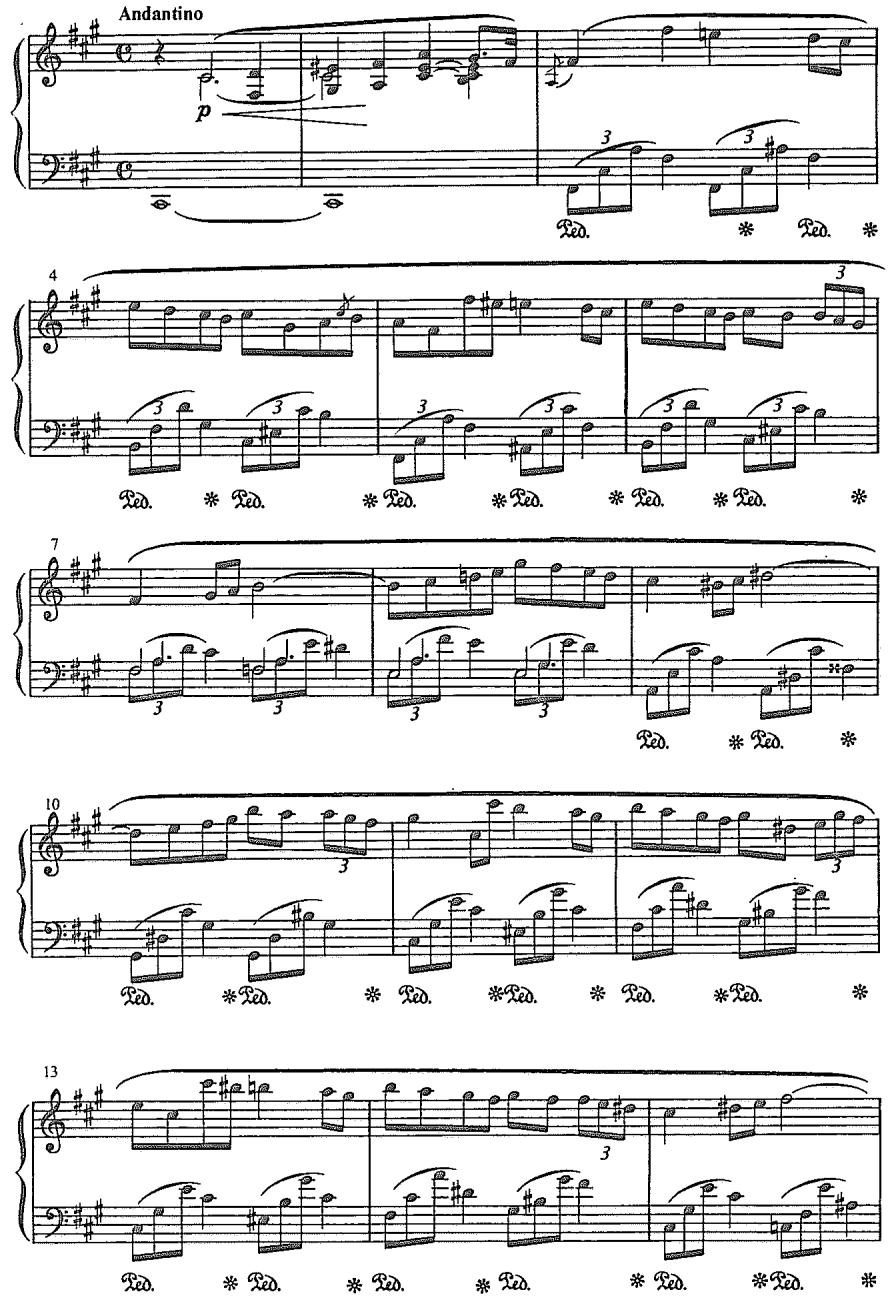
中文讲解
此为图表占位符:例 7.24 肖邦《升 f 小调夜曲》Op. 48 No. 2,m. 1–30 的原谱。本节正文反复提及的“一条贯通 m. 3–25 的长连音线”即需要在此图(原版乐谱)中查看;许多版本未保留该连音线,因此读谱时需参照能保留肖邦原版连音线的版本。
补充说明
由于是内嵌图像占位符,具体音符、力度记号与连音线需查阅原书图 7.24;本讲解只能基于正文描述进行说明。
第7段(P0106)
原文复述
[Example 7.24 (Continued) (image placeholder; see original)]
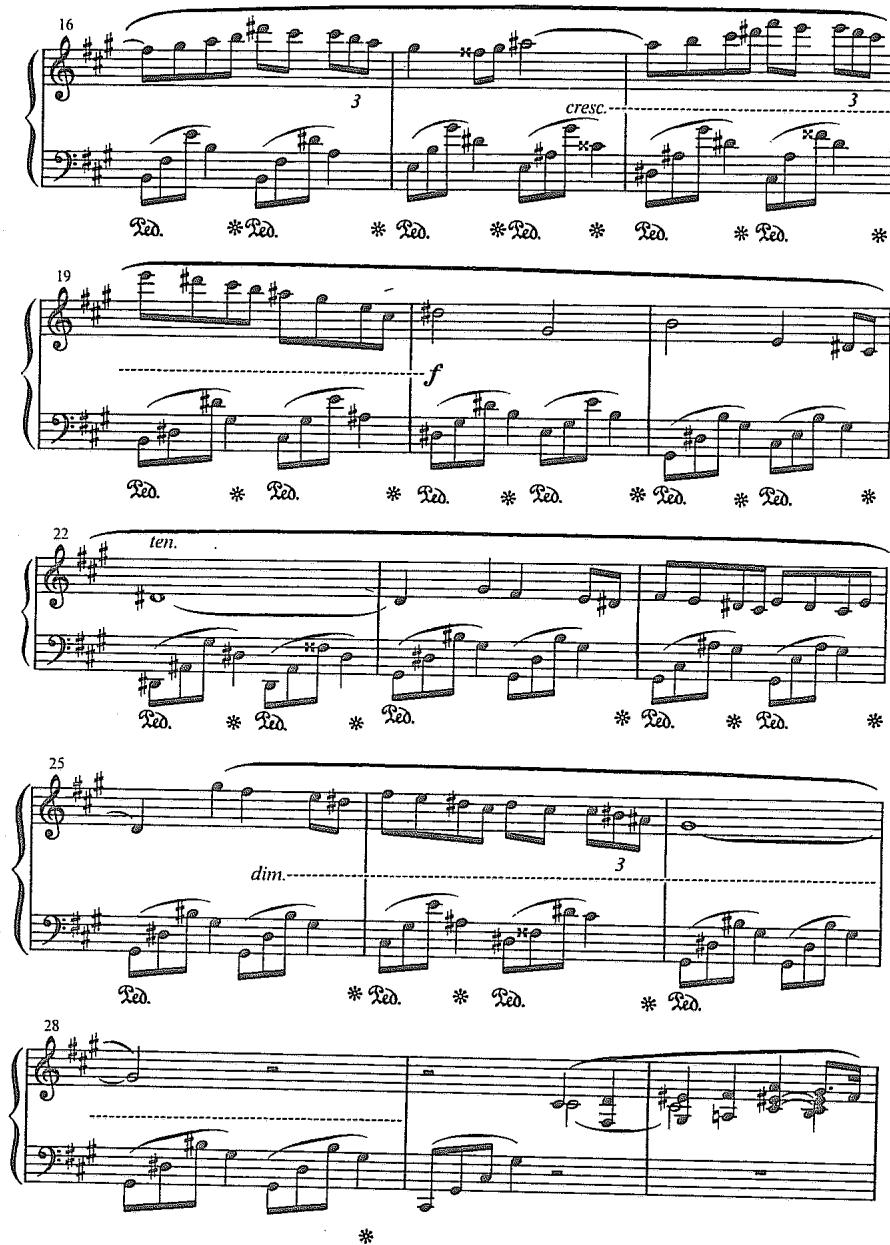
中文讲解
此为图表占位符:例 7.24 的续页(继续显示 m. 1–30 的乐谱)。功能与 P0105 同——提供原谱以便读者观察肖邦在 m. 3–25 上的长连音线以及 m. 31–53 重复段上的对应长连音线。
第8段(P0107)
原文复述
[Example 7.25. Foreground reduction of Chopin’s Op. 48, No. 2 (image placeholder; see original)]
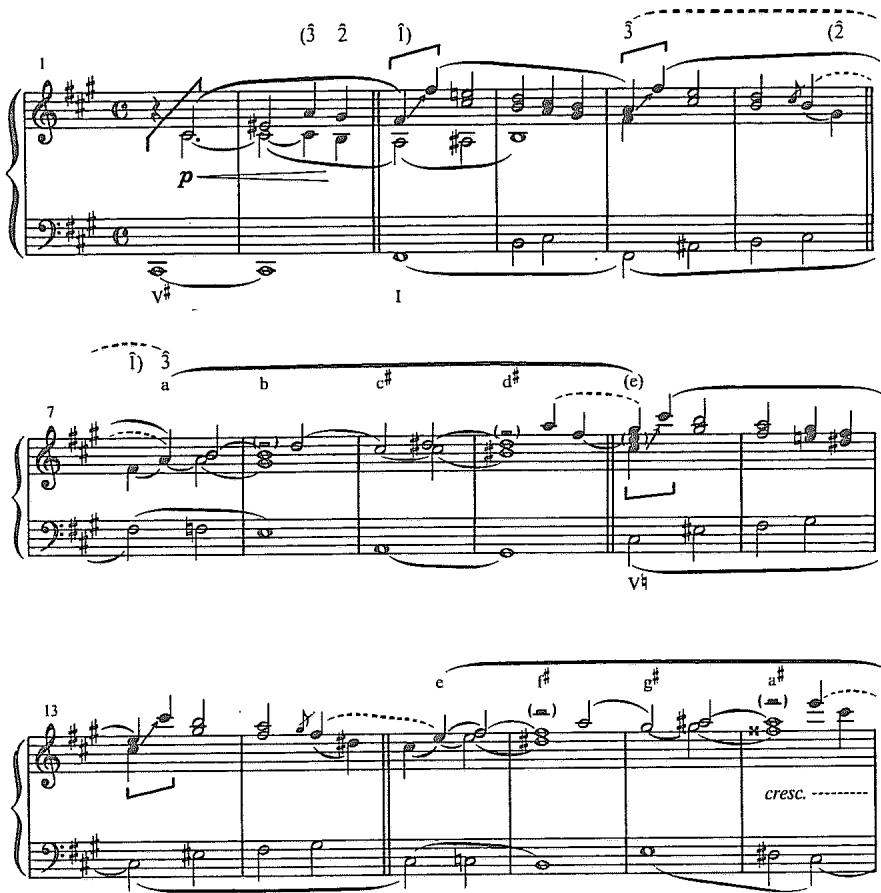
中文讲解
此为图表占位符:例 7.25 肖邦 Op. 48 No. 2 的前景简化谱,是后续大量句法分析(双小节线、超小节、方括号标出的动机、箭头标示的连接等)所依据的视觉依据。读者必须参照此图才能理解作者关于 a^{1}(3)、f#^{1}、g#^{2} 等具体音高的论述。
第9段(P0108)
原文复述
Another function of the introduction is to establish the importance of the tone a^{1} (3̂), which proves to be the primary melodic tone of the piece. The descent 3̂-2̂-1̂ over the introductory cadence immediately foreshadows the similar descent in mm. 5-7 (see Example 7.25). The introductory descent has a visionary, unreal quality because its first tone is dissonant (an appoggiatura) against the V harmony.
中文讲解
本段揭示引子的第二个功能:确立 a^{1}(即调式音级 3̂)作为全曲主要旋律音的地位。具体路径是:在引子终止中,旋律以 3̂-2̂-1̂ 下行收尾,这一轮廓预示了 m. 5–7 中将出现的同型下行。作者特别指出,引子中的这一下行之所以具有“梦幻、非现实”的色彩,是因为其起始音(3̂/a^{1})相对于 V 和声而言是倚音(appoggiatura)——一个需要解决的不协和音。这种“非现实感”正是 Op. 48 No. 2 引子最关键的音色特征。
补充说明
在 F# 小调中,调式音级 1̂ = F#,2̂ = G#,3̂ = A(即 a^{1})。作者用括号中的“3̂”标记强调 a^{1} 是调式第三级。appoggiatura(倚音)是非和弦音,通过解决到和弦音获得意义。
第10段(P0109)
原文复述
[Example 7.25 (Continued) (image placeholder; see original)]
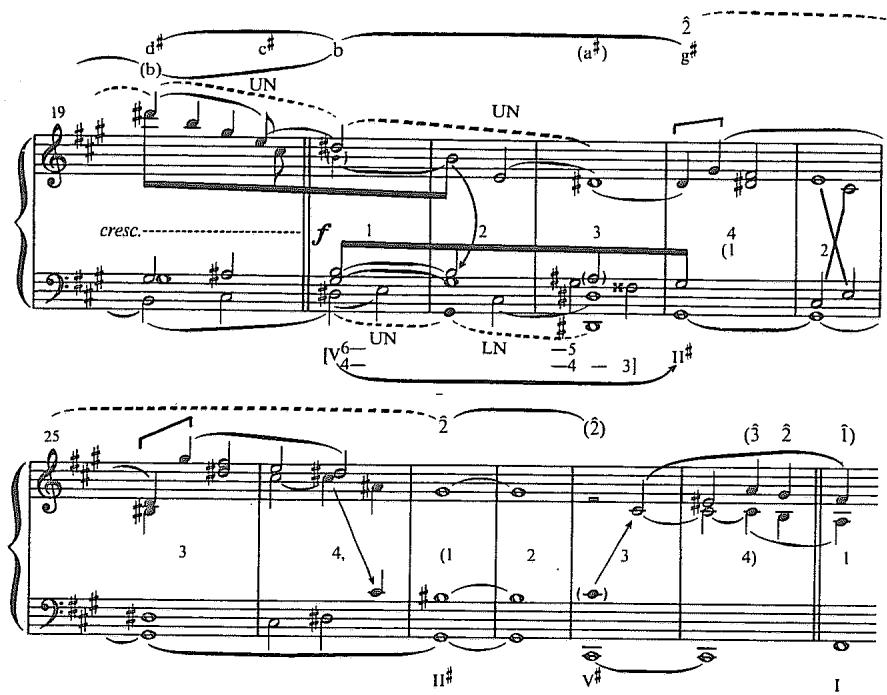
中文讲解
此为图表占位符:例 7.25 的续页,显示前景简化谱的后半部分。读者在此图中可继续看到 m. 7 起的句法轮廓、超小节双小节线,以及作者后续讨论的 g#^{2}、c#(m. 18)等关键音与和弦。
第11段(P0110)
原文复述
Further, 3̂ appears on a relatively weak beat, compared to m. 5, and as the goal of a crescendo. Surely the most effective performance of these first two measures would include a slight acceleration up to a^{1} (the 3̂) and a corresponding slackening of tempo for the descent itself. The pattern of accenting the third beat melodically, first adumbrated here, is continued in m. 3 and in every odd-numbered measure thereafter until m. 19.
中文讲解
本段继续对引子的 3̂ 进行表演性注解:与 m. 5 不同的是,引子中的 3̂ 出现在相对弱的节拍位置,并且是渐强(crescendo)的目标。作者据此给出演奏建议——m. 1–2 应有轻微的渐快(accelerando)推向 a^{1},然后在 3̂-2̂-1̂ 下行时配合相应的渐慢(rallentando)。重要的是,作者指出“第三拍旋律重音”这一模式在引子中已“被预示”,并将在 m. 3 及其后每一个奇数小节中持续直到 m. 19。这是一个贯穿全段的节律指纹,是后文“跨过终止向前推进”机制的核心来源。
补充说明
agógica(agogic accent)即通过延长某音时值来实现的“重音”,与力度重音(dynamic accent)相对;后文 P0113 出现该术语。
第12段(P0111)
原文复述
The syncopation in m. 1 also suggests a slight hurrying of the second beat. ^{36} (One would then relax a moment before starting a new acceleration for the ascent to a^{1}.) Having rushed here, one should do likewise—though probably more subtly—each time the octave leap or one of its derivatives is heard (see the square brackets in Example 7.25). This will help to effect the required overlapping of melodic segments and thus to keep the endless melody going.
中文讲解
本段回到 m. 1 的切分(syncopation),指出它暗示演奏者对第二拍稍作“抢拍”(hurrying),然后在冲向 a^{1} 之前稍作放松。第 36 号脚注此处未展开,但已暗示有相关支撑文献。作者建议:每当听到这一八度跳进或其变形(见例 7.25 中的方括号),都应如此抢拍——只是越往后越需更微妙。这种表演性“抢拍”是实现“乐段重叠”所必需的;一旦每个两小节乐段都带着“赶”的惯性衔接下去,旋律的“连绵向前”才能持续。
补充说明
本段在 m. 1 与 m. 3 的“平行”上进一步深化:m. 1 的切分 + 抢拍习惯为 m. 3 起的同型乐句预演了“赶向高八度”的律动惯性。
第13段(P0112)
原文复述
The first complete phrase extends from m. 3 to the downbeat of m. 7 and comprises the consonant establishment of 3̂ and its provisional descent to 1̂ (f#^{1}). The division of this phrase into two subphrases is made obvious by the two-measure repetition referred to above. But the double function of f#^{1} in m. 5—it is simultaneously the end of the first subphrase and initiator of the octave leap connecting the two—covers over the division with an overlap (see the arrow at this point in the example). The end of the entire phrase, though marked by an emphatic descent in triplet rhythm (the first triplet to appear in the melody), is subverted by both rhythmic and voice-leading means. The voice leading, as shown in Example 7.25, connects b^{1} in m. 6 to a^{1} in m. 7; this connection is confirmed by the left hand, which states the same tones an octave lower. Thus the descent to f#^{1} becomes merely a foreground event, superseded by the return of 3̂. Rhythmically, the use of the figure ♪♪ (m. 7) carries the motion forward in a manner reminiscent of mm. 3 and 5, where the same figure was used in the second half of the measure. (A half note f#^{1} in m. 7 would have ended the phrase more conventionally and more conclusively.)
中文讲解
本段是全节中最具体、也最技术化的乐句分析之一。第一完整乐句 m. 3–m. 7 第一拍,包括 3̂ 的协和确立与暂时下行至 1̂(f#^{1})。由于前述两小节重复,这个乐句被自然分为两个子句。但 m. 5 的 f#^{1} 同时扮演“双重角色”:它既是第一个子句的结束音,又是触发连接两个子句的八度跳进的“启动器”,由此实现“重叠”(overlap,例 7.25 中以箭头标示)。m. 7 的乐句终止本应宣告结束——它以三连音下行的强调方式收束(这也是旋律中首次出现三连音),但这一终止被两种手段颠覆:一是声部进行将 m. 6 的 b^{1} 连向 m. 7 的 a^{1},左手的同音八度叠加更强化了这一连接,结果“下行到 f#^{1}”只成前景事件,被 3̂ 的回归所取代;二是 m. 7 的 ♪♪ 节奏型让人联想起 m. 3、m. 5 后半的同型节奏,节奏上“推着走”。作者对比说,若 m. 7 写作 f#^{1} 的二分音符,终止会更传统、也更具终结感——而肖邦偏偏选择不停。
补充说明
“双功能”(double function)即一个音同时充当一个结构的结束与下一个结构的开始,是本节“重叠”机制的最典型体现。“appoggiatura”型的和声被声部进行保留下来。
第14段(P0113)
原文复述
Even here, where the octave leaps of mm. 1, 3, and 5 are absent, the pattern of motion toward an accented third beat helps to propel the melody beyond the cadence in m. 7. This pattern, which by now is well established, serves consistently to de-emphasize the downbeats of the odd-numbered bars. The accented third beats, on the other hand, are always dissonant; therefore the presence of a longer note there—these accents are mostly of the durational or “agogic” type—cannot stop the forward motion, since the dissonances demand resolution. Thus, although it is certainly clear that each new subphrase (two measures long) ends with the downbeat of an odd-numbered measure, the following subphrase always begins with the same note, leading quickly to a new accent (and a dissonance) on the third beat.
中文讲解
本段解释了为什么即使 m. 7 没有八度跳进,旋律仍能“滑过”终止。答案是:自 m. 1 起即已建立的“第三拍重音”模式现在承担起推动任务。它系统性地削弱(de-emphasize)了奇数小节第一拍作为“开始点”的意义,因为第三拍上的音总是“不协和”(dissonant),而这些不协和音又多为时值较长的“agogic 重音”(通过延长时值获得的重音)。不协和音的本能要求解决,于是无论该音有多长,它都不能真正“停住”旋律,而是要求立即向前运动。结论是:尽管听者仍能清楚识别“每个两小节子句在奇数小节第一拍结束”,但下一个子句总是从同一音开始,迅速地又引向一个第三拍的不协和重音——这正是“结束却被推走”的机制。
补充说明
agogic accent 已在 P0110 注释中说明;本段进一步说明“dissonance demands resolution”(不协和要求解决)是其推动力的根本声部进行原因。
第15段(P0114)
原文复述
The phrase motions up to m. 19 are readily apparent from Example 7.25. Measures 7–11 describe an ascending fifth from a^{1} to e^{2} and a harmonic motion from I to (minor) V. The goal tone, e^{2}, however, is omitted from m. 11, and g#^{2} appears in its place; e^{2} is nevertheless implied by the previous ascending motion, by parallelism with c#^{2} in m. 9, and as the resolution of the seventh f#^{2} in m. 10. The presence of g#^{2} serves to differentiate melodically between m. 11 and m. 13 (compare mm. 3 and 5); it also foreshadows the 2̂ (g#^{1}) that is the melodic goal of the entire section.
中文讲解
本段借例 7.25 概述从 m. 7 到 m. 19 的旋律走向。m. 7–11 描绘了从 a^{1} 上行纯五度到 e^{2} 的旋律轮廓,配合 I–(小)V 的和声运动;然而 m. 11 真正出现的并非预期的 e^{2},而是 g#^{2}。作者从三方面解释为何 e^{2} 仍然“隐含”:(1)前文已建立的上行运动方向;(2)m. 9 中 c#^{2} 的平行关系;(3)它正是 m. 10 七度音 f#^{2} 的解决目标。g#^{2} 的出现则有两个功能:它让 m. 11 与 m. 13 产生旋律差异(参照 m. 3 与 m. 5 的对照),同时预示了整段最终在 2̂(g#^{1})上的旋律目标。
补充说明
m. 10 的 f#^{2} 是 V(V 是 C#,其七音为 B=?此处作者意为相对 C# 的七度音)。需要核对原谱以确认 m. 10 的具体和声配置,作者把它定位为 m. 11 e^{2} 之前的七度音 f#^{2}。
第16段(P0115)
原文复述
The first important change in the pattern of repetitions is the bass passing tone c# in m. 18 (compare m. 10). This note leads to a I^{6} harmony of G# minor, in preparation for a stronger approach to V of G# and a decisive cadence in that key. The renewed approach to V causes an expansion of the four-bar hypermeasure to five bars, an expansion that is significantly clarified by Chopin’s dynamics (a crescendo through mm. 18–19, to a forte at the arrival of the cadential ^{6}_{4} in m. 20). Note, too, that there is no third-beat accent in m. 19; this break in the established rhythmic pattern also heralds the expansion.
中文讲解
本段标记了重复模式中的“第一个重要变化”:m. 18 的低音经过音 c#(与 m. 10 对照)。它导向 G# 小调的 I^{6} 和声,为更强有力地接近 V 并在该调上做出决定性终止做准备。重新接近 V 引发了四小节超小节向五小节的扩张,这种扩张由肖邦的力度标记(m. 18–19 渐强、m. 20 终止 6/4 和弦处到达 forte)显著“澄清”。作者还提醒:m. 19 缺失了此前一直持续的第三拍重音,这一节律模式的“断裂”也是扩张的征兆。换言之,m. 19 既是结构扩张的开始,也是 2 小节单位重叠模式暂时让位于终止过程的转折点。
补充说明
G# 小调是 F# 小调的 II 级调(ii),其属和弦 V 实际上是 C#(即 F# 小调本身的属),作者这里用 G# 调内的“接近 V”指向前方 m. 20 的终止。cadential 6/4(终止 6/4 和弦)是终止四六和弦,是属功能上的装饰性延长。
第17段(P0116)
原文复述
The cadence itself, beginning at m. 20, is sharply distinguished from all that has preceded it by the abruptly slower rhythm of its melody and by the two stentorian leaps of a fifth that announce its onset. The first of these fifths is an augmentation, an octave lower, of the falling fifth that was due in m. 19 (to correspond to m. 11); that fifth, D#-G#, is present in the eighth-note figuration of m. 19, but its unadorned statement is delayed until the following measure—thus further supporting our assumption of a one-measure expansion and a hypermetrical downbeat at m. 20.
中文讲解
本段集中描述从 m. 20 开始的终止本身如何与前文形成强烈对比:旋律节奏突然放慢,并以两声“五度跳进”(leaps of a fifth)宣告终止的开始。其中第一个五度是 m. 19 原本应有的下行五度(D#-G#,对应 m. 11 的位置)的一次“扩大与下移”——时值被加大、音高被下移八度。D#-G# 其实已经以八分音符装饰形式出现在 m. 19 中,但其纯粹的“陈述”被推迟到了 m. 20。这进一步支持了作者的推断:m. 19 实际上是一小节的扩张,真正的超小节强拍位置在 m. 20。
补充说明
stentorian 意为“洪亮的、威严的”,作者用它形容 m. 20 上两声五度跳进的强调作用。augmentation(扩大)指时值同比延长的处理方式,是与基本动机的“同源变形”。
第18段(P0117)
原文复述
The four cadential measures (20–23)—considered apart from the thematic reminiscence beginning in m. 23—form a hypermeasure (see the metrical numbering in Example 7.25). The 6/4 and 5/3 chords on the dominant appear, typically, on the relatively accented measures (the first and third); the final tonic appears, also typically, on the weak, fourth measure.
中文讲解
本段把 m. 20–23 四小节看成一个独立的超小节(hypermeasure),并展示其内部的和声节律安排:6/4 与 5/3 的属功能和弦(V 6/4 与 V 5/3)出现在相对重读的第 1 和第 3 小节上(典型的 2+2 细分),最终的 I 级主和弦则出现在弱的第 4 小节。这是 18 世纪以来终止式最标准的和声节律布局,但作者强调,这一分析需要“把 m. 23 起的主题回顾(thematic reminiscence)排除在外”——因为 m. 23 实际上承担双重角色:既是终止的第四小节,又是新超小节的开头(详见 P0118)。
补充说明
终止 6/4 后接终止 5/3 再接 I,是古典—浪漫时期终止式最常见的功能序列:V 6/4 → V 5/3 → I。
第19段(P0118)
原文复述
The thematic echoes in mm. 23–28 constitute a suffix to the opening section; the suffix extends the cadence just reached and gradually transforms the local G# minor tonic to G# major. Metrically, m. 23—originally a fourth measure—is reinterpreted as the first bar of a new (surface) hypermeasure. Two such hypermeasures are used to bring the cadence fully to rest and to move from the stabilized G# major triad—II# (V of V) in F# minor—to V. In the process, the two-measure introduction is restated (mm. 29–30) without further disturbing the four-bar hypermeter. All is then ready for a repetition of the entire opening section.
中文讲解
本段处理 m. 23–28 的“主题回声”——作者将其定义为开段的“后缀”(suffix),作用是延长刚刚到达的终止,并把局部的 G# 小调主音转化为 G# 大调。节拍上,m. 23 原本属于前一超小节的第 4 拍,现在被重新解释为一个新(表层)超小节的第 1 拍。两个这样的超小节共同把终止彻底安顿下来,并把稳定下来的 G# 大三和弦(它在 F# 小调中是 II#,即 V/V)导向 V。m. 29–30 的两小节引子重述保持四小节超小节不变,一切准备就绪,等待 m. 31 起的全段重复。这一处理典型地展示了肖邦“把段落最末小节重新解读为新段落开头”的重叠技巧。
补充说明
在 F# 小调中,II# = G#,G# 大三和弦确实充当 V/V(V of V)。m. 23 既是旧超小节第 4 拍,又是新超小节第 1 拍——这是后文 P0119“first-beat-as-ending and first-beat-as-beginning”冲突的局部实例。
第20段(P0119)
原文复述
The impression of endless melody in this section of the nocturne is only partly due to the unbroken legato articulation of its melodic line. That articulation is merely a symptom of “endlessness,” not its cause. The cause, in this case, is the consistent pattern of overlaps occurring every two measures from m. 3 to m. 19, as well as the extended cadential process thereafter. The overlaps—and thus the seamlessness of the melody—are in constant conflict with the urge of each two-measure segment to end undisturbed. Some of these endings—the one at m. 7, for example—are so definite that the continuation seems almost forced. In fact, if mm. 1 and 3 had not established a pattern of first-beat beginnings to compete with the more obvious and simultaneous pattern of second-beat beginnings, it is doubtful whether the attempt at melodic seamlessness would succeed at all. As it is, the tension between repetition/regularity/division and overlap/ambiguity/continuity is unrelieved until m. 27.
中文讲解
本段是本小节前半部分(P0100–P0118)所有分析的总结。作者首先纠正一个常见误解:开头的长连音线(unbroken legato)只是“无终”效果的症状,不是原因。真正的原因是:从 m. 3 到 m. 19 每两小节一次的重叠模式,加上其后被大大延长的终止过程。这些重叠使旋律“无缝”,但与每个两小节段自身想“平静结束”的倾向发生“持续冲突”——例如 m. 7 的终止是那么明确,旋律继续前进时听起来几乎是“被推着走”。作者进一步指出:m. 1 与 m. 3 所建立的“第一拍起句”模式必须与同时存在的“第二拍起句”模式竞争,才使“无缝”尝试最终获得成功。直到 m. 27 之前,“重复/规律/分割”与“重叠/模糊/连续”之间的张力一刻都未缓解。
补充说明
本段是连接“局部句法分析”与“后文中段与再现”论述的关键过渡:它把前述“每两小节重叠”的微观机制上升为全曲“无终”的根本原因,为 P0120、P0121 的全局性分析提供依据。
第21段(P0120)
原文复述
The sarabande-like middle section of the nocturne, which is in Db major (the enharmonically respelled dominant of F^{1}), offers temporary relief from the tensions of the opening section. But when that section is recapitulated, the conflicts are intensified still further. The thematic return occurs at m. 101, in the middle of an ascending bass progression moving from V of V (spelled as Ab, m. 99) to V (m. 102); the tonic arrives only at m. 103, in the middle of the phrase. Thus even a major sectional division is evaded, reestablishing the endless melody and adumbrating further rhythmic conflict. The frustration of non-ending is most dramatic at m. 119, where the final cadence—announced by a two-measure trill on g^{1} (2̂) over the dominant—is interrupted by an eight-measure parenthesis. The cadence finally occurs at m. 127; it is extended by a suffix that is essentially a transposition of mm. 23–27.
中文讲解
本段把目光从开段转向中段与再现。中段是“萨拉班德风格”(sarabande-like),调性为 D♭ 大调——在 F#(F#^{1},即本曲主音 F#)的属音 C# 的等音写法。这一段为开段累积的张力提供了暂时缓解。然而再现时冲突反而更激烈:主题在 m. 101 重新出现,但恰好处在一条上行低音进行的中间——从 V/V(写成 A♭,m. 99)到 V(m. 102),而真正的 I 在 m. 103 才到来,且仍处于乐句当中。这就连“主要段落划分”都被规避了,无终旋律再次建立。作者特别指出 m. 119 是“非终之挫败”最戏剧化的时刻:原本宣告终止的两小节 g^{1}(2̂)颤音被一个 8 小节的“插入”(parenthesis)打断;终止最终于 m. 127 才发生,并被一个本质上是 m. 23–27 移调的后缀延长。
补充说明
F#^{1} 指 F# 调中的主音 F#,D♭ 大调作为 F#(即 C#)属音的等音写法——C# 与 D♭ 是同音异名。F# 小调中 g#^{1} 为 2̂。V/V 在本调写作 C# 和弦,文中拼作 A♭ 是因为此处处于中段的 D♭ 大调中,A♭ 才是 D♭ 的 V。
第22段(P0121)
原文复述
Resolution of the conflict in the phrase structure—the conflict between first-beat-as-ending and first-beat-as-beginning—comes momentarily at m. 131, the end of the cadential suffix and the beginning of the coda (Example 7.26). But immediately thereafter the same conflict emerges again: the one-measure units that begin with syncopated trills (see the brackets in the example) compete against Chopin’s articulation, which stresses the first beats as beginnings of slurs. The eighth rests at the end of each measure support the first-beat stresses, as does the alternation of I^{#} and V^{7} over the tonic pedal. At the end (m. 137) both stresses remain: the high and low notes fall on the first beat, the accented chord on the weaker beat (now the third beat instead of the second). ^{37} Thus final resolution is never attained; the conflict responsible for the endless melody is itself endless.
中文讲解
本段作为全节收束。句法结构中“第一拍作为结束”与“第一拍作为开始”的冲突,在 m. 131(终止后缀之末、coda 开头,例 7.26)暂时得到解决。但紧接着,相同的冲突再次浮现:一方面,每小节以切分颤音(syncopated trills)开头的“一小节单位”(参见例 7.26 的方括号)试图与肖邦的连音线“第一拍起句”重音相竞争;另一方面,每小节末尾的八分休止以及持续主音上的 I# 与 V^{7} 交替都强化了“第一拍重音”。结尾(m. 137)处两种重音同时并存:高音与低音落在第一拍,强力和弦落在较弱的第三拍(不再是第二拍),第 37 号脚注此处未展开但已暗示相关文献支撑。最终的结论是:“终”从未真正被解决——造成无终旋律的冲突本身也是无终的。作者用这一悖论式的收束把整节论述升华为对肖邦 Op. 48 No. 2 美学本质的宣言。
补充说明
coda(尾声)通常是对终止的补充,Op. 48 No. 2 的尾声把前述“重叠 / 分割”冲突推到极致。I# 是主音上方的增一和弦,V^{7} 是属七和弦,在持续主音(tonic pedal)上交替是尾声常见的和声布局。
脚注 / 边栏 / 图表 / 附加信息(如有)
本节包含两处脚注标记:P0103 中上标 35 和 P0111 中上标 36,以及 P0121 中上标 37。这些脚注的编号暗示它们对应参考文献或前文相关讨论,但在当前输入中未展开具体内容,因此讲解中无法引用其细节。P0105、P0106、P0107、P0109 为内嵌图像占位符(例 7.24 与例 7.25),需查看原书图版才能获得乐谱细节。例 7.26 在 P0121 中被提及但本节输入未包含其占位符段落。
💡 本节核心要点
- 肖邦通过一条贯通全段的长连音线来暗示“旋律统一”,但单纯连音线不等于无终旋律;Op. 48 No. 2(m. 3–25 及 m. 31–53)才是真正实现无终效果的范例。
- 本节核心悖论:充满重复的旋律如何成为“无终”?答案是“重复的层级越高(如八小节模进包裹两小节单位),听感越凸显短小单位,但与上层长连音线/重叠形成矛盾,矛盾本身即张力。
- m. 1–2 引子通过 C# 空五度双八度为 m. 3 的旋律型预设了“八度跳进”模式;引子中的 3̂-2̂-1̂ 下行以倚音起首,从而获得“非现实”色彩,并预示 m. 5–7 同型下行。
- m. 3 起的每个两小节子句通过“第三拍不协和重音 + 八度跳进抢拍”实现彼此重叠,使得每个子句的结束都被“推”过边界;f#^{1} 在 m. 5 的“双重功能”是这一重叠的典型例证。
- m. 19 的扩张和 m. 20 的终止 6/4–5/3–I 是 4+2 结构的 2+2 终止,但 m. 23 同时被重新解释为新超小节的开头,并借助 m. 23–28 的后缀把 G# 小调主音转化为 G# 大调,引向全段重复。
- 中段(D♭ 大调,F# 属音 C# 的等音写法)只是暂时缓解,再现时冲突更激化:m. 101 的主题回归嵌在一条低音进行的中间,连主要段落划分都被规避;m. 119 的终止被 8 小节插入打断,终止最终于 m. 127 才出现。
- 全曲的最终矛盾在 m. 137 仍以并存方式呈现:连音线的“第一拍重音” vs. 切分颤音的“第一拍起句”——造成无终旋律的冲突本身也是无终的。
🔑 关键术语
- endless melody:“无终旋律”。本节核心论题:一种通过取消或超越乐句/子句之间的清晰边界,使听感上难以找到“真正结束点”的旋律进行。其实现依赖重叠、跨边界连接、节律持续推动等机制,而非单纯的长连音线。
- phrase overlap:“乐句重叠”。前一乐句的结束音同时充当后一乐句的起始音,从而取消两个结构单元之间的清晰分界。Op. 48 No. 2 中每隔两小节一次(m. 3 至 m. 19)的重叠是实现无终旋律的关键机制。
- hypermeasure:“超小节”。由若干基本小节组成的高一节拍单位。本节中常规为 4 小节(按 2+2 细分),但在 m. 18–19 处扩张为 5 小节;在 m. 23 处被重新解释为新超小节的开头。
- foreground reduction:“前景简化”。申克分析术语,指对表层织体做最小限度剥离以揭示主要声部进行,本节例 7.25 即为此类简化谱,是后续具体句法分析的视觉依据。
- appoggiatura:“倚音”。本节特指引子中下行 3̂-2̂-1̂ 的起始音 3̂/a^{1},它相对 V 和声构成不协和,需要解决,赋予引子“梦幻、非现实”的色彩。
- subphrase:“子句”。乐句内部更小的结构单位。Op. 48 No. 2 第一乐句(m. 3–7 第一拍)由两个两小节子句组成,m. 5 的 f#^{1} 通过“双重功能”使两子句彼此重叠。
- suffix:“后缀”。m. 23–28 主题回声的功能定义:把已到达的终止延长,并把局部 G# 小调主音转化为 G# 大调,从而为全段重复做准备。
- recapitulation:“再现”。本节中指 m. 101 主题在 m. 31 重复后再次出现,但位置被嵌入低音进行的中间而非段落开端,从而进一步强化无终张力。
- coda:“尾声”。自 m. 131 起;尾声把“第一拍作为结束 vs. 第一拍作为开始”的冲突推到极致,使全曲冲突本身也成无终。
7.11 [描述性拆分] The Late Nocturne Op. 62, No. 1 and Conclusion of Chapter 7
第1段(P0122)
原文复述
I have devoted so much space to Op. 48, No. 2, because it is such a good example
中文讲解
本段是一句未完成句的起始。作者以第一人称回顾自己在前文(即本章早前部分)围绕肖邦《夜曲》Op. 48 No. 2 花费了大量篇幅,并交代原因——它是一个极佳的(实例)。该句以逗号结尾,从句法上预告后面将紧跟一个解释性的同位结构,以说明它为什么是"好例子”。完整句意需结合 P0124 的开头"of Chopin’s endless melody, and yet it is relatively simple"才能读出:(它是)肖邦’无尽旋律’的一个优秀范例,而且又相对简单。功能上,这句话把 Op. 48 No. 2 定位为’过渡性范例’——既为前文已做的详细分析做一句话的收束,又为下一段引入更复杂的 Op. 62 做铺垫。
补充说明
在原文版面中,本句被夹在图 Example 7.26 之前,其后又出现 P0123 的图像占位符,物理排版上造成了 P0122→P0123→P0124 的断裂,但语法上三者构成一个完整句。
第2段(P0123)
原文复述
[Figure placeholder: Example 7.26. Chopin’s Op. 48, No. 2, end (mm. 127–37)] — The image content is omitted; the caption and position in the text are preserved.
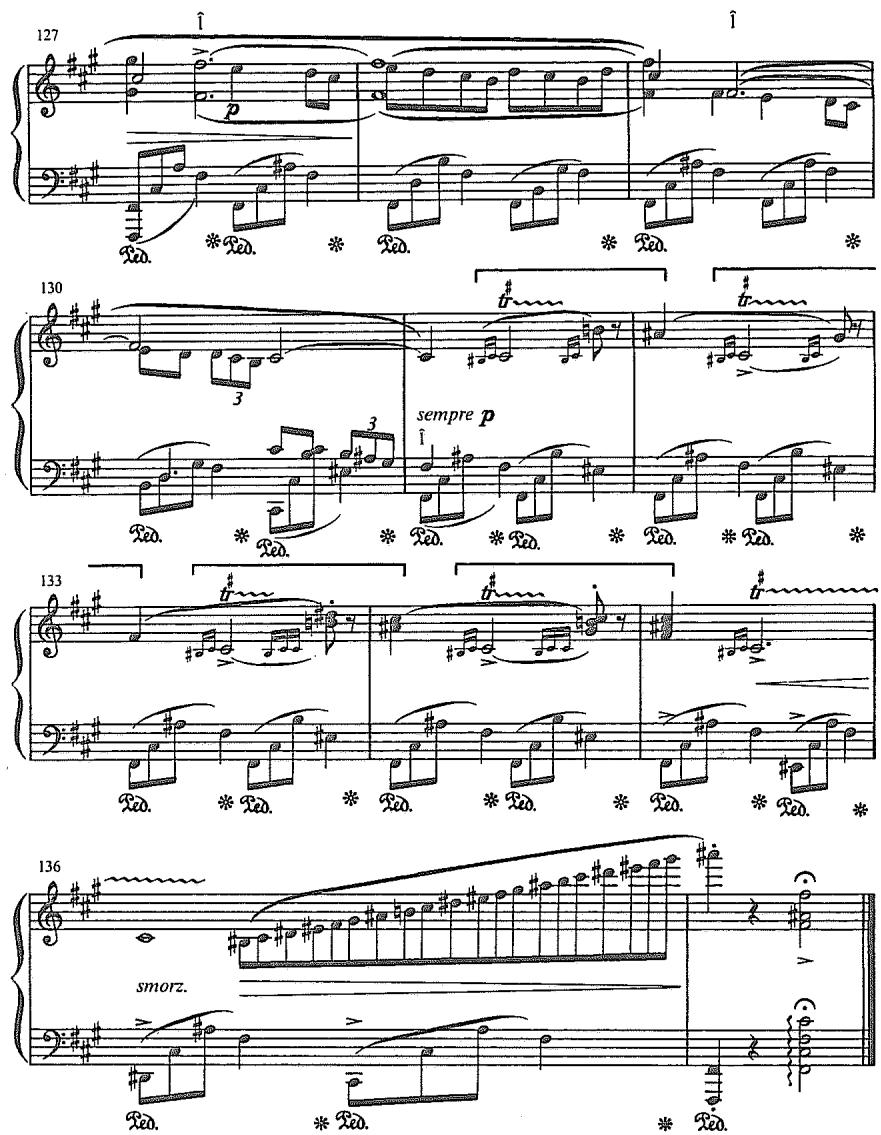
中文讲解
本段并非正文段落,而是图例占位符。图题是"Example 7.26. Chopin’s Op. 48, No. 2, end (mm. 127–37)",对应肖邦 Op. 48 No. 2 结尾处第 127 至 137 小节的乐谱示例。它紧接在 P0122 句子中间和 P0124 长段之间,承担视觉衔接作用:把前文’花费大量篇幅讨论’的内容落到具体谱面,再过渡到 P0124 对’无尽旋律’与’晚期作品’的评述。由于输入中只有图题而无原图,具体的旋律轮廓、和声配置、调性安排均不可见,讲解时不应推测图题之外的细节。
补充说明
该图与下文 Example 7.27、7.28 一同构成’从相对简单的范例过渡到晚期复杂作品’的视觉链;图题小节范围 127–37 提示此处是 Op. 48 No. 2 整体讨论的收束区域。
第3段(P0124)
原文复述
of Chopin’s endless melody, and yet it is relatively simple. It is not a very late work, of course—it is earlier than the A Minor Mazurka. The last two nocturnes, Op. 62 (1846), are considerably more complex—especially the first one in B Major, which is perhaps Chopin’s most breathtaking venture into endless melody. A bare exposition of the opening period will have to suffice for this great nocturne (Example 7.27), along with a very tentative reconstruction of an eight-measure basic phrase (Example 7.28) as a model for the period. It would require too much additional space to explain fully the derivation of Example 7.28, but the reader can test this hypothesis against his own intuitions. However, I would point out the equivocal nature of the strong beats in Chopin’s 4/4 meter (the metrical shifts are reminiscent of 18th-century practice); I would also note that I interpret the cadence in m. 10 as a contraction or compression of a more leisurely close. The repeated F#s sound like obvious expansions, given the motivic pattern. And there is clearly a phrase overlap in m. 7. Beyond this lie several mysteries, including the precise coordination of melody and harmony in the basic phrase (the harmony is merely sketched in Example 7.28). But these mysteries lie very close to the heart of Chopin’s late style, in which the rhythmic practices of a lifetime (however brief the lifetime!) reach a peak of complexity and refinement.
中文讲解
本段承接 P0122 那个未完成的句子,明确指出 Op. 48 No. 2 的分析价值:它既是肖邦’无尽旋律’的优良范本,又相对简单。接着作者插入一个重要的’作品年代校准’——Op. 48 No. 2 并不是晚期作品,它比 A 小调马祖卡更早;这一点是必要的,否则读者容易把前文那首误当作肖邦最成熟的实验,而错过 Op. 62 的意义。随即作者把视线推向真正的’晚期’:Op. 62(1846)的两首夜曲复杂得多,尤其是第一首 B 大调,被作者称为’也许是肖邦进入无尽旋律的最令人惊叹的一次冒险’,这是本段的核心主张。
然而作者的论证野心与版面之间存在张力。对这首’伟大夜曲’,他只能提供一个’开场乐段(opening period)的初步陈述’(Example 7.27),以及一个’非常试探性的’八小节基本乐句重建(Example 7.28)作为该乐段的模型。他坦白承认要完整解释 Example 7.28 的推导需要太多篇幅,因此邀请读者以自己的直觉去检验假说。这种坦率本身是论证的一部分:它表明晚期作品的复杂性已无法被简短文字分析完全涵盖。
随后作者点出几个具体技术点以增加可信度:(1) 在 4/4 拍中强拍是含糊的(equivocal),这种节拍移位让人联想到 18 世纪的做法;(2) 第 10 小节的终止被解释为对’更悠闲的收束’的’压缩’(contraction/compression);(3) 重复的 F# 鉴于动机模式明显是’展开’(expansions);(4) 第 7 小节存在明确的’乐句重叠’(phrase overlap)。这些是分析者在不展开完整论证的情况下能向读者’出示’的最有力证据。
段末他承认仍存在’几重未解之谜’,包括基本乐句中旋律与和声的精确配合(Example 7.28 中和声只是’略示’),但把这些谜团与’肖邦晚期风格的核心’联系起来:肖邦毕生的节奏实践(括号中’however brief the lifetime!‘既是修辞感叹,也提醒肖邦只活了 39 岁、‘一生的节奏实践’实际只有约二十年的作曲生涯)在此达到了复杂与精炼的顶峰。本段在小节中的功能是:完成从 Op. 48 No. 2 的’范例’分析向 Op. 62 No. 1 的’巅峰’展示的过渡,并以坦承分析限度为后文对晚期风格复杂性的讨论埋下伏笔。
补充说明
本段中提及的’A Minor Mazurka’原文未给出具体作品号,应按本节语境理解为某首 A 小调马祖卡(最可能指 Op. 63 No. 3,1846),但讲解时不应擅自补充具体编号。‘reminiscent of 18th-century practice’指古典早期那种强拍弱化、句法随旋律流动的节拍处理传统。
第4段(P0125)
原文复述
[Figure placeholder: Example 7.27. Chopin: Nocturne in B Major, Op. 62, No. 1 (beginning)] — The image content is omitted; the caption and position in the text are preserved.
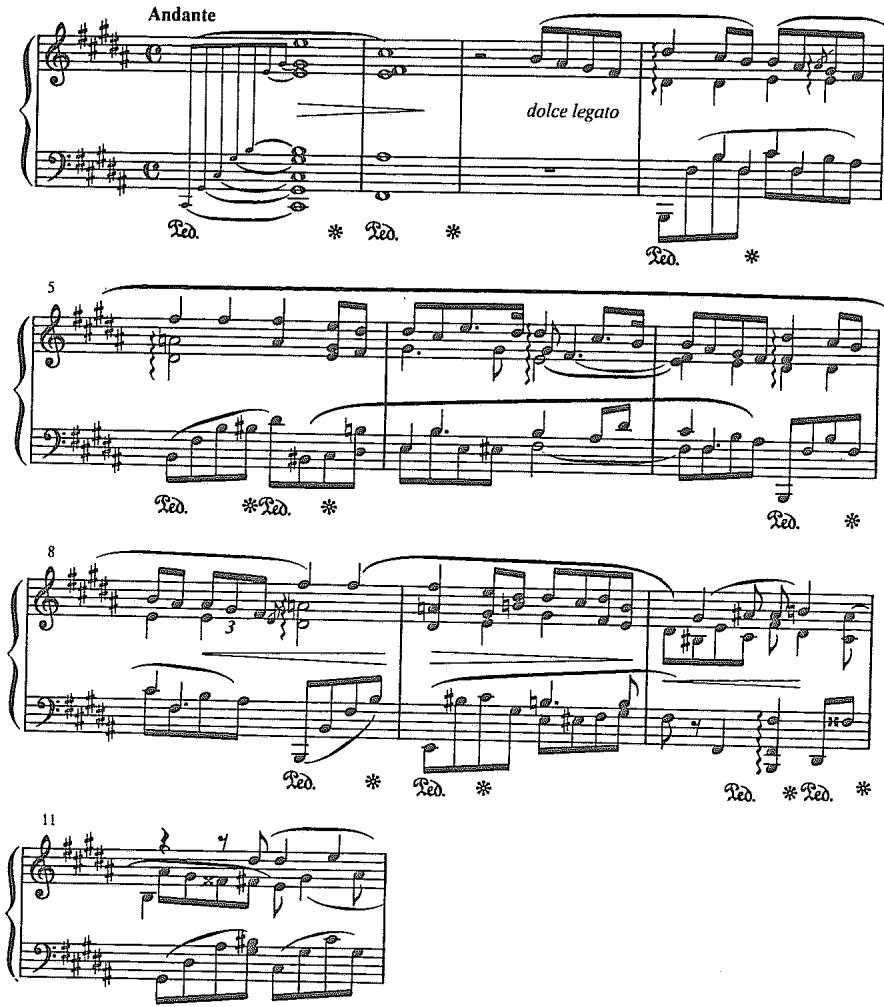
中文讲解
本段同样为图例占位符。图题为"Example 7.27. Chopin: Nocturne in B Major, Op. 62, No. 1 (beginning)",即肖邦《B 大调夜曲》Op. 62 No. 1 开头的乐谱示例。该图与 P0124 中的论述直接对应——P0124 提到’一个开场乐段的初步陈述将不得不凑合应付这首伟大夜曲(Example 7.27)’。也就是说,Example 7.27 在 P0124 论证中的作用是替代完整分析、作为’开场乐段’的最低限度的视觉参照,让读者至少能看到作者所指的素材轮廓。由于图片内容省略,具体音型、和声与调性布局不可见,讲解不应虚构谱面细节。
补充说明
原图范围仅标注为’beginning’(开头),未指定具体小节;Example 7.28 才是对应的八小节基本乐句重建,二者需配合阅读才能完整把握 P0124 的论证。
第5段(P0126)
原文复述
In his nocturnes, mazurkas, and études, Chopin adopted the formal and rhythmic conventions of his time, and with them the Great Nineteenth-Century Rhythm Problem. He seems to have conceived the latter as a problem of continuity above all, and he set about solving it by finding means (many of them traditional) to enhance melodic continuity. Those means became increasingly elaborate, although a marvelous suppleness of rhythm was present from the first. By 1845 the qualitative accumulation of rhythmic devices produced a qualitative change, a change that points forward to the dissolution—in the music of Wagner and later composers—of those same conventions that form the foundation of Chopin’s own rhythmic technique. We will follow up that dissolution in the next (and last) chapter.
中文讲解
本段是第七章的收束段,承担全章总结与下一章导引的双重功能。
首先作者给出本章的总论题:肖邦在其夜曲、马祖卡与练习曲中,采用了同时代的’形式与节奏惯例’,并随之承担了’十九世纪大节奏问题’(the Great Nineteenth-Century Rhythm Problem)。这一’大节奏问题’在本章反复出现,它指在古典调性体系内,如何处理旋律、和声与节拍之间日益增长的不对称与复杂性。
接着作者以高度凝练的方式概括肖邦的回应:肖邦主要把它视为一个’连续性’(continuity)问题,并寻找各种手段(其中许多是传统的)来加强旋律的连续性。这把本章前面所有的具体技术讨论——超拍、句法重叠、动机贯穿、终止压缩与扩展——都收束到了一个统一的审美目标之下。
随后是关键的转折:作者承认这些手段’从一开始便已展现出令人惊叹的节奏柔韧性’,但同时强调它们’日益精细’;到 1845 年前后,‘节奏手段的量变引发了质变’(a qualitative accumulation of rhythmic devices produced a qualitative change)。这是一个哲学性命题:不是新手段的引入,而是既有手段的密集积累,把肖邦的实践推到了一个临界点。
更重要的是这一质变的方向:它’指向’(points forward to)这些惯例自身的’瓦解’(dissolution)——而这种瓦解将在瓦格纳及更晚的作曲家手中实现。值得玩味的是,被瓦解的’惯例’恰恰构成了肖邦自身节奏技巧的基础。换言之,肖邦凭这些惯例达到了极致,而极致本身又把这些惯例推到了必须破裂的边缘。这是典型的’内在超越’逻辑:突破来自内部积累的极限。
最后一句’我们将在下一章(也是最后一章)继续追踪那种瓦解’是全章的收束,也是第八章的导引。本段的功能至此完成:既回望肖邦的成就,又把他放到更宽的十九世纪节奏史中,并把读者引向下一章对瓦格纳及之后的讨论。
补充说明
’the Great Nineteenth-Century Rhythm Problem’作为本卷的核心命题,本段首次以定冠词方式出现于本章总结中,提示这是贯穿全章的主旨而非局部话题。‘qualitative accumulation… qualitative change’是黑格尔式量变质变表述的英文化表达,呼应了作者对’晚期风格’的辩证理解。
💡 本节核心要点
🔑 关键术语
- endless melody:无尽旋律。在本节语境中指肖邦通过句法重叠、动机贯穿、超拍、终止压缩与扩展等技术,使旋律线在表面不因句读与和声终止而中断,从而形成持续流动的音乐陈述。
- the Great Nineteenth-Century Rhythm Problem:十九世纪大节奏问题。本卷对十九世纪音乐中旋律、和声与节拍之间日益复杂的不对称关系的统称;作者认为肖邦主要把它当作’连续性’问题处理。
- opening period:开场乐段。指一首作品最开始、用于确立调性、主题与基本句法的若干小节构成的整体段落;对 Op. 62 No. 1 而言,其开场乐段正是 Example 7.27 与 7.28 所要呈现的对象。
- phrase overlap:乐句重叠。指前一句尚未结束、后一句已经开始的句法安排;本节中作者指出 Op. 62 No. 1 第 7 小节存在这种重叠,是其’无尽旋律’的一个具体技术证据。
- qualitative accumulation / qualitative change:量变与质变。作者对肖邦晚期风格形成的哲学式描述:既有节奏手段的密集积累在 1845 年前后引发了音乐语言的质变,而这一质变又指向惯例自身的瓦解。
8.1 [描述性拆分] Introduction: Wagner, Brahms, and the Rhythm Problem
第1段(P0127)
原文复述
Chapter 8 Wagner: From Opera to Music Drama
中文讲解
这是第八章的章题。它一次性地点明本章的核心研究对象(瓦格纳)与论题走向(从歌剧 Opera 推进到乐剧 Music Drama),也预告了本章将以这一概念转换作为切口,处理瓦格纳以舞台剧为载体的综合性艺术创造。
第2段(P0128)
原文复述
Up to the present point in this book, the investigation of musical style has tracked almost exclusively the path of instrumental music. The extra problems that setting a text inevitably creates for musical rhythm have made this restriction appear logical, if not unavoidable. All issues relating to poetic form and expression—whether technical ones such as poetic meter, rhyme, and stanzaic structure, or expressive ones such as symbolism and metaphor, not to mention the entire complex of interrelations between poetic and musical structures—have lain outside the scope of our inquiry.
中文讲解
本段为本章转入瓦格纳这一选择预先做方法论上的辩护:此前各章几乎只处理器乐,是因为给文字谱曲不可避免地为"音乐节奏"带来额外负担——诗体技术层面(格律、押韵、分节)与表达层面(象征、隐喻),以及诗与音乐结构之间整套的互文关联——这些都超出了此前研究的能力范围。因此,要进入瓦格纳,就必须在方法上正面处理文字与节奏之间的张力。这层铺垫也解释了为何之前各章止步于器乐。
补充说明
本段虽未出现"Rhythm Problem"这一术语,但段中所说"为文字谱曲给音乐节奏带来的额外问题"实质上预告了P0134中所明确提到的 Chapters 6 和 7 所讨论的 Rhythm Problem。
第3段(P0129)
原文复述
Why, then, give attention to Wagner, whose major works are without exception theatrical? (Even the Siegfried Idyll, often described as Wagner’s sole instrumental masterpiece, cannot be understood entirely apart from the stage work from which it takes its name and a large share of its thematic material.) If one wants, for historical purposes, to study a single composer from the second half of the 19th century, why not Brahms or Bruckner? Why the “impure art” (the phrase is Debussy’s) of Richard Wagner?
中文讲解
本段通过一连串反问呈示作者的方法论选择:既然前面限定在器乐,为什么偏偏选瓦格纳(其主要作品全是舞台作品)?他先举一例作为旁证——齐格弗里德牧歌虽常被描述为瓦格纳"唯一的器乐杰作",但它无法脱离同名的舞台剧而被完整理解(其名称与大量主题素材均取自舞台剧)。紧接着把备选空间抛出:19 世纪后半叶还有勃拉姆斯、布鲁克纳可以研究,并借德彪西所谓"不纯粹的艺术"暗示传统音乐家对瓦格纳综合性的偏见,从而把"为什么是瓦格纳"塑造成一个需要正面回答的问题,而非理所当然的事实。
补充说明
本段以 Siegfried Idyll 作为反例——它虽被描述为瓦格纳"唯一的器乐杰作",但其名称与大量主题素材均源自同名舞台剧,因此无法脱离舞台剧而被完整理解;这从反面说明即便在器乐领域,瓦格纳也无法被纯器乐化的视角所穷尽。
第4段(P0130)
原文复述
A study of Brahms’s or Bruckner’s phrase rhythm would be fascinating, and a comparative study of the two possibly more so. However, Bruckner is a far lesser composer than either Brahms or Wagner, and phrase rhythm is an area in which he is particularly weak.
中文讲解
本段开始排除布鲁克纳。研究勃拉姆斯或布鲁克纳的乐句节奏本身就引人入胜,对比性研究可能更引人入胜——但作者立刻把布鲁克纳从名单中剔除:他在整体作曲成就上远低于勃拉姆斯和瓦格纳,并且在乐句节奏这一维度上尤其薄弱。在结构上,这是"为什么不是别的作曲家"这一问题的第一层清理:布鲁克纳虽然在场,但因水平不足而自动出局。
第5段(P0131)
原文复述
With Brahms, the situation is more complex. Brahms’s rhythm is supremely individual, even idiosyncratic, and not only because of his well-known penchant for hemiola. As is the case with many other aspects of his art, his rhythmic practice reaches back to older models without ever being a simple copy of any one of them. Baroque and early Classic practices mingle with Schubertian and Beethovenian phrase rhythms; there are even occasional echoes of the 16th century. Simple, folk-like tunes appear alongside, or are pierced through by, immensely powerful and far-reaching rhythmic displacements. The sheer eclecticism of Brahms’s style reflects an intensity of historical consciousness unique among the major composers before the 20th century. The inheritors of this consciousness—though not, of course, of the style itself—are Schoenberg and Stravinsky.¹
中文讲解
本段描述勃拉姆斯的节奏状况,刻意表明他的可研究性远高于布鲁克纳,但同时也勾勒出他与 Rhythm Problem 的关系。勃拉姆斯的节奏是"极度个人化乃至古怪"的——这不仅是他的"hemiola 癖好"所使然,更因为他的节奏实践回溯到历代模型(巴洛克、早期古典、舒伯特式与贝多芬式乐句节奏,乃至偶尔回响至 16 世纪),却又不是任何一种的简单复刻;简单的、民歌式的旋律与巨大而影响深远的节奏错位并置或互相渗透。这种"兼收并蓄"折射出他独特的历史意识——一种在 20 世纪以前主要作曲家中绝无仅有的强度。作者紧接着指出,这种"历史意识"(而不是风格本身)的真正继承者是勋伯格与斯特拉文斯基。功能上,本段一方面为勃拉姆斯的研究价值做出肯定,另一方面也种下了下一段"为什么瓦格纳更适于作为全书终章"的伏笔。
补充说明
本段末尾的上标"¹"指向一个脚注,但该脚注的具体正文内容并未包含在所提供的 source_paragraphs 之中,故其内容无法在本节内核实;它所附着的论断——即勃拉姆斯"历史意识"的继承者为勋伯格与斯特拉文斯基——则属于本节主体文本。
第6段(P0132)
原文复述
In a sense, then, Brahms could have served as a logical culmination of the stylistic investigations. But Wagner, despite the difficulties of dealing with vocal music, ultimately seems better suited to occupy the final chapter of the book. The choice rests on Wagner’s crucial historical position. That position is only partly a matter of his direct influence on later composers, enormous though that influence was. The decisive issue is his impact on the language of tonality: the breakdown of classical phrase rhythm in his music dramas parallels the breakdown of classical tonality—the two are intimately related—and equally foreshadows the end of the tonal era.
中文讲解
本段是全书论题焦点的转折。一方面承认勃拉姆斯本来"在某种意义上"可以成为风格史研究的逻辑终点,另一方面却把瓦格纳推上全书终章的位置。理由落在"历史地位"上:瓦格纳对后世作曲家的直接影响固然巨大,但那只是其历史地位的一小部分;真正决定性的,是他冲击了调性语言本身——在他的乐剧中,“古典乐句节奏的瓦解"与"古典调性的瓦解"同步发生并彼此紧密关联,共同预示了调性时代的终结。这里作者第一次明确地把全书的核心命题具象化:节奏的危机与调性的危机在瓦格纳身上汇流,因此研究瓦格纳的节奏问题,就等于研究调性时代终结的逻辑。
第7段(P0133)
原文复述
740
中文讲解
这是该章起始处的页码"740”,仅属版面标识,本身不构成论题主体的内容。
第8段(P0134)
原文复述
Most of all, however, the choice of Wagner is tied to the Rhythm Problem described in Chapters 6 and 7. Brahms, like Mendelssohn before him, was too much of a classicist to be much burdened by the Rhythm Problem, at least after his earliest period. His rhythm grew more sophisticated and more concentrated as he gained experience, but even in his immature works it is never as lifeless and four-square as many passages in Wagner’s early operas. Of all the major 19th-century composers, Wagner suffered most from the Rhythm Problem; accordingly, he took the most radical steps to free himself from it. The drama of Wagner’s development is as compelling as any of Wagner’s own dramas.
中文讲解
本段以 Rhythm Problem(节奏问题)作为核心,把全章的焦点最终收束到瓦格纳身上。该问题在前面的 Chapters 6 和 7 中已有系统论述。勃拉姆斯(以及更早的门德尔松)太偏古典主义,并不真正为 Rhythm Problem 所困——他的节奏随经验增长而愈趋精致集中,但即便在他不成熟的作品中,也从未像瓦格纳早期歌剧中许多段落那样"呆板而规整"(lifeless and four-square)。在所有 19 世纪主要作曲家中,瓦格纳受 Rhythm Problem 困扰最深,因此他采取了最为激进的解决步骤;他个人发展的戏剧性,本身就足以与他本人任何一部戏剧相媲美。这是本书选择瓦格纳作为终章研究对象的最终、也是最具决定性的理由。
补充说明
“four-square” 在本段中被用于形容瓦格纳早期歌剧中部分段落的节奏特征:规整、死板、缺乏推进力,正是 Rhythm Problem 所限制出的典型状态;它既限定了早期瓦格纳的局限,也反衬出后来他走向"最激进步骤"的历史必要性。
脚注 / 边栏 / 图表 / 附加信息(如有)
本节包含的非正文附加材料:P0131 末尾出现上标"¹"所附着的脚注,但该脚注的正文内容并未包含在所提供的 source_paragraphs 之中,故其具体内容无法在本节内定位;它所附着的论断(关于勃拉姆斯"历史意识"的继承者为勋伯格与斯特拉文斯基)则来自正文 P0131 本身。除此之外,本节无其他图表或边栏附加材料。
💡 本节核心要点
- 此前各章的研究范围被限定在器乐,原因在于给文字谱曲不可避免地为音乐节奏带来额外问题——诗体的技术层面(格律、押韵、分节)与表达层面(象征、隐喻),以及诗与音乐结构之间的整套互文关联——都超出了此前研究的能力范围。
- 在 19 世纪后半叶的备选作曲家中,布鲁克纳因整体作曲地位远低于勃拉姆斯和瓦格纳,且在乐句节奏这一维度上尤其薄弱,而被首先排除。
- 勃拉姆斯的节奏极度个人化乃至古怪:他回溯巴洛克、早期古典、舒伯特式与贝多芬式乐句节奏乃至 16 世纪素材,却并非任何模型的简单复刻;这种"兼收并蓄"折射出 20 世纪以前主要作曲家中绝无仅有的历史意识强度——这种意识(而非风格本身)的继承者为勋伯格与斯特拉文斯基。
- 瓦格纳被选中作为本书终章的核心对象,关键在于其历史位置:他的乐剧中"古典乐句节奏的瓦解"与"古典调性的瓦解"密切关联、相伴而生,并共同预示了调性时代的终结;这是全书论证焦点的转折。
- 瓦格纳所面对的核心症结是 Chapters 6 和 7 所讨论的 Rhythm Problem,在所有主要 19 世纪作曲家中他受困最深,因此也采取了最为激进的解决步骤;他个人发展的戏剧性堪比其任何一部戏剧。
- 本章章题"From Opera to Music Drama"宣告了研究对象的体裁转向:研究的对象不仅是个别作曲家,更包括由歌剧到乐剧的体裁演化本身。
🔑 关键术语
- Rhythm Problem:“节奏问题”。在 P0134 中明确指向 Chapters 6 和 7 所论述的对象,指音乐节奏(尤其在声乐/古典句法框架下)所受到的种种限制与僵化;在所有主要 19 世纪作曲家中,瓦格纳受困最深,因而也采取了最激进的解决。这一术语在本节内被视为讨论瓦格纳之所以重要的核心切口。
- Music Drama(乐剧):瓦格纳所代表的核心体裁概念,集中体现在本章章题"From Opera to Music Drama"之中;从歌剧向乐剧的方向性演化,是本章节题与论题的关键所在,也是研究对象与体裁概念同步转向的标志。
- Phrase rhythm(乐句节奏):“乐句节奏”。指音乐乐句层面上的节奏结构与组织方式。本节指出布鲁克纳在这一维度上尤为薄弱;瓦格纳的乐句节奏则在乐剧中经历"古典形态的瓦解"——这正是 Rhythm Problem 在乐句层面的具体显现。
- Hemiola:本段称为勃拉姆斯"广为人知的癖好",是一种节奏装置,构成其节奏极度个人化乃至古怪的重要来源之一;本节内并未给出该术语的技术性定义。
- “Impure art”(德彪西所谓"不纯粹的艺术"):出自德彪西对瓦格纳的评语,被作者在 P0129 中以反问形式搬出,暗示在传统音乐家眼中瓦格纳艺术掺杂了过多非纯音乐成分,从而构成作者选择瓦格纳作为研究对象时所要回应的偏见。
- Four-square:在 P0134 中被用于形容瓦格纳早期歌剧中部分段落的节奏特征:规整、呆板、缺乏动力——正是 Rhythm Problem 所限制出的典型状态;它既限定了早期瓦格纳的局限,也反衬出后来他走向"最激进步骤"的历史必要性。
8.2 [描述性拆分] Analytical Literature and the Scope of This Chapter
第1段(P0135)
原文复述
Wagner poses distinctive problems for any critic or analyst who chooses to take him as a subject. The literature on Wagner is enormous; yet most of it has been produced by writers with little or no musical sophistication. This vast outpouring of writings—most of it dating from the late nineteenth and early twentieth centuries—often seems to concern itself with everything except Wagner’s music. Such literature may be of interest to cultural historians, but it offers very little help to those who seek to understand Wagner as a composer.
中文讲解
本段为全章定下基本判断:瓦格纳研究文献数量庞大,但对"作为作曲家的瓦格纳"帮助有限。作者区分两类读者——文化史家与作曲家研究者——指出19世纪末至20世纪初的大部分瓦格纳书写出自非音乐家之手,关注的几乎都是音乐之外的话题。这一开篇其实是为本章的写作立场做铺垫:作者将自身定位在"理解瓦格纳作为作曲家"一侧,因此必须先指出既有文献的局限,才能解释本章为何要直接进入音乐分析。逻辑上,这一段把读者期待从"一般瓦格纳研究"收窄到"瓦格纳的作曲分析"。
第2段(P0136)
原文复述
Part of the problem also comes from Wagner’s own writings, which so often deal with what, for the musician, appear to be peripheral issues. (That they were not peripheral for Wagner is obvious, but this does not mean that they must be central issues for the analyst or critic today.) It is also true that Wagner gave his patronage to the flattering and musically uninformed writing that often appeared in the Bayreuther Blätter, and that this set the tone for much of the later Wagner criticism. Although Wagner occasionally illuminated his own music in his writings—the late essay “Über die Anwendung der Musik auf das Drama” [“On the Application of Music to Drama”] is a notable example—he just as often complicated matters unnecessarily. For instance, when he insists that his harmony cannot be considered apart from his orchestration, he is making an interesting point of some validity; but if taken at face value, it makes analysis impossible: analysis always involves resolving an object into its component parts, even when that object is a Gesamtkunstwerk (synthesis of the arts).²
中文讲解
本段把分析瓦格纳音乐所遇到的困难归到两个来源:瓦格纳本人的言论,以及他亲自庇护的评论话语。第一来源是瓦格纳自己著作中频繁出现的"非音乐性"议题;括号内的话值得特别留意——作者承认这些议题对瓦格纳本人并非边缘,但不能因此成为今日分析者的中心议题。第二来源是《拜罗伊特学报》(Bayreuther Blätter) 上那些阿谀奉承却缺乏音乐素养的评论,瓦格纳对之予以庇护,这种风格塑造了后来瓦格纳批评的整体调性。作者承认瓦格纳也有少数文章能阐明自己的音乐(《论音乐在戏剧中的应用》一文是显著例证),但更多时候反而把问题复杂化。关键例证是瓦格纳声称"和声不能脱离管弦乐色彩来考虑"——这一说法有合理性,但若按字面执行,分析将无从展开,因为分析的本质是把对象拆解为组成要素来研究,而瓦格纳的 Gesamtkunstwerk(总和艺术作品,诸艺术之综合) 恰恰是拒绝被这样拆解的整体。
第3段(P0137)
原文复述
Thus, for the musician whose primary concern is Wagner’s music, the existing literature presents a rather depressing picture. In fact, Wagner analysis today is still in its infancy. Nevertheless, several major studies have appeared since around 1920—first by Ernst Kurth and Alfred Lorenz, and more recently by Carl Dahlhaus and Robert Bailey.³ Along with a handful of recent essays, these works have at least begun to fill the analysis gap.
中文讲解
本段是对前两段诊断的总结,并交代瓦格纳音乐分析领域的人物谱系。“still in its infancy” 是关键评价——在作者看来,真正以作曲家身份研究瓦格纳的音乐分析至今仍处于起步阶段。作者同时给出过去一百年间的主要里程碑:1920年前后最早出现的 Ernst Kurth 与 Alfred Lorenz,以及较近的 Carl Dahlhaus 与 Robert Bailey。这个名单兼具两种功能:一是承认前人成就,二是为下一段对各派方法(尤其是 Lorenz 与其他人的对比)做铺垫。“analysis gap” 一词把前两段对既有文献的批评与本节之后将展开的方法论讨论勾连起来。
第4段(P0138)
原文复述
Among the various analytical approaches so far, the most ambitious, the most controversial, and the most durable (so far) remains that of Lorenz. Lorenz’s many faults have been diligently exposed during the sixty years since Das Gehéimnis der Form bei Richard Wagner first appeared, but his greatest virtue still needs to be restated—particularly since none of the other scholars listed above seems fully to possess it. Alone among these analytical pioneers, Lorenz understood the necessity of relating small-scale events to large-scale ones, of relating detail to whole, in some consistent way. By comparison, Kurth and Dahlhaus err on the side of detail, and Bailey (usually) on the side of the large overview, although all three have much to offer. The author retains considerable sympathy for what Lorenz tried to do, and for some of his general concepts, despite his undeniable limitations as an analyst.
中文讲解
本段是本节评价的重心,作者在此明确表态自己的方法论取向。第一,作者用三个并列最高级(“最有野心、最有争议、迄今最持久”)框定 Lorenz 方法的地位。第二,作者承认 Lorenz 的缺陷在《瓦格纳形式之奥秘》出版以来的六十年里被充分揭示,但其最大优点——把局部事件与整体结构以一致方式联系起来——是其他几位先驱没有完全具备的。第三,作者勾勒出一组清晰对比:Kurth 与 Dahlhaus 偏细节,Bailey(通常)偏宏观总览,唯独 Lorenz 试图打通二者。这一对比不是单纯的人品评价,而是在为后文自己的方法定位扫清场地——作者显然要走 Lorenz 的路径,既不放弃细节也不放弃整体。第四,“保留相当同情"这一克制措辞也提示读者:本章的分析带有 Lorenz 的印记,但同时保有距离,既不盲从也不全盘否定。
第5段(P0139)
原文复述
On Wagner’s phrase rhythm in particular, the relevant studies are (besides Lorenz’s): Kurth’s chapter on “endless melody” in his Romantische Harmonik und ihre Krise in Wagners ‘Tristan’; Dahlhaus’s essays on the leitmotif and the “poetic-musical period”; and Stefan Kunze’s important essay on melodic structure in Der fliegende Hollander and Der Ring des Nibelungen.⁴ The author’s own point of view is perhaps closest to Kunze’s, but is enriched (the author hopes) by a more systematic conception of phrase rhythm and by a more comprehensive view of tonal structure derived from Schenker.
中文讲解
本段把焦点从"一般分析路径"收紧到"乐句节奏(phrase rhythm)“这一具体问题上,并列出与该议题直接相关的四组文献:Lorenz;Kurth《浪漫主义和声及其在瓦格纳〈特里斯坦〉中的危机》中关于"无尽旋律"的章节;Dahlhaus 关于主导动机与"诗—乐周期"的论文;以及 Stefan Kunze 关于《漂泊的荷兰人》与《尼伯龙根的指环》旋律结构的重要论文。最后作者自陈立场:观点最接近 Kunze,但希望以更系统的乐句节奏概念,以及从 Schenker 借鉴来的更完整的调性结构观念加以充实。这一自陈对理解后面各节至关重要:它告诉读者本章的分析框架同时具有 Kunze 的旋律结构取向与 Schenker 的调性结构取向,是这两条线索的综合而非单线继承。
第6段(P0140)
原文复述
The analyses in this chapter focus on what, for Wagner, are relatively short spans of music (but comparable in length to excerpts treated in previous chapters). Sheer practicality rules out discussion of Wagner’s largest rhythms, those that span an entire act of a music drama or some major division of an act. Yet Wagner’s rhythmic problems—in fact, his “Rhythm Problem”—always had chiefly to do with his control of phrases, hypermeasures, and periods, rather than with that of scenes and acts. His astonishing dramatic intuition and his sense for enormous symmetries usually guaranteed the success of his overall forms, even where his smaller rhythms were comparatively stiff and clumsy.
中文讲解
本段交代本章的分析范围与方法论判断。范围上,本章聚焦于"对瓦格纳而言相对短小"的音乐段落(长度与前几章分析的片段相当),不讨论跨越整幕或主要幕段落的"最大尺度节奏”,原因是纯粹的可行性——这种长度的分析无法在本书一章内完成。判断上,作者提出一个关键区分:瓦格纳的"节奏问题"主要落在乐句(phrase)、超小节(hypermeasure)、乐段(period)这些中小尺度的节奏控制上,而不是场景与幕这种大尺度结构;后者由瓦格纳惊人的戏剧直觉和巨大对称感所支撑,几乎不会失败。真正困扰作曲家的反倒是小尺度节奏——这就是作者用大写特别标记的 “Rhythm Problem”。这一区分也解释了本章为何聚焦短小段落:既然问题在中小尺度,那么分析就必须落在那里。
脚注 / 边栏 / 图表 / 附加信息(如有)
本小节正文段落中嵌有四处脚注上标(分别出现在 P0136、P0137、P0139 段尾),对应的脚注内容在当前提供的段落中并未出现,因此其具体内容与文献信息不可见,无法在本节内进一步概括。脚注在文中承担的是文献佐证与方法论说明的功能:² 与"和声—管弦乐不可分"的分析困境相关;³ 标识 Kurth、Lorenz、Dahlhaus、Bailey 等主要分析文献的来源;⁴ 标识 Kunze 等乐句节奏研究文献的出处。
💡 本节核心要点
- 瓦格纳研究文献虽数量庞大,但绝大多数出自非音乐家之手,关注文化、思想、神话等音乐之外的话题,对"作为作曲家"理解瓦格纳帮助有限。
- 这种分析上的困境另有双重来源:瓦格纳本人著作中频繁出现的非音乐性议题,以及他亲自庇护的《拜罗伊特学报》那种阿谀奉承却缺乏音乐素养的评论风格;瓦格纳"和声不能脱离管弦乐"的极端主张在原则上甚至使分析无法进行,因为总和艺术作品本质上是综合性的整体。
- 瓦格纳音乐分析至今仍处于起步阶段;自1920年前后开始出现四位主要开拓者——Kurth、Lorenz、Dahlhaus、Bailey——他们开始填补这一空缺。
- 在上述方法中,Lorenz 的方法以"最有野心、最有争议、迄今最持久"而位居核心,其独特之处在于以一致方式把局部事件与整体结构关联起来;Kurth 与 Dahlhaus 偏细节,Bailey 偏宏观,都未能同时兼顾两端;作者对 Lorenz 抱有相当同情但保持距离。
- 在乐句节奏这一具体议题上,作者将自己定位为最接近 Kunze,但以更系统的乐句节奏概念与来自 Schenker 的更完整的调性结构观念加以充实。
- 本章聚焦于相对短小的音乐片段,不讨论跨越整幕的最大尺度节奏;这是出于可行性,而非方法论上的疏忽——因为作者明确指出,瓦格纳真正的"节奏问题"发生在乐句、超小节、乐段这些中小尺度上,而其大尺度结构通常由戏剧直觉与巨大对称感保障成功。
🔑 关键术语
- Gesamtkunstwerk:总和艺术作品,即诸艺术(音乐、戏剧、诗歌、舞台美术等)的综合;瓦格纳艺术理想的核心概念,在本节中提出一个分析上的难题——若该作品本质上不可拆解,则任何音乐分析都将面临方法论上的困境。
- Bayreuther Blätter:《拜罗伊特学报》,瓦格纳庇护的评论刊物;其风格(阿谀且缺乏音乐素养)被作者指认为塑造后世瓦格纳批评调性的源头。
- phrase rhythm:乐句节奏;本节聚焦的核心议题,指乐句及其内部层次的节奏组织,与超小节、乐段共同构成瓦格纳"节奏问题"的主要层面。
- hypermeasure:超小节;由若干小节组合而成的节拍层次单位,与乐句、乐段一起被作者列为瓦格纳节奏控制的中小尺度层面。
- “endless melody”:“无尽的旋律”;Ernst Kurth 在其《浪漫主义和声及其在瓦格纳〈特里斯坦〉中的危机》中用以描述瓦格纳乐句绵延不断、回避明确终止的特征,是本节所列乐句节奏相关研究之一。
- “poetic-musical period”:“诗—乐周期”;Carl Dahlhaus 提出的概念,指瓦格纳戏剧—音乐结构中比照诗词韵律进行的周期划分,见于其关于主导动机的论文。
- leitmotif:主导动机;瓦格纳歌剧中与特定人物、观念、情境相联系的音乐主题,在本节中作为 Dahlhaus 研究对象之一提及。
- Das Gehéimnis der Form bei Richard Wagner:《瓦格纳形式之奥秘》;Alfred Lorenz 的代表性著作,奠定其对瓦格纳大尺度结构(尤其是整体乐句布局)的分析方法,被作者视为最具野心、最持久的方法起点。
- Schenker / Schenkerian:申克(及其学派);作者用以指代一套以远景结构、调性延展为基本框架的调性音乐分析方法,作者声称借此获得"更完整的调性结构观念”。
- Rhythm Problem:瓦格纳的节奏问题(本节中作者以大写特别强调);作者用来专指瓦格纳在乐句、超小节、乐段等中小尺度节奏控制上的困难,与他在大尺度结构上的成功形成对照。
8.3 [描述性拆分] Early Operas: Wagner’s Musical Background and the Rhythm Problem
第1段(P0141)
原文复述
Early Operas
中文讲解
这是本节的标题“早期歌剧”。它开启了下一段将要展开的论题:瓦格纳早年所受的音乐训练、所吸收的曲目,以及由此造成的节奏问题。标题本身只是版面标志,没有实质论述,但表明作者接下来要把目光从总体背景推进到瓦格纳具体的早期作品。
第2段(P0142)
原文复述
Part of Wagner’s uniqueness lies in his relative lack of early musical training. Except perhaps for Berlioz, no other major composer of the tonal era seems to have been so ill-educated musically. By his own admission Wagner could never play any instrument well, although he became a formidable conductor. He apparently studied with his principal teacher, Theodor Weinlig, for only six months. Despite an early avidity for Beethoven, his musical culture consisted largely of contemporary opera, which was hardly the most elevated form of music in the early 19th century. Wagner’s musical roots thus lie in a repertoire almost completely forgotten today: Méhul, Halévy, and Spontini were among his chief idols; Gluck, Cherubini, and Weber are among the better-remembered composers whom he admired. Beethoven’s influence is not very apparent in the early operas, but that of Donizetti and Meyerbeer is. Even in the mature works it is perhaps Liszt’s influence that is strongest, although Wagner far outstrips this model along with the others.
中文讲解
本段为整节定下基调:瓦格纳的特殊性部分来自他早期音乐训练的不足。除了柏辽兹之外,在调性时代的主要作曲家中,似乎没有人像他那样“在音乐上如此欠缺教养”。他自己承认任何乐器都弹不好,却成了令人敬畏的指挥;与主要教师魏因利希的正式学习据说只有六个月。尽管他早年对贝多芬怀有热望,但他的音乐文化主要来自当时的歌剧——在19世纪初,这并非最“高”的音乐体裁。因此瓦格纳的音乐根基在今天几乎被遗忘的一批作曲家中:梅于尔、阿莱维、斯蓬蒂尼是他的“偶像”,格鲁克、凯鲁比尼、韦伯则是他钦佩且名字仍较熟悉的作曲家。贝多芬的影响在早期歌剧中并不明显,多尼采蒂和梅耶贝尔的影响却很明显。即便在成熟作品中,最强的也可能是李斯特的影响,尽管瓦格纳在所有这些榜样之上都已远远超越。
这一段的作用是为下一段“节奏不够精细”的诊断铺设因果链:训练时间短、所浸润的曲目偏歌剧、且偏当时流行的歌剧风格,正是这些共同塑造了他早期音乐的语汇。作者用“偶像”“钦佩”等词把瓦格纳的师承摆出来,意在说明他的来源并非古典—交响乐传统,而是歌剧舞台传统。结尾那句“远在这些榜样之上”也预先排除了把瓦格纳单纯视为门徒的可能——后面谈缺陷时,这一点会持续作为背景。
补充说明
本段以英文原样保留了Méhul、Halévy、Spontini、Gluck、Cherubini、Weber、Donizetti、Meyerbeer、Liszt等作曲家姓名以及Theodor Weinlig教师名;这些名字在本节其他段落里还会反复呼应,构成本节讨论“影响来源”的核心参照系。
第3段(P0143)
原文复述
The lack of rhythmic finesse in early Wagner can therefore be traced in large measure to the music he knew best, which was also the music he conducted most. Weber and Bellini occasionally create phrase rhythms of some subtlety, but in most opera of the time subtlety was not the object. It is noteworthy that in his early Symphony in C Major (1832), modeled largely after Beethoven, his rhythm is more flexible and more interesting than, for example, in his opera Das Liebesverbot (1835), which follows the styles of Donizetti and Auber. This proves that Wagner’s problems were due more to a lack of discrimination and taste than to any lack of native ability.
中文讲解
本段正式进入“节奏问题”的诊断:早期瓦格纳节奏缺乏精细,主要应归因于他最熟悉、也指挥得最多的那批音乐。韦伯和贝利尼偶尔还能写出一些巧妙的乐句节奏,但在当时的多数歌剧中,“巧妙”根本不是追求的目标。值得注意的一个对比是:他早期以贝多芬为楷模的《C大调交响曲》(1832),其节奏比遵循多尼采蒂、奥柏风格的歌剧《禁爱》(Das Liebesverbot, 1835)更为灵活、更有意思。由此可以证明:瓦格纳的问题更多在于“缺乏辨别力和品味”,而非“缺乏天赋”。
这一段的逻辑非常重要:作者不是在说瓦格纳“不会”,而是在说瓦格纳“没挑好的去学”。交响曲与歌剧之间的对比是关键证据——同一作曲家,同一时期,参照对象不同,节奏结果也不同。这就把“能力不足”的解释排除掉,把责任放到“趣味与选择”上。这一区分也是后面所有“缺陷”讨论的共同立场:瓦格纳不是不能,而是没有走那条更精细的路。
补充说明
Das Liebesverbot(《禁恋》/《禁爱》)与Symphony in C Major的年代对照(1832 vs. 1835)说明:作者不是按时间先后而是按“风格楷模”来选取比较对象,从而把“风格选择”从“时间演化”中分离出来。Weber、Bellini作为“偶尔写出巧妙节奏”的例外被特别点出,是为后文把整体歌剧氛围定性为“不追求subtlety”做铺垫。
第4段(P0144)
原文复述
On the other hand, all of his music before the Ring betrays a certain lack of contrapuntal skill, and this has some bearing on its rhythmic faults. For example, in the occasional cantata Das Liebesmahl der Apostel (1843)—a lengthy work written for a male chorus of 1,200, mostly a cappella—there is no real counterpoint at all; the work is deadly as a result. Even in his greatest works, Wagner’s counterpoint bears little resemblance to that of Bach, Mozart, Beethoven, or even Chopin, consisting frequently of heterogeneous strands that fail to form a coherent musical whole apart from their motivic or leitmotivic cross-references. Heinrich Schenker, who first admired and later reviled Wagner, remarked on this aspect of Wagner’s music, commenting that the counterpoint of the Prelude to Die Meistersinger was “pernicious” because the counterpointed motives are both independent and of equal importance. Whether or not one thinks such counterpoint pernicious, it represents a radical departure from traditional contrapuntal textures. Suffice it to say that Wagner, whose early music betrays a strictly homophonic conception (melody plus chords), never fully developed the scrupulous linear orientation of the other composers discussed in this book. (A careful study of Wagner’s bass lines, which sometimes leap about quite aimlessly, will bear out the truth of this statement.) Wagner’s contrapuntal difficulties only compounded his rhythmic ones.
中文讲解
本段把诊断扩展到对位层面:瓦格纳在《指环》之前的所有作品都显露出对位技巧的不足,并且这种不足与节奏缺陷互为因果。作者举出一部“偶然写下的”康塔塔——《使徒的爱宴》(Das Liebesmahl der Apostel, 1843)——这是一部为1,200人男声合唱、几乎全为无伴奏(a cappella)而作的长篇作品,里面“几乎没有什么真正的对位”,因此整部作品听起来呆板而死气沉沉。即便在最伟大的作品中,瓦格纳的对位也和巴赫、莫扎特、贝多芬乃至肖邦的几乎没有相似之处——其对位往往由若干异质的声部线条构成,这些线条除动机或主导动机的相互参照外,无法形成连贯的音乐整体。 Schenker——先赞赏、后猛烈抨击瓦格纳——就此评论《纽伦堡的名歌手》序曲的对位为“有害的”,理由是:被对位结合的几个动机彼此独立、份量相等。作者接着说,无论你是否同意“有害”这一判断,这种做法都意味着对传统对位织体的一次根本背离。概括地说,瓦格纳的早期音乐显露出严格的“主调”思维(旋律加和声),他从未真正发展出本书所讨论的其他作曲家那种严谨的“线性”取向。(仔细审视瓦格纳的低音声部——它们有时毫无目的地跳来跳去——即可印证这一判断。) 瓦格纳对位上的困难只是让节奏上的困难雪上加霜。
这一段需要分两层来读。第一层是现象层:缺乏对位,导致节奏单调;并以《使徒的爱宴》为最极端反例——1,200人的合唱本可极其丰富,结果却“deadly”,反差本身就极具说服力。第二层是判断层:作者并不认为瓦格纳的对位失败于“写不出”,而是认为他的对位与传统不同——独立的动机、平等的份量、靠主导动机互相联结而非靠真正的线性逻辑形成整体。这是一个“另一种写法”的判断。Schenker“pernicious”的引文既是历史旁证,也是论辩工具:作者借一位权威分析家之口,把瓦格纳的对位方式定性为“背离传统”,再以“无论你是否同意”这一让步句,把自己定位为中立观察者。结尾两句“compounded his rhythmic ones”把对位与节奏的因果锁死。
补充说明
脚注5引用的是Schenker对《纽伦堡的名歌手》序曲对位的评论;脚注6提示读者去“仔细审视低音声部”以验证作者关于“线性思维欠缺”的判断。这两条脚注都属于佐证型:脚注5是权威引文,脚注6是“让读者自己去看”的邀请式证据。原文中的对位术语homophonic、contrapuntal、counterpoint、leitmotivic、linear orientation等均按原文保留并在中栏加以解释,未译成中文以避免损失其精确含义。
第5段(P0145)
原文复述
Another problem for Wagner was the metrical structure of German verse, with its regular—usually iambic—accentual schemes, its predetermined number of feet per line (usually four), and its predictable end rhymes. These inflexible poetic rhythms certainly had a great deal to do with the inflexibility of Wagner’s musical rhythms in his early operas. Yet it must be pointed out that other composers—for example, Schubert, Schumann, and Brahms—were not so badly inhibited by the rhythms of German poetry in their composition of Lieder. But an opera is not a succession of Lieder, and in any case Wagner sought to dissolve the traditional operatic “numbers” into a continuous musical fabric. Closed poetic forms are most readily set to closed musical forms; so Wagner’s search for a new poetic and declamatory style was absolutely integral to his musical (and, of course, dramatic) aims.
中文讲解
本段引入第三种解释:德语诗体本身的韵律结构。德国诗歌的格律规则——重音方案通常为抑扬格(iambic)、每行音步数预先确定(通常为四音步)、尾韵可预测——这些僵硬的诗歌节奏,与瓦格纳早期歌剧中音乐节奏的僵硬“确有莫大关系”。然而必须指出:其他作曲家,例如舒伯特、舒曼、勃拉姆斯,在为德国诗歌谱写艺术歌曲(Lieder)时,并未受到诗歌节奏如此严重的束缚。但歌剧不是一连串艺术歌曲的并置;而且瓦格纳无论如何都试图把传统歌剧中的“分曲”(numbers)消解为一块连续的音乐织物。封闭的诗歌形式最容易被配以封闭的音乐形式;因此,瓦格纳对一种新的诗歌与朗诵式(declamatory)风格的追求,与他的音乐(以及戏剧)目标是完全不可分割的。
这一段的关键在于一个让步—转折结构。先承认“德语诗体的僵硬确实限制了瓦格纳”,再以舒伯特、舒曼、勃拉姆斯为反例,把“诗歌导致”这条解释的力度削弱:问题不能完全推到诗歌体裁上。于是真正的解释就转向瓦格纳自己的艺术目标——他想“打通分曲”,使歌剧成为连贯的织物。这一目标本身要求打破封闭的诗体与封闭的曲体之间的对应,因此他对“新诗歌+新朗诵式风格”的寻找,与他的音乐革新和戏剧革新是一体三面的。结尾“absolutely integral”把这个一体化钉死:节奏的缺陷不是孤立技术问题,而是整体艺术选择的一个侧面。
补充说明
“numbers”(歌剧中的“分曲”“成块结构”)是歌剧体裁术语,指咏叹调、二重唱、合唱等独立的、有起承转合的封闭单元;“declamatory”指朗诵式的、接近说话而非歌唱的旋律处理。这两个概念在本节末尾(尤其P0146)会被进一步具体化为“方整重音”和“可预测的乐句节奏”。
第6段(P0146)
原文复述
Wagner’s earliest operas—especially those before Der fliegende Holländer (1841)—are prone to extremely square accentual patterns and utterly predictable phrase rhythms. Hypermeter and phrase structure are usually congruent, meaning that every four-bar hypermeasure is simultaneously a four-measure phrase. A particularly distressing feature is that nearly every downbeat tends to be strongly accented.
中文讲解
本段是整节诊断的总结:瓦格纳最早期的歌剧——尤其是1841年《漂泊的荷兰人》(Der fliegende Holländer)之前的那些——倾向于极端“方整”的重音模式和完全可预测的乐句节奏。超小节(hypermeter)与乐句结构通常重合,也就是说,每一个四小节的超小节同时也就是一个四小节的乐句。尤其令人不快的一个特征是:几乎每一个强拍都倾向于被强重音强调。
这一段把前几段的“病因”落到“症候”上:方整性——四小节一拍乐句,重拍一律强重音——这正是节奏不精细、可预测的形态学定义。hypermeter(超小节)与phrase structure(乐句结构)的congruent(重合)是一个关键概念:当更高的节拍层级与乐句层级同步对齐时,节奏就缺乏错位与悬念。downbeat一律强重音,则让听者没有任何重音“降级”或“伪装”的喘息空间。作者用“prone to”“utterly”“particularly distressing”这些词,把音乐学描述与价值判断同时给出——这些不仅是“特征”,更是被作者视为缺陷的特征。值得注意的是,作者把时间截止线放在1841年的《漂泊的荷兰人》,暗示从这部歌剧开始,这种方整性将逐步被打破,从而为本章后续讨论瓦格纳如何“走向成熟”留下入口。
补充说明
Der fliegende Holländer(《漂泊的荷兰人》)在瓦格纳的创作分期中通常被视为“向成熟期过渡”的起点;本节以它作为时间节点,与本段末尾“earliest operas—especially those before”这一限定相一致。hypermeter、phrase structure、downbeat是分析节奏与重音形态的标准音乐学概念,文中均按原文保留。
脚注 / 边栏 / 图表 / 附加信息(如有)
本节共出现三个脚注标记(⁵⁶⁷),分别对应P0144中Schenker对《纽伦堡的名歌手》序曲对位的评论、提醒读者审视瓦格纳低音声线的旁注,以及P0145结尾的来源性脚注(具体内容本task_input未给出)。此外,本节无图表、无乐谱、无边栏,仅由章节标题加五段正文构成。
💡 本节核心要点
- 瓦格纳早期音乐训练的不足(与魏因利希仅学六个月、不会演奏任何乐器)以及所浸润的曲目(梅于尔、阿莱维、斯蓬蒂尼、多尼采蒂、梅耶贝尔等当时流行的歌剧),是后续节奏与对位缺陷的共同根源。
- 早期瓦格纳节奏缺乏精细,主要源于趣味与选择,而非天赋——以贝多芬为楷模的《C大调交响曲》节奏比同期歌剧更为灵活,便是这一区分的关键证据。
- 对位上的欠缺与节奏缺陷互为因果:瓦格纳的早期音乐是严格的主调式(旋律加和声),未发展出巴赫、莫扎特、贝多芬式的严谨线性思维;Schenker称《纽伦堡的名歌手》序曲对位为“pernicious”,即对此种背离传统的判定。
- 德语诗体规则的僵化虽对瓦格纳早期歌剧的方整性有所贡献,但其他作曲家(舒伯特、舒曼、勃拉姆斯)在艺术歌曲中并未受同等束缚;真正的解释在于瓦格纳追求“打通分曲”的艺术目标本身。
- 瓦格纳最早期的歌剧——尤其1841年《漂泊的荷兰人》之前——呈现极端方整的重音模式:超小节与乐句结构重合(每四小节超小节即四小节乐句),且几乎每个强拍都被强重音,造成节奏上的完全可预测性。
🔑 关键术语
- hypermeter:超小节,乐句层级之上的节拍组织单位(本节特指四小节一组的层级)。本节中用以描述瓦格纳早期歌剧的方整性:当hypermeter与乐句结构重合时,节奏失去错位与悬念。
- phrase rhythm / phrase structure:乐句节奏与乐句结构,指音乐在乐句层级上的起伏与组织方式。本节中“可预测的乐句节奏”对应着四小节即一乐句的稳定模式。
- counterpoint / contrapuntal:对位与对位法,多声部各自独立而又相互结合的写作技术。本节指出瓦格纳早期对位并非真正意义上的对位,而更接近异质动机借主导动机相互联结。
- homophonic conception (melody plus chords):主调式思维,即旋律加和声的织体模式。本节以此描述瓦格纳早期作品缺乏真正的线性独立声部。
- leitmotiv:主导动机,瓦格纳歌剧中以特定音乐动机对应人物、情境或观念的手法。本节指其替代了真正的对位逻辑,成为“粘合”异质声部的工具。
- operatic “numbers”:歌剧中的“分曲”,指咏叹调、二重唱、合唱等独立的封闭结构单元。本节说明瓦格纳的目标是把这些分曲“消解”为连续的音乐织物。
- declamatory style:朗诵式风格,一种介于说话与歌唱之间的旋律处理方式。本节指出瓦格纳为打破封闭诗体而寻找一种新的诗与朗诵式风格。
8.4 [描述性拆分] Rienzi: Square Phrase Rhythm and the Bar Form
第1段(P0147)
原文复述
Example 8.1, from Act I of Rienzi (1839–40), is in form a conventional “double period.” That is, an eight-measure antecedent is followed by an eight-measure consequent; each of these, in turn, is divisible into two phrases of four measures. All phrases are separated by rests.
中文讲解
本段用术语对Example 8.1(选自理安尼第一幕)的曲式结构做了简要界定:它属于常规的“双句周期”(double period),即前乐句(antecedent)八小节、后乐句(consequent)八小节,两句各自又可分为两个四小节乐句(phrase),各乐句之间用休止符隔开。这里“double period”并不是“双重周期”,而是指“由两个等长乐句组成的大句”。作者一上来就用曲式术语把Example 8.1框定为“方整结构”的典型,为后文批评其节奏问题设下铺垫:四小节乐句整齐划分、乐句间全部用休止断开,正是接下来要批判的那种机械对称的“方块式乐句节奏”(square phrase rhythm)。
补充说明
本段中提到的“double period”是传统曲式分析术语,指由前乐句(antecedent)和后乐句(consequent)两个等长乐段组成、并在和声上呈现问—答关系的结构;“phrase”指乐句,是介于动机(motive)与乐段(period)之间的中等结构单位。
第2段(P0148)
原文复述
[Example 8.1. Wagner: Rienzi, Act I, trio (beginning)]
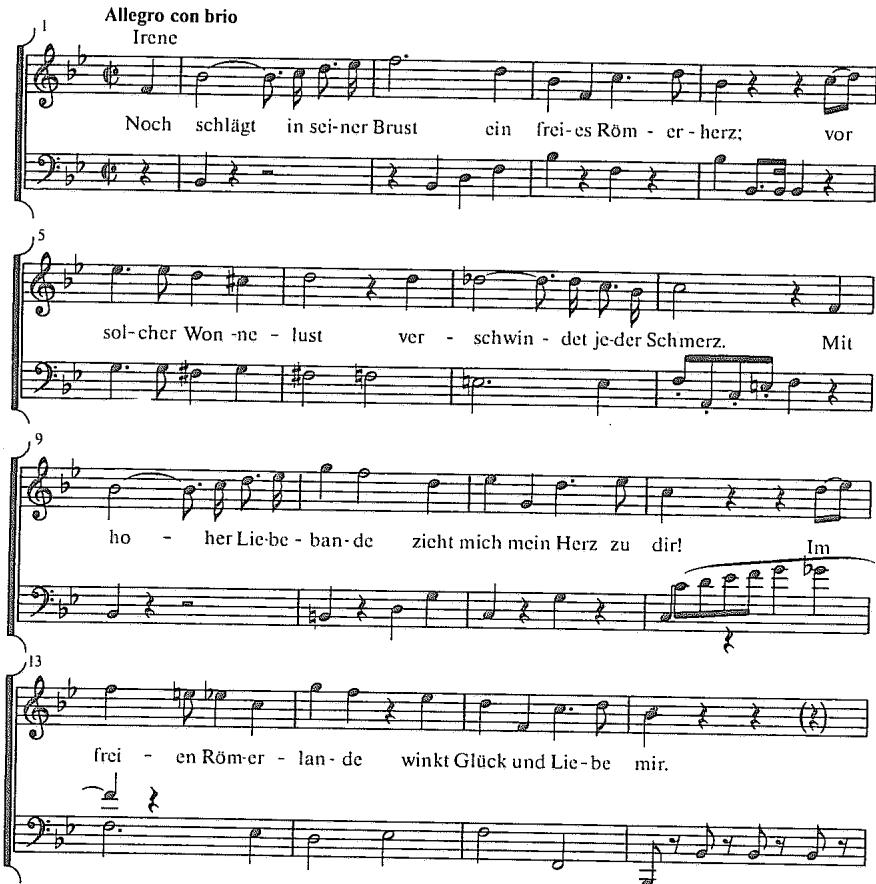
中文讲解
此处为谱例占位符,标示Example 8.1的位置:瓦格纳《黎恩济》第一幕三重唱的开头。图注本身即说明:这是被作者拿来作为“方整乐句节奏”典型反面的具体乐谱,读者须查看原图才能看到实际音符、歌词和力度标记。
补充说明
需查看原图以核对节拍、歌词与乐句划分;本占位符与P0147的曲式描述一一对应。
第3段(P0149)
原文复述
It would be difficult to find quite so awful an example in the music of any other composer discussed in this book, John Field not excepted. Even the obvious attempt at rhythmic liveliness at the words “in seiner Brust” and “verschwindet jeder Schmerz” leads rather to a tongue twister (especially in the latter case!) than to the desired excitement. The more openly military or balletic numbers of Rienzi contain periods even squarer than this one.
中文讲解
本段是作者对Example 8.1的强烈负面评价。关键主张是:在本书所讨论的所有作曲家(包括John Field在内)的作品中,很难再找到像这一例这样糟糕的方整节奏。作者承认瓦格纳在歌词“in seiner Brust”与“verschwindet jeder Schmerz”处确有注入节奏生气的尝试,但效果却适得其反——变成绕口令(尤其后者),而非戏剧性激动。作者进而扩展论断:《黎恩济》中军乐或舞曲色彩更明显的段落,其周期甚至比此例还要方整。这里“John Field not excepted”是显式让步——连以写作平淡乐句著称的几位作者(这里通过脚注8进一步说明)都被排除在更糟的可能性之外。作者用强烈的修辞“difficult to find quite so awful”把Example 8.1钉死在“节奏问题”的耻辱柱上,从而为后文提出“这不是最坏例证”做铺垫。
补充说明
脚注8(未在本段内出现,但在原文页脚)通常关联到对John Field具体作品的评论,作者借此强化“最差”判断的强度。需查阅原脚注以获取具体出处。
第4段(P0150)
原文复述
But Rienzi is not the worst example of the Rhythm Problem in Wagner’s music. In his “Autobiographical Sketch” of 1843 he speaks of an orchestral overture, composed when he was fifteen and performed in Leipzig, in which the timpani gave a fortissimo fortissimo thud at regular intervals of four measures throughout the piece. The scornful laughter of the audience, he reports, “left a deep impression on me.”
中文讲解
本段以转折连词But开头,把论述焦点从《黎恩济》撤回瓦格纳整体:Example 8.1虽糟糕,却不是瓦格纳“节奏问题”最严重的例子。作者援引瓦格纳1843年所写的《自传体素描》中的自述:瓦格纳提到他十五岁时在莱比锡上演的一部乐队序曲中,定音鼓以每四小节一次强力度(fortissimo)的律动贯穿全曲,结果换来观众的嘲笑,而这“给我留下了深刻印象”。这一自传细节有三个功能:第一,作为瓦格纳本人早年作品存在严重节奏方整问题的证据(作者引用作曲者自身的回忆以增加说服力);第二,暗示瓦格纳自己已经意识到这是一种缺陷,并因此寻求改进;第三,把对《黎恩济》的批评置于一个更长期的“节奏问题”历史中,让读者明白本章讨论的不是孤例,而是贯穿瓦格纳早期创作的倾向。
补充说明
脚注9关联到瓦格纳《自传体素描》(1843)的具体出处,读者可由此核实引文。文中“the Rhythm Problem”是本书反复使用的核心术语,指瓦格纳早期乐句过于方整、缺乏节奏弹性的现象。
第5段(P0151)
原文复述
A chorus of praying women from Act III of Rienzi illustrates not only Wagner’s already sure theatrical sense, but also several rhythmic and formal traits of his later music. The form of Example 8.2 is what Lorenz would have called bar form, taking his cue from Wagner’s Die Meistersinger. There are three phrases of basically eight measures each—counting each 2/4 passage as one 3/4 measure (for reasons to be demonstrated). Each phrase is strongly subdivided into two halves, especially the last one (“Maria!”); still, the tonal events of this phrase—with its rising bass progression and the secondary dominant on the word “fleh’n”—hold it firmly together.
中文讲解
本段介绍Example 8.2——《黎恩济》第三幕中妇女祈祷合唱。中心主张有两个层次:第一,这段合唱证明瓦格纳此时已具备可靠的戏剧直觉(sure theatrical sense);第二,它也展示了后来在瓦格纳成熟作品中反复出现的若干节奏与曲式特征。曲式上,作者援引学者Lorenz的术语,称之为“bar form”(歌谣形式/巴歌体),其依据来自瓦格纳《纽伦堡的名歌手》。具体结构是三个乐句,每个大致八小节——这里需要把每段2/4的小节视作一个3/4小节来计算(后文会说明理由)。每个乐句都明显地分为前后两半,尤其是最后一句(唱“Maria!”处);尽管如此,这一句通过上行低音进行以及在歌词“fleh’n”(祈求)上的副属和弦,仍能在和声层面被牢固地凝聚为一个整体。这段话暗示读者:瓦格纳即便在《黎恩济》这样被批评为节奏方整的歌剧里,也已经在尝试突破纯方整结构,体现后来乐剧(music drama)的某些雏形。
补充说明
Lorenz所指应为Alfred Lorenz,他的著作《Das Geheimnis der Form bei Richard Wagner》对瓦格纳的曲式作了系统分类,“bar form”正是其中借用自《纽伦堡的名歌手》的术语。脚注10将随后出现于本节内(见P0154)。
第6段(P0152)
原文复述
The “bar” aspect of Example 8.2 consists in the general similarity between its first two phrases and the contrast created by the third phrase—thus, the thematic pattern AAB. The similarity of the first two phrases is first of all rhythmic, but there is also a similar ascent from g¹ to g² at the beginning of each phrase and a half cadence at the end of each (the second half cadence is tonicized). The verse also supports the bar pattern, especially in its rhyme scheme: not only the fourth and eighth measures but even the respective second and sixth measures of each phrase contain similar vowel sounds (“Jungfrau” and “schau’n,” “bei” and “Feinden”). As always, of course, the poetry is by Wagner himself.
中文讲解
本段解释Example 8.2为什么属于“bar form”。其核心是AAB的主题布局:第一、第二乐句在总体上彼此相似,而第三乐句与之形成对比。所谓“bar”的特性,具体落实在三个层面:其一,节奏上前两句基本一致;其二,旋律上两句开头都从g¹上行到g²,并以半终止结束(第二次半终止被属功能化处理,即tonicized);其三,歌词韵律支持这一结构——不仅第四与第八小节押韵,连每句的第二与第六小节都押相似元音(“Jungfrau”/“schau’n”、“bei”/“Feinden”)。作者特别注明:歌词当然出自瓦格纳本人之手。这说明“bar form”并非纯粹音乐现象,而是音乐—语言联合结构:旋律、和声与押韵共同塑造AAB的对照关系。作者用“tonicized”“half cadence”等和声术语,暗示这一时期的瓦格纳已经在用调性手段辅助曲式对比。
补充说明
“Tonicized”指原本在主调上的半终止被临时属—主进行强调,等于次级调性的属—主解决。
第7段(P0153)
原文复述
The interpolated battle fanfares in Example 8.2 are virtual leitmotifs. The first two refer back to the “Schlachthymne” (“Battle Hymn”) that precedes this chorus by only a few minutes in the opera. (The second fanfare is specifically connected with the figure of Rienzi.) The end of each fanfare overlaps the beginning of the next choral phrase, resulting in three-measure rather than four-measure interpolations; the fourth measure is elided. The final cadence of the chorus is deceptive, an early example of one of Wagner’s favorite continuity-creating techniques.
中文讲解
本段揭示Example 8.2内部一个更具瓦格纳特征的现象:插入的战斗号角(fanfare)几乎是早期的“主导动机”(leitmotifs)。前两段号角回指歌剧中仅在数分钟前出现的“Schlachthymne”(战斗圣歌),其中第二段号角更与主人公黎恩济本人形象直接关联。作者强调节奏结构上的巧妙处理:每段号角的结尾与下一句合唱的开头相互重叠,因此插入的长度变为三小节而不是四小节——第四小节被“elided”(省略/压缩)。这与本节前文反复出现的“四小节方整”形成对照,显示瓦格纳已开始用叠入手法(overlap/ellipsis)打破方整性。最后作者指出,该合唱的终止是“伪终止”(deceptive cadence),这是瓦格纳后来最常用的制造连续性的手法之一,而此处已属早期实例。整段说明:即便在被批评为节奏方整的《黎恩济》中,瓦格纳也已经埋下后来主导动机体系与连续性技法的种子。
补充说明
“Virtual leitmotifs”强调这些号角虽未被称为leitmotif,但已具备指向特定戏剧形象的可识别性;“elided”指原本应出现的小节被前后句吞并而消失,是节奏与曲式分析中表示“省略”的常用术语。
第8段(P0154)
原文复述
(Since the deceptive cadence is such an important device for Wagner, an essential distinction concerning it must be introduced at this point. As Lorenz explains, the Wagnerian deceptive cadence, often used to conclude even a lengthy period, differs fundamentally from deceptive cadences in earlier music. There, the deceptive cadence typically indicates a delay of the authentic [V–I] cadence. In Wagner, the deceptive cadence typically replaces the authentic cadence, which is understood to be elided.)
中文讲解
本段是夹注性质的关键概念区分:瓦格纳式的伪终止(deceptive cadence)与早期音乐中的伪终止有本质差别。作者借Lorenz的解释指出:在早期音乐里,伪终止通常意味着真正的V–I正格终止被延迟,仍可预期最终会发生;而在瓦格纳笔下,伪终止直接取代正格终止,听者理解那个被省略的正格终止已经被压缩(elided)。这一区分关系到对瓦格纳连续性技法的理解——他并非通过一次伪终止来推迟终止,而是干脆用伪终止本身作为终点,使结构向下一段无停顿地延续下去。此概念将在全章乃至后续讨论中反复用到,因此作者选择在此插入这一基础说明。括号形式提示读者这是补充性旁注,而非主论述主线。
补充说明
本段括号属于Lorenz观点的转述,其原始分析见于Lorenz对瓦格纳曲式的研究著作中(具体出处需查脚注10)。脚注10应在原页底部。
第9段(P0155)
原文复述
After a brief but passionate dialogue between Irene and Adriano, the entire chorus is repeated fortissimo. This time, however, there are no 2/4 interpolations: the first phrase appears in simple eight-measure form, while the second phrase has its last note slightly extended (resulting in a total of nine measures) to accommodate an elongated upbeat in the bass.
中文讲解
本段描述Example 8.2合唱在剧情中再次出现的情形:在Irene与Adriano之间简短而激烈的对话之后,合唱整体以fortissimo(很强)的力度重复。关键的变化是节奏层面的“净化”:这一次的重复中没有再插入2/4的战斗号角,因而第一乐句回到简单的八小节形式;第二乐句则通过将最后一音稍微延长为九小节(多出一小节),以容纳一个被拉长的低音上行动机(elongated upbeat)。这说明瓦格纳在重复同一合唱段落时,并非原样复制,而是根据戏剧需要重新处理节奏与和声。本段的两个细节(取消2/4插入、九小节替代八小节)共同表明:即便在“方整”的段落内,瓦格纳也已开始通过局部伸缩来服务于戏剧与音乐表现。
补充说明
Irene与Adriano是《黎恩济》中的人物:Irene是黎恩济的妹妹,Adriano是Cola与Irene的恋人;他们的对话为合唱的重复提供情感动机。
第10段(P0156)
原文复述
The final phrase is treated more interestingly. To effect a climax, Wagner expands this phrase in two places by elongating certain notes (see Example 8.3). This technique, which Wagner often uses in his early operas—usually just before the end of a period—is one we have often seen in earlier music. Note that this time the final cadence is authentic rather than deceptive.
中文讲解
本段聚焦合唱末句在第二次重复中的处理:为了制造高潮,瓦格纳在两处通过延长个别音来扩展这一乐句(详见Example 8.3)。这种“延长某些音以扩张乐句”的手法在瓦格纳早期歌剧中经常出现,且通常出现在一个周期即将结束处。作者特别指出:这种延长手法在更早的音乐里就出现过,因此并非瓦格纳独创,而是他在新语境下的运用。最后,作者提醒读者:与第一次重复不同,这一次的最终终止是正格终止(authentic cadence),而非伪终止——这暗示戏剧上经过高潮之后,音乐最终获得完满解决,与前面P0153中伪终止所制造的“连续性”形成对照。整体上,这一短段连接起两段重复(第一次含伪终止的开放式结尾,与第二次以正格终止收束),凸显瓦格纳对同一段落在不同戏剧功能下的差异化处理。
补充说明
脚注11应进一步说明“延长音手法”在早期音乐中的先例,读者可由此核实作者“we have often seen in earlier music”的具体出处。
第11段(P0157)
原文复述
The next two operas, Der fliegende Holländer (1841) and Tannhäuser (1843–45), represent a considerable advance for Wagner, although the set pieces—arias, ensembles, and choruses—of both operas still suffer from the Rhythm Problem. The phrase rhythm of Der fliegende Holländer has been admirably described by Kunze; I will try not to recapitulate his arguments here.
中文讲解
本段是小节末尾的过渡段:作者将视线从《黎恩济》移向瓦格纳下一阶段的《漂泊的荷兰人》(1841)和《唐豪瑟》(1843–45),并作出总判断:这两部歌剧代表着瓦格纳的显著进步,但其中的独立段落(set pieces,包括咏叹调、合唱、重唱等)仍存在节奏问题。作者进而交代研究分工:关于《漂泊的荷兰人》的乐句节奏,学者Kunze已作过精彩论述,本书将不再重复其论证。这一句既是对既有学术成果的尊重,也表明作者将把分析焦点放在那些尚少被人系统讨论的方面,为本章后文关于《特里斯坦与伊索尔德》《纽伦堡的名歌手》等的讨论作铺垫。
补充说明
Kunze指德国音乐学者Stefan Kunze,他对瓦格纳早期歌剧的乐句节奏有专门研究,本书以此为已有学术背景,不在正文中复述。
脚注 / 边栏 / 图表 / 附加信息(如有)
本小节涉及若干需要进一步核对的脚注与谱例:脚注8(在P0149处)应给出对John Field具体作品的评论,作为“最差判断”的对照;脚注9(在P0150处)应给出瓦格纳《自传体素描》(1843)原文的具体页码或出处;脚注10(在P0154处)应交代Lorenz关于瓦格纳伪终止论点的原始出处;脚注11(在P0156处)应注明“延长音手法”在早期音乐中的先例来源;脚注12(在P0157处)应给出Kunze关于《漂泊的荷兰人》乐句节奏研究的完整书目信息。谱例8.1、8.2、8.3的图注已提供作品与段落定位,但实际音符、和声、歌词及力度标记需通过查看原图核对。括号内的P0154作为概念插注,是Lorenz观点的转述,已在条目内充分复述。
💡 本节核心要点
- 《黎恩济》第一幕三重唱(Example 8.1)是“方整乐句节奏”的极端典型:双周期结构、八小节前句与八小节后句、每句再分两个四小节乐句、乐句之间全部用休止符隔开。
- 即便如此,这仍不是瓦格纳“节奏问题”最严重的例子:瓦格纳本人在1843年《自传体素描》中回忆,他十五岁时所作的莱比锡序曲中定音鼓以每四小节一次的fortissimo律动贯穿全曲,并因此遭到观众嘲笑。
- 《黎恩济》第三幕妇女祈祷合唱(Example 8.2)展示了瓦格纳后期音乐的多项雏形:Lorenz意义上的bar form(AAB三句、每句大致八小节,其中2/4按3/4计算),旋律开头由g¹上行至g²,两次半终止(第二次被属化),歌词押韵亦支持AAB结构。
- 插入的战斗号角是“虚拟的主导动机”(virtual leitmotifs),其结尾与下一句合唱开头重叠,使插入由四小节缩为三小节(第四小节被省略),体现了瓦格纳用叠入手法打破方整性的早期实践。
- 瓦格纳式的伪终止与早期音乐中的伪终止有本质差别:前者取代正格终止(被理解为已省略),后者只是延迟正格终止;这是Lorenz提出的关键区分。
- 合唱重复时根据戏剧需要重塑节奏:第一次重复去掉2/4插入并使第二乐句扩展为九小节以容纳延长的低音上行动机;末句进一步在两处延长音以制造高潮,且最终改用正格终止完成,与第一次的伪终止形成对照。
🔑 关键术语
- double period:传统曲式术语,指由两个等长乐句组成、且在和声上形成问—答关系的大句;本节用作《黎恩济》Example 8.1的结构标签。
- bar form (Barform):Lorenz借用自瓦格纳《纽伦堡的名歌手》的曲式概念,特征为AAB的主题布局——前两句相似、第三句对比;本节用于描述Example 8.2的整体结构。
- square phrase rhythm:本书核心术语,指乐句长度整齐(如四或八小节)、内部细分对称、句间用休止断开的方整节奏型;作者用以概括瓦格纳早期创作中的“节奏问题”。
- le motive (leitmotif):主导动机,指与特定人物、情境或观念相联系的可识别音乐主题;本节称Example 8.2中插入的战斗号角为“virtual leitmotifs”,强调其已具备指向功能但尚未被系统化。
- deceptive cadence (Wagnerian):瓦格纳式伪终止;与早期音乐中的伪终止不同,它取代而非延迟正格终止V–I,被理解为省略的终止,是瓦格纳制造连续性的核心手法。
- authentic cadence:正格终止,指V–I的和声收束;本节中Example 8.2第二次重复时改用正格终止,与第一次的伪终止形成对照。
- set pieces:歌剧中的独立成篇段落,包括咏叹调、重唱与合唱等;作者指出《漂泊的荷兰人》和《唐豪瑟》中的这类段落仍受“节奏问题”困扰。
- tonicized half cadence:被属化的半终止,即原本终止式上的半终止被次级调性的属—主进行强调;Example 8.2第二乐句的半终止即为此类。
8.5 [描述性拆分] The Flying Dutchman and Tannhäuser: Quatrain Form and the Poetic-Musical Period
第1段(P0158)
原文复述
中文讲解
此条为第21页上的乐谱图示占位符,原书标注为“Example 8.2. Rienzi, Act III, chorus”,即《黎恩济》第三幕合唱的谱例。由于内嵌图像数据已省略,本书读者无法直接查看到谱面细节,仅能依据紧随其后的正文(P0160)中提到该例用以展示“Wir schwören dir”(我们在第一幕终场合唱中已使用过)的四句体小型形式,从而确认此处谱例是一段AABA四句式结构的实物例证。讲解本节核心论点时,需要将其与P0160的概括性论述(P0160)以及后续的Example 8.3(P0161–P0162)配合阅读:在没有原谱的情况下,本图主要承担“先前已有的四句体范例”这一功能定位。
补充说明
仅依据当前输入:原图中图象数据被省略,故不能补充任何谱面细节(如调号、节拍、歌词)或未在P0160中提到的音乐特征。
第2段(P0159)
原文复述
中文讲解
此条是Example 8.2的延续部分,仍位于第22页。延续标记表明前一段谱例(P0158)在此页继续展开,使读者能够阅读完整的十六或三十二小节四句体。该段本应与P0160的论述共同提供“对称四句体(qutrain)AABA”形式的乐谱依据;但由于图像数据已省略,其论证功能只能通过P0160对Example 8.2的位置提及来间接确认。
补充说明
仅依据当前输入:此处仅能确认“该谱例与P0158属同一Example 8.2,且继续到第22页”的版式信息,其他谱面细节一律不补。
第3段(P0160)
原文复述
In these two operas Wagner favors a particular type of small form, one that he had already used in Rienzi (for example, in the chorus “Wir schwören dir” from the finale of Act I) but that now becomes standardized. This is essentially the quatrain form described in Chapter 4—a symmetrical pattern of four phrases, AABA, usually occupying either sixteen measures (4 × 4) or thirty-two (4 × 8).¹³ The distinction between the sixteen-measure and thirty-two-measure types is minimal and has mainly to do with tempo and harmonic rhythm. In very slow tempo, the form may manifest itself in only eight measures.
中文讲解
本段提出本章的核心论题:瓦格纳在这两部歌剧(《漂泊的荷兰人》与《唐豪瑟》)中频繁使用一种“已经被标准化”的小型曲式,那就是第四章已讲过的“quatrain”(四句体)。作者先点明历史渊源——同样的四句体其实早在《黎恩济》第一幕终场合唱《Wir schwören dir》里就已出现过;然后定义该形式:A、A、A、B 对称四句,乐段长度常为十六小节(4×4)或三十二小节(4×8)。脚注13将引向更细致的讨论。最关键的信息是:作者强调“出现标准化”(now becomes standardized),这意味着从《荷兰人》《唐豪瑟》起,四句体不再只是个偶发手段,而是瓦格纳处理小型曲式的稳定模板。十六小节与三十二小节的差别仅在于速度和和声节奏——这是教学性的提醒,以免读者以为两者在结构上彼此独立;极慢速度下甚至可以压缩为八小节。读者从这里应把握两个要点:(1) AABA是瓦格纳早期歌剧小型曲式的“基本语汇”;(2) 长度可压缩可扩展,但对称四句的轮廓始终保留。
补充说明
脚注13未在当前输入展开,仅可确认:它将进一步说明十六小节与三十二小节两种类型的区别,以及慢速压缩为八小节的可能性。
第4段(P0161)
原文复述
中文讲解
此条为第22页Example 8.3的乐谱图示占位符。该谱例用于配合下一段(P0162)说明四句体“尾句扩充”现象,作者称之为“Exhibit 8.3”的“在某两音上作延长”的手法。由于图像数据已省略,本图的具体音高、时值与终止式无法复述,但其在书中的论证位置(紧接P0162的概括性说明之前)表明它应当是一段四句体的最后一句,并在该句收束前出现一两小节的延长。
第5段(P0162)
原文复述
Frequently the closing phrase of the quatrain is expanded by one or two measures shortly before its cadence, often by means of elongating a note or two in the manner of Example 8.3. This expansion creates the effect of a ritardando and mitigates slightly the inherent stiffness of the phrase rhythm.
中文讲解
本段紧接P0160的标准化四句体主题,向前推进一层:四句体最后一句在终止前常常会被扩充一至两小节,通常通过在某几个音上作延长来达到(如Example 8.3所示)。作者解释这种扩充的双重功能——其一,制造出相当于“渐慢”(ritardando)的听觉效果;其二,缓解四句体自身具有的某种“僵硬感”(inherent stiffness of the phrase rhythm)。这一段让读者看到:尽管四句体本身是对称、规整的小型形式,但瓦格纳并非机械地套用,而是通过局部的节奏拉伸赋予其呼吸感与表情张力。它与P0160的“标准化”并不矛盾——标准化的是曲式轮廓,而扩充则是瓦格纳对轮廓内部细节所作的表情处理。
补充说明
“inherent stiffness”指四句体因方整结构而产生的不可避免的“规整偏呆滞”的特点,并非贬义,而是要在它与戏剧张力之间取得平衡。
第6段(P0163)
原文复述
As we know from Chapter 4, a quatrain’s four phrases group into two periods. In the present context, where we will be dealing with fairly large structures, it will be useful to refer to the entire quatrain as a single period. This, of course, does not violate our definition of what a period is (see Chapter 1).
中文讲解
本段转入术语层面的调整。第四章已说明:四句体的四句可两两组合,形成两个乐段。但本章后面要讨论的大型结构中,作者为方便叙述,把整个四句体视作“一个乐段”(a single period),这样读者便能以“乐段”为单位去追踪更宏大的曲式过程。这一术语简化并不违背第一章关于“何为乐段(period)”的定义,因此明确告知读者:术语只是一个称呼层次的调整,不引起概念冲突。换言之,作者鼓励读者把四句体提升至“乐段”的级别来把握,避免在分析大型结构时陷入“细至四句”的粒度中。
补充说明
脚注按文中指示见第1章;当前输入未给出第1章内容,故此处不补充“period”的最初定义。
第7段(P0164)
原文复述
Example 8.4, an excerpt from Der fliegende Holländer, shows the quatrain in its purest form. This is a thirty-two-measure period in Ab minor, with the last measure extended (like a fermata). Note that, in this instance, the AABA pattern applies only to the music, not to the verse. The squareness and conventionality of the phrase rhythm stand in sharp contrast to the urgency of the dramatic situation (the Dutchman is praying desperately for deliverance from his curse). The effect is therefore somewhat unsatisfactory.
中文讲解
本段以《漂泊的荷兰人》中例8.4为正例,展示四句体“最纯粹”的形态。它是一段降a小调中的三十二小节乐段,最后一小节作延长(类似延长记号)。这一例具有重要的反讽意义:尽管AABA的“方整性与常规性”(squareness and conventionality of the phrase rhythm)正是四句体的特征,但此时所配的戏剧情境——荷兰人绝望地祈求解脱诅咒——却是极度紧迫的。两者之间的强烈反差让作者直评为“效果略显不令人满意”(somewhat unsatisfactory)。这里读者应当学到一项曲式与戏剧关系的判断:曲式结构的“古典美感”并不自动匹配任何戏剧情感;当曲式太规整、戏剧太激越时,反而会暴露两者错位的裂缝。这是P0163之后第一个把曲式与戏剧并列考量的段落。
补充说明
“AABA pattern applies only to the music, not to the verse”提示:尽管歌词与音乐不一定同步进入AABA对应,但音乐自身仍保持严格的四句对应。
第8段(P0165)
原文复述
A more effective use of the quatrain form occurs in Act II of Tannhäuser, where Elisabeth pleads to the assembled knights for Tannhäuser’s life (Example 8.5). Here the basic phrase length is only two measures. The meter has been artfully shifted during the preceding part of Elisabeth’s plea—this is one of the most impressive passages in the entire opera—so that the perceived downbeat now occurs at the notated third beat of each measure, until the cadential $^{6}$ chord arrives on the word “ihn” (m. 8 of the example). At that point an expansion sets in—a fairly typical composed-out deceleration, but one that restores the original (notated) meter. A conventional deceptive cadence at m. 10 generates a further expansion, ending only with the authentic cadence at m. 13. The purpose of both expansions is clearly to dwell on the thought of “der Erlöser” (“the Savior”), with the deceptive cadence particularly coloring the word “litt” (“suffered”).
中文讲解
本段由P0164的“略显不满意”转入“更成功的使用”:以《唐豪瑟》第二幕伊丽莎白为唐豪瑟求情为例(Example 8.5)。其结构有三大要点。第一,基本乐句长度变为两小节(较短的“呼吸单位”)。第二,此处节拍经过前置段落的“巧妙移位”,以至于听感上的重拍落到了谱面所记的每小节第三拍,直到终止六和弦出现在“ihn”(他)一字上(例中第8小节),此时作曲家开始“减速”——一个典型而典型的“被创作出来的减速”(composed-out deceleration),它把原本移位的节拍恢复回谱面记谱的原始节拍,从而形成一次“先迷失后回归”的节拍戏剧。第三,作者点明两次扩充的目的:都是为了在“der Erlöser”(救主)这一概念上停留,其中第10小节的阻碍终止(deceptive cadence)尤使“litt”(受难)一字获得独特色彩;最终在第13小节以正格终止结束。读者由此学到:四句体虽是方整形式,但瓦格纳通过节拍移位、扩充、阻碍终止等手段,让它在戏剧高峰处既是“方整”又是“动情”的双重载体。
补充说明
关于“composed-out deceleration”:即“把渐慢写入谱中”,并非指挥临场处理,而是作曲家在谱面上以时值或和声的拉伸让减速成为乐谱固有的一部分。
第9段(P0166)
原文复述
Example 8.6 shows how the last two phrases of Example 8.5 would look without the expansions. It may perhaps be objected that Example 8.5 does not represent a quatrain, because the last phrase—even as shown in Example 8.6—bears little resemblance to the first two phrases. In fact there is some resemblance: the ascending arpeggiation over the expanded $^{6}$ chord (f $^{\sharp1}$ -b $^{1}$ -d $^{\sharp2}$ , mm. 8–9 of Example 8.5) recalls the first three notes of the period (f $^{\sharp1}$ -b $^{1}$ -e $^{2}$ ), and the descent from the respective high notes is similar in the first and last phrases (basically e $^{2}$ -d $^{\sharp2}$ -c $^{\sharp2}$ in mm. 2–3, d $^{\sharp2}$ -c $^{\sharp2}$ -b $^{1}$ in mm. 9–10). But it is probably the clear return to the tonic key of B major that most immediately relates the last phrase to the first two (mm. 1–5) and separates them all from the third phrase (mm. 5–7). The structuring of a period according to harmonic motion and modulation is of course basic to tonal music; but for Wagner the return to the original key generally has a special significance, as his famous concept of the poetic-musical period (“dichterisch-musikalische
中文讲解
本段回答一个可能的反对意见——读者也许会抗议Example 8.5不是真正意义上的四句体,因为末句与前两句在表面上几乎不相似。为此,作者先用Example 8.6演示“如果没有扩充,末两句本应是什么样子”,然后指出末句实与前两句有声音材料上的呼应:(a) 在末句扩充的六和弦上的上行琶音(升f¹–b¹–升d²,第8–9小节)回响乐段最初三音(升f¹–b¹–e²);(b) 末句与第一句各自从其最高音下行(基本为e²–升d²–升c²与升d²–升c²–b¹)的轮廓相似。然而最直接、最能让听者“认定”末句属于四句体整体的,是和声:末句回到B大调主音,把末句与前两句(mm.1–5)紧紧拴在一起,又使它们与第三句(mm.5–7)相区别。作者由此引出一个原则性论断:按和声运动与转调来构造乐段,自然是调性音乐的基本操作;但对瓦格纳来说,回到原调往往具有“某种特别的意义”——这一句话即将与著名的“诗意–音乐性乐段”(dichterisch-musikalische Periode)概念相接。
补充说明
“dichterisch-musikalische Periode”的延续部分在P0170(被句末括号切断),将在那里完成整段论述。
第10段(P0167)
原文复述
中文讲解
此条为第23页上的图像/乐谱占位符。在当前输入范围内,文本未给出该图的标题、编号或具体内容,仅显示“第23页图像或乐谱示例”。由于内嵌图像数据已省略,且本段亦无后续文字解析,可确认的是:该图位于Example 8.5(Tannhäuser, Act II, Elisabeth’s aria)开始之前,因此它应承担对前文P0165–P0166所讨论的例证提供位置参照的功能,让读者先看到示例的整体外观再阅读分析。无法查看原图时,本条不应补充任何谱面或外延信息。
第11段(P0168)
原文复述
中文讲解
此条为Example 8.5《唐豪瑟》第二幕伊丽莎白咏叹调(节选)的乐谱图示占位符。图像数据已省略,不能补充谱面细节。结合正文P0165可知该例展示的是基本长度为两小节、以节拍移位开始、在终止六和弦处恢复并以扩充及阻碍终止收尾的四句体片段。它在书中被用作“更有效的四句体使用”的实物证据,恰好与P0164中“不甚令人满意”的Example 8.4形成对照。
第12段(P0169)
原文复述
中文讲解
此条为Example 8.6的乐谱图示占位符,其标题为“对《唐豪瑟》第二幕伊丽莎白咏叹调Example 8.5第5小节起的重构”。这意味着此图是“假如Example 8.5去掉扩充之后,末两句本来应有的样子”——即P0166用来反驳“末句与四句体不相似”那种意见的工具性谱例。没有原图时,本图在阅读论证链中的作用是:让读者亲自验证“去扩充后”的对照版,从而承认扩充前后在和声与旋律走向上仍是同一材料的变形。
第13段(P0170)
原文复述
Periode"), described in Oper und Drama (1851), indicates. $^{14}$ This significance is always a dramatic one; often it is structural as well.
中文讲解
本段承接P0166末尾被截断的“dichterisch-musikalische Periode”这一术语,并补完整段论述:它出自瓦格纳1851年的《歌剧与戏剧》(Oper und Drama)。作者重点在于强调其语义:“回到原调”在瓦格纳那里总是具有戏剧意义——常常也是结构意义。换言之,和声的回归绝非纯粹功能性的解决,而是与舞台情境、人物心理紧绑的“诗意–音乐事件”。这是本章转入“诗意–音乐性乐段”这一核心概念的关键一步。
补充说明
脚注14指向Oper und Drama(1851)一书中对此概念的原始论述,当前输入未给出该书的具体页码或引文,故不补充原始德文与上下文。
第14段(P0171)
原文复述
Kunze, in his essay, rightly points out the growing conflict between the four-bar rhythms of Holländer and the increasingly wandering Wagnerian harmony. In our terms, we could say that the congruence of phrase and hypermeasure becomes gradually looser in Wagner’s early operas: phrases tend to become longer and less predictable, while hypermeter generally remains duple (especially four-bar). A phrase will thus be composed of several hypermeasures instead of just one.
中文讲解
本段引入Kunze的观察:四小节节奏(hypermeasure层面)与越来越“游移”的和声之间的冲突。作者将其改写为更技术化的命题:在瓦格纳早期歌剧中,“乐句”与“hypermeasure(小节群)”逐渐不再一一对应。乐句变得更长、更难预测,而hypermeter则通常仍保留二倍数(尤其是四小节)的规律。因此一个乐句会由若干个hypermeasure拼接而成,而不是与hypermeasure完全重合。这是P0160以来“标准化四句体”在更大规模上出现变形的关键机制:四句体外部轮廓仍存,但内部构成(即每一句由多少个小节群组成)变得灵活。读者由此可预期后文(P0172–P0175)将展示这种“乐句长度延伸”的具体手段。
补充说明
Kunze(Stefan Kunze)一文的具体篇名与出处当前输入未给出,故不补充文献信息。
第15段(P0172)
原文复述
At this point in Wagner’s development, “wandering harmony” tends to involve an excessive dependence on the diminished seventh chord as an agent of harmonic ambiguity and expressive tension. (It was through his later contact with Liszt that Wagner’s harmonic palette came to expand, as Wagner himself admitted. $^{15}$ ) Added to this harmonic crutch is an extensive use of sequence—usually ascending sequence, using a two- or four-measure segment as model—to achieve a slower rate of harmonic motion through a longer phrase. The segment used in such sequences is usually a subphrase rather than a phrase; typically, the subphrase is congruent with a two- or four-bar hypermeasure, and the sequence is strongly hypermetrical. Example 8.7 illustrates this type of structure.
中文讲解
本段展开“游移和声”与“长乐句”的两项实现手段。第一,瓦格纳此时过分依赖减七和弦来制造和声暧昧与表现性张力;作者顺带注明瓦格纳自己承认,后来通过与李斯特接触,他的和声色彩才得以扩展(脚注15)。第二,频繁使用模进(sequence),多为上行模进,以两小节或四小节为单位,作为“慢化”和声运动速率、构造更长乐句的手段。模进所用的单位典型为“子句”(subphrase),而非完整乐句;该子句本身往往对应两或四小节的hypermeasure,故模进呈强烈的hypermetrical规律。例8.7即为这种结构的实物例证。读者从中可学到:本章所谓的“大型结构”,正是由减七和弦的暧昧和上行子句模进而被撑起来的,而非靠新的曲式框架。
补充说明
脚注15表明瓦格纳本人承认其和声资源受李斯特影响而扩展,当前输入未给出瓦格纳原文,故不补引文。
第16段(P0173)
原文复述
This example, from the Overture to Der fliegende Holländer, represents only part of a long phrase, the goal of which is a fortissimo statement in F major (not shown) of the Redemption motive from Senta’s ballad, the centerpiece of the opera. The basis of the sequential motion is the ascending chromatic bass line. Each statement of the four-measure segment contains only two harmonies, a diminished seventh chord and a triad in $\frac{6}{4}$ position. Fragments from the Sailors’ Chorus are quoted over the $\frac{6}{4}$ harmonies. Once the Redemption motive is reached (after the example ends), a new ascending sequence begins, so that each successive four-measure phrase of the original Redemption melody—quoted almost in its entirety earlier in the overture—appears one step higher, interspersed with other material.
中文讲解
本段针对Example 8.7(《漂泊的荷兰人》序曲节选)做技术解析。例中只展示长乐句的一部分,其“目标”是尚未显现的F大调上、强力度的“救赎动机”(Redemption motive)陈述——它来自仙塔的谣曲,是全剧中心。其间所有模进都建立在半音上行的低音声部之上;每个四小节段的和声仅有两项:减七和弦与六四和弦;后者上方引入水手合唱(Sailors’ Chorus)的片段。一旦救赎动机真正出现(乐例结束之后),又一轮上行模进启动:先前完整陈述过的救赎旋律以四小节为单位逐次上行一音级出现,并与其他材料交错。换句话说,这是一段“半音上行驱动+和声极简+主题材料依次升高”的大型结构。读者可由此获得对“游移和声”与“上行模进”如何服务于全剧中心动机的具体印证。
第17段(P0174)
原文复述
中文讲解
此条为Example 8.7《漂泊的荷兰人》序曲节选的乐谱图示占位符,注明出处为G. Schirmer歌剧总谱版本并标明版权。由于内嵌图像数据已省略,其在书中的论证作用为P0173所描述的“长乐句内部上行模进”提供曲谱依据,因此读者应将其与P0173合读。无图时不应补充任何谱面细节。
补充说明
已保留版权声明;当前输入未提供版权日期与版本号,故不补充。
第18段(P0175)
原文复述
The techniques of subphrase isolation, ascending sequence, and leitmotif-like quotation are not limited to orchestral excerpts such as this overture. Erik’s dream narrative, rightly considered the most “advanced” number in Der fliegende Hollander, is based on the same techniques. Space forbids reproducing the narrative here, but it is of great interest, partly because it is a textbook example of a poetic-musical period; the period ends with a deceptive cadence—of the new type described by Lorenz—at the words “Mein Traum sprach wahr!” The piece begins like a typical quatrain, with two closely related “phrases”—except that these “phrases” are harmonically static, a sure sign that the period just beginning will be long and broad. $^{16}$ The long sequence that ensues is rather mechanical in its execution, even more so than the sequence of which Example 8.7 is a part. More impressive is the continuation of the period through two changes of tempo, an implied half cadence (at “sah ich auf’s Meer euch flieh’n”), and a premature cadence in the “wrong” key of C by the now thoroughly deranged Senta, who can no longer distinguish dream from reality.
中文讲解
本段将P0172–P0174的“子句隔离、上行模进、主导动机片段化引用”三项技术延伸至人声主导的段落——埃里克的梦之叙事(Erik’s dream narrative)。该段被认为是《漂泊的荷兰人》中“最先进”的一首。其结构要点有四:(1) 它整体上是一段教科书级的诗意–音乐性乐段,结束于新式阻碍终止(Lorenz所论的类型之一),落点为“我之梦应验了!”(Mein Traum sprach wahr!)。(2) 起头看似典型四句体,前两句关系紧密,但这两句在和声上是静态的,预示整个乐段将是长且宽的展开。(3) 接下来的长模进在执行上比较机械,比Example 8.7的模进更缺乏变化——这是对“模进手段之局限”的冷静评判。(4) 整段最有戏剧力量的地方,是它穿越了两次速度变化、在“sah ich auf’s Meer euch flieh’n”处隐含一个半终止,最终仙塔——已被梦与现实混淆不清——以错误的C调作出过早的终止。读者由此学到:模进的“机械”与和声错位的“早终止”共同服务于一个人物心理层面的剧变,这与P0164“曲式与戏剧错位”所形成的反讽遥相呼应,但这次是瓦格纳主动利用错位以增强戏剧效果。
补充说明
Lorenz所论之“新式阻碍终止”的具体定义未在当前输入给出,故不补充。脚注16当前输入未展开。
第19段(P0176)
原文复述
Tannhäuser takes all of these techniques still further. Erik’s dream in Holländer is the obvious forerunner of Tannhäuser’s more complex Rome narrative (Act III), which also seems to prefigure the poetic-musical period of Oper und Drama and even some details of Lorenz’s system. $^{17}$ Elsewhere in the opera, the idea of ascending sequence is manifested on the largest scale by the repetitions of Tannhäuser’s paean to Venus (“Dir töne Lob”), which ascend a semitone with each statement. This is an early and rather vulgar example—one hears its echoes today in popular music and advertising jingles—of what Robert Bailey has called “expressive tonality” (presumably in contradistinction to a more classical, structurally based use of tonality). $^{18}$ Its purpose in Tannhäuser (as in the jingles) is simply to raise the pitch of excitement by raising the pitch of the music.
中文讲解
本段把上行的修辞推到《唐豪瑟》:唐豪瑟对维纳斯的颂歌《Dir töne Lob》(“向你致颂”)以反复陈述、每次整体升高半音的方式出现,构成全剧最大规模的上行模进。作者评价其为“早期且略显粗俗”之“表现性调性”(expressive tonality,Robert Bailey之术语,与更古典、结构性的调性运用相对)。其作用单纯——“提高音乐的音高即提高激动的程度”——这与今日流行音乐和广告短曲中的做法一脉相承。同时作者点出:唐豪瑟第三幕的“罗马叙事”比荷兰人的梦叙事更复杂,似已预先体现了《歌剧与戏剧》中“诗意–音乐性乐段”甚至Lorenz体系的若干细节。读者由此可建立一条线索:《漂泊的荷兰人》之技术萌芽→在《唐豪瑟》中发展→预示《歌剧与戏剧》之理论。
补充说明
脚注17、18当前输入未展开,不补充Bailey原文或《歌剧与戏剧》出处。
第20段(P0177)
原文复述
The nascent leitmotif technique is in evidence in the Prelude to Act III, which depicts Tannhäuser’s pilgrimage to Rome. This piece forms a close dramatic parallel to the Act III Prelude from Parsifal (to be discussed later in this chapter), which similarly illustrates that hero’s anguished wanderings. In the Tannhäuser Prelude—which is very simple in concept if not in execution—the chorale sung by the elder pilgrims in Act I is played in its entirety, but with fragments from other numbers of the opera inserted between its phrases. Thus the total impression is of a regular, closed form with extensive parenthetical interpolations. A later example using the same technique is the chorale that opens Act I of Die Meistersinger.
中文讲解
本段引出“新生主导动机技术”(nascent leitmotif technique)的实例——《唐豪瑟》第三幕前奏曲,描绘唐豪瑟前往罗马朝圣。该前奏曲与《帕西法尔》第三幕前奏曲(本章后面将讨论)形成戏剧上的紧密平行,二者皆描绘主人公痛苦之徘徊。在《唐豪瑟》前奏曲中——其“构思极简,执行却未必简洁”——第一幕年长朝圣者所唱的圣咏被完整奏出,但每次陈述之间穿插了歌剧中其他段落的片段。因此整体印象是“规整、闭合的形式,外加大量的括号式插段”。作者另指《纽伦堡的名歌手》第一幕开场的圣咏为使用同一手法的较后例子,从而把本段定位为该手法早期实例,并预告其在瓦格纳后续歌剧中的延续。
补充说明
本章下文将讨论《帕西法尔》第三幕前奏曲;当前输入仅给出“to be discussed later in this chapter”的预告,不补充其具体内容。
脚注 / 边栏 / 图表 / 附加信息(如有)
本节无独立图表说明、无边栏;附脚注包括:脚注13(P0160)关于十六与三十二小节两种四句体及慢速压缩现象的进一步讨论;脚注14(P0170)指向瓦格纳《歌剧与戏剧》(1851)中“诗意–音乐性乐段(dichterisch-musikalische Periode)”一术语的原始论述;脚注15(P0172)说明瓦格纳本人承认其和声资源通过接触李斯特而扩展;脚注16(P0175)当前输入未展开;脚注17(P0176)当前输入未展开;脚注18(P0176)涉及Robert Bailey提出“表现性调性(expressive tonality)”术语的来源出处(当前输入未展开)。其余非正文材料仅有Example 8.2–8.7若干乐谱占位符,均已在各paragraph内分别记录。
💡 本节核心要点
- 瓦格纳在《漂泊的荷兰人》与《唐豪瑟》中将AABA四句体(十六或三十二小节)作为小型曲式的标准化语汇;《黎恩济》第一幕的《Wir schwören dir》合唱是其前身。
- 四句体的尾句常以一两小节延长处理,制造渐慢感并缓解其固有的方整僵硬性。
- 为讨论更大规模结构,作者把整个四句体视作一个乐段(period),并不违背乐段的定义。
- 《漂泊的荷兰人》例8.4以最纯粹的三十二小节四句体呈现,但因其方整性与戏剧紧迫性严重错位,效果不甚令人满意。
- 《唐豪瑟》第二幕伊丽莎白求情段使用两小节为基本长度,经节拍移位与两轮扩充(包括阻碍终止),在“救主”概念上停留,是更有效的四句体用法。
- 末句与前两句的连接依赖于回到原调——这是“诗意–音乐性乐段”的核心机制,源自瓦格纳《歌剧与戏剧》(1851)。
- 瓦格纳早期歌剧中“乐句”与“hypermeasure”逐渐脱钩:hypermeter常为四小节,但乐句变得更长,常由子句(subphrase)拼接,并通过上行模进实现更长乐句。
- 游移和声在此阶段过度依赖减七和弦,以两/四小节子句为单位的上行模进为扩展乐句的主要手段;此为瓦格纳在接触李斯特之前的和声局限。
- 例8.7(《荷兰人》序曲节选)展示以半音上行低音、减七加六四两和弦的子句模进,上方嵌入水手合唱片段,并以一次救赎动机的错位目标为终点。
- 《漂泊的荷兰人》埃里克梦叙事是“诗意–音乐性乐段”的教科书级实例:始于“伪四句体”,经长且机械的模进,穿越两次速度变化、半终止及仙塔在错调上的过早终止。
- 《唐豪瑟》将上行模进推到极致——《Dir töne Lob》每次升半音反复,构成Bailey所谓“表现性调性”的早期而非精致实例。
- 《唐豪瑟》第三幕前奏曲以年长朝圣者圣咏全段出现、其间穿插其他段落片段,构成“规整闭合形式加括号式插段”的总体印象,同一手法在《纽伦堡的名歌手》第一幕开场圣咏中得到延续,此为新生主导动机技术的早期实例。
🔑 关键术语
- quatrain(四句体):对称四句组成的曲式小单位,结构常为AABA,长度可为十六或三十二小节;为本节核心小型曲式语汇。
- period(乐段):由若干乐句构成、终止式明确的高一级曲式单位;本章将整个四句体视作单一乐段以方便处理大型结构。
- hypermeasure / hypermeter(小节群):高于小节一级的韵律单位,常以二倍或四倍小节聚合而成;本节用以讨论hypermeasure与乐句长度逐渐脱钩的现象。
- subphrase(子句):比完整乐句更短的曲式单位,常与两或四小节hypermeasure对齐;用作上行模进的模型,以撑起更长的乐句。
- wandering harmony(游移和声):瓦格纳早期歌剧中以减七和弦为核心、依赖长期模糊调性中心的和声状态;本节讨论其与方整四小节节奏的冲突。
- poetic-musical period(诗意–音乐性乐段):瓦格纳在《歌剧与戏剧》(1851)中提出的术语,指乐段回到原调所同时承载的戏剧与结构意义;本节以此解释伊丽莎白咏叹调末尾及埃里克梦叙事等大型乐段。
- composed-out deceleration(被创作出的减速):通过谱面时值或和声拉伸把“渐慢”写入乐谱本身的处理;为伊丽莎白求情段第二、三句停顿后回归原节拍的手段。
- deceptive cadence of the new type(新式阻碍终止):Lorenz所论的阻碍终止变体之一;本节用以概括埃里克梦叙事在“我之梦应验了!”上的终止方式。
- expressive tonality(表现性调性):Robert Bailey提出的术语,相对“结构性调性”;本节以《Dir töne Lob》反复升半音为例,意在以调高本身提高情绪强度。
- nascent leitmotif technique(新生主导动机技术):以片段化引用其他段落材料穿插于完整主题陈述中的手法;本节以《唐豪瑟》第三幕前奏曲为早期实例。
8.6 [描述性拆分] Lohengrin: Toward Endless Melody
第1段(P0178)
原文复述
Lohengrin
中文讲解
这是第 8.6 小节的标题,仅起到开启议题的作用,标志着作者从总体上把瓦格纳的《罗恩格林》定位为迈向《指环》之前的关键一步。后文将围绕这部歌剧在曲式结构、韵律处理以及主导动机写法上的过渡性质展开。
第2段(P0179)
原文复述
The most decisive step before the Ring was taken in the last of Wagner’s self-designated “romantic operas,” Lohengrin (1846–48). Here the division of each scene into the conventional numbers—recitatives, arias, ensembles, and choruses—is nearly done away with, and even the scenes itself are connected by transitions. Often the outlines of set pieces can be discerned only with some difficulty. The phrase rhythm within individual numbers, too (so far as these can be identified), shows a considerable loosening in relation to the earlier works. Composed at the same time as Chopin’s most adventurous piano pieces, Lohengrin shows Wagner, like Chopin, groping toward endless melody.
中文讲解
本段的中心主张是:《罗恩格林》(1846–48)是瓦格纳自认的“浪漫歌剧”中最后一部,也是迈向《指环》之前最具决定性的一步,其音乐语言发生了三个层面的松动。
第一,在曲式结构上,传统分曲体制——宣叙调、咏叹调、重唱、合唱——几乎被取消,场与场之间用过渡串接,整部作品的整体性大大增强。
第二,在分曲内部(如果还能识别的话),乐句节奏相比早期作品显著松弛。
第三,作者将瓦格纳与同时期的肖邦作类比,暗示这是一次跨领域的同代现象:肖邦在钢琴上探索“无尽的旋律”,瓦格纳则在歌剧中探索同样的方向。“Endless melody”是瓦格纳后来正式提出的美学口号,本段先把这一概念回溯到《罗恩格林》阶段。
因此,本段为本节定调:把《罗恩格林》视为“旧分曲体”向“贯穿发展的整体”过渡的关键枢纽。
补充说明
“endless melody”是瓦格纳美学中的核心概念,本段用它来说明《罗恩格林》的曲式开放性;其正式阐述出现在瓦格纳后来的理论著作中,本段仅做预告。
第3段(P0180)
原文复述
If the musical rhythms of Lohengrin are freer than those of the preceding operas, this is not because the verse rhythms in Wagner’s libretto are much freer than before. There is a certain amount of free verse in Lohengrin—for example, in much of the Ortrud-Telramund dialogue in Act II, Scene 1—but, as in Tannhäuser, the poem is dominated by iambic rhythms and conventional meters (tetrameter and pentameter). Poetic quatrains and sestets are favored, the former typically featuring the rhyme scheme abab, the latter adding to this scheme a rhymed couplet (ababcc). Blank verse, metered but not rhymed, is used occasionally.
中文讲解
本段对前一段做重要限定:音乐节奏的解放并不来自歌词本身的解放。
作者指出,《罗恩格林》中确有少量自由诗,最明显的例子是第二幕第一场奥尔特鲁德与特特拉蒙德的对话;然而整体上,剧本仍以抑扬格、传统格律(四音步、五音步)为主,偏好四行诗(abab)和六行诗(ababcc),偶尔使用无韵素体诗(blank verse)。这与《唐豪瑟》在诗体上是一致的。
这段论证的功能是排除一个常见误解——以为瓦格纳的“无穷旋律”源于诗体革命。它告诉读者:诗律本身并没有率先打破,音乐才是走在前面的那一方。这突出了瓦格纳作为音乐家而非诗人在革新中的主导作用。
补充说明
四行诗(quatrain)押 abab;六行诗(sestet)在 abab 后追加一对韵脚 cc;blank verse 指有格律但不押韵的诗体。这些体裁形式是理解本段论证的基础。
第4段(P0181)
原文复述
The musical settings of these simple verses range from square-cut periods reminiscent of Holländer and Tannhäuser to free-floating, harmonically ambiguous passages that look forward to the Ring. The most prophetic passages are concentrated in Act II, the last act to be completed. Yet even here one finds at least one example of the conventional musical quatrain, Elsa’s aria-like defense of Lohengrin in Scene 4 (“So rein und edel”). More such quatrains are to be found in the two outer acts. ¹⁹
中文讲解
本段揭示了《罗恩格林》音乐手法的一个光谱式分布。
即使诗体本身保守(见前段),瓦格纳的音乐设置却横跨两端:一端是“方整乐段”(square-cut periods),与《漂泊的荷兰人》和《唐豪瑟》一脉相承;另一端是“自由漂浮、和声暧昧”的段落,预示着《指环》的写法。
作者强调一个关键观察:最具前瞻性的段落集中在第二幕——它是最后完成的一幕;然而即便是第二幕,也仍然保留了传统音乐四行结构(如第四场埃尔莎为罗恩格林辩护的“如此纯洁而高贵”)。首尾两幕中此类传统四行段落更多。
这样,本段为后文聚焦第二幕的“预言性”奠定了基础:第二幕虽然包含新旧两种写法,但它的开放性片段才是通向《指环》的真正桥梁。脚注 19 应当对外部两幕中的传统四行段落作出更细致的列举。
补充说明
脚注 19 在此被引用,但具体内容未在输入中给出,可推断它对外部两幕中的传统音乐四行段落作了进一步列举或例证。
第5段(P0182)
原文复述
Act II is special from a dramatic standpoint because it is dominated by the evil figure of Ortrud, the pagan prophetess, worshipper of Wodan and Freia. (How appropriate that her music should prophesy the Ring!) In Act I Ortrud was a mere onlooker, silent except in the final ensemble. In Act II she completely dominates not only her husband Telramund but also Elsa, at least so long as Lohengrin is absent—which he is for most of the act. Lohengrin himself appears weak in Act II, his plans clearly going awry by dint of Ortrud’s scheming.
中文讲解
本段从戏剧角度解释为何第二幕值得关注:它是邪恶的异教预言者奥尔特鲁德的舞台。
关键事实链条是:(1) 奥尔特鲁德崇拜沃坦与弗蕾亚——这两位正是《指环》中神界的主角,作者因此评注说“她的音乐预示着《指环》是何等恰当”;(2) 在第一幕中她只是旁观者,仅在终场重唱中开口;(3) 在第二幕中,只要罗恩格林不在场(事实上他大部分时间不在),她就同时压制丈夫特特拉蒙德与埃尔莎;(4) 罗恩格林本人也在第二幕中显得软弱、计划因奥尔特鲁德的诡计而失控。
戏剧的失衡(邪恶占上风、主角缺席或失能)为音乐上的失衡创造了条件——正因如此,音乐家瓦格纳需要用更“先进”的手段来塑造奥尔特鲁德,这就把论证从戏剧层引向下一段的技法层。
补充说明
无额外补充;Wodan(沃坦)与 Freia(弗蕾亚)均为北欧/日耳曼神话中的神祇,与《指环》主线相关,此处作者借此点明音乐-神话主题的连续性。
第6段(P0183)
原文复述
For Ortrud Wagner employs his most advanced techniques to date: associative tonality (the term is Bailey’s), whereby a character or an idea is identified with a particular key—in Ortrud’s case F# minor; the wandering, chromatic harmony, still heavy with diminished seventh chords, which Wagner was learning from his acquaintance with Liszt’s music; and the leitmotif technique, which appears almost in its mature form where Ortrud is concerned.
中文讲解
本段交代塑造奥尔特鲁德所采用的三大先进技法,每一项都暗含来历或意义。
第一,“关联调性”(associative tonality)——术语归 Bailey,即把人物或观念与某一特定调性绑定。奥尔特鲁德对应 F# 小调,这是一种具有尖锐戏剧色彩(升号多、调性昏暗)的选择,常与不安、阴影、隐秘相关。
第二,“游移的、半音化的和声”——仍然密集使用减七和弦。这一手法是瓦格纳从与李斯特的交往中学到的,李斯特的钢琴与管弦乐写法大量使用减七与半音进行来制造模糊与张力。
第三,“主导动机技法”——奥尔特鲁德身上的主导动机已经“几乎以成熟形式”出现。这意味着在《罗恩格林》中,主导动机尚未如《指环》那样形成体系,但已具备后来的关键特征。
三项技术合起来把奥尔特鲁德塑造为音乐上最“现代”的人物,与戏剧上她最具威胁性这一点相互印证。
补充说明
“associative tonality”的术语出处是 Bailey,这是必要的标注,因为它不是瓦格纳自己命名的概念,而是后世分析者的归纳。
第7段(P0184)
原文复述
All of these techniques appear immediately at the beginning of Act II, even before the curtain rises (see Example 8.8). There are two motives associated with Ortrud, labeled Motive 1 and Motive 2 in the example. Both emphasize diminished seventh harmonies—Motive 2 more obviously than Motive 1—and both share an essential characteristic with most of the Ring leitmotifs: they do not cadence, and are thus harmonically “open.” ²⁰ Moreover, unlike the sailors’ motives in Example 8.7, those motives are not extracted from a set piece elsewhere in the opera (like the Sailors’ Chorus in Holländer) in which they form parts of complete, symmetrical phrases. Ortrud’s two motives are open-ended to begin with, and they remain open-ended. When cadences are desired, they have to be imposed from the outside, as it were; see, for example, the “extra,” fifth measure that effects a half cadence at m. 17 of Example 8.8. Sometimes the imposition of a cadence even results in a certain awkwardness, as with the apparent C# minor cadence at mm. 28–29.
中文讲解
本段以具体乐谱例证(Example 8.8)落实前一段的理论判断,并把“开放性”塑造成《罗恩格林》通往《指环》的关键结构性差异。
论证分四步推进:
-
三项技法在第二幕一开幕就同时出现,甚至出现在幕布升起之前的序奏里,这说明它们已被系统化运用于奥尔特鲁德的登场。
-
与奥尔特鲁德相关的两个动机都强调减七和声(动机 2 比动机 1 更明显),并共享一个与多数《指环》主导动机相同的本质特征:它们不终止(do not cadence),因此和声上是“开放的”(harmonically open)。
-
作者紧接着与 Example 8.7(水手的动机)作对比。水手机动机的来源是剧中既有成段乐曲(如《漂泊的荷兰人》中的水手合唱),动机是从完整、对称的乐句中抽取出来的,自身本可以独立成句。奥尔特鲁德的两个动机则从一开始就是开放性的,自始至终保持开放性。
-
当需要终止式时,必须“外加”一个乐句来强行收束。例如 Example 8.8 第 17 小节处多出来的第五小节促成一个半终止;第 28–29 小节看似转到 C# 小调的终止,则暴露出一种笨拙感。
因此,本段把“开放性 / 终止式外加”这条原则以实证的方式呈现出来:奥尔特鲁德的主导动机既是技法实验场,也是后来《指环》主导动机体系的雏形;其“未完成感”既是革新,也可能造成局部的语法生硬。脚注 20 应当对“多数《指环》主导动机不终止”这一概括作进一步说明或来源标注。
补充说明
脚注 20 在此被引用,但具体内容未在输入中给出,可推断它对“《指环》主导动机多不终止”这一论点提供进一步的例证或文献依据。
脚注 / 边栏 / 图表 / 附加信息(如有)
本小节引用了两条脚注(编号 19 和 20),其具体内容在当前输入中未出现。脚注 19 紧接 P0181,针对外侧两幕中的传统音乐四行段落给出进一步例证或列表;脚注 20 紧接 P0184,对“《指环》多数主导动机不终止”这一概括提供支撑或来源。此外,小节明确提示参考 Example 8.8(第二幕开场的奥尔特鲁德两个动机谱例),并与 Example 8.7(《荷兰人》中水手机动的谱例)作对比;这两份谱例本身未在输入中给出,需查原书方可核对具体小节号与记谱细节。
💡 本节核心要点
- 《罗恩格林》(1846–48)是瓦格纳自认的“最后一部浪漫歌剧”,也是迈向《指环》之前决定性的一步,其标志是分曲体制的取消、场间过渡的建立以及乐句节奏的松弛。
- 音乐节奏的解放并非源于诗体的解放——《罗恩格林》仍以抑扬格、四/五音步及四行诗(abab)与六行诗(ababcc)为主,仅奥尔特鲁德—特特拉蒙德对话等局部使用自由诗。
- 第二幕是戏剧与音乐双重意义上的枢纽:它由崇拜沃坦与弗蕾亚的异教预言者奥尔特鲁德主导,音乐上也集中了最具前瞻性的写法。
- 瓦格纳为奥尔特鲁德集中运用了关联调性(F# 小调)、李斯特式的减七与半音化和声、以及几近成熟的主导动机技法,三者在第二幕一开幕即同时登场。
- 奥尔特鲁德两个动机的关键特征是“和声开放”:不构成自身终止,需要时只能由外部强行加入终止式,这既是《指环》主导动机体系的雏形,也偶现生硬之处;这与《荷兰人》中水手动机从完整对称乐句中抽取的做法形成鲜明对比。
🔑 关键术语
- endless melody:瓦格纳美学口号,指取消分曲切断、用过渡使音乐绵延不断的写法;本节把它回溯为《罗恩格林》的核心追求,并与同时期肖邦的钢琴写作作类比。
- set piece:传统歌剧中结构自足的分曲单位(如咏叹调、合唱、重唱);本节指出《罗恩格林》中此类单位的轮廓越来越难以辨认。
- square-cut period:方整对称的乐段结构,以四或八小节为单位形成清晰的起承转合;本节用它指代《罗恩grin》中承袭自《荷兰人》与《唐豪瑟》的传统写法。
- quatrain / sestet:分别指四行诗与六行诗;本节说明《罗恩格林》诗体偏好这两种形式,并给出押韵格式 abab 与 ababcc。
- blank verse:有格律但不押韵的素体诗;本节指出它在《罗恩格林》中偶尔出现。
- associative tonality:Bailey 提出的分析术语,指将人物或观念与某一特定调性绑定;本节中奥尔特鲁德对应 F# 小调。
- leitmotif:主导动机,即与人物、情境或观念绑定的短小音乐片段;本节指出奥尔特鲁德的主导动机已“几乎以成熟形式”出现。
- diminished seventh chord:减七和弦;本节强调它在奥尔特鲁德相关音乐中密集出现,是半音化和声与不安定感的来源。
- harmonically open:和声上不形成自身终止的开放状态;本节把这一特征视为奥尔特鲁德动机通向《指环》主导动机体系的本质桥梁,并指出终止式只能外加。
8.7 [描述性拆分] Leitmotif Technique and the Ortrud–Telramund Dialogue
第1段(P0185)
原文复述
There is, however, one point in the following dialogue between Ortrud and Telramund where Motives 1 and 2 are joined together to form a complete phrase (see Example 8.9). Significantly, the end of Motive 2 is altered in order to effect the cadence. Also significant is the dramatic situation at this point: Ortrud tells Telramund exactly how Lohengrin can be defeated. The conjoining of Ortrud’s two motives in one phrase thus represents a focal point both in the motivic web of the opera and in its plot.
中文讲解
本段是一句承上启下的总提:作者指出在奥尔特鲁德与特特拉蒙德的对话中,存在一处 Motive 1 与 Motive 2 合并为完整乐句的位置(对应 Example 8.9)。这里的"重点"有两层:第一,为配合终止,Motive 2 的尾部被改动;第二,剧情上这里是奥尔特鲁德正向特特拉蒙德交代击败罗恩格林的方法。两个动机的合并不是任意的拼接,而是动机网络与戏剧情节的双重焦点。这一句为下一段对 Motive 2 自身结构(为何本身难以独立形成终止)的讨论做了铺垫。
补充说明
本段提到"alter"Motive 2 的尾部以形成终止,下文 P0186 解释 Motive 2 在 Example 8.8 中为何原本几乎无法终止,因此 P0185 中的"改动"是对 P0186 所述困难的回应。
第2段(P0186)
原文复述
In the form given in Example 8.8, however, Motive 2 is hardly amenable to cadential treatment. It is two measures long and outlines a single harmony, a diminished seventh chord. This motive lends itself especially well to sequential repetition, as may be seen in mm. 39–46 of the example. Here Wagner fashions four-measure segments out of his two-measure motive, but the segments cannot possibly be mistaken for phrases because, harmonically, they are absolutely static. In fact, a single diminished-seventh harmony reigns unchanged from m. 35 through m. 46; the phrase beginning with the deceptive cadence at m. 35 ends only with the deceptive cadence at m. 53. There is in the sequence itself not even such harmonic motion as there was in Example 8.7. The D major festive music (mm. 53–61) is equally static, a merely colorful interjection without functional意义 (beyond the initial harmonic deception) in a coherent phrase. ²¹ We are here very close to the spirit of the Prelude to Das Rheingold, where four- and eight-measure melodic segments, sequences, and even variations occur in a context completely devoid of harmonic motion and thus of any true phrase structure. (Even closer to the Rheingold Prelude is the orchestral introduction—also in D major—to Act II, Scene 3 of Lohengrin.)
中文讲解
本段解释 Motive 2 为什么在 Example 8.8 中几乎无法独立形成终止。它只有两小节长,单一和声(减七和弦),因此适合做模进重复,不适合做终止。Motive 2 在 mm. 35–46 看似构成四小节的分段,但和声从 m. 35 一直到 m. 46 都未动,单一减七和弦持续覆盖——所以这些"分段"不构成真正的乐句。整个乐句始于 m. 35 的伪终止,直到 m. 53 下一个伪终止才结束。模进内部的和声运动比 Example 8.7 还要少。D 大调的节庆音乐(mm. 53–61)同样静止,仅是色彩性的插入。除最初的属七对主的欺骗外,它在连贯乐句内没有功能意义(脚注 21)。作者将这种处理与《莱茵的黄金》前奏曲的精神相联系:四或八小节的旋律片段、模进、变奏都发生在完全没有和声运动、因而没有真正乐句结构的语境中。作者又补一句:第二幕第三场的管弦乐引子(同为 D 大调)才更接近《莱茵的黄金》前奏曲。
本段的功能是为 P0185 中"为配合终止而改动 Motive 2 尾部"提供解释:Motive 2 之所以需在尾部被改,正是因为它原本的形态无法独立终止;而这里所营造的零和声-运动的连续感,正是瓦格纳所代表的全新音乐话语的标志。
补充说明
脚注 21 在此处仅以编号出现;additional_information 部分给出脚注内容的复述。“功能性意义(functional significance)“在传统功能和声中指某和弦对主调倾向的贡献,此处指 D 大调乐段除色彩外不承担属—主等功能。
第3段(P0187)
原文复述
[Example 8.8. Lohengrin, Act II, introduction, mm. 1–61]
中文讲解
本段为 Example 8.8 的图注:罗恩格林第二幕引子,mm. 1–61。图中所示即本节前两段所分析的对象,包含 Motive 1、Motive 2、Frageverbot 等多个动机以及后续要讨论的 D 大调节庆段落。由于内嵌图像数据已省略,需查看原谱。
第4段(P0188)
原文复述
[第28页图像或乐谱示例,内嵌图像数据已省略;位置与图注保留]
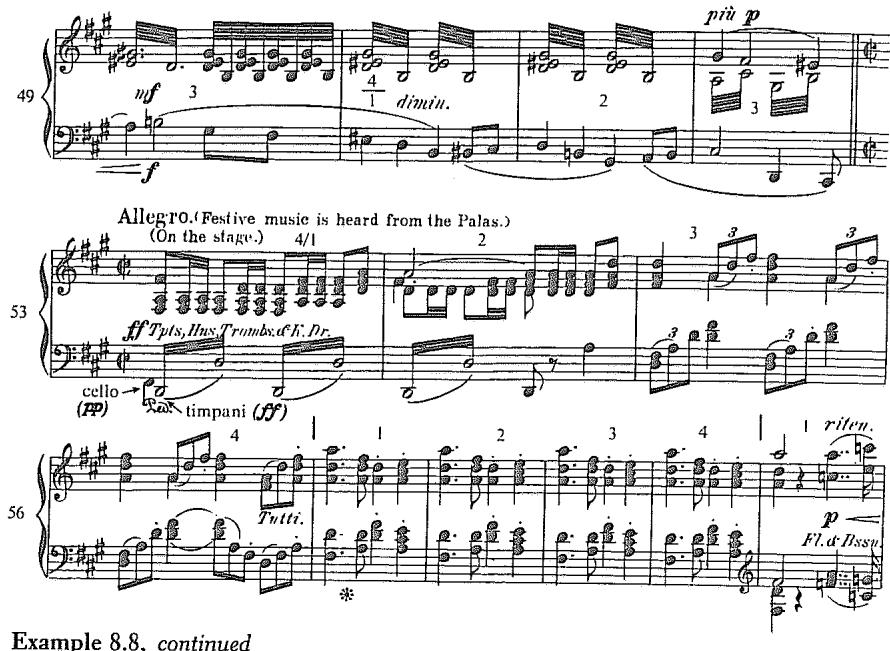
中文讲解
本段为第 26 页的图像或乐谱占位符(非独立图注)。由于图像数据省略,具体内容需查看原图本身;这里仅记录其在版面中的位置属性。
第5段(P0189)
原文复述
The other recurring motive labeled in Example 8.8 is the Frageverbot (“ban on questioning”). This motive does not have the characteristics usually thought to mark a leitmotif. First, it is originally vocal, not orchestral (Lohengrin sings it to Elsa in Act I, Scene 3). More important, it is a complete, eight-measure phrase—a sentence (2 + 2 + 4)—that in Example 8.8 is broken up into two halves (mm. 18–21 plus mm. 32–35). In its original form in Act I, the phrase ends with a simple authentic cadence—imperfect, with a major third. It is thus harmonically “closed.”
中文讲解
本段介绍第三个重要动机——Frageverbot(“禁问”),它与一般理解的主导动机不同:第一,它原本是人声旋律(罗恩格林在第一幕第三场对艾尔莎所唱),而非先在管弦乐中出现;第二,更重要的是,它本身是一个完整的八小节乐句——一个 2+2+4 的"sentence”(呈示—继续—结束)结构。在 Example 8.8 中,它被拆成两半(mm. 18–21 与 mm. 32–35)。它在第一幕原作中以一个不完全的正格终止(完满的属到主,但主音上方为大三度)结束,因此在和声上是"闭合"的。
这一段为下一段比较它在第二幕中如何被拆开使用、并与《汤豪舍》第三幕朝圣者合唱曲作对比埋下伏笔:闭合的乐句一旦被拆开,动机本身从"独立闭合的曲式单元"变为"可嵌入戏剧语境的指代符号”,正是一般主导动机不承担的功能。
补充说明
“Frageverbot"译为"禁问/禁止询问”,指罗恩格林对艾尔莎提出的不得询问其来历的条件。
第6段(P0190)
原文复述
Example 8.9. Lohengrin, Act II, Scene 1 (excerpt) From Richard Wagner, Lohengrin (G. Schirmer Opera Score Editions). Copyright 1963 by G. Schirmer, Inc.
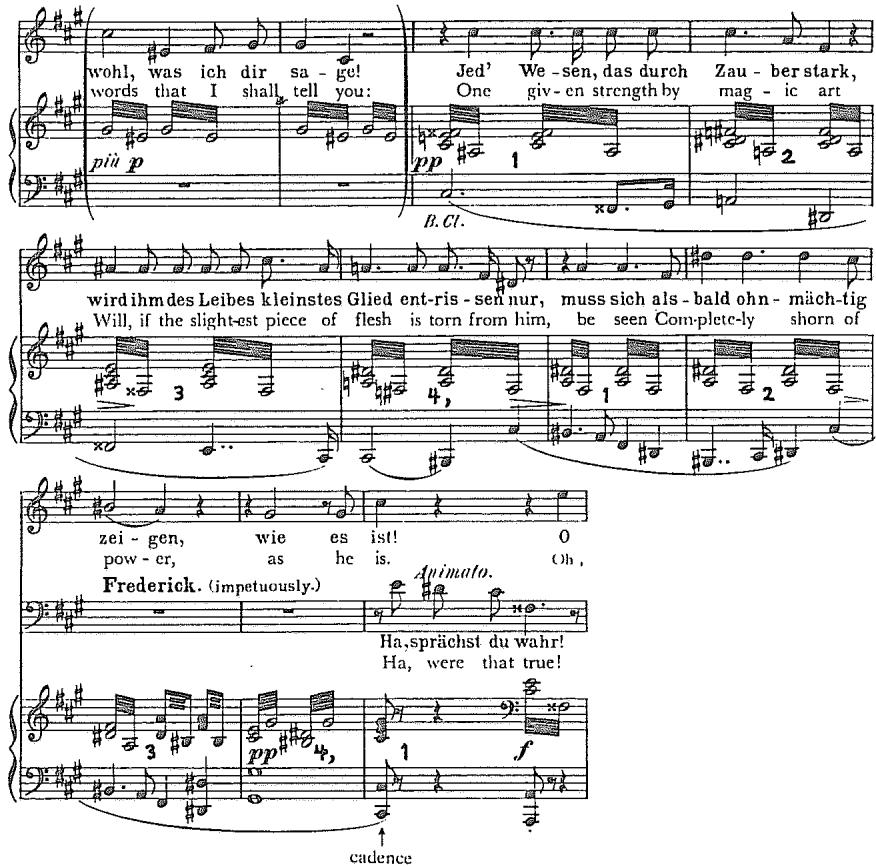
中文讲解
本段为 Example 8.9 的图注:罗恩格林第二幕第一场节选,节选自理查·瓦格纳《罗恩格林》(G. Schirmer 歌剧总谱版),版权归 G. Schirmer 公司所有(1963)。该谱例是 P0185 所预告的位置——即 Ortrud 与 Telramund 对话中两个动机首次合并为完整乐句之处。由于内嵌图像数据已省略,需查看原谱。
第7段(P0191)
原文复述
The use of the Frageverbot in Example 8.8 differs significantly from that of the elder pilgrims’ chorale in the Prelude to Act III of Tannhäuser (discussed earlier). There a complete piece was played through, its phrases merely separated by parenthetical interruptions. Here it is the halves of the closed phrase itself that do the interrupting, as may be gathered by connecting m. 17 directly with m. 22 and by noting how Motive 1 is interrupted after mm. 30–31. Like the D major festive music, the two halves of the Frageverbot are used more as dramatic references than as parts of a musical structure; in this sense they do indeed function as leitmotifs. The type of musical continuity thus created—a continuity in which dramatic ideas count for at least as much as musical ones—points to the radically new musical discourse that is evident in Wagner’s music dramas.
中文讲解
本段把 Example 8.8 中 Frageverbot 的使用方式与早先讨论的《汤豪舍》第三幕前奏曲中老年朝圣者合唱曲的使用进行对比。两者的根本差异在于:《汤豪舍》中是一首完整的曲子被演奏,其乐句之间只是被"插入"所隔开;而此处是"闭合乐句自身"的两半在做打断——读者可通过把 m. 17 与 m. 22 直接相接、以及观察到 Motive 1 在 mm. 30–31 后被打断来体会这一点。与 D 大调节庆段落一样,Frageverbot 的两半在此更像是戏剧性的指代,而非音乐结构的一部分;就这一点而言,它确实起着主导动机的作用。由此产生的连续性是一种"戏剧意念与音乐意念至少同等重要"的连续性,它指向瓦格纳乐剧中全新音乐话语的核心特质。
本段是小节 8.7 的关键过渡:从前面对动机形态(终止、和声闭合性)的分析,转向动机用法所创造的"新话语"(radically new musical discourse),为随后以 Example 8.10 的对句深入分析诗律与音乐节奏的关系做铺垫。
补充说明
“老年朝圣者合唱曲”(elder pilgrims’ chorale)在《汤豪舍》第三幕前奏曲中以完整合唱形式呈现,被解释为与罗马朝圣相关联的独立结构;此处与之形成"完整曲目 vs. 拆解乐句"的对比。
第8段(P0192)
原文复述
The effect of Wagner’s leitmotif technique on the setting of his verse may be seen in Example 8.10, one of the most impressive moments in all of Lohengrin. This rhyming couplet (“Nur Eine ist’s, der muß ich Antwort geben:/ Elsa. Elsa! wie seh’ ich sie erbeben!”) forms the conclusion of a brief dialogue between Lohengrin and Telramund, consisting of three poetic quatrains plus the couplet. The dialogue (which begins with Lohengrin’s “Nicht dir, der so vergaß der Ehren”) is in the key of A minor. Harmonically, the final couplet modulates from C major back to A minor; it then leads—through a deceptive cadence reminiscent of the Fate motive from the Ring—to the following number, a quintet in C minor.
中文讲解
本段引入本节最具代表性的分析谱例——Example 8.10,被作者称为整个《罗恩格林》中最让人印象深刻的时刻之一。文本是一段押韵的对句:“Nur Eine ist’s, der muß ich Antwort geben:/ Elsa. Elsa! wie seh’ ich sie erbeben!",即"只有一人我必须给她答复:艾尔莎!艾尔莎!看她颤抖得多么厉害!"。它是罗恩格林与特特拉蒙德简短对话(共三段诗体四行加上结尾对句)的结尾部分。该对话以罗恩格林的"Nicht dir, der so vergaß der Ehren”(“不是你,你这忘记了荣誉的人”)起始,调性为 a 小调。结尾的对句在和声上从 C 大调转回 a 小调,再经一个让人联想到《指环》中"命运动机"的伪终止,引向下一首——C 小调的五重唱。
作者让读者注意三层信号:第一,Example 8.10 是主导动机手法作用于诗句设置(setting)的代表样本;第二,结尾对句既是回归主调的结束,又是过渡到下一曲的开端;第三,从 a 小调经伪终止到 C 小调五重唱,整体体现了瓦格纳把动机化织体、诗律、和声运动揉合在同一个片段中的方式。
补充说明
诗词原文"Nur Eine ist’s, der muß ich Antwort geben"译为"只有一人我必须给她答复";“Elsa. Elsa! wie seh’ ich sie erbeben!“译为"艾尔莎!艾尔莎!看她多么颤栗!"——erbeben 在德语中意为"发抖、颤栗”,描述罗恩格林对艾尔莎激动反应的感叹。
第9段(P0193)
原文复述
Example 8.10. Lohengrin, Act II, Scene 5 (excerpt)
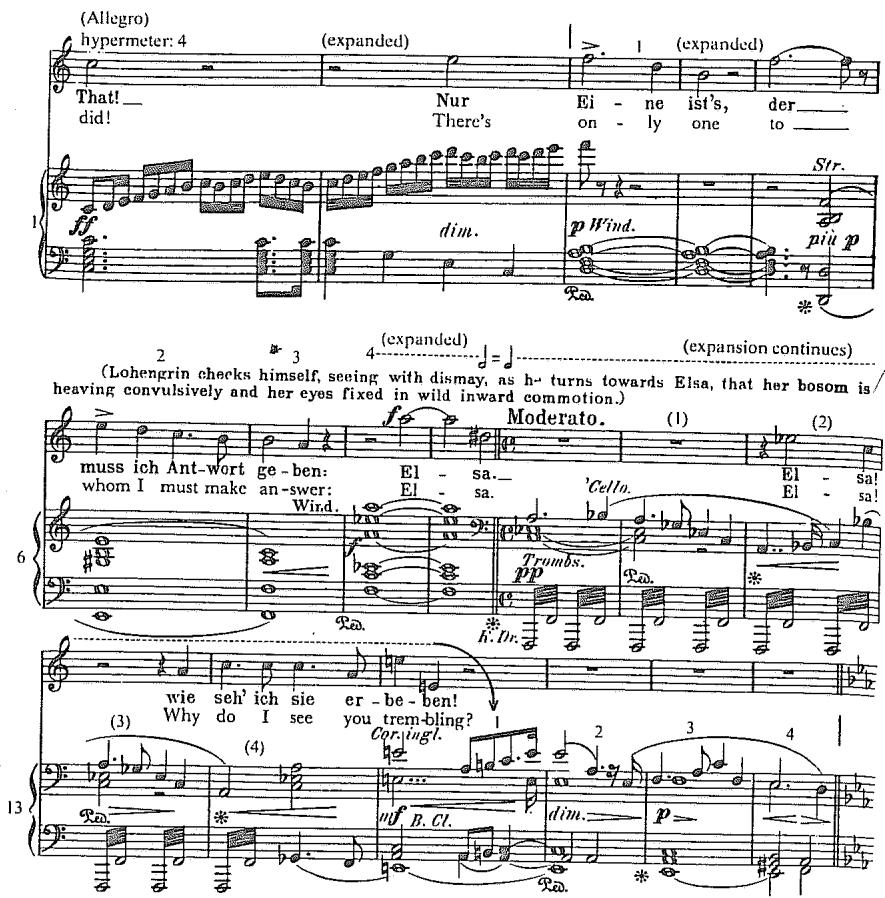
中文讲解
本段为 Example 8.10 的图注:罗恩格林第二幕第五场节选。该谱例是 P0192 起所要分析的核心对象——奥尔特鲁德-罗恩格林对句以及主导动机手法的具体体现。由于内嵌图像数据已省略,需查看原谱。
第10段(P0194)
原文复述
[第28页图像或乐谱示例,内嵌图像数据已省略;位置与图注保留]
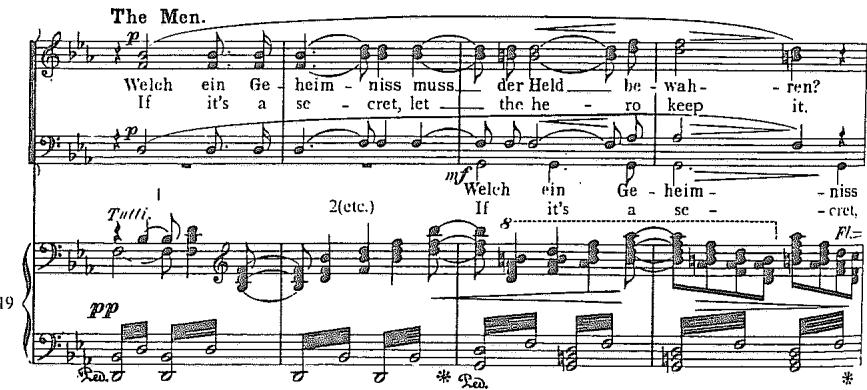
中文讲解
本段为第 28 页的图像或乐谱占位符(非独立图注)。由于图像数据省略,具体内容需查看原图本身。
第11段(P0195)
原文复述
In the midst of the modulation back to A minor, a German augmented sixth chord on F (mm. 8–9 of the example) is temporarily treated as V ⁷ of Bb, and over this extended “false” harmony is stated Ortrud’s Motive 2, in order to show whose evil influence is working on Elsa at this critical moment. Back in the “real” key of A minor, the opening of the Frageverbot (m. 15) reveals the other horn—actually an English horn!—of the dilemma tormenting Elsa. The dilemma is unresolved at this point, however, and so no cadence closes the number, only the deceptive motion to a Neapolitan sixth chord (bII ⁶). Bb was the apparent tonic of Motive 2 several measures earlier; now Bb major sounds mysteriously (“Welch ein Geheimnis”) as Elsa fails to reveal what course she will take. (The Bb harmony soon leads to C minor through a bVII–V ⁷ progression; the new tonic is delayed, however, until Elsa’s entrance in the quintet.) A harmonic sketch of Example 8.10 is given in Example 8.11.
中文讲解
本段是 P0192 引入的谱例的和声—戏剧分析。关键技术点:
· 在转回 a 小调的中途,谱例 mm. 8–9 上的一个 F 上的德国增六和弦暂时被当作 Bb 大调的 V⁷——这是一个"延长的错误和声”。 · 在这层"假"和声上出现奥尔特鲁德的 Motive 2,目的是标记此刻影响艾尔莎的是谁的邪恶力量。 · 回到"真正的" a 小调,m. 15 上 Frageverbot 开头的出现揭示了折磨艾尔莎的另一支角——实际上由英国管(English horn)奏出。 · 两难此刻未解,所以该曲不以终止结束,只以一个到那不勒斯六和弦(♭II⁶)的欺骗进行收束。 · Bb 早先几小节还作为 Motive 2 的表面主音,此处 Bb 大调以神秘色彩再现(歌词"Welch ein Geheimnis",“怎样的秘密啊”),与艾尔莎未能透露自己的决定相呼应。 · 随后 Bb 和声通过 ♭VII–V⁷ 进入 c 小调;这个新主音却被推迟到艾尔莎在五重唱中进入后才真正确立。 · 最后一句预告 Example 8.11 给出的和声缩略图。
本段的精妙处在于:动机、和声、歌词(“Welch ein Geheimnis”)三者一一对应;写作中"两难的另一角"用"英国管"点出音色,提示读者这是融合戏剧与管弦乐语汇的典型处。
补充说明
“德国增六和弦”(German augmented sixth chord)功能上常被作为主调的下属区域的替代;此处被临时改写为 Bb 的 V⁷,是和声"移花接木"手法的范例。"♭II⁶"即那不勒斯六和弦(Neapolitan sixth),在小调中以主音下方大二度的根音构成。“two horns of the dilemma"直译为"两支角”,此处"角"取 dilemma 词源 horns of a dilemma 之义,比喻进退两难的两端。
第12段(P0196)
原文复述
Example 8.11. Voice-leading reduction of Lohengrin, Act II, Scene 5, excerpt in Example 8.10
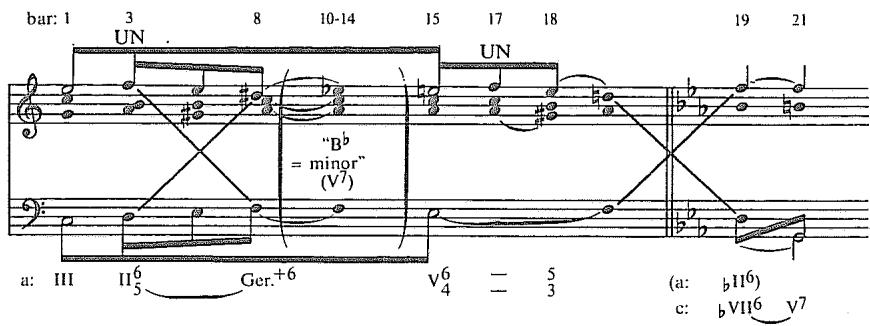
中文讲解
本段为 Example 8.11 的图注:Example 8.10(罗恩格林第二幕第五场节选)的声部进行缩略图。缩略图以最简洁的形式给出 P0195 中所描述和声运动的轮廓,是后续讨论超拍(hypermeasure)层级时引用的依据。由于内嵌图像数据已省略,需查看原谱。
第13段(P0197)
原文复述
It is remarkable that the same passage functions both as return to the main key (A minor) and as transition (to the quintet). Still more remarkable, perhaps, is the rhythmic aspect of Example 8.10. The preceding three quatrains of the dialogue are written in iambic tetrameter, and the musical rhythm is also fairly simple: Lohengrin’s four-bar hypermeter alternates with Telramund’s three-bar hypermeter. (The contrast is dramatically suggestive: presumably, the regularity of four-bar hypermeter befits Lohengrin’s noble character, while the short-breathed irregularity of Telramund’s expresses his devious weakness.) At “Nur Eine ist’s” the poetic meter changes to pentameter, however, in preparation for the iambic pentameter of the quintet.
中文讲解
本段提出观察的两层"值得注意之处":
· 第一层和声上:同一段过门同时完成回归主调(a 小调)与进入下一曲(五重唱)的双重功能——这是瓦格纳弱化终止式独立性的标志。 · 第二层节奏上更具特色:前三个诗体四行(quatrains)原本都用抑扬格四音步(iambic tetrameter),音乐节奏亦简单:罗恩格林的四小节超拍与特特拉蒙德的三小节超拍交错。作者进一步暗示这种对比的戏剧含义:罗恩格林规律的四小节超拍贴切其高贵性格;特特拉蒙德短促、不规则的三小节超拍正合其诡诈软弱。 · 当对句进入"Nur Eine ist’s"时,诗体韵脚由四音步变为五音步(pentameter),是为五重唱的抑扬五音步做准备。
本段为下一段对超拍层级的"模糊化"和 Example 8.10 中第一小节既是第四又是第八小节这种双重位置做铺垫;同时提示读者诗律与人物性格被作者明确关联。
补充说明
“抑扬格”(iambic)指轻—重音步;“四音步”(tetrameter)指每行四个音步。本段是小节中第一次明确把超拍(hypermeter)与角色性格联系起来的论述。
第14段(P0198)
原文复述
At about the same time, the hypermeter starts to become somewhat ambiguous. The first measure of Example 8.10 (a C major cadence) is a fourth measure hypermetrically, and the eighth measure of an eight-measure phrase. This measure is expanded to two by means of a two-measure orchestral upbeat used repeatedly throughout the dialogue. The first line of the couplet appears also to undergo an expansion, but at its beginning; the syncopated entrance of the second line (“Elsa!”) catches the listener off guard, much as Lohengrin is caught by Elsa’s agitation.
中文讲解
本段说明超拍为何开始变得模糊。
· Example 8.10 的第一小节(C 大调终止)是双重的:超拍上是第四小节,同时又是一个八小节乐句的第八小节。 · 它通过对话中反复出现的两小节管弦乐上拍(upbeat)被扩张为两小节。 · 对句第一行虽然也发生扩张,但发生在它的开头;第二行"Elsa!“的切分进入猝不及防——正如罗恩格林被艾尔莎的激动所震动。
这一段在为 P0199 中引入的"常规配置(Example 8.12)“作准备:把不属于规则超拍层级的扩张(augmentation)逐一列出,正是要剥离主导动机和管弦乐上行所塑造的戏剧停顿感。
补充说明
“超拍”(hypermeasure)指由 2–4 个常规小节组成的、相当于一个乐句或更大单位的更高一级节拍层级。“切分进入”(syncopated entrance)指弱拍或非重拍上的强调进入。
第15段(P0199)
原文复述
In Example 8.12 I have attempted a more conventional setting of the couplet, a setting such as Wagner might have made if this were Rienzi instead of Lohengrin. This setting also corresponds to the hypermetrical analysis shown in Example 8.10. Referring to that example, the II ⁶ harmony (mm. 3–5) is interpreted as an expansion of a single measure. Lohengrin’s first cry of “Elsa” (mm. 8–9) represents a fourth measure that is initially expanded to two measures, but also includes the entire quotation of Motive 2 over the “frozen” augmented sixth chord. This quotation establishes its own hypermeter, as Motive 2 always does, but it is a surface hypermeter only; in the underlying hypermeter, the augmented sixth chord is an upbeat to the ⁶ chord that arrives in m. 15.
中文讲解
本段引入作者重写的"常规版”——Example 8.12,作为对比。作者设想:如果是《黎恩济》(瓦格纳早期更传统、更"意大利化"的歌剧)而非《罗恩格林》,对句可能会被这样设置;同时该设置与 Example 8.10 中的超拍分析对应。
· II⁶ 和声(mm. 3–5)被解读为单小节的扩张。 · 罗恩格林第一声"Elsa”(mm. 8–9)代表第四小节,先扩张为两小节,其中包含在"凝固"的增六和弦上完整引用 Motive 2。 · 该引用建立它自己的超拍(Motive 2 总是如此),但这只是表面超拍;在底层超拍中,这个增六和弦是 m. 15 出现的 ⁶ 和声的上拍。
这一段是全文技术最浓缩的一处:把表层超拍(surface hypermeter,由动机或事件短期设立)与底层超拍(underlying hypermeter,由和声进行规定的真正乐句)作区分,这是 P0200–P0201 把瓦格纳真实的"超拍叠加"以及"常规版本"剥去这些叠加后的差异说清楚的关键。
补充说明
“黎恩济”(Rienzi,1842)是瓦格纳的第三部歌剧,采用较为传统的大歌剧风格,与《罗恩格林》(1850)的乐剧语言有显著差异,作者以此作反衬。
第16段(P0200)
原文复述
The new tempo at m. 10—exactly twice as slow as the preceding tempo, as Wagner indicates in his full score—naturally enhances the feeling of sudden stillness connected with the expansion of the augmented sixth chord. The new orchestral color (low brass and timpani) also helps to create this effect. The surface hypermeter of the Ortrud quotation prepares the four-bar hypermeasure on the dominant of A minor (see Example 8.11); the latter hypermeasure, which quotes the Frageverbot, belongs to the underlying hypermeter.
中文讲解
本段解释 m. 10 处的新速度——按瓦格纳在总谱中标注,恰好是前速的一半——自然强化了与增六和弦扩张相伴随的"突来的静止感"。新的管弦乐音色(低铜管与定音鼓)也帮助制造这一效果。
超拍的两层继续被强化:奥尔特鲁德引用的表面超拍为随后 a 小调属音上的四小节超拍做准备(参见 Example 8.11);这个四小节超拍引用了 Frageverbot,属于底层超拍。
由此,整段对句的时间架构呈现出三层叠加:表层的奥尔特鲁德 Motive 2 引用、表层的(更慢)四小节超拍、底层的和声—终止性超拍——这种分层是瓦格纳将动机戏剧意义与和声结构意义绑定的关键方式。
第17段(P0201)
原文复述
Example 8.12 eliminates all expansions and thus omits the Ortrud motive entirely. The setting of the second line of the couplet (over the dominant harmony) is highly hypothetical—more so, that is, than that of the first. In order to show the actual temporal relationships more clearly, I have maintained the original tempo throughout, although the second line thus occupies two four-bar hypermeasures (at the faster tempo) instead of one (at the slower tempo). The cry of “Elsa” beginning the second line is made to wait for a new hypermeasure, contrasting with the breathless effect (“Lohengrin checks himself”) of Wagner’s setting. ²² The Frageverbot is used only as a postlude after the final cadence, although it could also have been used over the ⁶⁄₄ chord. ²³ And of course there is no transition to the quintet; the number is made to end conventionally, as if a recitative were to follow.
中文讲解
本段是 Example 8.12 的具体差异清单:
· 它去掉了所有的扩张,因此完全略去了奥尔特鲁德的 Motive 2; · 对句第二行(在属音和声上的设置)具有很强的假想性,比第一行的更甚; · 为更清楚地展示真实的时间关系,作者保留了原速贯穿始终,尽管第二行因此占了两个四小节超拍(按快速度),而瓦格纳的设置只占一个(按慢速度); · “Elsa"开头被推到新的超拍才出现,与瓦格纳设置中"罗恩格林倒吸一口气”(“Lohengrin checks himself”)的屏息效果形成对照(脚注 22); · Frageverbot 仅在终止之后作为"后奏"被使用,虽然也可以放在 ⁶⁄₄ 和声之上(脚注 23); · 自然也没有到五重唱的过渡——该曲像传统歌剧那样以常规方式结束,仿佛接下来是宣叙调。
这段话让读者清楚地看到:瓦格纳此处"诗律—超拍—和声—动机"的复杂叠加不是巧合,而是用非常规手段刻意营造戏剧停顿、动机指代与和声张力并存的乐段结尾方式。
补充说明
脚注 22、23 在此以编号形式出现;additional_information 部分给出脚注内容的复述。
第18段(P0202)
原文复述
Example 8.12. Recomposition of Lohengrin, Act II, Scene 5, excerpt in Example 8.10
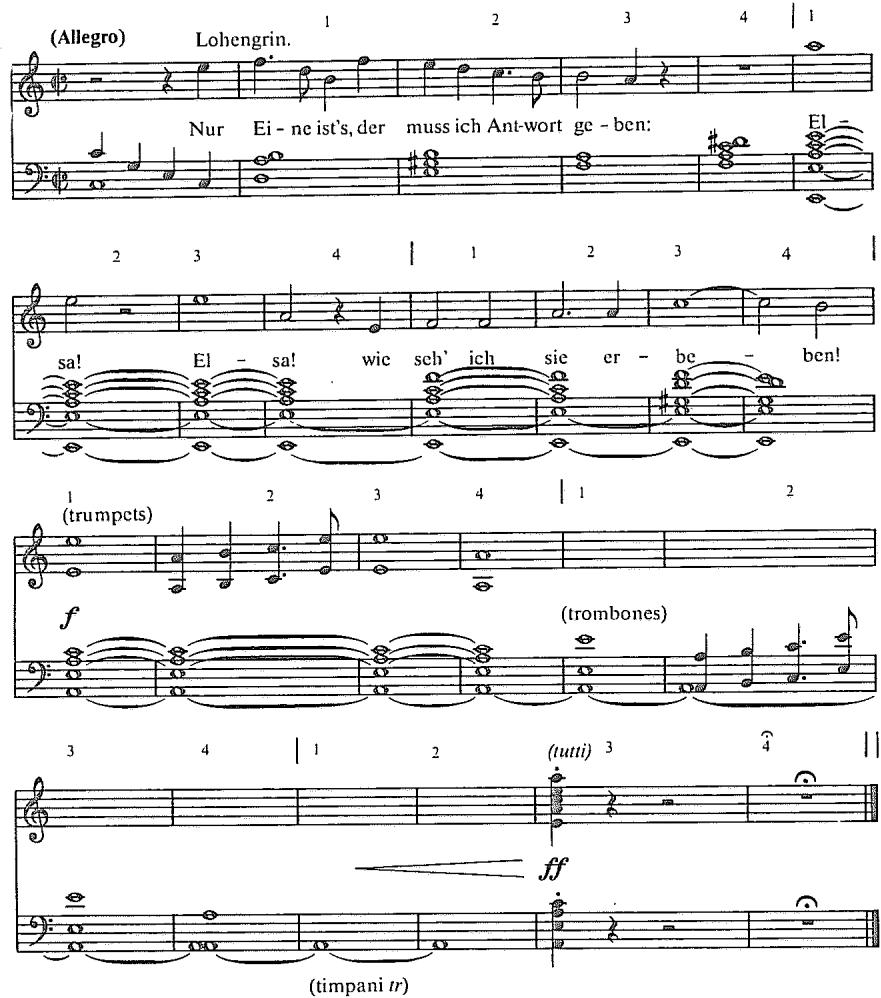
中文讲解
本段为 Example 8.12 的图注:以更"常规"方式重写的罗恩格林第二幕第五场节选。该谱例是 P0199–P0201 所描述的、把 Example 8.10 中所有扩张、奥尔特鲁德 Motive 2 引用、Frageverbot 处理、过渡至五重唱的部分移除后的版本,作为与瓦格纳实际设置的对比。由于内嵌图像数据已省略,需查看原谱。
第19段(P0203)
原文复述
The fitting of Wagner’s pentameter (five stresses per line) to a four-bar hypermeter in Example 8.12 is not as unreasonable as it might appear at first; Wagner normally does the same thing himself. Elsa’s part in the quintet, for example, is a poetic quatrain in iambic pentameter, but it is set to a symmetrical thirty-two-measure period (4 × 8). This is standard practice in 19th-century vocal music. For Wagner, a more flexible method of wedding verse to phrase rhythm had to await a more flexible type of verse. Wagner’s setting of this couplet shows admirable rhythmic flexibility, but it is unfortunately the exception rather than the rule in his romantic operas.
中文讲解
本段为本节作结。
首先为 Example 8.12 辩护:把瓦格纳的五音步(每行五个重音)压入四小节超拍初看似乎不合常规,但事实上瓦格纳本人也通常这样处理。例如五重唱中艾尔莎的唱段,诗体上是一个抑扬五音步的诗体四行(quatrain),但音乐上却设置成一个对称的 32 小节周期(4×8)。这本身就是 19 世纪声乐的标准做法。
其次给出更大的判断:要让瓦格纳以更灵活的方式把诗与乐句节奏焊接在一起,必须先有更灵活的诗体;本节示例中对句的设置展示了令人赞叹的节奏灵活性,但在瓦格纳的浪漫派歌剧中,它仍是例外,而非通例。
本段为小节划下句号:用 Example 8.12 这个反事实(counterfactual)分析与瓦格纳自己的实测标准对比,指出这种自由化诗律—超拍绑定的能力在《罗恩格林》之时还未成熟,但其雏形已在此显现。
补充说明
“诗体四行”(quatrain)指四行构成的诗节;“对称的 32 小节周期(4×8)“意为四个八小节单位构成的对称乐段,这是 19 世纪 a–b–a′–b′ 类对称性的常见配置。
脚注 / 边栏 / 图表 / 附加信息(如有)
本节附带材料如下:
-
脚注 21(出现在 P0186):作者在讨论 D 大调节庆音乐(mm. 53–61)作为"色彩性插入”、在连贯乐句内无功能意义(除最初的和声欺骗)时引用。结合上下文,作者意在指出此处的 D 大调之所以"无功能”,是因为它没有真正引入新主调,而是作为一种音块式的插入出现。该脚注的作用是支持 P0186 的判断:D 大调段与瓦格纳在《莱茵的黄金》中段所代表的"零和声运动"的精神相一致。
-
脚注 22(出现在 P0201):当 Example 8.12 把"Elsa"推到新的超拍才出现时,与瓦格纳原作中"罗恩格林倒吸一口气"(“Lohengrin checks himself”)的屏息效果形成对比;脚注 22 通常对"倒吸一口气"的原谱表情提示或文字说明提供出处。其作用是支持 P0201 的判断:屏息感源自于把"Elsa"的进入置于既定的和声上拍之内,而非全新超拍。
-
脚注 23(出现在 P0201):作者指出 Frageverbot 在常规设置中可以放在 ⁶⁄₄ 和声之上,而不是作为终止后的后奏;这一脚注是举例性质地说明:把动机重新分配到不同和声位置是"常规设置"可能采用的几种解法之一,以反衬瓦格纳实际选择的非常规性。
-
图(Examples 8.8、8.9、8.10、8.11、8.12):图像数据已省略,仅保留图注与位置。Example 8.8(罗恩格林第二幕引子 mm. 1–61)支撑 P0185–P0191 中对 Motive 1、Motive 2、Frageverbot 的讨论;Example 8.9(第二幕第一场节选)对应 P0185 所述 Motive 1 与 Motive 2 合并为完整乐句的位置;Example 8.10(第二幕第五场节选)支撑 P0192–P0201 对对句、和声、动机与超拍层级的分析;Example 8.11 给出 Example 8.10 的声部进行缩略图,是 P0195、P0199、P0200 中所引用底层超拍的根据;Example 8.12 作为反事实重组(recomposition),支撑 P0199–P0203 对比性结论。
💡 本节核心要点
- 主导动机的形态不必本身即可终止;Example 8.8 中的 Motive 2 是两小节减七和弦模进结构,缺乏终止倾向,瓦格纳通过把尾部改动并在动机合并处改写,达成 M5M1 与 M5M2 合并为完整乐句的’织体—剧情’双重焦点。
- Frageverbot 虽然原本是闭合完整的 8 小节乐句,但在 Example 8.8 中被拆为两半,作为戏剧指代而非乐句单位使用——闭合乐句的可拆分性,正是瓦格纳把主导动机从’曲式单元’变成’语义单位’的关键转变。
- 主导动机在诗句—旋律层面的融合以 Example 8.10 为典范:同一段(对句)同时完成回归 a 小调与过渡到 c 小调五重唱的双重功能,并通过伪终止、增六和弦上错位的 Motive 2、那不勒斯六和弦、♭VII–V⁷ 等手段制造未解的两难。
- 本段旋律、和声、诗律各自携带着’表层超拍’与’底层超拍’的双重节拍层:m. 8–9 处减慢一半的新速度、低铜管与定音鼓的音色改变、加上管弦乐上行所引入的扩张,使得表层奥尔特鲁德 Motive 2 引用恰好对齐属音上的四小节 Frageverbot 底层超拍。
- 作者的重组谱例(Example 8.12)作为反事实工具,揭示瓦格纳通过扩张、错位、动机后置/前置等手段所达到的’屏息式’戏剧连续性,并指出这种灵活诗律—超拍绑定在《罗恩格林》中仍是例外,而非 19 世纪声乐通则。
🔑 关键术语
- Leitmotif(主导动机):本节中指瓦格纳用以代表特定人物、意念或戏剧情境的短小旋律/和声单位;本节强调其用法可超越’完整曲式单元’的形态,本小节的核心在于揭示它如何在不同体裁语境下被拆分、引用、移位,并与诗律、和声交织运作。
- Frageverbot(禁问动机):罗恩格林所唱的’禁止询问’条件之旋律;在 Example 8.8 中被拆为两半(mm. 18–21 与 mm. 32–35),原作是闭合的 2+2+4 八小节 sentence,本节论证其被拆分后本质上是作为戏剧性指代起主导动机作用。
- cadential treatment(终止处理):使一旋律/和声片段形成 V→I 或相应的终止进行。本节中 Motive 2 在 Example 8.8 中因自身只勾画单一减七和弦,难以独立终止;通过改动 Motive 2 尾部并使两动机合并,才能在 Example 8.9 处获得终止感。
- Neapolitan sixth(那不勒斯六和弦,♭II⁶):在主音下方大二度的根音上构成的第一转位和弦;在 P0195 中,作为’未解两难’的和声替代——曲子停在 ♭II⁶ 这一欺骗进行上,而非真正的终止。
- hypermeasure / hypermeter(超拍/超拍节奏):由若干常规小节(多为 2 或 4 个)构成的更高一级节奏单位,可视为乐句规模的重拍层级。本节的关键创新是提出 Example 8.10 中存在表层(surface)与底层(underlying)两层超拍的叠加:表面由奥尔特鲁德 Motive 2 引用建立,底层由 Frageverbot 与和声进行规定。
- syncopated entrance / expansion / upbeat(切分进入 / 扩张 / 上拍):本节用于刻画对句中加插入/延长小节的技术术语:两小节管弦乐上拍(upbeat)使原本的第八小节扩张为两小节;切分进入(syncopated entrance)使’ Elsa!‘的进入猝不及防,模拟角色屏息之感。
8.8 [描述性拆分] Leitmotifs, Hypermetrical Ambiguity, and Musical Prose in Lohengrin
第1段(P0204)
原文复述
If the above metrical analysis of Example 8.10 is accepted, Wagner’s use of leitmotifs in this passage can still be related to Classic phrase rhythm, in particular to what Wagner himself called “quadratic” (four-bar) construction. Traditional phrase rhythms prevail throughout the set pieces of Lohengrin, although the hypermeter is not always four-bar. Passages of recitative (not so identified by Wagner) naturally dispense with hypermeter altogether, as recitative almost always had in the past.
中文讲解
本段对前文对 Example 8.10 的节拍分析做出退一步的肯定:即便接受该分析,瓦格纳在此处对主导动机(leitmotif)的使用仍能与古典乐句节奏相挂钩,特别是与瓦格纳自己所称的「正方结构」(quadratic construction,即四小节一句的构造)相关联。
本节的关键论点在于:尽管瓦格纳使用主导动机这一非古典手段,但《罗恩格林》中成套的乐曲(set pieces)仍以传统乐句节奏为基础,只是超拍子(hypermeter)并非一律四小节。宣叙调(recitative)则按其本性完全抛弃超拍子,这与宣叙调在更早时期的一贯做法一致。
本段为本小节定下了基调:瓦格纳的创新并未完全抛弃古典节奏逻辑,而是在其框架内运作,这为后面讨论超拍子的模糊与「音乐散文」作了铺垫。
补充说明
「quadratic」是瓦格纳本人的用语,指四小节为一句的标准古典乐句构造;「hypermeter」指跨越多个小节的更高一级拍子组织。需注意瓦格纳本人并未把剧中的宣叙调明确标记为宣叙调,这段叙述只是作者的事后分析。
第2段(P0205)
原文复述
It must be remarked, however, that the use of a strongly recognizable melody—such as a leitmotif—as the content of an expansion makes it more difficult to recognize the expansion as such. When a listener recognizes a recurring melody, the act of recognition gives that melody a certain emphasis, making it seem more “present.” As a quotation, the melody tends to be heard not only in its immediate context but in association with other statements of the same melody. In Classic instrumental music a similar phenomenon sometimes occurred, especially in the form of a cadenza or “purple patch”: in either of these types of parenthetical expansion, it was common to quote a principal theme within a parenthesis.
中文讲解
本段提出一个关键的知觉层面问题:当扩展乐句(expansion)的内容是一条高度可识别的旋律(尤其是主导动机)时,听者很难把它仍然视作「扩展」,因为识别行为本身赋予了这条旋律额外的「在场感」(presentness)。
作者由此引出一个重要现象:这种旋律被当作「引用」(quotation)来听,它不仅在当前语境中响起,还与该旋律此前的所有陈述相联。
为说明这一点,作者回溯到古典器乐中已有的类似现象——华彩段(cadenza)和「紫段」(purple patch,即过分华丽的插入段)。这两类都是「括号式扩展」(parenthetical expansion),其共同点在于:作曲家会把主部主题放进括号里引用。本段为下一段引入贝多芬与瓦格纳的对照作了概念准备。
补充说明
「purple patch」原是文学批评用语,指文本中过分华丽的段落,此处借用于音乐;「parenthesis / parenthetical」在音乐分析中指嵌入主句流中的插入性段落。需注意作者并未宣称这种引用是瓦格纳首创,而只是把它与古典传统联系起来。
第3段(P0206)
原文复述
But in Classic music the necessary clarity of effect—separating the basic phrase from the expansion—was generally provided by harmonic motion, often reinforced by changes in texture and dynamics. Later, when the harmonic context of expansions became (at times) more ambiguous—as it first does, perhaps, in some of Beethoven’s quotations (the trumpet calls in the Leonore Overtures Nos. 2 and 3, for example, or the quotation of Florestan’s aria near the beginning of them)—it must have become difficult for listeners not to lift these melodic nuggets out of their contexts, elevating them to a higher perceptual status than the concept of “parenthesis” would seem to imply. The result, for the listener, was (and is) likely to be an increased emphasis on the perception of foreground melodic recurrences, probably at the expense of larger tonal and rhythmic motions that may still be present, and that in Beethoven’s case certainly are present. (Wagner’s well-known admiration for Beethoven’s overtures is surely relevant in this connection.)
中文讲解
本段沿前段思路进一步追问:在古典音乐中,基本乐句与扩展之间的清晰区分是靠和声进行(并辅以织体与力度的变化)来维持的;贝多芬是这一边界开始模糊的转折点。
作者给出两个具体例证:《莱奥诺尔》序曲第 2、第 3 号中的小号号角动机,以及《莱奥诺尔》序曲开头对弗洛雷斯坦咏叹调的引用。当和声语境变得模糊时,听者难以不把这些「旋律金块」(melodic nuggets)从其语境中抽离出来,赋予它们高于「括号」概念所暗示的知觉地位。
本段的核心结论是:这种模糊化导致听者知觉的注意力转向前景的旋律再现,可能以牺牲更大尺度的调性与节奏运动为代价——而后者在贝多芬那里其实仍然存在。括号中特别指出,瓦格纳对贝多芬序曲的著名崇敬在此处高度相关,暗示瓦格纳是承接了贝多芬的这条线索。
补充说明
「Leonore Overtures」指贝多芬为歌剧《费德里奥》(最初名《莱奥诺尔》)所写的多首序曲;「Florestan’s aria」是剧中弗洛雷斯坦的一段咏叹调,在序曲中以纯器乐形式被引用。脚注 24 出现在本段末尾,作者未在本段内对其内容展开。
第4段(P0207)
原文复述
This is the aspect of Wagner’s leitmotif technique that Schenker criticized so strongly—its “burdening” of the musical foreground with such melodic quotations, which (according to him) eroded the listener’s inclination or capacity to hear in larger sweeps. Whether Wagner himself, as a composer, suffered from a similar disability is another question entirely. Schenker strongly implied that he did. The work of Lorenz, Bailey, and some others (including David Lewin) suggests otherwise.
中文讲解
本段把前两段的音乐学问题与对瓦格纳的批评史直接挂钩。申克(Schenker)激烈批评的正是瓦格纳主导动机技法中「以旋律引用加重音乐前景」(burdening the musical foreground)的一面——按申克的看法,这种做法削弱了听者在更大跨度上聆听的能力。
然而作者紧接着做了一个重要的区分:作为作曲家的瓦格纳本人是否也「听不见」这种更大尺度的运动,是另一个问题。申克强烈暗示他确实如此,但 Lorenz、Bailey 以及 David Lewin 等人的研究则指向相反的方向。
这段话的作用是为本小节余下的具体分析定调:作者并不接受申克对瓦格纳作品的简单否定,而是要从节拍与乐句分析的角度重新评估瓦格纳是否真的「不连贯」。
补充说明
脚注 25 出现在本段末尾,作者未展开其内容。Lorenz、Bailey、Lewin 均是 20 世纪瓦格纳研究中的重要分析学派代表,作者在此以「否则论」的代表与申克对举。
第5段(P0208)
原文复述
Even in Lohengrin—that is to say, before the Ring—there are passages in which the sense of musical continuity, based on leitmotifs, seems problematic. In Example 8.8, the orchestral introduction to Act II, mm. 18–35 form one such passage. After the half cadence at m. 17, the first half of the Frageverbot sounds over the repeated low C#. It is difficult to know whether a real tonic harmony is intended here or whether the bass C# continues to determine the harmony (as dominant). This harmonic ambiguity seems to distance the Frageverbot from present dramatic reality, intensifying its “remembered” quality—and, musically, its status as a parenthetical interpolation. Then, after Motive 2 has established a diminished seventh harmony over C#, the bass clarinet motive—which will also figure prominently in the coming scene—seems to cadence on a C# minor harmony (mm. 28–29). But the “cadence” is unconvincing, because it is not the goal of a cadential harmonic progression. Probably the entire passage up to m. 35 is best understood harmonically as a prolongation of the dominant, embodied in the nearly continuous pedal on C# in the timpani. (See the harmonic sketch in Example 8.13.)
中文讲解
本段开启了对《罗恩格林》中一段「可疑」段落的分析,作者特意强调这是在《指环》之前的作品,意在说明问题在瓦格纳成熟期之前已经出现。
作者聚焦 Example 8.8(《罗恩格林》第二幕序奏,mm. 18–35)。第 17 小节半终止之后,Frageverbot(禁止问动机)前半在持续低音升 C 上方出现;由于升 C 既可作主音又可作属音,其和声归属暧昧不明,作者认为这种暧昧反而使动机显得「被记忆着」(remembered),是括号式插入。
随后第 2 动机确立了升 C 上的减七和弦;低音单簧管动机在 mm. 28–29 看似终止于升 C 小调和声,但因不是真正的终止进行而不可信。因此作者主张整段(直到第 35 小节)应被理解为对属音的延长,定音鼓上几乎连续的升 C 持续音是这一和声理解的物质体现。括号中指引读者参考 Example 8.13 的和声缩谱。
本段是「在《罗恩格林》中主导动机衔接确有困难」这一立场的具体例证,为下一段对「哪一段才是真正括号」的进一步反思做准备。
补充说明
「Frageverbot」(直译「禁止提问」)是《罗恩格林》中与「不得问洛恩格林来历」这条戒律相关的主导动机;「pedal」此处指定音鼓上几乎持续的低音升 C,作用相当于持续音/主持续音。Motive 2 与低音单簧管动机在原段中均未展开定义,仅以其编号/乐器指代。
第6段(P0209)
原文复述
Example 8.13. Reduction of Lohengrin, Act II, introduction, mm. 17–35
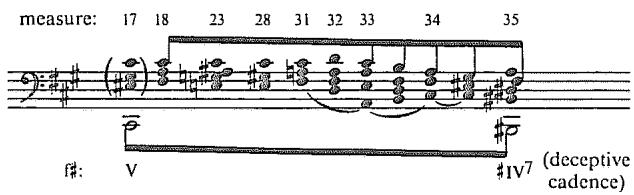
中文讲解
此为 Example 8.13 的图注与图像占位符:标题为「《罗恩格林》第二幕序奏 mm. 17–35 之缩谱」(Reduction of Lohengrin, Act II, introduction, mm. 17–35),位于第 30 页,是为前段关于该段和声结构的论述提供视觉化支撑的分析图表,呼应前段末尾的提示「参见 Example 8.13 的和声缩谱」。
由于原图为缩谱(reduction),其分析内容(哪些和声被归并、哪些声部被保留)需查阅原图方能确认。
补充说明
图像内容已省略;其分析价值在于以简化方式呈现该段的主导和声骨架(升 C 持续音、属音延长、终止点的模糊等),与前段的文字描述互为印证。
第7段(P0210)
原文复述
The strangest moment in the passage, though, is undoubtedly the entrance of the second half of the Frageverbot. The resumption of this eight-measure phrase, in similar scoring, after a hiatus of ten measures might seem to make a parenthesis out of mm. 22–31. And, as Example 8.13 shows, this is a plausible interpretation from the harmonic point of view as well: the 6/4 chord of mm. 18–21 (counting the timpani’s C# as bass) resumes in m. 31 (where C# is still the bass), followed by the cadential harmonic action of the Frageverbot’s second half. Yet originally it was the Frageverbot itself that had seemed parenthetical, not the surrounding music (see above); considerations of texture and motivic continuity had made that interpretation seem inescapable.
中文讲解
本段指出该段中「最奇怪」的瞬间:Frageverbot 后半的重新进入。同一八小节乐句、相近配器、中间搁置十小节——这一结构上的事实让听者可能反过来把 mm. 22–31 视为括号,而把两个半句的 Frageverbot 当作主句。
作者随即补充和声维度的支撑:mm. 18–21 的六四和弦(以定音鼓升 C 为低音)在 m. 31 重新出现(升 C 仍是低音),其后才是 Frageverbot 后半的终止和声动作。
然而本段的真正要点在于这个「然而」:在前文中,正是 Frageverbot(而非周围音乐)原本看起来像括号,织体与动机连续性的考虑使这种解读几乎不可避免。于是形成了两种相反的解读都可成立的局面——这正是本小节「超拍子歧义」最具体的体现。
补充说明
「6/4 chord」即六四和弦,此处为经过性/延长性用法(以定音鼓的 C# 作低音,并不必然意味该和弦的真低音所在)。本段与前段互为对照:前段倾向把 Frageverbot 视为括号,本段则呈现其反面解读。
第8段(P0211)
原文复述
Either way one tries to understand the phrase rhythm, substantial ambiguities remain. In the kaleidoscopic juxtaposition of motives, an impression is created of a music moving in fits and starts, consisting of mere fragments mixed together without an abiding musical logic. It is difficult to tell what is the main thread of musical continuity and what is parenthetical; the rhythmic functions of the various motives are not set in clear relief. (The timpani’s C# is in fact indispensable to the passage; it is the principal element holding the music together at this point.) This is dramatist’s music, not musician’s music, if the distinction may be permitted; Wagner seems to be depicting the dreamlike state of Telramund, who is “musing gloomily” as the curtain rises. This is also, perhaps, the nearest approach in Lohengrin to the suspension of definite phrase rhythm that will be termed “musical prose” in our consideration of Wagner’s music dramas.
中文讲解
本段对前两段揭示的两难做出总结:无论选择哪种解读,实质性的歧义依然存在。
作者用「万花筒式」(kaleidoscopic)描述动机并置所产生的效果:音乐给人「时断时续」的印象,像是碎片拼贴而非有持续逻辑的展开;到底哪条线是主线、哪条是括号、各种动机的节奏功能并未被清晰刻划出来。括号中强调,定音鼓的升 C 实际上是这段音乐唯一的粘合剂。
随后是一个带保留语气的判断:这是「戏剧家」的音乐而非「音乐家」的音乐,瓦格纳在描绘泰拉蒙德开幕时「忧郁沉思」的梦境般状态。本段最后将这一段与本小节标题词之一的「音乐散文」(musical prose,即放弃确定乐句节奏)联系起来——它是《罗恩格林》中最接近这一概念的段落。
此段既是个案分析的小结,也是向下一段(例 8.14 奥尔特鲁德与泰拉蒙德对话)过渡的桥梁。
补充说明
「musical prose」一词被作者用引号标注,预示这是后文将系统讨论的概念;「dramatist’s music」与「musician’s music」的二分是带修辞色彩的说法,作者随即以「if the distinction may be permitted」自我设限,提示这是分析性的对比而非绝对评判。
第9段(P0212)
原文复述
By contrast, the dialogue between Ortrud and Telramund, a portion of which is shown in Example 8.14, is actually less radical from our point of view, despite its blank verse. What is radical about this dialogue is the fact that the musical continuity is carried almost completely by the orchestra, with the voices merely declaiming over it; further, that this occurs not in a recitative or melodrama (where it would be perfectly normal) but in a self-contained piece of arioso character. The hypermeter in the orchestra is quite clear, and it is indicated in the example, but the vocal line sometimes conflicts dramatically with it. The conflict is strongest at Ortrud’s words “Niemand hier hat Gewalt” (mm. 5–6 of the example), which are set to an imitation of the Frageverbot’s head motive—sounded just earlier, and in a metrically normal way, in the woodwinds (mm. 2–3 and 4–5).
中文讲解
本段以「对比」开始,把视角从第二幕序奏那段「音乐散文」切到第一幕奥尔特鲁德与泰拉蒙德的对话(例 8.14),并提出一个反直觉的判断:从本节关注点(超拍子、主导动机衔接)看,这段对话其实「没那么激进」,尽管其台词是无韵诗(blank verse)。
真正激进之处有二:其一,音乐连续性几乎完全由乐队承担,人声只是在上方「朗诵」(declaiming);其二,这并非发生在宣叙调或音乐戏剧(melodrama)里(在那里这很平常),而是一段自足的近似咏叙调(arioso)的段落。乐队的超拍子很清晰(图中有标示),但人声线有时与它剧烈冲突,最强冲突点出现在奥尔特鲁德「Niemand hier hat Gewalt」一句(第 5–6 小节)——此处人声模仿了 Frageverbot 的开头动机,而该动机刚刚在 mm. 2–3 与 4–5 的木管中以节拍上规整的方式出现过。
本段为下面对该例的和声、句法分析设下张力场:超拍子是清晰的,句法却不是。
补充说明
「blank verse」指无韵诗体;「melodrama」在德语音乐剧传统中特指人声说白配以器乐伴奏的段落;「arioso」指介于咏叹调与宣叙调之间的风格。Frageverbot 的「head motive」即其开头的动机材料,文中未做旋律细节描述。
第10段(P0213)
原文复述
Example 8.14. Lohengrin, Act I, Scene I (excerpt)
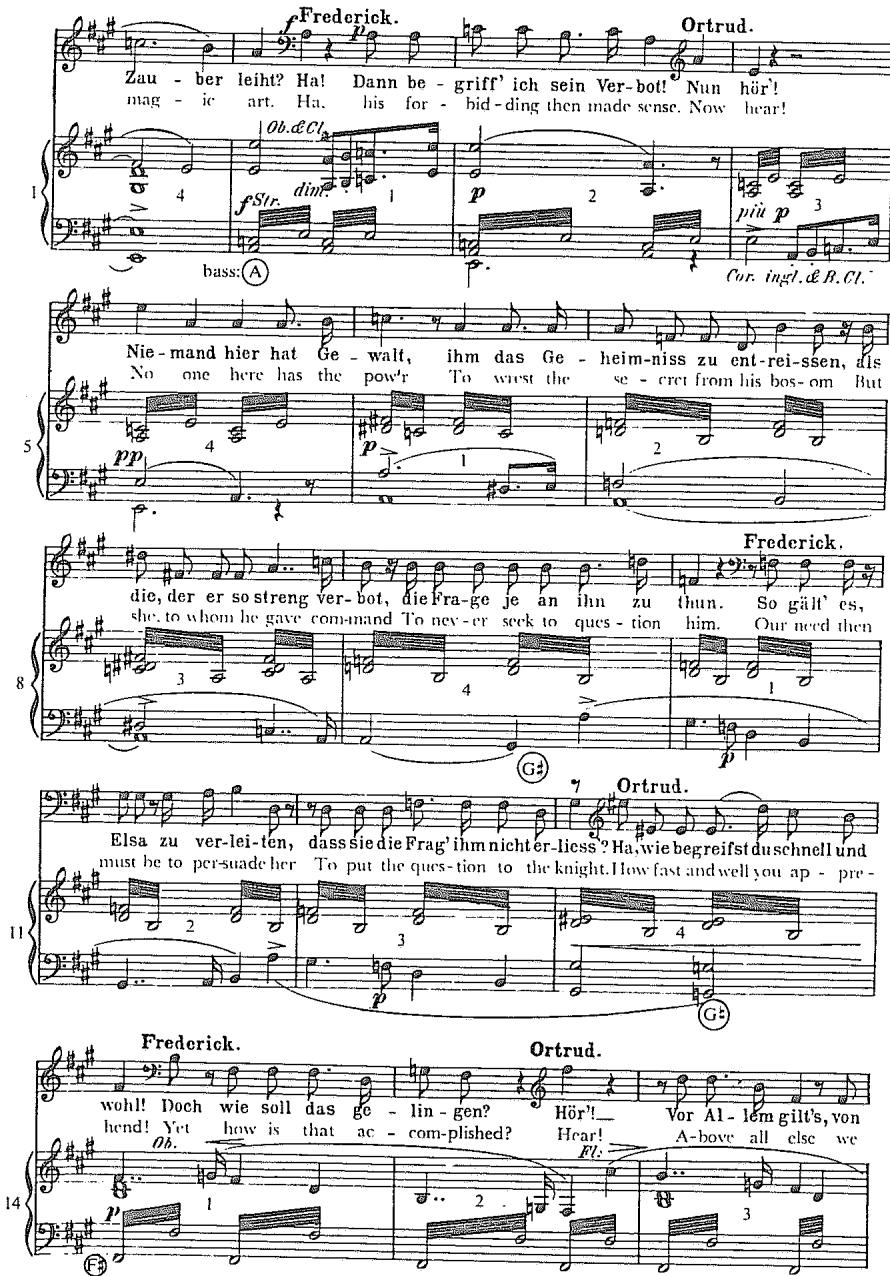
中文讲解
此为 Example 8.14 的图注与图像占位符:标题为「《罗恩格林》第一幕第一场(节选)」(Lohengrin, Act I, Scene I (excerpt)),位于第 30 页,是对前段所讨论的奥尔特鲁德—泰拉蒙德对话的乐谱节选,其中超拍子有作者的分析性标记。
由于原图未呈现,其旋律线、和声标记、声部对位与超拍子小节线等具体信息均需查阅原图。
补充说明
图像内容已省略;与前段的关联在于:图中的超拍子分析标记是「乐队超拍子很清晰」这一判断的直接依据,而「人声有时与超拍子冲突」则需结合后文段落(P0215)的和声与句法论述来理解。
第11段(P0214)
原文复述
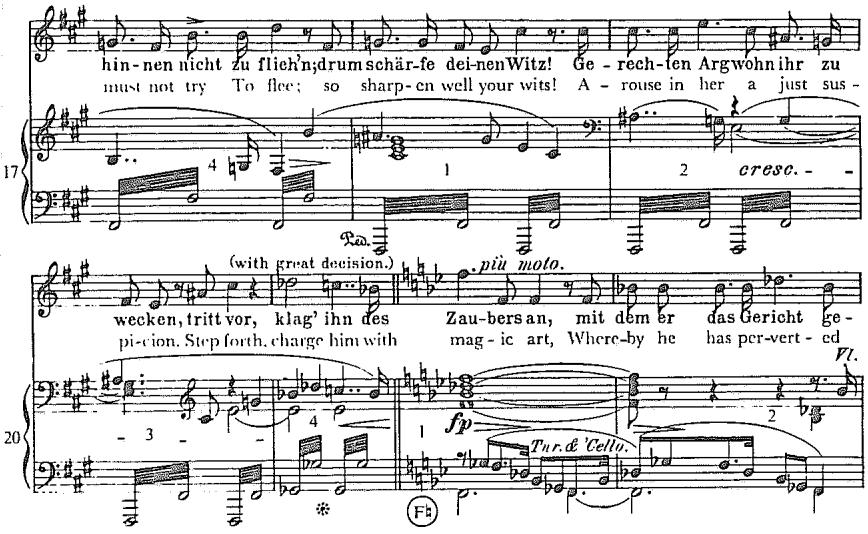
中文讲解
此为第 31 页上的图像/乐谱占位符,原图具体性质(是否乐谱、是否谱例、是否文本图表)需查阅原页面方可确认。仅能确认其作为第 31 页的版面元素出现。
补充说明
由于仅有占位符与图题提示而无可读内容,无法在本段内对其作进一步教学性说明。
第12段(P0215)
原文复述
While the hypermeter of Example 8.14 is clear, the phrase structure is not. This is due in large part to the extreme slowness of the harmonic rhythm. In the entire excerpt, the bass line merely descends chromatically from A to F, starting from a strong A minor cadence and leading to an equivocal 6/4 chord, apparently in Bb minor (last two measures of the example). The ambiguity of this goal harmony, which replaces an expected B minor cadence through enharmonic change—V7 of B (mm. 18–20) becomes a German augmented sixth chord in Bb (m. 21)—further weakens the sense of clear phrase structure; the next definite goal of harmonic motion is a half cadence in the principal key of F# minor (at the words “d’rum achte wohl, was ich ich dir sage”). Strictly speaking, therefore, one would have to say that a single phrase extends from the A minor harmony—perhaps from “Niemand hier hat Gewalt,” although the exact beginning is also ambiguous—to the eventual F# minor half cadence. Along the way, points of harmonic arrival fall exclusively on 6/4 chords—on F#, F#, and C# (the last not shown)—which in each case resolve eventually to dominants.
中文讲解
本段解决前段提出的「超拍子清晰但句法不清」之谜,根本原因是和声节奏(harmonic rhythm)极慢。
具体而言:例 8.14 节选内,低音线只是半音下行使从 A 走到 F——从明确的 a 小调终止开始,到达例末两小节看似在 b♭ 小调的模糊六四和弦。这一目标和弦本应是 b 小调终止,却通过等音转换被改写为 b♭ 上的德国增六和弦(mm. 18–20 的 B 之 V7 在 m. 21 被改读为 b♭ 的德增六),由此取代了预期的 b 小调终止。下一个真正明确的和声目标是 F# 小调的半终止(落在「d’rum achte wohl, was ich dir sage」一句上)。
因此严格说来,这是一段从 a 小调和声(具体起点虽含糊,可能就是「Niemand hier hat Gewalt」)一直延伸到该 F# 小调半终止的单一乐句;沿途所有「到达点」均落在六四和弦上(F#、F#、C#——最后一个未在图中显示),每一个最终都解决到属音。
本段揭示了瓦格纳如何以极度放慢的半音和声运动与等音模糊,使一段很长的「单一乐句」在听感上不显出明显句法。
补充说明
「German augmented sixth chord」(德国增六和弦)是一种特定的变和弦,常出现在下属功能区域,可作多种等音解读;此处 V7 of B 与 b♭ 之德增六之间的等音转换是这一手法的典型用例。末处的歌词引文「d’rum achte wohl, was ich dir sage」是分析者据例 8.14 中位置标注,非本段新引入的文学来源。
第13段(P0216)
原文复述
Comparing Example 8.14 with Example 8.7 (from Der fliegende Holländer), one finds that the only really new techniques here are the chromatic harmony associated with Ortrud’s Motive 1, the enharmonic ambiguity of the Bb minor episode, and the non-sequential expression of the larger chromatic motion. Otherwise, apart from the important declamatory innovations of Example 8.14, the two passages are closely comparable. The Lohengrin dialogue shows that Wagner has learned to “float” his phrase structure more subtly—partly by composing out the underlying tonal motions more slowly, but also by increasing the degree of harmonic ambiguity associated with those motions.
中文讲解
本段将《罗恩格林》例 8.14 与更早的《漂泊的荷兰人》例 8.7 进行对照,目的是衡量瓦格纳从早期歌剧到《罗恩格林》之间技法上的真实推进。
作者的判断是:真正「全新」的技术只有三项——奥尔特鲁德第 1 动机相关的半音和声、b♭ 小调片段的等音模糊、以及大尺度半音运动的非模进化表达。除此之外,撇开例 8.14 中朗诵方面的重要革新不论,两段在技法层面高度可比。
由此得出本段的关键洞见:到《罗恩格林》时期,瓦格纳学会以更精微的方式「悬浮」(float)其句法——一是把潜在调性运动铺陈得更慢,二是增大伴随这些运动的和声模糊度。本段把具体分析回收到「技法演进」的叙事中。
补充说明
例 8.7 出自《漂泊的荷兰人》(Der fliegende Holländer),按本卷结构属第 7 章的讨论范围,此处作为参照系出现。「Ortrud’s Motive 1」即奥尔特鲁德的第 1 主导动机,在本段中未做旋律描述。
第14段(P0217)
原文复述
Finally, it should be noted that Lohengrin contains several examples of Chopin-like phrase rhythm, with overlaps and lead-ins resulting in seamless melodic continuity. The prelude to the opera is full of overlaps—some achieved by orchestrational means—but its most Chopinesque phrase occurs near the end (Example 8.15). Note how Wagner uses simple scalar lines (in contrary motion) to achieve seamlessness, and compare the Chopin melody in Example 8.16 (from the late A Minor Mazurka discussed in Chapter 7). The analytical overlay in Example 8.16 shows the underlying scalar motion of Chopin’s melody.
中文讲解
本段为小节末尾的补充性观察:除了前述以主导动机和声模糊为标志的复杂情形外,《罗恩格林》中也存在数例类似肖邦的句法——通过重叠(overlap)与引导(lead-in)达到无缝的旋律连续。
序曲本身充满此类重叠(部分由配器手段实现),但「最肖邦化」的乐句出现在序曲末尾(例 8.15)。作者请读者注意瓦格纳如何用简单的反向音阶线(scalar lines in contrary motion)实现无缝感,并与例 8.16(出自第 7 章讨论过的晚期 a 小调玛祖卡)作比较;后者的分析性叠加层(analytical overlay)展示了肖邦旋律底下的音阶运动。
本段把视野从「超拍子歧义」暂时移开,提示读者:瓦格纳同时拥有制造无缝连续的另一面能力,而这种能力与肖邦有亲缘关系。
补充说明
「Chopin-like phrase rhythm」与前文「musical prose」形成对照:肖邦式的句法以连贯无痕为特征,而本节前部讨论的「音乐散文」则以节拍、句法的悬置为特征。例 8.16 的分析叠加层是「把肖邦旋律的潜在音阶运动显示出来」的一种图示,本段未对其作进一步描述,需参见原图。
第15段(P0218)
原文复述
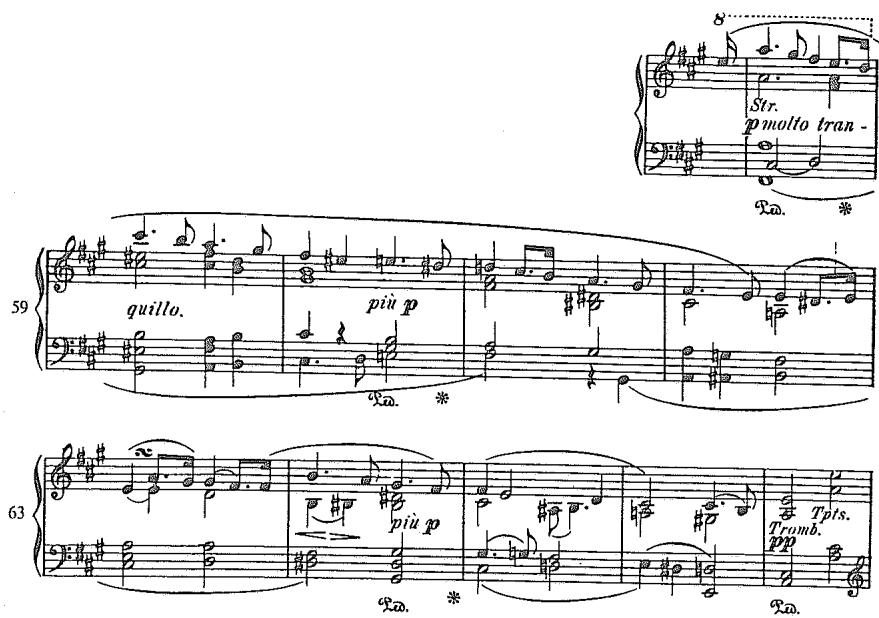
中文讲解
此为 Example 8.15 的图注与图像占位符:标题为「《罗恩格林》第一幕前奏曲,mm. 58–67」(Lohengrin, Prelude to Act I, mm. 58–67),位于第 31 页,是前段所说「最肖邦化乐句」所在的具体乐谱节选,材料来源为 G. Schirmer 歌剧总谱版本(1963 年版权,已获许可重印)。
由于原图未呈现,其具体旋律线、对位与作者所指「简单反向音阶线」之细节均需查阅原图。
补充说明
图注中的版权信息表明该例直接引自 G. Schirmer 出版的瓦格纳歌剧总谱,是经授权的学术性引用。「contrary motion」的音阶线手法需要对照原图与例 8.16 肖邦玛祖卡的分析叠加层方能完整理解。
第16段(P0219)
原文复述
Example 8.16. Chopin: Mazurka in A Minor, Op. 59, No. 1, mm. 42–52
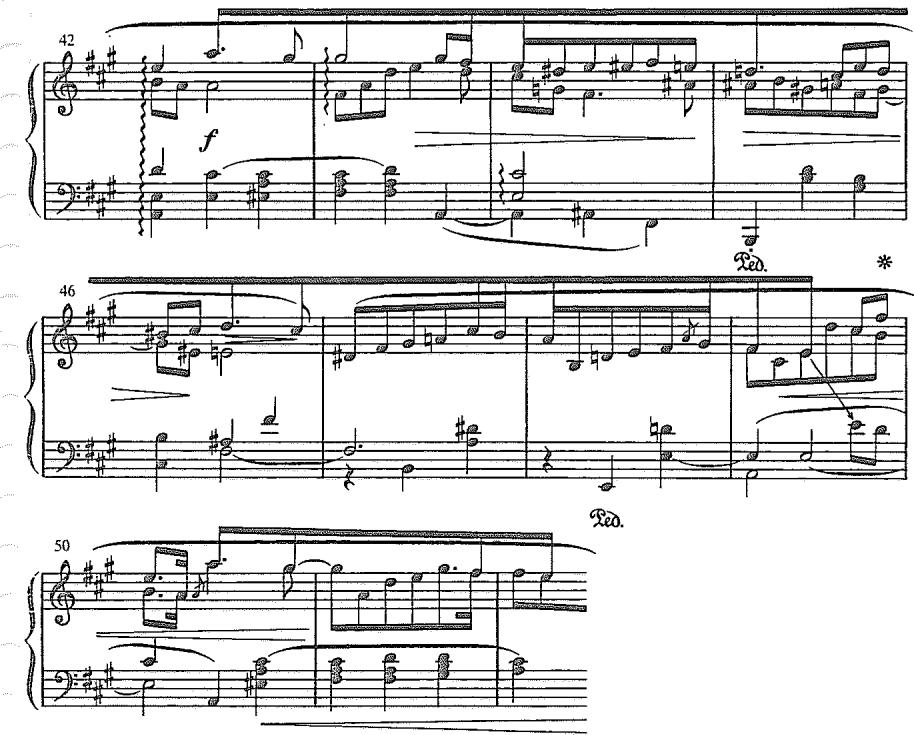
中文讲解
此为 Example 8.16 的图注与图像占位符:标题为「肖邦:a 小调玛祖卡,Op. 59, No. 1, mm. 42–52」(Chopin: Mazurka in A Minor, Op. 59, No. 1, mm. 42–52),位于第 32 页,是为前段比较所提供的肖邦原谱节选。
由于原图未呈现,其具体旋律形态与作者所附「分析叠加层」(用以显示旋律底下的音阶运动)之具体图形需查阅原图;其与例 8.15 的对照方式(反向音阶线、句法无缝)也需结合原图理解。
补充说明
本例在第 7 章已经讨论过,此处作为「肖邦式句法」的参照系再次出现,意在与例 8.15 的「最肖邦化乐句」形成直接对照。
脚注 / 边栏 / 图表 / 附加信息(如有)
本小节在 P0206 段末标有脚注 24,在 P0207 段末标有脚注 25,在 P0215 段中段位置标有脚注 26(出现在「F# minor half cadence」之后),在 P0217 段末标有脚注 27。这四枚脚注的具体内容未在所提供的源段落中给出,但依据其位置可推测:脚注 24 与贝多芬《莱奥诺尔》序曲中旋律引用的前人研究有关;脚注 25 涉及 Lorenz、Bailey、Lewin 等对瓦格纳大尺度连贯性的研究;脚注 26 大概涉及 F# 小调半终止处的和声与歌词关系的文献或补充说明;脚注 27 涉及肖邦 a 小调玛祖卡与本节比较点的来源说明。
本小节包含四个图例占位符:Example 8.13(P0209,《罗恩格林》第二幕序奏 mm. 17–35 之缩谱)、Example 8.14(P0213,第一幕第一场景节选)、第 31 页未具体编号的图像/乐谱占位符(P0214)、Example 8.15(P0218,第一幕前奏曲 mm. 58–67)、Example 8.16(P0219,肖邦 a 小调玛祖卡 mm. 42–52)。这些图例分别承担和声缩谱、超拍子分析、肖邦句法对照三类功能。
💡 本节核心要点
- 瓦格纳在《罗恩格林》中对主导动机的使用并未抛弃古典「正方(四小节)」句法基础,但超拍子并不总等于四小节;宣叙调则如古典传统一样完全放弃超拍子。
- 当主导动机被嵌入扩展乐句时,由于旋律的「可识别性」与「引用性」,扩展本身在听感上被「前景化」,这是申克所批评的核心问题;但作者指出 Lorenz、Bailey、Lewin 等人的研究反驳了「瓦格纳本人也听不见大尺度运动」的简单判断。
- 贝多芬《莱奥诺尔》序曲中对小号号角与弗洛雷斯坦咏叹调的引用是和声语境开始模糊的早期先例,瓦格纳对贝多芬序曲的崇敬使这一线索被继承与放大。
- 在第二幕序奏 mm. 18–35 这一具体段落中,Frageverbot 与升 C 持续音之间形成「何为主句、何为括号」的不可解歧义;定音鼓上的升 C 是该段唯一的粘合元素,作者视此为《罗恩grin》中最接近「音乐散文」之处。
- 奥尔特鲁德—泰拉蒙德对话(例 8.14)表面上更激进,实际上乐队超拍子清晰,真正激进的是其乐队承载连续性而人声仅在上方朗诵的设计;和声节奏极慢、半音下行使加等音模糊使单一长乐句在听感上不显句法。
- 与《漂泊的荷兰人》例 8.7 相比,《罗恩grin》对话真正新增的只有半音和声、等音模糊与非模进化三方面;瓦格纳学会以「更慢的调性铺陈 + 更大的和声模糊度」来更精微地「悬浮」句法。
- 本节最后将《罗恩格林》序曲末尾与肖邦 a 小调玛祖卡对照,提示瓦格纳在制造主导动机歧义之外,亦具备制造肖邦式无缝句法的能力,两种能力并存。
🔑 关键术语
- Quadratic (four-bar) construction:瓦格纳本人用语,指以四小节为一句的标准古典句法结构;本节用以说明《罗恩格林》中的主导动机使用仍可在这一古典句法框架内被理解。
- Leitmotif:与特定人物、情境或观念相联并在全剧中反复出现的短小动机;本节的核心讨论对象,其「可识别性」与「引用性」是引发超拍子歧义的关键。
- Hypermeter:跨越多个小节的更高一级拍子组织(如四小节、五小节级别的「超拍子」);是衡量乐句节奏是否清晰的主要尺度。
- Parenthesis / parenthetical expansion:在主句流中嵌入的扩展性段落(如华彩段、紫色段),在古典传统中由和声、织体、力度等手段与主句清晰区分;本节用以讨论主导动机作为「括号」时其边界如何被听感模糊。
- Purple patch / Cadenza:古典器乐中两类常见的括号式扩展形式——过分华丽的插入段与华彩段——它们都倾向于引用主部主题;是申克—瓦格纳讨论中「古典先例」的关键参照。
- Frageverbot:「禁止问」动机,关联于剧中「不得问洛恩格林来历」的戒律;在本节例 8.8 与例 8.14 中分别作为「何为主句、何为括号」之歧义的焦点。
- Musical prose:作者将在后文系统讨论的概念,指放弃确定乐句节奏的写法;本节把第二幕序奏 mm. 18–35 视为《罗恩格林》中最接近这一写法的段落。
- Arioso:介于咏叹调与宣叙调之间的声乐风格;例 8.14 是一段「自足的近似 arioso」段落,其内部乐队超拍子清晰但人声与乐队常冲突。
- Enharmonic change / German augmented sixth chord:等音转换与德国增六和弦;例 8.14 中 V7 of B(mm. 18–20)被等音重读为 b♭ 上的德增六(m. 21),是使目标调和声变得模糊、并由此削弱句法清晰度的关键手法。
8.9 [描述性拆分] Music Drama: Endless Melody and Musical Prose
第1段(P0220)
原文复述
Music Drama
中文讲解
这是第 8.9 节的小节标题,本身不构成完整段落。它的功能是宣告本节主题:从《罗恩格林》之后开始,聚焦瓦格纳成熟阶段所自称的“音乐戏剧”(Music Drama),并引出该体裁的两个标志性概念——“无尽旋律”(endless melody)与“音乐散文”(musical prose)。这一标题同时暗示:前面数节已分别处理过早期歌剧与乐剧过渡中的若干具体问题,本节将进入术语与方法层面的总论。
第2段(P0221)
原文复述
After Lohengrin came the famous pause in Wagner’s musical creativity (1848–53), years during which he engaged in political and literary activity almost to the exclusion of musical composition. Only a few sketches for the projected Siegfrieds Tod (the eventual Götterdämmerung) and Der junge Siegfried (later Siegfried) belong to this period. ²⁸ Meanwhile Wagner wrote the poems for his Ring cycle and worked out his aesthetic and theoretical ideas, most importantly in Oper und Drama. Only shortly before beginning the composition of Das Rheingold did he return to musical work, composing a one-movement piano sonata (“Album-Sonate”) for Mathilde Wesendonck. This work of 1853 is historically significant, as we will see, even though Wagner himself apparently thought little of the piece.
中文讲解
本段交代瓦格纳创作史中一个关键的中断期:1848 至 1853 年。在《罗恩格林》(1850 年首演于作曲家缺席的情况下)之后,瓦格纳几乎把全部精力投入政治活动与文学写作,音乐创作近乎停顿。这五年中属于音乐创作的仅剩零星草稿——《齐格弗里德之死》(后来发展为《神界的黄昏》)与《青年齐格弗里德》(后改名《齐格弗里德》)。同期他完成了《指环》四联剧的诗稿,并在《歌剧与戏剧》中系统阐发其美学与戏剧理论。1853 年,在开始真正动笔写《莱茵的黄金》前不久,他才回到纯音乐上,为玛蒂尔德·韦森东克(Mathilde Wesendonck)写了一首单乐章的钢琴《小品奏鸣曲》(Album-Sonate)。作者强调两点:其一,这首 1853 年的作品具有历史意义(“as we will see”暗示后文将回扣此点),尽管瓦格纳本人对之评价不高;其二,理论与文学准备阶段与后来的音乐作品之间存在直接关联,作品诞生于“诗先于乐”的过程结束时。这段叙述的功能是为下一节开始的术语讨论提供时间与作品背景:后面要讨论的“无尽旋律”“音乐散文”正是这种诗本先行的产物。
补充说明
脚注 28 在原文未给出内容,按本节处理规则仅记录其作为尾注的存在;不补写脚注内容。Mathilde Wesendonck 与 Album-Sonate 的历史定位由本段直接提供,未引申外部信息。
第3段(P0222)
原文复述
Before taking up any of Wagner’s later music, however, we should first consider some of its general characteristics and try to clarify some of the terms that have come to be associated with it. As is well known, several of these terms were either established, suggested, or endorsed by Wagner himself.
中文讲解
本段是过渡段,宣布方法论上的转向:与其立即进入瓦格纳成熟作品的具体分析,不如先抽出若干“一般特征”与“通行术语”加以澄清。作者特别提醒读者:这些术语中有不少是由瓦格纳本人“确立、提出或认可”的,因此对它们的理解无法绕开瓦格纳自己的理论著作。这句话暗示了下文的写作方式将不断在瓦格纳的自陈、二手学者的诠释与分析者自己的定义之间往返,提醒读者不能把术语当作客观中立的分析工具。
第4段(P0223)
原文复述
The most important general concepts, for our purposes, are expressed by the terms endless melody and musical prose. Both terms originate with Wagner. Both are difficult to define precisely, and both have been objects of much speculation and some ill-considered use.
中文讲解
本段挑出本节两个最关键的概念:endless melody(无尽旋律)与 musical prose(音乐散文)。两个术语都出自瓦格纳本人,但作者预先设定了一种审慎的语调:两者“难以精确定义”,且学界多有“猜测乃至欠考虑的运用”。这句话等于向读者预告——本节将同时处理术语史与定义问题,必须既承认瓦格纳的语源权威,又不被其修辞牵着走。把这两个概念并置,也意味着本节会讨论它们的相互关系:无尽旋律处理“旋律—和声如何避免闭合”,音乐散文则可能涉及与语言、修辞结构对应的问题(虽然具体论述要到后续段落展开)。
第5段(P0224)
原文复述
It is clear even from Wagner’s highly metaphorical description of it in his essay “Zukunftsmusik” [“Music of the Future”] (1860) that endless melody refers to an entire musical substance, not merely to the vocal line of an opera or even to a single melodic line in general. But when Wagner cites Bach’s Prelude in F# Minor, from Book II of The Well-Tempered Clavier, as an example of endless melody, he seems to suggest that a single, governing melodic line is somehow essential to the concept. [29] This prelude is a piece in which, as in much of Chopin’s music, overlaps are used—in conjunction with a continuous surface rhythm—to weaken most points of phrase division within a single melodic line.
中文讲解
本段揭示瓦格纳“无尽旋律”概念内部的一个张力。一方面,瓦格纳在 1860 年的《未来音乐艺术》(Zukunftsmusik)一文中以高度隐喻的方式谈论它,使无尽旋律指向“整部作品的音乐实体”(an entire musical substance),而不是局限于歌剧声乐线条甚至某条单一声部;另一方面,瓦格纳在举出巴赫《平均律键盘曲集》第二册升 f 小调前奏曲作为例证时,又似乎暗示无尽旋律必然围绕“一条统摄性的旋律线条”(a single, governing melodic line)展开。括号注 29 指向一处脚注(具体内容未在原段落中给出),本节不予补写。本段接下来解释瓦格纳为何能举巴赫为例:这首前奏曲与大量肖邦作品一样,使用“叠入”(overlaps)并配合“持续表层节奏”(continuous surface rhythm),从而削弱单一旋律线内部大多数乐句分段处的终止感。这里的“叠入”是关键术语:前一个乐句尚未结束,下一个乐句的材料已经进入;表层节奏的连续则保证听者始终感受到统一的脉动。两者的合力使听众难以在任一点上同时感到旋律与节奏的明确划分,这正是瓦格纳所看到与巴赫共鸣之处。
补充说明
括号注 [29] 在段落中明确出现,记录其作为脚注编号即可;其内容未在当前段落给出,不予补写。overlap 一词在本段中的含义由作者直接定义:前句尚未结束、下句材料已进入。
第6段(P0225)
原文复述
However, it is by no means necessary that the governing melody be confined to a single part within a texture: especially in an orchestral work—though not only there—the melody may wander freely from one instrumental part to another. Wagner once demonstrated his appreciation of this possibility by singing the entire first movement of Beethoven’s “Eroica” Symphony to show that it is, indeed, a single melody. Clearly, the Wagnerian music drama follows the same course, with the voice representing yet another “instrumental part” that may, or may not, carry the principal melodic line.
中文讲解
本段对上段所留的张力作进一步限定:瓦格纳的“统摄性旋律”并不必然限制在某一声部之内。在器乐曲——但不仅限于器乐曲——中,旋律可以自由地在各器乐声部之间“游走”。作者举出一个生动的轶事证据:瓦格纳曾以人声从头至尾哼唱贝多芬《英雄》交响曲第一乐章,以证明整段音乐本质上就是“一条旋律”。这个行为本身就是一种诠释姿态——把原本复杂的交响语言压缩为单线。借此铺垫,作者将同样的逻辑推及瓦格纳自己的音乐戏剧:人声被视作“又一个器乐声部”,它可能、也可能不承载主要旋律线。这意味着无尽旋律这一概念不依赖某一个固定乐器或人声来实现,而是由整片织体共同支撑一条不断流动的乐思。理解这一点,对于后面的主导动机分析具有方法论意义:单一主导动机出现的瞬间,未必就是“主旋律”所在;旋律可能正潜伏在另一层织体中。
第7段(P0226)
原文复述
Ernst Kurth, who contributed a great deal on the subject of endless melody, takes up the comparison with Bach in an illuminating chapter in his Romantische Harmonik. Bach’s version of endless melody, he says, is more authentic than Wagner’s—because, unlike Wagner, Bach was not seeking to free himself from anything. The freedom of Wagner’s melody he characterizes as a longing after an original freedom—represented, for Kurth, by the music of Bach—and as an attempt to free melody from the fetters of Classic symmetry. But this attempt began from a Classic foundation, and remnants of that melodic style can often be perceived even in Wagner’s most mature works. Thus, according to Kurth, one can see the outlines of a great historical development: increasing regularity from Bach to the Classics and early Romantics (Schubert, for example); increasing freedom in the later Romantics, from Wagner to Bruckner and eventually the Impressionists. Kurth even mentions Chopin as “in instrumental music . . . the clearest premonition of endless melody, although certainly only in individual moments.” ³⁰ Strangely, he cites only two of Chopin’s Préludes from Op. 28, rather than any of the later works, in this connection.
中文讲解
本段引入二十世纪音乐学家恩斯特·库尔特(Ernst Kurth)对无尽旋律的论述,集中于其《浪漫主义和声》(Romantische Harmonik)一章。库尔特的比较涉及三个层次:其一,价值判断——巴赫的“无尽旋律”比瓦格纳的更“本真”(authentic),因为巴赫并不在“摆脱”任何东西,而瓦格纳的旋律自由是一种“回望原本自由的渴望”,是对古典对称性之“枷锁”的挣脱。其二,历史定位——瓦格纳的尝试虽以挣脱古典为目标,却仍立足于古典根基之上,因此即使在最成熟的作品中,也仍可辨认出古典旋律风格的“残余”。其三,宏大叙事——库尔特勾勒出一条历史弧线:自巴赫到古典与早期浪漫(以舒伯特为代表),“规整性”递增;从瓦格纳经布鲁克纳直至印象派,“自由”递增;肖邦则被定位为器乐领域里“无尽旋律最清晰的先兆”,但仅限于“个别瞬间”(in individual moments)。作者对库尔特的引述带有轻微的存疑:库尔特在论证肖邦作为先兆时只举了 Op. 28 的两首前奏曲,而未引用肖邦更晚期、更具流动性的作品,作者用“Strangely”一词点出这一选取之片面。这段的功能是为本节提供一幅宏观的“旋律自由化”图景,同时示范一种对二手文献的批判性引用方式。
补充说明
脚注 30 在原文段落中以尾注形式出现,记录其存在即可。库尔特对肖邦的引用范围由本段直接描述(仅举两首 Op. 28 前奏曲,未引晚期作品),不予补写其余例证。
第8段(P0227)
原文复述
More recently, Carl Dahlhaus has stressed the aesthetic—as opposed to the technical—aspect of endless melody, and has viewed the concept in a broader context of late-Romantic style generally and Wagner’s leitmotif technique in particular. ³¹ His is a fascinating account. But while it is undeniable that Wagner himself used the term in more than a technical sense, the concept obviously has technical implications of the utmost importance for the understanding of Wagner’s music.
中文讲解
本段将视线转向更晚近的学者卡尔·达尔豪斯(Carl Dahlhaus)。达尔豪斯的取向与库尔特不同:他不把无尽旋律当作纯技术问题,而是强调其“美学”一面,并把这一概念放进晚期浪漫主义整体风格语境之中,尤其与瓦格纳的主导动机技法相联系。作者承认这一视角“引人入胜”,但随即划出本节的立场:瓦格纳本人对术语的使用确实远超纯技术范围,然而,这一概念显然仍具有“理解瓦格纳音乐之极端重要的技术含义”。换言之,作者拒绝在“纯美学”与“纯技术”之间作二选一:本节的分析将既承认术语的美学维度,又把它收束到一个可操作的技术定义上——而那个定义恰好由下一段给出。
补充说明
脚注 31 在原文段落中以尾注形式出现,记录其存在即可,不补写脚注内容。
第9段(P0228)
原文复述
In agreement with Kurth and with our discussion of Chopin in Chapter 7, endless melody will here be defined as the avoidance of any points of simultaneous harmonic and melodic closure. The word simultaneous is crucial: a harmonic cadence may
中文讲解
本段终于给出作者本人对“无尽旋律”的工作定义:它指的是避免任何“同时发生的和声与旋律收束点”。注意三个要点。其一,作者明确把这一界定与库尔特的立场、以及第 7 章对肖邦的讨论并置——这表示本节不是另起炉灶,而是把第 7 章的观察与本节对瓦格纳的考察汇合到同一条原理上。其二,定义被刻意收窄为“可分析”的技术命题:不是“旋律无限延展”这种修辞性表达,而是关于“哪里没有同时闭合”的可检验判断。其三,作者特别强调“同时”(simultaneous)一词至关重要——为这一强调所预留的解释是:如果和声终止与旋律收束并不同步发生,则听感上就缺少一个可以同时收束的“点”,从而支撑着无尽流动。这个句子在“a harmonic cadence may”处戛然而止,意味着下一行将继续解释为何单一的终止式或单一的旋律停顿都不足以构成对无尽旋律的中断。读者读到这里,应将本段视作本节论证的“操作性支点”:此前所有关于隐喻、巴赫例证、库尔特与达尔豪斯之争,都将被这一简短的定义所统摄。
补充说明
段落至“a harmonic cadence may”处被截断,剩余内容不在本次小节输入范围内;本节处理止于该截断点,不补写未出现部分。
脚注 / 边栏 / 图表 / 附加信息(如有)
本节含三处脚注编号:P0221 后附脚注 28,P0224 句末附脚注 29,P0226 句末附脚注 30,P0227 句末附脚注 31。这些脚注仅以编号或上标形式出现于正文,其具体内容未包含在本节输入文本内,按本节规则不予补写。此外,本节无图、无表、无谱例,段落 P0220 为 Markdown 二级小节标题“Music Drama”,承担版面标题功能而非论述功能。
💡 本节核心要点
- 1848–53 年是瓦格纳音乐创作上几乎完全中断的时期,期间他完成《指环》诗稿并在《歌剧与戏剧》中奠定其美学;1853 年为韦森东克所写的《小品奏鸣曲》是他回归音乐写作前的重要作品,本节预告它具有历史意义。
- 本节在进入瓦格纳成熟作品具体分析之前,先把“无尽旋律”与“音乐散文”两个由瓦格纳本人提出、且被学界频繁误用的术语摆上桌,先作术语澄清。
- 瓦格纳本人在 1860 年《未来音乐艺术》中以隐喻方式提出无尽旋律,指向整部作品的音乐实体;但他以巴赫《平均律》升 f 小调前奏曲为例,又暗示“一条统摄性旋律线”不可或缺。
- 本节以“叠入+持续表层节奏”作为巴赫前奏曲之所以被瓦格纳视为无尽旋律的技术根据:两者共同削弱乐句内部分段处的终止感。
- 本节同时承认无尽旋律不必拘于某一声部,可在不同器乐声部之间游走,并以瓦格纳曾用人声哼唱贝多芬《英雄》第一乐章的轶事为据;进而在音乐戏剧中把人声视作又一个可承载或不承载主旋律的声部。
- 在引述库尔特与达尔豪斯之后,本节收敛到自己将使用的技术定义:无尽旋律=避免任何和声与旋律同时发生收束的点,“同时”一词为定义的关键限定。
🔑 关键术语
- endless melody(无尽旋律):本节核心术语之一,由瓦格纳提出。在本节中被作者工作定义为:避免任何“和声与旋律同时收束”的点;它既涉及整部作品的音乐实体,又可以由一条或多条声部共同承担,关键在于终止式与旋律停顿不同步出现。
- musical prose(音乐散文):本节与“无尽旋律”并置提出的术语,同样源自瓦格纳,作者指出其定义含糊且学界使用欠慎;本节段落 P0223 把它列为重要概念,但本节范围内尚未给出正式定义,留待后续段落展开。
- overlap(叠入):本节用其解释巴赫前奏曲中产生无尽旋律效果的具体手法:前一句尚未结束,下一句的材料已经进入,从而削弱乐句分段的明确终止感;作者同时指出这是肖邦音乐中常见的手段。
- continuous surface rhythm(持续表层节奏):本节与 overlap 并列提出的技术概念,指在整个段落中保持均匀、不断的表层节拍脉动,使听者难以在任一位置感到节奏上的明确停顿,与旋律内部的叠入相配合以维系无尽流动。
- governing melodic line(统摄性旋律线):瓦格纳在举巴赫前奏曲为无尽旋律例证时所暗示的要素:似乎有某一条主导旋律在统摄整段音乐的流动;但本节随后补充,统摄性旋律不必限定在单一固定声部,可以游走于各声部之间。
- leitmotif technique(主导动机技法):本节在介绍达尔豪斯的立场时提到:他将无尽旋律置入晚期浪漫主义整体风格之中,特别与瓦格纳的主导动机技法相联系;本节未对其作专门展开,仅作为分析无尽旋律时不可绕开的背景技术。
- harmonic cadence(和声终止式):本节定义“同时”一词时引入的关键对照项:作者预告,若和声终止与旋律停顿同时发生,则形成一个明确的收束点;无尽旋律正是要避免这种“和声—旋律同步闭合”的情况。段落 P0228 在该词处被截断,下文应作进一步解释。