目录
C01 Front matter and title page
- S0001 [描述性拆分] Title-page identification and microfilm notice
- 页码:1-1
- S0002 [描述性拆分] Dissertation title and submission page
- 页码:2-2
C02 Frontispiece and preface
- S0003 [描述性拆分] Frontispiece woodcut from Guerrero’s Sacrae Cantiones
- 页码:3-3
- S0004 PREFACE
- 页码:4-8
C03 Contents, music examples index, and plate list
- S0005 CONTENTS
- 页码:9-10
- S0006 [描述性拆分] List of music examples and plate references
- 页码:11-15
C04 I. The instrument
- S0007 [描述性拆分] 1. The name and nature of the vihuela
- 页码:16-36
- S0008 [描述性拆分] 2. The parts of the body
- 页码:36-44
- S0009 [描述性拆分] 3. Placing the frets
- 页码:44-50
S0001 [描述性拆分] Title-page identification and microfilm notice
第1段(P0001)
原文复述
WARD, John Milton, n.d. THE VIHUELA DE MANO AND ITS MUSIC (1536-1576).
中文讲解
本段为论文扉页的作者与题名信息。格式上先以姓氏大写在前的著录形式给出作者姓名 WARD, John Milton,紧随其后用拉丁缩写 n.d.(即 no date,意为“出版年份不详”)标注扉页未给出具体撰写年份的事实。第二、三行为论文主标题 THE VIHUELA DE MANO AND ITS MUSIC,并以括号附上研究覆盖的年代范围 (1536-1576)。题名中的 VIHUELA DE MANO 是西班牙文艺复兴时期的拨弦乐器,意为“手弹维韦拉琴”;括号内的年代明确了文献与音乐实践所覆盖的历史窗口。这段信息的功能是为读者提供最低限度的书目识别:作者、研究对象(维韦拉琴及其音乐)以及所涉时段。
第2段(P0002)
原文复述
71-28,669
中文讲解
本段仅有一串数字 71-28,669。从所处位置(扉页、紧接作者题名之后)判断,这是 University Microfilms 在 1971 年为该学位论文分配的统一订单号(order number),用于其缩微胶片与早期复印服务的检索与订购。它并非页码,也非正文序号,而是馆藏/复制服务的登记编号,本身不携带学术内容,只起书目定位作用。
第3段(P0003)
原文复述
New York University, Ph.D., 1953 Music
中文讲解
本段为授予学位与学科信息,明确指出该论文由 New York University(纽约大学)授予,学位级别为 Ph.D.(博士学位),授予年份为 1953 年,学科归属为 Music(音乐)。这一行把学位论文的三项必备书目要素——授予机构、学位层次与年份、学科门类——一次性交代清楚,从而让读者知道这是 1953 年纽约大学音乐专业的博士论文。它与上一段题名配合,使扉页具备完整的书目识别功能。
第4段(P0004)
原文复述
University Microfilms, A XEROX Company, Ann Arbor, Michigan
中文讲解
本段为缩微复制机构信息,说明本论文的缩微胶片版本由 University Microfilms 制作,并在其后以“一家施乐公司”(A XEROX Company)注明其当时的隶属关系,最末附机构所在地 Ann Arbor, Michigan(密歇根州安娜堡)。该段的功能并非学术内容,而是告知读者其学位论文缩微化处理的委托方与制作单位,提示该版本的来源机构以供引用与查找。
第5段(P0005)
原文复述
THIS DISSERTATION HAS BEEN MICROFLIMED EXACTLY AS RECEIVED
中文讲解
本段为缩微处理的告知声明,全文为大写:THIS DISSERTATION HAS BEEN MICROFLIMED EXACTLY AS RECEIVED。需要注意的是原文词形为 MICROFLIMED,是 MICROFILMED(被制成缩微胶片)的印刷/拼写错误,但按忠实复述原则应原样保留,不得擅自更正。该句含义为:本论文已按作者提交的原始样貌完整缩微,未做内容修订或编辑加工。其作用是免责声明,明确缩微版本与原稿的一致性,将排版与文字差错的责任仍归于原稿。
补充说明
原文 MICROFLIMED 在严格意义上是 MICROFILMED(被缩微化)的拼写错误;按复述规则保留原形,以免覆盖扉页上的实际印刷事实。
第6段(P0006)
原文复述
Reproduced with permission of the copyright owner. Further reproduction prohibited without permission.
中文讲解
本段为版权说明:Reproduced with permission of the copyright owner(经版权所有者许可复制);Further reproduction prohibited without permission(未经许可不得再行复制)。它界定了该缩微/复制版本的使用边界——只有获得权利人授权方可再次复制,从而把学术引用之外的批量再生产排除在外。此声明使扉页信息链从书目识别、缩微制作说明延伸到了版权与使用限制,是学位论文缩微版本不可或缺的合规要素。
脚注 / 边栏 / 图表 / 附加信息(如有)
本节(页面 P0001)本身即是扉页,承载的不是正文论述,而是论文的书目识别信息:作者(WARD, John Milton)、题名(THE VIHUELA DE MANO AND ITS MUSIC (1536-1576))、缩微订单号(71-28,669)、授予机构与学位(New York University, Ph.D., 1953, Music)、缩微制作单位(University Microfilms, A XEROX Company, Ann Arbor, Michigan)、缩微一致性声明(THIS DISSERTATION HAS BEEN MICROFLIMED EXACTLY AS RECEIVED)以及版权使用限制(Reproduced with permission of the copyright owner. Further reproduction prohibited without permission.)。这些元素共同构成博士论文缩微版本的标准化扉页,作用是供检索、引用与合规使用,并不在正文中承担论证功能。
💡 本节核心要点
- 扉页第一段集中给出作者、题名与覆盖年代 (1536-1576),构成最核心的书目识别信息。
- 数字 71-28,669 为 University Microfilms 于 1971 年分配的缩微订单号,仅供检索定位。
- New York University, Ph.D., 1953 Music 一行明确了授予机构、学位级别、学位年份与学科门类。
- University Microfilms 一段注明缩微制作方及其当时与 Xerox 公司的隶属关系。
- 缩微一致性声明保证胶片版本忠实于原稿(注意原文 MICROFLIMED 为印刷/拼写错误)。
- 版权说明限定该版本的复制与再传播边界,确保缩微形式的合规使用。
🔑 关键术语
- VIHUELA DE MANO:西班牙文艺复兴时期的手弹拨弦乐器,本论文的核心研究对象;中文常译作“手弹维韦拉琴”。
- n.d.:拉丁缩写 no date 的简写,用于著录中标注扉页未列明撰写年份的情况,此处指论文扉页未给出具体写作年份。
- University Microfilms:美国著名的学位论文缩微化与发行机构,本论文的缩微版本由其制作,并标注当时为施乐公司(XEROX)旗下。
- MICROFLIMED:扉页印刷/拼写形式,标准词形为 MICROFILMED(被制成缩微胶片);本节按原文照录以保留印刷事实。
- Reproduced with permission of the copyright owner:缩微版本的版权与使用限制声明,说明再次复制须经版权所有者授权。
S0002 [描述性拆分] Dissertation title and submission page
第1段(P0007)
原文复述
THE VIHUELA DE MANO AND ITS MUSIC (1536-1576) — the main title of the dissertation, displayed as a heading on the title page.
中文讲解
这是论文的主标题,标题文本以全大写形式呈现,并附有括号注明的年代范围 1536–1576。该标题界定了整篇论文的研究对象(vihuela de mano 及其音乐)与研究时段,是扉页中最核心的论题标识。作为学位论文的第一项视觉要素,主标题直接决定了后续章节必须围绕何种乐器与何种历史范围展开。
第2段(P0008)
原文复述
By — a single preposition printed on the title page, serving to connect the title above with the author’s name below.
中文讲解
这是英文学位论文扉页惯例中位于主标题与作者之间的连词 “By”,其作用是把题目归属于紧随其后的作者,本身不承载任何论题信息。其存在的唯一功能是排版与署名衔接。
第3段(P0009)
原文复述
John Milton Ward — the name of the author, appearing on the title page directly beneath the word “By.”
中文讲解
作者署名为 John Milton Ward。通过 “By” 与姓名的并置,扉页完成了"题目—作者"归属链的最后一环,明确了该学位论文的研究责任主体。该姓名同时也是本节乃至全册的版权归属人(P0012 的声明所指的 “copyright owner”)。
第4段(P0010)
原文复述
A dissertation in the Department of Music submitted in partial fulfillment of the requirements for the degree of Doctor of Philosophy at New York University.
中文讲解
这段说明在扉页上交代了论文的学术语境,包含三项关键信息:(1)学科归属为 Department of Music(音乐系);(2)目标学位为 Doctor of Philosophy(哲学博士,通常即 Ph.D.);(3)授予机构为 New York University(纽约大学)。短语 “in partial fulfillment” 表明该论文满足博士学位要求的一部分,但学位的完整授予通常还须配合其他环节(如资格考试、综合考试、论文答辩等),仅凭提交论文不足以完成全部程序。该段是判定论文性质的官方依据。
第5段(P0011)
原文复述
April, 1953 — the month and year marked on the title page as the submission date of the dissertation.
中文讲解
提交时间标注为 1953 年 4 月。结合主标题所示的 1536–1576 研究时段,可看出本研究完成于 20 世纪中叶,与其历史研究对象之间存在约四个世纪的时间距离。这一时间定位对本节作为扉页的性质没有影响,但为后文判断研究年代与学术语境提供了基本信息。
第6段(P0012)
原文复述
Reproduced with permission of the copyright owner. Further reproduction prohibited without permission.
中文讲解
这是位于扉页底部的标准版权声明,由两部分构成:第一句声明本复制件的传播已经获得权利人许可;第二句进一步禁止未经许可的再复制。该声明属于印刷与数字馆藏层面的元数据,并非论文论证内容的一部分,但在法理上界定了他人使用本件的边界。权利人在本节语境下即 P0009 所署名的作者 John Milton Ward 及其继承者。
脚注 / 边栏 / 图表 / 附加信息(如有)
本节全部为扉页版面要素(论文主标题、署名词、作者姓名、学位授予说明、提交日期、版权声明),不包含脚注、图表、边栏或参考文献;因此无附加材料需要汇总。
💡 本节核心要点
- 论文主标题为 “THE VIHUELA DE MANO AND ITS MUSIC (1536-1576)",研究对象与时段由此被唯一锁定。
- 作者署名为 John Milton Ward,扉页的归属链通过 “By + 姓名” 完成。
- 该论文为 1953 年 4 月提交给纽约大学音乐系、用以部分满足哲学博士学位(Ph.D.)授予要求的学位论文。
- 短语 “in partial fulfillment” 提示学位授予需配合其他环节,单独的论文提交并不构成完整满足。
- 页面包含版权声明,提示本复制件已经授权并禁止未经许可的再传播。
🔑 关键术语
- vihuela de mano:主标题中出现的乐器原名,指手弹式维韦拉琴;本节以原文形式保留该术语,未对其乐器学特征作补充说明。
- Doctor of Philosophy (Ph.D.):由 New York University 授予的哲学博士学位;扉页明确指出本论文为该学位的部分满足材料。
- partial fulfillment:扉页用语,意为"部分满足”。说明提交论文仅是博士学位授予条件之一,通常还需其他环节配合才能完成最终授予。
- copyright owner:P0012 中所指的权利人;在本节语境下即署名作者 John Milton Ward 及其继承人或受让人。
S0003 [描述性拆分] Frontispiece woodcut from Guerrero’s Sacrae Cantiones
第1段(P0013)
原文复述
Markdown 图像占位符,原始写法为 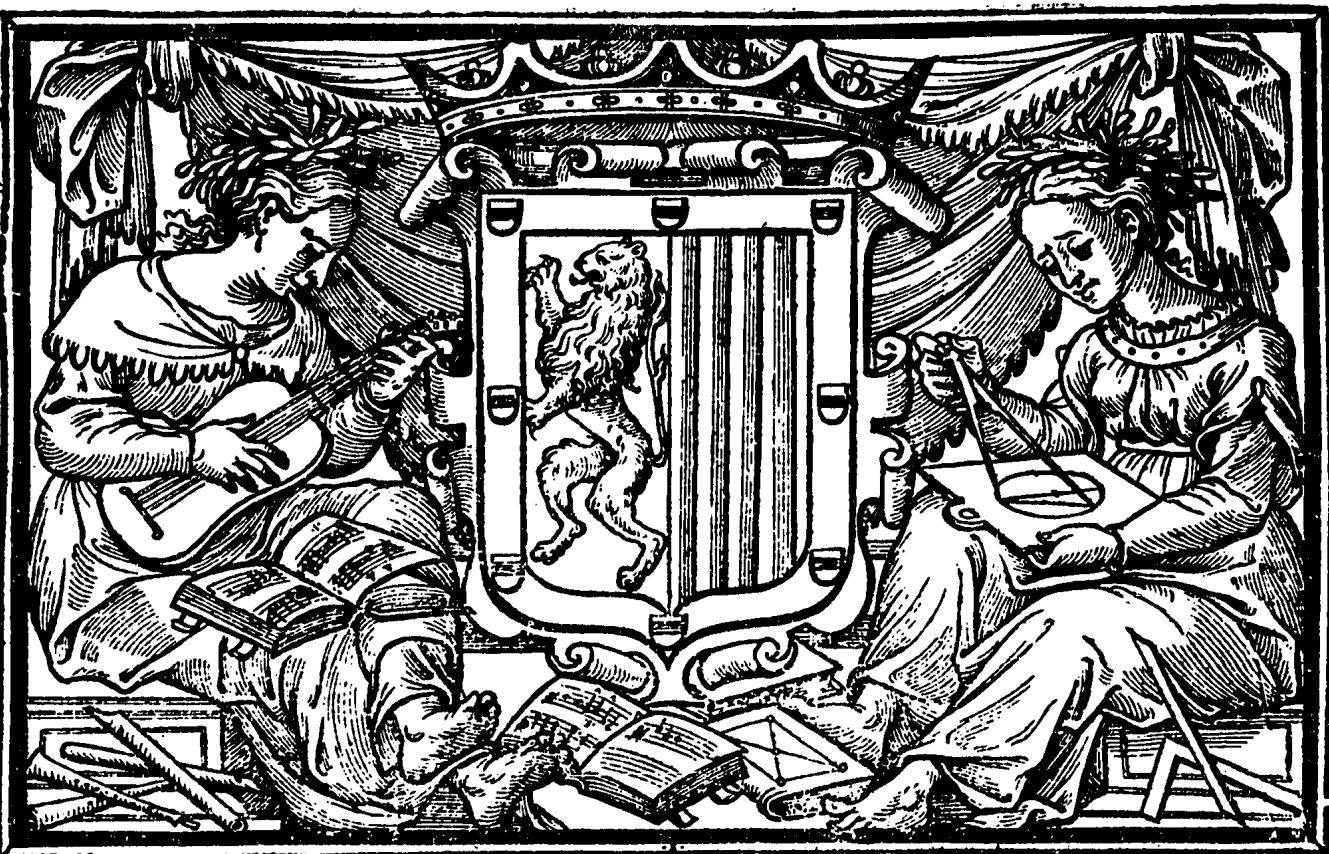 ,即:第 3 页处存在一幅图像或乐谱示例的占位标记,其中内嵌的图像数据已被省略,仅保留其位置与图注信息。
中文讲解
本段不是叙述性正文,而是一个 Markdown 形式的图像占位符。它表明在原书第 3 页的对应位置上原本存在一幅图像(结合紧随其后的 P0014 图注可知,这是一幅木刻版画,即 Guerrero《Sacrae Cantiones》的卷首/卷末装饰版画 frontispiece)。在当前电子文本中,由于无法嵌入实际图像数据,编辑者只以占位标记的形式保留其位置,并提示需查看原图。因此本段本身不提供可阅读的内容信息,其作用是锚定下一段图注所指的对象——本节真正的信息载体是 P0014 与 P0015。读者若希望看到该木刻的实际图像,需查阅原书的扫描件或印刷版。
第2段(P0014)
原文复述
Francisco Guerrero, Sacrae Cantiones (Hispali [Seville], 1555), last leaf verso; from the copy in the library of the Hispanic Society of America.
中文讲解
这是一段英文图注,标明本节所展示木刻版画的原始文献出处。其中包含五项关键信息:第一,作者/作曲者为 Francisco Guerrero(弗朗西斯科·格雷罗,16 世纪西班牙塞维利亚著名作曲家);第二,所引作品为《Sacrae Cantiones》,即拉丁文 “Sacred Songs”(圣歌)之意;第三,出版地写作 “Hispali” 并在方括号中注以现代英文 “[Seville]",表明 “Hispali” 是塞维利亚的拉丁文名称,方括号起到古今对照与翻译说明的作用;第四,出版年份为 1555 年;第五,原图所在位置为该书 “last leaf verso”,即最末一页的背面(“verso” 为古籍版本学与装帧术语,指书叶的左页/偶数页面,与右页 “recto” 相对),这正是 frontispiece(卷首或卷末装饰版画)常见出现的位置。最后一句说明本图版采用的版本来自 Hispanic Society of America(美洲西班牙学会,位于纽约的一所专门收藏西语文献的研究型图书馆)的馆藏本。
补充说明
图注中以 “Hispali [Seville]” 的双语并列形式出现,"[Seville]” 并非原文印刷体,而是现代编者或排版者为方便读者而加的方括号注释;这是古籍图注中常见的古今地名对照格式。
第3段(P0015)
原文复述
Reproduced with permission of the copyright owner. Further reproduction prohibited without permission.
中文讲解
这是一段标准英文版权声明,附在图注之后,用以说明本图版的使用法律状态。其含义分两层:第一句 “Reproduced with permission of the copyright owner” 表示本图是经过版权所有者(此处即 Hispanic Society of America 或其代理方)授权许可后才得以刊载于本书的;第二句 “Further reproduction prohibited without permission” 是一项限制性告知,提醒读者本图属于受版权保护的材料,任何进一步(超出本书刊载范围)的复制行为都需要重新取得版权所有者的许可。该声明并不影响本图作为学术引用对象的合法性,但提示读者:尽管原书出版于 1555 年、原作已进入公共领域,该特定扫描件或复制品的图像本身仍可能因摄影/数字化归属而享有版权,因此引用时须遵守相应的使用规范。
脚注 / 边栏 / 图表 / 附加信息(如有)
本小节为典型的古籍图版说明区,由三类非正文材料组成:P0013 为 Markdown 图像占位符(指向第 3 页的木刻版画图像,图像数据已省略),P0014 为英文图注(标明图像出自 Guerrero《Sacrae Cantiones》1555 年塞维利亚版的末叶背面,所用为 Hispanic Society of America 图书馆藏本),P0015 为版权声明(说明图版经许可使用、禁止未经许可的进一步复制)。三者依次承担"占位—出处说明—法律状态说明"的功能,构成一个完整的图版引用单元。
💡 本节核心要点
- 本节所展示的图像是一幅木刻版画(frontispiece),来源于 Francisco Guerrero《Sacrae Cantiones》1555 年塞维利亚(Hispali)版的末叶背面。
- 图注中的 “Hispali [Seville]” 表明出版地采用拉丁文拼写,方括号内为现代英文对照;“last leaf verso” 则具体定位版画在原书中的装帧位置。
- 所用版本来自 Hispanic Society of America 图书馆藏本,这是一项在版本说明中常见的版本来源标注,表明图版的物质载体并非 1555 年原版,而是某一特定馆藏机构的复制件。
- 紧随的版权声明明确该图版的复制与传播受到版权所有者授权的约束,提示读者该特定图像尚处于版权保护之下。
- 作为整体,本小节本身不提供论述性内容,其功能是为后续或外围讨论提供图像证据及其规范化的来源、版本与版权信息。
🔑 关键术语
- Frontispiece woodcut:卷首(或卷末)木刻版画;一种装饰性图像,传统上置于书籍之首或末尾,本节图注中所指的版画即属此类。
- Hispali:塞维利亚(Seville)的拉丁文名称;在本节图注中以 “Hispali [Seville]” 的形式出现,方括号内为现代英文地名对照。
- last leaf verso:古籍装帧术语,“verso” 指书叶的左页/偶数页(与 “recto” 相对),“last leaf verso” 即整部书最后一页的背面,frontispiece 常出现于此位置。
- Sacrae Cantiones:拉丁文,意为"圣歌";此处特指 Francisco Guerrero 于 1555 年在塞维利亚出版的同名圣乐作品集。
- Hispanic Society of America:美洲西班牙学会,纽约的一所专门收藏西班牙与拉丁美洲文献、艺术品的研究型机构;本节图注所依据的图像版本即出自其图书馆馆藏。
S0004 PREFACE
第1段(P0016)
原文复述
PREFACE
中文讲解
章節標題「PREFACE」(序言)。它開啟論文前置部分,向讀者交代論文的整體框架、章節安排、致謝與材料來源等內容,是進入正文前的導讀。作為標題文本,其敘事內容需由後續段落承擔。
补充说明
無額外補充。
第2段(P0017)
原文复述
The following pages contain not one but several studies of the vihuela de mano and its music. Though each is important for an understanding of the others, the studies observe no narrative continuity: they constitute, in fact, the raw material for a history of 16th-century Spanish instrumental music. This is not an apology for what appears in the thesis, but a warning to the reader that the nature of the subject matter and the state of its historical study allow no more than a carefully documented preliminary survey.
中文讲解
這一段開宗明義:作者聲明本論文並非單一連貫研究,而是多個關於vihuela de mano(手維韋拉琴)及其音樂的專題研究的集合。各章之間相互關聯,但沒有敘事連貫性——它們其實是為16世紀西班牙器樂音樂史準備的「原材料」。作者強調:這不是為論文內容致歉,而是對讀者的提醒——由於研究對象的特殊性質以及該領域歷史研究的現狀,本文所能做到的只是「有詳盡文獻支撐的初步調查(carefully documented preliminary survey)」。「preliminary survey」一詞為全文定調:本文不求完備通史,而做扎實的先行整理——這對後續讀者把握每一章的「未完待續」性質至關重要。
补充说明
無額外補充。
第3段(P0018)
原文复述
Since the actual nature of the vihuela has at times been a matter of controversy and remains still a debatable subject, the first chapter had perforce to be an organological inquiry. All information relevant to the instrument has been assembled with the hope that sheer weight of detail will dissipate the shadows surrounding its name and nature. No attempt has been made to disentangle the evidence before 1500, which fortunately lies outside the immediate concern of these pages; however, a summary account of the vihuela (viola da mano) in 16th-century Italy has been included as an appendix to the first chapter.
In the second chapter has been gathered evidence concerning the Aufführungspraxis; this complements the study of the instrument as well as that of the music which fol-
中文讲解
本段以空行分隔為兩部分,分別說明前兩章的設置原因。第一部分:由於vihuela的本質長期存在爭議、至今仍是可辯論的議題,第一章必須是一項「樂器學調查(organological inquiry)」——把所有與該樂器相關的資料彙編,希望以「sheer weight of detail(細節的份量)」消除籠罩其名稱與本質的「陰影(shadows)」。並明確界線:不試圖理清1500年以前的證據(這部分幸而不在本文關注範圍內),但作為附錄列入16世紀義大利的vihuela(viola da mano)概述。第二部分開啟第二章:收集有關「演奏實踐(Aufführungspraxis,德文術語,指歷史演奏方式的考據)」的證據,作為樂器研究與後續音樂研究的補充。本段末以「fol-」結尾,下一段開頭「lows.」延續為「follows.」。
补充说明
無額外補充。
第4段(P0019)
原文复述
Reproduced with permission of the copyright owner. Further reproduction prohibited without permission.
中文讲解
頁4底部版權聲明:「經版權所有人許可複製。未經許可不得進一步複製。」這是近代書籍影印版中常見的法定提示,無實質學術內容,僅為版權頁面格式元素。
补充说明
無額外補充。
第5段(P0020)
原文复述
lows. No section of the thesis is devoted to the tablature
中文讲解
承接前段P0018末尾的斷字「fol-」,本行起首「lows.」將其還原為「follows.(接著)」。本句開啟說明作者對vihuela所用的tablature(字母譜/數字譜)記譜法的處理:「No section of the thesis is devoted to the tablature(論文沒有任何一節專門討論tablature)」——意即tablature記譜法本身不獨立成章。
补充说明
無額外補充。
第6段(P0021)
原文复述
notation in which music for the vihuela was written: the
中文讲解
續上行:「notation in which music for the vihuela was written: the」——指「為vihuela寫成音樂所用的tablature記譜法」。句中「the」引導下文對前人研究的列舉。
补充说明
無額外補充。
第7段(P0022)
原文复述
subject has been fully examined by Johannes Wolf, Willi
中文讲解
續:「subject(議題,即tablature記譜法本身)has been fully examined by Johannes Wolf, Willi(已由Johannes Wolf、Willi(Apel)充分研究)」。Wolf是早期音樂學奠基人;Willi Apel是知名音樂學者與記譜法權威。
补充说明
無額外補充。
第8段(P0023)
原文复述
Apel, Emilio Pujol and others. Particular notation prob-
中文讲解
完成前句為「Apel, Emilio Pujol and others(Apel、Emilio Pujol及其他學者對此議題已作充分研究)」。Emilio Pujol是著名維韋拉/吉他演奏家與學者。本句末「prob-」斷字,下行接「lems」成「problems(特定記譜問題)」。
补充说明
無額外補充。
第9段(P0024)
原文复述
lems which have direct bearing either on the practice or
中文讲解
完成「problems」。這裡指對「the practice(演奏實踐)」或後續討論的「actual music(實際音樂)」有「directly bearing(直接相關)」的特定記譜問題——作者的處理方式是不在專章討論,而是在相關上下文分別處理。
补充说明
無額外補充。
第10段(P0025)
原文复述
the actual music have been taken up in context. Because
中文讲解
前句完成:「these particular notation problems have been taken up in context(這些特定記譜問題已在上下文中分別處理)」。「Because」引出原因——tablature與現代pitch notation轉換方式的重要性。
补充说明
無額外補充。
第11段(P0026)
原文复述
understanding of the music frequently depends on the man-
中文讲解
續:「understanding of the music frequently depends on the manner(對音樂的理解往往取決於……的方式)」,「man-」斷字,下行接「ner」成「manner」。作者強調:tablature翻譯為現代記譜的方式,直接影響讀者對vihuela音樂的解讀。
补充说明
無額外補充。
第12段(P0027)
原文复述
ner in which tablature is translated into pitch notation,
中文讲解
完成「manner」。完整地說:「the manner in which tablature is translated into pitch notation(將tablature翻譯成音高記譜的方式)」。這把樂譜翻譯環節定性為理解音樂的關鍵中介步驟。
补充说明
無額外補充。
第13段(P0028)
原文复述
transcription method forms the subject of a rather ex-
中文讲解
續:「transcription method forms the subject of a rather ex-(轉錄方法構成……相當……之主題)」。「ex-」斷字,下行接「tended」成「extended(相當長的)」。意即轉錄方法構成了第二章一個「相當長的附錄」之主題。
补充说明
無額外補充。
第14段(P0029)
原文复述
tended appendix to the second chapter.
中文讲解
完成前句為:「transcription method forms the subject of a rather extended appendix to the second chapter(轉錄方法構成第二章一個相當長的附錄的主題)」。這一段的兩句邏輯鏈:因tablature→pitch notation翻譯方式對理解vihuela音樂至關重要,所以轉錄方法獨立成一個篇幅可觀的附錄。這一信息為讀者預告附錄並非短短數頁,而是有相當分量。
补充说明
無額外補充。
第15段(P0030)
原文复述
The longest and most incomplete chapter of the thesis
中文讲解
開啟論述第三章的段落:「The longest and most incomplete chapter of the thesis(論文中篇幅最長且最不完整的一章是……)」。作者以兩個形容詞(longest / most incomplete)直接描述第三章的雙重特徵——既最長又最不完整,這是相當坦誠的自我評估。
补充说明
無額外補充。
第16段(P0031)
原文复述
is that devoted to the music for vihuela; it is the first
中文讲解
續:「is that devoted to the music for vihuela(是專門討論vihuela音樂的那一章)」「it is the first(這是首次……)」,引出歷史定位聲明。
补充说明
無額外補充。
第17段(P0032)
原文复述
attempt at a style critical study of the vihuelist “school”
中文讲解
完成:「it is the first attempt at a style critical study of the vihuelist ‘school’(這是對vihuela演奏家『學派』作風格批評研究的首次嘗試)」。「vihuelist school」指16世紀圍繞vihuela形成的演奏家群體(亦見後段「seven vihuelists」),作者明示:這一領域此前沒有先例,本文是開拓性的。
补充说明
無額外補充。
第18段(P0033)
原文复述
and suffers from a surfeit of cartography. No essay at
中文讲解
自我批評:「and suffers from a surfeit of cartography(並因過多繪圖/製表而顯冗贅)」。「cartography」直譯為地圖學,此處喻指文中的譜例、表格過多,反使可讀性受損。下句條件句開始:「No essay at(沒有一篇……)」。
补充说明
無額外補充。
第19段(P0034)
原文复述
description of a large, diversified repertoire can presume
中文讲解
續:「description of a large, diversified repertoire can presume(描述一個龐大、多元化曲目的文章能自詡……)」,「can presume to be exhaustive」下接,作者對大型曲目的描述工作設定限度判斷。
补充说明
無額外補充。
第20段(P0035)
原文复述
to be exhaustive; when, in addition, many of the problems
中文讲解
完成:「No essay at description of a large, diversified repertoire can presume to be exhaustive(沒有一篇描述龐大、多元化曲目的文章能自詡完備)」。轉折「when, in addition(再加上)」引出又一層不利條件。
补充说明
無額外補充。
第21段(P0036)
原文复述
encountered have not previously been studied systematically
中文讲解
第一個額外不利條件:「encountered problems have not previously been studied systematically(所遇到的問題此前從未被系統研究過)」。即研究對象的子問題本身也缺乏前人系統研究。
补充说明
無額外補充。
第22段(P0037)
原文复述
and, further, when comparable studies of contemporary re-
中文讲解
第二個不利條件引入:「further, when comparable studies of contemporary re-(再者,當可資比較的當代……的研究也闕如時)」,「re-」斷字,下行接「pertoires」成「repertoires(曲目庫)」。
补充说明
無額外補充。
第23段(P0038)
原文复述
pertoires are lacking, the task becomes inexhaustible:
中文讲解
完成上句:「comparable studies of contemporary repertoires are lacking(當代曲目的可比較研究也闕如時)」。後果:「the task becomes inexhaustible(任務變得無窮盡)」。即缺乏同類曲目的參照框架,使本章任務本質上不可完結。
补充说明
無額外補充。
第24段(P0039)
原文复述
thus, the third chapter is purely exploratory in nature.
中文讲解
結論:「thus, the third chapter is purely exploratory in nature(因此,第三章在性質上是純粹探索性的)」。本句為第三章定調:不是定論,而是探索;不是系統,而是開路。讀者對第三章抱持合理期待——可知所獲所缺皆為先驅之舉而非定論。
补充说明
無額外補充。
第25段(P0040)
原文复述
Three short studies related to the subject matter of the
中文讲解
開啟關於三篇附錄的說明:「Three short studies(與第三章主題相關的三篇短論)related to the subject matter of the(與之相關的)」。作者交代三個附錄的性質:附屬但相關的短篇專論。
补充说明
無額外補充。
第26段(P0041)
原文复述
third chapter are included as appendices; two are con-
中文讲解
續:「included as appendices(作為附錄收錄)」。「two are con-」斷字,下行接「cerned(兩篇涉及)」。
补充说明
無額外補充。
第27段(P0042)
原文复述
cerned with the early basso ostinato practice of the 16th
中文讲解
完成「concerned」。本句:「two are concerned with the early basso ostinato practice of the 16th(兩篇涉及16世紀早期的basso ostinato[固定低音反覆]實踐)」。Basso ostinato在16世紀處於早期發展階段,是文藝復興音樂的關鍵作曲手法之一。
补充说明
無額外補充。
第28段(P0043)
原文复述
century, the third with the origin of the pavana. Their
中文讲解
完成前句,並描述第三篇附錄:「the third with the origin of the pavana(第三篇與pavana/帕望舞曲之起源有關)」。Pavana是文藝復興時期流行的莊重二拍子舞曲。「Their」引出下文對這些附錄性質的評語。
补充说明
無額外補充。
第29段(P0044)
原文复述
content is controversial and the conjectures are offered
中文讲解
性質評語:「Their content is controversial(它們的內容是有爭議的);the conjectures are offered(猜想謹慎提出)」。作者坦承這些附錄內容存在爭議,猜想僅為猜想而非定論。
补充说明
無額外補充。
第30段(P0045)
原文复述
with due regard for their fallibility.
中文讲解
完成前句:「the conjectures are offered with due regard for their fallibility(這些猜想謹慎提出,並適當顧及它們的易錯性/不可靠性)」。作者再次強調自己深明這些猜測可能錯誤,邀請讀者以懷疑態度看待。本段為讀者對三篇附錄設定心理預期——把附錄定位為暫時性論斷。
补充说明
無額外補充。
第31段(P0046)
原文复述
The slightest chapter is that devoted to the vihue-
中文讲解
開啟論述第四章(vihuelist小傳)的段落:「The slightest chapter(最單薄的一章)」「is that devoted to the vihue-(是獻給vihue-的)」。「vihue-」斷字,跨頁後將完成為「vihuelists(vihuela演奏家)」。「slightest」意指分量最輕、規模最小。
补充说明
無額外補充。
第32段(P0047)
原文复述
Reproduced with permission of the copyright owner. Further reproduction prohibited without permission.
中文讲解
頁5底部版權聲明:「經版權所有人許可複製。未經許可不得進一步複製。」
补充说明
無額外補充。
第33段(P0048)
原文复述
iii
中文讲解
頁6頁眉羅馬數字「iii」。這標示論文前置部分(frontmatter)的頁碼序列——前置材料(序言、目錄等)以小寫羅馬數字編碼,論文正文則以阿拉伯數字從1開始。本序言跨越「iii」頁前後,續以新一頁排印。
补充说明
無額外補充。
第34段(P0049)
原文复述
lists. Little is known about their lives (though such
中文讲解
承接P0046末「vihue-」,加上本行起首「lists.」還原為「vihuelists」,於是「The slightest chapter is that devoted to the vihuelists(最單薄的一章獻給vihuela演奏家)」一語完成。本行展開:「Little is known about their lives(對他們的生平所知甚少)」,「though such」下行接續。
补充说明
無額外補充。
第35段(P0050)
原文复述
scraps of information as exist are often of considerable
中文讲解
續:「scraps of information as exist are often of considerable(這些零星資料往往相當……)」,下行接「interest(有趣)」成「往往相當有趣」。意即vihuelist生平雖僅有碎片,但內含重要趣味。
补充说明
無額外補充。
第36段(P0051)
原文复述
interest) and the writer has been unable to engage in the
中文讲解
完成上行為「interest」。續:「and the writer has been unable to engage in the kind of research(作者無法從事那種研究——即可能補傳記的研究)」。作者坦承未做深入的傳記考據工作。
补充说明
無額外補充。
第37段(P0052)
原文复述
kind of research that might add to the biography of the
中文讲解
續:「that might add to the biography of the(可能補充……的傳記的那種)」,「the」下行接續為「vihuelists」。
补充说明
無額外補充。
第38段(P0053)
原文复述
vihuelists. However, it was thought worthwhile to include
中文讲解
完成前句為「vihuelists(vihuela演奏家)」。語氣轉為積極:「However, it was thought worthwhile to include(然而,作者仍認為納入以下材料是值得的)」——即便未做深入傳記考據,現有材料也值得收錄。
补充说明
無額外補充。
第39段(P0054)
原文复述
a résumé of available material and the names of all vihue-
中文讲解
續:「a résumé of available material and the names of all vihue-(現有材料的概要以及所有vihue-)」,「vihue-」斷字,下行接「lists」。
补充说明
無額外補充。
第40段(P0055)
原文复述
lists (and lutenists) encountered in general research for
中文讲解
完成「vihuelists」。續:「(and lutenists) encountered in general research for(以及在本研究的一般性考察中遇到的lutenists/魯特琴演奏家)」。意即除vihuelists外,凡研究過程中遇到的lutenists也一併收錄——因兩群人物在16世紀西班牙器樂界密切相關。
补充说明
無額外補充。
第41段(P0056)
原文复述
this study. Bibliographical details concerning the tabla-
中文讲解
完成上行為「for this study」。新話題開啟:「Bibliographical details concerning the tabla-(有關vihuela tablature的書目細節)」,「tabla-」斷字,下行接「tures」成「tablatures(多份tablature)」。
补充说明
無額外補充。
第42段(P0057)
原文复述
tures for vihuela are included in the biographical sketch
中文讲解
完成「tablatures for vihuela」。續:「are included in the biographical sketch(均收錄在小傳中)」,下行接續。
补充说明
無額外補充。
第43段(P0058)
原文复述
of each of the seven vihuelists.
中文讲解
完成前句為「of each of the seven vihuelists(每位vihuela演奏家的小傳中)」。「the seven vihuelists」明確指出:歷史上被視為核心的vihuela演奏家共有七位(本論文所掌握的七部tablature即由他們留下)。本段為讀者明示核心傳記對象數量,並說明各小傳附帶書目資料。
补充说明
無額外補充。
第44段(P0059)
原文复述
The last section of the thesis is devoted to an in-
中文讲解
論述最後一節的開頭:「The last section of the thesis is devoted to an in-(論文的最後一節獻給……)」,「in-」斷字,下行接「dex」成「index(索引)」。
补充说明
無額外補充。
第45段(P0060)
原文复述
dex of all vocal music found in the vihuela tablatures.
中文讲解
完成為「an index of all vocal music found in the vihuela tablatures(一份索引,收錄所有見於vihuela tablature中的聲樂作品)」。最後一節是聲樂作品與vihuela版本之間的對應索引,這對intabulation(移植譜)研究至關重要。
补充说明
無額外補充。
第46段(P0061)
原文复述
It is offered, above all, as an attempt to order a most
中文讲解
續:「It is offered, above all, as an attempt to order a most(首要地,它被提出,作為整理一份極……的……)」,下行接「disorderly repertoire」成「一份極為混亂的曲目庫」。意即該索引的核心目的是為混亂的曲目梳理出秩序。
补充说明
無額外補充。
第47段(P0062)
原文复述
disorderly repertoire. The vihuelists were not always care-
中文讲解
完成上行為「a most disorderly repertoire(極為混亂的曲目庫)」。新話題:「The vihuelists were not always care-(vihuela演奏家並不總是……)」,「care-」斷字,下行接「ful」成「careful(謹慎)」。
补充说明
無額外補充。
第48段(P0063)
原文复述
ful in matters of attribution and many of their errors have
中文讲解
完成上行為「careful」。續:「in matters of attribution and many of their errors have(在署名/歸屬問題上不夠審慎,許多錯誤由……承擔)」,下行接續。
补充说明
無額外補充。
第49段(P0064)
原文复述
been visited on the heads of later scholars. Save for the
中文讲解
完成為「have been visited on the heads of later scholars(已由後來的學者承擔——即後人承受了這些錯誤的後果)」。「visited on the heads」以宗教化措辭,暗示vihuelist的錯誤如重壓落到後人頭上。「Save for the(除……之外)」引出例外說明。
补充说明
無額外補充。
第50段(P0065)
原文复述
few instances where it was not possible to do so, each in-
中文讲解
續:「few instances where it was not possible to do so, each in-(在極少數無法做到的情況之外,每一份……)」,「in-」斷字,下行接「tabulation」成「intabulation(移植譜/移植本,即將聲樂作品改編為器樂演奏的版本)」。
补充说明
無額外補充。
第51段(P0066)
原文复述
tabulation has been checked against another source, prefer-
中文讲解
完成「intabulation」。續:「has been checked against another source, prefer-(均用另一來源加以核對,prefer-)」,「prefer-」斷字,下行接「ably」成「preferably(更佳地是)」。意即每一份intabulation都與其他版本/聲樂原作對照過。
补充说明
無額外補充。
第52段(P0067)
原文复述
ably one contemporary with the Spanish tablature. The in-
中文讲解
完成「preferably」。續:「one contemporary with the Spanish tablature(即與西班牙tablature同時代的另一來源)」。「The in-」斷字,下行接「dex」成「index」。意即核對工作優先採用16世紀當代的可資對照版本——非後世衍生版本。
补充说明
無額外補充。
第53段(P0068)
原文复述
dex will also reveal in a most simple way the larger part
中文讲解
完成「the index」。續:「will also reveal in a most simple way the larger part(也將以最簡單的方式揭示……的大部分)」,下行接續。
补充说明
無額外補充。
第54段(P0069)
原文复述
of the vihuelists’ repertoire.
中文讲解
完成前句為「the larger part of the vihuelists’ repertoire(vihuelist曲目的大部分)」。意即通過簡單的索引,讀者能直接把握vihuelist曲目的主要組成與規模——索引既是核對工具,也是曲目規模的展示。
补充说明
無額外補充。
第55段(P0070)
原文复述
A study of the vihuelist “school” belongs to a long
中文讲解
開啟新話題:「A study of the vihuelist ‘school’ belongs to a long(對vihuelist『學派』的研究屬於一條漫長的……路線)」。「school」指vihuela演奏家的代際/群體傳統,引號表示作者的距離感——「學派」作為概念本身在20世紀語境下也是一種建構。
补充说明
無額外補充。
第56段(P0071)
原文复述
line of similar studies inaugurated by Mariano Soriano Fuer-
中文讲解
續:「line of similar studies inaugurated by Mariano Soriano Fuer-(由Mariano Soriano Fuer-開創的同類研究路線)」。「Fuer-」斷字,下行接「tes」成「Fuertes」。此處作者把本文置入一條從Soriano Fuertes開始的學術系譜中,從而說明本文並非憑空。
补充说明
無額外補充。
第57段(P0072)
原文复述
tes; perhaps, however, the industrious amateur, Conde
中文讲解
完成「Fuertes」。轉折:「perhaps, however, the industrious amateur, Conde(不過,或許勤勉的業餘愛好者Conde……)」,引出另一位先驅。「Conde」為西班牙貴族頭銜(Count)。
补充说明
無額外補充。
第58段(P0073)
原文复述
Guillaume de Morphy, should be credited with the “discovery”
中文讲解
續:「Guillaume de Morphy, should be credited with the ‘discovery’(Guillaume de Morphy才更應被視為『發現』vihuelist學派的人)」。作者用引號包圍「discovery」標示其特殊含義——下文將說明此「發現」實指激發後續研究的關鍵發表。
补充说明
無額外補充。
第59段(P0074)
原文复述
of the vihuelists; since his influential publication there
中文讲解
完成前句為「‘discovery’ of the vihuelists(『發現』vihuelist學派)」。續:「since his influential publication there(自他那部有影響力的發表以來……)」,下行接續。
补充说明
無額外補充。
第60段(P0075)
原文复述
has been a great number of sketches, varying in length,
中文讲解
續:「there has been a great number of sketches, varying in length(湧現了大量長短不一的概覽/概述文章)」,下行接續為作者對前人研究的整體評語。
补充说明
無額外補充。
第61段(P0076)
原文复述
Reproduced with permission of the copyright owner. Further reproduction prohibited without permission.
中文讲解
頁7版權聲明:「經版權所有人許可複製。未經許可不得進一步複製。」
补充说明
無額外補充。
第62段(P0077)
原文复述
detail and accuracy, of the Spanish instrumentalists. Most
中文讲解
承接前段,這些「sketches」在「detail and accuracy(細節與準確性上)」各有不同。「of the Spanish instrumentalists(關於西班牙器樂家)」。「Most」引出下文:對前人研究的整體定性。
补充说明
無額外補充。
第63段(P0078)
原文复述
of these have been surface studies, chiefly concerned with
中文讲解
續:「Most of these have been surface studies, chiefly concerned with(這些大多是表層研究,主要關注……)」,下行接續。意即前人之作多為表面介紹,缺乏深度。
补充说明
無額外補充。
第64段(P0079)
原文复述
biographical matters; when style-critical, the writers
中文讲解
完成上行為「biographical matters(傳記材料)」。轉折:「when style-critical, the writers(涉及風格批評時,撰寫者……)」。本句點明前人研究的雙重缺陷:表層傳記為主;即使涉及風格批評也力不從心。
补充说明
無額外補充。
第65段(P0080)
原文复述
have often lacked the perspective for meaningful generaliza-
中文讲解
續:「have often lacked the perspective for meaningful generaliza-(常常缺乏做有意義的概括所需的視角/參照框架)」,「generaliza-」斷字,下行接「tions」成「generalizations(概括)」。
补充说明
無額外補充。
第66段(P0081)
原文复述
tions. In part, the lack of more ambitious works on the
中文讲解
完成上行為「generalizations」。新話題:「In part, the lack of more ambitious works on the(部分地,更具野心的關於……的著作之缺乏……)」,下行接續。意指雖然有斷片研究,但全面之作缺失。
补充说明
無額外補充。
第67段(P0082)
原文复述
vihuelists has been owing to the excessive rarity of cer-
中文讲解
完成上行為「the vihuelists」。續:「has been owing to the excessive rarity of cer-(歸因於某些……的過度稀有)」,「cer-」斷字,下行接「tain」成「certain(特定)」。作者把前人研究不足的部分原因歸於材料本身的稀有。
补充说明
無額外補充。
第68段(P0083)
原文复述
tain tablatures; this lack of materials has even circum-
中文讲解
完成「certain tablatures(特定tablature)」。續:「this lack of materials has even circum-(這份文獻之缺乏甚至……)」,「circum-」斷字,下行接「scribed」成「circumscribed(限制了)」。
补充说明
無額外補充。
第69段(P0084)
原文复述
scribed the value of music generally available, as Milán’s
中文讲解
完成上行為「circumscribed」。續:「the value of music generally available(限制了通常可獲取音樂之價值)」,並舉例「as Milán’s」——以下行接「El Maestro」成具體例子。
补充说明
無額外補充。
第70段(P0085)
原文复述
El Maestro in Leo Schrade’s edition, which has seemed to
中文讲解
舉例:「El Maestro in Leo Schrade’s edition(Luis Milán的《El Maestro》,由Leo Schrade編訂出版的版本)」。Milán的《El Maestro》(1535/1536)為vihuela音樂最重要的原始印本之一;Leo Schrade為著名音樂學者,曾對Milán作品作學術性版本。續:「which has seemed to(似乎一直……)」,下行接續。
补充说明
無額外補充。
第71段(P0086)
原文复述
exist in a vacuum for want of compatible material.
中文讲解
完成前句:「exist in a vacuum for want of compatible material(因缺乏配套材料而似乎在真空中存在——即缺乏同時代/同類曲目讓它與其他文本對照)」。這一行是對前人研究的關鍵批評:即使已有Schrade版Milán《El Maestro》這樣通常可獲取的版本,也因周圍材料缺失而處於孤立狀態。這段為本文介入正當性做鋪墊——填補這些缺口正是本論文的工作。
补充说明
無額外補充。
第72段(P0087)
原文复述
The entire thesis is indebted to a multitude of
中文讲解
致謝部分開頭:「The entire thesis is indebted to a multitude of(整篇論文受惠於眾多……)」,引出致謝對象。
补充说明
無額外補充。
第73段(P0088)
原文复述
scholars who have written on one or more of the problems
中文讲解
續:「scholars who have written on one or more of the problems(就一個或多個被本文接手的問題撰寫過的學者)」,下行接續。
补充说明
無額外補充。
第74段(P0089)
原文复述
taken up; to review this extensive literature here would
中文讲解
續:「taken up; to review this extensive literature here would(被本文接手的;要在這裡回顧這份龐大文獻將會……)」,下行接續。
补充说明
無額外補充。
第75段(P0090)
原文复述
be a tedious recital of matters properly belonging to the
中文讲解
續:「be a tedious recital of matters properly belonging to the(成為對一些本就應歸屬於……之事的乏味羅列)」,下行接續。作者暗示這份文獻回顧將另見於後續頁。
补充说明
無額外補充。
第76段(P0091)
原文复述
following pages. The writer has been fortunate in obtain-
中文讲解
完成上行為「belonging to the following pages(屬於後續頁面之內容)」。新話題:「The writer has been fortunate in obtain-(作者很幸運能夠獲取……)」,「obtain-」斷字,下行接「ing」成「obtaining」。
补充说明
無額外補充。
第77段(P0092)
原文复述
ing photostatic copies of all seven vihuela tablatures;
中文讲解
完成「obtaining」。續:「photostatic copies of all seven vihuela tablatures(全部七份vihuela tablature的影印本)」。作者強調:所有七部tablature均能取得影印本,確保研究覆蓋所有核心一手材料——這是能寫出本論文的物質前提。
补充说明
無額外補充。
第78段(P0093)
原文复述
exemplars of five are to be found in libraries in this
中文讲解
續:「exemplars of five are to be found in libraries in this(五份可在美國本土館藏中找到)」,「this」下行接「country」。
补充说明
無額外補充。
第79段(P0094)
原文复述
country; two are found only in Spanish collections, and
中文讲解
完成上行為「this country(美國)」。續:「two are found only in Spanish collections(兩份僅見於西班牙館藏)」,「and」引出下文致謝。這是後續致謝Higinio Anglés的鋪墊——他提供了僅存在於西班牙的兩份材料副本。
补充说明
無額外補充。
第80段(P0095)
原文复述
the writer wishes to express his gratitude to Mn. Higinio
中文讲解
致謝開始:「the writer wishes to express his gratitude to Mn. Higinio(作者謹向Higinio先生表達謝意……)」。「Mn.」即西班牙語/Catalan「我的先生/Don」的縮寫,對應的下一行是Higinio Anglés。
补充说明
無額外補充。
第81段(P0096)
原文复述
Anglés, who generously provided him with photographic
中文讲解
完成上行並續:「Anglés, who generously provided him with photographic(Higinio Anglés,他慷慨地為作者提供了……的照片副本)」。Higinio Anglés為知名西班牙音樂學者,後任羅馬天主教廷聖樂院院長。
补充说明
無額外補充。
第82段(P0097)
原文复述
copies of the Mudarra and Daza tablatures as well as other
中文讲解
完成上行為「photographic copies」。續:「of the Mudarra and Daza tablatures as well as other(Mudarra與Daza兩份tablature以及其他……的照片副本)」,下行接續。
补充说明
無額外補充。
第83段(P0098)
原文复述
related source material.
中文讲解
完成前句為「photographic copies of the Mudarra and Daza tablatures as well as other related source material(Mudarra與Daza兩份tablature以及其他相關原始資料的照片副本)」。這段清楚說明:七部tablature中有兩部(Mudarra、Daza)僅可經由Anglés的私人幫助取得,這對完成研究至關重要——亦透露出學術工作中的跨國私人網絡運作。
补充说明
無額外補充。
第84段(P0099)
原文复述
In addition, the writer wishes to express his grati-
中文讲解
致謝續行:「In addition, the writer wishes to express his grati-(此外,作者謹向數位學者表達謝意……)」,「grati-」斷字,下行接「tude」成「gratitude(謝意)」。
补充说明
無額外補充。
第85段(P0100)
原文复述
tude to several scholars who assisted in various of his
中文讲解
完成「gratitude」。續:「to several scholars who assisted in various of his(向數位在各種工作中協助過他的學者……)」,下行接續。
补充说明
無額外補充。
第86段(P0101)
原文复述
labors: to Professors Charles Warren Fox, Knud Jeppesen,
中文讲解
完成前句為「his labors(他的工作)」。開始列名:「to Professors Charles Warren Fox, Knud Jeppesen(致Charles Warren Fox、Knud Jeppesen教授等)」。Fox為20世紀音樂學者;Jeppesen以文藝復興復調研究聞名。
补充说明
無額外補充。
第87段(P0102)
原文复述
Edward Lowinsky, Walter Rubsamen, Albert Smijers, and
中文讲解
續列:「Edward Lowinsky, Walter Rubsamen, Albert Smijers, and(Edward Lowinsky、Walter Rubsamen、Albert Smijers以及……)」,下行接續。Lowinsky以文藝復興音樂研究聞名;Smijers為荷蘭文藝復興複調研究先驅。
补充说明
無額外補充。
第88段(P0103)
原文复述
Robert Stevenson for help in identification of vocal works intabulated by the vihuelists; to the late Alfred Einstein, who was embarrassingly generous with his knowledge of 16th-century Italian vocal music; to Professor Otto Gombosi for advice and criticism; to Professor Gustave Reese for many kindnesses; to Professor J. Murray Barbour for help with tuning and temperament problems; to Professor Gomer Ll. Jones for aid in translating Latin texts; to Miss Clara C. Penney, for assistance in using the treasures of the library of the Hispanic Society of America; and particularly to Professor Curt Sachs for general encouragement and excessive patience with a recalcitrant thesis. Needless to add, none of those named above is responsible for any of the errors which may be found herein.
中文讲解
這是致謝名單的核心段落,包含多層次分工陳述: — 致Robert Stevenson以及前文所列諸教授,「for help in identification of vocal works intabulated by the vihuelists(幫助辨識被vihuelist移植譜化[intabulation]的聲樂作品)」——這正是後段索引部分的核心工作。 — 致「the late Alfred Einstein(已故的Alfred Einstein教授),who was embarrassingly generous with his knowledge of 16th-century Italian vocal music(其16世紀義大利聲樂知識豐沛得令人愧受)」——Einstein為《義大利牧歌集》編訂等大事業的權威,作者寫作時他已逝世。 — 致「Professor Otto Gombosi for advice and criticism(Otto Gombosi教授惠予建議與批評)」;「Professor Gustave Reese for many kindnesses(Gustave Reese教授的多方照拂)」——Reese為《音樂中的中世紀》與《文藝復興期的音樂》主編。 — 致「Professor J. Murray Barbour for help with tuning and temperament problems(J. Murray Barbour教授在調音與律制問題上的幫助)」——Barbour以巴洛克與文藝復興調律研究聞名。 — 致「Professor Gomer Ll. Jones for aid in translating Latin texts(Gomer Ll. Jones教授協助拉丁文本翻譯)」。 — 致「Miss Clara C. Penney, for assistance in using the treasures of the library of the Hispanic Society of America(Clara C. Penney小姐協助運用美洲西語學會圖書館館藏)」。 — 「and particularly to Professor Curt Sachs for general encouragement and excessive patience with a recalcitrant thesis(特別致Curt Sachs教授對這篇難纏論文的總體鼓勵與無限耐心)」——「recalcitrant thesis」語帶自嘲,把論文比作不易駕馭的受體;Sachs為20世紀頂級音樂學者。 — 末尾標準免責:「Needless to add, none of those named above is responsible for any of the errors which may be found herein(無需多言,上述任何人均不對本文可能存在的錯誤負責)」。整段致謝透露了論文的方法論分工:聲樂辨識(Fox、Jeppesen、Lowinsky、Rubsamen、Smijers、Stevenson)、義大利文獻(Einstein)、整體建議(Gombosi、Reese)、調律(Barbour)、拉丁文(Jones)、西班牙資源(Penney)、總體支持(Sachs)。
补充说明
無額外補充。
第89段(P0104)
原文复述
Reproduced with permission of the copyright owner. Further reproduction prohibited without permission.
中文讲解
頁7底部版權聲明:「經版權所有人許可複製。未經許可不得進一步複製。」
补充说明
無額外補充。
第90段(P0105)
原文复述
Further, the writer is indebted to the many libraries of Europe and the United States which allowed their 16th-century holdings in instrumental music to be microfilmed for his use; to Señor Tomás Magallón of the Laboratorio Fotográfico of the Biblioteca Nacional, Madrid; and to many others who are thanked though they are not named. Finally, the writer wishes to acknowledge assistance in the form of grants from the All College Research Committee of Michigan State College.
中文讲解
本段為致謝的最後部分,陳述三層支持: — 「Further, the writer is indebted to the many libraries of Europe and the United States(作者還要感謝歐美諸多圖書館)which allowed their 16th-century holdings in instrumental music to be microfilmed for his use(它們允許其16世紀器樂館藏被縮微膠片化以供作者使用)」——表明論文材料網羅涉及跨大西洋館際合作。 — 「to Señor Tomás Magallón of the Laboratorio Fotográfico of the Biblioteca Nacional, Madrid(致馬德里國家圖書館攝影實驗室的Tomás Magallón先生)」——指明一位對作者起關鍵協助作用的西班牙館方技術人員。 — 「and to many others who are thanked though they are not named(以及許多雖被感謝卻未具名的其他人)」——學術致謝的典型套語。 — 「Finally, the writer wishes to acknowledge assistance in the form of grants from the All College Research Committee of Michigan State College(最後,作者謹此致謝密歇根州立學院[Michigan State College]全院研究委員會的資助)」——揭示作者撰寫此論文時的隸屬機構與資金來源。 此段使讀者對論文背後的機構支持與材料管道有完整認識,亦補足了前段致謝學者之外的後勤與館藏協助。
补充说明
無額外補充。
第91段(P0106)
原文复述
Reproduced with permission of the copyright owner. Further reproduction prohibited without permission.
中文讲解
頁8版權聲明:「經版權所有人許可複製。未經許可不得進一步複製。」這是論文前置部分最後的版權提示。
补充说明
無額外補充。
脚注 / 边栏 / 图表 / 附加信息(如有)
本節為論文序言(含頁4—頁8前置部分)。版權頁面在各頁之間多次插入頁面水印式版權提示:頁4一次(P0019)、頁5一次(P0047)、頁7兩次(P0076、P0104)、頁8一次(P0106)——共五處相同聲明,反映本版本為影印版之特徵。頁6起首出現羅馬數字頁碼「iii」(P0048),揭示前置材料以小寫羅馬數字編碼、正文以阿拉伯數字從1開始的版式慣例。本節不含圖表、公式、樂譜或腳注;無邊欄、無附錄標識。全部致謝內容融合在敘述性段落中,未以腳注形式獨立。
💡 本节核心要点
- 本論文為多項獨立專題研究之集合——非單一連貫敘事,而是為16世紀西班牙器樂音樂史準備的原材料,只是一份有詳盡文獻支撐的初步調查;作者以此為全書定調。
- 各章分工明確:第一章為樂器學調查(vihuela本質爭議仍未平息,故須彙編細節以澄清);第二章為演奏實踐(Aufführungspraxis)證據集,並附一個篇幅可觀的轉錄方法附錄;第三章是對vihuela音樂的首次風格批評研究,但其性質純粹探索性;第四章為vihuelist小傳(最單薄一章);最後一節為聲樂曲目索引。
- 三篇附錄均為猜測性論述——兩篇basso ostinato(固定低音反覆)實踐研究、一篇pavana起源研究;作者明言其易錯性,邀請讀者抱持懷疑態度。
- 前人研究脈絡:Mariano Soriano Fuertes與Conde Guillaume de Morphy開創先河,但後續多為表層傳記研究;缺乏可資比較的當代樂種研究,使風格批評無所依憑;部分tablature的稀有更使研究長期處於「真空中」(如Schrade版Milán《El Maestro》)。
- 材料獲取艱辛:七部vihuela tablature中兩部僅見於西班牙館藏(Mudarra與Daza),由Higinio Anglés提供照片副本;其餘五份在美國亦有館藏,作者取得全部七部之影印本。
- 致謝名單揭示方法論分工(聲樂辨識、義大利文獻、調律、拉丁文、西班牙館藏等專長分頭支援)與資金來源(密歇根州立學院全院研究委員會之資助),並以標準學術免責聲明作結。
🔑 关键术语
- vihuela de mano(手維韋拉琴):本研究的核心對象——一種16世紀西班牙主要的彈撥弦樂器,又稱viola da mano。其樂器學本質、tablature記譜、作品與曲目構成論文三條主軸線。
- organological inquiry(樂器學調查):以樂器本身(形制、結構、歷史)為對象的學科;論文第一章即此類研究,目的是消除籠罩vihuela「名稱與本質」的「陰影」。
- Aufführungspraxis(演奏實踐):德文術語,指歷史演奏實踐的考據——包括裝飾奏法、人聲/器樂配置、譜面與實踐差距等;論文第二章集中收集相關證據。
- tablature(字母譜/數字譜):vihuela音樂的傳統記譜方式;作者指出已由Johannes Wolf、Willi Apel、Emilio Pujol等充分研究,故不列專章探討。
- pitch notation(音高記譜):現代音高表示(多為五線譜);tablature需譯為pitch notation才能被現代讀者理解,轉錄方法成為第二章「相當長的附錄」主題。
- transcription method(轉錄方法):具體將tablature譯成pitch notation的技術規則;本論文對此作篇幅可觀的附錄性專論,因為理解vihuela音樂取決於這一中介步驟。
- vihuelist school(vihuela演奏家學派):16世紀西班牙圍繞vihuela形成的演奏家群體;論文第三章對其風格作首次系統批評嘗試,構成全書核心論題之一。
- basso ostinato(固定低音反覆):16世紀處於早期發展階段的作曲手法——低音聲部反覆出現的固定音型;三篇附錄中兩篇研究此主題,作者明言其內容有爭議。
- pavana(帕望舞曲):文藝復興時期流行的莊重二拍子舞曲;第三篇附錄研究其起源,作者承認這一推測有易錯性。
- intabulation(移植譜化):將聲樂作品改編為vihuela等器樂演奏版本(多記為tablature)的實踐,是vihuela曲目的核心形式之一;論文最後一節的索引旨在核對intabulation與聲樂原作之間的對應。
- the seven vihuelists(七位vihuelist):歷史上被視為核心的七位vihuela演奏家——七部tablature即由他們留下;論文為每位作小傳並附帶tablature書目資料。
S0005 CONTENTS
第1段(P0107)
原文复述
CONTENTS
中文讲解
本段仅为全书的目录标题“CONTENTS”,即“目录”。它标志着一个独立的版式单元——目录页的开始。读者翻到此处,目的不是阅读论述,而是借助目录快速定位全书的章节与页码,从而判断该书是否覆盖自己关心的论题(如乐器本体、演奏实践、作品类型或作曲家资料)。因此对本段只需如实保留标题本身,不必过度铺陈。
第2段(P0108)
原文复述
I. The instrument.
- The name and nature of the vihuela ….. 1
- The parts of the body ….. 21
- Placing the frets ….. 29
- The tunings ….. 37
- Vihuela and lute ….. 53
- Appendix. The viola da mano ….. 59 II. The performance practice.
- The teacher ….. 64
- Compás and tiempo ….. 67
- De tañer con limpieza ….. 78
- The glosa and redoble ….. 86
- Cifras coloradas ….. 95
- The art of ciphering ….. 100
- Música en concierto ….. 110
- Appendix. The transcription of tablature .. 113 III. The music.
- Preliminaries ….. 130
- Cantus firmus compositions ….. 138 a. Single settings of plainchant melodies .. 139 b. Dance tenors ….. 144 c. Villancicos ….. 149 d. Romances ….. 166
中文讲解
此段是全书目录的第一部分,依次列出三个主要板块的标题、小节及起始页码:第一编“乐器”从第 1 页起,涵盖乐器的名称与性质、琴体各部位、品位安放、调弦、与琉特琴之比较,并以“附录:手上维奥尔琴”作结;第二编“演奏实践”从第 64 页起,依次涉及教师、compás(拍)与 tiempo(拍感)、limpieza(干净地演奏)、glosa(装饰变奏)与 redoble(双音或震奏)、cifras coloradas(彩色数字谱)、记谱法以及合奏音乐,并以“附录:塔布拉谱的转写”作结;第三编“音乐”从第 130 页起,先给出 Preliminaries(总论),再进入 Cantus firmus(定旋律)作品的分类,下设单声部素歌编配、舞曲 tenor、villancicos(西班牙语歌谣)、romances(罗曼司)等细类。从这一框架可以看出,作者先把“乐器”和“演奏”两大背景讲清楚,再让读者进入音乐本体的类型学分析;定旋律作品又被细分为宗教素歌与世俗舞曲两种来源,并按文本语言体裁(villancico / romance)继续下分,体现出“按体裁而非按作曲家”的研究路线。条目中的附录(如 viola da mano、tablature transcription)暗示作者既要论述主流乐器,也要处理与之相邻但不同的姊妹乐器,并把现代研究者最棘手的转写问题单列出来。
补充说明
vihuela 一词在本节中首次以英文形态出现,正文第一编第 1 节即专门界定其名与性质,说明作者意识到术语本身存在歧义;compás 与 tiempo、cifras coloradas、glosa、redoble 等西班牙语术语原样保留,提示正文将以双语方式展开关键概念。
第3段(P0109)
原文复述
Reproduced with permission of the copyright owner. Further reproduction prohibited without permission.
中文讲解
此段是版权声明的固定格式文字,通常出现在每一页的页脚位置。它并非正文内容,而是出版方对页面复制权的法律提示:版权所有者已许可本次复制,未获其进一步许可不得再行复制。读者在阅读目录时遇到该行,应理解为版式提示而非论述信息。
第4段(P0110)
原文复述
e. Sonadas ….. 185 f. The diferencia ….. 197 3. The fantasia ….. 210 a. The intubulations ….. 212 b. The parody fantasia ….. 227 c. The monothematic fantasia ….. 238 d. The polythematic fantasia ….. 245 4. Canciones, sonetos, versos and a motet ….. 285 5. Appendix 1. The folia ….. 300 6. Appendix 2. The romanesca ….. 325 7. Appendix 3. The pavana ….. 349 IV. The Vihuelists ….. 356 V. Indices ….. 394
- Composers of music intabulated by the vihuelists ….. 405
- Masses and Mass sections ….. 418
- Motets ….. 422
- Secular works with Latin texts ….. 429
- Secular works with French texts ….. 429
- Secular works with Italian texts ….. 430
- Secular works with Portuguese texts ….. 433 . Secular works with Spanish texts (excluding romances) ….. 434
- Romances ….. 441
- Notes to the indices ….. 443 VI. Bibliography ….. 454 VII. Music examples.
中文讲解
此段承接前段,继续列出第三编“音乐”的剩余目录,并引出第四至第七编。先看第三编的后续:定旋律作品部分以 sonadas(奏鸣曲类)与 diferencia(变奏)收束;接着是篇幅最重的 fantasia(幻想曲)一节,又细分为 intabulations(改编式)、parody fantasia(借用式)、monothematic(单主题)与 polythematic(多主题)四类,显示作者把幻想曲视为多种作曲技法的总称;其后以 canciones、sonetos、versos 及一篇经文歌合为一节,再用三个附录分别处理 folia、romanesca、pavana 三种循环型和声模式。第四编“Vihuelists”以集体方式介绍维韦拉琴作曲家,第五编“Indices”从第 394 页起长达数十页,按作曲家、宗教体裁(弥撒、经文歌)和世俗体裁——并按拉丁、法、意、葡、西五种文字语言分列作品,最后附索引说明;第六编“Bibliography”自第 454 页起,第七编为乐谱实例。从这里读者可以读出三条结构性判断:其一,作者把幻想曲与三种固定低音模式(folia / romanesca / pavana)分开处理,意味着“即兴变奏”与“既定和声骨架”在他眼里是两条并行线索;其二,索引按语种划分世俗作品,恰好反映 16 世纪维韦拉琴曲目在多语种间的流通;其三,索引与书目、乐谱例并列在最后近三分之一篇幅,表明此书兼具论著与工具书双重属性。
补充说明
注意第八项原文中序号点缺失(“Secular works with Spanish texts”前为单点“.”),是印刷遗留,原书此处应为“8.”;这是目录页常见的小瑕疵,可在讲解中提示读者,但不影响章节结构。
第5段(P0111)
原文复述
Reproduced with permission of the copyright owner. Further reproduction prohibited without permission.
中文讲解
此段同样是版权声明的固定格式文字,与前段(P0109)一致。它出现在第 10 页页脚,作为整本目录第二页的法律提示。功能与解释同前段,不再重复。
脚注 / 边栏 / 图表 / 附加信息(如有)
本节由两个目录跨页(第 9 页、第 10 页)拼接而成,两页底部均带有相同的版权声明行(“Reproduced with permission of the copyright owner. Further reproduction prohibited without permission.”),属于出版社常用的复制保护标识,不是正文。目录中第三编 III 下以字母 a–f 编号的子条目(如 a. Single settings of plainchant melodies、b. Dance tenors 等)是与“2. Cantus firmus compositions”同级的细分,提示读者该书在第三编第 2 节内采用二级标题而非新章节编号。此外,索引第五编第 8 项存在一个明显的印刷残留(缺少序号 8,仅余孤立句点),这是目录页的局部瑕疵。
💡 本节核心要点
- 全书按“乐器—演奏实践—音乐—作曲家—索引—书目—乐例”七编组织,是兼具论著与工具书双重属性的学术参考书。
- 第一编用六节加一个附录处理乐器本体,并在第 5 节专门比较 vihuela 与 lute、附录专门讨论 viola da mano,提示作者把“名称与归属”问题作为乐器研究的前提。
- 第二编涵盖演奏教学的多个关键术语(compás、tiempo、limpieza、glosa、redoble、cifras coloradas、记谱、合奏),表明本书把演奏实践视为独立板块,而非乐器的附论。
- 第三编以定旋律作品、幻想曲、固定低音模式(folia / romanesca / pavana)三组体裁为骨架;其中 fantasia 又按作曲技法细分为 intabulation、parody、mono- 与 polythematic 四类。
- 第五编索引按作曲家、宗教体裁以及五种语言(拉丁、法、意、葡、西)划分世俗作品,反映维韦拉琴曲目跨语种流通的历史事实。
- 第六编书目(始于第 454 页)与第七编乐谱例合占全书末段,说明该书为读者提供完整的研究入口。
🔑 关键术语
- vihuela:本书研究的核心乐器;正文第一编第 1 节即界定其名与性质,目录中将该词原样保留英文形式以与 lute(琉特)、viola da mano(手上维奥尔)相区分。
- compás 与 tiempo:两个西班牙语节拍术语,列于第二编第 2 节;前者通常指规整的拍组循环,后者侧重实际演奏中的拍感与节奏弹性。
- glosa 与 redoble:第二编第 4 节标题:glosa 指对既有旋律的装饰变奏,redoble 指一种快速双音或震奏技巧。
- cifras coloradas:第二编第 5 节标题,西班牙语“彩色数字谱”之意,指在数字谱中以颜色标注节奏或装饰的记谱法。
- intabulation:第三编“fantasia”下第一子类(写作 intubulations,似为排版遗留),指把多声部作品改写成维韦拉琴塔布拉谱的过程。
- diferencia:第三编第 2 节末项,指基于固定低音或固定旋律所作的成系列变奏。
- folia / romanesca / pavana:第三编的三个附录主题,皆为 16 世纪广泛流传的循环型固定低音模式,分别由不同音乐体裁承载。
- villancico 与 romance:第三编第 2 节下的两种西班牙语世俗体裁,分别对应短小歌谣与叙事长歌,是维韦拉琴曲目的重要来源。
S0006 [描述性拆分] List of music examples and plate references
第1段(P0112)
原文复述
- Fuenllana. Glosa sobre la misma canción [Tant que vivray]. From: Orphénica lyra, ff. 118’-119. 1
- Jachet van Berchem. O s’io potessi donna. From: Il Primo Libro di Madrigali d’Archadelt a quatro … (Venice, 1541), no. 19 …. 2
- a. Narváez. First variation on Guárdame las vacas. From: Delphin de música, f. [91’]. 4 b. Mudarra. First variation on the Romanesca: o guárdame las vacas. From: Tres Libros de Música, f. 17 …. 4
- a. Antonio [de Cabezón]. Pange lingua (beginning). From: Venegas de Henestrosa, Libro de Cifra Nueva, f. 43’. 4 b. Pisador. Pange lingua (beginning). From: Libro de Música, f. 15 …. 4
- a. Fuenllana. Siguese una compostura del author con dos cantollanos diferentes, el del ave maris stella que va puntado en canto de organo, y Gaudeamus que es el de la cifra colorada. From: Orphénica lyra, f. 168 …. 5 b. Ave Maris Stella (hymn melody). From: Liber Usualis, p. 1074 …. 6 c. Gaudeamus (beginning). From: Liber Usualis, p. 1253 …. 6
- a. Narváez. Baxa de contrapunto (beginning). From: Delphin de música, f. [95’] …. 7 b. Valderrábano. Esta fantasia va sobre entrada de una baxa .. (excerpts). From: Silva de sirenas, ff. 64-64’. 7
- a. Bermudo. Donde son estas serranas. From:
中文讲解
这是音乐示例总表的开头部分,列出第1至第7a号示例。每个条目都包含作曲家(西班牙文艺复兴时期的著名比韦拉琴/鲁特琴演奏家,如Fuenllana、Narváez、Mudarra、Valderrábano、Pisador等),作品名称(多为西班牙语、拉丁语或意大利语原名),原始出版物出处(书名、出版地、出版年份、编号、页码或对开页码),以及对应的正文页码(最右边的数字,如1、2、4、5、6、7)。带字母后缀的条目(如3a与3b、4a与4b、5a–c、6a与6b)表示围绕同一首乐曲或同一主题的不同版本对比,例如第3号将Narváez和Mudarra所作的《Guárdame las vacas》第一变奏并列;第5号把Fuenllana的compostura与对应的两首圣歌旋律Ave Maris Stella和Gaudeamus并置,以便在正文中讨论该技法如何在同一声部上结合两条定旋律。这一段也展示了作者构造示例的方法:以编号统摄主题,以字母细分不同来源或不同处理方式。
补充说明
本段标题为「[描述性拆分] List of music examples and plate references」,属于书后或前置的参考性材料清单,紧随参考书目之后,指向书末的「music examples」版块(即P0113脚注所说明的页面范围)。
第2段(P0113)
原文复述
- Pagination refers to the section of music examples following the bibliography.
中文讲解
这是一条脚注性质的说明文字。其作用是提醒读者:示例清单中每一条末尾标出的数字(例如P0112中各条目右端的1、2、4、5、6、7等)并非示例在当前页面的页码,而是指紧随参考书目之后、按编号排版的「music examples」谱例分册中的页码。它界定了这些数字的使用范围,避免读者把它们误读为正文页码,是典型的编辑性脚注,对理解清单的检索逻辑起辅助作用。
第3段(P0114)
原文复述
Reproduced with permission of the copyright owner. Further reproduction prohibited without permission.
中文讲解
这是出版社的标准版权提示页眉/页脚式语句,重复出现在多个清单页面之间。其功能仅在于声明:本音乐示例谱例的分册内容已获版权所有者授权使用,进一步复制需另行取得许可。该声明不包含学术信息,因此在内容讲解上无需展开。
第4段(P0115)
原文复述
El Arte Tripharia, f. 38’ . . . . . . . . . . . . . . . . . . . . . . . . . . . . . . . . . . . . . . . . . . . . . . . . . . . . . . . . . . . . . b. Valderrábano. Donde son estas serranas. From: Silva de sirenas, f. 26’ . . . . . . . . . . . . . . . . . . . . . . . . . . . . . . . . . . . . . . . . c. Anon. Donde son estas serrianas. From: Salinas, De musica libri septem, p. 333 . . . . . . . . . . . . . . . . . . . . . . . 7 8. Valderrábano. Con qué la lavaré. From: Silva de sirenas, ff. 24-24’ .. .. .. .. .. .. .. .. .. .. .. .. .. .. 8 9. Pisador. Con qué la lavaré. From: Libro de Música, ff. 9-9’ .. .. .. .. .. .. .. .. .. .. .. .. 9 10. a. Daza. A tierra agenas (beginning). From: El Parnasso, ff. 97-98 .. .. .. .. .. .. .. .. .. .. 10 b. Hypothetical original of (a) .. .. .. .. .. .. 10 c. Anon. Ay de mí, qu’en tierra agena (beginning). From: Cancionero de Upsala, no. 22 .. .. .. .. .. .. .. .. .. .. 10 d. Peñalosa. A tierras agenas (beginning). From: Cancionero de Palacio, no. 362 .. 10 11. Milán. Un cuydado que miña vida ten. From: El Maestro, f. 178 .. .. .. .. .. 11 12. Mudarra. Si me llaman a mí llaman. From: Tres Libros de Música, ff. 122-124 .. .. .. .. .. 11 13. Anon. Alburquerque, Alburquerque (discant only). From: Cancionero de Palacio, no. 106 .. .. .. .. 13 14. Anon. Fonte frida, fonte frida (discant only). From: Cancionero de Palacio, no. 142 .. .. .. .. 13 15. a. Peñalosa. Los braxos trayo (tenor only). From: MS. No. 696, Bibl. Central, Barcelona ….. 14 b. Millán. Los brazos trayo cansados (discant only). From: Cancionero de Palacio, no. 446 ….. 14 c. Valderrábano. Los braços traygo cansados. From: Silva de sirenas, ff. 25’-26 .. .. 14 d. Vásquez. Los braços traygo cansados. From: Monumentos, IV, pp. 193-194 ….. 14
中文讲解
本段承接前一段未完整的7a条目(Bermudo《Donde son estas serrianas》引自《El Arte Tripharia》f. 38’),并续列第7b(Valderrábano)、7c(Salinas书中的匿名版本)、第8至第15号示例。其编目逻辑非常清晰:以同一首乐曲或同一主题聚合若干不同来源的版本,从而在正文中进行平行比较。例如第7号围绕《Donde son estas serranas》汇集Bermudo、Valderrábano和匿名作曲家三种版本;第8与第9号是Valderrábano与Pisador对同一首《Con qué la lavaré》的不同处理;第10号最值得关注——Daza的《A tierra agenas》、作者推定的「假设原型」(Hypothetical original of (a))、《Cancionero de Upsala》中的匿名版《Ay de mí, qu’en tierra agena》以及Peñalosa的《A tierras agenas》被编成一组,表明正文将围绕这首歌谣的版本演变与传播进行讨论。第15号同样以四个子项a–d平行对比《Los braxos trayo/cansados》的Peñalosa(tenor only)、Millán(discant only)、Valderrábano、Vásquez四个版本。条目右端的数字指向谱例分册页码,便于检索对应的乐谱。这种以编号统主题、以字母细分版本来源的做法贯穿全书,是作者进行比较式音乐分析的核心工具。
补充说明
「Hypothetical original of (a)」表明作者在分析《A tierra agenas》时,曾基于现有诸版本推导出(或取自前人研究)一首假设性原型作为比较基准,这一安排体现了比较音乐学的典型方法。discant only表示该条目仅收录discant(高声部);tenor only则表示仅收录tenor(次中声部),提示正文将集中讨论该声部的写作。
第5段(P0116)
原文复述
Reproduced with permission of the copyright owner. Further reproduction prohibited without permission.
中文讲解
这是再次出现的版权声明页眉/页脚语句,与P0114功能完全相同,用于声明谱例分册内容的授权情况,不承载学术内容。
第6段(P0117)
原文复述
- a. En la ciudad de Toledo. From: Salinas, De musica libri septem, p. 309 . . . . . . . . . . . 16 b. Conde Claros con amores. From: ibid., p. 342 . . . . . . . . . . . . . . . 16 c. Retrayda esta la Infanta. From: ibid., p. 346 . . . . . . . . . . . . . . . 16 d. Rosa fresca con amores. From: ibid., p. 411 . . . . . . . . . . . . . . . 16
- Encina. Pésame de vos, el Conde (discant only). From: Cancionero de Palacio, no. 131 . . . . . . . 16
- a. Narváez. Fifth variation of O gloriosa Domina. From: Delphin de música, ff. [57’-59] . 17 b. O gloriosa Domina (hymn melody). From: Anglés and Subirá, Catálogo Musical de la Biblioteca Nacional de Madrid, II, p. 59. . . . . . . 17
- Valderrábano. Variations 37-40 of Conde Claros. From: Silva de sirenas, f. 98. . . . . . . 19
- Valderrábano. Conde Claros variations arranged for two lutes. From: Phalèse, Hortus Musarum, I, ff. 97’-98. . . . . . . 18
- Antonio Rotta. Pass’e mezo, Gaiarda, Padouana. From: Intabolatura de Lauto … (Venice: Gardano, 1546), ff. 1’-3. . . . 19
- Valderrábano. Variations on the Pavana. From: Silva de sirenas, ff. 94’-95’. . . . 21
- a. Josquin des Prez. Cum Sancto Spiritu (beginning) from the Mass Beata Virgine. After: Das Chorwerk, Heft 42, pp. 16-17. 23 b. Hans Newsidler’s intabulation of (a). From: Ein Newgeordnet Künstlich Lautenbuch, ff. Z iii-j-Aa. 23 c. Valderrábano’s intabulation of (a). From: Silva de sirenas, f. 85. 23 d. Intabulation of (a) from Phalèse’s Hortus Musarum, I, f. 57. 23 e. Ochsenkhun’s intabulation of (a). From: Tabulaturbuch auff die Lautten, f. 31’. 23
中文讲解
本段续列第16至第23e号示例,主题集中在西班牙传统歌曲与舞曲的变奏,以及宗教旋律的器乐化改编。第16号以a–d四个子项聚合了Salinas《De musica libri septem》中的四首西班牙通俗歌曲——《En la ciudad de Toledo》、《Conde Claros con amores》、《Retrayda esta la Infanta》、《Rosa fresca con amores》——这些都是16世纪西班牙罗曼采罗传统中的著名曲目,作者可能在正文讨论文艺复兴西班牙声乐文献时引用它们。第18号以Narváez对圣母颂歌《O gloriosa Domina》的第五变奏与原始圣歌旋律并置,体现了「变奏作品+原始定旋律」的标准对比结构。第19与第20号围绕Valderrábano与Phalèse《Hortus Musarum》中的《Conde Claros》变奏,第21号Rotta、第22号Valderrábano则将意大利/西班牙的Pavana、Gaiarda等舞曲变奏纳入谱例,体现作者对欧洲舞曲流派的横向比较视野。最重要的当属第23号:作者围绕Josquin des Prez《Missa Beata Virgine》中的《Cum Sancto Spiritu》起始段,集合了Josquin原谱(Das Chorwerk版本)以及Newsidler、Valderrábano、Phalèse、Ochsenkhun四位鲁特琴/比韦拉琴演奏家的指弹改编(intabulation)。这是全书中跨越欧洲范围的经典鲁特琴改编比较研究的标志性例子,通过把不同国籍的指弹化版本并列,正文将讨论不同改编者如何在保留对位结构的同时适应器乐演奏技法。
补充说明
「After: Das Chorwerk」表示谱例并非引自原始版本而是引自现代编辑版本;「ibid.」表示出处与上一条相同(即Salinas同一本书的不同页)。intabulation指文艺复兴时期将复调声乐作品转写为鲁特琴、比韦拉琴等拨弦乐器独奏谱的实践。
第7段(P0118)
原文复述
Reproduced with permission of the copyright owner. Further reproduction prohibited without permission.
中文讲解
再次出现的版权声明页眉/页脚语句,与P0114、P0116功能相同。
第8段(P0119)
原文复述
f. Antonio de Cabezón’s intabulation of (a). From: Obras, ff. 103-104. . . . . . . . . . . 23 24. a. Adriano Willaert. Pater noster (beginning). From: Opera Omnia, II, p. 11. . . . . . . . . 24 b. Mudarra’s intabulation of (a). From: Tres libros de música, f. [54]. . . . . . . . . 24 c. Pisador’s intabulation of (a). From: Libro de Música, f. 77. . . . . . . . . . . 24 25. Fuenllana. Excerpts from intabulations. From: Orphénica lyra, ff. 88’, 66’, 47’. . . . . . . 25 26. a. Cristóbal Morales. Jubilate (excerpt). From: Il Primo Libro de Motetti a sei você, da diversi excellentissimi musici (Venice: Scotto, 1549), no. 11. . . . . . . . . 26 b. Fuenllana’s intabulation of (a). From: Orphénica lyra, f. 81’. . . . . . . . 26 c. Valderrábano’s intabulation of (a) for two vihuelas. From: Silva de sirenas, ff. 61’-62.. 26 27. a. Josquin des Prez. Quoniam tu solus sanctus from the Credo of the Mass La sol fa re mi. From: Werken: Missen, II, pp. 39-40. . . . . . . 27 b. Pisador’s intabulation of (a). From: Libro de Música, f. 54. . . . . . . 27 28. Valderrábano. Esta fantasía se a de tañer conforme al tiempo que es despacio, va remedando en algunos pasos al aspice [Aspice Domine] de Gombert. From: Silva de sirenas, ff. 66’-67. 28 29. Valderrábano. Segunda fantasía sobre la segunda parte [of the prima pars] del dicho motete queramus cum pastoribus [of Mouton]. From: Silva de sirenas, ff. 80-80’. . . . . . . 29 30. a. Morales. Veni Domine, as intabulated by Fuenllana. From: Orphénica lyra, ff. 57-58. . . 31 b. Fuenllana. Fantasia del author: va remedando a este motete [Veni Domine]. From: Orphénica lyra, ff. 58-58’. . . . 32 31. Pisador. Fantasia sobre un passo forçado, ut sol sol la sol. From: Libro de Música, ff. 23’-24’. . . . 33
中文讲解
本段首先以f子项接续第23号——Antonio de Cabezón对Josquin《Cum Sancto Spiritu》的指弹化改编,使该号示例总计六个指弹化版本,成为全表最庞大的横向对比组。第24号以Willaert的《Pater noster》起始段为蓝本,并列Mudarra与Pisador两位西班牙比韦拉琴家的指弹化改编,是与第23号呼应的另一组器乐化比较。第25号Fuenllana的三段指弹化摘录则可能用于展现他在intabulation实践上的风格特征。第26号围绕西班牙作曲家Cristóbal Morales的六声部经文歌《Jubilate》,将其原谱与Fuenllana的比韦拉独奏改编、Valderrábano为两把比韦拉所作的改编并列,其中Valderrábano的「for two vihuelas」改编在编制上较为罕见,对正文论及器乐合奏的改编实践尤为重要。第27号同样采取「原谱+改编」结构:Josquin《Missa La sol fa re mi》信经中的《Quoniam tu solus sanctus》对位片段与Pisador的指弹化版本并列。第28、29号均为Valderrábano的fantasia,但其条目说明文字(保留西班牙原文)指出这些幻想曲在构思上分别模仿Gombert的《Aspice Domine》和Mouton的《Queramus cum pastoribus》经文曲——这是文艺复兴器乐fantasia常见的「模拟某首声乐曲」技法的具体例证。第30号子项a是Morales的《Veni Domine》经Fuenllana改编的版本;子项b则是Fuenllana自己创作的fantasia,其西班牙语标题明示其在该作品中「remedando」(模仿)前一首《Veni Domine》,从而构成「原作/改编/基于原作的独立幻想曲」的三重对照。第31号Pisador的fantasia则采用了基于固定音型passo forçado(ut sol sol la sol)的创作手法,是该技法谱例的代表。整段表明本表不只是单纯的曲谱目录,更是按写作技法(intabulation、fantasia sobre motete、fantasia sobre passo forçado等)系统编排的对照索引。
补充说明
「fantasia」、「remedando」、「passo forçado」、「ut sol sol la sol」(solmisation唱名系统中的音列)等术语均为文艺复兴西班牙器乐文献的核心词汇;「Opera Omnia」指作曲家的全集版(如Willaert),「Werken」指Josquin全集,「Obras」指Cabezón作品集。括号中的[of the prima pars]、[of Mouton]等为作者对原西班牙文标题所作的英文方括号补充。
第9段(P0120)
原文复述
Reproduced with permission of the copyright owner. Further reproduction prohibited without permission.
中文讲解
再次出现的版权声明页眉/页脚语句,与前几处功能相同。
第10段(P0121)
原文复述
- Fuenllana. Siguesé una fantasía con un passo for- çoso, ut sol sol la sol, el qual dize siempre el contrabaxo. From: Orphénica lyra, ff. 167-167’. . 35
- Milán. Esta fantasía es del tercero tono, el qual hos he mudado por otras partes: . . . y ha se de tañer con el compás a espacio. From: El Maestro, ff. K iij-K iv. . . . . . . . . . . . . . . . . . . . . . . . . . . . . . . . . . . . . . . . . . . . . . . . . . . 36
- Milán. Esta fantasía que se sigue es del primero tono por otra parte . . . y he se de tañer con un compás ni muy apriessa ni muy a espacio. From: El Maestro, ff. I-I iij. . . . . . . . . . . . . . . . . . . . . . . . . . . . . . . . . . . . . . . . . . . . . . . . . . . . . . 38
- Thematic transformations in Example 34. . . . . . . . 39
- Narváez. Fantasia del primer tono por gesolreut. From: Delphin de música, ff. 1-3. . . . . . . . . . . . . . . . . 40
- Narváez. Examples of cross-relations. From: ibid., ff. 18’, 46’, 69’, 94’.. 41
- Narváez. Fantasia in the second mode (excerpt). From: ibid., ff. 4’-5’. .. .. .. .. .. .. .. .. .. 41
- Narváez. Examples of the tritone. From: ibid., ff. 29, 17. .. .. .. .. .. .. .. .. .. .. 41
- Narváez. Examples of dissonance treatment. From: ibid., ff. 28’-29, 11. .. .. .. .. .. .. .. 42
- Mudarra. Fantasia in the fourth mode. From: Tres libros de música, ff. [36’-37’]. .. .. .. .. .. 42
- Valderrábano. Fantasia in the fourth mode. From: Silva de sirenas, ff. 81’-82. .. .. .. .. .. 43
- Pisador. Otra fantasía del quarto tono a quatro. From: Libro de Música, ff. 26-26’. .. .. .. .. .. 45
- Fuenllana. Fantasia. From: Orphénica lyra, ff. 17-18’. .. .. .. .. .. .. .. 46
- Daza. Fantasia por el sexto tono. From: El Par- nasso, ff. 9-10. .. .. .. .. .. .. 48
- Daza. Fantasia por el quinto tono. From: El Parnasso, ff. 7-8’. .. .. .. .. .. .. 49
- Anon. La gamba. From: British Museum, MSS. Royal Appendix 59-62, f. 16’. .. .. .. .. .. 50
- Anon. Aria per cantare. From: Vienna, National- bibl., MS. 18821, f. 4’. .. .. .. .. .. 50
中文讲解
本段是音乐示例总表的最后部分,列出第32至第48号示例,整体上集中于「fantasia」这一器乐体裁的多样化处理方式。第32号接续第31号的passo forçado主题——Fuenllana以固定音型ut sol sol la sol作为低音(contrabaxo)持续反复的fantasia,与Pisador第31号构成同一技法的两例对照。第33与第34号均为Luys Milán《El Maestro》中的fantasia:第33号标明「del tercero tono」(属第三调式)并经作者改写多处,演奏节奏「a espacio」(舒缓);第34号标明「del primero tono por otra parte」(按另一处理方式的第一调式),要求节奏「ni muy apriessa ni muy a espacio」(不快不慢)。这两条原西班牙文标题的演奏指示暗示正文将借助它们讨论调式归属、节奏速度与即兴改写等问题。第35号直接以「Thematic transformations in Example 34」作为示例,即以第34号为主题材料所做的变换分析示意图——表明作者在正文中将逐一剖析Milán幻想曲的主题发展逻辑。第36号Narváez以唱名gesolreut标识第一调式fantasia,引自《Delphin de música》卷首。第37号是Narváez作品中的cross-relations(交错关系/伪关系,即同音异名造成的半音冲突)实例汇编;第38号是第二调式fantasia摘录;第39号是三全音(tritone)处理实例;第40号是不协和音处理(dissonance treatment)实例——这四条集中体现了对Narváez复调写作技法的系统抽样分析。第41至46号汇集各比韦拉琴家按调式创作的fantasia:Mudarra(第四调式,Tres libros de música)、Valderrábano(第四调式,Silva de sirenas)、Pisador(第四调式四声部,Libro de Música)、Fuenllana(无调式标注的fantasia)、Daza(第六调式、第五调式,El Parnasso)。如此系统地按调式编排fantasia谱例,强烈暗示正文存在专门讨论「fantasia与教会调式」关系的一章。最终第47号《La gamba》(不列颠博物馆皇家附录藏卷59–62、f. 16’)和第48号《Aria per cantare》(维也纳国家图书馆MS. 18821、f. 4’)两条匿名乐谱来自欧洲其他地区的手稿收藏,可能在结尾章节被用作与西班牙比韦拉琴传统相对照的欧洲器乐文献例证。
补充说明
gesolreut是文艺复兴时期使用的六音唱名系统(ut/re/mi/fa/sol/la的基础上添加si)中的音列组合;cross-relations与tritone是16世纪严格对位写作中需要谨慎处理的特殊音程;[ff. K iij-K iv]与[I-I iij]使用了前印刷时代古籍中对开页的罗马数字编号,反映El Maestro原稿的装订编号方式。
第11段(P0122)
原文复述
Reproduced with permission of the copyright owner. Further reproduction prohibited without permission.
中文讲解
这是本节末尾再次出现的版权声明页眉/页脚语句,与P0114、P0116、P0118、P0120功能完全相同,标志着音乐示例清单及对应谱例分册的结束。
脚注 / 边栏 / 图表 / 附加信息(如有)
本节主要由两类材料组成:(1) 编号1至48的音乐示例清单,每条以作曲家—作品名—原始文献出处—谱例分册页码为骨架,并以a/b/c…子项方式聚合围绕同一乐曲或同一主题的多版本对比;(2) 反复出现的版权声明页眉/页脚语句(P0114、P0116、P0118、P0120、P0122),功能为声明谱例分册内容的授权情况。此外,P0113作为整张清单的脚注,限定了条目右端页码数字的指代范围——它们指向参考文献之后独立编排的「music examples」谱例分册,而非正文页码。该清单本身不是分析性文本,而是为正文论证服务的检索工具,但通过对子项编排的考察可还原作者的分析框架。
💡 本节核心要点
- 清单按主题编号,以子项a–f并列不同作曲家对同一乐曲或同一旋律的多种处理,构成全书的比较性分析骨架。
- 大量条目采用「原谱(vocal original)+ 器乐改编(intabulation/fantasia)」或「声乐曲+模仿该曲的独立fantasia」的并列结构,前者见于第23、24、26、27、30号,后者见于第28、29、30号。
- 第23号围绕Josquin《Cum Sancto Spiritu》汇集Newsidler、Valderrábano、Phalèse、Ochsenkhun、Antonio de Cabezón共六种指弹化版本,是跨越欧洲范围的横向对比核心案例。
- 第31–46号集中编排fantasia,并按调式(tercero、primero、segundo、cuarto、quinto、sexto tono)系统分类,暗示正文存在专门讨论「fantasia与教会调式」关系的章节。
- 第35号「Thematic transformations in Example 34」表明作者在谱例分册中直接绘制了主题变换示意图,正文将以Milán第34号幻想曲为样本展开主题分析。
- P0113脚注明确了清单中数字指代参考文献之后的独立谱例分册页码,而非正文页码,是正确使用本表的关键说明。
🔑 关键术语
- intabulation:文艺复兴时期将复调声乐作品转写为鲁特琴、比韦拉琴等拨弦乐器独奏谱的实践,本节中频繁出现,是横向比较各比韦拉琴家改编风格的主要载体。
- fantasia:16世纪西班牙比韦拉琴文献中最具分量的器乐体裁之一,通常以对位写作或定旋律/固定音型为基础自由展开;本节第28–46号系统汇集各作曲家的fantasia并按调式分类。
- passo forçado:「强制进行的固定音型」之意,指以solmisation唱名标记的短旋律单元作为整首乐曲贯穿始终的核心材料,第31、32号示例正是这一技法的代表。
- compostura:Fuenllana等西班牙作曲家使用的术语,指在同一作品中结合多条不同定旋律(cantollanos)的复合写作手法,第5号示例即展示这一技法。
- tono(第一至第六tono):西班牙比韦拉琴文献借用教会调式名称标记乐曲所属调式;本节第33–46号示例均按tono分类编排,是研究fantasia调式逻辑的检索依据。
- cross-relations / tritone / dissonance treatment:16世纪严格对位的特殊音程与不协和处理问题;第37、39、40号示例分别从Narváez作品中抽取相关段落汇编成谱例,提示正文将围绕这些对位细节展开技术分析。
- Liber Usualis:天主教传统圣歌集,本节第5b、5c号条目引用其中的Ave Maris Stella与Gaudeamus旋律,以对应Fuenllana同名compostura的原始素材。
- music examples(谱例分册):本节编号条目右端所标页码所指向的独立谱例分册,其内容为本清单所列乐曲的现代排版乐谱;P0113的脚注即限定了这一对应关系。
S0007 [描述性拆分] 1. The name and nature of the vihuela
第1段(P0123)
原文复述
I. THE INSTRUMENT
中文讲解
本书第一部(Part I)的章标题,统领后续关于维韦拉(vihuela)这一乐器本身的所有讨论。
第2段(P0124)
原文复述
- The name and nature of the vihuela.
中文讲解
本章第一节的小节标题,作者开门见山地宣布:本节任务是为"维韦拉"这一乐器正名并界定其性质,以澄清它与鲁特琴(lute)和吉他(guitar)的异同。
第3段(P0125)
原文复述
“The Spanish lute, vihuela, actually is a guitar.“1
中文讲解
这是Willi Apel的论断——把维韦拉直呼为"西班牙鲁特琴”,并声称它实际上是一种吉他。Apel用一句话压缩了一个长期争论:16世纪伊比利亚半岛上这种拨弦乐器究竟应该归入哪一类。此句是作者立论的引子:他既要借助Apel的洞见,也要反驳其将维韦拉与吉他混为一谈的草率。
第4段(P0126)
原文复述
Thus Willi Apel presents the dramatis personae of an old
中文讲解
承接上句,指Apel把一个古老问题的角色(dramatis personae,即"出场人物”)介绍了出来。这一戏剧化措辞暗示:乐器分类的问题像一出长戏,不同的乐器(鲁特琴、维韦拉、吉他)轮番登场,相互混淆。
第5段(P0127)
原文复述
problem and suggests a possible solution. The same con-
中文讲解
Apel既揭示了"乐器身份"问题,也提出了他本人倾向的解决方案——将维韦拉视作吉他。
第6段(P0128)
原文复述
clusion has been reached by other scholars, ^{2} but few have
中文讲解
其他学者也得出过同样的结论(详见脚注2),但很少有人像Apel说得那样简练——以暗示学界共识存在,但表述各异。
第7段(P0129)
原文复述
stated it as succinctly. Yet in another place Apel has
中文讲解
紧接着话锋一转:然而Apel在另一处却写了另一种说法。这是为了引出Apel本人的自相矛盾,从而为作者的精细辨析提供空间。
第8段(P0130)
原文复述
written: “Since, however, the number and tuning of the
中文讲解
Apel的另一种说法:由于弦的数量与调弦法……
第9段(P0131)
原文复述
strings as well as the notation and manner of playing were
中文讲解
……以及记谱法和演奏方式都和普通鲁特琴相同……
第10段(P0132)
原文复述
the same as those of the ordinary lute, it is actually
中文讲解
……所以它实际上被归入了鲁特琴一类。
第11段(P0133)
原文复述
classified as such.“3 Though such ambiguity does not
中文讲解
Apel在同一本书里既把维韦拉说成吉他,又归入鲁特琴——自相矛盾。但作者随即指出:16世纪的原始文献里其实并不存在这种含糊。
第12段(P0134)
原文复述
exist in 16th-century sources, other historians, including
中文讲解
含糊不是源自原始材料,而是后世史学家造成的;包括Conde de Morphy在内的众多史家都是如此。
第13段(P0135)
原文复述
Conde de Morphy who entitled his important collection
中文讲解
Conde de Morphy甚至把自己那部重要的曲集题名为……
第14段(P0136)
原文复述
Les Luthistes espagnols du XVI ^{e} siècle, have similarly
中文讲解
……《16世纪的西班牙鲁特琴演奏家》(Les Luthistes espagnols du XVIe siècle),把维韦拉演奏家一律归为"鲁特琴演奏家”。
第15段(P0137)
原文复述
confused the vihuela and the lute. Such alloying of in-
中文讲解
这种把乐器名互相混淆的做法(alloying,本义为"合金”,此处喻指名词混用)……
第16段(P0138)
原文复述
strument names, like the translation of clavier as piano-
中文讲解
……就像把clavier翻译成pianoforte或clavichord一样,暴露出治学上的不严谨。clavier本是一个涵盖多种键盘乐器的总称,译作任何具体乐器都会失之偏狭。
第17段(P0139)
原文复述
- Willi Apel, The Notation of Polyphonic Music, 900-1600, (Cambridge, 1942), 56, n. 1.
中文讲解
脚注1:Apel《900-1600年复调音乐记谱法》(剑桥,1942年),第56页注1。是上句"The Spanish lute, vihuela, actually is a guitar"的出处。
补充说明
此脚注为正文提供权威出处。
第18段(P0140)
原文复述
- See, e.g., William Chappell, The Ballad Literature and Popular Music of the Olden Time (London, [1855-59]), II, 764; W. J. v. Wasielewski, Geschichte der Instrumentalmusik im XVI. Jahrhundert (Berlin, 1878), 113; Curt Sachs, Handbuch der Musikinstrumentenkunde (Leipzig, 1930), 212; Gilbert Chase, “Guitar and Vihuela: A Clarification,” in Bulletin of the American Musicological Society (hereafter referred to as BAMS), VI (1942), 13-14; Emilio Pujol, in Monumentos de la Música Española (Barcelona, 1941 ff.)–hereafter referred to as Monumentos–, III, 8-9.
中文讲解
脚注2:列举了多位持相同看法的学者及其著作:Chappell的《古代歌谣与通俗音乐》、Wasielewski的《16世纪器乐史》、Sachs的《乐器学手册》、Chase的《吉他与维韦拉:一个澄清》、Pujol在《西班牙音乐古迹》中的论述。它为前文"其他学者也得出了同样结论"提供文献佐证。其中两部著作以缩写形式(BAMS、Monumentos)将在后续章节反复引用。
补充说明
本脚注为正文提供支持性论据。
第19段(P0141)
原文复述
- Harvard Dictionary of Music (Cambridge, 1944), 792.
中文讲解
脚注3:出自《哈佛音乐辞典》(剑桥,1944年)第792页,是Apel将维韦拉归入鲁特琴之说的来源。
补充说明
本脚注为正文Apel的另一种说法提供出处。
第20段(P0142)
原文复述
Reproduced with permission of the copyright owner. Further reproduction prohibited without permission.
中文讲解
版权页标记,无实质内容。
第21段(P0143)
原文复述
forte or clavichord, bespeaks a certain critical laxity.
中文讲解
承接P0138:把clavier译作pianoforte或clavichord,或把维韦拉、鲁特琴混为一谈,都说明这些史家治学不够严谨(critical laxity)。这一批评语气,为作者本人从事更精细辨析的工作做了铺垫。
第22段(P0144)
原文复述
Thus the first task of this study is to circumscribe, with-
中文讲解
因此本研究的首要任务是:在文献证据允许的范围内……
第23段(P0145)
原文复述
in documentary limits, the name and nature of the vihuela.
中文讲解
……界定维韦拉的名字与性质。“circumscribe”(限定)一词提示作者的方法论自觉——不超越材料下结论。
第24段(P0146)
原文复述
From this it should be possible to determine wherein it re-
中文讲解
由此应当可以确定……
第25段(P0147)
原文复述
sembled the guitar and lute and how it differed from them.
中文讲解
……它与吉他、鲁特琴在哪些方面相似,又在哪些方面不同。这是本节预设的最终目标。
第26段(P0148)
原文复述
The word vihuela is from a large family – fidula,
中文讲解
“vihuela"一词来自一个庞大的词族——fidula……
第27段(P0149)
原文复述
fiddle, vielle, viula, viol, violin, etc. – of uncertain
中文讲解
……fiddle(欧洲传统提琴)、vielle(中世纪提琴)、viula、viol(维奥尔琴族)、violin(小提琴)等等,词源至今不确定。
第28段(P0150)
原文复述
derivation. Unlike its cognates, the Spanish variant ap-
中文讲解
与这些同源词不同,西班牙语变体"vihuela"所指的……
第29段(P0151)
原文复述
plied not only to a single instrument but to all stringed
中文讲解
……不是单一的乐器,而是所有弦乐器。
第30段(P0152)
原文复述
instruments. For this reason it is extremely difficult to
中文讲解
正因如此,要解读中世纪西班牙文献中提及"vihuela"的段落非常困难……
第31段(P0153)
原文复述
interpret medieval Spanish references to the vihuela unless
中文讲解
……除非文献同时给出描述性短语……
第32段(P0154)
原文复述
the sources include descriptive phrases, such as de peñola,
中文讲解
……比如de peñola(用拨子演奏的)……
第33段(P0155)
原文复述
de arco, de mano, indicating the manner in which the par-
中文讲解
……de arco(用弓拉的)、de mano(用手弹拨的),以说明那种"vihuela"的演奏方式。这正是中世纪西班牙语vihuela一词作总称的证据:必须加修饰语才能明确指代。
第34段(P0156)
原文复述
ticular vihuela was played. Though the medieval practice
中文讲解
虽然中世纪把vihuela作为总称的做法……
第35段(P0157)
原文复述
of using vihuela in a collective sense ^{4} continued in 16th-
中文讲解
……在16世纪的理论著述中仍然延续……
第36段(P0158)
原文复述
century theoretical writings, in popular usage the name was
中文讲解
……但在民间用法中,vihuela这个名字越来越……
第37段(P0159)
原文复述
more and more reserved for a single stringed instrument and
中文讲解
……被保留给一种单一的弦乐器……
第38段(P0160)
原文复述
separate names, as rabel, bandurria, harpa, etc., were em-
中文讲解
……而其他弦乐器则用单独的名字,如rabel(拉贝琴)、bandurria(班杜里亚琴)、harpa(竖琴)等。这是一个关键的语言学转折:词义收窄的过程。
第39段(P0161)
原文复述
ployed for the other stringed instruments. In this,
中文讲解
在这一过程中……
第40段(P0162)
原文复述
language followed musical practice: the vihuela de mano
中文讲解
……语言跟着音乐实践走:vihuela de mano(手弹维韦拉)……
第41段(P0163)
原文复述
had become the most important member of the string family.
中文讲解
……已成为弦乐器家族中最重要的成员。“vihuela"一词的收缩,正好对应了手弹维韦拉地位的抬升。
第42段(P0164)
原文复述
With the exception of Luis Milán’s Libro de Música
中文讲解
除Luis Milán的《Libro de Música de vihuela de mano》之外……
第43段(P0165)
原文复述
de vihuela de mano, the title-pages of practical sources,
中文讲解
……所有实用曲集(包括键盘乐谱集)的标题页都只写"vihuela”……
第44段(P0166)
原文复述
including the keyboard tablatures of Venegas de Henestrosa
中文讲解
……包括Venegas de Henestrosa和Antonio de Cabezón的键盘乐谱集……
第45段(P0167)
原文复述
- See, e.g., Juan Bermudo, Declaración de Instrumentos Musicales (Osuna, 1555)–hereafter referred to as Declaración–, f. 28: “Because there are many kinds of and Antonio de Cabezón, mention only “vihuela,” though in each instance the vihuela de mano of six or seven courses is intended. This suggests that similar occurrences of the name without qualitative intend the vihuela de mano. For instance, the Examen de violeros, included in the Recopilación
中文讲解
此段拼合了脚注4与正文。脚注4援引Bermudo的《Declaración de Instrumentos Musicales》(Osuna,1555年)第28页上的话,作为"vihuela"作总称之例证(其后缩写为Declaración在全书反复出现)。随后正文继续:尽管这些标题页只写"vihuela”,但凡此种种场合,所指都是六或七弦组的vihuela de mano。这一点可由Recopilación de las ordenanzas所收录的Examen de violeros进一步证明。
补充说明
本段包含脚注4(Bermudo《Declaración》出处)与正文段落(含"Antonio de Cabezón"等主语),原文为OCR拼接,应理解为:脚注在前,正文延续自"and Antonio de Cabezón”。
第46段(P0168)
原文复述
Reproduced with permission of the copyright owner. Further reproduction without permission.
中文讲解
版权页标记,无实质内容。
第47段(P0169)
原文复述
vihuela: I will only discuss the one commonly called vihuela, guitarra, and bandurria, and rabel, in the order here given."
中文讲解
延续Bermudo的引文:"……我只讨论那种通常被称为vihuela、guitarra、bandurria、rabel的,按此顺序一一说明。"——Bermudo本人也承认这些名称可互换,但作为分类学家愿意依次辨析。这条引文正可印证总称用法的事实。
补充说明
此句与P0167中Bermudo引文连读。
第48段(P0170)
原文复述
The generic use of vihuela is illustrated by a passage in Alfonso de la Torre’s Visión delectable de la philosophía y artes liberales (Toulouse, 1489), f. 16. The text, “And the heavenly maiden holds a viuela in her hand, and in the other hand unos órganos manuales,” is accompanied by a woodcut of a young girl with portative organ in one hand and harp (=viuela) in the other.
中文讲解
第二个例子来自Alfonso de la Torre的《Visión delectable de la philosophía y artes liberales》(图卢兹,1489年)第16页。文中说"天国少女一手持viuela,另一手持portative organ(手提管风琴)";所附木刻中少女一手提管风琴,另一手所持的乐器其实是一架竖琴(=viuela)。这表明:在15世纪末西班牙语中,“vihuela/viuela"可指竖琴类拨弦乐器,与今日常识差异很大。
补充说明
本段是正文举例,作者借此说明中世纪"vihuela"指称宽泛。
第49段(P0171)
原文复述
The Latin form of the family name was cithara. Martin de Tapia, Vergel de Música spiritual speculative y activa (Burgo de Osma, 1570), f. 13’, writes: “The player of órganos is called organista, that of the flauta is called tibicina, because the flauta is called tibia in Latin, and that of the vihuela or harpa is called a citharista, because this instrument is called cithara in Latin…” Further concerning this usage, see Otto Gombosi, “Ad vocem cithara, citharista,” in Acta Musicologica, IX (1937), 55-57.
中文讲解
该词族的拉丁形式是cithara。Martin de Tapia《Vergel de Música spiritual speculative y activa》(Burgo de Osma,1570)第13’页写道:管风琴的演奏者叫organista,横笛的演奏者叫tibicina(因拉丁语中flauta称tibia),而vihuela或harpa的演奏者叫citharista(因这种乐器在拉丁语中称cithara)。可见到16世纪下半叶,理论家仍按古罗马cithara来对译本族乐器。脚注并指明更详尽的文献出处:Gombosi发表于《Acta Musicologica》第9期(1937年)的文章。
补充说明
本段含正文与脚注;脚注为正文主张提供旁证。
第50段(P0172)
原文复述
Still another generic term for stringed instruments was lira. Alfonso de Tostado de Madrigal, Tostado sobre el eusebio (Salamanca, 1506-07), III, f. 62, notes: “It is understood that lira is the general term for all the instruments which have a concavity which admits air and over which extend and sound strings: whether it be guitarra, laúd, vihuela or similar [instruments], because the origin and contrivance of all these instruments is the same, though the shape or size and some perfection may be different.” Tinctoris, De inventione et usu musicae, employs lyra as the name for the lute; see Karl Weinmann, Johannes Tinctoris…und sein unbekannter Traktat “De inventione et usu musicae” (Regensburg and Rome, 1917), 40.
中文讲解
又一个泛称是lira(里拉)。Tostado de Madrigal《Tostado sobre el eusebio》(萨拉曼卡,1506-07)第III卷第62页指出:lira是所有具有"含空气的中空腔体、张弦发声"的乐器的总称——不管是guitarra、laúd、vihuela还是类似的——它们起源和构造相同,只是形状、大小或某些细节不同。脚注补充:Tinctoris在《De inventione et usu musicae》中用lyra指鲁特琴,并指明Weinmann的研究(第40页)。这进一步说明:在15–16世纪学术语境中,lyra、cithara、vihuela都可作泛称,且不同作者各取所需。
补充说明
本段含正文与脚注;脚注为正文主张提供旁证(说明lira/lyra在不同作者笔下指代范围)。
第51段(P0173)
原文复述
Further concerning the confusion of instrument names in late medieval sources, see Karl Geiringer, “Der Instrumentenname ‘Quinterne’ und die mittelalterlichen Bezeichnungen der Gitarre, Mandola und des Colascione,” in Archiv für Musikwissenschaft, VI (1924), 103-110.
中文讲解
脚注:更详尽的论述见Geiringer《“Quinterne"一词与中世纪吉他、曼陀林、Colascione的称谓》,载《音乐学档案》第6卷(1924年)第103–110页。提示读者可参阅此文献以进一步了解晚期中世纪乐器名混淆现象。
补充说明
本段为旁证脚注。
第52段(P0174)
原文复述
Reproduced with permission of the copyright owner. Further reproduction prohibited without permission.
中文讲解
版权页标记,无实质内容。
第53段(P0175)
原文复述
de las ordenanças (Seville, 1527), f. 149’, stipulates “that the official violero [lit., ‘maker of viols’] has to know his trade well and to be extraordinary in it: has to know how to make instruments of many kinds: that he has to know how to make a claviórgano, and a clavezímbano: and a monacordio: and a laúd and a vihuela de arco: and a harpa, and a large vihuela with inlaid [atarcies] pieces: and other vihuelas which are less than all this…“⁵ The same identification may be suggested for the vihuelas listed in a cargo inventory of 1539⁶ and in the “Inventory of the effects of the Duque de Calabria,⁷ but not for the vihuelas included among the instruments given to the monastery of the Escorial by Philip II, which were probably bowed.⁸
中文讲解
正文延续自前段:Recopilación de las ordenanças(《规章汇编》,塞维利亚,1527年)第149’页规定官方violero(制琴师)须精通本行,能制造多种乐器:claviórgano(带弦的管风琴琴键装置)、clavezímbano(羽管键琴)、monacordio(单弦琴)、laúd(鲁特琴)、vihuela de arco(弓拉维韦拉)、harpa(竖琴),以及带镶嵌装饰的大型vihuela和其他更小的vihuela。这份清单展示了"vihuela"作总称的另一证据:它同时涵盖弓拉与拨弦两种乐器(“vihuela de arco"与其他vihuelas并列)。同理可推断1539年货舱清单与"Calabria公爵遗产清单"中的vihuela也是泛指;但Philip II捐赠给Escorial修道院的vihuela,则因文献未细化,可能特指弓拉类乐器。
补充说明
本段为正文段落,含脚注5–8。
第54段(P0176)
原文复述
- Examenes with essentially the same wording have been reprinted from the following 16th-century ordinances: Seville, 1502, in Felip Pedrell, Emporio Científico é Histórias de Organografía Musical Antigua Española (Barcelona, 1901), 90-91; Seville, 1527, in Edmond vander Straeten, La Musique aux Pays-Bas avant le XIXe siècle (Brussels, 1867-88), VII, 251-252; Granada, 1528, in Cecilio de Roda, La música profana en el reinado de Carlos I (Bilbao, 1912), 13-14, n. l; Granada, 1552, in Eduardo Chavarri, Música Popular Española (Barcelona, 1940), 82. According to Rafael Mitjana, “La Musique en Espagne,” in Encyclopédie de la Musique et Dictionnaire du Conservatoire (Paris, 1920-31)–hereafter referred to as Encyclopédie–, Part I, Vol. 4, 1958, the Sevillian ordinances were reprinted in 1622, and vander Straeten, loc. cit., cites a reprinting of 1632.
中文讲解
脚注5:内容几乎相同的examen(考核文本)见于以下16世纪条例的重印本——塞维利亚1502年版(Pedrell《古代西班牙乐器学科学与历史汇编》)、塞维利亚1527年版(vander Straeten《19世纪以前尼德兰音乐》)、格拉纳达1528年版(Roda《卡洛斯一世治下的世俗音乐》)、格拉纳达1552年版(Chavarri《西班牙通俗音乐》)。Mitjana在《音乐百科与音乐学院辞典》中指出塞维利亚条例曾于1622年再版,vander Straeten同书还提到1632年版本。
补充说明
本脚注为正文引文提供多个版本与重印文献。
第55段(P0177)
原文复述
- Printed by Pedrell, op. cit., 103.
中文讲解
脚注6:1539年货舱清单由Pedrell在同书中第103页影印。
补充说明
本脚注为正文引用1539年清单提供出处。
第56段(P0178)
原文复述
- Printed in Revista de Archivos, Bibliotecas y Museos, I (1871), 188.
中文讲解
脚注7:Calabria公爵遗产清单影印于《档案、图书馆与博物馆杂志》第1卷(1871年)第188页。
补充说明
本脚注为正文引用Calabria公爵清单提供出处。
第57段(P0179)
原文复述
- The inventory is printed in Boletín de la Real Academia de la Historia, XCVII (1930), 134; the relevant section reads, in part: “An incised chest, lined with delicate black cloth, and in it seis bigüelas and a violín: the one very large and the others small, and five of them… made of wood from Germany… and the other two and all the bows were made de nuevo…”
中文讲解
脚注8:Philip II捐赠Escorial的乐器清单影印于《皇家历史学院公报》第97卷(1930年)第134页;其中相关段落写道:一只雕刻的箱子,内衬精致黑布,箱中有"seis bigüelas y un violín”(六把bigüelas和一把小提琴),其中一把很大,其余很小;五把以德国木材制成,另外两把和所有的弓都是新做的。bigüelas即vihuelas的异体拼写。该清单未作演奏方式区分,故此处vihuela很可能为弓拉乐器——这一点与正文推断相吻合。
补充说明
本脚注为正文推断(Escorial的vihuela可能为弓拉类)提供原始材料。
第58段(P0180)
原文复述
Reproduced with permission of the copyright owner. Further reproduction prohibited without permission.
中文讲解
版权页标记,无实质内容。
第59段(P0181)
原文复述
Reproduced with permission of the copyright owner. Further reproduction prohibited without permission.
中文讲解
版权页标记(页20),无实质内容。
第60段(P0182)
原文复述
More than a century later, Pablo Nassare, Escuela Música
中文讲解
正文新段起头:一个多世纪后,Pablo Nassare在其《Escuela Música》中……
第61段(P0183)
原文复述
(Zaragoza, 1724), employs guitarra and vihuela as synon-
中文讲解
……(萨拉戈萨,1724年)将guitarra与vihuela用作同义词……
第62段(P0184)
原文复述
ymous terms.
中文讲解
……同义词使用。值得注意的是,这里指的是18世纪初的理论著作,离16世纪已有约两百年——晚期理论家用语含混恰好说明了名称的演变轨迹。
第63段(P0185)
原文复述
The Vihuelas may be of seven, six, or five courses (the latter being the one which they call Guitarra Española), and they do not differ from each other in the material, nor in the form, nor in the proportions which should be observed in the sound-boxes, and likewise they do not differ in the material from which the strings are made. Hence … they only differ from each other in two things; one is in the body’s being larger on the vihuelas of six and seven courses, than on the vihuela which is called Guitarra Española, which has five courses. The second … is in the tuning, because they have different species. However, since there is no difference in the construction of these three instruments, what I say for one has to be understood for all. ^{12}
中文讲解
Nassare认为:维韦拉可有七弦组、六弦组或五弦组(后者即所谓"西班牙吉他"Guitarra Española);三者在材料、形状、共鸣箱比例及弦的材质上并无差别,仅有两点不同:箱体大小(六、七弦组较大,五弦组较小)和调弦(不同"品种”)。但因为构造相同,对一者的论述同样适用于其余两器。这段话极重要:它说明到18世纪初,西班牙本土理论家仍把"西班牙吉他"视为维韦拉家族的一员——也就是把vihuela当总称、把guitarra当下位概念。
补充说明
本段引文末以脚注编号^{12}标出,出处在后文P0197。
第64段(P0186)
原文复述
The conjecture that the back of the vihuela was
中文讲解
有人猜测维韦拉的背板像鲁特琴一样是圆拱形的……
第65段(P0187)
原文复述
rounded, like that of the lute, and thus that the instru-
中文讲解
……因此与chitarra battente(击弦吉他)相关……
第66段(P0188)
原文复述
ment was related to the chitarra battente, is without
中文讲解
……但这种猜测没有根据。
第67段(P0189)
原文复述
foundation. Covarrubias, in his definition of the lute,
中文讲解
作者随即举出Covarrubias对鲁特琴的定义……
第68段(P0190)
原文复述
writes:
中文讲解
……写道:
第69段(P0191)
原文复述
It [the lute] differs from the vighuela in that it does not have a square belly or body, but a round and hump-backed one, made of many thin ribs, finely glued one with another.13
中文讲解
鲁特琴与vighuela(vihuela的异体)的区别在于:它没有平直的"肚子"或琴身,而是圆的、驼背式的,由许多薄木条精细胶合而成。Covarrubias明确以"平背 vs. 圆背"作为鲁特琴与维韦拉的关键形态区分——这是16世纪末西班牙语权威辞典(1611年《Tesoro de la lengua castellana o española》)的证词,直接驳倒了"维韦拉背板圆拱"的猜测。
第70段(P0192)
原文复述
Around 1500, the guitarra was a modest instrument of
中文讲解
约在1500年前后,guitarra是一种简朴的……
第71段(P0193)
原文复述
four courses, most frequently found in the hands of popular
中文讲解
……四弦组乐器,最常见于通俗吟游歌手(popular ballad singers)之手……
第72段(P0194)
原文复述
ballad singers, and the vihuela de mano, identical in form
中文讲解
……而vihuela de mano(手弹维韦拉)则形状相同但体形更大、弦组更多(六弦组)……
第73段(P0195)
原文复述
though larger in size and with six courses, was the instru-
中文讲解
……是宫廷乐师(court musician)的乐器。这里第一次把"社会身份"与乐器联系起来:通俗/宫廷。
第74段(P0196)
原文复述
ment of the court musician. During the 16th century
中文讲解
到了16世纪……
第75段(P0197)
原文复述
- P. 461.
中文讲解
脚注12:引文出自Nassare《Escuela Música》第461页。
补充说明
本脚注为正文Nassare引文提供出处。
第76段(P0198)
原文复述
- Tesoro, 754. Mateo Aleman, Ortografia Castellana (Mexico City, 1609), f. 4, mentions “the vihuela or the lute, which are the same, save in the form….”
中文讲解
脚注13:引文出自Covarrubias《Tesoro》第754页。脚注末尾补充Mateo Aleman的《Ortografia Castellana》(墨西哥城,1609年)第4页:“维韦拉与鲁特琴是同一种乐器,只是形状不同……"——为正文的乐器区分再添一例。
补充说明
本脚注为正文Covarrubias引文提供出处,并附旁证。
第77段(P0199)
原文复述
Reproduced with permission of the copyright owner. Further reproduction prohibited without permission.
中文讲解
版权页标记,无实质内容。
第78段(P0200)
原文复述
Spanish violeros evolved a consort of vihuelas by adding instruments of five and seven courses. In naming the additions Spaniards called that with five courses guitar and that with seven vihuela, preserving in this the earlier social distinction between popular and artistic instruments. Late in the century, as the five-course guitar eclipsed the larger six- and seven-course instruments, use of the name vihuela declined. The change in social relationship is already reflected in mid-century references to the vihuela de cinco órdenes and to the vihuela de quatro órdenes, que dizen guitarra. ^{14} The name guitarra prevails in the 17th century and the infrequent references to vihuela almost without exception intend the five-course guitarra española. For example, in a late 17th-century entremés entitled Guitarra, the title-instrument is referred to as both vihuela and guitar by the characters, ^{15} and on the title-page of the Antonio de Santa Cruz manuscript, copied out sometime during the first quarter of the 17th century, the five-course guitar is called a biguela hordinaria [sic]. ^{16} So late a description of the six- and seven-course vihuelas as that
中文讲解
正文论述16世纪西班牙维韦拉的历史进程:制琴师通过增减弦组,演化出五弦和七弦乐器,构成一个"维韦拉合奏家族”。命名上,五弦者称guitar,七弦者称vihuela,保留了通俗/艺术乐器的社会区分。但到了世纪末,五弦吉他取代了六、七弦维韦拉,“vihuela"之名逐渐式微。这一社会关系的变化已经反映在16世纪中期的"vihuela de cinco órdenes(五弦组维韦拉)“和"vihuela de quatro órdenes, que dizen guitarra(四弦组维韦拉,俗称吉他)“等说法中。17世纪"guitarra"占主导,“vihuela"几乎只指五弦的"西班牙吉他”。例如17世纪末的小戏《Guitarra》中,剧中人把同一种乐器既称vihuela又称guitar;Antonio de Santa Cruz手稿(约17世纪头25年间抄写)把五弦吉他称为"biguela hordinaria”(即"普通维韦拉”,原文拼写有误)。最后一句因跨页未完,引文延续至下一页。
补充说明
本段含脚注14、15、16的引用编号,详见下文P0234、P0299、P0301。
第79段(P0201)
原文复述
Reproduced with permission of the copyright owner. Further reproduction prohibited without permission.
中文讲解
版权页标记,无实质内容。
第80段(P0202)
原文复述
previously quoted from Nassare’s Escuela Música is exceptional and proves that these instruments, perpetuated by theorists, lived on precariously. Toward the end of the 18th century the six-course instrument, though with only one string to each course, was revived and called la guitarra de seis órdenes. ^{17}
中文讲解
承接前页末尾的句子:Nassare《Escuela Música》中关于六、七弦维韦拉的描述之所以罕见,恰好证明这类乐器虽被理论家保留下来,却已岌岌可危。到了18世纪末,六弦乐器(每组仅一弦)被复兴,称为"六弦组吉他”(la guitarra de seis órdenes)。这把历史从16世纪一直延伸到18世纪末。
补充说明
脚注^{17}引向P0206。
第81段(P0203)
原文复述
In a systematic nomenclature the names vihuela and guitar would serve, respectively, as those of genus and species, the former signifying all stringed instruments, the latter all varieties of guitar; thus could science discipline language. Since, however, guitar and vihuela characterize two social strata of music making in 16th-century Spain, the connotations carried by their names are important and convenient. For this reason, renaissance usage, with vihuela signifying the six- and seven-course instruments, and guitar the popular instruments of four and five courses, will be preserved in the present study.
中文讲解
在系统的命名法中,vihuela可作"属”(涵盖所有弦乐器),guitarra作"种”(涵盖所有吉他类乐器),如此方能让语言受科学的规约。然而guitarra与vihuela在16世纪西班牙代表着两种不同社会阶层的音乐实践,二者的内涵既重要又便利。因此本研究采用文艺复兴时期的用法:vihuela指六、七弦组乐器,guitarra指四、五弦组的通俗乐器。这是作者方法论的关键宣言:为后续讨论确立一套可操作的术语规则。
第82段(P0204)
原文复述
The full consort included the following varieties of guitars and vihuelas:
中文讲解
完整的"维韦拉合奏家族"包含以下几种吉他和维韦拉变体。开启清单式陈述。
第83段(P0205)
原文复述
- The four-course guitar, called guitarra, guitar- rilla and vihuela de quatro órdenes, was the smallest of the guitars, particularly apt for the accompaniment of pop- ular ballads (romances). Covarrubias describes the guitar as smaller than the vihuela and the four-course guitarrilla as la guitarra pequeña de quatro órdenes. ^{18} Nassare, writing
中文讲解
清单第1种:四弦吉他(guitarra),又称guitarrilla与vihuela de quatro órdenes,是吉他家族中最小者,特别适合为通俗谣曲(romances)伴奏。Covarrubias描述guitarra比vihuela小,并把四弦guitarrilla称为"la guitarra pequeña de quatro órdenes”(四弦小吉他)。引文在P0198处中断,下文继续于P0209。
补充说明
脚注^{18}见P0207。
第84段(P0206)
原文复述
- E.g., Federico Moretti, Principios para Tocar la Guitarra de Seis Ordenes (Madrid, 1799).
中文讲解
脚注17:例见Federico Moretti《六弦吉他演奏法》(马德里,1799年)。佐证P0202所述18世纪末六弦吉他的复兴。
补充说明
本脚注为正文提供例证。
第85段(P0207)
原文复述
- Tesoro, 670. Marin Mersenne, Harmonie Universelle (Paris,
中文讲解
脚注18:引文见Covarrubias《Tesoro》第670页。次引Mersenne《Harmonie Universelle》(巴黎,……,全句跨页未完,详见P0211)。
补充说明
脚注起首为正文Covarrubias引文提供出处。
第86段(P0208)
原文复述
Reproduced with permission of the copyright owner. Further reproduction prohibited without permission.
中文讲解
版权页标记,无实质内容。
第87段(P0209)
原文复述
in 1724, does not mention the latter instrument.
中文讲解
接续P0205:但1724年Nassare却未提及guitarrilla(即四弦小吉他)这一器种。说明该器种至18世纪初已少有理论家关注。
第88段(P0210)
原文复述
- The five-course guitar, called guitarra española, guitarra de cinco órdenes, vihuela de cinco órdenes and vihuela, may be a mutation devised by 16th-century violeros. Bermudo describes it as nueva in 1555, and a legend frequently encountered in 17th-century sources attributes its “invention” to Vicente Espinel (1551-1624), poet, adventurer and author. ^{19} If Juan Amat’s little treatise, Guitarra Española y Vandola, was actually published for the first time in Barcelona in 1582, then the first mention of the
中文讲解
清单第2种:五弦吉他,又称guitarra española、guitarra de cinco órdenes、vihuela de cinco órdenes、vihuela,可能是16世纪violero创造的突变种。Bermudo在1555年称之为"nueva”(新型),而17世纪文献中频繁流传的一则传说把它的"发明"归于Vicente Espinel(1551–1624,诗人、冒险家、作家)。如Juan Amat的小册《Guitarra Española y Vandola》确于1582年在巴塞罗那首次出版,则"西班牙吉他"之名……(引文未完,详见P0215)。
补充说明
脚注^{19}展开于P0212。
第89段(P0211)
原文复述
1636-37), II, 95, thought that the “earliest guitars . . . had only four courses of strings….”
中文讲解
脚注18续:……Mersenne《Harmonie Universelle》(巴黎,1636–37)第II卷第95页认为"最早的吉他只有四组弦"。这是对正文中Covarrubias"guitarra小于vihuela"的旁证——四弦确为最早形态。
补充说明
本段为脚注18的延续。
第90段(P0212)
原文复述
- The legend had an early start in Spain. A character in Lope de Vega’s Dorotea (I, 7) exclaims: “God forgive Vicente Espinel who has brought about this innovation [i.e., espinelas, a new verse form] and the five strings of the guitar….” Nicolas Doisi de Velasco, in the preface to his Nuevo modo de Cifra para Tañer la Guitarra con variedad, y perfección (Naples, 1640), says, in a résumé of the guitar’s history, “… that Espinel (whom I knew in Madrid) added the fifth string….” And Gaspar Sanz, Instrucción de Música Sobre la Guitarra Española (Zaragoza, 1674, f. gg), wrote: “The Italians, French and other nations judge the guitar to be Spanish; the reason [for this] is that in ancient times the guitar did not have more than four strings and [that] in Madrid the Maestro Espinel, a Spaniard, added the fifth [string] to it….”
中文讲解
脚注19:此传说在西班牙很早出现。Lope de Vega《Dorotea》(第I幕第7场)一角色惊呼:“上帝饶恕Vicente Espinel,他造成了这一革新[espinelas,一种新诗体]和五弦吉他……“Doisi de Velasco《新法吉他谱》(那不勒斯,1640年)序言回顾吉他史时写道:“Espinel(我在马德里认识他)加上了第五根弦……“Gaspar Sanz《吉他西班牙音乐指南》(萨拉戈萨,1674年)gg页写道:“意大利、法国等民族判定吉他是西班牙的,原因是古代吉他不超过四弦,马德里的Espinel大师(西班牙人)加上了第五弦……“这些文献共同构成Espinel发明说的源头。
补充说明
本脚注为正文Espinel传说提供三个独立文献出处。
第91段(P0213)
原文复述
Several scholars, among them J. B. Trend, Luis Milán and the Vihuelistas (Oxford University Press, 1925), 29-31, and Gilbert Chase, The Music of Spain (New York, 1941), 54, have undone this legend by citing the music for vihuela de cinco órdenes in Fuenllana’s Orphénica lyra, printed in 1555, and a chapter on the nueva vihuela of five courses in Bermudo’s Declaración, printed the same year. That Espinel, four years old in 1555, invented the Guitarra Española is most improbable; that he may have been in part responsible for the vogue of this instrument late in the 16th century is more likely. Since he traveled extensively, he may even have abetted its popularity in Italy.
中文讲解
J. B. Trend(《Luis Milán与维韦拉演奏家》,牛津大学出版社,1925年,第29–31页)与Gilbert Chase(《西班牙音乐》,纽约,1941年,第54页)等学者已经驳倒了这一传说,证据有二:1555年Fuenllana《Orphénica lyra》中的五弦组维韦拉曲,以及同年Bermudo《Declaración》中专辟一章论"新式五弦维韦拉”。Espinel在1555年仅四岁,“发明"之说极不可信;他可能只是在16世纪末推动了五弦吉他的风行——再加上他广游各地,可能还把这种吉他在意大利带火。
补充说明
本段为脚注19的延续。
第92段(P0214)
原文复述
Reproduced with permission of the copyright owner. Further reproduction prohibited without permission.
中文讲解
版权页标记,无实质内容。
第93段(P0215)
原文复述
“Spanish guitar” dates from that time. ^{20}
中文讲解
接续P0210引文:"……‘西班牙吉他’之名即源于此(1582年Amat出版)"。
补充说明
脚注^{20}见P0232。
第94段(P0216)
原文复述
- A guitarra grande encordada con seys órdenes is mentioned only by Bermudo and only once. How it differed from the six-course vihuela, unless in size, is difficult to conceive. Perhaps Bermudo had the following discant vihuela in mind. ^{21}
中文讲解
清单第3种:guitarra grande encordada con seys órdenes(六弦大吉他),仅Bermudo提及一次。除非仅在尺寸上有别,否则很难设想它与六弦维韦拉还有何差异。也许Bermudo心中所指的正是下面要谈的"高音乐器维韦拉”。
补充说明
脚注^{21}见P0233。
第95段(P0217)
原文复述
- The small six-course vihuela was called discante
中文讲解
清单第4种:小六弦维韦拉,称作discante……
第96段(P0218)
原文复述
or vihuela menor. Although references to the discant vi-
中文讲解
……或vihuela menor(小维韦拉)。虽文献对discant vihuela的记载稀少……
第97段(P0219)
原文复述
huela are rare, the instrument appears to have been much
中文讲解
……这种乐器似乎相当常用……
第98段(P0220)
原文复述
used, particularly for consort playing (música en concierto).
中文讲解
……特别是用于合奏(música en concierto)。
第99段(P0221)
原文复述
In the fourth book of his tablature, Valderrábano includes
中文讲解
Valderrábano在其谱集第四卷中收录了……
第100段(P0222)
原文复述
music for two vihuelas; to accommodate the extended
中文讲解
……两把维韦拉的合奏曲……
第101段(P0223)
原文复述
tessitura of one duet, an intabulated motet by Willaert,
中文讲解
……为迁就一首Willaert经文歌的改编曲的宽音域……
第102段(P0224)
原文复述
Valderrábano prescribes: “… that this vihuela mayor be
中文讲解
……Valderrábano指示:"……vihuela mayor须做得大……”
第103段(P0225)
原文复述
large and the vihuela menor very small, because it suits
中文讲解
……vihuela menor须做得极小,以符合调弦的需要。
第104段(P0226)
原文复述
the tuning.“22 This vihuela menor, which is tuned en quarta
中文讲解
这把vihuela menor以四度音程与vihuela mayor相调(tuned en quarta)……
第105段(P0227)
原文复述
with the vihuela mayor, is identical with the discante de-
中文讲解
……等同于Bermudo著作第98页所描述的discante。
第106段(P0228)
原文复述
scribed on f. 98 of Bermudo’s treatise.
中文讲解
……换言之,Valderrábano的小维韦拉和Bermudo的discante是同一器种——合奏中的高音成员,按四度音程与大维韦拉成对使用。
补充说明
脚注^{22}见P0234。
第107段(P0229)
原文复述
- The larger six-course vihuela, called vihuela,
中文讲解
清单第5种:大型六弦维韦拉,称作vihuela……
第108段(P0230)
原文复述
vihuela de mano, vihuela común, characterized by its medium size and six string-courses, was the most important instrument of the consort.
中文讲解
……vihuela de mano、vihuela común,体形中等,六弦组,是合奏家族中最重要的乐器。这就是本研究的中心对象。
第109段(P0231)
原文复述
Reproduced with permission of the copyright owner. Further reproduction prohibited without permission.
中文讲解
版权页标记,无实质内容。
第110段(P0232)
原文复述
- The history of this curious work is discussed by Felip Pedrell, Catalech de la Biblioteca Musical de la Diputació de Barcelona (Barcelona, 1908-09), I, 181-188, and in Subirá’s article on Amat in Die Musik in Geschichte und Gegenwart, ed. F. Blume (Cassel, 1949 ff.)–hereafter referred to as MGG–, I, 402.
中文讲解
脚注20:这部奇特作品的流传史详见Pedrell《巴塞罗那省音乐图书馆目录》(1908–09)第I卷第181–188页,以及Subirá在《音乐的历史与现状》(MGG)第I卷第402页论Amat的文章。这两则出处可作为读者了解Amat小册背景的入口。
补充说明
本脚注为正文1582年Amat出版说提供详尽文献。
第111段(P0233)
原文复述
- Declaración, f. 93’.
中文讲解
脚注21:Bermudo《Declaración》第93’页。指明guitarra grande的出处。
补充说明
本脚注为正文提供直接出处。
第112段(P0234)
原文复述
- Libro de música de vihuela, intitulado Silva de sirenas (Valladolid, 15+7)–hereafter referred to as Silva de sirenas–, f. 50’.
中文讲解
脚注22:Valderrábano《Libro de música de vihuela, intitulado Silva de sirenas》(巴利亚多利德,1547年,全书缩写为Silva de sirenas)第50’页。“15+7"应为"1547"之印刷讹误。
补充说明
本脚注为Valderrábano关于双维韦拉合奏的指示提供出处。
第113段(P0235)
原文复述
- The seven-course vihuela, called vihuela de siete órdenes, was probably the largest member of the consort, apparently cultivated only by master players. Bermudo praises this vihuela above all others and commends the playing of Luis de Guzmán, a renowned virtuoso on the instrument; other performers on this vihuela were Pedro de Mesa, ^{23} Lucas de Matos, ^{24} and Francisco Guerrero. ^{25} Only one fragment of tablature specifically for this seven-course instrument has been preserved; ^{26} however, in the preface to his keyboard tablature, Hernando de Cabezón suggests that the vihuelist who wishes to play from the Obras use the seven-course instrument. ^{27}
中文讲解
清单第6种:七弦维韦拉(vihuela de siete órdenes),可能是合奏家族中最大者,似乎仅由名家所用。Bermudo最推崇这一乐器,并赞扬Luis de Guzmán这位著名演奏大家;其他七弦维韦拉演奏家还有Pedro de Mesa、Lucas de Matos和Francisco Guerrero。为该乐器专写的乐谱片段仅存一份;然而Hernando de Cabezón在其键盘谱集序言中提示,希望按《Obras》演奏的维韦拉演奏家应使用七弦乐器。
补充说明
脚注^{23-27}分别见P0237及以下段落。
第114段(P0236)
原文复述
- Pacheco, in his Libro de descripción, mentions the playing of Giulio Severino on an eight-course vihuela. ^{28}
中文讲解
清单第7种:Pacheco在《Libro de descripción》中提到Giulio Severino演奏八弦维韦拉。
补充说明
脚注^{28}见P0239。
第115段(P0237)
原文复述
- Mentioned by Vicente Espinel, Vida de Marcos de Obregón, ed. by Samuel Gili Gaya (Madrid, 1922-23), II, 171.
中文讲解
脚注24(实为编号23的接续):Lucas de Matos由Vicente Espinel《Vida de Marcos de Obregón》(Gili Gaya编,马德里,1922–23)第II卷第171页提及。
补充说明
本脚注为正文Lucas de Matos名字提供出处。
第116段(P0238)
原文复述
- Obras de Música para Tecla Arpa y vihuela, de Antonio de Cabeçon (Madrid, 1578)–hereafter referred to as Obras–, f. [5’] .
中文讲解
脚注27:Cabezón《Obras de Música para Tecla Arpa y vihuela》(马德里,1578年,全书缩写为Obras)第[5’]页。此即Hernando de Cabezón为维韦拉演奏家撰写的序言所在页。
补充说明
本脚注为Hernando de Cabezón序言提供出处。
第117段(P0239)
原文复述
- Pacheco, op. cit. The instrument referred to may be
中文讲解
脚注28:Pacheco同前引。《Libro de descripción》所述乐器可能是……(引文未完,详见P0241)。
补充说明
脚注起首为正文八弦维韦拉提供出处。
第118段(P0240)
原文复述
Reproduced with permission of the copyright owner. Further reproduction prohibited without permission.
中文讲解
版权页标记,无实质内容。
第119段(P0241)
原文复述
No other reference to this instrument has been found.
中文讲解
接续P0239:……文献中未见其他关于这种八弦维韦拉的记载——这是一份孤证,说明八弦器种极为罕见。
补充说明
本段为脚注28的延续。
第120段(P0242)
原文复述
The appearance of the renaissance vihuela is well
中文讲解
文艺复兴维韦拉的外观……
第121段(P0243)
原文复述
known from a number of contemporary woodcuts. In the earli-
中文讲解
……可从若干当代木刻中清楚得知。最早的一幅……
第122段(P0244)
原文复述
est, on the title-page of a curious Vocabolari molt profitos
中文讲解
……出现在一部奇特的《Vocabolari molt profitos……》标题页上。
第123段(P0245)
原文复述
per apendre Lo Catalan Alamany y Lo Alamany Catalan
中文讲解
……(《加泰罗尼亚语-德语、德语-加泰罗尼亚语词典》……)
第124段(P0246)
原文复述
(Perpinya, 1502) ^{29} , the instrument, held by a student, has
中文讲解
……(佩皮尼昂,1502年)第^{29}号注释乐器由一学生所持,特征是:
补充说明
脚注^{29}见P0257。
第125段(P0247)
原文复述
a flat belly and slender sound-box with slightly incurved
中文讲解
……琴腹(belly)平整、音箱(sound-box)细长,两侧微凹……
第126段(P0248)
原文复述
sides; the five (?) strings are attached to a cross-bar on
中文讲解
……五(?)条弦拴在琴腹下方的横档(cross-bar)上……
第127段(P0249)
原文复述
the lower part of the belly and to a sickle-shaped peg-box
中文讲解
……以及一个镰刀形的弦轴箱(peg-box)……
第128段(P0250)
原文复述
which juts off at a right angle to the rather long neck;
中文讲解
……它与较长的琴颈(neck)成直角伸出;
第129段(P0251)
原文复述
the number of frets cannot be determined.
中文讲解
……品(frets)的数量无法确定。1502年的这幅木刻呈现出"瘦长平腹、镰刀形弦轴箱”——是作者所举的最早维韦拉形象。
第130段(P0252)
原文复述
The best known image of the instrument, a vignette
中文讲解
最著名的乐器图像……
第131段(P0253)
原文复述
in Luis Milán’s tablature (Valencia, 1536), depicts El
中文讲解
……是Luis Milán谱集(巴伦西亚,1536年)中的一幅小插图(vignette),描绘El……
第132段(P0254)
原文复述
grande Orpheo, primero inventor, playing before an audience
中文讲解
……“伟大的俄耳甫斯,第一位发明家”,在一群……
第133段(P0255)
原文复述
of enraptured animals and demons. ^{30} Unlike the ascetic,
中文讲解
……狂喜的动物与魔鬼面前演奏^{30}。与那幅清教徒般……
补充说明
脚注^{30}见P0258。
第134段(P0256)
原文复述
slender body of the instrument on the title-page of the
中文讲解
……瘦长琴身的1502年木刻相比……
第135段(P0257)
原文复述
- Reprinted in Salvador Sanpere y Miguel, De la Introducción y Establecimiento de la Imprenta en las Coronas de Aragon y Castilla y de los Incunabales Catalanes (Barcelona, 1909), pl. XXI, from the unique copy in the Biblioteca Central, Barcelona.
中文讲解
脚注29:Vocabolari木刻由Sanpere y Miguel在《阿拉贡与卡斯蒂利亚王冠印刷术的引入与确立及加泰罗尼亚摇篮本》中重印(巴塞罗那,1909年)第XXI图版,所据为巴塞罗那中央图书馆藏孤本。
补充说明
本脚注为正文1502年Vocabolari木刻提供重印出处与版本依据。
第136段(P0258)
原文复述
- Libro de Música de Vihuela de Mano, Intitulado El Maestro …, ed. by Leo Schrade and published in quasi-facsimile and transcription in Publikationen Alterer Musik, II (Leipzig, 1927)–hereafter referred to as El Maestro–, p. xix. This instrument has been reproduced by the Catalan violero Ignacio Fleta; see El renacimiento de la Violería Española (n.p., n.d.), a brochure, written by Anglés and José Lamana, which contains photographs.
中文讲解
脚注30:俄耳甫斯木刻见Milán《Libro de Música de Vihuela de Mano, Intitulado El Maestro》(Leo Schrade编辑,准影印与誊写版,载《古代音乐出版物》第II卷,莱比锡,1927年;缩写El Maestro)第xix页。该乐器已由加泰罗尼亚制琴师Ignacio Fleta复制;见Anglés与José Lamana合著的小册子《西班牙制琴业的复兴》,含照片。
补充说明
本脚注为正文Milán木刻提供学术版本,并提到现代复制案例。
第137段(P0259)
原文复述
Reproduced with permission of the copyright owner. Further reproduction prohibited without permission.
中文讲解
版权页标记,无实质内容。
第138段(P0260)
原文复述
Vocabolari, Orpheus’ vihuela has a buxom, figure-eight shaped sound-box, the upper half slightly smaller than the lower; six strings are attached to a cross-bar on the belly and to a flat peg-box which appears to be almost level with the neck; the pegs are inserted from the rear. Both instruments have carved rose-holes on the upper part of the soundboard; Orpheus’ vihuela, in addition, has a few simple in-laid patterns.
中文讲解
Vocabolari琴身上的那把,维韦拉却有丰满的"8字形"音箱,上半略小于下半;六弦拴在琴腹横档与一个几乎与琴颈齐平的扁平弦轴箱上,弦轴从后方插入。两件乐器在音板(soundboard)上部都有雕花的玫瑰花形音孔(rose-holes);俄耳甫斯的维韦拉上还另饰有少量简单的镶嵌花纹。
这与P0247–P0251的"瘦长平腹、镰刀形弦轴箱"形成对比,揭示出16世纪维韦拉在形态上其实存在两种典型:细长瘦削型与丰满"8字型”。
第139段(P0261)
原文复述
The differences between these two instruments mark the major variations in form observable in other 16th-century representations, in which the sound-boxes are either slender or buxom, the peg-boxes flat or sickle-shaped, and the strings and frets various in number. Usually the latter are represented in detail, insufficient for accurate counting. Since few of these woodcuts have been described before, they are listed below. The list is probably far from exhaustive. ^{31}
中文讲解
这两件乐器之间的差异,恰好构成其他16世纪图像中可以观察到的形态主要变化:音箱或细长或丰满,弦轴箱或扁平或镰刀形,弦与品的数量各异。后面这些通常刻画得不够细致,无法精确计数。由于此前极少有人描述过这些木刻,下面逐一列出清单(虽然很可能远未穷尽)。^{31}
补充说明
脚注^{31}见P0263。本段承上启下,引出详细木刻清单。
第140段(P0262)
原文复述
i. Chistes de muchas maneras nuevamente compuestos: con un villácico al cabo $\overline{Q}$ dize: no me demádes carillo (ca. 1520). ^{32} The ornamental woodcut decoration contains contains three figures the middle of which, a young dandy, plays a poorly drawn guitar with three (!) strings.
中文讲解
木刻第i幅:《Chistes de muchas maneras nuevamente compuestos》(约1520年)第^{32}号注释。装饰性木刻中有三个人物,居中者是一位年轻的花花公子,正弹着一把画得粗劣、只有三(!)根弦的吉他。这说明在通俗印刷品中,乐器图像往往只是装饰,不必精确。
补充说明
脚注^{32}见P0264。
第141段(P0263)
原文复述
- In the contract for printing the Obras of Cabezón, item 4 reads: “That within the said book … have to be placed two engravings [estampas], one of a vihuela and the other of a harp…,” which stipulation was not fulfilled in any known copy of the work. See Perez Pastor, “Escrituras de concierto para imprimir libros,” in Revista de Archivos, Bibliotecas y Museos, XXVI (1897), 363-371.
中文讲解
脚注31:Cabezón《Obras》印刷合同第4款规定:"……书中须放置两幅雕版画[estampas],一幅为维韦拉,另一幅为竖琴……“但现存各本均未履行这一条款。详见Pérez Pastor《印刷合同文书》载《档案、图书馆与博物馆杂志》第26卷(1897年)第363–371页。这是关于"已约而未刻"插图的旁证。
补充说明
本脚注为正文提到的"插图清单远未穷尽"提供历史佐证:有些乐器图原本计划刊出却从未面世。
第142段(P0264)
原文复述
- Reprinted in Pedro Salvá y Mallen, Catálogo de la Biblioteca de Salvá (Valencia, 1872), I, 6.
中文讲解
脚注32:该木刻重印于Pedro Salvá y Mallen《Salvá图书馆目录》(巴伦西亚,1872年)第I卷第6页。
补充说明
本脚注为正文木刻i提供版本出处。
第143段(P0265)
原文复述
Reproduced with permission of the copyright owner. Further reproduction prohibited without permission.
中文讲解
版权页标记,无实质内容。
第144段(P0266)
原文复述
ii. Canció hecha por luys del castillo cō su glosa…. (Medina del Campo, 1535). ^{33} A woodcut of another dandy playing on a five-course guitar.
中文讲解
木刻第ii幅:《Canció hecha por luys del castillo cō su glosa》(Medina del Campo,1535年)^{33}。木刻中另一位花花公子弹着一把五弦组吉他。
补充说明
脚注^{33}见P0269。
第145段(P0267)
原文复述
iii. Narváez, Delphin de música (1538), f. 1’. ^{34} Arion is shown playing a vihuela as he rides on the back of the dolphin. The neck of the instrument, because the peg-box is drawn level with the neck, appears to be over-long. The sound-box is slender; the five (?) strings are attached to a cross-bar and to a flat peg-box.
中文讲解
木刻第iii幅:Narváez《Delphin de música》(1538年)第1’页^{34}。图中Arion骑着海豚弹维韦拉;由于弦轴箱画得与琴颈齐平,琴颈显得过长。音箱细长;五(?)根弦拴在横档与扁平弦轴箱上。
补充说明
脚注^{34}见P0270。
第146段(P0268)
原文复述
iv. Mudarra, Tres libros de música (1542), libro III, f. [58]. ^{35} A poorly executed woodcut illustrates II. Kings, chap. 3, v. 15: “… when the minstrel [Psaltes] played … the hand of the Lord came upon him [Elisha].” The minstrel, kneeling at the left, holds an ill-defined vihuela whose only distinct feature is a flat peg-box set at a 90° angle to the neck. Since the woodcut was made without consideration of the reversal of image which occurs in printing, the minstrel frets with his right hand and plucks with his left.
中文讲解
木刻第iv幅:Mudarra《Tres libros de música》(1542年)第III卷第[58]页^{35}。一幅粗糙的木刻图示《列王纪下》第3章15节:"……当弹琴的乐师[Psaltes]演奏时……主的手临到他[以利沙]。“乐师跪于左侧,持一把造型模糊的维韦拉,唯一清楚特征是与琴颈成90°的扁平弦轴箱。该木刻制版时未考虑印刷时图像反转,所以乐师左手按弦、右手拨弦(左右颠倒)。
补充说明
脚注^{35}见P0271。
第147段(P0269)
原文复述
- Reproduced ibid., I, 13.
中文讲解
脚注33:木刻ii重印于Salvá y Mallen同书第I卷第13页。
补充说明
本脚注为正文木刻ii提供版本出处。
第148段(P0270)
原文复述
- Reprinted in Monumentos, III, opposite p. 8. Six copies of the woodcut appear in the Library of Congress copy and only one in the exemplar in the Biblioteca Nacional, Madrid.
中文讲解
脚注34:木刻iii重印于《Monumentos》第III卷第8页对面。国会图书馆藏本中此木刻出现六次,而马德里国立图书馆藏本仅一次。版本差异的细节。
补充说明
本脚注为正文木刻iii提供版本与印次信息。
第149段(P0271)
原文复述
- Reprinted in Monumentos, VII, after p. 99.
中文讲解
脚注35:木刻iv重印于《Monumentos》第VII卷第99页之后。
补充说明
本脚注为正文木刻iv提供版本出处。
第150段(P0272)
原文复述
Reproduced with permission of the copyright owner. Further reproduction prohibited without permission.
中文讲解
版权页标记,无实质内容。
第151段(P0273)
原文复述
v. Sancho de Salaya, Repertorio de tiempos nueva- mente corregido (Granada, 1542), title-page. ^{36} In the top right margin a small figure holds a vihuela which in general appearance resembles No. iii above.
中文讲解
木刻第v幅:Sancho de Salaya《Repertorio de tiempos nuevamente corregido》(格拉纳达,1542年)标题页^{36}。右上方边栏里有一个小人持维韦拉,整体外观与第iii幅相似。
补充说明
脚注^{36}见P0278。
第152段(P0274)
原文复述
vi. Diego de San Pedro, Carcel de Amor (Medina del Campo, 1547), title-page. ^{37} Two elegant gentlemen stand below a window serenading a lady; one plays a poorly drawn vihuela, the sides slightly incurved, the peg-box at a slight angle to the neck.
中文讲解
木刻第vi幅:Diego de San Pedro《Cárcel de Amor》(Medina del Campo,1547年)标题页^{37}。两位风雅绅士站在窗下为女士唱小夜曲;一人弹一把画得粗劣的维韦拉,两侧微凹,弦轴箱与琴颈成一小角度。
补充说明
脚注^{37}见P0279。
第153段(P0275)
原文复述
vii. Tragedia Policiana ([Medina del Campo, Pedro de Castro], 1547). ^{38} The same figures as in No. vi above.
中文讲解
木刻第vii幅:《Tragedia Policiana》(Medina del Campo,Pedro de Castro,1547年)^{38}。与第vi幅的人物相同。
补充说明
脚注^{38}见P0280。
第154段(P0276)
原文复述
viii. Bermudo, Declaración (1555), f. 110. ^{39} This beautifully delineated woodcut of a seven-course vihuela has been frequently reprinted. The upper and lower halves of the sound-box are almost equal in breadth. The flat peg-box, with the pegs inserted from the rear, is bent back slightly from the plane of the neck. The knotting of the strings is clearly indicated on the cross-bar.
中文讲解
木刻第viii幅:Bermudo《Declaración》(1555年)第110页^{39}。这幅七弦维韦拉的精美木刻曾被多次重印。音箱上下两半宽度近乎相等。扁平弦轴箱上的弦轴从后方插入,相对琴颈平面略向后弯。弦在横档上的打结清晰可见。这是清单中图像质量最高的一幅——技术上可靠。
补充说明
脚注^{39}见P0281。
第155段(P0277)
原文复述
ix. Francisco Guerrero, Sacrae cantiones (Hispali [Seville], 1555). ^{40} This charming woodcut of two muses shows Urania drawing with a compass and Euterpe playing a vihuela. The instrument, quite small and slender, with a flat peg-box slightly inclined, has four string courses, one single and three double. The clear indication of the number of strings per course is most rare.
中文讲解
木刻第ix幅:Francisco Guerrero《Sacrae cantiones》(Hispali[塞维利亚],1555年)^{40}。一幅可爱的双缪斯木刻:Urania用圆规作画,Euterpe弹维韦拉。乐器小巧纤细,弦轴箱扁平微倾,弦为四组——一组单弦、三组双弦。能清楚标明每组弦数,这是非常罕见的。
补充说明
脚注^{40}见P0298。
第156段(P0278)
原文复述
- Reprinted in Maggs Bros., Books printed in Spain and Spanish books printed in other countries, Catalogue 495 (London, 1927), p. 654.
中文讲解
脚注36:木刻v重印于Maggs Bros.图书目录495《西班牙印刷书籍与其他国家印刷的西班牙书籍》(伦敦,1927年)第654页。
补充说明
本脚注为正文木刻v提供版本出处。
第157段(P0279)
原文复述
- Reprinted in Lucien Dubech, et al., Histoire Générale Illustrée du Théâtre (Paris, 1931), II, 187.
中文讲解
脚注37:木刻vi重印于Dubech等《戏剧通史插图本》(巴黎,1931年)第II卷第187页。
补充说明
本脚注为正文木刻vi提供版本出处。
第158段(P0280)
原文复述
- Reprinted in James Lyell, Early Book Illustration in Spain (London, 1926), p. 296.
中文讲解
脚注38:木刻vii重印于James Lyell《西班牙早期书籍插图》(伦敦,1926年)第296页。
补充说明
本脚注为正文木刻vii提供版本出处。
第159段(P0281)
原文复述
- Reprinted in Encyclopédie, Part II, vol. 3, 2001.
中文讲解
脚注39:木刻viii重印于《音乐百科与音乐学院辞典》第II部分第3卷第2001页。
补充说明
本脚注为正文木刻viii提供版本出处。
第160段(P0282)
原文复述
Reproduced with permission of the copyright owner. Further reproduction prohibited without permission.
中文讲解
版权页标记,无实质内容。
第161段(P0283)
原文复述
x. Juan Timoneda, Cancionero llamado Villete de
中文讲解
木刻第x幅:Juan Timoneda《Cancionero llamado Villete de Amor》(……)
第162段(P0284)
原文复述
Amor (Valencia? ca. 1565), title-page. ^{41} A gentleman
中文讲解
……《Amor》(巴伦西亚?约1565年)标题页^{41}。一位绅士……
补充说明
脚注^{41}见P0299。
第163段(P0285)
原文复述
with tambourine and a boy with vihuela serenade a lady
中文讲解
……持手鼓的绅士与持维韦拉的少年为一位……
第164段(P0286)
原文复述
who appears at the window of a tower. The print is
中文讲解
……出现在塔楼窗口的女士唱小夜曲。印刷品质差……
第165段(P0287)
原文复述
poor, the vihuela ill-defined.
中文讲解
……维韦拉形状模糊难辨。
第166段(P0288)
原文复述
xi. Lucas Rodriquez, Romancero historiado (Alcalá
中文讲解
木刻第xi幅:Lucas Rodriquez《Romancero historiado》(……)
第167段(P0289)
原文复述
de Henares, 1581), f. 211. ^{42} A lady and a gentleman
中文讲解
……(阿尔卡拉·德·埃纳雷斯,1581年)第211页^{42}。一位女士与一位绅士……
补充说明
脚注^{42}见P0300。
第168段(P0290)
原文复述
perform on almost identical instruments. Their vihuelas
中文讲解
……演奏几乎完全相同的乐器。他们的维韦拉……
第169段(P0291)
原文复述
are large, the sound-boxes almost rectangular with
中文讲解
……较大,音箱近乎矩形……
第170段(P0292)
原文复述
slightly incurved sides, and the peg-boxes sickle-shaped.
中文讲解
……两侧微凹,弦轴箱镰刀形。
第171段(P0293)
原文复述
xii. Francisco Pacheco, Libro de descripción de
中文讲解
木刻第xii幅:Francisco Pacheco《Libro de descripción de……》
第172段(P0294)
原文复述
verdaderos retratos de illustres y memorables varones
中文讲解
……《verdaderos retratos de illustres y memorables varones》……
第173段(P0295)
原文复述
(Seville, 1599). ^{43} One of the last portraits in this
中文讲解
……(塞维利亚,1599年)^{43}。这部手稿卷中最后几幅肖像之一……
补充说明
脚注^{43}见P0301。
第174段(P0296)
原文复述
manuscript volume, executed by the teacher and father-in-
中文讲解
……由Velásquez的老师与岳父所绘……
第175段(P0297)
原文复述
law of Velásquez, is of the blind vihuelist Pedro de
中文讲解
……画的是盲人维韦拉演奏家Pedro de……
第176段(P0298)
原文复述
- See the frontispiece of this study.
中文讲解
脚注40:见本研究(指本书)的卷首插图(即木刻ix被用作本书封面)。
补充说明
本脚注说明该木刻图像与本书的视觉关系。
第177段(P0299)
原文复述
- Reprinted in Dubech, loc. cit.; also Salvá y Mallen, op. cit., I, 170.
中文讲解
脚注41:木刻x重印于Dubech同书及Salvá y Mallen同书第I卷第170页。
补充说明
本脚注为正文木刻x提供两个版本出处。
第178段(P0300)
原文复述
- Reprinted in Francisco Vindel, Manual gráfico-descriptivo del Bibliófilo Hispano-American (1475-1850) (Madrid, 1930-31), VIII, 179.
中文讲解
脚注42:木刻xi重印于Vindel《西班牙-美洲藏书家图录手册(1475–1850)》(马德里,1930–31)第VIII卷第179页。
补充说明
本脚注为正文木刻xi提供版本出处。
第179段(P0301)
原文复述
- Reprinted in the facsimile, ed. by Asensio.
中文讲解
脚注43:木刻xii重印于Asensio编辑的影印本。
补充说明
本脚注为正文木刻xii提供版本出处。
第180段(P0302)
原文复述
Reproduced with permission of the copyright owner. Further reproduction prohibited without permission.
中文讲解
版权页标记,无实质内容。
第181段(P0303)
原文复述
Madrid. Only a portion of his instrument, a small
中文讲解
接续P0297:……Madrid。仅可见他乐器(Pedro de Madrid所持)的一部分——
第182段(P0304)
原文复述
vihuela of seven courses, with a shallow sound-box of
中文讲解
……一把小七弦维韦拉,音箱浅而……
第183段(P0305)
原文复述
buxom shape, is shown.
中文讲解
……形状丰满。这是与Bermudo七弦维韦拉图形成对比的另一形态:浅而丰。
第184段(P0306)
原文复述
xiii. Sebastián de Covarrubias, Emblemas morales
中文讲解
木刻第xiii幅:Sebastián de Covarrubias《Emblemas morales》……
第185段(P0307)
原文复述
(Madrid, 1610), f. 131. This is a book of woodcuts
中文讲解
……(马德里,1610年)第131页。本书为带有……
第186段(P0308)
原文复述
with verse and prose commentaries. In the woodcut for
中文讲解
……诗歌与散文注解的木刻画册。第31则Emblema的木刻中……
第187段(P0309)
原文复述
Emblema 31, a viguela lies on a table, as in a place
中文讲解
……一把viguela(vihuela异体)置于桌上,宛如……
第188段(P0310)
原文复述
of honor. The sound-box is slightly buxom, the peg-box
中文讲解
……陈列于尊贵之处。音箱略呈丰满形,弦轴箱……
第189段(P0311)
原文复述
flat. The verse commentary begins: “Though the vihuela
中文讲解
……扁平。诗歌注解开头写道:“纵使维韦拉已被调好……”
第190段(P0312)
原文复述
were tuned / And made of white and polished ivory….”
中文讲解
……“以洁白光滑的象牙制成……"——这是把乐器作为寓意象征来描绘。
第191段(P0313)
原文复述
xiv. Ibid., f. 276. This moral emblem shows, among
中文讲解
木刻第xiv幅:同上书第276页。此道德寓意图除其他物件外……
第192段(P0314)
原文复述
other objects, a guitar. The prose commentary describes
中文讲解
……还显示一把吉他。散文注解描绘……
第193段(P0315)
原文复述
a child who “at four years knew how to read and write:
中文讲解
……一个"四岁即会读写……“的孩童……
第194段(P0316)
原文复述
and not only did he play a guitar, setting on it the
中文讲解
……“不仅会弹吉他,把给他看的奏法……”
第195段(P0317)
原文复述
sonadas which were given to him, but also he lowered
中文讲解
……“弹在吉他上,而且还会把调……”
第196段(P0318)
原文复述
and raised it a tone or a half [tone], tuning it with
中文讲解
……“调高或调低一个全音或半音,调弦之精准……”
第197段(P0319)
原文复述
such perfection that he was admired by the musicians
中文讲解
……“让乐师与教堂大师们都啧啧称奇。”
第198段(P0320)
原文复述
and masters of the chapel.”
中文讲解
P0314–P0319引文完整结束。这段寓意记述把"吉他"作为天才儿童早慧的标志。
第199段(P0321)
原文复述
Between the two instruments in Covarrubias’ book
中文讲解
Covarrubias书中两件乐器之间的……
第200段(P0322)
原文复述
the only real difference is in the peg-boxes: the
中文讲解
……唯一真正的差别在弦轴箱:维韦拉……
第201段(P0323)
原文复述
viguela’s is flat, the guitarra’s sickle-shaped. In
中文讲解
……的弦轴箱扁平,吉他的弦轴箱镰刀形。整体来看……
第202段(P0324)
原文复述
general appearance the guitarra of the precocious child
中文讲解
……神童所弹的吉他……
第203段(P0325)
原文复述
resembles the large vihuela depicted in Bermudo’s
中文讲解
……与Bermudo所描绘的大维韦拉相似……
第204段(P0326)
原文复述
treatise as well as the student’s instrument on the
中文讲解
……也相似于Vocabolari标题页上学生所持的乐器……
第205段(P0327)
原文复述
title-page of the Vocabolari; the viguela resembles
中文讲解
……;而viguela则与Milán谱集中的……
第206段(P0328)
原文复述
that of Orpheus in Milán’s tablature.
中文讲解
……俄耳甫斯所持维韦拉相似。这番比较让作者把这两幅Covarrubias插图分别纳入"瘦长型"与"丰满型"的形态谱系。
第207段(P0329)
原文复述
Later representations of the guitar indicate that
中文讲解
后期的吉他图像表明……
第208段(P0330)
原文复述
the figure-eight shape displaced the slender form.
中文讲解
……“8字形"逐渐取代了瘦长形态。这一形态史的概括为下一节做铺垫。
第209段(P0331)
原文复述
Reproduced with permission of the copyright owner. Further reproduction prohibited without permission.
中文讲解
版权页标记,无实质内容。
第210段(P0332)
原文复述
xv. Amat, Guitarra Española y Vandola (Gerona,
中文讲解
木刻第xv幅:Amat《Guitarra Española y Vandola》(赫罗纳,……)
第211段(P0333)
原文复述
1639?), title-page. ^{44} The guitar, resembling several
中文讲解
……(1639?)标题页^{44}。这把吉他与前面已描述的数把相似……
补充说明
脚注^{44}见P0357。
第212段(P0334)
原文复述
already described, is quite large, the sound-box buxom
中文讲解
……体积相当大,音箱丰满……
第213段(P0335)
原文复述
with the lower half much wider than the upper, and the
中文讲解
……下半比上半宽得多,弦轴箱……
第214段(P0336)
原文复述
peg-box flat.
中文讲解
……扁平。
第215段(P0337)
原文复述
xvi. Pablo Minguet, Reglas y advertencias generales
中文讲解
木刻第xvi幅:Pablo Minguet《Reglas y advertencias generales》……
第216段(P0338)
原文复述
(Madrid, 1752-54). ^{45} An illustrative plate includes an
中文讲解
……(马德里,1752–54年)^{45}。一张插图图版中含……
补充说明
脚注^{45}见P0358。
第217段(P0339)
原文复述
unornamented guitar with a figure-eight shape and a
中文讲解
……一把无装饰、8字形、弦轴箱……
第218段(P0340)
原文复述
flat peg-box set at a slight angle to the stocky neck.
中文讲解
……扁平、与粗短琴颈成一小角度的吉他。这是清单最后一幅,证实18世纪中叶8字形已稳定为吉他的主流形态。
第219段(P0341)
原文复述
Since the purpose and amount of detail in these
中文讲解
由于这些木刻的目的和细节程度差异颇大……
第220段(P0342)
原文复述
woodcuts vary considerably, their organographic value should
中文讲解
……它们在乐器学(organography)上的价值不应被夸大。
第221段(P0343)
原文复述
not be exaggerated. The crude figures in the standard cuts
中文讲解
……许多歌谣集标题页上常见的粗陋图样……
第222段(P0344)
原文复述
found on many cancionero title-pages were intended as decor-
中文讲解
……原本只是装饰。
第223段(P0345)
原文复述
ation. Quite otherwise in purpose is the woodcut in
中文讲解
与此相反,Bermudo著作中的木刻……
第224段(P0346)
原文复述
Bermudo’s treatise, which serves to illustrate a technical
中文讲解
……其目的是阐释一种技术论述……
第225段(P0347)
原文复述
discussion of the instrument; this and the woodcut in Milán’s
中文讲解
……关于乐器的技术论述;这幅与Milán谱集里的木刻……
第226段(P0348)
原文复述
tablature are both executed with some care and, since the
中文讲解
……都绘制得相当细致,而且……
第227段(P0349)
原文复述
scale of the drawing is large, details of construction are
中文讲解
……由于绘图尺度较大,构造细节……
第228段(P0350)
原文复述
included.
中文讲解
……被包含在内。言下之意:读者引用这些图像作乐器学论据时必须区分装饰性与技术性两类。
第229段(P0351)
原文复述
The earliest mention of the proportions to be ob-
中文讲解
关于维韦拉音箱构造比例的最早记载……
第230段(P0352)
原文复述
served in constructing the sound-box of a vihuela appears in
中文讲解
……出现在Nassare的著作中。
第231段(P0353)
原文复述
Nassare’s treatise. Though published at least a century af-
中文讲解
……该书虽在维韦拉衰落之后至少一个世纪才出版……
第232段(P0354)
原文复述
ter the decline of the vihuela de mano, Nassare’s work in-
中文讲解
……其内容仍包含六弦与七弦乐器的描述……
第233段(P0355)
原文复述
cludes a description of the six- and seven-course instruments
中文讲解
……以及五弦西班牙吉他的描述。
第234段(P0356)
原文复述
as well as the five-course guitarra española.
中文讲解
故下文引述Nassare的比例规则。
第235段(P0357)
原文复述
- Reprinted in MGG, I, 402.
中文讲解
脚注44:木刻xv重印于MGG第I卷第402页。
补充说明
本脚注为正文木刻xv提供版本出处。
第236段(P0358)
原文复述
- Reprinted in Chase, The Music of Spain, opposite p. 65.
中文讲解
脚注45:木刻xvi重印于Chase《西班牙音乐》第65页对面。
补充说明
本脚注为正文木刻xvi提供版本出处。
第237段(P0359)
原文复述
Reproduced with permission of the copyright owner. Further reproduction without permission.
中文讲解
版权页标记,无实质内容。
第238段(P0360)
原文复述
The greatest width of the lower extremity of the concavo [sound-box] has to be in dupla proportion with the length, and the width of the upper extremity of the concavo, which has to be less wide, has to be in sexquiquarta [5:4] proportion with the lower width. And the middle of the two extremes has to be in proportion with the length of the entire concavo. The depth of the concavo has to be in dupla sexquialtera [3:1] with the width of the two extremities; and speaking practically, I repeat that the width of the lower extremity has to be half of the length of the entire concavo which is the dupla proportion. And the upper extremity has to have a width equal to four-fifths of the lower extremity, so that the upper width has one-fifth part less [than the lower part], and as for the middle [of the concavo], it has to have one third of the length as its width, which is the tripla proportion. Of the five parts into which the width of the lower extremity is divided, two and no more are the measurement of the depth of the lower extremity; likewise for the depth of the upper extremity, the upper width is divided into five parts, and of these five parts two will give the depth, so that both the former and latter depths are in dupla sexquialtera proportion. ^{46}
中文讲解
这段引述Nassare给出的比例规则:concavo(音箱)下半部最宽处与长度成"dupla”(2:1)比例;上半部须较窄,与下半宽成"sexquiquarta”(5:4)比例;两极之间的中部与整个音箱长度成某比例。音箱深度与两端宽度成"dupla sexquialtera”(3:1)比例。实操而言:下半宽=1/2 长(dupla),上半宽=4/5 下半宽(上半少1/5),中部宽=1/3 长(tripla)。把下半宽分成五份,取其中两份作为下半的深度;上半宽同样分成五份,取两份作为上半的深度——故两处深度都是"dupla sexquialtera"比例。^{46}
这是一套基于古典"比例论”(proportio)的设计语言——dupla、sexquiquarta、dupla sexquialtera、tripla分别是中世纪音乐理论中常用的整数比概念。Nassare虽生活在18世纪,却用16世纪理论家的术语为维韦拉构造立则。
补充说明
脚注^{46}见P0362。dupla=2:1,sexquiquarta=5:4,dupla sexquialtera=3:1,tripla=3:1——均为古典比例论术语。
第239段(P0361)
原文复述
The relevance of these 18th-century proportions can be judged by comparison with the only 16th-century vihuela known to have survived four centuries of Spanish history. This instrument, once in the possession of the monastery of Guadalupe, whose stamp appears on the edge of the peg-box, is now in the Musée Jacquemart-André, Paris, and, by means of the Mudejar marquetry, has been dated ca. 1500. ^{47} With the exception of the top of the sound-box, which is a solid wood surface broken only by the sound-holes, the instrument is formed of many wood strips glued together. The sides, back and neck of the vihuela offer only patterned surfaces
中文讲解
18世纪的比例能否成立,可用现存唯一可考的16世纪维韦拉来比照。该琴原属瓜达卢佩修道院(其印记出现在弦轴箱边缘),今藏巴黎雅克玛尔-安德烈博物馆;其Mudejar镶嵌工艺显示制作年代约为1500年^{47}。除音面板(仅由音孔打破的整块实木)外,乐器全由许多木条胶合而成。侧板、背板与琴颈都是花纹表面……(句末未完,详见P0365)。
补充说明
脚注^{47}见P0363。Mudejar是西班牙穆斯林在收复失地后仍延续的伊斯兰式装饰风格,多用几何拼花木镶嵌。
第240段(P0362)
原文复述
- Escuela Música, 461-462.
中文讲解
脚注46:Nassare《Escuela Música》第461–462页。
补充说明
本脚注为正文Nassare比例引文提供出处。
第241段(P0363)
原文复述
- See Musée Jacquemart-André, Catalogue Itinéraire, 7th ed. (Paris, n.d.), item 931, p. 131. (The instrument is not now (1952) on display.) A partial description of the vihuela is given by Pujol, Monumentos, VII, 6, n. 4.
中文讲解
脚注47:见雅克玛尔-安德烈博物馆《参观目录》第7版(巴黎,无年代)第931号第131页。(该琴截至1952年未公开展出。)Pujol《Monumentos》第VII卷第6页注4有部分描述。
补充说明
本脚注为正文雅克玛尔-安德烈博物馆维韦拉提供出处与展陈信息。
第242段(P0364)
原文复述
Reproduced with permission of the copyright owner. Further reproduction prohibited without permission.
中文讲解
版权页标记,无实质内容。
第243段(P0365)
原文复述
of contrasting woods, so expertly pieced that few of the
中文讲解
接续P0361:……由对比鲜明的木材组成,拼合技艺如此精湛,……
第244段(P0366)
原文复述
small strips have come apart; indeed, the neck gives the
中文讲解
……以至于历经四个世纪几乎所有小木条都没有脱开;事实上,琴颈……
第245段(P0367)
原文复述
impression of being solid. Tiny inlays of brown wood, ivory
中文讲解
……看起来浑然一体。音面板上有棕色木材、象牙……
第246段(P0368)
原文复述
and a green substance (colored ivory?) are worked into the
中文讲解
……及一种绿色物质(染色的象牙?)制成的细小镶嵌……
第247段(P0369)
原文复述
top of the sound-box. The decorative patterns of the
中文讲解
……嵌入音面板。音孔……
第248段(P0370)
原文复述
sound-holes are not carved from the wood of the top, but
中文讲解
……的装饰图案不是从面板木料中雕出来的,……
第249段(P0371)
原文复述
are separate cut-outs attached to the inner edge of the
中文讲解
……而是单独镂刻后贴附在音孔内缘的装饰件。
第250段(P0372)
原文复述
openings. Most impressive is the large size of the Jacque-
中文讲解
最令人印象深刻的是这把雅克玛尔-安德烈维韦拉的巨大尺寸……
第251段(P0373)
原文复述
mart-André vihuela–in length: 60 (sound-box) + 31 (neck)
中文讲解
……其长度为:60(音箱)+ 31(琴颈)……
第252段(P0374)
原文复述
+ 17 (peg-box) cms.–and the relative narrowness of the
中文讲解
……+ 17(弦轴箱)厘米——且音箱相对狭窄……
第253段(P0375)
原文复述
sound-box, which diminishes in width from 7.7 cms. at the
中文讲解
……宽度由底部7.7厘米……
第254段(P0376)
原文复述
bottom of the instrument, to 7.1 cms. at the middle and
中文讲解
……渐减至中部7.1厘米……
第255段(P0377)
原文复述
6.5 cms. at the top where the neck is attached. The back
中文讲解
……再到琴颈连接处的顶部6.5厘米。背板……
第256段(P0378)
原文复述
of the instrument is, of course, absolutely flat.
中文讲解
……当然是绝对平整的。这与鲁特琴的圆拱背板形成根本区别——印证了Covarrubias的定义。
第257段(P0379)
原文复述
In the following table, the measurements of the Jacquemart-André instrument (JA) are paralleled with those of Nassare (N), and with the much less reliable measurements derived from the woodcuts in Milán’s tablature (M) and Bermudo’s Declaración (B). The length of the JA soundbox, 58.5 centimeters, is assumed for the other three instruments.
中文讲解
下表把雅克玛尔-安德烈琴(JA)的实测尺寸与Nassare的理论(N)以及从Milán谱集(M)和Bermudo《Declaración》(B)木刻图中得出的、可靠性远差的测量值并列比较。为便于对照,其他三件乐器的音箱长度一律假定为JA的58.5厘米。
第258段(P0380)
原文复述
JA M B N
中文讲解
表格的列标题:JA(雅克玛尔-安德烈琴,实测)、M(Milán木刻图测得)、B(Bermudo木刻图测得)、N(Nassare比例规则)。
第259段(P0381)
原文复述
Length of sound-box: 58.5 cm. 58.5 cm. 58.5 cm. 58.5 cm.
中文讲解
音箱长度:四件均为58.5厘米(按上节说明)。
第260段(P0382)
原文复述
Upper width: 30.8 31.5 24.89 23.4
中文讲解
上半宽:JA=30.8,M=31.5,B=24.89,N=23.4。
第261段(P0383)
原文复述
Middle width: 27.3 27. 20.32 19.5
中文讲解
中部宽:JA=27.3,M=27,B=20.32,N=19.5。
第262段(P0384)
原文复述
Lower width: 32.9 37.12 25.40 29.25
中文讲解
下半宽:JA=32.9,M=37.12,B=25.40,N=29.25。
第263段(P0385)
原文复述
Upper depth of box: 6.4 9.36
中文讲解
上半深度:JA=6.4,N=9.36(M与B未提供)。
第264段(P0386)
原文复述
Lower depth of box: 7.5 11.70
中文讲解
下半深度:JA=7.5,N=11.70(M与B未提供)。
第265段(P0387)
原文复述
Reproduced with permission of the copyright owner. Further reproduction prohibited without permission.
中文讲解
版权页标记,无实质内容。
第266段(P0388)
原文复述
As would be expected, no two instruments agree exactly in measurement, though each constitutes a variation on the figure-eight. B and N have a relatively slender shape, JA and M a more buxom. But in the relationship of middle, upper and lower widths to length, each displays a particular physiognomy. The relative shallowness of JA, compared with N, is probably compensated for by the greater breadth of its sound-box. It is apparent from the table that the formal ideal of the vihuela-guitar has been realized in diverse ways, a consequence of the variation inherent in the art of instrument making.
中文讲解
如表所示,没有任何两件乐器在尺寸上完全一致,尽管每件都构成8字形的一种变体:B与N相对瘦长,JA与M相对丰满。但从中部、上部、下部宽度与长度的关系看,每件都呈现出独特的外貌(physiognomy)。JA相对N较浅,可能由其更宽的音箱得到了弥补。从表中可以清楚看出:维韦拉-吉他的形式理想(formal ideal)以多种方式得到实现,这正是制琴艺术内在变异的体现。
作者此处收束全节:维韦拉与吉他的"理想形态"在尺寸上虽存在可量化的差异,但都属同一形制范畴;个体差异源于工艺传统,而非器种区别。这是为后文进入调弦、演奏技法等专题所做的方法论铺垫。
脚注 / 边栏 / 图表 / 附加信息(如有)
本节包含大量脚注(编号1至45),主要功能分三类:(1) 出处脚注——为Apel、Bermudo、Covarrubias、Nassare、Valderrábano、Fuenllana、Mudarra、Narváez、Timoneda、Rodriquez、Pacheco、Covarrubias Emblemas、Amat、Minguet等正文引文提供原始出版信息;(2) 版本脚注——说明若干木刻图的重印来源(如Pedrell、Salvá y Mallen、Vindel、Dubech、Lyell、Chase、MGG、Encyclopédie、Maggs Bros.目录、Monumentos等);(3) 旁证脚注——通过Trend、Chase等现代研究反驳Espinel发明说,及Geiringer、Gombosi关于中世纪乐器名混淆的二手文献。本节还包含一份木刻图清单(i至xvi),16幅图按时间先后排列(1502–1752/54),是作者自己编纂的图像证据集,文献学价值较高。第P0380–P0386号段落构成一张对比表,是本节定量论证的核心。
💡 本节核心要点
- ‘Vihuela’一词在中世纪作弦乐器总称;16世纪逐渐收窄为vihuela de mano(六/七弦手弹维韦拉)的专名,而guitarra则占据通俗乐器之名。
- 16世纪西班牙的guitarra与vihuela不仅是器种差异,更代表两种社会阶层的音乐实践——通俗/宫廷、艺术/民间;本研究采用文艺复兴时期的用法:vihuela=六/七弦组,guitarra=四/五弦组。
- 维韦拉合奏家族包含7种变体:4弦guitarra、5弦guitarra、Bermudo的’guitarra grande’、小6弦vihuela menor (discante)、普通6弦vihuela、7弦vihuela、孤证的8弦vihuela。
- 五弦吉他(guitarra española)的发明常被归于Vicente Espinel,但Fuenllana与Bermudo的1555年文献已记载五弦vihuela,足以驳倒这一传说。
- 维韦拉的背板是平的(与鲁特琴圆拱背板相对),音箱形态介于’瘦长型’与’丰满8字型’之间,两型均见诸16世纪图像证据。
- Nassare给出的比例规则与雅克玛尔-安德烈博物馆藏约1500年维韦拉的实测尺寸大体相符——证明18世纪理论仍延续16世纪构造传统;木刻图虽不可全凭,但配合度量与文献足以重建该乐器的真实形态。
🔑 关键术语
- vihuela:本节的核心对象。源出拉丁/罗曼语族词根,在中世纪为弦乐器总称;16世纪逐渐专指手弹的六或七弦组拨弦乐器(vihuela de mano),平背、8字形或瘦长形音箱。
- guitarra:在本节的研究术语体系中,专指16世纪西班牙的四或五弦组通俗拨弦乐器;与vihuela的区别不仅是弦数,更是社会身份(通俗对宫廷/艺术)。
- violero:西班牙语对制弦乐器师的称呼;从词源看含’制vihuela/viella者’之意。在本节指16世纪西班牙负责制作各类弦乐器的工匠群体,也是本节许多史料(如Examen de violeros)的当事方。
- cithara / lira:分别为vihuela词族的拉丁形式与另一泛称。Bermudo等理论家用cithara对译vihuela,Tostado de Madrigal等则用lira涵盖guitarra、laúd、vihuela等所有弦乐器。
- discante / vihuela menor:小六弦维韦拉,与vihuela mayor成对使用,按四度音程调弦;是合奏中的高音乐器。Valderrábano与Bermudo都有描述。
- dupla, sexquiquarta, dupla sexquialtera, tripla:古典音乐比例论的术语,分别指2:1、5:4、3:1、3:1的整数比;Nassare用它们规定维韦拉音箱的尺寸关系。
- chitarra battente:意大利’击弦吉他’——背板圆拱、有金属品、用拨子击弦。作者提及它是为了驳斥’维韦拉与chitarra battente相关、因而背板也是圆拱’的猜测。
- Mudejar marquetry:指中世纪后期西班牙穆斯林工艺传统下的几何拼花木镶嵌;雅克玛尔-安德烈维韦拉正是凭借这一风格被断代为约1500年。
- Examen de violeros:16世纪西班牙制琴师行会的考核规程文本,被收入塞维利亚、格拉纳达等地的Recopilación de las ordenanzas中;为研究维韦拉合奏家族成员的官方认证提供线索。
S0008 [描述性拆分] 2. The parts of the body
第1段(P0389)
原文复述
2. The parts of the body.
中文讲解
第二节标题:《乐器的各部分》。这是一个章节级标题,宣告本节将系统讨论维韦拉琴的物质结构。作者先以制度史(行会、考试、罚则)为切入点,再转入材料、各部件名称及功能。
补充说明
标题是section主标题,下面的P0390起为正文。
第2段(P0390)
原文复述
The 16th-century Spanish instrument maker was a member of the carpenters’ guild. Though his official title, violero, meant ‘maker of viols’ (=vihuelas), he had also to be proficient in the construction of other instruments, including lutes, organs, clavichords and harpsichords. His proficiency was subject to rigorous examination by a master violero and members of the guild. Failure to take the examination before setting up in business entailed a fine of 1,000 maravedis. With essentially the same wording the conditions of the examen de violeros appeared in the general ordinances of many cities throughout the 16th century
中文讲解
16世纪西班牙的制琴师属于木匠行会。他的官方头衔violero字面上是"维奥尔(即维韦拉琴)制作者”,但实际上也须精通鲁特琴、管风琴、击弦古钢琴与拨弦古钢琴等其他乐器的制造。其专业水平须接受一位violero师父及行会成员共同主持的严格考试(examen de violeros)。未经考试即开业的,罚款1,000马拉维迪。16世纪许多城市的总章程都以几乎相同的措辞纳入该examen条款,说明这是一种通行于诸城市的统一行业制度。本段承担为后文制度史讨论设定基调的作用,并将维韦拉琴置于与其他弦鸣与键鸣乐器的同一工匠谱系中。
补充说明
上标48指向脚注P0391。“maravedis"是当时西班牙广泛使用的铸币单位。
第3段(P0391)
原文复述
- See Luis Tramoyeres Blasco, Instituciones Gremiales, Su Origen y Organización en Valencia (Valencia, 1889), 80, n. 1, where the 1482 ordinances of the carpenters’ guild are quoted in part.
中文讲解
脚注48:参见Tramoyeres Blasto《行会制度及其在瓦伦西亚的起源与组织》(1889年于瓦伦西亚出版)第80页注释1,该处部分引用了1482年木匠行会的章程。该脚注为正文"行会成员"及examen制度提供瓦伦西亚早期文本依据。
补充说明
上标脚注,为正文提供制度史来源。
第4段(P0392)
原文复述
Reproduced with permission of the copyright owner. Further reproduction prohibited without permission.
中文讲解
版权声明页面元素:经版权所有者许可复制;未经许可不得再行复制。仅表示该印刷版的版权状态,与正文论述无关。
补充说明
页面级版权标记,无教学价值。
第5段(P0393)
原文复述
and later. Since the requirements are of a comprehensive nature, no time is specified for the term of apprenticeship.
中文讲解
承接P0390:上述examen de violeros条款以几乎相同的措辞出现于16世纪及更晚时期的城市总章程中。由于考试要求所涵盖的内容非常全面,因此对学徒期限没有规定固定年限。短句明确告诉读者:学徒年限由行会按实际需要灵活决定,而非以法律形式固定。
补充说明
此段是P0390残句"throughout the 16th century"的接续,故"and later"承接其后。
第6段(P0394)
原文复述
(continuation) no time is specified for the term of apprenticeship.
中文讲解
P0393残句的继续——重申对学徒期限未作统一规定。这一信息解释了为何后世难以从章程中考证出标准学徒时长。
补充说明
实为P0393尾句。
第7段(P0395)
原文复述
Though of a different type, regulations also con-
中文讲解
笔锋一转:尽管violeros的考试与corderos的规章是不同类型的制度,但同样具有约束力。con-为下段断字(行末连字号的半词),语义在P0396承接。
补充说明
OCR将单词"controlled"在行末断为"con-"+“trolled”。
第8段(P0396)
原文复述
trolled the makers of strings, corderos de vihuela, at
中文讲解
接续上句:规章同时管理着另一种制琴相关手艺人——corderos de vihuela(维韦拉琴制弦工)。at为下一段的开头词,将在P0397、0398衔接。
补充说明
“corderos"亦指制作羊肠弦的工匠。
第9段(P0397)
原文复述
least in Barcelona. Two master corderos, elected for a
中文讲解
至少在巴塞罗那地区是这样:由行会成员选出的两位corderos师父,任期一年。明确该制度首先以巴塞罗那为实例展开。
补充说明
原文中"leas"是"least"在行首字母断裂造成的残形。
第10段(P0398)
原文复述
term of one year by the members of the guild, were required
中文讲解
承接P0397——任期一年,由行会成员选举产生。其职责在下一句展开。
第11段(P0399)
原文复述
to inspect three dozen strings each day for three days,
中文讲解
两位corderos师父被要求连续三天、每天检查三打(即三十六根)弦。具体的实物质量监督由此被制度化。
第12段(P0400)
原文复述
testing each string for its material, quality and general
中文讲解
每根弦须从材料、品质以及总体适用性三个维度被检验。“总体适用性"一语说明评判并非机械参数检查,亦含经验判断。
第13段(P0401)
原文复述
suitability. Only sheep gut was to be used. Each string
中文讲解
每根弦只许使用羊肠(sheep gut)作为原料,且每一根弦(接着P0402)——此处"每一根弦"引出长度与整体性的要求。
补充说明
反映了羊肠弦在16世纪欧洲弦乐器中的主导地位。
第14段(P0402)
原文复述
had to be about three varas (about 8.4 feet) long, of one
中文讲解
每根弦长度须约为三vara(西班牙长度单位,约合8.4英尺,即约2.56米),且为单根(piece)整料制成——不允许拼接。
补充说明
“vara"是卡斯蒂利亚长度单位,约合0.836米,故三vara≈2.5米。
第15段(P0403)
原文复述
piece, and judged suitable for the instrument on which it
中文讲解
须被判定为适用于它将装于其上的乐器。即同一根弦经过检验合格后还要看与目标乐器的匹配度,弦与器之间有专门化的对应关系。
第16段(P0404)
原文复述
was to be placed. Corderos who made strings without exam-
中文讲解
承接上句——以判定其用途合格。本句开启罚则部分:未经考试就生产弦的corderos——exam-为下段断字。
补充说明
OCR造成行末连字符断词。
第17段(P0405)
原文复述
ination, those who failed to meet the standards, and above
中文讲解
——未经考试即生产弦者、未达质量标准者——以及尤其严重的一类——见下段。
第18段(P0406)
原文复述
all those who gave away the secrets of the craft, were sub-
中文讲解
尤其是泄露手艺秘密者。sub-为下段断字。这三档人将被一并处罚,可见行会最忌讳的是技术外泄。
第19段(P0407)
原文复述
ject to fines and, on a third offense, the loss of their
中文讲解
被处以罚款,且第三次违规者将被褫夺其officio(行会营业资格)。这是逐级惩处的清晰序列:罚款 → 第三次 → 取消从业资格。
补充说明
“officio"在西班牙行会语境中指营业权/行会会员身份。
第20段(P0408)
原文复述
officio. The skills required of this craft were of a
中文讲解
接续P0407——取消从业资格。接下来作者笔锋一转:尽管这门手艺所需技能本身较简单,但仍有学徒时长要求。
第21段(P0409)
原文复述
simple nature, yet a term of at least two years was demanded
中文讲解
虽然技术相对简单,但所有学徒仍须至少满两年。揭示了一个看似反直觉的制度安排:技能门槛低,但通过正式学徒年限加以规范化。
第22段(P0410)
原文复述
of all apprentices.
中文讲解
本句收束corderos一节:强制两年的学徒期对所有学徒适用。与violeros的"无固定学徒年限"形成对比——不同行会的规章颗粒度不同。
第23段(P0411)
原文复述
Though the examen de violeros contains no reference
中文讲解
新的转折:尽管violeros的考试条款中并未提及对泄露手艺秘密者的罚款。下一段将通过corderos与之对照而做出推断。
第24段(P0412)
原文复述
to fines levied against guild members who divulged trade
中文讲解
承接P0411——对泄露行业机密的行会成员处以罚款的条款。完整的措辞为"the examen de violeros contains no reference to fines levied against guild members who divulged trade secrets”。
第25段(P0413)
原文复述
secrets, it is probable that the same degree of secrecy
中文讲解
——作者提出合理推断:violeros中虽然没有明文罚款条文,但很可能像corderos一样保密程度同样严格。“probably"一词显示这是基于旁证的判断。
第26段(P0414)
原文复述
prevailed among instrument makers as among corderos. This
中文讲解
接续——这种保密惯例在乐器制作者和制弦工中很可能同样存在,“this"开启下段对该推断的进一步推论。
第27段(P0415)
原文复述
- See the references in n. 5 above.
中文讲解
脚注49:请参见前文第5条注释中的参考书目。即指引读者回溯更早的文献汇集,本节未给出新的具体出处。
补充说明
指前节脚注5中所列参考文献。
第28段(P0416)
原文复述
- Antonio de Capmany y de Montpalau, Memorias Histórias sobre la Marina, Comercio, y Artes de la Antigua Ciudad de Barcelona (Madrid, 1779-92), I, part 3, 139-140, cites medieval documents concerning the corderos; Roda, La música profana en el reinado de Carlos I, 14-15, quotes the Granadine ordinances of 1528.
中文讲解
脚注50:两条来源——Capmany y de Montpalau的巴塞罗那海事、商业与古代城市艺术《回忆录》(马德里,1779–92年)第一卷第三部分第139–140页引述了有关corderos的中世纪文献;Roda《卡洛斯一世统治时期的世俗音乐》第14–15页引用了1528年的格拉纳达章程。本脚注同时为巴塞罗那与格拉纳达两地的corderos制度提供史料。
补充说明
上标50出现在P0396。
第29段(P0417)
原文复述
Reproduced with permission of the copyright owner. Further reproduction prohibited without permission.
中文讲解
版权页说明:经权利人许可复制;未经许可不得再行复制。纯版式标记。
补充说明
页面级版权声明。
第30段(P0418)
原文复述
This may explain why no practical manual of instrument building was printed during the 16th century. Certainly no single source contains precise details of materials, measurements, procedures, or even the names of instrument parts; organographic information can be garnered only from the passing references in the most diverse of sources. Though, in sum, these snippets do not constitute a manual, they do constitute a modest, useful compendium. In the following pages are assembled many of these scattered references to the physical structure of the vihuela. There can be no hope that all such evidence has been collected here, for Spanish literature, which is but one mine for the industrious student, is filled with allusions to musical instruments. With the limited material at hand, however, many details of construction can be rediscovered.
中文讲解
承接P0414的推断:保密惯例也许解释了为何16世纪没有印刷过乐器制造的实用手册。明确陈述一个否定性事实——没有任何单一文献含有材料、尺寸、流程乃至部件名称的精确信息;乐器学(organography)信息只能从各类来源的零散提及中拼接。虽然这些片段加在一起也不构成"手册”,但确实组成了一份虽小而可用的资料汇编。下文将从散见文献中汇集这些关于维韦拉琴物理结构的零碎记述。作者同时坦承不可能穷尽一切证据:西班牙文学只是勤奋学人的一处矿脉,但凭借手头材料,许多制造细节仍可被"重新发现”。本段是本节的总论性导言,定下了从制度史过渡到材料史与部件史的论证基础。
补充说明
“organographic"指乐器学/乐器志研究。
第31段(P0419)
原文复述
The common vihuela was probably made of pino (pine), pinabete (fir), abeto (spruce), and similar woods. A passage in El Crotalon de Cristophoro Gnosopho (ca. 1557), describes a youth of low degree who played “a plain and poorly hewn vihuela of pine and other common wood, without polish or any embellishment.”
中文讲解
常见的维韦拉琴可能以pino(松木)、pinabete(冷杉)、abeto(云杉)及类似木材制成。本段给出两路证据:一是约1557年作品《El Crotalon de Cristophoro Gnosopho》中描写一位贫寒青年弹奏"一把松木或其他普通木材制成的、未经打磨且无装饰的朴素粗拙的维韦拉”。这两个文本证据指向普通维韦拉所用木材范围。本段开启材料章节,先从大众化木材入手。
补充说明
“El Crotalon de Cristophoro Gnosopho"是一部16世纪西班牙对话体作品。
第32段(P0420)
原文复述
- See the reprint, ed. by Marcelino Menéndez y Pelayo, Origenes de la Novela, in Nueva Biblioteca de Autores Españoles (Madrid, 1910-30), Tomo II, part 1, 150.
中文讲解
脚注51:见Menéndez y Pelayo所编《小说的起源》(Nueva Biblioteca de Autores Españoles丛书,马德里1910–30年版)第二卷第一部分第150页。本脚注为P0419所引《El Crotalon》文本提供现代重印本出处。
补充说明
上标51在P0419句末。
第33段(P0421)
原文复述
- Tesoro, p. 871.
中文讲解
脚注52:Tesoro(即Covarrubias的《Tesoro de la lengua castellana o española》)第871页。简略出处,为接下来对pinabete的词源学引述提供根据。
补充说明
Sebastián de Covarrubias的《Tesoro》是一部早期西班牙语词典。
第34段(P0422)
原文复述
Reproduced with permission of the copyright owner. Further reproduction prohibited without permission.
中文讲解
版权说明。无教学价值。
补充说明
页面级版权标记。
第35段(P0423)
原文复述
Música, the pino avete is recommended for the tapa “on which
中文讲解
Nassare的《Escuela Música》(pino avete即"松杉类"木材)一书推荐用于tapa(面板)。这是材料段落对各类木材音质评价的第一个实证,依据是Nassare的论述。
补充说明
“pino avete”——OCR合写的"pino"和"abete”。
第36段(P0424)
原文复述
the strings press . . . so that the sound may be more reson-
中文讲解
面板承受琴弦压力的位置"能使声音更加洪亮”。reson-在P0425续完。
第37段(P0425)
原文复述
ant”; the woods in the rest of the body should be “more solid.”
中文讲解
共鸣之用;而其余琴身部位所用木材应"更为结实”。这是Nassare明确区分了面板(须轻而共鸣)与其他部位(须结实支撑)的工艺原理。末尾上标53指向脚注(P0443)。
补充说明
面板与侧背板的木材选择遵循不同的声学与力学逻辑。
第38段(P0426)
原文复述
More elaborate vihuelas were made of exotic woods. 4
中文讲解
更精致的维韦拉琴则用进口木材制成。末尾上标"4"实为上标54(OCR造成的残字),指向脚注54关于Isabella d’Este的鲁特琴,亦可证"西班牙式制造"的声誉传播至意大利宫廷。
补充说明
上标54对应脚注P0444。
第39段(P0427)
原文复述
Another passage in El Crotalon describes an expensive
中文讲解
《El Crotalon》中的另一段描写了一把昂贵的维韦拉琴。承接上段从木材到具体的材料转用:下文将举出"黎巴嫩雪松"与"默罗埃岛乌木"两例。
补充说明
与P0419形成对比:普通 vs. 高档。
第40段(P0428)
原文复述
vihuela of “cedar from Mount Lebanon, and fine ebony from
中文讲解
该琴以"黎巴嫩山的雪松"和"默罗埃岛的精乌木"制成。这类对远地木材的引用既显现出昂贵维韦拉的物质来源跨文化,也暗示16世纪西班牙文化对地中海及近东、非洲木材网络的利用。
补充说明
Meroe位于今苏丹北部尼罗河畔,古代以贸易枢纽闻名。
第41段(P0429)
原文复述
the island of Meroe.” Nassare notes that in his time
中文讲解
——默罗埃岛乌木。承接Nassare的当代观察:在他那个时代,许多制琴师因美观或珍贵或木质坚实之故,部分乐器以乌木制成。
补充说明
Nassare生活于17–18世纪之交,其观察反映的是较早16世纪传统的延续。
第42段(P0430)
原文复述
many “instrument makers, be it for the beauty or for the
中文讲解
制琴师可能出于美的考虑,也可能出于珍贵或木质坚实的目的。引号内为Nassare原话。
第43段(P0431)
原文复述
preciousness or for the firmness of the wood, make some in-
中文讲解
——把仪器用乌木制作。in-为下段断字。
第44段(P0432)
原文复述
struments of ebony”; but “its qualities are not what they
中文讲解
承接:以乌木制乐器;然而"它的特性并不如应当的那么好”——Nassare的转折。
第45段(P0433)
原文复述
ought to be, for it [ebony] has more dryness than moisture.”
中文讲解
因乌木"燥胜于润”——这一表述是16–17世纪流行的体液论(humoral theory)语言:木材被认为具备"干、湿、冷、热"四性。Nassare的批评正是建立在体液论之上的物理直觉。
补充说明
体现了当时木材评价中的体液论传统。
第46段(P0434)
原文复述
Instead, he recommends the wood of the nogal (nut tree) for
中文讲解
他转而推荐胡桃木(nogal)。与乌木正相反,胡桃木兼具强度与"温润”,因此更适于共鸣琴身。
第47段(P0435)
原文复述
the sound-box of the vihuela, since it is not only strong
中文讲解
用于维韦拉琴的共鸣琴身——它不仅坚硬。
第48段(P0436)
原文复述
but “warm and moist.”
中文讲解
而且"温而润”。末尾上标56指脚注P0446(Nassare《Escuela Música》第450页)。整段叙述Nassare的木材观:温润木质优于过度干燥的木质。该段为材料子节收束,并自然过渡到部件子节。
第49段(P0437)
原文复述
The component parts of the vihuela were: a sound-box,
中文讲解
维韦拉的组成部件为:共鸣琴身(sound-box)。
补充说明
总起三部件。
第50段(P0438)
原文复述
a neck, and a peg-box. Each component part, in turn, was
中文讲解
琴颈(neck)和弦轴箱(peg-box)。每一部分又由若干构件构成。
第51段(P0439)
原文复述
composed of several members.
中文讲解
由若干"members”(构件)组成。本节随后将逐一展开三大部件及其子构件。
第52段(P0440)
原文复述
The caxa, or caja (box, chest; i.e., sound-box,
中文讲解
caxa(亦写作caja),意为"盒、箱”,即共鸣琴身。它由tapa(面板,有时亦称vientre,“腹”)构成。
补充说明
“caxa”/“caja"是西班牙语"箱"的旧/今拼写形式。
第53段(P0441)
原文复述
later called concavo) consisted of a tapa (top; sometimes
中文讲解
后期亦称concavo。tapa在某些文献中亦称vientre(“腹”)。
补充说明
“concavo"是后期术语,意为"凹体”。
第54段(P0442)
原文复述
called vientre, belly), cercos (sides of the caxa), espaldas
中文讲解
cercos(caxa的侧板)、espaldas(“肩”,结构层次名词)。
第55段(P0443)
原文复述
- Escuela Música, p. 450.
中文讲解
脚注53:Nassare《Escuela Música》第450页。本脚注为P0425处引述Nassare的木材言论提供出处。
第56段(P0444)
原文复述
- For Isabella d’Este, Lorenzo da Pavia built “an excellent lute of walnut wood, made in the Spanish fashion…”; see Julia Cartwright, Isabella d’Este, Marchioness of Mantua (New York, 1926), I, 172.
中文讲解
脚注54:为Isabella d’Este,制琴师Lorenzo da Pavia造了一把"以胡桃木制成的西班牙式精美鲁特琴……";参见Julia Cartwright《伊莎贝拉·德·埃斯特,曼图亚侯爵夫人》(纽约,1926年)第一卷第172页。本脚注同时佐证高档木材(胡桃木)与"西班牙式制造"在意大利宫廷的声誉。
补充说明
上标54对应P0426的"4”(OCR残字)。
第57段(P0445)
原文复述
- Menéndez y Pelayo, loc. cit.
中文讲解
脚注55:“Menéndez y Pelayo,前引书,文中所引”,指引回脚注51的重印本。
补充说明
“loc. cit."=loco citato,“在已引之处”。
第58段(P0446)
原文复述
- Escuela Música, p. 450.
中文讲解
脚注56:Nassare《Escuela Música》第450页。同页的另一引述出处,与脚注53同源。
第59段(P0447)
原文复述
Reproduced with permission of the copyright owner. Further reproduction prohibited without permission.
中文讲解
版权说明。
补充说明
页面级标记。
第60段(P0448)
原文复述
(shoulders), costillas (ribs, forming the side-walls), a
中文讲解
espaldas(“肩”)以及costillas(“肋骨”,构成侧壁)。本句继续罗列caxa之子构件。
第61段(P0449)
原文复述
lazo (sound- or rose-hole), and a puente (large bridge, or
中文讲解
lazo(音孔或玫瑰花孔)和puente(大琴桥,又称"弦枕”)。
补充说明
“lazo"来自拉丁语laqueus"套索”,指音孔轮廓。
第62段(P0450)
原文复述
string-holder). The absence of a name for the back of the
中文讲解
puente即"持弦器”。作者笔锋一转:值得注意的是,文献中缺少对琴背的专门命名。
第63段(P0451)
原文复述
instrument is noteworthy; since it was not often seen, it
中文讲解
因为背面不常被看到,所以从未被命名——这是一个从"看不见的事物不被指称"角度作出的文化语言学观察。
第64段(P0452)
原文复述
was never mentioned.
中文讲解
它从未被提及。结句强调:caxa的背面缺失名称本身便是一份历史证据,说明使用者和观察者几乎不关注这一部分。
第65段(P0453)
原文复述
The string-holder (puente, also puente-grande),
中文讲解
持弦器,puente(亦称puente-grande)。开启对puente的专门讨论。
第66段(P0454)
原文复述
called el nascimiento de las cuerdas by Bermudo, was a nar-
中文讲解
Bermudo称之为"el nascimiento de las cuerdas"(“弦的诞生”)。nar-为下段断字。
补充说明
“nacimiento"指"诞生/起源”。
第67段(P0455)
原文复述
row strip of wood attached, probably glued, to the sound-
中文讲解
它是一条窄木条,附着(很可能用胶粘贴)于面板上。
补充说明
此处"probably"是行文上的合理推断而非确证。
第68段(P0456)
原文复述
board. In most 16th-century woodcuts of vihuelas the
中文讲解
在大多数16世纪维韦拉木刻图中。
补充说明
下面连续两段将图像证据与现存实物作比较。
第69段(P0457)
原文复述
puente is placed just below the mid-point of the lower
中文讲解
puente被置于下宽部分正中点略偏下处。即位于音孔与下端沿之间的中央略下方。
第70段(P0458)
原文复述
width; on the Jacquemart-André instrument the mark of the
中文讲解
但在Jacquemart-André乐器上puente的痕迹(在原始puente已失的情况下)是位于中部略偏上。引出实物与图像之间的差异。
补充说明
Jacquemart-André指巴黎Jacquemart-André博物馆所藏的著名维韦拉琴实物。
第71段(P0459)
原文复述
puente (the puente is missing) is above the mid-point.
中文讲解
puente的位置在中点以上。这构成与图像差异的具体观察。
第72段(P0460)
原文复述
Pujol’s assumption that this instrument had “a low
中文讲解
Pujol的假设——即该琴具有"较低的tessitura”(音域/音高分布)。引出对已有学者的反驳。
补充说明
“tessitura"指音乐作品的常用音区,此处借指乐器的常用音位。
第73段(P0461)
原文复述
tessitura” is probably based on the length of the sound-box
中文讲解
tessitura较低。这一假设大概建立在共鸣琴身的长度之上。
第74段(P0462)
原文复述
without consideration of the high position of the puente,
中文讲解
——而未考虑puente的位置偏高。
第75段(P0463)
原文复述
which certainly affects the string-length and therefore the
中文讲解
然而puente的位置必然影响弦长,进而影响tessitura。
第76段(P0464)
原文复述
tessitura.
中文讲解
——并因此影响tessitura。总结:由于Pujol忽略了puente位置偏高对弦长的影响,其"低tessitura"的判断很可能是站不住脚的。
补充说明
本段体现了作者对既有研究的修正。
第77段(P0465)
原文复述
The sound-hole (lazo, from Latin, laqueus, “noose”),
中文讲解
音孔称为lazo,源自拉丁语laqueus(“套索”)。词源学注释帮助读者理解为何以lazo命名音孔轮廓。
第78段(P0466)
原文复述
situated on the upper part of the belly, was usually carved
中文讲解
lazo位于面板上半部,通常雕成精复杂的花纹。即音孔既为声学用途,也是装饰部位。
第79段(P0467)
原文复述
in intricate design. The Paris exemplar has five lazos,
中文讲解
巴黎实物有五个lazo。
第80段(P0468)
原文复述
three with a star and two with a leaf pattern. In addition,
中文讲解
其中三个为星形,两个为叶形。另外还有许多白色石质菱形镶嵌。
第81段(P0469)
原文复述
many diamond-shaped inlays of white stone, not unlike those
中文讲解
白色石质菱形镶嵌,与——见下段。
第82段(P0470)
原文复述
pictured on Orpheus’ vihuela, decorate the tapa.
中文讲解
——画在Orpheus(奥尔甫斯)所执维韦拉上的那种风格相仿,并装饰着tapa。本句将实物与神话图像传统相联结。末尾上标58指向脚注(P0472)。
补充说明
Orpheus为希腊神话乐师,相关绘画在文艺复兴时期维韦拉图像志中常见。
第83段(P0471)
原文复述
- Monumentos, VII, 6, n. 4.
中文讲解
脚注57:《Monumentos》(即Pujol相关出版物)第七卷第6页注释4。简短指引。
补充说明
上标57出现在P0460。
第84段(P0472)
原文复述
- For examples of highly decorated Italian guitars of the 17th century, see George Kinsky, Album Musical (Paris, 1930), p. 140, and Wilhelm Heinitz, Instrumentenkunde (Potsdam, 1929), p. 17.
中文讲解
脚注58:关于17世纪装饰繁复的意大利吉他例子,参见Kinsky《音乐册页》(巴黎,1930)第140页以及Heinitz《乐器学》(波茨坦,1929)第17页。将本段提到的菱形镶嵌传统与意大利17世纪装饰吉他相参照。
补充说明
上标58在P0470。
第85段(P0473)
原文复述
Reproduced with permission of the copyright owner. Further reproduction prohibited without permission.
中文讲解
版权说明。
补充说明
页面级标记。
第86段(P0474)
原文复述
Unlike the tapa, which consists of a single piece of
中文讲解
与tapa由单块木材构成不同,巴黎实物的共鸣琴背由多块木材镶嵌而成。引出琴背结构子题。
第87段(P0475)
原文复述
wood, the back of the sound-box of the Paris exemplar is com-
中文讲解
——巴黎琴的共鸣琴背由——com-为下段断字。
第88段(P0476)
原文复述
posed of many alternately dark and light, wedge-shaped pieces
中文讲解
由许多深浅交替的楔形木块组成。
第89段(P0477)
原文复述
of wood, arranged in two complex and identical double-fan
中文讲解
这些楔形木块排布为两个复杂但相同的双扇形图案(double-fan patterns)。
补充说明
这种拼花(intarsia)工艺是文艺复兴西班牙制琴的视觉风格标志。
第90段(P0478)
原文复述
patterns. The use of contrasting woods is continued, in
中文讲解
对比鲜明的木材运用——以更简洁的设计——延伸到琴颈背面以及弦轴箱的正反两面。
第91段(P0479)
原文复述
simpler design, up the back of the neck and on both front
中文讲解
——琴颈背面以及弦轴箱正反两面皆延续此对比木工艺。
第92段(P0480)
原文复述
and back of the peg-box.
中文讲解
以及弦轴箱的背面。该工艺的统一性是整把乐器视觉完整性的关键。
第93段(P0481)
原文复述
The cuello (neck or finger-board; later called mastil)
中文讲解
cuello(即neck/finger-board,后期称为mastil)。开启第二大部件的讨论。
补充说明
“cuello"直译"颈”,“mastil"后期术语。
第94段(P0482)
原文复述
consisted of the ceja (“nut” or small bridge) and trastes
中文讲解
它由ceja(“上弦枕"或小桥)和trastes(“品”)构成。
补充说明
“ceja"亦有"眉"之意,指一根横向细木条;“trastes"指品条。
第95段(P0483)
原文复述
(frets). On the Paris instrument the front of the cuello
中文讲解
——品。巴黎琴实物上,cuello正面是平的,附有镶嵌装饰带状饰。
第96段(P0484)
原文复述
is flat, with bands of inlay decoration, and the back is
中文讲解
背面则是圆形的,并由数个大块拼成——
第97段(P0485)
原文复述
rounded and composed of several large sections which, in
中文讲解
这些大块又由深浅木色相间的薄条构成。
第98段(P0486)
原文复述
turn, are composed of thin strips of alternating dark and
中文讲解
——深浅相间的薄木条。
第99段(P0487)
原文复述
light wood.
中文讲解
浅色木材。cuello的描述至此完结:背面是由对比木的薄木条拼接而成。
第100段(P0488)
原文复述
The trastes were probably of the same material as
中文讲解
trastes很可能与琴弦同材料——羊肠。开启对品条材质的专门讨论。
第101段(P0489)
原文复述
the strings, namely gut. Bermudo was convinced that iron,
中文讲解
即肠衣。而Bermudo则确信铁——
第102段(P0490)
原文复述
wood, marble or bone would be better, since the effect of
中文讲解
——木、大理石或骨头会更佳。
第103段(P0491)
原文复述
humid weather on the frets caused “great imperfection in the
中文讲解
因为潮湿天气对品条的作用引起"音乐上的严重缺陷”。
第104段(P0492)
原文复述
music.” Though it was customary to fret both the vihuela
中文讲解
尽管维韦拉和吉他上装品是惯例——
第105段(P0493)
原文复述
and guitar, unfretted instruments were known, which prompted
中文讲解
——但也有无品乐器。这一并存现象促使Bermudo进行辩护——见下段。
第106段(P0494)
原文复述
Bermudo to an interesting defense of fretting.
中文讲解
Bermudo写下一段关于装品的精彩辩护。本段引出对Bermudo观点的较长引用。
第107段(P0495)
原文复述
There is a great difference in playing on an instrument which has frets, and on one that does not . . . The player cannot place his finger so exactly on the latter instruments, so that he does not exceed or lack something in consonances. And, moreover, when touching on an instrument without frets the string scratches on the wood and causes disagreeableness to the ear of the musician. And, finally, although the player may touch exactly, and although the string does not scratch,
中文讲解
Bermudo原文大意:有品与无品乐器的演奏差异巨大……无品时指位无法做到精确,因而在协和音程中或超出或欠缺。此外,无品时弦在木面上刮擦,令乐师耳中不快。再者,即便指位精确、弦不刮擦——下一句承接。换言之Bermudo从精确度、音色、最终艺术效果三方面论证有品为优。
补充说明
此段为直接引语,下段也将延续。
第108段(P0496)
原文复述
- Declaración, f. 103’.
中文讲解
脚注59:即Bermudo《Declaración de instrumentos musicales》第103背面(f. 103v)。指明Bermudo关于品条易受潮气影响之论述的出处。
补充说明
“f. 103’“意为第103页背面(folio 103 verso)。
第109段(P0497)
原文复述
Reproduced with permission of the copyright owner. Further reproduction prohibited without permission.
中文讲解
版权说明。
补充说明
页面级标记。
第110段(P0498)
原文复述
yet the music formed by the finger will not be as good as that formed on the fret. And if some do not tolerate frets, it is because of the bad measurement which they have.
中文讲解
——然而指下成音仍不及品条所成之声那般好;有人不能容忍品条,原因只在他们的品条测量做得不好。Bermudo以技术与品条规制为失败之由辩护装品本身。开篇以四种理由(精度、音色、效果、品条测量)收束这一长引述。末尾上标60指向脚注P0520。
第111段(P0499)
原文复述
Though twelve or more frets were sometimes placed on
中文讲解
有时装十二道甚至更多的品——
补充说明
转入品条数量讨论。
第112段(P0500)
原文复述
the cuello, and eleven are occasionally required for Mudarra’s
中文讲解
在cuello上。Mudara和Pisador的作品里偶尔需要十一品。
补充说明
Mudarra与Pisador均为16世纪著名的维韦拉琴曲作曲家。
第113段(P0501)
原文复述
and Pisador’s music, the usual number for both vihuela and
中文讲解
——一般而言维韦拉琴和吉他均为——
第114段(P0502)
原文复述
guitar was ten.
中文讲解
——十道品。结尾点明十品为常用数,最多为十二;某些作品(如Mudarra)实际用到十一品。末尾上标61指向脚注P0521。
第115段(P0503)
原文复述
The ceja, which marks the joining of neck and peg-box,
中文讲解
ceja——标志颈与弦轴箱接合的小枕——
第116段(P0504)
原文复述
raised the strings so that they did not touch the frets.
中文讲解
它把弦抬高,使其不致触及品条。也即ceja为"上弦枕”,起到抬高琴弦、保证弦振动时不被品条干扰的功能。
第117段(P0505)
原文复述
On the Paris instrument the ceja is a narrow wooden bar, in-
中文讲解
在巴黎琴上,ceja是一根细长木条——in-为下段断字。
第118段(P0506)
原文复述
serted in the lower edge of the peg-box and rising a few
中文讲解
嵌入弦轴箱下沿,向外高出cuello平整面若干毫米。
第119段(P0507)
原文复述
millimeters above the flat surface of the cuello. The bar
中文讲解
——毫米单位。木条上开槽——
第120段(P0508)
原文复述
is grooved to provide a furrow for each of the twelve strings.
中文讲解
——为十二根弦各开一道槽。巴黎琴设有十二道槽,因为该琴配十二根弦(六个双弦course)。
第121段(P0509)
原文复述
According to Bermudo, the puente should be deflect-
中文讲解
依据Bermudo,puente(琴桥)应当偏置——deflect-为下段断字。
补充说明
开启Bermudo关于琴桥应"偏置"的技术陈述。
第122段(P0510)
原文复述
ed, that is, not placed exactly parallel to the ceja. “It
中文讲解
即不与ceja严格平行而置。Bermudo引语开始。
第123段(P0511)
原文复述
is obvious that the knot or tying of the sixth string, be-
中文讲解
显然第六弦的纽结或系结——be-为下段断字。
补充说明
Bermudo面对六弦组(12根成对)乐器,所以以"第6弦"指代最低一组。
第124段(P0512)
原文复述
cause it is thicker, will take up more of the length of the
中文讲解
因较粗而占用更多的弦长。
第125段(P0513)
原文复述
string than the knot of the first, which is thin… The
中文讲解
细的第一弦的纽结所占弦长则较少……
第126段(P0514)
原文复述
trained workman who places the puente on the instrument
中文讲解
——熟练工人将puente装到乐器上时——
第127段(P0515)
原文复述
should consider how much more of the length the knot of
中文讲解
应考虑第六弦之结比第一弦之结多占多少弦长——
第128段(P0516)
原文复述
the sixth string will occupy than that of the first, and he
中文讲解
——即多占的部分。
第129段(P0517)
原文复述
should deflect the puente from its square position, so that
中文讲解
他应使puente偏离其与ceja正交的位置——
第130段(P0518)
原文复述
when the strings are placed on the instrument, they will
中文讲解
——这样当弦装上之后,弦长可保持齐平——
补充说明
Bermudo的实际推论目标:保证振弦长度一致,避免有效弦长不等。
第131段(P0519)
原文复述
all be of the same length.” This, according to Bermudo, is
中文讲解
全长皆等。Bermudo指出:然而现实是——下一段承接。
补充说明
Bermudo强调这是"按理说应当"而实际并不常见。
第132段(P0520)
原文复述
- 0p. cit., f. 30.
中文讲解
脚注60:即Bermudo同一书(op. cit.)第30页(书叶30正面)。‘0p.‘为’Op.‘的OCR错误。本脚注为P0498处Bermudo关于无品乐器的原文提供页码出处。
补充说明
“op. cit."=opere citato,“在已引之书”。
第133段(P0521)
原文复述
- Bermudo, op. cit., f. 96’, notes that amateurs sometimes place only five or six frets on the four-course guitar.
中文讲解
脚注61:Bermudo,同前书第96页背面,指出业余者有时只在四course吉他上装五或六道品。本脚注为"通常十品"的论断提供业余者例外情况的注释。
补充说明
“四course吉他"指16世纪四组弦吉他,与维韦拉的六组对称。
第134段(P0522)
原文复述
- 0p. cit., f. 108’.
中文讲解
脚注62:Bermudo,同前书第108页背面。‘0p.‘为’Op.‘的OCR误。本脚注为P0509处引述Bermudo关于puente偏置的论述提供页码。
第135段(P0523)
原文复述
Reproduced with permission of the copyright owner. Further reproduction prohibited without permission.
中文讲解
版权说明。
补充说明
页面级标记。
第136段(P0524)
原文复述
not often done and the defect, though small, “spoils the
中文讲解
——按Bermudo,这并不常被做到;其瑕疵虽小却"破坏了——
补充说明
承接P0519的省略内容。
第137段(P0525)
原文复述
perfection of the music….”
中文讲解
音乐的完美……""。Bermudo以"瑕疵虽小却破坏音乐完美"为反诘收束。整段揭示了16世纪制琴师技艺的精确度问题,也印证了前文制度史中对手艺严格考核的必要性。
第138段(P0526)
原文复述
The clavijas (lit., “pegs,” also peg-box) was bent
中文讲解
clavijas(字面为"琴轸”,本节亦用以指弦轴箱)向后与琴颈呈一微小角度。开启第三大部件的讨论。
补充说明
在西班牙原文中"clavijas"既可指琴轸本身,也用作指代有琴轸的整块弦轴箱,与英语习惯不同。
第139段(P0527)
原文复述
back at a slight angle to the neck. Of the two forms of
中文讲解
弦轴箱有两种形式——
第140段(P0528)
原文复述
peg-box, flat and sickle-shaped, the former appears to have
中文讲解
平直型和镰刀型——前者似乎是常态。
第141段(P0529)
原文复述
been the norm. On the Jacquemart-André vihuela the peg-box
中文讲解
在Jacquemart-André维韦拉琴上——
第142段(P0530)
原文复述
is flat and four of the original twelve wooden pegs, in-
中文讲解
弦轴箱为平直型,原来的十二根木琴轸中有四根尚存——in-为下段断字。
补充说明
该琴琴轸装于正面(frontally),而非侧插。
第143段(P0531)
原文复述
serted frontally, remain. According to Covarrubias, pegs
中文讲解
以正面方式插装。依Covarrubias——见下段。末尾上标63指向脚注P0547。
第144段(P0532)
原文复述
could be wood or iron.
中文讲解
——琴轸可为木或铁。Covarrubias对琴轸材质的简短陈述。本段为弦轴箱子节的结句。
第145段(P0533)
原文复述
Often writers were not precise in their use of
中文讲解
作者们对cuerda与orden两词的使用常常不严谨。开启关于术语使用的讨论。
补充说明
本节由乐器部件转向术语史。
第146段(P0534)
原文复述
cuerda and orden. Amat confesses that “in some places
中文讲解
Amat承认:“在某些地方——
第147段(P0535)
原文复述
órdenes will be found instead of cuerdas, and instead of
中文讲解
会发现órdenes代替cuerdas,反之亦然——
第148段(P0536)
原文复述
cuerdas, órdenes; though the names be different, they both
中文讲解
——名称虽异,意思相同。
第149段(P0537)
原文复述
mean the same thing.” This happy confusion was possible
中文讲解
这种"愉快的混乱"之所以可能——
补充说明
作者以"happy confusion"为反讽修辞。
第150段(P0538)
原文复述
because all six courses on the vihuela, including the high-
中文讲解
因为维韦拉的全部六个course(弦组),包括最高一组——
第151段(P0539)
原文复述
est, were double strung and both strings of a course were
中文讲解
皆为双弦,且每course内两根弦调为同音高。
补充说明
这一物理事实解释了为何"cuerda”(单根)与"orden”(一组/排)可互换。
第152段(P0540)
原文复述
tuned to the same pitch.
中文讲解
——皆调至同音。术语现象的物理解释到此为止。本段由物理部件过渡到术语与材料的整体讨论。
第153段(P0541)
原文复述
According to Covarrubias, the cuerdas of the vihuela,
中文讲解
依Covarrubias,维韦拉琴的cuerdas——
第154段(P0542)
原文复述
harp and guitar were usually made of sheep gut (tripa de
中文讲解
——竖琴与吉他的弦通常由羊肠(tripa de——下一段衔接。
补充说明
“tripa de carnero"即羊肠,西班牙语对原材料的描述。
第155段(P0543)
原文复述
carnero); as the size of the instrument varied, so did
中文讲解
羊肠)制成;乐器大小不同,弦的粗细也随之变化——
第156段(P0544)
原文复述
the size of the strings. However, the degree of variation
中文讲解
——然而变化幅度有限。
第157段(P0545)
原文复述
was limited. Lest players might have difficulty in obtain-
中文讲解
变化范围有限。为了避免演奏者难以为——
第158段(P0546)
原文复述
ing strings thick enough for the usual tuning of the seven-
中文讲解
——得到足够粗的弦以适应标准的——下一段承接。末尾上标66指向未单独列出的脚注(关于Bermudo的次级调弦)。
补充说明
“通常的七course琴调弦"暗示存在七course的维韦拉琴,这与前面所述六course琴形成对照。
第159段(P0547)
原文复述
- Tesoro, p. 325.
中文讲解
脚注63:Covarrubias《Tesoro》第325页。为P0531处引述Covarrubias关于琴轸材质(铁或木)提供出处。
第160段(P0548)
原文复述
- Guitarra Española, y Vandola en dos maneras de Guitarra, Castellana, y Cathalana (Gerona, n.d.)–hereafter referred to as Guitarra Española–, p. 14.
中文讲解
脚注64:Amat《西班牙吉他与Vandola——两种吉他的方法(卡斯蒂利亚式与加泰罗尼亚式)》(赫罗纳,无日期)第14页,本书后简称Guitarra Española。本脚注为Amat关于cuerda/orden互换的论述提供文献出处。
补充说明
作者将用简略书名形式"Guitarra Española"指代这部Amat的著作。
第161段(P0549)
原文复述
- Tesoro, p. 378.
中文讲解
脚注65:Covarrubias《Tesoro》第378页。为P0541处引述Covarrubias关于羊肠弦的论述提供出处。
第162段(P0550)
原文复述
Reproduced with permission of the copyright owner. Further reproduction prohibited without permission.
中文讲解
版权说明。
补充说明
页面级标记。
第163段(P0551)
原文复述
course vihuela, Bermudo gives a second tuning with a smaller ambitus. To test a new string, Milán suggests the well-known recipe of stretching it, plucking it with the thumb, and counting the number of string images; if two appear the string is good; if more than two the string is bad and should be discarded.
中文讲解
——标准的七course维韦拉调弦,Bermudo另给出一种音域较窄的次级调弦。上标66指向此项Bermudo次级调弦建议的脚注(本节未单独列出)。接着Mián提出一种广为人知的新弦测试法:拉伸、用拇指拨响、并数弦影(虚像数);若出现两道影则弦可用,若多于两道则应弃之。末尾上标67指向未单独列出的脚注。本句为节末之句,把"材料—构造—使用—测试"完整闭环:从物理材料、部件名称,到演奏实务与质检。
补充说明
倒数第二段把乐器物理结构与演奏实操联系起来,是节末的实践性收束。“ambitus"指音域范围;“string images"指弦振动所产生之光学虚像。
脚注 / 边栏 / 图表 / 附加信息(如有)
本节附加材料:1)脚注48(P0391)指向Tramoyeres Blasco关于1482年瓦伦西亚木匠行会条例的引述,为violeros制度史提供最早文本出处。2)脚注50(P0416)并引Capmany y de Montpalau关于中世纪巴塞罗那corderos的引述以及Roda转引的1528年格拉纳达章程。3)脚注51(P0420)指引读者至Menéndez y Pelayo主编的《Orígenes de la Novela》重印本,定位《El Crotalon》中关于维韦拉的文学引文。4)脚注54(P0444)引Julia Cartwright《Isabella d’Este》第一卷172页,引用了Lorenzo da Pavia为她所造胡桃木"西班牙式"鲁特琴,是跨文化接受的重要旁证。5)脚注57(P0471)指引Pujol的《Monumentos》VII卷6页注4,原是Pujol关于Jacquemart-André琴"低音域"的判断,作者在本节提出反驳。6)脚注58(P0472)将巴黎琴上的菱形镶嵌与17世纪意大利装饰吉他的相关例子相参照。7)脚注59、60、61、62(P0496、P0520、P0521、P0522)全部引自Bermudo的《Declaración de instrumentos musicales》,分别对应该书f. 103’(品条湿度)、f. 30(关于装品的辩护)、f. 96’(业余者品数)、f. 108’(琴桥偏置)四处文本;脚注61还提到业余者有时仅装5–6道品于四course吉他。8)脚注63(P0547)和65(P0549)出自Covarrubias《Tesoro》第325页和378页,分别覆盖琴轸材质和羊肠弦。9)脚注64(P0548)标注Amat《Guitarra Española》第14页,并确立简称。10)节末P0551中的脚注66(Bermudo次级调弦)和67(Mián关于弦影测试)的参考文献未单列条目。脚注与正文相关作用:制度史脚注(48、50、59、60、61、62)支撑行会与演奏实务;词源/辞典脚注(52、63、65)支撑术语考据;物质文化脚注(54、58)支撑装饰与文化传播。
💡 本节核心要点
- 维韦拉琴三大组成部件:共鸣琴身(caxa)、琴颈(cuello)、弦轴箱(clavijas),每一部件又由若干构件组成。
- caxa的子构件包括tapa(面板,又称vientre)、cercos(侧板)、espaldas(“肩”)、costillas(“肋”)、lazo(音孔)、puente(琴桥);注意到文献对"背板"缺失命名,作者以此论证背面在实际使用中不被关注。
- 面板应由松/杉/云杉等轻软木材以利共鸣,其余部位须用更结实的木材;高档琴用雪松、乌木;Nassare主张胡桃木"温润"优于乌木的"燥”。
- puente的定位影响弦长与tessitura:Jacquemart-André琴上puente偏高,Pujol关于该琴"低tessitura"的推断因此被作者批评。
- lazo来自拉丁语laqueus(“套索”),通常雕成繁复花纹,巴黎实物上有星形、叶形及白色石质菱形镶嵌。
- ceja(“上弦枕”)把弦抬高以免触及品条;Bermudo认为puente应"偏置”——与ceja不正交——以保证六组双弦的有效弦长齐平;此"偏置"在实践中常被忽略,Bermudo认为"瑕疵虽小破坏音乐完美”。
- trastes(品)通常用肠,与弦同材;但Bermudo从精度、音色、艺术效果、规制测量四方面主张装品优于无品;通常十品,偶有更多,Mudara与Pisader的作品需十一品。
- clavijas(弦轴箱/琴轸)分平直型与镰刀型,前者为常态;琴轸可为木或铁;十二根木琴轸正面插装。
- cuerda(单根弦)与orden(一组弦)因维韦拉六组皆双弦同音而混用;羊肠为弦的主要材料;Bermudo为七course琴另列音域较小的次级调弦以应对琴弦粗度问题;Mián以"弦影"法(两道为佳、多于两道为劣)测试新弦。
- 本节同时承担两个论证任务:通过行会条例展示乐器制造被纳入城市手工业的严密制度网络(考试、保密、罚则);通过散见文献重新拼合维韦拉琴的物质结构与术语。
🔑 关键术语
- violero:16世纪西班牙对乐器制造者的官方头衔,字面意为"维奥尔/维韦拉琴制作者”,实则须精通多种弦乐器与键乐器;隶属木匠行会。
- examen de violeros:violeros的开业资格考试,由一位violero师父与行会成员共同主持;未考即开业罚款1,000马拉维迪;该条款以相似措辞见于16世纪许多城市的总章程中。
- corderos de vihuela:维韦拉琴制弦工;在巴塞罗那由每年选出的两位师父主持实物检查,对弦的材料、长度、整体性、适用性逐项检验,并对泄密者处逐级罚则。
- caxa / caja:维韦拉琴的共鸣琴身(sound-box);后期亦称concavo;包括面板、侧板、肋、肩、音孔、琴桥等子构件。作者指出:文献对caxa的背面没有专门命名,反映其不被关注。
- tapa / vientre / concavo:caxa之面板;tapa(顶部)或vientre(“腹”);后期改称concavo(“凹体”)。通常以松、云杉、冷杉等轻软共鸣木材制成。
- cercos / espaldas / costillas:caxa的侧板(cercos)、“肩”(espaldas)、“肋”(costillas,构成侧壁)。
- lazo:音孔(sound- or rose-hole),源自拉丁语laqueus(“套索”);位于面板上半部,通常雕成繁复花纹。
- puente / puente-grande / el nascimiento de las cuerdas:琴桥(bridge / string-holder),亦称puente-grande;Bermudo称之为"弦的诞生”;为窄木条,胶粘于面板;Bermudo主张应偏置以使六组双弦有效弦长齐平。
- cuello / mastil:琴颈(neck / finger-board);后期改称mastil;含ceja(“上弦枕”)与trastes(“品”)。
- ceja:位于颈与弦轴箱接合处的"上弦枕”,将弦抬高以避免触及品条;巴黎琴实物上为开12道槽的窄木条。
- trastes:“品条”;常用羊肠制成;Bermudo以精度、音色、艺术效果、规制测量四方面为装品辩护;通常10品,最多12品,Mudara与Pisador的作品需11品。
- clavijas:既可指"琴轸”(pegs),亦可指代整个弦轴箱(peg-box);分平直型与镰刀型,前者为常态;琴轸可为木或铁。
- cuerda / orden:“弦"与"一组/排”,因维韦拉六组皆双弦同音而常互换;Amat明言两词"名异义同”。
- tripa de carnero:“羊肠”,16世纪西班牙弦乐器(维韦拉、竖琴、吉他)弦的主要原料;Covarrubias《Tesoro》第378页载。
- tessitura:乐器的常用音域范围/音高分布;Pujol关于Jacquemart-André琴"低tessitura"的假设因忽略puente位置偏高而被作者批评。
- organografía / organographic:乐器志研究——研究乐器物理结构、分类与历史的学科方向;本节即是用器官学方法从散见文献拼合维韦拉的物理档案。
S0009 [描述性拆分] 3. Placing the frets
第1段(P0552)
原文复述
3. Placing the frets.
中文讲解
这是本章第三节的标题,原文为英文 ‘Placing the frets’(‘放置琴品’)。该标题开启了关于维韦拉琴琴品(fret,即琴颈上用以分隔音高的凸起横条)位置安排的讨论:包括规定品位的早期理论文献、绑缚式琴品(而非固定式)所带来的实际问题,以及演奏者和理论家为弥补由此产生的音准偏差而提出的各种补救措施。该节标志着论述从对乐器的一般性描述转入具体的音准理论。
第2段(P0553)
原文复述
The earliest theoretical source for the vihuela is the Ars cantus plani: portus musicae vocata (Salamanca, 1504), sometimes attributed to Diego del Puerto. Printed opposite the colophon, on f. 25, is an orden dela viynela [sic], a diagrammatic representation of the neck of a six-course instrument with seven frets. Each fret of the lowest course is labeled with its pitch name: bmi, cfaut, dsol [re], elami, ffaut, gsol [reut], alamire. Since the frets are again named below the diagram, there can be no question that the author intended to represent the frets as a diatonic series without chromatic tones. With the exception of this orden, which must be in error, all renaissance sources, both theoretical and practical, present the frets
中文讲解
本段介绍了维韦拉琴最早的乐理文献——《Ars cantus plani: portus musicae vocata》(萨拉曼卡,1504 年),有时被归于 Diego del Puerto 名下。该书第 25 叶正面(与版权页相对的一页)印有一份 ‘orden dela viynela’(原文如此拼写),即一幅图示,展示一件六组弦、七个琴品的乐器指板。最低音组弦的每个琴品都标有音名:bmi、cfaut、dsol [re]、elami、ffaut、gsol [reut]、alamire。由于图下再次标注了这些音名,可以确定作者意在表现一条仅含自然音(diatonic)而不含变化音(chromatic)的音列。作者断言:除这份显然有误的 orden 外,所有文艺复兴时期的理论文献与实践文献,均将维韦拉的琴品呈现为半音间距。本段在此处被截断,延续至 P0556。需注意本节陈述的关键事实是:1504 年萨拉曼卡来源描述的是一个七品自然音阶图示,被作者判定为’必然有误’,因为其他所有来源都以半音间距为准。
补充说明
本段提到的音名采用 solmisation 系统(以音节命名音级,如 mi、fa、sol 等)。最低音组上标注的七个音名对应 B–C–D–E–F–G–A 七音,因此作者认定这是不含黑键的自然音阶图。
第3段(P0554)
原文复述
- El Maestro, p. [xv] - xvi.
中文讲解
这是脚注 67,注明前句关于 orden dela viynela 之论述的出处为 Bermudo 的《El Maestro》第 xv–xvi 页。脚注形式表明作者借用的并非 Ars cantus plani 本身,而是 Bermudo 在该处的相关评论。
补充说明
脚注编号 ‘67’ 对应本节引用顺序的第 67 条参考文献。
第4段(P0555)
原文复述
Reproduced with permission of the copyright owner. Further reproduction prohibited without permission.
中文讲解
位于第 44 页页脚的版权声明,表明该页内容经版权所有者许可复制。属于版式说明而非学术内容。
第5段(P0556)
原文复述
of the vihuela as a semitone apart.
中文讲解
此段补全 P0553 中断的句子:除 1504 年萨拉曼卡的 orden 之外,所有文艺复兴时期的理论文献和实践文献都把维韦拉的琴品描述为半音(semitone)间距。这是本小节确立的基线事实:维韦拉琴品按半音排布,相当于等音阶(chromatic)排列而非自然音阶(diatonic)排列。
补充说明
‘semitone apart’ 是该段核心论断,意即每相邻两品相差半音。
第6段(P0557)
原文复述
Since frets were tied on, not affixed, their place-
中文讲解
这是跨页断句的首段:维韦拉的琴品是用绳’系’上去(tied on)的,而非’固定’(affixed)上去的,因此其位置成为……(句意在此中断,延续至 P0558)。这一细节至关重要:与后来的镶嵌式固定琴品(fixed frets)不同,绑缚式琴品可在演奏者手中调整,这既带来灵活性也带来音准不稳的问题。
补充说明
’tied on, not affixed’——即琴品通过线绳捆系在琴颈上,可以移动;与后来固装琴品(glued/inlaid frets)不同。
第7段(P0558)
原文复述
ment was a persistent problem. Adjusting them by ear was a
中文讲解
承接 P0557:因为琴品是绑缚的,其位置问题持续存在(a persistent problem)。下一句引出 Bermudo 的批评——凭耳朵调整琴品是……(句意在此中断,延续至 P0559)。
第8段(P0559)
原文复述
practice criticized by Bermudo, because “not all ears are
中文讲解
接续 P0558:Bermudo 批评’凭耳朵调琴品’的做法,因为’并非所有的耳朵都……’(引文未完,延续至 P0560)。这一引语预示 Bermudo 主张用数学比例而非听觉来定品。
第9段(P0560)
原文复述
capable and therefore suffer hard labor in placing the frets
中文讲解
续 P0559 引文:因为并非所有耳朵都能胜任(capable),所以在放置琴品时往往’费力甚多’(suffer hard labor)。
第10段(P0561)
原文复述
… and in the end the frets are not as true as when they
中文讲解
续 P0560 引文:……最终所放置的琴品’不如(按数学比例安放时那样)准确’(not as true as when they…)。
第11段(P0562)
原文复述
are placed by mathematical proportions"oo; yet he praises
中文讲解
接续引文:’……按数学比例安放时那样准确’(此处 ‘oo’ 为 OCR 误读,应为脚注引用号 67 或类似)。尽管 Bermudo 批评凭听觉调品,他仍然……(后半句未完,延续至 P0563)。
补充说明
‘oo’ 极可能是 OCR 对脚注编号(如 67)的误读,应视为引用标记。
第12段(P0563)
原文复述
the vihuela común for its flexibility and delight to the
中文讲解
续 P0562:尽管 Bermudo 批评凭听觉调品,他仍然称赞’普通维韦拉琴(vihuela común)的灵活性以及对耳朵的悦耳’。
第13段(P0564)
原文复述
ear even when its frets are faulty.
中文讲解
接续 P0563:……即使琴品位置不准(faulty),普通维韦拉琴仍能取悦于耳。本段体现了 Bermudo 对该乐器既批评又肯定的双重态度——琴品可调带来音准的不稳定性,但也带来灵活性与甜美音色。
补充说明
‘vihuela común’ 指当时通行的多组弦维韦拉琴,与特别为某调(如 vihuela de gamaut)专门调品的型号相区别。
第14段(P0565)
原文复述
Bermudo describes two, more certain procedures for
中文讲解
开始介绍 Bermudo 的两种’更为确定’(more certain)的安品方法。这是从批评性的引言过渡到方法论描述的转折。
第15段(P0566)
原文复述
placing the frets. The first, lacking “many degrees of ex-
中文讲解
续 P0565:放置琴品。第一种方法虽然缺乏’许多程度的……’(引文未完,延续至 P0567)。
第16段(P0567)
原文复述
cellence” but good for those “who know little,” was probab-
中文讲解
续 P0566 引文:第一种方法虽然缺乏’许多程度的精确性’(many degrees of excellence),但对那些’所知甚少’(who know little)的人是合适的,它大概……(未完,延续至 P0568)。
第17段(P0568)
原文复述
ly generally employed by vihuelists. To begin with the
中文讲解
续 P0567 引文:……‘大概是被维韦拉琴家普遍采用的’。接下来陈述此方法的第一步:演奏者应当……(未完,延续至 P0569)。
第18段(P0569)
原文复述
player should take “the measure of the strings on a well-
中文讲解
续 P0568:演奏者应当’在一把制作精良的直尺上量取弦的长度’。
第19段(P0570)
原文复述
wrought ruler [regla], on which you will divide the con-
中文讲解
续 P0569 引文:在制作精良的直尺(西班牙语 regla)上量取弦长,然后在这把尺上用……(未完,延续至 P0571)。这一测量工具是后续几何除法的基础。
第20段(P0571)
原文复述
sonances with a square ruler | cartabon quadrado, lit.,
中文讲解
续 P0570 引文:用直角尺(西班牙语 cartabón quadrado,字面意为’木匠角尺’)在直尺上分出’协和音程’(consonances)。
补充说明
‘cartabón quadrado’(西班牙语)即英文 carpenter’s square,是几何作图中的直角工具,用于在直尺上等分距离。
第21段(P0572)
原文复述
‘carpenter’s square’].” Then, ruler in hand:
中文讲解
接续 P0571 的术语注释(‘carpenter’s square’),完成引文:‘用直角尺分出协和音程’。接着指示:然后手持直尺(then, ruler in hand)……(具体步骤见 P0573)。
第22段(P0573)
原文复述
Divide the length of the string [i.e., from the puente to the ceja] into nine equal segments [tamaños] . . . Next, having divided the said space [i.e., string length], place a fret on the first point of the division, near the ceja, and it will be the second fret. On the third point of the division [of the string] place another fret, and it will be the seventh fret. Now divide the [string] length that is between the said second fret up to the puente into another nine segments, and on the first point of the division place a fret, and it will be the fourth fret. And on the third point of division place another fret, and it will be the ninth fret. Next the entire string is divided into four segments, and the first division will be from the ceja to the fifth fret. Another division similarly into four segments has to be made from the fifth fret to the puente, and the first segment will reach to the
中文讲解
这一段详细描述第一种定品法:用直尺把从 puente(琴马)到 ceja(上弦枕)的弦长先分成 9 等分;在第一个分点(靠近 ceja 一侧)放一品,即第二品;在第三个分点放另一品,即第七品。然后把第二品到 puente 之间的弦长再分成 9 等分,在第一个分点放一品即第四品,第三个分点放一品即第九品。接下来把整个弦长分成 4 等分:第一段从 ceja 到第五品;再从第五品到 puente 分成 4 等分,第一段到……(未完,延续至 P0576)。这一方法依据的是以九度比例(9:8)划分八度音程、再以四度(4:3)划分剩余间距,几何上等价于’自然’或毕达哥拉斯式的纯整数比例关系。
补充说明
‘puente’(西班牙语)指琴马(bridge);‘ceja’ 指上弦枕/琴颈上端的固定条;’tamaños’(西班牙语)意为’等份/段’。
第23段(P0574)
原文复述
- Loc. cit.
中文讲解
脚注 68,标注 ‘Loc. cit.’(拉丁文’已引之处’),指引用出自前次引用的同一部著作(即 Bermudo 的 Declaración),同页或同处。
补充说明
‘Loc. cit.’ 是学术引注中的简写形式,提示读者可回溯前一条注释中已给出的完整出处。
第24段(P0575)
原文复述
Reproduced with permission of the copyright owner. Further reproduction prohibited without permission.
中文讲解
第 45 页页脚的版权声明。
第25段(P0576)
原文复述
tenth fret. $^{69}$
中文讲解
接续 P0573 未完的句子:’……第一段到第十品’。脚注 69 标记此段引文出处。本句使第一种定品法的具体步骤完整:第五品把弦长四等分,再从第五品到琴马的四等分给出第十品。
第26段(P0577)
原文复述
Thus far the player has fretted his instrument for “fixed”
中文讲解
至此,演奏者已为乐器上的’固定的’(fixed)……(未完,延续至 P0578)。
第27段(P0578)
原文复述
or diatonic tones, according to the Pythagorean system.
中文讲解
接续 P0577:至此已为乐器安好’固定的’或’自然音’(diatonic)琴品,依据毕达哥拉斯比例(Pythagorean system)布局。这一短语点明了第一种方法的几何学基础:八度由 2:1、九度由 9:8、四度由 4:3,皆毕达哥拉斯式的纯整数比例关系。
补充说明
‘Pythagorean system’ 即以 3:2 纯五度为基础的调律体系;这里指按纯整数比(2:1, 4:3, 9:8 等)确定品位的几何方法。
第28段(P0579)
原文复述
Fretting the intervening semitones, with the exception of
中文讲解
接续 P0578:现在已经安好自然音品位,接下来安插其间的半音品位(intervening semitones),但 b–c 和 e–f 这两个自然半音……(未完,延续至 P0580)。
第29段(P0580)
原文复述
the diatonic halfsteps b-c and e-f, is accomplished as fol-
中文讲解
接续 P0579:插入其间的半音品位(除 b–c 与 e–f 这两个固有的自然半音外),方法如下……(未完,延续至 P0581)。
第30段(P0581)
原文复述
lows:
中文讲解
接续 P0580,完成 ‘is accomplished as follows’ 一句:‘方法如下’。
第31段(P0582)
原文复述
Between the frets which form a whole-tone place one [semitone fret]. And if the semitone fret is fa, it has to be placed towards the ceja; and if the fret is mi, it has to be placed towards the puente.70
中文讲解
引文规则:在构成全音(whole-tone)的两品之间放置一个半音(semitone)品位。如果该半音品位为 fa,应向 ceja(琴颈上端)方向偏移;如果是 mi,则应向 puente(琴马)方向偏移。脚注 70 标注引文出处。这一规则承认 fa 与 mi 两个半音并不恰好在全音中点——fa 偏向高音端、mi 偏向低音端,对应到 solmisation 系统中 B(mi)与 C(fa)的关系以及 E(mi)与 F(fa)的关系。
补充说明
fa 偏 ceja(弦短侧,音高侧)和 mi 偏 puente(弦长侧,音低侧)的方向说明:要让该品位发出’fa’性质(较高)的半音,则品位更靠近上端;发出’mi’性质(较低)的半音,则品位更靠近琴马。
第32段(P0583)
原文复述
Bermudo explains this imprecision. Unlike the organ, which
中文讲解
开始解释为什么半音品位并不处于全音正中。Bermudo 解释道:与管风琴(organ)不同……(未完,延续至 P0584)。
第33段(P0584)
原文复述
has some divided keys, “on the vihuela común there is
中文讲解
接续 P0583 引文:管风琴有’分键’(divided keys,即一键盘中分为两半分别给出 mi 与 fa);但’在普通维韦拉琴上……(未完,延续至 P0585)’。
第34段(P0585)
原文复述
neither a semitono mayor or menor, but they are both so ar-
中文讲解
接续 P0584 引文:‘普通维韦拉琴上没有’大半音’(semitono mayor)或’小半音’(semitono menor)的区分,但两者都被安排得……(未完,延续至 P0586)’。
补充说明
‘semitono mayor’ 与 ‘semitono menor’ 在十六世纪调律理论中分别指大半音(如 16:15)与小半音(如 25:24)。在风琴等有键乐器上两者可以分键独立演奏,但维韦拉琴同一品位须兼顾两种用途。
第35段(P0586)
原文复述
ranged that they can be played,” that is, the frets are ad-
中文讲解
接续 P0585 引文:’……安排得都能演奏’,即琴品是可以调整的(adjustable)。(未完,延续至 P0587)。
第36段(P0587)
原文复述
justable. Following the method of Faber Stapulensis,
中文讲解
接续 P0586:琴品可调。遵循 Faber Stapulensis 的方法……(未完,延续至 P0588)。
补充说明
‘Faber Stapulensis’ 是 Jacques Lefèvre d’Étaples(约 1460–1536)拉丁化笔名,是 16 世纪初重要的数学与音乐理论著作家;其在《Musica libris quatuor demonstrata》(1516)等作品中引入毕达哥拉斯比例的几何作图法,影响 Bermudo 的处理。
第37段(P0588)
原文复述
Bermudo abandons Pythagorean ratios for placing the semitone
中文讲解
Bermudo 放弃了毕达哥拉斯比例来安放半音品位……(未完,延续至 P0589)。这一转向标志着理论方法的重大变化:从纯整数比的几何除法转向基于连续比例中项的方法。
第38段(P0589)
原文复述
frets and, according to Murray Barbour, employs the Euclidean
中文讲解
接续 P0588:放弃毕达哥拉斯比,按 Murray Barbour 的说法,改用欧几里得(Euclidean)……(未完,延续至 P0590)。Murray Barbour(1897–1979)是研究西方调律史的重要学者。
第39段(P0590)
原文复述
method for finding a geometric mean proportional, which he
中文讲解
接续 P0589:欧几里得求’几何中项’(geometric mean proportional)的方法。
补充说明
几何中项(geometric mean proportional)即给定 a 与 b,求 x 使得 a:x = x:b。本段中即求两个品位距离之间的几何中项位置。
第40段(P0591)
原文复述
explains as follows:
中文讲解
接续 P0590:……其解释如下(见 P0592)。
第41段(P0592)
原文复述
If the whole-tone of the vihuela were divided according to arithmetical measurement, it would be an easy thing to place the intervening [semitone] frets. But this [arithmetical] division would not be the middle of the whole-tone according to musical measurement [compás de Música] … because … the upper half [of the string length] would contain a greater interval than the lower half, because the string would be shorter than the lower half. For this reason, in order to make these intervening [semitone] frets occur at the middle of the whole-tone according to musical measurement, you have to subtract a little distance from the upper semitone and give it to the lower semitone: and in this way the said frets will be almost in the middle according to musical
中文讲解
这一长引文说明了为何不能直接用算术中点(arithmetic mean)而必须用几何中点:如果按算术除法(即把全音两品间的距离一分为二),则按弦长量度并不等于按音高量度的中点——因为弦长与频率成反比,弦越短,相同长度差异对应的音高差异越大;上半分(短弦侧)的音程会大于下半分(长弦侧)。为使半音品位出现在按’音乐量度’(compás de Música)算出的全音正中,必须从上半音取一点距离加给下半音,这样两半大致在音乐量度的中央。这一论证以弦振动频率的非线性解释了半音品位必须偏离算术中点、向琴马一侧移动的原因。
补充说明
‘compás de Música’ 指按音程的等程比例(即感知/音乐量度)划分的标尺,与单纯按弦长等分的几何标尺相对。
第42段(P0593)
原文复述
- Loc. cit.
中文讲解
脚注 69,标注 ‘Loc. cit.’,指前一引文的同处出处。
第43段(P0594)
原文复述
- Loc. cit.
中文讲解
脚注 70,标注 ‘Loc. cit.’,指前一引文(即 P0582 半音品位安放规则)的出处仍在同一处所引文献。
第44段(P0595)
原文复述
Reproduced with permission of the copyright owner. Further reproduction prohibited without permission.
中文讲解
第 46 页页脚的版权声明。
第45段(P0596)
原文复述
measurement. $^{71}$
中文讲解
接续 P0592 未完的引文:’……按音乐量度大致在中央’。脚注 71 标注此段引文的出处。
第46段(P0597)
原文复述
As Murray Barbour has shown, $^{12}$ such division of the
中文讲解
据 Murray Barbour 的研究(脚注 12 标注其 1932 年 Cornell 博士论文),这种按几何中项划分全音的方法……(未完,延续至 P0598)。
第47段(P0598)
原文复述
whole-tone by the geometric mean results in a smaller devia-
中文讲解
接续 P0597:把全音按几何中项划分所产生的偏差(deviation)……(未完,延续至 P0599)。
第48段(P0599)
原文复述
tion (S.D. 3.3 and M.D. 4.5) than most of the tuning systems
中文讲解
接续 P0598:……其偏差小于后来理论文献中的大多数调律系统。具体数值为标准差 S.D. 3.3 与平均差 M.D. 4.5(单位为音分 cent)。
补充说明
‘S.D.’(standard deviation)与 ‘M.D.’(mean deviation)皆为统计学指标,单位应为 cent(1/100 半音);3.3 与 4.5 表明该方法的音程与等程之间的偏差很小。
第49段(P0600)
原文复述
found in later theoretical sources. In practical terms, it
中文讲解
接续 P0599:……小于后来理论文献中的大多数调律系统。换言之(Bermudo 的几何中项法)……(未完,延续至 P0601)。
第50段(P0601)
原文复述
produces a kind of equal temperament.
中文讲解
接续 P0600:……实际上产生了一种’等程律’(equal temperament)。Barbour 的统计表明 Bermudo 的几何中项法与后来理论上的等程律非常接近。这是本节的关键判定之一:尽管 Bermudo 自己的术语中没有’等程律’,但 Barbour 用现代统计表明其几何除法在数值上接近等程。
补充说明
’equal temperament’ 指十二平均律,每个半音皆为 2^(1/12)。
第51段(P0602)
原文复述
Bermudo’s second method of fretting, for “diligent
中文讲解
介绍 Bermudo 第二种定品法,针对’勤勉的’(diligent)……(未完,延续至 P0603)。
第52段(P0603)
原文复述
musicians,” includes precise measurements for the semitones
中文讲解
接续 P0602:……针对’勤勉的音乐家’的第二种方法,包含半音的精确测量……(未完,延续至 P0604)。
第53段(P0604)
原文复述
as well as the “fixed” tones. $^{73}$ Though “there is hardly a
中文讲解
接续 P0603:……以及’固定的’自然音位的精确测量。脚注 73 标记此方法出处。尽管……(未完,延续至 P0605)。这里引出 Barbour 对该方法的评价。
第54段(P0605)
原文复述
method which comes so close to actual equal temperament,”
中文讲解
接续 P0604 引文:尽管’几乎没有哪一种方法能如此接近真正的等程律(equal temperament)’,……(未完,延续至 P0606)。这是 Barbour 对第二种方法的肯定评价。
第55段(P0606)
原文复述
according to Murray Barbour, “there are still too many
中文讲解
接续 P0605 引文:按 Murray Barbour 的说法,‘但其中仍有太多的毕达哥拉斯五度(Pythagorean fifths)……(未完,延续至 P0607)’。
第56段(P0607)
原文复述
Pythagorean fifths in it to make it very satisfactory.”
中文讲解
接续 P0606 引文:’……太多的毕达哥拉斯五度,以致不能令人十分满意’。即该方法虽然接近等程但仍未完全消除毕达哥拉斯五度的纯整数比,遗留了若干五度偏窄或偏宽的不一致。
第57段(P0608)
原文复述
Bermudo, with none of the musicologist’s reservation, claimed:
中文讲解
Bermudo 本人则没有任何音乐学家的保留意见,他宣称……(见 P0609–P0611)。
补充说明
‘musicologist’(音乐学家)暗指 Barbour 的现代学术立场;Bermudo 作为 16 世纪实践理论家,对自己的方法充满信心,没有现代学者那种统计学上的审慎。
第58段(P0609)
原文复述
“These frets are now in such an arrangement and placed with
中文讲解
引文开始:‘这些琴品现已如此安排,并以如此……(未完,延续至 P0610)安放’。
第59段(P0610)
原文复述
such artificio that all the fifths come out perfect, and
中文讲解
接续 P0609 引文:’……以如此巧妙(artificio)安放,以至于所有的五度都完美(perfect)’。(未完,延续至 P0611)。
补充说明
‘artificio’(西班牙/意大利语)意为技艺、巧妙的设计;‘perfect fifths’ 即 3:2 纯五度。
第60段(P0611)
原文复述
all the semitones will be played, and all the thirds.“75
中文讲解
接续 P0610 引文:’……所有的半音都能奏出,所有的三度也能奏出’。脚注 75 标记引文出处。Bermudo 自夸其方法兼顾所有五度、半音与三度的完整性。
补充说明
’thirds’ 此处指大三度与小三度的纯正音程;Bermudo 强调其方法既保留纯五度又兼顾纯三度,这在纯律中是冲突的,因此 Bermudo 的方法在数学上不可能同时满足两者的纯粹性。
第61段(P0612)
原文复述
Since, however, he writes, “If anyone has used this way of
中文讲解
然而(Bermudo 也承认),他写道:‘如果在西班牙有人使用过这种定品法,我……(未完,延续至 P0613)’。这一句是 Bermudo 自己对其方法现实影响的承认。
第62段(P0613)
原文复述
fretting in Spain I have not seen or heard of it,” his second
中文讲解
接续 P0612 引文:’……我从未见过或听说过’。这意味着他的第二种方法……(未完,延续至 P0614)。
第63段(P0614)
原文复述
method is of theoretical interest only.
中文讲解
接续 P0613:Bermudo 的第二种方法只是一种理论兴趣(Bermudo 自己承认在西班牙无人使用)。这是本节对两种方法的总结性对比:第二种方法在理论上更精确,但仅为理论探讨,并无实际演奏者采纳。
第64段(P0615)
原文复述
As noted earlier, though 16th-century vihuelas were
中文讲解
转向一个独立话题:尽管 16 世纪的维韦拉琴是按……(未完,延续至 P0616)。
第65段(P0616)
原文复述
fretted for a kind of equal temperament, all semitones were
中文讲解
接续 P0615:尽管 16 世纪的维韦拉琴是为某种等程律(a kind of equal temperament)安品的,但所有半音……(未完,延续至 P0617)。这里的关键事实是:尽管 Barbour 在统计意义上称其为’等程’,实际上各半音并不等。
第66段(P0617)
原文复述
not equal; the mi frets were a comma higher than the fa frets, which difference, according to Bermudo, was perceptible to the ear. Since one fret served six courses, it might provide usable as well as unusable frets. For example, if the tuning were imagined as G $^{1}$ C F A d g, the first fret provided G $^{1}$ -sharp, C-sharp, F-sharp, A-sharp, d-sharp and g-sharp. Of these, the two g-sharps, a-sharp and d-sharp will not be used, and two important tones, B-flat and e-flat, will be lacking. The following diagram, from Bermudo’s treatise, shows the “missing” tones on the vihuela of Gamaut.
中文讲解
接续 P0616:所有半音并不相等;mi 品位比 fa 品位高一个 syntonic comma(81/80,约 21.5 音分)的音差,按 Bermudo 的说法,这种差异是可闻的。因为一个品位同时服务六根弦,所以同一品位既可给出有用音,也可给出无用音。例:若定弦为 G1-C-F-A-d-g(即维韦拉之 gamaut 调),则第一品在六弦上分别给出 G1♯、C♯、F♯、A♯、d♯、g♯。其中两个 g♯(高八度的 g♯1 与低八度的 g♯)、A♯ 和 d♯ 不会被使用,而两个重要音——降 B(B♭)与降 E(E♭)——则将缺失。下一段图示来自 Bermudo 著作,展示维韦拉之 gamaut 调上’缺失’的音。这一说明是本节关于’缺失音’问题论述的起点:同一品位上的 mi 与 fa 含义差异导致某些音程在六弦上不可得。
补充说明
上标 ‘1’ 表示高于常规音域的同名音(如 G1 比 G 高一个八度);具体音高关系应以 solmisation 体系理解。
第67段(P0618)
原文复述
- Loc. cit.
中文讲解
脚注 71,标注 ‘Loc. cit.’,指前一引文(关于 mi 与 fa 品位差异的几何中项法说明)的出处仍在同一引文出处。
第68段(P0619)
原文复述
- “Equal Temperament, Its History from Ramis (1482) to Rameau,” unpublished dissertation (Cornell, 1932), pp. 76-83.
中文讲解
脚注 72,标注 Murray Barbour 的博士论文《Equal Temperament, Its History from Ramis (1482) to Rameau》(《等程律史:从拉米斯到拉莫》),Cornell 大学 1932 年未出版博士论文,第 76–83 页。这是 Barbour 关于 Bermudo 等程律分析的主要依据。
第69段(P0620)
原文复述
- Declaración, F. 109-109’. See Barbour, Tuning and Temperament (Michigan State College Press, 1951), pp. 164-166, for an account of this method of fretting.
中文讲解
脚注 73,标注 Bermudo《Declaración》第 109–109’ 叶,并提示读者可参见 Barbour《Tuning and Temperament》(《调律与调律法》,密歇根州立大学出版社,1951 年)第 164–166 页关于此种定品法的论述。
第70段(P0621)
原文复述
- “Equal Temperament,” p. 81.
中文讲解
脚注 74,标注 Barbour 的博士论文《Equal Temperament》第 81 页。这是 P0607 引文’有太多毕达哥拉斯五度’的出处。
第71段(P0622)
原文复述
- Declaración, f. 109’.
中文讲解
脚注 75,标注 Bermudo《Declaración》第 109’ 叶(背页)。这是 P0611 引文(‘所有五度都完美……’)的出处。
第72段(P0623)
原文复述
Reproduced with permission of the copyright owner. Further reproduction prohibited without permission.
中文讲解
第 47 页页脚的版权声明。
第73段(P0624)
原文复述
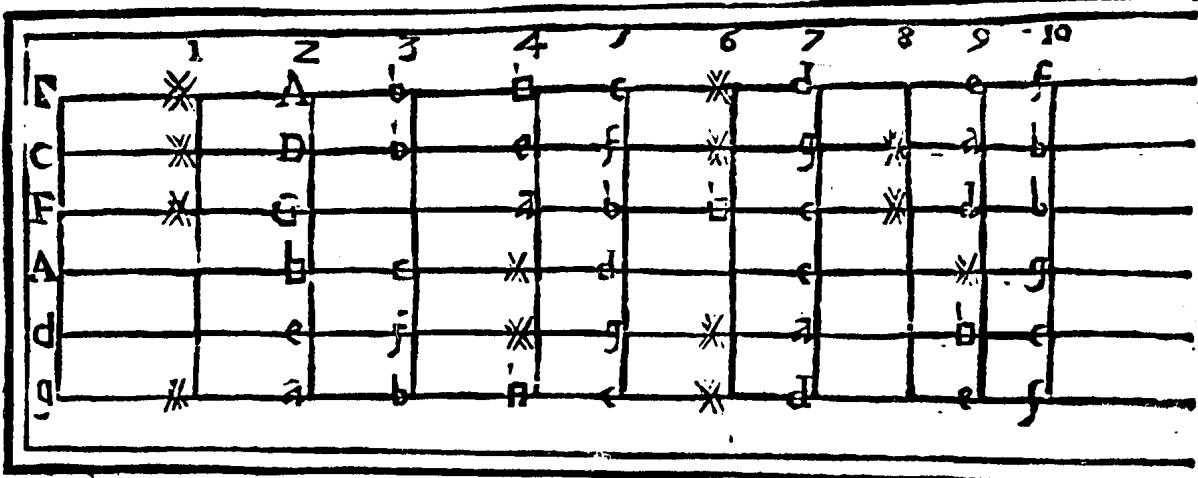
中文讲解
这是第 48 页的图像/乐谱/表格占位符,标题为’第 48 页图像或乐谱示例’。从上下文判断,此处展示的是 Bermudo 著作中的一幅图表,呈现维韦拉之 gamaut 调上各品位在六弦上的音高分布,特别是’缺失’的 B♭ 与 E♭ 等音。原文明确说明该图’显示维韦拉之 gamaut 调上缺失的音’。需查看原图以确认具体内容,本文不复述图中细节。
补充说明
无额外补充(无法从 task_input 中获得原图内容)。
第74段(P0625)
原文复述
According to Bermudo, the “missing” tones could be supplied in several ways. Sometimes, after fretting their instruments correctly, players pulled frets out of line to produce mi’s on one course and fa’s on another, as needed. For Bermudo, such tampering is a “poultice” not a remedy, since, when moved, “the fret will not occur at exactly the right place on any string.“76 Another expedient, “a not
中文讲解
本段开始介绍 Bermudo 关于如何补足’缺失’音的若干办法。有些演奏者在正确安品之后,把琴品挪出原本直线,使某一弦上出现 mi 而另一弦上出现 fa,以应所需。Bermudo 认为这种’篡改’(tampering)是’膏药’(poultice)而非真正的疗法,因为移动后的琴品’在任何一根弦上都不会恰好处在正确的位置’。脚注 76 标注此评论出处。另一种权宜之计是’一种并非……(未完,延续至 P0629)‘的小错误。
补充说明
‘poultice’(膏药)隐喻暗示此法只能暂时缓解表面问题,无法根治结构性缺陷。
第75段(P0626)
原文复述
- Declaración, f. 107.
中文讲解
脚注 76,标注 Bermudo《Declaración》第 107 叶。这是 P0625 中’移动琴品不能精确’评论的出处。
第76段(P0627)
原文复述
Reproduced with permission of the copyright owner. Further reproduction prohibited without permission.
中文讲解
第 48 页页脚的版权声明。
第77段(P0628)
原文复述
a not
中文讲解
接续 P0625 中断的引文:‘另一种权宜之计是’一种并非……(未完,延续至 P0629)’。
第78段(P0629)
原文复述
small error which is daily practised among some players,”
中文讲解
接续 P0628 引文:’……并非小的错误(a not small error),每天都在某些演奏者中流行’。
第79段(P0630)
原文复述
was applied while playing: “They say they have some strings
中文讲解
这种权宜之计在演奏时使用:‘他们说自己有些弦,可以在其上……(未完,延续至 P0631)’。这是 Bermudo 描述的另一种不正规做法:通过调某些弦的张力来产生需要的半音变化。
第80段(P0631)
原文复述
on which they raise or lower notes.” These, Bermudo likens
中文讲解
接续 P0630 引文:’……可以在其上抬高或降低音高’。这些做法 Bermudo 比喻为……(未完,延续至 P0632)。
第81段(P0632)
原文复述
to “secretly bad Christians” because
中文讲解
接续 P0631:Bermudo 把这些做法比作’暗中作恶的基督徒’(secretly bad Christians),因为……(理由见 P0634)。
第82段(P0633)
原文复述
… their badness does not show until someone places a hand on the string and finds that either the fret on which the strings are stopped is not equal [ygual], or that the player did not press down the finger equally when he touched the strings.77
中文讲解
接续 P0632 引文:’……他们的恶行不会显现,直到有人把手放在弦上发现:要么琴品在该弦上不平等(ygual,西班牙语,意即琴品不在正确位置),要么演奏者按弦时按压力度不均’。脚注 77 标注引文出处。这一比喻生动揭示 Bermudo 对该种权宜之计的态度:表面看似无碍,实际隐藏着音准的不稳定。
补充说明
‘ygual’(西班牙语)意为相等、平衡;指琴品应在弦上等高。
第83段(P0634)
原文复述
The theorist offers more honest remedies. The play-
中文讲解
该理论家(Bermudo)提供了更’诚实’的补救方法。演奏者应当……(未完,延续至 P0635)。
第84段(P0635)
原文复述
er should seek the “missing” tones elsewhere. For example,
中文讲解
接续 P0634:演奏者应在别处寻找’缺失’的音。例如……(未完,延续至 P0636)。
第85段(P0636)
原文复述
since, on the vihuela of Gamaut, III 1 is a mi fret, $^{78}$ the
中文讲解
接续 P0635:例如,因为维韦拉之 gamaut 调上,第 III 弦第 1 品是一个 mi 品位(脚注 78 给出标注规则)……(未完,延续至 P0637)。
第86段(P0637)
原文复述
important tone b-flat is lacking; this tone can be supplied
中文讲解
接续 P0636:……重要音 B♭(降 B)将缺失;这个音可以由……(未完,延续至 P0638)。
第87段(P0638)
原文复述
by IV 5. Frequently, however, either the “missing” tone
中文讲解
接续 P0637:……可由第 IV 弦第 5 品(IV 5)替代。然而,常常要么’缺失’的音……(未完,延续至 P0639)。
第88段(P0639)
原文复述
cannot be supplied by another fret or a substitution may be
中文讲解
接续 P0638:……要么不能由其他品位替代,要么替代在技术上……(未完,延续至 P0640)。
第89段(P0640)
原文复述
technically impossible. On the vihuela of Gamaut, for ex-
中文讲解
接续 P0639:……要么技术上不可能。以维韦拉之 gamaut 调为例……(未完,延续至 P0641)。
第90段(P0641)
原文复述
ample, the important tone e-flat, not available on II 1 or
中文讲解
接续 P0640:重要音 E♭(降 E)在第 II 弦第 1 品(II 1)或……(未完,延续至 P0642)上都不可得。
第91段(P0642)
原文复述
III 6, which sound d-sharp, could be supplied by IV 10, but
中文讲解
接续 P0641:……III 6(这两处都给出 d♯)上不可得,而可由 IV 10 替代,但是……(未完,延续至 P0643)。
第92段(P0643)
原文复述
this string may be occupied by another note or the fret ex-
中文讲解
接续 P0642:……但 IV 10 所在的弦可能被另一个音占用,或该品位……(未完,延续至 P0644)。
第93段(P0644)
原文复述
ceed a possible fingering. In such cases the player must
中文讲解
接续 P0643:……或超出可能按指的范围。在这种情况下,演奏者必须……(未完,延续至 P0645)。
第94段(P0645)
原文复述
touch “behind the [d-sharp] fret, and loosely, in order that
中文讲解
接续 P0644:在该 d♯ 品位后方(higher up the neck,朝琴马方向)‘轻触(loosely)按弦,以便……(未完,延续至 P0646)’。
补充说明
’loosely’ 指不完全压到品上,而是按在品后但留有余地,以此把 d♯ 改成 E♭(即将 mi 性质改为 fa 性质)。
第95段(P0646)
原文复述
the mi may become a fa,“79 or he may add a second first-fret
中文讲解
接续 P0645:’……使 mi 变成 fa’(脚注 79 标注),或者他可以加装’第二个第一品位’……(未完,延续至 P0647)。这一权宜之计的本质是利用手指按压力度的差异来改变有效弦长,从而在品位之间临时制造所需的半音。
第96段(P0647)
原文复述
in the following manner:
中文讲解
接续 P0646:以如下方式(见 P0649 的具体步骤)。
第97段(P0648)
原文复述
Place the calipers on the third fret and divide the distance between the third fret and the puente into
中文讲解
Bermudo 提出的第二种’诚实’补救的具体步骤开始:将圆规(calipers)置于第三品(third fret),然后把第三品到琴马(puente)之间的距离……(未完,延续至 P0653)。
补充说明
‘calipers’(圆规/卡尺)在 16 世纪木工与制弦工艺中用作等分工具。
第98段(P0649)
原文复述
eight equal parts.
中文讲解
此处文本以 ‘##’ 起头,是源输入中的一处排版/OCR 残留;其语义内容是上一句未完成句的补全:’……把第三品到琴马之间的距离等分为 8 份。’
补充说明
‘##’ 在本输入其他处(P0552、P0581)也作为残留形式出现,应视为版式遗留而非实质性标题。
第99段(P0650)
原文复述
- Declaración, f. 107’.
中文讲解
脚注 77,标注 Bermudo《Declaración》第 107’ 叶(背页)。这是 P0633 中’暗中作恶基督徒’比喻的出处。
第100段(P0651)
原文复述
- In referring to a particular string and frets on the vihuela, the former are given Roman numbers, I (the highest course) to VI (the lowest); the frets are given arabic numbers, 1 (the first fret) to 10 (normally the highest).
中文讲解
脚注 78,说明 P0636 之后所引用的 ‘III 1’ 等记号的含义:罗马数字(I 至 VI)代表弦组,从最高音组(I)到最低音组(VI);阿拉伯数字(1 至 10)代表品位,从第一品(1)到通常的最高品(10)。
补充说明
这是本章标记弦与品位的统一记号法,本节多处引用(如 III 1, IV 5, II 1, III 6, IV 10 等)均依此约定。
第101段(P0652)
原文复述
- Declaración, f. 104’.
中文讲解
脚注 79,标注 Bermudo《Declaración》第 104’ 叶(背页)。这是 P0646 中’在 d♯ 品位后轻触按弦’补救方法的出处。
第102段(P0653)
原文复述
Reproduced with permission of the copyright owner. Further reproduction prohibited without permission.
中文讲解
第 49 页页脚的版权声明。
第103段(P0654)
原文复述
eight equal parts. And then place the calipers on the third fret; where the arc [buelta] reaches to, there you will make a sign, which will be for the first fret which forms fa. When you wish to play the fourth [mode] on Cfaut, Ffaut, or Gsolreut, you will lower the first fret, which was mi, to the nearby mark where fa will be formed.80
中文讲解
接续 P0648–P0649:将第三品到琴马之间等分为 8 份。然后将圆规置于第三品;圆弧(西班牙语 buelta)达到之处做一标记,这就是第一个能形成 fa 的第一品位标记。当你想在 Cfaut、Ffaut 或 Gsolreut 上演奏第四调式(fourth mode)时,把原本作为 mi 的第一品位下移到附近的标记处,使其形成 fa。脚注 80 标注引文出处。这是 Bermudo 提出的’加装第二第一品位’的具体几何步骤:通过把第三品到琴马的距离 8 等分,可以测出第一品在需要形成 fa 时应处的位置。
补充说明
西班牙语 buelta 指圆规两脚张开后画出的弧线;该弧在指板上定出第一品的偏移位置。
第104段(P0655)
原文复述
So that the fret may be moved, not haphazardly, but accord-
中文讲解
为使琴品的移动不是随意(haphazardly)而是……(未完,延续至 P0656)。
第105段(P0656)
原文复述
ing to measurement, Bermudo suggests marking the neck.
中文讲解
接续 P0655:……而是按测量移动,Bermudo 建议在琴颈上做标记。这是承接前段几何作图后的实用建议:在指板上刻出两个第一品位的位置(一个供 mi 用、一个供 fa 用),以便按需移动琴品。
第106段(P0657)
原文复述
Elsewhere he suggests placing two first frets on the neck
中文讲解
在其他地方,Bermudo 还建议在琴颈上安放两个第一品位……(未完,延续至 P0658)。
第107段(P0658)
原文复述
of the vihuela, the fa fret thicker than the mi, so that
中文讲解
接续 P0657:……即在维韦拉琴颈上放置两个第一品位,fa 品位做得比 mi 品位厚一些,使……(未完,延续至 P0659)。
第108段(P0659)
原文复述
it “does not rub the string when it is stopped,” and thus.
中文讲解
接续 P0658:……使 fa 品位’在按弦时不会蹭弦’,从而……(句意未完,延续至 P0660)。
第109段(P0660)
原文复述
both frets “are ready to be used when needed, because they
中文讲解
接续 P0659:……两个第一品位’随时可用,因为它们……(未完,延续至 P0661)’。
第110段(P0661)
原文复述
will not interfere with each other.“81
中文讲解
接续 P0660:……它们不会相互干扰’。脚注 81 标注引文出处。这是 Bermudo 关于如何同时安放两个第一品位的实用方案:使 fa 品位更厚,避免按弦时与相邻的 mi 品位相碰。
第111段(P0662)
原文复述
Bermudo’s concern for “missing” tones may have been
中文讲解
Bermudo 对’缺失’音的关切可能是……(未完,延续至 P0663)。这是本节从理论家的关切转向实践者态度的过渡句。
第112段(P0663)
原文复述
shared by the vihuelists; it was not by the tablature-makers.
中文讲解
接续 P0662:Bermudo 对’缺失’音的关切可能为维韦拉演奏者所共有;但谱表制作者(tablature-makers)并不如此。这一对照是本节的核心发现之一:理论家与演奏者关心 mi/fa 品位区别,谱表制作者却忽略之。
补充说明
’tablature-makers’ 指编制维韦拉琴数字谱(cifra 或 tablatura)的作者;他们通常直接在六线谱上标记品位数字,并不区分该品位上的 mi 与 fa 含义。
第113段(P0664)
原文复述
The latter, ignoring the distinction between mi’s and fa’s
中文讲解
谱表制作者忽略 mi 与 fa 的区别……(未完,延续至 P0665)。
第114段(P0665)
原文复述
use one fret for both as if the semitones were, in fact,
中文讲解
接续 P0664:……把同一品位同时用作 mi 与 fa,仿佛半音……(未完,延续至 P0666)。
第115段(P0666)
原文复述
equal.
中文讲解
接续 P0665:……仿佛半音’事实上相等’。这是对谱表制作者实践的明确刻画:他们按等程律(semitones in fact equal)的方式使用品位,不顾 Bermudo 所强调的 mi/fa 偏移差异。
第116段(P0667)
原文复述
For example, in Narváez’s first fantasia, f. l, for
中文讲解
以具体作品为例:在 Narváez 的第一首幻想曲(first fantasia),第 1 叶上,为……(未完,延续至 P0668)。
补充说明
‘Narváez’ 指 Luis de Narváez(约 1500–约 1555/1560),西班牙维韦拉琴作曲家,其《Los seys libros del delphín》(《海豚之书》,1538)是最早的维韦拉琴曲集之一。
第117段(P0668)
原文复述
the vihuela of Gamcut, the following mi frets are employed
中文讲解
接续 P0667:在维韦拉之 gamaut 调上,以下 mi 品位被用作……(未完,延续至 P0669)。
第118段(P0669)
原文复述
for fa:
中文讲解
接续 P0668:……以下 mi 品位被用作 fa。下列四行(P0670–P0674)列举具体实例。
第119段(P0670)
原文复述
I 8 [= d-sharp] twice used for e-flat
中文讲解
在 Narváez 第一首幻想曲中,第 I 弦第 8 品(I 8)原应给出 d♯,被两次用作 E♭(降 E)。这是 mi 品位被当作 fa 用的具体例子。
补充说明
标记格式按脚注 78 的约定:罗马数字为弦,阿拉伯数字为品位。
第120段(P0671)
原文复述
II 1 [= d-sharp] twice used for e-flat
中文讲解
第 II 弦第 1 品(II 1)原应给出 d♯,被两次用作 E♭。与 P0670 同样体现 mi 替代 fa 的实践。
第121段(P0672)
原文复述
III 1 [= a-sharp] twenty-seven times used for b-flat
中文讲解
第 III 弦第 1 品(III 1)原应给出 a♯,被 27 次用作 B♭。这是该曲中最频繁的 mi 替代 fa 案例,说明谱表制作者在实践中几乎完全忽略 mi/fa 区别。
补充说明
27 次使用的高频度突出实践与理论之间的距离。
第122段(P0673)
原文复述
III 6 [= d-sharp] five times used for e-flat
中文讲解
第 III 弦第 6 品(III 6)原应给出 d♯,被 5 次用作 E♭。与 P0670–P0672 一起构成实例列表。
第123段(P0674)
原文复述
A specific instance will be found in compás 10, where
中文讲解
在该曲第 10 小节(compás,西班牙语,意为’小节’)中可以找到一个具体实例……(未完,延续至 P0675)。
补充说明
‘compás’ 是西班牙语中’拍号/小节’的术语;在维韦拉琴数字谱中相当于现代小节单位。
第124段(P0675)
原文复述
the a-sharp of III 1 must agree with b-flat an octave lower
中文讲解
接续 P0674:第 III 弦第 1 品上的 a♯ 必须与低八度的 B♭(b-flat)协调一致——这是 mi 替代 fa 所造成的实际音高差异(syntonic comma 约 21.5 音分)在和声语境中的暴露。Bermudo 所担忧的’可闻的差异’在具体作品中确实会出现。
补充说明
‘compás 10’ 标记具体小节;‘octave lower’ 表明与低音部对比的音响关系。
第125段(P0676)
原文复述
Reproduced with permission of the copyright owner. Further reproduction prohibited without permission.
中文讲解
第 50 页页脚的版权声明。
脚注 / 边栏 / 图表 / 附加信息(如有)
本节包含多条脚注(编号 67–81),分别指向 Bermudo《El Maestro》(xv–xvi 页)与《Declaración》(f. 103’–109’ 各叶)、Murray Barbour 1932 年 Cornell 博士论文《Equal Temperament, Its History from Ramis (1482) to Rameau》及 1951 年专著《Tuning and Temperament》。第 48 页有一幅来自 Bermudo 著作的图表(占位符 P0624),展示维韦拉之 gamaut 调上各品位在六弦上的音高分布与’缺失’音。本节末(P0670–P0673)以列表形式给出 Narváez 第一首幻想曲中具体被用作 fa 的 mi 品位及其使用频次(I 8、II 1、III 1、III 6),并以第 10 小节(compás 10)中 III 1 之 a♯ 与低八度 B♭ 须一致为例,说明实践与理论间的音高差异问题。
💡 本节核心要点
- 16 世纪维韦拉琴的琴品按半音间距布局:除 1504 年萨拉曼卡一份被判定有误的自然音阶图示外,所有理论文献与实践文献皆如此。
- 绑缚式(而非固定式)琴品使定品成为难题;Bermudo 批评凭听觉调品,主张以数学比例安放,但他仍承认普通维韦拉琴即使琴品不准也悦耳动听。
- Bermudo 第一种(实用)定品法基于毕达哥拉斯比例(九度、四度划分八度),其后用 Faber Stapulensis 的几何中项法安放半音品位;Barbour 统计证实其偏差(S.D. 3.3、M.D. 4.5 音分)极小,接近等程律。
- Bermudo 第二种(理论)方法虽更精密、自夸所有五度与三度都完美,但他在西班牙未见任何人使用,仅具理论兴趣。
- mi 与 fa 半音品位有约 syntonic comma 的音差;一个品位服务六弦,使某些重要变化音(B♭、E♭ 等)在部分品位不可得;Bermudo 提出多种’诚实’补救:移动第一品、装两个第一品位、按压力度调整等。
- 谱表制作者忽略 mi/fa 区别,把同一品位既当 mi 又当 fa 使用;Narváez 第一首幻想曲提供了 4 处 mi 替代 fa 的具体实例,其中 III 1 处的 a♯ 在该曲中被使用 27 次作为 B♭。
🔑 关键术语
- fret(琴品):琴颈上用以分隔半音的横条;维韦拉琴的琴品为绑缚式而非固定式,可由演奏者移动。
- vihuela común(普通维韦拉琴):相对于为特定调专门调品的型号(如 vihuela de gamaut)而言的通用型维韦拉琴。Bermudo 称赞其灵活性与音色。
- Pythagorean system(毕达哥拉斯体系):以纯整数比(2:1 八度、3:2 五度、4:3 四度、9:8 大二度等)为基础的调律体系,是 Bermudo 第一种定品法的几何学基础。
- geometric mean proportional(几何中项):给定 a 与 b,求 x 使得 a:x = x:b;Bermudo 用此法在半音品位上分出更准确的音程位置,替代单纯的算术中点。
- mi fret / fa fret(mi 品位 / fa 品位):同一品位在按 solmisation 命名时,发 ‘mi’ 音的偏向琴马(puente)一侧,发 ‘fa’ 音的偏向 ceja 一侧;两者间有约 syntonic comma(81/80)的音差。
- equal temperament(等程律):十二个半音等距划分的调律体系;Bermudo 的几何中项法在统计上与之接近(S.D. 3.3、M.D. 4.5 音分)。
- semitono mayor / semitono menor(大半音 / 小半音):十六世纪调律术语,分别约对应 16:15 与 25:24;管风琴可用分键区分,维韦拉琴则无此能力,‘普通维韦拉琴上没有大半音或小半音的区分’。
- vihuela de Gamaut(维韦拉之 gamaut 调):调至 gamaut(Gsolreut)音高的维韦拉琴型号;本节以它为例具体说明’缺失音’问题与补救方法。
- tablature-maker(谱表制作者):编制维韦拉琴数字谱(cifra / tablatura)的人;他们在谱面标记品位数字时通常不区分 mi 与 fa 含义。
- compás(西班牙语,小节/拍号):维韦拉琴数字谱中相当于现代小节的时间单位;本节末引用 compás 10 作为具体实例。