目录
ch1 Italian Keyboard Instruments at the Austrian Habsburg Courts: Dating and Sources
- 1.1 [描述性拆分] Dating the Ondeo Spinet and the Bontempo Instrument
- 页码:1-2
- 1.2 [描述性拆分] Limits of the Surviving Inventories
- 页码:2-3
ch2 Acquiring Instruments
- 2.1 [描述性拆分] Bianca Maria Sforza’s Request and the Intensification of Italian Ties
- 页码:4-5
- 2.2 [描述性拆分] Modes of Acquisition: Gifts, Shopping Trips, and a Mixed Picture
- 页码:6-6
ch3 A Variety of Types and Sounds
- 3.1 [描述性拆分] Ferdinand of Tyrol’s Claviorgan and the Habsburg Tradition of Combination Instruments
- 页码:7-9
- 3.2 [描述性拆分] Rorif’s Claviorgan and the Pursuit of Sonic Diversity
- 页码:9-11
- 3.3 [描述性拆分] Exceptional Keyboard Instruments at the Austrian Courts
- 页码:11-11
ch4 Keyboard Playing Habsburgs
- 4.1 [描述性拆分] Female Habsburgs and the Burgundian Inheritance of Keyboard Playing
- 页码:12-13
- 4.2 [描述性拆分] Italian Influence and Maria of Bavaria
- 页码:14-15
- 4.3 [描述性拆分] Female Agency, Tablature Instruction, and the Gendering of the Clavichord
- 页码:15-16
ch5 Italian Professionals
- 5.1 [描述性拆分] Professional Musicians and the ‘Italianisation’ of the Tyrolean and Styrian Courts
- 页码:17-18
- 5.2 [描述性拆分] Reassessing the Imperial Court: Italian Connections and Keyboard Repertoire
- 页码:19-21
- 5.3 [描述性拆分] Imperial Chamber Music and Female Musicians
- 页码:22-23
- 5.4 [描述性拆分] Italian Predominance and the Role of the Keyboard in Chamber Music
- 页码:24-25
ch6 Appendix: Keyboard Players at the Courts of the Austrian Habsburgs
- 6.1 [描述性拆分] Appendix Tables and Notes
- 页码:26-32
ch7 Bibliography
- 7.1 Bibliography
- 页码:32-42
ch8 Sofonisba Anguissola at the Keyboard: Performance of Transgressive Musical Knowledge and Artistic Skill
- 8.1 [描述性拆分] Ribera’s Compendium and Sofonisba’s Musical Self-Portrait
- 页码:43-44
- 8.2 [描述性拆分] Differentiating Nobility: Sofonisba, the Ferrarese Ladies, and Other Female Artists
- 页码:45-46
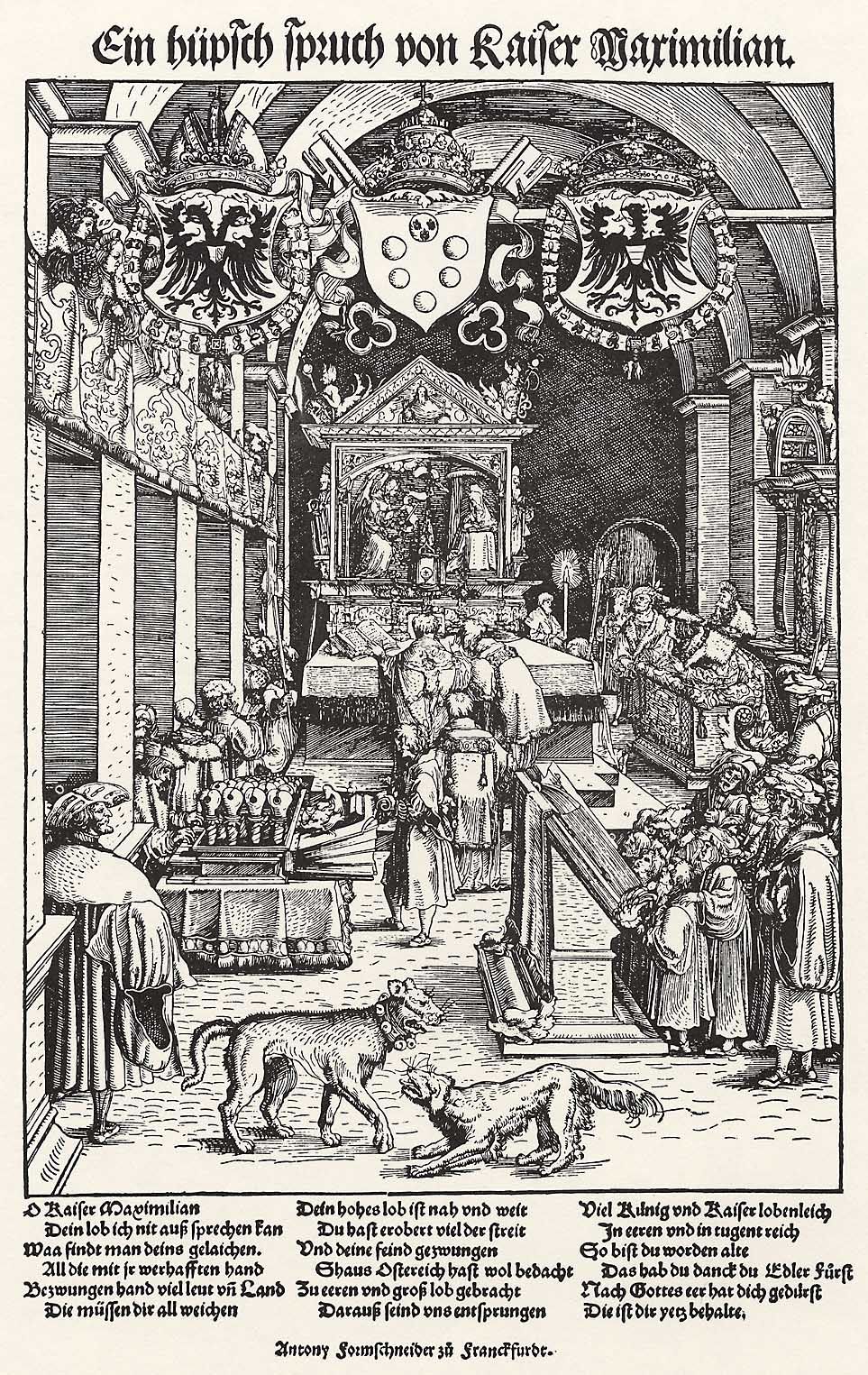
- 8.3 [描述性拆分] Negotiating Self-Presentation: Family Background and Courtly Education
- 页码:47-48
- 8.4 [描述性拆分] From Spain to Italy: Service, Marriage, and the Limits of Professional Painting
- 页码:49-50
1.1 [描述性拆分] Dating the Ondeo Spinet and the Bontempo Instrument
第1段(P0001)
原文复述
Enharmonic keyboard instruments had originated. Moreover, as already suggested by Adolf Koczirz and recently corroborated by Christopher Stembridge, Jacobus Buus—who was court organist to Ferdinand I from 1550/51 to 1564 following his tenure at San Marco in Venice—may have been involved in the purchase or even in the construction of the Clavicymbalum Vniversale.
中文讲解
本段承接前文,指向增强音程(enharmonic)键盘乐器的起源问题,并对 Clavicymbalum Vniversale 的相关史实做补充。作者援引两条证据线索:其一为 Adolf Koczirz 较早提出的猜测,其二为 Christopher Stembridge 的最新佐证,二者将 Jacobus Buus 与该琴的购置乃至制造联系起来。值得注意的是 Buus 的履历背景:先任职于威尼斯圣马可教堂,随后于 1550/51 至 1564 年间担任神圣罗马帝国皇帝斐迪南一世的宫廷管风琴师。这一跨宫廷经历,加上威尼斯作为增强音程键盘乐器制作中心的地位,使得 Buus 有能力、有机会介入此琴的购买或建造。本段的论证功能在于为 Clavicymbalum Vniversale 的工艺来源提供一条具体的人格化通道:它不只是一台匿名仪器,而是可能与一位穿梭于威尼斯与维也纳宫廷之间、掌握管风琴与增强音程乐器知识的音乐家直接挂钩,从而把抽象的乐器史锚定于可考的历史人物网络之中。
补充说明
本段中 Clavicymbalum Vniversale(“普世/完美羽管键琴”)为同名增强音程键盘乐器的拉丁文名称;‘enharmonic’ 在十六世纪键盘语境中通常指四分之一音或更细微分音的划分,而非现代意义上的同音异名。Buus 是十六世纪中后期威尼斯—因斯布鲁克—维也纳宫廷网络中具有代表性的键盘乐作曲家与演奏家,是追溯增强音程键盘乐器传播史时的一个关键人物节点。
第2段(P0002)
原文复述
More difficult to date is the ’einfaches Spinetl Thiorbato’ (no. 10). It is registered in an inventory drawn up in Innsbruck in 1665 (after the extinction of the Tyrolean branch of the Habsburgs and the subsequent dissolution of the Innsbruck court). The entry also reports that the spinet ‘was made in Venice by Ondeo’ (‘so in Venedig von dem Ondeo gemacht worden’). Senn and Stradner believed that this instrument was the same as the one referred to in a later inventory of 1741, drawn up in connection with the re-establishment of a court household in Innsbruck, as ‘another large instrument with one manual which is labeled with the words Hieronymus Undeus, son of Donato, in the year 1632’. However, as Denzil Wraight rightly points out, these two instruments cannot be identified as the same, ‘since a “spinetl” [small spinet] can hardly have been a “großes Instrument”’. Hence, it is equally possible that the instrument in the 1665 inventory, with its attribution only to ‘Ondeo’, was built by Girolamo’s (Hieronymus’) father, Donato Ondei, and thus dates from the period, when Donato, who died in 1623, was active, i.e. around 1600.
中文讲解
本段是本小节论证的核心,转向一件编号为 10 的简单斯皮耐琴(小形羽管键琴)兼有西奥博琴特征的乐器,并集中处理其断代难题。材料来源是两份因斯布鲁克宫廷清单:一份 1665 年,在提洛尔支系哈布斯堡家族绝嗣、宫廷被解散之后编成;另一份 1741 年,为宫廷重建而清点。前者将这件乐器归于威尼斯制琴师 Ondeo,并未给出具体人名或年代;后者则明确记载其上题有 “Hieronymus Undeus, Donati filius, Anno 1632” 字样。Senn 与 Stradner 将两件视为同一,但 Wraight 正确指出,仅凭 “Spinetl”(小斯皮耐琴)与 “großes Instrument”(大型乐器)之间的体量矛盾便可否定这一等同。作者由此提出一个替代假设:1665 年清单那件未署全名的 Ondeo 琴,更可能是 Girolamo(Hieronymus)之父 Donato Ondei 所制,而 Donato 卒于 1623 年,因此其制作时间应落在他活跃的时期,即约 1600 年前后。这一断代策略的关键在于用体量记载差异排除身份等同,再用制琴师家族的代际关系打开新的年代窗口。它告诉我们:在仅凭姓名缩写和无年代铭文的清单证据面前,研究者必须同时区分“同一器物”与“同一姓氏、家族、传统”,否则会在看似吻合的文本间制造伪等号。
补充说明
‘Spinetl Thiorbato’ 这一复合名称反映了一类结合斯皮耐琴与西奥博琴特征的混合形态;thiorbato 指依傍额外低音弦以扩展音域的设计。Ondei 家族在文献中常以 ‘Ondeo/Ondei/Undeus’ 等不同拼写出现,因德语—意大利语—拉丁化转写造成的差异本身就是一种断代风险。
第3段(P0003)
原文复述
Footnote 19: Martin Kirnbauer, ‘Carl Luython and the “Clavicymbalum Vniversale seu perfectum”: Finding Its Historical and Musical Context’, in: Clavibus unitis 10/3 (2021), 99–112, https://www.acecs.cz/index.php?f_idx=4&f_cu=cu_2021_10 (accessed on 24 August 2024); Christopher Stembridge, ‘The Cimbalo cromatico and Other Italian Keyboard Instruments with Nineteen or More Divisions to the Octave (Surviving Specimens and Documentary Evidence)’, in: PPR 6 (1993), 33–59, https://scholarship.claremont.edu/ppr/vol6/iss1/ (accessed on 10 Oct. 2025). Cf. also Pollens, A History of Stringed Keyboard Instruments (see n. 16), 198–203, and Collarile, ‘“Un gran valent’huomo”’ (see n. 1), 68–9, on Venice as a center for this type of keyboard instruments.
中文讲解
这是正文 P0001 所引增强音程键盘乐器起源讨论的脚注 19。它先把 Martin Kirnbauer 2021 年关于 Carl Luython 与 Clavicymbalum Vniversale 的论文以及 Christopher Stembridge 1993 年关于十九分乃至更多八度划分的意大利键盘乐器的专文列为两条主要来源;前者定位该琴的历史—音乐语境,后者汇集现存实物与文献证据。然后以“参见”补入 Pollens 关于拨弦键盘通史的章节和 Collarile 关于威尼斯这一类型制造中心的论文,对正文论点形成背景支撑。本脚注在文中起双重作用:一是为主张(增强音程乐器已经出现且与 Buus 相关)提供当代学术依据;二是把读者引向威尼斯作为该类乐器制造中心的更宏观研究脉络。
补充说明
脚注中标注的访问日期属于本研究撰写时的核对记录,并非常规学术引文要素;本段直接采用了该信息。
第4段(P0004)
原文复述
Footnote 20: Koczirz, ‘Zur Geschichte des Luython’schen Klavizimbels’ (see n. 3), 569; Stembridge, ‘The Cimbalo cromatico’ (see n. 19), 41.
中文讲解
脚注 20 指向 P0001 中两个具体支持 Buus 介入 Clavicymbalum Vniversale 之猜测的原始出处:Koczirz 关于 Luython 羽管键琴史的论文第 569 页,以及 Stembridge 关于半音键琴文章的第 41 页。本脚注的作用是限缩与确证:它把正文中“已由 Koczirz 提出、并由 Stembridge 再次证实”这一表述准确落到具体页码,使读者可据以复核。
补充说明
‘Klavizimbel’ 为德文中 ‘clavicymbalum/羽管键琴’ 的常见拼写;n. 3 与 n. 19 是该论文脚注系统内部对前述文献的回指,不构成本段新信息。
第5段(P0005)
原文复述
Footnote 21: ‘Inventarium über die von Erzherzog Siegmund Franz hinterlassenen Musikalien anno 1665’. The document was first edited by Waldner, ‘Zwei Inventarien’ (see n. 10), 130–47, and subsequently analysed and compared to other Innsbruck inventories by Senn, Musik und Theater (see n. 2), 334–46.
中文讲解
脚注 21 出自 P0002,关涉 1665 年因斯布鲁克《Musikalien 清单》之来源与研究史。它依次交代了三层信息:清单的全名为《Archduke Siegmund Franz 故藏乐谱与乐器清单,1665 年》;该文献最早由 Waldner 在《两份清单》一文中校勘出版(第 130–147 页);其后由 Senn 在《音乐与戏剧》一书中将之与其他因斯布鲁克清单作了分析与比对(第 334–346 页)。本脚注对正文的作用是溯源性:把 P0002 中那件“仅称 Ondeo”的小斯皮耐琴置于一条完整的文献链——原件—首次校勘—综合研究之中,使该器物的存在具备史料基础而非孤证。
补充说明
Archduke Siegmund Franz(西格蒙德·弗兰茨大公)为提洛尔支系哈布斯堡家族成员,因此 P0002 中“提洛尔支系绝嗣”这一历史背景可通过脚注中的人物身份互相印证。
第6段(P0006)
原文复述
Footnote 22: Ibid., 340; Stradner, ‘Saitenklaviere’ (see n. 12), 334.
中文讲解
脚注 22 出自 P0002,承接脚注 21 中 Senn 的分析与 Stradner 关于弦乐器键盘的论文,分别指向第 340 页与第 334 页。它精确指出 Senn 和 Stradner 将 1665 年那件 ‘Ondeo’ 琴等同于 1741 年清单中的 ‘Hieronymus Undeus’ 琴这一观点的具体页码,以便读者复核两位学者如何论证这一后来被 Wraight 否定之等同。
第7段(P0007)
原文复述
Footnote 23: Wraight, ‘The Stringing of Italian Keyboard Instruments’ (see n. 12), ii, 309.
中文讲解
脚注 23 对应 P0002 中 Denzil Wraight 关于 1665 年与 1741 年两件乐器不应等同的判断,引自其《意大利键盘乐器的弦法》第 2 卷第 309 页。此条脚注的功能是为 Wraight 的体量论证(‘Spinetl’ 不可为 ‘großes Instrument’)提供出处凭据,使本段对 Senn 与 Stradner 的修正具备学术可追溯性。
补充说明
Wraight 一文的 ii 通常指多卷本或同题研究的次册;具体卷次属于该文献内部结构,本段不需要进一步发挥。
第8段(P0008)
原文复述
Footnote 24: On Donato Ondeo see Boalch-Mould Online, https://www.boalch.org/instruments/makerprofile/699 (accessed on 24 August 2024); his extant instruments are described in: Donald H. Boalch, Makers of the Harpsichord and Clavichord 1440–1840, 3rd ed. by Charles Mould (Oxford, 1995), 667–8; Wraight, ‘The Stringing of Italian Keyboard Instruments’ (see…
中文讲解
脚注 24 对应 P0002 末尾将 1665 年那件 ‘Ondeo’ 琴归于 Donato Ondei 的假说。它先以线上乐器谱系数据库 Boalch-Mould Online 关于 Donato Ondeo 的词条作为基本框架,再附以 Boalch《拨弦与击弦键盘乐器制作者 1440–1840》第三版(由 Charles Mould 修订)第 667–668 页对其传世乐器的实物描述,并指明 Wraight 之专文亦将作为延伸参考。本脚注在此处的任务是为作者所提的 Donato Ondei 备择断代假说奠定史料基础;它告诉读者:Ondeo 家族至少有 Donato(父)与 Girolamo/Hieronymus(子)两代活跃的制琴师,对前者的生平与作品已存在专门著录与数据库支持。
补充说明
由于本脚注在原文中以“see”起始而未在选定切片内闭合,所引 Wraight 一文的对应页码应在下一段注释中给出,本段无须补造。
第9段(P0009)
原文复述
One instrument can only be tentatively included among the Italian keyboard instruments in the Austrian courts. A 1619 inventory of the estate of Karl von Burgau (1560–1618), a son of Ferdinand II of Tyrol from his morganatic marriage to Philippine Welser, mentions ‘an old, large, single instrument, stemming from Antonio Bontempo’ (‘ain alts groß ainfachs Instrument, von Anthoni Bondemppo herrierendt’). Born in Brescia, Giovanni Antonio Bontempo is known to have been appointed to the Innsbruck court sometime before 1566. Apparently an extremely versatile musician, he served in Innsbruck as cornetto player, trumpeter and lutenist, replaced the court organist for a time around 1590, and was also active as an instrument maker. Bontempo retired after the death of Ferdinand II in 1596 and finally died in 1607. In the absence of more detailed information, no exact date can be determined for the keyboard instrument recorded in 1619, although the remark ‘old’ points towards a relatively early date, presumably still in the 16th century. It is therefore impossible to establish whether the instrument was built before Bontempo came to Tyrol, or to what extent it exhibited Italian features, if it had already been made in Innsbruck.
中文讲解
本段是本小节的收束,转入最后一件只能“试探性”归入奥地利宫廷意大利键盘乐器范畴的器物,以区别于前两段(Clavicymbalum Vniversale 与 Ondeo 小斯皮耐琴)较为具体的讨论。器物证据源自 1619 年 Karl von Burgau(1560–1618)遗产清单,他是提洛尔的 Ferdinand II 与 morganatic(贵贱通婚)之妻 Philippine Welser 之子——这一身份背景说明了为什么他私藏中的意大利器物有可能流进同一研究视野。清单德文原文作 “ain alts groß ainfachs Instrument, von Anthoni Bondemppo herrierendt”,确认该琴 “老、大、单排键盘”,出自 Antonio Bontempo。作者随后补充 Bontempo 之生平以作断代框架:他生于布雷西亚,约 1566 年前被任命至因斯布鲁克宫廷;身份多面,既任短号(小号前身)、小号与鲁特琴演奏,又于约 1590 年间一度代行宫廷管风琴师,且本人亦从事制琴;他于 1596 年 Ferdinand II 去世后退职,1607 年逝世。结合这些信息,器物被记作 “老” 暗示其应早于 1619 年若干年,作者推测仍属十六世纪末。但能否进一步判定它是 Bontempo 来提洛尔之前所造,还是到任后在因斯布鲁克制作的本土化产物,仍受制于清单的简短描述而无法落实。本段之论证功能是给本小节划上边界:前两件可进行较为细密的归属和断代讨论,最后一件则只能以“暂列”的姿态提示其潜在价值,避免在没有进一步证据时作过度结论。
补充说明
‘morganatic marriage’(贵贱通婚)指贵族与平民之间、子嗣不继承全部头衔与领地的婚姻;Welser 家族虽是富商而非皇室,Philippine Welser 的婚后身份决定了 Karl von Burgau 在哈布斯堡谱系中的从属位置,这也部分说明其遗产清单与帝国宫廷主清单在性质上的差异。
脚注 / 边栏 / 图表 / 附加信息(如有)
本小节附有 6 条脚注(n. 19–24),其功能分布如下:n. 19 综合支撑增强音程键盘乐器起源与威尼斯的制造中心地位,分文献主证与背景参考两层;n. 20 为 P0001 中 Koczirz 与 Stembridge 的具体页码凭据;n. 21、n. 22、n. 23 一起搭起 1665 与 1741 两份因斯布鲁克清单的史料链——原件(Waldner 校勘)→ 学者分析(Senn、Stradner)→ 学界修正(Wraight);n. 24 为 Ondei 家族尤其是 Donato Ondei 的生平与传世作品提供基础工具书与数据库的出处。这些脚注总体上服务于本节断代论证的三个面向:乐器谱系归属(enharmonic 乐器的威尼斯顿源)、器物身份等同的争议(小斯皮耐琴 vs. 大乐器)、制琴师家族代际的可考性(Donato Ondei)。
💡 本节核心要点
- Clavicymbalum Vniversale 与 Jacobus Buus 之间存在可能的归属链:Buus 兼具威尼斯圣马可管风琴师与斐迪南一世宫廷管风琴师的双重经历,使其介入此琴的购建具备历史合理性。
- 本节核心断代难点是编号 10 的 einfaches Spinetl Thiorbato:Senn 与 Stradner 将 1665 与 1741 两份清单中的记录视为同一琴,但 Wraight 以‘Spinetl’ 不可为 ‘großes Instrument’ 否决了这一等同。
- 在否决身份等同之后,作者提出替代理据:1665 年那件仅署 ‘Ondeo’ 之琴可能为 Girolamo 之父 Donato Ondei 所制,约 1600 年前后即 Donato 卒于 1623 年之前的活跃期。
- Bontempo 琴只能试探性归入此类器物:其米兰以外的多面音乐家身份(短号、小号、鲁特琴、临时代理管风琴师、制琴师)显示十六世纪宫廷音乐家集多重技艺于一身的事实,但清单本身的简短措辞使精确断代不可能。
- ‘老’ 这一描述是 1619 年清单中唯一的断代线索,它将 Bontempo 琴的时间上限推向十六世纪末,但无法分辨该琴是 Bontempo 来提洛尔之前还是之后所造。
- 本节整体示范了一种清单文献的处理范式:先列出尽可能多的记载选项,再以体量、署名、年代铭文等可证伪要素逐一筛除伪等同,最后把剩余的假说挂回可考的人物与家族世代谱系。
🔑 关键术语
- Clavicymbalum Vniversale:十六世纪增强音程(四分之一音或更细微分音)羽管键琴的拉丁名称;本节中与 Jacobus Buus 可能的购建介入相联系,构成本小节所追溯的意大利—维也纳键盘乐器传播网络中的关键器物。
- enharmonic keyboard:对本节而言专指十六世纪能够发出多于通常十二个半音、含四分之一音等细分音的键盘设计;它是 Clavicymbalum Vniversale 与本节多件威尼斯产键盘乐器在概念上的共同归属。
- ’einfaches Spinetl Thiorbato’ (no. 10):本节断代焦点:一件形制简单、具西奥博琴低音扩展特征的小斯皮耐琴;条目编号 10 在作者编目中代表其在奥地利宫廷清单中的次序,可用于与其它器物交叉定位。
- Ondeo / Ondei / Undeus 家族:活跃于威尼斯的制琴师家族,至少横跨 Donato Ondei(约 1600 年前后活跃,1623 年卒)与其子 Hieronymus Undeus(1632 年铭文为据)两代;署名形式的拼写差异(Ondeo/Ondei/Undeus)本身是清单文献考证必须分辨的对象。
- morganatic marriage(贵贱通婚):用于说明 Karl von Burgau 的出身背景:作为 Ferdinand II of Tyrol 与商人之女 Philippine Welser 的子嗣,其遗产与皇室主清单在性质与位置上有别,正是该背景决定了 1619 年 Bontempo 琴的清单来源。
- Karl von Burgau:1560–1618,Ferdinand II of Tyrol 之子;其 1619 年遗产清单是本节关于 Bontempo 琴的唯一直接文献来源。
- Giovanni Antonio Bontempo:生于布雷西亚、约 1566 年前任职因斯布鲁克宫廷的多面音乐家与制琴师,1596 年退休,1607 年卒;本节凭他的活跃期对所记之琴作出‘十六世纪’的最宽泛断代。
1.2 [描述性拆分] Limits of the Surviving Inventories
第1段(P0010)
原文复述
It can be assumed that the eleven instruments for which there is evidence constitute only a part of all stringed keyboard instruments of Italian provenance present at the Austrian Habsburg courts. It is impossible, however, to determine the exact number of all keyboard instruments and, therefore the percentage that the eleven instruments constitute. One of the main problems is that the extant inventories in one way or another only provide incomplete information. From the imperial court, only early 17th-century inventories have survived, and these are limited to the objects stored in Rudolf II’s ‘Kunstkammer’ (cabinet of curiosities). A 1577 inventory of the
中文讲解
本段为正文,提出本节的方法论核心问题:现有证据中的 11 件意大利弦乐键盘乐器只是奥地利哈布斯堡宫廷全部此类乐器的一部分;由于存世目录在不同程度上信息不全,作者既无法确定键盘乐器的总数,也无法据此推算 11 件所占比例。文中给出的第一个例证是:来自皇帝宫廷(imperial court)的目录仅存 17 世纪初的数件,且其内容仅限 Rudolf II 收藏室(‘Kunstkammer’,英文 cabinet of curiosities)所藏之物。该段在 ‘A 1577 inventory of the’ 处截断,句子跨越第 2 页与第 3 页,与 P0015 拼合为完整论述。教学要点:(1) 作者对证据边界的自觉限定;(2) 目录的不完整与无法量化之间的因果链;(3) 句法上的跨页延续显示 P0010 与 P0015 共同构成对各宫廷目录的连贯分析。
补充说明
本句跨页续写,P0010 与 P0015 合为一个完整句/段;‘Kunstkammer’ 在原文中以德文形式出现,并附英文括注’cabinet of curiosities’。
第2段(P0011)
原文复述
n. 12), 305–9. On Girolamo (Hieronymus) Ondei cf. Stefano Toffolo, Antichi strumenti veneziani. 1500–1800: Quattri secoli di liuteria e cembalaria (Venice, 1987), 166–7. The 1665 inventory mentions two further instruments of Italian provenance: ’ein dopplets Instrument mit 2 Clavirn’ by ‘Caesar de Pollastris von Ferrara’ and ’ein anders Instrument mit 3 Registern […], so der Doppo von Florenz gemacht’. Waldner, ‘Zwei Inventarien’ (see n. 10), 131–2. Apart from that, nothing is known about these builders (cf. the entries in Boalch-Mould Online [see n. 9], which only restate the informations provided by Waldner). It is therefore impossible to date these instruments exactly. However, their features – two manuals and three registers respectively – point towards the 17th century.
中文讲解
本段为脚注,承接前节已开始的同一条脚注,内容分两部分:(1) 文献指引 Toffolo《Antichi strumenti veneziani: 1500–1800: Quattri secoli di liuteria e cembalaria》(Venice, 1987) 第 166–167 页中关于 Girolamo (Hieronymus) Ondei 的记载;(2) 论述 1665 年目录提及的两件意大利来源乐器:其一为 Ferrara 的’Caesar de Pollastris’所制 ’ein dopplets Instrument mit 2 Clavirn’(带两个键盘的双层乐器),其二为佛罗伦萨’Doppo’所制 ’ein anders Instrument mit 3 Registern […]’(带三组 register 的另一件乐器)。由于除 Waldner 外学界对这两位制作者几乎一无所知(Boalch-Mould Online 也仅转述 Waldner),其精确制作年代无法判定;但双键盘与三组 register 的特征分别指向 17 世纪。教学要点:本脚注将意大利来源乐器的已知名单再添两件,却又因制作者不可考而无法精确定年,恰与本节主旨’存世目录的边界’呼应。
补充说明
脚注开头’n. 12)‘承接前节已出现的 Stradner, ‘Saitenklaviere’ (see n. 12), 305–9;本节任务只覆盖本段自身的注释内容。
第3段(P0012)
原文复述
25 Senn, Musik und Theater (see n. 2), 141; Stradner, ‘Saitenklaviere’ (see n. 12), 330.
中文讲解
本段为脚注 25,仅给出两条文献指引:Senn, Musik und Theater 第 141 页;Stradner, ‘Saitenklaviere’ 第 330 页。其作用是为正文或前一条脚注中的某一具体说法提供文献支撑,本身不展开论证。
第4段(P0013)
原文复述
26 For the literature on Bontempo see the entry in App., tab. 3.1. Most scholars concur that 1556 was the year in which Bontempo’s tenure in Innsbruck began. This, however, is based on a remark in a petition by Bontempo in 1596, in which he requests a generous pension in light of his 40 years of arduous service (see Senn, Musik und Theater [see n. 2], 141). Obviously, statements of this kind should be approached with caution.
中文讲解
本段为脚注 26,讨论 Bontempo 在 Innsbruck 任职的起始年代。文献综述指引见附录表 3.1;多数学者认为始于 1556 年,但这一年份仅来自 Bontempo 1596 年所写的一份请愿书——他自称已’辛劳服务 40 年’,以此请求优厚年金。作者提醒读者:此类带自利目的的陈述应持审慎态度。教学要点:这是一段方法论警示,揭示学界普遍接受的年代可能仅依赖孤证(Bontempo 自述),从而提醒研究者对宫廷任职、乐器采购等年代推断保持警觉。
补充说明
‘App., tab. 3.1’指附录表 3.1,是关于 Bontempo 的文献汇编。
第5段(P0014)
原文复述
27 The entries in these documents from 1619, 1621, and 1648 that refer to musical instruments have been published by Klaus Wolfgang Niemöller, ‘Musikinstrumente in der Prager Kunstkammer Kaiser Rudolfs II. um 1600’, in: Festschrift Heinz Becker zum 60. Geburtstag ed. Jürgen Schläder (Laaber, 1982), 332–41, at 337–9.
中文讲解
本段为脚注 27,提供 Rudolf II 布拉格收藏室(Prager Kunstkammer)1619、1621、1648 三份目录中与乐器相关条目的出版信息:Klaus Wolfgang Niemöller, ‘Musikinstrumente in der Prager Kunstkammer Kaiser Rudolfs II. um 1600’,收入 Jürgen Schläder 编《Festschrift Heinz Becker zum 60. Geburtstag》(Laaber, 1982),第 332–341 页,乐器条目集中在第 337–339 页。该脚注支撑 P0010 中关于皇帝宫廷仅存 17 世纪初 Rudolf II 收藏室目录的说法。
第6段(P0015)
原文复述
Graz court lists only the instruments used by the string and wind players, hence not a single keyboard instrument. A second catalogue drawn up after the death of Charles of Inner Austria in 1590 mentions only four keyboard instruments (one of which is the instrument sent by Alfonso d’Este), which clearly casts doubt on the completeness of the record. In fact, the existence of further keyboard instruments at the court of Inner Austria during the 16th and early 17th centuries is confirmed by another inventory, registering the rich ‘Kunst- und Schatzkammer’ assembled by Charles of Inner Austria and his wife Maria of Bavaria. Six ‘instruments’ are mentioned in this source, four of which, according to the description given in the document, appear to have been organs or claviorgans. The Innsbruck inventory, drawn up after the death of Ferdinand II of Tyrol in 1596 and documenting Ferdinand’s vast and precious collection, lists sixteen stringed keyboard instruments (as well as several organs of various types). It therefore appears to be comprehensive, but lacks any indication of the provenance of these objects.
中文讲解
本段承接 P0010,从 ‘A 1577 inventory of the’ 起续写,逐项展示各宫廷目录对键盘乐器的覆盖情况:(1) 1577 年格拉茨宫廷目录仅记录弦乐与管乐演奏者所用乐器,故不含键盘;(2) 1590 年内奥地利大公 Charles 去世后编订的第二份目录仅列四件键盘乐器(含 Alfonso d’Este 所赠一件),由此显见记录不完整;(3) Charles 与其妻 Maria of Bavaria 所收藏的’Kunst- und Schatzkammer’另有目录记录六件 ‘instruments’,按描述其中四件似为管风琴或 claviorgan;(4) 1596 年 Tyrol 的 Ferdinand II 去世后编订的 Innsbruck 目录记载十六件弦乐键盘乐器及若干管风琴,规模看似全面,但未注明出处(provenance)。教学要点:作者通过具体例证说明每份目录的不完整各有原因——编制目的(覆盖范围)、机构归属、时间点;而最详尽的 Innsbruck 目录偏偏缺少本研究所需的’来源地’字段。这从证据链整体上限定了全文的结论范围。
补充说明
本段与 P0010 合为完整论述;‘Kunst- und Schatzkammer’ 在此首次出现,含义为艺术与珍宝收藏室;‘claviorgan’ 是英文 claviorgan,指键盘与管风琴合一的混合乐器,其与’organs’并置出现。
第7段(P0016)
原文复述
28 Edited in: Federhofer, Musikpflege und Musiker (see n. 2), 281–2. The interpretation of this inventory requires the organisational structure of the court music to be taken into account. The document covers only the instruments for which the ‘obrister musicus’, at that time Simone Gatto, was responsible. The ‘obrister musicus’ oversaw the wind and string players who – according to a traditional scheme which applied to all Habsburg courts – reported to the ‘Hofmarstallamt’ (‘court stable office’) under the direction of the ‘Oberststallmeister’ (hence, the 1577 inventory bears the signature of this official). In contrast, the chapel, which also included the organists, was a separate organisation subordinated to the ‘Obersthofmeister’. It aligns with this basic institutional arrangement of the court music that the 1577 inventory lists only instruments such as trombones, trumpets, flutes, various other wind and some ‘geigen’ and viols. Consequently, this source does not allow any conclusions about the number or the significance of keyboard instruments at the Graz court, let alone Collarile’s claim that ‘[a]lla corte di Graz, la musica per strumento da tasto non sembra riscuotesse particolare interesse’; Collarile, ‘“Un gran valent’huomo”’ (see n. 1), 75. 29 HHStA Hausarchiv, Hofakten des Ministeriums des Inneren 5-1 (first copy), UR Familienurkunden 1446 (second copy). Large parts of the inventory which catalogues the whole estate of Charles of Inner Austria were edited by Heinrich Zimerman (ed.), ‘Urkunden, Acten und Regesten aus dem Archiv des k. k. Ministeriums des Inneren (Fortsetzung)’, in: Jahrbuch der kunsthistorischen Sammlungen des Allerhöchsten Kaiserhauses 7 (1888), xvii–lxxxiv. Extracts of the passages recording musical instruments were published by Federhofer Musikpflege und Musiker (see n. 2), 283–9, and cited by Stradner, ‘Saitenklaviere’ (see n. 12), 339. Julius Schlosser, Die Sammlung alter Musikinstrumente. Beschreibendes Verzeichnis (Vienna, 1920), 19–20, conflates the inventories of 1577 und 1590 and omits a passage mentioning three of the four keyboard instruments (which leads to incorrect information about the number of the instruments in the most recent discussion of these sources by Collarile, ‘“Un gran valent’huomo”’ [see n. 1], 75). 30 HHStA Familienurkunden 1737. Ed. in Joseph Wastler, ‘Zur Geschichte der Schatz-, Kunst und Rüstkammer in der k.k. Burg zu Grätz’, pt. 4, in: Mittheilungen der k.k. Central-Commission zur Erforschung und Erhaltung der Kunst und historischen Denkmale, N.F. 6 (1880), xcvi–xcvii. Although the document covers items from the 16th century, it is usually overlooked in the literature on the music at the Habsburg courts of the Renaissance, presumably because it dates from 1668. On the history of Charles’ and Maria’s collection, which remained in Graz after the death of Maria in 1608 and even after the dissolution of the Inner Austrian court in 1619, and which was inventoried as late as 1668, see Susanne König-Lein, ‘Die Grazer Kunstkammer unter Maria von Bayern, Erzherzogin von Innerösterreich (1551–1608) – ein Überblick’, in: Frühneuzeit-Info 25 (2014), 67–82.
中文讲解
本段为第 3 页脚注集合,含三条编号脚注(28、29、30)。脚注 28 解释 1577 年格拉茨目录的制度原因:其仅覆盖 ‘obrister musicus’(首席乐正)当时为 Simone Gatto 所负责的乐器;该职位管辖弦乐与管乐演奏者,按哈布斯堡宫廷通用惯例向 ‘Hofmarstallamt’(宫廷马厩署,英文 court stable office)汇报,受 ‘Oberststallmeister’(马厩总管)统辖(1577 年目录上有该官员署名可证)。与之相对,教堂(chapel,含管风琴师)则是另一独立机构,隶属 ‘Obersthofmeister’。故该目录只列长号、小号、长笛等管乐器及部分 ‘geigen’(小提琴类)与维奥尔琴。由此推论:该目录无法对格拉茨宫廷键盘乐器的数量与重要性下任何结论,更不能支撑 Collarile ‘alla corte di Graz, la musica per strumento da tasto non sembra riscuotesse particolare interesse’(意大利文:在格拉茨宫廷,键盘乐器音乐似乎未受特别关注)的论断。脚注 29 给出 1590 年 Charles of Inner Austria 目录的档案出处(HHStA Hausarchiv, Hofakten des Ministeriums des Inneren 5-1;UR Familienurkunden 1446),指出 Zimerman 1888 年编辑、Federhofer 与 Stradner 引用了乐器条目;并指出 Julius Schlosser 1920 年将 1577 与 1590 两份目录混同,又漏掉提及三件键盘乐器的段落,导致 Collarile 近作中的数字出错。脚注 30 给出 Charles 与 Maria 收藏目录的档案号(HHStA Familienurkunden 1737)与 Wastler 1880 年的编辑;指出该目录虽涵盖 16 世纪物品,却因成文于 1668 年而常被忽视;其收藏在 Maria 1608 年去世后乃至内奥地利宫廷 1619 年解散后仍留在格拉茨,直至 1668 年才再被登录;进一步研究见 König-Lein 2014 年文章。教学要点:脚注 28 是对 P0015 中’格拉茨 1577 目录未列键盘’的解释性脚注,从宫廷音乐制度架构切入,对既有研究(Collarile)的推论作出反驳;脚注 29–30 既是文献指引,也是对前人研究错误的订正。
补充说明
本段含德文机构名(‘obrister musicus’、‘Hofmarstallamt’、‘Oberststallmeister’、‘Obersthofmeister’)与档案号;意大利文 Collarile 引文以原文保留;引文标题’Un gran valent’huomo’与’[a]lla corte di Graz…‘均严格按原样转写。
脚注 / 边栏 / 图表 / 附加信息(如有)
本小节正文 P0010 与 P0015 跨越第 2 页与第 3 页,共同构成对存世目录边界的论述;脚注 P0011(承接前节同条)、P0012–P0014 与 P0016(第 28–30 号)合计提供文献指引、宫廷音乐制度背景与档案出处,并纠正既有研究中的失误——Schlosser 混同 1577、1590 两份目录并漏列三件键盘,导致 Collarile 据此得出关于格拉茨宫廷键盘音乐不受重视的错误结论。脚注 26(P0013)以 Bontempo 任职年代为例,提醒读者警惕自利性陈述作为孤证的风险。
💡 本节核心要点
- 本节论证的总命题:现有 11 件意大利弦乐键盘乐器只占全部此类乐器的未知比例,因此无法对其在哈布斯堡宫廷的总存量作精确统计。
- 存世目录的不完整具有结构性原因:编订目的(覆盖范围有限)、机构归属(弦乐/管乐与教堂分开管理)、时间与档案留存,使证据在不同维度上残缺。
- 1577 年格拉茨目录未列键盘并非偶然,而是因为该目录对应宫廷马厩署辖下的弦乐/管乐编制;教堂(含管风琴师)作为独立机构由 Obersthofmeister 统辖,故键盘乐器在制度上被排除在 1577 目录之外。
- 1590 年内奥地利宫廷 Charles 去世后的目录仅列四件键盘,但 Charles 与 Maria 的 ‘Kunst- und Schatzkammer’ 目录另有六件 ‘instruments’,其中四件似为管风琴或 claviorgan,证明此前记录并不完整。
- 1596 年 Innsbruck 目录以十六件弦乐键盘乐器看似最为详尽,却恰恰缺少本研究所需的’来源地’信息;目录的覆盖广度与本研究所需的字段并非同一维度。
- 既有研究在解读这些目录时出现系统性失误:Schlosser 将 1577、1590 两份目录混同并漏列三件键盘,Collarile 据此误判格拉茨宫廷对键盘音乐不重视;本节通过对宫廷音乐制度结构的澄清予以反驳。
🔑 关键术语
- Kunstkammer:德文’艺术/珍奇收藏室’,本节特指 Rudolf II 的收藏室;其目录是皇帝宫廷唯一存世的乐器类目录,故构成本研究的边界。
- Kunst- und Schatzkammer:德文’艺术与珍宝收藏室’,本节指 Charles of Inner Austria 与 Maria of Bavaria 在格拉茨所建收藏;其 1668 年目录为内奥地利宫廷 16 世纪乐器的存在提供证据。
- obrister musicus:宫廷首席乐正,本节特指 1577 年格拉茨的 Simone Gatto;该职位只负责弦乐与管乐,故 1577 目录据其编制而不含键盘。
- Hofmarstallamt / Oberststallmeister:宫廷马厩署及其总管;据本节所述哈布斯堡宫廷惯例,弦乐与管乐演奏者归其统辖,1577 年格拉茨目录上有 Oberststallmeister 署名可证。
- Obersthofmeister:本节中教堂(含管风琴师)所属独立机构的上级;按脚注 28 的描述,教堂直接隶属该职位之下,与弦乐/管乐分属不同管理链。
- claviorgan:英文 claviorgan,指键盘与管风琴合一的混合乐器;本节在 P0015 中用于描述 Charles 与 Maria 收藏目录中四件’乐器’的可能形制。
- provenance:来源/出处,本节指出 Innsbruck 1596 目录虽数量详尽却未注明乐器的来源地,而来源地恰是本研究判定’意大利制’的关键字段。
2.1 [描述性拆分] Bianca Maria Sforza’s Request and the Intensification of Italian Ties
第1段(P0017)
原文复述
Acquiring Instruments
中文讲解
这是一节小标题,英文为"Acquiring Instruments"(“乐器的获取”),位于第4页,统辖其后关于奥地利宫廷如何获得乐器的讨论。该小标题宣告本节将聚焦于乐器的来源与购置途径,特别关注意大利乐器的流入动机与方式。
第2段(P0018)
原文复述
Despite these limitations, the data, when placed in a broader context, allow for some general observations. Three points in particular stand out, the first of which concerns the motives for acquiring Italian instruments and the manner in which this was achieved.
中文讲解
此段是从数据陈述到分析性观察的过渡段。作者以"尽管有这些限制"承前,表明上文已交代现有数据存在局限,但仍可在更宏观的语境下提炼若干一般性观察。作者预告将提出三点关键论断,本节(2.1)先处理第一点——即获取意大利乐器的动机与方式。“Three points in particular stand out"明确告诉读者本节仅是三步论证的第一步,使读者有整体结构感。
第3段(P0019)
原文复述
Conspicuously, almost all evidence for Italian keyboard instruments at the Austrian courts dates from the second half of the 16th century. The only exception is a letter from Bianca Maria Sforza, the second wife of Maximilian I, written on 26 January 1506 in Innsbruck, Bianca Maria’s place of residence at that time. In this letter, addressed to her aunt Isabella d’Este, Bianca Maria asked for a ‘clavicordio’, because there was none ‘in queste bande’. It is an open question as to whether this actually means that there was no clavichord at all available at the court in Innsbruck. It seems equally possible and even more plausible, that Bianca Maria simply did not have such an instrument at her permanent personal disposal or at the disposal of her private household. At the same time, however, Bianca Maria’s request is typical of her endeavours to maintain as close a relationship as possible with her homeland. For example, she preferred to surround herself with ladies-in-waiting and servants from Italy, engaged an Italian solo singer, and cultivated Italian dancing.
中文讲解
这是本节的核心叙事段落,论证分三步推进。第一步以"明显地”(Conspicuously)强调:奥地利宫廷中意大利键盘乐器的证据几乎全部集中在16世纪下半叶;第二步引入唯一的早期例外——1506年1月26日Bianca Maria Sforza(神圣罗马帝国皇帝马克西米利安一世的第二任妻子)在因斯布鲁克(Bianca Maria当时的居所)写给她姑母伊莎贝拉·德·埃斯特(Isabella d’Este)的信,请求寄送一架"clavicordio"(古钢琴),理由是"in queste bande"(这一带)没有。第三步对信中说法作谨慎解读:既可能意味着因斯布鲁克宫廷完全没有古钢琴,也可能(作者认为"同样可能甚至更可信")仅是Bianca Maria个人或其私人宅邸没有此琴。“At the same time"将这一具体请求置于更广的文化语境中:这是Bianca Maria维系意大利故土联系这一总体倾向的典型表现,作者给出三个佐证——她偏好意大利侍女与仆人、聘请意大利独唱家、推崇意大利舞蹈。该段的功能是把"个人—局部—文化"层面的小规模意大利化呈现出来,为下文从"宏观—制度—外交"层面展开意大利化趋势作铺垫。容易误解之处:不要将Bianca Maria的请求误读为整个宫廷没有古钢琴,也不要将其视为整个宫廷意大利化的代表;它只是一个个人性、地方性、文化性的微型案例。
第4段(P0020)
原文复述
31 ‘Inventari Weylund der Fr. Drt. Erzherzog Ferdinannden Zu Oste[r]reich etc. […] Varnussen Unnd mobilien’, KHM Vienna, ms. KK 6652. A critical online-edition including a facsimile, ed. by Veronika Sandbichler and Thomas Kuster (Vienna, 2023), is now available on: <https:// repository.khm.at/viewer/Nachlassinventar/Ferdinand/1596/>. A fair copy of this manuscript, made immediately after the completion of the inventory, is now kept in the Austrian National Library, Cod. 8228, http://data.onb.ac.at/rec/AC13953785. A reliable summary of the entries referring to musical instruments is provided by Senn, Musik und Theater (see n. 2), 166–71, while the studies by Waldner, ‘Zwei Inventarien’ (see n. 10), 129–30, and Stradner, ‘Saitenklaviere’ (see n. 12), 330–4, quote these sources only selectively.
中文讲解
这是脚注31,紧接P0018前,交代正文所引1596年斐迪南大公遗产清点手稿的版本与研究综述情况:原件藏于维也纳艺术史博物馆(KHM),编号KK 6652;2023年由Veronika Sandbichler与Thomas Kuster完成附有影印件的在线校勘本;清点完成后不久誊抄的"净本"现藏于奥地利国家图书馆,编号Cod. 8228。关于乐器条目的可靠综述见Senn《音乐与戏剧》第166–171页;而Waldner《两份清点》(第129–130页)与Stradner《弦乐器》(第330–334页)的研究仅作选择性引用。该脚注功能为"来源与版本”——既给出原始档案位置,又为读者指明不同层级的二手研究入口,同时隐含对既有研究选择性引用的批评。
第5段(P0021)
原文复述
32 The original letter is kept in Mantua, AS AGonz E/II/2, busta 429, no. 6, and reported in: RI XIV, 5,2, N. 25891, Sabine Weiss, Die vergessene Kaiserin. Bianca Maria Sforza, Kaiser Maximilians zweite Gemahlin (Innsbruck, 2010), 153–4, Nicole Schwindt, Maximilians Lieder Weltliche Musik in deutschen Landen um 1500 (Kassel/Stuttgart, 2018), 75.
中文讲解
这是脚注32,为正文P0019所述Bianca Maria 1506年信件提供完整文献溯源。原件藏于曼图亚国家档案馆Gonzaga档案(Archivio di Stato, Archivio Gonzaga),编号E/II/2,第429包(busta)第6号;并收入《皇帝敕令文献索引》(Regesta Imperi)第XIV卷第5册第2部分第25891号;学术研究中由Sabine Weiss《被遗忘的皇后——Bianca Maria Sforza,神圣罗马皇帝马克西米利安的第二任妻子》(因斯布鲁克,2010)第153–154页报道,Nicole Schwindt《马克西米利安的歌曲——约1500年德意志地区的世俗音乐》(卡塞尔/斯图加特,2018)第75页亦引用。该脚注起"单一史实来源溯源"作用。
第6段(P0022)
原文复述
33 There is evidence that a clavichord was purchased by the Innsbruck court in 1484 for use by Catherine of Saxony, the second wife of Archduke Sigismund of Tyrol; see Senn, Musik und Theater (see n. 2), 8. Although there is no documentation about the later whereabouts of this instrument, it cannot be ruled out that it was still present in Innsbruck during the time of Bianca Maria.
中文讲解
这是脚注33,对正文P0019中"是否有古钢琴"的开放性表述起关键的"限定/补证"作用。正文说1506年宫廷是否完全没有古钢琴是"悬而未决的问题";该脚注给出反证:1484年因斯布鲁克宫廷确曾为Sigismund大公的第二任妻子萨克森的Catherine购置一架古钢琴(见Senn《音乐与戏剧》第8页)。尽管此后该琴去向无文献可考,但不能排除它在Bianca Maria时期(1506年前后)仍在因斯布鲁克。因此该脚注并不推翻正文的两种解读,而是为其中一种解读(即宫廷中本已存在古钢琴)提供具体的历史背景,强化作者谨慎立论的态度。
第7段(P0023)
原文复述
Thus, while Bianca Maria Sforza’s request for a clavichord appears to have resulted from a specific personal, local and cultural situation, the far greater number of Italian instruments acquired by the Austrian courts during the second half of the century reflects a general trend: the intensification of the relationship between the Habsburgs and the nothern Italian city-states and their culture. This development began around the middle of the century and took place on several levels. First, in the realm of political and dynastic relations. Between 1649 and the beginning of the 17th century, no less than five Habsburg Archduchesses and one Archduke, Ferdinand II of Tyrol, got married to members of the d’Este, the Medici and, above all, the Gonzaga families. In parallel with the strengthening of the dynastic ties, the inclination of the Austrian courts toward Italian culture in general, and Italian music in particular grew steadily. As has been repeatedly discussed in the literature, especially on the courts of Tyrol and Inner Austria, the result was a significant increase in the employment of musicians born or trained in Italy and in the reception of Italian repertoire. This trend towards an ‘Italianisation’ of court music also affected, albeit only partially, the acquisition of instruments. On the one hand, it can be assumed that the numerous Italian string and wind players who were recruited by the Austrian courts from the mid 16th century onwards used instruments which they had brought with them from their native regions in the first place. Furthermore, there is also evidence that the Habsburg courts increasingly drew on imports from Cremona, Brescia, Padua, Venice or Milano when procuring new string and woodwind instruments such as violins, viols, flutes and cornets. On the other hand, it seems that brass instruments, for example, continued to be bought exclusively from makers in Austria and southern Germany. A similar ‘mixed picture’ emerges for stringed keyboard instruments. In several cases the sources, mostly account books, state the name of the makers, and with the exception of Ondeo and Bontempo (Tab. 2, No. 9 and 10), all of them were evidently active in the German-speaking territories. The same is true for the (more numerous) instrument makers known to have supplied organs to the Habsburg courts. Given the fact that organ and harpsichord building were one and the same profession at this time, it can be assumed that the demand for stringed keyboard instruments at the Austrian courts was still largely met by the production in the Habsburg dominions and neighbouring German regions. However, as the investigations summarised in Tab. 2 have shown, this supply was significantly supplemented by imports from Italy.
中文讲解
这是本节最长的论证段落,以"Thus"接续P0019的个案,结构上呈层层收敛的论证链。第一层指出Bianca Maria的请求反映"个人、地方与文化"的具体情境,而16世纪下半叶大量涌入的意大利乐器反映的是更宏观的趋势——哈布斯堡宫廷与北意大利城邦在政治、婚姻、文化层面的全面深化(“nothern"在原文中为拼写错误,应为"northern”)。第二层说明该趋势始于16世纪中叶,并在多个层面展开,首先是政治与王朝层面:1549年至17世纪初(注:原文作"1649",但参脚注35所列最早婚姻Catherine嫁Francesco III Gonzaga的1549年,可判定此处为印刷错误,原意应为1549)共有不少于5位哈布斯堡女大公和1位大公(提洛尔的斐迪南二世)分别与d’Este、Medici,尤其是Gonzaga家族联姻。第三层是与王朝关系强化并行的文化倾向——奥地利宫廷(特别是提洛尔与"内奥地利"宫廷)对意大利文化特别是意大利音乐的倾向稳步上升,表现为意大利籍或意大利训练的音乐家聘用增多、意大利曲目上演增多。第四层把这种"意大利化"限定到乐器采购:“仅部分地"产生影响——一方面招募来的意大利弦乐与木管演奏家多半自带乐器,且宫廷日益从克雷莫纳、布雷西亚、帕多瓦、威尼斯、米兰等地进口弦乐与木管(如小提琴、维奥尔琴、长笛、科尔内号);另一方面铜管乐器仍主要在奥地利与南德意志地区定做。第五层处理"弦鸣键盘乐器”,呈现类似的"混合图景":账簿(多数情形下)所提及的制琴师除Ondeo与Bontempo(表2第9、10号)外均活跃于德语区;管风琴供应者也属同样情况;由于当时管风琴与大键琴的制作为同一行业,键盘弦乐器的需求主要由哈布斯堡领地及邻近德语区的生产满足,但据表2所示调查,意大利进口构成了"显著补充"。该段论证逻辑从个案→宏观趋势→多层面强化→乐器采购的"部分"意大利化→键盘乐器的"混合"图景,步步收敛,最终把意大利键盘乐器的地位精确地定位为"德语区主流供给+意大利进口显著补充",呼应本节标题"获取乐器"。容易误解之处:不要把这种意大利化读作对德意志本地制作传统的取代;作者强调的是"补充"与"混合",而非替换。
第8段(P0024)
原文复述
34 Daniela Unterholzner, ‘Bianca Maria Sforza (1472–1510). Herrschaftliche Handlungsspielräume einer Königin vor dem Hintergrund von Hof, Familie und Dynastie’, PhD diss., University of Innsbruck, 2015, esp. 79–89, 96–8; Weiss, Die vergessene Kaiserin (see n. 32) 136–49; Schwindt, Maximilians Lieder (see n. 32), 73–6.
中文讲解
这是脚注34,为正文P0019末段关于Bianca Maria维系意大利故土关系的三项例证(偏好意大利侍女与仆人、聘请意大利独唱家、推崇意大利舞蹈)提供文献出处:三处来源分别是Daniela Unterholzner 2015年因斯布鲁克大学博士论文《Bianca Maria Sforza(1472–1510):宫廷、家族与王朝背景下的女王统治行为空间》(特别是第79–89、96–98页)、Sabine Weiss《被遗忘的皇后》第136–149页、Nicole Schwindt《马克西米利安的歌曲》第73–76页。该脚注起"多源文献支撑"作用。
第9段(P0025)
原文复述
35 Besides Ferdinand of Tyrol, whose (second) wife was Anna Caterina Gonzaga, two daughters of Emperor Ferdinand I were married to Gonzagas, Catherine to Francesco III in 1549 and Eleonora to Guiglielmo Gonzaga in 1561. A third daughter of Ferdinand I, Barbara, married Alfonso II d’Este in 1565, and a fourth, Johanna, married Francesco I de’ Medici in the same year. Finally, Maria Magdalena, a daughter of Charles of Inner Austria, became the wife of Cosimo II de’ Medici in 1608.
中文讲解
这是脚注35,是正文P0023所述"5位女大公+1位大公与意大利家族联姻"的具体清单。除提洛尔的Ferdinand之外(其第二任妻子为Anna Caterina Gonzaga),皇帝Ferdinand I共有四位女儿嫁给意大利家族——Catherine于1549年嫁给Francesco III Gonzaga,Eleonora于1561年嫁给Guiglielmo Gonzaga,Barbara于1565年嫁给Alfonso II d’Este,Johanna同年嫁给Francesco I de’ Medici;此外内奥地利的Charles之女Maria Magdalena于1608年嫁给Cosimo II de’ Medici。该脚注的功能为"数据/清单支撑",将正文笼统的"5位女大公"具体化为可核对的姓名与时间,并修正了正文中"1649"的明显印刷错误。
第10段(P0026)
原文复述
36 This development was already described in 1934 in a fairly thorough overview by Alfred Einstein: ‘Italienische Musik und italienische Musiker am Kaiserhof und an den erzherzoglichen Höfen in Innsbruck und Graz’, in: StMw 21 (1934), 3–52. Since then it has been the subject of extensive research. See the monographs by Federhofer and Senn (see n. 2), the chapters by Bennett e.a., Pecknold, Federhofer, and Peter Tschmuck (see n. 6) and the literature mentioned below.
中文讲解
这是脚注36,对正文P0023"已有大量文献反复讨论"的意大利化趋势提供学术史溯源:早在1934年Alfred Einstein就发表过相当全面的概述——《皇帝宫廷及因斯布鲁克与格拉茨城大公府中的意大利音乐与意大利音乐家》,载《音乐学杂志》(Studien zur Musikwissenschaft)第21卷,第3–52页;此后该议题成为众多研究的对象,参见Federhofer与Senn的专题著作、脚注6所引Bennett等、Pecknold、Federhofer、Peter Tschmuck的章节以及下文将提及的文献。该脚注起"既有研究综述"作用,使作者不必重复学界已知结论。
第11段(P0027)
原文复述
37 Gerhard Stradner, ‘Die Klangwelt der Musikinstrumente in Prag um 1600’, in: Prag um 1600. Kunst und Kultur am Hofe Kaiser Rudolfs II. Ausstellung Kunsthistorisches Museum Wien, ed. Kunsthistorisches Museum Wien, 2 vols. (Freren, 1988), ii, 28–31, at 28.
中文讲解
这是脚注37,为正文P0023关于"招募来的意大利弦乐与木管演奏家多半自带乐器"的推断提供唯一具体出处:Gerhard Stradner 1988年文章《1600年前后布拉格乐器的声音世界》,收于维也纳艺术史博物馆编辑的展览图录《1600年前后的布拉格——鲁道夫二世宫廷的艺术与文化》两卷本(Freren,1988)第二卷第28–31页,此处引第28页。该脚注起"单一来源支撑"作用。
脚注 / 边栏 / 图表 / 附加信息(如有)
本节(2.1 “Acquiring Instruments”)共出现7条脚注(编号31–37),功能各异:脚注31(P0020)属于档案版本与研究综述脚注,交代1596年斐迪南大公遗产清点手稿的多个版本及学界引用情况,含一处在线资源链接(repository.khm.at)与奥地利国家图书馆誊抄本编号(Cod. 8228);脚注32(P0021)作为单一史实来源溯源,给出Bianca Maria 1506年信件的曼图亚国家档案馆原件编号(AS AGonz E/II/2, busta 429, no. 6)与三处学术出处;脚注33(P0022)对正文关于"是否宫廷无古钢琴"的开放性陈述起限定/补证作用,提示1484年宫廷曾为Catherine of Saxony购置古钢琴;脚注34(P0024)为Bianca Maria文化倾向陈述提供三源文献支撑;脚注35(P0025)以具体婚姻清单支撑正文中"5位女大公+1位大公"的论断,并侧面揭示正文P0023"1649"为印刷错误(按脚注35实为1549);脚注36(P0026)交代意大利化研究的学术史起点(Einstein 1934 StMw 21, 3–52)并综述既有专著与章节;脚注37(P0027)为意大利演奏家自带乐器的推断提供Stradner 1988唯一来源。正文P0023中两次提及"Tab. 2"(表2,第9、10号),表明本节论证与正文末尾表格数据相互交叉支撑:表2所调查的键盘乐器数据是论证意大利键盘乐器作为"显著补充"的具体依据。
💡 本节核心要点
- 奥地利宫廷中意大利键盘乐器的证据几乎全集中在16世纪下半叶,唯一早期例外是1506年1月26日Bianca Maria Sforza向姑母Isabella d’Este请求寄送一架"clavicordio"的古钢琴请求信。
- Bianca Maria的请求反映的是个人性、地方性、文化性的具体情境(她维系意大利故土联系的偏好),脚注33进一步提示1484年宫廷曾购置古钢琴,因而不能将她的请求简单等同于宫廷完全没有此琴。
- 16世纪下半叶意大利乐器大量涌入反映的是宏观趋势:哈布斯堡宫廷与北意大利城邦(特别是Gonzaga、Medici、d’Este家族)在政治—王朝关系层面的全面强化,1549年至17世纪初共有5位哈布斯堡女大公和1位大公(提洛尔的Ferdinand II)与意大利家族联姻。
- 该宏观趋势在文化层面表现为对意大利音乐的整体倾向,包括雇佣意大利训练的音乐家、上演意大利曲目;然而这种趋势对乐器采购的影响"仅是部分的",并非全面替代。
- 乐器采购呈分化格局:弦乐与木管(特别是来自克雷莫纳、布雷西亚、帕多瓦、威尼斯、米兰的进口)日益意大利化,但铜管乐器仍主要在奥地利与南德意志地区定做;弦鸣键盘乐器则呈现"混合图景"——除Ondeo与Bontempo外,制琴师多活跃于德语区。
- 意大利键盘乐器的真正定位是"显著补充"而非替代:由于管风琴与大键琴的制作为同一行业,键盘弦乐器的需求主要由哈布斯堡领地及邻近德语区的生产满足,但据表2所示调查,意大利进口构成了不可忽视的补充。
🔑 关键术语
- clavichord / clavicordio:古钢琴,一种通过切线(Tangent)拨动琴弦发声的键盘乐器;本节中Bianca Maria向Isabella d’Este请求寄送的正是一架"clavicordio",是全节论证的核心物证。
- ‘Italianisation’ of court music:宫廷音乐的"意大利化",指16世纪中后期哈布斯堡宫廷在音乐生活中系统性引入意大利文化要素的整体趋势;本节核心分析概念,涵盖政治联姻、意大利音乐家雇佣、意大利曲目接受、意大利乐器进口等层面,但作者强调其对乐器采购的影响"仅是部分的"。
- mixed picture:作者用以概括乐器采购中德意志本地制作与意大利进口并存的辩证格局的术语;既适用于铜管与弦鸣键盘乐器的德意志本地供给传统,也适用于意大利进口作为"显著补充"的事实。
- Habsburg dominions / German-speaking territories:哈布斯堡领地/德语区,本节指奥地利宫廷管辖的日耳曼语区领土(包括奥地利本土及其邻近德意志地区),是弦鸣键盘乐器与铜管乐器的主要供给来源,与意大利进口形成对照。
- harpsichord / clavicembalo:大键琴,与clavichord同属弦鸣键盘乐器;本节指出当时管风琴与大键琴的制作为同一行业(“one and the same profession”),这是作者从管风琴供应的德语区特征推断键盘弦乐器供应来源的关键行业依据。
2.2 [描述性拆分] Modes of Acquisition: Gifts, Shopping Trips, and a Mixed Picture
第1段(P0028)
原文复述
Occasionally instruments were sent directly from Italian courts to their Austrian counterparts, presumably as gifts from the respective ruler in connection with the newly established dynastic ties. This appears to have been the case when Alfonso II d’Este sent two instruments to the Habsburg courts: a clavichord to Vienna in 1571 (Tab. 2, no. 3),⁴¹ and, as noted above, the keyboard instrument, which could be played loudly and softly, to Graz. More often, however, the Habsburg households seem to have acquired Italian instruments in other ways. There is evidence that Italian court musicians in Habsburg service from time to time were sent to their native country fo the very purpose of purchasing instruments there.⁴² Unfortunately, the sources, mostly account books, which record the costs of these ‘shopping trips’, usually do not specify the type of instrument in question. However, especially when undertaken by organists, these journeys were probably also aimed at the procurement of keyboard instrument. This might have been the case, for example, when Annibale Padovano was sent to Venice in 1566, 1570 and 1573 by his employer Charles of Inner Austria to buy instruments.⁴³
中文讲解
本段是 2.2 小节的核心论证段落,提出哈布斯堡宫廷获取意大利乐器的两条主要路径,并对二者的相对频率作出明确判断。整体论证逻辑是"少—多"对比:先承认直接馈赠确实存在,再强调更常见的是通过"派人去意大利采购"的方式。
第一条路径——外交馈赠:作者用 “occasionally” 和 “presumably” 两处措辞来限定直接馈赠的频率与因果机制,即意大利宫廷在王朝联姻背景下向哈布斯堡赠送乐器。Alfonso II d’Este 赠送的两件乐器(1571 年送往维也纳的 clavichord,以及一件可强弱奏的键盘乐器送往格拉茨)作为这一路径的例证。其中送出格拉茨的那件与 2.1 节讨论的 Alfonso II d’Este “强弱奏"乐器相呼应,使本段与前文形成回环——同一乐器在第二章先后承担"技术证据"与"馈赠案例"两种功能。
第二条路径——宫廷乐师的"采购之旅”:作者以 “More often, however” 引导转折,说明这种方式更普遍。其具体做法是让在哈布斯堡服务的意大利籍乐师返回故国专门采购乐器。这里有两点关键限定需要留意:(1)史料多为宫廷账簿(account books),只记录开销金额,通常不指明所购乐器类型;(2)当采购由管风琴师(organists)执行时,作者"推测"(probably)其目的大概率是键盘乐器——这是一种基于职业身份的合理推断,而非直接证据。原文末尾出现的 “keyboard instrument”(无 s)与前一句 “keyboard instruments” 形成单复数不一致,可能为排版或 OCR 残留,不影响理解。
Annibale Padovano 的案例是这一推断的典型落实:他是 Charles of Inner Austria 的雇员,在 1566、1570、1573 三次被派往威尼斯,三次采购的时间跨度恰好显示了此种机制的持续性。该案例既是对前面"采购之旅"机制的具体化,也通过脚注 43 邀请读者进一步核查原始档案。
本段的关键学术特征是"证据—限定—推测—例证"的四步节奏,以及一系列层层递减的限定词链:presumably(推定)、More often however(让步转折)、probably(大概)、might have been(可能)。这些措辞共同体现作者在"仅有账簿数字"这一贫乏史料条件下,如何通过合理推断推进论证,而不超越证据强度。
补充说明
本段末尾的 “keyboard instrument”(无 s)与前一句 “keyboard instruments” 单复数不一致,疑为排版或 OCR 残留;句意应理解为同一类乐器。除此之外,本段内可定位的信息无需额外补充。
第2段(P0029)
原文复述
38 Cf. the entries in account books from Innsbruck, reported by Senn, Musik und Theater (see n. 2), 165–6, and the items in the inventory of Ferdinand of Tyrol’s estate from 1596 (see n. 30).
中文讲解
本段是脚注 38,引导读者查阅 Senn《Musik und Theater》第 165–166 页关于因斯布鲁克宫廷账簿的记载,以及第 30 号脚注提及的 1596 年 Tyrol 公爵 Ferdinand 遗产清单中的相关条目。该脚注为正文关于"采购之旅"以及宫廷财产登记这两类活动提供了文献支撑。需要注意的是,此脚注编号(38)与 P0028 末尾所引的脚注编号(41、42、43)并不连续——这是学术出版物常见的版面现象:脚注在页内按出现先后排列,而本页脚注群对应的是本页顶端甚至上一页正文中位置更靠前的引文。
补充说明
该脚注并未直接出现在 P0028 的引文中,其编号顺序与正文引用顺序的不一致是排版造成的"先到先排"现象,非内容错位。
第3段(P0030)
原文复述
39 Hans Gartner, Anton Meidting, Anton Neuknecht, Josua Pock, Servatius Rorif, Leopold Sonderspieß, Georg Wagger. See Senn, Musik und Theater (see n. 2), 161–2, 164–7; Federhofer Musikpflege und Musiker (see n. 2), 247–8; Pass, Musik und Musiker (see n. 2), 305–11. On Pock and Rorif see also Rudolf Hopfner, ‘Biographische Anmerkungen zu Herstellern von Cembali im österreichischen Raum’, in: Das österreichische Cembalo. 600 Jahre Cembalobau in Österreich, ed. Alfons Huber (Tutzing, 2001), 461–96, at 479–80, 485–7, on Sonderspieß: Richard Schaal, ‘Biographische Quellen zu Wiener Musikern und Instrumentenmachern’, in: StMw 26 (1964), 194–212, at 208–9.
中文讲解
本段是脚注 39,列出七位乐器制作者的姓名:Hans Gartner、Anton Meidting、Anton Neuknecht、Josua Pock、Servatius Rorif、Leopold Sonderspieß、Georg Wagger,并提供三处原始文献索引(Senn、Pass、Federhofer 的著作)作为出处。长串人名与本节主题——即所谓"Mixed Picture"——直接呼应:这份名单呈现的是哈布斯堡领地内本地匠人与意大利匠人共存的群体面貌,而非单一的意大利来源。其中 Pock、Rorif、Sonderspieß 三位另有专门的传记文献(Hopfner 讨论前两位,Schaal 讨论后者)作深入补充。该脚注信息密度高,主要功能是为后续章节讨论乐器制造者群体提供可追溯的人名清单与文献指针。
补充说明
七位匠人的拼写在原始文献中可能存在变体(例如 Pock 在不同来源中曾作 Bock),但不属本节展开范围。
第4段(P0031)
原文复述
40 We know of only two Italian organs at Austrian courts in the 16th century. The first, an organ, previously in possession of a monastery in Trent, was presented as a gift to Ferdinand of Tyrol by a priest named Macharius de Spello (see Senn, Musik und Theater [see n. 2], 164); the second is the famous organo di legno in the ‘Silver chapel’ in Innsbruck. As for the exact origin of this instrument, which has not yet been definitively clarified, see Gerardus De Swerts, Pier Paolo Donati and Reinhard Böllmann, ‘Organo di legno – Überlegungen zu Typus und Provenienz des Innsbrucker Instruments’, in: Die Orgeln der Hofkirche in Innsbruck. Teil 2: Die italienische Orgel in der Silbernen Kapelle, ed. Kurt Estermann (Innsbruck, 2019), 160–9.
中文讲解
本段是脚注 40,作为对正文"两条路径"框架的一个具体例外性补充:作者指出 16 世纪哈布斯堡宫廷实际上只有两台意大利管风琴。第一台原属特伦托(Trent)一家修道院,由名叫 Macharius de Spello 的神父作为礼物赠送给 Tyrol 公爵 Ferdinand;第二台即著名的"木管风琴"(organo di legno),位于因斯布鲁克的"银礼拜堂"(Silberne Kapelle)。作者借此说明"馈赠"路径在管风琴这一乐器种类中的稀有性——只有两个案例,并且其中一件本质上属于神职人员的修道院赠予,并非纯粹的世俗外交礼物。关于 organo di legno 的精确产地学界尚未完全厘清,作者列出 De Swerts、Donati 与 Böllmann 三人的专题论文(载于 2019 年图恩斯坦出版的会议论文集)作为最新研究指引。从论证功能看,本脚注把正文中相对笼统的"馈赠"路径具体化与定量化(“only two”),与 P0028 中 “occasionally” 一词形成定量呼应。
补充说明
“organo di legno” 即"木质管风琴",是一种以木材为主要管体材料(而非传统的金属管)的特殊管风琴;“Silver chapel”(银礼拜堂 / Silberne Kapelle)位于因斯布鲁克宫廷教堂 Hofkirche 内,是 Tyrol 哈布斯堡家族礼拜场所。这些信息均可在脚注本身的提及与地名内自洽地推出,不超出本节资料范围。
第5段(P0032)
原文复述
41 FHKA Hofzahlamtsbücher 25 (1971), fol. 679r; see Pass, Musik und Musiker (see n. 2), 315.
中文讲解
本段是脚注 41,引证维也纳财政与宫廷档案馆(FHKA)所藏 Hofzahlamtsbücher 第 25 册、1971 年版第 679r 叶,并辅以 Pass《Musik und Musiker》第 315 页作为二次文献指引。此条对应正文 P0028 中 Alfonso II d’Este 于 1571 年向维也纳赠送 clavichord 这一具体案例。FHKA 是 Finanz- und Hofkammerarchiv(财政与宫廷档案馆)的缩写,是研究哈布斯堡宫廷财政、采购与馈赠记录的核心档案机构;括号内的 “1971” 标示的是该卷册版本或微缩胶片编次的年代,而非乐器赠送的时间(后者是 1571)。该脚注为正文核心案例提供了第一手档案依据,体现本节论证的可追溯性。
补充说明
FHKA = Finanz- und Hofkammerarchiv(哈布斯堡宫廷财政档案馆,存于维也纳);Hofzahlamtsbücher 即宫廷财务收支簿册,记录宫廷日常开销与接收物品。两者结合指向 16 世纪哈布斯堡宫廷收支明细,是乐器采购与馈赠研究的一手来源。
脚注 / 边栏 / 图表 / 附加信息(如有)
本节范围内包含四条脚注(编号 38、39、40、41),其分布说明如下:脚注 38(P0029)指向 Senn《Musik und Theater》第 165–166 页及 Ferdinand of Tyrol 1596 年遗产清单,为正文"采购之旅"与宫廷财产记录提供二次文献;脚注 39(P0030)列出七位乐器制作者姓名及 Senn、Pass、Federhofer 三处出处索引,是本节"Mixed Picture"人物群体的主要来源;脚注 40(P0031)补充说明 16 世纪奥地利宫廷仅有两台意大利管风琴(分别来自特伦托修道院馈赠与因斯布鲁克银礼拜堂的 organo di legno),并指引 De Swerts 等人 2019 年专题论文;脚注 41(P0032)引证 FHKA Hofzahlamtsbücher 25 第 679r 叶,为 Alfonso II d’Este 1571 年赠送 clavichord 的核心案例提供档案依据。四条脚注共同支撑正文中"馈赠"与"采购之旅"两条路径的具体化、可追溯化与定量化。
💡 本节核心要点
- 本节核心主张:哈布斯堡宫廷获取意大利乐器有两条主要路径——外交礼物(少见)与宫廷乐师回意大利的"采购之旅"(更常见),并明确以 “More often, however” 标识后者为主要方式。
- “采购之旅"机制的关键特征:派出原本在哈布斯堡服务的意大利籍乐师,利用其语言、行业网络和原籍优势,回乡专项采买乐器;该机制具有持续性,可由 Annibale Padovano 三次赴威尼斯(1566/1570/1573)证明。
- 史料盲点与推断策略:作为核心史料的宫廷账簿只记录开销金额,通常不指明乐器种类;因此作者借助"职业身份推断”(管风琴师—键盘乐器)填补证据空缺,这是本节学术方法上的关键步骤。
- 限定词的层级使用——presumably、More often however、probably、might have been——层层降低断言强度,体现作者在贫乏直接证据下谨慎推进论证的取舍。
- 脚注 40 反过来为"馈赠"路径提供定量边界:意大利管风琴在 16 世纪哈布斯堡宫廷仅有 “only two” 例,且其中一件实为神职馈赠而非纯粹外交礼物,反映出馈赠路径在特定乐器种类中尤为稀有。
- 章节定位:2.2 小节承接 2.1 关于 Alfonso II d’Este 强弱奏乐器的个案讨论,转向通论层面——哈布斯堡宫廷通过何种渠道、以何种频率获得意大利乐器,并为后续讨论制作者群体(脚注 39 中七位匠人)提供整体框架。
🔑 关键术语
- clavichord:克拉维科德(古钢琴),通过琴键末端的切线(tangent)击弦发声的键盘乐器;音量有限但能精细控制每弦的力度,是 16 世纪一种常见的家用与宫廷键盘乐器;在本节中作为意大利—哈布斯堡馈赠关系的具体例证出现。
- organists (管风琴师):本节中作为"采购者的职业身份"标识使用;作者据此推断:若采购之旅由管风琴师执行,则其目标乐器大概率是键盘类(包括管风琴与各种古钢琴)。这是本节方法论上将"人员身份"反向等同于"采购目标"的关键推理支点。
- “shopping trips”(采购之旅):作者使用的口语化加引号术语,指代由哈布斯堡宫廷派遣、让意大利籍乐师回乡专项采买乐器的活动,是本节论证的核心机制;其引号的使用本身暗示作者意识到该词并非当时的史料术语,而是其本人对账簿中相关支出的事后概括。
- account books (宫廷账簿):记录宫廷日常收支的官方簿册,是本节基础史料;其长处是有明确的财务记录,其局限在于通常只记金额(甚至仅记"to Nuremberg for instruments"之类的模糊说明),不指明所购乐器的具体类型。
- organo di legno:“木质管风琴”,一种以木材为主要管体材料而非金属管的特殊管风琴;位于因斯布鲁克 Hofkirche 银礼拜堂(Silberne Kapelle)内的这一台是 16 世纪意大利管风琴制造技术的代表;其精确产地至今仍未被学界完全厘清,作者引 De Swerts 等 2019 年专题论文作为最新研究路径。
- FHKA / Hofzahlamtsbücher:FHKA = Finanz- und Hofkammerarchiv,哈布斯堡宫廷财政档案馆;Hofzahlamtsbücher 即宫廷财务簿册。两者构成 16 世纪哈布斯堡宫廷收支与馈赠研究的核心一手档案来源,本节关于 Alfonso II d’Este 1571 年 clavichord 馈赠的论断即以此档案第 25 册 fol. 679r 为依据。
3.1 [描述性拆分] Ferdinand of Tyrol’s Claviorgan and the Habsburg Tradition of Combination Instruments
第1段(P0033)
原文复述
A Variety of Types and Sounds
中文讲解
本句是 3.1 节内部的一个二级小节标题(章节标题),用以切换论述角度。从前文对费迪南德 1580 年委托制造的“doppelt Clavizimbel”个案出发,作者在此把视域推到哈布斯堡宫廷更宏观的键盘文化层面:他们对“多种类型与多种音色”的偏爱。换言之,本节不再只讲一件乐器,而是把哈布斯堡宫廷对组合乐器(combination instruments)这一整类器物的偏好作为主题,预告了下文将论述的“声音多样性”这一文化现象。
第2段(P0034)
原文复述
In 1580 Ferdinand of Tyrol commissioned the conversion of a Venetian harpsichord into a claviorgan. The process can be reconstructed in considerable detail on the basis of several accounts – payments and remittances to the instrument makers and artisans involved as well as letters from Ferdinand himself, who seems to have taken a personal interest in the process. From these sources we learn that the harpsichord was built by the otherwise unknown Iseppo Gurletta in Venice and purchased on Ferdinand’s behalf by a musician named Zingrello from Trento. It was then taken to Brixen, where it was equipped with both reed and flue stops by the organist and organ builder Andreas Andre, called Casletanus. In addition, it was given a lavishly decorated case with paintings and carved figures, before it was finally dispatched to Innsbruck.
中文讲解
本段以 1580 年费迪南德二世(提洛尔的)委托将一架威尼斯大键琴改制成 claviorgan(键琴—管风琴组合乐器)为切入点,强调两件事:其一,重建过程史料极丰——既有工匠与艺术家的付款凭证与汇款记录,也有费迪南德本人的亲笔书信,说明他对此事并非假手于人,而是亲加过问;其二,整条改装链可被精确还原:原琴由威尼斯名不见经传的 Iseppo Gurletta 制作,由特伦托的乐师 Zingrello 代为购得,运至布雷萨恩(Brixen)后由管风琴师兼管风琴制造师 Andreas Andre(人称 Casletanus)加装簧管(reed stops)与哨管(flue stops)两组音栓,并配以绘画与雕饰的华美琴壳,最终送抵因斯布鲁克。作者之所以要花笔墨逐站交代,是因为这正是本节后面要论证“哈布斯堡对组合乐器的偏爱延续不绝”的最具说服力的个案:它把一件普通的威尼斯大键琴,经由多地多位工匠之手,升级为一架工艺与装饰并重的组合乐器,且全程都在统治者视线之内。
补充说明
“reed stops(簧管音栓)”与“flue stops(哨管音栓)”是管风琴的两类基本音栓:前者靠金属簧片振动发声,后者靠空气通过管口产生类似笛/哨的音色。把两者同时加装到一架大键琴上,正是 claviorgan “组合”二字的实质所在。
第3段(P0035)
原文复述
Recent research has clearly shown that by the end of the 15th century claviorgans had become quite popular in certain regions. These included in particular the court of the ‘Catholic Monarchs’ Isabella of Castile and Ferdinand of Aragon, as well as the aristocratic and ecclesiastical circles associated with these rulers. Whether the conspicuous Spanish fondness for ‘claviorganos’ fuelled the interest of the Habsburgs (who eventually inherited the Castilian and Aragonese throne in the early 16th century) in this type of instrument, is impossible to prove, but is not unlikely. In any case, it is certain that the claviorgan had spread to the Habsburg court by the early 1490s at the latest. In 1492 a delegation of envoys from Venice witnessed a performance on a claviorgan by court musicians of Maximilian I. According to the report of one of the envoys, this type of instrument was still unfamiliar to the Venetians, which shows that it was not yet widely known in all parts of Italy. A few years later, in the first version of the Triumphzug, an impressive series of pictures produced to glorify Maximilian, Maximilian’s renowned organist Paul Hofhaimer is depicted playing an instrument which most likely is a claviorgan.
中文讲解
本段把时间坐标从 1580 年拉回到 15 世纪末,为 1580 年的个案建立更长的渊源链。第一步陈述事实:近期研究已经表明,到 15 世纪末,claviorgan 已在某些地区相当流行,特别是“天主教君主”卡斯蒂利亚的伊莎贝拉与阿拉贡的费迪南多的宫廷及其相关贵族、教会上层。第二步提出一个审慎的因果假设:西班牙对 claviorgano 的偏爱,是否影响了后来继承其王位的哈布斯堡。作者承认“这无法证明,但并非不可能”——这是典型的史学修辞,既不放弃线索,又不夸大证据。第三步给出硬证据:到 1490 年代初,claviorgan 至少已传入哈布斯堡宫廷,1492 年威尼斯使团在马克西米利安一世处目睹其宫廷乐师演奏这种乐器。第四步借助使团报告指出,当时威尼斯人仍对这种乐器感到陌生,反过来证明它在意大利尚未普及。最后,图像史料(凯旋行进图 Triumphzug 第一版水彩画)显示马克西米利安的著名管风琴师 Paul Hofhaimer 正在演奏一件“很可能就是 claviorgan”的乐器。整段的功能是:从地理(西班牙—哈布斯堡)、时序(1490s)、史源(文献与图像)三个维度,把 1580 年费迪南德之例安放进一条跨越近一个世纪的哈布斯堡组合乐器传统之中。
补充说明
“Catholic Monarchs”(天主教君主)一般指卡斯蒂利亚的伊莎贝拉一世与阿拉贡的费迪南多二世,二人 1469 年联姻,被视为西班牙统一之始。文中所谓“early 16th century”哈布斯堡继承其王位,指的是 1516 年查理五世(哈布斯堡)作为伊莎贝拉与费迪南多之外孙继承西班牙王位一事。
第4段(P0036)
原文复述
Footnote 42. Several of these cases are reported in: Franz Waldner, ‘Nachrichten über die Musikpflege am Hofe zu Innsbruck unter Erzherzog Ferdinand von 1567–1595’, in: MfMG 36 (1904), 143–92, at 152; Smijers, ‘Die kaiserliche Hof-Musikkapelle (III. Teil)’ (see n. 3), 196; Senn, Musik und Theater (see n. 2), 165–6; Federhofer, Musikpflege und Musiker (see n. 2), 58, 75, 80, 84–5; Pass, Musik und Musiker (see n. 2), 180 and 208; Hanna Schäffer, ‘Maria von Bayern und die Musik. Musik-Mäzenatentum am bayrischen und am innerösterreichischen Hof’, in: Zeitschrift des Historischen Vereines für Steiermark 83 (1992), 205–72, at 240, 247–8. Recent research has revealed the extensive network of agents, courtiers, ambassadors and other intermediaries who assisted Ferdinand of Tyrol in collecting art works from all over Europe. See Annemarie Jordan Gschwend, ‘Treasures for Archduke Ferdinand II of Tyrol: Italy, Portugal, Spain and the Ambras Castle Kunstkammer’, in: Archduke Ferdinand II of Austria: A Second-Born Son, ed. Sylva Dobalová and Jaroslava Hausenblasová (Vienna, 2021), 431–46. Gschwend (ibid., 435–6, 440–1, 443–4) also discusses the background of the acquisition of several music prints (including works by Andrea Gabrieli and Tomás Luis de Victoria). A comparable systematic and thorough investigation into the acquisition of musical instruments has yet to be conducted.
中文讲解
本条脚注对应前文(出自本文 3.1 节以外的更早部分)所提到的“多项案例”,提供覆盖以下文献的出处:Waldner 关于因斯布鲁克宫廷音乐生活的报告、Smijers 关于皇家宫廷礼拜堂乐团的章节、Senn、Federhofer、Pass 关于宫廷音乐的综合研究,以及 Schäffer 关于巴伐利亚与内奥地利宫廷音乐赞助的论文。接着引述 Gschwend 近年的研究指出:费迪南德身后已建立了一个由代理人、朝臣、外交使节等组成的覆盖全欧的艺术品征集网络,并已涉及部分乐谱印刷品的购置。然而作者特别点出:与艺术品相比,对乐器征集史的系统、深入研究迄今仍付阙如——这正是本文研究价值的一个隐含立足点。
补充说明
Kunstkammer(艺术—奇趣室)是 16–17 世纪欧洲王室与贵族中流行的一种把艺术品、自然标本、稀罕器物、乐器等汇集陈设的收藏空间。
第5段(P0037)
原文复述
Footnote 43. Federhofer, Musikpflege und Musiker (see n. 2), 103–4, 106–7; Collarile, ‘“Un gran valent’huomo”’ (see n. 1), 32, 36.
中文讲解
本条脚注是极简的双文献指引:Federhofer 关于宫廷音乐生活与音乐家的专著第 103–104、106–107 页,以及 Collarile 关于某位杰出人物的专题文章第 32、36 页。它支持的是前文(节外部分)关于某具体人物或事件的论述,可视为细部史料的脚注指南。
第6段(P0038)
原文复述
Footnote 44. Senn, Musik und Theater (see n. 2), 164–5.
中文讲解
本条脚注是单一文献指引:Senn《Musik und Theater》一书的第 164–165 页,作为 P0034 关于 1580 年费迪南德委托将威尼斯大键琴改为 claviorgan 这一史事的直接出处。
第7段(P0039)
原文复述
The claviorgan commissioned by Ferdinand of Tyrol in 1580 is just one of several examples which demonstrate, that the Habsburgs’ predilection for combination instruments continued unabated throughout the 16th century (and even beyond). The Innsbruck inventory of 1596 lists no less than five claviorgans alongside eleven stringed keyboard instruments and four organs. As mentioned above, up to four of the six ‘instruments’ documented in the 1668 inventory of the court of Inner Austria might have been claviorgans. Equally, three of the four extant keyboard instruments from the Habsburg Renaissance courts also represent this type of instrument.
中文讲解
本段以多个并列的清单式证据,把 1580 年费迪南德之例推广为“持续未衰的哈布斯堡传统”。具体证据链有三:其一,1596 年因斯布鲁克宫廷库存清册同时列出不少于 5 架 claviorgan、11 件带弦键盘乐器与 4 架管风琴—— claviorgan 在弦键盘与管风琴之外占有一席之地,数量上已不容忽视;其二,1668 年内奥地利宫廷清册中 6 件器械(instruments)里最多 4 件可能是 claviorgan;其三,现存四件哈布斯堡文艺复兴宫廷键盘乐器中,有 3 件属于这类乐器。作者以清册(库存)与现存实物(考古性证据)双重支撑,把“个例”提升为“可量化、可核验的群体现象”,从而为后文关于“文化意义”——宫廷身份表征与 Kunstkammer 收藏性质的论述——打下统计基础。
补充说明
“claviorgan”一词在本节中既指 1580 年改造的特定乐器,也作为类型概念,涵盖多种键盘—管风琴组合。
第8段(P0040)
原文复述
Footnote 45. The relevant findings are summarised in Tess Knighton, ‘Instruments, Instrumental Music and Instrumentalists: Traditions and Transitions’, in: Companion to Music in the Age of the Catholic Monarchs, ed. Tess Knighton (Leiden/Boston, 2017), 97–144, at 134–6.
中文讲解
本条脚注为 P0035 关于“天主教君主宫廷中 claviorgan 流行”这一论断提供学术综述出处:Tess Knighton 编《天主教君主时代音乐指南》中的第 134–136 页,对这些发现作了集中总结。它是被正文征引的“最新研究”的具体来源。
第9段(P0041)
原文复述
Footnote 46. The source was first published by Henry Simonsfeld, ‘Ein venezianischer Reisebericht über Süddeutschland, die Ostschweiz und Oberitalien aus dem Jahre 1492’, in: Zeitschrift für Kulturgeschichte N.F. 2 (1895), 241–83, at 267–8, and has since been occasionally commented on in the literature. Cf. only recently Eleanor Smith, ‘The Claviorgan: Not for Amateurs![?]’, in: Keyboard Perspectives 8 (2015), 133–54, at 134–5. The musicians who played at the event in 1492 cannot be identified, but the account explicitly states that they belonged to Maximilian’s court musicians.
中文讲解
本条脚注交代 P0035 引用的 1492 年威尼斯使团报告的学术史。原始文献由 Simonsfeld 于 1895 年首次刊布,此后屡被引用,并以 Eleanor Smith 2015 年的 claviorgan 专题研究为最新讨论。同时作者在此补充了一条方法论上的限制:1492 年演奏 claviorgan 的具体乐师姓名今不可考,但报告明确说明他们是马克西米利安一世的宫廷乐师——这是后文用于反驳“威尼斯人早已熟悉此乐器”论断的关键限定。
第10段(P0042)
原文复述
Footnote 47. Alfons Huber, ‘Text- und Bildquellen zu frühen Cembalobau in Österreich’, in: Das österreichische Cembalo. 600 Jahre Cembalobau in Österreich, ed. Alfons Huber (Tutzing, 2001), 89–113, at 101. A reproduction of the miniature is available on: http://data.onb.ac.at/rec/AC14007412 (accessed on 15 Sept. 2024).
中文讲解
本条脚注为 P0035 关于 Triumphzug 第一版中 Hofhaimer 演奏的乐器“很可能就是 claviorgan”的图源出处:Huber 的奥地利早期大键琴制造史论文,以及奥地利国家图书馆在线图像库(ÖNB)相应细密画的可访问链接,并附最近访问日期。
第11段(P0043)
原文复述
Footnote 48. These are the ‘Ambraser Claviorganum’ built most probably by Servatius Rorif c. 1565–69 (KHM, Inv. no. SAM A 132), the instrument combining a spinettino and a regal by Anton Meidting from 1587 (KHM, Inv. no. SAM 119), and the claviorganum by Josua Pock, Innsbruck 1591 (Museum Carolino Augusteum, Salzburg, Inv. no. B 13/6). For basic information and further literature on these well-known instruments see Alfons Huber, ‘Österreichische Kielklaviere’, in: Das österreichische Cembalo. 600 Jahre Cembalobau in Österreich, ed. Alfons Huber (Tutzing, 2001), 497–542, at 498–502, and http://www.khm.at/de/object/96367/, http://www.khm.at/de/object/84813/ (accessed on 24 August 2024).
中文讲解
本条脚注为 P0039 中“3 件存世哈布斯堡文艺复兴键盘乐器”这一论断提供逐件清单:1) 约 1565–69 年 Servatius Rorif 制作的“Ambraser Claviorganum”(维也纳艺术史博物馆 KHM 馆藏);2) 1587 年 Anton Meidting 制作的 spinettino 与 regal 组合乐器(KHM 馆藏);3) 1591 年因斯布鲁克 Josua Pock 制作的 claviorganum(萨尔茨堡 Carolino Augusteum 博物馆馆藏)。并附 Huber 论文与 KHM 官方网页供进一步查证。三件实物恰好处于 3.1 节讨论的 1580 年费迪南德之例前后,形成“围绕费迪南德制作圈的哈布斯堡组合乐器群”的具象证据。
补充说明
spinettino(小斯皮耐琴)是一种小型的有弦键盘乐器;regal(雷加尔琴)是一种便携式簧管键盘乐器,三者组合后即一种典型的“组合乐器”。
第12段(P0044)
原文复述
Ferdinand’s involvement in the construction and decoration of the ‘doppelt Clavizimbel’ and the artistic, technical and therefore financial effort invested in it, not only points to the ongoing interest of the Austrian rulers in claviorgans in general. It also points to the specific cultural significance of combination instruments in courtly and aristocratic circles of the 16th and 17th centuries. As recent research has demonstrated, the high value placed on these instruments corresponded to their function of representing the elevated social and cultural status of their owner. In addition, when richly decorated and sumptuous, these instruments, which could also be regarded as a sophisticated technical apparatus, showed a proximity to the exquisite and rare objects typically collected by Renaissance princes in their cabinets of curiosities.
中文讲解
本段是 P0034 个案的“升华”段:从“做了什么”转向“为什么这样做”。论证分两步:第一步指出,费迪南德亲自主导“doppelt Clavizimbel”(双重大键琴/双重羽管键琴)的制作与装饰,所投入的艺术、技术与金钱成本,使其不再只是“统治者对 claviorgan 兴趣的延续”,而是揭示了 16–17 世纪宫廷与贵族圈层中组合乐器所特有的文化意义。第二步借助近期研究指出,对组合乐器的高估值 = 它们作为“主人高阶社会与文化身份之表征”的功能;再者,当这些乐器被装饰得富丽堂皇时,作为“精密机器”又与文艺复兴亲王典型的奇趣室(Kunstkammer)收藏之间呈现出强烈的亲缘性。本段是 3.1 小节理论层面的核心:把哈布斯堡对 claviorgan 的兴趣从音乐史话题提升到物质文化史话题。
补充说明
“doppelt Clavizimbel”直译为“双重大键琴”,可视为 1580 年费迪南德之例的别名或同类乐器——它把两件(或多重)键盘功能集于一身。
第13段(P0045)
原文复述
Another connection between the claviorgan and a more general feature of the keyboard culture at the Austrian courts has so far received little scholarly attention. Obviously, one of the main fascinations of these instruments was their ability to produce a variety of sounds (it was precisely this characteristic that so astonished the Venetian envoys when they encountered the claviorgan at Maximilian’s residence in 1492). There are a number of indications that such a sonic diversity – either integrated into a single (combination) instrument or achieved by the use of individual instruments of different kinds and, therefore, different timbres – was sought after at the Habsburg courts. Three aspects are particularly worth mentioning in this context: 1. The later version of Maximilian’s Triumphzug (consisting of woodcuts based on the watercolours of the first version) shows Hofhaimer virtually surrounded by several different instruments: a positive, a clavicytherium and one or two further instruments, which cannot be identified with certainty, but which could be either a regal and another clavicytherium or a combination of the two instruments, i.e. a claviorgan. Since the very aim of the Triumphzug was to glorify Maximilian by depicting his entourage in utmost magnificence and splendour, the function of an array of different instruments and instrumental colours as a means of princely representation becomes clear. That the range of types of keyboard instruments and sonorities to be associated with Maximilian’s court was even broader is attested by another iconographical source: the equally famous woodcut ‘Maximilian attending mass’ by Hans Weiditz, in which Hofhaimer can be seen playing the specific type of organ labelled by Praetorius as ‘Apfelregal’.
中文讲解
本段把论述焦点从“组合乐器本身”转向“键盘文化中追求多样音色的总体偏好”,并明确指出这一点“迄今学界关注甚少”。作者先复述 1492 年威尼斯使团的惊叹作为铺垫;再以马克西米利安一世时期的两件图像史料为证据。第一件是 Triumphzug 的木板画版(基于第一版水彩画)——画面中 Hofhaimer 几乎被多件乐器环绕:一台 positive(小型便携管风琴)、一架 clavicytherium(竖立式羽管键琴),以及一到两件难以确指的乐器(可能是一架 regal 加一架 clavicytherium,亦可能是二者合一的 claviorgan)。由于 Triumphzug 的目的就是以极致的华丽壮观来颂扬马克西米利安,这里“多种键盘与多种音色环绕御前”的画面直接成为“乐器—色彩阵列即王子表征”的视觉证据。第二件图像是 Hans Weiditz 的木刻《马克西米利安参加弥撒》,画中 Hofhaimer 演奏着一种被 Praetorius 称为 Apfelregal 的特殊管风琴。这件作品进一步拓宽了与马克西米利安宫廷相关的键盘乐器谱系。整段以图像为主、口述史料为辅,论证“音色多样性”是奥斯宫廷键盘文化的核心追求,而这一追求又服务于统治者的自我呈现。
补充说明
positive(波西蒂夫琴/小型便携管风琴)是一种体积小、可移动的管风琴;clavicytherium(克雷维西特里琴)是一种把大键琴竖立放置的异形键盘乐器;Apfelregal(苹果形雷加尔琴)是一种管体呈苹果形的便携簧管管风琴,其名与形俱载于 Praetorius 的《Syntagma Musicum》。
脚注 / 边栏 / 图表 / 附加信息(如有)
本节脚注(42–48)承担两重功能:其一,提供档案与文献出处(Waldner、Smijers、Senn、Federhofer、Pass、Schäffer、Simonsfeld、Smith、Huber 等),用以支撑正文所述案例、报告与图像;其二,借助 Gschwend 综述与 Huber 实物研究等“近年研究”立场,暗示出乐谱印刷品已有系统研究而乐器征集史尚未同步开展的学术空白,从而为本文的研究价值定位铺垫。脚注 43、44、47 为简洁的单条文献指引;脚注 42、45、46、48 兼具文献列表与方法学限定(如 1492 年乐师不可考、1492 年威尼斯报告的首次刊布与最近评估)。脚注 48 全文最重要,因为它把 P0039 的统计性结论落到三件可定位的实物及其博物馆编号。
💡 本节核心要点
- 1580 年费迪南德将威尼斯大键琴改装为 claviorgan 一事,已可凭付款凭证、汇款记录与费迪南德本人的书信,逐站重建其工艺与人员链条(Iseppo Gurletta → Zingrello → Andreas Andre/Casletanus → Innsbruck),凸显统治者对组合乐器制作的亲自介入。
- 哈布斯堡宫廷对 claviorgan 的兴趣并非 16 世纪后半叶的孤立现象,而是可上溯至 1490 年代初马克西米利安一世;近期研究进一步把这一传统与其可能的西班牙(卡斯蒂利亚—阿拉贡)源头相联系。
- 1492 年威尼斯使团在马克西米利安宫廷所见 claviorgan 不仅证明其时其地已有此器,更显示其对意大利人尚属陌生——这把 claviorgan 的传播定位为宫廷文化而非全欧流行。
- 清册数据(1596 年因斯布鲁克 5 架 claviorgan / 11 架弦键盘 / 4 架管风琴;1668 年内奥地利 6 件中可能 4 件是 claviorgan)和现存实物(4 件哈布斯堡文艺复兴键盘乐器中 3 件为 claviorgan)从统计与考古层面支撑了“组合乐器是哈布斯堡键盘传统核心组成”的判断。
- 组合乐器在哈布斯堡宫廷中的高估值,并不只源于其作为乐器的音响,更源于其作为“社会—文化身份表征”与“精密技术—奇趣室收藏品”的双重属性——这正是 3.1 节的小节级大论点。
- “音色多样性”本身即被作为哈布斯堡键盘文化的核心追求:它既可由一架 claviorgan 整合实现,也可通过多种键盘(positive、clavicytherium、regal、Apfelregal 等)同时陈列实现;Triumphzug 与 Weiditz 木刻等图像史料则以“王者被乐器环绕”的视觉修辞,把这种多样性与“princely representation”直接挂钩。
🔑 关键术语
- claviorgan (claviorgano / Claviorganum):将弦键盘乐器(多取大键琴)与管风琴结合于一身的组合乐器,本节以此为枢纽概念,涵盖 1580 年费迪南德之例、Servatius Rorif、Josua Pock 等实物,以及马克西米利安宫廷的 1492 年史料与图像。
- doppelt Clavizimbel:德语“二重大键琴/双重羽管键琴”,指本节中费迪南德亲自主导制作与装饰的带双重键盘功能的组合乐器,作者用以将其工艺与艺术投入提升为“文化投入”。
- reed stops / flue stops:管风琴的两类基本音栓:簧管靠金属簧片振动发声,哨管靠气柱振动发声。1580 年费迪南德之例的关键改装就是给大键琴加装这两类音栓,从而形成 claviorgan 的“组合”特性。
- regal / Apfelregal:小型便携式簧管键盘乐器;Apfelregal 是 Praetorius《Syntagma Musicum》中所标的一种管体呈苹果形的特殊 regal,是 1492 年前后哈布斯堡宫廷键盘谱系的组成部分。
- clavicytherium:把通常卧置的大键琴竖立起来的异形键盘乐器。本节在 Triumphzug 木板画画面中被辨认为 Hofhaimer 周围的乐器之一,与 positive、可能的 claviorgan 共构“多种键盘环绕御前”的视觉图景。
- positive (Positiv):体积较小、可移动的小型管风琴,在 Triumphzug 晚期版本的 Hofhaimer 组图中被明确识别,是“音色多样性”视觉论证中的重要组件。
- spinettino:小型斯皮耐琴(小型有弦键盘乐器)。本节在脚注 48 中以 1587 年 Anton Meidting 制作的“spinettino + regal 组合乐器”形式出现,提示 claviorgan 之外的另一种组合思路。
- Triumphzug (凯旋行进图):为颂扬马克西米利安一世而制作的成套图像:第一版为水彩画,晚期版本为据此制作的木板画。画家自一开始就以 Hofhaimer 演奏“似 claviorgan”乐器入画,晚期版本更把多种键盘乐器环绕御前,作为“王子表征”的视觉修辞。
- Hofhaimer (Paul Hofhaimer):马克西米利安一世宫廷的著名管风琴师;他在 Triumphzug 与 Weiditz 木刻中作为“被多种乐器环绕的御前乐师”形象出现,使“音色多样性”具有可被指认的具象人物。
- Praetorius:德国音乐理论家 Michael Praetorius(1571–1621),其《Syntagma Musicum》对 17 世纪初已知乐器进行了系统分类与命名。本节引用其对 Apfelregal 的名称,作为区别马克西米利安宫廷键盘器种的关键术语。
- Kunstkammer / cabinet of curiosities:文艺复兴时期王子、贵族用以陈列艺术品、稀有自然物、奇异器物乃至乐器的收藏空间;本节用以解释组合乐器在装饰华美时所兼具的“技术—奇趣”双重属性,是把 claviorgan 定位为“物质文化”而非纯音乐史对象的桥梁概念。
- Catholic Monarchs (天主教君主):指卡斯蒂利亚的伊莎贝拉一世与阿拉贡的费迪南多二世,本节用以标记 claviorgan 在 15 世纪末的“西班牙—哈布斯堡”传播链上游,并据此提出对哈布斯堡兴趣的可能(虽未证实)的因果影响。
3.2 [描述性拆分] Rorif’s Claviorgan and the Pursuit of Sonic Diversity
第1段(P0046)
原文复述
Footnote 49 cites two scholarly works: Smith, ‘The Claviorgan’ (see n. 46), and Elly M. Langford, ‘Before Obsolescence: Cultural Roles of Combination Keyboards in Europe, 1490–1892’, an MA thesis submitted to the University of Melbourne in 2019, available at the handle URL http://hdl.handle.net/11343/235592 (accessed 26 August 2024).
中文讲解
这是一条参考文献脚注(注49),列出了两部与复合键盘乐器(claviorgan/combination keyboard)直接相关的学术文献:Smith 的短文《The Claviorgan》以及 Langford 2019 年在墨尔本大学完成的硕士论文《Before Obsolescence: Cultural Roles of Combination Keyboards in Europe, 1490–1892》。这条脚注说明,本节关于 Rorif 这台复合键盘的讨论,建立在前人对 1490–1892 年间欧洲复合键盘乐器文化角色的既有研究之上;它也提示读者:claviorgan 是一种延续数百年的乐器类别,而非孤例。
第2段(P0047)
原文复述
Fußnote 50 verweist auf Rolf Dammann, ‘Die Musik im Triumphzug Kaiser Maximilians I.’, in: AfMw 31 (1974), 245–89, hier S. 276; ferner auf Schwindt, Maximilians Lieder (siehe Anm. 32), S. 145; vgl. außerdem Huber, ‘Text- und Bildquellen’ (siehe Anm. 47), S. 100–1.
中文讲解
这是一条德文学术脚注(注50),引用了三项研究:Rolf Dammann 1974 年发表于《Archiv für Musikwissenschaft》(AfMw) 第 31 卷、讨论马克西米利安一世凯旋队列中音乐的文章(第 276 页);Schwindt 关于马克西米利安一世歌曲的著作《Maximilians Lieder》第 145 页;并请读者参见 Huber 关于文字与图像来源的研究(第 100–1 页)。该脚注为前文讨论马克西米利安一世时期的乐器与音乐图像提供文献依据,说明本节的研究植根于德语学界对哈布斯堡宫廷音乐图像长期积累的考据成果。
第3段(P0048)
原文复述
Footnote 51 refers the reader to Schwindt, Maximilians Lieder (see n. 32), pp. 116–18, and provides an online link to a picture at http://images.zeno.org/Kunstwerke/I/big/HL31487a.jpg (accessed 15 September 2024).
中文讲解
脚注(注51)指引读者参阅 Schwindt《Maximilians Lieder》第 116–118 页,并附 Zeno 在线图库的图像链接 http://images.zeno.org/Kunstwerke/I/big/HL31487a.jpg(访问时间:2024 年 9 月 15 日)。这条脚注兼具文献指引和图像来源说明功能:文字部分为相关图像提供论证出处,链接部分则让读者可以在线核对图像本身,体现了历史音乐学研究中"图文互证"的方法论。

第4段(P0049)
原文复述
Paragraph 2. In 1569 the organist and organ builder Servatius Rorif supplied an instrument to Ferdinand of Tyrol, which Rorif himself described in a letter as containing ‘Saiten, Harpfen, Pfeifen, Sagkpfeifen, Voglgesang, Tremulant und andern vil mer Stimwerk, das also zusammen 18 Register hat’ (‘strings, harps, pipes, bagpipe, birdsong, tremulant and other “voices”, altogether 18 registers’), that is, beyond ’normal’ harpsichord and organ stops it evidently included actions that produced special sound effects. According to Rudolf Hopfner, this instrument is identical with the surviving ‘Ambraser Claviorganum’ (now in the Kunsthistorisches Museum Vienna, Inv. no. SAM A 132). Furthermore, an entry in the 1596 inventory of Ferdinand’s estate appears to refer to the same instrument, likewise noting its peculiarity: ‘ain instrument, so ain real und posidif ist, darauf der fröschdanz und voglgesang und andere mer register’ (‘an instrument which is a regal and a positive and on which the frog’s dance, birdsong and other stops [can be found]’). Hopfner ventures to connect the motto ‘Sic transit gloria mundi’ on the ‘Ambraser Claviorganum’ with the motto of Ferdinand of Tyrol’s father, Emperor Ferdinand I, ‘Fiat iustitia aut pereat mundus’, thereby ostentatiously associating the prince with the instrument and consequently with its sound effects. In any case, what is certainly significant is how the relationship between Ferdinand and Rorif, who was eventually engaged at the Innsbruck court in 1566, was established. In 1561 Ferdinand of Tyrol came across an instrument which Rorif, based in Augsburg at that time, had built for Ferdinand I. Whether it was an organ or a claviorgan cannot be determined, but the instrument seems to have been rather small and to have contained a number of registers. Ferdinand of Tyrol subsequently commissioned Rorif to construct a similar instrument for him, which eventually turned out to be more richly decorated and equipped ‘with the same stops and not one less’ than the one belonging to the emperor. Several remarks in a letter, in which [text continues on the following page]
中文讲解
这一段是本小节的核心段落,正式展开对 Rorif Claviorgan 这一案例的论述,需要拆为四层来理解:
第一层(乐器本体):1569 年,奥格斯堡出身的管风琴师兼制琴师 Servatius Rorif 为提洛的斐迪南制造了一台复合键盘乐器。Rorif 自己在信中列出它的声部构成——“Saiten, Harpfen, Pfeifen, Sagkpfeifen, Voglgesang, Tremulant”(弦、竖琴、管、风笛、鸟鸣、颤音装置)等——总计 18 个 register(音栓/声部)。“register"在键盘乐器中指的是一组同质的发音体(管列或琴弦);这里重要的是:除了常规的羽管键琴与管风琴声部之外,这台仪器还包含了制造"特殊音效"的机械装置。
第二层(身份认定):作者援引 Rudolf Hopfner 的研究,把这件乐器等同于现存于维也纳艺术史博物馆(Kunsthistorisches Museum)藏品号为 SAM A 132 的"Ambraser Claviorganum”。这一认定又得到 1596 年斐迪南遗物清册的佐证——清册把这件乐器描述为"ain real und posidif"(一种 regal 与 positive 的复合体),并特别点出其"Fröschdanz"(蛙舞)与"Voglgesang"(鸟鸣)等特殊效果。两份相隔近 30 年的文献彼此呼应,证明该乐器一直以其"异乎寻常"的声响著称。
第三层(象征意义):Hopfner 进一步把乐器铭文 “Sic transit gloria mundi”(尘世荣光如此流逝)与斐迪南之父、神圣罗马皇帝斐迪南一世的座右铭 “Fiat iustitia aut pereat mundus”(纵令世界毁灭,亦当使正义伸张)相联系,从而让这台乐器成为彰显王子身份的符号——它不仅是发声的工具,更是承载皇家徽记的视觉—声音复合物。
第四层(关系起源):本段后半部分交代了这桩委托关系的来历:1561 年斐迪南二世在 Augsburg 见到 Rorif 为皇帝所制的小型多声部乐器(具体是 organ 还是 claviorgan 已无从判定),印象深刻;1566 年 Rorif 被正式聘入 Innsbruck 宫廷服务;最终在 1569 年委托 Rorif 为自己造一台类似但"装饰更华丽、声部与皇帝那台相同且一个不少"的版本。“与皇帝相同且一个不少"这一句是理解的关键——它表明这台乐器的价值不仅在于音色,更在于它能否在"机巧与声响多样性"上比肩甚至超越皇帝那台,从而成为王子权威与排场的可见可闻的物质证明。
整段在本节中的作用是:为后续段落关于"Rorif 主动提出亲自送琴并讲解所有秘密”(P0057)的叙述铺垫器物与制度背景;同时通过"声音多样性—皇家铭文—委托动机"的三角关系,点出本节核心命题——复合键盘乐器如何被纳入王子炫耀声威(representation of princely splendour)的展示体系。
补充说明
本段中 register 一词不宜译作"音栓"后即止:在 16 世纪德语键盘语境中,“Register"既可指羽管键琴的琴弦音组,也可指管风琴的管列声部,更可泛指一切能产生独立音色效果的机械装置,这是 Rorif 列表中之所以能将"弦、竖笛、风笛、鸟鸣"并置的语义基础。
第5段(P0050)
原文复述
Footnote 52 cites Praetorius, Syntagmatis musici tomus secundus (see n. 10), p. 148.
中文讲解
这是一条简短脚注(注52),引用了 Praetorius《Syntagmatis musici tomus secundus》(《音乐集成》第二卷)第 148 页的内容。Praetorius 是 17 世纪初最重要的德国音乐理论家之一,其著作常被后世用于追溯 16 世纪乐器形制与组合方式的史料来源;这条脚注说明作者对 claviorgan 的讨论借助了 Praetorius 提供的早期乐器志记述作为参照。
第6段(P0051)
原文复述
Fußnote 53 verweist auf Senn, Musik und Theater (siehe Anm. 2), S. 87.
中文讲解
这是一条简短的德文文献脚注(注53),引用 Senn《Musik und Theater》(参见注 2)第 87 页。该书是研究哈布斯堡宫廷(尤其是 Innsbruck/Ambras 一带)音乐与戏剧活动的重要文献,此处被引用于支撑正文关于 Rorif 1569 年乐器陈述的内容。
第7段(P0052)
原文复述
Fußnote 54: ‘Servatius Rorif. Anmerkungen zum “Ambraser Claviorganum” und seinem möglichen Erbauer’, in: Das österreichische Cembalo. 600 Jahre Cembalobau in Österreich, hg. von Alfons Huber (Tutzing, 2001), S. 241–5.
中文讲解
脚注(注54)给出 Hopfner 关于 Servatius Rorif 与"Ambraser Claviorganum"的专文出处:‘Servatius Rorif. Anmerkungen zum “Ambraser Claviorganum” und seinem möglichen Erbauer’(《Servatius Rorif:关于〈Ambraser 复合管风琴〉及其可能制造者的注释》),收入 Alfons Huber 主编的《Das österreichische Cembalo. 600 Jahre Cembalobau in Österreich》(《奥地利羽管键琴:奥地利六百年羽管键琴制造史》,Tutzing, 2001),第 241–5 页。“Anmerkungen”(注释)一词暗示此为对既有乐器鉴定文献的补充性研究,标题中"möglichen Erbauer”(可能的制造者)则说明 Rorif 与该琴的关联仍带推测成分,作者在正文里也用了 “ventures a connection” 这一谨慎措辞。
第8段(P0053)
原文复述
Footnote 55 directs the reader to see n. 31.
中文讲解
这是一条交叉引用脚注(注55),仅指引读者参阅本文章节前方的注 31。该形式说明正文引用的斐迪南遗物清册条目出处已在别处给出,此处为避免重复而采用指引形式。
第9段(P0054)
原文复述
Footnote 56 cites Hopfner, ‘Servatius Rorif’ (see n. 54), p. 241, and adds: of course, ‘Sic transit gloria mundi’ was one of the most common harpsichord mottoes in the 16th and 17th centuries; see Thomas McGeary, ‘Harpsichord Mottoes’, in: JAMIS 7 (1981), 5–35, at 31–2.
中文讲解
这条脚注(注56)有两层作用:第一层是文献指引,指向 Hopfner 上述专文第 241 页关于乐器铭文的论述;第二层是重要的方法论限定——作者明确提醒读者 “Sic transit gloria mundi” 在 16–17 世纪的羽管键琴上是极为常见的格言,不能仅凭字面相似就断言该琴铭与皇帝斐迪南一世的座右铭有专属关联;并补引 Thomas McGeary 1981 年发表于《JAMIS》(Journal of the American Musical Instrument Society) 第 7 卷的《Harpsichord Mottoes》第 31–2 页作为佐证。这一限定是对 Hopfner 推测"关联"的"打折",提示读者:正文虽借用了 Hopfner 的联想,但作者对该联想的态度是审慎的,因此用 “ostentatiously associating” 来形容这种符号运作,而非声言历史实然。
第10段(P0055)
原文复述
Footnote 57 quotes the 1561 instrument as ‘schönes, zierliches und künstliches Instrument mit vielen Registern’ (‘a beautiful, dainty and artful instrument with many registers’); the source is Senn, Musik und Theater (see n. 2), p. 84.
中文讲解
这条脚注(注57)给出 1561 年 Rorif 为皇帝斐迪南一世所制乐器的德文原始描述——“ein schönes, zierliches und künstliches Instrument mit vielen Registern”(一台美丽、精致而工艺繁复的多声部乐器),出处见 Senn《Musik und Theater》第 84 页。这条史料与正文相呼应:它印证了 P0049 中关于该乐器"体积较小但声部众多"的判断,同时"zierlich"(精致)与"künstlich"(充满巧技)两词也呼应了 P0057 中即将出现的"Gehaim und Griffe"(秘密与机关)——表明该琴从一开始就以工艺奇巧而非单纯音色取胜。
第11段(P0056)
原文复述
Fußnote 58 zitiert aus dem Brief: ’es seie vil geschmeidiger und hipscher mit alabastern Figuren und dergleichen äußerlichen Figuren zugericht dann das die röm. kunigl. Majestet […] hat. So hab sollchs auch alle Register
中文讲解
这条脚注(注58)引用 Rorif 信件中的德语原文,描述新乐器相对于皇帝那台更为"geschmeidiger und hipscher"(更精巧、更华丽),并以"alabastern Figuren"(雪花石膏雕像)等外部装饰加以美化,且"alle Register"(所有声部)与皇帝那台一样多——但原文在此处因换行被截断,下一句将延续至正文中。这种"脚注—正文"之间的跨页延续,是 16 世纪信件原始文献分量的体现:作者要让读者直面 Rorif 自己夸耀乐器的话语,而非只看到作者的转述。
补充说明
本条脚注的引文因排版而中断,需要与下一段(P0057)合读才能完整理解"alle Register"之后的内容。
第12段(P0057)
原文复述
[Continuation of paragraph 2.] Rorif offered to deliver the instrument himself in order to explain ‘alle Gehaim und Griffe’ (‘all secrets and “handles” [stops?]’); this suggests that the instrument contained certain unusual features. Moreover, the intention to obtain an instrument that was not inferior to the emperor’s in terms of ingenuity and variety of sounds reveals the value such objects held in the representation of princely splendour.
中文讲解
本段承接 P0049 与 P0056,从三方面收束该案例:
第一,Rorif 主动提出亲自送琴并向斐迪南二世解释"alle Gehaim und Griffe"(一切秘密与机关)。“Griffe"在此带有双关含义——既可指具体的手柄/音栓(stops),也可指操作诀窍,作者在方括号中以 “[stops?]” 表示这一词义不确定性。这一细节是衡量该琴复杂度的硬证据:若一台琴的内部机关可以由说明书或他人代劳,制琴师无需亲赴;Rorif 的提议反推出其机械结构之奇异,足以支撑正文前部所谓"18 个声部"以及"Fröschdanz"等特殊效果。
第二,作者点出斐迪南二世委托的内在动机:不只是想要一台琴,而是要一台"在机巧与声响多样性上不逊于皇帝"的琴——这就把乐器从"发声工具"转化为"王子威权与排场的物质延伸”。
第三,作者用"representation of princely splendour"(王子荣光的展示)这一概念术语收束全段,把本案例从单纯乐器志的考据上升到文化史层面的解释:16 世纪复合键盘之所以被追求,并非出于音乐本体的需要,而是因为它能让拥有者通过"可听可见的奇技"宣告自己与皇帝处于同一审美与权力等级。这一论断直接呼应小节标题中的"sonic diversity"(声音多样性)——多样性的最终意义不在音乐,而在政治展示。
脚注 / 边栏 / 图表 / 附加信息(如有)
本小节共含 10 条脚注(注 49–58),其中:注 49–51 承接前文关于马克西米利安一世时期乐器与图像的讨论;注 52–58 集中支撑 Rorif Claviorgan 案例。其中注 55 是交叉指引,注 56 内含对 Hopfner 推测的方法论限定,注 58 的引文因排版跨页而与正文 P0057 连读。脚注中 Praetorius、Senn、Hopfner、McGeary 等文献共同构成本案例的史料层级。
💡 本节核心要点
- 1569 年 Servatius Rorif 为提洛的斐迪南所制乐器含 18 个声部,除常规羽管键琴与管风琴声部外,还包括"风笛、鸟鸣、颤音、蛙舞"等特殊音效装置,体现了对声音多样性的极致追求。
- 作者通过 Hopfner 的考据和 1596 年遗物清册的双重佐证,把文献中的乐器与现存维也纳艺术史博物馆的 Ambraser Claviorganum 认定为同一对象。
- Hopfner 关于 “Sic transit gloria mundi” 与皇帝座右铭 “Fiat iustitia aut pereat mundus” 之间联系的推测,被作者以"ostentatiously associating"的措辞谨慎采纳,同时通过 McGeary 的研究加以限定。
- Rorif 与斐迪南二世的关系起源于 1561 年斐迪南在奥格斯堡见到 Rorif 为皇帝所造的小型多声部乐器;1566 年 Rorif 入 Innsbruck 宫廷服务,1569 年受委托造出"装饰更华丽、声部与皇帝那台相同且一个不少"的版本。
- Rorif 主动提出亲自送琴并讲解"一切秘密与机关"(alle Gehaim und Griffe),是判断该乐器内部机械结构异常复杂的关键证据。
- 本案例最终指向小节核心命题:复合键盘乐器的"声音多样性"本质上是王子荣光展示(representation of princely splendour)的物质手段,其价值不在音乐本体,而在政治象征。
🔑 关键术语
- Claviorgan(复合管风琴/键盘复合乐器):结合羽管键琴(clavier)与管风琴(organ)两种发声机制于一身的复合键盘乐器,是 16–18 世纪欧洲贵族与宫廷钟爱的乐器类别,Langford 2019 年论文即以此为研究对象。
- Register(声部/音栓):键盘乐器中一组同质的发音体(管列或弦列),可独立启用以产生特定音色;Rorif 乐器列出 18 个 register,意在说明其音色范围远超常规羽管键琴与管风琴。
- Tremulant(颤音装置):管风琴中使气流周期性波动的机械装置,可产生颤动、摇晃的音色效果,是 Rorif 乐器"声音多样性"的具体技术手段之一。
- Fröschdanz / Voglgesang(蛙舞 / 鸟鸣):Rorif 乐器上用以模仿自然声响的特殊音效装置;“Fröschdanz"与"Voglgesang"在 1596 年清册与 1569 年信函中并列出现,证明这类效果是当时贵族买家关注的卖点。
- Ambraser Claviorganum:现存于维也纳 Kunsthistorisches Museum、藏品号 SAM A 132 的复合管风琴;Hopfner 据此把它等同于 Rorif 1569 年所造之琴,是本案例实物证据的核心。
- Sic transit gloria mundi(尘世荣光如此流逝):拉丁格言,16–17 世纪羽管键琴上极为常见的铭文;Hopfner 将其与皇帝斐迪南一世的座右铭 “Fiat iustitia aut pereat mundus” 比对,但作者援引 McGeary 的研究对该关联的专属意义加以限定。
- Representation of princely splendour(王子荣光的展示):本节核心解释概念,指 16 世纪贵族通过拥有具备"特殊声响、繁复装饰、铭文徽记"的复合键盘乐器,在听觉与视觉两个维度同时宣告自身权力与排场的文化机制。
- Gehaim und Griffe(秘密与机关):Rorif 信中德语措辞,“Griffe"在键盘乐器语境中既可指音栓手柄,也可指操作诀窍,作者加注 “[stops?]” 表示词义的双重性;该词是判断该乐器内部机械复杂度的关键证据。
3.3 [描述性拆分] Exceptional Keyboard Instruments at the Austrian Courts
第1段(P0058)
原文复述
- The range of keyboard instruments, which were exceptional for their construction and correspondingly their sound, extended even beyond those associated with Hofhaimer or produced by Rorif. In particular, the Austrian courts possessed Glasglockenklaviere, in which the keys operated glass bells struck by clappers (footnote 59), as well as Geigenwerke, a type of keyboard instrument developed by the Nuremberg organist Hans Haiden, in which the strings were bowed by means of a rotating wheel, enabling a sustained sound and the variation of the dynamics (footnote 60). Finally, the sources mention further instruments of a special nature in one way or another: a claviorgan with what appears to be three manuals (‘ain instrument mit saiten und pfeifwerk, darauf drei personen zugleich schlagen können’ – ‘an instrument with strings and pipes, which three persons can play simultaneously’) (footnote 61), and an ‘Instrument [das] von sich einen glöckhl Khlang [gibt]: obenher mit 2 Plaspälg belegt’ (‘an instrument producing the sound of bells; with two bellows on it’), and – in case it contained a special kind of action, as mentioned above – the ‘piano e forte’-instrument sent by Alfonso II d’Este.
中文讲解
本段是第3小节(3.3)的开篇段落,作用是把前两小节已建立的论域再向外推一层:奥地利宫廷的键盘乐器,其范围与特殊性不仅覆盖与霍夫海默相关或由罗里夫制作的乐器,甚至更远。句首"even went beyond those associated with Hofhaimer or produced by Rorif"是承上启下——先前的小节已经把宫廷对名演奏家(霍夫海默)和名制琴师(罗里夫)的兴趣作为基线,本段则以"甚至超出"引向结构与音响本身就更稀奇的乐器类别。
核心例证有两类。第一类是 Glasglockenklavier——按键连动一组成对的玻璃钟,并以小锤敲击发声,它的"发声体"既非弦也非管,而是敲击玻璃,因此归入本节所谓"construction and sound"都 unusual 的范围。第二类是 Geigenwerk,由纽伦堡管风琴师 Hans Haiden 所发明,作者用一句话点出其技术本质:转轮摩擦琴弦,配合皮革或金属部件使其持续振动,因此可以获得"sustained sound"和"variation of the dynamics”——这两个特征是把 Geigenwerk 与槌击或拨弦键盘区分开来的关键。
随后作者以"Finally, the sources mention further instruments of a special nature in one way or another"过渡到一组更零散的特例: (1)一台被描述为"弦与管兼有"的 claviorgan,原文用一句带年代语体的德语(saiten und pfeifwerk)保留在引号里,“三人能同时演奏"的细节暗示它可能是三手键盘或合奏用; (2)一台顶置两副风箱、发出铃声的小型乐器,名称仅为"Instrument … glöckhl Khlang”,形制描述模糊,正因如此被归入"特殊性质"的范畴; (3)以条件式短语"in case it contained a special kind of action, as mentioned above"引入 Alfonso II d’Este 所赠的’piano e forte’——这是作者故意保持的开放性,与其前文关于击弦机构讨论的限定保持一致。
这段在论证链上的功能并非逐件评估乐器优劣,而是把宫廷藏品进一步显示为"奇观型收藏”:玻璃钟、轮弓琴、弦管混合琴、铃声风箱琴,再加上条件性纳入的早期击弦/可强弱琴,呈现的是一种跨越声学范畴的收藏趣味,与同时期宫廷 Kunstkammer 的整体取向一致。
第2段(P0059)
原文复述
wie daßelbige und nit ains weniger’ (‘it is more preciously and beautifully arranged with alabaster figures than that of his Majesty, the Roman king [Ferdinand I]. And it has the same stops and not one less’). Ibid., 84–5. Hopfner, ‘Biographische Anmerkungen’ (see n. 39), 485.
中文讲解
这是一段延续性脚注(即上一条脚注 58 的尾巴),其主体是一句直接引文及其英译,再加上两条简短的出处指向。首先,引文把当时一台以雪花石膏人像装饰的琴与"罗马王"(即后来的皇帝斐迪南一世)的琴相提并论,谓其装饰更精、并同样齐备音栓且不少一枚;其次给出 Ibid., 84–5(指同一文献同处 84–5 页的回指)以及 Hopfner, ‘Biographische Anmerkungen’(见注 39)第 485 页。
它在论证中的功能是辅证:通过一个具体的、可被同时代编目者亲口比较的表述,去支撑前一句关于"装饰与音栓配置均极为考究"的提法,从而为 P0058 引入"特殊键盘"段落铺设一个共同背景——宫廷既追求乐器外观的豪华装饰,也追求机械与音响的非常规。两项书目指引均属来源类脚注,不引入新论点。
第3段(P0060)
原文复述
59 Cf. the ‘instrument von lauterrn glas’ in the collection of Emperor Rudolf II (see Klaus Wolfgang Niemöller, ‘Musikinstrumente in der Prager Kunstkammer Kaiser Rudolfs II. um 1600’, in: Festschrift Heinz Becker zum 60. Geburtstag, ed. Jürgen Schläder [Laaber, 1982], 332–41, at 335 and 337) and the ‘instrument von glaszwerch’ mentioned in the Innsbruck inventory of 1596 (see n. 31), which is still extant: KHM SAM, Inv. no. 124, http://www.khm.at/de/object/84818/ (accessed on 24 August 2024). See Wilfried Seipel (ed.), Für Aug’ und Ohr. Musik in Kunst- und Wunderkammern. [Exposition] Kunsthistorisches Museum, Schloß Ambras, 7. Juli bis 31. Oktober 1999 (Vienna, 1999), 154.
中文讲解
脚注 59 用作"Glasglockenklavier 在宫廷中存在"的支撑材料。它从两条相互独立的史料出发:其一,鲁道夫二世布拉格艺术与奇珍馆中的 ‘instrument von lauterrn glas’,转引自 Niemöller 1982 年为纪念 H. Becker 六十大寿而作的论文(页 332–41,重点在 335 与 337);其二,1596 年因斯布鲁克宫廷清单(见注 31)中所记的 ‘instrument von glaszwerch’,并指明此器至今犹存——即维也纳艺术史博物馆(KHM)藏品 SAM Inv. no. 124,附其线上目录与 2024 年 8 月 24 日的访问日期;同时引 Wilfried Seipel 1999 年关于 Kunst- und Wunderkammern 的展览图录第 154 页作旁证。
其功能是双重支持:一是从文献学角度把这两个德语名词(lauterrn glas、glaszwerch)锚定为与正文 Glasglockenklavier 同一类乐器;二是以可见的实物(KHM SAM 124)越过文本传递的历史不确定性。这种"编目 + 现存博物馆实物"的双重组合,使正文中单纯的"the Austrian courts possessed Glasglockenklaviere"一句话获得了可直接核对的证据基础,而非停留在二级文献层面。
第4段(P0061)
原文复述
60 John Henry van der Meer, ‘Gestrichene Saitenklaviere’, in: BJbHM 13 (1989), 141–81, at 143–52. According to a list of sales of Geigenwerke compiled by Hans Haiden’s son David, two such instruments were purchased by Emperor Rudolf II and one each by Ferdinand II of Tyrol, his successor Maximilian III ‘der Deutschmeister’ and Emperor Matthias (ibid., 148). Several entries in inventories from the Austrian courts seem to refer to these Geigenwerke: ’ein Flügel mit einem geigen-Werck’ and ’ein huelzernes instrument wie ein spinnrädl mit saitenwerk’ (‘a wooden instrument like a spinning wheel with strings’) in the inventory of Rudolf II’s collection (Niemöller, ‘Musikinstrumente’ [see n. 58], 335, 338–9), ’ein instrument […] so mit radlen und Lederstickhlein den Sätten Khlang gibt’ (‘an instrument which produces a full sound with wheels and pieces of leather’) in the Graz inventory of 1668 (Wastler [ed.], ‘Zur Geschichte’ [see n. 30], xcvii). Leather straps propelling the wheels were part of Haiden’s construction; see van der Meer, ‘Gestrichene Saitenklaviere’, 146.
中文讲解
脚注 60 为正文 Geigenwerk 的提及提供两层证据。
第一层是销售史:van der Meer 在 1989 年《Gestrichene Saitenklaviere》一文(页 143–52)中,依据 Hans Haiden 之子 David 所编的 Geigenwerk 销售清单(页 148),记录了具体的皇室买家——鲁道夫二世购入两台,蒂罗尔的斐迪南二世、其继任者 Maximilian III ‘der Deutschmeister’、皇帝 Matthias 各购入一台。这把 Geigenwerk 从"孤品"还原为"在多代哈布斯堡宫廷间流转的成熟器物",也解释了下文为何多份不同宫廷的清册会出现相关条目。
第二层是编目证据:鲁道夫二世藏品清册中两段关键描述——’ein Flügel mit einem geigen-Werck’ 与 ’ein huelzernes instrument wie ein spinnrädl mit saitenwerk’(“像带弦线的纺车一般的木制乐器”)——直接对应 Geigenwerk 的物理外观(即弦线与转轮的组合),脚注援引 Niemöller 文章(见注 58)页 335、338–9;另引 1668 年格拉茨清册中的 ’ein instrument […] so mit radlen und Lederstickhlein den Sätten Khlang gibt’(“以转轮与小皮条使弦发声”),转引自 Wastler 编《Zur Geschichte》(见注 30)第 xcvii 页。最后,作者以 van der Meer 的第 146 页指出"leather straps propelling the wheels"是 Haiden 构造的一部分——也就是说,清册中的"皮条"并非偶然,而是识别 Haiden 系 Geigenwerk 的关键技术细节。
整体上,这是一则把建筑式短句(正文)与档案语言(脚注)相互印证的厚重脚注:销售清单确立器物的皇室流通量,清册中的方言化描述为识别具体物件提供"指纹"。它说明正文所谓 Geigenwerke 在宫廷中的存在并非孤立的博物馆推断,而是被一连串同时代的行政记录所支撑。
第5段(P0062)
原文复述
61 Niemöller, ‘Musikinstrumente’ (see n. 59), 337.
中文讲解
脚注 61 仅为一条简短出处指引,回指 Niemöller ‘Musikinstrumente’(即脚注 59 所引的同一篇论文)第 337 页,专为"三手键盘 claviorgan"(带有’ain instrument mit saiten und pfeifwerk,darauf drei personen zugleich schlagen können’)的引文提供出处。它属于定位型脚注,无独立论点,作用是让读者能在与 59 同一文献内找到原始记录,从而把正文中由宫廷清单直接抄录的德语句子与一手史料对应起来。
脚注 / 边栏 / 图表 / 附加信息(如有)
本小节无图表、无谱例、无边栏文字,正文段落(P0058)本身已包含两段德语/中古德语原引文。其余非正文内容由四条脚注构成:(1) P0059 是上一脚注(58)的延续性尾巴,提供一段比较装饰与音栓配置的直接引文与两条出处;(2) 脚注 59(P0060)以 Niemöller 1982 年布拉格 Kunstkammer 研究、1596 年因斯布鲁克清册、KHM 现存藏品 SAM Inv. no. 124 与 Seipel 1999 年展览图录为 Glasglockenklavier 提供文献与实物双重证据;(3) 脚注 60(P0061)以 van der Meer 1989 年专文与 David Haiden 的销售清单确立 Geigenwerk 在鲁道夫二世、斐迪南二世、Maximilian III 与 Matthias 等多代皇室间的流通,并以多份宫廷清册的方言化描述(“纺车带弦”、“转轮皮条使弦发声”)坐实其形态;(4) 脚注 61(P0062)是一条简短的页码指引,把三手键盘 claviorgan 的德语引文回指 Niemöller 文章第 337 页。四条脚注共同承担的是"为正文每一件罕见乐器提供独立可核对的史料出处"的功能,而非引入新论题。
💡 本节核心要点
- 本段的核心主张是:奥地利宫廷的键盘乐器收藏范围与构造/音响的特殊性超出了与霍夫海默相关及由罗里夫制作的乐器,还包括更不寻常的 Glasglockenklavier 与 Geigenwerk 等。
- 作者用两类核心特殊键盘承担"工艺与音响皆非常规"的论断:Glasglockenklavier(小锤敲击玻璃钟)与 Geigenwerk(Hans Haiden 发明、转轮弓弦、可持续发音并调节力度)。
- 正文还以一组"性质特殊"的零散条目收束:三手键盘 claviorgan(德语原文用’saiten und pfeifwerk’与’三人同时演奏’标识)、两风箱顶置并发出铃声的小型乐器,以及以条件式纳入的 Alfonso II d’Este 所赠’piano e forte’。
- 段落采用承前启后与累积式写法:先承接前两小节已确立的霍夫海默—罗里夫基线,再以"even went beyond"引入更特殊的器物,并以"in case … as mentioned above"保留关于击弦机构的开放性表述。
- 脚注 59–61 的功能是为每一罕见乐器提供独立可核对证据:59 把 Glasglockenklavier 与现存 KHM 实物及 Niemöller 文献对应;60 以销售清单显示 Geigenwerk 在多代皇室间的真实流通;61 把 claviorgan 引文回指 Niemöller 同一文献。
- 整节的旨趣不在于逐件评价稀有乐器的优劣,而在于呈现一种宫廷收藏的"奇观"维度——视觉、工艺、音响各方面皆刻意求新,与同期 Kunstkammer 的整体旨趣同构。
🔑 关键术语
- Glasglockenklavier:一种以玻璃钟作为发声体的键盘乐器,键通过传动机构让小锤敲击玻璃钟,发出钟样音色;本节把它作为宫廷特殊键盘的第一类核心代表,脚注 59 以 Niemöller 文献及 KHM 现存藏品(SAM Inv. no. 124)作证据。
- Geigenwerk:由纽伦堡管风琴师 Hans Haiden 发明的转轮弓弦键盘乐器,转轮(通常以皮带驱动)持续摩擦琴弦,使弦持续振动并可作力度变化;本节把它作为第二类核心代表,脚注 60 通过 David Haiden 销售清单与多份宫廷清册为其皇室流通提供证据。
- claviorgan:弦与管兼有的混合键盘乐器,本节出现的特例据德语原始记录"ain instrument mit saiten und pfeifwerk,darauf drei personen zugleich schlagen können",被推测为三手键盘的合奏/复合乐器,脚注 61 把引文回指 Niemöller 第 337 页。
- Hofhaimer / Rorif:本节用作参照系的两位前人——演奏名家 Hofhaimer 与制琴师 Rorif;作者用"even went beyond those"以二者为基线,把论域推到更特殊的宫廷键盘收藏。
- Alfonso II d’Este’s ‘piano e forte’-instrument:由 Alfonso II d’Este 所赠的早期击弦/可强弱键盘乐器,正文以条件式短语"in case it contained a special kind of action, as mentioned above"纳入本节,承接前文关于特殊击弦机构的限定性讨论。
- 宫廷清册与 Kunstkammer 资料(inventory / Kunstkammer evidence):脚注反复倚重的考古证据类型——哈布斯堡宫廷财产清册(如 1596 年因斯布鲁克清册、1668 年格拉茨清册、鲁道夫二世藏品清册)是确认特殊乐器归属的主要一手史料;本节所列每件稀有乐器都对应至少一条清册描述或现存馆藏品。
4.1 [描述性拆分] Female Habsburgs and the Burgundian Inheritance of Keyboard Playing
第1段(P0063)
原文复述
Keyboard Playing Habsburgs
中文讲解
这是一段二层级小标题,标题文本为“Keyboard Playing Habsburgs”(键盘乐器演奏的哈布斯堡家族成员)。它开启本小节的论题:将讨论范围从一般性的哈布斯堡家族音乐活动收窄到键盘乐器(尤其是女性成员的演奏)这一具体面向。复数形式的“Habsburgs”提示后文将跨代地讨论多名家族成员,而非聚焦单一人物。标题中并未点明女性成员或勃艮第渊源,这些限定要由正文段落逐步交代。
第2段(P0064)
原文复述
In 1561 a Venetian ‘instrument’ was purchased for the use of three daughters of Emperor Ferdinand I (Tab. 2, no. 2). This is only one example of a large number of documents, which attest to the playing of keyboard instruments especially by female members of the dynasty. Tab. 3 lists the names of all women of the Habsburg family for whom we have such evidence – in most cases information about keyboard instruments that were acquired by or for them, or about extra payments to court organists for teaching them.
中文讲解
本段以一个具体案例起笔:1561 年为皇帝 Ferdinand I 的三个女儿购买了一件“威尼斯乐器”,并指引读者参看 Tab. 2 第 2 号。作者随即声明这只是大量文献中的一个代表例证,用以支撑一个更宏观的主张——哈布斯堡家族中“尤其”是女性成员留下大量演奏键盘乐器的文献记录。接着介绍 Tab. 3 的内容性质:它列出了所有可考的哈布斯堡女性键盘演奏者,而相关证据在大多数情况下属于两类,一是为她们(或为她们所用)购置的键盘乐器记录,二是宫廷管风琴师为教授她们而获得的额外酬劳记录。论证策略上,这是从个例过渡到系统化清单的一步:作者先承认记录丰富,再交代这些记录的形式特征(购置与教学支付),为后文的代际谱系分析铺垫。需注意作者用了“in most cases”这一限定——证据并非完全齐整,但两种类型占主导。
补充说明
交叉引用“Tab. 2, no. 2”指向未在本输入中复现的 Table 2;“Tab. 3”的具体内容由紧随其后的 P0065 表标题标识。
第3段(P0065)
原文复述
Tab. 3: Female members of the Habsburg dynasty documented as keyboard players
中文讲解
这是 Table 3 的标题,而非正文段落。其功能是为前一段承诺的清单命名:内容范围限定为哈布斯堡家族中“有文献记录为键盘演奏者”的女性成员。入选标准由标题中的“documented as keyboard players”标明——即以可考的演奏证据为准,而非以乐谱作品或名声为准。读者需参照原书中的表格本体以获取具体名单(本输入未含表格正文)。
补充说明
Table 3 的具体名单与列项结构不在本输入范围内,无法进一步复述。
第4段(P0066)
原文复述
The apparently strong tradition of keyboard playing princesses and archduchesses can be traced back to the Burgundian ancestors of the Habsburgs in the late 15th and early 16th centuries. Already Mary of Burgundy (1457–82), the first wife of Maximilian I, was taught the ‘clavicordion’ by the Burgundian chapel organist Pierre Beurse.62 Against this background, it is not surprising that Margaret of Austria also learned to play the clavichord under the guidance of Beurse’ successor Govard Nepotis.63 Later, as Governor of the Netherlands from 1506, Margaret raised the children of her late brother Philip the Fair at her court in Mechelen and ensured that they all were taught to play the ‘manicordion’, i.e. the clavichord,64 by her organist Henri Bredemers.65 Since then, a continuous tradition of teaching the Habsburg archduchesses to play the keyboard can be observed throughout the 16th century. Although this corresponds to a certain extent to a general trend, in that the musical education of the children, and the daughters in particular, had become common among the aristocracy throughout Europe by this time,66 some specific aspects deserve to be highlighted.
中文讲解
本段是小节的论证核心,承担两件事:一是将哈布斯堡女性的键盘演奏传统回溯到勃艮第源头;二是交代这一传统如何在 16 世纪保持延续。
首先,作者用“apparently strong”提醒读者——传统之“强”是基于文献证据的推断,而非直接观察所得。随后立即把时间锚定在 15 世纪末至 16 世纪初的勃艮第祖先:第一代源头是勃艮第的玛丽(Mary of Burgundy, 1457–82,神圣罗马皇帝 Maximilian I 的第一位妻子),她由勃艮第宫廷礼拜堂管风琴师 Pierre Beurse 教授“clavicordion”。
第二代是玛丽与 Maximilian 所生的女儿——奥地利的玛格丽特(Margaret of Austria)。她在 Beurse 的继任者 Govard Nepotis 指导下学习 clavichord。值得注意的是,这里出现了一个承上启下的判断:“Against this background, it is not surprising that…”——作者明确说玛格丽特学琴并非偶然,而是承接了其母在勃艮第宫廷所受的训练。
第三代并非玛格丽特自己的子女,而是她的兄弟 Philip the Fair(“美男子菲利普”)的孩子们。玛格丽特自 1506 年起担任尼德兰总督(Governor of the Netherlands),在梅赫伦(Mechelen)的宫廷中抚养这些侄辈,并确保他们全部由她的管风琴师 Henri Bredemers 教授“manicordion”。作者用括号“i.e. the clavichord”对该术语作即时释义(详注见脚注 64)。这一代的关键点在于:传授者不再是父亲的宫廷,而是作为姑母/姨母并执掌一方宫廷的玛格丽特本人,因此传统是靠一位女性当主(patroness)主动安排的。
随后,作者总结:从这一节点起,16 世纪整个期间可以观察到“教授哈布斯堡女大公演奏键盘乐器的连续传统”。
最后一句作出限定:这一现象在一定程度上对应一个泛欧洲趋势,即贵族阶层的子女(尤其是女儿)接受音乐教育已成惯例;但作者立即补充说,哈布斯堡的案例仍有若干“具体方面值得专门说明”,为下一段内容作过渡。
论证意义:本段把“哈布斯堡女大公善弹键盘”这一观察改写为一个有具体源头、具体师承链、有宫廷制度依托的“勃艮第式传承”,从而把家族内部的音乐文化从普泛的贵族风气中区分出来。教学链条 Beurse → Nepotis → Bredemers 不仅是教师姓名表,更显示勃艮第宫廷礼拜堂音乐建制在并入哈布斯堡宫廷后得以延续。
补充说明
本段末尾的脚注编号 66 提示存在与“泛欧洲贵族音乐教育趋势”相关的进一步文献,但该脚注本体不在本输入范围内。三个键盘乐器名称——“clavicordion”、“clavichord”、“manicordion”——在文中并出且实指同一对象,其术语关系由紧接其后的脚注 64 提供学术依据。
第5段(P0067)
原文复述
62 Edmond Vander Straeten, La musique aux Pays-bas avant le XIX siècle, vol. 3 (Brussels, 1875), 214, vol. 7: Les musiciens néerlandais en Espagne (Brussels, 1885), 196–7; Martin Picker, The Chanson Albums of Marguerite of Austria: MSS 228 and 11239 of the Bibliothèque Royale de Belgique, Brussels (Berkeley/Los Angeles, 1965), 15.
中文讲解
本条是脚注 62,为正文 P0066 中关于“勃艮第的玛丽由勃艮第宫廷礼拜堂管风琴师 Pierre Beurse 教授 clavicordion”的主张提供文献支撑。它引用两部作品:其一为 Edmond Vander Straeten 八卷本《19 世纪以前的尼德兰音乐》(第 3 卷 1875 年布鲁塞尔版,第 7 卷《尼德兰音乐家在西班牙》1885 年布鲁塞尔版),其二为 Martin Picker 1965 年关于奥地利的玛格丽特 chanson 集(比利时皇家图书馆手稿 228 与 11239)的研究。具体页码(第 3 卷 214 页、第 7 卷 196–7 页、Picker 15 页)指向这些作品中记录该师承关系的段落。脚注属“原始/二手文献支撑”性质,而非提供作者自身的二手评论。
补充说明
两部文献在脚注 62、63 中重复出现,表明玛丽学琴与玛格丽特学琴两事可在同一组档案—音乐学著作中得到印证。
第6段(P0068)
原文复述
63 Vander Straeten, La musique aux Pays-bas (see n. 62), vol. 3, 214, vol. 7, 198–9, Picker, The Chanson Albums (see n. 62), 15.
中文讲解
本条是脚注 63,为正文 P0066 中“玛格丽特由 Beurse 的继任者 Govard Nepotis 教授 clavichord”的主张提供文献支撑。所用两部作品与脚注 62 完全相同(Vander Straeten 与 Picker),用“see n. 62”作交叉引用,仅页码略作偏移(第 7 卷 198–9 页,对应玛格丽特学琴于 Nepotis 一节;与脚注 62 中 196–7 页对应玛丽学琴于 Beurse 一节形成对照)。这种页码错位证明两段师承记录分散在同一著作的不同位置,作者分别引出而非合并。
第7段(P0069)
原文复述
64 On ‘manicordion’ as a common term for the clavichord, particularly in French-speaking areas, see Bernard Brauchli, The Clavichord (Cambridge, 1998), 50–2, 130–1.
中文讲解
本条是脚注 64,专门为正文 P0066 中使用的“manicordion”一词作术语澄清。正文已用括号“i.e. the clavichord”作即时释义,本脚注再给出学术依据:将读者指引至 Bernard Brauchli 1998 年剑桥出版的《The Clavichord》第 50–52 页与第 130–131 页,论证“manicordion”是法语区(包括勃艮第—尼德兰一带)常见的 clavichord 别称。这条脚注的作用不是支撑某个事实主张,而是为术语的等值翻译提供词源—地域性的解释,从而让“manicordion = clavichord”这一等式对历史与音乐学读者显得不突兀。
第8段(P0070)
原文复述
65 See the documents published in: André Joseph Ghislain Le Glay (ed.), Correspondance de l’empereur Maximilian Ier et de Marguerite d’Autriche, vol. 1, Paris 1839, 395; Vander Straeren, La musique aux Pays-bas (see n. 62), vol. 7, 201–5, 218–19; Georges van Doorslaer
中文讲解
本条是脚注 65,为正文 P0066 中“玛格丽特确保其兄 Philip the Fair 的孩子们在梅赫伦由其管风琴师 Henri Bredemers 教授 manicordion”这一主张提供文献支撑。它汇集三种不同性质的史料:(一)Le Glay 1839 年在巴黎编辑出版的《神圣罗马皇帝 Maximilian 一世与奥地利的玛格丽特往来书信集》第 1 卷第 395 页——属于一手书信文献;(二)Vander Straeten《19 世纪以前的尼德兰音乐》第 7 卷 201–205、218–219 页——为后续被多次引用的综合研究;(三)Georges van Doorslaer 的某项著作——但本条脚注在输入中于“Georges van Doorslaer”处明显截断,余下的完整出版信息与可能追加的文献未出现在输入范围内。书信 + 综合音乐史 + 档案式研究的组合,反映出 16 世纪尼德兰地区此类宫廷音乐教学的可证文献以通信、清册与城市音乐生活记载为主,而非乐谱或理论专著。
注:原文此脚注中写作“Vander Straeren”,与脚注 62、63 中的“Vander Straeten”拼写存在出入;这是原始文本本身的拼写差异,应按原样保留。
补充说明
脚注在“Georges van Doorslaer”后截断,后续出版信息及可能的其他引文不在本输入范围内,不可补写。拼写差异“Vander Straeren / Vander Straeten”应作为原文中存在的异文保留。
脚注 / 边栏 / 图表 / 附加信息(如有)
本小节在正文中标注的脚注为 62–66 共五条。输入内含脚注 62、63、64、65 全文;脚注 66 在正文末以编号形式出现,但其脚注本体不在本输入范围。脚注 65 在“Georges van Doorslaer”处截断,无法据现有输入补全。P0065 为 Table 3 的标题,表格本体的具体列项不在本输入范围内。正文 P0064 与 P0066 中分别交叉引用 Tab. 2 第 2 号与脚注 66,前者在 Tab. 2 中、后者在脚注 66 中——均不属本节输入。脚注 64 在此处唯一的功能是为正文中的术语“manicordion”提供词源—地域依据,与其他脚注的“事实支撑”功能形成区分。
💡 本节核心要点
- 本节论证的文献基底并非音乐作品本身,而是两类间接记录:键盘乐器的购置文件与宫廷管风琴师为教授女性家族成员而获得的额外酬劳。
- 作者将哈布斯堡女大公的键盘演奏传统追溯到勃艮第源头——勃艮第的玛丽(1457–82),而非任何一项泛欧洲风气,从而将其定性为一种“勃艮第式传承”。
- 师承链 Beurse → Nepotis → Bredemers 同时也是勃艮第宫廷礼拜堂音乐建制并入哈布斯堡宫廷后的机构延续,传递机制与个人师承相互重叠。
- 玛格丽特作为尼德兰总督(自 1506 年起)在梅赫伦抚养其兄 Philip the Fair 的孩子们,是该传统制度化的关键人物:她从“受教者”转为“安排教学者”,确保下一代全部学琴。
- 作者承认 16 世纪欧洲贵族阶层普遍重视女儿的音乐教育,但仍主张哈布斯堡的案例有“具体方面值得专门说明”,即其代际谱系与机构依托具有特殊性。
- 自玛格丽特介入之后,16 世纪期间可以观察到对哈布斯堡女大公进行键盘教学的连续传统,并与本节开头 1561 年为 Ferdinand I 三个女儿购置威尼斯乐器的案例遥相呼应。
🔑 关键术语
- clavichord:击弦键盘乐器,金属切线(Tangent)击弦发声;本节中女大公们所弹的主要键盘乐器,亦以 “clavicordion”“manicordion”等早期或地方名称出现。
- clavicordion:正文中对勃艮第的玛丽所习乐器的拼写,属于 clavichord 的早期拼写变体之一;与下条 manicordion 同指现代意义的 clavichord。
- manicordion:正文出现的法语区术语;作者用括号注明其等同于 clavichord,脚注 64(Brauchli 1998, pp. 50–2, 130–1)进一步给出其作为法语地区 clavichord 通用名的学术依据。
- archduchess (女大公):哈布斯堡家族女性成员的最高等级头衔之一;本节所讨论的键盘演奏传统主要在这一头衔的家族成员中被观察到。
- Burgundian chapel organist (勃艮第宫廷礼拜堂管风琴师):Beurse、Nepotis、Bredemers 三人先后担任的宫廷礼拜堂音乐职务;该职位在勃艮第—哈布斯堡宫廷间延续,承载着女性家族成员的键盘教学活动。
- Governor of the Netherlands (尼德兰总督):奥地利的玛格丽特自 1506 年起担任的官职;她在梅赫伦以此身份抚养 Philip the Fair 的孩子们并安排 Bredemers 教授 clavichord,是传统制度化的关键依托。
4.2 [描述性拆分] Italian Influence and Maria of Bavaria
第1段(P0071)
原文复述
First, it can be assumed that the practice of female keyboard playing at the Austrian courts received an additional impetus from several foreign princesses who married into the dynasty, not least those who came from Italy or otherwise had an Italian background. As has been extensively discussed in recent literature, it was in Italy, where the idea of making music as part of (female) courtly behaviour and virtue gained momentum, as early as the 15th century, and was further strengthened from the beginning of the 16th century, not least in the wake of treatises such as Baldassare Castiglione’s extremely influential Libro del cortegiano, and where, concomitantly, the musical training and activity of noblewomen became customary.
中文讲解
本段开篇提出本小节的核心主张:奥地利宫廷女性键盘演奏实践受到嫁入哈布斯堡王朝的多位外国公主的推动,尤其是来自意大利或具有意大利背景的公主。作者用"it can be assumed"(可以假设)这种谨慎措辞,说明这是一个基于背景推断的合理猜想,而非直接文献证据。
接下来作者解释为什么意大利公主会产生这种影响:意大利早在15世纪就把音乐纳入(女性)宫廷礼仪和美德的范畴,从16世纪初开始,这一观念因Baldassare Castiglione极具影响力的《廷臣论》(Libro del cortegiano)等论著得到进一步加强,贵族女性接受音乐训练并参与音乐活动在意大利也成为惯例。
这一段为本节后文的具体人物(Bianca Maria Sforza、Anna Caterina Gonzaga、Maria of Bavaria)讨论搭建了理论基础。它将意大利定位为"文化源头",哈布斯堡宫廷则是接受方,从而确立了"文化转移"(cultural transfer)的论证方向。Footnote 67指出这一观点已被近期研究充分讨论,参见Stras关于16世纪Ferrara女性与音乐的研究。
补充说明
Castiglione的《Libro del cortegiano》与本段的关系:作者在此处的因果表述是"在……论著推动下"(in the wake of treatises),意指该书与同类著作一起把"音乐作为宫廷美德"的观念确立并传播,而非说该书单独造成这一转变。“concomitantly”(伴随地)一词暗示音乐训练与宫廷礼仪观念化是同步发生而非先后出现。
第2段(P0072)
原文复述
In the absence of explicit documentation, it remains uncertain whether Bianca Maria Sforza and Anna Caterina Gonzaga were active as keyboard players themselves. However, there is a certain likelihood that they were. Both grew up at courts strongly influenced by humanist ideas, which had developed into flourishing musical centres during the Renaissance, suggesting the possibility of a corresponding thorough training of the princesses. There is also ample evidence of Anna Caterina Gonzaga’s interest in music after her marriage to Ferdinand of Tyrol, not least through her extensive musical patronage, which she continued to exercise even as a widow. In any case, Bianca Maria Sforza’s request for a clavichord to be sent from Ferrara – whether for her own use or that of a member of her entourage – indicates that the cultural transfer she brought about from Italy also had an impact on keyboard culture. Concerning Anna Caterina Gonzaga, it has been established that she borrowed an ‘instrument’ from a local organist for the use of her daughters Maria of
中文讲解
本段具体讨论两位意大利背景的公主:Bianca Maria Sforza与Anna Caterina Gonzaga。作者首先明确指出由于缺乏直接文献证据,她们本人是否演奏键盘乐器仍不确定(“it remains uncertain”),但有一定可能性(“a certain likelihood”)。
论证方式是间接证据的归纳:
- 两位公主都成长于人文学影响深厚的宫廷,且这些宫廷在文艺复兴时期发展为繁荣的音乐中心,由此可推测公主们有可能接受了相应的扎实训练;
- Anna Caterina Gonzaga婚后对音乐的兴趣有充足证据,特别是其广泛的音乐赞助活动(甚至在成为寡妇后仍持续),这间接支持她本人曾受过音乐训练;
- Bianca Maria Sforza曾要求从Ferrara运送一架古钢琴(clavichord)到奥地利的请求——无论自用还是随员使用——都说明她带来的意大利文化转移确实影响到键盘文化;
- Anna Caterina Gonzaga曾为女儿们向当地管风琴师借用"乐器"。
作者使用"In any case"(无论如何)一词非常关键:即便无法证明她们本人演奏键盘,她们的行为(请乐器、借乐器)也已构成了意大利文化向哈布斯堡宫廷传播的实际证据。
补充说明
本段在文末被截断(“Maria of”),下一段P0073实际上是一条脚注,而非此句的延续;P0078才出现完整的人物名"Maria of Austria and Anna of Tyrol"。读者需注意本句结束的位置与P0073脚注之间的接续关系。
第3段(P0073)
原文复述
‘Herry Bredemers, organiste et maître de musique, 1472–1522’, in: Annales de l’Académie Royale d’Archéologie de Belgique 66 (1915), 209–56, at 223–8; Picker, The Chanson Albums (see n. 62), 49–50. Of Philipp the Fair’s daughters, Eleanor of Austria, later the wife of King Francis I of France, has particularly attracted the attention of scholars as a keyboard player, not least because of the assumption that several portraits showing young women at the clavichord might depict Eleanor; see Brauchli, The Clavichord (see n. 64), 77–80. However, as Christelle Cazaux, La musique à la cour de François Ier (Paris, 2002), 59, points out, this assumption is purely hypothetical.
中文讲解
这是P0072引用的脚注之一,对应前文关于Anna Caterina Gonzaga为女儿向管风琴师借"乐器"的脚注(n. 70之后的内容),延续了P0071所提Philipp the Fair’s daughters(美男子菲利普的女儿们)这一线索,并引出Eleanor of Austria作为键盘演奏者的学术关注。
脚注首先给出两条文献:1)关于Herry Bredemers(1472–1522)作为管风琴师与音乐教师,发表于比利时皇家考古学院年鉴;2)Picker的Chanson Albums。
然后脚注指出:美男子菲利普的女儿中,Eleanor of Austria(后成为法国国王弗朗索瓦一世的王后)尤其受到学界关注——多幅描绘年轻女性演奏古钢琴的肖像被认为可能是她。Brauchli的《The Clavichord》第77–80页持此观点。然而Cazaux在《弗朗索瓦一世宫廷中的音乐》第59页明确指出,这一推断纯属假设(purely hypothetical)。
脚注的论证功能:为前文P0072的"it remains uncertain"(无法确定)提供一个具体的说明实例——即便有画像证据,要确认历史人物为键盘演奏者也很困难,从而支持作者的谨慎措辞。
补充说明
此脚注同时承担双重功能:既给出文献线索,又为正文P0072末尾的相关推论提供限定(图像证据的不可靠性)。它提醒读者:图像证据在缺少文字佐证时只能视为猜想。
第4段(P0074)
原文复述
For the German-speaking countries see the detailed study by Linda Maria Koldau, Frauen – Musik – Kultur. Ein Handbuch zum deutschen Sprachgebiet der Frühen Neuzeit (Cologne/Weimar/Vienna, 2005).
中文讲解
这是正文P0071后所附的脚注之一,提供关于德语地区女性与音乐文化的综合性参考文献:Linda Maria Koldau所著《Frauen – Musik – Kultur. Ein Handbuch zum deutschen Sprachgebiet der Frühen Neuzeit》(妇女–音乐–文化:早期近代德语区手册),2005年由Cologne/Weimar/Vienna出版。
该脚注为P0071的论断(女性键盘演奏实践推动来自外国公主)提供了德语区域研究的总览性来源,作为补充意大利方面研究的对照参考。
补充说明
脚注中"For the German-speaking countries"(就德语国家而言)与P0071谈意大利形成对照,提示读者:意大利源头之外还存在德语区的相应研究传统。
第5段(P0075)
原文复述
Cf. only Laurie Stras, Women and Music in Sixteenth-Century Ferrara (Cambridge, 2018), esp. 55–74, and the literature cited there.
中文讲解
这是P0071引用的脚注(n. 67),指引读者参见Laurie Stras所著《Women and Music in Sixteenth-Century Ferrara》(16世纪Ferrara的女性与音乐),2018年由Cambridge出版,特别是第55–74页。该脚注直接支持P0071的核心主张:意大利宫廷将音乐纳入女性美德观念的传统。
“Cf. only”(仅参见)表明作者特意选取一部近期重要专著作为代表,避免列举过多文献。
补充说明
“and the literature cited there”(以及该书所引文献)一句意味着作者不仅指向Stras一书,还将其作为相关研究的入口,读者可循此追溯更广泛的意大利音乐文化研究脉络。
第6段(P0076)
原文复述
On the culture at the court of Milan as background for Bianca Maria’s eduction cf. Unterholzner, ‘Bianca Maria Sforza’ (see n. 34), 23–35; on
中文讲解
这是P0072所附脚注(n. 68)的开头片段,引向关于米兰宫廷文化作为Bianca Maria Sforza教育背景的研究:参见Unterholzner所撰"Bianca Maria Sforza"一文(见脚注34)第23–35页。脚注在此处被截断(“on"一字结尾),提示读者原文在跨页处中断。
该脚注支撑P0072中"Bianca Maria Sforza成长于受人文主义思想影响、并发展为文艺复兴音乐中心的宫廷"这一推断。
补充说明
本段在原文中显然是一段未完成的脚注(以"on"结尾),完整内容应包括对应Anna Caterina Gonzaga廷教养内容的另一文献线索。读者需结合上下文判断此处为残段。
第7段(P0077)
原文复述
Cf. Koldau, Frauen – Musik – Kultur (see n. 66), 67–8, for a summary of Anna Catarina’s musical patronage.
中文讲解
这是P0072所附脚注(n. 69),指引读者参见Koldau《Frauen – Musik – Kultur》(同见脚注66)第67–68页,那里总结了Anna Catarina的音乐赞助活动。
该脚注为P0072中"安娜·卡特琳娜·贡萨加的音乐兴趣有充足证据,特别是其广泛的音乐赞助活动"一句提供具体出处。
补充说明
请注意此处用的是"Anna Catarina”(C而非Ch),而正文P0072写的是"Anna Caterina"(Ch)。这两拼写差异可能反映不同转写惯例或原稿录排差,但指代同一人。
第8段(P0078)
原文复述
Austria and Anna of Tyrol during a period of residence in Baden in 1606. The most striking example of a keyboard-playing female member of the Habsburg family, who was also strongly Italian-influenced, is, however, Maria of Bavaria. The later wife of Charles of Inner Austria was raised at the notoriously Italianate court of her father Albrecht V. of Bavaria, who, along with many other Italian instrumentalists, employed such renowned musicians as Andrea Gabrieli, Ivo de Vento and Gioseffo Guami as organists in the 1560’s and 70’s. In Munich Maria was taught by the court organist Hans Schächinger d.J. (who previously had served at the Innsbruck court). Following her marriage in 1571 she moved to Graz, where she cultivated a vital musical patronage by facilitating the exchange of repertoires with other musical centres, procuring instruments and recruiting musicians. Furthermore, she herself remained musically active, continuing her keyboard playing under the guidance of Annibale Padovano.
中文讲解
本段首先补完P0072末尾关于Anna Caterina Gonzaga为女儿Maria of Austria和Anna of Tyrol(1606年居留Baden期间)借乐器的内容,紧接着引出本节最重要的例证——Maria of Bavaria。作者用"most striking example"(最引人注目的实例)“however"和"also strongly Italian-influenced"等措辞,把Maria从多位意大利化公主中突出出来。
Maria的意大利性来自其出身:她在父亲Albrecht五世(巴伐利亚公爵)臭名昭著的意大利化宫廷中长大。Albrecht五世不仅雇用诸多意大利器乐演奏家,还聘请Andrea Gabrieli、Ivo de Vento、Gioseffo Guami等著名音乐家于1560–70年代担任管风琴师。在Munich,Maria师从宫廷管风琴师Hans Schächinger d.J.(此前曾在Innsbruck宫廷任职)。
1571年Maria嫁给Inner Austria的Charles后迁居Graz,在该地展开了大量音乐赞助活动:促进与其他音乐中心的曲目交流、采购乐器、招募乐师。Maria本人也保持音乐活力,在Annibale Padovano指导下继续学习键盘演奏。
本段承接P0071-“P0072的"公主们从意大利带来文化转移"线索,以Maria的完整传记作为典型案例,使"意大利影响"从抽象推论落实为具体人物的具体证据。
补充说明
请注意本段开头"Austria and Anna of Tyrol"是接续P0072结尾的残句;两位公主是Maria of Austria与Anna of Tyrol,她们都是Anna Caterina Gonzaga的女儿,因此也是本文P0072论点的延续。Maria of Bavaria作为Charles of Inner Austria之妻,是另一位Maria,需与Anna Caterina之女Maria of Austria区别开来。
第9段(P0079)
原文复述
In 1561 an episode occurred at the Innsbruck court which is significant in two respects. Gilles Ellcom who stood in for the ill Nikolaus Stockhammer as court organist and therefore teacher of Ferdinand I’s daughters, demanded a pay rise announcing that he would otherwise resign. The archduchesses, who obviously wanted to keep Ellcom, supported his request, which the emperor eventually granted. This attests to the women’s agency, i.e. their interest as well as capacity to influence their own musical education. Furthermore, the reasons given for Ellcom’s support provide a rare insight into the teaching programme of aristocratic pupils at the keyboard. As Ferdinand’s daughters told him, Ellcom had just started to teach them tablature notation which promised to make them less likely to forget what they had learned. Thus, it can be concluded that keyboard playing was initially taught as ‘unwritten practice’, even to (female) amateurs (this, incidentally, is consistent with the many 16th-century paintings which depict women playing a keyboard instrument without notated music).
中文讲解
本段回到Innsbruck宫廷,叙述1561年发生的一件小事并赋予两层意义。
事件层面:Gilles Ellcom代替生病的宫廷管风琴师Nikolaus Stockhammer,并因此成为皇帝Ferdinand一世女儿们的教师。他要求加薪并威胁辞职;大公小姐们显然希望留住他,遂支持加薪请求,皇帝最终批准。
第一层意义——agency(能动性):女性能够主动影响自身的音乐教育。这反驳了一种潜在预设——公主们只是被动的文化承受者,作者用史料证明她们有明确意愿、有行为能力。
第二层意义——教学内容:大公小姐们向皇帝请愿时所陈述的理由,透露了贵族键盘教学的罕见信息:Ellcom当时刚开始教她们tablature记谱法,而这一方法能够使她们更不易遗忘所学。由此推断:键盘演奏最初是被当作"无谱可循的口头/实践传统”(unwritten practice)来教授,哪怕是女性业余学习者也不例外。
作者特别以"this, incidentally, is consistent with…"(这与……相符)一句,把教学实践与图像传统对应起来:16世纪大量描绘女性演奏键盘乐器的绘画中均无乐谱可见,这一图像证据与口述传统的教学法互为印证。
本段与上文P0071–P0078构成互补:上文提供"文化从意大利传入"的来源与人物链条,本段则揭示哈布斯堡宫廷内部女性音乐教育的具体运作方式,使小节论证从外部影响转入内部实践。
补充说明
“tablature notation"一词:早期键盘记谱体系,用字母、数字或符号指示琴键位置,与现代五线谱(staff notation)相对。其"不易遗忘"的特性可能在于它直接对应键盘位置而非抽象音高,对初学者更便于记忆。“unwritten practice"在此并非贬义,而是指教学最初依靠示范、记忆与口语传递,而非依赖记谱文献。
脚注 / 边栏 / 图表 / 附加信息(如有)
本小节共含脚注7条(P0073、P0074、P0075、P0076、P0077各一条,加上嵌入P0078的n.70–n.73系列),这些脚注承担两类功能:1)为正文主张提供学术来源(如Stras关于Ferrara、Koldau关于德语区女性音乐文化的总体研究);2)对正文论断加以限制或补充(如Cazaux对画像辨认假设的质疑、P0076中Unterholzner关于米兰宫廷文化作为Bianca Maria Sforza教养背景的研究)。脚注未提供本节范围之外的图表或边栏材料。P0076在原文中为一段未完成的脚注残段。
💡 本节核心要点
- 本节主张:哈布斯堡宫廷女性键盘演奏实践的重要推动力来自嫁入的意大利(及意大利化)背景的公主。
- 意大利作为文化源头:15–16世纪意大利将音乐纳入(女性)宫廷美德与礼仪的观念(受Castiglione《Libro del cortegiano》等论著强化),使贵族女性音乐训练成为惯例。
- 缺乏直接文献证据:作者以"不确定"“一定可能性"“可以假设"等谨慎措辞处理Bianca Maria Sforza与Anna Caterina Gonzaga本人是否演奏的论断,转而以请乐器、借乐器、赞助活动等行为证据作为间接支持。
- Maria of Bavaria作为最显著案例:成长于巴伐利亚意大利化宫廷,受教于Hans Schächinger d.J.,婚后在Graz持续进行音乐赞助与键盘演奏(在Annibale Padovano指导下),是"文化转移如何在具体人物身上落地"的完整例证。
- 1561年Innsbruck事件的双重意义:揭示了女性对自身音乐教育的能动性(agency),并提供贵族键盘教学最初以"无谱实践"形式进行的稀有史料证据,与16世纪女性演奏键盘的绘画传统相符。
- 本节整体将意大利外部影响与哈布斯堡宫廷内部实践两层论证交织推进。
🔑 关键术语
- cultural transfer:文化转移:指文化实践、技艺或观念从一地向另一地的传递。本节用它描述意大利音乐文化(包括键盘演奏传统)通过嫁入哈布斯堡的意大利公主向奥地利宫廷的迁移。
- Libro del cortegiano:《廷臣论》:Baldassare Castiglione所著16世纪初极具影响力的论著,确立宫廷男女应有的修养范式,将音乐作为贵族(包括女性)必备修养加以理论化。本节用它代表将音乐纳入宫廷美德观念的论著潮流。
- musical patronage:音乐赞助:贵族通过资助、提供职位、馈赠乐器等方式支持音乐家与音乐活动的实践。本节用Anna Caterina Gonzaga与Maria of Bavaria长期甚至延及寡居后的赞助活动,作为证明她们音乐卷入程度的间接证据。
- tablature notation:数字/字母/符号记谱法:早期键盘音乐记谱方法,直接指示键位而非抽象音高。Ellcom将之引入教学的史例,使本节可以推断键盘演奏最初以"无谱实践"方式被传授给贵族学生。
- unwritten practice:口述/无谱实践:依靠示范、记忆与口头传授而非记谱文献的音乐学习传统。本节依此说明为何16世纪画像中女性演奏键盘时通常无乐谱可见,并将该传统与历史教学方式对应起来。
- agency:能动性:行动者主动决策并影响事件的能力。本节用1561年事件中Archduchesses支持Ellcom加薪请求的行为,作为女性能够主动塑造自身音乐教育的证据。
4.3 [描述性拆分] Female Agency, Tablature Instruction, and the Gendering of the Clavichord
第1段(P0080)
原文复述
Footnote 70. It refers to Senn, Musik und Theater (see n. 2), 198, and states that this episode is likely the basis for an information sometimes found in the literature, which suggests that Anna Caterina Gonzaga and her daughters ‘played clavichord together’ (‘gemeinsam […] Klavichord spielten’; Elena Taddei, Anna Caterina Gonzaga [1566–1621]. Erzherzogin von Österreich, Landesfürstin von Tirol und Klosterstiftertin [Innsbruck/Wien, 2021], 63; Monika E. Wallas, ‘Anna Catherina Gonzaga. Leben und Wirken der zweiten Gemahlin Erzherzog Ferdinands II.’, MPhil thesis, University of Innsbruck, 1990, 79). The footnote concludes that this claim cannot be substantiated as such.
中文讲解
这是脚注70。它在文本批评上发挥作用:把一个在二级文献中反复出现的说法(“Anna Caterina Gonzaga和她的女儿们‘一起弹击弦古钢琴’”)追溯到其可能源头(Senn所记述的某次事件),然后明确告诉读者此说法“无法以这种形式加以证实”。作者借此脚注向读者发出学术警示——尽管该说法流传于近年的二级文献(Taddei 2021;Wallas 1990),作者检视过原始证据后仍无法以原貌确认。这对读者很关键,因为整节正在建立关于哈布斯堡宫廷女性键盘演奏的论点;一个广为流传却未经证实的小叙事若不加以澄清,可能会扭曲整体图景。该脚注因而像一道护栏,拦截未被检视的转引链。
补充说明
该脚注表明,关于贵族女性“一起弹琴”的说法即便没有直接证据,也可能通过二级文献扩散。作者在此主动与近年文献(Taddei 2021;Wallas 1990)展开对话并加以修正。
第2段(P0081)
原文复述
Footnote 71. It refers to Hanna Schäffer, ‘Maria von Bayern und die Musik. Musik-Mäzenatentum am bayrischen und am innerösterreichischen Hof’, in: Zeitschrift des Historischen Vereines für Steiermark 83 (1992), 205–72. For a concise survey of Maria Anna’s profound relationship with music it points to Koldau, Frauen – Musik – Kultur (see n. 66), 69–79.
中文讲解
脚注71是一个文献指引。它引导想深入了解巴伐利亚的Maria音乐赞助活动(涵盖巴伐利亚宫廷与内奥地利宫廷两方面)的读者去读Schäffer 1992年的文章,并以Koldau的专著(前文脚注66已引)作为了解Maria Anna与音乐关系的简明读本。该脚注并未直接推进本节论证,而是为读者提供关于这些女性赞助人——她们的女儿/被监护人后来成为本节讨论的键盘演奏者——的背景文献。
补充说明
两部文献覆盖范围不同:Schäffer的文章聚焦巴伐利亚的Maria及其赞助网络,Koldau的著作则更宽泛地讨论女性、音乐与文化。脚注中提到的“innerösterreichischen Hof”(内奥地利宫廷)即格拉茨的哈布斯堡分支宫廷,后文讨论的若干女性都活跃于该宫廷。
第3段(P0082)
原文复述
Footnote 72. It refers to Bernhard Rainer, Instrumentalisten und instrumentale Praxis am Hof Albrechts V. von Bayern 1550–1579, Musikkontext 16 (Vienna, 2021), 36–8, who argues that Andrea Gabrieli probably joined the Munich chapel as early as 1559/60 and stayed there until 1566.
中文讲解
脚注72借由Rainer 2021年的专著为Andrea Gabrieli在巴伐利亚宫廷教堂乐团的任期确定年代,具体结论为Gabrieli约1559/60年至1566年驻慕尼黑。该脚注与本节关于女性键盘演奏的主线论证是间接相关的,但它界定的年代框架重要:由宫廷教堂(包括Gabrieli这样的人)所塑造的音乐环境,正是贵族女性接受音乐教育的文化背景。脚注的功能是固定一个年代参照点。
补充说明
这是本节中数处借助近年专门研究来佐证具体年代或事实的脚注之一。
第4段(P0083)
原文复述
Footnote 73. It begins: ‘Against this background, it is not surprising that the daughters of Maria and Charles also learned to play keyboard instruments.’ In 1574 Eleanor and Margret were provided with an ‘instrument’ made by the renowned Viennese organ builder Leopold Sonderspieß (Federhofer, Musikpflege und Musiker [see n. 2], 247). According to the inventory of 1590, Maria Christina had a ‘clavicimole mit dreÿ Registern’ (presumably a harpsichord) in her room. See Zimerman (ed.), ‘Urkunden, Acten und Regesten’ (see n. 29), xxxi; Collarile, ‘“Un gran valent’huomo”’ (see n. 1), 75, assumes Maria of Bavaria to have been the possessor of this instrument. However, the entry in the inventory refers to the ‘young Archduchess Maria’ (‘in der jungen fürstin Erzherzogin Maria zimmer’), i.e., to Maria Christina.
中文讲解
这是本节论证的关键脚注,同时完成三件事。第一,它把女儿们的键盘学习与Maria和Charles宫廷更广阔的音乐文化挂钩(“Against this background…”),将之塑造为有因果联系的安排,而非偶然。第二,它提供两条具体物证:1574年为Eleanor和Margret制作的一件由著名维也纳管风琴制造师Leopold Sonderspieß制作的“instrument”;以及1590年财产清单中记录在Maria Christina房中的’clavicimole mit dreÿ Registertern’(一架多-register的大键琴)。第三,它解决了一项归属争议:虽然Collarile曾假定这件大键琴属于她们的母亲Maria of Bavaria,但作者指出,原始清单明确写着“in der jungen fürstin Erzherzogin Maria zimmer”——即属于年轻的Archduchess Maria Christina。作者由此把该大键琴的归属由母方更正为女儿一方,这一小却关键的位移强化了本节对女性哈布斯堡键盘演奏的强调。括注“presumably a harpsichord”表明作者把’clavicimole’(字面意为“小cimbalom/键盘”)释读为大键琴而非击弦古钢琴——这一区分对后文关于弦键与管风琴之“性别化”的论证至关重要。
补充说明
‘clavicimole’一词在本节中被解读为“大概是大键琴”,这对本节论证意义重大:本节将弦键乐器(包括大键琴与击弦古钢琴)整体与管风琴对置。归属由Maria of Bavaria更正为Maria Christina,展示了作者对原始资料(1590年清单)的细读与对二级文献(Collarile)假设的修正。
第5段(P0084)
原文复述
Footnote 74. It is a brief reference: Senn, Musik und Theater (see n. 2), 54–5.
中文讲解
脚注74仅是一条对Senn《Musik und Theater》第54–5页的交叉指引,自身并未推进论证;它为想要追踪正文中某一断言背后文献的读者提供路标。脚注之简表明它所附的主张是相对简洁的事实陈述。
补充说明
Senn《Musik und Theater》在本节被反复引用(见脚注2、70、74、75、76),显然是作者重建宫廷音乐生活的核心档案来源。
第6段(P0085)
原文复述
This is a main-text paragraph. It states: ‘In contrast to the large number of female members of the dynasty, there is very little evidence of male Habsburgs as keyboard players before the 17th century. The only reliable documentation relates to Charles V, who is known to have received keyboard instruction alongside his sisters at the court of his aunt Margaret in Mechelen, and to have had a clavichord brought to him towards the end of his life (whether for his own use or that of musicians performing for him in a private setting, is unknown). Apart from Charles, the only (male) Habsburg who is said to have learned to play keyboard instruments is Maximilian I. However, since this information stems from the autobiographical chivalric novel Weißkunig, which is of a propagandistic and therefore partly fictional nature, it must of course be treated with caution. At the same time, it is striking that whenever a keyboard instrument is mentioned in connection with a female member of the Habsburg family, it is without exception a stringed keyboard instrument, predominantly a clavichord. Thus, a distinct “gendering” of the clavichord – and, conversely, of the organ – is recognisable in the sphere of the Austrian courts.’
中文讲解
该段是本节的分析顶点。它完成三个相互关联的论证动作。第一,它设定一种不对称:在17世纪以前,许多女性哈布斯堡成员有键盘演奏的文献记录,而男性成员几乎没有。不对称本身具有意义——它暗示,在这一时期与地点,键盘演奏被建构为一种女性素养。第二,它检验男性例外。Charles V是唯一有可靠文献支持的男性键盘演奏者,但即便如此,他也只是在私室中被送入一架击弦古钢琴,而非公开表演家。Maximilian I是第二个候选人,但作者立即指出其来源(Weißkunig)具有宣传性、因而部分虚构。于是男性案例都被不确定性所限定,而女性案例则有财产清单与家务账支撑。第三——也是本节核心论断——每当有键盘与女性哈布斯堡成员一同被提及,它“毫无例外地”是弦键乐器,主要为击弦古钢琴。作者由此得出结论:在奥地利宫廷范围内,击弦古钢琴事实上被性别化为女性乐器,而管风琴(另一大类键盘)则隐含地被性别化为男性。这正是小节标题所预告的“击弦古钢琴的性别化”。论证逻辑是比较—历史性的:作者并不只描述谁演奏什么,而是通过三方面构建文化模式——(a)谁演奏键盘,(b)具体是何乐器,(c)该模式在多案例中是否稳定。“without exception”这一短语在修辞上很强,正是它使得“性别化”论断站得住脚。
补充说明
作者在“gendering”一词上加引号,意在提示她把一个现代分析范畴用于前现代实践。该段还隐含区分了文献类型:用于女性的宫廷财产清单与家务账,对比用于Maximilian的自我呈现性自传体小说(Weißkunig)。
第7段(P0086)
原文复述
Footnote 75. It states: ‘A similar event took place three years later after Ferdinand I’s death. His daughters Magdalena, Margaret and Barbara were concerned that Ellcom’s and Stockhammer’s successor Wilhelm Hurlacher might be dismissed by the new ruler, Ferdinand of Tyrol, and once again successfully championed his continued employment. Senn, Musik und Theater (see n. 2), 55.’
中文讲解
脚注75记录了哈布斯堡宫廷中一次女性能动性的事例。Ferdinand I去世三年后,他的女儿们Magdalena、Margaret和Barbara担心Ellcom与Stockhammer的继任者Wilhelm Hurlacher会被新统治者Ferdinand of Tyrol解雇,便出面成功维护了他的职位。这一事件与脚注70所讨论的女性干预以保留乐师的事例相互呼应。其模式显示,女性哈布斯堡成员并非只是音乐教育的被动接受者;她们主动塑造宫廷音乐人员配置。这与本节标题所宣告的“Female Agency”(女性能动性)主题直接呼应。“once again”(再次)一词表明这是第二次有文献记载的同类干预,暗示它已成为一种反复出现的宫廷女性实践。
补充说明
该脚注与脚注70构成平行:脚注70讨论Anna Caterina Gonzaga的女儿们干预以保留Ellcom和Stockhammer。两者合在一起,确立了女性哈布斯堡成员作为乐师庇护者/赞助人的模式。
第8段(P0087)
原文复述
Footnote 76. It quotes: ‘[Ellcom hat] sy mit sonderm underthenigisten Vließ gelernt und sei yetzt in Übung und am Werch, [sie] in der Tabulatur auch zu underweisen, also […] kunftig des, so sy begriffen, umb sovil desto weniger vergessen kündten, dann da er yetzt von dannen gelassen werden solle […], dessen, so sy bisher gelernt, gleich wiederumben vergessen mechten und umsonst sein.’ (‘Ellcom has taught them with particular subservient diligence and is now about to teach them the tablature, so that they forget less of what they have learnt in the future; If he were to leave now, they would immediately forget what they had learnt so far and their training would have been in vain’). Ibid., 55.
中文讲解
脚注76为本节主题之“Tablature Instruction”(数字谱教学)提供了第一手史料。所引文献是一份关于Ellcom教学活动的陈述。关键技术细节是“Tabulatur”一词——数字谱(tablature)是该时期键盘与琉特的标准记谱体系,与五线谱相区别。该文献解释了保留Ellcom的合理性:若他离去,公主们会“立刻忘记”所学,因为她们尚未学到数字谱——这种书面形式才能巩固并保留其演奏技艺。这构成具体证据:(a)女儿们在接受系统键盘教学;(b)课程从凭耳/凭记忆演奏进展到书面记谱;(c)女儿们(或其家室)主动为保留教师而发声。“in der Tabulatur auch zu underweisen”(也教她们数字谱)暗示凭耳/凭记忆演奏先于书面数字谱,后者是下一阶段——这一课程结构值得注意。
补充说明
16世纪哈布斯堡语境下的“Tabulatur”指用于键盘的字母或数字谱(用字母或数字而非五线谱来标示音高)。该脚注采用典型学术体例:先引德文原文,再以英文括注翻译。
第9段(P0088)
原文复述
Footnote 77. It lists references for Charles V’s keyboard instruction: Vander Straeten, La musique aux Pays-bas (see n. 62), vol. 7, 198–202; van Doorslaer, ‘Herry Bredemers’ (see n. 65), 223–7; Picker, The Chanson Albums (see n. 62), 23; Christian Kahl, ‘Lehrjahre eines Kaisers – Stationen der Persönlichkeitsentwicklung Karls V. (1500–1558), PhD diss., University of Trier, 2008, 151–3; Mary Tiffany Ferer, Music and Ceremony at the Court of Charles V: The ‘Capilla Flamenca’ and the Art of Political Promotion (Woodbridge, 2012), 43–4.
中文讲解
脚注77是一组多来源文献,支撑正文中关于Charles V在其姑母Margaret of Austria在梅赫伦(Mechelen)的宫廷与其姐妹一同学习键盘,以及其晚年有一架击弦古钢琴被送至他身边的陈述。5部引文各有侧重:Vander Straeten与van Doorslaer提供较早的档案性音乐史证据;Picker讨论香颂曲集(Margaret宫廷中的音乐文献);Kahl的博士论文聚焦Charles V的成长史,包括其音乐教育;Ferer则研究Charles宫廷中音乐的政治与礼仪功能。该脚注由此在音乐史、传记史与政治史三类文献间进行三角互证。
补充说明
所提及的姑母Margaret of Austria在梅赫伦抚养Charles V及其姐妹Eleanor、Isabella和Mary——这一背景隐含于引文中,尤其是Kahl的传记式博士论文。
第10段(P0089)
原文复述
Footnote 78. It continues: ‘Moreover, the two versions of the text differ in the relevant passage. Whereas the draft claims, that the Weißkunig, i.e. Maximilian, learned “menigerlay handtspil auff lauten, herpfen, klauikordj” (“playing various instruments such as the lute, the harp and the clavichord”), the corresponding passage of the final version quite unspecifically reads: “Er lernet […] saydtenspiel” (“he learned playing instruments”). See Nicole Schwindt, ‘“alle seitten spyel erlernt“. Maximilian I. zwischen inszeniertem und faktischem Musikertum’, in: Fürst und…’
中文讲解
脚注78深化了正文中关于Maximilian I的史料批评。Weißkunig有两个版本——草稿与最终定本——相应段落各有不同:草稿列出三种乐器(琉特、竖琴、击弦古钢琴),而定本则笼统写为“saitenspiel”(弦乐器/演奏乐器),未具名。作者借此进一步削弱Weißkunig作为Maximilian键盘技艺史料的价值。Schwindt那篇关于“inszeniertem und faktischem Musikertum”(被建构的音乐性与实际的音乐性)的文章印证了理论框架:Weißkunig是自我呈现的文本,未必反映历史实况。对本节论证而言,该脚注将Maximilian从可靠记载的男性哈布斯堡键盘演奏者中剔除,只剩Charles V为唯一确认的男性案例。作者由此强化了不对称:女性演奏者众多,确认的男性演奏者仅一位。
补充说明
脚注末尾被截断(“Fürst und…”),说明文章标题以“Fürst und”(意为“君王与……”)开头,并接续至下一脚注或下一页。Weißkunig是Maximilian I本人授意撰写的自传体骑士小说,以奇特的寓言体写成,其宣传意图在学界已成共识。
脚注 / 边栏 / 图表 / 附加信息(如有)
脚注75与脚注76合起来提供了本节主题“Female Agency”和“Tablature Instruction”最具体的证据:Ferdinand I的女儿们出面保留键盘教师Ellcom及其继任者,理由是要继续她们的数字谱学习。脚注78则补充正文中关于Maximilian I的讨论,记载Weißkunig的文本异文,以此削弱他拥有键盘技艺的论断。脚注70则对一处常见于二级文献但无原始证据支持的说法(Anna Caterina Gonzaga和女儿“一起弹击弦古钢琴”)作了校正。脚注77提供5部文献支撑Charles V在Mechelen的键盘学习及其晚年得到一架击弦古钢琴的史实。
💡 本节核心要点
- 本节证明 Maria and Charles(以及Ferdinand I)的女儿们接受了系统的键盘教学,有具名乐器、具名制造师(Leopold Sonderspieß)与具名教师(Ellcom、Stockhammer、Wilhelm Hurlacher)为证。
- 本节将女性哈布斯堡成员塑造为宫廷音乐生活的主动行动者,而非被动的学习者:她们介入以保留乐师,影响宫廷人事决策。
- 教学过程历经可辨认的阶段——从凭耳演奏到书面数字谱——书面形式被视为保留已学内容的关键。
- 本节的核心分析论断是:在奥地利宫廷范围内,弦键(尤其击弦古钢琴)被性别化为女性,管风琴则被性别化为男性。
- 男性哈布斯堡例外被收得很窄:Charles V有可靠史料;Maximilian I则因对宣传性Weißkunig的史料批评而被排除。
- 本节建立在对原始资料(财产清单、家务账)的细读与对二级文献(Collarile对’clavicimole’的误归;未经证实的“一起弹击弦古钢琴”之说)的修正性对话之上。
🔑 关键术语
- Tabulatur(数字谱):16世纪用于键盘和琉特的字母或数字记谱法,本节中作为保留并巩固键盘演奏技艺的书面形式;本节用它证明女性哈布斯堡成员所受音乐教育的系统性与书面化阶段。
- Clavicimole:16世纪术语,作者在本节中将其解读为带多个register的小型大键琴(‘clavicimole mit dreÿ Registern’);与击弦古钢琴区分,对本节弦键 vs. 管风琴的性别化论证至关重要。
- Clavichord(击弦古钢琴):一种低音量的弦键乐器;本节中在奥地利哈布斯堡宫廷范围内被性别化为女性。
- Weißkunig:Maximilian I授意撰写的自传体骑士小说,部分虚构,带宣传性;本节据其文本异文判断它不足以作为Maximilian键盘演奏的可靠史料。
- Gendering(性别化):作者加引号使用的分析范畴,描述宫廷实践中将特定乐器与特定性别相联系的文化关联;本节用以指击弦古钢琴的女性化与管风琴的男性化。
5.1 [描述性拆分] Professional Musicians and the ‘Italianisation’ of the Tyrolean and Styrian Courts
第1段(P0090)
原文复述
Italian Professionals
中文讲解
本段是5.1节的二级小节标题,标题功能是标示出下文将聚焦于宫廷中具有意大利背景的专业乐人。这一标题从前文关于业余音乐实践(家族成员、宫廷侍从等参与演奏)的讨论过渡到对专业乐人群体及其在宫廷意大利化进程中的作用的考察,预示着接下来将从人员招募的角度切入本节的核心议题——蒂罗尔与施泰尔马克宫廷的’意大利化’。
第2段(P0091)
原文复述
As the example of the keyboard-playing spouses and children of the rulers demonstrates, it would be a gross oversimplification to assume that the musical activities at early modern courts were exclusively performed by professional musicians. In contrast, it can be inferred that also amateurs – in addition to the members of the dynasty, other courtiers, nobles or court servants – participated in the music-making perhaps to a considerable extent. Nevertheless, the scope (and quality) of this mostly informal and thus only sporadically documented musical practice is virtually impossible to be assessed. At the same time, it is evident that professional musicians, including the instrumentalists, played the pivotal role in shaping the courtly musical life, not only as performers and composers, but also as teachers.
中文讲解
本段承担两个论证功能。第一是修正一种过度简化的假设:作者强调,把早期现代宫廷的演奏活动全部归功于专业乐人是’严重的过度简化’。他通过对照前文提到的统治者配偶与子女的键盘演奏实践,指出业余参与者——王朝成员、其他朝臣、贵族或宫廷仆役——‘或许在相当大的程度上’参与了音乐制作;但同时坦承,由于这种非正式的实践很少留下文献,其规模与质量’几乎不可能评估’。第二是在承认业余活动存在后,立即将论述重心拉回到专业乐人:作者明确断言,包括器乐演奏家在内的专业乐人在塑造宫廷音乐生活方面扮演了’关键角色’,不仅是演奏者和作曲家,还承担教学职能。这种’先承认反例,再转向正题’的论证节奏,既诚实地处理了业余音乐活动的证据,又为本节聚焦专业人员做好了铺垫。脚注79(Grassl)为业余实践难以量化这一判断提供文献来源。
补充说明
原文中的限定语’perhaps to a considerable extent’与’virtually impossible to be assessed’提示作者对业余音乐实践的规模仅作谨慎推测,并不主张精确量化。
第3段(P0092)
原文复述
Tables 1–3 in the appendix provide a comprehensive list of all known professional keyboard players at the three Austrian courts (the term ‘professional’ is understood to denote musicians who were remunerated for their work). Especially for the more prominent among these musicians, detailed information has been collated in individual studies. In addition, I want to put forward an overarching observation, which is concerned with the more general profile of the musical culture at the Habsburg Renaissance courts.
中文讲解
本段是一段方法论与论证路径的过渡。作者首先把’professional’操作性定义为’因其工作而获得报酬的乐人’,从而把业余参与者(无论多么技艺精湛)排除在表格统计之外。随后指出附录表1–3汇总了三大奥地利宫廷所有已知的专业键盘演奏者名单,并提示较著名的乐人在单独的学术研究中已有详细资料。作者以此为基础,预告接下来要提出一个’总体性观察’(overarching observation),针对哈布斯堡文艺复兴宫廷音乐文化的’更宏观面貌’。这是一种从微观数据(具体乐人名单)走向宏观论点(宫廷文化整体取向)的修辞过渡,下一段(P0093)即开始阐述这一总体观察。
补充说明
‘三个奥地利宫廷’指下文将反复出现的因斯布鲁克(蒂罗尔)、格拉茨(施泰尔马克/内奥地利)以及维也纳/布拉格(帝国宫廷)。
第4段(P0093)
原文复述
Conventional wisdom in music historiography suggests that from the 1560’s onwards the courts of Inner Austria and of Tyrol were increasingly oriented towards Italy. This development led to the two courts becoming recognized as ‘main outposts north of the Alps’ for the reception of Italian music. This was due to several reasons: the dynastic connections already mentioned, the strategic location of the Tyrolian and Styrian lands between the Italian peninsula and central Europe, the personal inclination of the regents and a confessional motivation (among Italians, Protestant attitudes were less to be feared). The reception and cultivation of Italian repertoires and musical practices had an impact on all segments of court music: the chapel, the emerging sphere of ‘chamber’ music as well as the instrumental music. This process, which entailed an orientation towards musical developments considered as progressive and forward-looking, was driven, of course, by the recruitment of a large number of court musicians with an Italian background, whether they had been born and raised in Italy, had studied there, or had been otherwise active in Italy prior to their relocation to Innsbruck and Graz (see App., tabs. 1–3, where these musicians are highlighted in red). In contrast, the imperial court has been subject to a persistent narrative, which asserts that the courts of Ferdinand I, Maximilian II and Rudolf II remained a bastion of Franco-Flemish music, thereby exhibiting a significantly more conservative character compared to those in Inner Austria and Tyrol. It has certainly been acknowledged that in both Vienna and Prague, the majority of wind and string players were from Italy. However, in the chapel which comprised not only the singers, but also the organists, the Franco-Flemish predominance allegedly remained unchallenged.
中文讲解
本段是本节的核心论点段落,交代音乐史学中两条相互对照的既定叙事。第一条是’意大利化’叙事:自1560年代起,内奥地利与蒂罗尔宫廷日益朝向意大利文化取向,被学界定位为’阿尔卑斯山以北接受意大利音乐的主要前哨’。作者列举四项驱动因素:(1)已提及的王朝姻亲关系;(2)蒂罗尔与施泰尔马克领地居意大利半岛与中欧之间的战略地理位置;(3)摄政统治者的个人偏好;(4)教派动机——意大利人中较少新教倾向,因此被视作宗教上更’安全’的招募来源。这一进程影响宫廷音乐的所有分支——礼拜堂、兴起的’室内乐’领域与器乐,且被作者描述为朝向被视作’进步与前瞻’的取向,而其人事载体则是大量招募具意大利背景的乐师(无论生于意大利、求学于意大利还是此前在意大利活跃)。附录表1–3中以红色标注这些乐人。第二条是与之对照的叙事:维也纳/布拉格的帝国宫廷被叙述为弗拉芒-法兰西音乐的堡垒,比蒂罗尔和施泰尔马克’显著更具保守性’。该叙事承认管乐和弦乐乐师多来自意大利,但声称在礼拜堂(含歌手与管风琴师)中,弗拉芒-法兰西的主导地位’据称未被挑战’。本段的修辞功能是先把学界既定叙事铺陈完整,下一段(P0098)将引用Einstein 1934年的观点动摇其中关于’帝都礼拜堂弗拉芒-法兰西不可撼动’的部分。
补充说明
‘regents’指代行统治权的哈布斯堡大公们;‘chapel’在早期现代宫廷语境中不仅指宗教礼拜机构,更指承担宗教与仪式音乐的专业乐师群体,是宫廷音乐建制的核心。
第5段(P0094)
原文复述
Fürstin als Künstler. Herrschaftliches Künstlertum zwischen Habitus, Norm und Neigung, ed. Annette C. Cremer, Matthias Müller and Klaus Pietschmann (Berlin, 2018), 261–82, at 274–9. 79 Cf. Grassl, ‘Instrumentalisten und Instrumentalmusik’ (see n. 5), 112–14.
中文讲解
本段是脚注内容,由两部分组成。第一部分是前一注释的延续性文献引用——书名为《作为艺术家的女大公:习性、规范与倾向之间的统治者艺术家身份》(Fürstin als Künstler. Herrschaftliches Künstlertum zwischen Habitus, Norm und Neigung),由Annette C. Cremer、Matthias Müller与Klaus Pietschmann主编,2018年于柏林出版,相关论述见该书第261–82页,特别是第274–9页。第二部分即脚注79,承接P0091正文中关于业余音乐实践’几乎不可能评估’的判断,引Markus Grassl《Instrumentalisten und Instrumentalmusik》(参见注释5)第112–14页作为旁证来源。该脚注为正文中关于业余演奏活动的判断提供文献支持。
第6段(P0095)
原文复述
80 In this context, it is noteworthy that during the 16th century, instrumentalists at the Austrian courts, including organists and wind instrument players, began to emerge not only as composers of instrumental music but also as composers of vocal music, in some cases quite prolifically. Cf. ibid., 125, 138–40.
中文讲解
本段是脚注80,承接P0091正文中关于专业乐师作为’作曲家’的论述。它补充了一个重要观察:16世纪奥地利宫廷的器乐演奏家——包括管风琴师与管乐手——开始不仅创作器乐作品,也开始创作声乐作品,其中一些人产量颇为可观。引Grassl同书第125页与138–40页作为佐证。该脚注拓宽了’作曲家’身份的边界:器乐演奏家不再只是表演者,而是跨越器乐与声乐两个领域的创作者。这一观察与P0091正文’not only as performers and composers’的论断相互呼应,并通过16世纪宫廷器乐演奏家的具体创作实践予以充实。
第7段(P0096)
原文复述
81 See the bibliographical references in the appendix.
中文讲解
本段是脚注81,篇幅极简,提示读者查阅附录中的参考文献。它对应P0092正文中关于’较著名乐人的详细信息已被汇入单独的学术研究’这一声明,作为对该论断的来源指引,把读者引向附录中更全面的文献清单。
第8段(P0097)
原文复述
82 Bennett e.a., ‘The Court Chapels of the Austrian Line (II)’ (see n. 6), 178.
中文讲解
本段是脚注82,承接P0093正文中关于’阿尔卑斯山以北接受意大利音乐的主要前哨’这一史学共识。文献出处为Bennett等《The Court Chapels of the Austrian Line (II)》第178页(参见注释6)。该脚注为’因斯布鲁克和格拉茨成为意大利音乐在阿尔卑斯山以北的主要前哨’这一既定叙事提供文献来源依据。
第9段(P0098)
原文复述
Remarkably, as early as 1934, Alfred Einstein observed that, despite their origin in the Netherlands, prominent Franco-Flemish composers active in Vienna and Prague such as Philippe de Monte, the long-time imperial chapel master from 1568 to 1603, and Jacob Regnart, vice-chapel master from 1579 to 1582, ‘already belonged to Italian music by education, formation, inclination and the bulk of their œuvre’ (’nach Erziehung, Bildung, Neigung und der Hauptmasse ihres Lebenswerks der italienischen Musik längst selber angehören’). Einstein’s insight implicitly draws attention to the necessity of avoiding an essentialist misconception which is obviously rooted in nationalist ideology and which equates the mere fact of origin or birthplace of a person with his or her cultural disposition. Notwithstanding, such notions have continued to impinge on music historiography, with the effect that the view of the imperial chapel as a Franco-Flemish dominated institution, which proved to be impervious to Italian influence until the early 17th century, has left its mark even in recent literature.
中文讲解
本段是本节论证的关键转折。作者首先援引Alfred Einstein早在1934年的观察:在维也纳和布拉格活动的著名弗拉芒-法兰西作曲家——Philippe de Monte(1568至1603年任帝国礼拜堂乐长达35年)与Jacob Regnart(1579至1582年任副乐长)——虽出身尼德兰,却’按教育、修养、倾向以及作品的主体而言,早已属于意大利音乐’(德文原文为’nach Erziehung, Bildung, Neigung und der Hauptmasse ihres Lebenswerks der italienischen Musik längst selber angehören’)。随后作者从Einstein这一观察中提取方法论含义:必须避免一种本质主义谬误——将’出身或出生地’等同于’文化倾向’——作者明确指出这种谬误’根植于民族主义意识形态’。然而,作者随即承认这类观念’持续影响音乐史学’,其后果是’帝国礼拜堂为弗拉芒-法兰西主导、对意大利影响绝缘直至17世纪初’这一叙事至今仍’在近期文献中留下印记’。本段的论证结构是:先借Einstein的早期观察动摇’帝都 = 弗拉芒堡垒’的旧叙事,再指出该旧叙事因民族主义本质主义偏见而持续存在,最后暗示作者自己的研究将修正这一延续数十年的偏见。这是一种典型的学术’破立’节奏:破旧叙事,立新方法。
补充说明
Philippe de Monte(1521–1603)与Jacob Regnart(约1540–1599)均为哈布斯堡帝国宫廷礼拜堂的核心人物。Monte以其长达35年的乐长任期(1568–1603)尤为著称,是16世纪后半叶复调音乐领域最重要的作曲家之一。
第10段(P0099)
原文复述
83 Charles of Inner Austria and Ferdinand II of Tyrol had gained firsthand experience of Italian music during visits to Florence, Mantua, Ferrara and Venice in 1569 and in 1549, 1561 and 1579 respectively. The encounter with these brilliant musical centres left a formative impression on the Archdukes. See Václav Bůžek, Ferdinand von Tirol zwischen Prag und Innsbruck. Der Adel aus den böhmischen Ländern auf dem Weg zu den Höfen der ersten Habsburger (Vienna/ Cologne/Weimar, 2009), 83–5, 158–9; Koldau, Frauen – Musik – Kultur (see n. 66), 570–2; Peter Diemer, ‘Vergnügungsfahrt mit Hindernissen. Erzherzog Ferdinands Reise nach Venedig, Ferrara und Mantua im Frühjahr 1579’, in: Archiv für Kulturgeschichte 66 (1984) 249–314; Federhofer, Musikpflege und Musiker (see n. 2), 27–8.
中文讲解
本段是脚注83,承接P0093正文中’统治者的个人偏好’(the personal inclination of the regents)这一论点。它提供具体传记证据:内奥地利大公Karl于1569年、蒂罗尔大公Ferdinand II于1549、1561与1579年分别亲访佛罗伦萨、曼图亚、费拉拉、威尼斯,亲身体验意大利音乐;与这些’辉煌的音乐中心’的相遇在两位大公身上留下了’形成性’(formative)的印象。所引文献包括:Václav Bůžek《Ferdinand von Tirol zwischen Prag und Innsbruck: Der Adel aus den böhmischen Ländern auf dem Weg zu den Höfen der ersten Habsburger》(2009年于维也纳/科隆/魏玛出版)第83–5与158–9页;Koldau《Frauen – Musik – Kultur》第570–2页;Peter Diemer《Vergnügungsfahrt mit Hindernissen: Erzherzog Ferdinands Reise nach Venedig, Ferrara und Mantua im Frühjahr 1579》,载于《文化史档案》第66卷(1984年)第249–314页;Federhofer《Musikpflege und Musiker》第27–8页。脚注83将正文中的’个人偏好’落实为具体的旅行经历与史学文献。
补充说明
‘Ferdinand II of Tyrol’即哈布斯堡的Ferdinand(1529–1595),施泰尔马克、蒂罗尔等领地的统治者,1579年的意大利之旅是其亲历音乐中心的重要事件。
第11段(P0100)
原文复述
84 Einstein, ‘Italienische Musik’ (see n. 36), 3.
中文讲解
本段是脚注84,承接P0098正文中Einstein 1934年关于Monte与Regnart的引文。文献出处为Einstein《Italienische Musik》(参见注释36)第3页。该脚注极为简短,仅为正文中Einstein引文提供书目定位。
第12段(P0101)
原文复述
85 Cf. Hellmut Federhofer, ‘Die Niederländer an den Habsburgerhöfen in Österreich’, in: Anzeiger der phil-hist. Klasse der Österreichischen Akademie der Wissenschaften 1956, Nr. 7 (Vienna, 1956), 102–20, at 114. Federhofer states, patently resorting to an essentialist notion: ‘among the Austrian chapels of the Habsburgs the Imperial court chapel held
中文讲解
本段是脚注85的开头部分,承接P0098正文中’这类观念持续影响音乐史学’的论断。它引Hellmut Federhofer《Die Niederländer an den Habsburgerhöfen in Österreich》,载于《奥地利科学院哲学-历史学通报》1956年第7号(维也纳,1956年)第102–20页,特别是第114页。Federhofer明显援引了一种本质主义观念,声称’在哈布斯堡的奥地利礼拜堂中,帝国宫廷礼拜堂……’(引文在此处被截断,因脚注文字延续到下一页)。本脚注作为’民族主义本质主义持续影响音乐史学’这一论断的具体例证,所引Federhofer的陈述恰好展示了’以出身断定文化归属’的推理模式。引文未结束是因为该脚注在原书排版中跨页。
脚注 / 边栏 / 图表 / 附加信息(如有)
本节包含7则脚注(编号79–85),按功能可分为三类:(1)支撑性文献脚注——如脚注79(Grassl,第112–14页)为业余音乐实践难以量化提供旁证,脚注80(同书第125、138–40页)为16世纪器乐演奏家创作声乐作品的观察提供来源,脚注82(Bennett等,第178页)为’阿尔卑斯山以北主要前哨’的史学共识提供文献,脚注83(Bůžek、Koldau、Diemer、Federhofer等)为统治者亲访意大利音乐中心的传记证据;(2)来源指引脚注——脚注81提示读者参阅附录中的参考文献;(3)原典出处脚注——脚注84定位Einstein《Italienische Musik》第3页。脚注85(Federhofer)则兼具来源指引与方法论例证功能,其引文(未完)展示了本质主义推理在学术文献中的延续,是本节方法论批判(反对民族主义出身论)的具体靶标。此外,附录表1–3(其中具意大利背景者以红色标注)是本节实证数据的主要载体,与正文叙事紧密配合。
💡 本节核心要点
- 早期现代宫廷音乐实践并非仅由专业乐人承担,业余参与者(王朝成员、朝臣、贵族、宫廷仆役)可能占相当比重,但其规模与质量因记录稀缺而难以评估,专业乐师(含器乐演奏家)在塑造宫廷音乐生活方面仍扮演核心角色——不仅是演奏者与作曲家,亦承担教学职能。
- ‘专业乐人’被操作性定义为’因其工作而获得报酬的乐人’;附录表1–3汇集了三大奥地利宫廷(因斯布鲁克、格拉茨、维也纳/布拉格)所有已知的专业键盘演奏者,著名者另有专门研究。
- 音乐史学界形成既定共识:自1560年代起,蒂罗尔与施泰尔马克宫廷深度朝向意大利,受王朝姻亲、地缘居中、统治者个人偏好(亲访佛罗伦萨、曼图亚、费拉拉、威尼斯)及教派动机(意大利人中较少新教倾向)四重因素驱动;这一进程通过大量招募具意大利背景的乐师实现,影响礼拜堂、兴起的室内乐与器乐等所有分支。
- 与之对照,帝国宫廷(维也纳/布拉格)被学界叙述为弗拉芒-法兰西音乐的堡垒,呈现更保守的特质,叙事承认管乐与弦乐多来自意大利,但声称礼拜堂(含歌手与管风琴师)中弗拉芒-法兰西主导地位’据称未被挑战’。
- Alfred Einstein早在1934年即观察到Monte与Regnart虽出身尼德兰,却’按教育、修养、倾向与作品主体早已属于意大利音乐’;作者据此提出方法论批判:必须避免一种根植于民族主义意识形态的本质主义谬误,即将出身等同于文化倾向。
- 尽管Einstein洞察在先,‘帝国礼拜堂由弗拉芒-法兰西主导、对意大利影响绝缘至17世纪初’的旧叙事仍持续影响音乐史学,作者以此为本研究的方法论立场(拒绝本质主义出身论、主张以教育与文化取向而非出生地判断归属)做了铺垫。
🔑 关键术语
- Italianisation(意大利化):本节核心概念,指宫廷音乐文化在曲目、实践、人员与机构层面向意大利模式的整体转向,既包括意大利音乐传统与曲目的接受与培育,也包括具意大利背景乐师的大规模招募,被作者描述为朝向’进步与前瞻’的取向。
- professional musician(专业乐人):在本节被操作性定义为’因其音乐工作而获得报酬的乐人’,用于在统计(附录表1–3)和论述层面与业余参与者区分,无论其演奏技艺是否精湛。
- chapel(礼拜堂):早期现代宫廷语境中不仅指宗教礼拜场所,更指承担宗教与仪式音乐的专业乐师机构,通常包含歌手与管风琴师,是宫廷音乐建制的核心,也是P0093与P0098两段对照性叙事(弗拉芒-法兰西主导 vs 意大利影响)的关键场域。
- Franco-Flemish(弗拉芒-法兰西):指15至16世纪源自低地国家(法兰西北部与尼德兰地区)的复调音乐传统,在本节被作为帝国宫廷被假设主导的音乐风格标签,与’意大利’形成对照。
- essentialist misconception(本质主义谬误):作者批判的史学方法论错误,即将乐人的出身或出生地等同于其文化倾向与艺术归属,作者明确指出其’根植于民族主义意识形态’,并以Federhofer的陈述作为典型例证。
5.2 [描述性拆分] Reassessing the Imperial Court: Italian Connections and Keyboard Repertoire
第1段(P0102)
原文复述
On the other hand, the research conducted by Michaela Žáčková Rossi, Robert Lindell and others over the past two decades has both broadened and deepened our understanding of Italian music and musicians at the court, especially during the reign of Rudolf II, indicating that the ‘Italianate element’ was more pronounced than previously assumed. These studies highlighted the relatively large number of musicians from Italy who were connected to the court (although not always as permanent members of the staff), their closer geographical origin (primarily from Udine, Brescia and Cremona), their family networks, the extent to which Italian culture and music was transmitted and cultivated in Prague and the Czech Crown Lands during the latter half of the 16th century, i.e. within the sphere of Rudolf II’s court, and, finally, the significant role Italianate music and/or compositions by Italian musicians played in shaping the sacred and secular vocal repertoire at the imperial court, including genres such as the madrigal and the canzonetta.
中文讲解
这一段在论证逻辑上是对前文某种保守立场的修正或平衡。前文若倾向于强调宫廷音乐保持佛兰德传统(Franco-Flemish),本段则指出过去二十年间Žáčková Rossi、Lindell等人的研究已经表明,所谓“意大利化因素”在鲁道夫二世宫廷中比以往设想的更加突出。作者从四个维度归纳这些研究的发现:(1)意大利籍音乐家的人数(即便不全是常任雇员);(2)地理来源——主要集中于乌迪内、布雷西亚、克雷莫纳等北意大利城市;(3)家族网络;(4)16世纪后半叶意大利文化与音乐在布拉格及波希米亚地区的传播程度;(5)意大利化音乐及意大利作曲家作品对宫廷声乐曲目(包括牧歌、坎佐内塔等体裁)的塑造作用。作者强调“sacred and secular”即圣俗并重,提示这一影响不限于宗教场合。术语“madrigal”“canzonetta”是16世纪意大利最重要的世俗声乐体裁,提到它们意味着意大利风格渗透到了鲁道夫二世宫廷的世俗音乐生活中。
补充说明
本段为第5.2节的论述奠定基调:先前学界(尤其德语学界)倾向于把帝国宫廷音乐定性为佛兰德传统,但近二十年意大利学界(如Žáčková Rossi)和英语学界的研究正在修正这一图景。本节随后将这一观察延伸到键盘音乐领域。
第2段(P0103)
原文复述
87
中文讲解
这是脚注编号87的标记,指向紧随其后的脚注正文(即P0104–P0105)。它在版面中起到引用标识的作用,本身不包含可讲解的论证内容。
第3段(P0104)
原文复述
line-1com-1004790tl0428.han.onb.ac.at/mgg/stable/532306> (accessed on 15 Dec. 2024): line-1com-1004790tl0428.han.onb.ac.at/mgg/stable/532306> (accessed on 15 Dec. 2024) ‘die Hofmusik [blieb] am kaiserlichen Hof Rudolphs II. […] und seines Bruders und Nachfolgers Matthias […] frankoflämisch geprägt, wurde jedoch zunehmend manieriert und kopp[el]te sich von den neuen Entwicklungen in Italien ab’ (’the music at the court of Rudolf II and his brother and successor Matthias remained Franco-Flemish, increasingly developed mannerist traits and detached itself from the new developments in Italy’). This view even resonates in studies on specific topics. It is significant, for example, that the survey of Venetian influence on the Habsburg court music by Beth L. Glixon, Jeffry Kurtzman, and Steven Saunders, ‘Musical Connections between the Austrian Habsburgs and Venice in the Late Sixteenth and Seventeenth Centuries’, in: A Companion to Music at the Habsburg Courts in the Sixteenth and Seventeenth Centuries, ed. Andrew H. Weaver (Leiden/Boston, 2021), 534–70, does not address the Imperial court until the first half of the 17th century. See in particular Michaela Žáčková Rossi, ‘I musici dell’area padana alla corte di Rodolfo II (1576–1612)’, in: Barroco padano 4. Atti del XII Convegno internazionale sulla musica italiana nei secoli XVII-XVIII. Brescia, 14–16 luglio 2003, ed. Alberto Colzani, Andrea Luppi and Maurizio Padoan (Como, 2006), 207–22; eadem, ‘Da Udine a Praga. La crescente fortuna dei musicisti friulani alla corte imperiale di Rodolfo II’, in: Alessandro Orologio (1551–1633), musico friulano e il suo tempo. Atti del convegno internazionale di studi Pordenone, Udine, S. Giorgio della Richinvelda, 15–17 ottobre 2004, ed. Franco Colussi (Udine, 2008), 266–76; eadem, ‘Provenienza dei musicisti e rapporti di parentela alla corte dell’imperatore Rodolfo II d’Asburgo (1576–1612)’, in: Renaissance Music in the Slavic World, ed. Marco Gurrieri and Vasco Zara (Turnhout, 2019), 87–98. Cf. also Clemente Lunelli, ‘Notizie di alcuni musicisti a Praga nel cinquecento. Dagli atti di un notaio di Trento’, in: Atti dell’accademia roveretana degli agiati. Contributi della classe di scienze filosofico-storiche e di lettere, Estratto degli anni accademici 220-223, Serie IV, 1970–73 (Calliano, 1975), 137–42.
中文讲解
这是脚注87的正文(并延伸到P0105)。它的作用是为主文P0102提供一个“反面参照”:在Žáčková Rossi等人的修正性研究出现之前,权威工具书MGG Online(由Elisabeth Th. Hilscher撰写)仍认为鲁道夫二世及马蒂亚斯宫廷音乐保持佛兰德风格、逐渐走向“手法主义”(manieriert)并脱离了意大利的新发展。脚注随后指出,即便研究威尼斯与哈布斯堡宫廷关系的专题论文(Glixon/Kurtzman/Saunders 2021),也直到17世纪上半叶才开始讨论帝国宫廷,这恰好印证了主流叙述的盲区。接着,脚注列举了真正推动这一图景修正的几项关键研究——Žáčková Rossi关于帕达尼地区音乐家、弗留利音乐家在鲁道夫二世宫廷的崛起、鲁道夫二世宫廷音乐家的来源与亲属关系,以及Lunelli根据特伦托公证档案对16世纪布拉格音乐家的研究。这是一组文献清单,承担的是“来源/旁证”功能,为P0102的论点提供研究依据。
补充说明
本脚注中“MGG Online”是指Die Musik in Geschichte und Gegenwart的在线版,是当前最具权威性的德语音乐学工具书之一;引用Elisabeth Hilscher条目是为了呈现主流/保守叙述的代表立场,与主文的修正叙述形成对照。括号内译自德语,括号前的引文是德语原文(关于宫廷音乐保持佛兰德风格、变得手法化、与意大利发展脱节)。
第4段(P0105)
原文复述
on to ‘Netherlandishness’ most tenaciously and for the longest time’ (’[…] die kaiserlische Hofkapelle [hielt] unter allen österreichischen Habsburgerkapellen am zähesten und längsten am Niederländertum fest’).
中文讲解
这是脚注87正文的延续,承接P0106中引用的Hilscher条目中的一句德语结论:帝国礼拜堂(kaiserliche Hofkapelle)在所有奥地利哈布斯堡的礼拜堂中“对尼德兰传统最为执着、保留得最久”。这句引文是P0104所引MGG立场(佛兰德主导、与意大利脱节)的概括性表述,也正是P0102所要修正的学界共识的核心。
补充说明
“Niederländertum”即“尼德兰性”,指音乐上由尼德兰作曲家主导的复调传统,在16世纪中后期逐步被意大利风格取代;本引文强调帝国宫廷是这一取代过程最迟缓的场所。
第5段(P0106)
原文复述
86 Cf. e.g. the statement of Elisabeth Th. Hilscher, ‘Habsburg, Biographie, Die österreichische Linie 1521–1619: Ferdinand I. bis Matthias’, in: MGG Online (2016), <https://www-1mgg-2on-
中文讲解
这是脚注86的开头(被分页截断于P0105之后),其作用是为正文段落提供MGG Online中Hilscher所撰哈布斯堡奥地利支系(1521–1619,费迪南德一世至马蒂亚斯)传记条目的来源。该条目是P0104–P0105引文的出处,也是P0102所反对的传统叙述的具体来源。
补充说明
脚注号86本身在此段中未给出完整URL(被截断),但P0104–P0105已展示了对应的引用内容。此条脚注属于“来源/旁证”类。
第6段(P0107)
原文复述
I would argue that a similar situation exists in regard to keyboard music. It is evident that almost all organists of the imperial chapel up to the 17th century were natives to the Low Countries or to German-speaking regions, as repeatedly has been stated in the literature. However, when taking into consideration the individual biographies of these musicians, it becomes apparent that some of them had a distinctly strong Italian background. It is important to note that Jacob Buus served as the second organist of San Marco for a period of ten years prior to his appointment at the Viennese court in 1550/51. Similarly, Charles Luython left his Flemish homeland at the age of nine to become a choirboy at the court of Maximilian II, before he was sent to study in Italy in 1571 and eventually re-entered the imperial chapel in 1576 (to speak of Luython as ‘Flemish’ musician, therefore, proves to be at least misleading). Equally, the Nuremberg-born Jacob Hassler, imperial ‘cammer organist’ from 1602 onwards, had studied in Italy, probably with Giovanni Gabrieli, a close associate of his elder brother Hans Leo. Furthermore, in 1596 Liberale Zanchi, a musician born and presumably trained in Treviso, then part of the Republic of Venice, was appointed chapel organist. As a result, around 1600 most of the organist positions at the imperial court were held by musicians from Italy or by those who had spent a considerable amount of time there.
中文讲解
本段是全节论证的核心。作者主张:声乐领域已被证明存在的“意大利化”现象,在键盘音乐领域同样存在。论证步骤为:(1)文献中反复陈述的表层事实——17世纪之前帝国礼拜堂的管风琴师几乎全部来自低地国家或德语区;(2)一旦考察个人履历,就发现其中不少人具有显著的意大利背景。作者用四个具体案例支撑这一翻转:Buus——先任威尼斯圣马可教堂第二管风琴师十年(这是当时欧洲最重要的管风琴师职位之一),1550/51年才赴维也纳宫廷,故其意大利经历先于宫廷任职;Luython——九岁离开佛兰德进入马克西米利安二世宫廷唱诗班,1571年又被派往意大利学习,1576年回归,因此“佛兰德”这一标签对其而言至少是误导的;J. Hassler——纽伦堡出生,1602年起任宫廷“cammer organist”(宫廷室内管风琴师),曾在意大利学习,可能师从Giovanni Gabrieli(其兄Hans Leo的密友);Liberale Zanchi——生于威尼斯共和国治下的特雷维索,1596年被任命为礼拜堂管风琴师。结论是:1600年前后,宫廷管风琴师职位大多由意大利人或长期在意大利生活的人担任。这一推论通过逐一拆解“低地国家/德语区”标签,把声乐研究中的修正结论推广到键盘音乐。术语“cammer organist”是德语宫廷编制中的“室内管风琴师”,负责私人/室内礼拜与娱乐演奏,与教堂礼拜堂管风琴师(Kapellorganist)职能不同。
补充说明
本段的四个案例构成递进论证:Buus(先意后维也纳)、Luython(先低地后意再归宫廷)、J. Hassler(德籍但在意大利受训)、Zanchi(纯意大利出身)。“San Marco”指威尼斯圣马可教堂;“Republic of Venice”在16世纪仍独立存在,特雷维索当时归属威尼斯共和国。
第7段(P0108)
原文复述
88 Scott Edwards, ‘Repertory Migration in the Czech Crown Lands, 1570–1630’, PhD diss., University of California, Berkeley, 2012.
中文讲解
脚注88,仅一条文献信息:Scott Edwards 2012年于加州大学伯克利分校完成的博士论文《1570–1630年波希米亚地区的曲目迁移》。它服务于主文P0102末尾关于意大利音乐在捷克地区传播的论点。
补充说明
此脚注为“来源/旁证”类,对正文“意大利文化与音乐在布拉格及波希米亚地区传播”提供研究依据。
第8段(P0109)
原文复述
89 Christof Stadelmann, ‘Italienische Komponisten am Kaiserhof Rudolfs II. in Prag’, in: Mitteleuropäische Aspekte des Orgelbaus und der geistlichen Musik in Prag und den böhmischen Ländern. Konferenzbericht Prag 2000, ed. Jaromír Cerny (Sinzig, 2002), 223–33; Marco Mangani, ‘I madrigali di Carlo e Giovanni Paolo Ardesi: Un contributo cremonese alla produzione musicale della corte rodolfina’, in: Intorno a Monteverdi, ed. Maria Caraci Vela and Rodobaldo Tibaldi (Lucca, 1999), 423–57; Žáčková Rossi, ‘Da Udine a Praga’ (see n. 87); Edwards, ‘Repertory Migration’ (see n. 88), 94–141. See also the excellent summary by Pfohl ‘The Court Chapels of the Austrian Line (I)’ (see n. 6), 161–6.
中文讲解
脚注89,是一组支撑P0102所述“意大利化音乐对声乐曲目塑造”的文献清单。Stadelmann研究鲁道夫二世宫廷中的意大利作曲家;Mangani聚焦克雷莫纳出身的Carlo与Giovanni Paolo Ardesi的牧歌贡献(题目中的“cremonese”呼应了P0102提到的Cremona来源);Žáčková Rossi关于弗留利音乐家的研究再次出现;Edwards的博论中关于“曲目迁移”的章节(94–141页)专门处理这一传播过程;Pfohl关于奥地利支系宫廷礼拜堂的综述则提供综合性背景。
补充说明
“Intorno a Monteverdi”是Lucca出版的Monteverdi研究文集,本脚注引用其中关于Ardesi家族牧歌的论文,将意大利北部(克雷莫纳)音乐家的影响与鲁道夫二世宫廷联系起来。
第9段(P0110)
原文复述
90 See the biographical informations on Buus in Breitner, Jacob Buus (see n. 1), 16–23, and the literature mentioned in App., tab. 1.1.
中文讲解
脚注90,仅文献指引:关于Buus的传记信息见Breitner《Jacob Buus》第16–23页,以及附录表1.1中所列文献。作用是为P0107中Buus的案例提供传记依据。
补充说明
此脚注为“来源/旁证”类,提示读者查阅文末附录以获取更多传记研究线索。
第10段(P0111)
原文复述
91 The most recent survey of Luython’s biography is Nicholas Johnson, ‘Musica Caelestia: Hermetic Philosophy, Astronomy, and Music at the Court of Rudolf II’, PhD diss., Ohio State University, 2012, 159–62; cf. in addition the literature mentioned in App., tab. 1.1
中文讲解
脚注91,指出关于Luython生平的最新综述为Nicholas Johnson 2012年于俄亥俄州立大学的博士论文《Musica Caelestia:鲁道夫二世宫廷中的赫尔墨斯哲学、天文学与音乐》第159–162页,另参附录表1.1。作用是为P0107中Luython的案例提供传记依据。
补充说明
此脚注为“来源/旁证”类。值得注意的是Johnson论文标题暗示赫尔墨斯主义(Hermetic Philosophy)——这是鲁道夫二世宫廷文化氛围的关键词,与意大利人文传统有关。
第11段(P0112)
原文复述
92 On Hassler’s stay in Italy see Markus Grassl, Die in Orgeltabulaturen überlieferten Instrumentalwerke Jacob Hasslers und ihre stilistischen Grundlagen. Studien zur Instrumentalmusik des 16. und frühen 17. Jahrhunderts, Wiener Veröffentlichungen zur Musikwissenschaft 29 (Tutzing, 1990), 3–5.
中文讲解
脚注92,关于Jacob Hassler在意大利的逗留,参见Markus Grassl 1990年专著《以管风琴手稿谱保存的Jacob Hassler器乐作品及其风格基础——16世纪至17世纪初器乐研究》第3–5页,载《维也纳音乐学丛书》第29卷。作用是为P0107中J. Hassler在意大利学习的判断提供来源。
补充说明
此脚注为“来源/旁证”类。Grassl的专著标题中的“Orgeltabulaturen”指管风琴用的旧记谱体系(Tabulatur),是16–17世纪德语区管风琴音乐的主要记谱方式。
第12段(P0113)
原文复述
In contrast with vocal polyphony, the stylistic classification of the keyboard music at the imperial court faces the challenge of a comparatively limited source base. No extant 16th-century manuscript or print with keyboard music is known, which can be definitively linked to the court. The only court organist before the last quarter of the 16th century, from whom compositions have transmitted, is Jacobus Buus. The available information does not include any specific information regarding Buus’s compositional or performance activities as a member of the imperial chapel. However, since his publications of recercari predate his tenure in Vienna, it can be posited that the genre of the imitative keyboard ricercar – which denotes a then quite modern genre of Italian origin – had already reached the imperial court by around the middle of the century. If works by later court organists are extant at all, their number is rather small (which no doubt also reflects the still largely improvisational nature of keyboard music at the time). The music that has survived, i.e. the ricercars, fantasias, canzonas and toccatas by Luython, J. Hassler or Zanchi, manifest a clear proximity to Italian keyboard music of the late 16th century, particularly Venetian, both in terms of genre and compositional style.
中文讲解
本段把论述从“宫廷管风琴师的人员构成”推进到“宫廷键盘曲目本身”。作者承认一项关键的不对称:与声乐复调相比,16世纪宫廷键盘音乐的史料基础相当薄弱——目前没有一份能确切归属宫廷的16世纪手稿或印刷品。论证分为三层:(1)1575年之前唯一留有作品的宫廷管风琴师是Jacobus Buus;由于他的ricercar出版早于维也纳任职,这意味着意大利起源的“对位式键盘ricercar”这一相当现代的体裁在16世纪中叶就已传入宫廷。(2)之后宫廷管风琴师若有作品存世,数量也很少,这本身反映了当时键盘音乐仍以即兴为主的性质。(3)真正存留下来的Luython、J. Hassler、Zanchi的ricercar、fantasia、canzona、toccata,无论在体裁还是作曲风格上都明显接近16世纪末意大利(尤其威尼斯)键盘音乐。关键词“ricercar”在16世纪指以模仿对位写成的键盘曲,体裁源自意大利;“canzona”源自法国声乐坎佐纳,但很快被意大利键盘作曲家移植为器乐体裁;“toccata”是强调炫技与即兴要素的键盘体裁。这些术语的并存说明宫廷键盘曲目吸收了意大利北部(尤其是威尼斯)多线并行的键盘传统。
补充说明
本段与P0107形成逻辑递进:P0107证明宫廷管风琴师有意大利背景,本段则证明其作品的风格指向也是意大利/威尼斯方向。两段共同支撑本节“帝国宫廷键盘音乐之意大利化”的核心论点。
第13段(P0114)
原文复述
93 Nothing is known about the origin and training of Rudolf II’s other organists, except that Christoph Strauß and Thomas Podenstain likely came from a German-speaking area and Caspar Raickenroy from the Netherlands.
中文讲解
脚注93,限定P0107的覆盖面:除了Buus、Luython、J. Hassler、Zanchi之外,鲁道夫二世其他管风琴师(Christoph Strauß、Thomas Podenstain、Caspar Raickenroy)的来源与训练几无可考,仅可推测Strauß和Podenstain大概来自德语区,Raickenroy来自尼德兰。这一限定避免读者误以为作者对每位管风琴师身世都已有把握。
补充说明
此脚注为“限定/排除”类,作用是承认史料不足,从而保证P0107的归纳(“1600年前后多数管风琴师有意大利背景”)只适用于文献可考的案例,不被过度泛化。
第14段(P0115)
原文复述
94 The only source of keyboard music that seems to reflect the repertoire of the Habsburg courts of the late 16th and early 17th centuries, is the voluminous Minorite Codex A-Wm ms. XIV.714, which can be dated to around 1630. In addition to an international repertoire of impressive breadth the manuscript conspicuously contains a wealth of works by composers active at the Austrian courts, both intabulated vocal compositions and original keyboard pieces. In particular, the Minorite Codex transmits – as Unica – all known keyboard work by Zanchi and the majority of keyboard music by Luython. However, since nothing precise is known about provenance and scribe(s), the manuscript’s connection with the Habsburg courts also remains unclear. See the contribution of Mario Aschauer on this source in this volume and the literature cited there.
中文讲解
脚注94,针对P0113提到的“史料基础薄弱”提供唯一可能的补救:一份编号为A-Wm ms. XIV.714的《小兄弟会抄本》(Minorite Codex),可定年于1630年前后。它之所以关键,原因有四:(1)篇幅浩大;(2)曲目国际化程度令人印象深刻;(3)特别显著地收录了活跃于奥地利宫廷的作曲家作品,包括声乐改编曲(intabulation)和原创键盘作品;(4)作为“unica”(即孤本)保存了Zanchi的全部已知键盘作品与Luython的大部分键盘作品。脚注同时谨慎指出:由于不清楚抄本来源与抄写者身份,其与哈布斯堡宫廷的关联本身仍不能确定。这是典型的“来源/旁证加限定”类脚注——既展示了可用的最佳证据,也承认证据链条的不完整。
补充说明
术语“intabulation”(德语Intabulierung)指把声乐曲或器乐曲改编为键盘/琉特琴演奏版本的过程,是16世纪键盘曲目的重要来源。“Unica”(单数Unicum)指孤本——仅此一份抄本传世的作品,对于Zanchi这样的作曲家来说,这意味着Minorite Codex是研究其键盘作品几乎唯一的一手来源。抄本号“A-Wm”指奥地利维也纳市立博物馆(Museen der Stadt Wien)的图书馆代码。
第15段(P0116)
原文复述
95 No works by Formellis, van Mulen, van Winde, Perger, Lemmens, Podenstain or Raickenroy are known. The only musician of the late 16th and early 17th centuries who had connections with the court and left a considerable body of keyboard music is Hans Leo Hassler. However, it is doubtful whether Hassler, who was appointed ‘hofdiener von haus aus’ in 1602 and served Rudolf II as agent for commercial transactions and as maker of mechanical musical instruments, was ever musically active at the court itself (Hartmut Krones, ‘Die Beziehungen der Brüder Haßler zu Kaiser Rudolf dem II. und zu Prag’, in: Die Musik der Deutschen im Osten und ihre Wechselwirkung mit den Nachbarn. Bericht über den Kongreß Köln 1992, ed. Klaus Wolfgang Niemöller and Helmut Loos, Deutsche Musik im Osten 6 [Bonn, 1994], 375–81). Therefore, it remains unclear to what extent Hassler’s keyboard works were part of the court’s repertoire.
中文讲解
脚注95,对P0113“若存世则数量很少”的进一步具体化:多位宫廷管风琴师(Formellis、van Mulen、van Winde、Perger、Lemmens、Podenstain、Raickenroy)均无作品传世。16世纪末至17世纪初唯一与宫廷有关联并留下相当数量键盘音乐的,是Hans Leo Hassler。然而脚注对其与宫廷的实际关系提出重大保留:Hassler 1602年被任命为“hofdiener von haus aus”(意为“宫廷外派家仆/代理人”),其实际职能是替鲁道夫二世处理商业事务并制造机械乐器(如自鸣钟、簧风琴之类)。他是否真正以音乐家身份在宫廷活动,是可疑的;因此他留下的键盘作品是否曾属于宫廷曲目,仍是开放问题。这是“限定”类脚注——通过澄清Hans Leo Hassler与宫廷的真实关系,避免读者把一位著名的纽伦堡作曲家的作品直接归入“宫廷曲目”。
补充说明
术语“hofdiener von haus aus”是哈布斯堡宫廷的一种特殊职务,意指“非在宫廷现场服务、而是以宫廷仆从身份驻外的家仆”,常见于商业代理与外交使命。Hartmut Krones 1994年的论文明确质疑了Hassler兄弟作为音乐家在鲁道夫二世宫廷的实际角色,这一条文献提示史料解读的复杂性。
脚注 / 边栏 / 图表 / 附加信息(如有)
本节包含一组脚注(编号86–95)以及若干专门性文献引用。脚注87(合并P0103–P0105呈现)是论证MGG Online主流叙述的代表,并与P0104中列出的Žáčková Rossi三篇专题论文以及Lunelli的公证档案研究形成对照;脚注89汇集了关于鲁道夫二世宫廷意大利作曲家及牧歌研究的Stadelmann、Mangani等文献;脚注94介绍的Minorite Codex(A-Wm ms. XIV.714,约1630年)是研究16–17世纪之交奥地利宫廷键盘音乐的关键抄本,其中保存了Zanchi全部键盘作品与Luython大部分键盘作品的unica(孤本);脚注95则通过Hans Leo Hassler的“hofdiener von haus aus”身份澄清史料归属的复杂性。文末附有App., tab. 1.1所指的传记文献表,补充各管风琴师的传记细节。Mario Aschauer在同一卷中对Minorite Codex另有专文讨论。
💡 本节核心要点
- 过去二十年由Žáčková Rossi、Lindell等学者推动的研究表明,鲁道夫二世宫廷中的意大利化因素远比学界传统认识(佛兰德主导、与意大利脱节)更为显著,尤其体现在人员数量、地理来源(乌迪内、布雷西亚、克雷莫纳等北意大利城市)、家族网络与对声乐曲目的塑造上。
- 键盘音乐领域存在类似现象:若考察管风琴师的个人履历,Buus、Luython、J. Hassler、Zanchi等人都带有显著的意大利背景或训练经历,因此将Luython简单称为“佛兰德”音乐家、J. Hassler简单称为“德语区”音乐家,都是有误导的;至1600年前后,宫廷管风琴师职位大多由意大利人或长期在意大利生活者担任。
- 键盘曲目的史料基础远比声乐薄弱:16世纪没有可确定归属宫廷的键盘手稿或印刷品存世;1575年以前唯一有作品传世的宫廷管风琴师是Buus,其ricercar出版早于维也纳任职,说明意大利“对位式ricercar”在16世纪中叶已传入宫廷。
- 现存宫廷键盘作品(Luython、J. Hassler、Zanchi的ricercar、fantasia、canzona、toccata)在体裁与作曲风格上明显接近16世纪末意大利(尤其威尼斯)键盘音乐。
- Minorite Codex(A-Wm ms. XIV.714,约1630)是几乎唯一能反映哈布斯堡宫廷晚期曲目面貌的键盘抄本,保存了Zanchi全部与Luython大部分键盘作品的孤本,但因来源与抄写者信息不明,与宫廷的关联仍不确定。
- 史料归属的复杂性提醒研究者谨慎:Hans Leo Hassler虽与宫廷有关联并留下丰富键盘作品,但其“hofdiener von haus aus”身份(商业代理与机械乐器制造者)使其作品是否真正属于宫廷曲目存疑。
🔑 关键术语
- Italianate element:指16–17世纪哈布斯堡宫廷音乐中受意大利风格影响的成分;本节主张该成分比传统叙述所认为的更为显著,既见于声乐,也见于键盘音乐。
- Ricercar:16世纪源自意大利的键盘体裁,以模仿对位写成;Buus的ricercar出版早于其维也纳任职,被用作意大利风格已传入宫廷的证据。
- Fantasia:16世纪末至17世纪初的键盘体裁,结构较自由,常结合模仿与段落对比;为宫廷存世曲目之一。
- Canzona (canzona francese / keyboard canzona):源自法国声乐坎佐纳、迅速被意大利键盘作曲家移植为器乐体裁的曲种;本节将其列为宫廷曲目中意大利风格影响的标志之一。
- Toccata:强调炫技、节奏对比与即兴要素的键盘体裁;与fantasia、canzona、ricercar并列为16世纪末意大利(尤其威尼斯)键盘曲目的核心体裁。
- Cammer organist:德语宫廷编制中的“宫廷室内管风琴师”,负责非公开礼拜或娱乐性演奏;与教堂礼拜堂管风琴师(Kapellorganist)的职能分工不同。J. Hassler自1602年起担任此职。
- Hofdiener von haus aus:哈布斯堡宫廷的一种特殊职务,指“非在宫廷现场服务、而是以宫廷仆从身份驻外的家仆”;Hans Leo Hassler以此身份服务于鲁道夫二世,但实际职能是商业代理与机械乐器制造,其音乐活动是否属宫廷活动存在疑问。
- Minorite Codex (A-Wm ms. XIV.714):约1630年的《小兄弟会抄本》,保存了大量活跃于奥地利宫廷作曲家(包括Zanchi、Luython)的键盘作品;其中Zanchi全部与Luython大部分键盘作品以unica(孤本)形式传世,但其与哈布斯堡宫廷的具体关联仍不确定。
- Intabulation:把声乐曲或器乐曲改编为键盘(或琉特琴)演奏版本的过程;16世纪键盘曲目的重要来源之一。Minorite Codex同时保存intabulated vocal compositions与原创键盘作品。
- Unica (Unicum):学术用语,指仅以一份抄本(或一份版本)传世的作品;Minorite Codex对Zanchi全部与Luython大部分键盘作品而言即为此种孤本。
- Imperial chapel (kaiserliche Hofkapelle):哈布斯堡宫廷的宗教礼拜与音乐机构;其管风琴师职位的人员构成是本节核心考察对象。MGG的Hilscher条目曾以该机构“最持久地保持尼德兰传统”来概括其风格。
5.3 [描述性拆分] Imperial Chamber Music and Female Musicians
第1段(P0117)
原文复述
For a long time, musicological research on the court of the Habsburg Emperors focused only on those professional musicians, who were formally employed and assigned to one of the traditional organisational units of court music, notably the chapel. As a result, these musicians are comparatively well documented, as they are mentioned quite frequently in sources such as rosters or account books. However, this approach fails to provide a comprehensive representation of the multifaceted nature of courtly musical culture. As the example of keyboard playing members of the Habsburg family demonstrates, there were areas of courtly music culture, that are only scarcely or indirectly documented and/or left a trace only in scattered sources of various kinds. Another case in point is the so-called chamber music, a more intimate and sophisticated kind of music-making that emerged in the second half of the 16th century at the Habsburg courts including the imperial household. As revealed by Robert Lindell and others, a chamber music ensemble appears to have been established in Vienna around 1570, some of whose members were not employed on a long-term basis and therefore do not surface in the regular personnel lists, or (at least initially) only appear ‘hidden’ in the court documents as they were subsumed there under the traditional organisational units of the chapel or the ’trumpeters’.9
中文讲解
本段为本小节奠定史学研究上的合法性:哈布斯堡宫廷音乐学的传统写法只看到正式受雇、被编入chancel(皇家教堂唱诗班)等传统建制的乐师,因其在名册与账簿中留下大量痕迹,所以被研究得很充分。作者随即指出这种做法的局限——它无法呈现宫廷音乐文化的多面性。接下来他用两个案例来支撑这一判断:一个是键盘演奏的哈布斯堡家族成员(指本章其他处的论述),另一个就是本节的核心对象——所谓的室内乐(chamber music)。
关于室内乐本身,本段给出了几个关键限定:①它是一种更为私密、更为精致(from原文 intimate and sophisticated)的演奏形态;②在16世纪后半叶于哈布斯堡诸宫廷——包括皇帝宫廷——中出现;③根据Robert Lindell等人的研究,维也纳大约在1570年前后形成了一个室内乐合奏团体;④该团体的成员并非全部长期受雇,因此在常规人事名册中并不直接出现;⑤至少在初期,这些成员甚至是被’隐藏’在宫廷文书中的——其名目被合并(chancel或小号手/trumpeters)统辖之下。这一’隐藏’现象直接说明了为什么以往倚重名册式研究的学者会错过这部分音乐生活,也为后文需借助多重旁证(n.9)作铺垫。
本段的功能是为整章后续讨论铺设方法论起点:以形式受雇的标准筛除了一部分原本属于宫廷音乐生活的人,而要重建被这些筛选条件遮蔽的音乐实践,必须转向零散、间接的史料。
补充说明
句中’As the example of keyboard playing members of the Habsburg family demonstrates’提示此例证虽在本段提及,但具体论述应在该小节之前的章节内,故此处仅作指代而不展开。脚注9的具体内容见于下一段群中的脚注,故此处不外推。
第2段(P0118)
原文复述
Three aspects of the imperial chamber music, which rapidly acquired a high reputation,98 are of particular interest:
中文讲解
这是一句结构性的过渡句,先点明本节作者要从哪些角度切入帝国室内乐。它本身包含两条信息:一是帝国室内乐在极短时间内即获得了很高的声誉,这一声称为后文n.98(巴伐利亚公爵Albrecht V于1573年的著名赞美信)所支撑;二是本小节将按三方面依次讨论,这一句同时也预告了下文P0119即将展开的第一方面。读者在阅读时应注意:本句只是导引,三点的具体内容由紧随其后的编号列表(即P0119中的第1点)开始;第2、3点是否在本节范围内、或是转到下一小节,需依据上下文判断。
第3段(P0119)
原文复述
- Chamber music provided a framework within which women found an opportunity to develop a professional musical activity (whereas positions in the chapel, still considered primarily as a sacred institution, and in the paramilitary trumpet corps exclusively could be obtained by men). Thanks to thorough research by Robert Lindell99 we know of a singer, keyboardist and lutenist named ‘Marta’, whom several sources from the 1570’s attest to have been a highly praised member of the imperial chamber music. Most probably, Marta was the same person as the ‘young woman from Mechelen who was brought to Vienna in 1570 by Philippe de Monte and who is described as a singer and an excellent performer on the virginal’.100 Marta was not the only female musician present at the court of Emperor Maximilian II. Indeed, Maximilian’s musical entourage appears to have included an entire ensemble comprising several female singers. This is evident by the repeated ordering of pieces for three sopranos and bass from the Roman composer Stefano Rossetti (who himself had stayed at the court of Maximilian II several times between 1571 and 1573).101 In addition, there were other (at least) attempts to recruit women: In the late 1560’s Maximilian, who was evidently very committed to the development of his chamber music ensemble, attempted to attract the renowned singer and lutenist Virginia Vagnoli to Vienna (albeit without success).102 A few years later, in 1574, Rossetti recommended to the Emperor a young female lutenist he had found in Rome, pointing out that she is not only a fine player, but ‘would [also] form a good ensemble with Marta’ (whether she actually went to Vienna is unknown).103
中文讲解
本段是P0118预告的’三点’中的第1点,论点是:室内乐为女性提供了一个发展专业音乐活动的空间——而教会取向的唱诗班(chapel)与准军事色彩的小号手团(trumpet corps)职位本质上只面向男性。这一结构性差异是本段成立的关键前提。
为支撑该论点,作者以Marta为最核心的个案,并依次叠加证据以避免单点孤证:①Marta在15世纪70年代的若干资料中被誉为帝国室内乐中的一位杰出成员,职能为歌手、键盘乐手与琉特琴演奏者(n.99 Lindell研究);②最有可能将她与1570年Philippe de Monte带到维也纳的’梅赫伦年轻女子’视为同一人——此人被描述为歌手兼出色的virginal(维金纳琴,键盘乐器)演奏者(n.100 引宫廷账簿原文);③Marta并非唯一:在Maximilian II宫廷中似乎存在着一整个由多位女歌手组成的合奏团,证据是Roman作曲家Stefano Rossetti反复受托写作三女高音加低音(three sopranos and bass)的作品——这一具体的声部配置恰是女性声乐组合的对应;④Rossetti本人曾于1571—1573年间多次滞留于Maximilian二世宫廷,使他的委约行为具有可信度(n.101);⑤招募女性的活动还有其它尝试:1560年代末Maximilian曾试图吸引著名歌手兼琉特琴家Virginia Vagnoli来维也纳但未成功(n.102);⑥1574年Rossetti又向皇帝推荐一位在罗马发现的年轻女琉特琴家,并特别说明她能与Marta合奏——她是否最终赴维也纳则不详(n.103)。
从方法上看,本段是典型的’由点带面’论证:以Marta为锚点,用Rossetti的委约目录与招募活动推导出整套女性声乐合奏团的存在;并以’至少’、‘最有可能’、‘未知’等谨慎措辞标识证据强度,例如Marta = Mechelen女子是’Most probably’而非定论,1574年推荐的女琉特琴家是否成行则’Unknown’。作者还借助Philippe de Monte这位宫廷主流人物曾亲自带人这件事,强化Marta进入宫廷路径的合理性。整体上,本段为后文讨论Maximilian二世皇帝的实际音乐意图(committed to chamber music)及首府对女性乐师的吸纳机制奠定了一手材料的基础。
补充说明
无额外补充;句中提及的Philippe de Monte、Stefano Rossetti、Virginia Vagnoli、Marta等名字在原文已有交代,本节不另行补充其外部身份。
第4段(P0120)
原文复述
96 All three also wrote und published Italian vocal music, Luython and J. Hassler each one book of madrigals in 1582 and 1601 respectively, Zanchi three madrigal books between 1595 and 1603.
中文讲解
此为脚注96,作为对正文中提及的三位作曲家(推测指Luython、J. Hassler、Zanchi,均涉及帝国室内乐)的补充说明:他们也都创作并出版过意大利语声乐作品,其中Luython于1582年出版一册牧歌集,J. Hassler于1601年出版一册,Zanchi于1595至1603年间出版了三册。由此可推断:帝国室内乐中这几位成员不仅演奏,亦作曲,并积极介入意大利语声乐(尤其是牧歌)的写作——这一现象与本段论述的室内乐作为高水准、半私密性的宫廷音乐实践相互呼应。本脚注服务于正文论点:当说室内乐’very rapidly acquired a high reputation’时,其成员本身具备的独立创作能力是声誉的物质基础之一。
第5段(P0121)
原文复述
97 On this issue, see Robert Lindell, ‘Filippo, Stefano and Martha: New Findings on Chamber Music at the Imperial Court in the Second Half of the 16th Century’, in: Trasmissione e recezione delle forme di cultura musicale. Atti del XIV Congresso della Società Internazionale di Musicologia. Bologna, 1987, ed. Angelo Pompilio, 3 vols. (Turin, 1990), iii, 869–75; Grassl, ‘Instrumentalisten und Instrumentalmusik’ (see n. 5), 129–31. Cf. also Pfohl, ‘The Court Chapels of the Austrian Line (I) (see n.6), 154–5.
中文讲解
脚注97提供关于帝国宫廷室内乐议题的主要学术参考文献:首先是Robert Lindell的论文《Filippo, Stefano and Martha:十六世纪后半叶帝国宫廷室内乐的新发现》,发表在1987年Bologna第十四届国际音乐学大会论文集(由Angelo Pompilio编,Turin, 1990);其次是Grassl的’Instrumentalisten und Instrumentalmusik’一文,发表于本文章自身的参考n.5;以及Pfohl的’The Court Chapels of the Austrian Line (I)’,见本文章自身的参考n.6。这些文献构成本小节所讨论主题的学术根据——尤其是Lindell的研究奠定了Marta、Stefano Rossetti(即Stefano)和Filippo(n.9)的人物主线,Cf.一词则引出补充对照视角。
第6段(P0122)
原文复述
98 As evidenced by an often quoted letter from Albrecht V of Bavaria dated 18 Nov. 1573, which reads: ‘Der Orlando [di Lasso] gibt aus, der kayser hab ein so costliche camermusic, die man mitt Zungen nitt khünde aussprechen, noch mitt den Oren genug vernemben oder mitt sinnen begreiffen’ (‘Orlando di Lasso reports that the Emperor has a chamber music which is so excellent that it cannot be described with the tongue, nor can the ears ever hear enough of it, nor can it be grasped with the senses’). See Adolf Sandberger, Beiträge zur Geschichte der bayerischen Hofkapelle unter Orlando di Lasso. Drittes Buch: Dokumente (Leipzig, 1895), 311.
中文讲解
脚注98是正文P0118中’rapidly acquired a high reputation’这一主张的直接文献依据。原文为巴伐利亚公爵Albrecht V于1573年11月18日的一封信(德语,引用时并附英语意译),其中转述Orlando di Lasso的话,称皇帝拥有一支’to excellent的室内乐,语言无法形容、双耳不能听够、心智亦无法领悟’。这种近乎颂赞式的措辞显示出当时外界主流对维也纳室内乐的看重,与本文内部对Marta等成员水准的论断相互印证。此信的出处为Adolf Sandberger于1895年在Leipzig出版的《巴伐利亚宫廷礼拜堂史:Orlando di Lasso卷·第三册:文献集》。本脚注一方面为声誉之说提供权威佐证,另一方面因其广为征引的特性(‘often quoted letter’)也警示读者:原始文献虽存,但二手陈述由来已久,使用时应回到原始出处。
第7段(P0123)
原文复述
99 Robert Lindell, ‘Marta gentil che’l cor m’ha morto. Eine unbekannte Kammermusikerin am Hof Maximilians II.’, in: MusAu 7 (1987), 59–68; idem, ‘Filippo, Stefano and Martha’ (see n. 97). 100 The entry in the court account book of 1570 reads: ‘ainer jungfrawen von Mecheln außm Niderlandt, die treflich auf dem virginal schlagen und sonst auch wohl singen und music ieren khan’ (a ‘young woman from Mechelen in the Low Countries who can play the virginal excellently and can also sing and perform on other instruments’); Smijers, ‘Die kaiserliche Hof-Musikkapelle (II. Teil)’ (see n. 3), 105. Marta may also have been the Marta Ordelwring, who was married to Mauro Sinibaldi in her first marriage and Carlo Ardesi in her second.
中文讲解
这两条脚注合为对正文Marta信息的两条核心支撑。
脚注99引介Lindell两文:一为《Marta gentil che’l cor m’ha morto. Eine unbekannte Kammermusikerin am Hof Maximilians II.》载《MusAu》1987年第7卷,题为Marta的专题研究(标题以彼特拉克式诗行起首,暗示Marta在乐坛上过某首诗被唱诵的影响);二是Lindell的另一文’Filippo, Stefano and Martha’(见n.97)。
脚注100呈现最关键的一手史料——1570年宫廷账簿中关于梅赫伦(比利时城市,亦写作Mechelen,原文德语写为’Mecheln’)一名年轻女子的原文(高地德语方言):‘ainer jungfrawen von Mecheln außm Niderlandt, die treflich auf dem virginal schlagen und sonst auch wohl singen und music ieren khan’,并在括号中附英译,指出她来自’低地国家的梅赫伦、擅弹维金纳琴、亦能歌咏及演奏其他乐器’。该资料由Smijers《Die kaiserliche Hof-Musikkapelle (II. Teil)》(见本文章参考n.3)出版。
脚注末尾为本研究的不确定性注脚:‘Marta may also have been the Marta Ordelwring’——此人初次嫁与Mauro Sinibaldi、再嫁Carlo Ardesi。这一身份推测属于研究过程中对女性乐人长期身份追踪的尝试,原文以’may also have been’的试探性口吻书写,读者不宜将这一等同视为定论。
补充说明
无额外补充;‘Marta Ordelwring’与其两位丈夫姓氏,仅按原文登记,不在本节中作进一步外推。
第8段(P0124)
原文复述
101 Robert Lindell, ‘New Findings on Music at the Court of Maximilian II.’, in: Kaiser Maximilian II. Kultur und Politik im 16. Jahrhundert, ed. Friedrich Edelmayer and Alfred Kohler, Wiener Beiträge zur Geschichte der Neuzeit 19 (Vienna/Munich, 1992), 231–45, at 237, 243; idem, ‘Stefano Rossetti at the Imperial Court’, in: Musicologia Humana: Studies in Honor of Warren and Ursula Kirkendale, ed. Siegfried Gmeinwieser, David Hiley and Jörg Riedlbauer (Florence, 1994), 157–81, at 162–3, 174, 177. An additional hint at the existence of such an ensemble is found in a 1574 letter from the Ferrarese ambassador to Vienna to Duke Alfono d’Este which mentions, albeit only in passing, that there were young women singing at the court of the Emperor. See Elio Durante and Anna Martellotti, Cronistoria del concert delle dame principalissime di Margherita Gonzaga d’Este (Florence, 21989), 53–4, 131–2. The relevant passages of this letter had already been quoted in: Angelo Solerti, Ferrara e la corte Estense nella seconda metà del secolo decimosesto (Città di Castello, 1891), lxxi.
中文讲解
脚注101呈现支撑正文第1点关于Maximilian二世宫廷存在女性歌手合奏团的多条出处。先是Lindell两文——‘New Findings on Music at the Court of Maximilian II.’(1992)和’Stefano Rossetti at the Imperial Court’(1994),分列页码定位至237、243以及162-3、174、177。其次提供一条独立旁证:1574年Ferrara驻维也纳大使致Alfonso d’Este公爵的信中,仅一笔带过地提及皇帝宫廷中有’年轻女性在歌唱’——其性质虽然仅是被路过提及,但因出自与维也纳宫廷有正式交往的外交人员之手,具有独立证据价值。此信的现代出版见Durante与Martellotti的《Cronistoria del concert delle dame principalissime di Margherita Gonzaga d’Este》(Florence, 21989);而该信相关段落早在1891年由Angelo Solerti《Ferrara e la corte Estense nella seconda metà del secolo decimosesto》(Città di Castello, 1891)征引。学术史上有先后两个版本,对原文使用而言均可用作查考。
此脚注对正文的功能在于为’一个由多位女性歌手组成的合奏团’命题补一笔独立于Rossetti委约目录之外的史料,使整个论断不至单依一方之账目而立。
第9段(P0125)
原文复述
102 Franco Piperno, ‘Diplomacy and Musical Patronage: Virginia, Guidubaldo II, Massimiliano II, “Lo streggino” and Others’, in: EMH 18 (1999), 259–79.
中文讲解
脚注102指明关于Virginia Vagnoli(正文第1点提及的女性歌手兼琉特琴家)被Maximilian二世试图招募去维也纳这一史事的专论出处:Franco Piperno《外交与音乐赞助》(副标题中并列了Virginia、Guidubaldo II、Massimiliano二世、‘Lo streggino’等人名作为考察对象),载于《EMH》(Early Music History)第18卷(1999年),第259–279页。该文以’diplomacy and musical patronage’为切入,从外交文书入手呈现16世纪后半叶宫廷音乐人员的流动与招募事件,与本节主文论及的Maximilian二世委人招募Vagnoli的具体事件直接对应。
按原文脚注的标题处理:脚注本身仅仅并列这些人名,并未对其中’Guidubaldo II’作出身份说明。讲解者据一般史实补充:通常被学界所指认的Guidubaldo II here应为Guidubaldo II della Rovere,乌尔比诺公爵;不过此一识别系讲解者在原文之外所作的常识性补充,并非作者原文所提供的判断。
补充说明
由讲解者补注:脚注标题中’Guidubaldo II’通常被认作乌尔比诺公爵(Guidubaldo II della Rovere),属于背景常识而非本脚注明文;本研究将其视为讲解者的附加说明,不当作作者原文结论。
第10段(P0126)
原文复述
103 ‘[…] che farebbe buon conserto con la Marta’. See Lindell, ‘Stefano Rossetti’ (see n.101), 163– 4, the quotation (from a letter of Rossetti to Maximilian II.) at 178.
中文讲解
脚注103引证Rossetti于1574年写给Maximilian二世的信中具体语句(意大利语)‘che farebbe buon conserto con la Marta’(将与Marta合奏得相当好),出处见Lindell《Stefano Rossetti》一文(n.101)的第163–4页,正文引语则在第178页。该句直接对应正文中Rossetti向皇帝推荐一位罗马女琉特琴家’would [also] form a good ensemble with Marta’的原文,是该段推介行为的原话凭据。原文以’[…]‘标记省略,表示所引并非全句整段,而是节录。
值得注意的是,本脚注所引的’conserto’(意大利文’music ensemble/合奏’)比现代英语’concert’含义更广,泛指合奏、合作演奏;这一细节佐证了正文将Marta视作稳定的合奏核心成员——其余拟招募的女乐人需评估能否与她合得上,体现了Maximilian二世宫廷内部对女乐师之间’协调性’的考量。
💡 本节核心要点
🔑 关键术语
- Chamber music / 室内乐(Kammermusik):在本节中特指哈布斯堡帝国宫廷内一种更亲密、更精致的音乐演奏形态,区别于chancel的礼仪功能和trumpet corps的军事功能;其成员多非长期受雇,1570年前后于维也纳形成合奏团体,并在极短时间内获外部高度赞誉。
- Chapel / 宫廷礼拜堂唱诗班(Hofkapelle):在本节中作为对照项:传统上被视为神圣机构,其职位仅向男性开放;正因如此它是与女性乐人绝缘的另一种宫廷音乐建制。
- Trumpet corps / 小号手团:在本节中作为另一种仅向男性开放的宫廷音乐单位,具有准军事性质;本节指出在早期室内乐合奏团的成员名目中也曾被归入其下(与chapel并列),反映出这些’新’音乐人员起初并未独立设置编制。
- Virginal / 维金纳琴:一种键盘乐器,16世纪常与女性(包括贵族女子、专业女乐师)演奏传统相关联;此处引宫廷账簿原文描述1570年的梅赫伦女子’打维金纳琴极佳’,是确定Marta所擅乐器种类的关键措辞。
- Rossetti, Stefano:罗马作曲家,曾于1571—1573年间多次驻Maximilian二世宫廷;为该宫廷反复写作’三女高音加低音’配置的作品,是支撑’Maximilian宫廷存在女性歌手合奏团’命题的核心史料来源。
- Marta / ’the young woman from Mechelen’:本节中最关键的女乐人个案——歌手、键盘乐手、琉特琴演奏者;多被认作1570年被Philippe de Monte带到维也纳的梅赫伦籍年轻女子,并很可能是(或可能不是)即Marta Ordelwring——本节对此等同关系采取谨慎措辞。
- Virginia Vagnoli:著名女歌手兼琉特琴家,1560年代末Maximilian二世曾试图将其招至维也纳但未成功;该事件成为Franco Piperno专论的考察对象,本节作为’雇佣活动尝试’的例证引用。
5.4 [描述性拆分] Italian Predominance and the Role of the Keyboard in Chamber Music
第1段(P0127)
原文复述
- The efforts to engage Virginia Vagnoli and the Roman lutenist are noteworthy for one further reason: the preponderance of Italian singers and instrumentalists within the imperial chamber music ensemble. This is exemplified by the cornetto players Luigi Zanobi and Giovanni Domenico Cappa, the string players Alberto, Giovanni Paolo and Carlo Ardesi and Mauro Sinibaldi, the bass Alvigio Felice, the composer and organist Stefano Rossetti, and Liberale Zanchi who is occasionally referred to as ‘camer organist’ in court documents between 1605 and 1613.104 Of course, there were also keyboard players serving as ‘camer organist’ who were not of Italian descent – Luython from 1576 to 1582, Jacob Hassler from 1602 to 1613. But, as mentioned before, both had close ties to Italy and Italian music; perhaps it was this Italian background that made them particularly qualified for the assignment as chamber musician.
中文讲解
本段的核心主张是:帝国宫廷室内乐合奏团由意大利乐手占绝对主导地位,而这一现象是上文招募弗吉尼亚·瓦尼奥利和罗马琉特琴师的努力值得注意的另一层原因。
作者用了"以……为例(This is exemplified by)“这一表述方式,用一连串具体人名和身份构成实证:包括两位短号(cornetto)演奏家、三位弦乐演奏家以及一位低音歌唱家,作曲家兼管风琴师罗塞蒂,以及在 1605 至 1613 年的宫廷文献中被称为"camer organist”(室内管风琴师)的利贝拉莱·赞基。这些证据共同支撑"意大利人主导"的判断。
随后作者做了一个重要的让步与回收(“Of course… But…"):他也承认确实存在两位非意大利裔的室内管风琴师——卢伊通(1576–1582)和雅各布·哈斯勒(1602–1613)。这一让步并非反驳前面的主导论断,而是为"意大利音乐文化辐射范围"这一更大的论点服务。作者用"perhaps”(也许)一词,谨慎地把这两位非意大利乐师的任命与他们对意大利音乐的熟悉程度联系起来,避免做绝对断言。
由此,段落的功能在于把招募意大利女性的零散事件,升级为对整个室内乐合奏团人员结构的整体性观察,为后文论证键盘在室内乐中的作用(第P0128段)以及与意大利宫廷的平行发展(第P0132段)作铺垫。
补充说明
“camer organist"为德语/拉丁宫廷术语,指宫廷内廷(Camera)专用的管风琴师,与服务于礼拜的"chapel organist”(教堂管风琴师)相区别。后文 P0128 段将直接展开这一区分的内涵。段中"as mentioned before"指向更早处对卢伊通与哈斯勒意大利背景的论述(可从上下文定位,但具体页码不在本节输入范围内)。
第2段(P0128)
原文复述
- There is some evidence that (plucked) keyboard instruments played an important role in the chamber music performed at the courts of Maximilian II and Rudolf II. Firstly, the expertise of the ‘young woman from Mecheln’ (Marta) as stressed in the court documents and apparently crucial to her recruitment was her skill in playing the ‘virginal’. Secondly, the establishment of the specific position of ‘chamber organist’ (in addition to the conventional ‘chapel organist’) implies a range of duties that the other organists alone were unable to fulfill. Furthermore, conclusions can be drawn from what is known about the repertoire of the imperial chamber music: In 1574 Maximilian II asked Rossetti (who repeatedly supplied the court with compositions during the 1570’s) to send pieces scored for three sopranos and bass together with a keyboard part in which ‘you [Rossetti] should include all the voices which are necessary to supplement with what is missing in the other books [i.e. vocal parts]’.105 One year later the Emperor requested Rossetti to provide a book with intabulations of works Rossetti had recently sent, ‘so that it can serve the person who plays the keyboard’.106 Of course, it cannot be ruled out that these intabulations were intended for a solo performance of the pieces. However, it is equally plausible, and perhaps even more likely, that they were intended to facilitate a performance with vocal voices accompanied by a keyboard, as it is clearly suggested in Maximilian’s first request. In addition, Marta’s dual role as both singer and a keyboard player, along with the fact that she and a lutenist were considered to form a well-matched duo, points towards singing supported by a chordal instrument.
中文讲解
本段提出次级主张:(拨弦)键盘乐器在马克西米利安二世与鲁道夫二世宫廷的室内乐中扮演了重要角色,并以三条相互独立的证据链加以论证。
第一条证据是"人"的层面:来自梅赫伦的年轻女子玛尔塔,其被招募的关键技能被宫廷文献反复强调为"virginal”(维吉纳琴)演奏能力。这条证据把人(键盘演奏者)与事件(招募)直接挂钩。
第二条证据是"职衔"层面:单独设立"chamber organist”(室内管风琴师)职位,与原有的"chapel organist”(教堂管风琴师)并存,暗示礼拜用管风琴师无法覆盖的另一类演奏需求。这一逻辑是:职位的存在即代表功能的存在。
第三条证据是"曲目"层面,也是最关键的一条。皇帝两次给罗塞蒂下指令:1574 年要求他送三女高音与低音的乐曲,并附键盘声部,且该键盘声部须"补足其他声部书里所缺的人声”;1575 年又要求提供将这些乐曲整理为"tablatura”(数字谱/移调谱)的单独一册,以便"为弹奏键盘者所用"。作者围绕这两份原始文献展开一个论证:1574 年文献明确把键盘声部定位为"与人声并用",因此 1575 年的整本改编谱很可能用于人声加键盘的合作演出,而非纯独奏。作者用"Of course… However… and perhaps even more likely…“这一让步—回收结构,承认存在替代解释(独奏),但用"equally plausible"以及"perhaps even more likely"主张合作演出解释更合理。
末句把玛尔塔"歌手 + 键盘手"的双重身份、她与一位琉特琴师被视作"配合默契的二重奏"这两点结合,再次回扣"人声由和弦乐器支撑"这一表演模式。
整段为本节核心:把"键盘"从零散的招募线索上升为室内乐实践的结构性要素。
补充说明
“virginal"为不带脚踏、拨弦发声的方形或矩形键盘乐器;“tablatura/tabulature"在当时指把复调乐曲转写为键盘或琉特能演奏的符号体系的乐谱;“chordal instrument"指能同时奏出多音以支撑旋律的乐器(此处即键盘或琉特)。三条证据对应"人—职衔—曲目"三种史料来源,构成典型的三角论证(triangulation)。
第3段(P0129)
原文复述
104 For further informations and literature on these musicians see Grassl, ‘Instrumentalisten und Instrumentalmusik’ (see n. 5), 142–7; Michaela Žáčková Rossi, The Musicians at the Court of Rudolf II: The Musical Entourage of Rudolf II (1576–1612) Reconstructed from the Imperial Account Ledgers (Prague, 2017), passim.
中文讲解
这是为 P0127 段所列乐师名单提供的文献出处脚注。它指向两类材料:一是 Grassl 关于帝国宫廷器乐演奏家及其器乐曲的研究(第 142–147 页);二是 Žáčková Rossi 基于帝国账册重建鲁道夫二世宫廷乐师群体的专著(页码标注为"passim”,表示分散见于全书多处)。其作用是为正文对意大利乐师身份与任职时段的陈述提供可追溯的史料支持,属于"来源类"脚注。
补充说明
脚注指向的两位作者分别从宫廷社会史(Grassl)和财政档案(Žáčková Rossi)两个角度切入,本节正文正是借由这两类研究得以支撑其意大利主导的判断。
第4段(P0130)
原文复述
105 ‘[…] un libro para la persona que tocare el Instrumento e nel qual [pongais] todas las boces q[ue] fueren nescessarias para suplir las q[ue] falzaren en los otros libros’ (HHStA, Hausarchiv, Sammelband Konv. 2, Kart. 1, fol. 303r). Cf. Lindell, ‘Stefano Rossetti’ (see n. 101), 177.
中文讲解
本脚注是 P0128 段引用马克西米利安二世 1574 年给罗塞蒂指令的原始档案来源。原文用西班牙语书写(皇帝与罗塞蒂通信的语言),大意是要求罗塞蒂单独准备一册给"演奏该乐器者"使用,并在其中"把所有必要的人声都写进去,以补足其他声部书里所缺的”。档案编号为 HHStA(奥地利国家档案馆)Hausarchiv(哈布斯堡家族档案)Sammelband Konv. 2, Kart. 1, fol. 303r;并参见 Lindell 关于罗塞蒂的研究第 177 页。其作用是以一手史料直接确证正文中"键盘声部补足人声"的论断,属"一手文献来源"脚注。
补充说明
这一脚注揭示了哈布斯堡宫廷行政语言实践:皇帝以西班牙语与意大利乐师通信,反映出罗塞蒂作为意大利裔乐师被纳入帝国行政体系的方式,同时为正文论证键盘与人声合用提供了原文级别的证据。
第5段(P0131)
原文复述
106 ‘un otro [libro] por sý en q[ue] pongais en tablatura todas las piecas […] de la manera q[ue] esmenester para q[ue] syrva a la persona q[ue] tocare el Clavo’ (HHStA, Hausarchiv, Sammelband Konv. 2, Kart. 1, fol. 330v). Cf. Lindell, ‘New Findings’ (see n. 101), 238, 245; idem, ‘Stefano Rossetti’ (see n. 101), 179.
中文讲解
本脚注对应 P0128 段中 1575 年的第二次皇帝指令。西班牙语原文大意为:请罗塞蒂另外单独准备一册,将所有乐曲以 tablatura(键盘谱/数字谱)形式记写,使其能被"演奏 Clavo(键盘)者"所用。档案位置为 HHStA Hausarchiv Sammelband Konv. 2, Kart. 1, fol. 330v,并参 Lindell 两项研究第 238、245、179 页。其功能是把 P0128 段"整本改编谱"的陈述锚定到一手档案与既有研究。
值得注意的是:原文用"Clavo"指代键盘乐器,这一术语在 16 世纪西班牙语中常用于指击弦或拨弦键盘。其措辞与 1574 年指令中的"Instrumento"形成对照,强化了"为键盘演奏者专门准备"的语境。
补充说明
两份相隔一年的指令措辞演变(1574 年用泛指"Instrumento”、1575 年用特指"Clavo”)从侧面反映出宫廷对键盘声部需求的逐步制度化,与正文"室内管风琴师"单独设职的论点呼应。
第6段(P0132)
原文复述
It has been known for some time that Ferdinand of Tyrol established an Italianate chamber music ensemble at his Innsbruck court in the 1570s, composed mainly of musicians from Venice and Milan including female singers (and which, incidentally, was also supplied with pieces for three sopranos by Rossetti).107 The evidence cited suggests a parallel development at the imperial court, possibly in reciprocal influence with Innsbruck, but in any case following the example of northern Italian courts. Especially at the court of the d’Este in Ferrara, with whom the Habsburgs had a closer relationship and from where, as mentioned, they received several keyboard instruments, a tradition of ‘singing ladies’ developed from the middle of the 16th century onwards. This tradition also included solo singing accompanied by a keyboard instrument, and culminated in the famous concerto delle donne from 1580 onwards.108 As a result, this undoubtedly means that the imperial court also engaged with the latest trends in modern Italian music.
中文讲解
本段把视野从维也纳/布拉格宫廷拓展到更广泛的意大利影响网络,从而把第 P0127、P0128 段积累的零散观察上升为整体性的文化史论断。
论证分三层推进。第一层是"平行先例":蒂罗尔大公斐迪南在 1570 年代因斯布鲁克宫廷已经建立了一支以威尼斯和米兰乐师为主、含女性歌手的意大利风格室内乐合奏团,且同样接受罗塞蒂的三女高音作品供应。作者用"incidentally"一词,把这一细节作为次要点缀提出,避免它喧宾夺主。
第二层是"关系判断"。他用"possibly in reciprocal influence with Innsbruck, but in any case following the example of northern Italian courts"这一对仗结构:先谨慎承认与因斯布鲁克可能存在双向影响(reciprocal),再用"in any case"作出较弱但更稳妥的结论——无论如何是在效法北意大利宫廷。这一论证方式既不夸大因斯布鲁克的地位,也保证了意大利源头论的核心地位。
第三层是"源头细化":重点转向与哈布斯堡关系更密切的费拉拉埃斯特(d’Este)宫廷。作者指出两条具体纽带:一是哈布斯堡曾从此处接受过多件键盘乐器(呼应上文"virginal"),二是自 16 世纪中叶起此处发展出"歌唱的女士们"(singing ladies)传统,并最终汇聚成 1580 年起著名的"concerto delle donne"(女子合奏团/歌唱会)。
末句"As a result, this undoubtedly means that the imperial court also engaged with the latest trends in modern Italian music"以"undoubtedly"作出明确结论,将前文所有线索收束于一处:帝国宫廷正是在追随现代意大利音乐的最新潮流。其论证逻辑属于"由外围类比反推中心"——以可考的意大利宫廷范式为参照,重塑对帝国宫廷室内乐实践的理解。
补充说明
“concerto delle donne”(女子合奏团)特指 1580 年代起在费拉拉宫廷活跃的一组受过专业训练的著名女歌手(如 Tarquinia Molza、Laura Peverara、Anna Guarini 等);本节输入未提供这些人名,仅按原文保留术语。“Italianate"指非意大利宫廷主动采用意大利音乐风格的现象,是与"peripheral adoption"相关的常用文化史术语。
第7段(P0133)
原文复述
107 Senn, Musik und Theater (see n. 2), 150–3; cf. also Koldau, Frauen – Musik – Kultur (see n. 66), 569–72.
中文讲解
本脚注为 P0132 段关于蒂罗尔大公斐迪南因斯布鲁克宫廷意大利风格室内乐合奏团的陈述提供文献来源:Senn《音乐与戏剧》第 150–153 页,以及 Koldau《女性—音乐—文化》第 569–572 页。Senn 主要从宫廷戏剧与仪式角度切入,Koldau 则从性别与音乐文化角度补充女性乐师群体。两者共同支撑正文所称"1570 年代因斯布鲁克已建立含女性歌手的意大利风格合奏团”。属"来源 + 旁证"类脚注。
补充说明
脚注所引两份文献分别从机构史与性别史两条路径切入,与正文从宫廷音乐史角度的论断形成跨学科支撑。
第8段(P0134)
原文复述
108 See Anthony Newcomb, The Madrigal at Ferrara, 1579–1597, 2 vols. (Princeton, 1980), i, 7–19, and in greater detail Stras, Women and Music (see n. 67), 143–216.
中文讲解
本脚注为 P0132 段关于费拉拉埃斯特宫廷"singing ladies"传统及 concerto delle donne 的陈述提供文献来源:Newcomb《费拉拉的牧歌,1579–1597》两卷本第一卷第 7–19 页(综合性论述),以及 Stras《女性与音乐》第 143–216 页(详细论述)。前者从牧歌体裁史角度勾勒费拉拉的音乐环境,后者从性别史与文化史角度专门展开女性音乐家传统。两者相互补充,使正文关于"16 世纪中叶起歌唱女士传统最终在 1580 年达到顶点"的论断具备经典学术依据。属"来源 + 详证"类脚注。
补充说明
Newcomb 是牧歌研究中长期奠基性著作;Stras 的章节则将焦点从体裁史转向表演实践中的性别维度。两者对正文论点的支撑方向略有差异,但都把费拉拉定位为意大利音乐现代性(modernità)的关键源头。
脚注 / 边栏 / 图表 / 附加信息(如有)
本节包含四处脚注(编号 104、105、106、107、108),分别承担三类不同功能:
- 104 为宫廷乐师身份与时段提供权威文献来源;
- 105、106 为 P0128 段两条皇帝指令提供 HHStA 一手档案编号与转写,并旁参 Lindell 的既有研究;
- 107、108 为 P0132 段关于因斯布鲁克与费拉拉的平行论证提供音乐史与性别史双重支撑。 这些脚注使本节由"零散观察"跃升为可档案溯源、跨宫廷对比的研究性论述,是正文论证可信度的支柱。无图像、表格或边栏。
💡 本节核心要点
- 意大利乐师在帝国宫廷室内乐合奏团中占据绝对主导,连非意大利裔的室内管风琴师也因与意大利音乐的紧密联系而被视为合资格人选。
- 键盘乐器在室内乐中的重要性由三条独立证据链共同支撑:玛尔塔的维吉纳琴技能、室内管风琴师的单独设职,以及 1574–1575 年皇帝两次命罗塞蒂为键盘演奏者专门准备声部与改编谱。
- 1574 年的指令明确把键盘声部定位为"补足其他声部书里所缺的人声",这为 1575 年整本改编谱最可能的用途(人声加键盘合奏而非独奏)提供了文献依据。
- 蒂罗尔斐迪南在因斯布鲁克建立的意大利风格宫廷合奏团,构成与帝国宫廷并行的先例,而费拉拉埃斯特宫廷的"singing ladies"传统及 concerto delle donne 则是更深层的源头。
- 全节最终落点:帝国宫廷正是在追随 16 世纪后期北意大利(尤其费拉拉)现代意大利音乐的最新潮流,玛尔塔等个例并非孤立的招募事件,而是这一总体趋势的组成部分。
🔑 关键术语
- camer organist / chamber organist:宫廷内廷专用的管风琴师,与服务于礼拜仪式的 chapel organist(教堂管风琴师)相区分。其单独设职本身就暗示礼拜用管风琴师无法满足的演奏需求,是本节论证键盘在室内乐中作用的关键证据。
- virginal:一种方形或矩形、拨弦发声的键盘乐器,无脚踏;本节中玛尔塔精通维吉纳琴演奏是其被招募的核心技能。
- intabulation / tablatura:把复调声乐曲(特别是声乐合奏曲)改写为键盘或琉特等单一乐器可演奏的谱面形式。本节中 1575 年的皇帝指令明确要求以 tablatura 形式呈现全部乐曲。
- concerto delle donne:1580 年代起在费拉拉埃斯特宫廷活跃的著名女歌手合奏团,是意大利北部"歌唱的女士们"传统的顶点,被本节作者援引为帝国宫廷所效法的现代意大利音乐潮流的代表。
- reciprocal influence:本节用以描述帝国宫廷与因斯布鲁克宫廷之间可能存在双向影响的限定性术语,作者随后以"but in any case following the example of northern Italian courts"作出更稳妥的补充判断。
6.1 [描述性拆分] Appendix Tables and Notes
第1段(P0135)
原文复述
Appendix
中文讲解
这是附录部分的总标题,标志着正文叙述结束、进入附录性质的资料汇编区域。附录通常承担参考文献、数据表、人名清单等支撑性材料的功能,与正文叙述互补。
第2段(P0136)
原文复述
Keyboard players at the courts of the Austrian Habsburgs during the 16th century
中文讲解
这是附录的核心主题标题,限定了附录所涵盖的对象范围:16世纪服务于奥地利哈布斯堡王朝宫廷的键盘乐器演奏者。标题提示读者:附录将以宫廷为单位,对这些演奏者进行列表式梳理,而非叙事性论述。
第3段(P0137)
原文复述
The references only cover the literature specifically addressing the relationship of the musicians to the Habsburg courts. For the sake of better clarity, references are given only by author and year of publication. Full citations can be found in the bibliography. Articles in the standard lexicons (NNG, MGG2, oeml) are only mentioned if they contain specific information that goes beyond the listed studies. Additionally, archival sources not yet covered in the literature are cited.
中文讲解
这段说明界定了附录文献引用的范围与体例:1)只收录专门讨论这些音乐家与哈布斯堡宫廷关系的文献,而非一般性研究;2)为清晰起见,正文中以"作者+出版年份"的简略形式标注引用,完整信息需查阅正文后的参考文献目录;3)标准音乐辞典类工具书(NNG、MGG2、oeml)仅在提供超出既有研究的特定信息时才被引用;4)未被既有文献覆盖的档案材料也会被引用。读者据此可理解为何有些条目只标年份,有些则带有附加说明——这是体例差异而非疏漏。
补充说明
NNG、MGG2、oeml 在本节被作为标准音乐辞典类工具书提及,但其全称或学术背景未在本段给出,故此处不展开。
第4段(P0138)
原文复述
Italicised dates refer to the earliest or latest documentation available, i.e. they do not exclude preceding or subsequent periods of service.
中文讲解
这段说明解释了附录表格中斜体日期的用法:斜体所标注的日期仅代表目前所能找到的最早或最晚文献记录,并不意味着该音乐家在此日期之前或之后未曾任职。换言之,斜体日期是文献证据的边界,而非任职期限的完整范围。读者看到斜体起止时间时,应理解为"有据可查的最早/最晚记录",而非确定的服务期。
第5段(P0139)
原文复述
Of the various spellings of the names, only the most common is given.
中文讲解
这段说明指出:对于人名的多种拼写形式,附录只采用其中最常见的一种。这提示读者不要在同一文献中寻找同一音乐家的不同拼写变体——附录已统一形式化处理,作者认为拼写差异不构成不同条目。
第6段(P0140)
原文复述
Red letters indicate musicians who were born or trained or worked (at least for some time) in Italy.
中文讲解
这段说明指出,附录表格中以红色字母标注的条目代表与意大利有渊源的音乐家——其出生、受训练或(在意大利)工作过至少一段时间。这一色彩标记的实质功能是将意大利裔或受意大利训练的键盘演奏者从其他音乐家中视觉地区分出来,便于考察16世纪哈布斯堡宫廷中意大利音乐传统的渗透情况。读者据此理解红色标注并非装饰,而是具有实质分类意义的符号。
第7段(P0141)
原文复述
1. Keyboard players at the imperial court
中文讲解
这是附录的第一大部分标题,开启了以帝国宫廷(即皇帝本人在维也纳或布拉格等地的宫廷)为单位的键盘演奏者列表。其后的条目将围绕皇帝直辖宫廷服务的键盘演奏者展开,构成附录最核心的部分。
第8段(P0142)
原文复述
(Maximilian I [1493–1519] – Ferdinand I [1522–64] – Maximilian II [1564–76] – Rudolf II [1576–1612])
中文讲解
这段括号内容列出了第一大部分所涵盖的统治者及其在位日期:Maximilian I(1493–1519)、Ferdinand I(1522–64)、Maximilian II(1564–76)、Rudolf II(1576–1612)。括号以破折号衔接,表明时间上的继承关系。读者据此明确本部分的时间跨度起自Maximilian I晚年至Rudolf II初年,覆盖了16世纪哈布斯堡帝国宫廷的连续统治期。注意:Ferdinand I 的起年1522年与Maximilian I的卒年1519年之间存在三年空档,这暗示附录将该时期视为两个统治单元之间的过渡或独立处理,而非连续无间。
补充说明
各统治者关系与断代细节本段未给出,留待外部知识;此处仅复述括号所列信息。
第9段(P0143)
原文复述
Table 1.1. is the expanded and corrected version of an earlier list published in: Markus Grassl, ‘Instrumentalisten und Instrumentalmusik am kaiserlichen Hof von 1527 bis 1612. Fakten – Hypothesen – Fragen’, in: Die Wiener Hofmusikkapelle III. Gibt es einen Stil der Hofmusikkapelle?, ed. Hartmut Krones, Theophil Antonicek and Elisabeth Theresia Fritz-Hilscher (Vienna/Cologne/Weimar, 2011), 109–48, at 141–7.
中文讲解
这段说明交代了表1.1的学术来源:它是Markus Grassl此前发表的一份清单的扩充与订正版,原文献出自由Hartmut Krones、Theophil Antonicek和Elisabeth Theresia Fritz-Hilscher编辑的《Die Wiener Hofmusikkapelle III. Gibt es einen Stil der Hofmusikkapelle?》(维也纳/科隆/魏玛,2011年)第109–148页,尤其是第141–147页。其文章题目为《Instrumentalisten und Instrumentalmusik am kaiserlichen Hof von 1527 bis 1612. Fakten – Hypothesen – Fragen》(1527至1612年宫廷乐器演奏者与器乐:事实—假设—问题)。读者据此理解附录并非凭空编制,而是建立在既有权威研究之上;同时通过"订正"与"扩充"两词,可推断作者在Grassl原表基础上加入了新材料或修正了错误。
补充说明
Grassl原文的页码定位(141–7页)与具体增补内容本段未详述,留待外部查证。
第10段(P0144)
原文复述
1.1. Chapel and Chamber Organists
中文讲解
这是第一大部分下的第一个子节标题,指向帝国宫廷的"礼拜堂与宫廷管风琴师"。通过将礼拜堂(Chapel)与宫廷(Chamber)职能并列,表明本子节将收录承担宗教礼仪用乐与宫廷室内用乐两种职能的管风琴师。读者据此预期看到区分两类职责或合并列出的清单。
第11段(P0145)
原文复述
1.2. Other keyboard players in imperial service
中文讲解
这是1.1节之后的子节标题,涵盖帝国宫廷中"其他服务于宫廷的键盘演奏者"。“其他"一词暗示这些演奏者不属于正式的礼拜堂或宫廷管风琴师编制,可能是次要职位、临时雇佣或承担非仪式性演奏任务者。这一安排体现分类的穷尽性:先列正式管风琴师,再补录其他相关人员。
第12段(P0146)
原文复述
1.3. Organists of St James in Innsbruck, also serving at the court of Ferdinand I
中文讲解
这是1.2节之后的子节标题,专门列出"因斯布鲁克圣詹姆斯教堂的管风琴师,同时也服务于Ferdinand I的宫廷”。这一安排揭示了帝国宫廷编制与地方教会编制之间的双重服务关系:某些管风琴师虽名义上隶属于因斯布鲁克圣詹姆斯教堂,但同时为Ferdinand I的宫廷演奏。读者据此理解附录特别关注跨机构任职的现象,因为它揭示了宫廷与教会之间的人事交叉。
第13段(P0147)
原文复述
2. Keyboard players at the court of Inner Austria in Graz (Charles II [1564–90] – Ferdinand II of Inner Austria [1590–1619])
中文讲解
这是附录的第二大部分标题,聚焦于格拉茨(Inner Austria即"内奥地利"宫廷所在地)的哈布斯堡宫廷的键盘演奏者,时间跨度为Charles II(1564–90)至Ferdinand II of Inner Austria(1590–1619)。括号内的破折号同样表示统治权的承接。这一部分独立于第一大部分,反映了16世纪哈布斯堡家族分治体制下"内奥地利"支系拥有独立宫廷的事实——其音乐建制需单独考察。
补充说明
Charles II 与 Ferdinand II 的关系及"内奥地利"分治背景本段未提供,故不展开。
第14段(P0148)
原文复述
2.1. Chapel Organists
中文讲解
这是第二大部分的第一个子节标题,指向格拉茨宫廷的"礼拜堂管风琴师"。相较于第一大部分的1.1节,本处仅使用"Chapel Organists"(礼拜堂管风琴师)而未并列"Chamber Organists",暗示格拉茨宫廷的管风琴师编制较为单一,主要归属于礼拜堂职能。
第15段(P0149)
原文复述
2.2. Other Keyboard Players
中文讲解
这是2.1节之后的子节标题,涵盖格拉茨宫廷中"其他键盘演奏者"。与1.2节相呼应,形成"正式编制+其他人员"的统一分类模式,使附录结构在不同宫廷之间保持平行。
第16段(P0150)
原文复述
3. Keyboard players at the court of Tyrol in Innsbruck (Ferdinand II of Tyrol [1564–96])
中文讲解
这是附录的第三大部分标题,聚焦于因斯布鲁克(蒂罗尔宫廷所在地)的哈布斯堡宫廷的键盘演奏者,仅涵盖Ferdinand II of Tyrol的在位期(1564–96)。注意此处的Ferdinand II of Tyrol与第二大部分的Ferdinand II of Inner Austria是同一位统治者在不同支系语境下的称呼——他先作为蒂罗尔统治者(1564–96),后继承内奥地利(1590起)。第三大部分仅以其蒂罗尔任期为限,与第二大部分在内奥地利任期的覆盖形成衔接但保持分类独立。
补充说明
两位Ferdinand II实为同一人的不同阶段,本段未明示此关系,仅据输入信息并列。
第17段(P0151)
原文复述
3.1. Court Organists
中文讲解
这是第三大部分的第一个子节标题,指向蒂罗尔宫廷的"宫廷管风琴师"。与格拉茨部分的2.1节相比,本处用词为"Court Organists"而非"Chapel Organists",暗示蒂罗尔宫廷的管风琴师更明确地归属于宫廷编制,而非礼拜堂编制。读者据此推断三个宫廷的管风琴师归属模式存在差异:帝国宫廷同时列出礼拜堂与宫廷两类,格拉茨宫廷主要标注礼拜堂,蒂罗尔宫廷则标注宫廷。
第18段(P0152)
原文复述
3.2. Organists of St James in Innsbruck, also serving at the court
中文讲解
这是3.1节之后的子节标题,列出"因斯布鲁克圣詹姆斯教堂的管风琴师,同时也服务于宫廷"。此标题与1.3节极为相似,反映出因斯布鲁克圣詹姆斯教堂与哈布斯堡宫廷之间长期存在双重服务关系——既在第一大部分(Ferdinand I时期)的帝国宫廷下出现,又在第三大部分(Ferdinand II of Tyrol时期)的蒂罗尔宫廷下出现。这一重复表明该教堂是宫廷管风琴师的重要供给来源。
第19段(P0153)
原文复述
3.3. Other documented keyboard players
中文讲解
这是第三大部分的最后一个子节标题,涵盖"其他有文献记录的键盘演奏者"。与1.2、2.2节相比,本处使用"documented"(有文献记录的)一词,提示读者此处的"其他"分类特别强调文献证据的有无——即任何留有哪怕最少量文献记录的相关演奏者都将被纳入。“documented"的限定暗示:蒂罗尔宫廷资料的特殊性在于不少演奏者只有零星记录,需要单独归类以避免遗漏。
脚注 / 边栏 / 图表 / 附加信息(如有)
本节以附录表格与说明性文字为主体,不含正文叙事段落。其中P0143为表格溯源注释,引用了Markus Grassl 2011年发表的相关研究,表明表1.1是该研究的扩充订正版;P0137至P0140为表格阅读说明,分别交代了文献引用范围(仅限与哈布斯堡宫廷直接相关的研究,简注形式为"作者+年份”,标准辞典NNG/MGG2/oeml仅在有特殊信息时引用,并补充未见于既有文献的档案来源)、斜体日期的含义(最早/最晚文献记录而非任职期限)、人名拼写规则(仅取最常见形式)、红色字母的功能(标注与意大利有渊源的演奏者)。其余段落均为分级标题(主标题Appendix、各宫廷部分标题、子节标题)。无脚注、图表或边栏类附加材料。
💡 本节核心要点
- 附录按宫廷分三大部分组织:帝国宫廷(Ferdinand I至Rudolf II)、格拉茨内奥地利宫廷(Charles II至Ferdinand II of Inner Austria)、因斯布鲁克蒂罗尔宫廷(Ferdinand II of Tyrol),体现哈布斯堡分治体制下宫廷建制的平行结构。
- 每个宫廷内部进一步细分:帝国宫廷列出礼拜堂与宫廷管风琴师、其他键盘演奏者、因斯布鲁克圣詹姆斯教堂兼任宫廷服务者三类;其余两宫廷亦按类似但略简的层级分类。
- 附录编制体例明确:表格溯源至Grassl 2011年的研究并经扩充订正;斜体日期仅指文献证据边界而非任职期限;红色字母标记意大利渊源音乐家以追溯意大利音乐传统的传播。
- 因斯布鲁克圣詹姆斯教堂的管风琴师在第一大部分(1.3节)与第三大部分(3.2节)中均被单独列出,反映该教堂在16世纪为哈布斯堡宫廷输送管风琴师的持续作用。
- 附录文献采用"作者+年份"简注,全引见正文后的参考文献目录;标准音乐辞典(NNG、MGG2、oeml)仅在含超出既有研究的具体信息时才被引用。
🔑 关键术语
- Imperial court:指哈布斯堡皇帝直辖的宫廷,对应附录第一大部分,覆盖Maximilian I晚期至Rudolf II初年(1493–1612)。
- Inner Austria (Graz):“内奥地利”,哈布斯堡家族分治体制下的支系领地之一,宫廷设于格拉茨;附录第二大部分对应Charles II至Ferdinand II of Inner Austria时期(1564–1619)。
- Court of Tyrol (Innsbruck):哈布斯堡家族分治体制下蒂罗尔支系的宫廷,设于因斯布鲁克;附录第三大部分对应Ferdinand II of Tyrol时期(1564–96)。
- Chapel Organists:礼拜堂管风琴师,承担宗教礼仪演奏职能的神职人员或专职乐师;附录中作为分类标签使用。
- Chamber Organists:宫廷管风琴师,承担宫廷室内演奏职能的乐师;附录1.1节中与Chapel Organists并列出现。
- St James in Innsbruck:因斯布鲁克圣詹姆斯教堂,其管风琴师因同时服务于哈布斯堡宫廷而在附录1.3节与3.2节中被两次单独列出。
- NNG / MGG2 / oeml:标准音乐研究辞典类工具书,本节作为文献来源类别提及,全称未在本节给出。
7.1 Bibliography
第1段(P0154)
原文复述
Bibliography
中文讲解
本段是第七章的章节标题「参考文献」(Bibliography)。它标志着以下P0155至P0314各条按作者姓氏字母顺序排列的文献目录正式开始,为本书论证提供引用基础。
第2段(P0155)
原文复述
Lawrence Bennett, Steven Saunders and Andrew H. Weaver, ‘The Court Chapels of the Austrian Line (II): From Archduke Charles II to Emperor Leopold I’, in: A Companion to Music at the Habsburg Courts in the Sixteenth and Seventeenth Centuries, ed. Andrew H. Weaver (Leiden/Boston, 2021), 176–219
中文讲解
本条为合著论文,收入Andrew H. Weaver主编的论文集《哈布斯堡宫廷音乐指南(十六至十七世纪)》(Leiden/Boston, 2021),页码176–219。研究对象为奥地利支系(由大公查理二世至皇帝利奥波德一世)的宫廷礼拜堂。本条目属于该论文集中关于「奥地利支系」的章节。
第3段(P0156)
原文复述
Otto Biba, ‘Orgeln und Organisten rund um Kaiser Maximilian I.’, in: Die Wiener Hofmusikkapelle I. Georg von Slatkonia und die Wiener Hofmusikkapelle, ed. Hartmut Krones, Theophil Antonicek and Elisabeth Theresia Hilscher (Vienna/Cologne/Weimar, 1999), 213–26
中文讲解
本条为德文论文,研究对象是马克西米利安一世皇帝周围的管风琴与管风琴师,收入三卷本《维也纳宫廷礼拜堂音乐》第一卷,论及Georg von Slatkonia与维也纳宫廷礼拜堂,出版于1999年。
第4段(P0157)
原文复述
Donald H. Boalch, Makers of the Harpsichord and Clavichord 1440–1840, 3rd ed., ed. by Charles Mould (Oxford, 1995)
中文讲解
本条为工具书,第三版由Charles Mould编辑,牛津1995年出版。该书收录1440至1840年间大键琴与古钢琴制造家的资料,是乐器制造史领域的基本参考工具。
第5段(P0158)
原文复述
Boalch-Mould Online: A Research Database of Harpsichords and Clavichords and Their Makers, 1440–1925, ed. John Watson, https://www.boalch.org/References/StaticView/HomePage
中文讲解
本条为在线研究数据库,覆盖1440至1925年间的大键琴、古钢琴及其制造者,由John Watson编辑,提供上述Boalch印刷工具书的网络版本。
第6段(P0159)
原文复述
Bernard Brauchli, The Clavichord (Cambridge, 1998)
中文讲解
本条为Bernard Brauchli所著《古钢琴》(The Clavichord),剑桥大学出版社1998年出版,应为关于古钢琴的综合性专题研究。
第7段(P0160)
原文复述
Walter Breitner, Jacob Buus als Motettenkomponist, Wiener Veröffentlichungen zur Musikwissenschaft 6 (Tutzing, 1977)
中文讲解
本条为学术专著,研究对象是Jacob Buus作为经文歌作曲家的创作,收入《维也纳音乐学丛书》第六卷,1977年于Tutzing出版。
第8段(P0161)
原文复述
Jeanice Brooks, Courtly Song in Late Sixteenth-Century France (Chicago/London, 2000)
中文讲解
本条为Jeanice Brooks所著《十六世纪末法国的宫廷歌曲》,芝加哥/伦敦2000年出版,专题研究十六世纪后半叶法国宫廷中的歌曲体裁。
第9段(P0162)
原文复述
Václav Bůžek, Ferdinand von Tirol zwischen Prag und Innsbruck. Der Adel aus den böhmischen Ländern auf dem Weg zu den Höfen der ersten Habsburger (Vienna/Cologne/Weimar, 2009)
中文讲解
本条为德文专著,论及蒂罗尔大公斐迪南在布拉格与因斯布鲁克之间的活动,以及波希米亚地区贵族前往早期哈布斯堡宫廷的轨迹,2009年出版。
第10段(P0163)
原文复述
Carl Luython 1620/2020, ed. Association for Central European Cultural Studies, Clavibus unitis 10 (2021), online: https://www.acecs.cz/index.php?f_idx=4&f_cu=cu_2021_10
中文讲解
本条为纪念Carl Luython逝世400周年的论文集,由中欧文化研究协会编辑,收入期刊《Clavibus unitis》第10卷(2021),并提供在线访问链接。
第11段(P0164)
原文复述
Christelle Cazaux, La musique à la cour de François Ier (Paris, 2002)
中文讲解
本条为法文专著,研究对象为法国国王弗朗索瓦一世宫廷中的音乐,2002年于巴黎出版。
第12段(P0165)
原文复述
Helen Coffey, ‘Life as an Emperor’s Musician’, in: Musikleben des Spätmittelalters in der Region Österreich, ed. Birgit Lodes, Reinhard Strohm and Marc Lewon (2021) https://musical-life.net/kapitel/schlaglicht-life-emperors-musician (accessed on 10 Oct. 2025)
中文讲解
本条为在线文章《作为皇帝乐师的生涯》,收入Birgit Lodes、Reinhard Strohm与Marc Lewon主编的《奥地利地区中世纪晚期音乐生活》(2021),网址所示页面于2025年10月10日访问。
第13段(P0166)
原文复述
Luigi Collarile, ‘“Un gran valent’huomo, & famoso sonatore di Organo”. Annibale Padovano tra Venezia e Graz’, in: L’Organo 51 (2019), 13–113
中文讲解
本条为意大利文专题论文,论及管风琴家Annibale Padovano在威尼斯与格拉茨之间的活动,发表在期刊《L’Organo》第51卷(2019),篇幅较长,达13–113页。
第14段(P0167)
原文复述
Carmelo P. Comberiati, ‘Carl Luython at the Court of Emperor Rudolf II: Biography and His Polyphonic Settings of the Mass’, in: Music from the Middle Ages through the Twentieth Century: Essays in Honor of Gwynn McPeek, ed. Carmelo P. Comberiati and Matthew Steel (New York, 1988), 130–48
中文讲解
本条为英文专题论文,研究Carl Luython在鲁道夫二世宫廷的活动及其弥撒复调作品,收入为纪念Gwynn McPeek而编辑的论文集(纽约,1988),页130–148。
第15段(P0168)
原文复述
Carmelo Peter Comberiati, Late Renaissance Music at the Habsburg Court (New York, 1987)
中文讲解
本条为英文专著《哈布斯堡宫廷的文艺复兴晚期音乐》,纽约1987年出版。
第16段(P0169)
原文复述
Rolf Dammann, ‘Die Musik im Triumphzug Kaiser Maximilians I.’, in: AfMw 31 (1974), 245–89
中文讲解
本条为德文论文,论及马克西米利安一世皇帝凯旋队列中的音乐,发表在期刊《AfMw》(《音乐学档案》)第31卷(1974),页245–289。
第17段(P0170)
原文复述
Gerardus De Swerts, Pier Paolo Donati and Reinhard Böllmann, ‘Organo di legno – Überlegungen zu Typus und Provenienz des Innsbrucker Instruments’, in: Die Orgeln der Hofkirche in Innsbruck. Teil 2: Die italienische Orgel in der Silbernen Kapelle, ed. Kurt Estermann (Innsbruck, 2019), 160–9
中文讲解
本条为德文论文,论及因斯布鲁克宫廷教堂意大利管风琴的类型与来源,收入Kurt Estermann主编《因斯布鲁克宫廷教堂管风琴》第二部分(2019),页160–169。
第18段(P0171)
原文复述
Peter Diemer, ‘Vergnügungsfahrt mit Hindernissen. Erzherzog Ferdinands Reise nach Venedig, Ferrara und Mantua im Frühjahr 1579’, in: Archiv für Kulturgeschichte 66 (1984), 249–314
中文讲解
本条为德文专题论文,研究1579年春季大公斐迪南赴威尼斯、费拉拉与曼图亚的旅行,发表在《文化史档案》第66卷(1984),页249–314。
第19段(P0172)
原文复述
Georges van Doorslaer, ‘La Chapelle musicale de l’empereur Rudolphe II, en 1594, sous la direction de Philippe de Monte’, in: AMl 5 (1933), 148–61
中文讲解
本条为法文论文,研究1594年在Philippe de Monte领导下的鲁道夫二世皇帝音乐礼拜堂,发表在《AMl》(《国际音乐学评论》)第5卷(1933),页148–161。
第20段(P0173)
原文复述
Georges van Doorslaer, ‘Herry Bredemers, organiste et maître de musique, 1472–1522’, in: Annales de l’Académie Royale d’Archéologie de Belgique 66 (1915), 209–56
中文讲解
本条为法文论文,研究管风琴师与音乐大师Herry Bredemers(1472–1522),发表在《比利时皇家考古学院年鉴》第66卷(1915),页209–256。
第21段(P0174)
原文复述
Georges van Doorslaer, ‘Die Musikkapelle Kaiser Rudolfs II. i.J. 1582 unter der Leitung von Ph. de Monte’, in: ZfMw 13 (1930/31), 481–91
中文讲解
本条为德文论文,研究1582年Philippe de Monte领导下的鲁道夫二世皇帝音乐礼拜堂,发表在《ZfMw》(《音乐学杂志》)第13卷(1930/31),页481–491。
第22段(P0175)
原文复述
Georges van Doorslaer, ‘Paul van Winde, organiste à la cour imperiale de Vienne (+ 1598)’, in: Erster Kongreß der Internationale Gesellschaft für Musikwissenschaft, Lüttich, 1-6. September 1930. Kongreßbericht (Guilford, 1930), 93–9
中文讲解
本条为法文论文,研究维也纳宫廷管风琴师Paul van Winde(卒于1598年),收入1930年9月在列日举行的国际音乐学协会首届大会会议报告,页93–99。
第23段(P0176)
原文复述
Elio Durante and Anna Martellotti, Cronistoria del concerto delle dame principalissime di Margherita Gonzaga d’Este (Florence, ²1989)
中文讲解
本条为意大利文专著,研究对象为Margherita Gonzaga d’Este的著名女子乐团,1989年于佛罗伦萨第二版出版。
第24段(P0177)
原文复述
Scott Edwards, ‘Repertory Migration in the Czech Crown Lands, 1570–1630’, PhD diss., University of California, Berkeley, 2012
中文讲解
本条为Scott Edwards的博士学位论文,研究1570至1630年间捷克王室领地的曲目流迁,2012年于加州大学伯克利分校完成。
第25段(P0178)
原文复述
Alfred Einstein, ‘Italienische Musik und italienische Musiker am Kaiserhof und an den erzherzoglichen Höfen in Innsbruck und Graz’, in: StMw 21 (1934), 3–52
中文讲解
本条为德文论文,研究皇帝宫廷与因斯布鲁克、格拉茨大公宫廷中的意大利音乐和意大利乐师,发表在《StMw》(《音乐学研究》)第21卷(1934),页3–52。
第26段(P0179)
原文复述
Hellmut Federhofer, ‘Alessandro Tadei, a Pupil of Giovanni Gabrieli’, in: MD 6 (1952), 115–31
中文讲解
本条为英文论文,研究Giovanni Gabrieli的学生Alessandro Tadei,发表在期刊《MD》(《音乐文献》)第6卷(1952),页115–131。
第27段(P0180)
原文复述
Hellmut Federhofer, ‘Annibale Perini’, in: Mf 7 (1954), 402–14
中文讲解
本条为德文专题文章,研究人物Annibale Perini,发表在期刊《Mf》(《音乐研究》)第7卷(1954),页402–414。
第28段(P0181)
原文复述
Hellmut Federhofer, ‘Biographische Beiträge zu Erasmus Lapicida und Stephan Mahu’, in: Mf 5 (1952), 37–46
中文讲解
本条为德文论文,论及Erasmus Lapicida与Stephan Mahu两位音乐家的传记性新资料,发表在《Mf》第5卷(1952),页37–46。
第29段(P0182)
原文复述
Hellmut Federhofer, ‘États de la chapelle musicale de Charles-Quint (1528) et de Maximilien (1554)’, in: RBM 4 (1950), 176–83
中文讲解
本条为法文论文,列出1528年查理五世与1554年马克西米利安(应为马克西米利安二世)宫廷礼拜堂的人员编制表,发表在《RBM》(《比利时音乐评论》)第4卷(1950),页176–183。
第30段(P0183)
原文复述
Hellmut Federhofer, ‘Graz Court Musicians and Their Contributions to the Parnassus musicus Ferdinandaeus (1615)’, in: MD 9 (1955), 167–244
中文讲解
本条为英文专题论文,研究格拉茨宫廷乐师及其对1615年《Parnassus musicus Ferdinandaeus》的贡献,篇幅较长(页167–244),发表在《MD》第9卷(1955)。
第31段(P0184)
原文复述
Hellmut Federhofer, ‘Die Grazer Stadtmusikanten und die privilegierte Stadtmusikantenkompagnie’, in: Zeitschrift des historischen Vereines für Steiermark 42 (1951), 91–118; repr. in: Hellmut Federhofer, Musik und Geschichte. Aufsätze aus nichtmusikalischen Zeitschriften (Hildesheim, 1996), 129–57
中文讲解
本条为德文论文,研究格拉茨市政乐师及其特许市政乐师行会,原刊于《施泰尔马克历史学会杂志》第42卷(1951),页91–118;后收入作者论文集《音乐与历史——非音乐学杂志文集》(Hildesheim, 1996),页129–157。
第32段(P0185)
原文复述
Hellmut Federhofer, ‘Matthia Ferrabosco’, in: MD 7 (1953), 205–33
中文讲解
本条为专题文章,研究Matthia Ferrabosco(应为Matthias Ferrabosco),发表在《MD》第7卷(1953),页205–233。
第33段(P0186)
原文复述
Hellmut Federhofer, ‘Musik am Grazer Habsburgerhof der Erzherzöge Karl II. und Ferdinand (1564–1619)’, in: ÖMZ 15 (1970), 585–95
中文讲解
本条为德文论文,研究1564至1619年大公查理二世与斐迪南治下格拉茨哈布斯堡宫廷的音乐,发表在《ÖMZ》(《奥地利音乐杂志》)第15卷(1970),页585–595。
第34段(P0187)
原文复述
Hellmut Federhofer, ‘Die Musikpflege an der evangelischen Stiftskirche in Graz (1570–1599)’, in: Jahrbuch der Gesellschaft für die Geschichte des Protestantismus in Österreich 68/69 (1953), 69–97; repr. in: Hellmut Federhofer, Musik und Geschichte. Aufsätze aus nichtmusikalischen Zeitschriften (Hildesheim, 1996), 227–62
中文讲解
本条为德文论文,研究1570至1599年格拉茨福音派教堂的音乐活动,原刊于《奥地利新教历史学会年鉴》第68/69卷(1953),页69–97;后收入同一论文集(1996),页227–262。
第35段(P0188)
原文复述
Hellmut Federhofer, Musikpflege und Musiker am Grazer Habsburgerhof der Erzherzöge Karl und Ferdinand von Innerösterreich (1564–1619) (Mainz, 1967)
中文讲解
本条为德文专著,研究内奥地利大公查理与斐迪南治下(1564–1619)格拉茨哈布斯堡宫廷的音乐活动与乐师,1967年于美因茨出版。
第36段(P0189)
原文复述
Hellmut Federhofer, ‘Die Niederländer an den Habsburgerhöfen in Österreich’, in: Anzeiger der phil-hist. Klasse der Österreichischen Akademie der Wissenschaften 1956, Nr. 7 (Vienna, 1956), 102–20
中文讲解
本条为德文论文,研究在奥地利各哈布斯堡宫廷中的尼德兰乐师,发表在《奥地利科学院哲学历史学部通讯》1956年第7号,页102–120。
第37段(P0190)
原文复述
Mary Tiffany Ferer, Music and Ceremony at the Court of Charles V: The ‘Capilla Flamenca’ and the Art of Political Promotion (Woodbridge, 2012)
中文讲解
本条为英文专著,研究查理五世宫廷中的音乐与仪式,以及「弗兰德礼拜堂」(Capilla Flamenca)在政治宣传中的作用,2012年于Woodbridge出版。
第38段(P0191)
原文复述
Michael Armand Fink, ‘The Life and Mantuan Masses of Francesco Rovigo (1541/42–1597)’, PhD diss., University of Southern California, 1977
中文讲解
本条为博士论文,研究Francesco Rovigo(1541/42–1597)的生平及其曼图亚时期创作的弥撒曲,1977年于南加州大学完成。
第39段(P0192)
原文复述
Karl Geiringer, ‘Christoph Strauß. Ein Wiener Künstlerdasein am Beginn des 17. Jahrhunderts’, in: ZfMw 13 (1930/31), 50–9
中文讲解
本条为德文论文,论及17世纪初维也纳音乐家Christoph Strauß的艺术家生涯,发表在《ZfMw》第13卷(1930/31),页50–59。
第40段(P0193)
原文复述
Beth L. Glixon, Jeffry Kurtzman, and Steven Saunders, ‘Musical Connections between the Austrian Habsburgs and Venice in the Late Sixteenth and Seventeenth Centuries’, in: A Companion to Music at the Habsburg Courts in the Sixteenth and Seventeenth Centuries, ed. Andrew H. Weaver (Leiden/Boston, 2021), 534–70
中文讲解
本条为合著论文,研究十六世纪末至十七世纪奥地利哈布斯堡与威尼斯之间的音乐联系,收入前述Weaver主编论文集(2021),页534–570。
第41段(P0194)
原文复述
Markus Grassl, Die in Orgeltabulaturen überlieferten Instrumentalwerke Jacob Hasslers und ihre stilistischen Grundlagen. Studien zur Instrumentalmusik des 16. und
中文讲解
本条为德文专著,研究Jacob Hassler在管风琴数字低音谱中流传的器乐作品及其风格基础,并冠以「十六世纪与……」副标题,下段(P0195)续完其标题。
第42段(P0195)
原文复述
frühen 17. Jahrhunderts, Wiener Veröffentlichungen zur Musikwissenschaft 29 (Tutzing, 1990)
中文讲解
本条接续上一条书目标题,注明该书全名为《……十六世纪与十七世纪初期的器乐研究》,并收入《维也纳音乐学丛书》第29卷,1990年于Tutzing出版。
第43段(P0196)
原文复述
Markus Grassl, ‘Instrumentalisten und Instrumentalmusik am kaiserlichen Hof von 1527 bis 1612. Fakten – Hypothesen – Fragen’, in: Die Wiener Hofmusikkapelle III. Gibt es einen Stil der Hofmusikkapelle?, ed. Hartmut Krones, Theophil Antonicek and Elisabeth Theresia Fritz-Hilscher (Vienna/Cologne/Weimar, 2011), 109–48
中文讲解
本条为德文论文,研究1527至1612年皇帝宫廷的器乐乐师与器乐音乐,包含事实、假说与问题,收入《维也纳宫廷礼拜堂音乐》第三卷,2011年出版,页109–148。
第44段(P0197)
原文复述
Markus Grassl, ‘Paralipomena zur Instrumentalmusik im Umkreis Rudolfs II.: Liberale Zanchi und seine Canzonen in A-Wm XIV.714’, in: Wiener Musikgeschichte. Annäherungen – Analysen – Ausblicke. Festschrift für Hartmut Krones zum 65. Geburtstag, ed. Julia Bungardt, Maria Helfgott, Eike Rathgeber and Nikolaus Urbanek (Vienna/Cologne/Weimar, 2009), 67–86
中文讲解
本条为德文论文,作为鲁道夫二世周边器乐音乐的补充资料,研究Liberale Zanchi及其存于A-Wm XIV.714号手稿中的canzone,收入Hartmut Krones六十五寿辰纪念文集(2009),页67–86。
第45段(P0198)
原文复述
Franz Gratl, ‘Franziskanische Musikpflege in der Innsbrucker Hofkirche von der Gründung bis zur Klosteraufhebung in josephinischer Zeit, in: Wissenschaftliches Jahrbuch der Tiroler Landesmuseen 5 (2012), ed. Wolfgang Meighörner (Innsbruck/Vienna/Bolzano, 2012), 51–69
中文讲解
本条为德文论文,研究因斯布鲁克宫廷教堂中由创立之初至约瑟夫二世时期修道院解散间的方济各会音乐活动,发表在《蒂罗尔州立博物馆科学年鉴》第5卷(2012),页51–69。
第46段(P0199)
原文复述
Lydia Gröbl and Herbert Haupt (eds.), ‘Kaiser Rudolf II. Kunst, Kultur und Wissenschaft im Spiegel der Hoffinanz. Teil I: Die Jahre 1576 bis 1595’, in: Jahrbuch des Kunsthistorischen Museums Wien 8/9 (2006/07), 205–353
中文讲解
本条为德文合编专题论文,论及鲁道夫二世皇帝的艺术、文化与科学,从宫廷财政角度考察1576至1595年的情况,发表在《维也纳艺术史博物馆年鉴》第8/9卷(2006/07),页205–353。
第47段(P0200)
原文复述
Herbert Haupt and Alexander Wied (eds.), ‘Erzherzog Ernst von Österreich (1553–1595), Statthalter der spanischen Niederlande. Das Kassabuch der Jahre 1589 bis 1595’, in: Jahrbuch des Kunsthistorischen Museums Wien 12 (2010), 153–275
中文讲解
本条为德文合编专题论文,研究作为西班牙尼德兰总督的奥地利大公恩斯特(1553–1595),并整理其1589至1595年的账簿,发表在《维也纳艺术史博物馆年鉴》第12卷(2010),页153–275。
第48段(P0201)
原文复述
Jaroslava Hausenblasová, Der Hof Kaiser Rudolfs II. Eine Edition der Hofstaatsverzeichnisse 1576–1612 (Prague, 2002)
中文讲解
本条为德文专著《鲁道夫二世皇帝宫廷》,整理并出版1576至1612年的宫廷人员名册,2002年于布拉格出版。
第49段(P0202)
原文复述
Elisabeth Th. Hilscher, ‘Habsburg, Biographie, Die österreichische Linie 1521–1619: Ferdinand I. bis Matthias’, in: MGG Online (2016), https://www-1mgg-2online-1com-1004790tl0428.han.onb.ac.at/mgg/stable/532306
中文讲解
本条为《MGG在线》词条,标题为「哈布斯堡家族,奥地利支系传记(1521–1619):斐迪南一世至马蒂亚斯」,作者Elisabeth Th. Hilscher,2016年发布。
第50段(P0203)
原文复述
Thorsten Hindrichs, ‘Die Hofkapelle Kaiser Maximilians II. auf dem Reichstag zu Speyer 1570 und während seiner Wahl zum polnischen König in Wien 1576 – Zur “musikalischen Propaganda” in der frühen Neuzeit’, in: Mitteilungen der Arbeitsgemeinschaft für mittelrheinische Musikgeschichte 74/75 (2002), 191–209
中文讲解
本条为德文论文,研究马克西米利安二世宫廷礼拜堂在1570年施派尔帝国会议与1576年维也纳波兰国王选举场合的活动,主题为早期近代的「音乐宣传」,发表在《中莱茵音乐史工作通讯》第74/75卷(2002),页191–209。
第51段(P0204)
原文复述
Bruno Hirzel, ‘Dienstinstruktion und Personalstatus der Hofkapelle Ferdinand’s I. aus dem Jahre 1527’, in: SIMG 10 (1908/09), no. 2, 151–8
中文讲解
本条为德文论文,研究斐迪南一世宫廷礼拜堂1527年的服务指令与人员编制,发表在《SIMG》(《国际音乐学协会会刊》)第10卷(1908/09)第2期,页151–158。
第52段(P0205)
原文复述
Michael Hochedlinger, Petr Mat’a and Thomas Winkelbauer (eds.), Verwaltungsgeschichte der Habsburgermonarchie in der Frühen Neuzeit. Band 1: Hof und Dynastie, Kaiser und Reich, Zentralverwaltungen, Kriegswesen und landesfürstliches Finanzwesen, 2 vols. (Vienna, 2019)
中文讲解
本条为德文合编专著《早期近代哈布斯堡君主国行政史》第一卷,包含宫廷与王朝、皇帝与帝国、中央行政、军事与领地财政等内容,2019年于维也纳出版两卷本。
第53段(P0206)
原文复述
Rudolf Hopfner, ‘Biographische Anmerkungen zu Herstellern von Cembali im österreichischen Raum’, in: Das österreichische Cembalo. 600 Jahre Cembalobau in Österreich, ed. Alfons Huber (Tutzing, 2001), 461–96
中文讲解
本条为德文论文,对奥地利地区大键琴制造者作传记性注释,收入Alfons Huber主编《奥地利大键琴——奥地利大键琴制造六百年》(2001),页461–496。
第54段(P0207)
原文复述
Rudolf Hopfner, Kunsthistorisches Museum Wien. Masterpieces of the Collection of Historic Musical Instruments, A Brief Guide to the Kunsthistorisches Museum Wien 1 (Vienna, 2019)
中文讲解
本条为英文专著《维也纳艺术史博物馆——历史乐器收藏精品简介》,作为该馆简要指南丛书第1卷出版,2019年于维也纳。
第55段(P0208)
原文复述
Rudolf Hopfner, ‘Servatius Rorif. Anmerkungen zum “Ambraser Claviorganum” und seinem möglichen Erbauer’, in: Das österreichische Cembalo. 600 Jahre Cembalobau in Österreich, ed. Alfons Huber (Tutzing, 2001), 241–5
中文讲解
本条为德文论文,对Servatius Rorif以及「安布拉斯击弦管风琴」的可能制造者作注释,收入同前大键琴论文集(2001),页241–245。
第56段(P0209)
原文复述
Alfons Huber, ‘Cembalo’, in: oeml online (2002), https://dx.doi.org/10.1553/0x-0001cac4
中文讲解
本条为《oeml在线》(奥地利音乐百科)中的「大键琴」(Cembalo)词条,作者Alfons Huber,2002年发表。
第57段(P0210)
原文复述
Alfons Huber (ed.), Das österreichische Cembalo. 600 Jahre Cembalobau in Österreich (Tutzing, 2001)
中文讲解
本条为德文论文集《奥地利大键琴——奥地利大键琴制造六百年》,由Alfons Huber主编,2001年于Tutzing出版,是本节相关主题的核心参考文献集。
第58段(P0211)
原文复述
Alfons Huber, ‘Österreichische Kielklaviere’, in: Das österreichische Cembalo. 600 Jahre Cembalobau in Österreich, ed. Alfons Huber (Tutzing, 2001), 497–542
中文讲解
本条为德文论文,专题讨论奥地利的羽管键琴(楔槌键琴),收入同前大键琴论文集(2001),页497–542。
第59段(P0212)
原文复述
Alfons Huber, ‘Text- und Bildquellen zu frühen Cembalobau in Österreich’, in: Das österreichische Cembalo. 600 Jahre Cembalobau in Österreich, ed. Alfons Huber (Tutzing, 2001), 89–113
中文讲解
本条为德文论文,讨论奥地利早期大键琴制造的文本与图像资料,收入同前大键琴论文集(2001),页89–113。
第60段(P0213)
原文复述
Nicholas Johnson, ‘Musica Caelestia: Hermetic Philosophy, Astronomy, and Music at the Court of Rudolf II’, PhD diss., Ohio State University, 2012
中文讲解
本条为博士论文《天界之乐:鲁道夫二世宫廷的赫尔墨斯哲学、天文学与音乐》,2012年于俄亥俄州立大学完成。
第61段(P0214)
原文复述
Annemarie Jordan Gschwend, ‘Treasures for Archduke Ferdinand II of Tyrol: Italy, Portugal, Spain and the Ambras Castle Kunstkammer’, in: Archduke Ferdinand II of Austria: A Second-Born Son, ed. Sylva Dobalová and Jaroslava Hausenblasová (Vienna, 2021), 431–46
中文讲解
本条为英文论文,研究蒂罗尔大公斐迪南二世来自意大利、葡萄牙、西班牙及安布拉斯城堡艺术陈列馆的收藏品,收入Dobalová与Hausenblasová合编的论文集(2021),页431–446。
第62段(P0215)
原文复述
Christian Kahl, ‘Lehrjahre eines Kaisers – Stationen der Persönlichkeitsentwicklung Karls V. (1500–1558), PhD diss., University of Trier, 2008
中文讲解
本条为德文博士论文,研究作为皇帝成长时期的查理五世(1500–1558)人格发展的各个阶段,2008年于特里尔大学完成。
第63段(P0216)
原文复述
Altman Kellner, Musikgeschichte des Stiftes Kremsmünster (Kassel/Basel 1956)
中文讲解
本条为德文专著《克雷姆斯明斯特修道院音乐史》,1956年于卡塞尔/巴塞尔出版。
第64段(P0217)
原文复述
Martin Kirnbauer, ‘Carl Luython and the “Clavicymbalum Vniversale seu perfectum”: Finding Its Historical and Musical Context’, in: Clavibus unitis 10/3 (2021), 99–112, https://www.acecs.cz/index.php?f_idx=4&f_cu=cu_2021_10
中文讲解
本条为英文论文,研究Carl Luython与「通用或完美之击弦古钢琴」(Clavicymbalum Vniversale seu perfectum)的历史与音乐语境,发表在《Clavibus unitis》第10卷第3期(2021),页99–112,并提供在线链接。
第65段(P0218)
原文复述
Tess Knighton, ‘Instruments, Instrumental Music and Instrumentalists: Traditions and Transitions’, in: Companion to Music in the Age of the Catholic Monarchs, ed. Tess Knighton (Leiden/Boston, 2017), 97–144
中文讲解
本条为英文论文,研究天主教君主时代西班牙的乐器、器乐与器乐演奏家,主题为传统与变迁,收入Knighton主编论文集(2017),页97–144。
第66段(P0219)
原文复述
Adolf Koczirz, ‘Die Auflösung der Hofmusikkapelle nach dem Tode Kaiser Maximilians I.’, in: ZfMw 13 (1930/31), 531–40
中文讲解
本条为德文论文,研究马克西米利安一世皇帝去世后宫廷礼拜堂的解散,发表在《ZfMw》第13卷(1930/31),页531–540。
第67段(P0220)
原文复述
Adolf Koczirz, ‘Exzerpte aus den Hofmusikakten des Wiener Hofkammerarchivs’, in: StMw 1 (1913), 278–303
中文讲解
本条为德文论文,摘录维也纳宫廷财政部档案中的宫廷音乐档案,发表在《StMw》第1卷(1913),页278–303。
第68段(P0221)
原文复述
Adolf Koczirz, ‘Zur Geschichte des Luython’schen Klavizimbels’, in: SIMG 9 (1907/08), 565–70
中文讲解
本条为德文论文,研究Luython式翼琴(Klavizimbel)的历史,发表在《SIMG》第9卷(1907/08),页565–570。
第69段(P0222)
原文复述
Susanne König-Lein, ‘Die Grazer Kunstkammer unter Maria von Bayern, Erzherzogin von Innerösterreich (1551–1608) – ein Überblick’, in: Frühneuzeit-Info 25 (2014), 67–82
中文讲解
本条为德文论文,概述内奥地利大公夫人巴伐利亚的玛丽亚(1551–1608)在位时期的格拉茨艺术陈列馆,发表在《早期近代信息》第25卷(2014),页67–82。
第70段(P0223)
原文复述
Metoda Kokole, ‘Echoes of Giovanni Gabrieli’s Style in the Territories between Koper and Graz in the First Quarter of the Seventeenth Century’, in: Giovanni
中文讲解
本条为英文论文,研究十七世纪头二十五年间科佩尔至格拉茨之间地区所见的Giovanni Gabrieli风格余响,收入主题为Giovanni Gabrieli的论文集,书名续于下段。
第71段(P0224)
原文复述
Gabrieli: Transmission and Receptioin of a Venetian Musical Tradition, ed. Rodolfo Baroncini, David Bryant and Luigi Collarile (Turnhout, 2016), 51–67
中文讲解
本条接续上段书名,全名为《Giovanni Gabrieli:威尼斯音乐传统的传承与接受》,由Baroncini、Bryant与Collarile主编,2016年于Turnhout出版;论文见页51–67。
第72段(P0225)
原文复述
Linda Maria Koldau, Frauen – Musik – Kultur. Ein Handbuch zum deutschen Sprachgebiet der Frühen Neuzeit (Cologne/Weimar/Vienna, 2005)
中文讲解
本条为德文手册《女性·音乐·文化——德语区早期近代指南》,2005年于科隆/魏玛/维也纳出版。
第73段(P0226)
原文复述
Linda Maria Koldau, ‘Frauen in der deutschen Musikkultur der Frühen Neuzeit’, in: AfMw 62 (2005), 220–48
中文讲解
本条为德文论文,研究早期近代德语区音乐文化中的女性,发表在《AfMw》第62卷(2005),页220–248。
第74段(P0227)
原文复述
Egon Krauss, Die Ebert-Orgel in der Hofkirche zu Innsbruck (1558), ed. from the estate by Markus Spielmann (Innsbruck, 1989)
中文讲解
本条为德文专著,主题为1558年建于因斯布鲁克宫廷教堂的Ebert管风琴,由Markus Spielmann根据作者遗稿编辑,1989年于因斯布鲁克出版。
第75段(P0228)
原文复述
Hartmut Krones, ‘Die Beziehungen der Brüder Haßler zu Kaiser Rudolf dem II. und zu Prag’, in: Die Musik der Deutschen im Osten und ihre Wechselwirkung mit den Nachbarn. Bericht über den Kongreß Köln 1992, ed. Klaus Wolfgang Niemöller and Helmut Loos, Deutsche Musik im Osten 6 (Bonn, 1994), 375–81
中文讲解
本条为德文论文,论及Haßler兄弟与鲁道夫二世皇帝及布拉格的关系,收入1992年科隆大会报告(1994),页375–381。
第76段(P0229)
原文复述
Hartmut Krones, ‘Jacob Hassler – Leben und Werk eines zu entdeckenden Orgelkomponisten. Mit zahlreichen biographischen Funden’, in Organa Austriaca 4 (1988), 7–40
中文讲解
本条为德文论文,研究管风琴作曲家Jacob Hassler的生平和作品,包含大量传记新发现,发表在《Organa Austriaca》第4卷(1988),页7–40。
第77段(P0230)
原文复述
Jutta Lambrecht, ‘Servatius Rorifs Brief vom 1. November 1565: Ein Mosaikstein zur Biographie des Organisten und Orgelbauers’, in: Collegium Musicologicum. Festschrift Emil Platen zum 60. Geburtstag, ed. Martella Gutiérrez-Denhoff (Bonn, 1986), 21–30
中文讲解
本条为德文论文,以Servatius Rorif 1565年11月1日的一封信为管风琴师与管风琴制造家传记的新材料,收入Emil Platen六十寿辰纪念文集(1986),页21–30。
第78段(P0231)
原文复述
Elly M. Langford, ‘Before Obsolescence: Cultural Roles of Combination Keyboards in Europe, 1490-1892’, MA thesis, University of Melbourne, 2019, http://hdl.handle.net/11343/235592
中文讲解
本条为硕士论文,研究1490至1892年间欧洲组合键盘(管风键琴类)乐器在过时之前所承担的文化角色,2019年于墨尔本大学完成。
第79段(P0232)
原文复述
André Joseph Ghislain Le Glay (ed.), Correspondance de l’empereur Maximilian Ier et de Marguerite d’Autriche, vol. 1, Paris 1839
中文讲解
本条为Le Glay编辑的马克西米利安一世皇帝与奥地利的玛格丽特通信集第一卷,1839年于巴黎出版。
第80段(P0233)
原文复述
Robert Lindell, ‘Filippo, Stefano and Martha: New Findings on Chamber Music at the Imperial Court in the Second Half of the 16th Century’, in: Trasmissione e recezione delle forme di cultura musicale. Atti del XIV Congresso della Società Internazionale di Musicologia. Bologna, 1987, ed. Angelo Pompilio, 3 vols. (Turin, 1990), iii, 869–75
中文讲解
本条为英文论文,研究十六世纪下半叶宫廷室内乐中Filippo、Stefano与Martha三位人物的新发现,收入1987年博洛尼亚国际音乐学大会第14届会议论文集(1990),第三卷页869–875。
第81段(P0234)
原文复述
Robert Lindell, ‘Marta gentil che’l cor m’ha morto. Eine unbekannte Kammermusikerin am Hof Maximilians II.’, in: MusAu 7 (1987), 59–68
中文讲解
本条为德文论文,以一首意大利文歌曲的标题「温柔的马塔令我心碎」为题,介绍马克西米利安二世宫廷中一位不为人所知的女室内乐乐师,发表在《MusAu》第7卷(1987),页59–68。
第82段(P0235)
原文复述
Robert Lindell, ‘Music and patronage at the court of Rudolf II’, in: Music in the German Renaissance: Sources, Style and Contexts, ed. John Kmetz (Cambridge, 1994), 254–71
中文讲解
本条为英文论文,论及鲁道夫二世宫廷中的音乐与赞助,收入Kmetz主编《德国文艺复兴时期的音乐:资料、风格与语境》(1994),页254–271。
第83段(P0236)
原文复述
Robert Lindell, ‘Music at the Court of Emperor Matthias’, in: Hudebni veda 27 (1990), 291–8
中文讲解
本条为英文论文,研究马蒂亚斯皇帝宫廷的音乐,发表在《Hudebni veda》(音乐学)第27卷(1990),页291–298。
第84段(P0237)
原文复述
Robert Lindell, ‘New Findings on Music at the Court of Maximilian II.’, in: Kaiser Maximilian II. Kultur und Politik im 16. Jahrhundert, ed. Friedrich Edelmayer and Alfred Kohler, Wiener Beiträge zur Geschichte der Neuzeit 19 (Vienna/Munich, 1992), 231–45
中文讲解
本条为英文论文,介绍马克西米利安二世宫廷音乐的新发现,收入Edelmayer与Kohler主编《马克西米利安二世皇帝——十六世纪的文化与政治》(1992),页231–245。
第85段(P0238)
原文复述
Robert Lindell, ‘Stefano Rossetti at the Imperial Court’, in: Musicologia Humana: Studies in Honor of Warren and Ursula Kirkendale, ed. Siegfried Gmeinwieser, David Hiley and Jörg Riedlbauer (Florence, 1994), 157–81
中文讲解
本条为英文论文,研究Stefano Rossetti在宫廷的活动,收入为纪念Warren和Ursula Kirkendale的《人文音乐学》论文集(1994),页157–181。
第86段(P0239)
原文复述
Robert Lindell, ‘The Wedding of Archduke Charles and Maria of Bavaria in 1571’, in: EM 18 (1990), 253–69
中文讲解
本条为英文论文,研究1571年大公查理与巴伐利亚的玛丽亚的婚礼,发表在《EM》(《早期音乐》)第18卷(1990),页253–269。
第87段(P0240)
原文复述
Horst Link, ‘Musik und Musiker am Hofe des Kaisers Matthias (1612–1619) im Spiegel der Hofzahlamtsbücher (HZAB)’, MPhil thesis, University of Vienna, 1996
中文讲解
本条为硕士论文《宫廷财务账簿中所见的马蒂亚斯皇帝宫廷音乐与乐师(1612–1619)》,1996年于维也纳大学完成。
第88段(P0241)
原文复述
Victor Luithlen, Kunsthistorisches Museum, Wien. Katalog der Sammlung alter Musikinstrumente. I. Teil. Saitenklaviere (Vienna, 1966)
中文讲解
本条为德文博物馆目录《维也纳艺术史博物馆古代乐器收藏目录·第一部分:弦乐键盘乐器》,1966年于维也纳出版。
第89段(P0242)
原文复述
Clemente Lunelli, ‘Notizie di alcuni musicisti a Praga nel cinquecento. Dagli atti di un nataio di Trento’, in: Atti dell’ accademia roveretana degli agiati. Contributi della classe di scienzie filosoficostoriche e di lettere, Estratto degli anni accademici 220-223, Serie IV, 1970–73 (Calliano, 1975), 137–42
中文讲解
本条为意大利文论文,论及十六世纪布拉格的一些音乐家,所依据资料来自特伦托某公证人的活动记录,发表在《罗韦雷托阿贾蒂学院报告》1970–73年合卷(1975),页137–142。
第90段(P0243)
原文复述
Marco Mangani, ‘I madrigali di Carlo e Giovanni Paolo Ardesi: Un contributo cremonese alla produzione musicale della corte rodolfina’, in: Intorno a Monteverdi, ed. Maria Caraci Vela and Rodobaldo Tibaldi (Lucca, 1999), 423–57
中文讲解
本条为意大利文论文,研究Carlo和Giovanni Paolo Ardesi的牧歌,作为克雷莫纳对鲁道夫二世宫廷音乐生产的贡献,收入Caraci Vela与Tibaldi合编《围绕蒙特威尔第》(1999),页423–457。
第91段(P0244)
原文复述
Thomas McGeary, ‘Harpsichord Mottoes’, in: JAMIS 7 (1981), 5–35
中文讲解
本条为英文论文,研究大键琴上的铭文题词,发表在《JAMIS》(美国早期音乐学会杂志)第7卷(1981),页5–35。
第92段(P0245)
原文复述
John Henry van der Meer, ‘Gestrichene Saitenklaviere’, in: BJbHM 13 (1989), 141–81
中文讲解
本条为德文论文,讨论擦弦键盘乐器(gestrichene Saitenklaviere),发表在《BJbHM》第13卷(1989),页141–181。
第93段(P0246)
原文复述
Hans Joachim Moser, Paul Hofhaimer. Ein Lied- und Orgelmeister des deutschen Humanismus (Stuttgart 21929)
中文讲解
本条为德文专著《Paul Hofhaimer——德国人文主义时期的歌曲与管风琴大师》,第二版于1929年于斯图加特出版。
第94段(P0247)
原文复述
Anthony Newcomb, The Madrigal at Ferrara, 1579–1597, 2 vols. (Princeton, 1980)
中文讲解
本条为英文专著《1579–1597年费拉拉的牧歌》,两卷本,1980年于普林斯顿出版。
第95段(P0248)
原文复述
Klaus Wolfgang Niemöller, ‘Musikinstrumente in der Prager Kunstkammer Kaiser Rudolfs II. um 1600’, in: Festschrift Heinz Becker zum 60. Geburtstag, ed. Jürgen Schläder (Laaber, 1982), 332–41
中文讲解
本条为德文论文,论及1600年前后布拉格鲁道夫二世皇帝艺术陈列馆中的乐器,收入Heinz Becker六十寿辰纪念文集(1982),页332–341。
第96段(P0249)
原文复述
Giulio Maria Ongaro, ‘The Chapel of St. Mark’s at the Time of Adrian Willaert (1527–1562): A Documentary Study’, PhD diss., University of North Carolina at Chapel Hill, 1986
中文讲解
本条为博士论文,研究Adrian Willaert时期(1527–1562)圣马可教堂的礼拜堂,基于文献资料,1986年于北卡罗来纳大学教堂山分校完成。
第97段(P0250)
原文复述
Walter Pass, Musik und Musiker am Hof Maximilians II., Wiener Veröffentlichungen zur Musikwissenschaft 20 (Tutzing, 1980)
中文讲解
本条为德文专著《马克西米利安二世宫廷的音乐与乐师》,收入《维也纳音乐学丛书》第20卷,1980年于Tutzing出版。
第98段(P0251)
原文复述
Walter Pass, ‘Zur städtischen, kirchlichen und höfischen Musikkultur in Tirol in der nachmaximilianeischen Zeit’, in: Musikgeschichte Tirols. Vol. 1: Von den Anfängen bis zur Frühen Neuzeit, ed. Kurt Drexel and Monika Fink (Innsbruck, 2001), 653–67
中文讲解
本条为德文论文,论及马克西米利安之后的时期蒂罗尔的城市、教会与宫廷音乐文化,收入《蒂罗尔音乐史》第一卷(2001),页653–667。
第99段(P0252)
原文复述
Sara Pecknold, ‘The Court Chapels of the Tyrolean Line: From Archduke Ferdinand II to Archduke Ferdinand Charles’, in: A Companion to Music at the Habsburg Courts in the Sixteenth and Seventeenth Centuries, ed. Andrew H. Weaver (Leiden/Boston, 2021), 220–52
中文讲解
本条为英文论文,研究蒂罗尔支系(由大公斐迪南二世至大公斐迪南·查理)的宫廷礼拜堂,收入前述Weaver主编论文集(2021),页220–252。
第100段(P0253)
原文复述
Jonas Pfohl, ‘The Court Chapels of the Austrian Line (I): From Emperor Ferdinand I to Emperor Matthias’, in: A Companion to Music at the Habsburg Courts in the Sixteenth and Seventeenth Centuries, ed. Andrew H. Weaver (Leiden/Boston, 2021), 131–75
中文讲解
本条为英文论文,研究奥地利支系(由皇帝斐迪南一世至皇帝马蒂亚斯)的宫廷礼拜堂(I),收入前述Weaver主编论文集(2021),页131–175。
第101段(P0254)
原文复述
Jonas Pfohl, Motetten am Hof Maximilians II. (1527–1576). Komponieren im Zeitalter der Konfessionalisierung, Wiener Forum für ältere Musikgeschichte 13 (Vienna, 2022)
中文讲解
本条为德文专著《马克西米利安二世宫廷的经文歌(1527–1576)——宗教化时代的作曲》,收入《维也纳古代音乐论坛丛书》第13卷,2022年于维也纳出版。
第102段(P0255)
原文复述
Martin Picker, The Chanson Albums of Marguerite of Austria: MSS 228 and 11239 of the Bibliothèque Royale de Belgique, Brussels (Berkeley/Los Angeles, 1965)
中文讲解
本条为英文专著《奥地利的玛格丽特之香颂集——布鲁塞尔比利时皇家图书馆228号与11239号手稿》,1965年于伯克利/洛杉矶出版。
第103段(P0256)
原文复述
Gerhard Pietzsch, ‘Die Beschreibungen deutscher Fürstenhochzeiten von der Mitte des 15. bis zum Beginn des 17. Jahrhunderts als musikgeschichtliche Quellen’, in: AnM 15 (1960), 21–62
中文讲解
本条为德文论文,讨论十五世纪中叶至十七世纪初德国诸侯婚礼的描述作为音乐史资料的来源,发表在《AnM》第15卷(1960),页21–62。
第104段(P0257)
原文复述
Gerhard Pietzsch, ‘Zur Musikkapelle Kaiser Rudolfs II.’, in: ZfMw 16 (1934), 171–6
中文讲解
本条为德文论文,论及鲁道夫二世皇帝的音乐礼拜堂,发表在《ZfMw》第16卷(1934),页171–176。
第105段(P0258)
原文复述
Franco Piperno, ‘Diplomacy and Musical Patronage: Virginia, Guidubaldo II, Massimiliano II, “Lo streggino” and Others’, in: EMH 18 (1999), 259–79
中文讲解
本条为英文论文,论及外交与音乐赞助,涉Virginia、Guidubaldo II、Massimiliano II、「Lo streggino」等人物,发表在《EMH》(《早期音乐史》)第18卷(1999),页259–279。
第106段(P0259)
原文复述
Stewart Pollens, A History of Stringed Keyboard Instruments (Cambridge, 2022)
中文讲解
本条为英文专著《弦乐键盘乐器史》,2022年由剑桥大学出版社出版。
第107段(P0260)
原文复述
Michael Praetorius, Syntagmatis musici tomus secundus. De organographia (Wolfenbüttel: Elias Holwein, 1619) (VD17 12:703304G) https://mdz-nbn-resolving.de/details:bsb10527678
中文讲解
本条为早期近代文献,是Michael Praetorius的《音乐集成》第二卷《乐器学》(De organographia)1619年Wolfenbüttel版的现代参考标识,含VD17编号与巴伐利亚国家图书馆数字化链接。
第108段(P0261)
原文复述
Rudolf Quoika, ‘Die Prager Kaiserorgel’, in: Kirchenmusikalisches Jahrbuch 36 (1952), 35–46
中文讲解
本条为德文论文,论及布拉格的皇帝管风琴,发表在《教会音乐学年鉴》第36卷(1952),页35–46。
第109段(P0262)
原文复述
Bernhard Rainer, Instrumentalisten und instrumentale Praxis am Hof Albrechts V. von Bayern 1550–1579, Musikkontext 16 (Vienna, 2021)
中文讲解
本条为德文专著《巴伐利亚公爵阿尔布雷希特五世宫廷的器乐乐师与器乐实践(1550–1579)》,收入《音乐语境丛书》第16卷,2021年于维也纳出版。
第110段(P0263)
原文复述
Bernhard Rainer, ‘Tam Vocibus quam Instrumentis – Instrumentalisten und vokal-instrumentales Musizieren am Hof von Kaiser Matthias’, in: AMl 94 (2022), 20–47
中文讲解
本条为德文论文,研究马蒂亚斯皇帝宫廷中的器乐乐师与人声—器乐合奏,发表在《AMl》第94卷(2022),页20–47。
第111段(P0264)
原文复述
Georg Reichert, ‘Die Preces primariae-Register Maximilians I. und seine Hofkapelle um 1508’, in: AfMw 11 (1954), 103–19
中文讲解
本条为德文论文,论及1508年前后马克西米利安一世皇帝的「首要祈祷」(Preces primariae)登记簿与宫廷礼拜堂,发表在《AfMw》第11卷(1954),页103–119。
第112段(P0265)
原文复述
Monika Rosenberg, ‘Musik und Musiker am Hof Kaiser Rudolfs II. im Spiegel der Hofzahlamtsbücher’, MPhil thesis, University of Vienna, 2003
中文讲解
本条为硕士论文《宫廷财务账簿中所见的鲁道夫二世皇帝宫廷音乐与乐师》,2003年于维也纳大学完成。
第113段(P0266)
原文复述
Gudrun Rottensteiner, ‘“der Ambrosi, danczmaister hat mich ansprechen lassen”. Auf tänzerischer Spurensuche in den Briefen der Erzherzogin Maria von Innerösterreich’, in: MusAu 21 (2002), 69–77
中文讲解
本条为德文论文,依据内奥地利大公夫人玛利亚信件中的舞蹈痕迹进行考察,标题引自一封关于舞蹈教师Ambrosi来联系她的信件,发表在《MusAu》第21卷(2002),页69–77。
第114段(P0267)
原文复述
Gudrun Rottensteiner, ‘Ambrosio Bontempo, Tanzmeister am innerösterreichischen Hof’, in: Zeitschrift des Historischen Vereines für Steiermark 97 (2006), 147–70
中文讲解
本条为德文论文,研究内奥地利宫廷的舞蹈教师Ambrosio Bontempo,发表在《施泰尔马克历史学会杂志》第97卷(2006),页147–170。
第115段(P0268)
原文复述
Adolf Sandberger, Beiträge zur Geschichte der bayerischen Hofkapelle unter Orlando di Lasso. Drittes Buch: Dokumente (Leipzig, 1895)
中文讲解
本条为德文专著《Orlando di Lasso时期巴伐利亚宫廷礼拜堂史论集·第三卷:文献》,1895年于莱比锡出版。
第116段(P0269)
原文复述
Richard Schaal, ‘Biographische Quellen zu Wiener Musikern und Instrumentenmachern’, in: StMw 26 (1964), 194–212.
中文讲解
本条为德文论文,介绍维也纳乐师与乐器制造家的传记资料来源,发表在《StMw》第26卷(1964),页194–212。
第117段(P0270)
原文复述
Hanna Schäffer, ‘Maria von Bayern und die Musik. Musik-Mäzenatentum am bayrischen und am innerösterreichischen Hof’, in: Zeitschrift des Historischen Vereines für Steiermark 83 (1992), 205–72
中文讲解
本条为德文论文,论及巴伐利亚的玛丽亚与音乐,及其在巴伐利亚和内奥地利宫廷中的音乐赞助活动,发表在《施泰尔马克历史学会杂志》第83卷(1992),页205–272。
第118段(P0271)
原文复述
Julius Schlosser, Die Sammlung alter Musikinstrumente. Beschreibendes Verzeichnis (Vienna, 1920)
中文讲解
本条为德文专著《古代乐器收藏——描述性目录》,1920年于维也纳出版。
第119段(P0272)
原文复述
Hertha Schweiger, ‘Archivalische Notizen zur Hofkantorei Maximilians I.’, in: ZfMw 14 (1931/32), 363–74
中文讲解
本条为德文论文,提供马克西米利安一世宫廷唱诗班的档案注释,发表在《ZfMw》第14卷(1931/32),页363–374。
第120段(P0273)
原文复述
Ernst Fritz Schmid, ‘Hans Leo Hassler und seine Brüder. Neue Nachrichten zu ihrer Lebensgeschichte’, in: Zeitschrift des Historischen Vereins für Schwaben 54 (1941), 60–212
中文讲解
本条为德文论文,论及Hans Leo Hassler及其兄弟的生平新资料,发表在《施瓦本历史学会杂志》第54卷(1941),页60–212。
第121段(P0274)
原文复述
Nicole Schwindt, ‘“alle seitten spyel erlernt”. Maximilian I. zwischen inszeniertem und faktischem Musikertum’, in: Fürst und Fürstin als Künstler. Herrschaftliches
中文讲解
本条为德文论文,标题引自马克西米利安一世的相关史料,研究其在「被塑造的音乐家形象」与「实际音乐能力」之间的张力,收入主题为「君主与艺术家」的论文集,书名续于下段。
第122段(P0275)
原文复述
Künstlertum zwischen Habitus, Norm und Neigung, ed. Annette C. Cremer, Matthias Müller and Klaus Pietschmann (Berlin, 2018), 261–82
中文讲解
本条接续上段书名,全书名为《君主与君主夫人作为艺术家——在习性、规范与兴趣之间的统治性艺术家身份》,由Cremer、Müller与Pietschmann主编,2018年于柏林出版;论文见页261–282。
第123段(P0276)
原文复述
Nicole Schwindt, Maximilians Lieder. Weltliche Musik in deutschen Landen um 1500 (Kassel/Stuttgart, 2018)
中文讲解
本条为德文专著《马克西米利安的歌曲——1500年前后德语地区的世俗音乐》,2018年于卡塞尔/斯图加特出版。
第124段(P0277)
原文复述
Herbert Seifert, ‘Giovanni Gabrieli’s Pupils at the Habsburg Courts and the Influence of His Music in Austria’, in: Musica Iagellonica 8 (2017), 53–63
中文讲解
本条为英文论文,研究Giovanni Gabrieli的弟子在哈布斯堡宫廷的活动及其音乐在奥地利的影响,发表在《Musica Iagellonica》第8卷(2017),页53–63。
第125段(P0278)
原文复述
Wilfried Seipel (ed.), Für Aug’ und Ohr. Musik in Kunst- und Wunderkammern [Exposition] Kunsthistorisches Museum, Schloß Ambras, 7. Juli bis 31. Oktober 1999 (Vienna, 1999)
中文讲解
本条为德文展览图录《耳目之娱——艺术陈列馆与珍宝馆中的音乐》,对应1999年7月7日至10月31日在维也纳艺术史博物馆安布拉斯城堡举办的展览,1999年于维也纳出版。
第126段(P0279)
原文复述
Walter Senn, Musik und Theater am Hof zu Innsbruck. Geschichte der Hofkapelle vom 15. Jahrhundert bis zu deren Auflösung im Jahre 1748 (Innsbruck, 1954)
中文讲解
本条为德文专著《因斯布鲁克宫廷的音乐与戏剧——宫廷礼拜堂史(15世纪至1748年解散)》,1954年于因斯布鲁克出版。
第127段(P0280)
原文复述
Walter Senn, ‘Zur Lebensgeschichte von Hans Schächinger d.Ä. und Hans Schächinger d.J.’, in: Acta organologica 7 (1973), 189–92
中文讲解
本条为德文专题文章,论及Hans Schächinger父子(老Hans与子Hans)的生平,发表在《Acta organologica》第7卷(1973),页189–192。
第128段(P0281)
原文复述
Henry Simonsfeld, ‘Ein venezianischer Reisebericht über Süddeutschland, die Ostschweiz und Oberitalien aus dem Jahre 1492’, in: Zeitschrift für Kulturgeschichte N.F. 2 (1895), 241–83
中文讲解
本条为德文论文,介绍1492年威尼斯人撰写的关于南德、东瑞士与北意大利的旅行记,发表在《文化史杂志》新辑第2卷(1895),页241–283。
第129段(P0282)
原文复述
Giancarlo Sinicco, ‘Alessandro Tadei: un musicista ticinese alla corte degli Absburgo’, in: Schweizer musikpädagogische Blätter 80 (1992), 15–22
中文讲解
本条为意大利文论文,论及提契诺出身、在哈布斯堡宫廷任职的音乐家Alessandro Tadei,发表在《瑞士音乐教育杂志》第80卷(1992),页15–22。
第130段(P0283)
原文复述
Albert Smijers, ‘Die kaiserliche Hof-Musikkapelle in Wien von 1543–1619 (I–IV)’, in: StMw 6 (1919), 139–86; 7 (1920), 102–42; 8 (1921), 176–206; 9 (1922), 43–81
中文讲解
本条为德文系列论文,研究1543至1619年间维也纳皇帝宫廷礼拜堂,分四部分连载于《StMw》第6–9卷(1919–1922),属于这一领域的最早系统研究之一。
第131段(P0284)
原文复述
Eleanor Smith, ‘The Claviorgan: Not for Amateurs![?]’, in: Keyboard Perspectives 8 (2015), 133–54
中文讲解
本条为英文论文,专题讨论「击弦管风琴」(Claviorgan),质疑其是否仅供业余爱好者使用,发表在《Keyboard Perspectives》第8卷(2015),页133–154。
第132段(P0285)
原文复述
Angelo Solerti, Ferrara e la corte Estense nella seconda metà del secolo decimosesto (Città di Castello, 1891)
中文讲解
本条为意大利文专著《费拉拉与埃斯特王朝的宫廷(十六世纪下半叶)》,1891年于Città di Castello出版。
第133段(P0286)
原文复述
Christof Stadelmann, ‘Italienische Komponisten am Kaiserhof Rudolfs II. in Prag’, in: Mitteleuropäische Aspekte des Orgelbaus und der geistlichen Musik in Prag und den böhmischen Ländern. Konferenzbericht Prag 2000, ed. Jaromír Cerny (Sinzig, 2002), 223–33
中文讲解
本条为德文论文,论及布拉格鲁道夫二世皇帝宫廷中的意大利作曲家,收入2000年布拉格会议报告(2002),页223–233。
第134段(P0287)
原文复述
Christopher Stembridge, ‘The Cimbalo cromatico and Other Italian Keyboard Instruments with Nineteen or More Divisions to the Octave (Surviving Specimens and Documentary Evidence)’, in: PPR 6 (1993), 33–59, https://scholarship.claremont.edu/ppr/vol6/iss1/
中文讲解
本条为英文论文,研究「半音羽管键琴」(Cimbalo cromatico)与其他每个八度内含19个或以上音级的意大利键盘乐器,兼顾实物与文献证据,发表在《PPR》第6卷(1993),页33–59,并附在线链接。
第135段(P0288)
原文复述
Gerhard Stradner, ‘Die Klangwelt der Musikinstrumente in Prag um 1600’, in: Prag um 1600. Kunst und Kultur am Hofe Kaiser Rudolfs II. Ausstellung Kunsthistorisches Museum Wien, ed. Kunsthistorisches Museum Wien, 2 vols. (Freren, 1988), ii, 28–31
中文讲解
本条为德文论文,介绍1600年前后布拉格乐器的音响世界,收入维也纳艺术史博物馆展览《1600年前后的布拉格——鲁道夫二世宫廷的艺术与文化》图录(1988),第二卷页28–31。
第136段(P0289)
原文复述
Gerhard Stradner, ‘Saitenklaviere in österreichischen Inventaren’, in: Das österreichische Cembalo. 600 Jahre Cembalobau in Österreich, ed. Alfons Huber (Tutzing, 2001), 329–42
中文讲解
本条为德文论文,论及奥地利财产清单中出现的弦乐键盘乐器,收入同前《奥地利大键琴》论文集(2001),页329–342。
第137段(P0290)
原文复述
Laurie Stras, Women and Music in Sixteenth-Century Ferrara (Cambridge, 2018)
中文讲解
本条为英文专著《十六世纪费拉拉的女性与音乐》,2018年由剑桥大学出版社出版。
第138段(P0291)
原文复述
Elena Taddei, Anna Caterina Gonzaga (1566–1621). Erzherzogin von Österreich Landesfürstin von Tirol und Klosterstiftertin (Innsbruck/Wien, 2021)
中文讲解
本条为德文专著,论及Anna Caterina Gonzaga(1566–1621)作为奥地利大公夫人、蒂罗尔邦君与修道院创建者的事迹,2021年于因斯布鲁克/维也纳出版。
第139段(P0292)
原文复述
Stefano Toffolo, Antichi strumenti veneziani. 1500–1800: Quattri secoli di liuteria e cembalaria (Venice, 1987)
中文讲解
本条为意大利文专著《古代威尼斯乐器(1500–1800):四个世纪的制琴与制琴艺术》,1987年于威尼斯出版。
第140段(P0293)
原文复述
Peter Tschmuck, Die höfische Musikpflege in Tirol im 16. und 17. Jahrhundert. Eine sozioökonomische Untersuchung, Bibliotheca Musicologica 5 (Innsbruck/Lucca, 2001)
中文讲解
本条为德文专著《蒂罗尔16、17世纪的宫廷音乐活动——一项社会经济研究》,收入《音乐学丛书》第5卷,2001年于因斯布鲁克/卢卡出版。
第141段(P0294)
原文复述
Peter Tschmuck, ‘Sozioökonomische und kulturelle Rahmenbedingungen der höfischen Musikpflege in Innsbruck im späten 16. und im frühen 17. Jahrhundert’, in: Musikgeschichte Tirols. Vol. 2: Von der Frühen Neuzeit bis zum Ende des 19. Jahrhunderts, ed. Kurt Drexel and Monika Fink (Innsbruck, 2004), 9–38
中文讲解
本条为德文论文,分析16世纪末至17世纪初因斯布鲁克宫廷音乐活动的社会经济与文化条件,收入《蒂罗尔音乐史》第二卷(2004),页9–38。
第142段(P0295)
原文复述
Daniela Unterholzner, ‘Bianca Maria Sforza (1472–1510). Herrschaftliche Handlungsspielräume einer Königin vor dem Hintergrund von Hof, Familie und Dynastie’, PhD diss., University of Innsbruck, 2015
中文讲解
本条为德文博士论文,研究Bianca Maria Sforza(1472–1510)作为王后在宫廷、家族与王朝背景下可采取的统治性行动,2015年于因斯布鲁克大学完成。
第143段(P0296)
原文复述
Edmond Vander Straeten, La musique aux Pays-bas avant le XIX siècle, vol. 3 (Brussels, 1875)
中文讲解
本条为法文专著《十九世纪以前的尼德兰音乐》第三卷,1875年于布鲁塞尔出版。
第144段(P0297)
原文复述
Edmond Vander Straeten, La musique aux Pays-bas avant le XIX siècle, vol. 5 (Brussels, 1880)
中文讲解
本条为同书第五卷,1880年于布鲁塞尔出版。
第145段(P0298)
原文复述
Edmond Vander Straeten, La musique aux Pays-bas avant le XIX siècle, vol. 7: Les musiciens néerlandais en Espagne (Brussels, 1885)
中文讲解
本条为同书第七卷,副标题为《西班牙的尼德兰乐师》,1885年于布鲁塞尔出版。
第146段(P0299)
原文复述
Franz Waldner, Nachrichten über die Musikpflege am Hofe zu Innsbruck nach archivalischen Aufzeichnungen. I. Unter Kaiser Maximilian I. von 1490 bis 1519. Ein Beitrag zur tirolischen Kulturgeschichte (Langensalza, 1897/98)
中文讲解
本条为德文专著《依据档案记录所载因斯布鲁克宫廷音乐活动信息·第一部分:马克西米利安一世皇帝时期(1490–1519)》,作为蒂罗尔文化史研究,1897/98年于Langensalza出版。
第147段(P0300)
原文复述
Franz Waldner, ‘Nachrichten über die Musikpflege am Hofe zu Innsbruck unter Erzherzog Ferdinand von 1567–1595’, in: MfMG 36 (1904), 143–92
中文讲解
本条为德文专题文章,介绍1567至1595年间大公斐迪南治下因斯布鲁克宫廷的音乐活动信息,发表在《MfMG》(《音乐学月刊》)第36卷(1904),页143–192。
第148段(P0301)
原文复述
Franz Waldner, ‘Zwei Inventarien aus dem XVI. und XVII. Jahrhundert über hinterlassene Musikinstrumente und Musikalien am Innsbrucker Hof’, in: StMw 4 (1916), 128–47
中文讲解
本条为德文专题文章,介绍16、17世纪因斯布鲁克宫廷留存的乐器与乐谱的两份财产清单,发表在《StMw》第4卷(1916),页128–147。
第149段(P0302)
原文复述
Monika E. Wallas, ‘Anna Catherina Gonzaga. Leben und Wirken der zweiten Gemahlin Erzherzog Ferdinands II.’, MPhil thesis, University of Innsbruck, 1990
中文讲解
本条为硕士论文,研究大公斐迪南二世第二任妻子Anna Catherina Gonzaga的生平与活动,1990年于因斯布鲁克大学完成。
第150段(P0303)
原文复述
Bertha Antonio Wallner, Musikalische Denkmäler der Steinätzkunst des 16. u 17. Jahrhunderts nebst Beiträgen zur Musikpflege dieser Zeit (Munich, 1912)
中文讲解
本条为德文专著《16、17世纪石刻艺术中的音乐纪念物,附这一时期音乐活动研究》,1912年于慕尼黑出版。
第151段(P0304)
原文复述
Joseph Wastler, ‘Zur Geschichte der Schatz-, Kunst- und Rüstkammer in der k.k. Burg zu Grätz’, pt. 4, in: Mittheilungen der k.k. Central-Commission zur Erforschung und Erhaltung der Kunst und historischen Denkmale, N.F. 6 (1880), xcvi–xcvii
中文讲解
本条为德文专题文章,研究格拉茨皇家城堡中的珍宝、艺术与武器陈列馆史(第四部分),发表在帝皇家中央艺术与历史文物保护委员会通讯新辑第6卷(1880),页xcvi–xcvii。
第152段(P0305)
原文复述
Sabine Weiss, Die vergessene Kaiserin. Bianca Maria Sforza, Kaiser Maximilians zweite Gemahlin (Innsbruck, 2010)
中文讲解
本条为德文专著《被遗忘的皇后——马克西米利安皇帝的第二任妻子Bianca Maria Sforza》,2010年于因斯布鲁克出版。
第153段(P0306)
原文复述
Othmar Wessely, Arnold von Bruck. Leben und Umwelt. Mit Beiträgen zur Musikgeschichte des Hofes Ferdinands I. von 1527 bis 1545, Habilitationsschrift University of Vienna, 1958, http://www.dtoe.at/Publikationen/Onlinepub.php
中文讲解
本条为德文资格论文(Habilitationsschrift),研究Arnold von Bruck的生平与背景,并附1527至1545年斐迪南一世宫廷音乐史,1958年于维也纳大学完成,并附在线链接。
第154段(P0307)
原文复述
Othmar Wessely, ‘Neue Hofhaimeriana’, in: Anzeiger der phil.-hist. Klasse der österreichischen Akademie der Wissenschaften 92 (1955), 201–8
中文讲解
本条为德文专题文章,标题为「新发现的Hofhaimer相关资料」,发表在《奥地利科学院哲学历史学部通讯》第92卷(1955),页201–208。
第155段(P0308)
原文复述
Denzil Wraight, ‘The Stringing of Italian Keyboard Instruments, c. 1500 – c. 1650’, 2 vols., PhD diss., Queen’s University of Belfast, 1997
中文讲解
本条为博士论文,研究约1500至1650年间意大利键盘乐器的琴弦设置,两卷本,1997年于贝尔法斯特女王大学完成。
第156段(P0309)
原文复述
Michaela Žáčková Rossi, ‘Da Udine a Praga. La crescente fortuna dei musicisti friulani alla corte imperiale di Rodolfo II’, in: Alessandro Orologio (1551–1633), musico friulano e il suo tempo. Atti del convegno internazionale di studi Pordenone, Udine, S. Giorgio della Richinvelda, 15–17 ottobre 2004, ed. Franco Colussi (Udine, 2008), 266–76
中文讲解
本条为意大利文论文,论及乌迪内出身的音乐家在鲁道夫二世皇帝宫廷中不断上升的声誉,收入2004年Alessandro Orologio国际会议论文集(2008),页266–276。
第157段(P0310)
原文复述
Michaela Žáčková Rossi, ‘I musici dell’area padana alla corte di Rodolfo II (1576–1612)’, in: Barroco padano 4. Atti del XII Convegno internazionale sulla musica italiana nei secoli XVII-XVIII. Brescia, 14–16 Iuglio 2003, ed. Alberto Colzani, Andrea Luppi and Maurizio Padoan (Como, 2006), 207–22
中文讲解
本条为意大利文论文,研究1576至1612年间波河地区出身的乐师在鲁道夫二世宫廷的活动,收入2003年意大利巴洛克音乐国际会议论文集(2006),页207–222。
第158段(P0311)
原文复述
Michaela Žáčková Rossi, ‘"… questo Bassista è buona persona …". A Short Overview of Sources for the Rudolfine Imperial Court Environment’s Studies’, in: Musicologica Brunensia 51 (2016), 155–67
中文讲解
本条为英文论文,标题引自一句「这个低音乐手是个好人」,概述研究鲁道夫二世宫廷音乐的资料来源,发表在《Musicologica Brunensia》第51卷(2016),页155–167。
第159段(P0312)
原文复述
Michaela Žáčková Rossi, The Musicians at the Court of Rudolf II: The Musical Entourage of Rudolf II (1576–1612) Reconstructed from the Imperial Account Ledgers (Prague, 2017)
中文讲解
本条为英文专著《鲁道夫二世宫廷的乐师:依据皇室账簿重建的鲁道夫二世音乐随员(1576–1612)》,2017年于布拉格出版。
第160段(P0313)
原文复述
Michaela Žáčková Rossi, ‘Provenienza dei musicisti e rapporti di parentela alla corte dell’imperatore Rodolfo II d’Asburgo (1576–1612)’, in: Renaissance Music in the Slavic World, ed. Marco Gurrieri and Vasco Zara (Turnhout, 2019), 87–98
中文讲解
本条为意大利文论文,研究1576至1612年间鲁道夫二世皇帝宫廷中乐师的出身来源与亲缘关系,收入《斯拉夫世界的文艺复兴音乐》论文集(2019),页87–98。
第161段(P0314)
原文复述
Heinrich Zimerman (ed.), ‘Urkunden, Acten und Regesten aus dem Archiv des k. k. Ministeriums des Inneren (Fortsetzung)’, in: Jahrbuch der kunsthistorischen Sammlungen des Allerhöchsten Kaiserhauses 7 (1888), xv–lxxxiv
中文讲解
本条为Zimerman编辑的文献汇编《帝国内务部档案中的文书、文件与摘要(续)》,发表在《皇家最高家族艺术史收藏年鉴》第7卷(1888),页xv–lxxxiv。
脚注 / 边栏 / 图表 / 附加信息(如有)
本节为纯粹的参考文献目录(共161条),按作者姓氏字母顺序排列。条目类型涵盖专著、合著论文、期刊文章、学位论文、论文集文章、博物馆/展览图录及在线数据库与早期近代原始文献(尤其是Praetorius《Syntagmatis musici》De organographia卷的1619年原版)。条目中多份文献为哈布斯堡各支系(奥地利支、蒂罗尔支、内奥地利、布拉格鲁道夫二世宫廷等)的宫廷礼拜堂与乐器收藏的系统研究;多份文献以德文、意大利文或法文发表,并多次重复引用Huber主编的《奥地利大键琴》(Tutzing, 2001)与Weaver主编的《Companion to Music at the Habsburg Courts》(Leiden/Boston, 2021)两部论文集。条目页码、卷次、出版年份与URL/DOI链接均按原样保留。本节无脚注、图表、章节小结等附加内容。
💡 本节核心要点
- 本节是本书的参考文献目录,按作者姓氏字母顺序排列161条文献,覆盖十六至十七世纪哈布斯堡诸宫廷(奥地利支、蒂罗尔支、内奥地利、布拉格鲁道夫二世等)的音乐与乐器收藏研究。
- 条目集中体现了本领域的两类核心资料:宫廷礼拜堂人事与活动(以Federhofer、Smijers、van Doorslaer、Weaver主编论文集为代表),以及键盘乐器制造、弦乐键盘构造(以Boalch、Huber主编论文集、Kirnbauer、Pollens、Stembridge为代表)。
- 多语种文献并存:德文研究占较大比重(尤其涉及奥地利与格拉茨的研究),意大利文文献集中于威尼斯、费拉拉及与鲁道夫二世宫廷相关乐师传记,英文、法文、拉丁文条目贯穿其间。
- 主要出版地与出版社集中在奥地利(维也纳、因斯布鲁克)与德国(Tutzing的Schneider出版社、Laaber、Sinzig等),并延伸至英国、美国、意大利、荷兰(Boston/Leiden的Brill、Turnhout的Brepols等)。
- 条目同时包含早期近代原始文献(如Praetorius《De organographia》1619年版)与当代在线数据库(如Boalch-Mould Online)及访问日期注明(2025年10月10日)。
🔑 关键术语
- Bibliography:参考文献目录,本节为全书各章所引用文献的汇集,按作者姓氏字母顺序排列。
- Habsburg court chapels:哈布斯堡宫廷礼拜堂,指哈布斯堡王朝各支系(奥地利支、蒂罗尔支等)皇帝或大公宫廷中负责宗教与仪式音乐的机构,本节多条文献围绕其人事、活动与曲目展开。
- Capilla Flamenca:弗兰德礼拜堂,本节P0190条目所指查理五世宫廷中具有尼德兰音乐传统的宫廷礼拜堂。
- Claviorgan / Clavicymbalum Vniversale:击弦管风琴类组合键盘乐器,结合击弦古钢琴与管风琴发音原理;本节中Kirnbauer与Smith条目以及Hopfner对「Ambraser Claviorganum」的注释均涉及此类乐器。
- Hofmusikkapelle:宫廷礼拜堂(德文),本节多处出现的机构名称,对应皇帝或大公宫廷的官方音乐与礼拜机构。
- Hofzahlamtsbücher (HZAB):宫廷财务账簿,本节中Link与Rosenberg的学位论文以此为基本资料,研究皇帝宫廷音乐与乐师。
- Wiener Hofmusikkapelle:维也纳宫廷礼拜堂,本节多份文献以此为研究主题,包括Antonicek、Krones主编的三卷本专题研究。
- Innsbruck Hofkirche:因斯布鲁克宫廷教堂,本节涉及该教堂管风琴(Krauss条目)、方济各会音乐活动(Gratl条目)等主题。
- Kunstkammer / Wunderkammer:艺术陈列馆/珍宝馆,本节涉及布拉格鲁道夫二世(Niemöller、Stradner条目)与安布拉斯城堡(Seipel、Jordan Gschwend条目)等地的乐器收藏。
- Syntagmatis musici (De organographia):Michael Praetorius的《音乐集成》第二卷《乐器学》(1619),本节P0260条目直接引用其原版(Wolfenbüttel: Elias Holwein, 1619)。
8.1 [描述性拆分] Ribera’s Compendium and Sofonisba’s Musical Self-Portrait
第1段(P0315)
原文复述
Sofonisba Anguissola at the Keyboard: Performance of Transgressive Musical Knowledge and Artistic Skill*
中文讲解
本段为章节标题。标题预告了本章的三个核心关键词:在键盘旁的 Sofonisba(指向一幅具体的弹键盘场景)、越界性的(transgressive)音乐知识(暗示她的音乐造诣跨越了某些规范——可能是性别或阶层的边界)、以及绘画技艺。标题末尾的反斜号指向一个脚注,即下文的致谢(P0318)。短语"at the keyboard"提示本章将以键盘乐器(很可能即下文图 1 中的斯皮内琴 spinetta)为分析枢纽,串联 Sofonisba 的多重身份。
第2段(P0316)
原文复述
Jane Hatter
中文讲解
本段为作者署名,标明本章作者为 Jane Hatter。
第3段(P0317)
原文复述
In 1609 the Venetian printer Evangelista Deuchino published a compendium by Pietro Paulo di Ribera (c. 1550–1609), a Spanish-born canon living and working in Venice. On the title page Ribera claimed that the volume included accounts of 845 notable and famous women, embracing both ancients and moderns in a wide variety of disciplines. Among this impressive compendium we find one of the first summaries of the life and impact of Sofonisba Anguissola (c. 1539–1625/26).2 Ribera’s subtitle for her entry states that he will write ‘on the noble Sofonisma of Cremona, musician, scholar, and above all rarest painter.‘3 Although her exposé is in the category of artists – and she is primarily remembered for her work in this area both by Ribera and modern scholars – this heading also highlights her status as a member of the nobility and two other areas of accomplishment that qualified her to be listed among the women in the book – letters and music.4 What does it mean that Ribera, as her close contemporary, lists music as her first meritorious characteristic and that her aristocratic identity prefaces all of her accomplishments? Like Sofonisba he had access to both the Italian and Spanish elite social contexts.5 Had he perhaps heard her perform in Italy or spoken with those who had visited the Spanish court during her years living there as a courtly lady of the late Queen Isabel de Valois (1545–1568)?
中文讲解
本段是全章开篇,功能是建立核心证据——Ribera 1609 年由威尼斯出版商 Evangelista Deuchino 印行的《不朽荣耀》(Le Glorie immortali)。作者通过三层论证展开: 第一,文献定位:Ribera(约 1550–1609)是出生于西班牙、活跃于威尼斯的修士(canon),其著作号称涵盖古今共 845 位杰出女性,Sofonisba(约 1539–1625/26)的条目是其中之一,也是 Sofonisba 生平最早的概要之一。 第二,排序分析:Ribera 给 Sofonisba 条目标题的措辞顺序是"贵族克里莫纳人 Sofonisba、音乐家、学者、最杰出的画家"(Sofonisma 为 Ribera 原书拼写)——音乐被列为第一个值得称道的特质,而贵族身份被置于所有成就之前。作者因此提出本章核心问题:作为一个与她同时代且横跨意大利与西班牙精英圈子的人,Ribera 把音乐列在首位、把贵族身份前置,意味着什么? 第三,知识来源推测:Ribera 是否可能亲耳听过她在意大利的演奏,或与曾造访西班牙宫廷、见过她在已故王后 Isabel de Valois(1545–1568)宫廷中作为宫廷女侍的那些人交谈过?这一段为本章确立基本论证框架:音乐被列在 Sofonisba 多重身份之首,以及贵族身份被前置,本身就揭示出当时的认知机制——对一个女性艺术家而言,音乐与贵族身份如何交织并构成其"越界"知识合法性的基础。
第4段(P0318)
原文复述
* Many thanks to the anonymous reviewer for their helpful critique. Thanks also to my undergraduate research assistant Elise LeMonnier for her thoughtful feedback and help with the image permissions process.
中文讲解
本段是与章首标题旁星号对应的致谢脚注,作者感谢匿名审稿人的批评意见,以及本科研究助理 Elise LeMonnier 在图像版权申请方面的协助。属学术文章常规致谢格式。
第5段(P0319)
原文复述
1 The volume was dedicated to Valeria Bonomi, a nun and the abbess of a monastery in Trieste. Pietro Paolo di Ribera, Le Glorie immortali de’ trionfi, et heroiche imprese d’otto cento quarantacinque donne illustri antiche e modern, dotate di conditione, e scienze segnalate (Venice: Evangelista Deuchino, 1609), online: http://data.onb.ac.at/rep/105EF692 (accessed on 26 August 2024).
中文讲解
这是脚注 1,提供三条信息: (a) 全书献给 Trieste(的里雅斯特)某修道院的女修道院长、修女 Valeria Bonomi; (b) 完整书目信息——书名《不朽荣耀:845 位古代与现代杰出女性的荣耀凯旋与英雄事迹,她们具备卓越的品性与学识》(Le Glorie immortali de’ trionfi, et heroiche imprese d’otto cento quarantacinque donne illustri antiche e modern, dotate di conditione, e scienze segnalate),1609 年由威尼斯 Evangelista Deuchino 出版; (c) 在线获取网址(奥地利国家图书馆数据库),访问日期 2024 年 8 月 26 日。书名中的"trionfi"(凯旋)、“heroiche imprese”(英雄事迹)以及"donne illustri"(杰出女性)等关键词揭示了 Ribera 文本的体裁属性——它属于文艺复兴晚期盛行的"杰出女性名录"传统(catalogus / compendium of illustrious women),这一文类往往将当代女性的事迹与古典女性典范并置。
补充说明
书目信息中"segnalate"前出现的连字符"segn alate"系 OCR 排印断开,非原书实际拼写。本段并未引用具体页码,只是提供全书概况。
第6段(P0320)
原文复述
Sofonisba’s entry is no. 454, but the end of the numbers is at 495, so it seems that Ribera fell well short of his lofty goal. It is unclear why the title claims such a higher number, but Ribera died in 1609, perhaps before he could complete all the entries that he intended to include.
中文讲解
本段是脚注 1 的补充,指出 Ribera 虽声称涵盖 845 位女性,但实际上 Sofonisba 的条目编号为 454,而全书编号仅到 495 即止——因此 Ribera 远未完成其预定计划。作者提出一种可能解释:Ribera 在 1609 年去世,生前或未能补全其余条目。这一信息揭示了该文献的物质生产语境:Ribera 的汇编是一部未竟之憾之作,这使它作为史料时更需要谨慎——但反过来,Sofonisba 的条目仍位于全书前列(第 454 号)而非后来补入,具有一定的史料地位。
补充说明
本段与 P0321 共同构成对全书结构与 Sofonisba 条目位置的限定。
第7段(P0321)
原文复述
3 ‘Di Sofonisma nobile Cremonesa, Musica, Letterata, e sopra tutto rarissima Pittrice’, p. 313. Unlike many of the other accounts in his book, which are limited to a sentence or two, Sofonisba’s is almost four pages long. It also stands out because Ribera does not cite other authors when he writes about Sofonisba, indicating that he composed this entry from his own knowledge and experience rather than from another published source as he did with entries for other women. Whether or not the information he provides is completely accurate, this record is an interesting perspective on how Sofonisba was perceived during her lifetime.
中文讲解
本段是脚注 3,包含两条核心信息: 第一,直接引语(意大利文):‘Di Sofonisma nobile Cremonesa, Musica, Letterata, e sopra tutto rarissima Pittrice’, p. 313(论克里莫纳贵族 Sofonisba:音乐家、学者、最杰出的画家;位于第 313 页)。此处的"Sofonisma"是 Ribera 原书的人名拼写,作者予以保留。 第二,条目特征分析:Sofonisba 的条目篇幅几乎长达四页,而其他条目多仅一两句;此外,Ribera 撰写 Sofonisba 时并未引用其他作者,说明这是基于他本人的知识与经验,而非转引他书。因此该条目无论是否完全准确,都是一份珍贵的"同时代人视角"——记录了 Sofonisba 在其同时代人眼中如何被认知。需要特别注意:这条脚的引文顺序"Musica → Letterata → Pittrice"(音乐 → 学识 → 绘画)再次呼应了 P0317 的核心问题——音乐被排在第一位。
补充说明
Ribera 原书中 Sofonisba 的拼写"Sofonisma"与后世常见的"Sofonisba"存在差异,这是文艺复兴时期人名拼写未完全规范化的典型表现;作者刻意保留了 Ribera 的拼写以保证史料原真性。
第8段(P0322)
原文复述
Ribera’s summary of her merits might easily serve as a caption for one of Sofonisba’s youthful self-portraits, especially the one currently housed in Naples at the Museo di Capodimonte (Fig. 1).
中文讲解
本段是从脚注向正文中段论证推进的过渡句,作者提出一个有力的文本—图像互证:Ribera 对 Sofonisba 优点的文字概括(贵族、音乐家、学者、画家)几乎可以直接作为她那不勒斯卡波迪蒙特博物馆(Museo di Capodimonte)藏自画像的图注,尤其是其中一幅"年轻时的自画像"。这一衔接将印刷文字(1609 年 Ribera 的描述)与视觉图像(那不勒斯藏自画像)联结起来,为本章后文的视觉论证埋下伏笔——作者即将围绕该自画像展开图像志解读,以论证 Sofonisba 如何在画面中表演其多重身份。
补充说明
那不勒斯卡波迪蒙特博物馆(Museo di Capodimonte)是意大利南部收藏文艺复兴时期作品的重要博物馆。
第9段(P0323)
原文复述
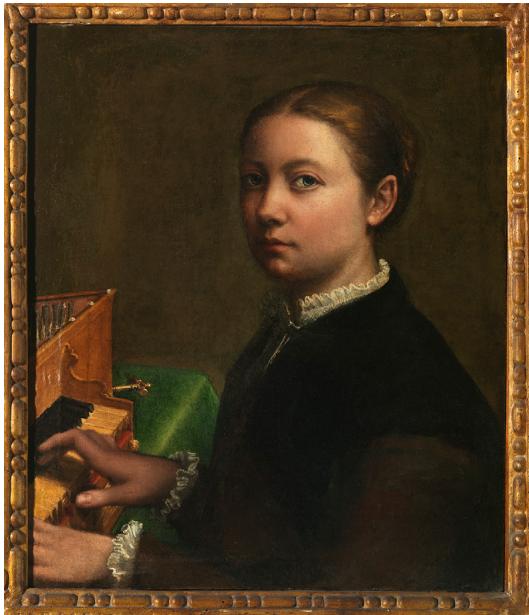
中文讲解
本段为图 1 的图像占位符与图注。图注提供了完整的图像志信息:作者 Sofonisba Anguissola、画名《弹斯皮内琴的自画像》(Autoritratto alla spinetta)、创作年代 1554/55 年、媒介为布面油画、藏于那不勒斯卡波迪蒙特博物馆、藏品编号 Q358,并附有 Wikimedia Commons 的图像 URL,访问日期为 2024 年 8 月 24 日。本图将在本章中扮演核心论证证据的角色:一幅 Sofonisba 年轻时期在键盘乐器前自画像的画作,直接呼应了 Ribera 把"音乐"列为她首位优点的描述。需查看原图以进行深入的图像志分析。
补充说明
“spinetta"是意大利语中对斯皮内琴(spinet)的称呼,一种小型翼键键盘乐器,文艺复兴时期家庭音乐活动的常见器具。1554/55 年 Sofonisba 约 15–16 岁,与"年轻时的自画像"的说法吻合。
第10段(P0324)
原文复述
4 She is also mentioned on p. 335 on a separate list headed by Tarquinia Molza of ‘women of great valor in various profession who still live in this century with great honor’ (‘Donne di gran valor in varie professioni, che con grande honore di questo secolo vivono ancora’) Coming at the very end, this second entry for Sofonisba refers the reader to the previous account, but music is again noted as one of her accomplishments, while her noble status has been overlooked. ‘Sofonisma [sic] Cremonesa, oltre che è Musica, e buona letterata, e eccellentissima nella pittura; come sopradicemmo largamente.’ Cap. 14 cart. 457. (If not stated otherwise, all translations of quotations from the original sources are by the author)
中文讲解
本段是脚注 4,记录 Sofonisba 在 Ribera 全书中的第二次出现及其与第一次出现的关键差异: 第一,位置:第 335 页,出现在一份以 Tarquinia Molza 为首的单独名录——“在各个领域具有伟大勇气、仍在本世纪以极大荣誉活着的女性”(Donne di gran valor in varie professioni, che con grande honore di questo secolo vivono ancora)。 第二,关键文本:这一条目再次把音乐放在首位——‘Sofonisma [sic] Cremonesa, oltre che è Musica, e buona letterata, e eccellentissima nella pittura; come sopradicemmo largamente’(克里莫纳人 Sofonisma,除是音乐家外,亦为良好学者、绘画中极为杰出者;如我们前文所详述);引用标记为 Cap. 14 cart. 457。 第三,与第一次出现的关键对比:作者特别强调——这次条目中"音乐再次被列为她的成就之一,但贵族身份被忽略了”。这一观察支撑本章核心论证:在不同语境(完整条目 vs. 简短名录)中,Ribera 对 Sofonisba 身份的描述呈现微妙差异——音乐具有跨语境的稳定性,而贵族身份的提及则随语境而变。 第四,翻译说明:作者声明,除非另有说明,所有原始引文的翻译均由作者本人完成。
补充说明
“[sic]“是拉丁语 sic erat scriptum(原文如此)的缩写,学术写作中用于标记原文中的拼写或语法问题,此处表示"Sofonisma"是 Ribera 原书的拼写,而非作者或现代编辑的转写错误。“Cap. 14 cart. 457"是原书的引用标记,Cap. 为 capitolo(章)。
第11段(P0325)
原文复述
5 I will use Sofonisba’s first name to identify her throughout this essay for clarity, since she used and was referred to by different family names throughout her life. Her first name was consistent.
中文讲解
本段是脚注 5,作者交代全章的写作约定:统一使用 Sofonisba 的名字(“名”)来指称她,因其一生中使用并被称呼过不同的家族姓氏,只有名字(“Sofonisba”)始终一致。这一选择具有学术意义:文艺复兴时期女性往往因婚姻、家族关系使用不同姓氏,Sofonisba 同样如此;使用统一的名字既保持论述清晰,又避免反复交代不同姓氏的繁琐。
脚注 / 边栏 / 图表 / 附加信息(如有)
本节附有 5 个脚注与 1 个图像占位符。脚注 1-2 提供 Ribera 著作的基本书目信息和未完成状态;脚注 3 引用 Sofonisba 条目的意大利文原文标题(“Di Sofonisma nobile Cremonesa, Musica, Letterata, e sopra tutto rarissima Pittrice”),并指出该条目篇幅异常长且为第一手叙述;脚注 4 引用 Sofonisba 在 Tarquinia Molza 名录中第二次出现的意大利文文本,作者在其中观察到贵族身份在简短名录中被省略而音乐保留的现象;脚注 5 解释作者使用名字指称的写作约定。图 1 是本章核心视觉证据——Sofonisba 年轻时期弹斯皮内琴的自画像(那不勒斯卡波迪蒙特博物馆藏)。这些附加材料共同支撑本章核心论证:Ribera 在不同语境下均将"音乐"置于 Sofonisba 多重身份前列。
💡 本节核心要点
- Ribera 1609 年的《不朽荣耀》是 Sofonisba 生平最早的概要之一,且其条目由 Ribera 本人直接撰写(未引他人),具有同时代人视角的独特史料价值。
- Ribera 描述 Sofonisba 时的语序——“音乐家、学者、最杰出的画家”,并冠以贵族身份——揭示出对一位女性艺术家而言,音乐被置于何种位置具有重要意义;这种排序并非随意,而是与西班牙、意大利精英语境中的女性典范建构密切相关。
- Ribera 把"贵族身份"放在 Sofonisba 所有成就之前,这一处理揭示出文艺复兴晚期"杰出女性名录"文类的常见做法:以社会地位为基底,再叠加学识与技艺。
- Ribera 在全书中至少两次提及 Sofonisba,第二次在 Tarquinia Molza 领衔的"在世杰出女性"名录中;音乐始终被列入,但贵族身份这一次被省略——这种语境差异本身揭示出作者所强调的"音乐"在 Sofonisba 身份构成中的稳定性。
- Ribera 条目的文字内容与那不勒斯卡波迪蒙特博物馆藏《弹斯皮内琴的自画像》(1554/55)形成文本—图像互证,作者将借助此画展开视觉层面的多重身份分析。
- Ribera 作为横跨意大利与西班牙精英圈子的人物,其写作可能基于亲耳听闻或与曾访西班牙宫廷者的交流——这是理解 Sofonisba"宫廷音乐实践"的关键史料线索。
🔑 关键术语
- canon(修士):基督教会的特定职位,Ribera 在威尼斯以此身份活动,其教会身份赋予其撰写女性名人传记的合法性。
- compendium / Le Glorie immortali(汇编/《不朽荣耀》):Ribera 1609 年编纂的女性名人传记汇编,收录古今杰出女性 845 人的事迹;属文艺复兴晚期"杰出女性名录"传统(catalogus / compendium of illustrious women)。
- spinetta(斯皮内琴):意大利语对斯皮内琴(spinet)的称呼,小型翼键键盘乐器,本章图 1 中 Sofonisba 自画像所演奏的乐器,系文艺复兴时期家庭音乐活动的常见器具。
- courtly lady of the late Queen Isabel de Valois(已故王后 Isabel de Valois 的宫廷女侍):Sofonisba 在西班牙宫廷中的身份,1554/55 年自画像创作期间她正作为已故法国瓦卢瓦公主、已嫁西班牙国王腓力二世的王后 Isabel de Valois(1545–1568)的宫廷女侍生活。
- [sic]:拉丁语 sic erat scriptum(原文如此)的缩写,学术写作中用于标记原文中的拼写或语法问题;在 P0324 中用于标记 Ribera 原书中"Sofonisma"这一拼写形式。
8.2 [描述性拆分] Differentiating Nobility: Sofonisba, the Ferrarese Ladies, and Other Female Artists
第1段(P0326)
原文复述
One of three extant musical self-portraits, this painting shows her gazing confidently out at the viewer from her seat at the keyboard in the modest yet refined attire and secluded space of a minor aristocratic girl.6 Despite contemporary accounts of her musical accomplishments and her own self-portraits at the keyboard, modern scholars have struggled to appreciate Sofonisba’s musicality because unlike Ribera, we cannot listen in on the music made during a Spanish courtly gathering or talk to others who had accessed those privileged spaces. Unlike her extant paintings and drawings, musical performance is ephemeral, especially the often non-notated traditions of dances and song arrangements that were integral to the musical self-presentation of noble women and girls.7 Although recent art historians have been keen to rescue Sofonisba the painter and grant her a position among the noted ‘professional female creators of 16th-century art, scholars tend to dismiss the question of her musical accomplishments and to see music primarily as a theme aligning her with a few other female artists who left similar musical self-portraits.8 However, identifying these paintings simply as evidence that she participated in a trope used by others – including Catharina Van Hemessen (1528–after 1583), Lavinia Fontana (1552–1614), and Artemisia Gentileschi (1593–1653), all members of the artisan class and daughters of professional painters – lacks contextual nuance and can be misleading. While these class differences may seem subtle to us with our historical distance, the elision into an artistic trope does not take into consideration the way that music would have functioned differently in Sofonisba’s daily life as an aristocratic woman seeking membership as a peer in an elite court. These other female artists did not come from the same elevated social status as Sofonisba, even if they also aspired to income and stability from courtly connections. For example, Catharina van Hemessen was married to a professional organist and while they both served Maria of Austria and traveled to Spain with her, they were clearly employees rather than peers.9 Lavinia Fontana lived and produced work in the urban contexts of Bologna and then Rome after 1603. While she married a minor aristocrat who was also an art student of her father, her marriage contract makes it very clear that she was expected to continue her trade as a source of income, keeping her squarely in the professional artisan category.10 For both of these artistic middle-class women music was proof of refinement, part of what made them worthy of employment at court, or in the case of Fontana, aristocratic marriage. Artemisia Gentileschi was also the daughter of a professional painter and depicted herself as a musician at times, but her public persona was significantly different from the other female artists discussed here as a result of a very public rape trial she endured in Rome as a teenager.11
中文讲解
本段是本小节的核心立论段,论证分三层展开。第一层承认现状:尽管同时代文献记载了索福尼斯巴的音乐成就,她自己也反复以弹键盘的形象自画像,但现代学者很难真正复原她的音乐性,因为音乐不像绘画那样有物质遗存留存,而且对她来说与对里贝拉(Ribera)不同,我们既无法旁听她在西班牙宫廷中的实际演奏,也无法接触那些进入过宫廷私密空间的证人——尤其是那些常常没有被记谱的舞蹈和歌唱传统,正是贵族女子音乐自我呈现的核心。第二层指出当前研究的盲点:虽然艺术史家很愿意把索福尼斯巴纳入十六世纪’职业女性创作者’行列,但他们倾向于把音乐仅仅视作一个把她和另外几位也留下音乐自画像的女画家联系在一起的主题,从而忽视音乐在索福尼斯巴的贵族生活中所承担的具体社会功能。第三层是本段的关键主张——这种把她的绘画简单归入一个由不同画家共享的’套式’(trope)的做法是误导性的,因为与她对比的三位女画家——卡塔琳娜·范·赫默森(Catharina Van Hemessen, 1528–约1583之后)、拉维妮娅·丰塔纳(Lavinia Fontana, 1552–1614)和阿尔泰米西娅·真蒂莱斯基(Artemisia Gentileschi, 1593–1653)——都出身于手工业者阶层,是职业画家的女儿,而索福尼斯巴却是力图在精英宫廷中获得同侪地位的贵族女性;对她来说,音乐在她的日常生活里起着与对那三位完全不同的作用。段尾用具体事例强化这一对比:赫默森和身为职业管风琴师的丈夫一同为奥地利的玛丽服务并随她赴西班牙,他们的身份是受雇者而不是同侪;丰塔纳婚后虽嫁给一位次等贵族,但她婚前婚约明文要求她继续以画业为收入来源,所以她仍属职业手工业者范畴;真蒂莱斯基虽然也是职业画家之女,但因少年时在罗马经历的公开强奸审判,她的公共形象与上述所有人都截然不同。文中上标数字(6、7、8、9、10、11)指向随后出现的脚注,将在后面的条目中分别处理。
补充说明
开头’One of three extant musical self-portraits’(三幅存世音乐自画像之一)直接对应脚注6(P0327),那里指明另外两幅的位置。文中’不像里贝拉(Ribera)‘一句将索福尼斯巴的音乐自画像与里贝拉的相应作品作隐性对比——后者的西班牙宫廷演奏语境有据可查,而索福尼斯巴缺乏此类文献,这正是她的音乐生活难以被研究的部分原因。‘modest yet refined attire and secluded space of a minor aristocratic girl’(次等贵族少女简朴而精致的服装与幽居空间)是作者对画中图像志的解读,正是这一图像特征把索福尼斯巴的自我塑造和手工业阶层女画家的音乐自画像区别开来。
第2段(P0327)
原文复述
6 There is also one in the Spencer Collection at Althorp Park (Fig. 5) and another that seems to be an 18th-century copy in Chichester, Goodwood House.
中文讲解
本条为脚注6,附于P0326首句。它点明索福尼斯巴另外两幅已知音乐自画像的下落:一幅在阿索普庄园(Althorp Park)的斯宾塞藏品(Spencer Collection)中,即本书图5;另一幅似乎是一件十八世纪的摹本,藏于奇切斯特(Chichester)的古德伍德庄园(Goodwood House)。这条脚注补全了正文中’存世三幅’的总数,并提示至少有一幅后来摹本,其亲笔真伪尚未确定。
补充说明
‘(Fig. 5)‘表示阿索普版本将以图5形式在书中刊出;读者应参考该图作视觉比对。‘seems to be an 18th-century copy’(似乎是一件十八世纪的摹本)一语对古德伍德版本的作者身份留有保留态度。
第3段(P0328)
原文复述
7 For excellent and detailed discussions of the ways that women presented themselves through courtly song and dance, see Judith Bryce, ‘Performing for Strangers: Women, Dance, and Music in Quattrocento Florence’, in: Renaissance Quarterly 54 (2001), 1074–107, and Chapters 2 and 3 of Laurie Stras’s book Women and Music in Sixteenth-Century Ferrara (Cambridge, 2018). For a general overview of the role of dance at court, see Jennifer Nevile, ‘Dance’ in: Early Modern Court Culture, ed. Erin Griffey (London, 2021), 478–93.
中文讲解
本条为脚注7,附于P0326中谈及’那些常常没有被记谱的舞蹈和歌唱传统,构成了贵族女子音乐自我呈现的核心’一句之后。该脚注提供三项学术依据:朱迪斯·布莱斯(Judith Bryce)论十五世纪佛罗伦萨妇女、舞蹈与音乐的文章(Renaissance Quarterly, 2001);劳里·斯特拉斯(Laurie Stras)专著《十六世纪费拉拉的女性与音乐》(Women and Music in Sixteenth-Century Ferrara,剑桥大学出版社2018年版)的第2、3章——这是后面P0330将要使用的、关于费拉拉音乐文化的关键文献;以及詹妮弗·内维尔(Jennifer Nevile)在艾琳·格里菲(Erin Griffey)主编的《早期现代宫廷文化》(Early Modern Court Culture, 2021)中所撰概述性章节。三项合在一起,为本节把宫廷舞蹈与歌唱视作贵族女性的自我呈现策略这一论点奠定了史学基础。
补充说明
斯特拉斯专著之所以特别重要,是因为它提供了P0330所依据的关于费拉拉’音乐女士’的出身与社会地位研究。布莱斯文章给出十五世纪佛罗伦萨贵族女性表演的更早先例,而内维尔则从总体上综述舞蹈在宫廷中的角色。
第4段(P0329)
原文复述
8 For example, Maria Kusche states that Sofonisba lived ‘[u]nos dieciséis años en España como profesora en pintura de la reina y admiradísima pintura de la corte’, while also acknowledging that she did not receive any direct compensation for her activities as an artist. Maria Kusche, ‘Sofonisba Anguissola en España: Retratista en la Corte de Felipe II Junto a Alonso Sánchez Coello y Jorge de la Rua’, in: Archivo Español de Arte 62 (1989), 391–420, at 392–3. Except for Linda Austern, Samantha Chang, and Maria Luisa Baldassari, scholars have tended to ignore Sofonisba’s musical accomplishments. Linda Phyllis Austern, ‘Portrait of the Artist as (Female) Musician’, in: Musical Voices of Early Modern Women, ed. Thomasin LaMay (Ashgate, 2007), 15–59; Maria Luisa Baldassari, ‘Le mani di Cecilia: Hand Position and Fingering on Keyboards in Italian Iconographical Sources of the Renaissance’, in: ‘Universum rei harmonicae concentum absolvunt’: The Harpsichord in the Sixteenth Century, ed. Augusta Campagne and Markus Grassl (Vienna, 2024), 136–66, https://www.mdw.ac.at/mdwpress/mdwp003-le-mani-di-cecilia/ (accessed on 30 August 2024); and Samantha Chang, ‘Musical Self-Portraits by Garofalo, Anguissola, and Fontana’, in: Music and Visual Culture in Renaissance Italy, ed. Chriscinda Henry and Tim Shephard (New York/London, 2023), 71–90.
中文讲解
本条为脚注8,附于P0326中关于’艺术史家虽想挽救索福尼斯巴作为画家的地位,却倾向于忽视其音乐成就’一句之后。该脚注包含两个相关的论点。其一,引述玛丽亚·库什(Maria Kusche)1989年发表于Archivo Español de Arte上的文章,称索福尼斯巴在西班牙’生活了约十六年,作为王后的绘画教师和宫廷最受敬重的画家’(原文为西班牙文),同时承认她作为画家并未得到任何直接报酬——身份与报酬之间的张力正是作者接下来要反复利用的关键点。其二,脚注指出在学者中,除琳达·奥斯特恩(Linda Austern)、萨曼莎·常(Samantha Chang)和玛丽亚·路易莎·巴尔达萨里(Maria Luisa Baldassari)三位之外,其余学者大多倾向于忽略索福尼斯巴的音乐成就;脚注列出三位例外学者的具体著作:奥斯特恩《作为(女性)音乐家的艺术家肖像》(Musical Voices of Early Modern Women, 2007)、巴尔达萨里关于意大利键盘图像志中手位与指法的研究(2024)以及常的《加罗法洛、索福尼斯巴与丰塔纳的音乐自画像》(Music and Visual Culture in Renaissance Italy, 2023)。三人被作为打破主流学术忽视倾向的例外加以表彰。
补充说明
西班牙文引语’[u]nos dieciséis años en España como profesora en pintura de la reina y admiradísima pintura de la corte’大致可译作’在西班牙生活了约十六年,作为王后的绘画教师和宫廷最受敬重的画家’;方括号中的’u’表明作者为大写首字母所作的还原。库什承认索福尼斯巴未得直接报酬这一事实意义重大——它说明索福尼斯巴与宫廷的关系非同寻常:她在地位上是宫廷画师,但在正式薪酬上并非如此。三位被点名的例外学者(奥斯特恩、巴尔达萨里、常)均从音乐学而非艺术史角度处理索福尼斯巴的音乐自我呈现。
第5段(P0330)
原文复述
Although they were active a little later in the century, the musical ladies of the Este court are better equivalents to Sofonisba than the daughters of professional visual artists. Although they have long been seen as the first professional ensemble of female musicians, in part because they were believed to be from non-noble families, the research of Elio Durante, Anna Martellotti and Laurie Stras has shown that all three of the women recruited for the inner-circle of Margherita Gonzaga were born into noble status. Like Sofonisba’s position as a lady-in-waiting at the Spanish court, the primary duty of Laura Peverara, Livia d’Arco, and Anna Guarini, was to elevate the musical practice within the young duchess’s household.12 Their noble status should not be considered to diminish their musical skills and accomplishments, but it did cause challenges for when and where they could decorously display these skills. In fact, as a noble woman, musicality was a more socially acceptable activity for Sofonisba than the menial and potentially messy tasks associated with painting and drawing. I would like to propose that Sofonisba deftly used decorous music, both the visual trope and the actual practice, as a tool to help her transgress her contradictory identities as a noble woman and a highly skilled painter. This transgressive use of musical knowledge to justify her performance of painterly excellence was integral and necessary to the deft management of her social/professional persona.
中文讲解
本段是本节正面立场的提出段。承接P0326排除手工业阶层女画家作为适当对照对象后,作者主张费拉拉埃斯特(Este)宫廷的三位’音乐女士’——劳拉·佩韦拉拉(Laura Peverara)、利维娅·达尔科(Livia d’Arco)和安娜·瓜里尼(Anna Guarini)——才是索福尼斯巴的更好类比。作者首先纠正一个长期误解:尽管这三位一直被视作史上第一个女性职业音乐合奏,部分原因是过去认为她们出身非贵族,但埃利奥·杜兰特(Elio Durante)、安娜·马泰洛蒂(Anna Martellotti)和劳里·斯特拉斯(Laurie Stras)的研究已证明,她们三人在被招募入玛格丽塔·贡扎加(Margherita Gonzaga)的内圈时都是贵族出身。这一发现意义重大,因为她们与索福尼斯巴作为西班牙宫廷侍从女官一样,其首要职责都是提升年轻公爵夫人府邸内的音乐实践。她们的贵族身份既不应被理解为贬抑其音乐才能,也确实对她们能够在何种场合、何种地点得体地展示这种才能构成了限制。在此基础上,作者作出比较性的判断:对索福尼斯巴这样一位贵族女性而言,音乐远比绘画得体——绘画和素描被视为琐屑、可能弄脏身体的工作。从这一比较出发,作者提出核心论点:索福尼斯巴巧妙地把’得体的音乐’——既包括视觉套式也包括实际演奏——当作一种工具,借以跨越(transgress)她作为贵族女性和作为技艺高超的画家之间的矛盾身份。她认为,这种把音乐知识越界性地挪用、以为其卓越的绘画表现正名的做法,对索福尼斯巴巧妙管理自身社会/职业双重身份是不可或缺的。
补充说明
‘a little later in the century’(本世纪稍晚些时候)表明费拉拉三位音乐女士活跃的时段略晚于索福尼斯巴在西班牙的主要岁月,但仍在索福尼斯巴的有生之年范围之内。‘inner-circle of Margherita Gonzaga’(玛格丽塔·贡扎加的内圈)指围绕年轻公爵夫人玛格丽塔·贡扎加组成的私人府邸音乐家小组。‘deftly used’与段末’deft management’(巧妙管理)是本节串联全篇的关键修辞语——它们暗示一种策略性的、熟练的自我塑造,而非天真的自我呈现。
第6段(P0331)
原文复述
9 Céline Talon, ‘Catharina Van Hemessen’s Self-Portrait. The Woman Who Took Saint Luke’s Palette’, in: Women Artists and Patrons in the Netherlands, 1500–1700, ed. Elizabeth Sutton (Amsterdam, 2019), 27–53.
中文讲解
本条为脚注9,附于P0326中关于卡塔琳娜·范·赫默森和身为管风琴师的丈夫一同为奥地利的玛丽服务并随她赴西班牙、是受雇者而非同侪的陈述之后。该脚注引导读者参阅塞利娜·塔隆(Céline Talon)的章节《卡塔琳娜·范·赫默森的自画像:拿起圣路加调色板的女子》(‘Catharina Van Hemessen’s Self-Portrait. The Woman Who Took Saint Luke’s Palette’),收入伊丽莎白·萨顿(Elizabeth Sutton)主编的《尼德兰的女性艺术家与赞助人,1500–1700》(Women Artists and Patrons in the Netherlands, 1500–1700, 阿姆斯特丹2019年版),第27–53页。作者关于赫默森受雇于哈布斯堡宫廷而非贵族同侪的判断,应当就是以该章为文献依据。
补充说明
该章标题提及圣路加(Saint Luke),意指西方传统中画家的主保圣人;塔隆此章论述的应是赫默森如何通过援引圣路加传统来构建自己的艺术家身份。
第7段(P0332)
原文复述
10 See the first chapter of Caroline Murphy, Lavinia Fontana: A Painter and her Patrons in Sixteenth-Century Bologna (New Haven, 2003), 13–48.
中文讲解
本条为脚注10,附于P0326中关于拉维妮娅·丰塔纳的婚前婚约明文要求她继续以画业为收入来源、因而将其归入手工业者范畴的陈述之后。该脚注引导读者参阅卡罗琳·墨菲(Caroline Murphy)的专著《拉维妮娅·丰塔纳:十六世纪博洛尼亚的一位画家及其赞助人》(Lavinia Fontana: A Painter and her Patrons in Sixteenth-Century Bologna, 纽黑文2003年版)第一章,第13–48页。该章应为作者关于丰塔纳婚姻契约及其博洛尼亚社会定位判断的文献来源。
补充说明
墨菲此书是英语学界研究丰塔纳生涯与赞助人网络的标杆著作;所引页码位于介绍丰塔纳在博洛尼亚社会地位的开篇章。
第8段(P0333)
原文复述
11 After the accused rapist was found guilty, Artemisia married a Florentine painter and moved away from her family. Letters reveal that at least in the early part of her career her husband was actively engaged in her long-term sexual relationship with the family’s noble patron who was also the father of some of her children. While a recent and controversial exhibition in Genoa in 2023 – Artemisia Gentileschi: Courage and Passion – seems to have gone too far, sensationalizing the impact of sexual violence on her creative process, for better or worse it must be acknowledged that the public nature of her rape would have had a long-term impact on her life and opportunities. For a thoughtful discussion of these topics, see the two articles by Elizabeth Cohen, ‘The Trials of Artemisia Gentileschi: A Rape as History’, in: The Sixteenth Century Journal 31 (2000), 47–75, and ‘More Trials for Artemisia Gentileschi: Her Life, Love and Letters in 1620’, in: Patronage, Gender and the Arts in Early Modern Italy Essays in Honor of Carolyn Valone, ed. Katherine McIver and Cynthia Stolhans (New York, 2015), 249–91.
中文讲解
本条为脚注11,附于P0326中关于阿尔泰米西娅·真蒂莱斯基因少年时在罗马经历的公开强奸审判而公共形象与上述其他人截然不同的句子之后。该脚注补充了必要的生平与史学语境。它首先指出:在被控强奸者被判有罪之后,阿尔泰米西娅嫁给一位佛罗伦萨画家并离开了她自己的家庭;书信又透露,至少在其生涯早期,她的丈夫积极参与了她与家族中某位贵族赞助人——也是她若干孩子的生父——的长期性关系。接着,脚注对2023年热那亚举办的争议性展览《阿尔泰米西娅·真蒂莱斯基:勇气与激情》(Artemisia Gentileschi: Courage and Passion)作出评价:作者认为该展览把性暴力对其创作过程的作用渲染得过于煽情、有失分寸,但她仍坚持认为,无论如何,那桩公开的强奸案对她的人生和机会都必然产生了长远影响。脚注最后推荐伊丽莎白·科恩(Elizabeth Cohen)的两篇文章作深入讨论:《阿尔泰米西娅·真蒂莱斯基的审判:作为历史的强奸》(The Sixteenth Century Journal, 2000)和《阿尔泰米西娅·真蒂莱斯基的更多审判:1620年的生活、爱情与书信》(2015)。
补充说明
本脚注对近年来将阿尔泰米西娅的创伤与其艺术直接挂钩的潮流持审慎立场:作者虽然拒绝2023展览的煽情化框架,但坚持认为强奸审判的公开性确实必须影响我们对阿尔泰米西娅社会地位的解读。提及佛罗伦萨丈夫介入阿尔泰米西娅与某位贵族赞助人的关系,为理解为何阿尔泰米西娅的’公共形象与上述女画家显著不同’提供了一层背景。
脚注 / 边栏 / 图表 / 附加信息(如有)
本节(8.2)包含六条实质性脚注(编号6至11)。脚注6记录索福尼斯巴另外两幅音乐自画像的下落:阿索普庄园(Althorp Park)斯宾塞藏品中的一幅,以及奇切斯特古德伍德庄园中疑似十八世纪摹本的另一幅。脚注7提供关于宫廷女性音乐自我呈现的三项学术依据:布莱斯论十五世纪佛罗伦萨舞蹈与音乐、斯特拉斯论十六世纪费拉拉女性与音乐、内维尔论早期现代宫廷舞蹈。脚注8引述玛丽亚·库什关于索福尼斯巴的西班牙文文章,并列出奥斯特恩、巴尔达萨里、常三位认真对待索福尼斯巴音乐成就的学者。脚注9指向塞利娜·塔隆关于卡塔琳娜·范·赫默森的章节。脚注10指向卡罗琳·墨菲关于拉维妮娅·丰塔纳专著的第一章。脚注11则扩充关于阿尔泰米西娅·真蒂莱斯基强奸审判、2023年热那亚展览和伊丽莎白·科恩两篇推荐阅读的内容。这六条脚注合在一起,为本节’索福尼斯巴必须与手工业阶层女画家分开、而应与诸如埃斯特宫廷’音乐女士’这样的贵族宫廷音乐家作比’的主张,提供了书目支撑。
💡 本节核心要点
- 索福尼斯巴的音乐自画像不应与卡塔琳娜·范·赫默森、拉维妮娅·丰塔纳、阿尔泰米西娅·真蒂莱斯基的音乐自画像混同,因为后三者出身手工业者阶层,而索福尼斯巴是力图在宫廷获得同侪地位的贵族女性。
- 音乐的瞬时性本质,加之索福尼斯巴实际演奏情境资料的缺失,使得现代学者——即便是致力于将她纳入职业女性画家行列的学者——倾向于只把她与同题材套式作图像志比较,而忽视其音乐成就本身。
- 在近期研究中,仅有琳达·菲莉丝·奥斯特恩、玛丽亚·路易莎·巴尔达萨里和萨曼莎·常三位认真对待过索福尼斯巴的音乐自我呈现;多数艺术史家仍把音乐仅仅视作套式主题。
- 埃斯特宫廷的’音乐女士’——劳拉·佩韦拉拉、利维娅·达尔科、安娜·瓜里尼——才是索福尼斯巴的更好类比,因为与早期认识相反,她们三人与索福尼斯巴一样出身贵族,并在玛格丽塔·贡扎加府邸中担任内圈成员。
- 对一位贵族女性而言,音乐远比绘画得体(绘画被视作琐屑且会弄脏身体的工作);作者主张,索福尼斯巴正是有意识地把音乐——既包括视觉套式也包括实际演奏——作为一种工具,借以管理她作为贵族女子与作为杰出画家之间的矛盾身份。
- 阿尔泰米西娅·真蒂莱斯基的处境因少年时所经历的公开强奸审判而与手工业阶层女画家和索福尼斯巴都不同——这一审判从根本塑造了她的公共形象与人生机会。
🔑 关键术语
- Musical self-portrait(音乐自画像):一种把被画者(此处即艺术家本人)与一件乐器——通常是键盘乐器——共同呈现的自画像。本节主张:这类图像不应在不同艺术家之间作无差别比对,因为音乐的社会含义随被画者阶层而变。
- Lady-in-waiting(宫廷侍从女官):附属于王后或公主府邸、作为陪伴与侍从的贵族女性。索福尼斯巴在西班牙菲利普二世宫廷中所担任的正是这一职位,这正是本节主张任何解读其音乐自画像都必须放回的社会语境。
- Artisan class(手工业者阶层):由各类工匠与行会手艺人——包括职业画家——组成的社会类别。本节将其与贵族阶层对照:赫默森、丰塔纳、真蒂莱斯基都是职业画家之女(属手工业者阶层),而索福尼斯巴出身于次等贵族。
- Trope(套式/套语):在本文特指反复出现的图像志或视觉套式。本节批评学界把索福尼斯巴的音乐自画像仅仅视作一个与其他女画家共享的’套式’——这一做法抹去了她自我呈现中的阶层特殊性。
- Decorous / decorum(得体/礼数):符合个人阶层与性别规范的行为举止。本节主张:音乐对贵族女性是’得体’的,绘画与素描则不是;因此索福尼斯巴对音乐的运用对其公共形象的管理具有策略价值。
- Inner-circle of Margherita Gonzaga(玛格丽塔·贡扎加的内圈):被招募入年轻公爵夫人玛格丽塔·贡扎加私人府邸的小型贵族女性音乐家群体(劳拉·佩韦拉拉、利维娅·达尔科、安娜·瓜里尼)。晚近研究表明她们皆为贵族出身,推翻了先前认为她们是受薪职业乐师的看法。
- Transgressive use(越界性使用):本节作者用以指索福尼斯巴对音乐的策略性运用:她把音乐当作一种工具,借以跨越(transgress)禁止贵族女性被承认为职业画家的社会边界。音乐使她的卓越绘画得以以得体的方式被容许。
- Social/professional persona(社会/职业形象):个人调和自身社会身份与职业活动后向外投射的公共形象。本节的核心主张是:索福尼斯巴对音乐的自我塑造,正是管理这种双重形象不可或缺的一部分。
8.3 [描述性拆分] Negotiating Self-Presentation: Family Background and Courtly Education
第1段(P0334)
原文复述
Negotiating Self-Presentation
中文讲解
本条是8.3小节的标题,原文为 ‘Negotiating Self-Presentation’(协商自我呈现)。它开启了本节的核心议题:在家庭出身、宫廷教育与艺术训练所共同塑造的舞台上,索福尼斯巴·安圭索拉如何协商并展示自己的形象。这一标题预示作者将要处理几种并存的身份——出身于克雷莫纳贵族家庭的女儿、受过宫廷才艺训练的女性艺术家、由父亲代为推介的宫廷候补者——并考察它们之间的张力。
第2段(P0335)
原文复述
To make sense of Sofonisba’s complex persona, it helps to gather together what is firmly known about her biography. She was born in Cremona sometime between roughly 1535 and 1540. Her mother, Bianca Ponzoni, came from a socially higher-ranking family, while her father, Amilcare Anguissola, was the older of the two and a well-educated minor aristocrat who, although acknowledged by his father, had been born out of wedlock; Amilcare traded in manuscripts, books, and paper, yet remained financially strapped (see note 13). The couple had six daughters and one son, and they afforded all the children extensive opportunities for education regardless of gender. Together with her younger sister Elena, Sofonisba began her formal artistic training in 1546 with the painter Bernardino Campi and later continued with Bernardino Gatti (see note 14). Campi, a professional painter from a local family of goldsmiths, appears to have received the two sisters into his home in a modified form of apprenticeship (see note 15). A letter Sofonisba wrote fifteen years later shows that, beyond regarding him as a teacher, she had formed affectionate ties with Campi’s wife, sister, and mother — women who probably served as chaperones during the sisters’ lessons and who may have supervised the girls’ general care if they did indeed live for an extended period with the Campi family (see note 16).
中文讲解
中译:要理解索福尼斯巴复杂的公众形象,最好先把其生平中较为确定的事实整理出来。她约于1535至1540年间出生于克雷莫纳。母亲比安卡·庞佐尼出身于社会地位较高的家族;父亲阿米尔卡雷·安圭索拉年纪较长,是一位受过良好教育的下层贵族——他虽已被父亲承认,却为非婚生子;他经营手稿、书籍与纸张贸易,却始终经济拮据(见注13)。夫妇共育有六女一子,所有子女无论性别都获得了广泛的受教育机会。索福尼斯巴与妹妹埃莱娜一同于1546年随画家贝尔纳迪诺·坎皮开始接受正式的艺术训练,此后又跟随贝尔纳迪诺·加蒂继续学习(见注14)。坎皮出身于当地金银匠家族,是一位职业画家,他似乎以’改良式学徒制’的方式将姐妹二人接纳到自己家中(见注15)。十五年后索福尼斯巴所写的一封书信表明,除了敬重他为自己的老师之外,她还与坎皮的妻子、姐妹和母亲建立了亲密的关系——这些女性很可能在姐妹上课时充当监护人,也可能在她二人长期寄宿坎皮家期间照管她们的日常生活(见注16)。
讲解:本段是本节的生物性铺垫,承担两个任务。其一,把索福尼斯巴稳定可考的家世(出生地、父母出身、父母的经济与文化特征、家庭子女的规模与教育策略)和她的艺术起点(1546年从坎皮学起、后再随加蒂学习)整合起来。其二,通过’改良式学徒制’以及她十五年后仍与坎皮家中女性亲属保持亲密关系这两个细节,把’画室训练’与’贵族女子的家庭监护’两套制度叠合在一起——这正是作者后面要展开的’协商自我呈现’的现实基础:她既进入了与男性职业画家对等的师承链(坎皮、加蒂,再向上追溯至米开朗基罗等),又被嵌入了克雷莫纳当地工匠家庭的私宅网络,并依靠这些女性亲属充当的准监护人来保证训练的合规与体面。文本中 ‘complex persona’(复杂形象)一词提示,索福尼斯巴的多重身份将在本节中逐一被考察。
第3段(P0336)
原文复述
Footnote 12 directs the reader to Chapter 6 of Laurie Stras, Women and Music in Sixteenth-Century Ferrara (Cambridge, 2018).
中文讲解
中译:注12指向Laurie Stras《Women and Music in Sixteenth-Century Ferrara》(剑桥,2018)第6章。
讲解:这是一条单独成行的脚注,说明作者参考了Stras关于16世纪费拉拉宫廷女性与音乐的研究,为本节中’音乐作为女性宫廷才艺之一’以及与索福尼斯巴所受教养的相关讨论提供旁证文献。该条脚注主要起资料出处作用,对正文主张并不直接构成支持或限定。
第4段(P0337)
原文复述
Footnote 13 cites Ribera, Le Glorie immortali (see note 1), page 313.
中文讲解
中译:注13援引 Ribera《Le Glorie immortali》(参见注1)第313页。
讲解:该条脚注为正文P0335中关于索福尼斯巴出生年份、父母身份(比安卡出身更高、阿米尔卡雷为非婚生子并经营书稿纸张而经济拮据)的描述提供具体出处。Ribera的这部著作是关于索福尼斯巴生平最早的关键文献之一,与后文将进一步引用的Ribera条目相对应。
第5段(P0338)
原文复述
Footnote 14 cites Alessandro Lamo, Discorso […] intorno alla scoltvra, et pittvra […] fatte dall’Eccell. […] M. Bernardino Campo (Cremona: Christoforo Draconi, 1584), pages 37–44, with an online link via the Austrian National Library, accessed 26 August 2024.
中文讲解
中译:注14援引 Alessandro Lamo《Discorso […] intorno alla scoltvra, et pittvra […] fatte dall’Eccell. […] M. Bernardino Campo》(克雷莫纳:Christoforo Draconi,1584年)第37至44页,并附奥地利国家图书馆的数字资源链接,访问日期为2024年8月26日。
讲解:该脚注为’索福尼斯巴与埃莱娜1546年起随坎皮学习’以及’后来又跟随加蒂学习’两事提供了出版于1584年的原始文献依据。Lamo的小册子是为画家坎皮所作的传记性论述,是少数与坎皮本人有同时代接触的记录,对澄清’学徒关系’这一史实尤为关键。
第6段(P0339)
原文复述
Footnote 15, expanding on the preceding text, notes that in his tract on Bernardino Campi, biographer Alessandro Lamo records that Amilcare Anguissola ’l’alluogò ambedue in casa di Barnardino’ — he placed both girls in Bernardino’s house. Since Cremona was not a large city, this may simply mean that the sisters would have come regularly into the Campi home for their lessons rather than have actually lodged there. The source is Lamo, Discorso, pages 37–8. The author remarks that less is known about Gatti because Lamo’s tract did not treat him.
中文讲解
中译:注15在正文之外作了补充——在为坎皮所作的传记小册子中,记载者Alessandro Lamo写道,阿米尔卡雷·安圭索拉’l’alluogò ambedue in casa di Barnardino’,即将姐妹二人’安置在贝尔纳迪诺家中’。由于克雷莫纳城市规模不大,这句话也许只是说姐妹二人会定期前往坎皮家中上课,而非实际寄宿。资料出处为Lamo《Discorso》第37至38页。作者补充说明:由于Lamo的小册子并未为加蒂立传,关于加蒂的情况所知甚少。
讲解:这条脚注的关键作用是把正文中看似明确的’家中寄宿’一词还原为一种史源层面的不确定状态。作者指出:‘家中学徒’的具体形态——是真寄宿,还是仅是定期上门上课——在Lamo的措辞上并不能严格判定。本节的论证之所以要保留这一含糊,是因为它直接影响我们如何理解索福尼斯巴少女时代与坎皮家庭女性成员的亲密关系:若仅是定期访学,那种亲密度就需要另作解释;若确曾寄宿,则由坎皮家中女性亲属充当’监护人’就顺理成章。作者借此条脚注也说明她对第二位老师加蒂的史料相对薄弱。
第7段(P0340)
原文复述
Footnote 17 introduces a new point: the financial pressure on Amilcare is read as the probable motive for educating his many daughters — namely, to equip them for life at court, on the assumption that a higher level of courtly accomplishment would earn them a better placement at a correspondingly reduced dowry. The author observes that, in this period, the cultivation of special abilities and knowledge in girls was generally organized around their class and their marriage prospects. Published in 1574, the two interlocutors of Book 3 of Stefano Guazzo’s La civil conversatione set out this principle, saying that…
中文讲解
中译:注17引出下面一段新的论证——经济拮据的阿米尔卡雷之所以让众多女儿接受教育,最可能的动机是为她们日后的宫廷生活做准备,希望较高的宫廷才艺可以令她们以较少的嫁妆谋得较好的职位。作者指出,在那个时代,对女孩特殊才能与知识的培养通常围绕其阶层与婚嫁前景来安排。1574年出版的Stefano Guazzo《La civil conversatione》(《文明的交往论》)第三卷中的两位对话者即阐明了这一原则——
讲解:此段把’索福尼斯巴为什么被训练成既会画又通宫廷礼仪的人’从’家庭教育理想’转化为’经济策略’:父亲希望通过女儿的高水平宫廷才艺,换取更小的嫁妆与更好的宫职。这一论断一方面把前文的家族细节转化为一种’投资逻辑’,另一方面引入Guazzo的《文明的交往论》这一权威论据,为下一段Guazzo的直接引文做铺垫。注17本身则补充了’另一种可能’——为修道院生活做准备,修道院也会因女孩掌握音乐、彩饰、绘画或书写技能而降低其入修会的嫁妆。
第8段(P0341)
原文复述
[Annibale:] If the father intends to marry his daughter to a courtier, he must send her to a court in the service of some great Lady, and she must know how to read, to write, to discourse, to sing, to play on instruments, to dance, and to be able to perform all that which a lady of the court must be able to do […] Guazzo: I have seen poor young women in the Queen’s court by this means married to great Gentlemen, without one penny of a dowry given by their Father.18
中文讲解
中译:〔安尼巴莱:〕如果父亲想把自己的女儿嫁给廷臣,就应当把她送入某位贵妇人的宫中服务,并且她应当会读书、写字、应对交谈、唱歌、奏乐、跳舞,并能完成宫廷妇人所需具备的一切事务。〔瓜佐:〕我见过王后宫中一些出身贫寒的年轻女子,凭这样的教养嫁与了显赫的绅士,而其父分文未出作嫁妆。
讲解:这一段Guazzo《文明的交往论》第三卷的英文译引文,是为上一段’父亲为何要让女儿接受宫廷才能训练’这一论断提供的同代规范性依据。引文以一则亲眼见证的例子——王后宫中无嫁妆的贫家女因受过训练而嫁得好人家——来印证’才艺可替代嫁妆’的社会机制。在后文P0342中,作者将利用这条引文所列的’读、写、应对、歌唱、奏乐、舞蹈’清单来比较Ribera在索福尼斯巴条目下所列的’音乐、文学、绘画’三项——‘绘画’是清单之外的多出之物,也正是索福尼斯巴区别于一般宫廷女性之处。注18将在脚注里给出其意大利原文。
第9段(P0342)
原文复述
Of the three accomplishments Ribera records in his entry on Sofonisba — music, literature, and painting — only painting is not singled out by Guazzo as a requirement for a girl’s courtly education. While Sofonisba was working at her courtly education and her artistic practice, her father was busy sending out her drawings and paintings, accompanied by his own letters modestly proclaiming her excellence, to figures such as the artist Michelangelo and the noble Ercole II d’Este — people who might be in a position to help him place his daughter at a court. Michael Cole has pointed out that Sofonisba also alluded to or named her father in many of her early self-portraits, articulating ‘a reciprocal relationship between father and daughter, in which she performed, and he showed, or showed off, her performance’ (see note 19). In this period she made many self-portraits, group portraits of her family in various activities, and portraits of their Italian social peers, both adults and children. The bulk of her known extant work belongs to this phase of her life, when she was most strongly motivated to sign her works as evidence of her abilities.
中文讲解
中译:在Ribera所记索福尼斯巴条目下列出的三项才能——音乐、文学与绘画——之中,只有’绘画’未被Guazzo列为女性宫廷教育所必需。索福尼斯巴一面勤修宫廷教养与绘画技艺,她父亲则一面将她的画稿与作品连同自己谦和有礼、却极力称许女儿才华的信件,分寄给诸如米开朗基罗这样的艺术家以及埃尔科莱二世·德·埃斯特这样的贵族——他们有可能帮他在某座宫廷中为女儿谋得一个位置。Michael Cole指出,索福尼斯巴还在许多早期自画像中暗示或直接写出父亲之名,构成所谓’父女之间的互惠关系:她表演,而由他展示或炫耀她的表演’(见注19)。这一时期她创作了大量自画像、家庭成员从事各种活动的群像画,以及他们的意大利社会同辈——无论成年或儿童——的肖像画。她已知存世作品的主体正出自这人生阶段,那时她最有动力在作品上签名,借此证明自己的才能。
讲解:这段是本节的论证枢纽,作者把’为什么索福尼斯巴以绘画为自己最显著的标签’这一观察转化为一项历史判断:绘画之所以关键,不是因为它在Guazzo式的宫廷教养成规里被列出,而是恰恰因为它不在那一清单上。父亲阿米尔卡雷的整套推广策略——以谦和书信为掩护向米开朗基罗、埃尔科莱二世·德·埃斯特等显要输送作品——正是要把一个’清单之外’的技能转化为她在宫廷市场上可被识别的标签。Cole关于父女’互惠’的论述则把这种外部推介与索福尼斯巴自身在自画像中署名或提及父亲的行为联系起来,揭示自我呈现并非只是索福尼斯巴一个人的剧场,而是由父女共同完成的’表演—展示’组合。最后一句关于’她在此期最愿意签名作为才能之证’,呼应了章节标题’协商自我呈现’:签名即是’自我呈现’最简明、最硬朗的形式。
第10段(P0343)
原文复述
Footnote 16 expands on the affectionate relationships with Campi’s family. At the beginning and end of her letter of 21 October 1561 to Campi, Sofonisba sends greetings to his entire household. The Italian salutation, which the footnote preserves verbatim — ’e con questo fine me li raccomando, e li bacio la mano, cosi alla sua carissima ed onoratissima consorte da me molto amata, ed alla sua madre Sig. Barbara, e sua sorella Sig. Francisca, ed a suo padre Sig. Pietro’ — addresses herself to Campi’s most dear and most honoured wife whom she loves dearly, to his mother Signora Barbara, to his sister Signora Francisca, and to his father Signora Pietro. The source is Kusche, ‘Sofonisb Anguissola en España’ (see note 8), page 402.
中文讲解
中译:注16补充说明索福尼斯巴与坎皮家族的亲密关系。在1561年10月21日写给坎皮的信的开头与结尾,她都向坎皮全家致以问候。脚注完整保留的意大利文致意语 ’e con questo fine me li raccomando, e li bacio la mano, cosi alla sua carissima ed onoratissima consorte da me molto amata, ed alla sua madre Sig. Barbara, e sua sorella Sig. Francisca, ed a suo padre Sig. Pietro’——大意是:以这一结束之语我向他们致意,并亲吻您的手,同时也向您最亲爱、最可敬的、我深爱的夫人,以及您的母亲巴尔巴拉夫人、令姐弗朗切斯卡夫人和令尊彼得罗先生致意。出处为Kusche《Sofonisb Anguissola en España》(参见注8)第402页。
讲解:这条脚注既是对正文’她与坎皮的妻子、姐妹、母亲关系亲厚’这一陈述的实证补充,也是用于评判P0339脚注所讨论的’寄宿还是访学’问题的一条关键史料:十五年后索福尼斯巴依然记得坎皮家中每一位长辈的称谓与头衔(Sig.),这种’全家问候’的口吻,更像是曾长期共同生活之人的写信方式,而非仅是定期上课的师生——这间接支持了’她们曾较长时间寄宿于坎皮家中’的可能性。
第11段(P0344)
原文复述
Footnote 17 proposes an alternative reading of Amilcare’s educational strategy: education might also indicate that he was preparing his daughters for life as nuns, in which case a convent dowry could be reduced for girls possessing skills in music, manuscript illumination, painting, or writing.
中文讲解
中译:注17提出对阿米尔卡雷教育策略的另一种读法——这种训练或许也是为了让女儿们预备作修女,因为若女孩掌握音乐、彩饰、绘画或书写等技能,其入修会时可减免修道院的嫁妆。
讲解:此条脚注与正文P0340句首的’为宫廷生活而教育女儿’的论断构成一个’或然并存’:在16世纪的意大利贵族之家,女性的命运分叉一是嫁入宫廷,一是献身修道;而无论是哪一条,修道院嫁妆和宫廷嫁妆都可因’才艺’而被削减,于是’才艺’本身就具有高度策略性的双重含义。作者特意把这一条作为脚注而非正文,是为了使读者不致把’宫廷论’当成对阿米尔卡雷动机的唯一解释。
第12段(P0345)
原文复述
Footnote 18 supplies the Italian original of the Guazzo passage already quoted in English in the main text. It reads: ‘se’l padre haurà destinate i[n] corte alla servitù d’alcuna Prencipessa, bisogna, che cominci ad ammaestrarle in quelle cose, che sono atte ad acquistar la gratia della patrona, & à procurare, che leggano, scrivano, di scorrano, cantino, sonino, & ballino, & facciano acconciamente tutto ciò, che adorna le donne di palazzo […]. Hò vedute presso la Reina alcune povere damigelle […] che sono divenute moglie de principali Cavalieri della Francia, senza che i padri habbiano loro dato un danaio in dote.’ The source is Stefano Guazzo, La civil conversatione (Brescia: Tomaso Bozzola, 1574), folios 159v–160r, accessible via Google Books and consulted on 2 September 2024.
中文讲解
中译:注18提供正文中已以英文转引的瓜佐那段话的意大利原文。原文大意为:‘如果父亲要把〔女儿们〕派到某位公主的宫中服务,他就应当开始训练她们那些能博得主人欢心的事物,并且务使她们能读、能写、能应答、能歌唱、能奏乐、能舞蹈,且能优雅地完成一切使宫廷妇人显得光彩的事务。……我在王后宫中见过一些出身贫寒的仕女,……她们后来都成了法兰西首要骑士们的妻子,而她们的父亲分文未曾给作嫁妆。‘资料出处为Stefano Guazzo《La civil conversatione》(布雷西亚:Tomaso Bozzola,1574年)第159v–160r页,可经由Google Books在线访问,引用日期为2024年9月2日。
讲解:这是P0341英文引文的意大利原文版。它既是文献完整性的标志,也便于熟悉意大利语的读者直接核查瓜佐的措辞。值得注意的小细节:原文称这些贫寒仕女的婚配对象为’principali Cavalieri della Francia’(法兰西首要骑士),即译为英文转述时Guazzo口中的’great Gentlemen in the Queen’s court’在当时具体语境中即指法国王后宫中能与宫廷贵妇匹配的显赫骑士——这为’王后宫廷’之具体地点与人物阶层提供了补充。
脚注 / 边栏 / 图表 / 附加信息(如有)
本节正文与脚注合在一起共出现了七条注释(编号12–18),分别承担不同的论证功能:注12(Stras,第6章)作为'16世纪女性与音乐’的旁证文献;注13(Ribera《Le Glorie immortali》,第313页)为P0335中关于父母身份与经济状况的陈述提供主要出处;注14(Lamo《Discorso》,克雷莫纳:Draconi,1584年,第37–44页)为'1546年起随坎皮、后又随加蒂学习’的事实提供出版史料;注15引用Lamo原文’ambedue in casa di Barnardino’说明’家中寄宿’并非绝对,也可能仅是定期上门;注16引用索福尼斯巴1561年10月21日信末对坎皮全家人的致意(P0343原引意大利文),用以佐证长期亲密关系;注17提出另一种可能——为修女生活而训练,此时修道院嫁妆可因才艺而减免;注18给出瓜佐《文明的交往论》第三卷那段话的意大利原文并附可访问的电子文本。本节正文未出现图表或谱例,但在P0342中提及的若干具体作品(许多自画像、家庭群像、同辈人物——成人与儿童——的肖像画)是本节论述的实物依据,作者将其归入索福尼斯巴存世作品最丰富、亦最愿签名的阶段。
💡 本节核心要点
- 索福尼斯巴出身于克雷莫纳一个经济拮据却重视教育的贵族之家:父亲阿米尔卡雷·安圭索拉为非婚生子而仍被承认的下层贵族,母亲比安卡·庞佐尼出身更高,全家六女一子皆获得广泛受教育机会。
- 她的艺术训练从1546年开始,先随坎皮、后随加蒂,并以’改良式学徒制’的形式进入坎皮的私宅,可能由坎皮的妻子、姐妹、母亲等女性亲属充当监护人——这一安排把’画室训练’与贵族女子的’家庭监护’两套制度叠合在一起。
- 阿米尔卡雷培养女儿们的宫廷才艺带有鲜明的经济策略:以高水平的才艺来减少日后宫廷聘娶或修道院生活所需的嫁妆;Guazzo《文明的交往论》(1574年)所记’才艺替代嫁妆’的同代案例为这一策略提供了规范性依据。
- Ribera所列索福尼斯巴三项才艺(音乐、文学、绘画)中,唯有’绘画’不见于Guazzo所列的女性宫廷教养清单;这正是索福尼斯巴的差异性卖点,也是她父亲四处推介作品的逻辑起点。
- 父女形成’互惠的自我呈现’:父亲以谦和书信向米开朗基罗、埃尔科莱二世·德·埃斯特等显要分寄画作并塑造她的名声;她则在自画像中指名或暗示父亲,并通过署名让自己’被看见’,把这一表演—展示机制纳入到画面之内。
- 她存世作品的绝大部分属于这一为宫职谋位而全力’协商自我呈现’的时期;签名既是才能之证,也是这一协商过程的浓缩呈现。
🔑 关键术语
- Negotiating Self-Presentation(协商自我呈现):本节标题所用的核心概念:索福尼斯巴与父亲合谋,通过作品署名、推介信件、家族画像等方式,把自己塑造为既符合贵族女性规范又以绘画见长的宫廷候补者,‘协商’一词强调其多套身份之间需要持续协调。
- modified sort of apprenticeship(改良式学徒制):本节用来描述索福尼斯巴姐妹进入坎皮私宅学习的关系:它既非当时画坊里典型男工学徒制,也不是普通贵族女子的宫廷教养,而是一种两者交叠、由女性亲属充任监护的中间形态。
- dowry(嫁妆/修道院嫁妆):本节反复出现的经济概念。父亲策略的关键在于:用女儿的才艺换取将来较小的嫁妆——无论女儿未来嫁入宫廷还是入修道院,更高的才能都可令对方降低所要求的嫁妆数额。
- courtly education(宫廷教养):指Guazzo《文明的交往论》第三卷所列的女性宫廷才艺清单(读、写、应对交谈、歌唱、奏乐、舞蹈等),是16世纪贵族女儿以才艺替代嫁妆进入宫廷或修会生活的基础课程。
- La civil conversatione(《文明的交往论》):Stefano Guazzo于1574年出版的对话体作品,第三卷集中讨论社会阶层与婚配策略,是本节论证’才艺替代嫁妆’之社会机制的同代规范性文献,本节P0341与P0345分别给出其英文译本与意大利原文。
- reciprocal relationship between father and daughter(父女互惠关系):Michael Cole提出的概念(P0342引用其原文):索福尼斯巴在自画像中署名或暗示父亲,而父亲则向外推介她的作品;‘她表演,他展示’共同构成了一个公开的自我塑造机制。
8.4 [描述性拆分] From Spain to Italy: Service, Marriage, and the Limits of Professional Painting
第1段(P0346)
原文复述
By 1559 their labor had paid off and Sofonisba left Italy to accept a generous position as a lady-in-waiting to the new Spanish queen, Isabel de Valois (1545–1568), the third wife of King Philip II (1527–1598). After Isabel’s early death in 1568, Sofonisba continued to serve in the court until 1574 as an attendant and teacher to Isabel’s young daughters.20 Although officially she was a noble courtier during her many years in Spain, she tutored royal family members in the visual arts, especially Isabel, and created portraits. Soon after Isabel’s wedding and Sofonisba’s arrival, Girolamo Neri reported to the Duke of Mantua that ‘[t]his queen [Isabel] shows herself to have intelligence and very good talent. She has begun to paint, and one says Sofonisba Cremonese, who is the one who teaches her, is her great favorite.‘21 Rather than direct payment for her artistic activities, which was often quantified in contracts for male artists at the time, Sofonisba’s family received a yearly stipend, and she was listed with the other ladies of the Queen where she was provided with the same resources – 100 ducats a year as well as a personal servant and a groom for her horse.22 When Sofonisba had time outside her direct daily activities as a member of Isabel’s entourage, she also made portraits of her patrons and other members of the court, which she sometimes sent to illustrious figures, including the Pope.23 There are financial records that indicate that Sofonisba’s portraits, sometimes specifically the faces, were copied by the official court painters, but unlike these male painters Sofonisba herself did not receive payment for these.24 Some early biographers indicated that she received precious gifts, including jewelry, in recognition for her extraordinary skills. Usually she did not sign the paintings she created at the Spanish court and seems to have conformed somewhat to Spanish painterly style and tastes, so art historians struggle to identify the paintings she created during this period and they certainly seem to be fewer in number than during her previous period in Italy.
中文讲解
本段集中交代索福尼斯巴1559年离开意大利前往西班牙宫廷的背景与她在西班牙的实际处境。“她们的付出终于有了回报"这一说法延续上一节家庭多年经营的结果,把索福尼斯巴前往西班牙与依莎贝拉·德·瓦卢瓦嫁给菲利普二世的政治联姻联系起来,使她在西班牙宫廷的身份一开始就不是以"画家"而是以"待女(lady-in-waiting)“出现。伊莎贝拉1568年早逝后,索福尼斯巴继续留宫廷至1574年,转而服务两位年幼公主,这些都体现出她长期是以"贵妇侍从"而非"被委托绘画的艺术家"身份领俸。
关键的概念性差异在于报酬方式:男性艺术家的艺术劳动通常通过合同直接计价支付,而索福尼斯巴的家庭获得的是年薪(100达克加的年金外加仆人、马夫),且与宫中其他女官并列发放。这一对比本身就揭示了性别身份与职业身份的分离——她在宫廷里以"贵族女官"领酬,画画只是这一身份所附带的功能。Girolamo Neri的引文则提供了第三方观察,证明她与新王后关系亲近、承担绘画教师角色。
段尾提到肖像被官方宫廷画师复制却并不向索福尼斯巴本人付酬、通常不署名、风格向西班牙品味靠拢,这三点共同说明:在西班牙期间,她的艺术作品被宫廷体系"征用"和"消化”,但她本人却并未从中获得职业性回报或署名权,这也是后文艺术史家难以辨认此期作品、且数量明显少于意大利时期的重要原因。
第2段(P0347)
原文复述
19 Michael W. Cole, Sofonisba’s Lesson: A Renaissance Artist and Her Work (Princeton, 2019), 32.
中文讲解
这是正文第19号脚注,注明Michael W. Cole所著《Sofonisba’s Lesson: A Renaissance Artist and Her Work》(普林斯顿大学出版社,2019年)第32页为正文相关叙述的来源依据。脚注在此节中承担来源/文献佐证功能。
第3段(P0348)
原文复述
20 Maria Kusche, ‘Sofonisba Anguissola: Her Life and Works’, in: Sofonisba Anguissola: A Renaissance Woman, ed. Sylvia Ferino-Pagden and Maria Kusche (Washington D.C., 1995), 26–103, at 72.
中文讲解
这是正文第20号脚注,指向Maria Kusche所撰《Sofonisba Anguissola: Her Life and Works》一文,收录于Ferino-Pagden与Kusche共同主编的展览图录《Sofonisba Anguissola: A Renaissance Woman》(华盛顿特区,1995年),全文26–103页,此处引自第72页。该文是索福尼斯巴生平与作品研究的基础性参考文献,主要用于佐证其1574年之前在西班牙宫廷服务及教育公主的相关叙述。
第4段(P0349)
原文复述
21 ‘Essa regina si mostra d’aver ingegno e di bonissima intragna, ella ha cominciato a dipingere et dice la Sofonisba Cremonense che é quella le insegna et é molto favorita sua.’ Letter from 18 February 1560, reproduced in Maria Kusche, ‘Sofonisba Anguissola en España’ (see n. 8), 397.
中文讲解
这是正文第21号脚注,给出Girolamo Neri 1560年2月18日致曼图亚公爵信件中意大利文原文的引文与出处。原文大意为:这位王后显示出才智和非常优秀的品质(原文作"intragna”,疑为意大利文误写或异体形式),她已开始习画,并据说索福尼斯巴·克雷莫内塞(即索福尼斯巴本人)即是教她之人,并深受王后喜爱。此信由Kusche在《Sofonisba Anguissola en España》中第397页再次刊出。脚注保留意大利语原文,是为了保留当时第一手史料的语言质感。
补充说明
原文"intragna"可能为"indole"或"intelligenza"之类的异写/误写,但本节脚注按原文照录,不作改动。
第5段(P0350)
原文复述
22 While musicians often held ambiguous positions in a court and were rewarded through gifts or material support, artists usually did not have the same sort of social access and were more likely to be paid directly for their products. For a comparison of their different status, see Evelyn Welch, ‘Painting as Performance in the Italian Renaissance Court’, in: Artists and Court: Image-making and Identity, 1300–1550, ed. Stephen J. Campbell (Boston 2004), 19–32.
中文讲解
这是正文第22号脚注,作用是补充说明为何索福尼斯巴以"年薪加实物"方式获酬而非按件付酬。脚注指出:宫廷乐师常处于身份模糊状态,多通过馈赠、实物支持获得报酬;相比之下,艺术家通常缺乏乐师那样的社会接触渠道,更可能按产品直接获得报酬。本节所引Evelyn Welch在Stephen J. Campbell主编《Artists and Court: Image-making and Identity, 1300–1550》(波士顿,2004年)中所撰《Painting as Performance in the Italian Renaissance Court》一文(第19–32页),即对这两种不同身份进行比较研究。该脚注从社会史角度为正文比较男女艺术家薪酬方式提供背景。
第6段(P0351)
原文复述
23 Her letter makes it clear that they were in direct communication about the painting. Filipp Baldinucci, Notizie de’ professori del disegno da Cimabue in qua, vol. 2 (Florence, 1846), 628–9.
中文讲解
这是正文第23号脚注,说明索福尼斯巴曾直接与受画对象(illustrious figures,包括教皇在内)就画作事宜通信。史料依据为Filipp Baldinucci所著《Notizie de’ professori del disegno da Cimabue in qua》第2卷(佛罗伦萨,1846年版)第628–629页。该脚注支持正文所述她将宫廷人物肖像赠予显贵人物的史实。
第7段(P0352)
原文复述
Even though Isabel left a large dowry and yearly allowance for Sofonisba in her will, the king struggled to find a socially appropriate match, given that Sofonisba wanted to return to Italy to be closer to her family, where the King had less direct influence. Eventually she had to compromise and moved to Sicily to marry Don Fabrizio de Moncada, the second son of an important Sicilian noble of Italian-Spanish lineage. However, the Moncada family was not fully supportive, probably because of her less prestigious lineage, so her social and financial positions were insecure. When Don Fabrizio died within five years, she took the opportunity to sail back to the Italian peninsula with her brother. She made the savvy choice to marry the Genoese captain of the ship she was on, Orazio Lomellini.25 Although they might seem poorly matched because he was significantly younger than Sofonisba and of a lower social rank than her first husband, with his shipping business and mobility, Orazio was able to travel regularly to Palermo to maintain the yearly allowance promised to Sofonisba by the Spanish king, which was drawn from the taxes of that city. This financial dependence on Palermo may also explain why, even though the couple resided in northern Italy where their social and cultural connections primarily were from their mariage in 1579, they returned in 1615 to Sicily for their retirement.26 Despite the fact that some of her early biographers claim that she continued to produce paintings during her married years, there are only two works that can be firmly identified from this lengthy period.27 It seems likely that Sofonisba spent her later years as a royally-connected great lady, who was renowned for her artistic knowledge and skill. She did not pursue an active career as a painter because that would have been inappropriate to her status as a former lady-in-waiting to a Spanish queen. She could not afford to compromise the annual income that her elevated social status provided for her and her family.28
中文讲解
本段是本节论证的高潮,揭示索福尼斯巴作为前西班牙宫廷女官所面临的结构性困境,并解释她晚期为何几乎停止创作。其论证逻辑分四步推进:
第一,身份困境。伊莎贝拉王后遗赠中给索福尼斯巴留下可观嫁妆和年金,但西班牙国王要为她寻找"门当户对"的婚配却十分困难,因为她本人想回意大利、离家人更近,而西班牙宫廷对此地缘影响力有限。这一困境同时是地理问题(意大利vs西班牙)和身份问题(贵妇侍从的婚配须经王室考虑)。
第二,妥协与西西里婚姻。最终她迁往西西里嫁给Don Fabrizio de Moncada——一位意大利—西班牙血统的西西里贵族次子。蒙卡达家族并不全力支持这门婚事,可能因为索福尼斯巴的家世不够显赫,使她的社会和经济地位再度变得不稳。
第三,再嫁与经济理性。Don Fabrizio不到五年去世后,索福尼斯巴借返航意大利之机嫁给了船上的热那亚船长Orazio Lomellini。表面上两人不般配(年龄差距、社会等级低于前夫),但实际上Orazio的航运业务和流动性使他能够定期往返巴勒莫,为她领取西班牙国王承诺、且从该城税收中拨出的年金。这种"年金依附"结构也解释了为何1579年婚后两人长期定居意大利北部,1615年却又返回西西里养老。
第四,创作停止与身份逻辑。尽管早期传记宣称她婚后仍创作,但可确证的作品只有两件。作者由此推论:她晚年实际上是"与王室有关的贵妇”,以艺术知识和技艺闻名,而非活跃的职业画家——因为继续以画家身份活动会有损其前西班牙王后女官的身份,并危及支撑她和家人的年金收入。
本段的论证意义在于:以经济理性(年金—身份—创作三者的取舍)解释女性艺术家为何无法像男性同行那样持续职业化经营。这与前段西班牙宫廷的"年薪而非按件付酬"形成完整闭环:报酬方式决定了身份结构,身份结构又反过来限制了创作活动。
第8段(P0353)
原文复述
24 Archivo de Simancas, C.M. la época, leg. 1109, cit. in Kusche, ‘Sofonisba Anguissola en España’ (see n. 8), 410.
中文讲解
这是正文第24号脚注,注明索福尼斯巴的肖像(特别是面部)被官方宫廷画师复制、但她本人未获付款这一史实的史料来源:西曼卡斯档案馆(Archivo de Simancas)C.M. la época卷宗leg. 1109,经Kusche《Sofonisba Anguissola en España》一文(第410页)转引。该脚注提供原始档案线索,属于来源性脚注。
第9段(P0354)
原文复述
25 While this is usually presented as a spur of the moment choice by Sofonisba, it seems likely that she already knew and trusted Orazio as a conduit to communicate with her famil in Italy. The compromised propriety and hence forced marriage might have been a calcu lated decision on her part, one that allowed her to avoid the complex negotiations with the Spanish court that would have had to happen otherwise
中文讲解
这是正文第25号脚注,对索福尼斯巴嫁给船长Orazio Lomellini一事给出不同于传统叙事的解释:传记常将其描述为一时冲动的决定,但作者认为她很可能事先就认识Orazio,并以其作为与意大利家人通信的中介。这一"有失体面"的婚事可能是经过盘算的决定,使她得以规避原本与西班牙宫廷之间必需的复杂谈判。该脚注为正文中的"savvy choice"提供动机解读。
补充说明
脚注原文"famil"与"calcu lated"保留原文拼写(疑似OCR遗留或排版断词),不作改动。
第10段(P0355)
原文复述
26 Kusche, ‘Sofonisba Anguissola en España’ (see n. 8), 96.
中文讲解
这是正文第26号脚注,注明1579年婚后主要居住于意大利北部、1615年退休回到西西里这一叙述的来源:Maria Kusche《Sofonisba Anguissola en España》第96页。脚注在此承担时间—地理线索的来源佐证功能。
第11段(P0356)
原文复述
27 Cole, Sofonisba’s Lesson (see n. 19), 139.
中文讲解
这是正文第27号脚注,注明婚后漫长时期内可被确证的索福尼斯巴作品只有两件这一断语的来源依据:Michael W. Cole《Sofonisba’s Lesson》第139页。脚注为正文中"art historians can only firmly identify two works"这一关键论断提供学术支撑。
第12段(P0357)
原文复述
28 The taint of professionalism was warned against by Castiglione and others, and can be seen in the behavior of skilled noble musicians, including the famous tension between Lord
中文讲解
这是正文第28号脚注的起始部分,论及卡斯蒂廖内(Castiglione)等人的告诫——专业性(professionalism)带有污名,会玷污贵族身份;这一观念同样体现在贵族乐师的行为中,包括(原文在此处被截断,提及某位Lord与……之间的著名张力)。该脚注从理论史和贵族文化角度为正文"画家职业化有损其作为前女官的身份"这一论点提供思想史背景,但原文在此节末尾被截断,应视为脚注的开头部分而非完整论述。
补充说明
原文明显在"the famous tension between Lord"之后被截断,未给出完整例证;本节讲解严格按现有原文处理,不补写被截断部分。
脚注 / 边栏 / 图表 / 附加信息(如有)
本节共含10条脚注(编号19–28),其中19、20、21、23、24、25、26、27为来源/转引脚注,22与28为带有论证拓展性质的脚注。第22号脚注比较宫廷乐师与艺术家的不同报酬方式与社会接触渠道,第28号脚注引用Castiglione关于"专业性污名"的告诫,并提及贵族乐师行为中的著名张力,但脚注在"the famous tension between Lord"处被截断,未完整引出案例。脚注21保留了Girolamo Neri 1560年2月18日信函的意大利语原文,用以保持第一手史料的语言质感。本节未出现图像、表格或乐谱占位符。
💡 本节核心要点
- 1559年索福尼斯巴以"贵妇侍从(lady-in-waiting)“身份进入西班牙宫廷,而非以艺术家身份领酬,其报酬形式是年薪(100达克加外加仆从与马夫)而非按件计酬的合同。
- Girolamo Neri 1560年致曼图亚公爵的信件显示她承担王后依莎贝拉的绘画教学,但同时她的肖像被官方宫廷画师复制,本人却未获相应报酬,也通常不署名,反映出西班牙宫廷对其艺术劳动的系统性"消化”。
- 伊莎贝拉王后去世后,索福尼斯巴的婚配问题暴露其结构性困境:既要考虑王室体面又要兼顾她本人希望回意大利的愿望,最终两度结婚(Don Fabrizio de Moncada、Orazio Lomellini)都深受经济理性驱动。
- 再嫁Orazio Lomellini表面看似不般配,实则因为Orazio的航运业务和流动性使他能够定期前往巴勒莫领取西班牙国王承诺的年金;这种"年金依附"结构也解释了1579–1615年间她长期定居意大利北部、最终又回西西里退休的轨迹。
- 作者论证索福尼斯巴晚期几乎停止创作(婚后漫长时期内可确证作品仅两件)的根本原因不是技艺衰退,而是维持前西班牙王后女官身份所必需的体面:从事职业性绘画将危及支撑其家族的年金收入。
- Castiglione等人关于"专业性带有污名"的告诫,以及贵族乐师在业余/专业之间的著名张力,为本节论断(女性艺术家难以同时保有贵族身份与职业画家身份)提供了思想史背景。
🔑 关键术语
- lady-in-waiting:宫廷贵妇侍从,是欧洲王后或公主身边具有侍从身份的贵族女性。本节中索福尼斯巴以这一身份领年薪,其艺术活动被视为该身份所附带的职能,而非独立的职业画家业务。
- stipend:定期发放的固定津贴。本节特指索福尼斯巴家族从西班牙宫廷获得、与王后其他女官并列发放的100达克加年俸,外加仆从与马夫;与男性艺术家按作品合同获酬的方式形成对照。
- Isabel de Valois (1545–1568):法王亨利二世之女,1559年作为第三任妻子嫁给西班牙国王菲利普二世。本节中作为索福尼斯巴在西班牙宫廷的直接庇护人和绘画学生。
- Philip II (1527–1598):西班牙国王。本节中作为伊莎贝拉的丈夫、索福尼斯巴年金的实际支付者,并曾在其遗愿安排下为索福尼斯巴的婚事操心。
- Don Fabrizio de Moncada:西西里贵族、意大利—西班牙血统家族的次子,索福尼斯巴的第一任丈夫。婚后不到五年去世,使她的境况再度陷入不稳定。
- Orazio Lomellini:热那亚船长,索福尼斯巴的第二任丈夫。年纪比索福尼斯巴轻,社会等级低于前夫,但凭借航运业与流动性定期往返巴勒莫,为她领取西班牙国王从该城税收中拨出的年金。
- Castiglione:文艺复兴时期意大利宫廷文化代表人物Baldassare Castiglione,其著作《廷臣论》(Il Cortegiano)塑造了"完美廷臣"形象。本节脚注28援引其关于"专业性带有污名”、贵族不应以专业技艺为业的告诫,作为索福尼斯巴放弃职业画家身份的思想史背景。
- taint of professionalism:“专业性污名”,指文艺复兴贵族文化中将技艺性的职业活动视为有损贵族身份与体面的观念。本节以此解释索福尼斯巴为何不能以职业画家身份活跃于晚年,因为这会危及其作为前西班牙王后女官所享有的年金与社会地位。