目录
C1 Ornaments, Fingerings, and Authorship: Persistent Questions About English Keyboard Music circa 1600
- S1.1 [描述性拆分] Persistent Questions in English Keyboard Music circa 1600
- 页码:1-1
C2 An ornament “table” and a prelude by Emanuel Soncino
- S2.1 [描述性拆分] Soncino’s Prelude and the Ornament Table in the Be Manuscript
- 页码:2-2
C3 Table 1. Sources and abbreviations
- S3.1 [描述性拆分] Sources and Bibliographic Abbreviations
- 页码:3-3
C4 [描述性拆分] Illustrations of Ornaments and Early Keyboard Examples
- S4.1 [描述性拆分] Ornament and Prelude Illustrations from Bevin, Soncino, and Byrd
- 页码:4-4
C5 Fingering and Ornaments in Soncino’s Prelude
- S5.1 [描述性拆分] Fingerings, Groppi, and the Double-Stroke Sign in Soncino’s Prelude
- 页码:5-5
C6 [描述性拆分] Examples of Soncino’s Prelude and Bevin’s Ornaments
- S6.1 [描述性拆分] Musical Examples of Ornaments and Soncino’s Realizations
- 页码:6-7
C7 Interpreting the Double and Single Stroke Signs
- S7.1 [描述性拆分] Realizing the Double Stroke as Groppo, Tremoletto, or Other Figure
- 页码:8-8
C8 Italian Sources for English Ornaments: Diruta and Merulo
- S8.1 [描述性拆分] Merulo’s Written-Out Ornaments and Diruta’s Tremoletti
- 页码:9-10
C9 Continental Contexts and Stylistic Implications
- S9.1 [描述性拆分] Cross-European Ornament Practices and the Accented Dissonance
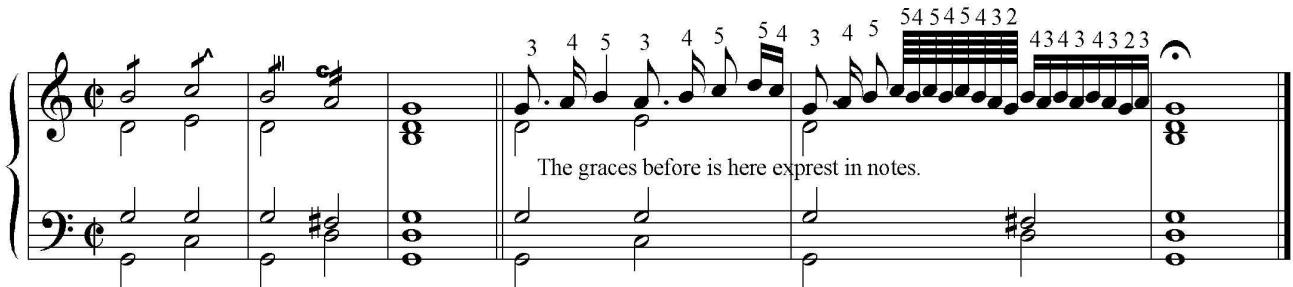
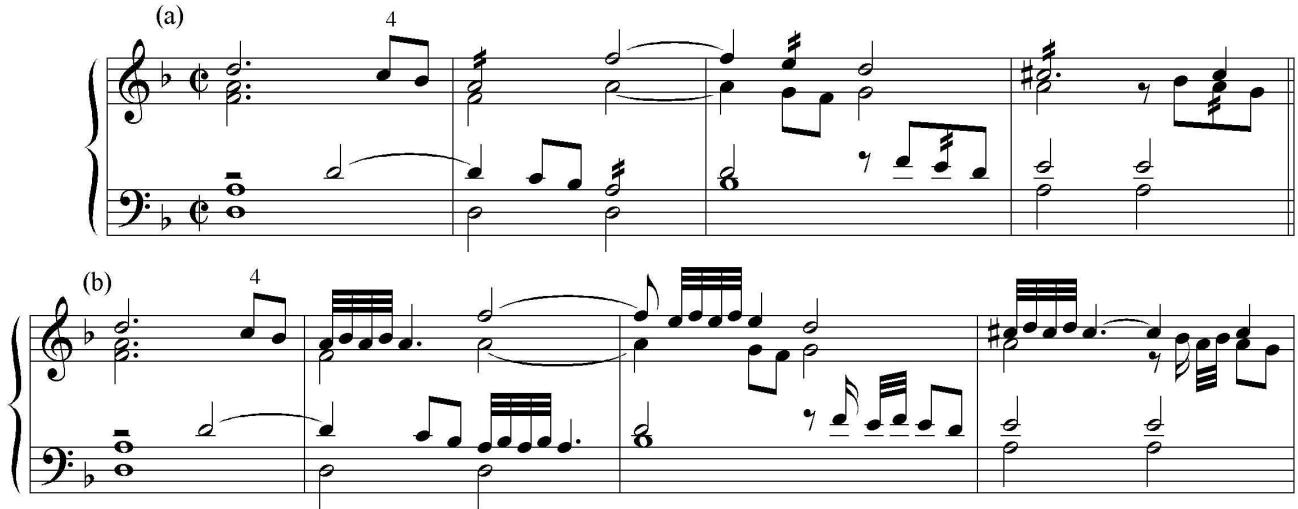
- 页码:11-12
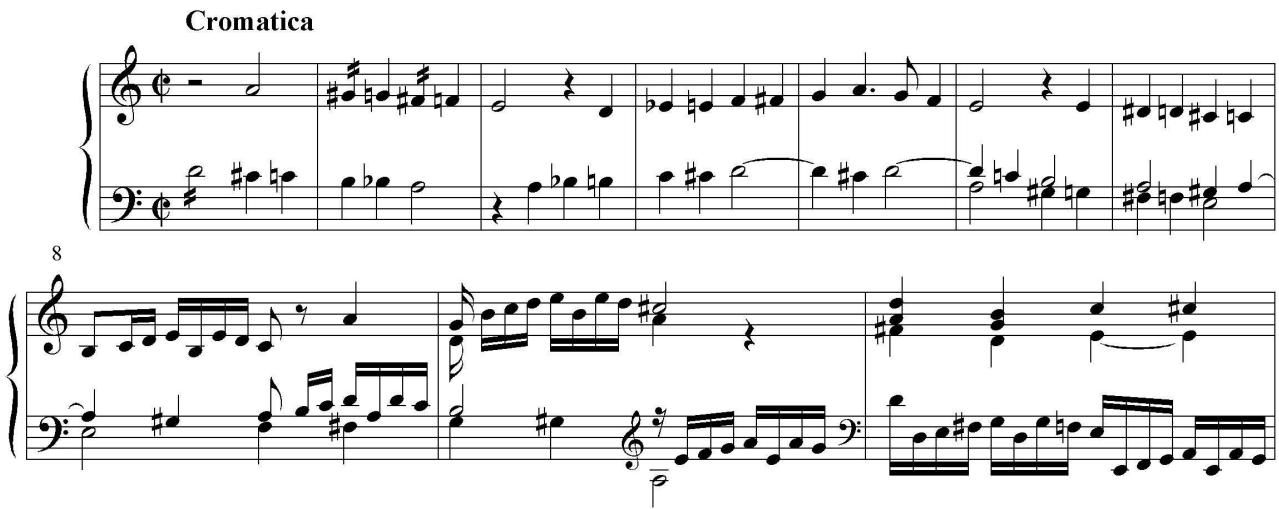
C10 Fingering and ornaments in Byrd’s setting of “Lachrimae” Pavan by John Dowland
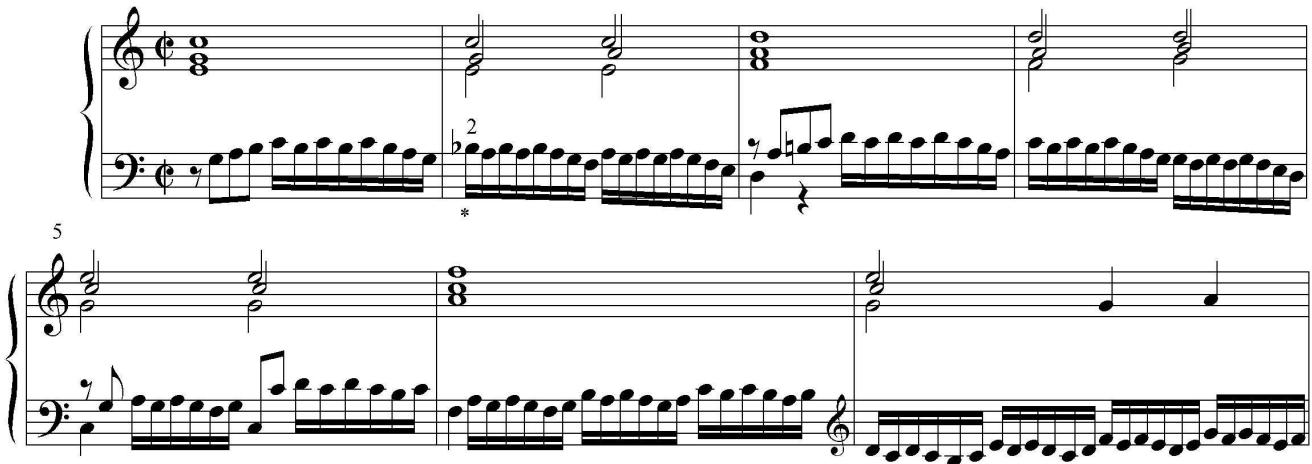
- S10.1 [描述性拆分] Fingering Patterns and Paired Fingerings in the Virginalist Repertory
- 页码:12-12
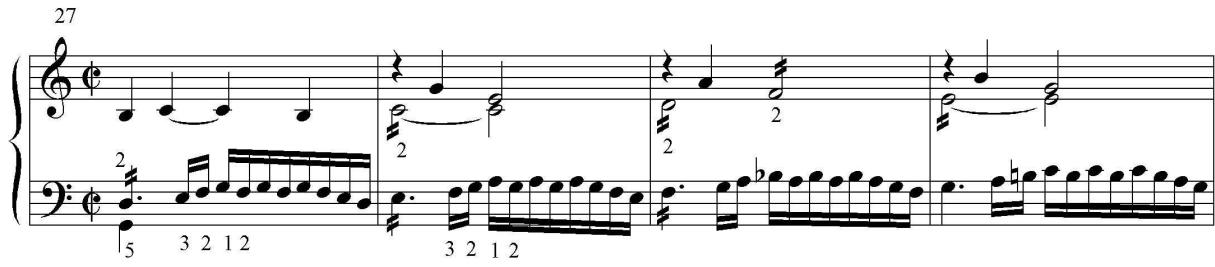
C11 [描述性拆分] John Bull’s Praeludium and Scale-Fingering Examples
- S11.1 [描述性拆分] Bull’s Praeludium Example and Later Bach on Paired Fingerings
- 页码:13-14
C12 [描述性拆分] Byrd’s “Lachrimae” Pavan: Fingering, Beaming, and Ornament Signs
- S12.1 [描述性拆分] Byrd’s “Lachrimae” Pavan: Beaming, Grouping, and Possible Realizations of the Single Stroke
- 页码:15-18
C13 Conflicting Ornament Signs and Substitutions for the Groppo
- S13.1 [描述性拆分] Double-Stroke Substitutions and Compositional Revisions in “Lachrimae”
- 页码:19-19
C14 Authorship, ornaments, and fingering in an intabulation attributed to Peter Philips
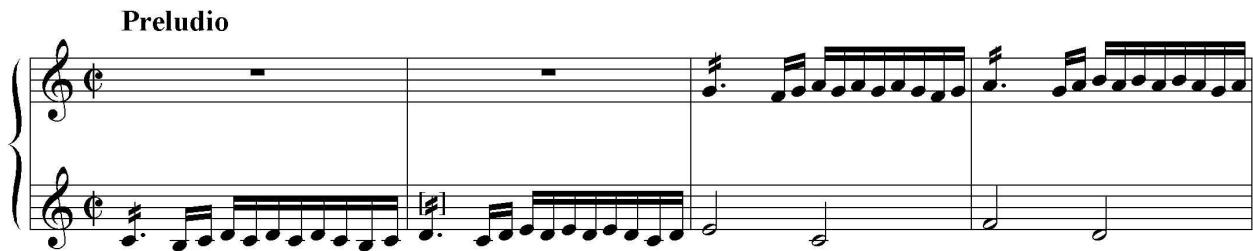
- S14.1 [描述性拆分] “Ecco l’aurora”: Anglo-Dutch Intabulation and Questions of Attribution
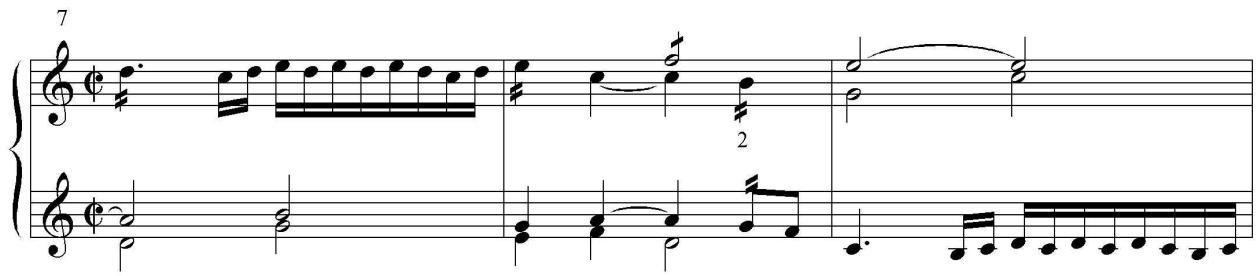
- 页码:19-20
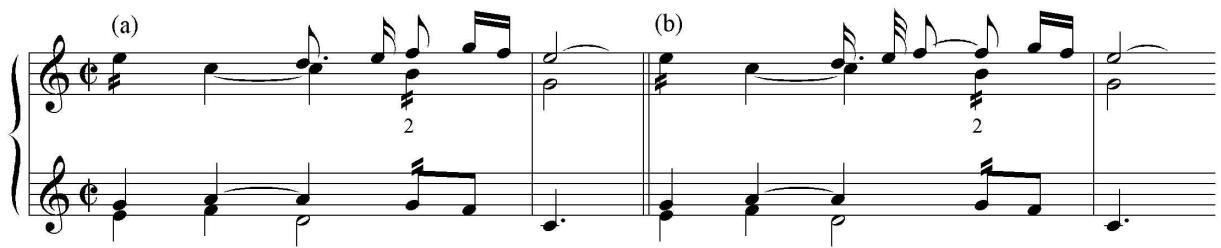
C15 Northern European Connections and the Limits of Generalization
- S15.1 [描述性拆分] Continental Performance Practice, La Barre Courantes, and Conclusions
- 页码:21-23
S1.1 [描述性拆分] Persistent Questions in English Keyboard Music circa 1600
第1段(P0001)
原文复述
Ornaments, Fingerings, and Authorship: Persistent Questions About English Keyboard Music circa 1600
中文讲解
这是本小节的标题(Markdown 二级标题格式),用三个关键词——Ornaments(装饰音)、Fingerings(指法)、Authorship(作者归属)——并列点出围绕 1600 年前后英国键盘音乐所悬而未决的核心问题,并以 “Persistent Questions”(持续存在的疑问)作为定性语,说明这些问题虽经大量研究仍未解决。标题同时以 “circa 1600” 限定时间范围(约 1600 年前后),与正文所讨论的维吉纳尔曲派(virginalist)文献的年代相吻合。这一标题功能上预告了正文将要展开的三条主要线索:装饰符号的解读、指法与演奏的关系,以及作曲家归属与音乐传统归属的不确定性。
第2段(P0002)
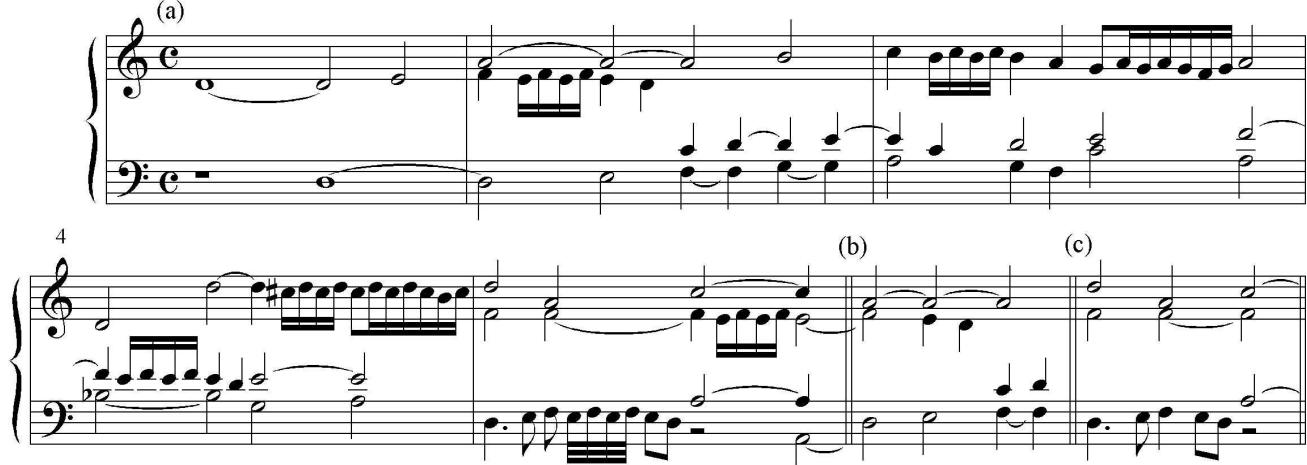
原文复述
English keyboard music from the decades on either side of 1600 has been one of the most thoroughly researched of all early repertories. Yet fundamental questions persist concerning the historical performance practice of many pieces. These questions reflect the nature of the sources, most of them manuscript copies of varying quality and provenance. Relevant treatises and other verbal accounts, as well as surviving keyboard instruments, are very rare. In most cases we know little about the copyists of the manuscripts or the circumstances under which they worked: whether they copied directly from composers’ autographs, who played from their manuscripts and on what occasions, even in what city or country many pieces and sources originated. We therefore lack essential information for interpreting such things as the numerous ornament signs present in some manuscripts, or for reaching decisions about tempo and articulation, which depend on fingering and other aspects of performance. Correctly identifying the composer of a piece may also be fundamental for understanding its historical performance practice, but many attributions are uncertain, and in some cases we are unsure even of the national tradition to which a composition originally belonged.
中文讲解
本段是整个小节(乃至整篇文章)的总论铺垫。其中心主张是:尽管 1600 年前后英国键盘音乐是早期音乐中研究得最充分的领域之一,但关于历史演奏实践的根本性问题仍未解决。作者先以让步句(“yet”)把"研究充分"与"问题持续"之间的反差摆出来,然后逐层给出原因:
- 资料性质方面:绝大部分乐谱是手抄本,抄本的质量与出处(provenance)参差不齐;
- 旁证材料方面:可参考的演奏论著(treatises)、文字记载以及同时期键盘乐器都很稀少;
- 抄写者与演奏者信息方面:通常既不知道抄写者是否直接来自作曲家亲笔稿(autographs),也不知道谁曾使用这些抄本、在何种场合演奏,甚至不知道它们的最初所在地——所以作者一连用了三个 “whether… who… even in what city or country” 来凸显信息空缺;
- 由于上述信息缺失,我们无法确定地解读抄本中数量众多的装饰音符号(ornament signs),而涉及速度(tempo)和断奏(articulation)的判断又依赖于指法(fingering)和其他演奏细节;
- 作者归属(authorship)困难:许多乐曲的归属尚不明确,个别情况下连乐曲最初属于哪一种民族传统(national tradition)都无法判定。
因此,作者实际上是在为下文铺设一个"证据缺口"的图景:装饰音、指法、归属三条问题线在文首标题中已点出,本段则把它们的共同根源——一手资料稀少、抄写链不明、归属混乱——一并交代清楚。读者需要理解,作者并不否认前人研究的价值,而是强调:现有研究所依赖的文献基础本身存在结构性缺陷,这正是问题"持续存在"的根本原因。
第3段(P0003)
原文复述
It will probably never be possible to provide firm answers for the questions addressed below. But a broadened perspective on what constitutes a relevant source may lead to a broadened range of possible answers. For instance, it was once thought that players of this music were restricted to so-called paired scale fingerings, which caused players to slur small note values in groups of two. As recently as 2010 an argument for a “new interpretation” of the mysterious ornament signs in this music argued that they stand for graces that are essentially identical to two of those used in eighteenth-century music. In both cases, a view based on a small portion of the available evidence was generalized to cover the entire repertory. My intention in what follows is to open broader perspectives on certain performance issues as they arise in three representative keyboard pieces from the virginalist repertory (broadly understood). In a field as well worn as this one, it is inevitable that many of the observations made below have occurred to previous writers. Nevertheless, these case studies suggest that sources from outside England, particularly Italy, may shed new light on practices used in keyboard English music around 1600. Whether any of the conclusions reached here can be extended to further works will require carrying out similar studies of additional pieces and their sources.
中文讲解
本段是作者对自身研究路径与立场的纲领性陈述,由三组层次构成:
第一,方法论的总前提(开头两句):作者坦言,对所提出的问题很可能永远无法给出确定的答案;不过,若扩大"什么算作相关资料"的视野,可能的答案范围也会随之扩大。这是一种典型的"降低期待、拓宽路径"的学术表态:既承认材料局限造成的不可结论性,又指明通过引入新材料可以打开新的解释空间。
第二,对前人研究的批判性回顾(中间部分)。作者举了两个具体的例子:
- 所谓 “paired scale fingerings”(成对音阶指法)的旧说——认为当时的演奏者只能使用这种指法,因此导致小音符被两两连奏(slur in groups of two);
- 2010 年一篇主张对神秘装饰符号进行 “new interpretation” 的论文(其结论以脚注 2 形式在下文呈现),认为这些符号所代表的装饰音与 18 世纪使用的某两种装饰音基本相同。
作者指出,这两个看似不同的立场其实犯了一个共同的错误:都基于现有证据中极小的一部分,便将其推广为对整个曲目库(entire repertory)的普遍结论。这里隐含的批评是:单凭一两个抄本或一两条记谱线索,就推定整个维吉纳尔学派都遵循同一规则。
第三,作者自我定位与未尽之意的说明(结尾部分)。作者明确:下文将围绕维吉纳尔曲目(virginalist repertory,广义理解)中的三首代表性键盘作品,对若干演奏问题展开更广视角的讨论;又承认在如此"踩踏过无数遍的领域"(well worn)中,自己的许多观察很可能前人早已提出;同时将自己的独特贡献定位为——主张来自英国以外、特别是意大利的资料,可能为 1600 年前后英国键盘音乐的演奏实践提供新视角;最后宣布,结论是否可推广,必须通过对其他作品及其资料进行类似研究才能验证。
因此本段的功能在于:(a) 把前一条信息缺口(资料稀少)转化为方法论上的"破口"——引入外部资料;(b) 限定了自己的贡献边界(只是案例研究,需后续扩展);(c) 预先解释了为何某些结论可能与既有观点重叠,以化解创新性方面的质疑。
补充说明
本段中提到的 “paired scale fingerings” 是与拉丁文"成对"含义相对应的术语,指每只手只用两根手指交替完成音阶进行的指法模式;下文脚注 1 的 Donington 引文正是这种观点的典型代表。“virginalist repertory” 在本节指 1600 年前后英国维吉纳尔琴曲派的键盘作品总称,作者特别注明 “broadly understood”,意味着其范围不局限于狭义的维吉纳尔琴,也包括相近时期的英国键盘音乐。
第4段(P0004)
原文复述
Thus Robert Donington wrote in the first edition of The Interpretation of Early Music (London: Faber, 1963): “early fingerings were devised to assist phrasing and articulation by enforcing separations where they are musically desirable” (p. 410); this is repeated in the “new revised edition” of 1989 (p. 476) alongside an illustration showing two-note slurs “implied by the [paired] fingering” given by François Couperin for his harpsichord piece “Le Moucheron” (ex. 217b).
中文讲解
本段是脚注 1 的内容。脚注的功能是为正文 P0003 中提到的 “paired scale fingerings” 旧说提供权威转引,从而支撑作者对前人研究的批评。
具体内容可拆解为三层:
- 文献来源:Robert Donington 的《The Interpretation of Early Music》,1963 年 Faber 出版社(伦敦)第一版,第 410 页;
- 原文引文:“early fingerings were devised to assist phrasing and articulation by enforcing separations where they are musically desirable”——意思是"早期指法的设计目的是通过在音乐上需要的地方强制性地断开(音符),以辅助乐句划分与断奏"。换言之,Donington 认为早期指法本身就承担了塑造断句的功能,而不是单纯用来按键。
- 修订沿革:作者特别指出,这段话在 1989 年的"全新修订版"(new revised edition)第 476 页被原样保留;同页还附有一例图示(ex. 217b),说明 François Couperin(库普兰,法国 17 世纪晚期/18 世纪早期作曲家)在其大键琴曲《Le Moucheron》(意为"小苍蝇")中所给出的"成对指法"(paired fingering)暗示的两音连奏(two-note slurs)。
在论证作用上,这段引文有两重意义:其一,Donington 是 20 世纪早期音乐演奏实践领域的经典权威,他的观点从 1963 年至 1989 年未作改动,说明这种"指法等同于断奏指示"的解释已在学界具有惯性;其二,库普兰的例证是法国晚期大键琴作品,与 1600 年前后的英国音乐时代相距近百年,作者将两者并置,正是要在正文质疑"以局部证据概括整个曲目库"之处,把这种横向比附的源头展示给读者:脚注 1 实际是 P0003 中"以小部分证据概括为普遍结论"这一批判的具体例证之一。
补充说明
无额外补充;脚注 1 在 P0003 中由上标 1 标识,本段即该脚注的完整内容。
第5段(P0005)
原文复述
Asako Hirabayashi, “A New Interpretation of the English Virginalists’ Ornament Signs,” Early Keyboard Journal 25/26 (2010): 93–123. Hirabayashi concludes that the two main signs of the English virginalists “each had its own specific meaning” which was invariant regardless of context: “the single stroke indicated a mordent, while the double stroke indicated a short trill from above” (p. 119).
中文讲解
本段是脚注 2 的内容,作用是为正文 P0003 中提到的 2010 年 “new interpretation” 文献提供完整出处与核心结论。
具体信息可分为两部分:
- 文献信息:作者 Asako Hirabayashi(平林朝子),论文标题 “A New Interpretation of the English Virginalists’ Ornament Signs”(“对英国维吉纳尔学派装饰符号的新解读”),发表于《Early Keyboard Journal》第 25/26 卷合刊(2010 年),页码 93–123。
- 核心结论:Hirabayashi 认为英国维吉纳尔派最主要的两种装饰符号"各自具有专门含义"(each had its own specific meaning),且这种含义"不随语境而改变"(invariant regardless of context)。具体对应是:单划(single stroke)= mordent(波音/回音);双划(double stroke)= 短颤音,自上方开始(short trill from above)。这一结论引自原书第 119 页。
结合正文来理解:作者在 P0003 中把 Hirabayashi 的论文与 Donington 的"成对指法"说并列为两个例子,用以说明"以小部分证据概括为整个曲目库"的常见错误。Hirabayashi 的结论之所以在 P0003 中被点名,不是因为其结论本身错,而是因为它给"两种符号各自对应唯一含义"这种观点赋予了普适性——而作者在文中暗示,这种普适性结论可能掩盖了符号在不同语境下的差异。读者因此应把脚注 2 视为正文批判立场的具体靶标之一。
补充说明
无额外补充;脚注 2 在 P0003 中由上标 2 标识,本段即该脚注的完整内容。
脚注 / 边栏 / 图表 / 附加信息(如有)
本小节(S1.1 “Ornaments, Fingerings, and Authorship: Persistent Questions About English Keyboard Music circa 1600”)的附加材料集中体现在两处脚注:
- 脚注 1(P0004):为正文 P0003 中提到的 “paired scale fingerings” 旧说提供权威文献来源(Donington 1963/1989),并通过 Couperin 的《Le Moucheron》例证展示这种"指法—断奏"解释的跨时代延伸;
- 脚注 2(P0005):为 P0003 中提到的 2010 年 “new interpretation” 提供完整书目信息(Hirabayashi 2010)及核心结论(单划 = mordent,双划 = 短颤音)。 两处脚注共同服务于正文 P0003 对前人研究的批评:它们不是旁注,而是作者论证中用来锁定具体批判对象的"靶标"。本小节无图表、谱例或边栏。
💡 本节核心要点
- 本小节的核心论点:1600 年前后的英国键盘音乐虽然研究充分,但因一手抄本稀少、抄写链不明、归属混乱,其演奏实践层面的根本性问题——装饰音解读、指法与断奏、作曲家归属——长期未决。
- 作者采用的方法论立场:承认可能永远无法给出确定答案,但通过扩大"什么算作相关资料"的范围(特别是引入英国以外、尤其是意大利的文献),可望打开新的解释空间。
- 对前人研究的批判性回顾:作者以 Donington 的"成对指法=断奏指示"说(脚注 1)和 Hirabayashi 2010 年"两种符号各自固定含义"的解读(脚注 2)为例,指出二者都犯了"以小部分证据概括为整个曲目库普遍结论"的共同错误。
- 本文的研究设计:以下文将围绕维吉纳尔曲目中的三首代表性键盘作品展开案例研究,目的不在于给出定论,而在于示范以外部资料(特别是意大利资料)重新审视英国本土演奏实践的可能性。
- 作者对自身贡献的克制定位:明确承认在已被反复研究的领域,许多观察很可能前人已经提出;并要求结论的可推广性须通过后续对更多作品及其资料的同类研究来检验。
- 三组概念性张力贯穿本节:研究的充分性与问题的持续性、证据的局限性与解释的可能性、个别抄本的局部证据与整个曲目库的整体结论——三者共同构成了作者展开案例研究的论证起点。
🔑 关键术语
- virginalist repertory:维吉纳尔曲派曲目,约 1600 年前后英国键盘音乐(特别是维吉纳尔琴与早期大键琴作品)的总称;作者以 “broadly understood” 限定其范围不限于狭义的维吉纳尔琴。
- ornament signs:抄本中用以指示装饰音(波音、颤音、回音等)的符号;本节指出对这些符号含义的解读因抄本差异和缺乏旁证而长期存在争议。
- paired scale fingerings:“成对音阶指法”,指每只手两根手指交替进行的早期指法模式;Donington 等学者认为这种指法强制性地在两音之间产生连奏/断奏效果。
- articulation:“断奏/连奏方式”,指音符之间相互连接或分开的演奏处理;在本文语境中,作者指出 articulation 往往依赖指法与抄本符号共同判断。
- provenance:“来源/出处”,在文献学中指抄本或文献的来源、流传与归属信息;本节强调多数英国键盘抄本的 provenance 无法确认。
- autograph (of a composer):作曲家亲笔稿;本节指出,由于多数抄本是否直接抄自 autograph 不得而知,演奏实践的判断基础被削弱。
- national tradition:“民族传统”,指作品最初所属的音乐文化背景;本节指出,部分作品连归属哪一民族传统(英国、法国、意大利等)都不确定。
S2.1 [描述性拆分] Soncino’s Prelude and the Ornament Table in the Be Manuscript
第1段(P0006)
原文复述
An ornament “table” and a prelude by Emanuel Soncino
中文讲解
这是本节的小节标题,用英文原文标注。它预告了本节将要讨论的两个相关但不同的对象:一是保存在Be手稿中、看似"装饰音表"的微型作品,二是Emanuel Soncino所作的一首前奏曲。两者共同构成本节的主题:在手稿学层面介绍Be所承载的教学材料。
第2段(P0007)
原文复述
A prelude by Emanuel Soncino is preserved in the English manuscript designated by the siglum “Be” after its owner Edward Bevin, son of the composer and organist Elway Bevin, who died in 1638. (See table 1 for a list of sources cited and their sigla.) Although not of great intrinsic musical interest, Soncino’s prelude is one of several pieces in English seventeenth-century sources that were evidently used to train pupils in the performance of keyboard figuration, including scales and ornaments. Bevin’s manuscript preserves it alongside comparable pieces by John Bull and Orlando Gibbons. It also contains something that resembles the ornament tables found in later publications of keyboard music, although it is really a miniature composition which must have served pedagogic purposes (ex. 1).
中文讲解
本段首先交代了"Be"这一手稿代称的来源:以所有者Edward Bevin命名,他是作曲家兼管风琴家Elway Bevin之子,Elway于1638年去世。然后本段为本节定下调子——明确指出Soncino的前奏曲"本身并无重大音乐价值",但其文献价值在于:它是17世纪英国手稿中若干用于训练学生演奏键盘音型化(包括音阶与装饰音)的作品之一。Be手稿不仅把Soncino的前奏曲与Bull、Gibbons的同类教学性作品并列保存,还收入了一个表面上类似后来出版物中"装饰音表"(ornament table)的东西,但作者立即澄清:它其实是一首用于教学目的的微型作品(例1)。本段的功能是为整节定位——Be手稿不仅是曲谱的载体,更是教学材料的载体。
补充说明
本节中的siglum(简称)“Be"是按所有者姓氏拼写的惯例,区别于按馆藏地点命名的常见做法(如Add. MS 23623)。Elway Bevin卒于1638年这一时间点把手稿的下限确定在他儿子那一代。
第3段(P0008)
原文复述
Unfortunately, the end of Soncino’s prelude is missing from the manuscript, and there are no concordances. The composer himself is mysterious, represented by only a single other known composition. The name Emanuel Soncino points to Italy, but the style and notation of the present piece are English or perhaps Dutch. The other work attributed to Soncino is a short chromatic fantasia (ex. 2). At first glance, it too might suggest Italy, but it is close stylistically to chromatic pieces by Sweelinck and by John Bull, who worked in the Spanish Netherlands from 1613 onward. The city of Soncino is in northern Italy, but the name is best known as that of a Sephardic family of printers whose prolific publications included the earliest printed Hebrew bible. The Dutch scholar Rudolf Rasch has argued that an important manuscript of Bull’s music was prepared in Antwerp for a Sephardic patron; hence the possibility cannot be ruled out that Soncino was Jewish.
中文讲解
本段处理的是一个多层面的考证难题:前奏曲的结尾佚失,又没有异文来源可作补遗;作曲家本人身份神秘,仅有另一首存世作品。“Emanuel Soncino"这个名字指向意大利,但乐曲本身的风格与记谱却读起来像英国或荷兰的;另一首被归给Soncino的作品是一首短小的半音幻想曲(例2),表面看也可能让人联想到意大利,但风格上却接近Sweelinck与John Bull的半音作品——Bull自1613年起在西班牙属尼德兰地区活动,由此可接触欧洲大陆的音乐语汇。作者接着把推理从音乐风格转向姓氏背景:Soncino是意大利北部一座城市,但这个名字更以一个塞法迪(Sephardic)印刷世家著称,该家族曾出版最早的希伯来文印刷圣经;荷兰学者Rudolf Rasch已论证一部重要的Bull手稿是为一位塞法迪赞助人在安特卫普准备的。基于这一证据链,作者保留Soncino本人可能是犹太人的可能性。本段的关键修辞策略是层层叠加不确定性,而非急于下结论。
补充说明
本段中的"concordances"指其他独立保存同一作品的异文来源;既然没有这样的异文来源,佚失的结尾便无从据他本补全。“Sephardic"一词此处用来指代伊比利亚裔及其后裔的犹太人,与文中印刷家族的历史角色相对应。
第4段(P0009)
原文复述
The copy of Soncino’s chromatic fantasia in Be is dated 1633, but that is not necessarily a date of composition, and both works could have originated before then. The composer’s prelude recalls the well-known one by Byrd published about twenty years earlier in Parthenia (ex. 3). Soncino’s prelude, like Byrd’s, focuses on what we would call trills but with even greater singlemindedness, at least in the extant portion of the piece, which continued on a page now lost.
中文讲解
本段同时处理时间与风格谱系两层问题。Be手稿中所抄半音幻想曲标注的1633年只是抄写年代,未必就是作曲年代,因此两首现存的Soncino作品均有可能早于该年。Soncino前奏曲的风格来源则是Byrd那首著名前奏曲——比它早约二十年,刊于Parthenia中(例3)。作者指出,两首前奏曲都集中于我们今天所称的颤音(trills),且Soncino的版本"更为专一”(with even greater singlemindedness);不过作者谨慎地补充:此判断仅限于现存部分,因为乐谱在已佚的一页上仍在继续。作者由此把Soncino放入一条可识别的英国传统(以Byrd为典范),同时承认证据残缺这一限制。
补充说明
本段提到Parthenia,作为刊载Byrd著名前奏曲的出版物;该出版物本身的更多细节本节并未展开。“1633年只是抄写日期而非作曲日期"这一区分是手稿学中的基本但关键的方法论前提。
第5段(P0010)
原文复述
Elway and Edward Bevin were first distinguished by Robert Ford, “Bevins, Father and3 Son,” Music Review (1982): 104–8.
中文讲解
本条脚注交代Elway Bevin(父)与Edward Bevin(子)这一区分最早由Robert Ford在1982年《Music Review》上的文章"Bevins, Father and Son"中作出;正是这一基础性的辨识工作使"Be"这一以所有者命名的手稿代称得以成立。
第6段(P0011)
原文复述
Be contains seven works attributed to John Bull (BuK 2, 10, 38, 50, 51 [possibly by Tallis], 117, and 121; see Musica britannica [MB], vols. 14 and 19, ed. John Steele and Francis Cameron “with additional material by Thurston Dart” [London: Stainer and Bell, 1960], third, revised edition by Alan Brown [London: Stainer and Bell, 2001]) and eight to Orlando Gibbons (see MB 20, ed. Gerald Hendrie [London: Stainer and Bell, 1962]).
中文讲解
本条脚注列出Be手稿中与本节正文比较相关的Bull与Gibbons作品清单:归属Bull的有七首(附BuK编号,其中BuK 51被括注"可能为Tallis所作”),归属Gibbons的有八首;同时给出Musica britannica各卷的完整编辑与版本信息,方便读者查阅权威的整理本。脚注的作用是支撑正文"Be与Bull、Gibbons同类作品并列保存"这一陈述。
补充说明
“BuK"是Bull键盘作品的标准主题目录编号。BuK 51标注"possibly by Tallis"显示Be手稿内部的归属本身亦非完全固定。
第7段(P0012)
原文复述
Rudolf Rasch, “The Messaus-Bull Codex: London, British Library, Additional Manuscript 23.623,” Revue belge de musicologie / Belgisch Tijdschrift voor Musziekwetenschap 50 (1996): 93–127 (cited: 105ff.).
中文讲解
本条脚注给出Rasch 1996年关于Messaus-Bull抄本(即大英图书馆Add. MS 23.623)的文章完整出处——它正是支撑P0008中"一部重要Bull手稿系为塞法迪赞助人在安特卫普所准备"这一论断的依据;“105ff.“指该论断展开于第105页及其后。
脚注 / 边栏 / 图表 / 附加信息(如有)
本小节所附补充材料均为脚注(编号3、4、5),分别承担三类功能:脚注3(Robert Ford, Music Review, 1982)支撑正文对Elway与Edward Bevin的区分;脚注4列出Be手稿中Bull与Gibbons作品的具体编号并提供Musica britannica权威版本的完整书目信息;脚注5给出Rasch关于塞法迪赞助人论证的完整出处。正文中提及的例1、例2、例3在本节文本范围内未展开。
💡 本节核心要点
- Be手稿以所有者Edward Bevin(作曲家兼管风琴家Elway Bevin之子,Elway卒于1638年)命名,是本节研究的主要载体。
- Soncino前奏曲本身的音乐价值有限,但其文献价值在于:它与Bull、Gibbons的同类作品一起,构成了英国17世纪键盘音型化与装饰音教学曲目的一部分。
- Be还保存了一个看似"装饰音表”、实为微型教学乐曲的物件,表明该手稿系统性地承载教学功能。
- Soncino作曲家本人身份高度不确定:意大利化的名字被英国或荷兰的风格与记谱所抵消,且不排除其与塞法迪印刷世家的关联,乃至本人为犹太人的可能。
- 前奏曲结尾佚失且无异文来源,使任何关于其完整结构的判断都只能基于现存部分。
- Soncino的前奏曲在风格上呼应Byrd刊于Parthenia中的著名前奏曲,并将"颤音"作为单一焦点推向极致,但现存材料不足以判断其全貌。
🔑 关键术语
- siglum:为手稿或文献所设的简短字母代号,本节中"Be"由所有者姓氏拼出,用以指代Bevin家族手稿。
- concordance:指其他独立保存同一作品的来源;本节指出Soncino前奏曲不存在异文来源,因而无法据他本补足佚失的结尾。
- ornament table:指总结特定作品中装饰音奏法的图表;Be中所含类似物实为承担同样教学功能的微型乐曲。
- Sephardic:指伊比利亚裔及其后裔的犹太人;本节中Soncino这一姓氏与历史上的塞法迪印刷世家相关,使作曲家身份问题进一步复杂化。
- Parthenia:本节援引为刊载Byrd著名前奏曲的印刷出版物;Soncino前奏曲与之构成风格上的呼应关系。
S3.1 [描述性拆分] Sources and Bibliographic Abbreviations
第1段(P0013)
原文复述
Heading introducing Table 1, entitled ‘Sources and abbreviations’, which serves as a reference list of the manuscript sigla and bibliographic shorthand used throughout the study.
中文讲解
本行不是叙述性正文,而是全文的表格标题——‘Table 1. Sources and abbreviations’(表1:来源与缩写)。它开启的不是一段论证,而是一份供读者随时回查的’密码本’:后文凡以 ‘Be’‘Bu’‘Tr’ 等符号指代一手抄本,或以 ‘BK’‘BuK’‘MB’ 指代现代版本时,都需要回到此表获取全称、收藏地与卷次信息。整张表是后续分析赖以成立的检索工具。
第2段(P0014)
原文复述
Sub-heading that opens the first block of Table 1, devoted to the list of manuscript sigla.
中文讲解
这是表内第一个子标题——‘Manuscripts and sigla’(手稿与缩写记号)。它宣告接下来的八个条目(P0015–P0022)按’两字母 sigla + 收藏地 + 收藏机构 + 索书号’的固定格式排列,是表中所有一手材料条目的归属。
第3段(P0015)
原文复述
The manuscript designated by the sigla ‘Be’ is held in London at the British Library under the shelfmark Additional ms. 31403.
中文讲解
本条对 sigla ‘Be’ 给出全称:藏于伦敦大英图书馆(British Library),索书号为 Additional ms. 31403。它是后文讨论相关作品时 ‘Be’ 这一简称背后所指向的实体;读者若需查阅原谱或影像,应凭此条目的城市、机构和索书号定位。
第4段(P0016)
原文复述
The manuscript designated by the sigla ‘Bu’ is held in Paris at the Bibliothèque Nationale, within the Fonds du Conservatoire collection, under the shelfmark Rés. 1185.
中文讲解
本条说明 ‘Bu’ 指向巴黎法国国家图书馆(Biliothèque Nationale)‘Conservatoire 藏部’(Fonds du Conservatoire)下的 Rés. 1185。它是本表中唯一一件明确标在法国首都的藏品,与其余以英国为主的抄本形成地理对照,提醒读者所用材料并非局限于一国收藏。
第5段(P0017)
原文复述
The manuscript designated by the sigla ‘Co’ is held in London at the British Library within the Royal Music Library under the shelfmark 23.1.4, and is commonly known as ‘Benjamin Cosyn’s Virginal Book’.
中文讲解
本条将 sigla ‘Co’ 与’本杰明·科辛维金纳琴曲集’(Benjamin Cosyn’s Virginal Book)对应:藏于伦敦大英图书馆皇家音乐图书馆(Royal Music Library),索书号 23.1.4。括号中的俗称同时承担两条功能——既补全抄本的历史名称,也暗示该抄本系以编订者 Benjamin Cosyn 命名;该俗称在英文学界广泛流通,正文中常与 sigla 互换使用。
第6段(P0018)
原文复述
The manuscript designated by the sigla ‘Fo’ is held in London at the British Library under the shelfmark R.M. 24.d.3, and is commonly known as ‘Will Foster’s Virginal Book’.
中文讲解
本条说明 ‘Fo’ 指向伦敦大英图书馆收藏的 ‘威尔·福斯特维金纳琴曲集’(Will Foster’s Virginal Book),索书号 R.M. 24.d.3。它与前一条 Co 共同构成’以编订者/收藏者姓名命名的英国维金纳琴曲集’一类材料,是研究十七世纪英国键盘音乐实践的重要来源。
第7段(P0019)
原文复述
The manuscript designated by the sigla ‘Ly’ is held at the Staatsbibliothek zu Berlin–Preußischer Kulturbesitz under the shelfmark Mus. ms. Lynar A 1.
中文讲解
本条说明 ‘Ly’ 藏于柏林国家图书馆(Staatsbibliothek zu Berlin–Preußischer Kulturbesitz),索书号 Mus. ms. Lynar A 1,名称中带有 Lynar 字样,通常对应某位与该家族有关的收藏者。它是本表中第二件非英国藏品,与 Bu 一同扩展了材料的地理范围。
第8段(P0020)
原文复述
The manuscript designated by the sigla ‘O1’ is held at Christ Church Library in Oxford under the shelfmark Mus. MS 1113, and is also known by the alternative name ‘El’.
中文讲解
本条说明 ‘O1’ 指向牛津基督教堂学院图书馆(Christ Church Library)所藏 Mus. MS 1113,并补充其别名为 ‘El’。在同名抄本不止一件的语境下,作者以 ‘O1’(带数字后缀)与 ‘El’(带替代名)双重方式区分来源,可避免读者将其与可能存在的 ‘O2’ 或其他相关抄本混淆。
第9段(P0021)
原文复述
The manuscript designated by the sigla ‘Tr’ is held at the Fitzwilliam Museum in Cambridge under the shelfmark Mus. MS 168; it is commonly known as the ‘Fitzwilliam Virginal Book’ and was formerly catalogued under the shelfmark 32 g.29.
中文讲解
本条说明 ‘Tr’ 指向剑桥菲茨威廉博物馆(Fitzwilliam Museum)所藏 Mus. MS 168,通称’菲茨威廉维金纳琴曲集’(Fitzwilliam Virginal Book)。括号中特别注明旧索书号为 32 g.29,这是一项实用提示:早期学术文献与目录往往以旧号引用,读者按新号查档时须借助此注脚作转换。
第10段(P0022)
原文复述
The manuscript designated by the sigla ‘Wr’ is held in London at the British Library under the shelfmark Additional ms. 30485.
中文讲解
本条说明 ‘Wr’ 藏于伦敦大英图书馆,索书号 Additional ms. 30485。它是 Manuscript and sigla 这一区块的最后一条,没有附带俗称,以最简洁的形式给出城市、机构与索书号三项基本信息。
第11段(P0023)
原文复述
Sub-heading that opens the second block of Table 1, devoted to the list of bibliographic abbreviations for modern editions and reference series.
中文讲解
这是表内第二个子标题——‘Bibliographic abbreviations’(文献缩写)。它切换了表的性质:从一手抄本转入二手文献的缩写约定,宣告接下来的三条(P0024–P0026)将说明现代编辑版本与系列丛书的引用规则。
第12段(P0024)
原文复述
The abbreviation ‘BK’ indicates the sequential number assigned to a work in William Byrd: Keyboard Music, edited by Alan Brown, published as volumes 28–9 of Musica britannica by Stainer and Bell in London (original publication 1969–71, with revised editions appearing in 1976 and 1985).
中文讲解
本条说明 ‘BK’ 是 William Byrd: Keyboard Music(《威廉·伯德键盘音乐集》)中各作品所编排的顺序号。该版本由 Alan Brown 编辑,收入 Musica britannica 第 28–29 卷,由伦敦 Stainer and Bell 出版,初版于 1969–1971 年间推出,1976 与 1985 年分别发行修订版。读者见到正文中形如 ‘BK 38’ 的引用时,应回查此条以确认作品身份与版本依据。
第13段(P0025)
原文复述
The abbreviation ‘BuK’ indicates the sequential number assigned to a work in John Bull: Keyboard Music I, edited by John Bull and Francis Cameron with additional material by Thurston Dart, issued in a third edition revised by Alan Brown, published as volume 14 of Musica britannica by Stainer and Bell in London in 2001.
中文讲解
本条说明 ‘BuK’ 是 John Bull: Keyboard Music I(《约翰·布尔键盘音乐集 I》)中各作品所编排的顺序号。该版本初由 John Bull 与 Francis Cameron 编辑,Thurston Dart 提供增补材料,第三版由 Alan Brown 修订,收入 Musica britannica 第 14 卷,2001 年由 Stainer and Bell 在伦敦出版。值得注意的是,编者与作曲家同名——这里的 ‘John Bull’ 是 16 世纪英国作曲家本人作为早期编者之一被列出。
第14段(P0026)
原文复述
The abbreviation ‘MB’ designates the series Musica britannica: A National Collection of Music, and any citation must be followed by the relevant volume number or numbers.
中文讲解
本条说明 ‘MB’ 指代 Musica britannica: A National Collection of Music(《不列颠音乐:国家音乐丛书》)这一系列本身,而非某一卷内的作品号。括号 ‘followed by volume number[s]’ 提示用法:在正文中 MB 必须与卷号配合出现(如 ‘MB 14’ 即等于前面 BuK 所依附的那一卷)。这是与 BK、BuK 在性质上最重要的差异——后两者指向’作品号’,MB 则指向’系列卷次’。
脚注 / 边栏 / 图表 / 附加信息(如有)
本小节整体即一张表格(Table 1 ‘Sources and abbreviations’),由四个版面板块依次构成:表题(P0013)、‘Manuscripts and sigla’ 子标题(P0014)、八条手稿条目(P0015–P0022)、‘Bibliographic abbreviations’ 子标题(P0023)以及三条文献条目(P0024–P0026)。该表本身即为非正文版面元素,其功能不在于推进论证,而在于将全文使用的一手抄本 sigla 与二手文献缩写集中释义;正文每出现一次 ‘Be’‘Bu’‘Tr’ 或 ‘BK’‘BuK’‘MB’,都依赖此表回查定位。
💡 本节核心要点
- 本表将正文所用一手材料与现代版本分别整理为两个区块:‘Manuscripts and sigla’ 给出八个手稿缩写(Be、Bu、Co、Fo、Ly、O1、Tr、Wr),‘Bibliographic abbreviations’ 给出三个文献缩写(BK、BuK、MB)。
- 八个手稿缩写按 ‘sigla + 城市 + 收藏机构 + 索书号’ 的固定格式排列,便于读者凭最少信息回查原件;其中六件藏于英国,两件分别位于法国巴黎与德国柏林。
- 部分手稿附有通俗别名:Co 即 Benjamin Cosyn’s Virginal Book,Fo 即 Will Foster’s Virginal Book,Tr 即 Fitzwilliam Virginal Book;Tr 还额外标注其旧索书号 32 g.29,以方便读者对接早期文献。
- BK 与 BuK 分别指 William Byrd 与 John Bull 两位作曲家键盘作品集内的顺序号,必须依附于 Musica britannica 卷次方可定位具体作品;其中 BuK 还载明编者与版本沿革(初由 John Bull 与 Francis Cameron 编辑,Thurston Dart 提供增补,Alan Brown 修订第三版)。
- MB 与 BK/BuK 在性质上不同:BK、BuK 指代单首作品的顺序号,MB 则指代 Musica britannica 系列本身,使用时必须配以卷号。
🔑 关键术语
- sigla:本节中指代一手手稿的简短代号(如 Be、Bu、Co、Fo、Ly、O1、Tr、Wr),用以在正文中替代冗长的收藏机构与索书号,使行文简洁。
- shelfmark / ms.:图书馆为每件手稿或印刷品编配的索取号;‘ms.’ 为 manuscript(手稿)的缩写。同一抄本在不同历史时期可能使用不同索书号,本节 Tr 条目中并列的旧号 ‘32 g.29’ 即为例证。
- Musica britannica (MB):英国国家性的音乐作品校勘丛书,本表中 BK、BuK、MB 三条均属此系列;MB 作为缩写指代系列本身,引用时须附卷号。
- BK / BuK:分别为 William Byrd 与 John Bull 键盘作品集内的顺序号,是正文中定位单首作品的核心工具;其前缀 BK、BuK 必须在 Musica britannica 卷次配合下使用。
- Virginal Book:十七世纪英国为维金纳琴(virginal)作品汇编的抄本,常以编订者或收藏者命名;本节中 Co(Cosyn)、Fo(Forster)、Tr(Fitzwilliam)三份抄本即被冠以此称。
S4.1 [描述性拆分] Ornament and Prelude Illustrations from Bevin, Soncino, and Byrd
第1段(P0027)
原文复述
中文讲解
本段是图1的图注,标题为「Ex. 1」,对应英国作曲家爱德华·贝文(Edward Bevin)所作的装饰音(ornaments)示意图,副标题写作「Graces in Play」(演奏中的装饰),图像来源标注为大英图书馆(British Library)馆藏手稿 Additional ms. 31403 第 5 页。括号中的「内嵌图像数据已省略;位置与图注保留」说明原书此处本应嵌入一幅图像,但本任务输入中只保留图注文字与位置信息,并未提供图面本身的可见内容,因此读者需要查阅原书或该手稿以核对贝文所绘装饰音的具体形态。鉴于第 S4.1 小节的核心话题是「Ornament and Prelude Illustrations from Bevin, Soncino, and Byrd」,本图的功能在于为读者提供贝文对装饰音的视觉呈现,以作为后文讨论 Bevin → Soncino → Byrd 这条谱例序列的第一帧。
补充说明
无额外补充(图像本体未在输入中提供,无法就图形细节作进一步说明)。
第2段(P0028)
原文复述
中文讲解
本段是图2的图注,标题为「Ex. 2」,对应以马内利·松奇诺(Emanuel Soncino)的《幻想曲》(Fantasia),副题为「Cromatica」(半音化/色彩化),所展示的是该曲的开头部分(opening),出处为大英图书馆馆藏手稿 Additional ms. 36661 第 130 页。括号内的占位说明再次提示原书此处本应嵌入该幻想曲开头的谱例图像,但输入中并未给出实际谱面,读者需回到原书或该手稿以核对「Cromatica」开头的具体音符与记谱细节。在本小节的谱例序列中,此图位居中,承接贝文的装饰音图示,向读者展示 Soncino 在「半音化」风格幻想曲中如何把装饰写作与开篇陈述结合起来,为第三幅 Byrd 前奏曲的图像作铺垫。
补充说明
无额外补充(图像本体未在输入中提供)。
第3段(P0029)
原文复述
中文讲解
本段是图3的图注,标题为「Ex. 3」,对应威廉·伯德(William Byrd)的《前奏曲》(Prelude),编号 BK 24,所展示的是该前奏曲的开头部分(opening),出处为 1612 或 1613 年于伦敦出版的《帕提尼亚》(Parthenia)。括号中的占位说明同样指出原书此处本应嵌入谱例图像,但本输入中并未提供实际谱面,读者需查阅《Parthenia》原版或本小节所引图版以核对伯德此首前奏曲开头的实际记谱。在本小节的论证线索中,这幅图作为序列的收束,把前两幅「装饰音示意图」与「半音化幻想曲开头」推进到 17 世纪初英国印刷本中的前奏曲开头,从而让 Bevin → Soncino → Byrd 的比较在视觉材料上落地。出版时间「1612 or 1613」本身的不确定写法(用「or」并列)应原样保留,不能在转述中擅自选定其一。
补充说明
无额外补充(图像本体未在输入中提供)。
脚注 / 边栏 / 图表 / 附加信息(如有)
本小节全部三个段落均为图注(figure captions),原书此处本应分别嵌入三幅图像,本任务输入中以「[内嵌图像数据已省略;位置与图注保留]」标记替代。三段共承担同一功能:为本节「Ornament and Prelude Illustrations from Bevin, Soncino, and Byrd」提供三份谱例/示意图的来源信息(Bevin 手稿、Soncino 手稿、Byrd 印刷本),形成按时间与体裁递进的视觉证据链。
💡 本节核心要点
- 本小节由三幅图注构成,对应的视觉材料分别来自 Bevin(装饰音示意图)、Soncino(「Cromatica」幻想曲开头)与 Byrd(《Parthenia》中的前奏曲开头)。
- 三幅图按 Bevin → Soncino → Byrd 的顺序排列,构成本节装饰音与前奏曲谱例序列的视觉证据链。
- 图像本体在当前输入中以占位符形式给出,实际谱面与图形细节需查阅原书或所标注的手稿/印刷本方可确认。
- 两处手稿来源(大英图书馆 Additional ms. 31403 第 5 页、Additional ms. 36661 第 130 页)以及《Parthenia》(London, 1612 or 1613)的出版时间均以图注原样保留,未在转述中加以改动。
🔑 关键术语
- Graces in Play:图1 中对贝文装饰音示意图的副题,意指「演奏中的装饰/优雅音」,用于说明该图所绘为实际的装饰音形态,而非抽象规则。
- Fantasia (“Cromatica”):图2 中松奇诺的半音化幻想曲,标题括号中的「Cromatica」表明其风格为半音/色彩化,开头部分被用作本节谱例。
- Prelude (BK 24):图3 中伯德的前奏曲,BK 24 为本节所引用的编号,所展示的是其在《Parthenia》(1612 或 1613 年伦敦出版)中的开头部分。
- Parthenia:1612 或 1613 年于伦敦出版的英国键盘乐曲集,是伯德等作曲家前奏曲的印刷本来源,本节图3 即取自该集。
S5.1 [描述性拆分] Fingerings, Groppi, and the Double-Stroke Sign in Soncino’s Prelude
第1段(P0030)
原文复述
The Bevin manuscript carries only a few fingerings, and these appear to have been entered solely in spots where the choice of digit was not dictated by the conventions of the period. Elsewhere Soncino, or the copyist, evidently relied on the standard English fingering system of the sixteenth and seventeenth centuries — a system that assigns the first, third, and fifth fingers to so-called good or accented notes. Fingerings are particularly abundant in a run of trills beginning at m. 20, where they instruct the player to employ the fifth and fourth fingers of the right hand (ex. 4). Worth noting in the same passage is the instruction to repeat the third finger on two adjacent pitches, a procedure wholly customary in English fingering of the era.
中文讲解
本段交代贝文手稿中指法标记的总体情况。论证逻辑是:手稿只在指法选择不符合通行惯例的位置才显式标出指法;其余位置默认遵循16—17世纪英国标准指法体系——即1、3、5指分别落在所谓"good(重要)“或重拍音上。作者继而举出m.20开始的一串颤音作为指法密集标记的实例(见例4),其中指定右手5指与4指;同时指出"同一指重复按相邻两音"在该时期英国指法中并不异常。本段的功能是为下一段做铺垫:先确立"常规"指法的基准,再提出真正令人困惑的指法问题。理解时应注意:本时期手稿并不逐音标记指法,只有偏离习惯时才会显式写出——这一点与今天的乐谱习惯不同,也解释了为何手稿中只有少数指法。
第2段(P0031)
原文复述
A small number of fingerings elsewhere in the copy are harder to interpret and may be erroneous. The most uncertain case concerns the sequential figuration at m. 27 (ex. 5), where the question of how the left hand should realize the pattern is unsettled. In the first two statements of the motive, the trill is taken with fingers 1 and 2. But m. 29, where the trill figure encounters an accidental for the first time, has no left-hand fingering at all. Given the obvious inaccuracies scattered through the manuscript, the fingering numeral 2 that appears in this measure may in fact have been intended for the left hand, on B-flat — just as another copyist indicated in the Byrd prelude reproduced in example 3.
中文讲解
本段与上一段构成对照:上一段讲清楚常规指法,本段则抛出存疑甚至可能错误的指法案例。最关键的问题是m.27连续花奏的左手奏法,以及m.29首次出现变化音时左手竟无任何指法标注。作者的论证策略是:既然手稿其他位置已有明显讹误,那么m.29中孤立的"2"未必属于右手,而很可能应当归左手、按在降B上;这一推测的依据来自另一抄本对伯德前奏曲(例3)的类似处理。作者借此案例具体展示了"抄本指法不可全信"的判断,并把同时期其他手稿作为对比证据——这是16—17世纪手稿研究中复原指法的常见方法。读者应理解:m.29的变化音(升或降记号)首次出现,意味着左手指法不能照搬前两小节,故"2"的归属成为必须重新考量的环节。
补充说明
原文中的"b=“为OCR对♭符号的误读,对应"B♭(降B)"。例3(伯德前奏曲)与例5(m.27花奏)的具体音型与指法需查阅原图方能确认。
第3段(P0032)
原文复述
Hitherto the motive under examination has been spoken of as a trill. Yet a written-out figure of this kind is named a groppo in Italian sources of the period. The term originally appears to have denoted flourishes (“groups”) of various sorts, and Girolamo Diruta applies it to a heterogeneous set of examples, the majority of which, however, are cadential figures culminating in what we would call a long trill with closing turn or termination (ex. 6). It is this restricted sense alone which Caccini,⁶ among others, illustrates under the label groppo. Whether English musicians at the time consistently⁷ employed a single name for the figure is unknown; but the groppo written out in the second half of nearly every measure of Soncino’s prelude is unmistakably distinct from the ornament on the downbeat (ex. 7). The latter is indicated by the so-called two-stroke sign, whose interpretation has remained unresolved despite more than a century of speculation. Whatever its meaning, the double [the sentence continues on a later page]
中文讲解
本段是一次重要的术语与概念转换。前面一直被称作"trill(颤音)“的动机,作者在此指出:被完整写出(而非用符号标记)的同类形态在当时的意大利文献中称作 groppo(来自"groups / 成组"之意)。作者追溯 Diruta 的用法——他把 groppo 用于多种不同图示,但绝大多数是终止式花奏,以"长颤音加收尾回音"结束;而 Caccini 等人则只把这一狭窄类型称为 groppo。至于英国乐手当时是否对这种图式有统一名称则不得而知。本段的关键论断是:在 Soncino 前奏曲中,几乎每一小节后半所完整写出的 groppo 与正拍上以符号标记的装饰音(双划记号 two-stroke sign)截然不同——两者并存于同一小节内,功能各异。读者尤需注意作者明确指出:双划记号的意义经过一个多世纪讨论仍未定论,这一句承上启下,暗示后面将进一步展开。(本段在"the double"处中断,明显延续到下一页。)
补充说明
段落末尾在"the double"处中断,明显跨越到下一页。文中出现的"⁶"“⁷"为指向脚注6、7的上标标记。
第4段(P0033)
原文复述
Footnote 6: Girolamo Diruta, Il transilvano: Dialogo sopra il vero modo di sonar organi, et istromenti da penna, 2 vols. (Venice, 1593–1609); facsimile edition with introduction edited by Edward Soehnlein and Murray C. Bradshaw (Buren: Knuf, 1983). Diruta illustrates groppi and other ornaments at two places in his treatise, offering extensive examples and discussion in vol. 1, ff. 9’–12, and a shorter series of examples without commentary in vol. 2, libro primo, p. 13 (the title page of vol. 2 reads Seconda parte; each “libro” within vol. 2 is separately paginated).
中文讲解
本段为正文段P0032中"Girolamo Diruta applies it to a diverse series of illustrations"一句所附的脚注6。其功能是为 Diruta 的论述提供完整的文献出处与版本信息:原版为威尼斯1593—1609年两卷本;现代影印本由 Soehnlein 与 Bradshaw 编辑(Knuf出版社1983年Buren版)。脚注还精确标出 groppo 与其他装饰音图示在原书中的两处位置:卷一第9’—12叶有详细的例子与讨论,卷二第一册(libro primo)第13页另有较短的例子(无说明文字)。附加的版本说明(卷二首页标为 Seconda parte;卷二内各 libro 独立编排页码)提醒研究者查阅时须按相应分册与页码定位。这是脚注——其功能在于为正文中的源材料主张提供权威出版依据与精确的物理定位。
补充说明
原文中"istromenti da penna"前出现的”6“为OCR过程中脚注编号被误嵌入正文的痕迹;本脚注的整体编号应为6。
第5段(P0034)
原文复述
Footnote 7: Giulio Caccini, Le nuove musiche (Florence, 1601), signature B3, shows a single example of a gruppo alongside the repercussive trillo. Other sources illustrating trill-like groppi include Riccardo Rognoni (Passaggi per potersi essercitare, Venice, 1592) and Giovanni Luca Conforto (Breve e facile maniera . . . a far passaggi, Rome, 1593); extracts from these and others are conveniently gathered by Frederick Neumann, Ornamentation in Baroque and Post-Baroque Music (Princeton: Princeton University Press, 1978), pp. 288–9, though in a chapter misleadingly entitled “The Italian Trill 1590–1710.”
中文讲解
本段为正文段P0032中"which Caccini, among others, illustrates as a groppo"一句所附的脚注7。它为 Caccini《Le nuove musiche》(佛罗伦萨1601年)B3叶的 gruppo 图示给出精确定位,并指出该页上 gruppo 与所谓 repercussive trillo(反复式颤音)并列出现——这恰好印证了正文"只有终止式长颤音加收尾"这一狭窄意义。脚注还补充其他展示 trill 式 groppo 的意大利来源:Riccardo Rognoni(Passaggi per potersi essercitare, Venice, 1592)与 Giovanni Luca Conforto(Breve e facile maniera… Rome, 1593)。现代研究中,Frederick Neumann《Ornamentation in Baroque and Post-Baroque Music》(普林斯顿1978)pp.288–9 将上述与同类材料汇为一处,但作者对该章标题"The Italian Trill 1590–1710"持批评态度——认为标题具有误导性(因为所讨论的图示实际上更接近 groppo 而非单纯颤音)。本脚注既提供文献支撑,也借评注表达了作者对常见参考著作的保留态度。
第6段(P0035)
原文复述
Footnote 8: Of the many studies devoted to the ornament signs of the English virginalists, perhaps the most thoughtful, although little-known, is that of David Wulstan in Tudor Music (Iowa City: [the citation continues on a later page]).
中文讲解
本段为正文段P0032末尾关于双划记号(two-stroke sign)解释悬而未决一句所附的脚注8。它向读者推荐 David Wulstan 收入《Tudor Music》一书的文章,称之为研究英国维金纳琴家装饰记号的众多研究中"思考最周密却鲜为人知"的一种。该文献的支持作用在于:为正文"双划记号意义一百多年来仍未定论"的判断提供具体可参阅的代表性研究。这是一条书目注释,其功能是引介一个重要但流通不广的二手研究,呼应正文对长期学术争议的承认。(脚注本身在出版社与年份前被截断,明显延续到下一页。)
补充说明
脚注引用在"Iowa City:“处中断,出版者、年份、页码等需查阅下一页方能补全。原文"most8 thoughtful"中的上标"8"即本脚注的编号。
脚注 / 边栏 / 图表 / 附加信息(如有)
本节正文P0032附有三条脚注(编号6、7、8),分别由本输入的P0033、P0034、P0035承载。脚注6给出 Diruta《Il transilvano》的完整版本信息与两处 groppo 图示的精确位置(卷一ff.9’–12;卷二 libro primo p.13),并补充卷二首页题名"Seconda parte"及各 libro 独立编排页码的版本细节,为正文对Diruta用法的描述提供权威出处与定位依据。脚注7为 Caccini《Le nuove musiche》(佛罗伦萨1601,B3叶)的 gruppo 图示给出精确定位,并补充 Rognoni、Conforto 等意大利来源及 Neumann 现代汇编(普林斯顿1978,pp.288–9),同时指出 Neumann 那一章的标题具有误导性,反映作者对常见参考著作的保留态度。脚注8推荐 Wulstan《Tudor Music》中的研究,定位为对维金纳琴家装饰记号"思考最周密却鲜为人知"的论述,回应正文中关于双划记号意义长期未决的判断(脚注引用本身在"Iowa City:“处截断,跨越到下一页)。正文另引用四个乐谱例:例4对应m.20颤音的右手指法(4、5指);例5对应m.27连续花奏(指法存疑);例6对应 Diruta 书中的 groppo 图示;例7对应 Soncino 前奏曲中正拍装饰音(双划记号)与 groppo 的形态区分。这些例的具体音型、指法与谱面形态均需查阅原图方能确认。
💡 本节核心要点
- 贝文/Soncino 手稿只在指法选择不符合 16—17 世纪英国通行惯例的位置才显式标出指法;其余遵循标准体系,即 1、3、5 指落在所谓"good"或重拍音上。
- m.20 一串颤音中标注了右手 4、5 指;“同一指重复按相邻两音"在该时期英国指法中是正常做法,不应被视为异常。
- 手稿中部分指法难以解读甚至可能错误;最显著的是 m.27 连续花奏与 m.29(首次出现变化音却无左手指法);作者推测 m.29 中的"2"可能本属左手、按在降B上,依据来自另一抄本对伯德前奏曲(例3)的类似处理。
- 前文所谓"颤音"的动机在意大利文献中称作 groppo;Diruta 用例涵盖多种类型,但绝大多数是终止式花奏;Caccini 等人则仅指"长颤音加收尾回音"这一狭窄类型。
- 在 Soncino 前奏曲中,每小节后半完整写出的 groppo 与正拍上以双划记号标记的装饰音是两种并存而功能不同的形态;二者必须分别讨论,不可混淆。
- 双划记号的解释经过一个多世纪讨论仍未解决,作者援引 Wulstan 的研究并暗示后面将进一步分析该符号。
🔑 关键术语
- Bevin manuscript / Soncino manuscript:本节反复讨论的源材料:贝文(Bevin)作曲、Soncino 抄写或与之相关的前奏曲抄本;本节指法证据的主要来源。
- Standard English fingering (16th–17th c.):16—17世纪英国通行的键盘指法体系,把 1、3、5 指分配给重音/强拍音(“good or accented notes”);本节指法讨论的默认基准。
- Groppo:意大利术语,原指"成组"的花奏装饰;在 Diruta 用法中含多种类型但多为终止式长颤音加收尾回音;在 Caccini 用法中专指后者这一狭窄类型。
- Closing turn / termination:长颤音结尾处的回音式收尾,常作为 groppo 图式的收束动作;是 groppo 概念区别于普通颤音的关键标志。
- Repercussive trillo:Caccini《Le nuove musiche》中与 groppo 并列出现的基础反复式颤音形态。
- Two-stroke sign:英国维金纳琴家手稿中用于标记正拍装饰音的双划符号;本节指出其意义经过一个多世纪讨论仍悬而未决。
- English virginalists:16—17世纪英国维金纳琴作曲家群体;其装饰记号研究数量众多但结论分歧,是本节讨论双划记号的语境。
S6.1 [描述性拆分] Musical Examples of Ornaments and Soncino’s Realizations
第1段(P0036)
原文复述
Figure caption: Ex. 4. Emanuel Soncino, Preludio, from Be, mm. 20–2; Ex. 5. Soncino, Preludio, mm. 27–9. (Embedded image data omitted; position and caption retained.)

中文讲解
这是一个图注条目,把两个示例(Ex. 4 和 Ex. 5)合并在同一行内,标明了它们都出自 Emanuel Soncino 的 Preludio(位于调号标记 “Be” 之下,即 B♭调),并指出取自该前奏曲第 20–22 小节与第 27–29 小节。Soncino(活跃于 16 世纪末意大利北部布雷西亚附近的管风琴家)并非英国维金诺乐派的成员,但本小节引用他的前奏曲是为了向读者展示同时代意大利文献中装饰音符号在实际演奏里被如何"实现”(realization)。Ex. 4–5 因此是后续英国曲例(Ex. 7–10)的对比参照:意大利语境的例子提供一种"如何把符号变成音符"的可视模型,Ex. 7–10 则把同样的方法应用于 Soncino 本人前奏曲里相同类型的符号。原始图像数据未给出,因此具体音型无法在这里叙述,只能按图注确认其位置与小节范围。
补充说明
Be 在这里指 B♭调的调号标记,而非单独的 B 调;图注使用 “Be” 这种记号是德式/部分欧式乐谱中表示 B♭ 的写法,需要结合上下文判断,不要误读为别的含义。
第2段(P0037)
原文复述
(第6页图像或乐谱示例,内嵌图像数据已省略;位置与图注保留。)
中文讲解
这是第 6 页上的一个图像/乐谱占位符,原始图片数据未载入,但位置与图注已被保留。它位于 P0036(Ex. 4–5 图注)和 P0038(开始转入脚注书目)的中间,提示该页有一个与装饰音相关的视觉示例。由于缺少可读取的图像内容,具体谱例不可在此描述,读者需查阅原书第 6 页对应插图。这种占位符在正文文本流中通常仅起版面分隔作用,因此本段不引入新的论证信息,只是相邻两段(一个图注、一段脚注)之间的衔接点。
第3段(P0038)
原文复述
University of Iowa Press, 1986), 125–46. The following are more often cited, although not all are equally well reasoned or attentive to the numerous inconsistencies and problems in the sources: R. Beer, “Ornaments in old Keyboard Music,” Music Review 13 (1952): 3–13; Cecil Clutton, “Notes and Queries: The Virginalists’ Ornaments,” Galpin Society Journal 9 (1956): 99–100; John Harley, “Ornaments in English Keyboard Music of the Seventeenth and Early Eighteenth Centuries,” Music Review, 31 (1970): 177–200; Robert Donington, “Ornaments,” New Grove Dictionary of Music and Musicians, 20 vols., ed. Stanley Sadie (London: Macmillan, 1980), 13: 827–67; Peter le Huray, “English Keyboard Fingering in the 16th and early 17th Centuries,” in Source Materials and the Interpretation of Music: A Memorial Volume to Thurston Dart, ed. Ian Bent (London: Stainer and Bell, 1981), 227–57; Desmond Hunter, “My Lady Nevell’s Book and the Art of Gracing,” in Byrd Studies, ed. Alan Brown and Richard Turbet (Cambridge: Cambridge University Press, 1992), pp. 174–92; and ibid., “The Application of (Ornamental) Strokes in English Virginal Music: A Brief Chronological Survey,” Performance Practice Review 9/1 (Spring 1996): 66–77. Hunter provides a selective digest of some of the collective wisdom from the above sources in “The English Virginalists,” section 3 of the article “Ornaments” in Grove Music Online (at
中文讲解
这是上一脚注的延续,先以括号补完一个 1986 年由 University of Iowa Press 出版的相关文献页码(125–46),随后转入一份学术综述清单。作者首先给出一个判断:以下列出的文献虽然"被引用得更多”,但它们"并非都同样具有说服力,也并非都同样注意到原始资料中大量的矛盾和问题”——这是一个带保留态度的总评,告诉读者这些是被广泛征引的二手文献,但作者对其论证质量并不完全认同。紧接着按作者-标题-期刊或文集-卷次-年份-页码的标准格式列出了七项研究:R. Beer(1952,Music Review 13 卷,3–13 页)、Cecil Clutton(1956,Galpin Society Journal 9 卷,99–100 页)、John Harley(1970,Music Review 31 卷,177–200 页)、Robert Donington(1980,New Grove 辞典 13 卷,827–67 页)、Peter le Huray(1981,Ian Bent 纪念文集,227–57 页)、Desmond Hunter(1992,Byrd Studies,174–92 页)以及 Hunter 同人 1996 年的另一篇(《Performance Practice Review》9 卷 1 期,66–77 页)。最后一句指出 Hunter 在 Grove Music Online 的 “Ornaments” 条目"第 3 节 The English Virginalists” 中提供了对上列文献集体智慧的"选择性摘要”,网址在 P0039 给出。这一整段的功能是给读者一个研究地图,同时也暗暗把作者自己的研究与这些"被频繁引用但问题不少"的二手文献区分开。
第4段(P0039)
原文复述
http://www.oxfordmusiconline.com/public/book/omo_gmo, accessed June 12, 2011).
中文讲解
这是脚注的最末句,给出 P0038 中提到的 Hunter 在 Grove Music Online “Ornaments” 条目中的具体网址,并在括号里标明访问日期(2011 年 6 月 12 日)。括号之后出现的 “)” 显示整条脚注在此收束。它的作用只是把上一段的学术指引落到一个可访问的电子资源上,证明作者所提到的"选择性摘要"是可以被读者自己查验的;加上访问日期也表示这是当时实际查到的内容,而非事后追加的引用。
第5段(P0040)
原文复述
Figure caption: Ex. 6. Girolamo Diruta, groppi in accadentia (selections), from Il transilvano, f. 9’. (Embedded image data omitted; position and caption retained.)

中文讲解
这是 Ex. 6 的图注。Girolamo Diruta 是 16 世纪末意大利重要的管风琴家与理论家,《Il transilvano》(全名《Il Transilvano, Dialogo sopra il vero modo di sonar organi, et istromenti da penna》,“特兰西瓦尼亚人,关于演奏管风琴与拨弦键盘真正方法的对话”)出版于 1593 年,是当时最有影响的键盘演奏教本之一。“groppi in accadentia” 是一种以起始音或重音位置为中心的颤音/回旋型装饰音,“selections” 表明此处摘录了若干典型实例而非整页复制,“f. 9’” 指原书第 9 背面(即第 9 叶的 verso 面)。本例在本节的作用,是提供一个意大利语境的"理论-谱例对照”:Diruta 的 groppi 写法代表的是当时一种被理论化、可以照搬到其他乐谱上的实现方式;它与 Ex. 4–5 的 Soncino 实例并列,共同构成后面英国维金诺乐派的对比基础。
第6段(P0041)
原文复述
Figure caption: Ex. 7. Soncino, Preludio, mm. 1–4. (Embedded image data omitted; position and caption retained.)
中文讲解
Ex. 7 摘录了 Soncino 那首 Preludio 开头的第 1–4 小节。本例是整个小节论证的关键之一:在原始谱面上,前几个小节已经包含了一些待"实现"的装饰音符号(具体哪些符号要看原图)。作者之所以把前 4 小节单独列出来,是为了先把读者带进一个"面对带有装饰音符号的原始文本"的情境,再在 Ex. 8 中展示同一前奏曲稍后(第 7–9 小节)出现同类符号时如何处理,最后在 Ex. 9 和 Ex. 10 中分别给出针对单一装饰符号和"双划"装饰符号的两种可能实现方案。换言之,Ex. 7–10 形成一个递进序列:先呈现问题(前 4 小节里的装饰符号),再展示同一作品内另一处出现(第 7–9 小节),再进入一对一的符号解决。
第7段(P0042)
原文复述
Figure caption: Ex. 8. Soncino, Preludio, mm. 7–9. (Embedded image data omitted; position and caption retained.)
中文讲解
Ex. 8 紧接 Ex. 7,呈现同一首 Soncino Preludio 第 7–9 小节的内容。这是开头小节之后的同一装饰音手法在作品中段的再次出现,因此 Ex. 7 与 Ex. 8 一起提示读者:装饰音符号并非孤立现象,而是贯穿整首前奏曲的常规记谱手段。把第 1–4 小节和第 7–9 小节并置,可以让读者观察作者怎样在作品内部保持装饰音记号的一致性,也为 Ex. 9(针对该前奏曲第 8 小节中单一笔划符号的两种实现)和 Ex. 10(针对第 1 小节中"双划"的两种实现)准备好具体的小节定位:m. 8 与 m. 1 都是这两个示例的原始来源。
第8段(P0043)
原文复述
Figure caption: Ex. 9. Two realizations of the one-stroke sign in Soncino, Preludio, m. 8. (Embedded image data omitted; position and caption retained.)
中文讲解
Ex. 9 给出对 Soncino Preludio 第 8 小节中"单笔划"装饰音符号(one-stroke sign)的两种实现(realizations)。所谓 “one-stroke sign” 指在原始谱面上仅由一道短划线或单一符号代表的装饰音记号,由于缺乏附加的小音符或详细的节奏说明,演奏者需要自己选择如何将其转写为具体音符。这里作者并列给出两种可能性,意在说明:面对同一原始符号,演奏实践并非只有唯一答案,不同的装饰方式(如颤音、倚音、回旋等不同奏法)都能在同时代乐理框架内被辩护。这一示例因此承担着"演奏选择开放性"的核心教学意义。
第9段(P0044)
原文复述
Figure caption: Ex. 10. Two realizations of the double stroke in Soncino, Preludio, m. 1. (Embedded image data omitted; position and caption retained.)

中文讲解
Ex. 10 与 Ex. 9 互为镜像:Ex. 9 处理的是单一笔划(one-stroke)的符号,本例则处理"双笔划”(double stroke)的符号,原始位置回到前奏曲开头第 1 小节。“双笔划"通常是比单笔划更复杂、节奏更长的装饰指示,因此在 Ex. 10 中并列的两种实现会比 Ex. 9 的实现包含更多小音符或更长的展开。把它和 Ex. 9 放在一起,作者实际上是在建立"符号类型 → 实现方案"的两组对照:单一笔划与双重笔划各自对应两种可行的弹法,从而把"装饰音的实现具有合理的多样性"这一论点落到实处。
脚注 / 边栏 / 图表 / 附加信息(如有)
本节主要由图注、脚注和图像占位符构成。图注所涉及的 7 个示例(Ex. 4–10)形成一个完整的论证序列:Ex. 4–5 提供 Soncino 前奏曲中两段原始谱例,Ex. 6 引入 Diruta 在《Il transilvano》中对 groppi in accadentia 的理论化处理,Ex. 7–8 给出 Soncino 前奏曲第 1–4 与第 7–9 小节的原始谱面,Ex. 9 与 Ex. 10 分别针对第 8 小节的单笔划符号和第 1 小节的双笔划符号列出两种演奏实现。脚注部分(P0038–P0039)先收束上一页一个 1986 年出版文献的页码(125–46),随后列出与英国键盘装饰音相关的七种常被引用的二手研究(Beer、Clutton、Harley、Donington、le Huray、Hunter 两篇),并以访问日期 2011 年 6 月 12 日的 Grove Music Online “Ornaments” 条目作为补充资源。这些脚注本身不进入正文论证,但提示读者:作者在处理装饰音问题时,明确意识到前人研究的存在及其局限。
💡 本节核心要点
- 本节的核心功能是"看图说话”:通过 Ex. 4–10 把装饰音符号与具体演奏实现并列,让读者直观看到同一原始记号如何被解读为不同的音符。
- Soncino 的前奏曲在本节里充当核心案例:Ex. 7(mm. 1–4)与 Ex. 8(mm. 7–9)提供原始谱面,Ex. 9(m. 8 的单笔划)与 Ex. 10(m. 1 的双笔划)则针对其中的具体符号给出两种实现,结构上形成"问题—方案—多样性"的递进。
- Diruta《Il transilvano》中的 groppi in accadentia(Ex. 6)作为同时代意大利理论-演奏文献的参照,与 Soncino 的实例并列,使作者可以把意大利语境的实现方法投射到维金诺乐派的英国曲目上。
- 脚注承认装饰音领域存在大量互相矛盾的二手文献(Beer、Clutton、Harley、Donington、le Huray、Hunter 等),并暗示作者并不全盘接受这些研究,而是以原始谱例作为论证的落脚点。
- 每个示例都限定到具体小节(mm. 20–2、27–9、1–4、7–9、m. 8、m. 1),这种精细的定位方式本身表明作者关注的是"在原始乐谱中具体哪一处、用何种符号、需要如何处理”。
- 在 Ex. 9 与 Ex. 10 中并列的"两种实现"并非要穷尽所有可能,而是为了说明:对同一装饰符号作出不同诠释,在同时代乐理与演奏传统中都可以是合理的。
🔑 关键术语
- Preludio (Soncino):Emanuel Soncino(16 世纪末意大利布雷西亚地区管风琴家)所作的一首前奏曲,标记为 “Be”(即 B♭调)。本节 Ex. 4、5、7、8、9、10 都直接来自这首前奏曲,是讨论装饰音实现的核心案例。
- Be:此处图注中的调号标记,相当于 B♭调,常见于德式及部分欧式乐谱记法;在阅读本节时应理解为 B♭ 调而非 B 调。
- groppi in accadentia:Girolamo Diruta 在《Il transilvano》(1593)中描述的一类意大利键盘装饰音,以重音或起始音为中心做回旋/颤动式的展开,是同时代意大利演奏法理论的代表术语。
- Il transilvano:Girolamo Diruta 1593 年出版的键盘演奏教本全称首词,意为"特兰西瓦尼亚人”;是 16 世纪末意大利键盘演奏与装饰音记号的重要理论来源。
- one-stroke sign:原始谱面上以单笔划或单一符号表示的装饰音记号,本身并不附带详细节奏说明,需要演奏者根据同时代规则"实现"为具体音符;Ex. 9 即针对 Soncino Preludio 第 8 小节中的这种符号。
- double stroke:相对单笔划的"双笔划"装饰音记号,通常指示比单笔划更长或更复杂的装饰;Ex. 10 针对的是 Soncino Preludio 第 1 小节中的这种符号。
- realization(s):把谱面上简略的装饰音符号转写为具体小音符与节奏的演奏解释过程;本节每个 Ex. 后的并列方案都称为一种 realization,强调同一符号可被合理地解读为多种音符序列。
- Ornaments (New Grove / Grove Music Online):Robert Donington 在 1980 年 New Grove 辞典中所写的长条目(13 卷 827–67 页)及其在 Grove Music Online 中的更新版本,是英国键盘装饰音研究中被频繁征引的综合性参考;本节脚注对此持保留态度。
- Source Materials and the Interpretation of Music:Ian Bent 1981 年编辑、纪念 Thurston Dart 的论文集,其中收录 Peter le Huray 关于 16 至 17 世纪早期英国键盘指法的章节(227–57 页),是本节脚注列举的二手研究之一。
S7.1 [描述性拆分] Realizing the Double Stroke as Groppo, Tremoletto, or Other Figure
第1段(P0045)
原文复述
stroke is clearly distinct from the much rarer single stroke, found in this piece only once, in m. 8 (ex. 8).
中文讲解
本段是一个承接前文的句子片段(上一段应已论及“双划/双笔”符号 double stroke),作者在此明确指出:这种在 Soncino 前奏曲里反复出现的“双划”与另一种“单划”(single stroke)截然不同,单划在该曲中只出现一次,就在第 8 小节,参见谱例 8。这一对比的目的在于把讨论焦点限定在双划符号上:单划虽然存在,但十分罕见,其孤例位置(第 8 小节)反而为后文以 Bevin 小品为参照来推断单划含义、以及把双划与单划区分对待提供了切入。
补充说明
段落开头的“stroke”一词承接前文未引出的名词(应为 double stroke 的省略),因此读者需将本句与上一句共同阅读;本段只是引出双划与单划的差异,尚未进入具体论证。
第2段(P0046)
原文复述
Just a few pages earlier within Be is the so-called ornament table (see ex. 1 above). In fact this is a miniature theme and variation, a common type of virginalist piece. It even has an attribution to Edward Bevin, placed, as usual, at the end of the score. By comparing its mm. 1 and 2 with mm. 4 and 5, we might conclude that the one-stroke sign stands for a dotted slide, an ornament that is frequently written out in Italian vocal music of the period, although it does not seem to have had a consistently applied name. Somewhat later English musicians called it a whole-fall or an elevation. By similar reasoning one might imagine that the double stroke stands for a groppo. But Bevin’s piece uses modified versions of the ornament signs which the transcription in example 1 attempts to reproduce. These modified signs must have been invented to represent the free embellishment that combines with conventional ornaments in Bevin’s variation; the normal symbols would have represented the formulaic ornaments alone.
中文讲解
本段是本节论证的关键转折点。作者把读者带回到 Be 手稿中稍前几页的“装饰音表”(谱例 1),并首先纠正一个常见误解:它表面上是装饰符号的图例,实质上是一首微型的“主题与变奏”——维金纳乐派作品中极为常见的一种体裁;末尾还署有 Edward Bevin 之名(这是该时期常见的署名位置)。这一身份重判十分重要,因为它把一个原本静态的“符号清单”重新激活为一段可被演奏、可被比较的音乐文本。
接下来是本段的推理核心:通过比较第 1–2 小节与第 4–5 小节,作者主张单划(one-stroke)符号代表“附点滑音”(dotted slide)。这种装饰在同时期意大利声乐作品中常常被完整写出,但当时并无统一的名称;稍晚的英国乐手称之为“whole-fall”或“elevation”。既然单划可以借助对照被释读,那么用同样的推理方式,人们自然会设想双划(double stroke)代表 groppo(颤音群/多音颤动式的装饰音)。
然而作者立即设置限制条件:Bevin 这一段使用的是经过“变体”的装饰符号——谱例 1 的转写已尽力再现这些变体。这些变体符号必须是 Bevin 专门“发明”出来,用以承载与既有公式化装饰相结合的“自由加花”(free embellishment);而常规符号本身只对应公式化的装饰。也就是说,把 Bevin 的小段当作纯粹的“符号—含义对照表”来读,会忽略其作为变奏作品的内在复杂性——这为后文对 Soncino 双划的多种实现方式埋下伏笔。
补充说明
段落中的上标 9、10、11 分别指向脚注 9(P0049,对 whole-fall/elevation 给出 Cavalieri 与 Caccini 的早期例证)、脚注 10(P0050,Thurston Dart 关于双划=groppo 的文献依据)、脚注 11(P0051,关于 Bevin 变体符号与手稿来源)。groppo 在当时意大利音乐语境中指一种带颤动特征的短装饰群;whole-fall/elevation 是英国后来对同一类附点滑音的命名,二者描述的并非同一对象,但作者用“相似的推理”来说明符号释读方法的类推性质。
第3段(P0047)
原文复述
It is easy to deduce from Bevin’s little piece that the one-stroke sign in m. 8 of Soncino’s prelude can be executed as a simple “elevation,” although the precise rhythm might vary (ex. 9; compare ex. 8). But it is hardly practical to realize the double strokes in the same measure as groppi, as Bevin’s piece might suggest if the alterations of the two-stroke sign there are disregarded. It is feasible, on the other hand, to play groppi on the downbeats elsewhere in Soncino’s prelude, where a dotted quarter note usually bears the two-stroke sign (ex. 10a; compare ex. 7). Yet Soncino (or the copyist) is unlikely to have written out the groppo on beat 3 of most measures unless the symbol on the downbeat meant something different, as suggested in example 10b. The fact that the sign occurs in various contexts, and on various note values (see ex. 8), suggests that the double stroke found various realizations, like the letter “t” used in contemporaneous Italian lute and keyboard music and the cross or plus sign of later repertories.
中文讲解
本段把 Bevin 小品的证据正式应用到 Soncino 前奏曲,分三层推进:
第一层,单划的释读相对简单:依 Bevin 推断,Soncino 第 8 小节的单划可作为一个简朴的“elevation”来实现,节奏可略有伸缩(谱例 9;对照谱例 8)。
第二层,双划则不能照搬。如果忽略 Bevin 谱中双划的“变体”形态,直接把 Soncino 第 8 小节里的双划也当作 groppo 处理,演奏上并不现实。但在 Soncino 其他段落——双划通常落在附点四分音符(也就是强拍)上——把它们弹成 groppo 是可行的(谱例 10a;对照谱例 7)。
第三层,关键的反证:Soncino(或抄写者)在大多数小节的第 3 拍已经“写出了” groppo(按通常的释读)。如果强拍的双划同样只是 groppo,他就不必把它写成实音符。强拍符号“含义不同”这一推断由谱例 10b 给出。最后,作者把这一观察提升为一般性结论:同一符号出现在不同上下文、不同音符时值上(参谱例 8),意味着它在不同位置应当有不同的实现方式;类似的情形见于同时期意大利鲁特琴与键盘音乐中的字母“t”,以及更晚期曲目中的十字(×)或加号(+)符号。
本段的作用是:既承认双划在某些位置可以是 groppo,又限定它不可被单一实现所穷尽,从而为下一段引入 tremolo/tremoletto 留出空间。
补充说明
谱例 8、9、10a、10b 在本页相互参照;ex. 7 是上文中用以对照的较早谱例。强拍与第 3 拍的“是否写出”是作者用以反推符号含义不一致的关键证据。
第4段(P0048)
原文复述
It does not follow from this that present-day interpretation of the two-stroke sign must be completely arbitrary. Diruta describes not only groppi but also various types of tremoli on half notes, quarter notes, and even eighths and sixteenths within running scalar passagework. As
中文讲解
本段是上文的逻辑收束与下一步的衔接。面对“双划有多种实现”这一结论,作者先排除一种过度推论:现代演奏者不可以因此把双划符号的处理视为完全任意。随后,作者援引同时代意大利理论家 Diruta 作为约束来源——Diruta 不仅描述 groppi,还列举了多种 tremoli,分别落在二分音符、四分音符,甚至在级进跑动音型里的八分音符与十六分音符之上。这一句末尾的 “As” 与上标 12 把句子未完的推论引向脚注 12(即 P0052),由后者补充 Diruta 原始文献的页码与该理论传统与维金纳曲目极少被联系的背景。
换言之,本段的论证结构是:尽管符号可多重实现,但演奏者并非无章可循;理论传统(Diruta)所给出的多种 tremolo 类别,正好为“不同音符时值对应不同颤动实现”提供了可参照的体系。
补充说明
段末的 “As” 并非完整句子,需与脚注 12(P0052)联读;上标 12 指向 Diruta《Il transilvano》卷一 ff. 10–11。
第5段(P0049)
原文复述
An early example occurs at the very beginning of Emilio de’ Cavalieri’s “Godi, turba mortal” from Intermedio VI for La pellegrina (1589). Caccini, who seems to regard this ornament as a type of intonazione (see Le nuove musiche, sig. B5), uses it at the beginning of line 6 (“O miseria in audita”) in “Dovrò dunque morire?” from Le nuove musiche. Diruta calls these clamationi (see below).
中文讲解
本段是正文上标 9 所对应的脚注 9,专门为 P0046 中的“whole-fall 或 elevation”提供同时期意大利声乐与戏剧音乐中的早期实例与命名谱系:
- Cavalieri《La pellegrina》第六幕间剧(1589)中“Godi, turba mortal”开篇即使用此装饰;
- Caccini 在《Le nuove musiche》之“Dovrò dunque morire?”第 6 行起句(“O miseria in audita”)处亦使用之,并把这类装饰归入 intonazione(一种起始音型/语调化的装饰类别);
- Diruta 则在另一处把同一类装饰称为 clamationi(呼号式起音)。
这一脚注的功能是:把英国手稿中“whole-fall/elevation”的孤立名称,与意大利语 intonazione、clomatione 这两个并行术语并置,使读者明白:英国与意大利传统对同一类“起音/附点滑音”装饰各有命名,从而支持作者对单划符号的释读具有跨地域的可信度。
补充说明
本段标上标 9(位于 P0046 中“whole-fall or an elevation”之后);脚注中提到的 Diruta“见下文”与正文其他处对 Diruta 的引用相呼应。
第6段(P0050)
原文复述
See Thurston Dart, “Ornament Signs in Jacobean Music for Lute and Viol,” Galpin Society Journal 14 (1961): 30–33 (cited: 32).
中文讲解
本段是上标 10 对应的脚注 10,为 P0046 中“double stroke stands for a groppo”的类推提供文献依据:Thurston Dart《詹姆斯时代鲁特琴与大提琴音乐中的装饰符号》一文(《Galpin Society Journal》第 14 卷,1961 年)第 30–33 页(具体引证在第 32 页)。该文献是英文学界讨论双划=groppo 释读的关键参考。
补充说明
脚注 10 的引文页码为 32;本段仅列出处,不含具体转写。
第7段(P0051)
原文复述
Wulstan, Tudor Music, gives a facsimile of the original. For other examples of special signs in individual virginalist sources, see Hunter, “The English Virginalists,” also note 28 below.
中文讲解
本段是上标 11 对应的脚注 11,针对 P0046 中关于“Bevin 小品使用变体符号”的论述,提供两类文献支持:(1) Wulstan《Tudor Music》给出原作的影印件,使读者可以核对 Bevin 变体符号的形态;(2) Hunter《The English Virginalists》一文,以及本页后注 28,提供其他维金纳乐派手稿中“特殊装饰符号”的更多例子。其功能是为“Bevin 不是孤例”这一隐含主张提供来源,并提示读者可在更广的英式键盘曲目中检视同类现象。
补充说明
脚注 11 中提及的“note 28 below”指向本节之外更晚出现的注 28。
第8段(P0052)
原文复述
Diruta, Il transilvano, vol. 1, ff. 10–11, shows tremoli and tremoletti on various note values. Diruta’s treatise has been related to the virginalist repertory only rarely, and not in the
中文讲解
本段是上标 12 对应的脚注 12,回应正文 P0048 末尾未完成的 “As”。它指明 Diruta《Il transilvano》卷一第 10–11 页展示了 tremoli 与 tremoletti 在不同音符时值上的用法,为正文中“Diruta 描述了多种 tremoli”的断言提供原始文献定位;同时指出,Diruta 的理论与维金纳曲目之间的对照在既往研究中极少出现,且“并不以……”的句子在此被截断,提示本句在版面上延续到下一页(或下一段)。该脚注对正文的功能是:既给出理论依据的出处,又承认该理论传统尚未被充分纳入英式键盘音乐的解读框架,从而为本文作者的工作做铺垫。
补充说明
本句在版面上未完,需与后续文本联读;正文中 “As” 一词与该脚注共同构成一个跨段衔接。
脚注 / 边栏 / 图表 / 附加信息(如有)
本节附注集中在脚注 9–12(P0049–P0052),分别承担:脚注 9 为“whole-fall/elevation”提供 Cavalieri 1589 与 Caccini《Le nuove musiche》的早期意大利语实例及“intonazione/clomatione”命名谱系;脚注 10 援引 Thurston Dart(1961)作为“双划=groppo”释读的英文学界依据;脚注 11 指向 Wulstan《Tudor Music》影印件与 Hunter《The English Virginalists》(以及后注 28),为 Bevin 之“变体装饰符号”提供版本与同类手稿资料;脚注 12 给出 Diruta《Il transilvano》卷一 ff. 10–11 作为 tremoli/tremoletti 在不同时值上用法的原始出处,并承认该理论传统与维金纳曲目极少被联系。正文中提到的谱例 1、7、8、9、10a、10b 集中出现在 P0046–P0047,是本节全部推理的核心证据链。
💡 本节核心要点
- Soncino 前奏曲中的双划符号与罕见的单划符号(仅出现在第 8 小节)须分别讨论:单划可释为“附点滑音/elevation”,双划则释读更为复杂。
- Be 手稿中所谓“装饰音表”(谱例 1)实为 Bevin 所作的一首微型主题与变奏;通过对比第 1–2 小节与第 4–5 小节可推得单划=附点滑音、双划可能=groppo,但 Bevin 使用了“变体”符号来承载自由加花,公式化装饰本身仍由常规符号代表。
- 把 Bevin 结论直接搬到 Soncino 第 8 小节的双划上不可行;但在其他段落(双划位于附点四分音符强拍处)弹作 groppo 是可行的(谱例 10a);既然大多数小节第 3 拍已实际写出 groppo,强拍的双划便不应只等于 groppo(谱例 10b)。
- 同一符号出现于不同上下文与不同音符时值上,意味着双划在不同位置可有不同实现,类似同时期意大利音乐中的字母“t”及更晚曲目中的十字/加号。
- 因此双划的实现并非完全任意:Diruta 同时描述 groppi 与多种 tremoli(覆盖二分、四分乃至跑动中的八分、十六分音符),为“不同音符时值→不同颤动实现”的释读提供理论坐标系。
- 脚注 9–12 把单划释读置于跨地域传统(意大利的 intonazione、clomatione 与英国的 whole-fall/elevation)之中,并把 Bevin 的变体符号与 Dart、Wulstan、Hunter、Diruta 等原始文献相连接。
🔑 关键术语
- double stroke / one-stroke sign(双划与单划符号):本节讨论的核心对象:维金纳手稿中以一横或两横短划标注在音符旁的装饰符号;本节论证单划在 Soncino 前奏曲第 8 小节代表“附点滑音”,双划则在不同位置可有 groppo 或不同类型 tremolo 等多种实现。
- groppo:本节借用意大利语术语,指一种短促、带颤动特征的音型化装饰群;在 P0046–P0047 中被作为双划符号“强拍实现方式”的候选之一,但作者指出它不能解释为何第 3 拍仍被完整写出。
- tremolo / tremoletto:Diruta《Il transilvano》卷一所列的颤动类装饰;tremoletti 即其缩小形态,覆盖二分、四分乃至级进跑动中的八分、十六分音符时值,为本节提供“不同音符值对应不同颤动实现”的理论依据。
- whole-fall / elevation:略晚于 Bevin 时代的英国乐手对“附点滑音”装饰的命名;脚注 9 以 Cavalieri 1589 与 Caccini《Le nuove musiche》中的早期意大利语实例(intonazione、clomatione)为之提供跨地域对照。
- virginalist / 维金纳乐派:指英国 16–17 世纪键盘(维金纳、翼琴、簧风琴)曲目及其作曲家群体;本节围绕 Be 手稿与 Soncino 前奏曲展开的释读工作即建立在这一曲目传统之上。
- Edward Bevin:在本节中作为 Be 手稿“装饰音表”(实为微型主题与变奏)的署名作曲家,其作品中使用了经过变体的装饰符号,被作者用作推断单划含义与双划多义的关键参照。
- Diruta (Il transilvano):意大利键盘演奏与教学理论家;本节以《Il transilvano》卷一 ff. 10–11 为依据,论证 tremoli/tremoletti 在不同音符时值上的多种形态,从而限定“双划可有多种实现”的解读空间。
S8.1 [描述性拆分] Merulo’s Written-Out Ornaments and Diruta’s Tremoletti
第1段(P0053)
原文复述
Diruta notes that both types of ornaments are written out in the keyboard music of Claudio Merulo, Diruta’s teacher, who was organist in Venice and later Parma. The practice appears already in Merulo’s first book of ricercars (Venice, 1567) and continues in Merulo’s later publications, such as the first book of toccatas (Rome, 1598). There one finds a variety of written-out ornaments ranging from short trills or tremoletti, on both accented and unaccented parts of the measure, to groppi and more elaborate types of passaggi and divisions (ex. 11a). Among these are the little trills that Diruta describes as characteristic of Merulo; these decorate a descending whole or half step by placing a short trill on an anticipation of the next lower note (see exx. 11b–c for the underlying voice leading). Although the Elizabethan double stroke often can be played on the beat as in example 10b, many instances of the sign can also be realized like Merulo’s tremoletti (as in ex. 12, m. 3).
中文讲解
本段是本小节的核心论述,建立起两条线索的交点:第一,意大利威尼斯—帕尔马管风琴家梅鲁洛(Claudio Merulo,迪鲁塔的老师)已经在键盘音乐中以"写出的"形式系统记录装饰音;第二,这些写出的装饰与英国伊丽莎白时期virginalist音乐中的符号记法存在跨地域的可比性。
关键概念需要分层理解:
- “写出的装饰"指的是乐谱上以小音符或具体节奏直接呈现trill、mordent等装饰,而非仅用符号(如tr);这意味着演奏者无需即兴添加,作曲家已把装饰固定下来。
- tremoletti(短颤音)是其中最简单的一类,可以在强拍或弱拍出现。
- 作者特别强调梅鲁洛式tremoletti的特征:“装饰下行级进(whole或half step),短颤音置于下一较低音的anticipation上”——也就是说,先把下一个音提前轻轻触下,再在其上作短颤音,再解决到该音。这与通常"先颤后落"的trill逻辑正好相反,是这一传统最具识别性的形态。
- groppi、passaggi、divisions则是更长、更复杂的花音,构成本节将要讨论的谱面装饰光谱。
本段还承担一个比较学的桥梁功能:通过指出伊丽莎白时期的"double stroke"符号既可以on the beat演奏,也可以按梅鲁洛的tremoletti方式实现,作者为后续把意大利北部管风琴传统与英国virginalist实践对照埋下伏笔。
补充说明
Merulo是16世纪后期威尼斯乐派的核心管风琴家,从1566年起任威尼斯圣马可教堂管风琴师,后转任帕尔马。其ricercari和toccatas是这一时期"已写出装饰"实践的主要样本。本段不展开介绍这些生平细节,但读者须知:1567年的ricercar集和1598年的toccata集是讨论装饰音写定化的两个关键时间坐标。
第2段(P0054)
原文复述
Absent from example 11, although present occasionally elsewhere in Merulo’s volume, are what Diruta called clamationi, that is, slides in dotted rhythm. Diruta explicitly prohibits tremoli made with the lower neighbor—mordents, in present-day terminology—which he says are never used by players of wind and string instruments. Nevertheless, one of the tremoletti in Diruta’s relevant illustration—on the note g’ in the last measure of example 13—is what we would call a mordent, and Diruta in effect admits that “many” (molti) play the tremolo in a way opposite his own teaching. German sources of the time make it clear that musicians
中文讲解
本段在第一段基础上提出两个限制和一个矛盾,需要仔细拆解。
第一,“clomationi”(点符节奏的滑动音/slide)是迪鲁塔术语系统中独立于tremoletti的一类装饰,但它在示例11中缺失,仅偶尔出现在梅鲁洛的曲集里——也就是说,梅鲁洛使用过多种装饰类型,而本节所聚焦的tremoletti并不能涵盖全部。
第二,迪鲁塔明确禁止"下邻音式trill”,即今人所谓的mordent,理由是弓弦乐器和管乐器演奏者从不用这种装饰。这是一个跨乐种演奏实践的论据:他试图以"非键盘乐器都不用下邻音"来为键盘界别立规范。但本段的真正学术张力出现在第三句:迪鲁塔自己图示的tremoletti之一(g’上的那个)实际上就是一个mordent;而且他自己承认"molti”(很多人)做的tremoletti与他的教导相反。这是一次诚实的自相矛盾披露,对现代读者至关重要——它说明16世纪装饰音实践并非铁板一块,即便是迪鲁塔自己也意识到norm和actual practice之间存在落差。
段尾以"German sources of the time make it clear that musicians"戛然而止,这是版式截断,完整意义需要结合下文或脚注15继续阅读。
第3段(P0055)
原文复述
manner applied here; see, however, Willem Diederik Viljoen, “The Ornamentation in the Fitzwilliam Virginal Book With an Introductory Study of Contemporary Practice” (D.Phil. thesis, University of Pretoria, 1986), chap. 4.
中文讲解
这是承接P0054末尾残句的脚注片段(疑为脚注15的一部分)。它指引读者参考Viljoen 1986年的Pretoria大学博士论文第四章——该论文以《Fitzwilliam Virginal Book》中的装饰为研究对象,并辅以同时代实践的概论。这里出现"however”,意味着作者对前文引用的德语资料所采用的实现方式持保留或修正态度,并把更细致的当代实践综述任务转交给Viljoen。
对中文读者而言,这意味着:本段尾句提到的"德国资料"应被视为一种参考方向而非定论,读者若要深入,可循Viljoen论文追溯同时期装饰音的更广语境。
补充说明
Viljoen 1986博士论文是研究英国virginalist装饰实践的重要二手文献,本段仅以脚注形式提及,不展开。
第4段(P0056)
原文复述
Diruta prefaces his illustrations of tremoletti (vol. 1, f. 11) with the comment: “Sogliono alcuni, (& in particolar il Signor Claudio Merulo,) usar certi tremoletti, quando le note discendono di grado, de intacar la nota, che segue” (Some, especially Claudio Merulo, are accustomed to using certain little trills to mark the following tone when the notes descend by step).
中文讲解
这是迪鲁塔《Il transilvano》第一卷第11对开页上为tremoletti图示所写的前言,原文为意大利文,紧随英文括注翻译。
教学要点:
- 迪鲁塔明确把这种tremoletti与梅鲁洛的个人习惯挂钩——“尤其梅鲁洛先生”,证明该装饰的代表性归属。
- 触发条件被精确表述为"note discendono di grado"——级进下行(半音或全音),这与P0053中"descending whole or half step"完全对应。
- 执行动作是"intacar la nota che segue",字面"触到下一个音"——即用anticipation提前触键并在其上做短颤。这是这一装饰最核心的动作描写。
此条作为脚注13,作用是给P0053的概括提供原始引文支撑:作者对tremoletti的现代描述并非二手转述,而是直接依据迪鲁塔本人对梅鲁洛实践的记载。
补充说明
f. 11意为folio 11,即迪鲁塔著作的第一卷第11对开页。vol. 1指该著作第一部分。
第5段(P0057)
原文复述
(f, g),
中文讲解
这是示例11图注或谱例中标注的音高提示片段,仅列出两个音f与g。结合上下文,应是用于示意tremoletti所装饰的下行音程(f→g或g→f之类的级进)。
第6段(P0058)
原文复述
Illustrated in Il transilvano, vol. 2, libro primo, p. 13. Diruta’s illustration begins with successive ornaments on ascending notes not unlike m. 1 of Bevin’s piece; could the latter have been suggested by Diruta’s example?
中文讲解
这是脚注14,说明迪鲁塔的图示位置:见《Il transilvano》第二卷第一册第13页。其前半句是纯粹的出处标注;后半句提出一个跨地域影响的可能性:迪鲁塔图示以"上行的连续装饰"开始,与Bevin作品中第1小节(m. 1)有相似之处,作者以反问"could the latter have been suggested by Diruta’s example?“提示一种从意大利理论著作向英国键盘实践传播的潜在路径。这是一种审慎的比较学推测,并未给出证据。
补充说明
Bevin是英国伊丽莎白时期的键盘作曲家,其作品出现"上行连续装饰"的写法与迪鲁塔图示相似,作者提出这一可能性但未断言。本段作为脚注提示这一传播线索。
第7段(P0059)
原文复述
Il transilvano, 1: 19: “Poi li tremoli si deve avvertire di far le notte in cotal leggiadria, & agilità, e non far come fanno molti, che fanno il contrario, perche gli accompagnato con il tasto di sotto, la dove devono esser fatti con quello di sopra, e se havete mai osservato sonatori di viola, di violino, e di liuto, & altro istrumenti, si da corde, come anco da fiano, dovete haver veudo, che accompagnano la nota del tremolo di sopra, e non di sotto come l’essempio vi domstra . . .” (And the trills must be made with such lightness and agility, and not as many do, on the contrary, when they accompany [the main note] with the one below when they should use the one above; and if you have ever observed players of the viola [da gamba?], violin, lute, and other instruments, whether strings or winds, you must have seen that they accompany the [main] note of the trill with the upper and not the lower [one], as the example shows you.) The second
中文讲解
这是脚注15的主体,转引《Il transilvano》第一卷第19页的意大利文原文,紧随英文括注翻译。这是P0054中迪鲁塔"禁止下邻音trill"立场的原始出处。
关键教学内容:
- 迪鲁塔的论据结构是跨乐种类比——他以viola、violin、lute以及其他弦乐和管乐演奏者"皆用上邻音而非下邻音"为权威依据。
- “leggiadria & agilità”(优雅与灵巧)是风格要求,与前文"molti”(许多人)做"相反"的方式形成对照。
- 句末"as the example shows you"指向迪鲁塔自己的图示,但这一图示本身(与P0054的矛盾一样)仍包含下邻音式装饰。
- 句末"The second"提示该引文在原书版本中跨越到下一段,叙述在版面上被截断。
理解本段需要与P0054互参:迪鲁塔一方面主张"上而非下",另一方面又不得不承认molti的做法相反,且自己的图示也偶有例外——这构成16世纪装饰音规范与实践之间张力的关键文献证据。
第8段(P0060)
原文复述
[Ex. 11. (a) Claudio Merulo, Toccata prima, from Toccate d’intavolatura d’organo, libro primo (Rome, 1598), mm. 1–5, with illustrations of the underlying voice leading of (b) m. 2 and (c) m. 5;Ex. 12. William Byrd, “Lachrimae” Pavan (BK 54), from Fo, mm. 3–4, with possible realization of ornament signs]
中文讲解
这是图像/乐谱占位符,对应两个示例:
- Ex. 11:梅鲁洛《Toccata prima》(出自1598年罗马出版的《Toccate d’intavolatura d’organo》第一册)第1–5小节;其中(b)为第2小节的隐含voice leading示意,(c)为第5小节的隐含voice leading示意。
- Ex. 12:威廉·伯德(William Byrd)“Lachrimae” Pavan(BK 54,出自Fo出处)第3–4小节,并附装饰符号的一种可能实现方案。
这两个示例共同构成本节的核心证据:Ex. 11证明意大利键盘音乐中装饰"已写出"的形态;Ex. 12则把同一逻辑投射到英国virginalist音乐的符号上,演示double stroke可以被实现为梅鲁洛式tremoletti。读者需查原图以确认细节。
第9段(P0061)
原文复述
[第10页图像或乐谱示例]
中文讲解
第10页另一处图像或乐谱占位符,应与Ex. 11和Ex. 12相关或为延伸图示,需查看原图确认。
第10段(P0062)
原文复述
b –a –b –a
中文讲解
乐谱片段,音符序列b–a–b–a,是用以示意下行级进b→a及其上的短颤音(trill on anticipation of next lower note)的最小单元,与P0053中描述的梅鲁洛式tremoletti基本动作对应:先触下方的a作anticipation,再在其上做短颤回到b。
第11段(P0063)
原文复述
f a –b –a –b
中文讲解
乐谱片段,音符序列f a–b–a–b。从音程关系看,前两音f→a为小三度跳进,之后a–b–a–b呈现级进上行的trill形态,结合P0058对"successive ornaments on ascending notes"的提及,这里可能是迪鲁塔图示中"上行连续装饰"起首部分的简化示意。
第12段(P0064)
原文复述
measure of the illustration, if not superfluous, is remarkable for its free rhythm, which seems to require the addition of a tie (as shown). The edition of 1625 (which can be viewed at http://imslp.info/files/imglnks/usimg/a/af/IMSLP14270-TransilvanoDialogoSecondaParte.pdf) reads in place o for the second group of thirty-seconds.
中文讲解
本段回到对迪鲁塔图示本身的评论:第二小节(承接P0059末尾的"The second")若非多余,则其自由节奏值得注意——似乎需要在谱面所示之外添加一根连线(tie)。
教学要点:
- “自由节奏"在装饰音图示中是一个特殊问题:装饰音本身占据实际时值,标注规则与普通节奏规则不同,因此需要额外的连线来避免误解。
- 作者给出1625年版本的电子资源链接(IMSLP上的PDF),并指出该版本在"第二组三十二分音符"位置读作o(即全音符/o),与现代读法不同。
- 这一细节提醒读者:迪鲁塔原典的不同版本之间存在文本差异,研究其装饰音图示时必须比较版本。
本段以一条网络资源链接收束,为愿意核查原文的读者提供直接通道。
补充说明
IMSLP(International Music Score Library Project)是收录公共领域乐谱与早期音乐理论著作的开放档案库,作者在此给出的链接便于读者直接查阅1625年版的《Il transilvano》第二部分。
脚注 / 边栏 / 图表 / 附加信息(如有)
本小节包含多条脚注(编号13、14、15),均围绕迪鲁塔《Il transilvano》中的tremoletti图示及其与梅鲁洛、英国键盘实践的关系展开。
- 脚注13(见P0056):迪鲁塔关于tremoletti的意大利文原文引述,标注于第一卷第11对开页。
- 脚注14(见P0058):标注图示位于《Il transilvano》第二卷第一册第13页,并提出与Bevin作品的可能传播关系。
- 脚注15(见P0055、P0059):包含迪鲁塔第一卷第19页关于"上而非下"trill的长段引述,并指引Viljoen 1986年Pretoria大学博士论文第四章作为延伸阅读。
- 图像示例:Ex. 11(梅鲁洛《Toccata prima》第1–5小节,含voice leading示意)与Ex. 12(伯德"Lachrimae” Pavan第3–4小节含装饰实现方案),是本节的主要视觉证据。
- 乐谱片段P0057、P0062、P0063为文中图注的简化呈现,与示例11的(a)(b)(c)对应。
- 文本资源:P0064给出IMSLP上1625年版《Il transilvano》第二部分的PDF链接,可用于版本比对。
💡 本节核心要点
- 梅鲁洛是迪鲁塔的老师,他在键盘音乐(从1567年ricercar集到1598年toccata集)中系统以"写出"形式记录装饰音,使装饰成为谱面信息而非纯粹即兴行为。
- 梅鲁洛式tremoletti的特征动作:在下行级进(半音或全音)的下一音上做anticipation,再在其上做短颤;这与一般trill"先颤后落"逻辑相反,是该传统的识别标志。
- 迪鲁塔区分两类装饰:tremoletti(短颤)与clomationi(点符节奏滑动),前者是本节焦点,后者缺席于示例11。
- 迪鲁塔规范主张trill用上邻音,并以viola、violin、lute等弓弦/管乐演奏实践为权威依据;但他自己的图示与同时代"molti"的做法均包含下邻音式装饰(即今所谓mordent),规范与实践之间存在真实张力。
- 本节以比较学方式把意大利管风琴传统与英国伊丽莎白virginalist传统并置:double stroke符号既可on the beat演奏,也可实现为梅鲁洛式tremoletti,跨地域共享装饰逻辑。
- 1625年版《Il transilvano》的文本差异(第二组三十二分音符读作全音符o)提醒读者:研究早期装饰音图示时须版本比对。
🔑 关键术语
- tremoletti:梅鲁洛—迪鲁塔体系中的短颤音,特征为在级进下行的下一音上做anticipation并在其上短颤;属"已写出"装饰的一种。
- clomationi:迪鲁塔术语之一,指点符节奏的滑动音(slide in dotted rhythm),本节示例11未出现,但在梅鲁洛曲集中偶有出现。
- groppi:比tremoletti更复杂的装饰类别,与passaggi、divisions共同构成梅鲁洛"已写出"装饰的谱面光谱。
- passaggi / divisions:更长、连续性更强的旋律性花音装饰,属16世纪晚期键盘装饰中的高复杂度类型。
- mordent:现代术语,指下邻音式短颤;迪鲁塔称之为"下邻音tremolo"并加以禁止,但承认许多演奏者(甚至梅鲁洛本人)如此做。
- double stroke:伊丽莎白virginalist音乐中的装饰符号;可on the beat演奏,也可按梅鲁洛tremoletti方式实现,本节用其作跨地域比较的媒介。
- anticipation:先于结构节奏触下后一音的演奏动作,是梅鲁洛式tremoletti最核心的执行细节。
S9.1 [描述性拆分] Cross-European Ornament Practices and the Accented Dissonance
第1段(P0065)
原文复述

中文讲解
该条目是第 11 页上一处图像或乐谱示例的占位符,原稿的嵌入图像数据被省略,仅保留了位置信息。由于当前输入中没有可读的图像内容,也无法确认其具体形制(插图、谱例、表格等),因此此处无法对图面元素做具体复述或讲解,只能提示读者查阅原书第 11 页对应位置以了解其实际内容。从它在前后文出现的位置推断,它位于本节正文 P0066 之前,属于作者在展开论述之前可能援引的某件早期英国手稿的谱例或图像;具体是何人之作、显示何种符号或装饰,需要回到原图核对。
补充说明
仅依据当前位置和上下文判断该占位符出现在正文段落开始之前;无法在输入范围内确认其图题、作者或具体谱面细节,故不补写任何外部信息。
第2段(P0066)
原文复述
there understood both upward and downward shakes as different versions of the same ornament. None of the double strokes in Soncino’s prelude seems to require interpretation as16 downward tremoli or mordents. But the possibility of such an interpretation grows stronger as one turns to other pieces in English manuscripts. By Purcell’s day the double stroke had come to mean specifically a shake, or trill, but German keyboard players such as Johann Kuhnau used a similar sign for the mordent.17
中文讲解
本段承接上一段对 Soncino 前奏曲中“双划”记号的讨论。作者指出:在该前奏曲中,上行(ascending)和下行(descending)的颤音都被视为同一装饰的不同变体,没有任何一处“双划”必须被读作下行的 tremolo 或 mordent。但是,当视线转向其他英国手稿时,把“双划”解释为下行颤动式装饰的可能性就会逐渐增强。这意味着同样的符号在不同手稿中可能指向不同的装饰内涵。接着作者引入时间维度:到普赛尔(Purcell)所处的时代,“双划”在英国已专门表示 shake/trill;而在德国,像约翰·库瑙(Johann Kuhnau)这样的键盘演奏家却用相似的符号表示 mordent。换言之,作者正用这段文字说明:十七世纪前后,“双划”这一记号在英、德、意之间的指义并不统一,越靠近十七世纪末,其含义分歧越大,跨地区读谱不能简单套用单一规则。这为本节后面解释装饰符号的“模糊性”埋下伏笔。
补充说明
上标 16、17 分别指向 P0069(Ammerbach)和 P0070(Purcell、Kuhnau)两条脚注,本段所引的“上下两种 Mordant”与“Kuhnau 用相似符号记 mordent”即由这两条脚注提供文献支持。
第3段(P0067)
原文复述
Whether English and northern European keyboard players around 1600 were using precisely the same ornaments as their Italian contemporaries is impossible to say. Merulo’s publications appear to have been unique in their explicit notation of so many ornaments, tremoli as well as groppi. But it is unlikely that a musician such as Byrd, who was certainly attuned to Continental fashions in vocal music, would have been wholly ignorant of Italian keyboard traditions. Peter Philips, a pupil of Byrd whose music is discussed below, notally lived in Rome from 1582 to 1585 but afterward traveled extensively in Italy, Spain, and the Netherlands.
中文讲解
本段把视野由单一记号扩展到 1600 年前后英国与北欧键盘演奏家是否与意大利同行“使用同一种装饰”。作者明确说:要断定这一点“impossible to say”(无从断言)。Merulo 的出版物之所以显得特殊,正因为它罕见地把 tremoli 和 groppi 都以记谱形式明文标出——言下之意,在意大利内部也只有他这样做了,所以不能把 Merulo 的记谱直接当作整个意大利的通用规范。随即作者转入反推:即便英国人对意大利键盘传统不熟悉,他们也并非完全无知。Byrd 在声乐方面是紧跟欧洲大陆潮流的,他不太可能对意大利键盘传统“全然不知”。为强化这一推测,作者举出 Byrd 的学生 Peter Philips:他在 1582 至 1585 年间居住罗马,此后又游历意大利、西班牙与尼德兰。这是一则用“人”作为传播媒介的论证——通过 Philips 这样的跨国乐人,英、意之间的装饰习惯存在交流与互渗的可能。段落虽未下定论,但把跨地区装饰传播从“不可知”推回到“很可能互通”,为下文从音乐本体的差异解释装饰记谱的差异做好铺垫。
补充说明
段中提到 Philips 为 Byrd 的学生并将于“下文”讨论,这是作者为后文预留的线索;段内尚无更具体的谱例来印证其结论,读者只能基于作者给出的传记性事实接受这一推断。
第4段(P0068)
原文复述
Why, in any case, did Italian as well as English composers of the period normally write out the groppo while indicating other ornaments either by symbols or not at all? One reason might be that the accented first, upper note of a groppo is often a dissonance, especially when it decorates the leading tone in a cadential progression. In later music, this type of dissonance was cultivated routinely as an expressive appoggiatura. But the accented dissonance contradicted the idea, fundamental to Renaissance melody, that accented notes are good notes, that is,
中文讲解
本段是本节理论核心的开端。作者提出一个直接的问题:为什么意大利和英国作曲家在当时普遍把 groppo(gruppetti 类的回旋音型)“完整写出”,而对其他装饰要么用符号、要么干脆省略?答案是:因为 groppo 的“首音”——也就是那个被强调的、上方的起始音——经常是一个不协和音,尤其当它装饰终止进行中的导音时。这种位置的特殊性,使 groppo 与作曲家在常规节奏强拍上的审美期待发生冲突。文中用一个历史对比来说明其张力:在更晚的音乐中,这种重音位置的不协和被作为富有表现力的 appoggiatura(倚音)而被刻意培育;但在文艺复兴旋律的审美框架里,“强拍上的音应当是好(协和)的音”是一条根本性的观念,groppo 偏偏在这一拍上撞进了一个不协和音。作者以“但”字点出矛盾,这一矛盾将在下一段(P0071)由“consonances”一词补完并展开为对第二实践(second practice)的引述。换言之,本段的功能是从音乐本体而非记谱惯例的角度,为 groppo 需要“显式写出”提供一个美学理由。
补充说明
段末“that is,”是悬空的中断结构,与下一段 P0071 开头“consonances.”直接相连,应作为同一句群阅读;本段暂不补写结论性内容。
第5段(P0069)
原文复述
Elias Nicolaus Ammerbach, Orgel oder Instrument Tabulatur (Leipzig, 1571), refers to16 both “ascendendo” “descendendo” varieties of what he calls the Mordant, under the heading “Die dritte Regel” in the “Kurze anleitung und Instruction für die anfahenden Discipel der Orgelkunst” (unpaginated) that serves as preface to the tablatures comprising the bulk of the book.
中文讲解
本段是 P0066 上标 16 所对应的脚注。内容是文献溯源:Elias Nicolaus Ammerbach 1571 年于莱比锡出版的《Orgel oder Instrument Tabulatur》(管风琴或乐器表谱),在作为全书主体表谱之前言的《Kurze anleitung und Instruction für die anfahenden Discipel der Orgelkunst》(给管风琴艺术初学弟子的简短引导与说明)中,于「Die dritte Regel」(第三条规则)小节之下,把 Mordant 分为 ascending(上行)与 descendendo(下行)两类。该脚注对正文主张起支撑作用:它印证了 1571 年的德国教材确实把“上行”与“下行”两种颤动方式视为同一 Mordant 装饰的两种执行方式,从而佐证了 P0066 中“there understood both upward and downward shakes as different versions of the same ornament”的判断。脚注也告诉读者:上行/下行之分不是十七世纪末的发明,而是早在十六世纪中后期的德国教学中就已存在。
补充说明
脚注中保留了 Ammerbach 著作的德文原标题与规则名,这些德文术语应原样保留以表明文献形态;脚注中“unpaginated”(无页码)说明该前言部分未编页码,故作者无法给出具体页码。
第6段(P0070)
原文复述
For Purcell, see the “Rules for Graces” at the beginning of his Choice Collection of 17 Lessons for the Harpsichord or Spinnet (London, 1696), reproduced from a later edition in Alan Brown, “England,” chap. 2 in Keyboard Music Before 1700, ed. Alexander Silbiger, 2d ed. (New York: Routledge, 2004), 23–89 (cited: 77). Kuhnau explains his ornament signs verbally in the introduction to his Neuer Clavier Ubung Erster Theil (Leipzig, 1698); facsimile in the edition by Karl Päsler, Denkmäler deutscher Tonkunst, vol. 4 (Leipzig: Breitkopf und Härtel, 1901; rev. 1968).
中文讲解
本段是 P0066 上标 17 所对应的脚注,承担双重文献指引。第一条指向普赛尔(Purcell)1696 年伦敦出版的《Choice Collection of Lessons for the Harpsichord or Spinnet》卷首“Rules for Graces”(装饰规则)部分;该部分由 Alan Brown 在其所撰《England》一章中转录并引用——该章收入 Alexander Silbiger 主编、二版的《Keyboard Music Before 1700》(纽约:Routledge,2004),页码 23–89,脚注中具体引用的是第 77 页。第二条指向约翰·库瑙(Kuhnau),其《新键盘练习第一部》(Neuer Clavier Ubung Erster Theil,莱比锡,1698)的导言中以文字方式解释装饰符号;该导言的影印件见于 Karl Päsler 编辑的《Denkmäler deutscher Tonkust》第四卷(莱比锡:Breitkopf und Härtel,1901 年初版,1968 年修订)。这条脚注支撑的正文主张是:到十七世纪末,英国(Purcell)已把“双划”专门用作 shake/trill,而德国(Kuhnau)却用相似符号表示 mordent——脚注告诉读者这两条史料各自出自何处,以及现代读者可以在哪些版本中找到原始表述。
补充说明
脚注同时给出原始出版物年份与现代研究/影印本出处,便于研究者追溯一手与二手文献;本节其他段落不依赖此脚注,仅 P0066 末句依赖。
第7段(P0071)
原文复述
consonances. The cadential groppo was a departure from this norm, perhaps even an instance of what Monteverdi called the second practice, a free and ostensibly more expressive use of dissonance. As such it might have required more explicit notation in order to confirm the composer’s intention. The same is not true for tremoli, which begin with either an accented consonance, that is, the main note struck on the beat, or an anticipation of the main note, often dissonant but struck on a weak part of the beat.
中文讲解
本段紧接 P0068,以“consonances.”补完前文悬空的句子——“强拍上的音应当是好音,也就是协和音”。在此基线上,作者提出终止式中的 groppo 偏离了文艺复兴“强拍协和”的常规;它甚至可以被视为蒙特威尔第所说的“第二实践”(second practice)的一个例证——即一种更自由、表面上看更具表现力的不协和运用。因为这种用法偏离规范,作曲家就需要把它完整写出,以明确传达意图,而不是像常规装饰那样用符号一笔带过。紧接着作者设置了一组对照:同样的逻辑不适用于 tremolo,因为 tremolo 的起始音要么是强拍上的协和音(主音本身),要么是对主音的“提前出现”(anticipation)——后者虽然常常是不协和的,但落在弱拍上。这就与 groppo 形成对照:groppo 把不协和音放在了重音位置,破坏了“强拍协和”这一基本假设;tremolo 则无论起始是协和还是不协和,都不会让强拍成为不协和音。这一对照为作者最终回答本节开篇之问“为什么 groppo 要写出”而收尾:本段论证的核心在于音乐内部的节拍—协和规则,而非单纯记谱习惯。
补充说明
本段出现的“second practice”是蒙特威尔第及其支持者用以区分新风格与旧风格的概念,本节将其作为历史标签引入以解释 groppo 的“自由”属性,不再展开。
第8段(P0072)
原文复述
Realizations of the double stroke that begin with an accented dissonance, like the later French tremblement, ignore the great change in musical style that took place over the course of the seventeenth century. Accustomed as we are to the precise system of ornament signs that developed in France during the Baroque, we may find the vagueness of the earlier system unsatisfactory, even disturbing. But even today, the expressions trill and mordent signify for most musicians something less definite than, say, Couperin’s tremblement. It is clear that, for Diruta, a tremolo could be any number of short figures that oscillate between neighboring tones, whereas a groppo was something longer, not limited to cadential trills, as it was evidently becoming for other Italian musicians of the time. His English contemporaries might have used the terms shake and group (or their equivalents) in equally vague ways.
中文讲解
本段是本节结论性的反思。作者首先提醒一种常见的误读:把“双划”实现为以重音不协和音开头的颤动(与后来的法国 tremblement 一样),实际上忽略了十七世纪音乐风格发生的巨大转变。换言之,若用十七世纪末或十八世纪法国装饰体系的标准去读 1600 年前后的英国手稿,就会错失两套体系之间的历史距离。接着作者转向读者立场:习惯了巴洛克法国那种精确装饰记号体系的人,可能对早期装饰系统的“模糊”感到不满甚至不安。但作者随即提出一个修正视角——即使在现代演奏者心中,trill 与 mordent 这两个词的所指,也仍不如库普兰(Couperin)笔下的 tremblement 那么严格。这一对比用以削弱“早期装饰就一定更不精确”的简单判断。最后作者回到史料本体:在 Diruta 那里,tremolo 可以指任何在邻音之间来回振荡的短小音型,而 groppo 则是更长的、不限于终止式颤音的形态——而后者正在变成其他意大利音乐家眼中的标准用法。英语世界的同行们也可能以同样宽泛的方式使用 shake 与 group(或其等义词)。这是对全节“跨欧装饰实践”主题的收束——既承认早期符号—术语的不精确,又强调这种不精确本身就是十七世纪初的常态,而不是某一国独有的缺失。
补充说明
段末提到 Diruta 对 tremolo 与 groppo 的具体区分,与本节早前关于 Merulo 出版物之独特性的讨论相互呼应,但本段不再重复文献细节;Couperin 仅作现代比较的对照点,其装饰体系不在本节展开范围之内。
💡 本节核心要点
🔑 关键术语
- Groppo / Gruppetto:回旋音型,常出现在终止式中。在本节中,它的关键特征是其首音——即被强调的、上方的起始音——经常是一个不协和音,并落在重拍上,因此与文艺复兴“强拍协和”的审美相冲突,这也是为什么意大利与英国作曲家要把它完整写出的主要原因。
- Tremolo:本节所指的早期装饰意义上的 tremolo 并非现代意义的速度震音,而是指在邻音之间来回振荡的短小音型;其起始可以是强拍上的协和音,也可以是对主音在弱拍上的提前出现(anticipation),因此即便含不协和也不会破坏强拍协和的规则。
- Double stroke(双划):一种键盘装饰记号(类似后世 tr/m 标记的来源之一)。本节论证其在不同时间、不同地区指向不同装饰:在 Soncino 前奏曲中可兼容上行与下行两种颤动;在其他英国手稿中可能被解读为下行 tremolo/mordent;到十七世纪末,英国 Purcell 已用它专指 shake/trill,德国 Kuhnau 则用它表示 mordent。
- Accented dissonance(重音不协和):指落在节拍强拍位置上的不协和音。文艺复兴旋律美学的根本假设是“强拍协和”,因此重音不协和是规范之外的特殊现象;groppo 终止式正是这种重音不协和的代表例子,本节以此作为 groppo 需要显式记谱的美学根据。
- Anticipation(提前出现):主音尚未到达时,先在弱拍上发出其后出现的主音。它常常是不协和的,但因为落在弱拍上,不会破坏“强拍协和”这一文艺复兴原则;这正是 tremolo 与 groppo 在节拍—协和关系上的关键差别。
- Second practice(第二实践):蒙特威尔第及其支持者用以标示一种更自由、表现性更强的不协和运用方式,与之相对的是遵循“强拍协和”等旧规范的“第一实践”。本节把终止式 groppo 视为这一审美转向的早期实例之一。
- Tremblement / Shake / Group:分别是法国、英国与英国/意大利语境的颤音类装饰术语。本节强调这些词在十七世纪初尚未像 Couperin 笔下的 tremblement 那样指向单一确定的动作,而是涵盖多种邻音振荡方式,具有相当大的弹性。
S10.1 [描述性拆分] Fingering Patterns and Paired Fingerings in the Virginalist Repertory
第1段(P0073)
原文复述
Fingering and ornaments in Byrd’s setting of “Lachrimae” Pavan by John Dowland
中文讲解
这是一个三级标题,限定接下来的小节内容。“Byrd"指英国作曲家威廉·伯德(William Byrd),“Lachrimae"Pavan(通常写作Lachrimae,或称Lachrimae Antiquae)是约翰·道兰德(John Dowland)的著名作品,原为琉特琴曲,后被改编为众多器乐曲,包括键盘改编版。此处标题表明,本节将以伯德对道兰德这首Pavan的改编为案例,集中讨论两件事:键盘上的指法选择(fingering patterns)以及装饰符号(ornament signs)的实现方式——它们虽然看似不同,但实际上都涉及演奏者对文本的诠释决定。
第2段(P0074)
原文复述
Questions about ornament signs recur throughout English keyboard music of the sixteenth and seventeenth centuries alongside the issue of fingering. The latter is arguably less urgent, as fingering does not affect actual sound or interpretation in the same way that the realization of ornament signs does. But just as the double stroke occurs consistently in certain contexts, the same fingering patterns are applied consistently to particular types of figuration. Although there is no reason to assume that practices were the same throughout this repertory, the “paired” scale fingerings shown in example 14 are of the type that was usual when fingering was specified. In principle fingering should not dictate articulation or other aspects of interpretation—at least not according to the principles of modern fingering, which assumes the equal use of all fingers on both strong and weak parts of the beat. Yet practical experience suggests that the fingerings historically used in this repertory favored a lighter touch and a more even type of non-legato articulation than does modern fingering.
中文讲解
本段确立两个对照:一是装饰符号问题,二是指法问题,作者认为后者虽然不那么紧迫(因为指法不像装饰符号那样直接改变实际音响或诠释),但同样具有规律性可循。关键论断是:指法模式(fingering patterns)会像"double stroke"那样,在特定类型的音型(figuration)中被一致地使用。
所谓"paired scale fingerings”(成对的音阶指法)即例14所示的成对组合(如1–2、3–4、3–2等),而非现代指法中交替使用1–2–3和1–2–3–4的模式。作者在此先做一个原则性声明:从现代指法理念看(强调所有手指在强弱拍上的平等使用),指法本不应决定奏法或诠释;但接着用"yet"转折,引出经验性观察:历史上virginalist曲目所用的指法实际上倾向于一种更轻盈、更为均匀的non-legato(半连音但非完全连贯)触键方式。
这一段因此为本节定下基调——指法不仅是指尖排列问题,还潜在地影响了触键方式与演奏风格。
补充说明
“double stroke"在前文已作为装饰符号例子出现过(指某些情况下被反复、稳定使用的双击装饰),作者在此用类比说明指法也具有类似的规律性。“example 14"指文中的示例编号,但本输入范围内未提供该谱例,故对其具体内容保持沉默。
第3段(P0075)
原文复述
One reason for this is that regular use of the thumb encourages holding the hands relatively low and close to the keys, and this in turn favors sustained or legato playing. Although many historical sources do call for frequent use of the thumb, especially in the left hand, scalar passagework in virginalist sources typically involves the thumb in alternation with only the index finger, resulting in repeated pairs of the type 1–2, hence analogous to the repeated pairs 3–4 and 3–2. Unlike modern scale fingerings which alternate between the patterns 1–2–3 and 1–2–3–4 (or the reverse), paired fingerings are consistently binary, thus according with the rhythm of the figuration, which usually involves duple divisions of larger note values. Even if the use of paired fingerings for binary melodic and rhythmic patterns has no implications for articulation, it eliminates a cognitive dissonance for the modern player that arises through the juxtaposition of regular binary musical patterns with irregular fingering patterns. This may not be a problem for players who have internalized the modern principle of equality of the fingers, but players comfortable with the historical patterns are likely to find it easier to learn new pieces. This is because the figuration fits the fingering better; a player using historical paired fingerings is less likely to run out of fingers at the top or bottom of a scalar passage, where a performer using modern fingering may be forced to introduce extra crossings of fingers and awkward shifts of the hand that are unnecessary for one employing historical technique.
中文讲解
本段深入解释为何"成对指法"会带来更轻盈、均匀的触键。核心机制是:大拇指的常规使用会令手掌贴近琴键、低位持手,从而利于legato(连奏);但virginalist曲目在音阶走句中通常只用拇指与食指交替,即反复出现的1–2组合(类似3–4、3–2)。这种成对指法始终是"二元的”(binary),与现代指法中1–2–3与1–2–3–4的交替结构形成鲜明对比。
作者由此提出一个精彩的论断:音乐走句的节奏通常将较大时值进行"二等分”(duple divisions),而成对指法天然契合这种二元节奏。即使成对指法本身并不强制影响articulation(奏法/断连),它消除了一个具体障碍——当现代演奏者面对规整的二元音乐模式却配以不规整(3指和4指交替)的现代指法时,会产生"认知失调”(cognitive dissonance)。
最后是教学层面的实践意义:习惯了历史成对指法的演奏者更易学习新作品,因为音型与指法吻合,不会在音阶上下行时出现"手指不够用"的窘境;而用现代指法者则常被迫加入多余的穿指、手位移动,徒增技术困难。
此段把指法从抽象规则落实为具体的演奏力学与认知心理学说明,强化了上一段的观察。
补充说明
“1–2"“3–4"“3–2"中数字代表手指编号(1为拇指,2为食指,3为中指,4为无名指)。“paired fingerings"即每两个手指为一组的固定搭配,不混入第三或第四指,由此形成的"二元性"是该术语的关键特征。“non-legato"与"legato"对照,前者指音与音之间略微断开但并不刻意强调每个音都重新触键的状态。
第4段(P0076)
原文复述
Not all of the fingerings present in Be were visible in the scan seen here; some of those shown in ex. 14 are taken from the edition by Thurston Dart in MB 19 (London: Stainer and Bell, 1963, rev. 1970), which draws also on four alternate versions present in three concordant sources (one source gives the piece twice). Each version contains a different ending, and all but Be give note values double those shown.
中文讲解
这是一条脚注(编号18),对正文及例14作版本学说明。它指出:示例14中所示的指法,并非全部可见于Be这一手抄本(Be是此曲目某个特定抄本的惯用代号),有一部分取自Thurston Dart所编《Musica Britannica》第19卷(1963年初版,1970年修订)。该版本还参用了三份concordant sources(其他含有相同乐曲的抄本)中的四种不同版本,其中一份抄本甚至收录了此曲两次。每个版本的结尾不同,且除Be之外,所有抄本中的音符时值都是例14所示的两倍(即记谱节奏更短)。
脚注的功能是限定正文中"例14所示指法"的权威来源,并提醒读者:所看到的只是综合多个抄本而成的折中性呈现,而非任何单一抄本的原貌。
补充说明
“Be"为该领域常用的手抄本短代号,具体指向哪份抄本需参照正文其他注释或编辑版前言,本输入未提供对应信息,故不展开。“concordant sources"指含有同一乐曲不同抄本的总称,“MB 19"即Musica Britannica卷19,是20世纪英国早期键盘音乐的重要学术编订版。
脚注 / 边栏 / 图表 / 附加信息(如有)
本节仅含一条脚注(即P0076,编号18),用于澄清例14指法的版本来源,提示读者所引指法综合自Be抄本与Thurston Dart编订版(MB 19, 1963/1970),后者又参用了三份concordant sources中的四种版本,各版本结尾不同,且除Be外音符时值为所示的两倍。本节未涉及独立图表(仅提到example 14),也无其他边栏或附录性文字。
💡 本节核心要点
- virginalist曲目中指法具有可辨识的规律性,“成对指法”(paired fingerings)是其典型形态。
- 成对指法(如1–2、3–4、3–2)与音乐走句中常见的二元节奏划分在结构上相互契合。
- 现代指法强调所有手指在强弱拍上的平等使用,而历史指法则倾向于更轻盈、更均匀的半连音触键。
- 即使指法本身不强制决定articlation,历史成对指法可消除现代演奏者的认知失调,并避免在音阶上下行时出现多余穿指与手位移动。
- Byrd对Dowland Lachrimae Pavan的改编提供了具体案例,用以讨论装饰符号与指法这两个并行的诠释问题。
- 示例14所示指法实为Be抄本与Thurston Dart编订本的综合呈现,并非任何单一抄本的原貌。
🔑 关键术语
- paired fingerings:virginalist曲目中典型的音阶走句指法,每组仅用两指交替(如1–2、3–4、3–2),呈二元结构,与音乐走句的二元节奏相契合。
- non-legato:一种既非完全断开也非完全连贯的触键方式,比legato轻盈,比staccato持续,历史指法倾向于配合此种触键。
- cognitive dissonance:本节特指当规整的二元音乐模式与不规整的现代指法模式并置时,现代演奏者产生的认知不协调感。
- double stroke:前文作为装饰符号的例证出现,此处被借用作类比,说明指法模式在特定音型中也被一致地反复使用。
- concordant sources:含有同一首乐曲的不同抄本,本节脚注指出Thurston Dart编订版参用了三份concordant sources中的四种版本。
S11.1 [描述性拆分] Bull’s Praeludium Example and Later Bach on Paired Fingerings
第1段(P0077)
原文复述
Ex. 14. John Bull, Praeludium (BuK 121), from Be (complete). [Image data not reproduced in source; only the caption position is preserved.]
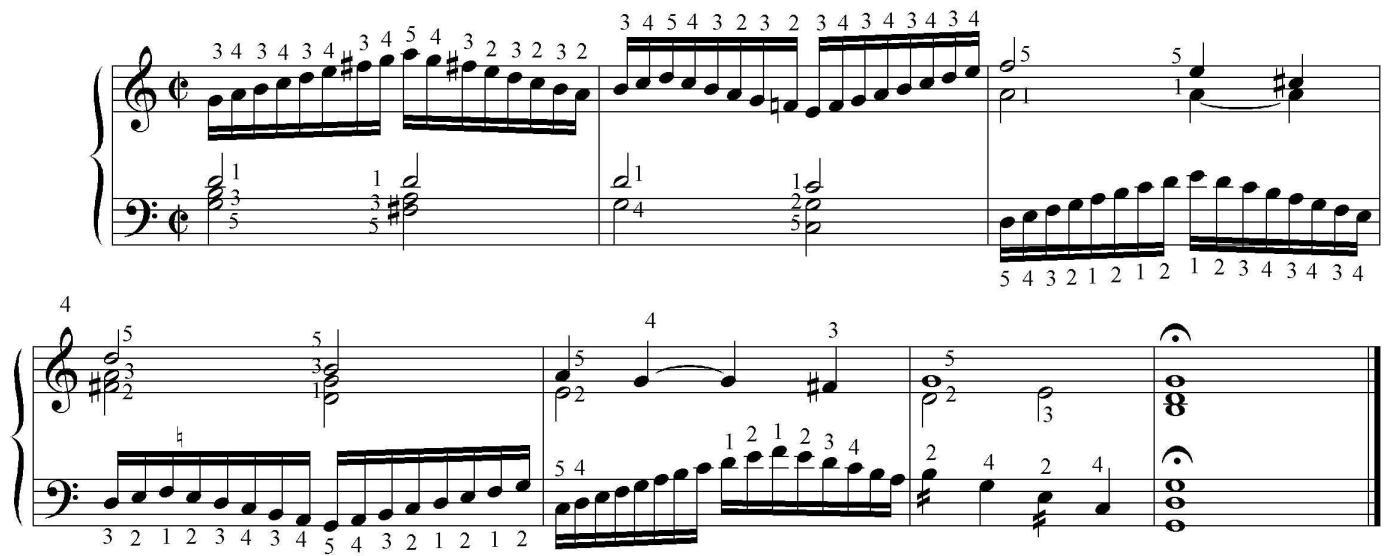
中文讲解
这是图14的图片占位符,原图未在文本中给出,仅保留了图注。图14是John Bull的Praeludium(BuK 121号作品),来自Be抄本,是完整乐谱。它是接下来讨论paired fingerings(成对手指法)的视觉依据:作者要用此例说明virginalist音乐中记下的成对手指法既能产生两音分组,也能形成均匀的non-legato。位置在第13页,紧接P0078关于C.P.E. Bach指法实践的论述之前。
补充说明
无额外补充;图14的乐谱细节需查看原书。
第2段(P0078)
原文复述
Paired fingerings were by no means confined to virginalist practice. In the mid-eighteenth century Carl Philipp Emanuel Bach still gives traditional paired fingerings as alternatives for use in playing the scale of C major and others close to it in the circle of fifths, although he prescribes use of the thumb in more remote keys. Bach gives no suggestion that his various scale20
中文讲解
本段把paired fingerings的讨论从virginalist音乐延伸到C.P.E. Bach的实践:C.P.E. Bach在《Versuch》中仍把传统paired fingerings作为C大调及五度圈上近关系调音阶的备选指法,而在远关系调中才规定使用拇指。作者的关键论点是——Bach并未暗示其多种指法分别对应不同的articulation(发音/触键方式)。句子以’his various scale’处中断,脚注20紧接着给出Bach原文出处与更精确的引文。
补充说明
脚注20对应P0080-P0081-P0083。
第3段(P0079)
原文复述
Where triplets occur, they are typically at a higher durational level than the figuration; 19 that is, “tuplets” in this music usually involve groups of six eighths or six sixteenths, each comprising three pairs; these occupy the time of a single half or quarter note, respectively, as is clear from the “colored” notation sometimes used for these passages.
中文讲解
本段主题是三连音与装饰音的节奏层级关系,与本节主轴(成对手指法)并不直接重合。在所讨论的音乐里,三连音通常出现在比装饰音更高的时值层级:即所谓’tuplets’实际是由六个八分音符或六个十六分音符组成、每组含三对,分别占一个二分音符或四分音符的时长。这一点可从这类段落中偶尔使用的’colored’(带数字或彩色的)记谱法直接看出。段落中的脚注19在本任务输入中未给出。
补充说明
脚注19的原文内容未包含在当前任务输入中。
第4段(P0080)
原文复述
Versuch über die wahrer Art das Clavier zu spielen, 2 vols. (Berlin, 1753–62), trans.20 William J. Mitchell as Essay on the True Art of Playing Keyboard Instruments (New York: Norton, 1949), vol. 1, chap. 1, para. 63. What Bach actually writes is that scales “with few or no accidentals” permit a greater number of possible fingerings. Some of the latter involve old-
中文讲解
这是脚注20的正文,先给出C.P.E. Bach《Versuch über die wahrer Art das Clavier zu spielen》(柏林,1753–62)的版本信息及Mitchell英译本的完整出处(Essay on the True Art of Playing Keyboard Instruments,Norton,1949,第1卷第1章第63段),再引用Bach原文:Bach实际写的是’few or no accidentals’(升号降号少或没有)的音阶允许多种指法选择,其中一些是’old-’(古老的、传统的),句子在此处被切到下一段续接。
补充说明
对应P0078末尾的脚注20标记;注意原书德语标题’wahrer’可能是’wahre’的拼写差异。
第5段(P0081)
原文复述
fingerings are meant to favor distinct types of articulation; on the contrary, he indicates that any type of finger crossing, whether of the third finger over the fourth or of any finger over the thumb, should involve a momentary overlapping of the two notes and thus legato. This is the21 opposite of what is assumed by those who advocate that fingering should influence articulation by causing gaps or breaks where one finger crosses over another. Although it is possible to use the so-called paired fingerings shown in example 14 to produce two-note groupings of notes, the same fingerings can also promote an even non-legato, especially if one holds the hands higher than in later keyboard technique and turns them in the direction each scale is moving.22
中文讲解
本段续接P0080,从两个方向推进论点。第一,澄清Bach并不主张不同指法对应不同articulation;相反,他强调任何手指交叉——无论第三指越过第四指,还是任何手指越过拇指——都应短暂重叠两音,从而得到legato。这与某些演奏学主张(指法交叉处应造成间断或断裂)正好相反。第二,用图14作正面示范:图14所示的paired fingerings既能产生两音一组,也能形成均匀的non-legato,尤其当手位比后期键盘技法更高、并随音阶方向转向时——可见paired fingering本身并不决定articulation。脚注21订正Einsetzen的译法,脚注22列举支持此观点的学者。
补充说明
脚注21对应P0084,脚注22对应P0085。
第6段(P0082)
原文复述
One nevertheless does occasionally find fingerings marked in the sources that reflect groupings of notes that run against the usual binary divisions of the beat or measure. One instance occurs in Byrd’s embellished setting of the famous “Lachrimae” Pavan by John Dowland. Byrd’s setting survives in both the Fitzwilliam Virginal Book—designated “Tr” after its copyist Frances Tregian—and another early seventeenth-century manuscript known as Will Foster’s book (Fo). Foster’s copy gives a number of fingerings, particularly in mm. 58–61, where it is the second, not the third, finger that plays most of the “good” sixteenth notes (ex. 15). Equally notable in this passage, although quite typical of virginalist notation, is that each type of note value is beamed separately, so that eighth notes are not joined to sixteenths. This, too, may have no significance for articulation, yet it produces a distinctly different grouping of small notes from that produced by conventional modern notation. At the very least, the original beaming suggests that it would not be inappropriate to make a distinct articulation after the eighth note on each beat—as becomes unavoidable when one must lift the hand to move from the first to the second note in m. 59. This suggests in turn that, at least within the present passage, the motives comprising the melody move from the weak to the strong part of the beat, whether or not each pair of sixteenths is actually slurred to the following eighth.
中文讲解
本段举Byrd装饰版的Dowland ‘Lachrimae’ Pavan为反例,论证原谱中确实存在违反二分划分的指法标记。Byrd版本同时存于两份谱本:Fitzwilliam Virginal Book(简称Tr,得名于抄写者Frances Tregian)和17世纪初另一手抄本Will Foster’s book(简称Fo)。Fo在m.58–61给出大量指法,其中演奏多数’good’ sixteenth notes的不是常规的第三指而是第二指(图15)。段末转而讨论virginalist记谱中各类音符各自连beam(八分音符不与十六分音符连beam)的现象:虽然这未必直接意味着articulation,却自然形成与现今记谱不同的小音分组,至少支持在每拍的八分音符后做一次清晰articulation(m.59必须抬手从第一音移到第二音时不可避免)。由此推断本段落中旋律动机是从弱拍移向强拍方向运动,无论每对十六分音符是否实际连奏到下一个八分音符。
补充说明
图15(ex. 15)的谱例未在当前输入中给出,需查看原书。
第7段(P0083)
原文复述
fashioned paired fingering, whereas other keys “have only one execution,” that is, one that involves crossing fingers over the thumb, as is clear from Bach’s musical illustrations for other paragraphs within the same chapter.
中文讲解
本段续接P0080-P0081(脚注20正文末尾):近关系调(few or no accidentals)允许’old-fashioned paired fingering’(传统成对手指法),而其他调’have only one execution’——只有一种弹法,即必须让手指交叉过拇指;这一点从Bach同一章其他段落中的音乐示例即可看出。整句至此完成脚注20的论述。
补充说明
与P0080的’Some of the latter involve old-‘以及P0081首词’fingerings’对应。
第8段(P0084)
原文复述
Ibid., para. 62. Mitchell’s translation of this paragraph distinguishes “crossing” of 21 fingers from their “striking,” but this reflects an idiosyncratic rendering of Einsetzen. The latter simply means substitution, in the sense that the hand shifts position so that the third finger might play a note that would otherwise be struck by 1 or 5.
中文讲解
脚注21:Mitchell英译本把Bach德语词Einsetzen分别处理为’crossing’(交叉)与’striking’(击键),这是译者的特殊处理。实际上Einsetzen仅指substitution(替换)——即手位移动使第三指接替原本由1指或5指弹奏的音。本脚注纠正了译本的术语歧义,避免读者把’striking’误解为断奏。
补充说明
对应P0081中脚注21的引用;引自Bach同书第62段。
第9段(P0085)
原文复述
Also advocating a high position of the hands (or rather the wrists), albeit for another22 reason, is Mark Lindley, “Early Fingering: Some Editing Problems and Some New Readings for J. S. Bach and John Bull,” Early Music 17 (1989): 60–9 (cited: 62). See also Desmond Hunter, “The Implications of Fingering Implications in Virginalist Sources: Some Thoughts for Further Studies,” Performance Practice Review 5/2 (Fall 1992): 123–38 (esp. 124–5). Perhaps the most recent writer to discourage linking articulation to paired fingering is Christopher Stembridge in Recercari, et canzoni franzese, vol. I.1 of Girolamo Frescobaldi: Orgel- und Klavierwerke (Kassel: Bärenreiter, 2009), p. xxx.
中文讲解
脚注22列举同样主张手位(或更准确地说,腕部)较高——尽管理由不同——的几位学者,作为本节主张的旁证:Mark Lindley,‘Early Fingering: Some Editing Problems and Some New Readings for J. S. Bach and John Bull’,Early Music 17, 1989,第60–9页(引自第62页);另参Desmond Hunter,‘The Implications of Fingering Implications in Virginalist Sources: Some Thoughts for Further Studies’,Performance Practice Review 5/2, Fall 1992,第123–38页(尤其第124–5页);可能最近一位反对把articulation与paired fingering挂钩的作者是Christopher Stembridge,见Girolamo Frescobaldi: Orgel- und Klavierwerke第I.1卷Recercari, et canzoni franzese(Kassel: Bärenreiter, 2009)前言第xxx页。
补充说明
对应P0081末尾脚注22的引用;这些学者均为’不应将articulation与paired fingering直接挂钩’的外部支持者。
脚注 / 边栏 / 图表 / 附加信息(如有)
本节脚注与图表汇总:脚注19的原文内容未包含在本任务输入中(仅在P0079出现引用标记);脚注20对应P0080–P0081–P0083,介绍C.P.E. Bach《Versuch》版本与关于指法的精确引文;脚注21对应P0084,澄清德语Einsetzen的准确含义为substitution;脚注22对应P0085,列出Lindley、Hunter、Stembridge等支持本节主张的学者。图14(P0077)为John Bull Praeludium(BuK 121)完整谱例;图15(P0082提及,文本未给出完整谱例)为Foster抄本中Byrd装饰版Dowland ‘Lachrimae’ Pavan片段(m.58–61)。
💡 本节核心要点
- 成对手指法并非virginalist独有:C.P.E. Bach在18世纪中叶仍把传统paired fingerings作为C大调及近关系调音阶的可选指法,远关系调才规定用拇指。
- Bach并不主张不同指法对应不同articulation;任何手指交叉都应短暂重叠两音以形成legato,与’指法交叉应造成断裂’的看法相反。
- 图14所示paired fingerings既能形成两音一组,也能通过抬高手位、转向音阶方向,得到均匀的non-legato——证明paired fingering本身不决定articulation。
- Byrd装饰版Dowland ‘Lachrimae’ Pavan(Fo抄本)提供反例:m.58–61用第二指而非第三指演奏多数’good’ sixteenth音符,且原始beaming把八分与十六分音符分开连,暗示旋律动机从弱拍移向强拍。
- 脚注21澄清德语Einsetzen应理解为substitution(手位替换),而非Mitchell译本里的’crossing’与’striking’之分。
- 脚注22列举Lindley、Hunter、Stembridge等学者作为’手位宜高’及’不应把articulation与paired fingering挂钩’的旁证。
🔑 关键术语
- paired fingering:成对手指法,指双手用相同编号手指交替弹奏音阶或旋律的指法方式,与’crossing the thumb’(拇指交叉)相对;本节核心讨论对象。
- circle of fifths:五度圈;本节指与C大调在升降号数量上接近的若干调,这些调允许传统paired fingerings作为备选。
- Einsetzen:C.P.E. Bach德语术语,本意为’替换’,指手位移动使第三指接替原本由1指或5指弹奏的音;脚注21订正Mitchell译本的特殊处理。
- non-legato:非连奏,介于legato与staccato之间的触键方式;本节指出paired fingerings在抬高手位、转向音阶方向时可形成均匀的non-legato。
- tuplet:连音/特殊拍子分组;本节特指由六个八分或六个十六分音符组成、每组含三对、分别占一个二分或四分音符时长的三连音节奏单位。
- Fitzwilliam Virginal Book (Tr):保存Byrd装饰版Lachrimae Pavan的英国virginalist主要谱本之一,‘Tr’得名于抄写者Frances Tregian。
- Will Foster’s book (Fo):保存Byrd装饰版Lachrimae Pavan的另一份17世纪初手抄本,简称Fo;其指法标记比Tr详细,本节引用其在m.58–61用第二指演奏十六分音符的现象。
- beaming:用beam(横杠)连接符尾;本节指出virginalist记谱把不同音符值分别连beam,使小音的分组与现今记谱法不同,可能暗示不同的articulation划分。
S12.1 [描述性拆分] Byrd’s “Lachrimae” Pavan: Beaming, Grouping, and Possible Realizations of the Single Stroke
第1段(P0086)
原文复述
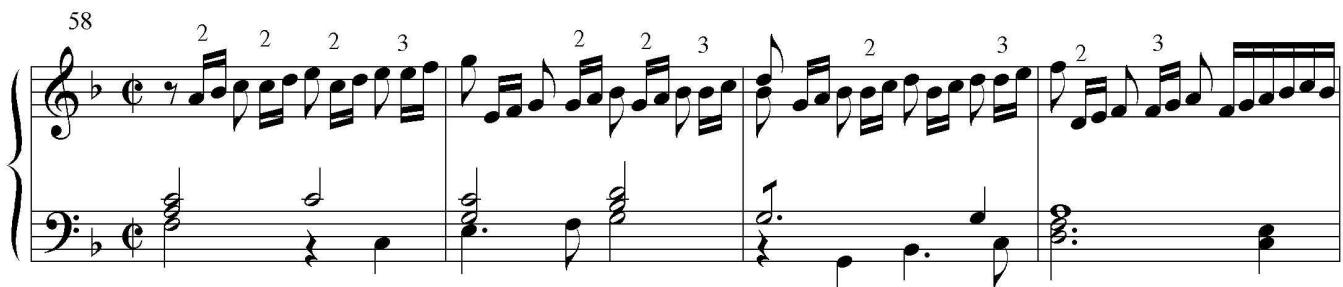
中文讲解
这是第15页的乐谱图例说明:示例15,伯德《Lachrimae》帕凡,58–61小节。该图在原文中承担实物证据的角色,展示帕凡中后段四小节的谱面状态,是下文讨论第60小节"单笔划符号”(one-stroke sign)的核心乐谱依据。由于内嵌图像数据被省略,读者需查阅原书第15页以确认具体的谱号、声部走向与符号位置。
补充说明
本页图例与下文示例17、18、19构成一组乐谱证据,分别对应"单笔划符号"的多重可能解释。读者阅读时应将示例15作为讨论前提,示例17–19为该前提的不同演绎方案。
第2段(P0087)
原文复述
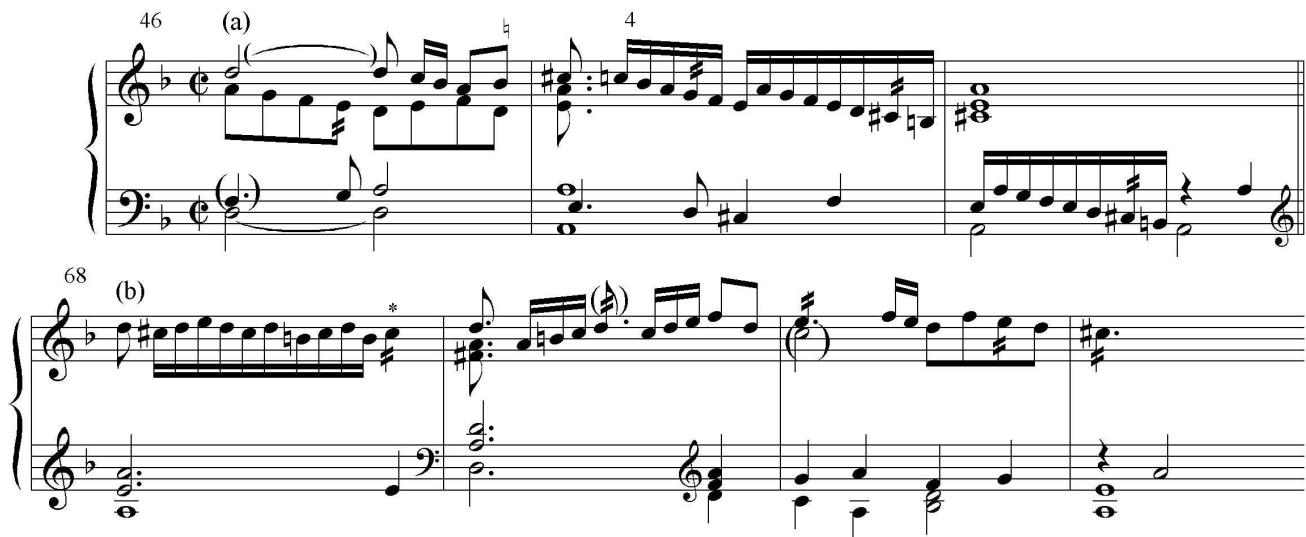
中文讲解
这是第15页的乐谱图例说明:示例16,伯德《Lachrimae》帕凡,其中(a)为46–48小节,(b)为68–71小节。该图对应正文提到的两类节奏分组现象:在第47小节,下拍和弦之后跟随装饰内声部的十六分音符;在第69小节,下拍到达之后由同一三音动机重复构成 hemiola(赫米奥拉,3+2/3 的复合节拍重音)。读者需查看原图以确认谱面上的音符时值与连尾符分组方式。
补充说明
图(a)对应文中"看似半音实为两条声部独立动作"的论点;图(b)对应"三音动机重复形成 hemiola"的论点。两者共同支持"下拍到达 + 独立分组的较小音符序列"这一典型节奏布局。
第3段(P0088)
原文复述
Similar groupings are suggested in many other instances where a chord on the downbeat is followed by a series of separately beamed smaller note values. Thus in m. 69 the arrival on the downbeat is followed by two statements of a three-note motive; the repetition of this motive articulates a hemiola (ex. 16b). Earlier, in m. 47, what looks like a chromatic half step $( \mathbf { c } \sharp ^ { \prime \prime } { - } \mathbf { c } \sharp ^ { \prime \prime } )$ actually involves two distinct gestures in different parts, an arrival on the downbeat followed by figuration in sixteenths that decorates the inner voices (ex. 16a).23
中文讲解
本段推进前文对帕凡节拍结构的描述,指出帕凡中频繁出现一种"下拍和弦 → 各自独立连尾符的较小音符序列"的节奏分组模式。
作者给出两个互证的例子。第69小节:下拍到达之后紧接两次三音动机的陈述,动机重复本身就构成 hemiola(即在拍号下层形成 3+2 的复合重音,使听感短暂地偏向三拍子的强弱模式)。第47小节:谱面上看似是同一个升c"到升c"的半音进行,实际上是两个独立声部动作的叠加——下拍是一个到达音,其后是装饰内声部的十六分音符花奏。
例子的双重功能:其一,揭示所谓"半音"实为和声表层与对位花奏的并存,提示读者不能简单地把相邻小节或相邻音符按线性化旋律来读;其二,把 hemiola 的生成机制从"特殊处理"还原为"三音动机重复”,从而把帕凡的节拍张力归入一种可重复的写作手法。脚注23指向本页另起的注释,补充说明"升c"在该片段实际上由 Dowland 歌曲的人声声部隐性延续,提示第46–47小节并非独立事件。
补充说明
“下拍到达 + 独立分组的较小音符"是文艺复兴键盘音乐装饰对位的常见写法,读者可将其理解为"到达音是结构点,十六分音符只是装饰”,而非两段独立的旋律进行。
第4段(P0089)
原文复述
In addition to occasional fingerings, the sources of Byrd’s “Lachrimae” contain several typically rare but puzzling instances of the one-stroke sign. Example 17 illustrates several possible interpretations for the sign that appears in m. 60 of example 15. Perhaps least likely is that the sign here stands for a slide; playing the slide on the beat, following Diruta or Bevin, produces a harsh dissonance against the upper parts (ex. 17a), and playing it before the beat
中文讲解
本段是后续讨论"单笔划符号"的开场。除偶发的指法标记外,《Lachrimae》帕凡的几个版本中含有数例罕见而费解的"一笔划"装饰符号,作者以示例15第60小节中出现的那个符号为例,通过示例17给出多种可能的释读。
作者以"最不可能的解读"开场:若按 Diruta 或 Bevin 的做法将其弹作滑音(slide),在拍点上弹会产生与上方声部刺耳的不协和音(示例17a),在拍点前弹则会产生平行五度(示例17b,句子在此中断,17b的完整批评留在下一段)。
作者用"奏在拍上/奏在拍前"两组对照,说明任何把单笔划当作传统滑音的方案都会引发声部进行上的硬伤,因此必须在写作意图层面而非单纯演奏惯例层面去追问:此处的符号究竟意味着什么。Diruta、Bevin 都是16世纪后期的意大利/英国键盘演奏理论家,引用他们等于把单笔划放回到一个具体的演奏理论坐标系。
补充说明
Diruta(Girolamo Diruta)与 Bevin(Elway Bevin)分别在《Il Transilvano》(1593)与《A Briefe and Short Instruction》(c.1631)中讨论滑音演奏规范,引用二者等于把伯德的符号置于已知的键盘演奏文献谱系中检视。
第5段(P0090)
原文复述
c#’
中文讲解
本段仅由"c#’“三字符构成。它在原文中标示一处音高记号,与示例17相关,乐谱语境中应为升c’(中央c上方的升c),提示单笔划符号出现在该音上方的某一声部或在拍点时该声部经过此音。
补充说明
无额外补充;本条作为乐谱片段在原书页面中插于正文之间,属于版面编辑上的位置提示。
第6段(P0091)
原文复述
It is clear from the vocal version of Dowland’s song that the melodic note c<NN is sustained implicitly through mm. 46 and 47.
中文讲解
本段是脚注23的延续,补充说明从 Dowland 歌曲的声乐版本可见:旋律中的升c#音在第46和47小节隐性延续。第46–47小节看似升c#重复出现,实为人声长音在键盘版本中以和声到达与十六分花奏的方式被拆解开,因此帕凡的键盘谱并不对应两条独立旋律线的简单叠加,而是对单一人声长音的多声部放大。
这条脚注对正文的作用:它为作者把"看似半音"判定为"两个独立动作"提供了乐种层面的依据——如果声乐版本显示该音持续,那么键盘版本中两个看似独立的升c#就必然以不同的方式参与结构。该结论支持作者反对把第47小节读作传统半音进行的判断。
补充说明
Dowland 歌曲《Lachrimae》(“Flow my tears”)的人声版与伯德帕凡共享同一首帕凡主题(陆克蕾蒂娅曲调),其旋律结构是理解伯德键盘改编的关键参照系。
第7段(P0092)
原文复述
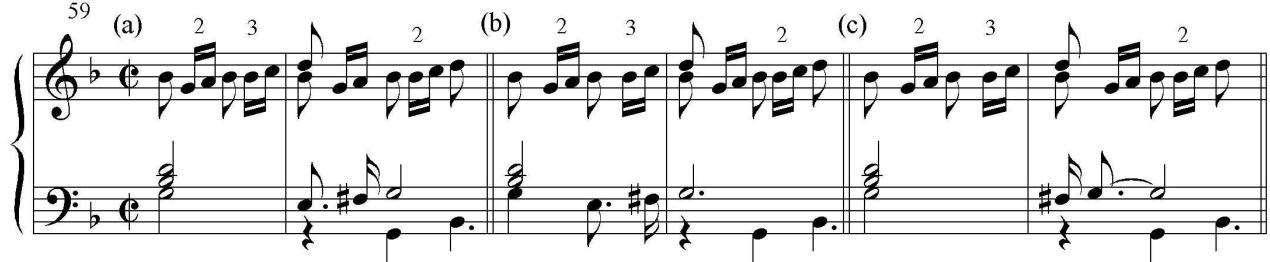
中文讲解
这是第16页的乐谱图例说明:示例17,伯德《Lachrimae》帕凡,第60小节中单笔划符号的多种可能实奏方案。该图是P0089、P0096两段文字讨论的核心证据,对应原文中的17a–17f六种可能性:滑音(拍上、拍前)、缩短为倚音、波音(mordent)、错置于右手并解读为 acciaccatura / coulé、或被误读为延音线。读者需查看原图以核对每一方案的谱面记法。
补充说明
示例17用六种不同小谱例直观展示同一符号的不同实奏后果,本身即"装饰符号解读不唯一"这一论点的物质证据。
第8段(P0093)
原文复述

中文讲解
这是第16页的乐谱图例说明:示例18,伯德《Lachrimae》帕凡,其中(a)为第63–64小节原貌,(b)为第63小节中将单笔划符号改读为延音线的可能修订方案。该图的作用:与示例17f呼应,进一步支持"单笔划在第63小节比在第60小节更可能被误读为延音线"的猜测。读者需查看原图。
补充说明
无额外补充;该图主要服务于"单笔划可能是延音线误读"这一局部假设的强度评估。
第9段(P0094)
原文复述
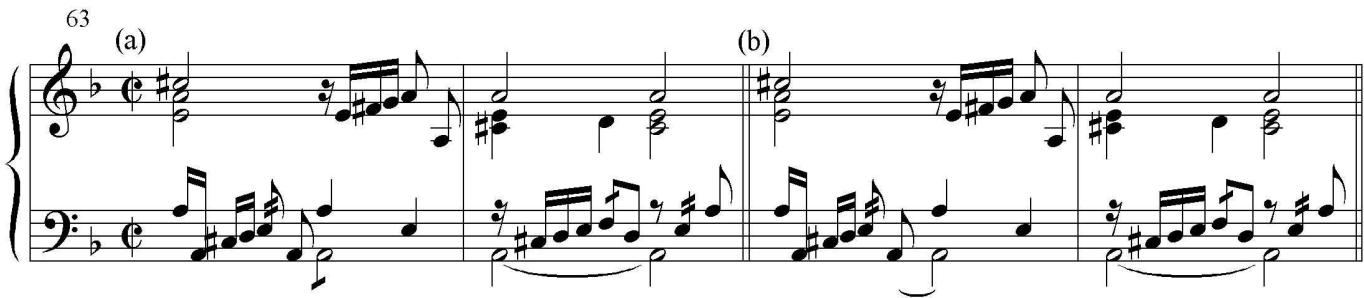
中文讲解
这是第16页的乐谱图例说明:示例19,伯德《Lachrimae》帕凡,第75–78小节。该图为下文 P0097 的论点提供证据:在该片段的第二拍半 m. 76 与第77小节,复笔划(double stroke)能被令人信服地读作波音(mordent)。这构成与"单笔划 = 波音"假设的对照基础——若同样位置的双笔划已是波音,再把单笔划也读作波音是否合逻辑。读者需查看原图。
第10段(P0095)
原文复述
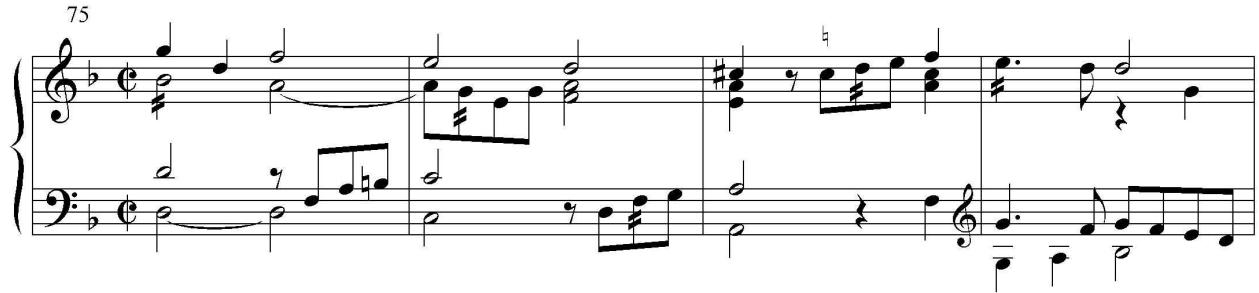
中文讲解
这是第16页另一处图注占位符,标题被记为"第16页图像或乐谱示例”。在原书版面中此处应承载另一幅图像或乐谱示例,承载与前几条图注相关的辅助内容;由于内嵌图像被省略,具体内容需查阅原书第16页确认。
补充说明
无额外补充;正文未对该图作专门讨论,可视为第16页版面上排版占位符。
第11段(P0096)
原文复述
produces parallel fifths (ex. 17b). Perhaps therefore the slide should be shortened to a single24 appoggiatura, still dissonant but not so glaringly (ex. 17c). An appoggiatura or “forefall” is indeed what the sign means in later English music, such as Purcell’s. Another possibility, however, is that in this piece the single strokes stand for mordents (ex. 17d). Yet another possibility is that the sign in m. 60 is misplaced, and that it actually belongs in the right hand—where it might mean the same thing as later French symbols for acciaccaturas or coulés (ex. 17e). Another possibility relating to a misreading is that Foster’s single stroke is a mistake for a tie (ex. 17f), although this would be more plausible in m. 63 (ex. 18).
中文讲解
本段接续 P0089 的论证,逐一铺开示例17的六种解读。
第一层:若把单笔划当作"完整的滑音"奏于拍前,会与上声部构成平行五度(17b),仍不可取,因此滑音方案必须让步。
第二层:缩短为单个倚音(appoggiatura,即"前置的不协和倚音”),仍然不协和但不刺耳(17c)。这种用法在之后的英国音乐——尤其是 Purcell——中确实被称作"forefall”(前置装饰)。
第三层:另一种可能,单笔划在此曲中代表波音 mordent(17d)。
第四层:位置错置说——单笔划可能本应属于右手谱表,从而等价于后来法国的 acciaccatura(碎音,“夹一下"的装饰)或 coulé(连滑音)记号(17e)。
第五层:传抄错误说——Foster 谱本中的单笔划其实是延音线 tie 的误识(17f),不过这种误读若发生在第63小节更合理(参见示例18)。
论证结构:作者并没有立刻判定哪种方案正确,而是按"声部进行是否能容许”→“语义学是否能延伸”→“抄本源流是否能解释"三个层面逐层筛选,使读者看到:装饰符号的解读从来不是符号学单线问题,而是必须同时满足声部进行、历史语用、抄本谱系三个条件。脚注24在此处插入,补充说明"滑音虽可缩短音符时值但声部进行问题仍在”,对17b的批评进一步夯实。
补充说明
本段提及的术语在不同乐种中代表不同的演奏动作:appoggiatura 与 forefall 在英国音乐传统中通用;acciaccatura 是意大利/法国的小碎音;coulé 是法语中的连滑音;mordent 是主音与邻音快速交替;tie 仅是延音不切音。读者可将其理解为"同一种或相近的演奏效果在不同符号传统下的命名差异”。
第12段(P0097)
原文复述
Some of these suggestions may seem like special pleading. Elsewhere in this piece the double rather than the single stroke can be convincingly interpreted as a mordent, as in the second half of m. 76 and m. 77 (ex. 19). It may therefore seem illogical for the single stroke to receive the same realization. Yet both the meaning and the prevalence of the two symbols changed over time, the single stroke being unknown in some earlier sources and becoming increasingly common as one moves from Byrd to Bull and then to younger composers such as Gibbons. This could have reflected changes in the frequency with which particular ornaments were used—that is, a change in actual performance style, much as the upper-note trill with dissonant appoggiatura would eventually replace the older tremolo and groppo. But it could also have reflected only changing usage of the single stroke, which seems from the very beginning to have had different meanings for different musicians.
中文讲解
本段承前段承认解读的脆弱性,并提出关键的对冲论证。
第一步让步:以上多种建议难免有"为解释而解释"之嫌。理由是:在帕凡的其他地方——如第76小节后半和第77小节(示例19)——复笔划(double stroke)能被合理解读为波音 mordent,那么把单笔划也读作波音就显得不够系统、不合逻辑,因为符号系统通常应区分主音上方的装饰与下方的装饰。
第二步反驳:单笔划和复笔划两符号的含义与使用频率都随时代而变。单笔划在更早的谱本中根本不存在,从伯德到 Bull 再到更年轻的 Gibbons,使用频率递增。这种递增既可能反映真实演奏风格的变化(例如上方主音带不协和倚音的颤音最终取代较老的 tremolo"震奏"与 groppo"群奏”),也可能仅反映"单笔划"这一符号本身在使用习惯上的转移——它从一开始对不同乐人就意味着不同东西。
作者的方法论意义:单笔划不是一个统一符号,而是一个"语义不稳定"的载体。因此"单笔划 = 波音"在该曲中是否成立,要看具体声部进行而非符号表面是否重复。同样的,tremolo 与 groppo 是文艺复兴/早期巴洛克时期的装饰术语群,二者最终被新式的颤音样式取代,这一段历史类比既解释了装饰风格自身的演化,也提示读者:当前的解读难题不是伯德一人造成的,而是英国键盘装饰符号整体演化过程中的一个断面。
补充说明
本段把装饰符号的问题从"单谱本考据"抬升到"符号谱系演化”,提示读者:要理解 Foster 谱本中的异常符号,需要把它放在从伯德到 Gibbons 的长期演化中考察,而非仅看单笔划在某谱本中的一次出现。
第13段(P0098)
原文复述
This becomes very clear in music attributed to somewhat later composers, especially Bull. Two sources for Bull’s music associated with the copyist and composer Benjamin Cosyn employ numerous single strokes in contexts that make it difficult if not impossible to realize the sign as a slide (ex. 20). Cosyn was particularly free in adding his own touches to pieces that he copied;25 his additions and substitutions range from individual ornament signs to entire variations within a variation set. Even if the single strokes that he added in some of his texts stood for mordents (as seems likely), other instances of the same sign already present in the pieces he copied could have meant something different. Cosyn might have been aware of the two possible meanings of the one-stroke signs in his manuscripts, but subsequent copyists working from the latter would have had no way of knowing which ornament signs were original and which ones were Cosyn’s additions (with potentially different meanings). Further copies made from Cosyn’s would therefore combine one-stroke signs of varying signification. Some such history might explain the anomalous ornament signs in Foster’s copy of “Lachrimae,” as well as in other texts.
中文讲解
本段把单笔划符号的语义不稳定性从伯德个案扩展到 John Bull 这一时间稍晚的作曲家,并以抄本家 Benjamin Cosyn 为核心提出一个传播学论证。
事实层:与 Bull 音乐相关的两份抄本中,单笔划频繁出现,且所处上下文使其几乎不可能被读作滑音(示例20)。
传播机制层:Cosyn 是兼具抄写与作曲能力的抄本家,他在所抄曲目中加入"自己的修饰"特别自由,从单个装饰符号到变奏集中整段变奏都属于其改动范围。这意味着:即便 Cosyn 自己添加的单笔划可被读作 mordent(看上去很可能),曲目中原有的、被他保留的单笔划仍可能具有不同的含义。Cosyn 本人或许清楚二者并存,但在他之后的抄写者无法分辨哪些符号是原作、哪些是 Cosyn 的增添;基于其抄本再做的抄本就进一步混合了不同含义的单笔划。
收尾:这种"语义混合"的抄本传播史,可能正好解释了 Foster 谱本《Lachrimae》中异常装饰符号的来源,也为其他谱本中的类似异常现象提供了一种解释路径。
论证意义:把"单笔划含义不确定"从作曲家的语义模糊问题,转化为"抄本传统对不同含义的混融"问题,由此把符号学考据与抄本谱系学直接挂钩。脚注25接续说明 Co(Cosyn autograph)与 Bu 的来源关系。
补充说明
Benjamin Cosyn(约17世纪初活动)是当时英国重要的抄本家兼作曲家,与 Bull 的关系尤为密切;Cosyn 的抄本习惯是研究这一时期英国键盘音乐传承的重要对象。读者可将此段理解为"装饰符号语义不统一"的传播学解释。
第14段(P0099)
原文复述
The note values of the written-out slides in ex. 17 could be reduced (e.g., to a dotted 24 sixteenth followed by a thirty-seconds, or to two very quick notes of equal value), but the problems of voice leading would remain.
中文讲解
本段是脚注24的延续,对P0096示例17中"完整滑音"方案的细节补强。即使把示例17中写出时值的滑音再缩短(如变为附点十六分音符接三十二分音符,或两个等值的快速音),声部进行的问题(平行五度、与上方声部的不协和等)依然存在——也就是说,问题不出于音符时值的精细,而出在滑音本身作为和声事件的性质。
本脚注对正文的限定:它承认演奏者可以"在纸面上"调节滑音的时值,但反对以这种调节来消解 P0089/P0096 提出的声部进行硬伤,从而把"缩短滑音"这一选项从可辩护区移到仍不可辩护区,进一步巩固"该符号并非滑音"的初步结论。
补充说明
无额外补充;本脚注主要起限定作用,提示读者"装饰方案的小幅修正不能掩盖声部进行的根本困难”。
第15段(P0100)
原文复述
Of the two sources, Co is Cosyn’s autograph, although his hand is also found in Bu (the 25 main copyist of Bu is no longer thought to be Bull, as Dart and others had supposed). Example 20 is based on Co; the small note values, which Cosyn writes without beaming, are grouped editorially for easier legibility. The fingerings and the single stroke on g’ in the last measure of the example are from Bu (as edited in MB 27; Bu was not seen here).
中文讲解
本段是脚注25的延续,给出示例20的抄本源流说明。
来源辨析:两份抄本中,Co 是 Cosyn 的亲笔(autograph),但其笔迹也见于 Bu;过去(如 Dart 等学者)认为 Bu 的主要抄写者是 Bull,这一认定现已不再被接受。
编辑细节:示例20以 Co 为底本——Cosyn 写小音符时未加连尾符,为便于识读,由编者补加连尾符进行分组;本例最后一小节 g’ 上的指法与单笔划符号取自 Bu(依据 MB 27 的编订;本研究中未直接查看 Bu 实物)。
本脚注对正文的支撑:明确指出"该谱例涉及两个层次的抄本关系"——Cosyn 的亲笔与 Cosyn 笔迹混入的 Bu,并以此为前段"抄本传统混融"论证提供文献证据;同时也提示读者,“Bu 不再被认为主要由 Bull 抄写"这一谱系学判断与本研究的方法论紧密相关。MB 27 指 Musica Britannica 第27卷,是 Bull 键盘作品的标准现代编订版。
补充说明
读者宜将本脚注视为整节论证的抄本学基础:它解释了"为什么单笔划在 Bull 抄本中既可能源自 Bull、也可能源自 Cosyn、还可能源自后继抄写者的混合”。Dart 的旧说被修正这一事实本身也说明"作者=主要抄写者"的传统判断存在风险。
第16段(P0101)
原文复述
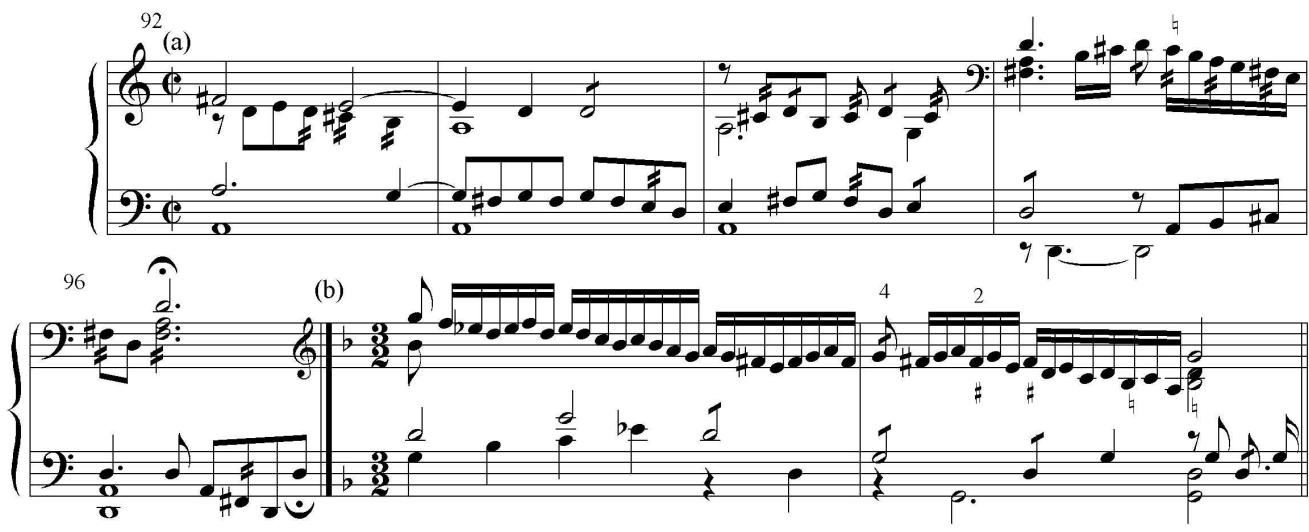
中文讲解
这是第18页的乐谱图例说明:示例20,Bull 的两首作品,其中(a)为"Melancholy"帕凡(BuK 67a),第92–96小节;(b)为 Galliard(BuK 78),第15–16小节。该图是 P0098 的核心实物证据,展示 Cosyn 抄本中单笔划出现的上下文,其位置使滑音解读几乎不可能。读者需查看原图。
补充说明
BuK 为 Bull 作品编号体系,BuK 67a 与 BuK 78 属 Bull 键盘作品的标准曲目编号。读者理解该图时,可将其看作"装饰符号使用语境"的样本,而非"旋律欣赏"的对象。
第17段(P0102)
原文复述
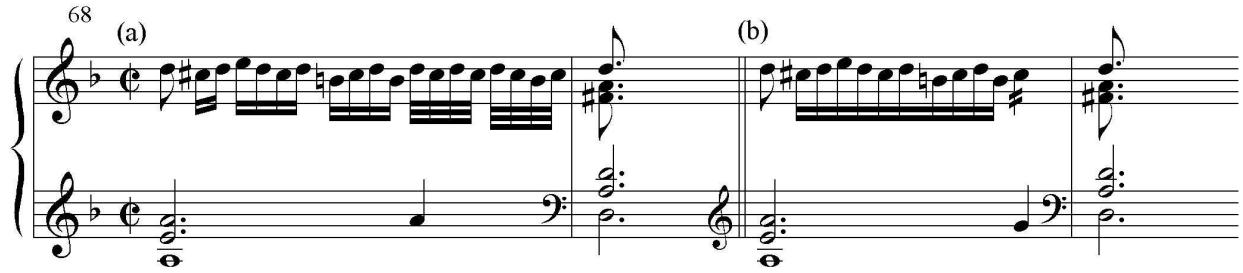
中文讲解
这是第18页的乐谱图例说明:示例21,伯德《Lachrimae》帕凡,第68–69小节,其中 (a) 为 Tr 抄本的版本,(b) 为 Fo 抄本修正前的版本。该图配合正文 P0103、P0104 关于"现代编辑常把不同来源的装饰符号混同"的论点:把两个抄本并置展示,可直观看出同一小节在 Tr 与 Fo 中的装饰符号差异。读者需查看原图。
补充说明
无额外补充;该图主要服务于"装饰符号来源辨识"的实证需要。
第18段(P0103)
原文复述
Unfortunately, modern editors have often conflated ornament signs from different sources without indicating the provenance of individual symbols. This makes it difficult to identify patterns in the usage of these signs that might aid in their interpretation. Alan Brown has26 suggested that Byrd’s use of the single stroke diminished with time, noting the absence of the symbol from Byrd’s pieces in Parthenia. But the sign is also absent from what are presumed to27 be much earlier works, such as the Fantasia BuK 13. Possibly Byrd himself never used the single stroke, or always did so sparingly. Hence all of the single strokes in “Lachrimae,” which must also be a relatively late work, might have been added by someone else.
中文讲解
本段把论证从"符号语义"推进到"编辑方法论"层面。
问题陈述:现代编辑常把不同抄本的装饰符号不加区分地混合使用,且不标注其出处,这使研究者无法识别符号使用的规律,也就无法系统地解释符号含义。
既有解释:Alan Brown 曾指出,伯德使用单笔划的频率随时间下降,证据是 Parthenia(17世纪初出版的伯德键盘曲集)中伯德的作品里根本没有该符号。
反例与重估:但该符号同样不见于被认为是更早期作品的 Fantasia BuK 13,这使"随时间下降"的假设站不住脚。如果伯德早年也未必用单笔划,那么一种更强的可能性是:伯德本人从来不用或几乎不用单笔划。
由此延伸:因为《Lachrimae》帕凡也属于伯德较晚期的作品,所以其中出现的所有单笔划都可能不是伯德所加,而是后人——抄写者或抄本家——添加的。这一推断直接关联 P0098 的 Cosyn 论证:伯德帕凡中异常的装饰符号可能正是抄本传统层层增添的产物。
论证方法论意义:作者没有停留在考据伯德本人意图,而是把"作者意图"与"抄本家增饰"两种来源并列,使整篇文章对单笔划的讨论从"符号学谜题"转化为"作者—抄本家—读者三方关系的传播学问题"。脚注26、27分别引向 P0104 的版本批评与"England"参考文献。
补充说明
Parthenia(约1612–1613)是英国最早的印刷版键盘曲集之一,包含伯德、Bull、Gibbons 等人的作品;BuK 13 是伯德《Fantasia》中编号为13的作品。读者可据此理解 Brown 论点的文献依据。
第19段(P0104)
原文复述
The edition of Byrd’s setting of “Lachrimae” by Alan Brown in MB 28 follows Fo as principal source, for ornaments as for other aspects of the text. But because Brown does not list Tr’s readings for ornaments, his edition fails to make clear how widely the two sources diverge in this regard, nor does it indicate which signs are common to the two sources and therefore most likely to derive from Byrd himself.
中文讲解
本段是脚注26的延续,对 Brown 在 MB 28 中的编订选择进行具体批评。
事实:Brown 的 MB 28 版以 Fo 为主要抄本(装饰符号与其他文本层面皆然)。
缺陷:因为 Brown 没有在评注中列出 Tr 在装饰方面的读法(variants),读者无法从该版看清两个抄本在装饰层面的差异究竟有多大,也无法判断哪些装饰符号在两份抄本中共有——而"两份抄本共有"的符号最有可能源自伯德本人。
批评意义:这是前一段"现代编辑常混同不同来源装饰符号"的具体例证,也呼应了前文"单笔划可能不源自伯德本人"的论证——若要严格论证"哪些装饰源自伯德、哪些由后人添加",必须给出 Tr 的读法作为对照。MB 28 即 Musica Britannica 第28卷,是伯德键盘作品的现代权威编订版之一。
本段的作用:它把整节的方法论批评落到一个具体、可检视的现代编订实例上,让读者明白作者所提问题不是抽象的理论问题,而是已经被现成的现代权威版本所束缚。
补充说明
Fo 与 Tr 是《Lachrimae》帕凡的两个主要抄本来源;Fo 在文中之前已出现(被推测为包含可能错误单笔划的那一份),Tr 是与之并列的另一来源。读者宜把"两抄本共有符号"理解为"最接近作者原意"的初步判据。
第20段(P0105)
原文复述
“England,” 49–50. 27
中文讲解
本段是脚注27的延续,仅引用形式呈现的简短文献指引"England," 49–50。它指向某处关于"英格兰音乐装饰符号演化"的二手文献(书籍或文章中论"England"章节的第49–50页),用以支撑 P0103 中关于"单笔划在伯德早年作品中即已缺席"的判断。
对读者的提示:该出处未提供完整书目信息,但已足以说明作者论点建立在既有研究之上;同时它也提示读者:本节的关键判断并非作者孤立提出,而是在既有英国音乐装饰符号史研究中已被讨论过的议题。
补充说明
该脚注引用过于简短,未给出完整书名或作者名;读者在追溯时应回到原文脚注27在P0103中的位置核对其上下文指代。
脚注 / 边栏 / 图表 / 附加信息(如有)
本节中的非正文材料主要包括:示例15、16、17、18、19、20、21 共七张乐谱图例,分别承担"帕凡第58–61小节原貌"“hemiola 与下拍到达的节拍分组"“第60小节单笔划的六种实奏方案"“第63小节单笔划改为延音线的修订假设"“第75–78小节中复笔划作波音的解读"“Bull 作品中 Cosyn 抄本的单笔划实例"“Tr 与 Fo 抄本第68–69小节装饰差异对照"等不同证据角色;第16页另有一处占位图注(P0095)。脚注共三条:脚注23借 Dowland 声乐版说明第46–47小节升c#的隐性延续;脚注24说明滑音音符时值可缩短但声部进行问题仍在;脚注25兼论 Co / Bu 的抄本归属与 Bu 主要抄写者非 Bull 的考订,并通过脚注26、27延伸至 Brown 编订版批评与"England"参考文献。这些图例与脚注在文中不是装饰性附录,而是论证链条上不可省略的证据节点。
💡 本节核心要点
- 帕凡中频繁出现"下拍和弦到达 + 独立分组较小音符"的节拍布局:第47小节看似半音实为到达与花奏两条动作;第69小节三音动机重复构成 hemiola。
- 第60小节单笔划符号无法以传统滑音解读:奏于拍上刺耳不协和,奏于拍前出现平行五度,且缩短为倚音或挪到右手均不能完全解决问题。
- 作者列出六种可能解读(滑音、缩短倚音、forefall、mordent、错置符号、误读为 tie),并主张符号含义会随时代与抄本传统变化,从 Byrd 到 Bull 到 Gibbons 单笔划使用频率递增。
- Cosyn 抄本传统把不同时期、不同含义的单笔划混合在一起,可能正好解释 Foster 抄本《Lachrimae》中异常装饰符号的来源。
- 伯德本人可能从不或极少使用单笔划;《Lachrimae》中的单笔划或许并非伯德所加。
- 现代编辑(如 Brown MB 28)若不列出 Tr 与 Fo 的装饰符号对照,读者便无法判断哪些符号为两抄本共有、哪些可能源自作者本人,因此装饰符号的版本批评是理解本曲不可或缺的环节。
🔑 关键术语
- one-stroke sign (单笔划符号):由一条短斜线或竖线构成的装饰记号,在16–17世纪英国键盘音乐抄本中频繁出现,但语义不稳定,可指滑音、倚音、波音、延音线误读等不同演奏动作。
- hemiola (赫米奥拉):本节特指帕凡第69小节三音动机重复所产生的3+2 复合重音,使局部听感偏向三拍子的强弱关系,是文艺复兴音乐常见的节拍张力手法。
- appoggiatura / forefall (倚音/前置音):在拍点前先行奏出的不协和音,于拍点上解决至协和音;在之后的英国音乐(如 Purcell)中称为 forefall,是单笔划符号的可能解读之一。
- mordent (波音):主音与邻音的快速交替;在本节中既被讨论为单笔划的可能含义,也是双笔划(double stroke)的常规解读。
- acciaccatura / coulé (碎音/连滑音):源自意大利/法国传统的装饰术语:acciaccatura 是"夹"一下的小碎音,coulé 是连滑音;本节将其作为"单笔划若错置于右手"时可能的对应记号。
- tie (延音线):连接两个同音高的弧线,使第二个音不重新被击;本节把"单笔划误读为 tie"作为一种可能的传抄错误假设提出。
- Cosyn (本杰明·科辛):17世纪初英国重要的抄本家兼作曲家,与 Bull 关系尤为密切;本节以其抄本传统作为"装饰符号语义混融"的传播学关键案例。
- Co 与 Bu (抄本代号):Cosyn 的亲笔(Co)与混有 Cosyn 笔迹的另一份 Bull 抄本(Bu);脚注25 明确 Bu 的主要抄写者不再被认为就是 Bull 本人。
- Fo 与 Tr (抄本代号):伯德《Lachrimae》帕凡的两份主要抄本;Fo 是本节讨论对象,P0104 主张 Fo 与 Tr 的装饰符号对照是判断作者原意的前提。
- MB 27 / MB 28:Musica Britannica 第27卷(Bull 键盘作品标准编订版)与第28卷(伯德键盘作品现代编订版之一,由 Alan Brown 编订);本节借此具体版本对 Brown 编订方法提出方法论批评。
S13.1 [描述性拆分] Double-Stroke Substitutions and Compositional Revisions in “Lachrimae”
第1段(P0106)
原文复述
A related issue arises in the rare instances where a copyist does seem to have used the double stroke as an abbreviation for a groppo. Although some have assumed that such substitutions prove the identity of the two notational forms, the rarity of the substitution rather points against it. In one passage of “Lachrimae,” where Foster gives a double stroke on the note c, Tr indeed has a written-out groppo (ex. 21a; compare ex. 16b). This, however, could reflect an accident of copying: in Fo the measure in question falls at the end of a system, and the copyist had insufficient space to write out the ornament. Another variant in the same measure (a for e in Tr), together with a correction in Fo at the same point (g crossed out and replaced by e; see ex. 21b), suggests that the real explanation for the substitution is a compositional revision in Byrd’s lost autograph. Elsewhere both copyists write out groppi, although not always with the same number of notes. For instance, in m. 57, where Foster has a six-note groppo for the right hand (implying sextuplet sixteenths if interpreted literally), the Fitzwilliam book shows the figure as containing eight thirty-seconds. Both copyists give eight notes in the same ornament for the left hand on the fourth beat of the measure. Presumably, then, the exact number of notes was inconsequential, yet the groppo remained distinct from the ornament designated by the double stroke. Only gradually did the similarity between the two types of trill, which now seems self-evident to us, become expressed through their indication by a single symbol—a process of convergence that apparently occurred even as the downward trill or mordent gained its own sign.
中文讲解
本段围绕一个相关但更细的问题展开:抄本者在很少的情况下似乎用“双划”直接替代了完整写出的 groppo(环绕式颤音),这能否证明两种记谱形式本质相同?作者明确反对这种推论,依据是其出现频率极低——如果是真正的等同符号,替代应更为常见。
作者以《Lachrimae》中的一个具体乐段为案例进行论证:Foster 抄本(Fo)在 c 音上记作双划,而 Tr 抄本却写出了完整的 groppo(例 21a;参例 16b)。表面上看这像是“双划 = groppo 缩写”的证据,但作者提出另一种解释——抄写偶然性。该小节在 Fo 中恰好落在行末,抄写者没有足够的空间写完整装饰音,故用双划临时顶替。这就把同一现象从“符号等同”还原为“空间限制下的权宜”。
更具说服力的是同小节中其他两处差异:Tr 中 a 替代了 e,而 Fo 中 g 被划掉并改写为 e(例 21b)。这两处并发的差异与修正,提示真正的原因是 Byrd 亲笔手稿(已佚)中曾发生作曲层面的改动,抄本只不过各自反映了改写后的不同结果,从而造成了双划与完整 groppo 并存的表象。作者借此例同时说明了两件事:第一,仅凭单点符号相似不足以判定符号等同;第二,抄本差异有时是作曲修订的痕迹,而非抄写惯例。
随后作者退一步,承认其他地方两抄本都写出了 groppo,但音符数量并不总是一致。例如第 57 小节中,Foster 右手记为六音符 groppo(若按字面理解为十六分六连音),而 Fitzwilliam 抄本(Fi)显示出是八个三十二分音符;然而同一小节第四拍左手装饰音,两抄本都给出八音。这一对比说明:抄本者并不在意音符的精确数量,groppo 本身仍是与双划不同的符号范畴。
段落最后上升到更大的历史图景:两类颤音在听觉和指法上确有相似之处,对今天的读者而言“用同一符号表示”似乎是理所当然的,但这其实是符号逐渐趋同的结果。作者强调,这种趋同甚至是在“下打颤音 / mordent(波音)”获得自己独立记号的同时发生的。三种装饰音符号(双划、groppo、下打颤音)在 16 世纪后期到 17 世纪经历了相互独立又部分合流的复杂过程,本段为这一整体论证提供了关键的负面证据:双划与 groppo 的关系是约定俗成的逐渐靠拢,而非一开始就有的等同。
对读者而言,这一段的难点在于:作者并不是在断言“两者永不相同”,而是在反驳一种特定推论——即“出现了替代现象 ⇒ 两种符号等同”。作者同时引入抄写空间限制和作曲修订两个变量来消解表象证据,这是音乐文献学中处理抄本差异时的典型做法。
补充说明
几个本段反复出现的来源缩写需明确其在文中的指代:Fo 指 Foster 抄本,Tr 指文集中 Tristis 等相关抄本,Fi 指 Fitzwilliam 抄本。三者均是与 Byrd《Lachrimae》(以及更广泛的维奥尔琴合奏曲集)相关的独立抄本,作者往往通过对比它们的差异来反推 Byrd 亲笔手稿中的修订痕迹。
例 21a、21b、16b 为本书附带的乐谱示例编号,读者需结合谱例方能理解具体音符位置;本段中陈述的“a 替代 e”、“g 划掉改为 e”、“末行空间不足”等细节均依托图例呈现。
“m. 57”指 Lachrimae 第 57 小节;“six-note groppo”与“eight thirty-seconds”之争,是六连音十六分音符与八音符三十二分音符在节拍听感上的差异,是兼具演奏法与记谱学意义的具体技术问题。
文中“downward trill or mordent”下打颤音即现代意义上常被译为“波音”的 mordent,作者将它与 groppo、双划并列为三种独立但逐渐合流的装饰音符号。
脚注 / 边栏 / 图表 / 附加信息(如有)
本段内嵌三处脚注(28、29、30),未在原文中展开内容,应为支撑“替代罕见”“音符数量不一致”“符号趋同”三处主张的来源或限定说明。除此之外,本段引用三个谱例(ex. 16b、ex. 21a、ex. 21b)作为论证依据,对应需要查阅原书插图才能完整核验的音符细节。
💡 本节核心要点
- 作者反驳“偶见双划替代 groppo 即证明两符号等同”的推论,依据是此类替代在抄本中极为罕见。
- 在《Lachrimae》Fo 抄本一处的双划被解释为行末空间不足的权宜,而非符号替换。
- 同小节中其他音符差异及擦改,被作者解读为 Byrd 亲笔手稿中作曲修订的痕迹。
- Fitzwilliam 抄本与 Foster 抄本在第 57 小节右手 groppo 上分别记为六音符与八音符,说明音符数量对抄写者并非关键,但 groppo 与双划仍是两类不同的装饰符号。
- 段落最终把讨论提升到装饰音符号史的层面:双划、groppo、下打颤音三者经历了从独立到部分合流的演变,这种趋同是渐进而非一蹴而就的。
🔑 关键术语
- double stroke:指两个短划组合而成的装饰音符号,本段中作为与 groppo 区分的对象:作者主张它并非 groppo 的缩写形式。
- groppo:环绕式颤音,伊丽莎白时期键盘与维奥尔琴音乐中一种以快速环绕音群构成的装饰音;本书中讨论的核心装饰音对象之一。
- mordent(downward trill):下打颤音 / 波音,与 groppo 和双划并列的第三种装饰音;本段指出其在 16 世纪后期获得了独立的记号。
- Foster / Tr / Fitzwilliam 抄本:本段比较的三个独立抄本系统(Fo、Tr、Fi),作者通过它们之间的差异与擦改,反推 Byrd 亲笔手稿中曾发生的作曲修订。
- autograph of Byrd:指 Byrd 亲笔手稿,本段强调该手稿已佚失,因此作者对作曲修订的判断只能依靠抄本之间的差异间接做出。
S14.1 [描述性拆分] “Ecco l’aurora”: Anglo-Dutch Intabulation and Questions of Attribution
第1段(P0107)
原文复述
Authorship, ornaments, and fingering in an intabulation attributed to Peter Philips
中文讲解
这是一段二级标题,标示本小节将围绕三组相互交织的议题展开:(1) 一首归属于彼得·飞利浦(Peter Philips)的键盘改编曲的作者归属问题;(2) 该曲中的装饰音记号;(3) 该曲中的指法标记。标题中“an intabulation attributed to Peter Philips”已经暗示,归属于飞利浦只是一个尚待验证的前提,而非已确认的事实;这正是本节论证的起点——以《Ecco l’aurora》这一改编曲为例,对作者归属、装饰音使用与指法惯例进行重新审视。
第2段(P0108)
原文复述
Byrd’s setting of “Lachrimae” is quintessentially English. Yet it contains many elements of Italian style; the very name pavan or pavane probably comes from the Italian city of Padua. English and foreign styles merge again in the music of Byrd’s pupils, notably Peter Philips, who is famous for his embellished keyboard versions of polyphonic madrigals, chansons, and consort dances. The best known of these arrangements are preserved in Tr, whose copyist had might have met and studied with Philips in Antwerp and later Brussels. Music attributed to Philips also31 occurs in several Continental sources, especially the manuscript Ly, which contains as well an anonymous keyboard version of “Ecco l’aurora,” a madrigal by the Italian composer Luca Marenzio. The latter is included alongside Philips’s signed intabulations in a recent edition of Philips’s complete keyboard works. A re-examination of the attribution to Philips opens up32 additional windows on issues of performance practice in the Anglo-Dutch repertory to which the piece evidently belongs.33
中文讲解
本段为整个小节铺设背景与论题。作者先以伯德(Byrd)的《Lachrimae》键盘曲为切入点,指出它虽“典型地属于英国”,却融合了意大利风格元素——连“Pavan/Pavane”这一曲名本身也源自意大利帕多瓦。由此过渡到伯德的学生飞利浦:飞利浦以把复调牧歌、尚松与合奏舞曲改编为带大量装饰的键盘曲闻名。最著名的这类改编保存在手稿 Tr(其中誊抄者可能曾在安特卫普与布鲁塞尔跟随飞利浦学习)。归属于飞利浦的作品还见于多份欧洲大陆来源,尤其是一份称为 Ly 的手稿——这份手稿同时收入了一首匿名改编曲《Ecco l’aurora》,其原本是意大利作曲家卢卡·马伦齐奥(Luca Marenzio)的牧歌。在戴维·J·史密斯主编的飞利浦键盘作品全集中,这首《Ecco l’aurora》被与飞利浦署名的改编曲并列收入。正因如此,作者宣称重新审视该曲的归属问题,将为理解这首作品所属的“盎格鲁—荷兰”曲目在演奏实践上的若干议题打开新的窗口。值得注意的是,本段以“Music attributed to Philips”与“the attribution to Philips”等措辞反复暗示归属尚未确证,为后续质疑“署名=作者”埋下伏笔。
第3段(P0109)
原文复述
E.g., by Hunter, “The English Virginalists.” 28
中文讲解
这是注 28 的内容,作为参考文献举例提及 Hunter 的论文《The English Virginalists》。它对应于正文中关于伯德键盘音乐属“英国风格”这一判断,提示读者可参阅 Hunter 的研究作为延伸阅读。
第4段(P0110)
原文复述
The variants are overlooked in the discussion of this passage by Wulstan, Tudor Music,29 128. More convincing instances of an ornament sign substituted for a groppo occur within the source Wr, as in BK 71a (m. 42), BK 70b (mm. 5, 15, 38, and and 83) and BK 88 (m. 1); all but the last of these is reported in MB 28. In at least some of these cases, the copyist of Wr (possibly the composer Thomas Weelkes) includes a special sign above the note resembling that of the later French tremblement; this is transcribed in MB 28 as the letter n.
中文讲解
这是注 29 的内容,承接上一段正文关于伯德键盘音乐融合意大利与英国风格的话题,引入对“变体”(variants)问题的讨论。作者指出,Wulstan 在《Tudor Music》第 128 页讨论该段时忽略了这些变体;接着给出更可信的实例:手稿 Wr 中存在以装饰音记号替代 groppo(意大利式装饰音记谱)的情况,具体见于 BK 71a 第 42 小节、BK 70b 第 5、15、38、83 小节及 BK 88 第 1 小节;除最后一例外,这些都已收入 MB 28。作者还指出,Wr 的誊抄者(可能即作曲家 Thomas Weelkes 本人)在某些场合于音符上方加入了一种类似后世法国颤音(tremblement)的特殊符号,MB 28 将其转写为字母 n。该注释的功能是为正文关于“英国键盘音乐中意大利风格元素被吸收并转化”的主张提供具体抄本证据和学术前史。
第5段(P0111)
原文复述
The volumes of Musica brittanica containing keyboard music indicate such variants by30 placing an editorial slur struck by a short vertical line above the written-out groppo; where all sources give the groppo with the same note values, the vertical line is omitted. See, e.g., MB 28: xvi.
中文讲解
这是注 30 的内容,说明《Musica britannica》系列在编辑凡例上如何标识上述变体:在已完整写出 groppo 音符上方加一条被短竖线划过的编辑性连线;若所有来源的 groppo 音符时值一致,则省略该竖线;并指引读者参阅 MB 28 第 xvi 页的凡例。该注释进一步解释了注 29 中所引例子的编辑转写惯例,使正文论证建立在可核对的抄本证据之上。
第6段(P0112)
原文复述
Philips’s arrangements are unusual for the high level of virtuosity that they require of the player, exceeding that found in Byrd’s arrangement of “Lachrimae.” In Philips’s signed intabulations, including the well-known ones preserved in Tr, virtuoso passagework tends to be distributed throughout each setting. In “Ecco l’aurora,” on the other hand, embellishments fall chiefly in the second half of the work, the first half being left relatively plain. This would be unique for a work by Philips, although it reflects the unusual form of the original madrigal, which consists of essentially the same music repeated for the two halves of the poem. The anonymous keyboard arrangement in effect comprises a fairly straightforward transcription of the first half of the madrigal, followed by an embellished variation of the same music.
中文讲解
本段聚焦于《Ecco l’aurora》的内部结构特征及其与飞利浦署名作品风格之间的张力。论证分四步:第一步,飞利浦的改编曲以“要求演奏者具备极高炫技水平”著称,甚至超过伯德改编的《Lachrimae》;第二步,在飞利浦署名的改编曲(包括 Tr 中的著名之作)中,炫技段落均匀分布于全曲;第三步,然而在《Ecco l’aurora》中,装饰主要集中在后半,前半相对朴素;第四步,这一布局对飞利浦而言是独特的,但与原牧歌本身的特殊形式相吻合——原牧歌本质上由同一段音乐为诗的两部分反复演唱。结论是:匿名改编实为前半部分的相对忠实记谱,加上后半部分对同一音乐的装饰变奏。本段以“布局不对称+结构依赖原诗形式”两个特征,提示《Ecco l’aurora》与飞利浦署名改编的风格惯例存在出入,从而动摇该曲归属飞利浦的可靠性。
第7段(P0113)
原文复述
The form of the anonymous arrangement may not have any bearing on the question of who wrote it, and in other respects its style is certainly close to that of Philips’s attributed works. Ly has been traced to both Germany and the Netherlands, but in any case it is clearly not of English origin. Therefore it is not entirely surprising that fingerings and ornament signs within34 “Ecco l’aurora” are not always what we would expect within the English tradition. For instance, the numeral 2 falls on accented notes in several passages (ex. 22). Unlike the examples in Byrd’s “Lachrimae,” these fingerings do not seem to have been elicited by anything unusual in the music. In addition, the use of the double stroke differs somewhat from what one finds in English manuscripts, nearly always falling on accented notes. This suggests a less sophisticated approach to ornamentation than that of Byrd, whose music, like Merulo’s, employs ornaments in a wider variety of rhythmic configurations, including tremoletti on passing notes (signified by double strokes on weak parts of the beat). Philips’s own works—that is, those bearing attributions—generally contain very few ornament signs. Many English musicians, including his teacher Byrd, might not yet have been in the habit of writing them when Philips left England for Rome in 1582, and as even fewer Italian musicians used ornament signs Philips may never have begun doing so later.
中文讲解
本段是论证的核心,从“形式”转向“装饰音与指法”两条更可量化的证据线。作者首先作一个让步:《Ecco l’aurora》那种形式上的不对称未必与作者归属直接相关,且在其他方面其风格的确接近飞利浦的署名作品。但随即转入关键观察——手稿 Ly 已被追溯到德国和尼德兰两地,无论如何都不是英国来源;由此推论,《Ecco l’aurora》中的指法与装饰记号“不完全符合英国传统”并不令人意外。证据有二:其一,数字“2”多次落在重音音符上(参看例 22),而这在伯德《Lachrimae》中是由音乐的非常规织体“引发”的,并非任意为之;其二,双划(double stroke)的使用也与英国抄本不同——几乎都落在重音上,而伯德(与 Merulo 相似)则把装饰用在更多样的节奏位置,包括经过音上的 tremoletti(即在弱拍用双划表示)。这两条特征共同提示:其装饰音运用方式比伯德更为粗疏。此外,飞利浦署名作品本身几乎不记装饰音——这或因飞利浦 1582 年离开英国赴罗马时,伯德等英国音乐家尚未普遍在乐谱上记录装饰,而意大利音乐家中记装饰者更少,飞利浦此后或许也未曾养成此习惯。作者的策略是:以“飞利浦本人也不记装饰”作为反证,规避“装饰稀少即非飞利浦”的简单结论,从而把质疑的焦点收回到指法与装饰在节奏位置上的“英国性”差异上。本段的整体作用是:用演奏实践层面的具体证据动摇归属判断,而非诉诸形式特征。
第8段(P0114)
原文复述
The most recent study of the origins of Tr, whose copyist had might have met and studied with Philips in Antwerp and later Brussels, is David J. Smith, “A Legend? Francis Tregian the Younger As Music Copyist,” Musical Times 143 (2002): 7–16 (a reponse to Ruby Reid Thompson, “Francis Tregian the Younger as Music Copyist: A Legend and an Alternative View,” Music and Letters 82 [2001]: 1–31); for possible contacts between Philips and Tregian, see Smith, p. 13.
中文讲解
这是注 31 的内容,针对正文中的“Tr 手稿誊抄者(whose copyist had might have met and studied with Philips in Antwerp and later Brussels)”。作者指出,关于 Tr 来源的最新研究是 David J. Smith 的论文《A Legend? Francis Tregian the Younger As Music Copyist》,刊于 Musical Times 第 143 卷(2002 年)第 7–16 页;该文是对 Ruby Reid Thompson 在 Music and Letters 第 82 卷(2001 年)第 1–31 页提出的质疑的回应。Smith 在第 13 页还讨论了飞利浦与 Tregian 之间可能存在的接触。该注释为正文断言的“誊抄者曾跟随飞利浦学习”提供学术依据,并交代了这一身份认定的学术前史。
第9段(P0115)
原文复述
Peter Philips: Complete Keyboard Music, ed. David J. Smith (MB 75) (London:32 Stainer and Bell, 1999).
中文讲解
这是注 32 的内容,交代飞利浦键盘作品全集的版本信息:由 David J. Smith 编辑,Musica Britannica 第 75 号,1999 年由伦敦 Stainer and Bell 出版。该全集正是正文提到的、把《Ecco l’aurora》与飞利浦署名作品并列收入的“近期版本”,因此是本节全部讨论的版本基础。
第10段(P0116)
原文复述
The present observations about the attribution of “Ecclo l’aurora” are extracted from a 33 paper presented by the author during the conference “Networks of Keyboard Music c. 1600: Focus on Jan Pieterzsoon Sweelinck and Peter Philips” at McGill University, Montréal (February 11–13, 2011). Publication of the paper, entitled “What Is a Composer? Problems of Attribution in Keyboard Music from the Circle of Philips and Sweelinck,” is anticipated in the conference proceedings.
中文讲解
这是注 33 的内容,向读者交代本节关于《Ecco l’aurora》归属问题的论述取材于作者本人在蒙特利尔麦吉尔大学 2011 年 2 月 11–13 日举办的“Networks of Keyboard Music c. 1600: Focus on Jan Pieterzsoon Sweelinck and Peter Philips”会议上宣读的论文。该论文题为《What Is a Composer? Problems of Attribution in Keyboard Music from the Circle of Philips and Sweelinck》,预计收入会议论文集出版。该注释同时提示读者:本节并非定论,而是作者自身正在推进的研究的一部分。
第11段(P0117)
原文复述
On Ly generally, see Pieter Dirksen,“New Perspectives on Lynar A1,” in The Keyboard34 in Baroque Europe: Keyboard Studies of the 17th and 18th Centuries, ed. Christopher Hogwood (Cambridge University Press, 2003), 36–66. In his keynote lecture for the conference mentioned in the preceding note, Dirksen identified the copyist of Ly as Martin Düben, brother of Andreas (Anders) Düben, who studied with Sweelinck.
中文讲解
这是注 34 的内容,针对正文中“Ly has been traced to both Germany and the Netherlands”以及关于该手稿装饰音与指法惯例的讨论。作者给出两份参考文献:其一,Pieter Dirksen《New Perspectives on Lynar A1》,收于 Christopher Hogwood 主编的 The Keyboard in Baroque Europe(剑桥大学出版社 2003 年)第 36–66 页,提供了 Ly 手稿的总体研究;其二,Dirksen 在前述麦吉尔会议的主旨演讲中,将 Ly 的誊抄者鉴定为 Martin Düben——即曾在 Sweelinck 处学习的 Andreas (Anders) Düben 的兄弟。该注释一方面为“Ly 非英国来源”提供文献支持,另一方面通过誊抄者—作曲家谱系(学习 Sweelinck 的 Düben 兄弟),进一步把该手稿置于“北欧—Sweelinck 圈子”的语境中,与正文主张的“盎格鲁—荷兰曲目”相互呼应。
脚注 / 边栏 / 图表 / 附加信息(如有)
本小节的脚注构成一组连贯的学术支撑网络:注 28(Hunter)为正文中关于英国键盘音乐风格的判断提供延伸阅读;注 29–30 共同解释 Wulstan《Tudor Music》第 128 页讨论中遗漏的变体,以及 MB 系列的凡例约定;注 31 解决 Tr 手稿誊抄者的身份争议(Tregian)并落实其与飞利浦的可能接触;注 32 交代飞利浦键盘作品全集的版本(MB 75, 1999);注 33 表明本节实为作者在 2011 年麦吉尔会议论文的提炼;注 34 把 Ly 手稿定位到 Düben 兄弟—Sweelinck 圈子,与正文的“盎格鲁—荷兰”论题呼应。这些脚注共同服务于一个隐含议程:把飞利浦曲目从“英国性”的单一定位,拓展为跨越英国、荷兰、低地德国与意大利的网络。
💡 本节核心要点
- 本节以《Ecco l’aurora》这首归属飞利浦的键盘改编曲为切入点,对其作者归属提出系统质疑。
- 该曲的结构形态(前半朴素、后半装饰的“非对称”布局)与飞利浦署名作品“炫技段落全曲均匀分布”的惯例存在出入,且与原马伦齐奥牧歌“同一段音乐反复对应诗的两部分”的特殊形式高度吻合。
- 更关键的证据来自指法与装饰记号:在数字“2”落于重音、双划几乎只用于重音这两点上,《Ecco l’aurora》不符合英国键盘传统(如伯德《Lachrimae》中装饰的多元化节奏运用),反与被追溯到德国/尼德兰、由 Düben 誊抄的 Ly 手稿相一致。
- 由于飞利浦本人几乎不记装饰音,作者必须绕开“装饰少即非飞利浦”的简单论证,转而以装饰与指法的节奏位置特征作为归属判据。
- 整个论证策略是:把“盎格鲁—荷兰”曲目视为跨越英国、荷兰、德国北部的演奏实践网络,由此对单一归属飞利浦的判断提出可验证的反证,并指出重新审议归属问题将打开研究该网络的新窗口。
🔑 关键术语
- intabulation:键盘(或其他乐器)将原本为声乐或合奏而作的复调作品改编为独奏键盘曲的实践;在本节中专指飞利浦所擅长的带装饰的键盘改编曲。
- Tr:作者所用代号,指保存飞利浦著名键盘改编曲的抄本;其誊抄者经 David J. Smith 鉴定为 Francis Tregian the Younger,曾可能随飞利浦学习。
- Ly:作者所用代号,指同时收入飞利浦署名作品与《Ecco l’aurora》匿名改编曲的手稿;已被追溯至德国与尼德兰,誊抄者被 Dirksen 鉴定为曾在 Sweelinck 处学习的 Martin Düben。
- Lachrimae:伯德所作著名键盘改编曲,原型为约翰·道兰的同名流泪孔雀舞曲;作者用作“典型英国风格”与“炫技改编”两方面的参照。
- groppo:意大利式的装饰音记谱单位,在英国键盘抄本中常以其他装饰记号替代,是英国吸收意大利风格痕迹的证据。
- tremblette / tremblement:法式颤音类装饰;Wr 手稿誊抄者在某些 groppo 位置上方加入的特殊符号被作者称为类 tremblement,并由 MB 28 转写为字母 n。
- double stroke:键盘音乐中表示装饰的双划记号;在《Ecco l’aurora》中几乎都落于重音,而在伯德与 Merulo 的作品中则用于包括经过音在内更丰富的节奏位置。
- Anglo-Dutch repertory:“盎格鲁—荷兰曲目”,指 16 世纪末至 17 世纪初跨英国与低地国家(包括尼德兰与德国北部)的键盘音乐实践网络;本节以此框架质疑单一作者归属。
- MB 28 / MB 75:Musica Britannica 系列卷号;MB 28 为凡例所在,MB 75 为 David J. Smith 1999 年编辑的飞利浦键盘作品全集。
S15.1 [描述性拆分] Continental Performance Practice, La Barre Courantes, and Conclusions
第1段(P0118)
原文复述
Again, this does not necessarily reflect anything about the authorship of “Ecco l’aurora,” for the ornament signs, like the fingerings, may not stem from the composer. But together with the work’s anonymous transmission and singular form, the placement of the ornament signs contributes to the impression that this version of “Ecco l’aurora” could have originated not with Philips but with a German or Dutch contemporary—perhaps a pupil of Sweelinck, whose music is well represented in the same source. Sweelinck was strongly influenced by Byrd and other English composers, yet his keyboard music not only is distinct stylistically but, we must assume, differed in its original performance practice.
中文讲解
本段承接上一节关于“Ecco l’aurora”的归属讨论,进一步限定结论的强度:作者强调,装饰音符号的位置本身并不能单独证明归属问题,因为装饰音符号和指法数字一样,未必出自作曲家本人。然而,当它与匿名传抄、独特的乐曲形式这些特征叠加在一起时,就共同营造出一种印象——Ly 中的这一版本可能并非出自 Philips,而是出自某位与 Sweelinck 同时代的德国或荷兰音乐家,甚至可能是 Sweelinck 的学生。文中同时点出 Sweelinck 的双重身份:他虽受 Byrd 等英国作曲家影响,但其键盘音乐在风格上自成一格,演奏实践也理应不同。这一句既是对 Sweelinck 在 Ly 中位置的总括(同一手抄本中保存了他的作品),也为下一段把讨论推向“法国因素”作了铺垫。
补充说明
本段末尾的上标 35 对应下一条脚注 P0120,作者在那里援引 John Butt 的研究作为旁证。
第2段(P0119)
原文复述
One element of that practice might have been French. Dutch culture has always been profoundly influenced by that of France, and Sweelinck’s vocal works include settings of the psalms with French texts. One therefore is not surprised that, in addition to preserving pieces by Sweelinck and Philips, Ly is one of the few surviving sources of French keyboard pieces from the early seventeenth century. Among these are three courantes attributed to “La Barre”; which La Barre is unknown. The copies of these pieces in Ly include ornament signs that initially appear very different from the ones found in English pieces; they are transcribed in example 23 as small letter Zs. But they could have originated as a quick or cursive way of writing the English double stroke or some similar sign. How the symbol was realized is unknown, but there is no
中文讲解
本段把上一段抛出的“欧陆演奏实践可能与英国不同”这一线索具体化为“其中可能有法国成分”。论据分三层:第一是宏观文化背景,荷兰文化长期受法国影响;第二是作曲家本人的具体证据,Sweelinck 的声乐作品包含法文诗篇歌(psalms with French texts);第三是手抄本 Ly 本身的证据——它不仅保存了 Sweelinck 和 Philips 的作品,也是 17 世纪早期少数存世法国键盘曲的来源之一。在这样的曲例中,作者特别提到三首归于 “La Barre” 的库朗特舞曲,并指出曲中的装饰音符号在初看之下与英国记谱传统差异明显,转录时记作小写字母 Z。作者提出一个颇具想象力的猜测:这些 Z 形符号也许源自某种快速或草体写法,原本对应的是英国记谱中的双倚音(double stroke)或其他类似符号。其实现方式至今不明,但“它不能被等同于……”一句被截断,留待下段(本节 P0125)补完。
补充说明
上标 36、37 分别对应脚注 P0121(说明 Sweelinck 法文诗篇歌的出版信息)和 P0122(说明 La Barre 库朗特的现代编辑版本)。文中提到 example 23,但本小节内的图示实为第 22 页的 Ex. 22(见 P0123–P0124),编号不一致可能是输入页码与正文版面的错位所致。
第3段(P0120)
原文复述
John Butt, “Germany and the Netherlands,” chap. 4 in Keyboard Music Before 1700, 147–234 (cited: 172–3), makes the similar point, based on Ly, that Sweelinck’s fingering might have differed from that of the English virginalists.
中文讲解
这是脚注 35,引用 John Butt《Keyboard Music Before 1700》第 4 章《Germany and the Netherlands》147–234 页(具体被引页 172–3)。其作用是为正文 P0118 中“我们必须假设 Sweelinck 的原始演奏实践与英国不同”这一论断提供学术支撑:Butt 基于同一手抄本 Ly 已指出 Sweelinck 的指法可能与英国维金纳琴家(virginalists)不同。脚注使正文不必自证,而把读者引向既有文献。
第4段(P0121)
原文复述
Pseaumes de David, mis en musique, 4 vols. for four to eight voices (Amsterdam, 1604–21), texts from the metrical version of the psalms by Clément Marot and Théodore de Bèze.
中文讲解
这是脚注 36,说明 P0119 中提到的 Sweelinck “法文诗篇歌”所指何物:即四卷本、四至八声部、1604–1621 年于阿姆斯特丹出版的《Pseaumes de David, mis en musique》。词文本来自 Clément Marot 与 Théodore de Bèze 的韵体诗篇译本。该脚注让读者能够核对 Sweelinck 法文声乐作品的来源,同时为“荷兰文化受法国影响”这一论点提供实证。
补充说明
Clément Marot 和 Théodore de Bèze 是为法国宗教改革传统创作韵体诗篇译文的两位主要诗人,这一身份信息来自脚注本身(“texts from the metrical version of the psalms by…”),可作为理解 Sweelinck 法文诗篇歌语境之用。
第5段(P0122)
原文复述
These are edited by Bruce Gustafson and R. Peter Wolf in Harpsichord Music Associated With the Name La Barre (New York: Broude Trust, 1999); not included are additional courantes from Ly that are anonymous or bear other attributions, discussed by Dirksen in “New Perspectives on Ly A1,” 48–51.
中文讲解
这是脚注 37,介绍三首归于 La Barre 的库朗特舞曲的现代编辑版本:Bruce Gustafson 与 R. Peter Wolf 合编的《Harpsichord Music Associated With the Name La Barre》(纽约:Broude Trust,1999)。同时交代该版本并不收入 Ly 中其他匿名或归于别名的库朗特,后者由 Dirksen 在 “New Perspectives on Ly A1” 一文第 48–51 页中讨论。该脚注既给出主要研究文献,又提示读者注意:本文使用的曲例属于一个有更广范围的曲目家族,其外延不止于这本版本。
第6段(P0123)
原文复述
Ex. 22. Anonymous (after Luca Marenzio), “Ecco l’aurora” (PK 6), (a) mm. 62–7, (b) mm. 79–82, from Ly
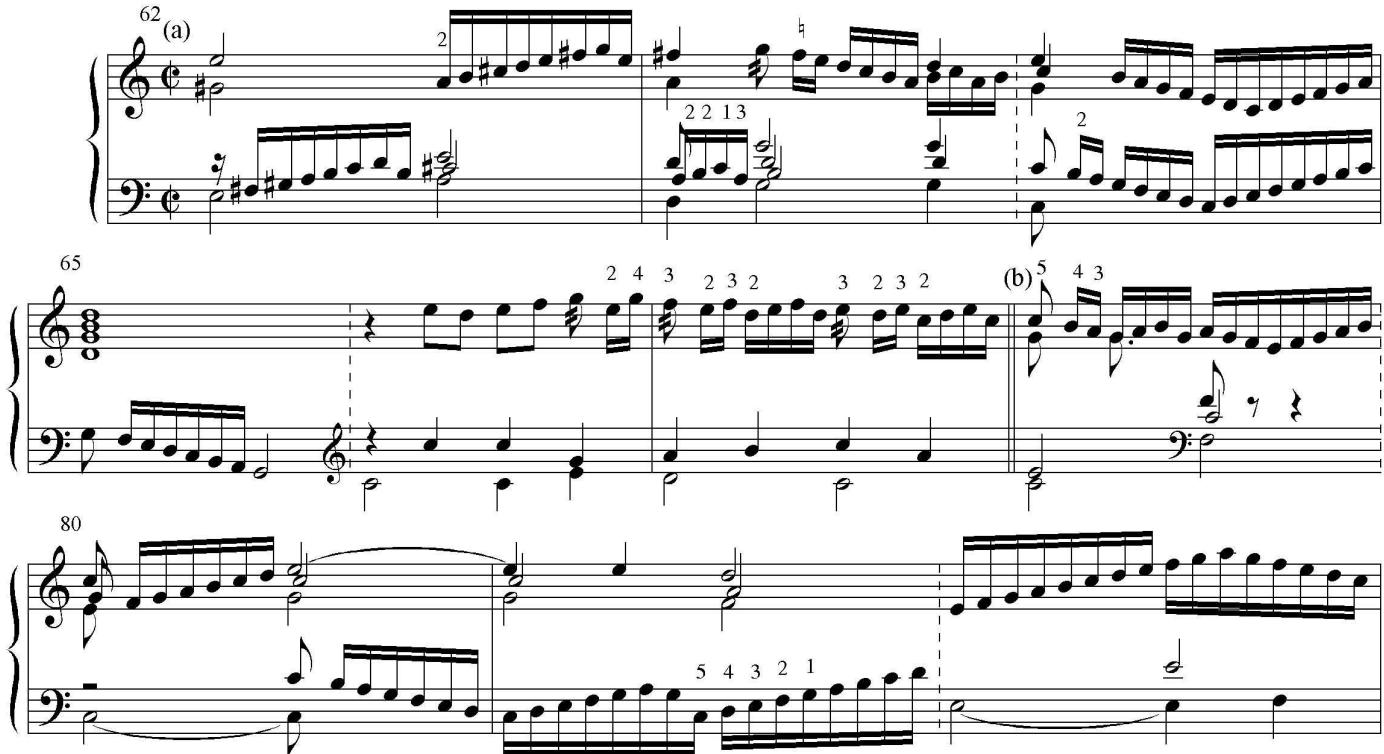
中文讲解
这是第 22 页乐谱示例的图注:Ex. 22,佚名作者(取材自 Luca Marenzio),“Ecco l’aurora”(PK 6),分别取自(a) 第 62–67 小节和(b) 第 79–82 小节,乐谱来源为 Ly。该示例显然用以配合正文 P0119 关于“Z 形装饰音符号”的讨论,让读者能在乐谱中具体看到这种异于英国传统的符号。乐谱图像的内嵌数据已省略,无法直接核对音符细节。
补充说明
原始乐谱图像数据已省略;如需核实装饰音符号在小节中的具体位置、节拍关系与上下文,请参阅原文纸质或电子版面。“PK 6” 是文章作者或编辑对作品使用的目录编号。
第7段(P0124)
原文复述
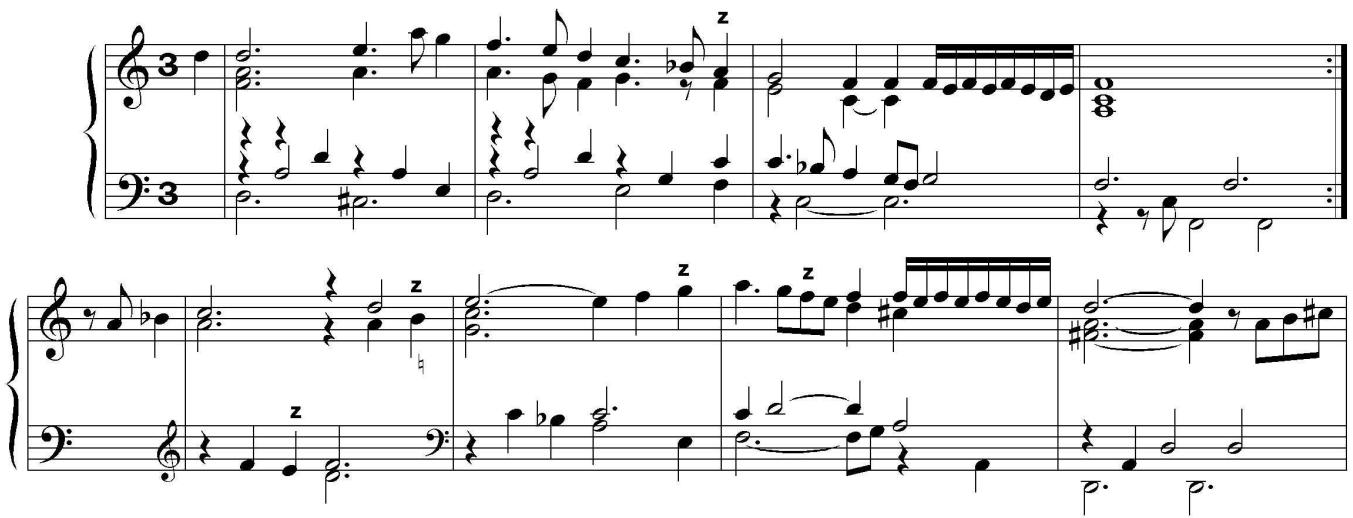
中文讲解
这是又一个针对同一图示区域的中文占位符,提示第 22 页存在图像或乐谱示例,原始嵌入数据已省略,只保留其位置与图注信息。它与上一条 P0123 指代的是同一片版面区域(Ex. 22),在分栏排版下可能属于不同的版面单元。
补充说明
无额外补充;与 P0123 共同指向同一乐谱示例,请参阅原文以核对音符细节。
第8段(P0125)
原文复述
reason to assume that it was the same as the tremblement of later French keyboard music.
中文讲解
这是被版面切分后单列的一段,补完 P0119 末尾被截断的句子:“…但没有理由认为它就等同于后来法国键盘音乐中的 tremblement。” 这里的 tremblement 是后古典法国键盘传统中接近今日颤音(trill/shake)的装饰音。作者用这一短句划定一个重要边界:即便 La Barre 库朗特源自法国,也不能用 17 世纪下半叶之后才稳定的法国装饰音术语去直接覆盖 17 世纪早期的记谱。这一保留态度与 P0128 中 Dirksen 的注释相呼应。
补充说明
上标 38 对应脚注 P0128,作者将在那里指出 Dirksen 把 Z 形符号与 Nivers 装饰音表中的某一 agréments 联系起来,但指出该解读难以套用于 La Barre 库朗特。
第9段(P0126)
原文复述
Like “Ecco l’aurora,” this courante may be a reworking made in the Netherlands of a foreign composition, in this case a French dance tune. We cannot be certain what fingerings were used in it or how its ornament signs were realized. In fact, however, the same uncertainty holds for music about which we may think we know more, including the works attributed in the sources to Byrd and Philips. Lacking autographs, we have no certainty which, if any, of the fingerings and ornament signs in the sources belong to the composers. Although English copyists were relatively consistent in their use of ornament signs and their placement of numerals for fingerings, differences between the two copies of “Lachrimae” could reflect distinctions in the performance practices employed by their respective scribes or users. Both copies obviously belong to the same broad tradition, but they just as obviously represent somewhat different ways of playing the same piece. Byrd’s original, if there ever was a single such text, is gone.
中文讲解
本段是方法论的关键转折。作者先把 La Barre 库朗特与“Ecco l’aurora”并置:两者都可能是荷兰地区对外国作品(前者针对法国舞曲、后者针对意大利牧歌)的再加工,因此指法与装饰音的实现方式皆无可考。然而更重要的是,作者把这种“不确定性”扩大到一般层面:就连表面上我们自以为了解更多的 Byrd、Philips 名下作品,也面临同样困境——因为没有作曲家亲笔手稿(autographs),无从判断抄本中的指法和装饰音是否真出自作曲家本人。接着以 “Lachrimae” 的两份抄本为例做实证:英国抄写员虽相对统一地使用装饰音和指法数字,但两份抄本之间的差异仍可能反映了不同使用者/抄写员各自的演奏实践习惯。作者的结论是:两份抄本同属一个宽泛传统,但体现的是“演奏同一首作品的略有不同的方式”;Byrd 原本(即便曾存在过一个确定的版本)已经亡佚。这一段的真正用意是为后段的总论点清除障碍:如果连英国核心曲目都不能假定存在一个“唯一正确的版本”,那么对匿名欧陆曲目作笼统化、规则化的解释就更没有根据。
第10段(P0127)
原文复述
“Ecco l’aurora” appears to stand at some distance from the English tradition, yet it belongs with “Lachrimae” to a broader northern European tradition that stretched from England across the Channel to Germany and the Netherlands, and which was by no means isolated from the rest of Europe. To what degree players in different areas had truly distinct practices remains to be seen, but only through close analysis of individual sources and their musical texts can we expect to make progress toward better understanding the details of historical practice in this repertory. The generalized solutions offered in the past to the puzzles of ornament signs and fingerings in this repertory, although fulfilling the desire of many players for simple, easily remembered solutions, have no historical or musical justification. As in other aspects of historical performance practice, rule-making is the enemy of both imagination and scholarship.
中文讲解
本段是全节乃至全文的总收束,可视为结论段。作者首先为 “Ecco l’aurora” 与 “Lachrimae” 重新定位:二者虽在风格距离上一近一远,却共同属于一个跨越英吉利海峡、贯通英、德、荷的北欧传统,并且这一传统与欧洲其他地区并非隔绝。这意味着研究视野不能局限于“英国 vs. 欧陆”的二元对立。接着提出方法论要求:各地区演奏实践究竟有多大差异仍悬而未决,唯有通过对单一手抄本及其音乐文本进行细致分析才能推进认识。最后是对既往“通用解答”的明确否定:过去为这些曲目中的装饰音与指法难题所提供的笼统答案虽满足了演奏者对“简单、易记”规则的渴求,但无论在历史还是音乐上都缺乏根据,并以一句警句作结——“正如在历史演奏实践的其他方面一样,规则化既是想象力的敌人,也是学术的敌人。” 这一收束把全文的核心命题凝练为反对“一刀切”式的演奏规则,提倡立足手抄本的个案研究。
第11段(P0128)
原文复述
Dirksen, “New Perspectives,” 49, identifies the “z” sign with one designated agrément in the ornament table of Guillaume-Gabriel Nivers’s Premier livre d’orgue (Paris, 1665). The latter consists of “an appoggiatura from below with mordent,” but it is difficult to apply that interpretation in the “La Barre” courantes of Ly.
中文讲解
这是脚注 38,介绍 Dirksen 在 “New Perspectives” 第 49 页中的一项识别:他认为 Ly 中的 “z” 形符号与 Guillaume-Gabriel Nivers《Premier livre d’orgue》(巴黎,1665)装饰音表中的某一 agréments(法语装饰音术语)相对应,后者由“下方倚音加 mordent(波音)”构成。然而作者紧接指出,把这一识别套用到 Ly 中的 La Barre 库朗特上是有困难的。该脚注一方面为正文 P0125 “没有理由等同于后期法国 tremblement”的判断提供具体参照(Nivers 的 agréments 表),另一方面再次确认正文的方法论立场:即便在装饰音术语表之间做形式比对,也不能轻率地把一种记谱直接映射为另一种实现。
补充说明
脚注本身说明该 agréments 的音乐内容为“an appoggiatura from below with mordent”,即从下方解决到主音的倚音再加上一个 mordent。
脚注 / 边栏 / 图表 / 附加信息(如有)
本节包含两类附加材料:
- 脚注 35–38(P0120、P0121、P0122、P0128),分别起到以下作用——脚注 35 为 Sweelinck 指法与英国不同这一论断提供 Butt 的二手学术支撑;脚注 36 给出 Sweelinck 法文诗篇歌的具体出版信息;脚注 37 指明 La Barre 库朗特的现代编辑版本与未被纳入的曲目范围;脚注 38 介绍 Dirksen 把 z 形符号与 Nivers 装饰音表挂钩的尝试及其局限。
- 第 22 页的乐谱示例 Ex. 22(P0123、P0124),作者明确标注为“佚名(取材自 Luca Marenzio),《Ecco l’aurora》(PK 6),(a) 第 62–67 小节、(b) 第 79–82 小节,来源 Ly”,用于配合正文中关于 z 形装饰音符号的讨论;图像内嵌数据已省略,需查看原文版面。
💡 本节核心要点
- “Ecco l’aurora”在 Ly 中的匿名传抄、独特形式以及装饰音符号的位置共同营造出“非 Philips 而是德/荷同代人——可能为 Sweelinck 学生”的归属印象,但仍无法以此确证。
- Sweelinck 的键盘演奏实践需被假设为有别于英国维金纳琴家,Ly 同时保存法国库朗特说明荷兰传统中确有法国成分,这引出 La Barre 三首库朗特及其 z 形装饰音符号。
- Ly 中 z 形装饰音可能只是英国双倚音(double stroke)的草体写法,但其实现方式不明,不能直接等同于后期法国键盘音乐中的 tremblement。
- 由于没有作曲家亲笔手稿,Ly 中指法与装饰音归属本身就不可判定;同样的不确定性也存在于看起来归属明确的 Byrd、Philips 名下作品——“Lachrimae”两份抄本的差异即为例证。
- “Ecco l’aurora”与“Lachrimae”共同属于一个跨英、荷、德的更广义北欧传统,对各地演奏实践真实差异的认识只能通过对单个手抄本及其音乐文本的细部分析来推进。
- 过去对这一曲目装饰音与指法的笼统化解释在历史与音乐上都缺乏根据;以规则化代替个案研究是历史演奏实践中应警惕的方法论误区。
🔑 关键术语
- ornament signs:文中指抄本中标注于音符旁的装饰音记号;在 Ly 抄本中既包括英国传统的常见形式,也出现被作者转写为小写 z 的特殊符号,作者推测后者可能是英国双倚音(double stroke)的草体写法。
- double stroke:英国早期键盘音乐记谱中表示倚音连奏或双倚音的符号;本节中被用作解读 Ly 中 z 形装饰音的潜在原型。
- Ly:本节反复提到的核心手抄本,同时保存了 Sweelinck、Philips 以及 La Barre 等佚名法国键盘曲,是讨论“Ecco l’aurora”归属与装饰音记谱的关键来源。
- tremblement:后期法国键盘音乐中接近颤音/trill 的装饰音;作者在 P0125 明确否定了把 Ly 中 z 形符号直接等同于 tremblement 的做法。
- agréments:法语装饰音术语的总称;脚注 38 中 Dirksen 把 Ly 的 z 形符号与 Nivers《Premier livre d’orgue》(1665)装饰音表中的某一 agréments 相对应,但作者指出这一识别难以套用于 La Barre 库朗特。
- virginalists:英国伊丽莎白时期及 17 世纪初的维金纳琴作曲家群体(如 Byrd、Bull、Gibbons);本节用其作为“Sweelinck 指法与之不同”的参照系。
- courante:17 世纪盛行的三拍子舞曲;本节涉及的三首归于 La Barre 的库朗特是 Ly 中少见的法国键盘曲实例,作者认为它们可能是荷兰地区对法国原曲的再加工。