目录
1 Classification of Ornaments (Section 1.5)
- 1.1 1.5 Classification of Ornaments
- 页码:1-26
- 1.2 1.5.1 Three Groups of Ornaments
- 页码:26-28
- 1.3 1.5.2 Alternating and Non-Alternating Ornaments
- 页码:28-31
- 1.4 1.5.3 Comparison between Italian and Spanish Ornamentation
- 页码:31-50
1.1 1.5 Classification of Ornaments
第1段(P0001)
原文复述
Praetorius terms the second type tremulus descendens. Ammerbach’s description of the mordant in 1571 applies to the first type. (Footnote 78: Rodgers, Fingering, p.196.)
中文讲解
本段承接上文指出Praetorius把第二种波音命名为tremulus descendens(下行波音),并说明Ammerbach 1571年对mordant(波音)的描述适用于第一种。注78指向Rodgers《Fingering》第196页。脚注起到文献出处的作用。
补充说明
本页段落P0001–P0005属于小节1.4.3 Mordent的延续讨论。
第2段(P0002)
原文复述
“Mordanten are done by alternating a note with its neighbour, and if properly used give grace and sweetness to the song. They are of two kinds, rising and falling …”
中文讲解
此为Ammerbach 1571年原文的引述:波音通过本音与其邻音的交替构成,若使用得当,可为歌曲增添优雅与甜美;分上升与下降两种。这段引文定义的对象恰好是第一种(上行邻音)波音。
补充说明
引文中Mordanten是德语Mordent的复数形式,rising对应上邻音波音(tremulus ascendens),falling对应下邻音波音(tremulus descendens)。
第3段(P0003)
原文复述
Ex.1.24
中文讲解
乐谱示例编号Ex.1.24,需要查看原书谱例。
补充说明
示例标号本身不携带论证内容,其作用是配合正文说明mordant的两种类型。
第4段(P0004)
原文复述
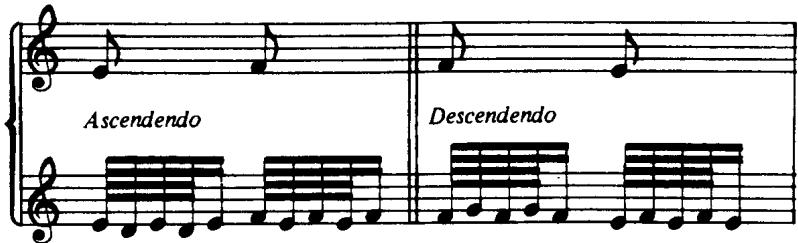
中文讲解
此为Ex.1.24对应的乐谱图,需查看原图以确认上行、下行波音的记法。
补充说明
内嵌图像数据已省略,仅保留位置与图注信息。
第5段(P0005)
原文复述
In Spain, Sancta Maria describes it identically, giving it the name quiebro sencillo, to distinguish it from the longer reiterated quiebro. Hernando de Cabezón calls the same ornaments quiebro, but does not elaborate on the context in which they should be used. (Footnote 79: See 1.4.10.) The Italian sources indicate a dislike for the tremolo with lower auxiliary, which, according to Diruta, was reserved for organ music. (Footnote 80: See 1.4.1 and 1.4.2.) The dual nature of the tremolo is confirmed by Praetorius, who also draws attention to the fact that it is known as mordant to the Germans. At the same time he echoes Diruta’s dislike of the tremulus descendens. In accordance with their comments, both Diruta and Praetorius consistently give examples employing only the tremulus ascendens in both ascending and descending passages. (Footnote 81: An exception occurs where Diruta writes a mordent in a descending passage: see Soehnlein, Transilvano, p.162. In the Toccata dell’undecimo et duodecimo tono, Diruta writes out one mordent in an ascending passage (b.3), and two in a descending passage (b.23,25); see L. Torchi, ed., L’arte Musicale in Italia, vol.3 (Milan: Ricordi, 1897), pp.167,169.) Praetorius’ tremulus descendens can be seen as the first clear example of the mordent as an independent ornament not connected
中文讲解
本段综合多国资料阐述波音的两种类型及理论家态度:西班牙Sancta Maria称简单型为quiebro sencillo以区别于较长的重复型quiebro;Hernando de Cabezón亦称quiebro但未说明使用语境。意大利资料对下邻音波音(tremolo with lower auxiliary)持反感态度,Diruta认为它只用于管风琴音乐。Praetorius证实波音的双重性质(上行与下行),并指出德国人称之为mordant;他赞同Diruta对下行的反对,二人所提供的谱例无论上下文是上行还是下行段落,都只用上邻音波音(tremulus ascendens)。本段最后一句引入Praetorius tremulus descendens作为mordant独立于上下语境之外的第一个清晰例证,并承接至下一页。注79指明本主题详见1.4.10节;注80指引至1.4.1与1.4.2;注81作为限定性补充,承认Diruta在Transilvano第162页的下行段落中写过一处mordent例外,并在Torchi所编《L’arte Musicale in Italia》第3卷第167、169页的Toccata dell’undecimo et duodecimo tono中给出明确小节定位(小节3一处上行mordent,小节23、25两处下行mordent)。
补充说明
P0005末尾以连接词"not connected"延续到P0010,跨段叙述Praetorius tremulus descendens作为独立装饰音的意义。
第6段(P0006)
原文复述
78 Rodgers, Fingering, p.196.
中文讲解
脚注78:出处见Rodgers《Fingering》第196页,作用是为P0001所引Ammerbach 1571年描述提供文献支持。
第7段(P0007)
原文复述
79 See 1.4.10.
中文讲解
脚注79:指引读者参见1.4.10节。该节专门讨论西班牙装饰音quiebro与redoble,为P0005中Sancta Maria、Cabezón的相关论述提供详细语境。
第8段(P0008)
原文复述
80 See 1.4.1 and 1.4.2.
中文讲解
脚注80:指引读者参见1.4.1和1.4.2节,作用是为P0005中Diruta关于下邻音波音"只用于管风琴"的论断提供上下文。
第9段(P0009)
原文复述
81 An exception occurs where Diruta writes a mordent in a descending passage: see Soehnlein, Transilvano, p.162. In the Toccata dell’undecimo et duodecimo tono, Diruta writes out one mordent in an ascending passage (b.3), and two in a descending passage (b.23,25); see L. Torchi, ed., L’arte Musicale in Italia, vol.3 (Milan: Ricordi, 1897), pp.167,169.
中文讲解
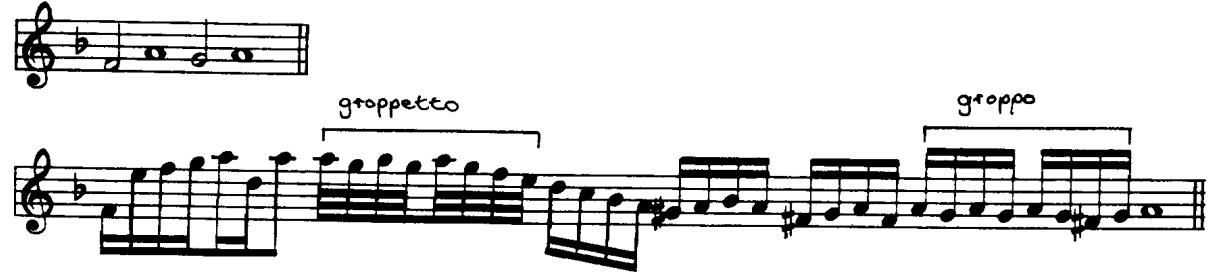
脚注81:作为限定性补充,说明Diruta在Transilvano第162页的下行段落中写过一处mordent例外;并引用Torchi所编《L’arte Musicale in Italia》第3卷第167、169页的Toccata dell’undecimo et duodecimo tono,给出具体小节定位:上行段落小节3一处mordent,下行段落小节23、25两处mordent。本脚注对正文"只用上邻音"的概括起限定作用。
第10段(P0010)
原文复述
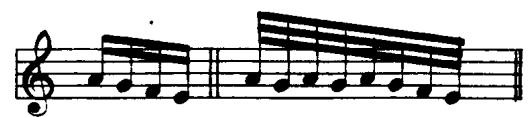
with either an ascending or descending context. (Footnote 82: I.e., disregarding the early sixteenth-century German mordant.) The only other sources which describe the mordent thus are Bermudo, who calls it a redoble, though he uses one name for both the upper and lower note type, and Correa, who calls it a simple quiebro. Significantly, Bermudo states that this ornament was not approved by some players, who regarded it as ‘ungraceful’, thus echoing Praetorius’ sentiments. In Merulo’s Canzoni d’Intavolatura for organ the mordent makes rare appearances, usually in ascending passages, and in one example the opening note of a canzona is embellished with a mordent. (Footnote 83: See McDermott, Canzoni, p.14 b.7, p.31 b.9, p.51 b.4, p.66 b.4, p.6 b.1.) Correa also advises that the simple quiebro be used at the beginning of works. (Footnote 84: See 1.4.10.) As a vocal ornament, it appears in Cavalieri’s table of 1600 as a monachina: (Footnote 85: Neumann, Ornamentation, p.24.)
中文讲解
本段继续P0005:Praetorius的tremulus descendens是mordent作为独立装饰音(不依赖上行或下行语境)的第一个清晰例证,注82限定此处不计16世纪初的德国mordant。仅有Bermudo(称之为redoble,但用同一名称兼指上下邻音型)和Correa(称之为simple quiebro)也以类似方式描述mordent。Bermudo指出有演奏者视此装饰音为"不优雅"而反对,与Praetorius的态度相呼应。在Merulo的管风琴Canzoni d’Intavolatura中mordent罕见出现,通常用于上行段落,有一例在canzona起始音上使用(引自McDermott《Canzoni》第14页第7小节等具体小节定位)。Correa建议在作品开头使用simple quiebro。作为声乐装饰音,它出现在Cavalieri 1600年表格中,名为monachina(见Neumann《Ornamentation》第24页)。注83提供Merulo canzoni中mordent的具体小节号;注84指引至1.4.10节以详查Correa;注85为Cavalieri 1600 monachina出处的文献支持。
补充说明
本段确立Praetorius tremulus descendens作为mordent首次独立化的证据,并辅以Bermudo、Correa、Merulo、Cavalieri的旁证。
第11段(P0011)
原文复述
Ex.1.25
中文讲解
乐谱示例编号Ex.1.25,需查看原书。
补充说明
此例配合P0010,展示Cavalieri的monachina。
第12段(P0012)
原文复述
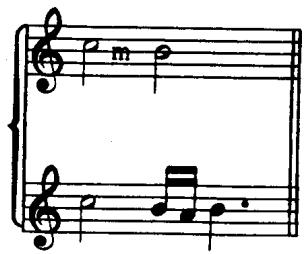
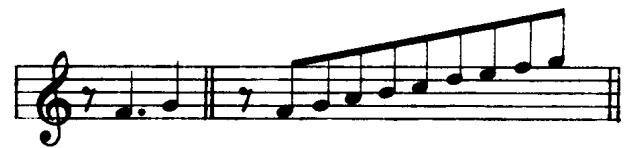
中文讲解
Ex.1.25对应的图示,需查看原图。
第13段(P0013)
原文复述
Mordents are also found in Bovicelli’s Regole. (Footnote 86: Bovicelli, Regole, pp.17,43,65,67,80,81. See Pasquini, CEKM XII, p.30, where a mordent on a long note value appears.)
中文讲解
本句点明Bovicelli《Regole》中也出现mordent,注86给出具体页码(第17、43、65、67、80、81页),并补充Pasquini《CEKM XII》第30页出现一处长音符上的mordent。该脚注对正文起文献支持作用。
第14段(P0014)
原文复述
1.4.4 Groppo
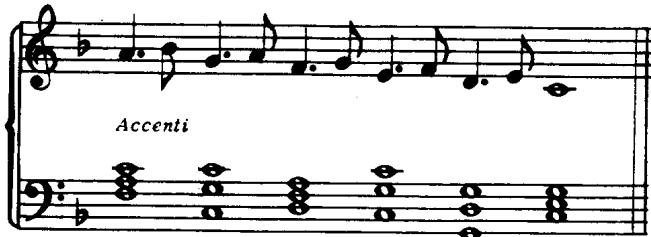
中文讲解
小节标题1.4.4 Groppo,开启关于groppo装饰音的论题,标志话题从mordent转向一种以卡农式结构功能为特征的装饰音。
第15段(P0015)
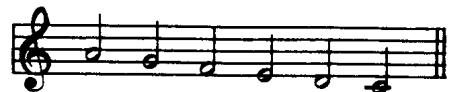
原文复述
The groppo, first labelled thus by Dalla Casa in 1584, stems from the diminution of original note values. It is used ‘in cadences and formal closes and is to be played more crisply than the tremolo’. (Footnote 87: Praetorius, Syntagma, p.236.) Its typical function is structural, as
中文讲解
本段引入groppo装饰音:此名称由Dalla Casa在1584年首次标记,源自对原本音符时值的细分(diminution)。它用于"终止式和正式收束处",且"演奏得比tremolo更干脆"。引文出自Praetorius《Syntagma》第236页。groppo的典型功能是结构性的,本段以"as"引导至下一页继续说明其结构功能。
补充说明
diminution在此处指16世纪常见的对长音符时值作细分以填充节奏空间的实践。
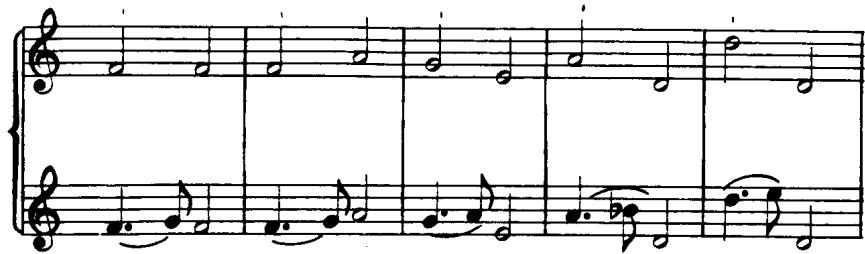
第16段(P0016)
原文复述
82 I.e., disregarding the early sixteenth-century German mordant.
中文讲解
脚注82:明确说明P0010中"独立装饰音"的判断不计16世纪初的德国mordant,起限定作用。
第17段(P0017)
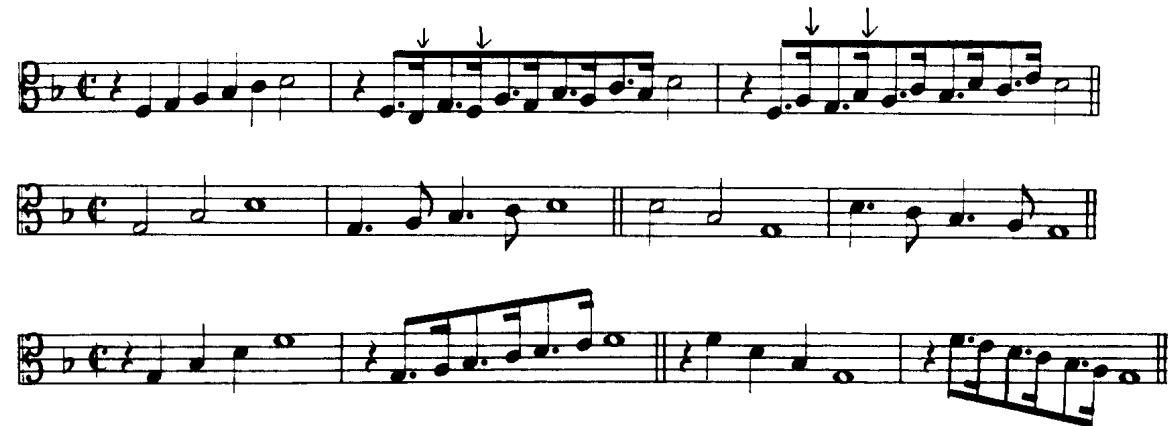
原文复述
83 See McDermott, Canzoni, p.14 b.7, p.31 b.9, p.51 b.4, p.66 b.4, p.6 b.1.
中文讲解
脚注83:提供Merulo管风琴Canzoni中mordent出现处的精确小节号(依次为第14页第7小节、第31页第9小节、第51页第4小节、第66页第4小节、第6页第1小节),为正文提供文献支持。
第18段(P0018)
原文复述
84 See 1.4.10.
中文讲解
脚注84:指引读者参见1.4.10节详查Correa关于simple quiebro用于作品开头的建议。
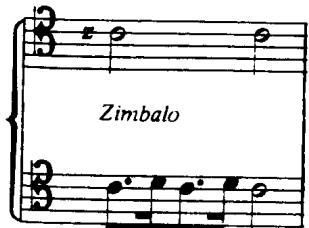
第19段(P0019)
原文复述
85 Neumann, Ornamentation, p.24.
中文讲解
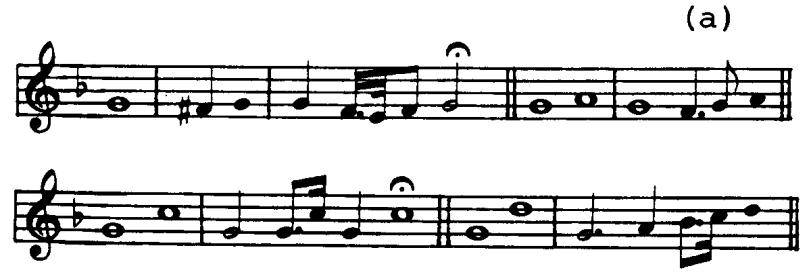
脚注85:出处见Neumann《Ornamentation》第24页,支持Cavalieri 1600 monachina的论断。
第20段(P0020)
原文复述
86 Bovicelli, Regole, pp.17,43,65,67,80,81. See Pasquini, CEKM XII, p.30, where a mordent on a long note value appears.
中文讲解
脚注86:出处Bovicelli《Regole》第17、43、65、67、80、81页,并补充Pasquini《CEKM XII》第30页长音符上的mordent一例,为正文提供文献支持。
第21段(P0021)
原文复述
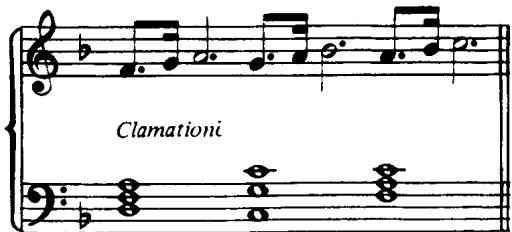
87 Praetorius, Syntagma, p.236.
中文讲解
脚注87:出处见Praetorius《Syntagma》第236页,支持P0015所引"在终止式和正式收束处使用,比tremolo更干脆"的论断。
第22段(P0022)
原文复述
32
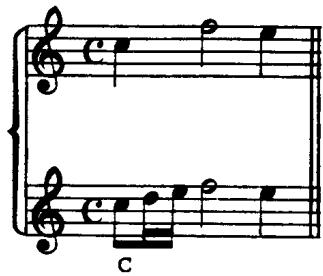
中文讲解
页码32,属版面标记。
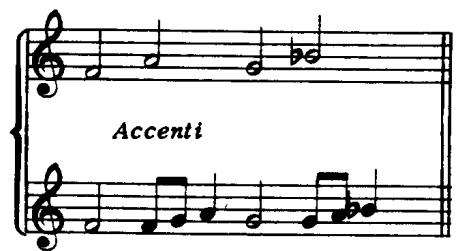
第23段(P0023)
原文复述
it ornamentally resolves dissonance as an embellishment of the characteristic progression of the discant close: (Footnote 88: John Dowland, Andreas Ornithoparcus his Micrologus, or introduction containing the art of singing (London, 1609), facs. reprint (New York: Da Capo, 1969), p.84. See also 4.2.2.) Ex.1.26
中文讲解
本段承接P0015,说明groppo的结构功能:以装饰方式解决不协和音,作为对discant close(上方声部终止式)特征进行的修饰。注88引用Dowland译Ornithoparcus《Micrologus》1609年伦敦版(1969年纽约Da Capo影印)第84页,并指引至4.2.2节作进一步参见。Ex.1.26为配合此说明的谱例编号。
补充说明
discant close指对位写作中上方声部的典型终止进行,groppo在此进行上插入装饰音以解决悬挂的不协和音。
第24段(P0024)
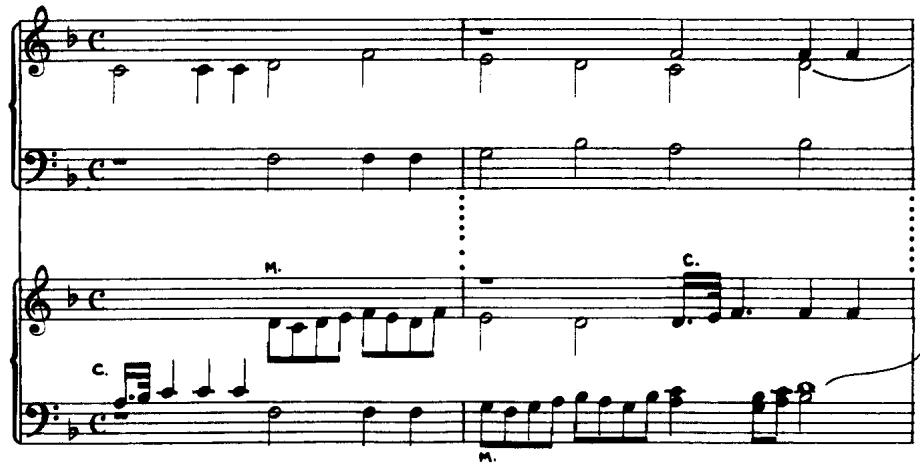
原文复述
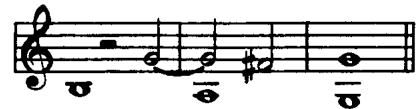
中文讲解
Ex.1.26对应的图示,需查看原图。
第25段(P0025)
原文复述
The typical groppo consists of two or more alternations of the suspended dissonance (i) and its resolution (the subsemitone). (ii) It reaches the final note via a two-note figure by first touching the note below the note of resolution (iii):
中文讲解
本段定义典型groppo的形式:由悬停不协和音(suspended dissonance)(标记(i))与其解决音subsemitone(标记(ii))的两次或多次交替构成;最后通过一个两音形态到达最终音,先触及解决音下方的音(标记(iii))。这段以定义性方式确立groppo的三要素:悬停不协和音、subsemitone、解决音下方触音。
补充说明
subsemitone在此上下文中指的是解决方向上的半音进行(悬挂音至其下方的半音解决)。
第26段(P0026)
原文复述
Ex.1.27
中文讲解
乐谱示例编号Ex.1.27,需查看原书以确认典型groppo的具体形态。
第27段(P0027)
原文复述
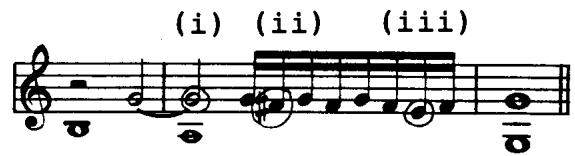
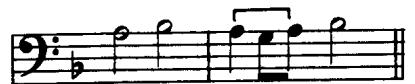
中文讲解
Ex.1.27对应的图示,需查看原图。
第28段(P0028)
原文复述
The cadential groppo is made with quavers, semiquavers, demisemiquavers or mixed values, and is often introduced by an elaborate passaggio: (Footnote 89: Diruta, Transilvano, fols.9v-10.)
中文讲解
本段说明卡终groppo的节奏构成:以八分音符、三十二分音符、六十四分音符或混合时值构成,常由一段精细的passaggio(过渡型细分走句)引入。注89给出Diruta《Transilvano》第9v-10页作为出处的文献支持。
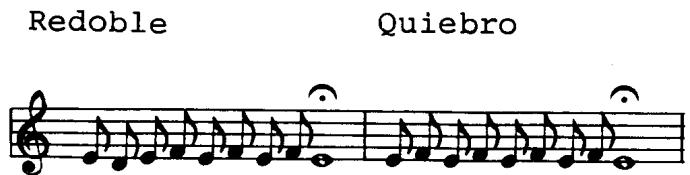
补充说明
passaggio指16-17世纪常见的细分型音阶走句,常用于装饰过渡。
第29段(P0029)
原文复述
Ex.1.28
中文讲解
乐谱示例编号Ex.1.28,需查看原书。
第30段(P0030)
原文复述
Groppi in Accadentia
中文讲解
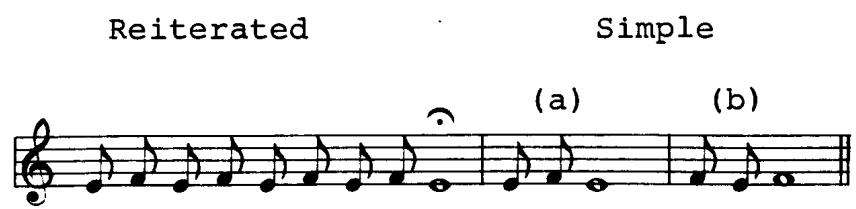
谱例标题"Groppi in Accadentia",为意大利文,意为"在Accadentia(调式变化情形)中的groppi"。配合Ex.1.28的语境。
第31段(P0031)
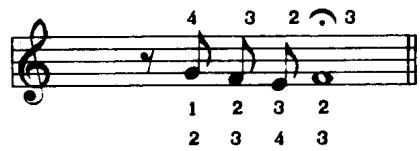
原文复述

中文讲解
Ex.1.28对应的图示,需查看原图。
第32段(P0032)
原文复述
The groppo sometimes lacks an upper-note start, and is then prepared by the subsemitone. All of Praetorius’ examples are prepared in this manner, whereas Diruta uses both forms: (Footnote 90: Ibid., fol.9v.)
中文讲解
本段补充groppo的另一种起始方式:有时groppo无上邻音起始,而是由subsemitone先行准备。Praetorius的所有例子都采取这种准备型起始,而Diruta则两种形式都使用。注90出处见Diruta《Transilvano》第9v页,与注89同书。
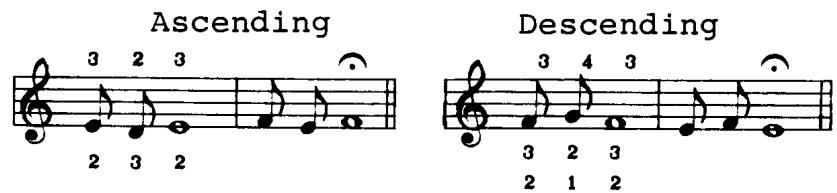
补充说明
subsemitone在Praetorius用法中作为groppo的准备型前置;与P0025中作为解决音含义略有不同。
第33段(P0033)
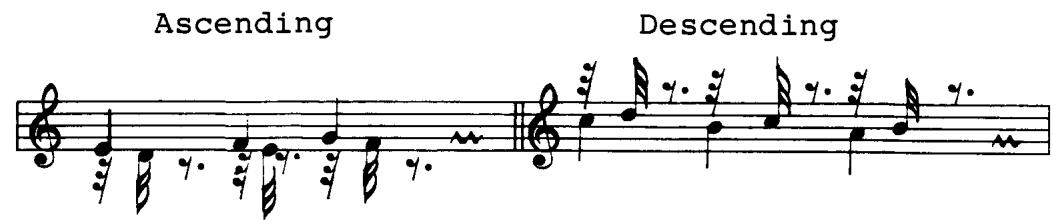
原文复述
88 John Dowland, Andreas Ornithoparcus his Micrologus, or introduction containing the art of singing (London, 1609), facs. reprint (New York: Da Capo, 1969), p.84. See also 4.2.2.
中文讲解
脚注88:出处为John Dowland译Andreas Ornithoparcus《Micrologus, or introduction containing the art of singing》1609年伦敦版,1969年纽约Da Capo影印,第84页;并指引至4.2.2节作进一步参见。
第34段(P0034)
原文复述
89 Diruta, Transilvano, fols.9v-10.
中文讲解
脚注89:出处见Diruta《Transilvano》第9v-10页,文献支持P0028中关于卡终groppo的节奏构成与passaggio引入。
第35段(P0035)
原文复述
90 Ibid., fol.9v.
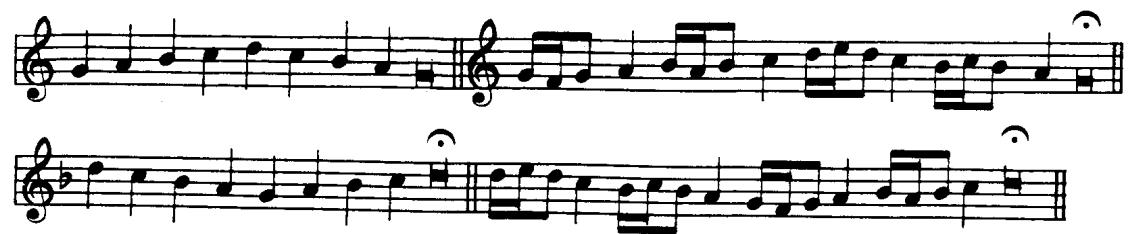
中文讲解
脚注90:出处同上(指Diruta《Transilvano》),第9v页。
第36段(P0036)
原文复述

中文讲解
Ex.1.29对应的图示,需查看原图。配合P0037说明Bovicelli与Dalla Casa两种起始形式。
第37段(P0037)
原文复述
Both forms are also encountered in the treatises of Bovicelli and Dalla Casa. Praetorius’ remark that groppi ought to be played more crisply (‘Scherffer’) than tremoli, did not pass unchallenged at the time. Dalla Casa implies the existence of unmeasured groppi where he gives an example of a groppo battuto (measured groppo), (Footnote 91: Dalla Casa, Il vero modo, 1:6-7.) and Zacconi states that the two notes of a groppo may be repeated as often as time allows. (Footnote 92: Lodovico Zacconi, Prattica di musica (Venice, 1592), 2 vols., 1:fol.62v; and in F. Chrysander, ‘Lodovico Zacconi als Lehrer des Kunstgesanges’, Vierteljahrsschrift für Musikwissenschaft, vol.7 (1891), p.361.) Unmeasured groppi could possibly begin slowly, then accelerate, as Praetorius’ example suggests: (Footnote 93: Praetorius, Syntagma, p.236.)
中文讲解
本段指出Bovicelli与Dalla Casa的资料中也出现groppo的两种起始形式。Praetorius关于"groppi应演奏得比tremoli更干脆(德文Scherffer)“的论断当时曾遭反驳:Dalla Casa通过给出groppo battuto(“打过"即有量度的groppo)一例,反向暗示存在unmeasured groppi(无量度的groppi);Zacconi则声明groppo的两个音可按时间许可任意重复。无量度的groppi可能由慢起再加速,正如Praetorius的谱例所暗示。注91出处Dalla Casa《Il vero modo》第1卷第6-7页;注92出处Zacconi《Prattica di musica》(威尼斯,1592)第1卷第62v页及Chrysander《Vierteljahrsschrift für Musikwissenschaft》第7卷(1891)第361页;注93出处Praetorius《Syntagma》第236页。
补充说明
德文Scherffer意为"更干脆/更尖锐”,原文以斜体保留德文原词。
第38段(P0038)
原文复述
Ex.1.30
中文讲解
乐谱示例编号Ex.1.30,需查看原书,配合P0037关于无量度groppi由慢起加速的说明。
第39段(P0039)
原文复述

中文讲解
Ex.1.30对应的图示,需查看原图。
第40段(P0040)
原文复述
Cavalieri’s groppolo suggests unmeasured performance, as there are nine semiquavers to the value of a minim. Indeed, it resembles a tremolo with an added suffix rather than an upper-lower note alternation design: (Footnote 94: Neumann, Ornamentation, p.288.)
中文讲解
本段补充Cavalieri的groppolo(小型groppo):其特点为用一个minim时值容纳九个semiquaver(十六分音符),暗示无量度演奏;其形态实为tremolo加一后缀,而非上下邻音交替型设计。注94出处见Neumann《Ornamentation》第288页。
第41段(P0041)
原文复述
Ex.1.31
中文讲解
乐谱示例编号Ex.1.31,需查看原书。
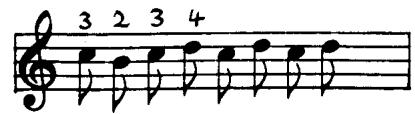
第42段(P0042)
原文复述

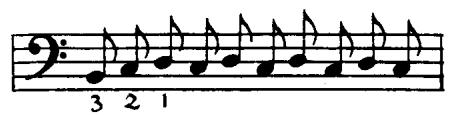
中文讲解
Ex.1.31对应的图示,需查看原图。
第43段(P0043)
原文复述
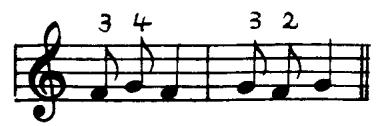
Diruta’s fingering for the cadence groppi is: right hand 4 3, left hand 2 3 or 1 2, whichever is the more convenient. (Footnote 95: Soehnlein, Transilvano, p.156.)
中文讲解
本段给出Diruta对卡终groppi的指法建议:右手用4-3指,左手用2-3指或1-2指,以更便利者为准。注95出处Soehnlein《Transilvano》第156页。
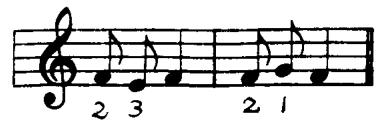
补充说明
指法建议反映了groppi作为相邻两音交替的演奏便利性。
第44段(P0044)
原文复述
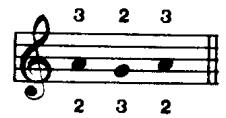
91 Dalla Casa, Il vero modo, 1:6-7.
中文讲解
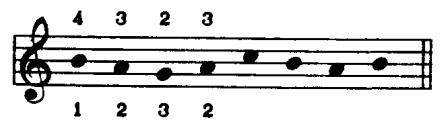
脚注91:出处见Dalla Casa《Il vero modo》第1卷第6-7页。
第45段(P0045)
原文复述
92 Lodovico Zacconi, Prattica di musica (Venice, 1592), 2 vols., 1:fol.62v; and in F. Chrysander, ‘Lodovico Zacconi als Lehrer des Kunstgesanges’, Vierteljahrsschrift für Musikwissenschaft, vol.7 (1891), p.361.
中文讲解
脚注92:出处Lodovico Zacconi《Prattica di musica》(威尼斯,1592)两卷本第1卷第62v页;并引Chrysander《Lodovico Zacconi als Lehrer des Kunstgesanges》,载《Vierteljahrsschrift für Musikwissenschaft》第7卷(1891)第361页。
第46段(P0046)
原文复述
93 Praetorius, Syntagma, p.236.
中文讲解
脚注93:出处见Praetorius《Syntagma》第236页。
第47段(P0047)
原文复述
94 Neumann, Ornamentation, p.288.
中文讲解
脚注94:出处见Neumann《Ornamentation》第288页。
第48段(P0048)
原文复述
95 Soehnlein, Transilvano, p.156.
中文讲解
脚注95:出处见Soehnlein《Transilvano》第156页。
第49段(P0049)
原文复述
The groppo was not only employed in cadences. Diruta writes: ’they are found in different ways … ascending, descending.’ (Footnote 96: Soehnlein, Transilvano, p.154.) This is also observed from the examples where the cadence groppi are labelled Groppi in Accidentia, while the others have no designation. Judging from his examples, consisting of crotchets, quavers and semiquavers, these groppi have a different function to those used in cadences. They are actually free diminutions which fill up intervals, and their tempo increases from slow to fast. Such designs stand midway between the typical groppo-figures and the freer diminutions (passaggi), and they usually include some element of alternation:
中文讲解
本段扩展groppo的语境:groppo不仅用于终止式。Diruta写道"它们以不同方式出现……上行、下行”(注96出处Soehnlein《Transilvano》第154页)。这从谱例标签中亦可看出:卡终groppi标为Groppi in Accidentia,而其他类型无标注。从其四分音符、八分音符与十六分音符构成的谱例判断,这些groppi的功能与卡终groppi不同:它们实际上是填充音程的自由细分(free diminutions),且由慢渐快。它们处于典型groppi形态与更自由的细分(passaggi)之间,常包含某种交替元素。本段为本节groppo分类的关键转折——从结构功能转向填充功能。
补充说明
Groppi in Accidentia中的Accidentia指调式/音高变化的偶然情形。
第50段(P0050)
原文复述
Ex.1.32
中文讲解
乐谱示例编号Ex.1.32,需查看原书。
第51段(P0051)
原文复述

中文讲解
Ex.1.32对应的图示(一),需查看原图。
第52段(P0052)
原文复述

中文讲解
Ex.1.32对应的图示(二),需查看原图。
第53段(P0053)
原文复述
A third type of groppo, of which the last two notes ascend, is also demonstrated by Bovicelli: (Footnote 97: Bovicelli, Regole, pp.12, 23.) Ex.1.33
中文讲解
本段引入第三类groppo:最后两音上行。该类型由Bovicelli示范(出处见《Regole》第12、23页)。Ex.1.33为对应的谱例编号。
补充说明
此第三类groppo的"最后两音上行"特征区别于前两类,提示groppi家族在尾部方向上的多样性。
第54段(P0054)
原文复述

中文讲解
Ex.1.33对应的图示,需查看原图。
第55段(P0055)
原文复述
Conforto calls a similar figure groppo di sotto. (Footnote 98: Conforto, Breve, p.25.) This figure is used extensively to fill in intervals, often rhythmically varied, especially by Merulo and Gabrieli. (Footnote 99: For examples by Merulo, see McDermott, Canzoni, pp.49,66, 75,76,82,103; and by Gabrieli, see Torchi, L’arte, pp.61,67,77.)
中文讲解
本段补充第三类groppo的命名与实践:Conforto称类似形态为groppo di sotto(“下方"的groppo),出处见《Breve》第25页。该形态被广泛用于填充音程,常作节奏变化,Merulo和Gabrieli尤为多用。注99给出Merulo与Gabrieli的谱例出处:Merulo见McDermott《Canzoni》第49、66、75、76、82、103页;Gabrieli见Torchi《L’arte》第61、67、77页。原文"rhythmically varied 🐎“中的emoji为OCR占位符,应视为"rhythmically varied”(节奏上富于变化)的延续。
补充说明
🐎为OCR误识符号,对应原文应为某个印刷符号或无内容标记。
第56段(P0056)
原文复述
96 Soehnlein, Transilvano, p.154.
中文讲解
脚注96:出处见Soehnlein《Transilvano》第154页,支持P0049所引Diruta语。
第57段(P0057)
原文复述
97 Bovicelli, Regole, pp.12, 23.
中文讲解
脚注97:出处见Bovicelli《Regole》第12、23页。
第58段(P0058)
原文复述
98 Conforto, Breve, p.25.
中文讲解
脚注98:出处见Conforto《Breve》第25页。
第59段(P0059)
原文复述
99 For examples by Merulo, see McDermott, Canzoni, pp.49,66, 75,76,82,103; and by Gabrieli, see Torchi, L’arte, pp.61,67,77.
中文讲解
脚注99:提供Merulo与Gabrieli作品中的第三类groppo谱例出处(Merulo:McDermott《Canzoni》第49、66、75、76、82、103页;Gabrieli:Torchi《L’arte》第61、67、77页)。
第60段(P0060)
原文复述
1.4.5 Groppetto
中文讲解
小节标题1.4.5 Groppetto,开启关于groppetto装饰音的论题。它是groppo的一个重要变体(最后两音下行),作者沿用Bovicelli的命名。
第61段(P0061)
原文复述
An important variant of the groppo, in which the last two notes descend, will be called groppetto in this study, after Bovicelli. (Footnote 100: Bovicelli, Regole, p.12.) Praetorius calls it gruppo, and gives an example in Syntagma: (Footnote 101: Praetorius, Syntagma, p.239.)
中文讲解
本段开篇定义groppetto:groppo的重要变体,最后两音下行。作者沿用Bovicelli的命名(出处《Regole》第12页)。Praetorius称之为gruppo,并在《Syntagma》第239页给出谱例。
补充说明
“gruppo”(单数)与"groppi”(复数)为同一意大利术语的两种拼写变体。
第62段(P0062)
原文复述
Ex.1.34
中文讲解
乐谱示例编号Ex.1.34,需查看原书。
第63段(P0063)
原文复述

中文讲解
Ex.1.34对应的图示,需查看原图。
第64段(P0064)
原文复述
Caccini likewise calls it gruppo. (Footnote 102: Caccini, Nuove musiche, fol.c.) This type of gruppo often fills in the interval of either a third, fourth or fifth. Occasionally it appears as a diminutio of a tirata (here a" descending to f"), especially in the passaggi preceding a gruppo: (Footnote 103: Diruta, Transilvano, fol.10.)
中文讲解
本段补充命名与功能:Caccini同样称之为gruppo(《Nuove musiche》第c页)。此类gruppo常用于填充三度、四度或五度音程。它偶尔作为tirata(此处为从a"下行至f的快速走句)的细分(diminutio)出现,尤其在gruppo之前的passaggi中。注103出处Diruta《Transilvano》第10页。
补充说明
tirata为1.4.6节专门讨论的快速走句型装饰音,此处作为groppetto出现的语境之一被提及。
第65段(P0065)
原文复述
Ex.1.35
中文讲解
乐谱示例编号Ex.1.35,需查看原书。
第66段(P0066)
原文复述
中文讲解
Ex.1.35对应的图示,需查看原图。
第67段(P0067)
原文复述
The groppetto may also immediately precede an ordinary cadential groppo, so that they are distinguished from each other with difficulty:
中文讲解
本句说明groppetto还可紧接在普通卡终groppo之前出现,使两者难以区分。此处点明groppetto与卡终groppo在序列上的接近与辨识难度。
第68段(P0068)
原文复述
Ex.1.36
中文讲解
乐谱示例编号Ex.1.36,需查看原书。
第69段(P0069)
原文复述

中文讲解
Ex.1.36对应的图示,需查看原图。
第70段(P0070)
原文复述
Schwandt sees it as an ornamented tirata: (Footnote 104: Schwandt, Clausula, p.28.)
中文讲解
本句介绍Schwandt对groppetto的解读:将其视为装饰化的tirata。注104出处Schwandt《Clausula》第28页。该解释与P0064中作为tirata diminutio出现形成呼应。
第71段(P0071)
原文复述
100 Bovicelli, Regole, p.12.
中文讲解
脚注100:出处见Bovicelli《Regole》第12页。
第72段(P0072)
原文复述
101 Praetorius, Syntagma, p.239.
中文讲解
脚注101:出处见Praetorius《Syntagma》第239页。
第73段(P0073)
原文复述
102 Caccini, Nuove musiche, fol.c.
中文讲解
脚注102:出处见Caccini《Nuove musiche》第c页。
第74段(P0074)
原文复述
103 Diruta, Transilvano, fol.10.
中文讲解
脚注103:出处见Diruta《Transilvano》第10页。
第75段(P0075)
原文复述
Schwandt, Clausula, p.28.
中文讲解
脚注104:出处见Schwandt《Clausula》第28页。
第76段(P0076)
原文复述
中文讲解
Ex.1.37对应的图示,需查看原图。
第77段(P0077)
原文复述
1.4.6 Tirata
中文讲解
小节标题1.4.6 Tirata,开启关于tirata装饰音的论题:长而快速的级进走句。
第78段(P0078)
原文复述
Tirate are ’long and rapid little runs up or down the keys, and are conjunct.’ (Footnote 105: Praetorius, Syntagma, p.236.) They are usually made of quavers or shorter note values, and consist of stepwise ascending or descending notes in diatonic succession. Tirate are played as rapidly and crisply as possible: ‘The faster and crisper they are, the better’: (Footnote 106: Ibid.)
中文讲解
本段定义tirata:“沿键盘上下的长而快速的小走句,级进进行”(Praetorius《Syntagma》第236页)。通常由八分音符或更短时值构成,由diatonic级进的上行或下行音符组成。tirata应尽可能演奏得快速、干脆:“越快、越干脆越好”(同上)。
第79段(P0079)
原文复述
Ex.1.38
中文讲解
乐谱示例编号Ex.1.38,需查看原书。
第80段(P0080)
原文复述

中文讲解
Ex.1.38对应的图示,需查看原图。
第81段(P0081)
原文复述
They serve to connect the ends of phrases, and fill up the time of longer notes, link up disjunct notes and expand close intervals, for example, converting a second into a ninth: Ex.1.39
中文讲解
本段说明tirata的功能:连接乐句末端,填充长音符时值,连接跳进音,扩大紧凑音程(例如把二度扩展为九度)。Ex.1.39为对应谱例编号。
第82段(P0082)
原文复述
中文讲解
Ex.1.39对应的图示,需查看原图。
第83段(P0083)
原文复述
Because the tirata may descend by step, it often becomes the model upon which tremoletti are made: (Footnote 107: Soehnlein, Transilvano, p.161.)
中文讲解
本句指出tirata可下行级进,因此常成为tremoletti(小波音)制作的模型。注107出处Soehnlein《Transilvano》第161页。
补充说明
此连接说明tirata与tremoletti之间的形态关联。
第84段(P0084)
原文复述
Ex.1.40
中文讲解
乐谱示例编号Ex.1.40,需查看原书。
第85段(P0085)
原文复述

中文讲解
Ex.1.40对应的图示,需查看原图。
第86段(P0086)
原文复述
105 Praetorius, Syntagma, p.236.
中文讲解
脚注105:出处见Praetorius《Syntagma》第236页。
第87段(P0087)
原文复述
106 Ibid.
中文讲解
脚注106:出处同上(指Praetorius《Syntagma》第236页)。
第88段(P0088)
原文复述
Soehnlein, Transilvano, p.161.
中文讲解
脚注107:出处见Soehnlein《Transilvano》第161页。
第89段(P0089)
原文复述
This is confirmed by Diruta, who declares: (Footnote 108: Diruta, Transilvano, p.20) ‘Signor Claudio introduces (tremoletti) into his tirate in the Canzone alla Francese.’
中文讲解
本段引Diruta确认tirata与tremoletti的关系:“Signor Claudio在他的Canzone alla Francese中的tirate里引入tremoletti”(出处Diruta《Transilvano》第20页)。此句证实tirata为tremoletti制作的模型。
补充说明
Canzone alla Francese为当时一种特定的坎佐纳体裁。
第90段(P0090)
原文复述
1.4.7 Accento
中文讲解
小节标题1.4.7 Accento,开启关于accento装饰音的论题:一种形态可变但绝不属交替型的装饰音。
第91段(P0091)
原文复述
The accento is an ornament of variable shape, but never of the alternating type. It can consist of one or more ornamental notes. The sources suggest that the accento was generally associated with vocal music. Praetorius describes it only in terms of vocal performance: ‘Accentus results when the notes of the following patterns are drawn into the throat.’ It was nevertheless employed as a keyboard ornament, as illustrated and codified by Diruta. He gives no detailed description, but simply explains it as a vehicle with which one can make diminution:
中文讲解
本段定义accento:形态可变、但绝不属交替型的装饰音;可由一个或多个装饰音构成。资料提示accento通常与声乐相关联。Praetorius仅以声乐演奏的视角来描述它:引文为"Accentus results when the notes of the following patterns are drawn into the throat"(当下列谱例的音在喉咙中被’发出’时,就产生Accentus)。“drawn into the throat"意为"在喉咙中唱出/发声”,明确声乐发声部位的限定。然而accento仍被用作键盘装饰音,Diruta对其加以图示与系统化。他没有给出详细描述,仅简单解释为可用于细分的工具。本段的关键限定有二:(1)Praetorius仅从声乐角度描述accento;(2)Diruta没有详细描述。
补充说明
此处"drawn into the throat"反映16世纪声乐装饰音强调气息与喉部控制的传统观念。
第92段(P0092)
原文复述
Ex.1.41
中文讲解
乐谱示例编号Ex.1.41,需查看原书。
第93段(P0093)
原文复述
中文讲解
Ex.1.41对应的图示,需查看原图。
第94段(P0094)
原文复述
From the example above, the basic melodic line upon which this accento is made, can be derived thus: Ex.1.42
中文讲解
本句说明从上述谱例可推导出accento所基于的基本旋律线。Ex.1.42为对应的谱例编号。
第95段(P0095)
原文复述
中文讲解
Ex.1.42对应的图示,需查看原图。
第96段(P0096)
原文复述
The accento therefore takes the form of an ornamental note occurring between two stressed consonant notes. This same pattern was still in use a century later in French music, where it was
中文讲解
本段定义accento的形态:装饰音出现在两个被强调的协和音之间。该形态一个世纪后在法国音乐中仍在使用,被称为accent(即法语accent)。
补充说明
此句承接至下一页继续说明法语中的对应名称。
第97段(P0097)
原文复述
108 Diruta, Transilvano, p.20
中文讲解
脚注108:出处见Diruta《Transilvano》第20页。
第98段(P0098)
原文复述
109 Praetorius, Syntagma, p.232.
中文讲解
脚注109:出处见Praetorius《Syntagma》第232页。
第99段(P0099)
原文复述
110 Diruta, Seconda Parte, p.13; and in Soehnlein, Transilvano, p.253.
中文讲解
脚注110:出处见Diruta《Seconda Parte》第13页;并见Soehnlein《Transilvano》第253页。
第100段(P0100)
原文复述
known as an accent: (Footnote 111: Etienne Loulié, Élements ou principes de musique (Paris, (1696), facs. reprint (Genève: Minkoff, 1971), pp.68-69.)
中文讲解
本段承接P0096,说明法语中称为accent。注111出处Etienne Loulié《Élements ou principes de musique》(巴黎,1696;日内瓦Minkoff 1971年影印)第68-69页。
第101段(P0101)
原文复述
Ex.1.43
中文讲解
乐谱示例编号Ex.1.43,需查看原书。
第102段(P0102)
原文复述
中文讲解
Ex.1.43对应的图示,需查看原图。
第103段(P0103)
原文复述
One source which deals with abstract diminution patterns for all kinds of instruments, is Richardo Rogniono’s Passaggi per potersi essercitare nel diminuere. It includes an example similar to Diruta’s accento: (Footnote 112: Richardo Rogniono, Passagi per potersi essercitare nel diminuere (Venice, 1592), Part II: Il vero modo di diminuere, pp.17-18; and Neumann, Ornamentation, p.97.)
中文讲解
本段引入另一资料来源:Richardo Rogniono《Passaggi per potersi essercitare nel diminuere》,讨论适用于所有乐器的抽象细分模式。其内含一例与Diruta的accento相似。注112出处Rogniono该书(威尼斯,1592)第二部分《Il vero modo di diminuere》第17-18页,并见Neumann《Ornamentation》第97页。
第104段(P0104)
原文复述
Ex.1.44
中文讲解
乐谱示例编号Ex.1.44,需查看原书。
第105段(P0105)
原文复述

中文讲解
Ex.1.44对应的图示,需查看原图。
第106段(P0106)
原文复述
Rogniono offers related patterns which fall between beats and are made with one ornamental note: (Footnote 113: Rogniono, Il vero modo, pp.17, 20, 22.)
中文讲解
本段补充:Rogniono另提供相关模式,落于拍间(between beats),由单一装饰音构成。注113出处Rogniono《Il vero modo》第17、20、22页。
第107段(P0107)
原文复述
Ex.1.45
中文讲解
乐谱示例编号Ex.1.45,需查看原书。
第108段(P0108)
原文复述
中文讲解
Ex.1.45对应的图示,需查看原图。
第109段(P0109)
原文复述
Zacconi discusses an accento (only in terms of vocal performance) applied to the intervals of a third, fourth and fifth: (Footnote 114: Zacconi, Prattica, 1:fol.56r.)
中文讲解
本段补充Zacconi:他讨论的accento(仅以声乐演奏的视角)应用于三度、四度和五度音程。注114出处Zacconi《Prattica》第1卷第56r页。此处"only in terms of vocal performance"是关键限定。
第110段(P0110)
原文复述
111 Etienne Loulié, Élements ou principes de musique (Paris, (1696), facs. reprint (Genève: Minkoff, 1971), pp.68-69.
中文讲解
脚注111:出处见Etienne Loulié《Élements ou principes de musique》(巴黎,1696;日内瓦Minkoff 1971年影印)第68-69页。
第111段(P0111)
原文复述
112 Richardo Rogniono, Passagi per potersi essercitare nel diminuere (Venice, 1592), Part II: Il vero modo di diminuere, pp.17-18; and Neumann, Ornamentation, p.97.
中文讲解
脚注112:出处见Richardo Rogniono《Passagi per potersi essercitare nel diminuere》(威尼斯,1592)第二部分《Il vero modo di diminuere》第17-18页,并见Neumann《Ornamentation》第97页。
第112段(P0112)
原文复述
113 Rogniono, Il vero modo, pp.17, 20, 22.
中文讲解
脚注113:出处见Rogniono《Il vero modo》第17、20、22页。
第113段(P0113)
原文复述
114 Zacconi, Prattica, 1:fol.56r.
中文讲解
脚注114:出处见Zacconi《Prattica》第1卷第56r页。
第114段(P0114)
原文复述

中文讲解
Ex.1.46对应的图示,需查看原图。
第115段(P0115)
原文复述
Two other accento-type ornaments discussed in terms of vocal performance are Cavalieri’s Zimbalo (1600) and Caccini’s Ribattuta di gola (1601), which are identical: (Footnote 115: Neumann, Ornamentation, p.288.) Ex.1.47
中文讲解
本段补充另两种以声乐演奏方式讨论的accento型装饰音:Cavalieri的Zimbalo(1600)与Caccini的Ribattuta di gola(1601),二者形态相同。注115出处Neumann《Ornamentation》第288页。Ex.1.47为对应谱例编号。
补充说明
Zimbalo意大利文意为"小鼓/铃",Ribattuta di gola意为"喉部回击/重颤"。
第116段(P0116)
原文复述
中文讲解
Ex.1.47对应的图示,需查看原图。
第117段(P0117)
原文复述
As mentioned earlier, accento was used by authors such as Zacconi and Viadana as a general term for a variety of small ornaments, to distinguish them from passaggi. These accenti assume variable shapes and may consist of one to four or five notes. Praetorius illustrates such accenti which embellish the unison, as well as the intervals of the second, third, fourth and fifth, both ascending and descending. His examples, taken from Bovicelli’s tables of interval diminutions, show both onbeat and interbeat designs: (Footnote 116: Praetorius, Syntagma, pp.232-234.)
中文讲解
本段说明accento作为一般术语的用法:Zacconi与Viadana等作者以accento作为多种小型装饰音的总称,以与passaggi(细分走句)相区别。这些accenti形态可变,可由1至4或5个音构成。Praetorius图示的accenti可装饰同度以及二、三、四、五度音程(上下行均见),其谱例取自Bovicelli的音程细分表,呈现重拍型与拍间型两种形态。注116出处Praetorius《Syntagma》第232-234页。
补充说明
onbeat与interbeat分别指落于拍上与落于拍间的位置。
第118段(P0118)
原文复述
Ex.1.48
中文讲解
乐谱示例编号Ex.1.48,需查看原书。
第119段(P0119)
原文复述
中文讲解
Ex.1.48对应的图示,需查看原图。
第120段(P0120)
原文复述
Banchieri offers a pattern related to (a) which is called accenti. (Footnote 117: H. Goldschmidt, Die Lehre von der vokalen Ornamentik, 2 vols. (Charlottenburg: Lehnsten, 1907), 1: Anhang B, p.6.) Bovicelli is the earliest theoretical source to introduce the single-note, onbeat accento. Nothing comparable can be found in contemporary treatises: (Footnote 118: See Ex.1.52.) Ex.1.49
中文讲解
本段补充:Banchieri提供与例(a)相关的形态,称为accenti(出处Goldschmidt《Die Lehre von der vokalen Ornamentik》两卷本第1卷附录B第6页)。Bovicelli是最早引入"单音、重拍型accento"的理论资料。当代其他论著中找不到对应的形态(指引参见Ex.1.52)。Ex.1.49为对应谱例编号。
补充说明
Bovicelli的创新在于"单音、重拍"型accento这一新形态。
第121段(P0121)
原文复述
H. Goldschmidt, Die Lehre von der vokalen Ornamentik, 2 vols. (Charlottenburg: Lehnsten, 1907), 1: Anhang B, p.6.
中文讲解
脚注117:出处见H. Goldschmidt《Die Lehre von der vokalen Ornamentik》两卷本(Charlottenburg: Lehnsten, 1907)第1卷附录B第6页。
第122段(P0122)
原文复述
Praetorius, Syntagma, pp.232-234.
中文讲解
脚注116:出处见Praetorius《Syntagma》第232-234页。
第123段(P0123)
原文复述
See Ex.1.52.
中文讲解
脚注118:指引读者参见Ex.1.52。
第124段(P0124)
原文复述

中文讲解
Ex.1.49对应的图示,需查看原图。
第125段(P0125)
原文复述
Bovicelli’s examples appear only in stepwise ascending passages, not in descending ones, nor in intervals larger than the third. The onbeat accento is the forerunner of what was to become the Baroque appoggiatura, as its function differs from that of other accenti, and indeed other Renaissance ornaments, in that it has an effect on the harmony. This development had its roots in the relationship between words and music - both Zacconi and Bovicelli stress the importance of the text in the choice of an ornament - and this might be an explanation for the absence of a description of such ornaments in terms of instrumental performance during this period. (Footnote 119: Neumann, Ornamentation, p.22.)
中文讲解
本段总结Bovicelli的例证范围:仅出现在级进上行段落,不在下行段落或大于三度的音程中出现。重拍型accento是后来成为巴洛克倚音(appoggiatura)的前身,因为它对和声产生影响,功能区别于其他accenti乃至其他文艺复兴装饰音。这一发展根植于词与曲的关系——Zacconi与Bovicelli都强调文本在装饰音选择中的重要性——这或许解释了为何该时期缺少从器乐演奏角度对这类装饰音的描述。注119出处Neumann《Ornamentation》第22页。
补充说明
Bovicelli的单音重拍型accento在功能和声学意义上接近后世的倚音,故被视为巴洛克倚音的前身。
第126段(P0126)
原文复述
1.4.8 The Slide
中文讲解
小节标题1.4.8 The Slide,开启关于slide装饰音的论题:由两或三个装饰音从主音下方级进上行构成。
第127段(P0127)
原文复述
The slide - a term not used in the late Renaissance - consists of two or three ornamental notes rising diatonically from below to the principal note. Diruta is the first to describe it as a keyboard ornament, termed clamatione. (Footnote 120: Diruta, Seconda parte, p.13.) It consists of a dotted note on the beat, followed by a shorter note, leading to the main note as in the example:
中文讲解
本段定义slide:此术语在文艺复兴晚期并未使用;由两或三个装饰音从主音下方级进上行构成。Diruta是首位将其作为键盘装饰音描述者,称之为clamatione(出处《Seconda parte》第13页)。其形态为拍上一个附点音符,后接一个较短音,引向主音(参见示例)。
补充说明
clamatione是Diruta采用的意大利文术语,意为"呼喊"。
第128段(P0128)
原文复述
Ex.1.50
中文讲解
乐谱示例编号Ex.1.50,需查看原书。
第129段(P0129)
原文复述
中文讲解
Ex.1.50对应的图示,需查看原图。
第130段(P0130)
原文复述
118 Bovicelli, Regole, pp.17-18, 61, 69, 81.
中文讲解
脚注118(脚注编号延续自原文标记):出处见Bovicelli《Regole》第17-18、61、69、81页。
第131段(P0131)
原文复述
119 Neumann, Ornamentation, p.22.
中文讲解
脚注119:出处见Neumann《Ornamentation》第22页。
第132段(P0132)
原文复述
120 Diruta, Seconda parte, p.13.
中文讲解
脚注120:出处见Diruta《Seconda parte》第13页。
第133段(P0133)
原文复述
In his embellishments of a canzona by Antonio Mortaro, Diruta employs a prebeat slide in addition to the others: (Footnote 121: Diruta, Seconda parte, p.181.) Ex.1.51
中文讲解
本段说明Diruta在Mortaro的canzona装饰版本中除其他slide外还使用了"prebeat slide"(拍前slide)。注121出处Diruta《Seconda parte》第181页。Ex.1.51为对应谱例编号。
补充说明
prebeat slide指装饰音落于拍前的slide形态。
第134段(P0134)
原文复述
中文讲解
Ex.1.51对应的图示,需查看原图。
第135段(P0135)
原文复述
In his interval diminutions Banchieri illustrates onbeat slides spanning the interval of a third under the heading accenti: (Footnote 122: Adriano Banchieri, Cartello overo regole utilissime (Venice, 1601), p.58; and Neumann, Ornamentation, p.212.) Ex.1.52
中文讲解
本段补充:Banchieri在其音程细分中以accenti为标题图示跨越三度音程的onbeat slide。注122出处Banchieri《Cartello overo regole utilissime》(威尼斯,1601)第58页,并见Neumann《Ornamentation》第212页。Ex.1.52为对应谱例编号。
第136段(P0136)
原文复述
中文讲解
Ex.1.52对应的图示,需查看原图。
第137段(P0137)
原文复述
Slide-like patterns are frequently encountered in the interval diminutions of Rogniono. He features such prebeat slides appearing in both rising and falling contexts: (Footnote 123: Rogniono, Il vero modo, pp.11,25,30.) Ex.1.53
中文讲解
本段指出:Rogniono的音程细分中频繁出现slide型模式,他展示了上行与下行语境中的prebeat slide。注123出处Rogniono《Il vero modo》第11、25、30页。Ex.1.53为对应谱例编号。
第138段(P0138)
原文复述

中文讲解
Ex.1.53对应的图示(一),需查看原图。
第139段(P0139)
原文复述

中文讲解
Ex.1.53对应的图示(二),需查看原图。
第140段(P0140)
原文复述
Although not known by a specific term, the slide was used extensively as a vocal ornament. Bovicelli presents prebeat and onbeat slides in dotted rhythm as patterns for the unison and rising second to sixth intervals. The descending fourth shows anticipated slides only, of which one is undotted. (Footnote 124: Bovicelli, Regole, pp.17-20,24,38,42,47,59.) Praetorius reproduces Bovicelli’s patterns under the term accentus. Bovicelli frequently employs the onbeat dotted slide to begin a piece, the embellished motets in Regole being proof of this. (Footnote 125: Ibid., pp.38,42,47,59.) In 1601 Caccini acknowledged this practice as being in common use, but he nevertheless criticized the lengthened first note of the ornament; his personal preference is that the third under the principal note should be played rapidly. (Footnote 126: Caccini, Nuove Musiche, fol.Bi.) Diruta’s keyboard intabulation of Mortaro’s canzona confirms the vocal practice of starting a piece with a slide. Both the statement of the subject and the alto 入处 are embellished in this manner: (Footnote 127: Diruta, Seconda parte, p.18; and in Soehnlein, p.263.)
中文讲解
本段论述slide作为声乐装饰音的实践:尽管slide没有特定名称,但它被广泛使用。Bovicelli以附点节奏的prebeat与onbeat slide作为同度与上行二至六度音程的模式;下行四度仅出现anticipated slide,其中一例为无附点(出处《Regole》第17-20、24、38、42、47、59页)。Praetorius在accentus名下复制Bovicelli的模式。Bovicelli频繁使用onbeat附点slide作为乐曲开端,《Regole》中装饰化的经文歌即为明证(出处同上第38、42、47、59页)。1601年Caccini承认此实践已很普遍,但仍批评装饰音中第一个音被拖长;他个人倾向于主音下方的第三音应被快速演奏(出处Caccini《Nuove Musiche》第Bi页)。Diruta对Mortaro的canzona所作的键盘intavolatura确认了以slide开篇的声乐实践,主题呈示与alto入处都以此方式装饰(出处Diruta《Seconda parte》第18页;并见Soehnlein第263页)。
补充说明
原文"the alto 入处"中"入处"为OCR误识,应为"入处",即alto声部的进入点。
第141段(P0141)
原文复述
122 Adriano Banchieri, Cartello overo regole utilissime (Venice, 1601), p.58; and Neumann, Ornamentation, p.212. 123 Rogniono, Il vero modo, pp.11,25,30.
中文讲解
脚注122:出处见Adriano Banchieri《Cartello overo regole utilissime》(威尼斯,1601)第58页,并见Neumann《Ornamentation》第212页。脚注123:出处见Rogniono《Il vero modo》第11、25、30页。
第142段(P0142)
原文复述
121 Diruta, Seconda parte, p.181.
中文讲解
脚注121:出处见Diruta《Seconda parte》第181页。
第143段(P0143)
原文复述
Ex.1.54;Diruta, Intabulation L’Albergona, b.1-2
中文讲解
Ex.1.54对应的图示,标注为Diruta对L’Albergona的intabulation(第1-2小节),需查看原图。
补充说明
L’Albergona为Mortaro的canzona,Diruta为之作键盘intavolatura。
第144段(P0144)
原文复述
The second entry with its resulting dissonance apparently did not bother Diruta. Caccini on the other hand, says that the intonazione (his term for slide) often does not suit the harmony and should therefore not be used; clearly this is an indication that Caccini rejected dissonant slides. (Footnote 128: Caccini, Nuove Musiche, fol.B1.)
中文讲解
本段对比Diruta与Caccini的态度:第二次声部进入产生的不协和音显然未困扰Diruta。Caccini则持相反观点,认为intonazione(他对slide的称呼)常不契合和声,因此不应使用;这清楚地表明Caccini拒绝不协和的slide。注128出处Caccini《Nuove Musiche》第B1页。
补充说明
intonazione意大利文意为"起音/发声"。
第145段(P0145)
原文复述
124 Bovicelli, Regole, pp.17-20,24,38,42,47,59.
中文讲解
脚注124:出处见Bovicelli《Regole》第17-20、24、38、42、47、59页。
第146段(P0146)
原文复述
125 Ibid., pp.38,42,47,59.
中文讲解
脚注125:出处同上(指Bovicelli《Regole》),第38、42、47、59页。
第147段(P0147)
原文复述
126 Caccini, Nuove Musiche, fol. Bi.
中文讲解
脚注126:出处见Caccini《Nuove Musiche》第Bi页。
第148段(P0148)
原文复述
127 Diruta, Seconda parte, p.18; and in Soehnlein, p.263.
中文讲解
脚注127:出处见Diruta《Seconda parte》第18页,并见Soehnlein第263页。
第149段(P0149)
原文复述
128 Caccini, Nuove Musiche, fol.B1.
中文讲解
脚注128:出处见Caccini《Nuove Musiche》第B1页。
第150段(P0150)
原文复述
Slides rarely occur in German and Spanish keyboard sources of the sixteenth century, and then, characteristically, not as ornaments, but as part of the written-out keyboard diminutions. In Italian keyboard literature they appear in dance music. They are, however, not found in the earlier collections which were published at mid-century. (Footnote 129: See Intabolatura Nova di Balli (Venice, 1551), modern ed. by W. Oxenbury and T. Dart (London: Stainer and Bell, 1965); D. Heartz, ed., Keyboard Dances from the Earlier Sixteenth Century, Corpus of Early Keyboard Music VIII (1965); and H. Colin Slim, ed., Keyboard Music at Castell’ Arquato, Corpus of Early Keyboard Music XXXVII (1975).) Marco Facoli’s Il Secondo Libro Intavolatura di Balli (1588) and Giovanni Radino’s Il Primo Libro d’intavolatura di Balli d’Arpicordo (1592) are the first Italian sources to contain an abundance of written-out slides. Both books appeared late in the sixteenth century. Here the slides are used indiscriminately on strong and weak beats, and often occur on ascending intervals of a second. (Footnote 130: For examples, see Marco Facoli, Collected Works, ed. by W. Apel, Corpus of Early Keyboard Music II (1963), p.1 b.18, p.3 b.65, p.4 b.80,89, p.6 b.119,121, p.7 b.137,152,161, p.8 b.164, p.13 b.5, p.14 b.25, p.15 b.2,3,7, p.20 b.16, 17,20; Giovanni Maria Radino, Il Primo Libro d’Intavolatura di Balli d’Arpicordo (Venice, 1592), modern ed.by S.Ellingworth, Corpus of Early Keyboard Music XXXIII (1968), p.12 b.5,6,7, p.13 b.11,14,25-27,29, p.17 b.26,27,31,36, p.18 b.37,51,59, p.22 b.8; Giovanni Picchi, Collected Keyboard Works, ed. by J. Evan Kreider, Corpus of Early Keyboard Music XXXVIII (1977), p.7 b.84; and McDermott, Canzoni, p.46 b.13, p.58 b.26, p.132 b.41.)
中文讲解
本段说明slide在各国键盘资料中的分布:16世纪德国与西班牙键盘资料中slide罕见出现,且其特征是不作为装饰音,而是写明的键盘细分的一部分。在意大利键盘文献中slide出现在舞蹈音乐中,但不见于16世纪中叶出版的早期合集(出处见《Intabolatura Nova di Balli》威尼斯1551年Oxenbury与Dart现代版1965、Heartz编《Keyboard Dances from the Earlier Sixteenth Century》CEKM VIII 1965、Slim编《Keyboard Music at Castell’Arquato》CEKM XXXVII 1975)。Marco Facoli《Il Secondo Libro Intavolatura di Balli》(1588)与Giovanni Radino《Il Primo Libro d’intavolatura di Balli d’Arpicordo》(1592)是首批包含大量写明slide的意大利资料,二书均出版于16世纪末。slide在这些资料中强弱拍不分,且常出现于上行二度音程。注130给出Facoli、Radino、Picchi及McDermott《Canzoni》中的具体小节号。
第151段(P0151)
原文复述
1.4.9 Minuta
中文讲解
小节标题1.4.9 Minuta,开启关于minuta装饰音的论题:仅Diruta提及的细分型装饰音。
第152段(P0152)
原文复述
Diruta alone mentions the minuta, indicated by the sign ’m’. The only description given is that it ‘goes on to the following note by step or by leap’. (Footnote 131: Soehnlein, Transilvano, p.254.) In its most typical form, it departs from and returns to the note that it embellishes. This is done with even quavers or semiquavers, relying mainly on stepwise motion and up and downward skips of a third. As it retains the original consonances of the notes embellished,
中文讲解
本段引入minuta:仅Diruta单独提及,以符号"m"标记。其唯一描述为"以级进或跳进继续到下一音"(出处Soehnlein《Transilvano》第254页)。最典型的形态是从所装饰的音出发再回到该音,由均匀的八分音符或十六分音符构成,主要依赖级进进行与三度的上下跳进。由于它保留所装饰音原有的协和音关系。
补充说明
符号"m"为minuta的指示记号。
第153段(P0153)
原文复述
129 See Intabolatura Nova di Balli (Venice, 1551), modern ed. by W. Oxenbury and T. Dart (London: Stainer and Bell, 1965); D. Heartz, ed., Keyboard Dances from the Earlier Sixteenth Century, Corpus of Early Keyboard Music VIII (1965); and H. Colin Slim, ed., Keyboard Music at Castell’ Arquato, Corpus of Early Keyboard Music XXXVII (1975).
中文讲解
脚注129:指引参见《Intabolatura Nova di Balli》(威尼斯,1551)Oxenbury与Dart现代版(伦敦Stainer and Bell,1965);Heartz编《Keyboard Dances from the Earlier Sixteenth Century》(CEKM VIII,1965);Slim编《Keyboard Music at Castell’Arquato》(CEKM XXXVII,1975)。
第154段(P0154)
原文复述
For examples, see Marco Facoli, Collected Works, ed. by W. Apel, Corpus of Early Keyboard Music II (1963), p.1 b.18, p.3 b.65, p.4 b.80,89, p.6 b.119,121, p.7 b.137,152,161, p.8 b.164, p.13 b.5, p.14 b.25, p.15 b.2,3,7, p.20 b.16, 17,20; Giovanni Maria Radino, Il Primo Libro d’Intavolatura di Balli d’Arpicordo (Venice, 1592), modern ed.by S.Ellingworth, Corpus of Early Keyboard Music XXXIII (1968), p.12 b.5,6,7, p.13 b.11,14,25-27,29, p.17 b.26,27,31,36, p.18 b.37,51,59, p.22 b.8; Giovanni Picchi, Collected Keyboard Works, ed. by J. Evan Kreider, Corpus of Early Keyboard Music XXXVIII (1977), p.7 b.84; and McDermott, Canzoni, p.46 b.13, p.58 b.26, p.132 b.41.
中文讲解
脚注130:提供Facoli、Radino、Picchi及McDermott《Canzoni》中slide的具体谱例出处(小节号详尽列出),为正文slide实践提供文献支持。
第155段(P0155)
原文复述
131 Soehnlein, Transilvano, p.254.
中文讲解
脚注131:出处见Soehnlein《Transilvano》第254页。
第156段(P0156)
原文复述
the minuta is an example of strict diminution (il diminuere osservato). (Footnote 132: Soehnlein, Transilvano, p.254.) It can be classified as a fixed type of diminution, i.e., a passaggio of a more or less stereotyped shape, rather than as an ornament. Diruta’s examples clearly illustrate this, as the minuta’s continual movement breaks up an entire melodic line, whereas an ornament appears only on one note as occasional decoration. The examples given by Diruta vary slightly, though within前文所提特征的框架内。最典型的minuta由两组四音构成。第一组的轮廓如____,而第二组遵循一个相关模式:____。它们用于上行的三度音程以及级进上行和下行音:(Footnote 133: Ibid., pp.263,264.)
中文讲解
本段定义minuta的性质:它是严格细分(strict diminution,意大利文il diminuere osservato)的范例(出处Soehnlein《Transilvano》第254页)。它可归类为固定型细分,即形态大致定型的passaggio,而非装饰音。Diruta的谱例清楚地说明了这一点:minuta的持续运动打散整条旋律线,而装饰音只在单音上作偶发装饰。Diruta所给谱例虽略有变化,但仍在前文所提特征的框架内。最典型的minuta由两组四音构成:第一组轮廓如____,第二组遵循相关模式:____。它们用于上行的三度音程以及级进上行和下行音程。注133出处同上第263、264页。
补充说明
原文"____“为谱例轮廓示意符号,需查看原书谱例以确认具体音符走向。
第157段(P0157)
原文复述
Ex.1.55
中文讲解
乐谱示例编号Ex.1.55,需查看原书。
第158段(P0158)
原文复述

中文讲解
Ex.1.55对应的图示(一),需查看原图。
第159段(P0159)
原文复述

中文讲解
Ex.1.55对应的图示(二),需查看原图。
第160段(P0160)
原文复述
Two other patterns appear regularly on stepwise ascending notes. The first resembles a dactylic mordant; the second (and more frequent) is always used when the rhythmic values are ♩: (Footnote 134: Ibid.) Ex.1.56
中文讲解
本段补充:级进上行音符上规律地出现另两种模式。第一种类似扬抑抑格(dactylic)mordant;第二种(更常见)总是用于节奏值为四分音符的场合(出处Soehnlein《Transilvano》第254页)。Ex.1.56为对应谱例编号。
补充说明
扬抑抑格(dactylic)节奏为长-短-短,对应装饰音中的长短交替型态。
第161段(P0161)
原文复述
中文讲解
Ex.1.56对应的图示(一),需查看原图。
第162段(P0162)
原文复述

中文讲解
Ex.1.56对应的图示(二),需查看原图。
第163段(P0163)
原文复述
132 Soehnlein, Transilvano, p.254.
中文讲解
脚注132:出处见Soehnlein《Transilvano》第254页。
第164段(P0164)
原文复述
133 Ibid., pp.263,264.
中文讲解
脚注133:出处同上(Soehnlein《Transilvano》),第263、264页。
第165段(P0165)
原文复述
134 Ibid.
中文讲解
脚注134:出处同上(Soehnlein《Transilvano》)。
第166段(P0166)
原文复述
1.4.10 Quiebro and Redoble
中文讲解
小节标题1.4.10 Quiebro and Redoble,开启关于西班牙装饰音quiebro与redoble的论题。
第167段(P0167)
原文复述
Two ornaments related to the tremolo are found in Spanish sources: the quiebro (from quebrar: to break) and redoble (literally ‘redouble’). These two are related to each other, but are yet distinct, for the redoble incorporates one note below the main note. Sancta Maria presents the most detailed account of these two basic ornaments: (Footnote 135: Sancta Maria, Arte, 1:fol.46r; and in Hultberg, Sancta Maria, 1:137 f.)
中文讲解
本段引入西班牙装饰音:西班牙资料中两种与tremolo相关的装饰音为quiebro(源自quebrar:意为"打断”)与redoble(字面意为"重复")。二者既相关又相区别,因为redoble包含主音下方一音。Sancta Maria给出这两种基本装饰音的最详细描述(出处Sancta Maria《Arte》第1卷第46r页,并见Hultberg《Sancta Maria》第1卷第137页及以下)。
补充说明
quebrar西班牙文意为"打破",redoble西班牙文意为"重击/倍增"。
第168段(P0168)
原文复述
Ex.1.57
中文讲解
乐谱示例编号Ex.1.57,需查看原书。
第169段(P0169)
原文复述
中文讲解
Ex.1.57对应的图示,需查看原图。
第170段(P0170)
原文复述
According to him there is only one kind of redoble and that is always made with a tone and semitone. It may involve the tone below and the semitone above or vice versa. Redobles which involve two tones are prohibited: (Footnote 136: Hultberg, Sancta Maria, 1:139, 2:242.)
中文讲解
本段依据Sancta Maria说明redoble的构成:只有一种redoble,且总是由一全音与一半音构成。可以是下方的全音加上方的半音,或反之(上方全音、下方半音)。涉及两个全音的redoble是被禁止的(出处Hultberg《Sancta Maria》第1卷第139页,第2卷第242页)。
第171段(P0171)
原文复述
Ex.1.58
中文讲解
乐谱示例编号Ex.1.58,需查看原书。
第172段(P0172)
原文复述
Prohibited
中文讲解
谱例标注"Prohibited"(禁用),用于示意两个全音构成的redoble为禁用形态。
第173段(P0173)
原文复述

中文讲解
Ex.1.58对应的图示(被禁用的两个全音构成),需查看原图。
第174段(P0174)
原文复述
The right hand fingering for these is: 32343, and for the left hand 23212/34323. The redoble may be confined to the first four notes, but the appendage of alternating main and upper notes would then be omitted. The redoble is applied only to entire bars, and is thus appropriate for ornamenting semibreves. Sancta Maria points out that the ornament should not be made too long, for it is then less agreeable. (Footnote 137: Ibid., 1:137.)
中文讲解
本段给出redoble的指法与使用规则:右手指法为3-2-3-4-3,左手为2-3-2-1-2或3-4-3-2-3。redoble可仅限于前四音,省略其后主音与上邻音的交替延伸。redoble只用于整小节,因此适合装饰全音符(semibreves)。Sancta Maria指出装饰音不应过长,过长则令人不快(出处Hultberg《Sancta Maria》第1卷第137页)。
补充说明
指法选择反映出五音形态的键盘便利性。
第175段(P0175)
原文复述
135 Sancta Maria, Arte, 1:fol.46r; and in Hultberg, Sancta Maria, 1:137 f.
中文讲解
脚注135:出处见Sancta Maria《Arte》第1卷第46r页,并见Hultberg《Sancta Maria》第1卷第137页及以下。
第176段(P0176)
原文复述
136 Hultberg, Sancta Maria, 1:139, 2:242.
中文讲解
脚注136:出处见Hultberg《Sancta Maria》第1卷第139页、第2卷第242页。
第177段(P0177)
原文复述
137 Ibid., 1:137.
中文讲解
脚注137:出处同上(Hultberg《Sancta Maria》),第1卷第137页。
第178段(P0178)
原文复述
Quiebros are divided into two types: the quiebro reyterado (repeated or reiterated) and quiebro sencillo (simple). (Footnote 138: Jacobs, Performance, 1:153, 2:119.) Ex.1.59
中文讲解
本段开篇说明Quiebros的两类型:重复型(quiebro reyterado,西班牙文意为"重复的")与简单型(quiebro sencillo,西班牙文意为"简单的")。注138出处Jacobs《Performance》第1卷第153页、第2卷第119页。Ex.1.59为对应谱例编号。
第179段(P0179)
原文复述
中文讲解
谱例标注"(b) Ascending",指Ex.1.59的上行语境示例,需查看原图。
第180段(P0180)
原文复述
The fingerings for these are: right hand 34/23, left hand 21/32. Quiebros are made with either a tone or semitone, except for one kind which uses a tone and semitone. Sancta Maria explains that there are six types of quiebros, of which two are performed on minims and four on crotchets. Although he initially states that quiebros may also be ‘performed marvellously on quavers’, he later contradicts himself by saying that they are not applied to quavers or semiquavers because of their short duration. For the same reason the repeated quiebro is not applied to crotchets. The one kind of quiebro used on minims is the repeated one which has already been illustrated. The other kind, made up of a tone and a semitone, always has the semitone below and the tone above, starting on the upper neighbour note: (Footnote 140: Ibid., 1:153, 2:120.) Ex.1.60
中文讲解
本段说明quiebro的指法与构成:指法为右手3-4或2-3,左手2-1或3-2。Quiebros由全音或半音构成,但有一种使用全音加半音。Sancta Maria解释quibro共有六种类型:两种用于minim(半音符),四种用于crotchet(四分音符)。Sancta Maria的论述存在自相矛盾之处:他起初声称quibro也可"在八分音符上漂亮地演奏"(‘performed marvellously on quavers’),但后来又self-contradicts(自相矛盾)地指出因时值太短,它们不用于八分音符或十六分音符。基于同样理由,重复型quibro不用于crotchet。用于minim的其中一种quibro是已图示的重复型。另一种由全音与半音构成,总是半音在下、全音在上,从上邻音开始。注140出处Jacobs《Performance》第1卷第153页、第2卷第120页。Ex.1.60为对应谱例编号。
补充说明
原文中的"self-contradicts"对应"contradicts himself"的关键限定,本节作者特别强调Sancta Maria论述的前后不一致。
第181段(P0181)
原文复述
中文讲解
Ex.1.60对应的图示,需查看原图。
第182段(P0182)
原文复述
Sancta Maria also describes ‘a new and elegant’ way of playing the redoble and repeated quiebro, and recommends them rather than the ‘old-fashioned’ ones. These new kinds commence with the upper note which is struck alone, so that the second note is played on the beat: (Footnote 141: Hultberg, Sancta Maria, 1:140.)
中文讲解
本段介绍Sancta Maria所述"新颖而优雅"的redoble与重复型quibro演奏方式:他推荐这种方式而非"老式"做法。这些新型从上方邻音独自击出开始,因此第二个音落于拍上(出处Hultberg《Sancta Maria》第1卷第140页)。
第183段(P0183)
原文复述
138 Jacobs, Performance, 1:153, 2:119.
中文讲解
脚注138:出处见Jacobs《Performance》第1卷第153页、第2卷第119页。
第184段(P0184)
原文复述
139 Ibid., 1:153.
中文讲解
脚注139:出处同上(Jacobs《Performance》),第1卷第153页。
第185段(P0185)
原文复述
140 Ibid., 1:153, 2:120.
中文讲解
脚注140:出处同上(Jacobs《Performance》),第1卷第153页、第2卷第120页。
第186段(P0186)
原文复述
Ex.1.61
中文讲解
乐谱示例编号Ex.1.61,需查看原书。
第187段(P0187)
原文复述

中文讲解
Ex.1.61对应的图示,需查看原图。
第188段(P0188)
原文复述
The other four types of quiebros applied to crotchets (simple quiebros) are used in both ascending and descending passages. Two consist of three notes and two of two notes. In ascending passages, both forms may use either a tone or a semitone below and in descending passages a tone or semitone above: (Footnote 142: Ibid., 2:243.)
中文讲解
本段补充其他四种quibro:用于crotchet的另四种(简单型quibro)既用于上行也用于下行段落。两种由三音构成,两种由两音构成。上行段落中两种形式可使用下方全音或下方半音;下行段落中可使用上方全音或上方半音(出处Jacobs《Performance》第2卷第243页)。
第189段(P0189)
原文复述
Ex.1.62
中文讲解
乐谱示例编号Ex.1.62,需查看原书。
第190段(P0190)
原文复述
中文讲解
Ex.1.62对应的图示,需查看原图。
第191段(P0191)
原文复述
They are used on alternative crotchets and not successively. Alternate weak beats are the ‘better and more elegant way’, but they can also fall on alternate strong beats. (Footnote 143: Ibid., 1:143.) The quiebro which consists of only two member notes is performed by striking the main note an instant before the ornamental note, and sustaining the main note while the ornamental one is immediately released: ’ … the second note of the quiebro is to be struck so quickly after the first that the two notes almost sound together.’ (Footnote 144: Jacobs, Performance, 1:158.) This quiebro can be used in ascending and descending contexts, but Sancta Maria recommends that it be performed more often in descending passages, as this is more pleasing to the ear. No examples are given by him, but one can interpret his instructions thus: (Footnote 145: Ibid., 1:158, 2:121.)
中文讲解
本段说明quibro的使用规则:用于交替的crotchet,而非连续出现。交替的弱拍是"更佳且更优雅的方式",但也可落于交替的强拍(出处Jacobs《Performance》第1卷第143页)。仅由两个成员音构成的quibro演奏方式为:在装饰音之前瞬间先击主音,保持主音而装饰音立即释放——引文为"……quibro的第二个音应在第一个音之后如此快速地击出,使两个音几乎同时发声"(出处Jacobs《Performance》第1卷第158页)。此quibro可用于上行与下行语境,但Sancta Maria建议更多用于下行段落,因其更为悦耳。他未给谱例,但可按其指示作如下解释(出处同上第1卷第158页、第2卷第121页)。
第192段(P0192)
原文复述
141 Hultberg, Sancta Maria, 1:140.
中文讲解
脚注141:出处见Hultberg《Sancta Maria》第1卷第140页。
第193段(P0193)
原文复述
142 Ibid., 2:243.
中文讲解
脚注142:出处同上(Hultberg《Sancta Maria》),第2卷第243页。
第194段(P0194)
原文复述
143 Ibid., 1:143.
中文讲解
脚注143:出处同上(Hultberg《Sancta Maria》),第1卷第143页。
第195段(P0195)
原文复述
144 Jacobs, Performance, 1:158.
中文讲解
脚注144:出处见Jacobs《Performance》第1卷第158页。
第196段(P0196)
原文复述
145 Ibid., 1:158, 2:121.
中文讲解
脚注145:出处同上(Jacobs《Performance》),第1卷第158页、第2卷第121页。
第197段(P0197)
原文复述
中文讲解
Ex.1.63对应的图示,需查看原图。
第198段(P0198)
原文复述
Certain exceptions and special rules are added to the information already given. Firstly, the quiebro of crotchets for descending passages may occasionally be used in ascending passages, provided that the quiebro is performed on a note which precedes a semitone: (Footnote 146: Sancta Maria, Arte, 1: fol.51r; and in Jacobs, Performance, 1:160, 2:123.)
中文讲解
本段引入例外与特殊规则:第一,原本用于下行段落的crotchet型quibro偶尔可用于上行段落,条件是该quibro用于半音之前的音(出处Sancta Maria《Arte》第1卷第51r页;并见Jacobs《Performance》第1卷第160页、第2卷第123页)。
第199段(P0199)
原文复述
Ex.1.64
中文讲解
乐谱示例编号Ex.1.64,需查看原书。
第200段(P0200)
原文复述

中文讲解
Ex.1.64对应的图示,需查看原图。
第201段(P0201)
原文复述
Secondly, in descending passages quiebros are sometimes made on two successive crotchets, for grace and elegance. This is justifiable when a semibreve is followed by two descending crotchets: (Footnote 147: Hultberg, Sancta Maria, 1:144, 2:244.) Ex.1.65
中文讲解
本段补充第二条规则:在下行段落中,quibro有时用于两个连续crotchet以求优雅。此规则适用于全音符后接两个下行crotchet的情形(出处Hultberg《Sancta Maria》第1卷第144页、第2卷第244页)。Ex.1.65为对应谱例编号。
第202段(P0202)
原文复述

中文讲解
Ex.1.65对应的图示,需查看原图。
第203段(P0203)
原文复述
Thirdly, when crotchets first ascend, then descend, the descending form of the quiebro is used on the higher note; similarly, when crotchets first descend, then ascend, the lowest note is ornamented with the ascending form of quiebro: (Footnote 148: Sancta Maria, Arte, 1:fol.51r; and in Jacobs, Performance, 1:160, 2:123.)
中文讲解
本段补充第三条规则:当crotchet先上行后下行,下行形式的quibro用于较高音;类似地,当crotchet先下行后上行,最低音用上行形式的quibro装饰(出处Sancta Maria《Arte》第1卷第51r页;并见Jacobs《Performance》第1卷第160页、第2卷第123页)。
第204段(P0204)
原文复述
146 Sancta Maria, Arte, 1: fol.51r; and in Jacobs, Performance, 1:160, 2:123.
中文讲解
脚注146:出处见Sancta Maria《Arte》第1卷第51r页;并见Jacobs《Performance》第1卷第160页、第2卷第123页。
第205段(P0205)
原文复述
147 Hultberg, Sancta Maria, 1:144, 2:244.
中文讲解
脚注147:出处见Hultberg《Sancta Maria》第1卷第144页、第2卷第244页。
第206段(P0206)
原文复述
中文讲解
Ex.1.66对应的图示,需查看原图。
第207段(P0207)
原文复述
Fourthly, crotchets which follow dotted minims in descending passages are always ornamented: (Footnote 149: Hultberg, Sancta Maria, 1:144, 2:244.) Ex.1.67
中文讲解
本段补充第四条规则:在下行段落中,紧跟附点minim之后的crotchet总要被装饰(出处Hultberg《Sancta Maria》第1卷第144页、第2卷第244页)。Ex.1.67为对应谱例编号。
第208段(P0208)
原文复述

中文讲解
Ex.1.67对应的图示,需查看原图。
第209段(P0209)
原文复述
Finally, redobles and quiebros on minims may be performed simultaneously or in imitation by the two hands, the latter endowing the music with particular charm. (Footnote 150: Jacobs, Performance, 1:161.)
中文讲解
本段补充最后一条规则:minim上的redobles与quibro可由两手同时或模仿演奏,后者赋予音乐特别的魅力(出处Jacobs《Performance》第1卷第161页)。
补充说明
“in imitation"在此意为两声部间的模仿对位关系。
第210段(P0210)
原文复述
Sancta Maria’s contemporary, Bermudo, in the preface to his first treatise of 1549, declares that he does not ’tell how to execute redobles, as the fashion of playing them changes every day, and because current methods of performance cannot be set down in writing.’ (Footnote 151: Ibid., 1:165.) In his more comprehensive Declaración of 1555, however, Bermudo discusses redobles, his only term for all the different ornaments. Here he says that redobles can be played in two ways: with either a tone or a semitone, in the mode in which one is playing, this determining the choice of notes on which to ornament. (Footnote 152: C. Johnson, Spanish Renaissance Keyboard Performance Practices: An Introduction (D.M.A. research project, Northwestern University, 1973), p.85.)
中文讲解
本段引入Bermudo作为Sancta Maria的同代理论家。在1549年首部论著的序言中,Bermudo宣称他"不讲解redobles的演奏方法,因为演奏时尚每日变化,且当前的演奏方法无法以文字记录”(出处Jacobs《Performance》第1卷第165页)。但在其1555年更全面的《Declaración》中Bermudo讨论了redobles(他用以指所有不同装饰音的唯一术语)。在此他指出redobles可以两种方式演奏:使用全音或半音,依所演奏的调式而定,从而决定所装饰音符的选择(出处C. Johnson《Spanish Renaissance Keyboard Performance Practices》第85页)。
补充说明
Bermudo的论述显示redoble作为总称性术语的特征。
第211段(P0211)
原文复述
This rule is not inflexible. The redoble can be made with either the note above or the note below, and in both hands simultaneously. He observes that the lower note redoble was held in disfavour by some players, who regarded it as ungraceful. Bermudo, however, advises that one should learn to use both, as there are occasions where both can be played. It is possible that the lower note redoble referred to here is of the repeated type. (Sancta Maria only gives an example of an upper-note repeated quiebro, whereas the simple type employs both the upper and lower note.)
中文讲解
本段指出上述规则并非绝对不可变:redoble可由上方音或下方音构成,可两手同时演奏。Bermudo观察到下邻音redoble被一些演奏者所不喜,他们视其为"不优雅"。但Bermudo建议应学会使用两种,因为某些场合两者皆可演奏。此处所指下邻音redoble可能为重复型。作者加括注比较两种资料的差异:(Sancta Maria只举了一例上方音重复型quibro,而简单型则同时使用上方音与下方音。)此括注保留了作者关于两种西班牙资料命名差异的关键限定。
补充说明
此括注揭示Sancta Maria与Bermudo在重复型装饰音举例上的差异。
第212段(P0212)
原文复述
149 Hultberg, Sancta Maria, 1:144, 2:244.
中文讲解
脚注149:出处见Hultberg《Sancta Maria》第1卷第144页、第2卷第244页。
第213段(P0213)
原文复述
150 Jacobs, Performance, 1:161.
中文讲解
脚注150:出处见Jacobs《Performance》第1卷第161页。
第214段(P0214)
原文复述
151 Ibid., 1:165.
中文讲解
脚注151:出处同上(Jacobs《Performance》),第1卷第165页。
第215段(P0215)
原文复述
152 C. Johnson, Spanish Renaissance Keyboard Performance Practices: An Introduction (D.M.A. research project, Northwestern University, 1973), p.85.
中文讲解
脚注152:出处见C. Johnson《Spanish Renaissance Keyboard Performance Practices: An Introduction》(西北大学D.M.A.研究项目,1973)第85页。
第216段(P0216)
原文复述
Bermudo also describes the simultaneous use of redobles. When they occur on the interval of an octave, they cannot be made with the above note only, as this would produce parallel octaves. Instead, when ornamenting the octave, one would use the lower ornamental note on the upper octave note, and the upper ornamental note on the lower octave note, or vice versa. With regard to the intervals of a fifth and third, the example below is self-explanatory: (Footnote 154: Jacobs, Performance, 1:163-164.)
中文讲解
本段说明Bermudo描述的redoble同时使用:当redoble出现于八度音程时,不能仅用上方装饰音,否则会产生平行八度。因此装饰八度时,应在上八度音上用下方装饰音,在下八度音上用上方装饰音(或反之)。关于五度与三度音程的情形,下例自明(出处Jacobs《Performance》第1卷第163-164页)。
补充说明
此规则的关键在于避免平行八度违反和声规则。
第217段(P0217)
原文复述
Ex.1.68
中文讲解
乐谱示例编号Ex.1.68,需查看原书。
第218段(P0218)
原文复述

中文讲解
Ex.1.68对应的图示(一),需查看原图。
第219段(P0219)
原文复述

中文讲解
Ex.1.68对应的图示(二),需查看原图。
第220段(P0220)
原文复述
Bermudo does not say whether the ornaments above should be long or short, but the short redobles would resemble the simple quiebros of Sancta Maria. At all times the main and ornamental notes must be consonant. These redobles are performed with adjacent fingers. Bermudo also states that one must learn to play them with any finger, in contrast with the limited fingering choices of the other treatises. (Footnote 155: Bermudo, Declaración, fol.61.)
中文讲解
本段说明Bermudo对装饰音时长与指法的态度:Bermudo未说明上述装饰音应长或短,但短型redoble类似Sancta Maria的简单型quibro。主音与装饰音必须协和。这些redoble用相邻手指演奏。Bermudo亦指出应学会用任何手指演奏,与其他论著有限的指法选择形成对比(出处Bermudo《Declaración》第61页)。
补充说明
指法灵活性的强调反映Bermudo演奏实践的实用主义态度。
第221段(P0221)
原文复述
153 Johnson, Spanish Renaissance, p.86.
中文讲解
脚注153:出处见Johnson《Spanish Renaissance》第86页。
第222段(P0222)
原文复述
154 Jacobs, Performance, 1:163-164.
中文讲解
脚注154:出处见Jacobs《Performance》第1卷第163-164页。
第223段(P0223)
原文复述
Bermudo then describes another redoble, used by ‘one of the most distinguished players in Spain’, which is made ‘with two fingers: one above the beat (i.e. note), and the other below; so that this redoble always remains within (the range of) a third’. (Footnote 156: Jacobs, Performance, 1:163-164.) Bermudo’s remarks can only be interpreted as involving three adjacent fingers, so that the redoble in question resembles Sancta Maria’s:
中文讲解
本段描述Bermudo所述另一种redoble:“西班牙最杰出的演奏家之一"所用,由"两指构成:一指在拍(即音)之上,另一指在拍之下;因此该redoble总保持在三度音程内”(出处Jacobs《Performance》第1卷第163-164页)。Bermudo的评注只能被解释为涉及三个相邻手指,因此该redoble形似Sancta Maria的redoble。
补充说明
此处"用三指"暗示redoble由下、上、下或上、下、上等三音形态构成,跨越三度。
第224段(P0224)
原文复述
Ex.1.69
中文讲解
乐谱示例编号Ex.1.69,需查看原书。
第225段(P0225)
原文复述

中文讲解
Ex.1.69对应的图示,需查看原图。
第226段(P0226)
原文复述
This interpretation is further supported by Bermudo’s statement: (Footnote 157: Ibid., 1:164.)
中文讲解
本句作为过渡,引入Bermudo的进一步陈述以支持上述解释(出处Jacobs《Performance》第1卷第164页)。
第227段(P0227)
原文复述
“… The said redoble is a pleasant thing because of the good harmony it makes, principally when one voice enters alone … Whenever the right hand can remain free with only the soprano to play, it ought to do so in order to be able to perform the redoble.”
中文讲解
本段引用Bermudo原文:"……上述redoble因其营造的良好和声而令人愉悦,尤其当单一声部单独进入时……只要右手能够仅用soprano保持自由演奏,就应当这样做以便能够演奏redoble。“此陈述支持上一段的解释:单声部独奏时演奏该redoble可获和声效果。
第228段(P0228)
原文复述
In the light of this, Johnson’s interpretation of this ornament as two notes alternating a third apart, is patently incorrect. (Footnote 158: Johnson, Spanish Renaissance, pp.78,81.) The two ornamental notes would not fit the harmony and the main note would not be heard at all when the voice enters on its own.
中文讲解
本段基于上文提出批评:Johnson将该装饰音解释为"两个音在三度距离上交替"是明显错误的(出处Johnson《Spanish Renaissance》第78、81页)。因为两个装饰音将与和声不契合,且当声部单独进入时主音根本听不到。
第229段(P0229)
原文复述
Luys Venegas, who included many of Cabezón’s compositions in his Libro, describes the quiebro only by its fingering. The right and left hand quiebros differ from each other, but Venegas makes no comment on this fact. According to his instructions,
中文讲解
本段引入Luys Venegas:他在其《Libro》中收录了Cabezón的许多作品,仅以指法描述quibro。右手与左手quibro彼此不同,但Venegas未对此加以评论。根据他的指示。
第230段(P0230)
原文复述
155 Bermudo, Declaración, fol.61.
中文讲解
脚注155:出处见Bermudo《Declaración》第61页。
第231段(P0231)
原文复述
156 Jacobs, Performance, 1:163-164.
中文讲解
脚注156:出处见Jacobs《Performance》第1卷第163-164页。
第232段(P0232)
原文复述
157 Ibid., 1:164.
中文讲解
脚注157:出处同上(Jacobs《Performance》),第1卷第164页。
第233段(P0233)
原文复述
Johnson, Spanish Renaissance, pp.78,81.
中文讲解
脚注158:出处见Johnson《Spanish Renaissance》第78、81页。
第234段(P0234)
原文复述
52
中文讲解
页码52,属版面标记。
第235段(P0235)
原文复述
the right hand quiebro will approximate the following: Ex.1.70
中文讲解
本段接续Venegas的描述:右手quibro如下所示(Ex.1.70)。
第236段(P0236)
原文复述
中文讲解
Ex.1.70对应的图示(右手quibro),需查看原图。
第237段(P0237)
原文复述
This is the same as Sancta Maria’s redoble. The quiebro of the left hand would be:
中文讲解
本段对照Sancta Maria:此形态与Sancta Maria的redoble相同。左手quibro则为:
第238段(P0238)
原文复述
Ex.1.71
中文讲解
乐谱示例编号Ex.1.71,需查看原书。
第239段(P0239)
原文复述
中文讲解
Ex.1.71对应的图示(左手quibro),需查看原图。
第240段(P0240)
原文复述
It should continue for the full value of the note. (Footnote 159: Luys Venegas de Henestrosa, Libro de Cifra Nueva para tecla, harpa y vihuela (Alcalá, 1557), facs. reprint in H. Anglés, ed., La música en la Corte de Carlos V, 2 vols. (Barcelona: Instituto Espanol de Musicología, 1965), 1:159; in Rodgers, Fingering, pp.211-212; and in Johnson, Spanish Renaissance, p.86.)
中文讲解
本段说明该quibro应持续该音的完整时值。注159出处见Luys Venegas de Henestrosa《Libro de Cifra Nueva para tecla, harpa y vihuela》(Alcalá, 1557),影印见H. Anglés编《La música en la Corte de Carlos V》两卷本(巴塞罗那:Instituto Espanol de Musicología, 1965)第1卷第159页;并见Rodgers《Fingering》第211-212页、Johnson《Spanish Renaissance》第86页。
第241段(P0241)
原文复述
In the preface to his father’s Obras de Música, Hernando de Cabezón also describes quiebros only by fingering. Like Bermudo, he favours the soprano as the ornamented part. In the right hand the quiebro is presumably played with the third and fourth, or second and third fingers:
中文讲解
本段引入Hernando de Cabezón:在其父《Obras de Música》序言中,他也仅以指法描述quibro。与Bermudo类似,他倾向以soprano作为装饰声部。右手quibro推测用3-4指或2-3指。
第242段(P0242)
原文复述
Ex.1.72
中文讲解
乐谱示例编号Ex.1.72,需查看原书。
第243段(P0243)
原文复述
中文讲解
Ex.1.72对应的图示(右手quibro),需查看原图。
第244段(P0244)
原文复述
In the left hand it is played with 2 and 3, or 2 and 1: Ex.1.73
中文讲解
本段说明左手quibro:用2-3指或2-1指演奏。Ex.1.73为对应谱例编号。
第245段(P0245)
原文复述
中文讲解
Ex.1.73对应的图示(左手quibro),需查看原图。
第246段(P0246)
原文复述
159 Luys Venegas de Henestrosa, Libro de Cifra Nueva para tecla, harpa y vihuela (Alcalá, 1557), facs. reprint in H. Anglés, ed., La música en la Corte de Carlos V, 2 vols. (Barcelona: Instituto Espanol de Musicología, 1965), 1:159; in Rodgers, Fingering, pp.211-212; and in Johnson, Spanish Renaissance, p.86.
中文讲解
脚注159:出处见Luys Venegas de Henestrosa《Libro de Cifra Nueva para tecla, harpa y vihuela》(Alcalá, 1557),影印见H. Anglés编《La música en la Corte de Carlos V》两卷本(巴塞罗那:Instituto Espanol de Musicología, 1965)第1卷第159页;并见Rodgers《Fingering》第211-212页;Johnson《Spanish Renaissance》第86页。
第247段(P0247)
原文复述
This is similar to Sancta Maria’s simple quiebros. Cabezón also comments on the performance of the quiebros, a topic which is treated only vaguely by other Spanish theorists. They should be played as fast and as briefly as possible, and always with an accent on the main note. (Footnote 160: Antonio de Cabezón, Obras de Música para tecla, arpa y vihuela (Madrid, 1578), ed. by H. Anglés, Monumentos de la Música Espanola XXVII (Barcelona: Instituto Espanol de Musicología, 1966), p.28.)
中文讲解
本段评价Cabezón的描述:此quibro类似Sancta Maria的简单型quibro。Cabezón亦论及quibro的演奏(其他西班牙理论家对此话题论述含糊):应尽可能演奏得快且简短,且主音上总要重音(出处Antonio de Cabezón《Obras de Música para tecla, arpa y vihuela》(Madrid, 1578),H. Anglés编《Monumentos de la Música Espanola XXVII》(巴塞罗那:Instituto Espanol de Musicología, 1966)第28页)。
第248段(P0248)
原文复述
Francisco Correa de Arauxo’s Facultad orgánica was published in 1626, more than sixty years after Sancta Maria’s Arte, but stylistically he still belongs to the Renaissance. He discusses two kinds of quiebros and two kinds of redobles. (Footnote 161: Francisco Correa de Arauxo, Libro de tientos y discursos de música práctica y teórica de organo intitulado Facultad orgánica (Alcalá, 1626), ed. by M.S. Kastner, Monumentos de la Música Espanola VI, XII (Barcelona: Instituto Espanol de Musicología, 1948, 1952), fols.xvr-xvir.) Of the former, the first is the simple quiebro which resembles Sancta Maria’s simple quiebro for ascending passages: Ex.1.74
中文讲解
本段引入Francisco Correa de Arauxo:其《Facultad orgánica》出版于1626年,距Sancta Maria的《Arte》六十余年,但风格上仍属文艺复兴。他讨论两种quibro与两种redoble(出处Correa该书Kastner编《Monumentos de la Música Espanola VI, XII》第xvr-xvir页)。其中第一种为简单型quibro,类似Sancta Maria用于上行段落的简单型quibro。Ex.1.74为对应谱例编号。
补充说明
Correa的著作虽出版于1626年,但其理论与音乐风格仍属文艺复兴晚期。
第249段(P0249)
原文复述
中文讲解
Ex.1.74对应的图示(Correa的简单型quibro),需查看原图。
第250段(P0250)
原文复述
The second is the repeated or reiterated quiebro, in which, however, there is no repetition: Ex.1.75
中文讲解
本段说明第二种:重复型quibro,但其中"并无重复”——这是一个特殊的反讽式定义。Ex.1.75为对应谱例编号。
补充说明
Correa所谓"重复型quibro并无重复",实指其起始方向与Sancta Maria的重复型相反但形态仅出现一次。
第251段(P0251)
原文复述
中文讲解
Ex.1.75对应的图示(Correa的"重复型"quibro),需查看原图。
第252段(P0252)
原文复述
The simple redoble starts with an inversion of the reiterated quiebro and ends in the same way as Sancta Maria’s quiebro reyterado:
中文讲解
本段说明简单型redoble:以重复型quibro的倒置形态开始,以Sancta Maria的quibro reyterado的相同方式结束。
补充说明
“倒置"指起始方向相反。
第253段(P0253)
原文复述
Ex.1.76
中文讲解
乐谱示例编号Ex.1.76,需查看原书。
第254段(P0254)
原文复述

中文讲解
Ex.1.76对应的图示(Correa的简单型redoble),需查看原图。
第255段(P0255)
原文复述
160 Antonio de Cabezón, Obras de Música para tecla, arpa y vihuela (Madrid, 1578), ed. by H. Anglés, Monumentos de la Música Espanola XXVII (Barcelona: Instituto Espanol de Musicología, 1966), p.28.
中文讲解
脚注160:出处见Antonio de Cabezón《Obras de Música para tecla, arpa y vihuela》(Madrid, 1578),H. Anglés编《Monumentos de la Música Espanola XXVII》(巴塞罗那:Instituto Espanol de Musicología, 1966)第28页。
第256段(P0256)
原文复述
161 Francisco Correa de Arauxo, Libro de tientos y discursos de música práctica y teórica de organo intitulado Facultad orgánica (Alcalá, 1626), ed. by M.S. Kastner, Monumentos de la Música Espanola VI, XII (Barcelona: Instituto Espanol de Musicología, 1948, 1952), fols.xvr-xvir.
中文讲解
脚注161:出处见Francisco Correa de Arauxo《Libro de tientos y discursos de música práctica y teórica de organo intitulado Facultad orgánica》(Alcalá, 1626),M.S. Kastner编《Monumentos de la Música Espanola VI, XII》(巴塞罗那:Instituto Espanol de Musicología, 1948, 1952)第xvr-xvir页。
第257段(P0257)
原文复述
The reiterated redoble has an additional lower note appended to the beginning: (Footnote 162: C.G. Jacobs, Francisco Correa de Arauxo (The Hague: Martinus Nijhoff, 1973), pp.21-22; and Correa, Facultad, fols.xvr-xvir.)
中文讲解
本段说明重复型redoble:在起始处额外附以一个下方音(出处C.G. Jacobs《Francisco Correa de Arauxo》(海牙:Martinus Nijhoff, 1973)第21-22页;并见Correa《Facultad》第xvr-xvir页)。
第258段(P0258)
原文复述

中文讲解
对应图示(Correa的重复型redoble),需查看原图。
第259段(P0259)
原文复述
The redoble must be used on the penultimate note of unadorned cadences that lasts one bar or more, and on all unornamented ‘greater’ or usable semitones that last one bar. (Sancta Maria divides the tone into two unequal semitones; the major or greater one is considered usable and the other unusable. He forbids the use of a quiebro or redoble with the latter, e.g. that above B♭ and E♭, and the semitone below F♯ and C♯.) Further, the redoble is employed at the beginning of large works on ‘mi’ (i.e. the semitone between the mi-fa solmization), when playing on the clavichord. (Footnote 163: Jacobs, Performance, 1:174,175.)
中文讲解
本段说明redoble的使用规则:redoble必须用于长度为一小节或以上的未装饰终止式的倒数第二音,以及所有长度为一小节的未装饰"较大"或可用半音。括号中作者补充Sancta Maria的术语定义:Sancta Maria把全音分为两个不等的半音;其中大(major or greater)半音被视为可用,而另一半音(较小者)被视为不可用。Sancta Maria禁止在后一种半音上使用quibro或redoble,例如B♭与E♭上方的半音、F♯与C♯下方的半音。此外,在击弦古钢琴(clavichord)上演奏时,redoble用于"mi”(即mi-fa唱名之间的半音)开头的大型作品。注163出处Jacobs《Performance》第1卷第174、175页。
补充说明
mi-fa指的是唱名法中mi与fa之间的自然半音,B♭与E♭上方的半音及F♯与C♯下方的半音对应不被视为usable的较小半音。
第260段(P0260)
原文复述
The redoble should never be used between two tones, but always between semitones. The quiebro may be used on whole tones, and on the organ, one would always play a quiebro, instead of a redoble, where one voice enters alone. (The sustaining power of the organ generally requires a shorter ornament than the clavichord.) The simple quiebro is used at the beginning of versets or small works, and in the course of such works on unadorned semibreves and minims. They are especially employed in compás mayor (¢) or fast tempo. In a slow tempo, the simple quiebro may occasionally be applied to crotchets but not to successive ones. In a very slow tempo a quaver followed by semiquavers may be ornamented with a quiebro, but semiquavers are never ornamented. The reiterated quiebro is recommended for the beginning of a long, serious work in a slow tempo, as well as on semibreves or unornamented minims. (Footnote 165: Correa, Facultad, fols.xvr-xvir.) Correa is remarkable for being the first Spaniard to indicate ornaments by means of a symbol, an ‘R’ above the note. (Footnote 166: Jacobs, Performance, 1:175.) He stresses freedom in the execution of ornaments, for he says that there is no determined number of notes in a redoble or quiebro. (Footnote 167: Jacobs, Correa, p.22.) Thus, finally, it appears that composers were free to invent their own ornaments: (Footnote 168)
中文讲解
本段说明redoble与quibro的更多使用规则:redoble不应在两个全音之间使用,而应在两个半音之间使用。quibro可用于全音;在管风琴上,单声部独奏时应用quibro而非redoble(管风琴的延音能力通常要求比击弦古钢琴更短的装饰音)。简单型quibro用于versets或小作品的开头,以及此类作品中未装饰的全音符与半音符。它们特别用于compás mayor(¢)即快速拍。在慢速拍中,简单型quibro偶尔可用于四分音符但不用于连续的四分音符。在很慢的拍子中,一个八分音符后接十六分音符可用quibro装饰,但十六分音符从不被装饰。重复型quibro推荐用于慢速拍中的长篇、严肃作品的开头,以及全音符或未装饰半音符上(出处Correa《Facultad》第xvr-xvir页)。Correa值得注意的是作为首位用符号(在音符上标’R’)标记装饰音的西班牙理论家(出处Jacobs《Performance》第1卷第175页)。他强调装饰音演奏的自由,因为他指出redoble或quibro中的音数并无规定(出处Jacobs《Correa》第22页)。因此,最终看来作曲家可自由发明自己的装饰音。
补充说明
compás mayor为西班牙术语,指快板或大拍子。
第261段(P0261)
原文复述
162 C.G. Jacobs, Francisco Correa de Arauxo (The Hague: Martinus Nijhoff, 1973), pp.21-22; and Correa, Facultad, fols.xvr-xvir.
中文讲解
脚注162:出处见C.G. Jacobs《Francisco Correa de Arauxo》(海牙:Martinus Nijhoff, 1973)第21-22页;并见Correa《Facultad》第xvr-xvir页。
第262段(P0262)
原文复述
163 Jacobs, Performance, 1:174,175.
中文讲解
脚注163:出处见Jacobs《Performance》第1卷第174、175页。
第263段(P0263)
原文复述
164 Jacobs, Correa, p.22.
中文讲解
脚注164:出处见Jacobs《Correa》第22页。
第264段(P0264)
原文复述
“… some masters have invented other redobles, and those I leave for your good education…”
中文讲解
本段为Correa原话引文:"……一些大师发明了其他redobles,我留给你来好好研究……“此语印证P0260末句关于作曲家可自由发明装饰音的论断。
第265段(P0265)
原文复述
This freedom is confirmed by the ornaments written out in Cabezón’s keyboard music. Only the redoble and simple quiebro occur frequently, and the redoble often consists of only the first four notes without reiteration. Many of the simple quiebros employ the dactylic rhythm ♩♩ instead of the usual ♩♩. The reiterated quiebro is found less often than its inverted form, while both the quiebro of minims and its inversion in semiquavers are often encountered. (Footnote 169: For further examples and discussion of Spanish ornament practice, see the relevant sections of Jacobs, Performance, and the facsimile edition of the Obras de Música para tecla, arpa y vihuela by Antonio de Cabezón, ed. by H. Anglés, Monumentos de la Música Espanola XXVII (Barcelona: Instituto Espanol de Musicología, 1966).)
中文讲解
本段总结Cabezón键盘音乐中所写明的装饰音所证实的自由实践:只有redoble与简单型quibro频繁出现,且redoble经常仅由前四音构成而无重复(without reiteration)。许多简单型quibro采用扬抑抑格节奏♩♩而非通常的♩♩。重复型quibro比其倒置形(inverted form,即起始方向相反的形态)出现得更少;而minim的quibro及其在十六分音符中的倒置形则经常出现。注169指引读者参见Jacobs《Performance》相应章节及H. Anglés编《Antonio de Cabezón Obras de Música》影印版。
补充说明
“inverted form"指的是重复型quibro起始方向相反的形态(例如原本先上行则倒置形先下行)。
第266段(P0266)
原文复述
1.5 Classification of Ornaments
中文讲解
小节标题1.5 Classification of Ornaments,开启关于装饰音分类的论题。
第267段(P0267)
原文复述
From the evidence supplied by Renaissance theorists and the music of the period, certain observations can be made. The ornaments described in 1.3 and 1.4 can be classified into three groups, according to their purpose. This aspect is only touched upon lightly in the theoretical sources.
中文讲解
本段为小节1.5的开篇导言:综合文艺复兴理论家的证据与同期音乐,可作出若干观察。1.3与1.4节所描述的装饰音可按其功能分为三类。这一面向在理论资料中仅被轻度触及。本段标志作者将从个别的装饰音描述转向综合性的功能分类。
脚注 / 边栏 / 图表 / 附加信息(如有)
本节涵盖1.4.4 Groppo至1.5 Classification of Ornaments的起始段,所包含的特殊版面元素:1) 大量乐谱示例(Ex.1.24至Ex.1.76),均为内嵌图像(数据已省略),需查看原书谱例;2) 页码标记(P0022=32、P0234=52);3) 大量脚注(P0006-P0009、P0016-P0021、P0033-P0035、P0044-P0048、P0056-P0059、P0071-P0075、P0086-P0088、P0097-P0099、P0110-P0113、P0121-P0123、P0130-P0132、P0141-P0142、P0145-P0149、P0153-P0155、P0163-P0165、P0175-P0177、P0183-P0185、P0192-P0196、P0204-P0205、P0212-P0215、P0221-P0222、P0230-P0233、P0246、P0255-P0256、P0261-P0263)以出处支持或提供小节号、页码定位;4) 谱例标题(“Groppi in Accadentia"P0030、“Prohibited"P0172、"(b) Ascending"P0179);5) OCR占位符(如P0055中🐎、P0140中"alto 入处"等);6) 谱例轮廓示意符号(如P0156中____)。这些附加材料共同服务于装饰音形态描述与文献定位。
💡 本节核心要点
- 装饰音groppo作为结构型装饰音,以两音交替解决discant close的不协和音,其典型形态由悬停不协和音、subsemitone、解决音下方触音构成;除卡终用途外还有Ascending/descending的自由细分用法,groppo di sotto作为最后两音上行的变体由Bovicelli展示,Conforto命名。
- groppetto是groppo的重要变体(最后两音下行),由Bovicelli首标,作者沿用此名;可作为tirata的细分出现,并可能紧接普通卡终groppo出现,Schwandt视之为装饰化的tirata。
- tirata是长而快速的级进走句,越快越干脆越好;其功能为连接乐句末端、填充长音符时值、连接跳进音、扩大紧凑音程;常作为tremoletti的构造模型。
- accento形态可变但绝不属交替型;Praetorius仅以声乐角度描述(‘drawn into the throat’),Diruta没有给出详细描述但将其作为键盘装饰音加以系统化;Zacconi亦仅以声乐视角讨论;Bovicelli的单音重拍型accento是后巴洛克倚音的前身,因其影响和声。
- slide由两或三个装饰音从主音下方级进上行构成,Diruta首称为clamatione作为键盘装饰音;16世纪意大利键盘资料中slide多见于舞蹈音乐(Facoli、Radino等);Bovicelli采用附点节奏的slide开篇,Caccini批评拖长而提倡下三音的快速演奏。
- minuta是Diruta单独提及、以符号’m’标记的细分型装饰音,是strict diminution(il diminuere osservato)的范例,作为固定型passaggio而非装饰音;典型形态由两组四音构成。
- 西班牙装饰音quiebro(‘打断’)与redoble(‘重复’)由Sancta Maria详细论述;redoble包含主音下方一音,总由全音加半音构成;Sancta Maria关于quibro是否可用于八分音符的论述存在自相矛盾(起初说’performed marvellously on quavers’,后说因时值太短不用于quavers/semiquavers)。
- Bermudo以redoble作为所有相关装饰音的总称;redoble可由上下方音构成且两手同时演奏;为避免平行八度装饰八度时上下八度音互换上下装饰音;Correa则讨论两种quibro和两种redoble,并按全音/半音划分可用与不可用半音(usable vs unusable),禁止在B♭、E♭上方及F♯、C♯下方等较小半音上使用装饰音。
- Correa首位以符号’R’在音符上标记装饰音,强调装饰音演奏的自由(音数不定);Cabezón键盘音乐证实此自由——redoble常仅由前四音构成而无重复(without reiteration),重复型quibro比其倒置形(inverted form,起始方向相反)出现得更少。
- 本节最后开启1.5节,提出1.3与1.4节所描述的装饰音按功能可分三组,但此面向在理论资料中仅被轻度触及。
🔑 关键术语
- mordent / tremulus:本节中波音的两种类型:tremulus ascendens(上邻音波音)与tremulus descendens(下邻音波音)。Praetorius的tremulus descendens是mordent作为独立装饰音(不依赖上下语境)的第一个清晰例证。Ammerbach 1571年称Mordanten(德语),Sancta Maria称之quiebro sencillo,Cavalieri称之为monachina。
- groppo:由Dalla Casa 1584年首标的装饰音,源自细分(diminution),用于终止式与正式收束处,演奏比tremolo更干脆。其结构功能为解决discant close的不协和音;典型形态由悬停不协和音、subsemitone与解决音下方触音三要素构成。除卡终groppo(标Groppi in Accidentia)外还有ascending/descending的自由细分用法,另有groppo di sotto(最后两音上行)。
- groppetto:groppo的重要变体,最后两音下行。Bovicelli首标,作者沿用此名;Praetorius与Caccini称之为gruppo。可作为tirata的细分出现,并可能紧接普通卡终groppo出现,Schwandt视之为装饰化的tirata。
- tirata:长而快速的级进走句,越快越干脆越好(Praetorius)。功能为连接乐句末端、填充长音符时值、连接跳进音、扩大紧凑音程。常作为tremoletti的构造模型,Diruta证实Merulo在Canzone alla Francese的tirate中引入tremoletti。
- accento:形态可变但绝不属交替型的装饰音,可由1至4或5个音构成。Praetorius仅以声乐角度描述(‘drawn into the throat’,喉咙中发声);Diruta没有给出详细描述但作为键盘装饰音加以图示与系统化。Zacconi仅以声乐视角讨论。Bovicelli的单音重拍型accento是后巴洛克倚音的前身,因其对和声产生影响。
- slide / clamatione / intonazione:由两或三个装饰音从主音下方级进上行构成的装饰音。Diruta首称为clamatione作为键盘装饰音;Caccini称之为intonazione。Caccini批评拖长首音而提倡下三音的快速演奏,并拒绝不协和slide;Diruta则接受不协和slide。Bovicelli的slide以附点节奏出现于上行段落,常见于意大利舞蹈音乐(Facoli 1588、Radino 1592)。
- minuta:Diruta单独提及、以符号’m’标记的细分型装饰音。是最严格细分(il diminuere osservato)的范例,作为固定型passaggio而非装饰音,打散整条旋律线;典型形态由两组四音构成,依赖级进与三度跳进。
- quiebro / redoble:西班牙装饰音。quiebro源自quebrar(‘打断’),分为重复型(reyterado)与简单型(sencillo);redoble字面意为’重复’,包含主音下方一音,总由全音加半音构成,禁止用两全音。Sancta Maria给出最详细描述(quibro六种、minim与crotchet两种应用)。Bermudo以redoble作为总称;Correa讨论两种quibro与两种redoble,按usable/unusable半音划分,B♭、E♭上方及F♯、C♯下方为不可用半音。
- subsemitone:本节中具有双重含义的术语:(1)作为悬挂不协和音的解决音(半音方向);(2)作为groppo起始时的准备型前置音,由Praetorius的所有例子采用。
- passaggio:16-17世纪常见的细分型音阶走句,常用于装饰过渡,与装饰音(ornament)相区别。
- compás mayor:西班牙术语,指快板或大拍子,在Correa规则中用于决定装饰音的应用。
- mi-fa:唱名法中mi与fa之间的自然半音,Correa规定击弦古钢琴上演奏大型作品时redoble用于’mi’开头。
- without reiteration:本节末段明确指出Cabezón音乐中的redoble经常仅由前四音构成而无重复(without reiteration)。
- inverted form:指重复型quibro起始方向相反的形态(例如原本先上行则倒置形先下行);Cabezón音乐中重复型quibro比其倒置形出现得更少。
1.2 1.5.1 Three Groups of Ornaments
第1段(P0268)
原文复述
1.5.1 Three Groups of Ornaments
中文讲解
本行是小节标题(第1.5.1节),其唯一功能是宣告下文将按功能把装饰音划分为三组。标题本身不包含论证,只是结构入口,预示正文将以"第一组/第二组/第三组"的并列编号方式依次展开。
第2段(P0269)
原文复述
The first group includes those intended purely as decoration, their purpose being simply to add grace and elegance. The
中文讲解
本句(被分页截断的句子片段)开启第一组装饰音的定义。第一组被界定为"纯装饰性的”(purely as decoration),目的仅仅是"增添优雅”(add grace and elegance)。句末孤立的 “The” 是一个跨段连词,与下一页 P0275 开头的 “sources suggest” 拼合为 “The sources suggest…"。作者用 “purely” 与 “simply” 两个强调词,把这一组与下文将要谈到的"结构性”、“声学补偿性"两类装饰音严格区分开,暗示第一组在功能上最为单纯。
第3段(P0270)
原文复述
165 Correa, Facultad, fol.xvi $^{r}$ - xvi $^{v}$ .
中文讲解
脚注165引用 Correa 的《Facultad》(《音乐手册》)一书第16对开页的正反两面(xvi $^{r}$ 为正面,xvi $^{v}$ 为背面)。这是用于支撑第一段"第一组装饰音的目的在于装饰"这一主张的原始文献出处,遵循"作者—著作—页码位置"的学术脚注格式。
第4段(P0271)
原文复述
166 Jacobs, Correa, p.22.
中文讲解
脚注166引用 Jacobs 的《Correa》一书第22页,这是针对 Correa 的现代学术研究专著(“Jacobs, Correa” 中 “Correa” 为书名)。该脚注与上一条脚注165指向同一原始文献,但通过二手研究文献来佐证正文中关于第一组装饰音功能的主张。
第5段(P0272)
原文复述
167 Ibid., p.24.
中文讲解
脚注167使用拉丁文缩略语 “Ibid."(“ibidem” 的简写,意为"同上”),指向上一个脚注所引的同一本著作(即 Jacobs 的《Correa》),但页码换为第24页。Ibid. 是学术脚注中避免重复著作名的标准用法。
第6段(P0273)
原文复述
168 Ibid., p.22.
中文讲解
脚注168再次使用 Ibid.,指向 Jacobs 的《Correa》,但页码回到第22页,与脚注166相同。同一著作在紧邻的脚注中三次出现,说明作者在论证第一组装饰音的装饰功能时频繁援引 Jacobs 对 Correa 的研究,且具体段落分散于第22页与第24页。
第7段(P0274)
原文复述
169 Jacobs, Performance, 1:161, 2:19.
中文讲解
脚注169引用 Jacobs 的另一部著作《Performance》,其中 “1:161, 2:19” 表示第1卷第161页与第2卷第19页。这是多卷本作品的引用方式,表明正文中"装饰音以装饰为首要目的"这一论断在 Jacobs 的研究中跨越两卷加以讨论。
第8段(P0275)
原文复述
sources suggest this as the primary purpose of ornaments in the sixteenth century. Ganassi and Diruta specifically mention the tremolo and Ammerbach the mordant in this connection, but the same holds true for most sixteenth- and early seventeenth-century ornaments. These ornaments are occasional decorations and can be made on virtually any suitable note. They are essentially melodic, as the consonances of the notes upon which they occur are retained and therefore the vertical aspect, the harmony, is unchanged.
中文讲解
本段接续 P0269,完成了第一组装饰音的完整论述,主张可拆为三层。第一层是历史定位:多方来源(The sources)表明十六世纪装饰音的首要目的就是装饰(primary purpose)。第二层是史料援引:Ganassi 与 Diruta 提到 tremolo,Ammerbach 提到 mordant,但作者随即用 “but the same holds true for most…” 把论域从个别例子扩大到整个十六至十七世纪初的装饰音,从而以偏概全地确立一般规律。第三层是音乐形态学刻画:这类装饰音是"偶发性的”(occasional),可放在任何合适的音上(virtually any suitable note),其本质是"旋律性的”(melodic)——所发生音上的协和关系(consonances)得以保留,因此纵向的和声(harmony)不变。作者通过这一对比,把"旋律修饰"与"和声变化"对立起来,从而为下文具有和声意义的装饰音(如 groppo)留出逻辑空间。
补充说明
原文中 “vertical aspect, the harmony” 这一表述用几何隐喻(纵向)指代多声部同时发响时的和声维度,与水平方向的旋律线形成对照,强调第一组装饰音不会触及这一纵向层面。
第9段(P0276)
原文复述
The second group contains the ornaments which are integrated into the structure of the composition, such as the tirata and the groppo. While they may add grace to the music, they are employed in more specific contexts in a composition. Where the tirata expands the small interval of a second to a larger one, or connects one phrase with another, its function is structural. Similarly, the groppo is employed especially in cadences, where it enhances the structural aspects of the cadence progression. In contrast to the tremolo, the groppo has harmonic significance.
中文讲解
本段进入第二组——结构整合性的装饰音。主张分三步展开。第一步把 tirata 与 groppo 列为代表,强调它们"融入作品结构”(integrated into the structure)。第二步分别说明二者的结构功能:tirata 把二度的窄音程扩展为更大音程,或连接两个乐句(connects one phrase with another);groppo 特别用在终止式(cadences)中,强化终止进行的结构。第三步用 “In contrast to the tremolo” 与第一组形成对照——虽然 tirata 与 groppo 表面上也可能增添优雅,但与第一组的 tremolo 不同,groppo 拥有"和声意义"(harmonic significance)。这是关键理论区分:装饰音不再只是旋律性的修饰,而是会影响和声的功能元素。作者用 “While…” 与 “In contrast to…” 两条对比句式,把第一组与第二组的差别压缩在两个连词之中。
补充说明
本段"groppo 具有和声意义"这一断言与 P0275 中"第一组装饰音保留协和、和声不变"形成直接对照,正是作者用来区分第一组与第二组的关键分界线。
第10段(P0277)
原文复述
The third group consists of ornaments whose purpose is to compensate for the quick decay of sound on instruments such as the clavichord and harpsichord. One recalls Correa’s remark that where a voice enters solo, one starts with a quiebro on the organ and a redoble on the clavichord. The redoble, being the more elaborate ornament, would therefore sustain the sound longer. Diruta suggests the same idea:
中文讲解
本段开启第三组——声学补偿性装饰音。核心主张是:某些装饰音的功能是弥补拨弦或击弦键盘乐器(clavichord 古钢琴、harpsichord 羽管键琴)发声音量迅速衰减(quick decay of sound)的缺陷。作者用 Correa 的一条记述作为证据:当独唱声部进入时(where a voice enters solo),在管风琴上用一个 quiebro 起头,在古钢琴上则用 redoble 起头。redoble 是更复杂的装饰音(more elaborate ornament),因此能在更长时间内维持声音(sustain the sound longer)。其中的逻辑链是:声音衰减越快的乐器,需要的装饰音越繁复,以填补听感上的空缺。最后作者点出 Diruta 也持相同看法(Diruta suggests the same idea),冒号之后引出下一段具体出处。
补充说明
本段与前一段的关键差异在于:第二组强调"作品结构"的需要,本段强调"乐器物理特性"的需要;二者皆非纯装饰,但驱动装饰音出现的动因完全不同。
第11段(P0278)
原文复述
Some ornaments were assigned to a particular instrument, without necessarily having to compensate for the acoustical deficiencies of the instrument. Here one has in mind Diruta’s and
中文讲解
本段(被分页截断的句子片段)提出了第三组之外的补充现象:某些装饰音被指定用于特定乐器,但这并不一定是为了补偿该乐器的声学缺陷(acoustical deficiencies)。句中 “Here one has in mind Diruta’s and” 留有未完成的并列结构,下一段 P0280 以 “Praetorius’ remarks concerning the tremolo with the lower note…” 接续,从而构成 “Diruta’s and Praetorius’ remarks…” 的完整并列。作者用 “without necessarily” 这一限定语,把这一现象与第三组的"为补偿"严格区分开,表明存在非补偿性的乐器-装饰音关联。
补充说明
本句中的 “without necessarily having to compensate for the acoustical deficiencies” 直接对照 P0277 中第三组的定义(compensate for the quick decay of sound),表明本段讨论的是与第三组有关联但不同的现象。
第12段(P0279)
原文复述
Soehnlein, Transilvano, pp.133-134.
中文讲解
脚注170引用 Soehnlein 编订的《Transilvano》(《特兰西瓦诺人》)第133–134页。《Transilvano》是 Diruta 关于键盘乐器演奏法的对话体著作,Soehnlein 是其现代编辑或译者。该脚注处于 P0278 与 P0280 之间,用以支撑 P0280 中 Diruta 与 Praetorius 关于 organ tremolo 的论述所引的原始文献。
第13段(P0280)
原文复述
Praetorius’ remarks concerning the tremolo with the lower note, which was employed by organists. The point is that the instrument itself may have influenced the player in his choice of ornaments. This is also evidenced in lute ornamentation.
中文讲解
本段完成 P0278 未竟的句子。完整句意为"作者在此想到 Diruta 与 Praetorius 关于低音下方 tremolo 的论述"。具体而言:Praetorius 指出 tremolo with the lower note(在下方的音上做的 tremolo)特别为管风琴演奏者(organists)所用。作者用这一史料推导出本节的核心结论——乐器本身会影响演奏者对装饰音的选择(the instrument itself may have influenced the player in his choice of ornaments)。这一论断不仅适用于键盘乐器(第三组已论),也适用于鲁特琴(lute)装饰音传统,“This is also evidenced in lute ornamentation” 把结论从键盘扩展到拨弦乐器。作者借此把前文的三组分类从"功能"维度扩展到"乐器—功能互动"维度,并指出第三组并非"乐器影响装饰音"的唯一情形——还存在与声学补偿无关的、纯粹由乐器传统决定的装饰音选择。
补充说明
P0280 的 “Praetorius’ remarks” 直接接续 P0278 中 “Diruta’s and”,构成完整并列结构 “Diruta’s and Praetorius’ remarks”;本段提及的 tremolo with the lower note 与 P0275 第一组中的 tremolo 是同一家族装饰音,但其在本段中的出现不是为了讨论第一组的旋律性,而是为了论证"乐器决定装饰音选择"的总体观点。
脚注 / 边栏 / 图表 / 附加信息(如有)
本节含有6条脚注(P0270–P0274 的165–169号与 P0279 的170号)。其中165–169支撑第一组装饰音"纯装饰性"的论断,依次援引 Correa 原典《Facultad》(xvi $^{r}$–xvi $^{v}$)、Jacobs 现代研究专著《Correa》(p.22、p.24、p.22)以及 Jacobs《Performance》(第1卷第161页、第2卷第19页);脚注170(Soehnlein 编《Transilvano》第133–134页)支撑 P0280 中关于 Diruta 与 Praetorius 论管风琴 tremolo 的引文。整节无插图、无表格、无图像占位符;若干段落(P0269、P0278)被分页截断成不完整片段,跨段连词 “The”、“and” 把句子延续到下一段。
💡 本节核心要点
- 装饰音按功能被划分为三组:纯装饰性、结构整合性、声学补偿性。
- 第一组(如 tremolo、mordent)是偶发的旋律修饰,其发生音上的协和与纵向和声均不变,因此可放在任何合适的音上。
- 第二组(如 tirata、groppo)承担作品结构功能——tirata 扩张音程或连接乐句,groppo 用于终止式并具有和声意义,这是它与第一组 tremolo 的关键差别。
- 第三组是为弥补古钢琴、羽管键琴等乐器音量快速衰减而设的繁复装饰(如 clavichord 上用 redoble 而非 organ 上用 quiebro),Diruta 与 Correa 均持此说。
- 此外还存在与声学补偿无关的、纯粹由乐器传统决定的装饰音指定(如 Praetorius 指出 organists 用下方音 tremolo、lute 装饰音传统),说明乐器本身会影响演奏者的装饰选择。
🔑 关键术语
- ornament(装饰音):本节的核心对象,指十六至十七世纪音乐中对旋律音进行修饰的装饰性音符。
- tremolo:在第一组中是纯旋律修饰(Ganassi、Diruta 所论);在 P0280 又指 Praetorius 提到的"下方音 tremolo",是 organists 的特定用法。
- mordant / mordent:Ammerbach 提到的装饰音类型,本节归入第一组,纯装饰性,不影响和声。
- tirata:第二组代表,作用为把二度的窄音程扩展成更大音程,或连接两个乐句,功能为结构性。
- groppo:第二组代表,特别用于终止式以强化终止进行,并具有和声意义,是与第一组 tremolo 的关键区分点。
- quiebro:Correa 记述中的术语,在管风琴上用于独唱声部进入时起头,结构相对简略。
- redoble:Correa 记述中的术语,比 quiebro 更复杂的装饰音,在古钢琴上用于独唱声部进入,因古钢琴音量衰减更快而需要更长的持续。
- cadence(终止式):和声与旋律的收束段落;本节中 groppo 特别用于 cadences 以强化其结构。
- consonance(协和):第一组装饰音的核心属性——所发生音上的协和关系得以保留,因此纵向和声(vertical aspect)不变。
- clavichord / harpsichord / organ / lute:本节讨论涉及的乐器:clavichord(古钢琴)与 harpsichord(羽管键琴)因音量衰减快而需要补偿性装饰;organ 上使用特定的下方音 tremolo;lute 装饰音传统是"乐器影响装饰"的旁证。
1.3 1.5.2 Alternating and Non-Alternating Ornaments
第1段(P0281)
原文复述
1.5.2 Alternating and Non-Alternating Ornaments
中文讲解
本段是 §1.5.2 的小节标题,宣告本节将引入一种新的分类方式,即按装饰音演奏时所呈现的"旋律形态"把装饰音划分成"交替型(alternating)“与"非交替型(non-alternating)“两类。标题本身点明本节主题,并提醒读者:这是一章之中并列存在的另一个分类视角,与前文其他分类线索并行。
第2段(P0282)
原文复述
Another mode of classification can be based on the melodic patterns exhibited. Alternating and non-alternating types can be distinguished. The alternating group (1) includes the tremolo, mordant, groppo, redoble and quiebro; this is the largest body of sixteenth-century ornaments derived from one basic form. The non-alternating group (2) includes the accento, slide (clamatione), minuta and tirata. Diruta makes this distinction by implication when referring to ornaments added by the performer as tremoli and accenti. Similarly, it has been seen that Viadana and Cima speak of accenti e trilli. The accenti patterns given by Rogniono, Banchieri and Zacconi never include the alternating type; neither does Praetorius, under the term accentus. The main differences between these groups involve:
中文讲解
这一段集中做三件事:第一,提出新分类——按"旋律图案"将装饰音分为交替型与非交替型;第二,给出两组成员名单——交替型含 tremolo、mordant、groppo、redoble、quiebro,是十六世纪装饰音中最大的一族,都自同一基本形式衍生;非交替型含 accento、slide(=clamatione)、minuta、tirata;第三,列举理论家旁证,证明该二分并非作者独创,而是十六世纪材料中已有的隐性区分:Diruta 在区分"tremoli"与"accenti"时已暗含此意,Viadana、Cima 的"accenti e trilli"亦同;Rogniono、Banchieri、Zacconi、Praetorius 在 accentus / accenti 名下给出的图案也从不混入交替型。句子以"其主要差异涉及"结束,为后面五条 bulleted 比较埋下钩子。
第3段(P0283)
原文复述
− the melodic design: alternating (reiteration involved) and non-alternating (no reiteration);
中文讲解
区分两类的最基本轴线是旋律图案本身:交替型装饰音在演奏时形成对某个音或数音的反复(reiteration),而非交替型不出现这种反复。这一条在概念上穷尽了二者的本质差别。
第4段(P0284)
原文复述
− group one appears only on the beat, but group two both on the beat and between beats;
中文讲解
第二条差异关乎节拍位置:交替型装饰音只能出现在拍点上,非交替型则可在拍点与拍点之间(between beats)出现。这意味着非交替型在节拍安排上更为自由,可承担填补弱拍的功能。
第5段(P0285)
原文复述
− group one exhibits standardized designs, group two not;
中文讲解
第三条涉及图案的标准化程度:交替型装饰音有固定、统一的音型,可以被理论家按形态直接归类;非交替型则没有这样的标准化音型,每个实例可能形状各异。这一条为接下来讨论"非交替型形状可变"埋下伏笔。
第6段(P0286)
原文复述
− group one is much commoner than group two;
中文讲解
第四条从频度上比较两类装饰音在十六世纪实际音乐中的出现频率——交替型远多于非交替型。这是上一句"图案标准化"的历史性副产品:标准化的图案更容易被一致地传承与记录。
第7段(P0287)
原文复述
− the ornaments of group one involving the main and the ornamental note are melodic (except for the groppo) as they do not alter the harmony of the note on which they occur; group two may also be melodic, or it may introduce dissonance into the harmony.
中文讲解
第五条从和声影响切入:交替型装饰音在主音与其装饰音之间进行时,基本不改变原音的和声属性,因此是协和的、旋律性的;唯一例外是 groppo。非交替型装饰音则两可——可为旋律性的,也可能引入不协和音。这一条意味着在编排和声时,第二类装饰音需逐例谨慎处理。
第8段(P0288)
原文复述
Group one can be further subdivided: the main note - ornamental note type (e.g. tremolo), and the ornamental note - main note type (e.g. groppo). These two ornaments are the ones most
中文讲解
作者把交替型装饰音再细分:根据主音与装饰音的先后顺序,分为"主音—装饰音型(以 tremolo 为代表)“与"装饰音—主音型(以 groppo 为代表)“两小类。这一句开启一个子讨论,并预告这两种是十六世纪乐谱与论著中最常见的。句子在"are the ones most"处被分页打断,下段续写"commonly found”。
第9段(P0289)
原文复述
commonly found, both in the treatises and the music of the period, vocal as well as instrumental. The groppo’s first description as an ornament as late as 1584 is likely to be due to the fact that it served a function other than that of the tremolo. Also, it was traditionally written out in the music, where it was considered part of the decoration of the stereotyped cadential formula.
中文讲解
本段继续 P0288,归纳 tremolo 与 groppo 两个小类在声乐与器乐、理论书与实际乐谱中均为最常见。关于 groppo,作者解释其作为装饰音直到 1584 年才被明确描写,并非因为它晚出,而是因为它所承担的"终止公式装饰"功能与 tremolo 完全不同——它在乐谱中被实际写出,被视为规范化终止公式装饰的一部分。这是把 groppo 与 tremolo 区隔开来的关键依据。
第10段(P0290)
原文复述
The main note - ornamental note form is the earliest type of ornament of which there is evidence, as Moravia’s Flores harmonici proves. In sixteenth-century sources the dual nature of this ornament often causes confusion, because of the picture presented by the theorists on the one hand, as against the musical evidence on the other. The main - upper and main - lower note alternation are both known as tremolo. They can be found from the beginning of the sixteenth century; in Germany the lower note form was favoured. In Italian lute sources both forms are described, whereas Ganassi’s fingering chart for recorder suggests only the upper note tremolo. In the later sixteenth century, the Italian, Spanish and German sources prefer the main - upper note type. The only lower-note form described - and often found in in the music - is the short, simple quiebro (= Ammerbach’s mordant), which is employed in ascending passages. A third type, Sancta Maria’s redoble (also described by Bermudo), which employs both the upper and lower note, is only encountered in Spanish sources. Diruta and Praetorius do not mention the ascending form, and employ the upper-note tremoletto for both ascending and descending passages.
中文讲解
本段集中讨论交替型中的"主音—装饰音"型,即一般称为 tremolo 的颤音。作者做四件事:①以 Moravia 的《Flores harmonici》证明此型是最早有书面证据的装饰音;②指出理论描述(主—上与主—下两种交替都被称为 tremolo)与实际乐谱证据时常冲突,造成文献解读的混乱;③列举地区偏好——十六世纪初德国偏好主—下型,意大利鲁特书两者并陈,Ganassi 指法表只显示上颤音,后期意大利、西班牙、德国资料转向偏上颤音(Sancta Maria 的 redoble 同时含上方与下方音,仅见于西班牙资料;Ammerbach 的 mordant 即"短而简单的下颤音”,用于上行);④指出 Diruta、Praetorius 不提专用的"上行专用颤音”,其上颤 tremoletto 上下行通用。作者借此显示同一"tremolo"在不同地区、不同乐器、不同来源中形态差异极大。
(按所提供原文,本段提到 ‘Moravia’s Flores harmonici’ 时仅作此拼写;本讲解不对该作者身份作任何补写或推测。)
第11段(P0291)
原文复述
The keyboard literature shows that the short lower-note tremolo is not restricted only to stepwise ascending passages, even though this is its most typical application. At least four sources do not link it specifically with ascending motion: Cavalieri (monachina), Cabezón (quiebro), Correa (simple quiebro) and Bermudo (redoble).
中文讲解
本段以键盘文献为依据,对前段关于"下颤音只用于上行级进"这一通行说法提出修正:尽管其典型用途确在级进上行,但 Cavalieri 的 monachina、Cabezón 的 quiebro、Correa 的 simple quiebro 和 Bermudo 的 redoble 等至少四份资料,并没有把下颤音特别限定于上行。这显示"下颤音仅用于上行"更多是习惯总结,而非来自所有文献的硬性规定。
第12段(P0292)
原文复述
The preference for the upper-note tremolo (reiterated quiebro) can be understood as traditional, or even as a matter of personal preference. Bermudo’s remark that the lower-note redoble was regarded by some players as ‘ungraceful’ is significant in this context. Furthermore, his statement that both forms should be mastered for use in appropriate places proves that the lower-note redoble was certainly used by some players. It is clear, however, that:
中文讲解
本段为总体偏好上颤音(reiterated quiebro)的现象提供解释:可视为传统沿袭或演奏者个人口味。Bermudo 把下颤 redoble 评价为"不优雅"正是这种偏好的明证。但他同时主张两种形态都应掌握以便在不同场合使用,这又反过来证明下颤 redoble 确实在演奏实践中被采用。段末以"然而,可以清楚的是"过渡到后面四条关于下颤音使用情况的总结。
第13段(P0293)
原文复述
− the lower-note tremolo (reiterated quiebro) was held in disfavour by some in Spain, Italy and Germany, especially by keyboard players other than organists;
中文讲解
第一条结论明确指出下颤音(reiterated quiebro)在西班牙、意大利、德国的部分演奏家那里名声不佳,且这种不悦特别集中在非管风琴的键盘演奏者中。这是一种"区域 + 乐器群"共同造成的偏见。
第14段(P0294)
原文复述
− the lower-note tremolo was typically used in German and Italian organ music;
中文讲解
第二条结论补出上条的另一面:在德国和意大利的管风琴音乐中,下颤音反而是典型用法——这与上一条"非管风琴键盘家嫌弃下颤音"形成对照,提示乐器类别对装饰音选择有直接影响(亦呼应后文 P0304)。
第15段(P0295)
原文复述
− in Spain the lower-note reiterated quiebro was employed by some players;
中文讲解
第三条承认在西班牙,下颤的 reiterated quiebro 也曾被一些演奏者实际使用,与 Bermudo 视其为"不优雅"的评语并不矛盾——两条并存,恰可显示偏好与实际使用可以分离。
第16段(P0296)
原文复述
− the lower-note tremolo was used with restriction on keyboard instruments other than the organ, in relation to the upper-note tremolo.
中文讲解
第四条把上述观察收束成一条通则:在非管风琴键盘乐器上,下颤音相对于上颤音是被限制使用的。这一条为后续 P0304"乐器影响装饰音选择"提供具体的例证。
第17段(P0297)
原文复述
An analysis of the various alternating-type ornaments described by Renaissance theorists reveals that the differences between them stem from the following factors:
中文讲解
本段是过渡句,宣告作者将通过逐项列举来说明交替型各装饰音之间为何形态各异。“differences between them"指的并非交替与非交替之间的差异,而是交替族内部成员之间的差异——读者需注意这一范围切换。
第18段(P0298)
原文复述
− Pitches involved. One finds at least three types: main-note and upper-note, main-note and lower-note, and a combination of main-note, lower- and upper-note. The Spanish sources prescribe, specifically, tone or semitone intervals.
中文讲解
第一条差异因素是所涉及的音高组合——三种基本类型:主音与上方音、主音与下方音、主音与上下方音联合;西班牙资料还特别规定各音之间应为全音或半音。这是 P0290 的简化总结:同一"tremolo"可由不同音程组合而成,并因资料归属而有特定音程规定。
第19段(P0299)
原文复述
− Length of ornament. The tremolo, reiterated quiebro and redoble are much longer than the short tremoletto and simple quiebro.
中文讲解
第二条是装饰音的长度。tremolo、reiterated quiebro、redoble 是"长型”,其简短对应物 tremoletto 和 simple quiebro 是"短型”。长度直接关系到占用拍点的时间并影响节奏。
第20段(P0300)
原文复述
− The note values upon which they occur.
中文讲解
第三条指出装饰音所处的音符时值——即装饰音要依附某种特定的音符时值(短音符、长音符、切分音符等)。这是把装饰音的形态与其出现的本体音符挂钩。
第21段(P0301)
原文复述
− The context in which they are applied and the type of composition. Some ornaments are reserved for the beginning of a ricercare or canzona; others are intended only for ascending and descending passages.
中文讲解
第四条是使用语境与作品体裁:某些装饰音专用于 ricercare 或 canzona 的开头,某些则专用于上行或下行的旋律片断。这显示装饰音不是孤立动作,而是与曲式位置、旋律方向紧密绑定。
第22段(P0302)
原文复述
− The manner of performance; rapid or slow, measured or un- measured.
中文讲解
第五条是演奏方式本身:装饰音可被演奏得快或慢、可被纳入节拍(measured)或脱离节拍(un-measured)。原文此处"un-\nmeasured"跨行排版,应理解为 unbroken 的 unmeasured。装饰音与节拍之间的关系可有弹性。
第23段(P0303)
原文复述
− Their purpose: tremoli are mainly decorative, while the groppi and tirate are part of the structure of the composition.
中文讲解
第六条把装饰音按功能划分为两类:tremoli 主要作装饰之用;groppi(以及 tirata)则被视为作品结构的一部分。值得注意的是,作者本节先前把 tirata 划入"非交替型(第二组)"(见 P0282);此处又把 tirata 与 groppi 并列描述其结构功能——这显示 tirata 在二分之中既是"非交替型"装饰音成员,又承担结构性功能,与 groppi 一样可被写出并融入作品结构。
第24段(P0304)
原文复述
− The choice of instrument can influence the type of ornament used.
中文讲解
第七条承认乐器选择会影响装饰音的类型——这是 P0293—P0296 所述"非管风琴键盘家 vs. 管风琴家对下颤音态度不同"在更普遍层面的概括。
第25段(P0305)
原文复述
− The time signature and tempo of a composition may influence the ornamentation, and the latter can in turn have a deciding influence upon the tempo.
中文讲解
第八条明确一个互动关系:拍号与速度会影响装饰音的选择,反过来所选装饰音也会反过来决定演奏者实际感受的速度——这是一种双向作用,提示装饰音不只是事后追加的修饰,而是体裁速度判断的依据之一。
第26段(P0306)
原文复述
− The type of ornament may be influenced by a technical feature such as fingering.
中文讲解
第九条提出最后一项因素:诸如指法之类的技术性细节也可能左右装饰音的类型。这一条与 P0290 中提到的 Ganassi 指法图相对应——指法的便利与可能性的确在无声中塑造了装饰音的形式。
第27段(P0307)
原文复述
Group two, the non-alternating ornaments, exhibit the following characteristics:
中文讲解
本段承上启下,把目光从交替型(第一组)完全切换到非交替型(第二组),并宣告将以条目化方式列出非交替型装饰音的共同特征。读者应注意:以下五条并非按装饰音逐个描述,而是这一类装饰音作为整体的属性。
第28段(P0308)
原文复述
− They are encountered much less frequently than the alternating category.
中文讲解
第一条特征是出现频率远低于交替型装饰音。这一条再次确认 P0286 中已埋下的差异,但这里针对第二组自身,显得这一族是边缘的、不常见的。
第29段(P0309)
原文复述
− They are described in the theoretical sources and found written out in the music only toward the end of the sixteenth century.
中文讲解
第二条特征是历史定位——非交替型装饰音的论著与乐谱实例都要到十六世纪末才出现。这与 groppo 直到 1584 年才作为装饰音被描写(P0289)形成有趣对照:非交替型整体的"年轻化"与 groppo 的晚出同属这一晚期现象的不同侧面。
第30段(P0310)
原文复述
− They have no standardized patterns as far as pitches involved are concerned, and are therefore of variable shape; as such, they can consist of one or more notes.
中文讲解
第三条特征关乎形态本身的"非定型"——所涉音高无固定音型,因此形状可变,可以是一音或多音。这一条解释了为何第二组的实例不象 tremolo 那样能被整齐地归为几种"标准音型"。
第31段(P0311)
原文复述
− They are essentially melodic; they can, however, introduce dissonance, e.g. Praetorius’ onbeat accentus and Diruta’s clamatione.
中文讲解
第四条特征是和声性质——本质上为旋律性的,但亦可引入不协和音;作者举 Praetorius 的拍点 accentus 与 Diruta 的 clamatione 为例,说明某些非交替型装饰音在使用中确实会撞击当时的和声规范。
第32段(P0312)
原文复述
− The contexts in which they appear vary greatly, as the different ornaments require different situations in which they are used.
中文讲解
第五条特征是使用语境的多样——非交替型装饰音的使用场合彼此差异极大,每一种装饰音都要求各自特殊的语境。这恰恰是上一条"无固定音型、形状可变"的另一面:没有标准化音型也就意味着每次出现都需要视具体语境而定。
脚注 / 边栏 / 图表 / 附加信息(如有)
本节为正文段落,未附单独的脚注、图表说明或边栏材料。所有作者引用的次级文献(Diruta、Viadana、Cima、Rogniono、Banchieri、Zacconi、Praetorius、Cavalieri、Cabezón、Correa、Bermudo、Ammerbach、Sancta Maria、Ganassi、Moravia)以及具体作品名(Moravia 的《Flores harmonici》、ricercare、canzona、tremoletto、monachina、mordant、clamatione、accentus 等)均内嵌于正文中作为论据出现,没有外部脚注形式。
💡 本节核心要点
- 十六世纪的装饰音可按旋律形态划分为两大类:交替型(含 tremolo、mordant、groppo、redoble、quiebro)与非交替型(含 accento、slide / clamatione、minuta、tirata),该二分法在 Diruta、Viadana、Cima、Rogniono、Banchieri、Zacconi、Praetorius 等文献中已有隐含依据。
- 两类装饰音在五大维度上形成对照:是否含反复、是否限于拍点、图案是否标准化、出现频率、与原音和声的关系——交替型图案固定、仅出现于拍点、使用远多、基本协和。
- 交替型可再细分为主音—装饰音型(tremolo)与装饰音—主音型(groppo);groppo 因承担终止公式装饰的功能而在乐谱中被写出,直到 1584 年才作为装饰音被专门描述。
- 颤音形态存在显著的地区与乐器差异:意大利、西班牙、德国后期资料更偏向上颤音,但下颤音在德国和意大利管风琴音乐中典型使用,并在西班牙也被部分演奏者采用;非管风琴键盘相对限制下颤音的使用。
- 交替型内部各装饰音之间的差别由九项因素决定:音高组合、长度、依附的音符时值、上下文与体裁、演奏方式、结构功能(装饰 vs. 结构性)、乐器选择、拍号与速度、技术性细节如指法。
- 非交替型装饰音频度低、晚出(十六世纪末方有书面证据与乐谱实例)、无固定音型,本质旋律性但可引入不协和音(如 Praetorius 的拍点 accentus、Diruta 的 clamatione),出现语境因装饰音而异。
🔑 关键术语
- Alternating ornament(交替型装饰音):本节指含反复音结构、在十六世纪材料中占最大宗的装饰音族,成员包括 tremolo、mordant、groppo、redoble、quiebro。
- Non-alternating ornament(非交替型装饰音):本节指不含反复音结构、不止出现于拍点、无标准化音型的装饰音族,成员包括 accento、slide(clamatione)、minuta、tirata。
- Tremolo(颤音):本节用作"主音与上方 / 下方音交替"这一类装饰音的总名,具体名称因地区与乐器而异(意大利、德国、法国、西班牙各有专属词)。
- Groppo:交替型装饰音中"装饰音—主音型"的代表,作为终止公式装饰的一部分通常被实际写出,直到 1584 年才作为装饰音被专门描述。
- Quiebro / Reiterated quiebro / Simple quiebro:西班牙及西语传统中对颤音的称呼;reiterated quiebro 指反复而长型的颤音(即上颤 tremolo),simple quiebro 指短而简单的颤音,常用于上行,等同于 Ammerbach 所说的 mordant。
- Redoble:西班牙传统的颤音变体,Sancta Maria 与 Bermudo 描述其同时含上方与下方音;Bermudo 曾评价"下颤 redoble"为不优雅。
- Tremoletto:短型颤音,Diruta 与 Praetorius 把它既用于上行也用于下行,与专门上行用的 simple quiebro 不同。
- Accento / Clamazione / Slide / Minuta / Tirata:非交替型装饰音的成员;Praetorius 的 onbeat accentus 与 Diruta 的 clamatione 是可引入不协和音的实例;tirata 在 P0282 划入非交替型,在 P0303 又与 groppi 一同被视为"作品结构的一部分"。
- Cadential formula(终止公式):十六世纪音乐中被规范化的终止写法,groppo 因被视为其装饰的一部分而被实际写入乐谱,而非以单独装饰音符号标记。
- Moravia / Flores harmonici:本节引用的最早装饰音证据来源;原文仅作此拼写与作品名,本术语表不对其作者身份作任何补充说明。
1.4 1.5.3 Comparison between Italian and Spanish Ornamentation
第1段(P0313)
原文复述
1.5.3 Comparison between Italian and Spanish Ornamentation
中文讲解
这是本章第1.5.3小节的标题,开启对意大利与西班牙装饰体系的横向比较议题。该标题的作用是把前两节中分别讨论的意大利与西班牙装饰实践放入同一个比较框架,以此来归纳两者的共性与差异。
第2段(P0314)
原文复述
A comparison between the sixteenth-century Italian and Spanish ornamentation reveals many similarities as well as differences. (One should remember that Germany was greatly influenced by the Italian tradition during this period.)
中文讲解
本段为该小节的总论点。它在开头就预设了比较的结果:16世纪意大利与西班牙装饰既有诸多相似之处也存在差异,并提醒读者德国当时深受意大利传统影响,因此德国的装饰实践基本可视为意大利体系的延伸,这意味着真正需要并置讨论的主要是意大利与西班牙两支传统。读者需注意括号中的限定语,它不是在列举第三个比较对象,而是限定“德国”这一背景的归属,以免在后续表格中错估德国材料的来源。
第3段(P0315)
原文复述
The function of the Italian and Spanish ornaments is the same: they serve as additional graceful decorations of the music. Both write out their cadential embellishments, but only the Italians identify the stereotyped formula used at cadences as a groppo. The alternating-type ornaments agree largely: the Italian tremolo and Spanish quiebro are one and the same thing; the fingering and note values upon which they are made are the same, except that the Spanish sources do not prescribe them for use on notes shorter than a minim. Diruta alone says that they should take half the value of the note upon which they are made. Both sides agree that they should be played rapidly.
中文讲解
本段集中讲两支传统的相似性。功能层面,作者明确指出意大利与西班牙装饰的功能相同——都是作为音乐之上额外增添的“优雅装饰”,这是一个概念性共识,因此评估者的差别主要在于具体手法,而非艺术目的。终止式装饰(cadential embellishments)写作方面,两国都把终止式花饰写出,但仅意大利人给这类固定音形一个专属名称 groppo,西班牙人虽然写出相同的东西,却没有命名权,这意味着“名称”是文化建构的差异,而非音形本身的差异。交替代类装饰(alternating ornaments)里,作者断言意大利 tremolo 与西班牙 quiebro 在指称对象上完全对等,运用的指法与基础音符时值也一致——除了一条技术性差别:西班牙资料不允许它们出现在比 minim 更短的音符上。关于占原音符时值的比例,作者严格限定“只有 Diruta 一人”说它们应取原音符一半的时值,其他意大利与西班牙作者均未给出此规则;速度上则双方都要求快速演奏。理解本段时要抓住两条边界:所谓“相似”是在功能、终止音形和交替式装饰三个层面上判定的,所谓“差异”是技术性而非概念性的。
补充说明
groppo 指终止处典型化的回旋音形;tremolo 与 quiebro 在本章指同一类交替颤音;Diruta 是意大利管风琴家 Girolamo Diruta,他的《Il Transilvano》对装饰演奏有明确规则记载。
第4段(P0316)
原文复述
The Spanish sources employ no signs to indicate their ornaments (except for Correa, a late source), whereas the Italians use them sparingly (Valente, Trabaci, Cavalieri). Except for Bermudo, no Spanish source mentions a lower-note reiterated quiebro - Diruta and Praetorius alone speak of it, and then unfavourably. The latter also prefer upper-note tremoletti, whereas Sancta Maria and Ammerbach explicitly prescribe the upper- and lower-note type for descending and ascending passages respectively. Neither Sancta Maria’s quiebro of minims, simple quiebros that ‘cannot be notated’, nor his redobles (a reiterated quiebro with a lower note added) are not found in Italian sources. The non-alternating group of ornaments are not mentioned by the Spanish sources at all, and they are not found written out in the music to a large extent.
中文讲解
本段集中讲两支传统的差异,可分三层。第一层是符号使用的差异:西班牙资料几乎不用装饰符号——除了一位晚出的 Correa;意大利资料虽然用了符号,但也仅是“少量”,并以 Valente、Trabaci、Cavalieri 为例。第二层是低音符颤音态度的差异:只有 Bermudo 一位西班牙理论家提到低音符重复型 quiebro;而意大利只有 Diruta 与 Praetorius 提到它,且态度都是“不赞赏”;后者(Diruta 与 Praetorius)更推崇上音颤音,对照之下 Sancta Maria(西班牙)与 Ammerbach(德国,受意大利影响)则明确规定下行乐句用上音型、上行乐句用下音型——这里出现了一个有趣的错位:德国理论在表面形式上倒了“意大利式”的赞许,实际上其规则的具体逻辑却与西班牙 Sancta Maria 平行。第三层是西班牙独有的特色——Sancta Maria 的 minims 上的 quiebro、所谓“无法记谱”的简单 quiebro,以及 redobles(添加下音后的重复型 quiebro)——这些在意大利资料中完全不见踪影。最后,关于非交替代装饰(non-alternating group of ornaments),两支传统都不太提及,但作者强调西班牙资料甚至“完全不提及”,而意大利资料至少还有少量记出,差别仅在程度上。理解时要小心:作者在描述差异时频繁使用“仅、唯一、完全没有、不见于”等限定语,任何把相似性过度扩大的归纳都会与原文冲突。
补充说明
Correa 是晚期西班牙资料;Bermudo 即 Juan Bermudo,西班牙重要的管风琴与音乐理论家;redobles 是加了下方辅助音的重复型 quiebro;non-alternating group 指不依靠上下交替而构成的装饰。
第5段(P0317)
原文复述
In Table 1.1 all the vocal and instrumental ornaments discussed in this chapter are tabulated.
中文讲解
本段为表格导引句,告诉读者表 1.1 把本章讨论的人声与器乐装饰都按表格形式作了汇总。它的功能是为前几节的散述文字提供一份横向参照点;因此读者若要核对细节,应回到表格而非逐节回看。
补充说明
Table 1.1 的具体内容本章文字并未给出,属图像/表格类附加材料。
第6段(P0318)
原文复述
CHAPTER 2
中文讲解
章节标题:第 2 章。该标题开启全书对英格兰装饰传统的背景研究,论题从大陆传统切换到英伦三岛。
第7段(P0319)
原文复述
2. BACKGROUND TO ENGLISH ORNAMENTATION IN THE SIXTEENTH AND SEVENTEENTH CENTURIES
中文讲解
章标题的副线,明确第 2 章处理 16、17 世纪英格兰装饰实践的研究背景。这是把第一章所建立的意大利/西班牙/德国参照系,转接到英国本土资料时的过渡定位。
第8段(P0320)
原文复述
2.1 English Treaties
中文讲解
2.1 小节标题“英语论著”,开启对 16 至 17 世纪上半叶英国本土装饰文献的盘点。作者以此宣告接下来讨论的核心证据基础是稀少且不平衡的。
第9段(P0321)
原文复述
There is no English treatise from the sixteenth or early seventeenth century in existence which deals with the subject of diminutio or ornamentation as is the case on the Continent. Instruction books for the lute-cithern family had been published in England since 1568, but the equivalents for the viol, wind instruments, keyboard instruments and the voice were either never written or have been lost. A treatise on keyboard playing was licensed for printing in 1597, but no copy has survived.
中文讲解
本段提出本章最关键的一个史实缺陷:16 世纪与 17 世纪初英格兰没有任何像大陆那样的专门讨论 diminutio(diminution)或装饰的论著存世。鲁特琴/西塞恩琴家族的教程自 1568 年起在英国出版,而维奥尔琴、管乐器、键盘乐器以及声乐的对应教程则要么从未写成,要么已散佚;1597 年虽有键盘演奏教程获准付印,但实物副本未流传下来。理解时需把握两类史料的鸿沟:大陆传统是“理论指导装饰”,英国传统则必须主要从“曲谱实物”反推装饰实践,这一不对称性是整章论证的方法论基础。
补充说明
脚注 1、2、3 分别引用了 Steele 与 Arber 印本、转录本,将在后续段落给出原文。
第10段(P0322)
原文复述
William hoskins Entred for his copie in full Court holden this day A booke called A playne and perfect Instruction for learnynge to play on ye virginalles by hand or by booke both by notes and by letters or Tabliture never heretofore sett out by any etc.
中文讲解
本段直接引用 1597 年 3 月 7 日伦敦书业公会的登记册第三条记录:印刷商 William Hoskins 登记了一部名为《A playne and perfect Instruction for learnynge to play on ye virginalles…》的维金纳琴教程,标明“手弹或书弹,既用音符也用字母即 Tablature,由前所未有之人首次出版”。这段 16–17 世纪英语原文按原样保留,是为了告诉读者:在唯一一本疑似英国早期键盘装饰教程的“幽灵出版物”中,标题本身就强调“前所未有”,从而佐证作者此前提出的“英国没有专门讲装饰的论著”这一判断。
补充说明
Tablature 是字母记谱法,lute 与 cithern 普遍使用;virginalles 是维金纳琴,此处拼写为早期形式。
第11段(P0323)
原文复述
The only explanation of ornament signs for keyboard music during this period appears in GB-Lbm Add.31403. The manuscript is dated c.1700 as a whole, but the first section (fols.3-33) contains keyboard music from the beginning of the seventeenth century, having been compiled by Edward Bevin. A table of ornament signs appears on fol.5, where the ‘Graces in play’ is attributed to Edward Bevin. The ornament signs are explained in written-out notes, complete with fingering:
中文讲解
本段以伦敦不列颠博物馆手稿 GB-Lbm Add.31403 作为本时期唯一一份解释键盘装饰符号的文献。整部手稿虽整体定年约 1700 年,但 folio 3–33 是 17 世纪初的键盘音乐,且由 Edward Bevin 汇编。第 5 页包含“Graces in play”装饰符号表,作者署名也是 Edward Bevin。每个装饰符号都用演奏音符配指法写出。本段为下文插图 Ex. 2.1 提供史料定位;理解本段要警惕两层时间错位:抄写年代(c.1700)与音乐年代(17 世纪初)不一致,作者把这种“物证晚出、内容早出”的现象当成少数例外处理。
补充说明
GB-Lbm Add.31403 是不列颠图书馆附加手稿编号;Edward Bevin 是英国伊丽莎白时代的键盘作曲家和抄本编纂者。
第12段(P0324)
原文复述
R. Steele, The Earliest English Music Printing (London: The Bibliographical Society at the Chiswick Press, 1903), p.101.
中文讲解
脚注 1:引自 R. Steele《The Earliest English Music Printing》(伦敦:The Bibliographical Society at The Chiswick Press,1903)第 101 页。该脚注为正文 P0321 中关于“1568 年起的鲁特琴/西塞恩琴教程”的起始时间提供书目来源,属于正文主张的史料出处。
第13段(P0325)
原文复述
2 It is listed in Steele, Music Printing, p.100.
中文讲解
脚注 2:同一部 Steele 著作 Music Printing 第 100 页,列出 1597 年那部未存世键盘教程的条目。这条脚注为 P0321 中“1597 年获准付印但无副本存世”的判断提供史料依据,属于正文主张的支持性引证。
第14段(P0326)
原文复述
3 E. Arber, ed., A Transcript of the Registers of the Company of Stationers of London; 1554-1640 A.D., III (Privately printed, London 1876; reprint, New York: Peter Smith, 1950), p.19.
中文讲解
脚注 3:引 E. Arber 编辑的《伦敦书业公会登记册转录本,1554–1640 年》卷 III(1876 年伦敦私人印刷;1950 年纽约 Peter Smith 重印)第 19 页。该脚注为正文 P0322 中那段原文字(1597 年 3 月 7 日的登记)提供来源凭证,从而支撑作者对“英国首部键盘教程登记却不存世”的整体论证,属于正文史料出处。
补充说明
Company of Stationers(书业公会)是近代英国印刷出版业的同业登记与许可机构,其登记册是研究早期英伦出版物的重要一手文献。
第15段(P0327)
原文复述
Ex.2.1 ‘Graces in play’
中文讲解
本段为图注“例 2.1《Graces in play》”。它标识了插图位置,并把图题与前段 P0323 提到的 Bevin 装饰表对应起来;作为图说,本身在乐理意义上没有独立主张。
补充说明
“Graces in play”是该装饰表的原始标题,意指“键盘演奏中的装饰”。
第16段(P0328)
原文复述
[Figure placeholder: p.41 image/musical example, embedded image data omitted; position and caption retained]
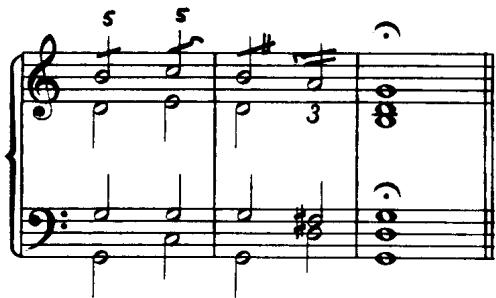
中文讲解
本段为第 41 页的图像/乐谱占位符。原图实际内容不可见,其位置与上文图注“Ex.2.1 Graces in play”相配;它应展示 Bevin 装饰表中各符号所对应的写出版本(带指法)。理解时不能凭描述臆测具体音符形态,需要查原书图。
补充说明
本占位符对应正文 P0323–P0327 提到的 GB-Lbm Add.31403 fol.5 内容。
第17段(P0329)
原文复述
‘The graces before, is here exprest in notes’
中文讲解
本段是引自抄本上的另一句原话:“先前的装饰,以音符形式在此表达”。它进一步确认上一段占位符图中所展示的内容是用音符写出而非纯符号描述,从而支撑作者以“写出版本诠释装饰”的研究方法。
第18段(P0330)
原文复述
[Figure placeholder: p.41 image/musical example, embedded image data omitted; position and caption retained]
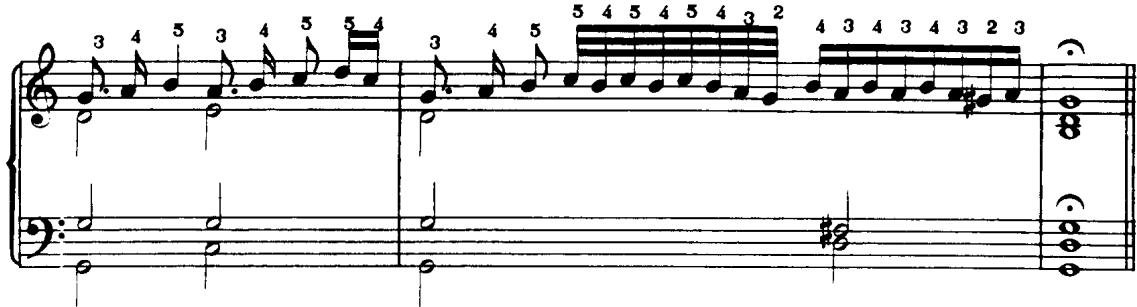
中文讲解
本段为第 41 页第二个图像/乐谱占位符,与上一图注 P0329 的引文位置对应。其展示对象尚未在文字中给出标题;具体内容需查原书图像。
第19段(P0331)
原文复述
Of these ornaments, unfortunately only the first accords with those found in virginal music of c.1560-1620; the remainder seems to be an attempt at codification by one person.
中文讲解
本段是对上文 Bevin 装饰表的可信度评估:表中所列装饰“可惜只有第一个与 c.1560–1620 年间维金纳琴曲谱中所见装饰相吻合,其余条目似乎是某人独自尝试编目而成”。作者借此把这份手稿的可信证据严格限定在一个装饰符号范围内,对其余条目保持怀疑,因此它不能简单当成“英格兰装饰百科”来使用。
第20段(P0332)
原文复述
It is ironical that we do not possess a single English treatise explaining the ornament signs used in virginal music, whereas the subject of ornamentation is discussed in many a Continental source. This is, however, not difficult to understand: on the Continent ornament signs were considerably much less used than in England; more important still, the Continental treatises make it clear that it was expected of keyboard players to add ornamentation impromptu as they performed a composition.
中文讲解
本段解释“为什么没有英国装饰论著反而可以理解”。表面上是反讽——大陆有大量装饰论著而英国没有一部;实质原因是:大陆装饰符号使用远少于英国,因此不靠符号也能被记住;更重要的是大陆教学预设演奏者应在表演中即兴添加装饰,因此需要文字说明;而英国大量靠符号在谱面标记,反倒催生了维金纳琴家“认符号即会装饰”的实践传统,使得符号的诠释被默认而不必再写成论文。理解本段要看到作者把“史料缺失”翻转成“实践外化”这一方法论关键点。
第21段(P0333)
原文复述
In comparison with the output of the Continent, relatively few books on music were written in England during the sixteenth and early seventeenth century. Early in the period John Dygon translated the fourth book of Gaffurius’ Practica musicae (Milan, 1496). Apart from the two translations in 1568 and 1574 of Le Roy’s lute instruction book (1567), William Bathe’s A Brief Introduction to the True Art of Musicke (1584) was the first to break the period of silence. The most important books to follow were those by Bathe, Morley, Dowland, Coperario, Campion and Ravenscroft. All are concerned mainly with music theory (rudiments, terms, sight-singing, counterpoint), the writing of canons and acoustics. In addition, apologias for church music were printed.
中文讲解
本段叙述英国本土音乐书籍的稀少与构成。早期 John Dygon 翻译了 Gaffurius《Practica musicae》(1496)的第四卷;除 1568 与 1574 年两次翻译 Le Roy 鲁特琴教程(1567)之外,William Bathe 的《A Brief Introduction to the True Art of Musicke》(1584)才打破这一出版沉寂期;其后重要的本土著作由 Bathe、Morley、Dowland、Coperario、Campion、Ravenscroft 写成;这些作品讨论的核心是基本乐理(基础、术语、视唱、对位),卡农写作与声学;另外还有一些为教会音乐辩护的小册子。读者需特别注意:本段的清单表面上囊括了许多“装饰可能的潜在路径”,但论域实际并不触及装饰——这是下一步段落要展开的论断。
补充说明
Gaffurius( Franchino Gaffuri)是 15 世纪意大利理论家;Le Roy(Adrian Le Roy)是法国鲁特琴家。本段脚注 4(参见 P0335)将引用 Boyd 关于伊丽莎白时期音乐与音乐批评的著作。
第22段(P0334)
原文复述
The general lack of sixteenth-century English treatises is demonstrated by Morley’s list of theorists he had studied. There, English writers are conspicuous by their absence. On the one hand, English theorists relied on Continental authors for much of their material, e.g. Dowland’s translation of Ornithoparcus’ Micrologus; Ravenscroft’s A brief discourse; and Morley, who draws heavily on Continental treatises. On the other, English theorists showed independence with their progressive ideas, particularly in areas such as solmization, notation, composition and the major/minor key theory. The absence in these books of any discussion of ornamentation or melodic embellishment, as well as the lack of instruction books (except for lute) similar to the Continental ones, remains a curious fact, particularly as diminution was an adjunct to part-writing in the contrapuntal theory of this period.
中文讲解
本段通过 Morley《Introduction》末尾他亲述自学的理论家名单来反证“16 世纪英国论著稀少”——名单里几乎没有英国本土作者。一面看,依赖关系很重:Dowland 译 Ornithoparcus 的《Micrologus》,Ravenscroft 写《A brief discourse》,Morley 大量借鉴大陆论著。另一面,英国理论家在唱名法、记谱法、作曲法、大小调理论上却显出独立性。真正的反常在于:这些书一本都不讨论装饰或旋律润色,且除鲁特琴外没有类似大陆的乐器教学书;考虑到对位理论中 diminution 本应是 part-writing 的辅助手段,这种沉默尤显奇特。理解时需注意反差的两个方向:依赖性与独立性并存,且与装饰讨论的缺席形成“理论与实践脱节”的局面。
补充说明
Ornithoparcus 即 16 世纪初德国音乐理论家 Andreas Ornithoparcus;Morley 即 Thomas Morley,《A Plain and Easy Introduction to Practical Music》(1597)的作者。脚注 5(P0336)将引 Morley 原作,脚注 6(P0337)将引 Atcherson 关于 17 世纪英国音乐理论的研讨文章。
第23段(P0335)
原文复述
4 See M.C. Boyd, Elizabethan Music and Musical Criticism (Philadelphia: University of Pennsylvania Press, 1962), pp.222f.
中文讲解
脚注 4:引自 M.C. Boyd《Elizabethan Music and Musical Criticism》(费城:宾夕法尼亚大学出版社,1962)第 222 页及之后一页。该脚注为正文 P0333 末尾提及“为教会音乐辩护的小册子”提供来源凭证,是正文观点的旁证。
第24段(P0336)
原文复述
5 Thomas Morley, A Plain and Easy Introduction to Practical Music (London, 1597), ed. by R.A. Harman (London: J.M. Dent, 1966), pp.321-322.
中文讲解
脚注 5:引 Thomas Morley《A Plain and Easy Introduction to Practical Music》(伦敦 1597 年原版;R.A. Harman 编辑重印,伦敦:J.M. Dent,1966)第 321–322 页。这是正文 P0334 中所谓“莫雷列出的理论家名单”所在页码,为作者关于英国理论家依赖大陆资料的核心断言提供直接出处。
第25段(P0337)
原文复述
6 See W.T. Atcherson, ‘Symposium on Seventeenth-Century Music Theory: England’, Journal of Music Theory XVI (1972), pp.6-15.
中文讲解
脚注 6:引 W.T. Atcherson,“Symposium on Seventeenth-Century Music Theory: England”,《音乐理论杂志》XVI 卷(1972)第 6–15 页。该脚注为正文 P0334 中关于英国理论家在唱名法、记谱、作曲、大小调理论上独立性的论点提供支撑。
第26段(P0338)
原文复述
In Morley’s Introduction the subject of diminution is discussed, but only as a technique connected with the subject of proportions. He states:
中文讲解
本段预告 Morley 实际上谈论过 diminution,但必须警惕严格限制:他只把它作为“比例”(proportions)这一议题下的技术来谈,因此不是装饰实践意义上的讨论,这是原文下一句直接引语的语境。读者要把 Morley 这条出处当作“概念存在 ≠ 装饰实践存在”的反例标本。
补充说明
脚注 7(P0343)将指明 Morley 原作所在页。
第27段(P0339)
原文复述
Diminution is a certain lessening or decreasing of the essential value of the notes and rests by certain signs or rules …
中文讲解
本段是 Morley 给 diminution 的定义原文:即通过某些符号或规则来“缩减”音符与休止的根本时值。这一定义与大陆传统中“旋律化装饰”的 diminution 是两回事——它属于比例记谱法层面,因此不能据此刻画装饰实践。
补充说明
这一界定呼应后文 P0340 中 Coperario 的“旋律性 diminutio”差异对比。
第28段(P0340)
原文复述
The only contemporary theoretical work in England dealing with diminution as the melodic elaboration of a simple progression, is Giovanni Coperario’s Rules how to compose. Dated c.1610, it remained unpublished at the time. Coperario nevertheless enjoyed a high reputation as a composer of both vocal and instrumental music. Fols. 11v to 18 are devoted to a section entitled ‘Of Division’. The subject is treated in two sections, namely the diminution of single intervals in one voice, and diminution in four parts. Coperario gives examples of how to make simple intervals more elaborate by breaking them up into smaller note values; the intervals used are the rising and falling third, fourth and fifth. Consisting mostly of passing notes, these diminutions exhibit the same principles as their Italian counterparts, in that they do not modify the structural intervals, yet they do not appear to be taken directly from another source. Here is Coperario’s diminution of the rising third:
中文讲解
本段介绍英国当时唯一一份把 diminution 处理为“旋律性展开”的当代理论作品:Giovanni Coperario 的《Rules how to compose》,c.1610 年写成,当时未出版。第 11v–18 叶有“Of Division”一节,分为两个部分:单声部单音程的 diminution,以及四声部中的 diminution。Coperario 通过把简单音程拆解成更小音符值来说明如何使乐句更繁复,使用音程为上、下行的三度、四度、五度;这些以经过音为主的 diminutions 与意大利范例原则一致——不改变结构音程的功能,但也不像是直接抄自某一具体来源。理解这段要把握“唯一”措辞所暗含的史料排他性:所有英国本土旋律性 diminution 论证都从此处出发。脚注 8(P0344)、脚注 9(P0345)对应出版信息与具体出处。
补充说明
Coperario(John Cooper 化名)是 17 世纪初英格兰重要的器乐与声乐作曲家;Ex. 2.2 即上行三度的 diminution 见乐曲图(P0341)。
第29段(P0341)
原文复述
[Figure placeholder: p.43 image/musical example, embedded image data omitted; position and caption retained]

中文讲解
本段为第 43 页的图像/乐谱占位符,与前段 P0340 文末“Here is Coperario’s diminution of the rising third”对应(Ex. 2.2)。原图缺失,只能确认它呈现的是 Coperario 对上行三度的 diminution 方案,具体音符须查原书。
第30段(P0342)
原文复述
Compared to other treatises, his choice of intervals is limited, since the Italian writers usually include examples extending to the octave. Coperario’s diminutions, too, are less flamboyant than some of the Italian passaggi, and an interesting phenomenon of theirs is that they are made only on the first of the two notes comprising the interval, contrary to Bovicelli’s examples, for instance, where the latter note is often also broken up. The examples for the interval of a fourth therefore resemble pre-beat clamationi:
中文讲解
本段给出 Coperario 的特点及其与意大利范例的差异:音程选择有限(意大利通常延伸到八度);花饰总体不如意大利 passaggi 那样华丽;更关键的特征是 diminution 只施加在“构成音程的两音中的第一音”,与 Bovicelli 等人把后音也拆分的做法相反——因此其四度音程的范例形似“前倚音式吟诵”(pre-beat clamationi)。理解这段时要关注“位置规则”:Coperario 强调前音而非后音的展开,本质上把 diminution 当成“前向装饰”而非“二音对称重写”,这与英国实践的勾连将在下节继续。脚注 10(P0351)给出 Coperario fol.12v 出处。
补充说明
passaggi 指意大利声乐/器乐技巧性旋律花腔;clamationi 是意大利语中类似吟诵或宣叙旋律;此处的 pre-beat 指“先于拍点”的装饰位置。
第31段(P0343)
原文复述
Morley, Introduction, p.43
中文讲解
脚注 7:Morley《Introduction》第 43 页,是正文 P0339 引用“Diminution is…”的直接出处页码。这是支持 P0339 引语的真实页来源。
第32段(P0344)
原文复述
Giovanni Coperario, Rules How to Compose, ed. by M.F. Bukofzer (Los Angeles: E.E. Gottlieb, 1952).
中文讲解
脚注 8:Giovanni Coperario《Rules How to Compose》,M.F. Bukofzer 编(洛杉矶:E.E. Gottlieb,1952)。该脚注为正文 P0340 介绍 Coperario 论著的整体出版信息提供来源,是全书引用该手稿的核心版本出处。
补充说明
Bukofzer(Manfred F. Bukofzer)是 20 世纪重要早期音乐史学家。
第33段(P0345)
原文复述
9 Ibid., fol.11v.
中文讲解
脚注 9:同上引书(Coperario《Rules How to Compose》,Bukofzer 编),第 11v 叶。这是正文 P0340 中“Here is Coperario’s diminution of the rising third”例 2.2 所依据的具体抄本页码。
第34段(P0346)
原文复述
Ex.2.3
中文讲解
本段是图注“例 2.3”。它对应 P0342 末尾讨论的 pre-beat clamationi 形态示例,需配合正文阅读;具体内容因原图不可见而只能从 P0342 推断为某种前倚音式的四度 diminution 范例。
第35段(P0347)
原文复述
[Figure placeholder: p.44 image/musical example, embedded image data omitted; position and caption retained]

中文讲解
本段为第 44 页的图像/乐谱占位符,对应上文图注 Ex. 2.3 的具体谱例,是 Coperario 四度音程范例的位置标记,需查阅原书图像才能看到乐谱内容。
第36段(P0348)
原文复述
2.2 Ornaments in Virginal Music
中文讲解
2.2 小节标题“维金纳琴曲谱中的装饰”。这一小节转向以曲谱实物为核心的证据,研究维金纳琴与鲁特琴曲谱中装饰符号的实际使用方式。
补充说明
virginal music 指英国伊丽莎白与雅各宾时期键盘家(Virginalists)创作的维金纳琴音乐。
第37段(P0349)
原文复述
The ornamentation used by keyboard players of the period is of two kinds: those written out in full in the text - integrated as such into the compositional structure - and those indicated by sign. It is in the use of ornament signs that English keyboard and lute music differs from that of its contemporary Continental counterparts: in the latter, the signs occur only sporadically; in the virginal and lute sources, they abound on every page of music.
中文讲解
本段开门见山给出双重分类:键盘手的装饰分两类——写入正文(已整合入作曲结构中)与符号标记者;并把“符号标记密度”作为英欧的根本差异——大陆“偶见符号”,英国维金纳琴与鲁特琴谱则“每页都密布符号”。这是后续整段论及具体符号时的方法学起点:理解英国装饰史不能离开曲谱上的真实符号分布。
第38段(P0350)
原文复述
The two most common signs used in English keyboard music of the period are the oblique single and double strokes: ♣ ♣ . Their origin is unknown, but may be connected to the two signs most commonly used by contemporary English lutenists: × and #. With but few exceptions, the Virginalists used only two signs at a time when signs were proliferating in lute music. The earliest extant sixteenth-century English sources, Roy. App. 56(c.1530) and Roy. App. 58 (c.1540-60), contain no signs. Two other early sources, GB-Lbm Add. 15233 (before 1550) and GB-Lbm 29996 make use of the double stroke. L1 is the earliest important source showing the use of the double stroke: it appears in sixteen of the ninety-four liturgical organ works. The single stroke appears in only one piece of this collection of Tudor organ music, and there it occurs three times in one bar, drawn through the
中文讲解
本段细致梳理英国键盘音乐里两种最常见的装饰符号——单斜划与双斜划。符号来源不明,但可能与同时期英国鲁特琴家最常用的两种符号 × 与 # 有关。在鲁特琴符号激增的年代,维金纳琴家仅以两种符号为主,例外不多。最早 16 世纪英国存世资料 Roy. App. 56(c.1530)与 Roy. App. 58(c.1540–60)并无任何装饰符号;另外两份早期资料 GB-Lbm Add. 15233(1550 年前)与 GB-Lbm 29996 已经使用双斜划。L1 是最早显示双斜划的重要资料,它在 94 首礼仪管风琴曲中有 16 首使用双斜划;单斜划只在一首曲子里出现,且只在一小节内出现三次(划穿音符)。理解本段时须注意“符号演化先行”的提法:符号使用先在鲁特琴谱中激增,维金纳琴家随后吸收并保持精简。脚注 11(P0352)给出 L1 与 GB-Lbm Add. 15233 的具体叶号。
补充说明
Roy. App. 56、Roy. App. 58 是英国皇家音乐手稿编号(Royal Appendix);L1 即《伦敦 1 号》(Ms. Add. 15166,或更通常称 Mulliner Book 之外的“L1”),即现存最早英国礼仪管风琴曲集。
第39段(P0351)
原文复述
10 Coperario, Rules, fol.12v.
中文讲解
脚注 10:同上引 Coperario《Rules》第 12v 叶。这是正文 P0342 中关于“四度音程范例形似 pre-beat clamationi”的具体抄本页码。
第40段(P0352)
原文复述
11 L1, fols.6-45 (c.1547-49), fols.45V-67V, 158-178V (copied round about the reign of Mary); GB-Lbm Add. 15233, fol.6v.
中文讲解
脚注 11:指出 L1 中 fols. 6–45(c.1547–49)与 fols. 45V–67V、158–178V(玛丽女王在位时期抄录)以及 GB-Lbm Add. 15233 第 6v 叶,是讨论早期装饰符号史的原始叶号证据,属正文 P0350 关于符号最早出现位置的史料注释。
补充说明
玛丽女王指 Mary I(1553–1558 在位);原文中“45V”实际为 folio 背面 45 verso 的标写风格。
第41段(P0353)
原文复述
note head:
中文讲解
本段是 P0350 的延续说明:单斜划在该曲那一小节中划穿符头(note head)出现三次。由于是行末悬词,下一段紧接图例 Ex. 2.4。
第42段(P0354)
原文复述
Ex.2.4
中文讲解
本段为图注“例 2.4”。它对应上文 P0355 提及的 Coxsun《Veritas mea》中那个“单斜划三次划穿符头”的实例,作为符号放置方式的具体证据。
第43段(P0355)
原文复述
Coxsun, Veritas mea
中文讲解
本段是图例 2.4 的曲题署名:Coxsun(应为 Cosyn / Clement Cosyn 或相关变体)的《Veritas mea》。它标识曲例来源。该曲例承担证明“单斜划可三次划穿符头”这一放置现象的任务。
第44段(P0356)
原文复述
[Figure placeholder: p.45 image/musical example, embedded image data omitted; position and caption retained]
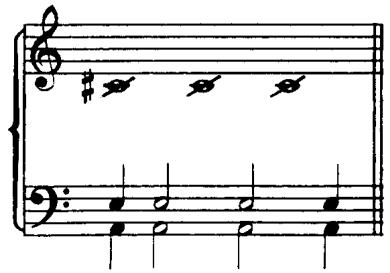
中文讲解
本段为第 45 页的图像/乐谱占位符,对应上文图注 Ex. 2.4 Coxsun《Veritas mea》的具体谱例,需查阅原书图像。
第45段(P0357)
原文复述
The single stroke is absent from the Mulliner Book (written c.1560-75, and containing Elizabethan and pre-Elizabethan music), while the double stroke is used sparingly. In addition to the double and single stroke (the latter occurs frequently), the Dublin Virginal Manuscript (c.1560-70) employs this sign: [graphic omitted] Virginal music of the later sixteenth and early seventeenth centuries employs the single stroke considerably less often than the double stroke, except in the Cosyn Virginal Book where its occurrence is very frequent. The simultaneous use of two ornaments occurs already in Mu: [graphic omitted] In the DVM the following combinations are found: [graphic omitted] and in Parthenia In-Violata: [graphic omitted] In addition to the two most commonly used signs, a third, consisting of three oblique strokes, is occasionally encountered. Its first appearance is found in Mu, in Blitheman’s Gloria tibi Trinitas (fol.88V). Thomas Preston’s Felix Namque (L1, fol.40) shows multiple crossings of the note stem ([graphic omitted]),
中文讲解
本段进一步描绘不同英国抄本之间符号使用的差异。Mulliner Book(c.1560–75,包含伊丽莎白及更早曲目)完全没有单斜划,双斜划也仅偶用;Dublin Virginal Manuscript(c.1560–70)则在双/单斜划之外多出一种第三符号;晚期 16 世纪至 17 世纪初的维金纳琴曲谱中单斜划远少于双斜划,Cosyn Virginal Book 例外,其单斜划使用极频繁。同步使用两种装饰已在 Mu(Mulliner Book)中出现;同样的组合在 DVM 与 Parthenia In-Violata 中也出现。除两大常用符号外,还偶见“三斜划”,最早出现在 Mu 第 88V 叶 Blitheman 的《Gloria tibi Trinitas》;Thomas Preston 的《Felix Namque》(L1 第 40 叶)则显示同一符干多次交叉。脚注 13(P0359)、14(P0360)、15(P0361)、16(P0362)、17(P0363)给出了这些叶号与版本出处。理解时需分清“看得到的形态 vs 文献的对比关系”:作者主要在用不同抄本对比符号形态,并借此说明符号系统在英国并非统一。
补充说明
DVM(Dublin Virginal Manuscript)即都柏林维金纳琴手稿;Parthenia In-Violata 是 17 世纪初英国最早的维金纳琴印刷本之一;Cosyn Virginal Book 命名来自 Clement Cosyn;Blitheman、Preston 都是都铎/伊丽莎白时期的英国作曲家。
第46段(P0358)
原文复述
12 D. Stevens, ed., Early Tudor Organ Music: II, Early English Church Music X (London: Stainer and Bell, 1969), p.112, b.13; and in L1 no.51, fol.43.
中文讲解
脚注 12:D. Stevens 编辑,《Early Tudor Organ Music: II》,收录于《Early English Church Music》X 卷(伦敦:Stainer and Bell,1969)第 112 页第 13 小节;以及 L1 中第 51 号第 43 叶。该脚注为正文 P0350 末尾关于“单斜划在某处一笔三连”提供版本与叶号支持。
第47段(P0359)
原文复述
13 Mu, fols. 3-6v, 8,12,71v,88v.
中文讲解
脚注 13:指 Mu(Mulliner Book)第 3–6v、8、12、71v、88v 叶。这是正文 P0357 中“Mulliner Book 中双斜划偶用”以及“同步使用两装饰”与“三斜划首次出现”所在叶号,是各处形态出现的具体段落凭证。
第48段(P0360)
原文复述
14 J. Ward, ed., The Dublin Virginal Manuscript, The Wellesley Edition no.3 (Wellesley, Mass.: Wellesley College, 1954), pp.1,17,18,19,29,30.
中文讲解
脚注 14:J. Ward 编辑,《The Dublin Virginal Manuscript》,《Wellesley 版》第 3 号(韦尔斯利,麻省:韦尔斯利学院,1954)第 1、17、18、19、29、30 页。该脚注为正文 P0357 关于都柏林维金纳琴手稿中装饰符号的页码位置凭证。
第49段(P0361)
原文复述
15 Mu, fol.4v.
中文讲解
脚注 15:Mu(Mulliner Book)第 4v 叶。这是 P0357 中“同步使用两装饰”之 Mu 例的具体叶号来源。
第50段(P0362)
原文复述
16 Ward, Dublin Virginal MS, pp.2,6,7,8,11.
中文讲解
脚注 16:见 J. Ward《Dublin Virginal MS》第 2、6、7、8、11 页。是 P0357 中关于“DVM 中组合符号”所在页码的直接出处。
第51段(P0363)
原文复述
17 Parthenia In-Violata (London, c.1625), facs. reprint (New York: The New York Public Library, 1961), p.54.
中文讲解
脚注 17:《Parthenia In-Violata》(伦敦,c.1625),原版影印本(纽约:纽约公共图书馆,1961)第 54 页。该脚注为 P0357 中 Parthenia In-Violata 那组符号组合的页码位置提供凭证。
第52段(P0364)
原文复述
used three times in succession in the same melodic pattern. Probably this, too, indicates an ornament. The triple-stroke ornament is otherwise rare, appearing occasionally in Co (fols. 106,109,110,168,169,171) and in the second half of Priscilla Bunbury’s Virginal Book. In Wr the signs ’n’ or ‘♪’ - unique to this source - are used up to fol.25, in conjunction with double-stroke ornaments.
中文讲解
本段是 P0357 尾部的延续,先接收上述多次符干交叉的实例在 Preston《Felix Namque》中连续出现三次,描述为同一旋律模式内,作者推测它仍属装饰符号;接着说明三斜划装饰虽罕见,仍零星见于 Cosyn 书(fols. 106、109、110、168、169、171)以及 Priscilla Bunbury 维金纳琴本后半部分。最后指出在 Wr(Wodenham/Loder/W…etc 系列,具体为何处资料需查上下文)中,独有的 ‘n’ 或 ‘♪’ 符号仅在该资料的前 25 叶之中与双斜划装饰并用。脚注 18(P0367)和 19(P0368)给出 Stevenson 与 Boston 的版本依据。理解时注意作者处理稀有信号的双重策略:先承认“罕见”,再以其他抄本和叶号相互印证。
补充说明
Co 指 Cosyn Virginal Book;Wr 指 Willoughby/W… 一种特定抄本缩写,原文未给全名;Priscilla Bunbury 的抄本是英国 17 世纪初私人维金纳琴本。
第53段(P0365)
原文复述
The placement of the signs on the note stems, and in the case of stemless notes, above or below or through the notehead, is very inconsistent. The significance of this is still uncertain; modern editions do not show the exact placement as they occur in the manuscripts. In the Tudor organ music of L1, the double stroke is always drawn through the top of the stem (J), and in the case of a semibreve, through the note: [graphic omitted]. In My Ladye Nevells Booke, which is carefully written out in one hand, both J and J appear. In Parthenia the single stroke appears as J (nos.16,18), whereas in PI (by the same engraver as Pa) J (nos.5,9,10,11,14,15,16,18), J (nos.2,8,9) and J (nos.19,1,2,9) are used. In PI no.9, all three lateral dispositions are used. In Co, Cosyn usually draws the single stroke through the top of the stem of minims and crotchets, but with quavers it passes through the stem: J. Occasionally, he reverts to J and J (fols.86-87, 100-114, 162, 196-199).
中文讲解
本段集中讨论符号在音符符干与符头上的放置位置变化及其意义的不确定性。符干音符的符号位置,以及在无符干音符(semibreve)上的上方、下方或穿过符头位置——非常不一致;其意义至今未定;现代版本未按手稿原样显示位置。L1 都铎管风琴音乐中的双斜划总是贯穿符干顶端;遇全音符则穿过音符;My Ladye Nevells Booke 由一人细心抄写,仍有两种形态;Parthenia 中单斜划有特定形态(nos.16、18);PI(同 Parthenia 雕版师)显示三种侧位(nos.5、9、10、11、14、15、16、18;2、8、9;19、1、2、9),其中 PI 第 9 号并用三种方位;Cosyn 在 minim 与 crotchet 上通常将单斜划贯穿符干顶端,quaver 则贯穿符干;偶尔恢复另两种位置(fols. 86–87、100–114、162、196–199)。理解时需把这段当成“位置统计”:作者承认这是尚未解决的方法学难题,所以其后的解释必须接受位置放置本身的歧义。
补充说明
My Ladye Nevells Booke 是现存最重要的英国 16 世纪末私人维金纳琴本;PI 即 Parthenia In-Violata;Pa 即 Parthenia;semibreve、minim、crotchet、quaver 是当时的全音符、半音符、四分音符、八分音符。
第54段(P0366)
原文复述
One, two or more strokes are occasionally used, not as ornament signs, but as erasures. More ambiguously, the strokes may sometimes be intended as a visual aid to indicate voice leading or badly aligned parts. In the early sixteenth-century source, Roy. App.56, there is an instance where the stems are crossed.
中文讲解
本段提示一个方法学警告:单、双、多斜划并非总是装饰符号,有时作涂改删除使用,更有甚者仅作“视觉辅助”——标记声部进行或提示错位的声部。在 16 世纪早期资料 Roy. App. 56 中便有一例符干被交叉,并无音乐含义。本段与上段共同构成 P0365 “位置意义不确定”的证据基础,即不能把所有看到的线条一律当作装饰符号使用。
第55段(P0367)
原文复述
18 Stevens, EECM X, p.62, b.19-21.
中文讲解
脚注 18:见 Stevens,EECM X,第 62 页,第 19–21 小节。这是正文 P0364 关于 Preston《Felix Namque》中符号连续三次出现的具体版本小节号凭证。
第56段(P0368)
原文复述
19 J. Boston, ed., Sixteen Pieces from Priscilla Bunbury’s Virginal Book (London: Stainer and Bell, 1962).
中文讲解
脚注 19:J. Boston 编辑,《Sixteen Pieces from Priscilla Bunbury’s Virginal Book》(伦敦:Stainer and Bell,1962)。这是 P0364 中关于 Priscilla Bunbury 维金纳琴本后半部三斜划装饰所见版本的来源。
第57段(P0369)
原文复述
20 L1, fols.40,43,171v.
中文讲解
脚注 20:L1 第 40、43、171v 叶。这是正文 P0365 中关于 L1 中双斜划绘制方式的叶号依据。
第58段(P0370)
原文复述
The purpose is probably to show the badly aligned tenor part. The fact that no other ornament signs are used in this manuscript, strengthens this view. The crossing of a stem as a cancellation sign also occurs in L1 (fols.19v,63), and in Fo (p.110). In L1 the horizontal line drawn through the stem of a note is certainly intended to cancel the stem of a note erroneously written, e.g. fol.51v, and in PB, thus:
中文讲解
本段继续 P0366 的反例论证:那种 Roy. App. 56 中的符干交叉是为了标出错位的 tenor 声部位置,因为该手稿无任何装饰符号,这一解释得到强化。符干交叉作为“删除/取消符号”也出现在 L1(fols. 19v、63)与 Fo(第 110 页);在 L1 中贯穿符干的水平线显然是用来删除那些错写的符干,如 fol. 51v;同理也见于 PB(Priscilla Bunbury)。脚注 21(P0374)与 22(P0375)指明这些位置。理解时注意区分两种不同功能:装饰信号 vs 修订/提示功能,作者为后者保留充分证据,从而限制装饰符号的可能数量。
补充说明
Fo 应指 Forrest-Heyther/Forster 等英国抄本的另一缩写;PB 指 Priscilla Bunbury 抄本;本章脚注与正文页码对照。
第59段(P0371)
原文复述
2.3 English Keyboard Ornamentation after c.1625
中文讲解
2.3 小节标题“约 1625 年之后的英国键盘装饰”。本节把视线从维金纳琴时期前移至 17 世纪中后期,研究装饰系统如何从“维金纳琴家符号”过渡到“新系统”,并讨论法国影响。
第60段(P0372)
原文复述
The period c.1625 to c.1660 forms the transition to the period in which the style of keyboard music changed greatly and a new system of ornaments was introduced. The changes which took place included the invention of new ornament signs and ornaments, and, also, those signs taken over from the Virginalists, underwent a change of placement. During the transition, the single and double strokes of the Virginalists were still commonly used, drawn through the stems of the notes. Later in the seventeenth century these signs were still employed, but their placement changed: they were transferred from the note stem to a position above or below the note.
中文讲解
本段把 c.1625–c.1660 定位为“过渡期”。变化包括:发明新装饰符号与装饰种类;从维金纳琴家继承的符号本身也发生了“位置”变化。过渡期间,单/双斜划仍被常用,且仍贯穿符干;17 世纪后期同样使用这两类符号,但放置位置改变——从符干转移到音符上方或下方。理解时关注两点:其一是“符号保留 + 位置变”的连续性;其二是“新符号 + 新装饰类型”的不连续性;这两条线索贯穿全节。
第61段(P0373)
原文复述
In Anne Cromwell’s Virginal Book (1638) and Elizabeth Rogers Hir Virginall Booke (1656) the signs are still drawn through the stem of the notes. A few exceptions occur in these sources. One such case is a combination sign in AC where the single stroke is removed from the note: [graphic omitted]. In Ro the double stroke is placed beside a note if the ornamented note is the middle note of a chord: [graphic omitted] Only one other sign occurs in these sources, and then only once, in Ro: [graphic omitted]. The most noteworthy element present in AC and Ro, however, is the replacement of the groppo by a stereotyped melodic formula which includes the double stroke. Even though this formula is sporadically found in earlier sources of virginal music, its repeated use in these two later sources is a new development:
中文讲解
本段以两个具体抄本说明过渡期的实物证据。Anne Cromwell’s Virginal Book(1638)与 Elizabeth Rogers Hir Virginall Booke(1656)里的符号仍贯穿符干,但已出现若干例外:AC 中一个“组合符号”把单斜划从音符移开;Ro 中双斜划在装饰音为和弦中间音时被放置在音符旁;Ro 中另有一个仅出现过一次的“其他符号”。但最关键的发现是 groppo 被“含双斜划的典型化旋律公式”所取代。这种音形早期维金纳琴曲谱中零星见到,但在 AC 与 Ro 中的反复使用是新发展。理解时需关注“功能延续 + 形态变化”这一双重特征:信号外观发生变化,但终止位装饰功能保持。脚注 23(P0376)与 24(P0386)将给出版本与页码。
补充说明
AC 即 Anne Cromwell’s Virginal Book;Ro 即 Elizabeth Rogers Hir Virginall Booke;groppo 在 1.5.3 中已介绍,指意大利终止式装饰音形;本段作者暗示英国人也吸收并本土化了这一概念。
第62段(P0374)
原文复述
21 Stevens, EECM X, p.54, b.17.
中文讲解
脚注 21:Stevens,EECM X,第 54 页,第 17 小节。是 P0370 关于 Roy. App. 56 中符干交叉实例的叶号小节凭证。
第63段(P0375)
原文复述
22 J. Boston, ‘Priscilla Bunbury’s Virginal Book’, Music and Letters XXXVI (1955), p.371.
中文讲解
脚注 22:J. Boston,“Priscilla Bunbury’s Virginal Book”,《Music and Letters》XXXVI 卷(1955)第 371 页。该脚注为 P0370 中 PB 抄本里“水平线贯穿符干用作删除符号”提供版本出处。
第64段(P0376)
原文复述
23 H. Ferguson, ed., Anne Cromwell’s Virginal Book (London: Oxford University Press, 1974), p.23.
中文讲解
脚注 23:H. Ferguson 编辑,《Anne Cromwell’s Virginal Book》(伦敦:牛津大学出版社,1974)第 23 页。该脚注为正文 P0373 中关于 AC 中组合符号位置异常的页码证据。
第65段(P0377)
原文复述
[Figure placeholder: p.48 image/musical example, embedded image data omitted; position and caption retained]
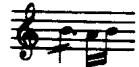
中文讲解
本段为第 48 页的图像/乐谱占位符,与后文 Ex. 2.5 一起,提供 AC/Ro 中典型化 groppo 公式与双斜划共生形态的可视位置。具体形态需查原书。
第66段(P0378)
原文复述
In AC the written-out groppo occurs only three times, and then in one piece (p.29, b.16,24,30), and in Ro only in one piece by Byrd. The use of the stereotyped formula in cadences instead of the groppo leaves little doubt about its interpretation as a groppo:
中文讲解
本段为 P0373 末尾“新发展”的细化论证。AC 中写出式 groppo 仅在第 29 页一首曲子的第 16、24、30 小节共出现三次;Ro 中仅在 Byrd 一首曲子里出现;“在终止位使用典型化公式代替 groppo”这一事实,使其被理解为 groppo 几乎不存疑。理解时要把握作者如何从分布密度(小样本却高度集中于终止位)来推出“功能等同”的结论。
第67段(P0379)
原文复述
Ex.2.5
中文讲解
本段是图注“例 2.5”。它对应上段讨论的 AC/Ro 中“典型化旋律公式 + 双斜划”组合示例,需查原图。
第68段(P0380)
原文复述
[Figure placeholder: p.48 image/musical example, embedded image data omitted; position and caption retained]

中文讲解
本段为第 48 页的图像/乐谱占位符,属于 Ex. 2.5 谱例的位置标记,具体音符需查原书。
第69段(P0381)
原文复述
[Figure placeholder: p.48 image/musical example, embedded image data omitted; position and caption retained]
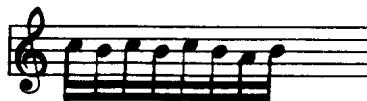
中文讲解
本段为第 48 页的另一个图像/乐谱占位符,与上文“典型化公式取代 groppo”相关,可能呈现不同抄本中的例子。需查原书确认。
第70段(P0382)
原文复述
In the following piece from Ro a groppetto precedes this formula, exactly as the written-out groppetto and groppo follow each other in earlier sources, where it is a stereotyped pattern followed in cadences:
中文讲解
本段报告 Ro 抄本中下一个证据:在终止位之前出现一个 groppetto(小 groppo),之后紧跟该典型化公式——这与早期来源中写出的 groppetto 和 groppo 前后相接的方式完全一致,且都是终止处的固定模式。脚注 25(P0387)指出乐例版本。此处的论证逻辑是“既然后音形匹配,又按相同顺序出现,则二者等同”,这是音乐符号学常见的“上下文等价判定法”。
补充说明
groppetto 指 groppo 的小尺度版本(即前置的短颤),是意大利终止公式中常见的前驱音形。
第71段(P0383)
原文复述
Ex.2.6 Glory of ye North, Ro fol.43b
中文讲解
本段为第 48 页图注“例 2.6 《Glory of ye North》, Ro 第 43b 叶”。它是支持 P0382 论证的具体谱例位置证据;曲题与叶号被一并给出,便于读者在原抄本中定位。
第72段(P0384)
原文复述
[Figure placeholder: p.48 image/musical example, embedded image data omitted; position and caption retained]
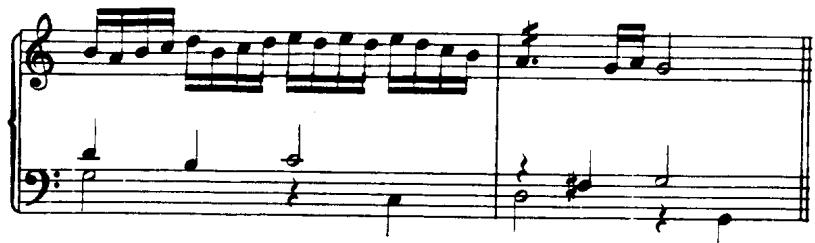
中文讲解
本段为第 48 页的图像/乐谱占位符,与上文 Ex. 2.6《Glory of ye North》对应,需查原书图像才能确认终止处的小 groppetto + 典型化公式组合。
第73段(P0385)
原文复述
This evidence supports the interpretation here of the double stroke plus suffix as a groppo. Another noteworthy phenomenon in Ro is the use of both the single stroke and written-out slides in the accompanied songs. Here the sign is used for the solo accompaniment, and the written-out slide for the singer. Concording passages suggest that they mean one and the same thing.
中文讲解
本段由 ro 中 groppo 的双重证据回到符号等价的解释。双斜划 + 后缀应被读作 groppo。此外 Ro 中一个值得注意的现象:在有伴唱的歌曲里,单斜划与写出式滑音被同时使用——前者用于独奏伴奏,后者用于歌手声部;从并行段落看,两者含义应一致。这一观察为“符号 ↔ 写出版本”之间的意义等同性提供了 Ro 抄本内部的内部佐证。脚注 26(P0390)将给出 Ro 中叶号位置。
第74段(P0386)
原文复述
24 Ro, fol.39b. See also J. Caldwell, English Keyboard Music before the Nineteenth Century (Oxford: Blackwell, 1973), pp.153-154,162; and C.J.F. Cofone, ed., Elizabeth Rogers Hir Virginall Booke (New York: Dover, 1975), p.78. In his edition Cofone omits the sign without comment.
中文讲解
脚注 24:Ro 第 39b 叶;并请参看 J. Caldwell《English Keyboard Music before the Nineteenth Century》(牛津:Blackwell,1973)第 153–154、162 页;以及 C.J.F. Cofone 编《Elizabeth Rogers Hir Virginall Booke》(纽约:Dover,1975)第 78 页,特别说明后者在版本中无说明地略去了这个符号。该脚注既为 P0373 中关于 Ro 内特殊双斜划位置现象提供位置凭证,也对现代编辑的疏漏作出批评性附注,是史料来源兼旁证。
第75段(P0387)
原文复述
25 Cofone, Elizabeth Rogers, p.87.
中文讲解
脚注 25:Cofone《Elizabeth Rogers》第 87 页。是 P0382 关于 Ro 中 groppetto 前置现象的具体谱例页码凭证。
第76段(P0388)
原文复述
Stylistic conflict marked the period 1625-1660. Men such as Tomkins (died 1656), Lugge and Carleton continued to write in a style similar to that of the earlier Virginalists, as opposed to progressives such as William Lawes (died 1645). Tomkins adhered strictly to the use of ornaments as employed by Byrd, Bull and Farnaby, with groppi written out in full. Opposed to this are the collections of music in AC and Ro, which exhibit features of a more homophonic style, and in which the groppo is replaced by an ornament sign. This stylistic ambiguity becomes even more evident if one considers a manuscript contemporary with Ro, GB-Och 1236, which employs various signs and placements: ♣ ♣ ♣, as well as a comma above the note, thus:
中文讲解
本段刻画过渡期的“风格冲突”。一类作曲家——Tomkins(卒于 1656)、Lugge、Carleton——沿用早期维金纳琴家风格,groppi 完全写出;与之相对,AC 与 Ro 显示更主调化的风格,groppo 被符号取代。另一本与 Ro 同时的 GB-Och 1236 抄本使用多种符号与多种位置——♣、♣、♣(不同形态斜划)与音符上方的逗号,进一步加剧风格模糊性。理解本段要把作者的三组对照(古典保守派 ↔ 进步派 ↔ 折衷抄本)整合成“风格光谱”——作者认为过渡期是多种实践并存而非单一过渡。
补充说明
GB-Och 1236 是牛津 Bodleian 图书馆保存的英国手稿编号;Tomkins、Lugge、Carleton 与 William Lawes 都是英国 17 世纪上半叶作曲家。
第77段(P0389)
原文复述
As Caldwell has pointed out, the emergence of the new system after 1650 is somewhat enigmatic. It is surely an adaptation of the French system to English practice; the retention of certain typically English signs such as the single and double stroke (now placed above the note) highlights English individualism in this matter. This is also proven by the English adaptation of the French tremblement sign (~~~) - which is a trill or shake - as an English sign indicating a mordent. In the absence of sufficient evidence, it is impossible to establish exactly when the old system gave way to the new. It is clear, however, that under French influence the shake starting with the upper note became the fashion in England around mid-century or the slightly later. The
中文讲解
本段总结“1650 年后新系统出现”的总体图景。引述 Caldwell 的观点:这一现象本身仍带谜;它显然是对法国系统的本土化适应;保留典型英国符号(单/双斜划,但位置已转至音符上方)则凸显英国个性;同一时期英国还把法语 tremblement 符号(~~~ 在法国指 trill/shake)改造成英语中的 mordent 符号——这是一项最直观的外来移植+语义改造的案例。证据不足让我们无法标定旧→新系统的明确时间点;可以确定的是,受法国影响,从中世纪中后期起,从上音起头的 shake 在英国流行开来。脚注 27(P0391)将引用相关讨论文献。本段末句“The”未完,承接下段。理解这段的关键:作者既给出法国影响,又强调英国主动性(保留旧符号+挪用旧符号)。
补充说明
tremblement 法国鲁特琴/键盘记谱中指 trill 类颤音;mordent 在英语传统中指带下方回转音的快速装饰;Caldwell 的评论参 P0386 脚注引书。
第78段(P0390)
原文复述
26 Ro, fols. 20b, 21b -22,23,41b.
中文讲解
脚注 26:Ro 第 20b、21b–22、23、41b 叶。这是 P0385 关于 Ro 中伴唱歌曲里单斜划与写出版本同时出现的具体叶号证据。
第79段(P0391)
原文复述
27 For discussions of post-Restoration ornamentation, see Caldwell, English Keyboard, pp.151-156; J. Harley, ‘Ornaments in English Keyboard Music of the seventeenth and early eighteenth Centuries’, Music Review XXXI (1970), pp.177f.; and B.A. Cooper, English Solo Keyboard Music of the Middle and Late Baroque (Ph.D. dissertation, Oxford, 1974), pp.377-422.
中文讲解
脚注 27:关于“王政复辟之后装饰”的讨论,参见 Caldwell《English Keyboard》第 151–156 页;J. Harley“Ornaments in English Keyboard Music of the seventeenth and early eighteenth Centuries”,《Music Review》XXXI(1970)第 177 页起;以及 B.A. Cooper《English Solo Keyboard Music of the Middle and Late Baroque》(博士论文,牛津大学,1974)第 377–422 页。该脚注为 P0389 关于 1650 年后新系统的论述提供延伸读物,与第 27 号脚注(Caldell 在 P0386 中也提到)在作用上构成补充参考。
第80段(P0392)
原文复述
double stroke above the note had almost certainly acquired that meaning by the time Musick’s Hand-Maid (1663) was published. In music before c.1660, such as in Ro, where the double stroke is still drawn through the stem of the note, the question is whether the ornament should be interpreted according to the meaning it had held for the Virginalists, or according to the new convention. As the style of the music is different, one might contend that the new meaning is more likely, even though the placing of the ornaments had not yet been stabilized. In Musick’s Hand-Maid, the only sign used is the double stroke. In pieces 1-55 the sign is drawn through the stem, whereas in 56-72 it appears above the note. It is significant here that pieces 56-72 were engraved by another craftsman. This suggests that whereas by 1660 the placement of these signs had not yet been standardized, by the 1670’s all ornaments were placed above the note, as may be seen in the keyboard music in Locke’s Melothesia of 1673. Locke’s ‘Advertisements to the Reader’ lists the names and signs, but not the realizations, of five ornaments. This is the earliest printed reference to keyboard ornaments in England:
中文讲解
本段承接上段尾句,展开时间证据。1663 年《Musick’s Hand-Maid》出版时,音符上方的双斜划几乎已确定语义。c.1660 之前,例如 Ro(双斜划仍贯穿符干)的音乐,究竟应按维金纳琴家旧义还是新约定理解——作者倾向后者,因为音乐风格已变;但位置尚未规范化。《Musick’s Hand-Maid》只使用双斜划一种符号:在第 1–55 首中仍贯穿符干,56–72 则出现在音符上方;这 56–72 首由另一位雕版师刻版,提示 1660 年前符号位置尚未标准化;至 1670 年代所有装饰都标注于音符上方,可由 Locke《Melothesia》(1673)键盘音乐印证。Locke 的“Advertisements to the Reader”列出五种装饰的名称与符号,但未给出具体实现方式——这是英格兰最早的印刷本键盘装饰列表。脚注 28(P0394)、29(P0395)、30(P0396)分别给出 Basset 在 Mersenne 中的描述、Musick’s Hand-Maid 的版本以及 Locke 的版本。理解时要把“时间—风格—位置—符号意义”这四条线一起看,作者以此构建出新系统确立的标准时序模型。
补充说明
Melothesia 是 Matthew Locke 1673 年出版的英国键盘曲集;Advertisements to the Reader 是卷首前言性质的小册子;装饰“位置尚未稳定”是作者主张的关键中间状态。
第81段(P0393)
原文复述
Ex.2.7
中文讲解
本段为图注“例 2.7”。它对应上文 Locke《Melothesia》“Advertisements to the Reader”中五种装饰的名称与符号列表,是英格兰印刷本中键盘装饰的最早呈现。具体内容须查原书图。
第82段(P0394)
原文复述
28 In French lute music, an upper-note shake (tremblement) had already been described by Basset in 1636, in Mersenne’s Harmonie universelle.
中文讲解
脚注 28:在 1636 年 Basset 于 Mersenne《Harmonie universelle》中已描述法国鲁特琴中的“从上音起头的颤音”(tremblement)。该脚注为正文 P0389/P0392 中关于“法国影响 / 上音起头的 shake 流行”提供更早大陆源头凭证,是支撑“法国影响先于英国输入”这一时间顺序的旁证。
补充说明
Mersenne 即 Marin Mersenne,《Harmonie universelle》是 17 世纪法国重要音乐理论巨著。
第83段(P0395)
原文复述
29 The First Part of Musick’s Hand-Maid (London, 1663), ed. by T. Dart (London: Stainer and Bell, 1969), p.26.
中文讲解
脚注 29:《Musick’s Hand-Maid》第一部分(伦敦,1663),T. Dart 编辑(伦敦:Stainer and Bell,1969)第 26 页。该脚注为正文 P0392 关于该曲集内部雕版差异(1–55 首与 56–72 首)提供版本出处。
第84段(P0396)
原文复述
30 Matthew Locke, Keyboard Suites, ed. by T. Dart (London: Stainer and Bell, 1964), n.p. The realizations are taken from Purcell’s ornament table.
中文讲解
脚注 30:Matthew Locke《Keyboard Suites》,T. Dart 编辑(伦敦:Stainer and Bell,1964)无页码;其实现方式(realizations)采自 Purcell 的装饰表。该脚注为正文 P0392 中关于 Locke《Melothesia》(1673)里装饰位置在 1670 年代已普遍为音符上方,以及 Locke 在卷首列出五种装饰的页码/印刷位置提供来源凭证;同时把装饰具体实现方式与 Purcell 表关联,是把两人装饰规范对齐的旁注。
脚注 / 边栏 / 图表 / 附加信息(如有)
本节附带的非正文材料主要包括:脚注 1–30(涵盖 Steele、Arber、Boyd、Morley、Atcherson、Coperario 编辑本、Stevens、Ward、Boston、Stevens、Stevens、Stevens、P0394 中 Basset/Mersenne 等版本与页码出处)、Table 1.1(本章各类声乐/器乐装饰汇总表,文本未展开内容)、图例 Ex. 2.1–Ex. 2.7(Graces in play 装饰表、Coperario 上行三度 diminution、Coperario 四度音程范例、Coxsun《Veritas mea》中单斜划三次划穿符头、AC/Ro 中典型化 groppo 公式,《Glory of ye North》中 groppetto+公式组合,以及 Locke Melothesia 五种装饰符号表)。这些材料支撑正文中对装饰一致性的论断与过渡期风格争论。
💡 本节核心要点
- 16 世纪意大利与西班牙装饰在功能上均为“graceful decoration”,并写入终止式花饰,但仅意大利人称之为 groppo;交替型装饰(tremolo / quiebro)总体一致,仅在低音符使用与时值比例上出现细微差别,且非交替型装饰在西班牙资料中完全不见。
- 英国 16–17 世纪初不存在专门讨论 diminutio 或装饰的本土论著(鲁特琴/西塞恩琴除外),但大陆传统同样默认即兴装饰,故英国采取符号密集谱面替代论著说明。
- 英国理论家虽依赖大陆资料,但在唱名法、记谱、作曲与大小调理论上独立;Coperario《Rules how to compose》c.1610 是英国当时唯一把 diminution 作为旋律性展开处理的理论著作,音程限制在三、四、五度,且偏好作用于音程的第一音,与意大利 Bovicelli 同时拆双音的做法形成对照。
- 英国键盘音乐装饰分两类:写出版与符号标记;后者的核心特征是单/双斜划密度极高,主要见于符干顶端或符头;符号的位置歧义与删除/对齐功能并存,是现代版本常不可复原的方法学难题。
- c.1625–c.1660 是维金纳琴家符号 → 新系统的过渡期;AC(1638)与 Ro(1656)显示 groppo 被含双斜划的典型化旋律公式替代,但 Tomkins、Lugge、Carleton 仍沿用维金纳琴家全写风格;GB-Och 1236 等同时期抄本显示风格混杂。
- 1660 年前后符号放置仍未稳定:Musick’s Hand-Maid(1663)1–55 首与 56–72 首的雕版差异表明,至 1670 年代 Locke《Melothesia》(1673)才确立所有装饰置于音符上方;Locke 卷首列出五种装饰为英格兰最早印刷本装饰列表;其意义大量借鉴法国 tremblement 框架,同时保留典型英国符号,体现本土对外来传统的选择性采纳。
🔑 关键术语
- groppo / groppetto:意大利终止式装饰音形,groppetto 是 groppo 的小尺度版本,常作为前驱音形出现在终止位之前。第 1.5.3 节指出它由意大利人命名,西班牙虽然写出同样音形但不命名;第 2 章则指出英国在 AC 与 Ro 中以“含双斜划的典型化公式”形式重新引入 groppo。
- tremolo / quiebro:分别指意大利与西班牙的交替型颤音,本节明确指出两者在功能、指法、记谱基础上实际为同物,仅在使用范围(quibro 不用于 minim 以下音符)与时值分配(仅 Diruta 说占原音符一半)上有差别。
- alternating vs. non-alternating 装饰:交替型装饰依靠主音与上下辅助音的快速交替(tremolo / quiebro 属此类);非交替型装饰不依赖交替,第 1.5.3 节指出该类装饰在西班牙资料中完全不见,而意大利仅少量写出。
- diruta / bermudo / sancta maria / ammerbach:装饰史核心理论家:Diruta(意大利,论颤音时值比例)、Bermudo(西班牙,唯一提到低音符重复型 quiebro)、Sancta Maria(西班牙,引入 redobles 等独有花饰)、Ammerbach(德国,继承意大利传统);本节通过他们与意大利/西班牙作者的态度对比揭示装饰概念跨地区流动。
- diminutio / diminution:本章核心术语之一;在 Morley 论著中专指“用符号/规则缩减时值”的比例技术(不同于装饰含义),而在 Coperario《Rules How to Compose》中专指通过拆解三/四/五度音程而成的旋律性展开,二者并非同一概念;脚注 8–10 标明版本与叶号。
- Virginalist / Virginal music:指 16 世纪后期至 17 世纪初英国维金纳琴作曲家的音乐实践,他们的符号传统以单/双斜划密度极高为标志;第 2.3 节用此起点刻画符号系统向“新系统”过渡。
- single stroke / double stroke / triple stroke:英国键盘装饰的三大主符号;单/双斜划是核心,三斜划罕见;它们的现代释义争议集中在位置歧义与可否作为擦除符号,本节以 L1、Mu、DVM、Parthenia In-Violata、Co 等抄本为对比样本。
- Musick’s Hand-Maid / Melothesia:1663 与 1673 英国键盘曲集,是 1660 之后到 1670 装饰符号位置与意义演变的两个时间标记;后者卷首列出五种装饰为英格兰最早印刷本装饰说明。
- tremblement / shake / mordent:法国传统 tremblement 指上音起头颤音;英国把它本土化、挪用作 mordent 的符号;本节以此说明外来装饰体系的语义再造。
- Stationers of London / Arber register:伦敦书业公会登记册及 1876 Arber 影印转录本,是确认 1597 年《A playne and perfect Instruction…》获准付印却无副本存世的唯一一手史料。