目录
ch4 4. THE ORNAMENTS WRITTEN OUT IN NOTES IN THE FITZWILLIAM VIRGINAL BOOK
- 4.0 [描述性拆分] Introduction: The Ornaments Written Out in Notes in the FVB
- 页码:1-1
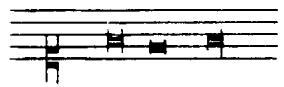
- 4.1 4.1 Clausula, Formal Close and Cadence in Renaissance Theoretical Sources
- 页码:1-5
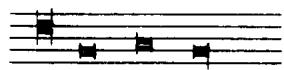
- 4.1.b [描述性拆分] Ornithoparcus’s Four Closes and Their Melodic-Harmonic Roles
- 页码:6-8
- 4.1.c [描述性拆分] Morley, Campion and Nutting on Cadence, Close and the Tenor’s Diminished Role
- 页码:9-12
- 4.1.d [描述性拆分] Synocopated Discant Close, Two Classification Schemes, and Terminological Resolution
- 页码:13-14
- 4.2 4.2 The Groppo
- 页码:14-14
- 4.2.1 4.2.1 Rhythmical Variants of the Groppo
- 页码:14-20
- 4.2.2 4.2.2 The Groppo as Decoration of the Discant Close
- 页码:20-25
- 4.2.2.1 4.2.2.1 The Groppo as Partial Decoration of the Note of Resolution
- 页码:25-31
- 4.2.2.1.b [描述性拆分] FVB Examples of Ornamental Figures Combined with the Groppo
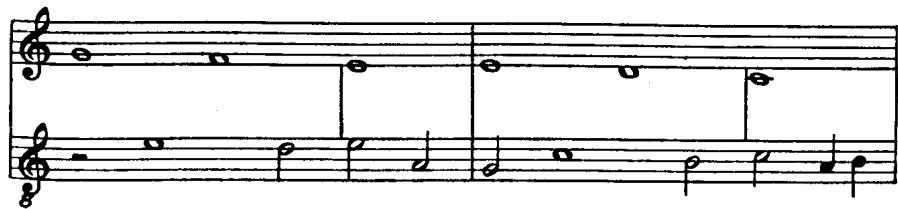
- 页码:31-33
- 4.2.2.2 [描述性拆分] 4.2.2.2 The Ornamented Anticipation of the Note of Resolution
- 页码:34-41
- 4.2.2.3 4.2.2.3 The Ornamented Anticipation in-lieu-of the Suspended Dissonance
- 页码:41-47
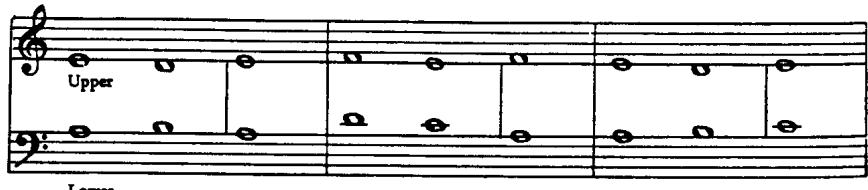
- 4.2.3 4.2.3 The Groppo as Decoration of the Tenor Close
- 页码:47-49
- 4.3 4.3 The Groppetto
- 页码:49-50
4.0 [描述性拆分] Introduction: The Ornaments Written Out in Notes in the FVB
第1段(P0001)
原文复述
CHAPTER 4
中文讲解
这是一个章节标题标记,表明接下来的内容属于全书的第4章。该标题本身不承载论证内容,仅在版面结构上把本章与前后章节分隔开来。
第2段(P0002)
原文复述
4. THE ORNAMENTS WRITTEN OUT IN NOTES IN THE FITZWILLIAM VIRGINAL BOOK
中文讲解
这是第4章下的小节标题,揭示本章的研究对象:费兹威廉维金诺琴曲集(Fitzwilliam Virginal Book,简称FVB)中那些“以音符明确写出”而非仅用装饰音符号标记的装饰音。标题本身界定了本章的讨论范围——把维金诺琴作曲家实际谱写出来的装饰音形式作为独立主题加以考察。
补充说明
标题中 Fitzwilliam Virginal Book 缩写为 FVB,是本章反复出现的核心文献指代。
第3段(P0003)
原文复述
The ornaments written out in notes in the FVB are, like their Continental counterparts, a stock of regularly occurring figures which form part of the written-out passaggi, as an evaluation of the treatment given them by the Virginalists will reveal. These ornaments written in notes may be seen as virtuoso decoration, for they add a highly virtuosic element to the ongoing diminution. They are integrated into the composed structure and are inseparably part of it. The written-out ornaments adhere to the same principle as the passaggi - that is, they are diminutions of basic note values inherent in the musical structure. The ornaments written out in notes in the FVB can be recognized by the names given to them by contemporary Continental music theoreticians: these are the groppo, groppetto, tremoletto, slide and tirata. The largest body of these - the groppo and groppetto - is the diminutio type, which is applied to the structure of one of the most important stylistic features of late Renaissance music, the cadence.
中文讲解
本段是第4章的开篇导论,承担三项功能:界定对象、说明其性质、预告后续分析路径。
第一,作者把FVB中“以音符写出”的装饰音与同时期欧洲大陆的传统相类比,指出它们是“反复出现的固定音型”,属于已写出(written-out)passaggi(快速经过音群/华彩走句)的组成部分。这里的关键不是孤立看待某个装饰音,而是强调它们嵌入在passaggi的整体语流之中。句末的“as an evaluation … will reveal”是一个论证预告,意味着后文将通过维金诺琴作曲家对这些装饰音的具体处理来展开评价。
第二,作者赋予这些装饰音一个明确的审美功能定位——“virtuoso decoration”(炫技性装饰),因为它们为正在进行的diminution(音符细分/减值)增添了高度炫技性的成分。重要的是作者强调“不可分割”:这些装饰音不是事后添加的花边,而是“integrated into the composed structure”(已融入作曲结构本身),即它们与作曲家所写出的主体结构是同一层次、同一逻辑下写成的。
第三,作者提出形式上的统一定义:这些写出的装饰音遵循与passaggi相同的原则——即它们都是对音乐结构内部基本音符时值的减值(diminutions of basic note values)。换言之,passaggi与本章讨论的装饰音在原理上是同质的,差异更多在规模或位置,而非生成逻辑。
第四,作者借助同时期大陆音乐理论家给出的术语体系来识别这些装饰音,列出五种名称:groppo、groppetto、tremoletto、slide、tirata。这里隐含一个方法论主张:要分析英国维金诺琴传统中的现象,必须借助大陆的理论词汇,因为英国作曲家本人未必为本族传统命名。
第五,作者预告本章的重点——五种装饰音中数量最大的一类是groppo和groppetto,它们属于diminutio(减值类型),被应用于晚期文艺复兴音乐最重要的风格特征之一:终止式(cadence)的结构。这一句把本章的具体落点钉在了“终止式处的减值型装饰音”上,预示后文将以终止式为分析场域,考察groppo和groppetto如何在维金诺琴作曲家的笔下被处理。
综上,本段以“是什么—为何重要—如何识别—重点在哪”四步,搭建起第4章的论证框架:从passaggi的整体语境出发,将装饰音界定为结构性减值,借助大陆术语进行命名,并把分析重心收束到终止式处的groppo/groppetto。
补充说明
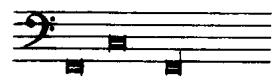
本段内部前后呼应:开篇将装饰音视为written-out passaggi的一部分,结尾又强调它们遵循passaggi同样的减值原则——首尾形成对“同源性”的双重确认。
脚注 / 边栏 / 图表 / 附加信息(如有)
无(本章开篇段落本身不含脚注、图表或边栏)。
💡 本节核心要点
- FVB中以音符写出的装饰音并非孤立现象,而是written-out passaggi(已写出的快速音群)整体语流中的固定音型,其地位需放在passaggi语境中才能理解。
- 这些装饰音在功能上是炫技性装饰,在结构上已不可分割地融入作曲整体,并非外部添加。
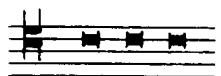
- 它们与passaggi遵循同一原则:对音乐结构内部基本音符时值的减值(diminution),因此本质上属于同一类作曲行为。
- 对这类装饰音的辨识必须借助同时期大陆音乐理论家的术语体系,五种名称为 groppo、groppetto、tremoletto、slide、tirata。
- 本章将聚焦于数量最多的 groppo 和 groppetto,二者属 diminutio 类型,主要应用于晚期文艺复兴音乐的核心风格特征——终止式(cadence)的结构。
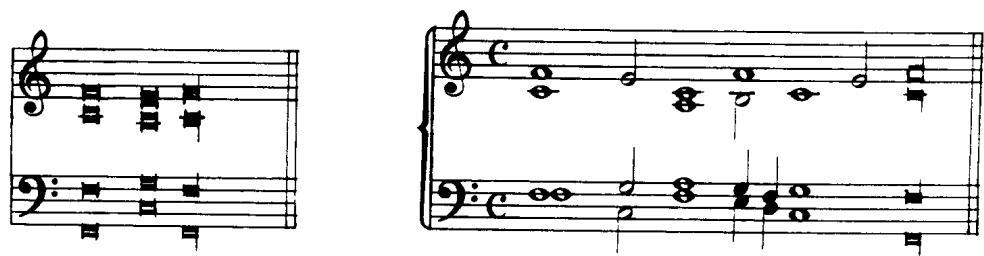
- 作者明确预告后文将以维金诺琴作曲家对这些装饰音的实际处理作为评价对象。
🔑 关键术语
- FVB (Fitzwilliam Virginal Book):费兹威廉维金诺琴曲集,本章讨论“以音符写出的装饰音”的核心文献载体,全章围绕其展开。
- passaggi:快速经过音群/华彩走句,已写成音符形式的连续细分音型;本段强调本章所讨论的装饰音是这种整体语流中的组成部分,并遵循其减值原理。
- diminution / diminutio:对基本音符时值的细分/减值;本段主张写出的装饰音与passaggi都属此类对结构内基本音符的细分行为,因此二者原理相同。
- groppo, groppetto:大陆理论术语,本章列出的五种装饰音中数量最大的一类,属 diminutio 类型,主要出现在终止式处,是本章分析的重点对象。
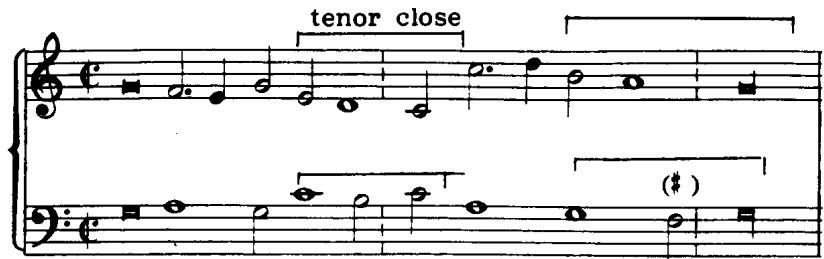
- tremoletto, tirata, slide:与 groppo/groppetto 并列的另外三种装饰音名称,在本章开篇仅作术语清单出现,文中未对它们作进一步展开。
- Virginalists:维金诺琴作曲家/演奏家群体;本段暗示后文将通过考察他们对写出的装饰音的具体处理来进行评价。
- cadence:终止式;本段指明 groppo 与 groppetto 主要被应用于终止式结构,使终止式成为本章分析的关键场景。
4.1 4.1 Clausula, Formal Close and Cadence in Renaissance Theoretical Sources
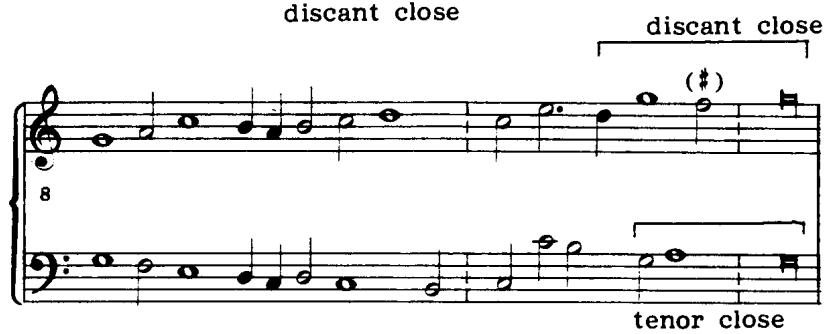
第1段(P0004)
原文复述
4.1 Clausula, Formal Close and Cadence in Renaissance Theoretical Sources
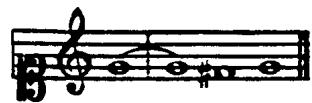
中文讲解
本条为节标题,原文为英文。标题点明本节的主题:在文艺复兴时期的理论文献中,clausula(终止句)、formal close(正式结束)与 cadence(终止式)这三个相关概念的界定与用法。本节承担的概念辨析工作是后文讨论 Virginalists(英国维金纳琴作曲家)对终止式装饰手法的前提。
第2段(P0005)
原文复述
Before any meaningful discussion of the Virginalists’ decoration of cadences can take place, some clarification of what Renaissance musicians understood by cadence is necessary. This is a subject more complicated than might be expected. Tinctoris defines a cadence thus:
中文讲解
作者开门见山指出:要讨论 Virginalists 如何装饰终止式,必须先弄清楚文艺复兴音乐家本人对 “cadence” 的理解。作者提醒读者这是一个比预期更复杂的题目,并以 Tinctoris 的定义作为切入。该句引出下文 P0006 中 Tinctoris 对 clausula 的界定,充当整节方法论序言:先界定术语,再展开分类。
第3段(P0006)
原文复述
A clausula is a small part of some section of a piece, at the end of which there is found either a pause or else the end of the piece.
中文讲解
这是 Tinctoris 对 clausula 的定义:clausula 是作品中某段落的一个小部分,在其末尾要么出现停顿,要么就是作品本身的结束。句中"either … or else …“的并列结构保留了 Tinctoris 文本的双重含义——终止既可指乐段中的局部停顿(pause),也可指全曲终结。作者保留英文 “clausula” 不译,强调这是直接引用的术语。
补充说明
该定义脚注出处见 P0007。
第4段(P0007)
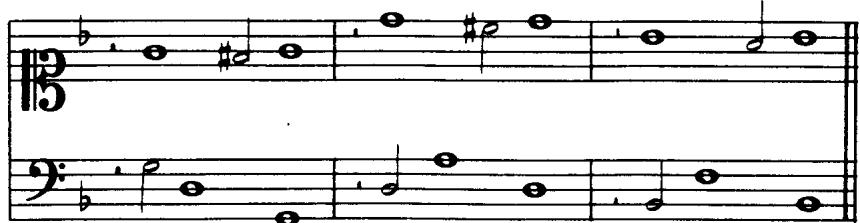
原文复述
Tinctoris, Terminorum, p. 5.
中文讲解
脚注,标明 P0006 中 Tinctoris 定义引自《Terminorum》(即 Terminorum musicae diffinitorium)第 5 页。这是 P0006 引文的文献来源。
第5段(P0008)
原文复述
Tinctoris’ definition appears once again in Dowland’s translation of Ornithoparcus’ Micrologus (Leipzig, 1519):
中文讲解
作者指出,Tinctoris 的这一定义再次出现在 Dowland 翻译的 Ornithoparcus《Micrologus》(1519 年莱比锡版)中。该句为转承句,作用是把同一术语定义链接到另一文献来源,从而显示 Tinctoris 的措辞在 16 世纪初仍被引用。脚注出处见 P0014。
第6段(P0009)
原文复述
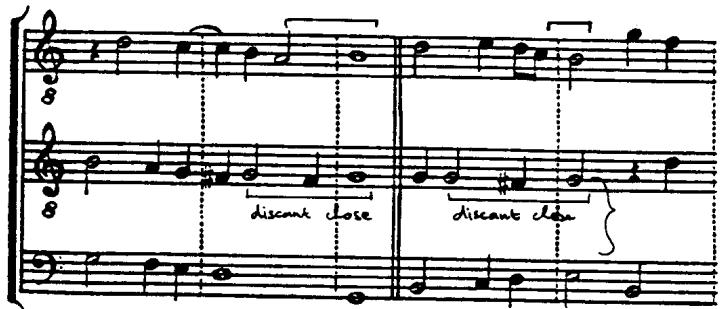
Where a Close is (as Tinctor writes) a little part of a Song, in whose end is found either rest or perfection. Or it is the coniunction of voices (going diversly) in perfect concords.
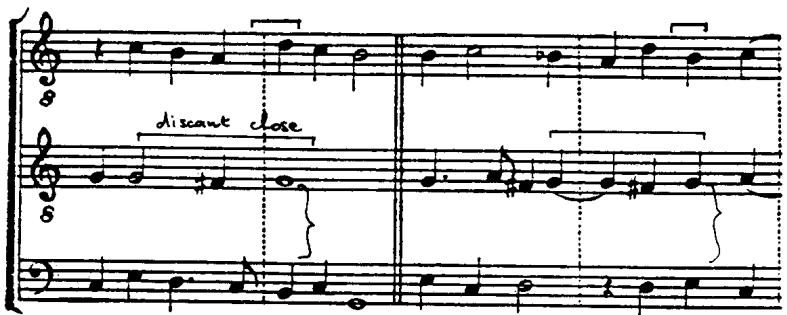
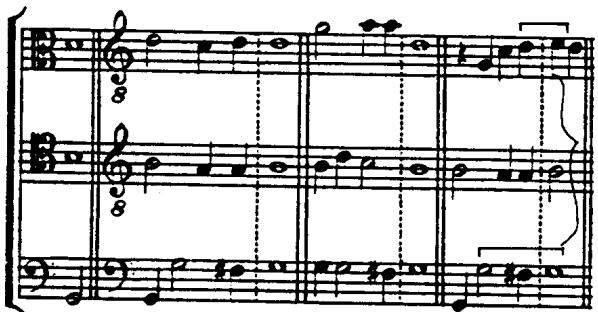
中文讲解
这是 Dowland 英译本中转述的 Tinctoris 定义:第一句将 clausula 译作 “Close”,定义为歌曲的一小部分,末尾出现 rest(停顿)或 perfection(全曲结束);第二句补充定义为"以不同方式进行的声部在完美协和音程上的结合(coniunction of voices in perfect concords)"。作者用此句一方面验证 P0006 定义的延续性,另一方面引出第二个层面——终止同时是一种声部结合的协和关系,这为下文从 Zarlino 的角度谈论 cadence 作铺垫。注意原文保留了"coniunction"和"diversly"等古英语拼写。
第7段(P0010)
原文复述
It should be mentioned that the term clausula (Latin: close, ending) was also used in the twelfth and thirteenth centuries to describe a polyphonic composition with a cantus firmus based upon a melismatic passage.
中文讲解
作者插入一段词源提示:clausula 一词在 12—13 世纪也曾被用来指一种基于素歌花唱段(melismatic passage)定旋律的复调作品。括号内注明拉丁文原义为"close, ending”。该句的作用是提醒读者"clausula"在音乐史中有两个不同时代的含义,避免与文艺复兴时期的用法混淆,但作者并未进一步展开 12—13 世纪的含义,仅作背景说明。
第8段(P0011)
原文复述
How then, may a Renaissance cadence be recognized? According to Zarlino:
中文讲解
作者承接前文对 Tinctoris 定义的引用,转向第二个理论权威 Zarlino,并以反问句"How then, may a Renaissance cadence be recognized?“引导读者进入分类标准。该句在结构上起衔接作用:先界定术语(Tinctoris),再问如何识别(Zarlino)。脚注出处见 P0036。
第9段(P0012)
原文复述
A cadence is a certain simultaneous progression of all the voices in a composition accompanying a repose in the harmony …
中文讲解
这是 Zarlino 对 cadence 的定义:cadence 是作品中所有声部同时进行、并伴随和声上静止(repose)的一段进程。句中省略号(…)表示该引文在原书中并未结束,作者在此截断以便引入下一句的限定条件。引文出处见 P0015。
第10段(P0013)
原文复述
His prerequisite for this phenomenon is that each of the voices participating in the cadence must consist of at least two voices which proceed in contrary motion. In practice it is not quite this simple, as these are not the only features which make a Renaissance cadence recognizable; Morley’s ‘middle closes’ have none of these features, for instance. The two voices in contrary motion may conclude either on the unison or the octave, or occasionally on the fifth, ‘or even other consonances’. The first is termed a perfect cadence and the latter an imperfect cadence. The individual melodic movements of the voices may
中文讲解
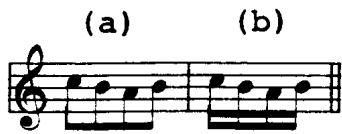
作者解释 Zarlino 的前提条件:参与 cadence 的每条声部必须至少包含两个以反向运动(contrary motion)进行的声部。但作者立即用 “In practice it is not quite this simple” 限定——这些特征并非识别文艺复兴 cadence 的全部条件,并举 Morley 的"middle closes"为反例。接着作者列出反向运动的结束音:八度、同度,偶尔为五度,或"甚至其他协和音程”;以同度/八度结束的称为 perfect cadence,以五度或其他结束的称为 imperfect cadence。末句"The individual melodic movements of the voices may …“在原文中被跨页切断,引出 P0019 中 simplex 与 diminuta 的分类。该段的功能是提出 cadences 的两条主要分类轴:终止音(perfect / imperfect)与声部运动形态(simplex / diminuta)。脚注出处见 P0014–P0018。
补充说明
脚注 P0016 提醒读者:Zarlino 的规则是针对严格对位练习(strict counterpoint exercises)而设,这与实际作品写作存在差异,呼应了正文 “In practice it is not quite this simple” 的限定。
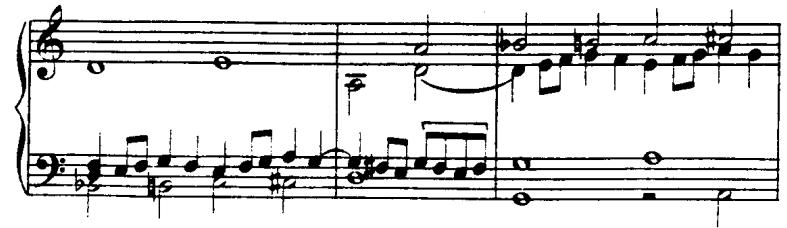
第11段(P0014)
原文复述
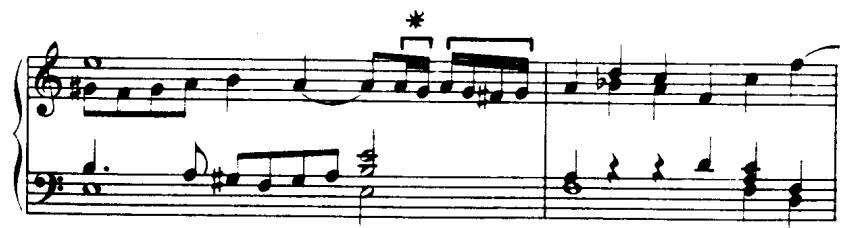
2 Dowland, Ornithoparcus, p.84.
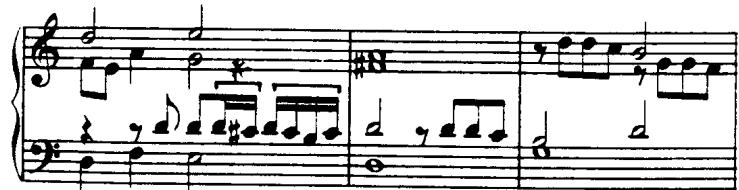
中文讲解
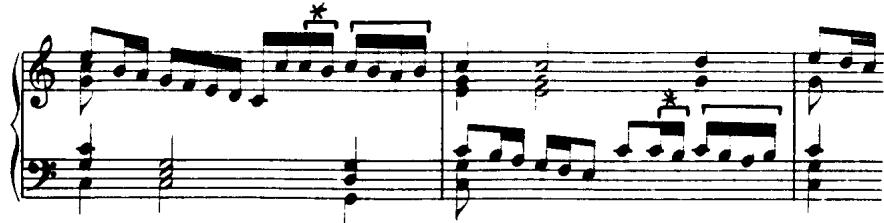
脚注,对应 P0009 中 Dowland/Ornithoparcus 转引 Tinctoris 定义的出处页码。
第12段(P0015)
原文复述
3 Gioseffo Zarlino, The Art of Counterpoint, translated from Part III of Le Istitutioni Harmoniche (1588) by G. Marco and C. Palisca (New Haven: Yale University Press, 1968), p.141.
中文讲解
脚注,标明 P0012 中 Zarlino cadence 定义的英译本出处:Marco 与 Palisca 译 Le Istitutioni Harmoniche(1588)第三卷,第 141 页,耶鲁大学出版社 1968 年。
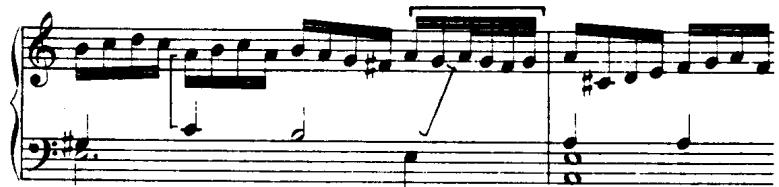
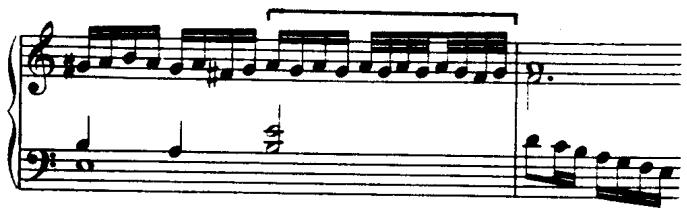
第13段(P0016)
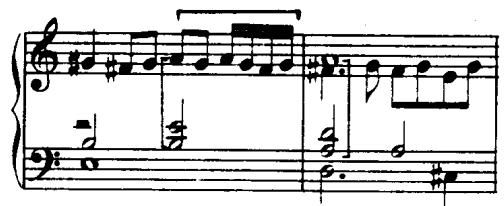
原文复述
4 Zarlino, Counterpoint, p.142. It must be remembered that Zarlino’s rules are for strict counterpoint exercises.
中文讲解
脚注,对应 P0013 中"至少两个声部以反向运动进行"这一前提的出处(第 142 页)。脚注附有作者本人的方法论提示:Zarlino 的规则是针对严格对位练习而立,因此不能机械套用于所有作品。
第14段(P0017)
原文复述
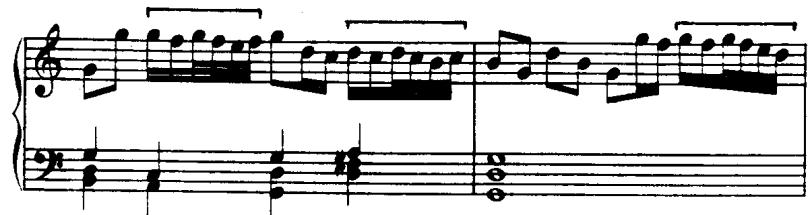
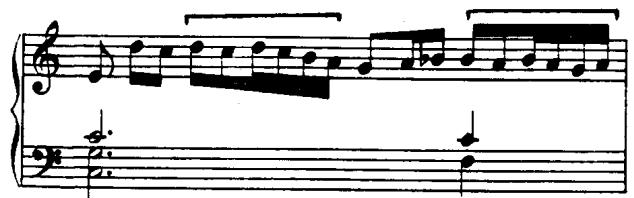
5 Ibid.
中文讲解
脚注(“Ibid.” = 同上),指向 Zarlino Counterpoint,仍指第 142 页,对应 P0013 中"或甚至其他协和音程"等论述。
第15段(P0018)
原文复述
6 The following discussion which draws on Zarlino is found in Counterpoint, pp.142-151.
中文讲解
脚注,预告接下来对 Zarlino 的讨论集中在 Counterpoint 第 142–151 页。这是一条范围声明脚注,让读者知道本节余下引文都来自该页段。
第16段(P0019)
原文复述
be either simple (simplex), when the movement of the voices consists of equal note values and is consonant; or diminished (diminuta), when a variety of note values is used and dissonance is introduced. Dowland employs the terms ‘simple’ and ‘coloured’.
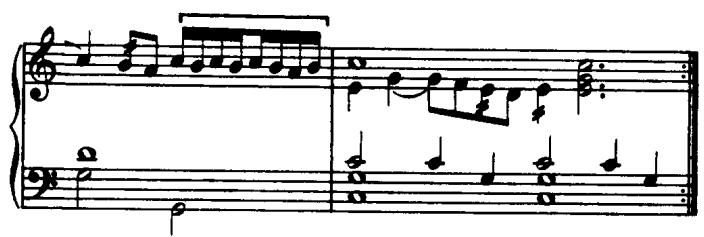
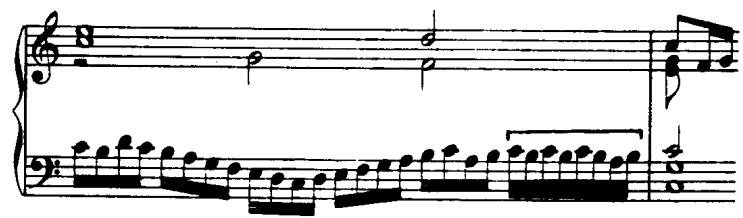
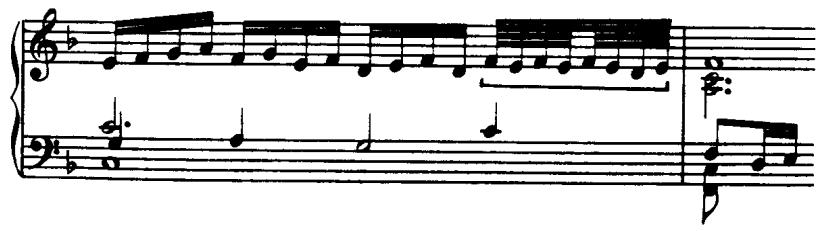
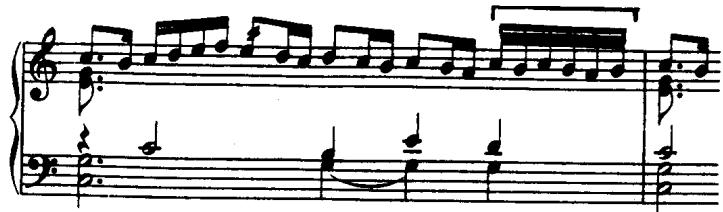
中文讲解
承接 P0013 被跨页截断的句子,作者补全分类的第二条轴:声部的个体旋律运动可以是 simplex(简单)——声部运动由等时值音符构成且为协和的;或 diminuta(缩减)——使用多种时值并引入不协和。接着补充 Dowland 用 “simple” 与 “coloured” 对应同一对术语。脚注见 P0025。该段将文艺复兴 cadence 的内部形态分为两大型,与上一段的终止音分类(perfect / imperfect)形成纵横交叉。
第17段(P0020)
原文复述
In the clausula simplex closing on the unison, either the one voice ascends and descends or all three notes descend by step, whereas the other voice descends and then ascends by step. The interval between the two voices of the penultimate chord is a minor third:
中文讲解
作者开始细分第一种情形:以同度(unison)结束的 simplex clausula。其中一个声部(或先上行再下行,或三个音全以级进下行),另一声部先下行后以级进上行;倒数第二和弦(penultimate chord)两声部之间形成小三度。该句引出 P0021 中的引文作为佐证。脚注见 P0026。
第18段(P0021)
原文复述
… for it is always the interval to precede the unison when two voices move into it by contrary motion, one by a whole tone, the other by a large semitone.
中文讲解
P0020 的引文证据:当两个声部以反向运动进入同度时,倒数第二音程永远是"一个全音加大半音"的结构,即小三度。引文前的省略号表示承接前句"minor third"的解释。该例说明 Zarlino 体系下 simplex 同度终止的固定音程框架。
第19段(P0022)
原文复述
The approach to the last two chords of the cadence may vary, as long as the terminal chord and its antecedent always conform to the prescribed pattern:
中文讲解
作者加一条限定:在遵循终止和弦与其前和弦固定模式的前提下,到达最后两个和弦的具体进行方式可以变化。该句意在避免读者把 Zarlino 的规则读成僵化的音型;规则约束的是终止位置的两个和弦,而非抵达它们的全部过程。脚注见 P0027。
第20段(P0023)
原文复述
Ex.4.1
中文讲解
该条为乐谱示例的图题/图注(Ex.4.1)。它位于 P0022 之后、P0024 之前,对应 P0020–P0022 所讨论的"simplex 同度终止"以及允许的进行变化。原文仅给出图题编号 “Ex.4.1”,无具体音型内容。
补充说明
需查看原图(Ex.4.1)。本输入未给出乐谱内容,不得猜测不可见的具体音高或时值。
第21段(P0024)
原文复述
The diminuta cadence on the unison is similar, except that a variety of note values is used, it introduces dissonance and a syncopation is involved. It is therefore a diminution of a simple cadence in equal note values. In the diminuta cadence the syncopated note forms a dissonant interval of a second on the stroke of the tactus, which is followed by the minor third and the concluding unison:
中文讲解
作者转入第二种情形:以同度结束的 diminuta 终止。它与 simplex 终止相似,但采用多种时值、引入不协和并使用切分(syncopation);本质上是 simplex 等时值终止的"减值”(diminution)。具体而言:切分音在 tactus(拍击点)上形成不协和的二度,随后下行到小三度再解决到同度。脚注见 P0034。
第22段(P0025)
原文复述
7 Dowland, Ornithoparcus, p.78.
中文讲解
脚注,对应 P0019 中 “simple” 与 “coloured” 出自 Dowland 译 Ornithoparcus 第 78 页。
第23段(P0026)
原文复述
8 Zarlino, Counterpoint, p.144.
中文讲解
脚注,对应 P0020–P0021 simplex 同度终止论述的 Zarlino 出处页码(第 144 页)。
第24段(P0027)
原文复述
9 Ibid., p.143.
中文讲解
脚注(Ibid.),指 Zarlino Counterpoint,对应 P0022 中"最后两和弦之前的进行可以变化"的出处(第 143 页)。
第25段(P0028)
原文复述
中文讲解
图像占位符(Ex.4.2;Diminuta cadence),位于第 4 页,紧接 P0024 对 diminuta 同度终止的文字说明之后。其用途由位置可确认:示意 P0024 所述的 diminuta cadence on the unison,即切分音在 tactus 上形成二度、再到小三度再到同度的序列。
补充说明
需查看原图(Ex.4.2)。乐谱具体内容因图像省略而不可见,不得猜测。
第26段(P0029)
原文复述
Cadences (simplex and diminuta) ending on the octave behave according to the same principles: in the simple cadence the penultimate interval forms a major sixth and the final an octave, and in the diminuta cadence the syncopation forms a dissonant seventh on the stroke of the tactus, which is then resolved to the sixth; finally, both voices repose on a perfect consonance:
中文讲解
作者将同一原则推广到以八度结束的终止:simplex 八度终止中倒数第二音程是大六度、终止是八度;diminuta 八度终止中切分音在 tactus 上形成不协和七度,resolve 到六度;最后两声部同停在 perfect consonance 上。该段表明 simplex/diminuta 的两套规则框架独立于终止音(八度 vs. 同度),只改变 penultimate 与 terminal 的具体音程数字。脚注见 P0034。
第27段(P0030)
原文复述
Simplex
中文讲解
图像/示例标签 “Simplex”,对应上一段所述的 simplex 八度终止(大六度→八度)。原文仅有该词,作为示例图旁的分类标签。
第28段(P0031)
原文复述
Diminuta
中文讲解
图像/示例标签 “Diminuta”,对应上一段所述的 diminuta 八度终止(不协和七度→六度→八度)。原文仅有该词。
第29段(P0032)
原文复述

中文讲解
图像占位符,位于第 4 页,紧邻 P0030 / P0031 的 “Simplex”、“Diminuta” 两个标签之后。其用途由位置可确认:分别展示 P0029 所述 simplex 与 diminuta 两种八度终止的音型。
补充说明
需查看原图。乐谱具体内容因图像省略而不可见,不得猜测。
第30段(P0033)
原文复述
Those cadences which do not end on the octave or unison, ending instead upon a fifth, third, or other consonance, are termed improper or imperfect cadences. The upper voice moves upward by step, and the second interval forms a third:
中文讲解
作者把不以八度或同度结束、而是以五度、三度或其他协和音程结束的 cadence 归为 improper 或 imperfect cadence;上声部以级进上行,第二音程(倒数第二和弦)形成三度。该段与 P0013 中 perfect / imperfect 的二分重新呼应,把"以五度等结束"明确划入 imperfect/improper 一类。脚注见 P0035、P0036。
第31段(P0034)
原文复述
11 Zarlino, Counterpoint, p. 43.
中文讲解
脚注,对应 P0029 关于 simplex/diminuta 八度终止论述的 Zarlino 出处(页码写作 “p. 43”,结合上下文疑为第 143 页之误排,但原文如此)。
第32段(P0035)
原文复述
12 Ibid., pp.145-146.
中文讲解
脚注(Ibid.),指 Zarlino Counterpoint 第 145–146 页,对应 P0033 中 imperfect cadence 上声部级进上行、倒数第二和弦为三度的论述。
第33段(P0036)
原文复述
Ibid., pp.148,151.
中文讲解
脚注(Ibid.),指 Zarlino Counterpoint 第 148 与 151 页。该脚注对应正文 P0011 之后关于 Zarlino 终止分类的引文来源范围之一。
第34段(P0037)
原文复述
Imperfect cadence
中文讲解
图像/示例标题 “Imperfect cadence”,对应 P0033 所述的不以八度或同度结束、而以五度/三度等结束的终止。原文仅给出标题。
第35段(P0038)
原文复述
中文讲解
图像占位符,位于第 5 页,紧邻 P0037 “Imperfect cadence” 标题之后。其用途由位置可确认:示意 P0033–P0039 所讨论的不完全/不正规终止。
补充说明
需查看原图。乐谱具体内容因图像省略而不可见,不得猜测。
第36段(P0039)
原文复述
Zarlino states that in this imperfect cadence the use of the semitone in one of the voices is not necessary. Further examples are then given, to show ‘how diversely such cadences can be organised and used … it would be very tedious for me to give examples of every possible proper and improper cadence, so infinite is their number.’
中文讲解
作者给出 Zarlino 的一条补充陈述:在这种 imperfect cadence 中,某一声部使用半音并非必要;Zarlino 随后提供进一步示例,说明这类 cadence 的组织与使用如何多样,并以"举例穷尽每一种规整与不正规 cadence 会非常乏味,因为其数量无穷"作为总结。该段有两重作用:一是放宽 imperfect cadence 的音程强制(半音不必需);二是为下一段"cadence 难以按既定标准识别"作铺垫。脚注见 P0045。
第37段(P0040)
原文复述
The next statement is highly significant, indicating many possibilities for the establishment of a cadence:
中文讲解
作者用 “highly significant” 强调下一引文的重要性,并指出它揭示了建立 cadence 的多种可能。该句是承接性导引,把读者引向 P0041 中 Zarlino 鼓励作曲家"不断寻求新 cadence 与新手法"的言论。脚注见 P0044。
第38段(P0041)
原文复述
The contrapuntist must constantly seek new cadences and fresh procedures, at the same time avoiding errors.
中文讲解
这是 Zarlino 的直接引文:对位作曲家必须不断寻求新的 cadence 与新的处理方式,同时避免错误。该引文与 P0040 的强调配合,作用是把 cadence 从静态分类转回动态的创造活动——理论虽然设定了分类,但作曲家被鼓励在分类之外继续探索。
第39段(P0042)
原文复述
Such cadences can be diversely organised, as they are difficult to recognize by the standards laid down earlier. The only characteristic features of the examples are the contrary motion of two voices, and the ending on the fifth, third, sixth or octave. The interval of the penultimate chord varies. These imperfect or improper cadences are used for ‘intermediate divisions in the harmony’. Zarlino continues:
中文讲解
作者综合本节前文:这类 cadence 组织方式多样,难以用前面给出的标准识别;其仅有的共同特征是两声部反向运动,以及结束于五度、三度、六度或八度;倒数第二和弦的音程可变;它们被用作"和声中的中间划分"(intermediate divisions in the harmony)。该段是本节的一个小结,把 imperfect/improper cadence 的功能定位在段落内部的中止,而非全曲终结。脚注见 P0047。
第40段(P0043)
原文复述
They are useful when a composer in the midst of a beautiful passage feels the need for
中文讲解
Zarlino 的继续引文(句子在原书中被截断):这类 cadence 在作曲家"在优美段落中间感到需要"时被使用。引文未结束,省略号由原书造成,作者在此截断以过渡。该引文与 P0042 中"intermediate divisions in the harmony"呼应,强调 imperfect cadence 的真正价值在于句中停顿而非乐曲终结。
第41段(P0044)
原文复述
14 Ibid.
中文讲解
脚注(Ibid.),对应 P0040 中"the next statement is highly significant"导引句所指引文的 Zarlino 出处(同前注)。
第42段(P0045)
原文复述
13 Zarlino, Counterpoint, p.150.
中文讲解
脚注,对应 P0039 中 Zarlino 关于 imperfect cadence 半音并非必需、以及"举例穷尽非常乏味"言论的出处(第 150 页)。注意:此脚注编号 13 而位置靠后,原文编号顺序如此。
第43段(P0046)
原文复述
15 Zarlino is inconsistent; for an example of parallel movement, see Counterpoint, p.148, Ex.106.
中文讲解
脚注,作者对 Zarlino 文本的内部批评:Zarlino 自相矛盾——他在规则中强调反向运动,但在第 148 页 Ex.106 中出现了平行运动的终止例子。该脚注提醒读者:Zarlino 的规则与其实例之间存在张力,识别 Renaissance cadence 时不能机械套用规则。
第44段(P0047)
原文复述
Zarlino, Counterpoint, p.151.
中文讲解
脚注,对应 P0042 中 imperfect/improper cadence 用于"intermediate divisions in the harmony"论述的 Zarlino 出处(第 151 页)。
脚注 / 边栏 / 图表 / 附加信息(如有)
本节含脚注 12 条(P0007、P0014–P0018、P0025–P0027、P0034–P0036、P0044–P0047),按出现顺序承担三类功能:(一)文献来源脚注,指向 Tinctoris《Terminorum》、Dowland 译 Ornithoparcus《Micrologus》、Zarlino《Le Istitutioni Harmoniche》(Marco/Palisca 英译本 Counterpoint)的具体页码;(二)方法论提示脚注,如 P0016 提醒读者 Zarlino 规则针对严格对位练习,P0018 预告本节引文范围为第 142–151 页;(三)作者本人的批评性脚注,最关键的是 P0046 指出 Zarlino 自身在 Ex.106 中出现平行运动的反例,与本节倚重的"反向运动"规则相矛盾。本节含图像占位符 4 处(P0023 即 Ex.4.1 标题、P0028 即 Ex.4.2、P0032 与 P0038 为两处乐谱示例),分别对应 simplex 同度终止、diminuta 同度终止、simplex 与 diminuta 八度终止、imperfect cadence 的音型示意;图像具体内容因省略而不可见,不得猜测。
💡 本节核心要点
- 本节的任务是为后文讨论 Virginalists 对 cadence 的装饰提供概念基础,因此把文艺复兴理论家对 cadence 的多种界定与分类一一厘清。
- Tinctoris 把 clausula 定义为乐段末的小部分,既可指局部停顿也可指全曲结束;Dowland 转引同一界定并加上"声部在完美协和音程上结合"的补充说明。
- clausula 一词在 12—13 世纪另指基于素歌花唱段定旋律的复调作品,作者特别提醒读者避免与文艺复兴用法混淆。
- Zarlino 的 cadence 定义要求所有声部同时进行、伴随和声静止;其前提是两个声部反向运动、结束于同度或八度为 perfect cadence,结束于五度/三度/其他为 imperfect cadence。
- 声部运动进一步分为 simplex(等时值协和)与 diminuta(多时值含不协和与切分)两类,与终止音分类形成纵横交叉:同度终止对应小三度/二度→三度→同度;八度终止对应大六度/七度→六度→八度。
- imperfect/improper cadence 的倒数第二音程可变、半音不必需,且 Zarlino 本人强调 cadence 数量无穷、鼓励作曲家不断寻求新形式,因此识别 Renaissance cadence 不能机械套用既有规则;甚至 Zarlino 自己的 Ex.106 也出现平行运动的反例。
- imperfect cadence 的功能被定位为"和声中的中间划分",而非全曲结束,这是后文讨论 Virginalists 装饰手法的关键语境。
🔑 关键术语
- clausula:本节中按 Tinctoris 的用法,指乐段末的一小部分,既可指局部停顿也可指全曲结束;亦可广义地指声部在完美协和音程上的结合。作者特别提醒该词在 12—13 世纪另有一义(基于素歌花唱段定旋律的复调作品),不可混淆。
- cadence:按 Zarlino 的用法,指作品中所有声部同时进行、伴随和声静止的一段进程;其必要条件为两声部反向运动。终止音的协和程度决定 perfect(八度/同度)与 imperfect(五度/三度等)之分;声部运动的形态决定 simplex 与 diminuta 之别。
- perfect cadence / imperfect cadence:在本节中以终止音分类:结束于同度或八度为 perfect cadence;结束于五度、三度或"甚至其他协和音程"为 imperfect cadence;imperfect/improper cadence 倒数第二音程可变,常用作和声中的中间划分。
- simplex / diminuta:本节中按声部运动形态分类:simplex(简单)指声部以等时值协和运动;diminuta(缩减)指采用多种时值、引入不协和与切分,本质是 simplex 的减值。Dowland 译 “simple” 与 “coloured” 对应同一对术语。
- contrary motion:Zarlino 终止识别规则的核心要求:两声部以反向运动进入终止音。作者同时指出 Zarlino 自身存在例外(Ex.106 出现平行运动),故反向运动不能视为不可违背的硬性条件。
- penultimate chord:倒数第二和弦。simplex 同度终止中为小三度(一全音+大半音),simplex 八度终止中为大六度;diminuta 同度终止中切分音在 tactus 上形成二度,diminuta 八度终止中形成七度。
- tactus:文艺复兴理论中的拍击点/节拍单位,diminuta 终止中切分音在其上形成不协和音程(一度或七度),随后按规则 resolve。
- intermediate divisions in the harmony:Zarlino 用语,指 imperfect/improper cadence 在和声结构中的功能位置——用于乐段中间的局部停顿,而非全曲终结,是后文讨论 Virginalists 终止装饰时不可忽视的语境。
4.1.b [描述性拆分] Ornithoparcus’s Four Closes and Their Melodic-Harmonic Roles
第1段(P0048)
原文复述
cadence … any cadence not terminating on an octave or unison may be called imperfect because it evades the perfect ending.
中文讲解
这是一个关于"非完全终止"的简短定义片段:凡是不落在八度或同度上的终止,都可称为"不完全终止"(imperfect),因为它避开了"完全终止"(perfect ending)。这是承接前文 Zarlino 论述中关于"完全"与"不完全"之分的延续性概念——在这里,“完全"特指收束音之间的音程关系(八度或同度),而非三和弦的完整度。该定义的逻辑核心在于音程的"终”:终止音程若非八度或同度,便被视作对完全终止的偏离。
第2段(P0049)
原文复述
Zarlino finally illustrates ways of evading a cadence, ‘when the voices give the impression of leading to a perfect cadence, and turn instead in a different direction’. ¹⁷
中文讲解
Zarlino(查利诺)在此具体展示了"规避终止"(evading a cadence)的做法:当各个声部给人以将走向完全终止的印象时,却在最后一刻转向其他方向。换言之,声部在接近终止处制造出完全终止的听觉预期,却在末音上突然偏离,从而避免真正的完全收束。这一概念是上段"不完全即规避"定义的延伸:不完全终止的成因是声部在末音刻意的方向性偏离。本段以 Zarlino 的原话坐实了这一"规避"机制,并由此过渡到下段 Ornithoparcus 对各声部旋律终止动作的命名。
补充说明
脚注 17 指向 Zarlino《对位法》第 151 页,为上述引文出处。
第3段(P0050)
原文复述
The melodic progressions peculiar to each of the individual voices in a perfect cadence as described above are given names by Ornithoparcus. Like Zarlino, he claims that ’every Close consists of three Notes, the last, the last save one, and the last save two’. ¹⁸ He goes on to explain the four ‘closes’: ¹⁹ Ex.4.5
中文讲解
本段在论证链条中起到承上启下的关键作用:上两段讨论的是完全终止的偏离方式,本段则转入终止本身的内部结构分析。作者指出,Ornithoparcus 为完全终止中各声部特有的旋律进行分别命名——也就是说,原本作为整体的"完全终止"被拆解为各声部独立的旋律动作。Ornithoparcus 与 Zarlino 共享一个基本前提:每一个"close"(终止式)由三个音组成——末音、倒数第二音、倒数第三音。这一"三音框架"是后续各 close 分类的形式基础。本段最后指向 Ex.4.5,预示将以图示呈现四种 close 的具体形态。
补充说明
脚注 18 指向 Dowland 译《Ornithoparcus》第 84 页,为 Ornithoparcus 原文出处;脚注 19 指向同书第 78、84 页,标注后文四条 close 规则的综合出处。
第4段(P0051)
原文复述
- The Close of the Discantus made with three Notes, shall always have the last upward.
中文讲解
第二条规则界定 Discantus(高声部/女高音)的终止式特征:由三个音构成,最后一音必须上行。这是四种 close 中动作方向最为确定的一种——高声部的末音必然向高处进行。该规则的关键在于"always"(始终):与后述其他声部的灵活处理形成对比,discantus close 是唯一被赋予恒定方向的终止类型。从对位写作的常规惯例来看,上行的末音通常对应着下方声部收束于更稳定的音程(如同度或八度),因此高声部的"必然上行"实际上是垂直收束逻辑对旋律走向的强制要求。
第5段(P0052)
原文复述
中文讲解
这是 P0051 文字规则所对应的乐谱示例(位于第 6 页),以视觉化方式呈现 discantus close 的具体音高排列。由于内嵌图像数据已省略,需查看原图以确认三音的具体音名与谱例中的上下声部关系。但根据 P0051 的文字描述,可以确认该示例展示的是高声部三音框架中末音上行的典型形态。
补充说明
本占位符的功能是为 P0051 的 discantus close 规则提供图示支撑,与文字规则一一对应。
第6段(P0053)
原文复述
- The Close of the Tenor, doth also consist of three Notes, the last always descending.
中文讲解
第三条规则界定 Tenor(次中音或男高音声部)的终止式特征:同样由三个音组成,但末音始终下行。与 discantus close 形成镜像对照:高声部末音上行,tenor 末音下行,二者方向相反。这种方向上的对立并非偶然——在四声部写作的常规 cadence 中,高声部上行与 tenor 下行往往同时发生,二者的反向运动形成声部之间的"反向进行"(contrary motion),这正是完全终止听觉张力的来源之一。“doth also consist of three Notes” 一语回扣了 P0050 提出的统一三音框架。
第7段(P0054)
原文复述
中文讲解
这是 P0053 文字规则所对应的乐谱示例(位于第 6 页),以视觉化方式呈现 tenor close 的具体音高排列。图像数据已省略,需查看原图以确认三音的具体音名。该示例的关键视觉特征应是末音向下进行的形态,与上例 discantus close 的末音上行形成方向上的对照。
补充说明
本占位符的功能是为 P0053 的 tenor close 规则提供图示支撑。
第8段(P0055)
原文复述
- The Close of the base requires the last Note sometime above, and sometime beneath the Tenor. Yet commonly it thrusts it an eight below, and sometimes raiseth it a fift above.
中文讲解
第四条规则界定 Bassus(低声部/男低音)的终止式特征:末音相对于 tenor 既可在其上方,也可在其下方;最常见的是将末音置于 tenor 下方八度处,有时则将其抬高至 tenor 上方五度。这是四种 close 中最具灵活性的一种——与 discantus 的"始终上行"、tenor 的"始终下行"形成鲜明对比,bassus close 同时存在两个常见选项。这一灵活性的原因在于:低声部主要承担和声低音的功能,其与 tenor 的音程关系可以是八度(同度性质)或五度(三全音/纯五度),两种音程在和声上都可被接受为终止结构。“commonly”(通常)与"sometimes"(有时)这两个频率副词标示了八度低音为典型配置、五度低音为例外变体。
第9段(P0056)
原文复述
Bassus
中文讲解
“Bassus"一词为 P0055 规则下方的乐谱标签,标示紧随其后的谱例属于 bassus close 的图示。该词作为拉丁/中古英语的低声部名称,与"Discantus”(高声部)和"Tenor"共同构成四种声部的拉丁命名体系。
第10段(P0057)
原文复述
中文讲解
这是 P0055 文字规则及 P0056 “Bassus” 标签所对应的乐谱示例(位于第 6 页),呈现 bassus close 的具体音高排列。图像数据已省略,需查看原图。该示例很可能同时或分别展示两种典型配置:bassus 末音在 tenor 下方八度处,以及 bassus 末音在 tenor 上方五度处。
补充说明
本占位符的功能是为 P0055 的 bassus close 规则(八度低音与五度低音两种情况)提供图示支撑。
第11段(P0058)
原文复述
17 Zarlino, Counterpoint, p.151.
中文讲解
脚注 17,标注 P0049 中 Zarlino 关于"规避终止"论述的出处为 Zarlino《对位法》(Counterpoint)第 151 页。该脚注仅起文献来源作用,无补充论证内容。
第12段(P0059)
原文复述
18 Dowland, Ornithoparcus, p.84.
中文讲解
脚注 18,标注 P0050 中 Ornithoparcus “every Close consists of three Notes” 一语的出处为 John Dowland 英译《Ornithoparcus》第 84 页。该脚注确认 Ornithoparcus 三音框架论断的原文页码定位。
第13段(P0060)
原文复述
19 Ibid., pp.78,84.
中文讲解
脚注 19,标注 P0050 中 Ornithoparcus 四种 “closes” 论述的出处仍为 Dowland 译《Ornithoparcus》第 78 页与第 84 页两处。“Ibid.” 表示与上一脚注同书。该脚注提示读者:Ornithoparcus 对四种 close 的讨论分散于原书两处页码。
第14段(P0061)
原文复述
- The Close of a high Tenor, doth sometime rise, sometime fall with the last Note; sometime makes it an Unison with others. Which being it proceeds by divers motions, the sorting of it is at the pleasure of the Composers.
中文讲解
第五条规则界定 Altus(高 tenor,即次高音/女低音声部)的终止式特征:末音既可上行也可下行,有时甚至与其他声部形成同度(unison)。这一声部的 close 是四种中最无规则可言的——其方向完全取决于作曲家的选择。作者用"at the pleasure of the Composers"(任由作曲家意愿)明确表达了该声部终止式的自由度。三种可能的结果(升、降、同度)共同反映出 altus 在四声部终止中承担辅助填充角色,而非承担像 bassus 那样的和声基础功能。“high Tenor” 一词是该时期对 altus 声部的常见英文表述,与 P0062 的 “Altus” 标签相对应。
第15段(P0062)
原文复述
Altus
中文讲解
“Altus"一词为 P0061 规则下方的乐谱标签,标示紧随其后的谱例属于 altus(高 tenor)close 的图示。“Altus” 是该声部的拉丁语名称,与 P0051 的 “Discantus”、P0056 的 “Bassus”、P0053 的 “Tenor” 共同构成拉丁化的声部命名体系。
第16段(P0063)
原文复述
中文讲解
这是 P0061 文字规则及 P0062 “Altus” 标签所对应的乐谱示例(位于第 7 页),呈现 altus close 的具体音高排列。图像数据已省略,需查看原图。由于 P0061 描述了三种可能(上、下、同度),该图示可能同时或分别展示这些变化形式。
补充说明
本占位符的功能是为 P0061 的 altus close 规则(升、降、同度三种情况)提供图示支撑。
第17段(P0064)
原文复述
Ornithoparcus’ rules are illustrated in the discussion Of the Divisions of the Counter-point: ²⁰
中文讲解
本段从单一 close 的逐一声部描述转向其在 Ornithoparcus 论著《对位法的划分》(Divisions of the Counter-point)一章中的进一步图示。“Divisions of the Counter-point” 应理解为 Ornithoparcus 原书中的某一具体章节,作者在此将该章作为承接前文四条规则的扩展性图解来源。
补充说明
脚注 20 指向 Dowland 译《Ornithoparcus》第 78 页,标注该图示所在的章节页码。
第18段(P0065)
原文复述
Ex.4.6
中文讲解
“Ex.4.6” 为谱例编号,对应 Ornithoparcus《对位法的划分》一章中关于 close 的图示(位于第 7 页)。这是与前文 Ex.4.5(逐一声部规则图示)相并列的另一组示例,编号紧接其后,提示其为同一论题的补充图解。
第19段(P0066)
原文复述
Simple
中文讲解
“Simple”(简单)一词是 Ex.4.6 中某一谱例下方的分类标签,标示该示例属于 Ornithoparcus 终止式划分中的"简单"类终止。该词与紧随其后的 “Coloured”(加花)一词构成一对概念——前者指未经装饰音修饰的原型终止,后者指加入经过音或其他装饰的变体。
第20段(P0067)
原文复述
Coloured
中文讲解
“Coloured”(加花/着色)一词是 Ex.4.6 中另一谱例下方的分类标签,标示该示例属于终止式的"加花"类变体。与 P0066 的 “Simple”(简单)相对——“Coloured” 在文艺复兴对位法语境中通常指在基本终止骨架音之间或之上加入经过音、邻音等装饰音所形成的变体形态。这种"简单 vs 加花"的区分反映了文艺复兴作曲家对基本结构(simple)与其装饰变体(coloured)的双重关注。
第21段(P0068)
原文复述
中文讲解
这是 Ex.4.6 的乐谱示例(位于第 7 页),对应 P0064 至 P0067 所介绍的 Ornithoparcus《对位法的划分》一章中关于"简单"与"加花"两类终止式的图示。图像数据已省略,需查看原图以确认两种变体的具体音高排列与装饰手法。
补充说明
本占位符的功能是为 “Simple” 与 “Coloured” 两类终止式提供对照图示。
第22段(P0069)
原文复述
From the above it is clear that Ornithoparcus applies the term ‘close’ not only to the horizontal movement of the individual voices, but also to the vertical conjunction of them. One may term them clausulae of the melody and of the harmony, the former being a clausula of one voice proceeding from the structure of the clausula of the harmony.
中文讲解
本段是本节中最重要的理论性提炼段落。作者归纳指出:Ornithoparcus 所说的 “close”(终止式)具有双重所指——既可指各声部的横向(水平)旋律进行,也可指声部间的纵向(垂直)和声合拢。这一双重性进一步被表述为"旋律的终止式”(clausulae of the melody)与"和声的终止式"(clausulae of the harmony)的区分。本段最具洞见之处在于末尾一句:前一种(旋律终止式)实为从后者(和声终止式)的结构中派生出来的单个声部的终止式。这一论断暗示:在 Ornithoparcus 的体系中,和声终止式是更基础的结构,旋律终止式是其声部维度上的投影。这一主张与 P0070 中"close 按其特殊进行而非所处声部命名"的论述形成逻辑链。
补充说明
本段中"clausulae"为拉丁语术语"终止式",是"close"的同源学术表达。
第23段(P0070)
原文复述
Ornithoparcus’ sixth and seventh rules ²¹ reveal that when these individual melodic cadences occur in parts of the harmony other than those in which they are normally found, they retain their individual names. Clearly, then, they are not named according to the part of the harmony in which they appear, but according to the specific progression peculiar to them. This is further elaborated upon in the section ‘Of the generall Rules of Counter-point’, which explains that, should the tenor form a discant cadence, the soprano will form a tenor cadence, and should the bass form a tenor cadence, the tenor will form a discant cadence and vice versa: ²²
中文讲解
本段将 Ornithoparcus 体系的逻辑进一步推进。基于第六与第七条规则,作者指出:当某种旋律终止式出现在与其通常所属声部不同的声部中时,它仍保留其原本的名称。这意味着 close 的命名依据不是其所处声部的位置,而是该终止式所特有的进行方式。这一原则的关键推论是:名称的归属是"进行方式"而非"声部身份"。接下来,《对位法通论》(Of the generall Rules of Counter-point)一节以具体交换规则坐实这一原则:若 tenor 形成了 discant cadence,则 soprano 形成 tenor cadence;若 bass 形成 tenor cadence,则 tenor 形成 discant cadence,反之亦然。这种声部间的"名称互换"现象直接表明:终止式的旋律特征可以在声部之间"流动",使和声终止式内的各声部分配具有可置换性。
补充说明
脚注 21 指向 Dowland 译《Ornithoparcus》第 84 页(第六、七条规则出处);脚注 22 指向同书第 81 页(《对位法通论》一节的页码)。
第24段(P0071)
原文复述
20 Dowland, Ornithoparcus, p.78.
中文讲解
脚注 20,标注 P0064 中 Ornithoparcus《对位法的划分》一章图示的出处为 Dowland 译《Ornithoparcus》第 78 页。该脚注确认 Ex.4.6 的文献来源。
第25段(P0072)
原文复述
21 Ibid., p.84.
中文讲解
脚注 21,标注 P0070 中 Ornithoparcus 第六与第七条规则的出处为 Dowland 译《Ornithoparcus》第 84 页。“Ibid.” 表示与上一脚注同书。
第26段(P0073)
原文复述
Ex.4.7
中文讲解
“Ex.4.7” 为谱例编号,对应 P0070 所述声部间名称互换规则的图示(位于第 8 页)。该谱例的功能是视觉化呈现"tenor 形成 discant cadence、soprano 形成 tenor cadence"以及反向互换的具体音高排列。
第27段(P0074)
原文复述
中文讲解
这是 Ex.4.7 中的第一个乐谱示例(位于第 8 页),对应 P0070 所述互换规则中的一种配置(tenor 形成 discant cadence、soprano 形成 tenor cadence)。图像数据已省略,需查看原图以确认具体音高排列。
补充说明
本占位符的功能是为 P0070 的第一类声部名称互换提供图示支撑。
第28段(P0075)
原文复述
中文讲解
这是 Ex.4.7 中的第二个乐谱示例(位于第 8 页),与 P0074 的第一个示例并列,呈现 P0070 所述互换规则的另一种配置(即反向互换:bass 形成 tenor cadence、tenor 形成 discant cadence)。图像数据已省略,需查看原图。
补充说明
本占位符的功能是为 P0070 的反向声部名称互换提供图示支撑。
第29段(P0076)
原文复述
Morley does not discuss the individual closes, with the exception of the discant close, which he calls a cadence: ²³
中文讲解
本段在论题上从 Ornithoparcus 转向 Morley,形成理论史上的对照。Morley 在其著作中并未逐一讨论四种 close,唯一例外是高声部的 discant close,且他将其直接称为 “cadence”(终止式)。这一事实具有重要的理论史意涵:Morley 的术语选择显示,在英语对位法传统中,“cadence” 一词专门且仅指 discant close 这一特定旋律进行;这与 Ornithoparcus 的多 close 分类系统形成概念上的对照。
补充说明
脚注 23 指向 Morley《实用音乐入门》(Introduction)第 145 页,为下文 Morley 引文的出处。
第30段(P0077)
原文复述
A Cadence we call that when, coming to a close two notes are bound together and the following note descendeth thus:
中文讲解
本段为 Morley 对 cadence 的具体定义:他将 cadence 界定为——在接近终止处,两个音被"绑定"(bound together)在一起,其后的一个音"下行"。这一简短界定揭示了 Morley 终止式概念的两个核心要素:其一,“绑定”——通过切分音或延留造成的不协和音解决前的紧张;其二,“下行”——解决的方向性。这两个特征与 P0051 中 Ornithoparcus 对 discant close 的描述(“末音上行”)形成有趣反差:Ornithoparcus 强调的是解决音向上行进至完全终止,而 Morley 强调的则是解决音下行——这反映出两人观察视角的差异(一个看高声部的最终走向,一个看绑定音后的解决动作)。
第31段(P0078)
原文复述
Ex.4.8
中文讲解
“Ex.4.8” 为谱例编号,对应 P0077 中 Morley cadence 定义的图示(位于第 8 页)。该谱例以视觉化方式呈现"两音绑定+下行解决"的具体音高关系。
第32段(P0079)
原文复述
中文讲解
这是 Ex.4.8 的乐谱示例(位于第 8 页),对应 P0077 中 Morley 对 cadence 的定义。图像数据已省略,需查看原图以确认"两音绑定"与"下行解决"的具体音高与节奏实现方式。
补充说明
本占位符的功能是为 P0077 的 Morley cadence 定义提供图示支撑。
第33段(P0080)
原文复述
or in any other key after the same manner.
中文讲解
本段是对 P0077 至 P0079 定义的延伸性说明:上述 cadence 形态可"在任何其他调上以同样的方式进行"。这一补充意味着 P0079 中的具体谱例仅是某一调性(C 大调或 G 大调等)的实例,该 cadence 模式具有调性可置换性——只需平移至其他调,旋律动作与绑定关系均保持不变。这是文艺复兴理论家常有的"在任一调均可类推"的表述手法。
第34段(P0081)
原文复述
22 Dowland, Ornithoparcus, p.81.
中文讲解
脚注 22,标注 P0070 中《对位法通论》(Of the generall Rules of Counter-point)一节关于声部间名称互换论述的出处为 Dowland 译《Ornithoparcus》第 81 页。该脚注为 Ex.4.7 的两个图示提供文献来源。
第35段(P0082)
原文复述
23 Morley, Introduction, p.145.
中文讲解
脚注 23,标注 P0076 中关于 Morley 讨论 discant close 论述的出处为 Morley《实用音乐入门》(Introduction)第 145 页。该脚注为 P0077 至 P0080 的 Morley 引文与谱例提供文献来源。
脚注 / 边栏 / 图表 / 附加信息(如有)
本节包含以下附加材料:
- 脚注 17(Zarlino, Counterpoint, p.151):标注 P0049 中 Zarlino 关于"规避终止"论述的出处。
- 脚注 18(Dowland, Ornithoparcus, p.84):标注 Ornithoparcus 三音框架论断的出处。
- 脚注 19(Ibid., pp.78,84):标注四种 close 论述的出处。
- 脚注 20(Dowland, Ornithoparcus, p.78):标注 Ex.4.6(《对位法的划分》一章图示)的出处。
- 脚注 21(Ibid., p.84):标注 Ornithoparcus 第六、七条规则的出处。
- 脚注 22(Dowland, Ornithoparcus, p.81):标注《对位法通论》一节互换论述的出处。
- 脚注 23(Morley, Introduction, p.145):标注 Morley 关于 discant close 论述的出处。
- 谱例 Ex.4.5(含三个子谱例,对应 discantus、tenor、bassus close,附标签 Discantus、Bassus):逐一声部规则图示。
- 谱例 Ex.4.6(含 Simple 与 Coloured 两个分类标签):终止式"简单"与"加花"变体图示。
- 谱例 Ex.4.7(两个子谱例):声部间名称互换规则的图示。
- 谱例 Ex.4.8:Morley cadence 定义的图示。
- 标签 Altus(第 7 页):标示 altus close 谱例的声部归属。
💡 本节核心要点
- Ornithoparcus 将完全终止分解为各声部的独立旋律动作,并为四种声部分别命名 close(终止式):discantus(末音上行)、tenor(末音下行)、bassus(多为下方八度、可为上方五度)、altus(升、降、同度皆可)。
- 每一个 close 由三音构成(末音、倒数第二音、倒数第三音),这是 Ornithoparcus 与 Zarlino 共享的形式框架。
- close 一词具有双重所指:既指声部的横向旋律进行(clausulae of the melody),也指声部间的纵向和声合拢(clausulae of the harmony),前者是后者在单声部维度上的派生。
- 终止式按其特有的旋律进行命名,而非按其所处声部——故同名 close 可在不同声部中互换出现(如 tenor 形成 discant cadence、soprano 形成 tenor cadence)。
- Morley 的术语体系更为狭窄:他仅讨论 discant close,并将其径直称为 cadence,而忽略其他三种 close。
- 本节以理论史对照结束:从 Ornithoparcus 的四 close 体系到 Morley 的单一 cadence 概念,呈现出文艺复兴英语对位法传统中终止式概念的简化趋势。
🔑 关键术语
- Close(终止式):Ornithoparcus 体系中的核心概念,指完全终止中各声部的旋律—和声终止动作,由三音构成。本节将 close 进一步区分为旋律维度(clausulae of the melody)与和声维度(clausulae of the harmony)。
- Discantus close:高声部(女高音)的终止式,末音必须上行,是四种 close 中动作方向最为确定的一种。
- Tenor close:次中音/男高音声部的终止式,末音始终下行,与 discantus close 形成方向上的镜像对照。
- Bassus close:低声部(男低音)的终止式,末音通常在 tenor 下方八度,有时在 tenor 上方五度,是和声基础功能最强的 close。
- Altus close(高 Tenor close):次高音/女低音声部的终止式,末音可升可降也可同度,自由度最高,“at the pleasure of the Composers”。
- Clausula:拉丁语术语,与 close 同义,指终止式(旋律或和声维度)。
- Cadence(Morley 意义):在 Morley 体系中,cadence 特指 discant close——两音绑定、其后下行解决的形态;不涵盖其他三种 close。
- Simple 与 Coloured:Ornithoparcus《对位法的划分》一章中终止式的两类变体:前者为未经装饰的原型,后者为加入装饰音的变体。
4.1.c [描述性拆分] Morley, Campion and Nutting on Cadence, Close and the Tenor’s Diminished Role
第1段(P0083)
原文复述
Morley’s employment of the terms ‘close’ and ‘cadence’ is ambiguous: they are often used interchangeably, in addition to the fact that the term ‘cadence’ is used to describe the discant close. The discant close is regarded by Morley as the most important hall-mark of cadence.
中文讲解
本段指出莫雷(Morley)在《简明实用音乐入门》(A Plaine and Easie Introduction to Practicall Musicke, 1597)中使用“close”(终止式)与“cadence”(收束)两个术语时并不严谨:二者常常互换使用,而且“cadence”还被专门用来指称“discant close”(上声部终止,即两个上声部之间的解决关系)。在莫雷的体系中,上声部终止被视为“cadence”最重要的标志。也就是说,判断一段和声是否为cadence,最关键的依据不再是传统的低音声部或整个concentus(协和和声),而是上声部之间形成的特定收束动作。这一概念重构是本节论述的起点:它把“cadence”从单纯和声事件改写为以某个特定声部运动为标志的结构事件。脚注24、25指向《入门》第223、228页。
第2段(P0084)
原文复述
… for without a cadence in some of the parts, either with a discord or without it, it is impossible formally to close.
中文讲解
这是莫雷本人原话的节录,其含义是:要在作品中进行“正式的终止”(formally to close),必须在某些声部中出现cadence——无论该cadence处是否含有不协和音(discord)。换言之,cadence并不一定意味着完全协和,含有不协和的cadence同样可以承担“正式终止”的功能。这里再次说明莫雷把cadence等同于上声部终止(discant close)的判据:只要一个声部内发生了上声部终止运动,就足以让全曲在某处获得“正式关闭”。这是P0083中“上声部终止是cadence的最重要标志”这一命题的直接证据。
补充说明
本段是引文,逻辑上紧接P0083对discant close之核心地位的论述。
第3段(P0085)
原文复述
Once again Morley is inconsistent, for he nonetheless cites examples of ‘formal closing without a Cadence’ in the Introduction. All these are examples of tenor closes, with no discant closes given. The tenor close has lost its earlier importance in the structure of the cadence, as it is sometimes left out or obscured in the examples given by Morley.
中文讲解
本段揭示莫雷自身理论的不一致:尽管他把discant close视为cadence的核心标志(见P0083、P0084),但他在《入门》中举出的“formal closing without a Cadence”(无cadence的正式终止)实例,实际上都是tenor close(次中音终止,即男高音/次中音声部终止于最终音)类型,而不含discant close。由此作者得出一个重要观察:tenor close在cadence结构中已失去其早期的重要地位,在莫雷的例子里,它甚至经常被省略或被遮蔽。这与文艺复兴早期以tenor close作为整个cadence之结构骨干的做法形成对比,也是本节标题“十度的式微与tenor close”被淡出”这一主题的依据之一。脚注26指向《入门》第147页。
补充说明
“tenor close”在传统用法中指次中音声部(tenor voice)下行至调式最终音(final)或其上五度的运动,是中世纪与文艺复兴早期cadence的结构标志。
第4段(P0086)
原文复述
Nutting, in his thoroughly researched article on the phenomenon of Renaissance cadence, finds that a large percentage of Morley’s cadences lack a tenor close. His ‘middle closes’ have no tenor or discant close features. Nutting considers the real value of the discant close to lie in the fact ’that it defines for us the cadence-note or degree of the mode which is being emphasized at the point of repose’. Where no discant close is present, the bass note may be taken to be the cadence note. Zarlino similarly gives examples of ‘perfect’ cadences, where only the tenor and bass closes are present. Campion, in A New Way of Making Fowre Parts (1613), leaves out the tenor close in his example of ‘The maine and fundamental close’; the cadence consists of
中文讲解
本段援引三位理论家的实证研究,论证tenor close的衰退:
- 纳廷(Nutting)通过系统统计发现,莫雷的cadence中很大比例缺少tenor close;其所谓的“middle closes”甚至连tenor close和discant close两个特征都不具备。纳廷认为discant close的真正价值在于它指明了“cadence note”(终止音)——即休止点(point of repose)所强调的调式音级;若没有discant close,则可以认定bass note为cadence note。这一观点把discant close的功能从单纯声部动作提升为“确定调式结构”的诊断工具。
- 扎里诺(Zarlino)也举出仅由tenor close与bass close组成的“perfect cadence”实例,说明tenor close仍可保留。
- 坎皮恩(Thomas Campion)在《四声部新作法》(A New Way of Making Fowre Parts, 1613)中明确把tenor close从“The maine and fundamental close”例中删除——这构成“tenor close在17世纪初被边缘化”的直接证据。 脚注27、28分别指Nutting文第43页、Zarlino《对位法》(Counterpoint)第147页。
补充说明
Nutting的引文“cadence-note or degree of the mode”揭示了discant close的两种功能:一是指出终止瞬间实际发音的音高,二是指出该音高在调式层级中的位置——这与调式理论中的finalis与tenor的关系有直接联系。
第5段(P0087)
原文复述
24 Morley, Introduction, pp.223, 228.
中文讲解
脚注24:出处为莫雷《入门》第223页与第228页。该脚注对应正文P0083中关于close与cadence术语混用以及discant close为cadence核心标志的论述,提供文献定位。
补充说明
本脚注属于来源标注,性质为支持性引证。
第6段(P0088)
原文复述
25 Ibid., p.223.
中文讲解
脚注25:再次出处为莫雷《入门》第223页(Ibid.指同一文献)。该脚注对应P0083中“discant close被视为cadence最重要标志”的直接引文依据。
补充说明
支持性引证,与脚注24指向同一文献但不同论点。
第7段(P0089)
原文复述
26 Ibid., p.147.
中文讲解
脚注26:出处为莫雷《入门》第147页。该脚注对应P0085中“莫雷举出无cadence的正式终止实例”的位置,是该不一致性的具体出处。
补充说明
支持性引证,说明莫雷在第147页提供的例子均为tenor close类型。
第8段(P0090)
原文复述
27 G. Nutting, ‘Cadence in Late-Renaissance Music’, Miscellanea Musicologica, vol.8 (1975), p.43.
中文讲解
脚注27:出处为G. Nutting,《文艺复兴晚期音乐中的Cadence》(Cadence in Late-Renaissance Music),载《音乐学杂集》(Miscellanea Musicologica)第8卷(1975年)第43页。该脚注为P0086中纳廷关于莫雷cadence缺乏tenor close的统计,以及discant close定义cadence note之论断的来源。
补充说明
出处性脚注,表明此统计结论来自一篇专门的文艺复兴cadence研究。
第9段(P0091)
原文复述
28 Zarlino, Counterpoint, p.147.
中文讲解
脚注28:出处为扎里诺《对位法》(Counterpoint)第147页。该脚注为P0086中扎里诺举出仅含tenor与bass close的“perfect cadence”实例提供文献依据。
补充说明
出处性脚注,对应P0086中对扎里诺理论的引证。
第10段(P0092)
原文复述
the conjunction of a discant and a bass close.
中文讲解
本段是P0086末尾的语句延续:坎皮恩在“The maine and fundamental close”中所举的cadence,仅由discant close与bass close二者的结合构成,tenor close被省略。这印证了P0086所提到的tenor close被边缘化的趋势。脚注29指向P. Vivian编辑的Campion文集(Clarendon Press, 1909)第214页。
补充说明
本段实为P0086语句在页面顶端的延续,主句“the cadence consists of”在此完成。
第11段(P0093)
原文复述
Ex.4.9 ‘The maine and fundamentall close’
中文讲解
图例标题:例4.9,“主要且根本的终止”(The maine and fundamentall close)。坎皮恩《四声部新作法》中的关键图例,展示他认为构成cadence所必需的最基本结构——discant close与bass close的联合。
补充说明
原文中“fundamentall”拼写保留坎皮恩时代拼法。
第12段(P0094)
原文复述
中文讲解
本页插图(乐谱示例)的占位符,对应Ex.4.9 “The maine and fundamentall close”。该图应展示坎皮恩所定义的、仅由discant close与bass close构成的cadence实例,用以直观呈现tenor close被删除后的终止结构。具体声部进行与音高需查阅原图。
补充说明
原图内嵌数据已省略;位置与图注(Ex.4.9)保留。
第13段(P0095)
原文复述
Morley’s explanation of the different types of cadences reveals that the differentiation is not based upon the state of concord in the concentus alone, but also specifically upon the interval relationship of the other voices with the cadence note. He distinguishes between three types:
中文讲解
本段是莫雷cadence三分法的导论。作者指出,莫雷区分cadence类型的依据,并不在于整个concentus(协和和声总体)是否协和,而是看其他声部相对cadence note(终止音)的音程关系。这一判据的转变,标志着从“以整体协和为标准”到“以终止瞬间的音程结构为标准”的cadence观念演化。脚注30指向《入门》第223-225页与第228-240页。
补充说明
“concentus”在文艺复兴理论中指所有声部协和地结合而成的整体和声状态。
第14段(P0096)
原文复述
(i) Final closes (also called full closes)
中文讲解
莫雷三种cadence类型之第一种:final closes(结束终止),又称full closes(完满终止)。其详细描述见P0099。
补充说明
类型编号小标题,功能为引出对该类的逐条解释。
第15段(P0097)
原文复述
(ii) Passing closes (also called false closes)
中文讲解
莫雷三种cadence类型之第二种:passing closes(过渡终止),又称false closes(假终止)。其详细描述见P0103、P0107。
补充说明
类型编号小标题,功能为引出对该类的逐条解释。
第16段(P0098)
原文复述
(iii) Middle closes
中文讲解
莫雷三种cadence类型之第三种:middle closes(中间终止)。其详细描述见P0110。
补充说明
类型编号小标题,功能为引出对该类的逐条解释。
第17段(P0099)
原文复述
A final close is one in which the cadence note (i.e. the final note of a discant cadence) is duplicated in the bass, this interval being a perfect concord (octave). Where the bass is the actual cadence note (if the bass has the discant cadence), the bass is duplicated in another voice. Often, the major (Picardy) third is a regular feature in the final chord, where the tenor close tradition has given way to the desire for the fullness of the third in the chord. This means that no longer are only perfect concords heard at the point of repose, because the major third is an imperfect concord. However, this was apparently acceptable, as long as it was a major third from the bass.
中文讲解
本段定义“final close”。其规则形式为:cadence note(即上声部cadence的最终音)在低音被重复,两声部形成纯协和音程——八度。若bass本身承担discant cadence,则bass在另一声部被重复。这一形式反映“cadence瞬间全协和”原则。 然而作者引入一个重要的实践修正:大三度(Picardy third,即在大调或主音和弦上方添加大三度以获得“明亮”色彩)在final chord中频繁出现。这是tenor close传统让位于“对三度丰满度”的需求的结果。其和声意义是:休止点不再仅由纯协和(八度、五度)构成,因为大三度属于不完全协和(imperfect concord)。但只要该大三度由bass上方发出,就被视为可接受。 这一细节揭示出两件事:1. tenor close的衰退使得和弦构成转向bass主导;2. 不完全协和被允许进入final close,只要它在bass之上发生——这是从“全协和”到“协和+指定的不完全协和”的实践转折。脚注31指Nutting文第37-46页对此的详细讨论。
补充说明
Picardy third(皮卡第三度)原指小调终止时升高三度形成大调的色彩性做法,此处被作者扩展为大三度填充和弦的一般现象。
第18段(P0100)
原文复述
29 P. Vivian, Campion’s Works (Oxford: Clarendon Press, 1909), p.214.
中文讲解
脚注29:出处为P. Vivian编,《坎皮恩文集》(Campion’s Works),牛津Clarendon Press,1909年,第214页。该脚注对应P0092关于坎皮恩“The maine and fundamentall close”仅由discant与bass close构成的论述。
补充说明
出处性脚注,1909年Clarendon Press为坎皮恩诗作与音乐论著的标准现代版本。
第19段(P0101)
原文复述
30 Morley, Introduction, pp.223-225, 228-240.
中文讲解
脚注30:出处为莫雷《入门》第223-225页与第228-240页。对应P0095中莫雷关于cadence三分法的论述,以及整个三种类型(final、passing、middle closes)的核心定义段落。
补充说明
该脚注涵盖较长的页码区间,说明莫雷分散在不同段落讨论三种cadence类型。
第20段(P0102)
原文复述
31 See Nutting, Cadence, pp.37-46, for an in-depth discussion of this.
中文讲解
脚注31:参看Nutting,《Cadence》,第37-46页,深入讨论。该脚注对应P0099中关于final chord中允许出现大三度(Picardy third)这一现象的延伸阅读指向。
补充说明
本脚注为延伸阅读提示而非直接出处,提示读者Nutting文的相关章节有更详细的分析。
第21段(P0103)
原文复述
In passing closes, imperfect concord is heard in the concentus on the final chord. They are used ’to shun a final end and go on with some other purpose’. A passing close occurs when the bass forms a third or the sixth below the cadence note, or if the discant cadence is in the bass, a part which forms a sixth above the cadence note.
中文讲解
本段定义第二种cadence类型——passing close(过渡终止)。其形式规则为——休止点处的final chord含不完全协和音(imperfect concord)。其功能规则为——避免作品真正结束,以便进入下一个段落(“to shun a final end and go on with some other purpose”)。其触发条件有三种:1. bass在cadence note下方构成三度;2. bass在cadence note下方构成六度;3. 若discant cadence本身在bass,则另一声部在cadence note上方构成六度。 关键含义是,passing close虽然声音像final close(甚至常被听成完满终止),但和声结构上含有不完全协和,因此不构成真正的终止。它是文艺复兴终止体系中最具歧义性的一类——名义上是“假”终止,但形式上常与final close相似。脚注33指《入门》第223-224页。
补充说明
“passing close”因含有不完全协和,故“别于final close”,但在听觉上又常被误认。莫雷称之为“false close”正是因为它“在声音上像终止、但功能上不是终止”。
第22段(P0104)
原文复述
中文讲解
图例标题占位符:例4.10,“Passing close”。该图应展示莫雷所定义的过渡终止实例——即休止点处含有不完全协和音程(典型的三度或六度)的终止结构,用以对比Ex.4.9所示的完满终止。具体声部进行与音高需查阅原图。
补充说明
原图内嵌数据已省略;位置与图注(Ex.4.10)保留。
第23段(P0105)
原文复述
中文讲解
第11页乐谱示例占位符,应为Ex.4.10的图本体,展示passing close的具体声部进行与音程关系。具体谱面需查阅原图。
补充说明
本占位符与P0104的图例标题配合使用。
第24段(P0106)
原文复述
中文讲解
第11页第二处乐谱示例占位符,可能为Ex.4.10的另一变体或附加实例,展示passing close在不同声部配置下的形态。具体谱面需查阅原图。
补充说明
原图内嵌数据已省略。
第25段(P0107)
原文复述
The passing close is therefore termed ‘false’ for an essentially harmonic reason, and not a melodic one. Morley also mentions a third above the bass, but this seems unjustified, as he furnishes no such example, and the major third is often heard in full cadence. Presumably he meant a minor third, but failed to clarify it. Not all of Morley’s examples conform unambiguously to this doctrine. Nutting draws the conclusion that, regardless of what occurs in the bass, a sixth above, or a third or major sixth below the cadence note, will always cause a passing cadence. A major sixth will only bring about a passing cadence if the cadence note is the bottom note.
中文讲解
本段进一步剖析passing close的性质:
- “false”之称由和声(harmonic)而非旋律(melodic)原因所决定——即因含有不完全协和,故在功能上不构成真终止。
- 莫雷提及bass上方的三度会触发passing close,但作者指出此说法缺乏例证且有内在冲突(大三度常出现在full cadence中),推测莫雷本意应指小三度但未明说。
- 并非所有莫雷的实例都严格符合他的定义。
- 纳廷重新整理出一条更清晰的规则:只要某声部在cadence note上方六度、或下方三度、或下方大六度出现,就必然导致passing close;大六度仅在cadence note本身为底音时才触发passing close。 这段的实质是从“莫雷的含混说法”转向“纳廷的清晰规则”,体现了二手研究者对原始理论的修正。脚注34指Nutting文第48页。
补充说明
作者在这里批评莫雷的术语含混,并以纳廷更精确的音程-功能对应表替代。这呼应了本节标题中“三位作者(Morley, Campion, Nutting)”的合作性论述。
第26段(P0108)
原文复述
32 Morley, Introduction, p.223.
中文讲解
脚注32:出处为莫雷《入门》第223页。对应P0103中关于passing close功能(“to shun a final end and go on with some other purpose”)的直接引文出处。
补充说明
出处性脚注。
第27段(P0109)
原文复述
33 Ibid., pp.223-224.
中文讲解
脚注33:出处为莫雷《入门》第223-224页(Ibid.指同一文献)。对应P0103中关于passing close触发条件(bass在cadence note下方三度或六度等)的定义出处。
补充说明
出处性脚注。
第28段(P0110)
原文复述
The middle close, according to Morley’s examples, demonstrates few of the features of a cadence as summarized before. His only comment is that ‘middle closes … are commonly taken at the end of the first part of a song’. In all of these examples the discant close is absent. One draws the conclusion that the middle close is characterized by the bass which either leaps a fifth or jumps a fourth down to the final note (i.e. the cadence note), and also by the absence of the discant close.
中文讲解
本段定义第三种cadence类型——middle close(中间终止)。其特征为:1. 几乎不具备前文所总结的cadence特征;2. 莫雷本人仅指出其结构位置——常出现在歌曲第一部分末尾;3. 所有middle close实例中discant close均缺席;4. bass进行模式是上跳五度或下跳四度至final note(即cadence note),同时无discant close。 这一定义具有重要的理论意义:middle close是“结构位置 + 声部运动模式”的判据,而非“和声协和性”的判定。也就是说,当final close与passing close仍依赖音程协和度来判别时,middle close已转向以bass跳进模式与位置(曲首中部)来定义。这呼应了本节标题中“十度式微”的论题——middle close甚至连discant close都没有,是tenor close被边缘化后的极端形态。脚注36指《入门》第228-229页。
补充说明
“middle close”在结构上相当于今天所说的半终止(half cadence),但莫雷的判据与传统不同:他强调bass跳进模式,而非和声结构。
第29段(P0111)
原文复述
34 Nutting, Cadence, p.48.
中文讲解
脚注34:出处为Nutting,《Cadence》,第48页。对应P0107中关于passing close触发条件的纳廷总结——六度上方或三度/大六度下方必然导致passing cadence的出处。
补充说明
出处性脚注。
第30段(P0112)
原文复述
35 Morley, Introduction, pp.228-229.
中文讲解
脚注35:出处为莫雷《入门》第228-229页。对应P0110中关于middle close仅出现在歌曲第一部分末尾之论断的引文出处。
补充说明
出处性脚注。
脚注 / 边栏 / 图表 / 附加信息(如有)
本节附加材料包括:
- 脚注24-35,提供莫雷、扎里诺、坎皮恩、纳廷等理论家的文献出处(页码、年份与版本信息),分别对应正文中的具体论述。
- 图例Ex.4.9(坎皮恩《The maine and fundamentall close》)与Ex.4.10(Passing close),以及未编号的第10、11页乐谱示例。这些图例直观展示两类关键cadence结构的声部进行,特别是坎皮恩删除tenor close后的终止以及passing close中不完全协和的运用。
- 脚注29(Vivian编坎皮恩文集1909年Clarendon版)与脚注27(Nutting文载《Miscellanea Musicologica》第8卷1975年)构成正文最重要的两个二手出处。
💡 本节核心要点
- 莫雷将discant close视为cadence的核心标志,致使传统的tenor close在cadence结构中逐渐失去中心地位,甚至被省略或边缘化。
- 纳廷的统计显示莫雷的cadence中很大比例缺少tenor close,而坎皮恩在1613年更明确地把tenor close从其fundamental close实例中删除,证明tenor式微在17世纪初已成为新趋势。
- 莫雷区分三类cadence(final、passing、middle closes)的依据并非concentus整体协和度,而是其他声部相对cadence note的音程关系——这一判据的转变标志着文艺复兴终止观念的演化。
- final close传统上要求cadence note在bass被重复形成八度,但实践中大三度(Picardy third)已成为常见色彩元素,突破了休止点必须全协和的原则。
- passing close之“假”由和声原因而非旋律原因决定;纳廷进一步修正莫雷的含混规则,以更精确的音程-功能对应表替代之。
- middle close的特征是bass跳五度上或跳四度下至final note且无discant close,标志着cadence判据从和声协和度转向声部运动模式与结构位置。
🔑 关键术语
- close:本节中“close”指终止瞬间的声部运动或音程关系。莫雷常与“cadence”互换使用,但“close”更偏向具体的声部行为(如discant close指上声部终止动作)。
- cadence:莫雷体系中以discant close为核心的终止事件,判据由整体concentus协和度转向cadence note与其他声部的音程关系。
- discant close:上声部终止,即两个上声部之间的解决关系,被莫雷视为cadence的最重要标志;在middle close中则缺席。
- tenor close:传统上以次中音声部下行至调式最终音或其上五度为标志的终止结构,本节论证其在莫雷、坎皮恩体系中已被边缘化。
- concentus:文艺复兴理论中所有声部协和地结合而成的整体和声状态;莫雷不再以concentus是否协和作为cadence的判据。
- cadence note:终止瞬间被强调的音,discant close出现时由其上声部解决动作定义,缺席时则由bass note承担。
- final close (full close):莫雷第一种cadence类型,cadence note在bass被重复形成纯协和八度,允许出现bass上方大三度(Picardy third)。
- passing close (false close):莫雷第二种cadence类型,final chord含不完全协和音程,功能上避免真终止;其“假”由和声原因而非旋律原因决定。
- middle close:莫雷第三种cadence类型,特征为bass跳五度上或跳四度下至final note且discant close缺席,常出现在歌曲第一部分末尾。
- Picardy third:休止点大三度的色彩性出现,本节扩展为final close中由bass上方发出的常见不完全协和。
4.1.d [描述性拆分] Synocopated Discant Close, Two Classification Schemes, and Terminological Resolution
第1段(P0113)
原文复述
shared repose’. The most typical cadences employ the syncopated discant close, which functions as an indicator of cadence and leads to the cadence note. Through the syncopation introduced by the syncopated discant close, there is a progressive rhythmic resolution until all the voices reach the point of repose, and a progressive reduction of dissonance: on the antepenultimate note the dissonant second or seventh is resolved to imperfect concord (third and sixth respectively), which proceeds again to perfect concord.
中文讲解
本段延续前文对"共享静止"(shared repose)的讨论,引出文艺复兴终止式中最典型的形态——切分对位终止(syncopated discant close)。作者指出该手法兼具两种功能:作为终止的"指示器",并直接引向终止音(cadence note)。
关键在于作者对这一过程的双重描写:其一,在节奏层面,切分造成"渐进式节奏解决",使各声部逐步汇合至静止点;其二,在和声层面,同时发生"渐进式不协和音消减"——倒数第三音(antepenultimate note)上,原本的不协和二度或七度,先分别下行解决到协和的三度或六度(即"不完全协和"imperfect concord),随后再进一步进行到完全协和(perfect concord)。
这一叙述把切分对位终止从单纯的旋律技巧,提升为一种同时协调节奏与和声张力的结构机制:它既是节奏收敛的引擎,又是不协和音层层化解的路径。理解这段对后续分类至关重要,因为它揭示了"切分"与"悬停不协和"(suspended dissonance)是同一现象的不同侧面,这正是下一段"简单"与"加花"分类的物质基础。
补充说明
本段中 imperfect concord 与 perfect concord 的对照是文艺复兴终止理论的核心术语;terminus antepenultimate 一词提示倒数第三音在解决链中的枢纽地位,本段没有提供历史来源说明,supplement 不另补。
第2段(P0114)
原文复述
Renaissance cadences can be classified according to two procedures:
中文讲解
这是一个过渡句/导引句,本身不包含实质内容,仅预告下文将按两种程序(procedures)对文艺复兴终止式进行分类。它的功能是结构性地把读者的注意力从上一段的"过程描写"切换到下一段的"分类体系"。
理解时应注意:作者刻意用 procedures(程序/方法)而非 categories(类别),暗示这两种分类彼此独立、可叠加应用于同一终止式——同一条终止可以同时被第一种程序归为"加花",又被第二种程序归为"完全"。这与下文 P0117 的"中间终止"(既不属于常规终止又依赖静止趋向)形成对照。
第3段(P0115)
原文复述
(i) The melodic movement of the individual voices of a cadence which employs one or more of the regular closes, resulting in a classification of the cadence as either simple (simplex), i.e. equal note values and no dissonance, or coloured (diminuta), i.e. unequal note values with suspended dissonance.
中文讲解
这是第一种分类程序,以"声部个体的旋律运动"为切入点。其判定标准是声部是否使用了"规则终止"(regular closes)之一,并据此把终止式归为两类:
- 简单终止(simplex):各声部音符时值均等,且不含不协和音。这是最朴素的形态,所有声部同步运动到静止点。
- 加花终止(diminuta):各声部音符时值不等,并伴随悬停的不协和音(suspended dissonance)。
“coloured / diminuta"一词暗示装饰化、不齐整,与 simplex 形成对照。注意 diminuta 在拉丁语中即"减缩"之意,此处并非指音符被切短,而是指常规终止模式被装饰/悬停所"弱化"或"变彩”。
这一分类直接呼应 P0113 中描述的切分对位终止——后者正是典型的 diminuta,因为它依赖悬停不协和与不等时值;而 P0117 的"中间终止"则因不使用对位终止,被排除在这一分类之外。
补充说明
术语 simplex 与 diminuta 为拉丁文音乐术语;本段未提供词源信息,supplement 不另补。simplex/diminuta 这对术语与后文 P0116 的 final/passing 形成交叉分类。
第4段(P0116)
原文复述
(ii) The harmonic relationship of the voices in the cadence, where the state of concord and relationship of the other voices to the cadence note determine the type of cadence, i.e. final (perfect) or passing (imperfect).
中文讲解
这是第二种分类程序,转向"各声部间的和声关系"。判定依据是终止音上各声部是否处于协和(concord)状态,以及其他声部相对于终止音的关系。依据这一关系,终止式被分为:
- 终止终止(final, perfect):终止音上所有声部达成完全协和,标志着乐段真正的结束。
- 经过终止(passing, imperfect):终止音上的协和状态不完整(如缺少根音位置上的三度,或含有经过性的不协和),因此更像一个过渡点而非真正结束。
理解的关键是:final/passing 与 perfect/imperfect 这两对术语是同义配对——作者用 final 对应 perfect,用 passing 对应 imperfect,揭示出"终止强度"的两端。需要特别注意的是"passing"一字:它表示该终止虽然形式上是终止式,却具有经过性、过渡性,下文往往还会继续发展。
两种分类彼此独立:一条终止可以同时是 simplex 与 final(如整段结束在属到主的简单终止),也可以是 diminuta 与 passing(如乐段中部的半终止)。这正是作者采用两套独立程序的原因。
补充说明
final/perfect 与 passing/imperfect 的同义配对在本节首次出现;passing 终止常对应半终止或乐段中间的停顿,需要结合 P0117 的"中间终止"理解。
第5段(P0117)
原文复述
Cadences which are not easily classified because they do not exhibit any of the above features, are called middle closes. They do not employ the discant close, the only criterion being progression-to-repose. Morley sums up the diverse possibilities when he says:
中文讲解
本段处理分类体系的"边界外"情况。有些终止式既不呈现 P0115 所要求的规则终止形态,也不符合 P0116 的和声判定标准,因而难以归入上述两类,作者把它们统称为"中间终止"(middle closes)。
关键特征:它们不使用对位终止(discant close),唯一的判定标准是"趋向静止的进程"(progression-to-repose)——也就是说,只要乐句的运动趋势朝向静止,无论声部配置多么不规则,都仍可被视作终止式的一种。
这段话承认了分类的局限性:规则的形态学与和声学标签并不能穷尽所有实际作品中的形态,因此作者援引 Morley(伊丽莎白时代音乐理论家 Thomas Morley)的论断来佐证终止形态的多样性。这也为 P0120 的引文做了铺垫——Morley 抱怨穷举所有终止式的努力注定徒劳。
“middle closes"是一个兜底类别,体现了作者分类体系既追求精确又承认开放性的双重立场。
补充说明
Morley 即 Thomas Morley(1557–约 1602),英国音乐理论家、作曲家;本段未给出完整人物说明,supplement 不补全其生卒与著作背景。discant close 在本节中是核心术语,与 P0113 的 syncopated discant close 关系密切。
第6段(P0118)
原文复述
37 Nutting, Cadence, pp.49-50. Nutting arrives at this conclusion after having made an exhaustive study of the subject.
中文讲解
这是正文第 37 号脚注,指向 Nutting 的著作《Cadence》第 49–50 页。脚注对正文中 P0113 关于"切分对位终止"在文艺复兴终止式中具有典型地位的结论提供出处支撑,并强调作者 Nutting 是经过"详尽研究”(exhaustive study)才得出该结论。
功能:来源脚注,既支持 P0113 的核心主张,又以学术权威为论证背书。
第7段(P0119)
原文复述
38 Morley, Introduction, pp.241-242.
中文讲解
这是正文第 38 号脚注,指向 Morley《Introduction》第 241–242 页。脚注对应 P0117 所引述的 Morley 关于终止形态多样性的言论(即 P0120 那段引文),提供第一手文献来源。
功能:来源脚注,为下一段(P0120)的直接引文给出确切的版本与页码。
第8段(P0120)
原文复述
… for if a man would go about to set down every close he might compose infinite volumes without hitting the mark he shot at;
中文讲解
这是 Morley《Introduction》中的一段直接引文(与 P0121 衔接成完整引语)。其大意是:一个人若试图把每一种终止式都逐一罗列下来,他将写出无穷无尽的卷册,却仍达不到目标。
这段引文的核心修辞是"infinite volumes"(无穷卷册)与"hitting the mark"(命中靶心)的对比:穷举之路注定失败,因为真正的"目标"不在于清单的完备,而在于识别终止式背后的共性原则——这恰恰印证了 P0117 中作者用"middle closes"作为兜底类别、又只以"趋向静止"作为单一标准的做法。
理解时应注意:Morley 的语气带有伊丽莎白时代常见的修辞夸张,但他揭示的问题——形态的开放性——是真实存在的,并被作者用来为自己的分类策略进行辩护。
补充说明
引文为 16 世纪英语原文,本段已完整复述;supplement 不另补 Morley 的写作背景。
第9段(P0121)
原文复述
To avoid confusion and for ease of reference, the use of the term cadence will be restricted to the harmonic, multi-voice cadential idiom of progression-to-repose, while the individual, characteristic movement of the voices within the cadence will use the less familiar term close.
中文讲解
本段是小节乃至整章论证的术语收束(terminological resolution)。作者明确划定两个术语的使用范围:
- cadence(终止式):专指和声层面的多声部终止习语(multi-voice cadential idiom),其核心是"趋向静止的进程"(progression-to-repose)。这是宏观、整体的概念。
- close(终止型):指终止式内部各声部个体的、特征性的旋律运动。这是微观、声部层面的概念。
这一区分的必要性源于历史语义的混乱:在 16 世纪以来的英文文献中,cadence 与 close 经常互换使用,导致读者难以判断作者究竟在讨论整体和声进程,还是某一具体声部的旋律走法。作者选择保留较少被使用的 close 一词来指代后者,并把 cadence 留给和声层面,以此澄清概念边界。
理解时应特别注意:这一术语决议直接统辖本节所有论述——P0115 的 simplex/diminuta 属于 close 的范畴(声部旋律运动),而 P0116 的 final/passing 属于 cadence 的范畴(和声关系)。读者若不掌握这一区分,将无法正确解读前后分类。
补充说明
本节术语决议只覆盖 cadence 与 close 的关系,不涉及本节之外其他术语的统一定义;supplement 不另补。
脚注 / 边栏 / 图表 / 附加信息(如有)
本节共含两条脚注:脚注 37(Nutting, Cadence, pp.49–50)支撑 P0113 关于切分对位终止典型地位的论述;脚注 38(Morley, Introduction, pp.241–242)为 P0120 的直接引文提供出处。P0120 的引文片段与 P0117 的 Morley 援引构成引语/出处配对,是本节论证 Morley 权威观点的关键依据。本节无图、无表、无谱例占位符。
💡 本节核心要点
- 文艺复兴终止式中最典型的是切分对位终止(syncopated discant close),它同时承担"指示终止"与"引向终止音"的功能,并驱动节奏渐进解决与不协和音(不协和二度或七度→不完全协和三度或六度→完全协和)的层层化解。
- 本节确立两套独立分类程序:第一种按声部旋律运动与规则终止的有无,分为简单终止 simplex(等时值、无不协和)与加花终止 diminuta(不等时值、含悬停不协和);第二种按终止音上各声部的和声关系,分为终止终止 final/perfect 与经过终止 passing/imperfect。
- 难以纳入上述两套分类的终止式被称为"中间终止"(middle closes),其唯一判定标准是"趋向静止的进程"(progression-to-repose),并以 Morley 关于终止形态无穷性的论述作为理论依据。
- 本节以术语决议收束:cadence 限定为和声层面的多声部终止习语,close 限定为终止式内部声部个体的特征性旋律运动——这一区分统辖前文两种分类分别所属的范畴。
🔑 关键术语
- syncopated discant close:切分对位终止。文艺复兴终止式中最典型的形态:通过对位声部的切分制造悬停不协和与不等时值,既是终止的指示器,又驱动节奏与和声张力的渐进解决。在本节分类体系中,它属于 diminuta(加花终止)的典型代表。
- progression-to-repose:趋向静止的进程。本节判定"终止性"的核心标准,也是"中间终止"(middle closes)的唯一判据——只要乐句运动趋势朝向静止,无论声部配置如何,均可被视为终止式的一种。
- simple / simplex:简单终止。第一种分类下的形态:各声部音符时值均等,且不含不协和音,所有声部同步运动至静止点。
- coloured / diminuta:加花终止。第一种分类下的形态:各声部音符时值不等,并伴随悬停的不协和音(suspended dissonance),与切分对位终止密切相关。
- final (perfect):终止终止 / 完全终止。第二种分类下的形态:终止音上各声部达成完全协和,标志乐段真正的结束。
- passing (imperfect):经过终止 / 不完全终止。第二种分类下的形态:终止音上的协和状态不完整,具有经过性与过渡性,下文往往继续发展。
- middle closes:中间终止。无法用 simplex/diminuta 或 final/passing 归类的兜底类别,唯一判定标准为 progression-to-repose,体现了分类体系的开放性。
- cadence vs. close:cadence 与 close 的术语分工:本节最终决议为——cadence 指和声层面的多声部终止习语(progression-to-repose),close 指终止式内部声部个体的特征性旋律运动。这一区分统辖本节两套分类分别所属的范畴。
4.2 4.2 The Groppo
第1段(P0122)
原文复述
Section heading: “4.2 The Groppo”.
中文讲解
这是第4章第2节的标题,仅作为版面标题出现,标识本小节所讨论的对象是 groppo(意大利语术语,一种旋律装饰/音型)。它提示读者本节将聚焦于这一特定的装饰性音型,承接第1章对欧洲大陆理论论著中相关规定的梳理,并把视角切换到 FVB 中作曲家的实际作品中,考察同一装饰在实践中的处理方式。
补充说明
本条仅作为节标题,本身不提供论证内容;其作用是标明论题范围。
第2段(P0123)
原文复述
As was observed in Chapter 1, Continental treatises prescribe the groppo for two uses: (1) at cadences, and (2) as virtuoso decoration in the form of passaggi, where it decorates or fills in an interval or intervals, the groppo being a diminution of the notes which comprise that interval (or those intervals). Examining the work of the composers contained in the FVB reveals an identical treatment accorded to the groppo.
中文讲解
本段为本节确立论证起点。它先回溯到第1章的一个结论:在欧洲大陆的理论论著中,groppo 被规定用于两种情境——(1) 终止式(cadences);(2) 作为炫技性装饰,即 passaggi 的形式,用于装饰或填补一个或若干个音程,而 groppo 本身正是构成该音程(或这些音程)的各音的"时值缩减"(diminution)。然后作者转向 FVB 中的作曲家作品,指出这些作曲家用 groppo 的方式与上述理论规定完全一致。教学要点:(a) groppo 不是凭空的花音,而是从原本构成某音程的骨干音通过"时值缩减"衍生出来的快速音群;(b) passaggi 是其炫技语境,终止式是其结构语境,两类用法在该节后续会逐一检视;(c) 本段的核心逻辑是"理论规定↔实际作品"的对照——把第1章的理论处方与 FVB 作曲家的实践并置,作为本节展开比较研究的前提。
补充说明
FVB 是本书反复引用的曲谱集,其全称以原文为准;本段未给出缩写展开,故此处仅指出它在本书中作为作曲家作品的来源集合。“Continental treatises” 指欧洲大陆(相对于英格兰)所产出的对位/装饰法理论论著,本段也未给出具体书目,保持原文所指即可。
脚注 / 边栏 / 图表 / 附加信息(如有)
本节仅含一条正文段落(P0123)和一条节标题(P0122)。无脚注、无插图、无图表、无边栏等附加材料。
💡 本节核心要点
- 本节专门讨论 groppo 这一装饰/音型,标题即点明论题。
- 第1章已指出,欧洲大陆理论论著将 groppo 规定用于两类情境:终止式与炫技性的 passaggi 装饰。
- 作为 passaggi 使用时,groppo 的功能是装饰或填补一个或多个音程,它本身是这些音程骨干音的时值缩减。
- 对 FVB 中作曲家作品的考察显示,这些作曲家对 groppo 的处理与理论规定完全一致。
- 本段的论证逻辑是:以第1章的理论处方为参照,检验 FVB 作曲家的实践是否吻合,从而把"理论规范"与"实际作品"并置,作为后续逐一分析的起点。
🔑 关键术语
- groppo:意大利语术语,指一种装饰性音型。在本节中,它既用于终止式,也作为 passaggi 来装饰或填补音程,其实质是骨干音的时值缩减。
- passaggi:passaggio 的复数形式,意大利语术语,指炫技性的快速装饰/过句音群。文中作为 groppo 的使用情境之一出现。
- diminution:对位/装饰法中的术语,指将较长时值的音符缩减为较短时值的快速音符群;本段中 groppo 即被定义为构成某音程的骨干音的 diminution。
- cadences:终止式,乐句或乐段的结束点;本段列举的 groppo 的第一类使用情境。
- Continental treatises:欧洲大陆(相对于英格兰)的音乐理论论著;本段引述其对 groppo 用途的规定,作为对照标准。
- FVB:本书中作为作曲家作品来源的曲谱集/手稿集合;本段据其考察作曲家的实际处理是否与理论规定一致。
4.2.1 4.2.1 Rhythmical Variants of the Groppo
第1段(P0124)
原文复述
4.2.1 Rhythmical Variants of the Groppo
中文讲解
这是4.2.1节的标题,标题为“格罗波(groppo)的节奏变体”。该标题表明本节将围绕groppo这一装饰音型在不同作品中的节奏变化展开论述,开启本节论题。
第2段(P0125)
原文复述
The groppo, as encountered in the FVB, is of rhythmically variable shape: the note values - and therefore also the number of notes used - can differ, yet the basic melodic structure always remains the same. Ex.4.12 displays the most elemental rhythmic design of the groppo, which consists of four notes: Ex.4.12
中文讲解
本段提出本节的核心命题:在FVB(Fitzwilliam Virginal Book,菲茨威廉维金纳琴曲集)中,groppo虽然节奏形态可变——音符时值与所用音符数量均可不同——但其基本旋律结构始终保持一致。这一“可变节奏+不变旋律骨架”的双重性是后续分类讨论的前提。紧接着,作者引入Ex.4.12,作为由四个音符构成的最基本节奏型,作为整个变体系列的原形参照。
第3段(P0126)
原文复述
中文讲解
该条为Ex.4.12的乐谱图像占位符,位于第14页,是承接上段对四音groppo基本型的展示;具体音符需查阅原图。
第4段(P0127)
原文复述
In Ex.4.12 (a) and (b) only the basic melodic framework of the groppo is preserved, without any reiteration of notes. This figure is seldom used in the FVB; examples are found in the following places: I 93:4:3; 212:4:1; 231:3:1; 320:1:1; 324:5:2; II 107:6:1,2,3; 108:1:1 and 291:5:4. The four-note groppo of
中文讲解
本段说明Ex.4.12中的(a)与(b)两例只保留了groppo的旋律骨架,不含任何重复音;这种无重复的四音形态在FVB中“很少使用”,随后列出具体出处编号:第I册93:4:3、212:4:1、231:3:1、320:1:1、324:5:2,以及第II册107:6:1,2,3、108:1:1和291:5:4。句子末尾未完,转入下页。
第5段(P0128)
原文复述
quavers (Ex.4.12(a)) occurs only once, as seen in Ex.4.13(a):
中文讲解
本段承接前段末尾未完成的句子:四音groppo以八分音符(quavers)出现的形态(Ex.4.12(a)所示)在整本FVB中只出现过一次,下接Ex.4.13(a)给出实例。
第6段(P0129)
原文复述
中文讲解
该条为Ex.4.13的乐谱图像占位符,标注其内容包含Philips《Pavana Doloroso. Treg.》(FVB I 324:5:2)以及Byrd《Galiardas Passamezzo》(FVB I 212:4:1);具体音符与拍号需查阅原图。
第7段(P0130)
原文复述
中文讲解
该条为Ex.4.14(a)的乐谱图像占位符,引自Byrd《Tregian’s Ground》(FVB I 231:3:1);具体音符需查阅原图。
第8段(P0131)
原文复述
中文讲解
该条为Ex.4.14(b)的乐谱图像占位符,引自Philips《Bon Jour mõ Cueur》(FVB I 320:1:1);具体音符需查阅原图。
第9段(P0132)
原文复述
中文讲解
该条为Ex.4.14(c)的乐谱图像占位符,引自Byrd《Quadran Paven》(FVB II 107:6:1);具体音符需查阅原图。
第10段(P0133)
原文复述
It is in fact not a characteristic six-note groppo which decorates the note of resolution in each instance, but only an impression created through the diminution of the note of resolution which anticipates the four-note groppo. The ornamented anticipation is marked in Ex.4.14(c) with an asterisk (*). This phenomenon will be discussed later in greater detail when the ornamented anticipation of the note of resolution is treated.
中文讲解
本段澄清一个常见误读:在这些例子中看似装饰解决音的是一个六音groppo,但实际上那只是四音groppo之前对解决音的“装饰性先现”(ornamented anticipation)所造成的听感印象,并非真正的六音groppo形态。Ex.4.14(c)用星号(*)标出了该处装饰性先现。作者并预告:关于解决音的装饰性先现这一现象,后文将作更详细讨论。
第11段(P0134)
原文复述
The typical groppo in the FVB consists of six or eight notes, and occasionally twelve or sixteen. It can be constructed by means of equal or mixed note values. The six-note groppo of mixed note values always displays a progressive accellerando pattern, with the longer note values first, followed by the faster ones. They are made up either of quavers and semiquavers, or semiquavers and demisemiquavers:
Ex.4.15
中文讲解
本段提出FVB中groppo的“典型”形态:在音符数量上以六音或八音为主,偶尔扩展至十二音或十六音;在节奏构造上,可由等时值音符或混合时值音符构成。其中六音混合时值groppo始终呈现“渐快”(progressive accelerando)的格局——先出现较长音符,再接以更短的音符;其组合方式只有两种:八分音符+十六分音符,或十六分音符+三十二分音符。段落末尾引入Ex.4.15以示其形态。
第12段(P0135)
原文复述

中文讲解
该条为Ex.4.15的乐谱图像占位符,位于第16页,用于具体展示上文所述的混合时值六音groppo;具体音符需查阅原图。
第13段(P0136)
原文复述
In Ex.4.15(a) and (b) the relationship with the four-note groppo-figure discussed in Ex.4.12(b) is obvious: a simple reiteration added to the four-note figure results in the typical groppo design. Both types occur relatively infrequently in the FVB as regular decoration of the discant close; there are isolated examples in pieces by Byrd (II 55:5:1), Morley (I 58:3:2, 4:2, 5:1; 59:2:1, 3:2, 4:1), Philips (I 322:4:1; 323:3:1, 5:1; 325:1:4) and Richardson (I 28:5:2; 30:3:1; 31:2:1, 2:3; 33:3:3; 88:2:1, 3:1). Ex. 4.15(c) occurs even less often
中文讲解
本段揭示Ex.4.15(a)与(b)和四音groppo(Ex.4.12(b))之间的派生关系:在四音骨架上加入一个简单的重复音,即得到典型六音groppo。作者强调,这两种形态在FVB中作为discant close(上方声部收束)的常规装饰出现频率并不高,并列举了Byrd(II 55:5:1)、Morley(I 58:3:2、4:2、5:1;59:2:1、3:2、4:1)、Philips(I 322:4:1;323:3:1、5:1;325:1:4)和Richardson(I 28:5:2;30:3:1;31:2:1、2:3;33:3:3;88:2:1、3:1)等作品中的散见例子。至于Ex.4.15(c),出现频率更低(句子未完,转入下页)。
第14段(P0137)
原文复述
181
中文讲解
该条为页码“181”,属版面标识,无正文论述内容。
第15段(P0138)
原文复述
(I 323:3:1, 5:1 and II 55:5:1). Ex.4.16(a)-(c) illustrate the use of each of these types in a discant close:
中文讲解
本段承接上段末尾:Ex.4.15(c)所示形态出现的具体位置是I 323:3:1、I 323:5:1以及II 55:5:1;随后引入Ex.4.16(a)–(c),用以在discant close的上下文中逐一展示上述各类型。
第16段(P0139)
原文复述
Ex.4.16 Philips, Pavana Doloroso (FVB I 322:4:1)
中文讲解
该条为Ex.4.16的总图注,标注其引自Philips《Pavana Doloroso》(FVB I 322:4:1);用以标示随后(a)例的来源。
第17段(P0140)
原文复述
中文讲解
该条为Ex.4.16(a)的乐谱图像占位符,展示来自Philips《Pavana Doloroso》(FVB I 322:4:1)的实例;具体音符需查阅原图。
第18段(P0141)
原文复述
Richardson, Variatio (FVB I 30:3:1)
中文讲解
该条为Ex.4.16(b)的来源说明,引自Richardson《Variatio》(FVB I 30:3:1)。
第19段(P0142)
原文复述
中文讲解
该条为Ex.4.16(b)的乐谱图像占位符,展示来自Richardson《Variatio》(FVB I 30:3:1)的实例;具体音符需查阅原图。
第20段(P0143)
原文复述
Philips, Pavana Doloroso (FVB I 323:3:1)
中文讲解
该条为Ex.4.16(c)的来源说明,引自Philips《Pavana Doloroso》(FVB I 323:3:1)。
第21段(P0144)
原文复述
中文讲解
该条为Ex.4.16(c)的乐谱图像占位符,展示来自Philips《Pavana Doloroso》(FVB I 323:3:1)的实例;具体音符需查阅原图。
第22段(P0145)
原文复述
Morley, Nancie (FVB I 58)
中文讲解
该条为Ex.4.16(d)–(f)所属作品的来源说明,引自Morley《Nancie》(FVB I 58)。
第23段(P0146)
原文复述
中文讲解
该条为位于第17页的乐谱图像占位符,按位置推断对应Ex.4.16(d);具体音符需查阅原图。
第24段(P0147)
原文复述
中文讲解
该条为Ex.4.16(e)的乐谱图像占位符,按图注其位置指向Morley《Nancie》4:2小节;具体音符需查阅原图。
第25段(P0148)
原文复述
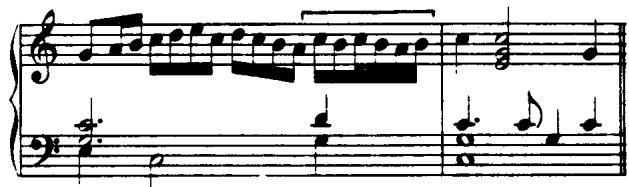
中文讲解
该条包含页码“182”版面标识以及Ex.4.16(f)的乐谱图像占位符,按图注其位置指向Morley《Nancie》5:1小节;具体音符需查阅原图。
第26段(P0149)
原文复述
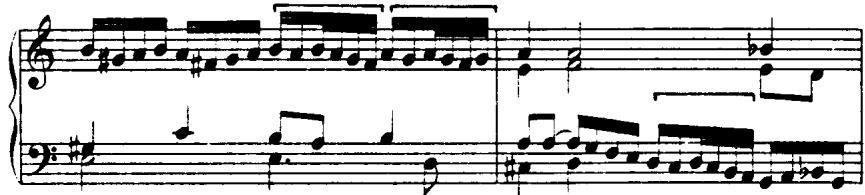
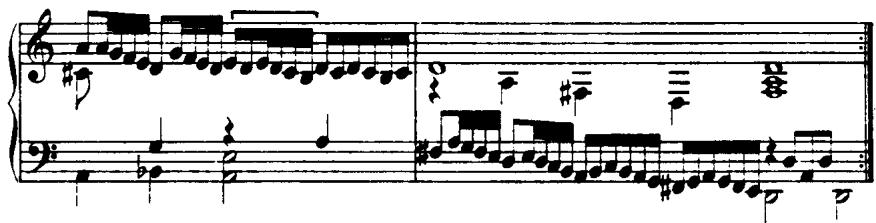
In Morley’s Nancie and Richardson’s Pavana and Galiarda the semiquaver-demisemiquaver rhythm (♩♩♩♩) is expressly used to conform to the same rhythmic pattern which occurs in groppetti and other diminutions in these pieces. In Ex.4.16 (d)-(f) this is demonstrated: each bar contains at least one such rhythmic figure. In the case of Richardson’s Pavana and Galiarda it occurs twenty-one times in the course of the work; here they often follow each other successively:
中文讲解
本段揭示节奏选择背后的风格动因:在Morley《Nancie》以及Richardson《Pavana》和《Galiarda》中,“十六分音符+三十二分音符”这一节奏型(♩♩♩♩)并非偶发,而是被特意安排,以与同曲中其他groppetti(groppo的复数小写形式)和其他diminutions(细分节奏)保持统一的节奏模式。Ex.4.16(d)–(f)展示了这一点:每小节至少含一处该节奏型。以Richardson《Pavana》与《Galiarda》为例,整首作品中该节奏型共出现21次,且常常前后连续衔接(句子未完,转入下例)。
第27段(P0150)
原文复述
Ex.4.17 Richardson, Pavana (FVB I 28)
中文讲解
该条为Ex.4.17的总图注,标注其引自Richardson《Pavana》(FVB I 28)。
第28段(P0151)
原文复述
(a) 5:2
中文讲解
该条为Ex.4.17(a)的子图标注,指示其位置为Richardson《Pavana》5:2小节。
第29段(P0152)
原文复述
中文讲解
该条为位于第18页的Ex.4.17(a)的乐谱图像占位符,对应Richardson《Pavana》5:2小节;具体音符需查阅原图。
第30段(P0153)
原文复述
(b) 6:1
中文讲解
该条为Ex.4.17(b)的子图标注,指示其位置为Richardson《Pavana》6:1小节。
第31段(P0154)
原文复述
中文讲解
该条为位于第18页的Ex.4.17(b)的乐谱图像占位符,对应Richardson《Pavana》6:1小节;具体音符需查阅原图。
第32段(P0155)
原文复述
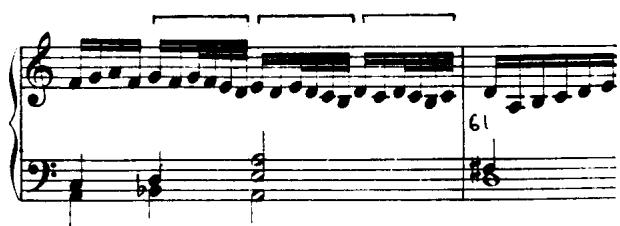
中文讲解
该条为Ex.4.17(c)的乐谱图像占位符,引自Richardson《Variatio》(FVB I 31:2:3);具体音符需查阅原图。
第33段(P0156)
原文复述
The typical groppo in the FVB is made up of equal note values of either semiquavers or demisemiquavers. In the majority of cases, however, semiquaver sextuplets are notated as demisemiquavers, and demisemiquaver eight-note groups are notated as semi-demisemiquavers. $^{39}$ In Ex.4.18(a) and (b) the correct note values occur thus in the FVB, although Ex.4.18(c)-(e) is more typical:
中文讲解
本段切换到groppo的另一类典型形态:等时值型——由等值的十六分音符或等值的三十二分音符构成。但作者同时指出版本现实问题:多数情况下,FVB并不按实际时值记谱,而是将十六分音符的六连音记作三十二分音符,将三十二分音符的八音组记作半三十二分音符(semi-demisemiquavers)。脚注39指向这一记谱现象。Ex.4.18(a)与(b)是FVB中正确记出实际时值的少数例子,而(c)–(e)所代表的“误记/简化记谱”反而更为典型。
第34段(P0157)
原文复述
Ex.4.18
中文讲解
该条为Ex.4.18的总图注标签,引出下文关于等时值groppo及其记谱现象的若干具体乐谱实例。
第35段(P0158)
原文复述
Byrd, Alman (FVB I 245:3:2)
中文讲解
该条为Ex.4.18(a)的来源说明,引自Byrd《Alman》(FVB I 245:3:2)。
第36段(P0159)
原文复述
中文讲解
该条为Ex.4.18(a)的乐谱图像占位符,展示Byrd《Alman》(FVB I 245:3:2)的实例;具体音符需查阅原图。
第37段(P0160)
原文复述
中文讲解
该条为Ex.4.18(b)的乐谱图像占位符,引自Byrd《The Bells》(FVB I 278:5:1);具体音符需查阅原图。
第38段(P0161)
原文复述
中文讲解
该条为Ex.4.18(c)(以及紧随其后的相关例)的乐谱图像占位符,分别引自Byrd《Pavana Bray》(FVB I 363:6:1)与Byrd《All in a Garden Green》(FVB I 414:1:1);具体音符需查阅原图。
第39段(P0162)
原文复述
(d)
中文讲解
该条为Ex.4.18(d)的子图标注标签,引出下文对应的乐谱实例;具体内容见P0163所附图像。
第40段(P0163)
原文复述
中文讲解
该条为Ex.4.18(d)的乐谱图像占位符,位于第19页;具体音符需查阅原图。
第41段(P0164)
原文复述
This phenomenon is discussed in Chapter 3; see 3.8.
中文讲解
本段为前段所述记谱现象(即把六连音记作三十二分音符、把八音组记作半三十二分音符)指引读者参阅第3章第3.8节作进一步讨论。
第42段(P0165)
原文复述
Byrd, Galiarda (FVB II 47:1:3)
中文讲解
该条为Ex.4.18(e)的来源说明,引自Byrd《Galiarda》(FVB II 47:1:3)。
第43段(P0166)
原文复述
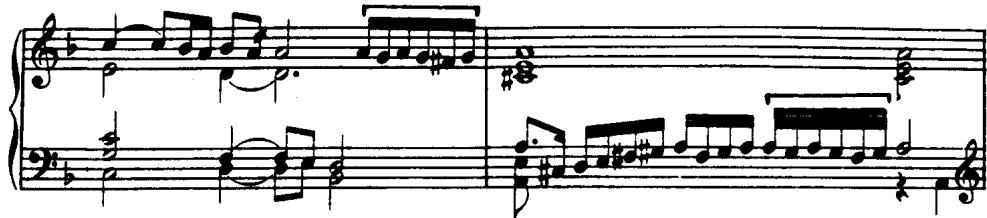
中文讲解
该条为Ex.4.18(e)的乐谱图像占位符,展示Byrd《Galiarda》(FVB II 47:1:3)的实例;具体音符需查阅原图。
第44段(P0167)
原文复述
In Ex.4.18(c) and (d), the eight-note group and sextuplet are notated in a single metric diminution. In Ex.4.18(e), the sextuplet is once written correctly, but in the next bar it appears in the form of demisemiquavers, in a single metric diminution.
中文讲解
本段总结Ex.4.18的记谱规律:(c)与(d)中,无论是八音组还是六连音,均以“单一节拍细分”(single metric diminution)的形式记出;(e)中则呈现出有趣的对比——六连音在该小节被正确记写,而在下一小节却以三十二分音符的单一节拍细分形式出现。这一对比清楚说明了“正确记谱”与“按节拍细分简化记谱”两种做法在同一首作品内并存的现象。
脚注 / 边栏 / 图表 / 附加信息(如有)
本节涉及的附加材料主要为:1) 脚注39(出现在P0156),指向关于FVB中六连音被记作三十二分音符、八音组被记作半三十二分音符这一记谱现象的来源说明,其作用是支撑作者对“等时值groppo在FVB中多以单一节拍细分形式记谱”的判断;2) 多处图注与跨页乐谱(Ex.4.12至Ex.4.18),用以逐一展示四音基本型、混合时值六音型、等时值六/八音型及其记谱变体;3) 页码181与182,仅为版面标识。这些附加材料共同服务于本节“节奏可变+旋律骨架不变”的论证。
💡 本节核心要点
- FVB中的groppo在节奏形态上可变(音符时值与数量可变),但其旋律骨架始终保持一致。
- 最基本型为四音groppo(Ex.4.12),且其在FVB中极少使用。
- 典型groppo为六音或八音(偶有十二或十六音),分为等时值与混合时值两类。
- 混合时值六音groppo固定呈现“先长后短”的渐快格局,仅由八分+十六分或十六分+三十二分构成。
- 部分看似六音的groppo实为四音型前的装饰性先现,需与真正六音型区分。
- 等时值groppo在FVB中常被简化记谱——六连音写成三十二分音符、八音组写成半三十二分音符,属记谱现象而非节奏事实;正确与简化记法可并存于同一首作品内。
🔑 关键术语
- groppo:本节讨论的核心对象,一种装饰音型;在FVB中节奏可变但旋律骨架不变,由四音基本型扩展为六音、八音乃至十二/十六音形态。
- FVB:即Fitzwilliam Virginal Book,菲茨威廉维金纳琴曲集,本节所有例子均出自该曲集。
- discant close:上方声部(discant)的收束位置;本节考察groppo在该结构位置上的装饰用法及其出现频率。
- ornamented anticipation:装饰性先现,指对解决音的提前出现并加以装饰;本节提示它可制造出“看似六音groppo”的听感错觉,后文将专门讨论。
- progressive accelerando:渐快格局,指混合时值六音groppo中先出现较长音符、再接较短音符的固定节奏安排。
- semiquaver / demisemiquaver / semi-demisemiquaver:分别指十六分音符、三十二分音符与半三十二分音符;本节用以描述groppo的等时值与混合时值构造,以及FVB中六连音、八音组的简化记谱方式。
- groppetti:groppo的复数小写形式;本节指出某些作品特意让groppo的节奏模式与全曲其他groppetti及diminutions保持统一。
- diminution:细分节奏,即以更短时值对原有音符进行节奏细分;本节用作与groppo节奏模式相互参照的对象。
- single metric diminution:单一节拍细分,指将原本属于复合节拍细分(六连音、八音组等)的音群按等时值短音符记出;本节用以描述FVB中常见的groppo简化记谱方式。
4.2.2 4.2.2 The Groppo as Decoration of the Discant Close
第1段(P0168)
原文复述
4.2.2 The Groppo as Decoration of the Discant Close
中文讲解
这是第4章第2节第2小节的标题。该标题明确本小节的研究焦点:groppo(一种装饰性旋律公式)作为终止式(cadence)中高声部结束音(discant close)的装饰手段。标题中保留英文术语"groppo"和"discant close",提示读者本节聚焦于装饰音(ornamentation)与终止式这两个中世纪/文艺复兴音乐理论的关键交叉点。
补充说明
标题在原文中以二级标题(##)格式出现,承担分节定位功能,本身不承载论证内容。
第2段(P0169)
原文复述
The great majority of groppi in the FVB occur as decoration of one of the individual closes in either a perfect or imperfect cadence, whether it is a simple or diminuta cadence. The groppo features mainly as decoration of the penultimate note of the discant close, and in a few isolated cases it decorates the tenor close.
中文讲解
本段提出本节的核心统计观察:FVB(菲茨威廉维吉纳琴曲集,Fitzwilliam Virginal Book)中绝大多数groppo用于装饰完整终止式(perfect cadence)或不完全终止式(imperfect cadence)中各声部的结束音(individual closes),无论该终止式属于简单终止式(simple cadence)还是减缩终止式(diminuta cadence)。在所有这些用法中,groppo主要装饰高声部结束音(discant close)的次强音(penultimate note),仅有少数例外情况装饰次中声部结束音(tenor close)。此段的作用是为本节设定范围——聚焦于discant close的装饰,同时暗示tenor close作为对比或边缘案例存在。
补充说明
原文中FVB、perfect cadence、imperfect cadence、simple cadence、diminuta cadence、discant close、tenor close均为特定术语,构成本节讨论的分类框架。
第3段(P0170)
原文复述
The discant close is the most richly ornamented of the individual closes, and it is here that the greatest variety of diminutions is found. In the FVB it is but one of a variety of stereotyped melodic figures which decorate the penultimate note of the discant close. $^{40}$ The groppo serves two functions in its role as decoration of the discant close: it ornamentally resolves the suspended dissonance, and through its appearance on the penultimate note of the close, it draws attention to the cadence event.
中文讲解
本段进一步限定groppo的语境:discant close在所有individual closes中装饰最丰富、减缩(diminutions)形式最多样。groppo只是其中一种定型化的旋律公式(stereotyped melodic figures),而非唯一形式。脚注40指向Schwandt的相关表格。本段最重要的断言是groppo作为discant close装饰承担双重功能:一是装饰性地解决(ornamentally resolve)悬挂的不协和音(suspended dissonance);二是通过出现在次强音位置上,将注意力引向终止事件(cadence event)。这两个功能构成本节后续论证的双主线。
补充说明
脚注40(见P0172段)说明Schwandt对discant close装饰现象的详尽研究。
第4段(P0171)
原文复述
The groppo risks being considered merely as an ordinary melodic formula of upper-main note alternation. In practice, as decoration of the discant close the groppo is a significant event. In a simple cadence the groppo consists of an alternation of the
中文讲解
作者在此提出一个潜在误解并立即反驳:groppo表面上看起来只是一种普通的上主音交替公式(upper-main note alternation),即在主旋律音与其上方邻音之间的来回弹跳,可能被忽视其重要性。但作者强调在实践中,作为discant close装饰时,groppo是一个具有显著意义的音乐事件。本段末尾的"consists of an alternation of the"是一句悬空句(dangling sentence),其完整内容将由下一段开头的"first note of the discant close with the penultimate note: Ex.4.19"补足——本段因此在结构上起到过渡作用,引出对simple cadence中groppo具体构成的描述。
补充说明
句末悬空是因为原文排版将句子切断于段落结尾,下一段从"first note"继续。这种跨段语法连接提醒读者注意段落划分与论证逻辑并不完全一致。
第5段(P0172)
原文复述
40 A table of these appears in Schwandt, Clausula, p.40. Schwandt gives an exhaustive account of this phenomenon.
中文讲解
这是脚注40的完整内容。它提供补充出处:Schwandt所著《Clausula》第40页列有相关装饰现象的表格。脚注的学术作用是来源标注与佐证——指出作者并非首创发现groppo装饰discant close的现象,Schwandt早已对其进行了详尽研究。该脚注对正文P0170的断言起到外部权威支持作用。
补充说明
脚注本身不构成新论点,而是对正文P0170中"stereotyped melodic figures which decorate the penultimate note of the discant close"的文献定位。
第6段(P0173)
原文复述
first note of the discant close with the penultimate note: Ex.4.19
中文讲解
本段文字接续P0171的悬空句,补全simple cadence中groppo的具体构成:在simple cadence中,groppo由discant close的起始音(first note,即终止式主音/最终音)与次强音(penultimate note,即导音或不协和的解决音)之间的交替构成。其后以"Ex.4.19"标注引向紧随的乐谱示例。
补充说明
本段单独成段在排版上是图片说明文字前的过渡句,句子结构上属于P0171未完句的延续。
第7段(P0174)
原文复述

中文讲解
此处为乐谱示例Ex.4.19的图像占位符,位于第21页。结合P0173与P0175的描述可知,该图示应以视觉方式展示simple cadence中groppo的结构:discant close起始音与次强音之间的交替旋律轮廓。因图像数据被省略,具体音符排列无法在文本中确认,需查阅原书第21页Ex.4.19。
补充说明
原文中此处为可省略的内嵌图像数据,本系统未提供具体谱例内容,故不作猜测。
第8段(P0175)
原文复述
In a diminuta cadence, this alternation takes place between the suspended dissonance and the note of resolution: Ex.4.20
中文讲解
本段将simple cadence的groppo构成原理延伸至diminuta cadence(减缩终止式):在diminuta cadence中,groppo的交替不再发生于discant close起始音与次强音之间,而是发生于悬挂的不协和音(suspended dissonance)与其解决音(note of resolution)之间。其后引向Ex.4.20作为该现象的图示。
补充说明
本段与P0173、P0174共同构成simple cadence与diminuta cadence两种groppo形态的对照介绍。
第9段(P0176)
原文复述

中文讲解
此处为乐谱示例Ex.4.20的图像占位符,位于第21页。结合P0175描述,该图示应展示diminuta cadence中悬挂不协和音与解决音之间的交替结构。需查阅原书第21页Ex.4.20以获取具体谱例内容。
补充说明
与Ex.4.19并列,两图共同对比groppo在两种cadence类型下的不同应用。
第10段(P0177)
原文复述
The groppo formula is thus in fact a diminutio of the melodic progression of the discant close, in this case a semitone interval. (In Phrygian cadences this would be a whole tone.) The penultimate note or note of resolution in the formula is reached via the lower auxiliary, before it finally sounds and leads up to the cadence note. This way - albeit as a last attempt - attention is drawn to the penultimate note of the discant close, after having been ‘sabotaged’ or disguised by the alternating upper note.
中文讲解
本段对groppo公式做出形式化定义与机理解释。首先,groppo本质上是discant close旋律进行的减缩(diminutio),在此情形下被减缩的是半音(semitone interval)的进行;括号内的例外说明:在弗里几亚终止式(Phrygian cadence)中,由于音阶结构差异,相应进行为全音(whole tone)。其次,关于结构机制:公式中的次强音或解决音是通过下方邻音(lower auxiliary)被引入的——即旋律先下移一级邻音,再回到目标音——随后才真正响出并上行引向终止音。最后,“sabotaged"或"disguised"等带引号的措辞揭示了作者对groppo修辞效果的判断:交替的上方音曾"破坏"或"掩饰"了次强音的位置感,但通过下邻音的引入,注意力最终还是被牵引回次强音,构成"最后一次尝试”。此段的功能是把groppo从表面旋律公式提升为有目的修辞策略。
补充说明
“diminutio"为文艺复兴音乐理论术语,指以更小音符细分主音符时值的装饰手法。“Phrygian cadence"指终止式落在E音、调式为弗里几亚的特殊情形,因其下方半音关系不同,全音替代半音作为groppo装饰对象。
第11段(P0178)
原文复述
In the discant close of a simple cadence, the penultimate note is prepared ornamentally via a groppo for its progression to the final cadence note. In this manner, attention is drawn to the fact that a cadence is going to take place, while also creating harmonic tension through the presence of the ante-penultimate note of the discant close in the groppo:
中文讲解
本段回到simple cadence的具体情形:discant close的次强音通过groppo获得装饰性准备(ornamental preparation),以为最终上行到终止音做准备。同时,groppo引入了discant close的次次强音(ante-penultimate note),这一额外音的出现制造了和声紧张(harmonic tension),与将注意力引向终止事件的功能并存。段末冒号引向示例Ex.4.21。
补充说明
“ante-penultimate note"指倒数第三音,其出现使groppo不只是两个音的简单交替,而实质引入了旋律骨架以外的音,扩大了装饰的时值与紧张度。
第12段(P0179)
原文复述
Ex.4.21
中文讲解
本段为示例Ex.4.21的标注,单独成段以提示紧随其后的图示对应P0178所论述的simple cadence中discant close由groppo装饰的情形。
补充说明
作为图题编号,本身不承载论证内容。
第13段(P0180)
原文复述

中文讲解
此处为示例Ex.4.21的(b)部分图像占位符。标签”(b)“表明此为该图示中的第二项。结合后续P0181、P0182的图注可知,(a)与(b)分别对应discant close和tenor close两条声部。需查阅原图以确认具体音符。
补充说明
图像以”(b)“标记,暗示存在”(a)“对应片段,构成本图示的内部对照。
第14段(P0181)
原文复述
(a) = discant close
中文讲解
本段为Ex.4.21图示(a)部分的图注,说明(a)对应discant close(高声部结束音的旋律线)。
补充说明
图注以独立短行形式出现,起到图内分区标识作用。
第15段(P0182)
原文复述
(b) = tenor close
中文讲解
本段为Ex.4.21图示(b)部分的图注,说明(b)对应tenor close(次中声部结束音的旋律线)。
补充说明
与P0181共同构成Ex.4.21的完整图注系统,分别标识两条声部旋律。
第16段(P0183)
原文复述
In the discant close of a diminuta cadence, the penultimate note is the resolution of the suspended dissonance, and it is here that the discant close acquires both rhythmic and harmonic significance: it is distinctive rhythmically, through the resolution of the dislocated accent, and also harmonically, as it becomes discordant prior to the semitone fall of the suspension and imperfectly concordant at the point where the note of resolution sounds - just before the perfect concord of the final chord. The decoration of this penultimate note by way of a groppo or any other diminution, accentuates and draws attention to this occurrence which might otherwise have passed unnoticed. In the process, the feeling of release of harmonic tension is postponed by the groppo until the last moment through the presence of the alternating suspended dissonance in the groppo. This dissonance sounds precisely at the moment where one might have expected the note of resolution to occur, and the latter occupies a secondary position until attention is finally drawn to it, via the lower auxiliary, just before it leads to the cadence. All this happens without affecting the basic progression of the discant close:
中文讲解
本段是本小节理论论证最密集的段落,论述diminuta cadence中discant close的次强音是悬挂不协和音的解决音,此处discant close同时获得节奏意义与和声意义:节奏上因解决"错位重音”(dislocated accent)而具特色;和声上在悬挂音半音下行(semitone fall)之前出现不协和,在解决音响出之时呈不完全协和(imperfectly concordant),仅在最终和弦达成完全协和(perfect concord)之前才到位。通过groppo或任何其他减缩装饰这一位置,得以强调并吸引对此发生——否则可能未被察觉——的注意力。在groppo装饰过程中,由于悬挂不协和音的持续交替出现,和声紧张释放的感受被推迟至最后一刻:悬挂不协和音精确地响在听者原本预期解决音出现的时刻,使解决音退居次位,直至通过下方邻音重新唤起对其注意,进而导向终止。本段末尾指出"所有这一切都不影响discant close基本进行”,即装饰不改变骨架音的进行逻辑。本段的功能是把groppo升格为diminuta cadence中discant close的张力管理工具,其结尾冒号引向Ex.4.22。
补充说明
“dislocated accent"指因减缩或延音造成的重音位置偏离;“imperfectly concordant"与"perfect concord"为协和程度等级,前者对应三度或六度,后者对应同度、五度或八度;“lower auxiliary"即下方邻音,是groppo公式结构上的关键运动音。
第17段(P0184)
原文复述
Ex.4.22
中文讲解
本段为示例Ex.4.22的图题编号,单独成段以提示紧随的图示对应P0183所论述的diminuta cadence中discant close装饰的情形。
补充说明
作为图题编号,本身不承载论证内容。
第18段(P0185)
原文复述
Unornamented:
中文讲解
本段为Ex.4.22中的小标题"Unornamented:"(未经装饰的版本),提示紧随的图示展示未加groppo装饰时discant close的原始形态,以与后续装饰版本形成对照。
补充说明
此小标题承担图内分区功能,把Ex.4.22拆分为"未装饰"与"装饰"两个对照板块。
第19段(P0186)
原文复述
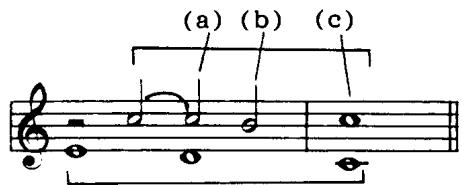
中文讲解
此处为Ex.4.22"Unornamented"部分的图像占位符,位于第22页。结合P0187–P0189的图注可知,该图示标注悬挂不协和音(a)、解决音(b)与终止音(c)三个位置,展示diminuta cadence未经装饰时的discant close基本结构。需查阅原图确认具体音符。
补充说明
图像内容被省略,但图注与位置足以确认其在Ex.4.22整体对照中的功能。
第20段(P0187)
原文复述
(a) = suspended dissonance
中文讲解
本段为Ex.4.22未装饰部分(a)的图注,说明(a)对应悬挂的不协和音(suspended dissonance)。
补充说明
图注标识diminuta cadence中discant close第一个音的功能角色。
第21段(P0188)
原文复述
(b) = note of resolution
中文讲解
本段为Ex.4.22未装饰部分(b)的图注,说明(b)对应解决音(note of resolution),即悬挂不协和音向下半音解决所到达的音。
补充说明
图注标识diminuta cadence中discant close第二个音的功能角色。
第22段(P0189)
原文复述
(c) = cadence note
中文讲解
本段为Ex.4.22未装饰部分(c)的图注,说明(c)对应终止音(cadence note),即整个discant close最终落到的音。
补充说明
图注标识diminuta cadence中discant close第三个音的功能角色,完成(a)(b)(c)三音标注体系。
第23段(P0190)
原文复述
Ornamented:
中文讲解
本段为Ex.4.22中的小标题"Ornamented:"(已装饰的版本),提示紧随的图示展示加入groppo装饰后discant close的展开形态,与前段"Unornamented:“形成对照。
补充说明
与P0185共同构成Ex.4.22的两板块结构。
第24段(P0191)
原文复述
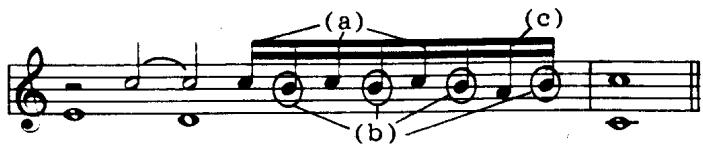
中文讲解
此处为Ex.4.22"Ornamented"部分的图像占位符,位于第22页。结合P0192–P0194的图注可知,该图示展示悬挂不协和音、解决音和引入解决音的下邻音三者在装饰版本中的具体分布。需查阅原图确认具体音符。
补充说明
图像内容被省略。
第25段(P0192)
原文复述
(a) = alternating suspended dissonance
中文讲解
本段为Ex.4.22装饰部分(a)的图注,说明(a)对应交替出现的悬挂不协和音(alternating suspended dissonance),即在装饰版本中悬挂音反复出现的位置。
补充说明
与P0187的"suspended dissonance"图注对应,但此处强调"alternating”——通过groppo的反复出现,体现其作为交替公式的本质。
第26段(P0193)
原文复述
(b) = note of resolution
中文讲解
本段为Ex.4.22装饰部分(b)的图注,说明(b)对应解决音(note of resolution)。
补充说明
与P0188的"note of resolution"图注对应,但在装饰版本中解决音处于次位(secondary position),故标注(b)。
第27段(P0194)
原文复述
(c) = lower auxiliary introducing the note of resolution
中文讲解
本段为Ex.4.22装饰部分(c)的图注,说明(c)对应引入解决音的下邻音(lower auxiliary introducing the note of resolution),即P0177所论述的、最终唤起对解决音注意力的关键运动音。
补充说明
此图注直接呼应P0177的"reached via the lower auxiliary"机制,构成图文互证。
第28段(P0195)
原文复述
The function of the groppo on the penultimate note in a diminuta discant close is therefore the ornamental resolution of dissonance. At the same time, the groppo prolongs the suspended dissonance by means of the alternation between the suspended dissonance and the note of resolution. The ornamental resolution thus created by the groppo results in attention being drawn to the cadence event, creating an additional function for the groppo. The groppo as ornamental resolution thus becomes a hallmark of cadence.
中文讲解
本段对P0183的论证作出总结与升格:在diminuta discant close中,groppo的功能是装饰性地解决不协和(ornamental resolution of dissonance);同时,groppo通过悬挂不协和音与解决音之间的交替延长(prolongs)了悬挂不协和音的时值;由此产生的装饰性解决使注意力引向终止事件,构成groppo的额外功能(additional function)。作者最后以总括句宣称:groppo作为装饰性解决,因而成为终止式的标志(hallmark of cadence)。本段的作用是把分散于P0177–P0194的多重论点收束为groppo功能的双重定义——装饰性解决与延长不协和——并将其与cadence的本质直接挂钩。
补充说明
“additional function"提示作者意识到groppo在先前文本中已有两个功能(解决不协和+吸引注意力于cadence),此处总结又引出"延长不协和"作为新的功能层级,反映作者逐步精化其论证。
第29段(P0196)
原文复述
Ex.4.23 is an illustration from the FVB of a gruppo decorating a discant close in a simple cadence:
中文讲解
本段作为过渡句,引出Ex.4.23。该示例来自FVB,展示groppo装饰simple cadence中discant close的具体实例——这是从理论描述进入FVB实际谱例的关键转折。需注意原文此处拼写为"gruppo”(疑为"groppo"之笔误或古体变体),本系统按原文保留此拼写。
补充说明
原文使用"gruppo"而非统一的"groppo”,可能是排版变体或印刷差异;本系统不作改动。
第30段(P0197)
原文复述
Ex.4.23 Byrd, Galiarda (FVB II 393:3:1)
中文讲解
本段为Ex.4.23的图题说明,标注作曲者为Byrd,曲目为Galiarda,FVB卷次与位置为卷II第393页第3行第1小节。该谱例代表伊丽莎白时代键盘音乐的实际文献来源,为作者的理论论点提供具体实证。
补充说明
“Byrd, Galiarda"指威廉·伯德所作的Galiarda(一种三拍子舞曲);FVB引用格式"卷II 393:3:1"是Fitzwilliam Virginal Book的卷—页—行—小节定位系统。
第31段(P0198)
原文复述
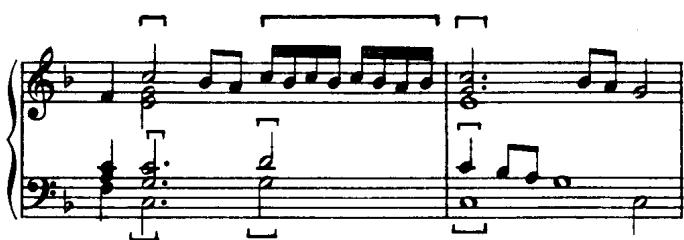
中文讲解
此处为Ex.4.23的图像占位符,位于第23页。展示Byrd《Galiarda》(FVB II 393:3:1)中groppo装饰discant close的实际谱例。需查阅原图以确认具体音符。
补充说明
图像数据被省略,文本不足以确认乐谱细节。
第32段(P0199)
原文复述
The discant close is in this case in the soprano, and the individual closes can be thus reduced:
中文讲解
本段说明Ex.4.23的声部分配:在该例中discant close位于soprano(最高声部),并提示可以将其各individual closes简化为基本骨架。句末冒号引向Ex.4.24。
补充说明
“reduced"提示作者使用简化骨架图来剥离装饰、揭示各声部结束音的基本音程结构,是分析策略上的常用手法。
第33段(P0200)
原文复述
Ex.4.24
中文讲解
本段为示例Ex.4.24的图题编号,单独成段并以二级标题格式出现,引向紧随的简化骨架图。
补充说明
以二级标题出现说明其在视觉层级上具有独立图表的地位。
第34段(P0201)
原文复述
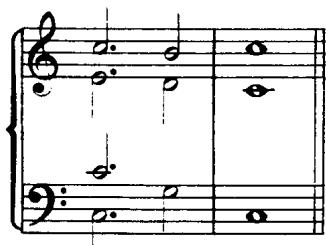
中文讲解
此处为Ex.4.24的图像占位符,位于第23页。展示Byrd《Galiarda》各individual closes的简化骨架图,即P0199所提示"reduced"后的基本音程结构。需查阅原图确认具体音符。
补充说明
图像数据被省略。
第35段(P0202)
原文复述
The tenor close consists of the notes c’ - d’ - c’ and the bass close of the notes c - g - c, being in the tenor and bass respectively. The countertenor close is incomplete. The decorated discant close in a diminuta cadence, showing the ornamental resolution of dissonance by the groppo, is shown in Ex.4.25: Ex.4.25 Byrd, Galiarda (FVB I 365:5:1)
中文讲解
本段提供Ex.4.24各声部骨架的具体音高:tenor close为c’–d’–c’,bass close为c–g–c,分别位于tenor与bass声部;countertenor close为不完整(incomplete)。随后引入Ex.4.25,作为同一曲目(Byrd, Galiarda)不同位置(FVB I 365:5:1)的diminuta cadence中discant close装饰示例,展示groppo装饰性地解决不协和的情形。
补充说明
countertenor close"incomplete"说明在终止时该声部旋律未完结,存在声部书写残缺;Ex.4.25的FVB位置"I 365:5:1"为卷I第365页第5行第1小节,与Ex.4.23的"II 393:3:1"不同,提示作者选自同一作曲家的不同作品片段以佐证理论。
第36段(P0203)
原文复述
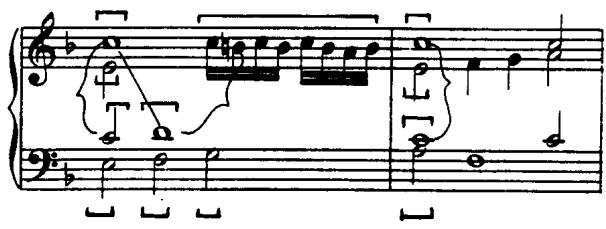
中文讲解
此处为Ex.4.25的图像占位符,位于第24页。展示Byrd《Galiarda》(FVB I 365:5:1)中diminuta cadence的discant close装饰实例。需查阅原图确认具体音符。
补充说明
图像数据被省略。
第37段(P0204)
原文复述
The dissonance between the first note of the discant close (c”) and the second note of the tenor close (d’), with the groppo decorating the note of resolution (b’) is clearly illustrated. The movement of the two last notes of the bass close causes it to make a passing cadence (e - f - g - a); the tenor close in the tenor is c’ - d’ - c’, while the countertenor close is incomplete, being interrupted at the point where the groppo sounds. Philips’ Pavana Doloroso demonstrates the use of the ornamented discant close in voice parts other than the soprano, as prescribed by Ornithoparcus in his Rules:
中文讲解
本段是对Ex.4.25的逐声部分析:discant close起始音(c”)与tenor close第二音(d’)之间的不协和清晰呈现,groppo装饰其解决音(b’)。bass close最后两音的运动使其形成经过终止式(passing cadence,e–f–g–a);tenor close为c’–d’–c’;countertenor close在groppo响出的位置被中断,呈不完整状态。随后过渡至Philips的Pavana Doloroso作为新例证,说明装饰后的discant close可出现在soprano以外的声部——这一用法由Ornithoparcus在《Rules》中以理论形式规定。本段的功能是将单一谱例分析与跨作曲家、跨理论家的体系统一相连接。
补充说明
“passing cadence”(经过终止式)指在终止进行中以经过音方式插入的弱终止形态;“Ornithoparcus"即Andreas Ornithoparcus(16世纪末音乐理论家),其《Rules》对位与终止式理论对英格兰键盘音乐传统有影响。
第38段(P0205)
原文复述
Ex.4.26
中文讲解
本段为示例Ex.4.26的图题编号,单独成段以提示紧随的图示对应Philips《Pavana Doloroso》中装饰discant close出现在非soprano声部的情形。
补充说明
作为图题编号,本身不承载论证内容。
第39段(P0206)
原文复述
Philips, Pavana Doloroso (FVB I 321)
中文讲解
本段为Ex.4.26的整体图题说明,标注作曲者为Philips,曲目为Pavana Doloroso,FVB位置为卷I第321页起。
补充说明
“Philips"指Peter Philips(约1560–1628),英格兰/南尼德兰作曲家的Pavana Doloroso是FVB收录的重要曲目。
第40段(P0207)
原文复述
(a) 321:1:1
中文讲解
本段为Ex.4.26(a)的局部定位标签,说明该子例来自FVB卷I第321页第1行第1小节。
补充说明
此为子例定位,与P0206的整体图题配合使用,标识具体谱例来源。
第41段(P0208)
原文复述
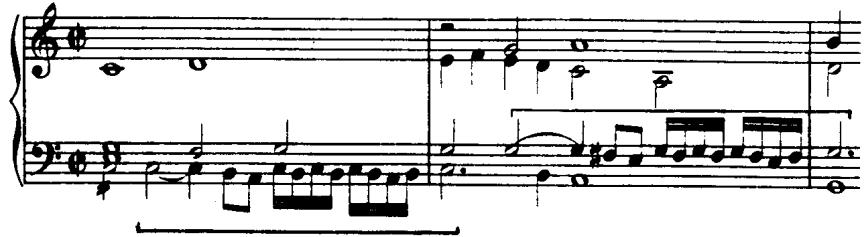
中文讲解
此处为Ex.4.26(a)的图像占位符,位于第24页。结合P0211描述,该图示展示装饰后的discant close出现在第一小节的bass声部与第二小节的tenor声部。需查阅原图确认具体音符。
补充说明
图像数据被省略。
第42段(P0209)
原文复述
(b) 325:1:4
中文讲解
本段为Ex.4.26(b)的局部定位标签,说明该子例来自FVB卷I第325页第1行第4小节。
补充说明
与P0207的"321:1:1"定位对应,表明(a)(b)分别取自同一曲目内的不同位置,以展示装饰discant close在不同声部出现的情形。
第43段(P0210)
原文复述
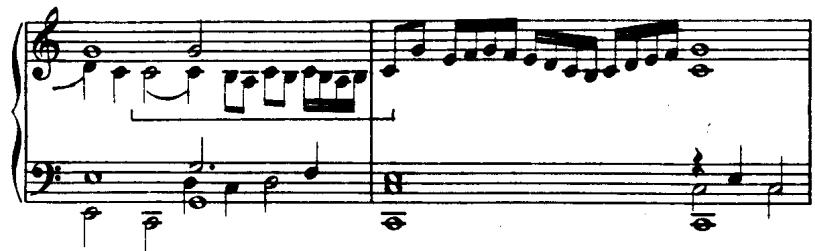
中文讲解
此处为Ex.4.26(b)的图像占位符,位于第24页。结合P0212描述,该图示展示装饰后的discant close出现在alto声部的情形,且作者认为此处为"particularly good example”。需查阅原图确认具体音符。
补充说明
图像数据被省略。
第44段(P0211)
原文复述
In Ex.4.26(a) the ornamented discant close appears in the bass in the first bar, in the tenor in the second bar, and in (b)
中文讲解
本段描述Ex.4.26(a)中的声部分布:装饰后的discant close在第一小节出现于bass声部,在第二小节出现于tenor声部。本句在"and in (b)“处被段落边界切断,其完整描述由P0212的"in the alto"补足。本段的功能是具体指明(a)图所示两个小节的声部归属,为(b)图留下悬念。
补充说明
跨段句法延续,P0211与P0212共同构成一句完整描述。
第45段(P0212)
原文复述
in the alto. In (b) a particularly good example occurs, illustrating the way in which the basic intervals of the individual closes are preserved, while they are subject to diminution. The basic intervals of the four closes in Ex.4.26(b) may be reduced to the following:
中文讲解
本段接续P0211,完成句子:装饰后的discant close在(b)中出现在alto声部。作者称(b)为一个"particularly good example”(特别好的例证),因为它特别清楚地展示了个体结束音在承受减缩装饰的同时仍保持其基本音程。随后指出Ex.4.26(b)中四个声部结束音的基本音程可被简化为以下图示(冒号引向Ex.4.27)。本段的关键断言是:装饰不改变基本音程结构,只在其上添加减缩——这是装饰理论与和声骨架理论的衔接点。
补充说明
作者在此将装饰视为"附着于骨架的扩展”,符合文艺复兴音乐理论中diminutio作为对位进行之附属装饰的总体取向。
第46段(P0213)
原文复述
Ex.4.27
中文讲解
本段为示例Ex.4.27的图题编号,单独成段以提示紧随的图示对应P0212所述Ex.4.26(b)中四个声部结束音的基本音程简化。
补充说明
作为图题编号,本身不承载论证内容。
第47段(P0214)
原文复述
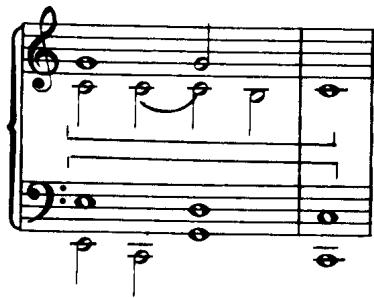
中文讲解
此处为Ex.4.27的图像占位符,位于第25页。结合P0215–P0218的逐声部描述可知,该图示展示soprano、alto、tenor、bass四个声部结束音的基本音程骨架。需查阅原图确认具体音符。
补充说明
图像数据被省略。
第48段(P0215)
原文复述
Soprano : countertenor close (incomplete) g’ - g’
中文讲解
本段标注Ex.4.27中soprano声部的结束音骨架为countertenor close(不完整),音高为g’–g’。“incomplete"提示该声部终止式骨架未完结。
补充说明
“countertenor close"虽标注在soprano声部下,说明此声部承担了countertenor(即对位声部)的功能角色,提示声部名称与声部功能之间的对应关系在分析中具有流动性。
第49段(P0216)
原文复述
Alto : discant close (syncopated) c’ - b - c’
中文讲解
本段标注Ex.4.27中alto声部的结束音骨架为discant close(切分节奏syncopated),音高为c’–b–c’。“syncopated"提示该discant close经过切分处理。
补充说明
“syncopated"在diminuta cadence中与"dislocated accent"相关——切分造成的重音错位是悬挂不协和音与解决音得以形成节奏张力的机制。
第50段(P0217)
原文复述
Tenor : tenor close e - d - c
中文讲解
本段标注Ex.4.27中tenor声部的结束音骨架为tenor close,音高为e–d–c。
补充说明
tenor声部承担标准的tenor close角色,其骨架进行为e–d–c,与P0202、P0204中Byrd例子的tenor close(c’–d’–c’)属于同一功能类别。
第51段(P0218)
原文复述
Bass : bass close C - G - C
中文讲解
本段标注Ex.4.27中bass声部的结束音骨架为bass close,音高为C–G–C,构成完整终止式的低音骨架。
补充说明
bass close的C–G–C为典型根音–五度–根音的终止低音运动,符合FVB时代键盘音乐终止式的常见音型。
第52段(P0219)
原文复述
The groppo ordinarily takes up the whole value of the decorated note of resolution, as shown by Ex.4.12 to Ex.4.26.
中文讲解
本段是本小节的收束句,对groppo的时值长度作总括陈述:通常情况下,groppo占据被装饰的解决音(decorated note of resolution)的整个时值。这一规律由Ex.4.12至Ex.4.26的所有例证共同展示。该句的"ordinarily"保留了限定——表明该时值占据为常态而非绝对规则。其作用是把本节所有示例的共性提炼为一条简洁的时值规则,作为本小节的总结性结论。
补充说明
Ex.4.12为前文某段已出现过的示例编号(本节源文本未直接呈现其内容),Ex.4.13至Ex.4.18本节亦未提供;Ex.4.19至Ex.4.26为本节所讨论的全部例证。作者将时值规律覆盖于Ex.4.12至Ex.4.26的整个引用范围,意在提示读者:本节并非孤立讨论,而是与第4章中其他示例(位于4.2.1或更早小节)共享同一规律。
脚注 / 边栏 / 图表 / 附加信息(如有)
本节附有脚注40(P0172),出处为Schwandt, Clausula, p.40,作用是为P0170中关于discant close装饰为定型化旋律现象的论断提供外部文献支持。此外本节涉及多个乐谱示例Ex.4.19–Ex.4.27,分别承担不同论证功能:Ex.4.19、Ex.4.20为simple cadence与diminuta cadence中groppo交替结构的对照;Ex.4.21为(a)discant close与(b)tenor close的两声部对比;Ex.4.22为diminuta discant close的"未装饰/装饰"对照;Ex.4.23–Ex.4.25为Byrd《Galiarda》两个位置(FVB II 393:3:1 与 FVB I 365:5:1)的实例分析;Ex.4.26为Philips《Pavana Doloroso》中装饰discant close出现在非soprano声部的两个片段(FVB I 321:1:1 与 FVB I 325:1:4);Ex.4.27为Ex.4.26(b)的四声部骨架简化图。
💡 本节核心要点
- groppo在FVB中的主导用途是装饰discant close的次强音,simple cadence与diminuta cadence两种情形下其交替对象不同:前者交替起始音与次强音,后者交替悬挂不协和音与解决音。
- groppo在形式上是discant close旋律进行的减缩(diminutio),在半音cadence中装饰半音进行,在Phrygian cadence中相应改为全音进行。
- groppo通过下方邻音(lower auxiliary)最终引入次强音或解决音,先以交替的上方音"掩饰"或"破坏"该音的位置感,构成延宕注意力的修辞策略。
- 在diminuta cadence中,groppo承担"装饰性解决不协和"与"延长悬挂不协和"双重功能:前者将注意力引向终止事件,后者推迟紧张释放的时机。
- groppo通常占据被装饰解决音的整个时值(ordinary rule),且装饰不影响discant close的基本音程进行;后者通过Ex.4.27的四声部骨架简化得到证实。
- groppo的用法可跨越声部分配,不限于soprano,可出现在bass、tenor、alto等声部,与Ornithoparcus《Rules》的体例相符。
🔑 关键术语
- groppo:本节核心装饰公式,指在高声部结束音的次强音或解决音位置上以交替方式出现的旋律减缩;在本节中作为装饰discant close的关键手段被详细分析。
- discant close:高声部(discantus/soprano)的结束音进行,是终止式中装饰最丰富的声部线条,也是本节讨论groppo装饰的主要对象。
- diminuta cadence:减缩终止式,指采用悬挂不协和音并向下半音解决至主音的终止式类型;与simple cadence相对,是本节groppo装饰功能讨论的核心理论情境。
- simple cadence:简单终止式,不含悬挂不协和音的减缩形态,是本节groppo装饰的另一主要情境;其groppo交替起始音与次强音。
- suspended dissonance:悬挂的不协和音,指在diminuta cadence中由准备音延续而形成的不协和,是groppo交替的另一端,其解决通过半音下行抵达解决音。
- note of resolution:解决音,指悬挂不协和音向下半音解决所到达的目标音,在本节中是groppo装饰的最终落点,也是注意力被引向的关键音。
- lower auxiliary:下方邻音,在groppo公式中以低于目标音的方式引出次强音或解决音,是groppo把注意力重新拉回关键音的机制。
- penultimate note / ante-penultimate note:次强音与次次强音,groppo主要装饰次强音;ante-penultimate note在simple cadence的groppo装饰中出现,制造和声紧张。
- passing cadence:经过终止式,指在终止进行中由经过音形成的弱终止形态,本节P0204中bass close的运动即构成此型。
- Phrygian cadence:弗里几亚终止式,终止落在E音的终止式形态,因其音程结构,groppo装饰的对象由半音变为全音。
- individual closes:各声部的结束音线条(discant close、tenor close、bass close、countertenor close),本节逐一声部进行骨架分析。
- diminutio:减缩,文艺复兴音乐理论术语,指以更小音符细分主音符时值的装饰手法;本节将groppo形式定义为对discant close旋律进行的减缩。
- Ornithoparcus / Rules:16世纪音乐理论家Andreas Ornithoparcus及其著作《Rules》,本节引用以支持groppo装饰discant close可出现在非soprano声部的体例。
4.2.2.1 4.2.2.1 The Groppo as Partial Decoration of the Note of Resolution
第1段(P0220)
原文复述
4.2.2.1 The Groppo as Partial Decoration of the Note of Resolution
中文讲解
这是本节的章节标题。标题明确界定了本节的研究对象:groppo(一种装饰音型)作为终止式解决音(note of resolution)的局部装饰而非整体替代品出现的现象,由此引出本节围绕装饰音型与 groppo 共现时的形态、组合关系与实际使用情况的论述。
第2段(P0221)
原文复述
There are many instances in the FVB where the groppo takes only part of the value of the note of resolution in a discant close. A study of the different ornamental resolutions of the suspended dissonance reveals that these melodic figures usually include the note of resolution and the dissonance. These ornamental resolutions may consist of three to eight notes and may either take up the whole of the decorated note and can therefore be used on its own, or it may be used in conjunction with the groppo.
中文讲解
本段是本节论证的起点,提出核心观察:在 FVB(佛罗伦萨宫廷抄本)中,groppo 经常只占据终止式解决音时值的部分,而非整体替代该音。作者进一步指出,所有装饰性的延音解决(即对悬停不协和音的装饰性解决)通常包含两个要素——解决音本身与不协和音本身;这些装饰音型可长可短(3 到 8 个音),既可以独立覆盖整个被装饰音的时值,也可以与 groppo 并用。本段的逻辑作用是:把上一节关于 groppo 独立装饰解决音的讨论推进到“groppo 与其他装饰音型共现”这一更复杂的层面,并通过“3 至 8 音”“整体或局部”这样的形式化限定,为后续三张表格的分类提供依据。
补充说明
P0239 中提到的“note of resolution in a diminuta cadence”即指 discant close 中倒数第二个音,正是本段所说的“penultimate note”。该对应关系对理解 P0234 的统计口径很关键。
第3段(P0222)
原文复述
Tables 4.1, 4.2 and 4.3 demonstrate all the different diminutions that are found as decoration of the note of resolution in the FVB (excepting the groppo which takes the whole value of the note of resolution). The ornamental figures which do not
中文讲解
本段是承上启下的过渡段。它说明下面三张表的功能:穷尽性地展示 FVB 中作为解决音装饰的所有不同“diminution”(细分音型),但明确将“整体占用解决音时值的 groppo”排除在外——这恰恰是上一节所讨论过的情形。换言之,本节把视野限定在 groppo 与其他装饰音型共同出现的场景。段末的“which do not”在原文中未完,被下一段(P0233)以“include the groppo”续接,写作时不要在讲解中把它补全成假设的内容。
第4段(P0223)
原文复述
190
中文讲解
这是原书第 190 页的页码,仅起版面定位作用,不承担论证内容。
第5段(P0224)
原文复述
TABLE 4.1
中文讲解
表格 4.1 的标题行。该表与 P0225 的副标题配合,展示“不包含 groppo 自身”的、仅作为解决音装饰的装饰音型集合。
第6段(P0225)
原文复述
ORNAMENTAL FIGURES DECORATING THE NOTE OF RESOLUTION
中文讲解
表格 4.1 的完整标题:《装饰解决音的装饰音型》。这一标题与 P0233 中“include the groppo, mostly employ the note of resolution as its first and last note, as Tables 4.1 and 4.2 show”的描述对应:表 4.1 与表 4.2 都属于“装饰解决音的装饰音型”这一大类,区别在于表 4.2 还内含 elementary groppo-figure。
第7段(P0226)
原文复述
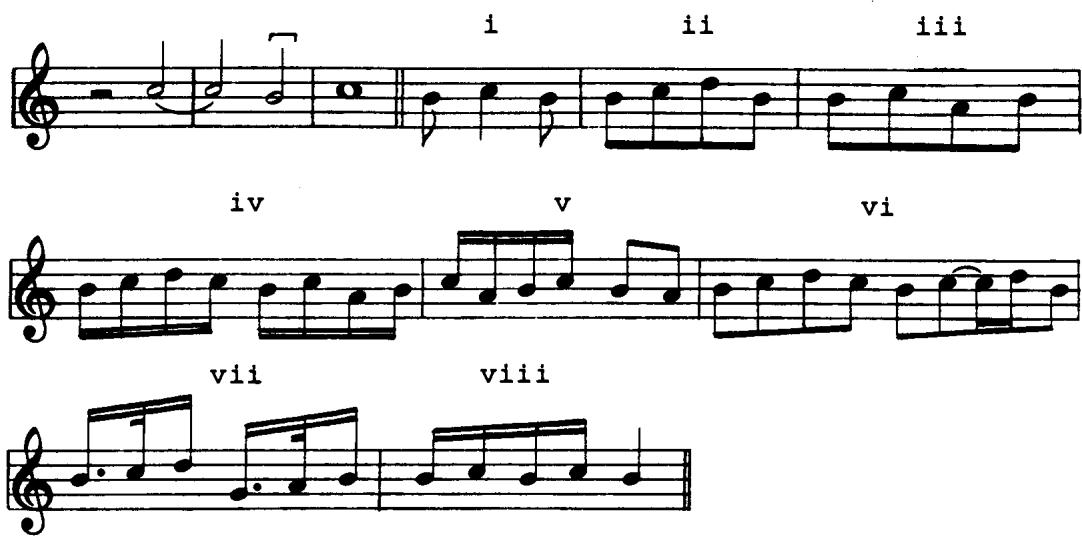
中文讲解
这是表格 4.1 的图像占位符,位于第 26 页;表格内的具体音型记谱在当前文本中不可见,需查看原书图版。
第8段(P0227)
原文复述
191
中文讲解
这是原书第 191 页的页码,仅起版面定位作用。
第9段(P0228)
原文复述
TABLE 4.2
中文讲解
表格 4.2 的标题行。结合 P0229 的副标题可知,表 4.2 展示的是那些“把基本四音 groppo 作为内部组成要素”的装饰音型。
第10段(P0229)
原文复述
ORNAMENTAL FIGURES WHICH INCLUDE THE ELEMENTARY GROPPO-FIGURE AS DECORATION OF THE NOTE OF RESOLUTION
中文讲解
表格 4.2 的完整标题:《包含基本 groppo 音型作为解决音装饰的装饰音型》。关键词是“elementary groppo-figure”:指最简化的四音 groppo(参见 P0240 与 P0233 对“four-note groppo”的描述)。该表与表 4.1 的差别就在于——装饰音型自身内部已经嵌入了 groppo。
第11段(P0230)
原文复述
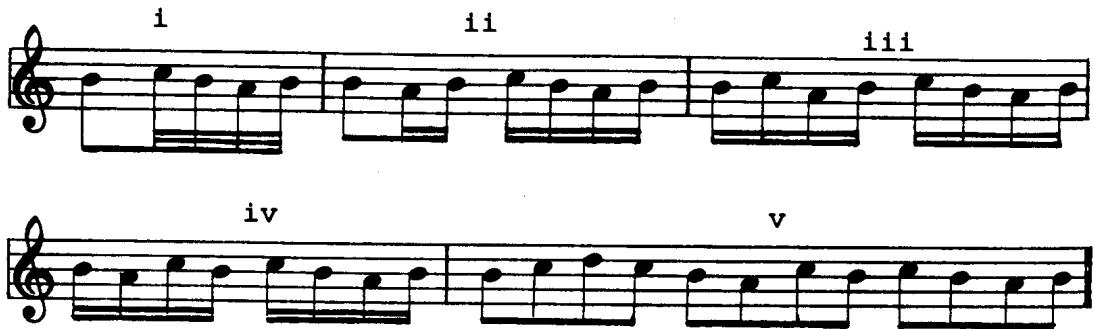
中文讲解
这是表格 4.2 的图像占位符,位于第 27 页;具体音型记谱不可见,需查看原书图版。
第12段(P0231)
原文复述
ORNAMENTAL FIGURES PLUS THE GROPPO AS DECORATION OF THE NOTE OF RESOLUTION
中文讲解
表格 4.3 的完整标题:《装饰音型加 groppo 作为解决音装饰》。与表 4.1、表 4.2 的关键区别在于:本表展示的是“装饰音型与 groppo 作为独立个体前后并列”的复合形态,而非把 groppo 嵌入装饰音型内部。
第13段(P0232)
原文复述
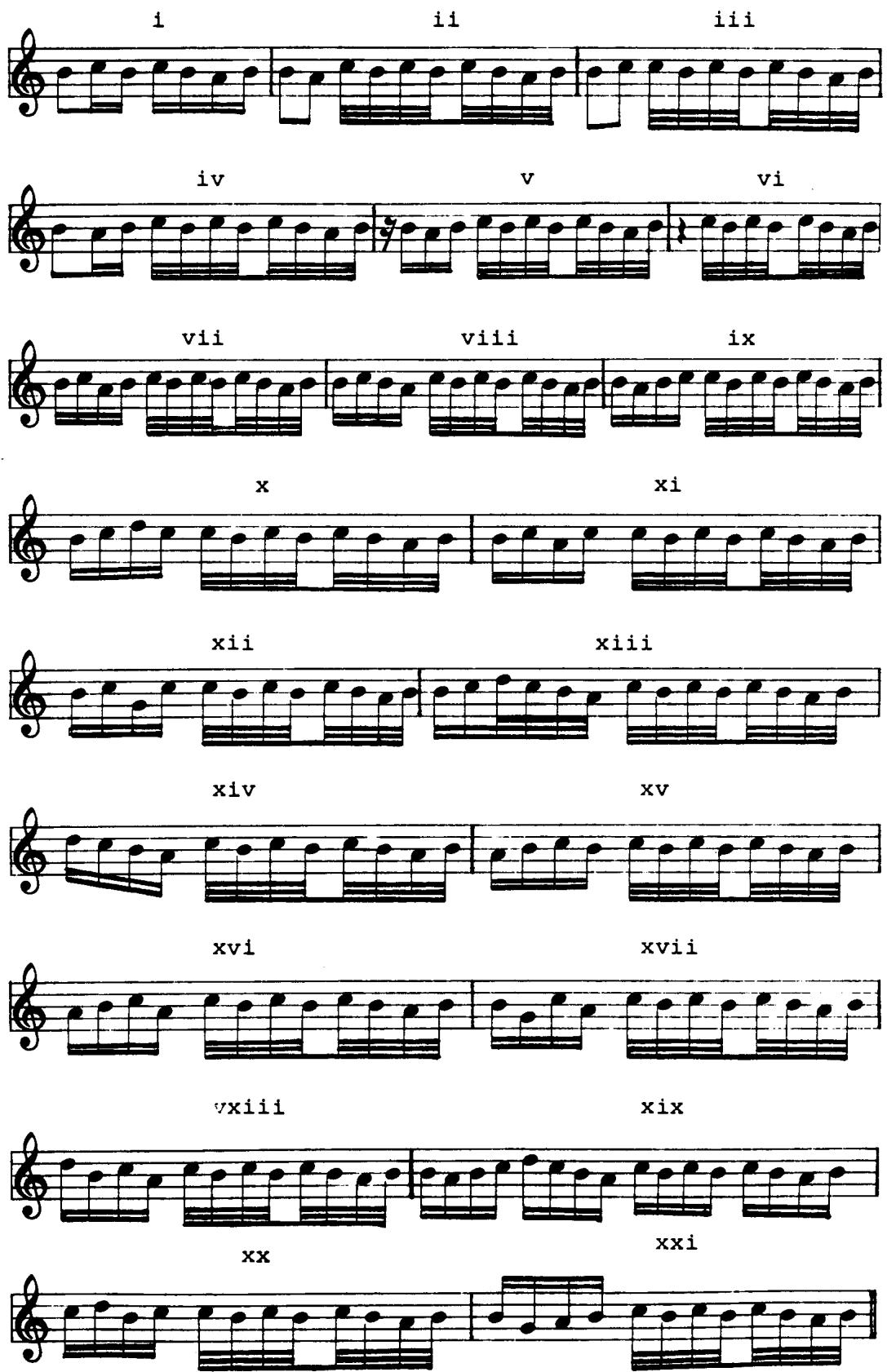
中文讲解
这是表格 4.3 的图像占位符,位于第 28 页;具体音型记谱不可见,需查看原书图版。
第14段(P0233)
原文复述
include the groppo, mostly employ the note of resolution as its first and last note, as Tables 4.1 and 4.2 show. (Fig. (v) from Table 4.1 is an exception.) The elementary four-note groppo may be used as an integrated part of the ornamental figure; it usually takes half the value of the decorated note. This is illustrated in Table 4.2. When the habitual groppo occurs in conjunction with any preceding ornamental figure, it takes either three-quarters or half of the value of the decorated note, depending on the preceding note values. These are illustrated in Table 4.3.
中文讲解
本段承接 P0222 的“which do not”未完成句,补全并展开了三张表的内容。核心论点有三层:其一,不内含 groppo 的装饰音型大多“首尾均为解决音”(并以表 4.1 (v) 为例外);其二,elementary four-note groppo 可以被整合进装饰音型内部,通常占据被装饰音时值的一半(表 4.2 体现);其三,习惯意义上的 groppo 与前置装饰音型并用时,根据前置音型音符时值的不同,占据被装饰音时值的 3/4 或 1/2(表 4.3 体现)。这一段是本节的“分类骨架”:把 groppo 与装饰音型共现的三种时值关系——独立占满、被嵌入而占半、并用而占半或 3/4——系统陈述清楚。
补充说明
原文以脚注 41、42、43 分别指向表 4.1/4.2、4.2、4.3 的相关图示,但具体脚注内容在当前文本中未给出,不应补写。
第15段(P0234)
原文复述
Figs. (i) to (iii) from Table 4.1 are extensively used by the composers of the FVB. Of the three tables presented, however, the ornamental figures in Table 4.3 occur most frequently. Figs. (vii), (viii) and (xiv) from Table 4.3 are often used as decoration of the penultimate note (= note of resolution in a diminuta cadence) of the discant close. A study of 69 occurrences from Table 4.3 has shown, for instance, the appearance of 26 examples of fig. (vii), as opposed to 7 of fig. (viii), and 10 of fig. (xiv).
中文讲解
本段转向使用频率与功能分析。论证要点:1) 表 4.1 的 (i)–(iii) 在 FVB 中被广泛使用;2) 三张表相比,表 4.3 的音型出现频率最高;3) 表 4.3 的 (vii)、(viii)、(xiv) 经常被用作 discant close 倒数第二个音(即 diminuta cadence 中的解决音)的装饰;4) 给出量化证据:对表 4.3 中 69 个实例的统计显示 fig. (vii) 出现 26 次、fig. (viii) 出现 7 次、fig. (xiv) 出现 10 次。这一统计把上一段的形式分类落到具体的使用偏好上,是本节由“分类”转向“实证”的关键一步。
补充说明
段中明确把“penultimate note”与“note of resolution in a diminuta cadence”等同,这是该书对 discant close 中倒数第二音的术语化定位。
第16段(P0235)
原文复述
A closer look at these tables reveals that fig (i) from Table 4.1 is the vehicle upon which most of the other ornamental figures are based and is in fact the note of resolution broken up into a miniature discant cadence:
中文讲解
本段提出一个关键的结构性论断:表 4.1 的 fig (i) 是其他绝大多数装饰音型的“母型”,它本身即是“被拆解为微型 discant cadence 的解决音”。这是一个隐喻性表述——作者把 fig (i) 视为其他装饰音型的生成基底,由此为接下来 P0239 解释其内部结构(解决音—新挂留—再解决音)以及 P0240 梳理音型间衍生关系埋下伏笔。
第17段(P0236)
原文复述
Ex.4.28
中文讲解
这是谱例 4.28 的标识行,用以引出下方的谱例图像,作为 P0235 结论的实例支撑。
第18段(P0237)
原文复述
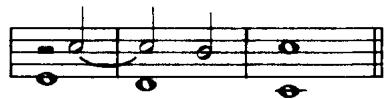
中文讲解
这是第 30 页谱例 4.28 的图像占位符之一;具体记谱在当前文本中不可见,需查看原书图版。
第19段(P0238)
原文复述
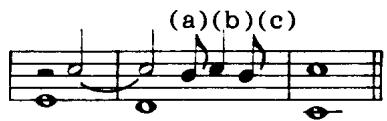
中文讲解
这是第 30 页谱例 4.28 的另一图像占位符;具体记谱在当前文本中不可见,需查看原书图版。
第20段(P0239)
原文复述
The diminution applied to the note of resolution in Ex.4.28 consists of the note of resolution (a), a new syncopated suspension (b), which in turn is resolved by another note of resolution (c). Except for figure (v) from Table 4.1 and figs. (vi), (xiv), (xv) and (xvi) from Table 4.3, all begin and end with the note of resolution and include the dissonance - they clearly are amplifications of which begins and ends with the note of resolution.
中文讲解
本段对 Ex.4.28 进行结构分析。论点是:施加在解决音上的“diminution”由三个角色组成——首尾两端的解决音 (a)(c) 与中间的新挂留不协和音 (b),即一个被压缩进单一解决音位内的微型 cadence。同时给出一个总体规则:除表 4.1 (v) 与表 4.3 (vi)(xiv)(xv)(xvi) 之外,其余所有装饰音型均首尾为解决音并内含不协和音;它们都是“以 fig (i) 为母型”放大的产物(句末“amplifications of which begins…”在原文中即如此,是一个省略了先行词的不完整句,应忠实复述)。这段论证把 fig (i) 的内部三段式结构——解决/挂留/解决——确立为整个装饰音型系统的最小组件。
补充说明
原文中“amplifications of which begins and ends with the note of resolution”显系排版/编辑遗漏(应在 of 后出现 fig. (i) 或 the figure 等先行词),复述时保留原文形式不补全。
第21段(P0240)
原文复述
The inter-relationship between all these figures is apparent on closer scrutiny: apart from the characteristics they share, as quoted above, they are frequently subject to further diminution or can be combined. In Table 4.1, fig. (iv) is a combination of the first part of (vi) with (iii); the second part of (vi) is a diminution of (ii), and (vii) is a further diminution of (ii). In Table 4.2 fig. (i), the elementary four-note groppo is combined with the first note of Table 4.1 fig. (i); the four-note groppo of Table 4.2 (iii) may be regarded as a further diminution of the second and third note of Table 4.1 (i) - hence Table 4.2 (i) is an amplification of Table 4.1 (i). Figs. (iii) and (v) from Table 4.2 consist of a combination of elements from (iii) and (iv) of Table 4.1 with the elementary groppo. Table 4.3 (i) is a further diminution of Table 4.1 (i). The relationship between Table 4.3 (i), (ii) and (iv) is evident, while (xix) is a combination of (ix) and (xiv). In the process of diminution the syncopated suspension of Table 4.1 (i) is
中文讲解
本段系统阐述三张表内音型之间的衍生与组合关系,是本节最长的论证段。其逻辑骨架可拆为四条:1) 衍生(diminution):表 4.1 (vi) 第二部分是 (ii) 的细分,(vii) 是 (ii) 的进一步细分;表 4.2 (iii) 是表 4.1 (i) 中第二、三音的再细分;表 4.3 (i) 是表 4.1 (i) 的进一步细分;2) 组合(combination):表 4.1 (iv) = (vi) 第一部分 + (iii);表 4.2 (i) = elementary four-note groppo + 表 4.1 (i) 首音;表 4.3 (xix) = (ix) + (xiv);3) 因此表 4.2 (i) 是表 4.1 (i) 的放大版;4) 在细分过程中,表 4.1 (i) 中的挂留不协和音逐渐被掩盖(段末未完,含义见 P0241)。本段的关键功能是把前面静态的分类表转化为“具有家族谱系关系的动态系统”。
补充说明
段末“the syncopated suspension of Table 4.1 (i) is”为未完句,由 P0241 的“effectively disguised”补全。
第22段(P0241)
原文复述
effectively disguised - this is especially apparent in Table 4.3 (ii), (iv), (v), (vi), (ix) - (xxi). In all cases the groppo does not begin on the note of resolution of the miniature discant close, but earlier, i.e. it takes a half or three quarters of the value of the decorated note instead of the last quarter, depending upon the foregoing ornamental figuration. When the ornamental figure takes half of the value of the decorated penultimate note in the discant close, the groppo is postponed and consequently shifted to a single metric diminution than if it had decorated the full value of this note.
中文讲解
本段承接 P0240 末句,结论为:在细分过程中,表 4.1 (i) 的挂留不协和音被有效掩盖——尤其明显地体现在表 4.3 的 (ii)、(iv)、(v)、(vi)、(ix)–(xxi) 中。进而陈述 groppo 的时位规则:groppo 并不在微型 discant close 的解决音上起音,而是更早开始,因此占据被装饰音时值的 1/2 或 3/4,而非仅占末 1/4——具体取决于前置装饰音型的形态。最后指出当装饰音型占据倒数第二音时值的 1/2 时,groppo 会顺延,导致与“占满整音”情形相比落到更小一级的节拍单位上。本段把衍生关系与时值位置绑定起来,是本节由“形态关系”转向“时位关系”的桥梁。
补充说明
原文末句“shifted to a single metric diminution than if it…”在 than 从句结构上显得不完整(可能应为“shifted to a smaller metric diminution than it would be if it…”),复述应忠实保留原文措辞。
第23段(P0242)
原文复述
These figures occur with such regularity together with the groppo, that the ornamental figure plus groppo can be seen as an entity or type. The latter occurs of course much less frequently than if the groppo had decorated the note on its own. The occurrence of a groppo preceded by the note of resolution or a diminution of it, (as decoration of the penultimate note of resolution in the discant close), has a dual result: (1) it temporarily creates the impression that no ornamental decoration of the note of resolution is going to take place, and (2) the ornamental decoration is postponed. At the same time the harmonic tension is prolonged through this ornamental decoration. This is notably the case with Table 4.3 (i), where the note of resolution sounds relatively long when compared to figs. (vii) - (xxi). The illustrations below are examples of the practical implementation of this in the FVB:
中文讲解
本段是本节的小结性收束。论点逐层推进:1) 由于“装饰音型 + groppo”的组合出现频率极高,应被视为一个整体“类型”(entity/type);2) 其出现概率当然比 groppo 单独装饰解决音时低;3) 由“解决音或其细分 + groppo”构成的复合形态产生“双重效果”——(a)暂时造成“没有装饰发生”的听觉错觉,(b)装饰被延后,但和声紧张度却因此被延长;4) 这一现象在表 4.3 (i) 中尤为典型——其解决音相对表 4.3 (vii)–(xxi) 而言持续得更久;5) 段末以“下面的图示即为 FVB 中的实际用例”作为过渡,为后续谱例预留入口。本段的论证价值是把上述形式与统计结论升华为对听感与和声张力的审美判断,从而为本节定下“装饰音型 + groppo”作为一种独立终止装饰单元的结论。
补充说明
段末“The illustrations below are examples…”作为衔接句,引出下一段(图示实例),当前文本未提供该图示内容。
脚注 / 边栏 / 图表 / 附加信息(如有)
本节包含三处脚注引用标记(41、42、43,分别指向表 4.1/4.2、表 4.2、表 4.3 的图示),但具体脚注内容在当前文本中未给出,不补写。三张表格(表 4.1、4.2、4.3)以及谱例 4.28 的图像在当前输入中均为占位符,需查阅原书图版以获取具体音符形态;统计依据为“69 occurrences from Table 4.3”,其中 fig. (vii) 26 例、fig. (viii) 7 例、fig. (xiv) 10 例。
💡 本节核心要点
- 本节核心观察:在 FVB 的 discant close 中,groppo 经常只占解决音时值的一部分,常与其他装饰音型并用。
- 三张表按 groppo 与装饰音型的结合方式递进分类:表 4.1 为不含 groppo 的装饰音型,表 4.2 为内嵌 elementary four-note groppo 的装饰音型,表 4.3 为装饰音型与 groppo 前后并列的复合形态。
- 表 4.1 fig (i) 是整个系统的母型——即“解决音被拆解为微型 discant cadence”,其内部结构为“解决音 (a) → 新挂留 (b) → 解决音 (c)”。
- 绝大多数装饰音型首尾均为解决音并内含不协和音,可视为 fig (i) 的放大或细分;细分过程中挂留不协和音逐渐被掩盖。
- 在复合形态中,groppo 通常占据被装饰音时值的 1/2 或 3/4,而非末 1/4;时值分配取决于前置装饰音型。
- 装饰音型 + groppo 因出现频率稳定而被视为一种独立的“类型”,其听感效果是“先制造无装饰的错觉,再延后装饰并延长和声紧张度”。
🔑 关键术语
- groppo:本节讨论的核心装饰音型;当其独立使用时占据解决音的全部时值;与装饰音型共用时只占解决音时值的 1/2 或 3/4。最简形式为 elementary four-note groppo(四音)。
- note of resolution:悬停不协和音(suspended dissonance)所解决到的音;在 discant close 中位于倒数第二音的位置(diminuta cadence 中的解决音)。
- discant close:复调终止式,本节讨论的装饰音型与 groppo 主要作为其倒数第二音(即解决音)的装饰。
- diminuta cadence:本节术语,指 discant close 中倒数第二音作为解决音的特殊终止情形。
- diminution:此处特指对解决音进行细分、衍生出新音型的过程;本节中所有装饰音型都是对 fig (i) 不断 diminution 与 combination 的产物。
- suspended dissonance / syncopated suspension:跨节拍被延留的不协和音;表 4.1 fig (i) 内部中段 (b) 即为新引入的 syncopated suspension,是 fig (i) 作为微型 discant cadence 的核心不协和要素。
4.2.2.1.b [描述性拆分] FVB Examples of Ornamental Figures Combined with the Groppo
第1段(P0243)
原文复述
Ex.4.29
中文讲解
Ex.4.29 是本小节的总谱例编号,用于统摄下文 (a)–(k) 全部子例。它只是版面标识,本身不承载论述内容。
第2段(P0244)
原文复述
(a)
中文讲解
子例标签 (a),标识例 4.29 内部的第一段谱例,归属归属行见下一条。
第3段(P0245)
原文复述
Richardson, Variatio (FVB I 95:4:3)
中文讲解
子例 (a) 的曲目归属:作曲家 Richardson,曲名 Variatio,参照 FVB 第一卷第 95 页、第 4 大调、第 3 小节的位置编号。该行只承担溯源功能,不展开论述。
补充说明
FVB 为本书所依据的文献谱例集,其内部卷/页/调/小节编号在全文中反复出现。
第4段(P0246)
原文复述
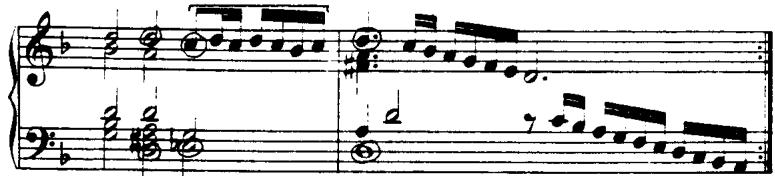
中文讲解
该条目位于第 31 页,是 (a) Richardson, Variatio 对应的乐谱插图占位符。原图未在本节内呈现,需查阅原书图版方能比对具体音型;其位置与图注已在条目中保留。
补充说明
因属谱例图占位符,所有可见信息仅为位置与图注;具体音型走向请参照原书。
第5段(P0247)
原文复述
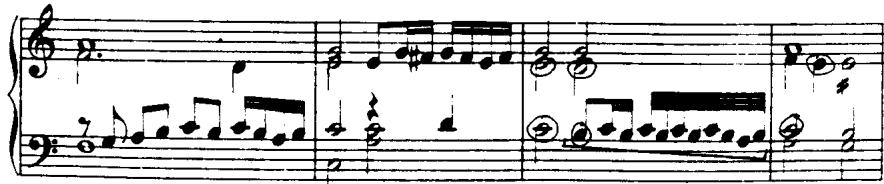
中文讲解
第 31 页 (b) 子例的乐谱占位符。曲目归属为 Philips, Fece da voi,参照 FVB I 289:4:3。归入下文“未加装饰的解决音 + groppo”这一类别(属于 (a)–(c) 的简单终止范畴)。原图未呈现,需查阅原书。
第6段(P0248)
原文复述
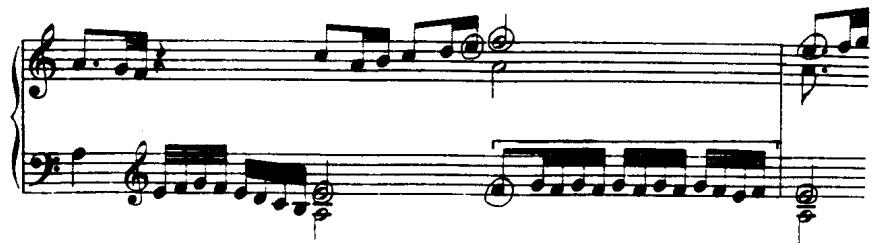
中文讲解
第 32 页 (c) 子例的乐谱占位符。曲目归属为 Bull, Variatio Ejusdem,参照 FVB II 244:3:2。归入“未加装饰的解决音 + groppo”的简单终止例((a)–(c))。原图未呈现,需查阅原书。
第7段(P0249)
原文复述
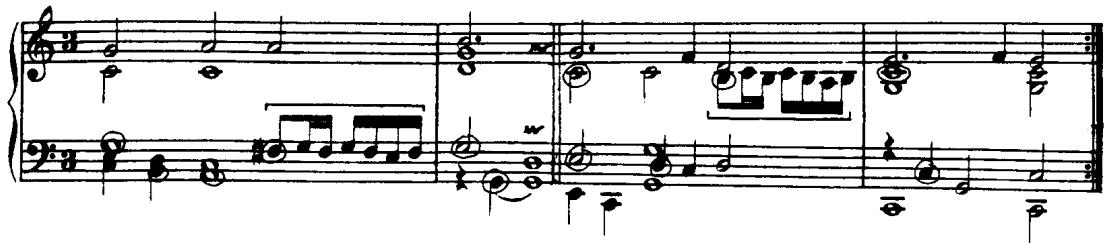
中文讲解
第 32 页合并呈现的乐谱占位符,含两个子例:
• (d) Philips, Galiarda Dolorosa,FVB I 327:1:3,2:3; • (e) Galeazzo, Praeludium,FVB I 393:1:2。
两者均归入“未加装饰的解决音 + groppo”例,且属于 (d)–(f) 的 diminuta(减音程)终止范畴。原图未呈现,需查阅原书。
第8段(P0250)
原文复述
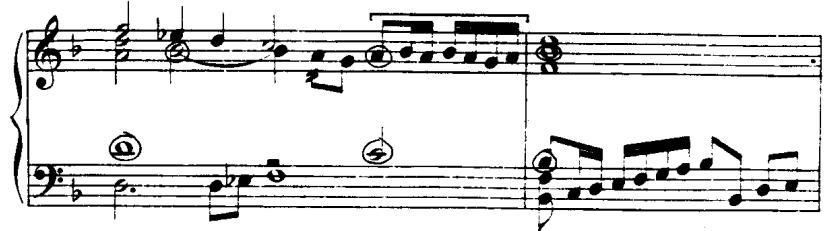
中文讲解
第 32 页 (f) 子例的乐谱占位符。曲目归属为 Sweelinck, Ut re mi,参照 FVB II 27:5:2。归入“未加装饰的解决音 + groppo”例中的 (d)–(f) diminuta 终止组。原图未呈现,需查阅原书。
第9段(P0251)
原文复述
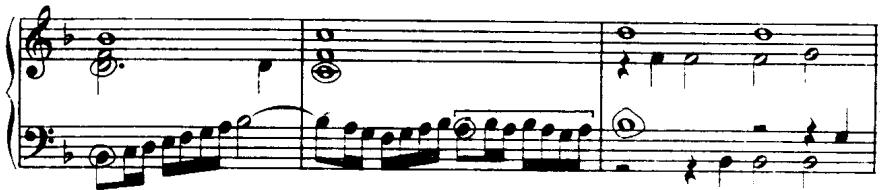
中文讲解
第 32 页另一处 (f) 子例的乐谱占位符。曲目归属为 Byrd, All in a Garden Green,FVB I 413:1:1,与上一条 Sweelinck 例在论述中并列为 (d)–(f) diminuta 终止组的成员。原图未呈现,需查阅原书。
补充说明
原书中 (f) 同时对应两条谱例,属同一分组内的不同曲例,论述时合并讨论。
第10段(P0252)
原文复述
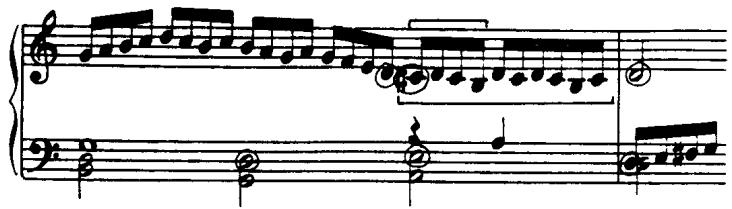
中文讲解
第 32 页 (g) 子例的乐谱占位符。曲目归属为 Bull, Galliarda,FVB I 171:5:2。在后文中被归入“加装饰的解决音 + groppo”例,并作为这一组中唯一属于简单终止的例证(见 (g) 单独提出)。原图未呈现,需查阅原书。
第11段(P0253)
原文复述
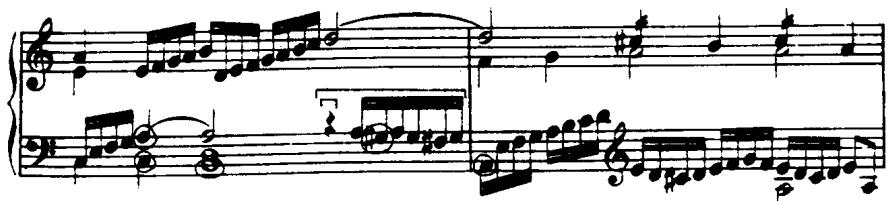
中文讲解
第 32 页 (h) 子例的乐谱占位符。仅见子例标签 (h),曲目归属未在该行给出。其特殊性在后文 P0257 中被特别指出:以休止符代替解决音。原图未呈现,需查阅原书。
补充说明
(h) 的曲目归属未在本节条目中直接出现。
第12段(P0254)
原文复述
(j)
中文讲解
子例标签 (j),单独成行,提示后面将进入第 33 页另一段谱例组;本身不承载论述。
第13段(P0255)
原文复述
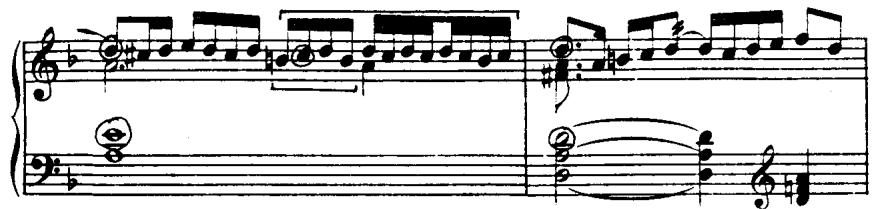
中文讲解
第 33 页 (k) 子例的乐谱占位符。曲目归属为 Byrd, Pavana Lachrymae,FVB II 45:3:3。后文将其归入“加装饰的解决音 + groppo”例中 (h)–(k) 的 diminuta 终止组。原图未呈现,需查阅原书。
第14段(P0256)
原文复述

中文讲解
第 33 页紧接的乐谱占位符。曲目归属为 Philips, Le Rossignuol,FVB I 348:4:3。该条目归入与 (k) 同组的“加装饰的解决音 + groppo”例中 (h)–(k) 的 diminuta 终止组(其子例标签未在该行显示,需查阅原书版面)。原图未呈现,需查阅原书。
补充说明
该条目的子例编号(应属于 (h)–(k) 之一)未在本节条目中直接给出。
第15段(P0257)
原文复述
Ex 4.29 (a) - (f) are excellent examples of the unornamented note of resolution followed by the groppo : it is first seen as used in simple cadences ((a) - (c)) and in diminuta cadences ((d) - (f)), with very normal movement of the individual closes. Ex.2.49 (g) - (k) show the ornamented note of resolution before the groppo : in (g) as decoration of a simple cadence, and in (h) - (k) in diminuta cadences. In Ex.4.29 (h) a rest takes the place of the note of resolution. The ornamented note of resolution generally creates less harmonic tension as the groppo comes much later, and the first part centres around the note of resolution and not the dissonance, even though the latter may be present in the melodic figure.
中文讲解
本段是例 4.29 的总结性论述,按“装饰化程度 × 终止类型”双重维度对 (a)–(k) 进行分类与解释:
- 未加装饰的解决音 + groppo——(a)–(c) 用于简单终止,(d)–(f) 用于 diminuta 终止,个别终止处的进行都“非常正常”,即按常规音程运动展开;
- 加装饰的解决音 + groppo——(g) 装饰简单终止,(h)–(k) 装饰 diminuta 终止;
- 特殊点:例 4.29 (h) 中以休止符替代了解决音本身,提示该位置并非一定要发出解决音;
- 效果差异:加装饰版“产生和声紧张度更小”,因为 groppo 推迟出现,且片段的重心落在解决音而非不协和音上,即使旋律中仍可能含有不协和音。
原文第二处出现的“Ex.2.49”与首句“Ex 4.29”在编号上不一致,按本节上下文与其他子例归属推断,应为同一例 4.29 之下的 (g)–(k);此处保留原文写法,未作改写。
补充说明
本段是整节理论的核心陈述:它把“解决音是否被装饰”与“终止是否含挂留不协和音”两个变量交叉呈现,借 11 段谱例归纳 groppo 与解决音的相对位置及和声效果。
第16段(P0258)
原文复述
The groppo anticipated by the unornamented note of resolution is used far more often in simple than in diminuta cadences: a survey of 75 occurrences of this phenomenon has revealed 8 diminuta as opposed to 36 simple cadences, with a further 31 which can be described as ‘disguised’ diminuta cadences. 44 This is not surprising, as there is no suspended dissonance which requires resolution in a simple cadence.
中文讲解
本段承接 P0257 的统计化论证:
- 频率对比——以“未加装饰的解决音 + groppo”这一现象为对象,作者给出 75 例的总样本,其中简单终止 36 例,明显多于 diminuta 终止的 8 例;另有 31 例归为“伪装型”diminuta 终止(即表面上像简单终止、实则含 diminuta 性质),故 diminuta 相关实际共 8 + 31 = 39 例,与简单终止大致持平,但“明确属于简单终止”的数量仍占明显优势;
- 原因解释——简单终止中本无需要被解决的挂留不协和音,因此解决音 + groppo 的衔接更自然;
- 脚注 44 为该统计的来源注,但本节中未提供脚注正文。
本段以实证数据支撑上一段的观察:未装饰版在简单终止里出现频率更高,与该类终止缺少挂留不协和音、需要靠 groppo/解决音来组织结尾收束这一逻辑直接相关。
补充说明
脚注 44 在本节中仅作编号引用,正文未提供其内容;如需引用应回到原书脚注页查阅。
第17段(P0259)
原文复述
This phenomenon is discussed in 4.2.2.3.
中文讲解
本段是节末的交叉引用,把对“未装饰的解决音 + groppo”现象的进一步讨论指向第 4.2.2.3 节,提示读者本节只是现象的描写与初步统计,深入的理论讨论将在后续小节展开。
脚注 / 边栏 / 图表 / 附加信息(如有)
本小节内出现的脚注编号为 44(见 P0258),脚注正文未在本节切片中出现,需回原书查阅。本小节包含 1 张总谱例(Ex. 4.29),其下子例 (a)–(k) 共 11 项谱例图像与若干独立子例标签 (a)、(j) 等构成版面;所有图像条目均为占位符,具体音型需查阅原书图版。本节末尾通过 P0259 交叉引用 4.2.2.3。
💡 本节核心要点
- 本节以 Ex. 4.29 为中心,演示 groppo 与“解决音”两种要素在终止处的组合方式。
- 按“解决音是否被装饰”二分:未装饰组 (a)–(f) 与装饰组 (g)–(k)。
- 按“终止类型”再分:两组各自覆盖简单终止与 diminuta 终止,(g) 是装饰组中唯一的简单终止例,(h)–(k) 全属 diminuta。
- (h) 出现一处变体——以休止符代替解决音。
- 装饰解决音使 groppo 推迟出现,片段重心由不协和音转向解决音,整体和声紧张度随之降低。
- 在未装饰组中,作者对 75 例进行统计:36 例属简单终止,8 例属明确 diminuta 终止,另有 31 例为“伪装型” diminuta;该现象在简单终止中更常见,与简单终止本无挂留不协和音需被解决的逻辑一致。
- 节末将该现象的进一步讨论外引至 4.2.2.3。
🔑 关键术语
- groppo:本节核心装饰音型之一,总是与“解决音”配套出现;其出现时机决定和声紧张度:紧随未装饰解决音时较紧,推迟于装饰解决音之后则较松。
- note of resolution(解决音):本节指终止处用以解决(潜在)不协和音的那个音;本节区分其“未装饰”与“装饰”两种形态,(h) 还出现以休止符替代的特例。
- simple cadence(简单终止):本节定义为“无挂留不协和音需要解决”的终止,是 groppo + 未装饰解决音 现象的高频语境(统计中 36/75)。
- diminuta cadence(减音程终止):本节与简单终止对举的一类终止,统计中明确出现的为 8 例,另 31 例为“伪装型” diminuta。
- disguised diminuta cadence(伪装型 diminuta 终止):本节作者自创的分类术语,指表面形似简单终止、但实质上具有 diminuta 性质的终止,占统计样本 31/75。
4.2.2.2 [描述性拆分] 4.2.2.2 The Ornamented Anticipation of the Note of Resolution
第1段(P0260)
原文复述
4.2.2.2 The Ornamented Anticipation of the Note of Resolution
中文讲解
本段为小节标题:4.2.2.2「解决音的装饰性先现」。它开启了一个细分主题,聚焦于在discant close(对位终止式)中,解决音(the note of resolution)位置被装饰性先现所处理的方式。该小节属于更大框架中关于diminuta cadence(缩减终止式)装饰手法讨论的一部分。
第2段(P0261)
原文复述
The anticipation of the note of resolution in a discant close is the vehicle for a large number of ornamental figures, of which only a few are of interest for the purposes of this study. These are illustrated in Table 4.4. In Table 4.4, fig. (i) shows an unornamented diminuta cadence, with the note of resolution anticipated in fig. (ii). In figs. (iv) and (v), the lower auxiliary is added and in fig. (viii) the upper. In figs. (vi), (vii) and (xiii) a rest takes the place of the suspension. Figs. (x) - (xiii) are all diminutions of two notes: the suspended dissonance and the anticipated note of resolution; fig. (x) and (xi) are diminutions of fig. (ii), and fig. (xiii) a diminution of fig. (vi). Fig. (viii) is one of the figurations regularly applied to the note of resolution, which also frequently occurs as decoration of the anticipation, especially in the shape of fig. (ix) which is, in fact, a diminution of figs. (ii) and (viii) combined. Fig. (xiv), a diminution of fig. (viii), is a groppetto. Figs. (iv), (viii), (ix) and (xiv) are the most popular ornamental anticipations used in the FVB.
中文讲解
本段是本小节的总论。它说明:解决音的先现(anticipation)在对位终止式中承载了大量装饰音型,但本研究只关心其中几种,并以表4.4加以展示。
作者建立起一个层级体系:(i) 是未经装饰的diminuta cadence;(ii) 在此基础上把解决音进行了先现处理;(iv) 和 (v) 在 (ii) 的基础上再加上下方辅助音(lower auxiliary),(viii) 加上的是上方辅助音(upper auxiliary)。(vi)、(vii) 和 (xiii) 的特殊之处在于以休止符替代了延留音(the suspension)。这意味着原本应悬挂的不协和音被休止符吸收,留出的空间直接进入先现/解决过程。
进而,(x)–(xiii) 都是「两个音」的diminution(音形缩减),即把延留不协和音与先现解决音同时缩减为快速交替的音型。(x) 和 (xi) 都是 (ii) 的缩减,(xiii) 是 (vi) 的缩减。值得特别注意的是 (viii) 既是先现又是解决音上常见的装饰形态,因此经常作为先现的装饰出现——尤其以其与 (ii) 的结合形态 (ix) 出现。(xiv) 是 (viii) 的进一步缩减,即groppetto(回转音型)。
作者最后点出在FVB(菲茨威廉维吉诺曲集)中,使用频率最高的装饰性先现是 (iv)、(viii)、(ix) 和 (xiv)。这一段的功能是为读者建立一张类型地图,并预告哪些音型将在后文以实际乐谱例证。
补充说明
术语关系:suspension(延留音)在此指前一个和弦音被保留并与新和弦形成不协和;anticipation(先现)指后一个和弦的音提前在当前拍点出现。diminution系指通过将音符细分为更短时值的快速音型来装饰一个或多个结构音。
第3段(P0262)
原文复述
The abstract below from a Byrd Pavana (Ex.4.30) demonstrates the way in which a discant close is progressively ornamented; it is a typical illustration of how figs. (iv) and (ix) from Table 4.4 - ornamented anticipations - prepare for the motion of the ornamental resolution. The result is a smoothly-flowing discant close, with the groppo postponed until the last possible moment and the basic notes of the close clothed in elaborate diminution:
中文讲解
本段引出Ex.4.30(Byrd《Pavana》)作为典型示范。作者用progressively ornamented(逐步装饰)这一短语提示此例的论证逻辑:它不是展示一种固定形态,而是展示一个由简到繁的渐变过程。
例子的核心功能是说明表4.4中(iv)和(ix)这两种装饰性先现如何为装饰性解决(ornamental resolution)预先铺路——也就是说,先现中所暗示的音的运动方向,与随后的解决音上的装饰运动是连贯的、彼此呼应的。
最终艺术效果是「smoothly-flowing discant close」:线条流畅。groppo(回转音型)被推迟到最后一刻才出现,而终止式的基本音全部被精致的diminution所包裹。这是维吉诺乐派(Virginalists)处理终止式的典型审美取向。
补充说明
FVB指Fitzwilliam Virginal Book(菲茨威廉维吉诺曲集),是英国伊丽莎白时期与雅各布时期键盘音乐的主要原始文献。
第4段(P0263)
原文复述
45 See Schwandt, Clausula, p.43, for a list of ornamented anticipations.
中文讲解
脚注45:参见Schwandt所著《Clausula》第43页,那里列有装饰性先现的清单。它是对P0261中提及的「大量装饰性先现」内容的来源性旁证,提示读者如需更完整的类型表可查阅该文献。
补充说明
无额外补充。依据当前输入,只能确认Schwandt的《Clausula》是装饰性先现类型的参考出处。
第5段(P0264)
原文复述
46 The groppetto is treated separately; see 4.3.
中文讲解
脚注46:groppetto(回转音型)将在4.3节单独讨论。它说明本节虽然提及(xiv)是一种groppetto,但不展开论述;其深入讨论被分到专门的4.3节。
第6段(P0265)
原文复述
THE ORNAMENTED ANTICIPATION OF THE NOTE OF RESOLUTION
中文讲解
此为第35页的版头(running header),标注本节主题。它重复了小节标题,供翻阅时辨认章节位置。
第7段(P0266)
原文复述
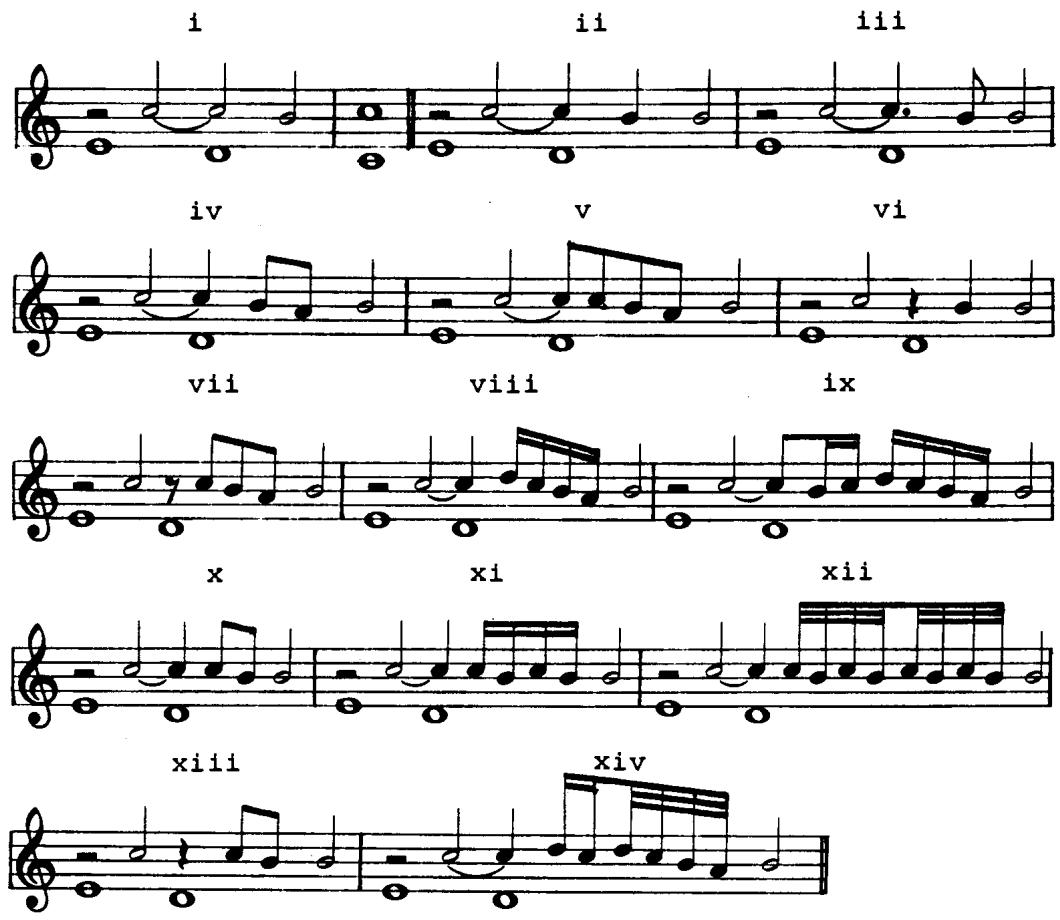
中文讲解
这是第35页的乐谱/图像占位符。根据上下文位置,紧接在P0265版头之后、P0267小节标签之前,应对应Ex.4.30的乐谱起始部分或其背景图示。需查看原图方可获知具体谱例内容。
第8段(P0267)
原文复述
(a) 2:3
中文讲解
此为Ex.4.30的子项标签,指(a)部分的位比记号2:3(推测指音程或声部进行比例)。读者需参照原谱查看其具体指代。
第9段(P0268)
原文复述
Ex.4.30 Byrd, Pavana (FVB II 205)
中文讲解
这是Ex.4.30的图注:乐器为键盘,出自Byrd的《Pavana》,引自FVB第II卷第205首。括号中的编号为该曲集中该作品的索引。
第10段(P0269)
原文复述
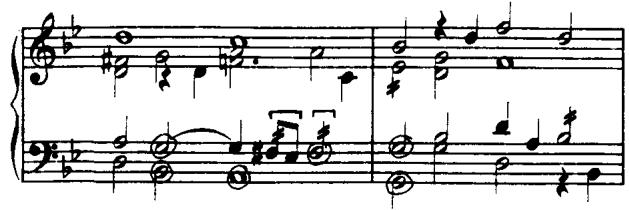
中文讲解
这是第36页的乐谱/图像占位符,处于Ex.4.30图注之后、图(b)标签之前,应对应Ex.4.30的主体乐谱例。需查看原图。
第11段(P0270)
原文复述
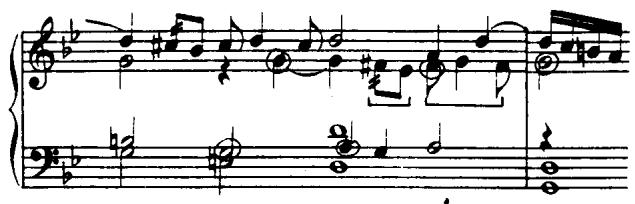
中文讲解
此为Ex.4.30(b)部分的乐谱占位符,标记为位比3:3。需查看原图方可确认其具体指代。
第12段(P0271)
原文复述
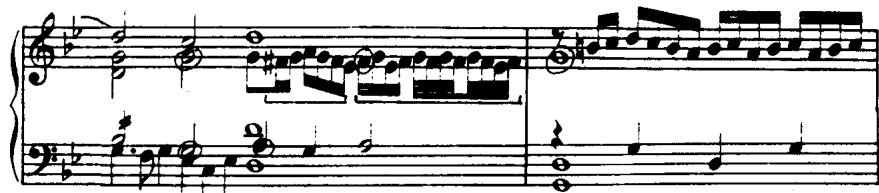
中文讲解
此为Ex.4.30(c)部分的乐谱占位符,标记为位比6:3。需查看原图。
第13段(P0272)
原文复述
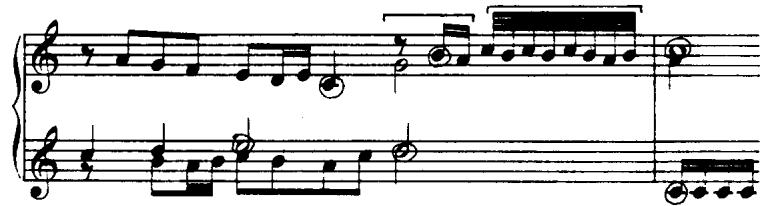
中文讲解
此为Ex.4.30(d)部分的乐谱占位符,标注作者为Bull,作品《Walsingham》,引自FVB第I卷第17首第4部分第1小节。需查看原图。
第14段(P0273)
原文复述
The three discant closes on the finalis G (Ex.4.30(a)-(c)) reveal firstly fig. (iv) from Table 4.4, and an unornamented note of resolution. Then the note of resolution is decorated with fig. (i) from Table 4.1, followed by the most elaborate discant close: the anticipation is ornamented with fig. (ix) from Table 4.4, and the note of resolution with a gruppo preceded by one of the regular figures, fig. (vii) from Table 4.3. In Ex.4.30(d) the ornamented anticipation is a diminution of fig. (vi) from Table 4.4, where a rest has taken the place of the suspension.
中文讲解
本段是对Ex.4.30四个部分的逐一解读。
第一层:在finalis G(调式主音G)上的三个对位终止(Ex.4.30(a)–(c))展示了一个渐变序列——(a) 先呈现表4.4的(iv)及未装饰的解决音;(b) 解决音开始被装饰,使用表4.1的(i)型音型;(c) 装饰程度最高:先现用表4.4的(ix)装饰,解决音则使用一个gruppo(回转),而这个gruppo前还接有表4.3的(vii)型装饰音型。
第二层:Ex.4.30(d)(Bull《Walsingham》)展示的是表4.4(vi)的缩减形态,即休止符替代了延留音的版本。
因此本段是在用具体作品证实P0261所确立的分类体系:基本类型→延留音型→先现音型→解决音型,层层叠加,逐步丰富。
补充说明
finalis:调式主音,指调式的最终结束音;与此对照,final chord即终止和弦。
第15段(P0274)
原文复述
The purpose of the ornamented anticipation is primarily to bring about a smoother transition between the suspended dissonance and the note of resolution, as there is a more continuous flow of notes. In the process it anticipates the motion that ornamental resolution will bring. In an ornamented state, the basic notes of suspended dissonance and note of resolution are disguised, as they are heard in passing as part of the ongoing diminution. The ornamented anticipation may specifically create confusion as to where the proper note of resolution starts, especially in the case of Table 4.4, figs. (x) to (xii). Depending upon the type of diminution applied, the ornamented anticipation of the note of resolution may reduce the harmonic tension created by the dissonance considerably. This is the case in fig. (viii) from Table 4.4 which starts with a consonance (the octave, a perfect consonance) more perfect than that which the note of resolution makes with the tenor (a sixth, which is an imperfect consonance), or fig. (ix), where the anticipated note of resolution is the melodic activity’s centre. Figs. (x) to (xiii) from Table 4.4 are the important diminutions here: the diminution is of such a nature that it becomes an extension of the groppo (on the note of resolution) and as such becomes an integrated part of it.
中文讲解
本段是本小节的理论核心,揭示了装饰性先现的真正目的与效果。
第一层:目的是使延留不协和音到解决音之间的过渡更平滑,因为音符流更连续。在这个过程中,它还预先暗示了装饰性解决即将带来的运动方向——这呼应了P0262中「先现为装饰性解决铺路」的思想。
第二层:装饰性先现使结构音「被伪装」——延留不协和音和解决音都仅作为快速diminution中的一瞬被听到,结构性身份被隐藏。在表4.4(x)–(xii)中尤其如此,正确的解决音从何处开始变得模糊。
第三层:装饰性先现可以显著减少不协和音所产生的和声张力。这一点由(viii)例证:(viii) 以八度(perfect consonance,完全协和)开始,而八度比解决音与tenor(次中声部)形成的六度(imperfect consonance,不完全协和)更「协和」,因此张力被提前消化。(ix) 中则是通过让先现的解决音成为旋律活动的中心来化解张力。
第四层:表4.4(x)–(xiii) 是最关键的缩减形态,因为它们把延留不协和音与先现解决音的交替整合到了解决音上的groppo(回转)之中——先现变成了groppo的延伸,与groppo合为一体。
本段同时承前启后:前段(P0273)展示了具体乐谱样式,本段则解释为什么这样处理、它造成什么艺术效果。
补充说明
tenor在此为对位法/终止式中的对应声部(次中声部),并非现代意义上的男高音声部;perfect consonance指完全协和音程(八度、五度、四度),imperfect consonance指不完全协和音程(三度、六度)。
第16段(P0275)
原文复述
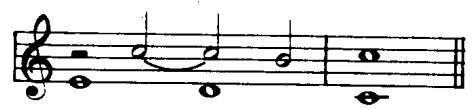
中文讲解
Ex.4.31(a)部分的乐谱占位符。依照P0279的描述,它展示了未装饰的diminuta cadence对位终止与tenor终止。需查看原图。
第17段(P0276)
原文复述
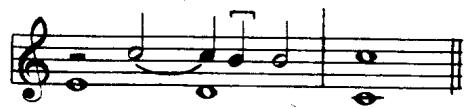
中文讲解
Ex.4.31(b)部分的乐谱占位符。依照P0279描述,展示解决音的简单先现。需查看原图。
第18段(P0277)
原文复述
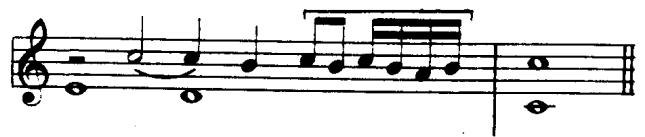
中文讲解
Ex.4.31(c)部分的乐谱占位符。依照P0279描述,展示解决音上的groppo(回转音型)。需查看原图。
第19段(P0278)
原文复述
Schwandt, Clausula, p.42.
中文讲解
脚注47:再次引用Schwandt《Clausula》第42页。它支持P0274关于装饰性先现目的与效果的理论论述,属于来源性脚注。
第20段(P0279)
原文复述

中文讲解
本段是对Ex.4.31四个部分的整合性图注说明。
四张图展示了一个逻辑递进系列:(a) 未装饰的diminuta cadence对位终止与tenor终止——即基线形态;(b) 加上解决音的简单先现;(c) 在解决音上加入groppo;(d) 把diminution应用于先现,使回转的交替音在解决音之前就已经开始——即原本在(c)中是「先延留→解决→groppo」这一序列,在(d)中由于先现被装饰,groppo的交替音(延留不协和音与先现解决音的交替)实际上在解决音到达之前就开始了。
作者强调:这种类型在FVB中并不常见,且通常与最简单形式的groppo(Ex.4.12中已讨论过)共同出现。这是一个重要的限定——并非所有装饰性先现都属于这一最强形态。
第21段(P0280)
原文复述
Ex.4.32
中文讲解
此为Ex.4.32的图例标题,标示下一组乐谱开始。需查看后续各分图的具体内容。
第22段(P0281)
原文复述
Morley, Galliarda (FVB II 215:5:3)
中文讲解
Ex.4.32(a)的图注:作者为Morley,作品《Galliarda》,引自FVB第II卷第215首第5部分第3小节。注:Morley虽是作曲家,但其作品被收录于FVB中作为该曲集的内容。
第23段(P0282)
原文复述
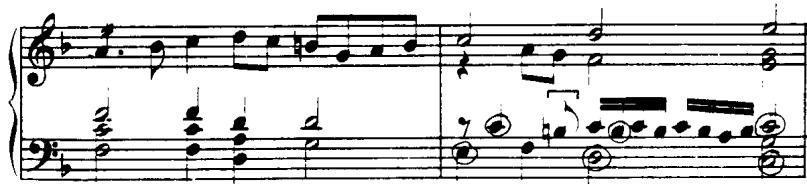
中文讲解
Ex.4.32(a)部分的乐谱占位符,演示Morley《Galliarda》中的简单先现。需查看原图。
第24段(P0283)
原文复述
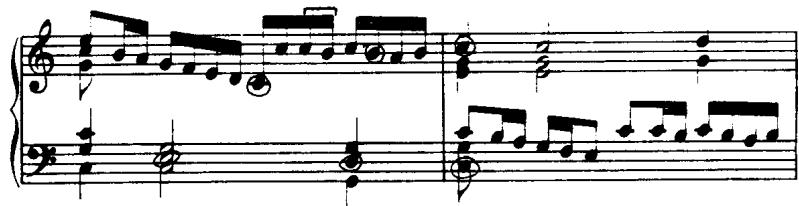
中文讲解
Ex.4.32(b)的图注与乐谱占位符:作者Byrd,作品《Quadran Paven》,引自FVB第II卷第107首第6部分第1小节。
第25段(P0284)
原文复述
48 This specific ornamented anticipation occurs in the FVB at I 29:3:1; 93:4:3; 209:2:1; 212:4:1; 231:3:1; 320:1:1; 376:6:3; II 107:6:1,2,3; 108:1:1; 215:5:3; 248:2:4; 281:3:4; 291:5:4.
中文讲解
脚注48:本注列出了FVB中所有出现「P0279所指的那种特殊装饰性先现」的具体位置——第I卷第29首第3部分第1小节、第93首第4部分第3小节、第209首第2部分第1小节、第212首第4部分第1小节、第231首第3部分第1小节、第320首第1部分第1小节、第376首第6部分第3小节、第II卷第107首第6部分第1、2、3小节、第108首第1部分第1小节、第215首第5部分第3小节、第248首第2部分第4小节、第281首第3部分第4小节、第291首第5部分第4小节。
它的功能是:用具体的曲例索引为P0279的判断「这种类型在FVB中并不常见」提供实证支持——尽管不常见,但确实存在且分布相当广泛。
第26段(P0285)
原文复述
49 A bracket - - indicates the anticipation, and the encircled notes the basic notes of the discant and tenor closes.
中文讲解
脚注49:图示约定说明——方括号(bracket)「- -」标记先现,圈出的音符标记对位终止与tenor终止的基本音。这是阅读Ex.4.32所有分图所必需的图例说明。
第27段(P0286)
原文复述
203

中文讲解
页码203,表明Ex.4.32的乐谱跨越了原书第203页。仅具版面属性。
第28段(P0287)
原文复述
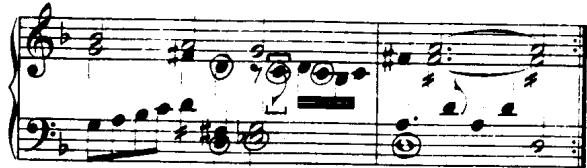
中文讲解
Ex.4.32(c)的图注与乐谱占位符:作者Richardson,作品《Galiarda》,引自FVB第I卷第93首第4部分第3小节。
第29段(P0288)
原文复述
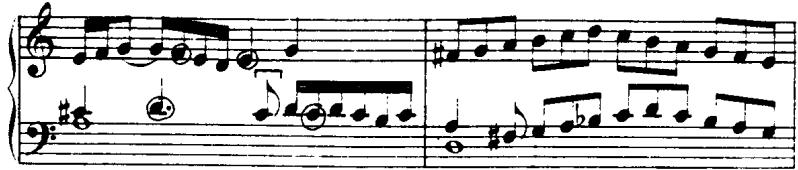
中文讲解
Ex.4.32(d)的图注与乐谱占位符:作者Richardson,作品《Variatio》,引自FVB第I卷第29首第3部分第1小节。
第30段(P0289)
原文复述
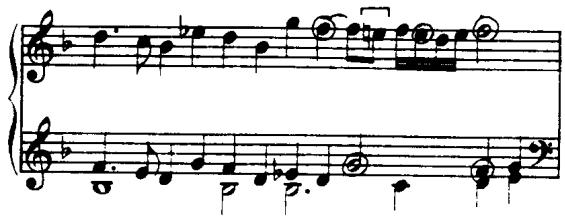
中文讲解
Ex.4.32(e)的图注与乐谱占位符:作者Byrd,作品《Galiardas Passamezzo》,引自FVB第I卷第212首第4部分第1小节;以及Picchi,《Toccata》,引自FVB第I卷第376首第6部分第2小节。
第31段(P0290)
原文复述

中文讲解
Ex.4.32(f)与(g)的图注与乐谱占位符:(f)无具体作者标注;(g)作者Bull,作品《Ut, re, mi, fa, sol, la》(六音节唱名曲,一种基于音阶唱名作为固定旋律的变奏形式),引自FVB第II卷第281首第3部分第4小节。
第32段(P0291)
原文复述
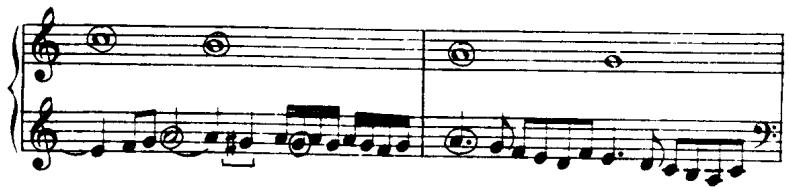
中文讲解
第39页的乐谱/图像占位符,应为Ex.4.32系统中某一分图的整体或细分图示。需查看原图。
第33段(P0292)
原文复述
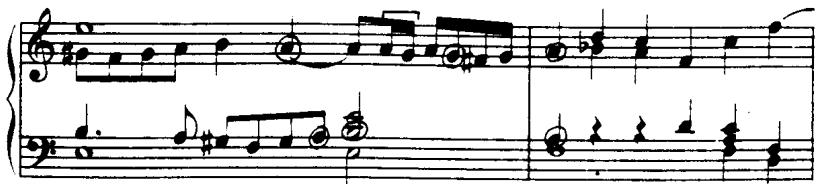
中文讲解
Ex.4.32(h)的图注与乐谱占位符:作者Byrd,作品《Tregian’s Ground》(基于固定低音的变奏曲),引自FVB第I卷第231首第3部分第1小节。
第34段(P0293)
原文复述
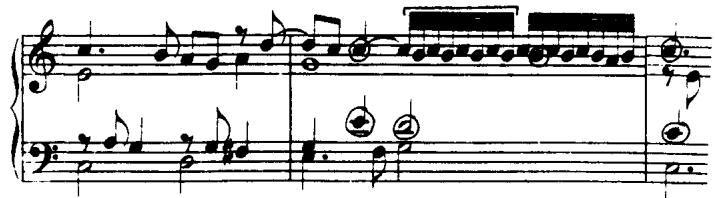
中文讲解
Ex.4.32(j)(注意英文字母顺序跳过i)的图注与乐谱占位符:作者Bull,作品《Praeludium》(前奏曲),引自FVB第II卷第248首第2部分第4小节。
第35段(P0294)
原文复述
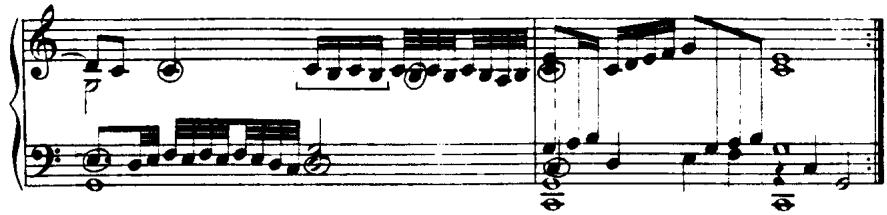
中文讲解
Ex.4.32(k)的图注与乐谱占位符:作者Philips,作品《Pavana Doloroso》(悲帕凡舞曲),引自FVB第I卷第321首第3部分第2小节;以及Bull,《Ut, re, mi》(三音节唱名变奏),引自FVB第II卷第291首第5部分第4小节。
第36段(P0295)
原文复述
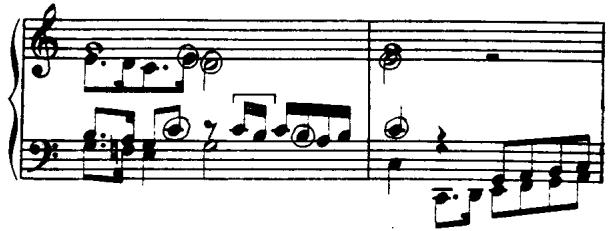
中文讲解
Ex.4.32(l)的图注与乐谱占位符:作者Byrd,作品《Galiardas Passamezzo》,引自FVB第I卷第209首第2部分第1小节。
第37段(P0296)
原文复述
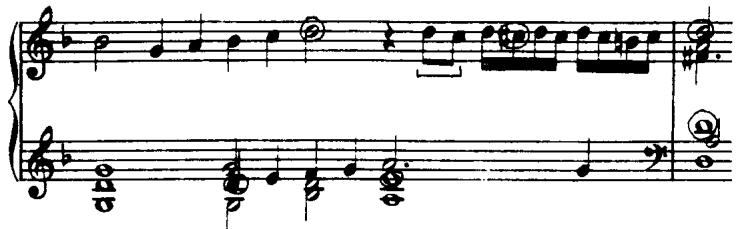
中文讲解
Ex.4.32(m)的乐谱占位符,无具体作者标注。需查看原图。
第38段(P0297)
原文复述
These examples reveal how the individual closes may be incomplete (Ex.4.32, (d) and (e)), and the note levels different or unequal (Ex.4.32, (b), (h), (j) and (k)). In Ex.4.32(a) and (b) the simple anticipation and ornamented anticipation in a simple cadence are given respectively. In (b) the impression of a ’normal’ six-note groppo is created, whereas in fact, the groppo begins before the note of resolution because of the ornamented anticipation; the diminution applied consists of an alternation of the first note of the discant close with that of the anticipated note of resolution. Ex.4.32 (c) - (l) are all diminuta cadences. In (d) - (g) a simple anticipation of the note of resolution occurs after the dissonance which is formed
中文讲解
本段开始对Ex.4.32的总体阅读与分类。
第一层:实例揭示了实际作曲中终止式呈现的多样性——某些终止是不完整的((d)和(e)),某些终止中音的层级高低不同/不相等((b)、(h)、(j) 和 (k))。这说明作曲家并不总是严格遵循「完整、对称」的终止式。
第二层:(a) 和 (b) 展示的是简单终止式(simple cadence,即非diminuta)中的简单先现与装饰性先现。关键洞见:(b) 在听觉上造成「正常六音groppo」的印象,但事实上由于装饰性先现,groppo在到达解决音之前就已经开始——所应用的diminution是「对位终止的第一个音与先现解决音的交替」。这正是P0274所论述的「先现与groppo合二为一」的具体表现。
第三层:(c) – (l) 都是diminuta cadences(缩减终止式)。(d) – (g) 中,在tenor终止的倒数第二音(penultimate note)与对位声部形成的dissonance(不协和音)之后,先现了解决音。最后一句「between the suspended dissonance and penultimate note of the tenor close」将在P0298中续完。
补充说明
six-note groppo:由六个音组成的回转音型,是该时期终止式中装饰性最强的标准音型之一。
第39段(P0298)
原文复述
between the suspended dissonance and penultimate note of the tenor close. In (h) and (j) the diminution treatment causes the groppo to start on the anticipation; (j) particularly disguises both the suspension and anticipation effectively with its demisemiquaver alternations which start immediately after the suspended dissonance, actually taking up the time of both suspension and resolution. Ex.4.32 (k) can be viewed either as a simple or diminuta cadence, as the lack of a tie between the crotchet c’ and the semiquaver c’ creates doubt as to whether it be a diminuta cadence or not. The four-note figure c’-b-c’-b can be interpreted either as a diminution of the anticipation in the case of a diminuta cadence, so that the groppo takes up the place of both the suspension and resolution, or else as an ordinary groppo employing mixed note values. The relation of the first solution to (j) is clear: only the tie is missing and the note values differ. Ex.4.32 (l) and (m) are again diminutions of the simple anticipation in (c), where a rest has taken the place of the suspension. In Ex.4.32 (c) the absence of the suspended dissonance is thus compensated for by the introduction of the note of resolution after the rest, anticipating the real note of resolution c’, and in an ornamented state ((l) and (m)) by the introduction of the suspended dissonance and anticipated note of resolution. In the latter examples two procedures are noticeable: a groppo is created beginning earlier than usual, and the suspended dissonance is introduced, even if not in its habitual place.
中文讲解
本段对Ex.4.32剩余部分的逐项分析。
第一层:(h) 和 (j) 中,diminution处理使groppo在先现处就已经开始;(j) 尤其巧妙——它的三十二分音符(demisemiquaver)交替紧接延留不协和音之后立即开始,实质上占据了延留音和解决音两段时间,从而同时将延留音和先现音隐藏起来。
第二层:(k) 是一种边界情况。它可以视为简单终止或diminuta终止,因为四分音符c’与十六分音符c’之间没有连线(tie),无法确定是否构成diminuta的典型延留音型。c’-b-c’-b这四音既可解释为diminuta终止中先现的diminution(groppo同时承担延留与解决功能),也可解释为使用混合时值的普通groppo。作者明确:第一种解读与(j)的关系很清晰——只是缺少连线,且时值不同。
第三层:(l) 和 (m) 是(c)中简单先现的diminution版本,且与(c)一样以休止符替代了延留音。在(c)中,延留不协和音的缺席由休止符之后引入的解决音来补偿——这个解决音先现了真正的解决音c’;在装饰状态((l) 和 (m))中,则由延留不协和音与先现解决音的引入来补偿。
最后作者归纳:在后一组例子((l) 和 (m))中可观察到两种程序——一是groppo比通常更早开始,二是延留不协和音被引入,哪怕是出现在其惯常位置之外。
本段是本小节的总结性分析,揭示了作曲实践中的多种灵活处理方式,以及装饰性先现如何引发「延留音位置的灵活化」这一更深层现象。
补充说明
tie(连线):连接同音高的两个音符,使前者时值延续;其有无直接决定了一个四音图型能否被读为延留音与解决音的组合。demisemiquaver为三十二分音符,是FVB常见的细密音型。
脚注 / 边栏 / 图表 / 附加信息(如有)
本节内包含两条编号脚注(45引Schwandt《Clausula》p.43的装饰性先现清单;47引同书p.42为P0274功能论述的来源),以及两条带说明功能的脚注(46将groppetto指向4.3节;49为Ex.4.32的图示约定——方括号标记先现,圈出的音符标记对位终止与tenor终止的基本音)。第48号脚注列出了FVB中所有出现P0279所论特殊装饰性先现的具体位置(I 29:3:1; 93:4:3; 209:2:1; 212:4:1; 231:3:1; 320:1:1; 376:6:3; II 107:6:1,2,3; 108:1:1; 215:5:3; 248:2:4; 281:3:4; 291:5:4)。三组谱例(Ex.4.30、Ex.4.31、Ex.4.32)配合表4.4构成本节论证的实证基础,展示装饰性先现的多种上下文应用。
💡 本节核心要点
- 本节建立了一个层级化的装饰性先现类型体系(表4.4):基线(i)→先现(ii)→加辅助音(iv)(v)(viii)→以休止替代延留音(vi)(vii)(xiii)→两音缩减(x)–(xiii)→结合形态(ix)→groppetto(xiv)。
- 装饰性先现的首要目的是使延留不协和音到解决音的过渡更平滑,并预先暗示装饰性解决带来的运动方向;其代价是基本结构音被隐藏(disguised),可能造成对解决音起始点的听觉混淆。
- 装饰性先现可以显著降低延留音带来的和声张力——(viii)以更协和的八度开始,(ix)以先现解决音为旋律中心,都是化解张力的具体机制。
- 从Ex.4.31(a)–(d)与Ex.4.32的对比可以看出:diminution应用于先现时,会使groppo在到达解决音之前就开始——先现成为groppo整体的一部分。
- Ex.4.32的实例揭示了实际作曲的灵活性:终止可以不完整、音的层级可以不相等、连线(tie)的有无会使一个四音图型陷入简单终止或diminuta终止之间的解释性模糊,而休止符对延留音的替代使装饰性先现得以独立于延留音之外运作。
🔑 关键术语
- discant close:对位终止式,指对位声部(discant)在终止处的旋律与终止运动。在本节中是指被装饰处理的对位终止部分。
- note of resolution:解决音,指延留不协和音所应解决到的协和音;是终止式中的关键结构音之一。
- anticipation:先现音型,指将后一和弦的音提前在当前和声节拍点出现;本节聚焦其装饰化变体。
- diminuta cadence:缩减终止式,是一种延留音以更短时值出现的终止形态;它为装饰性先现提供了基本结构框架。
- suspension / suspended dissonance:延留音/延留不协和音,延留音是被保留并与新和弦形成不协和的音;其与解决音的过渡是装饰性先现运作的核心场所。
- dimension:音形缩减/细分,通过将一个或多个结构音切分为更短时值的快速音型来装饰之;本节特指应用于延留音与先现解决音的二音缩减。
- groppo / groppetto:回转音型,一种由两个音上下交替组成、覆盖多个音程的装饰性音型;本节指出它可在延留音被替代或先现被装饰时吸纳整段过程。
- lower/upper auxiliary:下方/上方辅助音,指在结构音上下方以级进方式短暂偏离的装饰音;表4.4(iv)(v)用下方辅助音,(viii)用上方辅助音。
- perfect/imperfect consonance:完全协和/不完全协和音程:完全协和为八度、五度、四度;不完全协和为三度、六度;本节用以说明装饰性先现如何通过更协和的音程降低和声张力。
- tenor:此处为终止式中的次中声部/对应声部,与对位声部配合形成终止式;非现代意义的男高音声部。
- tie:连线,连接同音高的两个音符使其时值延续;其有无在本节中决定四音图型能否被解读为延留音结构。
- demisemiquaver:三十二分音符,是FVB中实现最细密装饰性diminution所用的最小时值单位。
4.2.2.3 4.2.2.3 The Ornamented Anticipation in-lieu-of the Suspended Dissonance
第1段(P0299)
原文复述
4.2.2.3 The Ornamented Anticipation in-lieu-of the Suspended Dissonance
中文讲解
本行为 4.2.2.3 节的小节标题,宣告本节所要讨论的主题:当原本应当出现的"挂留不协和音”(suspended dissonance)位置被一个装饰化的"解决音先现”(ornamented anticipation of the note of resolution)所替代时所形成的特殊 cadence 现象。该标题揭示本节将围绕 FVB 中这一类伪装为简单 cadence、实为 diminuta cadence 的写法展开。
第2段(P0300)
原文复述
There are many instances in the FVB where the suspended dissonance is replaced by the anticipation of the note of resolution. In these cases the note of resolution is anticipated so far in advance that it actually takes the place of the suspension, and we will call this phenomenon the anticipation in-lieu-of-the-suspended dissonance. The following unornamented diminuta cadence demonstrates the way in which it influences the movement of the notes in a discant close:
中文讲解
本段为本节的核心定义段。作者指出在 FVB(菲茨威廉维吉那琴曲集)中存在许多实例,其中本应在 cadence 处出现的"挂留不协和音"被解决音的先现(anticipation)所取代;这种先现提前到如此地步,以致它实质性地占据了原本属于挂留音的位置。作者将这一现象命名为"anticipation in-lieu-of-the-suspended dissonance”(替代挂留不协和音的先现)。段末预告 Ex.4.33 将以一个未加装饰的 diminuta cadence 来展示它如何影响 discant close 中各音的运行。
关键概念:“anticipation in-lieu-of-the-suspended dissonance"意味着解决音的先现提前发生,其时值或位置相当于取代了原本应在强拍出现的挂留音,使得听感上不再有清晰的"不协和→解决"过程。
补充说明
本节术语"anticipation"与一般和声学中"先现音"概念一致:后一和弦的音提前出现在前一和弦内;但此处特别强调的是它提前到了足以替代挂留音的程度。
第3段(P0301)
原文复述

中文讲解
图示占位符:Ex.4.33。本谱例对应 P0300 末尾所引的"未加装饰的 diminuta cadence"示例,展示解决音先现如何改变 discant close 中各音的进行。需查看原图以确认具体音高与时值。
第4段(P0302)
原文复述
The anticipated note of resolution (marked ¬ ) has taken the place of the suspension. What is evident here is, in fact, the resolution of a suspended dissonance which does not occur. This phenomenon creates confusion as to whether a cadence is simple or diminuta, simply because the suspended dissonance is either disguised, or is not present. The anticipation in-lieu-of the suspended dissonance may be termed a ‘disguised’ diminuta cadence, as the impression of a simple cadence is created, whereas it is in fact a diminuta cadence in disguise, as is evident from the illustration below:
中文讲解
本段承接 P0300 的定义,对 Ex.4.33 进行解读:被标记为 ¬ 的那个音是"先现的解决音”,它取代了本应出现的挂留音;故表面呈现的实际上是一个"并未真正发生的不协和音的解决”——挂留音缺失了,但解决的过程已经完成。
由此带来分析上的困难:cadence 究竟是"简单"还是"diminuta"难以判断,因为挂留音被伪装或干脆缺失。作者因此将这种"替代挂留不协和音的先现"命名为"disguised diminuta cadence”(伪装式的 diminuta cadence)——表面听上去像 simple cadence,本质却是 diminuta cadence。段末引出 Ex.4.34 作为图示证据。
注意:标记符号 ¬ 是原文中用于标注该先现解决音的特殊记号,并非数学否定符号。
补充说明
“disguised diminuta cadence"是本节为这一特殊现象所命名的关键术语,强调其"看似简单、实为 diminuta"的双重身份。
第5段(P0303)
原文复述
Ex.4.34
中文讲解
图示占位符:Ex.4.34 的示例编号标签,对应 P0302 末尾所预告的图示证据。
第6段(P0304)
原文复述
Byrd, Pavana Lachrymae (FVB II 45:6:1)
中文讲解
Ex.4.34 的乐谱归属信息:作曲家 Byrd,作品 Pavana Lachrymae,引自 FVB 第二卷第 45 首第 6 小节第 1 个声部。需查看原图以对照具体音符。
第7段(P0305)
原文复述
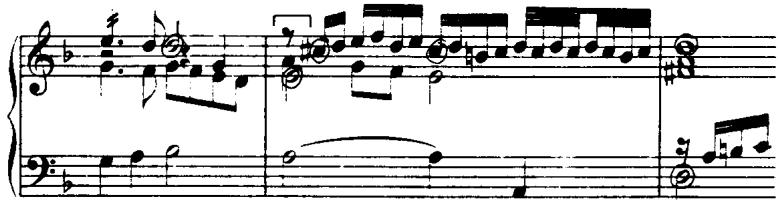
中文讲解
Ex.4.34 (a) 的乐谱占位符与归属信息:作曲家 Sweelinck,作品 Psalme,引自 FVB 第二卷第 151 首第 3 小节第 3 个声部。需查看原图。
第8段(P0306)
原文复述
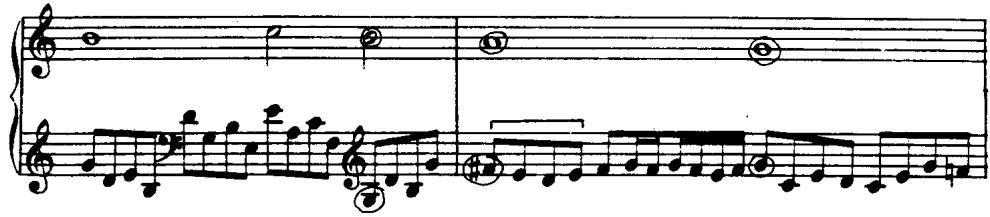
中文讲解
Ex.4.34 (b) 的乐谱占位符,未单独给出归属,应与同一示例的另一来源相联。需查看原图。
第9段(P0307)
原文复述
In Ex.4.34 (a) it is clear that a rest has taken the place of the suspension, effectively disguising it. In (b) an ornamental anticipation of the note of resolution has taken the place of the suspension, which superficially viewed, may lead one to believe that it is a simple cadence. The following is an example of an unornamented anticipation which has taken the place of a suspension:
中文讲解
本段对 Ex.4.34 (a) 与 (b) 进行对比分析:(a) 中挂留音的位置由"休止符"取代,从而将挂留音伪装起来;(b) 中则是装饰性的解决音先现取代了挂留音,表面上听来容易让人误以为是 simple cadence。本段最后预告下一谱例将展示"未加装饰的解决音先现取代挂留音"的情形,作为进一步展开。
对比意义:(a) 用"静”(休止)来伪装挂留音,(b) 用"动”(装饰性的先现音)来取代挂留音——两者都达到"挂留音缺席"的效果,但表现方式不同。
第10段(P0308)
原文复述
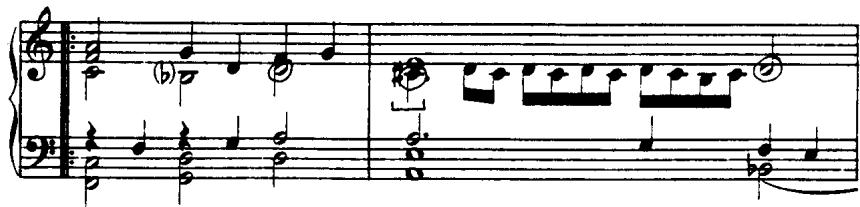
中文讲解
图示占位符:对应 P0307 末尾所预告的"未加装饰的解决音先现取代挂留音"之示例。需查看原图。
第11段(P0309)
原文复述
The anticipation may be ornamented with figures from Tables 4.3 and 4.4, and they are used singularly or in combination; in other words, any of the ornamental figurations which decorate the ornamented anticipation of the note of resolution, or which precede the groppo on the note of resolution, may be employed. Ex.4.36 shows the use of the ornamented anticipation in-lieu-of the suspended dissonance:
中文讲解
本段将讨论从"未加装饰的先现"扩展到"加装饰的先现”。作者指出:先现音可以用 Table 4.3 与 Table 4.4 中所列的装饰音型加以装饰,可以单独使用也可以组合使用——也就是说,凡是用于装饰"解决音的装饰性先现"或者"位于解决音上的 groppo 之前"的装饰型都可适用。段末引出 Ex.4.36 作为加装饰先现替代挂留不协和音的多谱例集证。
“groppo” 是文艺复兴键盘音乐中常见的回旋型音型,围绕一个中心音(即本节中的"解决音")做环绕或上下辅助的快速装饰。
补充说明
“Tables 4.3 and 4.4"为本书前文已建立的装饰音型参照表,本节通过引用之,将装饰化先现的形态系统化。
第12段(P0310)
原文复述
Farnaby, 23. (FVB II 324:4:2)
中文讲解
Ex.4.36 (a) 的乐谱归属信息:作曲家 Farnaby,第 23 首,引自 FVB 第二卷第 324 首第 4 小节第 2 个声部。需查看原图。
第13段(P0311)
原文复述
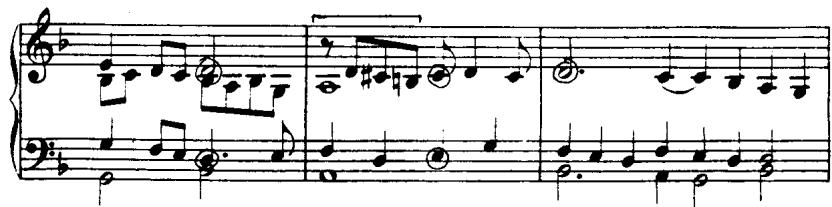
中文讲解
Ex.4.36 (a) 的乐谱占位符,对应 Farnaby 23 的示例。需查看原图。
第14段(P0312)
原文复述
Byrd, Galliarda (FVB II 228)
中文讲解
Ex.4.36 (b) 的乐谱归属信息:作曲家 Byrd,作品 Galliarda,引自 FVB 第二卷第 228 首。需查看原图。
第15段(P0313)
原文复述
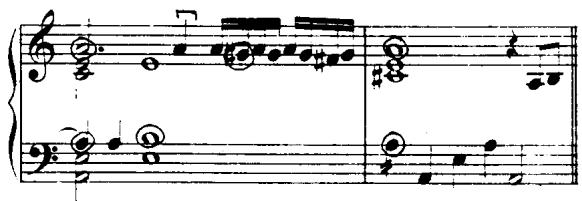
中文讲解
Ex.4.36 (b) 的乐谱占位符,“2:1"指示节拍或声部记号。需查看原图。
第16段(P0314)
原文复述
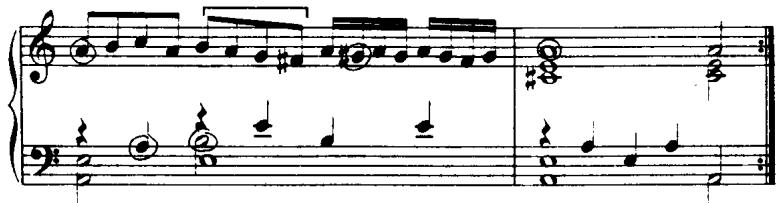
中文讲解
Ex.4.36 (c) 的乐谱占位符,“4:1"指示节拍或声部记号。需查看原图。
第17段(P0315)
原文复述
208
中文讲解
页码 208,仅为版面位置信息。
第18段(P0316)
原文复述
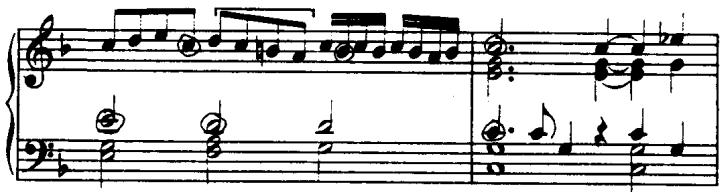
中文讲解
Ex.4.36 (d) 的乐谱占位符与归属信息:作曲家 Morley,作品 Galliarda,引自 FVB 第二卷第 214 首第 4 小节第 2 个声部。需查看原图。
第19段(P0317)
原文复述
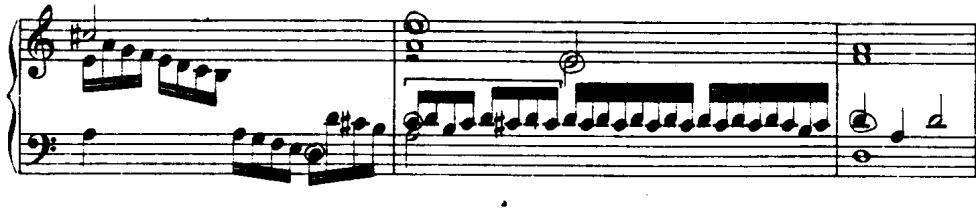
中文讲解
Ex.4.36 (e) 的乐谱占位符与归属信息:作曲家 Philips,作品 Fece da voi,引自 FVB 第一卷第 288 首第 3 小节第 2 个声部。需查看原图。
第20段(P0318)
原文复述

中文讲解
Ex.4.36 (f) 的乐谱占位符与归属信息:作曲家 Philips,作品 Passamezzo Pavana,引自 FVB 第一卷第 305 首第 5 小节第 4 个声部。
本段同时对 Ex.4.36 各小例做出明确的音型归类:(a) 中休止符取代挂留音,对应 Table 4.4 之 fig. (i);(c) 与 (d) 由 Table 4.4 之 fig. (viii) 整体替代挂留音;(c) 是 (b) 的更精细版本,(b) 在同曲中早 8 小节出现;(e) 组合了 Table 4.4 之 fig. (vii) 与 fig. (xi);(f) 组合了 fig. (xiv) 与 fig. (vii)。
此段的功能在于把谱例与既有装饰音型表系统对应,证明 Ex.4.36 的各种写法都可在 Table 4.4 的有限语汇中找到来源,从而印证 P0309 “先现可被 Table 4.3、4.4 中装饰音型单独或组合装饰"的论断。
补充说明
Table 4.4 之 fig. (i)、(vii)、(viii)、(xi)、(xiv) 为前文已定义的具体装饰音型;本节将 Ex.4.36 的具体谱例与这些编号一一挂钩。
第21段(P0319)
原文复述
In a ‘disguised’ diminuta cadence, the gruppo either takes the full value of the note of resolution, or only half. Three basic note patterns - based on the anticipation in-lieu-of the suspended dissonance - emerge here. In the first pattern (Ex.4.37), the gruppo always decorates the full value of the note of resolution, and the anticipated note of resolution is the centre around which the rest of the ornamental figuration revolves:
中文讲解
本段开始对"伪装式 diminuta cadence"做形态学总结:在这种 cadence 中,groppo(回旋型装饰)可以占用解决音的"全部时值”,也可以只占用"一半时值”。由此归纳出三种基本音型(note patterns),它们都以"替代挂留不协和音的先现"为基础。
第一种基本型(Ex.4.37):groppo 始终装饰解决音的全部时值;被先现的解决音成为整个装饰围绕的中心。换言之,先现的解决音占据节拍重音位置,groppo 在其周围展开,使挂留不协和音整体缺席。
本段是本节后半段的总纲,宣告了对本现象的进一步分类。
补充说明
“groppo"在本节特指围绕中心音(解决音)作回旋或上下辅助运动的装饰型,其时值占中心音时值的比例决定了不同的音型。
第22段(P0320)
原文复述
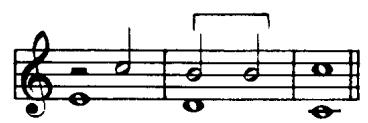
中文讲解
图示占位符:Ex.4.37,对应 P0319 所述的第一种基本音型。需查看原图。
第23段(P0321)
原文复述
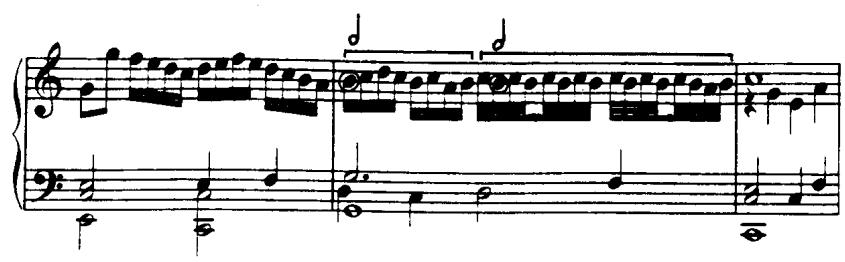
中文讲解
Ex.4.37 之乐谱占位符与归属信息:作曲家 Philips,作品 Pavana,引自 FVB 第一卷第 326 首第 6 小节第 1 个声部。需查看原图。
第24段(P0322)
原文复述

中文讲解
Ex.4.37 之另一乐谱占位符与归属信息:作曲家 Philips,作品 Fantasia,引自 FVB 第一卷第 356 首第 5 小节第 1 个声部。需查看原图。
第25段(P0323)
原文复述
In the second and third patterns (Ex.4.38, 4.39), the groppo takes half the value of the note of resolution, for the dissonance is introduced at a certain point after the anticipated note of resolution, with the result that the groppo is postponed. In the second pattern (Ex.4.38), the dissonance is preceded and followed by the note of resolution: Ex.4.38
中文讲解
本段开始介绍第二与第三种基本音型(Ex.4.38、Ex.4.39),它们的共同特征是:groppo 仅占用解决音一半的时值——因为先现的解决音之后会引入一个不协和音(即真正代替了"挂留不协和音"的那个不协和音),不协和音在"先现解决音之后某一点"才出现,于是 groppo 被推迟。
在第二种基本型(Ex.4.38)中,不协和音的前后两端都被解决音所"夹”——即不协和音被解决音所"包围”,前后都是解决音。这与第一种基本型形成对照:那里不协和音完全缺席,此处则仍以解决音为框架。
段末给出 Ex.4.38 的标签。
补充说明
“先现解决音被推迟的不协和音打断"是第二型与第三型的核心机制,作者通过这一时间关系来区分二型与第一型。
第26段(P0324)
原文复述
Ex.4.38
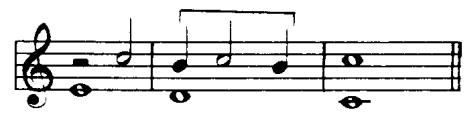
中文讲解
图示占位符:Ex.4.38,对应第二种基本音型。需查看原图。
第27段(P0325)
原文复述
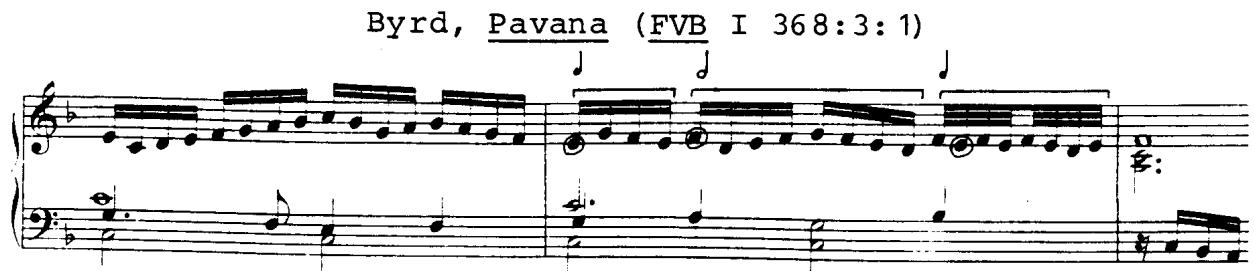
中文讲解
Ex.4.38 之乐谱占位符。需查看原图。
第28段(P0326)
原文复述

中文讲解
Ex.4.38 之另一乐谱占位符与归属信息:作曲家署为"Fre.",作品 Heaven and Earth,引自 FVB 第一卷第 417 首第 4 小节第 1 个声部。需查看原图。
第29段(P0327)
原文复述
In the third pattern (Ex.4.39), the dissonance is introduced at the last moment, thus creating a miniature discant close: Ex.4.39
中文讲解
本段介绍第三种基本音型(Ex.4.39):不协和音被推迟到"最后一刻"才出现,从而形成一种"微型的 discant close”——即在原本应当是 diminuta cadence 的位置上,借由不协和音的延迟出现而构成了一个缩微版的 discant close 写法。
与第二型相比,第三型不协和音出现得更晚,几乎贴近解决的位置,使整个先现→不协和→解决的轮廓更紧凑、更像一个 mini-cadence。
段末给出 Ex.4.39 的标签。
补充说明
“miniature discant close"是作者对第三型形态的形象概括:把一个完整的 discant close 结构压缩到本应是 diminuta cadence 的位置上。
第30段(P0328)
原文复述
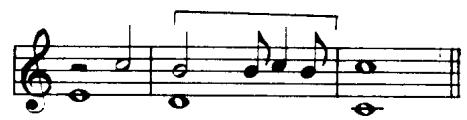
中文讲解
图示占位符:Ex.4.39,对应第三种基本音型。需查看原图。
第31段(P0329)
原文复述
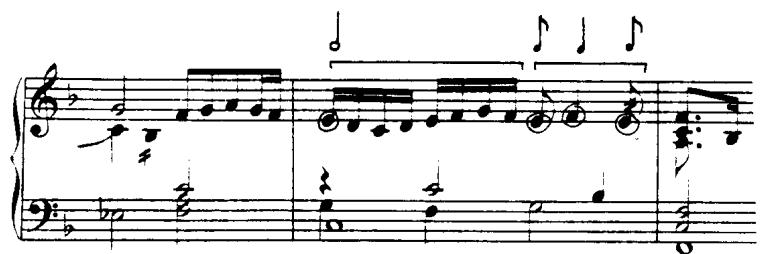
中文讲解
Ex.4.39 (a) 的乐谱占位符与归属信息:作曲家 Byrd,作品 Pavana Bray,引自 FVB 第一卷第 361 首;“2:4"为节拍或声部记号。需查看原图。
第32段(P0330)
原文复述

中文讲解
Ex.4.39 (b) 的乐谱占位符,“362:1:4"指示小节、声部或节拍记号。需查看原图。
第33段(P0331)
原文复述
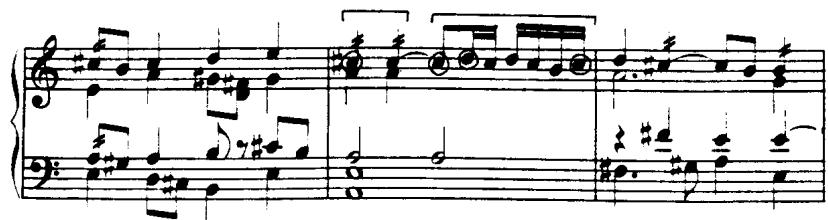
中文讲解
Ex.4.39 (c) 的乐谱占位符与归属信息:作曲家 Bull,作品 Pavana,引自 FVB 第一卷第 127 首第 3 小节第 3 个声部。需查看原图。
第34段(P0332)
原文复述
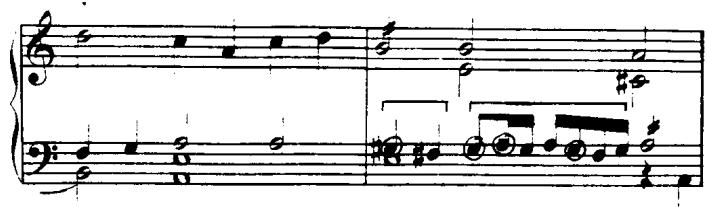
中文讲解
Ex.4.39 (d) 的乐谱占位符与归属信息:作曲家 Richardson,作品 Galiarda,引自 FVB 第一卷第 33 首第 2 小节第 3 个声部。需查看原图。
第35段(P0333)
原文复述

中文讲解
Ex.4.39 之另一乐谱占位符与归属信息:作曲家 Tomkins,作品 Pavana,引自 FVB 第二卷第 56 首第 1 小节第 1 个声部。需查看原图。
第36段(P0334)
原文复述

中文讲解
Ex.4.39 之最后一例乐谱占位符与归属信息:作曲家 Byrd,作品 Pavana,引自 FVB 第二卷第 395 首第 4 小节第 3 个声部。
本段同时对 Ex.4.39 全部六个小例做总结性分析:(a) 与 (b) 特别具有说明力,因为 (b) 是 (a) 的变奏重复(varied repeat);(c) 中替代挂留音的先现被"双音型装饰”(double-stroke ornament)所装饰;(d) 中则是"单纯下辅助音”(plain lower auxiliary);(e) 与 (f) 中第三型基本音型的所有基本音符时值都被进一步细分(diminution)——即音符被切分为更短时值的写法。
此段完成了对第三型 Ex.4.39 的归纳:从装饰形态(双音、下辅助)到节奏细分的多种可能都被罗列出来,使第三型成为本节最具多样性的基本音型。
补充说明
“double-stroke ornament"与"plain lower auxiliary"均为前文已涉及的具体装饰类型;“diminution"在此指基本音符时值被切分为更短时值的写法。
脚注 / 边栏 / 图表 / 附加信息(如有)
本节含多处乐谱占位符(Ex.4.33、4.34(a)(b)、4.36(a)–(f)、4.37、4.38、4.39(a)–(f)),以及一处页码 208。脚注方面,本节文本中未出现独立编号脚注,但通过引用 Table 4.3 与 Table 4.4 中的 fig. (i)、(vii)、(viii)、(xi)、(xiv) 等编号,将乐谱实例与既有装饰音型表对应起来,起到将分类系统化的作用。所引谱例均出自 FVB 曲集,作曲家包括 Byrd、Farnaby、Sweelinck、Philips、Morley、Bull、Richardson、Tomkins、Fre. 等。
💡 本节核心要点
- 本节定义并命名了一种特殊现象:‘anticipation in-lieu-of-the-suspended dissonance’——即解决音的先现提前到足以取代挂留不协和音的位置。
- 由此导致的 cadence 被作者命名为 ‘disguised diminuta cadence’:表面听上去像 simple cadence,本质却是 diminuta cadence,只是挂留音被伪装或缺席。
- 伪装方式有两种:以休止符占据挂留音位置(Ex.4.34 (a));以装饰性或非装饰性的解决音先现占据挂留音位置(Ex.4.34 (b) 与其后诸例)。
- 先现音可被 Table 4.3、4.4 中的装饰音型单独或组合地加以装饰,Ex.4.36 给出多种谱例对应 fig. (i)、(vii)、(viii)、(xi)、(xiv)。
- 从形态上归纳出三种基本音型:第一型 groppo 占据解决音的全部时值(Ex.4.37);第二型 groppo 占据一半时值,不协和音前后被解决音包围(Ex.4.38);第三型不协和音在最末一刻出现,形成微型 discant close(Ex.4.39)。
- 第三型展示了进一步的多样性:双音型装饰、下辅助音装饰以及所有基本音符时值的 diminution(细分)都被纳入其中。
🔑 关键术语
- anticipation in-lieu-of-the-suspended dissonance:本节核心术语。指解决音的先现提前到足以取代挂留不协和音位置的现象;其结果是原本应当发生的不协和音被"缺席”,解决的过程直接由先现音完成。
- disguised diminuta cadence:本节为上述现象所起的名称。表面听上去像 simple cadence(因为挂留音缺席),实质却是 diminuta cadence——以伪装形式呈现的 diminuta cadence。
- groppo:围绕中心音(在本节中即解决音)作回旋或上下辅助运动的装饰音型;其占用中心音时值的比例(全值或半值)是划分本节三种基本音型的关键。
- miniature discant close:本节对第三种基本音型(Ex.4.39)的形象概括,指把一个完整的 discant close 结构压缩到本应是 diminuta cadence 的位置上,由于不协和音在最后才出现,故形成为一个微小版的 discant close。
- diminution:在本节 P0334 中所指为:第三型基本音型的所有基本音符时值被进一步切分为更短时值的写法(Ex.4.39 (e) 与 (f))。
4.2.3 4.2.3 The Groppo as Decoration of the Tenor Close
第1段(P0335)
原文复述
Section heading: 4.2.3 The Groppo as Decoration of the Tenor Close.
中文讲解
本节标题指出将讨论 groppo(一种装饰性旋律音型)作为 tenor close(次中声部收束音型)的装饰手法。该标题承接前文 4.2.2 关于 groppo 作为 discant close(高声部收束音型)装饰的讨论,将考察对象从高声部扩展到次中声部,形成平行结构。
第2段(P0336)
原文复述
The groppo makes rare appearances as decoration of the tenor close. As in the discant close, it is the penultimate note of the tenor close on which the groppo occurs, and the groppo consists of an alternation between the first two notes of the close. In contrast to the discant close, the function of the groppo is here purely decorative whilst drawing attention to the cadence, and no harmonic significance is attached to it. In Ex.4.40, (a) and (b) are simple cadences, whereas (c) is a diminuta cadence. The basic notes of the discant and tenor closes are encircled.
中文讲解
本段提出本节的核心主张:groppo 极少作为 tenor close 的装饰出现,且与 discant close 的情况既有相似也有区别。相似之处在于 groppo 都发生在 tenor close 的倒数第二个音上,且由 close 的前两个音交替构成(即将首音与次音来回反复)。关键区别在于:此处 groppo 的功能纯粹是装饰性的,仅起突出 cadence(终止式)的作用,不具有任何和声意义——这与 discant close 上 groppo 可能承担的和声功能形成对比。本段还预告 Ex.4.40 将展示三种情况:其中 (a) 和 (b) 为 simple cadence(简单终止式),而 (c) 为 diminuta cadence(一种带挂留/不协和音的特殊终止式)。图中 discant 和 tenor close 的基本音被圈出,以便读者对照辨认 groppo 所装饰的音。
补充说明
diminuta cadence 在本节特指带有不协和挂留音处理的终止式,与 simple cadence 相对;其细节在 P0344 中展开。
第3段(P0337)
原文复述
E.g., FVB I 3:1:1; 89:2:1; 268:2:4; 273:1:2; 281:2:4; II 344:4:2
中文讲解
这是 P0336 中上标 50 所对应的脚注(第一部分),列举了 Fitzwilliam Virginal Book(FVB)中 groppo 作为 tenor close 装饰的实例编号。这些编号用于在全书中定位具体段落,以支持前文"groppo makes rare appearances"的论断。
补充说明
FVB 在原文中未展开解释,结合本节上下文可理解为一本曲谱集的缩写,指代具体的作品编号体系(卷 I / 卷 II + 页码:声部:小节)。
第4段(P0338)
原文复述
II 244:4:2; 273:3:3; 367:4:1,3.
中文讲解
这是同一脚注(编号 50)的延续部分,继续列举 FVB 第二卷中的实例编号。整条脚注以分号分隔的编号清单形式给出,并未添加文字说明。
第5段(P0339)
原文复述
Ex.4.40
中文讲解
这是谱例编号标识 Ex.4.40,提示下文 P0340–P0344 均属于该谱例的内容。
第6段(P0340)
原文复述
Byrd, Walsingham (FVB I 273:1:2)
中文讲解
这是 Ex.4.40 中第一个谱例(子例 a)的曲目标注,标明作品为 Byrd(伯德)的 Walsingham,对应 FVB 卷 I 第 273 页第 1 声部第 2 小节。
第7段(P0341)
原文复述
(a)
中文讲解
子例标签 (a),标识 Byrd 的 Walsingham 在 Ex.4.40 中为第一个子例。
第8段(P0342)
原文复述
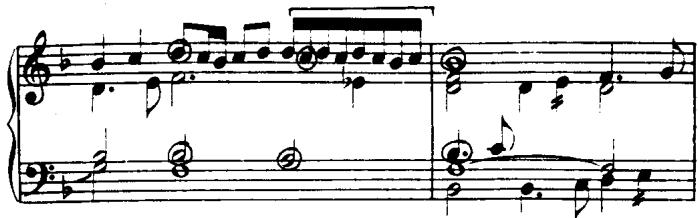
中文讲解
这是 Ex.4.40 子例 (b) 的乐谱图像占位符。图像内容因 OCR 省略无法呈现,但根据图注可知该谱例对应 Jhonson 的 Jhonson’s Medley,源自 FVB 卷 II 第 367 页第 4 声部第 2 小节。需查看原图方可获知具体音高与节奏。
补充说明
该占位符提示需参照原版乐谱图像以确认 groppo 的具体装饰方式;不可凭文字推测音符细节。
第9段(P0343)
原文复述
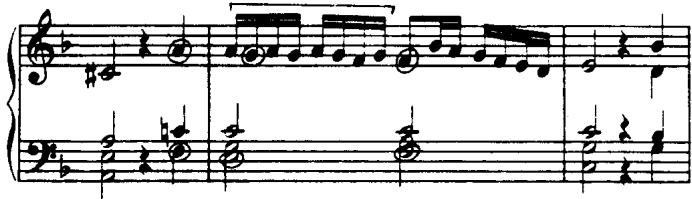
中文讲解
这是 Ex.4.40 子例 (c) 的乐谱图像占位符。图注标明该谱例对应 Farnaby 的 A Maske,源自 FVB 卷 II 第 273 页第 3 声部第 3 小节。需查看原图以确认具体乐谱内容。
补充说明
占位符提示原图不可见,groppo 在 diminuta cadence 中的具体形态需结合原图与后续文字说明共同理解。
第10段(P0344)
原文复述
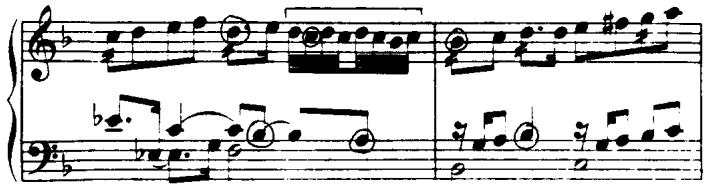
中文讲解
本占位符承载了关于 Ex.4.40 全部三个子例的关键分析信息,需作为正文阅读。其内容要点如下:(1) 在 (a)、(b)、(c) 三例中,tenor close 均位于 soprano(最高声部);而 discant close 在 (a) 和 (c) 中位于 tenor(次中声部),在 (b) 中则位于 bass(最低声部)。(2) 在 (a) 中,tenor close 的第一个音被进一步拆分为更小的时值(即在首音上又叠加了一层细化装饰)。(3) 在 (c) 这个 diminuta cadence 中,groppo 起始于 tenor close 的倒数第二音(c”)与 discant close 的挂留首音(b)形成不协和音(即小三度减七度等不协和音程)的瞬间。(4) 此处的 discant close 是不完整的,除非将下一小节第二拍才出现的最后一个音(b)视为 discant close 的延迟(retarded)末音。这一段揭示了 groppo 与不协和音出现时机的关联,是理解 diminuta cadence 中装饰原则的关键。
补充说明
“retarded last note"指推迟到下一小节才出现、本来应在当小节完成的 close 末音,作者承认这是一种对 discant close 完整性的替代解读方式。
第11段(P0345)
原文复述
The ornamented tenor close in the FVB is associated with a specific location of the tenor and discant close: except for Ex.4.40 (b) and three exceptions to be referred to later, the
中文讲解
本段开启一个新的论断:FVB 中被装饰的 tenor close 通常与特定的声部位置配置相联系——除 Ex.4.40 (b) 及后文将提到的三处例外之外,存在一种常规配置模式。本段在此处中断,下一句 P0346 将完成对该模式的描述。
补充说明
“to be referred to later"明确将 P0346 中提到的"三个例外"设置为伏笔,提示读者本节论证将分常规与例外两层推进。
第12段(P0346)
原文复述
tenor close is always in the soprano, with the two closes moving downward in parallel thirds and closing on the unison through contrary motion. This can be observed in the three examples above. All the tenor closes which conform to this pattern are simple cadences (except Ex.4.40(b)). The three exceptions are all diminuta cadences, with the discant close above (in either the soprano or alto) and the tenor close below in the bass. In all three the groppo is preceded by the penultimate note of the tenor close, which first sounds against the corresponding note of the discant close:
中文讲解
本段完成对常规模式与例外情况的系统说明:(1) 常规模式——tenor close 位于 soprano,两条 close 平行三度下行,最终以反向运动收束于同度(unison)。Ex.4.40 的三个子例均可观察到这一模式。符合此模式的 tenor close 均为 simple cadence,但 Ex.4.40 (b) 是个例外。(2) 三处例外——均为 diminuta cadence,其声部配置倒转:discant close 在上方(soprano 或 alto),tenor close 在下方(bass)。(3) 在所有三处例外中,groppo 之前都有一个 tenor close 的倒数第二音,该音先与 discant close 的对应音同时发声,从而制造不协和音,这正是 groppo 装饰展开的时机。本段以冒号结尾,引出后续 Ex.4.41 对例外情况的展示。
补充说明
“parallel thirds…closing on the unison through contrary motion"是文艺复兴键盘终止式的典型声部进行配置,三度平行赋予和声丰满度,反向到达同度形成解决。
第13段(P0347)
原文复述
Ex.4.41
中文讲解
谱例编号标识 Ex.4.41,提示下文 P0348–P0350 均属于该谱例的内容,用于展示 P0346 所述的三处例外。
第14段(P0348)
原文复述
Richardson, Pavane (FVB I 89:1:2)
中文讲解
Ex.4.41 子例 (a) 的曲目标注:作品为 Richardson 的 Pavane,对应 FVB 卷 I 第 89 页第 1 声部第 2 小节。
第15段(P0349)
原文复述

中文讲解
该占位符承载 Ex.4.41 两个子例的图注:(a) 对应上方 P0348 所标的 Richardson 的 Pavane,(b) 对应 Bull 的 Variatio Ejusdem,源自 FVB 卷 II 第 244 页第 4 声部第 2 小节。乐谱图像内容因 OCR 省略无法呈现,需查看原图方可获知 groppo 的具体音高与节奏形态。
补充说明
占位符提示两例同属 diminuta cadence 例外配置,须结合 P0350 的分析文字才能理解 groppo 起音时机的差异。
第16段(P0350)
原文复述
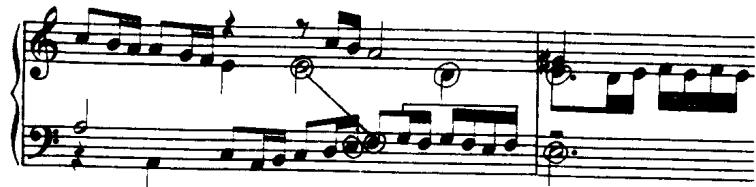
中文讲解
本占位符承载 Ex.4.41 的核心分析,揭示 groppo 起音时机在两例中存在重要差异:(1) 在子例 (a) 中,groppo 在 tenor close 上的起始点对应于 discant close 的解决音发声之时(即 b – g’ 这个音程出现的瞬间);(2) 在子例 (b) 中,groppo 则起始于不协和音形成的那一时刻(即 f – e’ 这个音程出现的瞬间)。两种起始方式分别代表 groppo 与不协和音事件的不同关联策略。作者进一步指出,FVB I 3:1:1(第三个 diminuta cadence 例外)也属于 (b) 这种"在不协和音形成时起音"的方式。这表明在 diminuta cadence 情形下,groppo 的具体起音位置存在两种不同的实践,并非统一规则。
补充说明
本段最后一句将 Ex.4.41 (b) 的起音方式推广至第三处例外(FVB I 3:1:1),形成三例中的二对一分布:(a) 类一例,(b) 类两例。
脚注 / 边栏 / 图表 / 附加信息(如有)
本节涉及的附加材料均以图像占位符形式承载,主要包括:(1) P0337–P0338 是 P0336 中上标 50 对应的脚注,以分号分隔的 FVB 编号清单形式给出 groppo 作为 tenor close 装饰的全部已知实例,用以佐证其"rare appearances"之论断;(2) Ex.4.40(P0339–P0344)展示三个子例 (a)–(c),其中 P0344 的图注包含关于声部位置、首音细化、groppo 与不协和音关系以及 discant close 是否完整等关键分析;(3) Ex.4.41(P0347–P0350)展示两例 diminuta cadence 例外,P0350 图注揭示 groppo 起音时机的两种不同策略。这些图像与脚注共同支撑本节关于"常规 simple cadence 配置 vs. 例外 diminuta cadence 配置"的核心论证。
💡 本节核心要点
- groppo 作为 tenor close 的装饰极为罕见,与前节 discant close 上的情况相比,其功能纯粹是装饰性的,不承载和声意义。
- 在被装饰的 tenor close 中,groppo 同样发生在 close 的倒数第二音上,且由 close 的前两个音交替构成。
- FVB 中存在一种常规声部配置模式:tenor close 位于 soprano,两条 close 平行三度下行,最终以反向运动收束于同度;符合此模式的几乎全为 simple cadence。
- 存在三处例外配置,均为 diminuta cadence,其声部布局倒转:discant close 在上方(soprano 或 alto),tenor close 在下方(bass)。
- 在 diminuta cadence 中,groppo 的起音时机存在两种策略:起始于 discant close 的解决音发声之时,或起始于不协和音形成的那一时刻——Ex.4.41 (a) 与 (b) 分别代表这两种情况。
- Ex.4.40 (a) 中的 tenor close 首音还被进一步拆分为更小时值,构成 groppo 之上的二次细化装饰;Ex.4.40 (c) 中 discant close 的不完整状态可通过将下一小节第二拍的音视为延迟末音而得到合理解释。
🔑 关键术语
- groppo:一种装饰性旋律音型,由相邻两音的快速交替构成;在本节中专指用于装饰 tenor close 倒数第二音的交替音型,功能为纯粹装饰,不具有和声意义。
- tenor close:次中声部(在本节多数情况下实际位于 soprano)的终止收束音型,由两个基本音构成;本节考察 groppo 对其倒数第二音的装饰方式。
- discant close:高声部的终止收束音型,与 tenor close 同时出现;在本节用于与 tenor close 的装饰方式进行对比,并构成 diminuta cadence 中的不协和音来源。
- simple cadence:简单终止式,不涉及挂留不协和音的常规收束;本节中大多数被装饰的 tenor close 都属于此类。
- diminuta cadence:带挂留不协和音处理的特殊终止式;在本节中三处例外配置均为此类,groppo 起音时机与不协和音的出现或解决直接相关。
- parallel thirds / contrary motion to unison:常规配置中的声部进行方式:两条 close 平行三度下行,最终以反向运动收束到同度;这是文艺复兴键盘终止式的典型声部布局。
- FVB:Fitzwilliam Virginal Book 的缩写,本节中以"卷 I / 卷 II + 页码:声部:小节"的编号方式引用具体作品片段,作为分析对象的来源索引。
4.3 4.3 The Groppetto
第1段(P0351)
原文复述
4.3 The Groppetto
中文讲解
本行是第四章第三节的标题,正式开启对 groppetto(一种装饰音)这一主题的讨论。读者由此进入一个小节,专门考察这一装饰音在 FVB 中的出现、功能与形态。
第2段(P0352)
原文复述
The groppetto, together with the groppo, is the written-out ornament which occurs most often in the FVB. It is similar to the groppo, being employed both in cadences and as abstract decoration (as diminution of a note or interval) in the course of a piece, the latter being the more frequent use. As far as the rhythmic and melodic shape of the groppetto is concerned, it is a variant of the groppo; only the last note is different, which descends instead of ascends: Ex.4.42
中文讲解
本段为 groppetto 的总体定位段落,包含三层信息。第一层是使用频率:groppetto 与 groppo 并列为 FVB 中出现最频繁的"被完整写出"的装饰音(written-out ornament,指装饰音以实际音符形态记出,而非以符号替代)。第二层是使用场合:groppetto 与 groppo 类似,既出现在终止处(cadences),也作为"抽象装饰”——即对某个音或音程进行细分(diminution)——出现在乐曲进行中,且后者更为常见。第三层是形态差异:就节奏与旋律轮廓而言,groppetto 是 groppo 的变体,二者的唯一区别在于最后一个音的运动方向,groppetto 的末音下行走,而 groppo 的末音上行走。Ex.4.42 即用于图示这一形态对比。
补充说明
术语 written-out ornament 与抽象装饰(abstract decoration)的对照,提示装饰音既可承担结构功能(终止处的标记),也可承担纯粹的装饰功能(段落内的细分)。
第3段(P0353)
原文复述
Image or musical-score placeholder on page 50; the embedded image data has been omitted, but its position and figure reference are preserved.
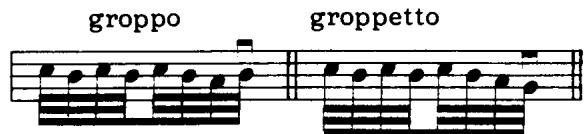
中文讲解
本行是第 50 页上对应 Ex.4.42 的图像或乐谱占位符,其嵌入的图像数据已被省略,但位置和图注编号予以保留。该图示的实际内容需查阅原书方能确认,本段正文并未对其作额外文字描述。
第4段(P0354)
原文复述
The groppetto is employed in all instances of full or passing cadences, and occurs in all the closes except for the counter-tenor close. In each close it fulfils a different function. It also shares the rhythmic variants and notation in metric diminution of the groppo. The role that the groppetto plays in the discant, tenor and bass closes, however, differs from that of the groppo. The groppetto never replaces the groppo, but may occur in combination with it, where it precedes the groppo:
中文讲解
本段从使用场合和功能两个角度界定 groppetto 在 FVB 中的位置。其一,它出现在所有的全终止(full cadence)与经过性终止(passing cadence)中;就"close”(终止式按声部分类的写法)而言,它出现在除 counter-tenor close 之外的所有声部终止式中,而它在每一种终止式中承担的功能都不相同。其二,它继承了 groppo 在节奏变体和"度量细分”(metric diminution,即按节拍单位进一步细分音符时值)记谱方面的特征。其三,尽管形态上承自 groppo,groppetto 在 discant、tenor 与 bass 终止式中所扮演的角色却与 groppo 有所区别;它从来不取代 groppo,但可以与 groppo 并置出现,且其位置始终在 groppo 之前。本段末尾的冒号引出 Ex.4.43,作为这种 groppetto-groppo 组合的具体实例。
补充说明
close 在本书语境中指按声部(discant/tenor/counter-tenor/bass)划分的终止式谱例,而非泛指终止和弦。
第5段(P0355)
原文复述
Ex.4.43
中文讲解
此为 P0354 末尾冒号所引入的谱例编号 Ex.4.43,其本身不构成独立陈述,仅作为图示标记引出紧随其后的乐曲出处。
第6段(P0356)
原文复述
Bull, Walsingham (FVB I 14:1:1)
中文讲解
此为 Ex.4.43 之下的乐曲出处标注,指明谱例取自作曲家 Bull(约翰·布尔)所作的《Walsingham》一曲,定位为 FVB 第 I 卷第 14 首第 1 分曲第 1 段。该标注仅提供文献定位信息,本身不展开论述。
补充说明
FVB 的卷号、乐曲编号与段落编号合在一起形成定位字符串 I 14:1:1,便于从《菲茨威廉键盘曲集》中直接检索。
第7段(P0357)
原文复述
This combination of groppetto and groppo is identical to the ornament labelled ‘double relish’ by Mace and Simpson in the seventeenth century, who regarded it as an entity in itself.
中文讲解
本段将上文的 groppetto 与 groppo 前后相连的组合,与十七世纪 Mace 与 Simpson 称之为 “double relish”(双重回旋)的装饰音等同起来,并强调 Mace 与 Simpson 当时已将其视作一个独立的装饰实体。作者借此把 FVB 中以记谱形式写出的二音组合,连接到十七世纪理论家已经命名的术语上,从而为该形态提供一个更晚近、可识别的标签。
补充说明
“double relish” 在本书语境中并非作者另立的新术语,而是借自 Mace 与 Simpson 既有的命名;作者引用它是为了补充而非创造定义。
第8段(P0358)
原文复述
4.3.1 The Groppetto as Decoration of the Tenor Close
中文讲解
此为 4.3 之下的第一个子节标题,把讨论焦点收窄到 groppetto 作为 tenor close(次中音声部终止式)装饰的用法,提示后文将专门考察它在 teno声部终止式中的特殊地位。
第9段(P0359)
原文复述
The groppetto is only employed in exceptional cases as decoration of the tenor close in the FVB, and then always in the diminution form of the first note of the close. This diminution consists of four different pitches - the diatonic note above the first note of the tenor close, the first note of the tenor close, and the two diatonic notes below:
中文讲解
本段开启对 groppetto 在 tenor close 中装饰功能的精确刻画,包含两个层次。第一层是使用条件:在 FVB 中 groppetto 仅以极少数例外形式装饰 tenor close,且一旦出现,必然采取对该终止式首音的细分形式(diminution)。第二层是细分形态的具体构成:该细分由四个不同的音级组成,依次为 tenor close 首音上方的一个自然音级、首音本身,以及首音下方的两个自然音级。本段末尾的冒号预示紧随的实例将图示这一四音形态。本段的关键教学点在于:作者没有把 groppetto 笼统地处理为一种装饰,而是把 tenor close 中的 groppetto 限定在一种非常特定的四音细分模板上。
补充说明
“diatonic note” 在此指所处调性自然音阶内的音级,而非任何半音或变化音;这一限定决定了该四音形态与所在调式直接挂钩。
脚注 / 边栏 / 图表 / 附加信息(如有)
本节包含两处图示编号(Ex.4.42、Ex.4.43),其对应图像数据在输入中均以占位符形式省略,仅保留位置与图注。Ex.4.43 之下附有乐曲出处行(Bull, Walsingham, FVB I 14:1:1),用于在《菲茨威廉键盘曲集》中精确检索该谱例对应的乐谱位置。除上述图注与出处外,本节无脚注或边栏材料。
💡 本节核心要点
- groppetto 与 groppo 一起是 FVB 中出现最频繁的"被完整写出"的装饰音,且其作为段落内"抽象装饰"的用法比用于终止处更为常见。
- 在旋律—节奏轮廓上,groppetto 是 groppo 的变体,唯一区别在于末音下行而非上行。
- groppetto 出现在除 counter-tenor close 之外的所有声部终止式以及全部全终止与经过性终止中,且在每一种 close 中承担不同功能,但它从不取代 groppo。
- groppetto 可与 groppo 组合出现,且 groppetto 总在 groppo 之前;该组合与十七世纪 Mace 与 Simpson 所称的 “double relish” 相当。
- 在 tenor close 上,groppetto 仅以极少数例外出现,且一律采取对终止式首音的四音细分形式:上方一自然音、首音、下方两自然音。
🔑 关键术语
- Groppetto:FVB 中频繁出现的"被完整写出"的装饰音;形态上是 groppo 的变体,唯一区别是末音由上行改为下行。
- Groppo:与 groppetto 同样在 FVB 中频繁出现的装饰音,末音上行;与 groppetto 共同构成本节讨论的对象。
- FVB:《菲茨威廉键盘曲集》(Fitzwilliam Virginal Book)的缩写,本书讨论的主要文献来源;检索定位采用卷号、乐曲号、分曲号、段号的多级编号。
- Written-out ornament:以实际音符形态而非符号标记记出的装饰音;groppetto 与 groppo 均属此类,故其节奏与旋律轮廓可在谱面直接读出。
- Diminution:对某个音或音程进行细分,形成更短时值的装饰形态;在本节中既可作为段落内的"抽象装饰”,也可按节拍单位进行"度量细分"。
- Cadence (full / passing):终止或类终止的进行:full cadence 指完全终止,passing cadence 指经过性的中间终止;groppetto 出现在这两类终止的全部实例中。
- Close (discant / tenor / counter-tenor / bass):按声部划分的终止式谱例;groppetto 出现于除 counter-tenor close 之外的所有声部终止式。
- Double relish:十七世纪 Mace 与 Simpson 使用的术语,指 groppetto 在前、groppo 在后的组合形态,在其理论中被视作一个独立的装饰实体。