目录
ch01 Bibliography (preceding Chapter 4)
- sec0001 [描述性拆分] Cabrejón and bibliographic section preceding Chapter 4
- 页码:1-1
- sec0002 [描述性拆分] ## Bibliography
- 页码:1-2
ch02 Hacking the System: Italian Keyboard Intavolatura and Scribal Habit
- sec0003 [描述性拆分] # 4 Hacking the System: Italian Keyboard Intavolatura and Scribal Habit
- 页码:3-4
- sec0004 [描述性拆分] Rule-breaking to reveal voice leading
- 页码:5-5
- sec0005 [描述性拆分] Conventions in a Bardini Codex intabulation of Rore’s ‘En voz adieux’ (Ex. 1)
- 页码:6-7
- sec0006 [描述性拆分] Notes on staves-for-hands, rests, and composite ’tablature voices’
- 页码:7-8
- sec0007 [描述性拆分] Lasso’s ‘Susanne un jour’ intabulation (Ex. 2) and idiomatic keyboard texture
- 页码:9-10
- sec0008 [描述性拆分] Manuscript adherence to conventions across Bardini, Pietro Francese, and Castell’Arquato sources (Exs. 3–5)
- 页码:11-14
- sec0009 [描述性拆分] Technology, the partitura instinct, and Andrea Gabrieli’s ‘Susanne un jour’ (Exs. 6a–b)
- 页码:15-16
- sec0010 [描述性拆分] Cost of notational detail and use of custos signs in the Layolle manuscript (Ex. 7)
- 页码:17-19
- sec0011 [描述性拆分] Scribal habits shared with Attaingnant’s intabulations (Ex. 8)
- 页码:19-20
- sec0012 [描述性拆分] A hybrid intavolatura-partitura sketch of Arcadelt’s ‘Se per colpa’ (Exs. 9a–b)
- 页码:21-24
- sec0013 [描述性拆分] ## Bibliography
- 页码:25-26
ch03 The Most Important Source for Practising in the Sixteenth Century
- sec0014 [描述性拆分] # The Most Important Source for Practising in the Sixteenth Century
- 页码:27-28
- sec0015 [描述性拆分] ## Content and Didactic Concept
- 页码:29-31
- sec0016 [描述性拆分] ## Reading & Singing
- 页码:32-34
- sec0017 [描述性拆分] ## Memorising, Writing & Playing
- 页码:35-36
- sec0018 [描述性拆分] ## A Model for Practising in Stages and Suggestions for Practising and Teaching Today
- 页码:36-38
- sec0019 [描述性拆分] ## Bibliography
- 页码:39-39
ch04 ‘Nach seinem selbst gefallen mit der Mensur wexln’
- sec0020 [描述性拆分] # 6 ‘Nach seinem selbst gefallen mit der Mensur wexln’
- 页码:40-42
- sec0021 [描述性拆分] ## Note Values and Tempo
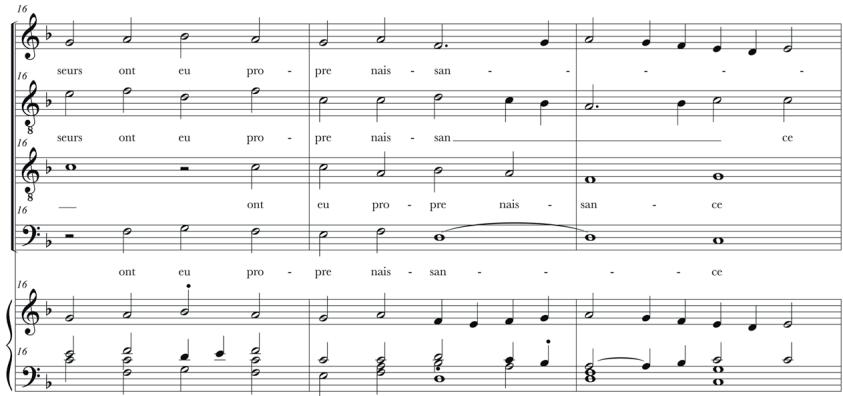
- 页码:42-43
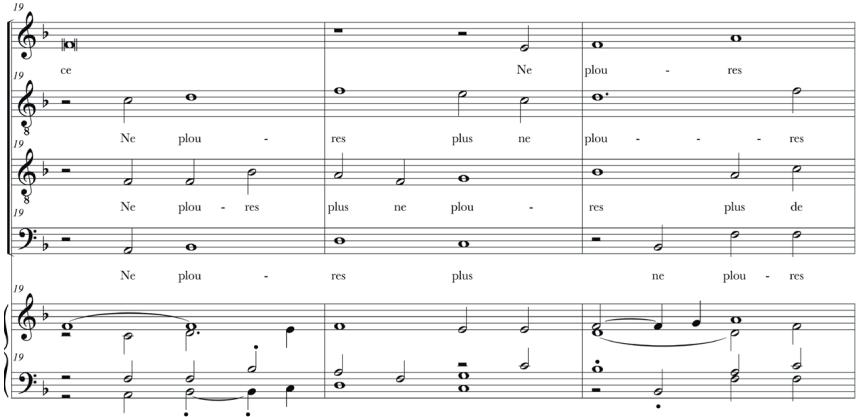
- sec0022 [描述性拆分] ## Variable Note Values
- 页码:44-47
- sec0023 [描述性拆分] Comparative versions of Byrd’s Fantasia C2 and Merulo’s toccatas
- 页码:48-50
sec0001 [描述性拆分] Cabrejón and bibliographic section preceding Chapter 4
第1段(P0001)
原文复述
The passage notes that the printed text contains a reference to ‘keyboard, harp and vihuela,’ but suggests that this mention of the instruments may have been inserted into the printed edition and was probably not part of the original version of the licence issued in 1575. Even setting that textual question aside, there is no evidence that Cabezón’s book was intended for any instrument other than keyboards, particularly the organ but also the clavichord. The straightforward reason is that, in sixteenth-century Spain, there was simply no interchangeable instrumental repertoire shared among keyboard, harp, and vihuela. Although Hernando de Cabezón clearly wished to perpetuate the memory of his renowned father, the publishing venture does not appear to have been a success. The lawsuit that Hernando brought in 1585 to recover money from the Madrid bookseller Blas Robles, to whom he had entrusted the sale of the books, indicates that there was little appetite in Spain for the music of a master who had been dead for more than twenty years.
中文讲解
这段话同时提出了两个相互关联的论点:一是关于这本书原本面向何种乐器,二是关于这部出版物的实际市场反响。
第一,关于乐器范围。作者对印刷本中出现的「键盘、竖琴和维韦拉琴」这一表述持怀疑态度,认为这句对乐器的列举很可能是后人增补进印刷本的内容,并不属于1575年最初签发的许可证原文。作者进一步论证:即便不论这个文本真伪的问题,也没有证据表明卡韦松的书是为键盘乐器以外的乐器而设计的——尤其是管风琴,其次还有击弦古钢琴。决定性的理由是,在16世纪的西班牙,「键盘、竖琴和维韦拉琴」之间根本不存在可互换演奏的共用曲目,三类乐器的曲目世界并不相通。这一步论证的关键在于:用「音乐曲目本身是否兼容」这一乐理史事实,从外部否定印刷本中那种把三种乐器并列的写法。
第二,关于出版反响。埃尔南多·德·卡韦松的本意显然是纪念他已故的父亲,但这次出版尝试在商业上并不成功。作者给出的具体证据是1585年埃尔南多对马德里书商布拉斯·罗夫莱斯的诉讼——埃尔南多曾委托罗夫莱斯代售这些书,却不得不诉诸法律追讨款项。这一例子并不是随手举出的:诉讼本身既是「市场需求不足」的直接后果,也是作者用来证明「出版失败」这一结论的具体凭据。它意味着在一位大师去世二十多年后的西班牙,读者与演奏者对他的音乐几乎已经没有购买意愿。
因此,这一段把「对许可证文本的考证」与「对书籍市场反响的史实」结合在一起:前者用来限定这本书的乐器适用范围(只针对键盘,尤其是管风琴和击弦古钢琴),后者用来表明埃尔南多虽有孝心与保存父亲遗作之意,但出版在市场上并未获得回应。读者容易忽略的一点是:作者并没有说卡韦松的音乐本身不好,而是把「去世已久」与「市场需求」直接挂钩,由此推出出版失败的解释。
补充说明
段尾标注的脚注27应当提供关于1585年诉讼及书商罗夫莱斯的一手史料或文献出处,但该脚注的具体内容并未出现在本节输入之中,需查原书脚注以确认来源。
💡 本节核心要点
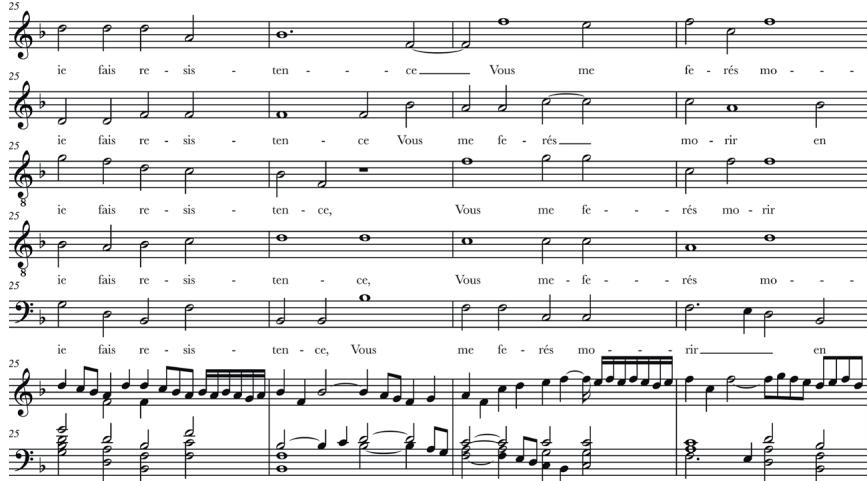
🔑 关键术语
sec0002 [描述性拆分] ## Bibliography
第1段(P0002)
原文复述
Bibliography
中文讲解
这是章节标题"参考书目",开启了按作者姓氏字母顺序排列的文献引用清单。它本身不包含论证,而是为前文研究提供文献依据。
第2段(P0003)
原文复述
Higinio Anglés, La música en la corte de Carlos V con la transcripción del ‘Libro de cifra nueva para tecla, harpa y vihuela’ (Alcalá de Henares, 1557) compilado por Luys Venegas de Henestrosa, 2 vols., Monumentos de la Música Española II, III (Barcelona, 1944; repr. 1965)
中文讲解
这是 Higinio Anglés 编辑的专题文献,全名为《卡洛斯五世宫廷音乐——附 Luys Venegas de Henestrosa 编<适用于键盘、竖琴与维韦拉的"新记谱法之书">(1557 年阿尔卡拉·德·埃纳雷斯版)之转录》,收入《西班牙音乐古迹》(Monumentos de la Música Española)第二、三卷,1944 年于巴塞罗那首版,1965 年重印(两卷)。是研究 16 世纪西班牙 cifra nueva 体系最重要的现代编辑转录本,与 P0031 中的原始印刷本直接对应。
第3段(P0004)
原文复述
Willi Apel, The Notation of Polyphonic Music: 900–1600 (Cambridge, MA, 1942)
中文讲解
Willi Apel《900–1600 年的复调音乐记谱法》,1942 年于麻省剑桥出版。本书是西方复调记谱法研究的经典工具书,涵盖从中世纪后期至文艺复兴时期的各类记谱体系,常被援引以解释 cifra(字母/数字记谱法)与五线记谱法的对比关系。
第4段(P0005)
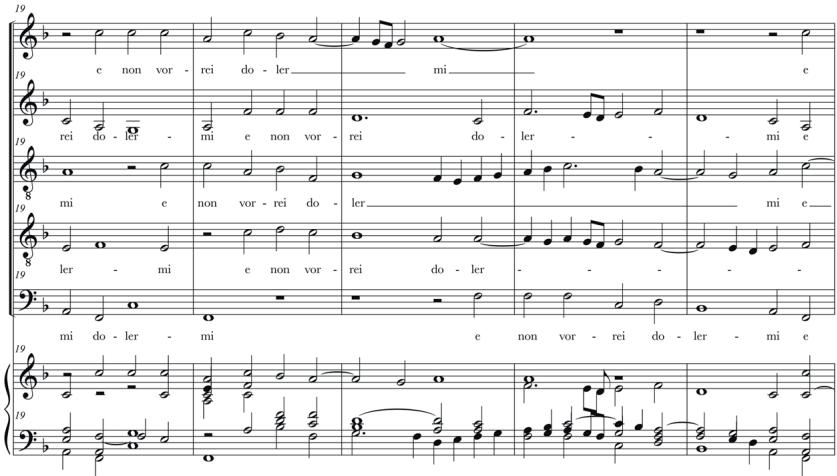
原文复述
Gonçalo de Baena, Arte novamente inventada pera aprender a tanger (Lisbon: Germao Galharde, 1540), https://imslp.org/wiki/Special:ReverseLookup/216087
中文讲解
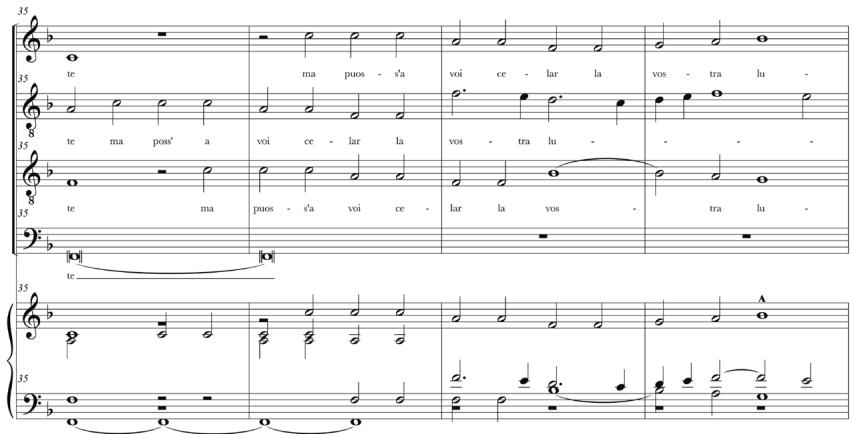
Gonçalo de Baena《为学会演奏而新创之技艺》(Arte novamente inventada pera aprender a tanger),1540 年由 Germão Galharde 于里斯本出版,附 IMSLP 数字资源链接(216087)。这是 16 世纪葡萄牙键盘乐器(尤其是维韦拉)教学的原始史料,标题保留了葡语原文。
第5段(P0006)
原文复述
Gonçalo de Baena, Arte para tanger (Lisboa, 1540), edition and introductory study by Tess Knighton (Lisbon, 2012)
中文讲解
Tess Knighton 编辑并撰写导读研究的版本《Arte para tanger》(与 P0005 同源作品),2012 年于里斯本出版。条目中简化了葡语标题,意在指出此为现代学术编辑本,提供注释与导论,通常与 P0005 的原始印刷本配合引用。
第6段(P0007)
原文复述
Howard Mayer Brown, Music in the Renaissance (Englewood Cliffs, 1976)
中文讲解
Howard Mayer Brown《文艺复兴时期的音乐》,1976 年于恩格尔伍德克利夫斯出版。英语学界关于文艺复兴音乐的经典通识专著,常用于建立时代背景与音乐史叙述框架。
第7段(P0008)
原文复述
Hernando de Cabezón, Obras de música (Madrid: Francisco Sánchez, 1578) (RISM 158724), http://purl.org/rism/BI/1578/24
中文讲解
Hernando de Cabezón《音乐作品集》(Obras de música),1578 年由 Francisco Sánchez 于马德里出版,RISM 国际音乐文献目录编号 158724,附 RISM 唯一标识符链接。这是其父 Antonio de Cabezón 作品集的主要原始刊本,由 Hernando 整理。
第8段(P0009)
原文复述
Vincenzo Capirola, ‘Ricercar otavo’, US-CN Case MS VM C. 25, The Capirola Lute Book (c. 1517), <http://ricercar-old.cesr.univ-tours.fr/3-programmes/ EMN/luth/pages/notice.asp?numnotice=4>
中文讲解
Vincenzo Capirola《第八首 ricercar》,出处为美国克利夫兰艺术博物馆所藏手稿 US-CN Case MS VM C. 25,通称《卡皮罗拉鲁特琴曲集》(The Capirola Lute Book),约 1517 年,附法国 CESR 图尔大学 ricercar 数据库链接。是研究文艺复兴早期鲁特琴 ricercar 体裁的著名手抄本。
第9段(P0010)
原文复述
Girolamo Cavazzoni, Intabvlatvra d’organo […] libro secondo (Venice [Girolamo Scotto], after 1543)
中文讲解
Girolamo Cavazzoni《管风琴 intavolatura 第二册》(Intabvlatvra d’organo libro secondo),约 1543 年后由 Girolamo Scotto 于威尼斯出版。属于 16 世纪意大利管风琴 intavolatura(键盘 tablature)印刷本代表作,可与西班牙 cifra 体系形成体系对照。
第10段(P0011)
原文复述
Andrés Cea Galán, ‘La cifra hispana: música, tañedores e instrumentos (siglos XVI-XVIII)’, Doctoral thesis, Universidad Complutense de Madrid, 2014
中文讲解
Andrés Cea Galán《西 cifra:音乐、演奏者与乐器(16–18 世纪)》,2014 年马德里康普顿斯大学博士论文。这是专门研究西班牙 cifra(字母/数字记谱法)体系的较新专题学术著作,覆盖三百年间的乐器类型与演奏实践。
第11段(P0012)
原文复述
Antonio Corona-Alcalde, ‘The earliest vihuela tablature: a recent discovery’, in: EM 20 (1992), 594–600
中文讲解
Antonio Corona-Alcalde《最早的维韦拉 tablature:一项新近发现》,发表于《Early Music》(EM)第 20 卷(1992 年),第 594–600 页。该文讨论维韦拉 tablature 史料的最新发现,常被引用以讨论维韦拉谱与键盘 cifra 谱之间的源流关系。
第12段(P0013)
原文复述
27 Ibid., 370.
中文讲解
这是一条孤立的脚注残段,“27 同前书,第 370 页”。“Ibid.“是拉丁语 ibidem 的缩写,意指与紧邻上一注释相同的出处。此条延续自 P0012 同一卷期刊(Early Music)中的一处脚注,作为补注再次援引同一文献的不同页码,而非独立的参考文献条目;被归入"Bibliography"可能是版式遗留。
第13段(P0014)
原文复述
Gerhard Doderer, ‘Os manuscritos MM 48 e MM 242 da Biblioteca da Universidade de Coimbra e a presenca de organistas ibéricos’, in: RdM 34, no. 2 (2011), 43–62
中文讲解
Gerhard Doderer《科英布拉大学图书馆藏手稿 MM 48 与 MM 242 及伊比利亚管风琴家之存在》,发表于《Revista de Música》(RdM)第 34 卷第 2 期(2011 年),第 43–62 页。研究伊比利亚半岛管风琴家音乐传承的具体手稿证据,与 P0021 为同一组手稿的早期研究。
第14段(P0015)
原文复述
Richard Freedman, Music in the Renaissance (New York, 2012)
中文讲解
Richard Freedman《文艺复兴时期的音乐》,2012 年纽约出版。较新的英语文艺复兴音乐通识教材,与 P0007 的 Brown 同名著并列引用,以提供较新的学术视角。
第15段(P0016)
原文复述
John Griffiths, ‘The Lute and the Polyphonist’, in: Studi Musicali 31 (2002), 71–90
中文讲解
John Griffiths《鲁特琴与复调作曲家》(The Lute and the Polyphonist),发表于《Studi Musicali》第 31 期(2002 年),第 71–90 页。研究鲁特琴音乐与同时代复调作曲家活动之间的关联,作者为本小节多次出现的 Griffiths。
第16段(P0017)
原文复述
John Griffiths, ‘Venegas, Cabezón y las obras “para tecla, harpa y vihuela”’, in: Cinco siglos de música de tecla española – Five Centuries of Spanish Keyboard Music, ed. Luisa Morales (Garrucha, 2007), 153–68
中文讲解
John Griffiths《Venegas、Cabezón 与"适用于键盘、竖琴与维韦拉"之作品》,收入 Luisa Morales 主编《西班牙键盘音乐五百年》(Cinco siglos de música de tecla española – Five Centuries of Spanish Keyboard Music),2007 年于 Garrucha 出版,第 153–168 页。该论文直接关联本研究中"cifra nueva"与"tecla, harpa, vihuela"用语的核心讨论。
第17段(P0018)
原文复述
John Griffiths, ‘¿Fantasía o realidad? La vihuela en las Obras de Cabezón’, in: AnM 69 (2014), 193–214
中文讲解
John Griffiths《幻想还是真实?Cabezón 作品集中的维韦拉》(¿Fantasía o realidad? La vihuela en las Obras de Cabezón),发表于《Anuario Musical》(AnM)第 69 期(2014 年),第 193–214 页。探讨 Cabezón《Obras de música》中标作"vihuela"部分的实际演奏乐器问题。
第18段(P0019)
原文复述
Donald J. Grout, A History of Western Music (New York, 1960), (with nine subsequent editions by Claude Palisca and Peter J. Burkholder)
中文讲解
Donald J. Grout《西方音乐史》,1960 年纽约首版,后由 Claude Palisca 与 Peter J. Burkholder 合作修订共九版,长期为英语学界使用最广泛的西方音乐通史教材之一。
第19段(P0020)
原文复述
Alec Harman and Wilfred Mellers, Man and his Music (London, 1962)
中文讲解
Alec Harman 与 Wilfred Mellers《人及其音乐》,1962 年伦敦出版。英语学界较早期的综合性音乐史著作,与 P0007、P0019 等同类音乐通史并置引用,以提供不同的叙述取向。
第20段(P0021)
原文复述
Santiago Kastner, ‘Los manuscritos nºs 48 y 242 de la Biblioteca General de la Universidad de Coimbra’, in: AnM 5 (1950), 78–96
中文讲解
Santiago Kastner《科英布拉大学综合图书馆 48 号与 242 号手稿》,发表于《Anuario Musical》(AnM)第 5 期(1950 年),第 78–96 页。与 P0014 为同一组手稿(科英布拉大学 MM 48 与 MM 242)较早的开创性研究文章。
第21段(P0022)
原文复述
Tess Knighton, ‘A newly discovered keyboard source (Gonzalo de Baenas’s Arte novamente inventada pera aprender a tanger, Lisbon, 1540): a preliminary report’, in: Plainsong and Medieval Music 5 (1996), 81–112
中文讲解
Tess Knighton《一份新近发现的键盘乐资料(Gonzalo de Baena 之<为学会演奏而新创之技艺>,1540 年里斯本):初步报告》,发表于《Plainsong and Medieval Music》第 5 期(1996 年),第 81–112 页。对 P0005、P0006 同部原始资料的研究综述,即 Knighton 后来为该资料编辑现代版本的前期报告。
第22段(P0023)
原文复述
Jean Michel Massing and Christian Meyer, ‘Autour de quelques essais musicaux inédits de Dürer’, in: Zeitschrift für Kunstgeschichte 45 (1982), 248–55
中文讲解
Jean Michel Massing 与 Christian Meyer《关于丢勒若干未发表音乐尝试之作》,发表于《艺术史杂志》(Zeitschrift für Kunstgeschichte)第 45 期(1982 年),第 248–255 页。研究丢勒个人留下的音乐尝试性笔迹,属艺术史与音乐史交叉领域的专题。
第23段(P0024)
原文复述
Michael Maul and Peter Wollny, ‘Introduction’, in: J. S. Bach, Weimarer Orgeltabulatur (Kassel, 2007)
中文讲解
Michael Maul 与 Peter Wollny《导言》,收入《J. S. 巴赫魏玛管风琴 Tabulatur》(Weimarer Orgeltabulatur),2007 年于卡塞尔出版。指向 17 世纪末至 18 世纪初德国管风琴 tablature 体系的对照资料,为研究键盘乐器 tablature 谱提供后期参照。
第24段(P0025)
原文复述
Jessie Ann Owens, Composers at Work: The Craft of Musical Composition 1450–1600 (New York, 1997)
中文讲解
Jessie Ann Owens《作曲家在工作:1450–1600 年的音乐创作技艺》(Composers at Work: The Craft of Musical Composition 1450–1600),1997 年纽约出版。研究文艺复兴作曲家创作过程与手稿实践的重要学术专著。
第25段(P0026)
原文复述
Jacob Paix, Thesavrvs Motetarvm: Newerleßner zwey vnd zweintzig herrlicher Moteten (Strasbourg: Bernhart Jobin, 1589) (VD16 ZV 26531), <https:// mdz-nbn-resolving.de/details:bsb00031714>
中文讲解
Jacob Paix《Motet 宝库:二十二首华丽 Motet 之新作》(Thesavrvs Motetarvm:Newerleßner zwey vnd zweintzig herrlicher Moteten),1589 年由 Bernhart Jobin 于斯特拉斯堡出版,VD16(16 世纪德语区出版目录)编号 ZV 26531,附巴伐利亚州立图书馆数字化中心(MDZ)链接。属文艺复兴晚期德国 motet 印刷本。
第26段(P0027)
原文复述
Cristóbal Pérez Pastor, ‘Escrituras de concierto para imprimir libros’, in: Revista de Archivos, Bibliotecas y Museos, 3ª época, i (1897), 363–71
中文讲解
Cristóbal Pérez Pastor《用于印刷图书之合同文书》(Escrituras de concierto para imprimir libros),发表于《Revista de Archivos, Bibliotecas y Museos》第 3 辑第 1 卷(1897 年),第 363–371 页。研究印刷合同与版权文书的史料文献学性质,常被用于讨论 16 世纪西班牙出版活动的法权背景。
第27段(P0028)
原文复述
Gustave Reese, Music in the Renaissance (New York, 1954)
中文讲解
Gustave Reese《文艺复兴时期的音乐》,1954 年纽约出版。英语学界文艺复兴音乐研究最具影响力的综合性专著之一,成书早于 P0007 与 P0015,亦常被并列引用以建立时代通史叙述。
第28段(P0029)
原文复述
Tomas de Santa María, Libro llamado arte de tañer fantasía (Valladolid: Francisco Fernandez de Cordova, 1565), <http://bdh-rd.bne.es/viewer. vm?id=0000158382&page=1>
中文讲解
Tomás de Santa María《名曰幻想曲演奏技艺之书》(Libro llamado arte de tañer fantasía),1565 年由 Francisco Fernández de Córdova 于巴利亚多利德出版,附西班牙国家图书馆数字馆藏(BNE BDH)链接。是 16 世纪与 cifra 谱密切相关的键盘乐器演奏教学论著。
第29段(P0030)
原文复述
Francesco Spinacino, Intabolatura de lauto libro primo and Intabolatura de lauto libro secondo (Venice: Ottaviano Petrucci, 1507) (RISM 15075 and 15076)
中文讲解
Francesco Spinacino《鲁特琴 intavolatura 第一册与第二册》(Intabolatura de lauto libro primo and Intabolatura de lauto libro secondo),1507 年由 Ottaviano Petrucci 于威尼斯出版,RISM 编号 15075 与 15076。属最早印刷的鲁特琴 tablature,可与维韦拉、键盘 cifra 体系形成时代对照。
第30段(P0031)
原文复述
Luis Venegas de Henestrosa, Libro de cifra nueva (Alcalá de Henares: Juan de Brocar, 1557), http://bdh-rd.bne.es/viewer.vm?id=0000039213&page=1
中文讲解
Luis Venegas de Henestrosa《新记谱法之书》(Libro de cifra nueva),1557 年由 Juan de Brocar 于阿尔卡拉·德·埃纳雷斯出版,附 BNE BDH 数字资源链接。这是本研究中"cifra nueva"体系最核心的原始史料:西班牙键盘/竖琴/维韦拉曲集印刷本,其现代编辑转录即 P0003。
第31段(P0032)
原文复述
John Ward, ‘The Editorial Methods of Venegas de Henestrosa’, in: MD 6 (1952), 105–13
中文讲解
John Ward《Venegas de Henestrosa 之编辑方法》(The Editorial Methods of Venegas de Henestrosa),发表于《Musica Disciplina》(MD)第 6 期(1952 年),第 105–113 页。专门讨论 P0031 这一曲集在出版过程中编辑加工方法的早期学术论文。
第32段(P0033)
原文复述
Johannes Wolf, Handbuch der Notationskunde, 2 vols. (Leipzig, 1913–1919)
中文讲解
Johannes Wolf《记谱学手册》(Handbuch der Notationskunde),共两卷,1913–1919 年于莱比锡出版。为 20 世纪初期德语学界关于音乐记谱法的综合性手册,与 P0004(Apel)并列为记谱法研究的两大参照。
脚注 / 边栏 / 图表 / 附加信息(如有)
P0013(“27 Ibid., 370.")是一条孤立的脚注残段(此处"Ibid."= ibidem,“同前书”),延续自 P0012(Early Music 20)同一卷期刊中的某处脚注,作为补注再次援引同一文献不同页码;被归入"Bibliography"标题下,可能是版式遗留。参考文献整体按作者姓氏字母顺序排列,主要类别包括:(1) 16 世纪伊比利亚原始印刷/手稿史料(P0003、P0005、P0006、P0008、P0029、P0031 等);(2) 同时期欧洲其他国家对照史料(P0009、P0010、P0026、P0030);(3) 20 世纪以来的记谱法与音乐史工具书(P0004、P0019、P0020、P0025、P0028、P0033);(4) 专题研究论文与博硕士论文(P0011、P0012、P0014、P0016–P0018、P0021、P0022、P0032);(5) 现代音乐通识教材(P0007、P0015)。文中多处条目附 IMSLP、RISM、VD16、BNE BDH、MDZ 等数字资源链接,显示该书数字人文倾向。
💡 本节核心要点
- 本小节为字母排序的"参考书目”,不承载论证,只为前文研究提供文献支撑,故每条以忠实复述为主。
- 核心原始史料集中于 16 世纪西班牙 cifra nueva 体系:Venegas de Henestrosa《Libro de cifra nueva》(1557)及其现代转录(Anglés 1944/1965),Cabezón《Obras de música》(1578),Baena《Arte novamente inventada》(1540),Santa María《Libro llamado arte de tañer fantasía》(1565)。
- 对照类史料来自同时期其他欧洲键盘/弹拨乐器印刷本:Capirola 鲁特琴手抄本(约 1517)、Cavazzoni《Intabvlatvra d’organo》、Spinacino《Intabolatura de lauto》(1507)、Paix《Thesavrvs Motetarvm》(1589),用以在西 cifra 与意 intavolatura 之间形成体系比较。
- 记谱法与通史工具书两脉络并列:Apel《Notation of Polyphonic Music 900–1600》、Wolf《Handbuch der Notationskunde》、Owens《Composers at Work》提供方法学参照;Grout、Reese、Brown、Freedman、Harman/Mellers 提供通史叙述。
- 专题研究以 John Griffiths(三次条目)、Tess Knighton、Kastner/Doderer(同一组科英布拉手稿的早期与近期研究)、Knighton 自身对 Baena 的研究等为代表,直接服务于本研究的核心文本(cifra nueva、Cabezón 作品集)。
- 多条书目附 IMSLP、RISM、VD16、BNE BDH、MDZ 等数字链接,反映该研究领域对数字化原始文献的依赖,亦提示本节具有数字人文导向。
🔑 关键术语
- cifra nueva:西班牙文"新记谱法”,指 16 世纪用于键盘、竖琴与维韦拉的字母/数字键盘记谱系统;本研究的核心研究对象即 Venegas de Henestrosa 1557 年以此命名的曲集。
- intavolatura / intabvlatura / intabolatura:意大利文术语,指将复调声乐曲或器乐曲改编为键盘/弹拨乐器键盘式记谱(tablature)的实践与谱面,在本节中以 Cavazzoni、Spinacino 等意大利印刷本为代表,与西班牙 cifra 形成体系对照。
- tablature:用字母、数字或符号表示乐器按键/指位而非音高的记谱法统称;cifra 与 intavolatura 均属其下位类型。
- RISM:Répertoire International des Sources Musicales(国际音乐文献目录)的缩写,为音乐史料的国际标准化编号体系;本节中 P0008(158724)与 P0030(15075/15076)即采用其编号。
- VD16:Verzeichnis der im deutschen Sprachbereich erschienenen Drucke des 16. Jahrhunderts(16 世纪德语区出版目录)的缩写;P0026(Paix 1589 motet 集)采用其编号 ZV 26531。
- BNE BDH:Biblioteca Nacional de España – Biblioteca Digital Hispánica(西班牙国家图书馆数字馆藏);P0029 与 P0031 均附其数字阅读链接。
- IMSLP:International Music Score Library Project(国际乐谱典藏计划);P0005(Baena《Arte novamente inventada》1540)附其影印件链接。
- Ricercar:16 世纪起源于意大利、以模仿对位为特征的器乐曲体裁,在 P0009(Capirola《Ricercar otavo》)中作为研究对象出现。
- vihuela:16 世纪西班牙有弦栓弹拨乐器,形制类似吉他但调弦不同,在 cifra nueva 体系中与键盘、竖琴并列作为适用乐器,其原始印刷本及"是否真实用于演奏"之辩均为本小节相关研究主题。
sec0003 [描述性拆分] # 4 Hacking the System: Italian Keyboard Intavolatura and Scribal Habit
第1段(P0034)
原文复述
4 Hacking the System: Italian Keyboard Intavolatura and Scribal Habit
中文讲解
本段为章节标题,原文标题以英文呈现,意为「第 4 节 黑入系统:意大利键盘 intavolatura 与抄写习惯」。标题中的"Hacking the System"是隐喻性表述,作者将在本节探讨抄写者(scribe)如何在既有的 intavolatura 惯例体系内进行微调甚至"越界”,从而揭示这套记谱惯例如何在实践中被遵守与被突破。标题将"系统"(惯例、规则)与"抄写习惯"并置,预告了本章的核心论证:印刷本与手抄本之间的差异,惯例作为无意识背景力与抄写者偶尔的自觉偏离之间的张力。
补充说明
本段为版面意义上的章节标题,不含正文信息。在本节中,“hacking"并不指计算机入侵,而是借喻抄写者对既有记谱惯例的细微调整与偏离。
第2段(P0035)
原文复述
Ian Pritchard
中文讲解
本段为作者署名。作者 Ian Pritchard 是研究文艺复兴时期意大利键盘音乐及其记谱传统的学者。署名作为独立的版面元素,标示本节内容的学术责任归属。
第3段(P0036)
原文复述
Dedicated to the memory of Liuwe Tamminga (1953–2021)
中文讲解
本段为献辞,纪念 Liuwe Tamminga(1953–2021)。Tamminga 是知名的荷兰管风琴家与早期键盘音乐研究者,长期活跃于意大利早期键盘音乐的演奏与学术领域。该献辞表明作者与意大利键盘 intavolatura 这一研究领域及其演奏传统有直接关联,并借此铭谢一位对相关曲目复兴与研究做出贡献的同行。
补充说明
Tamminga 生卒年(1953–2021)由献辞本身给出;其在键盘音乐领域的具体贡献未在本段说明,本节输入也不提供进一步背景,故不在此展开。
第4段(P0037)
原文复述
Due to the fact that the notational signs used in Italian keyboard intavolatura are derived from mensural notation, the functional ‘identity’ of intavolatura as a species of tablature is grounded in notational convention – that is, the ways in which the notation ‘behaves’ on the page – rather than through the use of specific figures or signs, such as numbers or letters. The original users of intavolatura seemed to largely agree on the use of these conventions (we might call them ‘rules’),¹ which diverge considerably in some ways from those of modern keyboard notation.² In fact, the conventions align intavolatura with other figure-based tablature systems used in the Renaissance; as in these other tablatures, the notation in intavolatura was conceived on a mechanical basis, in that it prescribes the mechanical actions of the player on the keyboard rather than providing an abstract view of polyphonic structures and voice leading and the like.
中文讲解
本段是本章的核心立论段落,集中提出作者对 intavolatura 本质的界定,需要逐层拆解。
第一层:intavolatura 的视觉符号虽然源自 mensural notation(有量记谱法),但其作为"tablature"的谱系身份并不取决于具体符号(数字、字母)本身,而取决于"notation behaves on the page”——即符号在纸面上运作的惯例。换言之,作者主张"tablature"是一种由惯例定义的功能类型,而非由符号类型定义的形式类别。
第二层:作者指出原始使用者在这些惯例上"largely agree"——形成了可被称为"rules"的共识;这些规则与现代键盘记谱存在显著差别。“Largely"一词保留了例外存在的余地。
第三层:这些惯例使 intavolatura 与文艺复兴时期其他"figure-based tablature”(基于符号而非音高的指法谱)相并列;其共通的"mechanical basis"意味着记谱的核心目的并非呈现抽象的复调结构与声部进行,而是直接规定演奏者在键盘上的机械动作。这与意在"reproducing contrapuntal structure on paper"的五线谱记谱形成方法论上的对立。
本段为整节奠基:后文对印刷本与手抄本差异的讨论、对抄写者偏离惯例的分析,都必须在这一"惯例定义身份、机械动作定义记谱"的框架下理解。
补充说明
原文中两个上标编号 ¹ 与 ² 分别对应同页的脚注 1(讨论 intavolatura 作为规则化过程的依据)和脚注 2(讨论 intavolatura 与其他二行五线谱记谱的差异),详见 P0038 与 P0040。
第5段(P0038)
原文复述
¹ This is especially the case if we consider intavolatura as the result of a process that can in turn be described through a set of rules. This is indicated by a reading of treatises that address the various formats of tablature; for example, in a survey of instructions related to lute tablature (see Dinko Fabris, ‘Lute Tablature Instruction in Italy: A Survey of the Regole from 1507 to 1759’, in: Performance on Lute, Guitar, and Vihuela: Historical Practice and Modern Interpretation, ed. Victor Anand Coelho [Cambridge, 1997], 16–46; repr. in: Musical Theory in the Renaissance: A Library of Essays on Renaissance Music, ed. Christle Collins Judd [Burlington VT, 2013], 451–82). The same ‘rule-based’ approach is also observed in the chapter on intabulation in Hans Buchner’s Fundamentum; see Hans Buchner, Sämtliche Orgelwerke, ed. Jost Harro Schmidt, 2 vols., EdM 54/55 (Frankfurt am Main, 1974), 14–7. The classic guide to intabulating in Italian keyboard intavolatura is found in the primo libro of Girolamo Diruta’s Seconda parte del Transilvano (Venice: Giacomo Vincenti, 1609); again, for Diruta the notational format can be seen as the product of intabulating which is in turn definable as a codified process made up of a series of rules or steps. ² The degree to which Italian organ intavolatura differs from other 16th-century notations that used two staves and mensural notation, such as those used for early French, Dutch, and English keyboard music – and therefore should be considered a unique specimen of notation – does not seem to be the subject of scholarly consensus. For example, in a recently posted presentation, John Griffiths seems to consider intavolatura as part of a broad category of ‘matrix tablatures’ (as
中文讲解
本段是脚注 1 与脚注 2 的前半部分,应作为脚注内容处理:脚注 1 支撑正文"intavolatura 的身份由惯例定义"的论断,脚注 2 引入学界对 intavolatura 是否为独立记谱系统的争论。
脚注 1 的论证逻辑:将 intavolatura 视作一个"可由规则集合描述的过程"的产物。作者通过三类文献佐证:(a) Dinko Fabris 对意大利鲁特琴 re gole(规则)的综述,证明"基于规则的"教学传统;(b) Hans Buchner 的《Fundamentum》中关于 intabulation(将其他媒介的音乐改编为键盘谱)的章节,展示非意大利传统中同样的规则化思路;(c) Girolamo Diruta《Il Transilvano》第二部分的 primo libro,作为意大利键盘 intavolatura 改编实践的经典指南,其中记谱格式被视为"intabulating 这一编码化过程的产物"。三者从理论、历史与实践三个角度支撑正文的"rule-based identity"。
脚注 2 的起点:作者指出意大利管风琴 intavolatura 与早期法国、荷兰、英国键盘所用的二行有量记谱之间的差异程度,以及是否应被视为独立记谱标本,尚未在学界取得共识。脚注由此引入 John Griffiths 的"matrix tablatures"分类概念,作为一种广义归类视角(本段末尾的"as"预示论述将在 P0040 续完)。
补充说明
脚注 1 中 Buchner《Fundamentum》是德国传统下对 intabulation 规则化最常被援引的早期文献;Diruta《Seconda parte del Transilvano》第一部分(primo libro)正是本节反复参照的核心实践指南。脚注 2 末尾的"(as"为分段造成的断句,续接在 P0040。
第6段(P0039)
原文复述
While intavolatura and its distinctive conventions have been established in modern scholarship, the main emphasis of this scholarship has been on printed sources.³ Interestingly enough, an examination of extant intabulations in manuscript sources reveals a broad adherence to the same conventions; this would indicate a common understanding of intavolatura as a codified and commonly-understood system, one shared between its users – composer, players, scribes, printing houses – who in turn shared the basic thought processes and procedures that informed the system. At the same time, intabulations in manuscript suggest a greater tendency to depart from the conventions; however, these departures most typically take the form of brief instances within intabulations that otherwise follow them. In fact, these brief flashes of departure only serve to highlight the common adherence to intavolatura’s conventions; the rules of intavolatura work as a sort of background force, one that works through the scribe on a seemingly unconscious or semiconscious basis, whereas the departures seem to deliberately push against that force in a conscious manner.
中文讲解
本段把分析从印刷本拓展到手抄本(manuscript),构成全节的关键转折。
第一层:现代研究主要建立在印刷本之上(脚注 3 标记),手抄本相对被忽视。
第二层:对手抄本 intabulation 的考察显示其与印刷本惯例高度一致,由此推断 intavolatura 是一种被 composer、players、scribes、printing houses 共同认知、共享思维过程的"编码化系统"。这支持了 P0037 中"惯例而非符号定义身份"的命题。
第三层:但手抄本确实表现出更强的偏离倾向——然而这种偏离总是以"局部的短暂实例"(brief instances)形式出现,而非对整套规则的全面替换。这一观察至关重要:它意味着偏离不能被理解为替代系统,而是对既有系统的局部干预。
第四层:作者引入一个具有理论重量的隐喻——“background force”(背景力)。Intavolatura 的规则像一种在抄写者身上以"unconscious or semiconscious"方式运作的背景力量,“departures"则是对这种力量的"deliberate, conscious"反作用。本段因此为本节副标题中的"Hacking the System"与"Scribal Habit"提供了概念根基:habit(无意识习惯)对应 background force,hacking(有意突破)对应 brief departures。
这段在论证链上的作用,是将正文论点从"系统是什么"推进到"系统如何被使用——以及如何在不破坏系统的前提下被局部改造”。
补充说明
段落末尾的脚注上标 ³ 对应 P0040 中延续的脚注 3 内容(学界对手抄本研究的呼吁及更多比较研究文献)。“habit"一词与本节副标题中的"Scribal Habit"前后呼应。
第7段(P0040)
原文复述
opposed to ‘fingerboard tablatures’); the category of matrix tablature includes all of the aforementioned two-staff mensural tablatures in addition to figure-based tablature systems. See John Griffiths, ‘Turning the Tables: Reassessing Tablature (presentation, 2021 Annual Conference of the Musicological Society of Australia December 9. 2021), 6–8. Presentation notes accessible on academia.edu: https://www.academia.edu/63608978/Turning_the_tables_reassessing_tablature (accessed 1 March 2022). However, Alexander Silbiger demonstrates that the conventions of intavolatura differ substantially from those of the notation used in, for example, Elizabethan England. See Alexander Silbiger, ‘Is the Italian Keyboard “Intavolatura” a Tablature?’, in: Recercare 3 (1991), 81–103, esp. 95–7. In addition, the intabulations of the Paris-based publisher Pierre Attaingnant show some similarities with intavolatura – such as the convention of the staves prescribing the notes to be taken by each hand (see below) – but they don’t share all of the same conventions, such as the consistent tendency to hide the voice leading of the polyphony through the omission of rests, or organizing stem direction around the vertical placement of the note on the staff. While the matter needs more comparative research to be fully resolved – unfortunately, the available modern transcription of the Attaingnant prints do not transcribe all of the notational details in an entirely accurate manner, including the distribution of notes between the two hands – I would argue that intavolatura deserves its distinction as a unique system, and for the purposes of the present article it will be treated as such. I will also argue that it shares conceptual similarities with the ‘fingerboard’ tablatures. For the available modern edition of Attaingnant’s intabulations, see Pierre Attaingnant, Transcriptions of Chansons for Keyboard, ed. Albert Seay, CMM 20 (n.p.: AIM, 1961). Italian keyboard intavolatura was the object of some scrutiny at the end of the last century; see Silbiger, ‘Is the Italian Keyboard “Intavolatura” a Tablature?’, Giuseppe Clericetti, ‘Criteri per un’edizione moderna della musica per strumenti a tastiera di Andrea Gabrieli’, in: Andrea Gabrieli e il suo tempo, ed. Francesco Degrada, Studi di musica veneta 11 (Florence, 1987), 353–86, and Paul Anthony Luke Boncella, ‘The Classical Venetian Organ Toccata (1591–1604): An Ecclesiastical Genre Shaped by Printing Technologies and Editorial Policies’, PhD thesis, Rutgers University, 1991, 122–41.
中文讲解
本段续接 P0038 的脚注 2 并构成脚注 3 的主体,应整体作为脚注材料阅读。其论证包含两条相互对照的学术路径与一个明确的作者立场。
第一部分(续脚注 2):补完 Griffiths 的分类——“matrix tablatures"是与"fingerboard tablatures"相对的范畴,前者涵盖全部二行有量记谱与符号式记谱。这一分类倾向于把 intavolatura 归入一个更宽泛的家族。
第二部分:呈现相反立场的代表——Silbiger 在《Recercare》(1991)的研究表明 intavolatura 的惯例与英国伊丽莎白时代记谱存在显著差异。Attaingnant 的巴黎印本则呈现一个混合案例:与 intavolatura 共享"每行谱对应一只手"的惯例,却不共享"通过省略休止符隐藏声部进行"或"以垂直位置决定符干方向"等其他惯例。
第三部分:作者明确表态——尽管比较研究尚不充分(且 Seay 的现代转写对两手分布等细节的呈现不完全可靠),作者主张 intavolatura 应被视为独立的系统,并在本文中如此处理,同时承认其在概念上与"fingerboard"tablature 相近。这一立场为后文将 intavolatura 作为独立分析对象提供了合法性。
第四部分:补充学术史,说明意大利键盘 intavolatura 在上世纪末已得到 Silbiger、Clericetti、Boncella 等学者的专题审视,为作者后续进入"手抄本中的偏离与背景力"主题做了学术脉络上的铺垫。
补充说明
脚注中出现的网址与访问日期(2022 年 3 月 1 日)属于原文献提供的可定位信息;现代转写不准确的问题由作者本人在脚注内指出,本节输入未提供更具体的差异描述,故不在此补写。
💡 本节核心要点
🔑 关键术语
- intavolatura:意大利文艺复兴时期的键盘记谱传统;其身份由"惯例"而非具体符号定义,强调规定演奏者的机械动作而非呈现抽象的复调结构。
- mensural notation(有量记谱法):通过音符形状与符号组合表示时值比例的记谱系统;intavolatura 的视觉符号虽源自有量记谱,但功能已转为机械动作指南。
- tablature:在本节中特指以符号或字符指示演奏动作(如按键或按弦位置)的记谱类别,与意在呈现音高与节奏的现代五线谱形成功能对照。
- intabulation:将原本为声乐或其他乐器写作的音乐改编为键盘谱的过程;在 Diruta 与 Buchner 等文献中被描述为由一系列规则或步骤构成的编码化过程。
- regole(规则集):意大利键盘与鲁特琴文献中用以指导记谱与改编的成文规则集合;Fabris 的综述显示这一规则化传统自 1507 年起延续。
- matrix tablature:Griffiths 在 2021 年提出的广义分类,指包括二行有量记谱与全部 figure-based 记谱在内的家族,与"fingerboard tablature"相对。
- background force(背景力):本节作者用以形容 intavolatura 惯例的隐喻:指惯例通过抄写者以无意识或半意识方式运作的整体约束力,“departures"则是有意识地与该力量对抗的局部行为。
sec0004 [描述性拆分] Rule-breaking to reveal voice leading
第1段(P0041)
原文复述
Many of the instances of rule-breaking seem to be undertaken to reveal the voice leading of the model, deliberately going against the normal functioning of intavolatura in obscuring polyphony and voice leading through the action of its conventions. In other words, the intabulators ‘bend the rules’ in order to treat intavolatura like a partitura, or full score. In doing so these manuscript intabulations offer the modern reader a unique view on the processes and inner workings of intavolatura, including the intabulation process itself.
中文讲解
本段提出本节的核心论点:intavolatura(意大利键盘乐器记谱法)抄本中出现的那些“破规”现象,并非随意之作,而是有目的的——它们是为了让读者能够“看见”原始声部进行(voice leading)。作者明确了一项功能对比:intavolatura的常规运作是通过其记谱惯例来遮蔽(obscure)原本的复调和声部进行;而intabulators(intavolatura的制作者)却“打破规则”(bend the rules),把intavolatura当作partitura(完整总谱)来使用。这句话很关键:partitura与intavolatura是两种对立的体裁——前者展示所有声部走向,后者按惯例把声部折叠、压缩进键盘演奏所需的单行或双行记谱中。所以“bending the rules”指的是让intavolatura在某些局部地方反向承担起“暴露声部”的功能。这一做法对现代读者具有认识论价值:这些手稿intavolatura“提供了一种独特的视角”——既让我们看到intavolatura自身的内部运作机制,也让我们看到intavolatura process(把复调改编为键盘谱的过程)本身。换言之,作者把“破规”从瑕疵重新诠释为方法论资源,是为了让后续案例分析建立在一个更清晰的解读框架上。
补充说明
intavolatura与partitura的对照关系在本节论证中构成基础区分:前者为键盘演奏服务,按惯例压缩声部;后者则透明展示各声部。理解这一对立是把握“破规”含义的前提。
第2段(P0042)
原文复述
***
中文讲解
此处为版式上的装饰性分隔符(星号行),常见于学术章节中表示主题切换或视觉断点。它本身没有语义内容,仅起到分隔上一段总论与下一段进入具体案例讨论的作用。
第3段(P0043)
原文复述
The notational conventions that define intavolatura are observable in the majority of works notated in the format, but their exact functioning is most easily observable in intabulations of polyphony, as a comparison of an intabulation with its polyphonic model allows for an in-depth examination of the parallel processes of adaption, (re)composition, and notational convention.4 In general, the majority of extant intabulations follow them. Here is a rather typical example from the Bardini Codex, an anonymous intabulation of Rore’s chanson ‘En voz adieux’ (Ex. 1). All of intavolatura’s conventions are more or less observable here.5
中文讲解
本段承接P0041的论点,进一步限定观察材料的方法。作者承认intavolatura的记谱惯例在“多数”以此体裁记写的作品中都可观察到,但我们若要了解这些惯例的“实际运作方式”(exact functioning),最有效的办法是研究“复调作品的intavolatura”——即把一首多声部原作改写为键盘谱的成品。这样做的理由是:把intavolatura与它的polyphonic model(复调原作模型)并置比较,可以让研究者并行审视三条线索——adaption(适配键盘演奏的调整)、(re)composition(再创作式的改写)以及notational convention(记谱惯例的运用)。换句话说,只有当“原谱”摆在那里做对照时,我们才看得清intavolatura究竟如何重塑材料。作者随后用一句话限定了一般情况:现存intavolatura的“多数”(the majority)都遵守这些惯例,也就是说“破规”虽然存在但不是主流。本段后半段转向具体材料,引出Bardini Codex中一首匿名intavolatura,所改编的原作是Rore的尚松“En voz adieux”,编为Ex. 1;作者宣称该例“多少(more or less)”展示了intavolatura的全部惯例。段末上标4指向前一段所引论点的详细文献出处,5指向下一段将讨论的Bardini Codex的具体记谱特点。
补充说明
本段为案例分析设定了方法学立场:作者选择“intavolatura + 复调原作”的对照材料作为窗口,并承认证书只让“多数”而非全部intavolatura都服从惯例,为后续讨论“破规”留下逻辑空间。
第4段(P0044)
原文复述
4 For more, see the first chapter of my dissertation, Ian Pritchard, ‘Keyboard Thinking: Intersections of Notation, Composition, Improvisation, and Intabulation in Sixteenth-Century Italy’, PhD thesis, University of Southern California, Los Angeles, 2018. See <https://ianpritchardearlykeyboards.com/ intavolatura-projects/> for an in-progress collection of comparative models for intabulations in intavolatura; Augusta Campagne’s excellent website also contains comparative models, including several by Verovio: <https://www. augustacampagne.com/goodies> (accessed 4 August 2023).
中文讲解
这是正文P0043上标4对应的脚注,属于来源说明类脚注。它指向作者Ian Pritchard本人2018年在南加州大学(University of Southern California, Los Angeles)完成的博士论文《Keyboard Thinking: Intersections of Notation, Composition, Improvisation, and Intabulation in Sixteenth-Century Italy》的第一章;同时附有两个在线资源:一个是由Pritchard本人维护的intavolatura比较模型合集网站(ianpritchardearlykeyboards.com/intavolatura-projects/),另一个是Augusta Campagne的网站(augustacampagne.com/goodies),后者也收录比较模型并包含数例Verovio的作品,访问日期为2023年8月4日。该脚注的功能是支持正文P0043中关于“通过intavolatura与原作的并置比较来考察adaptation、(re)composition与记谱惯例”的方法学主张:它告诉读者在哪里可以找到这种并置材料的具体例证。脚注在此不构成新的论点,而是为前段方法学主张提供外部资源链接。
第5段(P0045)
原文复述
The scribe’s use of accidental dots is a particularity of the Bardini Codex. As Craig Monson explains, these dots are not unusual in and of themselves; however, the scribe uses them in a way that often seems to ‘reinforce’ the accidentals already shown in the key signature. This is evident in this example; it seems implausible that the dots here are meant to indicate ♭-naturals, but seem to instead ‘reinforce the flats already indicated. For more, see Craig Monson, ‘Elena Malvezzi’s Keyboard Manuscript: A New Sixteenth-Century Source’, in: EMH 9 (1990), 73–128, at 88–91.
中文讲解
本段讨论Ex. 1中Bardini Codex抄写者使用“变音点”(accidental dots,即用于临时记号的圆点)这一具体记谱行为,并指出它是该手抄本的一个particularity(即该手抄本独有的特征,不应被推及到所有intavolatura的常规)。作者援引Craig Monson的解释区分了两层:表层上,临时记号的圆点在当时的键盘记谱中并不稀奇;深层上,Bardini Codex的抄写者的特别之处在于他用这些点的方式常常像是在“强化”(reinforce)调号(key signature)中已经写明的变音记号。结合本节案例,作者认为在Ex. 1里,那些点“不太可能是”(it seems implausible)标记b-naturals(降号的还原,即把♭取消为♮),反而更像是“强化已经标示出的降号本身”。换言之,抄写者在本该用点号“取消变音”的位置,反倒用点号去“重复确认”调号中的降号。这一观察支持作者更大的论证:哪怕在一首“典型”的、多数惯例都可观察到的intavolatura中,Bardini Codex的抄写者也体现出自身独有的倾向(Bardini Codex的particularity)。段末指引读者进一步参阅Monson 1990年EMH第9卷第73–128页(具体在第88–91页)发表的关于Elena Malvezzi键盘手稿的研究。该脚注功能属于支持P0043中关于“所有intavolatura惯例在该例中都可观察”这一主张的限定性旁证。
补充说明
本段中的“reinforce”与P0041中关于“obscure”的措辞形成呼应:intavolatura按惯例倾向于遮蔽声部进行,而Bardini Codex的抄写者却以“reinforce”之势强化调号信息,从另一个角度展示了手抄本中“偏离中性惯例”的倾向。
脚注 / 边栏 / 图表 / 附加信息(如有)
本节附有两条脚注(P0043与P0045各对应一处上标)。脚注4提供方法学文献与在线资源线索,指引读者到Pritchard 2018年博士论文第一章及其维护的intavolatura比较模型网站,以及Campagne网站中Verovio的intavolatura比较模型,访问日期为2023年8月4日;该脚注不引入新论点,仅为并置比较方法提供外部资源路径。脚注5实际上是P0045的全段,承担支持性功能:它用Monson对Elena Malvezxi键盘手稿研究(EMH 9, 1990, pp. 73–128, 具体在pp. 88–91)的权威说明,限定并支持了Ex. 1中关于Bardini Codex变音点“强化调号”的诠释,并提醒读者该抄写行为是该手抄本独有的particularity,不可泛化。此外,本节还提到一处乐谱占位符:Ex. 1,即Bardini Codex中由匿名intabulators据Rore尚松“En voz adieux”改编的intavolatura,被作者用来说明“intavolatura全部惯例在此多少都可见”。需查看原图以确认谱面细节。
💡 本节核心要点
- intavolatura的常规功能是“遮蔽”原作的声部进行,但本节聚焦的“破规”行为却让部分手稿反向揭示了voice leading,本节以此为认识论资源。
- intabulators通过bend the rules,把intavolatura当作partitura(全分谱)来使用,这使现代读者能够透视intavolatura的内部机制与intabulation改编过程本身。
- 作者确立方法学路径:研究intavolatura最有效的材料是“复调作品的intavolatura”,通过与其复调原作并置比较来同时审视adaptation、(re)composition与记谱惯例三条线索。
- 作者承认证书与大多数现存的intavolatura都遵守惯例,因此“破规”虽重要但属于少数案例,作者选择这些案例作为揭示机制的窗口。
- Bardini Codex中Rore尚松“En voz adieux”的匿名intavolatura(Ex. 1)被定为典型代表,作者宣称其中intavolatura的几乎全部惯例都可观察到。
- Bardini Codex抄写者对变音点(accidental dots)的独特用法——倾向于reinforce调号中已有的降号而非标记还原——是该手抄本独有的particularity,但同时也是intavolatura惯例灵活运用的具体例证。
🔑 关键术语
- intavolatura:16世纪意大利键盘音乐的一种记谱体裁,按惯例压缩并遮蔽原复调的声部进行,以便键盘演奏者使用;本节论证其与partitura相对的“遮蔽”功能。
- partitura:全分谱,将各声部分行透明展示的记谱方式;本节用以对比intavolatura,体现“打破规则的intavolatura”所模仿的目标形态。
- intabulation:将一首复调原作改编为键盘intavolatura的过程(兼指其成品);本节通过这一过程及其产品来研究intavolatura的内部机制。
- Bardini Codex:本节案例分析的核心手抄本,其中所收匿名intavolatura(如本节Ex. 1,据Rore尚松“En voz adieux”改编)被作者称为“典型例”。
- accidental dots:变音点(圆点),用以标示调号之外的临时升降;Bardini Codex抄写者把它们用作强化调号变音的特别手段,是该抄本的particularity。
- voice leading:声部进行,各声部之间的音程关系与走向;正常intavolatura“obscures”voice leading,本节中讨论的“rule-breaking”正是为了让它被看见。
- particularity:作者借Monson之语,指Bardini Codex抄写者独有的记谱倾向,用以提醒读者不可将该手抄本特征推及全部intavolatura。
sec0005 [描述性拆分] Conventions in a Bardini Codex intabulation of Rore’s ‘En voz adieux’ (Ex. 1)
第1段(P0046)
原文复述
[Image / musical example placeholder on page 6. The original page-6 image data is omitted here; the caption that accompanies the figure is preserved on the following source paragraphs.]
中文讲解
第6页上方或正文起始处出现一处图像/谱例占位符,其本身没有可读文字(图像数据被省略),具体内容需查看原图。本栏只交代版面属性:它在第6页第46号段落位置出现,并与紧随其后的乐谱/比较图(Ex. 1)共同构成本小节的核心视觉材料。读者需回到原书第6页核对。
第2段(P0047)
原文复述
[Image / musical example placeholder on page 6, second instance. The original page-6 image data is omitted here; the figure caption that follows this placeholder provides the substantive identification.]
中文讲解
第6页上又一处图像/谱例占位符,无可读取的文本。版面位置上紧邻 P0046,与下一条 P0048(图注)一起组成 Ex. 1 的版面单元。除位置信息外,不补充任何无法在原页中看到的内容。
第3段(P0048)
原文复述

中文讲解
这是 Ex. 1 的完整图注:它是一份“比较模型”,上方四行为 Cipriano de Rore 的尚松《En voz adieux》的多声部原谱(top four staves),下方为同一段落(mm. 16–23,取自 fol. 89r–89v,现藏于佛罗伦萨 Museo Bardini,编号 I-Fmba Ms. 967)在 Bardini 手抄本中匿名改编者所写的键盘 intabulation 转写。这条图注的作用是把本节全部讨论的“原谱 vs. 改编谱”对照锁定在 Rore 作品的第16–23小节,作者随后要讲的几乎每一条 intavolatura 惯例都能在这八小节里逐条指出位置。
补充说明
I-Fmba Ms. 967 即佛罗伦萨 Bardini 博物馆所藏的手抄本,编号 967;图注明确改编者匿名(anon.)。
第4段(P0049)
原文复述
Click here to listen to the example.
中文讲解
这是 Ex. 1 之上的一个交互式音频链接小标题,提示读者点击即可听到对应音频。属于版面/多媒体元素,本身不承载音乐学论证;它对应 Ex. 1,即 Rore《En voz adieux》第16–23小节的原声尚松或改编键盘版(具体播放版本需查看原始网络资源)。
第5段(P0050)
原文复述
To begin, the best-known feature of intavolatura is readily seen: the four parts of the original polyphony are arranged so that the notes to be played by the right hand are put in the top staff and the notes by the left in the bottom. As Augusta Campagne has convincingly demonstrated, the de facto arrangement for an intabulation in Italian keyboard intavolatura was for the top part to be placed on the top staff, and the bass and remaining middle parts (what
中文讲解
本段是作者展开本节论证的起点。它开门见山地指出 intavolatura 最广为人知的特征:把原本由四声部构成的多声部作品,按右手/左手重新分配,上方一行写右手、下方一行写左手。紧接着,作者援引 Augusta Campagne 的研究,把这一“事实标准”表述出来:意大利键盘 intavolatura 中,约定俗成的做法是最高声部放到上方一行,而低音与剩下的中间声部(也就是下一句 Girolamo Diruta 所称的 parti di mezzo)交给左手。注意这句话在原文里被跨页切断,下一段 P0051 会以“Girolamo Diruta calls the parti di mezzo)”续接。
在论证链上,本段承担的是“基础惯例”——右手/左手上下行分配——为后面两条更细的规则(符干方向、复合声部)铺垫。它用 Campagne 的研究为这一惯例提供学术背书,所以不是作者个人的偶发观察,而是被既有研究所确认的“de facto(事实上的)标准”。
补充说明
本段在原文页 6 末尾被切断,与 P0051 实质上构成同一句话的跨页延续,因此本栏不补外部知识,仅提示此处与 P0051 的连贯关系。
第6段(P0051)
原文复述
Girolamo Diruta calls the parti di mezzo)6 in the left. We can see this clearly in mm. 16–18, with the bass and the middle parts all put on the bottom staff.
中文讲解
本段是 P0050 末尾被截断句子的续接:“……也就是 Girolamo Diruta 所说的 parti di mezzo)”交给左手,句末带尾注 6(即 Diruta 文献出处)。随即作者把读者拉回 Ex. 1 的具体小节:在 mm. 16–18 可以很清楚地看到低音与中间声部都被集中安排在下方一行。
教学上,这一句完成两件事:第一,给意大利术语 parti di mezzo(中间声部、中间各声部)一个历史出处——把它挂在 Diruta 名下,使“中间声部”这个看起来现代的术语实际上源自 16 世纪意大利键盘演奏家的写作习惯;第二,把上一段的抽象约定落到 Ex. 1 中具体可数的三个小节(16–18),让读者能够自己去看例证。作者正是要以此逐步建立“intavolatura 不是简单的多声部誊抄,而是一套独立的记谱体系”的整体论点。
补充说明
尾注 6 指向 Diruta 关于“parti di mezzo”的出处,是本句“意大利键盘改编通例”这一事实陈述的来源支撑;它不是旁证,而是 P0050–P0051 合句所依赖的引用。
第7段(P0052)
原文复述
Other intavolatura conventions can be observed in this example as well: in m. 20, the alto voice is given an upward stem on the third beat, making it appear as if it belongs to the soprano voice that follows; in the fourth beat it moves to the bottom staff and appears in the tablature as if it belongs to the tenor. We see a similar thing in m. 16, in which the tenor c1 is restruck and given a downward stem; in the tablature this makes it look as if the bass and tenor form a continuous, single part. This practice represents another fundamental element, one that further defines intavolatura as a distinct notational system: the stem direction of a given note is dictated by its vertical placement in the score, rather than its role within one of the polyphonic parts. This results in ‘composite’ parts – formed of individual notes taken from, say, the tenor and the bass parts in the polyphony – created using the same process as a basso seguente part. When it happens in the upper voices, there is the parallel effect of a ‘soprano seguente’ part.7
中文讲解
本段把论证从“上下行分配”推进到更核心、也更具区分度的特征——符干方向(stem direction)。作者列出两个具体观察点:
- 第 20 小节:第三拍的女高音声部(alto)被记成向上符干,看起来像是属于紧跟其后的女高音声部(soprano);第四拍它移到下方一行,又在 tab 中显示为属于男高音声部(tenor)。
- 第 16 小节:男高音 c1 被重复击键(restruck)并加向下符干,于是在 tab 里看起来像是低音和男高音构成了“连续的一个声部”。
从这两个例子,作者抽出一条更具原则性的规则——这就是本段的中心主张:在 intavolatura 中,一个音的符干朝上还是朝下,并不是由它在多声部中“属于哪个声部”决定,而是由它在谱面上的“垂直位置(vertical placement)”决定。这一规则把 intavolatura 与普通的总谱记谱区别开来,因此作者把它称为“further defines intavolatura as a distinct notational system”——即把它定性为“一套独立的记谱体系”。
由此产生的具体后果是出现“composite parts(复合声部)”:它们由分别取自多声部中(例如男高音和低音)的各个音组成,但其构成逻辑与“basso seguente(跟随低音)”完全一致。当同样的现象发生在上方声部时,就出现与之平行的“soprano seguente(跟随高音)”。
理解上要注意三点:
- “composite parts”并不是一个新作曲意图,而是记谱规则带来的副产物;
- “basso seguente / soprano seguente”在这里是分析术语,用来命名这种由记谱垂直位置生成的“伪声部”;
- 整段例证全部落在 Ex. 1 的 mm. 16–23 之内,论证是“观察 → 原则 → 体系性结论”的逐步推进。
补充说明
尾注 7(出现在 ‘soprano seguente’ 一词之后)是对“basso seguente / soprano seguente”这一对术语及其历史背景的来源说明,承担的是术语出处的支持功能。
第8段(P0053)
原文复述
The Rore intabulation contains other typical intavolatura conventions. The long notes in m. 19 and m. 21 (the soprano breve and bass semibreve in m. 19; the dotted alto d1 breve in m. 21) are split into shorter ones; in this case they are given ties although this could just easily not have been the case. In fact, from an understanding of performance conventions on plucked keyboard instruments during this time period, we know that ties might be broken in performance to avoid ’leaving the [plucked keyboard] instrument empty’.8 In general, the practice of splitting longer notes into shorter ones – with ties or not – contributes to an inherent ‘verticalization’ of intavolatura, with polyphony reduced and made to coalesce around a structure of regular pulses (most typically at the minim level), an effect that has some parallels with the rhythmic system used in French and Italian lute intavolatura.9
中文讲解
本段延续“列出惯例 → 抽出原则”的论证节奏,转向第三类惯例——长音的拆分(splitting longer notes into shorter ones)。具体观察点:
- 第 19 小节:女高音声部的 breve(倍全音符)与低声部的 semibreve(半全音符)被拆成更短的值;
- 第 21 小节:附点的女高音 d1 breve 同样被拆分;
- 拆分时一般加上延音记号(ties),但作者强调“this could just easily not have been the case”——加不加 tie 在记谱上是任意的,并不构成硬性规则。
接着,作者引入一个演奏法层面的事实:依据当时拨弦键盘乐器(plucked keyboard)的演奏惯例,连音线(ties)甚至可能在实际演奏中被故意断开,目的是“避免让乐器闲置(leaving the instrument empty)”,即避免长音持续时右手或左手完全没有动作可做。这条尾注 8 把记谱与演奏之间的张力摆到读者面前:tab 里的 tie 不一定意味着演奏上真的延留不断。
最后,作者把这种“拆分长音”做法升华为一条整体特征——“verticalization(垂直化)”:多声部被压缩、并被强行整编到一整套均匀脉动(regular pulses)的节奏骨架上,最常见的是落在 minim(半音符)一级。这一效果与法国和意大利琉特琴 intavolatura 的节奏系统“some parallels”,即存在某些可类比之处(尾注 9)。
整段的教学要点有三:第一,“加 tie / 不加 tie”在这里是被允许的任意选择;第二,演奏上 tie 可以被有意断开,以填补空拍;第三,从“拆分长音”这一可见动作,引出“整个记谱体系倾向于把多声部重铸到规则脉动网格上”这一深层结构判断。换言之,verticalization 不是某一条记谱规则的副产物,而是整套 intavolatura 节奏观的统称。
补充说明
尾注 8(出现在“leaving the [plucked keyboard] instrument empty”的引文之后)支持演奏层面“连音线可被有意断开”的陈述,属于演奏惯例的来源;尾注 9(出现在与法国/意大利琉特琴节奏系统“some parallels”之后)则是对“琉特琴 intavolatura 节奏系统”这一类比的支持出处。
💡 本节核心要点
🔑 关键术语
- intavolatura / intabulation:意大利语 intavolatura 与英语 intabulation 在本节基本同义:指把多声部作品(此处特指键盘乐器改编)按左右手重新分配到两行谱表的记谱/改编实践;在本节中作为与一般总谱记谱相对的“独立记谱体系”。
- parti di mezzo:意大利语“中间声部”;作者引自 Girolamo Diruta,用以指代被移到左手一行的非最高、非最低的那些声部,与 bass 并列放在下方一行。
- composite parts:复合声部:指在 intavolatura 中,由原本属于不同多声部(如男高音和低音)的若干音,借由“符干方向随垂直位置而定”的规则组合而形成的“看起来像同一个声部”的线条。
- basso seguente / soprano seguente:“跟随低音 / 跟随高音”:用以命名上述复合声部分别出现在低侧或高侧时的分析术语;在本节中并不是独立的作曲技法,而是同一记谱规则在高低两侧的对称体现。
- verticalization(垂直化):本节用以概括“拆分长音、把多声部压缩到规则脉动网格上”这一整套节奏倾向的总称,最典型层级为 minim(半音符);作者将其与法国/意大利琉特琴 intavolatura 的节奏系统类比。
- tie(延音记号):在 Ex. 1 中被作者指出其“写出与否是任意的”,并且在拨弦键盘的演奏惯例下可能有意被断开,以避免乐器在某一声部上“空拍”。
sec0006 [描述性拆分] Notes on staves-for-hands, rests, and composite ’tablature voices’
第1段(P0054)
原文复述
6 See Augusta Campagne, Simone Verovio: Music Printing, Intabulations and Basso Continuo in Rome around 1600, Wiener Veröffentlichungen zur Musikgeschichte 13 (Vienna, 2018), discussion on pp. 175–77. It is worth noting that while Diruta originally indicates that the alto and tenor should be ideally placed on the bottom staff, the precise placement of the middle parts seem to be tied, more than anything, to the accommodation of ornamentation in one of the two hands: ‘[…] Le parti de mezo, cioè il Tenore, & il Contralto s’accomodano come piu piace, nelle otto righe, overo nelle cinque, per commodità di fare le diminutione.’ Diruta, Seconda parte del Transilvano, lib. 1, 2; online http://www.bibliotecamusica.it/cmbm/viewschedatwbca.asp?path=/cmbm/images/ripro/gaspari/_D/D019/ (accessed 1 March 2022). This can be seen in the many elaborate and soloistic intabulations that feature alternating passaggi between the two hands; the parts are distributed between the two staves accordingly, to accommodate the ornamentation.
中文讲解
这是一条脚注(第6条),包含两方面的信息。
第一,文献引证:援引 Augusta Campagne 关于 Simone Verovio 的专著(《罗马1600年前后的音乐印刷、数字谱与通奏低音》,维也纳音乐史丛书第13卷,2018年)第175–77页的相关讨论。
第二,作者补充了一个关键观察:虽然 Diruta 原则上主张 alto 和 tenor 应放在下方的五线谱(八行谱的下五线)上,但中声部(alto 与 tenor)具体落到哪一行/哪只手,实际上更多取决于「让某只手方便演奏装饰加花」。引文来自 Diruta《Transilvano 第二部分》第一卷第2页,原意为:中声部(即 tenor 与 alto)可随意安置在八行谱或五线谱的任意位置,原则是「方便做减值(diminution,即装饰加花)」。作者用这段引文解释:soloistic 的 intavolatura 经常出现两只手交替炫技的段落(passaggi),因此声部在两谱表之间的分配服从于装饰演奏的物理需要,而非严格遵循 alto/tenor 必须靠下的原则。
这条脚注为正文关于「谱表—声部」对位关系的论述提供了一手文献支持,即:理论规范与实际谱面布局之间存在张力,而实际布局服从于演奏便利。
补充说明
「otto righe」指八行谱(intavolatura 常用的一种特殊谱表),「cinque」即五线谱;「diminutione」即减值法/装饰加花。「passaggi」指炫技性走句。Diruta 的原文是 intavolatura 谱面分配的核心论据。
第2段(P0055)
原文复述
7 In fact, combining the soprano and basso seguente parts form a short score, a prominent form of early notation for keyboard accompaniment; for more on types of accompaniment scores around 1600, see Augusta Campagne and Elam Rotem, Keyboard Accompaniment in Italy around 1600: Intabulations, Scores and Basso Continuo (Basel: Schola Cantorum Basiliensis, 2022), 73–102.
中文讲解
这条脚注(第7条)解释为何将 soprano 和 basso seguente 两个声部合在一起就构成了一份「短总谱(short score)」,并指出短总谱是约1600年前后键盘伴奏记谱的一种重要形式。脚注进一步指引读者参阅 Campagne 与 Rotem 合著的《1600年前后意大利的键盘伴奏:数字谱、总谱与通奏低音》(巴塞尔圣巴西尔学院,2022年)第73–102页,其中对当时的伴奏总谱类型有系统论述。
这条脚注支撑的是正文提出的一个事实性观察:intavolatura 把 soprano 与 basso seguente 并列后,呈现为视觉上的「总谱样貌」。脚注同时把这种记谱形式置入更广的早期键盘伴奏记谱谱系中。
补充说明
「basso seguente」是跟随上方声部(旋律)的低音线;「short score(短总谱)」是只记最基本几声部的简化总谱,常见于声乐或键盘伴奏。
第3段(P0056)
原文复述
8 After the famous phrase by Girolamo Frescobaldi, in his preface to the Toccate. For more, see Luigi Ferdinando Tagliavini, ‘The Art of “Not Leaving the
中文讲解
这条脚注(第8条)的上句,说明正文中关于休止符、装饰加花等问题的论述间接呼应了 Girolamo Frescobaldi 在其《Toccate》序言中的名言。Frescobaldi 是17世纪早期意大利键盘音乐的代表人物,其《Toccate》序言中的某些措辞成为后世讨论「键盘即兴装饰」时常被援引的经典语句。脚注下半句(与下条 P0058 衔接)预告进一步参阅 Luigi Ferdinando Tagliavini 的论文《「不让乐器空着」的艺术:早期意大利羽管键琴演奏评论》。
补充说明
Frescobaldi 的《Toccate》序言(1614/1615/1627等多个版本)以关于装饰、加花、即兴演奏的论述闻名。
第4段(P0057)
原文复述
Another typical convention is seen in the treatment of rests. In general rests in the polyphony are not notated when put into the tablature (’to not entangle with or confuse the other notes’, as Diruta advises); this is seen here in m. 16. However, in m. 20 a rest that is not in the original is added. Often these added rests have a purely mechanical function: to simply inform the player to remove their finger from a key (we might call these mechanical rests, as they are literal instructions for a physical action). The added rest in m. 20, however, seems to be intended to clarify or signal the entrance of the tenor c1 – which, of course, is not the actual tenor of the model. This is what Alexander Silbiger called a ‘fictitious rest’. The intavolatura conventions work together to provide the appearance of voices that don’t exist in the model but work perfectly well and logically in the tablature; in other words, intavolatura notation presents a kind of score made up of the composite voices formed from the crossing of parts and the vertical placement of the individual notes. The functional existence of these composite voices is reinforced by the shared stem directions, which give the false impression of individual lines in a full score. In fact, all of intavolatura’s conventions work in concert to create this general effect. To expand upon Silbiger’s conception of ‘fictitious rests’, in a very real sense intavolatura has ‘fictitious voices’ or better, tablature voices (’tablature’ in that they only exist in the tablature) that derive from yet supersede the original voices of the polyphony. In fact, they are conceptual and material recreations of the voices of the polyphony.
中文讲解
这是本小节的核心段落,集中论述 intavolatura 中休止符的处理以及由此推导出的「tablature voices(谱面声部)」概念。
第一层,关于休止符的一般惯例:作者指出,将复调作品移植到 intavolatura 时,原谱中的休止符通常不被记出。理由是 Diruta 所说的「不要让音符互相纠缠/混淆」。具体到本谱例,第16小节即是这种「休止符省略」的例子。然而第20小节却相反——intavolatura 中加入了一个原谱里没有的休止符。
第二层,对「额外加入的休止符」进行功能分类:一种纯粹是机械功能(mechanical rest),即只是物理性地提示演奏者「把手从键上挪开」,本身不承载结构意义。另一种是 Silbiger 提出的「fictitious rest(虚构休止符)」,即用休止符标记某一声部线条的进入/退出,表面上好像在划分声部,但这个声部其实并不真的存在于原始复调中——本例中第20小节的休止符就是用来标记「tenor c1」的进入,而这个「tenor c1」并非原始复调里真正的 tenor 声部。
第三层,作者把这一观察提升为对 intavolatura 整体记谱法的根本性论断:intavolatura 的若干惯例(休止符、声部交叉、纵向对齐、共同的符干方向)合力营造出一种「总谱外观」——其上有清晰可辨的若干声部线条。然而这些声部在原始复调中并不存在;它们是 intavolatura 内部由声部交叉和音符纵向排列而「拼合」出来的复合声部(composite voices)。共同符干方向更进一步强化了这种「全总谱里独立声部线条」的视觉错觉。
第四层,作者扩展 Silbiger 的术语:不仅有「虚构休止符」,intavolatura 整体上存在「虚构声部(fictitious voices)」,更准确地说是「tablature voices(谱面声部)」——它们仅存在于 intavolatura 之中,从原始复调的声部派生出来,又超越并替代了原始声部;它们既是原始声部的概念性重构,也是其物质性重构。
本段是本小节论证的高潮:把孤立的记谱惯例(休止符省略、纵向对齐、共同符干)汇聚成一个统一论点——intavolatura 不是「如实复刻」原复调,而是「再创造」出新的、只属于自身的声部结构。
补充说明
Diruta「non intrichino le notte」见 P0060。Silbiger「fictitious rest」概念见 P0061。本段中「m. 16」「m. 20」指本谱例的特定小节号,用作读者对照谱例的定位标记。
第5段(P0058)
原文复述
Instrument Empty”: Comments on Early Italian Harpsichord Playing’, in: EM 11 (1983), 299–308.
中文讲解
这是第8条脚注的下半句,补全对 Luigi Ferdinando Tagliavini 论文的完整书目信息:篇名为《「不让乐器空着」的艺术:早期意大利羽管键琴演奏评论》,发表于《Early Music》(EM)第11卷(1983年)第299–308页。
这条文献是关于 Frescobaldi 序言那句「名言」及其键盘演奏美学(不让乐器闲置、要持续装饰)的研究。
补充说明
EM = Early Music,重要音乐学期刊。
第6段(P0059)
原文复述
9 Silbiger comments on the important role of vertical alignment between parts in intavolatura; as he points out, in many sources using the notation, scribes and publishers seem to strive towards as much vertical alignment between parts as possible, and this seems to be a tendency specific to Italian intavolatura. See Silbiger, ‘Is the Italian Keyboard “Intavolatura” a Tablature?’ (see n. 2), 97.
中文讲解
这条脚注(第9条)说明 Alexander Silbiger 已经指出 intavolatura 中「声部间的纵向对齐(vertical alignment)」所起的重要作用:抄写者和出版商在许多采用 intavolatura 记谱的乐谱中,努力使各声部尽可能纵向对齐;这一倾向似乎是意大利 intavolatura 特有的。文献指向 Silbiger 的《意大利键盘「intavolatura」是 tablature 吗?》一文(脚注2已引)第97页。
这条脚注是正文「共同符干方向/纵向排列强化了复合声部视觉」这一论点的直接文献依据,说明作者并非独家观察,而是承接 Silbiger 的既有研究并进一步扩展到「tablature voices」概念。
补充说明
Silbiger 的这篇论文是讨论意大利 intavolatura 本质(是否属于 tablature、记谱逻辑、谱面声部等)的关键参考文献。
第7段(P0060)
原文复述
10 ‘[…] non intrichino le notte’. Diruta, Seconda parte del Transilvano, lib. 1, 4.
中文讲解
这是正文 P0057 中引文「to not entangle with or confuse the other notes」的意大利文原文标注:「不要让音符相互纠缠」,出自 Diruta《Transilvano 第二部分》第一卷第4页。
这条脚注为正文关于 intavolatura 省略休止符的惯例提供了一手文献依据。
补充说明
该引文与第6条脚注(lib. 1, 2)属同一著作,章节相邻。
第8段(P0061)
原文复述
11 Silbiger, ‘Is the Italian Keyboard “Intavolatura” a Tablature?’ (see n. 2), 83.
中文讲解
这是正文 P0057 中 Silbiger「fictitious rest」概念的文献出处,指向其同篇论文(《意大利键盘「intavolatura」是 tablature 吗?》)第83页。
脚注用极简形式重复指引读者回归已引文献,避免重复完整书目信息。
补充说明
本条与第9条脚注均引自 Silbiger 同篇文章,是支撑本小节核心论点的两条主要文献依据。
第9段(P0062)
原文复述
12 It is worth noting that these ‘fictitious voices’ have analogues in other areas of 16th-century keyboard playing: they form a quasi partitura, for example (one is immediately reminded of the notable partiture printed by Gardano at the end of the 16th century, in full score without text, with an indication for performance on ‘perfect instruments’); they also function not at all dissimilarly to other tablature systems for keyboard, such as New German organ tablature and Spanish organ tablature, that are also conceptually structured as partiture. Angelo Gardano,
中文讲解
这是第12条脚注,开头部分,作者补充说:正文中提出的「fictitious voices(虚构声部)」在16世纪键盘演奏的其他领域也有类似物(analogues)。
第一类类比:它们实际上构成了「准总谱(quasi partitura)」。作者随即提示读者联想到 Gardano 在16世纪末印刷的著名 partiture——这些总谱以完整总谱形式印出,不含歌词,并标注用于「完美乐器(perfect instruments)」演奏。所谓「完美乐器」在当时的语境中通常指能演奏完整复调所有声部的键盘或琉特类乐器。
第二类类比:intavolatura 的功能方式与其他键盘 tablature 系统并无本质不同,具体指新德文管风琴 tablature(New German organ tablature)和西班牙管风琴 tablature(Spanish organ tablature),这两者在概念上同样被结构化为 partitura。
这段脚注把本小节提出的「intavolatura 的复合声部/谱面声部」从孤立的意大利语境扩展到16世纪欧洲键盘记谱的整体谱系中,论证这是一种跨地域、跨体系的普遍现象,而意大利 intavolatura 只是其中的一种特殊形式。脚注以印刷商 Angelo Gardano 的名字开头的后续部分(残段)连接到下一条文献信息。
补充说明
「partitura」一词在16–17世纪有更广含义,常指全总谱式的记谱;「perfect instruments」在16世纪意大利音乐语境中指具备演奏完整复调能力的键盘或拨弦类乐器。Gardano 是威尼斯著名音乐印刷世家。
脚注 / 边栏 / 图表 / 附加信息(如有)
本小节集中处理 intavolatura 记谱中的两类惯例——谱表—手的对应(staves-for-hands)与休止符(rests)——并由后者推导出「tablature voices(谱面声部)」这一核心概念。
脚注情况:
- 第6条:Campagne 关于 Verovio 的专著 + Diruta 原文(lib. 1, 2),佐证「声部在两谱表之间的分配服从装饰演奏便利」。
- 第7条:Campagne & Rotem 2022 年新著,引导读者进入早期键盘伴奏总谱类型研究。
- 第8条:Frescobaldi《Toccate》序言「不让乐器空着」经典论述 + Tagliavini 1983年《Early Music》文章。
- 第9条:Silbiger 关于 intavolatura 纵向对齐倾向的论述(第97页)。
- 第10条:Diruta「non intrichino le notte」原文(lib. 1, 4),佐证休止符省略惯例。
- 第11条:Silbiger「fictitious rest」出处(第83页)。
- 第12条:将「fictitious voices」与 Gardano 印刷的 partitura、新德文管风琴 tablature、西班牙管风琴 tablature 做横向类比。
文献谱系清晰:Diruta(16世纪末—17世纪初)→ Silbiger(20世纪末,核心理论奠基)→ Campagne & Rotem(21世纪20年代最新综合研究)。
💡 本节核心要点
- intavolatura 移植复调作品时通常省略原谱休止符(Diruta「non intrichino le notte」原则),但有时会加入原谱没有的休止符。
- 加入的休止符可分为两类:纯机械性提示(mechanical rest)与「fictitious rest(虚构休止符)」——后者用来标记并不真实存在于原复调中的声部线条的进入/退出。
- intavolatura 内部存在「tablature voices(谱面声部)」/「fictitious voices(虚构声部)」:它们由声部交叉和纵向排列拼合而成,仅在 intavolatura 自身中成立,是原始复调声部的概念性与物质性双重重构。
- 共同符干方向、纵向对齐、休止符的取舍等多种记谱惯例共同营造出「全总谱中独立声部」的视觉错觉——这是 intavolatura 记谱法的整体效果,而非单一惯例的产物。
- 声部在两谱表之间的分配(alto/tenor 在下谱表)并非严格规则,而服从于「让某只手方便演奏装饰加花」的实用原则。
- intavolatura 的「谱面声部」并非孤立现象;它在 Gardano 印刷的 partitura、新德文管风琴 tablature、西班牙管风琴 tablature 中都有结构同源。
🔑 关键术语
- intavolatura:16–17世纪意大利的键盘(及其他乐器)记谱体系,特点是「把复调作品的各声部按手分配在两谱表上」,属本节核心讨论对象。
- tablature voices / fictitious voices:作者在 Silbiger「fictitious rest」基础上扩展提出的概念:intavolatura 内部由声部交叉与纵向排列拼合出来的「声部」,它们仅存在于 intavolatura 自身中,超越并替代了原始复调的声部。
- fictitious rest:Silbiger 提出的术语:intavolatura 中加入的、原谱没有的休止符,用于标记并不真实存在于原复调中的声部线条的进入或退出。
- mechanical rest:作者使用的术语:intavolatura 中加入的休止符仅起机械提示作用,即告知演奏者把手从键上挪开,不承载声部结构意义。
- basso seguente:跟随上方旋律声部行进的低音线。soprano 与 basso seguente 组合起来即构成一种「短总谱(short score)」。
- short score / partitura:16–17世纪的总谱或简化总谱记谱形式;本节中 intavolatura 的「谱面声部」与 Gardano 印刷的 partitura、新德文及西班牙管风琴 tablature 在结构上同源,都被概念化为 partitura。
- diminution / diminutione:减值法/装饰加花。在 Diruta 的论述中,声部在两谱表之间的分配以「方便做 diminutione」为实用原则。
- vertical alignment:Silbiger 强调的 intavolatura 特征:抄写者与出版商努力使各声部纵向对齐;这一倾向与共同符干方向一起强化了「独立声部线条」的视觉错觉。
sec0007 [描述性拆分] Lasso’s ‘Susanne un jour’ intabulation (Ex. 2) and idiomatic keyboard texture
第1段(P0063)
原文复述
Tablature voices and the conventions of intavolatura also share a common link by virtue of being rooted in what we might identify as the idiom of 16th-century keyboard playing: the ‘unwritten traditions’ of keyboard playing in the cinquecento, which have to be seen as a broad set of musical activities that were largely grounded in improvisation but also included technical elements such as fingering, and composition. In Ex. 2, a fragment from an intabulation of Lasso’s ubiquitous ‘Susanne un jour’, we can clearly see the tendency of intavolatura to ’translate’ vocal polyphony into idiomatic 16th-century keyboard textures.
中文讲解
本段是本小节论述的总起点。作者先把抽象的"表谱声部与惯例"落实到具体的历史语境——16世纪意大利(cinquecento)键盘演奏的"未成文传统"之中。值得注意的几个要点:第一,作者用"broad set of musical activities"来限定这套传统,明确它不等同于单纯的"键盘音乐”,而是涵盖即兴演奏(improvisation)、指法(fingering)和作曲(composition)等多个层面的活动整体;第二,作者用"might identify"等谨慎措辞,说明这种身份是研究者对历史实践的归纳,而非古人有意识给出的标签;第三,作者随即指出,intavolatura并非简单记录原谱,而是带有"翻译"倾向,把声乐复调"translate"成符合键盘演奏习惯的织体。这"翻译"一词是本小节的核心隐喻,footnote 14也正是由Victor Coelho提出并经Coelho与Polk在2016年专著中加以发展。Ex. 2作为引子案例,用Lasso广为流传的"Susanne un jour"的一小段整编本,把抽象论点具象化,为下一段(P0070)对平行五八度、“填充八度"等具体现象的分析做了铺垫。
补充说明
术语提示:cinquecento即意大利语"五百”,指1500年代;intavolatura/intabulation指将其他媒介(多为声乐复调)改编为键盘或琉特琴演奏谱的做法;Ex. 2是作者用以支撑论证的乐谱例证,其具体内容在下一条图注中说明。
第2段(P0064)
原文复述
[第9页图像或乐谱示例,内嵌图像数据已省略;位置与图注保留]
中文讲解
本条为乐谱或图像占位符,对应第9页Ex. 2在版面中所嵌入的具体图形部分。由于原图数据未在本节文本中提供,无法对其细节加以复述或评判,仅能确认其在页面版式上的位置。读者需要结合论文原版的第9页插图来观察Lasso原谱(上)与Layolle手稿整编本(下)在25–28小节的对照情况。
第3段(P0065)
原文复述
[Ex. 2: Top staves: Lasso’s ‘Susanne un jour’; bottom staves: transcription of the intabulation from the Layolle manuscript, mm. 25–30, fol. 21r–21v (I-Fl Ms. Acquisti e Doni 641).]

中文讲解
这是Ex. 2的图注,本身即包含重要论据信息,不可略过。图注说明:上谱是Lasso原版的"Susanne un jour”,下谱则是从Layolle手稿整编本转录的片段,节选自mm. 25–30(对应手稿第21r–21v页),手稿编号为佛罗伦萨图书馆藏I-Fl Ms. Acquisti e Doni 641。图注并未声称完整再现全曲,而只展示了一小段;这种"片段式"取样使作者得以在有限空间内同时呈现声乐原版与键盘改编本的对应关系,从而支持"翻译"论的核心论点。需要查看原图以核对具体对位细节。
第4段(P0066)
原文复述
Click here to listen to the example.
中文讲解
这是论文电子版中嵌入Ex. 2音频的提示语,是典型的在线学术出版版面元素。它本身不构成论证,但在教学上提示读者:本乐谱例证可以实际聆听,“键盘织体"的判断不能仅凭视觉读谱,还应结合音响。
第5段(P0067)
原文复述
Musica de diversi autori (Venice: Angelo Gardano, 1577) (RISM 157711), facsimile ed. (Bologna, 1971); Cipriano de Rore, Tutti i madrigali […] spartiti et accomodati per sonar d’ogni sorte d’Istrumento perfetto (Venice: Angelo Gardano, 1577)
中文讲解
本条是与Ex. 2相关的版本/资料信息,列出两项印刷文献:一是1577年由Angelo Gardano在威尼斯出版的《Musica de diversi autori》(RISM编号157711,1971年博洛尼亚曾出影印本),二是同年同地由Gardano出版的Cipriano de Rore《Tutti i madrigali […] spartiti et accomodati per sonar d’ogni sorte d’Istrumento perfetto》。后者书名中的"spartiti et accomodati per sonar d’ogni sorte d’Istrumento perfetto"意为"分谱整理并改编以供任何完美乐器演奏”,提示Rore的牧歌集本身就以"为乐器演奏而改编"作为出版意图,这从侧面支持"翻译论"在16世纪后期的文化土壤。需要查看具体出版物的卷次与曲目归属,才能确认其中是否收录了Lasso的"Susanne un jour”。
第6段(P0068)
原文复述
13 Two recent studies have explored the influence of cinquecento keyboard playing on musical style; see Massimiliano Guido, ‘Counterpoint in the Fingers: A Practical Approach to Girolamo Diruta’s Breve & Facile Regola di Contrappunto’, in: Philomusica on-line 11, no. 2 (2012), 64–76, http://riviste.paviauniversitypress.it/index.php/phi/issue/view/117 (accessed 1 March 2022), and Leon Chisholm, ‘Keyboard Playing and the Mechanization of Polyphony, Circa 1600’, PhD thesis, University of California, Berkeley, 2015, see esp. ch. 1, 20–70.
中文讲解
这是正文P0063中"cinquecento keyboard playing"与"unwritten traditions"提法的脚注13。脚注指出两项近期研究:其一为Massimiliano Guido关于Diruta《Breve & Facile Regola di Contrapponto》的文章,刊于Philomusica on-line 11卷第2期(2012),第64–76页,文章以"手指中的对位"为题,强调把对位看作键盘演奏者可以实际操作的活动;其二为Leon Chisholm的博士论文《Keyboard Playing and the Mechanization of Polyphony, Circa 1600》,加州大学伯克利分校2015年,特别参考其第一章(第20–70页)。脚注性质属于背景性文献指引,意在把正文关于"未成文传统"的笼统说法,与既有学术成果对接起来,从而为作者将"键盘演奏习惯"作为可识别研究对象提供文献支撑。
第7段(P0069)
原文复述
14 The notion of intabulation as a kind of translation from a vocal idiom to an instrumental one was developed by Victor Coelho, and described in his recent monograph with Keith Polk. See Victor Coelho and Keith Polk, Instrumentalists and Renaissance Culture, 1420–1600: Players of Function and Fantasy (Cambridge, 2016), 213–6.
中文讲解
这是对P0063中"translate"一词提供学术出处的脚注14。脚注说明:把"整编"理解为"从声乐语汇到器乐语汇的翻译"这一观念,最早由Victor Coelho提出,并在其与Keith Polk合著的《Instrumentalists and Renaissance Culture, 1420–1600: Players of Function and Fantasy》(剑桥大学出版社2016年版,第213–216页)中有详细描述。脚注的功能是给正文核心隐喻——“翻译”——贴上学术标签,使读者明白作者并非个人发明,而是借助Coelho/Polk这一已确立的概念框架。
第8段(P0070)
原文复述
As part of this process of translation, the complexity of the original polyphony is often reduced into textures that point towards a homophonic musical conception. Note, for example, the ‘blatant’ parallel fifths and octaves (mm. 25, 28), including the use of what we might call ‘filled octaves’ (after Galeazzo Sabbatini) in the left hand. Highlighting the closeness of this intabulation to idiomatic keyboard playing is the fact that the parallels are not a by-product of applying the normal intavolatura notational conventions to Lassus’ original polyphony, but are due to the recomposition of the polyphony by the intabulator: they are the product of the intabulator’s arranging, not Lassus.
中文讲解
本段是本小节论证的核心之一,作者用Ex. 2作为具体证据展开"翻译"论点。要点如下:第一,整编者(intabulator)把原本复杂的复调"简化"为倾向于主调化(homophonic)的织体,这是"翻译"的具体表现方式;第二,作者特意用"blatant"一词加重语气,指小节25与28出现的平行五度和平行八度——这些在严格对位中是"硬伤"级错误;第三,左手还出现了Sabbatini所称的"filled octaves"(即在两同度之间填入和弦音的"填充式八度"),这是一种器乐化的处理手法;第四,也是最关键的反驳——这些平行进行并非"把intavolatura惯例机械套用到Lasso原谱上"的副产品,而是整编者有意识的"recomposition"。也就是说,错不在惯例,而在改编者的二度创作;这是作者用以说明"翻译"并非机械操作、而是作曲式选择的关键证据。
补充说明
术语提示:homophonic指主调化织体,即以单声部旋律为主、其他声部作和声支撑;filled octaves借自Galeazzo Sabbatini 1628年的通奏低音著作,作者此处引申用于键盘整编本中的左手处理。
第9段(P0071)
原文复述
The link with idiomatic keyboard music further highlights the fact that intavolatura’s conventions are interconnected, working in tandem to inform a system, a notational format that, for practical purposes, meets what we might call the standard ‘criteria’ for defining a tablature notation. As Alexander Silbiger succinctly put it:
中文讲解
本段是从具体例证转向概念定义的关键过渡句。作者提出两点:第一,intavolatura的各种惯例并非彼此孤立,而是"interconnected"、“working in tandem”,共同构成一个体系(a system);第二,这个体系在实践意义上符合人们对"表谱"(tablature notation)的"标准criteria"。“standard ‘criteria’“加引号,提示作者即将借用Alexander Silbiger的定义。整段的功能是为下一段P0072的Silbiger引文做铺垫——先以转述的方式承认存在一套判定"什么是表谱"的标准,再以权威引用把标准具体化。
第10段(P0072)
原文复述
One way of characterizing tablature notation is to say that it provides no information beyond what is required to realize a piece of music physically; or to put it less kindly: tablature addresses the fingers of the players rather than their musical understanding – their bodies rather than their minds.
中文讲解
本段是Alexander Silbiger的定义性引文,为整篇论证的支柱性陈述。其核心命题是:表谱只提供"实现音乐演奏"所必需的信息,换言之,它不告知演奏者任何超出"物理动作"之外的音乐结构理解;引文后半句用"less kindly"带出更具贬义的对照——表谱指向"手指"而非"心智”,“身体"而非"理解”。作者特意"less kindly"标注Silbiger原话的双重语调,意在既忠实引文又不替Silbiger背书其价值判断。本引文是后续讨论"intavolatura是否算表谱"问题的判准所在——它确立了"只为演奏服务"作为表谱的本质属性。
第11段(P0073)
原文复述
The conventions work together to create a notation that meets this ideal of ‘finger notation’; polyphonic detail is hidden by the action of the conventions, which seem obviously geared towards the practical expediencies of keyboard playing. Conceptually, it makes sense to view intavolatura as a close cousin of lute intavolatura, one that happened to use mensural signs as opposed to figures, lines, and flags. In this view, intavolatura remains, like lute intavolatura, an essentially graphical notation; the mensural notational signs are actually ‘figures’ that represent the literal action of depressing a key for a given length of time, rather than the more abstract representation of sounding tones. Such a view explains, for instance, the reasoning behind the bottom and top staves prescribing the disposition of parts between the left and right hands, and so forth.
中文讲解
本段是接续Silbiger定义展开的推论。要点有四:第一,intavolatura的各种惯例合力形成"finger notation”(手指记谱),复调细节被这些惯例所"隐藏";第二,作者提出一个关键的概念重估——应当把意大利键盘intavolatura视为"lute intavolatura的近亲",二者本质相同,只是表记材料不同:琉特表谱用字母/线/旗(figures, lines, and flags),键盘intavolatura用有量记谱符号(mensural signs);第三,从这一视角看,mensural signs其实是被当作"图形"(figures)使用的,它们表征的是"按下一个键并保持若干时值"这一物理动作,而非抽象的"发声音高";第四,这种"图形化"视角可以解释为什么上下两谱行(staves)会规定左右手的声部分配——这是为演奏便利而设的物理指令,而不是声部进行图。本段是全节最浓缩的概念重估段,把有量记谱从"音乐记谱"重新解读为"动作记谱"。
补充说明
术语提示:mensural signs即有量记谱符号,是文艺复兴以来用于记录音符时值与比例关系的符号体系;partitura此处隐含未出现但在P0074中展开,指"分部总谱"式读法。
第12段(P0074)
原文复述
At the same time, keyboard intavolatura cannot ‘construct’ its identity through the use of symbols like other tablature notations do; Italian lute tablature or German organ tablature are obviously removed from mensural notation because they don’t use its signs, and their direct relationship to performance is made clear by the graphical representation of the elements of performance, such as keys, frets, and strings. However, Italian keyboard tablature does not have the luxury of using graphical signs to unambiguously tell us that it is a tablature, geared towards playing rather than ‘musical understandings’. This leads to a certain level of ambiguity that is inherent to the system itself: it would be relatively easy for users of keyboard intavolatura to treat the two staves as a partitura, using stem directions of the notes to make clear which notes belong to which polyphonic voice, as opposed to obscuring the voice leading through the use of fictitious voice leading. As Silbiger demonstrated, this was the normal state of affairs not just in modern键盘实践, but also in many historical systems that used two staves and mensural notation, from English Renaissance keyboard music to Bach fugues. Two-staff keyboard notation has a ready ability to adequately demonstrate complex voice leading, but intavolatura’s users normally ignored this possibility. In fact, the many instances in which they don’t ignore this possibility, bending intavolatura’s conventions to treat the notational like a partitura, only demonstrate the importance of the point.
中文讲解
本段处理intavolatura身份的双重困境。要点:第一,与意大利琉特表谱或德国管风琴表谱不同——它们用字母、品、弦等图形符号直接表达"演奏对象",因此身份不言自明——意大利键盘intavolatura沿用了有量记谱符号,没有任何独有的图形特征可以"自我宣称"是表谱;第二,这种缺失造成了系统性的歧义(ambiguity):使用者本可轻易把两谱行当作partitura来读,借助符干方向辨认声部,让声部进行清晰可见;第三,Silbiger指出,无论现代键盘实践还是历史上的双行谱体系(如英国文艺复兴键盘音乐到巴赫赋格),都普遍采用这种"两行+有量"的partitura读法;第四,但intavolatura的使用者"通常刻意回避"这种读法,反而用虚假的声部进行(fictitious voice leading)来掩盖真正的声部走向;第五,恰恰是那些少数"不回避"、反而把intavolatura当作partitura来读的实例,反向证明intavolatura惯例本身是服务于"演奏便利"而非"音乐理解"——因为只有当惯例被打破时,使用者的"例外"读法才显得格外醒目。整段的论证逻辑是:先指出歧义的可能性,再论证惯例对可能性的系统性压制,最后通过"例外证明通例"的反证法,巩固"键盘intavolatura就是表谱"的核心结论。
补充说明
术语提示:partitura指按声部分行排列的总谱式读法;fictitious voice leading指intavolatura惯例下纸面呈现的声部进行与实际音响声部进行并不一致的人为安排;Bach fugues、巴赫赋格仅作为Silbiger所举历史例证的范畴上限,并非本节独立论点。
第13段(P0075)
原文复述
15 In fact, the overall style of intabulations such as this one is not dissimilar to the ballo repertory of composers such as Marco Facoli, Giovanni Maria Radino, or Giovanni Picchi. Also, see n. 9 above.
中文讲解
这是对正文P0070所作"homophonic倾向"判断的旁证脚注15。脚注提示两点:第一,类似Ex. 2这种整编本的整体风格,与Marco Facoli、Giovanni Maria Radino、Giovanni Picchi等作曲家创作的ballo曲目并不相似程度低(即风格相近);第二,可参见本论文上方注释9。脚注的功能是把单一例证Ex. 2置于一个更大的同类体裁(ballo)之中,暗示"简化复调→主调化倾向"不是孤例,而是当时键盘改编实践的常见审美。需要查看n. 9的具体内容以确认作者在那里指向哪种ballo曲目。
第14段(P0076)
原文复述
16 See Augusta Campagne’s discussion of Sabbatini’s Regola facile e breve per sonare il basso continuo (1628), in: Simone Verovio (see n. 7), 201–10, and esp. p. 205.
中文讲解
这是P0070中"filled octaves (after Galeazzo Sabbatini)“提法的脚注16。脚注指出,相关讨论见Augusta Campagne关于Sabbatini《Regola facile e breve per sonare il basso continuo》(1628年)的论述,收于Simone Verovio相关研究(参见n. 7)中,第201–210页,特别是第205页。脚注功能是为"filled octaves"这一非通奏低音时代原生术语的键盘化借用提供原始文献依据——Sabbatini本人原是通奏低音教学语境中的作者,而作者把其概念延伸用于键盘整编本的左手处理,需要文献支撑。
第15段(P0077)
原文复述
17 Silbiger, ‘Is the Italian Keyboard “Intavolatura” a Tablature?’ (see n. 2), 93.
中文讲解
这是P0072引文的出处脚注17。出处为Silbiger的文章《Is the Italian Keyboard “Intavolatura” a Tablature?》(参见本论文注释2),第93页。脚注功能是核实P0072引文的学术来源,使该定义性陈述具备可追溯性。
脚注 / 边栏 / 图表 / 附加信息(如有)
本小节包含三类附加材料:(1)一幅乐谱/图像(P0064–P0065,对应Ex. 2),用于支撑"翻译论"的视觉证据;(2)一条电子版音频入口(P0066),用于补充听觉证据;(3)一组版本/书目信息(P0067),列出Lasso原曲和Rore牧歌集的1577年Gardano版本;(4)四则脚注(n. 13–17),分别提供cinquecento键盘演奏的二手研究(Guido 2012;Chisholm 2015)、“翻译论"概念的提出者与出处(Coelho/Polk 2016)、ballo曲目对照(n. 15)、Sabbatini"填充八度"的原始文献(n. 16)、以及Silbiger定义的出处页码(n. 17)。整体而言,附加材料服务于同一论点链:用具体乐谱与版本信息落实例证,用文献指引加固概念与术语的学术可追溯性。
💡 本节核心要点
- 本节通过Ex. 2(Lasso《Susanne un jour》的Layolle手稿整编片段)论证intavolatura是一种"翻译"行为——把声乐复调改造为符合16世纪意大利键盘演奏习惯的织体。
- Ex. 2中出现的’blatant’平行五度、八度与’filled octaves’,并非intavolatura惯例机械套用的副产品,而是整编者有意识recomposition的结果,说明"翻译"本质上是二度创作。
- intavolatura的多种惯例彼此互联,共同构成一个为演奏便利服务的系统,其性质符合Silbiger对表谱的定义——只提供演奏所需的物理信息,指向手指而非心智。
- 意大利键盘intavolatura可被视为琉特intavolatura的近亲,二者本质都是’图形化’记谱,区别仅在于符号载体(有量符号 vs 字母/线/旗),这解释了为何上下两谱会规定左右手分工。
- 由于键盘intavolatura没有自带的图形符号来宣示其表谱身份,系统本身存在固有歧义:使用者可像读partitura那样用符干辨认声部,但惯例系统性压制了这种读法,反而以fictitious voice leading遮蔽真正的声部进行。
- 那些刻意把intavolatura当作partitura来读的少数实例,反向证明惯例本身服务于演奏而非理解,从而巩固’intavolatura就是表谱’的核心结论。
🔑 关键术语
- intavolatura / intabulation:本节核心概念,指将其他媒介(多为声乐复调)改编为键盘或琉特琴演奏谱的做法;本节强调其"翻译"性质——从声乐语汇到器乐语汇的二度创作过程,而非简单记谱。
- cinquecento keyboard playing:16世纪意大利键盘演奏实践,作者将其界定为涵盖即兴演奏、指法、作曲等多层面的"未成文传统"活动集合,是intavolatura惯例得以扎根的土壤。
- filled octaves (after Sabbatini):作者借自Galeazzo Sabbatini 1628年通奏低音著作的术语,指在两同度之间填充和弦音的器乐化处理;本节用其指代Ex. 2左手部分的键盘化改编手法。
- homophonic conception:主调化织体倾向,即以单声部旋律为主、其他声部作和声支撑;本节用来描述整编者将原本复杂复调简化后的整体风格走向。
- partitura:按声部分行排列的总谱式读法;本节指出intavolatura使用者本可借此读法清楚呈现声部进行,但惯例系统性压制了这种读法。
- fictitious voice leading:intavolatura惯例下纸面呈现的声部进行与实际音响声部进行并不一致的人为安排;本节用来解释为什么两谱行往往无法真实呈现声部走向。
- finger notation:Silbiger定义中表谱的本质属性——只提供演奏所需的物理信息;本节将其用作intavolatura符合"表谱"判准的核心标签。
sec0008 [描述性拆分] Manuscript adherence to conventions across Bardini, Pietro Francese, and Castell’Arquato sources (Exs. 3–5)
第1段(P0078)
原文复述
***
中文讲解
该行为一个加粗的“## ***”Markdown 标题标记,仅充当版面上的视觉分隔符,把前面讨论intavolatura理论描述的小节与下面进入谱例分析的段落在排版上隔开,本身不承载论证内容。
第2段(P0079)
原文复述
It is obvious that establishing a global functioning for intavolatura – one that held for the vast majority of keyboard music written down in Italy in the 16th and 17th centuries – would entail that the majority of music notated in the format demonstrates a general adherence to the conventions described above. Luckily, a thorough examination of sources in intavolatura shows this to be the case. Even a quick scan through the Bardini Codex (from which Ex. 1 was taken) reveals a broad alignment with intavolatura and its functioning on the part of its scribe. In fact, while various sources may show different overall degrees of adherence, sources using intavolatura generally show a basic adoption of its conventions. This is especially the case when taking the role of individual scribal habit into account; it is very rare to find a single source, for example, that completely ignores all of the conventions of intavolatura. Rather, we see individual intabulations that show instances in which the ‘rules’ were not followed entirely: a scribe puts one too many notes in a staff or in a chord, creating a brief moment of a rather unidiomatic keyboard texture, or overcrowds the staff through the use of too many rests. In these instances, the system is still at play but its rules are bent a bit. In most cases, these examples stick out for being in an intabulation that otherwise does stick to the conventions, making them momentary instances of aberration rather than system-wide, defining features. Each of the following examples (Exs. 3–5) is transcribed from a separate manuscript source, but in each we can observe a general adherence to intavolatura’s conventions, with a few deviations here and there. The first is from Ruffo’s madrigal ‘Per monti aplestri’, from the Pietro Francese manuscript (Ex. 3).
中文讲解
本段是进入三个谱例分析之前的总体导引,作用是把论证重心从“理论层面的描述”切换到“实证层面的对照”,因此承接上一节对intavolatura惯例所做的形式描述,提出一个可检验的预期:如果这些惯例确实是全局性的、被默认共享的,那么绝大多数用intavolatura记写的键盘作品在总体上应当呈现出对这些惯例的遵守。作者通过迅速浏览Bardini手稿(即谱例1的来源)即可看出其抄写员与intavolatura体系保持着广泛一致,由此把假设推进为一个经验性事实。
这里需要把握两层区别:一是不同手稿之间在“遵守程度”上存在差异,这取决于抄写者个人的书写习惯;二是即便在遵守度较低的手稿里,也极少出现整套惯例被完全弃用的情况,违反惯例通常只发生在个别intabulation内部的局部段落——例如某行谱表或某和弦多了一个音,造成短暂的不符合键盘演奏习惯的织体,或因休止符过多而使谱面拥挤。作者把这类现象界定为“规则被稍微弯曲”,而非系统被推翻;它们之所以引人注目,恰恰是因为同一首intabulation在别处是遵循惯例的,这些偏离因而属于“偶发的偏离”(momentary instances of aberration),而不是塑造手稿整体面貌的特征。
基于这一观察,作者随后逐一引入三个谱例(Ex. 3–5),每个取自不同的手稿来源,但都可以同时看到“总体遵守”与“个别偏离”的并存。谱例3来自Ruffo的牧歌‘Per monti aplestri’,取自Pietro Francese手稿,构成本节第一个分析对象。原文文本中写作“aplestri”,与后续谱例图注中的标准拼写“alpestri”略有出入,复述时严格保留原段落写法。
第3段(P0080)
原文复述
See ibid., 91 and 95–6.
中文讲解
这是一条脚注/页内引文缩写指示,仅指向上文已提及的同一文献(ibid.)的第91页和第95–96页,作为对前一节论述的具体页码支持,属于来源指引而非独立论证。
第4段(P0081)
原文复述
中文讲解
这是一处页面图像占位符,位于第12页谱例上方,提示读者该位置有一幅需要查阅原书的图像或乐谱示例;由于内嵌图像数据已省略,详细内容(包括谱面具体音型、谱号、谱表数等)需要查看原图才能确认,本节对其功能的判读只能依据紧随其后的图注文字。
第5段(P0082)
原文复述

中文讲解
这是谱例3的完整图注。该图注交代了上下对照关系:上方谱表呈现Ruffo的原作‘Per monti alpestri solitari et hermi’,下方谱表呈现Pietro Francese手稿中匿名intabulator所写的改编版,时间范围在小节19–23,对应fol. 3r,藏于慕尼黑巴伐利亚州立图书馆(库代号D-Mbs),编号Mus. Ms. 9437。这种“上原作、下改编”的对照版面是本节统一采用的呈现方式,使读者能够直接把intavolatura惯例的遵守与偏离与原始声乐文本进行比对。
第6段(P0083)
原文复述
Click here to listen to the example.
中文讲解
这是指向谱例3音频文件的超链接提示(Markdown二级标题下的链接文本),告诉读者可以点击播放对应的音响示例,从而在听觉上配合谱面阅读;本身不包含论证内容。
第7段(P0084)
原文复述
Here, the intabulator’s apparent desire to faithfully transcribe the original polyphony leads to the inclusion of chord voicing that is decidedly unidiomatic, with awkwardly held tied notes in the middle of chords. At the same time, the conventions of intavolatura are followed broadly; see, for example, the seguente bass in mm. 20–21, and the treatment of the unison in the last measure of the example. In the second example, an anonymous intabulation of Maschera’s Canzona Quinta (‘La Maggia’) from the Castell’Arquato collection (Ex. 4), the inclusion of rests from the bass part in mm. 39–40 goes against intavolatura convention; usually these rests from the polyphony would not be notated. However, at the same time, stem direction rules are generally followed (for example, the treatment of the alto a1 and tenor f#1 in the top staff in m. 41), as is the staves-for-hands prescription (see the disposition of parts between the staves in the same measure).
中文讲解
本段对谱例3和谱例4分别做了“偏离”和“遵守”两方面的具体刻画,方法是把每一例拆成两类观察:先指出违规之处,再指出在同一段落中惯例依然得到遵守之处。这种“偏离—遵守”并置的写法,正是对前一段“momentary instances of aberration”这一论点的逐例落实。
对于谱例3,作者把违规归因于intabulator希望忠实誊抄原始复调文本:这一动机使他把某些和弦的声部配置直接搬进键盘谱,结果产生了明确“不符合键盘演奏习惯”(unidiomatic)的和声安排,表现为和弦中间夹有“被延留的延音”(awkwardly held tied notes)这种令键盘演奏者难以处理的写法。与之相对,谱例3中seguente bass(在第20–21小节)以及最后小节对同度(unison)的处理,则仍符合intavolatura的规范,由此呈现“总体遵守、局部偏离”的面貌。
对于谱例4,作者先介绍材料来源:这是Castell’Arquato藏谱中Maschera《Canzona Quinta》(“La Maggia”)的匿名改编。这里的违规点出现在第39–40小节:原本复调低音声部中的休止符被原样保留进键盘谱,而按intavolatura惯例,这些继承自复调的休止通常不应被记写。然而,符干方向规则在谱例4中总体上仍被遵守,例如第41小节上谱表中女低音a1和男高音f#1的处理;同时“两手分谱”(staves-for-hands)的规定也得到遵守,可从同小节内声部在上、下谱表之间的分配看出。换言之,作者通过两个谱例并置展示的是:偏离是局部、可指认的,而遵守是总体、可观察的。
第8段(P0085)
原文复述

中文讲解
这是谱例4的完整图注,说明上方谱表对应Maschera《Canzona Quinta La Maggia》的原作,下方谱表对应Castell’Arquato手稿中匿名intabulator的改编,时间范围在小节38–41,跨越fascicolo 10的fol. 8r至11r,藏于意大利Castell’Arquato的相关藏馆(库代号I-CARcc)。同谱例3一样,采取“上原作、下改编”的对照版面,以便与本节前一段的论述逐项核对。
第9段(P0086)
原文复述
Click here to listen to the example.
中文讲解
这是指向谱例4音频文件的超链接提示,告诉读者可以点击播放对应的音响示例,以配合谱面阅读;本身不包含论证内容。
第10段(P0087)
原文复述
The third example is taken from yet another anonymous intabulation, this one of Arcadelt’s ‘Occhi miei lassi ben’ (Ex. 5). This is also from Castell’Arquato, although, it should be noted, from a different scribe than the Maschera intabulation.19 Immediately notable are the several instances of ‘unnecessary rests; in normal intavolatura practice these rests would not be notated. In addition, there are several awkwardly large intervals that challenge the playability of the intabulation, as seen, for example, in m. 36. At the same time, however, a general adherence to intavolatura convention can again be seen; in, for example, the treatment of the unison d1 between the alto and tenor in m. 40.
中文讲解
本段把分析推进到谱例5:Arcadelt的‘Occhi miei lassi ben’的匿名改编,同样出自Castell’Arquato藏谱,但作者特别提示“不同于先前Maschera intabulation的抄写者”(脚注19承担了这一信息的来源支持),这是为了避免读者把两份Castell’Arquato材料视为同一人手笔而影响对其惯例遵守程度的判断。
本段的论证结构与谱例3、4保持一致,先列偏离、后列遵守:偏离方面,作者注意到谱例5中出现了多处“多余的休止”(unnecessary rests)——按intavolatura的常态,这些休止不应被记写——同时还出现了一些“令演奏变得困难的笨拙大跳音程”(awkwardly large intervals that challenge the playability),例如第36小节;遵守方面,同一谱例中仍可见到对惯例的总体遵循,例证是第40小节女低音与男高音声部之间同度d1的处理方式。
由此,三个谱例构成了一个一致的论证模式:每份手稿在总体上遵守intavolatura惯例,但都伴随少量偏离;这些偏离在格式层面是局部、可指认的,不能用来否定intavolatura作为体系的稳定性。
第11段(P0088)
原文复述
19 For more on the various scribes represented in the Castell’Arquato manuscripts, see H. Colin Slim, ‘Some Puzzling Intabulations of Vocal Music for Keyboard, ca. 1600, at Castell’Arquato’, in: Five Centuries of Choral Music: Essays in Honor of Howard Swan, ed. Gordon Paine (Stuyvesant, NY, 1988), 127–52.
中文讲解
这是与正文第19号角注对应的完整文献条目,指向H. Colin Slim发表于1988年的文章《Some Puzzling Intabulations of Vocal Music for Keyboard, ca. 1600, at Castell’Arquato》,收入Gordon Paine主编、献给Howard Swan的论文集《Five Centuries of Choral Music》(Stuyvesant, NY, 1988)第127–152页。该条目在正文中的作用是支持前一句关于“不同抄写者”的断言,提供关于Castell’Arquato藏谱中不同抄写员身份的进一步研究指引,属于来源脚注。
第12段(P0089)
原文复述
中文讲解
这是一处页面图像占位符,位于第14页谱例5上方,提示读者该位置有一幅需要查阅原书的图像或乐谱示例;由于内嵌图像数据已省略,详细内容只能依据紧随其后的图注加以推断。
第13段(P0090)
原文复述

中文讲解
这是谱例5的完整图注,说明上方谱表对应Arcadelt的原作‘Occhi miei lassi ben’,下方谱表对应Castell’Arquato手稿中匿名intabulator的改编,时间范围在小节35–43,跨越fascicolo 1的fol. 1v至2r,藏于同一I-CARcc藏馆。注意此处fascicolo编号(1)与谱例4的fascicolo 10不同,与前一句“由不同抄写者完成”的提示相呼应。
第14段(P0091)
原文复述
Click here to listen to the example.
中文讲解
这是指向谱例5音频文件的超链接提示(Markdown二级标题下的链接文本),告诉读者可以点击播放对应的音响示例,以配合谱面阅读;本身不包含论证内容。
第15段(P0092)
原文复述
Therefore, while it is not uncommon to see exceptions to intavolatura convention, these exceptions are often contextualized within a general adherence to the conventions. In general, the old adage of the ‘exception to prove the rule seems to apply here. To think of it another way, intavolatura seems to be a constant background force in the minds of these intabulators, perhaps even operating on a subconscious or semi-subconscious level. In fact, the cognitive dissonance between a broad adherence to intavolatura conventions and the many instances in which the conventions are deviated from only highlights the mental ‘acceptance’, on the part of scribes and printers, of the systematic nature of intavolatura: its identity as a notational format as defined by a set of commonly-understood and intertwined set of conventions and unwritten rules.
中文讲解
本段是本小节的收束论证,将前面三个谱例中分别观察到的现象提升为对intavolatura体系性质的总体判断。其论证逻辑可以拆为四步:
第一步,承接事实层面的观察——在intavolatura惯例之外出现例外并不罕见,但这些例外往往被包裹在总体遵守的语境之中,因此“例外”并不削弱惯例,反而依赖惯例才能被辨认出来。第二步,作者借用了“the exception to prove the rule”(“例外证明规则”)这一谚语,把它从逻辑格言转化为历史记谱法的解释工具:正因为有规可循,偏离才能被识别为偏离。第三步,作者用“constant background force”(持续存在的背景力量)来描述intavolatura在intabulator心中的存在方式,并进一步推断它可能在“潜意识或半潜意识”(subconscious or semi-subconscious)层面运作——也就是说,遵守并非每次都经过明确思考,而是作为一种内化的书写习惯体现出来。第四步,作者把“总体遵守”和“偶有偏离”之间的张力命名为“认知失调”(cognitive dissonance),并由此反推出一种心理层面的“接受”(mental ‘acceptance’):无论抄写员还是印刷者,都已经把intavolatura视作一个由“一套相互交织、彼此共通的惯例与不成文规则”(a set of commonly-understood and intertwined set of conventions and unwritten rules)所界定的记谱格式。
因此,本段的论证功能在于:把本节对个别手稿、个别谱例的实证分析抽象为对intavolatura“作为体系”这一身份的理论化总结,为前文关于“惯例被默认共享”的论点提供经验支撑。容易误解之处在于:作者并不主张intavolatura是一套被严格、机械执行的规则,而是强调它是一种被普遍“接受”、并在偏离发生时仍构成参照的格式性力量。
脚注 / 边栏 / 图表 / 附加信息(如有)
本小节所附非正文材料包括:三条图注(Ex. 3对应P0082、Ex. 4对应P0085、Ex. 5对应P0090),分别交代三份手稿/印刷材料的藏品归属、抄写员身份、时间范围与音高—小节对应关系;两处页内图像占位符(P0081、P0089),分别提示第12页与第14页谱例上方的图示位置;三条“Click here to listen to the example”音频链接提示(P0083、P0086、P0091),分别绑定谱例3、4、5的音响资源;一条与正文对应的简短注释(P0080,指向ibid.第91页和第95–96页)以及第19号脚注(P0088,指向H. Colin Slim 1988年关于Castell’Arquato藏谱中不同抄写员的研究)。这些附加材料的功能是为正文论证提供定位(藏品、抄写员、页码)、听觉参照(音频链接)与学术依据(脚注指引),并不独立承担论证推进。
💡 本节核心要点
- 作者用Bardini手稿的快速浏览切入,提出“总体遵守、局部偏离”这一贯穿本节的核心判断。
- 作者区分两类偏离:源于忠实誊抄复调文本(如谱例3的不符合键盘演奏的和弦配置、谱例5的多余休止与大跳音程),以及局部谱面拥挤(休止符过多导致谱表过满)。
- 三份谱例(Ex. 3–5)分属Pietro Francese手稿与Castell’Arquato藏谱的不同fascicolo,抄写员彼此不同,使作者得以在“不同手稿、不同抄写者”条件下检验惯例的稳定性。
- 在每一个谱例中,作者都采用“偏离—遵守”并置的写法,使偏离作为可辨认的局部异常、而非体系性特征呈现。
- 作者把“惯例—偏离”这一张力上升为心理层面的判断:intavolatura作为一种持续的背景力量在抄写员和印刷者心中运作,甚至可能在潜意识或半潜意识层面被接受。
- 由此,作者论证intavolatura的体系性身份源于“一套相互交织、彼此共通的惯例与不成文规则”,而非源于规则的严格机械执行。
🔑 关键术语
- intavolatura:本节讨论的核心对象,一种用于键盘音乐的意大利记谱格式;其“惯例”包括符干方向规则、两手分谱、seguente bass的写法、对复调休止的处理等。
- intabulation (intabulazione):指根据既有声乐或器乐复调作品改编而成的键盘谱版本,本节中Ex. 3–5都是这类改编实例。
- scribal habit:抄写员个人的书写习惯,被作者引入以解释为何不同手稿对intavolatura惯例的遵守程度存在差异。
- seguente bass:intavolatura中对低音声部的一种典型处理方式,作者以Ex. 3第20–21小节为例,说明惯例在“总体遵守”中得到落实。
- staves-for-hands prescription:intavolatura关于“两手分谱”的规定,要求将分配给左手与右手的声部分别记在不同谱表上,作者以Ex. 4第41小节的声部分布为例。
- stem direction rules:intavolatura中关于音符符干方向的记谱规则,作者以Ex. 4第41小节上谱表中a1与f#1的处理为例。
- unidiomatic keyboard texture:“不符合键盘演奏习惯的织体”,作者用以描述Ex. 3中因忠实誊抄复调而产生的、对键盘演奏者而言难以处理的和弦与延留音写法。
- Castell’Arquato manuscripts (I-CARcc):意大利Castell’Arquato的一批手稿藏谱,本节谱例4与谱例5均取自该藏馆的不同fascicolo,且抄写员不同。
- Pietro Francese manuscript (D-Mbs Mus. Ms. 9437):慕尼黑巴伐利亚州立图书馆藏有一份编号为Mus. Ms. 9437的手稿,本节谱例3取自其fol. 3r的小节19–23。
- Bardini Codex:本节未对其作详细描述,仅以“谱例1的来源”出现,作者用以初步示范intavolatura惯例在已知手稿中的总体遵守状况。
sec0009 [描述性拆分] Technology, the partitura instinct, and Andrea Gabrieli’s ‘Susanne un jour’ (Exs. 6a–b)
第1段(P0093)
原文复述
中文讲解
此行仅为版式分隔符(通常由三颗星组成的 ornamental break),用以在前一节结尾与新一节开头之间制造视觉间隔,本身不承载论证信息。在结构上,它标示着上一段(关于印刷限制与 notational nuance 的总体论述)结束,新的一段即将以 Ex. 6a–b 为具体材料展开讨论。
第2段(P0094)
原文复述
Of course, if intavolatura operated as a distinct notational system with a commonly-understood set of conventions, one must ask why a scribe, publisher, or composer would ever depart from them. In the case of printed volumes, many instances of departure can at least partially be explained as the product of technological limitations. This has already been pointed out by scholars, and it is especially illuminated when comparing volumes produced using moveable type and volumes that were printed from copper plates; a classic example seen in the comparison between Merulo’s keyboard music printed using moveable type, such as the canzonas, and the toccatas, which were published by Verovio in Rome using intaglio techniques. The two volumes of toccatas demonstrate far more notational nuance and detail, while the canzonas show many instances in which one gets the sense that the notation was being pushed to its very limits.20
中文讲解
本段承接前文对 intavolatura 作为一套有共同约定的记谱体系的论述,进一步追问:既然 intavolatura 已形成惯例,为什么抄写者、出版商乃至作曲家还会偏离它?作者给出的回答聚焦于印刷层面的物质原因——技术限制可以部分解释偏离。论证的关键手段是比较印刷工艺:用活字印刷(moveable type)的梅鲁洛(Merulo)canzonas 与由维罗维奥(Verovio)在罗马以铜版凹版(intaglio)技术出版的托卡塔形成对照。铜版印刷允许更精细的谱面细节(notational nuance and detail),活字印刷则在复杂处被推到极限(‘pushed to its very limits’)。本段的论证意义在于为下一段引入 Andrea Gabrieli 的整谱(intabulation)做了铺垫:既然物质技术影响记谱选择,那么 Andrea Gabrieli 的 ‘Susanne un jour’——以活字印于 Gardano 1605 年刊本——其所出现的偏离同样需要从这一物质维度加以审视,但作者即将揭示,偏离背后还有更深层的‘partitura instinct’,即复原文体声部进行(voice-leading)的意图。
补充说明
脚注 20 指向 Campagne 关于 Verovio 出版的专著(具体见 n. 7),用以支撑’活字 vs 凹版’技术区别的论述;该脚注在本段主要起来源支持作用。
第3段(P0095)
原文复述
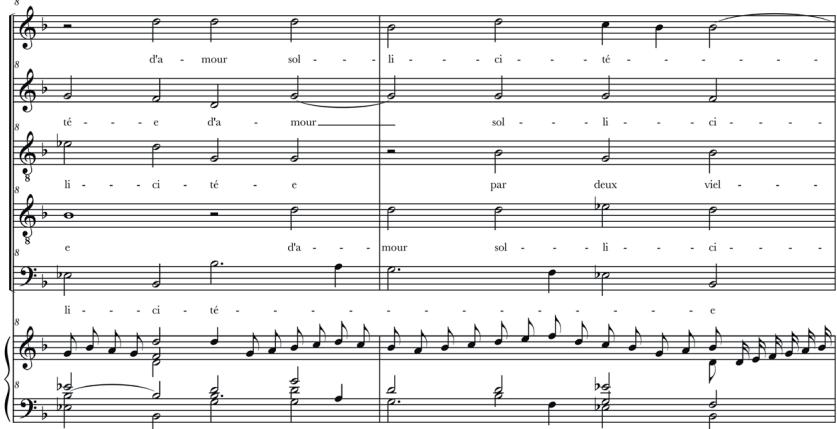
中文讲解
此处为第 15 页上的图像或乐谱占位符,原图数据已被省略,仅保留了位置标记。其版面用途应与紧接着的 Ex. 6a 标题(P0096)配套出现,作为该谱例在上版面图区的视觉承载体——具体谱面内容需查看原书原图方可确认,作者随后的分析所指即建立在此图之上。
补充说明
本占位符与 P0096 的图注共同构成 Ex. 6a 的完整图说单元。
第4段(P0096)
原文复述
Ex. 6a: Top staves: Lasso, ‘Susanne un iour’; bottom staves: Andrea Gabrieli, ‘CANZON deta Susanne un iour A Cinque Voci d’Orlando Lasso’, mm. 8–9, [n.p.], in: Canzoni alla francese et ricercari aiosi, tabulate per sonar sopra istromenti da tasti […] libro quinto (Venice: Angelo Gardano, 1605).
中文讲解
本段为图 6a 的完整图注,交代了谱例对照阅读所需的所有文献信息:上方谱表为拉索(Lasso)原曲 ‘Susanne un iour’,下方谱表为 Andrea Gabrieli 将其改编为键盘整谱(intabulation)的同名作品,节选自小节 8–9;该整谱刊于 Gardano 1605 年于威尼斯出版的第五册 ‘Canzoni alla francese et ricercari aiosi, tabulate per sonar sopra istromenti da tasti’。图注的对照结构(上声部 Lasso 原谱 / 下声部 Gabrieli 整谱)正对应作者随后在 P0098 中的论证——通过对两谱谱面记法差异的考察,揭示整谱偏离常规的动机。
补充说明
图注中的 ‘CANZON deta Susanne un iour’ 为 16 世纪意大利常见的整谱曲名写法,‘deta’ 即 ‘detta’(‘即’);‘A Cinque Voci d’Orlando Lasso’ 标明此为改编自拉索五声部原作的键盘曲。
第5段(P0097)
原文复述
Click here to listen to the example.
中文讲解
此为电子版配套的音频链接引导语,提示读者点击以聆听 Ex. 6a 的音响实例。它服务于多重渠道学习的目的:除视觉对照谱例外,作者希望读者亦能从听感上把握两谱在节奏、织体上的差异,进而理解后文关于声部进行保留的论述。
第6段(P0098)
原文复述
In Ex. 6, two excerpts from Andrea Gabrieli’s intabulation of Lasso’s ‘Susanne un jour’ (which was printed in 1605 using moveable type), many instances can be observed in which Gabrieli (or someone in the Gardano firm, or perhaps Giovanni Gabrieli) goes against typical intavolatura convention in order to show Lasso’s original voice-leading.21 The tie in the left hand of m. 8 (Ex. 6a) is used to show that the two b-flat’s both belong to the quintus; without it, the stem directions – which do follow normal intavolatura procedure – would obscure this fact, leading one to believe that the notes had originally belonged to different voices. While long notes in intavolatura were typically split into shorter ones, as shown earlier, in this case the tie connects two notes that appear visually to be in different voices, at least in the tablature; if the tie were followed literally (and not broken in performance), it would also entail a rather awkward finger substitution. The dotted b-flat on the third beat – quite a finicky notational detail to include normally – does the same thing. The distribution of the chords in m. 42 (Ex. 6b) (including a stretch of a twelfth) is quite unidiomatic in terms of intavolatura convention and to the idiom and style of 16th-century Italian keyboard music.
中文讲解
本段是小节的论证核心。作者以 Ex. 6 两处谱例(mm. 8–9 与 mm. 42–43)证明:Gabrieli(或 Gardano 印局中某人,甚至可能是 Giovanni Gabrieli)在活字印刷条件下多处刻意违反 intavolatura 常规记法,目的不在键盘演奏便利,而在如实呈现拉索原曲的声部进行(voice-leading)。论证分三层展开:(1)小节 8 左手的两记 b-flat 之间加连线(tie),尽管按连奏(legato)字面执行会造成笨拙的指法替换,仍坚持连写,是为了表明两音同属 quintus(第五声部);若不连线而按常规 intavolatura 改变符干方向(stem directions),读者便会误判声部归属。(2)第三拍的附点 b-flat 是一个’非必要的小记谱细节’(finicky notational detail),本可省去,但保留它服务于同一目的——强化声部同一性。(3)小节 42 的和弦分布跨越十二度(a twelfth),既不符合 intavolatura 惯例,也不符合 16 世纪意大利键盘音乐的风格与 idiom。作者由此得出关键论断:当偏离不能由’技术限制’解释时(毕竟活字印刷本应推动简化),偏离反而揭示出一种’partitura instinct’——使整谱向声部原作的’整体分谱’维度倾斜的意图。理解此段需注意:作者并未把所有偏离都归因于声部再现;他明确指出连线若按字面执行’会造成笨拙的指法替换’,这恰好反证该记法是为读谱者/研究者保留声部信息,而非为演奏者优化键盘布局。
补充说明
本段中 ‘quintus’ 指 16 世纪五声部合奏/重唱中的第五声部(介于 altus 与 bassus 之间);‘partitura’(整体总谱)与 ‘intavolatura’(键盘整谱)之别为作者全文的方法论核心:intavolatura 本是按键盘逻辑重组材料的实用谱,而 partitura instinct 指即使采用 intavolatura 形式,仍透露出按声部逻辑呈现原貌的倾向。
第7段(P0099)
原文复述
20 For more on the distinction between movable type and intaglio, see Campagne, Simone Verovio (see n. 7), 27–34.
中文讲解
此为正文 P0094 的脚注 20,提供关于活字与凹版(intaglio)印刷区别的进一步参考文献——指向 Campagne 关于 Simone Verovio 的专著第 27–34 页(该专著本身在脚注 7 中已完整引用)。脚注的论证功能为’来源支持’:补强正文中’印刷工艺影响记谱细节’这一陈述的学术根据。
第8段(P0100)
原文复述
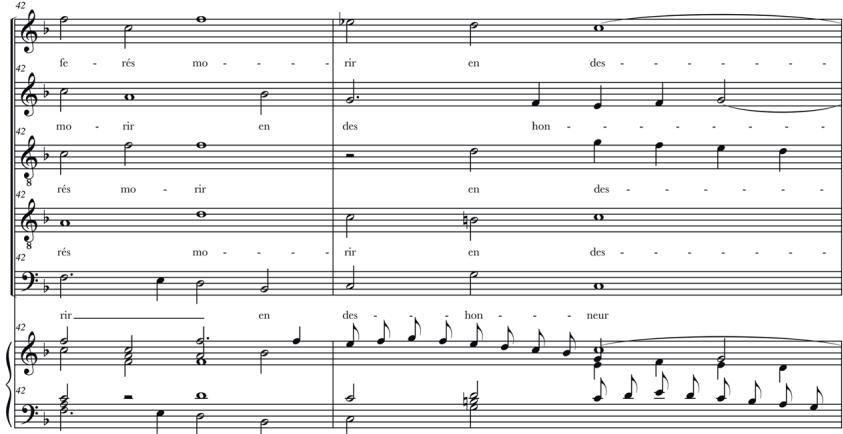
中文讲解
此处为第 16 页上的图像或乐谱占位符,原图数据已被省略,仅保留位置标记。它与紧接着的 Ex. 6b 图注(P0101)配套,承载 Ex. 6b 的谱面——即作者用于论证’第十二度音程与 chord 分布不符合 intavolatura 惯例与 16 世纪意大利键盘 idiom’的小节 42–43 谱例。具体细节需查看原图方可确认。
补充说明
本占位符与 P0101 的图注共同构成 Ex. 6b 的完整图说单元。
第9段(P0101)
原文复述
Ex. 6b: Top staves: Lasso, ‘Susanne un iour’; bottom staves: Andrea Gabrieli, ‘CANZON deta Susanne un iour A Cinque Voci d’Orlando Lasso’, mm. 42–43, fol. 3r, in: Canzoni alla francese et ricercari aiosi, tabulate per sonar sopra istromenti da tasti […] libro quinto (Venice: Angelo Gardano, 1605).
中文讲解
本段为图 6b 的图注。除与图 6a 相同的对照结构(上 Lasso 原谱 / 下 Gabrieli 整谱)外,本图注进一步给出了刊本中的具体位置标记 ‘fol. 3r’(第三对开页正面),表明该整谱位于 Gardano 1605 年第五册的卷首部分。mm. 42–43 这一选段位置对论证尤为关键——作者正是据此提出第十二度音程的 chord 分布问题。
第10段(P0102)
原文复述
Click here to listen to the example.
中文讲解
此为 Ex. 6b 的音频链接引导语,提示读者点击聆听小节 42–43 的音响实例。配合图 6a 的音频,引导读者从音响维度验证作者的谱面分析——尤其第十二度音程的声部进行在听觉中如何与键盘 idiom 形成张力。
第11段(P0103)
原文复述
21 As Andrea Gabrieli’s keyboard music was published posthumously, it is entirely plausible that some other figure, such as someone working in the Gardano firm, was responsible for Andrea’s intabulation. In fact, it seems likely that this figure might have been Giovanni Gabrieli, perhaps working in the capacity of editor of his uncle’s keyboard music. See David Bryant, ‘Gabrieli, Giovanni’, in: Grove Music Online, <https:// doi.org/10.1093/gmo/9781561592630.article.40693> (accessed 17 July 2022).
中文讲解
此为正文 P0098 的脚注 21,承担重要的方法论限定功能。作者指出:Andrea Gabrieli 的键盘音乐属身后出版(posthumously),因此整谱(intabulation)的实际制作者很可能是印局中人,甚至更可能是其侄子 Giovanni Gabrieli(以其叔父键盘音乐编辑者身份工作)。这一限定对正文论证有三重意义:(1)当分析偏离惯例的’作者意图’时,需谨慎——可能是 Giovanni 而非 Andrea 的判断;(2)‘partitura instinct’的归属由此可同时指向 Giovanni Gabrieli 的编辑理念;(3)脚注以 Grove Music Online 中 David Bryant 撰写的 ‘Gabrieli, Giovanni’ 条目作为外部来源支持这一推测。读者因此应将正文中对’Gabrieli’偏离惯例的描述,理解为对’Gardano 1605 年刊本制作者’这一更宽泛指称的论述,而非对 Andrea 本人意图的绝对断言。
补充说明
脚注末尾的 DOI 链接与访问日期为现代学术出版惯例,对应 Bryant 在 Grove Music Online 的 Giovanni Gabrieli 词条。
脚注 / 边栏 / 图表 / 附加信息(如有)
本节包含两处嵌入图像/乐谱占位符(P0095 与 P0100),分别承载 Ex. 6a(mm. 8–9)与 Ex. 6b(mm. 42–43)的谱例,原图数据已省略,仅留位置标记。两处图注(P0096、P0101)完整保留了文献信息,足以让具备原书条件的读者定位刊本。两段音频引导语(P0097、P0102)属电子版配套。两处脚注(P0099、P0103)分别提供印刷技术区别的来源(脚注 20,支撑 P0094)与整谱编订者归属问题的方法论限定(脚注 21,限定 P0098 中对’Gabrieli’的指称范围)。脚注 21 是本节论证中不可忽略的方法论要素:它将正文所谓’Gabrieli 的 partitura instinct’的归属开放给 Gardano 印局及 Giovanni Gabrieli,从而保护论证不被作者归属问题推翻。
💡 本节核心要点
- 印刷工艺(活字 vs 凹版铜版)对记谱细节的呈现能力具有物质性限制:Verovio 的凹版托卡塔展示更丰富的记谱 nuance,活字 canzonas 则常被推到记谱极限(为理解 P0098 中偏离技术性解释提供对照背景)。
- 在 Andrea Gabrieli 对 Lasso ‘Susanne un jour’ 的整谱中,存在多处对 intavolatura 常规的偏离,这些偏离不能由印刷技术限制解释(因为该刊本恰为活字印刷),因此必须从记谱者的意图层面寻找原因。
- 作者提出’partitura instinct’假说:偏离常规的记法——如 mm. 8 的连线、第三拍的附点细节、mm. 42 横跨十二度的和弦分布——其目的是保留拉索原曲的声部进行信息,使整谱向 partitura(整体分谱)逻辑倾斜,而非服从 intavolatura(键盘化重组)的实用逻辑。
- 连线与附点等’非常规细节’在键盘演奏上可能造成笨拙的指法(如 mm. 8 的指法替换),但仍被保留——这一悖论恰好反向证明:这些记法服务的对象首先是声部归属的视觉可读性,而非键盘演奏的便利性。
- 由于 Andrea Gabrieli 的键盘音乐为身后出版,整谱实际制作者可能是 Gardano 印局成员或 Giovanni Gabrieli(作为叔父键盘音乐编辑者);因此所谓’Gabrieli 的 partitura instinct’应理解为对刊本制作者群体的指称,而非对 Andrea 本人意图的绝对归属。
🔑 关键术语
- intavolatura:16 世纪意大利键盘音乐特有的记谱体系,按键盘布局与指法逻辑而非按声部逻辑重组材料。本节论证中,它是与 ‘partitura’(按声部呈现的总谱逻辑)相对立的概念。
- partitura instinct:作者提出的核心概念,指制作者在采用 intavolatura 形式时仍透露出按声部逻辑呈现原貌的倾向——即在键盘谱面上保留或重示原作 voice-leading 的冲动。它解释了为何 intavolatura 中会出现违背键盘 idiom 的记法。
- moveable type(活字印刷):16 世纪常用的音乐印刷方式,通过可拆卸的铅字逐音符排版,谱面细节受限于活字的物理形态,复杂记谱常被’推到极限’。
- intaglio(凹版印刷):以铜版直接刻蚀谱面后印制的工艺,相较活字能呈现更精细的记谱细节(如细致的附点、连线、精确的符干方向);Verovio 在罗马出版的托卡塔即采用此技术。
- voice-leading(声部进行):复调音乐中各声部横向进行的逻辑与相互关系。本节中作者论证 intavolatura 偏离常规的目的正是为了保留/呈现原曲的 voice-leading。
- quintus:16 世纪五声部合奏/重唱中的第五声部,介于 altus 与 bassus 之间;本节 mm. 8 连线例证所服务的声部归属对象。
sec0010 [描述性拆分] Cost of notational detail and use of custos signs in the Layolle manuscript (Ex. 7)
第1段(P0104)
原文复述
It is also worth noting that including these details in the printing process must have cost additional labour and effort (this is perhaps especially noticeable when looking at the original source – see Fig. 1). For rather obvious reasons, it was much easier for a scribe (or a printing house using intaglio technique) to include this sort of notational detail, rather than a print shop using moveable type technology. The fact they are included, costs and labour notwithstanding, adds weight to the importance of their inclusion.
中文讲解
本段从物质生产的角度回应前文:如果印刷/誊抄者在谱表中保留了某些复杂的对位细节,那么这些细节不是偶然出现的,而必然意味着额外的劳作。作者承认,这些细节在原始手稿中(图1所示)更加显眼。接着,他对比了三种生产方式:手抄、凹版印刷(intaglio)和活字印刷(moveable type)。前两者在呈现这类细节时远较后者容易——因为活字是模块化的复合字模,复杂符号的排版成本极高。尽管如此,细节依然被保留下来,这个事实反向证明了这些细节在誊抄者/印刷者心目中的重要性:他认为这些信息不可省略,所以宁可承担额外的劳作成本。这段话为后文讨论誊抄者有意揭示声部进行提供了物质基础。
补充说明
本段的逻辑是「成本反证重要」:当某件事既费力又被完成,它就不可能是无意识的副产品。这一论证方式将在 P0106–P0109 中被进一步延伸——既然誊抄者愿意花力气保留对位细节,那么这些细节必然承担了某种超出「单纯可演奏性」的功能。
第2段(P0105)
原文复述
中文讲解
这是图1的说明文字。原图为威尼斯出版商 Angelo Gardano 1605 年出版的《Canzoni alla francese et ricercari ariosi》第五集中 Andrea Gabrieli 所作、改编自 Orlando di Lasso 一首五声部作品的卡农,展示了第41–44 小节的谱面。该图被作者引用,用以说明「凹版/手抄谱中确实可见大量对位细节」,呼应前一句关于誊抄成本与细节呈现的论述。需要查看原图才能核对实际谱面。
补充说明
图注中的「intabulation / tabulate per sonar sopra istromenti da tasti」表明这是一首键盘乐器用的改编曲(intavolatura),与本文核心议题一致;出版地(威尼斯)和出版商(Gardano)有助于判断谱面属于印刷本而非手稿本。
第3段(P0106)
原文复述
Having said that, instances such as the ones shown in Gabrieli’s intabulation are also fairly common in manuscript intabulations, indicating that print limitations are far from the only reason to explain instances in which intavolatura conventions were not followed. Highly intriguing are examples in which the rules of intavolatura – which generally work to hide polyphonic detail in favour of playability – are broken in order to reveal polyphonic voice leading.
中文讲解
本段对前文的「印刷成本论」做了一个重要的限定:尽管印刷成本可以解释为何某些细节在印本中较少出现,但同样的细节在手稿中也并不罕见。这意味着印刷技术限制并不能完全解释「为何 intavolatura 的常规做法(conventions)有时不被遵守」。作者由此将讨论从「物质条件约束」转向「誊抄者的主动选择」——他指出真正有趣的是那些「破例」的谱例:intavolatura 通常以牺牲对位细节、换取键盘演奏便利为原则,但有些抄本故意打破这一原则,反而主动揭示原始复调中的声部进行(voice leading)。这一转折为下一段集中讨论 Layolle 手稿中的 custos 符号铺垫。
补充说明
「intavolatura 的常规做法」在前文尚未被作者正面定义,到 P0107 才进一步具体化为「隐藏声部进行 / 压制双符干音符」等可观察的谱面特征。本段相当于一次论证转向:从技术决定论转向主观意图论。
第4段(P0107)
原文复述
It is notable that the vast majority of these ‘rule breaking’ episodes seem to be grounded in what appears to be an attempt, on the part of the scribe, to use the tablature as a partitura; in doing so, the scribe goes against the general ethos and aesthetic – and, of course, the conventions – of intavolatura. However, the possibilities of intavolatura being used as a partitura seemed apparent to many scribes, some going so far as to use special symbols or techniques to reveal voice-leading of the original polyphony, pushing against the ’natural’ tendency of intavolatura to hide it. One of the two scribes of the Layolle manuscript consistently uses a custos or direct sign to signal instances in which voices move from stave to stave. These signs thus clarify the original polyphony of the model, pushing back against intavolatura’s conventions as they ‘blindly’ work to hide the original voice motion – this blind functioning is again cast into relief by the fact that the intabulation normally does follow the conventions. Interestingly enough, in other intabulations rests can be used for a similar purpose (the fictitious rest in the left hand of m. 42 seems to clearly be used to indicate the fact that tenor part moves from the bottom to the lower staff in Ex. 6a above), although here the signs are clearly visually distinct from rests.
中文讲解
本段是本节的论证核心,作者对「破例」现象给出了一个统一解释:誊抄者实际上是把 intavolatura 当作 partitura(总谱/多声部参照谱)来使用——也就是说,他关心的不仅是「怎么弹」,更是「原本的复调结构是什么」。这是一种与 intavolatura 美学根本对立的取向,因为 intavolatura 的「自然倾向」是简化、隐藏对位以利键盘演奏。作者特别指出 Layolle 手稿中两位誊抄者之一,会系统性地使用 custos(或称 direct sign)来标记「声部从一行谱表跨到另一行谱表」的位置——这种记号揭示了原始复调中声部的实际归属,因而是对 intavolatura 隐匿声部之惯性的一种反向校正。作者用一个反证强调这一解释的可信度:既然该手稿在其他地方大体遵循 intavolatura 惯例,那么 custos 的出现就更像是「有意识的偏离」而非「随手乱写」。最后,作者补充说明实现「揭示声部进行」并非只有 custos 一途:其他 intavolatura 中也会用「假休止符」(fictitious rest)来达到同样目的,他以 Ex. 6a 第 42 小节左手声部的休止符为例;但本段的 custos 与休止符在视觉上是清楚可分的。
补充说明
「partitura」一词在 16 世纪意大利音乐语境中指多声部总谱式的呈现方式,其对立面是「只看一个声部的演奏谱」。将键盘 intavolatura 当作 partitura,意味着它承担了「分析 / 还原原作结构」的认知功能,这是与「演奏便利化」目标直接冲突的功能取向。Layolle 手稿中只有「两位誊抄者之一」使用 custos 这一事实提示我们,这一做法属于个人的、有意识的风格选择。
第5段(P0108)
原文复述
22 This was a practice common in 16th-century English sources; see Silbiger, ‘Is the Italian Keyboard “Intavolatura” a Tablature?’ (see n. 2), 95. Interestingly, some later French sources also use a custos sign, but in the opposite manner, as a sign to take notes in the other hand even as they aren’t notated in the ‘proper’ staff. Ibid., 99–100.
中文讲解
这是 P0107 的脚注 22,对 custos 用法的历史背景作出补充:作者指出,16 世纪英国谱源中类似做法相当常见,并引证 Silbiger 的论文第 95 页;随后他提示一个有趣的对比——一些较晚的法国谱源也使用 custos 符号,但用法相反,它被用来提示演奏者「虽然音符记在另一只手的谱表上,但实际上应在本手演奏」。出处同前文 Silbiger 文,第 99–100 页。这一脚注一方面为 Layolle 抄本的做法提供一个谱学传统(英国传统),另一方面通过「反向使用」的例子说明 custos 的具体功能依赖于语境,提示读者不能机械地把任何 custos 都等同于 Layolle 手稿中的那种「揭示跨谱表声部」功能。
补充说明
脚注中提及的两种 custos 用法虽然都涉及「跨手/跨谱表」的提示,但 Layolle 手稿中的用法属于「揭示原始复调中声部到底在哪一行」,而法国式用法属于「提示演奏者该用哪只手」,两者信息方向相反。理解这一区别对正确解读 Layolle 的 custos 至关重要。
第6段(P0109)
原文复述
The intabulation of Berchem’s ‘O s’io potessi donna’ (Ex. 7) clearly demonstrates the functioning of these custos signs. In a sense, the scribe uses them to subvert the tendency of intavolatura to hide this sort of detail automatically. The tendency on the part of the scribe to prevent voice-leading from being hidden by intavolatura is further supported by the fact that they often combine the use of the custos signs with double stems, which are of course wholly unidiomatic to intavolatura and its normal ‘suppressing’ of double-stemmed notes. The double-stemmed notes are used, however, to show unisons that occur in the polyphonic model – see, for example, the double-stemmed g in the left-hand of m. 33 (Ex. 7a), or the double-stemming (in two voices) in m. 44 (Ex. 7b). Yet, at the same time we can still observe the background action of intavolatura conventions as a global force throughout the intabulation as a whole. In m. 34, the voice leading is obscured between the inner parts as the intabulator follows the general rules for stem directions; in addition, unisons are not treated uniformly: the unison between the alto and the tenor in m. 31 (Ex. 7a) is not given a double-stem, nor are the unisons in m. 43 (Ex. 7b) on the third and fourth beats. Note that the unison on the downbeat of m. 44 is double-stemmed, however. This might indicate that, again, intavolatura’s conventions were seen as an undeclared background force,
中文讲解
本段以 Berchem 的 madrigal ‘O s’io potessi donna’(例 7)为个案,集中演示 custos 的功能:作者称誊抄者用这些符号「颠覆」了 intavolatura 自动隐藏声部的倾向。具体而言,第 31 小节用 custos 标示男高音声部移到了右手谱表,第 33 小节再标示其回到左手谱表,第 32 小节甚至一连用了四个 custos 来提示两条 inner voice(parti di mezzo)在两行谱表之间频繁互换。作者接着指出,誊抄者还常常把 custos 与双符干(double stems)配合使用——双符干本身是 intavolatura 极力压制的记号(因为它暗示了第二声部),但在这里它被主动采用,目的是揭示原始复调中出现的同度(unison)。他以 Ex. 7a 第 33 小节左手的双符干 g 音、以及 Ex. 7b 第 44 小节的双符干(同度出现在两条 inner voice 中)为例。然而,与此同时作者强调,整首 intavolatura 作为一个整体,仍然笼罩在 intavolatura 惯例的「背景力量」之下:他举出第 34 小节内部声部进行因符干方向规则而被遮蔽的事实,并指出对同度的处理其实并不统一——第 31 小节 alto 与 tenor 的同度并未加双符干,第 43 小节第三、四拍的同度也没有,但第 44 小节正拍的同度却加了双符干。这种不统一暗示 intavolatura 惯例在誊抄者心中是某种「未经宣告的」默认力量,他可能下意识遵循,又在某些时刻觉得需要「主动对抗」(段末被切断到下一页继续)。
补充说明
作者在此处的论证策略很关键:他不只是举例证明「誊抄者有意揭示声部」,而是同时指出「揭示是不完全的、有选择性的」——这种「不彻底性」恰恰说明常规 intavolatura 力量是真实存在的背景制约,揭示声部是有意识、有代价的偏离。Partita di mezzo 指位于最高与最低声部之间的中间声部,此处特指 alto 与 tenor。
第7段(P0110)
原文复述
23 Frank D’Accone identifies this scribe as the first owner of the manuscript, the Florentine organist Alamanno Layolle. Interestingly enough, Layolle grew up in Lyon, where his father Francesco worked with the publisher Jacques Moderne and as an organist. See Frank D’Accone, ‘The “Intavolatura di M. Alamanno Aiolli”: A Newly Discovered Source of Florentine Renaissance Keyboard Music’, in: MD 20 (1966), 151–74. See n. 26 below for more on potential ties between Italian keyboard intavolatura and French publishers. For more on Francesco de Layolle, see Frank D’Accone, ‘Layolle, Francesco de’, in: Grove Music Online, https://doi.org/10.1093/gmo/9781561592630.article.16159 (accessed 17 July 2022).
中文讲解
这是 P0107 的脚注 23,对 Layolle 手稿中这位使用 custos 的誊抄者身份作出说明。脚注信息由 Frank D’Accone 提供:他确认此誊抄者即手稿的第一位所有者、佛罗伦萨管风琴家 Alamanno Layolle。脚注进而补充 Layolle 的生平背景——他在里昂长大,其父 Francesco 既在出版商 Jacques Moderne 处工作,也担任管风琴师。脚注提供了两条文献来源:D’Accone 1966 年发表于 MD(《音乐学论文集》)第 20 期的文章《The ‘Intavolatura di M. Alamanno Aiolli’》,以及 Grove Music Online 上由 D’Accone 撰写的 ‘Layolle, Francesco de’ 词条(2022 年 7 月 17 日访问)。脚注末尾还预告第 26 号脚注将讨论意大利键盘 intavolatura 与法国出版商之间的可能关联。这一脚注的功能是把前一段对「个别誊抄者风格」的观察坐实为「具体人物的具体实践」,并暗示其音乐成长背景可能影响其记谱选择(意大利 / 法国双重语境)。
补充说明
脚注中 Layolle 父亲 Francesco 与法国出版商 Jacques Moderne 的关联,以及预告中的「意大利键盘 intavolatura 与法国出版商」的联系,呼应正文 P0108 脚注 22 中提到的「英国 custos 传统」和「法国反向 custos 用法」——这一谱学网络可能是 Layolle 在意大利手稿中采用 custos 记号的文化土壤。但脚注并未对此作出明确因果论断,只是提供材料。
第8段(P0111)
原文复述
24 This was pointed out by Boncella, ‘The Classical Venetian Organ Toccata’ (see n. 3), 125–6.
中文讲解
这是 P0107 末尾提到「其他 intavolatura 中休止符可被用来标示声部转移」的脚注 24,归属 Boncella 在《The Classical Venetian Organ Toccata》一书中第 125–126 页。脚注的作用仅为出处说明,不引入新的论点。
第9段(P0112)
原文复述
Click here to listen to the example.
中文讲解
这是一行简短的版面指令,引导读者点击播放 Ex. 7 的音频/视频示例。它不是论证性文字,而是电子版论文的交互元素提示。
第10段(P0113)
原文复述
one that was perhaps understood subconsciously by the intabulator – or perhap consciously as they felt the need to ‘push against’ it.
中文讲解
本段是 P0109 在跨页后留下的句尾补全:作者给出他关于「intavolatura 惯例作为背景力量」的最终解释——这种惯例或许是被 intabulator 在下意识层面理解的,但当他感觉到有必要「主动抵抗」时,又会变为有意识的选择。这一短句给整段论述划上一个开放式的句号,并未在「下意识」与「有意识」之间作出单一裁决,而是保留两种可能性。
补充说明
此处原文拼写错误「perhap」应为「perhaps」,但不影响理解。作者保留两种解释的开放态度本身具有方法论意义:他拒绝简单地把抄本中的偏离归因于单一动机,而是呈现出一个「惯例作为无意识默认 vs. 偏离作为有意识干预」的连续体。
第11段(P0114)
原文复述
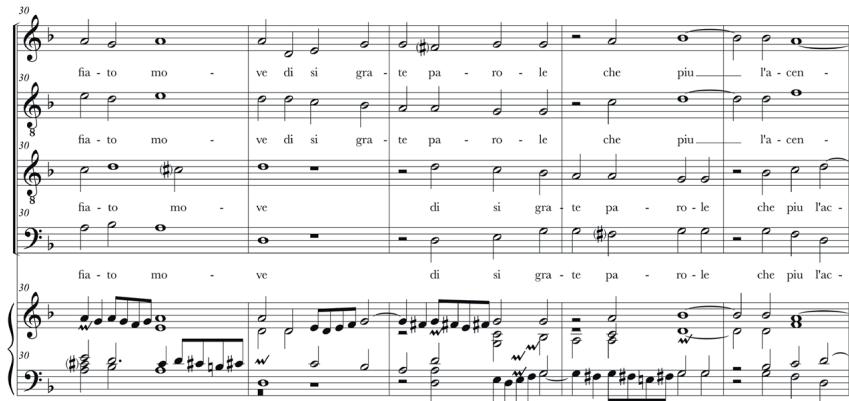
中文讲解
这是第 19 页上的一个图像占位符。文本未提供任何图注或上下文描述,因此仅能确认此处存在一幅视觉材料(很可能是乐谱或页面图像)位于 P0113(论证文字)与 P0115(Ex. 7a 图注)之间。具体内容需要查看原图。
第12段(P0115)
原文复述

中文讲解
这是 Ex. 7a 的图注,对应正文 P0109 所讨论的 Berchem madrigal ‘O s’io potessi donna’ 的 intavolatura 转写谱。图注说明:上方谱表为 Berchem 原 madrigal,下方谱表为 Layolle 手稿中该曲 intavolatura 的转写(编者推测誊抄者即 Alamanne de Layolle),覆盖第 30–34 小节,对应手稿 fol. 4v(佛罗伦萨国立图书馆藏,编号 Acquisti e Doni 641)。该图正是作者在 P0109 中讨论 custos 与双符干时所引用的核心谱例(第 31、33 小节的 custos 与第 33 小节的左后双符干 g)。需查看原图以核对实际谱面记号。
补充说明
「I-Fl」是意大利图书馆代码,「I-Fl」指佛罗伦萨国立中央图书馆(Biblioteca Nazionale Centrale di Firenze);「Acquisti e Doni 641」是该馆收藏编号。
第13段(P0116)
原文复述
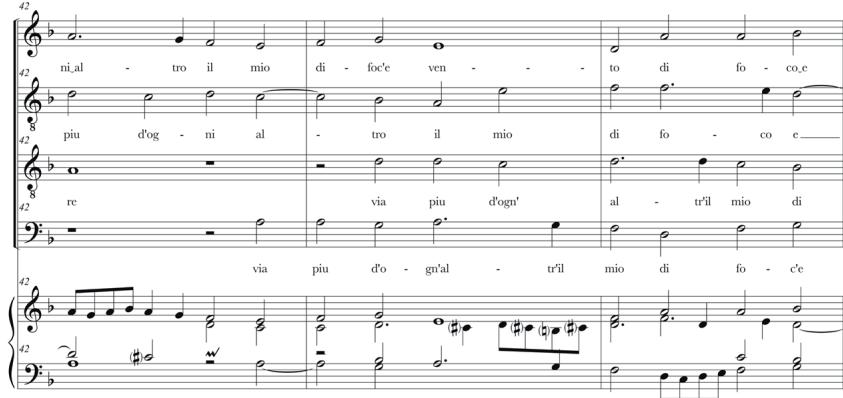
中文讲解
这是第 19 页上的第二个图像占位符,无图注,无上下文描述,仅能确认此处存在一幅视觉材料(推测为 Ex. 7b 的乐谱或页面图像,但文本未明确标识)。具体内容需要查看原图。
第14段(P0117)
原文复述

中文讲解
这是第 19 页上的第三个图像占位符,无图注,无上下文描述,仅能确认此处存在一幅视觉材料。具体内容需要查看原图。
脚注 / 边栏 / 图表 / 附加信息(如有)
本节包含一个正文中出现的图注(图 1:Andrea Gabrieli 卡农,P0105)、三段编号脚注(22 在 P0108、23 在 P0110、24 在 P0111)、一个音频/视频交互链接提示(P0112)、以及若干图像占位符(P0114、P0116、P0117),其中第二个和第三个占位符对应的图注(即 Ex. 7b)未在 source_paragraphs 中出现。脚注 22 提供 custos 记号的英国 / 法国历史背景与对照用法,脚注 23 鉴定 Layolle 手稿中这位使用 custos 的誊抄者身份并提供生平与文献线索,脚注 24 简短标注 Boncella 关于「休止符作为声部转移标记」的论述出处。P0115 的图注(Ex. 7a)直接服务于 P0109 对 custos 与双符干功能的具体演示。
💡 本节核心要点
- 作者通过「生产成本反证重要性」的逻辑,为后续「破例记谱是有意识选择」的判断排除了一种简单解释(纯粹的印刷技术限制)。
- 作者将 Layolle 手稿誊抄者系统使用 custos 解释为「将 intavolatura 当作 partitura 使用」——即关心原始复调结构的揭示,而非仅服务于键盘演奏便利。
- Layolle 誊抄者将 custos 与双符干并用,共同揭示声部归属与同度;这是一种与 intavolatura 惯例(压制对位细节)直接对立的取向。
- 作者指出偏离是不彻底的:同一首 intavolatura 中仍可见 intavolatura 惯例作为「未声明的」背景力量(如符干方向规则导致内部声部被遮蔽,同度处理并不统一),这反向证明惯例在誊抄者心中是真实的默认设定。
- 脚注 22、23 把 Layolle 的 custos 实践放入更大的谱学传统(英国、法国)与具体人物(Alamanno Layolle 及其父亲 Francesco 在里昂与 Jacques Moderne 的联系)之中,暗示这一记谱选择并非孤立的意大利现象。
🔑 关键术语
- intavolatura / intabulation:指为键盘乐器改编的复调作品谱面形式,本节中既可作名词指谱面本身,也可作动词指改编行为。其核心特征是以牺牲对位细节、换取键盘可演奏性为原则(即文中的 conventions)。
- custos / direct sign:谱末或行末提示下一行/谱表首音的符号;在 Layolle 手稿中被誊抄者挪用为「声部从一行谱表跨到另一行」的标记,从而揭示原始复调中各声部的实际归属。
- partitura:意大利语「总谱 / 多声部参照谱」之意。在本节中用作对 intavolatura 常规功能的反向描述:作者认为某些誊抄者把键盘谱当作 partitura 使用,以揭示而非压制复调结构。
- intaglio technique:凹版印刷技术,区别于活字印刷;作者在 P0104 中指出,凹版印刷与手抄都更容易保留复杂对位细节,活字印刷则成本极高。
- double stems (双符干):在键盘谱中用以提示第二声部共存的谱面记号;本节中作者指出 Layolle 誊抄者刻意使用此记号来标示原始复调中出现的同度(unison)。
- parti di mezzo:意大利语「中间声部」,指 alto 与 tenor 这两条内部声部;作者在 P0109 中描述第 32 小节一连使用四个 custos 来提示这两条 inner voice 在两行谱表之间互换。
sec0011 [描述性拆分] Scribal habits shared with Attaingnant’s intabulations (Ex. 8)
第1段(P0118)
原文复述
As a side note, many of the particular scribal habits seen in the intabulations in the Layolle manuscript – notably, especially those attributed to Alamanne de Layolle by Frank d’Accone – are also observable in the intabulations of Pierre Attaingnant (but not the use of the custos sign to show voice leading). In Ex. 8, from Attaingnant’s
中文讲解
本段以"顺便一提"的口吻提出一个补充观察:拉约勒抄本(Layolle manuscript)中的许多具体抄写习惯——尤其是Frank d’Accone归在Alamanne de Layolle名下的那些——同样出现在Pierre Attaingnant的intabulation中。但作者立即给出一个明确的例外:用以标示声部进行的custos记号(custos sign)并不在Attaingnant的版本中出现。这是一个关键的负面限定,说明两者的"共有"并非全部抄写习惯的全面移植,而是有所取舍。句子在"from Attaingnant’s"处中断,由下一页P0119接续。Ex. 8即作者用于展示这种共有习惯的具体例证,其引文出处由P0119完成。
补充说明
本节中的"custos sign"在前文sec0010(note 2相关讨论)中已经作为意大利intavolatura的一种指示声部走向的记号被讨论过;此处明确指出Attaingnant虽与Layolle共享其他习惯,却不采用该记号,形成与sec0010的对照。
第2段(P0119)
原文复述
Vingt et cinque chansons musicales reduictes en la tabulature (1530), ‘unnecessary’ rests taken from the original polyphonic parts are seen in the bottom staves of mm. 11 and 15 (as shown above, this is not a typical feature of Italian intavolatura.)
中文讲解
本段接续P0118断句,说明Ex. 8引自Attaingnant的《Vingt et cinque chansons musicales reduictes en la tabulature》(1530)。具体观察是:在该例底部谱表的第11小节与第15小节中,可以看到从原始复调声部直接搬来的所谓"不必要"的休止符。作者括号补充限定:这种保留休止符的做法并不是意大利intavolatura的典型特征。换言之,这种"把复调原本中的休止符机械地保留在键盘转写谱里"的写法,是Attaingnant版本与Layolle抄本共有、却与意大利intavolatura传统相异的特征。它支持了P0118的总体判断——Attaingnant的intabulation在抄写习惯上与Layolle亲缘更近,但在性质上仍部分背离意大利intavolatura规范。
补充说明
“red-uictes"为16世纪法语拼写(现代法语作réduites),意为"改写、转写”。“tabulature"是法语/英语中的tablature一词,指键盘或琉特所用的字母/符号记谱体系。“unnecessary"加引号表示作者立场:这些休止符对键盘演奏的指法或连贯性而言并非必要,但抄写者保留了原貌。
第3段(P0120)
原文复述
[Image / score placeholder on page 20; embedded image data omitted; position and figure caption retained.]
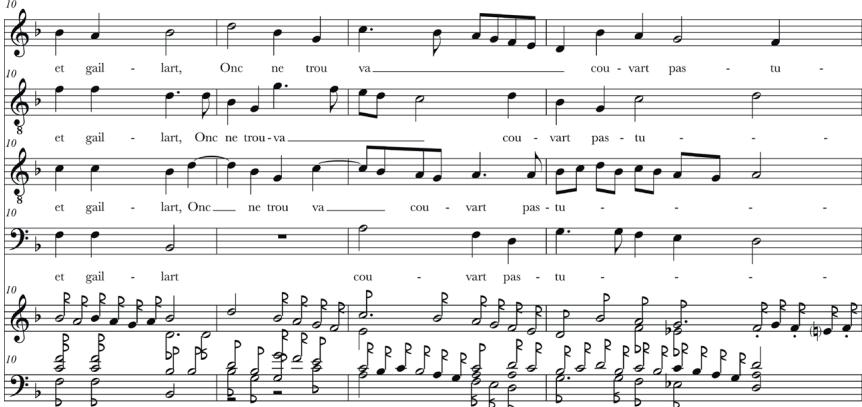
中文讲解
此处为第20页的图像或乐谱占位符,内嵌图像数据已省略,仅保留其页面位置与图注。结合后续P0122的图注信息可知,这是Ex. 8的乐谱图像的一部分(具体内容需对照原图查看)。本占位符的作用是与P0121、P0122共同构成完整的Ex. 8视觉呈现。
补充说明
无额外补充;乐谱细节不可见,需查阅原图核对手分布、休止符位置、符干方向与长度等转写要素。
第4段(P0121)
原文复述
[Image / score placeholder on page 20; embedded image data omitted; position and figure caption retained.]
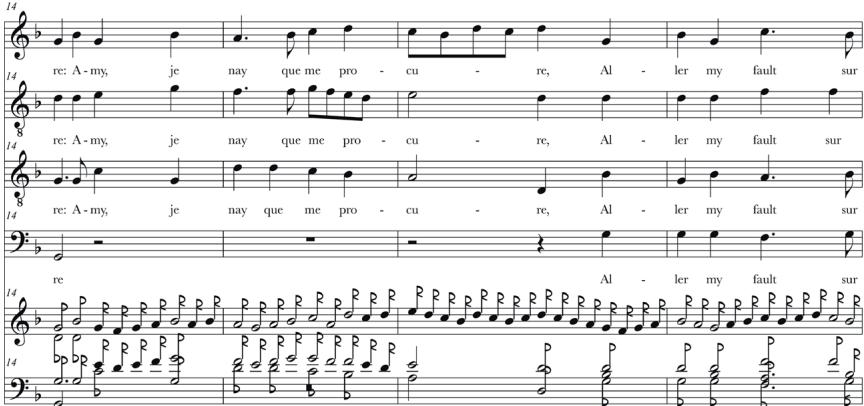
中文讲解
此处为第20页第二处图像或乐谱占位符,内嵌图像数据已省略,仅保留页面位置与图注。与P0120共同构成Ex. 8的乐谱图。
补充说明
无额外补充;具体乐谱内容需对照原图。
第5段(P0122)
原文复述

中文讲解
本段为Ex. 8的图注(caption)。信息要点包括:(1) 上方谱表为Janequin的歌曲《Aller my fault》(即Attaingnant版本所依据的原始复调曲目的声部呈现);(2) 下方谱表为作者对Attaingnant 1530年巴黎版(fol. 41,第10–17小节)intabulation的转写;(3) 转写方法说明:音符已转写为现代印刷体,但手分布、休止符位置、符干方向与长度等细节均按原谱准确转写。图注的关键在于"手分布、休止符位置、符干方向与长度"这些细节被刻意保留——因为这些正是作者论证Attaingnant与Layolle共享非意大利式抄写习惯的证据所在。
补充说明
图注中提到"hand distribution”(左手/右手分别承担哪条谱表)以及"rest placement”(休止符位置),与P0118–P0119讨论的"不必要休止符"以及后文P0124将提到的"staves for hands"规则形成对照:休止符位置是Attaingnant区别于意大利intavolatura的证据,而手的分布(通常即左右手分谱)则是Attaingnant与意大利传统共同的特征。
第6段(P0123)
原文复述
Click here to listen to the example.
中文讲解
本段是页面上嵌入的音频链接引导文字,指向Ex. 8的音频示例。属于版面功能性元素而非论证内容。
第7段(P0124)
原文复述
At the same time, many of the conventions of Italian intavolatura can be observed – most importantly, the ‘staves for hands’ rule – although not all of them; for example, the adoption of stem direction based on the vertical placement of the note in the staff is not followed consistently (see note 2 above). Still, a broader examination of the connections between Attaingnant’s published intabulations and intavolatura – and, more broadly, the relationship between Attaingnant’s notation and intavolatura – is needed, especially as Daniel Heartz has pointed to hints of connection between French publishers and prominent early prints and print shops involved with intavolatura.25
中文讲解
本段以"同时”(At the same time)与前文的对比形成辩证的总结:(1) 肯定Attaingnant的intabulation中可以看到不少意大利intavolatura的惯例,其中最重要的是"按手分配谱表”(staves for hands)规则;(2) 但并非全部惯例都被遵守——例如,根据音符在谱表上的垂直位置来决定符干方向的做法,在Attaingnant的版本中并未被一致地遵循(参见前文note 2)。这两层意思合在一起呈现了Attaingnant的混合特征:他既与Layolle抄本共享某些非意大利式习惯,又同时借鉴了部分意大利intavolatura规范,但其吸收是有选择、不彻底的。最后一句转入研究展望:作者承认对Attaingnant公开出版的intabulation与intavolatura之间关系的更广泛考察仍是必要的工作,尤其考虑到Daniel Heartz已指出法国出版商与若干重要的早期intavolatura印刷机构之间存在联系的迹象(脚注25)。这段展望既是对自身研究局限的诚实承认,也是对后续研究方向的明确指引。
补充说明
本段末尾的脚注25指向Daniel Heartz关于法国出版商与意大利intavolatura印刷机构之间联系的论述。“staves for hands"在前文sec0010 (note 2) 已经作为意大利intavolatura的关键特征被讨论过;本段再次确认其为Attaingnant所采纳的核心惯例之一。
脚注 / 边栏 / 图表 / 附加信息(如有)
本节附加材料包括:(1) Ex. 8的乐谱图与对应图注(P0120–P0122),其中图注明确指出转写保留了手分布、休止符位置、符干方向与长度等关键抄写细节,是作者论证抄写习惯归属的核心视觉证据;(2) “Click here to listen to the example."(P0123)为音频链接引导语,引导读者听Ex. 8;(3) 脚注25指向Daniel Heartz关于法国出版商与意大利intavolatura印刷机构联系的研究,为本节末尾的展望提供外部支撑。上述材料共同服务于本节的双重论点:Attaingnant的intabulation与Layolle抄本共享非意大利式抄写习惯(如保留"不必要"休止符),但同时也采纳了部分意大利intavolatura惯例(如按手分配谱表),呈现混合特征。
💡 本节核心要点
- Attaingnant的intabulation与Layolle抄本(尤其是d’Accone归为Alamanne de Layolle名下者)共享多种具体抄写习惯,但custos记号是一个明确例外。
- Ex. 8来自Attaingnant的《Vingt et cinque chansons musicales reduictes en la tabulature》(1530),其底部谱表第11与第15小节保留了来自原始复调声部的"不必要"休止符;这种做法在意大利intavolatura中并非典型。
- Attaingnant的intabulation同时采纳了若干意大利intavolatura惯例,其中最重要的是"按手分配谱表”(staves for hands)规则。
- 并非所有意大利intavolatura惯例都被一致遵循:根据音符垂直位置决定符干方向的做法未被一贯采用(参见前文note 2)。
- 作者承认需要更广泛地考察Attaingnant公开出版的intabulation与intavolatura之间的关系,并指出Daniel Heartz已经发现法国出版商与意大利intavolatura早期印刷机构之间存在联系的迹象(脚注25)。
🔑 关键术语
- intabulation / intavolatura:将原本为复调声乐或其他乐器写的多声部音乐改写为键盘或琉特等单一乐器所用谱表的做法。意大利传统中称intavolatura,而法语/英语传统中常称intabulation。本节核心议题即比较两者在抄写与记谱惯例上的异同。
- Layolle manuscript:本研究中讨论的核心抄本,其中收录多首键盘intabulation;其中部分作品的归属问题由Frank d’Accone经手研究,将其中一些归于Alamanne de Layolle。
- custos sign:置于谱表末尾、提示下一行起始音高的记号。本节中提到该记号在Layolle抄本中被用来提示声部走向,但在Attaingnant的intabulation中并未出现,作为两者共享习惯的一个例外。
- ‘staves for hands’ rule:意大利intavolatura的一条惯例:上方谱表由右手演奏,下方谱表由左手演奏,构成固定的"按手分谱"结构。本节确认Attaingnant采纳了这条规则,但其他意大利惯例(如按垂直位置决定符干方向)则未被一致遵循。
- Pierre Attaingnant:16世纪法国音乐印刷出版商,1530年在巴黎出版《Vingt et cinque chansons musicales reduictes en la tabulature》。本节以此版本作为与Layolle抄本及意大利intavolatura传统进行比较的关键实例。
sec0012 [描述性拆分] A hybrid intavolatura-partitura sketch of Arcadelt’s ‘Se per colpa’ (Exs. 9a–b)
第1段(P0125)
原文复述
***
中文讲解
此行为版面分隔符(由三个星号组成),标志着上一节内容结束、本节正文开始。在原文中,它起到视觉断节的作用,本身不携带任何论述信息。
第2段(P0126)
原文复述
Broadly speaking, the discussion above highlights the utility of examining the intabulation process as a way to see the ‘inner-workings’ of intavolatura – and, perhaps, the inner working of the mind of the intabulator as well – in that this process clearly demonstrates awareness of both intavolatura as a system and the possibility of breaking its conventions. One instance – an anonymous intabulation of Arcadelt’s ‘Se per colpa’ from the Castell’Arquato collection – is arguably an ‘intabulational’ sketch and therefore offers a glimpse of the intabulation process itself; if this is the case, it would be one of the few examples we have of this that is specific to keyboard intavolatura.26 This intabulation likewise shows an attempt to use intavolatura as a partitura, while also revealing an awareness of the basic functioning of intavolatura’s rules and conventions.
中文讲解
本段是本节的总起段落,承担由前文综述向具体个案过渡的功能。作者先用 broadly speaking 这一概括性措辞,把前面关于将’改编过程’(intabulation process)本身作为研究对象的讨论收束为一个判断:考察改编过程之所以有用,是因为它能让人’看到’ intavolatura(意大利式键盘数字谱/符号谱)的内在运作机制,并进一步’看到’改编者(intabulator)的内心运作。需要注意作者用了两个并列对象:intavolatura 作为一套系统,以及打破这套系统惯例的可能性,二者都被改编过程所展现。
随后作者引入本节的核心个案:Castell’Arquato 抄本集中一首阿卡德尔特(Arcadelt)《Se per colpa》的匿名改编。作者谨慎地使用了 arguably(可论证地)和 if this is the case(如果是这种情况)两个限定语,强调这是一个推断性的结论:这件改编可能是一份’intabulational sketch’(改编草稿/工作谱),能够让人一窥改编过程本身;如果这一判断成立,它将是少数几例专门针对键盘 intavolatura 的此类例证之一。
最后一句收束本段的论旨:这件改编同时呈现两种倾向——试图把 intavolatura 当作 partitura(分谱/总谱式的乐谱样式)来使用,以及显示出对 intavolatura 自身规则与惯例基本运作方式的了解。这是本节后续段落将要逐步展开论证的核心双线结构。
补充说明
文中’partitura’在十六世纪意大利音乐语境中并非现代意义上的’总谱’,而往往指按声部分列、便于阅读多声部关系的一种书写样式;它与作为键盘专用的’intavolatura’形成对照,这一点在本节中反复出现。
第3段(P0127)
原文复述
The sketch is in three staves as opposed to the normal two; this is similar to the notation of many of the keyboard works attributed to Veggio in the collection, and is in fact a tendency common to one particular scribe. At first glance, the intabulation appears to be an attempt to write a complete partitura rather than a tablature.
中文讲解
本段进入对该草稿外观形式的描述,并点出其第一项偏离常规的证据:它使用三行谱表(three staves),而不是 intavolatura 通常的两行。作者没有把这一特征简单归结为孤立现象,而是提供两条上下文线索:第一,Castell’Arquato 抄本集中归于 Veggio 之名的许多键盘作品也使用三行记谱;第二,这是抄本中某位特定抄写员(a particular scribe)共有的倾向。这两条信息暗示读者:三行谱的写法在同一抄本传统中并非孤例,可能与特定的抄写者群体或抄本使用情境相关。
段末以 at first glance(乍看之下)引入第二项观察:这件改编初看上去像是试图写成一份完整的 partitura,而不再是 tablature。这与上一段末尾的’intavolatura 当作 partitura 来用’形成呼应,但本段把’看起来像 partitura’这一点具体化为三行谱这一可观察的物理特征。
补充说明
Veggio 是 Castell’Arquato 抄本集中出现的一位人物,归属于他名下的作品数量在文中用于佐证’三行谱’并非孤例;该名字本身的意义不在于其历史身份,而在于它在抄本中的归名分布。
第4段(P0128)
原文复述
25 See Daniel Heartz, Pierre Attaingnant: Royal Printer of Music (Berkeley and Los Angeles, 1969), 40–1. Heartz points to possible French connections in the case of both Marco Antonio Cavazzoni’s 1523 volume of Recerchari and more broadly for the Rome-based publisher Andrea Antico, whose 1517 volume of intabulated Frottole is the first volume using Italian intavolatura. See Andrea Antico, Frottole intabulate per sonare organi libro primo (Rome: Andrea Antico, 1517), facsimile ed. (Bologna, 1970); Marco Antonio Cavazzoni, Recerchari, motetti, canzoni […] libro primo (Venice: Bernardo Vercelensis, 1523). In addition, one might point to the Jacques Moderne reprint (called Musicque de Joye) of most of the ricercars from the 1540 Venetian collection Musica Nova; interestingly enough, Moderne certainly had connections with Francesco de Layolle, organist at the Florentine church in Lyons and father of Alamanne de Layolle; see the introduction by Samuel F. Pogue in the facsimile reprint of Musicque de Joye (Peer: Alamire, 1991), 5. For more on the relationship between Musica Nova and Musicque de Joye, see Musica Nova: Ricercari, ed. Liuwe Tamminga, Tastature 3 (Colledara, IT, 2001), iv 26 Unfortunately, the Castell’Arquato manuscripts remain difficult to access, and no good digital scan of the collection is available.
中文讲解
本段在文本中实际承担脚注功能(编号 25 与 26 紧接在前一段的脚注引用之后),并不是正文的连续推进段落。它由两个内容板块组成。
第 25 号脚注的学术功能是为正文提到的’法国联系的可能性’提供文献支撑:引证 Daniel Heartz 1969 年关于法国皇家印刷商 Pierre Attaingnant 的研究(页 40–41),其中指出 1523 年 Marco Antonio Cavazzoni 的 Ricercari 一集以及罗马出版商 Andrea Antico 1517 年的 Frottole intabulate 都可能与法国相关;后者的 1517 年版本被作者确认为’第一本使用意大利式 intavolatura 的乐谱集’。脚注进一步补充了 Jacques Moderne 名为 Musicque de Joye 的里切尔卡再版与 1540 年威尼斯 Musica Nova 之间的关系,并指出 Moderne 与里昂佛罗伦萨教堂管风琴家 Francesco de Layolle 及其子 Alamanne de Layolle 确有交往。脚注末尾给出主要文献线索:Pogue 的导言、Musica Nova: Ricercari 的 Tamminga 版导言(iv 页)。
第 26 号脚注非常简短,对应正文 P0126 中关于 Castell’Arquato 抄本集的’intabulational sketch’判断,说明一个现实的研究限制:Castell’Arquato 抄本不易获取,目前也没有可用的数字扫描件。这一说明本身是对前文’unfortunately’一词的脚注式补充,提示读者相关研究的实物查阅难度。
补充说明
脚注 25 涉及多个出版史细节:1517 年罗马 Andrea Antico 的 Frottole intabulate、1523 年威尼斯 Cavazzoni 的 Recerchari 集、1540 年威尼斯 Musica Nova,以及 Moderne 的 Musicque de Joye 再版;这些条目共同构成’法国—意大利早期键盘印刷网络’的旁证链,与正文’法国联系的可能性’相呼应。
第5段(P0129)
原文复述
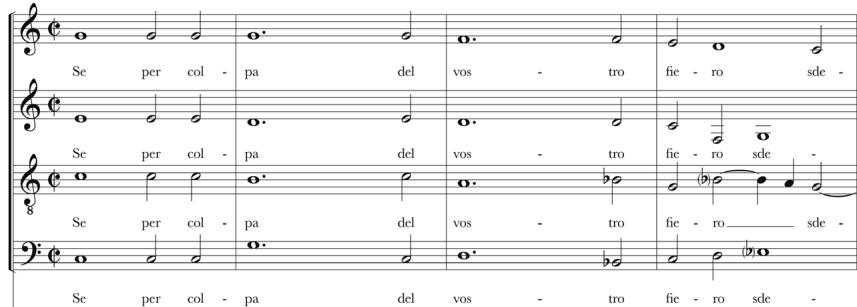
中文讲解
本条为图像占位符,标注位于第 22 页。由于内嵌图像数据被省略,无法判断其具体内容;根据上下文,本页集中出现多幅图示,应与本节讨论的 Arcadelt《Se per colpa》改编实例相关。需要查看原图才能确认其实际谱例、影印件或图示细节。
第6段(P0130)
原文复述
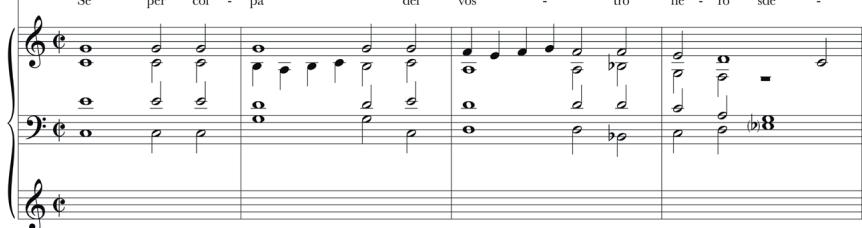
中文讲解
本条为同一第 22 页上的图像占位符。其与 P0129、P0131、P0132、P0133 一同构成该页的连续图示序列,作者在 P0132 给出可识别的图注(Ex. 9a),因此可以推断本序列整体服务于 Ex. 9a 的呈现。具体各幅图承担的功能(原文谱、改编谱、对比标记等)需查看原图方可判断。
第7段(P0131)
原文复述
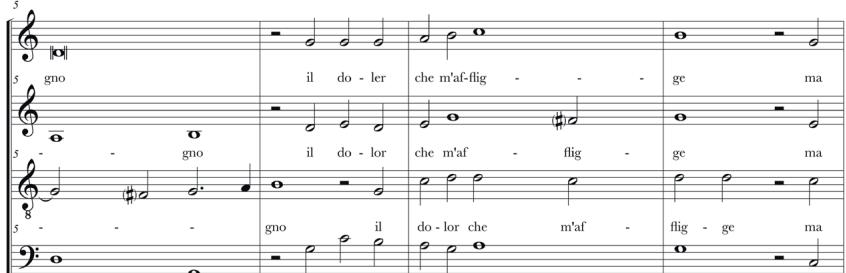
中文讲解
本条为第 22 页图像序列中的又一处占位符,与 P0129、P0130 同样为 Ex. 9a 的呈现服务。原文未单独给出图注,因此本图具体功能(是否为 Ex. 9a 内部的某一栏或某一对比层)须参照原图。
第8段(P0132)
原文复述
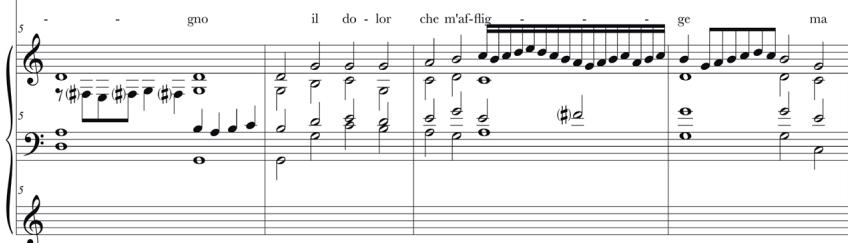
中文讲解
本条是 Ex. 9a 的图注,也是该页图示序列中唯一带可识读说明文字的占位符。需特别留意图注内容本身:上方谱表呈现的是阿卡德尔特《Se per colpa》的原谱(声乐原貌),下方谱表呈现的则是 Castell’Arquato 抄本中该匿名改编的转写(transcription),抄本定位为 fasc. 5、fol. 22v,节选范围是小节 1–8。
这一图注的功能在于:把’原文本’与’改编文本’垂直并置,使读者得以在视觉上同时把握’原声部进行’与’键盘改编后声部进行’之间的差异——这正是下一段(P0134)作者所要逐项分析的内容:谱干方向、织体变化、加花装饰等。因此 Ex. 9a 是 P0134 论证的直接证据基础。
补充说明
图注中’transcription’指对原 intavolatura 的现代记谱转写;Castell’Arquato 抄本以 fascicolo(分册)和 folio(叶)编号,fasc. 5、fol. 22v 即第 5 分册第 22 叶背面,是本节讨论的改编所在的具体物理位置。
第9段(P0133)
原文复述

中文讲解
本条为第 22 页图像序列中的占位符,紧接 Ex. 9a 图注之后出现,可能延续 Ex. 9a 的版面布局(同一例子的多栏排版或局部放大),也可能属于相邻材料。原文未另行说明,需参照原图确认。
第10段(P0134)
原文复述
The normal intavolatura rule of stem directions is not followed at all; instead stems are used to clarify the contour of the original voices. Perhaps somewhat ironically, this lends further credence to the existence of ’tablature voices’: that is, the notion that series of notes with the same stem direction in a tablature can be interpreted as constituting a new tablature part. However, at the same time this intabulation clearly seems meant to work as an idiomatic keyboard adaption: note the adaption of the polyphony into a more squarely chordal texture with the restriking of chords (m. 2 and 3, Ex. 9a), the addition of parts (m. 6, Ex. 9a), and even the extension and restriking of chords into rests (m. 8, Ex. 9a). Stereotypical keyboard ornamental figures are added, and the polyphony is briefly rearranged to accommodate them. This rearrangement of the original voice leading is also used to facilitate a more generally idiomatic texture, one that is more normally seen in intabulations.
中文讲解
本段是本节对 Ex. 9a 展开分析的核心段落,由两组相反方向的观察构成张力。
第一组观察指向’偏离 intavolatura 规则’:intavolatura 原本对谱干(stem)方向有规范,但本改编完全未遵循这些规范;谱干在此被改用来’clarify the contour of the original voices’——即服务于显示原声乐各声部的轮廓。这一做法具有方法论意义:作者用 perhaps somewhat ironically(或许颇具反讽意味)这一措辞指出,它反过来佐证了’tablature voices’(谱干声部)概念的存在:即同向谱干连成的音符系列,可被理解为’一个新的 tablature 声部’。换言之,这件原本看起来不循规的改编,反而为理解 intavolatura 中谱干所暗含的声部分层提供了新的依据。
第二组观察则用 however 转折,指出同一改编显然’也是’为键盘演奏服务的 idiomatic(习语化/合奏化)改编。作者用 note(注意)一词引出三项具体证据,每项都精确指向 Ex. 9a 中的具体小节:(1) m. 2 和 m. 3 处将复调织体改造为更方整的和弦式织体并重新击键(restriking of chords);(2) m. 6 处添加声部(addition of parts);(3) m. 8 处将和弦延展并击键延伸至休止处(extension and restriking of chords into rests)。这些都是十六世纪意大利键盘音乐中常见的’填充和延展’做法。
接下来作者进一步指出:键盘化的装饰性音型(stereotypical keyboard ornamental figures)被加入,为容纳这些装饰,原来的声部进行被短暂重排(briefly rearranged)。这种重排同时服务于更习语化的织体(idiomatic texture),即在 intabulations 中更为常见的那种织体。
本段的关键不在于罗列现象,而在于同时承认’这是一件 partitura 倾向的草稿’与’这又是一件合键盘习语化目的的改编’——这正是 P0126 中提出的核心双线结构的具体落实。
补充说明
本段对 Ex. 9a 的分析使用了三个精确定位(m. 2、m. 3、m. 6、m. 8),与 P0132 图注中标示的 mm. 1–8 节选范围完全一致,因此这些观察可以与图示对应阅读。
第11段(P0135)
原文复述
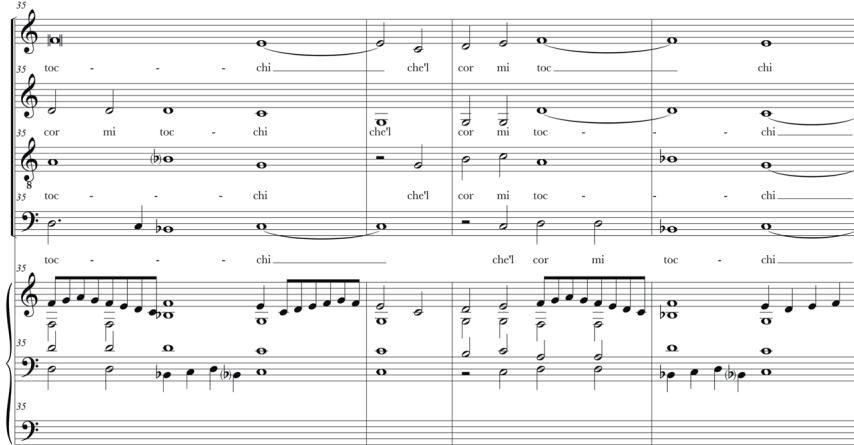
中文讲解
本条为第 23 页的图像占位符。结合上下文,本页将引入 Ex. 9b(图注见 P0137 中所引 m. 37 等小节),其内容与本节后半部分关于声部互换(parti di mezzo swap places)的讨论相对应。具体谱例形态须查看原图。
第12段(P0136)
原文复述

中文讲解
本条为第 23 页上的另一处图像占位符,与 P0135 共同构成 Ex. 9b 的呈现布局。原文未提供单独的图注,但正文 P0137 引用了 Ex. 9b 的 m. 35–38 区域,可与本图序列对应。
第13段(P0137)
原文复述
In addition, there are fascinating instances in which the parti di mezzo briefly swap places. These usually only last for a few beats, and seem to be a continuation of the ‘keyboardistic’ logic in the transcription (and a kind of preparation for the creation of proper tablature parts?), and/or to facilitate the inclusion of diminutions in another part. For example, in m. 37 (Ex. 9b) the tenor part of the vocal original – which is usually placed in the right hand in the intabulation – briefly migrates to the left hand. Is this to facilitate the upcoming passaggio in m. 37 in the soprano? It also makes sense to allow the ’tablature alto (that is, the implied lower voice in the right-hand staff) to continue its logical journey that begins on the g in m. 35, instead of swapping back up to the b as the polyphonic tenor continues in m. 37. In fact, it could be argued that the logical continuation of the c1 in the intabulation from mm. 35 to 36 kicks off the whole swapping of parts in the first place; note that this also includes a brief rearrangement of the polyphony in m. 36, with the addition of the c1 in the left hand of the tablature and the absorption of the tenor rest and g into the long g of the polyphonic alto part. This sort of rearrangement (or recomposition)
中文讲解
本段引入本节的第二个分析层次:声部互换(parti di mezzo briefly swap places)。作者用 fascinating 一词标识这种局部现象在整篇论证中的趣味性。
首先给出总体描述:这些互换通常只持续几个节拍,并被作者推测为两种动机的产物——其一,是转写中’键盘化逻辑’的延续,‘甚至可能是为日后生成规范 tablature 声部所做的准备’(提问式措辞);其二,是为了便于在另一声部中加入 diminutions(细分/即兴式加花)。作者用 and/or 把两种动机并置,表示它们可能同时起作用,也可能因情形不同而分别起作用。
接着以 Ex. 9b 的 m. 37 为具体例证。原声乐中的 tenor 声部在该改编中通常置于右手,但在此处短暂迁移到左手。作者以问句形式给出一种可能解释:这样安排是否是为了让 m. 37 即将出现的 soprano 中的 passaggio(快速跑句/过门)腾出右手空间?
然后从另一个角度解释:让右手谱表中所隐含的 ’tablature alto’(即右手谱表里的’低位声部’)能够延续其在 m. 35 始于 g 的逻辑进行,而不必在 m. 37 随多声部 tenor 一起回跳到 b。
最后一段进一步把因果链往前推:作者用 it could be argued 给出更激进的推断——c1 这一音在 m. 35–36 的’intavolatura 内部逻辑延续’才是整组声部互换的真正起点;这一延续同时带来 m. 36 处的一次短暂声部重排——左手谱表中加入 c1,而原 tenor 的休止与 g 被’吸收’进多声部 alto 声部长音 g。
段末未写完,由 P0138 续接。这种’声部重排(rearrangement)或重写(recomposition)‘的论题由此承接下来。
本段的教学重点在于:作者不是把声部互换描述为简单的错误或疏忽,而是把它解释为同时受多种内在逻辑驱动(键盘化、tablature 声部逻辑、加花需要)的有意识选择。
补充说明
parti di mezzo(中部声部)通常指多声部音乐中介于 soprano 与 bass 之间的中间声部(alto、tenor 等);passaggio 在此语境中指键盘音乐中常见的快速音阶式或分解式跑动音型。
第14段(P0138)
原文复述
is commonly observed in intabulations. It is also interesting that the chords formed in places such as the last beats of mm. 35 and 38 are the typical ‘filled octave’ chords – an octave with a fifth in the left hand – so commonly seen in cinquecento keyboard style. The brief instance of recomposition in m. 36 – in which the filled-octave chord in m. 35 is extended in favour of Arcadelt’s original polyphony – highlights the point.
中文讲解
本段承接 P0137 末句未完成的 ‘This sort of rearrangement (or recomposition)’,分两层加以收束。
第一层(‘is commonly observed in intabulations’)是把上一段所描述的具体现象放到更宏观的体裁背景中:声部重排或重写在 intabulations 这一体裁中是普遍存在的现象,而非本例所独有。这一句承担着’把个案置入通则’的修辞功能:作者借此把读者注意力从 Ex. 9b 的具体小节上稍微拉远,提示此种’重排’在当时的键盘改编实践中是常规操作。
第二层回到本例的两个具体位置(m. 35 和 m. 38 的末拍),指出这些位置形成的和弦是典型的’filled octave’和弦——左手’八度加五度’的填充八度结构。这是 cinquecento(十六世纪)意大利键盘风格中极为常见的和声-织体惯例。
第三层把这两点合在一起论证:m. 36 短暂的重写——其中 m. 35 的填充八度和弦被延伸以迁就阿卡德尔特原有的复调——正凸显了本节核心张力:键盘化的习语(‘填充八度’这种和声-织体惯例)会与对原声乐复调的忠实之间发生冲突,而本例的’重写’恰恰是在二者之间所作的取舍。‘highlights the point’一语提示这一小段是对前述观察的总结与强调。
补充说明
cinquecento 在此特指十六世纪的意大利文化与艺术时期;‘filled octave’(八度加五度的填充和弦)是该时期键盘音乐左手伴奏音型的典型形态之一。
第15段(P0139)
原文复述
In general, this intabulation appears to be a hybrid intavolatura-partitura. I wonder if it might be an example of a ‘prep score’ for what might have eventually become a more run-of-the-mill type of intabulation, or in other words a version of the score that Diruta advises beginners to make from part-books before intabulating.27 The use of three staves might facilitate the process overall. If so, this might once again indicate an awareness of intavolatura as a background force: I think we could even ask ourselves if intabulators were even consciously aware of the system they may have been attempting to ‘hack’ when breaking the rules of intabulation.
中文讲解
本段是本节的小结性段落,把前面所有具体观察综合为一个总判断。
作者首先给该改编贴上正式标签:a hybrid intavolatura-partitura(一份混合体:兼具 intavolatura 与 partitura 特征的改编)。这与 P0126 提出的’双线’判断(P0127、P0134 进一步落实)形成首尾呼应。
接着用 I wonder if(我不禁想问)这一表达推出一个具有推测性的假说:这件改编可能是一份’prep score’(预备谱/前期谱),即在真正写成常规类型 intabulation 之前所制作的预备性乐谱。作者随即把这一假说与 Diruta 的建议建立直接联系:Diruta 建议初学者在正式 intabulate 之前先从分谱(part-books)制作一份这样的预备谱。第 27 号脚注(P0142)正是对 Diruta 出处的指引。
作者进一步推测:使用三行谱可能正是在整体上便利了这种预备过程(‘might facilitate the process overall’)。
最后,作者以一个更宏观的方法论提问收束:如果是这种情况,那么它再次表明改编者对 intavolatura 作为一种’背景力量’(background force)的意识;甚至可以问:那些在打破 intavolatura 规则时,intabulator 自己是否清醒地意识到他们所试图’hack’(此处借用当代计算机用语’破解/绕开’的修辞)的那个系统本身?‘hack’一词以引号出现,提示这是作者刻意的修辞借用,把’打破规则的自觉性’与’对规则本身的潜在意识’之间的张力戏剧化。
本段是把整节的所有实证观察升华到对’改编者心智状态’的反思,与 P0126 开篇’intavolatura 的内在运作——以及改编者心智的内在运作’的设问首尾呼应。
补充说明
Diruta 是十六世纪意大利管风琴家与教育家,他的《Il Transilvano》是当时键盘演奏与改编教学的重要文献;‘prep score’在此为作者用来描述’正式改编前的工作底稿’的术语。
第16段(P0140)
原文复述
***
中文讲解
本行为版面分隔符(由三个星号组成),与 P0125 相对应,标志着本节正文结束、下一篇结论性内容开始。该符号本身不携带论述信息。
第17段(P0141)
原文复述
As recent scholarship has demonstrated, intabulations and tablature notations are long overdue for a more thorough examination. In the present case, even a brief examination like the one conducted in this article shows that they can reveal quite a lot about the musical thought processes and conceptions of keyboardists in the Renaissance. These would include not only abstract musical conceptions and musical practices, but also the way in which these conceptions and practices were translated into a functioning notational system. Therefore, on a broader level, one could argue that a thorough examination of intabulations is absolutely essential to any study of improvisation and composition in Renaissance culture.
中文讲解
本段是文章末尾的总结性段落,承担把个案分析上升为学科论旨的功能。
第一句以’近期研究已经表明’(As recent scholarship has demonstrated)起头,给出一个学科语境判断:intabulations 与 tablature notations 早就应当得到更充分的研究(long overdue for a more thorough examination)。这一表述把作者自己的工作与’近期研究’的方向加以衔接。
第二句把本个案与该学科判断直接挂钩:即使是像本文这样’简短的’考察(a brief examination like the one conducted in this article),也已经揭示出这些记谱材料能够告诉我们相当多关于文艺复兴时期键盘家’音乐思维过程与观念’的信息。注意作者用 the musical thought processes and conceptions 这种具有心智主义色彩的措辞——这与 P0126 开篇的’inner working of the mind of the intabulator’以及 P0139 的’意识的自觉性’形成纵贯全篇的呼应。
第三句具体列出可被揭示的内容范围:不仅是抽象的音乐观念和音乐实践,还包括’这些观念与实践如何被转化为一整套运作良好的记谱体系’。也就是说,研究 intabulations 的价值不仅在于音乐内容本身,还在于记号与心智之间的转化关系。
最后一句以 therefore 引出更宏观的学科命题:可以论证,对 intabulations 的彻底考察对于任何关于文艺复兴文化中即兴与作曲的研究而言都是绝对必要的(absolutely essential)。‘absolutely essential’一语把作者个案研究的意义推向该领域的核心地位。
本段在整篇文章的修辞结构中起到’由具体到一般’的收束作用,与本文开头对’改编过程作为研究对象’的设问构成闭合回路。
第18段(P0142)
原文复述
27 Diruta, Seconda parte del Transilvano, lib. 1, 1–2.
中文讲解
本条为脚注 27,对应 P0139 中提到 Diruta 建议初学者从分谱制作预备谱的具体出处。所引为 Diruta 的《Transilvano》第二部分(Seconda parte del Transilvano),第一册(lib. 1)第 1–2 页。这一简短脚注的功能是为 P0139 中的假说(这件改编可能是 Diruta 所描述的那种预备谱)提供文本来源。
脚注 / 边栏 / 图表 / 附加信息(如有)
本节所含非正文附加材料:
- 脚注 25(P0128):为正文 P0126 提及的’法国联系可能性’提供 Heartz《Pierre Attaingnant》一书的引证,并列出 Andrea Antico 1517 年 Frottole intabulate、Cavazzoni 1523 年 Recerchari、Moderne 的 Musicque de Joye、Musica Nova 等多条出版史线索,用以支撑早期意大利键盘印刷与法国之间可能存在的网络。
- 脚注 26(P0128):指出 Castell’Arquato 抄本不易获取、且无数字扫描件这一研究限制,提示读者对本节个案的实物查阅难度。
- 图 Ex. 9a(图注在 P0132):上栏呈现 Arcadelt《Se per colpa》原谱,下栏呈现 Castell’Arquato 抄本(fasc. 5, fol. 22v)mm. 1–8 的转写,是 P0134 各项具体分析(小节 2、3、6、8 处的和弦重击、加声部、和弦延展)的直接依据。
- 图 Ex. 9b(图示占位在 P0135、P0136,图注未单列但正文引用 mm. 35–38):对应 P0137、P0138 关于声部互换、c1 延续逻辑、填充八度与重写的讨论。
- 脚注 27(P0142):指引 P0139 中关于 Diruta 建议初学者从分谱制作预备谱之说的原始出处,即 Diruta《Seconda parte del Transilvano》lib. 1, 1–2。
💡 本节核心要点
- 本节以 Castell’Arquato 抄本中阿卡德尔特《Se per colpa》的匿名键盘改编为核心个案,论证它可能是一件兼具 intavolatura 与 partitura 双重特征的’改编草稿’,为研究改编过程本身提供难得的第一手证据。
- 该改编在外观上以三行谱出现,异于常规 intavolatura 的两行谱;这一形式特征在同一抄本传统中并非孤例(Veggio 归名作品、某位抄写员的习惯),并被作者初步解读为’试图写一份完整 partitura’的迹象。
- Ex. 9a 揭示出一组反向观察:谱干方向完全脱离 intavolatura 规范而服务原声部轮廓,这一’违规’反而佐证了’tablature voices’(谱干声部)概念的存在;同时该改编又明显是合键盘习语化的——和弦重击、加声部、和弦延展、装饰音型以及原声部进行的短暂重排。
- Ex. 9b 进一步展示中部声部(parti di mezzo)的短暂互换现象:m. 35–38 区间内,tenor 短暂迁移至左手、c1 延续与 alto 吸收 tenor 的长音 g、m. 35 与 m. 38 的’填充八度’和弦与 m. 36 的重写构成键盘习语与原复调之间的取舍。
- 作者把上述观察综合为’混合体’判断,并推测它可能是一份’prep score’——即 Diruta 在《Seconda parte del Transilvano》中所建议的那种、在正式 intabulate 之前由分谱先行制作的预备谱;三行谱形式可能正是为便利这种预备过程。
- 本节收束于一个方法论问题:intabulator 在打破 intavolatura 规则时,是否自觉意识到他们所’绕开’的那一系统本身?这一问句把个案提升为对’记谱—心智’转化关系的反思,并最终在 P0141 上升为’详尽研究 intabulations 对理解文艺复兴即兴与作曲不可或缺’的学科命题。
🔑 关键术语
- intavolatura:十六世纪意大利为键盘乐器(以及琉特等拨弦乐器)发展出的一套符号/数字记谱体系;在本节中它常与 partitura 形成对照:前者遵循自身谱干、谱行等规则,后者倾向按声部完整呈现多声部关系。
- partitura:在十六世纪意大利语境中多指按声部分列的乐谱样式,便于在视觉上同时把握所有声部;本节用它来描述那种把所有声部都明确写出的’分谱/总谱式’记谱方式。
- intabulation / intabulation process:把现成作品(特别是声乐作品)改写为键盘或其他乐器 intavolatura 的过程;本节把’考察这一过程本身’视为研究 intavolatura 内在机制乃至改编者心智的关键途径。
- tablatue voices / tablature alto:本节作者提出的概念性术语,指在 intavolatura 中由同向谱干串成的、隐含的’新声部层’;本节用以解释 Ex. 9a 中’不循谱干规则’的做法反而支持’谱干可被理解为声部分层’这一论断。
- parti di mezzo:指多声部音乐中介于 soprano 与 bass 之间的中部声部(alto、tenor 等);本节中讨论的’互换’即指这些中部声部在 Ex. 9b 局部短暂交换位置的现象。
- filled octave chord:由’八度加五度’构成的和弦-织体形态,是十六世纪(cinquecento)意大利键盘音乐左手中常见的伴奏音型;本节把它作为 Ex. 9b m. 35、m. 38 处键盘习语化倾向的标志。
- passaggio:键盘音乐中常见的快速音阶式或分解式跑动音型;本节在解释 m. 37 tenor 迁往左手时提出一种可能:此举是为了让右手腾出空间容纳 soprano 中的 passaggio。
- prep score:作者在本节中提出的推测性术语,指改编者在正式完成常规 intavolatura 之前所制作的工作底稿;与 Diruta《Transilvano》中建议的’先从分谱制作预备谱’的步骤相对应。
- Castell’Arquato manuscripts:本节所讨论的匿名 Arcadelt 改编所在的抄本集;脚注 26 指出该抄本不易获取、且无数字扫描件,故本节论证主要依赖于对局部片段的转写与分析。
sec0013 [描述性拆分] ## Bibliography
第1段(P0143)
原文复述
Bibliography
中文讲解
这是本书(或本章)末尾参考文献部分的标题,标示着从此处起开始按字母顺序列出正文中被引用的全部文献。整个小节即为“书目/参考文献”,其功能是为读者提供进一步阅读与核对来源的线索,本身不再展开论证。
第2段(P0144)
原文复述
Andrea Antico, Frottole intabulate per sonare organi, libro primo (Rome: Andrea Antico, 1517), facsimile ed. (Bologna, 1970)
中文讲解
这是 1517 年由罗马印刷商 Andrea Antico 在罗马出版的《为管风琴演奏而改编的意大利弗罗托拉歌曲集·第一卷》(Frottole intabulate per sonare organi, libro primo)的原版出版信息;其后注明 1970 年在博洛尼亚有影印本(facsimile ed.)再版。从条目形式可知,这是一份带影印再版的早期印刷原典文献,在涉及键盘改编(intabulation)研究时常被援引。
补充说明
条目中“intabulate”在意大利语中即“为键盘/琉特而改编”的意思;“organi”虽指管风琴,但当时泛指键盘乐器;“libro primo”表示这是作者出版的第一册。
第3段(P0145)
原文复述
Pierre Attaingnant, Vingt et cinque chansons musicales reduictes en la tablature (Paris: Attaingnant, 1530), <https://mdz-nbn-resolving.de/ details:bsb00082256>
中文讲解
这是法国宫廷印刷商 Pierre Attaingnant 于 1530 年在巴黎出版的《二十五首被改写为表谱的音乐尚松》(Vingt et cinque chansons musicales reduictes en la tablature)原版信息,并附有慕尼黑数字化图书馆(MDZ)的可访问链接。该书是法国早期键盘/琉特改编尚松的代表性印刷品之一。
补充说明
“tablature”在法语语境中即“表谱/记谱法”;条目标识号 bsb00082256 属于巴伐利亚州立图书馆的数字化编号。
第4段(P0146)
原文复述
Pierre Attaingnant, Transcriptions of Chansons for Keyboard, ed. Albert Seay, CMM 20 (n.p.: AIM, 1961), <https://www.digitale-sammlungen.de/de/ details/bsb00082256>
中文讲解
这是 Attaingnant 同一系列作品的现代编辑本,由 Albert Seay 编辑,收入《可测量音乐总集》(Corpus Mensurabilis Musicae)第 20 卷,1961 年由美国音乐研究院(AIM)出版,并附有巴伐利亚数字化图书馆的数字资源链接。该条目的功能是为研究者提供一个现代可读的版本,区别于上一条的 1530 年原版。
补充说明
“n.p.”表示出版地不详;“CMM”是音乐学界常用的早期音乐校勘本系列;两条 Attaingnant 条目共享同一数字编号,提示其为同一原典的不同载体。
第5段(P0147)
原文复述
Paul Anthony Luke Boncella, ‘The Classical Venetian Organ Toccata (1591–1604): An Ecclesiastical Genre Shaped by Printing Technologies and Editorial Policies’, PhD thesis, Rutgers University, 1991
中文讲解
这是 Paul Anthony Luke Boncella 于 1991 年在新泽西州立大学(Rutgers University)提交的博士论文,题为《古典威尼斯管风琴托卡塔(1591–1604):一个由印刷技术与编辑策略塑造的教会体裁》。从标题可见,该研究将威尼斯管风琴托卡塔视为受印刷与出版影响而形成的体裁。
补充说明
“PhD thesis”表明这是一篇未出版或有限印行的学位论文;“Ecclesiastical Genre”提示作者将其定性为与教会礼拜相关的音乐体裁。
第6段(P0148)
原文复述
David Bryant, ‘Gabrieli, Giovanni’, in: Grove Music Online, <https://doi. org/10.1093/gmo/9781561592630.article.40693>
中文讲解
这是 David Bryant 为《格罗夫音乐在线》(Grove Music Online)撰写的“乔瓦尼·加布里埃利”词条,并附有 DOI 链接。它为正文涉及威尼斯圣马可教堂作曲家 Giovanni Gabrieli 的讨论提供权威性的传记与作品背景参考。
补充说明
条目中 DOI 段被原文换行断开(10.1093/gmo/…article.40693),是《牛津音乐在线》为其子条目分配的永久标识符。
第7段(P0149)
原文复述
Hans Buchner, Sämtliche Orgelwerke, ed. Jost Harro Schmidt, 2 vols., EdM 54/55 (Frankfurt am Main, 1974)
中文讲解
这是德国管风琴家 Hans Buchner 的《管风琴作品全集》(Sämtliche Orgelwerke),由 Jost Harro Schmidt 编辑,共两卷,列入《德意志音乐遗产》(Erbe Deutscher Musik)第 54/55 卷,1974 年于美因河畔法兰克福出版。它为研究中欧晚期文艺复兴管风琴实践提供了经过校勘的全集。
补充说明
“EdM”是德语学界历史最悠久的早期音乐校勘系列之一;“2 vols.”表示该全集分装为两册。
第8段(P0150)
原文复述
Augusta Campagne, Simone Verovio: Music Printing, Intabulations and Basso Continuo in Rome around 1600, Wiener Veröffentlichungen zur Musikgeschichte 13 (Vienna, 2018), <https://www.vr-elibrary.de/doi/ book/10.7767/9783205207184>
中文讲解
这是 Augusta Campagne 2018 年于维也纳出版的专著,研究 1600 年前后罗马的印刷商 Simone Verovio、印刷业、键盘改编与通奏低音实践,属于《维也纳音乐史出版物》第 13 卷,并附有出版方的电子书链接。从书名可见,作者将 Verovio 的印刷活动与键盘改编及通奏低音三种实践相互关联考察。
补充说明
“Basso Continuo”指 1600 年前后兴起的通奏低音/数字低音实践;“Wiener Veröffentlichungen zur Musikgeschichte”为维也纳大学音乐学系的专著系列。
第9段(P0151)
原文复述
Augusta Campagne and Elam Rotem, Keyboard Accompaniment in Italy around 1600: Intabulations, Scores and Basso Continuo (Basel: Schola Cantorum Basiliensis, 2022), <https://forschung.schola-cantorum-basiliensis.ch/dam/jcr:4c34cff1-be77-4a28-a71b-83a3fced72ae/Keyboard Accompaniment Italy 1600.pdf>
中文讲解
这是 Augusta Campagne 与 Elam Rotem 合著、2022 年于巴塞尔由巴塞尔合唱学校(Schola Cantorum Basiliensis)出版的《1600 年前后的意大利键盘伴奏:改编、乐谱与通奏低音》,并附有该机构的开放获取 PDF 链接。该书专注于键盘伴奏的实际操作层面,可视为上条专著的姊妹篇。
补充说明
作者机构的全名 Schola Cantorum Basiliensis 是瑞士巴塞尔历史悠久的早期音乐研究/表演机构;URL 路径中的 jcr 与 hash 段为该机构数字资源库的内部标识。
第10段(P0152)
原文复述
Marco Antonio Cavazzoni, Recerchari, motetti, canzoni […] libro primo (Venice: Bernardo Vercelensis, 1523)
中文讲解
这是 Marco Antonio Cavazzoni 于 1523 年由威尼斯印刷商 Bernardo Vercelensis 出版的《里切卡尔、经文歌与坎佐纳……第一卷》。这是意大利早期键盘印刷曲集中最重要的一份,标志着里切卡尔作为独立键盘体裁的成型。
补充说明
“Recerchari”为 ricercare(里切卡尔)的早期拼写;“[…]”表示原书标题在此处被作者略去若干中间词;该条目未注明影印本或现代版。
第11段(P0153)
原文复述
Leon Chisholm, ‘Keyboard Playing and the Mechanization of Polyphony, Circa 1600’, PhD thesis, University of California, Berkeley, 2015, https://escholarship.org/uc/item/950881g4
中文讲解
这是 Leon Chisholm 2015 年在加州大学伯克利分校完成的博士论文,题为《约 1600 年键盘演奏与复调机械化》,并附有 eScholarship 平台的开放访问链接。从标题可推断作者关注自动化(机械化)因素如何介入 1600 年前后键盘复调的制作与演奏。
补充说明
“Mechanization of Polyphony”提示作者将复调音乐的制作视为一种可机械化的过程(如通过印刷/记谱/自动琴等)。
第12段(P0154)
原文复述
Giuseppe Clericetti, ‘Criteri per un’edizione moderna della musica per strumenti a tastiera di Andrea Gabrieli’, in: Andrea Gabrieli e il suo tempo, ed. Francesco Degrada, Studi di musica veneta 11 (Florence, 1987), 353–86
中文讲解
这是 Giuseppe Clericetti 用意大利语撰写的论文《安德烈亚·加布里埃利键盘作品现代编辑标准》,收入 Francesco Degrada 编辑的《安德烈亚·加布里埃利及其时代》(Andrea Gabrieli e il suo tempo)一书,属《威尼斯音乐研究》第 11 卷,1987 年于佛罗伦萨出版,页码 353–86。条目显示了 A. Gabrieli 键盘作品现代校勘本的判据讨论。
补充说明
“Criteri”意为“标准/判据”;“strumenti a tastiera”即“键盘乐器”;“ed.”在书目中既表示 edited by 也表示 editor 的省略形式,本处为后者。
第13段(P0155)
原文复述
Victor Coelho and Keith Polk, Instrumentalists and Renaissance Culture, 1420– 1600: Players of Function and Fantasy (Cambridge, 2016)
中文讲解
这是 Victor Coelho 与 Keith Polk 合著、2016 年由剑桥出版的《乐器演奏家与文艺复兴文化,1420–1600:实用与想象之演奏者》。这是一部覆盖两个世纪的器乐演奏文化史著作,为正文有关文艺复兴乐器演奏实践的论述提供宏观背景。
补充说明
“Function and Fantasy”提示作者兼顾功能性(仪式、职业演奏)与想象性(艺术创作、文学想象)两种视角。
第14段(P0156)
原文复述
Frank D’Accone, ‘The ‘Intavolatura di M. Alamanno Aiolli’: A Newly Discovered Source of Florentine Renaissance Keyboard Music’, in: MD 20 (1966), 151–74, https://doi.org/10.1093/gmo/9781561592630.article.16159
中文讲解
这是 Frank D’Accone 1966 年发表于《音乐文献学》(MD)第 20 卷、页 151–74 的论文,题为《“Alamanno Aiolli 的改编曲集”:一份新发现的佛罗伦萨文艺复兴键盘音乐文献》。文中报告了一份新发现的佛罗伦萨键盘手稿。
补充说明
“MD”为 Musica Disciplina 的缩写,是国际音乐文献学会的旗舰期刊;该条目与下一条共享同一 DOI 链接,可能为出版社层面条目复用的笔误。
第15段(P0157)
原文复述
Frank D’Accone, ‘Layolle, Francesco de’, in: Grove Music Online, <https://doi. org/10.1093/gmo/9781561592630.article.16159>
中文讲解
这是 Frank D’Accone 为《格罗夫音乐在线》撰写的“弗朗切斯科·德·拉约勒”(Layolle, Francesco de)词条,并附 DOI 链接。该条目与上条共用同一 DOI 是原书目排版中保留的事实。
补充说明
“Layolle”是 16 世纪意大利佛罗伦萨作曲家与歌唱家 Francesco de Layolle,其名在英语/意大利语文献中拼写略异;此处需以原文为准,不作猜测。
第16段(P0158)
原文复述
Girolamo Diruta, Seconda parte del Transilvano (Venice: Giacomo Vincenti, 1609), <http://www.bibliotecamusica.it/cmbm/viewschedatwbca.asp?- path=/cmbm/images/ripro/gaspari/_D/D019/>
中文讲解
这是意大利管风琴家 Girolamo Diruta《特兰西瓦诺人》第二部分(Seconda parte del Transilvano)1609 年威尼斯由 Giacomo Vincenti 出版的版本,并附博洛尼亚音乐图书馆(bibliotecamusica.it)的链接。该书是 17 世纪初最重要的键盘演奏法教材之一。
补充说明
“Transilvano”意为“特兰西瓦诺人”,是其假托作者之名;“Seconda parte”表明此为整个《特兰西瓦诺人》著作的第二部分;URL 中“gaspari”指收藏该版的 Gaetano Gaspari 旧藏。
第17段(P0159)
原文复述
Dinko Fabris, ‘Lute Tablature Instructions in Italy: A Survey of the Regole from 1507 to 1759’, in: Performance on Lute, Guitar, and Vihuela: Historical Practice and Modern Interpretation, ed. Victor Anand Coelho (Cambridge, 1997), 16–46; repr. in: Musical Theory in the Renaissance: A Library of Essays on Renaissance Music, ed. Christle Collins Judd (Burlington VT, 2013), 451–82
中文讲解
这是 Dinko Fabris 的论文《意大利琉特表谱指南:对 1507–1759 年间各种 “Regole” 的考察》,初刊于 1997 年剑桥出版的 Victor Anand Coelho 所编《琉特、吉他与维韦拉演奏:历史实践与现代诠释》,页 16–46;2013 年又由 Christle Collins Judd 收入《文艺复兴音乐理论文集》(Musical Theory in the Renaissance: A Library of Essays on Renaissance Music),页 451–82。该条目同时记录了原刊与再版。
补充说明
“Regole”(复数)即意大利琉特/键盘著作中以“规则/法度”为名的演奏教学章节;“repr.”为 reprinted(再版/重印)的缩写。
第18段(P0160)
原文复述
Andrea Gabrieli, Canzoni alla francese et ricercari ariosi, tabulate per sonar sopra istromenti da tasti […] libro quinto (Venice: Angelo Gardano, 1605)
中文讲解
这是 Andrea Gabrieli 1605 年于威尼斯由 Angelo Gardano 出版的《法兰西式坎佐纳与旋律化里切卡尔,为键盘乐器而改编……第五卷》(libro quinto)。它代表了 A. Gabrieli 出版活动中以“第五卷”为序的键盘改编曲集。
补充说明
“Canzoni alla francese”是 16 世纪意大利对法国风格多声部歌曲的统称;“tabulate per sonar sopra istromenti da tasti”即“为键盘乐器改编演奏”;“libro quinto”表示 Gardano 出版系列中的第五册。
第19段(P0161)
原文复述
Angelo Gardano, Musica de diversi autori (Venice: Angelo Gardano, 1577) (RISM 157711), facsimile ed. (Bologna, 1971)
中文讲解
这是 Angelo Gardano 于 1577 年在威尼斯出版的合集《多位作曲家的音乐》(Musica de diversi autori),并在括注中给出 RISM(国际音乐文献总目)编号 157711;其后注明 1971 年博洛尼亚影印再版。这是意大利 16 世纪威尼斯印刷业“多位作曲家合集”传统的典型样本。
补充说明
“RISM 157711”是国际音乐文献总目(RISM)对该印刷品的标准编号;这种以数字编号指代原版是 16 世纪音乐印刷研究中的通行做法。
第20段(P0162)
原文复述
John Griffiths, ‘Turning the Tables: Reassessing Tablature’ (presentation, 2021 Annual Conference of the Musicological Society of Australia, December 9. 2021), <https://www.academia.edu/63608978/Turning_the_tables_ reassessing_tablature>
中文讲解
这是 John Griffiths 于 2021 年 12 月 9 日在澳大利亚音乐学会(Musicological Society of Australia)年度会议上宣读的论文/演讲《翻转表格:重新评估表谱》(Turning the Tables: Reassessing Tablature),并附 academia.edu 的链接。它是一篇未正式刊行的会议报告,但作者将其列入参考文献,表明其在思考表谱概念时具有参考价值。
补充说明
“presentation”表明这是一次会议口头报告而非正式发表论文;URL 中反斜杠与下划线为 academia.edu 平台对论文标题的转义。
第21段(P0163)
原文复述
Massimiliano Guido, ‘Counterpoint in the Fingers: A Practical Approach to Girolamo Diruta’s Breve & Facile Regola di Contrappunto’, in: Philomusica on-line 11, no. 2 (2012), 64–76, <http://riviste.paviauniversitypress.it/index. php/phi/issue/view/117>
中文讲解
这是 Massimiliano Guido 2012 年发表于《Philomusica on-line》第 11 卷第 2 期、页 64–76 的论文《指尖上的对位:通向 Diruta 〈简明对位法〉的实践途径》,并附帕维亚大学出版社期刊网站的链接。该文从实践角度讨论 Diruta 对位规则的教学含义。
补充说明
“Breve & Facile Regola di Contrappunto”是 Diruta 著作《Il Transilvano》中对位法章节的标题;期刊名 Philomusica 由帕维亚大学出版社运营。
第22段(P0164)
原文复述
Daniel Heartz, Pierre Attaingnant: Royal Printer of Music (Berkeley and Los Angeles, 1969)
中文讲解
这是 Daniel Heartz 1969 年于加州大学出版社出版的专著《皮埃尔·阿坦尼昂:音乐的皇家印刷商》(Pierre Attaingnant: Royal Printer of Music),出版地为伯克利与洛杉矶。它是研究 16 世纪法国音乐印刷与 Attaingnant 印刷活动的奠基性英文专著。
补充说明
“Berkeley and Los Angeles”在书目格式中通常对应加州大学出版社(University of California Press)的双总部署名方式。
第23段(P0165)
原文复述
Jacques Moderne, Musicque de Joye, ed. Samuel F. Pogue (Peer: Alamire, 1991)
中文讲解
这是里昂印刷商 Jacques Moderne 的《欢乐之乐》(Musicque de Joye)现代校勘本,由 Samuel F. Pogue 编辑,1991 年由比利时阿尔阿姆(Aimé)・阿尔巴(Alamire)出版社在 Peer 出版。该条目为正文涉及 Moderne 印刷曲集讨论提供现代可读版本。
补充说明
“Alamire”是位于比利时 Peer 的早期音乐专业出版社;旧法语“Musicque de Joye”意为“欢乐之乐”,是 Moderne 著名的合集标题。
第24段(P0166)
原文复述
Craig Monson, ‘Elena Malvezzi’s Keyboard Manuscript: A New Sixteenth-Century Source’, in: EMH 9 (1990), 73–128
中文讲解
这是 Craig Monson 1990 年发表于《早期音乐史》(Early Music History,EMH)第 9 卷、页 73–128 的论文《埃莱娜·马尔韦齐的键盘手稿:一份新的 16 世纪文献》。文中报告了一份新发现的 16 世纪意大利女性音乐家手稿。
补充说明
“EMH”是 Early Music History 的缩写,剑桥大学出版社出版的早期音乐研究专门期刊;“Malvezzi”为博洛尼亚贵族姓氏 Malvezzi(与作曲家 Cristoforo Malvezzi 同期)。
第25段(P0167)
原文复述
Musica Nova: Ricercari, ed. Liuwe Tamminga, Tastature 3 (Colledara, IT, 2001)
中文讲解
这是《Musica Nova:里切卡尔集》(Musica Nova: Ricercari),由管风琴家/学者 Liuwe Tamminga 编辑,收入《键盘》(Tastature)系列第 3 卷,2001 年于意大利科莱达拉(Colledara)出版。该条目指向一份与威尼斯圣马可印刷传统相关的里切卡尔现代校勘本。
补充说明
“Tastature”是意大利一种以键盘/键盘音乐为选题的校勘系列;“Colledara, IT”按出版国惯例写作城市与国家代码。
第26段(P0168)
原文复述
Ian Pritchard, ‘Keyboard Thinking: Intersections of Notation, Composition, Improvisation, and Intabulation in Sixteenth-Century Italy’, PhD thesis, University of Southern California, Los Angeles, 2018
中文讲解
这是 Ian Pritchard 2018 年在南加州大学(University of Southern California, Los Angeles)完成的博士论文,题为《键盘思维:16 世纪意大利的记谱、作曲、即兴与改编之交汇》。从标题可看出作者将键盘音乐视为记谱、作曲、即兴与改编四种实践的交汇点。
补充说明
本条目与正文章节主题(intabulation/tablature 概念史)高度相关,因此单独列入;学位论文通常通过 ProQuest 等数据库检索,不附公开 URL。
第27段(P0169)
原文复述
Cipriano de Rore, Tutti i madrigali […] spartiti et accomodati per sonar d’ogni sorte d’Istrumento perfetto (Venice: Angelo Gardano, 1577)
中文讲解
这是弗兰德作曲家 Cipriano de Rore《所有牧歌……被分配并改编为可用各种完美乐器演奏》(Tutti i madrigali […] spartiti et accomodati per sonar d’ogni sorte d’Istrumento perfetto),1577 年由 Angelo Gardano 于威尼斯出版。它代表了 16 世纪牧歌被改编为器乐合奏(所谓 “perfetto” 乐器)的关键出版物。
补充说明
“Istrumento perfetto”指被视作可演奏完整对位的完美乐器(如小提琴族与管乐);“spartiti et accomodati”意为“被分配并编排(为器乐改编)”。
第28段(P0170)
原文复述
Alexander Silbiger, ‘Is the Italian Keyboard “Intavolatura” a Tablature?’, in: Recercare 3 (1991), 81–103
中文讲解
这是 Alexander Silbiger 1991 年发表于意大利期刊《Recercare》第 3 卷、页 81–103 的论文《意大利键盘“Intavolatura”是表谱吗?》。从标题可知,该文直接对正文论题中的核心概念(intavolatura 与 tablature 的关系)提出辨析。
补充说明
“Recercare”是意大利 Pise 大学出版社出版的早期音乐研究期刊,刊名取自 ricercare 这一体裁。
第29段(P0171)
原文复述
H. Colin Slim, ‘Some Puzzling Intabulations of Vocal Music for Keyboard, ca. 1600, at Castell’Arquato’, in: Five Centuries of Choral Music: Essays in Honor of Howard Swan, ed. Gordon Paine (Stuyvesant, NY, 1988), 127–52
中文讲解
这是 H. Colin Slim 1988 年发表于 Gordon Paine 所编纪念文集《五个世纪以来的合唱音乐:致敬 Howard Swan》(纽约 Stuyvesant 出版)中的论文《1600 年前后在卡斯泰拉尔夸托发现的若干令人困惑的声乐键盘改编》,页 127–52。文中讨论卡斯泰拉尔夸托(Castell’Arquato)档案中所存若干未解的键盘改编实例。
补充说明
“ca. 1600”即 circa 1600(“约 1600 年”),是历史日期的常用省略写法;“Stuyvesant, NY”是位于纽约州 Stuyvesant 镇的 Pendragon Press 等出版地。
第30段(P0172)
原文复述
Luigi Ferdinando Tagliavini, ‘The Art of “Not Leaving the Instrument Empty”: Comments on Early Italian Harpsichord Playing’, in: EM 11 (1983), 299–308
中文讲解
这是 Luigi Ferdinando Tagliavini 1983 年发表于《早期音乐》(Early Music,EM)第 11 卷、页 299–308 的论文《“不让乐器闲着”的艺术:早期意大利大键琴演奏评论》。从标题可看出,作者围绕“不可让乐器闲置”的理念讨论意大利早期大键琴演奏实践。
补充说明
“EM”是 Early Music 期刊的缩写,牛津大学出版社出版;“Not Leaving the Instrument Empty”在原文中为带引号的短语,应理解为作者着重讨论的演奏准则/概念名。
脚注 / 边栏 / 图表 / 附加信息(如有)
本小节本身即为参考文献列表,不含脚注、图、表或边栏等附加材料。所有条目以作者字母顺序排列(P0162 Griffiths 与 P0163 Guido 之间因首字母大小写与转写规则维持原序),混合使用英文、意大利语及拉丁语作品名,并保留原始出版地、出版者与年份,包括若干带永久 DOI 或数字化资源链接的现代编辑本/影印本/会议报告。
💡 本节核心要点
- 本小节是一部围绕意大利 16 世纪键盘改编(intabulation/tablature)研究的参考文献集合,并非论证段落,因此逐条目的功能是供读者回溯原典与现代研究。
- 所列材料按性质可分为五类:早期印刷原典(如 Antico 1517、Cavazzoni 1523、A. Gabrieli 1605、Rore 1577)、现代校勘/影印本(如 Antico 1970 影印本、Attaingnant Seay 1961 版、Buchner Schmidt 1974 全集、Musica Nova Tamminga 2001)、期刊论文与会议报告(如 D’Accone 1966、Silbiger 1991、Chisholm 2015、Griffiths 2021)、工具书/百科条目(如 Grove 上的 Bryant、D’Accone 条目)以及专著/论文集(如 Coelho & Polk 2016、Campagne 2018、Campagne & Rotem 2022、Pritchard 2018)。
- 书目覆盖的地理范围以意大利(特别是威尼斯、罗马、佛罗伦萨、博洛尼亚)为核心,同时纳入法国印刷传统(Attaingnant、Moderne、Heartz 专著)和德语区研究(Buchner、Fabris、Diruta 接收情况),形成多国别互证的研究底色。
- 核心概念线索贯穿整张书目:intabulation/intavolatura、tablature、ricercari、canzoni alla francese、basso continuo、regole 等术语在多个条目中反复出现,表明正文将围绕这些概念的相互关系展开。
- 有三条目直接对正文论题提出概念性挑战或再评估——Silbiger 1991 询问意大利键盘 intavolatura 是否是表谱,Griffiths 2021 主张重新评估表谱,Campagne 2018/2022 与 Pritchard 2018 将 intabulation、basso continuo 与记谱/即兴/印刷技术并置——这些是参考文献中最具方法论意义的部分。
- 书目中同时收录影印本与数字资源链接(如 BSB/MDZ、eScholarship、Pavia University Press、bibliotecamusica.it、vr-elibrary),体现出作者重视原典的可核验性以及现代研究的可访问性。
🔑 关键术语
- Intavolatura / Intabulation:意大利语 intavolatura 与英语 intabulation 在本小节中互译,指将原本为声乐或其他乐器写作的乐曲改写为键盘乐器演奏谱的过程及相关曲集。是本书正文论题的核心对象。
- Tablature / Table谱:在条目 P0145、P0162、P0170 中出现,指 16 世纪欧洲为键盘或琉特而设的记谱体系(以字母/数字/符号标示音位或指位)。Silbiger 1991 与 Griffiths 2021 两篇直接讨论该概念在意大利语境下是否适用。
- Ricercari:条目 P0152、P0160、P0167 中以 Recerchari/Ricercari 形式出现,指 16 世纪意大利发展出的以模仿对位为特征的器乐体裁,是键盘印刷曲集中最早的独立器乐体裁之一。
- Canzoni alla francese:条目 P0160 中出现,指 16 世纪意大利对法国风格多声部歌曲的统称;在键盘改编曲集中常与里切卡尔并列出现,是当时键盘音乐体裁的另一支柱。
- Basso continuo:条目 P0150、P0151 中出现,指 17 世纪前后兴起的通奏低音(数字低音)伴奏实践;在本小节书目中与键盘改编紧密并列,提示作者将这两类实践关联考察。
- Regole:条目 P0159、P0163 中以 Regole 及 Breve & Facile Regola di Contrappunto 的形式出现,指意大利键盘/琉特著作中以“规则/法度”为名的演奏/对位教学章节,是该领域教学文本的传统形式。
- RISM:条目 P0161 中以“RISM 157711”形式出现,指国际音乐文献总目(Répertoire International des Sources Musicales)对早期音乐印刷品赋予的标准编号,是研究 16 世纪印刷品的关键检索工具。
- CMM / EdM:条目 P0146 中的 CMM(Corpus Mensurabilis Musicae)与条目 P0149 中的 EdM(Erbe Deutscher Musik)均为音乐学界重要的早期音乐现代校勘系列缩写,为学者提供经过编辑的可靠文本。
sec0014 [描述性拆分] # The Most Important Source for Practising in the Sixteenth Century
第1段(P0173)
原文复述
August Valentin Rabe
中文讲解
这是位于第 27 页顶端的一行版面元素,作用相当于“栏外页眉”(running header),仅以姓名称呼本章作者。它不承担任何论述内容,而是导航性标识,让翻页的读者随时知道当前章节出自谁手。本节随后在脚注 3 中(P0179)又以同一名字出现,作为一项汇编工作的作者,因此读者会在页眉与脚注之间两次遇见 Rabe 这个姓氏,但二者角色不同:前者是作者署名,后者是文献被引。
补充说明
同一名字在第 28 页脚注 3(P0179 与 P0183 合并)中作为 1440–1550 年间键盘练习资料的汇编者再次出现。
第2段(P0174)
原文复述
The Most Important Source for Practising in the Sixteenth Century
中文讲解
这是二级章节标题,宣告本章的核心命题:在所有关于 16 世纪键盘乐器练习的资料中,有一部著作最为关键。标题把读者注意力集中到 Tomás de Santa María 的《Arte de tañer fantasía》(1565)这一文本上,预告后续章节将围绕它展开论述。该标题既是导航,也是论旨宣示——它把研究主对象明确摆在读者面前。
第3段(P0175)
原文复述
How did people practise at the keyboard instrument in the 16th century and how might attempting to answer this question help us with practising and teaching today? As neither historical musicology nor music pedagogy has yet addressed this research question, the topic remains a desideratum. In his 1910 classic, Otto Kinkeldey paraphrased some of Tomás de Santa María’s passages on practising, but this first spark failed to ignite any further scholarly engagement with this topic. Today, in the context of ever more fine-grained historically informed performance practice, historically informed teaching practice has become a burgeoning field.
中文讲解
本段以两个并列的问题开篇——16 世纪的人如何在键盘乐器上练习?回答这一问题又如何反哺当代的练习与教学?作者随后坦承学术现状:历史音乐学和音乐教学法都未曾系统处理这一议题,因此它仍是一项“desideratum”(亟需填补的研究空白)。他回顾 Otto Kinkeldey 1910 年的经典著作曾摘引过 Santa María 关于练习的段落,但这一“第一颗火星”未能点燃后续学术跟进。最后把今天的语境——日益精细的“historically informed performance practice”(HIP,合乎历史语境的演奏实践)——作为切入点,引出“historically informed teaching practice”(合乎历史语境的演奏教学)正在成为一个蓬勃兴起的领域。本段的论证功能是“问题定位”:先抛出双重问题,再交代学术史的连续与断裂,从而证明本章研究的必要性与时效性。
补充说明
“desideratum”是学术用语,指一项尚待填补的研究空白;“historically informed performance practice”指基于历史文献与乐器复原来重建早期音乐演奏风格的当代学术-演奏运动。
第4段(P0176)
原文复述
The lacuna is partly due to the extreme dearth of sources: few clues on how people practised survive from the first half of the century. But Tomás de Santa
中文讲解
本段在版面上于第 27 页末尾被截断,句末“Tomás de Santa”跨页与 P0180 接续,构成同一段落被拆分的两半。就当前可见部分而言,作者解释了上一段所述研究空白的成因之一:16 世纪上半叶关于键盘练习的资料极度匮乏,几乎没有留下可供后人参考的痕迹。句末的“Tomás de Santa”是一个被刻意截断的未完结名字,正好在下一页拼成“Tomás de Santa María”,由此完成“缺乏……但……”这一关键转折。本段虽短,却承担着由“空缺”过渡到“一部杰作”的论证桥梁功能。
第5段(P0177)
原文复述
Otto Kinkeldey, Orgel und Klavier in der Musik des 16. Jahrhunderts. Ein Beitrag zur Geschichte der Instrumentalmusik (Leipzig, 1910), 47–54. In a 2016 essay, Bernadette Nelson examines Juan Bermudo’s Declaración de instrumentos musicales (Ossuna: Juan de León, 1555) as a testimony of teaching methods for keyboard players. She investigates, what repertoire was available to Bermudo in the form of printed collections and how polyphony in mensural notation was intabulated and rearranged for keyboard performance. Bernadette Nelson, ‘Bermudo’s Masters and Models of Excellence for Keyboard Players in Sixteenth-Century Spain’, in RdM 39 (2016), 77–115.
中文讲解
这是正文 P0175 中关于 Kinkeldey 引述以及学术空白断语的脚注 1。它先以精确页码(47–54)锁定 Kinkeldey 1910 年《Orgel und Klavier in der Musik des 16. Jahrhunderts》中确实包含对 Santa María 练习论述的摘引;随后补充一项 2016 年的研究——Bernadette Nelson 考察 Juan Bermudo 1555 年《Declaración de instrumentos musicales》中关于键盘演奏教学的记述,并探究 Bermudo 所能接触到的印刷曲集范围,以及定量记谱(mensural notation)中的复调如何被“intabulated”(改写为键盘/拨弦乐器演奏谱)并重新编排。该脚注的功能有二:一是为正文所称“学术空白”提供精确文献依据,二是提示读者:尽管 Kinkeldey 之后整体沉寂,2016 年 Nelson 的研究仍只触及个别教学议题,并未填补 Santa María 留下的整体性研究空白,因此正文所谓“未能点燃后续学术跟进”的判断是有据可依的。
第6段(P0178)
原文复述
This is documented, for example, by the symposium on historically informed music teaching at the Schola Cantorum Basiliensis 2019. https://www.fhnw.ch/de/forschung-und-dienstleistungen/musik/schola-cantorum-basiliensis/symposienund-studientage/symposium-modern-music-master (accessed 8 August 2022).
中文讲解
这是正文 P0175 中“合乎历史语境的演奏教学正在成为一个蓬勃兴起的领域”这一断语的脚注 2。它以 Schola Cantorum Basiliensis(其拉丁名中含有“Basiliensis”即 Basel 之字样)于 2019 年举办的“合乎历史语境的音乐教学”研讨会为实例,并附网址以便读者验证。该脚注的作用是“旁证”:用一个具体的学术活动说明 HIP 领域在“教学”层面确有新的热度,从而支撑正文所谓“burgeoning field”这一表述。
第7段(P0179)
原文复述
The limited information available – mainly from German-speaking sources – is compiled in August Valentin Rabe, ‘Benutze nun die Tafeln selbst’. Sammeln
中文讲解
这是正文 P0176 中“16 世纪上半叶关于练习的资料匮乏”这一断语的脚注 3 的上半段。它指出,关于 16 世纪上半叶键盘练习的有限信息——主要来自德语区资料——已被 August Valentin Rabe 系统整理汇编,所引著作以德语 ‘Benutze nun die Tafeln selbst’(意为“请自行使用这些图表”)开篇。脚注在此以 ‘Sammeln’(德语“汇编”“收集”之意)一词收尾,与下一段 P0183 拼合,构成完整的书目信息。本段先点出 Rabe 的工作存在,让读者知道若想了解更广泛的德语区原始资料,可查阅该汇编。
补充说明
本脚注的完整书目信息将在 P0183 中给出,此处的截断系版面跨段所致。
第8段(P0180)
原文复述
María’s Arte de tañer Fantasia, published 1565, provides the most detailed and valuable source on practising keyboard instruments from any time in the 16th century. Santa María, who had signed a contract with the printer Francisco Fernandez de Cordova to publish an impressive edition of 1500 copies of his treatise, had probably been preparing the encyclopaedic treatise since around 1541. His book on tañer fantasia, i.e. extemporising polyphony, primarily concerns the clavichord, but the title and prologue explicitly clarify its additional applicability to the vihuela and all other instruments on which polyphonic playing is possible. The text provides a detailed description of several ways in which individuals might practise essential keyboard skills. But Santa María’s thoughts and suggestions on the subject are scattered throughout the two-volume treatise.
中文讲解
本段在文字上承接 P0176 未完结的“Tomás de Santa”,因此二者合为同一段。本段进入正题:Tomás de Santa María 1565 年出版的《Arte de tañer Fantasia》是整个 16 世纪关于键盘练习的“最详尽、最具价值”的资料。作者补充若干物质与历史背景——Santa María 与印刷商 Francisco Fernandez de Cordova 签有合同,印数高达 1500 册(这在当时是相当可观的印量),并大约自 1541 年起即着手编纂这部百科全书式的著作。关于内容范围,本段提供三项关键界定:第一,书中所谓 tañer fantasía 即“即兴演奏复调”(extemporising polyphony);第二,虽重点在 clavichord(击弦古钢琴),但书名与序言明确说明同样适用于 vihuela(西班牙维韦拉琴)及一切可作复调演奏的乐器;第三,书中描述了多种练习键盘基本功的方法,但作者关于练习的论述散见于上下两卷之中,没有集中在一处。最后一句“散见于上下两卷”恰好是本章研究必要性的核心——唯有把这些分散段落汇集通读,才能看出 Santa María 整体的教学构想。
第9段(P0181)
原文复述
In this chapter, I consider these passages together for the first time. Doing so not only discloses the treatise’s overarching didactic concept but also allows for a description of individual areas of practice. I finish by deriving a model for practising in stages from the analysis and summarise some of the advice that keyboard instrumentalists can productively put to use when practising, teaching, and making music today.
中文讲解
本段交代本章的方法与目标。作者明确两点创新之处:第一,这是首次将 Santa María 散见于上下两卷的练习论述汇集通盘考察;第二,由此可揭示该著作总体的教学法构想(overarching didactic concept),并对各个练习领域作具体描述。结尾预告文章的两项成果——其一是基于分析抽取出“分阶段练习模型”(a model for practising in stages),其二是把 Santa María 的建议提炼为键盘演奏者在当代“练习、教学、演奏”三项实践中可以借鉴的具体方法。本段在结构上起“章前路线图”的作用,使读者预知文章将先做文本汇集,再做理论提炼,最后落到当代应用。
第10段(P0182)
原文复述
My choice of topics is necessarily selective. I am deliberately omitting special performance areas such as hand position, fingering or ornamentation. On one hand, research has already been conducted on these topics. On the other, a full understanding of Santa María’s instruction in these areas would require extensive practical evaluation and testing. As this is still pending, this cannot be included in the current article.
中文讲解
本段坦白交代本章取材的边界。作者明确说明本文有意略去三个特殊演奏领域——手型(hand position)、指法(fingering)、装饰音(ornamentation),并给出双重理由:其一,这些议题已有相关学术研究;其二,要真正理解 Santa María 在这些方面的教诲需要大量实践评估与测试,而相关工作尚未完成,因此本章无法涵盖。这是一种学术诚实:与其匆忙给出未经实践检验的二手论述,不如将这三项留给将来更专门的研究。本段使读者明确知道,本文聚焦的是“练习方法”而非“演奏技术细节”,从而对后文所能给出的建议形成合理预期。
第11段(P0183)
原文复述
Schreiben, Lehren und Üben mit einem Fundamentum (ca. 1440–1550), Wiener Forum für äläre Musikgeschichte 14 (Vienna, [2024]).
中文讲解
本段是 P0179 脚注 3 的下半段,补全 Rabe 著作的完整书目信息:标题为 ‘Schreiben, Lehren und Üben mit einem Fundamentum’(书写、教学与练习之基础),副题年代范围约为 1440–1550 年,发表于 Wiener Forum für ältere Musikgeschichte(古代音乐学论坛)第 14 卷,出版地维也纳,年份标注为 [2024](方括号表示作者对出版年份的推测)。该脚注合并后的功能是:证明关于 16 世纪上半叶键盘练习的有限信息确实已被 Rabe 系统整理,但所覆盖的年代范围(ca. 1440–1550)早于 Santa María 的著作,因而只能作为本研究的“旁证”而非主体资料来源。
第12段(P0184)
原文复述
Tomás de Santa María, Libro llamado arte de tañer fantasía. Primera parte (Valladolid: Francisco Fernandez de Cordova, 1565). A facsimile of the source (E-Mn, M/15088) is available online at http://bdh-rd.bne.es/viewer.vm?id=0000158382&page=1 (accessed 14 July 2022). A complete English translation appeared in 1991: Tomás de Santa Maria, The art of playing the fantasia, ed. Almonte C. Howell and Warren E. Hultberg, 2 vols. (Pittsburgh, 1991). The effort is unfortunately diminished by a lack of commentary on the translators’ decisions, a lack of subject index, and the occasionally illegibility of the handwritten transcriptions of the numerous musical examples. Another translation of vol. I, chapters 13–19 of the first volume by Sion M. Honea is available from the University of Central Oklahoma’s Historical Translation Series. https://www.uco.edu/cfad/files/music/sancta-maria-libro.pdf (accessed 8 September 2022).
中文讲解
这是正文 P0180 关于 Santa María 1565 年著作的脚注 4,提供该书版本与英译情况的完整资料。它首先给出原文的完整书目信息:《Libro llamado arte de tañer fantasía. Primera parte》,出版地 Valladolid,印刷商 Francisco Fernandez de Cordova,年份 1565;并指出其抄本/印本编号为 E-Mn, M/15088,可通过西班牙国家图书馆数字资源库在线查阅影印件。接着介绍 1991 年由 Almonte C. Howell 与 Warren E. Hultberg 编辑、出版于匹兹堡的英译本《The art of playing the fantasia》两卷,并坦率指出其三大不足:译者对译法选择缺乏说明、缺少主题索引、大量音乐例子的手写转写偶有难以辨认之处。最后补充由 Sion M. Honea 翻译、限于第一卷第 13–19 章的另一英译本,可通过中奥克拉荷马大学“Historical Translation Series”下载。该脚注的整体功能是文献支持:为后文引用 Santa María 提供可追溯的版本与英译,同时提示读者在使用 1991 年通行英译本时需要谨慎对待其注释与谱例。
第13段(P0185)
原文复述
A facsimile and translation of the contract can be found in Santa María/Howell/Hultberg, The art, I, xlvi–liv. Sixteen surviving copies are known, for a list, see ibid., II, 41–6.
中文讲解
本段是正文 P0180 中关于 Santa María 与 Cordova 印刷合同的脚注 5。它指引读者查阅 1991 年 Howell/Hultberg 英译本第一卷第 xlvi–liv 页(即导言部分),那里附有合同的影印与英译;同时指出目前已知存世 16 册该书,并指明第二卷第 41–46 页载有这 16 册的清单。该脚注为正文“1500 册印数”与“合同”两处事实提供精确的版本来源,让读者得以自行核实 Santa María 著作的传播规模。
第14段(P0186)
原文复述
Santa María/Howell/Hultberg, The art, I, vii.
中文讲解
本段是正文 P0180 中“约自 1541 年起即着手编纂”这一时点的脚注 6,篇幅极短,仅注明出处:1991 年英译本第一卷第 vii 页(即导言部分)。其功能是文献支撑:把 Santa María 准备该书的起点时间锁定到 Howell/Hultberg 英译导言中所给出的具体推算,避免正文出现无据的时间断言。
第15段(P0187)
原文复述
See for example the relevant sections in the articles ‘Fingering’ (Mark Lindley) and ‘Ornaments’ (Louis Jambou) in Grove Music Online: https://doi.org/10.1093/gmo/9781561592630.article.40049, https://doi.org/10.1093/gmo/9781561592630.article.49928 (accessed 8 September 2022). The ’tañer a consonancias’ is treated in Miguel A. Roig-Francolí, ‘Playing in Consonances:
中文讲解
本段是正文 P0182 中“研究已经开展”一句的脚注 7 的开头部分。它列举两类既有研究作为佐证:第一类是 Grove Music Online 中关于 ‘Fingering’(指法,Mark Lindley 撰)和 ‘Ornaments’(装饰音,Louis Jambou 撰)的词条,并附 DOI 链接;第二类是对 ’tañer a consonancias’(其英译题名《Playing in Consonances》)这一主题的处理,引 Miguel A. Roig-Francolí 的文章,但该引文在此处被版面截断,完整文献信息应续于下一页(已超出本节范围)。该脚注的作用是:证明正文所谓指法与装饰音“已有研究”这一判断并非凭空,而是有具体的百科词条与专题论文可援引,从而为本章不重复这些议题的决定提供外部依据。
脚注 / 边栏 / 图表 / 附加信息(如有)
本节正文中包含七条脚注(编号 1–7),分布于第 27、28 页。脚注 1(见 P0177)支持正文关于 Kinkeldey 1910 年引述以及 Nelson 2016 年研究的论断;脚注 2(见 P0178)为 Schola Cantorum Basiliensis 2019 年研讨会提供 URL,作为“合乎历史语境的演奏教学”蓬勃发展的具体旁证;脚注 3(P0179 与 P0183 因跨页而合并)给出 Rabe 关于 1440–1550 年间德语区键盘练习资料的汇编书目;脚注 4(P0184)系统提供 Santa María 1565 年原版影印本及两种英译本的获取方式与各自的局限;脚注 5(P0185)说明 Santa María 与印刷商所签合同的影印与英译所在页码,并指出存世 16 册;脚注 6(P0186)极短,仅注明 1541 年起编纂的时间出处;脚注 7(P0187 跨页未完)列举指法与装饰音领域已有的权威研究,作为本章有意省略这些议题的外部依据。此外,P0176 与 P0180 实为同一段落因跨页而拆分的两部分,论述自 P0176 的“极端匮乏”转折至 P0180 的“但 Santa María……”形成完整的因果叙述。
💡 本节核心要点
- 作者提出本章的两个核心问题:16 世纪键盘演奏者如何练习?回答这一问题如何反哺当代的练习与教学?
- 学术现状是双重空白——历史音乐学与音乐教学法都未系统处理这一议题,构成一项 desideratum;Kinkeldey 1910 年的引述未能点燃后续学术跟进,但合乎历史语境的演奏实践(HIP)的兴起使相关教学法成为新兴领域。
- 空白的成因之一是 16 世纪上半叶相关资料的极度匮乏;直至 Santa María 1565 年《Arte de tañer fantasía》出版,才出现整个 16 世纪最详尽的键盘练习资料。
- Santa María 的著作以 clavichord 为重点,但书名与序言明确说明同样适用于 vihuela 及一切可作复调演奏的乐器,所论“tañer fantasía”即“即兴演奏复调”;其内容自 1541 年前后开始编纂、由印刷商印行多达 1500 册,论述散见于上下两卷。
- 本章创新之处在于首次将这些分散段落汇集通读,以揭示 Santa María 整体的教学法构想,并据此抽象出“分阶段练习模型”,最终提炼出可供当代键盘演奏者在练习、教学、演奏三方面借鉴的具体建议。
- 本章明确划定取材边界:手型、指法、装饰音等演奏技术议题因已有专门研究或仍需实践验证而不予处理,以保证论述的严谨性。
🔑 关键术语
- desideratum:学术用语,意为“亟需填补的研究空白”;在本节中指 16 世纪键盘练习法在历史音乐学与音乐教学法中均未被系统研究的现状。
- historically informed performance practice (HIP):“合乎历史语境的演奏实践”,指基于历史文献与乐器复原来重建早期音乐演奏风格与方法的当代学术-演奏运动;本节中扩展为“historically informed teaching practice”(合乎历史语境的演奏教学)。
- Arte de tañer fantasía:Tomás de Santa María 1565 年出版的全称《Libro llamado arte de tañer fantasía》(幻想演奏之技艺),本节将其确立为整个 16 世纪最详尽的键盘练习资料来源。
- tañer fantasía:西班牙语术语,意为“即兴演奏复调”(extemporising polyphony),Santa María 全书围绕这一实践展开。
- clavichord:击弦古钢琴;Santa María 著作的论述重点,但其适用性扩展至 vihuela 与其他可作复调演奏的乐器。
- vihuela:西班牙文艺复兴时期的弹拨乐器;Santa María 在序言中明确说明其著作同样适用于 vihuela。
- intabulation:将原本用定量记谱(mensural notation)书写的复调声乐或合奏作品改写为键盘/琉特琴等乐器演奏谱的实践;在本节脚注 1(见 P0177)讨论 Bermudo 时被提及。
- tañer a consonancias:西班牙语术语,字面意为“按协和音程演奏”;脚注 7(见 P0187)以英译 ‘Playing in Consonances’ 引 Miguel A. Roig-Francolí 的文章处理这一主题。
sec0015 [描述性拆分] ## Content and Didactic Concept
第1段(P0188)
原文复述
Content and Didactic Concept
中文讲解
这是小节标题,开启对Santa María《Arte de tañer fantasia》一书内容结构与教学理念的整体勾勒。标题用’Content(内容)‘与’Didactic Concept(教学理念)‘两个关键词预先告诉读者:本节既要逐卷梳理这部两卷本著作涵盖了哪些论题与训练项目,也要说明作者如何理解键盘演奏的教学逻辑——亦即他主张通过什么路径让学习者掌握’fantasia’这种复调即兴演奏艺术。
第2段(P0189)
原文复述
As its title indicates, the two-volume book aims to teach the ‘art of playing fantasia’. The first volume deals with prerequisites, the second with the actual art of polyphonic playing.
中文讲解
这一句是整段概述的总纲:书名中的’fantasia’不是文学意义上的’幻想’,而是文艺复兴时期键盘复调即兴演奏的一门专门技术,作者明确把它定为教学目标。两卷的功能被一分为二——第一卷是’前置准备’(prerequisites),第二卷才是’复调演奏的实际技艺’(the actual art of polyphonic playing)。这一划分揭示了Santa María的教学哲学:复调即兴不能凭空习得,必须先掌握识谱、音程、和声规则等基础;因此第一卷不是孤立的理论附录,而是第二卷实践训练的脚手架。
第3段(P0190)
原文复述
Among the prerequisites, Santa María lists solmization, hexachords, hexachord mutations (Volume I, chapters 1–4), the basics of mensural notation (I, 5–6) and musica ficta (I, 7). He also discusses a (keyboard) instrument’s limitations compared to the singing voice – for example, the absence of certain pitches and the impossibility, due to the tuning system, of forming all intervals from every note (I, 8–12). He also deals with what we would call hand position, touch, articulation, runs and scales, fingering, rhythmic playing and ornamentation (I, 13–19b9). This is followed by instructions on how pieces notated in mensural notation may be used productively in one’s instrumental practice (I, 20–22). Following a brief examination of diminutions (I, 23), the author turns to the eight modes and their transpositions (I, 24–25), concluding with a detailed treatment of clausulae in two, three and four parts (I, 26).
中文讲解
本段是详细的第一卷’目录式’描述,作者按章序逐项列出Santa María所安排的前置训练内容,需要分四组来理解:
-
识谱与音律基础(第1–7章):包含视唱练耳(solmization)、六音音列(hexachords)及其变位(mutations)、有量记谱法(mensural notation)入门、以及musica ficta(即临时记号与变化音的处理规则)。这些都是文艺复兴声乐与对位训练的标准起点。
-
键盘乐器的物理局限(第8–12章):作者特别指出键盘相对于人声在两个方面的’短板’——某些音高无法奏出,以及由于调律系统的限制,无法从每一个起始音都构成完整音程。这一组章节揭示了Santa María写作的真实关切:键盘演奏者必须先认清乐器的物理边界,才能避免在即兴时撞上不可演奏的组合。
-
键盘演奏的技术层面(第13–19b章):包含手位、触键、连断音(articulation)、音阶与走句运行、指法、节奏演奏、装饰音。其中19章在1565年原版中存在编号重复(两个都被印成'19’),译者将前一章编为19a、后一章为19b,脚注9专门说明了这一约定。
-
过渡到复调语境(第20–26章):先教学生如何把用有量记谱法写就的声乐作品运用于键盘练习(这呼应了作者’通过合唱与合奏’的总思路),再简短讨论diminutions(把长音符拆成更短时值的加花手法),继而讲解八种教会调式及其移调,最后以二、三、四声部的clausulae(终止式)详细讨论收束全书第一卷。
这一章序的内在逻辑是:先建立识谱与音律常识,再承认键盘的物理限制,再训练手指与演奏技巧,最后把学习者带入真正需要复调思维的多声部语境。
补充说明
关于'19a/19b’的编号问题,详见本节脚注9(P0195):1565年原版第一卷第18章之后接两个都标为'19’的章节,译者把它们分别称为'19a’与'19b’以便区分。
第4段(P0191)
原文复述
The first volume covers many topics also widely addressed in Musica practica treatises or textbooks that treat composition in mensural notation. This fact alone demonstrates that one of Santa María’s central approaches to playing the keyboard is through singing and making music from mensural notation in an ensemble with other musicians.
中文讲解
这一句是上一段庞杂章目的理论性总结,揭示了一个常被忽略的关键事实:第一卷许多内容(视唱、六音列、有量记谱、ficta、八调式、终止式)恰恰是同时期Musica practica类著作或讲授有量记谱法写作的教科书的标准题目。也就是说,Santa María把一本本属于’作曲/声乐教学’范畴的教材内容,塞进了一本’键盘教程’里。作者由此得出一个重要的解读:Santa María教授键盘的核心方法并不是’端坐琴前苦练指法’,而是’通过歌唱,并在合奏中以有量记谱法来演奏’。这一观察把第一卷的所有内容统一起来——它们看似零碎,其实共同指向一种以合奏歌唱为前提的键盘教学。
第5段(P0192)
原文复述
The second volume begins with a detailed treatment of the topics of consonance and dissonance (II, 1–10). Following this, there are several series of chapters discussing homophonic texture. The ‘rising and falling in consonances’ (subir y baxar a consonancias) begins with a variety of ways in which stepwise motions in the treble can be set polyphonically (II, 11–13). This concept is elaborated in a series of chapters on how tonal progressions in semibreves in the treble – starting from repeated notes and progressing through increasing intervals to octaves – can be worked out (II, 14–22). The same content follows for minimae (II, 23–28) and even semiminimae (II, 29) and fusae (II, 30). Next, the author turns to polyphonic composition. Over twenty chapters exhaustively present the possibilities for voice entries and combinations in paired imitations (II, 31–51). As the following chapter (II, 51) explains, these chunks of polyphonic music can then be joined together to form pieces.10 Following an essay on how to organise keyboard lessons (II, 52), the work ends with brief tuning instructions for clavichord and vihuela.
中文讲解
本段勾勒第二卷的章序与教学阶梯,可分为四个递进的板块:
-
和声基础(第1–10章):用十个章节系统讲述协和与不协和(consonance and dissonance)。这是进入复调写作的规则基础。
-
主调织体写作练习(第11–30章):以西班牙原文术语subir y baxar a consonancias(‘以协和音程上升与下降’)命名的一组练习。教法非常细致:先教如何把高声部的级进配上多声部和声(第11–13章),再以不同节奏单位分别展开——先在semibreves(全音符)层面,从同音反复开始,按音程从小到大一路做到八度(第14–22章);同一思路再在minimae(短音符)、semiminimae(次短音符)甚至fusae(短符尾)层面重复。这种’同一原则在更细节奏单位上重演’的做法,是Santa María最显著的教学特征之一。
-
真正复调写作(第31–51章):用二十多个章节详尽讨论’paired imitations’(成对模仿)中各声部的进入方式与组合可能性。第51章把这些模仿片断称为’chunks’(chunk即小段音乐单元),并说明它们可以拼接成完整乐曲。这是Santa María复调即兴方法的核心:从模仿片段出发组合成长曲。句末的上标'10’对应本节脚注10(P0198),说明’chunk’一词取自认知心理学。
-
教学组织与调律(第52章及末尾):最后以一篇关于如何安排键盘课程的随笔收束教学论部分,并以古钢琴(clavichord)和维韦拉琴(vihuela)的简短调律说明作结。两卷结构形成对称——开篇准备知识,结尾回到实操细节。
补充说明
关于上标'10’对应的脚注,参见本节P0193与P0198:P0193列出主要参考文献(EM 23(1995)461–71一文及Early Music Sources网站视频),P0198解释’chunk’一词在认知心理学中的来源。
第6段(P0193)
原文复述
A Spanish Renaissance Technique of Chordal Improvisation’, in: EM 23 (1995) 461–71. See also the video ‘Consonances According to Tomás de Santa María on the Early Music Sources website <https://www.earlymusicsources.com/ youtube/consonances> (accessed 8 September 2022).
中文讲解
这是脚注10的文献补充部分。脚注10在正文中对应P0192里说明’chunk’可拼接成曲的那一句;这一脚注既给出一条已发表的学术文献(题名以’A Spanish Renaissance Technique of Chordal Improvisation’结尾,前半截在上文未出现的版式中),又给出一条可在线观看的视频资源(Early Music Sources网站上’Tonsonances According to Tomás de Santa María’)。该视频对理解Santa María的协和音实践特别有价值,作者将其与正文P0192(第1–10章协和与不协和的讨论)形成视听互补。
第7段(P0194)
原文复述
8 For the first steps in this direction see the contribution by Maria Luisa Baldassari with Augusta Campagne in this volume.
中文讲解
这是脚注8,提示读者在同一卷(即本文所在论文集)的另一篇由Maria Luisa Baldassari与Augusta Campagne合作的文章中,可以找到该研究方向(即关于Santa María教学法的初步探索)的进一步材料。该脚注对正文论点起的是’延伸阅读指引’作用,提示本文作者与Baldassari、Campagne的工作属于同一研究脉络。
第8段(P0195)
原文复述
9 In the 1565 print, vol. I, ch. ‘18’ is followed by two chapters erroneously numbered ‘9’ and ‘19’. In the translation, both chapters were headed ‘19’. For the sake of clarification, I refer to the ‘first’ of the two chapters as ‘19a’ and the ‘second’ as ‘19b’.
中文讲解
这是脚注9,专门解释文中'19b9’这一奇特编号的来历。它针对一个具体的版本学问题:1565年原版第一卷第18章之后,紧接着两个章节都被错印成了'19’。为了在翻译中不让读者困惑,译者决定把两个章节一律冠以'19’,并在需要区分时以'19a’表示前一章、‘19b’表示后一章。因此文中出现的'19b9’应理解为'19b章节的第9小节’。这个脚注是典型的’版本说明’型脚注,避免了正文因解释印刷错误而打断叙述。
第9段(P0196)
原文复述
Despite its highly systematic structure, the text still retains a direct relationship to practice. Although Santa María refers to ancient authorities such as Boethius, Augustine and Aristotle and equates the rules of counterpoint with laws of nature, all the notated examples constitute ‘real music’ rather than just abstract rules. They clearly comprise especially composed small units that form meaningful sections when played together and they conclude with clausulae. The lucidity of his presentation of how to arrange voice entries in paired imitations surpasses ‘classical’ compositional treatises such as those by Franchinus Gaffurius or Johannes Tinctoris, which barely touch upon these subjects. For those interested in Santa María’s thoughts on practising and teaching, several essay-like, reflective passages sketch the broad outlines of his didactic ideas (e.g. I, 5; I, 20; II, 31; II, 52).
中文讲解
本段对Santa María著作的’理论—实践’关系做出关键评价,包含三个层次:
-
表面上看,这本书具有高度系统化的结构(与P0190、P0192罗列出的严密章序吻合),但Santa María并未让抽象规则脱离音乐实践。哪怕他在理论层面援引Boethius(波伊提乌)、Augustine(奥古斯丁)和Aristotle(亚里士多多德)等古典权威,甚至将对位规则等同于’自然法则’,所有谱例都不是为说明规则而造的抽象练习,而是特别创作的’真实音乐’。这些小单元一旦被一起演奏,就能构成有意义的乐段,并以clausulae(终止式)作结。这是说:他的’理论权威’外壳下,藏着的是真正的演奏可用材料。
-
在’成对模仿’这一核心议题上,他对声部进入安排的清晰度甚至超过了Franchinus Gaffurius(加福里)和Johannes Tinctoris(廷克托里斯)这两位被视作’古典’对位权威的作曲家—理论家的论著——后者几乎不触及这一主题。这一比较性判断把Santa María放在了16世纪键盘复调写作教学的最高位置。
-
对于关心教学法的读者,Santa María也在I,5、I,20、II,31、II,52等章节留下了若干具有随笔性质的反思段落,勾勒出他的教学理念轮廓。文中给出的四处具体位置,等于给后续研究指明了入口。
第10段(P0197)
原文复述
Santa María’s chief approach to improvising polyphony at the keyboard is to study pieces that were not originally intended primarily for keyboard and had been written down in choir-book or part-book format in mensural notation. Santa María calls this music canto de organo in contrast to canto llano, the liturgical monophony written down in one style of chorale notation. He is also committed to this approach notation-wise. All examples are written in partitura, in which the individual voices are either not aligned vertically or only roughly, and strokes through all the systems only serve to separate the examples from one another – but not, for example, to indicate breve-length units (see Fig. 1).
中文讲解
本段揭示Santa María键盘复调即兴方法最核心的一条原则:学习者应当去研究那些最初并非为键盘而写、而是用有量记谱法(mensural notation)记在合唱本或分谱本(choir-book / part-book)中的乐曲。Santa María把这种音乐称为canto de organo(‘器乐之声’,与canto llano即素歌/单声部礼仪歌曲相对)。这一术语对照非常重要:canto llano是礼拜音乐中以圣歌体记谱的单声部旋律,canto de organo则是被乐师们拿来作为即兴复调演奏素材的多声部音乐。Santa María的整个教学法——把第一卷与声乐、合奏、有量记谱密切结合——就是建立在这一对术语的区分上。
更关键的是,他在记谱方式上也贯彻这一立场:所有谱例都写成partitura(一种’分谱并列’的谱式),各声部在垂直方向或不对齐、或只是大致对齐,横贯所有声部的笔道(strokes through all the systems)只用来区分不同例子,却不标示breve长度的小节线。这意味着他并不要求读者像今天那样按小节对位来读谱,而是要把谱例当作可以在键盘上重新组合的声部材料。换言之,谱例的真正用途是’即兴素材’而非’固定读谱’。这一观察把Santa María的体例与图1直接联系起来。
补充说明
关于图1的具体形式,详见本节P0199与P0200所对应的图版与图注:图1(Santa María, Arte, II, fol. 73v)展示了四声部不严格垂直对齐的partitura谱式,正是本段所述’各声部不对齐’的视觉证据。
第11段(P0198)
原文复述
10 By using the term ‘chunk’, I refer to a concept that is well established in cognitive psychology and related disciplines. As humans, to make sense of the ‘continuous changing multimodal stream of information’ we are confronted with and to ‘act effectively in the world’, we need to reduce the stream of information to ‘useful chunks’. See Barbara Tversky and Jeffrey M. Zacks, ‘Event Perception’, in: The Oxford Handbook of Cognitive Psychology, ed. Daniel Reisberg (Oxford, 2013), 83–94, see p. 83 for the quotations.
中文讲解
这是脚注10的主体部分,专门交代正文P0192里’chunk’一词的来源。它指出:在认知心理学及相关学科里,‘chunk’是一个成熟概念,指人类面对’持续变化的多模态信息流’时,为有效理解与行动而把信息流压缩成的’有用单元’。脚注引自Barbara Tversky与Jeffrey M. Zacks在《牛津认知心理学手册》中所撰’Event Perception’一章(Daniel Reisberg主编,2013年牛津出版,第83页起)。这一引证透露了作者的方法论意图:他借用现代认知科学术语,把Santa María第二卷第31–51章讨论的’成对模仿片断’类比为认知上可拼接的’信息块’,从而把16世纪的复调即兴教学翻译为现代可理解的学习心理学语言。
第12段(P0199)
原文复述
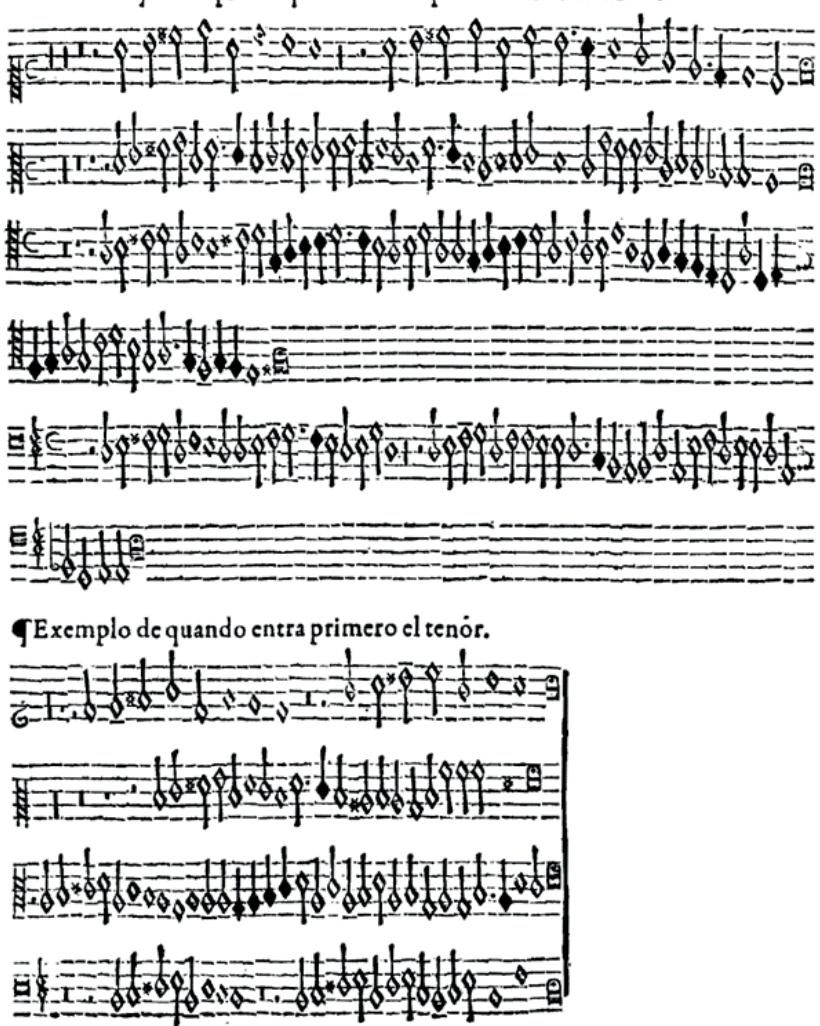
中文讲解
这是一处图像占位符,原图带有西班牙语图注’Exemplo de quando entra primero el contrabaxo’(直译:‘下声部首先进入的范例’)。图像数据在当前输入中被省略,仅保留了位置与图注。该图出现在第31页,紧接P0197关于partitura谱式与各声部不对齐的说明之后,用作P0200所示图1之前的另一例证或参照——它的内容与下声部(contrabajo)进入方式的示范相关,应被视为Santa María讨论声部进入顺序时的实际谱例展示。原文没有提供可读的图面信息,因此具体的对位细节、谱面排版、是否包含四声部等均无法在本输入中确认,需查阅原图方能判断。
补充说明
由于图像本体被省略,无法确认该例所展示的声部数量、织体密度与谱面布局;图注西班牙语提示其主题为’下声部首先进入’,与P0197提到的partitura排版方式直接相关。
第13段(P0200)
原文复述

中文讲解
这是图1的占位符与英文图注。图注提供以下可确认信息:图像来源为Santa María《Arte》第二卷第73v页(fol. 73v);图中包含四个声部(four voices);这四个声部并不垂直对齐(not aligned vertically),这正是P0197所说’各声部或不对齐或只是大致对齐’的直接视觉证据。图注还提示读者’点击此处收听该例’,并署明版权归属August Valentin Rabe。结合图注中的’四声部不对齐’与上下文可知,该图正是用来说明partitura谱式——即谱面上横贯系统的笔道仅作分隔例子用,而非用来标示breve长度的小节——这一记谱实践的具体形态。然而原图的具体音高内容、对位细节与谱面布局因图像数据省略而不可见,需查阅原图方能判断。
补充说明
图注提示该图来自Arte第二卷fol. 73v,并显示四声部在垂直方向不对齐;这是P0197所述partitura谱式’各声部不对齐’论述的直接图证。
脚注 / 边栏 / 图表 / 附加信息(如有)
本节正文P0192末尾标记了上标'10’,对应两条脚注内容:P0193补出参考文献及视频资源(EM 23(1995)461–71的’A Spanish Renaissance Technique of Chordal Improvisation’一文,及Early Music Sources网站上关于’Santa María协和音实践’的视频,2022年9月8日访问);P0198则从认知心理学角度解释’chunk’一词,引自Tversky与Zacks的’Event Perception’(载Reisberg主编《牛津认知心理学手册》2013年版,第83页起)。脚注8(P0194)指引读者查阅同卷Baldassari与Campagne的合著文章作为延伸阅读。脚注9(P0195)为版本学说明:1565年原版第一卷第18章后两章都被错印为'19’,译者为避免混淆将两章都标作'19’,需要区分时分别记为'19a’与'19b’,故正文出现'19b9’这一编号。P0199与P0200为两处图像占位符:P0199图注为西班牙语’Exemplo de quando entra primero el contrabaxo’,与声部进入顺序示范相关;P0200为正式编号的’图1’,来源标注为Santa María《Arte》第二卷第73v页,四声部不垂直对齐,并附可点击收听的范例音频(©August Valentin Rabe)。两图均作为P0197关于partitura谱式’声部不对齐’论述的视觉例证。
💡 本节核心要点
- 两卷本的功能划分:第一卷铺设识谱、音律、键盘局限与演奏技术等’前置准备’,第二卷才进入复调即兴的实际技艺——这种结构本身就是Santa María教学法的核心。
- Santa María教授键盘的根本路径并非’独坐琴前’,而是通过歌唱与有量记谱法下的合奏:他有意把通常属于Musica practica或作曲教材的题目纳入键盘教程,因此第一卷与canto de organo(器乐之声)传统紧密相连。
- 第二卷的内部教学阶梯为:协和与不协和 → 主调织体写作(subir y baxar a consonancias,从semibreves到fusae逐步细化) → 真正复调写作(成对模仿的声部进入与组合) → 把模仿片段(chunk)拼接成完整乐曲 → 教学组织与调律。
- 成对模仿(paired imitations)的教学是Santa María最显著的贡献:在声部进入安排的清晰度上,他的论述甚至超过了加福里(Gaffurius)与廷克托里斯(Tinctoris)这两位’古典’对位权威。
- Santa María以古权威(波伊提乌、奥古斯丁、亚里士多德)为对位规则背书,但所有谱例都是’真实音乐’,并非抽象练习——理论与实操在他的文本中始终保持张力。
- 记谱方式本身就是教学立场的体现:所有例子用partitura(声部大致并列、垂直不严格对齐、横线只分隔例子而不标示breve小节)写就,使谱例具备作为即兴素材而非固定读谱的功能。
🔑 关键术语
- fantasia:书名Arte de tañer fantasia中的’fantasia’指文艺复兴时期键盘复调即兴演奏这门专门艺术,而非文学意义的’幻想’;它是整部两卷本著作的教学目标。
- musica ficta:中世纪与文艺复兴时期关于临时记号与变化音处理的一套规则,Santa María在第一卷第7章加以讲解,是进入有量记谱音乐演奏的必备知识。
- mensural notation:有量记谱法,即按音符形状记写不同时值的记谱体系;Santa María的整个教学法围绕把用mensural notation写成的声乐作品转用于键盘实践这一核心展开。
- canto de organo / canto llano:Santa María用来区分两种音乐范畴的术语:canto llano指礼拜音乐中以圣歌体记谱的单声部素歌;canto de organo指被乐师用作即兴复调素材的多声部音乐。前者是Santa María教学的对立面,后者是其教学的对象。
- partitura:本节中所述一种’分谱并列’的谱式,各声部垂直方向或不对齐、或只是大致对齐,横贯系统的笔道仅用于分隔不同例子而不标示breve长度小节;这是Santa María将谱例当作’即兴素材’而非’固定读谱’的视觉标志。
- subir y baxar a consonancias:第二卷第11–30章反复出现的教学主题,西班牙原文意为’以协和音程上升与下降’;练习从semibreves(全音符)一路细化到minimae、semiminimae与fusae,是Santa María主调织体写作训练的核心框架。
- paired imitations:‘成对模仿’,第二卷第31–51章的核心议题,讨论各声部在模仿进入时的多种组合可能;Santa María对此主题的清晰阐述被认为超过加福里与廷克托里斯。
- chunk:本节作者借用认知心理学术语,指可被拼接成完整乐曲的复调片断;源自Tversky与Zacks的’Event Perception’(载《牛津认知心理学手册》2013年版),意指人类把’持续变化的多模态信息流’压缩成的’有用信息单元’。
- clausula (clausulae):终止式;Santa María在第一卷第26章对二、三、四声部终止式作详细处理,并在谱例单元的末尾以终止式收束,从而让谱例既是用以说明规则的材料,也是可演奏的完整小段。
- clavichord / vihuela:古钢琴与维韦拉琴;Santa María在全书末尾给出这两种乐器(前者为击弦键盘,后者为拨弦弹拨乐器)的简短调律说明,与第一卷关于’键盘相对人声的物理局限’的讨论形成首尾呼应。
sec0016 [描述性拆分] ## Reading & Singing
第1段(P0201)
原文复述
Reading & Singing
中文讲解
小节标题“Reading & Singing(读与唱)”,点出本节论题:圣玛丽亚关于键盘学习者应如何通过“读”与“唱”来接触并内化有量记谱的复调音乐(Canto de organo)。标题中并列“Reading”与“Singing”,提示本节将围绕这两类以人声和理性分析为主的活动展开论述,并涉及它们与写作、演奏等其他学习方式之间的配合。
第2段(P0202)
原文复述
Santa María’s didactic concept revolves around the idea that composed, mensurally notated polyphony (Canto de organo) should be experienced in a variety of ways. These are reading, singing, writing and playing. As chapter I, 5 makes clear, each of the individual voices should be sung by oneself as well as with others – as in the performance situation suggested by the mensural notation in separate parts. Additionally, one should play individual voices and whole pieces – possibly partly or completely notated in tablature – on the instrument. During these activities, great attention should be paid to the compositional techniques used. Santa María compares this method of analysis through music-making to reading the works of learned authors. Just as reading is a source of daily inspiration from which perfection springs for a man of letters, so the study of polyphonic works is essential for the keyboard player.
中文讲解
本段确立本节的核心论点:圣玛丽亚的教学理念强调,应通过多种方式(读、唱、写、弹)来学习有量记谱的复调音乐(Canto de organo)。具体而言:其一,每个声部既要单独唱,也要在与人合作的表演情境中唱,这与分声部的有量记谱所暗示的演出方式相一致;其二,还应在键盘乐器上弹奏单一声部或整首作品——记谱形式可能部分是、全部是数字谱(tablature);其三,弹奏与歌唱过程中须特别留意作品的作曲技法。圣玛丽亚把这种“通过演奏来分析”的方法比作文人阅读:阅读是文人每日获得灵感、走向完美的源泉;同理,对键盘演奏者而言,研究复调作品是其专业成长的关键。作者在此将本节的两个关键词“读”与“唱”嵌入到一个更大的四联活动(读、唱、写、弹)之中,并通过“阅读”的类比凸显“分析—内化”这一学习路径的合法性,从而为本节随后对具体步骤的展开提供理论支撑。
补充说明
脚注11–13在此段正文中被上标引用,分别承担“出处”“旁证(贝穆多)”“原文引文与术语澄清”的功能,具体内容见后续脚注条目。
第3段(P0203)
原文复述
11 The title of the chapter is: ‘Concerning two instructions by which one may [master] the singing of polyphony in a minimum of time’ (‘De dos documentos para en breue tiempo cantar canto de Organo’).
中文讲解
脚注11给出上文中“chapter I, 5”的全称及西文原题:《关于两条简明指令,使人可在最短时间内唱好复调(Canto de Organo)》。其作用是为正文所述“每个声部单独唱与合声”这一做法提供精确的章题出处,表明该主张并非泛论,而是圣玛丽亚在卷一第五章中明确提出的一项可操作的“指令”。方括号中的“[master]”提示原文动词在英译中需要补足以传达“学会、掌握”的含义。
第4段(P0204)
原文复述
12 Juan Bermudo describes a spectrum of three ways (‘maneras’): Particularly skilled players who can sing well and know how to compose (‘si es buen cantor, que sabe de composicion’) are able to play directly from the choir-book. Those who cannot compose, are less skilled, or do not want to work so hard (‘de composicion no sabe, y no esta execitado en poner, sino que comienca o no quiere trabaxar tanto’) must first mark in ‘bar lines’ (‘virgular el canto de organo’). The third way is to write down the piece in tablature and play it from that. See Juan Bermudo, Declaración de instrumentos musicales (Ossuna: Juan de Léon, 1555), fol. 132v. For a translation of the full passage into English, see Jessie Ann Owens, Composers at Work. The Craft of Musical Composition 1450–1600 (Oxford, 1997), 50.
中文讲解
脚注12为正文“possibly partly or completely notated in tablature”提供旁证:作者引述同时代的贝穆多(Bermudo)《乐器声明》(1555)所述三种演奏方式(maneras)。第一种:能唱且懂作曲的高手可直接视唱本(choir-book)弹奏;第二种:不会作曲、技术一般或不愿下苦功者,需先在谱上“画小节线”(virgular el canto de organo)作为辅助;第三种:把作品转写成数字谱(tablature)再弹。该脚注的作用是把圣玛丽亚的“弹奏单声部或整曲(部分或全部以数字谱记写)”置于一个更广的16世纪实践谱系之中,并提示不同能力等级的演奏者对应不同记谱与读谱方式。
补充说明
脚注所引文献——贝穆多《Declaración de instrumentos musicales》(1555)与Jessie Ann Owens《Composers at Work》(1997,第50页)——为读者追溯原文与英译提供线索。
第5段(P0205)
原文复述
13 ‘In the same way that it is appropriate and essential that a man of letters, if he is to be consummate in his discipline, should read widely in the learned authors in order to grow each day in the knowledge of new things, so it is important and necessary that the performer, to be perfect in his profession, should perform polyphonic works from chosen masters, to enrich himself each day in the learning of new and excellent materials’, Santa María/Howell/Hultberg, The art, I, 19; ‘por que assi como a vn letrado para ser acabado en su faculdad, le conuiene y es necessario leer muchos doctores para cada dia medrary saber cosas nueuas, assi al tañedor le es importáte y necessario para ser perfecto en esta faculdad que professa poner obras de cáto de Organo, de escogidos autores, para cada dia yrse enriquesiendo, sabiendo cosas nueuas y primas’, Santa María, Arte, I, fol. 7r–v. The term ‘poner’ was at times misinterpreted as ‘writing tablature’ in the musicological literature of the 1960s and 1970s. See the discussion in Owens, Composers at Work, 51–2. Without going into the translations by Kinkeldey, Howell and Hultberg or the detailed clarification by Owens, Nelson apparently also understands ‘poner’ primarily as ‘scoring-up and intabulating […] music’: see Nelson, ‘Bermudo’s Masters and Models’ (see n. 1), 77, and 99–101.
中文讲解
脚注13给出正文中“圣玛丽亚把弹奏类比为阅读”这一比喻的完整英译与西文原文,引自圣玛丽亚《Arte》卷一第7r–v页(Howell/Hultberg英译本第19页)。比喻结构清晰:文人须广泛阅读前贤著作以每日长进;演奏者则须“poner”(操持、放置)选自名家的复调作品,以每日积累新材料。该脚注还提示一处关键术语问题:poner一词在1960–1970年代的英语音乐学文献中曾被误读为“writing tablature(写作数字谱)”;作者援引Owens第51–52页的讨论作为澄清,并指出Nelson在《Bermudo’s Masters and Models》中仍将poner主要理解为“scoring-up and intabulating”。这一术语辨析直接关系到上一段“writing and playing”的正确理解:poner并非仅指数字谱转写,而涵盖更广义的“演出/操持复调作品”。
补充说明
脚注同时提供了Kinkeldey、Howell与Hultberg诸译本以及Owens的细致辨正之出处,表明学界对poner的译解存在差异。
第6段(P0206)
原文复述
Santa María gives a more precise idea of what this means in terms of practising and teaching in the 21st chapter of the first volume. Here he gives ‘brief hints’ on ‘how the beginner can quickly master any piece’. This includes the study of pieces that have been intabulated from mensural notation. He describes three activities:
中文讲解
本段将上文较为总括的四联活动(读、唱、写、弹)落回到一个具体章节:圣玛丽亚《Arte》卷一第21章,副题为“给初学者快速掌握任何作品的简明提示”(De auisos breues para que los nueuos subieten presto qualquier obra)。作者指出该章明确把学习对象扩展到“由有量谱转写为数字谱”的作品(即intabulated pieces),并以三项活动作分述。下三条(P0207–P0209)即这三项活动的逐条原文,因此本段在结构上起到“分点提领”的作用。
第7段(P0207)
原文复述
— Playing each note observing its correct value (’entéder todas las figuras, y dar a cada vna su entero valor’) with an even pulse (’tañer a Compas’).
中文讲解
第一项活动:把每一个音都弹足其时值(dar a cada una su entero valor),并在均匀的拍子中弹奏(tañer a Compas)。形式上是“逐音准确+稳定拍速”两条规则,直观上要求学习者先解决“音怎么响、响多久”的最基本层面,把节奏与时值作为演奏的地基。这一项与下文P0210中作者对“rhythm and tempo”的强调形成呼应。
第8段(P0208)
原文复述
— Singing each individual voice and appreciating its solmization (‘cantar cada boz por si, entendiédo la Solfa de rayz’).
中文讲解
第二项活动:单独唱出每个声部,并把握其唱名法(solmization),原文作“entendiendo la Solfa de rayz”(从根本上理解其唱名)。“唱名法”在这里不是装饰,而是把旋律放回六声音阶与调式体系来理解的方法;作者因此把它列为与“弹”并列的第二条规则,意在让学习者用耳朵和嗓子进入作品,而非只靠手指。
补充说明
脚注16中Howell与Hultberg将“entendiédo la Solfa de rayz”译为“achieve a fundamental comprehension of its melodic line”,可与原文对照理解。
第9段(P0209)
原文复述
— Analysing and understanding all the consonances and dissonances in the polyphonic texture (’entender todas las Consonancias y Disonácias que lleuare la obra, assi las que fueren a duo, como los que fuere [sic!] a tres y a quatro’).
中文讲解
第三项活动:分析并理解作品织体中所有的协和与不协和(consonancias / disonancias),无论是二声部、三声部还是四声部都需如此。原文中“fuere”应为“ fueren”,作者以“[sic!]”原样保留这一拼写瑕疵。该项把学习推到了“对位层面”:协和与不协和既是规则也是分析的最小单位;只有把每个声部在多声结构中的纵向关系都“听懂”,才算真正“掌握”一首作品。三项活动由此构成“时值—旋律—对位”的递进序列。
第10段(P0210)
原文复述
First, rhythm and tempo are clarified – in terms of both individual note values and a constant tempo throughout the piece. The insistence upon rhythmic accuracy is particularly understandable when making music from mensural notation or partitura notation, in which the individual parts are only approximately organised rhythmically in relation to each other, if at all (see Fig. 1). However, the precise playing of rhythms and notated pitches on the instrument only constitute one aspect. Alongside this rather ’technical’ step, the student has to ‘interpret’ the melody – not, however, by playing it on the keyboard instrument, but by singing each individual voice with solmization syllables. Solmization is important because, first, it clarifies the relationships of the individual pitches to each other, and, second, it reveals the relationship between what is sung and the modal system, which Santa María illustrates, for example, with diagrams of the scala decemlinealis and the Guidonian hand. Additionally solmization facilitates the identification of the contrapuntal possibilities, such as the intervals that can be formed, when to apply musica ficta, when to avoid mi contra fa, or how and where imitative voices can enter. While solmization initially only refers to the individual voice, it later offers an analytical view of the whole contrapuntal structure, which should also be analysed and understood by those who wish to ‘master’ a work.
中文讲解
作者对上述三项活动作进一步阐释。其一,节奏与速度要同时在“单音时值”与“全曲稳定拍速”两层意义上弄清;当记谱形式为有量谱或分声部排列的partitura时,各声部之间往往只在节奏上彼此大致对应、甚至完全不对应,因此演奏者必须自行设定统一的拍速以维持整体律动(参Fig. 1)。其二,仅在键盘上把节奏和音高弹“准”只是“技术”层面;与这一层面并行的是“诠释”层面——学习者须用唱名把每个声部唱出来,而不是只在琴上弹。其三,唱名法的双重作用:一是揭示音与音之间的相互关系,二是把所唱内容与调式体系对接——圣玛丽亚以scala decemlinealis(十线谱)与Guidonian hand(圭多手)作为图示工具。其四,唱名法还使学习者得以辨认对位可能性:可构成的音程、何处需用musica ficta(变化半音)、何处须回避mi contra fa(mi对fa的禁忌三全音)、模仿声部在何处进入等。其五,唱名最初只针对单声部,但随后可被提升为对整首对位结构的分析视角。由此,作者把“读”“唱”从单纯的视谱与发声,重塑为一种贯穿单声部—整体对位的分析工具。
补充说明
脚注18指出卷一第20章专论节奏与计数,并提示圣玛丽亚并未像当时一些印刷的器乐著作那样提供详细的有量谱导读;脚注19指出scala decemlinealis与圭多手的图示还可见于CH-Bu、F IX 22等手抄本及Virdung 1511年《Musica getutscht》等同时代著作,以说明这类图示在16世纪器乐文献中相当常见。
第11段(P0211)
原文复述
14 ‘De auisos breues para que los nueuos subieten presto qualquier obra’: Santa María, Arte, I, fol. 57v.
中文讲解
脚注14给出P0206所引“brief hints on how the beginner can quickly master any piece”的西文原题及出处:《Arte》卷一第57v页。该章题为《关于使初学者迅速掌握任何作品的简明提示》,与正文三项活动的引文位置一致。
第12段(P0212)
原文复述
15 Santa María, Arte, I, fol. 57v. On this aspect, see also vol. 1, ch. 5 ‘Del compas’ (chapter on the beat/measure).
中文讲解
脚注15为P0207“tañer a Compas”提供出处:圣玛丽亚《Arte》卷一第57v页;同时指引读者另参卷一第5章《Del compas》(关于拍子与计量的章节),以了解圣玛丽亚对“compas”概念的系统论述。
第13段(P0213)
原文复述
16 Santa María, Arte, I, fol. 57v. Almonte Howell and Warren Hultberg translate ’entendiédo la Solfa de rayz’ as ‘achieve a fundamental comprehension of its melodic line’: Santa María/Howell/Hultberg, The art, I, 154.
中文讲解
脚注16为P0208“cantar cada boz por si, entendiédo la Solfa de rayz”提供出处与英译:Howell与Hultberg在《The art》英译本第154页将“entendiédo la Solfa de rayz”译作“achieve a fundamental comprehension of its melodic line(从根本上理解其旋律线)”。该脚注一方面给出西文原文页码(fol. 57v),另一方面展示权威英译的措辞,便于读者把握“rayz(根本、从源头)”一词在原文中“基于唱名体系进行根本性理解”的含义。
第14段(P0214)
原文复述
17 Santa María, Arte, I, fol. 57v.
中文讲解
脚注17为P0209关于“协和与不协和”的三项活动条目提供出处:圣玛丽亚《Arte》卷一第57v页。
第15段(P0215)
原文复述
18 Vol. I, ch. 20 focuses on this aspect, using various examples to illustrate the ways of counting and feeling the beat. Santa María does not provide a detailed introduction to reading mensural notation, as printed works on instrumental music of the time often do.
中文讲解
脚注18为P0210中关于节奏与拍速的论述提供旁证:卷一第20章以多种例子专门讨论计数与感受拍子的方式;同时指出,与当时其他印刷的器乐著作不同,圣玛丽亚并未提供详细的有量谱导读。这一对比突显其方法特点:他不把学习重心放在“识谱”本身,而放在弹奏与歌唱过程中的节奏稳定。
第16段(P0216)
原文复述
19 The assignment of the instrumental keyboard to the scala decemlinealis, which is the subject of vol. I, ch. 20, is a standard theme in manuscripts and printed texts on instrumental music in the 16th century. See also the illustration in Santa María, Arte, I, fol. 56r, as well as similar tables and charts in CH-Bu, F
中文讲解
脚注19(上半段)说明把键盘乐器与scala decemlinealis相联系的做法在16世纪器乐手稿与印刷本中十分普遍:除圣玛丽亚《Arte》卷一第20章外,亦见卷一第56r页的图示。脚注把这一图示传统定位为“16世纪器乐书写中的常见主题”,从而把圣玛丽亚的调式/唱名图示放在更广的文献背景之中。
补充说明
该脚注在原书跨页延续,下半段(P0218)补全了所引手稿与印刷本信息。
第17段(P0217)
原文复述
Above all, this kind of analytical approach allows the player to transfer findings from the study of obras (polyphonic works that may or may not be intabulated) to their own polyphonic fantasias. The nature of the subjects (passos) and imitations in notated compositions should first be analysed in detail. This includes, for example, determining how many voices follow each other, what the rhythmic distance between them is, and the intervals at which they enter. Particular attention should be paid to how the voices enter. Whether they begin before, during or after a clausula or cadence, for instance, demonstrates ’the thing most exquisite, and of the greatest beauty and artistry of anything in music’. Thus, one should consider and memorize the type and nature of the clausulae and cadences of the pieces analysed for use in one’s own playing. Last but not least, the consonances and dissonances between all the voices and the solmization of each voice should be carefully studied and memorised so that they can be applied to one’s own playing in order to lend it ‘richness and abundance’.
中文讲解
本段说明前述“读—唱—分析”做法的最终目的:把从obras(可能为数字谱也可能为有量谱的复调作品)中分析所得,迁移到演奏者自己的复调fantasias(幻想曲、即兴多声部)中。具体路径有三:其一,详细分析所研究作品中主题(passos)和模仿的形态——包括参与模仿的声部数、各声部进入的节奏距离与音程距离;其二,特别留意声部的“进入方式”——相对于clausula或cadence(终止式/收束)是在其前、其间还是其后进入,作者援引圣玛丽亚本人的话来强调这种进入时机的安排是“音乐中最精巧、最具美与技艺之事”,并要求把终止式的类型与性质记住以备自创之用;其三,还须仔细研习并记忆各声部之间的协和—不协和关系与每一声部的唱名,以便“运用到自己的演奏之中,使作品具备‘richness and abundance’(丰富与充实)”。本段将前文逐项分析提升到一个“分析→记忆→迁移→再造”的完整学习链,凸显圣玛丽亚把演奏与作曲训练打通的整体教学观。
补充说明
脚注20–23分别对应本段中各引文的出处与原文。
第18段(P0218)
原文复述
VIII a, CH-Bu, F IX 22, or Sebastian Virdung, Musica getutscht und ausgezogen, [Basel]: [Michael Furter] [1511] (vdm: 3), http://resolver.staatsbibliothek-berlin.de/SBB0001444100000000 (accessed 28 September 2022).
中文讲解
脚注19(下半段,跨页承接)补全P0216未完的文献信息:除圣玛丽亚《Arte》卷一第56r页外,类似的“十线谱”表格与图示亦见于CH-Bu, F VIII a、CH-Bu, F IX 22等手稿,以及Sebastian Virdung《Musica getutscht und ausgezogen》(巴塞尔,约1511年)。其作用是把scala decemlinealis的图示传统进一步落实到具体的同时代印刷与手抄本之中。
第19段(P0219)
原文复述
20 See ch. I, 22 entitled ‘Concerning the procedure one must follow to derive benefit from works’ (‘Del modo que se ha detener para sacar prouecho de las obras’).
中文讲解
脚注20指引读者另参卷一第22章:《关于使作品对自己有所裨益所应遵循的方法》(Del modo que se ha de tener para sacar prouecho de las obras)。该章与P0217关于“从研究中受益并迁移到自己的fantasias”的论述直接对应,提供更详细的程序性指引。
第20段(P0220)
原文复述
21 Santa María/Howell/Hultberg, The art, I, 155. ‘[…] la entrada de cada boz, es la cosa mas dilicada, y de mayor primor y arte que ay en la Musica […]’, Santa María, Arte, I, fol. 57v.
中文讲解
脚注21为P0217中“the thing most exquisite, and of the greatest beauty and artistry of anything in music”提供英译与西文原文出处:英译见《The art》I卷第155页,西文“la entrada de cada boz, es la cosa mas dilicada, y de mayor primor y arte que ay en la Musica”见《Arte》I卷第57v页。该引文是圣玛丽亚对“声部进入时机”美学价值的高度评价。
第21段(P0221)
原文复述
22 ‘[…] notar todas las maneras de clausulas, que se hizieren en las obras entendiendo las de rayz, y tenerlas en la memoria, para por ellas hazer otras Semejantes en la fantasia.’ Santa María, Arte, I, fol. 57v.
中文讲解
脚注22为P0217“one should consider and memorize the type and nature of the clausulae and cadences … for use in one’s own playing”提供西文原文:要求把作品中出现的各种终止式(clausulas)方式“从根本上”理解并记住,以便在fantasia中照样仿作。其出处为《Arte》卷一第57v页。
第22段(P0222)
原文复述
23 Santa María/Howell/Hultberg, The art, I, 156. ‘[…] y juntamente entender toda la Solfa de cada boz, y notar las cósonancias que con ella se dieré, y assi mesmo notar la Solfa que fuere graciosa de cada boz, y tenerla mucho en la memoria, para có ella hazer passos diuersos, porque esto es lo que mucho aprouecha para tener caudal y abundancia de fantasia.’ Santa María, Arte, I, fol. 58r.
中文讲解
脚注23为P0217关于“协和—不协和与唱名应被研究、记忆并用于自己的演奏,以获得‘richness and abundance’”的论述提供英译与西文原文:要求同时理解每一声部的全部唱名、记录与之相伴的协和音程,并记住各声部中“graciosa(动听)”的唱名片段,以便从中生出多样的“passos(动机/步法)”,因为这正是积累并充实fantasia(幻想/即兴多声部素材)之关键。出处为《The art》I卷第156页,《Arte》I卷第58r页。
脚注 / 边栏 / 图表 / 附加信息(如有)
本小节包含密集的脚注(P0203、P0204、P0205、P0211、P0212、P0213、P0214、P0215、P0216+P0218、P0219、P0220、P0221、P0222),其中脚注11–13为正文类比与术语辨析提供支持;脚注14–17直接对应卷一第57v页上的“三项活动”原文;脚注18与正文讨论节奏/拍速相连,并对比同时代印刷器乐文献;脚注19跨页(P0216+P0218)说明scala decemlinealis图示传统;脚注20指向卷一第22章以补强“从作品中获益”的方法;脚注21–23为P0217关于声部进入、终止式与协和/唱名的引文提供西文原文。文中Fig. 1为分声部排列的有量谱/分谱(partitura)示例,用以说明各声部之间只在节奏上大致对应、需由演奏者统一拍速。
💡 本节核心要点
- 圣玛丽亚的教学理念以读、唱、写、弹四联活动为框架,其中“读”“唱”承担把作品内化为自身fantasia素材的核心功能。
- 他把演奏与歌唱中的“分析”比作文人的阅读:广泛研习名家作品是每日精进、走向完美的源泉;这一比喻同时为“poner”一词被误读为“写作数字谱”提供了语义澄清的背景。
- 卷一第21章给出三项具体活动:弹足时值并保持均匀拍速、单声部唱出并把握唱名法、分析作品中所有协和与不协和——形成“节奏—旋律—对位”的递进序列。
- 唱名法(solmization)兼具三重作用:揭示音—音关系、对接调式体系(scala decemlinealis、Guidonian hand)、并为musica ficta、mi contra fa、模仿声部进入等对位判断提供分析工具。
- 这一分析路径的最终目标是把作品中的passos、终止式、协和与唱名记忆并迁移到演奏者自己的复调fantasias之中,使演奏具备“richness and abundance”,由此把键盘学习与作曲训练打通。
🔑 关键术语
- Canto de organo:有量记谱的复调音乐;本节的学习对象。与之相对的“canto llano”通常指单声部素歌。本节所述的读、唱、写、弹活动正是围绕Canto de organo展开。
- poner:圣玛丽亚用以指“演出/操持复调作品”的动词;在1960–1970年代英语音乐学文献中曾被误读为“写作数字谱”。Owens加以澄清,本节正文与脚注13明确指出poner并不限于数字谱转写。
- tablature:数字谱,一种以字母、数字或符号指示琴键/弦/孔位而非音高的记谱方式,是有量谱之外器乐演奏常用的记谱途径。
- partitura:分声部排列的谱式,即把各声部分行列出;本节借此说明为何需要在弹奏时自行设定统一拍速。
- solmization / Solfa:唱名法,用音节(如ut/re/mi/fa/sol/la)指代音级并体现六声音阶位置的方法;本节把它定位为既是发声工具又是分析工具。
- scala decemlinealis:十线谱,一种以十条线划分布音域并标注唱名与调式位置的图示工具;圣玛丽亚用以把键盘与调式体系对应起来。
- Guidonian hand:圭多手,一种以手掌关节图示音级与唱名的传统教学工具,与scala decemlinealis一同在本节被用作调式/唱名的视觉辅助。
- musica ficta:变化半音/临时升降的运用规则;本节把它列为唱名法在对位分析中所揭示的若干判断之一。
- mi contra fa:mi与fa之间的三全音禁忌——即自然音阶中fa–mi之间形成的增四度(或减五度)所应回避的进行;本节把它作为唱名法所揭示的对位禁忌之一。
- passos / clausula / cadence / fantasia:passos指复调中的动机或步法;clausula与cadence指终止式与收束;fantasia在此并非曲式概念,而指演奏者自身积累的可供即兴/创作使用的多声部素材库。本节把分析对象最终指向对这些要素的记忆与迁移。
sec0017 [描述性拆分] ## Memorising, Writing & Playing
第1段(P0223)
原文复述
Memorising, Writing & Playing
中文讲解
这是一个小节标题,原文以两个连续的’#‘号标示其层级。标题由三个动名词并列组成:记忆(Memorising)、书写(Writing)与演奏(Playing),点出本节围绕的三项核心活动。该标题开启了Santa María教学法中从课堂听讲、作品记忆、记谱成文到实际演奏的完整环节——标题中的顺序本身暗示了教学的逻辑流向,而本节随后展开的内容也确实按记忆→书写→演奏的链条逐步铺陈。
补充说明
本段为小节标题,不含正文论述,仅承担版面划分与论题引导功能。
第2段(P0224)
原文复述
This ‘polyphonic-literary’ education and engagement with mensurally notated composition form the backbone of Santa María’s didactic approach. Some further indications of historical practising and teaching techniques can be found in the penultimate 52nd chapter of the second volume. Conceived as a two-page enumeration of twelve elements, the author reviews almost all the topics covered in the treatise, assigning each a position in the arduous learning journey of a student and their teacher. Even though some of them are explicitly formulated as successive learning steps, it should be clear that most of them are processes that take place over several years and that although the scheme is articulated as a sequence, it will necessarily involve some overlapping and deviations. In some of the elements, however, Santa María provides additional information that complements the content of the first volume – particularly focussing on the role of memory and the use of pre-existing compositions when practising the art of fantasia.
中文讲解
本段为整节定调,说明Santa María教学法的两大支柱——‘复调—文学’式教育与有量记谱法作品的训练——并交代材料来源:第二卷倒数第二章(第52章)以两页篇幅列出了十二个学习要素,涵盖全书几乎所有议题。
这里需要解释几个关键判断:(1) 作者强调’几乎’所有议题,而非全部;这暗示十二要素是一种教学编排,而非教材目录的简单复刻。(2) 文中明确指出虽然要素以序列形式呈现,但大多跨越数年,因此必然存在重叠与偏离——这提醒读者不可把十二要素当作严格的年级表,而应理解为相互交织的培养维度。(3) 段落结尾预告本节的重点:在第二卷中Santa María提供了第一卷之外的补充信息,特别是关于’记忆’的作用与’既成作品’在fantasia练习中的运用。这两句预告把本节的论域锁定在记忆—既有作品—fantasia三者关系之上。
因此本段的功能是为后文P0225–P0229铺设脚手架:先声明教学法整体性质,再定位具体章节来源,最后缩小论域到与记忆和既成作品相关的fantasia练习。
补充说明
原文中的’penultimate 52nd chapter’意指第二卷倒数第二章,作者称之为第52章。‘polyphonic-literary’是作者自创的复合形容词,强调Santa María教学中既要处理复调对位,也要处理文学—歌唱文本两个层面。
第3段(P0225)
原文复述
Santa María requires the student to write down the material covered in the lesson with the teacher – note for note and including all ornaments, and to sing all the individual parts:
中文讲解
本段是过渡句,功能是把第52章十二要素中的’第四点’具体内容引出来。它概括了Santa María对学生的两项硬性要求:(1) 把课堂所学材料逐音符、连同所有装饰(ornaments)一并记写成谱;(2) 把四个声部各自单独唱出。
’note for note’(逐音符)与’including all ornaments’(包含所有装饰)是关键限定词,表明Santa María所要求的记谱不是简化或概述,而是完整复现——装饰音尤其容易在口传过程中遗失,因此被特别强调。‘sing all the individual parts’(单独唱出每个声部)则揭示了复调训练的核心:学生必须能在心里独立跟踪每一条线,而不是只听到混响的整体音响。
该句以冒号结尾,表明接下来P0226会以原文引文方式呈现Santa María的具体表述,因此本段在结构上承担引语前奏的功能。
补充说明
段落末尾的冒号预告紧随的P0226是该要求的Santa María原话引用,而非作者改写。
第4段(P0226)
原文复述
Fourth let the pupil endeavor, after having received the lesson and having studied it well, to put it into notation just as the teacher gave it to him, with the glosas and everything else, and with nothing omitted. Also let him endeavor to sing each of the four voices individually.24
中文讲解
本段是Santa María原话的英文译本,编号为脚注24。该段给出了’第四点’的完整规条:学生在’收下功课(lesson)并学习纯熟之后’,须把功课’原样写成谱面,含装饰(glosas)与其他一切,不得遗漏任何内容’;此外还要’单独唱出四声部中的每一个’。
理解这段引文需要把握几个语义重点:(1) ’lesson’(leción)在Santa María的语境中并非指现成的书面曲目,而指课堂上与教师共同’做出’出来的音乐段落(见P0227的解释);(2) ‘glosas’即装饰、对位加花,是fantasia即兴演奏中的关键修饰成分,被特别点名要求一并记录;(3) ’nothing omitted’与’with everything else’形成双重冗余强调,反映出口传—书写转换中最容易丢失的正是装饰与微小变体;(4) 单独唱四个声部是对复调听辨能力的硬性测试。
段末的上标数字24与P0228的脚注一一对应,读者可由此查阅西班牙语原文与译者注释。
补充说明
本段引文的西班牙原文与翻译学讨论集中于脚注24(P0228),主文中仅以编号形式标记。
第5段(P0227)
原文复述
The ’lesson’ probably refers to sections of the piece that was worked out together, rather than pre-existing written-out compositions. What had been worked out had to be memorised accurately during the lesson so it could be written down at leisure later. Writing what is played down adds another crucial step in the learning process, which in itself presents a set of completely different challenges in terms of learning psychology. Phrases that a player has – perhaps unconsciously – ‘in his ear’ or ‘in his fingers’ now have to be arranged on paper and synchronised with staves, clefs and the other voices. This requires a detailed awareness of the architecture of the extemporised piece, as well as an examination of the rules not only of notation, but also of counterpoint and composition. As written pieces, the ’lessons’ become obras, which can now be sung, practised, analysed and compared with other obras.
中文讲解
本段是对P0226引文的实质性解读,承担本节论证的关键推进。作者完成三件事:
(1) 厘清’lesson’的语义边界:Santa María所说的’leción’并非指学生拿到的现成书面作品,而是课堂上与教师共同’做出’的即兴段落。这一界定颠覆了把中世纪/文艺复兴音乐教育简单理解为’抄谱—背谱’的现代成见。
(2) 揭示’记忆→书写’转换的学习心理学意义:在课堂中须即时、准确地记忆所做出(worked out)的段落,留待课后从容书写。作者强调’ear’与’fingers’——即听觉意象与运动意象——这两种内化形式必须被外化为纸面记号,且须与谱表、谱号、其他声部同步对齐。这一转换要求学生对即兴作品的整体建筑(architecture)有清晰意识,并对记谱规则、对位规则、作曲规则同时进行审视。
(3) 给出概念升格:一旦被书写下来,原属即兴过程的’lessons’便升级为’obras’(作品/成品),从此进入可唱、可练、可分析、可与其他obras比较的流通状态。换言之,记谱行为本身参与了作品的身份转变——它是把过程固化为文本的关键步骤。
因此本段是把Santa María的一条具体教学规定,提升到学习心理学与作品本体论层面的核心枢纽段落。
补充说明
‘worked out together’中的’worked out’在此处特指师生共同即兴创作/排练的过程,与英文现代用法(如’worked out a solution’)语境相通但语境特定。‘obras’为西班牙语’作品’的复数。
第6段(P0228)
原文复述
24 ‘Lo quarto procure el discipulo, despues de aver tomado la lecion y tenerla bien estudiada, sacarla en punto de la mesma manera que el maestro se la diere, con las glosas y con todo lo de mas, sin faltar ninguna cosa. Assi mesmo procure, cantar cada vna de las quatro vozes en particular.’ Santa María, Arte, II, fol. 121v My translation of this passage is based on Santa María/Howell/Hultberg, The art, II, 390. The translation of ‘sacar en punto’ as ’to put it into notation’, which may seem surprising at first sight, has been generally accepted in research since Kinkeldey. ‘Punto’ is used in contemporaneous musical writing (besides Santa Marías Arte, for example, in Juan Bermudo’s Declaración or Ortiz’s Trattado) to mean ’note’. However, the term can also mean larger sections of music, as the title of Ortiz’s print of 1553 makes clear: Trattado de Glosas sobre Clausulas y otras generos de puntos en la Musica de Violones […]. I would like to thank Andrés Cea Galán, Marija Blašković, Wolfram Aichinger and Fernando Sanz-Lázaro for their help and exchange on questions of translation.
中文讲解
本段是P0226引文对应的脚注24,承担三项功能:
(1) 给出Santa María《Arte》第二卷fol. 121v处的西班牙语原文,让读者能直接核对英文翻译的准确性。原文以古西班牙语拼写(如’dispulo’实际作’discipulo’、‘aver’代后世的’haber’、’lecion’代’lección’)呈现,体现了16世纪西语文体。
(2) 解释翻译选择的学理依据:‘sacar en punto’字面上不像’记谱’,但自Kinkeldey以来学界普遍接受此译。‘punto’在同时代音乐文献中(Santa María《Arte》、Bermudo《Declaración》、Ortiz《Trattado》)均用来表示’音符’。然而作者同时提示:‘punto’也可以指更大的音乐段落,证据是Ortiz 1553年出版物的完整标题——‘Trattado de Glosas sobre Clausulas y otras generos de puntos en la Musica de Violones’——其中’puntos’显然涵盖’终止句及其他类型的音乐段’。这层词义双重性是脚注论证的核心,提示读者翻译选择虽合理,但’punto’的内涵比单音符更宽。
(3) 致谢对翻译讨论提供帮助的四位学者。
因此该脚注不仅是文本出处,更是一个术语学的小型论证,为前文’记谱’译法的合法性提供学界共识与词源证据,同时保留对词义多义性的诚实提示。
补充说明
Kinkeldey此处指早期音乐学家Hans Kinkeldey,他是20世纪初最早将’sacar en punto’译为’to put into notation’的学者。Juan Bermudo的《Declaración de instrumentos musicales》(1555)与Diego Ortiz的《Trattado de glosas》(1553)均为16世纪重要的音乐理论文献,本脚注引用二者作为’punto’一词用法的同期旁证。
第7段(P0229)
原文复述
Santa María recommends students practise transposing complete pieces to all the degrees that the modal system allows and memorising their most imaginative passages in order to utilise them in their own fantasy-playing.25 Another way to use obras creatively is to extract any single voice of the polyphony and place it first in the discant, then in the other voices, and harmonising it homophonically ‘with consonances’ (a consonancias).26 Freer and correspondingly more demanding possibilities arise in contrapuntal playing over a chorale cantus-firmus or single voices of polyphonic compositions.27 These various types of playing serve to perfect what Santa María calls the fantasia a concierto, i.e the art of extemporising imitative polyphony.28
中文讲解
本段列举Santa María推荐的三种由’obras’驱动的fantasia练习方式,层层递进:
(1) 第一种是移调与记忆:学生应把完整作品移调到调式系统允许的所有音级上练习,并记忆其中最具想象力的乐段,以供自己fantasia演奏时挪用。这种练习把既成作品转化为即兴储备库。
(2) 第二种是声部抽离与齐奏化处理:把复调中的任一声部单独抽出,依次置于discant(高声部)与其他声部位置,并以’协和音’(a consonancias)对其作齐唱式(homophonic)和声化处理。这一手法把复调作品拆解为可重组的素材,训练学生把单一旋律线放入不同和声背景的能力。
(3) 第三种是对位式即兴:在圣咏定旋律(chorale cantus-firmus)或复调作品的单一声部之上作对位化演奏。作者注明这是三种方式中’更自由、相应也更难的’一类——因为它脱离了既有作品的完整框架,要求学生实时构造对位线条。
三段叙述在逻辑上形成由’低自由度’到’高自由度’的梯度,最终汇入Santa María所谓’fantasia a concierto’——即模仿式复调即兴艺术——这一训练目标。换言之,本段把P0227中’obras’(作为可分析、可比较的成品)与’fantasia’(即兴复调能力)之间的桥梁铺陈完毕:obras既是fantasia的素材来源,也是fantasia成熟度的衡量尺度。
补充说明
本段末尾三处上标编号(25、26、27、28)分别对应后文关于移调练习、声部抽离、对位即兴以及fantasia a concerto术语的脚注;本节正文未展开其内容,需查阅后续脚注方可确认细节。
脚注 / 边栏 / 图表 / 附加信息(如有)
本节包含一处脚注(P0228 / 编号24),提供Santa María《Arte》第二卷fol. 121v的西班牙语原文、引用Santa María/Howell/Hultberg译本、说明’sacar en punto’译法自Kinkeldey以来的学界共识、援引Bermudo《Declaración》与Ortiz 1553年《Trattado de Glosas》作为’punto’一词用法的同期旁证,并致谢四位参与翻译讨论的学者。脚注功能:来源标注+翻译论证+术语澄清,而非对正文观点的支持或反驳。P0229末尾标注的脚注25–28属于后文内容,本节未展开。
💡 本节核心要点
- 本节的教学法核心建立在三项活动链上:课堂即兴制作(worked out)→ 记忆(memorising)→ 记谱成文(writing)→ 实际演奏(playing),其中’记谱’是把即兴过程转化为obras的关键升格步骤。
- Santa María在第二卷第52章以十二要素回顾全书主题,序列仅作教学编排,实际训练必然跨越数年并存在重叠与偏离。
- 学生被要求把课堂所学’原样写谱,含装饰,不得遗漏’,并单独唱出四个声部;这一硬性规定揭示了复调听辨与完整记谱的双重训练目标。
- ’lesson’在Santa María语境中指师生共同做出的即兴段落而非现成书面作品;记谱过程迫使学生从听觉与运动意象转化为纸面记号,需同时调动对记谱、对位、作曲三类规则的意识。
- 记忆一旦完成书写,lessons即升格为obras,进入可唱、可练、可分析、可比较的流通状态,从而成为fantasia练习的素材库。
- 由obras驱动的fantasia练习呈三个梯度:移调记忆并挪用乐段、声部抽离作齐奏化处理、圣咏定旋律之上作对位即兴,三者共同指向Santa María所谓’fantasia a concierto’——模仿式复调即兴艺术。
🔑 关键术语
- obras:西班牙语’作品’的复数;在本节中指经书写固化后的即兴段落,区别于课堂中尚未落笔的’lessons’,是fantasia练习的素材与对照对象。
- leción / lesson:本节特指课堂上师生共同即兴做出(worked out)的音乐段落,而非学生拿到的现成书面作品;其范围可以是一段,也可以是更大的片落(参考punto一词的多义性)。
- fantasia a concierto:Santa María所用术语,指模仿式复调即兴艺术;本节列举的三种由obras驱动的练习方式(移调记忆、声部抽离、定旋律对位)均以完善这一能力为最终目的。
- a consonancias:西班牙语’以协和音(和声化)‘之意;本节指将抽出的单一声部置于discant或其他声部位置并以齐唱方式作和声化处理的练习手法。
- glosas:装饰、对位加花;在Santa María要求学生记谱时与’all ornaments’并提,强调不可在口传—书写转换中遗失这些修饰细节。
- sacar en punto:Santa María用语,意指把所听/所学内容写成谱面;‘punto’在同时代文献中可指’音符’也可指更大的音乐段,脚注24对此词义双重性做了学界共识与词源证据的论证。
- fantasia:本节核心目标,即复调即兴演奏艺术;Santa María的训练路径是把记忆—书写—演奏三环节与既成作品的创造性再利用相结合,以达此能力。
sec0018 [描述性拆分] ## A Model for Practising in Stages and Suggestions for Practising and Teaching Today
第1段(P0230)
原文复述
A Model for Practising in Stages and Suggestions for Practising and Teaching Today
中文讲解
小节标题:A Model for Practising in Stages and Suggestions for Practising and Teaching Today(分阶段练习模型与对当下练习和教学的启示)。标题点明两层目的——其一,从Santa María第二章22节的材料中归纳出一个可操作的、分阶段的练习模型;其二,把这一历史模型与今日演奏教学实践进行对照、给出启示。这是全章中把文献回到当下问题的过渡性小节,承接前文对Santa María具体练习方法的逐条考据,转入应用与对照层面。
第2段(P0231)
原文复述
One of the most valuable chapters on practising is the 22nd of the first volume. This deals with the way obras may be experienced in a way that improves the player’s ability to produce a fantasia a concierto. The chapter is designed as a compilation of various exercises, from which a systematic model can be derived to enable effective practising today:
中文讲解
本段声明Santa María《Arte de tañer Fantasia》第一卷第22章是讨论练习的最有价值的章节之一。该章处理如何体验obras(多声部作品),以提升演奏者产出fantasia a concierto(多声部幻想曲)的能力。作者强调该章虽以各类练习的形式汇编而成,但可以从中提炼出一个系统的模型,用于今天(“today”)的有效练习。这一句很关键:它解释了为何把目光聚焦于第22章——不是因为它本身写得最系统,而是因为其汇编性质允许作者做出系统性重构,并桥接到当代练习。obras与fantasia a concierto这一对术语的对立与转化关系是本节核心线索:分析、记忆、变奏的起点是既有作品(obras),终点是演奏者自己生成的多声部幻想曲。
第3段(P0232)
原文复述
25 ‘Lo nono procure exercitarse, en mudar las obras por todos los signos acidentales acidentales que se pudieren tañer, y assi mesmo procure tomar dellas, los passos que fueren de solfa graciosa, y tenerlos en la memoria para despues tañer sobre ellos fantasia a concierto.’ Santa María, Arte, II, fol. 121v.
中文讲解
脚注25引述Santa María原典第一卷第22章第九条练习的西班牙语原文,要求练习者在所有可能的变化音(signos acidentales)下变换演奏obras,并从中抽取solfa(视唱/谱面)优雅的passos(段落)存入记忆,以便日后在其上作fantasia a concierto。这一引文既是后续四条“a–d”练习条目的源头文献依据,也直观展示了Santa María方法的两个动作:变(mudar)与抽取记忆(tomar…tenerlos en la memoria)。脚注编号与本节首段后第一条练习之间形成文献—模型对应关系。
第4段(P0233)
原文复述
26 For ‘playing in consonances’ see n. 7.
中文讲解
脚注26指向第7号脚注以解释“playing in consonances”(以协和音程演奏)这一术语,相当于一个交叉引用,本身不展开。
第5段(P0234)
原文复述
27 ‘El que quisiere ser perfecto tañedor, procure darse y exercitarse poco a poco, en tañer contrapunto que sea de buen ayre y solfa graciosa, sobre canto llano, y sobre todo de organo […].’ Santa María, Arte, II, fol. 122r.
中文讲解
脚注27给出Santa María原文中关于成为“perfecto tañedor”(完备的演奏者)的另一段引文,要求练习者在cantollano(素歌)和“sobre todo de organo”(尤其在键盘上)之上逐渐演奏buen ayre、solfa graciosa的对位。这是Santa María将练习与作品层次(素歌层与器乐层)联系起来的关键文献依据,也呼应标题中practising in stages(分阶段练习)的提法——先在简单声部之上,再在键盘之上。
第6段(P0235)
原文复述
28 Santa María uses the term ‘a concierto’ several times in his treatise as a synonym for ‘polyphonic’. See the references in the entry ‘concierto (a)’, in: Lexique Musical de la Renaissance – Traités musicaux en espagnol, http://www.ums3323.paris-sorbonne.fr/LMR/index.php (accessed 28 September 2022); see also Warren Earle Hultberg, ‘Sancta Maria’s Libro llamado Arte de tañer Fantasia: A Critical Evaluation’, PhD thesis, University of Southern California, Los Angeles, 1964, 95–6, 205.
中文讲解
脚注28说明Santa María多次把“a concierto”用作“polyphonic”(多声部)的同义词,并提供Lexique Musical de la Renaissance以及Hultberg 1964年南加州大学博士论文中的相关条目与页码作为参照。此脚注的功能是把前文“fantasia a concierto”这一术语统一解释为“多声部幻想曲”,避免读者误以为“concierto”是指协奏曲体裁。
第7段(P0236)
原文复述
a. Analyse subjects, imitations, clausulae and counterpoint in a pre-existing composition. Memorise the subjects and any particularly notable passages.
中文讲解
这是由第22章材料中提炼出的系统模型的第一项练习条目:对既有作品进行结构层面的分析——主题(subjects)、模仿(imitations)、终止式(clausulae)与对位(counterpoint);并把主题及特别值得记忆的片段存入记忆。该条目的关键概念在于,分析的对象不是孤立的和弦或音程,而是“结构单元”(subjects)与“终止式”,这与后文a/b两项中“乐思片段”概念直接对应。记忆在此被设定为练习链条的第一步。
第8段(P0237)
原文复述
b. Try out and vary different possibilities with these memorised subjects: the number of voices, the way in which they follow each other, the intervals and pitches at which the voices enter, clausulae, the use of consonance and dissonance.
中文讲解
第二项练习条目:对已记忆的主题,尝试并变化多种参数——声部数量、声部相互进入的方式、起始音程与起始音高、终止式、协和与不协和的使用。这一条集中体现了Santa María的练习法本质:练习不是重复演奏既有作品,而是对记忆材料进行多参数组合的“变奏性探索”,从而把同一主题转化为产生新fantasia的素材。
第9段(P0238)
原文复述
c. Vary the pitches you start from.
中文讲解
第三项练习条目:变化起始音高。这是把上一条的多参数变化进一步简化为一个具体动作——移调。看似简短,但与上一条“起始音程与音高”呼应,并在后续“endless spiral”段落中作为“transposed”这一独立环节得到重申。
第10段(P0239)
原文复述
d. Increase your repertoire of subjects.
中文讲解
第四项练习条目:扩充主题库。它意味着练习者从分析少数作品开始,逐步把更多主题纳入记忆—变奏系统,从而增加产生fantasia的素材池。结合上一条“专注于少数passos”形成的张力:先深入若干passos以建立习惯,再横向扩展主题数量。
第11段(P0240)
原文复述
Rather than a sequence to be completed consecutively, these exercises are inherently significant in themselves and can be undertaken concurrently. One need not even start with a complete piece, but an excerpt or even a fragment the learner has heard. Exercises such as silently analysing compositions, singing or mentally practising memorised excerpts without an instrument are also included in the spectrum of tasks described by Santa María.29
中文讲解
本段对前面a–d四条作出关键的方法论定性:它们不是必须按顺序完成的线性链条,每一项本身都有独立意义,可以并行进行。起点也不必是完整作品,可以是听到的片段甚至碎片。更进一步,作者指出Santa María所描述的练习光谱还包含“无声分析作品”“演唱”“在没有乐器的情况下用心理方式练习记忆片段”等。这一段把练习从“动手指”扩展到“心智活动”,从而为下文区分“notation/cognitive”与“motoric”两条并行轨道埋下伏笔,也为对照现代音乐学院“纯技术性”练习做了铺垫。
第12段(P0241)
原文复述
In Santa María’s conception, practising could eventually be imagined as an endless spiral: mensurally notated obras are read, played alone and together with others, possibly intabulated and then analysed. Passages are memorised, practised on the instrument, transposed, varied in terms of their contrapuntal possibilities, and reassembled in the student’s own pieces. These new pieces can then in their turn be treated as obras, analysed and compared with other obras.
中文讲解
本段用“endless spiral”(无尽螺旋)这一比喻来刻画Santa María的整体练习观:作品先被阅读,再单独及合奏演奏,可能被intabulate(把多声部作品改写为键盘指法谱)然后分析;片段被记忆、器乐练习、移调、对位可能性变奏,并被重新组装成学生自己的作品;这些新作又可作为新的obras进行分析与对照。“螺旋”而非“圆圈”或“直线”的隐喻重点在于——每循环一次都产生新的作品,因而练习没有终点且层次递增。intabulation是文艺复兴键盘文献中的核心实践,本段把它纳入螺旋的中间环节,从而连接分析、演奏与创作。
第13段(P0242)
原文复述
Santa María recommends focusing on a few subjects and practising them thoroughly:
中文讲解
过渡句,引出下一段Santa María关于“少而精”的练习建议,与前文d条“扩充主题库”构成“纵深—广度”的张力。
第14段(P0243)
原文复述
In order for beginners to progress the fantasy, they must practice repeatedly with the subjects (passos) they know, so that through usage art is made a habit, and thereby they will easily [be able to] play other subjects.30
中文讲解
脚注30的英译引文:初学者要反复用已知的passos练习fantasia,使得“通过使用,技艺成为习惯”,从而能轻松演奏其他passos。括号中(passos)说明passos即subjects(主题/片段)的对应。这一句的核心机制是“通过使用(vso/uso)形成习惯(habito)”,它直接连接到下段现代术语中的habitual playing概念,提示Santa María的练习论早已蕴含“动作自动化”的洞见。
第15段(P0244)
原文复述
In modern terms, the main goal of such practice is for playing to become habitual,31 with motoric patterns or chunks of motoric patterns that can be performed automatically – and thus demand little cognitive effort. At the same time, instrumental-musical expertise is also shown in the flexibility of the motor skills that the player has at his/her disposal (e.g. regarding fingering, keys, distribution of voices to the hands) to craft segments of musical meaning sonically: ‘skilled pianists can associate the same pitch-key pattern with any number of motoric patterns’.32 Practising such chunks of musical meaning takes place at several levels, that can be grouped into two main areas:
中文讲解
本段把Santa María的“通过使用形成习惯”翻译为现代认知—动作科学语言:练习的首要目标是让演奏成为习惯,即让动作模式(motoric patterns)及其组合块(chunks of motoric patterns)能够自动执行,从而占用更少认知资源。同时,器乐专门知识还体现在动作技能的灵活性上——指法、键位、声部在左右手的分配——以便把“乐思片段”做成音响。引文“skilled pianists can associate the same pitch-key pattern with any number of motoric patterns”出自de Souza,强调同一音高—键位图式可与多种动作模式联结,体现了“灵活自动化”的两面性。本段最后一句声明下文将把这“多层次练习”归为两个主要领域,承接到下一段的a/b两项。
第16段(P0245)
原文复述
29 On these practice techniques, see Ulrich Mahlert (ed.), Handbuch Üben. Grundlagen, Konzepte, Methoden (Wiesbaden, 2006).
中文讲解
脚注29指明关于前述“无声分析、演唱、心理练习”等练习方法,可参见Ulrich Mahlert主编的《Handbuch Üben》(Wiesbaden, 2006)。该脚注为上文“Santa María所描述的练习光谱”提供现代德语音乐教学法手册作为对照参照。
第17段(P0246)
原文复述
30 Santa María/Howell/Hultberg, The art, I, 156. ‘Para que los nueuos aprouechen en la fantasia, es necessario que se exerciten siempre con los mesmos passos que saben, para que con este vso hagan habito del arte, y con esto facilmente tañeran otros passos.’ Santa María, Arte, I, fol. 58r.
中文讲解
脚注30给出上一段引文的来源:英译见Santa María/Howell/Hultberg, The art, I, 156;西班牙语原文出自《Arte de tañer Fantasia》第一卷fol. 58r。该脚注既核对译文,也提示了英译者(Almonte Howell)与评论者Hultberg的工作。
第18段(P0247)
原文复述
31 Jonathan de Souza explores habitual playing and the close coupling between musician and instrument in great detail drawing on philosophical perspectives as well
中文讲解
脚注31引出Jonathan de Souza的工作,说明他从哲学视角深入探讨habitual playing(习惯性演奏)以及演奏者与乐器的紧密耦合。本脚注在此被脚注32的后续内容补完。
第19段(P0248)
原文复述
a. Learning to recognise their acoustic and graphic appearance in the notation, and consolidating this through reading, memorising and writing; and
中文讲解
承接前述“grouped into two main areas”的第一项a:在乐谱中辨认主题与片段的声音外观与书写外观,并通过读谱、记忆、书写加以巩固。这是认知—符号层面的练习路径:把音响形象与图形符号绑定,并依赖记忆与抄写强化。该项与Santa María所说的“silent analysis”“memorising”“writing”等任务直接对应。
第20段(P0249)
原文复述
b. gaining motoric control over chunks of motoric patterns in the vocal, speech and movement apparatuses of the body through singing and playing.
中文讲解
第二项b:通过演唱与演奏,获得对身体“声音、言语与运动装置”(vocal, speech and movement apparatuses)中动作模式及其组合块的运动控制。注意“vocal”“speech”“movement”三者并列,说明Santa María的“器乐”练习并未把发声、言语节奏、身体动作排除在外——这呼应P0240所列的“singing”练习以及P0244中“sing…mentally practising memorised excerpts without an instrument”。该项构成认知—符号层面(a)的姊妹:身体—动作层面。
第21段(P0250)
原文复述
Santa María explicitly and separately recommends these interdependent processes for practice as they run in parallel. Such an approach clearly differs from the instrumental training practice still prevalent at many conservatoires, where ‘purely technical’ practice, strongly focussed on motor components, aims primarily at performing pieces perfectly. In this respect, the kind of practising that Santa María proposes could also be described as multimodal and multi-perspectival. As a result, the learning goals that practice aims to achieve are open and varied, although the various strands flow together in the fantasia a concierto. Nevertheless, there is no way to avoid spending years studying the instrument – then as now.
中文讲解
本段是本节的核心对照与结论段。指出Santa María明确地、分开地推荐a与b两条相互依存但并行运行的过程;这与当下许多音乐学院仍主导的、强烈聚焦动作层面的“纯技术性”练习形成鲜明对照——后者主要以“把作品演奏得完美”为目标。作者因此把Santa María的方法概括为multimodal(多模态:听觉、视觉、动作、书写)和multi-perspectival(多视角:分析、记忆、变奏、创作)。结果是:练习的目标是开放且多样的,尽管所有线索最终汇流于fantasia a concierto。末句“there is no way to avoid spending years studying the instrument – then as now”则对前文给出冷静的限定:无论方法多么多模态,器乐练习仍需经年累月,这一点古今相同。
第22段(P0251)
原文复述
So that all the foregoing may be fruitful and beneficial in the fantasia, one must practice it many times each day with great perseverance, never losing confidence but holding to the certainty that continual work and practice will prevail in all things and make the master, as experience shows us at every step. And therefore a wise man has said that the stone is not carved out by the water drop that falls one time or two, but continuously.33
中文讲解
脚注33的英译引文,强调欲使前述全部内容在fantasia中结出果实,须每日多次练习,以极大的恒心(perseverance)坚持,永不失信心,并相信持续的工作与练习终将胜过一切而成“master”。末段以“智者所言”——水滴非一两次而是连续地凿穿石头——作比喻。该比喻的功能有二:一是把前文方法论的“多模态并行”落到“每日高频坚持”的时间维度上;二是与标题中的“practising in stages”形成互补:阶段只是结构维度,恒心才是时间维度。
第23段(P0252)
原文复述
as ecological theory and cognitive psychology. See his Music at Hand. Instruments, Bodies, and Cognition, Oxford Studies in Music Theory 11 (New York, 2017). 32 Ibid., 20.
中文讲解
该段实为脚注31的续接内容(说明de Souza还运用ecological theory与cognitive psychology),并附脚注32出处:de Souza, Music at Hand. Instruments, Bodies, and Cognition, Oxford Studies in Music Theory 11 (New York, 2017), p. 20。这一续接补全了引文“skilled pianists can associate the same pitch-key pattern with any number of motoric patterns”的来源。
第24段(P0253)
原文复述
33 Santa María/Howell/Hultberg, The art, I, 156. ‘Para que de todo lo sobredicho se saque gran fruto y prouecho para la fantasia, es necessario exercitarlo muchas vezes cada dia, con gran perseuerancia, nunca desconsiando, sino teniendo por cierto, que el trabajo y vso continuado, vence todas las cosas, y haze maestro, lo qual a cada passo vemos por experiencia, y por tanto, dixo vn sabio. Que la gota caua la piedra, no de vna vez, ni de dos, sino siempre cayendo.’ Santa María, Arte, I, fol. 58r.
中文讲解
脚注33给出上一段英译对应的西班牙语原文与版本出处:英译见Santa María/Howell/Hultberg, The art, I, 156;西班牙语原文见《Arte de tañer Fantasia》第一卷fol. 58r。该脚注核对译文,并保留“perseverancia”“vso continuado”“haze maestro”等十六世纪西语拼写,提示读者查阅原始拼写的版本学价值。
脚注 / 边栏 / 图表 / 附加信息(如有)
本节包含多条脚注(25–33),其中25、27为Santa María原典第一卷第22章九条练习中的西语原文(fol. 121v、122r);26为交叉指引(第7号脚注关于“playing in consonances”);28解释术语a concierto = polyphonic,并附Lexique Musical de la Renaissance与Hultberg 1964年USC博士论文两处参考;30、33给出P0243、P0251英译引文的西语原文及英译本页码与原典fol. 58r位置;29指引Ulrich Mahlert主编的《Handbuch Üben》(Wiesbaden, 2006)作为现代对照;31、32连同P0252的续接共同指向Jonathan de Souza, Music at Hand. Instruments, Bodies, and Cognition, Oxford Studies in Music Theory 11 (New York, 2017), p. 20,作为“habitual playing”“pitch-key pattern与motoric pattern解耦”的理论依据。功能上,脚注25、27、30、33承担文献来源与原文核对;26、28承担术语澄清;29、31、32承担现代研究对接;P0236–P0239的a–d四项作为正文模型条目,未配单独的脚注,但其源头正是脚注25、27所引文献。
💡 本节核心要点
- Santa María第一卷第22章以汇编形式提供了多种练习,从其中可提炼出一个今天仍可用的分阶段练习模型。
- 该模型包含四个并行而非顺承的练习维度:分析并记忆主题(a);用已记忆主题进行多参数(声部数、进入方式、起始音程音高、终止式、协和/不协和)变奏(b);变化起始音高(c);扩充主题库(d)。
- Santa María把练习构想为endless spiral:读谱—独奏与合奏—intabulation—分析—记忆—器乐练习—移调—对位变奏—重组为学生自己的作品;新作又可作为新的obras循环处理。
- 练习目标在Santa María那里具有双重性:通过反复使用形成habit(习惯),使动作模式自动化以释放认知资源;同时保留动作技能的灵活性,使同一音高—键位图式可与多种动作模式联结。
- 该方法可以分解为两条并行的轨道:a. 通过读谱、记忆、书写巩固对音响与乐谱外观的认知—符号识别;b. 通过演唱与演奏获得对身体声音、言语与运动装置中动作模式及其组合块的运动控制。
- Santa María的练习模式是multimodal与multi-perspectival的,与当下许多音乐学院仍主导的、强烈聚焦动作层面、以把作品演奏得完美为目标的“纯技术性”练习形成对照;但古今相通的一点是:无论方法如何多模态,器乐练习仍需以年计的恒心投入,水滴石穿之喻强调的正是时间维度上的perseverance。
🔑 关键术语
- obras:在本节中指Santa María所讨论的多声部作品,是练习者分析、记忆、变奏、重组的起点与素材库,也是fantasia a concierto的对照基准。
- fantasia a concierto:Santa María用语;脚注28解释“a concierto”为polyphonic的同义词,因而此术语在本节中等同于“多声部幻想曲”,即所有练习线索汇流的目标产物。
- passos(passes / 主题片段):脚注30括号中英译者把它等同于subjects(主题/片段);是Santa María要求初学者反复练习直至形成习惯的最小乐思单位。
- solfa graciosa:脚注25、27用语,指乐谱与音响上“优雅的视唱/谱面”,Santa María建议从obras中抽取这种片段加以记忆。
- intabulation:把多声部作品改写为键盘(或琉特)指法谱的文艺复兴实践;本节把它作为无尽螺旋中的一环,承担“把读到的作品转化为可分析、可演奏的键盘文本”的功能。
- clausulae:终止式;与subjects、imitations、counterpoint并列,作为P0236分析条目的对象之一,也是P0237变奏条目中可被变化的参数之一。
- chunks of motoric patterns(动作模式组合块):P0244、P0249用语,指演奏中被自动化执行的动作模式集合;既是habitual playing的基础,也是同一音高—键位图式可与多种动作模式灵活联结的载体。
- habitual playing:P0244用语,脚注31指出由Jonathan de Souza在《Music at Hand》中系统论述;指通过反复使用(vso/uso)形成的演奏习惯,使动作模式能够自动执行并释放认知资源。
- multimodal / multi-perspectival:P0250对Santa María练习方法的概括:多模态指同时调用听觉、视觉、动作、书写等通道;多视角指分析、记忆、变奏、创作等任务并行进行。
- perseverance(水滴石穿之喻):P0251、P0253用语,指每日多次、以恒心反复练习的时间维度,强调方法之外的坚持投入,是古今练习相通的核心条件。
sec0019 [描述性拆分] ## Bibliography
第1段(P0254)
原文复述
Bibliography
中文讲解
这是论文的参考文献/书目节标题,仅用于开启参考资料列表,无其他论述内容。该小节按条目形式列出作者在正文与脚注中实际引用过的文献与数字资源,构成了研究的全部来源基础。
补充说明
作为页面级章节标题,其作用是引导读者到查阅引文的固定区域。
第2段(P0255)
原文复述
Art. ‘concierto (a)’, in: Lexique Musical de la Renaissance – Traités musicaux en espagnol, http://www.ums3323.paris-sorbonne.fr/LMR/index.php
中文讲解
该条目引用的是巴黎索邦大学“UMS 3323”项目下的《文艺复兴音乐术语词典——西班牙文音乐专论》在线数据库中关于“concierto (a)”一词(条目属于字母 a 起头的排序之一)的词条。其作为在线词条,无作者署名,也未注明访问日期;从词目名称判断,所讨论的是文艺复兴时期西班牙语音乐专论中的特定术语。该资源对应正文论及西班牙十六世纪键盘或合奏音乐核心词汇时所作的术语溯源依据。
补充说明
URL 直指项目主页,未提供具体词条页链接,访问时需在站内检索 concierto (a) 条目。
第3段(P0256)
原文复述
Warren Earle Hultberg, ‘Sancta Maria’s Libro llamado Arte de tañer Fantasia: A Critical Evaluation’, PhD thesis, University of Southern California, Los Angeles, 1964
中文讲解
此条目为 Hultberg 于南加州大学提交、1964 年完成的博士论文,专门对 Tomás de Santa María 的《Arte de tañer Fantasía》作出批判性评介。该论文是英语学界最早系统研究 Santa María 这部键盘专著的长篇学位论文,其后 Howell 与 Hultberg 的英文本导论亦建立在该博士论文的基础之上。论文在“critical evaluation”这一表述下,对原著作的整体内容、结构与历史意义进行了学术评估。
补充说明
该论文与后面的 Howell/Hultberg 英译本(P0269)在作者身份上直接关联,构成同一研究脉络下的两项产物。
第4段(P0257)
原文复述
Louis Jambou, ‘Ornaments’, in: Grove Music Online, <https://doi.org/10.1093/ gmo/9781561592630.article.49928>
中文讲解
条目引用 Jambou 在《Grove 音乐在线》中撰写的“Ornaments”(装饰音)词条,给出该词条的 DOI 链接。Grove 音乐在线是英语学界权威的音乐百科全书,Jambou 是西班牙音乐研究专家,因此该词条可为正文讨论 Santa María 著作中涉及的装饰(graces, glosas 等)做法提供通史性参照。
补充说明
无作者添加,按学界通行做法仅列词条首词与编者缩写;此处 Jambou 为署名作者,而非编者本人。
第5段(P0258)
原文复述
Otto Kinkeldey, Orgel und Klavier in der Musik des 16. Jahrhunderts. Ein Beitrag zur Geschichte der Instrumentalmusik (Leipzig, 1910)
中文讲解
此为 Kinkeldey 1910 年在莱比锡出版的德文专著,副标题说明其定位为“乐器音乐史的一部专著”(关于十六世纪音乐中的管风琴与羽管键琴)。该书是 20 世纪初关于十六世纪键盘乐器与键盘音乐史的奠基性德语研究,在英语学界引用率极高,可作为正文讨论十六世纪键盘音乐传统与 Santa María 所处语境时的总体史背景来源。
补充说明
无补充信息。
第6段(P0259)
原文复述
Mark Lindley, ‘Fingering’, in: Grove Music Online, <https://doi.org/10.1093/ gmo/9781561592630.article.40049>
中文讲解
条目引用 Lindley 在《Grove 音乐在线》中撰写的“Fingering”(指法)词条,附 DOI 链接。Santa María 的《Arte de tañer Fantasía》正是一部以指法规则为核心内容的键盘专著,因此 Lindley 撰写的这一通史性词条,可为正文中具体指法规范的比较与历史地位定位提供术语与历史背景依据。
补充说明
无补充信息。
第7段(P0260)
原文复述
Ulrich Mahlert (ed.), Handbuch Üben. Grundlagen, Konzepte, Methoden (Wiesbaden, 2006)
中文讲解
此为 Mahlert 主编、2006 年于威斯巴登出版的德文《练习手册:基础、概念与方法》。该书是当代德语学界关于音乐练习理论与方法的综合性手册,可作为正文讨论 Santa María 著作中练习方法与现代练习学之间的概念对照来源。
补充说明
作为当代编辑文集,其各章可能由不同作者撰写;书目仅列编者,符合德语学术出版通行做法。
第8段(P0261)
原文复述
Bernadette Nelson, ‘Bermudo’s Masters and Models of Excellence for Keyboard Players in Sixteenth-Century Spain’, in RdM 39, no. 1 (2016), 77–115
中文讲解
此为 Nelson 发表于《Recherches sur la Musique》(《音乐研究》)第 39 卷第 1 期(2016 年)、页码 77–115 的论文,研究对象是西班牙十六世纪键盘演奏家中 Bermudo 的“大师与典范人物”形象。Nelson 的研究以十六世纪西班牙键盘传统为对象,与 Santa María 同属该传统,其成果可作为正文将 Santa María 与 Bermudo 并置比较时的来源。
补充说明
《Recherches sur la Musique》以法语为主要文种,本条目为英文论文,期刊按卷号/期号混合编号方式出现。
第9段(P0262)
原文复述
Diego Ortiz, Trattado de Glosas sobre Clausulas y otras generos de puntos en la Musica de Violones […] (Rome: Valerio & Luigi Dorico, 1553)
中文讲解
此条目为 Ortiz 1553 年于罗马由 Valerio 与 Luigi Dorico 兄弟出版社刊行的《为维奥尔琴音乐中终止与各类要点所作花唱之法》(拉丁/西语合用名)。该书是十六世纪西班牙弓弦乐器花唱(glosa)传统中的关键原典,副题说明专门针对维奥尔琴;其与键盘音乐虽非同一乐器,但“giosa”与“puntos”思路在 Santa María 的对位与幻想曲讨论中可作类比,故为重要的同期文献来源。
补充说明
出版者写作 Valerio & Luigi Dorico,是十六世纪罗马知名的音乐出版机构之一。
第10段(P0263)
原文复述
Jessie Ann Owens, Composers at Work: The Craft of Musical Composition 1450–1600 (New York, 1997)
中文讲解
此为 Owens 1997 年于纽约出版的专著《工作中的作曲家:1450–1600 的音乐创作技艺》。该书涵盖十五世纪中至十六世纪末音乐作曲家实际写作过程的材料研究,是英语学界对文艺复兴作曲家创作实践的主要参考,可为正文把 Santa María 的教学法置于作曲实践史中的论述提供方法论支撑。
补充说明
无补充信息。
第11段(P0264)
原文复述
August Valentin Rabe, ‘Benutze nun die Tafeln selbst’. Sammeln, Schreiben, Lehren und Üben mit einem Fundamentum (ca. 1440–1550), Wiener Forum für ältere Musikgeschichte 14 (Vienna, 2024)
中文讲解
此为 Rabe 2024 年于维也纳出版的专著,属于《维也纳古代音乐论坛丛书》第 14 卷,研究对象为 1440 至 1550 年间以《Fundamentum》为基础的乐谱搜集、抄写、教学与练习实践。该书与十六世纪初键盘/声乐教学手册传统直接相关,为正文讨论教学法与练习法世代传承时所引用的最新德语专著。
补充说明
书名引语“Benutze nun die Tafeln selbst”出自某早期乐谱的指引性语句,提示正文将围绕抄本使用的“表”与“基础文本”展开。
第12段(P0265)
原文复述
Miguel A. Roig-Francolí, ‘Playing in Consonances: A Spanish Renaissance Technique of Chordal Improvisation’, in: EM 23 (1995), 461–71
中文讲解
此为 Roig-Francolí 发表于《Early Music》第 23 卷(1995 年)、页码 461–71 的论文,专门研究十六世纪西班牙“和声即兴演奏”传统。其主题“playing in consonances”与 Santa María 著作中对位和声即兴部分直接对应,因此为正文涉及协和和弦即兴方法的核心英文学术来源之一。
补充说明
《Early Music》英文缩写写作 EM,是牛津大学出版社出版的关于早期音乐演奏与研究的权威期刊。
第13段(P0266)
原文复述
Elam Rotem, ‘Consonances According to Tomás de Santa María’, in: Early Music Sources.com, https://www.earlymusicsources.com/youtube/consonances (accessed 25 July 2023)
中文讲解
此为 Rotem 在 Early Music Sources 网站发布、相关 YouTube 频道上传的视频节目,主题为“按 Tomás de Santa María 的方式协和”。作为网络音视频资源,作者明确记录其访问日期为 2023 年 7 月 25 日,可作为正文将 Santa María 论述中的和声规则转换为现代演奏理解时的实用教学参照。
补充说明
作为视频资源,文献条目须注明访问日期以便回溯;这是该条目与纯印刷文献在著录要求上的差异所在。
第14段(P0267)
原文复述
Thomas de Santa Maria. Libro Llamado Arte de Tañer (1565) Chapters 13-19, translated by Sion M. Honea, Historical Translation Series, <https://www.uco.edu/ cfad/files/music/sancta-maria-libro.pdf >
中文讲解
此为 S. M. Honea 翻译的 Santa María《Arte de Tañer》1565 年版第 13 至 19 章英译本,属“Historical Translation Series”系列,托管于美国科罗拉多大学(University of Colorado)的 CFAD 文件库。该英译专章片段,是正文论述 Santa María 论述具体章节(如琶音、对位、幻想曲等)时的直接引文英译依据。
补充说明
作者署名拼写为 Thomas,与原文西语作者名 Tomás 在拼写上存在差异,可在正文按西语原作拼写规范统一。
第15段(P0268)
原文复述
Tomás de Santa María, Libro llamado arte de tañer fantasía (Valladolid: Francisco Fernandez de Cordova, 1565), <http://bdh-rd.bne.es/viewer. vm?id=0000158382&page=1>
中文讲解
此为 Santa María《Arte de tañer Fantasía》1565 年原版的数字化版本,由西班牙国家图书馆(Biblioteca Nacional de España)的 BDH(Biblioteca Digital Hispánica)数字馆藏提供在线阅览。该原版数字副本是正文西班牙语原文引文与其版式布局(dedication、proemio、各章结构等)考证的根本来源。
补充说明
出版地巴利亚多利德、出版者 Francisco Fernandez de Cordova,是西班牙十六世纪主要的音乐专论出版地之一。
第16段(P0269)
原文复述
Tomás de Santa María, The art of playing the fantasia, ed. Almonte C. Howell and Warren E. Hultberg, 2 vols. (Pittsburgh, 1991)
中文讲解
此为 Howell 与 Hultberg 编辑、1991 年于匹兹堡出版的两卷本英译/研究版《幻想曲演奏艺术》。该两卷本是英语学界对 Santa María 著作最完整的研究注释型英译版,与 P0256 的 Hultberg 1964 年博士论文在作者与研究脉络上相通,构成正文英语学界研究 Santa María 文本的标准学术版本。
补充说明
两卷本通常一卷为英译,一卷为评注与谱例分析;书目条目未细分,需查原书版权页确认各卷内容。
第17段(P0270)
原文复述
Jonathan de Souza, Music at Hand. Instruments, Bodies, and Cognition, Oxford Studies in Music Theory 11 (New York, 2017)
中文讲解
此为 de Souza 2017 年于纽约出版的《手中的音乐:乐器、身体与认知》,属《牛津音乐理论研究丛书》第 11 卷。该书以认知与身体经验的角度研究乐器演奏,与正文可能涉及的 Santa María 著作中键盘演奏的身体实践、感知学习等内容直接呼应,可作为正文在演奏认知学维度上的对照来源。
补充说明
无补充信息。
第18段(P0271)
原文复述
Barbara Tversky and Jeffrey M. Zacks, ‘Event Perception’, in The Oxford Handbook of Cognitive Psychology, ed. Daniel Reisberg (Oxford, 2013), 83–94
中文讲解
此为 Tversky 与 Zacks 在 Reisberg 主编《牛津认知心理学手册》(2013 年牛津版)中合写的章节“Event Perception”(事件知觉),页码 83–94。该章节提供事件知觉理论的认知心理学框架,可作为正文在讨论演奏过程中音乐事件分组、乐句结构感知时所引用的认知科学基础文献。
补充说明
章节页码较短,符合手册类著作各章节典型体量;主编与章节作者分别著录是手册参考文献的标准格式。
第19段(P0272)
原文复述
Sebastian Virdung, Musica getutscht und ausgezogen, [Basel]: [Michael Furter] [1511] (vdm: 3), http://resolver.staatsbibliothek-berlin.de/SBB0001440100000000
中文讲解
此为 Virdung 1511 年的德语音乐入门书《Musica getutscht und ausgezogen》之版本记录,出版地与出版者(瑞士巴塞尔的 Michael Furter)据推断补为方括号,标明依据来源为推测(vdm 编号 3),并附柏林国家图书馆解析器链接。该书是十六世纪初德语区乐器与乐谱讲解的早期入门读物,可作为正文讨论十六世纪初欧洲键盘/管风琴入门教学传统的横向参照。
补充说明
vdm 为 Verzeichnis deutschsprachiger Musikdrucke(德语音乐印刷品目录)编号系统;本条对出版信息加方括号,依目录学约定表示推测或推断而非确证。
脚注 / 边栏 / 图表 / 附加信息(如有)
本小节为书目列表,全部条目均为参考文献,正文与脚注的实际引用对象。条目类型包括:在线词条(P0255、P0257、P0259、P0266)、博士论文(P0256)、二十世纪初专著(P0258)、当代论文(P0261、P0265)、十六世纪原典(P0262、P0272)、现代专著(P0263、P0270、P0264、P0260)、Santa María 著作的多种版本/译本(P0267、P0268、P0269)以及认知心理学手册章节(P0271)。书目中没有图、表或脚注形式的附加材料,所有信息均以条目形式直接呈现。
💡 本节核心要点
- 书目按条目而非注释体例排列,每条独立显明作者/编者、出版年、版本及网址。
- Santa María《Arte de tañer Fantasía》在书单中以三种形式出现:1565 年西语原版(P0268)、Howell/Hultberg 1991 双卷本研究版(P0269)以及 Honea 英译片段(P0267)。
- 书目语种分布兼及西、法、德、英语文献,反映作者以跨语种史料为基础的研究视角。
- 书目条目按作者姓氏字母顺序排列,便于检索(自 Jambou 至 Lindley,至 Santa María 各版本及其他)。
- 书目对在线资源(P0255、P0257、P0259、P0266、P0267、P0268、P0272)均附 URL,访问型条目(P0266)注明访问日期。
🔑 关键术语
- Lexique Musical de la Renaissance:巴黎索邦大学 UMS 3323 项目维护的文艺复兴音乐术语在线词典,专涉西班牙文音乐专论,本节用以解释 concierto (a) 等西语音乐术语。
- Critical Evaluation:Hultberg 1964 年博士论文(P0256)采用的体例,意为“对 Santa María 著作学术价值与历史意义的批判性评估”,与单纯翻译或编校不同。
- Glosa / 花唱:P0262 中 Ortiz 论著探讨的核心概念,即将既有终止或动机以装饰性音符展开的做法,Santa María 在键盘体例中也涉及类似展开思路。
- Fundamentum:P0264 中 Rabe 研究的中世纪晚期至十六世纪中叶音乐基础教材体裁,与本论文讨论 Santa María 的入门教学体例属同一传统。
- Playing in Consonances:P0265 Roig-Francolí 论文题目,特指在协和音框架内进行的即兴演奏做法,是十六世纪西班牙键盘、和声即兴传统的核心术语。
- Event Perception:Tversky 与 Zacks 在 P0271 中发展的认知心理学概念,指人对连续活动进行分段与组织为有意义“事件”的能力,是本论文(如涉及对位与乐句分段感知时)的认知科学参照。
- Musica getutscht:Virdung 1511 年德语音乐入门书(P0272),是十六世纪初德语区乐器/记谱入门教学最早期的印刷资源,与同一百年间 Santa María 的西语键盘入门相对应。
sec0020 [描述性拆分] # 6 ‘Nach seinem selbst gefallen mit der Mensur wexln’
第1段(P0273)
原文复述
6 ‘Nach seinem selbst gefallen mit der Mensur wexln’ — Instances in Sixteenth-Century Keyboard Music Where Ornamentation and Changing Note Values Might Induce the Player to Vary the Beat
中文讲解
这是本章的标题。标题主体是一句德语短语 “Nach seinem selbst gefallen mit der Mensur wexln”,字面意思是「按他自己乐意地用拍子来回变换」,出自下文将要讨论的 Hanns Haiden 关于 Geigenwerk 的论述;副标题则用英文点明本章的研究对象:16 世纪键盘音乐中,那些因装饰法(Ornamentation)和音符时值变化(Changing Note Values)而可能促使演奏者改变拍速(Vary the Beat)的实例。这一标题已经把三个关键概念钉在一起:装饰音、变化的音符时值、以及演奏者对 tactus(拍速)的自由调节,预示着本章将围绕 Haiden 的引文展开,并以具体曲例说明何时演奏者会被迫或被允许改变节拍。
补充说明
标题编号 “# 6” 表明这是书中的第 6 章(也可能是一篇合集中的第 6 篇)。“Mensur” 在 16 世纪德语音乐文献中既可指弦乐器的有效弦长(决定音高),也可指节拍的尺度(即 tactus 的快慢),此处结合上下文指后者——拍速/节拍单位。
第2段(P0274)
原文复述
Domen Marinčič
中文讲解
本节作者署名:杜门·马林契奇(Domen Marinčič)。这是典型的章节/论文作者署名行,在版面上以二级标题样式呈现。
第3段(P0275)
原文复述
Several sources from the second half of the 16th century mention changing the measure or varying the beat within pieces. One of the best known is Nicola Vicentino’s book of 1555 with its reference to vocal ensembles changing the measure when performing music in the vernacular.1 Here and elsewhere, we read about various things that would induce one to change the tempo, the most common being the affect, the sense of the words, and the harmony.2 The wording of such descriptions sometimes implies an association with rhetoric, and Vicentino draws an analogy with the orator who moves his listeners by speaking ‘now loud and now soft, now slow and now fast’.3 While such changes helped to express the affect, they also met the need for variety, which is another important factor mentioned in connection with tempo changes by Vicentino, his Neapolitan contemporary Giovanthomaso Cimello, and several later authors.4 We must therefore bear in mind – and this is perhaps especially important in the case of instrumental music – that the beat could sometimes change within a piece purely in order to provide variety, notably in instances when musical material is repeated. It seems that the use of different note values and proportional signs alone was not considered sufficient for expressing affect and providing variety in performance. The speed of the tactus was perceived as an important parameter in its own right, operating together with the other components.
中文讲解
本段为本章正文的第一段,先勾勒出 16 世纪下半叶谈论"在曲中改换拍子(measure)或变换节拍速度(beat)“的文献背景。核心论点是:tactus(拍速)本身被视为一个独立的、可被自由调控的表演参数,其作用与装饰音、比例符号、歌词涵义等其他元素并行。
论证步骤如下:(1)以 Nicola Vicentino 1555 年的著作作为最重要文献切入点——他在书中提到用母语演唱的声乐合奏团会改换 measure;(2)归纳促使改换拍速的三大常见理由:affect(情感表现)、歌词意义、harmony(和声,本段中特意加了脚注 2 说明此处 harmony 取广义,包含作曲的多个方面);(3)通过 Vicentino 把音乐中的速度变化类比于雄辩家(orator)“时而大声时而小声、时而慢时而快"的演说,说明这类描述暗含修辞学传统;(4)补充另一个动因:variety(变化感/多样性),Vicentino、那不勒斯同代人 Giovanthomaso Cimello 及后来多位作者均提及;(5)落到本章的关键提醒——尤其在器乐中,即便只是为了避免重复段落带来的单调,演奏者也可能在曲中改变拍速;仅靠不同音符时值和比例记号(proportional signs)并不足以承担"表现情感 + 提供变化"的双重任务。
因此本段的功能是为后续进入键盘文献中具体讨论"拍速自由变换"奠定理论语境,并预先反驳一种可能误解:以为作曲家只要写了比例符号或细分音符时值,演奏者就不必再调整 tactus。
补充说明
本段是后续具体讨论 Haiden 文本的引子。“vernacular” 指非拉丁语的本国语言(意大利语等)。“tactus” 是 16 世纪音乐理论中以手或脚打出的基本拍速单位,本段中作者坚持把它看作与装饰音、比例符号并列、可独立变化的参数。
第4段(P0276)
原文复述
1 Nicola Vicentino, L’antica musica ridotta alla moderna prattica (Rome: Antonio Barre, 1555), lib. 4, cap. 42, fol. 94v (incorrectly numbered 88 in the print); online: https://mdz-nbn-resolving.de/details:bsb00103730 (accessed 23 June 2022).
中文讲解
脚注 1,给出正文首次提及 Vicentino 著作的版本信息:书名《L’antica musica ridotta alla moderna prattica》(古代音乐还原为现代实践),1555 年由罗马的 Antonio Barre 印行;引用位置为第四卷第 42 章第 94v 叶(印刷中编号误作 88),并附有慕尼黑数字化中心(MDZ)的在线访问链接及访问日期 2022 年 6 月 23 日。该脚注为正文中"声乐合奏在用母语演唱时改换 measure"这一主张提供一手来源支持。
补充说明
无额外补充(所有信息均出自脚注本身)。
第5段(P0277)
原文复述
2 In this context, harmony may have been understood in its broader sense, embracing various aspects of the composition.
中文讲解
脚注 2,对正文中"harmony(和声)“一词作出限定性说明:在 16 世纪的语境里,harmony 未必仅指纵向的音高结合,而可能取更宽泛的含义,涵盖作曲的多个方面(例如音程关系、调式布局乃至整体协和效果等)。这一限定是为了避免读者用现代和声学的狭义去理解 Vicentino 等人列举的"促使变拍速的要素”,从而把段落解释得过于狭窄。
第6段(P0278)
原文复述
3 Vicentino, L’antica musica, lib. 4, cap. 42, fol. 94v [=88v]: ‘& la esperienza, dell’Oratore l’insegna, che si vede il modo che tiene nell’Oratione, che hora dice forte, & hora piano, & più tardo, & più presto, e con questo muove assai gl’oditori’. Translation from Nicola Vicentino, Ancient Music Adapted to Modern Practice, trans. Maria Rika Maniates, ed. Claude V. Palisca, Music theory translation series (New Haven, 1996), 301.
中文讲解
脚注 3,给出正文中 Vicentino 把音乐的速度变化比作雄辩家演说修辞的那段原话。原文为意大利语,意为:“演说家的经验证明了这一点——可以看到他在演说中所采取的方式:时而大声、时而小声;时而慢、时而快;借此他能深深打动听众。” 英译出自 Maria Rika Maniates 译、Claude V. Palisca 编校的 Vicentino《古代音乐还原为现代实践》(纽黑文,1996 年)第 301 页。本脚注同时承担两个功能:(1)为"修辞学类比"这一主张提供逐字原始出处;(2)让读者看到"声音强弱 + 速度快慢"这一双重变量在 16 世纪被一并用来打动听众,与现代只讨论力度或只讨论速度的视角不同。
第7段(P0279)
原文复述
4 Giovanthomaso Cimello, The Collected Secular Works, ed. Donna G. Cardamone and James Haar, RRMR 126 (Madison, WI, 2001), 163.
中文讲解
脚注 4,为正文中提到的"那不勒斯同代人 Giovanthomaso Cimello"提供文献出处:《Giovanthomaso Cimello 世俗作品集》(The Collected Secular Works),由 Donna G. Cardamone 与 James Haar 编辑,收入 RRMR(Recent Researches in the Music of the Renaissance)第 126 卷,2001 年由 Madison, WI 出版,引用页为第 163 页。此处 Cimello 与 Vicentino 一并被援引,用以支撑"variety(多样性)“是 tempo 变化的另一重要理由。
第8段(P0280)
原文复述
The title of this article comes from a particularly intriguing text which mentions tempo flexibility in keyboard performance. Its author, Hanns Haiden, son of the music theorist Sebald Heyden, was organist at St. Sebald and St. Egidien in Nuremberg between 1567 and 1585. In 1575 he invented the Geigenwerk, a stringed keyboard instrument capable of sustained sound, graded dynamics and controlled vibrato. The passage in question appears in the second German edition of the Musicale instrumentum reformatum, a small book that he wrote in praise of this instrument, published in 1610, when he was in his mid-seventies. Among the advantages of the Geigenwerk, on which ‘one alone can achieve that which would otherwise require five or six violin players’, Haiden lists the possibility of varying the beat. He goes on to point out a telling difference vis-à-vis string consorts:
中文讲解
本段交代本章标题引文的出处——作者 Hanns Haiden(汉斯·海登),音乐理论家 Sebald Heyden(塞巴尔德·海登)之子,1567 至 1585 年间任纽伦堡 St. Sebald 与 St. Egidien 两座教堂的管风琴师;1575 年发明 Geigenwerk(小提琴键盘)——一种具备延音、力度层级与可控揉弦的键盘弦乐器。本段的关键信息按时间顺序铺陈:写作语境(1610 年 Geigenwerk 第二版德文小册子《Musicale instrumentum reformatum》,海登当时年过七旬)、文献体裁(一本题献给该乐器的颂词性小册子)、与弦乐合奏的对比(“一人即可完成五至六位小提琴手的工作”),并预告下文将引出他关于"变换拍速"与弦乐合奏局限性的具体论述。
这段在论证上的作用是:先建立海登其人及其乐器革新的可信度,再把读者的注意力从"通用文献"过渡到"键盘具体文献”,为本章核心引文做铺垫;并明确 Haiden 论述的前提——键盘独奏(特别是 Geigenwerk)相对弦乐合奏有更大的速度自由度。
补充说明
“Geigenwerk” 是 16 世纪末出现的一种以琴弦发声、由键盘操作的乐器,可视为后世带延音的键盘乐器(如早期钢琴)的远祖。“Mensur” 在此处延续德语用法指拍速/节拍尺度。
第9段(P0281)
原文复述
Secondly, the player can change the measure as he pleases, guiding it now slowly, now again quickly, which is also required in order to move the affections. Several violinists together, however, do not do this simultaneously nor can they achieve such good ensemble.5
中文讲解
本段是 Haiden 原文的核心引文(英文译文)。两层意思:(1)Geigenwerk 的演奏者可以"按自己的意愿"改变 measure(拍子/节拍),时慢时快——这同时也是"打动听众情感(affections)“所需要的;(2)多位小提琴手合在一起时既无法同步地做这种速度变换,也难以达到同样整齐的 ensemble(齐奏/合奏效果)。这正是章节标题德语短语 “Nach seinem selbst gefallen mit der Mensur wexln”(“按他自己乐意地用 Mensur 来回变换”)所直译的内容。
关键概念辨析:“Mensur” 在此处被用作节拍标尺,与 measure 同义;“the affections”(情感)是 16 世纪音乐修辞学的核心目标,与前一段的 affect 同义;“ensemble” 指合奏整齐度。Haiden 把键盘独奏的速度自由与弦乐合奏的速度受限并置,从而暗示键盘乐器是表达修辞性速度变化的最理想载体。
补充说明
本段是 P0285 中 Praetorius 转引的"第一部分”,原文为德语,详见脚注 5。
第10段(P0282)
原文复述
Haiden does not specify any particular repertoire in which he expects keyboard players to vary the beat. While this practice was considered necessary for expressing affect, he also seems to suggest that there can be other reasons for changing the measure, or that it can be an end in itself. Such changes do not appear to have been fixed or predetermined and were left to the performer’s discretion.6 Furthermore, solo performance is described as being more flexible than ensemble playing. Perhaps Haiden would also have desired more flexibility, or better ensemble, from string consorts? His explanation for a depiction of a triumphal chariot glorifying music, dated 1607, shows the Mensur to be the whip in the hands of the allegorical figure representing the faculty of hearing, which makes the horses run quickly or slowly. Other elements positioned around the coachman include a sharp mind, nature, affect, and variety.
中文讲解
本段是作者对 Haiden 文本的诠释与延伸,分四层推进:(1)指出 Haiden 并没有指明在哪些具体曲目中应改换拍速,这暗示变换拍速并非由固定曲目规则决定;(2)但即便如此,Haiden 又把"打动 affection"视为变换拍速的正当理由,似乎同时承认"变换本身即可为目的”——即拍速变化可以是一种美学上的"为变而变”;(3)这些变化并非事先固定,留给演奏者自行裁量(performer’s discretion);(4)独奏比合奏更易获得这种灵活性,并以反问形式推测 Haiden 也许希望弦乐合奏也能更灵活或更整齐。
本段后半部分转向 1607 年一幅颂扬音乐的凯旋马车图像:作者解释画中 Mensur(拍速)化身为一根马鞭,由象征"听觉"的寓言人物握在手中,让马匹或快或慢;驾车人周围环绕的其他元素还有"敏锐的心智(a sharp mind)、自然(nature)、affect、variety(多样性)"。这一图像被作者援引,作为对 Haiden 文字论述的视觉佐证——把抽象的"tactus 可变"转化为可见的"马鞭驱马”,并把 variety、affect 一并呈现为控制拍速的相关范畴。
段落在论证上的作用是:把 Haiden 的论述从单纯文字扩展到 16 世纪末的寓意图像传统,进一步巩固"速度灵活性属于演奏美学核心"的论点。
补充说明
“triumphal chariot”(凯旋马车)是文艺复兴晚期常见的寓意图像形式,用以把抽象概念具象化为车上的人物与器物。“Mensur” 在画中作为"马鞭"出现,是本节把"tactus 速度"与"听觉"联系起来的关键图像证据。
第11段(P0283)
原文复述
5 Hanns Haiden, Musicale instrumentum reformatum ([Nuremberg, 1610]) (VD17 12:651984X), fol. Bvr: ‘Zum andern / kan der Instrumentist / nach seinem selbst gefallen mit der Mensur wexln/ die jetzt langsam / dann bald wiederumb geschwinder führen / welches auch darzu gehört / die affectus zu movirn, So aber mehr Geiger/ zu gleich mit einander nicht thun / noch so eben zusamm treffen können’; online: https://nbn-resolving.org/urn:nbn:de:bvb:22-jh.mus.d.1-3 (accessed 24 June 2022). Unless otherwise indicated, translations are the author’s own.
中文讲解
脚注 5,提供正文引文的德语原文及出版信息。海登《Musicale instrumentum reformatum》([纽伦堡,1610]),VD17 编号 12:651984X,第 Bvr 叶,原文为:“Zum andern / kan der Instrumentist / nach seinem selbst gefallen mit der Mensur wexln/ die jetzt langsam / dann bald wiederumb geschwinder führen / welches auch darzu gehört / die affectus zu movirn, So aber mehr Geiger/ zu gleich mit einander nicht thun / noch so eben zusamm treffen können”——意为:“第二,演奏者可以按自己乐意用 Mensur 来回变换,时而慢,时而很快地引导,这也属于打动情感(affectus)的需要;但多位小提琴手既不能同时这样做,也无法那么准确地合到一处。“脚注末尾声明除非另行注明,译文均为作者本人所译。该脚注是章节标题短语 “Nach seinem selbst gefallen mit der Mensur wexln” 的直接出处,同时为正文英文译文提供德语原文核对。
补充说明
“VD17” 是德国 17 世纪出版物联合目录的编号体系,用于标识单本印刷品。脚注所附巴伐利亚州立图书馆的 URN 链接,可在线查阅该书数字化副本。
第12段(P0284)
原文复述
6 A certain degree of flexibility about when to employ tempo changes is likewise implied by Vicentino’s remark that singers in an ensemble will have to agree where to change the tempo. See also Bardi’s comment on solo singers contracting or stretching the tactus at their pleasure quoted in n. 31 below.
中文讲解
脚注 6,对正文中"变换拍速是演奏者的自由裁量"这一说法给出文献旁证:Vicentino 也提到声乐合奏团需要事先约定在何处改变 tempo,本身就暗示着变换的时间点存在一定弹性。另请参看 Bardi 关于独唱者可按其意愿压缩或拉伸 tactus 的评论,引文出自下方脚注 31。该脚注用 Vicentino 与 Bardi 两份文献来交叉支撑"tactus 变换时刻由演奏者共同协商或单独决定"的论断,强化 P0282 中的"灵活性"论述。
第13段(P0285)
原文复述
Michael Praetorius cites the first part of Haiden’s statement in the chapter on the Geigenwerk in the second volume of his Syntagma musicum, replacing the remark concerning the limited flexibility of string ensembles with a recommendation that the practice of varying the measure ‘can similarly be observed on other instruments’.8 This brings the suggestion outside the context of Haiden’s argument and thus the reader wonders why Praetorius should associate tempo flexibility with this particular instrument and fails to mention it anywhere else in his book on organology.9 At the same time, his comment does suggest that the practice of changing the tempo should perhaps be applied more widely in instrumental music.
中文讲解
本段讨论的是 Haiden 文本被后人转引的方式及其意义。Michael Praetorius 在《Syntagma musicum》第二卷讨论 Geigenwerk 的章节里引用了 Haiden 的前半句(即演奏者可按己意变换拍速),却把原文中关于"弦乐合奏同步性差"的那句替换为一项建议:“这种变换拍速的做法同样可以在其他乐器上观察到”。由此产生两个层次的解读:(1)Praetorius 把 Haiden 的论述从"键盘独奏 vs 弦乐合奏"的具体语境中剥离出来,使其适用范围被推广到所有乐器,从而引出一个耐人寻味的问题——为什么 Praetorius 偏偏把速度灵活性与 Geigenwerk 这种特殊乐器挂钩,却在自己这部器乐志(organology)的其他章节里绝口不提此事?(2)但 Praetorius 的转引同时又把"变换 tempo"这一做法在器乐中的适用范围撑开,暗示它应当被更普遍地施行。
因此本段的作用是为本章确立一个文献史层面的观察:Haiden 的论点在 17 世纪初被传播和改写时,既可能丧失其原本的针对性,又可能获得更普遍的适用性。这一观察也直接为作者接下来把"变换拍速"重新放回具体键盘曲目(特别是当装饰音与变化音符时值同时出现时)做铺垫。
补充说明
“Syntagma musicum” 是 Praetorius 共四卷的综合性音乐百科著作,本段提到的是其中涉及乐器学与器乐论述的第二卷(De organographia),而非论述音乐实践或音乐理论的卷册。
脚注 / 边栏 / 图表 / 附加信息(如有)
本节包含五则脚注(编号 1–6,但原文顺序中编号 5 与 6 出现在正文之后),分别承担不同功能:脚注 1–4 提供 Vicentino、Cimello 等 16 世纪文献的原始出处与版本信息;脚注 5 提供 Haiden 德语原文片段及《Musicale instrumentum reformatum》(1610) 的在线版本链接;脚注 6 以 Vicentino 与 Bardi 的言论为正文"灵活性"论述提供旁证。本节还援引一幅 1607 年的凯旋马车寓意图像作为视觉证据,将"Mensur"具象化为驾驭马匹的鞭子,环绕驾车人的还有心智、自然、情感与多样性。该图像与 Haiden 的文字相辅相成,使"tactus 速度可调"在 16 世纪末被视为听觉修辞学的核心维度之一。
💡 本节核心要点
- 16 世纪下半叶的多份文献明确允许在乐曲内部改变 tactus(拍速),主要动机为表现 affect、歌词涵义、和声与提供 variety(多样性),并且 tactus 本身被视作可独立调控的表演参数。
- Vicentino 等作者把音乐中的速度变化类比于雄辩家的演说修辞(时而大声小声、时而快慢),并把 variety 与 affect 并列为速度变化的两大理由。
- 本章标题引自 Hanns Haiden 1610 年《Musicale instrumentum reformatum》:Geigenwerk 演奏者可按己意"用 Mensur 来回变换"拍速以打动情感,而多位小提琴手难以同步做到。
- Haiden 文本说明键盘独奏相对弦乐合奏拥有更大的速度自由度,但并未规定在哪些具体曲目中使用此权利,留给演奏者裁量。
- 1607 年的凯旋马车寓意图像把 Mensur 表现为听觉寓言人物手中的马鞭,让马匹或快或慢;周围环绕心智、自然、affect 与 variety,呼应 Haiden 的论述。
- Michael Praetorius 在《Syntagma musicum》第二卷转引了 Haiden 的论点,但替换了"弦乐合奏"那部分内容并把适用范围推广到所有乐器,既留下疑点也暗示速度灵活性应在器乐中更广泛地施行。
🔑 关键术语
- tactus:16 世纪音乐理论中以手或脚指示的基本拍速单位;本节中作者强调它本身即是可独立变化的表演参数,与装饰音、比例符号共同构成表现手段。
- Mensur:德语词,本节中既指乐器的有效弦长(用于 Geigenwerk),也指节拍的尺度(即 tactus 的快慢)。在 1607 年的凯旋马车图像中具象化为听觉寓言人物手中的"马鞭”。
- affect / affections:16 世纪音乐修辞学的核心目标,指通过音乐手段在听者心中激发的特定情感。Haiden 把变换拍速视为"打动 affection"的必要手段之一。
- variety (Mannigfaltigkeit / varietas):与 affect 并列的另一重要动因,指通过速度、和声、力度等手段避免单调、增加变化感。Vicentino、Cimello 及后人均提及此点。
- Geigenwerk:由 Hanns Haiden 于 1575 年发明的键盘弦乐器,能产生延音、分级力度与可控揉弦,被视作本章"键盘演奏者可自由变换拍速"这一主张的物质基础。
- measure (misura / Mensur):本节中常与 tactus 互换使用,指乐曲的拍子尺度或拍速;Haiden 允许 Geigenwerk 演奏者按己意改换 measure,使曲内速度变化成为可能。
- ensemble (Zusammenstreffen):合奏齐整度。Haiden 指出多位小提琴手难以同步变换拍速,故在合奏中实现拍速自由远不如键盘独奏便利。
sec0021 [描述性拆分] ## Note Values and Tempo
第1段(P0286)
原文复述
Note Values and Tempo
中文讲解
这是第二节的小节标题,开启了关于音符时值(note values)与乐曲速度(tempo)关系的话题。标题直接点明本节讨论的两个核心概念,并暗示它们之间存在关联。这是描述性的小节标题,本身不包含论证,只是为接下来正文提供议题框架。
第2段(P0287)
原文复述
It is likely that the tempo would often have changed between one section and another of a piece, where these differ as regards their predominant note values. Such differences often coincide with changes in text, harmony and affect, but their implications for the tempo are not always clear.
中文讲解
本段提出本节的核心论断:乐曲各段落之间很可能(it is likely)经常发生速度变化,前提是这些段落的主导音符时值(predominant note values)彼此不同。作者用 ‘it is likely’ 与 ‘often’ 两层限定保留不确定性,没有把命题绝对化。关键限定词是 ‘predominant’——指占多数的时值,而非所有时值。第二句补充:这种时值差异常常与歌词、和声、情感(affect)的变化同步出现,但作者明确承认它们对速度的影响 ’not always clear’(并非总是清楚)。该句为本节定下谨慎的基调:作者承认现象与规则存在,但拒绝把规则绝对化。这一论断承接前文关于速度可变性的讨论,并为下文引入具体历史例证作铺垫。
补充说明
‘affect’ 在文艺复兴音乐理论中指乐曲所表达或激发的特定情感状态,是当时表演实践与修辞学的核心概念之一。
第3段(P0288)
原文复述
The choice of tempo depends to some extent on the note values found in a piece, as well as on the types of rhythm and the levels at which they operate. Bartolomeo Ramos de Pareja explains in 1482 that if a piece has too many short notes, performers place the mensura on the semibreve or minim – although, in theory this should in fact be on the breve or semibreve.10 Such a shift in the level of the mensura implies a slower tempo for the semibreve or minim. A similar type of shift occurred later in the case of the note nere madrigals that began to appear around 1540. The emergence of this new style opened the door for composers to vary the compositional tactus, meaning harmonic and contrapuntal rhythm, between longer and shorter units within a piece, providing a variety of rhythmic and connotative devices to meet the affective demands of the poetic text.11
中文讲解
本段从一般原则讲到具体历史例证。第一句确立基调:速度选择在某种程度上(to some extent)取决于乐曲中的音符时值、节奏类型以及节奏运作的层级(levels),限定词 ’to some extent’ 表示这种依赖关系并非绝对。第二句引入 1482 年 Bartolomeo Ramos de Pareja 的论述:如果短音符过多,演奏者会把 mensura 放在 semibreve(全音符)或 minim(二分音符)上,而理论上 mensura 应在 breve(二全音符)或 semibreve 上。这一层级上移的 mensura 转移意味着 semibreve 或 minim 的实际速度相应变慢。第三句扩展到 1540 年左右出现的 ’note nere’(黑音符)牧歌:本段声称这种新风格使作曲家能够在乐曲内部变化 compositional tactus(作曲层面的 tactus,即和声与对位节奏),在长单位和短单位之间切换,从而为诗意文本的情感需求提供多样的节奏与内涵手段。本段的功能是把抽象原则(速度由时值决定)落实到具体的历史案例上,并展示这一机制在十六世纪如何演化。
补充说明
mensura 与 tactus 都是文艺复兴音乐中表示节拍单位的术语:mensura 多用于记谱法层面的指代,tactus 则更常指实际打拍子的单位;二者在本节论证中相互关联。’note nere’ 即’黑音符’,指时值较小、符头填实的音符,相对于 ’note bianche’(白音符)而言。
第4段(P0289)
原文复述
7 See Monika Holl, ‘“Der Musica Triumph” – Ein Bilddokument von 1607 zur Musikauffassung des Humanismus in Deutschland’, in: Imago musicae 3 (1986), 9–30, at 19.
中文讲解
脚注 7:指引读者参见 Monika Holl 的文章《“Der Musica Triumph”——1607 年关于德国人文主义音乐观的图像文献》,载于 Imago musicae 第 3 卷(1986 年),第 9–30 页,第 19 页。该脚注为延伸性参考文献,引文所对应的具体主张须以原书正文上下文为准。
第5段(P0290)
原文复述
8 Michael Praetorius, Syntagma musicum II (Wolfenbüttel, 1619) (VD17 3:315037M), pt. 2, cap. 44, 70: ‘Und in andern Instrumenten gleicher gestalt kan in acht genommen werden’.
中文讲解
脚注 8:引自 Michael Praetorius《Syntagma musicum II》(沃尔芬比特尔,1619 年;VD17 编号 3:315037M),第二部分第 44 章第 70 页,原文为德文:‘Und in andern Instrumenten gleicher gestalt kan in acht genommen werden’(意为:‘在其他乐器上亦可同样注意此事’)。该德文引文支持本节关于 Praetorius 讨论拍子可变性的论述。
补充说明
VD17 是 Verzeichnis der im deutschen Sprachraum erschienenen Drucke des 17. Jahrhunderts(17 世纪德语区出版物目录)的缩写编号系统。
第6段(P0291)
原文复述
9 Praetorius discusses varying the beat on several other occasions. See Domen Marinčič, ‘“Now quickly, now again slowly”: Tempo modification in and around Praetorius’, in: De musica disserenda 15/1–2 (2019), 47–69.
中文讲解
脚注 9:注明 Praetorius 在多处场合讨论过变化拍子的问题,并指引读者参见 Domen Marinčič 的论文《“时快时慢”:Praetorius 及其周边关于速度变动的论述》,载于 De musica disserenda 第 15 卷第 1–2 期(2019),第 47–69 页。该脚注属延伸参考文献,引导进一步研究 Praetorius 关于速度的论述。
第7段(P0292)
原文复述
10 Bartolomeo Ramis de Pareja, Musica practica (Bologna: Baltasar de Hyrberia, 1482), pt. III, tract. 1, cap. 2, 84.
中文讲解
脚注 10:引自 Bartolomeo Ramis de Pareja《Musica practica》(博洛尼亚:Baltasar de Hyrberia,1482),第三部分第一论第 2 章第 84 页。这是 P0288 中所引 1482 年论断(关于短音符过多时 mensura 上移)的直接文献出处。
第8段(P0293)
原文复述
Contrary to the principle of choosing a slower tempo when the music features many short notes, Luis Milán demands in 1536 that in certain of his fantasias for vihuela the performer should provide more contrast between the chords, which he notates in minims, and the runs, notated in quavers:
中文讲解
本段以 ‘Contrary to the principle…’(与……原则相反)这一转折结构引出与 P0288 所述原则相反的实例。P0288 引述的原则是短音符多则整体放慢;Milán 的要求则相反——他在 1536 年的某些维韦拉琴(vihuela)幻想曲中,要求演奏者在和弦(记为 minims 二分音符)与跑动音型(记为 quavers 八分音符)之间提供更多对比,而不是把整体速度统一放慢。‘certain of his fantasias’(他的某些幻想曲)这一限定显示作者强调该方法只适用于特定作品。冒号表示接下来将直接引用 Milán 的原话。
补充说明
维韦拉琴(vihuela)是文艺复兴时期西班牙的一种弹拨乐器,形制与现代吉他类似但历史渊源不同。
第9段(P0294)
原文复述
And in order to play them with their natural style you need to direct yourself in the following way: all that might be in chords should be played with a slow beat and everything that is redobles [diminutions] should be played with a fast beat, and one should pause a little at each fermata.12
中文讲解
本段是 P0293 所引 Luis Milán 原话的英文翻译。引文具体内容:要使乐曲以’自然风格’(natural style)演奏,演奏者应遵循以下方法:所有写成和弦(chords)的部分应用慢拍弹奏;所有 redobles(即花奏/装饰变奏,diminutions)应用快拍弹奏;每个 fermata(终止符/停顿)处稍作停顿。作者在 ‘redobles’ 后用方括号注明其英文对应词 ‘diminutions’,帮助读者理解这一西班牙语术语在英语中的等值概念。这段引文是 P0295 解释并评价 Milán 原则的核心证据。
补充说明
fermata 是音乐记谱中表示延长或停顿的符号;redobles 在西班牙维韦拉琴文献中特指快速重复音或 diminutions(花奏/装饰变奏)。
第10段(P0295)
原文复述
This approach, which Milán limits to very specific pieces, exaggerates the contrast between slow and fast and can be used to amplify differences in affect. Unwritten changes of measure in vocal music could have produced a similar result. Vicentino complains about singers ruining a sad passage, where his comments would suggest a slower beat on account of the affect, by showing off their talent for embellishment. He also mentions that he has heard singers make the opposite mistake by failing to show off their talent when a composer prescribes a cheerful passage with diminutions, possibly singing such a passage too slowly.13 This implies that sad music will normally have longer note values and a slower beat, while cheerful music may feature lively diminutions in shorter note values and a faster beat.
中文讲解
本段对 Milán 的方法作出三层评价,并延伸到声乐实践。第一层评价:Milán 的方法只适用于’非常具体的几首作品’(very specific pieces),这一限定把适用范围收窄,避免读者误以为这是普遍规则;该方法会放大快慢对比,可用于强化情感差异。第二层:声乐中那些’未写明的拍子变化’(unwritten changes of measure,‘could have’ 表示推测)也可能产生类似效果。第三层:引用 Vicentino 的两类抱怨。其一,歌手在悲伤段落卖弄装饰(embellishment)从而破坏应有的慢拍;其二,作曲家写了带花奏的欢快段落,歌手却未能展示技巧,可能唱得过慢。‘his comments would suggest’(他的评述似乎表明)和 ‘possibly’(可能)保留推断性,承认 Vicentino 的证据并非直白陈述。最后一句以 ‘implies’(这意味着)作归纳:悲伤音乐通常时值更长、拍子更慢;欢快音乐则配以短时值的活泼花奏和更快拍子。作者用 ‘implies’ 而非 ‘states’,仍留有余地,但这是本节最具概括性的总结论。
补充说明
‘unwritten changes of measure’(未写明的拍子变化)指那些并未通过 mensuration 记号变化或新 mensura 标记正式记下、但在演奏中实际可能发生的速度转换。
第11段(P0296)
原文复述
11 See Ruth DeFord, Tactus, Mensuration, and Rhythm in Renaissance Music (Cambridge, 2015), 82–3 and 409.
中文讲解
脚注 11:指引读者参见 Ruth DeFord《Tactus, Mensuration, and Rhythm in Renaissance Music》(剑桥大学出版社,2015 年),第 82–83 页与第 409 页。该脚注为支持性学术参考文献,对应 P0288 中关于 note nere 牧歌与 tactus 变化的论述。
第12段(P0297)
原文复述
12 Luis Milán, Libro de música de vihuela de mano intitulado El maestro (Valencia: Francisco Díaz Romano, 1536), fol. D3r: ‘Y para tañerla con su natural aire os habéis de regir de esta manera: todo lo que serán consonancias tañerlas con el compás despacio, y todo lo que serán redobles tañerlos con el compás aprisa y parar de tañer en cada coronada un poco’. Online: http://bdh-rd.bne.es/viewer.vm?id=0000022795 (accessed 3 July 2022).
中文讲解
脚注 12:给出 Luis Milán《Libro de música de vihuela de mano intitulado El maestro》(瓦伦西亚:Francisco Díaz Romano,1536)第 D3r 叶的西班牙文原文。该原文是 P0294 英文引文的西班牙语原版,并附西班牙国家图书馆(Biblioteca Digital Hispánica)数字化版本的在线链接及访问日期(2022 年 7 月 3 日)。
第13段(P0298)
原文复述
13 Vicentino, L’antica musica (see n. 1), lib. 4, cap. 21, fol. 82r. Severo Bonini, in the postface to his Affetti spirituali a dua voci (Venice: Bartolomeo Magni, 1615) writes that the singer should speed up the tactus still more at figures in quavers or semiquavers in the manner of diminutions, ‘for otherwise the work will give little pleasure to the listeners and the singer will show little skill’.
中文讲解
脚注 13:先指引 Vicentino《L’antica musica》(参见脚注 1)第 4 卷第 21 章第 82r 叶——这是 P0295 中 Vicentino 关于歌手两类抱怨的文献出处。然后补充 Severo Bonini 在其《Affetti spirituali a dua voci》(威尼斯:Bartolomeo Magni,1615)的后记中所写的规则:歌手在遇到以 quavers(八分音符)或 semiquavers(十六分音符)形式出现的 diminutions 段落时应进一步加快 tactus,理由是’否则作品将给听众带来很少的愉悦,歌手也将显得技巧贫弱’。Bonini 的引文从更晚的时代(17 世纪初)支持 P0295 的总体结论:欢快段落配以短时值与快速 tactus。
脚注 / 边栏 / 图表 / 附加信息(如有)
本节共包含 7 条脚注(编号 7–13),分别支撑正文中的具体人名、年份与引文出处。脚注 7 与脚注 9 提供延伸阅读;脚注 8、10、12、13 为直接引文出处;脚注 11 为支持性学术参考文献。脚注 12 提供了西班牙国家图书馆数字化版本(bdh-rd.bne.es)的在线链接及访问日期(2022 年 7 月 3 日)。脚注 8 同时标注 VD17 编号 3:315037M,便于检索 17 世纪德语区早期印刷品。
💡 本节核心要点
- 速度在不同段落间很可能发生变化,前提是各段落的主导音符时值不同;这种变化常与歌词、和声、情感同步,但具体影响并不总是清楚。
- 速度选择在某种程度上取决于乐曲的时值、节奏类型与节奏层级;Ramos de Pareja(1482)记载了短音符过多时 mensura 上移至 semibreve 或 minim,导致时值单位的实际速度变慢。
- 约 1540 年出现的 note nere(黑音符)牧歌使作曲家能够在乐曲内部变化 compositional tactus,为诗意文本的情感需求提供多种节奏手段。
- Luis Milán(1536)在某些维韦拉琴幻想曲中要求放慢和弦、放快 redobles(花奏),以与前述一般原则相反的方法放大快慢对比、强化情感。
- Vicentino 抱怨歌手在悲伤段落卖弄装饰、在欢快段落又唱得过慢,说明声乐实践中存在未写明的拍子变化;作者由此归纳出一般规律:悲伤音乐配长时值与慢拍,欢快音乐配短时值花奏与快拍。
🔑 关键术语
- mensura:文艺复兴音乐中表示拍子单位或时值计量的术语;mensura 在记谱层级上的转移意味着所对应音符实际速度的改变。
- tactus:实际打拍子的速度单位;本节中 ‘compositional tactus’ 特指作曲层面的和声与对位节奏安排,与演奏层面的 tactus 速度有所区别。
- note nere(黑音符):文艺复兴记谱中时值较小、符头填实的音符,相对于 note bianche(白音符);其约 1540 年起的流行开启了乐曲内部节奏多样性。
- redobles:西班牙语术语,指快速重复音或 diminutions(装饰变奏/花奏),常见于 16 世纪西班牙维韦拉琴文献中。
- fermata:记谱中表示延长或停顿的符号;在本节语境中与各段落间的速度转换相关。
- affect:文艺复兴音乐理论中乐曲所表达或激发的特定情感状态,是当时表演实践与修辞学的核心概念。
sec0022 [描述性拆分] ## Variable Note Values
第1段(P0299)
原文复述
Variable Note Values
中文讲解
这是本节的标题「可变音符时值」。它开启的话题是:早期音乐(尤其是16世纪)在不同抄本、版本或印刷本之间出现的音符时值差异(加倍或减半),以及这种差异究竟应被理解为记谱差异、演奏差异,还是作曲家/编订者的实质性修订。本节围绕这一议题,引用Zacconi、Borrono、Lasso、Calvisius、Byrd等不同时期、不同体裁的文献和曲目证据展开论证。
第2段(P0300)
原文复述
In the chapter on the division of the tactus and its administration in his Prattica di musica of 1592, Lodovico Zacconi explains:
中文讲解
作者介绍所引文献的出处:1592年由Lodovico Zacconi出版的《Prattica di musica》(《音乐实践》),具体章节是关于tactus(拍击/击拍单位)的划分与管理。tactus是文艺复兴与早期巴洛克音乐中用于衡量音符时值的基准单位,相当于一个落-抬的手势。这一引言为接下来引用Zacconi关于tactus可变性的论述做了铺垫。
补充说明
tactus(击拍单位):文艺复兴时期用一个均匀的下落-抬起手势所度量的时间单位,约相当于一个semibreve(全音符)的时值。
第3段(P0301)
原文复述
Different tactus may be faster or slower, according to the place, time, and occasion, because this variety does not create any defect in music, as long as the one who gives the tactus knows how to contract and stretch it and make the above-mentioned rising and falling motions equal, and not altered.
中文讲解
作者在此引述Zacconi的核心观点:不同的tactus可以根据地点、时间、场合而快慢不同,只要击拍者懂得「收紧」与「放宽」tactus,并使下落与抬起两段动作保持相等而不失均衡,这种变化在音乐上并无缺陷。Zacconi承认tactus具有可变性,但这种可变性必须以「落抬对称」为前提。
补充说明
stringere与allargare(即下文P0302将要讨论的关键词)在此处对应「收紧」与「放宽」tactus,Zarlino将之比作心脏的收缩(systole)与舒张(diastole)。
第4段(P0302)
原文复述
On account of a common misunderstanding of the terms ‘stringere’ and ‘allargare’, which in this context refer to the falling and rising motion of the tactus in analogy to the systole and diastole of the human pulse, this passage has traditionally been interpreted in the scholarly literature as describing tempo changes, but it remains unclear whether Zacconi is referring to varying the beat within pieces. He writes that observing the common tactus is easy in itself, but that compositions with diminutions sometimes make it difficult for the time-beater to keep time. In the chapter on the maestro di cappella, he repeatedly criticises time-beaters who slow down the tactus because of the difficulty of the figure (i.e. written notes), endeavouring to make them easier for the singers. In his opinion, this turns one note value into another, disregarding the composer’s intention:
中文讲解
本段是作者对P0301引文的关键评注。第一层:stringere/allargare在Zacconi上下文中指tactus下落与抬起动作的收放(类比脉搏的收缩与舒张),但学术界长期将其误读为「速度变化」。第二层:作者质疑Zacconi究竟是在讲同一乐曲内部的拍速波动,还是乐曲之间的整体速度选择。第三层:Zacconi承认带diminutions(细分音符)的作品会使击拍者难以维持稳定的tactus。第四层:在maestro di cappella(教堂乐长)一章中,Zacconi严厉批评击拍者因音符困难而放慢tactus,因为这样无异于把一种音符时值实际唱成另一种,违背作曲家意图。这一段为下一段长引文建立了语境。
补充说明
diminution:原指16世纪对素歌或固定旋律所作的装饰性细分,本段中泛指较快的细分音符(如quaver、semiquaver)段落。maestro di cappella:教堂乐长,负责统筹礼拜音乐的演出,包括击拍。
第5段(P0303)
原文复述
In order to be understood by all, so that this blameworthy abuse may be completely removed from the present state of affairs, and this error may be eliminated completely, I say that there are some administrators of tactus who, when directing it in some difficult songs where there is a great abundance of quavers, in order to enable the singers to count them better and with less difficulty, slow down the said tactus so much that they make them sing as crotchets, and do not perceive that if the composer who had composed them had wanted them to be sung as crotchets he would not have made them quavers. It is, however, good that they are recognised by the listeners as quavers like they have been made by the composer. […] The figures may well be sung differently, for the composer is obliged to compose them according to the order of the signs and rules of tempo which he uses, and the singer to sing them as he pleases; for who can claim that the semibreve which is commonly worth one tactus should not be sung for a breve or longa, giving a multiplied value to each? Or to diminish them by half and make them move twice as fast under the same tactus? But just as this manner of singing would be a caprice, an extravagant manner, not to say reckless, so also changing quavers into crotchets is not praiseworthy, for in every way that one can sing and turn them, the composer who composed them could have formed them in this way if he wanted.
中文讲解
这是一段Zacconi的长引文,分两层展开。第一层:他指出一些击拍者面对quaver(八分音符)过多的难曲时会大幅放慢tactus,使quaver实际唱成crotchet(四分音符)的速度;这种做法无异于擅自改写了作曲家所写的音符时值。第二层:他承认作曲家只能按所采用的记号和tempo规则来写,歌唱者却可任意唱;他反诘式地提出极端情形(把semibreve唱成breve或longa的时值,或在tactus不变下把速度加快一倍)以说明这种自由会沦为「任性、荒唐、有失体统」;故quaver变crotchet同样不可取——作曲家若想如此,本可自行如此记谱。这段引文支撑作者的中心论点:作曲家的记谱代表了其对音符时值的明确意图,不应被演奏者随意改动。
第6段(P0304)
原文复述
14 Lodovico Zacconi, Prattica di musica (Venice: Bartolomeo Carampello, 1592), lib. 1, cap. 33, fol. 21v: ‘perche piu tatti poßano essere quali piu presti, & quali piu tardi, secondo il loco, il tempo, & l’occasione, che questa varietà alla Musica non apporta verun diffetto se però chi regge il tatto, lo sa restringere, & allargare, & far che la sudetta alzata, & cadduta venghi in atto equale, & non alterato’.
中文讲解
脚注14给出P0301引文的原文出处:Zacconi《Prattica di musica》1592年威尼斯版第一卷第33章fol. 21v,并提供意大利语原文。其中提到tactus可有快有慢(piu presti / piu tardi),按loco、tempo、occasione(地点、时间、场合)而变化,只要击拍者懂得restringere与allargare(收紧/放宽),并使alzata(抬)与cadduta(落)动作均匀无失即可。这条脚注是P0301引文的第一手来源依据,起到支撑作用。
第7段(P0305)
原文复述
15 Gioseffo Zarlino, Le istitutioni harmoniche (Venice: Francesco de Franceschi, 1558), lib. 3, cap. 48, 207, explains this analogy, using the terms ‘allargamento and ‘ristrengimento’; online: https://digital.library.unt.edu/ark:/67531/metadc25960/ (accessed 27 July 2022).
中文讲解
脚注15指向Zarlino《Le istitutioni harmoniche》1558年版第三卷第48章第207页,该处用allargamento与ristrengimento两个术语解释了tactus的「舒张」与「收缩」与人类脉搏之间的类比(即systole/diastole收缩/舒张)。这是P0302所述「类比」观点的文献来源,并对P0302的术语解读起到限定与佐证作用。
第8段(P0306)
原文复述
Notwithstanding such claims, there seem to have been occasional dilemmas regarding the choice of note values among composers and editors. A number of pieces have survived in more than one version, with one source showing halved or doubled note values in respect of the other. Sometimes such differences only affect a section of the piece, often the one with the shortest note values. At the end of a lute fantasia by Pietro Paolo Borrono published in 1546 and transcribed in Ex. 1 the composer provides an alternative, ossia version of the five bars containing semiquavers, which are the fastest notes in the piece and occur very rarely in this repertoire. In an accompanying comment Borrono explains the reason for this:
中文讲解
本段是论证的转折:尽管Zacconi主张作曲家意图不可被演奏者擅改,但实际流传下来的曲目却反映出作曲家与编订者在选择音符时值时确有犹豫与困境。同一作品常存有音符时值加倍或减半的另一版本;差异有时仅限于局部段落,往往出现在最短音符所在的段落。作者举出Borrono 1546年出版的鲁特琴fantasia(幻想曲)末尾五小节含semiquaver(十六分音符)的段落,给出一段ossia(即「或者」的备选版本),其中将semiquaver改记为quaver。ossia是16世纪常见的提供替代乐句或时值的标记方式。Borrono亲自附文解释其用意(见下一段引文)。
补充说明
ossia:源自意大利语「o sia」(或者),用于在同一位置上提供可替换的备选版本,常见于16—19世纪乐谱。
第9段(P0307)
原文复述
Since in the above fantasia there are some measures that learners may find difficult, I have written the same measures in a different and easier tempo, reducing the semiquavers into quavers, and the quavers into crotchets.
中文讲解
Borrono的附文自述:他之所以提供ossia版本,是因为原作中有些小节对学习者(scholari)而言太难;因此他以「不同且更易的tempo」(更易的速度)重写这些小节,把semiquaver改记为quaver、quaver改记为crotchet。这里值得注意的是Borrono把改动归因于「tempo più facile」(更易的速度)而非单纯的「记谱方式」不同。换言之,作曲家本人也承认在面对细分音符时可以通过改变tactus以适应不同水平的演奏者。
第10段(P0308)
原文复述
16 Zacconi, Prattica di musica, lib. 1, cap. 67, fol. 76v: ‘Dove che per esser da tutti inteso, accioche si tolghi del stato presente questo si biasmevole abuso, & si levi à fatto à fatto questo errore dico; che si trovano alcuni sumministratori del tatto, che regendolo in alcune cantilene difficile ove siano gran copia di Chrome; per far che i Cantori le contino meglio, & con minor difficoltà; allargano tanto il sudetto tatto che le fanno pronuntiare per Semiminime, & non si aveggano che se il compositore che le compose haveße voluto che le si fossero per Semiminime cantate, non l’haveria fatte Chrome; è però è bene che da gl’ascoltanti la sieno conosciute per Chrome come dal Compositore le sono state fatte […] Si possano ben cantare le figure diversamente: perche il Compositore è obligato à comporle secondo l’ ordine de i segni & le regole del Tempo ch’egli adopera; & il Cantore a cantarle come li pare & piace: perche chi vuol tener à uno che quella Semibreve che communemente vale un tatto non la canti per una Breve, ò per una Longa, dando il vallore à ciascheduna multiplicato? overo diminuirle per la mettà et farle gire sotto di eßo tatto la metta piu presto et piu velloce? ma si come questo modo ci cantare seria un capriccio, & una maniera stravagante, pe[r] non dir temeraria: cosi ancora il commutar le Chrome in figure di Semiminime non è lodevole: perche in ogni modo che l’huomo le può cantare & rivoltare; il Compositor che le compose volendo l’haveria potuto cosi formare’.
中文讲解
脚注16给出P0303引文的原文出处:Zacconi《Prattica di musica》第一卷第67章fol. 76v,并提供意大利语原文。原文要点包括:击拍者在cantilene difficile(难曲)含大量Chrome(quaver八分音符)时allargano il tatto(放慢tactus)至quaver实际唱成semiminime(crotchet四分音符)的速度;并质问,既然作曲家若要crotchet本可自己如此记,那擅自把quaver唱成crotchet便等同于篡改作曲家意图;同时他又以反诘方式说明歌唱者任意改变时值(如把一个tactus的semibreve唱成breve或longa的时值,或减半唱得更快)会被视为任性与荒唐。该脚注是P0303引文的第一手来源。
第11段(P0309)
原文复述
17 Francesco da Milano and Pietro Paolo Borrono, Intabulatura di lauto del divino Francesco da Milano, et dell’eccellente Pietro Paulo Borrono da Milano […] libro
中文讲解
脚注17的开头部分给出Borrono版本fantasia的来源:《Francesco da Milano与Pietro Paolo Borrono的鲁特琴曲集》第二卷,1546年威尼斯Gerolamo Scotto出版(RISM 154630),其中fol. 30r载有Borrono的ossia版本与解释附文。本条脚注跨P0309与P0312两段给出完整出处及原文。
第12段(P0310)
原文复述
It has been suggested that this represents only a different manner of notating the passage in question, but such an explanation seems questionable. Rather, one wonders how ‘learners’ understood this message and whether something similar may have applied elsewhere as part of performance practice, even if it depended on the proficiency of the player.
中文讲解
本段是对P0306—P0307的延伸评论:已有学者主张Borrono的ossia仅是同一音乐的另一种记谱方式,但作者认为此说可疑。作者进而提出两点思考:一是「学习者」如何解读这条附文——是仅作字面阅读,还是把它当作改变tactus的提示?二是类似做法是否在更广泛的演奏实践中普遍存在,并取决于演奏者的熟练程度。这一段显示出作者对单纯「记谱差异说」的保留,并倾向于将Borrono的改动视为实质性的演奏建议。
第13段(P0311)
原文复述
A similar intervention was undertaken in the revised edition of a collection of bicinia published by Pierre Phalèse. The thirteen textless bicinia by Orlando di Lasso had first been published more than thirty years earlier and had meanwhile also been issued by Phalèse in their original form in 1590. In Phalèse’s new edition of 1609, all note values from the middle onwards were doubled in seven of the thirteen pieces. In their original form the pieces in question display a relatively wide range of note values, starting slowly in minims, accelerating during the course of the piece and ending with lively quaver movement. The revised versions are not without problems of musical consistency, but they achieve a steadier basic pace and a greater sense of unity, with much less contrast in note values. Since these are didactic pieces, the changes have possibly been introduced with beginners in mind. One wonders whether the beat would have varied in this type of music: a collection of bicinia published by Seth Calvisius in 1599 finishes with a set of rules for singing, among which we find the indication sometimes to accelerate and sometimes to slow down the tactus for reasons of harmony and text.
中文讲解
本段给出第二个类似的案例:Pierre Phalèse再版Lasso的十三首无词bicinia(二声部对唱曲)。原作1577年由Adam Berg(慕尼黑)首次出版;1590年Phalèse按原貌再版;1609年Phalèse修订版中,对其中七首从中段起把所有音符时值加倍。原作呈现「minim起步、加速至quaver」的宽幅时值变化,修订版则获得更平稳统一的基本步速(尽管仍有内在一致性问题)。作者推断:作为教学曲目,修订者此举可能是为初学者着想。最后,作者援引Calvisius 1599年bicinia末尾所附歌唱规则中第18条所指示的「有时因和声与歌词之故需加速或放慢tactus」,作为在Lasso这一体裁中tactus可有变化的旁证。
补充说明
bicinia:二声部对唱曲,起源于16世纪并广泛用于教学与业余合奏;无词bicinia适合器乐或无歌词教学之用。
第14段(P0312)
原文复述
secondo (Venice: [Gerolamo Scotto], 1546) (RISM 154630), fol. 30r: ‘Per che ne la detta fantesia li sono alchune battute che alli scholari serano dificile glie fatte le medeme battute in altra forma di tempo piu facile, cioe se redotta la semicroma in croma. Et la croma in seminima’. Online: https://s9.imslp.org/files/imglnks/usimg/8/81/IMSLP263476-PMLP427136-milano_intabolatura_de_lauto_2.pdf (accessed 5 August 2022).
中文讲解
脚注17后半段:给出书名延续(「libro secondo,第二卷」)、出版信息(RISM 154630号)、原文引文与在线网址。意大利语原文说明fantasia中对学习者困难的小节已以「altra forma di tempo più facile」(另一种更易的tempo形式)改写,即把semicroma(semiquaver十六分音符)改为croma(quaver八分音符)、croma改为semiminima(crotchet四分音符)。该原文即P0307英文转译的来源。
第15段(P0313)
原文复述
18 Luis Gásser, Luis Milán on Sixteenth-Century Performance Practice (Bloomington, 1996), 81.
中文讲解
脚注18指向Luis Gásser《Luis Milán on Sixteenth-Century Performance Practice》(布卢明顿,1996)第81页。该书提出Borrono的ossia仅是「不同记谱方式」的解释(见P0310所述),是作者在此提出质疑所针对的代表性观点。
第16段(P0314)
原文复述
19 See Bernhold Schmid, ‘“Nec non Tyronibus quàm eius artis peritioribus summopere inservientes.” – Zur gedruckten Überlieferung von Lassos Bicinien’, in: Yearbook of the Alamire Foundation 6 (2008), 177–203, at 192–4. The editions discussed are: Orlando di Lasso, Novae aliquot et ante hac non ita usitatae cantiones suavissimae (Munich: Adam Berg, 1577); Bicinia, sive cantiones suavissimae duarum vocum (Antwerp: Pierre Phalèse and Jean Bellère, 1590) (RISM 159019); and Bicinia, sive cantiones suavissimae duarum vocum (Antwerp: Pierre Phalèse, 1609) (RISM 160918).
中文讲解
脚注19给出P0311所述Phalèse修订版的详细文献依据:Bernhold Schmid发表于Alamire Foundation年鉴第6卷(2008)的论文,尤其是第192—194页。所讨论的三个版本分别为:1577年Adam Berg慕尼黑初版、1590年Phalèse与Bellère原貌再版(RISM 159019)、1609年Phalèse修订版(RISM 160918)。此脚注对Phalèse案例的版本谱系作了精确定位。
补充说明
Alamire Foundation:比利时鲁汶大学的研究机构,专精于低地国家音乐遗产研究,出版有相关年鉴与文献集。
第17段(P0315)
原文复述
20 Seth Calvisius, Bicinia septuaginta ad sententias evangeliorum anniversorium (Leipzig: Jacob Apel, 1599), fol. X3r, rule 18.
中文讲解
脚注20指向Seth Calvisius《Bicinia septuaginta ad sententias evangeliorum anniversorium》(《七十首配合福音句的二声部对唱曲》),莱比锡Jacob Apel 1599年出版,第X3r叶第18条规则。该规则即为P0311末尾所述「有时因和声与歌词之故加速或放慢tactus」的指示所在,是教学性bicinia中tactus可变的旁证。
第18段(P0316)
原文复述
The opposite type of revision, one doubling the speed of a passage, is probably seen in the introductory section to one of the best known keyboard fantasias by William Byrd, as shown in Ex. 2. The version in the Fitzwilliam Virginal Book changes the quaver runs in the last few bars into semiquavers. A scribal error is not plausible since the writing in both sources is neat and clean, and the rhythms all add up. The difference is perhaps indicative of the improvisatory nature of the flourishes. For the performer this can imply greater灵活性, or perhaps a non-proportional acceleration in relation to the quaver scales occurring earlier. On the other hand, semiquaver passages later in the work and one might speculate that this newly established correspondence reflects Byrd’s later thoughts. The two versions may have been meant to sound different, since the version in semiquavers retains only one of the three ornament signs, but this does not eliminate the possibility of performers adjusting the tempo at the point where semiquavers start.
中文讲解
本段给出与Borrono方向相反的案例:加快。Byrd某首著名键盘fantasia的开篇段落(见谱例2),Fitzwilliam Virginal Book版本把开头最后几小节的quaver(八分音符)音型改记为semiquaver(十六分音符),即相当于速度加倍。作者排除了抄写错误的可能(两份抄本字迹工整、节拍相加无误),并提出几种解释:①该差异反映即兴华彩段的灵活本质;②对演奏者意味着更大的自由度或与前面quaver音型不成比例的加速;③Byrd后来的版本可能为了与后文semiquaver段落形成对应(推测);④两个版本本身可能意在音响上有别(semiquaver版本只保留三个装饰音记号之一),但这并不排除演奏者在semiquaver开始处调整tactus的可能。作者在此展示对速度加倍差异的多重解读。
补充说明
Fitzwilliam Virginal Book:17世纪初英国最重要的键盘音乐手抄本之一,收录Byrd、Bull、Gibbons等人作品。
第19段(P0317)
原文复述
Despite the differences found in these variants, all of them – Borrono, Lasso, and Byrd – can make musical sense when performed without noticeable tempo changes. They do, however, raise doubts about the reliability and definitive quality of musical notation. We might, after all, imagine a situation in which only the alternative versions of pieces such as Borrono’s or Lasso’s survive.
中文讲解
本段是本节的小结:尽管存在以上差异,Borrono、Lasso、Byrd三个案例的版本都能在「不明显改变速度」的前提下演奏得通。但这些差异令人对音乐记谱的可靠性与终极性产生疑虑。最后作者提出一个反事实的设想——如果只有Borrono或Lasso的ossia/修订版本传世,今人将无从知晓原始版本的存在,也就无从判断原作者的真正意图。这一收束把具体案例上升到对整个早期音乐记谱权威性的哲学反思。
第20段(P0318)
原文复述
21 Francesco da Milano and Borrono, Intabulatura di lauto […] libro secondo, fols. 28r–30r, at 30r.
中文讲解
脚注21明确指向Borrono fantasia所在的具体位置:1546年版《Intabulatura di lauto》fols. 28r–30r,其中ossia版本与附文位于fol. 30r。该脚注为谱例1的来源位置标记。
第21段(P0319)
原文复述
22 See Desmond Hunter’s critical commentary to William Byrd, Organ and Keyboard Works: Fantasias and Related Works, ed. Desmond Hunter (Kassel, 2019), 66.
中文讲解
脚注22给出P0316 Byrd案例的批评版本依据:Desmond Hunter编订的《William Byrd, Organ and Keyboard Works: Fantasias and Related Works》(卡塞尔,2019)第66页的评注。该评注对Byrd版本的差异作了讨论,是作者在该段所提诸种解读(特别是关于Byrd「later thoughts」的推测)的文献依据。
脚注 / 边栏 / 图表 / 附加信息(如有)
本节共含七条脚注(14—22)与两处谱例(Ex. 1 与 Ex. 2)。脚注14、16提供Zacconi两段引文的意大利语原文;脚注15提供Zarlino对脉搏类比的出处;脚注17、21定位Borrono谱例来源;脚注18标记Gásser的「不同记谱方式」假说;脚注19、20分别支持Phalèse修订Lasso与Calvisius规则两条证据;脚注22给出Byrd版本批评评注。谱例1(Borrono,fol. 30r)展示ossia版本将semiquaver改记为quaver;谱例2(Fitzwilliam Virginal Book中的Byrd)展示quaver改记为semiquaver的速度加倍版本。两例谱例与文本论证共同构成本节证据链。
💡 本节核心要点
- 16世纪末理论家Zacconi明确反对击拍者因音符困难而放慢tactus,主张作曲家的记谱应被忠实执行。
- stringere/allargare本指tactus下落与抬起动作的收放(类比脉搏的systole/diastole),并非简单的速度变化;以往学界对此有误读。
- Borrono 1546年鲁特琴fantasia的ossia版本将semiquaver改记为quaver,作曲家本人明确归因于「tempo più facile」(更易的速度)而非单纯记谱差异。
- Phalèse 1609年修订Lasso bicinia时将中段起音符时值整体加倍,作者推断这是为初学者的教学考虑。
- Byrd键盘fantasia的Fitzwilliam版本则呈现相反方向:quaver被改记为semiquaver以示速度加倍,可能与即兴华彩段的灵活性或Byrd后期修订思路有关。
- 三个案例在「不明显改变速度」下皆可自洽,这动摇了对早期音乐记谱终极性的信心:若仅有替代版本传世,后人将无从还原原作意图。
🔑 关键术语
- tactus:文艺复兴与早期巴洛克音乐中用一次下落—抬起手势所度量的时间基准单位,通常相当于一个semibreve的时值;本节讨论其内部的可变性。
- stringere / allargare:意大利语动词,意为「收紧」「放宽」;在本节中特指tactus下落与抬起两段动作的相对收放,而非乐曲整体的速度调整。
- diminution:原指对固定旋律作装饰性的细分;本节中泛指较快的细分音符(如quaver、semiquaver)段落,是引发击拍者放慢tactus的主要原因。
- ossia:意大利语「o sia」(或者),用于在同一位置提供可替换的备选乐句或音符时值;本节中Borrono的ossia版本将semiquaver改记为quaver。
- maestro di cappella:教堂乐长,统筹礼拜音乐的演出与击拍;Zacconi的批评对象即在此角色下擅自放慢tactus的击拍者。
- bicinia:二声部对唱曲,16世纪广泛用于教学与业余合奏;本节中Lasso的十三首与Calvisius的七十首均为教学性样本。
- Fitzwilliam Virginal Book:17世纪初英国最重要的键盘音乐手抄本之一,收录Byrd、Bull、Gibbons等作曲家作品,是本节Byrd版本差异的主要载体。
sec0023 [描述性拆分] Comparative versions of Byrd’s Fantasia C2 and Merulo’s toccatas
第1段(P0320)
原文复述
Example 2: William Byrd, Fantasia C2, BK25, bars 6–15. Comparison of versions in My Ladye Nevells Booke and The Fitzwilliam Virginal Book. (Footnote 23 attached to this example.)
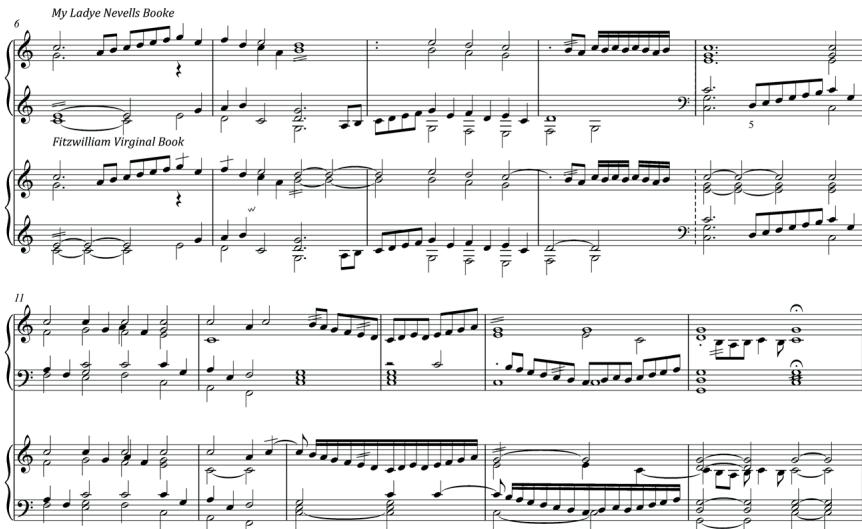
中文讲解
这是谱例 2 的图注,标记为 p.48 上的一则乐谱比较,对象是 Byrd 的 C 大调第二幻想曲(编号 BK25)第 6 至 15 小节。作者把同一段音乐在两部重要英国古钢琴手稿——《My Ladye Nevells Booke》(1591 年左右由 Nevell 夫人抄录的键盘曲集)与《The Fitzwilliam Virginal Book》(由 Francis Tregian 等抄录的大型维吉纳曲集)——中的不同版本并置,使读者可以直接比对笔法、装饰音和分句选择。由于本章主旨在于讨论早期键盘音乐的“节拍/速度”解释问题,作者特意挑选 Byrd 幻想曲这种以模仿起头、随后进入较快音流化段落的结构,作为对照证据之一。脚注 23 将随后提供两本的精确谱位与卷号。该段尚无正文叙述,复述图注即可。
补充说明
原文以图片占位符方式呈现,具体音符需查看原图;本图注仅交代谱例来源与对照关系。脚注 23 见 P0322。
第2段(P0321)
原文复述
A literal interpretation with a more or less steady, unchanging beat seems very improbable in two of Claudio Merulo’s toccatas preserved in the so-called Turin Tablature. Copied between 1637 and 1640 and notated in ’new German organ tablature’, these are believed to be primitive versions, perhaps from as early as 1567, of toccatas published in 1598 and 1604 respectively. The large collection in Turin contains both versions of these two toccatas, the earlier versions having been copied from an unknown source and the later ones from Merulo’s printed books of toccatas. Besides many differences in the passagework, the first of these toccatas, no. 18 in the manuscript and no. 8 in the 1598 print (see Ex. 3), evidences a revision that is suggestive of a tempo change between sections. The earlier version in Turin includes a short ricercar-like section notated traditionally in minims. While this section was later removed, the transition to the subsequent section remained, albeit with the quaver figuration changed into semiquavers. It thus seems likely that the imitative section in long note values and the subsequent transition, as notated in the earlier version, were intended to be played at a faster tempo than the rest.
中文讲解
本段是本小节论证的脊柱。作者先用 Merulo(梅鲁洛)保存于所谓“都灵塔布拉图谱”(Turin Tablature,介于 1637–1640 年抄写)中的两首托卡塔,反驳“通篇节拍稳定不变”的字面解释。关键史实链:都灵抄本据信保存了早至约 1567 年的“原始版”,与 1598 年、1604 年正式印行的版本并行存在;前者据某未知来源,后者据印刷版转抄。通过比对手稿第 18 首(印刷版第 8 首,见 Ex. 3),作者指出:早期版含一段以二全音符(minims)记谱、风格类似 ricercar(里切卡塔)的小型模仿段;此段在印刷版中被删除,但过渡段却被保留下来,只是把八分音符(quaver)的音型改写成了十六分音符(semiquavers)。如果作者认为早期版的模仿段用长音符只是为了清晰表示“主题”,而十六分过渡段本质比八分过渡段更快,那么该模仿段及其后接的过渡段,必须演奏得比其他部分更快。换言之,作曲家本人用音符时值变化暗示了段间速度切换——这正是作者试图用版本比较树立的核心证据。同样需要切记:作者的语气是“it seems likely”,是推论而不是定论,为下一段进一步证据留出空间。
补充说明
Turin Tablature 中的「新德意志管风琴塔布拉谱」是一种字母/符号记谱体系,与意大利常见的五线谱记谱在节奏计量上不同;该塔布拉谱是不分小节的(unbarred),这一点在脚注 24(P0327/P0330)中将再次出现。
第3段(P0322)
原文复述
- My Ladye Nevells Booke, GB-Lbl MS Mus. 1591, no. 36, fols. 161r–6r, at 161r f., and The Fitzwilliam Virginal Book, GB-Cfm Mus. MS 168, no. 103, 192–4, at 192.
中文讲解
脚注 23 给出谱例 2 所依据的两部英国古钢琴手稿的卷号、藏地编号与具体谱位:London, British Library 的 MS Mus. 1591(My Ladye Nevells Booke)第 36 号,第 161r–166r 叶,其中乐谱摘取自 161r 及其下一叶;Cambridge, Fitzwilliam Museum 的 Mus. MS 168(The Fitzwilliam Virginal Book)第 103 号,乐谱摘要见第 192–194 页其中第 192 页。这类藏地编号与谱位是版本比较论文的必要追溯信息,让读者能据此查证作者比较的具体分句位置。
第4段(P0323)
原文复述
[第 49 页图像或乐谱示例;内嵌图像数据已省略。]
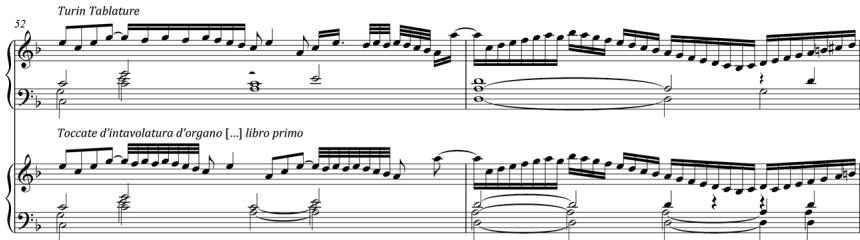
中文讲解
p.49 上的一则占位图像(无图注)。结合上下文(P0321 指向 Ex. 3,P0326 才是 Ex. 3 的正式图注),本占位很可能是页内图形元素之一,但仅凭占位无法确定其角色。出于忠实原则,复述其版面属性,不臆测内容。
补充说明
需查阅原图以确定其是否属于 Ex. 3 内部的某一截选或独立的缩略谱例。
第5段(P0324)
原文复述
[第 49 页图像或乐谱示例;内嵌图像数据已省略。]
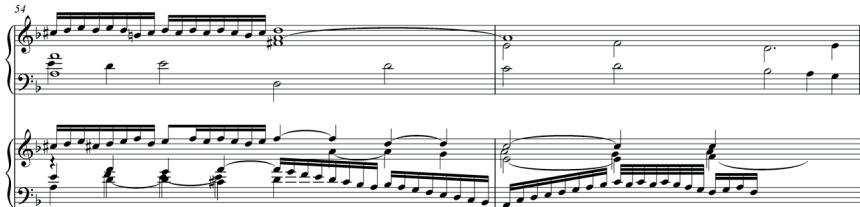
中文讲解
p.49 上的另一则占位图像。处于谱例 3 周围,可能为 Ex. 3 中的某一截选乐谱片段。仅复述位置与状态。
第6段(P0325)
原文复述
[第 49 页图像或乐谱示例;内嵌图像数据已省略。]
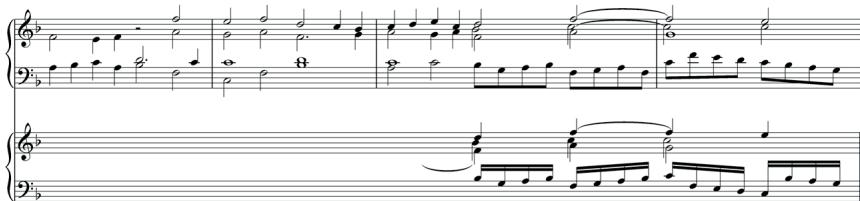
中文讲解
p.49 上的第三则占位图像。与 P0323、P0324 同列,可能是 Ex. 3 中的进一步截选。如需判断其具体内容,应回到原书查阅。
第7段(P0326)
原文复述
Example 3: Comparison of Claudio Merulo, Toccata di Ms. Claudio, no. 18, from the Turin Tablature, and Quarto Tuono: Toccata Ottava, from Toccate d’intavolatura d’organo […] libro primo, bars 52–57. (Footnote 24 attached to this example.)
中文讲解
这是谱例 3 的图注。比较对象是都灵塔布拉图谱里的 Merulo《Toccata di Ms. Claudio》手稿第 18 首,与 1598 年威尼斯 Simone Verovio 出版的《Toccate d’intavolatura d’organo, libro primo》中第四调(Tono Quarto)的 Toccata Ottava(第八号托卡塔),具体取第 52–57 小节。所选正是一段能够显示“过渡段由八分音符改写为十六分音符”的位置——这一改写是 P0321 推论“段间可能存在速度切换”的关键证据。谱例 3 是本段论证赖以建立的视觉支撑。
补充说明
无额外补充。脚注 24 见 P0327–P0330。
第8段(P0327)
原文复述
- I-Tn, Fondo Foà Giordano, Giordano 2, no. 18, 44–7, at 45–7, and Toccate d’intavolatura d’organo […] libro primo (Venice: Simone Verovio, 1598), 33–8, at 37 (online: https://mdz-nbn-resolving.de/details:bsb00094272, accessed 27 July 2022). The bar numbers correspond to the bars in the print, since the Turin Tablature is unbarred. For complete comparative transcriptions of both of Merulo’s toccatas discussed here see Robert Floyd Judd, ‘The use of notational
中文讲解
脚注 24 的前半段,对应谱例 3 的两件史料:都灵国家图书馆(I-Tn)Fondo Foà–Giordano 系列的 Giordano 2 号抄本第 18 首第 44–47 页其中 45–47 页,以及 1598 年威尼斯 Simone Verovio 印刷的《Toccate d’intavolatura d’organo, libro primo》第 33–38 页其中第 37 页(同时附慕尼黑数字化中心 MDZ 在线访问链接及 2022 年 7 月 27 日访问日期)。特别重要的一句是“bar numbers correspond to the bars in the print, since the Turin Tablature is unbarred”:因为都灵塔布拉图谱本身不划分小节,作者在 Ex. 3 中标注的小节号只能对齐印刷版,所以在引用塔布拉图谱时必须留意这是“移植过来的”度量。这一说明对方法学很关键,提醒读者不要把现代小节线当成塔布拉图谱自身的结构。脚注的最后一句未完结,将在 P0330 续完。
补充说明
无额外补充;MDZ 链接与 JSTOR 类电子资源类似,是研究十六世纪意大利键盘音乐的常用检索源。
第9段(P0328)
原文复述
The situation is clearer still in the next toccata, no. 19 in the Turin Tablature and no. 8 in Merulo’s second book of toccatas. As shown in Ex. 4, the imitative section starting at b. 45 is retained in the 1604 print, albeit in a revised version with halved note values. All imitative sections in Merulo’s printed toccatas are notated in this manner, in crotchets rather than minims, producing an overall smaller range of note values and less rhythmic contrast between sections. Unless the two surviving versions were intended to sound very different in terms of tempo, Merulo must have expected considerable tempo changes at the transitions from one section to another in at least one of these versions.
中文讲解
本段用第二首托卡塔——都灵塔布拉图谱第 19 首,对应 1604 年印刷的第二册托卡塔集中第 8 首——把论证推得比 P0321 更直接。该模仿段以 b. 45 为起点,在印刷版中并未删除,只是把音符时值对半地减薄(halved note values),即由二全音符层级压缩到四分音符(crotchet)层级。作者随即给出一项普遍观察:Merulo 印行版里所有模仿段都是以四分音符而非二全音符记写的,因此与早期手稿相比,印行版的音符时值分布范围明显缩小,段与段之间的“音符密度对比”也减弱了。这一点很关键:如果两个版本并非在“听起来就完全是不同作品”的意义上被故意造成差别,那么可以推断,Merulo 自己在某一套版本里就预设了“段与段之间存在明显的速度切换”来恢复应有的对照感。逻辑形式是反向论证:作者假设两种解释并消去其中一个,剩下的唯一可能就是“必须存在段间速度变化”。
补充说明
“halved note values”指“音符时值整体减半”,而非个别音符的局部缩短;这对判断节奏层级缩小至关重要。
第10段(P0329)
原文复述
We can also consider the possibility that Merulo’s idea of the degree of contrast between sections evolved over time, and that rapid passages were later played more slowly, while imitative sections became faster, than when he first wrote down the toccatas. Such passages could, for example, have slowed down if the harpsichord was exchanged for the organ. One detail that would support the idea of a slower tempo for the semiquaver passages in the later version is the intensification of the ornamentation and the introduction of occasional demisemiquavers. Moreover, both versions of the imitative section contain trills in semiquavers. Whereas the surrounding notes are halved in the print, many of these trills remain written as semiquavers, only with fewer repercussions, and solely the short tremoletti are transformed into demisemiquavers. It is more likely, however, that the additional scales and repercussions in demisemiquavers found in the print fall within the scope of the original performance practice and that similar florid passages could have been improvised by expert players. It has been suggested that the early versions of these toccatas may have been copied from an early print, announced in 1567 and now lost, and that the intensification of ornamentation was enabled by the change in printing technology from movable type to copper plates.
中文讲解
本段是论证中的“再讨论”环节,承认还有另一种解释:Merulo 本人对“段间对比度”的设想可能随时间改变——快速段后来演奏得更慢,模仿段则更快。例如,把羽管键琴(harpsichord)换成管风琴(organ)就足以使快速音流减慢。支持“十六分音符段应慢下来”的细节:装饰音密度增强,并偶尔引入三十二分音符(demisemiquavers)。作者随后把装饰音分布做了一次更细的对比:两个版本的模仿段都含有以十六分音符记写的颤音(trills),印刷版虽把周围音符对半化,许多颤音却仍以十六分音符形式记写,只是减少了回响音(repercussions),短小的颤音类(tremoletti)才转写成三十二分音符。作者倾向认为:印刷版里新增的三十二分音符音阶与回响,落在原始演奏实践的范围内,熟练演奏家本可能即兴演奏类似的花彩(florid passages)。最后介绍一种假说:早期版可能抄自一份 1567 年宣告但现已失传的早期印刷本,装饰增强由活字印刷改换成铜版印刷的技术变革所促成。这一技术史线索,意在为“段间速度变化”提供另一个独立的解释框架,让作者不必把所有速度变化都归因于作曲家意图。
补充说明
本段内部层级清晰:先立“替代假说”(段间对比度演化),再给支持细节(装饰增强、三十二分音符),再做反驳(装饰增量属于即兴实践范围),最后提出印刷技术史假说。读者宜注意作者选择“更可能”的措辞——他承认两种解释皆有空间,但倾向于把装饰增量归入演奏实践而非作曲家预设的速度切换。
第11段(P0330)
原文复述
formats at the keyboard: A study of printed sources of keyboard music in Spain and Italy c. 1500–1700, selected manuscript sources including music by Claudio Merulo, and contemporary writings concerning notations’, 2 vols., PhD thesis, University of Oxford, 1989, i, 239–54 and 258–69.
中文讲解
本项是脚注 24 的续完部分,承接 P0327 末尾被截断的引用,给出 Robert Floyd Judd 牛津大学 1989 年博士论文的全名与卷次论文信息:题为《键盘上音符格式的运用:约 1500–1700 年西班牙与意大利印刷键盘音乐乐谱、含 Merulo 作品的选定手稿以及当代有关记谱的著述之研究》,两卷本,本文所引两首托卡塔的比较完整转写见第 i 卷 239–254 与 258–269 页。这条书目为读者提供了欲自行核对两首 Merulo 托卡塔“完整对照转写”时可直接调取的二手资源。
第12段(P0331)
原文复述
- See Luigi Collarile, ‘Claudio Merulo nell’intavolatura tedesca di Torino: il problema delle fonti’, in: In organo pleno: Festschrift für Jean-Claude Zehnder zum 65. Geburtstag, ed. Luigi Collarile and Alexandra Nigito (Bern, 2007), 89–112, at 99–103.
中文讲解
脚注 25,呼应 P0329 末尾提出的“1567 年宣告已失的早期印刷本”与“活字/铜版印刷技术变化促成装饰增加”两种说法,提示读者参阅 Luigi Collarile 的论文《都灵德意志塔布拉图谱中的 Claudio Merulo:原始史料问题》,发表于 2007 年伯尔尼出版的 Festschrift《In organo pleno》——庆祝 Jean-Claude Zehnder 六十五寿辰的论文集,Collarile 与 Nigito 合作编辑,本文第 89–112 页其中第 99–103 页。这一脚注把“技术史导致装饰增强”的假说归之于既有学术成果,而非作者本人的独立推测。
脚注 / 边栏 / 图表 / 附加信息(如有)
本节附加材料主要由两类构成:
- 谱例(Ex. 2–Ex. 3)。Ex. 2 比较 Byrd 幻想曲 C2 BK25 第 6–15 小节在《My Ladye Nevells Booke》与《Fitzwilliam Virginal Book》中的版本;Ex. 3 比较 Merulo《Toccata di Ms. Claudio》第 18 首(都灵塔布拉图谱)与 1598 年 Verovio 印刷版《Toccata Ottava》的对应段落(第 52–57 小节)。谱例的功能是:让读者直接看到“模仿段与过渡段的音符时值差异”,支撑作者“段间速度变化”的反推。
- 脚注 23–25。脚注 23 给出英国两部古钢琴手稿的卷号、藏地编号与具体叶/页码;脚注 24 给出意大利抄本与 1598 印刷版的谱位、MDZ 数字化访问链接及关键方法学说明(“小节号对齐印刷版,因都灵塔布拉图谱不分小节”),并指向 Judd 1989 年牛津博士论文的完整对照转写;脚注 25 把 P0329 末尾的“1567 年失传印刷本”和“活字转铜版促成装饰增加”之说归功于 Collarile 2007 年论文的页码 99–103。 三个脚注共同支撑本节的方法学(版本比对、可定位的二手转写、可定位的技术史背景)。
💡 本节核心要点
- 作者用都灵塔布拉图谱与 1598/1604 印刷版的对峙,反驳“通篇节拍稳定不变”的字面解释:早期版模仿段以二全音符记写并配有八分音符过渡,印刷版要么删除该段要么把音符对半化,意味着段间需要速度切换才能维持原有对照感。
- 第二首托卡塔(手稿 no.19 / 第二册印刷版 no.8)进一步加固论证:印刷版中模仿段保留但全部减为四分音符,使整体音符时值范围缩小;若两个版本并非被作曲家刻意写为不同作品,则必须预设段间明显速度变化。
- 作者允诺存在“替代解释”:Merulo 对段间对比度的设想可能随时间演化,快速段可能因乐器从羽管键琴换为管风琴而减慢;他还区分了“由装饰增强暗示的慢速”与“由演奏实践允许的花彩装饰”两类证据。
- 支撑论证的关键细节:后期版引入三十二分音符的颤音回响与音阶、被对半化的周围音符、而部分颤音保持十六分音符——装饰增量更可能落在演奏实践范围内,而非作曲家预设的速度变化。
- 方法学提醒:都灵塔布拉图谱本身不分小节,谱例小节号只能对齐印刷版的度量,这是版本比较中必须显式说明的技术前提。
🔑 关键术语
- Turin Tablature / 都灵塔布拉图谱:指 1637–1640 年间抄写的、藏于都灵国家图书馆的键盘音乐手稿(Fondo Foà–Giordano, Giordano 2),记谱方式为新德意志管风琴塔布拉谱,不分小节;本节用以比较 Merulo 早至约 1567 年的原始托卡塔。
- New German organ tablature / 新德意志管风琴塔布拉谱:以字母与符号表示音高与节奏的管风琴记谱体系,与意大利常用的五线谱记谱对照使用;其不分小节的特点要求作者把现代小节线对齐到印刷版。
- Ricercar-like section / 里切卡塔风格段:以主题模仿、长音符记写、风格接近里切卡塔的小型段落;本节中出现在早期版 Merulo 托卡塔中,用二全音符记写以保持模仿清晰度。
- Halved note values / 音符时值整体减半:Merulo 在印刷版中系统地把早期版的音符时值对半化(如二全音符→四分音符、八分音符→十六分音符),从而缩小全曲的节奏层级跨度。
- Tremoletti / 小颤音:短小的颤音类装饰,在后期版中转写成三十二分音符;其与仍保持十六分音符记写的较长颤音形成对比,是作者判断装饰增量属于演奏实践范围而非作曲家预设速度变化的关键证据。
- Demisemiquaver / 三十二分音符:比十六分音符更短的音符;后期版偶尔引入的极短音符,作者据此论证“十六分音符段应在后期版中放慢”。
- Movable type vs copper plates / 活字 vs 铜版印刷:本节借 Collarile 之论,把装饰强化归因于印刷工艺由活字改为铜版的容量变化,而非作曲家本意;这是 P0329 末尾替代解释的技术史支撑。