目录
C1 Practical Application of Meantone Temperament to Mudarra’s Music
- S1 [描述性拆分] Numerical and Theoretical Basis for Mudarra’s Unequal Temperament
- 页码:1-1
- S2 [描述性拆分] Fretting Patterns for the Most Common Imaginary Tunings
- 页码:2-4
- S3 [描述性拆分] Practical Workability and Meanstone versus Pythagorean Evidence
- 页码:7-8
- S4 [描述性拆分] Bermudo’s Pythagorean System and Possible Confusion with Meanstone
- 页码:8-9
- S5 [描述性拆分] Bermudo’s Vihuela Tuning Instructions Compared with Milán’s
- 页码:9-10
- S6 [描述性拆分] Bermudo’s Vihuela in G Diagram as Visual Confusion Between Meanstone and Pythagorean
- 页码:10-12
- S7 [描述性拆分] Practical Tuning Procedure for a Meanstone Vihuela
- 页码:12-14
- S8 [描述性拆分] Adjusting the Temperament and Dombois’s Solutions for Out-of-Tune Notes
- 页码:14-16
- S9 [描述性拆分] Melodic and Delayed-Harmonic Uses of Wrong Notes
- 页码:16-19
- S10 [描述性拆分] Genuinely Harmonic Wrong Notes and Octave Clashes
- 页码:19-21
C2 Part Two/ Chapter One A Critical Examination of Current Scholarly Views on Vihuela Stringing
- S11 [描述性拆分] Introduction: The Unverified Scholarly Consensus on Vihuela Bass Stringing
- 页码:22-23
C3 Weaknesses in the Current Proofs of Unison Stringing
- S12 [描述性拆分] Overview of Ward’s 1953 Dissertation and Its Three Arguments
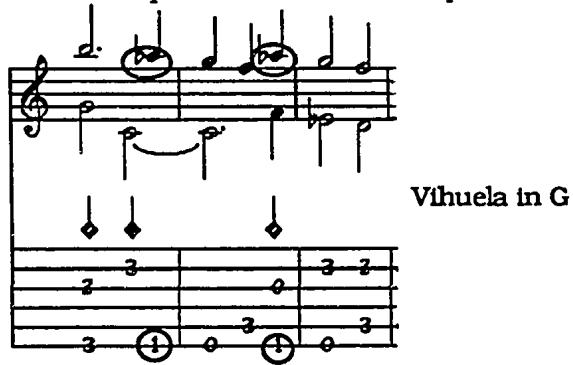
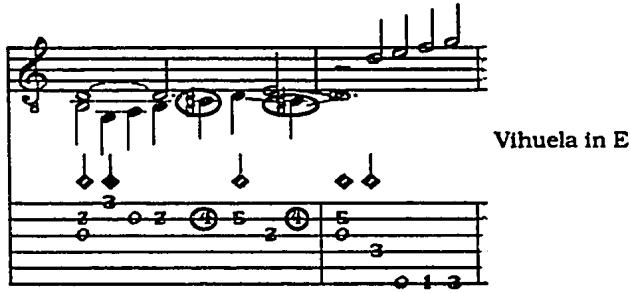
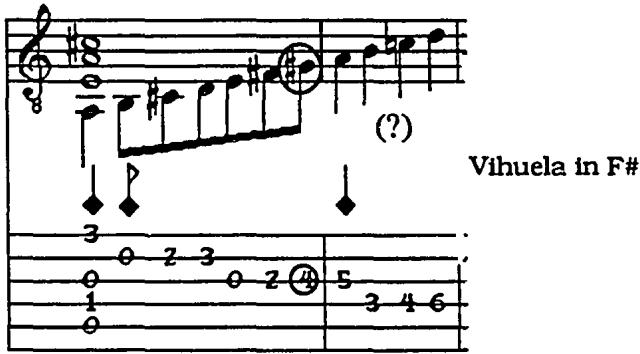
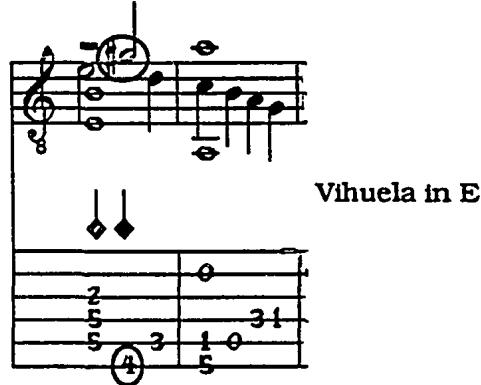
- 页码:24-25
- S13 [描述性拆分] Re-Examination of Pisador’s Tuning Instructions
- 页码:25-29
- S14 [描述性拆分] Re-Examination of Dentice and the Covarrubias Tesoro Definition
- 页码:29-34
C4 Other Proofs of Unison Stringing
- S15 [描述性拆分] Fuenllana’s Divided Course and the Doubled First-Course Argument
- 页码:34-38
C5 Contrapuntal Complexity as a Rationale for Unison Stringing
- S16 [描述性拆分] Pujol’s Argument and Its Limits for the Vihuela Repertoire
- 页码:39-41
C6 Summary
- S17 [描述性拆分] Reassessment of the Evidence for Unison Vihuela Bass Stringing
- 页码:41-42
C7 Part Two/ Chapter Two Arguments in Favor of Octave-Stringing
- S18 [描述性拆分] Literary Evidence: Bermudo’s Guitarra a los Nuevos Comparison
- 页码:43-44
- S19 [描述性拆分] Iconography / Vihuela and Viola da Mano: Limitations of the Visual Evidence
- 页码:45-46
- S20 [描述性拆分] Equating the Vihuela and the Viola da Mano
- 页码:46-49
- S21 [描述性拆分] Reconciling Iconographic and Literary Evidence Across the Sixteenth Century
- 页码:50-50
S1 [描述性拆分] Numerical and Theoretical Basis for Mudarra’s Unequal Temperament
第1段(P0001)
原文复述
Less than 52% of the pieces are consistent and the percentage of consistent pieces in the Tres Libros is 48%. At least 10% of the pieces in El Maestro present significant difficulties for a meantone or Pythagorean fretting (maximal inconsistency), versus no more than 9.7% in Tres Libros. Given these roughly equal numbers, it seems safe to assert that the purely numerical evidence is as strong for Mudarra’s use of a fretting other than equal temperament as it is for Luis Milán.
中文讲解
本段承接前文的统计比较,继续以数字证据为Mudarra使用非平均律的假设辩护。它给出两组关键指标:Tres Libros中"一致"曲目占48%,El Maestro中不足52%;在"最大不一致"层面,El Maestro至少10%,Tres Libro则不超过9.7%。作者没有简单声称Mudarra的数字更优,而是强调两组数字"大致相当"(roughly equal),从而把问题从"哪个作曲家更倾向于非平均律"转移到"两位作曲家使用非平均律的数字证据强度旗鼓相当"。这一比较策略很重要:它表明对Mudarra的考察并不是依赖证据更弱、需要特殊豁免的对象,而是与Milán处于同一证据等级。由此本节真正要做的就是补足Mudarra一侧的非数字论证(下一段开始的模式分析)。阅读时需注意,“consistent pieces"和"maximal inconsistency"是技术术语,前者指琴品位置在乐曲中能自洽地服务于升号与降号两种功能,后者指同一品的使用在升/降号之间产生明显冲突、使得mean-tone或毕达哥拉斯品位的安排难以成立。
补充说明
El Maestro和Tres Libros分别是Luis Milán(1535/1536)和Alonso de Mudarra(1546)的维韦尔琴曲集,前文段落已建立二者的对比,本段的数字正是延续这一对比。
第2段(P0002)
原文复述
Despite the numerical evidence, it would be unlikely that Mudarra used an unequal temperament if frets had to be moved constantly in order to achieve a workable result. The next step in verifying the likelihood of an unequal temperament is to see if only a small number of standard patterns of fretting are discernable, and if these patterns are consistent within either vihuela “tunings” or within certain modes.
中文讲解
本段明确承认一个反例:仅凭数字一致不能证明Mudarra真的在使用某种非平均律,因为还有一种可能是,他每首曲子都要重新调整品位,那样在实际演奏中既费时又不切实际。这是一个"奥卡姆剃刀"式的检验:如果非平均律是真实的音乐实践,那它应当收敛为少数可重复使用的标准调品模式,而不是每曲即兴移动。作者由此提出下一阶段的判据——观察是否存在"少量标准调品模式”,并且这些模式在某一类维韦尔琴"调弦法"或某一种教会调式中保持稳定。这就把论证从"数字上不一致"推进到"系统上可复用":可复用性是历史乐器研究里区分真实实践与事后合理化重构的关键标尺。读者需注意"tunings"加引号,是因为这些调弦法的称谓(如"想象调弦法")带有学术约定性质,作者刻意保持距离。
补充说明
“mode"在十六世纪维韦尔琴语境中既可指教会调式(church mode),也可泛指乐曲所属的调性类别;本段强调模式在调式层面也保持一致,暗示非平均律不是泛音逻辑的偶然,而是与调性框架相关联。
第3段(P0003)
原文复述
The ideal pattern of fret placement is obvious when a piece has no conflicts between sharps and flats on problematic frets, but in the few pieces where a fret is used in roughly equal numbers for both functions, certain priorities must be established. Musical common sense implies that the least noticeable use of an out-of-tune note would be a melodic use in a quick run. Use of an out-of-tune note in a chord or interval is more noticeable, and the occurrence of an out-of-tune octave would be particularly irritating. Probably the least likely use of an out-of-tune note would be in the final chord of a piece.
中文讲解
本段解释了当数字证据无法自动给出唯一解时,研究者如何用"音乐常识"来打破歧义,确立同一品在升/降两种功能之间发生冲突时的优先顺序。作者构建了一个从"几乎察觉不到"到"几乎不可能出现"的可察觉性等级:快速跑动中的旋律音 → 和弦或音程中的音 → 八度 → 结束和弦。这个等级起两个作用:第一,给判读乐谱提供一个可操作的规则——若一个品在跑动中和在终止和弦中各出现若干次,研究者会优先选择让跑动中的音"失真”,让终止和弦保持纯净;第二,使非平均律的解读具有可证伪性,因为这意味着某些情形(例如结束和弦上的严重失真八度)按假设应极为罕见,若在曲谱中频繁出现,则反而会动摇而非支持该假设。这是一种典型的"假设—预测—验证"结构,需要注意所谓"musical common sense"并非主观审美,而是基于人耳对失谐音的敏感度差异这一听觉心理学常识。
第4段(P0004)
原文复述
When these factors as well as the overall prevalence of sharps and flats on a particular fret are taken into account, fretting patterns for an unequal temperament can be hypothesized for Mudarra’s music that are consistent and workable in terms of the “tuning” and mode of each individual piece. Due to Mudarra’s greater use of “imaginary” tunings a workable system for use in the Tres Libros initially appears more complex than the fretting changes needed for Milán’s music, but the actual number of patterns required is small and their use can be consistently codified according to tuning and/or mode.
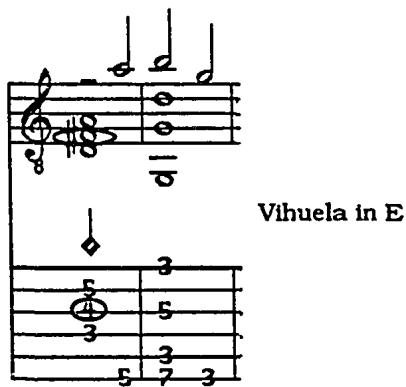
中文讲解
本段是整个小节的收束,把前文建立的两条判据——“品上的升/降总体频率"和"按可察觉性排序的使用优先级”——合成为一个可操作的工作方法:用这些原则可以为Mudarra的每首作品分别假设一套非平均律调品方案,这些方案在每首作品的"调弦法"和调式范围内都是自洽且可演奏的。作者还提前回应一个潜在质疑:因为Mudarra比Milán更广泛地使用"想象调弦法",其表面复杂度更高,初看似乎体系更繁复。但他指出,关键在于模式"实际数量小",而且使用方式可以按调弦法和/或调式系统地编纂。这里运用的论证策略是"表面复杂度 vs. 底层模式数"的区分——这正是为P0002中提出的"少量可复用标准模式"标准提供正面的经验证据。读者需要注意本句"can be hypothesized"的限定:作者宣布的是方法论可行性,而非历史事实的最终证明。
补充说明
“imaginary tunings"指调弦超出常规六对同名弦的维韦尔琴配置,是十六世纪西班牙维韦尔琴文献中常见但后世演奏较少的特殊调弦方式,作者用引号提示其术语属性。
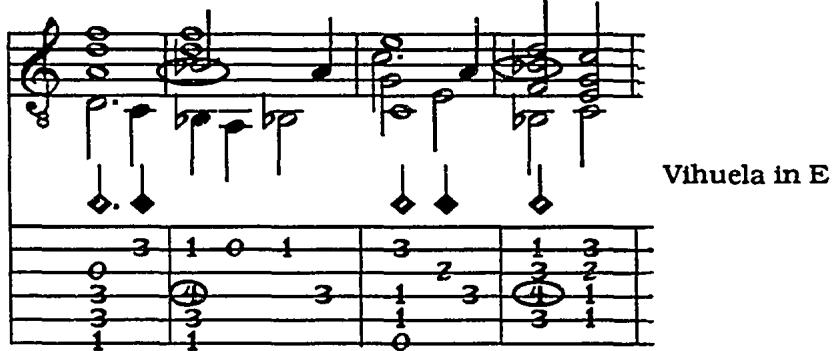
脚注 / 边栏 / 图表 / 附加信息(如有)
本节位于第1页,由P0001—P0004四段构成,标题为"Numerical and Theoretical Basis for Mudarra’s Unequal Temperament”。文中涉及两部原始文献——Luis Milán的《El Maestro》(1535/1536)与Alonso de Mudarra的《Tres Libros de Música en Cifra para Vihuela》(1546),二者均为十六世纪西班牙维韦尔琴曲集的代表性文献,但本节并未直接引用其内部乐谱,而是基于前文已建立的统计基线进行论证。本节无脚注、图表或边栏内容,所有"附加证据"均通过文字叙述完成。
💡 本节核心要点
- 仅靠数字上一致性尚不足以支持Mudarra使用非平均律的假设,因为随时调整品位理论上也能产生同样的统计表现。
- 真正的判据是可复用性:是否存在少数标准调品模式,且这些模式能稳定对应于维韦尔琴的调弦法或教会调式。
- 对于升/降号功能冲突的品位,需要按失谐音的"可察觉性等级"——快速旋律音 > 和弦/音程音 > 八度 > 终止和弦——来建立优先级,使解读具有可证伪性。
- 综合"频率"与"可察觉性"两条判据,可以为Mudarra每首作品分别假设一套自洽、可演奏的非平均律调品方案。
- Tres Libros由于更广泛使用"想象调弦法",表面看比Milán的曲目更复杂,但底层所需的模式数量仍有限,并能按调弦法和/或调式系统地编纂——这正回应了上一段的"少量可复用模式"标准。
🔑 关键术语
- maximal inconsistency:在本节中指同一品在升号和降号两种功能之间产生明显冲突,使得mean-tone或毕达哥拉斯品位的安排难以成立;El Maestro中至少10%乐曲达到此标准,Tres Libro则不超过9.7%。
- fretting pattern:对维韦尔琴品位为非平均律所做的系统化重新安排方案;本节要求这种方案具备"少数、可复用、按调弦法或调式内聚"的特征,否则不构成支持非平均律使用的证据。
- imaginary tuning:超出常规维韦尔琴六对同名弦配置的特殊调弦方式,Mudarra的使用比例高于Milán;是导致Tres Libro表面调品复杂度更高的直接原因,也是本节需要特别解释的对象。
- musical common sense (可察觉性等级):用于在升/降功能冲突时确立优先级的一套音乐听觉常识:失谐音在快速旋律中最不易察觉,在终止和弦中几乎不可能被接受;八度失谐特别刺耳。它在本节中作为非数字判据,与"频率判据"一起构成方法论的核心。
S2 [描述性拆分] Fretting Patterns for the Most Common Imaginary Tunings
第1段(P0005)
原文复述
The same fretting scheme — understood in terms of the order of diatonic and chromatic semitones and therefore the resulting fret distances — applies consistently across the Tres Libros for four of the “imaginary” tunings. These four “tunings” are Vihuela in G, Vihuela in A, Vihuela in D, and Vihuela in E (for modes 3 and 4), and they are also the most commonly used tunings in Mudarra’s music.
中文讲解
本段的核心主张是:在《Tres Libros》(《三书》)中,有四种"虚拟调弦"共享完全相同的品格排列方案。这里"品格排列方案"指的是琴品之间音程的排列次序——即哪些品之间是大二度的全音(diatonic semitone,此处指全音之间的自然半音)、哪些品之间是小二度的半音(chromatic semitone,此处指变化音之间的变化半音)——这种次序直接决定了相邻品之间的物理距离。一旦四种调弦都遵循同一组"半音/全音次序与品距关系",演奏者就可以在不同调弦下沿用同一套左手把位记忆。作者把这些调弦称为"imaginary tunings"(“想象中的"或"理论上存在但实际琴上不一定能完全奏出"的调弦),并指出它们是 Mudarra 音乐中最常用的四种:G 调维韦拉、A 调维韦拉、D 调维韦拉,以及 E 调维韦拉下的第 3、第 4 调式。本段在论证链中的作用是提出一个统一原则——即同一套品格布局被反复复用,从而为下一段具体分析"G 调维韦拉品格图中出现的奇怪特征为何被作者接受"提供背景。
补充说明
“Diatonic semitone"与"chromatic semitone"在这里并不直接对应自然半音与变化半音的常规含义,而是 Mudarra 文献讨论中用来区分两类相邻音程的术语:前者指同音列内相邻音级之间的半音(如 E–F、B–C),后者指需要升/降号才能产生的半音(如 F–F♯、C–C♯)。这一区分决定了品格之间的宽窄分布。
第2段(P0006)
原文复述
When this fretting pattern is applied to the vihuela in G, it displays features that can be read as additional evidence for a meantone fretting. The most striking of these features is the total absence of an in-tune G♯ anywhere on the fingerboard. A second unexpected feature is the choice of a “flat” position for the sixth fret, a placement that leaves that fret with only one “usable” note. The most logical explanation for Mudarra’s adopting this slightly impractical fretting for the vihuela in G is one of convenience: it permits him to employ exactly the same fretting pattern for the other three most commonly used “tunings.”
中文讲解
本段把上一段提出的统一品格方案落到 G 调维韦拉上做"反向检验”,并指出这个方案在 G 调语境下其实是有代价的——这些代价可以被理解为作者支持 Mudarra 使用"平均律调音倾向品格(meantone fretting)“的额外证据。
第一个反常特征是"整个指板上找不到一个音准合格的 G♯"。在一般的十二平均律或纯律品格上,G♯(或 A♭)应当出现在某个品上,但此处按 Mudarra 的品格方案,无论在哪一品按出 G♯,其音高都会与理想值有可感知的偏差,因此作者判定"in-tune G♯“不存在。这暗示品格之间的间距并非严格的等距十二平均律,而是遵循某种"全音被等分"的中庸全音律思路。
第二个反常特征是第六品被放在一个"flat"位置上——即该品与相邻品之间的音程关系偏向"flat”(偏低或偏向降号方向)——导致第六品上只有一个音是"可用的”,其余按出来的音要么不准、要么只是其他品位的重复。换句话说,从演奏角度看第六品几乎是"浪费"的。
作者给出的最终解释是:Mudarra 之所以愿意容忍 G 调维韦拉上的这些不便利,是出于"便利性"考虑——只要沿用这一套品格布局,他就能把同样的指法立刻套用到 G、A、D、E(3、4 调式)这四种最常用的调弦上,不必为每种调弦重新设计品格。
本段在论证链中的作用是:先用 G 调上的"瑕疵"为 meantone fretting 增加间接证据,再用"牺牲一点实用性换取指法统一"这一务实动机,解释 Mudarra 为何接受这套在理论上有缺陷、但在实际演奏中最经济的品格系统。
补充说明
“Meantone fretting”(中庸全音律品格)是一种把五度缩窄(通常约为 1/6 同比尼玛音 syntonic comma)以换取大三度较纯的传统律制品格排列,其结果是大三度接近纯律大三度,但某些变化音(如 G♯)会偏离等程十二平均律的音高。
“Flat position"中的"flat"并非指"降号”,而是指该品处于相邻品格音程偏小或偏低的一侧,作者用此词暗示该品相对纯律或等程律而言"偏冷”,因此音的可用度受限。
“Usable note”(可用音)指在该品位上实际能弹出音准令人满意、可在音乐中使用的音。
第3段(P0007)
原文复述
The implied fretting patterns — again understood in terms of fret spacing — for two further “imaginary” tunings used in the Tres Libros, namely the vihuela in E (covering Modes 1, 2, and 5 through 8) and the vihuela in B, are likewise identical with respect to the order of chromatic and diatonic semitones.
中文讲解
本段把上一段的统一原则再向外推一步:在 P0005 列出的四种"最常用"调弦之外,《Tres Libros》中还出现了另外两种"imaginary tunings"——E 调维韦拉(涵盖调式 1、2 以及 5 至 8)和 B 调维韦拉;它们的品格间距所暗含的"半音与全音次序",同样与前面描述的那套品格方案完全一致。
这一句的关键意义在于:Mudarra 实际上并非只在一组调弦下使用统一的品格布局,而是把同一套"半音/全音次序"推广到了书中全部六种"imaginary tunings"。结合 P0005 已经说明的"四种最常用调弦共享同一品格方案",再考虑到 P0006 的"G 调品格方案存在理论瑕疵但出于便利仍被沿用",本段进一步指出:剩下两种较少使用的调弦也没有另起炉灶,而是继续沿用这一统一方案。这强化了作者的中心论点——Mudarra 的品格系统是高度统一且经过精心设计的,无论调弦或调式如何变化,演奏者面对的都是同一套指法规律。
需要注意:作者在此明确把"implied fretting patterns"(“暗示出来的"品格图案)与"fret spacing”(品距)画等号,也就是说 Mudarra 的文本并没有直接画出这些品格图,但是从乐谱中调弦与音程需求可以反推出它们彼此一致。
补充说明
“Modes 1, 2, 5–8"覆盖的是除"Modes 3 and 4"之外的全部教会调式,说明 E 调维韦拉实际上承担了《Tres Libros》中绝大多数调式的演奏任务,这进一步解释了为何统一品格方案对该调弦而言最为经济。
“Vihuela in B"是六种"imaginary tunings"中唯一一种在前两段没有被点名的,作者在此补足了对全套调弦的覆盖叙述。
脚注 / 边栏 / 图表 / 附加信息(如有)
本小节 P0005、P0006、P0007 三段中没有任何脚注、图表说明或边栏文字,作者的行文完全以正文段落推进论证;附加信息层面无额外材料需汇总。
💡 本节核心要点
- 《Tres Libros》中六种"imaginary tunings”(G、A、D、E 调含 Modes 3–4,以及另外 E 调 Modes 1、2、5–8 与 B 调)共享同一套以"半音/全音次序与品距"定义的品格方案。
- G 调维韦拉的品格方案存在两个反常特征——指板上完全没有音准合格的 G♯、第六品位置偏"flat"以至于只剩一个可用音——这两点都被作者解读为 meantone fretting 的间接证据。
- Mudarra 之所以接受 G 调上的这些轻微不便利,并非出于音响学考虑,而是出于演奏便利性:同一套品格图可直接套用于其他几种最常用的调弦与调式。
- 该统一品格方案的覆盖范围不仅限于"最常用"的四组调弦,还延伸至 E 调 Modes 1、2、5–8 与 B 调这两种较少出现的调弦,体现出 Mudarra 品格系统的高度一致性与系统性。
🔑 关键术语
- Imaginary tunings:“想象中的调弦”,指 Mudarra 在《Tres Libros》中使用但实际并不对应某一把真实存在的、专门为该调弦制作好品格的维韦拉的调弦方式;它们是"理论上调弦、实际演奏中通过指法规律实现"的调弦。
- Diatonic semitone / Chromatic semitone:在本节中分别指"自然半音”(同音列内相邻音级之间,如 E–F、B–C)与"变化半音"(需借助升降号产生的半音,如 F–F♯、C–C♯);它们的出现次序直接决定了品格的物理间距。
- Meantone fretting:“中庸全音律品格”,一种把纯五度略为缩窄以使大三度接近纯律的传统律制品格布局;本节中用以解释 G 调品格方案为何缺少音准合格的 G♯。
- Flat position (of a fret):“偏平(偏冷)位置”,指该品格相对等程律或纯律而言偏低于理想音高,或处于相邻品格音程偏小的一侧,作者借此说明第六品几乎无法按出可用音。
- Usable note:“可用音”,指在该品位上实际能弹出音准令人满意、可用于音乐演奏的音;本节中用来量化第六品因"flat 位置"而损失的可演奏性。
- Tres Libros:“三书”,指 Mudarra 的作品集,本节讨论的全部"imaginary tunings"及其品格方案均出自此书。
S3 [描述性拆分] Practical Workability and Meanstone versus Pythagorean Evidence
第1段(P0008)
原文复述
Because these frets are fixed, any adjustment of the variable frets between pieces can actually be done quickly by using the fixed frets as a reference for tuning by either unisons or octaves. Thus it can be seen that the use of an unequal temperament in Mudarra’s music does not require constant recalculations of fret placement between pieces, and would have been as workable in practice as in theory.
中文讲解
本段承接上一节关于固定品位(fixed frets)与可调品位(variable frets)并存的设计,回应一个潜在质疑:不平均律(unequal temperament)是否意味着每弹一首曲子都要重新计算品位位置?作者给出的回答是:因为存在固定品位,演奏者在换曲需要微调可调品位时,可以直接用固定品位作为参照,借助同度(unisons)或八度(octaves)来快速校音,无需每次从头推算。本段的核心主张是把理论可行性延伸到实践可操作性——不平均律在Mudarra的音乐中不仅理论上成立,操作上也同样可行。这是为后续关于Mudarra具体采用何种不平均律(meantone还是Pythagorean)的讨论扫除一个实践层面的障碍。
补充说明
同度(unisons)和八度(octaves)在律学上是纯五度/纯四度叠合后两端音的纯正关系,可作为调音参照点;本段所谓“快速调音”正是利用这两组纯正音程的稳定性。
第2段(P0009)
原文复述
While the above analysis points to Mudarra’s use of some fretting with uneven semitones, it does not settle the issue of whether he used meantone or Pythagorean temperament. Lindley was able to conclusively prove that Milán used meantone instead of Pythagorean tuning via Milán’s fret-moving instructions, but Mudarra’s book lacks any such clear-cut evidence. However, Enríquez de Valderrábano, whose book was published only a year after Mudarra’s, also gave an instruction for moving a fret that points to a meantone fretting. Before playing his “Fantasia sobre un Pleni,” Valderrábano instructs the player: “to lower the fourth fret a little towards the rose-hole,” which results in a raise in pitch. The fourth fret in this fantasy is used as a flat fret, so the direction points to Valderrábano’s use of meantone temperament, since in Pythagorean temperament a flat is pitched lower than a sharp. This literary evidence that one of Mudarra’s contemporaries as well as one of his predecessors used meantone
中文讲解
本段先承认前文的分析只能证明Mudarra使用了某种半音不平均的品位体系,但还不能确定是平均律不平均(meantone)还是毕达哥拉斯律(Pythagorean)。随后引入关键的旁证策略:Lindley曾通过Milán书中的调品位指示确证Milán使用的是meantone;Mudarra自己的书中没有这样的明确证据,但其同代人Valderrábano(出版只晚Mudarra一年)的书中却有相应证据——在《Fantasia sobre un Pleni》前,Valderrábano指示演奏者“把第四品格略向音孔(rose-hole)方向降低”,这实际等于把音升高。该曲中第四品格被当作降号品格(flat fret)使用,故“降品反而升音”恰好符合meantone中降音高于升音的逻辑;在Pythagorean律中,降音应低于升音。这一证据链从同代人和前人两端夹击meantone。本段的论证结构是“由Musarra自身证据缺失→转向同时代文献旁证”,从而为本节标题中的“Meanstone versus Pythagorean Evidence”提供间接但有说服力的论据。
补充说明
rose-hole指维韦拉琴(vihuela)音孔,琴弦在品格上的振动长度由品格到琴桥/音孔的距离决定;将品格向音孔方向移动等于缩短振动弦长,从而使该品位对应的音升高。这是理解本段论证细节所必需的琴体构造知识,原文虽未明说但指令本身已隐含此原理。
第3段(P0010)
原文复述
39 Valderrábano, f.74v ; trans in Lindley, “Luis Milán” 60.
中文讲解
本条为正文P0009中上标39对应的脚注,提供两条文献定位信息:原始文献为Valderrábano作品第74页背面(f.74v),英译出处为Lindley的“Luis Milán”一文第60页。该脚注属于来源类注释,证明正文所引Valderrábano调品位指示既有原始文献可查,也有英译研究著述可参照,增强了正文中meantone证据链的可核查性。
第4段(P0011)
原文复述
temperament implies strongly that Mudarra used this temperament as well.
中文讲解
本段接续P0009被脚注截断的句子,是该长段论证的收尾。作者据此得出推断性结论:因为Mudarra的前辈(如Milán)和同代人(如Valderrábano)都使用meantone,所以Mudarra本人也很可能采用meantone。需要注意的是,作者用“implies strongly”而非“proves”,表明这是一种基于语境和行业惯例的强推断而非直接证据——Mudarra自己的书中缺乏类似Valderrábano那样的明确指示,因此本节的论证最终停留在“强烈暗示”而非“确证”层面。这与开篇Lindley对Milán的“conclusively prove”形成对比,凸显了文献证据可获性的差异。
脚注 / 边栏 / 图表 / 附加信息(如有)
本小节包含一条脚注(P0010,即上标39),为来源类注释,指向Valderrábano原始出版物f.74v及Lindley的英译研究“Luis Milán”第60页,用以支撑正文P0009中所引的Valderrábano调品位指示。无图表、乐谱或边栏内容。
💡 本节核心要点
- Mudarra的维韦拉琴因同时具备固定品格与可调品格,演奏者可以借助固定品格通过同度或八度快速校音,使不平均律在实践中与在理论中同样可行。
- 前文已证明Mudarra采用某种半音不平均的品位体系,但仅凭其自身文献无法判定是meantone还是Pythagorean律。
- Lindley曾通过Milán书中的明确调品位指示确证Milán使用meantone,但Mudarra的书中缺少同等明确的直接证据。
- Mudarra的同代人Valderrábano(出版仅晚一年)在《Fantasia sobre un Pleni》中指示把第四品格向音孔方向下移,从而升音;由于该品格被作降号用,这一“降品反升音”符合meantone中降音高于升音的逻辑,而不符合Pythagorean律。
- 结合前人(Milán)与同代人(Valderrábano)皆使用meantone的旁证,作者“强烈暗示”Mudarra本人也采用meantone,但措辞仍为“implies strongly”而非确证。
🔑 关键术语
- fixed frets:维韦拉琴或类似弦乐器上位置固定的品格,作为调音参照点,本节中用以快速校准可调品格。
- variable frets:维韦拉琴上位置可由演奏者移动的品格,用以微调音高;不平均律的实践可操作性依赖于固定品格的参照作用。
- unequal temperament:不平均律,即各半音之间音分不等的律制总称;meantone和Pythagorean皆为其下的具体分支,是本节讨论的对象。
- meantone temperament:平均律式的纯五度窄化律制,其特点是降号音高于升号音;本节中通过Valderrábano的调品位方向被识别出来。
- Pythagorean temperament:以纯五度叠加为核心的律制,其降号音低于升号音;本节作为与meantone对照的备选律制出现。
- flat fret:被当作降号使用的品格;其音高方向决定所属律制——meantone中降号高于升号,Pythagorean中则相反。
- rose-hole:维韦拉琴上的音孔;品格向音孔方向移动等价于缩短有效弦长,从而使该品格对应音升高,是解读Valderrábano指令的物理前提。
S4 [描述性拆分] Bermudo’s Pythagorean System and Possible Confusion with Meanstone
第1段(P0012)
原文复述
On the other hand, Bermudo’s Declaración discusses two types of fretting schemes at some length, Pythagorean and his own new system for a fretting which approximates equal temperament. Meantone is neither mentioned nor described. 40
中文讲解
本段开始从“另一方面”切入,引出Bermudo在其《Declaración》中所讨论的两种品格(fretting)体系:一是毕达哥拉斯体系,二是他本人提出的、旨在逼近平均律的新体系。作者特别强调:mean tone(平均律风格的中庸全音律)在原文中既未被提及,也未被描述。这一观察本身就很重要——它说明如果Bermudo真的把mean tone当成了毕达哥拉斯体系,那并不是因为他没有接触其他体系,而是他在文本层面根本没有引入mean tone这一概念。脚注40为后文关于该论题的研究出处。
第2段(P0013)
原文复述
However, in his continued advocacy of a Pythagorean system, Bermudo is a rather isolated figure. Mark Lindley has pointed out that most other Renaissance theorists described keyboard instruments as being tuned in meantone temperament, while Bermudo nonetheless states that keyboard instruments are tuned by a Pythagorean system. Since both systems have unequal semitones and other surface similarities, Lindley is of the opinion that Bermudo (with a Renaissance theorist’s natural preference for anything associated with the Greek philosophers) simply confused the two systems. 41
中文讲解
本段提出全文的核心张力:Bermudo在毕达哥拉斯体系上的坚持是孤立的。Mark Lindley指出大多数文艺复兴理论家都将键盘乐器描述为按mean tone律调律,而Bermudo却独称其遵循毕达哥拉斯体系。作者给出Lindley的推断理由:两种体系都拥有“不等半音”以及表层上的其他相似点;加之文艺复兴学者天然推崇任何与希腊哲学家相关的事物,因此Bermudo很可能简单地把两种体系混为一谈了。这里需要注意的是,作者并未把Lindley的“混淆说”作为定论,而是先摆出这一假说,再用后续段落进行检验。脚注41指向Lindley《Lutes》第16页。
补充说明
“表面相似”(surface similarities)与“不等半音”(unequal semitones)是Lindley混淆说的关键:毕达哥拉斯和mean tone都不像平均律那样把所有半音等分,因此对于一位未做精确声学测量的理论家而言,二者易于混淆。
第3段(P0014)
原文复述
There is some inferential evidence both for and against this hypothesis within Bermudo’s own treatise. Bermudo’s calculations for Pythagorean fretting are correct in that they place fa frets (flat frets) higher than mi frets (sharp frets), which certainly does not argue for a confusion between the two systems. However, the difference in sound between a genuine Pythagorean temperament and equal temperament is extreme, while meantone and equal temperament share the feature of fifths tempered somewhat flat. Thus it initially seems odd that
中文讲解
本段进入“内证检验”:在Bermudo文本内部寻找支持与反对Lindley混淆说的证据。反驳混淆说的证据在于——Bermudo对毕达哥拉斯品格位置的计算是“正确”的:fa品格(降品格)位于比mi品格(升品格)更高的音高上,这与真正的毕达哥拉斯体系特征一致,因此不能据此说他把两者搞混了。然而,支持混淆说的证据来自听觉层面的对比:真正的毕达哥拉斯律与平均律的听觉差异极为悬殊,而mean tone律与平均律却共享“五度被略微压低”这一特征。所以乍看之下,Bermudo同时提倡两种听觉差异巨大的律制显得很奇怪——段末以“Thus it initially seems odd that”作未完成句,将这一疑问悬置到下一段(脚注41之后的P0017)继续展开。
补充说明
本段开头的“inferential evidence”是指从Bermudo文本内部所写的规则推导出他真正使用的是什么律,而不是依赖他对律制的命名或外部说法。fa frets高于mi frets这一点是毕达哥拉斯体系区别于mean tone体系的可验证声学特征之一。
第4段(P0015)
原文复述
40 Bermudo’s systems of fretting are summarized in Ward, “The Vihuela” 29-37; also in Lindley, Lutes 13-18, 27-30.
中文讲解
这是第40号脚注,指向两项二次文献:Ward的“The Vihuela”一文第29至37页,以及Lindley的《Lutes》第13至18页与第27至30页。这些文献是后世对Bermudo品格体系的综合性整理与总结,属于对正文论题的旁证与背景出处,而非Bermudo原文的直接引用。
第5段(P0016)
原文复述
41 Lindley, Lutes 16.
中文讲解
这是第41号脚注,指向Lindley《Lutes》第16页,正是上一段关于“混淆说”观点的具体出处。它属于来源型脚注,明确把Lindley的推断定位到该书的特定页码,便于读者核对。
第6段(P0017)
原文复述
Bermudo would advocate (via fretting instructions) two types of temperament with such widely varying sounds. However, at least one scholar has concluded that in actuality both of Bermudo’s systems more closely approximate equal temperament then Pythagorean. 42
中文讲解
本段补完上一段未完成的句子,指出问题所在:Bermudo竟然会通过品格指法同时倡导两种听觉差异如此巨大的律制。然而,作者紧接着引入反驳意见:至少一位学者得出结论认为,事实上Bermudo的这两套体系都与平均律近似得多,而与真正的毕达哥拉斯律相去甚远。换言之,即使Bermudo在名义上以毕达哥拉斯命名,他的实际品格数据可能已经悄悄靠近了平均律。这一结论对Lindley的“混淆说”构成了新的解读路径:Bermudo也许不是混淆了mean tone和毕达哥拉斯,而是他所倡导的“毕达哥拉斯”实质上已偏离了严格的毕达哥拉斯计算。脚注42为该学者观点的来源。
补充说明
原文中使用了“then”而非“than”,系OCR或原文排印所致;按上下文意义应为“than”(“比……更接近平均律”)。这是本节论证的一个关键转折:把讨论从“Bermudo是否把两种律制搞混”转向了“Bermudo的名义律制与其实质品格是否一致”。
脚注 / 边栏 / 图表 / 附加信息(如有)
本小节包含两条脚注:第40号脚注(Ward,“The Vihuela” 29-37;Lindley, Lutes 13-18, 27-30)属于背景与综述性旁证,给出Bermudo品格体系的二手研究出处;第41号脚注(Lindley, Lutes 16)属于来源型脚注,定位Lindley“混淆说”的具体页码。第42号脚注(见P0017末尾上标)指向至少一位学者认为Bermudo的两套体系实际上更接近平均律而非毕达哥拉斯律的具体出处。
💡 本节核心要点
- Bermudo在《Declaración》中明确讨论了两套品格体系——毕达哥拉斯体系与他自己提出的逼近平均律的新体系,但从未在文本中提及或描述mean tone。
- Mark Lindley提出混淆说:Bermudo将mean tone误认为毕达哥拉斯体系,部分原因是两者均拥有不等半音与表层相似性,且文艺复兴学者普遍推崇与希腊哲学家相关的事物。
- Bermudo文本内部存在双向证据:支持混淆说的是mean tone与平均律共享“五度被略微压低”的听觉特征,而真正的毕达哥拉斯律与平均律差异极大;反对混淆说的则是Bermudo把fa frets置于高于mi frets的位置,符合真正的毕达哥拉斯计算。
- 至少一位学者提出反诘:Bermudo的两套体系在听觉上更接近平均律,而非真正的毕达哥拉斯律,这意味着Bermudo的“毕达哥拉斯”可能是名义上的,其实际品格计算已经偏离了严格定义。
- 本节通过“混淆说—内证—再反驳”三步,把问题从律制名称层面推向律制实际声学特征层面。
🔑 关键术语
- Pythagorean temperament (毕达哥拉斯律):以纯五度(3:2)连续叠加为基础推导出的律制,半音不等,fa frets(降品格)音高高于mi frets(升品格);与平均律的听觉差异极大。
- meantone temperament (中庸全音律/平均律风格的全音律):文艺复兴键盘乐器常用的律制,将三度调得纯正、五度被略微压平;与平均律共享“五度被压低”这一特征,与毕达哥拉斯律有表面相似但实质不同。
- equal temperament (平均律):把八度等分为12个相等半音的律制,所有调性在音高上无差别,但与任何纯律音程都不完全吻合。
- fa frets / mi frets (降品格/升品格):vihuela品格上分别对应fa(降半音位置)与mi(升半音位置)的品格位。fa frets高于mi frets是毕达哥拉斯体系的标志性几何/声学特征,可作为判断体系归属的内证。
- surface similarities (表面相似):指毕达哥拉斯与mean tone在不等半音划分、调性表面听觉等方面的相近之处,是Lindley混淆说的前提。
- Declaración:Bermudo关于vihuela理论与演奏的重要论著,本节讨论的两套品格体系即出自此书。
S5 [描述性拆分] Bermudo’s Vihuela Tuning Instructions Compared with Milán’s
第1段(P0018)
原文复述
Another piece of inferential evidence can be derived from Bermudo’s initial vihuela tuning instructions, intended for beginners:
中文讲解
本段是过渡句,向读者预告:作者将从贝尔穆多(Bermudo)为初学者所写的维韦拉调弦说明中抽取进一步的推断性证据。这一句把小节从先行的论述(关于贝尔穆多更复杂的体系)转回到他最基础的入门调弦方法,并通过“inferential evidence”(推断性证据)一词提示:贝尔穆多本人并没有直接陈述所用律制,而是读者必须从他的文字中间接推知。冒号引出的是 P0019 中的实际调弦引文。
第2段(P0019)
原文复述
For those who are new to music only one manner of tuning is recommended for these four instruments [this chapter also contains tuning instructions for the bandurria and rabel] and that is [tuning] by octaves. . . . If one fingers the fourth string [i.e. course] of the vihuela at the second fret, then with the sixth [course] open it will form an octave. The third string fingered at the third [fret] then forms an octave with the fifth [course]: and the second fingered also at the third [fret] then will form an octave with the fourth [course]. The first held at the second then [forms] with the third an octave.
中文讲解
这是作者给出的贝尔穆多入门调弦段落的英译。原文明示贝尔穆多只推荐一种调弦方式——“以八度”来调,且该章同时包含班杜里亚(bandurria)与拉贝(rabel)的调弦说明。具体规则:在维韦拉上,把第四弦(course,即同音双弦组)在第二品按住,与空弦第六弦构成八度;第三弦在第三品与空弦第五弦构成八度;第二弦在第三品与空弦第四弦构成八度;第一弦在第二品与空弦第三弦构成八度。作者的关键观察是:这四条规则只规定了“次弦”与“低音弦”之间的八度关系,而没有交代三、四弦自身应如何相对调定;这是 P0021 推断的出发点。
补充说明
“course”(同音弦组)是文艺复兴时期维韦拉/鲁特琴的术语,由于同名弦常成对振动,因此“调一根弦”即等于调一组弦。
第3段(P0020)
原文复述
Para los nuevos en la Musica sola una manera porne de templar los sobredichos quatro instrumentos: y sera por octavas. . . . Si hollays la quarta cuerda de la vihuela comun en el segundo traste: viene con la sexta en vazio aformar en octava. La tercera hollada en el tercero viene a formar octava con la quinta: y la segunda hollada tambien en el tercero, viene aformar octava con la quarta. La prima hollada en el segundo, viene con la tercera en octava. $^{43}$
中文讲解
这是贝尔穆多原文的西班牙语版本(folio 29ᵛ),对应 P0019 的英译。逐字阅读可见“hollays”(按弦)、“traste”(品格)、“vihuela comun”(普通维韦拉)、“en vazio”(空弦)、“aformar en octava”(构成八度)等 16 世纪卡斯蒂利亚语词汇。文本中“sola una manera……y sera por octavas”再次确认:贝尔穆多明文规定只用“八度法”这一种调弦方式。尾注 ⁴³ 提示原文出处与作者为译者。
第4段(P0021)
原文复述
What these instructions imply is that the third and fourth courses were initially tuned by ear, since two courses are tuned by reference to the third course and two to the fourth, but no instructions are given for tuning the third and fourth courses (which form an interval of a
中文讲解
本段是作者的推断:既然贝尔穆多的规则只规定第二、四弦要随第三弦校成八度,第一、三弦要随第四弦校成八度,而没有交代第三、四弦本身该如何相对调定,那么这两根弦的音程必然只能由调弦者凭耳朵确定。在 P0024 续写之前,读者尚不知道该音程究竟是什么;本段用括号预告“是(大三度)”,并把悬念留到下一段继续展开。
第5段(P0022)
原文复述
42 Murray Barbour, “Equal Temperament, Its History from Ramis (1482) to Rameau,” diss., (Cornell, 1932) 76-83; also his Tuning and Temperament (Michigan State College Press: 1951) 164-166. Barbour’s conclusions are summarized by Ward, “The Vihuela” 32.
中文讲解
这是正文中的脚注 42,提供巴伯(Barbour)研究“等律”历史的两种出处:1932 年康奈尔大学博士论文页 76–83,以及 1951 年密歇根州立学院的专著页 164–166。脚注同时说明 Ward 在“The Vihuela”一文第 32 页对巴伯的结论进行了概述。此处脚注是上一段关于“在孤立音程上凭耳朵调弦多半会调得‘纯’”这一推论的学术依据来源。
第6段(P0023)
原文复述
$^{43}$ Bermudo fol. 29 $^{r}$ , my translation. Bermudo also mentions on this page that most musicians begin tuning with either the third or fourth course.
中文讲解
这是脚注 43,给出 P0019–P0020 译文来源为贝尔穆多原书 fol. 29ʳ,并补充一条重要事实:在同一页贝尔穆多还提到多数乐师会先从第三弦或第四弦开始调弦。这与 P0021 的推断互为印证——既然这两根弦就是调弦的起点,又必须互相确定音高,那么它们之间的音程关系确实只能由耳朵决定。
第7段(P0024)
原文复述
major third) to each other. Since most musicians tuning an isolated interval by ear will tune it more or less pure, this conflicts strongly with a supposed fretting system (Pythagorean) in which the thirds are unpleasantly sharp. In addition, these instructions are almost identical to the following instructions for fine-tuning given by Milán, whose music has been shown to call for meantone. Milán’s instructions differ from Bermudo’s only in order and in omitting any reference to tuning the first course.
中文讲解
本段接着 P0021 完成论证。第三、四弦之间的音程是大三度;如果乐师凭耳朵调一个孤立的音程,通常会调得相当“纯”(即接近 5:4 的纯律大三度),这与所谓“毕达哥拉斯式品格(fretting)体系”严重冲突,因为在毕达哥拉斯体系中三度偏尖锐,听感不佳。接下来是关键比较:贝尔穆多的入门调弦说明与米兰(Milán)后来给出的“微调”说明几乎完全相同;区别仅在于描述顺序不同,以及米兰没有提到第一弦的调定。而米兰的音乐已被研究证明要求“平均律”(meantone),因此贝尔穆多的说明也暗示他实际上是在说平均律,而不是毕达哥拉斯律。
补充说明
“meantone”(中庸全音律)是一种律制,使大三度变得纯净,代价是牺牲五度的纯度,与毕达哥拉斯律形成对照;本节的关键争论正是贝尔穆多实际属于哪一种。
第8段(P0025)
原文复述
Place your finger on the third fret of the second [string]; and then play the fourth [string] open; and the fourth string has to be an octave below the second. And placing your finger on the third fret of the third [string], the open fifth [string] has to be an octave below the third. And placing your finger on the second fret of the fourth [string], the open sixth [string] has to be an octave below the fourth. $^{44}$
中文讲解
这是米兰给出的维韦拉微调说明的英译(脚注 44 标明米兰出处):在第二弦第三品按弦,与空弦第四弦构成八度;在第三弦第三品按弦,与空弦第五弦构成八度;在第四弦第二品按弦,与空弦第六弦构成八度。对照 P0019 的贝尔穆多译文,可见三组“八度对应”完全相同,只是顺序与覆盖的弦不同(米兰跳过第一弦,而贝尔穆多还包含第一弦与第三弦的八度关系)。这种高度相似性正是作者论证两人实际所谈都是同一律制的核心证据。
第9段(P0026)
原文复述
A possible explanation for the conflict between Bermudo’s initial directions implying meantone tuning and his later more-involved instructions for a Pythagorean system is that Bermudo included some common methods of tuning conveyed to him by vihuelists, but failed to understand that the system thus described was not Pythagorean. Perhaps Bermudo’s “Pythagorean” systems should be viewed in the same light as the many other impractical “improvements” on common practice proposed throughout the Declaración.
中文讲解
本段是本节的总结性推断。贝尔穆多的文字中存在矛盾:他开篇的调弦说明实际上暗示平均律,而其后更复杂的说明则像是在描述毕达哥拉斯律。作者给出的解释是:贝尔穆多从维韦拉演奏家那里学到了一些通行做法,原封不动地写进了书里,但他自己并没有意识到这些做法描述的其实是平均律,而不是毕达哥拉斯律。由此作者更进一步推测:贝尔穆多所称的“毕达哥拉斯体系”,其实应当被理解为他在《Declaración》全书中多次提出的“脱离实际、仅停留在纸面上的改进方案”——即理论上他有时主张某种体系,实践上乐师们使用的却是另一种体系。
脚注 / 边栏 / 图表 / 附加信息(如有)
本节附加材料由两条脚注组成:脚注 42(Barbour 等律史研究)为“凭耳朵调孤立音程会调得较纯”这一推论提供学术依据;脚注 43(贝尔穆多 fol. 29ʳ,译者注)同时给出 P0019 译文出处,并补充“多数乐师先从第三弦或第四弦开始调弦”的事实,与正文推断互为印证。脚注 44 在 P0025 末尾标注米兰的调弦说明出处(具体出处未在本节文本中给出)。
💡 本节核心要点
- 贝尔穆多在初学者调弦说明中只规定了以八度为参照的方式,并未给出第三、第四弦之间的相对音高,因而这两根弦只能凭耳朵调定。
- 第三与第四弦之间是大三度;孤立音程凭耳朵调多半会接近纯律大三度,这与毕达哥拉斯体系大三度尖锐刺耳的听感相冲突。
- 贝尔穆多的入门调弦说明与米兰的微调说明高度一致,仅顺序和第一弦的处理不同;而米兰的音乐已被证明要求平均律,因此贝尔穆多实际上描述的也是平均律。
- 对贝尔穆多“毕达哥拉斯体系”与其实际调弦暗示的“平均律”之间的矛盾,作者提出解释:贝尔穆多汇集了乐师的通行做法,但误解了这种做法所属的律制。
- 作者由此推断:贝尔穆多提出的种种“毕达哥拉斯改进”很可能只是停留在纸面上的理论方案,与维韦拉乐师的实际演奏并不一致。
🔑 关键术语
- course:指维韦拉/鲁特琴上的同音弦组(一组通常由两根同音弦组成);“调一根弦”等同于调一个 course,是本节调弦规则中的基本计数单位。
- meantone:中庸全音律,一种使大三度接近纯净的律制;本节中米兰的音乐被证明要求该律制,贝尔穆多的入门调弦说明也暗含该律制。
- Pythagorean (tuning/fretting system):毕达哥拉斯律,以纯五度叠加生成,三度因此偏尖锐;本节将之作为贝尔穆多“更复杂体系”的对照参照,并指出与实际调弦暗示不符。
- octave tuning:本节中贝尔穆多推荐给初学者的唯一调弦方法:通过把高弦在某品位按住与低弦构成八度,逐级确定弦间音高,但不直接给出全部弦之间的相对音高。
S6 [描述性拆分] Bermudo’s Vihuela in G Diagram as Visual Confusion Between Meanstone and Pythagorean
第1段(P0027)
原文复述
Another intriguing coincidence can be seen in a comparison of Bermudo’s diagram for a vihuela in G on folio 106 and the meantone fretting pattern required for the same “tuning” in Mudarra’s music.
中文讲解
本段为本节立下论题:把Bermudo在folio 106上给出的"G调维韦拉"品位图,与Mudarra音乐中同一"调"所需的平均律品格排列放在一起观察,可以发现一种耐人寻味的巧合。“vihuela in G"指的是维韦拉上以G为开放弦音高(或中心音)的调弦方式;Bermudo画出的图是Pythagorean(毕达哥拉斯)律下的品位分布,而Mudarra实际演奏所用的应是平均律(meantone)律制下的品位分布。“巧合"一词提示:两者外观相近,但内在律学逻辑不同,作者将由此引出"视觉混淆"的解释。
补充说明
本段中folio 106是Bermudo原书《Declaración de Instrumentos Musicales》中的页码定位;同一"tuning"加引号表明作者意识到两种律制下虽调弦音高相同,但实际发音和品位位置并不真正相同。
第2段(P0028)
原文复述
44 Milán, fol. A 4v; trans. by Charles Jacobs, El Maestro by Luis Milán (University Park and London: 1971) 16.
中文讲解
这是第44号脚注,引用Milán(Luis Milán)的原著《El Maestro》folio A 4v,并由Charles Jacobs译成英文,1971年于University Park和London出版,引文位于第16页。该脚注对正文Pythagorean与平均律品位比较的讨论提供旁证来源。
补充说明
脚注中的folio A 4v指的是手抄或古版书某一对开页的背面(verso)。无其他额外补充。
第3段(P0029)
原文复述
When compared to Mudarra’s pattern, it can be seen that Bermudo’s proposed fretting uses opposite functions for each of the variable frets. In Pythagorean fretting, fa frets are lower than mi frets; in meantone fretting, mi frets are lower than fa frets. Therefore, it is possible that Bermudo saw but did not play a vihuela “in G” fretted for meantone in Mudarra’s pattern, and assumed a Pythagorean fretting using opposite fret functions, since the positions of the frets in both patterns would have been visually similar. This admitted speculation is bolstered by the fact that when the fret distances are calculated for a 60 cm. string length for Pythagorean fretting according to the second of Bermudo’s fretting instructions and then the functions of the first, sixth and eighth frets are reversed, most of the fret positions are within 3.5 mm of the positions calculated for meantone. Only two frets vary more: the fourth is off by 5.88 mm., the third is off by 4.7 mm. Thus the visual difference between a vihuela fretted for meantone temperament by Mudarra and one fretted for Pythagorean temperament by Bermudo would have been similar, and a theoretician could conceivably have become confused as to which system was in general use.
中文讲解
本段是本节的核心论证。它指出Bermudo所提出的品位安排与Mudarra的图案相比,每一个"可变品位”(variable fret)所承担的"唱名功能"恰好相反:在Pythagorean律下,fa品格的位置比mi品格更低(离琴头更近,因fa比mi高半音,但Pythagorean律的半音diatonic semitone位置关系如此);而在平均律下,mi品格却比fa品格更低。作者由此提出一个具有推测性的解释:Bermudo可能只是"看过"一把按Mudarra式平均律品位的G调维韦拉,但并未实际演奏它,于是他依据视觉印象,假定该琴采用的是Pythagorean律品位,并把各品格的唱名功能(mi/fa)整体反过来,因为他所看到的"位置"在两种律制下大致重叠。
作者用计算来支撑这一推测:以60厘米弦长按Bermudo第二条品位规则算出Pythagorean律下的各品位距离,再把第1、第6、第8品的唱名功能反转,所得位置与平均律位置相比,绝大多数相差不到3.5毫米;只有第4品相差5.88毫米,第3品相差4.7毫米,差距稍大但仍不显眼。因此一把按Mudarra平均律品位的琴与一把按Bermudo Pythagorean律品位的琴,从外观上看几乎无法分辨,一位理论家完全可能误判当时通行的究竟是哪一种律制。
“variable frets"指的不是死品(fixed frets),而是按mi–fa等可变半音调整的品格;“admitted speculation"表明作者意识到这只是推测,但仍给出可量化的证据来支撑它。
补充说明
本段将mi/fa唱名与品位位置联系起来。mi–fa是传统欧洲唱名体系中唯一天然为半音关系的相邻音级,因此mi与fa之间的品格是"可变半音"品格,其位置取决于律制选择;这就是为何一个品位的"mi/fa功能"反转后整张图仍可能在视觉上几乎相同。弦长60厘米为作者计算所用的标准参照值。
第4段(P0030)
原文复述
The strongest evidence against Mudarra’s use of a Pythagorean tuning is its insuitability to the music. Though both systems have a superficial resemblance in their use of unequal semitones, in actuality, Pythagorean and meantone temperament have radically different
中文讲解
本段由视觉/物理层面的"巧合"转入音乐听觉层面的"最强反证”:Mudarra不可能采用Pythagorean律的最有力证据在于这种律制与音乐风格本身不相称。作者承认Pythagorean律与平均律都使用不等程半音(unequal semitones),表面上相似;但紧接着"radically different"一词将句子截断,预示下文将展开两者在听觉上的根本差异——平均律的听感特质恰好契合文艺复兴晚期以三度音程为主的音乐风格,而Pythagorean律则与之冲突。
补充说明
本段是一个承上启下的过渡:上一段讲"外观可能混淆”,本段则开始讲"听觉上不可能混淆”。句子末尾的"radically different"是有意悬置,留给下段继续完成。无额外补充。
第5段(P0031)
原文复述
45 Summarized and trans. by Antonio Corona-Alcalde, “Fray Juan Bermudo and His Seven Vihuelas,” The Lute 24.2 (1984): 77-86.
中文讲解
这是第45号脚注,提示Bermudo第二条品位规则的相关内容由Antonio Corona-Alcalde在论文"Fray Juan Bermudo and His Seven Vihuelas"(发表于The Lute杂志1984年第24卷第2期,第77–86页)中做了概括与翻译。该脚注为正文P0029中"按Bermudo第二条品位规则计算"提供文献出处。
第6段(P0032)
原文复述
46 See tables given by Eugene Dombois, “Varieties of Meantone Temperament Realized on the Lute,” Lute Society of America Journal 7 (1974): 84, 88.
中文讲解
这是第46号脚注,指向Eugene Dombois在Lute Society of America Journal 1974年第7卷第84、88页所给的平均律品位距离表格。正文P0029中"平均律位置"的数据即取自这些表格,本脚注为其提供来源。
第7段(P0033)
原文复述
musical sounds. In Pythagorean tuning, while fourths and fifths are “pure,” major thirds are so altered from their ideal “beatless” state that most listeners (in the twentieth-century at least) find them intensely unpleasant. In fact, use of this sort of tuning in the Ars Antiqua and Ars Nova may be one reason that thirds were long considered a dissonance unsuited for the final sonority of a piece. In the various varieties of meantone temperament, fifths and fourths are tempered slightly from their beatless state with the benefit of more euphonious thirds. Thus, a Pythagorean tuning is unsuited to music with a large proportion of thirds, a typical trait of much late Renaissance music including Mudarra’s, while a meantone system favors these intervals. Given this historical context, the conflicting evidence within Bermudo自己的 treatise, and the example of Milán, it is most likely that Mudarra used a meantone fretting system, and quite unlikely that he used a system that we would describe as Pythagorean.
中文讲解
本段完成对两种律制听觉差异的对比,并给出本节的最终结论。
在Pythagorean律下,四度与五度是"纯"(无拍频)的,但大三度严重偏离其"无拍"理想状态,以至于至少在二十世纪听感中显得极为刺耳;作者由此推断,Ars Antiqua与Ars Nova时期音乐中三度长期被视为不适合作为终止音程的不协和音程,原因之一可能正是这种律制。与之相对,各种平均律虽然把五度与四度稍微变窄(tempered slightly from their beatless state),却换来了更悦耳的三度。
因此Pythagorean律与以三度大量出现为特征的文艺复兴晚期音乐(包括Mudarra的作品)不相容,而平均律正契合这种语汇。结合这一历史语境、Bermudo自己书内的自相矛盾、以及Milán的实例,作者判定:Mudarra最有可能采用的是平均律品位体系,而我们今日所称的Pythagorean律则几乎可以排除。
句中"musical sounds"承接P0030被截断的"radically different",是论证的收束句;而"the example of Milán"呼应本节脚注44,“the conflicting evidence within Bermudo’s own treatise"则提示该问题在原书内部已有不一致之处。
补充说明
“Ars Antiqua"与"Ars Nova"是13–14世纪欧洲音乐的两个风格时期,常以多声部中三度的处理方式作为风格标签;“beatless state"指纯律程(just intonation)中完全无拍频的状态。“final sonority"即终止式上的最终和弦音,故三度"unsuited for the final sonority"指三度在该时期被视为不宜在终止处出现的协和音。
脚注 / 边栏 / 图表 / 附加信息(如有)
本节脚注共三条:第44号引Milán《El Maestro》folio A 4v及Charles Jacobs 1971年英译本第16页,为Milán实例的文献来源;第45号引Antonio Corona-Alcalde 1984年The Lute 24.2第77–86页,为Bermudo第二条品位规则计算依据的概括与译本出处;第46号引Eugene Dombois 1974年LSA Journal第7卷第84、88页,为平均律品位距离表格的来源。三条脚注分别为正文中"视觉混淆"论证提供原始文献与数据来源,构成支撑本节推测性结论的实证基础。
💡 本节核心要点
- Bermudo的G调维韦拉品位图与Mudarra实际使用的平均律品位图在外观上极为接近,因为各可变品格的唱名功能(mi/fa)在两种律制下恰好相反,位置大致重合。
- 以60厘米弦长计算时,将Bermudo Pythagorean律品位中第1、6、8品的唱名功能反转后,多数品位与平均律位置相差不到3.5毫米,仅第3、4品偏差略大,外观上几无差别。
- 因此Bermudo很可能只是看过而未实际演奏过Mudarra式的平均律维韦拉,便把所见误读为Pythagorean律品位,从而在其书内给出错误的G调品位图。
- Pythagorean律虽然四、五度纯正,但大三度刺耳,且不适于以三度为主的文艺复兴晚期音乐,这构成了Mudarra不可能使用Pythagorean律的最强听觉/风格反证。
- 平均律以牺牲一点点四、五度纯度为代价换取悦耳的三度,与Mudarra以及Milán的音乐风格相符,是本节最终的判断:Mudarra应使用平均律品位体系。
🔑 关键术语
- meantone temperament:平均律(mean-tone temperament),一种键盘与弦乐器律制,将五度略为缩小以使大三度听起来更为纯净悦耳,是文艺复兴晚期大多数键盘与鲁特琴/维韦拉音乐所实际采用的律制。
- Pythagorean fretting/tuning:毕达哥拉斯律,基于纯五度连续叠加生成的律制;其四度与五度为纯,但大三度比纯律大三度宽得多,听感刺耳,主要适用于以五度、四度进行为主的音乐。
- variable frets:可变品格,指对应mi–fa半音等"可变半音"的品格,其在指板上的精确位置由所选律制决定,是视觉混淆论证的核心对象。
- fa fret / mi fret:传统唱名体系下,fa品格与mi品格承担着mi–fa半音关系的不同唱名端;两种律制下mi与fa品格谁更靠近琴头恰好相反,因此整体反转唱名功能后视觉位置几乎不变。
- beatless state:无拍频状态,指两音频率比为简单整数比(如2:1、3:2、4:3)时人耳听不到拍频的纯正协和状态;偏离此状态时协和度下降,并出现拍频。
- Ars Antiqua / Ars Nova:中世纪晚期至14世纪欧洲复调音乐的两个风格时期名称,文中用以说明Pythagorean律的刺耳大三度可能是三度在该期被视为终止不协和音程的律制原因之一。
S7 [描述性拆分] Practical Tuning Procedure for a Meanstone Vihuela
第1段(P0034)
原文复述
Practical Application of Meantone Temperament to Mudarra’s Music. In order to arrive at a meantone tuning scheme on an instrument with moveable frets, one can either set the frets to that scheme by mathematical calculation and then tune the open strings via the frets, or one can tune the open strings and set the frets to them.
中文讲解
本段以小标题加正文的方式为整节定调:作者将要在 Mudarra 音乐语境中演示如何把平均律以外的"中全律”(meantone temperament)真正落到一把可以移动琴品的维韦拉琴上。紧接的一句把全部实现路径压缩为两条对偶路线——先算琴品位置再去定弦,还是先定空弦再去配琴品。这一对偶不是修辞,而是后面 P0037 和 P0040 两次分别展开的两种操作程序的预告:前者属于"先定弦、再排品"的经验听音法,后者属于"先算品、再配弦"的查表法。理解这一对偶就抓住了本节论证的骨架:数学推导可以放在品上,也可以放在弦上,只要两端最终吻合在同一套中全律音高上。
补充说明
本节讨论的是维韦拉(vihuela)的实际调律。“courses"指一组同奏的弦(通常是双弦或更多),维韦拉的品位是活动的(moveable frets),可以被重新安放,这正是中全律调律可行性的物理基础。
第2段(P0035)
原文复述
47 Lindley, “Pythagorean Intonation,” New Grove Dictionary of Music and Musicians (London: 1980).
中文讲解
这是正文 P0037 中相关讨论所引文献的脚注 47:Mark Lindley 撰写的"Pythagorean Intonation"条目,载于 1980 年伦敦版《新格罗夫音乐与音乐家辞典》。它为"纯四度叠加所产生的剩余"等毕达哥拉斯调律事实提供权威词典出处,是正文中关于纯四度求和与辛托尼卡音差(syntonic comma)讨论的支撑性来源。
补充说明
脚注编号 47 与正文中相关论点的对应关系,应由正文行文位置决定;本节中它属于对正文中纯四度求和等基本音律事实的来源标注。
第3段(P0036)
原文复述
48 Lindley, “Mean Tone,” New Grove Dictionary of Music and Musicians (London: 1980).
中文讲解
这是正文 P0037 中所引文献的脚注 48:Mark Lindley 撰写的"Mean Tone"条目,同样出自 1980 年伦敦版《新格罗夫音乐与音乐家辞典》。它在整节中的功能是为"中全律"本身提供权威定义和理论背景,与脚注 47 的毕达哥拉斯条目形成一对:一条交代纯律/毕达哥拉斯起点,另一条交代为何必须把四度调窄以保留纯净大三度。
补充说明
两条 Lindley 脚注(47、48)并列,说明作者刻意把毕达哥拉斯调律与中全律放在同一权威出处中对照引用。
第4段(P0037)
原文复述
In tuning the open strings without use of the frets, the fourths and/or third will have to be sharpened from pure, since the sum of four pure fourths and one pure third is less than two octaves by an interval known as a “syntonic comma.“49 A workable meantone tuning can be achieved without reference to mathematics if one begins by tuning the major third between the third and fourth courses relatively pure by ear (as implied by Milán’s tuning instructions and the first instructions given by Bermudo). An alternative would be to tune the third course to the fourth by reference to the harmonic at the fourth fret, fourth course. Either procedure will then require that the fourths between the other courses must be set sharper than in equal temperament. The exact degree of sharpness required can be found by moving the fifth fret until a position is found where the double octaves of the outer courses are in tune after tuning the fourths between courses by reference to the fifth fret (taking care not to disturb the previously set pitches of the third and fourth courses). Since the fifth fret will affect all strings equally, setting the fourths via the fifth fret will sharpen each fourth by the same amount, and the octaves formed by the outer courses will not be in tune until the fourth is tempered correctly. Some frets can then be set by unisons and octaves with the open strings and the fifth fret. The remaining frets can then be set by unisons and octaves to these frets. Although this procedure seems overly simple in comparison with the complicated mathematical directions usually given by theoreticians, it actually
中文讲解
本段是全节的方法论核心,详细展开 P0034 中所提的"先定弦、再排品"路径。作者先用一句话解释为什么纯四度必须被"调窄”——四个纯四度加上一个纯三度加起来比两个八度少一个辛托尼卡音差(syntonic comma),这是中全律数学上的根源;接着给出可操作的听音法:先在三、四弦组之间凭耳朵调出一个相对纯净的大三度(呼应 Milán 和 Bermudo 的早期指法记载),或用第四品第四弦的泛音作参照。在此基础上,其余弦之间的纯四度需要被统一调得"比等程律更窄”。具体要窄多少,作者交给第五品来"探针”——先按第五品位置调各弦之间的四度,然后不断挪动第五品,直到最外两弦之间通过它形成的双八度音程恰好合准;之所以有效,是因为第五品对每根弦的作用相同,因此用第五品建立的各四度会被等量地收窄,从而把双八度作为总校准的判据。锁定第五品后,其余品位可用开放弦与第五品之间的同度/八度定出,再用这些品位互定出剩下的品位。作者还预先反驳了常见质疑:这套流程看上去远比理论家惯给的长篇数学指引简单。
补充说明
- “三、四弦组"对应维韦拉常见的 a–e 之类相邻弦对;2. 米兰(Milán)和贝尔穆多(Bermudo)是 16 世纪西班牙维韦拉文献的核心作者,作者用他们的指法记载作为听音法之历史合理性背书;3. 第五品之所以能让所有四度"等量收窄”,是因为同一品位的物理距离对各弦产生的弦长比例变化相同。
第5段(P0038)
原文复述
49 Lindley, Lutes 7.
中文讲解
这是正文中"syntonic comma"一词所对应的脚注 49:Mark Lindley 著《Lutes》一书中第 7 页。该脚注承担对纯四度与纯三度求和后剩余辛托尼卡音差的来源标注功能,与脚注 47、48 一同构成作者引用 Lindley 三处文献的完整链路。
补充说明
脚注格式极其简略(仅"Lindley, Lutes 7."),未给出出版社与年份;说明在本节语境下引用者仅需要这一页的术语定义,不必补全出版信息。
第6段(P0039)
原文复述
works well with practice and has the additional advantage of automatically compensating for the sharpening produced by fretting a string. Slight deviations from a pure meantone temperament’s pure major thirds and severely tempered fourths and fifths can be achieved if one begins the process by tuning the initial major third slightly sharper than pure, but still flatter than an equal-tempered third.
中文讲解
本段是 P0037 末句"it actually"的延续与结论,先闭合上一个长句,再补出第二个关键性质和一项可选微调。其一,作者承认 P0037 那套"只用耳朵与第五品"的流程在实践中效果良好,并附带一个不易察觉的好处:按弦会使音高自然升高,而该流程所确立的品位位置会自动吸收这部分升高,等于在物理上抵消了按弦带来的系统性偏差。其二,给出唯一一个允许"偏离纯中全律"的微调窗口:如果演奏者把最初那个大三度故意调得比纯律略高、但仍比等程律大三度更扁平,那么最终成品就不再是严格的中全律,而是介于纯律与等程律之间的某种微变体——大三度被加锐,而四度与五度因此也被相应地放宽一些。
补充说明
“按弦导致音高升高"是弦乐器演奏中的一个常见物理现象:弦被按到品上时张力发生变化,再加上品本身的微小弧度,使得实际振动弦长略短于理论弦长,从而使音偏高。
第7段(P0040)
原文复述
The frets can also be set before the strings by calculating distances from the meantone fretting tables as given in articles by Eugene Dombois and Mark Lindley, marking them with pencil on the fingerboard, setting the frets to the pencil marks, then tuning the strings to each other via unisons at the fifth and fourth frets. 50 This approach will work better on instruments with very low action, since no adjustment has been made in the tables for the sharpening effect of fretting a string.
中文讲解
本段展开 P0034 中所提的另一条路径——“先算品、再配弦”。具体步骤是:先依据 Dombois 与 Lindley 发表的中全律琴品距离表算出各品位置,用铅笔在指板上做标记,再把活动品贴到这些记号上;品定好之后才在各弦之间通过第五品与第四品的同度音来互调弦。脚注 50 标在该步骤之后。作者随后给出适用条件与限制:该方法在"极低弦距”(very low action)的乐器上效果更好,因为表中的距离并未为按弦造成的音高升高预留补偿,所以若弦本身振幅较大或品距较高,弦在演奏中被压下时音高会被推得偏高于表中所设计的纯中全律。
补充说明
Dombois 与 Lindley 是当代研究中全律维韦拉品距的两位主要作者;他们的品距表是公开可查的标准化数据。本节将两人并列引用,说明作者并不专属一家算法。
第8段(P0041)
原文复述
In both cases above, the musician must retain an awareness of whether a particular fret is being set to a sharp or a flat position, and remember not to adjust out-of-tune octaves between sharp and flat frets.
中文讲解
本段是对前面两种操作流程的一个共通提醒:无论演奏者采用 P0037 的"先定弦"法还是 P0040 的"先排品"法,都必须持续意识到某一品当前所处的位置是偏"锐”(sharp)还是偏"钝”(flat),并且不要去试图用调音把"锐品与钝品之间的八度"调齐。这一警示的实质是:在中全律中,“纯八度"并不存在于所有品之间,因此如果演奏者用开放弦与某远端品做八度校验而发现它们"不太齐”,那并不一定是哪里出了错,而可能是该品本身被设计成偏锐或偏钝的——强行调平反而会破坏整个律制。
补充说明
在中全律中,“纯八度只能沿着某些特定路径成立”,相邻近的音之间若跨过偏位品就会形成被收窄或放宽的八度变体,这是该律制的内在特征。
第9段(P0042)
原文复述
Given that the correct “historical” fretting for Mudarra’s music is one based on meantone temperament, a performer must still deal with the relatively rare occasions when Mudarra used sharps on a flat fret, or flats on a sharp fret.
中文讲解
本段为整节收束,把方法论拉回到 Mudarra 文本本身。即使演奏者已按本节给出的任一流程把维韦拉正确地安置于中全律上,仍然会遇到一些稀有但真实存在的情况:Mudarra 在乐谱中标记为升(sharp)的音恰好落在一个本应被设计为偏钝(flat)的品位上,或反之,标记为降(flat)的音落在一个本应偏锐(sharp)的品位上。作者在此把这一问题作为一个仍待演奏者个别处理的"现实遗留"抛出,暗示纯粹按表按流程并不能完全消解 Mudarra 文本与中全律物理布局之间的所有张力。
补充说明
“sharps on a flat fret"和"flats on a sharp fret"是 Mudarra 演奏实践中两个被特别标注过的现象:因 Mudarra 的记谱并不完全等同于一成不变的中全律音位表,演奏者需要逐处判断哪些音应被理解为律制内的"变体”。
脚注 / 边栏 / 图表 / 附加信息(如有)
本节包含三条编号脚注(47、48、49)以及正文行文中出现的一处上标脚注号 50。脚注 47、48 为 Lindley 在《新格罗夫音乐与音乐家辞典》中的两条词条,分别为毕达哥拉斯调律与中全律提供权威定义;脚注 49 简短指向 Lindley《Lutes》第 7 页,作为辛托尼卡音差一词的来源;脚注 50 未在本节文本中出现独立脚注行,应位于 P0040 中提及 Dombois 与 Lindley 琴品表时。所引三位作者——Lindley、Dombois,以及正文提及的早期西班牙文献作者 Milán、Bermudo——共同构成作者论证中全律可行性的古今文献支撑。
💡 本节核心要点
- 中全律在维韦拉上的实操存在两条互逆路径:先算琴品再去定弦,或先定空弦再去配琴品,两条路径只要内部自洽都能达到同一律制。
- “先定弦"路径的核心技巧是用第五品作为统一探针,把各弦之间的四度等量收窄,直到最外两弦通过第五品形成的双八度合准,由此锁定第四度的"中全"程度。
- 中全律的根本数学动因是四个纯四度加一个纯三度比两个八度少一个辛托尼卡音差,因此纯四度必须被系统性地收窄,以换取大三度的纯净。
- “先排品"路径依赖 Dombois 与 Lindley 的中全律琴品距离表,需要低弦距以抵消按弦带来的音高升高的缺失补偿。
- 两种路径共同的注意事项是:必须始终知道每个品位的锐/钝属性,不要试图把锐品与钝品之间的"八度"强行调平——因为在中全律下这种八度本来就不纯。
- 即便正确安置了中全律,Mudarra 文献中仍存在"升在钝品"“降在锐品"等罕见但真实的矛盾情形,需演奏者个别判断处理。
🔑 关键术语
- meantone temperament(中全律):一种律制,其核心思想是把大三度调得尽量纯净,为此把纯四度相应地收窄;本节论证维韦拉可以通过活动品的移动来实现这一律制。
- syntonic comma(辛托尼卡音差):约 21.5 音分的一个微小音程,等于纯律大三度与毕达哥拉斯大三度之差;四个纯四度加一个纯三度比两个八度正好少这样一个辛托尼卡音差,这是中全律必须收窄四度的数学根源。
- moveable frets(活动品):维韦拉等文艺复兴时期弦乐器上可以重新安放的琴品,正是这种可移动性使得中全律的实现成为可能,区别于现代吉他那种固定品。
- course(弦组):维韦拉上同时发声的多根同度或八度弦为一组(course),本节讨论的"三、四弦组"等指的就是这些相邻的弦组之间的音程关系。
- fifth fret(第五品):在本节操作中作为统一参照点的品位;它对所有弦产生相同的弦长比例,因此用第五品建立的各四度被等量地收窄,外侧双八度是否合准则成为总校准判据。
- equal temperament(等程律):现代键盘与吉他默认使用的律制,所有半音相等;中全律中的四度比等程律的四度更窄、大三度比等程律的大三度更纯净,本节多次以等程律作为对比基准。
S8 [描述性拆分] Adjusting the Temperament and Dombois’s Solutions for Out-of-Tune Notes
第1段(P0043)
原文复述
Eugene Dombois presented several possible solutions to these problems in his article on meantone fretting. His most important observation is that these intonational problems can be significantly reduced if the “pure” meantone temperament is altered only slightly. In a pure meantone temperament, a pure, beatless major third (at 386.3 cents) is achieved by significantly tempering the fifth from its pure value (702 cents) to 696.6 cents. When translated into fretting distances, the sharp and flat frets at each position are quite far apart. By tempering the fifth less (say to 698 cents) and the third more, the sharp and flat fret positions are much closer, and hence the intonational problems encountered when playing a sharp note on a flat fret or vice versa are lessened. The “698 cents” temperament still has much more attractive sounding major thirds than equal temperament. An approximation of this temperament as well as a strict meantone can also be achieved by ear, if the practical tuning instructions given earlier are followed with the one exception of tuning the third slightly sharper than pure, but still with fewer beats than in equal temperament.
中文讲解
本段是本小节的核心论点:Dombois认为,只要对纯律平均律(pure meantone)做极轻微的调整,就能显著缓解前文提到的音准问题。
首先解释"纯平均律"的代价:在纯平均律中,为了获得纯净无拍频的大三度(386.3 cents),必须把五度从纯律的702 cents压窄到696.6 cents。这种压窄换算到品丝位置上,就意味着升号品(sharp fret)与降号品(flat fret)相距很远。弹奏者若把升音按在降号品上(或反之),就会产生明显走音。
Dombois的关键洞察在于:把五度少压一点(例如只压到698 cents),同时让大三度稍微偏离纯净态,就能让升号品和降号品之间的距离大大缩短。这样即便弹错品,走音幅度也小得多。更重要的是,即便做出这种让步,新律制下的三度听感仍然比等程律(equal temperament)悦耳得多。
最后,作者指出这条思路在实践中可行:通过文中前面给出的听觉调音法,把三度调得"比纯律略高、但拍频比等程律少”,就能近似得到698 cents律或严格的平均律。这是把理论建议转译为实操指令的关键一步。
补充说明
cents是音高的对数计量单位,1200 cents = 一个八度。pure(纯律)五度约702 cents、大三度约386.3 cents,等程律五度恰好700 cents、大三度400 cents;本段的698 cents五度介于纯平均律(696.6)与等程律(700)之间。“beats"指两个接近音叠加时产生的强弱波动(拍频),频率差越小拍频越慢直至消失。
第2段(P0044)
原文复述
50 Dombois 84, 88; Lindley, Lutes 66.
中文讲解
这是正文第43段的脚注50,列出该段论述的两条文献来源:Dombois文章的第84、88页,以及Lindley《Lutes》一书的第66页。它表明关于"纯平均律中压窄五度带来的品位距离问题"这一判断并非作者原创,而是综合了前人研究。
第3段(P0045)
原文复述
In addition to slightly altering the meantone temperament itself, Dombois offers several other solutions to out-of-tune notes. These can be summarized as follows:
中文讲解
本段是过渡句,承前启后:前文讲了"调整律制本身"这一方案,接下来要列举Dombois提出的"不改律制、但用其他方法应对走音"的几条对策。“summarized as follows"提示读者下面是一个编号清单。
第4段(P0046)
原文复述
- Tolerate the “wrong” tones.
中文讲解
Dombois方案1:直接容忍"错误"的音。作者用引号包裹"wrong”,暗示这里的"错"其实是理论上的、而非音乐上不可接受的——这为后文P0054质疑这些音"到底有多不可容忍"埋下伏笔。
第5段(P0047)
原文复述
- Move the fret in question to an intermediate position mildly out-of-tune for both sharp and flat functions.
中文讲解
Dombois方案2:将该品丝移到一个中间位置,使它在升号功能和降号功能下都只是"轻度走音”。这是一种折中思路——不再追求某个音在理论上的纯净,而是让两个方向上的偏差都缩小到可接受范围。
第6段(P0048)
原文复述
- Set the fret in an oblique position.
中文讲解
Dombois方案3:把品丝斜着(oblique)安置,使同一根品丝在不同弦上能对应不同音高。这一方案的逻辑是:弦的张力和音高会因弦长、规格不同而需要不同的品位位置,斜置品丝可以兼顾多根弦的折中需要。
第7段(P0049)
原文复述
51 Dombois 87.
中文讲解
脚注51,仅一处文献指向(Dombois第87页),承接正文P0043中关于"698 cents律的三度仍比等程律好听"的具体断言,给出出处。
第8段(P0050)
原文复述
52 Another method of approximating 1/5 comma meantone by counting beats on the open strings is given by Lindley. Lutes 65.
中文讲解
脚注52,给出P0043末尾"通过听拍频调出1/5 comma平均律"这一方法的另一文献来源:Lindley《Lutes》第65页。1/5 comma meantone是平均律的一种具体实现方式,其中"comma"指纯律中的微小音程差(syntonic comma约21.5 cents),1/5即将其五等分来压窄五度。
第9段(P0051)
原文复述
- Install two frets.
中文讲解
Dombois方案4:安装两根品丝。即在原本单一品丝的位置并排放置分别对应升号和降号的独立品丝,从物理上消除升/降号共用一根品丝所产生的折中误差。这在结构上较为复杂,是对前几种方案的工程化升级。
第10段(P0052)
原文复述
- Glue temporary short sections of fret material to supply the “missing” notes.
中文讲解
Dombois方案5:用胶临时粘上一小段品丝材料,以补出"缺失"的音。与方案4不同,这种临时粘贴不会改变原有品丝布局,而是在需要时为某个非常规音高额外提供一个按弦位置。脚注53是该方案的文献注释(在本节输入范围外,未出现具体内容)。
第11段(P0053)
原文复述
To these suggestions can be added the possibility of pulling on the string affected to raise or lower its pitch, as mentioned by Bermudo. Another possibility would be to mask the intonational problems by applying vibrato to the chord or notes in question. Use of vibrato is one possible interpretation of an ornament given in Venegas de Henestrosa’s 1557 Libro de Cifra Nueva, although the specific use of vibrato to mask intonational problems is not mentioned.
中文讲解
本段在Dombois的五条方案之上,作者又补充了两条额外思路。
第一条:通过拉动琴弦(pulling on the string)来临时升降音高,引自Bermudo的著述。这是一种演奏时的实时补救——不改变乐器结构,而是在按弦时通过侧向拉力改变张力,从而微调音高。
第二条:对相关音或和弦施加颤音(vibrato),用音高的周期性波动来"掩盖"音准问题。作者谨慎地指出:1557年Venegas de Henestrosa《Libro de Cifra Nueva》中记载的某个装饰音(ornament)可以被解读为vibrato,但原书并未明确说vibrato是用来解决音准问题的。所以这是一种合理推断而非原文结论。
加上这两条,本节共汇集了七种应对走音的方案。
补充说明
Bermudo与Venegas de Henestrosa均为十六世纪西班牙音乐理论家,《Libro de Cifra Nueva》是当时重要的键盘/维韦拉琴记谱与装饰法文献。本节输入未提供其更多背景,故仅指出其作为来源被引用。
第12段(P0054)
原文复述
Of the seven approaches above, Dombois’ first suggestion is obviously the easiest. Before succumbing to this temptation, it is worth asking: how “intolerable” are these “wrong” notes? An examination of individual instances shows that the impression of “out-of-tuneness” varies according to how the note is used. In a few cases the problem is completely illusory; for instance in the example below Mudarra is not actually using a sharp note on a flat fret, he is using a flat outside the gamut of “accepted” Renaissance accidentals.
中文讲解
本段是对七条方案的批判性小结。
作者承认Dombois方案1(容忍"错音”)在操作上最省事,但随即提出一个关键质疑:这些"错音"到底有多"不可容忍”?这一反问把讨论从"如何修品丝"重新拉回到"是否真的需要修品丝”。
接着,作者预告了一个重要发现:音的"走音感"取决于它的具体用法。在某些情形下,所谓"走音"完全是错觉——下文将给出一个Mudarra的谱例,其中的音其实并非"在降号品上弹升音",而是一个落在文艺复兴时期"被接受的"变音体系之外的降音。也就是说,演奏者用现代调性思维去衡量这个音,才误以为它走音;放在文艺复兴的实际惯例中,它本就是合法音。
这一段因此具有承上启下的结构功能:一方面收束前文的七条技术方案,另一方面引出下一节对具体谱例的逐案分析。
补充说明
Mudarra是十六世纪西班牙维韦拉琴作曲家,本节输入中仅以"谱例中的人物"出现,未提供生平细节。“gamut of accepted Renaissance accidentals"指当时被认可的变音范围;超过此范围使用升降记号,在现代理论看来可能像是"错位”,但在原文献中却是正常记谱。
脚注 / 边栏 / 图表 / 附加信息(如有)
本节共包含五个脚注(编号50–53,以及P0053提到的53未给出具体内容)和一组编号清单(Dombois的五条方案)。脚注50同时引用Dombois(第84、88页)与Lindley《Lutes》(第66页),说明核心论断具双源支撑。脚注51为698 cents律三度听感的单一出处。脚注52补充了Lindley提出的"通过数空弦拍频近似1/5 comma平均律"的替代调音法。P0053中引用的53号脚注在本节输入中未展开。这五条编号清单连同作者补充的"拉弦"与"颤音"两条,合计构成"七种应对方案",是P0054统计的来源。
💡 本节核心要点
- Dombois的核心洞察:对纯平均律做轻微调整(把五度从696.6 cents放宽到约698 cents,并相应放宽三度),即可显著缩小升/降号品丝之间的距离,从而缓解误按品丝时的走音问题。
- 这种折中律制在听感上仍然保有比等程律更纯净的大三度,是一个"好听"与"实用"之间的高性价比平衡点。
- 除改律制外,Dombois还提出五条操作方案:容忍错音、把品丝移到中间位、斜置品丝、安装双品丝、临时粘贴品丝段。
- 作者在Dombois方案之外补充了两条:通过拉弦改变音高、以及用颤音掩盖走音——后者与1557年Venegas de Henestrosa《Libro de Cifra Nueva》中的某个装饰音存在可推断的关联,但并非原文明示。
- 作者对"最省事的方案1"提出反问:这些所谓"错音"究竟有多不可容忍?这引出下一节的具体谱例分析。
- 部分看似"走音"的现象其实是历史记谱与现代理论之间的认知错位(例如Mudarra的某些谱例),并非真正的律制问题。
🔑 关键术语
- cents:音高的对数计量单位,1200 cents等于一个八度;本节中702 cents为纯五度、696.6 cents为纯平均律压窄后的五度、700 cents为等程律五度、386.3 cents为纯大三度、400 cents为等程律大三度。
- meantone temperament(平均律/中庸全音律):一种通过系统性压窄五度来获得纯净大三度的律制;本节讨论其"纯"形式与"轻微调整"形式(698 cents律)之间的取舍。
- sharp/flat fret(升号品/降号品):在同一音位上分别用于演奏升音与降音的不同品丝;纯平均律下二者相距较远,导致错按明显走音。
- vibrato(颤音):通过周期性微调音高产生的装饰性波动;本节讨论其作为"掩盖音准缺陷"手段的可能性,并与1557年西班牙文献中的某个装饰音相联系。
- 1/5 comma meantone:将syntonic comma(约21.5 cents)五等分后压窄五度所得的平均律实现形式,是文艺复兴键盘与维韦拉琴常用的具体律制。
- oblique fret(斜置品丝):不与琴颈垂直、而是带有倾斜角度的品丝,使其在不同弦上对应不同的有效品丝位置,以兼顾各弦的音准需求。
S9 [描述性拆分] Melodic and Delayed-Harmonic Uses of Wrong Notes
第1段(P0055)
原文复述
53 Dombois 87.
中文讲解
本条是编号53的脚注,内容仅为一条简短的文献引用:Dombois 的著作第87页。脚注文字极为简略,未提供完整书目信息,但表明正文某处观点引自 Dombois 的著述第87页。该脚注服务于上方正文(属于上一节范围),并非本节 S9 新增论证的依据。
补充说明
本脚注只出现引用线索,未含具体引文内容;其指向的 Dombois 著作的具体书名需查看原书或上下文脚注方可确认,故此处不补充额外书目信息。
第2段(P0056)
原文复述
54 Philip Pivovar, “Ornamenting Vihuela Music,” Guitar and Lute 18 (1981): 35.
中文讲解
本条是编号54的脚注,给出完整的文献条目:作者 Philip Pivovar,文章题名 “Ornamenting Vihuela Music”(维韦拉音乐的装饰),发表于期刊 Guitar and Lute 第18期(1981年),第35页。这是正文中引用 Pivovar 观点时的出处依据。
第3段(P0057)
原文复述
Example 1.1: # 17, “Gallarda,” compás 21-22. Circled notes function as flats and thus present no intonation problems.
中文讲解
这是图表 Example 1.1 的图注,对应 Mudarra 作品集中的第17首《Gallarda》(加利亚舞曲),位于第21至22个 compás(小节)。图注说明:被圈出的音充当降号使用,因此不存在音准问题。这一图注的作用在于:先以一个特例说明某些"圈出的音"其实在功能上等同于降号(flats),由此并不构成错误的音高,区别于本节之后将要讨论的真正"错音"情况。
补充说明
compás 在此指维韦拉/吉他塔布拉谱中的小节划分单位(详见 P0062 脚注的解释)。 圈出的音(Circled notes)在此节系列图例中是统一的标记符号,用来指示作者特别关注的音位。
第4段(P0058)
原文复述
[内嵌图像数据已省略;位置与图注保留]
中文讲解
此条为乐谱或图像的占位符,位于第17页,对应 Example 1.1(《Gallarda》compás 21-22)的实际乐谱插图位置。图像内容未提供,需查看原图方可辨认圈出音在指板上的具体位置。
补充说明
无额外补充(图像细节需参见原书)。
第5段(P0059)
原文复述
In 15 instances in the Tres Libros, notes that would be out of tune in the probable meantone fretting pattern occur in a basically melodic context. In several cases, a sharp pitch on a “flat” fret is used melodically as a leading tone.
中文讲解
本段是本节论证的核心起点之一。指出:在 Mudarra 的《Tres Libros》中,共有15处按最有可能的中全音(meantone)品格体系会出现音准偏差的音,出现在基本属于旋律性的上下文中。其中多处情形是:在"平"品格(“flat” fret,即在 meantone 中本应给出降音的品格)上奏出的升音,被作为旋律性的导音(leading tone)使用。本段把"错音"问题切入到旋律语境的第一个子类,为下一段引用 Lindley 的解释作铺垫。
补充说明
“flat fret” 指的是在 meantone 调律下品格位置本应给出比十二平均律低约四分之一音的音位;此处用作升音(sharp pitch),相当于把它当作升高的小二度,故偏高于和声性使用所需的位置。 “leading tone” 即导音,指调式中倾向于上行解决到主音的第七级音。
第6段(P0060)
原文复述
Example 1.2: #14, “Romanesca o guardame las vacas,” compás 40-41. Circled notes occur on “flat” fourth fret.
中文讲解
这是图表 Example 1.2 的图注,对应 Mudarra 作品集中的第14首《Romanesca o guardame las vacas》(“罗马内斯卡或替我看好母牛”),位于第40至41个 compás。图注说明:被圈出的音出现在"平"的第四品格上。这一图例与上一段(P0059)相呼应,作为"在平品格上奏出升音、用作导音"的具体乐谱实例。
补充说明
《Romanesca o guardame las vacas》是一首16世纪常见的西班牙鲁特琴/维韦拉曲目,在文艺复兴曲集中以同名变体多次出现。 第四品格(fourth fret)在维韦拉上对应 e 音位;在 meantone 调律下该品格通常调为 E♭ 的位置。
第7段(P0061)
原文复述
In meantone tuning, these notes would be pitched too high for euphonious harmonic use, but in Lindley’s opinion: “the smallness of the melodic semitone . . . can be turned to advantage if the note is a leading tone and the performer makes a slight rubato to emphasize the melodic context.”
中文讲解
本段先承认客观音准问题:在 meantone 调律下,这些音在和声使用中会偏高,难以做到悦耳(euphonious)。接着给出 Lindley 的解释:通过引号原话指出,“旋律半音较小(smallness of the melodic semitone)“这一特性,反而可以被利用——只要该音作为导音使用,且演奏者配合以微妙的弹性速度(slight rubato)来强调其旋律语境。这一句为上文 P0059 的现象提供了理论化的辩护:将"音高偏差"转化为"旋律表情手段”。
补充说明
Lindley 是研究文艺复兴鲁特琴与维韦拉调律的学者(参见 P0067 的脚注出处)。 “melodic semitone” 与 “harmonic semitone” 的区分在中世纪及文艺复兴音乐理论中相当重要,前者指旋律上行/下行中的小二度(通常取较窄的版本),后者指同时发响的两音间的小二度(通常取较宽的版本)。
第8段(P0062)
原文复述
55 Mudarra fol. 20 $^{r}$; Chantarelle edition 63. A compás is visually (though not musically) equivalent to a bar line in the tablatures.
中文讲解
本条是编号55的脚注,给出 Example 1.1(《Gallarda》compás 21-22)的原谱与版本来源:原谱位于 Mudarra 抄本 fol. 20r(folio 第20页正面),Chantarelle 编订版第63页。脚注还对术语作了说明:compás 在塔布拉谱中"在视觉上(而非音乐上)“等同于小节线。这是为读者澄清中西对照的小节划分方式。
补充说明
Mudarra 指 Alonso de Mudarra,文艺复兴时期西班牙作曲家与维韦拉演奏家,《Tres Libros de Músika en Cifras para Vihuela》(1546)是他最重要的作品集。 Chantarelle edition 是对 Mudarra 作品的现代编订版之一。 “r” 在手稿引用中代表 recto(正面),与 verso(背面)相对。
第9段(P0063)
原文复述
56 Mudarra fol. 17 $^{r}$; Chantarelle edition 57.
中文讲解
本条是编号56的脚注,给出 Example 1.2(《Romanesca o guardame las vacas》compás 40-41)的原谱与版本来源:原谱位于 Mudarra 抄本 fol. 17r,Chantarelle 编订版第57页。脚注仅提供出处信息,未作进一步评论。
第10段(P0064)
原文复述
In the other melodic instances, a “wrong” note occurs in a very quick run and is over so quickly that its incorrect intonation is hardly perceivable.
中文讲解
本段处理 P0059 中15例旋律性错音中的另一子类:当"错音"出现在一段快速的音阶式进行(run)之中时,由于发声转瞬即逝,其音高偏差几乎难以被察觉。这一观察从演奏心理学/听感层面解释了为何 Mudarra 的旋律性错音在听感上不构成问题——它与上一段 Lindley 的"导音+rubato"解释互为补充:前者通过速度掩饰偏差,后者通过弹性速度把偏差转化为表情。
第11段(P0065)
原文复述
Example 1.3: # 51, “Respice in me Deus” (Gombert) compás 54-55. Circled note occurs on a “flat” fret.
中文讲解
这是图表 Example 1.3 的图注,对应 Mudarra 作品集中的第51首《Respice in me Deus》(“神啊,求你垂顾我”),原曲作者是 Gombert,compás 54-55。图注说明:被圈出的音出现在一个"平"品格上。本图例与上文 P0064 所述"快速走句中错音不易察觉"的情况相对应,作为乐谱实例。
补充说明
《Respice in me Deus》原作是尼德兰作曲家 Nicolas Gombert(约1500–约1560)的经文歌,Mudarra 在《Tres Libros》中将其改编为维韦拉独奏版本,是当时常见的"移植名作"做法。
第12段(P0066)
原文复述
Somewhat more perceptable, but not painfully out of tune, are the 49 instances in the Tres Libros where a wrong note functions as part of a vertical sonority, but its sounding does not occur simultaneously with the other notes. This sort of semi-melodic/semi-harmonic use has been designated a “delayed harmonic” use in the tables in Appendix One of this document.
中文讲解
本段引入本节第二种错音用法。在《Tres Libros》中共有49处属于此类:一个"错音"在功能上属于纵向音响(vertical sonority)的一部分,但其实际发响的时刻与同一和弦的其他声部并不同时。这种半旋律/半和声(semi-melodic/semi-harmonic)的用法,作者在附录一的统计表中专门命名为"延迟和声”(delayed harmonic)用法。本段以量化的数据(49处)和明确的概念命名,把读者引向本节后段的"延迟和声"讨论,承接前述旋律性错音(15处),并与之对比——延迟和声在听感上略明显,但仍不至于刺耳。
补充说明
“vertical sonority” 指同时响应的纵向音响整体(与旋律的水平线条相对);此处虽标为"vertical”,但因错音晚于其他声部发声,故并非真正同步的纵向和声。 “Appendix One” 是论文附录一,作者在此将各类型错音以表格形式列出统计结果。
第13段(P0067)
原文复述
57 Lindley, “Luis Milán” 48, 57.
中文讲解
本条是编号57的脚注,引用 Lindley 的文章 “Luis Milán”,具体页码为48和57页。这是正文 P0061 中 Lindley 引语的出处依据。
补充说明
Lindley 的 “Luis Milán” 一文是关于 Luis Milán(约1500–1561)的,他是与 Mudarra 同时代的西班牙维韦拉作曲家。 脚注仅给出两处页码,表明引语或观点分布于该文第48页与第57页。
第14段(P0068)
原文复述
58 Mudarra fol. 4 $^{r}$; Chantarelle edition 137.
中文讲解
本条是编号58的脚注,给出 Example 1.3(《Respice in me Deus》compás 54-55)的原谱与版本来源:原谱位于 Mudarra 抄本 fol. 4r,Chantarelle 编订版第137页。脚注仅提供出处信息。
第15段(P0069)
原文复述
Example 1.4: #24, “Tiento” compás 10. Circled note is on flat fret, but delayed sounding makes its mis-intonation less noticeable.
中文讲解
这是图表 Example 1.4 的图注,对应 Mudarra 作品集中的第24首《Tiento》(“尝试曲”,一种源自西班牙的早期器乐体裁),位于第10个 compás。图注说明:被圈出的音出现在一个"平"品格上,但其延迟发声使得音高偏差不那么明显。本图例直接对应 P0066 引入的"延迟和声"概念,是该概念在乐谱上的具体例证。
补充说明
《Tiento》是西班牙文艺复兴时期的早期器乐形式,是后来巴洛克时期"Tiento"或更广义的键盘/拨弦乐器前奏/即兴类体裁的前身。
第16段(P0070)
原文复述
[内嵌图像数据已省略;位置与图注保留]
中文讲解
此条为乐谱或图像的占位符,位于第19页,对应 Example 1.4(《Tiento》compás 10)的实际乐谱插图位置。图像内容未提供,需查看原图方可辨认圈出音在指板上的具体位置及其延迟发响方式。
补充说明
无额外补充(图像细节需参见原书)。
第17段(P0071)
原文复述
This sort of harmonic use of a “wrong” note is less bothersome than sounding the notes simultaneously, probably because the initial notes have slightly decayed by the time the problematic note is sounded.
中文讲解
本段为本节关于"延迟和声"的收束。作者解释:这种将"错音"以延迟方式纳入和声语境的用法,比让所有声部同时发响要更不令人反感(less bothersome),原因可能在于——当问题音发声时,先前已奏出的音已经在响度上略有衰减(slightly decayed),因此听者同时听到的"和声性"对比被弱化,错音的偏差由此显得不那么刺耳。这一听感解释与前文"旋律半音可被利用"的解释形成方法上的呼应:两者都从听者的听觉加工层面论证 Mudarra 的错音为何在实践中被容忍。
补充说明
本段以推测性措辞(“probably because”)作出听感机制解释,属作者本人的推论而非引用 Lindley 或其他学者的结论。
脚注 / 边栏 / 图表 / 附加信息(如有)
本节共出现 4 个图例(Example 1.1–1.4),分别对应 Mudarra《Tres Libros》中的 #17《Gallarda》、#14《Romanesca o guardame las vacas》、#51《Respice in me Deus》(Gombert 原作)和 #24《Tiento》;每个图例的图注都标明了 compás 位置和"圈出音"的性质。其中 Example 1.1 说明圈出音功能为降号、不构成错音,作为"特例"先行排除;其余三个图例(1.2、1.3、1.4)则作为"旋律性错音"或"延迟和声错音"的具体乐谱实例。 脚注方面,本节正文涉及编号 53(Dombois)、54(Pivovar, 1981)以及与图例对应的 55、56、58(均为 Mudarra 原谱 + Chantarelle 版页码),并在 Lindley 引语处附 57 号脚注(Lindley, “Luis Milán” 第 48、57 页)。这些脚注同时承担来源标注(mudarra 抄本/版本对照)和术语解释(55 号脚注解释 compás)。
💡 本节核心要点
- 本节将 Mudarra《Tres Libros》中的"错音"分成两类用途讨论:旋律性使用(15 处)与延迟和声使用(49 处)。
- 旋律性错音又分为两小类:作为导音时,可借助 Lindley 的解释——较小的旋律半音配合演奏者轻微的 rubato,使偏差转为表情;或在快速走句中转瞬即逝,使偏差几乎不可闻。
- 延迟和声错音(49 处)的核心特征是:错音在功能上属于纵向音响的一部分,但实际发响时刻与其他声部错开,作者在附录一中专门以 “delayed harmonic” 一名加以标记。
- 延迟和声比同步发响的和声错音更易被接受,作者推测其原因是先前声部在问题音发声时已有轻微衰减,从而减弱了听者同时感受到的音准对比。
- Example 1.1 先以"圈出音 = 降号"的特例将某些非真正的错音排除出讨论,使后续 1.2、1.3、1.4 三个图例分别承担旋律性(1.2、1.3)与延迟和声性(1.4)的具体例证功能。
- 本节与上一节共同构成本章关于 Mudarra 错音现象的类型学论述:从和声性(上一节)过渡到旋律性与延迟和声性(本节),并借助 Lindley 的引语提供理论辩护。
🔑 关键术语
- meantone fretting pattern(中全音品格体系):指按中全音调律在维韦拉指板上安排品格位置的方式;在该体系中,相邻品格给出大约四分之一音音差,因此"平"品格在和声使用中可被接受,但用作半音对位时音高会出现偏差。
- flat fret(“平"品格):在 meantone 调律下,本应给出比十二平均律低约四分之一音的品格位置;当该品格被用作升音时,奏出的音会偏高。
- leading tone(导音):调式第七级音,倾向性地上行解决到主音;因其功能重在旋律倾向,故对音准的要求与和声中的同时发声不同。
- melodic semitone(旋律半音):旋律语境中相邻两音的小二度音程,通常取较窄的版本;Lindley 认为维韦拉小品格上较小的旋律半音可作为表情资源被利用。
- vertical sonority(纵向音响):多个声部同时发响所形成的整体音响,与旋律的水平线条相对。
- delayed harmonic(延迟和声):作者在本论文中专设的术语,指功能上属于纵向音响,但问题音的发声时刻晚于同一和弦的其他声部;在本节中用于标记 49 处介于旋律与和声之间的错音用法。
- compás:维韦拉/吉他塔布拉谱中的小节划分单位;在视觉上类似小节线,但在音乐划分上不一定与节奏小节严格对应(参见 55 号脚注)。
- rubato:演奏中对速度作微妙的自由伸缩;Lindley 在本节引语中以 “slight rubato” 强调旋律语境,使旋律半音的表情功能得以凸显。
S10 [描述性拆分] Genuinely Harmonic Wrong Notes and Octave Clashes
第1段(P0072)
原文复述
Genuinely harmonic types of ‘wrong’ note use do sound out of tune to modern ears, at least if played slowly. In 52 cases Mudarra uses a note that would be out of tune in a meantone fretting in these harmonic situations.
中文讲解
本段是这小节的论点入口,承接前文讨论Mudarra作品中的“错误的”音。作者承认:有一种“错音”并非偶然偏离,而是和声性地“写错了”——即这些音在均律(meantone)品位系统下确实是不准的。这种错放在现代人耳朵里(尤其是慢速演奏时)听起来会走音。作者给出的量化指标是:Mudarra的作品中共有52处这种和声性的错音。本段为后文引出两个乐谱范例(Example 1.5和1.6)做了铺垫,也暗示了“错音”并非纯演奏失误,而是作曲选择与品位调律系统(均律 vs. 平均律等)之间的张力结果。
补充说明
“meantone fretting”指按均律体系摆放的品位;现代音乐学界一般认为文艺复兴时期伊比利亚半岛的弹拨乐器多用一种接近四分之一逗平均律的折中调律,因此并非纯均律也不是纯平均律。该术语在本段特指“若以均律品位摆放这些音,则不准”。
第2段(P0073)
原文复述
Example 1.5: #24, “Tiento” compás 19.60 Circled note occurs on flat fret simultaneously with other notes.
中文讲解
这是乐谱范例1.5的图注,说明该例取自Mudarra作品集中编号24的《Tiento》,位于compás(小节)19,第60号音。圆圈标记的音是同时与其他音一起发出的,发生在一个降号(♭)音品位上。该图注本身的功能是引导读者在随后的乐谱图像中识别作者圈出的关键音。compás在西班牙音乐语境中即现代意义上的“小节”。
第3段(P0074)
原文复述
中文讲解
本条为第19页乐谱示例的占位符,与图注P0073相互呼应。由于内嵌图像数据被省略,无法在此处重述具体音符内容,但可确认其位置:紧接在Example 1.5的图注之后,展示Tiento #24 第19小节第60号音处的实际乐谱,并对相关音做圆圈标记以配合正文讨论。
补充说明
需查看原图以核对具体的品位、音高关系以及圆圈音与其他同发音的冲突程度。
第4段(P0075)
原文复述
59 Mudarra fol.1^r ; Chantarelle edition 75.
中文讲解
这是脚注59,标注前文P0072所述内容的原始来源。参考文献为Mudarra原稿第1页正面(fol. 1^r),以及Chantarelle版本第75页。该脚注为正文“P0072”中的事实陈述提供文献支撑,属于来源类脚注。
补充说明
“Chantarelle edition”指对Mudarra作品的某一现代编辑版本;fol. 1^r指第一张叶的正面(recto),是文艺复兴手稿常用的定位方式。
第5段(P0076)
原文复述
60 Mudarra fol. 1^r ; Chantarelle edition 75.
中文讲解
这是脚注60,指向同一条目的同一位置(Mudarra fol. 1^r;Chantarelle版第75页)。从编号上看,紧跟脚注59,应是正文P0072中提到的52处中的第一例(或紧随其后的具体例子)的来源指证。
第6段(P0077)
原文复述
If the fretting patterns given in this paper are used, out-of-tune octaves occur in only two chords in the Tres Libros. The intonation in these chords can be corrected by pulling the third course to the side with the little finger, although the technique does take some practice.
中文讲解
本段把讨论从“和声性错音”转向“八度冲突”。作者指出:如果采用本文所给出的品位摆放方案,《Tres Libros》(Mudarra三大书)总共只在两处和弦上出现走音的八度。这两处可以通过演奏技巧补救——用小指向侧面拉动第三弦(course),使其临时改变张力以校正音高,但需要一定的练习。本段的关键作用是:(1) 给出本文品位方案的代价量化——只有两处八度不准;(2) 提示演奏层面的解决方法;(3) 暗示前文讨论的“错音”很多属于品位系统的局限,而不仅是作曲者无中生有的错写。
补充说明
“third course”在维韦拉琴上通常指第三弦弦组(多为双弦或八度双弦的弦组)。小指侧拉弦以改变音高的做法属于演奏法中的“string pulling”或称“侧拉调音”,用临时张力修正音高,是文艺复兴与现代早期拨弦乐器演奏者熟知的手法。
第7段(P0078)
原文复述
Example 1.6: # 33, “Glosa sobre un Kyrie…va sobre Pange Lingua,” compás 52-55. ^61 Circled notes (on sharp fret) clash strongly with octaves on flat fret.
中文讲解
这是乐谱范例1.6的图注,对应作品编号33,标题为《Glosa sobre un Kyrie…va sobre Pange Lingua》(一首基于Kyrie并转向Pange Lingua的装饰变奏),位于compás 52-55。圆圈音位于升号(♯)品位上,与同和弦中位于降号(♭)品位的八度音产生强烈冲突,并附有脚注61的引证标识。本例所展示的正是上文P0077所提及的“走音八度”类问题。
第8段(P0079)
原文复述
中文讲解
本条为第20页乐谱示例的占位符,与图注P0078相对应,展示《Glosa sobre un Kyrie》compás 52-55处的实际乐谱。具体音符需查原图,本占位符仅承担版面定位功能。
补充说明
需查看原图以核对升号品位与降号品位上八度冲突的具体音高。
第9段(P0080)
原文复述
For the musician who finds some of the intonations above too grating, Dombois’s other suggestions also bear examination. Moving the fret in question to an intermediate position is certainly a possibility. This increases the number of out-of-tune situations, but lessens their severity. In combination with a judicious amount of string pulling, good intonation can be achieved. Setting the fret in an oblique position is condemned by Bermudo; so we know that this was an actual solution used by vihuelists. ^62 An additional point about this practice should be made; if notes from only two courses occur on a given fret, both positions can be given the precisely correct intonation with one fret if they are separated by several other courses.
中文讲解
本段提供三种针对上段“刺耳音准”的折中方案,均归功于Domblois的建议:(1) 把有问题的品位移到中间位置——会增加走音次数,但每次走音程度减轻;配合少量拉弦技巧可获得良好音准;(2) 斜置品位(oblique position)——尽管Bermudo曾批评,但事实上维韦拉演奏者确实采用过;(3) 附加说明:若一个品位只被两条弦用到,只要这两条弦中间隔着其他弦,那么这两个音都能用同一个品位精确调准。这段的作用是为前文提出的品位方案提供“弹性补丁”,并借助历史证据(Bermudo)说明某些看似“反常”的品位做法在文艺复兴时代确有实践。
补充说明
“oblique position”即把品位条斜着绑在指板上,使不同弦在不同位置按压时接触品位的不同点;这是文艺复兴弹拨乐器研究中较常见的议题。Domblois此处指当代学者Friedemann Domblois,他对维韦拉音准做过系统研究。
第10段(P0081)
原文复述
61 Mudarra fol. 9^r ; Chantarelle edition 92,
中文讲解
脚注61,是Example 1.6(P0078)所对应的原典出处:Mudarra原稿第9页正面(fol. 9^r);Chantarelle版本第92页。该脚注为乐谱示例提供文献来源。
第11段(P0082)
原文复述
^62 Bermudo, fol 107^r ; trans. in Corona-Alcalde, “You Will Raise” 33.
中文讲解
脚注62,指向P0080中关于Bermudo批评斜置品位的论述。出处为Bermudo手稿第107页正面;译文见Corona-Alcalde的《You Will Raise》一文第33页。该脚注为前文历史证据提供文献支撑。
补充说明
Bermudo全名Juan Bermudo,文艺复兴时期西班牙音乐理论家,其著作《Declaración de Instrumentos Musicales》(1555)是研究维韦拉的关键文献。
第12段(P0083)
原文复述
Setting two frets at one position, for instance a first fret for sharps and another first fret for flats, was also advocated by Bermudo, ^63 and more humorously by the Neapolitan theorist Bartholemeo Lieto Panhormitano, who wrote:
中文讲解
本段引入第三种品位修补方案——在同一物理位置并排放置两条品位(一根给升号音用,另一根给降号音用),例如两个“第一品位”。这种做法由Bermudo严肃推荐,并被那不勒斯理论家Bartholemeo Lieto Panhormitano以更幽默的口吻加以引述。段末以“who wrote:”引出下一段P0084的原文引文。本段在本小节论证中起承上启下作用:先给出方案,再通过权威与趣味并存的引文强化其历史合理性。
第13段(P0084)
原文复述
And please note this new observation about frets in accordance with science: you should have those two frets twinned as one fret . . . if someone says this subtlety does not happen [i.e., is not needed] give him this answer: that he who does not know or cannot have bread eats herbs. ^64
中文讲解
这是Panhormitano的原始引文:作者以略带嘲讽的口吻劝告读者“按科学”,应当把两根品位像一根那样绑在一起;若有人争辩说这种细分没有必要,就回他一句谚语——“没有面包吃的人只能吃野菜”(言下之意:不懂装懂的人只能自食其果)。这段引文的功能是:(1) 历史佐证“双品位同位”在16世纪确有理论家主张;(2) 用幽默笔调平衡前文纯技术讨论,使本节论证更具文学趣味。
第14段(P0085)
原文复述
However, this solution is not mentioned in surviving records by any major Renaissance lutenist, vihuelist, or viol player. ^65 In all likelihood Renaissance practical musicians considered playing lute or vihuela as sufficiently difficult without the added physical and intellectual nightmare of choosing between two frets for some notes while actually playing.
中文讲解
本段是本小节的“但是”——尽管上述理论建议(双品位同位)有理论家背书,却没有任何重要的文艺复兴时期鲁特琴、维韦拉或维奥尔琴演奏家的存世文献提到过它。作者推测:实际演奏者本就视演奏为高难度任务,不可能再去面对“在弹奏中为某些音临时选择哪根品位”这种身体与心智的双重噩梦。这一句的论证作用是从“理论可能”与“实践记录”两个证据层做出明确区分,是本节在论证上最重要的一次平衡。
第15段(P0086)
原文复述
63 Bermudo, fol.107v
中文讲解
脚注63,指向P0083中关于Bermudo主张“双第一品位”的论述来源:Bermudo手稿第107页背面(fol. 107v,即verso页)。
第16段(P0087)
原文复述
64 Bartholemeo Lieto Panhormitano, Dialogo Quarto di Música…per Viola a Mano o ver Liuto (Naples, 1559) fol. D4^r ; trans. in Corona-Alcalde “You Will Raise” 32-33.
中文讲解
脚注64,给出P0084引文的完整来源:那不勒斯理论家Bartholemeo Lieto Panhormitano,《Dialogo Quarto di Música…per Viola a Mano o ver Liuto》(那不勒斯,1559年版)第D4页正面;英译见Corona-Alcalde《You Will Raise》第32-33页。该脚注为幽默引文同时提供了原典版本与现代英译两套定位。
第17段(P0088)
原文复述
65 Corona-Alcalde, “You Will Raise” 33.
中文讲解
脚注65,是P0085中关于“主要文艺复兴演奏家未提此法”的论断的来源:Corona-Alcalde《You Will Raise》第33页。该脚注承担对前文否定性论断的文献支撑。
脚注 / 边栏 / 图表 / 附加信息(如有)
本节包含两条脚注式来源(P0075、P0076)服务于P0072的论点;两条乐谱示例(图注P0073、P0078 + 占位符P0074、P0079)对应Mudarra作品#24《Tiento》第19小节第60号音以及作品#33《Glosa sobre un Kyrie…va sobre Pange Lingua》第52-55小节;五处引用脚注(P0081、P0082、P0086、P0087、P0088)分别对应Bermudo、Panhormitano原文及Corona-Alcalde的英译研究。其中P0084为那不勒斯理论家Panhormitano幽默的原文引文,是本节文学性最强的一处史料。
💡 本节核心要点
- Mudarra作品中有52处和声性的“错音”,在均律品位下确实走音,这是和声选择与调律系统张力的产物。
- 采用本文给出的品位方案,《Tres Libros》中仅有两处和弦出现走音八度,可通过小指拉弦矫正。
- 对走音品位有三种折中修补方案:(1) 移至中间位置(次数增、幅度减);(2) 斜置品位(被Bermudo批评但确有实践);(3) 双品位同位(同一物理位置并排两根品位)。
- Bermudo与Panhormitano在文献中确实建议过双品位方案,其中Panhormitano以“不知面包者只能吃野菜”之谚语幽默地辩护。
- 然而没有任何重要文艺复兴鲁特、维韦拉或维奥尔演奏家的存世文献提及双品位方案,作者据此推断实践演奏者会回避这一身体与认知负担。
- 本节论证结构为:承认“错音”存在 → 提出本文方案的代价 → 列出修补选项 → 用历史证据检验选项 → 得出“理论可能 vs. 实践缺位”的最终判断。
🔑 关键术语
- meantone fretting:按均律调律体系摆放的品位。本节中指若按均律摆放Mudarra乐谱中的某些音,则会出现52处走音,是判断“错音是否真错”的基准调律假设。
- compás:西班牙音乐语境中的“小节”,在文艺复兴维韦拉乐谱中用于定位段落与具体音符。本节中作为乐谱示例定位单位(例:compás 19;compás 52-55)。
- third course:维韦拉琴的第三弦组(通常为多弦或八度双弦)。本节中作者建议用小指侧拉该弦以临时改变音高,校正两处走音八度。
- oblique position (of a fret):把品位条斜向绑在指板上,使不同弦在按同一品位时接触不同位置。Bermudo曾批评但本节据P0080指出确有维韦拉演奏者使用。
- string pulling:演奏中用手(多指小指)侧拉琴弦以临时改变张力,从而校正音高的技巧。本节中作者将其作为配合中间位置品位、双品位同位等方案的辅助手段。
- Tres Libros:即Mudarra的《Tres Libros de Música en Cifras para Vihuela》(1546),本节作为统计走音八度的语料来源——作者称全曲集中仅两处出现走音八度。
- Dombois:指Friedemann Domblois,对维韦拉音准做过系统研究的当代学者。本节中作为P0080所述三种折中品位方案的提出者。
- Bermudo:即Juan Bermudo(16世纪西班牙音乐理论家),《Declaración de Instrumentos Musicales》(1555)的作者。本节中他既是斜置品位方案的批评者,也是双第一品位方案的倡导者。
- Panhormitano (Bartholemeo Lieto Panhormitano):16世纪那不勒斯音乐理论家,著有《Dialogo Quarto di Música》(1559)。本节引用其原文为“双品位同位”方案提供更幽默的第二手历史证据。
S11 [描述性拆分] Introduction: The Unverified Scholarly Consensus on Vihuela Bass Stringing
第1段(P0089)
原文复述
Part Two/ Chapter One A Critical Examination of Current Scholarly Views on Vihuela Stringing
中文讲解
这是第二部分第一章的章节标题,全文为"A Critical Examination of Current Scholarly Views on Vihuela Stringing”(对当前维韦拉琴弦配置学界观点的批判性审视)。标题中的"Critical Examination"(批判性审视)一词直接预告了本章立场:作者并不接受现有关于维韦拉琴弦配置的学界共识作为既定前提,而要对其论证基础重新检视。该标题同时具有结构性功能——它将本章与上一部分内容区分开来,开启一段以质疑主流观点为核心的论证。
第2段(P0090)
原文复述
Constant reiteration can make a reasonable conjecture seem a thoroughly proven fact. One “fact” that we have “known” for a long time is that vihuelists, unlike sixteenth-century lutenists, did not use octave-stringing on their bass courses. This has been stated and restated so many times that current scholars usually let the assertion stand as a complete certainty. (footnote 66)
中文讲解
这段提出本章的核心切入点:一个被反复重复的合理推测最终会被当作既定事实。具体靶子是"维韦拉琴演奏者不像十六世纪鲁特琴演奏者那样在低音弦上使用八度弦配置"这一说法。作者用引号标注"fact"和"known",暗示这其实是被当作事实的推测,而非经过验证的定论。脚注66指向持有此标准观点的近期文献。作为本章开篇段,此段承担"宣布论战对象"的功能:作者不打算把现有共识当作论证前提,而是要追溯其来源并检验其证据基础。
补充说明
作者用"reasonable conjecture"(合理推测)而非"error"或"falsehood",这暗示他并非简单否定前人,而是指出一个推测在被重复中失去其推测属性、被升格为"事实"的现象本身值得审视。
第3段(P0091)
原文复述
On the other hand, current opinion on correct stringing for the sixteenth-century lute repertoire is in favor of using octave-stringing on the bass courses. The usual rationale for using octave-strings on the lute is that plain-gut bass strings (believed to be the only type available in the sixteenth century) are generally rather dull and have an extremely limited sustain. Twentieth-century lutenists using gut basses find that an octave pair in the bottom three courses livens up the sound and it is generally theorized that sixteenth-century lutenists used octave strings for the same reason. (footnote 67) The acceptance of vihuela unison-stringing as a proven fact would seem to require that these problems with plain-gut basses were somehow not applicable to the instrument, either because of some Spanish improvement in strings unavailable to the rest of Europe, something in the nature of the vihuela’s sound (or Spanish taste in
中文讲解
这段对比鲁特琴与维韦拉琴的学界共识。先介绍鲁特琴主流观点:低音弦使用八度配置,理由是十六世纪只有素丝肠弦(plain-gut),低音听起来沉闷、延音极短,而八度双弦可使低音区音色更明亮生动,由此推断十六世纪鲁特琴家出于同样原因也使用八度弦。然后作者抛出一个逻辑推论:要接受维韦拉琴只用同度弦(unison-stringing)作为既成事实,就必须解释为何同样的素丝肠弦问题不适用于维韦拉琴——要么是西班牙有某种欧洲其他地区没有的弦线改良,要么是维韦拉琴的音色本身(或西班牙人对音色的偏好)使八度配置没有必要。段末句子被截断,将延伸到下一页。承接上一段,本段以反证法结构暴露现有"共识"的逻辑薄弱:不是直接反驳维韦拉琴用同度弦这一说法,而是先呈现支持鲁特琴用八度弦的完整逻辑链,再指出要使维韦拉琴相反的立场成立,必须提供同等强度的替代解释。
补充说明
“octave-stringing"指一个弦组内两条弦按八度音程调音(一高一低),“unison-stringing"指同度双弦(两条同音高弦)。“plain-gut bass strings"是未经金属缠覆的素丝肠弦,与现代金属缠弦相对。文中"bottom three courses"指最低三条弦组,即整个乐器音域最低的三个和弦。
第4段(P0092)
原文复述
66 For recent examples of the standard view on stringing, see Griffiths, “At Court and at Home” 1; also Donald Gill, “Vihuelas, Violas and the Spanish Guitar,” Early Music 9.4 (1981): 458.
中文讲解
这是脚注66,引用两个持"标准观点”(即维韦拉琴不使用八度低音弦)的近期学术来源:Griffiths的"At Court and at Home"第1页,以及Donald Gill发表在Early Music第9卷第4期(1981年)第458页的文章"Vihuelas, Violas and the Spanish Guitar”。该脚注的功能是为正文P0090中提到的"current scholars usually let the assertion stand as a complete certainty”(当代学者通常让该断言作为完全确定的事实成立)提供文献支撑,属于来源型脚注。
第5段(P0093)
原文复述
67 Ian Harwood and Diana Poulton, “Lute,” New Grove Dictionary of Music and Musicians, vol. 11 (London: 1980) 349.
中文讲解
这是脚注67,引用Ian Harwood和Diana Poulton为《新格罗夫音乐与音乐家辞典》(New Grove Dictionary of Music and Musicians)第11卷(伦敦,1980年)第349页撰写的"Lute"词条。该脚注为正文P0091中关于鲁特琴低音弦使用八度配置及其理由(素丝肠弦音色沉闷延音短)的论述提供权威工具书来源支持。
第6段(P0094)
原文复述
sound) that rendered such stringing unnecessary, or something in the music itself that made octave basses undesirable. In the absence of evidence of any of the above, one would expect the literary proof of unison vihuela basses to be clear and unequivocal before it was wholeheartedly accepted.
中文讲解
这段承接P0091被截断的句子,补全了三种可能的替代解释:维韦拉琴的音色本身(或西班牙人对音色的偏好)使八度弦配置不必要;或维韦拉琴曲目音乐本身使八度低音不合需要。然后给出关键的反预期判断:在缺乏上述任何一种替代解释的情况下,人们本应期待关于维韦拉琴同度低音的文献证据是清晰、毫无歧义的,才会全盘接受它。这是逻辑收束:现有共识既未提供八度弦不适用的替代解释,其自身的文献"证明"也未必清晰,因此该共识的稳固程度值得怀疑。
补充说明
作者使用"one would expect"这一虚拟式表达,构成一个关于学术严谨性的反预期论断:标准做法本应是先有清晰证据再接受观点,但实际学界似乎跳过了这一步。
第7段(P0095)
原文复述
However, there are some basic problems with trying to prove anything about stringing within a course from Spanish sixteenth-century literary evidence. Most arguments on stringing are based on either the prefaces to the seven printed vihuela tablatures or on the writings of the sixteenth-century Spanish theoretician Juan Bermudo. Both the vihuelists and Bermudo constantly use the Spanish term for course (ordenes) and string (cuerdas) interchangeably. Only one vihuelist says anything in his instructions about tuning within a course; the other vihuelistas are so vague on this subject that without other evidence one might not even suspect that the vihuela had doubled strings. This is not surprising if the tutorial purpose of the vihuela books is kept in mind; their authors were writing in part for new students with previously strung vihuelas in hand—they certainly were not writing for twentieth-century musicians lacking even the most basic information about the instrument. Bermudo is somewhat more illuminating since he was writing for a broader readership, but nonetheless the “proofs” derived from Bermudo on vihuela stringing also require considerable extrapolation.
中文讲解
这段是论证的关键转折:作者从质疑共识转向揭示文献证据本身的基础性问题。三个层面的问题被依次展开。第一,词义混用:西班牙语中"ordenes"(弦组)和"cuerdas"(弦)在文本中被混用,无法可靠区分单弦与多弦。第二,七部印刷维韦拉琴谱集中只有一位演奏者在教程中提及弦组内调弦,其他都含糊到——若无旁证——读者甚至不会怀疑维韦拉琴使用了双弦。第三,这些书的用途是给已经持有维韦拉琴的学生做入门教材,因此不会向二十世纪研究者补全最基本的信息。Bermudo(十六世纪西班牙理论家)的著作受众更广,因此线索略多,但从Bermudo推导出的"证明"仍需大量外推。这段在本章整体论证中的功能是:把矛头从"共识是否正确"转向"共识赖以成立的证据本身是否可靠",为下一段的小结与路线图铺垫。
补充说明
“tablatures”(tablature books)指十六世纪维韦拉琴使用的符号记谱法印刷本,西班牙共有七部。“vihuelistas"即维韦拉琴演奏者/作者。Bermudo(胡安·贝尔穆多)是十六世纪西班牙重要的音乐理论家,其著作是研究同时期乐器的重要文献。“extrapolation”(外推)在此特指从有限文字论述推导出未明说结论的做法。
第8段(P0096)
原文复述
In short, the literary evidence on vihuela stringing is actually incomplete and vague, and the assurance of musicologists sometimes seems due more to a twentieth-century tendency to consider octave-stringing inferior than to a preponderance of fact. Since all-unison vihuela stringing has been the standard scholarly position for so long, a case for octave-stringing must proceed in two steps: first, a re-examination of the current arguments “proving” unison stringing, and second, a search for overlooked evidence that specifically points to the use of octave basses.
中文讲解
这是本章的小结与论证路线图。作者先给出整体判断:维韦拉琴弦配置的文献证据实际上不完整、含糊;学者们的自信更多来源于二十世纪对八度弦配置的偏见(认为它"低劣”),而非文献事实的压倒性优势。然后宣布:要建立八度弦配置的论点,必须分两步走——第一步,重新审视当前"证明"同度配置的论证;第二步,寻找被忽视的、直接指向八度低音的证据。这是典型的学术辩论布局:先拆解对方的论证,再立自己的新证据。本段在论证链上承接前文递进:P0090提出共识本身值得审视;P0091-P0094揭示该共识在逻辑上需要未提供的替代解释;P0095进一步指出文献证据本身就有基础缺陷;P0096则把这一切凝练为方法论路线图。“octave-stringing inferior"括号中引号提示作者引用当代审美偏见。
脚注 / 边栏 / 图表 / 附加信息(如有)
脚注66(Griffiths “At Court and at Home” 第1页;Donald Gill “Vihuelas, Violas and the Spanish Guitar”,Early Music 9.4 (1981): 458)为P0090中关于"标准观点"的陈述提供文献支持;脚注67(Ian Harwood与Diana Poulton,“Lute”,New Grove Dictionary第11卷第349页)为P0091中关于鲁特琴八度低音配置的主流理由提供权威工具书来源。两则脚注均为来源型注脚,分别锚定了两种弦配置观点的当代学界依据,作用是为正文中被质疑的共识提供具体的文献坐标。
💡 本节核心要点
- 学界关于维韦拉琴低音弦配置(不使用八度配置)的"共识”,实际上是一个合理推测在被反复重复后升格为既定事实的现象,其证据基础从未被严格检验。
- 鲁特琴使用八度低音配置的逻辑基础——素丝肠弦低音音色沉闷、延音极短——同样应适用于维韦拉琴;若要维持维韦拉琴使用同度配置的共识,必须提供替代解释(如西班牙独有的弦线改良、维韦拉琴音色特性、音乐本身的限制),但这些解释目前都未出现。
- 西班牙十六世纪文献证据本身存在基础性问题:ordenes(弦组)与cuerdas(弦)术语混用,七部维韦拉琴琴谱中只有一位作者提及弦组内调弦,Bermudo的论述也需大量外推才能得出弦配置结论。
- 学者对同度配置共识的自信,部分来源于二十世纪古乐复兴运动中对八度弦配置"低劣"的审美偏见,而非文献事实的压倒性优势。
- 本章(乃至本书相关论证)的方法论路线图分两步:先重新审视"证明"同度配置的现有论证,再寻找被忽视的、直接指向八度低音的证据。
🔑 关键术语
- octave-stringing:八度弦配置,即一个弦组(course)内两条弦按八度音程调音(一高八度、一低八度)。在本节中,是鲁特琴低音弦配置的主流观点,也是作者希望论证维韦拉琴可能采用过的配置。
- unison-stringing:同度弦配置,即一个弦组内所有弦按同一音高调音。在本节中是关于维韦拉琴低音弦配置的传统学界共识,也是作者将要质疑的对象。
- plain-gut bass strings:素丝肠弦低音弦,未经金属缠覆的羊肠弦,十六世纪欧洲通用,被认为音色沉闷、延音极短。这是本节用以解释鲁特琴低音为何使用八度配置的核心物理理由,也是质疑维韦拉琴同度配置共识时的关键论据。
- ordenes / cuerdas:西班牙语术语,分别指"弦组(course)“与"弦(string)"。在十六世纪西班牙文献(包括七部维韦拉琴琴谱与Bermudo的著作)中被混用,导致从文本难以判断某弦组究竟为单弦还是多弦,是本节揭示文献证据缺陷的核心点。
- Juan Bermudo:胡安·贝尔穆多,十六世纪西班牙音乐理论家,其著作是研究当时乐器(包括维韦拉琴)的重要文献来源。在本节中,作者承认Bermudo因面向更广读者而提供略多线索,但同时指出从中推导出的"弦配置证明"仍需大量外推。
- vihuela tablatures:维韦拉琴符号谱印刷本。原文提到共有七部印刷的维韦拉琴琴谱,其序言与说明文字是当代学界讨论维韦拉琴弦配置的主要文献依据;本节指出这些琴谱的作者并非为现代研究者写作,故信息极简且含糊。
S12 [描述性拆分] Overview of Ward’s 1953 Dissertation and Its Three Arguments
第1段(P0097)
原文复述
Weaknesses in the Current Proofs of Unison Stringing
中文讲解
This is a section heading in English that opens the chapter segment being covered. It signals that the upcoming discussion will examine the shortcomings of the existing scholarly arguments in favor of unison stringing on the vihuela. The framing positions the section as a critical review rather than a neutral survey: the word “Weaknesses” makes clear that the author takes issue with how current proofs have been constructed. Within the wider argument of the chapter, this heading marks the transition from background and source critique into the detailed examination of Ward’s 1953 dissertation, which the author treats as the foundation that subsequent unison-stringing arguments have either quoted or duplicated.
补充说明
No additional supplement beyond the heading’s role as a thematic marker.
第2段(P0098)
原文复述
In a 1988 interview with Hopkinson Smith, Daniel and Jineen Krogstad-Heimann make a footnote reference to John Ward’s 1953 dissertation, “The Vihuela de Mano and Its Music (1536-1576),” referring to it as, “the principle source for information about and insights into this repertoire.” Footnote 68. This description of the dissertation’s scholarly importance is verified by the fact that most printed justifications for unison stringing either quote Ward or duplicate his arguments.
中文讲解
This paragraph establishes the authority and pervasiveness of Ward’s 1953 dissertation within vihuela scholarship. The author cites a 1988 interview by Daniel and Jineen Krogstad-Heimann with Hopkinson Smith, in which the interviewers call Ward’s dissertation “the principle source for information about and insights into this repertoire.” The author then independently verifies this characterization by observing a second-order fact: subsequent printed justifications for unison stringing tend either to quote Ward directly or to reproduce his arguments. The double citation strategy does two things at once: it borrows the credibility of the 1988 interviewees, and it grounds that borrowed credibility in observable scholarly practice. The argumentative function is to show that any critique of the unison-stringing proof must begin by returning to Ward, because his dissertation is the originating source that later authors have recycled. The author’s tone is not hostile toward Ward here; the critique is reserved for the chain of later writers who copied Ward without re-examining his evidence.
补充说明
The footnoted reference in this paragraph is numbered 68 in the chapter; its full bibliographic information appears as P0100. The phrasing “principle source” in the quoted English is reproduced verbatim from the Krogstad-Heimann interview, not the author’s summary.
第3段(P0099)
原文复述
As a general overview of the vihuelistas and their relation to other sixteenth-century music, Ward’s dissertation is still unmatched, and his knowledge of connected repertoire is awe-inspiring. However, a tremendous amount of thought into practical aspects of playing early instruments has taken place since 1953, and certainly Ward’s thinking on matters relating to performance practice lacked the constant input from players, luthiers and stringmakers that scholars benefit from today.
中文讲解
This paragraph draws a deliberate distinction between two kinds of scholarly value in Ward’s dissertation. On one side, the author fully concedes Ward’s achievement: his dissertation remains an unmatched general overview of the vihuelistas and of how they relate to broader sixteenth-century music, and his command of the surrounding repertoire is described as “awe-inspiring.” On the other side, the author introduces a temporal limitation: substantial practical thinking about early-instrument performance has accumulated since 1953, and Ward’s work on performance practice did not benefit from the continuous dialogue among players, luthiers, and stringmakers that scholars now enjoy. The contrast sets up the author’s argument by separating Ward’s strengths in source-historical and repertoire survey from his comparative weakness in performance-practice reasoning. Within the section, this distinction is preparatory: it tells the reader that the upcoming critique of Ward’s unison-stringing argument will not dismiss Ward’s overall importance, but will specifically challenge the practical-performance assumptions he could not have tested as thoroughly as modern scholarship can.
补充说明
The phrase “connected repertoire” refers to the wider body of sixteenth-century music with which the vihuela repertoire is interlinked; the term frames Ward’s expertise as extending beyond the vihuela in isolation.
第4段(P0100)
原文复述
68 Daniel and Jineen Krogstad-Heiman, “An Interview with Hopkinson Smith,” Lute Society of America Newsletter 23.1 (1988): 9.
中文讲解
This is footnote 68, presented here as a separate paragraph block in the source. It provides the full bibliographic information for the Krogstad-Heimann interview cited in P0098: the authors are Daniel and Jineen Krogstad-Heiman (note the slight spelling variation from the body text, which uses “Heimann”), the work is an interview with Hopkinson Smith, it was published in the Lute Society of America Newsletter, volume 23, issue 1, in 1988, on page 9. As a footnote, its function is purely bibliographic sourcing; it supports the attribution in P0098 of the phrase “the principle source for information about and insights into this repertoire” to the Krogstad-Heimans. The discrepancy in the surname spelling (Heiman vs. Heimann) between the body and the footnote should be noted, as it could indicate a typographical inconsistency in the original publication.
补充说明
The surname spelling differs between P0098 (“Krogstad-Heimann”) and this footnote (“Krogstad-Heiman”); this discrepancy is visible in the source input itself.
第5段(P0101)
原文复述
Ward arrives at his conclusions on unison courses on the vihuela from three sources that are widely separated in time, purpose, and reliability. I would like to review each piece of evidence and present alternate interpretations that I feel are equally likely. Ward’s entire 1953 discussion of this question occupies only three paragraphs.
中文讲解
This paragraph announces the structure of the author’s critique. It states three crucial facts about Ward’s argument: first, Ward’s conclusion on unison courses is derived from three distinct sources; second, those three sources are widely separated in time, purpose, and reliability; third, Ward’s entire treatment of the question is compressed into only three paragraphs. The author then states an explicit intention: to review each piece of evidence and to offer alternative interpretations that the author judges equally plausible. This is the methodological turning point of the section. The author is not claiming to disprove Ward outright, but rather to demonstrate that the foundation supporting unison stringing rests on a narrow base of three heterogeneous sources treated briefly. By highlighting the diversity (time, purpose, reliability) of those three sources and the brevity of Ward’s original treatment, the author establishes the scope of the critique: whatever the reader concludes, the simple quotation of Ward’s authority is no longer sufficient, because the underlying evidence can be read in more than one way.
补充说明
“Unison courses” refers to stringing configurations on the vihuela in which two or more strings tuned to the same pitch are placed on a single course, as opposed to octaved courses where paired strings sound an octave apart. The section focuses specifically on Ward’s evidence for the unison variant.
脚注 / 边栏 / 图表 / 附加信息(如有)
The section contains one numbered footnote (68), attached to P0098, providing full bibliographic details for the Krogstad-Heimann interview with Hopkinson Smith (Lute Society of America Newsletter 23.1, 1988, p. 9). No figures, tables, or sidebar boxes are present in this section. The footnote’s function is bibliographic support for the quoted characterization of Ward’s dissertation.
💡 本节核心要点
- Ward’s 1953 dissertation is identified as the originating source that subsequent unison-stringing arguments have either quoted or duplicated, making any critique of those arguments necessarily return to Ward.
- The author distinguishes between Ward’s unmatched contribution in repertoire overview and his comparative weakness in performance-practice reasoning, which lacked modern input from players, luthiers, and stringmakers.
- Ward reached his conclusion on unison courses from three heterogeneous sources separated in time, purpose, and reliability, and condensed the entire argument into only three paragraphs.
- The author commits to reviewing each of those three pieces of evidence and to offering alternative interpretations judged equally plausible, signaling that the coming critique targets the fragility of the evidence base rather than Ward’s general scholarly standing.
- The section heading “Weaknesses in the Current Proofs of Unison Stringing” frames the chapter as a critical review of how later authors have recycled Ward’s arguments without re-examining their foundations.
🔑 关键术语
- Unison stringing:A vihuela stringing configuration in which paired strings on a course are tuned to the same pitch, as opposed to octaved stringing where paired strings sound an octave apart; the central technical question the section challenges.
- Vihuela de mano:The plucked fretted instrument of the Iberian Renaissance (1536–1576 in the title span), played with the fingers; the subject of Ward’s dissertation and the entire chapter.
- Performance practice:The study of how historical instruments were actually played in their own time, including technique, tuning, and stringing choices; the domain in which the author argues Ward’s reasoning is most open to revision.
- Vihuelistas:The composers and players who wrote and performed for the vihuela; Ward’s overview of this community and its repertoire is described as unmatched.
- Connected repertoire:The wider body of sixteenth-century music to which the vihuela repertoire is related; Ward’s knowledge of this surrounding literature is singled out as awe-inspiring.
S13 [描述性拆分] Re-Examination of Pisador’s Tuning Instructions
第1段(P0102)
原文复述
Ward’s first paragraph argues from the single clear and direct instruction in sixteenth-century writing on vihuela stringing within a course.
中文讲解
本句作为本小节的开篇句,定位了Ward论证所依赖的核心证据基础——在所有16世纪维韦拉文献中,关于’同一弦组(course)内部两根弦之间的调弦关系’,只有一条明确且直接的指令,那就是Pisador对第四弦组的说明。作者在此预告了本节即将展开的方法论质疑:从这一条孤立的指令出发,Ward如何能够将它推及整个低音弦组乃至所有维韦拉演奏者?‘单点证据’是本节批判的逻辑起点。
第2段(P0103)
原文复述
That the pitch relationship between the two strings of a course on the vihuela was different than the lute’s is indicated by only one vihuelist. According to Pisador, ’the one fourth [string] has to be plucked easily in open, and then matched with the other [fourth string] which is not higher or lower….’ This declares what other practical sources, by omission, assume, namely, that both strings of a course were tuned in unison and not in octaves, as on the lute.
中文讲解
本段指出,在所有维韦拉演奏者中,只有Pisador明确表述了弦组内两根弦之间的音高关系与鲁特琴不同。引文中Pisador指示:第四弦(组)中’一根’要在空弦状态下轻松拨响,然后与’另一根第四弦’调至既不更高也不更低——这清楚意味着两根弦发完全相同的音高,即齐奏(unison)而非八度(octave)。作者继而揭示这段引文的关键意义:其他实践性文献之所以对弦组内调弦保持沉默,恰恰是因为它们把齐奏视为无须言明的默认;Pisador的明示反衬出其他文献的’省略式默认’。本段由此把Ward的核心证据完整呈现出来,为下文的限制性分析作铺垫。
补充说明
关于’unison’(齐奏/同度)与’octave’(八度)配弦的差异:在此处的弦乐器语境中,‘齐奏’指同一course的两根弦调成完全相同的音高;‘八度’则指两根弦调成八度音程,通常较粗者发基音,较细者补强高音,使低音更为饱满。文艺复兴鲁特琴在16世纪普遍采用八度低音弦组,所以Pisador的指示被理解为维韦拉与鲁特琴的关键差异之一。
第3段(P0104)
原文复述
This short quote from Pisador’s instructions on tuning is Ward’s most direct piece of evidence. Ward feels that by specifying unison stringing on the fourth course, Pisador intends this stringing on the other bass courses. However, the passage proves only one thing: that Pisador used unisons on the fourth course. It does not prove that he used unisons on the fifth and sixth courses, because Pisador does not give any instructions for tuning within any other courses. Even if Pisador used unison basses, it does not prove that any of the other vihuelists did not use octave-courses, unless it can be proved that the vihuelists constitute a unified school.
中文讲解
本段是本节方法论批判的核心段落,对Ward的推论作出三层限制:第一,文本只能直接证明Pisador本人在第四弦组使用齐奏;第二,Ward把第四弦组的指示’扩展’到第五、第六弦组,但Pisador从未对其他弦组的内部调弦发出任何指令,因此这种推论超出了文本所能支撑的范围;第三,即便Pisador所有低音弦组都用齐奏,仍不能由此推断其他维韦拉演奏者(Valderrama、Fuenllana、Mudarra等)也用齐奏——除非能证明他们构成了一个共享统一实践的’流派’。作者以此把’单源证据’的限制一一明示,凸显Ward论证的过度延伸。
补充说明
‘unified school’(统一流派)一词在此承担重要的逻辑门槛作用:它意味着要让Pisador一人的实践代表所有维韦拉演奏者,必须先证明他们之间存在方法论上的共享性。本节作者并未在本段中正面反驳这一可能性,而是把它悬置为一个需要独立证明的前提。
第4段(P0105)
原文复述
69 Pisador. fol. A2v.
中文讲解
脚注69,标注Pisador引文的出处:A2v指Pisador原书第二前置叶(preliminary leaf)的背面(verso)。这是Pisador著作中调弦指示的原始位置。
第5段(P0106)
原文复述
70 Ward, ‘The Vihuela’ 47.
中文讲解
脚注70,引用Ward的论文’The Vihuela’第47页,对应正文所引的’其他实践文献通过省略而假定齐奏’这一断言的出处。
第6段(P0107)
原文复述
71 In a later paragraph Ward follows the same reasoning and concludes that the Baroque guitar was also tuned in unisons, a conclusion generally considered erroneous by later writers who translated larger sections of the instructions. Ward says: ‘On the 17th-century Guitarra Española the five courses were tuned in unison, which suggests that this guitar derived from the six-course vihuela, not from the guitar of four courses.’
中文讲解
脚注71提供了Ward论证方法的’平行案例’:在另一段中,Ward把同样的推论逻辑应用到17世纪的巴洛克吉他(Guitarra Española),得出’五条弦组都用齐奏配弦’的结论,并据此推断该吉他源自六弦维韦拉而非四弦吉他。但后世的学者——特别是那些翻译了更长段落原文的人——普遍认为此结论错误。这个’失败案例’作为先例,反向印证了Ward推论逻辑的脆弱性:把单一指令过度延伸到其他弦组和其他乐器,正是导致他在巴洛克吉他问题上失误的同一推理模式。
第7段(P0108)
原文复述
Ward finishes his first unison-bass paragraph asserting that Pisador’s tuning instructions prove ‘what other practical sources, by omission, assume, namely, that both strings of a course were tuned in unison and not in octaves, as on the lute.’ However, this line of reasoning is itself based on the assumption that readers in the sixteenth century viewed unisons as the norm, and octave-tunings within a course as a deviation in need of explanation. Much sixteenth-century evidence would indicate that it is an octave bass-stringing that is assumed, not unison; for instance, many early tuning instructions for the lute and the Renaissance guitar also fail to mention the presence of octave strings in the bass courses. The most relevant omission is Bermudo’s. His tuning instructions on folio 29 of the 1555 Declaración fail to mention use of octave bass courses for the vihuela. However, his tuning instructions for the four-course guitar, which follow in the very next phrase, also omit any mention of its octave-paired fourth course. The
中文讲解
本段是本节论证的关键转折。作者揭示了Ward推理中的一个隐性前提:要让’通过省略而假定为齐奏’成立,必须先假定16世纪读者把齐奏视为规范、把八度视为’需要解释的偏离’。但作者指出大量16世纪证据指向相反方向——八度低音配弦才是被省略不说的’默认’。多个鲁特琴和文艺复兴吉他的早期调弦指示都不提及八度低音弦组的存在;最切题的例证是Bermudo:他在folio 29的维韦拉调弦指示中未提八度低音弦组,但他紧接着对四弦吉他的调弦指示同样未提及其八度配弦的第四弦组。同一种’省略模式’出现在两种不同的乐器上,使得’省略=默认齐奏’的解释失去说服力。本段最后以’The’一词中断,由后续段落(P0112)续接为’The similarity of syntax and procedure between the instructions for both instruments is striking.’
补充说明
本段提到的Bermudo《Declaración》(1555)是维韦拉/吉他研究的关键原始资料,folio 29的调弦指示将在P0113-P0114被完整引用。本段末尾以’The’截断,正是因为后续脚注(P0109-P0111)插入造成的版面中断。
第8段(P0109)
原文复述
The tuning of the two strings of a course is established inferentially by Briçeno, Método f. B, who instructs the student, ‘First place the two third strings in unison,’ and by Amat, Guitarra Española, p. 2, who makes the same recommendation.” Ward, “The Vihuela” 49. For an example of the opposing (and now generally accepted) viewpoint on Baroque guitar stringing, see Sylvia Murphy, “The Tuning of the Five-Course Guitar,” The Galpin Society Journal 23 (1970): 50-51.
中文讲解
本段为嵌入上一段正文句子之中的脚注材料。第一部分引用Ward对两位后世作者(Briçeno《Método》f. B和Amat《Guitarra Española》p. 2)的概述:他们都明确建议学生把同弦组的两根弦调成齐奏——这表明’齐奏配弦’在更晚的实践性文献中是被显式指示而非默认省略的,与16世纪的省略风格形成对比。第二部分给出与之对立的、如今被普遍接受的巴洛克吉他调弦观点的出处:Sylvia Murphy 1970年发表于《The Galpin Society Journal》的文章。整体作用是为作者的论证补充’反对声音的源头’,让读者可以直接追溯这些关键文献。
第9段(P0110)
原文复述
72 Ward “The Vihuela” 47.
中文讲解
脚注72的简短出处,引用Ward ‘The Vihuela’第47页,对应P0108开头被引用的Ward核心断言。
第10段(P0111)
原文复述
73 James Tyler in The Early Guitar: A History and Handbook (London: Oxford 1980) 33. lists two four-course guitar tunings by Praetorius in which fourth-course octaves must be assumed. Christopher Page in ‘The 15th-Century Lute: New and Neglected Sources,’ Early Music 9.1 (1981): 11-21, gives several late fifteenth-century tuning instructions; in all of them octaves (and double strings) must be assumed.
中文讲解
脚注73为作者的核心论点提供外部文献支撑:James Tyler在《The Early Guitar》(1980)第33页列出Praetorius给出的两种四弦吉他调弦,其中第四弦组都必须假设为八度配弦;Christopher Page在《Early Music》1981年的文章中给出多个15世纪末的调弦指示,所有这些都必须假设八度(和双弦)的存在。这两条独立证据共同强化了作者的核心主张——八度配弦在早期文献中是被’作为默认而不言’的,反驳了Ward把’省略’读作’齐奏默认’的逻辑。
第11段(P0112)
原文复述
The similarity of syntax and procedure between the instructions for both instruments is striking.
中文讲解
本句为P0108被脚注打断的句子的续接:‘The similarity of syntax and procedure between the instructions for both instruments is striking.’——Bermudo对维韦拉与四弦吉他的调弦指示,在句法结构和操作步骤上’惊人地相似’。这一观察为作者的核心论点提供关键收尾:既然两种乐器的调弦指示在形式上几乎相同,且对八度配弦都同样沉默,那么把’省略’解读为’齐奏默认’就同时让维韦拉和四弦吉他也’默认齐奏’,但四弦吉他的第四弦组明显是八度配弦——由此构成归谬,证明Ward的推理前提错误。
第12段(P0113)
原文复述
For those who are new to music only one manner of tuning is recommended for these four instruments [this chapter also contains tuning instructions for the bandurria and rabel] and that is [tuning] by octaves. . . . If one fingers the fourth string [i.e. course] of the vihuela at the second fret, then with the sixth [course] open it will form an octave. The third string fingered at the third [fret] then forms an octave with the fifth [course]: and the second fingered also at the third [fret] then will form an octave with the fourth [course]. The first held at the second then [forms] with the third an octave. . . . The guitar a los nuevos [i.e. the guitar tuned in the modern manner, as opposed to the temple viejo or old tuning] can be tuned by octaves in the following manner. Hold the second [course] at the third fret, it will make an octave with the fourth [course] . . . [my emphasis].
中文讲解
本段为作者的英译,给出Bermudo在folio 29所写的关键调弦指示的完整内容。从内容看:Bermudo为’音乐初学者’推荐’唯一一种调弦方式’——通过八度来调这四种乐器(维韦拉、bandurria、rabel和吉他)。他把维韦拉和吉他的调弦都描述为’通过按品使相邻弦组形成八度’——例如维韦拉按第四弦组第二品与空弦第六弦组形成八度,按第三弦组第三品与空弦第五弦组形成八度,等等。这一段的核心作用在于:它把’八度关系’作为调弦指示的明示内容——也就是说,Bermudo并不是’省略’了八度信息,而是’用八度关系作为指示方法’。这恰恰说明在Bermudo的语境中,操作者随时都在使用八度配弦的事实,因此没有’特别提出来说’的必要。这从正面印证了作者的论点:八度才是默认。
补充说明
Bermudo的指示用’按品与空弦形成八度’作为调弦手段,暗示这些乐器在演奏时相邻弦组之间本来就存在八度音程关系——这是八度配弦才会出现的格局。如果是齐奏配弦,按上述方法(按品得到另一根弦的空弦)就不会产生八度关系;这一指示逻辑本身就是八度配弦的内部证据。
第13段(P0114)
原文复述
Para los nuevos en la Música sola una manera porne de templar los sobredichos quatro instrumentos: y sera por octavas. . . . Si hollays la quarta cuerda de la vihuela comun en el segundo traste: viene con la sexta en vazio aformar en octava. La tercera hollada en el tercero viene a formar octava con la quinta: y la segunda hollada tambien en el tercero, viene aformar octava con la quarta. La prima hollada en el segundo, viene con la tercera en octava. . . . La guitarra a los nuevos se temple por octavas en la forma siguiente. Hollada la segunda en el tercero traste, viene con la quarta en octava . . .
中文讲解
本段为P0113英文译文的西班牙语原文。Bermudo原文中:‘Para los nuevos en la Música sola una manera pongo de templar los sobredichos quatro instrumentos: y será por octavas. . . . Si holláis la quarta cuerda de la vihuela común en el segundo traste: viene con la sexta en vacío a formar en octava. La tercera holada en el tercero viene a formar octava con la quinta: y la segunda holada también en el tercero, viene a formar octava con la quarta. La prima holada en el segundo, viene con la tercera en octava. . . . La guitarra a los nuevos se temple por octavas en la forma siguiente. Holada la segunda en el tercero traste, viene con la quarta en octava . . .’ 其关键短语’por octavas’(通过八度)作为调弦方法的总称,对应英文译本的’[tuning] by octaves’。本段的作用是为作者的分析提供可追溯的西班牙语原文,使读者能够直接核对Bermudo的措辞——尤其是’sola una manera . . . por octavas’(音乐新手只用一种方法 . . . 通过八度)这一表述。
第14段(P0115)
原文复述
After reading the last sentence above, a musician using Ward’s reasoning would probably assume that the Renaissance guitar used all-unison courses, since no mention of octave-pairing is included for the instrument. Bermudo does not get around to specifically mentioning use of the octave fourth course on the Renaissance guitar until folio 96 and this information is imparted more as a by-product of a discussion of the unusual term requintadas than for its own sake. Other Renaissance
中文讲解
本段把作者的方法论批判延伸到归谬层面:按照Ward的逻辑,既然Bermudo在folio 29对文艺复兴吉他的调弦指示中同样未提及八度配弦,那么’通过省略而假定为齐奏’的推理会让文艺复兴吉他也被认为全部使用齐奏弦组——但事实是文艺复兴吉他的第四弦组明显是八度配弦。这一归谬结构揭示Ward推理的根本缺陷。Bermudo直到folio 96才正面提到文艺复兴吉他的八度第四弦组,而且这一信息是作为对’requintadas’这一非常规术语的讨论的副产品出现的,而非作为独立的调弦指示。这一观察进一步支持作者的论点:八度配弦在16世纪是’无须特别说明’的常规,而任何显式提及都发生在讨论偏离或术语问题的语境中。本段在末尾以’Other Renaissance’截断,由P0117续接。
补充说明
‘requintadas’是Bermudo《Declaración》中的非通用术语,指带八度配弦的弦组;它之所以被讨论,正因为它在术语上较为特别,而非八度配弦本身——这从侧面印证八度配弦的常规性。
第15段(P0116)
原文复述
74 Bermudo, fol. 29. My translation.
中文讲解
脚注74,标注P0113英文译文和P0114西班牙语原文均出自Bermudo原书folio 29,并明确该英译为作者本人所译。
第16段(P0117)
原文复述
instructions for octave stringing the guitar’s fourth course are also included for peripheral reasons: for instance, Mudarra’s Tres Libros gives instructions for use of an octave-strung fourth course on the guitar only because it was sometimes the custom to use a re-entrant tuning on the instrument.
中文讲解
本段为P0115末尾被截断句子的续接。作者补充另一个支持性例证:Mudarra《Tres Libros》中之所以给出吉他的八度第四弦组指示,仅仅是因为当时存在一种’回归调弦’(re-entrant tuning)的习俗——即吉他的第四弦组有时被调得比第三弦组还要高,这需要专门说明。其推论仍然是:八度配弦的指示只在解释’偏离’或’特殊情况’时才会出现,进一步证明它本身是被视为常规、因而无需说明的。
补充说明
’re-entrant tuning’(回归调弦)指弦乐器的调弦顺序并非由低到高单调排列,存在某些弦被调得高于相邻较粗弦的情况;它在文艺复兴吉他中偶尔出现,因此需要特别提示其八度调整。
第17段(P0118)
原文复述
The question of what sixteenth-century readers would view as the normal bass course tuning is thus important since instructions in the area of stringing tended to spell out only exceptions and variances, and to leave out precisely what everyone already knew. What would Pisador’s readers have already known? The vihuela books were definitely aimed at beginners on the instrument, not modern musicologists or sixteenth-century theoreticians. However, the pieces classified as ’easy’ are often of quite surprising complexity. Given this high level of beginning difficulty, might the books have had as part of their intended audience amateurs already familiar with the more plebeian four-course guitar? The inclusion of guitar music in the vihuela tablatures points in this direction. If we accept the premise that Pisador’s intended audience included guitarists, his tuning instructions take on the nature of a warning, i.e., ‘Do not attempt to tune the fourth course in octaves, (as it commonly is on the four-course guitar) it should be tuned in unisons.’ Failing to mention the other bass courses could easily imply that they were strung in the ’normal’ sixteenth-century manner, with octaves.
中文讲解
本段是本节论证的关键重建步骤。作者先把问题倒置:‘16世纪的读者会把什么视为低音弦组的常规配弦?’——既然调弦指示只写偏离和例外,沉默之处才是默认。然后转向读者群体:维韦拉谱集明确面向该乐器的初学者,而非现代音乐学者或16世纪的理论家。但那些标记为’facil’(简单)的作品往往有令人意外的复杂度,这意味着目标读者具备一定的演奏经验。作者由此提出一个关键假设:维韦拉谱集的目标读者是否包括已经熟悉’更为普及的四弦吉他’的业余爱好者?维韦拉谱集中确实收录了吉他曲目,这为该假设提供了方向性支持。如果接受这一前提,Pisador的调弦指示就具有了’警告’的性质——‘不要试图把第四弦组调成八度(如同四弦吉他那样),它应该调成齐奏’。而对其他低音弦组保持沉默,则可以理解为:它们按照16世纪的’常规’方式配弦,即八度。这一’警告假说’为整个Pisador引文提供了更精确、更符合16世纪文献惯例的解读。
补充说明
本段假设的关键证据是维韦拉谱集中收录的吉他曲目——它表明’维韦拉读者’与’吉他演奏者’在身份上有重叠,这为Pisador发出针对吉他八度实践的警告提供了合理的语境。
第18段(P0119)
原文复述
75 For example, see the fantasia listed as ‘facil’ by Mudarra on fol. 7r; Chantarelle edition 37.
中文讲解
脚注75为前段所述’被标记为facil(简单)的作品往往有令人意外的复杂度’提供具体例证:Mudarra原书folio 7r中标记为’facil’的fantasia(按Chantarelle版本第37号收录)。这一例证支持作者对维韦拉谱集目标读者具备相当演奏经验的判断。
第19段(P0120)
原文复述
Neither do Pisador’s instructions rule out use of a fourth-course octave-pair by other vihuelists. It is doubtful that a beginning vihuelist would be sold an unstrung vihuela. If octave-stringing of all bass-courses were a common practice among other players, then Pisador’s first-time reader might have had a vihuela in hand with octave-strung fourth, fifth and sixth courses. If Pisador had used octaves on the fifth and sixth courses but none on the fourth, the warning nature of his instructions may have been: ‘If your fourth course is strung for octaves (as it commonly is by other vihuelists), change it. I prefer the fourth course tuned in unisons.’ In other words, Pisador may have included only one instruction for tuning within a course (the fourth), because the fourth was the only course in which tuning varied from vihuelist to vihuelist.
中文讲解
本段为整个小节作出收束式论证。作者指出,Pisador的指示同样不能排除其他维韦拉演奏者使用第四弦组八度配弦的可能——初学维韦拉者不太可能买到一架无弦的维韦拉;如果八度低音配弦在其他演奏者中是常见做法,那么Pisador的初学者读者手中的维韦拉很可能已经装好了八度配弦的第四、第五、第六弦组。由此推出Pisador指示的’真实意图’可能正是:‘如果你的第四弦组按八度装弦(这在其他维韦拉演奏者中很常见),请改一下。我倾向于把第四弦组调成齐奏。‘也就是说,Pisador只对第四弦组内部调弦发出指令,唯一的原因可能是:第四弦组是维韦拉演奏者之间唯一存在分歧的弦组。这一解释既符合文本实际(只对第四弦组作明示),又符合16世纪文献’只写偏离’的惯例,比Ward的’一律齐奏’推论更为合理。
脚注 / 边栏 / 图表 / 附加信息(如有)
本小节共包含7条脚注(编号69至75),全部为文献出处说明:脚注69(Pisador fol. A2v)、脚注70(Ward, ‘The Vihuela’ 47)、脚注71(Ward关于巴洛克吉他齐奏配弦的长引文及Murphy的反驳文献)、脚注72(重复Ward出处)、脚注73(Tyler和Page关于八度配弦的证据)、脚注74(Bermudo fol. 29,作者自译)、脚注75(Mudarra ‘facil’ fantasia的Chantarelle版页码)。本节没有图表或乐谱,但P0113-P0114长引文构成核心原始证据,并附有P0118提出的’警告假说’作为替代解读。无其他附加材料。
💡 本节核心要点
- Ward论证的核心证据极其薄弱——只有Pisador关于第四弦组齐奏配弦的一条直接指令
- 此单点证据不能直接推及第五、第六弦组的调弦方式,也不能推及所有维韦拉演奏者的实践,除非能证明维韦拉演奏者构成’统一的流派’
- Ward的推理前提'16世纪读者把齐奏视为规范、把八度视为需要解释的偏离’是未经证明的假设;大量16世纪证据反向表明八度配弦才是被省略不说的默认
- Bermudo在folio 29对维韦拉和四弦吉他的调弦指示采用相同的句法结构、同样省略对八度配弦的提及;这种平行的省略模式若被解读为’齐奏默认’,会同时让四弦吉他也被误判为全齐奏,构成归谬
- P0118的’警告假说’提供了替代解读:Pisador的目标读者很可能包括熟悉四弦吉他的业余爱好者,他关于第四弦组的指示是一种’警告’,提醒读者不要把吉他的八度实践移植到维韦拉上;其他低音弦组被省略是因为它们遵循16世纪的常规——八度配弦
- P0120把论证推向收束:第四弦组是维韦拉演奏者之间唯一存在分歧的弦组,因此Pisador只对它发出指令;这一解读同时符合文本实际(只对第四弦组明示)和16世纪文献的’只写偏离’惯例
🔑 关键术语
- course (弦组):在鲁特琴、维韦拉、文艺复兴吉他等乐器中,将两根或多根相邻的弦视为一个发声单元;同一course内的两根弦可调成齐奏或八度。本节讨论的全部调弦争议都围绕course内部的调弦关系。
- unison stringing (齐奏配弦):同一course内的两根弦调至完全相同的音高。Pisador关于第四弦组的指示’既不更高也不更低’即指齐奏;这是本节中Ward论证试图推广到所有低音弦组的配弦方式。
- octave stringing / octave-pair (八度配弦):同一course内的两根弦调成八度音程关系;16世纪鲁特琴和文艺复兴吉他的低音弦组普遍采用此方式。作者认为,这才是16世纪维韦拉低音弦组的常规配弦。
- re-entrant tuning (回归调弦):弦乐器的调弦顺序并非严格由低到高,使得某些弦反而高于相邻的较粗弦;Mudarra在《Tres Libros》中提及此习俗,并据此给出八度第四弦组的说明。
- requintadas:Bermudo在《Declaración》中使用的非通用术语,指带八度配弦的弦组;该术语在folio 96的讨论语境中出现,作为讨论偏离的副产品,而非独立的调弦指示。
- folio (对开页):古代书籍按对折页计数的方式;本节多次出现’fol. X’或’fol. Xr/Xv’(r为recto正面,v为verso背面)的标记,指向原书的具体位置,如Pisador fol. A2v、Bermudo fol. 29、Mudarra fol. 7r。
S14 [描述性拆分] Re-Examination of Dentice and the Covarrubias Tesoro Definition
第1段(P0121)
原文复述
Ward’s second paragraph on bass stringing quotes a far less direct source than Pisador.
中文讲解
本段是一个过渡性提示:作者指出,Ward关于低音弦配置的第二段所引用的资料来源,远不如第一段直接引用Pisador那样具有权威性。这一句为接下来介绍Adrian le Roy的引文做铺垫,表明该证据属于间接推断而非原始西班牙维韦拉(vihuela)一手资料。读者应预期随后出现的证据需要经过多重推论。
第2段(P0122)
原文复述
Adrian le Roy, Instruction, f. 40, cites an exceptional lute tuning which may reflect Spanish influence: “… Lutes, tuned after the maner of Fabrice Dentice the Italian, and of other his followers. Where those strynges that stand twoo and twoo together, be sette in one Tune, and not by eightes, which thei doe for a perfection of harmonie, in avoyding many unissons, whiche those eight would cause.” 76 77
中文讲解
本段引述法国鲁特琴演奏家兼出版商Adrian le Roy在其《Instruction》第40页中的一段话,谈及一种"例外"的鲁特琴调弦方式,据信可能受到西班牙影响。Le Roy描述了一种按意大利人Fabrice Dentice方式调弦的做法:成对并排的弦被调成同度(unison),而非八度(eights)。Le Roy认为这样做的理由是"和声的完美",避免八度所产生的许多同度。这段引文是Ward用以推测vihuela低音弦是否同度配置的关键依据之一。引用编号76和77对应后面两条脚注。
补充说明
原文中的"twoo and twoo together"指鲁特琴上相邻两弦成对排列的物理状态;“be sette in one Tune"指调成同音;“by eightes"指以八度配置。这是16世纪英文文本中常见的拼写(如twoo=two)。
第3段(P0123)
原文复述
This argument is entirely inferential in that it nowhere mentions either the vihuela or the viola da mano. Its connection with the vihuela is based on the fact that Dentice almost certainly knew the instrument;
中文讲解
本段指出,Ward这段关于同度低音弦的论证完全是推断性的——因为Le Roy的原文既没有提到vihuela,也没有提到viola da mano。其与vihuela的联系,只能基于一个事实:Dentice几乎肯定认识这种乐器。这意味着读者必须理解:Ward是从一位可能熟悉vihuela的意大利音乐家入手,再回推vihuela本身的弦制。这是典型的"经由另一件乐器"间接论证的手法,也是本节将反复批判的证据弱点之一。
第4段(P0124)
原文复述
76 (Ward footnote) “Dentice was a Neapolitan musician, mentioned by Cerreto, Della prattica musica vocale, et strumentale, 155-159; ten motets by him are preserved in a manuscript described by Anglês, ‘El Archivo Musical de la Catedral de Valladolid,’ p.78.”
中文讲解
这是脚注76,给出关于Dentice的背景信息:他是那不勒斯音乐家,曾被Cerreto在《Della prattica musica vocale, et strumentale》第155–159页提到;他的十首经文歌保存在一份手稿中,这份手稿由Anglês在《El Archivo Musical de la Catedral de Valladolid》第78页中加以描述。该脚注的作用是为正文推断Dentice熟悉vihuela提供旁证:那不勒斯与西班牙的文化联系,以及他的手稿出现在西班牙瓦亚多利德主教座堂档案中,说明他与西班牙音乐世界确有交集。
第5段(P0125)
原文复述
77 Ward, “The Vihuela” 47.
中文讲解
这是脚注77,标明上一段引文来自Ward的论文《The Vihuela》第47页。这是一个简短的来源标注脚注,仅起文献指引作用。
第6段(P0126)
原文复述
he hailed from Naples (which was under the political and cultural influence of the Hispanic house of Aragon in the sixteenth-century) and a piece by him appears in Ramillete de flores, a recently discovered vihuela manuscript. 78 Ward is thus theorizing that Dentice’s adoption of unison-tuning comes from an exposure to the vihuela. However, Francesco da Milano had even more obvious ties to the vihuelistas since he published music for the Italian vihuela, also known as the viola da mano, and current musicological opinion is in favor of playing his works on octave-strung lutes. The word “followers” in regard to others using this tuning also implies that the idea of unison basses originated with Dentice, not that he received it from Aragon or Castile.
中文讲解
本段是上段推断的延伸。Dentice来自那不勒斯——16世纪该城处于西班牙阿拉贡王朝的政治与文化影响之下;并且他的一首作品出现在新发现的vihuela手稿《Ramillete de flores》中。基于这两点,Ward理论化地推测:Dentice采用同度调弦的实践来自他对vihuela的接触。
但作者随即提出反驳:Francesco da Milano与vihuelistas的联系更为直接,他曾出版过为意大利vihuela(又称viola da mano)所写的音乐,而当代音乐学界倾向于用八度配置鲁特琴来演奏其作品。此外,Le Roy原文中"followers"一词暗示同度低音的想法源自Dentice本人,而非他从阿拉贡或卡斯蒂利亚学来。作者借此削弱Ward的西班牙影响说,提醒读者:地理和文化上的接近性,并不能等同于弦制实践的传播。
补充说明
“vihuelistas"指vihuela演奏者或作曲家;“octave-strung lutes"指低音弦以八度配置(而非同度)的鲁特琴,即传统主流做法。
第7段(P0127)
原文复述
Ward’s third and final paragraph on vihuela bass courses again creates an argument via another instrument by quoting from the definition for “guitarra” from Sebastien de Covarrubias’s 1611 Spanish dictionary Tesoro de la lengua Castellano o Española. 79 Ward says:
中文讲解
本段引出Ward论述vihuela低音弦的第三段(也是最后一段)。他再次使用了"经由另一件乐器"的论证手法:这次引用的来源是Sebastien de Covarrubias 1611年西班牙语词典《Tesoro de la lengua Castellano o Española》中"guitarra”(吉他)一词的词条。这暗示Ward是借Covarrubias对吉他的描述来反推vihuela的弦制。脚注79对应来源标注。
第8段(P0128)
原文复述
On the four-course guitar the double-strings were tuned in octaves. [Ward certainly means only the strings of the fourth course.] In contrasting the courses of the guitar and vihuela, Covarrubias notes that the former “have the strings requintadas, which are not unisons, like those of the vihuela, but are tuned in fifths….” 80 His definition of requintadas is wrong. Fifty years earlier Bermudo had already found the term curious. “They used to put another string on the fourth course of the guitar, which they call requinta. I do not know whether, when they gave this name to that string, it formed a diapente, which is a perfect fifth, with the said fourth string: and for this reason it took over the name
中文讲解
本段先由Ward转述:在四弦吉他(four-course guitar)上,复弦(double-strings)以八度调弦;方括号中作者补充说明Ward的意思其实仅指第四弦组。然后Ward引用Covarrubias的对比:吉他弦"requintadas”,不是像vihuela那样的同度,而是调成五度。Ward随即指出Covarrubias对"requintadas"的定义是错误的,并引用早他50年的Bermudo的话:Bermudo当时已觉得该词奇怪,并解释吉他的第四弦组曾被加上一根"requinta”,他不确定这根弦当时是否构成与第四弦的纯五度(diapente)。这段引文未结束,下一段继续。
补充说明
“four-course guitar"指文艺复兴时期的四弦吉他,与后来巴洛克时期的五弦吉他不同;“diapente"是源自希腊语的音乐术语,指纯五度;“requintadas"与"requinta"为西班牙语术语,词根与"quinta”(五度)相关,详见后续P0142脚注。
第9段(P0129)
原文复述
78 Ramillete de flores: Collecion inedita de piezas para vihuela, compiled ca. 1593. Rpt. n.l. Seminario de Estado de la Música Antiqua, n.d. Ed. Juan Jose Rey.
中文讲解
这是脚注78,提供关于《Ramillete de flores》的出版信息:该手稿约为1593年汇编,是一部未出版的vihuela作品集;由Juan Jose Rey编辑,重印版本由Seminario de Estado de la Música Antiqua出版。该脚注为正文所称"a piece by him appears in Ramillete de flores"提供文献来源依据。
第10段(P0130)
原文复述
79 Sebastien de Covarrubias, Tesoro de la lengua Castellano o Española (Madrid, 1611; Barcelona: S.A. Horta, 1943).
中文讲解
脚注79,给出Covarrubias词典的出版信息:原版1611年于马德里出版,1943年由巴塞罗那S.A. Horta重印。该脚注为正文引文提供完整文献依据。
第11段(P0131)
原文复述
80 Covarrubias 670.
中文讲解
脚注80,简短标注上一段引文出自Covarrubias词典第670页。
第12段(P0132)
原文复述
requinta. Now they do not have this tuning, but both strings form an octave, just as on the laud, or vihuela de flandes. Since this instrument has the three or four courses of double strings, which form octaves between themselves, they say it has cuerdas requintadas.” 81
中文讲解
本段延续P0128中的Bermudo引文。引文的后半段指出:如今(按Bermudo的时代,即16世纪中叶)该调弦方式已不再流行,两根弦形成八度,与鲁特琴(laud)或"vihuela de flandes”(佛兰德斯vihuela)相同。既然该琴有三四组复弦,组间形成八度,人们便称之为"cuerdas requintadas”。Bermudo的这段话是Ward论证vihuela同度低音弦的另一关键文献来源——然而Bermudo实际对比的对象是鲁特琴,并未提及vihuela本身。脚注81对应来源。
补充说明
“laud"是西班牙语对鲁特琴(lute)的称呼;“vihuela de flandes"字面意为"佛兰德斯的vihuela”,是西班牙人对鲁特琴的别称,区别于本土的vihuela。
第13段(P0133)
原文复述
The important sentence is “which are not unisons, like those of the vihuela (my emphasis).” Although Ward hardly belabors the point, a later article by Corona-Alcalde considers this a “categorical affirmation” of unison tuning. 82
中文讲解
本段指出Covarrubias那段引文中最关键的句子是"which are not unisons, like those of the vihuela”——即吉他弦不是同度,而vihuela的弦则是同度。作者强调"my emphasis”(加重为作者本人所加),提示读者注意这句对比。Ward本人并未过多强调这一点,但Corona-Alcalde后来的一篇文章却将其视为"明确的肯定"(categorical affirmation),作为vihuela使用同度低音弦的论据。作者在此埋下伏笔:下一段将开始系统反驳这种引用方式。脚注82为来源。
第14段(P0134)
原文复述
The Tesoro’s evidence appears strong until examined with regard to date, reliability, and context. Covarrubias’s statement can be questioned on each of these fronts. The first and most telling is date. The Tesoro was published in 1611, 75 years after El Maestro. Even if we interpret Covarrubias as Ward does, his applicability to the early vihuelists is suspect. Dowland advocates unison stringing on the lute and implies that its use is widespread in 1610; 83 we do not accept this as relevant information on the stringing practices of Le Roy or Da Milano.
中文讲解
本段开始正式反驳。作者认为《Tesoro》的证据看似有力,但若从年代、可靠性和上下文三方面审视则存在疑点。第一点是年代:《Tesoro》出版于1611年,比《El Maestro》(1536年)晚75年。即使像Ward那样解读Covarrubias,他的话对早期vihuelistas的适用性仍可疑。作者接着举例说明方法论上的不双标:1610年John Dowland主张鲁特琴同度弦制并暗示其广泛使用,但我们不会接受这作为Le Roy或Da Milano时代弦制做法的相关信息。同理,Covarrubias也不能直接用来推断16世纪中期vihuela的弦制。脚注83为Dowland引文来源。
补充说明
“El Maestro"指Luys de Milán 1536年出版的vihuela曲集《El Maestro》,是vihuela音乐的最早印刷文献之一。
第15段(P0135)
原文复述
Covarrubias may merely be reflecting the vihuela stringing of 1611.
中文讲解
本段是上一段论点的进一步简化:Covarrubias可能只是在描述1611年vihuela的弦制状况,而非16世纪中叶的实践。这是一个简短的过渡句,强调时间差距使Covarrubias不能作为早期vihuela弦制的可靠证据。
第16段(P0136)
原文复述
It could be argued that Covarrubias is basing his definition on his scholarly knowledge of an instrument (the vihuela) that was rarely played in 1611. In this case it seems logical to check his reliability on other musical issues. In the same sentence as his vihuela statement, he informs us (if we read the sentence literally) that the seventeenth-century guitar had courses strung entirely in fifths. No music for such a bizarre tuning exists, and Bermudo’s explanation of cuerdas requintadas shows how Covarrubias has mistakenly applied a literal meaning to an accepted term among guitarists for octave courses. 84 The five-course Baroque guitar was an extremely popular instrument in 1611; Covarrubias’s ignorance of this common instrument’s usual stringing casts doubt on his reliability concerning an instrument (the vihuela) that was becoming a rarity. Proving anything with the Tesoro definition requires selective use of flawed evidence.
中文讲解
本段从可靠性角度进一步批评Covarrubias。反驳者可能会说,Covarrubias对1611年已少有人演奏的vihuela了解是基于其学识。但作者认为,那我们就该检验他在其他音乐问题上的可靠性。事实上,恰好在描述vihuela的同一句话中,Covarrubias(若照字面理解)告诉我们17世纪的吉他是全五度调弦的弦组——这种古怪的调弦根本没有任何乐谱对应。Bermudo对"cuerdas requintadas"的解释已经表明,Covarrubias错误地把吉他手中一个惯用术语的字面含义套用成了八度弦组。1611年五弦巴洛克吉他是一种极其流行的乐器;Covarrubias对该常见乐器通常弦制的无知,使他对当时已稀少的vihuela的描述更加可疑。作者最后强调:用《Tesoro》定义来证明任何事情,都需要选择性使用有缺陷的证据。脚注84为Bermudo引文来源。
补充说明
“five-course Baroque guitar"指巴洛克时期的五弦吉他,是17世纪初广泛流行的乐器,与文艺复兴四弦吉他不同。
第17段(P0137)
原文复述
81 Bermudo, fol. 96 r ; Ward. “The Vihuela” 47-48.
中文讲解
脚注81,给出Bermudo引文的版本页码(folio 96 recto,即左页)和Ward论文中的对应页码(47–48页)。
补充说明
“fol. 96 r"指手稿或古籍第96对开页的正面(recto),是古籍版本的定位方式。
第18段(P0138)
原文复述
82 Corona-Alcalde. “The Viola da Mano and the Vihuela: Evidence and Suggestions About Their Construction,” The Lute 24.1 (1984): 17.
中文讲解
脚注82,给出Corona-Alcalde文章的完整文献信息:发表于《The Lute》杂志1984年第24卷第1期第17页。该脚注为正文引用Corona-Alcalde的判断提供来源。
第19段(P0139)
原文复述
83 John Dowland “Other Necessary Observations Belonging to the Lute,” Varietie of Lute Lessons, ed. Robert Dowland (London, 1610; Rpt., Amsterdam: Walter J. Johnson, Inc., 1979) fol. D v . Dowland says, “Secondly, set on your Bases, in that place you call the sixth string, or Gammu ut: these bases must be both of one bignes yet it hath been a generall custome (although not so much used anywhere as here in England) to set a small and a great string together, but among learned Musitions that custome is left, as irregular to the rules of Musicke.”
中文讲解
脚注83给出Dowland引文的完整文本。Dowland指出:在鲁特琴第六弦(即Gammu ut,g音)位置上的两根低音弦,传统上是粗细不同的弦并置(小弦与大弦同组),但在英格兰以外并不普遍;“有学问的音乐家"已放弃此做法,认为它不符合音乐规则。该脚注支持作者P0134的方法论论点:即便Dowland在1610年描述了某种弦制做法,我们也不会将其视为Le Roy或Da Milano时代的证据——同理,Covarrubias的1611年描述也不能用于推断16世纪中叶的vihuela实践。
补充说明
“Gammu ut"为鲁特琴低音开弦G的旧式唱名法命名(伽马ut)。
第20段(P0140)
原文复述
Ward also does not include all of Covarrubias’s definition. Including more of the definition (as translated by Diana Poulton) raises other questions:
中文讲解
本段进一步指出:Ward引用Covarrubias时只截取了部分定义,未引用完整。引入由Diana Poulton翻译的更完整的定义会引出新的问题。这是又一次方法论批评:选择性引文会扭曲原始证据的含义。
补充说明
Diana Poulton是研究早期吉他与vihuela的英国学者,其翻译常被研究者引用。
第21段(P0141)
原文复述
The guitar is a vihuela, small in size and also of less strings, since it has no more than five, and sometimes only four. These strings are requintadas, not in unisons as are those of the vihuela, but they are tuned in fifths, except for the first, which in both instruments is single. 85
中文讲解
本段是Poulton翻译的完整Covarrubias定义。Covarrubias说:吉他是一种小型的vihuela,弦数较少,至多五根,有时仅四根;这些弦是"requintadas”,不是像vihuela那样的同度,而是调成五度;但第一弦除外,两件乐器的第一弦都是单弦。脚注85给出Poulton译文出处。这个完整定义引出了关键问题:Covarrubias明确说vihuela的第一弦是单弦,而吉他最多五弦——这意味着他描述的"vihuela"很可能只是四或五弦的vihuela,而非六弦的vihuela。
第22段(P0142)
原文复述
84 There is a simple possible explanation for the term cuerdas requintadas that I have not heard mentioned. In temple viejo (the “old” four-course guitar tuning) the fourth-course bourdon was tuned a fifth below the third course, giving the tuning between courses (from the first course) of fourth, third, fifth. The fourth course might have become known as the “quinta” (fifth) because of this intervallic distance, not because of its order in stringing or the internal pitches within the last course of a guitar” i.e., octave courses. That the term was already baffling by Bermudo’s time argues strongly that it dates from an older tradition of the guitar. A similar (but in my opinion somewhat less likely) explanation would derive this odd name for the fourth course from the octave-string, not the bourdon. In temple nuevo the octave-string of the fourth course would be a fifth higher than the third course, so perhaps this string was referred to as the “quinta.” Cuerdas requintadas would thus retain the identical meaning stated above.
中文讲解
本段是脚注84的内容,作者提出了一个尚未被人提及的对"cuerdas requintadas"的简单解释。在"temple viejo”(古老调弦)中,四弦吉他的第四弦组的低音弦(bourdon)比第三弦低五度,于是组间音程(从第一弦起)为四度、三度、五度。第四弦组可能因此被称为"quinta”(第五),原因是这个音程距离,而非弦组的排列顺序或该弦组内音高。这样,“cuerdas requintadas"就有了非常具体的含义——“像吉他第四弦组那样的弦”,即八度弦组。该术语在Bermudo时代已经令人费解,这强烈说明它源于一个更古老的吉他传统。
作者接着提出另一种可能性(但认为可能性较低):temple nuevo(新调弦)下,第四弦组的八度弦会比第三弦高五度,所以那根弦也许被称为"quinta”。无论哪种解释,“cuerdas requintadas"的实质含义都相同。本脚注为正文Covarrubias的误读提供了语言学上的修正:他把一个具体乐器术语的字面意思误解了。
补充说明
“temple viejo"和"temple nuevo"是西班牙语,意为"旧调弦"和"新调弦”,指文艺复兴吉他两种主要调弦方式;“bourdon"为低音弦的英语术语,指弦组中音低的那根粗弦。
第23段(P0143)
原文复述
“These strings” can only refer to the four or five courses of the guitar, therefore Covarrubias’s statement that the vihuela has unison courses quite possibly only refers to the vihuela’s first four or five courses, given the context. One could even make a plausible argument that Covarrubias is contrasting the vihuela’s second or third courses (which were undoubtedly unison strung) with his own mistaken conception of Baroque guitar tuning. Nothing in his statement rules out a vihuela with an octave-strung sixth course. Given the date of Tesoro and the similar direction towards unison stringing being taken by the seventeenth-century lute, this would hardly be surprising.
中文讲解
本段是对完整Covarrubias定义的深度解读。“These strings”(这些弦)只能指吉他的四或五根弦组;那么Covarrubias所说vihuela有同度弦,在上下文中很可能仅指vihuela的前四或五弦组。作者进一步推论:甚至可以合理地认为,Covarrubias只是在用vihuela的第二或第三弦组(毫无疑问是同度配置)与他自己误判的巴洛克吉他调弦作对比。他的陈述并没有排除vihuela第六弦组为八度配置的可能。结合《Tesoro》的成书年代以及17世纪鲁特琴向同度弦制发展的趋势,vihuela第六弦组为八度配置并不奇怪。这是对Ward读法的根本性反驳:Ward把Covarrubias的话当作对所有vihuela弦组的全面描述,而作者证明这种读法超出了原文所能支持的范围。
第24段(P0144)
原文复述
Ward’s third paragraph also contains a passage from Bermudo that has been cited by other writers as another proof of unison-courses on the vihuela. 86 This argument is based on the last sentence: “They used to put another string on the fourth course of the guitar, which they call requinta….Now they do not have this tuning, but both strings [of the fourth course] form an octave, just as on the laud, or vihuela de flandes.” “This tuning” refers to the literal meaning of cuerdas requintadas which has already been discussed; “but both strings form an octave” is self-explanatory. This passage as inferential proof for vihuela unison-bass courses rests on the fact that the vihuela is not mentioned (vihuela de
中文讲解
本段介绍Ward第三段中所引Bermudo的另一段话。Corona-Alcalde等作者引用这段话来证明vihuela的同度弦组。论证基于Bermudo引文的最后一句:吉他的第四弦组如今是八度配置,与"laud"或"vihuela de flandes"相同。“This tuning"指前述"cuerdas requintadas"的字面含义(即五度配置),但实际如今是八度配置。引文中的"but both strings form an octave"自明其义。此段引文被用作vihuela同度低音弦的推断证据,依据是:vihuela本身并未被提及(vihuela de引文在下一段继续)。脚注86为来源标注。
第25段(P0145)
原文复述
85 Covarrubias 670; trans. in Diana Poulton, “Notes on the Guitarra, Laud and Vihuela,” Lute Society Journal 24 (1976): 47. The fact that Covarrubias clearly states here that the vihuela has a single first course seems to have escaped the notice of many writers.
中文讲解
脚注85,给出Covarrubias词典出处(第670页)和Poulton翻译的发表信息(《Lute Society Journal》第24期,1976年,第47页)。作者补充了一个观察:Covarrubias明确指出vihuela有单根第一弦,这一点似乎被许多研究者忽略了。这与作者在P0143中的论点呼应——Covarrubias描述的vihuela很可能只是前几弦组,不包括六弦vihuela的全部弦组。
第26段(P0146)
原文复述
86 Corona-Alcalde, “The Viola” 17. This is the most recent occurrence of the argument of which I know. I cannot definitely track its first occurrence.
中文讲解
脚注86,简短标注Corona-Alcalde文章出处(第17页),并补充说:这是作者所知的该论证的最晚出现,作者无法确定其最初出处。
第27段(P0147)
原文复述
flandes is here interpreted as being another term for lute). In other words, the fact that Bermudo chooses to compare the octave-strung fourth course of the Renaissance guitar with the lute rather than the better-known (in Spain) vihuela, supposedly implies that the vihuela, unlike the lute, had no octave-strung courses.
中文讲解
本段延续P0144的引文。括号中说明"vihuela de flandes"在Bermudo的用法中应被理解为"鲁特琴的另一个名称”。换言之,Bermudo拿文艺复兴吉他的八度第四弦组与鲁特琴相比,而非与在西班牙更为人熟知的vihuela相比——这种比较方式据称暗示vihuela(不同于鲁特琴)没有任何八度配置的弦组。这是又一个"经由沉默"的推断(argument from silence):vihuela未被提及,被理解为它没有八度弦组。这是Ward’s论证链条的核心弱点之一,作者接下来将予以反驳。
补充说明
“argument from silence”(以沉默为据的论证)是文献学中一种有争议的推理方式:未被提及被等同于不存在。
第28段(P0148)
原文复述
If one looks at the entire passage by Bermudo, however, it is apparent that his discussion again applies to only the fourth course. Therefore the passage does not rule out octave-courses on the vihuela, it only suggests that the fourth course of the vihuela was strung in unisons, whereas the fourth course of the lute and Renaissance guitar were strung in octaves. The statement does not even entirely rule out an octave-strung fourth course: if the stringing of this course were inconsistent from one player to another Bermudo would not have used the vihuela in the comparison since the reference would thus be confusing. Mention of the fifth and sixth courses is again conspicuously absent.
中文讲解
本段是本节论证的高潮与总结。作者主张:若通观Bermudo整段引文,便会发现他的讨论同样只涉及第四弦组。因此这段话并不能排除vihuela上有八度弦组——它只能说明vihuela的第四弦组是同度配置,而鲁特琴和文艺复兴吉他的第四弦组是八度配置。甚至连"vihuela第四弦组为同度"这一推论都不能完全成立:若该弦组的弦制因不同演奏家而不一致,Bermudo就不会把vihuela纳入比较,因为参照会变得混乱。第五和第六弦组再次明显地未被提及。
这一段系统性地瓦解了Ward’s基于Bermudo的论证:经由沉默的推论既不能证明vihuela所有弦组都是同度,也不能严格证明其第四弦组就是同度。Covarrubias与Bermudo两条主要证据线均被消解。
脚注 / 边栏 / 图表 / 附加信息(如有)
本节包含多条脚注,按段落编号整理如下:
- 76(P0124):Dentice生平与作品保存信息,Cerreto与Anglês为来源,支持作者引用Dentice作为那不勒斯-西班牙文化联系的论据。
- 77(P0125):Ward《The Vihuela》第47页,标注Le Roy引文出处。
- 78(P0129):《Ramillete de flores》版本信息,支持正文Dentice作品出现在vihuela手稿的论断。
- 79(P0130):Covarrubias词典完整出版信息。
- 80(P0131):Covarrubias词典第670页,标注引文页码。
- 81(P0137):Bermudo fol. 96 r及Ward《The Vihuela》第47–48页,标注Bermudo引文出处。
- 82(P0138):Corona-Alcalde文章完整文献信息,《The Lute》24.1 (1984): 17。
- 83(P0139):Dowland《Other Necessary Observations》完整引文,支持作者方法论论点(同年代证据不能直接用于早期实践)。
- 84(P0142):作者本人对"cuerdas requintadas"术语的语言学解释,揭示Covarrubias的字面误读根源。
- 85(P0145):Covarrubias词典第670页与Poulton翻译出处(Lute Society Journal 24, 1976, p.47),并指出Covarrubias描述vihuela有单根第一弦这一事实被许多研究者忽略。
- 86(P0146):Corona-Alcalde第17页,标注Bermudo引文作为vihuela同度弦组证据的最晚出现。
本节未涉及图表、谱例或图像。
💡 本节核心要点
- Ward’s第二段(Le Roy / Dentice证据)属于"经由另一件乐器"的推断:Le Roy从未提及vihuela或viola da mano,其与vihuela的联系全靠Dentice可能认识该乐器的间接推论;Francesco da Milano与vihuela的联系更为直接,但其作品当代学界倾向于按八度鲁特琴演奏,反驳了"同度配置源自vihuela"的假设。
- Ward第三段引用Covarrubias 1611年《Tesoro》对吉他的定义来反推vihuela同度弦组,但作者从三个维度系统反驳:①年代(1611年比El Maestro晚75年,不能直接用于早期实践);②可靠性(Covarrubias在同一句中误将"requintadas"解读为五度配置,与Bermudo早已记录的术语本义——八度配置——相悖,且他对当时流行的五弦巴洛克吉他缺乏了解);③上下文(完整定义显示Covarrubias描述的vihuela至多五弦,第一弦单弦,不能排除六弦vihuela第六弦组为八度配置的可能)。
- Ward引用Bermudo的段落同样以"沉默为据"作推断:Bermudo比较文艺复兴吉他第四弦组(八度)与"vihuela de flandes”(即鲁特琴),未提及vihuela本身,被解读为vihuela无八度弦组。但通观Bermudo整段引文,其讨论只涉及第四弦组,不能排除其他弦组为八度配置;甚至第四弦组的同度配置也不能完全肯定,因为不同演奏家实践可能不一致。
- 方法论层面:作者主张历史证据须严守时代界限——17世纪初Dowland和Covarrubias关于鲁特琴/吉他的描述,不能用来推断16世纪中期Le Roy或Da Milano的实践。
- 作者提供的语言学补充(脚注84):“cuerdas requintadas"最合理的解释并非字面的"五度弦”,而是源于temple viejo中第四弦组的音程关系(第四弦组低于第三弦组五度),因此得名"quinta”,特指"吉他的第四弦组”,即八度弦组。
🔑 关键术语
- vihuela:16世纪盛行于西班牙的拨弦乐器,形制类似吉他但弦组更多(通常六组复弦)。在本节中是与vihuela da mano(意大利vihuela)和"vihuela de flandes"(佛兰德斯vihuela,即鲁特琴)相对的概念,是研究其低音弦是否同度配置这一争议的核心对象。
- octave-strung / unison-strung courses:指多弦乐器(如vihuela或鲁特琴)每一弦组中两根弦的音高关系:八度配置(octave-strung)是低音弦加一根高八度的细弦;同度配置(unison-strung)是两根弦调成同一音高。本节中Ward’s论证的核心即vihuela低音弦组是否采用同度配置,作者对此持怀疑立场。
- cuerdas requintadas:西班牙语术语,字面意为"五度弦",实际指吉他上的八度配置弦组。该术语在Bermudo时代已令人费解,作者在脚注84中提出最可能解释:源于temple viejo调弦中第四弦组与第三弦组的五度音程关系,因此第四弦组被称为"quinta",整个短语特指"吉他的八度弦组"。
- vihuela de flandes:西班牙语,字面意为"佛兰德斯vihuela",是西班牙人对鲁特琴(lute)的别称,以区别于本土vihuela。Bermudo用此词与"laud"并列指代鲁特琴。
- viola da mano:意大利语,意为"手中的viola",即意大利vihuela。Francesco da Milano曾出版过为其所写的音乐;当代学界倾向于在八度配置的鲁特琴上演奏其作品。
- argument from silence(以沉默为据的论证):文献学与历史学方法论概念:因某事未被提及而推断其不存在。Ward’s使用Bermudo引文的方式即典型例子——vihuela未被Bermudo与鲁特琴对比,便被推断为vihuela无八度弦组。
- Tesoro de la lengua Castellano o Española:Sebastien de Covarrubias 1611年出版的西班牙语词典,是西班牙语历史语言学的重要文献,也是研究早期乐器术语的常用来源;本节中"guitarra"词条是Ward论证的关键引用对象,但作者认为该词条存在年代与可靠性问题。
S15 [描述性拆分] Fuenllana’s Divided Course and the Doubled First-Course Argument
第1段(P0149)
原文复述
Other “Proofs” of Unison Stringing
中文讲解
这是一节的小节标题。该标题开启了本节的主题:除Ward之外,其他作者如何为“同度排列(unison stringing)”提供辅助论据。需要特别注意“Proofs”加引号的修辞作用——作者并非把这些论据视为严密证明,而是提醒读者它们只是其他作者的辅助论证,这些论证本身还要接受批判性审视。
第2段(P0150)
原文复述
A few additional arguments in support of unison tuning have been advanced by writers other than Ward. In the preface to his Orphénica lyra, Fuenllana tells how to derive two notes from one string. This is done by “splitting” a course, i.e., fretting one of the two strings and leaving the other to ring open, thus producing two notes from one course. Charles Jacobs, in his introduction to a modern edition of Orphénica says of Fuenllana’s “divided course”: “Fuenllana’s ‘divided course’
中文讲解
本段引出本节讨论的两个核心支线:第一,Fuenllana 的“拆分琴弦(divided course)”技法;第二,Charles Jacobs 对此技法的解释。作者先描述Fuenllana的方法:通过按住同组弦中的一根、让另一根空弦发声,从而从一个course中得到两个不同的音高(即所谓的“拆分course”)。然后引用Charles Jacobs(Orphénica lyra现代版的编辑)的话,作为代表此观点的引子。这里需要特别注意:Jacobs的论点前提是course内两弦同音高调弦(unison),否则不分先后受压就不可能产生“拆分”的意义。
第3段(P0151)
原文复述
87 Fuenllana, fol. *5 $^{v}$, *6 $^{r}$.
中文讲解
脚注87,指向Fuenllana原书两个对开页:5v与6r。这是支撑上文“P0150”中关于Fuenllana的拆弦方法描述的原始出处。脚注提供文献定位,本身并不增加新主张。
第4段(P0152)
原文复述
provides further proof that the strings of a course on the vihuela were tuned in the unison.“88 On the same page, (fn 3) he qualifies this statement, admitting that it proves only that: “At least those [strings] of courses 2, 3, and 4, the only ones on which Fuenllana utilizes the ‘divided course’ symbol” were unison strung. Jacobs’s “proof” in no way rules out octave pairs on the fifth and sixth courses.89
中文讲解
本段紧接上一段被截断的Jacobs引语,补完其内容并提出关键限定。Jacobs的原话声称Fuenllana的拆弦“是进一步证明vihuela每组弦都在同度调弦的证据”。接着作者强调:Jacobs本人在同一页的脚注3里对原话进行了限定——这一论证只能证明第2、3、4 course是同度调弦(因为这是Fuenllana唯一使用拆弦符号的course),并不能排除第5、6 course采用八度配对调弦。作者借此指出Jacobs论证的边界:即便接受拆弦证明unison调弦,结论也仅对Fuenllana使用拆弦的课程成立,不能延及全琴。
第5段(P0153)
原文复述
In his 1981 article “Vihuelas, Violas and the Spanish guitar,” Donald Gill repeats the unison bass theory and adds one new justification:
中文讲解
本段从Jacobs过渡到Donald Gill在1981年发表的论文。Gill在这篇文章中重复了同度低音弦理论,并加入了一项新的论据。下段紧接引出Gill的具体论据内容。
第6段(P0154)
原文复述
There is no reason to doubt that the vihuela was strung with unison courses paired throughout, the evidence being in Bermudo’s text as well as the diagrams mentioned above. There is also the Paris vihuela, which has 12 peg holes. Pairing throughout usually goes with unison stringing. 90
中文讲解
本段是Gill的直接引语,提出三条论据:(1) 鉴于Bermudo文本以及前述diagram,vihuela通体成对配弦这一说法无须怀疑;(2) Paris vihuela上有12个弦轴孔;(3) “通体配弦(pairing throughout)”通常伴随“同度调弦”。Gill在这里提出了一个从“弦数量(12个轴孔)”推出“通体配弦”,再从“通体配弦”推出“同度调弦”的双重推理链。这是本节将要拆解的关键论证结构。
第7段(P0155)
原文复述
Gill’s footnote reveals that the idea that pairing throughout (i.e., a double-strung first course as opposed to the single-strung first course usual on the lute) implies unison stringing originates in an article by Dildja Abbot and Ephraim Segerman. 91 The argument’s validity depends on the vihuela having a doubled first course. This assumption is also open to question.
中文讲解
本段溯源Gill的推理。Gill引出“通体配弦意味着同度调弦”的观点,并不在他本人原创,而是出自Dildja Abbot与Ephraim Segerman的文章。作者指出,这个论据的有效性建立在一个前提之上——vihuela的第一course为双弦(doubled first course),而这正是鲁特琴通常单弦配第一course的对比所指的关键不同点。作者同时提醒:该前提(vihuela确实有双第一course)本身是值得怀疑的。这样,作者把读者的注意力引向接下来的反证。
第8段(P0156)
原文复述
88 Charles Jacobs, introduction, Orphénica lyra by Miguel de Fuenllana, edited by Charles Jacobs, (Oxford at the Clarendon Press, 1978) xlv.
中文讲解
脚注88,给出Jacobs的“introduction”页码(xlv)的出处信息。这是对P0152中“provides further proof…”一句的来源标注。
第9段(P0157)
原文复述
89 Actually, Jacobs’s stated argument is flawed and does not even rule out an octave fourth course. However, an examination of Fuenllana’s musical use of the divided course confirms Jacobs’s contention (if not his line of reasoning) that the fourth-course is strung in unisons. In each place where the divided fourth-course course appears, only a pitch transcription assuming fourth-course unisons produces a logical polyphonic result.
中文讲解
脚注89进一步分析了Jacobs的论证。作者坦承Jacobs的明示论证(stated argument)有缺陷——它甚至不能排除第4 course是八度调弦的可能性。但通过对Fuenllana实际音乐用法的考察,作者承认Jacobs的结论(conclusion)依然可站得住脚,只是不靠Jacobs本人提供的推理路径。换言之,在每一处出现拆弦的第4 course中,只有在转谱假设第4 course为同度调弦时,才能产生符合对位法逻辑的复调结果。这一脚注以“结论成立、推理不成立”的方式,肯定了Jacobs的实质判断而修正了他的论证形式。
第10段(P0158)
原文复述
90 Gill, “Vihuelas, Violas” 458.
中文讲解
脚注90,标注Gill“Vihuelas, Violas”文章的出处页码(458),对上段引语提供文献来源。
第11段(P0159)
原文复述
91 Dildja Abbott and Ephraim Segerman, “On Single, Octave or Unison Courses in Early Stringed Instruments,” Fellowship of Makers and Restorers of Historical Instruments Quarterly (1976): 4, 37-42.
中文讲解
脚注91,标注Abbott与Segerman合作的文章出处,期刊为Fellowship of Makers and Restorers of Historical Instruments Quarterly 1976年第4期第37–42页。对应P0155中关于“pairing throughout意味着unison stringing”这一观点的原始来源。
第12段(P0160)
原文复述
The primary reason for asserting that the vihuela had a doubled first course rests on the number of pegs (twelve) in the surviving instruments in the Jacquemart-Andre Museum and in Quito, Ecuador. 92 However, because of their extreme string-length, it is doubtful that either of these instruments were suitable for playing the solo vihuela repertoire, and doubled first courses are also common in bass lutes. 93
中文讲解
本段正面挑战Gill论据的关键前提——vihuela具有双第一course的论断。论断的主要依据是现存器物上的弦轴数(Jacquemart-André博物馆与厄瓜多尔基多藏器均有12轴)。但作者提出两点反驳:(1) 这两件器物由于弦长极长,可能根本不适合演奏独奏vihuela曲目;(2) 双第一course也常见于低音鲁特琴,因此“12轴”不等于“vihuela通体同度调弦”的充分条件。这两点合起来削弱了“12轴 ⇒ vihuela独奏器 ⇒ 通体双第一course”的推理链。
第13段(P0161)
原文复述
Two sixteenth-century diagrams of vihuelas, one in Milán’s El Maestro 94 and another in Henestrosa’s Cifra Nueva 95 show vihuelas with twelve pegs. Bermudo includes a vihuela diagram that shows twelve pegs, 96 but unfortunately Bermudo’s caption clearly states that the woodcut depicts a seven-course vihuela. Do twelve pegs always prove twelve strings, and hence a doubled first course? Consider James Tyler’s description of the Renaissance guitar’s first course:
中文讲解
本段把对“12轴⇒12弦”的质疑扩展到文献依据。三份十六世纪vihuela图示——Milán的El Maestro、Henestrosa的Cifra Nueva、以及Bermudo——都呈现12轴的vihuela图像;但Bermudo的图注清楚指出他绘制的是一件七course的vihuela。这一现象构成关键的反例:图像与文字同时显示“12轴”但“7 course”,证明“12轴”并不必然等于“通体配弦加双第一course”。作者因此设问:“12轴是否总意味着12弦,从而意味着双第一course?”并引出James Tyler关于文艺复兴时期吉他第一course的描述来回答。
第14段(P0162)
原文复述
Visual and written evidence confirms that this fashion for using only a single first string was quite widespread and also extended to the five-course guitar in the seventeenth and eighteenth centuries, even though virtually all the guitars which survive from this period were made to accommodate a double first course. [i.e., had eight pegs for seven strings]. This curious anomaly is nowhere explained, though we do know that it was very difficult to find
中文讲解
本段是Tyler关于文艺复兴吉他第一course的引文片段(跨P0162/P0168)。Tyler指出:目视与文字证据表明,使用单第一弦的做法相当普遍,并延续至17、18世纪五course吉他;尽管这一时期几乎所有传世吉他都是按“容纳双第一course”来制作(即七弦有八轴),但实物却往往仅以单弦演奏。这种“provision(制作预设)与use(实际使用)的背离”正是本节核心反证——器物上具备双弦的能力不等于实际被用作双弦。段末被截断,引语下半句将在P0168完成。
第15段(P0163)
原文复述
92 Donald Gill, “Notes and Information: A Vihuela in Ecuador,” Lute Society Journal 18 (1978): 53-55.
中文讲解
脚注92,注出Gill关于厄瓜多尔vihuela的“Notes and Information”文章出处,发表于Lute Society Journal 1978年第18卷第53–55页。对应P0160中关于基多藏器的论据来源。
第16段(P0164)
原文复述
93 For instance, both instruments described as bass lutes in Ernst Pohlmann’s museum instrument listings have doubled first courses. See Ernst Pohlmann, Laute, Theorbe, Chitarrone: Die Lauten-Instrumente ihre Musik und Literatur von 1500 bis zur Gegenwart (Bremen: Eres Edition, 1982) 329, 337.
中文讲解
脚注93,引用Ernst Pohlmann关于博物馆藏鲁特琴的著录说明:其中两件被描述为低音鲁特琴者均带有双第一course,且出处在该书第329、337页。这一脚注支撑P0160中关于“doubled first courses在低音鲁特琴中也常见”的辅助论据,目的在于削弱“12轴”即等于“vihuela通体同度调弦”的论断。
第17段(P0165)
原文复述
94 Milán, fol. A4 $^{r}$; also in modern edition, El Maestro, edited by Charles Jacobs, (London:1971) 16.
中文讲解
脚注94,标注Milán的El Maestro原版对开页A4r,以及Charles Jacobs 1971年编辑的现代版第16页。对应P0161中第一份vihuela图示的来源。
第18段(P0166)
原文复述
95 Luis Venegas de Henestrosa, editor, Libro de Cifra Nuevas, para tecla, harpa, y vihuela (Alcalá de Henares, 1577), fol. 7 $^{r}$. Reprinted in Monumentos de Música Española vol. 2, edited by Higinio Anglés, (Barcelona: 1944) 160.
中文讲解
脚注95,标注Henestrosa编辑的Libro de Cifra Nuevas原版(Alcalá de Henares, 1577)对开页7r,以及Anglés主编的Monumentos de Música Española(Barcelona, 1944)第2卷第160页的重印本。对应P0161中第二份vihuela图示的来源。
第19段(P0167)
原文复述
96 Bermudo, fol. 110 $^{r}$.
中文讲解
脚注96,标注Bermudo原书对开页110r,对应P0161中Bermudo的vihuela图示(其图注说图示为一支七course的vihuela)。
第20段(P0168)
原文复述
treble strings of gut with equal thickness throughout their length, a requirement for good intonation. The problem of finding two matching strings was even greater, hence a single first course was probably a matter of simple practicality. 97
中文讲解
本段续完Tyler跨段引语的下半部分。Tyler解释为何单第一弦如此普遍:找到全长等粗、满足良好音准的高音肠线本已困难,要找到两条粗细完全匹配的第一弦则更加困难,因此单第一弦更可能是出于实际的可行考虑。这一解释为作者的论辩提供了物理机制:在高音弦上匹配两条等粗的弦成本极高,双第一course仅在通体低音的器物上常见。作者借此把“配弦可用 ⇒ 实际使用”的跃迁切断,代之以“匹配成本 ⇒ 实际选择单弦”的因果说明。
第21段(P0169)
原文复述
Early Renaissance six-course lutes also often had twelve pegs, although almost all iconography shows lutes with single first courses. 98
中文讲解
本段以鲁特琴为又一类比对象。早文艺复兴六course鲁特琴也常有12轴,但图像材料几乎全部显示其第一course为单弦。这再次坐实了“provision与use背离”的现象:器物轴数与actual配弦方式并非一一对应。Lundgren的脚注构成本段论据的来源。这一平行案例强化了作者的论辩:vihuela第一course未必因其12轴而必然双弦。
第22段(P0170)
原文复述
There is also significant literary evidence for vihuelas having a single first-course. The “guitarra” definition in Covarrubias’s Tesoro clearly says: “These strings [those of the five-course guitar] are requintadas, not in unisons as are those of the vihuela, but they are tuned in fifths, except for the first, which in both instruments is single (my emphasis).” 99
中文讲解
本段从实物/图像证据转向文学证据,提供vihuela具单第一course的明确文字依据:Covarrubias Tesoro中“guitarra”词条。其要旨在于:(1) 五course吉他的“strings是requintadas(按五度排间距)”;(2) vihuela的strings则是“按五度调,但第一弦例外”——而“第一弦在两种乐器中都是single(单根)”。这意味着连主张“通体同度”的人都承认,vihuela的第一course是“例外”的单弦。作者用括号里的“my emphasis”标记强调原典中的“single”一词,并把这一句放在引号里以保留Covarrubias的原文措辞与限定。
第23段(P0171)
原文复述
As stated earlier, Covarrubias is far from an ideal authority, but additional proof is available. Corona-Alcalde finds further evidence for a single first course in a riddle about a vihuela from Pedro del Pozo’s 1547 Cancionero (“eleven dead I found inside, teased by one alive”) and a poem by Antonio de Villegas (“like those who judiciously slacken the prima of the vihuela to save it for another day . . .”). Corona-Alcalde also quotes a 1591 inventory in Barcelona that speaks of “three viols, one of nine strings, [a five-course guitar?] and the other two are, one of eleven strings, and the other bowed.“100
中文讲解
本段补充三个独立证据来源以应对“作者稍早承认Covarrubias并非理想权威”的反思:(1) Pedro del Pozo 1547年Cancionero中关于vihuela的谜语——“我曾见内里十一个死去的、被一个活物撩拨”——形象说明vihuela只有11根弦的器物形制;(2) Antonio de Villegas的诗——“小心地松开vihuela的prima(第一弦),好留存它来日再用”——暗示第一弦是单一可拆的成员;(3) 巴塞罗那1591年一份库存清单列出“十一弦”的器物。三条加在一起,作者把“vihuela单第一course”从单一来源拓展为多重旁证,强化其可信度。
第24段(P0172)
原文复述
Outside of Spain, a sixteenth-century inventory of Parisian instrument maker Phillippe de La Caniessiere includes “troy guiternes dont une a unze cordes et les deux aultres petites,” in other words,
中文讲解
本段开始跨页陈述一项非西班牙语境的旁证:法国乐器匠Phillippe de La Caniessiere的十六世纪库存记录中包含古法语短语,意指“三件吉他类乐器,其中一件有11根弦,另外两件较小”。该片语被截断,下段补完翻译。
第25段(P0173)
原文复述
97 Tyler, The Early Guitar 26.
中文讲解
脚注97,标注Tyler《The Early Guitar》第26页,对应P0168中引文下半段的来源。
第26段(P0174)
原文复述
98 Lundgren, Robert, “Historical Lute Construction: The Erlangen Lectures,” American Lutherie 15 (1988): 10.
中文讲解
脚注98,注出Robert Lundgren发表于American Lutherie(1988年第15期第10页)的文章“Historical Lute Construction: The Erlangen Lectures”。对应P0169关于早期鲁特琴的论据来源。
第27段(P0175)
原文复述
99 Covarrubias 670.
中文讲解
脚注99,简单标注Covarrubias Tesoro第670页,对应P0170中关于“guitarra”词条引语的来源。
第28段(P0176)
原文复述
100 Corona-Alcalde, “The Viola” 17.
中文讲解
脚注100,注出Corona-Alcalde文章“The Viola”第17页,对应P0171中关于多份文学/库存证据的来源。
第29段(P0177)
原文复述
eleven-string guitars. 101 These instruments could easily have been imported vihuelas, although it is possible that they were rare examples of the elusive Renaissance six-course guitarra grande, an instrument mentioned only by Bermudo. 102
中文讲解
本段续完P0172的引语,说明11弦乐器即所谓“eleven-string guitars”。作者提出两种可能解释:(1) 它们是进口的vihuela(与西班牙文学证据对应);(2) 它们可能是稀见的文艺复兴六course guitarra grande(仅Bermudo提及)。两种解释都不需要把它们视作有双第一course的vihuela,从而都不构成对单第一course论断的反例。这一脚注通过把11弦证据向vihuela倾斜,巩固了作者的解读。
第30段(P0178)
原文复述
Returning to Fuenllana’s use of divided courses, it is interesting to note that he never uses this device on the first course. Use of an “undivideable” single string is one obvious explanation.
中文讲解
本段回到本节开头的Fuenllana拆弦话题,并补出一个新增的关键观察:Fuenllana从未在第一course上使用拆弦装置。这一缺席本身就是“第一course为单根不可拆弦”的直接证据。换言之,如果第一course确实是双弦同度,那么Fuenllana没有理由不在那里也使用拆弦装置;他没有这么做的事实,反过来佐证“第一course是单弦”的假说。
第31段(P0179)
原文复述
This author is aware of only one Spanish vihuela painting done in enough detail to depict individual strings, the anonymous sixteenth-century “Panel of Angels” in the Barcelona Cathedral. 103 This painting shows a five-course vihuela with a single string as the first course.
中文讲解
本段提供图像证据。作者声明,自己所知唯一一幅详尽到能描绘单根弦的西班牙vihuela画作,是巴塞罗那主教座堂中十六世纪匿名作品“天使板(Panel of Angels)”。该画描绘了一件五course的vihuela,其中第一course只有单根弦。这一图像证据与本节中其他论证形成相互支撑。脚注103给出该作品年代出处(见P0183)。
第32段(P0180)
原文复述
Given the literary references to eleven strings and the lack of correspondence between provision for a double first course and its actual use in other Renaissance plucked instruments, it seems likely that the vihuela followed the general trend of its era and was usually strung with a single first string. If this is the case, then the argument proposed by Gill, Abbot and Segerman in relation to unison stringing is inapplicable.
中文讲解
本段是本节论证的小结。综合两套证据线索:(1) 文学方面多次提及11弦;(2) 在其他文艺复兴拨弦乐器中“为双第一course预留” ≠ “实际使用”广泛背离,作者主张:vihuela大概率顺应其时代通行的做法,通常为单第一弦。如果这一假说成立,则Gill、Abbot与Segerman提出的“通体同度调弦”论据的最关键前提——双第一course——即告落空,从而该论证整体不适用。本段为本节提供了一个明确的收束判断:不是绝对的“vihuela一定单第一弦”,而是从“常见做法”层面否定了Gill等论据的可适用性。
第33段(P0181)
原文复述
101 Harvey Turnbull, The Guitar: From the Renaissance to the Present Day (New York: 1974) 17.
中文讲解
脚注101,标注Harvey Turnbull《The Guitar: From the Renaissance to the Present Day》(New York, 1974)第17页,对应P0177中关于巴黎库存的来源。
第34段(P0182)
原文复述
102 Bermudo, fol. 93v.
中文讲解
脚注102,标注Bermudo原书对开页93v,对应P0177中关于Renaissance六course guitarra grande(仅Bermudo提及)的来源。
第35段(P0183)
原文复述
103 Dates given by Corona-Alcalde, “The Viola” 26. For an excellent reproduction see: Christopher Wilson, Vihuela Music of the Spanish Renaissance, Virgin Classics VC 7 91136-2, 1990. The painting does not depict any differences in string thickness within the bass courses or between bass and treble strings and hence conveys no information about unison or octave stringing.
中文讲解
脚注103,标注“天使板”作品的年代出处(Corona-Alcalde,“The Viola”第26页),并给出Christopher Wilson的Virgin Classics录音(VC 7 91136-2, 1990)作为该画的优质复制本来源。脚注同时澄清一个重要的否定信息:该画并不展示bass course内或低音与高音之间弦的粗细差别,因此它并不能提供关于同度或八度调弦的信息——它所能提供的信息仅限于第一course为单弦。这一限定很重要,避免了把该画作用过头。
脚注 / 边栏 / 图表 / 附加信息(如有)
本节附带三个非正文性材料:第一,多个脚注提供引文出处(Fuenllana fol. *5v, *6r;Jacobs, intro xlv;Gill, “Vihuelas, Violas” 458;Abbott & Segerman, FOMARHI Quarterly 1976; Gill, Lute Society Journal XVIII, 1978; Pohlmann, Laute, Theorbe, Chitarrone 1982; Milán fol. A4r与Jacobs ed. p. 16;Henestrosa fol. 7r与Monumentos II p. 160;Bermudo fols. 110r, 93v;Tyler, The Early Guitar p. 26;Lundgren, American Lutherie 15, 1988; Covarrubias p. 670;Corona-Alcalde “The Viola” pp. 17, 26;Turnbull, The Guitar 1974 p. 17;Wilson, Virgin Classics VC 7 91136-2, 1990)。第二,脚注89(实质上是作者自己的旁注)通过分析Fuenllana的实际音乐用法,得出与Jacobs相同结论但论证路径不同的结果:第四course为同度调弦使转谱产生符合对位的复调结果。这是作者用于肯定Jacobs结论但修正其推理形式的微论证。第三,脚注103在提供画作复制本源的同时,主动限制了从“天使板”画作中可获取的信息边界——画作未呈现低音course内部或不同course之间的弦粗变化,因此不能提供同度/八度调弦的依据,仅能作为单第一course的佐证。
💡 本节核心要点
- Jacobs以Fuenllana拆弦装置为基础的论证,自身已限定其结论只适用于Fuenllana使用拆弦的第2、3、4 course,无法排除第5、6 course的八度配对;作者自己也通过实际音乐用法确认第4 course为同度调弦。
- Gill等人把vihuela的同度低音理论建立在一个双重推理链上:12轴 ⇒ 通体配弦 ⇒ 通体同度调弦;该推理链的关键前提——双第一course,本身就值得怀疑。
- 实务层面的证据链显示,vihuela与同时代的文艺复兴拨弦乐器(吉他、六course早期鲁特琴)在“为双第一course预留 ≠ 实际使用”这一点上模式相同,作者因此推断vihuela大概率与时代通例一致,具有单第一弦。
- 文学证据(11弦文献、谜语、诗作、库存记录、巴塞罗那与巴黎的两份独立清单)共同强化“vihuela实为11弦”的假说,并使任何把11弦视为双第一course产物的解释都需要更复杂、更特设的假设。
- Fuenllana从未在第一course使用拆弦装置,与“第一course为单根不可拆弦”解释相互印证,构成从内部符号使用出发的零一Otype证据。
- 综合上述证据,作者主张Gill、Abbot与Segerman的同度调弦论据因前提不可立而不适用,但其论证并非否定vihuela通体同度调弦本身,而是将其锁定在前提上的不充分。
🔑 关键术语
- divided course(拆弦course):Fuenllana在前言中提出的技法:按住同course的两根弦之一,让另一根空弦发声,从而从一个course得到两个不同的音高。这一技法预设course内两弦至少有一根可以独立按压并产生独立音,因此被Jacobs等学者用作支持同度调弦的证据。
- unison stringing(同度调弦):指同一course内的多根弦以相同音高调弦(区别于“octave stringing”即八度调弦)。本节所讨论的所有论据最终都聚焦于vihuela是否通体同度调弦,尤其是低音course。
- pairing throughout(通体配弦):指从最高音到最低音course都成对配置(每course至少两根弦),与仅在高音course配弦的鲁特琴常见形制形成对比。Gill、Abbot与Segerman主张这一通体配弦意味着同度调弦,但该论据本身以vihuela具有双第一course为前提。
- doubled first course(双第一course):指vihuela的最高音course有两根弦,与通常单第一course的鲁特琴相对。是Gill-Abbott-Segerman同度调弦论证的核心前提之一,也是本节重点质疑的对象。
- Requintadas(排间距于五度):出自Covarrubias Tesoro对guitarra的描述,指该乐器strings按五度音程关系排列。与vihuela描述形成对比:vihuela的strings同样是五度,但第一弦例外为单弦。
- prima(第一弦):指乐器(vihuela等)的最高音第一弦。Antonio de Villegas的诗把“slacken the prima”作为对待vihuela的特别行为,间接支持第一弦是单根成员。
S16 [描述性拆分] Pujol’s Argument and Its Limits for the Vihuela Repertoire
第1段(P0184)
原文复述
Contrapuntal Complexity as a Rationale for Unison Stringing
中文讲解
这是一个二级小节标题,用作本节的开篇主题标牌。它把本节的论证主线概括为一句命题:以“对位复杂度”作为“同度弦制”的理据。标题中的关键词在后文会被逐一拆解——所谓“contrapuntal complexity”指多声部写作的密集与严谨程度,而“unison stringing”指每一组双弦被调成同度而非八度。作者将借此标题引出 Pujol 的论证,并随后讨论该论证的限度。
第2段(P0185)
原文复述
In one of the earlier twentieth-century references to unison stringing, Emilio Pujol says: “Another difference [between the vihuela and the lute] was the arrangement and disposition of the strings; six courses tuned in unison on the vihuela, while in the lute the first was single, the second and third tuned in unisons, and the rest requintados, which signifies an interval of an octave tuning.” $^{104}$ Pujol gives no footnote or justification for this statement until the next paragraph, where he states: “Because of the effect of octave-stringing on the lute, the melodic sense of some voices is forced to mix and cross with others, giving a confused sound that the vihuela avoids.” The second statement is not phrased as an argument, but it may reflect the real reason Pujol was quickly and firmly convinced of unison-course vihuela tuning from the inconclusive sixteenth-century literary evidence.
中文讲解
本段先引用 Pujol 关于维韦拉琴与鲁特琴制弦区别的两段原话,再对这些引文进行评判性评论。
第一段引文描述制弦事实:维韦拉为六组同度双弦;鲁特琴则是“第一组单弦、第二与第三组同度、其余 requintados”,其中 “requintados” 被解释为八度调弦。
第二段引文才是关键判断——Pujol 认为鲁特琴上的八度弦制使“某些声部的旋律倾向被迫相互混合与交叉”,产生“混乱的音响”,而维韦拉琴则避免了这种问题。
作者的解读有两层:第一,Pujol 在第一处陈述之后并未立刻给出脚注或论证;第二处陈述出现于下一段,且“并未以论证的形式提出”。这意味着 Pujol 的判断更像是直觉而非系统论证。第二,作者推测,这恰恰可能是 Pujol 在面对“并不具结论性的十六世纪文献证据”时,能够“迅速且坚定”相信维韦拉琴为同度弦制的真实原因——即对位清晰度这一音响理由先于文献证据而成立。
因此本段在小节中的作用是:交代 Pujol 的代表性论断,并点明其论断的“论证形式”缺失,从而为本节后续讨论“该论证的局限”埋下伏笔。
补充说明
Pujol 的两段引文必须区分功能:前者为描述性陈述(事实记录),后者为价值判断(音响评价)。本段对 Pujol 的解读建立在“两处引文的距离”之上——这一阅读结构本身即来自原段。
第3段(P0186)
原文复述
Contrapuntal complexity as evidence for unison basses is an argument not equally applicable to all the vihuelistas. Milán’s music in particular often has a homophonic texture; his “counterpoint,” when it does occur, is of a very free sort that is hardly damaged by a few free-floating unisons resulting from an octave-stringing. The sort of rigorous, four-part counterpoint typical of Fuenllana and Daza is not characteristic of the more instrumentally conceived music of Narváez and Mudarra.
中文讲解
本段开始直接论述 Pujol 式论证的局限性:核心主张是,“对位复杂度”作为同度低音的证据,并不能同等适用于所有维韦拉作曲家。
作者把维韦拉作曲家按对位风格分为两类:
-
对位风格松散者——以 Milán 为代表。他的音乐多为“主调织体”,即便出现“counterpoint”,也非常自由,因而即便使用八度低音弦产生的一些“漂浮的同度音”,也几乎不会损害其效果。
-
对位风格严谨者——以 Fuenllana 和 Daza 为代表,其作品具有严谨的四声部对位。
但作者紧接着做出重要限定:这种严谨对位并不是 Narváez 和 Mudarra 那种“更具器乐构思”的音乐的典型特征。
这段话的论证意义在于:Pujol 的同度弦制推论只能依赖“某些作曲家需要严格对位清晰度”这一前提;而当音乐本身不以严格对位为特征时,这一前提即被削弱。因此 Pujol 论证的适用范围是有限的,不能不加区分地套用到所有维韦拉曲目。
第4段(P0187)
原文复述
In the case of the most contrapuntal vihuela music, it is hard to deny that octave-strings in bass courses occasionally cause audible confusion in voice-leading. However, it is also hard to deny that plain-gut unison basses can lack sustain and brilliance. Deciding where a sixteenth-century musical ear might have drawn the line between improved voice-leading and an improved sound requires a consideration of both musical and acoustic factors.
中文讲解
本段是对 Pujol 论证的进一步反思,承认其论点的部分合理性,但指出取舍的两难。
前半句承认:即使在最严谨对位的维韦拉音乐中,“八度低音弦”在低声部确实会偶尔造成“可听见的声部进行混乱”。这是对 Pujol 观点的部分让步。
后半句则提出反面的音响代价:纯肠弦同度低音“缺乏延音和亮度”。也就是说,若要追求声部清晰,就要在音色上付出代价;若要追求音色饱满,就要在声部清晰度上让步。
作者由此推出方法论层面的判断:要决定“十六世纪的音乐耳朵会在何处划线”,必须同时考虑“音乐因素”和“声学因素”。这等于在说:单纯以“对位复杂度”作为判据是不充分的,需要把声学—乐器学的维度纳入。
本段在本节中起过渡作用:先承认 Pujol 论点的局部有效性,再把问题推向更综合的判断框架,为后文引入“十六世纪实际审美”作为证据作铺垫。
补充说明
“plain-gut unison basses” 指用纯肠弦、同度双弦的低音组;“sustain”指延音时长,“brilliance”指音色亮度。两者都是鲁特琴/维韦拉琴文献中常用的音响描述词汇。
第5段(P0188)
原文复述
104 Emilio Pujol, prefacio, Los Seys Libros del Delphin de Música, by Luys de Narváez, ed. by Emilio Pujol, Monumentas de la Música Española, Vol. 3 (Barcelona: 1945) 7. My translation.
中文讲解
这是正文 P0185 段中上标 104 所对应的脚注。
它提供 Pujol 两段引文的来源:出自他本人为 Luys de Narváez 的《Los Seys Libros del Delphin de Música》所写的“prefacio”(序言),刊于 Monumentas de la Música Española 第三卷,1945 年巴塞罗那出版,第 7 页。脚注末尾注明“My translation”,说明正文中 Pujol 的话是作者自行翻译的。
这条脚注对正文主张的功能是“来源性”脚注:它不限定、不反驳正文观点,仅标明 Pujol 引文的出处与翻译责任归属。
第6段(P0189)
原文复述
An idea of sixteenth-century taste in stringing can be inferred by seeing if vihuela music was routinely played on instruments we know had octave-stringing. There are several instances of vihuela music appearing in sixteenth-century lute tablatures. Thirteen pieces by Narváez appear in a 1547 lute tablature published by Pierre Phalèse in Louvain, $^{105}$ and 14 pieces by Valderrábano appear in a 1552-53 tablature also published by Phalèse. $^{106}$ Since the vihuela was a rare instrument outside of Spain the music was usually destined for performance on octave-strung lutes. If the use of octave-paired basses in this music had offended the sixteenth-century ear of Phalèse, why did he choose to include it in an anthology aimed at customers who would play it on octave-strung lutes? In these pieces, any historical argument that this music was too contrapuntal to be played on an octave-strung instrument is refuted by at least one demonstrable sixteenth-century aesthetic decision. Of course it can be argued that musicians and publishers in the sixteenth-century could suffer from lapses in musical judgement as easily as those in the twentieth, but if the study of performance practice is not to become overwhelmingly subjective, a
中文讲解
本段提出一种新的论证路径:与其依赖 Pujol 那类基于“音响清晰度”的理论推论,不如借助“十六世纪的实际审美选择”来检验同度弦制论。
其核心证据是出版事实:维韦拉曲目曾经被收入十六世纪的鲁特琴曲集。具体包括两例——其一,Pierre Phalèse 于 1547 年在 Louvain 出版的鲁特琴曲集中收入 Narváez 的 13 首作品;其二,Phalèse 于 1552–53 年出版的另一部曲集中收入 Valderrábano 的 14 首作品。
作者的推理链条如下:
- 维韦拉琴在西班牙以外罕见;
- 因此这些被收进鲁特琴曲集的维韦拉作品,实际上是为配备八度低音弦的鲁特琴而演奏;
- 若“八度双低音”真的会损害这些作品的对位清晰度,那么作为出版商的 Phalèse 在面向八度弦制鲁特琴顾客的曲选里收入这些曲目将是不可思议的;
- Phalèse 仍然选入它们,说明至少对他而言,八度低音并不构成问题。
于是作者得出结论:就这些曲目而言,“该音乐过于对位化、不能用于八度弦制乐器”的历史主张,被“一个可证实的十六世纪审美决定”反驳了。
但作者并未止步于此,他预先承认了反方可能的反驳——即十六世纪音乐家与出版商也可能犯下与二十世纪人一样的“判断失误”。其回应是方法论层面的:若表演实践研究要避免沦为“压倒性的主观性”,就必须给可证实的十六世纪审美以至少“临时性的信任”。本段在结构上是“提出新证据 + 反驳潜在反对 + 留下方法论悬念”,而“至少临时性的信任”这句话被切到下一段才完成。
补充说明
本段以出版史证据替代纯音响理论,构成方法论上的转向:从“对位理论推论”转向“实际审美行为”。这一转向发生在节内论证的中间位置,使 Pujol 式论证由“主推论”降格为“局部解释”。
第7段(P0190)
原文复述
105 Ward, “The Vihuela” 383-384.
中文讲解
这是正文 P0189 段中上标 105 所对应的脚注。它指向 Ward 撰写的文章“The Vihuela”,具体页码为 383–384。该页码范围提供了关于 Narváez 13 首作品被收入 1547 年 Phalèse 鲁特琴曲集这一出版事实的二手学术依据。
脚注对正文主张的功能为“旁证”:它不直接评价同度或八度弦制的优劣,而是确认“维韦拉曲目确实曾被编入十六世纪鲁特琴曲集”这一历史事实,从而支撑正文关于出版商审美选择的推论。
第8段(P0191)
原文复述
106 Ward, “The Vihuela” 392.
中文讲解
这是正文 P0189 段中上标 106 所对应的脚注。它同样指向 Ward 的“The Vihuela”一文,具体页码为 392。该页码对应 Valderrábano 的 14 首作品被收入 1552–53 年 Phalèse 鲁特琴曲集的出版事实。
与脚注 105 的功能一致:它提供 Phalèse 第二次出版行为的学术出处,使正文关于“维韦拉作品屡次被纳入八度弦制鲁特琴曲集”的论述具备可核查依据。两条脚注合计强化了“此类出版行为并非孤例”这一隐含论点。
第9段(P0192)
原文复述
demonstrable sixteenth-century taste should be given at least provisional credence.
中文讲解
本段是 P0189 段被切分后留下的结论句,与 P0189 在同一论证句中相连。它补全了作者的方法论主张:在表演实践研究中,面对“可证实的十六世纪审美”,应给予其“至少临时性的信任”(provisional credence)。
这句话的功能有三层:
- 限定性——“至少”意味着这种信任是临时的、可修正的,并非绝对;
- 反主观性——它直接回应 P0189 末句“如果表演实践研究不要变成压倒性的主观”,即用历史证据为研究设定下限;
- 与 Pujol 论的关系——它把 Pujol 那种以音响理论推论为主的方法,放到了一个更低的位置:不是完全否定,而是要求其必须服从于可证实的历史审美证据。
在本节整体中,本句是收束:Pujol 的同度弦制论证(基于对位清晰度)经检验后被限定为“局部有效”,而真正能定夺的,是十六世纪人自己的出版选择。
脚注 / 边栏 / 图表 / 附加信息(如有)
本节包含两条脚注与一个二级小节标题。脚注 104(P0188)为 Pujol 两段引文的出处及翻译说明,属来源性脚注,支撑 P0185 的引用可靠性;脚注 105(P0190)与脚注 106(P0191)均为 Ward “The Vihuela”文章的具体页码,为 P0189 中 Phalèse 两次出版维韦拉作品的事实提供二手学术依据,属旁证性脚注。二级小节标题(P0184)以“Contrapuntal Complexity as a Rationale for Unison Stringing”标定本节主题,即:以对位复杂度论证同度弦制及其局限。
💡 本节核心要点
- Pujol 提出维韦拉琴为同度弦制,其“论据”实为对八度低音弦造成声部混乱的音响直觉,而非严格论证。
- Pujol 的对位清晰度论据不能同等适用于所有维韦拉作曲家:Milán 等以主调织体为主,Narváez 与 Mudarra 以器乐构思为主,仅 Fuenllana、Daza 等的严谨四声部对位最依赖声部清晰。
- 即便在最严谨对位的维韦拉音乐中,八度低音弦也确实偶尔造成声部进行混乱;但纯肠弦同度低音在延音和亮度上有代价,二者需在音乐与声学因素间权衡。
- Phalèse 于 1547 与 1552–53 年两度把 Narváez 与 Valderrábano 的作品收入面向八度弦制鲁特琴顾客的曲集,构成十六世纪人自身的审美选择证据。
- 若表演实践研究不想沦为纯粹的主观判断,那么对可证实的十六世纪审美应至少给予临时性的信任;这一标准比 Pujol 式的纯理论推论更具约束力。
🔑 关键术语
- unison stringing / unison-course tuning:同一弦组内的两根弦被调至完全同音高的制弦方式;本节中作为 Pujol 推断维韦拉琴所用制弦的论据之一。
- octave stringing / requintados:同一弦组内的两根弦被调成八度关系的制弦方式,为十六世纪常见鲁特琴低音组做法;Pujol 认为这种制弦会使声部进行产生“混乱音响”。
- contrapuntal complexity:对位写作的密集与严谨程度;本节以此作为同度弦制是否有必要的判据,但作者指出该判据不适用于所有维韦拉作曲家。
- tablature (lute tablature):十六世纪通行的拨弦乐器记谱体系,以字母/数字表示品格与弦,而非五线谱;本节用它来指明 Phalèse 出版的鲁特琴曲集。
- performance practice:表演实践研究,关注历史器乐与人声在历史上的实际演奏方式;本节以此为论域,主张其论证应锚定在可证实的历史审美而非纯理论推论。
S17 [描述性拆分] Reassessment of the Evidence for Unison Vihuela Bass Stringing
第1段(P0193)
原文复述
Summary
中文讲解
这是本小节的二级标题“Summary”(摘要),起到开启整段综述性回顾的作用:接下来作者要重新评估学界关于维韦拉低音弦组是否采用同度弦配(unison stringing,即相邻两根弦调成同音)的证据,并给出自己的小结。
第2段(P0194)
原文复述
Most references which seek to prove unison-stringing of bass courses in the vihuela either quote John Ward’s 1953 dissertation or duplicate his arguments. A re-examination of Ward’s arguments shows one piece of information undeniably relevant to the vihuela repertoire: Pisador’s tuning instructions. These instructions show that Pisador wished a unison fourth course. However, an extension of this evidence to other courses or other vihuelists is an inference that requires further substantiation to be regarded as proof. One can either infer that Pisador meant his readers to extend his instructions to the other courses, or one can infer that Pisador was pointing out an exception (the fourth course) to the general sixteenth-century norm on other instruments of stringing bass courses with octave pairs. Since readers usually assume missing information in instructions is left out because it does not deviate from standard practice, the latter inference is arguably what Pisador intended, and results in a vihuela with octave-strung fifth and sixth courses.
中文讲解
本段是本节的核心论点陈述,承担如下论证功能:
- 指出学界现状:试图证明维韦拉低音弦组同度配弦的参考文献,几乎都源自或重复 John Ward 1953 年的学位论文。
- 限定唯一可靠的硬证据:经过重新审视,唯一无可争议、与维韦拉曲目相关的证据是 Pisador 的调弦指示,且这些指示只表明 Pisador 希望第四弦组采用同度配对(unison)。
- 提出推理的分歧:把这一证据扩展到其他弦组或其他维韦拉演奏家,属于推理,需要进一步证明才能视为定论。这里给出两种相反的推理——
- 推理 A:Pisador 希望读者把该指示推广到其他弦组,意味着全部低音弦组都应是同度配弦;
- 推理 B:Pisador 是在指出一个例外(第四弦组),而其他乐器的总体规范是用八度配弦(octave pairs)来配置低音弦组。
- 给出作者的判断依据:从当时读者解读调弦指示的通常习惯看——读者默认“未写出来的信息属于标准做法”——因此第二种推理更贴近 Pisador 的意图,由此推出维韦拉第五、第六弦组应为八度配弦。
需要特别注意的细节:作者并没有否定 Pisador 第四弦组的同度指示,而是否定了把它“普适化”到其他弦组的论证链。
补充说明
“unison fourth course”指第四弦组的两根弦调成同音;“octave pairs”即八度音程配弦(一根实音、一根高或低八度的双弦)。作者的推理之所以重要,是因为它把“唯一的硬证据”收窄到一根弦组,而其他弦组的配弦方式由读者-作者的默认解读规则推出,从而避免了对原始证据的过度延伸。
第3段(P0195)
原文复述
Ward’s second piece of evidence is the unison-stringing used by Dentice. The passage describing Dentice’s stringing never mentions the vihuela, thus its connection with the subject is conjectural.
中文讲解
这是对 Ward 第二条证据的简短评估。它承担的功能是逐项剖析 Ward 的论据:Ward 用 Dentice 的同度配弦作为支持维韦拉同度配弦的第二条证据,但作者指出,描述 Dentice 配弦的那段文献从未提到维韦拉,因此 Dentice 与维韦拉之间的联系只是猜测(conjectural),不能算作有效证据。
这段话的方法论意义在于:作者以“文本是否实际提到维韦拉”作为判定证据相关性的硬门槛,把看似相关的旁证剥离出去。
第4段(P0196)
原文复述
Ward’s third piece of evidence is the guitarra definition in Covarrubias’s Tesoro. This definition’s relevance for most of the vihuela repertoire can be questioned on the basis of date alone. In addition, the
中文讲解
本段引出并开始评估 Ward 的第三条证据——Covarrubias 《Tesoro》中的 guitarra(吉他)定义。作者指出,仅凭年代即可质疑该定义对大多数维韦拉曲目的相关性;句子末“and the”是个未完成的衔接,承接至下一页(下一段)继续讨论。
理解本段的关键在于“date alone”:Covarrubias 的 Tesoro 出版年代晚于维韦拉曲目鼎盛期,定义很可能反映的是作者所处时代的 guitarra 形制,而非维韦拉时代,因此用来佐证维韦拉的早期实践存在时代错位。
第5段(P0197)
原文复述
Tesoro’s information on a known stringing (Baroque guitar) is wrong, and a careful reading will show that the passage does not rule out use of an octave-paired sixth course, and can even be interpreted as allowing octave pairs on the fifth and sixth courses.
中文讲解
承接上一段,本段继续评估 Covarrubias 的证据,涉及三点:
- 事实层面:Tesoro 关于一种已知配弦(巴洛克吉他)的信息本身就是错的,使其作为参考文本的可靠性下降。
- 文本细读层面:仔细阅读原文会发现,该条目并未排除第六弦组使用八度配弦的可能。
- 解释层面:该条目甚至可以被解读为允许第五、第六弦组都采用八度配弦。
这三点都削弱了“Tesoro 能证明维韦拉同度配弦”的结论。作者通过把同一段文字往“八度配弦”方向重新解释,使原本看似支持同度配弦的证据,变成至少与八度配弦相容、甚至支持八度配弦的证据。
补充说明
“Baroque guitar”指巴洛克时期的五弦吉他,与维韦拉大致同时期但形制不同;作者举此例是为了说明 Covarrubias 连对同时期常见乐器的配弦都描述有误,从而在源头上质疑其证据力。
第6段(P0198)
原文复述
Other evidence supposedly pointing to unison tuning can also be interpreted as allowing octave stringing of some of the bass courses. Bermudo’s statement on the four-course guitar and the vihuela de flandes does not rule out octave-strung fifth and sixth courses, nor does it imply anything about the fourth course other than the fact that its stringing was not standardized. Fuenllana’s use of split-courses also allows for octave-paired fifth and sixth courses. The doubled first-course argument advanced by Abbot and Segermann is undermined by new evidence that vihuelists often used single first courses.
中文讲解
本段是本节“逐一反驳”的核心段落,承担剔除其余所谓支持同度配弦的旁证的功能,逐条处理四组证据:
- Bermudo 关于四弦吉他与“vihuela de flandes”的陈述:并不排除第五、第六弦组为八度配弦;对第四弦组也没有言明任何具体配弦,只说明其配弦在当时尚未标准化。
- Fuenllana 使用 split-courses(分弦课程,即谱面上把两根弦分开记谱的段落):同样允许第五、第六弦组为八度配弦。
- Abbot 与 Segermann 提出的“第一弦组加倍(doubled first-course)”论据:被新证据削弱——这些新证据显示维韦拉演奏家常常在第一弦组使用单弦。
本段的方法论一致性很强:每一项都对照原文,看它是否真正排除“八度配弦”的可能性,结果发现都不能成立。它把原本被学界视为支持同度配弦的每一项旁证,都还原为与八度配弦相容的证据。
补充说明
“vihuela de flandes”即“佛兰德式维韦拉”,是 Bermudo 提到的一种维韦拉形制;“split-courses”是当时一种谱面写法,把原本合并记写的双弦分开独立记谱,便于演奏者分别处理,作者借此说明 Fuenllana 的写法并不隐含“必须同度”。“doubled first-course”指第一弦组为同度双弦的论点,作者说明该论点的支撑证据被后来的研究(vihuelists often used single first courses)所推翻。
第7段(P0199)
原文复述
Nor does the counterpoint complexity of some vihuela music rule out the use of octave-stringing; some of the octave-strung lute repertoire is at least as polyphonic as the music of Milán and Mudarra, and the music of Narváez and Valderrábano was considered acceptable octave-strung lute repertoire by at least one sixteenth-century publisher.
中文讲解
本段回应一种常见的反对意见:有人主张维韦拉音乐对位复杂,因此不可能使用八度配弦(否则两根弦会相互干扰对位清晰度)。作者用类比方式驳斥这一论点:
- 横向类比:部分以八度配弦著称的鲁特琴曲目,其复调程度至少不低于 Milán 和 Mudarra 的维韦拉音乐。
- 出版事实:Narváez 和 Valderrábano 的音乐曾被至少一位十六世纪出版商视为可接受的八度配弦鲁特琴曲目——即同一批作曲家的作品,在不同的乐器语境下被以八度配弦方式接受。
由此作者论证:“对位复杂”不能作为否定维韦拉八度配弦的理由。该段承担的是“清除一种流行的隐含前提”的功能,使后续结论不再受这一常见误解的束缚。
补充说明
“octave-strung lute repertoire”指以鲁特琴为载体、采用八度双弦的曲目;Milán、Mudarra、Narváez、Valderrábano 都是活跃于十六世纪上半叶的西班牙维韦拉作曲家兼出版者,作者借出版史事实说明复调复杂度与八度配弦共存并不矛盾。
第8段(P0200)
原文复述
In this author’s opinion, no completely convincing argument proving unison-stringing on the vihuela has been advanced in the scholarly literature to date. Octave-stringing as double-strung bass courses is not clearly contradicted by any sixteenth-century literary reference concerning the vihuela; and the lack of an explicit, all-inclusive contrary instruction or proof from sixteenth-century Spain is in itself evidence that merits careful consideration.
中文讲解
本段是本节的小结与立场陈述,承担三个层面的功能:
- 结论陈述:截至作者写作时,学界尚未提出完全令人信服的、能证明维韦拉采用同度配弦的论据。
- 反向论证:作为双弦的低音弦组采用八度配弦,这一假设并未被任何一篇十六世纪涉及维韦拉的文字明确否定。
- 证据性沉默(argument from silence)的限定使用:缺乏一条明确、覆盖所有弦组的反向指示或反证,本身就构成值得认真考虑的证据。
作者最后一句很关键:他并不主张“沉默即证明”,而是主张“沉默值得被认真对待”,这是该节论证落点的重心——把“同度配弦”作为既定事实接受,缺乏文本上的充分支持;而“八度配弦”作为低音弦组规范,与现有十六世纪文献并不冲突。
补充说明
“not clearly contradicted”构成一个弱否定的判断,是作者在缺乏正面证据时谨慎使用的语言;“lack of an explicit, all-inclusive contrary instruction”把举证责任转回主张同度配弦的一方,并限制其必须拿出覆盖全部弦组的明确反面指示。
脚注 / 边栏 / 图表 / 附加信息(如有)
本小节无独立脚注、图表、谱例或边栏,所有内容均以正文段落呈现;P0196 与 P0197 之间存在跨页断句(“In addition, the” / “Tesoro’s information…”),实为同一段落被分页拆开,本表按输入逐段 ID 完整返回。
💡 本节核心要点
- 学界关于维韦拉低音弦组同度配弦的论据,几乎都源于 Ward 1953 年论文的转引;重新审视后唯一硬证据只是 Pisador 对第四弦组的同度调弦指示。
- Pisador 的指示若不普适化、而作为对“十六世纪其他乐器八度配弦规范”的例外,则可推出第五、第六弦组为八度配弦——这是作者认为更契合读者解读习惯的推理。
- Ward 的另外两条证据(Dentice 配弦、Covarrubias 《Tesoro》 guitarra 定义)在文本上都未明确支持维韦拉同度配弦,甚至与八度配弦相容。
- Bermudo、Fuenllana、Abbot & Segermann 等其他旁证,在作者看来都不排除第五、第六弦组的八度配弦。
- 维韦拉音乐的对位复杂度不能作为否定八度配弦的理由,因为八度配弦的鲁特琴曲目同样具有同等甚至更高的复调程度,且同一批维韦拉作曲家的作品被作为鲁特琴曲目接受。
- 作者的总判断:截至论文写作时尚无完全令人信服的同度配弦论据;反之,八度配弦作为低音弦组规范未被任何十六世纪维韦拉文献明确否定。
🔑 关键术语
- unison stringing:同度配弦,指一个双弦组(course)的两根弦调成完全同音,常用于维韦拉低音弦组假说的核心配置之一。
- octave-stringing / octave pairs:八度配弦/八度音程配弦,即双弦组的两根弦相距八度;本文主张这才是十六世纪维韦拉低音弦组的规范配置。
- fourth course / fifth course / sixth course:维韦拉自低音端数起的第四、五、六弦组,本文论辩焦点在于这些弦组的同度或八度配弦方式。
- Pisador’s tuning instructions:Pisador(迪亚斯·德·维松特·皮萨多)在其出版物中给出的调弦指示,是本节承认的、唯一与维韦拉曲目直接相关的同度配弦硬证据(限于第四弦组)。
- John Ward’s 1953 dissertation:Ward 1953 年的学位论文,被作者视为学界维韦拉同度配弦论证的主要源头;本节对其中论据进行逐条重审。
- Covarrubias’s Tesoro:Sebastián de Covarrubias 的词汇学著作《Tesoro de la lengua castellana o española》,其中 guitarra 条目被 Ward 用作第三条证据;本节指出其年代、可靠性与文本细读都削弱了该证据。
- vihuela de flandes:Bermudo 文献中提到的“佛兰德式维韦拉”,本节援引 Bermudo 对该乐器与四弦吉他的相关陈述,意在说明这些陈述并不排除第五、第六弦组的八度配弦。
- split-courses:谱面上将原本合并记写的双弦分开、独立记谱的写法,作者援引 Fuenllana 的实例说明这一谱面做法并不等同于必须采用同度配弦。
- doubled first-course:第一弦组采用双弦(同度)的配弦方式,是 Abbot 与 Segermann 提出的论点;本节指出新证据表明维韦拉演奏家常使用单弦第一弦组,从而削弱此论点。
- octave-strung lute repertoire:以八度双弦为规范的鲁特琴曲目;本节以此作为类比,说明高复调复杂度与八度配弦是可以共存的,进而排除“对位复杂 → 不能八度配弦”的隐含前提。
S18 [描述性拆分] Literary Evidence: Bermudo’s Guitarra a los Nuevos Comparison
第1段(P0201)
原文复述
Part Two / Chapter Two: Arguments in Favor of Octave-Stringing
中文讲解
这是本节的二级和三级标题,标示此处进入第二部分第二章,开始系统陈述支持维韦拉琴(vihuela)使用八度弦(octave-stringing)而非同音弦(unison-stringing)的各项论据。该标题本身即揭示全章的反主流立场:在二十世纪学界普遍接受同音弦为标准做法的前提下,作者要重新检视被忽略的文献、图像、琴弦特性与内在音乐证据。
第2段(P0202)
原文复述
Since most twentieth-century scholars have been convinced that unison-stringing was the standard practice on the vihuela, little thought has been given to literary statements, iconography, string characteristics, or internal musical evidence that point to use of octave stringing. An examination of each of these areas uncovers evidence implying that vihuelists routinely strung some or all of their basses with octave pairs.
中文讲解
本段是第二章的总纲句,阐明作者的研究动机与论证框架。它先承认学界主流(二十世纪多数学者认为同音弦是维韦拉的标准),再指出这种共识使四条证据线——文献、图像、琴弦物理特性、内在音乐证据——长期被忽视。句末以"routinely strung some or all of their basses with octave pairs"作结,暗示低音区(即第四、五、六弦组)中至少部分使用了八度配对,并预告本章将对四条证据线逐项审查。这是典型的"主流共识—反例存在—逐项论证"的学术反驳结构。
第3段(P0203)
原文复述
Literary Evidence
中文讲解
这是本小节的标题,开启第一条证据线:以文献记载作为论证材料。该标题标志着作者将转入对十六世纪原始文献(尤其是Bermudo《Declaración》中的相关段落)的细致解读,是本章四条证据线中的第一条。
第4段(P0204)
原文复述
In addition to Bermudo’s oft-quoted discussion of the vihuela de flandes, the stringing implications of another statement in the Declaración have not been discussed in the scholarly literature.
中文讲解
本段承上启下,先承认学界已大量引用并讨论过Bermudo关于"vihuela de flandes”(佛兰德式维韦拉)那一段著名文字,再提出本文将首次挖掘的另一段话所蕴含的调弦含义。它实际上是后面要引出的Bermudo原文的预告,暗示该段材料具有未被认识的弦制信息价值。作者用"the stringing implications … have not been discussed"这一表述,明确点出自己的创新之处在于揭示一段已有文本中尚未被读出的弦制含义。
第5段(P0205)
原文复述
Bermudo writes:
中文讲解
这是引文引导句,提示下文将原样引用Bermudo的原文。该句本身不承载论证内容,仅起到格式提示作用,告诉读者紧接的内容是直接引语而非作者转述。
第6段(P0206)
原文复述
If you wish to make the vihuela into a guitarra a los nuevos [a guitar tuned in temple nuevo, or the new tuning] remove the first and sixth [courses], and the four strings [i.e., courses] that remain are those of the guitar. And if you wish to make the guitar into a vihuela, put on the sixth and the first [strings]. $^{107}$
中文讲解
这是Bermudo《Declaración》中的一段核心引文,关键在于操作指令的对称性:把维韦拉改造成"新型吉他”(guitarra a los nuevos,“temple nuevo"即新调法)时,只需"去掉第一与第六弦组”,剩下的四组便是吉他的调弦;反向操作则"加上第六与第一弦组”。引文中的方括号是作者(或Ward英译本)的解释:明确"strings"此处实指"弦组”(courses,多弦同奏)。这段文字之所以重要,是因为它给出了一种乐器之间的调弦对应关系——这一对应只有在两种乐器的弦制结构可类比时才有意义,为下一段作者的推理提供原始文本依据。
第7段(P0207)
原文复述
When applied to intervals within a course as well as between courses, this comparison of vihuela and guitar tuning works only when the vihuela has an octave-strung fifth course, and thus by implication an octave-strung sixth course, given the usual acoustic reasons for including an octave pair.
中文讲解
本段是本小节的核心推理段落,提出Bermudo的对比逻辑成立的唯一弦制条件。其推理链可拆解为三层:(1)若把维韦拉与吉他的对比不仅用于"弦组之间"的音程,还用于"同一弦组之内"的音程;(2)那么该对比在调弦逻辑上要成立,维韦拉的第五弦组必须是八度配对的;(3)基于声学惯例——即只要弦组内部含八度配对通常出于延音或音量平衡的考虑——因此第六弦组也必然是八度配对的。也就是说,作者并未宣称Bermudo原文直接写了"八度",而是论证:若把Bermudo的对比做最自然的扩展理解(即同时涵盖组内音程),则维韦拉必须为八度弦制。这里的"works only when"是排他性条件句,是典型的逻辑反证:若不满足此条件,对比就不成立。
第8段(P0208)
原文复述
107 Bermudo fol. 96 $^{r}$ ; trans in Ward, “The Vihuela” 5.
中文讲解
这是对前段引文的脚注,提供两层来源信息:第一层是Bermudo《Declaración》原件的页码位置(fol. 96 recto,即右页),供读者查阅原始西班牙语版本;第二层是英文翻译的来源——出自Ward的论文《The Vihuela》第5页。该脚注属于文献来源脚注,对正文主张起到一手出处与译本核验的双重支持作用,使读者得以追溯文本与译本。
第9段(P0209)
原文复述
Only one assumption beyond the literal translation is necessary for this interpretation: i.e., that Bermudo’s comparison is meant to include intervals within courses as well as between courses. The usual unison-stringing interpretation of Bermudo’s discussion of the guitar’s cuerdas requintadas and the vihuela de flandes requires two extrapolations: first, that Bermudo’s failure to mention the vihuela conveys valid information about its stringing, and secondly, that this discussion of fourth courses should be extended to the other two courses of an instrument that is not mentioned. However, a narrower interpretation of the cuerdas requintadas passage (pointing only to unison stringing of the vihuela’s fourth course) is perfectly consistent with the implications of Bermudo’s above remarks on the guitarra a los nuevos.
中文讲解
本段以"假设经济性"为武器完成论证闭合,对比两种解读所需的外推次数。作者的新解读(即维韦拉为八度弦)只需一项额外假设——把Bermudo的对比同时理解为涵盖"弦组之内"与"弦组之间"的音程。相比之下,传统同音弦解读需要两项外推:其一,把Bermudo在某处未提及维韦拉视为关于其弦制的有效信息(即"未言即有"的逆向推理);其二,把关于第四弦组的讨论外推到另外两组未被提及的弦上。作者进一步指出:即便对cuerdas requintadas那段采取更窄的解释(仅指向第四弦组为同音弦),也仍然与本节guitarra a los nuevos引文所暗示的八度弦结论兼容——也就是说,新解读不强迫旧解读失效,但旧解读需要更多假设。这是典型的奥卡姆式(最少假设)论辩:用解释的经济性来为新假说辩护。
脚注 / 边栏 / 图表 / 附加信息(如有)
本小节含一处脚注(P0208,编号107),给出Bermudo《Declaración》原件fol. 96r的页码定位及Ward英译出处(《The Vihuela》第5页),属于一手文献来源脚注,对正文Bermudo引文起到版本与翻译双重的核验支持作用。
💡 本节核心要点
- 本小节是第二章第一条证据线,从Bermudo《Declaración》一段长期被忽略的guitarra a los nuevos论述中提取弦制信息。
- 核心推理:Bermudo关于维韦拉与吉他的调弦对比要在逻辑上成立,维韦拉的第五弦组(并由此第六弦组)必须为八度配对。
- 论证的关键扩展是"将对比同时适用于弦组之内与弦组之间的音程",这是作者解读成立的唯一额外假设。
- 作者以解释经济性(奥卡姆式论证)为策略:八度弦新解只需一项假设,而传统同音弦解读需要两项外推(“未言即有”+从第四弦组外推到其余弦组)。
- 即便对cuerdas requintadas段采取更窄的同音弦解释,也与guitarra a los nuevos段的八度弦暗示兼容,因此新解读不与已有讨论冲突,反而是更节制的解释。
🔑 关键术语
- guitarra a los nuevos:西班牙语术语,意为"按新调法调弦的吉他";Bermudo用此概念与维韦拉做调弦对比,是本小节引文的核心对象。
- temple nuevo:西班牙语术语,意为"新调法"或"新律制",在原文中以方括号形式被作者/译者解释为guitarra a los nuevos的同义说明。
- cuerdas requintadas:西班牙语术语,指吉他上以五度细弦(高八度配对)方式调弦的弦组;是Bermudo另一段常被讨论的著名文字对象,与vihuela de flandes段并列。
- vihuela de flandes:“佛兰德式维韦拉”,是Bermudo讨论过的维韦拉类型;学界常引用此段并据此推论其弦制,是本节论证所参照的既有文献背景。
- octave-stringing:“八度弦制”,指同一弦组(course)内由两根相差八度的弦同时发声;本节论证的目标即证明维韦拉低音弦组采用此种配对。
- unison-stringing:“同音弦制”,指同一弦组内两根弦音高相同(仅粗细不同以加强音量);是二十世纪主流学界为维韦拉设定的默认弦制,本节论证要反驳的既有共识。
- course:“弦组”,在鲁特琴族乐器中指同时拨响的一组(一至多根)弦;本节引文中方括号明确指出Bermudo原话里的"strings"实际指course。
- Declaración:全称Declaración de instrumentos musicales,Bermudo于1555年出版的西班牙音乐理论著作,本节引文与论证均取材于此书。
S19 [描述性拆分] Iconography / Vihuela and Viola da Mano: Limitations of the Visual Evidence
第1段(P0210)
原文复述
Section heading: ‘Iconography / Vihuela and Viola da Mano’ — opens the discussion of iconographical (visual) evidence bearing on two related plucked instruments, the Spanish vihuela and the Italian viola da mano.
中文讲解
本段为小节标题,以斜杠并列方法与对象:‘Iconography’(图像学/视觉证据方法)与 ‘Vihuela and Viola da Mano’(西班牙维韦拉琴与意大利手维奥拉琴两种拨弦乐器)。标题的功能是开启本节议题:在弦制这一具有争议的问题上,图像学证据能在多大程度上被采信?小节将围绕这一议题展开。
补充说明
无额外补充——标题本身已给出本节论题的全部边界。
第2段(P0211)
原文复述
A thorough iconographical study of the vihuela has yet to be published, and most articles treat the instrument’s iconography only in passing. The depictions most readers know are the woodcuts in the vihuela books of Milán and Narváez. The frequency with which those woodcuts are reproduced makes it easy to assume—incorrectly—that visual evidence for the vihuela is otherwise scarce. In reality, several Spanish and Catalan paintings show the vihuela, and a large number of woodcuts depict vihuelas or guitars.
中文讲解
本段就维韦拉琴的图像学研究现状做两点纠正。其一,专门而完整的维韦拉琴图像学研究迄今未出现;多数文章只是在论及其他问题时顺便提及。其二,由于米兰(Milán)和纳瓦埃斯(Narváez)维韦拉琴曲集所附的木刻插图被反复再版,读者很容易形成一种错觉,以为维韦拉琴的视觉材料很稀缺;实际上西班牙和加泰罗尼亚都有若干维韦拉琴绘画,而描绘维韦拉琴或吉他的木刻也为数不少。本段的功能是为后续论证清场:图像学证据并不匮乏,问题在于解读的方法与质量。
补充说明
本段提及的 ‘vihuela books of Milán and Narváez’ 指与维韦拉琴曲集同时刊行的木刻插图;作者未在本节给出具体出版信息,其余论述也不依赖这些外部信息。
第3段(P0212)
原文复述
When iconographical material is used to address questions of stringing, it must be treated with great caution, for two distinct reasons. The first is that strings are intrinsically hard to represent in any visual medium—painting, drawing, carving, or engraving. Woodcuts in particular tend to substitute a random number of straight lines for the strings, and those lines seldom correspond to the number of pegs shown. Painting and engraving allow more accurate depiction, but when the instrument is shown at small scale the limitations of either medium can still make it technically impossible to tell a thick bass string from its smaller octave pair. A second practical problem is that most available reproductions of these paintings are reduced to a scale at which stringing details cannot be discerned. Nonetheless, reports published by scholars who have actually examined the paintings are certainly worth taking into account.
中文讲解
本段为图像学弦制证据立下两条方法论戒律。第一条关于媒介本身:弦是难画的细节,木刻尤其会用随意数目的直线代替弦,这些直线通常与画面上的琴轴数对不上;绘画与雕刻虽更精确,但若乐器在画面中被画得很小,仍然无法分辨粗的低音弦与其八度配对的小弦。第二条关于复制规模:现成的画作复制品往往缩得太小,无法辨别弦的细节。作者随即给出保留:曾亲临原作的学者所发表的报告仍值得参考。本段的功能是为后续讨论确立方法论上的谦抑态度——视觉证据虽多,从中得出弦制结论并不容易。
第4段(P0213)
原文复述
A third problem arises when one tries to discern the artist’s intent. Suppose a large-scale painting depicts a vihuela whose bass strings are all of equal
中文讲解
本段在页面边界处被截断,开启第三条方法论疑虑:辨识画家的意图。作者以一个假设情景开端——若大幅画作所绘维韦拉琴的低音弦粗细相同(即暗示全部同音弦制),我们无从判断画面反映的是真实弦制还是画家偷懒。该情景在句中被截断,续接内容见下一段(P0214)。
补充说明
本段在 ’equal’ 一词处被页面边界截断,逻辑上与 P0214 构成同一论证段落。
第5段(P0214)
原文复述
thickness, which would imply an all-unison stringing. We have no way of knowing whether such a depiction records an actual sixteenth-century stringing practice or merely reflects the artist’s unwillingness to devote real technical effort to a small, rarely noticed detail. The ideal iconographical evidence for vihuela stringing would be a painting that also accurately depicted the strings of a different instrument—say, a lute—known to use octave courses. If that were the case, we could be relatively confident that the same artist had taken equal care with the vihuela’s stringing.
中文讲解
本段承接 P0213 的假设情景。推论分两步:首先,面对低音弦同样粗的画面,我们无法分辨它反映的是真实弦制还是画家在不起眼细节上偷工减料。其次,作者提出’理想证据’的判据:若同一幅画中还精确描绘了另一件已知采用八度弦组的乐器(如鲁特琴),便可合理推定画家在描绘维韦拉琴时也认真对待了弦制细节——这是一种以画中其他乐器作为’内部对照’来推断画家能力的方法论。本段为后文寻找’理想证据’提供评判标准。
补充说明
本段与 P0213 在同一句中被页面边界切断;本节提出的’理想证据’判据将在 P0215 中通过乔罗莫·达伊·利布里的画作得到具体例证。
第6段(P0215)
原文复述
Unfortunately, no such depiction of a vihuela exists, provided we take the vihuela to be exclusively a Spanish instrument. What does exist, however, is a painting by Girolamo dai Libri, now in the National Gallery in London, which includes both a viola da mano and a small octave-strung lute. The painting clearly shows an angel playing a small viola da mano that, in the quoted description, ‘shows six courses, eleven strings, and octaved basses exactly like its companion lute.’ Other surviving depictions of the viola da mano whose stringing can be made out likewise show octave-strung basses and a single (unpaired) first course.
中文讲解
本段将 P0214 的’理想证据’判据落地到现有材料上,得出双重结论。一方面,若把维韦拉琴视为纯西班牙乐器,则找不到这样同时画了鲁特琴作对照的维韦拉琴画作;另一方面,确有一例符合判据——乔罗莫·达伊·利布里(Girolamo dai Libri)的画作,现藏伦敦国家美术馆,画中同时出现 viola da mano 与小型八度鲁特琴,画中天使所弹的小型 viola da mano 被引文描述为’六组弦、十一根弦、低音八度配对,与画中那把鲁特琴完全相同’。其他可辨认弦制的 viola da mano 图像也都显示八度低音与单根第一弦。本段的功能:(1) 图像学证据对 viola da mano 的八度弦制给出明确支持;(2) dai Libri 画作本身正是 P0214 所提出的’理想证据’——它为 viola da mano 的弦制判断提供了’内部对照’。
补充说明
脚注 109 引用了对 dai Libri 画作中 viola da mano 的具体描述(‘六组弦、十一根弦、低音八度配对’),是弦制判断的图像学引文来源;脚注 110 指向其他同样显示八度低音与单根第一弦的 viola da mano 图像;脚注 108 则把’无理想维韦拉琴证据’的结论限定在’维韦拉琴是纯西班牙乐器’这一假设之下。
第7段(P0216)
原文复述
Given this clear iconographical representation of stringing on the viola da mano, the question of whether Italian depictions legitimately reflect a separate instrument or are simply Italian paintings of imported vihuelas is plainly of great importance. There are no extant
中文讲解
本段在页面边界处被截断。它承接 P0215 的图像学结论,把讨论从弦制推进到乐器身份问题:既然 viola da mano 在图像上有清晰的八度弦制呈现,那么意大利画家笔下的 viola da mano 究竟是反映了一件真正独立的意大利乐器,还是只是意大利画家描绘了从西班牙进口的维韦拉琴?这一身份判断对能否将意大利视觉材料当作独立乐器的证据至关重要。本段的功能是把弦制讨论推进到乐器身份层面,并预示后文将继续展开这一论题。
补充说明
本段在 ‘There are no extant’ 处被页面边界截断;所引出的乐器身份问题将在后续段落继续展开。
脚注 / 边栏 / 图表 / 附加信息(如有)
本节包含三个脚注(编号 108、109、110),均起支撑/来源作用。脚注 108 是限定条件——把’无理想维韦拉琴证据’的结论限定在’维韦拉琴是纯西班牙乐器’这一假设之下。脚注 109 是直接引文,引自对乔罗莫·达伊·利布里画作中 viola da mano 弦制的描述(‘六组弦、十一根弦、低音八度配对,与画中那把鲁特琴完全相同’)。脚注 110 指向其他同样显示八度低音与单根第一弦的 viola da mano 图像。三条脚注共同为 viola da mano 的八度弦制判断提供权威图像学来源。本节无插图或边栏。
💡 本节核心要点
- 针对维韦拉琴的完整图像学研究迄今未出现;尽管米兰与纳瓦埃斯曲集中的木刻被反复再版,但事实上西班牙与加泰罗尼亚的绘画以及大量木刻都描绘过维韦拉琴或吉他,视觉证据其实并不稀缺。
- 图像学弦制证据存在三类方法论局限:媒介本身描绘弦的困难(木刻尤甚)、画作复制品缩放太小、以及画家意图难以判断——即便是大幅画作上的’低音弦同样粗’的画面,也无法断定它反映真实弦制还是画家偷懒。
- 作者提出’理想证据’判据:若同一幅画同时精确描绘了另一件已知为八度弦组的乐器(鲁特琴),便可合理推定画家在该画中描绘其他乐器的弦制时也是认真的——以画中已知乐器作为内部对照。
- 在把维韦拉琴视为纯西班牙乐器的假设下,没有这样同时画了鲁特琴作对照的维韦拉琴画作;但乔罗莫·达伊·利布里现藏伦敦国家美术馆的画作正好满足这一判据,画中 viola da mano 与八度鲁特琴同框,呈现完全相同的弦制。
- 其他可辨认弦制的 viola da mano 图像也都显示八度低音与单根第一弦,因此图像学证据对 viola da mano 的八度弦制有明确支持。
- 由此自然引出一个关键问题:意大利画家笔下的 viola da mano 究竟是反映了一件独立的意大利乐器,还是只是进口西班牙维韦拉琴的意大利化描绘——这一身份问题关系到能否把意大利视觉材料当作独立乐器的证据。
🔑 关键术语
- iconography:图像学;以绘画、木刻等视觉材料作为历史乐器证据的研究方法;本节把它作为弦制讨论的主要证据来源并审视其局限。
- vihuela:维韦拉琴;西班牙文艺复兴时期的拨弦乐器,本节作为图像学研究的对象之一;本节特别讨论其弦制在视觉证据中的可辨性问题。
- viola da mano:手维奥拉琴;意大利拨弦乐器,与 vihuela 并列讨论;本节指出图像学明确支持其为八度弦制。
- courses:弦组;同一琴轴上系在一起的一组(一根或多根)弦;本节以 ‘courses’ 为单位讨论弦制(如 viola da mano 的 ‘six courses, eleven strings’)。
- octave stringing / octave courses:八度配弦/八度弦组;把同组内多根弦调成相差八度的配弦方式;本节指出木刻和缩印画作难以在视觉上分辨低音弦与其八度配对小弦。
- unison stringing:同音配弦;把同组内多根弦调成相同音高;本节以’低音弦同样粗的画面’作为可能反映同音弦制的视觉信号,并指出这种画面可能只是画家偷懒而非真实弦制。
- woodcut:木刻;通过刻版印刷的图像技术;本节特别指出木刻对弦的描绘尤不可靠(用随意数目的直线代替弦)。
- pegs:琴轴;系弦用的旋钮;本节指出木刻所画的弦线数量常与画面上的琴轴数对不上。
- bass strings:低音弦;乐器上频率最低的一组弦;本节指出绘画与雕刻在缩印下仍可能无法分辨粗的低音弦与其八度配对小弦。
S20 [描述性拆分] Equating the Vihuela and the Viola da Mano
第1段(P0217)
原文复述
108 At least none mentioned in any published material known to this author. 109 Gill, “Vihuelas, Violas” 458.
中文讲解
这两条是脚注108与脚注109。脚注108是注释者对自己已知出版资料的限定——就注释者所掌握的已公开材料而言,至少没有相关记录被提及,这是一种谨慎的免责式陈述。脚注109给出Gill所撰文章"Vihuelas, Violas"第458页作为出处的指引。在正文论证中,作者依靠Gill一文来支撑其论点,因此以页码定位方式呈现。
补充说明
两条脚注都属出处类脚注,起限定和定位作用。它们对应的正文在前一页(P45附近),本节处理其承接段落时需要顺带意识到:此前已引用过Gill的文章,本节将进一步援引Woodfield、Corona-Alcalde等学者的成果。
第2段(P0218)
原文复述
110 Corona-Alcalde, “The Viola” 9.
中文讲解
这是脚注110,指向Corona-Alcalde所撰文章"The Viola"第9页。它是一处文献出处脚注,与脚注109同类,仅提供具体页码以便读者检索原文。
补充说明
Corona-Alcalde是后文将要重点讨论的一位学者,他的文章将作为本节反驳的关键证据之一被多次援引(第9页与后文的脚注114)。
第3段(P0219)
原文复述
Italian “vihuelas” so all speculation about the viola da mano’s actual construction is based on Italian paintings and literary references. The apparent difference in names is an illusion: viola da mano (viola of the hand) is merely a literal Italian rendering of the Spanish “vihuela de mano.”
中文讲解
本段承接前文指出:由于不存在西班牙语音乐文献为所谓意大利"vihuelas"提供直接证据,所有关于viola da mano实际构造的推测都只能依赖意大利的绘画与文学记载。作者随即抛出本节核心命题:两个名称之间的差异只是表面现象,viola da mano(“手之viola”)只是西班牙语"vihuela de mano"(手之vihuela)的意大利语字面对译。从语源上看,两词都强调“用手演奏的弹拨弦乐器”,所指并无不同。这一语源论证是本节将vihuela与viola da mano等同起来的逻辑起点:若命名差异不能指向乐器差异,则所谓“意大利特有形制”的说法就必须另找依据。
第4段(P0220)
原文复述
The vihuela’s point of origin was in the kingdom of Aragon’s Catalan areas; it apparently spread from there into Castile and also into southern Italian Aragonese possessions such as Naples. The vihuela’s spread to northern Italy can be tracked in paintings and is also easily related to historical events. In 1492 Rodrigo Borgia was elevated to the papacy as Alexander VI. The first appearance of so-called viola da manos in northern Italian paintings, particularly in the Papal states, almost exactly coincides with this election of Rodrigo to the papacy. Given this history, it would be necessary to prove that the vihuela was both adopted and significantly altered by Italian musicians before admitting that the Italian term viola da mano reflects a different instrument whose stringing has no relevance to the Spanish vihuela.
中文讲解
本段为“等同论”提供历史与政治背景。论证分三层:其一,地理与传播层面——vihuela起源于阿拉贡王国治下的加泰罗尼亚地区,先传入卡斯蒂利亚,再传入那不勒斯等南意大利阿拉贡属地;其二,绘画证据层面——所谓viola da mano在北意大利绘画中首次出现的时间,与1492年西班牙人罗德里戈·博尔吉亚登基为教皇亚历山大六世几乎同时,尤其集中出现在教皇国;其三,方法论层面——基于上述历史,要在承认viola da mano指代一种与西班牙vihuela毫无关联的不同乐器之前,必须先证明意大利乐手既“采用”了vihuela又对其“作出显著改造”。换言之,作者把举证责任反转:差异论者必须解释1492年前后北意大利阿拉贡教皇引入的乐器何以会变成另一种独立形制。本段将乐器传播与教廷史挂钩,是把音乐术语之争转化为可证伪历史命题的关键一步。
第5段(P0221)
原文复述
There is not much hard evidence to support this contention. Since the lateral peg placement often noted as the major distinguishing feature of the Italian viola da mano can also be seen in a few early Valencian paintings and at least one later Castilian source, the supposedly
中文讲解
本段反驳差异论者最常援引的一项“硬证据”:侧置弦轴(lateral peg placement)。差异论者通常以弦轴位于琴头侧面作为意大利viola da mano区别于西班牙vihuela的关键标志。然而作者指出,这一特征同样出现在若干早期瓦伦西亚绘画与至少一部晚期卡斯蒂利亚文献中。作者在此句尾戛然而止(原文“the supposedly”未完),以一句未完成的话将读者引向下一页的延续论证——这表明作者意识到即便把这条最常用的“硬证据”摆上桌面,所谓差异仍不能成立。
补充说明
本段在结构上是一句被截断的长句(“the supposedly”后面继续到P0224),因此本段自身只承担引入反驳对象的功能,结论留待P0224完成。
第6段(P0222)
原文复述
111 Ian Woodfield, The Early History of the Viol (Cambridge: Cambridge UP, 1984) 81. 112 Woodfield 81.
中文讲解
脚注111指明Ian Woodfield所著《The Early History of the Viol》(剑桥大学出版社,1984年)第81页。脚注112为同一页的简化复引。两者为P0220中关于“那不勒斯属阿拉贡”“1492年博尔吉亚登基”以及“viola da mano在北意大利绘画中的出现与教皇史重合”等陈述提供出处,集中体现作者对Woodfield一书的倚重。
补充说明
Woodfield此书是关于viol族乐器图像学的重要文献,作者在多处引用同一页,说明这一页承载了关于vihuela/viola da mano传播的关键观察。
第7段(P0223)
原文复述
113 See the “Madonna and Child with Angel Musicians” by Rodrigo Osona, reproduced in Woodfield, 46; and the woodcut of two vihuelists or guitarists in the Romancero historiado of Lucas Rodriguez, (Alcalá, 1582) reproduced in the Editorial Costalia.
中文讲解
脚注113列举两项早期西班牙史料,作为“侧置弦轴并非意大利独有”的具体证据:其一,Rodrigo Osona所作《Madonna and Child with Angel Musicians》(《圣母子与天使乐师》),图像转载于Woodfield第46页;其二,Lucas Rodriguez的《Romancero historiado》(阿尔卡拉,1582年)中所收两位vihuela或吉他演奏者之木刻,转载于Editorial Costalia版本。这两项材料都是西班牙本土来源,因此为P0221的反驳提供了实物支撑。
第8段(P0224)
原文复述
“Spanish” headstock with posterior pegs depicted in Milán’s El Maestro and later Spanish depictions may have become standard only after the completion of the Italian paintings, most of which date before 1520. Therefore it is possible that the differences in vihuela construction in these depictions are due more to chronology than geography. It should also be remembered that Italy gained cohesion as a political and cultural entity even later than Spain, and to draw distinctions between sixteenth-century instrumental types based on twentieth-century borders is dangerous. The vihuela could be viewed as a common and identical Aragonese instrument in both Valencia and Naples, since both cities were under Aragonese control, and its appearance in some northern Italian paintings may reflect a Catalan Pope’s patronage more than a routine use by Italian musicians. Resolution of this question would depend partly on recreating the exact situation in which each painting was commissioned and completed (a study outside the scope of this paper) since in viola da mano depictions resulting from Papal commissions it is possible that the painter’s instrumental models were derived from those used by the Pope’s own Catalan musicians.
中文讲解
本段承接P0221被截断的反驳,完成作者对“侧置弦轴”作为意大利独有特征这一论点的系统驳斥。论证可拆为三层:第一层是年代学层面——米兰《El Maestro》及之后西班牙图像中所见的“西班牙式”后置弦轴琴头,可能是在意大利绘画(多数早于1520年)完成之后才成为标准形制,因此所谓的“差异”很可能不是地理差异,而是时间先后造成的差异;第二层是政治史方法论层面——意大利作为政治文化实体比西班牙更晚才获得统一,用20世纪国界去区分16世纪乐器类型是危险的做法;第三层是委托语境层面——既然瓦伦西亚与那不勒斯都曾处于阿拉贡统治之下,vihuela可被视为两城共同的阿拉贡乐器;而北意大利某些绘画中出现的viola da mano可能更多反映加泰罗尼亚教皇的赞助趣味,而非意大利乐手的日常使用。作者坦承要彻底解决此问题,需要复原每幅画的委托与完成情境(这超出本文范围),并指出在教皇委托的画作中,画家所依据的乐器模型很可能就是教皇本人的加泰罗尼亚乐师所用的那种。这一段既是驳论,也是对自身论证边界的诚实声明。
补充说明
P0224与P0221之间在原文版面上跨越了脚注111、112、113,因此这一长句的延续部分集中了本节最强的方法论批判:把“意大利vs西班牙”视为本质性乐器分野,本身就预设了一种可疑的国族范畴。
第9段(P0225)
原文复述
Ian Woodfield, arguably the most knowledgeable in this area of iconography, never specifically addresses the separate and distinct existence of an Italian form of the plucked vihuela (the primary focus of his book is on the viol da gamba), but in his book he never uses the Italian term for the plucked instrument. That this is not an oversight but is instead a considered opinion is clear in the following statement from the chapter “The Introduction of the Viol into Italy”:
中文讲解
本段引入第二类证据:从权威学者的用词习惯反推其判断立场。作者指出,Ian Woodfield在该领域图像学上堪称权威,他在书中并未专门讨论意大利存在某种独立而独特的弹拨vihuela形制(其专著主要对象是viol da gamba),并且对弹拨乐器一概不用viola da mano这一意大利称呼。作者强调这并非疏漏,而是深思熟虑之后的立场,下一页所引Woodfield原话即是明证。论证策略是“以沉默与用词作为证据”:当一位长期研究该乐器图像的专家刻意不使用viola da mano术语时,其行为本身便内含判断。
第10段(P0226)
原文复述
Edicion, estudio, bibliografia e indices por Antonio Rodriguez Monina, (Madrid: 1967) 201.
中文讲解
本段是脚注113的续行,标注Rodriguez的《Romancero historiado》一书编辑者Antonio Rodriguez Monina与版本信息(马德里,1967年版,第201页)。这是西班牙木刻图像的具体文献出处。
第11段(P0227)
原文复述
114 For instance, all of the viola da mano paintings (except one extremely atypical depiction) discussed by Corona-Alcalde in “The Viola” date before 1520. One engraving may have been done as late as 1530, but this is a reproduction of an earlier (now lost) painting executed before 1510.
中文讲解
脚注114为P0224中“意大利绘画多数早于1520年”的说法提供精确证据:Corona-Alcalde在"The Viola"一文中讨论的所有viola da mano绘画(除一幅极不寻常者外)皆早于1520年;唯一可能晚至1530年的雕版,实则是对一幅已佚、绘制于1510年之前的原作的复制。换言之,所谓“意大利viola da mano”图像证据基本都属于16世纪头二十年,与西班牙阿拉贡教皇在位期高度重合。这一脚注强化了作者“年代而非地理”的判断。
第12段(P0228)
原文复述
Terms such as “viola spagnola”, “viola a la spagnola” or “viola napoletana” normally referred to the vihuela de mano — understandably so, since this instrument retained its close association with Spain throughout the 16th-century, and remained to some extent a peripheral, “exotic” instrument, whereas the viol, having been very quickly assimilated into the very centre of Italian musical life, soon lost any association it may once have had with its Spanish ancestor.
中文讲解
本段引入第三类证据:意大利语文献中的术语自证。“viola spagnola”(西班牙式viola)、“viola a la spagnola”(西班牙风viola)、“viola napoletana”(那不勒斯式viola)这些称呼所指的通常就是vihuela de mano。作者解释这并不奇怪——vihuela在整个16世纪始终与西班牙保持紧密联系,并在某种程度上始终是边缘的“异国”乐器;相反,viol族被快速吸收进意大利音乐生活的核心,很早就丧失了与西班牙祖先的任何关联。因此术语“viola spagnola”反过来说明:vihuela在意大利人的认知里正是“西班牙的那把琴”,而viola da mano本身不过是这件西班牙乐器的当地别称。这一段把语义证据与文化史结合:术语层面的“西班牙性”标签本身就是等同论的佐证。
第13段(P0229)
原文复述
In perhaps the earliest reference to the viola da mano, Tinctoris also
中文讲解
本段是引文引导句,宣告下一句将援引Tinctoris的相关陈述,作者将其定位为“或许是最早提到viola da mano的文献”。这表明在论证推进上,作者要从“图像/术语”证据转向“早期文本证据”,用最古老的一次直接提及来加固等同论。
第14段(P0230)
原文复述
views both the Italian and Spanish “versions” as the same instrument:
中文讲解
本句作为引文前的解释,指出Tinctoris把意大利和西班牙的“两种版本”视为同一乐器。这是对Tinctoris陈述的概括性导引:作者从引文本身提取的结论是等同论。
第15段(P0231)
原文复述
The lyra . . . is now known everywhere as the lute, perhaps to distinguish it from the various other instruments to which it has given rise . . . that, for example, invented by the Spanish, which both they and the Italians call the viola, but the French the demi-luth. This viola differs from the lute in that the lute is much larger and tortoise-shaped, while the viola is flat, and in most cases curved inwards on each side.
中文讲解
本段是Tinctoris原文的转引:他说lyra(即“里拉”)如今通称为lute(鲁特琴),可能是为了与它所派生的其他乐器相区分;例如西班牙人发明的那种琴,西班牙人和意大利人都称之为viola,但法国人称之为demi-luth(半鲁特);这种viola与lute的区别在于:lute更大且呈龟甲形,viola则是平板形,且多数两侧向内弯收。作者援引此段有两层作用:一是年代权威——Tinctoris身处15世纪,其记述比后世图像更接近乐器起源时刻;二是直接断言——Tinctoris本人就把“西班牙发明的、意大利与西班牙共称的viola”作为一个单一乐器来描述,而不是把意大利版与西班牙版分开。Tinctoris对viola形态的简短刻画(平板、两侧内弯)也与典型vihuela图像吻合。
第16段(P0232)
原文复述
Links between the viola da mano and the vihuela can be found other than their near-identical depictions in paintings. The only music specifically designated for the viola da mano is in two books issued simultaneously by Francesco da Milano, Intavolatura de Viola o vero Lauto [Tablature for the Viola or the True Lute] published in Naples in 1536. The second book is written in a rare form of tablature known as Neapolitan, which resembles standard意大利 tablature except that the order of the strings is reversed and an open course is represented by a one instead of a zero. Luis Milán’s 1536 El Maestro uses a similar tablature, the only difference being the use of a zero for the open first course.
中文讲解
本段转向第四类证据:乐谱/记谱法层面。作者指出,除了近乎相同的图像外,viola da mano与vihuela之间还存在其他关联。唯一明确为viola da mano所写的音乐是Francesco da Milano于1536年在那不勒斯同时出版的两本书——《Intavolatura de Viola o vero Lauto》(《viola或真正的鲁特琴之数字谱》)。其中第二册采用一种称作Neapolitan(那不勒斯式)的罕见数字谱形式,它与标准意大利数字谱类似,区别仅在于弦序反向,且空弦以“1”而非“0”表示。Luis Milán于1536年出版的《El Maestro》使用了与之近似的记谱法,唯一的差异是第一空弦用“0”表示。这两套1536年的乐谱在出版地(一为那不勒斯、一为西班牙)与时间上几乎同步,记谱法也高度类似:Neapolitan谱与西班牙谱彼此的差异比它们各自与意大利标准鲁特琴谱的差异更小,构成跨地同步性的又一项硬证据。
第17段(P0233)
原文复述
115 Woodfield 95.
中文讲解
脚注115指向Woodfield《The Early History of the Viol》第95页,与P0228中关于viola spagnola等意大利语术语指称vihuela、而viol族早已脱离西班牙祖先的论断对应。
第18段(P0234)
原文复述
116 A. Baines, “Fifteenth-Century Instruments in Tinctoris’s De inventione et Usa Musicae,” Galpin Society Journal 3 (1950) 19.
中文讲解
脚注116给出P0231所引Tinctoris原文的现代英译出处:A. Baines发表于《Galpin Society Journal》1950年第3期第19页的文章。作者没有自己翻译,而是采用学界权威英译,以保证引文精确。
第19段(P0235)
原文复述
117 Tyler, The Early Guitar 22.
中文讲解
脚注117指向Tyler所著《The Early Guitar》第22页,为P0232所提及的Francesco da Milano 1536年那不勒斯出版物提供具体出处。该页承载了关于这两本同刊数字谱书目及其罕见记谱形式的资料。
脚注 / 边栏 / 图表 / 附加信息(如有)
本节包含大量脚注(编号108–117),承担出处与限定功能:108为本作者已知资料的免责式限定;109、110为Gill与Corona-Alcalde两篇文章的页码定位;111、112为Woodfield《The Early History of the Viol》第81页(涉及vihuela传播与1492年博尔吉亚登基),115为同书第95页(涉及viola spagnola等意大利术语);113(含续行P0226)提供Osona画作与Rodriguez木刻两件早期西班牙实物证据;114为Corona-Alcalde关于viola da mano图像年代的统计脚注;116为Baines对Tinctoris文本的现代英译;117为Tyler关于Francesco da Milano两册同刊数字谱的书目信息。无插图与乐谱占位符。
💡 本节核心要点
- 本节中心主张是:vihuela de mano与viola da mano是同一件乐器,所谓“意大利特有形制”的差异论缺乏硬证据,必须先证明意大利乐手既“采用”又“显著改造”该乐器方可成立。
- 命名差异是表面现象:viola da mano仅是西班牙语vihuela de mano的字面意大利语翻译,语源相同、构造所指也相同。
- 1492年西班牙人博尔吉亚登基为教皇,与北意大利绘画中viola da mano首次出现的时间几乎重合,说明该乐器通过阿拉贡—加泰罗尼亚政治网络传播,而非意大利本土独立演化。
- 差异论者最常用的“侧置弦轴”证据同样见于早期瓦伦西亚绘画与晚期卡斯蒂利亚文献,且所谓“西班牙式后置弦轴”琴头可能只是在多数意大利绘画(多早于1520年)之后才成为标准,因此差异更可能是年代差异而非地理差异。
- Ian Woodfield在其权威图像学研究中刻意不使用viola da mano一词,加上意大利语中viola spagnola、viola a la spagnola、viola napoletana等术语的存在,表明意大利学界与实践界亦把这类弹拨乐器视为“西班牙之琴”。
- 15世纪Tinctoris已明确把“西班牙发明、意大利与西班牙共称的viola”当作同一乐器,并描述其平板、两侧内弯的形态,与典型vihuela吻合;1536年Francesco da Milano在那不勒斯与Luis Milán在西班牙同步出版的数字谱在记谱法上彼此更接近,提供了跨地同时性的乐谱证据。
🔑 关键术语
- vihuela de mano / viola da mano:本节论证的核心对象。两者分别指西班牙语与意大利语中的“手之弹拨弦乐器”,本节主张二者为同一件乐器,不存在独立意大利形制。
- lateral peg placement(侧置弦轴):差异论者用以区分意大利viola da mano与西班牙vihuela的关键特征,即弦轴位于琴头侧面。本节指出此特征也见于早期瓦伦西亚绘画与卡斯蒂利亚文献,不能作为意大利独有标志。
- viola spagnola / viola a la spagnola / viola napoletana:意大利语文献中三种称呼,均指向vihuela de mano,反映出该乐器在意大利人认知中始终与西班牙保持关联,从术语层面反证等同论。
- demi-luth:Tinctoris所说的法国人对同一乐器的称呼,意为“半鲁特”,突出该琴比鲁特琴小且形态不同。Tinctoris把西班牙与意大利共称的viola与法国demi-luth视为同一琴,为本节提供最早文本证据。
- Neapolitan tablature(那不勒斯式数字谱):Francesco da Milano 1536年第二册所用罕见记谱形式,与标准意大利鲁特谱基本相同,差异仅在弦序反向、空弦以“1”而非“0”表示;与同年西班牙Milán《El Maestro》所用谱法极为相似,构成跨地同步的乐谱证据。
- Rodrigo Borgia / Alexander VI:1492年由西班牙人出任教皇的博尔吉亚家族成员。其登基时间与北意大利绘画中viola da mano首次出现的时间几乎重合,作者以此论证该乐器通过阿拉贡—加泰罗尼亚政治网络(尤其是教皇赞助)进入北意大利,而非本地独立演化。
S21 [描述性拆分] Reconciling Iconographic and Literary Evidence Across the Sixteenth Century
第1段(P0236)
原文复述
In short, much of the available evidence suggests that the vihuela and the viola da mano differ in name only. No Spanish paintings are currently known that accurately depict vihuela stringing (probably because most Spanish paintings of the period are somewhat crude in comparison to the works of the Italian Renaissance artists), but the only clear iconographical evidence for stringing on the Italian vihuela (alias the viola da mano) shows it with octave-strung fourth, fifth, and sixth courses.
中文讲解
本段是作者对前文证据的小结,并明确抛出一个后来会被进一步消解的矛盾:综合现有证据看,vihuela(西班牙语称谓)与viola da mano(意大利语称谓)很可能只是同一种乐器在不同语境的命名差异。作者承认图像证据在这一领域存在局限:迄今尚未发现能清楚显示西班牙vihuela琴弦配置方式的绘画作品,作者推测这大概是因为十六世纪西班牙绘画在写实精细度上整体不及意大利文艺复兴画家。因此,目前唯一明确的弦制图像证据来自意大利一端——viola da mano的图像显示其第四、第五、第六弦组均采用八度双弦(octave-strung courses)配置。这里需要提醒读者:作者写“differs in name only”并不是武断下结论,而是为接下来讨论两组证据之间的张力做铺垫——他认为这两组证据其实可以调和,而并非说明乐器本身有物理差异。
第2段(P0237)
原文复述
There is a seeming contradiction between this iconographical evidence implying the use of octave-strings on the sixth, fifth, and fourth courses and the literary evidence from Pisador and Bermudo, which allows the use of octaves on only the fifth and sixth courses. However, the conflict disappears when the evidence is viewed in an historical context. Most of the viola da mano depictions are from early in the sixteenth century, when vihuela and lute music was thinner and more instrumental in conception and the voice-leading problems caused by an octave pair on the fourth course would not be so extreme. Bermudo and Pisador’s instructions come from the middle of the century when vihuela music was more contrapuntal and the musical liabilities of an octave fourth-course would logically outweigh its acoustic advantages. Both
中文讲解
本段承接P0236所提出的“图像证据”主张,专门处理它与文献证据之间的表面冲突:图像证据(如意大利viola da mano绘画)显示第四、五、六弦组均上八度双弦;而Pisador与Bermudo这两位最重要的西班牙vihuela文献作者却只在第五、六弦组允许八度弦,并未在第四弦组使用八度。作者的关键解法是把证据放进历史时间脉络来理解。早期十六世纪的viola da mano图像所属的那个时期,vihuela与琉特音乐整体较为“稀薄”,更偏向纯器乐化的构思(thinner and more instrumental in conception),即便在第四弦组上八度双弦,由八度叠置造成的声部进行(voice-leading)问题也尚不突出。而Bermudo和Pisador的著述来自十六世纪中叶,那时vihuela音乐“对位化”程度(more contrapuntal)显著提高,第四弦组若仍上八度,造成的对位冲突、平行八度之类的“音乐债务”(musical liabilities)就会盖过其声学上的好处,因此在实践中被弃用。作者由此把“表面矛盾”重新解释为“同一乐器在不同时代的实践演变”,从而支撑P0236“名异实同”的判断。需注意本段以“Both”结尾,句子未完,应理解为接续到下一页;从格式上看本段是被切口截断,而非完整的结论句。
脚注 / 边栏 / 图表 / 附加信息(如有)
本节以“描述性拆分”(descriptive split)形式整合图像证据与文学证据,跨越整个十六世纪的时间纵深;两段均以陈述性段落开始,未含脚注或独立的图像条目。P0237在原文层面于“Both”处被本节边界切断,属跨页未完句,应理解为下一段起点的句首承接词。
💡 本节核心要点
- 综合现有证据,vihuela与viola da mano很可能只是同一乐器在不同语言中的不同名称
- 目前唯一明确的弦制图像证据来自意大利viola da mano,显示第四、五、六弦组均为八度双弦
- 西班牙绘画因写实精细度不足,未能提供可靠的vihuela琴弦配置证据
- 图像证据(早期十六世纪,意大利,第四/五/六弦组均上八度)与Pisador、Bermudo的文献证据(十六世纪中叶,仅第五/六弦组上八度)存在表面冲突
- 冲突可通过历史语境消解:早期音乐更偏器乐化、对位较稀薄,八度第四弦组问题不突出;中叶对位化加深后,该配置的声部进行问题盖过其声学优势
- 由此将两组证据重新解释为同一乐器在不同时代的实践演变,进一步支撑“名异实同”的结论
🔑 关键术语
- octave-strung courses:八度双弦的弦组(弦组内每两条弦相差八度),是文艺复兴时期琉特与vihuela类乐器常见的低音区强化共鸣的弦制方式
- voice-leading problems:声部进行上的问题;当两个声部长时间保持八度同向平行或持续重叠时,对位写作会显得贫瘠、机械化,因而被作曲者视为应避免的瑕疵
- more contrapuntal:十六世纪中叶vihuela音乐的特征,强调多声部对位写法,使得对声部独立性、和声碰撞与平行八度的控制成为必须
- musical liabilities:在此指第四弦组上八度配置在对位语境下带来的声部进行风险,与acoustic advantages(声学上的共鸣增益)相对